La Voz News

By Gordon Yang
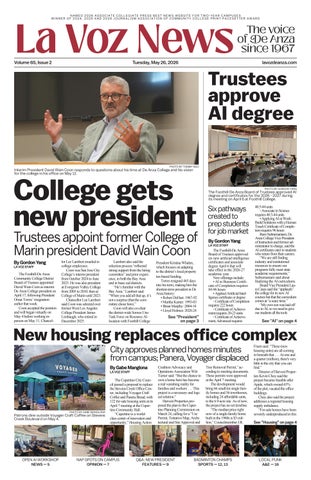
The Foothill-De Anza Community College District Board of Trustees appointed David Wain Coon as interim De Anza College president on April 17, following President Omar Torres’ resignation earlier that week.
Coon accepted the position and will began virtually on May 4 before working inperson on May 11, Chancel-
lor Lee Lambert emailed to college employees.
Coon was San Jose City College’s interim president from October 2024 to June 2025. He was also president at Evergreen Valley College from 2005 to 2010, then at College of Marin until 2023.
Chancellor Lee Lambert said Coon was selected over former West Los Angeles College President James Limbaugh, who retired in December 2025.
Lambert also said the selection process “reflected strong support from the hiring committee” and prior experience, in both the Bay Area and in basic aid districts.
“He’s familiar with the Bay Area,” Lambert said. “When you add all that up, it’s not a surprise (that the committee chose him).”
Coon will also co-chair the district-wide Somos Uno Task Force on Resource Allocation with Foothill College
President Kristina Whalen, which focuses on adapting to the district’s local property tax-based funding.
Torres resigned 465 days into his term, making him the shortest-term president in De Anza history:
• Robert DeHart: 1967-92
• Martha Kanter: 1993-03
• Brian Murphy: 2004-18
• Lloyd Holmes: 2020-24
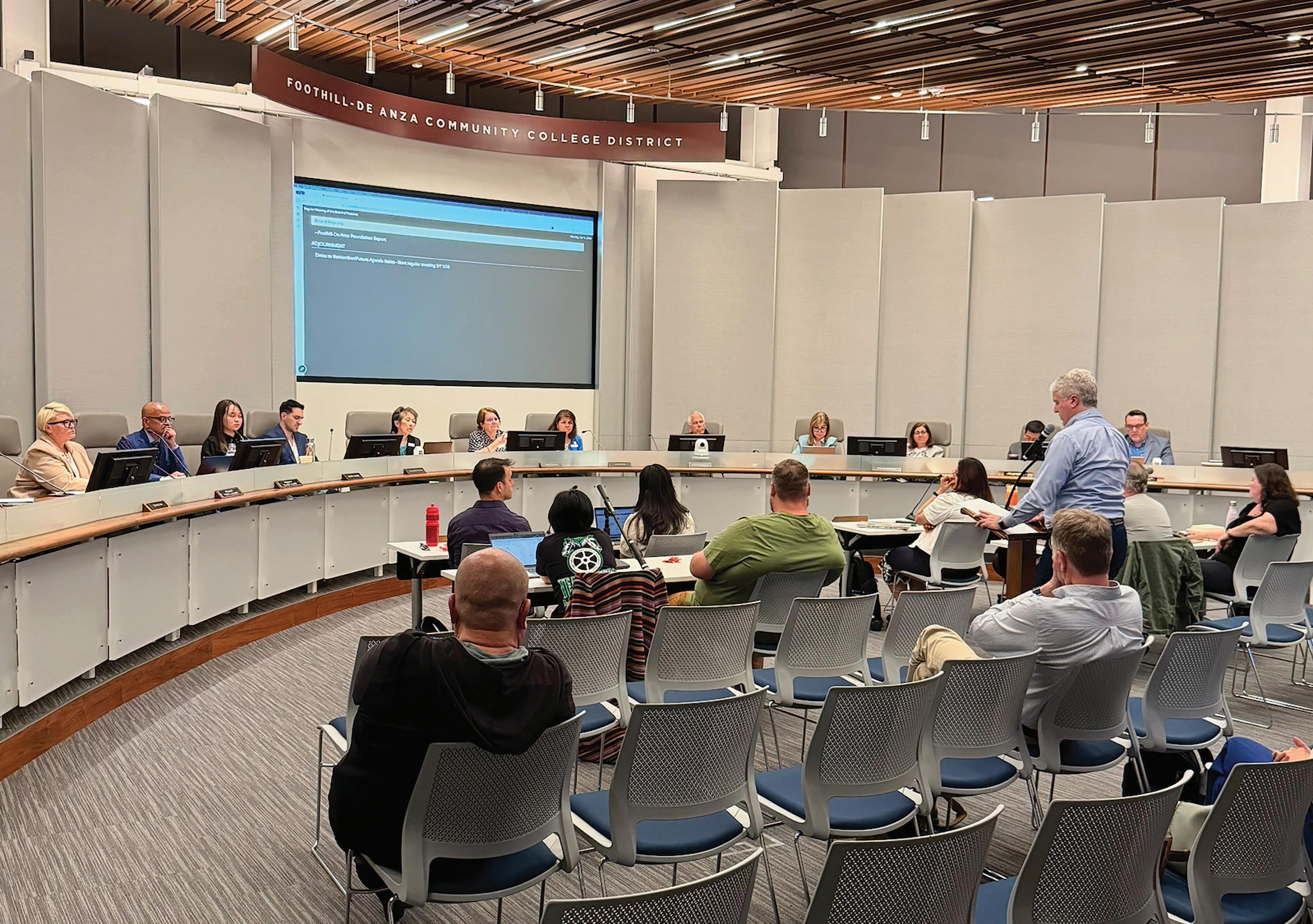
The Foothill-De Anza Board of Trustees approved six new artificial intelligence certificates and associate degree April 6 that will take effect in the 2026-27 academic year.
New offerings include:
• AI in Business Certificate of Completion requires 84-96 hours
• Applied Artificial Intelligence certificate or degree
◦ Certificate of Completion requires 222 hours
◦ Certificate of Achievement requires 20-23 units
◦ Certificate of Achievement, Advanced requires 40.5-44 units ◦ Associate in Science requires 40.5-44 units
at
Build Solutions with a Human Touch Certificate of Completion requires 96 hours Ram Subramaniam, De Anza College Vice President of Instruction and former administrator in charge, said the AI certificates cater to students who return from their careers.
“We are still finding industry and institutional resources to ensure our programs fully meet state academic requirements,” Subramaniam said about finalizing the AI curriculums.
Board Vice President Laura Casas said she “applauds” the college for its new AI courses but that the curriculum comes at “a scary time.”
“My own son was laid off due to AI, so we need to give our students all the tools
By Gabe Manglona
LA VOZ STAFF
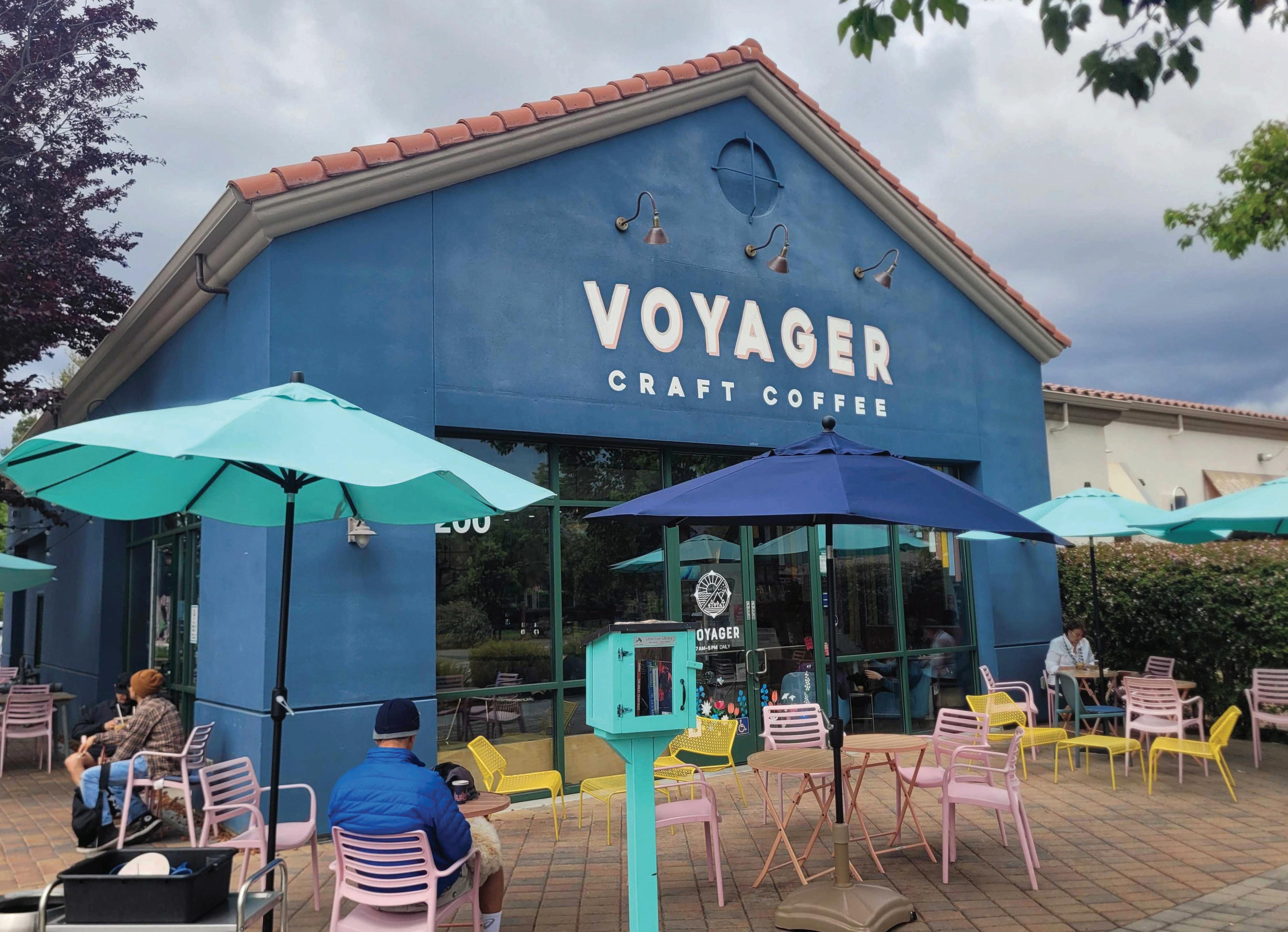
The Cupertino City Council passed a proposal to replace the Stevens Creek Office Center, including Voyager Craft Coffee and Panera Bread, with 122 for-sale housing units at its April 7 meeting at the Cupertino Community Hall.
“Cupertino is a worldclass center of innovation and opportunity,” Housing Action
Coalition Advocacy and Operations Association Witt Turner said. “But the chance to own a home here has become a real vanishing reality for families and workers …. This project is a necessary and logical solution.”
Harvest Properties proposed the plan to the Cupertino Planning Commission on March 24, calling for a “Use Permit, Tentative Map, Architectural and Site Approval and

Tree Removal Permit,” according to meeting documents. These permits were approved at the April 7 meeting.
The development would bring 66 small-lot single family homes and 56 townhomes, including 24 affordable units, to the 6.9-acre site. As of now, the project has no set timeline.
“The median price right now of a single-family home built in the 1960s is $3 million,” Councilmember J.R.
Fruen said. “These (new housing units) are all coming in beneath that. … At one and a quarter (million), there's very little in the city that you can find.”
Director of Harvest Properties Kevin Choy said the project became feasible after Apple, which owned 65% of the plot, vacated the office buildings.
Choy also said the project addresses a regional housing supply imbalance.
“For-sale homes have been severely underproduced in this

Editor-in-Chief
Xitlaly Martinez
Managing Editor
Ann Peñalosa
News Editor
Gordon Yang
Sports Editors
Ashritha Chand
Hayden Rush
Opinion Editor
Katherine Fritz
A&E Editor
Jason W. Huang
Photo Editor
Frank Mayers
Multimedia Editor
Meryem Arslan
Graphic Design Editor
Yosselyn Garcia Rodas
Social Media Editor
Jamie Watt
Joshua Aguirre
Ariel Alvarez
Lina Borges
Aileen Bucog
Gia Khang Do
Rico Han
Maceo Inoue
Teymur Khanlarov
Taylor Kim
Cris Li
Haley Lillibridge
Gabe Manglona
Tommy Ngo
Jonathan Nguyen-Au
Caleb Randria
Damian Renteria Mata
Wylder Robinson
Gavin Rust
Simona Sun
Godwin Taborada
Daenielle Tuico
Schiera Ventura
Laila Zedan
Faculty Adviser
Farideh Dada
Office Managers
Dicanio Darren Liong
Ruben Pasaribu
About Us
De Anza College students have written and published
La Voz News since 1967.
Student access to La Voz is partially funded by the De Anza Student Government. La Voz News is printed by the Folger Graphics Company.
All rights reserved; no part of La Voz News may be reproduced without permission.
Editorials reflect the opinions of the majority of the editorial board and not necessarily the views of the entire La Voz staff.
Contact Us
Send letters to the editor
lavozdeanza.com
lavoz@fhda.edu
+1 (408) 864-5626

By La Voz Editorial Board
De Anza’s historic campus has served thousands of students and faculty for almost 60 years. While renovations and brand new buildings have been added to update the campus, one big problem remains — easy access to drinking water.
Our campus stretches across 112 acres, containing approximately 60 buildings and multiple fields and courts for athletic teams. According to last spring’s school census, our student enrollment nearly totalled 40,000 part- and full-time students.
These numbers illustrate the highfoot traffic at De Anza. Yet across the entire campus, La Voz approximated a mere 36 water fountains.
While 36 may seem like an adequate number of drinking fountains, it is insufficient considering the campus’ size.
For perspective, there is one water fountain for every 3 acres of the 112-acre campus, or 130,680 square feet. That means for every 2.2 football field lengths, students would have access to only one water fountain, which may not have a bottle refilling station.
While these numbers do not represent the distance between
every water fountain location on campus, it demonstrates the lack of availability of them.
Ongoing bathroom renovations implemented under Measure G also limit drinking fountain accessibility to the fountains that are attached to those facilities.
Measure G is a district-wide bond of nearly $1 billion in funds that is consolidated by ongoing local property taxes. A quarter of this measure funds several projects across De Anza, but provides no funds or consideration of new water fountains, while multiple projects and millions in funds are being directed to “modernize” certain areas of campus.
The L quad bathroom is one of the restrooms that has been under construction since summer 2025, with its completion date recently pushed back to July. All three facilities under construction have water fountains, which are inaccessible until the construction completion.
While some buildings contain multiple water fountains with water bottle refilling stations, others are without the amenity, such as the Pride Center. Its faculty coordinator Jamie Pelusi said they’ve resorted to filling up jugs in the Learning Center West’s water fountain.

one water
for every
112-acre campus. That means for every 2.2
students have access to only one water fountain.
Campus maps do not indicate where water fountains can be found, and with an inconsistent amount in each area, many students resort to just buying drinks from vending machines or the Campus Center.
On the pool deck there are four water fountains and water bottle refilling stations. They are intended for athletic teams as one would need to walk down steep steps to access them. Onlookers would need to resort to a vending machine along the viewing deck for a beverage.
To add insult to injury, most water fountains are found inside buildings, often hidden around random corners. While this may create easier access for the students and staff in the building, individuals entering the building just to find water may have a hard time locating any.
To keep our campus hydrated and happy, De Anza needs to implement more water fountains, in different areas and in consideration of students’ typical routines and routes across campus.

er revolutionary technologies like the wheel and the printing press.
Foothill-De Anza Vice Chancellor of Technology and Innovation
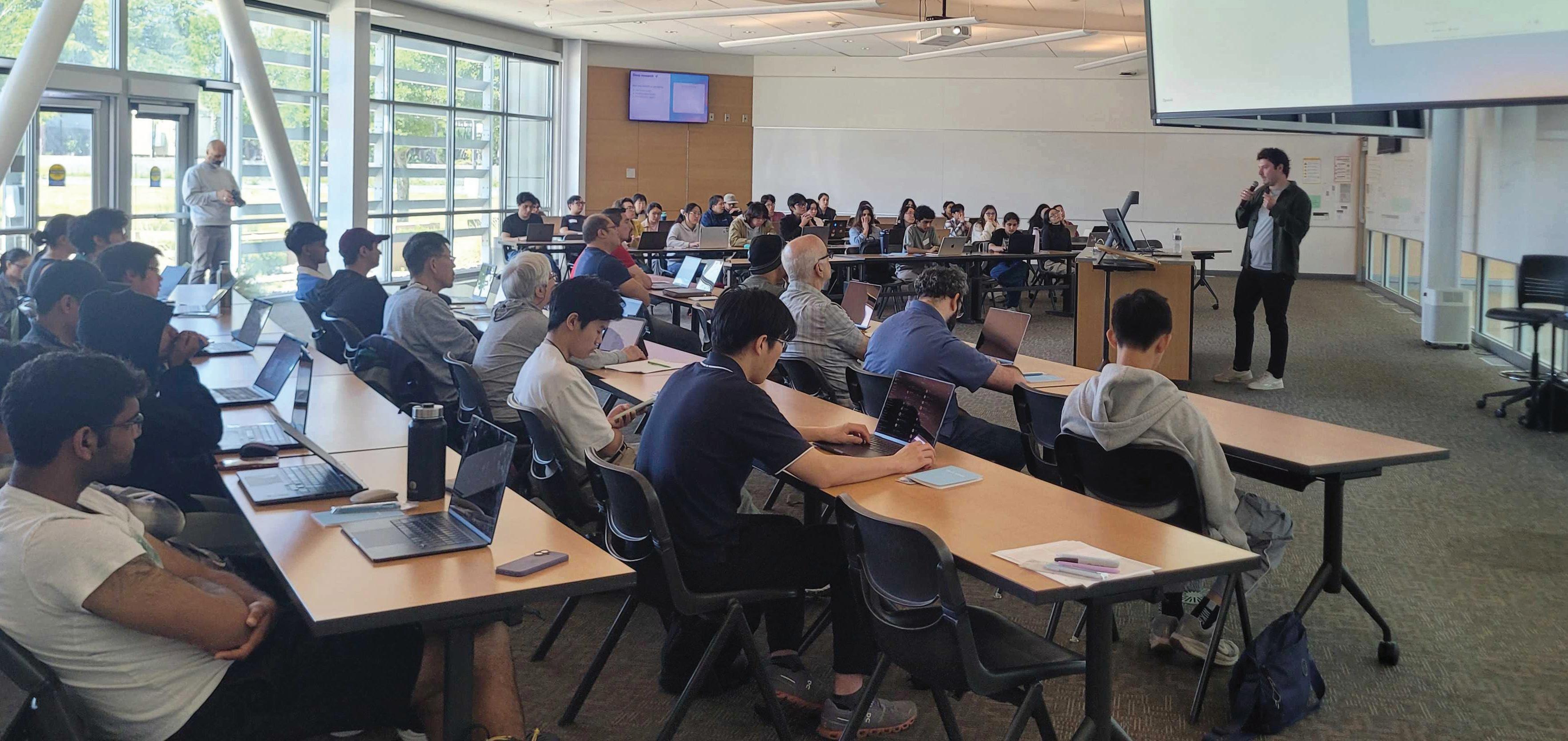
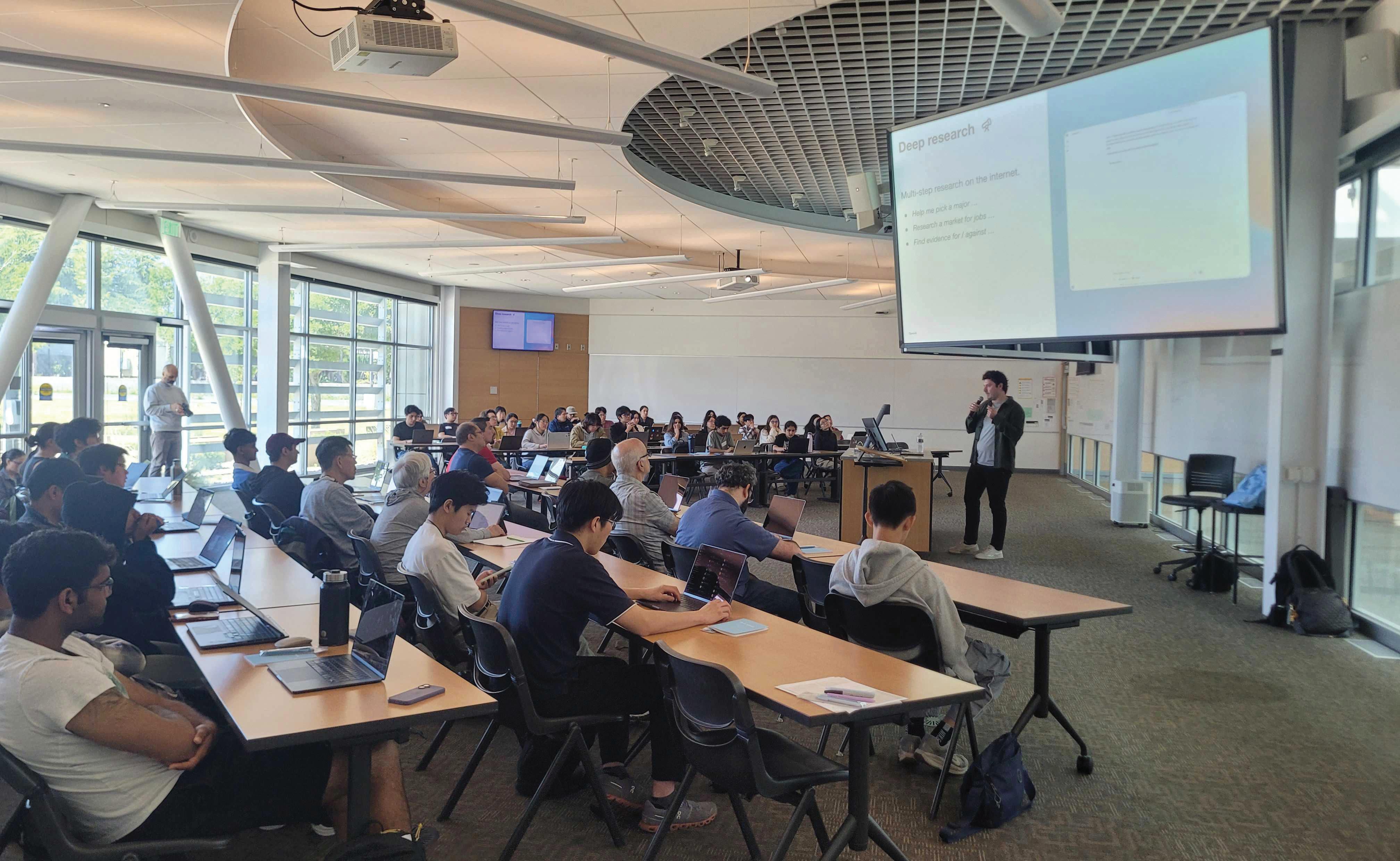
Students learned to efficiently use generative AI in coding projects and daily life at OpenAI Academy’s workshop on May 9 at De Anza College’s Media and Learning Center.
“It’s our first OpenAI Academy at a community college in California,” Mattie Zazueta, OpenAI global affairs representative, said. “We did it because this technology is becoming embedded in our day-to-day lives more and more and having the skills necessary to know how to use this tool is becoming more important.”
Several current and former Foothill-De Anza District administrators in attendance said they believe AI is the future.
Patrick Ahrens, assemblymember for District 26 and De Anza alumnus, said that we are at the beginning of the AI revolution, comparing it to oth-
De Anza Student Government President Jayven Huang, 20, business administration and computer science major, sat on a committee to choose the interim president and said Torres had good intentions but concerning execution.
“President Torres had a lot of good ideas and his heart was in the right place,” Huang said. “He was a little bit too fast when implementing his policies. I think he didn’t take the necessary procedures.”
Late into his term, Torres called off a planned realignment that would have merged divisions and shifted departments around amid faculty backlash.
As Coon prepares to step in, Huang said he has high expectations.
“He’s an amazing pick,” Huang said. “He has a lot of good experience, especially when De Anza is transferring from its current system to a basic aid institution.”
Anita Muthyala Kandula, dean of the Biological, Health and Environmental Sciences Division, said her initial impression is based on publicly available information.
“Like everyone else, I Googled him,” Kandula said. “He seems very promising and like a good leader, so I’m looking forward to working with him.”
Kandula said she hopes Coon will prioritize rebuilding trust after what she called a “difficult period.”
“Listening to what the constituents have to say, whether they’re staff, whether they’re faculty, whether they’re students … not just hearing, but listening and respecting that,” Kandula said.
“They (new leaders) have to smooth the waters,” Kandula said. “I think we’re all hoping.”
Lambert previously wrote in an email that the district has not yet set “a detailed timeline for the permanent presidential search” and that it “will take several months to complete.”
Jory Hadsell said the workshop marked a milestone for both OpenAI and the district.
“This (academy) is a huge honor,” Hadsell said. “Our students have direct access to the folks from OpenAI.”
Sean Lubbers, OpenAI Go-ToMarket staff member, facilitated the workshop and taught attendees how to effectively prompt ChatGPT for research and image generation.
In the event’s second half, Lubbers explained Codex, a promptbased, ChatGPT-powered coder that generates computer programs from text prompts, then gave participants 45 minutes to enter conversational English prompts or vibe code.
“It was my first time doing an educational event, but it was great,”
Lubbers said. “The energy was super high and people were super engaged and active.”
With over 60 people attending, OpenAI staff said they considered the event a success.
“There was a lot of interest, and we ended up having to create a waitlist,” Zazueta said.
Zazueta said OpenAI wants to expand access to AI education through similar workshops.
“We want to reach as many people as possible,” Zazueta said. “Particularly folks who might not have access to this type of programming.”
Ben Sandstrom, 26, economics major, said he believes the work-
shop was worthwhile.
“It was interesting seeing the difference between what you want to start with at the beginning … versus what you can do at the end,” Sandstrom said.
The workshop coincides with the recent Board of Trustees approval of AI degrees and certificates.
“Our district is trying to position itself to be a leader in the AI space,” Hadsell said. “To help ensure we have all the programs that our students will need to be able to find the best employment and have the best career opportunities.”
De Anza Student Government President Jayven Huang, 20, comput-
er science and business administration major, agreed with the administration’s optimism but said he remains wary of AI’s negative impacts.
“There are a lot of negative consequences to using AI,” Huang said. “I read a study saying that AI uses a lot of water because they need to cool down the GPUs (graphic processing units).”
Huang said he believes AI will become more integrated into society despite concerns.
“Even though there are a lot of consequences to the environment and to society in general,” Huang said. “We just have to adapt to it at the end of the day, and we will have regulation in the future.”
Library staff redesigns database page; search, summarizers ‘built in’
By Gordon Yang LA VOZ STAFF
The Robert DeHart Library introduced a redesigned database webpage with four free AI-powered research tools at the De Anza College Academic Senate meeting on May 4 in the Media and Learning Center.
Equity and Instructional Librarian and Open Educational Resources
Coordinator James Perla-Adams restructured the library’s database page to sort all databases by De Anza’s
Guided Pathways Villages.
The new AI tools are JSTOR Research Assistant, ProQuest Research Assistant, EBSCOhost Natural Language Search and AI Insights and OneSearch Research Assistant.
Perla-Adams said that all new AI research tools are free to students, come from database vendors and are included in the college’s existing library contracts. Vendors activated the tools automatically, and the library cannot disable them.
“The database page is a structural change to make it more friendly for students,” Perla-Adams said. “The AI tools are built into databases students already access.”
Perla-Adams said JSTOR and
ProQuest cannot search materials where its publishers control content licensing for AI tools. Users only learn of restrictions when the AI tool marks a source as unavailable.
Perla-Adams said the library is always looking to increase and update its services and resources.
“It is nice that we now have the expert (Perla-Adams) on information literacy, guiding how AI tools are integrated into something as important as research and critical thinking,” Academic Senate acting president Shagun Kaur said. “Having that option is necessary as the educational landscape changes.”
Academic Senate acting president Shagun Kaur said that the new
library AI features are important but its necessity varies by academic discipline, instructor pedagogy and course learning outcomes.
Academic Senate executive secretary So Kam Lee said the updates help students overcome the longstanding difficulty of researching and identifying credible sources.
“Students don’t know where to go and don’t know what’s accurate, so these tools really help,” Lee said.
The library updated its database research orientations and Perla-Adams said it now provides AI literacy content students and faculty can request in-person, Zoom or recorded presentations via a form on the library’s webpage.


PHOTO BY ARIEL ALVAREZ
Construction workers saw wood planks for renovations to the men, women and gender neutral bathrooms in building L5 on May 20.
The Foothill-De Anza Board of Trustees gave Giant Construction, Inc. a $2.5 million contract at last year’s July 7 meeting. It added more than $300,000 to its budget since May 11 after finding additional work to be done since excavating the grounds.
By Lina Borges LA VOZ STAFF
Restroom renovations in the L5, S2 and S6 buildings will continue until July after plumbing and electrical issues delayed completion beyond the original April deadline.
Cici Ramirez, administrative assistant for College Operations, said construction could be done by July.
The Foothill-De Anza Board of Trustees gave Giant Construction, Inc. a $2.5 million contract at last
year’s July 7 meeting.
It added more than $150,000 on April 6 for further renovations, atop a previously approved $137,000.
Tyler Kintz, Giant Construction project manager, declined repeated interview requests.
“I don’t speak with reporters,” Kintz said.
The increase totals 10.47% of the original contract’s value. The district decided not to bid for another contractor despite The Public Contract Code’s requirements for increases over 10%.
“Competitive bidding would delay the project’s completion and cause coordination issues with multiple contractors on site,” the agenda item read. “It would not benefit the district, as the work can be more efficiently performed by one contractor.”
The extra amount was needed because of “unforeseen” issues and “architect-initiated modifications” to the three buildings such as rerouting and replacing piping, water lines and rainwater leaders.
“It has been taking way too long
for the bathrooms to get renovated,” Johnson Lee, 18, civil engineering major said. “It’s not fair. It is such an important utility for students and it should be done a lot faster.”
Some students find it inconvenient to walk from the L quad to the nearest bathrooms in the Hinson Campus Center and the Advance Technology Center.
“If I were in the L quad …, that would feel terrible for me as a student to rush to class,” Ung Hei, 20, computer engineering major said.
“I had to walk on the disabled pathway. I didn’t want to as I wanted to keep that way clear,” Angelina Favorito, 20, psychology major, said. “I had to since there is no other convenient way for me to go to class.”
Some faculty warn against institutional dependence on Big Tech, generative AI harms
By Gordon Yang LA VOZ STAFF
The De Anza College Academic Senate advanced a proposal supporting enterprise-level Google Gemini access for students during its meeting on May 18, concluding a weeklong debate over equity, privacy and academic integrity in MLC 255.
The proposal, passed 21-2 without abstentions, will advance to senior leadership. It could expand student access to Google Gemini and NotebookLM, aligning with Foothill College and many California public universities, partnered with tech giants, that already provide artificial intelligence resources.
Dean of Online Education and Learning Resources Gabriela Nocito said the proposal focused on what she called the “equity gap” between students who can afford premium AI tools and those limited to free versions.
“It’s important to note that they (students) are using AI tools anyway,” Nocito said. “This is just the pro version and the more
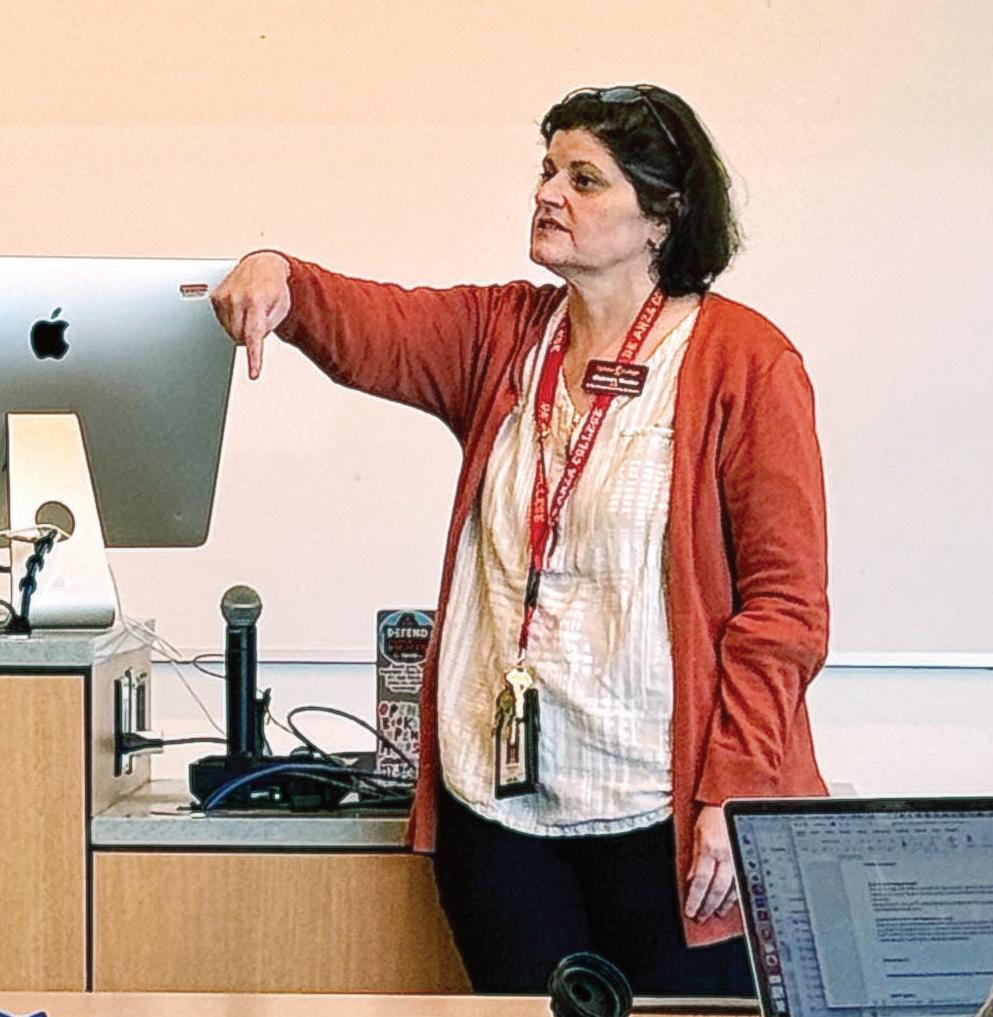
Dean of Online Education and Learning Resources Gabriela Nocito proposes granting De Anza College students Google Gemini enterprise, an AI tool, at the academic senate’s May 20 meeting in MLC 255. The Senate passed the action item 21-2.
controlled and safer version that we can offer them.”
Nocito said that the proposal would not override instructors’ classroom policies regarding AI use.
Academic Senate President Shagun Kaur said district faculty groups are already developing AI literacy training and implementation frameworks for faculty and students.
However, some faculty members raised concerns about the technology, because of how AI was discussed in the presentation slides.
“This isn’t just about AI literacy,” Part-time English and Asian American Studies instructor Sherwin Mendoza said. “We’re endorsing the use of AI for weapons; we’re endorsing the use of AI for surveillance.”
He shared concern that schools and students are under pressure to adopt technologies controlled by powerful corporations, such as Google.
The enterprise version of Gemini and NotebookLM offer higher usage limits, advanced reasoning capabilities, multimodal functions for text, audio and video, and institutional data controls according to the presentation. The proposal said these differences impact students’ research, writing and study workflows.
Visual arts and design instructor Yuri Chang, who voted against the proposal, said that many faculty members are concerned about its negative impacts on ethics and teaching, such as creating assignments.
AI can use human generated prompts and data from the web to train its model, which Chang described as “unpaid labor.”
By Teymur Khanlarov LA VOZ STAFF
After hacking group ShinyHunters breached Canvas, they demanded ransom on May 7 to not leak collected student data including students’ names and email addresses.
Instructure, Canvas’s parent company, said it reached an agreement with the hackers on May 11.
The day after the attack, Foothill-De Anza Educational Technology Services said Canvas was safe to use again.
The department confirmed that financial information, social security numbers, grades and course content were not compromised.
De Anza College’s Committee On Online Learning met with the Academic Senate to discuss surveillance software for online classes and exams on April 20.
While the potential of preventing cheating with proctoring programs was recognized, significant concerns about equity, accessibility and racial bias were raised.
“One of the most frequent criticisms of proctoring software is the bias of the auto detection of students of darker skin colors,” James Capurso, committee co-chair and faculty coordinator of online education said.
The Academic Senate will continue this discussion at its June 1 meeting.
Supporters of the proposal said faculty are now responsible for teaching ethical AI use rather than trying to ban it.
Full-time faculty of Child Development and Education and Sociology departments and Academic Senate Acting Vice President Jayanti Roy said AI is already part of students’ lives and classrooms.
“We have to level the playing field for students,” Roy said. “We have to teach them how to use it ethically.”
Roy said instructors should redesign assignments to require personal reflection, classroom engagement and critical thinking that cannot easily be replicated through AI-generated responses.
“It’s not that everybody is bad,” Roy said. “I would much rather, in my life, believe there is goodness. There are ethics, and we work in a partnership with our students to show them the need for ethical use of such technologies.”
Students expressed mixed reactions regarding the senate’s action.
“AI takes away students’ ability to conduct their own research,” Ariel Orozco, 18, psychology major said. “I agree that AI is useful in the medical field, but at the end of the day I don’t think the school’s decision is necessary.”
Santa Clara Valley Healthcare has a new mobile health center, available in staff parking lot J every Wednesday from 9 a.m. to 3:30 p.m.
necessary to improve their job market performance,” Casas said. “Who knows what’s going to happen?”
Trustee Alexander Gvatua said cutting arts programs while expanding tech offerings did not look good for the district. In the same meeting, 176 courses were cut because of low enrollment, including 12 arts classes.
“I don’t know how great it looks to be significantly cutting dance (classes) and then having a bunch of AI classes instead,” Gvatua said. “We have an obligation to prepare students for careers and for jobs, but we also have a responsibility to nurture the artistic, cultural and intellectual lives of our students.”
Ryan Sheehy, 23, computer science major, said he was not interested in the AI degree.
“I’m more interested in lower-level stuff like computer engineering,” Sheehy said. “It would be very useful if they teach algorithms and how the technology actually works.”
Subramaniam did not give an exact date for when students could apply for De Anza’s new courses and degrees.

ARCHITECTURAL SITE PLAN SHEET COURTESY OF THE CITY OF CUPERTINO
An illustration shows Harvest Properties’ housing proposal which would replace the Stevens Creek Office Center. The site would push out three office buildings, as well as the Voyager Cafe and Panera Bread, to make way for 122 houses, including 24 units below market rate, noted with pink triangles.
Housing cont. from page 1.
region with development heavily skewed toward rentals.” Choy said. “This product helps meet that missing supply for homeownership.”
The proposed housing would reduce traffic in the area by up to 40% according to Harvest’s research, Choy said in the meeting.
“The anticipated number of trips per square foot for the commercial office versus that of the residential … dramatically lower,” Choy said.
Harvest Properties is working with Voyager and Panera, planning to help them stay in Cupertino. The company team “has come to an agreement” to assist Voyager with finding a new location because “actions speak louder than words,” Choy said.
“Although I like the proposed development in many aspects. I strongly oppose the proposed removal of Voyager Cafe, and Panera Bread,” Demirlioglu said. “It (Cupertino) was where we built our lives and that life was centered around local businesses.”
Ari Badiei, 23, environmental horticulture and design major, said the plan’s opposition doesn’t consider the below-marketvalue housing’s incoming residents or what they will need.
"I’m pretty stoked for housing to open up to potential residents, ... as much as it might not be affordable, it’s still housing at the end of the day."
20, photography major
Owner and co-founder of Voyager Lauren Burns said the future of its location remains uncertain.
“Right now, we are working to find a new home in Cupertino, but we have not found a viable space,” Burns said. “We support the increased housing; we hope there will still be room for places like Voyager.”
Some residents opposed the project because of the local business impact. Long-time Cupertino resident Esin Demirlioglu said Voyager’s struggle to find a new location is concerning.
“The people who live there (near the proposed development) are much wealthier than I thought,” Badiei said.
“Those are the people who are going to Panera Bread out of convenience on their day-to-day, like ‘this is the heart of Cupertino.’”
Daisy Castillo, 20, photography major, said he is cautiously optimistic about the proposal.
“I’m pretty stoked for housing to open up to potential residents, but I just can’t help but feel a sense of distrust,” Castillo said.
Castillo questions whether the below-market-value housing will address the housing affordability crisis considering Cupertino’s high housing prices.
Despite such concerns, Castillo still said the housing plan is a step in the right direction.
“As much as it might not be affordable,” Castillo said, “it’s still housing at the end of the day.”

‘faculty-driven’
By Gordon Yang LA VOZ STAFF
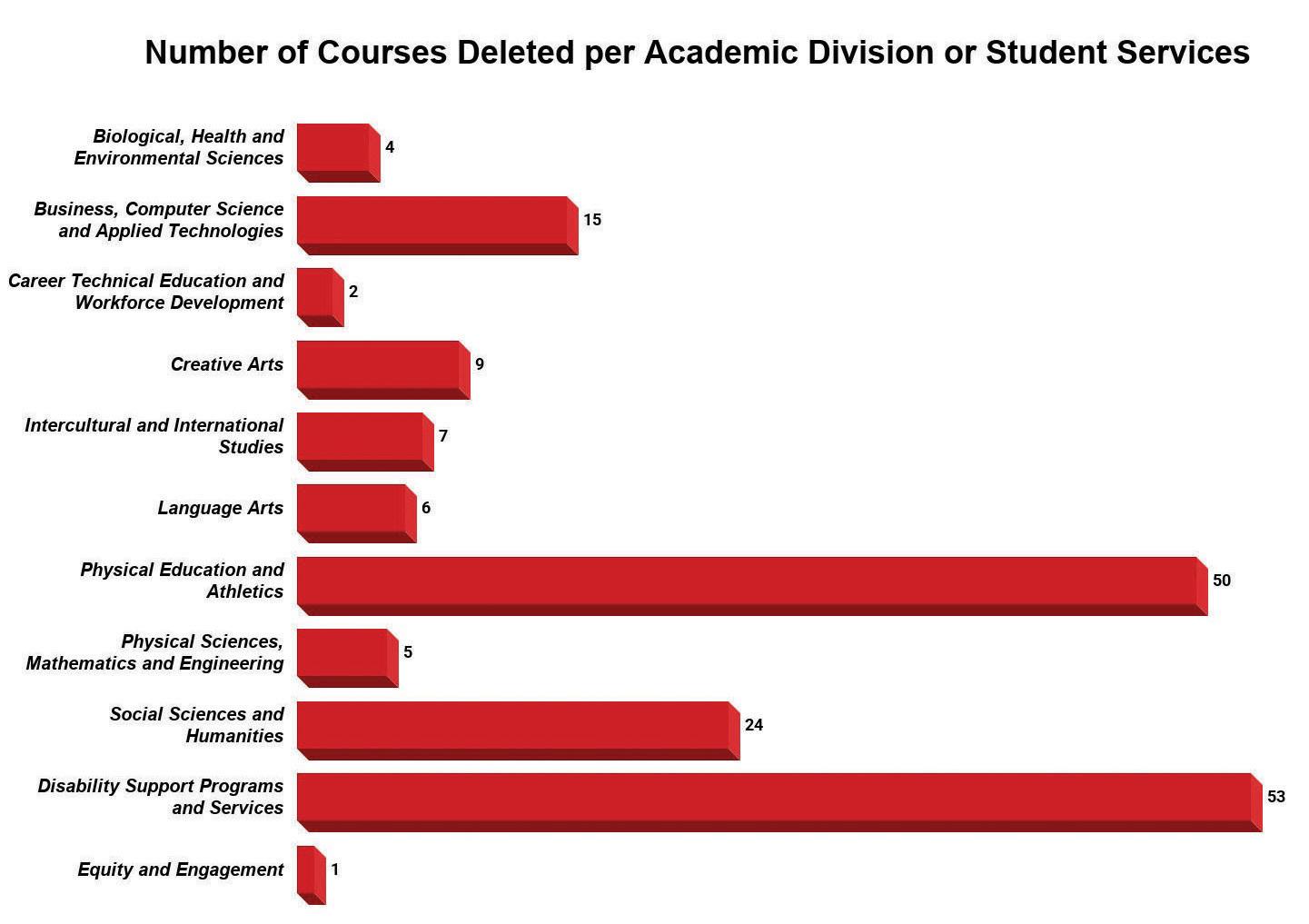
De Anza College eliminated 176 courses from its 2026-2027 academic catalog in a systemwide curriculum cleanup, according to the April Foothill-De Anza Board of Trustees meeting.
While college officials said the cuts almost exclusively affect classes that haven’t been taught for years, the move reflects enrollment declines in the California community college system and state mandates to speed up student transfers.
The deleted courses span 30 academic departments, including accounting, biology, computer science, dance, history, kinesiology and political science.
The list features specialized courses such as BIOL 15 California Ecology, EDAC 290Y Assistive Technology Access Practice and INTL 16 Multicultural Voices in Germany.
The catalog overhaul originated from a student complaint about false advertising. Dean of Creative Arts Kristin Skager said a student reported finding numerous courses in the catalog that were never actually scheduled.
In response, the college’s curriculum office established a policy that courses not offered for three years would be considered for “sunsetting.”
Faculty in each department review course offerings and make final recommendations about which classes to retain.
“This is absolutely faculty-driven,” Skager said. “It’s from the curriculum office, … a faculty purview. We’re not allowed to, as administrators say, ‘Cancel this’ or ‘Delete this class.’ The Board of Trustees does not go in and say, ‘Cancel this class.’”
All De Anza courses require a mandatory five-year review, a two-year process involving extensive updates to meet state requirements, with new Title 5 equity mandates.
The process requires navigating a 105-page eLumen Curricu-
"This
is absolutely faculty-driven, … We’re not allowed to, as administrators say, ‘Cancel this’ or ‘Delete this class.’ The Board of Trustees does not go in and say, ‘Cancel this class.’"
Kristin Skager Dean of Creative Arts
lum User Manual, version 4, and multiple levels of approval.
“Every five years, a new batch of courses come up for review, and faculty have to initiate that process of revising,” Lori Clinchard, humanities instructor and co-chair faculty director of the California History Center, said. “When these courses come out for review, there’re decisions like, ‘When’s the last time we taught it? Oh, it hasn’t been taught in a year. Should we keep trying it?’”
Deans said nearly all deleted courses fall into three categories: courses made obsolete by industry changes, cross-listed curriculum label updates or dormant classes not offered in three or more years.
“With the use of AI, you now have a device for doctors that can transcribe automatically, so that entire profession (traditional medical transcriptionist) is gone,” Anita Muthyala Kandula, dean of the Biological, Health and Environmental Sciences, said “Same thing with conservation biology.”
A portion of removed courses remain available under a different department prefix. For example, INTL 21 History of Art: Native Arts of Mesoamerica and the Andes and INTL 22 History of Art: Arts of Africa, Oceania and Native North America are still offered through the Visual Arts and Design Department.
HIST 18A and 18B African American History have been reclassified under the African American Studies Department as AFAM 12A and 12B.
“The only reason why we remove that (some courses) is more for administrative reasons,” Debbie Lee, dean of Intercultural and International Studies, said. “If it has two names, they have to do (paperwork) twice. This way they just do it once.”
Most deleted courses have not appeared on student schedules for years. ICS 37 - Ancient Peoples of Mesoamerica has not been offered since before Lee began her role in 2022.
“Let’s say you have this shoe store, and you have 20 kinds of shoes,” Clinchard said. “Five brands never sell. At some point, you’re probably going to stop ordering them.”
Courses stay dormant for various reasons.
Physical Education and Athletics Division part-time faculty instructor Pete Rabbitt said Tai Chi courses were removed after its instructor retired four or five years ago, and cardio kick classes were discontinued years ago because of low enrollment.
“Even if there was interest (and an instructor qualified to teach that course), the college no longer has the equipment,” Rabbitt said about the kick tower equipment sent to surplus.
Academic administrators said the deletions will not prevent any student from completing their degrees or transfer requirements. Some relatively less popular general education courses will be offered less frequently throughout the year.
The primary impact will be a reduction in elective options, particularly for students interested in specialized or niche topics.
This shift aligns with state efforts to streamline transfer pathways and reduce the time and cost of community college education.
"Let’s say you have this shoe store, ... five brands never sell. At some point, you’re probably going to stop ordering them."
Lori
Clinchard
California History Center co-chair faculty director, humanities instructor
“The state of California has tasked us with creating more Associate Degrees for Transfer,” Skager said. “You could take any class you wanted, and we could offer different kinds of fun classes, … It is becoming a bit more regulated, and we are trying to save students money and time and get them to transfer.”
Some faculty said this focus on efficiency erodes the traditional community college mission of serving lifelong learners and providing broad educational opportunities.
“There’s been a movement toward following the junior college model rather than community college,” Clinchard said. “There’s less willingness to keep courses on there for, ‘Oh, because they’re interesting and anyone might want to take them.’ It’s more like the students need to move to four-year universities.”
This shift affects special topics courses popular with community members, such as the California history classes offered through the California History Center — HIST 51X to 54X and HIST 55A to 55C.
These classes, covering stories about indigenous people in the valley to local wineries, were discontinued in 2018 after state changes to course repeatability; students could no longer take more than one of these courses.
The catalog cleanup does not impact full-time faculty, who are guaranteed salary and teaching loads regardless of course offerings.
“Depending on who the full-time is and which department they teach in,” Lee said. “They might have to teach 10 classes a year or eight classes a year, and they’re guaranteed to teach those classes.”
Part-time faculty also face minimal impact from catalog changes, as deleted courses were not being scheduled. Part-time faculty are assigned classes based on a union-negotiated remployment preference list. Many teach multiple courses across several departments or colleges.
“Part-time faculty will get classes as long as we have them to offer, and as long as we have students who will take the classes,” Skager said.
Part-time faculty can lose income if individual sections of active courses are canceled due to low enrollment shortly before the quarter begins. If so, colleges try to reassign faculty to other available sections whenever possible.
According to the Foothill-De Anza Faculty Association agreement, part-time faculty lose reemployment preference after six or more consecutive quarters without an assignment.
The cleanup reflects challenges facing the California community college system, which has lost approximately 300,000 students since pre-pandemic 2019.
“All across the state of California we have declining enrollment and fewer students,” Skager said. “We still have students, but our programs all across the board are getting smaller.”
Enrollment declines due to multiple factors: California’s population growth is at its lowest rate in more than a century, high cost of living in the Bay Area drove working-age residents out and political concerns reduced enrollment among immigrant and international students.
Deleted courses could be revived in the future if there is sufficient student demand and faculty interest.
“It’s like supply and demand,” Clinchard said. “Just because the classes are taken out … doesn’t mean that somebody couldn’t create one of these classes.”
"Even if there was interest (and a qualified instructor), the college no longer has the equipment."
Pete Rabbitt
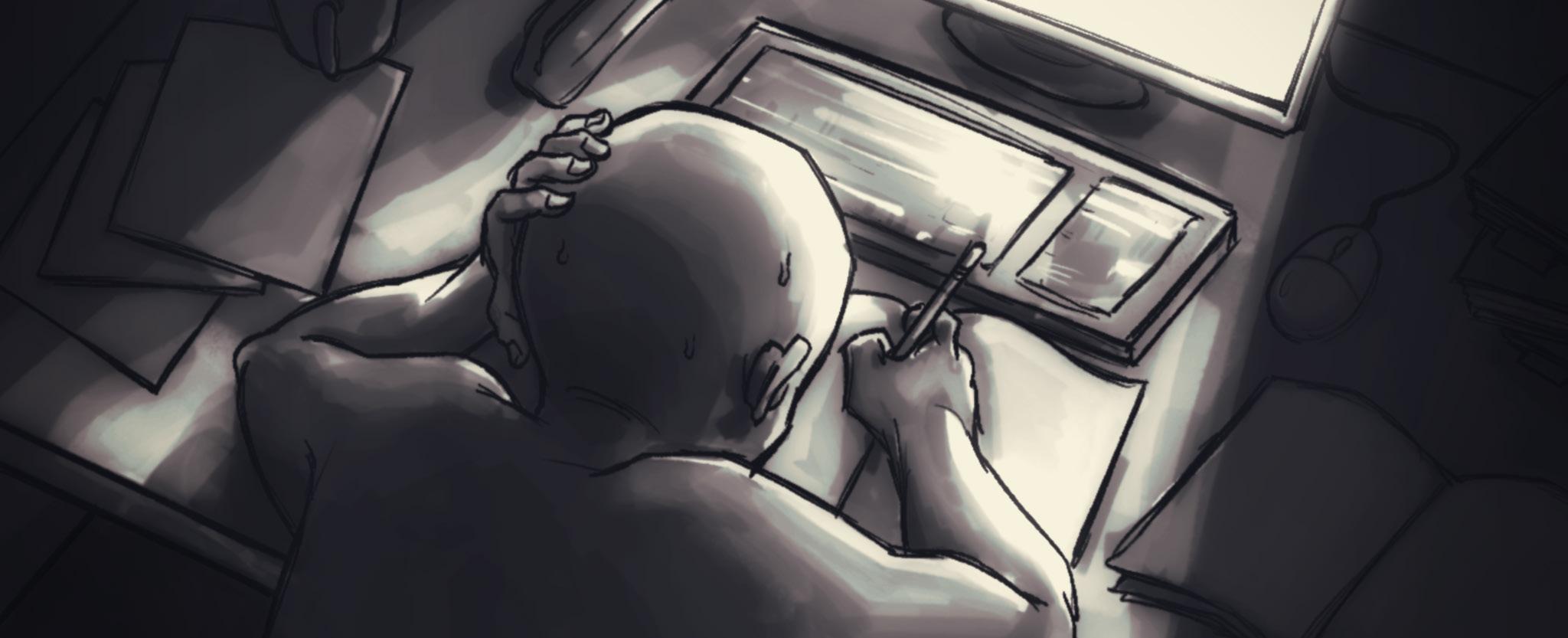
I had finally completed my essay. It was perfect, no worries about being graded poorly.
However, I was devastated when I clicked submit — I had gone past the deadline.
Perfectionism and procrastination took over punctuality, throwing all the work and potential out of the window.
The worst part about procrastination? The wait makes the anxiety worse, even if it gives me more time to get the creativity and motivation to write something good.
Many students now have a flexible schedule with more work than what they were used to in high school. According to the UnitedHealth Group, almost 50% of students transitioning from high school to college are more likely to report mental or behavioral health concerns.
Going to a statistics class twice a week had me in a state of dread. My professor was great and the topics were understandable, but the pacing of new information overloaded my brain.
Students’ disorganization, demanding curriculums and heavy coursework create a procrastination-prone environment.
According to the Harvard Division of Sleep
Medicine, many students resort to working on assignments late at night, causing them to lose sleep and worsen their memory.
With many never adapting to this new system, procrastination goes from being the exception to being the rule.
While many of the factors causing this seem inflexible, there are still resources available that can alleviate the procrastination.
Academic skills workshops by the Student Success Center can help address issues that can improve work and timing.
The pomodoro method is a tool that helps me break a task into smaller pieces. Tasks can be split up using a list and worked on with adjustable breaks in between.
Keeping track of work and daily tasks with a planner or note-taking app makes the day more predictable and less stressful.
Procrastination is a chronic and deeply rooted problem, but can become less harmful with the right habits and assistance. Every time work is completed early, the entire week feels less anxious, building momentum to do more.
Dealing with procrastination may not have a simple fix, but is one of the best investmentments you can make.
Many students juggle the overwhelming stress that school and the long nights studying bring, a nap here and there between classes wouldn’t hurt.
Here are some of the best sleeping spots on campus in no particular order.
The best spots provide shade, have minimal foot traffic and are comfortable (or at least as comfortable as campus can offer).
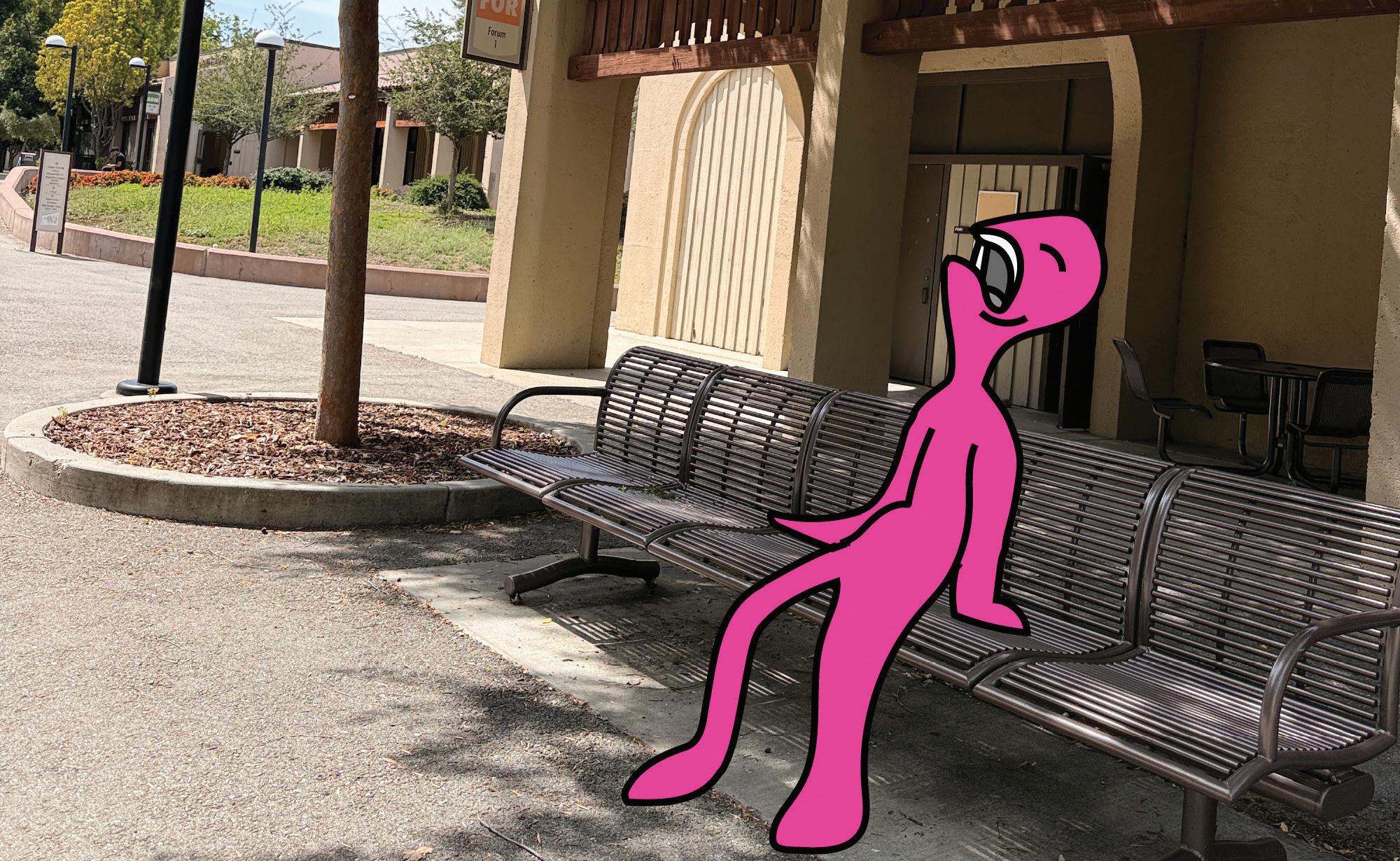
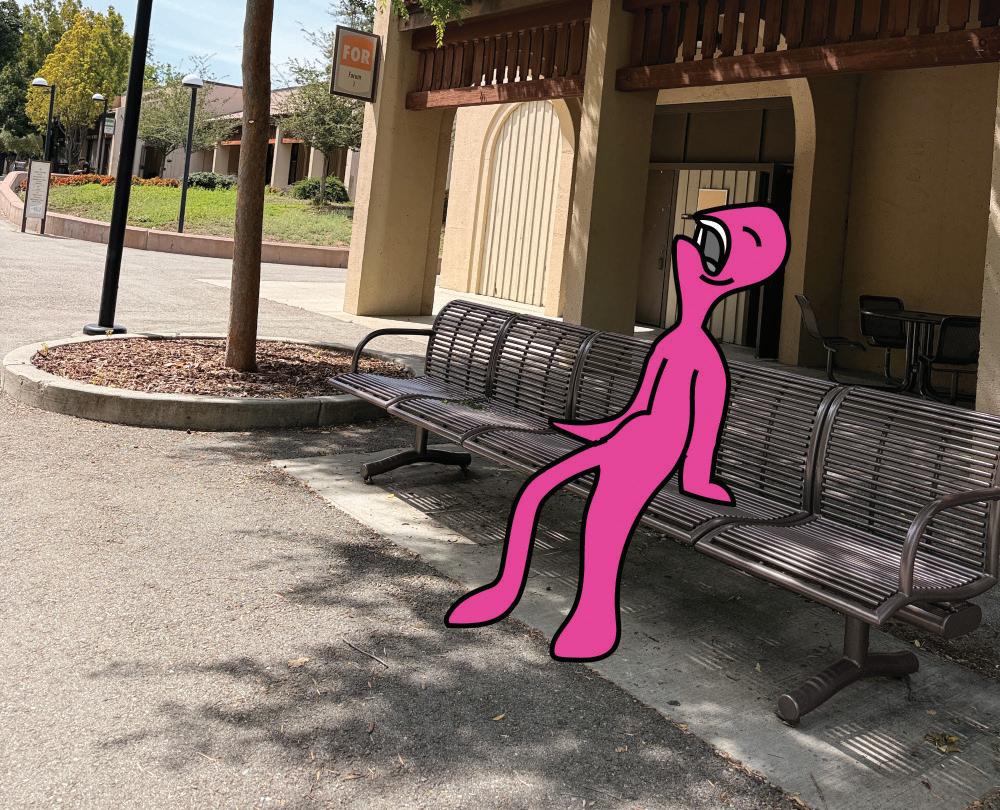
Starting off, the bench between the L quad and the administration building is a great place to catch a catnap when classes are in session.
While there are some disturbances during passing periods, the trees provide plenty of shade and create a peaceful, calm atmosphere.
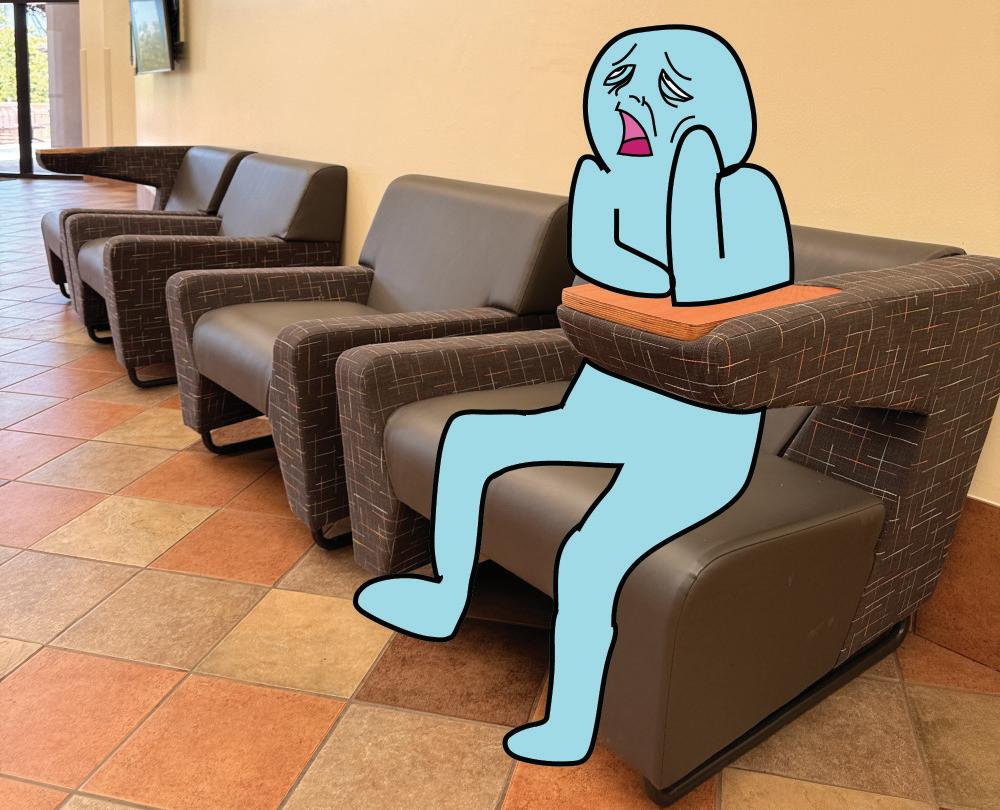
A college student dozes off in the Registration and Student Services lounge. Although the spot isn’t too quiet or dark, with light constantly beaming down, its comfortable cushions earn it a spot on the list.
Benches, unlike chairs, let people put their backpacks under their heads; this cozy spot lets students put their legs up.
In front of the Adapted Physical Education lies the PE1 building where light sleepers will find a wonderful spot to catch some rest.
It has chirping birds, almost like a sound machine singing a lullaby. It’s quiet with low foot traffic, and trees shade it from the sun.
Sometimes birds dirty the bench; nappers should clean it before resting.
This spot also has tables on the side of the building that are completely shaded from the roof.
Lastly, the Registration and Student Services Building, specifically in front of the Disability Support Services isn’t quiet, but it’s still a comfortable spot for short naps between classes.
The flow of people and lights help students wake up with their alarms and stay on time.
Its chairs have cushions for a much-needed power nap. Thanks to its attached desks, nappers can lay down their heads and avoid neck pain. Bonus points if you have headphones and a hoodie.


By Katherine Fritz LA VOZ STAFF
What has been the biggest challenge for you in regards to transitioning to De Anza?
When you come into a new job midyear or almost at the end of the quarter, it’s like walking into a movie and you’ve missed the first three quarters of the movie. You don’t know the cast, you don’t know the plot — it’s a little bit like a fast, moving train.
What drew you to De Anza specifically?
I always tell people, when somebody comes out of retirement to help in a transition, it’s either to pay back or to pay forward. For me, it’s a combination of both. There’s probably only five (colleges) I would consider actually doing this for, and this (De Anza) was at the top of the list, (with) the long reputation of excellence and students transferring.
What are your main priorities and goals coming into the presidency?
I’m here to support the leadership team that’s already in place, to help continue to move forward and get the academic year wrapped up, celebrate all the students and have a great commencement.
What has mainly shaped your style of leadership regarding presidency?
I was in student services; I was vice president of student affairs, so that experience has really grounded me. Knowing to be focused on students and student success, making
sure we’re serving students to the best of our ability and serving the community. I got into this profession to help students.
What led you to want to pursue a career in higher education?
I was a freshman at Central Washington University and I needed a job. In one of the general orientation sessions, they were hiring undergrad students to be peer advisors, so I did that for my whole four years. Then I worked as a Dean’s assistant in the dorms and that was really it. I was a college administrator from the time I was 26 until today.
What do you want students to know most about you?
That I care, that I’m approachable. I’m responsive.
Is there anything you’re especially excited for during your time here?
The reason I’m here is to give back and help the college hopefully find somebody who’s as passionate about the students as I am. Higher education is a business. You’ve got to run it like a business.
Do you have any ideas of ways that you want to help students become more comfortable with this transition?
I will try to get a sense of what students’ priorities are. Typically, I’ll pick four or five things I think students might be interested in hearing about. Whether it’s being on campus or improvements in the cafe, whatever it may be. Then I open it up for questions, and that’s how I find out what’s important to students.




“It’s
By Ashritha Chand LA VOZ STAFF
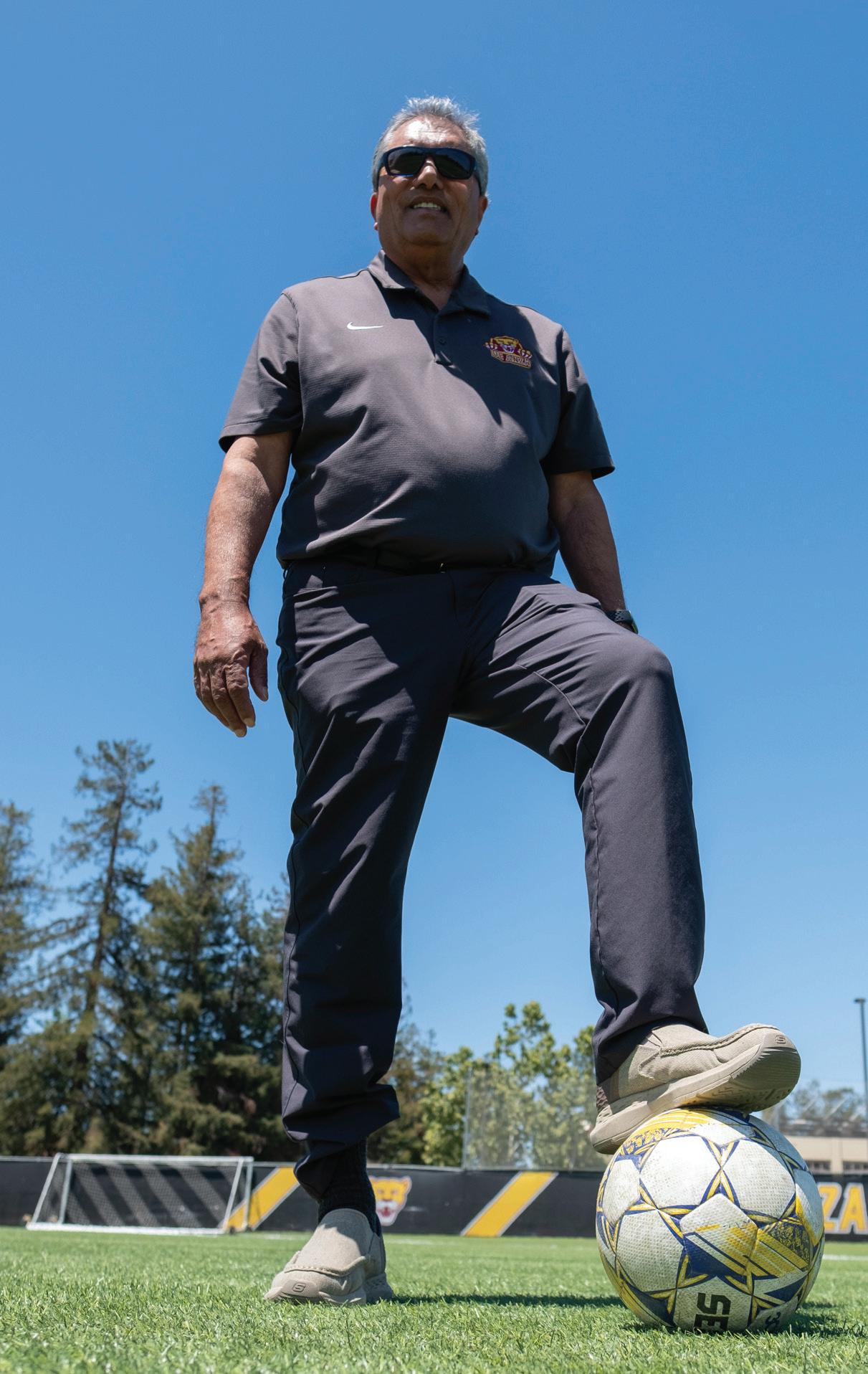
Many dream of being inducted into a hall of fame once in their lifetime. If you are Kulwant Singh, it will be your eighth.
The National Association of Collegiate Directors of Athletics will honor Singh on June 8 at the 61st Annual NACDA and Affiliates Convention in Las Vegas, with seven other national inductees.
“I was incredibly honored when I learned the news,” Singh said. “It’s a very prestigious honor to be included with the thousands of others who have been inducted.”
Singh was born in India, eventually moving to England before settling in California.
Growing up, sports were a part of his life, though he did not initially envision a future working in athletics. “I didn’t see myself going into (athletics) at all,” Singh said. “My parents were very supportive of me though, since my family had let me participate in sports.”
He pursued his associate’s at Chabot College and transferred to California State University, East Bay, earning his bachelor’s degree in kinesiology and physical education in 1983, and a master’s degree in the same fields in 1990. He played for the men’s soccer team at both colleges.
“I had a mentor when I was playing soccer. He’s the one who helped me get into coaching,” Singh said.
His De Anza coaching career began as a part-time soccer coach before becoming the men’s soccer head coach from 1990 to 2007, and women’s soccer head coach from 1991 to 1997.
“I was playing at Santa Clara University. Kulwant was a coach and teacher here (at De Anza),” Rusty Johnson, women’s head soccer coach, said. “To improve his abilities here as a coach, he would shadow
some of the Division I programs, so he would shadow the Santa Clara program.”
With a record of 375-70-73, his coaching led the men’s soccer team to four State Championship games, winning twice in 1994 and 1997, and the women’s soccer team to five consecutive championships between 1992 and 1996, winning in 1994 and 1995.
“Those years in the mid 90s cemented him as a legend of soccer in the Bay Area for junior college,” Johnson said.
Thanks to Singh’s coaching, both the women’s and men’s soccer teams won the 1994 state championships on the same day, a historic achievement still remembered by the soccer program.
“That was an amazing day. I had to leave the men’s game near the end, because the women’s game was starting on the other field,” Singh said. “But I had a strong staff and team I could rely on.”
Afterwards, Singh became De Anza’s athletic director in 2004, staying until the end of 2021. He said it helped him get more involved in the
athletic department’s sports aspect.
“When I got this position, I was still coaching for the soccer team as well as teaching,” Singh said. “I started to work with the other athletic programs after becoming director.”
The college won the Coast
Conference “Bud Ottmar All-Sports” Trophy, awarded for best overall performance, in the intercollegiate sports conference 13 times under his leadership: 12 consecutively from 2007 to 2019, and again from 2021 to 2022 after the COVID-19 pandemic.
He credits these wins to treating all the programs on campus as equally as possible.
“Football was the same as badminton or tennis for me,” Singh said.
“His influence was promoting equity, and that laid some really good groundwork,” Danielle Altman, head swim and dive coach, said.
“He has established those sorts of goals and those things that we’re constantly striving for.”
Beyond building successful programs, colleagues said Singh also focused heavily on expanding opportunities for student-athletes.
“When he was here, one of his main goals was to make sure that he provided opportunities to as many athletes as possible,” Johnson said. “He put a lot of extra work into the things that he created for the athletes here.”
While Singh had planned to retire fully after leaving De Anza in December 2021, he was recruited to be the Central Valley Conference commissioner in July 2021.
“The position was part-time even though it was on a higher level of leadership … I could stay involved in community college athletics (while having more time),” Singh said.
Singh has held other numerous leadership roles in community college athletics, such as president of the National Alliance of Two-Year College Athletic Administrators, a member of the NACDA executive committee, past president of the California Community College Athletic Directors Association and a 12-year member of the CCCADA Management Council.
Even after stepping into a conference leadership role, Singh’s impact on the De Anza community continued to stand out to those who worked alongside him.
“He had good rapport with other athletic directors,” Dawnis Guevara, head indoor and beach volleyball coach, said. “He knew all the rules and regulations, … making sure that every one of our coaches here on campus was also ready for their sport, made sure that they’re following rules and staying on top of everything.”
Colleagues said Singh’s personality helped him connect with people in the athletic community.
“He’s very charismatic; he’s very sociable, so he knows pretty much everyone and can just strike up a conversation with anyone,” Johnson said. “That’s what’s made him susuccessful as a leader in this area.”
That ability to connect with people and lead with fairness is how Singh hopes to be remembered.
“I want to be known as someone who was unbiased and made things equal for everyone,” Singh said.
'What country are you supporting in the 2026 FIFA World Cup?'
Compiled by Gavin Rust
VOZ STAFF
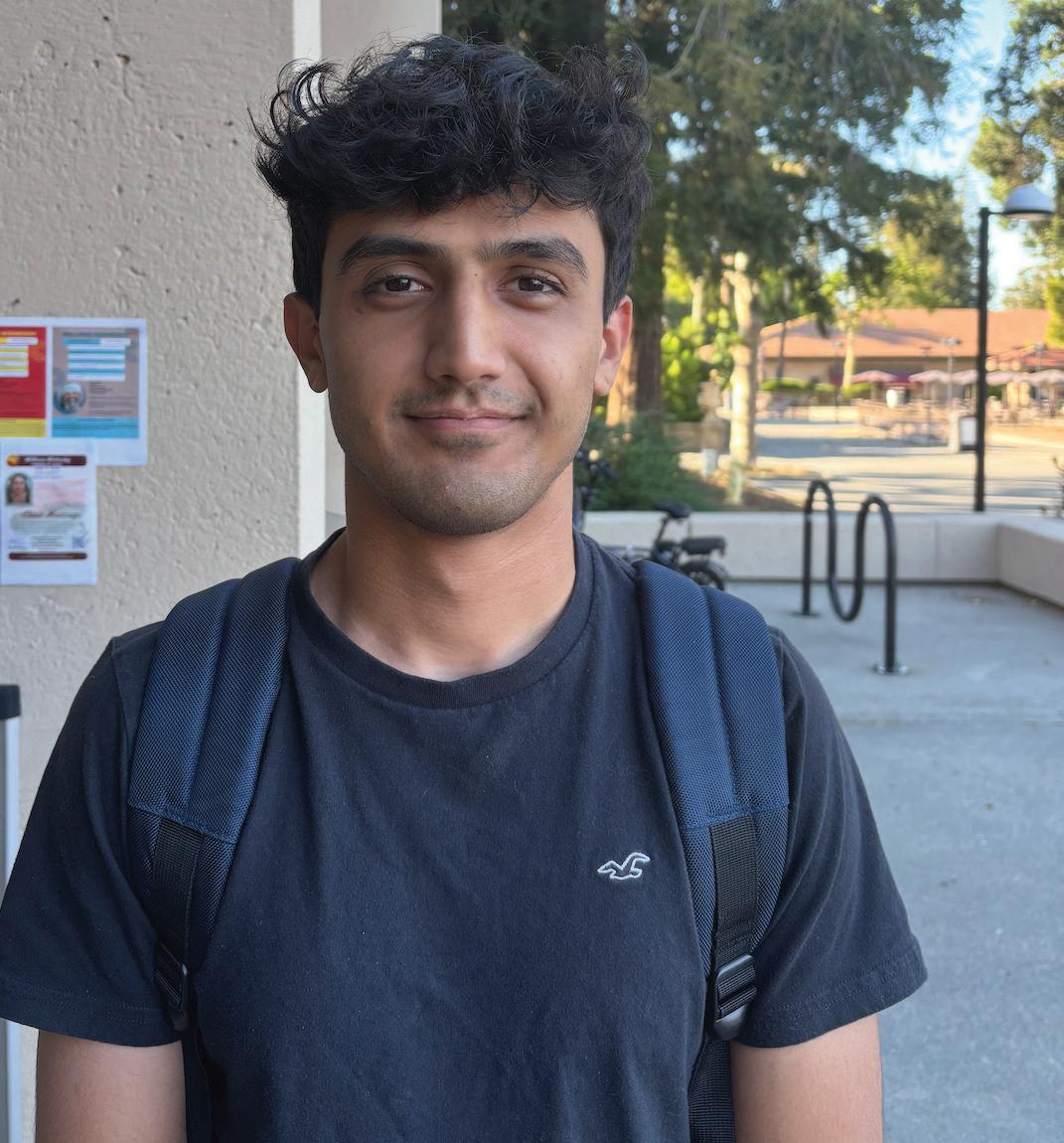
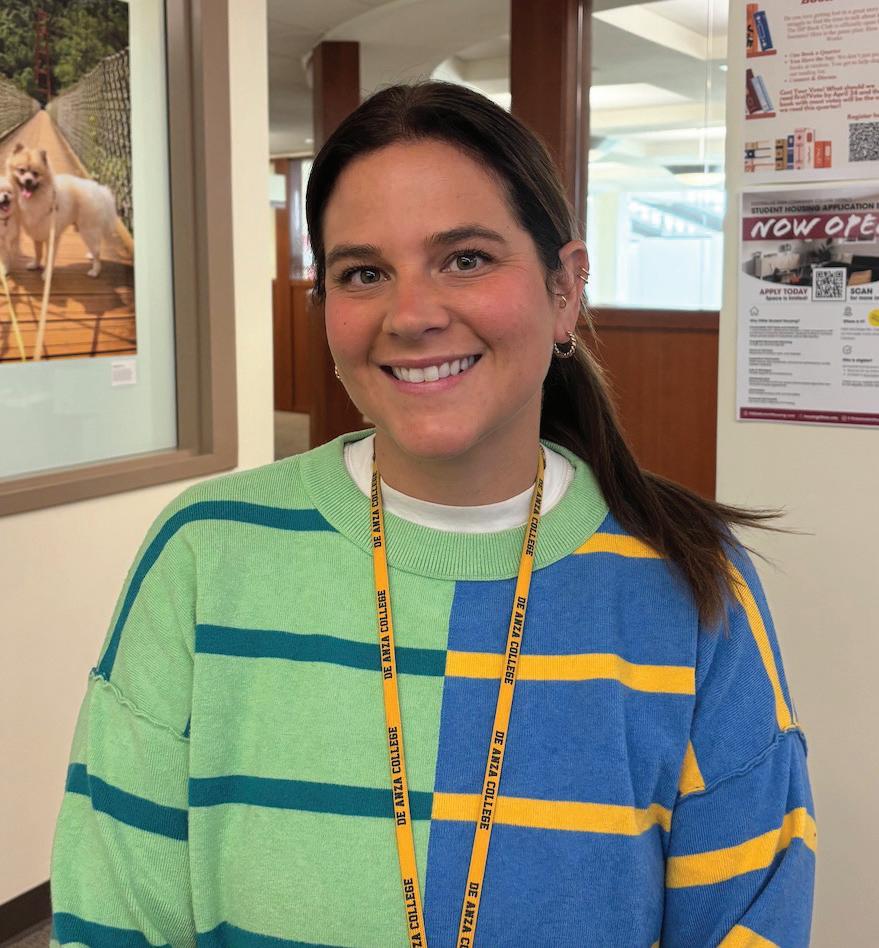
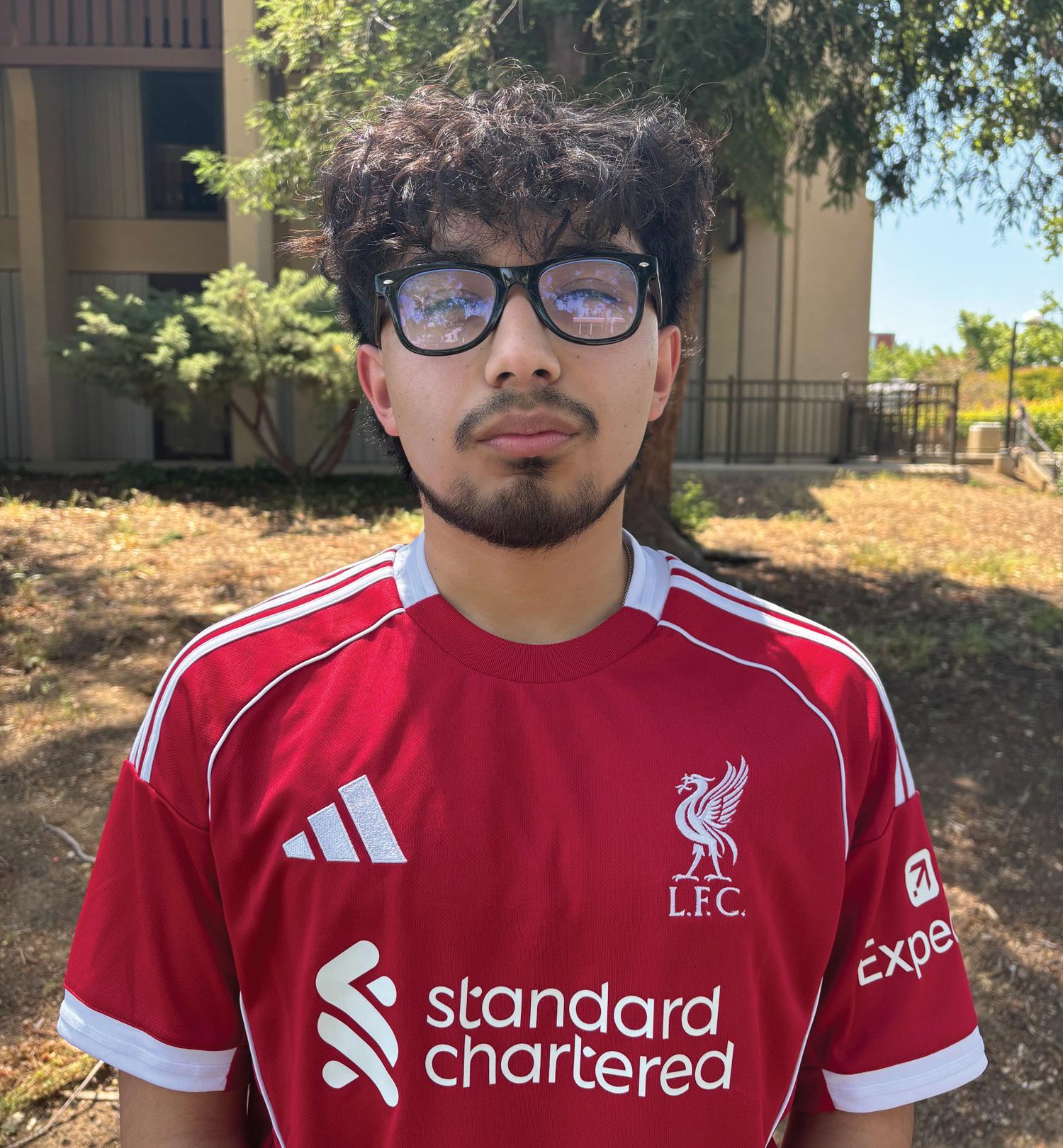
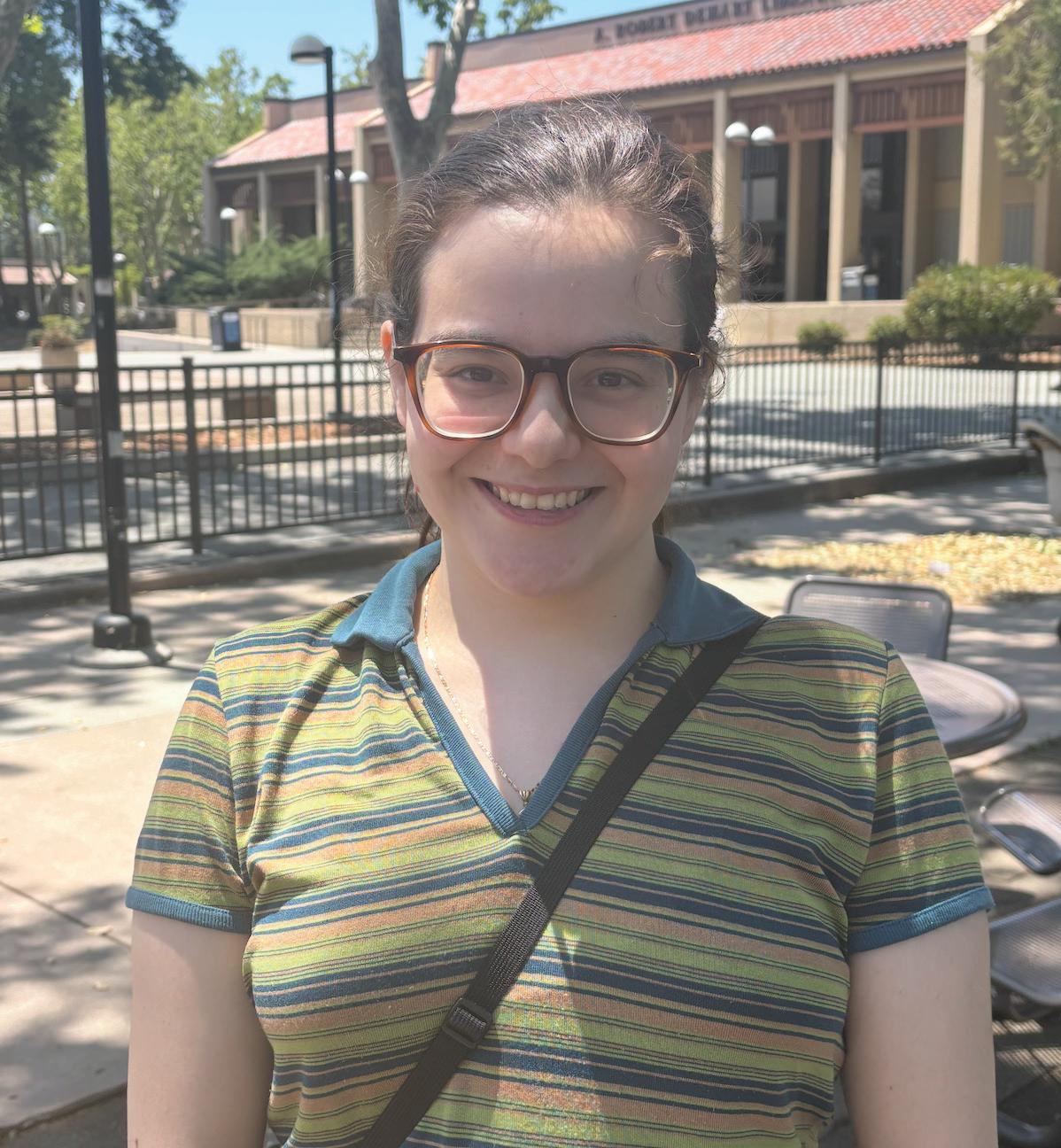
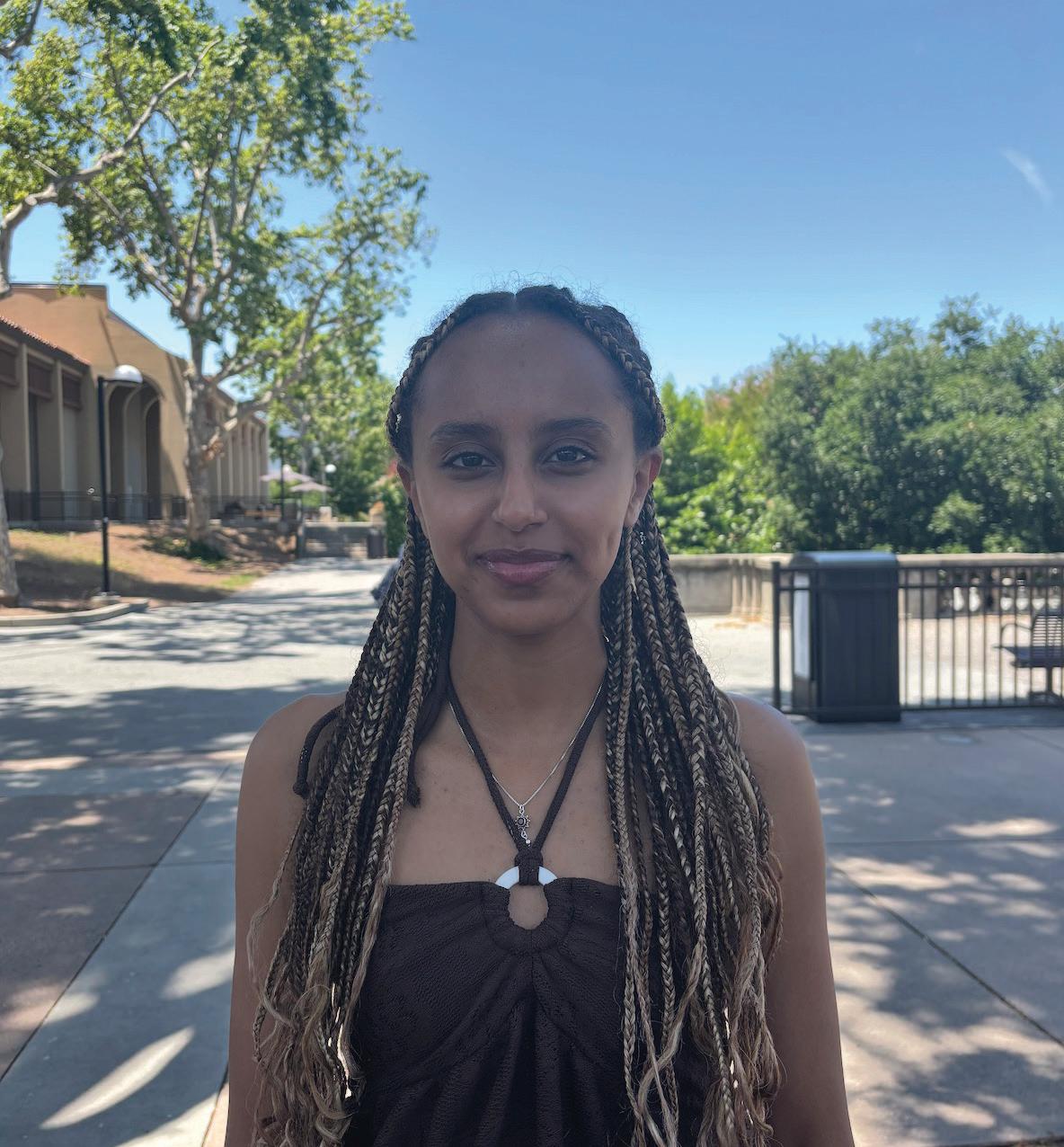
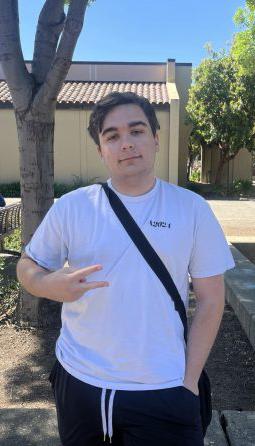
Affan said he’s supporting Spain.
“I think they’re the most well-rounded team to come to the World Cup,” Affan said. “They’ve got a good balance of attack and defense.”
Johnson said she’s supporting her native country, Spain.
“I’m from the south, a city called Granada.”
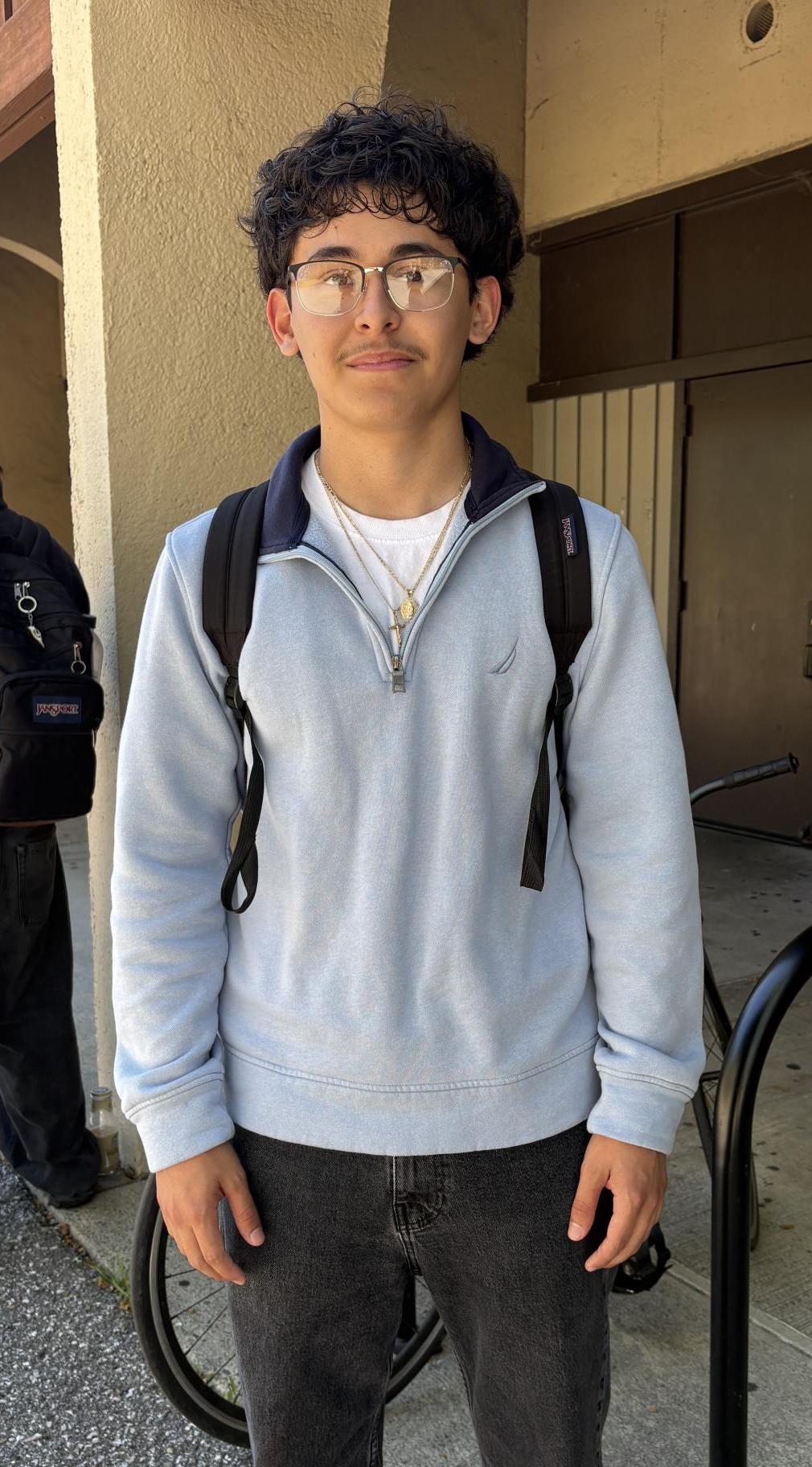
Kio said he’s supporting Mexico.
“My mom’s side is from there,” Kio said.
Kio also said he wants to see the World Cup matches at Levi’s Stadium in Santa Clara, such as Paraguay against Australia.
“I think they’re both really strong teams.”
Wallat said she’s supporting France.
“The French national team has been very intentional with investing into their players’ development,” Wallat said.
She also said she appreciates the diversity on France’s team. “They have a lot of Arab and African players that are children of immigrants to France so it’s kind of like a blended team.”
Ashebr said she’s supporting Mexico.
“I’m from Ethiopia, so my top team would be Ethiopia,” Ashebr said, noting that Ethiopia is not competing this year. “The next of mine would be Mexico because they play really well.”

By Hayden Rush LA VOZ STAFF
The Cañada College Colts defeated De Anza College baseball 11-6, ending the Mountain Lions’ season on April 24 at home.
“We started off hot in the beginning,” said infielder Diego Cusorli, 20, administration of justice major (De Anza No. 32). “Little by little, they (Cañada) started coming back.”
Both teams each scored 2 points in the first inning, with a home run from infielder Lawson Darthard, 19, business major (De Anza No. 40) followed by a run in from infielder Drew Paxton, 20, business administration major (De Anza No. 2).
In the next inning, Paxton hit a single to run in catcher Jordan Maske, 20, communication major (De Anza No. 23), at the plate. Darthard took a sacrifice hit to right field, giving Maske and the team another run.
In the fifth inning, utility Cole Leschak (Cañada No. 18) ran in
utility Justin Gladfelter (Cañada No. 1). Infielder Joe Dyer, 20, business major (De Anza No. 16), hit a double, scoring Darthard again to give De Anza a 4-3 lead.
In the sixth inning, Cañada scored a run by center field. Darthard hit a single for De Anza, bringing in outfielder Xavier Pateli, 21, liberal arts major (De Anza No. 7).
“In the last couple of innings, we gave up some crucial runs,” Darthard said in reference to the last three innings, where Cañada scored seven unanswered runs, closing the game.
Cañada scored twice in the seventh inning, tying the game 6-6. Outfielder Isiah Herrera (Cañada No. 6) followed up with a three-run home run in the eighth inning.
The Cañada dugout got rowdy while the home crowd fell silent.
Maske applauded his team's efforts despite the loss, commending its grittiness in closing games.
“One thing about this program;
we’re going to fight,” Maske said.
Herrera scored more points in the ninth inning, hitting a single, batting in two runs to close the game 11-6.
“I’m very proud of the work everybody put in,” designated hitter Keanu Hennings, 20, kinesiology major (De Anza No. 17), said. “We came a long way and did things people thought we couldn’t do.”
The game marked a 1-3 season record against Cañada and 7-13 conference record, which De Anza baseball head coach Don Watkins credited in his season-closing interview.
“Today hurt, but going forward, we accomplished about 90% of our goals going into the season,” Watkins said.
Watkins said this year’s team gave De Anza baseball its best conference performance within the decade.
De Anza did not qualify for conference playoff games, finishing fifth in division standings, where the top
three teams of each division proceeded.
Over the season’s 40 games, the Mountain Lions scored 220 runs and gave up 409 runs, garnering a 0.360 on-base percentage, 16 home runs and a .260 batting average, placing it No. 75 out of 88 California Community College teams.
The team performed better away than at home, with a 6-13 away record compared to its 4-17 home record. It stole 68 bases in 80 attempts.
Watkins also said he was proud of his team and the steps they made toward an improved season from last year, hoping the next recruitment class will take the Mountain Lions further.
“We planted the seeds,” Watkins said. “Now the shade will come.”




By Lina Borges LA VOZ STAFF
De Anza College hosted the NorCal beach volleyball championships May 1-2, but the Mountain Lions missed qualifying by one match.
“We couldn’t be more excited to be able to offer our home, De Anza College, to all these schools from northern California, … to host this really prestigious event,” De Anza Athletic Director Ron Hannon said.
De Anza head beach volleyball coach Dawnis Guevara said De Anza could not compete because its pair fell one game short of qualifying.
However, she said she was still very entertained with the “camaraderie and
good competition.”
“We are always going to cheer for our Coast Conference teams, because those are the teams we play twice in the conference,” Guevara said. “We want one of our co-conference teams to win the majority of the games.”
Students from colleges across the region went to support their teammates.
“Now that we are playing here for the NorCal champs, it’s amazing,”
Lacey Manzano, 19, volleyball defender (Monterey Peninsula No. 7), said. “The vibe is always so good.”
Players from the De Anza volleyball team volunteered at the event.
“It will be very beneficial in the future when we have competing pairs, and we get to play on our home
courts,” Ester Alper, 23, molecular biology major, said.
Catalina Barajas, 23, business administration major (De Anza No. 14), said representing the college meant a lot to her.
“This is an incredible facility,” Molly Hummel, San Joaquin Delta head beach volleyball coach said. “It represents Northern California really well.”
Guevara said she “couldn’t be more proud of” the volleyball facility.
“This is the first year that we have had this facility,” Guevara said. “It (hosting NorCal championships) has been a blessing in the making.”
Guevara also said she is proud of the girls from her team, calling them “rock stars.”
“This is the best facility in the state,” Guevara said. “We are hoping to gain the attraction for elite-level beach volleyball players.” Hannon said hosting the championships took a lot of time and planning.
“We are not done yet. There is more to come, a lot more surprises to come for it,” Hannon said.
3C2A Executive Director Jennifer Cardone said the facility is a potential host for the next year’s 3C2A Beach Volleyball State Championships.


“Of all the ones we’ve been blessed with, this is the one we had to work hardest for.”
Mark Landefeld Head Coach

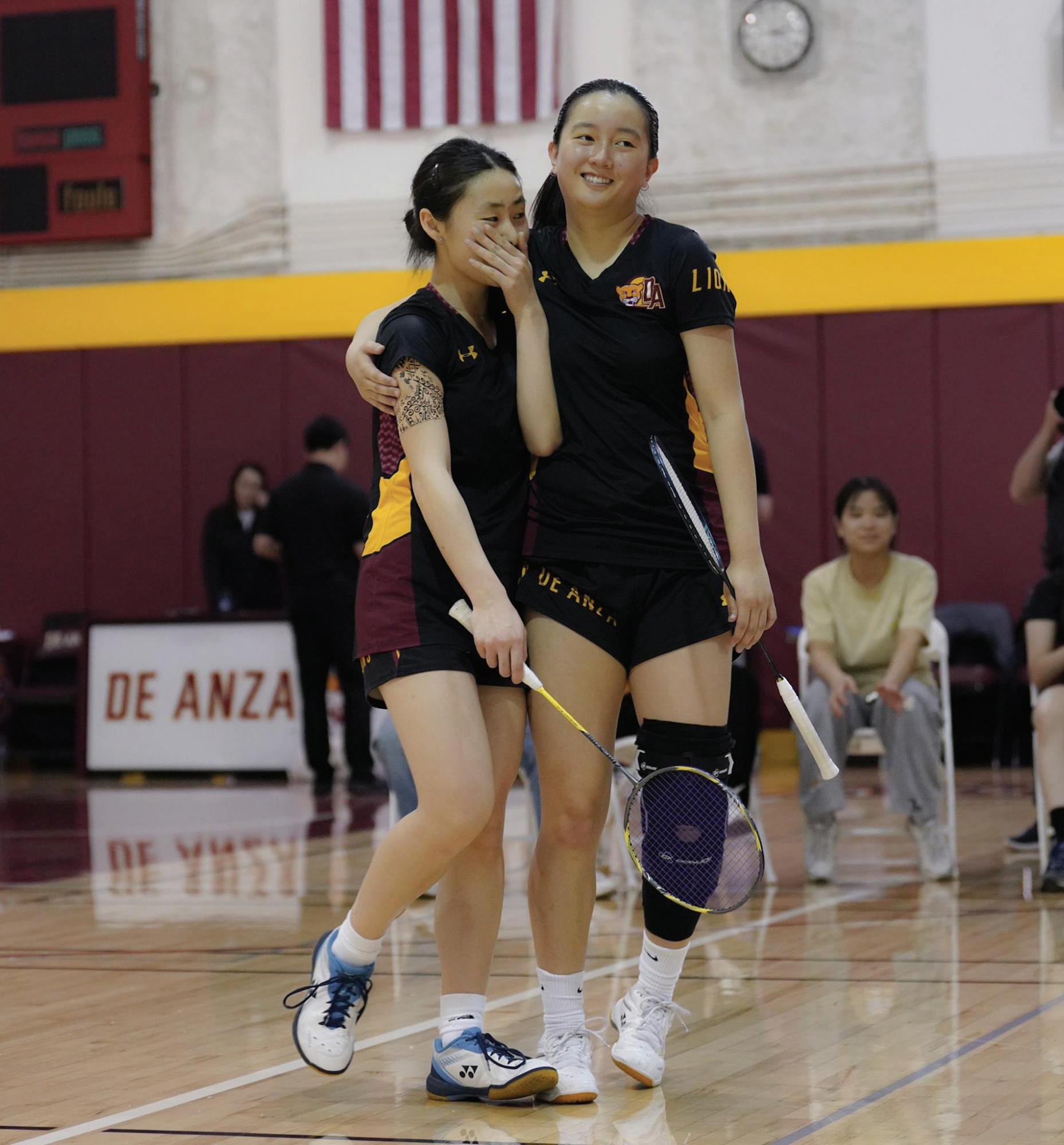
By Hayden Rush LA VOZ STAFF
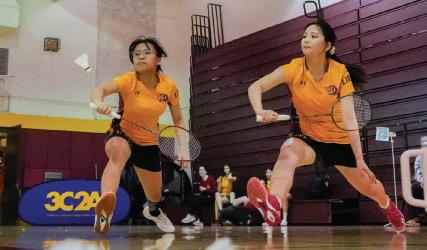
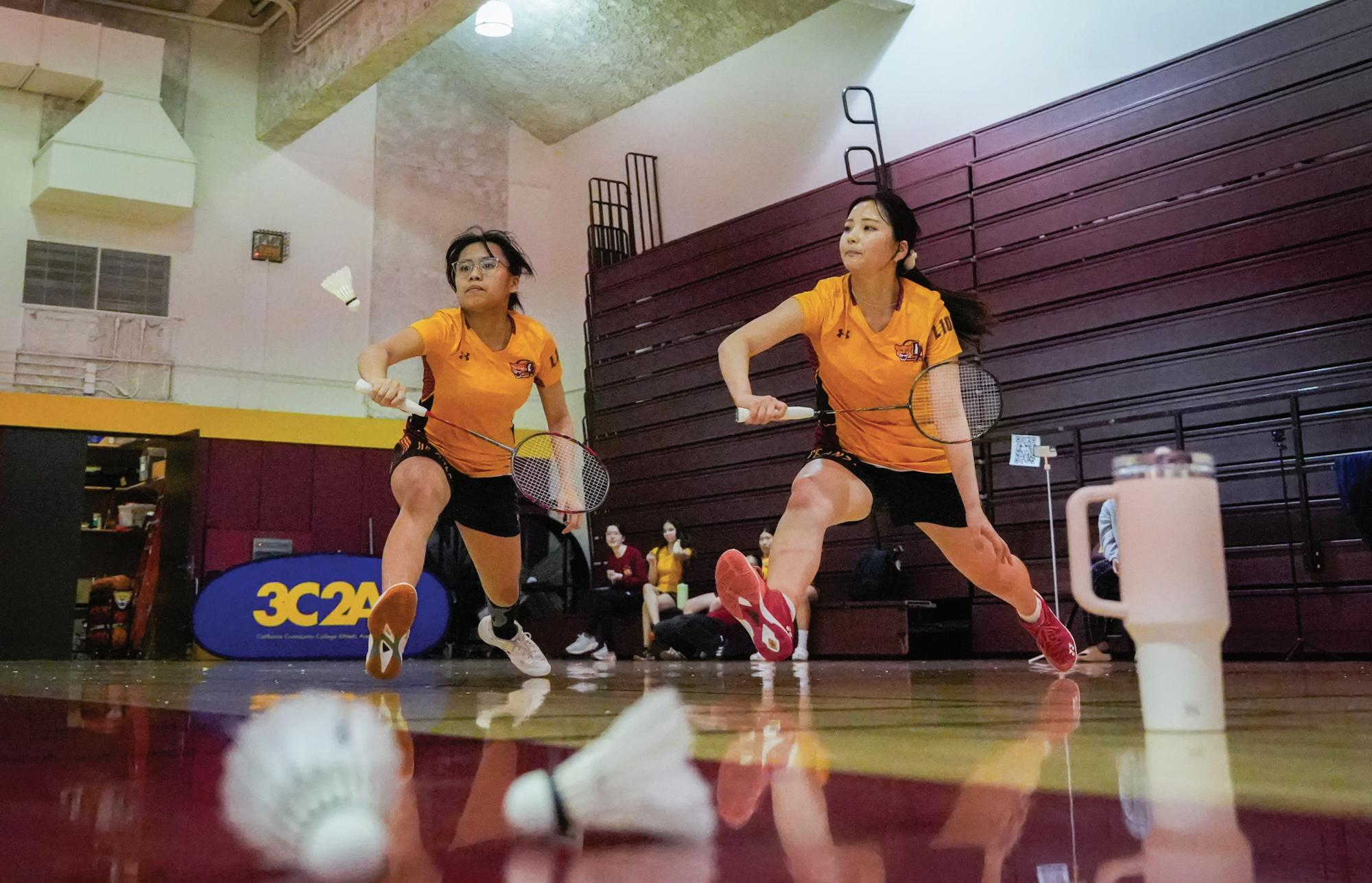
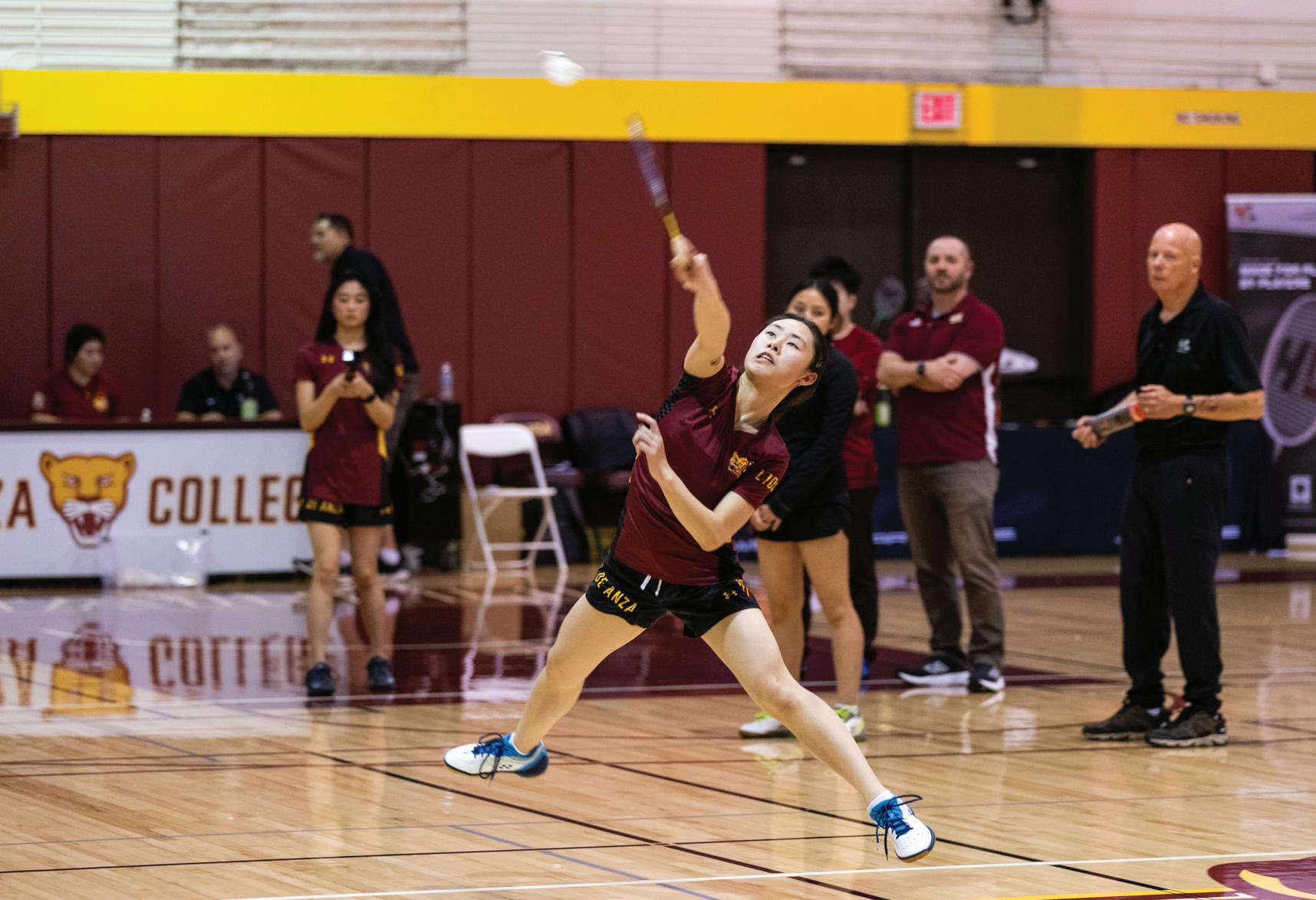
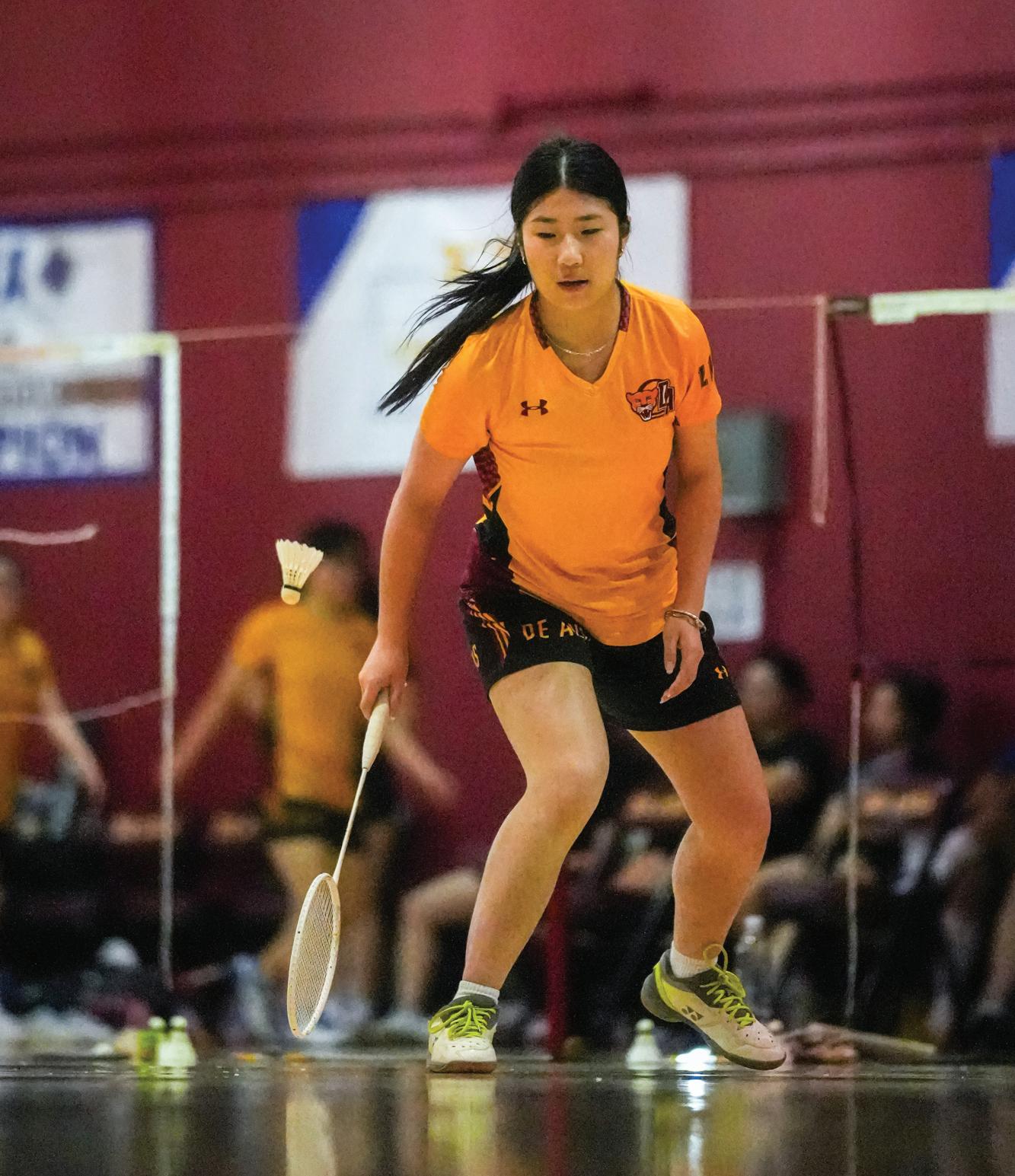
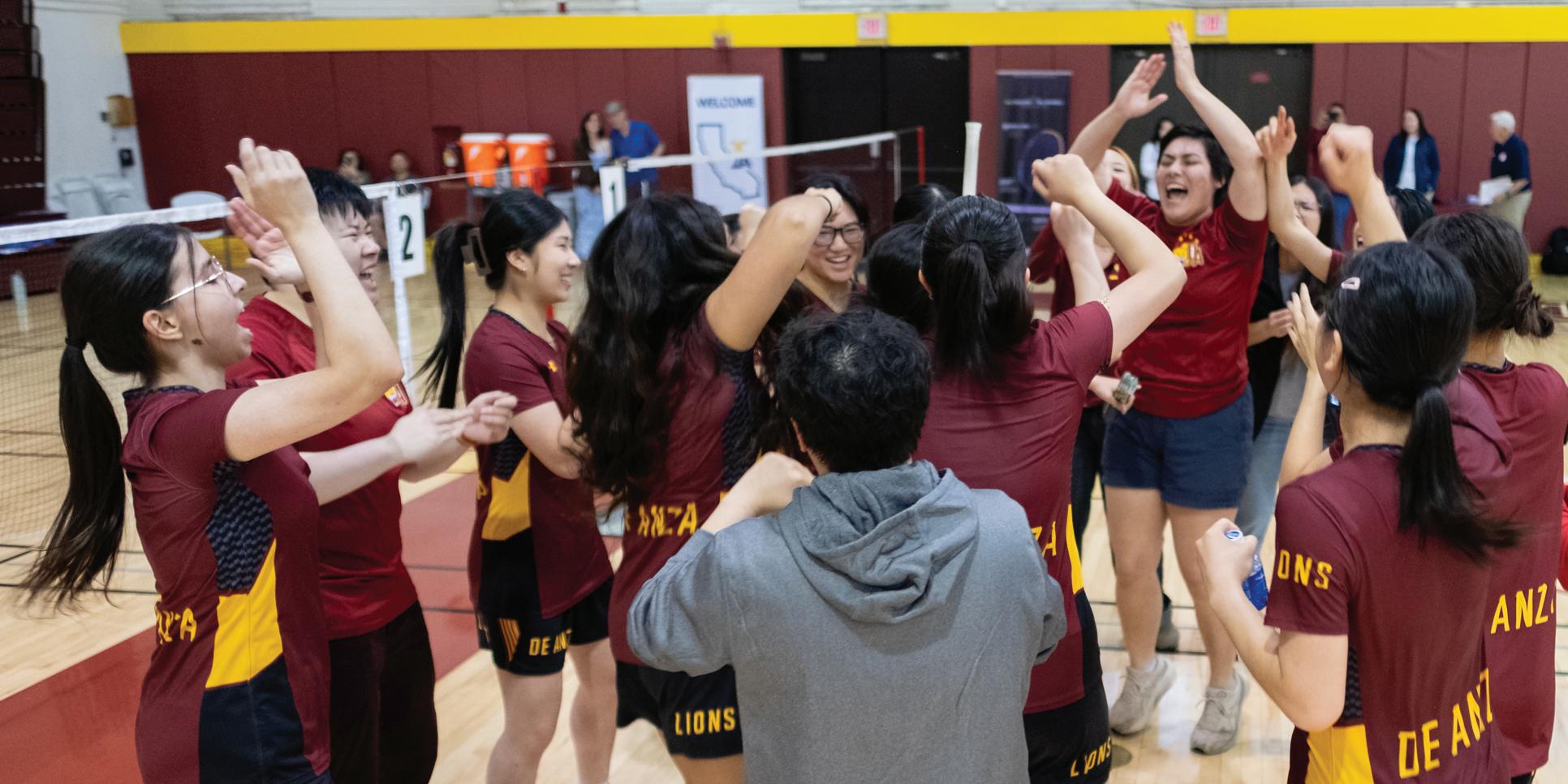
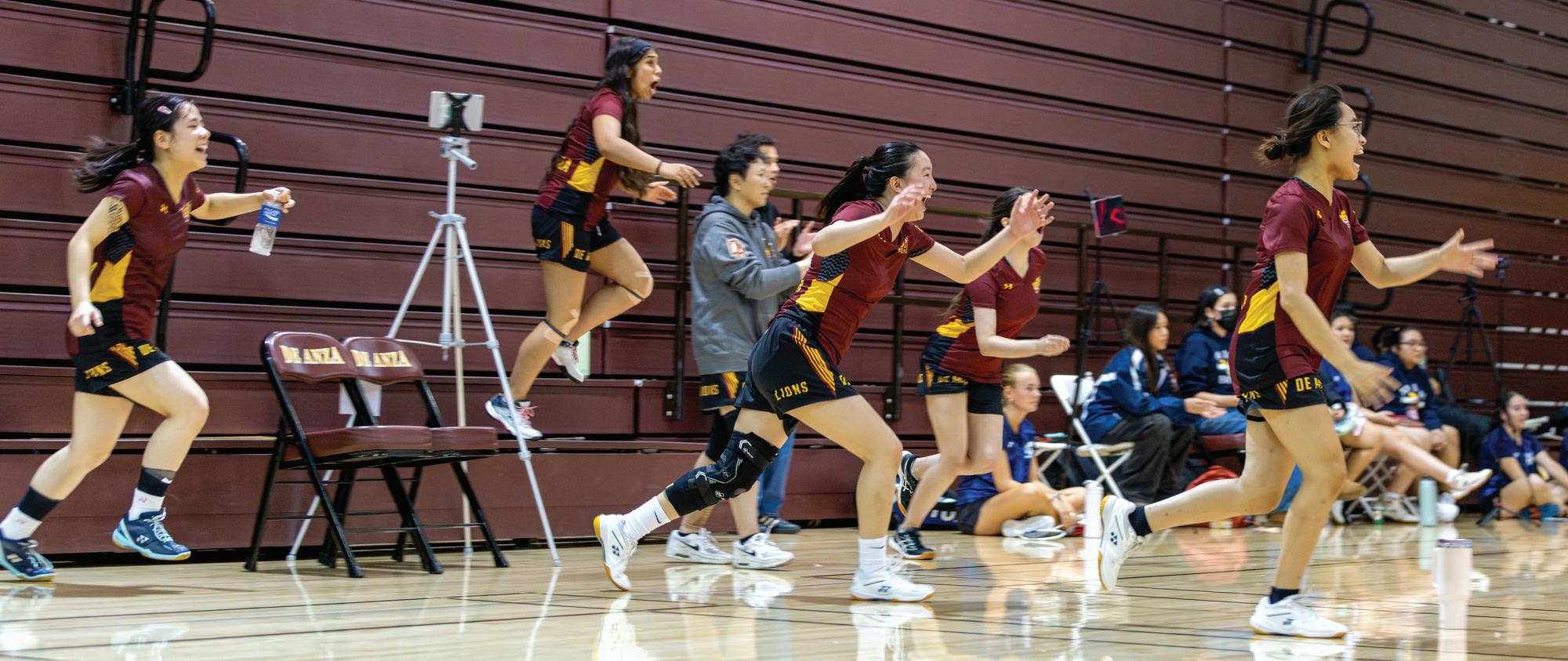
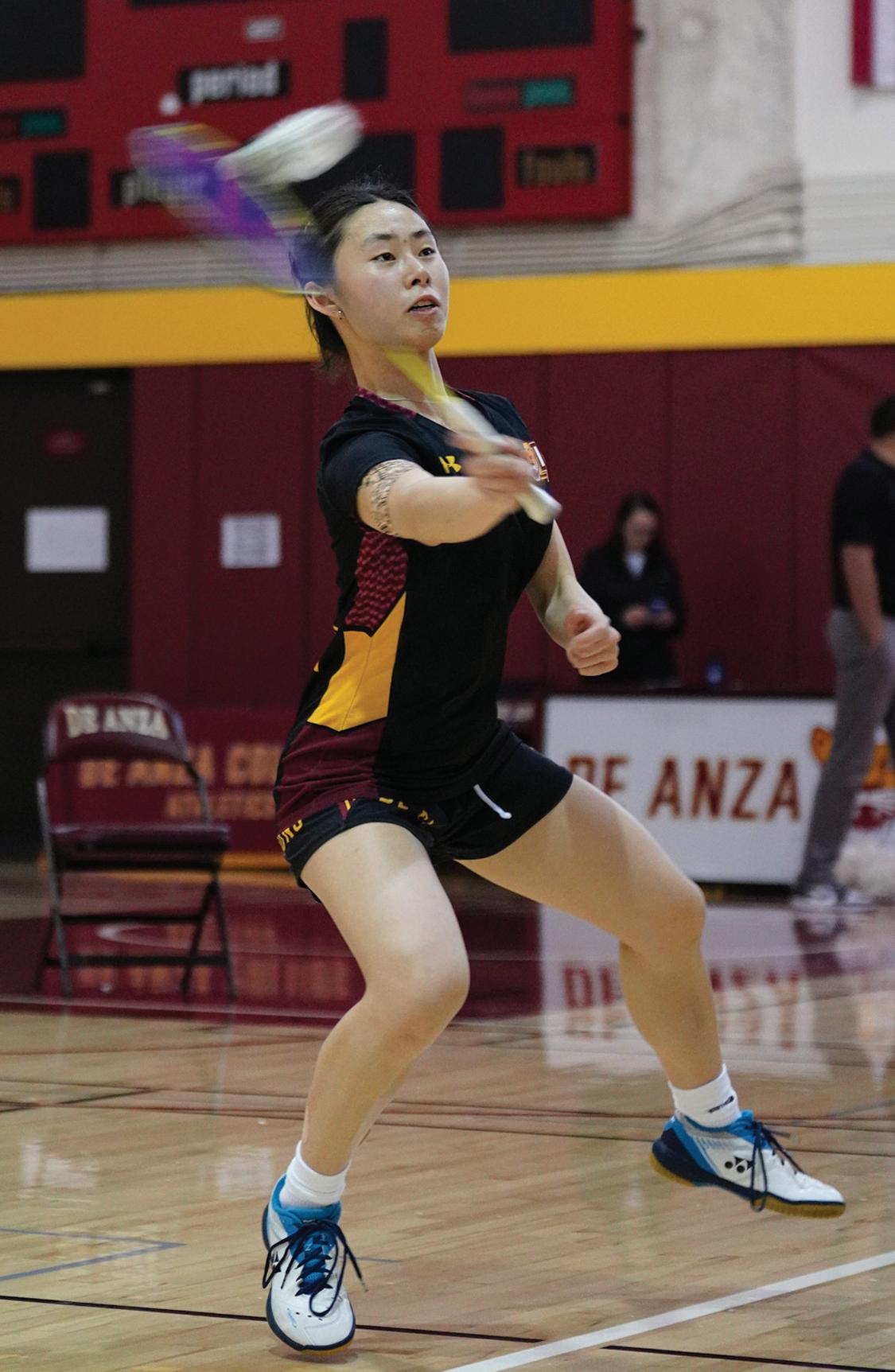
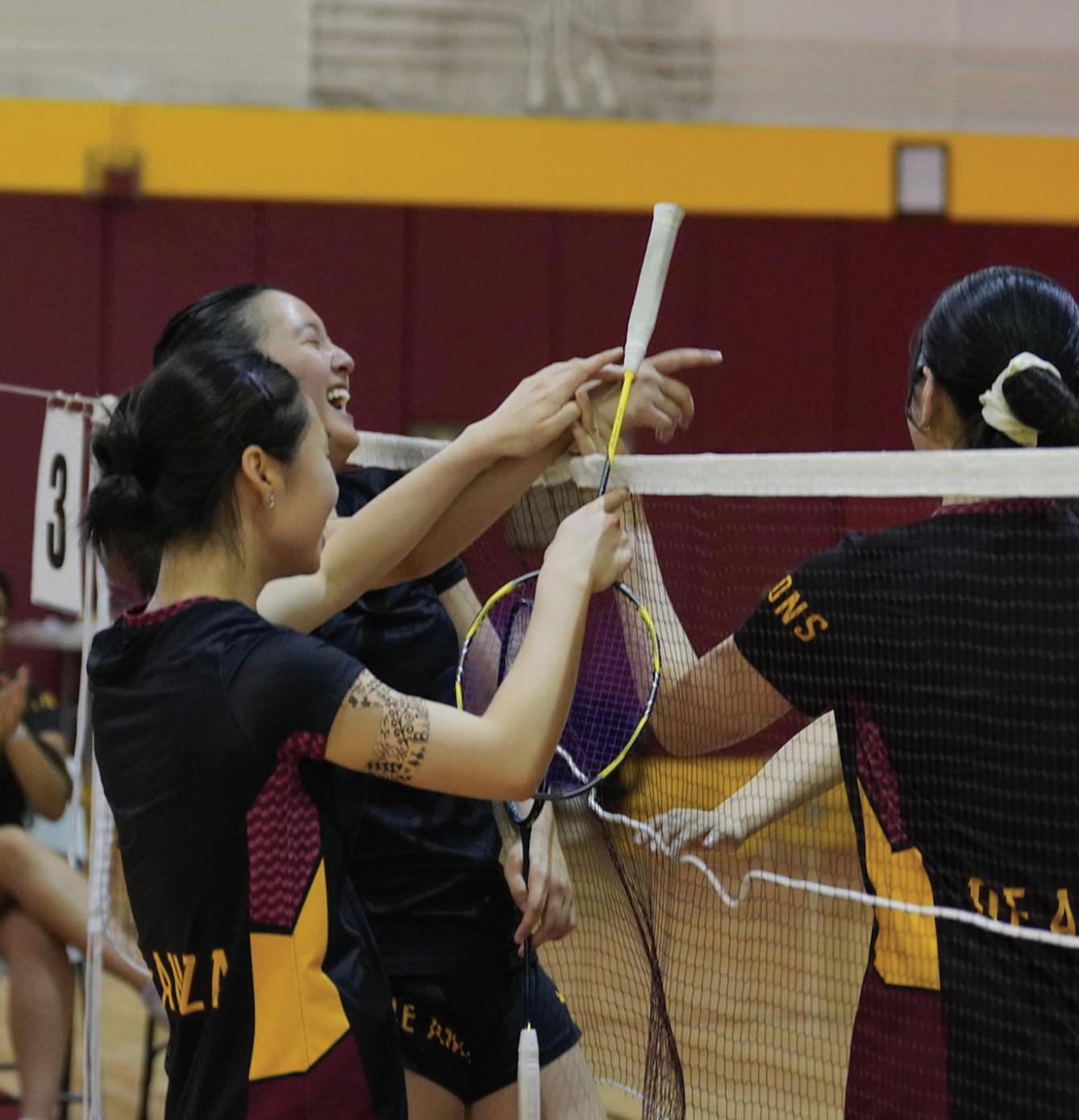
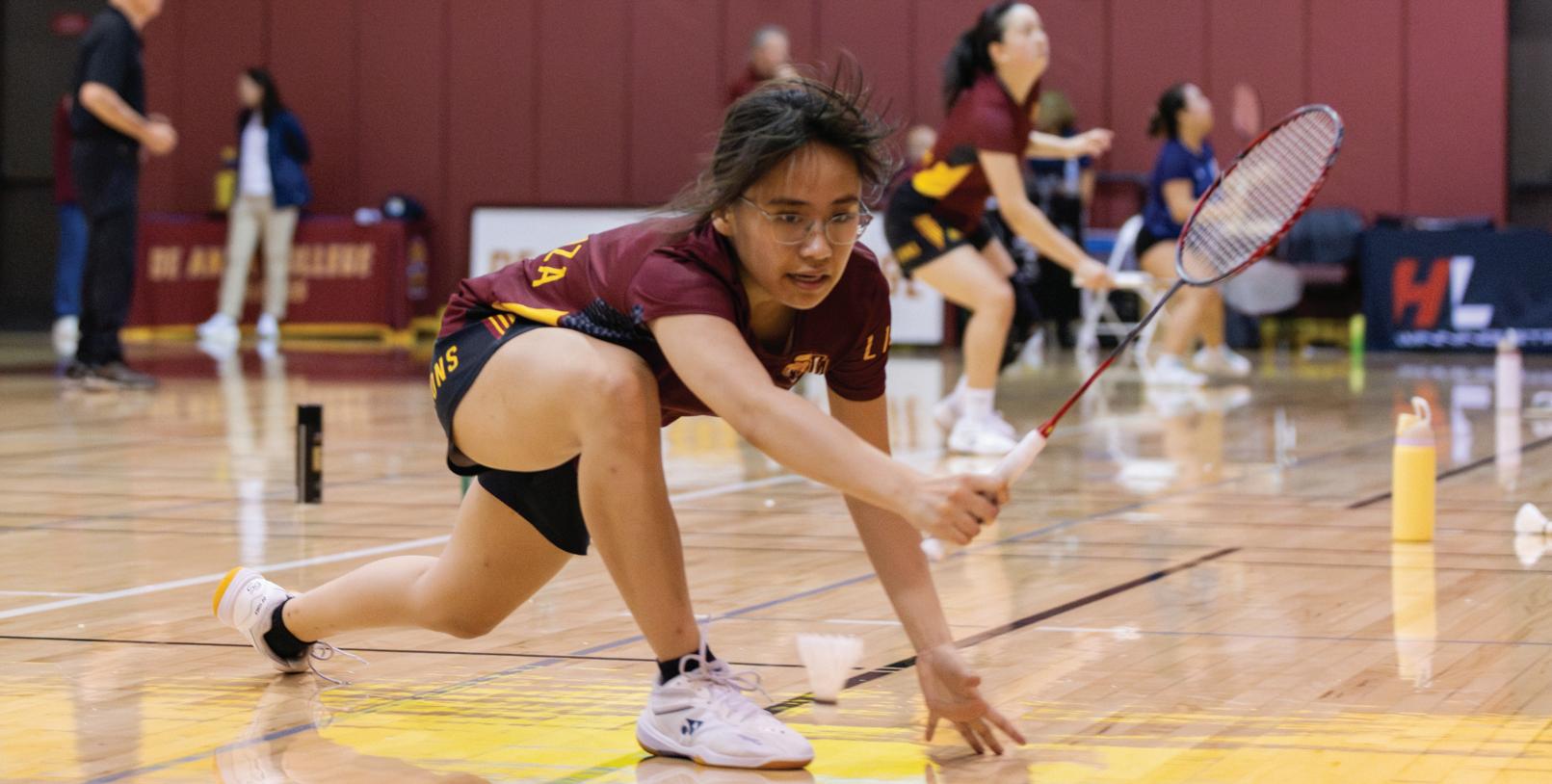
The Mountain Lions completed their 2026 season with another 3C2A Badminton Women’s Team State Championship win, facing the Southern Coast Conference leader, San Diego Mesa College Olympians, at the De Anza College gym on May 8.
This win marks the team’s sixth state title, winning its first in 2013.
“Of all the ones we’ve been blessed with, this is the one we had to work hardest for,” Head Coach Mark Landefield said. “They just found the moment to step up, which I did not know would be there until it happened.”
The game started competitively within the first batch of singles; De Anza won the first two matches, then San Diego Mesa closed the other matches out 3-1 to establish a standing score tied at 3-3.
The second set of games featured a doubles matchup, where De Anza established a 5-4 lead heading into the next batch of singles, closing in on the 11-game mark.
The next set of single matches resulted in a 6-0 De Anza sweep, crowning the Mountain Lions as state champions once again.

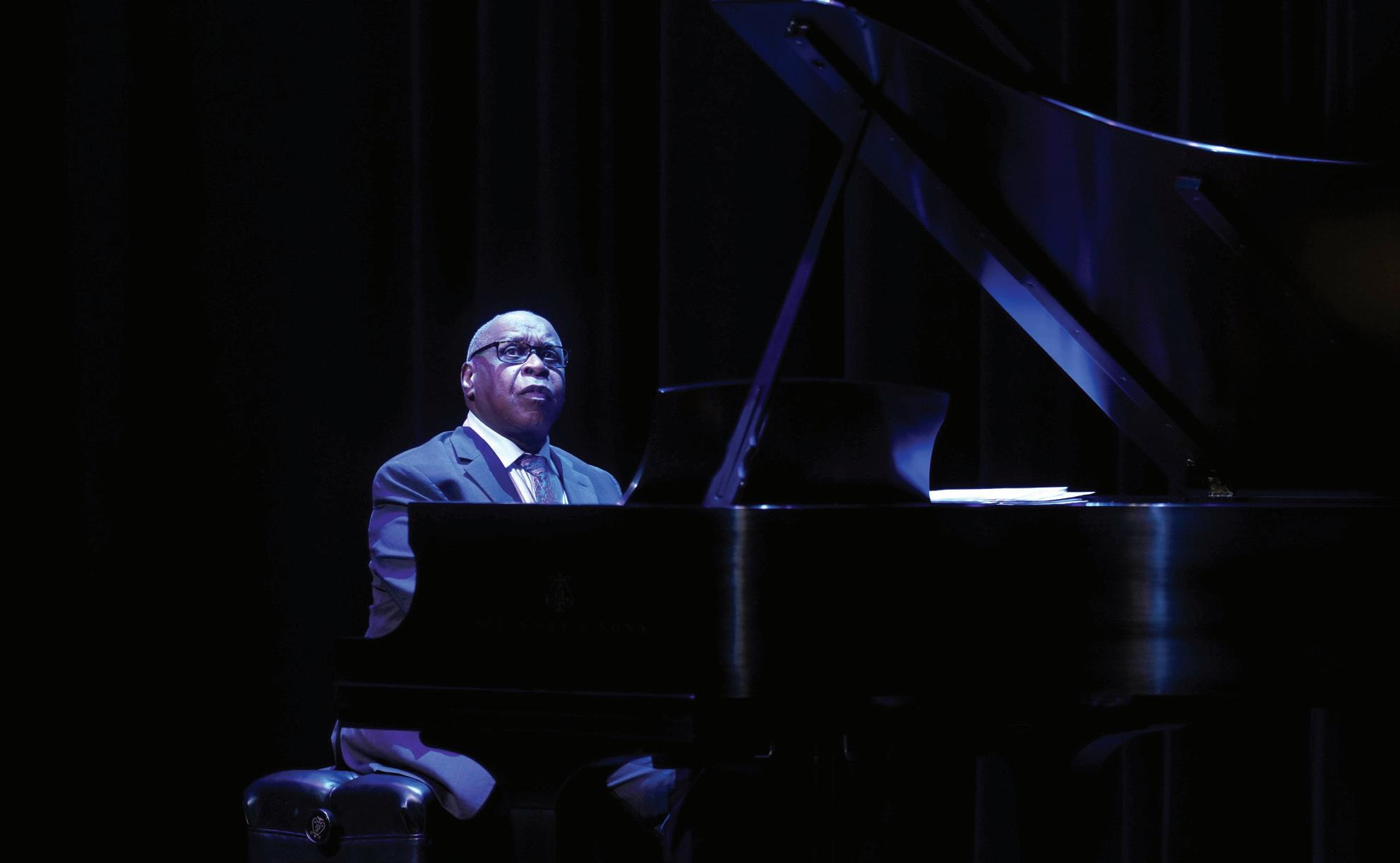

“(Of) all of the wonderful artists and the musicians in the world, they keep inviting us back,” Blake said of the event’s organizers. “But anyway, we’re grateful.”
Gold and Blake first duetted “Sonata VI in E Major” by composer George Frideric Handel.
The piece shifted from a lively, jaunty rhythm to a slower, somber pace and back to its original spirited tune.
Of the big three Baroque composers, the other two being Johann Sebastian Bach and Antonio Vivaldi, master of ceremonies for the fundraiser, violinist Debbie Dare, said Handel was a “very well-traveled composer” who “began in Germany, continued his education in Italy, and flourished in England.”
Gold and Blake played the first half of the third movement as composed, and the second half with a Baroque-era variation technique.
“It’s like an opera aria in miniature,” Gold said.
Dare introduced Hubert Léonard’s suite of five “Scènes Humoristiques” or “Humorous Scenes” in English .

Debbie Dare narrates over Hubert Léonard’s suite of five “Scenes Humoristiques” or “Humorous Scenes” during the Study Abroad Benefit Concert held at De Anza on May 7.
known Catalan composers,” Blake said. “I’m playing this for the students who are going abroad (to Barcelona, in the Catalonia region).”
Mompou alternates between the “canción” portions, which reflect a serious, somber tone in a minor key, while the “danza” sections are joyously energetic in a major key.
By Cris Li
The Study Abroad Benefit Concert celebrated students and raised funds for the De Anza College Study Abroad program on May 7 at the Visual and Performing Arts Center.
“It’s a wonderful idea to send these students off with a program like this,” pianist Carl Blake said. “Acknowledge their participation in the program and the people who make it possible.”
Donors give the De Anza Study Abroad program around $30,000 per year to fund student scholarships, Global Education Partnership Director John Swensson said.
“We have 40 (students) going to Barcelona,” Swensson said. “Many of them could never go without scholarships.”
Blake and violinist Joe Gold played both whimsical and stirring regional songs for students and donors to wrap up the year’s fundraising.
Gold said “the mood has changed completely” from the previous “serious” compositions to these “silly” songs.
“It’s a wonderful idea to send these students off with a program like this, acknowledge their participation and the people who make it possible.
Carl Blake Pianist
Before starting the suite, Gold muted his violin’s strings to musically mimic animal sounds such as a rooster crowing, later using the technique in “I Hahn und Hennen” or “Roosters and Hens,” a piece with a quick, light and cocky melody.
In “III Chatte et Souris” or “No. 3 Cat and Mice,” Gold draws out the meowing of a cat on his violin strings, as the cat and mouse scamper up and down the dynamic tempos.
“He (Léonard) invents the most imaginative and evocative sounds of nature,” Dare said. “Here, magic doth prevail.”
Blake performed a piano solo of “Canción y Danza VI” or “Song and Dance No. 6,” by Spanish composer Federico Mompou.
“There are not a lot of well-
Robert “Bob” David Siegel, donor and Stanford professor, said the concert’s small audience made it more personal.
“It was almost like having your own chamber concert,” Siegel said.
Swensson said that though fundraiasing is year round, donors, with “no ask whatsoever,” donated two more $2,000 checks after learning special $2,000 scholarships allowed two 2025 Study Abroad students to join despite last-minute financial hurdles.
This summer quarter, students taking certain integrated English and humanities classes will spend three weeks in Barcelona, with lectures incorporating Spanish immersion, city life and AI tools.
“We have some very generous people here and wonderful friends of ours,” Swensson said, “The best study you’ll ever do is what you do overseas.”
By Hayden Rush
As the streets of San Francisco buzz with activities around every corner, cooped in an alleyway on 358 Brannan St. is a hidden indoor batting cage called The Natural. The athletic facility has been alternatively used as a music venue, providing local bands the opportunity to showcase their creative abilities.
Bands including opener, Kiori, followed by That Dog Won’t Hunt and headliner, Pinnacle Of, performed on May 16.
The San Jose band, Pinnacle Of captivated the audience through its raunchy, up-tempo playing.
Leading the helm was Michael Lopez, 22, lead vocalist/guitarist, who took center stage through his theatrics and death growls, until technical difficulties ended the show early.
“I like the intimacy of the smaller crowd,” Lopez said. “In the larger crowds, people feel too awkward to express themselves.”
After multiple

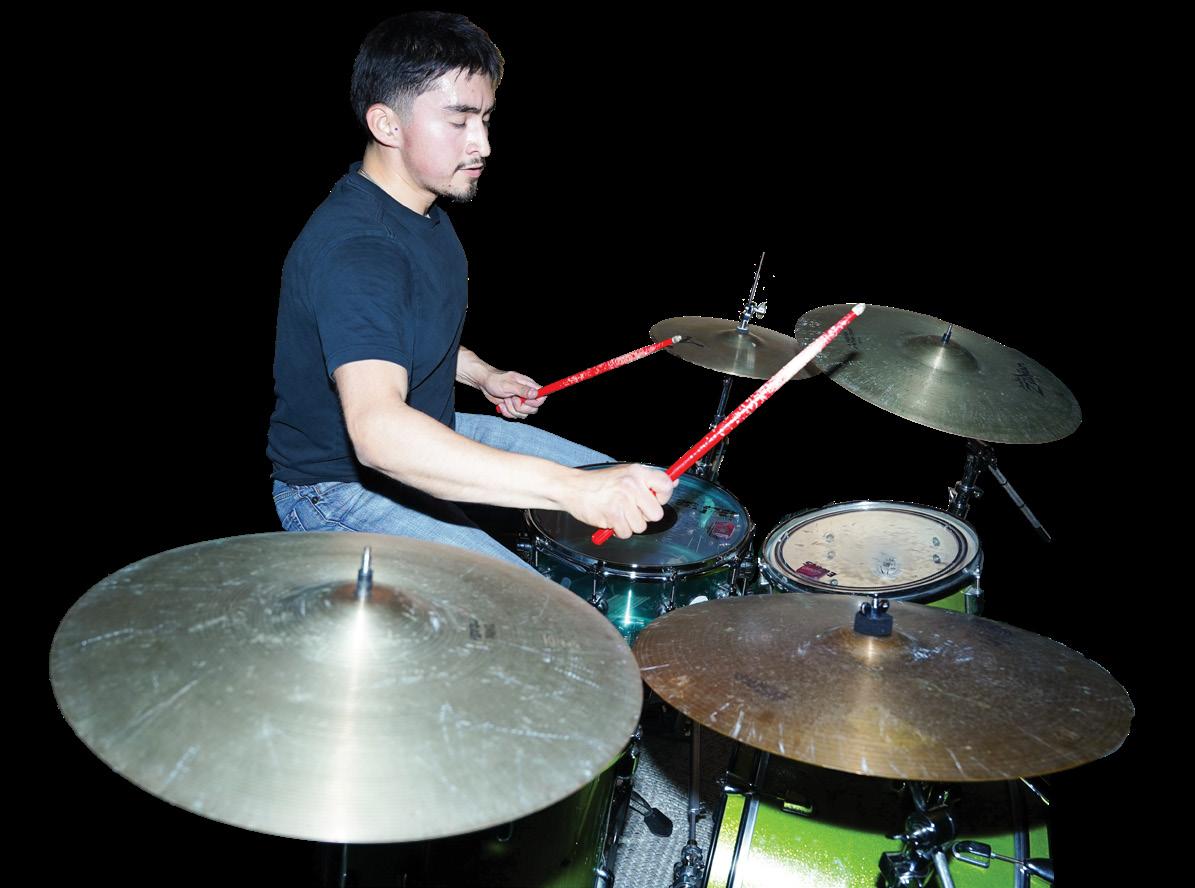
College student Elias Garcia, 23, communications major and Pinnacle Of drummer, said.
being in this position,” Garcia said. “With the band I’m in now, we instantly clicked.”
Falah, 23, San Jose State University digital media major and guitarist of That Dog Won’t Hunt.
was also inspired by his family to pursue music.
music and the band. I love
Bassist of That Dog Won’t Hunt, West Valley College student Junior Swartz, 24, department of justice major, also emphasized the importance of meshing with his band members to create great music.
“The power of friendship is the greatest, most beautiful asset of any great band,” Schwartz said.
The group of mutual friends started their band after they bonded over a shared distaste for the late Charlie Kirk, who debated college students from a conservative political stance.
“We were trying to throw a protest because he was talking to our campus and we wanted a band to be loud to distract them,” said Parsa
He then revealed more memorable moments the band shared together, including when they discovered a possum living inside their kick drum in his new home, which was previously littered with heroin by the past owner.
“We named it Opioid and he was a great pet,” Falah said.
De Anza student Nicholas Labosky, 23, drummer of That Dog Won’t Hunt, started playing the drums when he was nine.
“I just hit a lot of things around the house,” Labosky said. “My parents were like, ‘perhaps you should do this,’ and I said, ‘perhaps I shall.’”
Nick Ferguson, guitarist and vocalist of That Dog Won’t Hunt,
“I started because my sister did it, she was much older so she was a parental figure,” UC Santa Cruz student Ferguson said. “She was cool and was into metal, I was like, ‘hell yeah, I’m going to do whatever she does.’”
Being a part of the band offers a one-of-a-kind connection for the members.
“My siblings were 18 years older than me. I never had anybody my age so it’s like I have brothers now,” Lily Blanchard, 24, meteorology major and lead vocalist for That Dog Won’t Hunt said.
That Dog Won’t Hunt is working on an album to release at year’s end, while Pinnacle Of plans on getting into the studio to release music soon and book more gigs.
By Gavin Rust
The “Devil Wears Prada 2” tackles journalism trends such as social media and online news, as well as faux pas in the industry with artificial intelligence adoption, all while wearing Jimmy Choo.
Creating a movie as iconic as the 2006 original is a taller order than Miranda Priestly’s at Starbucks, but returning director David Frankel delivered, but not without caveats.
Miranda Priestly (Meryl Streep) remains the icy editor-in-chief of fashion magazine, Runway along with her right-hand Nigel Kipling (Stanley Tucci). Emily Charlton (Emily Blunt) moved up as an executive at Dior, a French fashion house and major advertiser of Runway.
Andrea ‘Andy’ Sachs (Anne Hathaway) returns as an award-winning journalist, guiding Runway through a public relations crisis as its new features editor.
The story quickly evolves into a reckoning of the journalism world, fueled by AI-related layoffs and billionaire media takeovers.
How can Runway succeed in adapting to an era of shorter attention spans, toilet scrolling and executives that think less about cerulean vs. turquoise sweaters and more about maximizing profit?
The fashion flick features celebrity cameos by Donatella Versace, Heidi Klum, Marc Jacobs and Lady Gaga, who wrote songs for the film’s score with Doechii. While those cameos were appreciated, I longed to see more.
The film missed its opportunity to feature pop culture ambassadors such as Taylor Swift, Sabrina Carpenter, Adele, Zendaya and Charli
XCX, who were not basking in stardom when the original movie premiered.
I thought it was a missed opportunity to invite newer genera tions of moviegoers to become cultured in jargon like, “Florals? For spring? Groundbreaking ….”
The film’s camera movements, color grading and lighting felt more like a Super Bowl advertise ment than a movie.
Whereas in the original used a handheld shooting method, includ ing during the infamous cerulean sweater speech scene where the viewer feels like they are in the office watching then intern, Andy Sachs. almost get “Andy sacked.”
The lighting in the original felt realistic and vibrant, while this felt like the opposite. In a style described by some as “Netflix lighting,” the characters looked too brightly lit.
Not every mo ment in our lives is lit perfectly.
Speaking of realism,

backer for the 2026 Met Gala to ban Theroux from the event.
The movie highlights the fact that journalism is not about penny-pinching. It’s an integral part of democracy and an art form that has the power to center human beauty, not data centers
Overall, “The Devil Wears Prada 2” is vindication. Whether it’s investigative or fashion reporting, journalists cannot be replaced by
AI can be controlled like a puppet, unlike a graduate of Northwestern University Medill School of Journalism, Sachs. As Priestly says,
Rating: 4/5