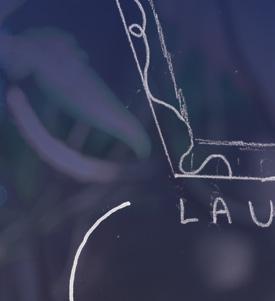
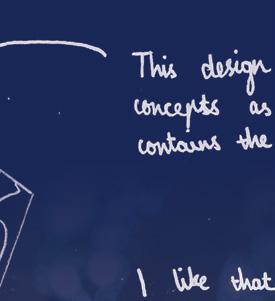
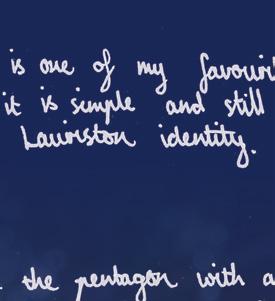
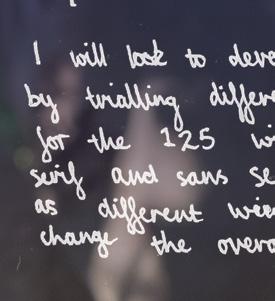
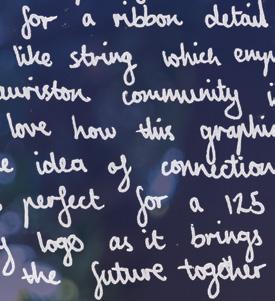
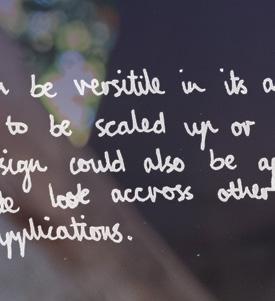
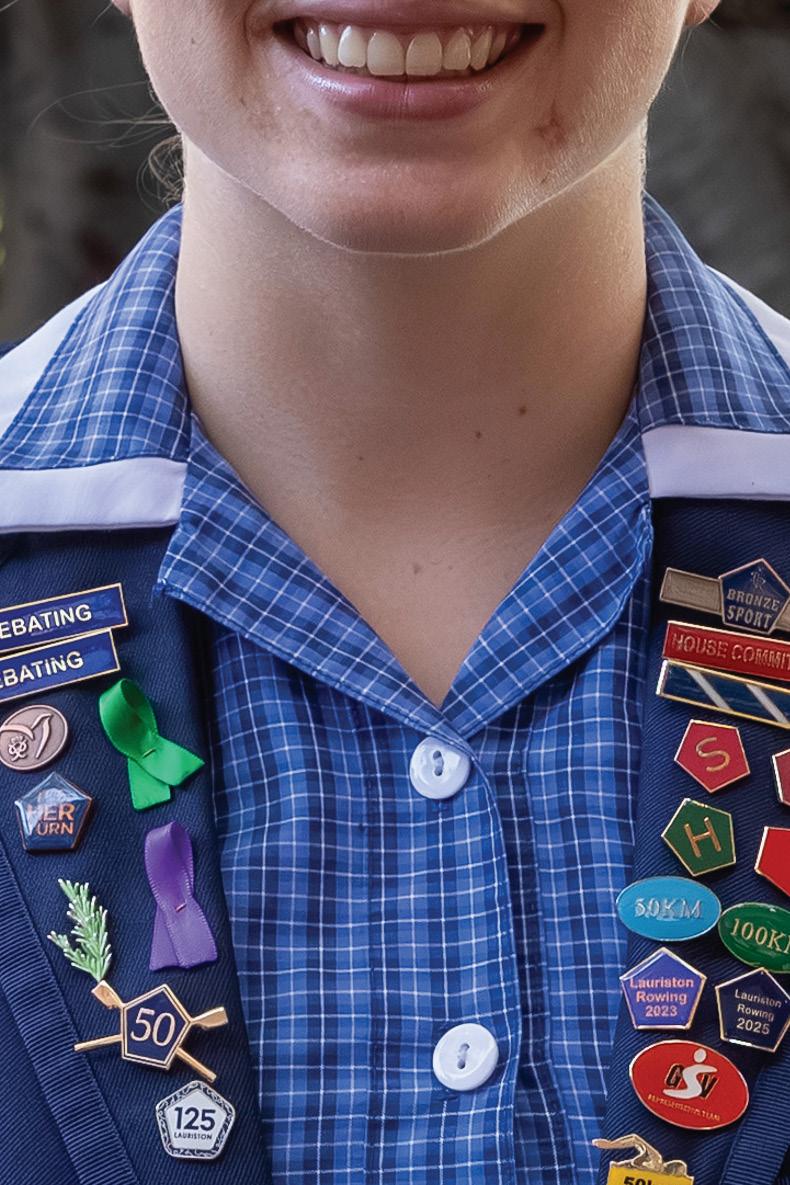
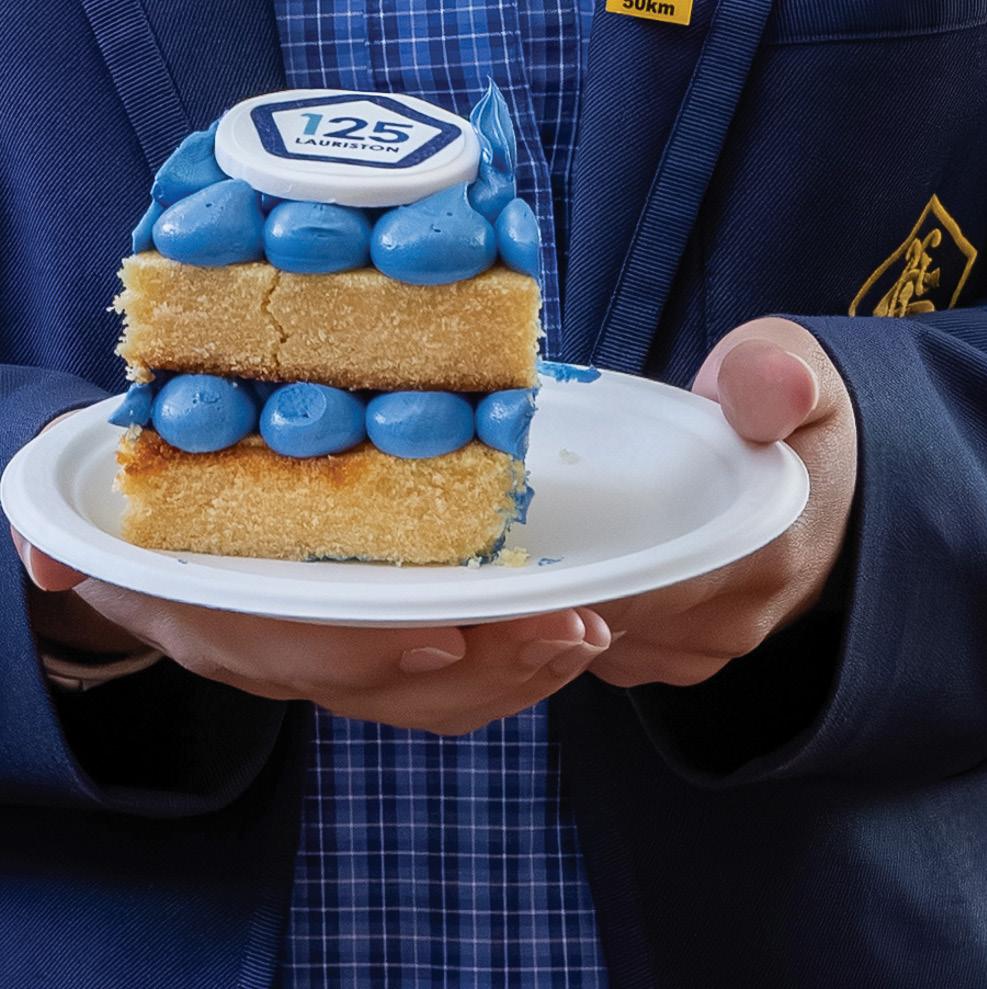
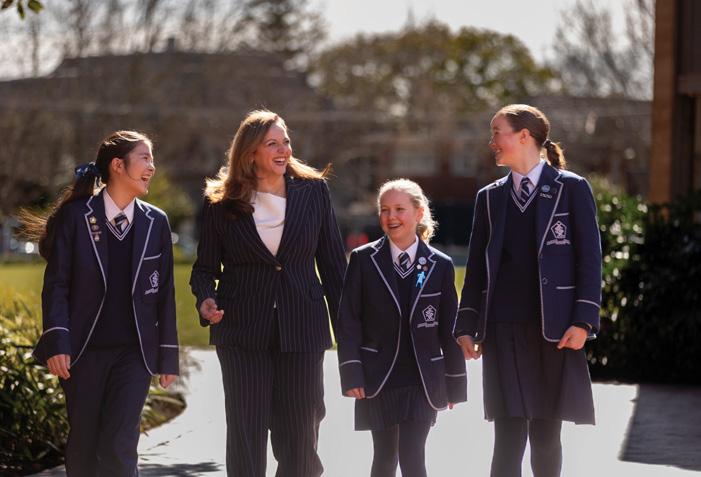
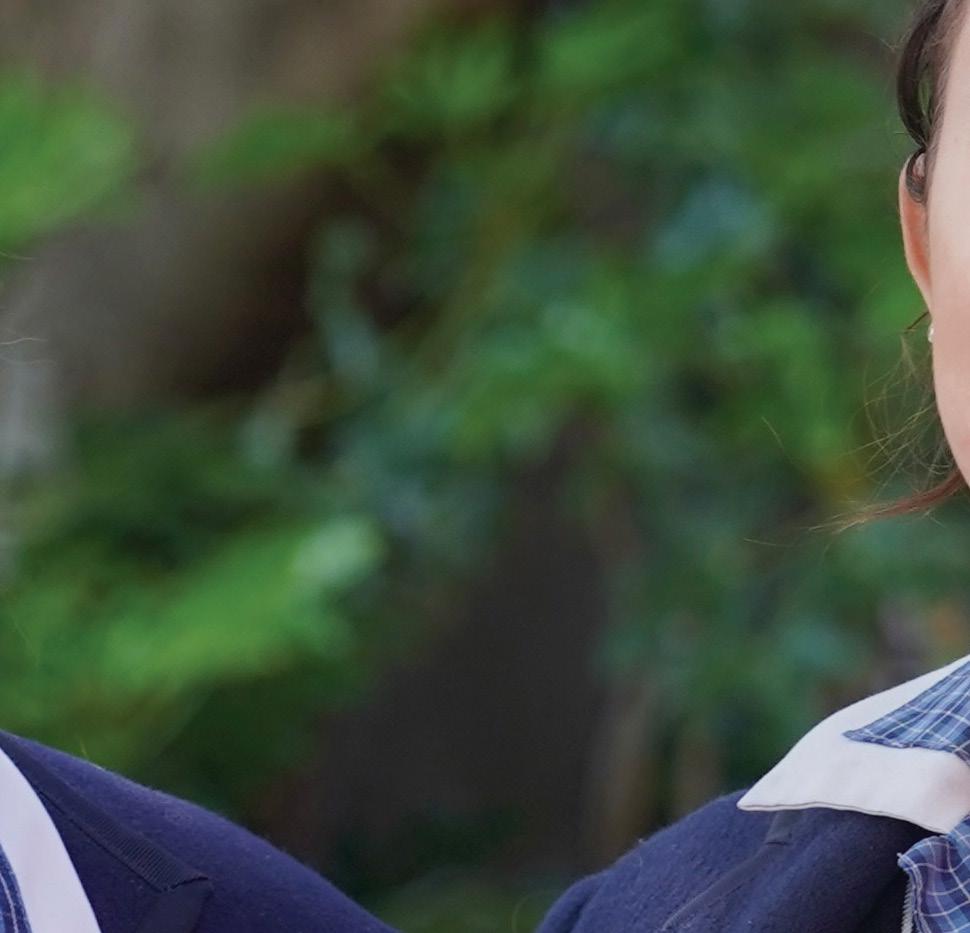
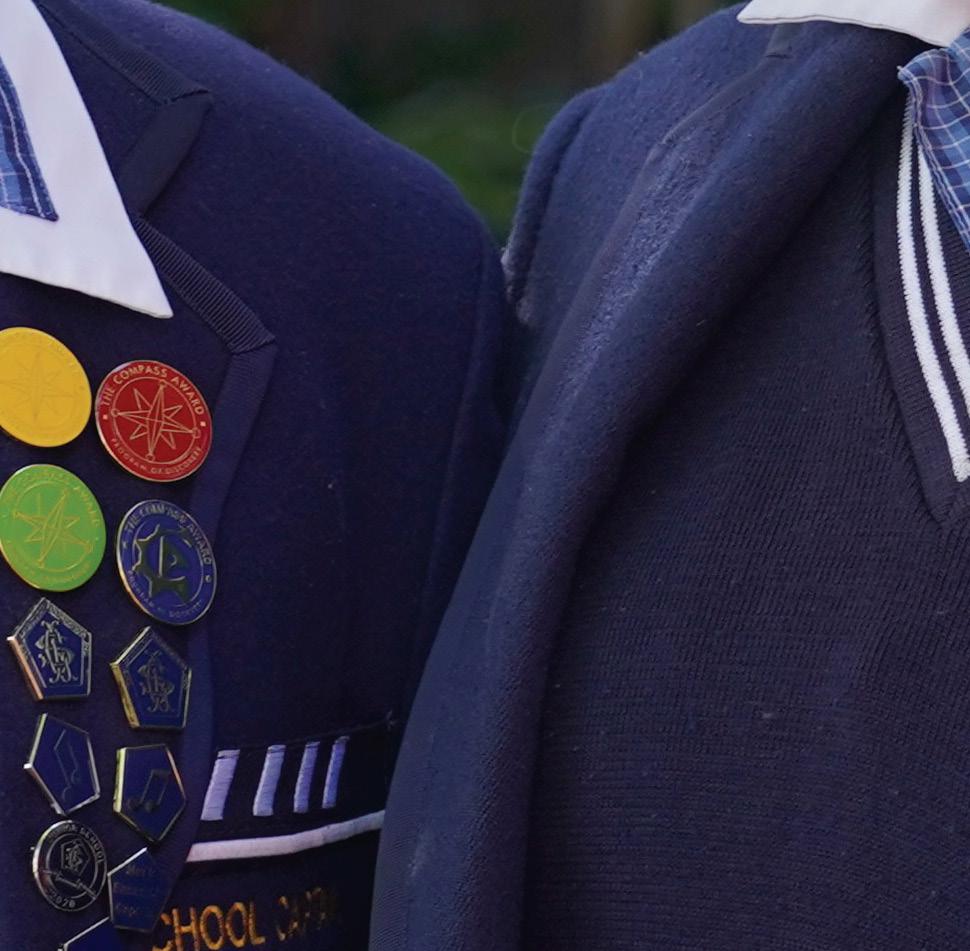
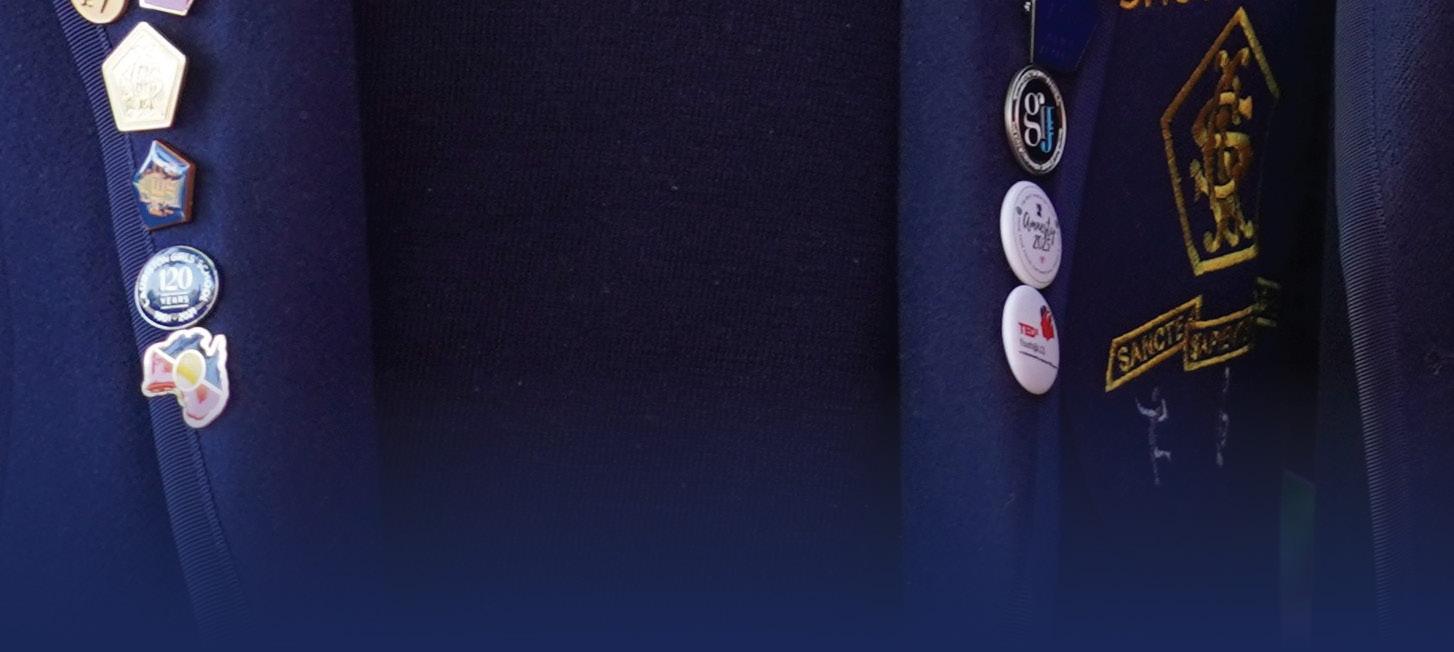
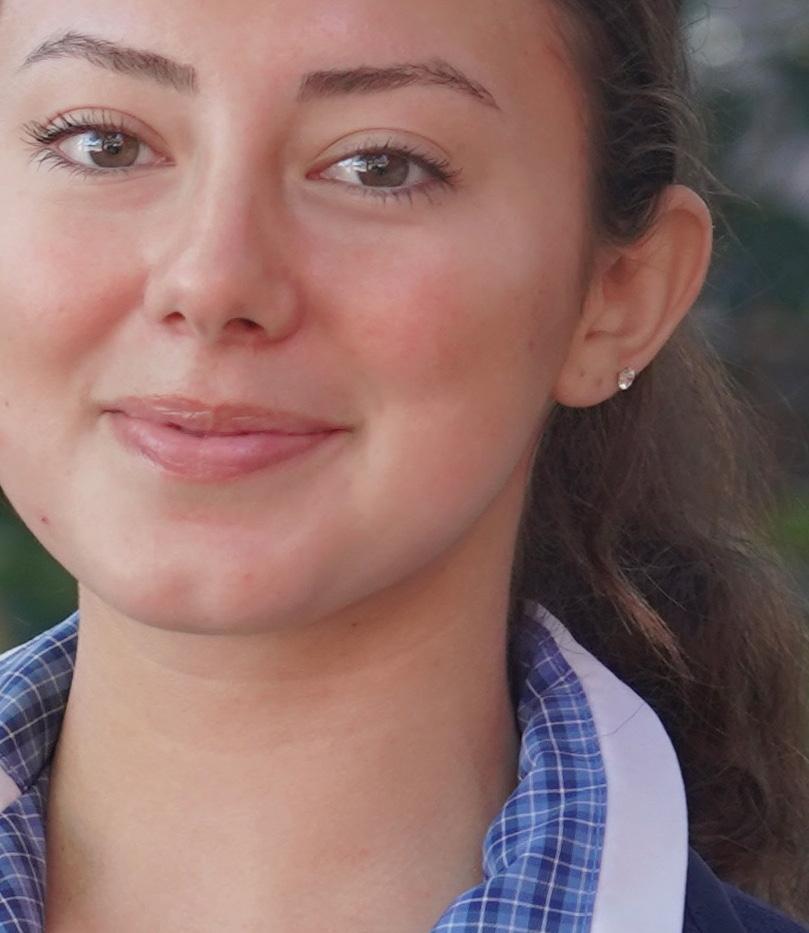
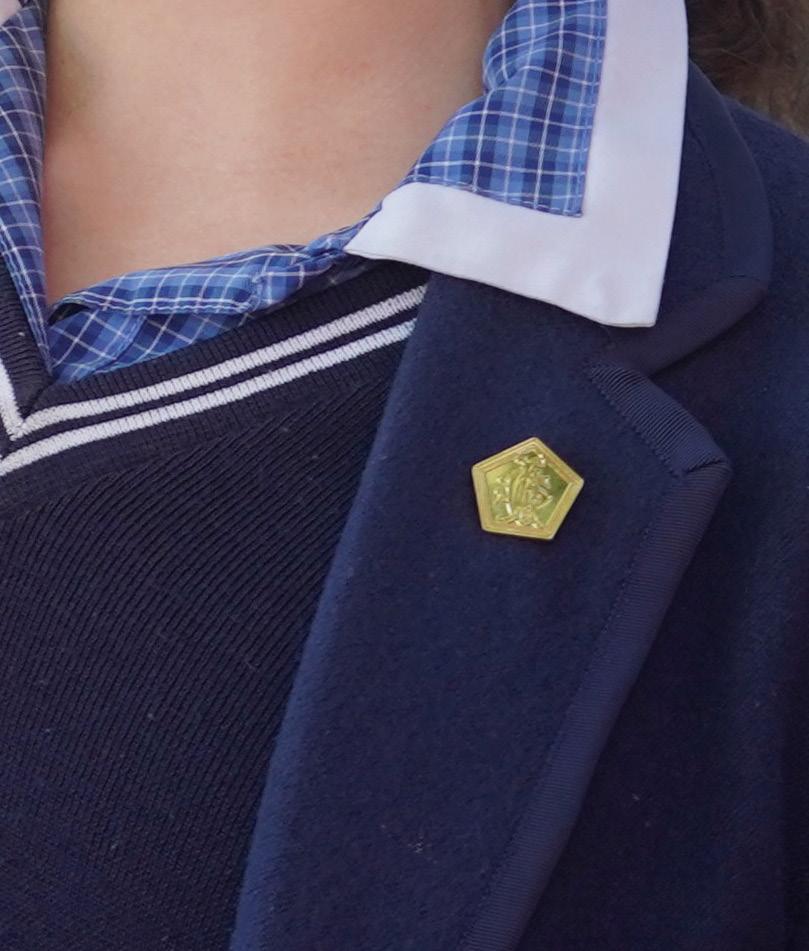
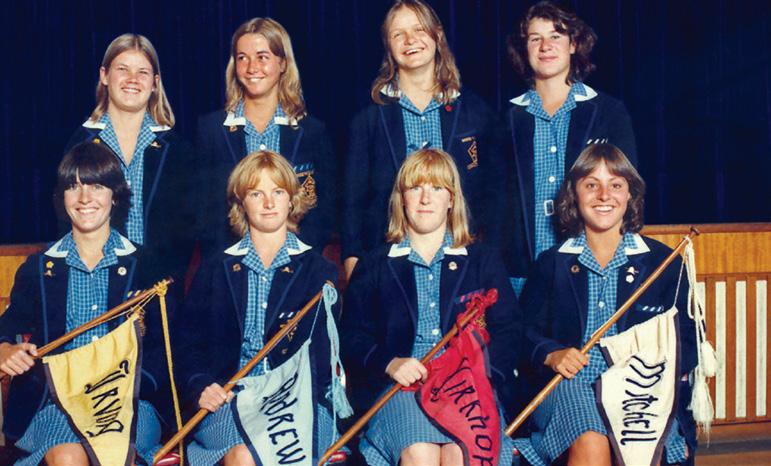
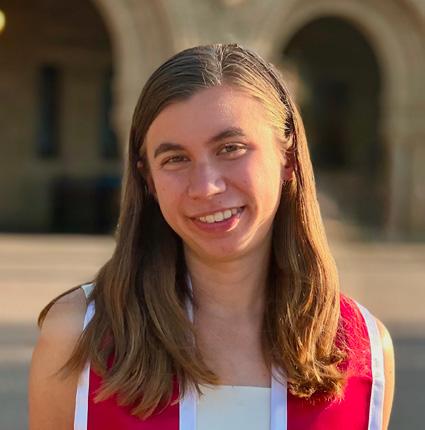
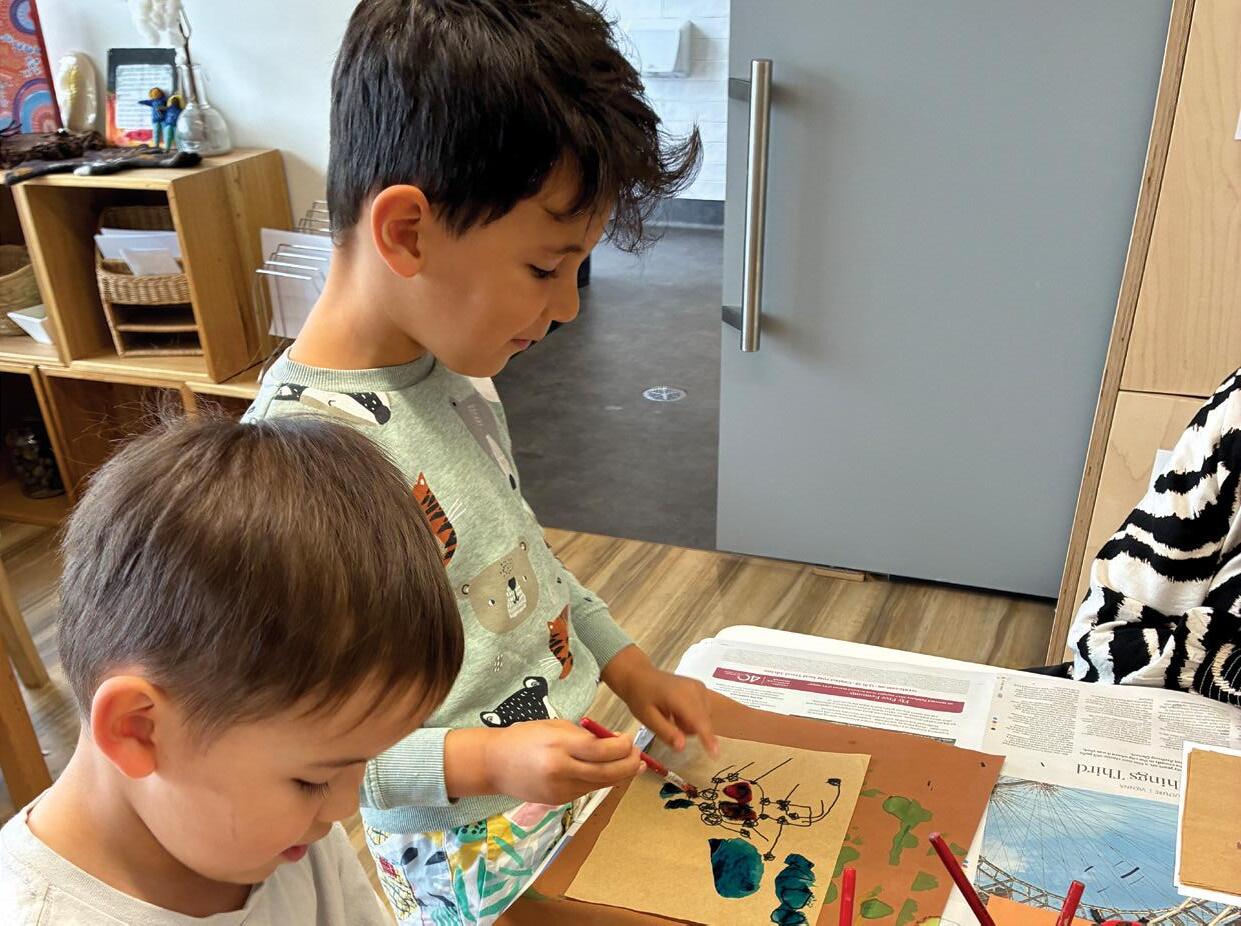
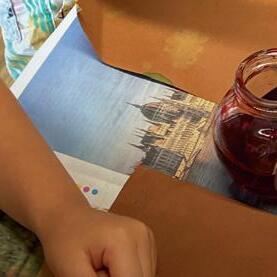
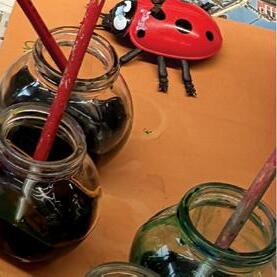
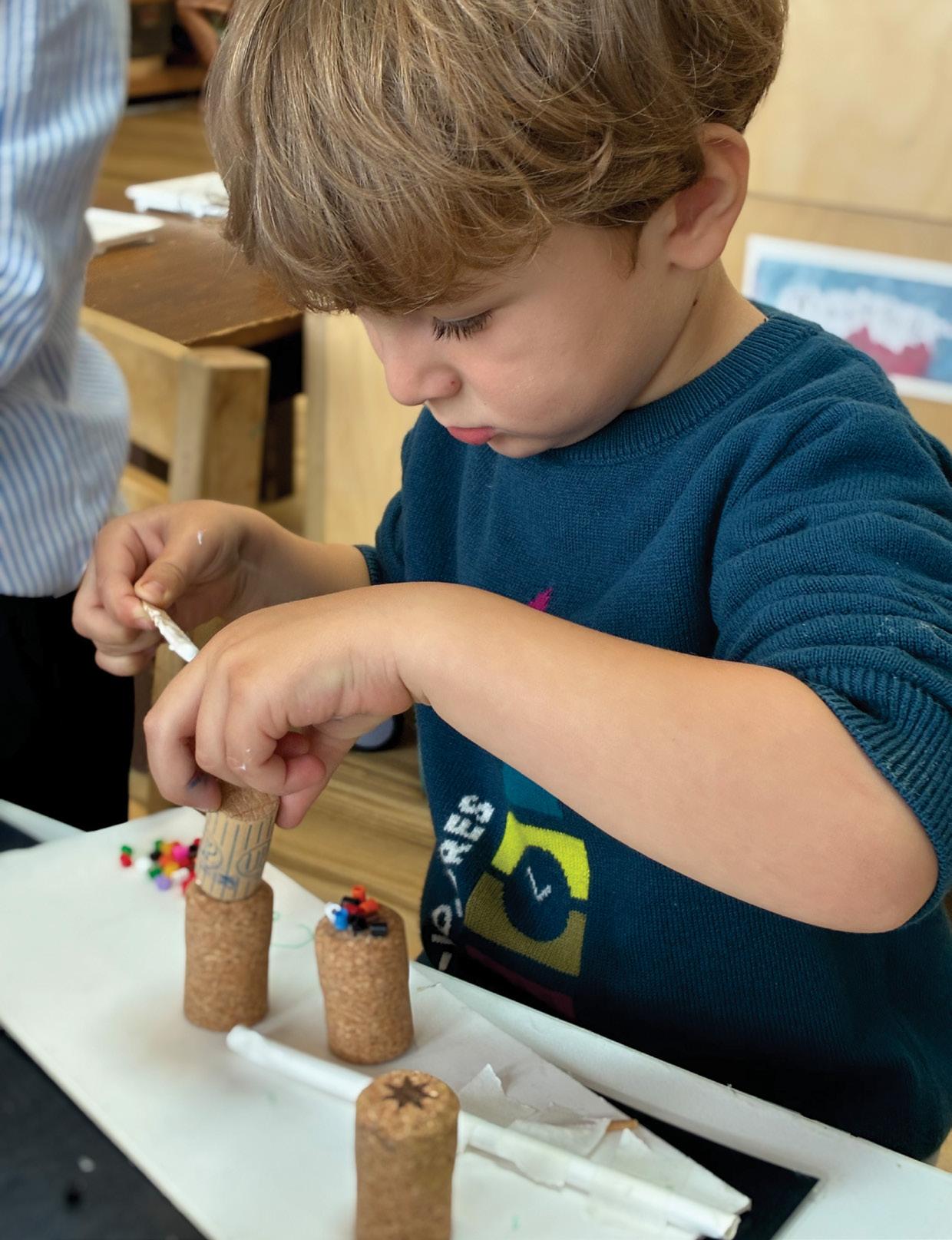
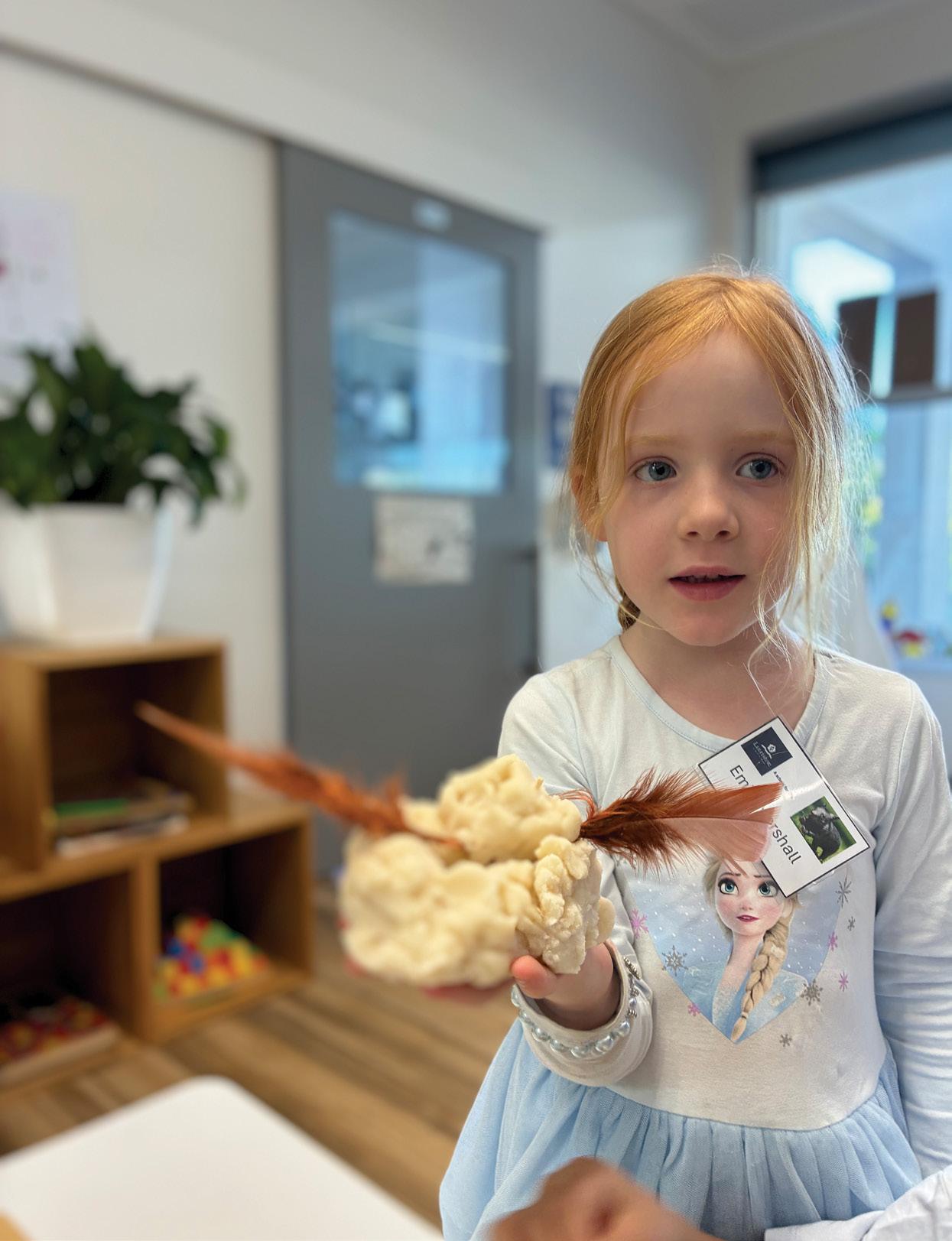
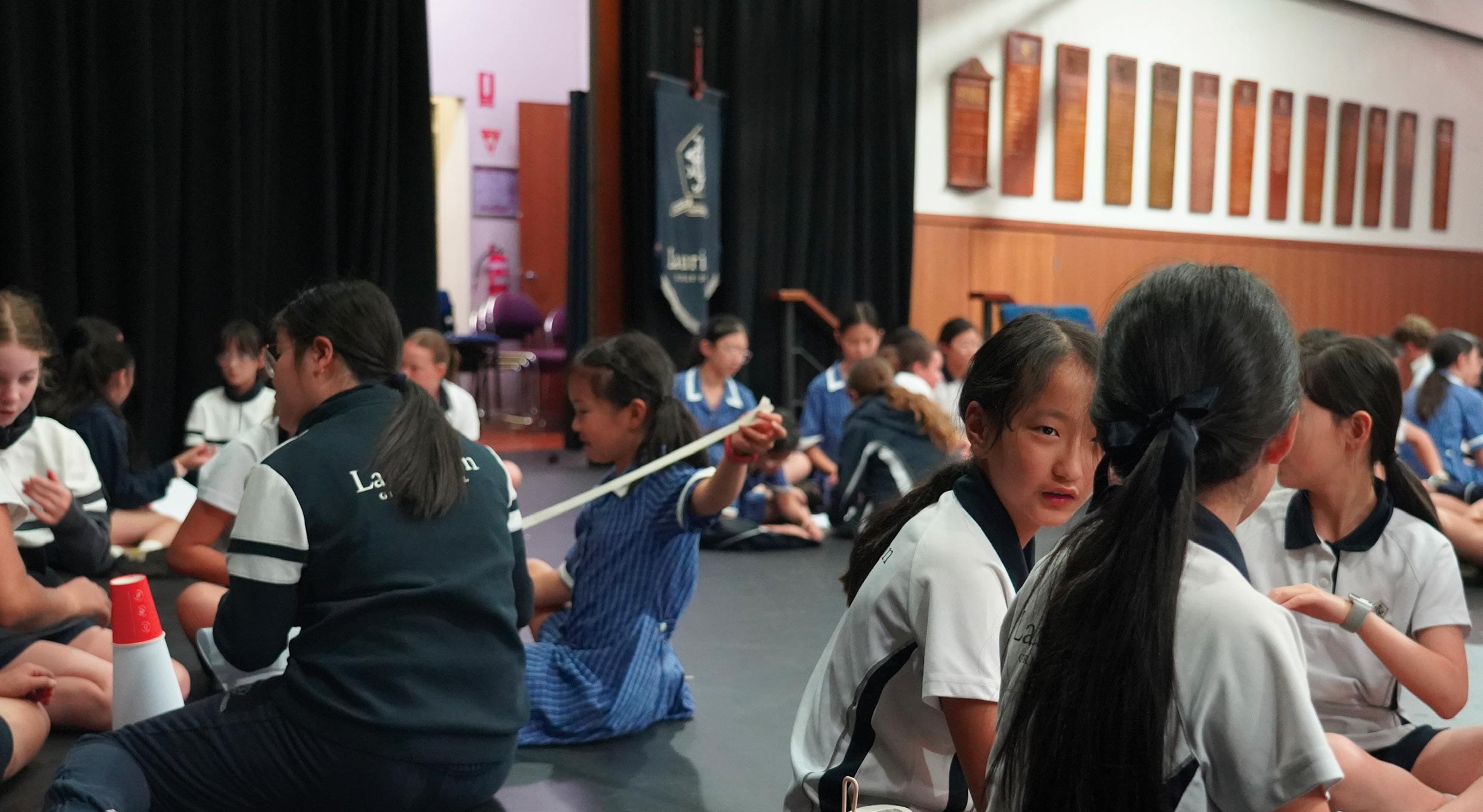
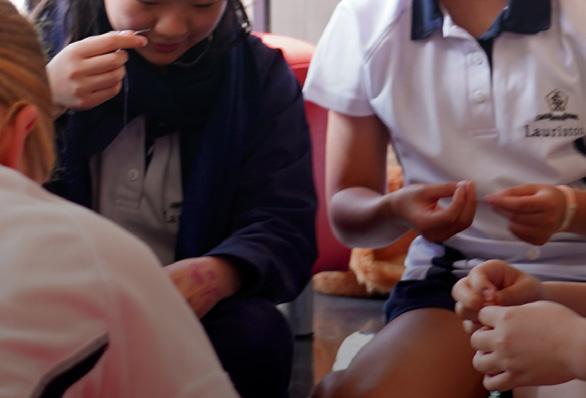
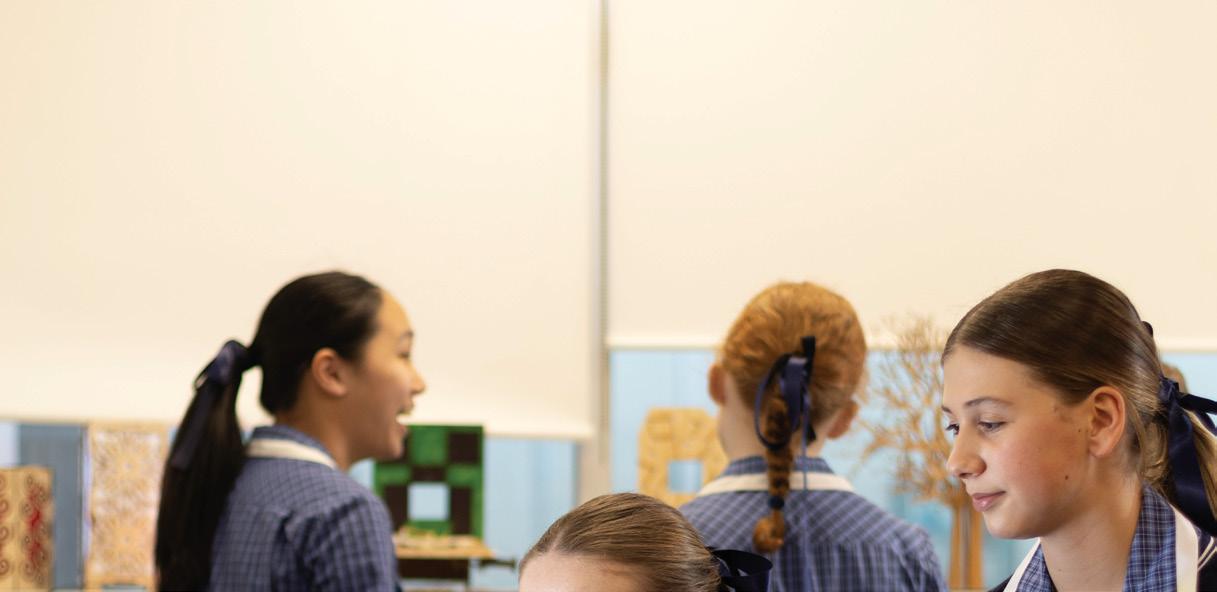
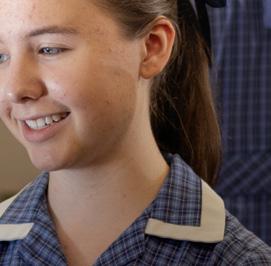
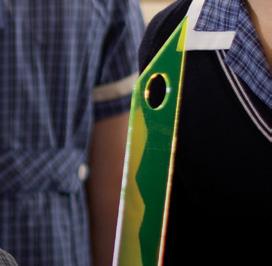
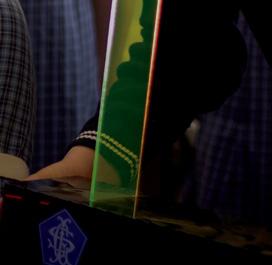
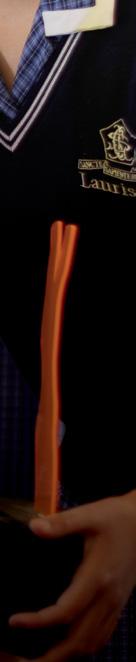
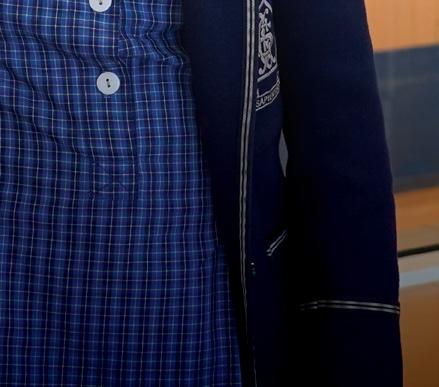
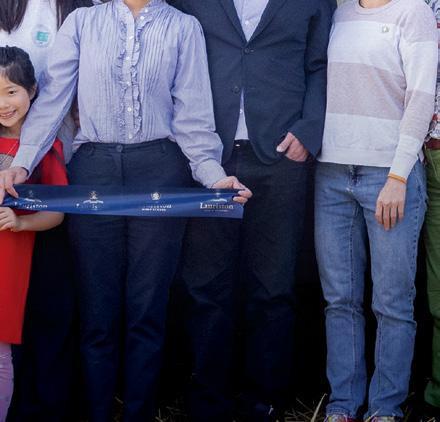
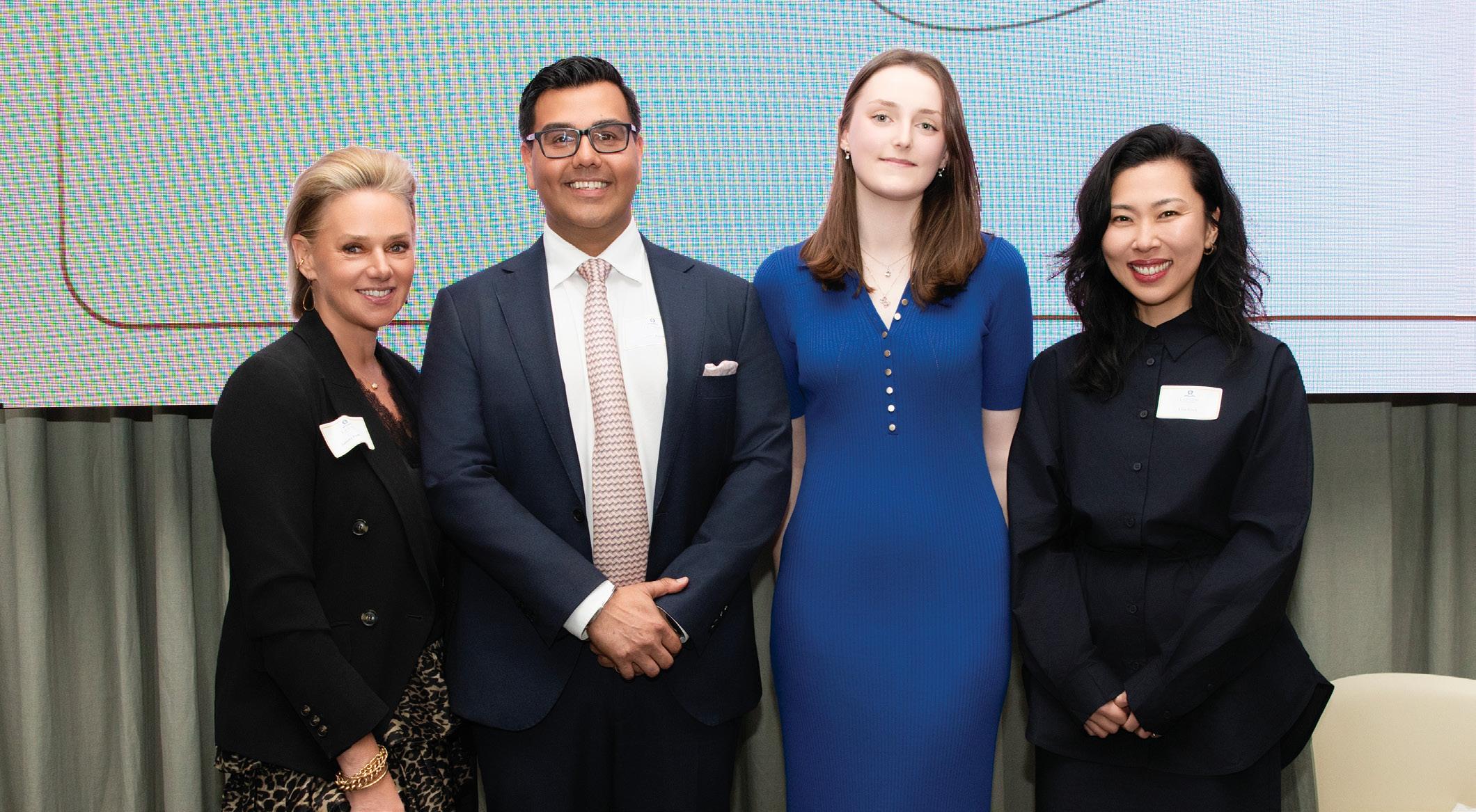
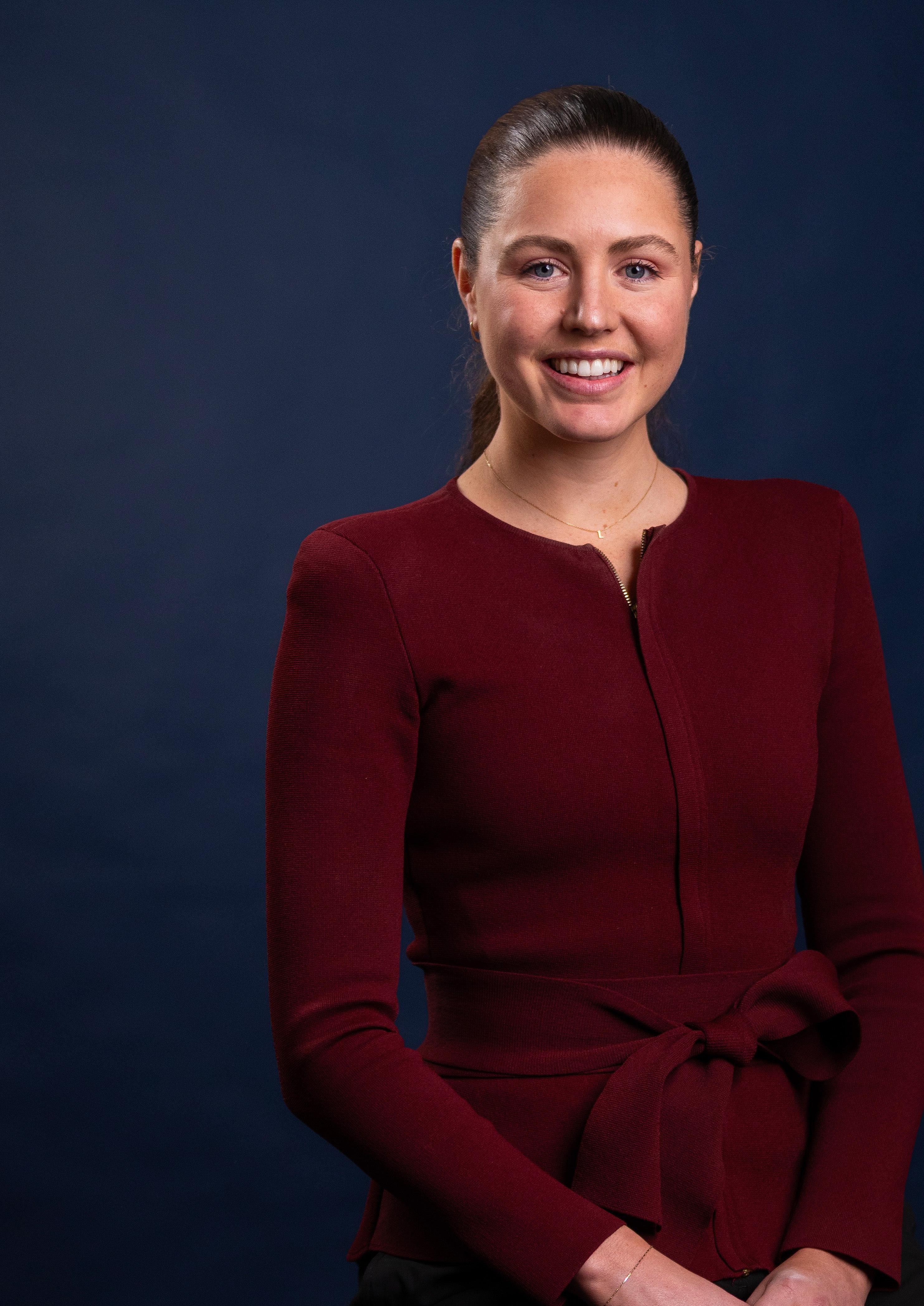
Leaning into our value of Creativity, Lauriston worked with the 2025 Year 10 Visual Communications Design class to develop 125year anniversary design portfolios. Every student submitted exemplary work, incorporating their own experience and Lauriston’s story. Alex’s design incorporates the Moreton Bay Fig leaves along organic linework, which Alex notes, “it looks like string which emphasises how the Lauriston community is tied together.”
Introducing 125 Lauriston, designed by Alex
4 Principal’s Perspective
& LEGACY:
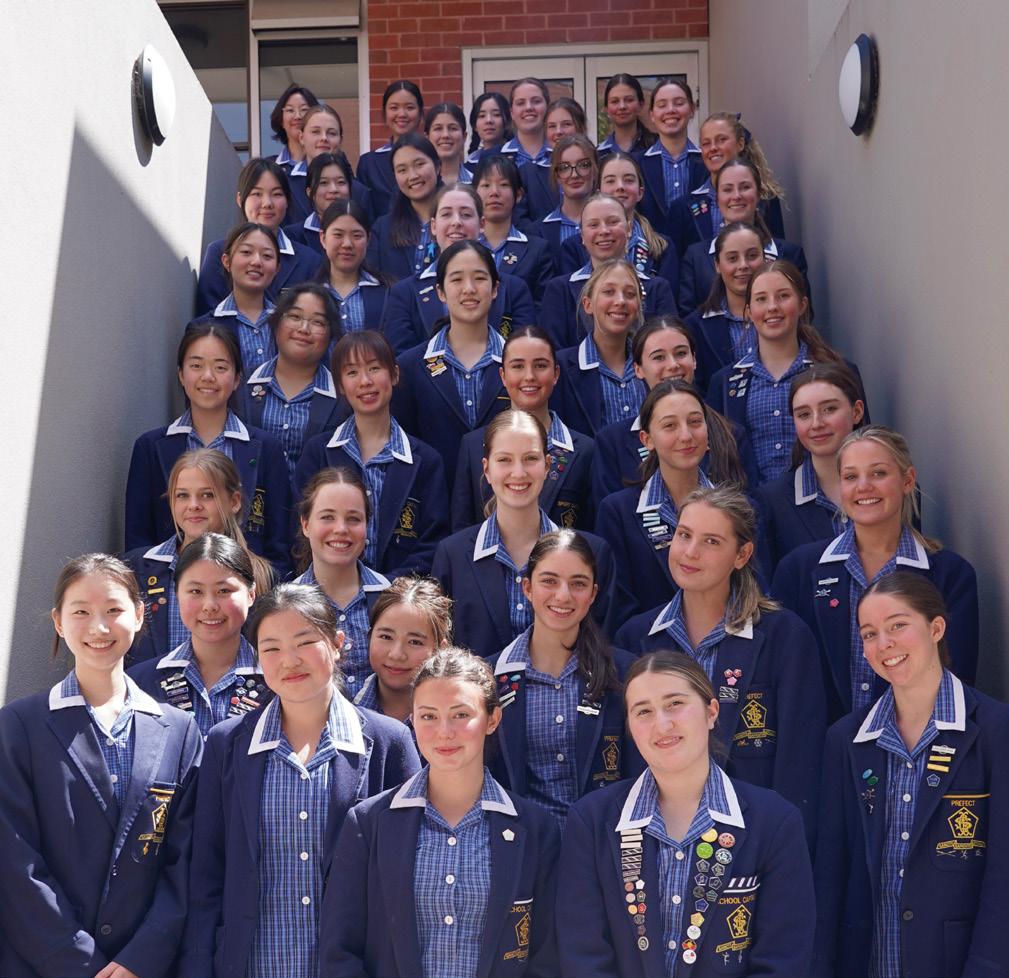
6 Introducing our 2026 School Captains
8 Celebrating 125 Years of Lauriston
Learning & Innovation
26 Life at Lauriston
28 Staff Spotlight ADVANCEMENT:
30 Wu Kuo House Opening 31 Supporting the Heart of Howqua
Upcoming OLA Dates
We would like to Acknowledge the Traditional Custodians of the Land, the Wurundjeri Woi Wurrung and the Boonwurrung people of the Kulin Nations, and we pay our respects to their Elders past and present, for they hold the memories, traditions, cultures and hopes of First Nations Peoples. We would also like to recognise their continuing connection to Country and culture.
We acknowledge that our community is diverse; and Lauriston values an inclusive and accepting environment for all ages, genders, abilities, races, religions, sexualities and cultures.
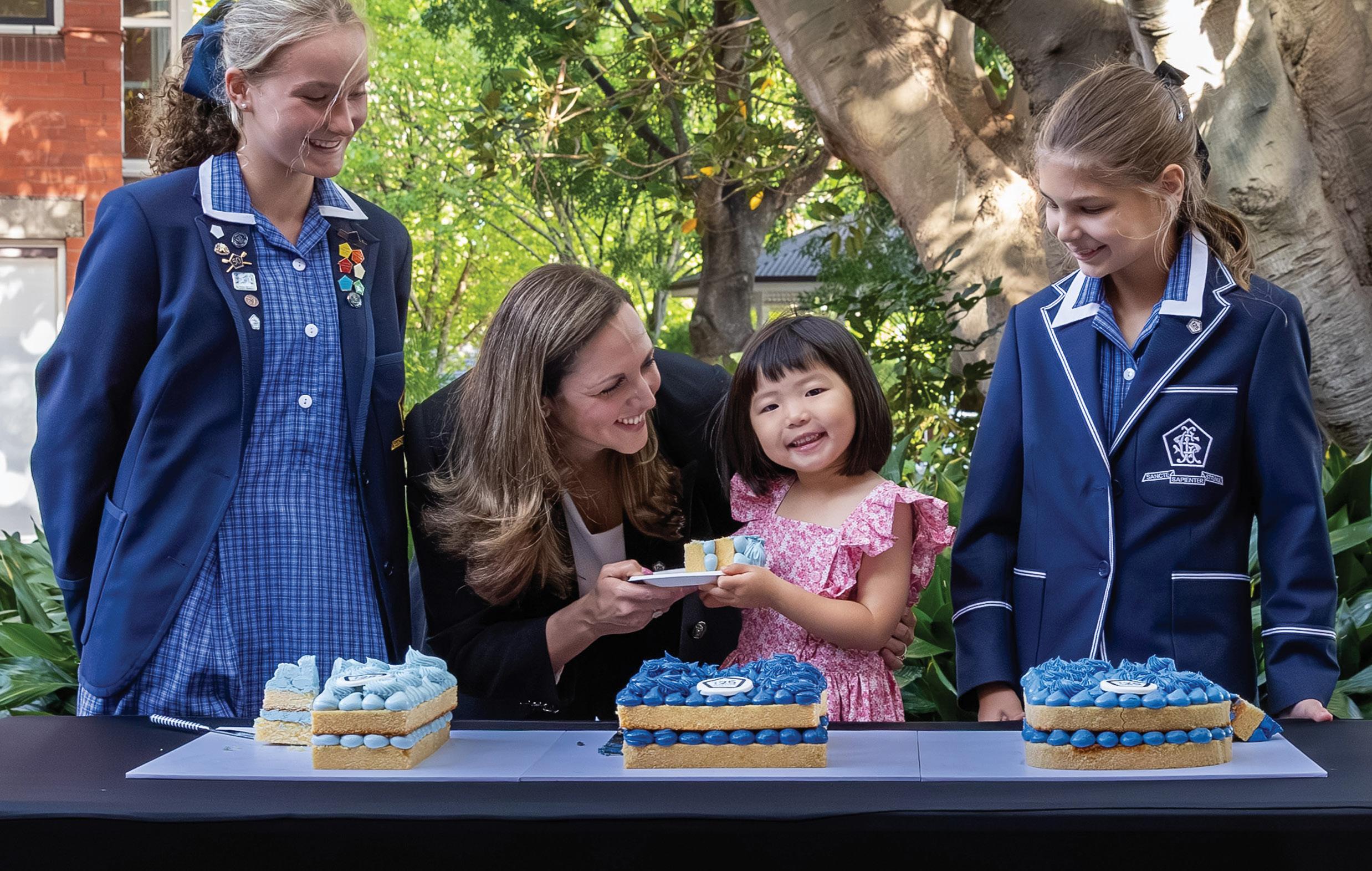
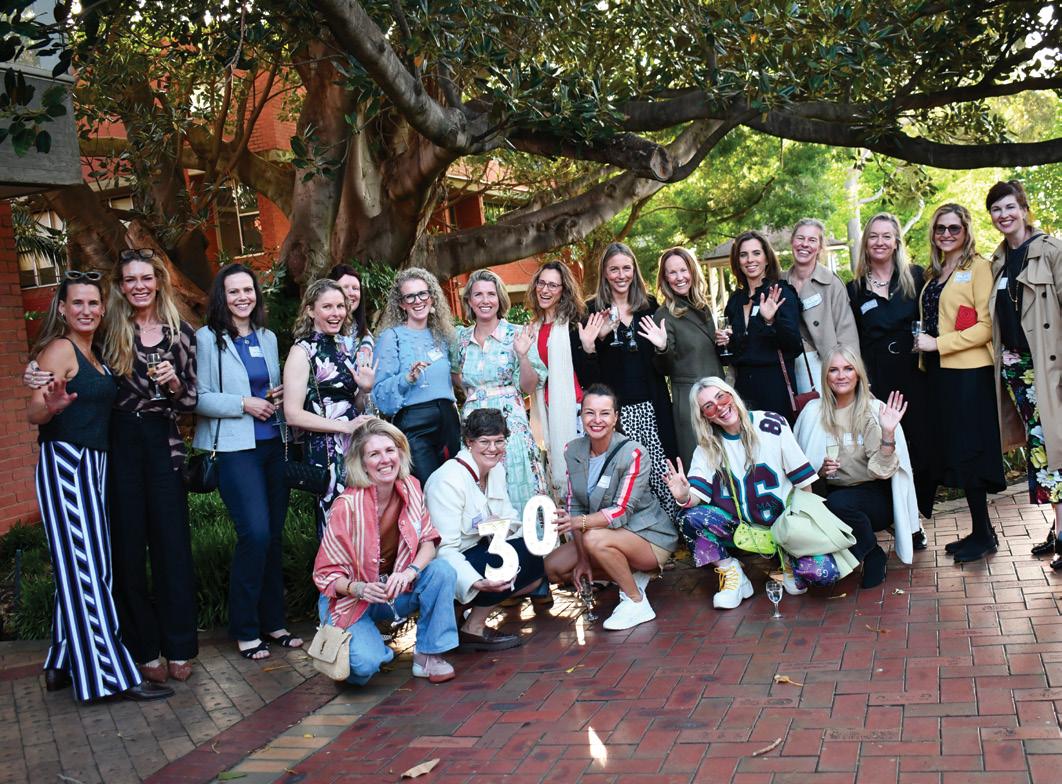
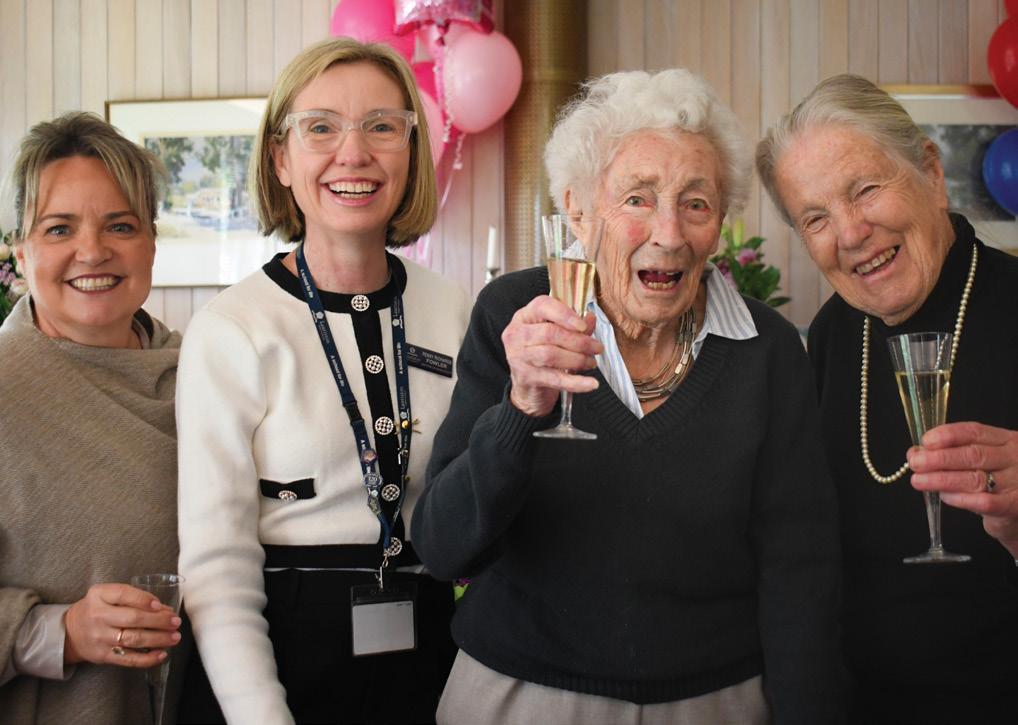
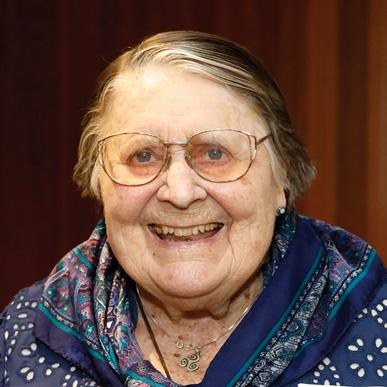
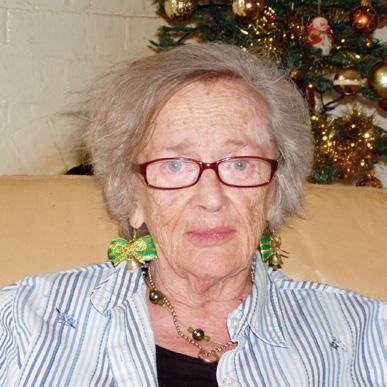
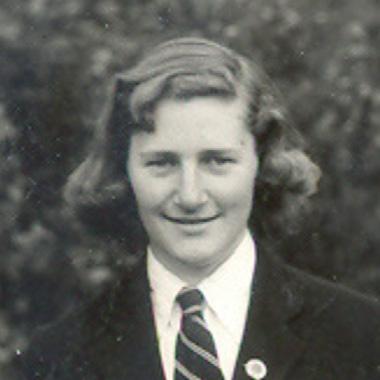
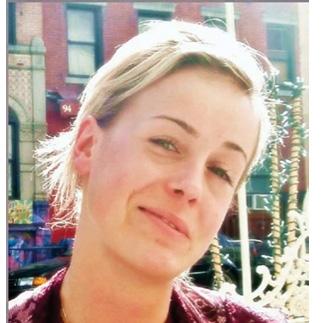
Front cover: Celebrating Lauriston’s 125th anniversary on Wednesday 11 February 2026, as well as the birthdays of Elizabeth, Harriet and Lucy. WELCOME
Principal’s Perspective Finding Home in Education
Since its establishment by sisters Margaret and Lilian Irving in 1901 and through the stewardship of Elizabeth Kirkhope, Gladys Davies, Susan St Leon, Ruth Tideman, Meg Hansen and Susan Just, Lauriston Girls’ School has been shaped by leaders committed to evolving girls’ education, sustaining academic and character excellence and preparing young women for lives of purpose. As the ninth Principal of Lauriston I’m proud to carry this purpose forward.
Iam deeply honoured to be joining Lauriston as its ninth Principal and in its 125th anniversary year, continuing the proud legacy of those who have led before me.
I was born in Beirut during the civil war, and my parents made the courageous decision to leave everything behind to keep us safe. Our journey took us across several countries before we eventually settled in Australia.
By then, I had attended six different schools. In many ways, school became home for me, one of the few constants in a world that kept shifting.
Like many immigrants, my family’s value system was clear: education was freedom. My grandmother and mother believed without question that education is the most transformative investment we can make, especially for girls. To them, it was never only about knowledge but also about agency, independence and the power to shape your own future. That conviction has been a lighthouse throughout my life.
My early career spanned academia, the public service and investment banking, building analytical discipline and leadership capability. Yet teaching was always my passion.
When the Global Financial Crisis struck, I took the opportunity to retrain as a mathematics teacher in the UK. It felt like a homecoming to what mattered most: education.
Since then, I have had the privilege of leading in some truly remarkable independent schools, guided by mentors who invested in me generously.
I have always been drawn to schools unafraid of bold decisions, where intellectual rigour sits alongside deep care. What excites me about Lauriston is how its vision for education reaches far beyond the conventional. This is a school that has always understood that lifelong learning is as much about resilience, curiosity and courage as it is about academic achievement.
There is so much to love about our ‘Laurie’: from Bush Kinder at Blairholme to our rich tradition of music and the arts and our unashamedly ambitious academic program, and most of all to our staff whose deep love for the School sustains it.
However, it is hard to deny that Howqua is what sets Lauriston apart. It is our flagship program because it creates protected time and space for young women to cultivate independence and strength of character in ways that stay with them for life. Ruth Tideman, then Principal, was visionary in recognising that our students needed the chance to test themselves in the outdoors, to discover their resilience and emerge ready to shape their future and their world.
That spirit of adventure, innovation and academic excellence is rare, and it resonates profoundly with my own philosophy of education.
Beyond my professional life, my family is my anchor. My husband Allan and our young son Henry are at the heart of everything I do, and they remind me daily of what truly matters. I draw energy and balance from time spent with them, whether it is bushwalking, reading together or heading underwater on a scuba dive. These moments restore me and give me the clarity and perspective that make me a better leader.
For me, the privilege of leading a girls’ school is about being both a mirror and a window for our students. A mirror, so they can see themselves reflected in leadership, in adventure, in tackling challenges with courage and ambition. A window, so they can look outward and imagine the many possibilities that lie ahead.
Lauriston is uniquely placed to equip young women to lead with intelligence, purpose and compassion, and I hold the responsibility of leading this School with great seriousness and joy.
As I begin as Principal, my first priority is to listen. I look forward to meeting our students, staff, families and alumnae, and to learning what makes Lauriston so special to each of you.
Together, we will continue to build a community where every girl feels empowered to pursue her ambitions and where our collective spirit of curiosity and courage prepares them for lives of meaning and impact.
I am grateful to be joining this extraordinary community and I cannot wait to begin this journey with you.
Sabine Partington Principal
School Captains
Nicole & Grace
Congratulations on being appointed Lauriston School Captains for 2026! What does leadership mean to you?
Grace: Leadership to me is about setting an example through action. It means staying driven, grounded and supportive so that others feel encouraged to give it their all within an environment that brings out their best.
Nicole: To me, leadership isn’t about standing in front, it’s about standing alongside others. At Lauriston, I’ve learned that leadership can look like a quiet moment of encouragement just as much as it can look like speaking to a full assembly.
Who inspires you as a leader and why?
Grace: The first person who came to mind was the person who introduced me to a sport that has brought me immense joy and unforgettable memories: my old Rowing coach here at Lauriston, Jack Steel. Under Jack’s guidance, I went from a nervous wreck in a scull to stroking the first eight, and I wouldn’t be the person I am today without his influence.
Nicole: My peers inspire me every single day. There’s something incredibly motivational about being surrounded by girls who work hard, support each other and lead in their own unique ways. Whether it’s someone speaking up for a cause they care about, staying back after rehearsals to help others, or showing quiet resilience in tough times, those moments of courage and character remind me of what leadership really means.
What skills/attributes do you admire about your Co-Captain and how do you think you will complement each other as leaders?
Grace: Ever since I came to Lauriston, I’ve always admired Nicole’s ability to be genuinely caring towards everyone that she crosses paths with. I’ve never seen Nicole in a moment where she wouldn’t put others ahead of herself; I’m in constant appreciation of her amazing attention to detail as well as how she is able to methodically approach everything that needs to be nailed down to get whatever is at hand done with grace and expertise.
Nicole: Grace is incredibly thoughtful, with a real talent for bringing fresh ideas and perspective to everything she does. She leads with kindness and compassion, and she has this ability to make people feel included and supported. We complement each other well. There are moments when one of us is looking at the broader vision, the other is focused on the practical details, and that balance helps us to make thoughtful, well-rounded decisions.
What would you say to your five-year-old self about the journey ahead and the challenges you have faced?
Grace: Five-year-old Grace would probably not have believed that she could have even thought about stepping on stage and addressing her school, let alone leading one.
If I could go back and tell her something, it would be to never, ever let anyone tell you that you aren’t capable of doing something.
Nicole: I’d tell her to be herself and to believe that everything will fall into place when she leads with kindness and courage. There will be challenges, moments of doubt and times when things don’t go to plan.
I’d tell her that she’ll find incredible friends, that she’ll surprise herself with what she can achieve, and that she should never underestimate the power of a positive mindset.
It will be Ms Partington’s first year as Principal in 2026. What are you most looking forward to collaborating with her on? How would you describe Lauriston to Ms Partington?
Grace: To sum up Lauriston is no small feat but in short, it is an incredibly warm, vibrant and hardworking community that never fails to do anything less than amazing.
I’m incredibly privileged and excited to be able to work with Ms Partington this upcoming year. I think with her help and guidance, we can actively bridge the gap between the Junior and Senior Schools to create a more cohesive and connected community.
Nicole: I’m really looking forward to working with Ms Partington to build upon Lauriston’s strong sense of student voice, ensuring every girl feels empowered to share her ideas and help shape the School’s future. If I were to describe Lauriston to her, I’d say it’s a place where courage and compassion live side by side. It’s a community that believes deeply in personal growth, but never at the expense of kindness. Lauriston girls dream big, stand by one another and lead with both strength and kindness.
Celebrating 125 Years of Lauriston
The Vision of Lauriston
The Irving sisters’ intention was to turn out robust, independent women, prepared to do something worthwhile with their lives. Character formation and an emphasis on health, suitable clothing and adequate exercise were other important ingredients in the formula. A ‘new breed’ of women, ‘reared on fresh air, plain food, boys’ games and cold baths, would become robust, of tireless energy, public-spirited and responsible’.
Margaret and Lilian envisaged a future for their pupils dedicated to ‘usefulness and to a broader sphere of action than merely the home’. They were relying heavily on their reputation; their connections and a constellation of inherited and learned characteristics that especially suited them to the task they set themselves.
Life at Lauriston in the Early Years:
Twelve girls presented themselves on the first day, and the total enrolment for 1901 was 20 students. Most of the original students in the first 3 years of Lauriston lived nearby and walked to school. The only public transport was the horse bus in High Street, the train to Armadale and Toorak stations, and the Toorak Road cable tram.
The pace of life in Armadale was gentle and the pleasures simple. A ‘street musician, who came very frequently, complete with barrel organ and monkey’, to stand at the gate and ‘grind out a few tunes’ always caused a diversion ‘for girls in the front room’ and every Wednesday evening the German Band visited the locality.
Girls mostly created their own entertainment among their friends. Parties were popular. Helen Cole recalled ‘occasional tea-parties’ in the homes of her friends, where there was ‘always some sort of guessing competition, and sandwiches and cream cakes to finish up’.
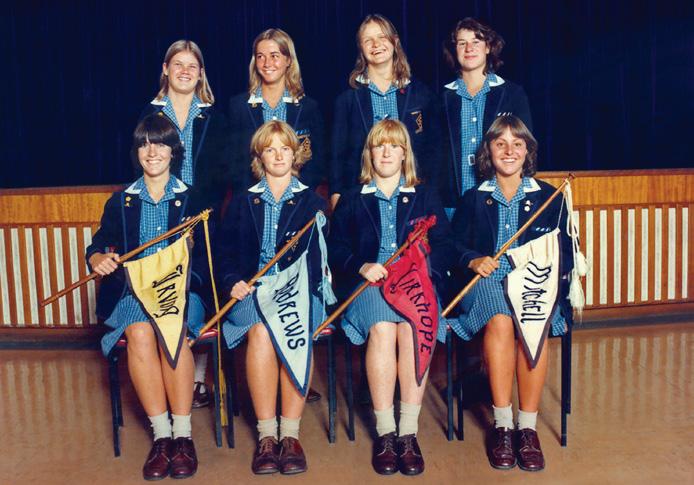
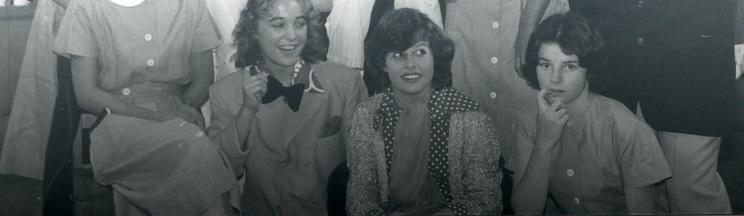
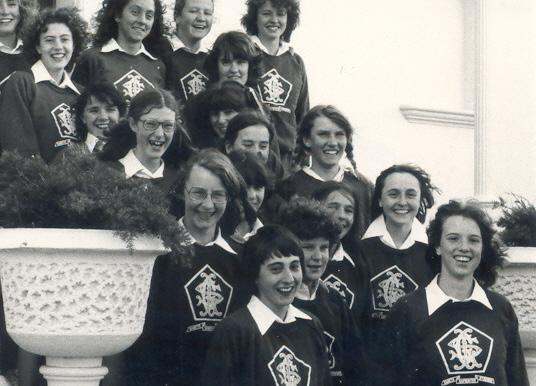
House Captains 1980
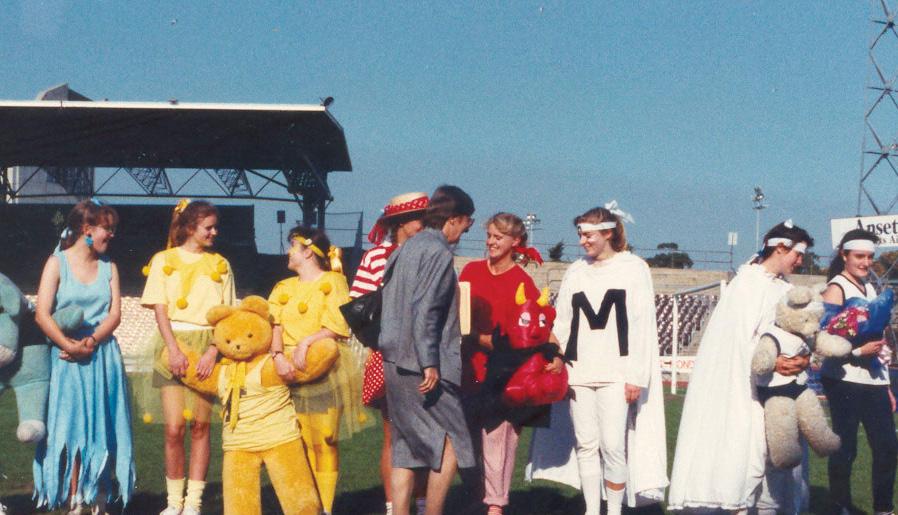
Sports Day 1990
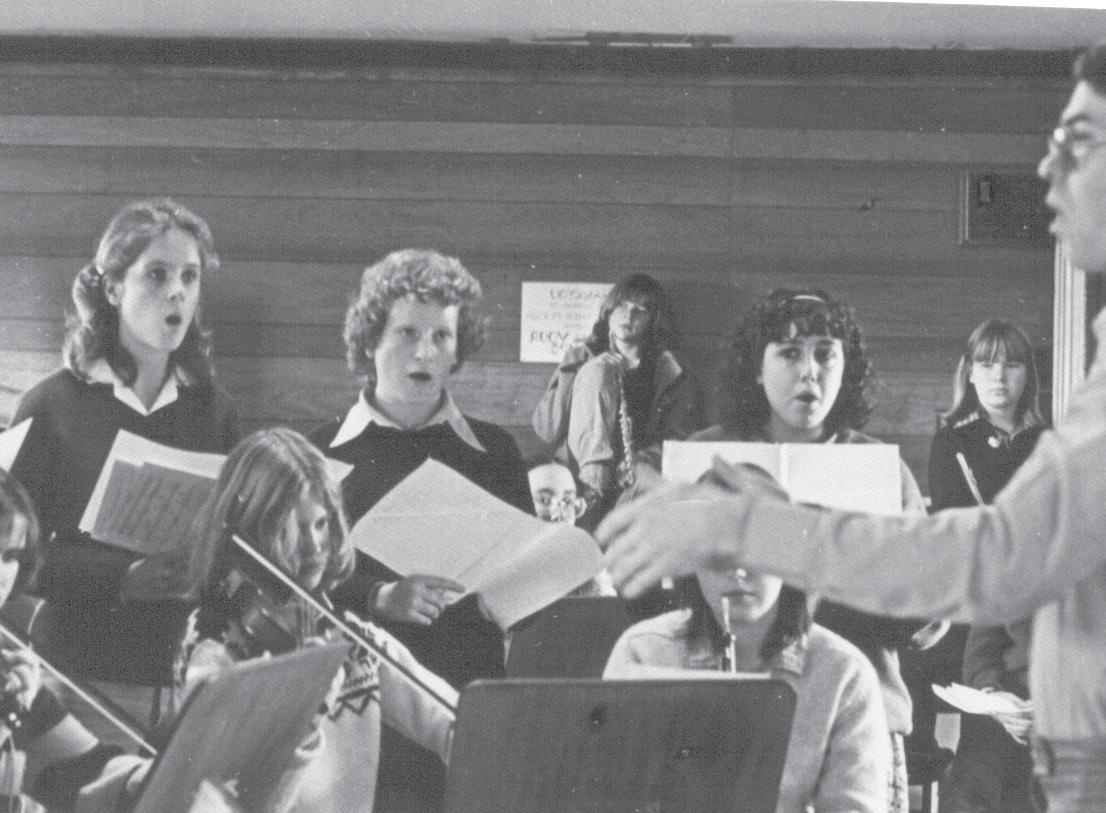
Music Rehearsal 1979
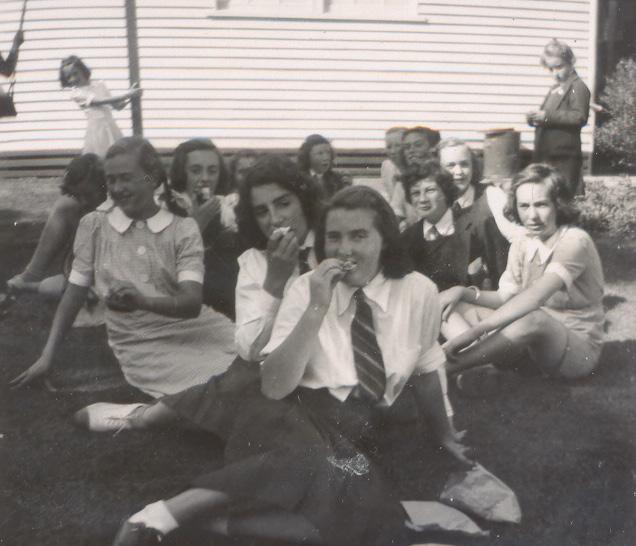
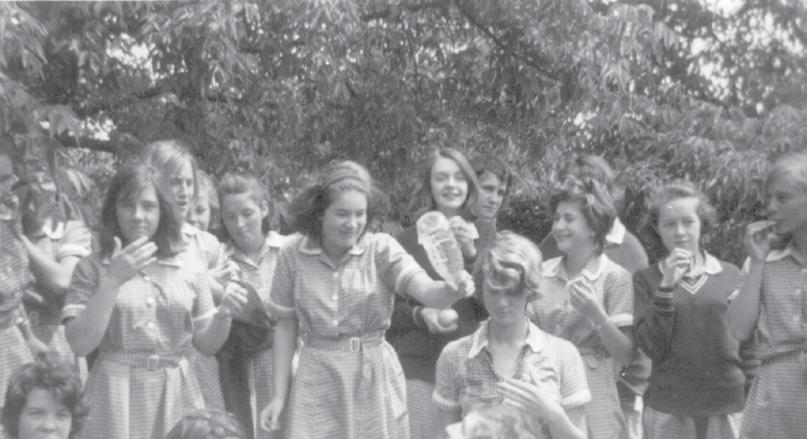
Lunchtime 1950
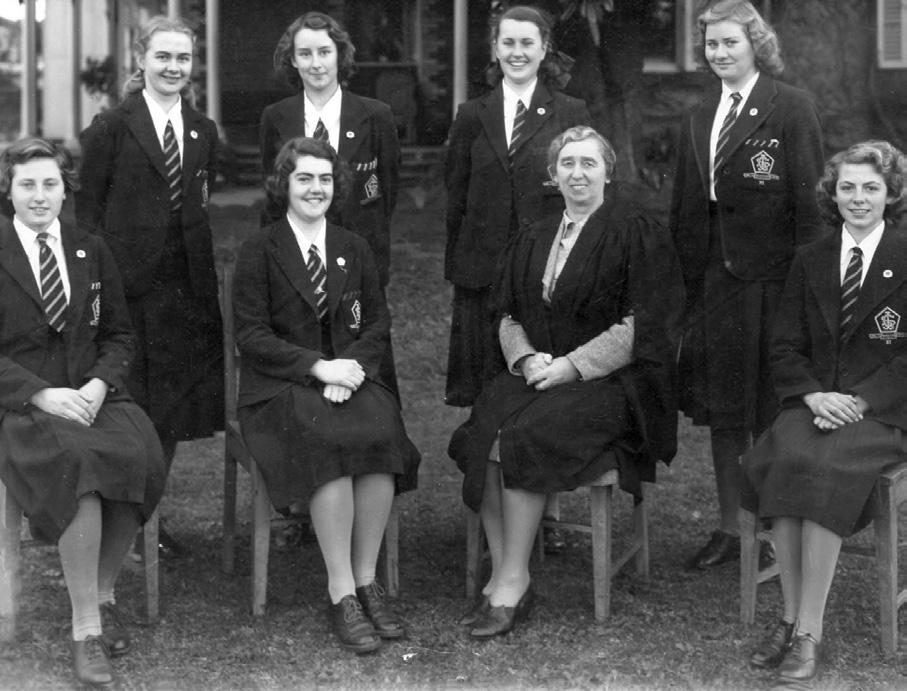
Prefects 1947
The Broader Australian Environment
After 1902 Australian women were full citizens of the Commonwealth, allowing them a new and important place in public life. The elevation of women to the status of citizen had important consequences for the education of them. If they were to cast votes and determine who was to rule the country, then they must be sufficiently educated to make such momentous choices.
Encouragement to Strive
In 1911 enrolments reached 100 students. Of the 234 girls who had enrolled to that date, 12% had qualified to enter university and 42% completed several years of schooling beyond the legal leaving age.
While two thirds of the school’s population could be classed as secondary, Margaret Irving was concerned to offer an up-to-date program for small children. In 1911 she hired Miss Moline, a trained kindergarten teacher, to ‘have the small children properly dealt with for if they were to ‘come to the school as young as four or five a proper kindergarten is the only kind of work for them’. The long-standing view that children should not attend school under they were 7, 8 or 9 was breaking down in the face of enthusiasm for new ways of working with very young children.
Lauriston’s survival beyond 1910 stands in marked contrast to most other private girls’ schools which either closed or accepted formal support from one of the Christian denominations.
Class Party in 1962
Lauriston Boarders 1934
Cross Country 1980
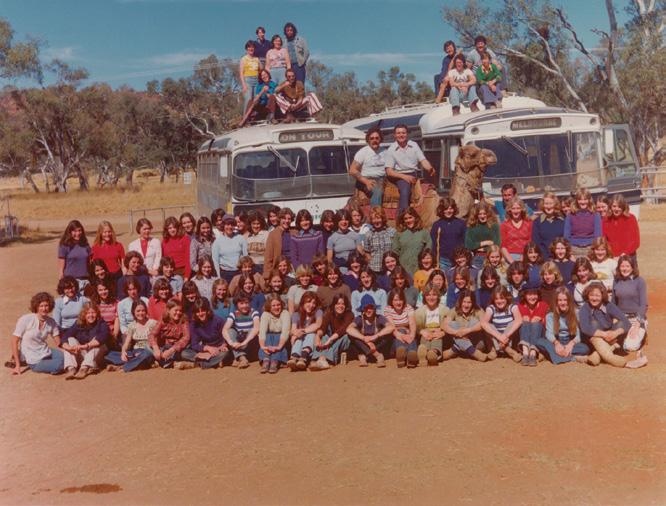
Central Australia Trip 1975
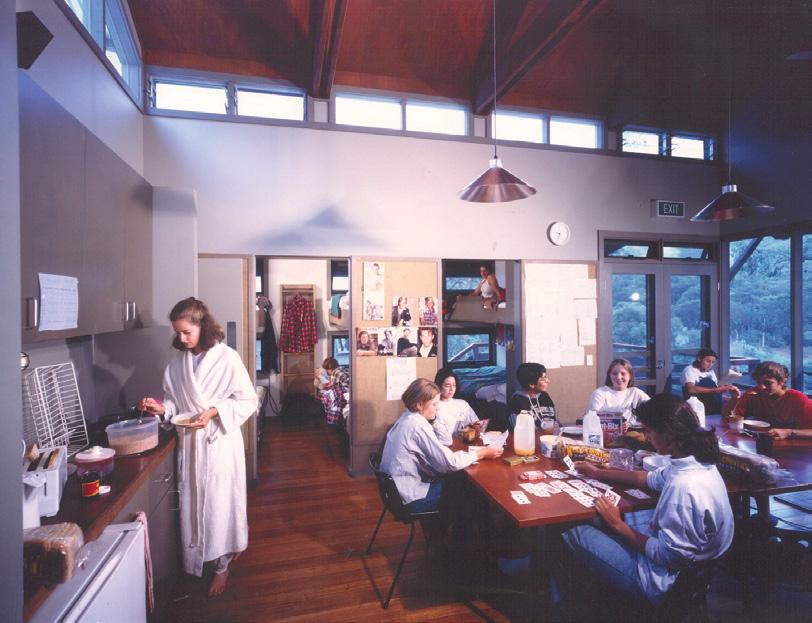
Howqua Breakfast 1996
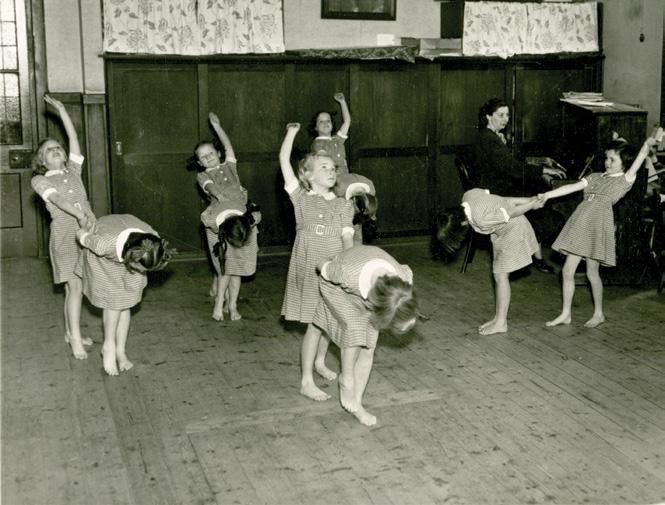
Junior Eurhythmics Class 1952
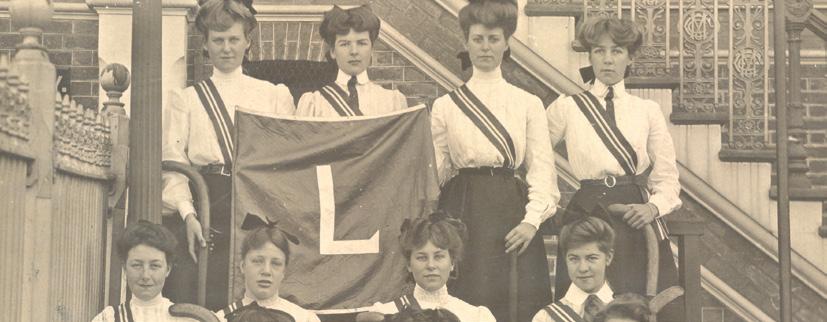
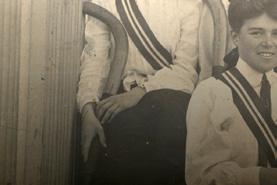
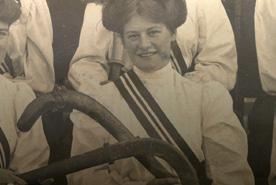
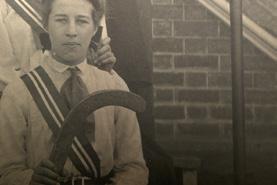
Hockey Team 1903
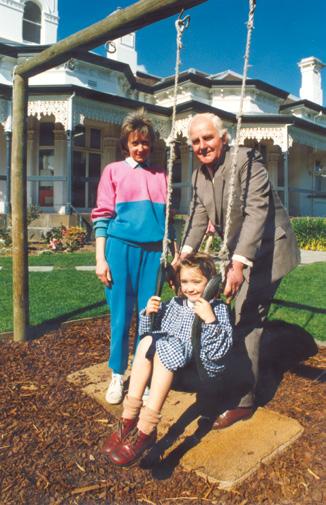
Grandparents’ Day 1987
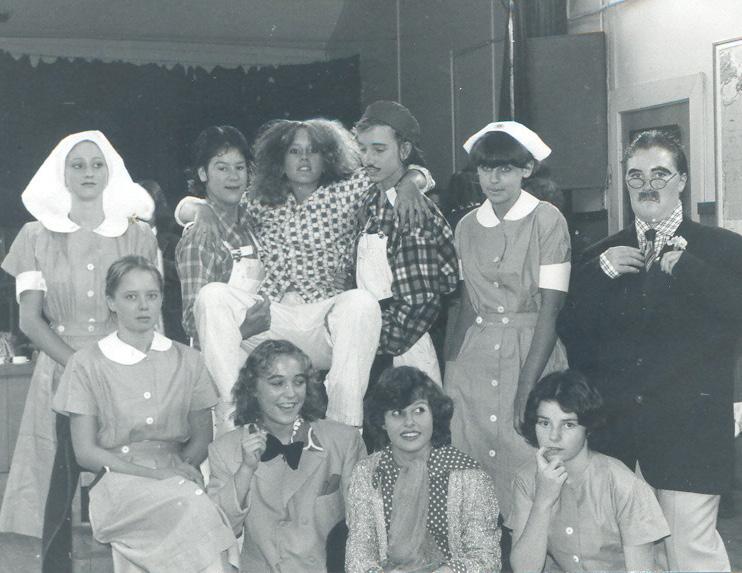
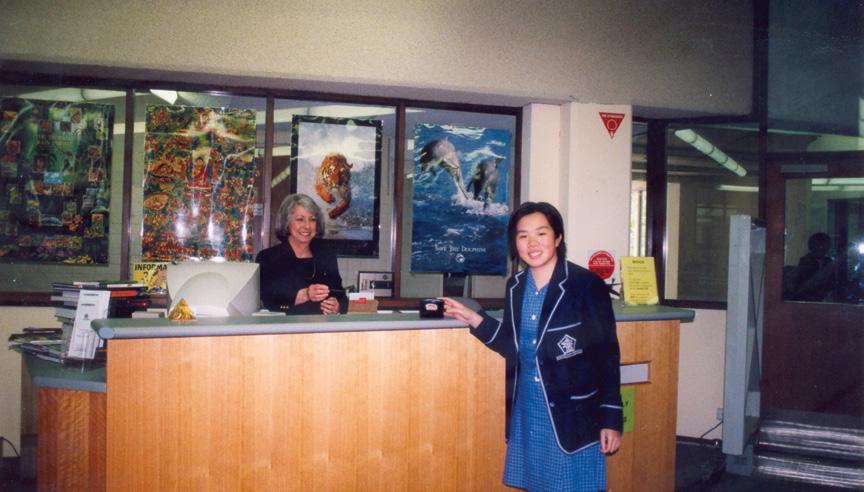
Mitchell House Play 1979 Senior Library 1999
The Impact of Lauriston Leadership and Guidance
OLs Around the World
As they reflect on their journeys beyond Lauriston, some of our Old Lauristonians (OLs) from Ms Just’s tenure share how her leadership and vision helped shape their aspirations and the bold careers they now pursue globally.
Jessica Adams (House: Irving)
Peer Year: OL 2013
Current Occupation / Area of Study: Strategy and Innovation Executive
Location: Amsterdam
Jessica was 23 when she moved to Amsterdam with just her green hiking backpack. Moving to a new country was more challenging than expected. With a science degree from the University of Melbourne and experience as an Environmental Consultant, Jessica had the ambition to further her career in sustainability. After working at a consulting firm, she joined a MedTech scale-up focused on faster stroke diagnosis and became the COO. The role sparked her passion for healthcare. Now, she’s onto her next adventure, launching a venture capital fund to invest in HealthTech startups across Europe.
With Ms Just at the helm, Lauriston fostered a culture that encouraged Jessica to experiment, take risks, and back herself. This laid the foundation for her to grow into the bold, capable leader she is today.
Cassandra Murrell (House: Andrews)
Peer Year: OL 2017
Current Occupation / Area of Study: Climate Scientist and Policy Consultant
Location: Geneva
Cassandra is a climate scientist and water policy consultant at the United Nations in Geneva, Switzerland. She currently works for the UN Water Convention - a global framework supporting international cooperation and sustainable management of transboundary rivers/lakes.
Her path to this role was very unconventional, but it was shaped profoundly by her time at Howqua. That year in the bush sparked her love for the natural world and ultimately inspired Cassandra to study Environmental Science and International Security Studies at university. She credits the independence and resilience that Ms Just championed at Howqua with giving her the confidence to move to Canberra for university, then to a remote island research station on the Great Barrier Reef, and later to the University of Oxford to complete a Master’s in Environmental Change and Management.
Isabella Crouch (House: Andrews)
Peer Year: OL 2018
Current Occupation / Area of Study: Data Scientist
Location: New York
Dr Katie Blunt (House: Irving)
Peer Year: OL 2013
Current Occupation / Area of Study: Obstetrics and Gynaecology Accredited Registrar
Location: Sydney
After graduating from Lauriston in 2018, Bella completed her BS in Materials Science and Engineering at UC Berkeley and MS in Computational and Mathematical Engineering at Stanford University. Bella is currently based in New York, where she works as a data scientist developing machine learning models to tackle problems in computational physics.
Lauriston played an enormous role in shaping her trajectory – the problem-solving skills, intellectual curiosity, and love of learning she gained in her time at school have been at the heart of all that she’s done postgraduation. Ms Just’s dedication to supporting girls in STEM was a major influence in Bella’s decision to pursue a career at the intersection of physics, statistics, and computer science.
Dr Katie Blunt is a dynamic leader whose journey reflects resilience, authenticity, and service. Katie is currently working at New South Wales Health as an Obstetrics and Gynaecology Registrar. Recognised as Junior Doctor of the Year by the Postgraduate Medical Council of Victoria in 2020, her career is shaped by Lauriston’s emphasis on independent thinking, collaboration, and social responsibility.
Susan Just’s leadership deeply influenced her understanding of what it means to lead with integrity and vision. Susan’s ability to connect with students while holding true to her values left a lasting impression on Katie and continues to shape the way she strives to lead and engage with others today.
Blairholme
Leaving a legacy of strong foundations for our youngest learners
Change
is a constant process with no starting or ending point, in which wonder and surprise are important elements.’
Peter Moss – Transformative Change and Real Utopias in Early Childhood Education
There has long been a strong commitment to the education and wellbeing of our youngest learners, underpinned by an understanding of the importance of highquality educators who plan programs for purposeful play. This play builds neural pathways in the brain and is designed with clear outcomes and goals that support the developmental needs of young children. Adults are often present and engaged alongside children during play, taking the time to observe, listen and interact meaningfully.
The philosophy of the Early Learning Centre (ELC) is underpinned by the beliefs of the Reggio Emilia educational project. Central to this approach is the understanding that young children, full of wonder and curiosity, need adults to listen carefully and observe deeply so that important learning opportunities are not
missed. The Reggio Emilia philosophy also values the nurturing of the whole family and embraces the broader community as contributors to children’s education, recognising that everyone—from educators to support staff—has a role in a child’s learning journey.
While we all know that ‘being outdoors’ is beneficial for children, research indicates that contact with nature remains vital to a child’s development and leads to improvements in their confidence, care, empathy and ability to work with others to form peer relationships.
“Children who experience long, uninterrupted play in a natural environment are more emotionally secure, are healthier and show higher cognitive development.”
Ruth Garlick, early childhood consultant and teacher
This understanding led to the development of Lauriston’s Bush Kinder Program, which is now thriving. Set within a natural environment, the program provides
opportunities for children to take appropriate risks, engage in experiential learning and develop creativity and imagination. Through these experiences, children deepen their understanding of the environment and are encouraged to become advocates for the future.
As we look ahead to the development of our 2026 curriculum, teachers have engaged in thoughtful and collaborative discussions to determine our Big Idea. The Big Idea is an overarching theme that guides curriculum development from the children’s perspective and shapes our teaching and learning throughout the year.
The Big Idea for 2026 is “ Through the Eyes of a Child: Hope, Imagination, and Joy.” We strive to view the world through children’s eyes, recognising that they experience and interpret the world in ways that are often more open, curious, and simplistic than adults. Their keen observations frequently highlight details and perspectives that adults may overlook. The words hope, imagination, and joy were intentionally chosen to ensure these important languages are celebrated in a world that can at times feel disordered and overwhelming. We want children to live and learn with hope, to develop their imagination so they can envision how things might be, and to find joy in the present moment and in all that they see and do.
Through the lens of this Big Idea, teachers deepen their own thinking by researching and reflecting on key questions such as:
• How does fostering imagination and joy impact young children’s emotional wellbeing in early childhood settings?
• In what ways does hopeful thinking influence children’s resilience when faced with challenges in learning or social interactions?
“ Through the Eyes of a Child” as an inquiry project is both broad and meaningful, providing opportunities for all groups of children to investigate, problem-solve, and explore hopeful possibilities for the future. Educators will intentionally probe children’s ideas, listen to their perspectives, and scaffold learning to extend their thinking and problem-solving capabilities. We are excited and curious to discover the ideas, insights, and creativity the children will bring to this Big Idea.
Fiona Ireland Co-Director of Kindergarten
Junior School Leading Together: Empowering Every Student
At Lauriston, we regard education as a journey – one that begins in the Junior School, where students build foundational skills in literacy and numeracy.
Just as importantly, we focus on developing each child as a thoughtful, engaged member of the community. Leadership is a key part of this development, and we believe in nurturing leadership capabilities from the early years.
Leadership is embedded in the everyday life of the Junior School. Students are provided with ageappropriate opportunities to take initiative, work with others and practise the key skills of effective leadership. These experiences help their confidence to grow and to gain a deeper understanding of what it means to contribute meaningfully to their community and the world around them.
Formal leadership begins in Year 2, when students take part in an Inquiry unit focused on leadership. They also assume responsibilities such as hosting assemblies, supporting Preps through the Buddy Program and contributing to School events. These formative experiences encourage empathy, responsibility, initiative and an early understanding of what it means to lead with purpose and care.
In Year 6, students adopt a more prominent leadership role across the Junior School.
At the beginning of 2026 we had our Leadership Assembly, where I emphasised to our new Year 6 leaders that a good leader cares about others, shows empathy, shows initiative and tries to make a positive difference.
A key highlight of the Year 6 program is the annual three-day Leadership Conference, which offers a blend of workshops, discussions and guest speakers.
This year, at our Leadership Breakfast we were inspired by World Champion aerial skier Jacqui Cooper, who spoke to the students about perseverance, self-belief and the importance of setting goals.
Lauriston’s approach to leadership is grounded in the belief that every student has the potential to lead.
We explicitly teach leadership skills and provide diverse opportunities for all students to develop and practise these in real settings.
Our Year 6 program is built on five key principles:
1. Speaking up with moral courage
2. Taking responsibility
3. Developing self-confidence
4. Working collaboratively
5. Leading by example
This philosophy of distributive leadership ensures every Year 6 student has the opportunity to lead. Rather than selecting a small group of leaders, we empower all students to contribute and take initiative in ways that align with their interests, strengths and personal growth.
Throughout the year, Year 6 students participate in a range of leadership experiences. These include:
• conducting tours for prospective families on Open Days
• acting as ambassadors during Grandparents’ and Special Friends’ Days
• hosting assemblies and events
• mentoring younger students in Mathematics
• assisting with Kindergarten and Prep events
• speaking at the Mother’s Day and Father’s Day Breakfasts.
Through these roles, students develop practical skills in communication, planning, decision-making and teamwork. Just as importantly, they learn that leadership is best demonstrated through action, service and collaboration. It is not about being the loudest voice in the room but about lifting others and making a meaningful impact.
By the time they complete their Junior School education, our students have had valuable opportunities to lead, mentor and make a difference. They understand that leadership is about more than standing at the front – it’s also about stepping forward with kindness, courage and purpose.
At Lauriston, leadership is not reserved for the few – it is encouraged in all. By nurturing these qualities in our youngest students, we help shape thoughtful, confident individuals who will carry these values with them well beyond their years in the Junior School.
Chris Toms Vice Principal & Head of Junior School
Year 6 Leadership Conference 2026
Senior School Leadership that lasts
Maya Angelou’s words have always resonated with me: “People will forget what you said, people will forget what you did, but people will never forget how you made them feel.”
These words capture the purpose of leadership in schools: To leave a lasting emotional imprint that empowers young people to become their best selves.
At Lauriston, leadership is a legacy. It is shaped by the belief our Principal Sabine Partington articulated so clearly: We should always leave a place better for our having been there. This purpose is not abstract; it is lived every day. It guides how we teach, how we support, how we listen and how we make decisions.
In schools like ours, leadership is measured not in titles or tasks, but in the positive outcomes we create for our students. This student-centred purpose means some decisions come easily and others demand courage.
Leaders in schools frequently choose the best longterm outcomes for students over the easiest shortterm path. A choice may be difficult, inconvenient or uncomfortable, but when it strengthens a student’s learning, wellbeing or character, it becomes the right
decision. That is the burden and the privilege of educational leadership.
At the heart of this work lay voice and agency. Leadership in schools is about giving students the space and confidence to express themselves, to question, to reflect and to take responsibility for their learning. We guide them to be better thinkers, better learners and better people. Excellence and kindness are held in equal measure, because one without the other is incomplete. Students learn that leadership isn’t loud or forceful; it begins quietly, internally, through the choices they make and the care they show for others.
And choices matter. Every day, students stand at crossroads; social, emotional, academic, ethical. Leadership means helping them recognise the paths that align with their values. It also means supporting them when their choices miss the mark. Mistakes are inevitable, but they are also teachable moments. True leadership doesn’t shame or punish; it elevates, redirects and helps young people understand they can grow from every misstep. That is the emotional memory that endures.
Gala Concert 2025
Emil and the Detectives Play 2025
Classrooms become the place where leadership is lived most consistently. As the world accelerates toward an AI-driven future, our purpose becomes even clearer: students must leave school not only knowledgeable, but also adaptable, capable and emotionally intelligent. AI may change how we work, think and communicate, but it cannot replicate empathy, connection or human insight. These strengths - critical thinking, adaptability, emotional intelligence - are developed in environments where leadership is modelled every day.
And this is why teachers are the quiet anchors of leadership. Their influence is steady, often subtle, and deeply profound. Every time a teacher celebrates a win, guides a struggling student, redirects a poor choice or brings calm to a tense moment, they are leading. They make students feel seen, capable and heard.
Over time, these interactions form the emotional blueprint students carry forward. They may not remember every lesson, every instruction or every correction, but they will remember how their teachers made them feel, supported, encouraged, understood, challenged and uplifted.
That is the true purpose of leadership at Lauriston: to build a legacy of feeling. To ensure every student walks away with the belief that they can grow, achieve and contribute to the world.
Leadership is therefore not an act but a daily practice; one that shapes individuals, enriches our community and leaves every space better than we found it. Because years from now, long after the details fade, what will remain are the feelings, the confidence, the kindness and the courage inspired by our teachers at Lauriston.
Vanessa McDonnell Head of Senior School
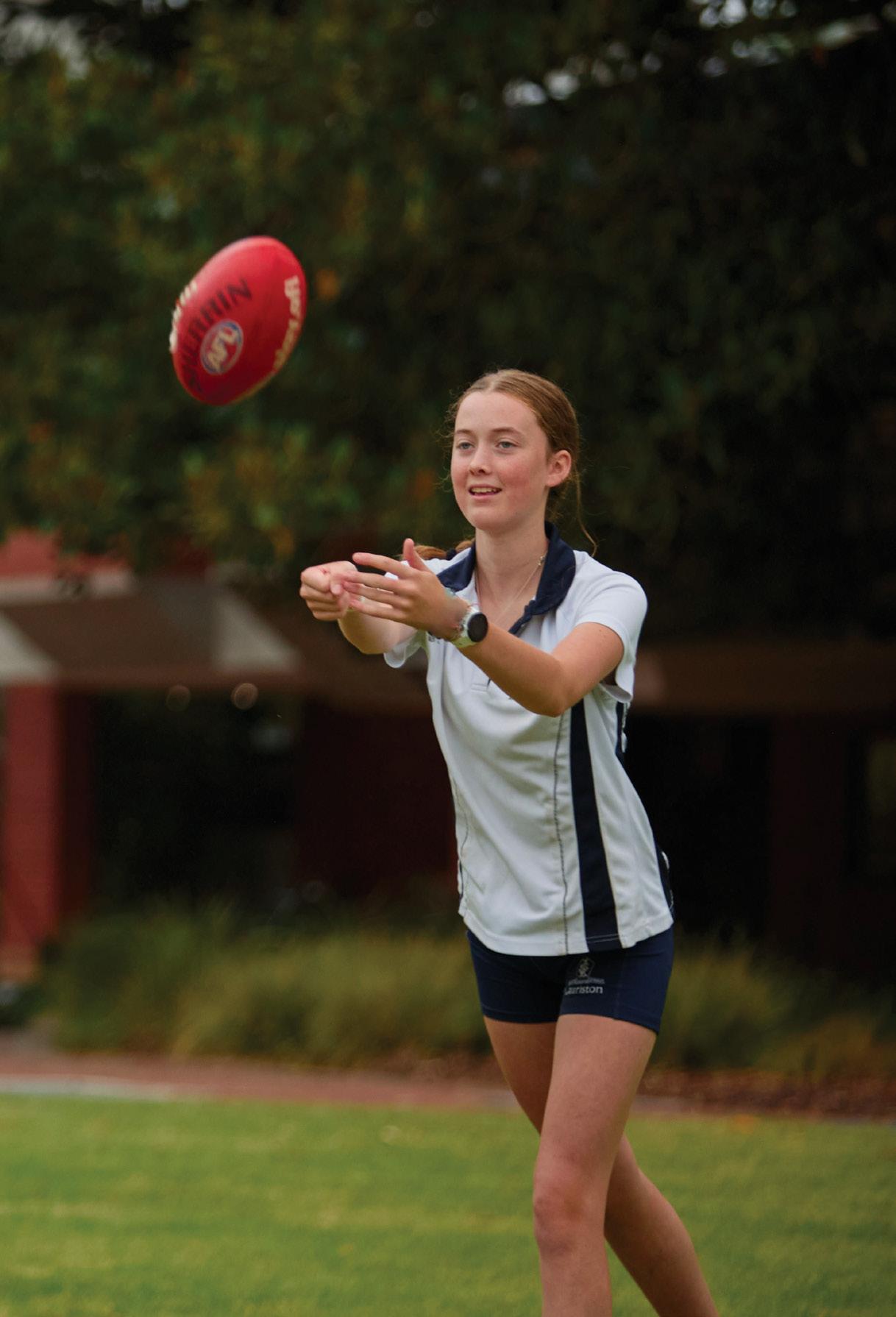
AFLW Clinic 2025
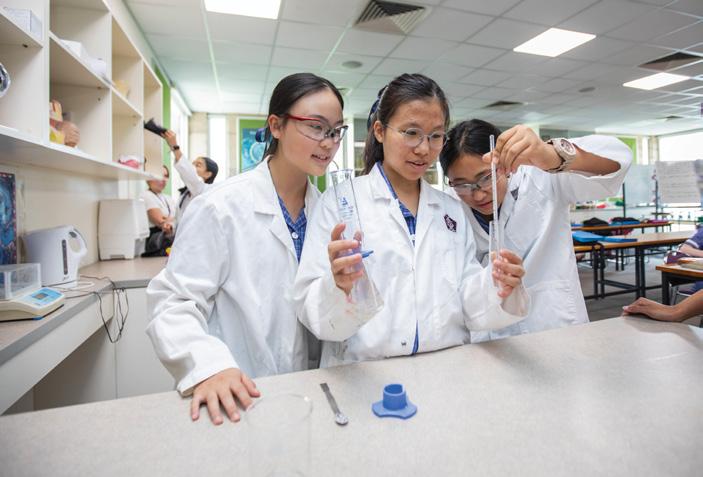
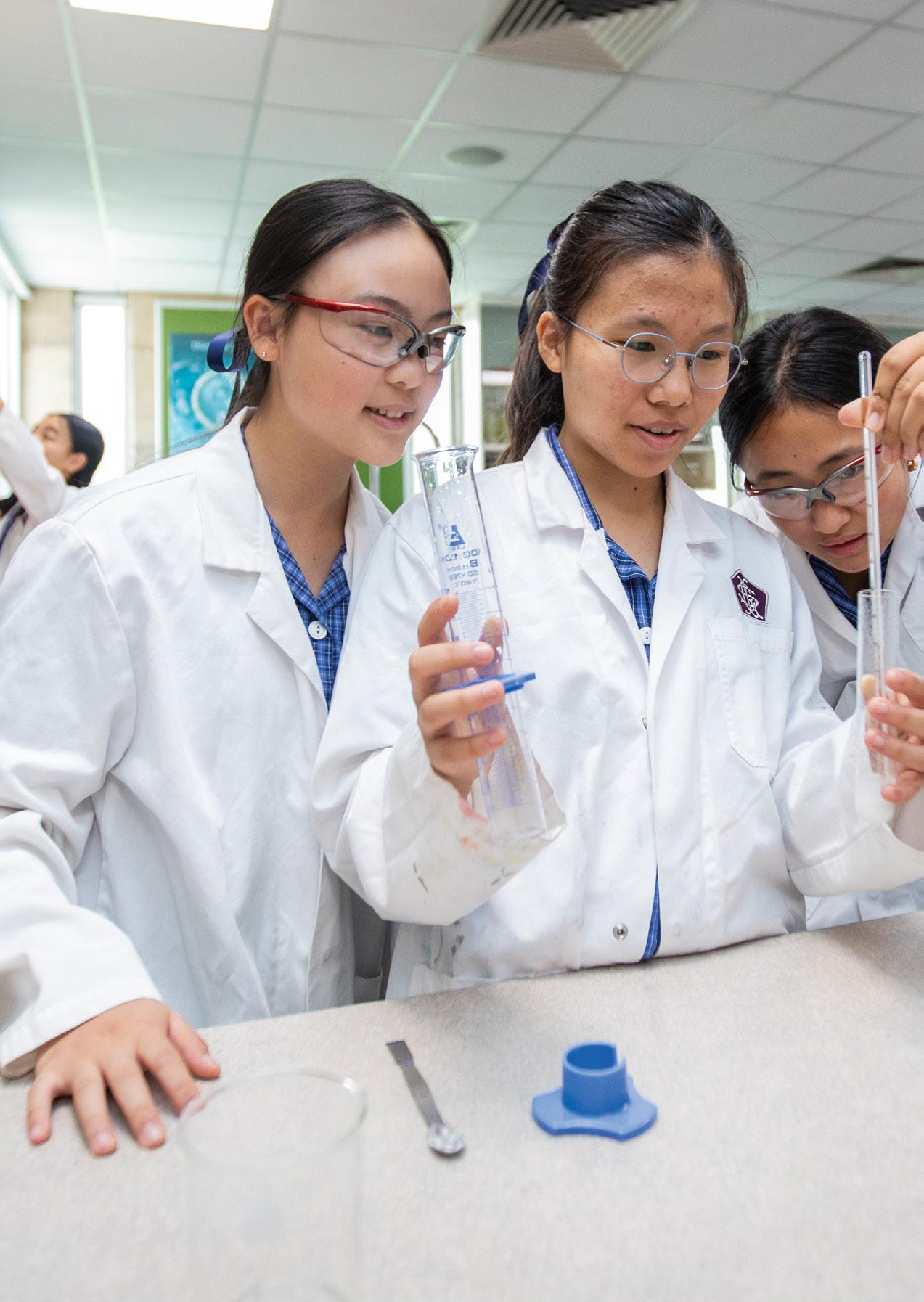
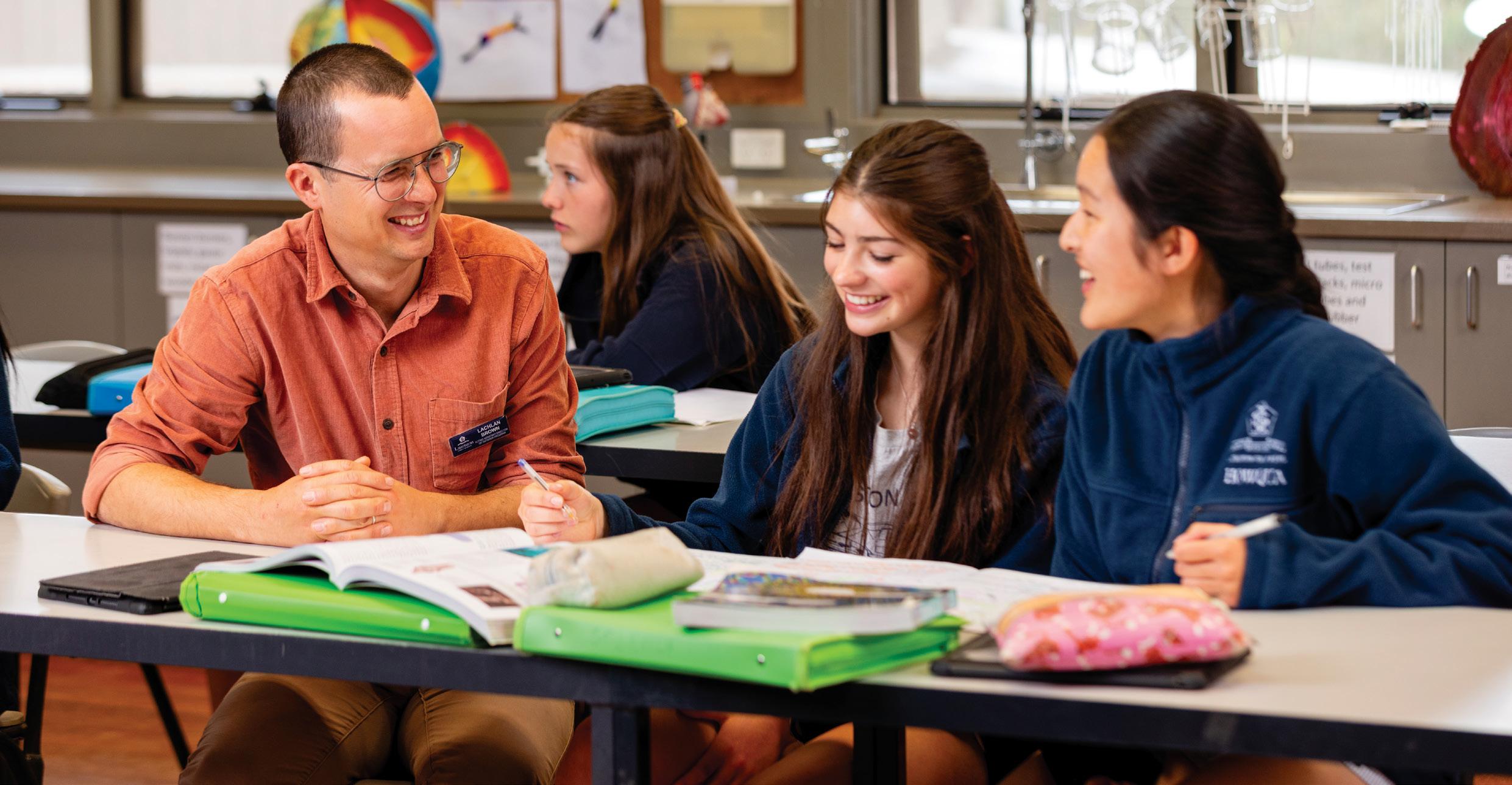
Year 8 Science 2025
Howqua
Leadership That Grows in the Outdoors: Empowering Students and Staff
When students boarded the first buses to Howqua 33 years ago, none were handing over smartphones for parents to lock away; Snapchat and Instagram did not exist and education was quickly evolving. Leadership at Howqua requires not only keeping pace with ever-changing circumstances but also leading with clarity of purpose.
Student leadership by design
A strong commitment to student leadership has broadened and deepened opportunities for girls to lead both within and beyond the classroom at Howqua.
In the outdoor environment, leadership is intentionally shared and rotated. Each week, students take on responsibilities ranging from routefinding and navigation to overseeing evening camp routines, ensuring that service, accountability and teamwork are embedded in daily life.
Clubs and captaincies are central to the Howqua experience and provide meaningful platforms for student voice and initiative. In 2025, Captain roles spanned a wide range of areas, including Fitness, Art, Howquarian Yearbook and Indigenous Ambassadors. Offered across both semesters, this breadth of leadership opportunities invites diverse participation and supports the development of a wide range of leadership skills.
Staff growth and a culture of care
The staffing model at Howqua creates purposeful pathways for early career educators to take on Positions of Responsibility, mentor student Captains and build leadership capability. The Howqua Leadership Team supports development across Outdoor Education, Operations, Wellbeing and Curriculum, reinforcing a culture that prioritises safety, professional learning and strong team cohesion.
As educational contexts and student needs continue to evolve, an adaptive approach grounded in evidence and thoughtful decision making has ensured that this remote campus remains agile, responsive and student centred.
Continued evolution in 2026
The future is one of bold growth and renewed possibility. Campus development will create space for larger student cohorts and an even stronger sense of community, while revitalised outdoor experiences will continue to challenge, inspire, and shape courageous young people. Alongside this, a sharp contemporary focus on classroom learning will ensure that academic growth remains dynamic and purposeful. With refreshed operations and an ongoing commitment to safety, Howqua is well placed to meet the needs of the next generation. Susan Just’s legacy is not only the strong foundation she leaves behind, but the confidence, vision, and momentum with which the campus now moves into its next chapter.
David Joyce Vice Principal – Head of Howqua Campus
Howqua Hike 2013
Remote but not isolated
A key driver of the academic program at Howqua has been the cohesion and continuity of expectations and outcomes across Year 8 to Year 10. This consistency supports a strong learning progression and ensures academic rigour is maintained throughout students’ time at the campus.
The introduction of the Howqua Coordinator of Curriculum and Learning, along with the appointment of highly skilled specialist teachers who are equally comfortable in classroom and outdoor settings, has ensured that high expectations, application and depth of learning remain central to the academic program.
The regular movement of staff between the Armadale and Howqua campuses has been actively encouraged, enabling lesson observations, professional collaboration and ongoing learning. Howqua offers a distinctive educational experience in which students complete a full Year 9 academic program alongside structured learning in the outdoor environment, integrating theory with practice.
The focus on environment and sustainability has shaped all aspects of the Howqua experience for more than 15 years. This commitment was recognised in 2023 when Howqua received the Australian Education Award for Best CoCurricular Program.
The campus is future focused, with an ability to identify emerging trends and respond proactively to the changing needs of students. This approach supports the longterm sustainability and relevance of a remote campus such as Howqua.
A strong emphasis on inspiring girls in STEM is reflected in the implementation of the onsite Digi Tech program, which brings together staff from both Armadale and
Students can engage in a diverse range of learning opportunities, including digital music, biomechanics and motion, Python programming, and CAD design and production.
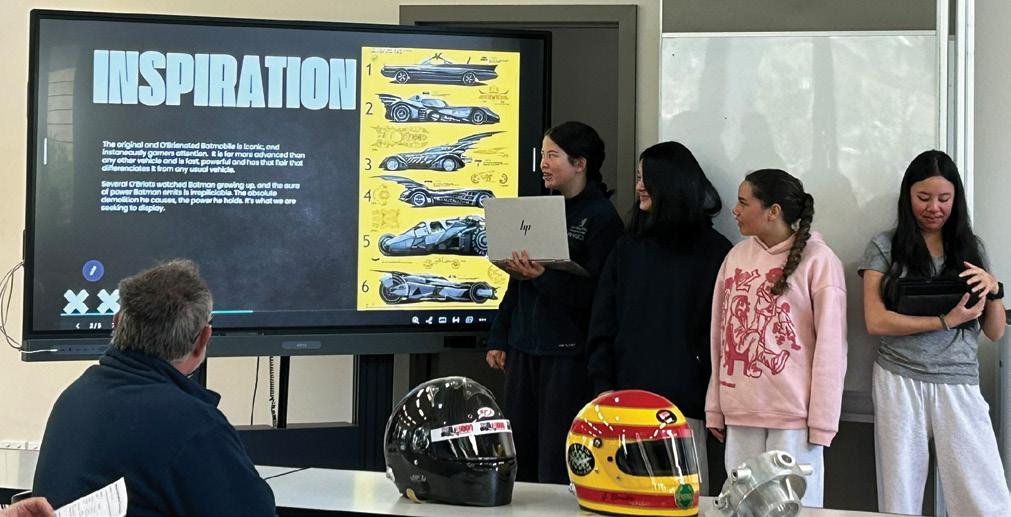
Over the past two years, this focus has culminated in F1 Howqua, where Houses compete in a Grand Prix–style model car race. Each House member contributes through design, racing, sponsor pitching or team support. The program highlights a willingness to adapt and innovate in response to student interests and was strengthened through support of this originally student driven initiative.
These programs and initiatives reflect a continued commitment to Lauriston’s core values—community, intellectual curiosity, engagement and creativity—which remain central to all aspects of the Howqua experience.
While leadership and staffing inevitably evolve over time, the legacy of continuity, cohesion and academically rigorous programs established at Howqua will continue to shape the campus and its students well into the future.
Eleanor Richards Howqua Coordinator of Curriculum and Learning
Howqua.
F1 Howqua 2025
Leading with & through wellbeing Wellbeing
The Australian Student Wellbeing Framework reminds us that:
‘Principals and school leaders play an active role in building a positive learning environment where the whole school community feels included, connected safe and respected.’
This statement captures the essence of wellbeing leadership - creating a culture where every person feels they belong. Research across Australia consistently shows that when schools nurture belonging and connectedness, students flourish not only in their learning but also in their overall wellbeing.
At Lauriston, this commitment is enacted daily by our pastoral leaders. They amplify our vision and values, collaborate to support every young person in our care, empower student voice, and champion wellbeing initiatives across the School. Through their work, a culture of care is not only valued but made visible in the everyday rhythm of school life.
The phrase “lived, not laminated” captures this approach. Wellbeing at Lauriston is not something simply kept in a document or displayed on a poster, it is something our community feels. Our practices prioritise meaningful relationships and a culture where wellbeing is genuinely experienced. Through reflection and continuous improvement, we ensure our efforts remain purposeful, relevant, and responsive to the needs of our staff, students and families.
Leadership at Lauriston has also been characterised by a genuine human presence, with staff committed to doing with, rather than doing to, our students. We build trust by taking the time to know each student, listening actively and responding with care and consideration in student forums, and working collaboratively with Captains and Prefects in ways that honour their voice and ideas. This relational approach is further strengthened by our visible presence during the key moments that foster connectionwhether in classrooms, across cocurricular activities, or as we greet students and families within our school spaces.
Our commitment to wellbeing is also strategic. We have ensured programs are resourced, policies are informed by research, and practices are aligned with emerging needs. This has included leading work in areas such as child safety, mobile phone use, and navigating the opportunities and challenges associated with artificial intelligence in education. We have also strengthened the systems and structures that underpin our wellbeing
approach: enhancements to the pastoral record system now support improved monitoring of student needs; our wellbeing curriculum continues to evolve; and the School Wellbeing Framework - SPARK - has been reimagined to reflect the changing landscape faced by young people today.
Through the commitment of our pastoral staff and student wellbeing leaders, wellbeing continues to be a strong and visible thread in our School. When invited to reflect on what leading wellbeing looks like at Lauriston, they said:
2025 School Captain – Annabel Reith: “Establishing friendships and connections with members of the student body has instilled me with a greater sense of purpose as a leader. Ultimately, positioning myself to better understand the needs of students, being a person who can offer support, advice or just a simple conversation.”
2025 SHINE Captain – Grace Habersberger: “I lead as a SHINE captain by always being positive and kind towards others. When I check in with my peers, I can try to make everyone feel included and accepted in our School environment.”
2025 Wellbeing Program Coordinator – Julia Lippold: “I try to lead by example as much as possible since wellbeing is not a spectator sport. We need energy to deal with the energy drainers in our lives. So, you must show up for your own wellbeing.”
Year 10 Coordinator – Joel Irons: “Identifying and leveraging strengths is an important priority for any leader. I make sure to recognise and celebrate the character strengths of both staff and students, highlighting what is strong and wonderful in them.”
Their reflections highlight a simple truth: when young people are equipped with the skills to become - and remain - well beings, they are empowered to participate fully in life, whether at school, at home, or in the wider community. Success lies not only in teaching these skills but in modelling them. As leadership expert John C. Maxwell reminds us, “Leaders know the way, go the way, and show the way.”
The legacy that Ms Just leaves, and the future direction that Ms Partington now shapes, share a common foundation: that wellbeing remains at the heart of a Lauriston education.
Natalie Fanariotis Deputy Principal Wellbeing
SHINE Captains Meeting
The Impact of the FabLab Learning & Innovation
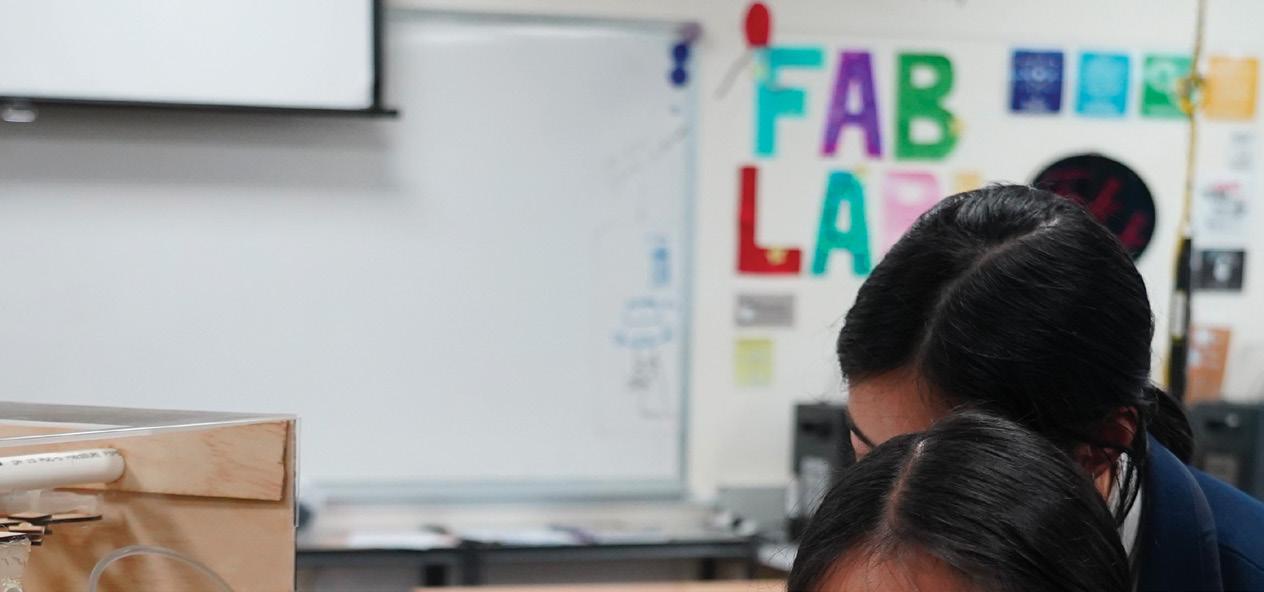
Opened by Susan Just in 2014, the FabLab is utilised by every single year level, and is a place where students can explore, take risks and learn in a safe environment. In a girls’ school, this matters.
Research shows that girls’ confidence in STEM is generally lower than boys’ and tends to fall as they get older. By Year 12, girls make up only about a quarter of enrolments in information technology, physics and engineering, and women hold just 15% of STEMqualified jobs in Australia.1 Having access to a space like the FabLab helps to challenge these patterns.
The FabLab provides students with access to the kinds of tools and technologies that are shaping the world around them. It’s not just about using equipment. The culture of the FabLab is one where it is okay to fail, to make mistakes and to learn from them. That culture is critical in breaking down barriers that might otherwise deter girls from pursuing STEM pathways.
Learning here is hands-on and iterative. Students often start with a rough sketch or an initial idea, then move through designing, prototyping and refining until they create a finished product. The process is rarely smooth and that’s the point. Each hurdle becomes an opportunity to problem-solve, adjust and persist.
Teachers play a key role in this space. They guide rather than direct; asking questions, offering suggestions and nudging students to think differently. At the same time, they work to keep ownership of the ideas with the students. This balance between support and independence helps students to build both skill and confidence.
What stands out most is the sense of ownership that students develop. The FabLab feels like their space. It’s where they can see themselves as designers, makers and innovators. For many, this changes how they imagine their future, opening up possibilities in engineering, design or technology that they might not have otherwise considered.
The FabLab is more than a room full of tools. It is a place where resilience and creativity are normalised, where girls are encouraged to take on challenges, and where they discover first-hand that they belong in the world of STEM.
It prepares them not only with skills, but with the mindset and confidence to carry those possibilities into whatever comes next.
Craig Nicholls Head of Digital Learning
The FabLab is an incredibly valuable resource for our Art and Design students, providing them with the tools and technology to bring creative ideas to life in innovative and tangible ways.
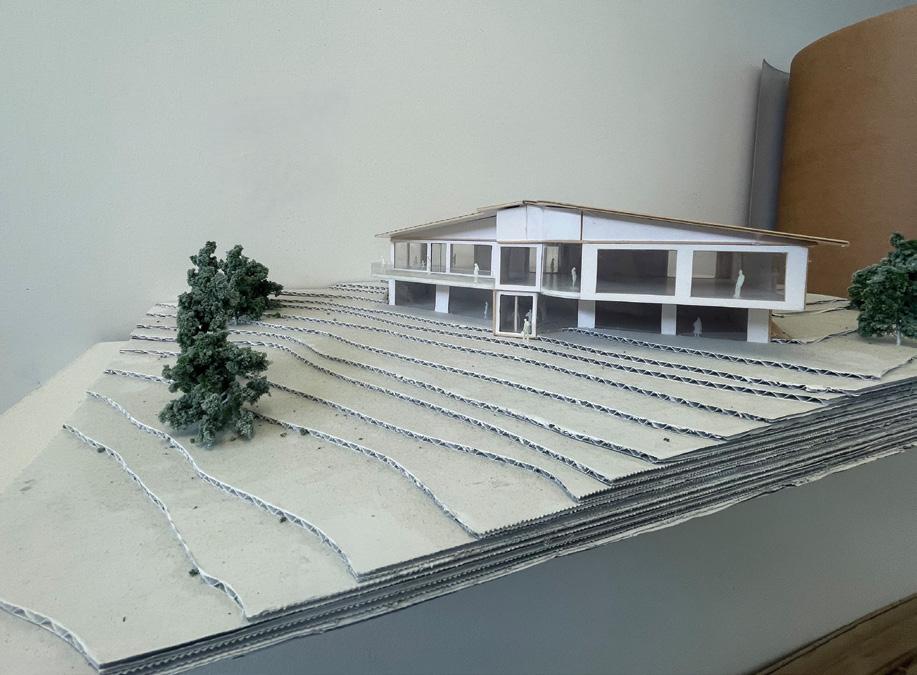
Students in Visual Communication Design develop their prototype packaging and architectural models using digital software and fabricate them precisely with laser cutters and 3D printers. The FabLab has allowed them to test ideas quickly, refine concepts and visualise projects in real-world dimensions.
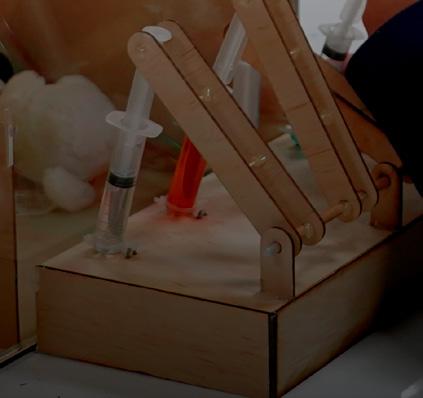
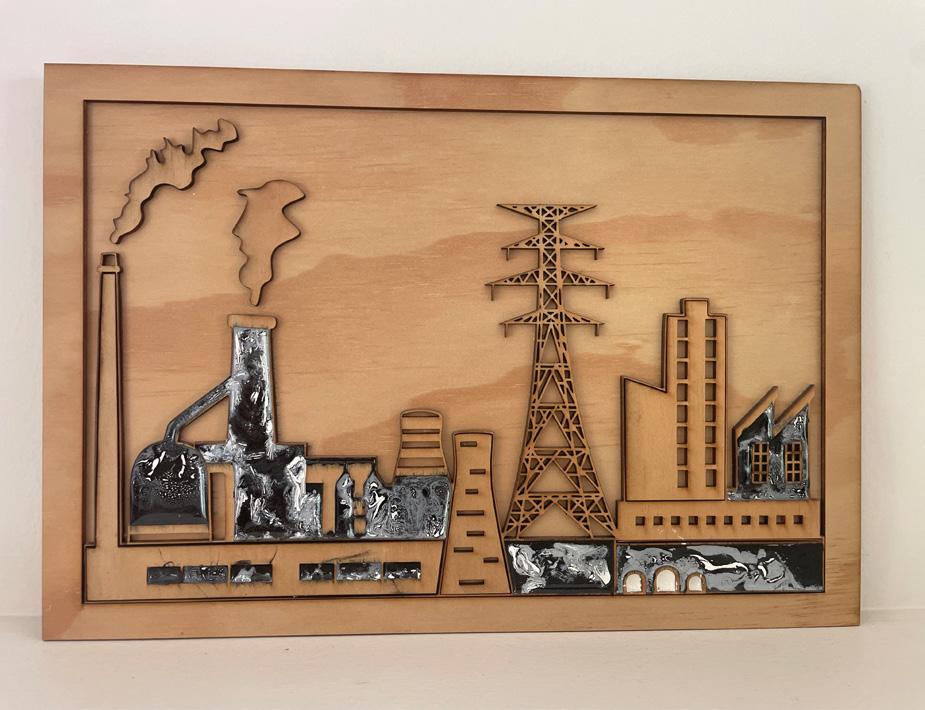
The Art students have also used the FabLab to create laser-etched imagery, three-dimensional sculptures and 3D components for mixed-media artworks (pictured above), combining traditional art-making methods with modern digital fabrication.
By using the FabLab technologies, students have gained experience with industry-standard design software, prototyping methods and digital fabrication tools. The FabLab has cultivated curiosity, independence and technological confidence – equipping students with the creative and practical skills relevant to contemporary art, design, architecture and manufacturing careers.
Giuliana D’Angelo Head of Art
One of the lasting legacies from Susan Just’s time at Lauriston was the introduction of the Fabrication Lab. This innovative space has become a hub of creativity and problemsolving for the Prep to Year 2 students, inspiring confidence as they turn imaginative ideas into real-world creations.
From puppet prototypes to animal shelters and playgrounds, the FabLab empowers the girls to explore design thinking in exciting, hands-on ways.
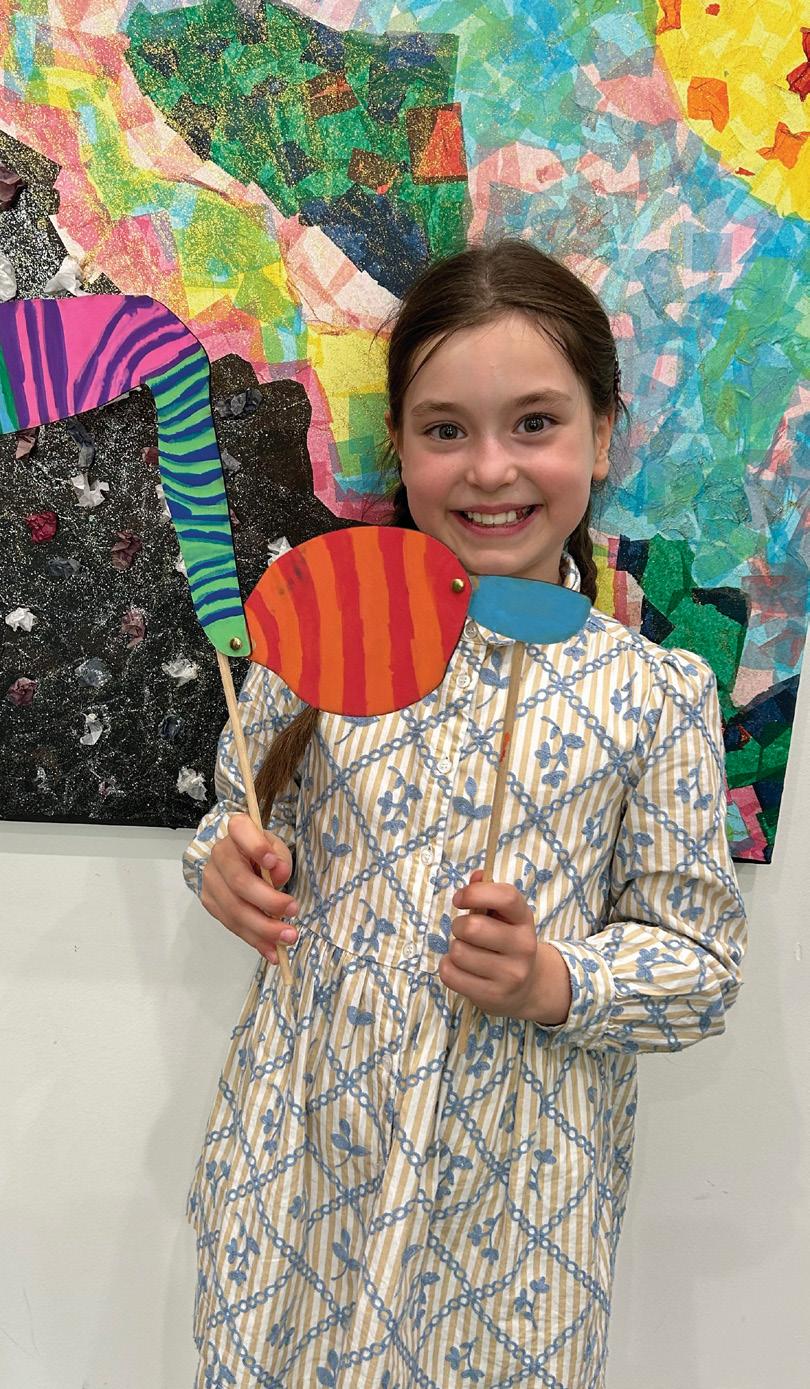
The program has strengthened cross-curricular learning across all levels. Over the years, students have completed a range of projects. In Prep, students designed playgrounds, considering shade, safety and suitable equipment. Year 1 explored materials and environments through science-based shelter construction. Year 2 integrated their English studies by designing puppets to support their narrative writing, bringing characters and dialogue to life.
Perhaps the greatest joy was witnessing the thrill as students watch their two-dimensional sketches transform into three-dimensional models.
The FabLab has not only developed technical and creative skills but also nurtured curiosity, perseverance and collaboration – qualities that will continue to enrich the girls’ learning well beyond the early years.
Caroline Long
Prep – Year 2 Teaching and Learning Mentor
Year 2 Classroom Teacher
Where Students Grow, Connect and Thrive:
Building Confidence and Connection Through Snowsports
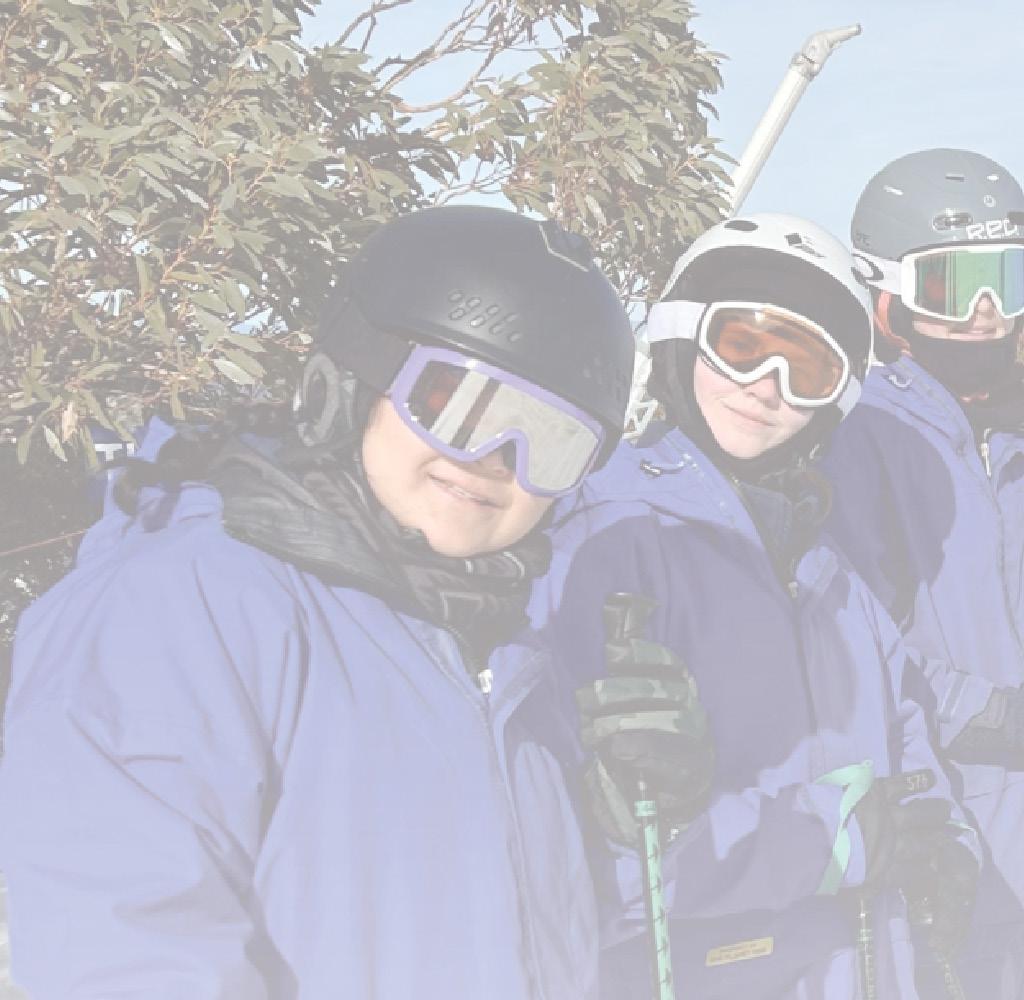
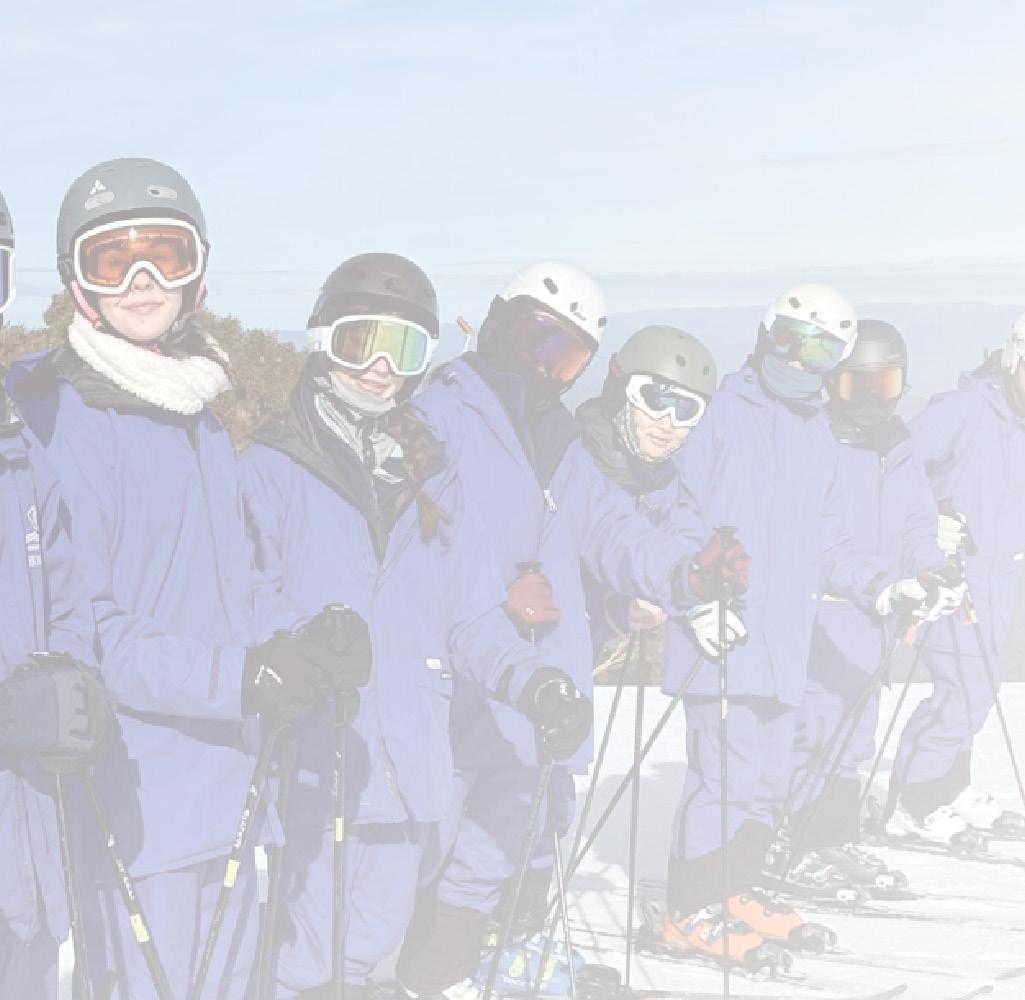
The Snowsports Program at Lauriston offers more than time on the slopes, it also provides a unique opportunity for students to build lasting connections and friendships across all year levels. Sisters Odette (Year 6) and Niamh (Year 4) reflect on the impact that participating in Snowsports has had on them.
What do you enjoy about doing Snowsports?
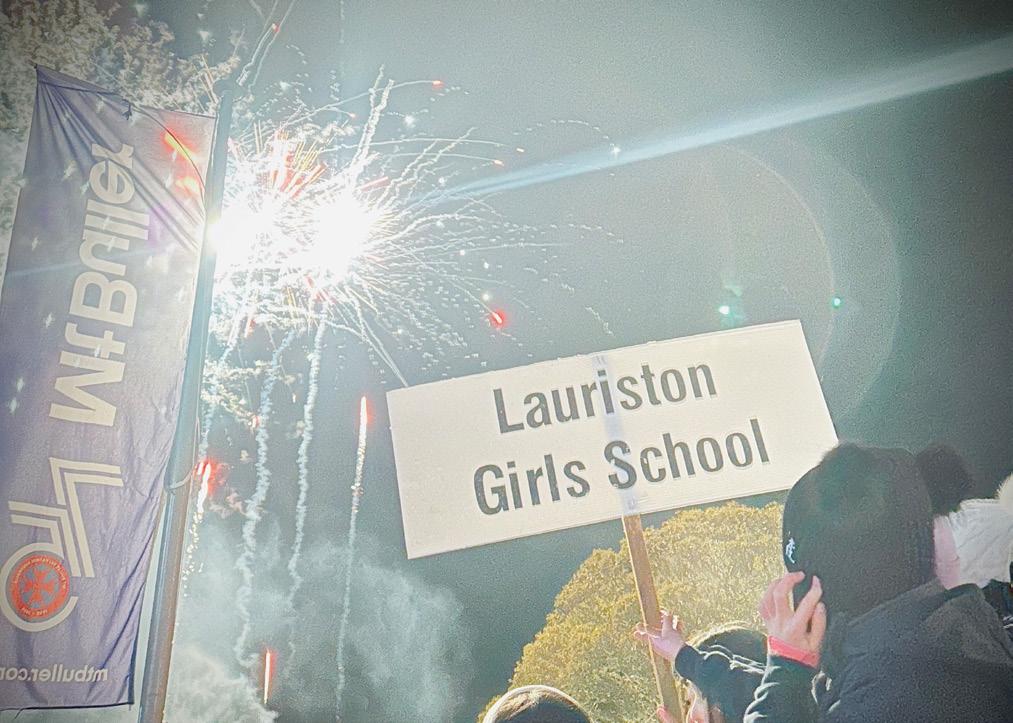
Niamh – The competition and all the fun stuff you get to do; dinner parties each night, activities in the snow that you can’t do at home, you even get to do the welcome parade and carry the School sign!
Odette – Staying at the lodge, you get to know other girls when you stay with them, it’s a bit like Howqua! You get to wear your special Snowsports jackets – one for the slopes and one for casual dinners.
What’s the best thing about doing Snowsports with your sister and students from other year levels?
Niamh – You can learn a lot from the older girls, like how to get down the slopes and go really fast. Doing Snowsports with Odette is really fun because we get to ski together, and we also do free skiing with our mum. We get to take Mum down on the runs too.
Odette – With the older girls you get to know them better. Especially with Zara Randle (OL 2025) and the Snowsports Captains, they were there with us and would take us down the slopes.
Why do you think Snowsports is such a special part of Lauriston?
Niamh – Probably for me, it’s when I get to meet new people. I don’t normally see them and maybe because of Snowsports I can talk to them at School. It’s just fun to make new friends and learn about them.
Odette – I think it’s an opportunity that is really big and you get to meet so many new girls that have come from other schools, and you get to meet older Lauriston girls that you don’t normally talk to.
Sport and Music at Lauriston
A School Alive with Music: Opportunities for Every Learner
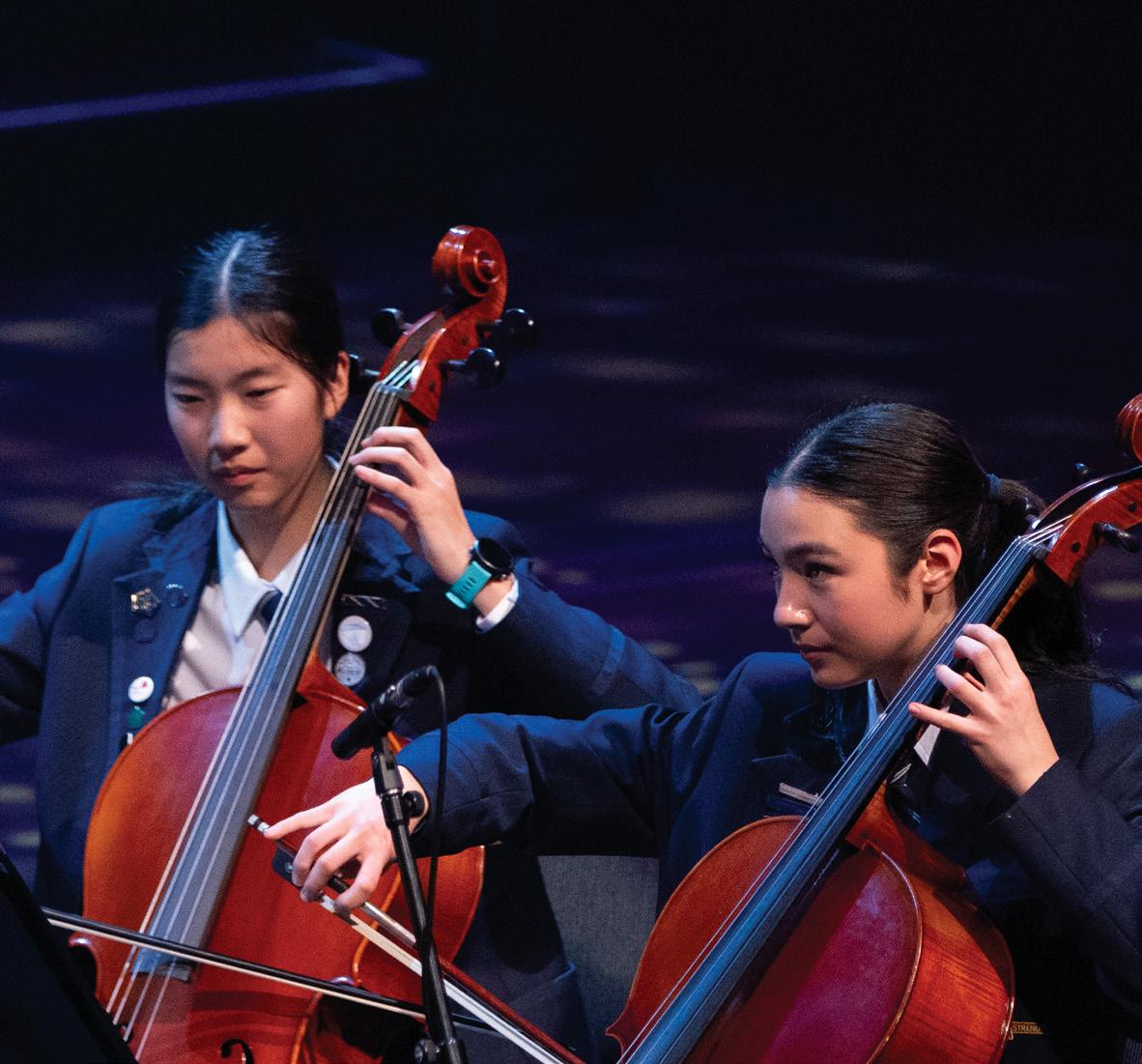
Music forms an integral part of the experience for all Lauriston students, as it fosters wellbeing, social connectedness and the development of inter-year level relationships. Ms Just’s vision for a school where all students have rich opportunities to engage in musicmaking has seen our program flourish.
Exemplifying this vision, experiences such as the Prep–Year 12 Gala Concert and the Years 7–12 House Music Competition encourage students who may not have previously viewed themselves as musicians to courageously step onto the concert stage, supporting both their own personal growth and the overall development of our School culture.
Within the Music Department, just over 50% of Prep to Year 12 students are engaged in co-curricular music, including private music lessons or ensembles, with students regularly citing the relationships they build in the Music School as a driving factor in their ongoing participation. The approximately 500 current private music lesson enrolments are reflective of the value placed upon Music by our students.
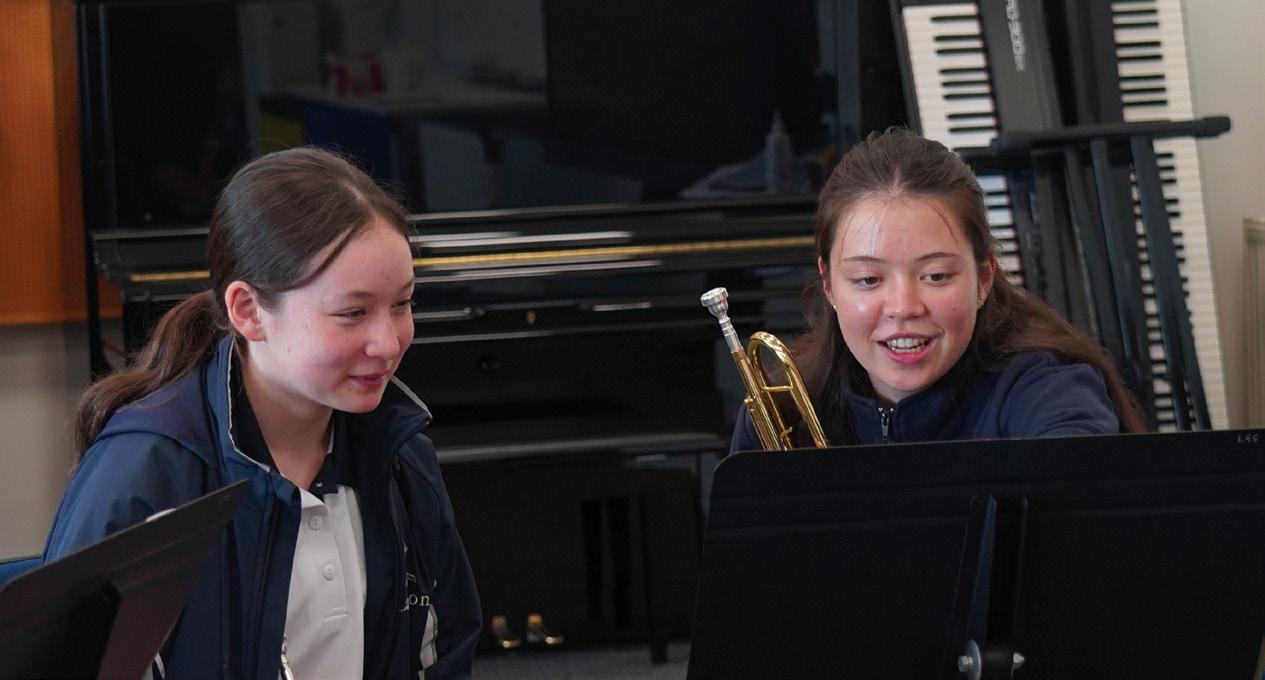
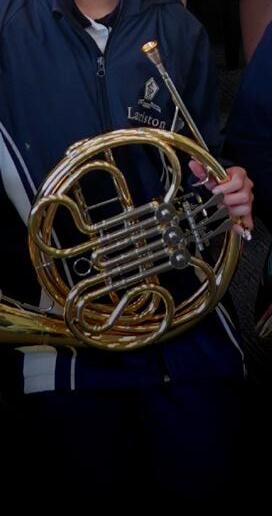
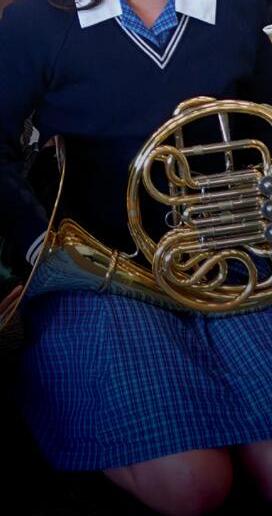
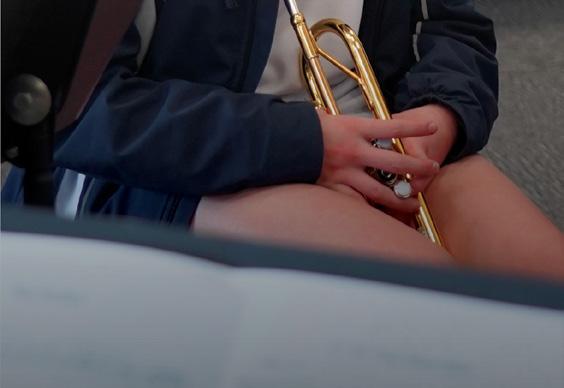
Our growing Brass Ensemble is a wonderful example of the ways in which students support one another across year levels to develop skills and drive the development of their interests and passions.
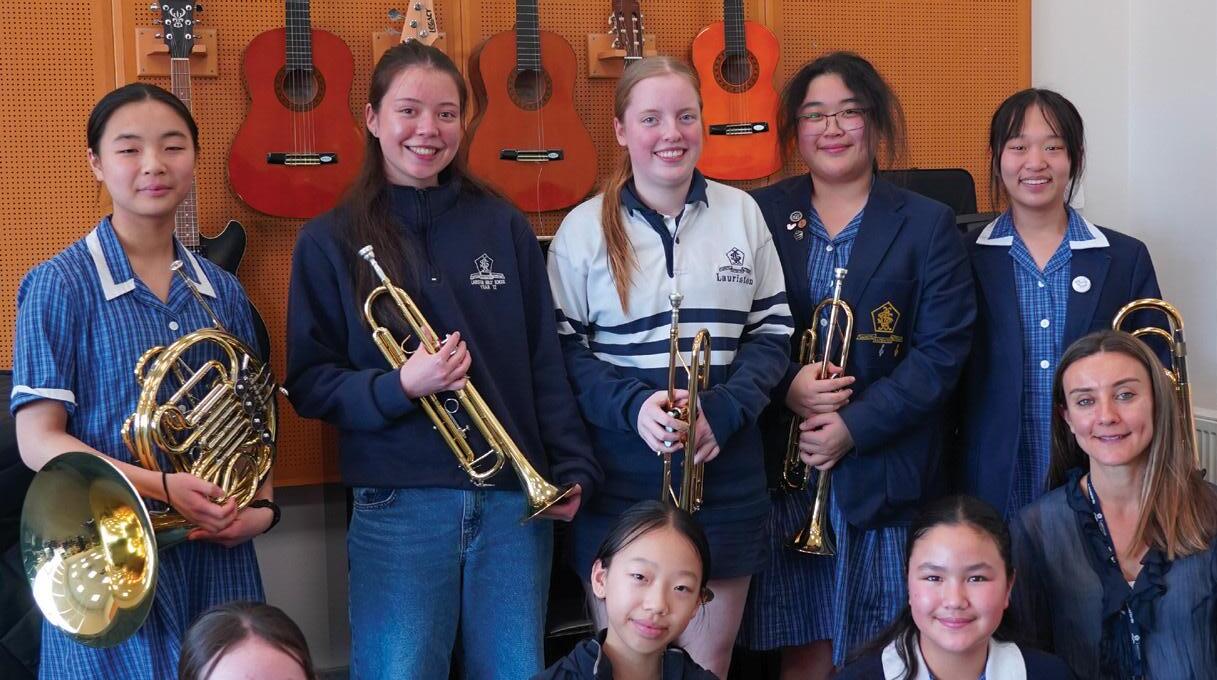
Elizabeth Tindall – Director of
Music
Finding Community and Mentorship Through Brass Ensemble
I have loved playing in the Brass Ensemble because of the opportunity to meet, talk to and perform with girls from all different year levels. My favourite part as one of the senior members has been encouraging the younger students to play with confidence. I know first-hand how daunting it can feel to tackle loud or high notes, and it has been so rewarding to see their courage grow over time.
Another highlight has been hearing our ensemble’s sound develop each term as everyone continues to improve. Seeing the younger students reminds me of myself in Year 6, looking up to the older trumpet players, and I hope I have been that same source of encouragement and inspiration for them as they continue their musical journeys.
Zoe Knight (OL 2025)
In Brass Ensemble, the older students, particularly Zoe Knight, have helped me as well as all the other younger students to develop confidence in our playing and to appreciate the different types of music and instruments. Not only have we developed our skills both individually and as an ensemble, but we are also given the opportunity to connect with each other as a community.
This makes joining an ensemble both a learning experience and a fun and engaging way for us to learn and get to know others in the group. In Brass Ensemble, there are many year levels who participate together, making it a fun and enjoyable experience for everyone and also a chance to connect with lots of different people.
Liesel Fowler (Year 9)
Brass Ensemble 2025
Life at Lauriston
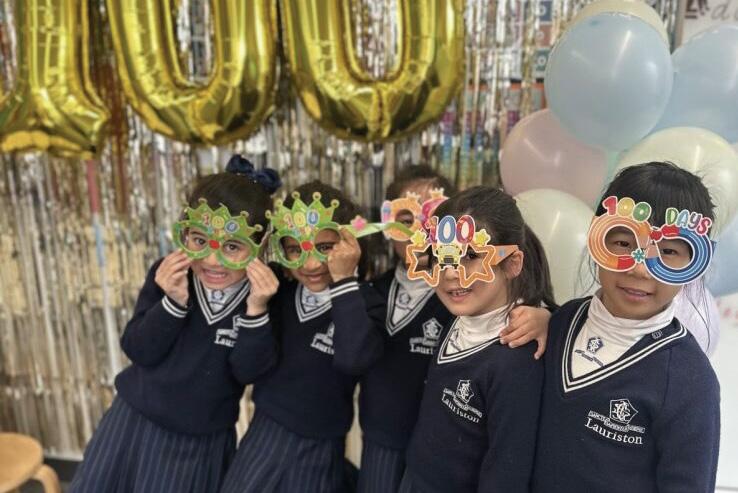
100 Days of Prep
In August, our wonderful Prep students celebrated their 100th day of School.
The Prep classrooms were beautifully decorated with balloons and colourful streamers to mark this special milestone.
Each student was presented with a ‘100 Days of Prep’ medal by Ms Just and Mr Toms, which were made in our very own FabLab.
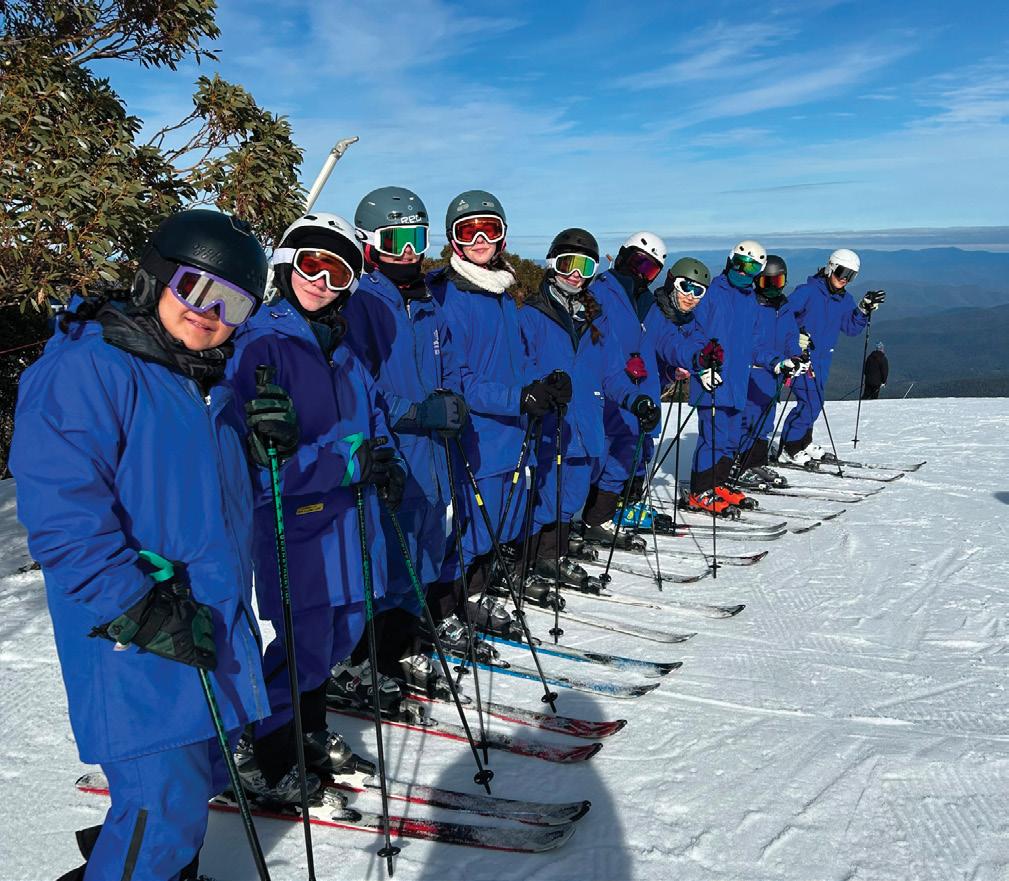
Howqua Cross Country Skiing
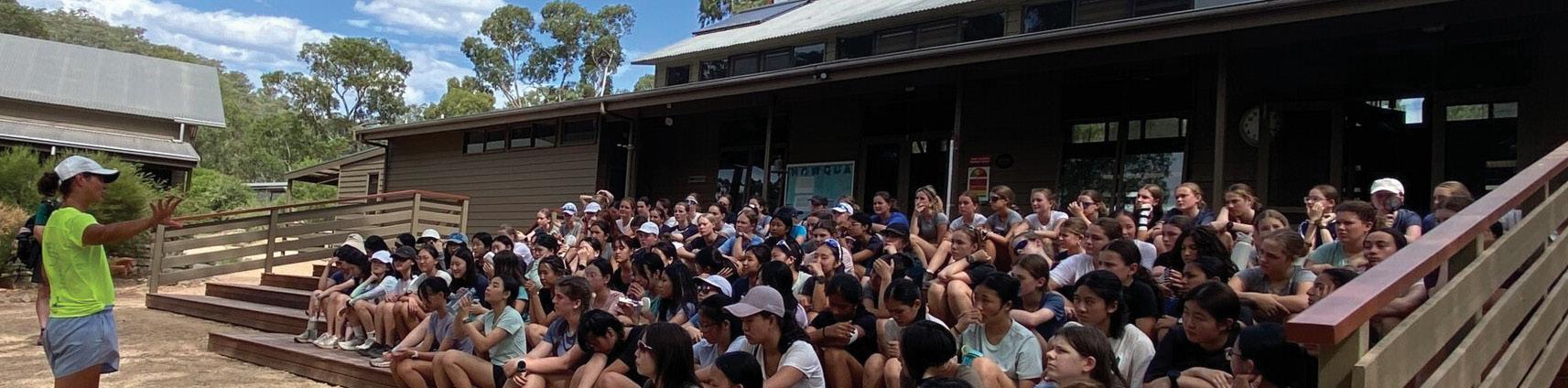
Term 3 marked the beginning of the cross-country skiing program at Howqua, Lauriston’s Year 9 outdoor education campus.
As snow thinned on Mt Stirling, students switched to Mt Buller to make the most of the season.
David Joyce, Vice Principal and Head of Howqua, reflected: “We made the switch to Buller to maximise time on skis. Instead of the long walk from Telephone Box Junction, it was just a short stroll from the village to the snow. It turned into a gorgeous day in the sun as we adapted to our skinny skis – gliding up and down hills with growing confidence.”
After mastering skis, the next goal was snow camping.
2025 Gala Concert
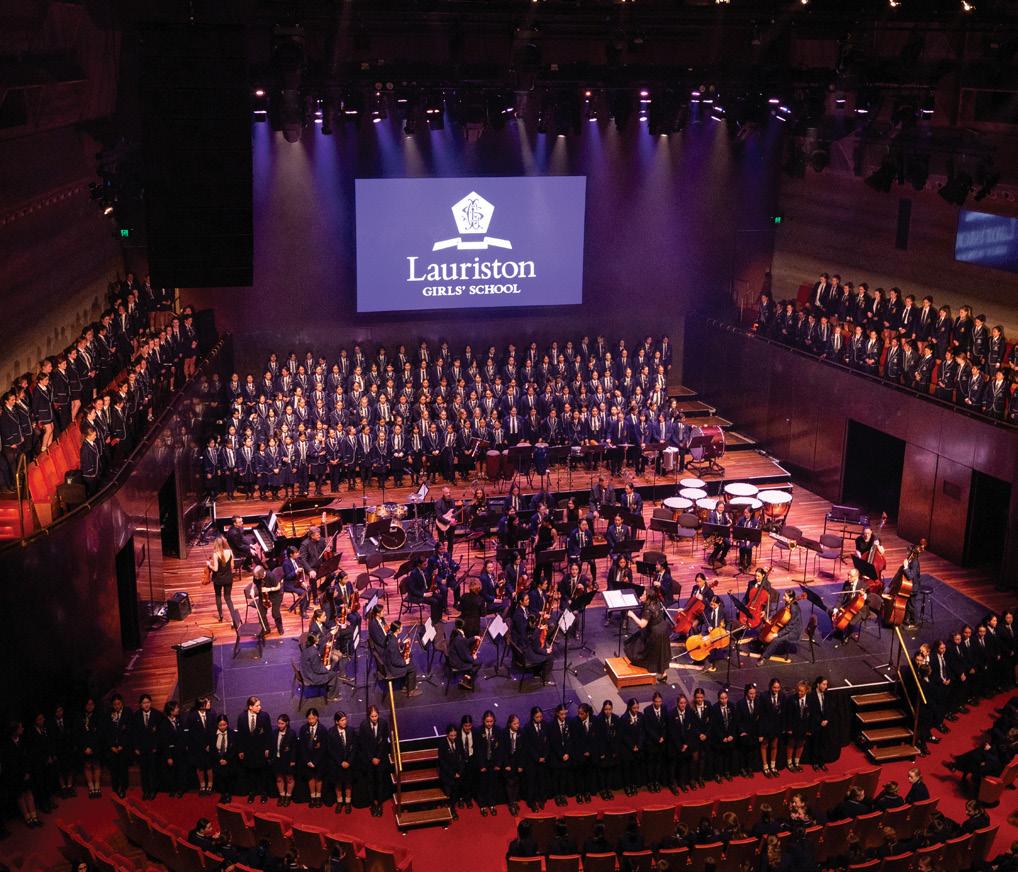
The Lauriston Gala Concert is a cherished tradition for students and families alike – a celebration of musical excellence and a moment for our community to come together.
Held at Melbourne’s iconic Hamer Hall, the concert offers students the unique opportunity to perform on a worldclass stage with professional sound and lighting.
The evening culminated in a stirring rendition of the Lauriston School song, performed by the orchestra alongside the combined Junior and Senior School choirs –a powerful finale that captured the spirit of the Lauriston community.
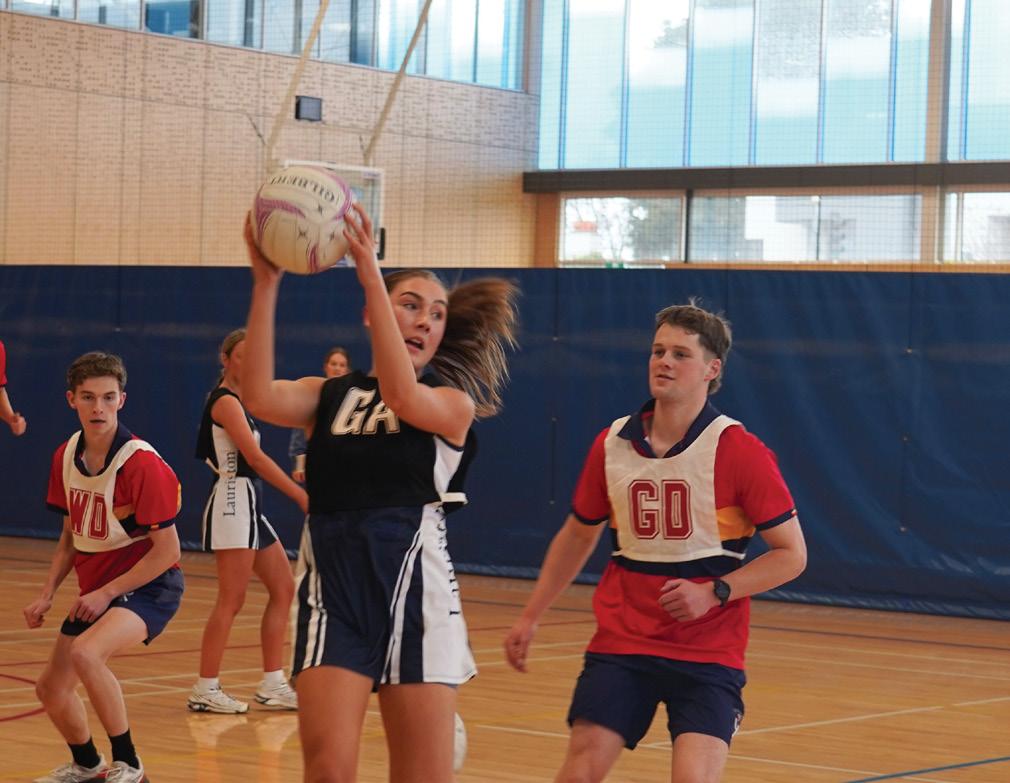
Scotch vs Lauriston Netball match
The energy was electric as Lauriston and Scotch College went head-to-head in the annual netball match at the Ullmer Sports & Wellbeing Centre.
The crowd’s cheers nearly lifted the roof as Lauriston staged a thrilling 5-point comeback, only for Scotch to claim victory by a single point: 17–16.
The real winner, however, was the Robert Connor Dawes Foundation, with both teams joining forces to support an incredible cause.
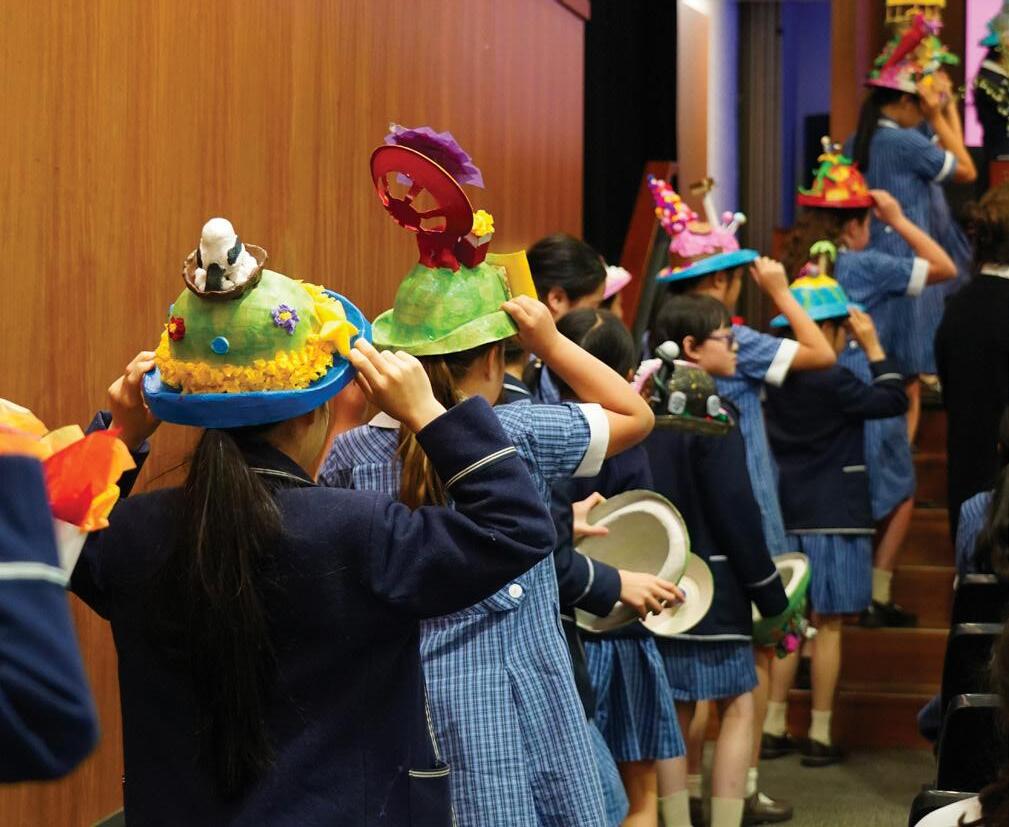
The Mad Hatter’s Parade
One of Lauriston’s core values is creativity, and nowhere is this more vividly displayed than in Year 5. Each year, students embark on a project that begins with a simple recycled bowl. Armed with research, inspiration and a big dose of creative thinking, the students transform everyday materials into whimsical and often humorous hats.
From sculptural masterpieces to wearable works of art, each creation reflects the individuality and innovative spirit of its maker. The project culminates in the muchanticipated Year 5 Hat Parade, where students proudly showcase their creations to an audience of classmates, teachers and families.
Student leadership 2025–2026
Our 2025–2026 student leadership team was announced in October after a rigorous selection process. All senior students and staff vote and successful candidates are invited to be interviewed.
Most importantly, the student candidates need to embody the School values of:
• Engagement in Life
• Intellectual Curiosity
• Courage
• Creativity
• Relationships
“Lauriston girls are leaders and make a difference in our School and the world.”
Susan Just, Principal
Staff Spotlight
The Faces of Leadership at Lauriston
Amanda Jones
Co-Director of the Early Learning Centre
A time when I deeply admired Susan’s leadership was during the Covid-19 pandemic. Even though I was not yet in a formal leadership role, Susan’s leadership and her sense of stability, clarity and community provided us with the reassurance we needed during a time of uncertainty.
Every layer of our work was challenged – from our daily interactions with the children and families to staff wellbeing. I watched Susan lead with calmness and authenticity, while still acknowledging the uncertainty and emotional weight we were all carrying. She communicated with transparency, trusted the expertise of her teams and consistently prioritised children and families in every decision.
Her leadership reminded me of the importance of trust, presence and values-based action, qualities I aim to display within my role as Co-director of the Early Learning Centre. I strive to model kindness, courage, honesty and collaboration. Strong leadership is not only about direction, but leading with authenticity, compassion, connection and collective strength.
Monique Stewart
Junior School Head of PE & Sport
Lauriston is a wonderful place to work, and much of that comes down to the strong, supportive staff and leadership team.
Susan Just had a vision when she joined Lauriston and has continued to work tirelessly to bring that vision to life.
One moment with Susan that really stood out to me was when she shared her vision for the future of Sport, including the development of a strategic plan and a state-of-the-art gymnasium. Susan spoke passionately about how the facility would not only improve athletic opportunities, but also foster school pride, wellbeing and community engagement.
I am excited that our new facility is creating opportunities for every student to develop their skills and confidence in a range of settings, fulfilling Susan’s vision.
As Junior School Head of PE and Sport, I am committed to engaging, challenging and inspiring every student to develop a lifelong love for physical activity, teamwork and personal excellence, and to remember it is important to always stay active.
Caroline Hodges
Howqua Coordinator of Pastoral Care
As a teacher and leader at Lauriston Girls’ School, I have been inspired by Susan’s leadership, and part of her legacy will be my commitment to always demonstrate kindness, diligence and drive in all that I do at Howqua and beyond.
Her wisdom and enthusiasm to see a project or change come to fruition has focused Howqua’s educational, spiritual and environmental gaze to benefit our students.
I have held a leadership position in the wellbeing space at Howqua for the last nine years. During this time, as the role has evolved so too, have the interests and capabilities of our students. As teachers and leaders, we know we must never pause and rest on our laurels; instead, we must closely analyse our program and ensure that it evolves to meet the current needs, aspirations and challenges of a cohort.
In all that we do as teachers and leaders at our campus, the belief that giving our students the precious opportunity to ‘find their feet’ at Howqua in such a way that facilitates their personal growth, academic development and skill acquisition, is at the forefront of our minds.
Kate Gilchrist
Year 11 VCE Coordinator
I have deeply admired the courage Susan has demonstrated throughout her time as Principal of Lauriston Girls’ School. Observing her leadership has taught me that true courage lies not in the absence of fear, but in the ability to act with clarity and compassion.
Under Susan’s guidance, I have been fortunate to take on a range of leadership roles across all year levels, each providing opportunities to develop my own leadership capacity. My leadership style is grounded in three core values: integrity, courage and gratitude.
My purpose as an educator is to build genuine rapport and positive relationships with the young people in my care. I aim to create opportunities that enable them to realise their potential, to take risks and to discover their own capacities for resilience and leadership.
Ultimately, I aspire to model the same courage and integrity that I have so admired in Susan’s leadership, fostering a learning environment where both students and staff feel empowered to lead, contribute and flourish.
Opening the Wu Kuo House at Howqua
A Legacy Built on Philanthropy and Community
For over three decades, the Howqua campus has stood as a testament to Lauriston’s commitment to transformative education, and to the generosity of families and supporters who believe in its vision.
Every Howqua house carries the name of those who made its existence possible, honouring the philanthropic spirit that continues to shape the Lauriston experience.
Since its founding, Howqua has offered Year 9 students a unique, immersive year of growth, challenge and connection. It’s a defining chapter in the Lauriston journey, one that sets our students apart.
As Lauriston grows, this year at Howqua remains the constant: a rite of passage made possible by community support.
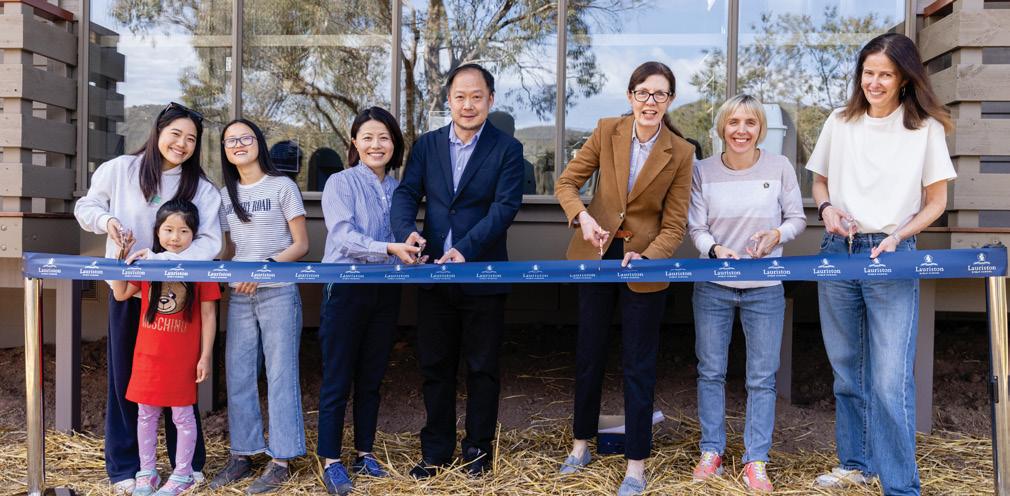
In 2023, we celebrated 30 years of the Howqua campus and launched a fundraising campaign to build the 11th house. Thanks to the extraordinary generosity of many and a transformative gift from the Wu Kuo family, this vision became reality.
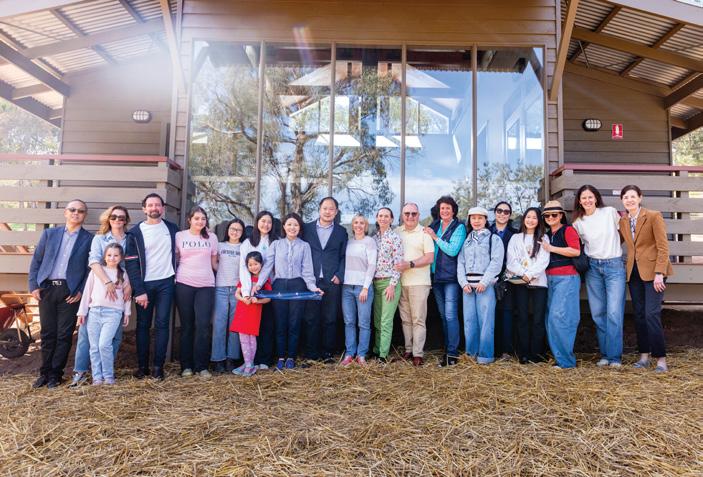
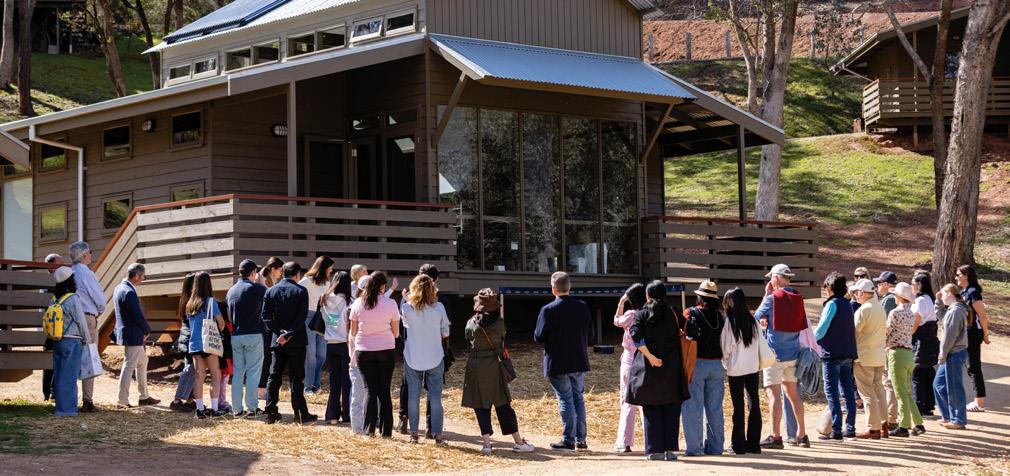
On Sunday 19 October 2025, we proudly opened the Wu Kuo House, marking a new chapter in Howqua’s legacy.
Importantly, every contribution, large or small, played a vital role in making this milestone possible. It is through the collective generosity of our community that more girls have been able to experience the transformative power of a year at Howqua.
We extend our deepest gratitude to all who contributed. Your support ensures that Howqua continues to empower Lauriston students for generations to come.
As we open the doors to the Wu Kuo House, we look forward to its first residents beginning their own traditions such as signing the bed slats, decorating their Milo tins and adding their stories to the legacy of this extraordinary campus.
The Lauriston community has once again demonstrated the generosity and vision that have shaped our School for generations. More than 30 years ago, Howqua was brought to life through the philanthropic spirit of families who believed in creating a bold, transformative experience for Lauriston girls. It is this same spirit that continues to guide us today.
Thanks to the remarkable support of our community, the Susan Just Appeal has raised more than $417,000 towards the new Kitchen and Dining Hall at Howqua. This project honours Principal Susan Just’s 15 years of visionary leadership and reflects the values she championed: courage, opportunity and personal development, values that sit at the very heart of the Howqua experience.
Thank You for Supporting the Heart of Howqua
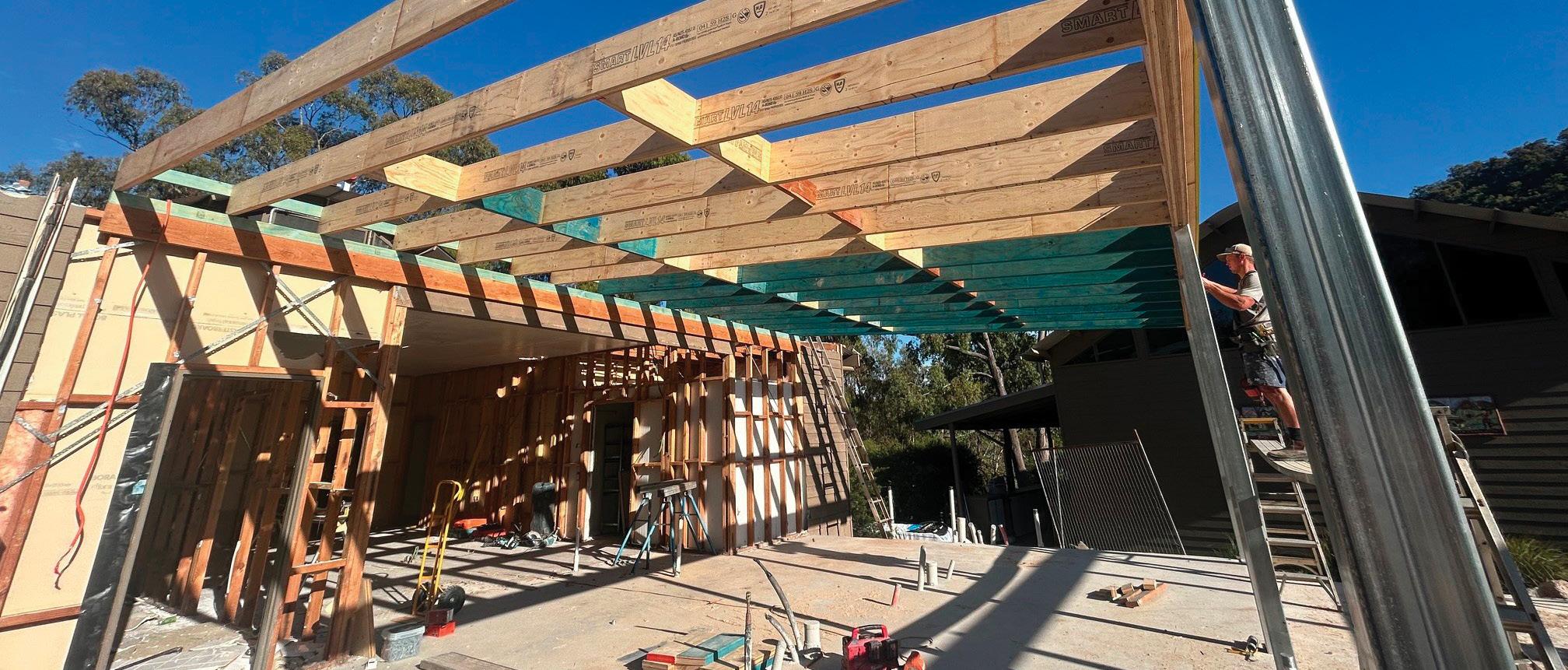
We are delighted to share that renovation works have already commenced. The new kitchen and extended outdoor deck was ready to welcome students at the beginning of the 2026 academic year, creating a warm, modern and functional space that supports wellbeing, connection and daily life.
Thank you to every member of our community who contributed. Your generosity ensures that the next chapter of Howqua continues to inspire, challenge and empower future generations of Lauriston students.
Inspiring Legacies:
A celebration of community during Gift in Wills Week 2025
Gift in Wills Week 2025 at Lauriston Girls’ School was a powerful reflection on legacy, celebrating the enduring impact of the Irving Sisters and Elizabeth Kirkhope, whose vision and generosity laid the foundation for generations of courageous, creative and connected young women. Their pioneering spirit continues to shape Lauriston’s identity, reminding us that every gift carries the power to influence the future.
This year’s theme, ‘Inspiring legacies’, invited the community to reflect on Lauriston’s rich history and consider how their own legacy might contribute to the School’s next chapter. Principal Susan Just, whose 15 years of visionary leadership have embodied Lauriston’s core values, now stands as a living continuation of this legacy, guiding the School into a new era of purpose and possibility.
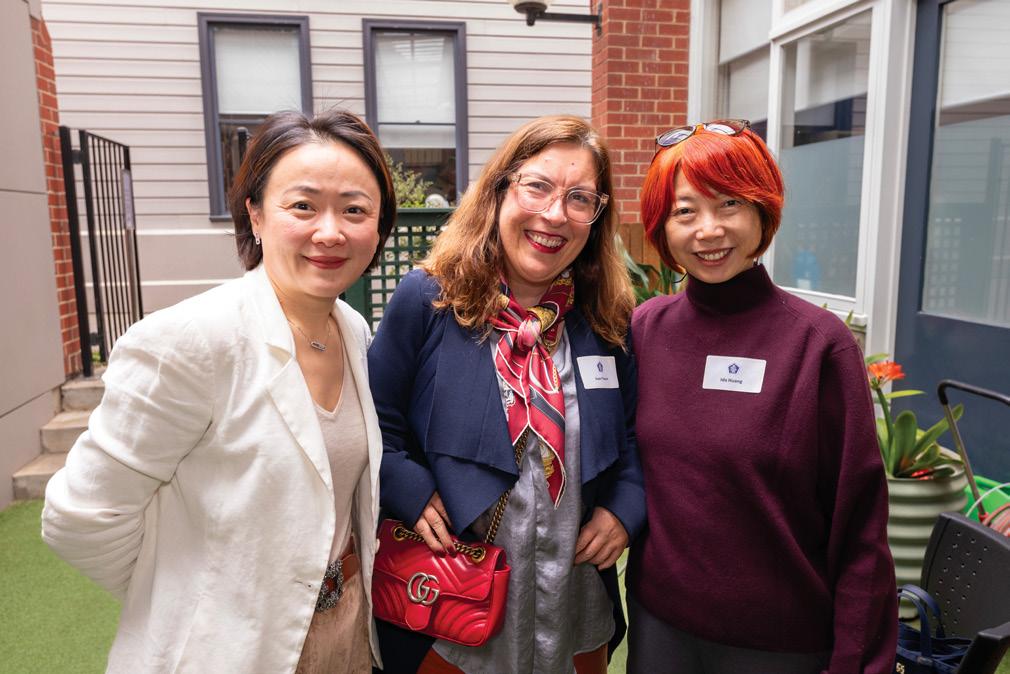
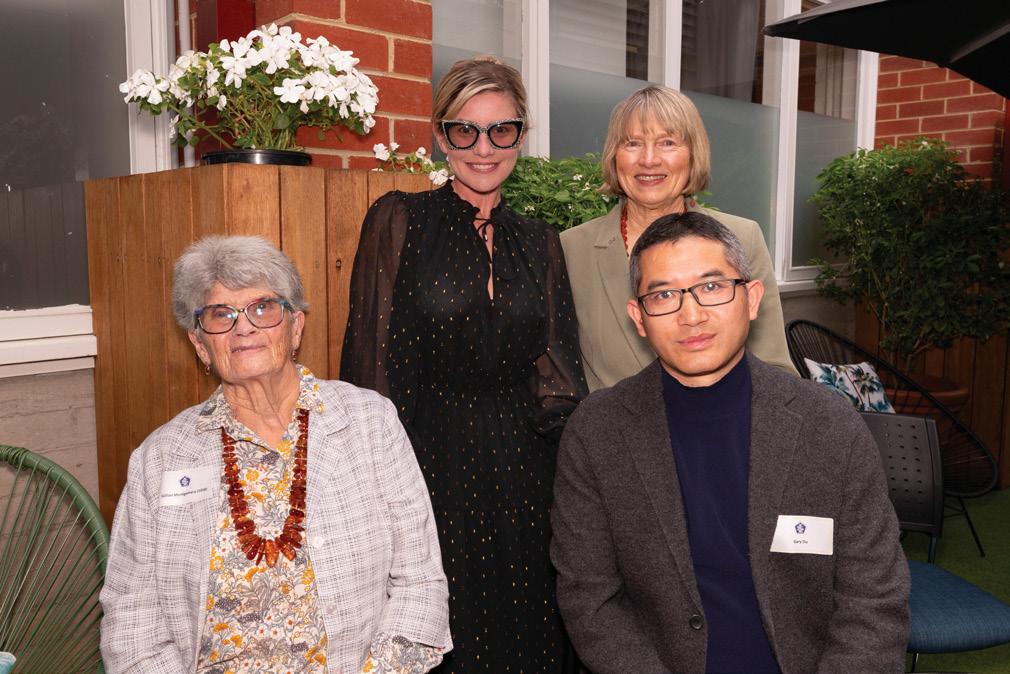
The week concluded with Afternoon Tea: Memories of the Fig Tree in the Junior School Library Garden, celebrating Susan Just’s leadership and the transformative power of giving. Elise Gillespie (OL 1999), Chair of the Lauriston Foundation, shared the story of Sarah Hollyer (OL 1967), whose bequest funded Hollyer House at Howqua. Alix Bradfield, Chair of the Elizabeth Kirkhope Circle, welcomed new Bequest Society members Gillian Montgomery (OL 1958) and Gary Du. Year 11 student and 2026 School Co-Captain Nicole Kassimiotis reflected on her Howqua experience and the impact of community generosity.
Gift in Wills Week was a celebration of those who have given and those who plan to give, ensuring Lauriston continues to thrive for generations to come.
As we honour the past, we look ahead with hope, knowing the next chapter is already being written.
The week began with the Annual Alice Barber Lecture, where Professor Bronwyn Graham (University of New South Wales, Sydney) presented Cracking the XX Code, exploring gender gaps in science and the importance of equity in mental health. On Tuesday, Plan with Purpose: Estate Planning with Michael Clohesy offered practical insights into Wills and future planning.
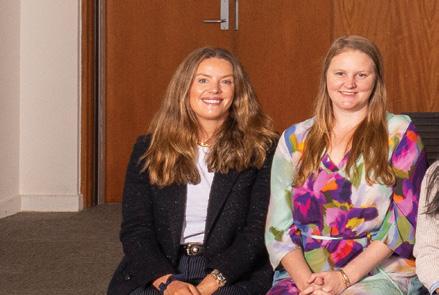
Photo 1 from left to right: Livia Lu, Susan Thacore, Ida Huang
Photo 2 from left to right, top to bottom: Abby Finn, Alix Bradfield, Gillian Montgomery (OL1958), Gary Du
Fathers of Lauriston Golf Day
Teeing off in Support of Howqua
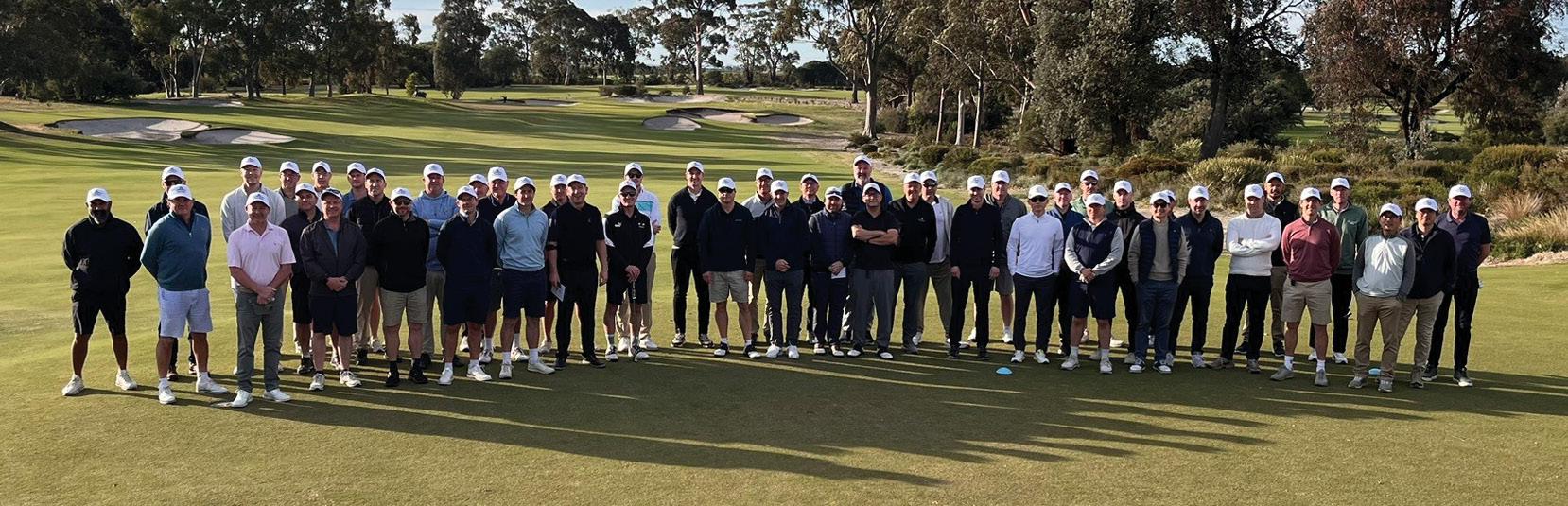
On Friday 15 September, the inaugural Talaria Fathers of Lauriston Golf Day united 46 dads and many supporters for a spectacular day on the pristine fairways of the Commonwealth Golf Club, all in support of the Howqua Kitchen and Dining Hall.
Delivered by MVP Golf Concepts, the event was a celebration of camaraderie, competition and community spirit. With the wind adding a touch of challenge, players embraced the conditions with good humour and impressive energy, rallying behind fundraising efforts for the new Kitchen and Dining Hall at Howqua.
The day was packed with excitement and standout moments, including:
• a thrilling hole-in-one challenge to win a BMW X1, proudly sponsored by South Yarra BMW (no winners this time – but plenty of close calls!)
• a Hey Diddle Wines tasting station offering premium pours and good cheer
Most importantly, a lot of fun was had. The event showcased the strength of the Lauriston community and its commitment to ensuring more girls can experience the transformative Howqua year. The new Kitchen and Dining Hall will be the beating heart of the campus, a place where friendships are formed, stories are shared and memories are made.
Huge thanks to Anthony Murphy, Richard Miller and the Fathers of Lauriston for their leadership and enthusiasm. We look forward to this becoming a future tradition.
• ‘Buy the Pro’s Drive’ hosted by Mitchell Brown, adding a competitive edge and plenty of laughs
• Nearest to the Pin and Longest Drive competitions that kept players on their toes.
Artwork credit Joy Yin (current parent) - ‘Lauriston Fig Tree’
Father’s of Lauriston
The Intergenerational Photo 2025 Celebrating Legacy
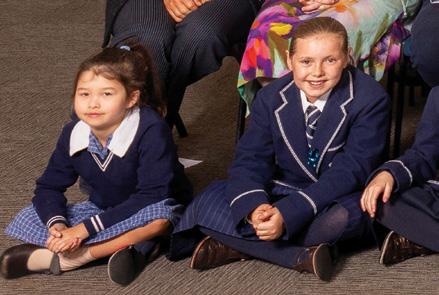
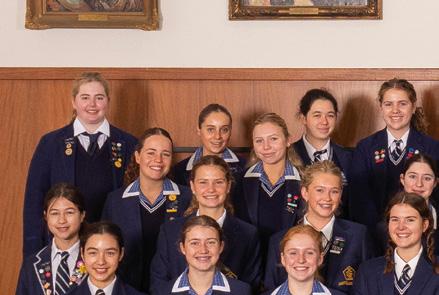
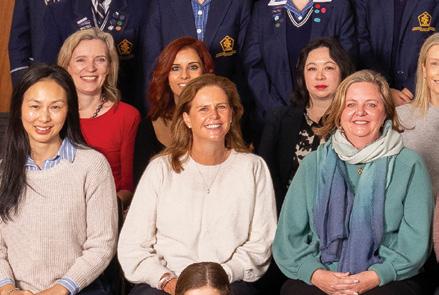
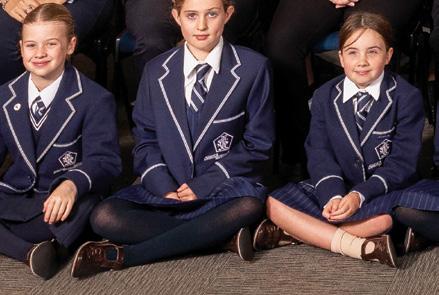
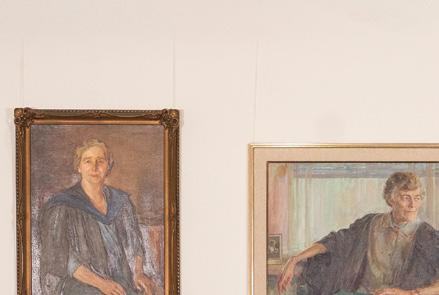
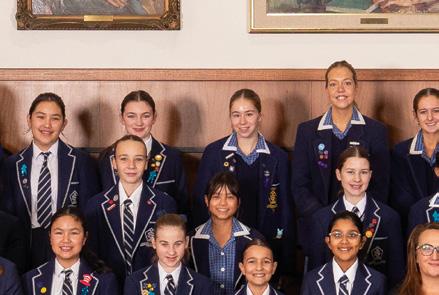
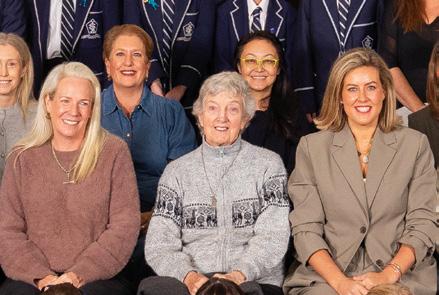
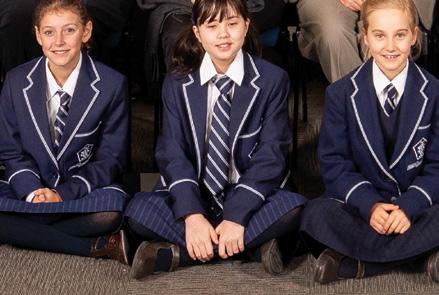
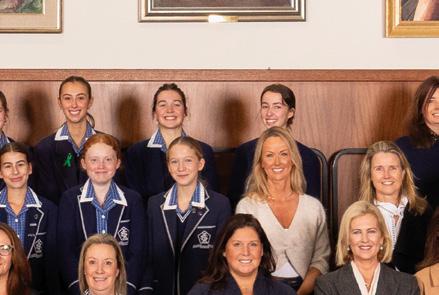
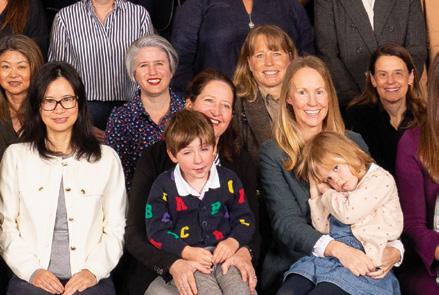
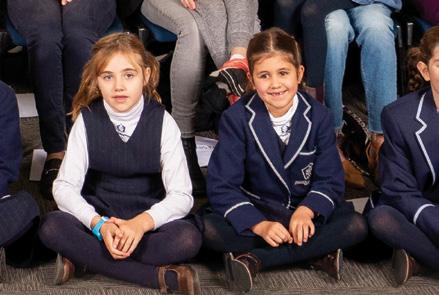
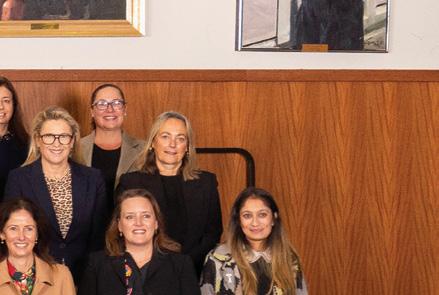
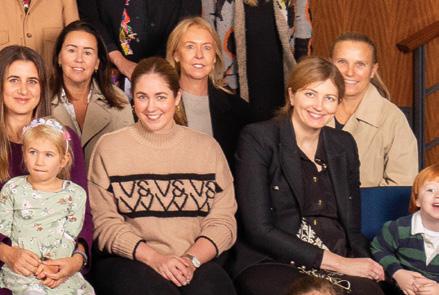
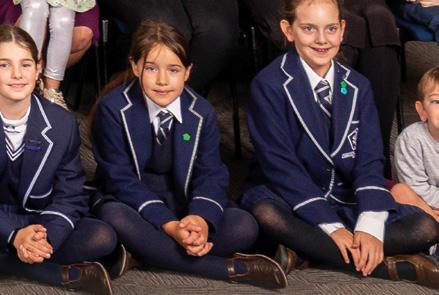
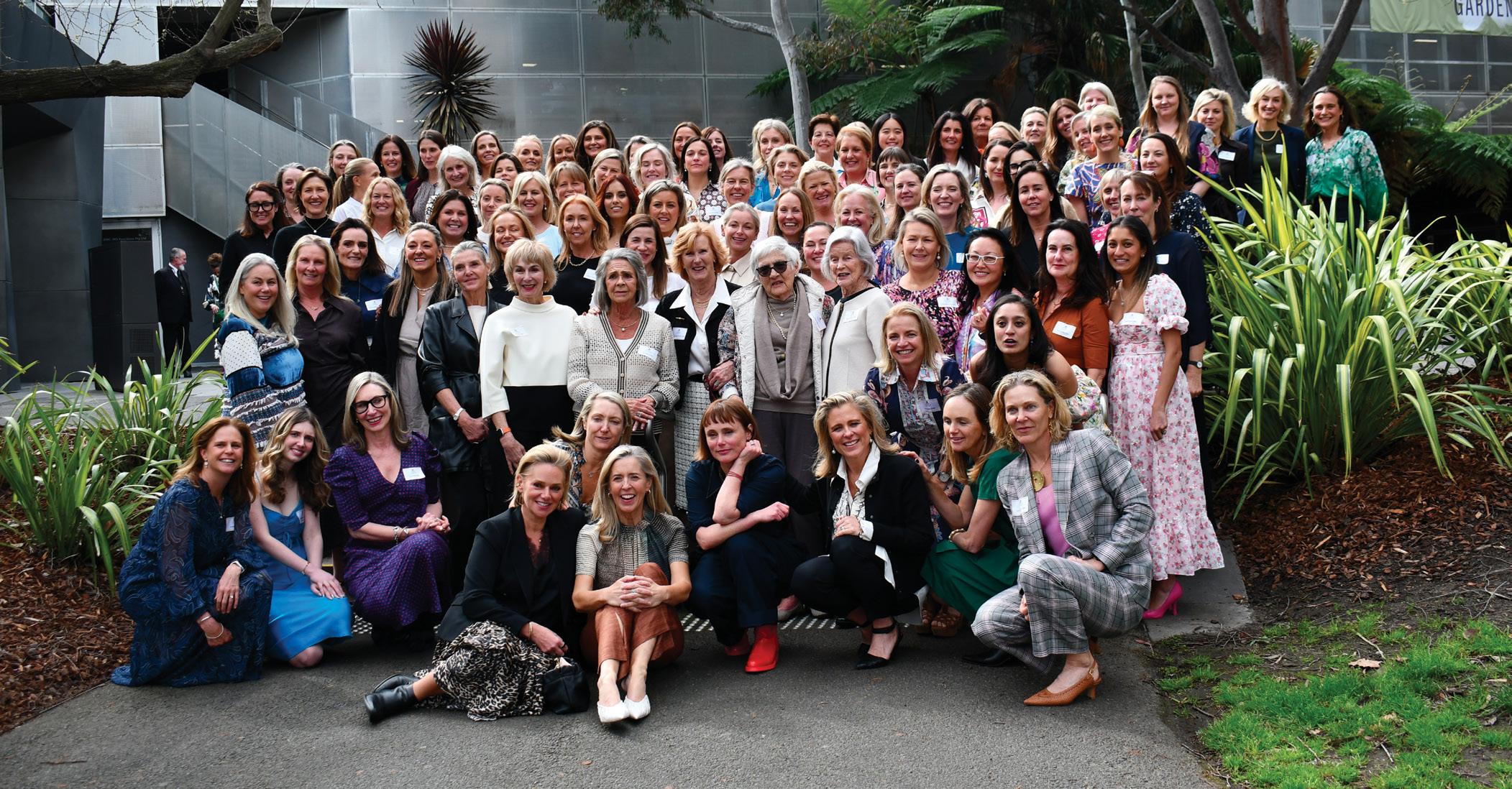
Each year, Lauriston Girls’ School honours a tradition that beautifully bridges past and present: the Intergenerational Photo. Captured in May 2025, this moment brought together current students with their Old Lauristonian mothers and grandmothers, creating a powerful visual tribute to the enduring legacy of a Lauriston education.
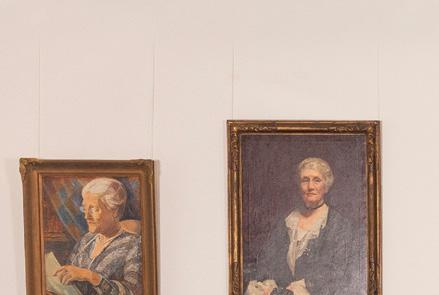
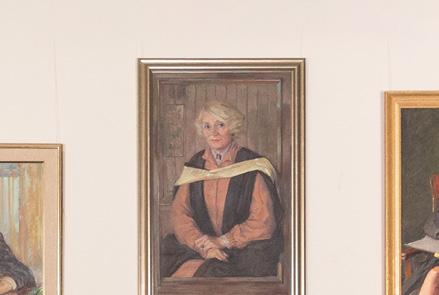
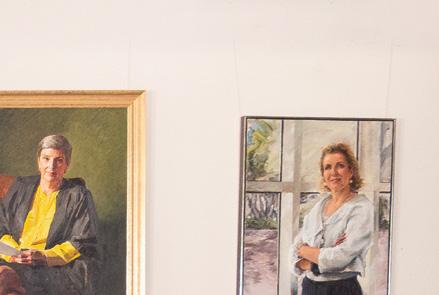
Set against the portraits in Irving Hall, the gathering was more than a photo opportunity, it was a celebration of shared experiences, values and the deep bonds that span generations. Daughters and small sons stood proudly with their mothers and grandmothers, united not only by family ties but by the formative journey they each undertook as Lauriston students.
Amanda Smith (OL 1993) reflected: “The 2025 Intergenerational Photo was so special for us – it is the last one that will have both my girls in it! In 2026, Alice will be in Year 12 and Lucy will be at Howqua. Marking their time together at School, and the legacy we share, is so special to us.”
The theme of ‘Following in your family’s footsteps’ resonated throughout the morning. For many families, Lauriston is more than a school, it’s the fabric of their family history. Watching a grandmother share stories of her time at Lauriston while her granddaughter listens with wide-eyed wonder is a moment that captures the essence of this tradition.
We also honour this tradition at our Howqua campus where each year, we capture an Intergenerational Photo in the bushland setting that defines the Year 9 experience. We’re proud to share that in 2026, three Lauriston students at Howqua will be following in their mothers’ footsteps, each of whom also attended Howqua.
This year’s photo, on Monday 30 March 2026, will be especially meaningful as it marks Lauriston’s 125th year, a milestone celebration of legacy, love and leadership across generations.
Listening, Learning and Shaping a Vibrant Future Lauriston Alumnae Survey
Our Old Lauristonians told us loud and clear: 90% of respondents said their Lauriston years had shaped them deeply and their feedback is now guiding us as we create richer, more meaningful opportunities for connection.
In late 2025, the Advancement Team invited Old Lauristonians to share their voices through a comprehensive alumnae survey – an important step in shaping a renewed era of alumnae engagement at Lauriston. We extend our sincere thanks to the 270 alumnae who took the time to reflect on their experiences and aspirations for the future.
The results offered invaluable insights. Firstly, alumnae expressed deep pride and appreciation for their Lauriston education, with close to 90% describing their academic and cocurricular experiences as excellent or good. These formative years – particularly Howqua – continue to influence their lives through intellectual curiosity, courage and lifelong friendships.
Positive Experiences: Student vs Alumnae
The survey highlighted a clear desire for stronger connections and purposeful engagement. Reunions, networking and mentoring opportunities, and staying connected through communications were identified as key areas of interest. Many also emphasised barriers such as lack of time and distance, underscoring the need for flexible, accessible offerings.
Top Alumnae Engagement Interests
However, alumnae also shared that their post-school engagement experience has not yet reached its full potential. Only around half rated their alumnae experience positively, signalling a strong opportunity for growth and innovation.
Most importantly, alumnae demonstrated an enduring affection for the school: nearly 80% hold a positive opinion of Lauriston today and would recommend it to future generations.
Current Positive Perception of Lauriston
As we begin a new chapter under Principal Sabine Partington, the Advancement Team is committed to using this feedback to build an outstanding, innovative and vibrant alumnae program. Together – with your voices guiding us – we look forward to shaping a Lauriston alumnae community that is relevant, inspiring and truly “for life.”
Reunion Staying in touch Networking/ Mentoring
Reunion Recap
From August to November 2025, Lauriston Girls’ School proudly hosted a vibrant series of alumnae events, each one a celebration of connection, legacy, and community spirit.
The Huntingtower Lunch in September was a standout event, drawing an impressive number of Old Lauristonians for a day at Zinc, Fed Square, filled with warmth, laughter, and shared memories.
In October, the Class of 2018 made a heartfelt return to Howqua for their 10-Year Reunion, retracing the trails and revisiting the houses that defined their transformative year. Immersed once again in the breathtaking landscape, they reflected on the profound impact of their time at Howquaan experience they unanimously credit with igniting their ambition and shaping their path toward greatness.
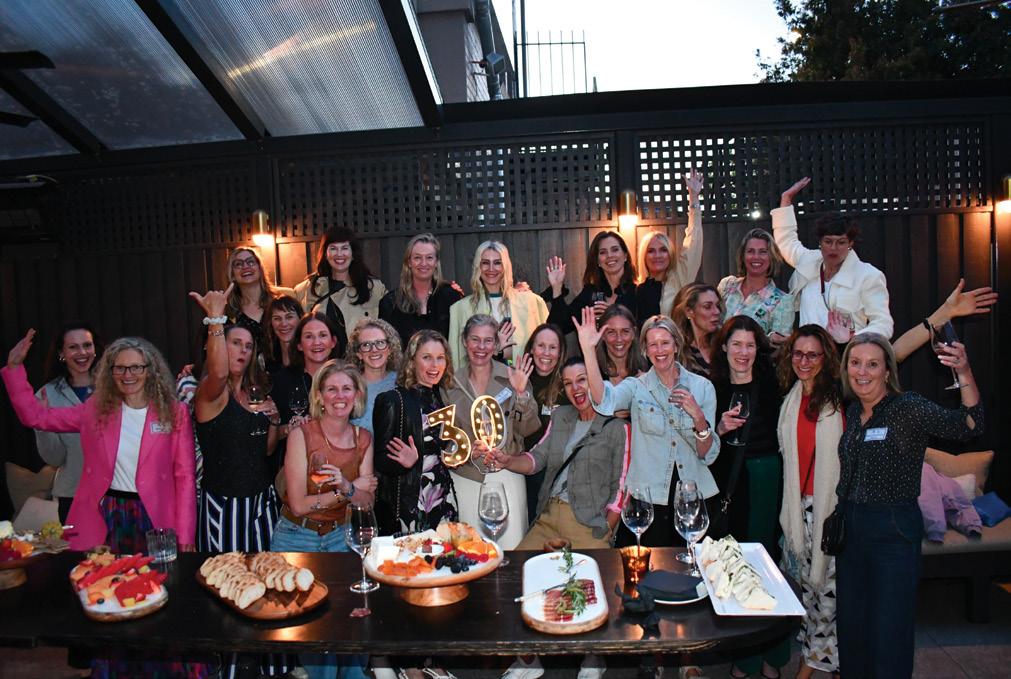
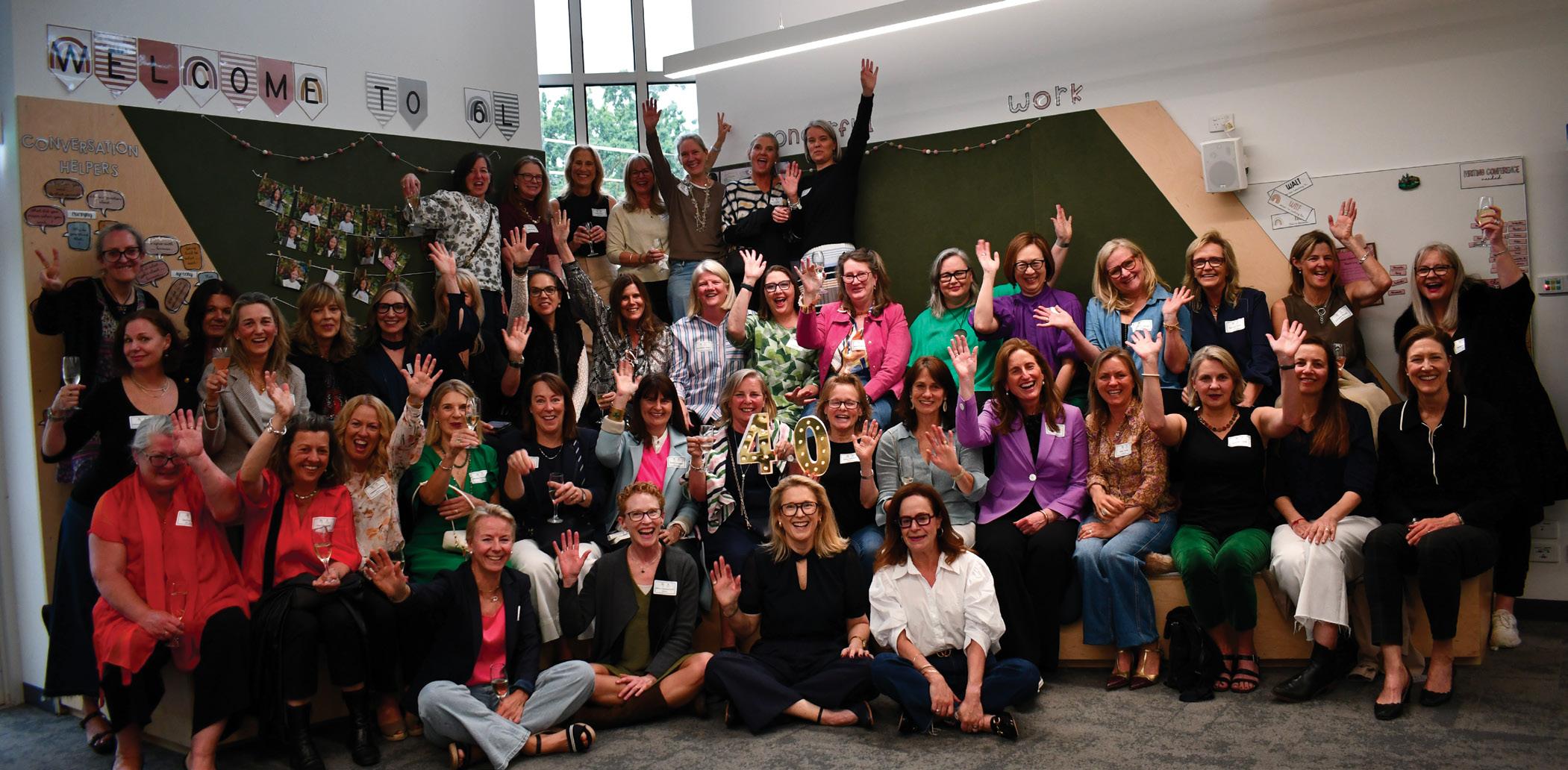
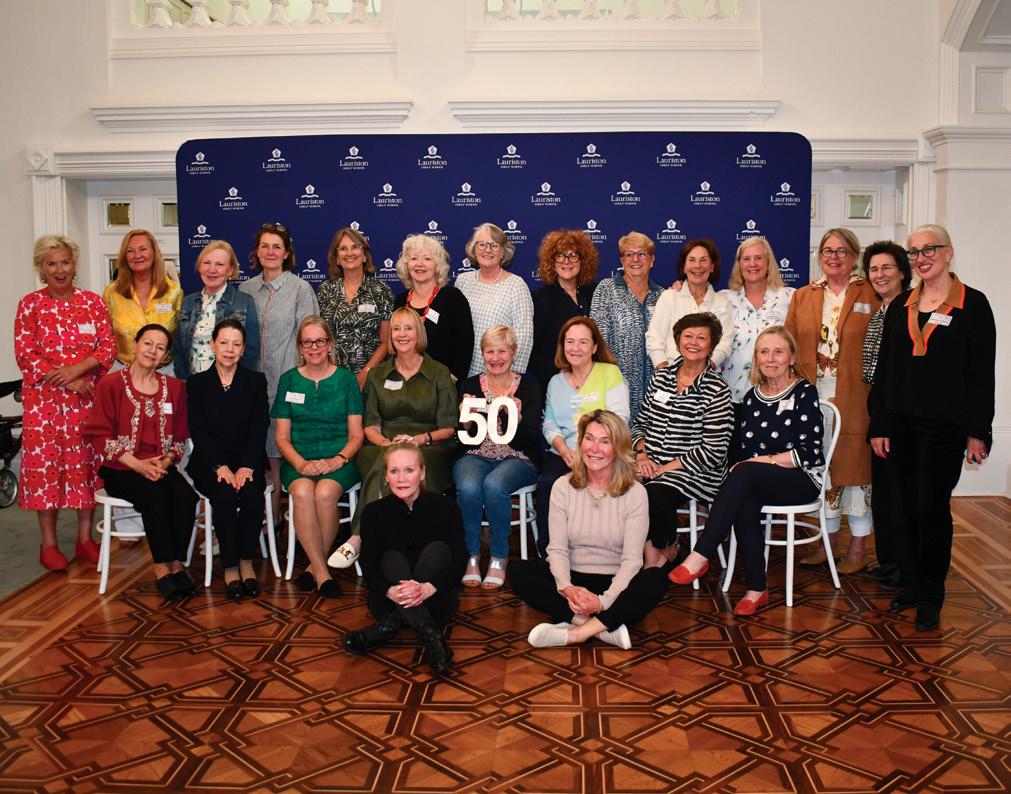
At the annual Lauriston Luncheon, held at Quat Quatta, we honoured the Class of 1975’s 50-Year Reunion and celebrated alumnae who left Lauriston over half a century ago. And rounding out the season were the 30 and 40-Year Reunions, each filled with joy, reflection, and enduring friendship.
These events reaffirmed the importance of alumnae engagement at Lauriston. Whether through shared memories or new connections, they continue to enrich our community and uphold the legacy of lifelong learning and leadership.
Class of 2018 – 10 Year Howqua Reunion
Class of 1995 – 30 Year Reunion
Class of 1995 – 30 Year Reunion
Class of 1985 – 40 Year Reunion
Huntingtower Lunch
Class of 1975 – 50 Year Reunion
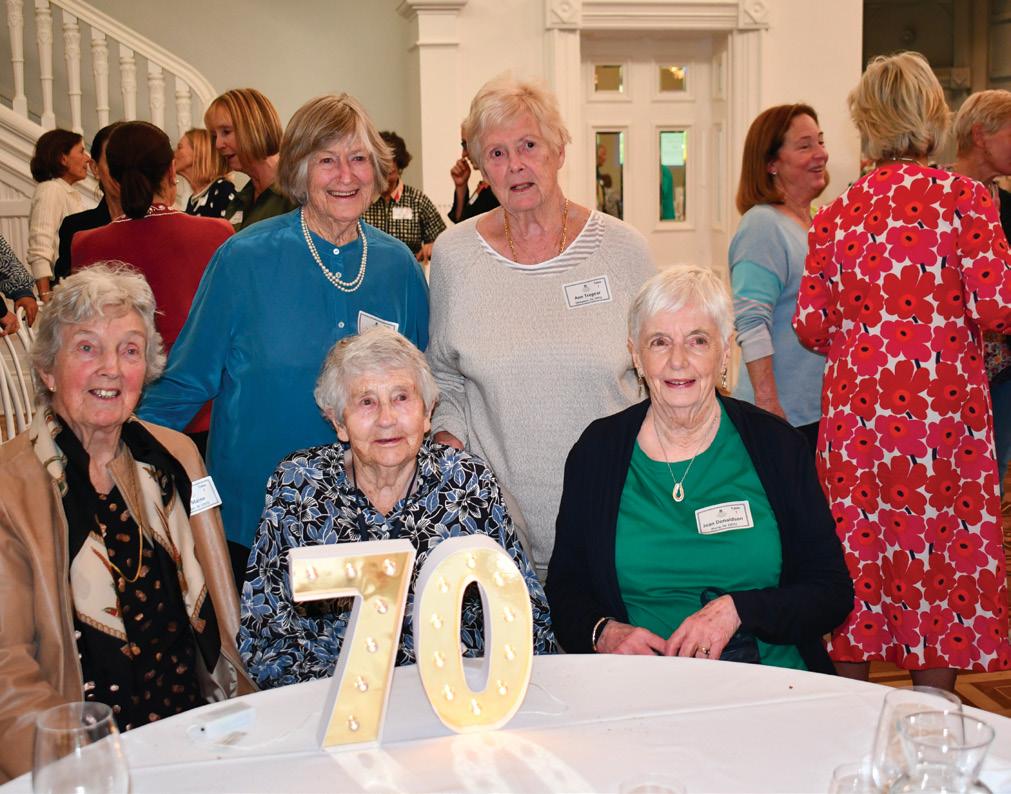
Class of 1955 – 70 Year Reunion
OLA Event Recap
Celebrating Connections
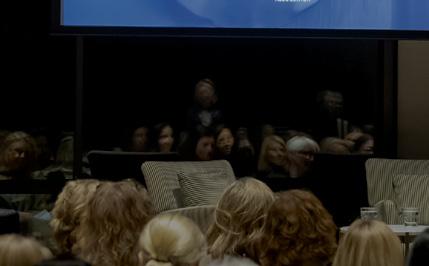
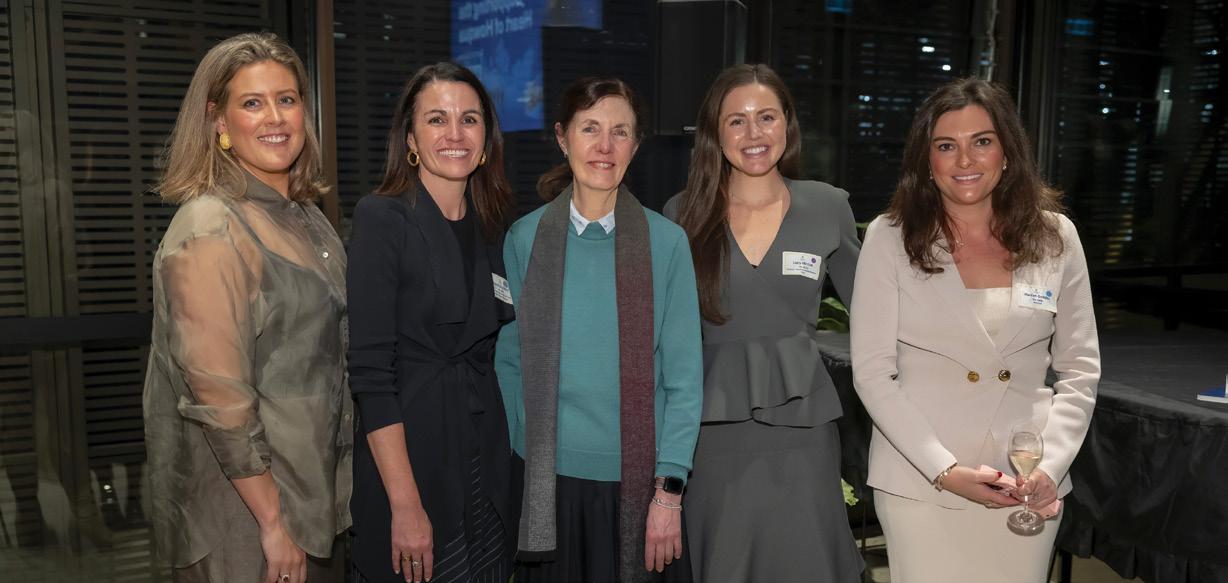
The OLA Professional Networking Event at The Lyceum Club on Thursday 28 August brought together alumnae from diverse industries, with guest speakers Professor Kate Fitz-Gibbon (OL 2004), Harriet Geddes (OL 2009) and Lucy Hinton (OL 2011), inspiring attendees with powerful conversations about leadership and the law.
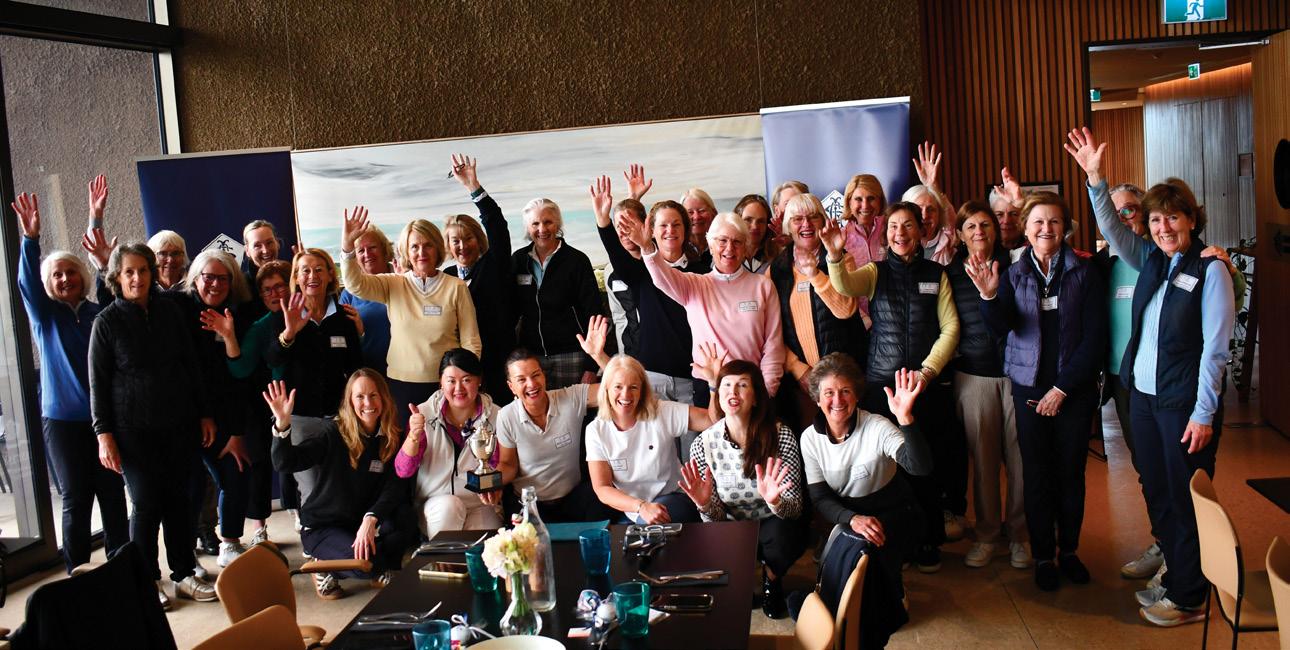
The newly renamed Nancye Wynne Bolton Golf Day at Lonsdale Links on Monday 17 November celebrated sport and spirit, welcoming golfers from our community to come together for a fun day on the green, followed by lunch in the Club House.
Dr Nanette Mantle (McCausland, OL 1943) Happy 100th Birthday!
On Tuesday, 2 December, Catherine and Penny from Lauriston’s Advancement Team were honoured to celebrate the 100th birthday of Dr Nan Mantle, the school’s oldest-known alumna. Nan enjoyed a joyful morning surrounded by friends and family, including fellow alumna Margaret Kendall OAM (Street, OL 1954) and her husband Tim Kendall OAM.
Nan’s original enrolment card was brought along to the celebration, to the delight of her sons Marcus and Chris. As a student at Lauriston, Nan was a passionate sportswoman and proudly served as Andrews House Captain in 1943.
They were equally thrilled to watch a heartfelt video message from the Andrews Captains, who sent warm birthday wishes to Nan. Nan also loved watching Andrews House sing “Happy Birthday” to her, via video.
A PRECIOUS DOLL, A CENTURY OF STORIES: SUZIE JOINS THE LAURISTON ARCHIVES Lauriston Archives
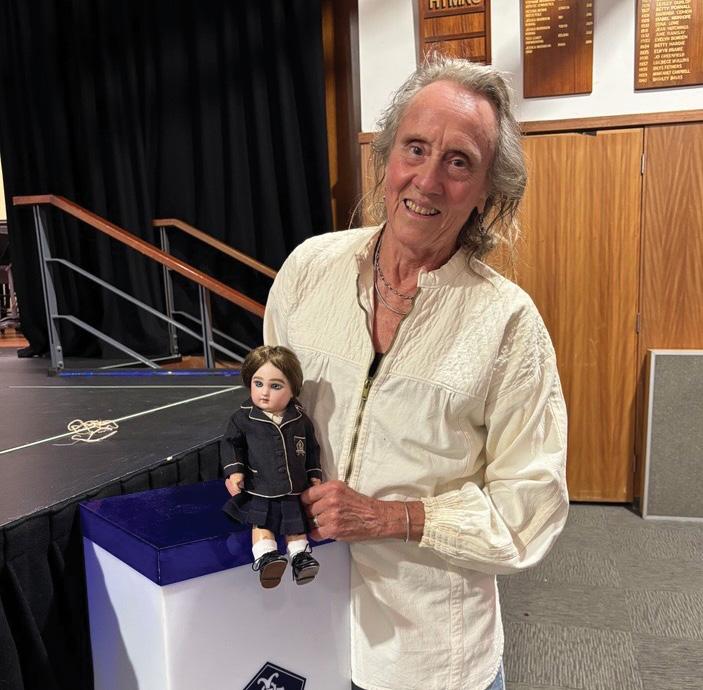
In May 2025, a remarkable piece of Lauriston history was officially welcomed into the School’s Archives. Patricia Reynolds (OL 1962) donated her family’s cherished porcelain doll, Suzie, a rare French ‘Depose Tete Jumeau Bte SGDG 5’ made between 1886 and 1890.
More than a beautiful antique, Suzie wears the only known surviving Lauriston school uniform from the early 1920s, making her a unique link to the School’s past.
Suzie’s story reflects the legacy of three generations of the McLean, Barber and Reynolds families, all deeply connected to Lauriston. Pat’s great-aunt, Ethel McLean, taught at the School from 1908 to 1936. Her nieces, Margaret Barber (OL 1927) and Ethel Reynolds (née Barber, OL 1929), were both boarders.
Inspired by the original Lauriston Letter, this article has been styled to echo the look and feel of the School’s 1980s newsletter. View archived copies of the Lauriston Letter by scanning the QR code.
Another great-aunt, Jessy Wright (née McLean), hand-sewed the Lauriston uniform Suzie still wears today. Pat later replaced Suzie’s missing socks and shoes.
Pat’s maternal lineage includes pioneering women in education and medicine. Her grandmother, Alice Barber (née McLean), was one of the University of Melbourne’s early female medical graduates. The University honours her legacy through the Alice Barber Memorial Award for contributions to psychotherapy and teaching.
Suzie was gifted to Pat at age 10 by her greataunt Margaret. Pat attended Lauriston from 1957 to 1961, later working in advertising and illustrating over 200 educational children’s books. Her own book, Tom’s Friend, won the 1991 Whitley Award for Best Children’s Book.
Suzie was first loaned to the Archives in 2021 for the Memories of Lauriston exhibition. Her official donation in 2025 is a meaningful addition to the School’s historical collection.
We gratefully acknowledge 2025 Archive donors Binny Langler (Lang, OL 1991); Natalie Elliott; Deb Beanland (Shugg, OL 1973); Garry Mann for Joan Mann (Hand, OL 1937); James Anderson for Pat Werner (OL 1952); Gwen and David Chandler for Mary Chandler (OL 1953); Nadia Topliss; Pat Reynolds (OL 1962); Sandra Masel (Barkman, OL 1950).
Pat Reynolds at Lauriston in 1961 (centre)
Vale Remembering Dr Susan Michaelis (OL 1979): An aviation trailblazer & advocate
Lauriston Girls’ School mourns the passing of Dr Susan Michaelis (OL 1979), who died on 9 July 2025 after a 14year journey with lobular breast cancer.
Susan’s life was defined by courage, tenacity and a tireless pursuit of justice in aviation safety and public health.
She grew up in Kooyong, Melbourne, surrounded by a close-knit family and attended Lauriston for 12 years alongside her sister Merran Morwood (Michaelis, OL 1980). At school, Susan was drawn to Geography and History, subjects that sparked her lifelong curiosity about the world.
Though school was not always easy, Susan’s determination and positive spirit saw her through, and she remained deeply grateful for her Lauriston education.
Her early fascination with aircraft led her to pursue a marketing degree at Caulfield Institute of Technology, with dreams of working for Qantas. Despite the gender barriers in aviation at the time, Susan forged her own path – first in travel sales, then corporate roles with United Airlines – before earning her commercial pilot’s licence. She became a flying instructor and later flew charter and regional flights for Air North, Eastern Australia Airlines, and National Jet Systems, operating QantasLink services.
It was during her time flying the BAe 146 aircraft that Susan began experiencing symptoms linked to contaminated cabin air. Her health deteriorated and in 1997 she was forced to end her flying career. What followed was a decades-long mission to uncover the truth about aircraft air quality and advocate for change.
Susan earned a PhD from University of New South Wales and an Master of Science from Cranfield University, becoming a globally respected researcher and Head of Research for the Global Cabin Air Quality Executive. Her work exposed systemic flaws in aircraft design and championed the health rights of crew and passengers.
Despite battling invasive lobular breast cancer –diagnosed in 2013 and again in 2016 and 2021 – Susan continued her research, public speaking and advocacy with unwavering resolve.
For 20 years, Susan lived in West Sussex, England with her husband, building a life rooted in purpose. She recently founded the Loraine Michaelis Foundation to support those raising awareness about chemical exposure in workplaces and communities.
Susan’s legacy is one of fierce intellect, compassion and unrelenting drive. She showed us that one voice, informed and courageous, can spark global change.
Lauriston honours her memory and extends heartfelt condolences to her family, friends and colleagues around the world.
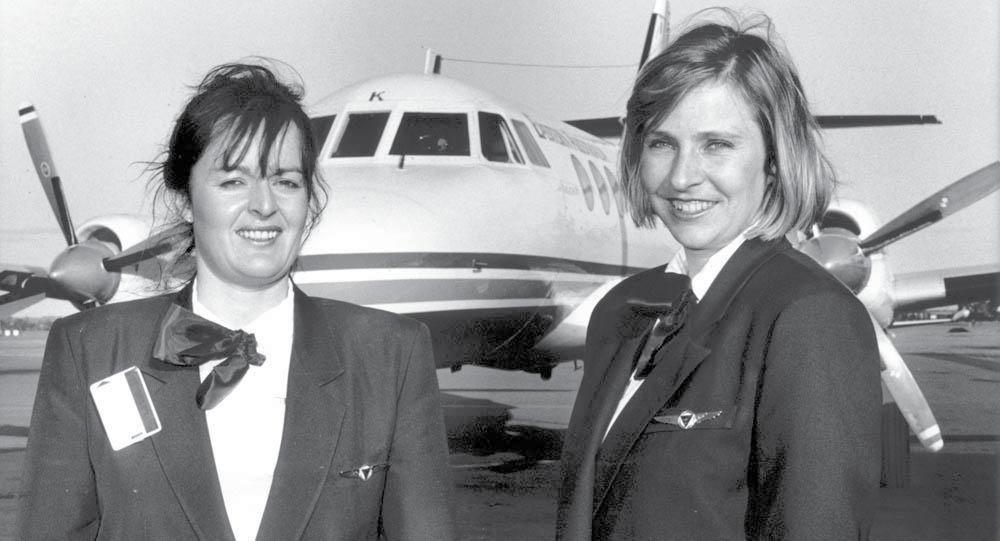
Susan Michaelis (right) – 1992 first all female crewed Qantas flight
Lauriston Girls’ School mourns the loss of the following members of our community. We remember their contributions, friendships, and the lasting impact they made on those around them
JUNE DANKS (MCMULLIN, OL 1948)
The Lauriston community was saddened by the passing of June Danks (McMullin, OL 1948) on Thursday 26 March 2026. One of Lauriston’s oldest surviving School Captains, June was remembered for her sharp intellect, generosity of spirit and enduring connection to her school.
A proud Old Lauristonian of the Miss Kirkhope era, June excelled academically, particularly in Mathematics and Science, and enjoyed hockey, tennis and music. She went on to study medicine at the University of Melbourne on scholarship, graduating in 1954 at a time when few women entered the profession. After raising five children, June gave many years of compassionate volunteer service at the Royal Women’s Hospital.
June remained deeply engaged with the Lauriston community throughout her life and was a much-loved presence at Old Lauristonians’ events. She is fondly remembered by her family, including her daughter-in-law Jeni Danks (Lidgett, OL 1981) and nieces Susie Armstrong (McMullin, OL 1971) and Nani McMullin (OL 1970), and by generations of Old Lauristonians who admired her warmth, strength and grace.
JUDITH JOCELYN POWER (BROAD, OL 1952) Judith Power (Broad, OL 1952) died on 7 July 2025 at age 91 - a cherished Lauriston alumna, Prefect, Hockey Captain, and Mitchell House member, who dedicated her life to service through the Red Cross, the Smith Family, CARE Financial Counselling, and ADACAS, and is fondly remembered by her daughter Caroline and our community.
JANNE BENNISON (CHAMBERLAIN, OL 1972)
Janne Bennison died on 12 April 2025. Janne will be deeply missed by her husband Tim, children Will and Kate and their families, and her sister Sue Tyers (Chamberlain, OL 1973).
DOROTHY JUDITH (JUDY) TYSON (WEBB, OL 1949)
Judy Tyson (OL 1949) died on 17 March 2025. Judy was a Prefect and was a formidable competitor on the baseball and basketball teams. She was also a dedicated member of Mitchell House.
KRYSTYNA KOBYLINSKI (OL 1997) passed away on 30th August 2025. She was a gifted scholarship recipient who completed the IB with an exceptional result. Her creativity shaped every part of her life: a talented graphic artist who moved fluidly between fine arts, music and fashion, she even spent time honing her craft at MoMA in New York. We extend our heartfelt condolences to Krystyna’s son Toby and her parents Anna and Les
MARY ELIZABETH (BETTY) HULME (HAMILTON, OL 1950)
Betty Hulme died in early May 2025. We extend our deep condolences to the family and friends of Betty.
HELEN DICK (OL 1951)
Helen Dick died on 23 September 2025. In 1966, Helen joined Fintona Girls’ School and was a much-loved and dedicated English, History and English Literature teacher. Helen retired as Head of the Junior School in 1983 after a wonderful career in education.
PAULINE BOWLER (OL 1948) passed away on 15 September 2025.
JOAN BULLEY (OL 1949) passed away on 5 December 2025 at almost 94 years old.
The OLA Fellowship 2025
May Warner (OL 2016)
The Old Lauristonians’ Association (OLA) Fellowship supports the professional development of Lauriston alumnae by awarding a $5,000 grant to assist with further study, research or a unique project in their chosen field.
Now in its fifth year, the Fellowship continues to celebrate the diverse talents and achievements of Old Lauristonians. This year, we received a number of outstanding applications, reflecting the depth and breadth of expertise across our alumnae community.
We’re delighted to announce that the 2025 OLA Fellowship was awarded to May Warner (OL 2016).
After graduating from Lauriston, May completed a Bachelor of Science (Veterinary Bioscience) and a Doctor of Veterinary Medicine at the University of Melbourne. She is currently undertaking a Master of Philosophy –Veterinary Science, while working as a veterinary resident at the Australian Wildlife Health Centre, Healesville Sanctuary (Zoos Victoria).
May’s research focuses on the maternal transfer of antibodies in eastern grey kangaroos and bare-nosed wombats. Her Fellowship application proposed using the funds to purchase equipment for processing donor plasma, aiming to develop protocols to treat immunodeficiency in orphaned joeys.
The selection committee was impressed by May’s passion for wildlife health, her ability to communicate complex ideas clearly, and her strong connection to Lauriston’s values. She linked her interest in native animals to her Howqua year, she has sought mentorship through the OLA network and has recently visited Years 3 and 4 students in her Zoos Victoria uniform.
May exemplifies the spirit of the Fellowship and we are proud to support her journey.
Congratulations, May – a most deserving recipient of the 2025 OLA Fellowship.
2026 Lauriston Community Dates
Save the date and join us for a vibrant year of Lauriston events in 2026.
Thursday 30 April
Thursday 30 April
Wednesday 6 May
Friday 22 May
Thursday 18 June
Tuesday 4 August
Friday 11 September
Saturday 17 October
Thursday 22 October
Monday 16 November
Thursday 26 November
Reunions
Fathers of Lauriston Dinner
Lauriston Giving Day
Foundation Thank You Celebration & AGM
Huntingtower Heyington Shield AFL Match
OLA Networking Evening & AGM
Annual Music Concert
Huntingtower Lunch
125 Year Celebration Cocktail Party
Elizabeth Kirkhope Circle Afternoon Tea
Nancye Wynne Bolton (OL 1933) Golf Day
Lauriston Luncheon at Quat Quatta
Mark your calendars for your year or chapter group Reunion and reconnect with the people and moments that shaped your Lauriston story.
Friday 4 September
Brisbane Chapter Reunion
Sunday 25 October 10, 20, 30 Year Howqua Reunion
Friday 20 November
30 Year Reunion – Class of 1986
Thursday 26 November 50, 55, 60, 65, 70, 75 Year Reunions
Friday 27 November
40 Year Reunion – Class of 1976
Huntingtower Lunch Panel 2025
Lucy (OL 2012) Risk-taking Communicator
Found her voice on the musical stage, netball courts and running trails of Howqua
Discovered a new dream: corporate communications
Chased her dream of being a tv news reporter to South Australia