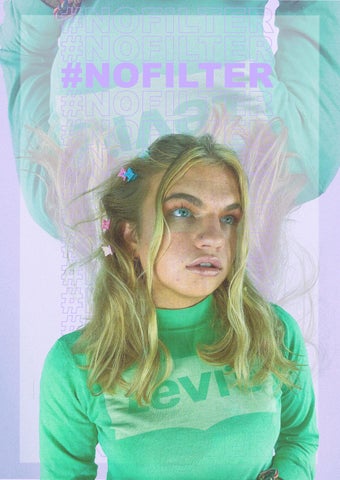
#NOFILTER
In today’s modern world, the gender fluid movement is a huge movement within today’s society and has massively impacted the fashion industry. As more and more people begin to openly challenge conventional gender stereotypes, a 2017 government study found that 6.9% of 108,000 British citizens surveyed identified as non-binary (although there is no guarantee that it was representative of the entire LGBT population in the UK), the term is becoming more widely used (Cosmopolitan, 2019). The fashion norms have gradually started to change within the last decade exploring the cultural shift towards the gender fluid fashion movement, as celebrities such as Ezra Miller and Harry Styles have been turning heads with their gender-bending approaches to fashion. Relatively new labels such as Charles Jeffrey Loverboy and Eckhaus Latta regularly show seasonal collections with blur gender binaries (GQ Magazine , 2018). Jeffrey, 27, is a champion of the genderqueer. A Scottish-born designer, illustrator and performer, he toys with how men and women should dress with his energetic and avant-garde shows (Guardian, 2018). Munroe Bergdorf points out; trans-inclusive casting is just the beginning. “What we need to be doing is making sure that fashion is as inclusive behind the scenes as it is in front of the camera or on the runway.” According to Bergdorf (who recently founded GODDESS, an online platform geared toward community building among women, trans and non-binary folks, and people who are intersex) ensuring that the recent mainstream interest in gender fluidity outlives its trendy status
requires an appreciation that “trans people are more than just trans and can be part of a team, can be part of a project without their transness being the focal point, or even an issue for other people (Vogue , 2019)”. Munroe Bergdorf is a British transgender model and activist who came to the public eye in August 2017 when she was employed as the first transgender model for L’Oréal’s campaign in the UK. Bergdorf studied English at the University of Brighton, where she began wearing women’s clothes as a period she described as “genderqueer” phase. Her career began in fashion PR when she decided to undergo transition treatment at 24. Bergdorf is now an LGBTQ+ editor for Dazed Beauty and is a ‘UK Changemaker’ for UN Women UK. UN Women UK is a global organisation working to make gender equality reality in every way; from grassroots programmes with most vulnerable women and girls to changing attitudes, and helping governments design gender-equality policy (UN Women UK, 2019). “Goddess platform” is a social media platform ran by Munroe Bergdorf, which consists of positive quotes, promoting confidence and battling mental health issues. This page influences positive mental health attitudes and inspires the audience through powerful images and content. captioning one of the posts “Make your own rules”. Bergdorf projects positive energy and rules throughout her whole social media platform, from quotes of images to inspiring captions, influencing positive mental health towards her audience.
A A A S S S O O O S S S Launching in 2000, ASOS (formerly As Seen On Screen) was created by Nick Robertson and Quentin Griffiths, as they created a fashion brand which copied the trending styles and designs worn by popular celebrities (The Fact Shop, n.d.). ASOS now has 168 suppliers and 713 factories all around the world. ASOS has recently been praised for keeping it real as they haven’t retouched any of their photographs. Challenging the images of super-slim, super-edited models flooding fashion sites, this allows us to see the real outcome of the photos without photos being edited to the point where consumers can’t get an idea of how the clothes will look on themselves. Distinguishing the shift in what consumers want to see when it comes to beauty, especially among Millennials and Generation Z, ASOS have fed into the desires of its target audience. ASOS has also featured a disabled model in one of their adverts in 2018, Haitian-American blogger and model Mama Cax, whose leg was amputated when she was a teenager, appeared in the website’s new activewear advert. Disability charity Scope welcomed the move, calling it “great” to see a highly-recognised fashion brand like ASOS featuring a disabled model, and said it’s "great to see big brands like ASOS tapping into the disabled consumer
market (Standard, 2018)". The online retailer has released a tie-dye waterproof jumpsuit for festival season, which has been adapted to be wheelchair friendly. It was designed in collaboration with GB Paralympic hopeful Chloe Ball-Hopkins, who also modelled it for the site. Chloe says she wants to make "fashion that is accessible to everybody (BBC, 2018)". A twitter account ‘Gurls Talk’ tweeted: “Great to see this sort of representation on the ASOS website. Shopping is something most of us take for granted in terms of representation. Seeing disabled people in the media through campaigns, as actors, singers, is so important as it challenges the stigma around disabilities (Twitter, n.d.)”. By using models which represent groups often not seen in fashion, ASOS is being praised, @rorerorerore tweeted: “Diversity without tokenism. Always use POCs, plus-sized models, models with disabilities ect, well-done ASOS! (Twitter, n.d.)”.
GENERATION Z GENERATION Z GENERATION Z I have chosen for the consumers which my trend is targeted at to be Generation Z as my market sector is Fast Fashion and their main target audience is 1624-year olds. As Generation Z are more hooked into electronic devices and prefer Snapchat and Instagram (2019), mobile marketing is the most effective as time spent on mobile devices, one study found that people look at their phones an average of 80 times per day (Forbes, 2016). Also, on average Generation Z use their smartphones 15.4 hours per week more than any other type of device. They also respond to edgy and visual marketing tactics, videos especially such as those created by Vine, as these work particularly well with young customers (Vision Critical, 2019). Generation Z are the true digital natives as they’ve been exposed to the internet and social networks from a young age. Generation Z is a demographic which have become dependent on the internet and rely on influencer marketing. Influencer marketing reaches out too many Generation Z consumers, as they are 59% more likely than older generations to connect with brands on social. Instagram is the most popular app for brand discovery, with 45% of teens using it to find cool new products, followed by Facebook, which comes in at 40% (Hoot Suite, 2019).
Instagram currently have over 1 billion active users, and an estimated 75.3% of US businesses will be on Instagram in 2020. 69% of US marketers plan to spend most of their influencer budget on Instagram and 55.4% of Influencers use Instagram Stories for Sponsored campaigns (Omncore Agency, 2020). Instagram is the new market for the fashion industry, as they no longer depend on glossy magazines or catwalks for the latest trends. Instagram has now become a platform for current brands to communicate with their audiences and build their community as a brand. Also, the biggest platform for influencer marketing can be found on Instagram. Last year saw a whopping 12.9 million brand sponsored influencer posts. And that number is estimated to double in 2018, creating an estimated market size of nearly $1.7 billion (Medium, 2018).
In The Style is an online fast-fashion retailer founded in 2014, which has grown to be one of Manchester’s biggest fashion brands. “Offering trend-led styles at affordable prices, tapping into the new world of Instagram” (In The Style , n.d.). In the Style use influencers to promote their brand to the audience through different social media platforms, including Instagram and Twitter. Using influencers to promote clothing is an effective way as the products are promoted through various media outlets, presented on brand to the audience. “If you think about how much influencers work and how much effort they put into content, it’s every single day, all of the time.” Digital influencer marketing is so effective now as they’re trusted voices for consumers, Breaking Fashion reveals the secrets and figures on how to create a successful campaign through the use of influencers, promoted through multiple online channels, to the demanding world of fashion.
are also paid to post, as Instagram has launched a tool that will let advertisers pay to make influencer posts appear as ads so that they reach a bigger audience (The Drum, 2019). Influencers promote the brand by creating content with the product, creating good imagery, inspiring styles and engaging with the audience. Communicating it to their followers, influencers gain social reach, engagement and potentially create trust with the brand, strengthening brand messages and influencing consumer-buying decisions, as this boosts the brand’s profile to reach a wider audience. For Lottie Tomlinson’s collaboration with In The Style, consumers can sign up using their email address which allows insight to the collaboration 24 hours before it launches. By doing this, this encourages more people to sign up, securing pieces from the collection as they can get their hands on them before it’s fully launched and potentially sells out. This then allows the brand to continue to email and reach out to a large number Gifting product in exchange for digital mentions is of consumers for further communication, for examthe role of an influencer, which is usually very suc- ple when a sale is on or when the brand collabocessful for fast fashion brands. However, influencers rates with another influencer.
MISSGUIDED Missguided is an established online fast-fashion retailer, which have attained a reputation for must-have fashion and target the young fashion consumer, which demographics are characterised as fashion-conscious, optimistic and connected. Founded in 2009, Missguided appeal to the social, stylish and on-trend fashion consumers whose age rage is around 16-24 years old. Missguided’s brand mission is to empower females globally to be confident in themselves and be who they want to be. Missguided is a bold, straight-talking and forward-thinking fashion brand inspired by real life, that aims to do exactly that. Everything we create is informed by our consumer along with global influences like social media, street style, and popular culture, creating a destination that delivers and encompasses everything it means to be a girl on the go in the world today (Missguided, n.d.). The target audience of the brand has a strong sense of fashion and usually express their personality through their choice of clothing. Missguided uses different promotional tactics to communicate with their audience to encourage sales. A young girl once tweeted on Twitter that she wished Missguided would create ‘Jeans and a nice top’ section, then a couple of weeks later, the brand then released a section named ‘Jeans and a nice top’. By communicating with their customers, the brand has developed brand loyalty and driven engagement and
vastly rising above its competitors. With an ambitious digital strategy, Missguided sustain and expand its position in the fast fashion industry by creative lifestyle-related content and providing a sense of community. The brand creates relationships with their consumers by creating and delivering content suitable for the target market. By offering their consumers to enter the competitions, they are self-promoting the brand as the entry requirements usually consist of tagging multiple people and re-posting the post onto their story. By doing this the brand are creating more brand awareness and expanding the brand itself through interactive content. Missguided also heavily interact with their consumers, especially through Twitter with customer service as they respond to criticism and complaints. The brand provides outstanding customer service with their swift responses, ensuring both potential and existing customers are highly satisfied. Missguided also create user-generated content and utilise the hash tag, as they offer the chance for you to be featured on their Instagram by hash tagging ‘#babesofmissguided’ in your posts. This not only drives engagement for Missguided, it creates more drive for individuals posting because users can create visibility for themselves as it connects them with new followers. Missguided create trigger-based email campaigns to engage with new customers, which consist of personalised, triggered and automated. Marketing emails can be extremely effective if executed properly, as the content needs to be eye-catching, with good
MISSGUIDED creative imagery and content associated with the brand. Missguided usually offer discount codes throughout their emails to entice their subscribers to make purchases from their website. Another email marketing strategy which Missguided use is the abandoned basket emails. When you shop online and add products to your basket, if you then leave them and don’t follow through with your purchase, emails then get sent to you usually encouraging to purchase. For example, one Missguided email which was sent said ‘Forgotten something? Go on, treat yourself... We know you want too! We know you had your eye on some fresh new threads... turn that dream into a reality and snap them up! Here’s your basket’. The consumers wouldn’t usually be expecting a reminder email; therefore, the subject line should be clearly indicated with what the email consists of. The brand also gives you the opportunity to leave your email if a product is out of stock, to then be notified if it comes back into stock. Missguided uses influencer marketing and celebrity endorsements to develop a tighter connection between the brand and the audience. Influencer marketing is an effective way to market, as users can shop the looks of their favourite influencers by just tapping on the photos, as the brands are tagged with the exact description and even the product code. Influencers add details in the caption and interact and respond to the comments to maintain an engaging relationship with the keen Instagram users. Using new fresh faces and collaborating, the brand reaches out to a wider audience, inspiring and empowering girls through innovative marketing, supporting the brand’s core values and messages whilst sustaining their social presence. Instagram users can now shop directly through the channel as brands are able to tag products in their posts which can then lead users to a point-of-sale. Shoppable
media gives businesses the ability to tag up to five products in their posts, which consumers can then view product details through Instagram then complete the transaction on a separate page whilst remaining in the Instagram app. This type of communication gives access to the details of the product and its price, and it also shows a link that takes users to the website where they can buy the product. Missguided use this method as they tag multiple pieces in the photograph, allowing you to ‘view products’ which are featured in the photograph, or click on the link which will take you directly to the website. For example, one Instagram post, by Missguided; “For date night or whatever, less gifts for them = more clothes for you. Shop @ sophieottewell’s look with the ‘pink floral print wrap milkmaid mini dress (£15/$25) online now, #babesofmissguided”.
#INYOUROWNSKIN
Introducing socially-conscious marketing Missguided released an ‘#inyourownskin’ campaign. This campaign which celebrates "what the industry perceives as 'flaws' or imperfections," the brand stated in a press release. The initiative features six women who have albinism, burn marks, skin conditions like Epidermolysis Bullosa (EB) and psoriasis, freckles, tattoos, and birthmarks, and they make a powerful statement about perfection, self-love, and empowerment (Cosmopolitan, 2018). The campaign drove engagement for the brand and generated positive feedback on social media, as one of the comments on the post says “I’m so proud of this picture. You don’t have to be perfect to feel confident. Self-love is key... I now officially live in this shop”, and another
wrote “This is beautiful! This is a true representation of female beauty!”. As the brand has a clear understanding of their target market, using strategic marketing like this allows younger girls to feel more body confident, as Missguided share body-positive content through enthusiasm and creativity. However, although Missguided promote body positivity and imperfections, they don’t actually use these models on their website. The models on the website are still the typical fashion model, however some have been unedited to show their stretchmarks. I believe that Missguided use socially-conscious marketing to make their brand stand out, to help attract the younger demographic, however don’t actually follow it through on their website.
CAMPAIGN The campaign I have created is called #NoFilter, which sits in the Fast Fashion market sector and supports my Gender Fluid trend. This campaign is aimed at Generation Z, as it will be communicated through Instagram and Blogspot through various posts. #NoFilter was ‘invented’ when Instagram was first created. As there weren’t many editing options, the only way to edit your photographs was on a small handful of different built-in filters, and if you didn’t have a filter on your photo, it was usually stated within the caption using a hashtag, as you wanted to let your followers know it’s unfiltered. I’ve decided to develop this into a campaign, as the campaign will be aimed at Generation Z, as they are the main target market for Fast Fashion brands. Using the ‘#NoFilter’ itself, on the captions of the posts, using strong digital unfiltered content, will then encourage the audience of the campaign to then use it themselves through user-generated content, which will then also encourage them not to edit their photos as they want to be part of the #NoFilter trend. Through styling the photoshoot, I have digitally communicated my market sector and trend creatively linking it through to an Instagram page, which will contain more text and detail of the shoots and meanings behind the trend using user-generated content and fresh effective marketing. I have chosen to communicate my trend through Instagram because within the Fast Fashion market, as visual content is essential as content with relevant images gets 94% more views than content without relevant images and posts with images produce 650% higher engagement than text-only posts (Smart Bird Social, 2016). As Generation Z are more likely to shop online, strong digital communication is essential as my campaign needs to communicate its messages through different digital strategies. Bright colours, strong imagery and graphics are the key characteristics to communicating my trend to create strong social content. I have taken inspiration from Missguideds marketing approach, as their body positivity campaigns, diversity and their use of user-generated content has drove me to researching further into this and discovering the Generation Z approach on digital marketing.
@nofilter.campaign
CAMPAIGN The styling of my photoshoot consisted of 2000’s costume and accessories. Fast Fashion brands are constantly re-occurring trends; therefore, I chose a 2000’s theme as it fits within the market sector as celebrities now such as Dua Lipa, Billie Eilish and Charlie XCX are inspired by nostalgia. As Dua Lipa has recently dyed her hair to two-toned brunette and blonde, which was a major look from the 2000s. Billie Eilish recently attended the Brit Awards wearing head to toe in Burberry, matching her nails, as well as her socks and jewellery. The costumes I chose for my model to wear for the shoot were jeans, crop tops, and heavily over accessorising with butterfly clips, a choker and scrunchies. One of the tops I chose was a bubblegum pink velour Juicy Couture bandeau crop top, which reflected the theme of my shoot as Juicy was a major trend which has came in and out of fashion, however, the brand peaked and became popular in the 2000s. I used my digital mood boards to plan and guide my shoot, as I planned the hair, outfits, poses and makeup. I opted for light coverage of makeup as I didn’t want to fully cover my models’ blemishes as I want to embrace my model’s flaws and to also project body positivity throughout my trend, as I have heavily researched into fast fashion brands’ different body positivity campaigns and how they have communicated them. I was heavily inspired by the Missguided In Your Own Skin campaign because it was embracing the natural beauty of women, which is what I’m wanting to communicate through my trend as it’s focused around diversity and using ‘normal’ models. I chose for my model to wear her hair down with two sections of her hair tied up, and also another hairstyle was a high ponytail with a red velvet scrunchie. My model plays a huge part in communicating my trend as she is transgender. Jaz is only 16 years old and transitioned when she was 12 years old. Jaz was bullied in school because of her personal choices; therefore, I’m campaigning that there are more people like her in the world and no-one should be afraid as they are not alone and there are more people out there in the same position. Jaz falls into the Generation Z demographic therefore she is the targeted consumer for my trend as it’s aimed at 16-24 years old.
REFERENCES (n.d.). Retrieved from Levi: https://www.levi.com/GB/en_GB/features/pride (n.d.). Retrieved from Levi: https://www.levi.com/GB/en_GB/features/pride (n.d.). Retrieved from Missguided: https://www.missguided.co.uk/about (n.d.). Retrieved from Twitter: https://twitter.com/gurlstalk?lang=en (2016, January 2016). Retrieved from Take Part: http://www.takepart.com/article/2016/01/29/twitter-mental-health (2016, March 8). Retrieved from Poq Commerce: https://poqcommerce.com/app-commerce/2016/03/missguided-launches-tinder-style-shopping-app/ (2016, August 16). Retrieved from Forbes: https://www.forbes.com/sites/forbesagencycouncil/2019/08/16/why-mobilemarketing-can-be-big-for-your-business-and-how-to-use-it/#6a3a6dc16e3f (2016, August 3). Retrieved from Smart Bird Social: https://smartbirdsocial.net/5-reasons-use-visual-content-socialmedia/ (2018, May 16). Retrieved from The Sun: https://www.thesun.co.uk/news/5684670/munroe-bergdorf-transgender-model-sacked-loreal-racism-lgbt-adviser-labour/ (2018, May 09). Retrieved from Cosmopolitan: https://www.cosmopolitan.com/style-beauty/fashion/a20631293/missguided-launches-in-your-own-skin-campaign-body-positivity/ (2018, January 16). Retrieved from Standard: https://www.standard.co.uk/news/uk/fashion-brand-asos-praised-for-featuring-disabled-model-mama-cax-in-new-advert-a3740986.html (2018, July 5). Retrieved from BBC: https://www.bbc.co.uk/news/newsbeat-44721385 (2018, March 6). Retrieved from Medium: https://medium.com/crobox/under-the-influence-the-power-of-social-media-influencers-5192571083c3 (2018, November 27). Retrieved from GQ Magazine : https://www.gq-magazine.co.uk/article/gender-fluid-clothing (2019, April 04). Retrieved from Mental Health: https://www.mentalhealth.gov/basics/what-is-mental-health (2019, November 13). Retrieved from Hoot Suite: https://blog.hootsuite.com/generation-z-statistics-social-marketers/ (2019, June 4). Retrieved from The Drum: https://www.thedrum.com/news/2019/06/04/instagram-paid-partnershiptool-lets-brands-boost-influencer-posts-ads (2019, June 13). Retrieved from https://www.businessoffashion.com/articles/professional/gen-z-loves-tiktok-can-fashion-brands-learn-to-love-it-too (2019, November 1). Retrieved from Vogue Business: https://www.voguebusiness.com/companies/tiktok-social-networking-video-app-gen-z-mac-ralph-lauren (2019, November 22). Retrieved from Oberlo: https://www.oberlo.co.uk/blog/tiktok-statistics (2019, June 20). Retrieved from https://www.diarydirectory.com/newsarticle/pretty-little-thing-takes-over-tiktok/25709 (2019, October 21). Retrieved from Fashion United: https://fashionunited.uk/news/fashion/prettylittlething-teaming-up-with-little-mix/2019102145830 (2019, August 11). Retrieved from Vogue : https://www.vogue.co.uk/article/the-meaning-of-gender-fluid-fashion (2019, October 15). Retrieved from Cosmopolitan: https://www.cosmopolitan.com/uk/body/a29325130/gender-fluid/ (2019, October 7). Retrieved from https://www.visioncritical.com/blog/generation-z-infographics (2019, October 7). Retrieved from Vision Critical: https://www.visioncritical.com/blog/generation-z-infographics (2019). Retrieved from In The Style: https://www.inthestyle.com/about-us (2019). Retrieved from Twitter: https://twitter.com/rorerorerore?lang=en (2019). Retrieved from UN Women UK: https://www.unwomenuk.org/ (2020, February 10). Retrieved from Omncore Agency: https://www.omnicoreagency.com/instagram-statistics/ (2020). Retrieved from The Fact Shop: https://www.thefactshop.com/fashion-facts/asos-history/ Guardian. (2018, June 2018). Retrieved from Guardian: https://www.theguardian.com/fashion/2018/jun/11/boys-girlscharles-jeffrey-loverboy-london-fashion-week-men-gender-fluid