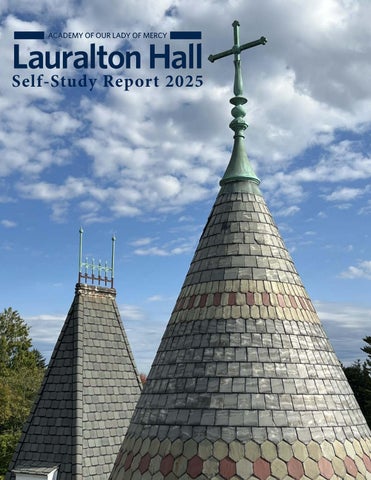
Self-Study Report 2025
1
Part I: Mission Statement Inspired by the Mercy Tradition, Lauralton Hall empowers young women to pursue their highest potential through lifelong learning, compassionate service, and responsible leadership in a global society.
1
Part II: Progress on the Previous Growth Plan The Heart of Mercy Committee affirms that we have made meaningful and measurable progress toward the goals outlined in our 2021 growth plan. As we reflect on the past several years, we are especially encouraged by the strides we have taken to deepen our commitment to our Mercy charism and strengthen the expression of our Catholic identity across the community. These achievements reflect both intentional planning and the dedication of faculty, staff, students, and administration who consistently seek to embody the mission handed down by Catherine McAuley and the Sisters of Mercy. From the outset, our committee recognized that the 2021 plan served as a valuable framework but also required adaptation as we moved forward. In some areas, especially those concerning diversity and inclusion, it became clear that the original goals were not sufficiently specific. At that time, DEI@LH (our internal diversity, equity, and inclusion committee) initiatives were still emerging and had not yet developed the structure needed to support clearly defined, measurable objectives. As a result, the goals set in 2021 were more aspirational than actionable. Through reflection, we acknowledged that although progress was made, our evolving understanding of DEIB (Diversity, Equity, Inclusion, Belonging) work in a Mercy context required us to revisit and refine our aims. This realization was not a setback but rather a natural and necessary part of our growth. It signaled that the school community had matured in its understanding of what authentic, mission-rooted inclusion looks like and how it can be more intentionally incorporated into Lauralton Hall's culture. Despite the need for refinement, our engagement with the 2021 goals prompted numerous initiatives that have substantially strengthened Lauralton Hall’s Mercy Catholic mission. One of the most impactful developments was the introduction of a dedicated Mercy Charism session at Freshman Orientation. Led collaboratively by Sr. Ann McGovern, RSM, members of the Religion Department, and faculty who are Mercy Associates, this session helps ground students in the Mercy story from their very first days on campus. It has become a foundational component of how we orient new students not only to our school but to a way of living rooted in compassion, hospitality, and service. Similarly, requiring all new faculty and staff to participate in this charism session ensures that mission formation is not limited to students. It reinforces that every adult who joins our community is responsible for helping students encounter and embody our Mercy Catholic identity. The decision to require all Board of Trustees members to view In God Alone further ensures that a shared understanding of our charism and heritage informs leadership decisions. These efforts collectively strengthen the integration of mission across all levels of school life. We also introduced the Mercy Core Values Pledge, led by Sr. Ann, at the matriculation ceremony. This simple yet profound ritual helps students name and claim the values that will shape their time at Lauralton Hall. It establishes a shared language for mission and roots our traditions in practices that are both spiritually grounded and communally affirming. Structural improvements have also played a significant role in elevating our mission. By moving the Mission Integration Committee report to the beginning of each Board of Trustees meeting, we have ensured that mission considerations set the tone for governance and decision-making. This shift signals that our Catholic identity is not an accessory to our work but its foundation. In addition, the Head of School’s reflections at our bi-weekly Morning Meetings and the subsequent distribution of “Moments of Mercy,” (a recognition of students who have shown Mercy values in or out of the classroom), have grown into a tradition beloved by students and faculty alike. These reflections provide regular, accessible opportunities for spiritual formation and help weave the Mercy charism into the school's everyday life. Another significant step was the reinstatement of the Faculty Retreat in Spring 2025. This retreat not only reaffirmed the importance of spiritual growth among faculty and staff but also created space for community building, prayer, and reflection. Plans to expand this retreat in the coming years will continue to nurture the professional and spiritual formation of those who guide our students daily. While we are proud of our progress, we remain mindful of the work that must continue. Sustaining a vibrant Mercy Catholic identity requires ongoing formation, not one-time experiences. We recognize that faculty need opportunities for continued engagement with the Mercy charism that transcend viewing In God Alone. This might include workshops, discussions, spiritual
reflections, partnerships with other Mercy institutions, or professional development that deepens understanding of how the charism animates classroom teaching, student relationships, and daily interactions. Parent education is another priority. Families play an essential role in shaping and supporting students’ values, and helping parents understand the Mercy mission allows them to partner more fully with the school. Offering accessible mission-focused programming for parents will strengthen the overall coherence of our community. As Lauralton Hall continues to grow, we must preserve the chapel’s central role in the spiritual life of the school. Its physical limitations have become more apparent as enrollment increases, but its symbolic and practical importance remains. Ensuring that the chapel remains the heart of our community, whether through schedule adjustments, creative use of space, or longterm planning, is crucial as we continue to strengthen our Catholic identity. We also recognized a need to more intentionally highlight initiatives connected to our Mercy identity and DEI@LH work. Many mission-aligned and DEIB efforts are occurring on campus during our club period and in the classroom. By making these initiatives more visible- through signage, messaging, liturgical celebrations, service opportunities, and school-wide communications- we can reinforce their significance and broaden their impact. Finally, our work underscored the need for more clearly defined goals to support our Core Value: A Voice for Dignity and Respect, thereby strengthening the development of the student attributes of grace, advocacy, and inclusivity. Our current faculty-guided and student-led initiatives are a wonderful starting point, and we will set action steps that will show how inclusion and belonging are rooted in our Mercy mission rather than operating alongside it. In conclusion, while we have accomplished much since the 2021 growth plan was adopted, many aspects of the work require continued attention, refinement, and reinvestment. Our progress reflects a community deeply committed to our Mercy Catholic mission, and our future efforts will build on this foundation with renewed clarity, specificity, and purpose.
Part III: High-Level Committee Responses 1. How are specific elements of the 2023 Chapter Commitment implemented in your school, specifically the elements under “We Hear a Call”? Are there elements that you feel called to implement at your school? Lauralton Hall embodies many elements of the 2023 Chapter Commitment, particularly through its strong culture of belonging, inclusion, and community. The school’s student clubs–supported by an accessible and welcoming process for forming new ones provide students with authentic opportunities to connect and contribute. This commitment was especially evident during this past fall’s volleyball tryouts, which saw an unusually high number of students participate. Because this led to some students being cut, a rare occurrence at Lauralton, the school responded by reopening tryouts for other fall athletic teams. This ensured broader participation and affirmed our belief that every student deserves the opportunity to belong. The spirit of Encuentro is also clearly present, reflected in vibrant celebrations such as Hispanic Heritage Month, Chinese History Month, Latin Day, the Milford St. Patrick’s Day Parade, and the Cultural Fair, all of which foster cross-cultural understanding and joyful community engagement. Lauralton also demonstrates a sincere commitment to anti-racism and non-violence. In both history and religion classes, students critically examine historical and contemporary injustices, learning to confront difficult truths rather than rely on sanitized narratives. While this foundation is strong, the committee recognizes the need to develop more specific and measurable anti-racism goals. The school also actively cultivates a culture of non-violence through the First Year Experience program, which teaches freshmen to form peaceful and healthy relationships, as well as through conversations in religion classes centered on Girl World. Upperclass Peer Mentors further strengthen this environment by guiding new students with compassion and modeling empathy and inclusion. The committee agreed that the school fosters a culture of acceptance, as demonstrated by inclusive policies, such as allowing students to bring guests of any gender to prom, and by the trust students show in sharing their identities with the Head of School. Finally, the school is making notable progress in environmental stewardship, aligning with the commitment to resist extractivism. Lauralton has revitalized its Environmental Club and is actively exploring student-led initiatives and new opportunities for sustainable engagement. Together, these efforts highlight both the strengths already rooted in Lauralton’s community and the areas where we feel called to deepen our fidelity to the 2023 Chapter Commitment.
2. Reflect on the role of the Critical Concerns of the Sisters of Mercy in your school. Lauralton Hall intentionally incorporates the Mercy Critical Concerns into educational opportunities for faculty, staff, parents, and board members. Faculty and staff are invited each year to attend the Mercy Education Conference, where they explore the year’s highlighted Critical Concern and share their insights with the whole faculty, ensuring that professional learning informs classroom practice and school-wide initiatives. The Mission Integration Subcommittee presents updates on the Critical Concerns at every Board of Trustees meeting, keeping trustees aware of ongoing efforts. While faculty and leadership are deeply engaged, the school recognizes opportunities to expand parent education on the Critical Concerns, ensuring that families are fully informed and able to support their students’ learning in alignment with the Mercy mission. The Critical Concerns are thoughtfully integrated into the academic curriculum across disciplines. In the visual and performing arts, students practice environmental stewardship by carefully managing printed music and instructional materials, learning aurally or sharing resources to minimize waste. Spanish IV students examine the Critical Concern for women by exploring the historical evolution of beauty standards and creating projects such as fashion shows or makeup tutorials that connect past and present societal expectations. In math and STEM, students are encouraged to pursue college-level courses and participate in the all-female engineering team, which has repeatedly earned recognition in the Sikorsky STEM Challenge and from the College
Board for excellence in AP Computer Science Principles. These academic experiences empower students to engage critically with social and environmental issues while reflecting the Gospel call to care for one another and pursue justice. Outside the classroom, student-led clubs, service opportunities, and field trips reinforce the Critical Concerns in meaningful ways. Environmental awareness is promoted through our Environmental Club and the Fashion Club; cultural understanding and support for immigrants are central to DICE (Diversity, Inclusion, Culture and Equity), French, Irish, Italian, Spanish, and Polish Clubs; anti-racism is highlighted by DICE and the Black Student Union; advocacy for women is supported by the Health & Wellness Club; and Morgan’s Message (a nonprofit organization dedicated to raising awareness about mental health issues among student-athletes) embodies non-violence. Recent world, national, and local events have stretched the community to respond thoughtfully and respectfully, including creating safe spaces for civil discourse and implementing practical measures, such as a key card system to ensure campus safety. Through these initiatives, faculty and administrators integrate the Critical Concerns as a response to the Gospel and the Works of Mercy (Mt 25:34–40), modeling care for the vulnerable, attention to justice, and service to others as central to the life of the school. 3. Reflect on the school’s focus on Mercy Education’s Core Values and the Profile of the Graduate. Lauralton Hall intentionally highlights its Core Values and Profile of the Graduate through multiple channels, ensuring that they are both visible and meaningful to the entire school community. They are featured in official documents, school communications, and website links, and are regularly referenced by the Head of School in letters, remarks, and Moments of Mercy. The values and graduate attributes are also included in the Club Catalog and shared with prospective families, reinforcing the ways they shape student life and the broader culture of Lauralton Hall. This consistent presence allows all members of the community to understand and engage with the principles that guide the school’s mission. To ensure that every student develops the attributes outlined in the Profile of the Graduate, Lauralton provides structured opportunities in academics, leadership, service, and spiritual formation. All students take religion courses, complete service requirements, and are encouraged to practice educational courage through meaningful classroom participation. Leadership development is fostered through the LH Leadership Council and officer training workshops. At the same time, mercy and service are emphasized through initiatives such as donating prom dresses to girls in foster care or collecting items for the annual Thanksgiving food drive. Spiritual growth is nurtured through retreats, Masses, and reflective opportunities, giving students tangible ways to live the Core Values and embody the Gospel call to serve others, especially those on the margins of society. Academic departments intentionally integrate the Core Values and Profile of the Graduate into curriculum and instruction. In science, students learn the importance of honesty and accountability in data collection, analysis, and peer review, fostering principled leadership and ethical responsibility. History courses encourage educational courage as students confront complex moral questions and study societal failures, developing empathy, intellectual bravery, and holistic thinking. Across disciplines, students are challenged to grow as lifelong learners, grounded in humility, reflection, and continuous personal development. Together, these practices illustrate how the Core Values and Profile of the Graduate define Lauralton Hall, while also inspiring ongoing growth as the school continues to deepen its commitment to forming compassionate, courageous, and principled graduates.
4. How does the physical expression of the school (building design, location of programs or services, physical displays, etc.) express your Mercy charism and Catholic Identity? What has been or needs to be updated since your last self-study? Lauralton Hall’s campus design and displays strongly express its Mercy charism and Catholic identity. Central to this expression is the chapel, which serves as the spiritual heart of the school, complemented by outdoor spaces such as the Grotto and benches, the statue of Mary, and the cross atop the school building, all providing students and visitors with areas for prayer, reflection, and contemplation. Inside the school, Mercy crosses in every classroom, crucifixes, the LH Honor Code, a Catherine McAuley collage and painting, framed proclamations, Madonnas, inspirational artwork, and posters highlighting the Sisters of
Mercy reinforce the school’s mission throughout daily life. Displays such as “Mercy Moments,” community birthdays, and “Where in the World is Mercy” further strengthen the integration of Mercy values into the school environment. Since the last self-study, Lauralton has made several thoughtful updates to enhance the visibility of its Mercy Catholic identity. These include new poster displays, small blue mission signs, additional classroom Mercy crosses, the relocation of the Director of Campus Ministry’s office, and a new painting of Catherine McAuley in the foyer. These changes reflect a deliberate effort to keep the mission visible and central to the experience of all who enter the building, reinforcing the values and traditions that define the school. Opportunities remain to further highlight Mercy's identity for students, staff, and visitors. Proposed enhancements include adding a plaque or traditional depiction of Catherine McAuley in the foyer, prominently featuring her in the front office, and displaying her quote about the importance of the education of women. These additions would provide a clearer, more immediate expression of the school’s Mercy heritage, complementing the existing displays and fostering reflection, spiritual growth, and a deeper understanding of Lauralton Hall’s Mercy Catholic mission.
5. What roles do the Campus Minister and Director of Mission Integration assume in the school? Lauralton Hall employs a full-time Director of Campus Ministry, currently Erin DaCosta, whose role is central to the school’s spiritual life and Mercy mission. The Director teaches three classes per cycle while dedicating the remainder of her schedule to campus ministry responsibilities. These include providing pastoral support to students and staff, coordinating retreats and spiritual programs, guiding students in their faith development, and fostering the integration of the school’s Mercy charism into daily life. The position ensures that students have consistent opportunities for spiritual growth and that Mercy values are visible and actively modeled throughout the school community. Due to financial considerations, the responsibilities of Campus Ministry and Mission Integration are intentionally combined into a single role. The Director of Campus Ministry assumes the functions typically associated with a Director of Mission Integration, including promoting the school’s mission, guiding faculty and students in mission-focused initiatives, and supporting the integration of Mercy values across the curriculum and school culture. The individual in this position, Erin DaCosta, was carefully selected for her embodiment of Mercy values, formal preparation through orientation as a Sister of Mercy Associate, and completion of the Mercy Graduate Certificate program at Georgian Court University. This role is vital to the school, as it ensures cohesion between the spiritual, educational, and mission-driven elements of the community. The Director also facilitates student engagement in meaningful service initiatives, reflecting the Gospel call to care for others and the school’s emphasis on the Critical Concerns. Examples include Building Kindness, supporting children in foster care, and programs inspired by Best Buddies and our 2023-2024 initiative Circle of Friends for students with special needs. Service opportunities are actively promoted and coordinated under the Director’s guidance, including through the annual Club Fair. While Lauralton does not currently have a separate Director of Mission Integration, combining these responsibilities under the Campus Minister ensures that mission integration is seamlessly incorporated into all aspects of school life, making this position indispensable to the school’s identity and operations.
6. How does your Mercy Catholic identity permeate the policies and practices by which your school is governed and administered? Lauralton Hall’s Mercy Catholic identity is deeply reflected in the policies and practices by which the school is governed and administered. We are especially blessed to have Sister of Mercy, Sister Ann McGovern, RSM, with us almost full-time in our main office. She is the first face of Mercy to greet all our guests. She also works with our team to write the daily prayers for our announcements, prayers for our newsletters, and speeches given by the Head of School. Sister Ann speaks at all of our Mornings
in the Mansions for prospective families, sharing the importance of the Mercy charism in shaping our school's identity. She is a wonderful resource for our community. Academic policies, including grading practices, are designed to emphasize growth, perseverance, and continual improvement, consistent with Catholic values. Teachers provide a variety of assignments so that no single test, project, or homework assignment determines a student’s grade. Students are encouraged to act on instructor feedback across successive assignments, fostering personal growth, resilience, and a commitment to excellence, rather than focusing solely on outcomes. Disciplinary practices at Lauralton Hall are rooted in restorative justice and the school’s Mercy charism. When challenges or misbehavior arise, the focus is on reconciliation, healing, and learning from mistakes. Students are given opportunities to make amends and restore relationships, balancing accountability with mercy and compassion. This approach was particularly evident during a bullying incident that occurred off-campus last year. While the school administered the most severe appropriate consequences, it also retained four seniors who had made a serious mistake, recognizing their remorse and commitment to growth. This merciful response allowed the community to support both the victims and the students seeking reconciliation, reflecting the school’s core values in practice. Lauralton Hall has also updated its admissions and academic placement policies to better reflect its mission. The application process was enhanced to include a more comprehensive evaluation of incoming students, requiring responses to prompts in multiple formats, such as written essays or creative videos. This approach allows students to demonstrate their talents, individuality, and aspirations while respecting their unique gifts. Across academics, student discipline, and admissions, these policies and practices demonstrate how Lauralton integrates its Mercy Catholic identity into governance, supporting both intellectual growth and moral development. By embedding Mercy values into everyday policies and decisions, the school not only ensures a just and compassionate community but also provides students with a living example of how faith, ethics, and mercy guide responsible action in all areas of life. 7. What programs do you provide for faith formation of faculty, staff and parents, both new and established members of your school community? How do you mentor mission leaders for succession planning? Lauralton Hall offers a variety of programs to support the faith formation of faculty, staff, and parents, serving both new and long-standing members of the school community. Faculty retreats have been reinstated and will be held at the start of the school year to establish a spiritual focus for the year ahead, modeling reflection, prayer, and community-building rooted in Mercy values. Faculty and staff are also invited to participate in regular prayer opportunities, including after-school rosary sessions and the Mercy Day prayer service. These initiatives not only provide ongoing spiritual nourishment but also reinforce the values of compassion, service, and ethical leadership that guide the school’s mission. Through these experiences, faculty and staff are encouraged to embody the Mercy charism in their interactions with students, colleagues, and families, modeling for the wider community what it means to live a faith-centered life. The broader school community participates in significant liturgical celebrations, including Matriculation in the Chapel, our Christmas in the Mansion Mass, and two annual family Masses—one for the Lauralton Hall community and one in partnership with our brother school, Fairfield College Preparatory School. These experiences deepen spiritual growth, strengthen communal bonds, and provide visible examples of living the Gospel in everyday life. While formal mentorship for succession planning of mission leaders is not currently established, the Director of Campus Ministry provides informal support for continuity by mentoring colleagues and modeling leadership rooted in Mercy values. This informal mentorship ensures that future leaders are prepared to sustain and expand the school’s mission, demonstrating how faith, service, and reflection remain central to all aspects of life at Lauralton Hall.
8. How does your school sustain a welcoming environment for students, families and staff of all faith, ethnic and cultural backgrounds? Lauralton Hall fosters a welcoming environment for students, families, and staff of all faiths, ethnicities, and cultural backgrounds through intentional practices and programs. Visitors are greeted warmly at the school’s single-entry point, and name tags at events help guests feel recognized and included. Student and parent ambassadors provide guidance and support, helping families feel connected and valued. These practices create a culture in which every member of the community is seen, acknowledged, and invited to participate fully in school life, laying the foundation for strong relationships and a shared sense of belonging. Cultural diversity and inclusion values are further emphasized through both programming and curriculum, shaping student leadership and service opportunities. Events such as the Cultural Fair, Black Student Union initiatives, and inclusive student clubs celebrate multiple perspectives. At the same time, religion classes explore a variety of faith traditions, encourage respectful dialogue, and involve students in planning retreats that honor all voices. Students also take active roles in promoting inclusion through welcoming new families and peers into the school community, leadership positions in clubs, and organizing service projects that support marginalized communities. Daily prayers, holiday celebrations from diverse traditions, multilingual concerts, and morning meetings sharing cultural events further reinforce inclusivity. Through these efforts, Lauralton Hall ensures that every student and family feels a sense of belonging while cultivating an environment where diversity, equity, and inclusion are lived values that guide leadership, service, and daily interactions
9. How is the faith formation and spiritual development of students addressed in your religious studies classes? Lauralton Hall offers a rigorous academic religion program that integrates faith formation and spiritual development with personal reflection. The curriculum aligns with the USCCB’s Doctrinal Elements of a Curriculum Framework for high school students while maintaining a scope and sequence tailored to the school’s mission and community. Students are encouraged to explore their own faith lives, connect classroom learning to real-life experiences, and share insights with peers through discussion, presentations, and collaborative projects. For example, students may reflect on personal experiences of service, write or present about how faith informs their choices, or participate in small-group dialogues on ethical and moral questions. This approach ensures that faith formation is both intellectual and experiential, offering students meaningful opportunities to reflect on how their beliefs shape their actions and relationships. Faith is further woven into students’ academic and social experiences through engagement with the Critical Concerns. Junior-level social justice courses address real-world issues such as workers’ rights, immigration, and diversity and inclusion, and students translate classroom learning into service initiatives, awareness campaigns, or reflective projects that connect their faith with social action. Students also encounter a variety of prayer experiences, including Mass, prayer services, daily prayers, written prayers, meditation, and retreats, all designed to foster personal spiritual growth and communal faith formation. Through these practices and projects, students are invited to deepen their relationship with God, exercise mercy, and develop the skills to live out the Gospel and the school’s mission in tangible, impactful ways that reflect both compassion and social responsibility.
10. In what ways does your school pray as a community? How does a prayerful spirit permeate your school and classrooms? In what ways do your faculty and students share faith reflections with the school community? Consider classroom and schoolwide settings. Prayer and faith are central to life at Lauralton Hall, shaping both the daily rhythm and the spirit of the community. Each morning begins with prayer over the Public Address system, grounding the school day in gratitude and reflection. Nearly every month, the entire community gathers for an all-school liturgy or prayer service, and special prayer and rosary sessions
are offered throughout the year in response to significant local, national, or global events. Many school events—including the Daisy Run for Breast Cancer Awareness and National Honor Society Induction—begin with prayer, highlighting the importance of faith in marking both communal and milestone moments. A prayerful spirit is woven into classroom life and extracurricular activities. Teachers often begin class with prayer, and the music department incorporates sacred music into performances. Bi-monthly Morning Meetings include opening and closing prayers as well as opportunities to learn and sing Mercy-themed songs. Athletic teams also integrate prayer into meets and matches, reinforcing the values of faith, reflection, and fellowship in all areas of student life. The school chapel remains open throughout the day as a space for quiet prayer and reflection, with a book of prayer intentions allowing students, faculty, and staff to share petitions and support one another spiritually. Students and faculty actively share their faith experiences with the wider community, particularly through annual retreats, Baccalaureate Mass, Matriculation Ceremony, and the Reconciliation service. Each grade participates in retreats that provide dedicated time for prayer, reflection, and sharing of personal faith insights. During these retreats, students and faculty give witness talks, fostering deeper connections across the community and encouraging personal engagement with faith. Lauralton also invites families and the broader community to participate in Masses and liturgical celebrations, including Homecoming Weekend and Christmas in the Mansion, ensuring that prayer and reflection extend beyond the classroom and strengthen a shared sense of Mercy and Catholic identity.
11. How well prepared are teachers for their religious studies/campus ministry duties? How do religious studies teachers engage in professional development in Catholic doctrine, theology, spirituality, youth ministry and teaching modalities? List the qualifications of each of your religion teachers, campus ministers and mission integration director. Our religion teachers are exceptionally well prepared for both their instructional and campus ministry responsibilities. Each educator brings a unique combination of academic preparation, professional expertise, and life experience, resulting in a diverse and dynamic department. Religion faculty members actively pursue continuing education and professional development opportunities to deepen their understanding of Catholic doctrine, theology, spirituality, and youth ministry. Below is a detailed summary of each Religion Department member’s educational background and recent professional development experiences. Mark Allen–Religion Teacher a. M.Ed. in Educational Leadership- Concordia University b. M.A.T. in Secondary Education- Sacred Heart University c. B.A. in History, Minor in Music & Philosophy- University of Notre Dame d. Mark taught religion at both St. Andrew Regional School and St. Gabriel Middle School. Erin DaCosta–Director of Campus Ministry, Religion Department Chair, Religion Teacher a. B.A. in Sociology- Stonehill College b. M.A. in Pastoral Ministry- Boston College School of Theology and Ministry c. Graduate Certificate in Mercy Spirituality- Georgian Court University d. Graduate Certificate in Catholic School Management (In Progress)- Villanova University e. Erin has attended five conferences sponsored by Mercy Education: i. Mercy Education Conference 2022 (Racism) ii. Mercy Education Conference 2023 (Environment) iii. Mercy Education DEIB Workshop 2023 iv. Mercy Education Conference 2025 (Immigration) v. Partners in Mission 2025
f. Erin has also completed several continuing education courses through Boston College’s School of Theology & Ministry’s Crossroads program: i. Black Catholic Spirituality 2022 14 ii. Faithful Unity Amid Polarization 2024 Jessica Henninger- Religion Teacher a. B.A. in English- Manhattanville College b. M.A. in English- Southern Connecticut State University c. While employed at Notre Dame High School, Jessica served for 7 years on Notre Dame’s Campus Ministry Committee. d. Jessica has attended retreats and workshops at Sacred Heart on the Lake. e. For many years, Jessica has volunteered as a CCD Teacher for first graders and middle schoolers at St. Lawrence in West Haven. Anna Wieciorkowska–Religion Teacher a. B.A. in Theology & English- Providence College b. Anna attended the Winter Wellness Retreat for the DEIB Practitioner (2024) through Community Teamwork c. Anna also participated in Providence College’s series Lent is for Lovers: The Sacrifices True Love Requires (2025).
12. Describe the extent to which your student and faculty retreats are Christ-centered and Mercy-centered. How often do your faculty and staff engage in a spiritual retreat? How often do your students engage in a spiritual retreat? Who is responsible for preparing your student retreats? The retreat program at Lauralton Hall is deeply rooted in Christ and the Mercy tradition. Each year, students participate in a day-long class retreat designed to nurture spiritual growth and deepen their understanding of Catherine McAuley’s charism. a. Freshman Retreat – “Mercy Begins With Us” introduces students to Catherine McAuley and the Critical Concerns, emphasizing that mercy starts with individual action. b. Sophomore Retreat – “Salt & Light” invites students to reflect on Matthew 5:13–16 and Catherine’s call to be “shining lamps,” helping them recognize their God-given gifts and how to share them with others. c. Junior Retreat – “Servant Leadership” focuses on Catherine’s model of humble leadership, encouraging students to explore what it means to lead with compassion as they prepare for senior roles. 15 d. Senior Retreat – “A Comfortable Cup of Tea” offers space for reflection at the start of their final year, inspired by Catherine McAuley’s final words and her spirit of hospitality and trust in God. e. For the past nine years, Lauralton has also offered a Kairos retreat experience. This year, it is being reimagined as Trócaire, a uniquely Mercy-based overnight retreat for juniors and seniors. Using the Kairos model as its foundation, Trcóaire invites participants to explore the life of Catherine McAuley, the Critical Concerns, and the Mercy Core Values through witness talks, small group discussions, prayer experiences, and hands-on activities. f.
The faculty and staff retreat has recently been reinstated as part of Lauralton Hall’s ongoing commitment to spiritual renewal and community building. While the specific theme for the retreat has not yet been determined, it will be facilitated by an external presenter to allow all faculty and staff to fully participate in the experience. Notably, this school year began with a special blessing of the faculty and staff led by Sister Ann McGovern, RSM, setting a prayerful and inspiring tone for the year ahead.
Part IV: Reflection on Successes and Opportunities for Growth Emerging Successes One of the most significant areas of progress at Lauralton Hall is our commitment to ensuring that students feel heard and valued when raising questions or concerns about school policies. Students know they can approach the administration with confidence, trusting that their perspectives will be met with openness and respect. When feedback highlights opportunities for improvement, meaningful changes are made to strengthen the community. When changes are not feasible, the administration engages in honest dialogue, explains its reasoning, and encourages students to consider broader contexts. This practice not only fosters growth in self-advocacy but also cultivates essential life skills, including the ability to engage in open discussion, appreciate differing viewpoints, and accept outcomes with grace—skills that will serve students well beyond their time at Lauralton. Lauralton Hall’s Student Council exemplifies this commitment to student voice, having experienced meaningful growth and renewal. The council now receives priority placement on the club calendar, ensuring consistent representation of student perspectives. Regular meetings with administration allow council leaders to discuss school culture, propose initiatives, and explore opportunities for continued improvement. Prayer and liturgy also continue to flourish. The introduction of biannual Family Masses—including a fall celebration for the Lauralton community and a spring Mass with Fairfield Prep—alongside the revival of the Christmas in the Mansion Mass, strengthens our faith-centered culture and encourages participation from students, families, and staff. The reinstatement and redesign of four class retreats, thoughtfully crafted to reflect the Mercy charism, further foster spiritual growth and authentic relationships between students and faculty. Lauralton Hall empowers students to find their voice and engage actively in the life of the school. Students have numerous opportunities to develop leadership skills and serve as positive forces for change, whether in the classroom, athletics, clubs, or other student organizations. Trusted adults are consistently present to listen, guide, and affirm students as they navigate adolescence. Across academics, retreats, service opportunities, and co-curricular experiences, students develop qualities such as perseverance, principled leadership, and a desire to make a positive impact on the world. The community emphasizes collaboration and support, ensuring that students’ ideas and goals are nurtured, celebrated, and brought to fruition whenever possible.
Opportunities for Growth While Lauralton Hall has achieved notable successes, several opportunities for growth have emerged. Expanding our mission and ministry programs remains a priority, including enhanced faith formation opportunities for faculty, staff, parents, and families. Deepening the Mercy orientation for both new and returning faculty will ensure consistent understanding and embodiment of our shared mission and charism. Additionally, we envision the creation of a Campus Ministry Leadership Program, in which students collaborate with the Director of Campus Ministry and the Music Director to plan and support school liturgies, prayer experiences, and retreats. The continued enhancement of Mercy-themed artwork, signage, and visual reminders of our charism—both indoors and in outdoor spaces such as athletic fields—represents another area for meaningful development. A second area of growth is the ongoing refinement and strategic development of DEI@LH. It is essential to define what a robust DEIB program should look like five years from now and to ensure that initiatives are intentional, sustainable, and fully embedded across the school. Similarly, the Sisters of Mercy’s Critical Concerns remain a priority for deeper understanding and integration. Moving forward, efforts will focus on making these themes explicit, interconnected, and consistently reflected in academics, service programs, and co-curricular activities. Specific initiatives include establishing an annual theme around a Critical Concern, aligning Dress Down Days with the Critical Concerns, structuring service opportunities to encourage crossdepartment and cross-grade collaboration, and having clubs explicitly connect projects to these themes. Additional avenues for engagement, such as participation in the Mercy Education Video Contest, provide students with creative opportunities to explore and reflect on these important values.
Conclusion Through both our successes and opportunities for growth, Lauralton Hall demonstrates a deep and intentional commitment to nurturing students’ academic, spiritual, and social development within a Mercy Catholic framework. Patterns emerging from our reflections highlight the importance of fostering student voice, deepening faith formation, strengthening DEIB efforts, and intentionally integrating the Critical Concerns across all areas of school life. By building on these strengths and addressing identified areas for growth, Lauralton is well-positioned to continue forming students who are not only academically accomplished but also compassionate, reflective, and empowered to make meaningful contributions to their communities and the world.
Part V: Growth Plan
Design a renewed scope and sequence for the Religion Department that reflects both academic rigor and Mercy values. In this revised model, students will engage in a thoughtfully designed progression of courses, many of which are elective-based, allowing for greater flexibility, choice, and depth throughout their four years. This structure also creates opportunities for Lauralton Hall to expand and strengthen the Religion Department by drawing upon the gifts and expertise of educators across our community—affirming that every teacher plays a meaningful role in advancing our shared Mercy mission.
Goal 1, continued
Goal 2, continued
Part VI: Reflection Lauralton Hall’s mission- to empower young women to pursue their highest potential through lifelong learning, compassionate service, and responsible leadership in a global society- is intricately reflected in the objectives outlined in our current growth plan. Over the past several years, the school has made measurable progress in deepening its Mercy Catholic identity, strengthening student voice, and fostering an inclusive and welcoming community. Initiatives such as integrating the Mercy charism into Freshman Orientation, faculty and Board of Trustees formation, and implementing the Mercy Core Values Pledge at matriculation exemplify how mission-driven practices shape both student and adult experiences. These efforts ensure that the values of compassion, service, and ethical leadership are visible, actionable, and central to daily life at Lauralton Hall. The growth plan’s goals further advance the mission by focusing on three interrelated priorities: revitalizing the Religion Department and faith life of the school, deepening the integration of the Mercy Critical Concerns across all aspects of school life, and clarifying and strengthening the school’s commitment to diversity, equity, inclusion, and belonging (DEIB). Each of these areas supports the holistic development of students by fostering intellectual rigor, moral reflection, spiritual growth, and practical engagement with justice and mercy in the broader world. For example, the renewed religion curriculum and foundational courses ensure students explore their faith in ways that are academically rigorous, personally reflective, and socially relevant, preparing them to live their values thoughtfully and courageously. Similarly, the intentional integration of the Critical Concerns into academic, service, and co-curricular programs connects classroom learning with real-world social action, reinforcing the school’s call to form women who act with compassion and integrity. The emphasis on DEIB reflects an essential dimension of Lauralton Hall’s mission: cultivating a community where every student, family, and faculty member feels welcomed, valued, and empowered. By embedding DEIB principles into curriculum review, student clubs, cultural celebrations, and parent education, the school nurtures a climate of belonging that mirrors the Gospel call to justice and the charism of Catherine McAuley. When combined with structured opportunities for retreats, prayer, and leadership formation, these initiatives demonstrate how the growth plan operationalizes the mission at every level— academically, spiritually, socially, and administratively. In summary, the plan not only builds on past successes but also provides a clear and actionable framework for sustaining and amplifying Lauralton Hall’s mission, ensuring that students graduate as compassionate, courageous, and principled women ready to make a positive impact in the world.