VOLUME 588 June 2026
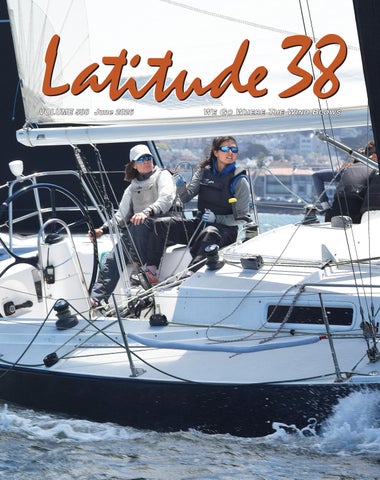
VOLUME 588 June 2026


July 18, 2026, 10 a.m. - 10 p.m., Leydecker Park
Relay For Life is a community event that raises awareness and funds for the American Cancer Society’s programs supporting research, education and patient services.
We celebrate cancer survivors, remember loved ones lost, and fight back against this terrible disease.
What to expect at Relay: Games, Food, Entertainment, Raffle Prizes and more!
Luminaria (candle lighting): A beautiful ceremony, symbolizing hope and remembrance. Each luminaria is dedicated to a person — whether lost, battling, or a survivor of cancer.
Visit www.relayforlife.org/alamedaca to learn more and sign up today!
Questions? Anne Marie at afourre@icloud.com
F Prime deep water double-fingered concrete slips from 30' to 100'.
F Guest berthing available for a weekend or any day getaway.
F Complete bathroom and shower facility, heated and tiled.
F Free pump-out station open 24/7.
F Full-service Marine Center and haul-out facility.
F Free parking.
F Free on-site WiFi.
And much more...
Directory of Grand Marina Tenants
Blue Pelican Marine
MarineLube
New Era Yachts
Pacific Crest Canvas
Alameda Canvas and Coverings
Alameda Marine Metal Fabrication
Atomic Tuna Yachts
BAE Boats
Mike Elias Boatworks
Mosely’s Café
UK-Halsey Sailmakers







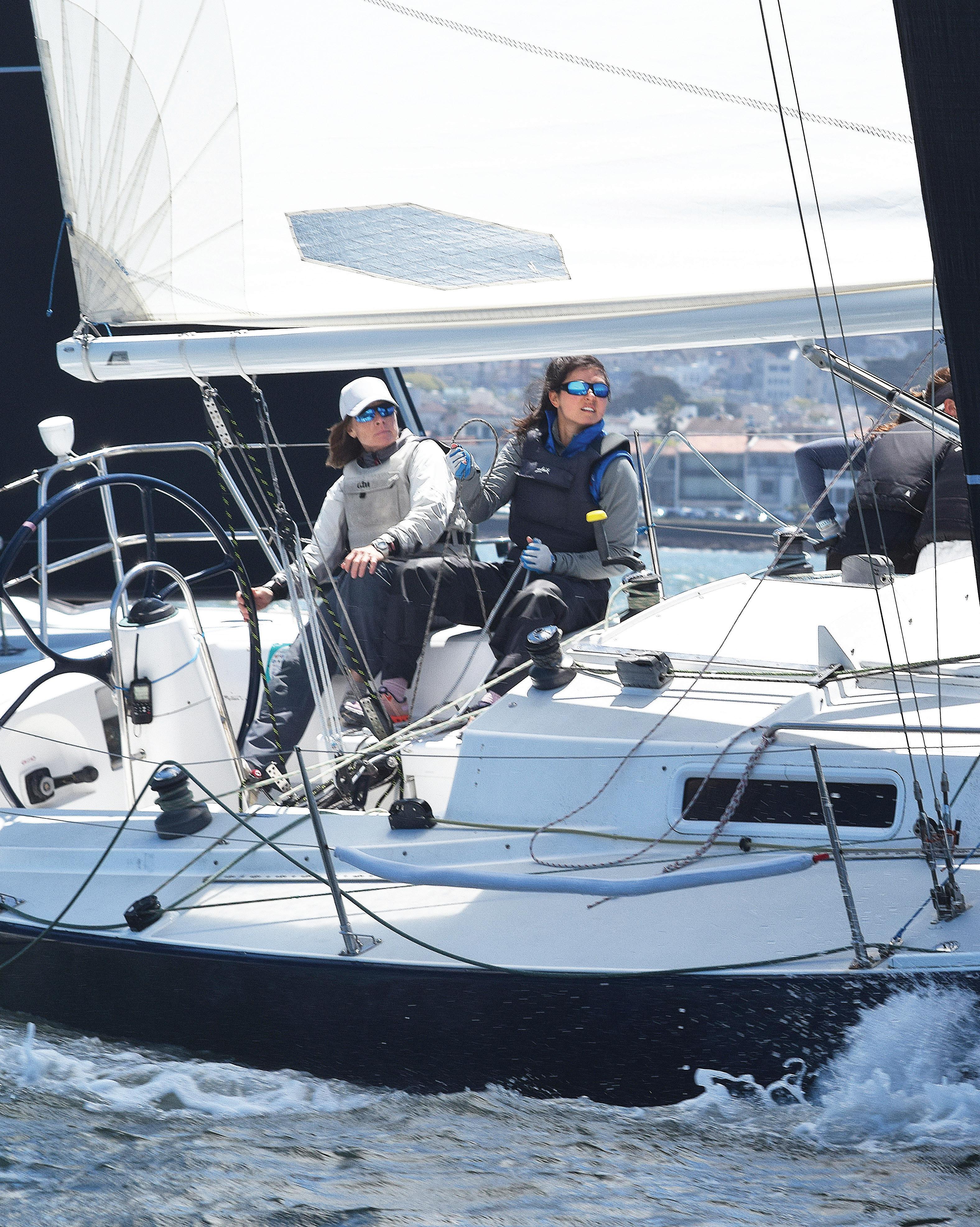
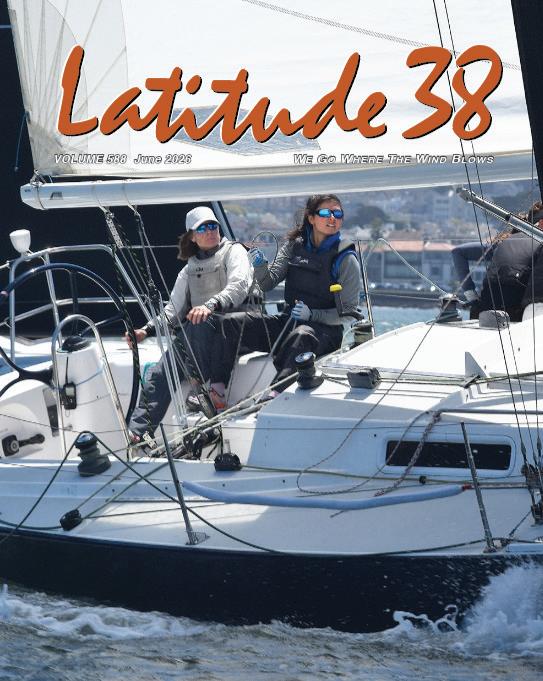
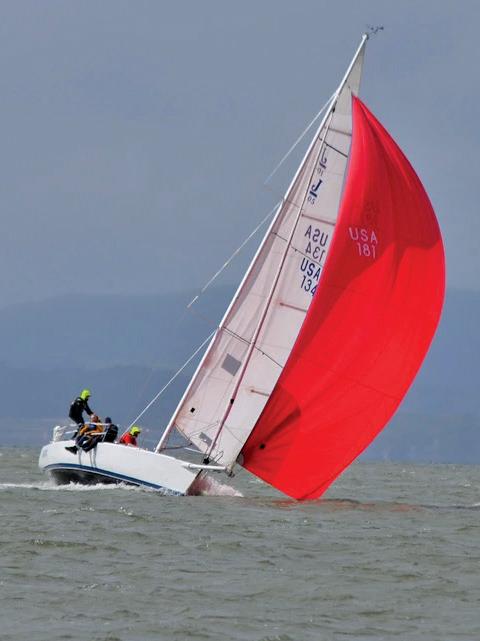
Nicole Breault (left), pictured here sailing in the J/105 Women's Skipper Invitational, will be sailing with an all-star team of Bay Area women sailors at NYYC's Women's International Championship in September.
us your story. Latitude 38 welcomes editorial contributions in the form of stories, anecdotes, photographs — anything but poems, please; we gotta draw the line somewhere. What helps you get published? Read our writer's guidelines here: www.latitude38.com/writers-guidelines. Have writer's block? Go sailing — you're sure to come home with a story.
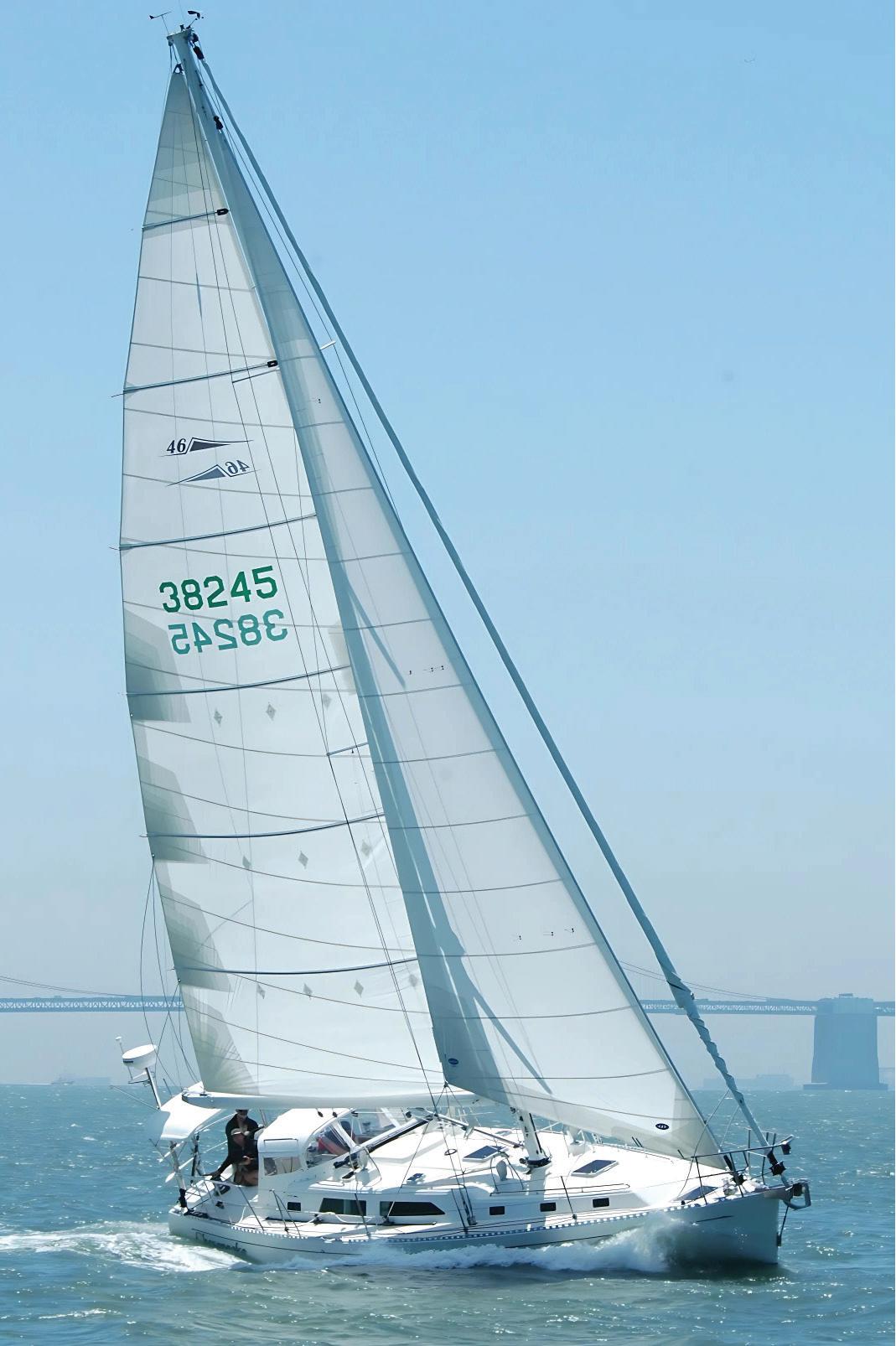
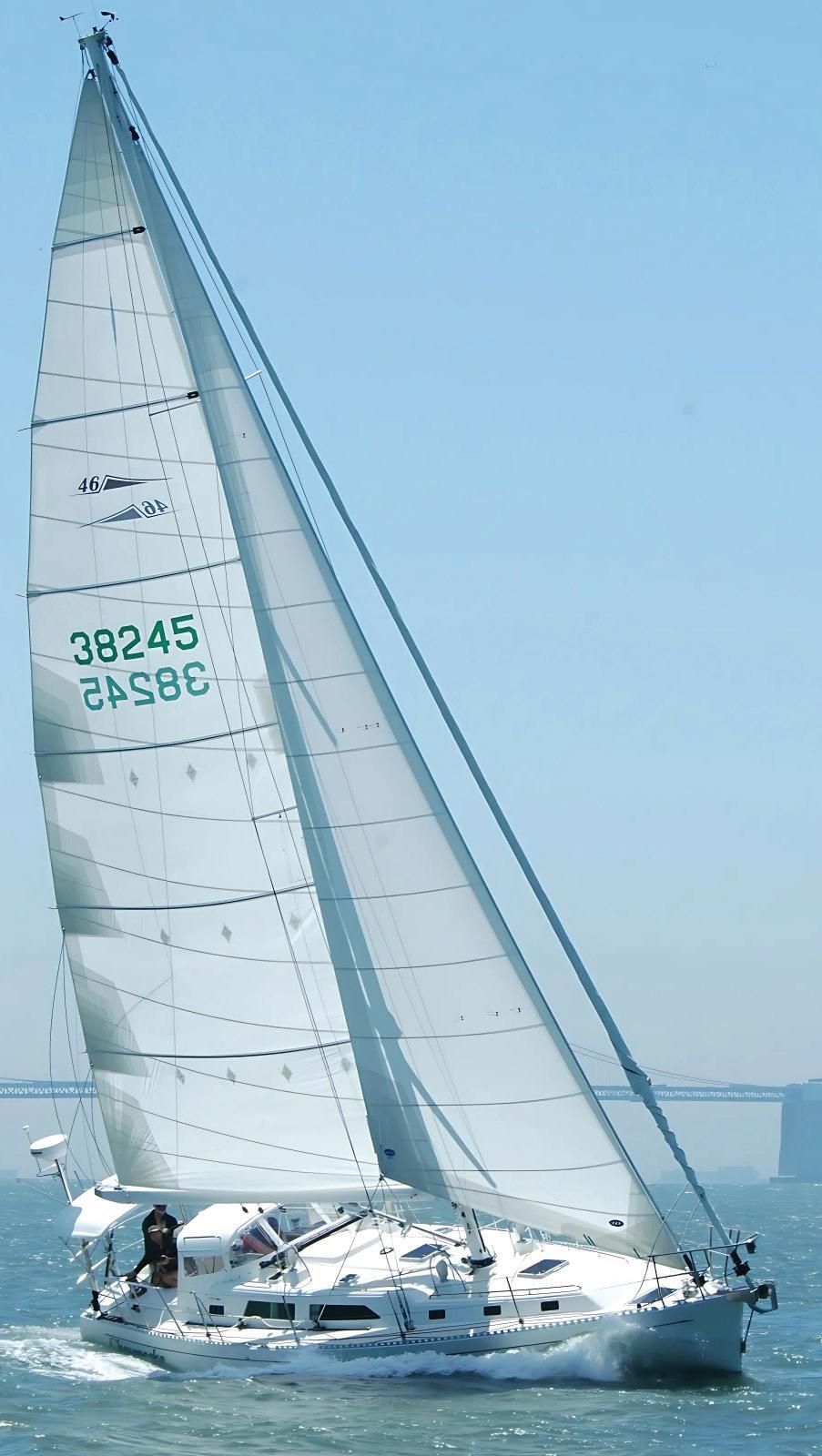
Outbound 46 with Hood Vektron Full Batten Mainsail, 140% Genoa, and Solent Jib
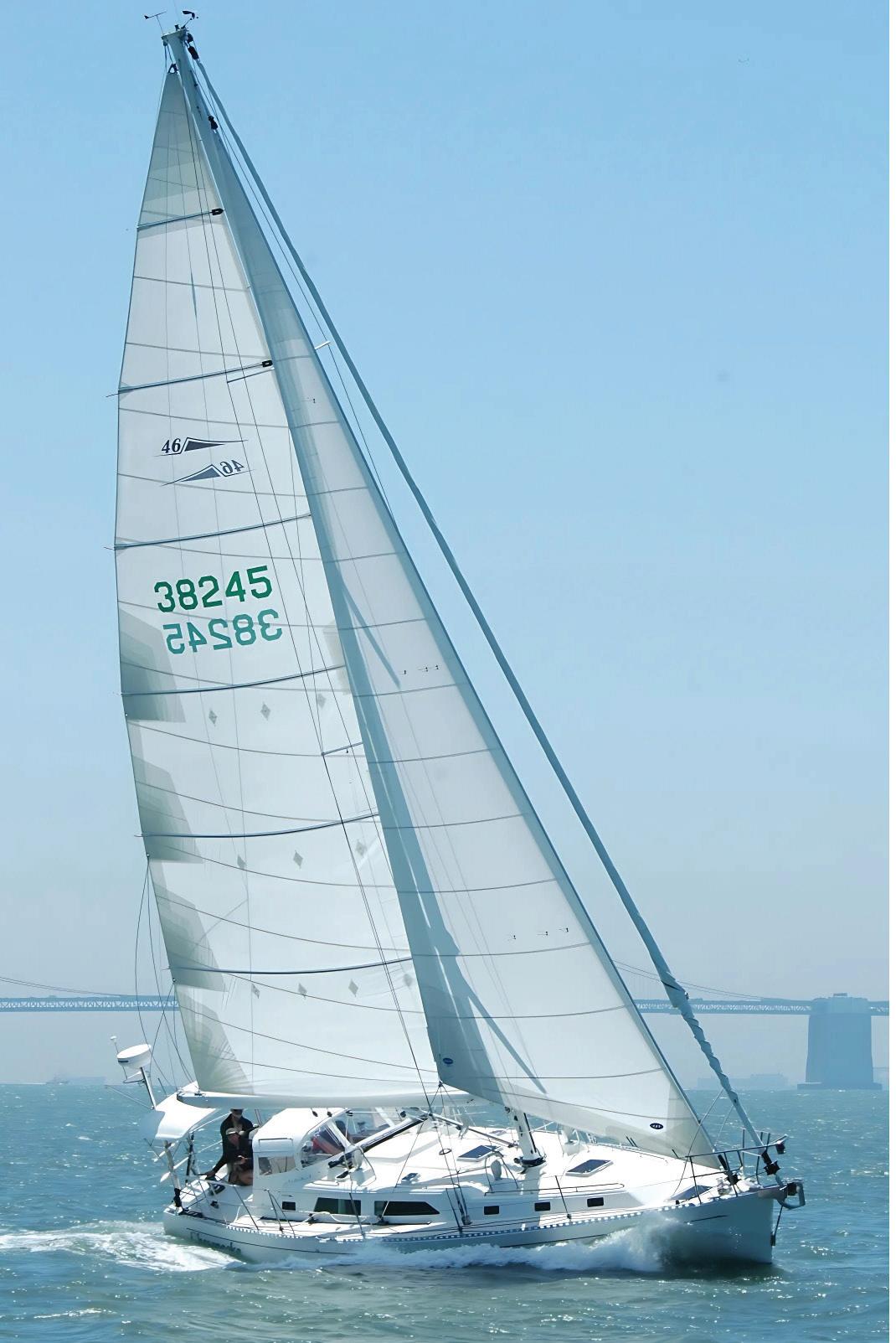
Our patented woven Vectran® sailcloth performs like the laminates with the durability of Dacron®, especially in roller furling applications. In fact, Vectran® is lighter, lower stretch, and retains its shape over a longer life than any sailcloth we've ever offered to cruising sailors. That's because Hood Vectran® is woven, not laminated to Mylar ® film. And you can be sure that each sail we roll out is built by hand, with the same care and craftsmanship that has been the Hood hallmark for 50 years. To discuss your sailcloth needs – whether our state-of-the-art Vectran ® or our soft, tight-weave Dacron® – give us a call today.

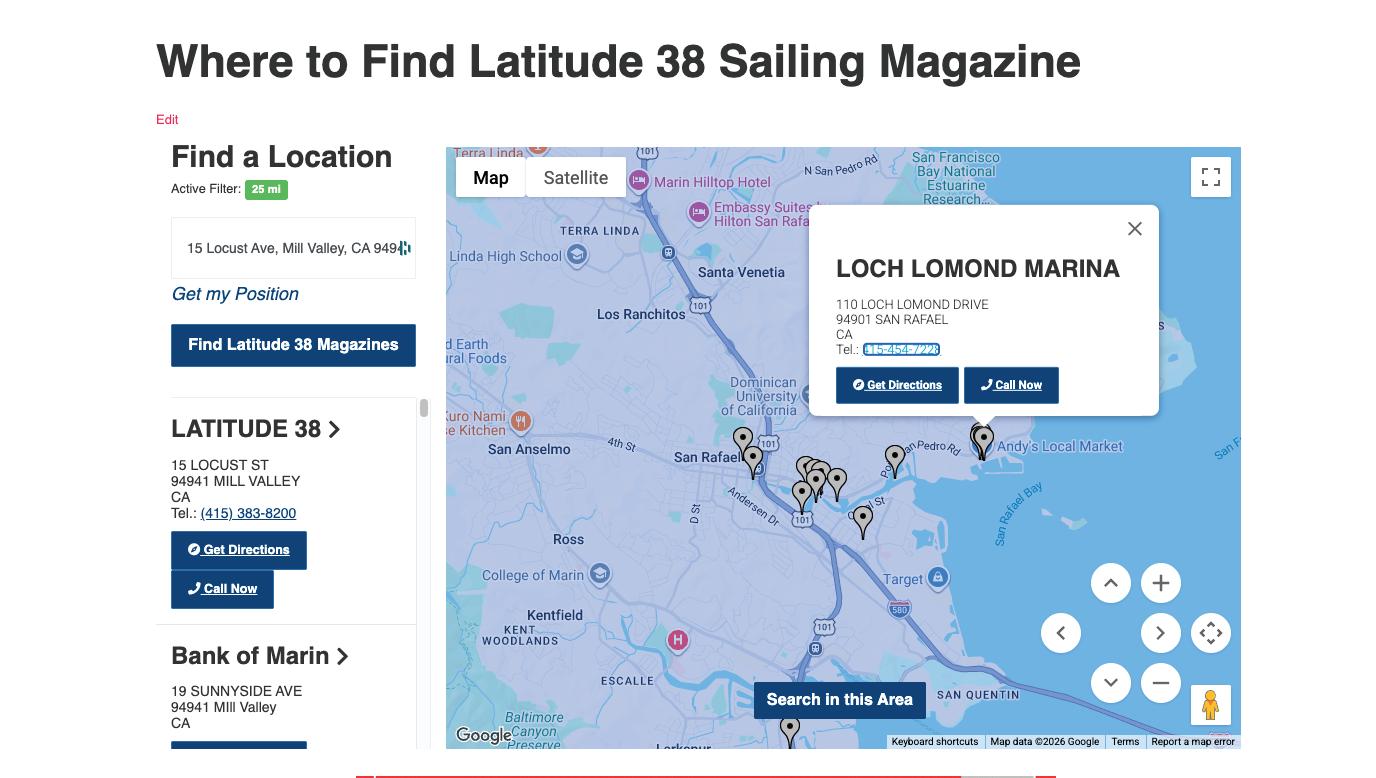
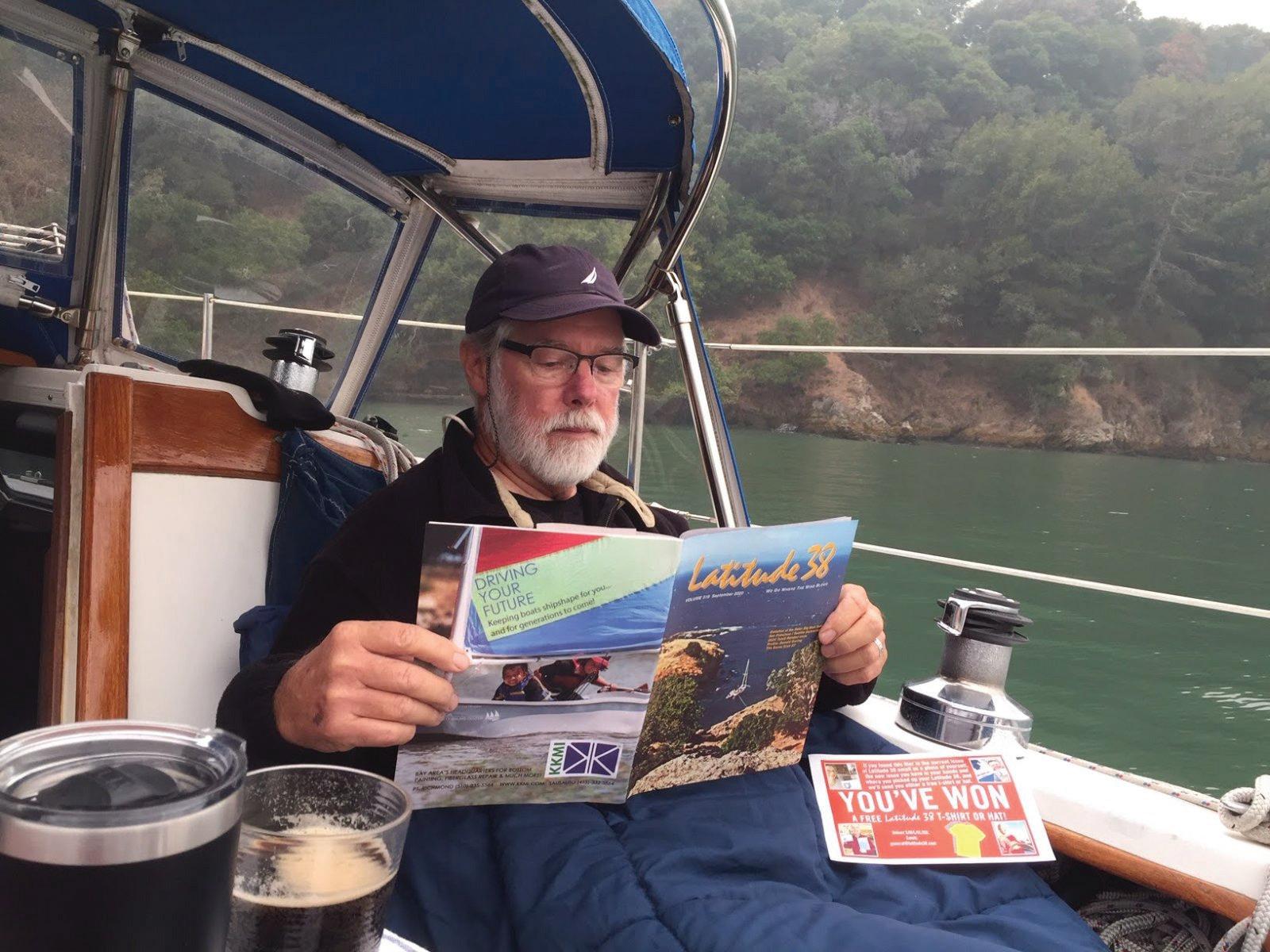
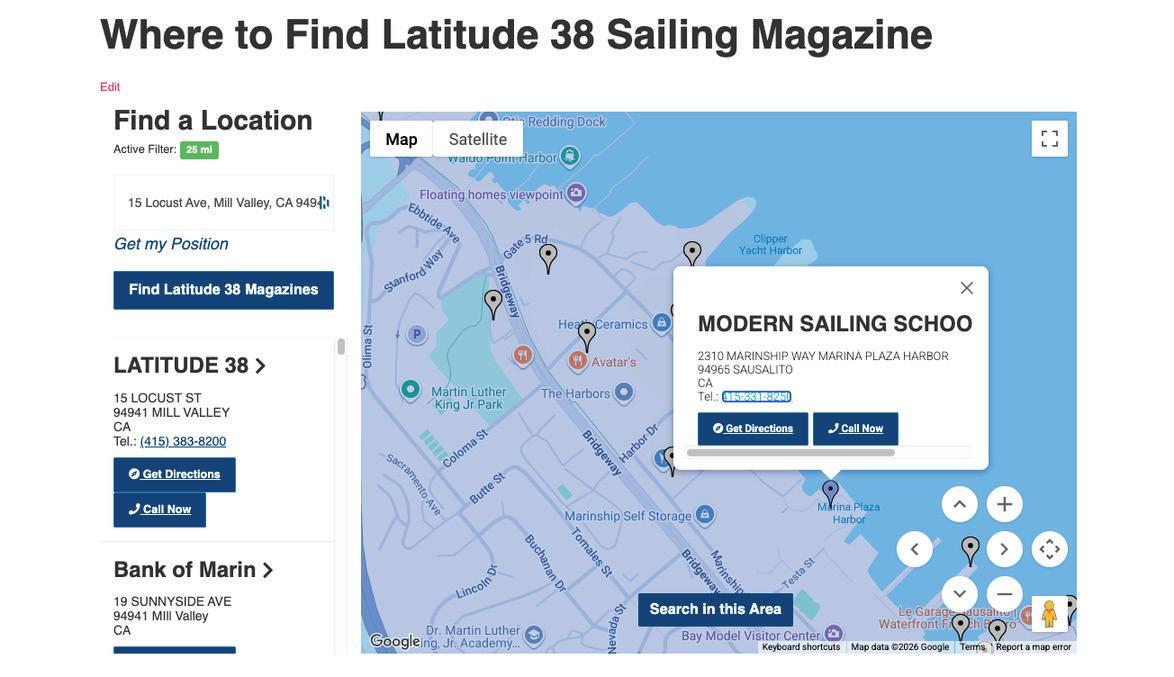
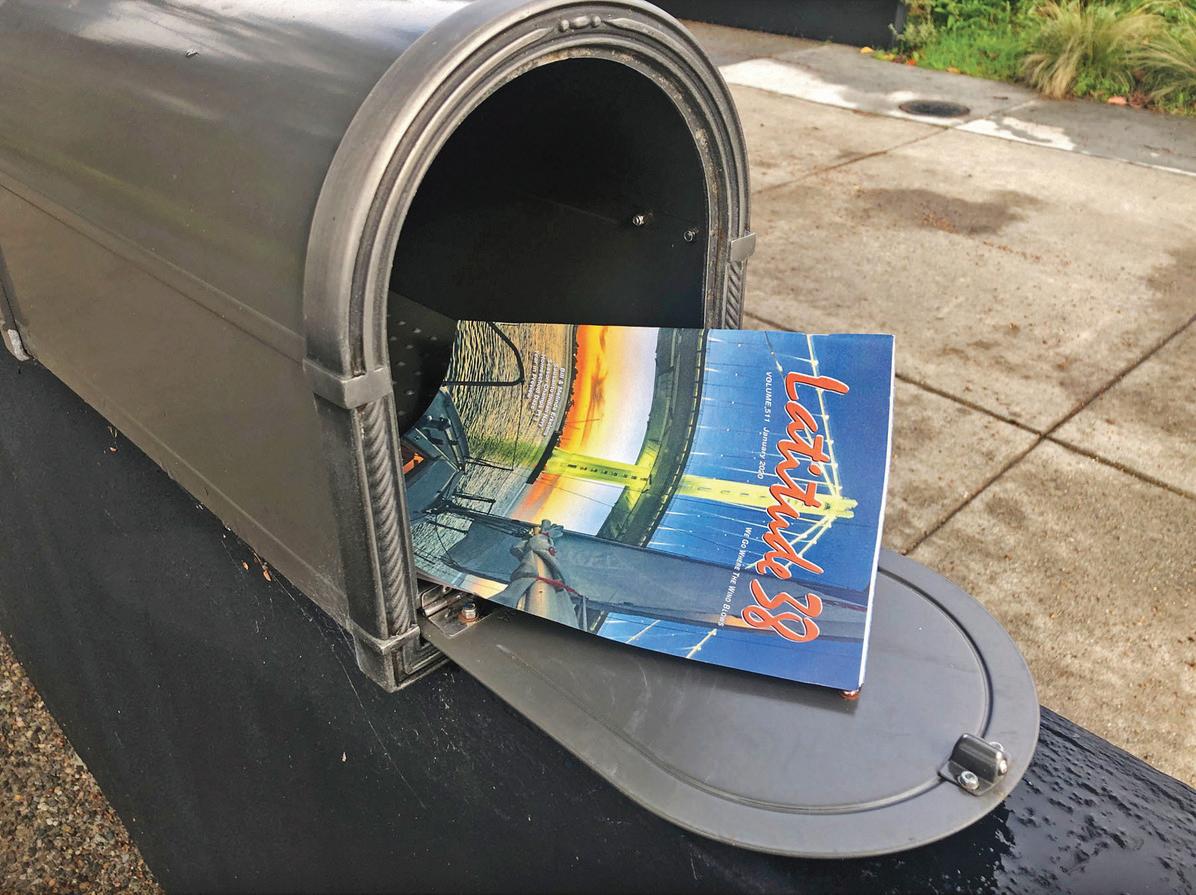
Stop into a Latitude 38 distribution
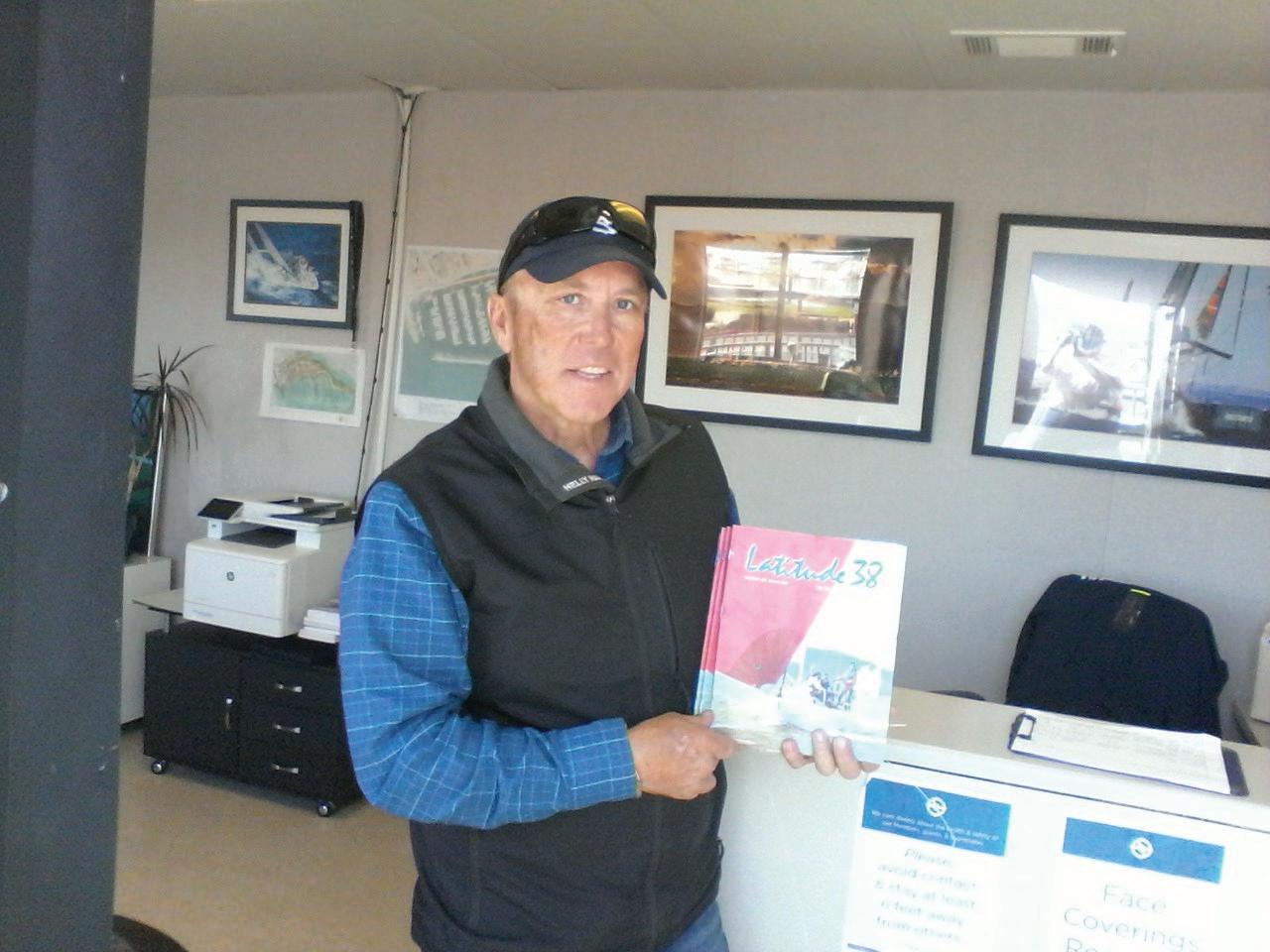
Say hello to Pat Lopez when you pick up a magazine at Safe Harbor Loch Lomond.
You

FEATURED LISTING
Sara Lynn Beneteau 57
• $345,000 IN SAN DIEGO
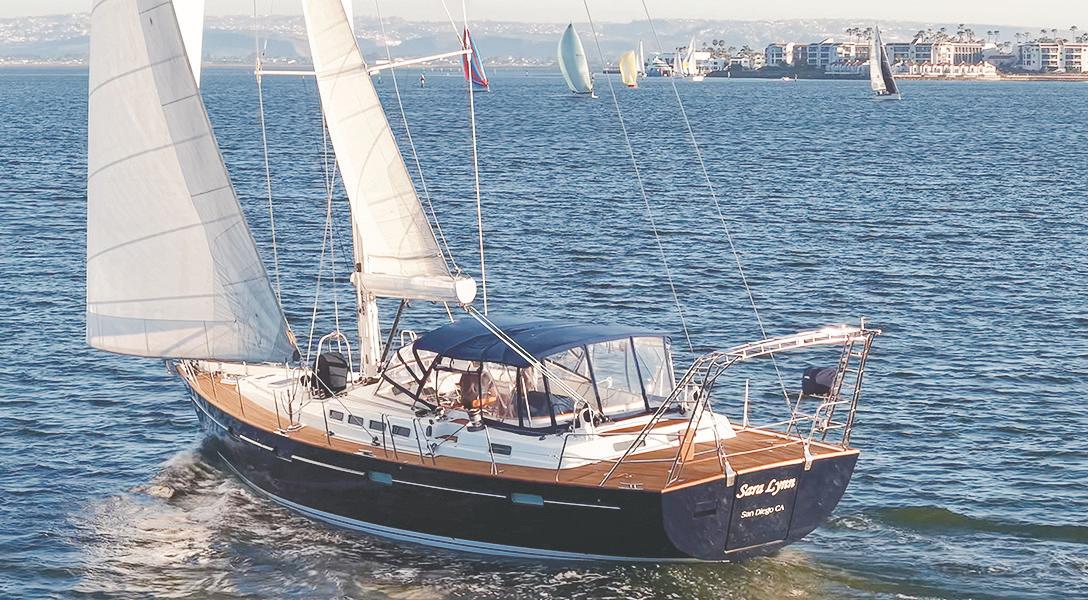
The agship Beneteau 57 was conceived as a true o shore cruiser by the renowned designer Bruce Farr and re ects a rare moment in production boatbuilding when performance, structural integrity, and long-range comfort were all given equal priority. The moderate displacement, generous sail area, and well-proportioned hull shape translate into a yacht that is both powerful and easily driven. The center cockpit con guration is a de ning feature, o ering security o shore and excellent visibility for the helmsman from the port side helm station. This four-cabin version has a large owner cabin aft with ensuite head and separate shower, a watch cabin with separate head/shower, and two guest cabins with separate heads and a shared shower.
– ALEX PERRY, SWIFTSURE YACHTS
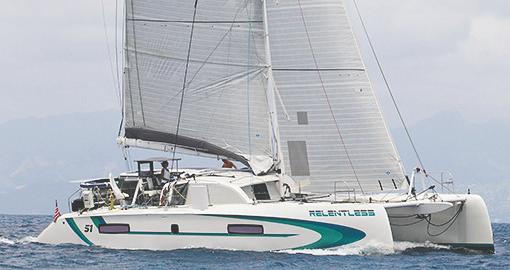
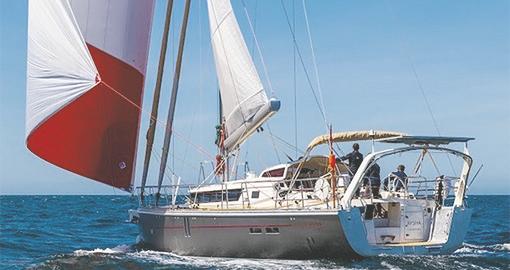
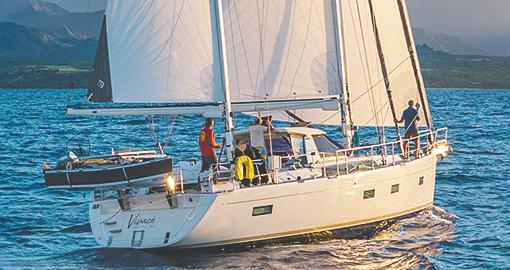
This month's mashup of words, photos, stories and letters includes a Feature story on a mashed-up catamaran owned by a sailor who started sailing a decade ago in the Baja Ha-Ha, and who has since rescued a hurricane-damaged catamaran. He's just finished sailing it to the Marquesas in the Pacific Puddle Jump.
Letters covers the spectrum from foiling ferries to the good old days, and asks, "Why are the Richmond Yacht Club's Wednesday beer can races so popular and so much fun?" Why don't they keep score?
You'll find out the winner of this month's Caption Contest(!) in Loose Lips, some history on the contentious patch of water called the San Francisco Marina, a 1984 doublehanded blast across the Pacific on an Express 27, schooner racing in San Diego and the Summer Sailstice sailing celebration on June 20.
It may seem crazy, but we print this magazine monthly for the same reason we go sailing. We still enjoy the unplugged natural world. Turning the engine off to sail feels similar to turning off devices to read. It's the difference between live music and an algorithmic playlist generated by Spotify.
Does that mean we're Luddites? Of course not. We use tech all the time and are trying to understand where and how to use AI while AI is trying to figure out how to use us! We're all different, but we think everyone can use a break — time on the water, time with a book, time with people, time in nature. The device in our pocket makes that difficult. We pay attention to the warning from In Formation magazine that says, "Every day, computers make people easier to use."
Enjoy a digital detox by going sailing on June 20 and by sitting back and reading our monthly issues of Latitude 38.
we go where the wind blows
Publisher/Editor John Arndt john@latitude38.com ext. 108
Racing Editor Fritz Baldauf fritz@latitude38.com ext. 107
Calendar Editor Christine Weaver chris@latitude38.com ext. 103
'Lectronic Latitude Editor Monica Grant monica@latitude38.com ext. 105

Contributing Editors: Donna Andre, Tim Henry, Lisa Hotchkiss, Paul Kamen, John Riise, John Skoriak, Richard Spindler, Ross Tibbits




Production Manager Soren Hemmila soren@latitude38.com ext. 102
Sales Manager Maddy Garcia maddy@latitude38.com ext. 109
Bookkeeping Penny Clayton penny@latitude38.com ext. 101
Distribution: Sue Weaver, Bob Bodnar, Jon Borges, Jeremy Haydock
Founded 1976. Published from 1977-2016 by Richard Spindler.
www.latitude38.com • (415) 383-8200



New mailing address: 2100 4th Street #338 San Rafael, CA 94901

$210,000
Mark Miner (415) 290-1347
Thoughtfully designed and beautifully finished inside and out, the Aqua Lodge features fiberglass pontoons, a wood-beamed lofted ceiling, a fully appointed galley, and a full bath with residential-sized fixtures. The main salon is open and bright, while the master stateroom features a panoramic water view and a private deck. With the cost of building on the waterfront ever increasing, the Aqua Lodge is an affordable alternative. We currently have three (3) identical Floating Cottages available at $115,000. each. These are new houseboats that have never been used. With the acquisition of all three one could start a unique Air B&B type business in a nice location.
$59,000
NOTE: There is no propulsion included. An outboard engine could be installed on the bracket but, these boats are not equipped with any propulsion. They would need to be towed or trucked to their destination.
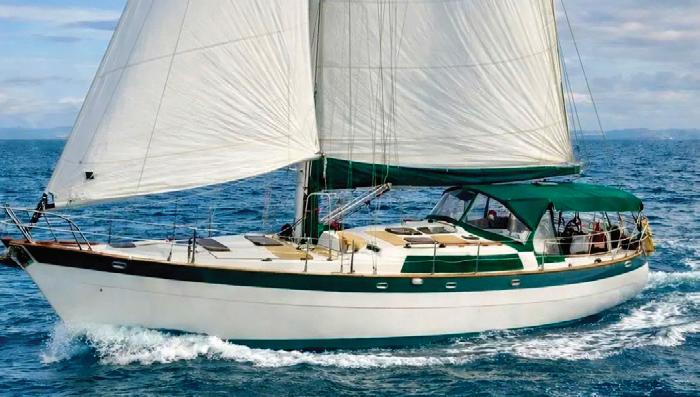
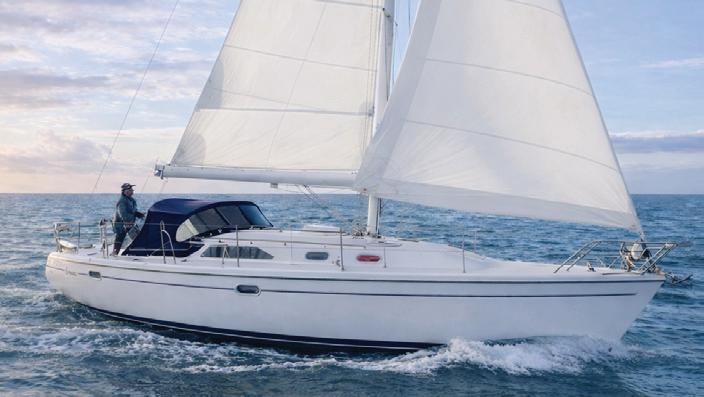
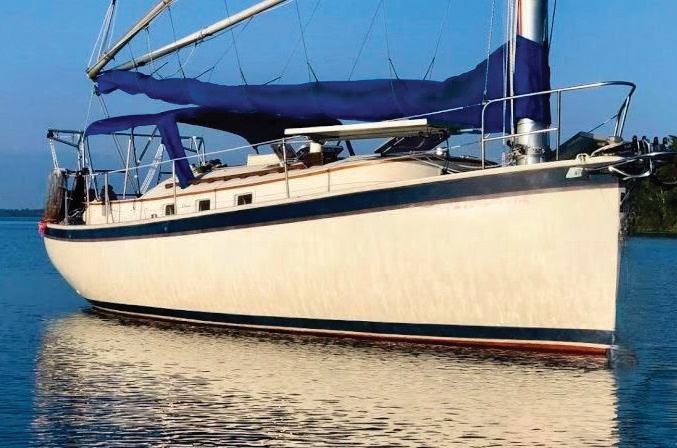
Alameda (510) 838-1800 43’ NAUTICAT KETCH, 1986
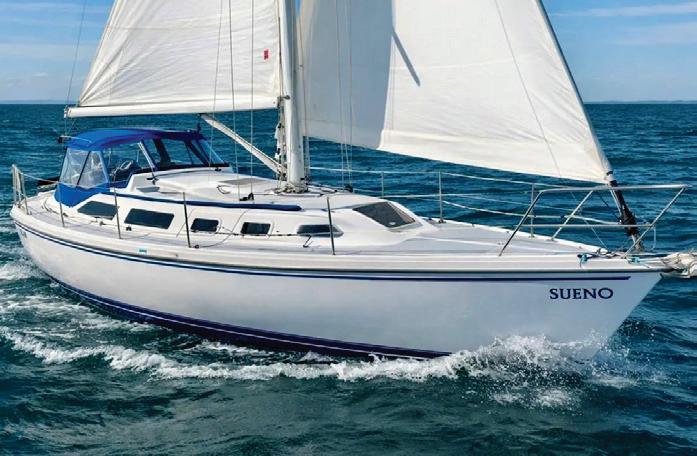
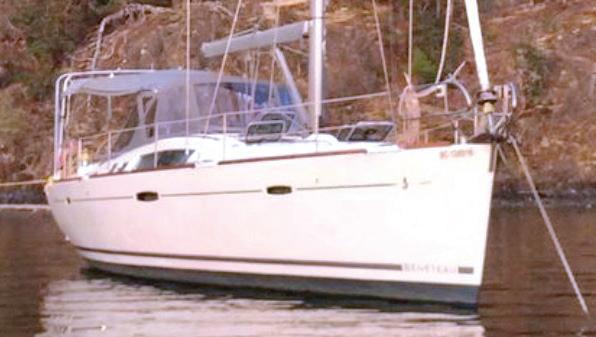
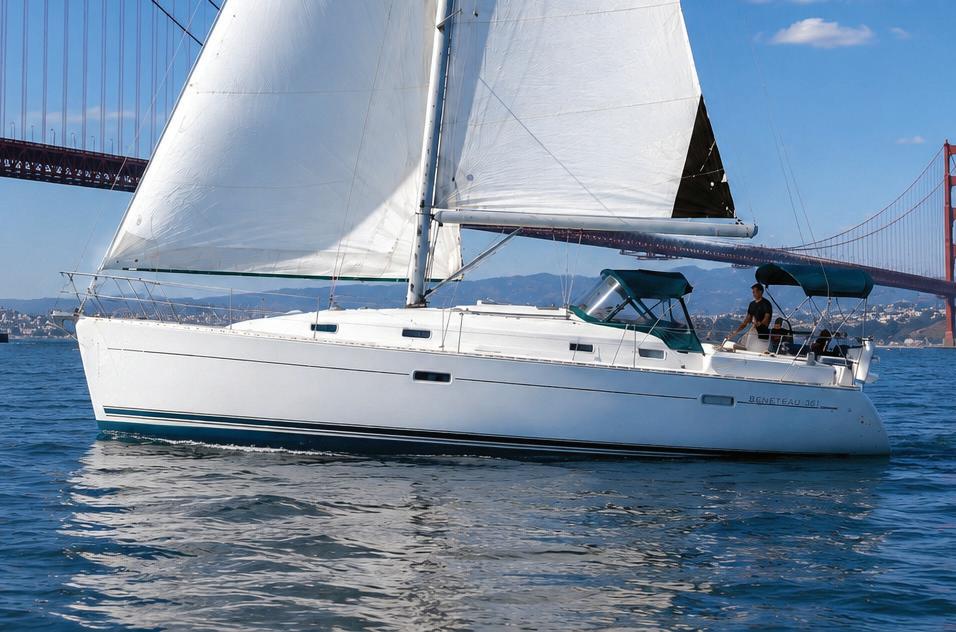
$99,000 Emery Cove (510) 601-5010 35’ BENETEAU OCEANIS, 2015
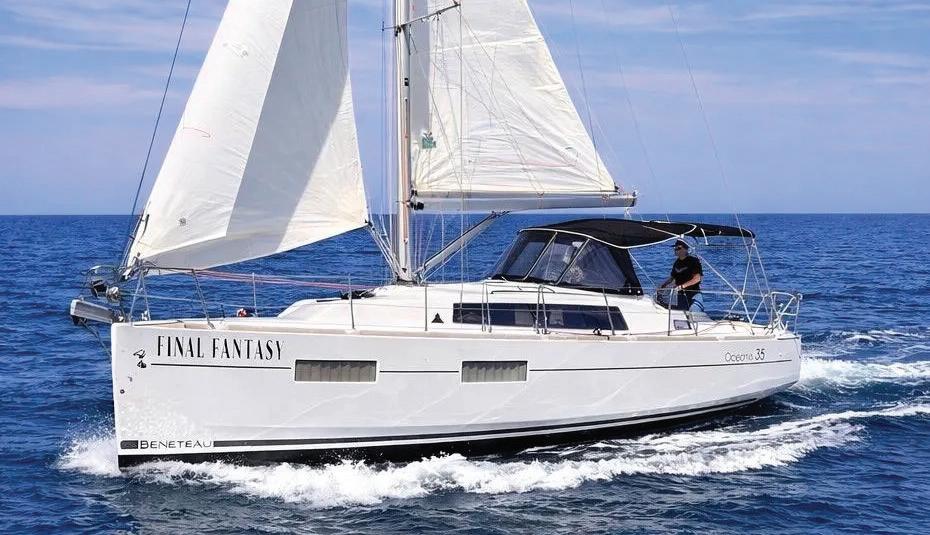
$149,000 Emery Cove (510) 601-5010
$34,000 Emery Cove (510) 601-5010
$145,000 Emery Cove (510) 601-5010 San Rafael (415) 453-4770
Thoughtfully designed and beautifully finished inside and out, the Aqua Lodge features fiberglass pontoons, a wood-beamed lofted ceiling, a fully appointed galley, and a full bath with residential-sized fixtures. The main salon is open and bright, while the master stateroom features a panoramic water view and a private deck. With the cost of building on the waterfront ever increasing, the Aqua Lodge is an affordable alternative. We currently have three (3) identical Floating Cottages available at $115,000. each. These are new houseboats that have never been used. With the acquisition of all three one could start a unique Air B&B type business in a nice location.
NOTE: There is no propulsion included. An outboard engine could be installed on the bracket but, these boats are not equipped with any propulsion. They would need to be towed or trucked to their destination.
•NOW
MARINE ICE CHESTS by
Igloo
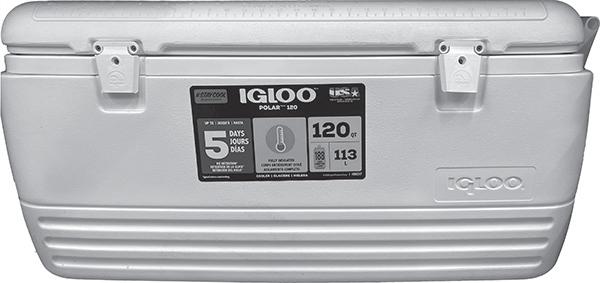
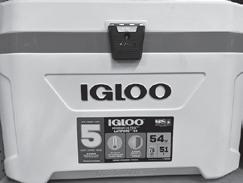
54 Quarts, #86446: Now $7999 120 Quarts, #8306805: Now $12999
June 6 — USCGA Suddenly in Command seminar, Corinthian YC, Tiburon, 9 a.m.-noon. Free. RSVP by 6/4 to Cassidy, (415) 435-4771.
June 6 — 50th Anniversary Gala Casino Night, Martinez YC, 5 p.m. $50. Info, https://martinezyachtclub.org.
June 6 — Cruising Yachts BoatFest Marina Village, Alameda 10 a.m. - 4 p.m www.cruisingyachts.com (510) 521-1327.
June 6-27 — Small Boat Sailing, South Beach Harbor, San Francisco, 9:30 a.m.-4 p.m. Saturdays, weather permitting. Free, but preregister. BAADS, www.baads.org/sailing.
June 7 — Public Open House, Monterey Peninsula YC, 1-4 p.m. Learn about sailing, kayaking, rowing, paddle-boarding & social activities; snacks, beverages. Boat ownership not required. Info/RSVP, https://mpyc.org/event/9up9piNRuy.
June 7-28 — Keelboat Sailing, South Beach Harbor, San Francisco, noon-5 p.m. Sundays, weather permitting. Free, but preregister. BAADS, www.baads.org/sailing
June 8 — World Ocean Day. Theme: Strong Marine Protected Areas for Our Blue Planet. Info, www.worldoceanday.org.
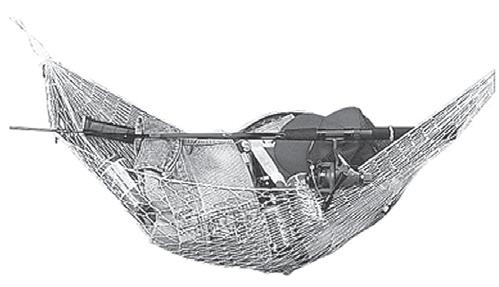
#19079: Now $1199 GRILLS by Magma
Perfect Grill for a Sunday night dinner on your boat.
Stainless steel. Mounts easily with optional mount to your boats rails.
Charcoal #10-004: NOW $16999
Propane #10-205: NOW $22999 Rail Mount #10-080: NOW $5999
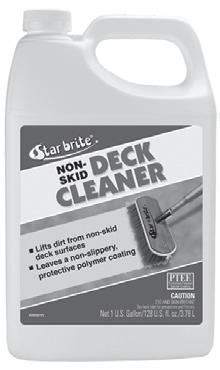
CLEANER by Star brite
Lifts dirt from non-skid deck surfaces. Leaves a non-slippery, protective polymer coating.
1 gallon, #85900: Now $5299 1 quart, #8654: Now $2599
by Taylor
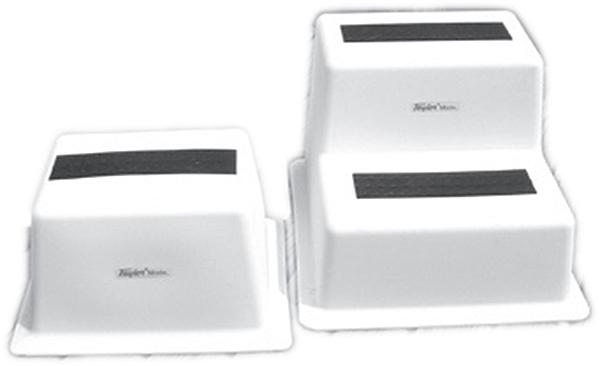
1-Step, #47100 Now $16999 2-Steps, #47200 Now $23999 3-Steps, #47300 Now $33999 FILTER 500 FGSS by Racor

Filter Unit #19051 NOW $27999
Filters: #82010, 10MC #82011, 20MC #19206, 2MC EACH $1499

June 11-14 — San Diego International Boat Show, Sunroad Marina, Harbor Island. Info, www.sdibs.com.
June 11-14 — Get to Know Jeanneau, Harbor Island, San Diego, 8 a.m-5 p.m. Info, https://marinesc.com.
June 13 — Newport Beach Wooden Boat Festival, Balboa YC, Corona del Mar, 10 a.m.-5 p.m. $10; kids under 12 free. Info, www.newportbeachwoodenboatfestival.com
June 13 — R2AK Ruckus, Northwest Maritime Center, Port Townsend, WA, 3 p.m. Info, www.r2ak.com
June 13-14 — International Offshore Safety at Sea with Hands-on Training, Southwestern YC, San Diego. $450. Info, www.sailaweigh.org/course-details.php?course=123
June 14 — Donut Day by the Bay, San Francisco Maritime National Historical Park, 9 a.m.-1 p.m. Donuts, coffee, matcha, music. Info, https://maritime.org.
June 16 — North Sails Rolex Big Boat Series Race Prep: Optimize Your Inventory, via Zoom, 6 p.m. Info/register, https://tinyurl.com/4m8yzd47
June 19 — Juneteenth.
June 19-21 — Jeanneau Rendezvous, Cap Sante Marina, Anacortes, WA. Info, https://marinesc.com.
June 20 — Summer solstice.
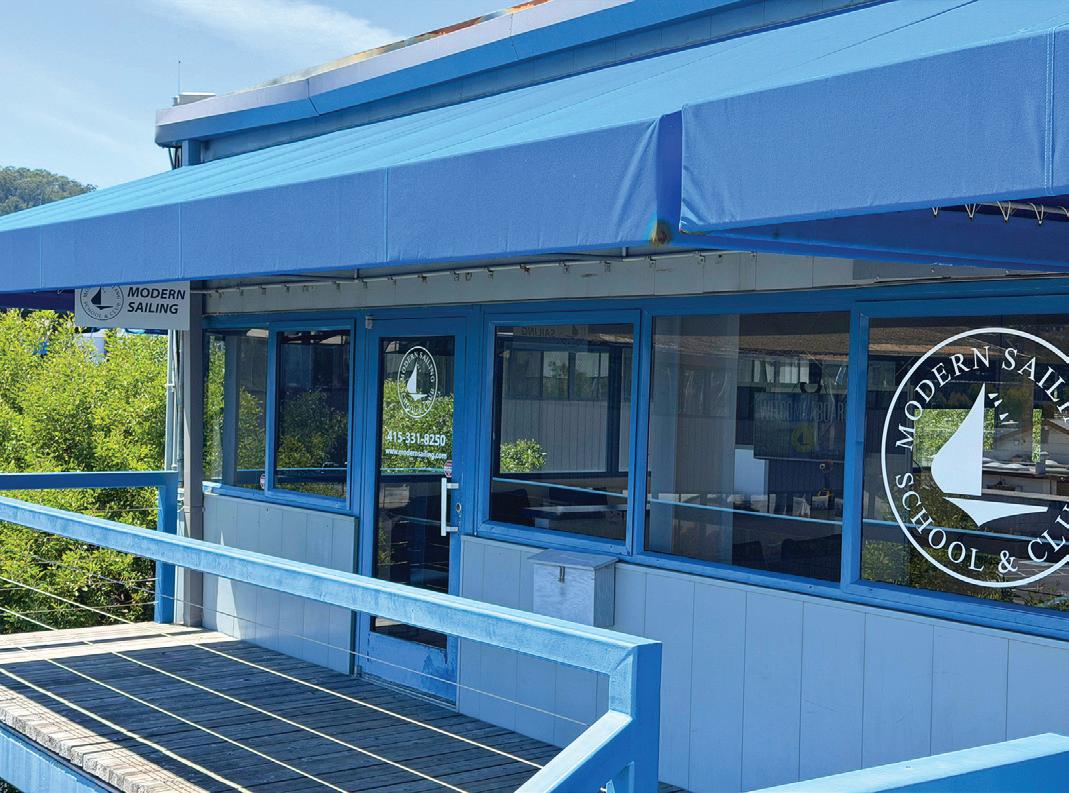
June 20 — Grand Opening, Modern Sailing, Clipper Yacht Harbor, Sausalito, 3-5 p.m. Info, www.modernsailing.com.
June 20-21 — Summer Sailstice. Global celebration of sailing. Free registration. Info, www.summersailstice.com.
June 20-21 — Koehler Kraft Wooden Boat Festival, Shelter Island, San Diego. All proceeds benefit the local Sea Scouts. Info, www.sdwoodenboatfestival.com
June 21 — Father's Day.
June 21 — Wooden Boat Show, Corinthian YC, Tiburon, 10 a.m.-4 p.m. $20; kids under 12 free. MMBA/CYC, www. sfmastermariners.org or https://cyc.org/wooden-boat-show.
June 27 — Runabouts on the River Classic Boat & Car Show, Stockton Sailing Club, 9 a.m.-3 p.m. Boat rides, live music, food & drink vendors. Free. Info, www.stocktonsc.org
June 28 — Open House/Free Sail, Cal Sailing Club, Berkeley Marina, 1-3 p.m. CSC, www.cal-sailing.org
June 29 — Full Strawberry Moon on a Moonday.
July 3 — Hilton Foundation Fireworks Show, Mandeville
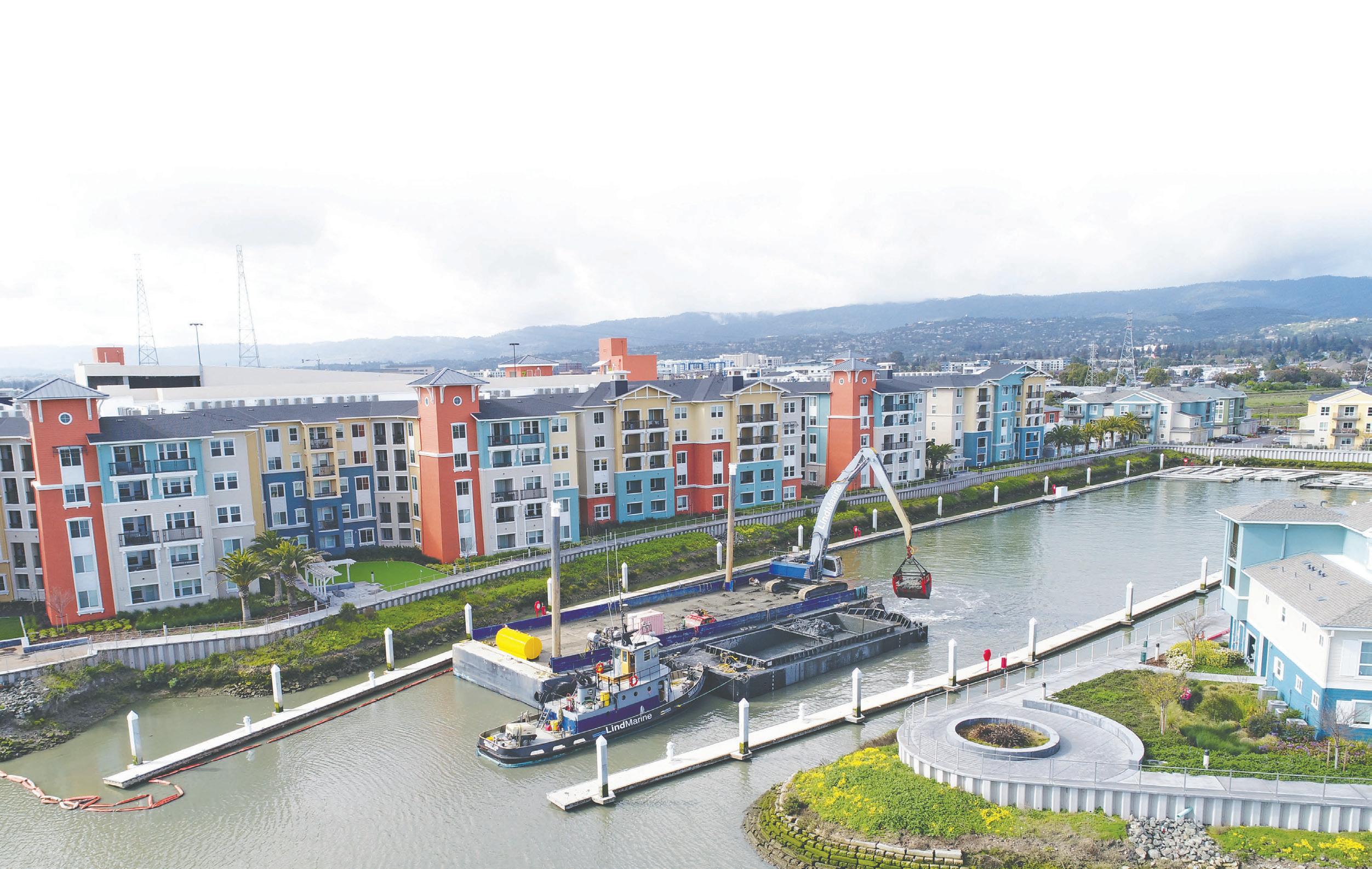
Lind Marine is proud
announce
launched an entire NEW FLEET of marina and homeowner dredging equipment.
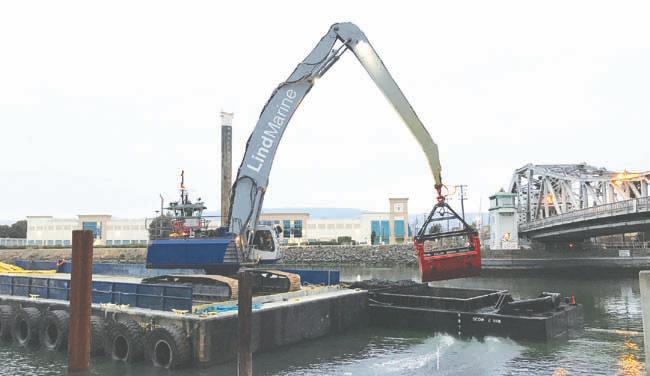
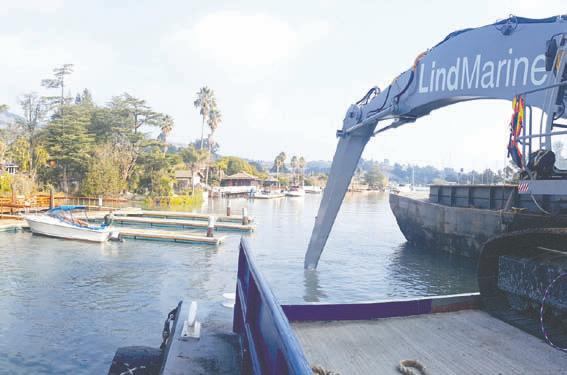
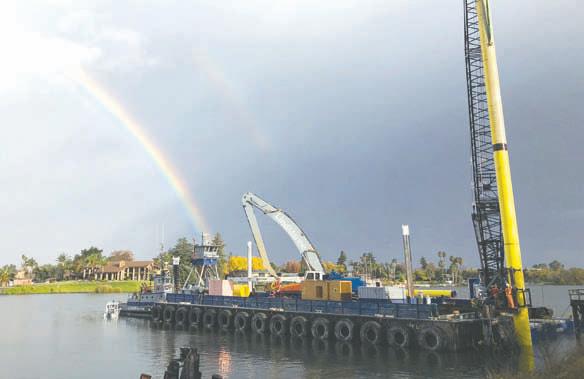
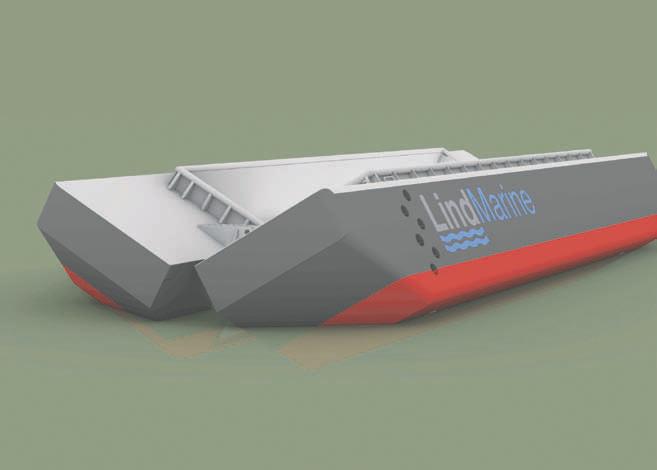
Lind Marine Added Capabilities
Fleet of 4 new dump scows designed to fit in all marinas and homeowner docks
New electric clam shell dredge, ABS loadline, designed to dig out slips up to 90’ long
Pile driving, dock repair, seawall repair and installation
In house permitting department
Survey boat with brand new state of the art single beam system
Small and large vessel salvage Full service shipyard

Tip County Park, San Joaquin River
July 4 — 250th Independence Day.
July 4 — Free Fishing Day, California. CDFW, https:// wildlife.ca.gov/Licensing/Fishing/Free-Fishing-Days.
July 6-9 — Wind Clinic A for ILCA, 420 youth, Cascade Locks, OR. CGRA, www.cgra.org.
July 13-16 — Wind Clinic B for Optis, Cascade Locks, OR. CGRA, www.cgra.org.
Racing
June 6 — YRA Farallones Race. YRA, www.yra.org.
June 6 — Merton Yolles Race. CPYC, www.cpyc.com
June 6 — Singlehanded Race. SSC, www.stocktonsc.org.
June 6 — Little Boreas Race, Santa Cruz to Moss Landing. ElkYC, www.elkhornyachtclub.org.

June 6 — Inaugural Doublehanded Distance Derby. SLTWYC, www.sltwyc.com.
June 6, 27 — Summer Series #2 & #3. SeqYC, www. sequoiayc.org.
June 6, July 11 — North Bay Series. VYC, www.vyc.org.
June 6-7 — J/105, J/88, Express 37 regatta. EYC, www. encinal.org.
June 6-7 — Spring Classic Boat Invitational for Knarrs, Folkboats, Birds, Bears. SYC, www.sausalitoyachtclub.org.
June 6-7 — Match Race Qualifier. StFYC, www.stfyc.com
June 6-7 — RS21 Women's Sprint. SFYC, www.sfyc.org.
June 6-7 — I-14 Championship. SCYC, www.scyc.org
June 6-7 — Berger/Stein Series concludes with Cat Harbor Layover & Eagle Rock-MdR. DRYC, www.dryc.org
June 6-7 — Star Rollins Bowl. SDYC, www.sdyc.org.
June 13 — Delta Ditch Run, 65 miles from Richmond to Stockton. RYC/SSC, www.stocktonsc.org.
June 13 — Spring Saturday Series on the Estuary for Mercurys, Snipes & Harbor 20s. EYC, www.encinal.org.
June 13 — Canyon Series. ElkYC, www.elkhornyachtclub.org.
June 13 — DH Long Distance. MPYC, www.mpyc.org.
June 13, 27 — Bender Series on Tomales Bay. InvYC, www.invernessyachtclub.com
June 13-14 — Hart Nunes Mercury Regatta. SFYC, www. sfyc.org
June 13-14 — C420 State Championships in Marina del Rey. California YC, https://calyachtclub.com.
June 13-14 — Match Race Qualifier. SDYC, www.sdyc.org
June 14 — Race to Alaska Leg 1 starts, Port Townsend, WA to Victoria, BC. Info, www.r2ak.com.
June 14, 28 — Summer Series on Shoreline Lake. FSC, www.fremontsailingclub.org.
June 14, July 12 — One Design Summer 1-6. MPYC, www.mpyc.org.
June 17 — Race to Alaska Leg 2 starts, Victoria, BC, to Ketchikan, AK. Info, www.r2ak.com.


June 19-21 — Junior Heavy Weather for Optis & RS Teras. StFYC, www.stfyc.com.
June 19-21 — South Tower Race, Stockton to San Francisco to Stockton, nonstop. SSC, www.stocktonsc.org.
June 20 — YRA Half Moon Bay Race. YRA, www.yra.org.
June 20 — LongPac start. SSS, www.sfbaysss.org.
June 20 — Spring One Design #3. SCYC, www.scyc.org.
June 20-21 — J/105 & J/88 Fleets Stop. SBYC, www. southbeachyachtclub.org.
June 20-21 — Commodores Regatta to Stillwater and Return. MPYC, www.mpyc.org.
June 23 — US Sailing Area J Sears Cup Triplehanded Qualifier in San Diego. SDYC, www.sdyc.org.
June 26-28 — Woodies Invitational for Alerion 28s, Folkboats & Knarrs. StFYC, www.stfyc.com.
June 27 — Shirley Temming Regatta/YRA Women's Championship Series #1. EYC, www.encinal.org.
June 27 — Twin Island. SYC, www.sausalitoyachtclub.org.
June 27 — Hank Easom Regatta. SFYC, www.sfyc.org.
June 27 — Chasing the Moon evening race. BenYC, www. beniciayachtclub.org.
June 27 — Rear Commodore Regatta. HMBYC, www. hmbyc.org.
June 27 — Around the Pins. SLTWYC, www.sltwyc.com.
June 27-28 — BAYS Summer #1. RYC, www.richmondyc.org.
June 27-28 — San Diego Olympic Classes Regatta. SDYC, www.sdyc.org.
June 28 — YRA Doublehanded Sunday Series #3, the Island Tour. YRA, www.yra.org.
June 28 — Baxter-Judson Series Race #3. PresYC, www. presidioyachtclub.org.
June 28 — Spring SCORE #3. SCYC, www.scyc.org.
June 28 — Gar Woods Regatta. Tahoe YC, www.tahoeyc.com.
June 28 — Commodore's Cup on South Lake Tahoe. SLTWYC, www.sltwyc.com.
June 29-July 2 — Junior Women's Doublehanded Championships in Redwood City. US Sailing, www.ussailing.org.
July 4 — Fireworks Folly. SFYC, www.sfyc.org.
July 4 — Brothers & Sisters Race. TYC, www.tyc.org.
July 4 — Stars and Stripes. CPYC, www.cpyc.com.
July 4 — Firecracker/MBYRA #4. SCYC, www.scyc.org.
July 5 — Monterey to Moss Landing Race. ElkYC, www. elkhornyachtclub.org.
July 5 — Women's Day Race. MPYC, www.mpyc.org.
July 8-10 — C420 Nationals. LBYC, www.lbyc.org.
July 9-12 — ILCA NAs in San Pedro. CBYC, www.cbyc.org.
July 10-12 — Trans Tahoe Regatta. Tahoe YC, www. tahoeyc.com.
July 10-12 — One Design Invitational for Melges 24 and Moore 24 classes. Tahoe YC, www.tahoeyc.com.
July 11 — Plastic Classic. BVBC, www.bvbc.org.
Dave Hodges
104 Bronson St. #20
Santa Cruz, CA 831.454.0868
dhodges@ullmansails.com Ullman Sails Sausalito
Robin Sodaro
465 Coloma St., Sausalito, CA 415.332.4117
UllmanSailsSausalito@gmail.com
July 11 — YRA Offshore RC Choice #1. YRA, www.yra.org.
July 11 — Singlehanded Bonita-Buena Beginners. SSS, www.sfbaysss.org.
July 11 — Team Racing #2. HMBYC, www.hmbyc.org.
July 11 — Santana 22 Team Races. SCYC, www.scyc.org.
July 11 — Singlehanded Long Distance Race. MPYC, www.mpyc.org.
July 11-12 — J/105 & J/88 Invitational. SYC, www. sausalitoyachtclub.org.
July 11-12 — Founder's Regatta. SSC, www.stocktonsc.org.
July 11-12 — Wind Regatta for ILCA District 22 Championships, C420. CGRA, www.cgra.org
July 11-12, 18-19 — High Sierra Regatta. FYC, www. fresnoyachtclub.org.
July 12 — Midsummer Mischief on Tomales Bay. InvYC, www.invernessyachtclub.com
July 13-16 — Long Beach Olympic Classes Regatta for QFoils & Kites. LBYC, www.lbyc.org. Ullman Sails San Francisco & Monterey Bay

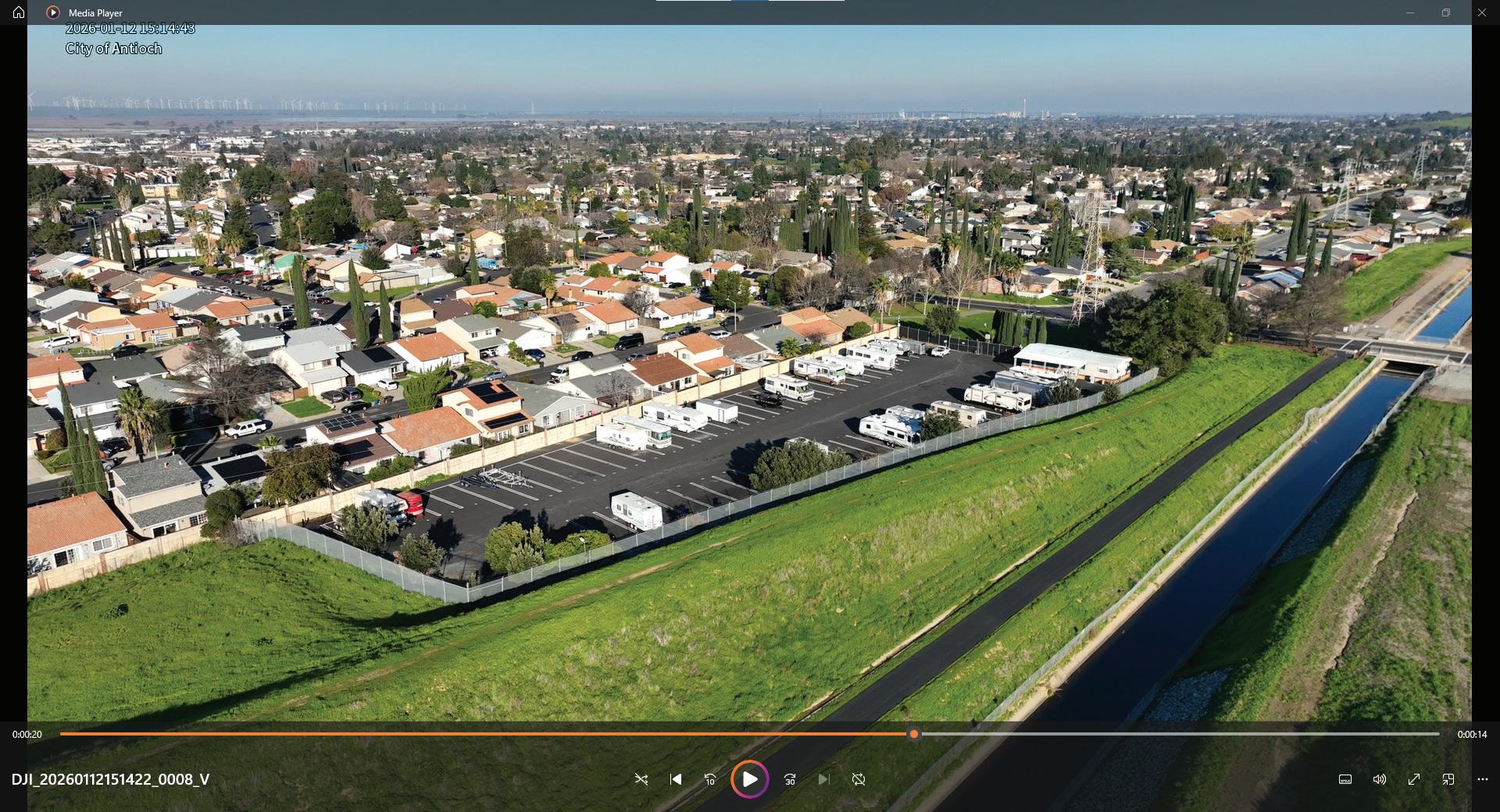
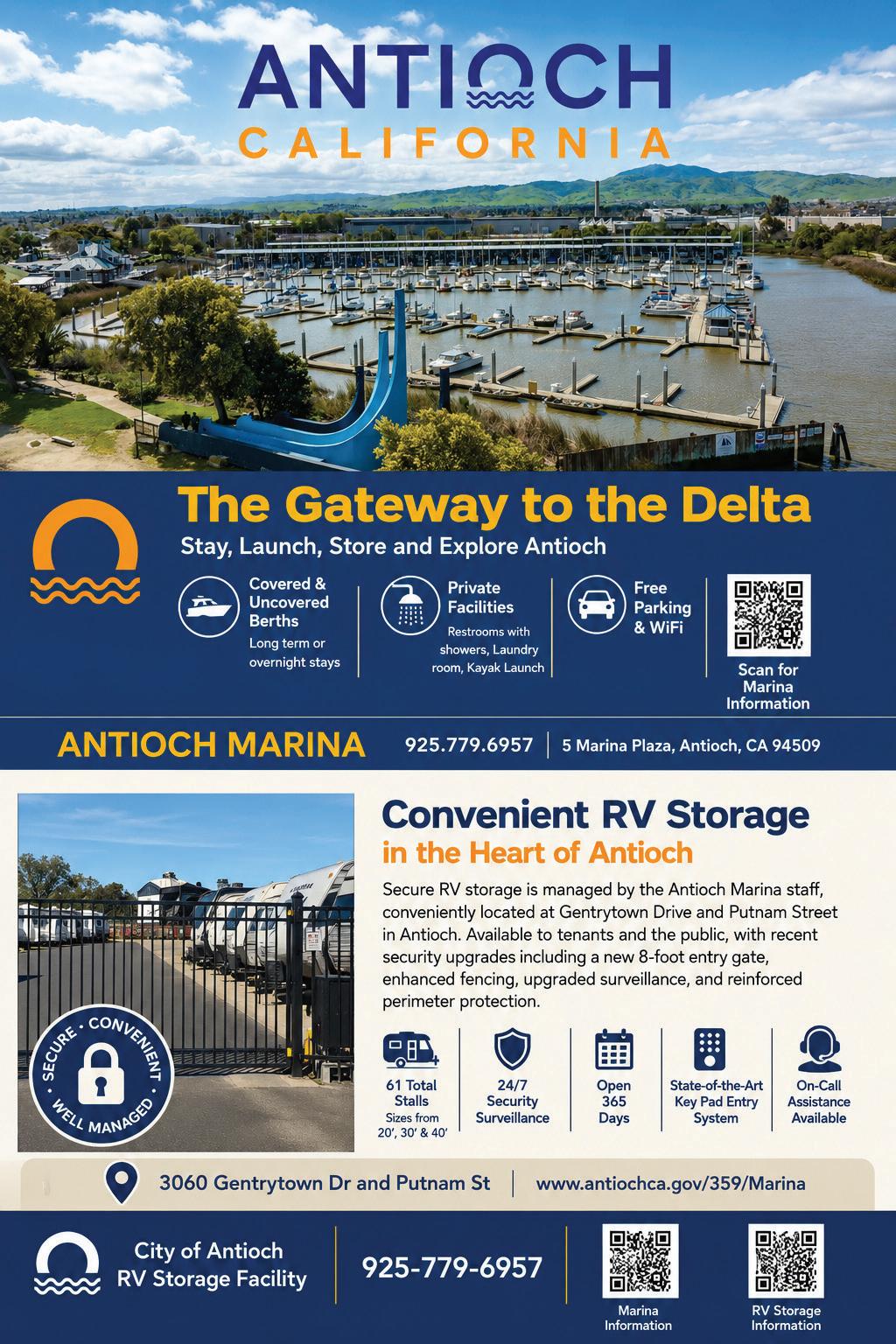
Secure RV storage is managed by the Antioch Marina staff, conveniently located at Gentrytown Drive and Putnam Street in Antioch Available to tenants and the public, with recent security upgrades including a new 8-foot entry gate, enhanced fencing, upgraded surveillance, and reinforced perimeter protection.
• 61 total stalls ranging in sizes from 20, 30 & 40’
• 24/7 security surveillance
• Open 365 days

• State-of-the-art key pad entry system
• On-call assistance available 3060 Gentrytown Dr and Putnam St www.antiochca.gov/359/Marina


Beer Can Series
BAY VIEW BC — Monday Night Madness: Spring makeup, 7/6. Fall, 7/27, 8/10, 8/24, 9/7, 9/21 (make-up 10/5). Nick, (510) 459-1337 or www.bvbc.org.
BENICIA YC — Thursday nights through 9/17. Noble, (707) 315-0484 or www.beniciayachtclub.org/racing.
BERKELEY YC — Friday nights through 9/25. Info, beercan@berkeleyyc.org or www.berkeleyyc.org.
CAL SAILING CLUB — Year-round Sunday morning dinghy races, intraclub only. Info, www.cal-sailing.org
CORINTHIAN YC — Friday nights through 9/4. Marcus, (415) 606-4110 or www.cyc.org
COYOTE POINT YC — Sunset Sail: every Wednesday night through 10/7. John, (650) 703-5621 or www.cpyc.com
ENCINAL YC — Summer Twilight Series: Friday nights, 7/10, 7/24, 8/7, 8/21, 9/4. Ken, (415) 316-6269 or www. encinal.org.
FOLSOM LAKE YC — Wednesday nights through 8/16. Info, www.flyc.org.
ISLAND YC — Island Nights: Fridays. Spring: 6/5, 6/19. Summer: 6/26, 7/17, 7/31, 8/14, 8/28. Info, www.iyc.org or www.jibeset.net.
KONOCTI BAY SC — OSIRs (Old Salts in Retirement) every Wednesday, year round. Info, www.kbsail.org.
LAKE WASHINGTON SC — Thursday nights through 10/1. Mark, owing78@yahoo.com or www.lwsailing.org.
LAKE YOSEMITE SA — Thursday nights through 8/27. Rich, (209) 617-4495 or www.lakeyosemitesailing.org.
MARIN YC — Thursday nights through 9/3. Ellen, (415) 509-6863 or ellenpclark@comcast.net.
MONTEREY PENINSULA YC — Sunset Series: Wednesday nights through 10/7. Mark, (831) 236-5191, race.mpyc@ gmail.com or www.mpyc.org.
OAKLAND YC — Sweet 16 Series: Wednesday nights through 6/17 & 7/8-8/26. Info, www.oaklandyachtclub.net.
RICHMOND YC — Wednesday nights through 9/30. Fun Friday Dinghy Series through 9/25. Rolf, (510) 300-7462 or www.richmondyc.org
ST. FRANCIS YC — Wednesday Evening Series through 8/26. Thursday Foil, 6/4, 6/18, 6/25, 7/16, 7/23, 8/6, 8/20. Friday Foil, 6/12, 7/10, 8/21. Caleigh, (415) 655-7756, racing@stfyc.com or www.stfyc.com.
SANTA CRUZ YC — Tuesday & Wednesday nights through 10/28. Friday Evening Dinghy races, 7/17, 8/21. Info, www. scyc.org
SAUSALITO YC — Sunset Series: Thursday nights. Spring: 6/4, 6/18. Summer: 7/16, 7/30, 8/13, 8/27. Michael, (415) 596-2357 or www.sausalitoyachtclub.org.
SEQUOIA YC — Sunset Series: Wednesday nights through 9/16. Stephen, (775) 230-5979, www.sequoiayc.org or www. jibeset.net
SIERRA POINT YC — Tuesday nights though 8/25. Dylan, (805) 451-7591 or racing@sierrapointyc.org
SOUTH BEACH YC — Spring Series: Friday nights through 6/19. Dave, (650) 823-1124 or www.southbeachyachtclub.org.
SOUTH LAKE TAHOE WINDJAMMERS YC — Wednesday nights through 9/23. Eric, (224) 717-6376 or www.sltwyc.com.
STOCKTON SC — Wednesday nights 6/3-8/26. Andy, (209) 483-3677 or www.stocktonsc.org.
TAHOE YC — Spring Laser Series: Monday nights through
7/6. Spring Beer Can Series: Wednesday nights through 7/8. Mike, (925) 708-3374 or www.tahoeyc.com.
TIBURON YC — Friday nights through 6/12 & 7/24-8/28. Rob, (415) 577-7199 or www.tyc.org.
VALLEJO YC — Wednesday nights through 9/30. Mark, (916) 835-2613, www.vyc.org or www.jibeset.net.
In the Tropics
July 3-6 — Tahiti-Moorea Sailing Rendez-vous. Info, www. tahiti-moorea-sailing-rdv.com
July 6-10 — Pacific Cup Starts. San Francisco to Kaneohe, Oahu. PCYC, https://pacificcup.org
Oct. 2 — Little Ensenada International Yacht Race, San Diego to Ensenada. SWYC, www.southwesternyc.org
Nov. 2-14 — Baja Ha-Ha XXXII cruising rally, San Diego to Cabo San Lucas. Info, www.baja-haha.com
Please send your calendar items by the 10th of the month to calendar@latitude38.com. Please, no phone-ins! Calendar listings are for marine-related events that are free or don't cost much to attend. The Calendar is not meant to support commercial enterprises.
Predictions for Station 9414290, San Francisco (Golden Gate)

6/13
6/14
6/20
6/21
6/27
6/28Sun 0533/-0.5 1302/4.5 1700/3.4 2255/6.1
June Weekend Currents NOAA Predictions for .88 NM NE of the Golden Gate Bridge
6/06Sat 0215/1.4F
6/07
2007 2223/1.1E
6/13Sat 0200/2.3E 0619 0946/2.6F 1323 1521/0.9E 1740 2100/2.6F 2349
6/14Sun 0250/2.5E 0713 1038/2.8F
6/27
6/28
Source: https://tidesandcurrents.noaa.gov
are invited to the San Francisco


Saturday, July 11, 2026 Bay View Boat Club, the waters off Pier 54


RACE STARTS 13:00 followed by Awards, Dinner and Dancing Register at www.bayviewboatclub.org/plastic-classic.com
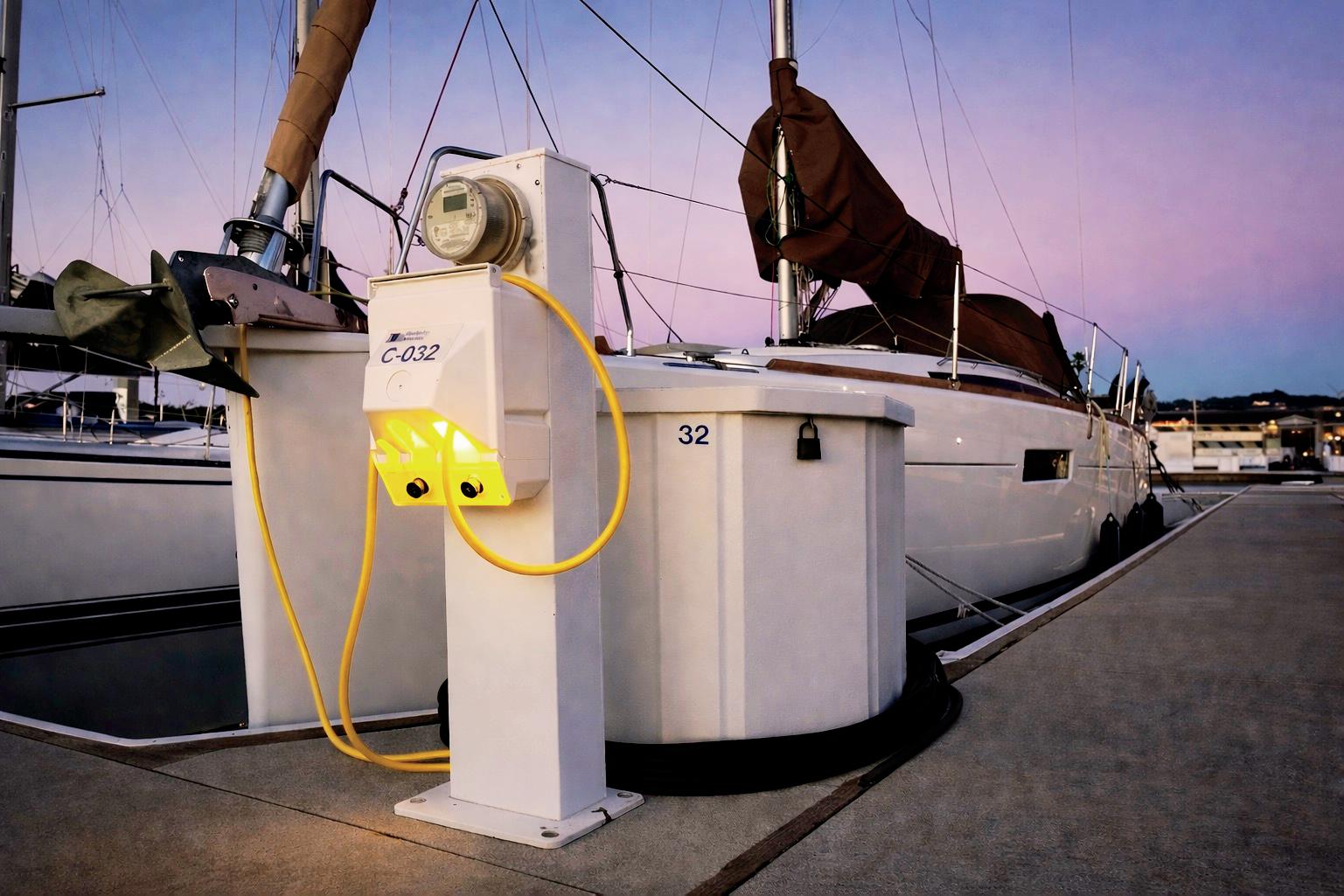
Berkeley Marina’s newest D & E docks are nearly complete—purpose-built for modern boaters. Enjoy brand-new construction, free slipholder parking, rounded cap finger docks, and modern 30A & 50A shore power pedestals.



F & G Docks were re-decked this past winter, and O & K Docks upgraded pedestals have just gone in. With stunning views of the bay, skyline, and bridges—plus dining, hotels, coffee, parks, clubs, recreation, boat yard, and shopping just steps away—you’re perfectly positioned for your next season on the water. Sign up today and get 2 months free!
It was with great interest I read Tom Morkin's article about his 19 years sailing with his wife Liz and all the
I'm 79 now, and my sailing days are long gone. Most of my water fun now is bombing around Lake Tahoe in a Cobalt with my former partner in crime in skiing, sailing, tennis — and even prison in Mexico. But I've always valued the way we did it back in the '80s and '90s. We used sextants, a compass and charts. I've always thought that was the way to experience the adventure: getting to know the planets, stars, sun and moon, currents and weather changes. We had no refrigeration or a watermaker. It was a true adventure trying to find fresh water and lug it all back to the boat.
I remember later writing this to a friend from my Sun Valley ski bum days, who later founded Lithium Americas in Nevada, "While I'm trying to find fresh water in some godforsaken atoll in the South Pacific, you're swinging deals out of a yurt in Mongolia!"



| (510) 981-6740

We once lost a rudder sailing to Hawaii, and all we had was a VHF radio for communication. We were in Cabo when there wasn't much there. Another friend was once the only boat anchored there. I also fished for 10 years in Alaska in the '80s. After that, we sailed the Atlantic to Tortola where my friend's mother lived on 15 acres on the water. One night, we decided to try to sail to the Arctic Circle the next year. We almost got there. It was all coastal navigation. One night on watch, I observed a full moon eclipse, the Northern Lights blazing and icebergs glimmering off in the distance.
My last sail was 1992-1993, and I found the other sailors to have way less "seamanship" skills than we did; I wasn't impressed and I guess a bit of a snob. They relied on GPS, autopilots and all that. But then again, they were pretty much just rookies, as I once was. I used to think of writing an essay called "Sailing: the Ultimate Adventure." But it is so easy now with all the electronics. A lot of the skill and adventure is lost. But you still can go to exotic ports and deal with interesting locals, and that makes it worth it.
I ended up going back to live in Tahiti, which I much preferred over Maui where I lived, worked, wrote and played guitar in clubs.
My last crossing was the Gulf of Mexico — we were ghosting along with our gin and tonics listening to others on the radio bitching about having to steer by hand because their
second autopilot had failed. Our wind vane did just fine. And years later, around 2008, we were living in Mexico on the coast and I ran into neighbors from across the street from where I grew up in Seattle. They were sailing and soon to leave for the South Pacific. But before that, I saw them again in Seattle where they had boxes of electronics from other boats they've brought up to repair. It seemed like electronics ruled their lives. When we sailed to Tahiti, all we had was a VHF and Ham radio.
But I imagine if I were to cross an ocean again, I'd take the easy way out, too.
Brent Pellegrini
⇑⇓ REALIZING A FIXTURE OF THE COMMUNITY HAD PASSED ON
So that's why our boat's hull hasn't been cleaned in a while. Reading April's Letters regarding Club Nautique I saw that Colin Williams had passed away. He helped maintain a lot of boats at Ballena Bay in Alameda. I thought it was great that he was fixing up his Ericson 35 — he was turning it into a really nice-looking boat.
He was always in a good mood and would let me borrow an occasional tool if I needed it. Funny thing, but the quarterly bills he sent me for hull cleaning had a return envelope that already had a stamp on it! Talking with him was like taking a short vacation to the Caribbean. He will be missed. Pat Brown
Foxy Cat, Catalina 30 Ballena Bay
⇑⇓ WILL FERRY PLANS BE FOILED?
In your April issue's Max Ebb, the topic was ferry boats. The February 9 edition of The Economist talks about foiling electric ferry boats, which appear to be far superior to the massive hulks currently transiting the Bay.
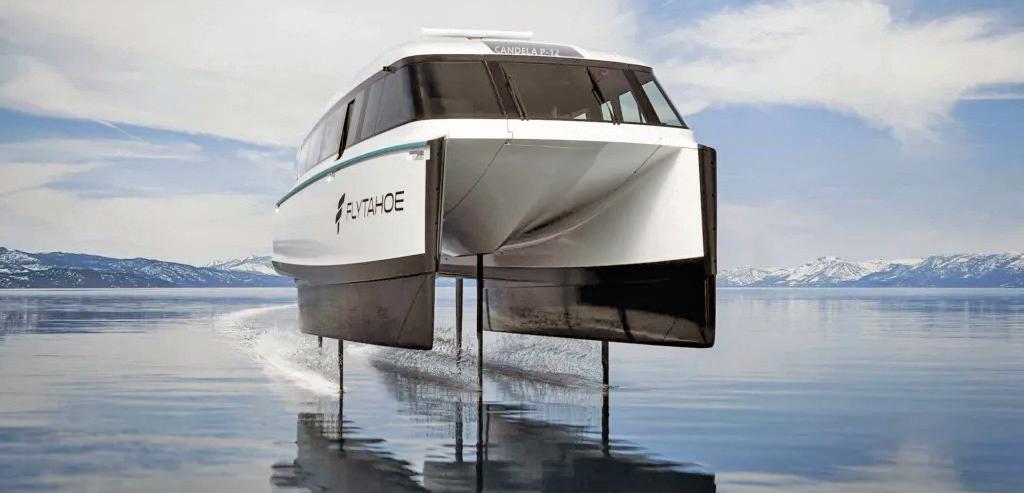

Because everything but the foils is out of the water, the energy required for propulsion is reduced by about 80%. A recent innovation that adjusts the tilt of the foils 100 times a second results in an extremely smooth ride. At the same time, they generate almost no wake, they are quiet, and they generate zero global-warming gases (other than the emissions from the power plant that charges them).
Our infrequent 300-plus-person ferries would be replaced by faster and more frequent 30-passenger ferries.

Sunday, August 9
The article lists about seven companies manufacturing these foil ferries; Candela, in Sweden, appears to be in the forefront. Navier is in the USA.
Dan Marshall
Dan — We 100% agree that smaller foiling electric ferries would be a better choice on certain Bay Area routes at certain times of the day.
There are plans for a Candela-designed electric foiling ferry on Lake Tahoe, with service between South Lake and the North Shore. The last we heard, the Bay Area-based startup FlyTahoe was going to build a Jones Act-compliant, US-constructed Candela P-12, a design that is in operation in Sweden. In early February, a Candela P-12 completed the longest journey by an electric passengership after traveling more than 180 miles from Gothenburg, Sweden, to Oslo, Norway. The vessel came ashore to charge throughout the transit on a mobile 360kW DC battery system. (The unit was towed by a Ford Lighting electric truck.)
The editor of these Letters has become a "frequent" (at least once or twice a month) passenger on the Larkspur ferry over the past few years. It's fantastic! It costs between $9 and $14 (a heavily subsidized fare), the boat has three levels and a bar, and it's about a seven-minute drive to the parking lot. That's about 10 minutes from door to boat, then 30 minutes to the Embarcadero, zooming past the Tiburon Peninsula, past Angel Island and Alcatraz, and under the towering rim of the city. North Beach, Chinatown and Russian Hill are a short-ish, steep walk away. There are times — morning and evening rush hour and Giants games — when the ferries are packed. In the off hours, it's sparse.
The ferry is an awesome luxury. The current model is like being on a yacht. The foiling model would be like riding a bus.
⇑⇓ FERRY PARKING? NO NEED IN THE NORTH BAY
Not everybody gets to the ferry by car, so the assumption of the number of parking spaces needed for the number of expected passengers is likely inaccurate. We live in Napa and frequently use the Vallejo ferry to travel to S.F. We leave our car in Napa and ride the VINE bus to Vallejo. While waiting to board the ferry, we see many passengers arrive by car — either private Uber or Lyft. These cars do not stay, and, like us, do not occupy a parking space near the ferry.
Bill Crowley
Bill was commenting on the April issue Max Ebb — Cash or Crash?, which questions the proposed Berkeley ferry.
We think you're making an apples-and-oranges comparison, Bill, when contrasting Vallejo with Berkeley, though your observation about people forgoing cars is encouraging.
Vallejo has a small parking lot just outside the ferry building serving the handful of businesses there, as well as ample lots on the other side of Mare Island Way. There's lots of public space around the ferry docks, but it's not an active park or marina in the way Berkeley is. Larkspur has an enormous parking lot; there is no park or marina in the area.
Berkeley Marina has long been a haven for sailors, fisherman and people who just want to park by the water and admire the view. We hope that kind of access will always be available, ferry or not.
⇑⇓ DOING A BEER CAN THE RIGHT (FUN) WAY
Even in nasty, wet, windy weather, RYC gets boats out for Beer Cans! We come up to the Club, shake off the water, and sit for a libation, or go out to BBQ. Remember those days when clubs let the racers in after a race, with I recently raced in an intraclub regatta that used to be fun, but was far from it. It was so ridiculously
I think your words were perfect, Latitude. nates with sailors and clubs. Getting 50 to 60 boats out on a beautiful night is not a fluke. RYC does it from April through September — lots of boats, lots of laughs and magi cal smiles! Pass it forward, everyone!
Cinde Lou Delmas Another Girl
Cindy was commenting on the May 1 'Lectronic Latitude: Richmond Yacht Club Beer Can Cup Goes Racing for the Fun Of It.
⇑⇓ DUE COMPENSATION
For my first beer can at RYC, Eric [Arens, club "booster"] had me crew on a J/24. The bad news was that we had six people on board. The good news was at the end of the night, there was a bottle of wine for the boat that had one too many tacticians. Great event at a great club.
Jay Bauer
⇑⇓ SEASONAL WEIRDNESS = FUN
Great reflections on the RYC beer can. (You got photos of both Lasers, too!) Jonathan Howell was looking strong holding a lane next to Wildcard, with me bobbing about in the wind shadow of a dozen boats at the windward mark. Last Wednesday [late April] was a fun and weird night — it was a beat to Bob Klein for the Lasers, while the keelboats brought down a northerly, making the return to RYC also a beat. Spring craziness.
Ernest Galvan Latitude Nation
⇑⇓ STORMY SAILING IN ROLLO WHEELER REGATTA
I'm happy to see this regatta is still being raced in honor of Rollo Wheeler. Mik and I knew Rollo and his wife about

• 25% OFF all Sailing Courses • Access to Charter 30 sailboat 25'- 45' • FREE - Afternoon and Evening Club Sails • FREE - Merit 25 One design racing • FREE - Seminars • Adjunct member access at Sequoia Yacht Club
Visit us at 400 Harbor Drive, Suite D, Sausalito





60 years ago when they had their boat Rondeveau (spelled all wrong!) in Hanalei Bay after a Transpac, and/or the fun race to Kauai. They had a dinghy and would transport those of us without dinghies from our sailboats across the river to get up to what was the Plantation Hotel in those days. The parties were plenti-
They were incredibly special people!
Only we oldsters will remember them. If I'm correct, the Wheelers were tragically lost at sea on a coastal trip. I'm so glad they are being remembered.
Suzi Beatie
Suzi was commenting on the April 17 'Lectronic with the same name as this letter.
⇑⇓ WHO WAS AT FAULT WHEN ROWING AND SAILBOAT RACING CONVERGED ON THE ESTUARY?
The rowing event should have had a permit. If they had, at least the Coast Guard could have given a heads-up to both groups. But I wonder how much it would have helped. When applying for a permit, it's hard to be highly specific about your racing area. On the Estuary, you can specify the eastern and western extremities of the portion you plan to use, but that's about it. So the probability of some overlap between two events is pretty high.
And it sounds like the rowers and their escorts who caused the worst of the problem weren't even racing, so they weren't bound by the permit. But hopefully the high school group has learned something.
Max Crittenden Solar Wind, Martin 32 Bay Area
Max was commenting on the April 8 'LL: Island Yacht Club's Sadie Hawkins Race Interrupted by Rowers by Marie Cunningham
⇑⇓ THE ACTIUM CAMPAIGN
Ages ago, a whaleboat race encountered a racing fleet near Alcatraz. The diagrams looked like the Battle of Actium, a sea battle Cleopatra and her domestic partner Mark Antony lost. I think under the Rules of the Road, a rowboat is a powered vessel and must give way to a sailboat, unless they have fishing lines out.
The high school regatta needed a USCG permit.
John Dukat Richmond Yacht Club
John — The COLREGS are a little unclear about right of way between sailboats and human-powered craft. The Rules do not explicitly establish a simple hierarchy between "sailing
vessels" and "vessels under oars" the way they do for powerdriven vessels versus sailing vessels. The general decorum is "Big boat avoids little boat," but in the case of the incident on the Estuary, we think it's even simpler, still.
Following the conclusion of the high school rowing event, two boats strayed through the starting line of the regatta, and "the adults guiding the rowers yelled at our racers," Marie Cunningham wrote. Permits and right of way aside, nothing — absolutely nothing — beats common sense and good manners. Share the water and give way even if you're not strictly required to. Above all else, don't be a jerk.
⇑⇓ NO SAILING ON MOTHER'S DAY — DOES THAT STILL MAKE SENSE?
I'll bite on this thought experiment because I've considered it frequently. [Vikki is commenting on the May 8 'Lectronic with the same name as this letter.]
As someone involved in organizing regattas and spending hours evaluating the annual race schedule trying to fit more racing in, I understand why race organizers convince themselves that a Mother's Day race might be a good idea. It's hard not to schedule a regatta on a late-spring Sunday when the weather is likely to be beautiful.
As a mom who sails a lot, Mother's Day still needs to be off limits for racing because many of the conditions that existed when Mother's Day was created still exist — and some other complexities have been added. Every racer has a mother in their life they should be celebrating on Mother's Day. Mothers, for the most part, nurture society by raising the next generation — as teachers, care workers, nurses, doctors and volunteers.
Moms deserve at least one day where society nurtures them. If the racer in the family is not a mother, the nature of racers dictates that if there were a race on the schedule, many would find an excuse to prioritize racing and probably forget to call their mothers. Racing on Mother's Day would distract from the collective gratitude we should be showing the mothers in our communities.
If the racer's partner is the mother of their children, chances are Mom is not only working outside the home to help finance the sailing habit, but is also managing the children when the racer is off racing. She deserves at least one
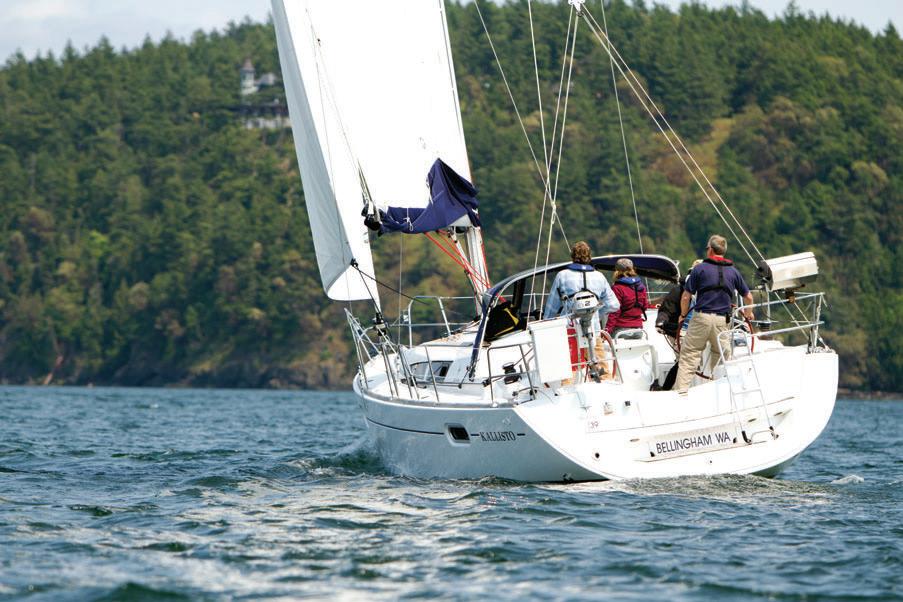
Evergreen-studded islands, abundant wildlife and peaceful anchorages. Experienced or new to sailing, we can help you discover the joys of cruising the beautiful San Juan Islands! Beginner to advanced liveaboard courses. Monohull and catamaran bareboat charters. Guided otillas too!


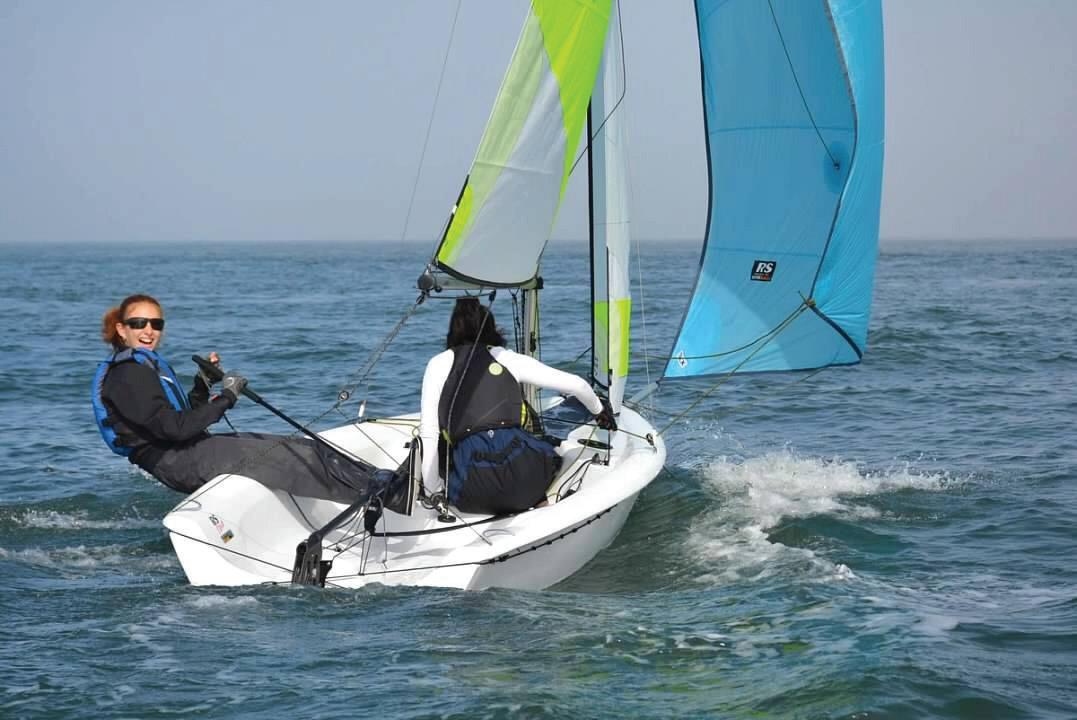
running from June 8 through August 10 Ages 11 – 17
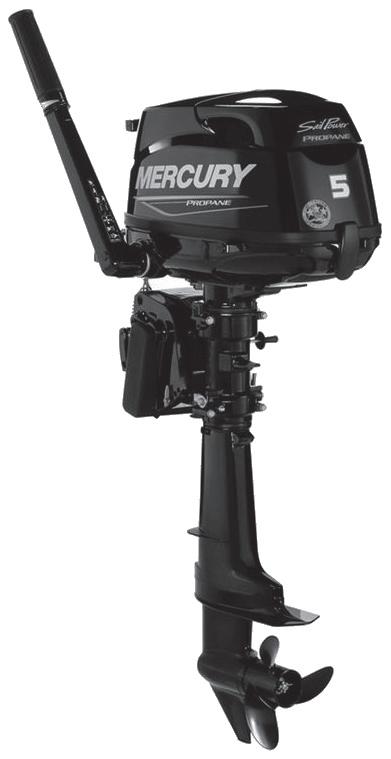
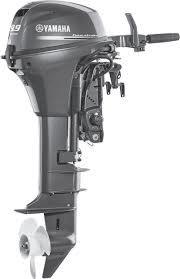
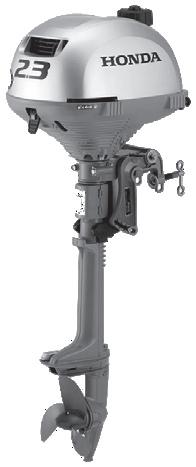
CHECKOUT THE ALL NEW MUST SEE SMALL
CHECKOUT THE ALL NEW MUST SEE SMALL MOTORS
including Mercury 5hp Sail, Yamaha 9.9hp portable, and Honda 2.3hp
weekend day when she doesn't have to be the primary parent — one day a year to relax while the other parent fully takes on the responsibilities of raising good humans.
If the racer in the family is a mom who races with their partner and/or separately, like me, she probably had to step back from sailing while the children were little and would have to miss out on racing on Mother's Day as well — a recipe for resentment and feeling unappreciated.
Motor availability is very limited at this time, get your motor order in now for the upcoming season
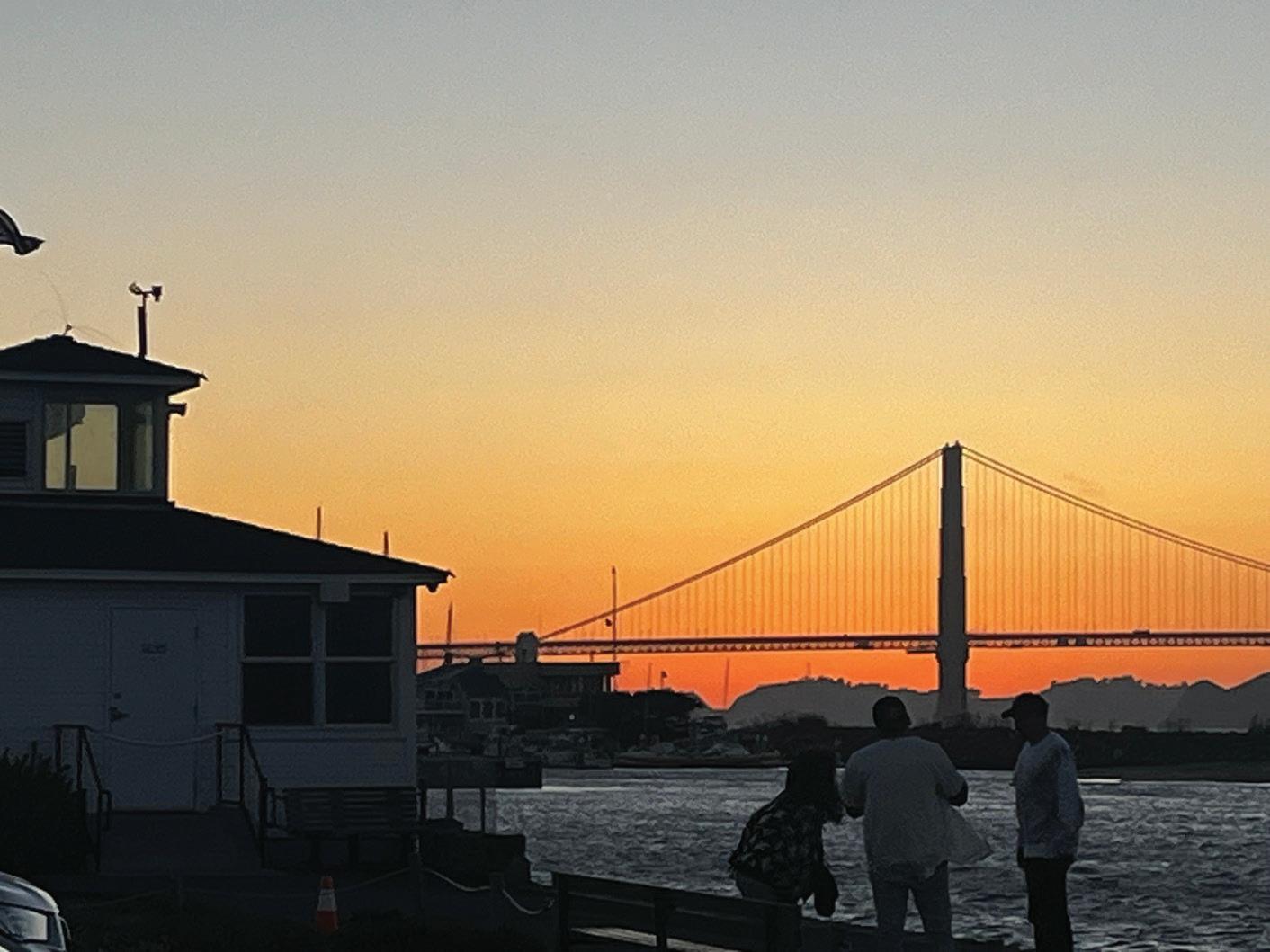
Available Berthing in the West Ma in sizes of 35, 40, 45, 50 — Don’t miss this
• The oldest recreational marina in San Francisco and one of t
• A sought-after destination for boaters from around the world
• Amenities include free pump-out stations and a full-service com
• Guest Berthing Available up to 90 feet and 2 Great Yacht Clubs
• Home to Marina Green Park is a hub for major sailing events in Fleet Week, and other city front events vents and the Palace of Fine Arts Activ 1 Marina Green Dr
Women have made gains since the not-so-distant days when we were barred from yacht club membership and needed husbands to co-sign credit cards and boat loans. Despite that progress, society still judges mothers harshly, and those who choose racing on Mother's Day over spending time with their kids would be seen by many as uncommitted mothers. Plus, most of us really love our children and don't want to miss out on the one day a year when the family isn't pulled in different directions by extracurriculars and makes a concerted effort to spend quality time together.
If you really need to be sailing on Mother's Day, and the mothers in your life also love sailing, treat them to a beautiful brunch at the yacht club and then take them out for a lovely daysail on the most beautiful bay in the world. No racing on Mother's Day is a tradition that should remain sacrosanct for both practical and sentimental reasons.
And to all the mothers who are part of the racing community, thank you for all you do to support this generation of racers and raise the next generation. Our sport owes you a lot of gratitude. Happy Mother's Day!
Vikki Fennell
Taliesin Rose, Bavaria 46E Mill Valley
⇑⇓ THE TRADITIONAL ROLE? ¯\_(".)_/¯
I am a "Childless Cat Woman" and I have confidence that I sailed in utero. I once saw my mother trapezing on my dad's 110 in a dress up to the beach so she could go for a swim. Not everyone is a traditional "mom" — Jocelyn Nash sure wasn't.
Milly Biller Big Pink, International 110 Inverness
I really appreciate when there are women's regattas planned over Mother's Day weekend — like the J/105 Women Skipper Regatta at St. Francis Yacht Club yesterday [May 9] — that celebrate and encourage women in sailing.
Shannon Kaiser Streaker, J/105 Bay Area
Just bring Mother along. She will appreciate the ride. Mary Westlake

What about women sailors who aren't mothers? I'm in my 70s and still a boat owner. I am a mama, and my mother-in-law has sailed onto heavenly waters. Taking the boat out with my beloved sailing hubby any day feels special.
Maybe we can create a new thing. Water brought each of us into this world, so it should be honored as the great mother, as well!
Celia Jorg
The following is an excerpt from the May 4 'LL, written by Marissa Mee, with the same name as this letter:
For nearly five years, I tried to get into match racing in a real way. Rankings, events, teams — it always felt just out of reach. Not because I couldn't sail, but because there wasn't a clear path in. Especially in the US. Especially if you weren't already part of a program. Especially if you weren't willing to wait. I stopped waiting. I wasn't taking no for an answer.
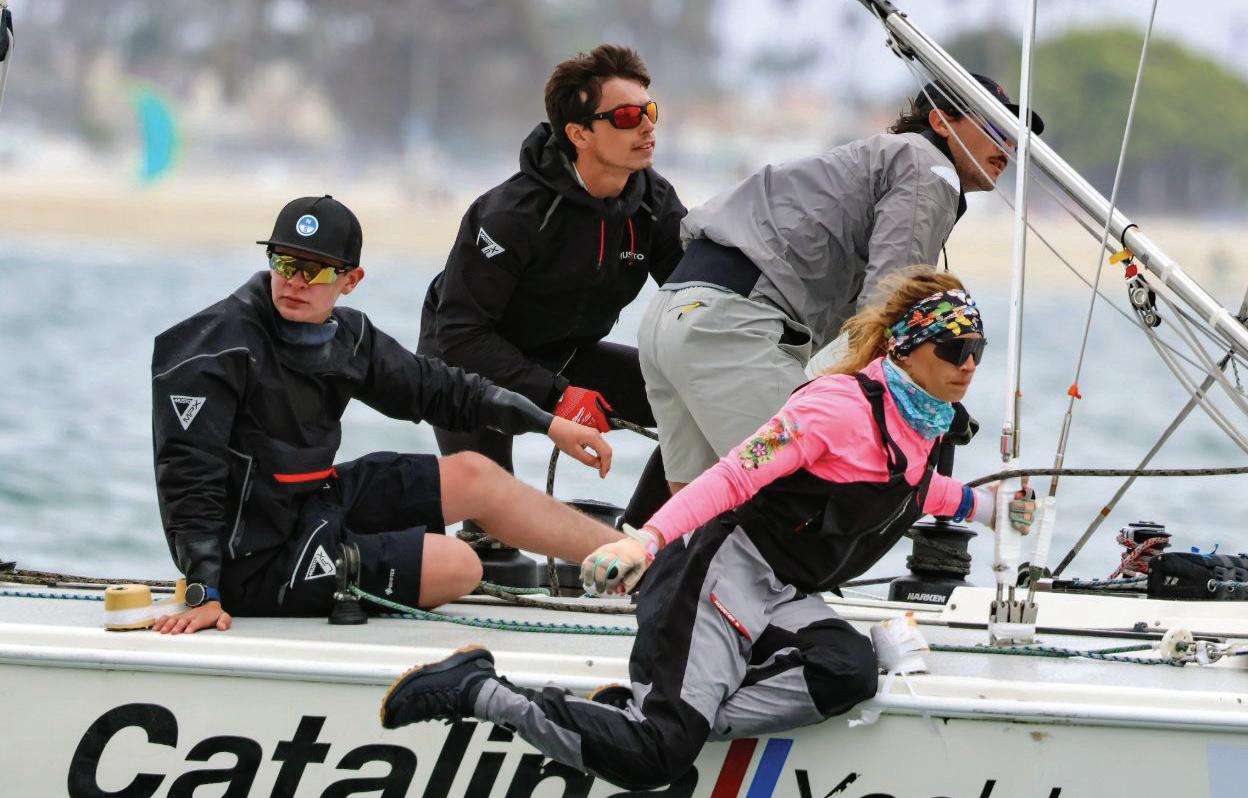
What I thought was an Australian team turned into a French-speaking group chat within minutes. They had never sailed a Catalina 37. I had. These boats don't exist anywhere else. So there I was, the last-minute fill-in, now explaining rigging, systems, the symmetrical kite, dip pole, timing. That's the thing about high-level sailing. You don't wait to be comfortable. You get up to speed, fast. Practice was messy. Not bad. Just off. Timing a half step early. A half step late. By the end of the day, we had it — motion, timing, all of it. At some point, it stopped being about where anyone was from, or anything else for that matter. They forgot I was even a woman, until the bucket started making its way up the hatch. And even that just turned into a laugh.
The first races weren't clean. We hit marks. We were over early once. Simple mistakes. But at this level, that's the race. That's match racing. Not about big mistakes. About when they happen. We had the speed. The skill. The ability. We just didn't put it all together when it counted.







Marissa Mee SoCal
Excellent writing as well as character, with persistence in accepting the short notice and becoming a leader with what you knew about the Catalina 37 and this new team. Inspirational.
Marlaina Pipal
scan to visit
UNDOCK AND UNWIND WITH FIRST-CLASS SERVICE, A FULL BAR AND FRESH ITALIAN FAVORITES AT LA STRADA 2215 CHURCH LANE, SAN PABLO




Come down to Vallarta Yacht Club on Banderas Bay — we have half a dozen of what we call "Capri 37s" (they're Catalina 37s) that the local fleet sails every month. The boats have been modded for asym kites.
Andy Barrow VYC Rear Commodore
Marissa — What a great story that had me enthralled from beginning to the end. Thank you for capturing your experience in a way we all can relate to in the game of life
I've spent some time thinking about the video of the windsurfer hitting the whale in S.F. Bay. [Josh is referring to the 'Lectronic Latitude: Whales, Look Out! — Windsurfer Collides With Whale on San Francisco Bay.]
That whale never saw the speedy windsurfer coming (or it would have avoided it), and the windsurfer was going too fast to avoid the whale. There might be an ethical issue there, similar to the speeding bicycle on a pedestrian path. The whale was probably all right, but we don't know. What if they hit them in the eye?
When I entered Santa Barbara Bay from the channel with Sampaguita in 2023, it was about 6 p.m., and the recreators were out in hordes. In particular, there were many kite surfers. I admit, I was unaccustomed to them and they freaked me out. I was under power, going no more than four knots. Additionally, there were lots of crab pots. The kite surfers were darting this way and that and crossing my path, with their kites stretched way out. I was thinking, "How do the Rules of the Road address these recreators?"
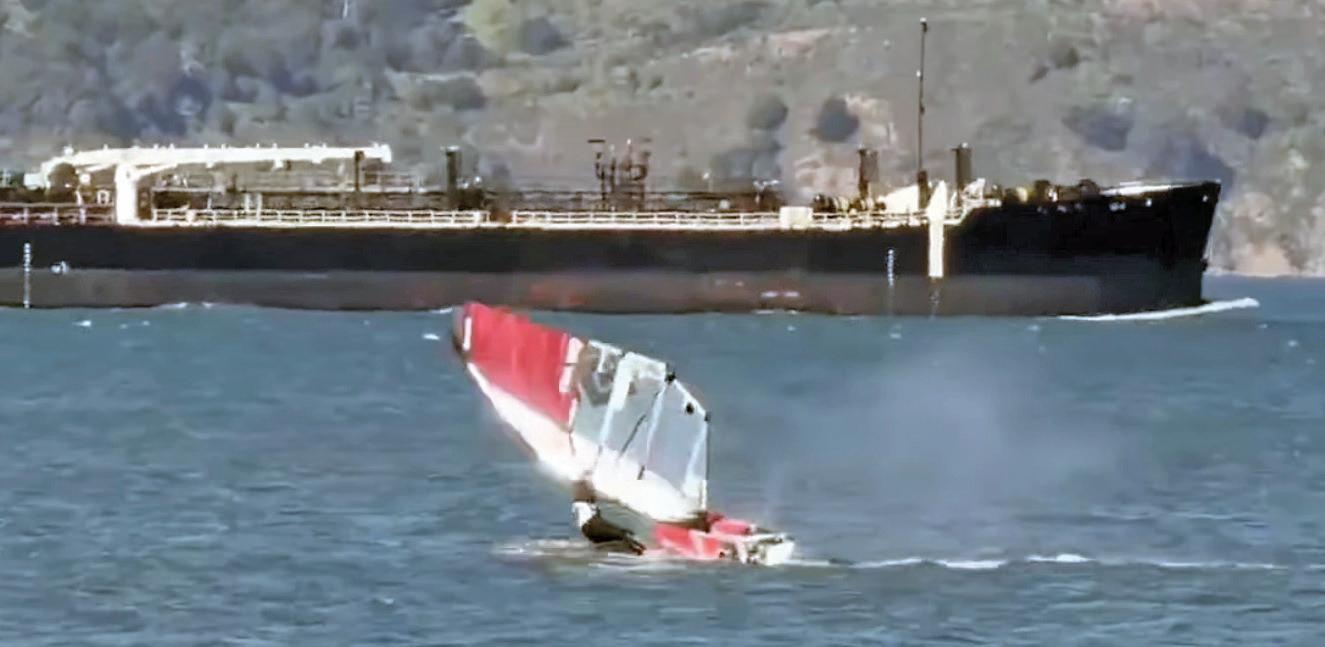
I did know that because I was under power; they presumably had the right of way, but honestly, there was no way I was going to outmaneuver them, no matter what, while also avoiding getting my prop caught in a crab pot. In the moment, I had to decide to stand on, and hope they avoided me regardless of right of way. I was unable to anticipate their courses at the speeds at which they were going and the turns they were making.
It's always a concern when sailors demand their right of way rather than sharing the water. Fortunately, the kiters were skilled and avoided me, but I was very uncomfortable. I am not opposed to these recreators, but their speeds
may, at times, be a hazard to others — not just themselves. Other boaters may misjudge the situation, just as sailors misjudge a tanker, and the tanker is cursing the sailboat.
I'm not calling for regulation, per se, but if enough inci dents happen, someone will.
Josh Wheeler
Sampaguita,1985 Pacific Seacraft Flicka 20 West Coast
Josh — In the scenario you described, we think one rule of the road often supersedes the rest: Because windsurfers, kit ers and wingfoilers are typically smaller, faster and more ma neuverable than most sailboats, they are often the overtaking vessel and therefore required to stand clear. In general, the best thing a larger, slower vessel can do is hold a steady, predictable course.
But there are all kinds of gray areas. Windsurfers, kiters and wingers could technically be considered "vessels" under the COLREGS, and depending on the situation, normal sail ing right-of-way rules may also apply. Fortunately, it's in ev eryone's best interest to avoid close interactions with traffic, and serious or even noteworthy collisions are rare.
⇑⇓ LONG-AWAITED REPAIRS TO ANGEL ISLAND'S DOCKS HAVE BEEN DELAYED
Here's my personal opinion on Angel Island State Park's dock dilemma: Europe has a different political and cultural relationship with boat ownership, cruising and chartering, than the US. Croatia isn't the perfect "apples-to-apples" comparison, but its economy is boosted by massive business from the charter industry from May through October.
Angel Island is more of a local gem without the wheelbarrow of cash from foreign cruisers and charterers.
Added to that, the management of this harbor is by the State Park. It makes sense that resources would be limited or "not popular" to invest for the small population of "wealthy" boaters in favor of the vast, non-sailing (but voting) population.
So, yes, as the fourthlargest economy in the world, California could easily afford a quick and thorough repair of Angel Island's boating infrastructure. But alas, it's not politically expedient.
Rich Jepsen US Sailing

Rich was commenting on the April 24 'Lectronic: Update on the Continuing Delay of Repairs to Angel Island Docks
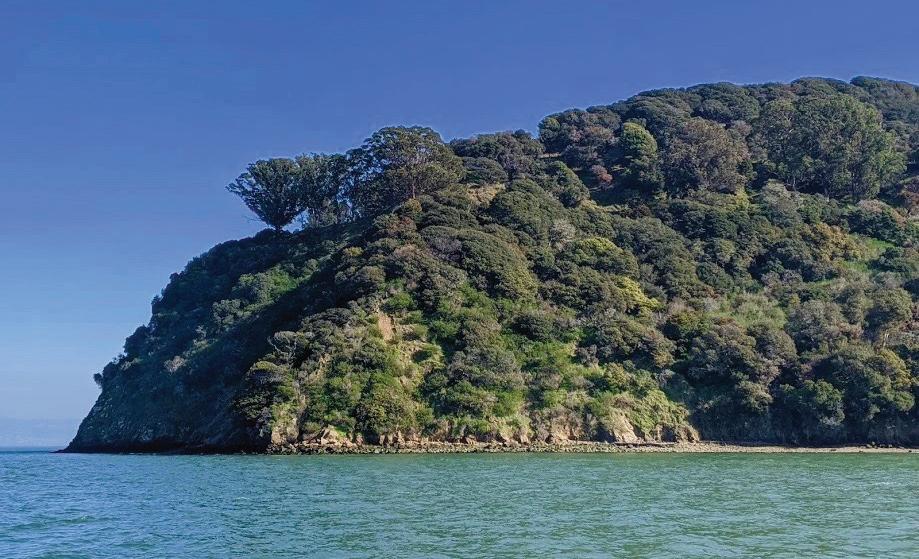
About a year ago, Latitude reported that plans to begin building new docks in Ayala Cove on Angel Island were


scheduled for June 2026. After reaching out to Angel Island State Park for an update, the timeline is now estimated to be between June 15, 2027, and October 30, 2027.
Rich — You have very eloquently stated that our elected officials simply don't G.A.S. As we well know, those docks are frequented by "regular" people with a wide range of vessels. The irony is that the DBW is part of the Parks Department. In business, if you screw up this badly, you usually lose your job. There is nothing known today that wasn't known three years ago, or 10 years ago, or whenever Ayala Cove was last dredged and the moorings and docks refurbished. Not a political priority — bundled with disregard, incompetence and zero accountability.
At least that's what it seems like.
Barry Demak Oakland
An aide to a certain state assemblymember (who must remain nameless) shared with me that introducing a relatively large budget item, such as dredging Ayala Cove and rebuilding the docks, is politically untenable. It "looks like" some concession to "rich Bay Area boaters." Not a good look with the current "tax the rich" sentiment in today's fiscal environment.
Dane Faber The Bay
Dane — Once again, Californians are seeing a grinding misperception about boating from our elected officials. While we understand the assemblymember's concerns, this is the equivalent of saying, "We shouldn't have public parking for cars because some drivers own Maseratis."
The public waterfront serves far more than a handful of wealthy yacht owners. It supports small-boat sailors, fishermen, youth sailing programs, Sea Scouts and everyday Bay Area residents. But ironically, without continued public support, access to the Bay risks becoming something reserved only for the wealthy.
Latitude — Hear hear! Angel Island used to be one of the few spots the Sea Scouts could afford to dock at regularly. Our scouts would dock for the day, hike, swim and explore historic sites, then sail back to the city. That is no longer the case …
Tamara Sokolov San Francisco Sea Scouts
⇑⇓
BIG PROJECTS AND FOCUS ON BASIC — AND RELATIVELY AFFORDABLE — UPKEEP
In the '70s and '80s, we'd get between the buoys almost every weekend with our kids. It was like a wonderful spiderweb with tons of boats there. There was a tiny, friendly staff, and none of the rangers wore a gun.
Back then, Angel Island was not expensive to run. But it is natural for administrators to keep trying to improve things and ask for bigger budgets. We all remember the huge, expensive disaster of building and then not once using the ferry landing on the east side, as well as the wind
• We are uniquely positioned to haul your boat
• We carefully haul you on our Brownell Hydraulic trailer. NO STRAPS!
• We safely store your boat on Brownell stands supplied by us!
• We have some of the best weather for drying out your boat.
• We have seasoned professionals that can field your calls or work on your boat.
• We have a safe environment for your boat.
• We have very reasonable rates
generator experiment.
I'm thinking the Park higher-ups are not boat people.
Al Fricke Jubilee, Catalina 36 Alameda
⇑⇓ AS LONG AS WE'RE PICKING NITS …
This is way, way secondary to the docks, but it sure would be nice if the mooring system were the same as in Avalon on Catalina Island. There, you just motor forward to pick up the bowline attached to a floating pole, attach it, and then follow the same line to the stern and cleat it off. Done.
No happy hooker or other gymnastics required.
Taylor Miller
⇑⇓ A SAILOR'S PROTRACTED BATTLE AGAINST INFLATED TAX ASSESSMENTS
I finally received my "Findings of Facts" from the appeals board. I won on the valuation, the penalty and the interest, but I did not win, as expected, on the addition of sales tax being added every year.
For my 2024 assessment hearing, the valuation was lowered quite a bit to where I am supposed to receive over $2,000 back from the county. They reached their decision on December 5 and I still have not received my refund.
The 2023 appeal was much more detailed because it involved the 10% penalty and interest. The County tried three times to delay my hearing and decision; the latest attempt was just last week [in late March] when they emailed me the following: "Because the December 12, 2025 hearing occurred within 180 days of the expiration of the two-year period for your case, Property Tax Rule 325(b) requires a written agreement to extend the two-year period to 180 days."
We went back and forth, and they told me that I basically had to accept Rule 325(b). I told them that I was away from my home and records but I believe that I checked the box when I filed the appeal two years ago and that I'd check when I get home. The next day, the Findings of Facts (FoF) was in my inbox!
I had the foresight to screenshot the county's webpage that said the county gets the information for boat ownership from the USCG, DMV and marina harbormasters — there's
Boatyard

nothing about individuals having to report, though that has since changed.
I think this could be a significant development for your readers who have been assessed penalties, as well as for boaters who never reported ownership and have worried the county might eventually catch up to them. With my case as precedent, those owners may now be able to use the same defense. (I am not a lawyer, but I have watched so many episodes of Law and Order that I think I qualify!)
I did, however, lose on the sales tax being added yearly.
I have a contact at the Pacific Legal Foundation, which fights for property rights, and gave them the details along with the FoF. After reviewing the case, they concluded that "it still makes no sense" to pay this "tax-on-tax" every year, but said overturning decades of precedent tied to the Xerox case is "a long road of litigation for a relatively small tax" and possible California Supreme Court review.
A "small" tax that every boat owner pays — my guess is the state brings in around $50 million from it.
After receiving the PLF response, I pointed out that the county arrives at "Full Assessed Value" by adding sales tax, then assesses health and school bonds on that amount — effectively taxing the sales tax itself. Yes, we are paying taxes on the taxes! The response was that this "may be the opening" because a court could potentially distinguish the issue from the Xerox precedent, making the case more attractive for California Supreme Court review.
My contact said, "You can tax the fair value plus sales tax, per Xerox, but then perhaps ignore the sales tax when determining contributions for bonds. That confusion could make the case more attractive for the California Supreme Court to review one day."
But I wanted to avoid all this because it will take a lot of litigation in the trial court, then appellate court, and maybe losing in both to get a shot at a Cal Supreme Court petition for review — which is discretionary and a long shot. (By the way, the Xerox case mentioned above was a case Xerox lost in 1977 when they fought that leased copy machines should not have to pay sales taxes. That was then twisted to have boat and airplane owners pay sales tax every year.)
What bothers me the most is the county's marine assessor, a true bully, who said, "I'll see you at the hearing
— I've never lost a case." (All I could think of was the school bully "I'll see you at recess!") Well, he has lost two cases now; my 2023 and 2024 appeals. The state puts out handbooks and he did not follow them. He compared my boat to a different type of vessel that weighed twice as much. He also produced "evidence" from JD Power that said, "inboard boats" value averaged 49.3% higher in the first quarter of 2021. I found the exact JD Power-document that referenced ski- and wakeboard boats, not oceangoing vessels. Someone from the assessors office mentioned that they'd never have had anyone challenge them in reference to their handbooks.
It was a disgrace for the county to treat citizens in such a manner.
I would like to take the sales tax issue to the next step — Marin Superior Court, which would entail a lawyer. I have some people that have said that they would chip in, but I'm wondering if there is enough support out there from your readers. If people want to get hold of me in reference to the 10% penalty, or if they have questions or thoughts, maybe one of your lawyer readers would want to help.
Larry McCullough Marin
⇑⇓
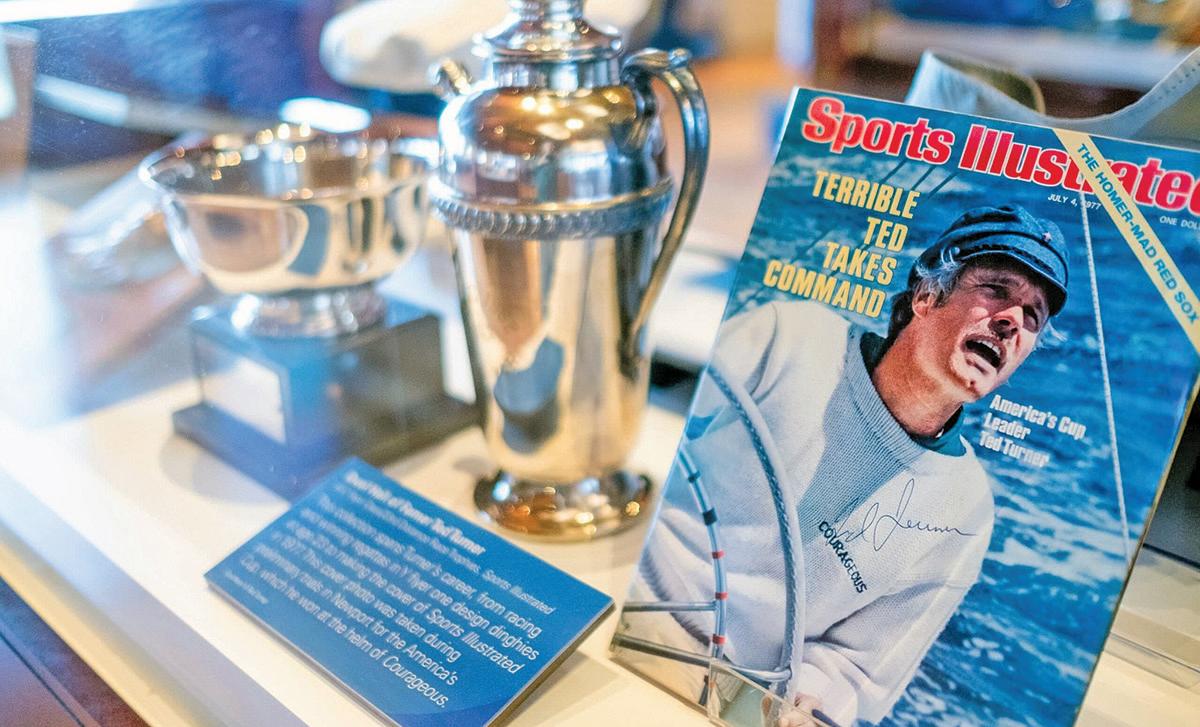
Ted and I sailed together in the 1960s in the Flying Dutchman, which was then an Olympic-class boat. He bought into our struggling little boatbuilding company even though I urged him not to. Later, we merged our boatbuilding company into Turner Enterprises in Atlanta. I learned a lot about how to manage a business from him.
We tried to qualify for the 1968 Olympics in Acapulco, but we fouled out in four of the eight qualifying races by: 1) hitting the starting mark; 2) hitting the intermediate mark; 3) hitting the finish mark; and 4), hitting another boat. They had to disqualify us — in those days, you could not just do a 360 and continue.
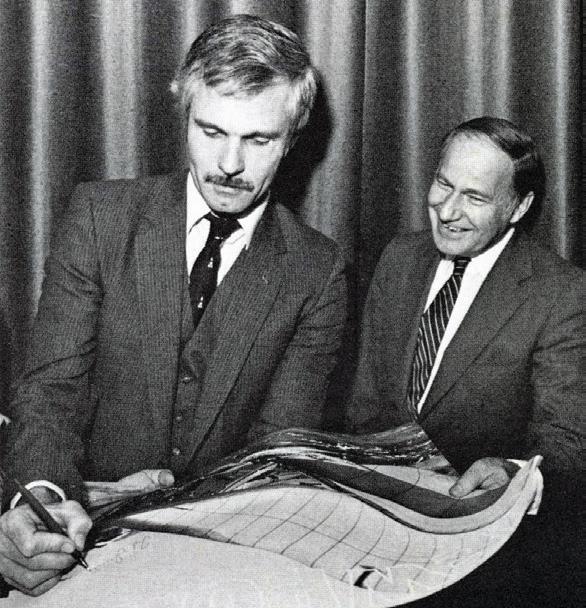
Ted was a great true friend. He had no secrets and really earned his nicknames, such as 'The Mouth from the South.' Andy Green
I was riding my bike in Santa Monica in 1991 when Ted and I saw each other. I stopped to say hi. At the time, I had fairly long hair and a moustache. His companion looked at me and said, "You look like Jimmy Buffett. Are you?" My reply to her was, "You look like Jane Fonda. Are you?"
Ted and I both burst out laughing. He was a great guy and great sailor.
Pete Phillips
⇑⇓ BRASH, FRUGAL AND A FEW SHEETS TO THE WIND AFTER WINNING THE CUP
I met Ted in the late '70s/early '80s at Carolina Yacht club in Charleston, South Carolina. He and his son were driving around in a beat-to-hell Ford station wagon towing a tandem Hobie 18 trailer. Ted didn't do so hot in the races, but his son sailed quite well.
Saturday evening, we're standing in line at the food truck in the parking lot, and as usual, Ted was talking very loudly — he didn't have exact change, so he turns around and starts yelling at everybody standing in line: "Hey anybody got a quarter? Who's got a quarter? We could use a quarter over here!" It was quintessential Ted. (Like anyone was gonna run up to lend the millionaire a quarter.)
He was cool with everybody that weekend.
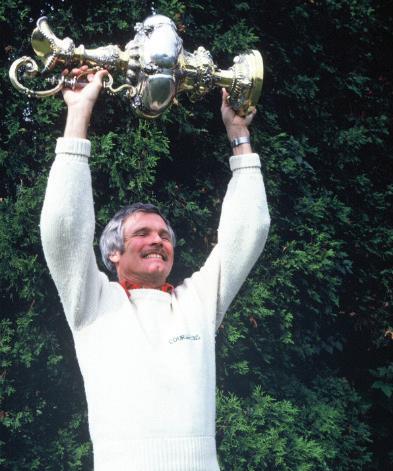
You have to give major props for getting so drunk at the winning press conference for the America's Cup and sliding out of his chair and under the table. Bravo!
James Clark Langley
⇑⇓ AGAINST THE GRAIN
Ted was our hero. We were in southeast Massachusetts, on Buzzards Bay, where sailors didn't care much for the New York Yacht Club. They held an annual cruise — a disguised drunken bacchanalia — and grabbed all the best anchorages around the bay for a week.
So we were overjoyed when Ted was selected to defend the Cup, then swept the Aussies. The last race was a ghosting contest. We chewed our fingernails till the finish gun, then raised hell! It was very, very memorable.
Scott Morris
⇑⇓ THE KING OF BEERS … MAKE THAT BOATS
I remember meeting him at a party after his disastrous loss in the qualifying round of an earlier Cup race when he was skipper of Mariner, an aluminum 12. His comment was that the boat was "the most expensive Budweiser beer can I'd ever seen!"
Scott Seaman
⇑⇓ THAT SAYS IT ALL
I pulled out John Rousmaniere's book Fastnet. Force 10 about that tragic '79 race — which Ted Turner won on corrected time! — and read on page 230: "… I remember telling the crew that 20 men would die that night. Tragically, and prophetically, I was right. I was afraid of very little that night, only running down a smaller yacht in the dark, and also having something on Tenacious break down and


causing us to lose the race." That says it all.
Bill O'Connor
There was a poignant moment as we docked Imp at the Plymouth docks after the '79 Fastnet, put the boat away, and took our exhausted bodies up the hill to the inn — Ted emerged at my side, walked up with me and into the bar and bought me a pint with his, and tugged on his stubble cigar. No words, just mutual respect for weathering the storm. Tenacious won, but he didn't count us out. He was a friend to many of us on Imp and a tremendous human being.
Bill Barton Author, The Legend of Imp
Ted and Gary Jobson both came to an event at the Corinthian YC when my father was the commodore. They couldn't have been nicer and more engaging.
Jeff
Turner had great compassion for the society ladies he met in Newport, Rhode Island, who suffered from a lack of intimacy. He offered to help them.
John Dukat
He couldn't buy his way into sailing royalty so he beat them. He was brash but he proved himself on the water.
Heidi Benson Stagg Sonho, Tayana Vancouver 42

He was in Newport, Rhode Island, 1976 Bermuda Race Week on Tenacious. I remember being impressed with his boat-handling skills in close quarters. He was the real deal.
John Miskimen
He's probably off raising hell somewhere.
John Aubrey
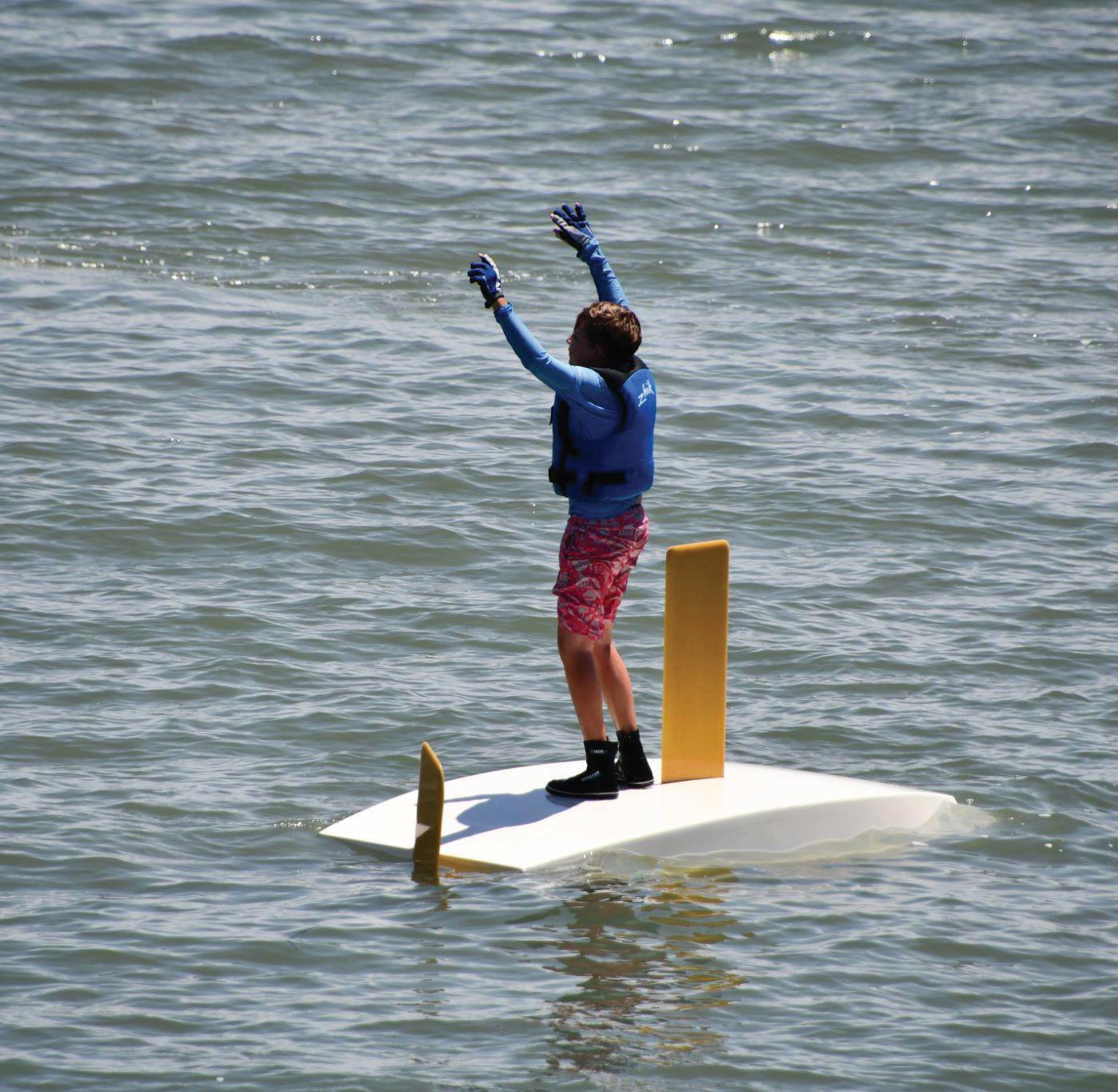
To our knowledge, no sailors were harmed in the making of this photo op. We thought they were playing water basketball, though we couldn't see their teammates, or any other players at all, for that matter. Perhaps Dan Knox had it when he said "Touchdown!" Or maybe it was just nature being nature, as Jim Naughton wrote, "Turtle out of shell."
Top ten (in no particular order):
"An Interpretive Dance competition has been added to the medal round to decide the winner of the Opti Class at the 2028 Olympics." — Bryan Dair.
"Uber Eats, I'm over here!" — Pat Brogan-Mason.
"Those orcas won't get my rudder!" — Rollin Downhill.
"I won!!!! I won the Upside Down regatta!!!" — Janie Allan Noon.
"I'm fine; just checking her out." — Susan Grover.
"Directing seaplane take-offs." — Bob Marshall.
"As a new conductor and sailor, Franz took the instruction to conduct Handel's Water Music a little too literally." — Mark Caplin.
"How a Saildrone saved my life!" — Ken Miller.
"I give up. I will turn state's evidence for the cocaine supplier for a reduced sentence." — Ted Pollak.
"You have it upside down !!! It goes the other way !!!!!!!" — Buddy Fricke.
"And the winds and the waves are always on the side of the ablest navigators." — Edward Gibbon.

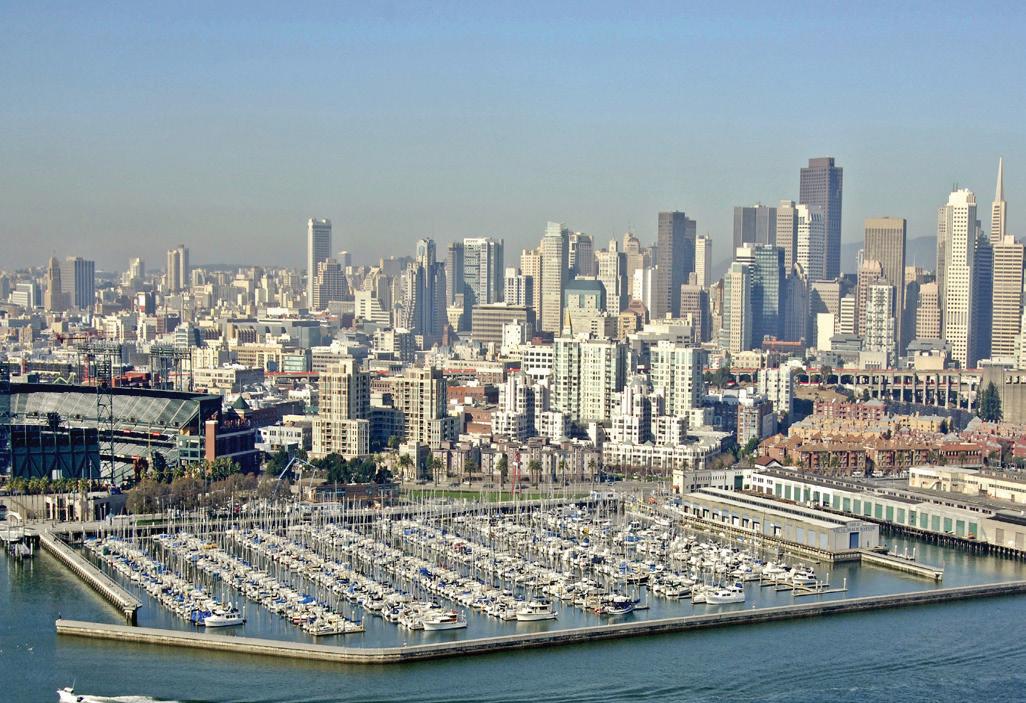
"San Francisco's a different kind of city," wrote Latitude founder Richard Spindler in 1985. "In most places, elected or appointed representatives of the people are responsible for increases in berth rates." Spindler argued that responsibility for an earnest dialogue about the city's public marina bizarrely fell to an adult film star.
Actress Marilyn Chambers' 1985 arrest at the O'Farrell, a famed adult theater in San Francisco, spiraled into a bizarre public controversy involving the San Francisco Chronicle, the SFPD and cheap slips, after a newspaper article revealed that the city's police chief paid a low berth rate at San Francisco Marina. "Chances are if Marilyn had kept her clothes on that night, the sequence of events leading to the revelation never would have occurred."
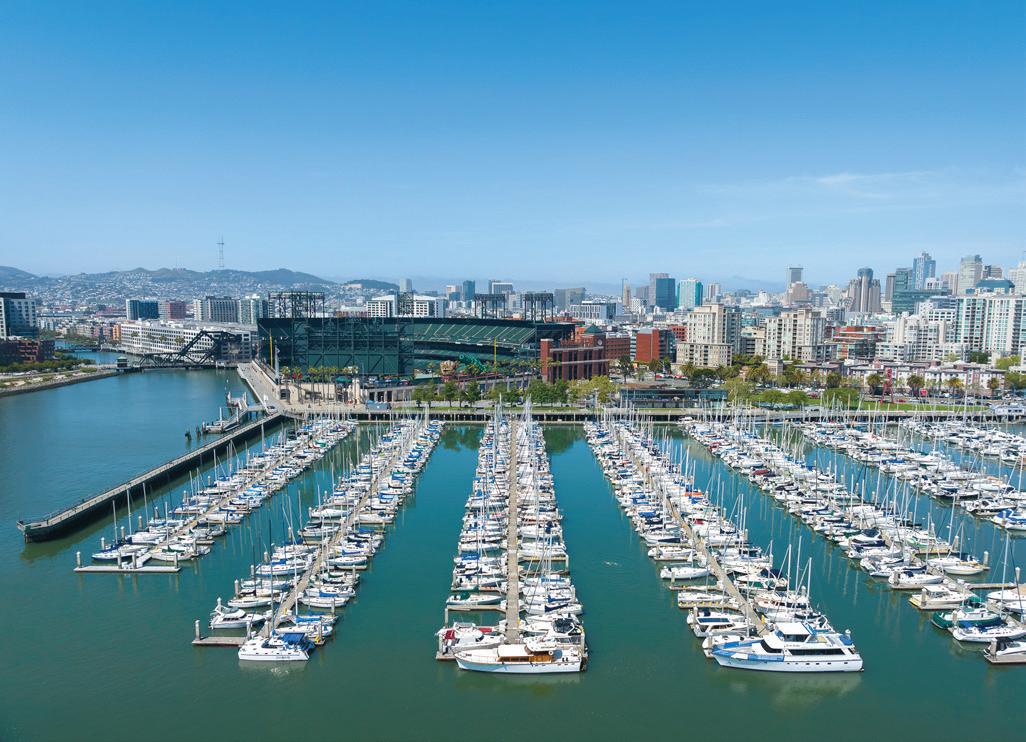
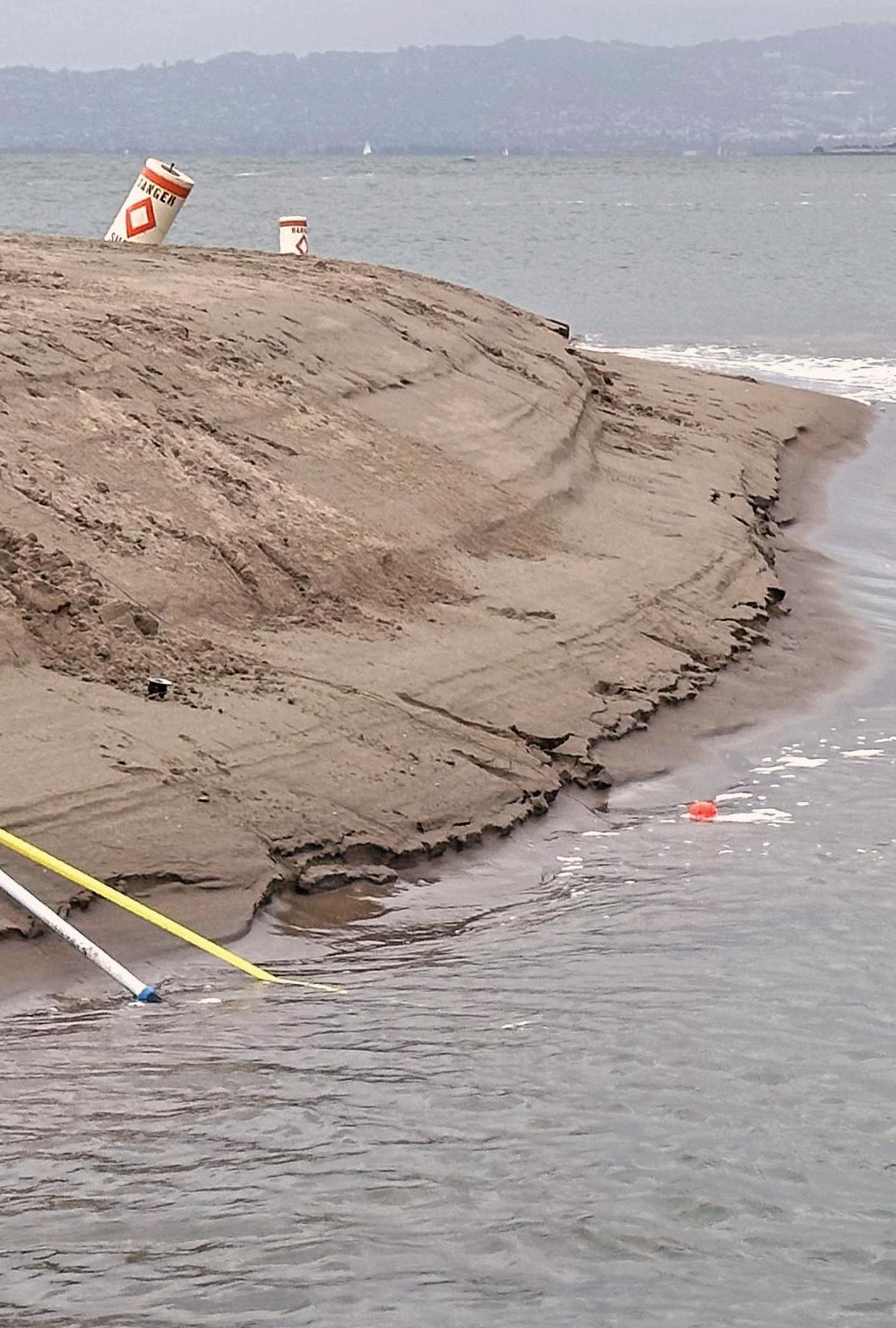
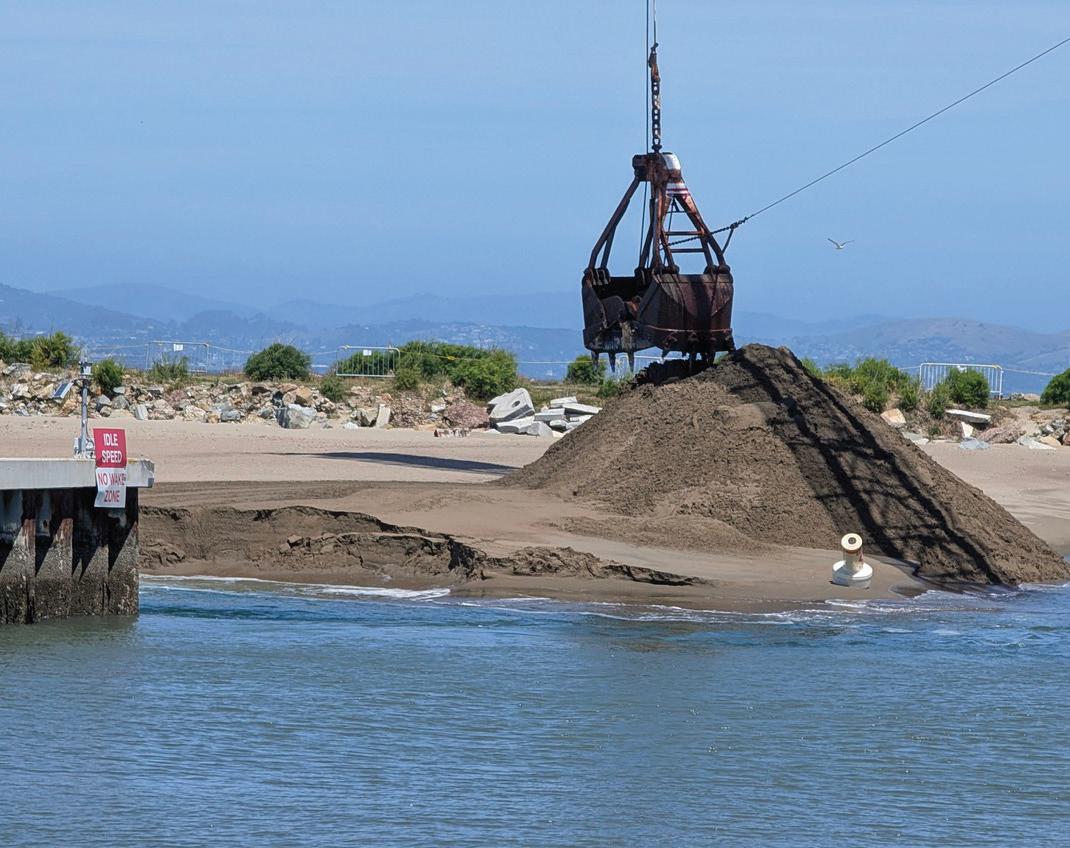
In the mid-'80s, San Francisco Marina had some of the lowest slip rates in the Bay Area. Fast-forward 40 years, the marina now has by far the most expensive slip rates, though on paper, the publicly owned harbors operate at a loss. Long prone to silting, West Harbor has recently become choked with sand to an absurd degree. (Please see photo, right.) After a failed and widely criticized attempt at clearing the buildup of sand, a more robust dredging project is now underway to restore a navigable entrance.
But the perpetual befuddlement of how to fix the marina remains. Public policy has been shaped by two city-defining earthquakes and a sea change in economics and attitudes. At the heart of the debate: Who is San Francisco Marina "for"? Who pays for it? What services should they expect?
In the ensuing stories after the 1980s Chambers kerfuffle, a few San Francisco city officials took the chance to strike a populist tone, with boaters being cast as wealthy yachtsmen. "I think it's outrageous that the city of San Francisco has been subsidizing the rich people who have yachts," Carol Ruth Silver, a member of the San Francisco Board of Supervisors, was quoted as saying in a 1985 article in the Chronicle. But in that same story, Silver — who is now 87 years old and was part of the Freedom Riders movement in the 1960s — admitted that she had been trying to get a slip at S.F. Marina for nearly eight years. "Who does she blame for the low rates?" Spindler asked in '85. "Incredibly, she blames the people who pay the rent, the berth holders, as if they had control over the matter."
In the ensuing years after S.F. Marina was thrust into the body politic, the facilities became rundown. Renovations with a price tag floating between $14 million and $35 million were proposed. An overhaul "had a chance of going forward in 1989, but the Loma Prieta earthquake put an end to the project for years," wrote Bill Belmont in a series of Latitude articles in 2004-05. And those controversially low berth rates? A proposed 40% fee increase in the early 2000s mapped out a rate hike from $5.22 to $7.31 per foot per month, with annual increases reaching $14.67 per foot by 2021. A recent Bay Area marina fee comparison says San Francisco Marina's West Harbor charges $21.80 per foot per month for a standard 30-foot double-finger berth — the highest in the Bay.
In the early 2000s, the city had a $97 million budget
deficit and was cutting services, "everything from 'browning out' fire houses to cutting funds from social services and after-school recreational programs," Belmont wrote. "On the other hand, a 'recreational and leisure' activity — boating — is trying to borrow $35+ million to rebuild a facility that benefits what appears to be a small number of citizens — even though that group of folks has to pay for the rebuild. Perhaps there is an overlooked benefit to this renovation."
That benefit is the larger park the marina is a part of. Defenders have long argued that the harbor's value extends far beyond berth holders. Belmont noted that major regattas regularly filled neighborhood hotels, restaurants and bars with visiting sailors and spectators, and pointed to events such as the international Knarr Championships, the Big
Boat Series and the 2003 Moët Cup match races between Alinghi and BMW/Oracle, which generated nearly $20,000 for the harbor fund. The 2013 America's Cup and five SailGP events have since followed. "Whether they like it or not, San Francisco is a world-class sailing destination. It deserves better than it's got."
The Marina Green itself also functions as a revenuegenerating public venue, hosting everything from corporate events and commercial festivals to marathons, with the city collecting permit fees, concession revenue and percentages of ticket sales through San Francisco Recreation and Park's special-event system. But fast-forward another 20-plus years to a city report that said S.F. Marina was being subsidized to the tune of some $600,000 a year. But not so fast,
said Bruce Stone, president of the S.F. Harbor Marina Association, who argues that the city's calculations ignore taxes and fees paid by boaters that return hundreds of thousands of dollars annually to San Francisco's general fund.
So we're still fighting over money, which is to be expected in any city. But what about the crumbling marina? In 2024, Rec and Park floated a plan to expand West Harbor along Marina Green so boats could be temporarily relocated while toxic soil left by a former PG&E gas plant in East Harbor — contamination dating back to the 1906 earthquake — was finally cleaned up under a settlement that took nearly 20 years to negotiate. Critics blasted the proposal for endangering one of San Francisco's iconic public waterfront views,
continued on outside column of next sightings page
while Stone said a proposed breakwater extension would "be terrible for junior sailing, J/22s, Knarrs and Folkboats, and race committee operations." The Board of Supervisors ultimately blocked any major enlargement of West Harbor, forcing the city back to the drawing board once again.
Though the PG&E settlement seemed like a victory, Stone argued that the city's $190 million settlement was inadequate and should have been renegotiated after the West Harbor expansion was rejected because the cleanup budget no longer reflected modern construction costs. The broader Marina Improvement and Remediation Project, however, survived, and the current plan calls for phased construction beginning in 2027, including East Harbor cleanup, marina reconstruction, and new breakwater work intended to reduce the chronic shoaling that plagues West Harbor to this very day.
continued on outside column of next sightings page
Since winning the Star World Championship in September, Paul Cayard has added three more honors to an already long and impressive list of victories.
Last month, Cayard won the Etchells World Championship skippering two-time winner Magpie with tactician James Mayo and crew Ben Lamb. The Worlds regatta was hosted by San Diego Yacht Club. This is Mayo's third Etchells World Championship win in a row.
"I stepped into a very good team," said Cayard, who had previously sailed an Etchells for only 20 days. "A lot of great teams were here, so it is an honor to win and have
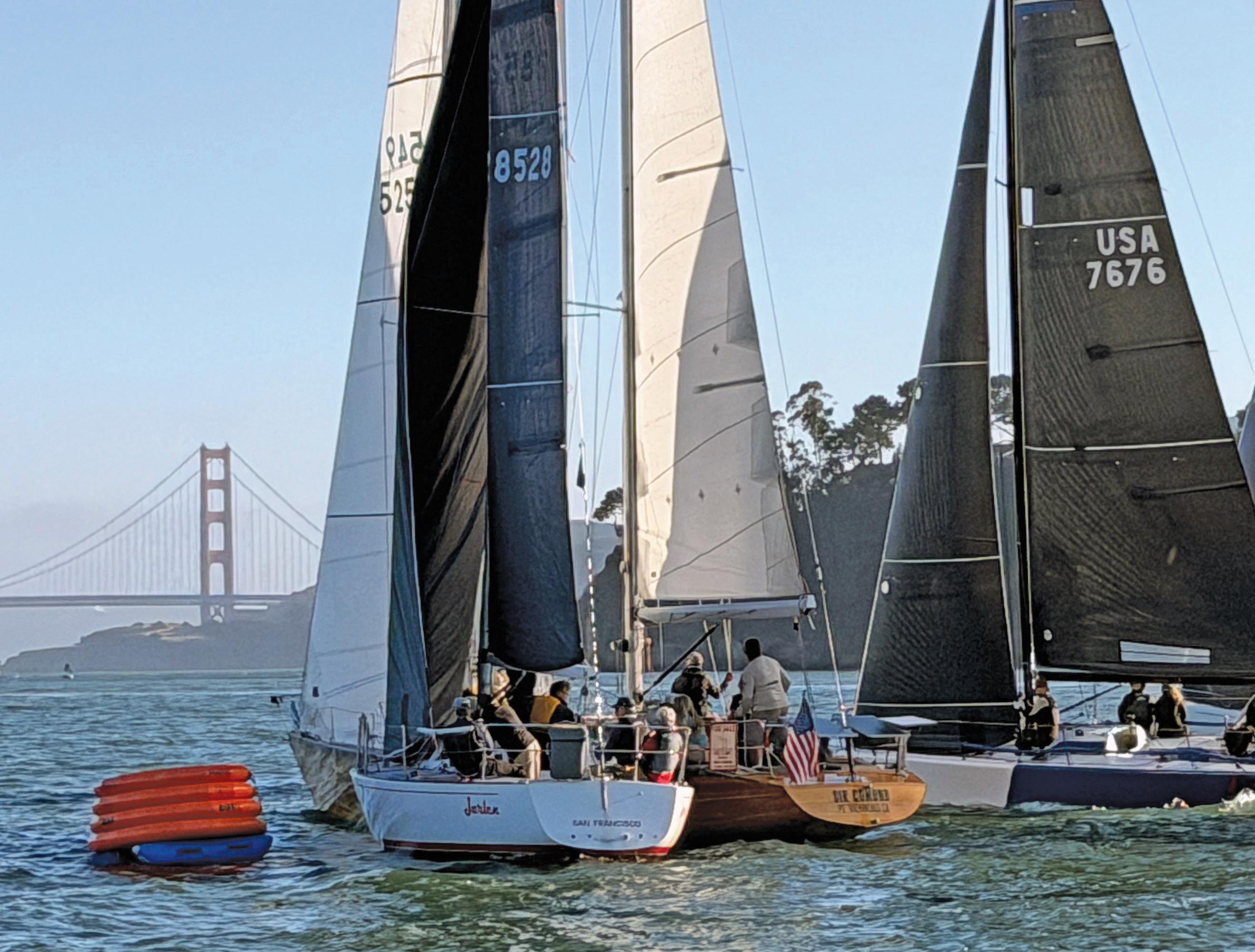
my name on the same trophy as some of my idols like Dennis Conner and Vince Brun." Cayard said there will "for sure" be more Etchells regattas in his future.
Cayard and the crew aboard Magpie triumphed over a competitive fleet of 76 of the world's best Etchells sailors.
Adding to his accomplishments, Cayard was awarded the 2026 Magnus Olsson Prize for excellence, sportsmanship and innovation in sailing. Off the water, Cayard has been involved in the management side of the sport, serving as the director of America One Racing and as president of the
continued in middle column of next sightings page
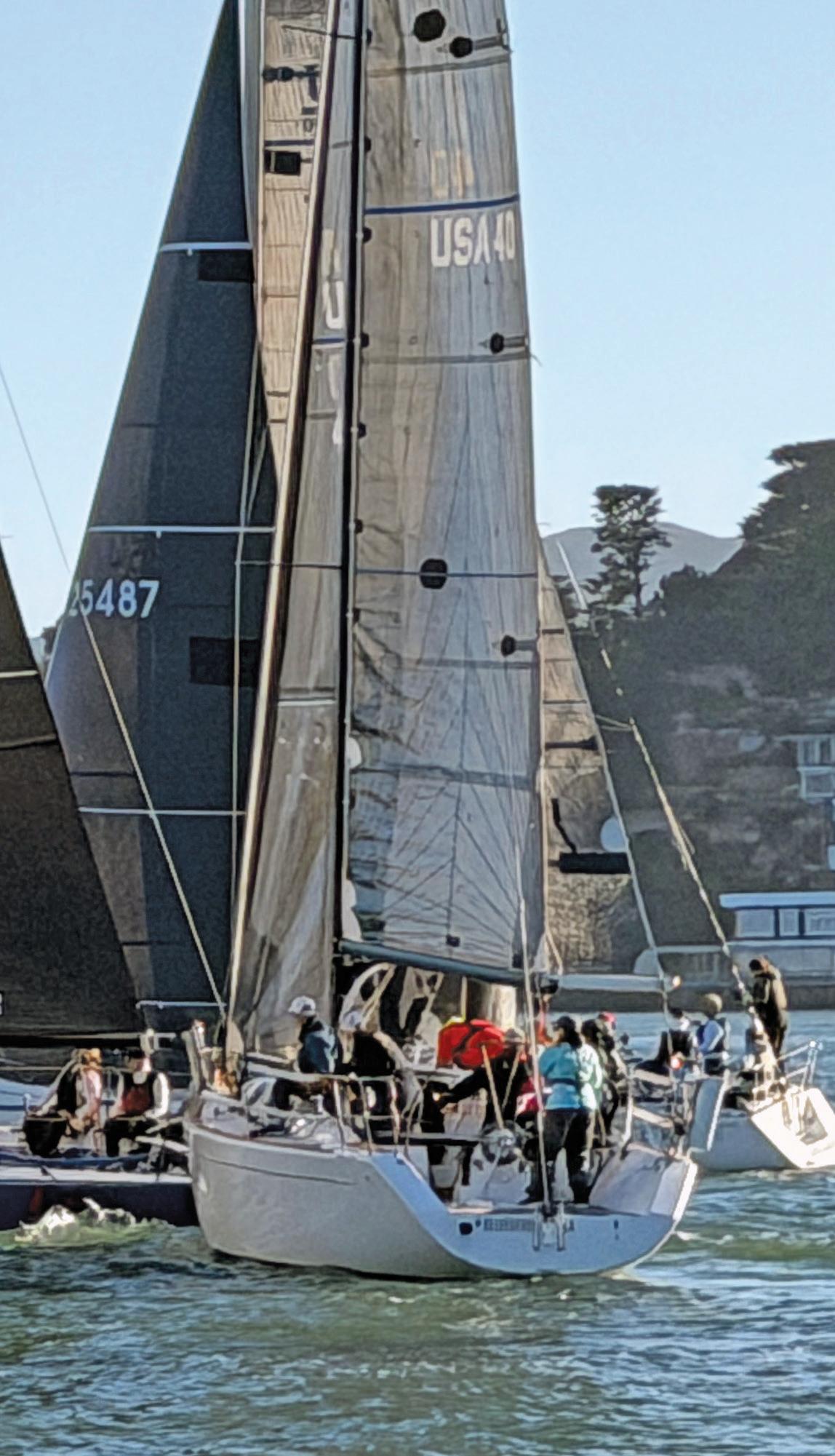
"It's unsafe, and we're not getting the benefits, [but] we're paying super-high rents," a S.F. Marina boatowner told Latitude in late April. "We're supposed to have a first-class harbor. What we have is a Third World harbor. You can only come in or out on high tide, and even then, sometimes you can't." Videos show intrepid boaters running the narrow, sandy gauntlet at the marina's entrance and inching their way through an unfathomably shallow passage. As of this writing, dredging has been underway for about two weeks and the entrance is generally passable at high tide, though the sand is still an aberrant blob on perhaps the most spectacular city shoreline in the world.
After an initial dredging effort reportedly stalled amid equipment failures and criticism over the contractor's outdated gear and slow progress, Rec and Park fired the contractor and brought in Dutra Group to resume emergency dredging while the city, forever at the drawing board, continues to pursue a longer-term breakwater solution. "Sure it sounds strange, but San Francisco's a weird city," Spindler wrote in 1985. "How else can you explain the fact that when Marilyn Chambers got naked that night at the O'Farrell, the only ones who got screwed were berthholders at San Francisco Marina?"
— latitude
The Singlehanded Sailing Society's Three Bridge Fiasco is recognized as one of the largest and most successful sailing events in the country, regularly drawing more than 300 boats. Despite its enormous success, we wonder what the other 9,700-ish Bay Area sailboats are doing on that Saturday. Summer Sailstice was created as a day for the nearly 10,000 boats on the Bay to hoist their sails alongside millions of other sailboats throughout the country and around the world.
Is there anyone with a slip in any marina who feels sailboats are used too frequently? Probably not. Most sailors prefer not to race, but without a cause or an event, so many recreational sailboats just sit in their slips and rarely get out.
If you've been sailing this year, you may have already seen the whales, reveled in stunning rainbows, and taken friends outside the Golden Gate or over to Catalina for a taste of the ocean. But if not, think about putting some sailing plans on the Summer Sailstice map, at www.summersailstice.com, for the weekend of June 20.
This year marks the 26th anniversary of the global celebration of sailing. It's a chance for all sailors to showcase the best of sailing. Most of the world doesn't understand sailing or what happens just out of sight of the shoreline. Your participation is an invitation for others to join sailing. When you share your personal sailing plans, or your club's race, cruise-out or class event, you help clarify the who, what, when and where of people who go sailing. Most people don't know where to begin, and Summer Sailstice is a way for you to help them start. A recent email from the San Juan Island Yacht Club stated, "What a fantastic idea and event. I shall share on our website and with internal memos to SJIYC. Best to you as you engage others in a phenomenal project under sail."
We all know the sailing community would like to see more people discover sailing. There are numerous ways to help, but an easy way to do your part is to invite people to sail on the weekend of June 20 and post those plans at www.summersailstice.com
— latitude / john
It's a fair wind that blows everybody good. For example, an auction where a sailor — Gerard Sheridan, say — can "win" a painting of a historic yachting event, rendered in oil by Jim DeWitt, with the proceeds benefiting Olympians, youth sailors and underserved communities. It happened, and Sheridan went home happy.
The event was the annual fundraising auction of the St. Francis Sailing Foundation, whose mission overlaps with the missions of the Belvedere Cove Foundation (San Francisco Yacht Club), the Richmond Yacht Club Foundation, Encinal Sailing Foundation, Monterey Peninsula Youth Sailing Foundation, and others around the country.
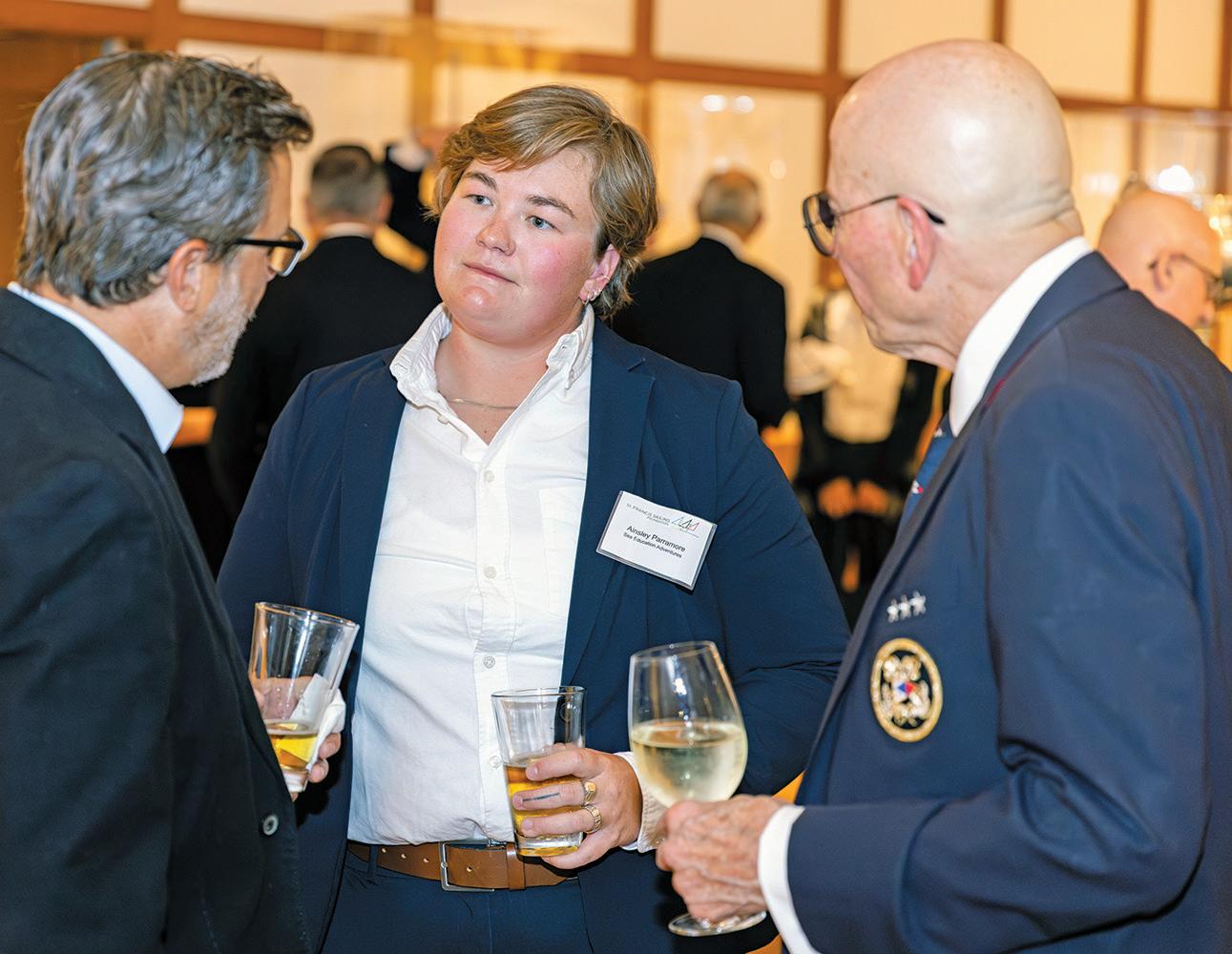
That's a mouthful of foundations. Each sets its own goals. The St. Francis Sailing Foundation partners with AmericaOne to support Olympians. On its own, it provides direct grants to individual Bay Area sailors, and it supports the outreach of Alameda Sailing Center. Also Sailing Education Adventures in San Rafael, which is on a growth path for teaching and developing Marin County sailors young and old.
International Star Class.
"I was fortunate enough to meet Magnus and to race with and against him during our time in the Whitbread and Volvo races in the '90s and 2000s," Cayard said. "I think he is the only person I have ever known who everyone liked and who everyone would say, 'He made my day better.' With that in mind, it's truly an honor to accept the 2026 Magnus Olsson Prize. Thank you, Mange. We are all smiling, thinking of you!"
The award adds Cayard to a list of elite sailors that includes fellow Californian Stan Honey (2016), Sir Ben Ainslie (2015), Peter Burling (2020) and others.
— latitude continued on outside column of next sightings page
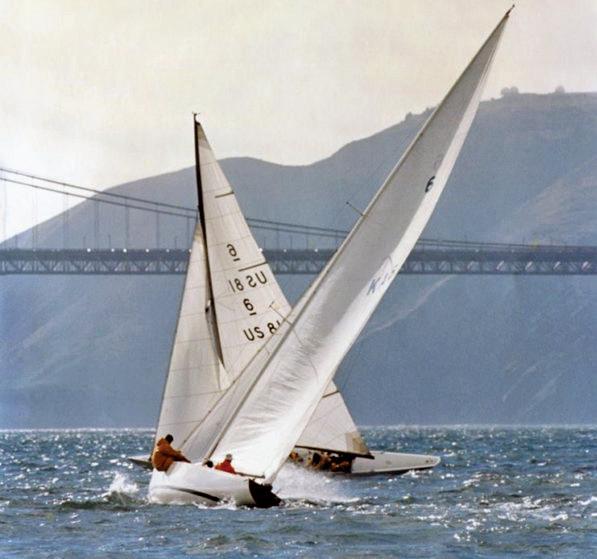
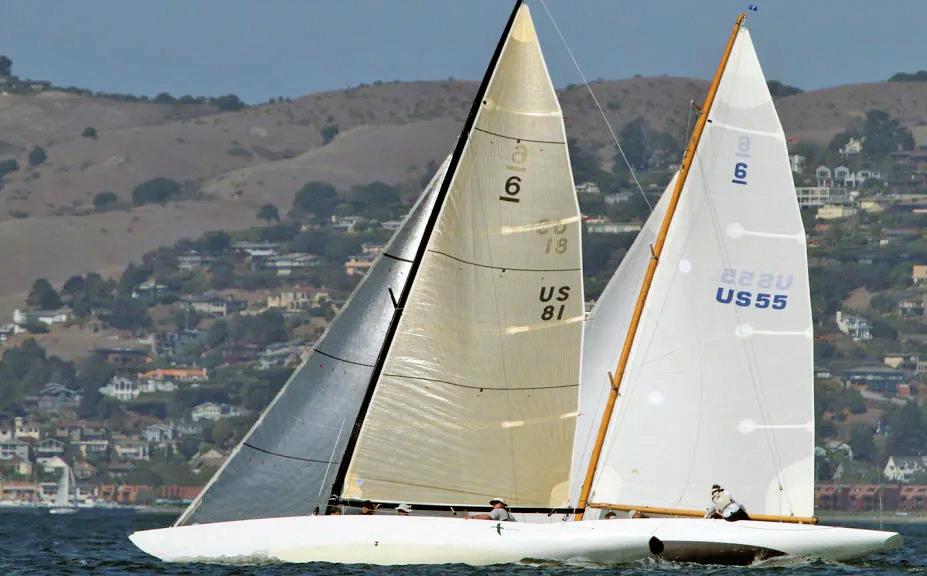
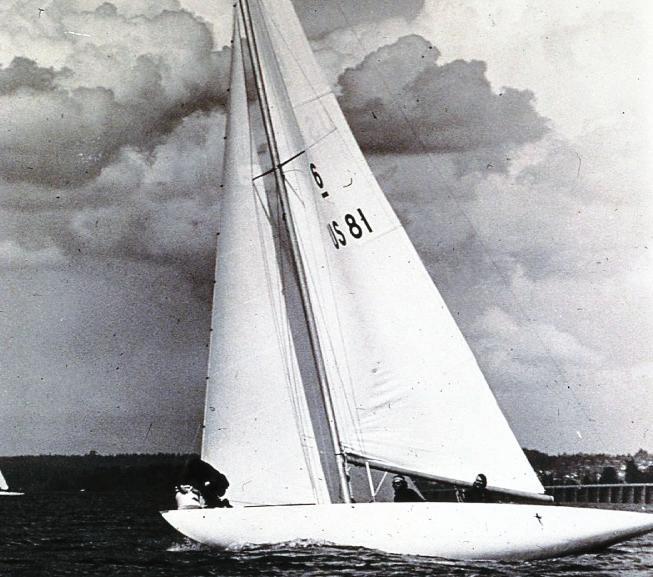

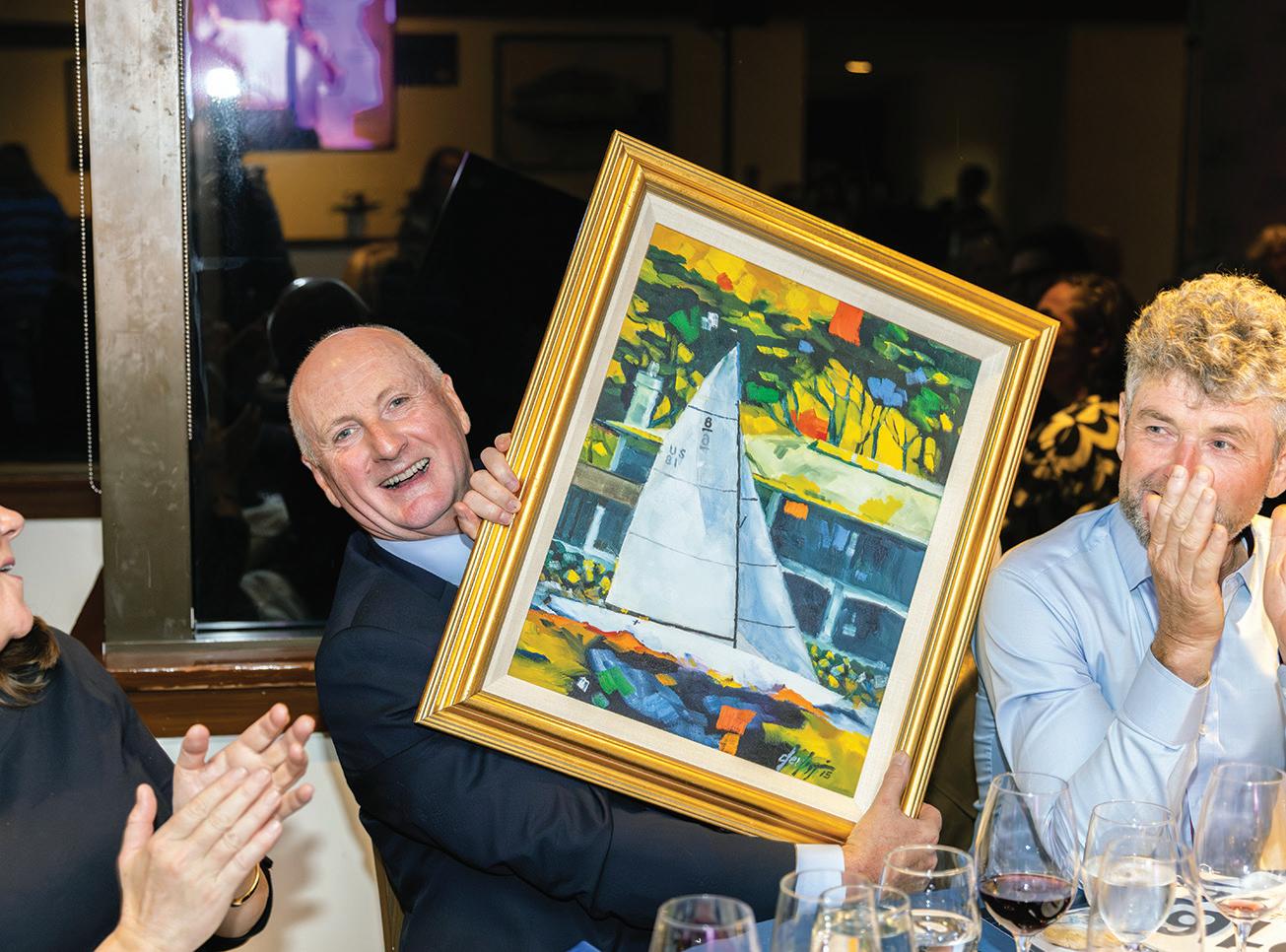
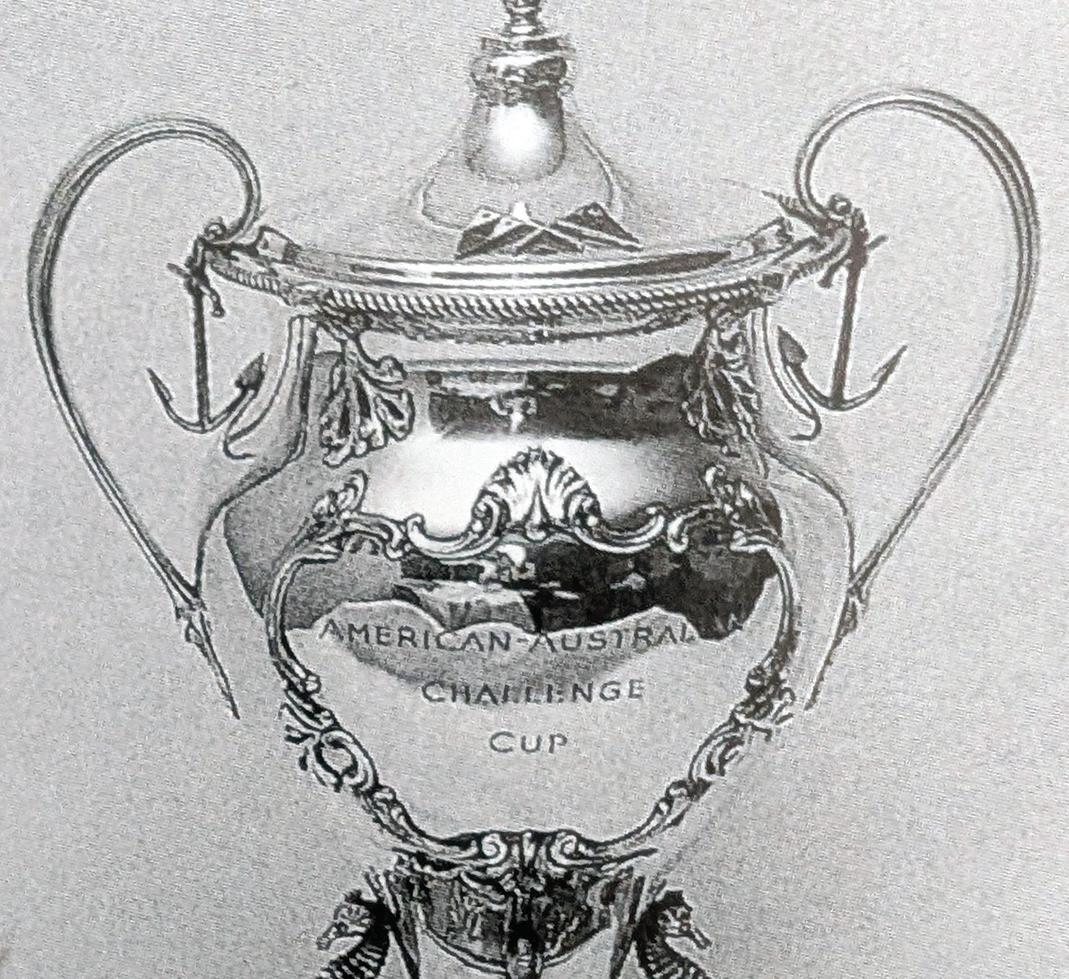
DeWitt's heirs donated the painting of a boat named Goose. Sailors remember DeWitt as someone who always got the details right in his paintings. He won the 1963 North American Men's Championship with Jocelyn Nash crewing (Jim had a nose for talent), becoming the first West Coast skipper to bring home the Mallory Cup, and he was a sailmaker before he retired to be a full-time artist.
Knowing where the money goes made the night even sweeter for Sheridan, who has "always admired Jim's work," he said. "Because he was a sailor's sailor, he captures the sport better than most."
Did we mention a historic event? To appreciate it, some readers will need background on a racing class called the Six Metre. Yes, they use that spelling. And no, they aren't six meters long. Inquiring minds are welcome to learn that part of the deal anywhere but here. Think 3438 feet, but the sum of their measurement points must fit a formula. Sheridan has sailed Sixes, which sweetens the deal even further.
As a class, Six Metres were born in 1907, and they played a critical role in developing race boats as we know them. They were the original international class and a feature of the Olympics for multiple quads. The first overlapping jib was seen on a Six Metre in Genoa, Italy, in 1926. That's 100 years ago, in case you missed it.
In the ebb and flood of events, Six Metres ebbed after WWII, but a revival was in the works when an Aussie bloke named John Taylor created something new by throwing down the gauntlet for StFYC to respond to a match-race challenge. Fat chance. StFYC hadn't had a Six in decades, but the club offered to host a regatta if Taylor could find a taker in Seattle, where Sixes were still a going concern.
Down from Seattle came Goose, US 81, as depicted by DeWitt. Goose was already a famous boat, a 1938 build that proceeded to take on Taylor's new S&S-designed Toogooloowoo IV, the first new Six in years. The match attracted international press and went seven races, inspiring a past commodore of StFYC, Bill Stewart, to buy the Australian boat. It came with one condition: StFYC must come Down Under the following year for a match against the Royal Prince Alfred Yacht Club. The American-Australian Challenge Cup was born.
In the prewar years, there had been Sixes that carried the name of the club. Now, Gary Mull (google the name) modified the newly renamed St. Francis IV, which was duly shipped to New South Wales, where skipper Tom Blackaller proceeded to use the Aussies' old boat to beat them, Stewart said, "unmercifully" in straight races.
St. Francis Yacht Club later won every defense of the "Am-Aus Cup," which rests in apparent retirement in their trophy cases today. But the Am-Aus adventure launched the club into a period of Six Metre activity that saw championships won by the next generation after Blackaller, Cayard, Bertrand and Kostecki.
That was a second heyday. Six Metre racing now is a specialty pursuit among Europeans and in the Pacific Northwest, with a smattering in New England. Goose sails on, arguably the most successful Six of all time. You can google that too.
And support your foundation of choice.
— kimball livingston
Clockwise from top left: The 1969 battle on San Francisco Bay between 'Goose', foreground, and Aussie challenger 'Toogooloowoo'; built in Australia in 1938, 'Goose' will race out of the Seawanhaka Corinthian Yacht Club in Oyster Bay, NY, in preparation for the 2027 Six Metre World Championship in Helsinki, Finland; director of Sailing Education Adventures Ainsley Parramore; the now-retired American-Australian Challenge Cup; Gerard Sheridan holds Jim DeWitt's rendition of 'Goose'; the famed Six in the black-and-white era.
This is the first of a two-part story by Jonathan 'Bird' Livingston about his and Gary Clifford's shakedown of the newly built Express 27 Light'n Up, in the 1984 Pacific Cup Race.
In 1984, when men were men, boats were light, and liability waivers were written on cocktail napkins, a brand-new design slid quietly into the water: the Express 27. Carl Schumacher drew it, which is to say, a naval-architecture Jedi calmly merged the ghost of Nathanael Herreshoff with the DNA of Sparkman & Stephens, then sprinkled in modern ULDB witchcraft and walked away like it was no big deal.
The Express 27 wasn't just a boat. It was a haiku about speed. It was the nautical equivalent of a perfectly fitted leather jacket — nothing extra, nothing missing. Hull No. 3 belonged to my goofy friend Gary Clifford and me. We sailed her hard in the Gulf of the Farallones and coastal races, including the San Diego race from San Francisco, where conditions range from "sporty" to "why do we do this, again?"
Somewhere — almost certainly at a yacht club bar, lubricated by optimism and beer — we were shanghaied into helping organize a new ocean race to Hawaii. Few rules. Big fun. Questionable judgment. Because Gary and I were on the organizing committee (which sounds more official than it was), we created our own division so we could race the Express 27. We called the boat Light'n Up, which in hindsight should have been a warning label.
We also decided to sail doublehanded, and accidentally, the Doublehanded Pacific Cup was born. History is often made this way: not with intention, but because someone says, "Sure. What the hell?"
When we started, the westerlies were cranking — the kind of breeze that takes a ULDB and asks politely whether it would like to remain in the water. We were double-reefed with a storm jib, reaching offshore, the boat already twitchy and alive, like a caffeinated ferret. Gary, a true Santa Cruz ULDB barfly philosopher, invoked the sacred words of Bill Lee: "Fast is fun." Then he added, "Bird, what do you think about having more fun?" After a beer — because, seamanship — we hoisted the 1.5-ounce kite. Bore off. Lit the afterburners. Friends, we had no idea this little boat could go that fast.
The reefed main kept her glued down just enough, and the Express 27 simply accelerated. And kept accelerating. Seventeen knots. Twenty. Wind building to 35. Seas stacked like apartment buildings. White water everywhere. The bow wave shot past our ears and physically assaulted our faces. The rooster tail behind us looked illegal.
At this point, survival became the adhesive holding the program together. There was no turning back. No reducing sail. Mostly because we couldn't figure out how to get the kite down without someone being launched into a different time zone. So we did the only logical thing: We kept driving. Then came the surfing. Real surfing. The kind where you drop into the trough like a pro, carve up the face, feel the whiplash of acceleration punch you, bear off again — and suddenly you realize the boat is not merely fast, it is offended by the laws of physics.
Then it happened. We went so fast that we sailed up the backside of a swell, punched through the crest, and left the water entirely. You could tell. The noise stopped. No rushing water. Just silence. For a second. Maybe two. Then … BOOM. We landed. And did it again. Crest to crest. Gary named it immediately: The Crest-to-Crest Leap. Which is how sailors process trauma — by branding it.
That night, because the ocean enjoys plot twists, we hit a whale. Its tail smacked the rudder so hard it ripped the tiller out of our hands. Then we were slimed by whatever fishy goo came out of its blowhole.
Anytime the phone rings and the voice on the other end is asking you if you would like to sail L.A. to Mexico, the sailor inside you has to be saying, "Damn straight!"
Joe Negron and the Newport Ocean Sailing Association, along with the City of Newport Beach and the Gobierno de Ensenada, pulled together to stage the 78th annual Newport to Ensenada Yacht Race. April 2426 saw vessels from cruising boats, with a given time allowance for motoring only, to fully turbo-rocket sleds vying for finish line honors 90 miles over the horizon.
Two starting lines are set just offshore near the piers, and it gets busy in a hurry. Generally, the slower boats start first, with inhalations from the lead-bellied carbon
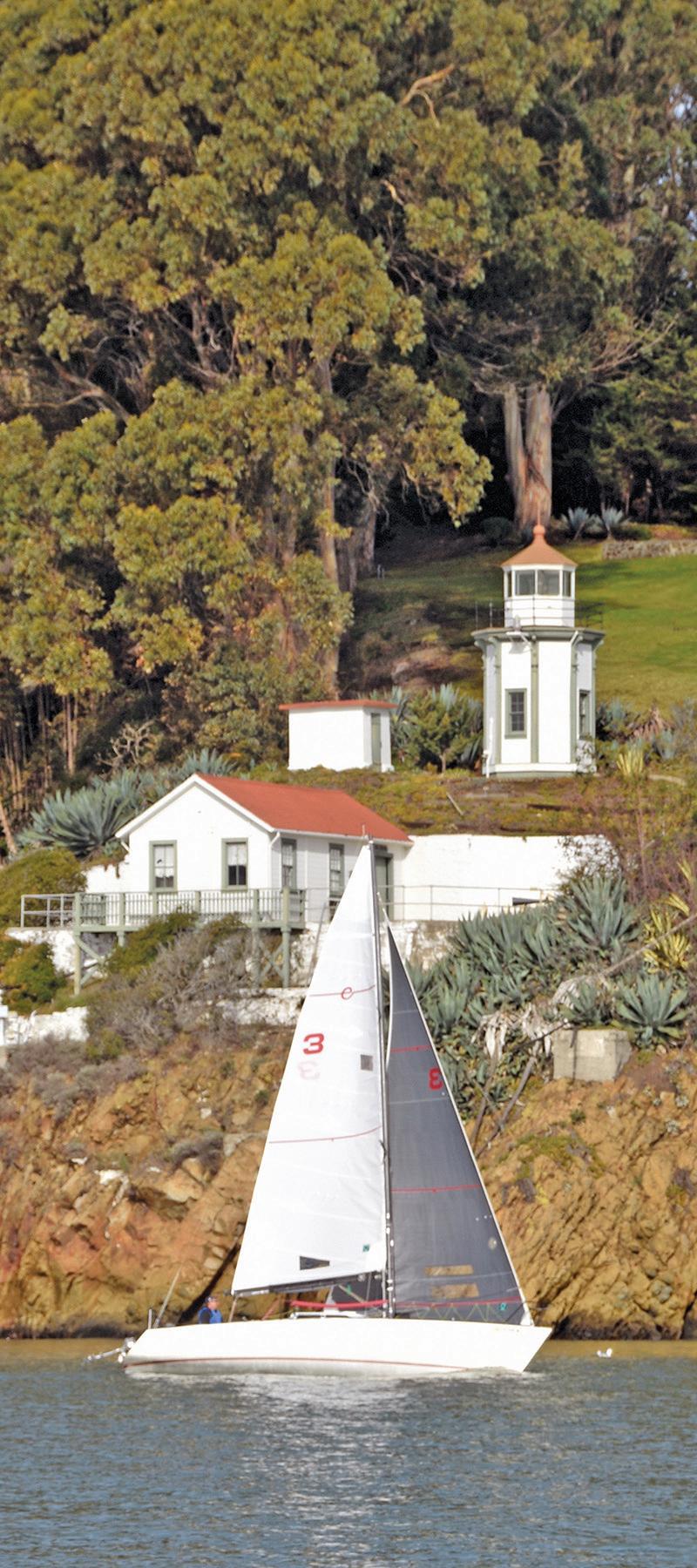

compensators, while the fleet with unobtanium sails dive in and out trying to "ping" the line ends for sophisticated navigational software purring belowdecks.
The tour brochure says Mexico is downwind, but a westerly shift was forecast by some sources, so early boats tended to head offshore to find it. A dead-on-the-wind beat found most folks wearing foulies and wondering if tacking left would have been quicker.
The bimini- and dodger-festooned crowd with the pretty white sails set screens for the hardcore racer types playing through, fully hiked out, while yacht rock drifted across the water and cocktails were served
continued in middle column of next sightings page
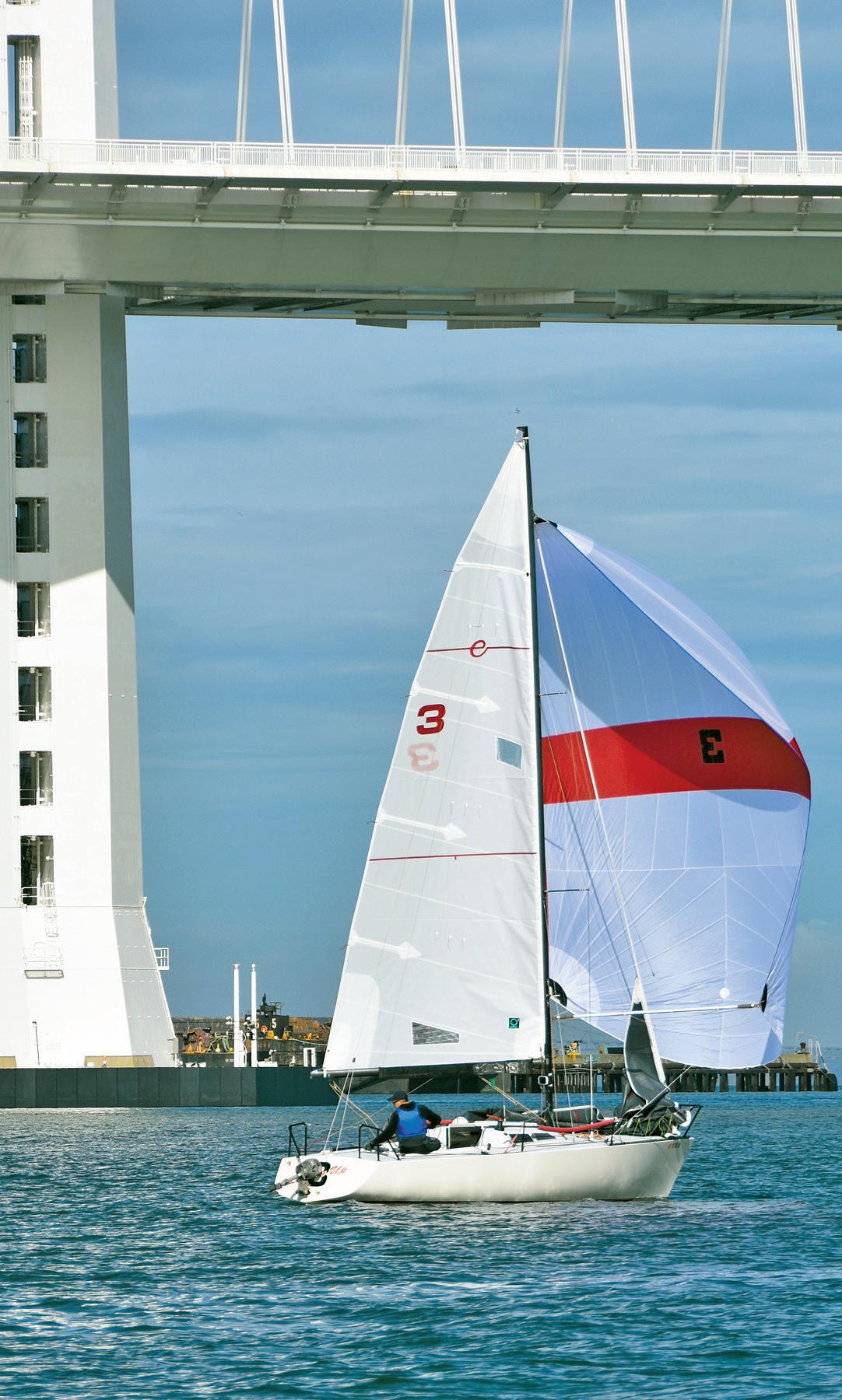
Imagine being mugged by a marine mammal and then baptized.
Once our hearts restarted, we checked the rudder and tiller. Perfect. Which meant there was only one thing to do. We called Carl on the SSB through KMI radio at Point Reyes. Gary yelled something along the lines of, "CARL, WE LOVE YOU." Carl, being Carl, was reserved. Calm. But you could hear the smile, the quiet, deeply satisfying approval of a man whose design had just been launched into the airborne mammal-collision test phase and passed.
We averaged 280 miles a day for four days. At the halfway point, we were only 50 miles behind Merlin. Halfway to Hawaii in four days in a 27-ft boat. Doublehanded, slightly unhinged.
Carl Schumacher's design and the Alsberg Brothers' construction proved what West Coast sailors were just beginning to believe: These new ULDB machines weren't fragile toys. They were tough as nails, seaworthy times 10, and unapologetic about going obscenely fast. Fast was fun. Too much maybe, but gloriously, just enough.
— jonathan livingston
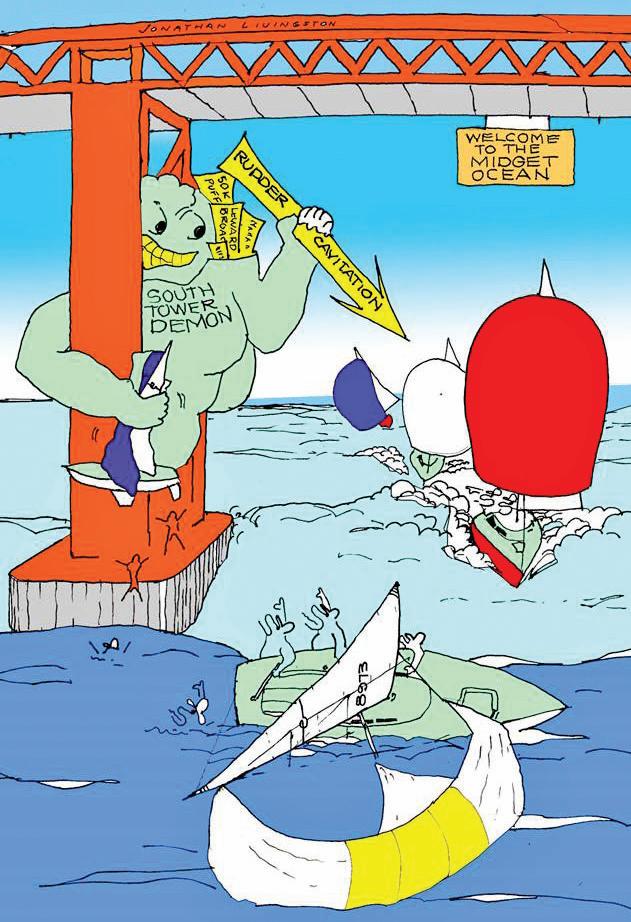
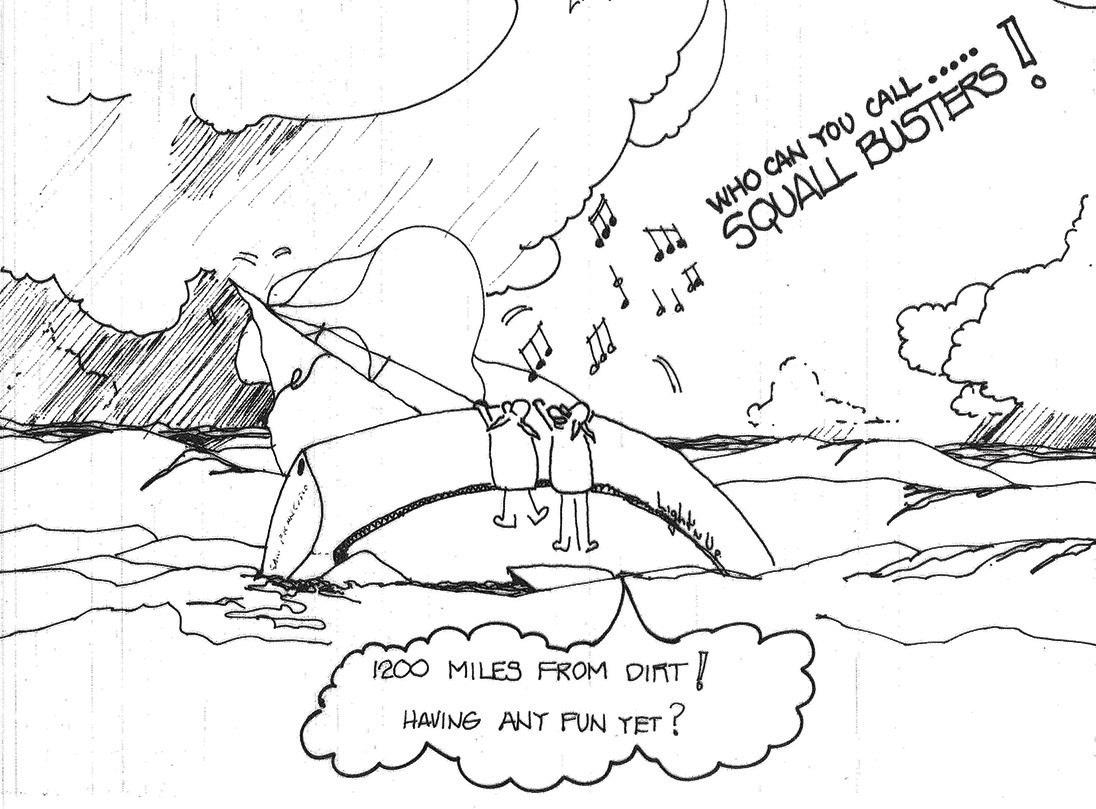
Silver Gate Yacht Club in San Diego hosted its 38th annual America's Schooner Cup Charity Regatta on April 18, benefiting the NavyMarine Corps Relief Society (NMCRS). This charity regatta features some of the most beautiful boats sailing on the West Coast today, including Bill of Rights defending her victory in last year's 2025 America's Schooner Cup. A highlight of this year's Schooner Cup was the return of Spike Africa to San Diego after a 30-year absence. After chartering in the Pacific Northwest for 15 years, Spike Africa's owner Wade Hall has returned to San Diego permanently to carry passengers for youth sail training and charter.
Spike Africa was designed and built over seven years by the renowned schoonerman Bob Sloan in Costa Mesa. She was launched in 1977 with the mission of carrying freight and passengers. Wayne Ettel, at the time a young shipwright, was hired in 1975 to help Sloan finish Spike Africa, his first major project. Sloan's determination to complete the ship formed a lasting impression on Ettel and launched his life-
continued on outside column of next sightings page
Clockwise from top left: 'Witchcraft', winner of the 38th America's Schooner Cup; classic schooners sailing off Point Loma; 'Spike Africa' made a triumphant return to the ASC; 'Californian' and local vessel 'Bill of Rights'; an Intergalactic Schooner (IG-10); 'Pegasus', owned by John Fay, at last year's ASC.
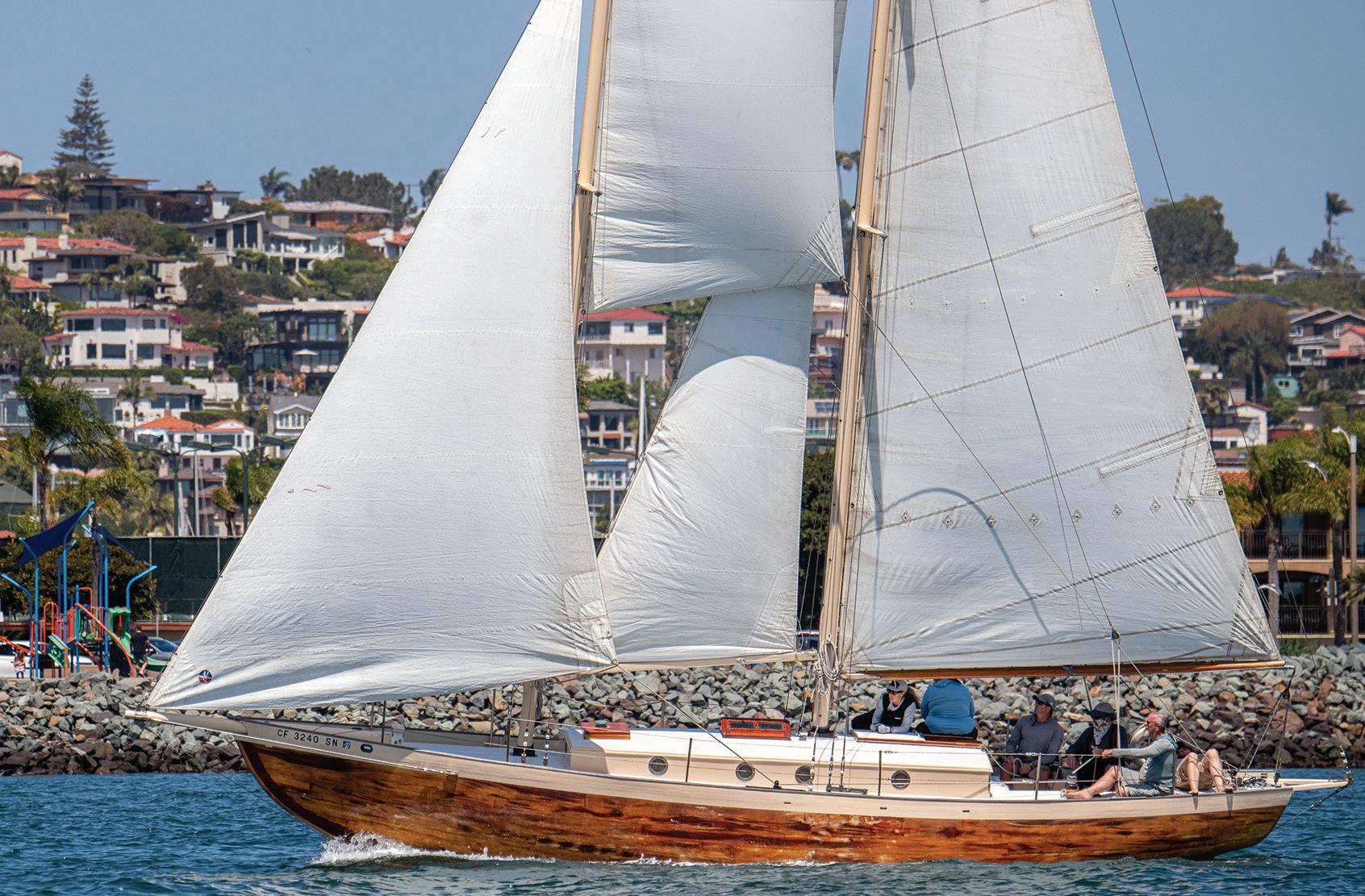
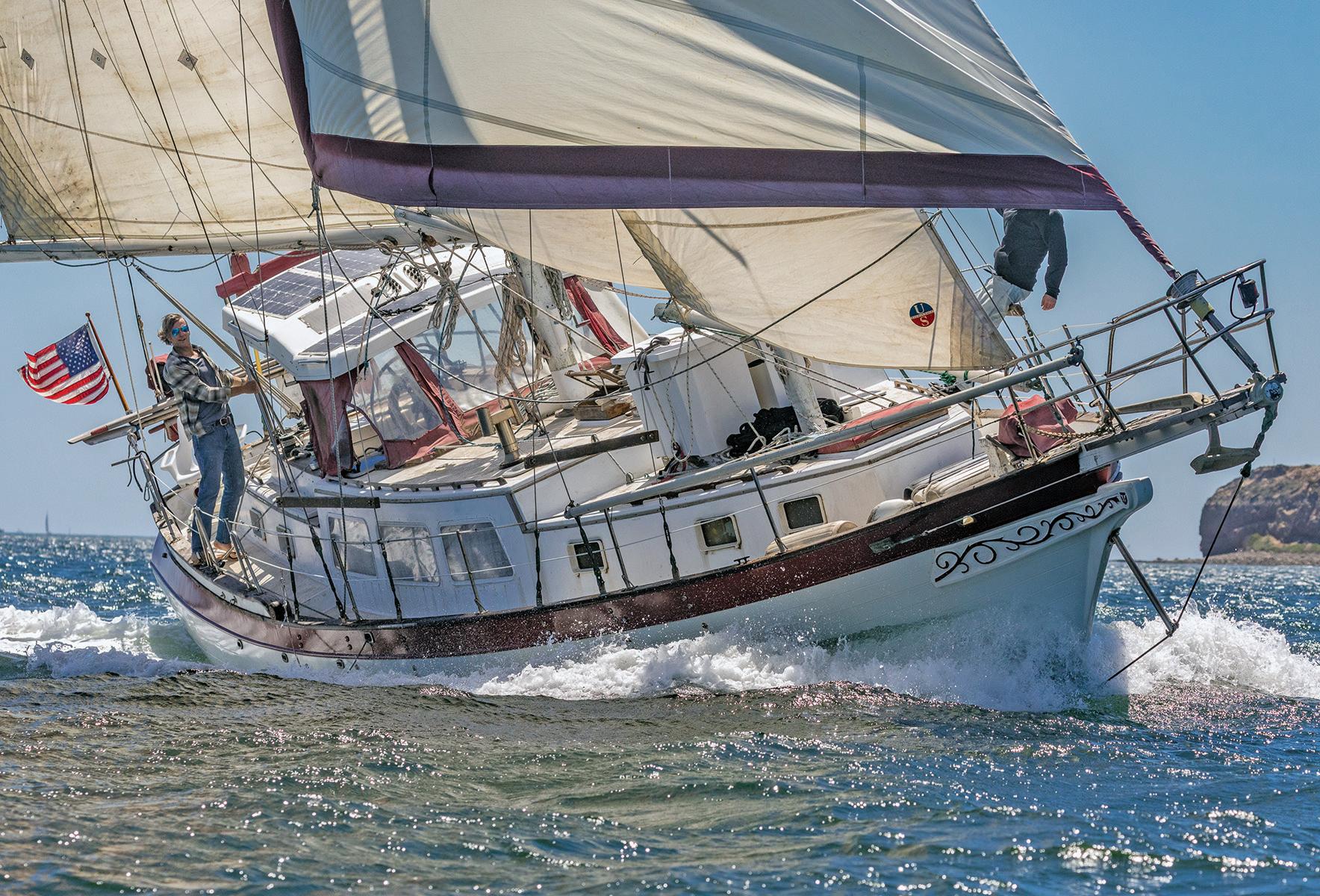
and spilled by the more civilized yachties.
Within a few hours, everyone was on starboard tack. Spinnakers were deployed and doused. Staysails were set and stowed. The wind was just a bit too much — an average of 16 knots — for a conventional kite to be held on a starboard beam reach.
Night fell and sundowners were served before the moonrisers could be concocted. If you had a spinnaker, you had it flying. But the wind tapered off and optimistic ETAs and dreams of making last call at Carlos'n Charlie's were put to bed. If you weren't across the finish line by daybreak, you had some decisions to make:
1) Fire up the genny, go have some fun
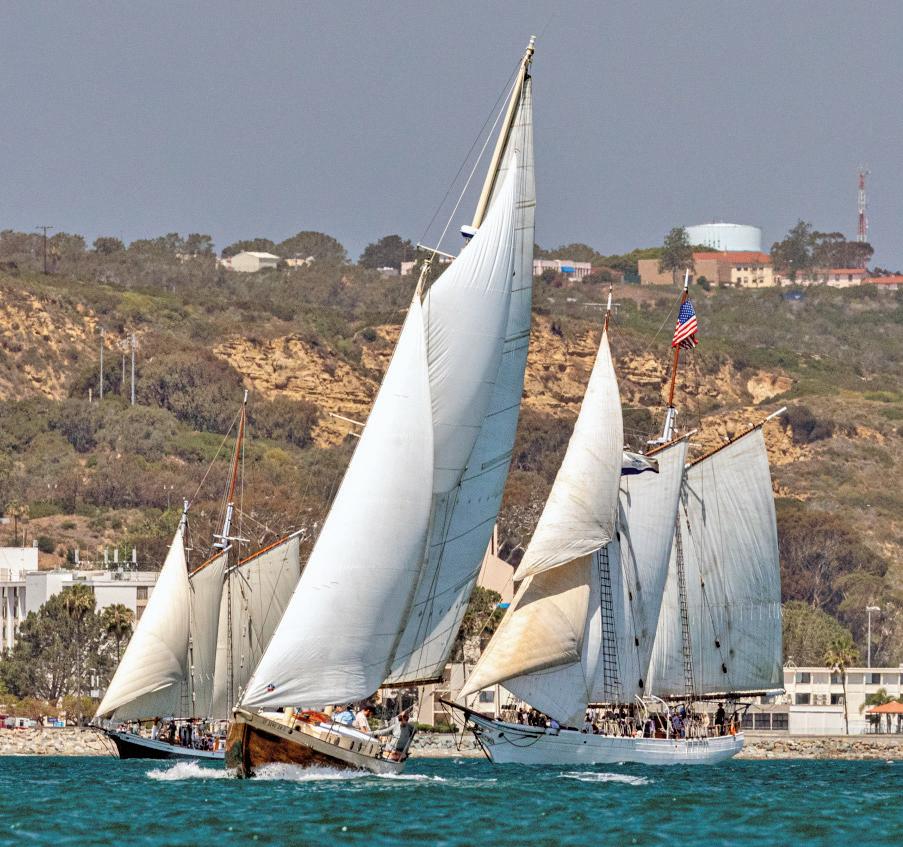
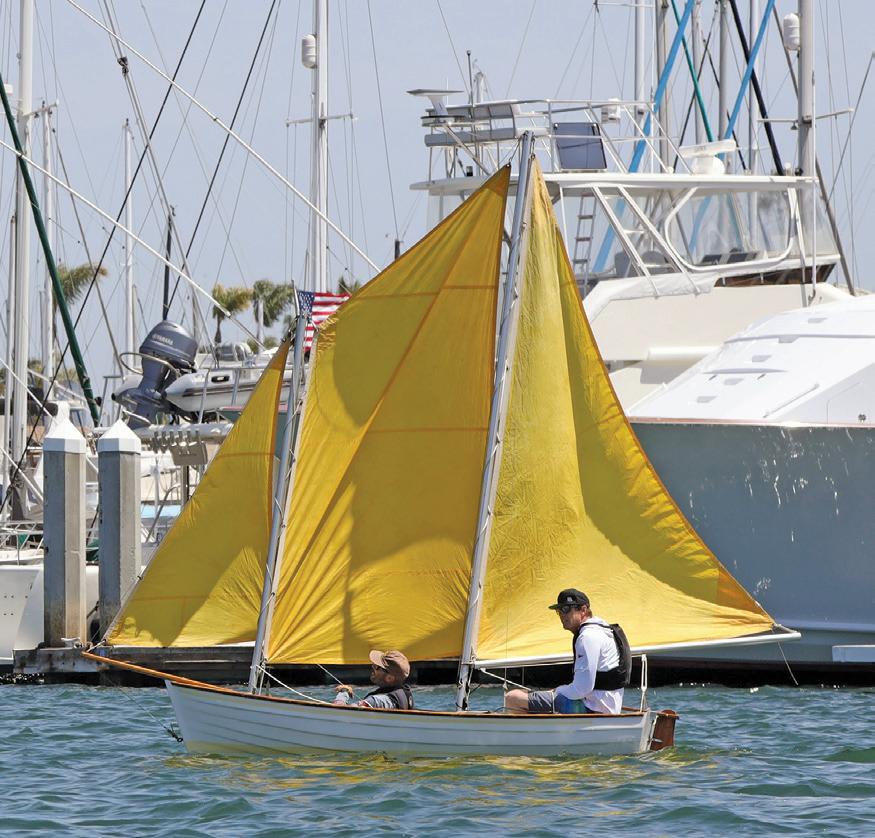

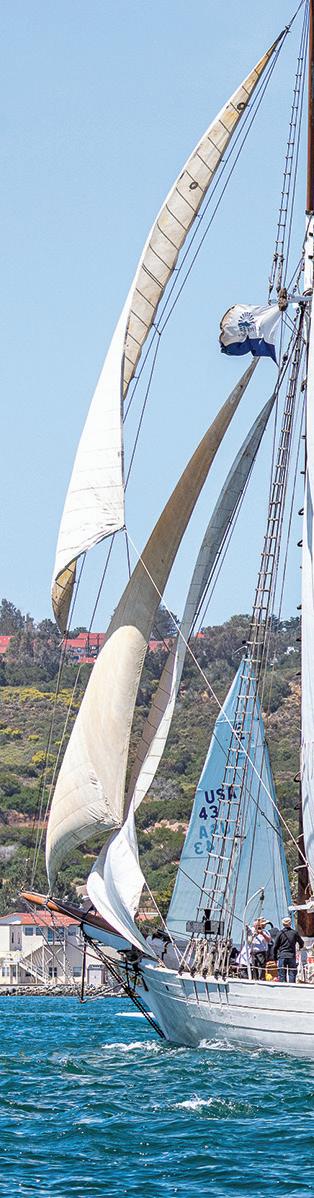
in Ensenada, and say, "There is always next year." 2) Swap between the light kite and the windseeker and your lightest headsail, and do it all again. 3) Sheet the mainsail to the center, point the boat where you want it to go, and see if the roll will paddle it forward.
Or hey, we could all just sit and enjoy the sunrise. Eventually the sun and wind came up, the mariachis did their thing, and all was well in a sailor's world again.
This is just a taste of what the world is like on the fun side of the wall. Mexico can teach any culture how to throw a fiesta and put a smile on an old salt's face.
— andy schwenk
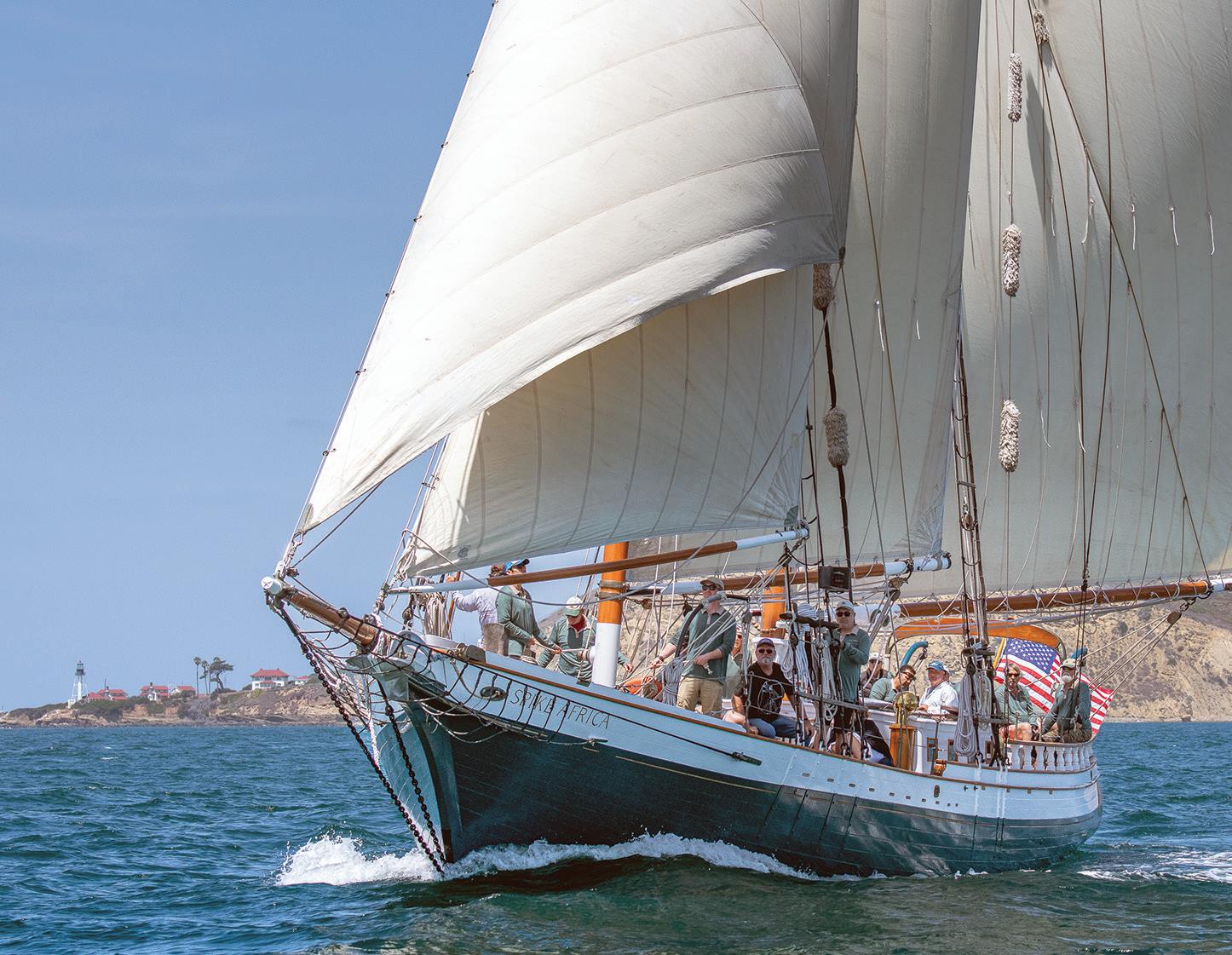
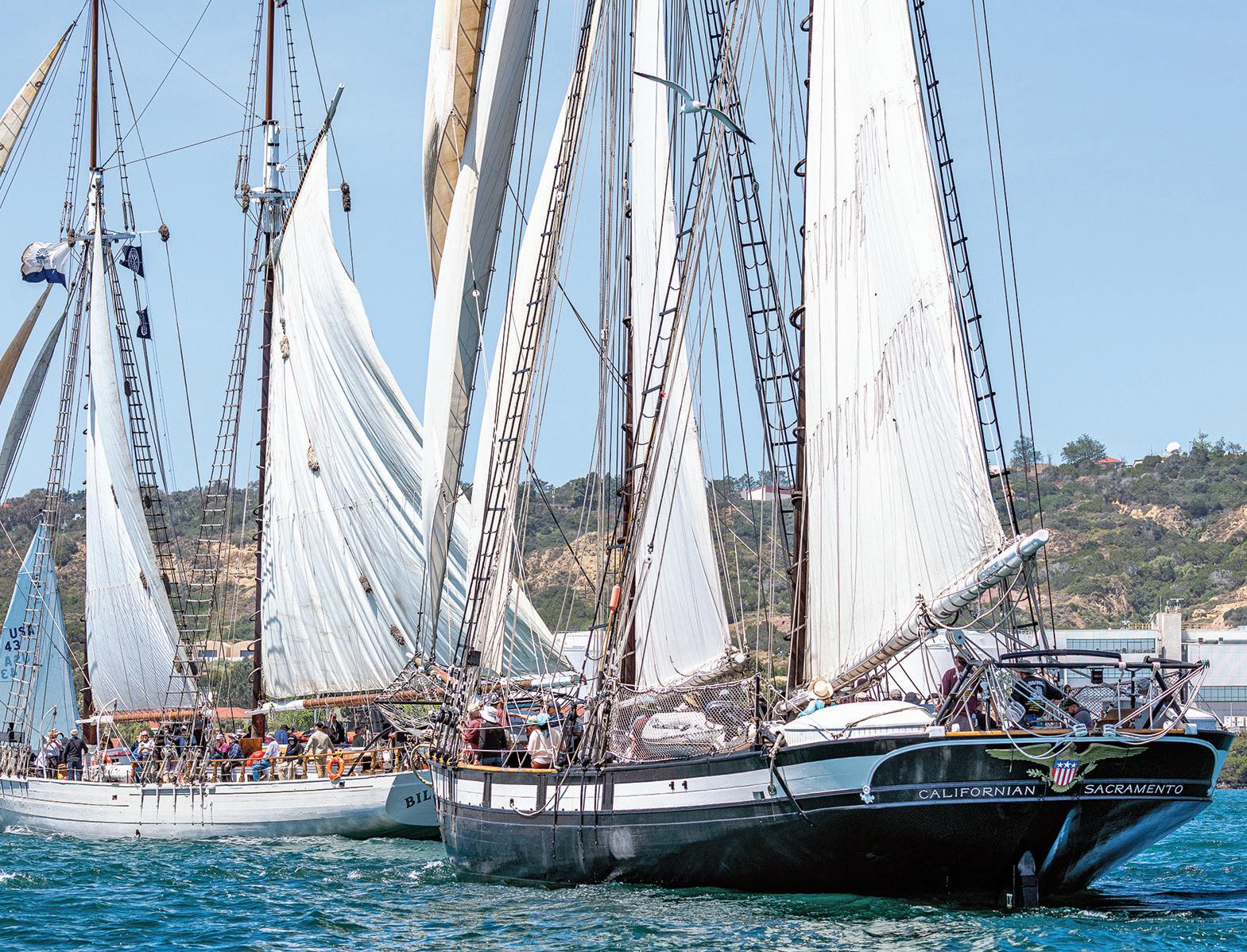
long passion for the restoration of wooden boats — and schooners in particular. Despite being designed as a working schooner, Spike Africa was a fast vessel and would finish first on corrected time in the 1981 Ancient Mariners race from San Diego to Lahaina, Maui, despite carrying delivery sails and other cruising gear for the 1981 Transpac Racers during the passage.
In honor of Spike Africa's return this year, Silver Gate invited Wayne Ettel to be a guest speaker at the Schooner Cup. Wayne presented an exceptional video on his early shipwright and sailing experiences with Bob Sloan. Also sailing in this year's Schooner Cup were Lucky Star and the 100-year-old La Volpe, both of which Wayne restored over his 50-year career. (Wayne has recently moved his nonprofit Maritime Preservation Trust from Los Angeles to Stockton, and has posted a video about Spike Africa at: www.youtube.com/@maritimepreservationtrust8872)
It was a glorious, sun-drenched spring day for the 38th America's Schooner Cup, with flat seas and a steady schooner's breeze. Organizers selected a shorter course, with an outer-leg race from San Diego Harbor buoy SD4 to SD3. The race began with a staggered start off Shelter Island, every 15 minutes, for three classes of schooners; the slower vessels of Class C with higher handicaps started first.
Maid of Kent led the fleet out of the harbor toward SD4 in a breeze that built to about 12 knots. Though it would not be enough wind to drive the heavy C-fleet schooners to hull speed to save their time, Maid of Kent was overhauled by the speedy A- and B-fleet schooners, with Witchcraft driven by owner/builder Brian Eichenlaub prevailing to win the 2026 Schooner Cup.
Simultaneously on April 18, SGYC held two one-design schooner match races in Shelter Island Yacht Basin for three Intergalactic Schooners (IG-10s), all identical and 10-ft in overall length. Three of the original 13 IG-10s designed and built in San Diego now call Shelter Island their home and form an active racing fleet here. These small schooners — designed by SGYC schoonerman Paul Mitchell — have caught the attention of the SGYC juniors, who expressed keen interest in sailing them. The little schooners are over-canvassed with a main sail, gollywobbler and jib.
The three local IG-10 schooners raced throughout the yacht basin, with the first race open to any crew combination. The second race required at least one junior sailor from the SGYC Juniors program to serve as crew. All three juniors in the second race this year courageously served as skipper. The little schooners were lively and fast in the stronger air. The joy of schooner sailing, and the fine points of gollywobbler trim, may best be instilled in the next generation by these responsive little schooners.
Due to the extraordinary efforts of race chairman Lisa Clements and volunteers from Silver Gate Yacht Club, all funds raised by the event were donated to the Navy-Marine Corps Relief Society to help with their long-standing aid to service personnel and their families. NMCRS has provided loans and grants for education, transportation and home healthcare needs for its service personnel for more than 120 years. San Diego is a longtime Navy-Marine Corps town, and Silver Gate YC members, friends and this year's race participants are proud to support our service members.
— jerry newton
For info about the ASC charity regatta, visit: www.sgyc.org/america's-schooner-cup
S t a r t y o u r s u m m e r o f s a i l i n g b y S w w w . s u m m e r s
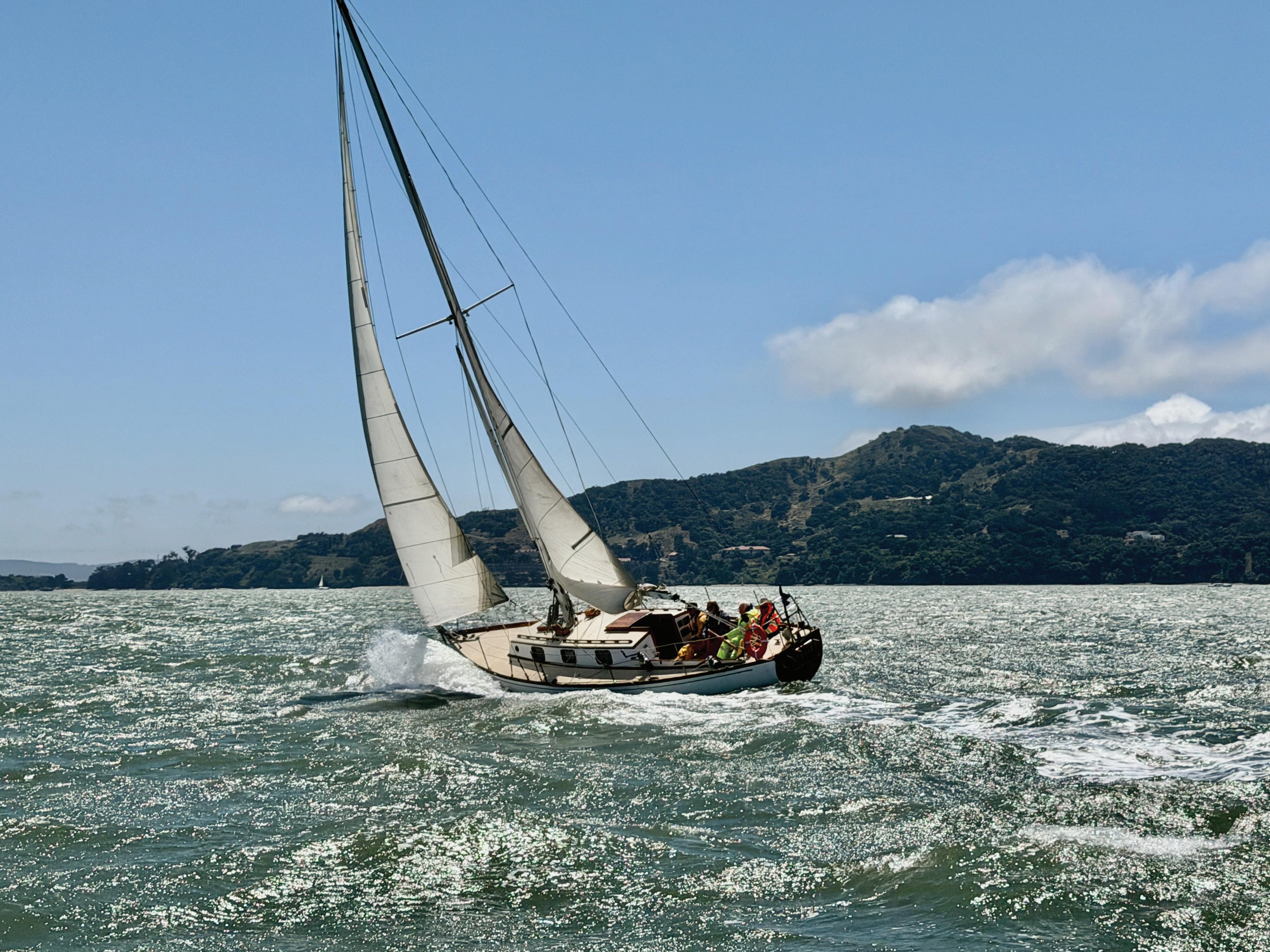
i g n i n g u p a n d S a i l i n g - J u n e 2 0 / 2 1 !
s a i l s t i c e . c o m
Experience, it is said, is a harsh teacher: You get the test first and the lesson afterward. That was certainly how Huub van der Mark came to sailing and cruising. A bit over a decade ago, in his late 20s, he moved from the
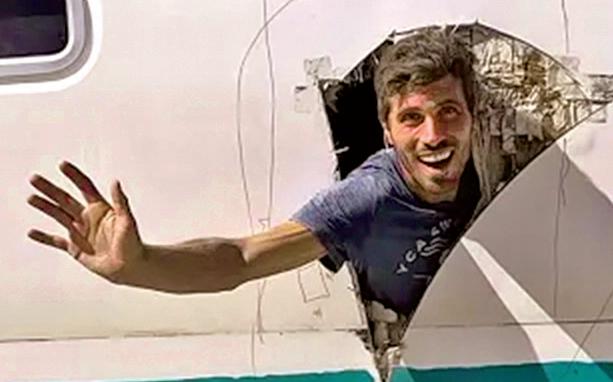
with an optimistic wave from the damaged hull of a new-to-him 38-ft cat. Netherlands to New York to study acting. Instead, he got exposed to sailing, and became almost instantly enamored with the romantic notion of sailing over far horizons. He jumped in with both feet, crewing on other people's boats in the Baja Ha-Ha and Pacific Puddle Jump. One thing led to another, and just 10 years after he'd first stepped onto a boat, knowing nothing, he did this year's Pacific Puddle Jump on his own 38-ft catamaran — singlehanded. Here's his story of that journey.
Iremember that everything about boat life was so strange to me. I didn't grow up near the ocean or boats. Starting as a crew member, or actually boat hitchhiker, sounded like a good way to start learning about it. I signed up as crew aboard the Abel Maramu 46 Kailani for the 2016 Baja Ha-Ha rally from San Diego to Mexico to see if I would even like the lifestyle. After the Ha-Ha, I got rides on other boats all the way to Panama, where I signed on to a Vagabond 47 named Vagabond for the Pacific Puddle Jump.
Every night during my night shift from Panama, 39 days toward Hiva Oa in the Marquesas Islands, while looking at the stars, I would dream of one day understanding boats and doing such trips on my own boat.
Everything broke on the boat during the crossing. The steering arm came loose from the steering mechanism. The light sail fell into the water and ripped into pieces. The halyard broke, which meant someone had to free-climb the
mast (dangerous) to get a new one on. Water came inside the boat, and we didn't find where it came from. And we did horrible shopping, so after week one, basically the other four weeks, we ate pancakes.
I learned my lesson: Should I ever go on my own boat, I must be very over-prepared for such a trip.
Asa boat hitchhiker, you stay shorter periods on boats. After Vagabond, I crewed on a variety of different boats and eventually arrived in New Zealand. I was able to make videos of those travels (as well as other land travel in Southeast Asia and Russia), which gave me a bit of an income.
Fast-forward a couple of years: I finally had enough money to buy a small boat of my own: an Alberg 30 named Tait Tait that I found in Guatemala. Other Alberg 30s have sailed around the world, and after crewing across the Pacific, I thought I knew quite a bit about sailing. Well, I was wrong.
A lot in this story might not make sense to you if you already know a lot about boating. I had sailed from the US to New Zealand on other people's boats. The part I wasn't aware of is that those people had spent years getting their boats ready for such trips. For me, a boat was simply a boat. I did not yet know that almost every single piece of a boat, in a period of only a few years, deteriorates and has to be replaced.
Tait Tait was advertised as "Turn Key Blue Water Ocean Boat Ready to Go." That was literally the title. And sure, the owner's recent sail from Guatemala to Belize attested to that. Gosh, I was oblivious at the time. The boat turned out to be ready to go indeed. But more like ready to go to the bottom of the ocean.
That started a long learning process about boat ownership. Probably not bad that it all happened with a small boat, as costs go up fast for boat parts and repair projects for bigger boats. Especially if you don't really know how to do it yet.
If I could do it again, I would take more time, and find a friend or broker — or anyone — who could guide me into making a better decision.
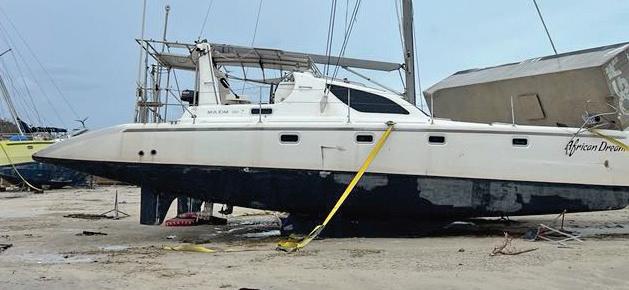
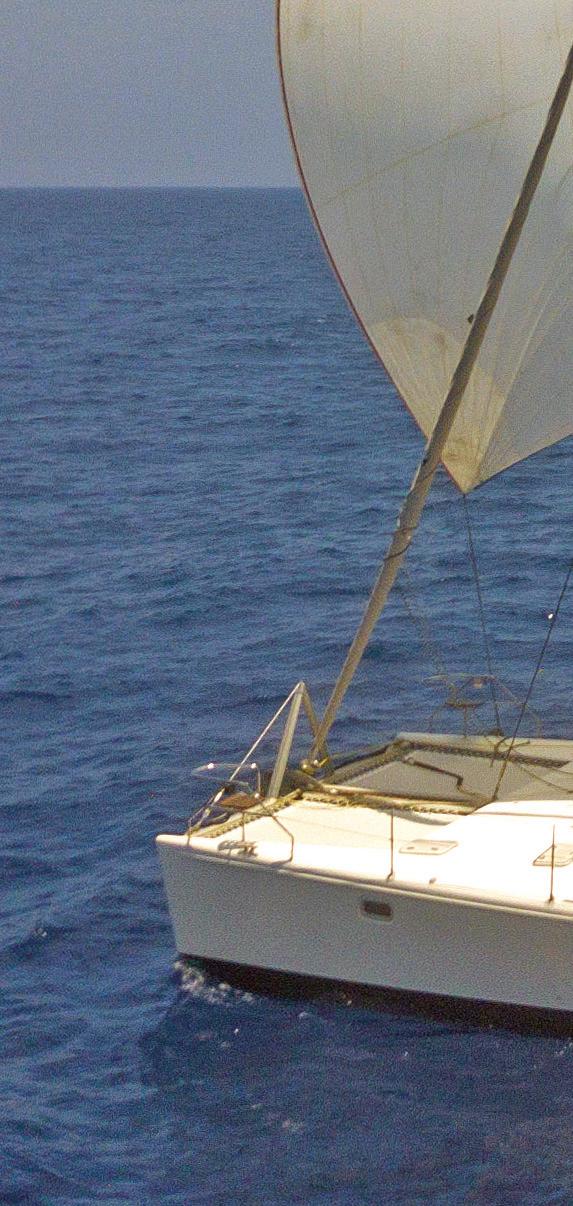
Afterfive months of working on the boat, which I renamed Limonada — an inside joke from friends who called it a lemon — in the brutal Guatemalan heat and rain, I took off. Over the course of that year, while repairing the boat a lot underway, I sailed from Guatemala to Honduras, Cuba, Jamaica, the Bahamas, Turks and Caicos, Dominican Republic, Puerto Rico, and then to Grenada for hurricane season.
It was hard. Really hard. And for most of that year, I had been asking myself why it was so hard. Because the Pacific crossing as crew member was mostly fun. Was it because I was a new boat owner? Even though crewing gave
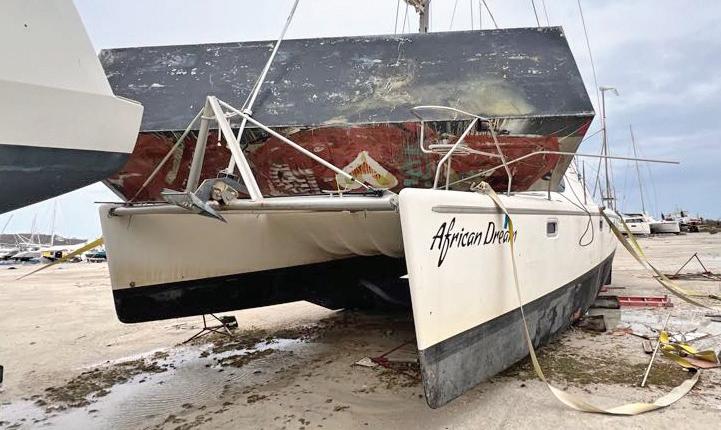
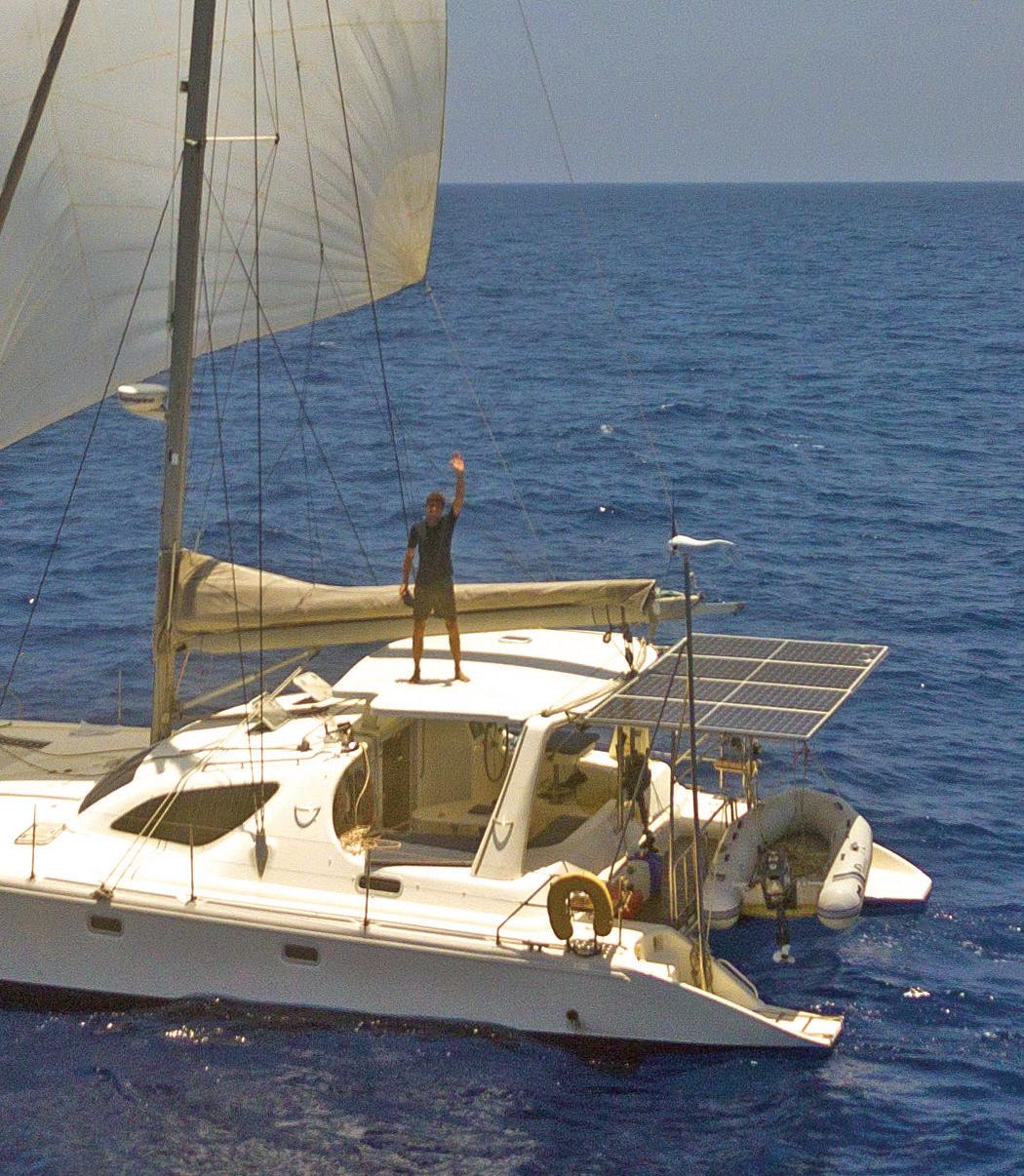
me the basic tools on how to adjust sails, I really knew nothing about boat ownership.
I feel that boat ownership is mostly about safety and self-reliance. To be able to repair the boat underway; to be able to get to safety even when the engine doesn't work; and importantly, to learn how weather prediction works and see bad weather coming from afar.
But of course the only way to really learn it is by doing it. And I think that is the hardest thing about boat life — to get through that initial learning process until you feel safe enough with your own skills.
But that wasn't all. I didn't know how the wind worked at the time. I soon realized that the Pacific crossing follows the direction of the wind. In the Caribbean, wind mostly blows from the Eastern Caribbean toward the USA. Meaning it's generally lovely to go toward the USA, but insanely hard to go in the opposite direction. Of course I bought my boat in the exact wrong location to start with, needing to go from west all the way to the east. Above all of that, the engine and sail power of a 30-ft boat compared to a 40- or 50-ft boat's is dramatically different.
I realized a 50-ft boat with a 110hp engine will still do more than 5 knots in the wrong wind direction.
The 50-ft hull is so long that it will go over the first wave, and then fall onto the second one, making it able to keep some speed. A 30-ft boat will only go over the first wave and then be pushed back by the second wave. In the same conditions, I would be doing 1.5 knots, or I might even be pushed in the opposite direction.
With the knowledge I have now, for the money I spent then on the 30-ft (not-so-ready-to-go) boat — $18,000 USD — I could have bought a bigger boat that was actually a lot more ready to go. So nowadays my first advice is for new sailors to get help if they are as oblivious as I was.
Ispent another two years in the Caribbean learning to sail the boat. The second year was still often hard as I was still going out in weather that was not suitable for my size boat. It took me until the third year of sailing before I finally got the hang of it and finally started to enjoy the sailing life. It started to feel like what I had been experiencing as a crew member.
In the third year, 2024, Hurricane Beryl came through Grenada and damaged or totally destroyed many boats there. I was in Grenada shortly before, but had sailed to Trinidad and Tobago to sit it out. After the hurricane,
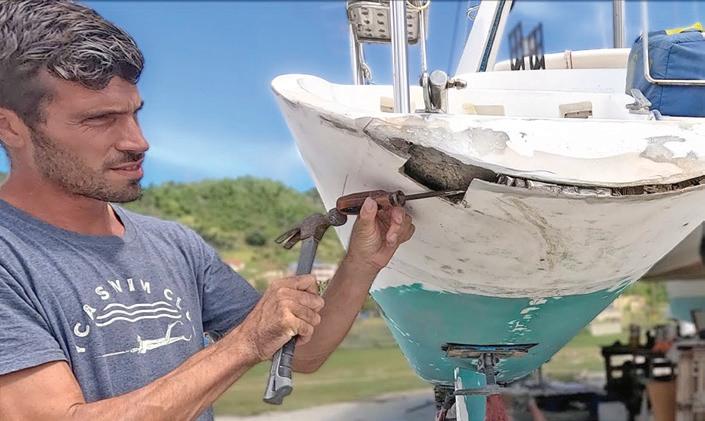
The boat needed extensive fiberglass repair. Fortunately, Huub found a professional boatbuilder to help with the project.
I learned about a catamaran owner whose boat was heavily damaged in the boatyard in Carriacou. He had a family and did not have time to make repairs. I had been dreaming of one day owning a catamaran ever since I got into boat life. But I didn't foresee a way to ever make such a dream come true. Up until the hurricane. His boat, then named African Dream, was a Maxim 380, built in South Africa in 2003. It
was in pretty bad shape after the hurricane. There was a sizable hole in the hull. A container had blown on top of the boat, which had fallen off its stands, breaking the keels and ripping the fiberglass open inside. The container was still on it when the owner and I made a deal: $20,000 USD — not including the container. And suddenly I was a catamaran owner!
I got to work. Within a couple of months, and with lots of help from a professional boatbuilder named Rolf, I fixed up the boat. Aside from the hurricane damage, it was in good condition — it had only been hauled out for some minor maintenance when the hurricane hit. And fortunately, the mast was intact so I only had to replace some standing rigging. When that and the fiberglass repairs were completed, not much more was needed to make the boat ready for a long ocean crossing.
I spent about $60,000 on repairs and upgrades, so $80,000 total — about half of what the boat is worth.
brisbane-hh-09-24 brisbane-hh-08-23 brisbane-hh-07-23 brisbane-hh-06-23 brisbane-hh-04-23 brisbane-hh-01-23 brisbane-hh-07-22
When the boat went back into the water, I spent one more season in the Caribbean, sailing from Grenada to Martinique, USVI and BVI, and then to Venezuela, Colombia and Panama, intent on making my wish come true to cross the Pacific on my own boat.
I had learned my lesson 10 years before about all that can go wrong on a big ocean crossing, and prepared accordingly. The sails were in good shape, less than three years old. After crossing through the Panama Canal, I added a light sail, a Code 0 on a furler. I am a big fan of roller-furling light sails, as they are just a lot safer to bring in if bad weather happens. I also added a brand-new windlass and anchor chain. I made sure all important lines and sheets were new. And I made sure I had a spare of almost everything on the boat. I installed a watermaker. And I paid a lot of attention to minor details, like if a hose or pipe showed wear or a bit of corrosion, I replaced it. I was going to take zero risk — with the current knowledge I had, of course.
side of Panama that I decided to do the 2026 Pacific Puddle Jump solo. If you cross solo, everything becomes so much more important. The biggest reason for this is the potential lack of sleep. If you wonder how I slept — the first seven days, I slept 20 minutes, then woke up to an alarm, took a look around me, then another 20-minute nap — and so on. This process is very difficult the first two days, but at some point, you're so tired that you get used to the rhythm. After passing the Galápagos Islands, and not expecting much traffic anymore, I slept for an hour at a time.
TheIt was not until I was on the Pacific
BrisbaneMrna-Hh 05-22-nb
I had sold the Alberg by then but kept the name Limonada for the cat.
BrisbaneMrna-HhBrisbaneMrna-Hh03-22-nb 01-22-mp
BrisbaneMrna-Hh 08-21-mp
best wind season for a Pacific crossing is to go around April/May. But since most people go then, that also means you will arrive with a lot of other boats in the Marquesas. And the Marquesas can't really handle so many boats, so you may have to anchor outside the protected bays, which is not ideal. So I decided to go a few months earlier, on January 15. Windwise, this
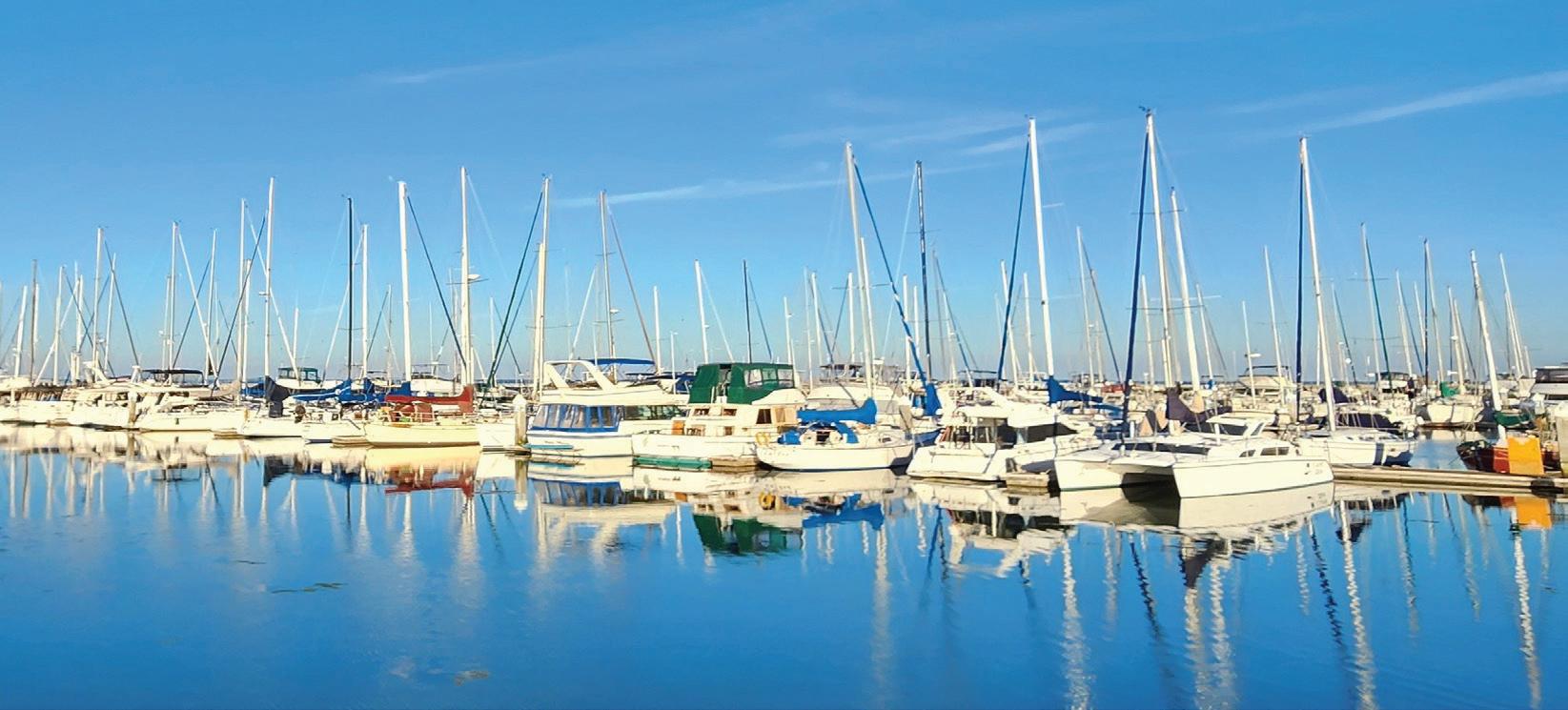
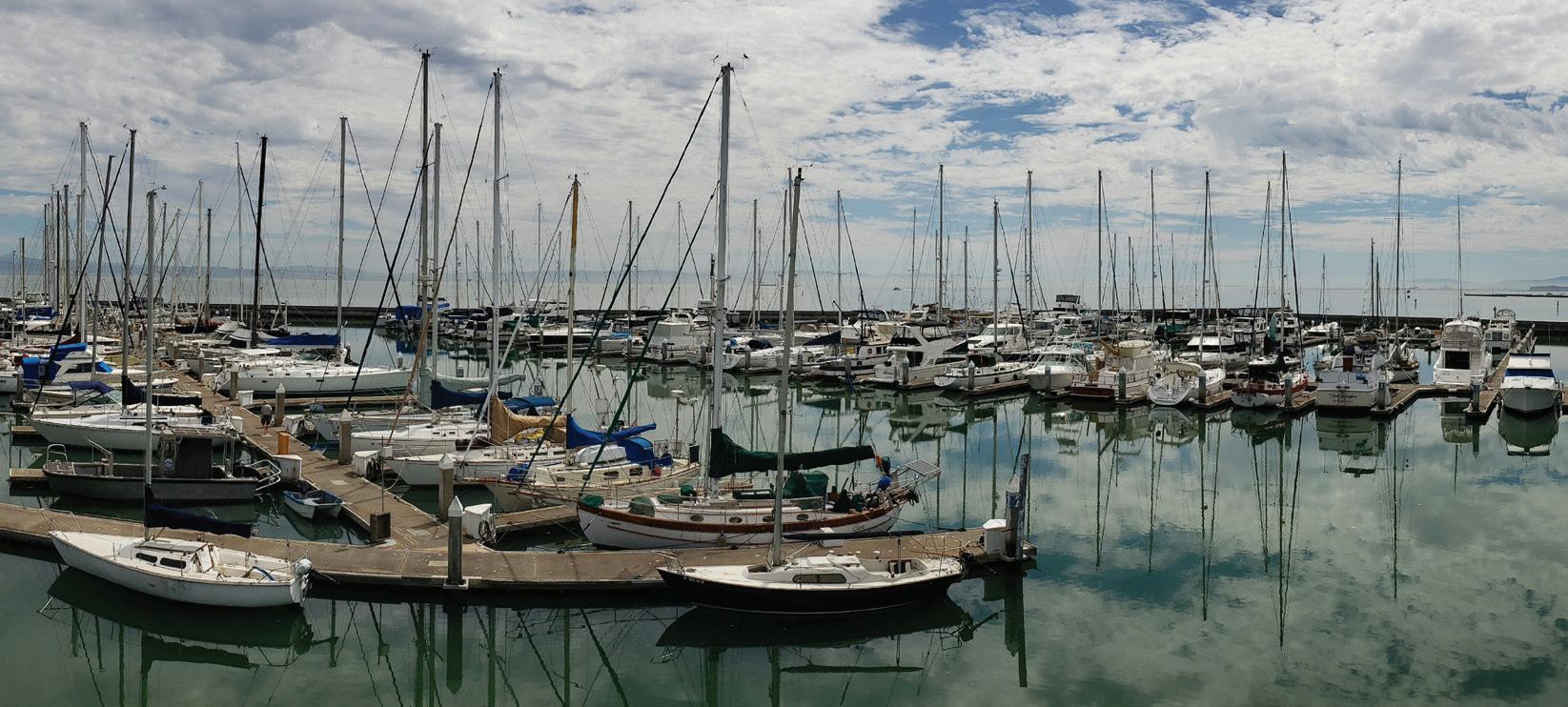
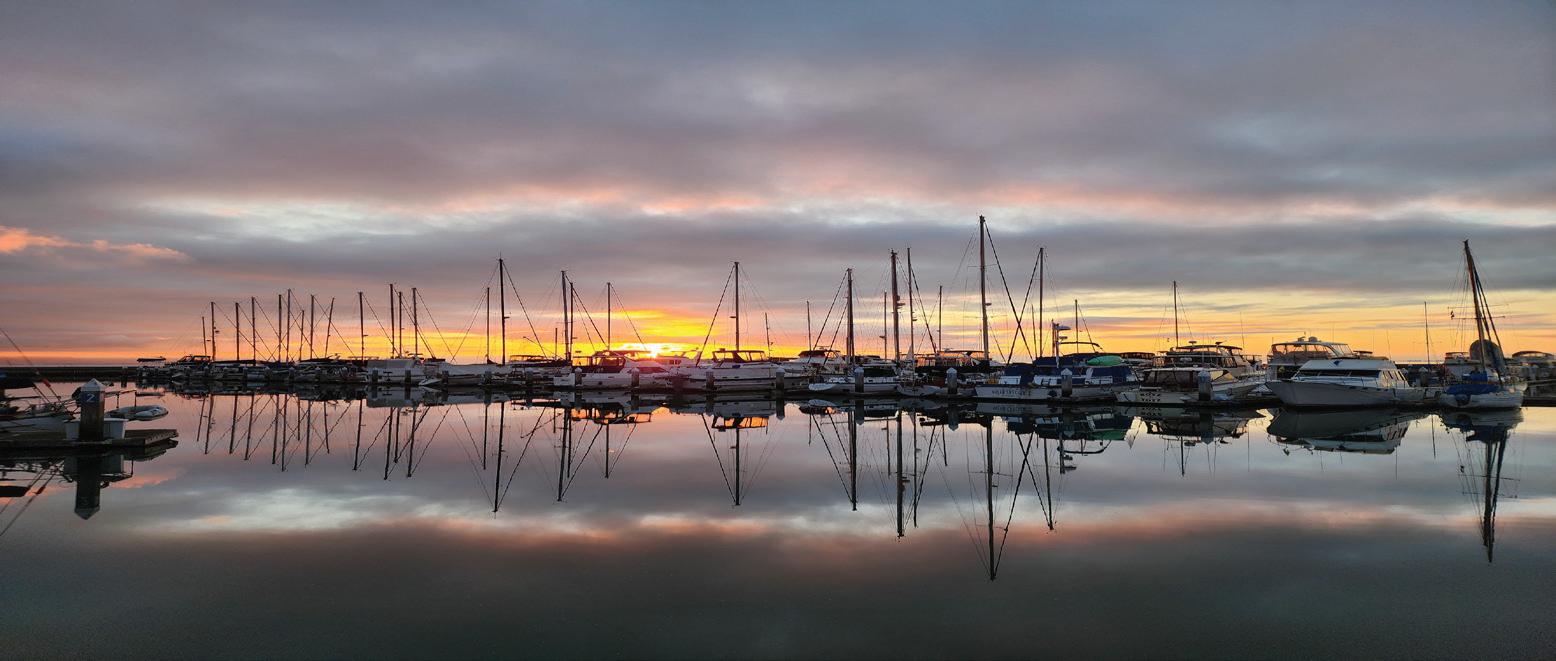
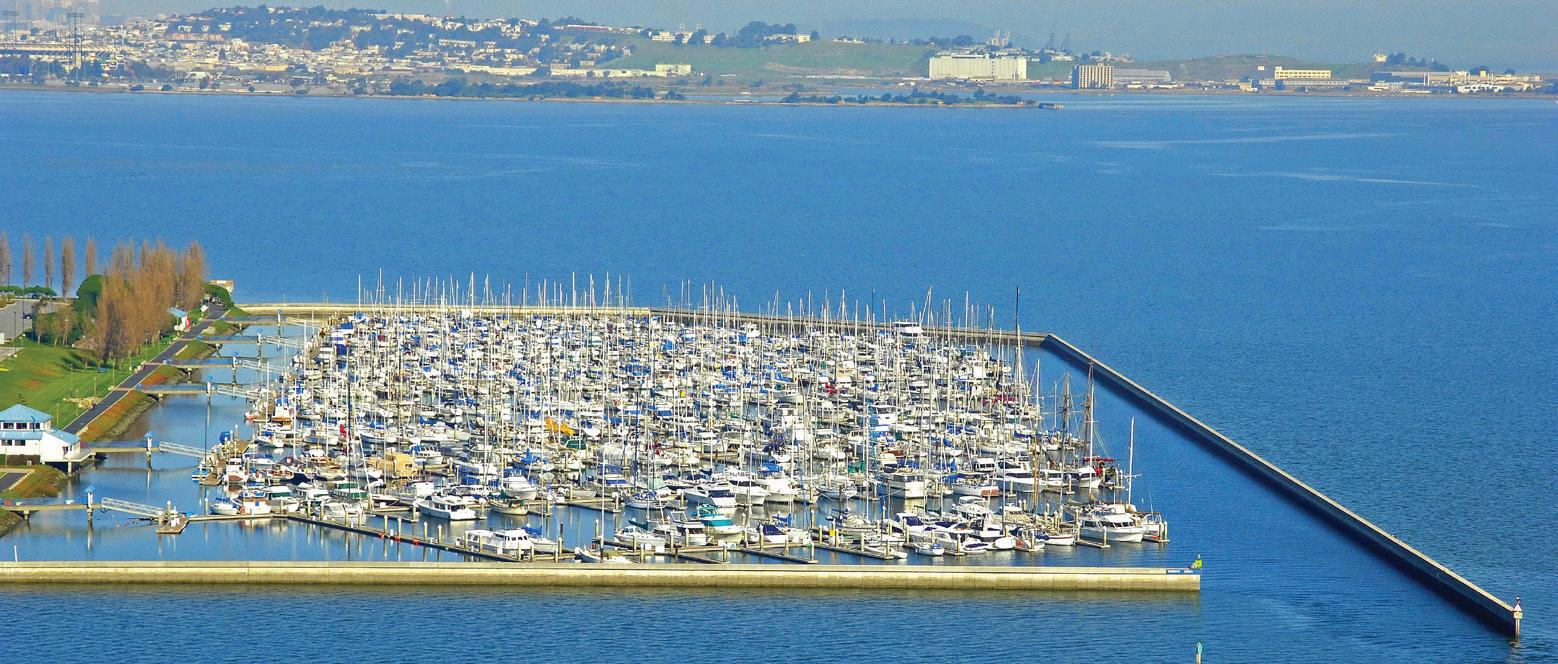
When you arrive, you'll know it's right GENEROUS ROOM TO NAVIGATE
75 foot wide fairways and channel access SPECTACULAR ACCOMMODATIONS
Convenient parking, Bay Trail access, picnic areas, private showers & laundry, Wi-Fi, and Sierra Pt. Y.C.
COMPETITIVE rateS
starting at $8.67/foot
Stop by to see what we can do for you & your boat


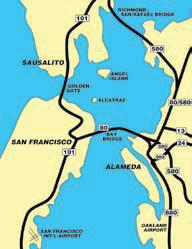
From Hwy 101, take the Sierra Point Pkwy exit and follow the signs to the marina. 400 Sierra Point Parkway Brisbane, CA 94005
mostly meant that the trade winds weren't as established. So the first 10 days were quite hard because there were a lot of unpredicted wind changes.
The beginning of the trip was scary. I mean, it had been 10 years that led up to this. Did I really prepare well enough? Was I really ready to go? It turned out, all those challenging past experiences led to my now being able to have a mostly fun trip! Nothing broke on the whole Pacific crossing. OK, one block and one tiny plastic piece of the sail broke. But nothing major broke. I guess I did do a good job after all.
The hardest days were when there was no moon. Because then you don't see much at night. If the moon was out, I could see the clouds, and that made it a lot easier to predict every hour what the wind was going to do. Funnily enough, the bigger-wind days were easier than the light-wind days. Because when there was a lot of wind, I could just go with reefed sails and go to sleep knowing it was unlikely something dangerous would happen. While during light wind, I would sometimes


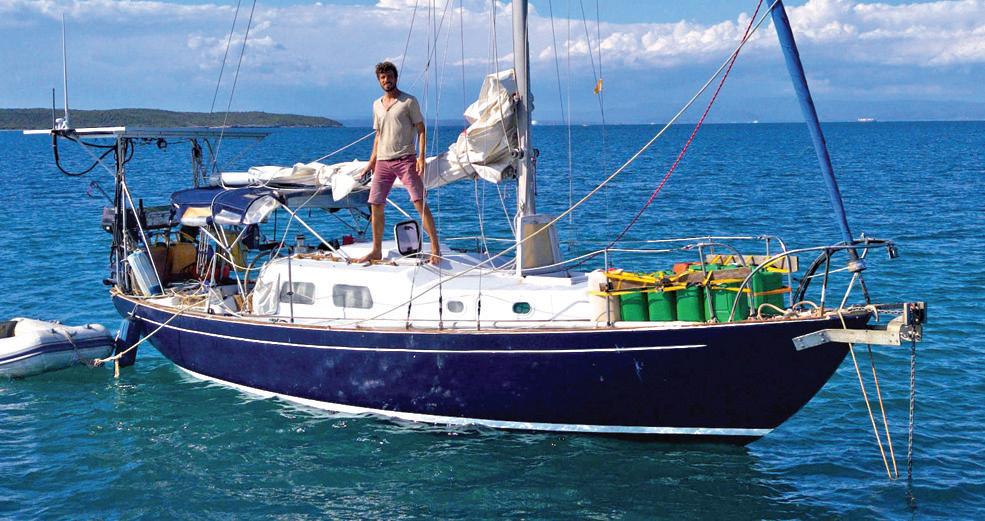
movies, and listened to audio books. I saw many dolphins, and had whales swimming next to the boat.
fly the light sail at night. If the wind picks up, the force on such a sail multiplies fast, so if a squall should happen, I would have to act immediately. And my wind-speed alarm on the old Raymarine ST60 isn't very loud, so I was unsure if I would even wake up for it. So those days I didn't sleep well, and when I didn't sleep well, during the day being tired was just less fun.
Thetrip took 32 days. Overall, I have to say, I had a wonderful trip. I've seen the most amazing sunrises and sunsets ever. The most beautiful stars. I baked cakes and pizzas, cooked very nice meals. I watched the whole Game of Thrones series and a bunch of other


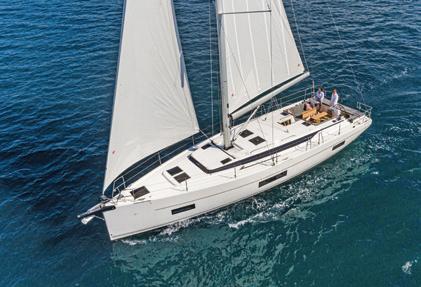
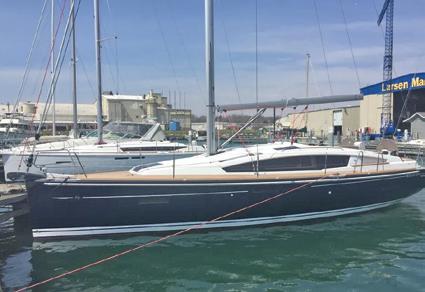
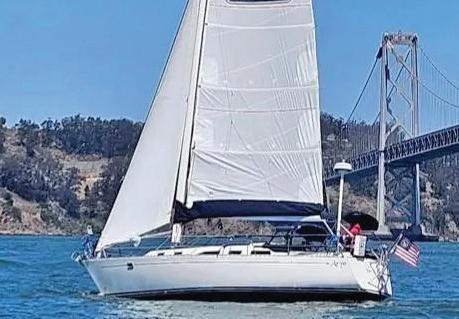
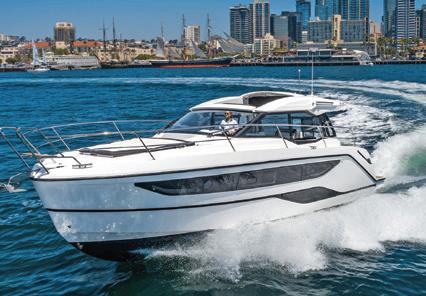
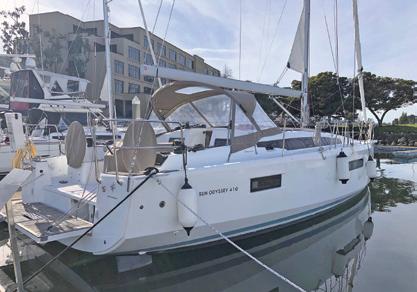
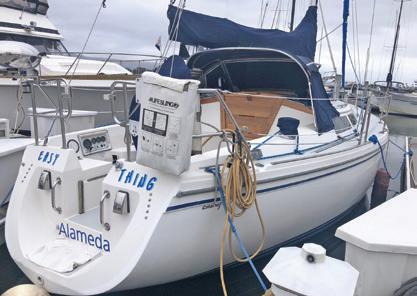
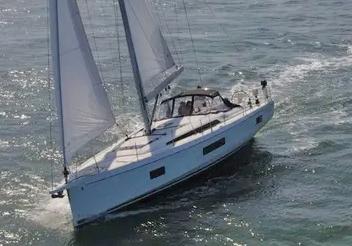
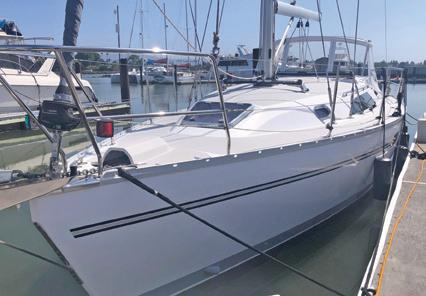
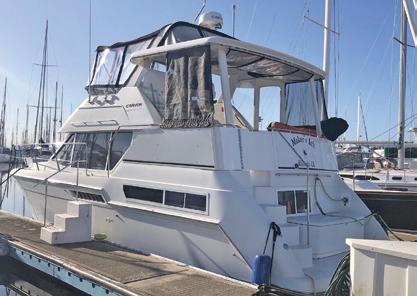
I wanted to do this trip alone to know how it is to spend such a long time alone at sea. It's funny; I expected to feel lonely and tired a lot of the time. But in reality, I was just really happy looking at the sunrises and sunsets and doing all the other things I did. It was a very enjoyable experience. At the same time, I am very aware that had I not been well prepared, or had big things gone wrong, it would have been totally different.
Arriving in Fatu Hiva, Marquesas Islands, a massive weight dropped off my shoulders. I finally felt capable as a sailor. But bigger than that, I cannot imagine any bigger challenge in life than doing this trip solo. So whatever comes my way in the near future, I feel I'm fully ready for it.
— Huub van der Mark
Huub documented his Pacific Puddle Jump passage with three videos: See Huub Vlogs on YouTube.

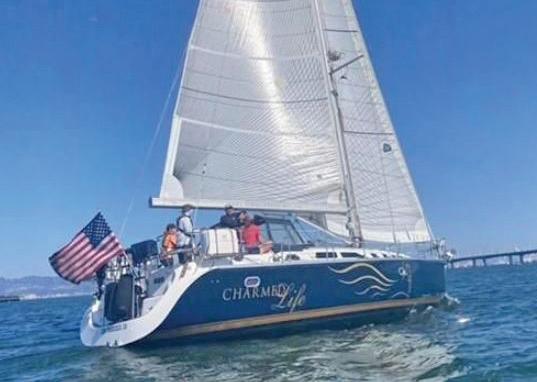
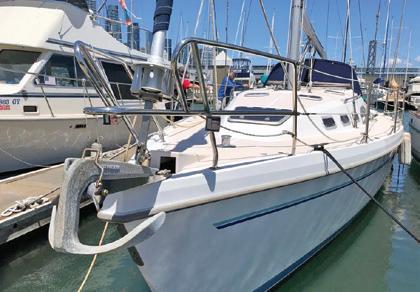
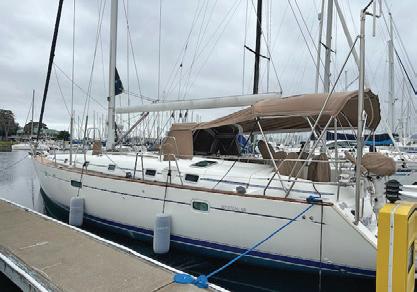
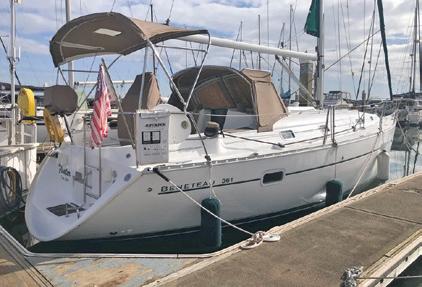
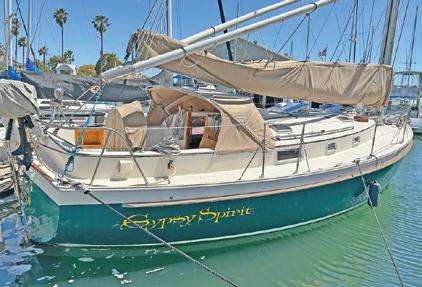
InMay 2023, we replaced the leaky old Yanmar 3GM on our 1984 Baba 30 sailboat Cetacea with a 10kW electric motor, driven by a 16-cell 48V LiFePO4 lithium battery system that we built ourselves while living on a mooring in Marathon, Florida. We then did a 17,000-mile beta test in a circle around the volcanic islands of the North Atlantic Ocean: Bermuda, the Azores, Madeira, the Canary Islands, Cabo Verde, then back across the Atlantic to the Caribbean West Indies. We ended up living at anchor off the island of St. Thomas (USVI) for a little more than a year working, fixing broken stuff, and redesigning our house battery system to be as profoundly reliable as our now triedand-true electric propulsion system.
I've often wondered about the duality of the word "power." Of course, primarily because of our daily bombardment of evil from our global-media horror show, the word "power" has a weight to it that seems to make people's faces crinkle up like a discarded poem. But power is also something incredible that you can make, as opposed to something we're all terrified of. Power can be clean, and good, and something a person can build and be proud of for years to come.
Over the past seven months, Dena and I (James) have been designing a new dual-house 12V LiFePO4 battery system, and this past month we implemented those designs. Wellllll… not really those designs. Wellllll… OK, not all! Every single aspect of our previous design changed at least once, sometimes four or five times when it came to the practical applications of the new system.
Things we knew: We knew where we
wanted the new system to fit — under the nav settee, against the aft bulkhead outboard to starboard.
We knew we had to get rid of the old battery system safely and securely with as little environmental impact as possible. (We ended up giving it all to a couple of watermen in Salinas, Puerto Rico, who could use some extra boat batteries in case of emergencies.) We knew we had most of the replacement hardware and an almost adequate supply of wire fittings, and that is where our intellectual designs completely fell apart. Every other design aspect changed dramatically as we moved forward on this massive power project, all while remaining at anchor and off the grid… and rowing back and forth into town for hardware and provisions.
We finally left St. Thomas and cruised the three inhabited islands of Puerto Rico. By the time we buried the hook off the little town of Salinas on the southern coast of the big island of Boricua, we knew that we could build out the new house system there. It was protected, and had plenty of boating services, lots of great food and a bunch of very cool people. So, we paid our $35 to the marina for a month of dinghy dock, showers, and trash and mail service. After that we went to work on mailordering all the gear we needed for the project that we thought we had, but actually didn't. All the while the weather was changing.
The marching squalls of spring are "In like a lion and out like a lamb," as "they" say about the Mar Caribe. Seriously, that's no joke. The ambient temperatures are hot enough that, if we have to batten down for a squall in the
middle of the day, it ends up feeling like a sauna belowdecks. When we have a giant repower project going, as we do sometimes, getting hit by a marching squall is a perfect opportunity to take a break and sit in front of a fan. We did that a lot on this project.
At one point we went on a five-and-ahalf-mile epic walk to try to find a small sheet of plexiglass, only to remember we already had what we needed stowed away aboard. No big deal though; we love discovering a beautiful place on foot. Once back on the boat, we dedicated the next four days to the job at hand — re-re-redesigning the power system aboard our tiny ship.
The first of the redesigns was to attach the automatic charge relay (ACR) to the inboard-most part of the battery cabinet, right next to the two new house banks. Next, we got to finally, once and for all, agree on an arrangement for the battery management systems (BMSs) on the hinged plexiglass above the battery cells. We installed a piano hinge on the outboard side of the plexi after we agreed on the permanent hardware arrangement.
Anyone who has built something with their own hands knows the true relativity of time. At some point you feel exhausted — right about the time you realize you started working on your project about 14 hours ago. Time to pop open that ibuprofen bottle.
Ah, another light western breeze at the end of a good, long day.
So we mocked it up about 10,000 times; we sweated over it, dreamed about it, philosophized about it, and stared at it for days. Finally, we figured it was time to build that sucker.
From left to right: First dual house-battery mock-up; We turned the old battery compartment under the saloon cabin sole into dry-provisions storage; The completed system.
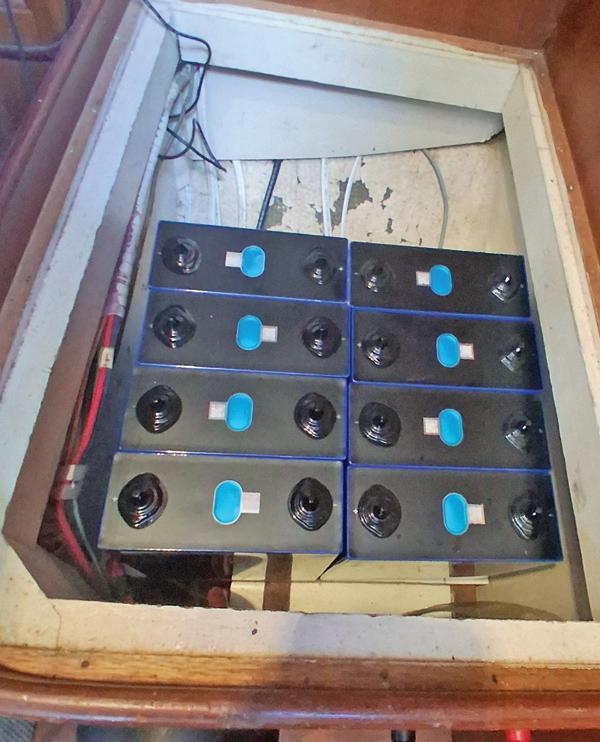
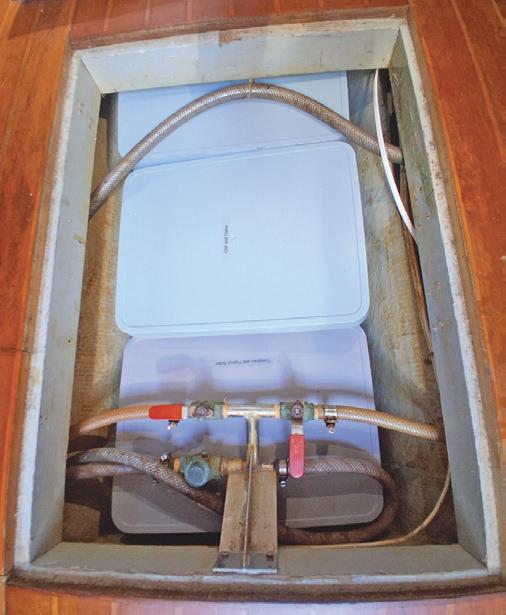
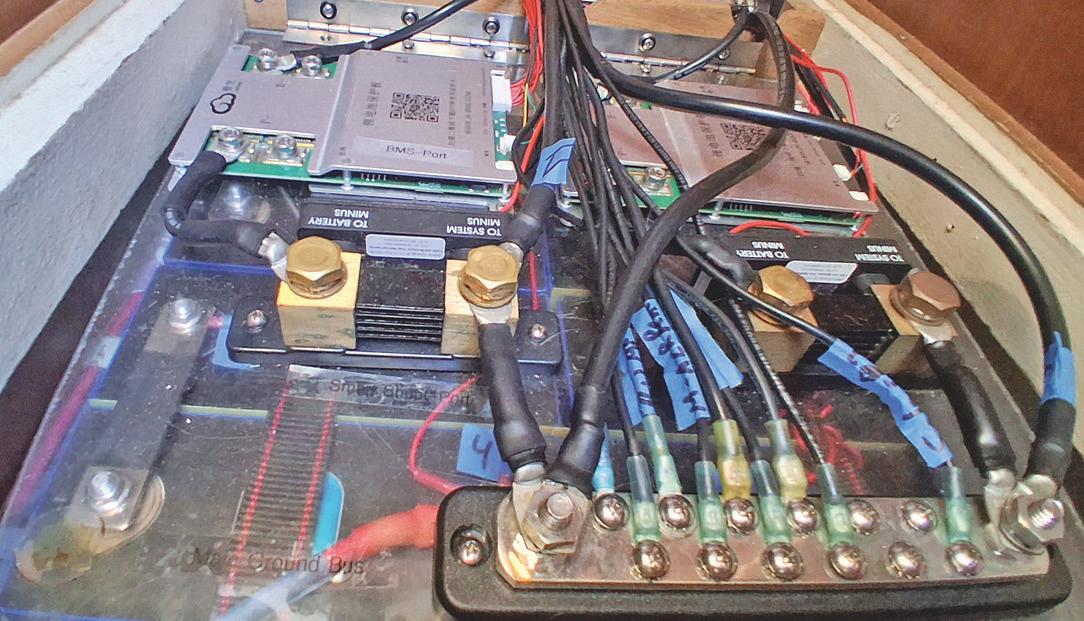
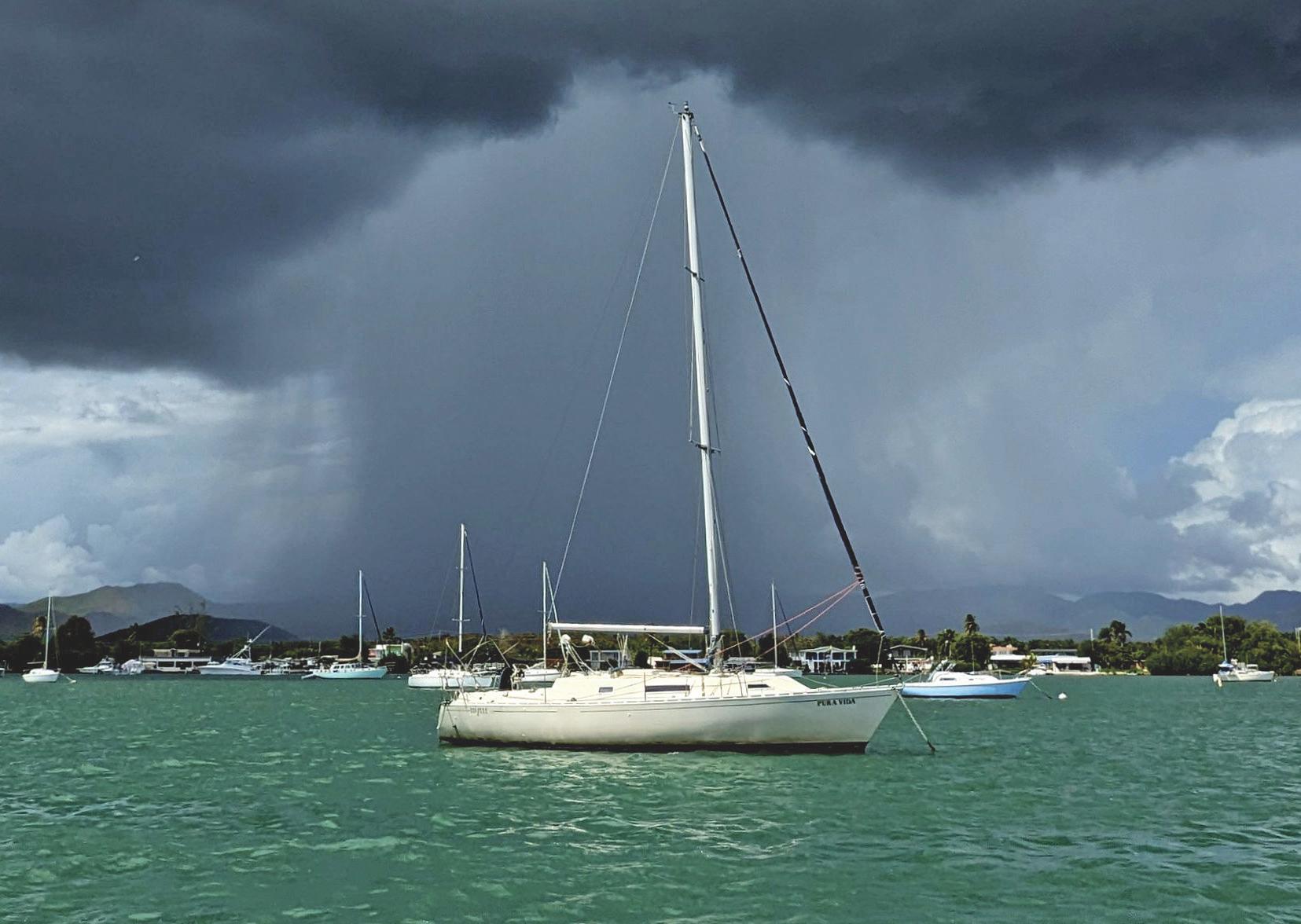
We installed the BMSs, the Smartshunts and the main ground bus, pianohinged the plexi onto a nicely dressed and channeled slab of teak. At this point in the project, Dena looked up at me from her incredibly uncomfortable work site, with those big, beautiful baby-blues of hers and said, "What if we didn't put the solar-charge controllers in with the battery rig?" I (James) then laid down my hammer and quietly died inside.
James: "Well, that would mean that nothing from our original design made it to the application stage."
Dena: "So?"
J: "What'd you have in mind?"
D: "Something wonderful!"
We had already made the jointchiefs' executive decision to relocate the wind generator charge controller from the locker it was in (under the starboard saloon settee), to a beautiful teak shelf two feet above the battery rig, so it couldn't hurt to pack another couple of sexy solar-charge controllers in next to it. Since the beginning of our boating years together, we have long held that visible technology is not only functional and easily accessible, it's also really cool looking!
It was always in the "plan" to disconnect the old house battery bank #2 first, so house #1 could keep us in
again. You know that whole "definition of crazy" thing?
Yet another look at yet another downloaded manual gave me (Dena) the key to the escape room. I'd thought the balance wires would be counted from the positive wire, but they're counted from the negative. Four more precious ring connectors later and another zap from the multimeter (itself powered by a 9V battery), and the BMS beeped with its tiny red LED all lit up like a little baby Christmas tree. I then connected to it via the Bluetooth app.
This is where the murmuration of cherubs flutter overhead and the choir ladies sing, "Hallelujah," at the most dramatic top of their registers.
lights, fans, pumps and cold bevs while we built out both new systems, then jump-start the new house #2. At this point we could power the lights, etc., off the new house #2 system, demo house #1, then bring that one on line next. It was a good plan. We could build the entire system while being at anchor and off the grid.
When we jump-started battery #2 using the continuity tester on our multimeter, the system started right up but errored out shortly thereafter. It was agonizing! We thought for sure we'd done everything right! So we tested and restarted… error… tested and restarted… error, over and over and over
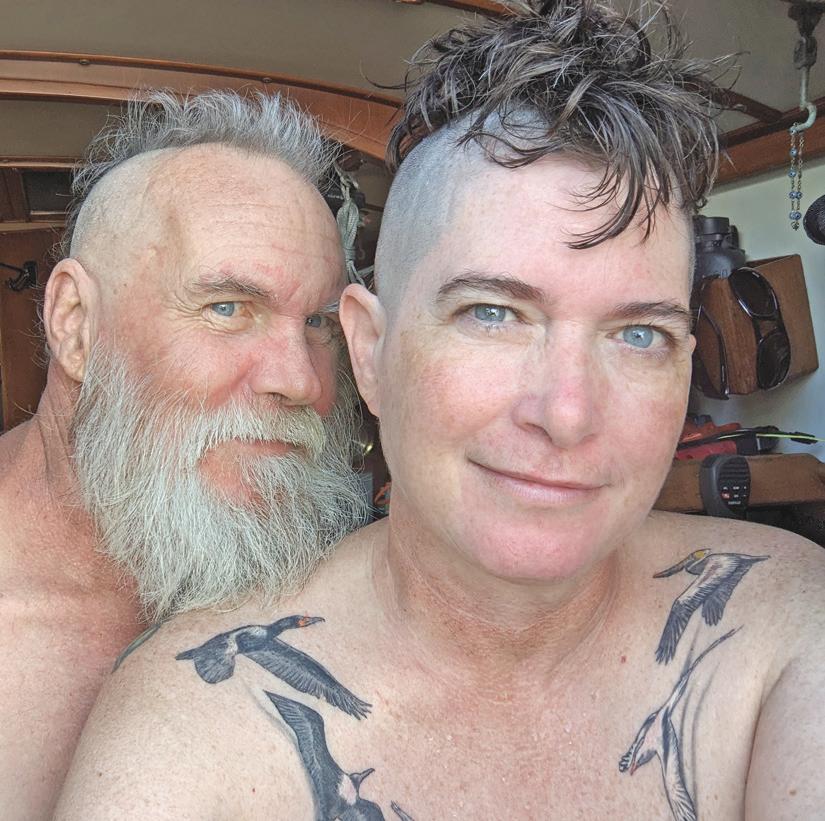
Some programming later, and after starting and programming the Smartshunt, I put the fuse in the solar controller's battery positive, programmed it as well for LiFePO4 charging, and closed the circuit from the solar panels. Voilà, a working system! We had wind- and solar-charge current flowing happily into the new batteries and the Smartshunt data to prove it down to 1/100th of an amp. A bated-breath turn of the main battery switch from our well-used old house #1 AGM to our brand-new house #2 lithium pack and… everything worked! Party!!! We broke out the orange juice and ginger ale, mixed 'em up, and got drunk on the knowledge of a job well done!
We opted for a full day's test of the #2 house bank with all the charging sources on full blast before jump-starting bank #1 the following day. Up 'n' at 'em, early on another windy southern Puerto Rican Monday, and we were almost too jacked to even finish our coffee, so we jumped right in and grabbed the jump-starting rig, or rather, the multimeter, hooked that sucker up, and… nothing. F*&%k!
We took the entire bank #1 system apart and re-re-tested every single wire and connection we had just built and tested as we went, and everything checked out. We re-re-re-tested
everything leading up to the BMS for continuity and resistance. Again, everything was perfect. We were reading .05 ohms of resistance or less on every battery lead and positive continuity on the whole rig. There was nothing wrong with our wiring! Bad BMS, it had to be. We rush-ordered another one from JK and they promised delivery on Friday. We spent the week with more provisioning of food, beverages and entertainment for the next offshore leg of "The Adventure." Thursday, Oswaldo (a very cool guy who works at the marina we're anchored next to) and a friend of his came out and took our old batteries away.
We got the new BMS late on that Saturday so we jump-started the new one and… nothing. What?! We're going back now in space and time, remem bering an old but profound Douglas Adams adage from tic Detective Agency observed that once you eliminate the impossible, then whatever remains,
however improbable, is the answer. I, however, do not like to eliminate the impossible." What was actually going on here anyway? Whenever in doubt, stare at shit… hard!
Dena decided to launch into another round of crazy — sorry, um, testing — and discovered a fault in the reading on the multimeter. It wouldn't reliably show voltage.
J: "WHAT? That's impossible!"
D: "I think we have a weak 9V battery in our little 12V jump-starter."
We had used it unmercifully during the project, though we were both conscientious about turning it off when not in use! So I built a tiny set of jumper cables out of 14 AWG wire and four flat connectors (male disconnects). With one set of mini-jumper cable males
Programming went smoothly, as did powering up the Smartshunt and the solar controller. I (Dena) stopped the wind gen. and rewired it (we'd tempwired #2 to the #1 position while #1 was down), restarted it, and boom! We were making almost 20 amps on the two banks between wind and solar right out of the gate.
So we completely rebuilt our house dual-bank 12V battery system, from a 17-year-old set of well-used AGM batteries to a digitally monitored LiFePO4 system with 230 amp hours per bank. The new system weighs less than a quarter of the old one and uses less than half the space and cable length. And, yes, it works perfectly.
Last but not least, this boat is finally sitting on her factory waterline for
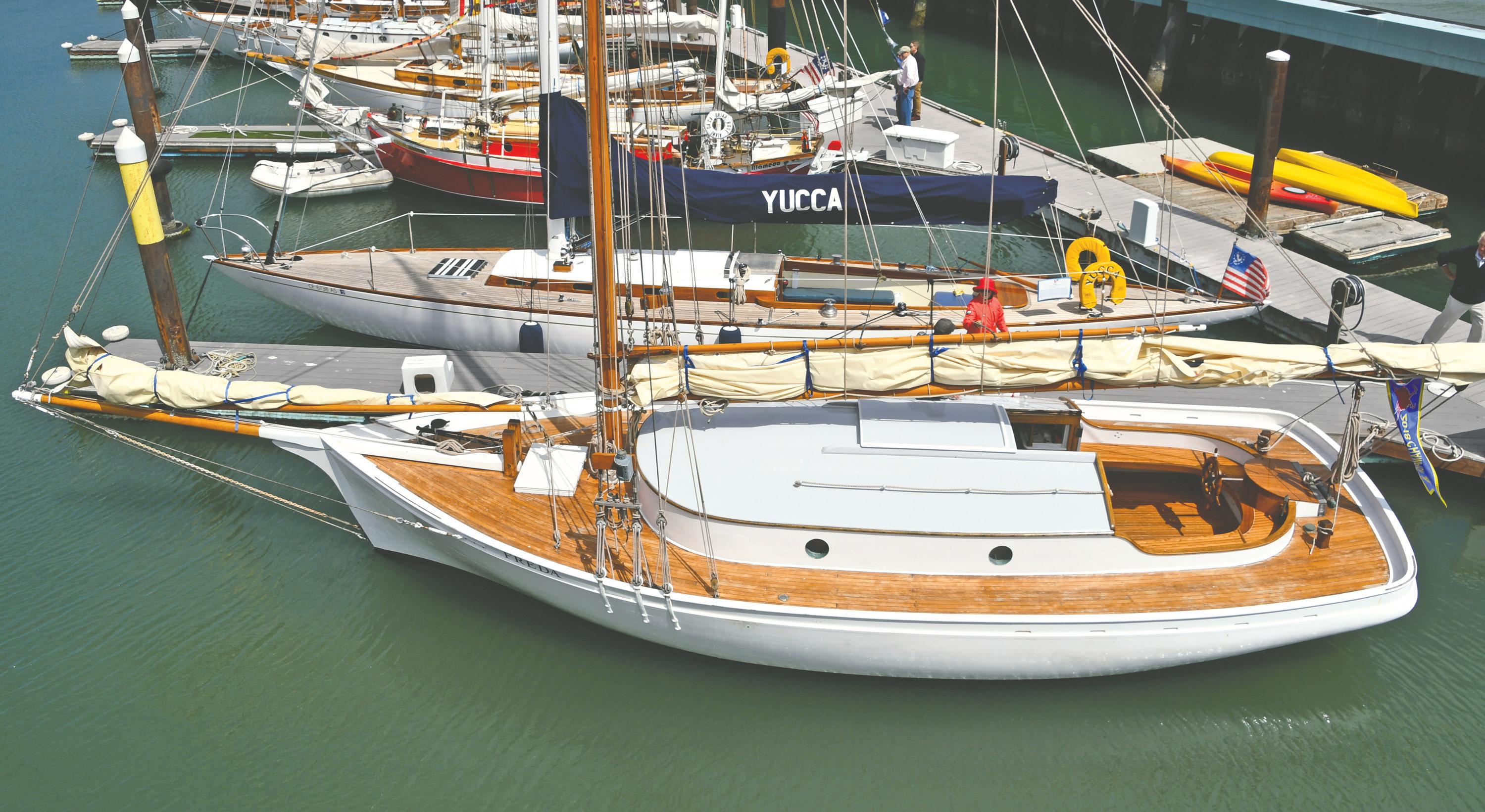
SUNDAY, JUNE 21 10 A.M. – 4 P.M. CORINTHIAN YACHT CLUB
View classic sailing vessels, meet their skippers and learn the yachts' unique history. Show proceeds to go to Master Mariners Benevolent 501(c)3 Foundation. The Foundation provides scholarships for youth sailing, wooden boat building and maritime education. Also provides for the preservation of SF Bay Classic yachts. MMBF is dedicated to preserving the continuity of traditional yachting on San Francisco Bay.
The Master Mariners Benevolent Association is dedicated to fostering participation in yachting and the preservation of classic and traditional sailing craft. During the Boat Show, the Corinthian Yacht Club dining room and bar will be open for lunch and there will be model boats for kids. Children under 12 free when accompanied by an adult. Master Mariners Benevolent Association • www.sfmastermariners.org
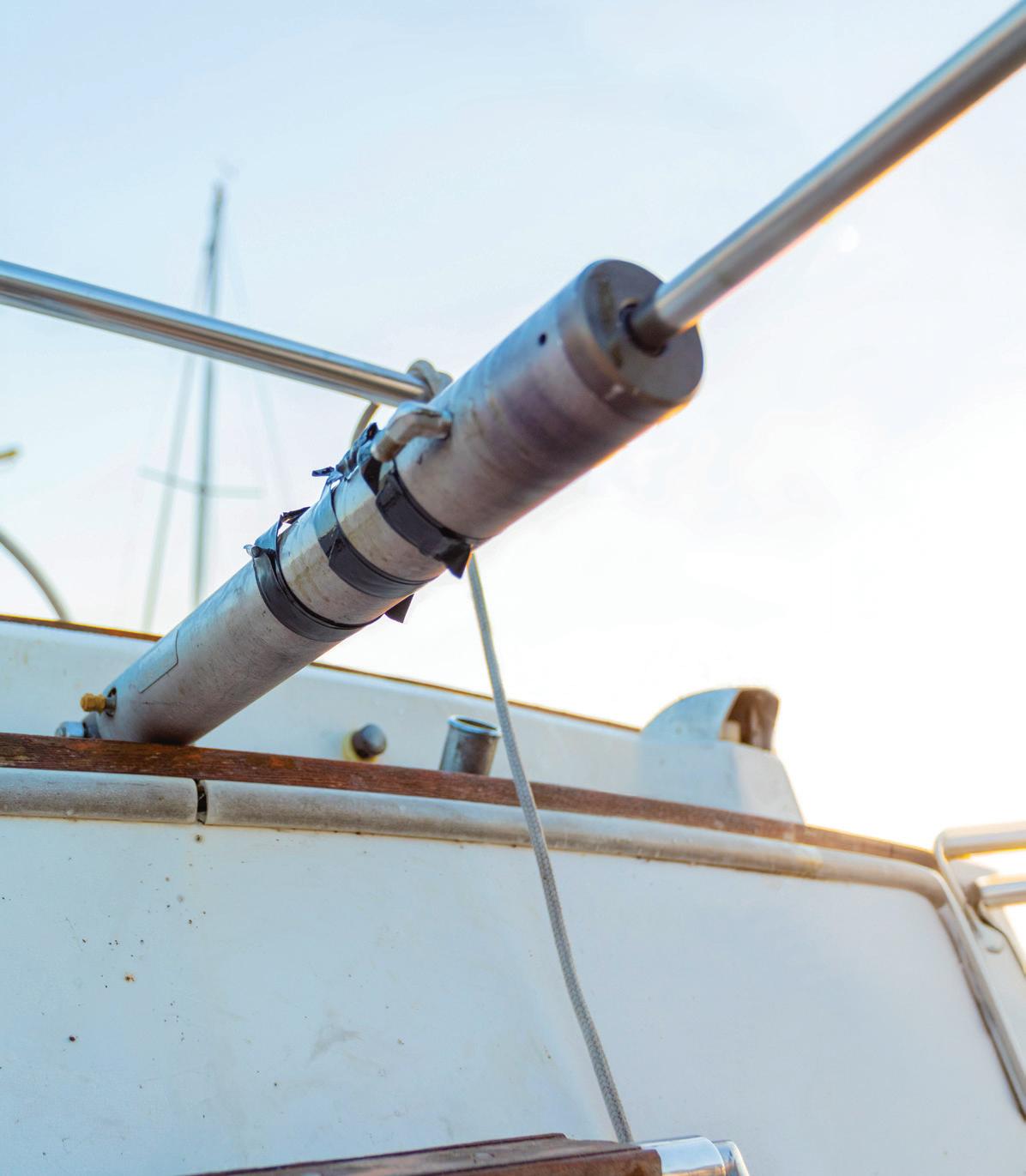
UPGRADE TO HARKEN INTEGRAL RELIABILITY
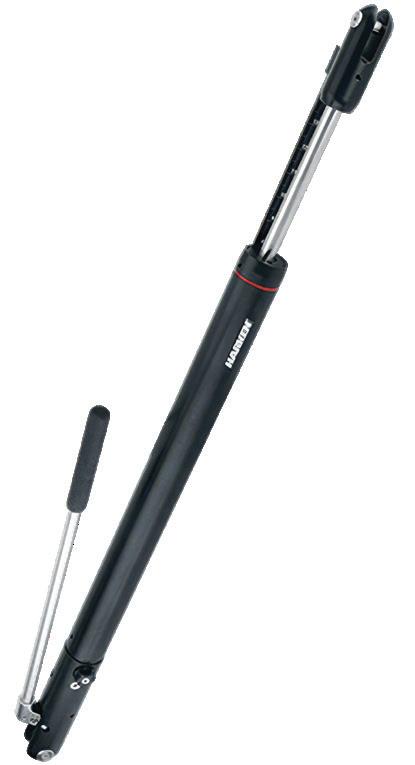
Stop wasting your season on rebuilds. The Harken Integral Adjuster is a “plug-and-play” replacement designed to eliminate the common failure points of aging hydraulics.
FAIL-SAFE DESIGN: RELEASE VALVE CANNOT BE OVER-TIGHTENED
REPEATABLE TUNING: INTEGRATED BATTEN STICK FOR PRECISE SETTINGS
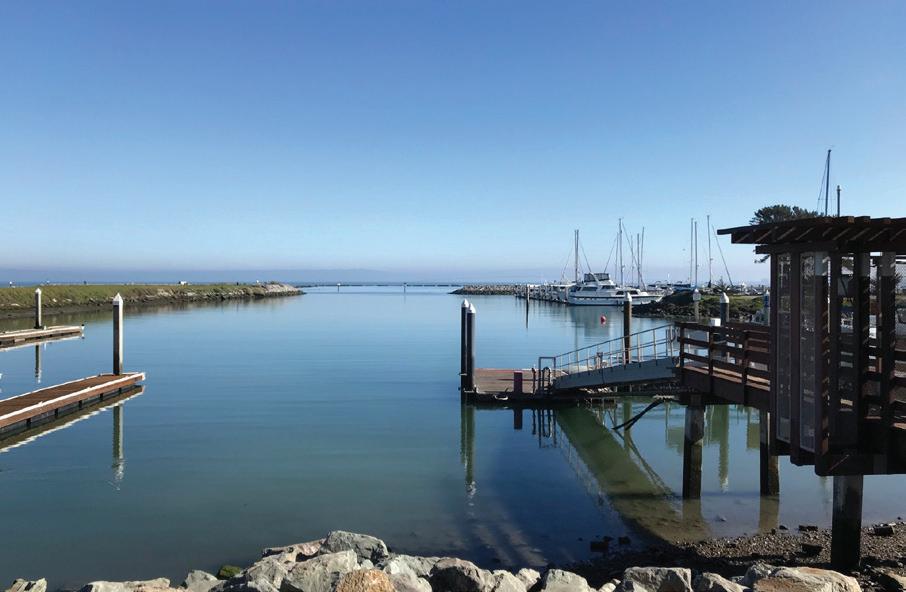
Nicole Breault and an all-star team of Bay Area women sailors will head to Newport, Rhode Island, this September to compete in the inaugural New York Yacht Club (NYYC) Women's International Championship. Representing the St. Francis Yacht Club (StFYC), Nicole and her self-styled She-Wolves team will be up against 19 other teams from 14 countries racing the IC37 sailboats supplied by the host club.
The stakes are high, and the competition includes Olympic champions, World titleholders, and ocean racing veterans. From the moment she heard it announced, Breault knew that she wanted to participate. "They're going to showcase what women can do by putting us on the same platform as the New York Yacht Club Rolex Invitational," Breault tells Latitude. "I saw it as a great concert that I wanted my band to rock in!"
To launch a world-class campaign, you need world-class backing. Enter Bruce Smith, the "Big Wolf" of the operation. Smith is a proven benefactor who previously led StFYC to victory in two Morgan Cups and four Masters regattas. Recognizing their potential to podium and being a dedicated champion of women in sailing, Smith and his wife, Debby, have stepped up as the primary financial supporters of the She-Wolves, putting them on a track to excellence.
Given the scope of the campaign, Smith pulled in Sydney 2000 Olympian Russ Silvestri to serve as the team's general manager and advocate. "Russ has been an incredible asset to us," Breault tells Latitude. "He has a lot of experience in management, and in Breault and her husband Bruce Stone
competing and winning. He is especially skilled at asking for help from Club members who love the sport and want us to do our best."
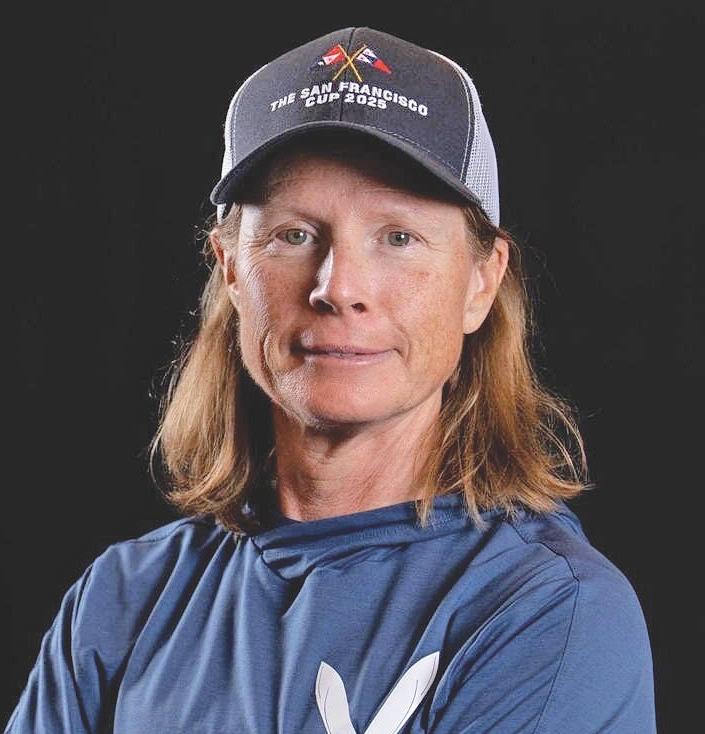
With solid financial backing behind the effort, Breault built a powerhouse roster. Molly Carapiet (tactician), Molly Vandemoer (upwind strategy/ spin trim), and Katie Pettibone (coach) formed the initial core of the team. Together they recruited McKenzie Wilson (jib trimmer), Claire Dennis (main trimmer), Collette Zaro (bow), Kate Shiber (mast), Dana Riley Hayes (pit), and Lucy Wilmot (runners).
Breault describes this crew as women with "the strength, experience, and proven competitive drive to handle the physical demands of the IC37 platform while playing the game at the highest level."
Breault designed a multi-phase training program for the team, maximizing local resources while seeking out boat-specific experience. So far, the She-Wolves have relied on San Francisco Bay's competitive J/105 fleet aboard Arbitrage, the boat on which Breault won the 2025 Rolex Big Boat Series.
Yacht Club's (SFYC) Elite Fleet Regatta on May 16 and 17, the She-Wolves finished third overall aboard Arbitrage with an impressive comeback on day two of the event, posting fourth and second-placed finishes.
Translating team progress to the IC37 means getting time on board the actual boat. The She-Wolves traveled to Victoria, British Columbia, to log their first hours on Westerly, the only IC37 on the West Coast. The owners are part of Cascadia Sailing, a rival team preparing for the women's championship, but who saw collaboration as valuable.
They set up an all-inclusive charter with on-board coaching, airport runs, housing, and catered meals. This coldweather camp provided vital first experiences for managing the boat's massive sail area and grinding winches.
"With nine people sailing the boat, you must be strong," Breault says of sailing the IC37. "You must coordinate. You must communicate well. You can't just muscle it; you have to technique it."
Recognizing the steep learning curve of a new class, the She-Wolves program shifts to an intensive investment in individual learning through June and July. Breault and others will head to the East Coast to crew directly with established, Newport-based IC37 teams. By embedding themselves with the class veterans, they can soak up nuanced methods and know-how, then bring that high-level data back to the pack.
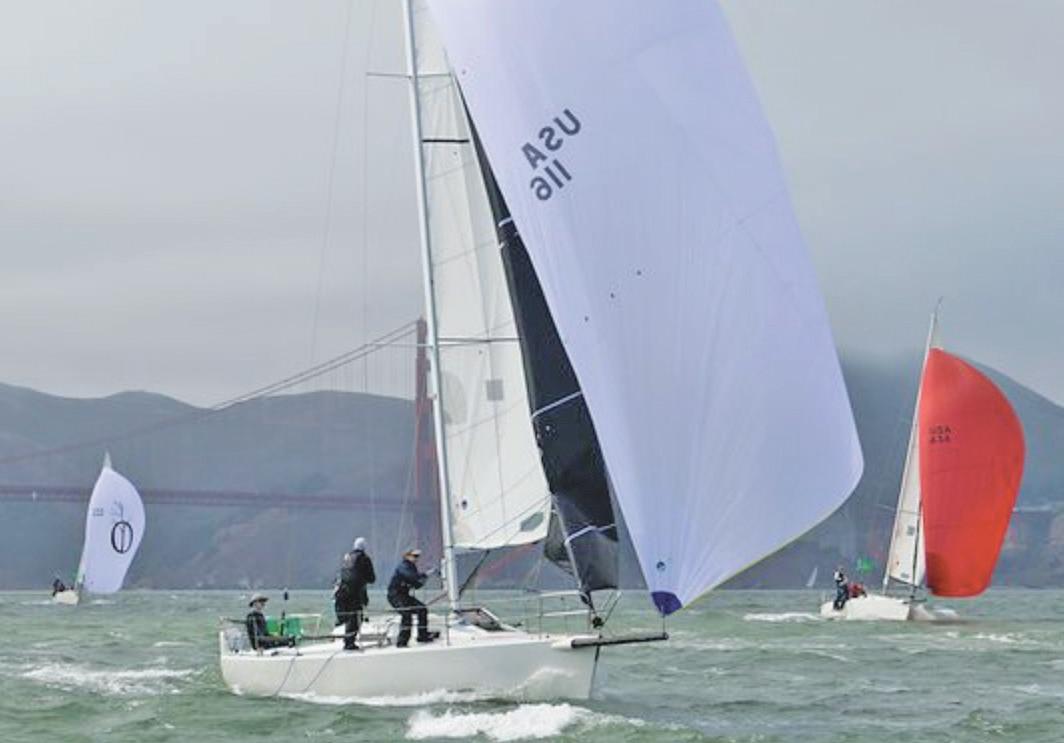
One-design racing against more than 20 notoriously feisty boats on the line has challenged them to hone communication and boat-handling under pressure. At San Francisco
The final phase of preparation comes this August, when the entire SheWolves roster will assemble in Newport to race together as a complete crew in the Safe Harbor Regatta. This dress rehearsal will allow them to solidify their relationship to the IC37 and the racing conditions of Narragansett Bay and the waters off Brenton Reef.
"Obviously there is a lot of work to do beforehand, but we trust the process and come championship time, we will be ready," says Breault. Silvestri echoes Breault's confidence, stating: "The race has already started. Nicole and her team are winning. They are doing the right things NOW to be able to win in September and be up on the podium." — fritz
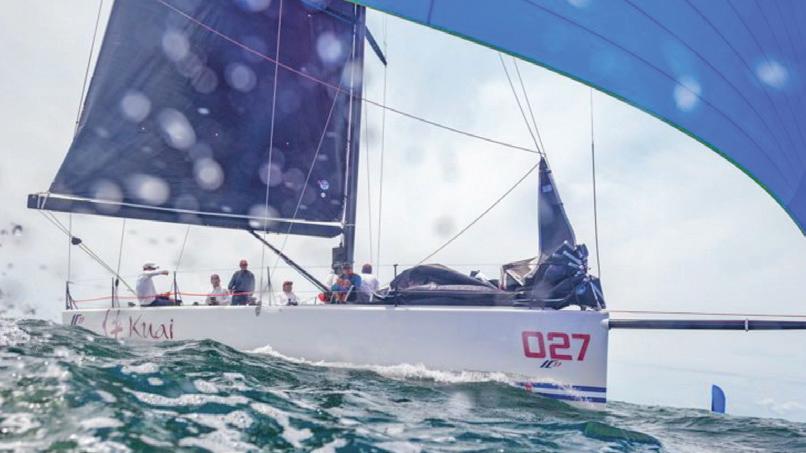
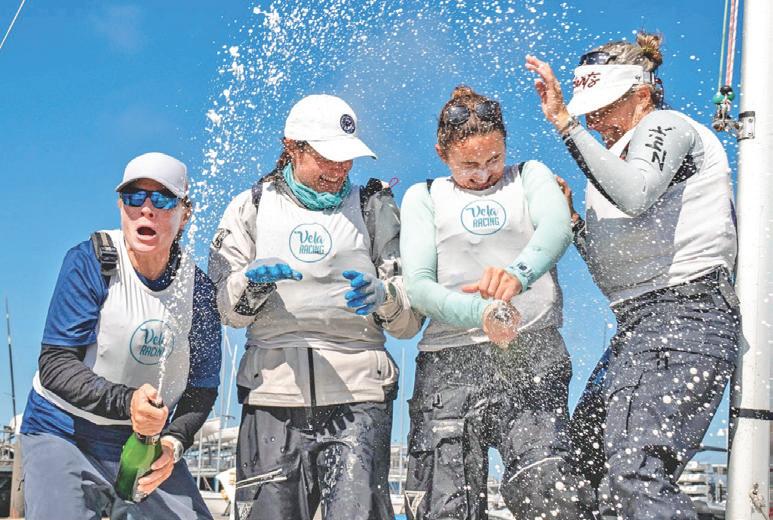
Nicole (left) is no stranger to winning. She is a five-time US Women's Match Racing national champion, pictured here celebrating her most recent 2025 title.
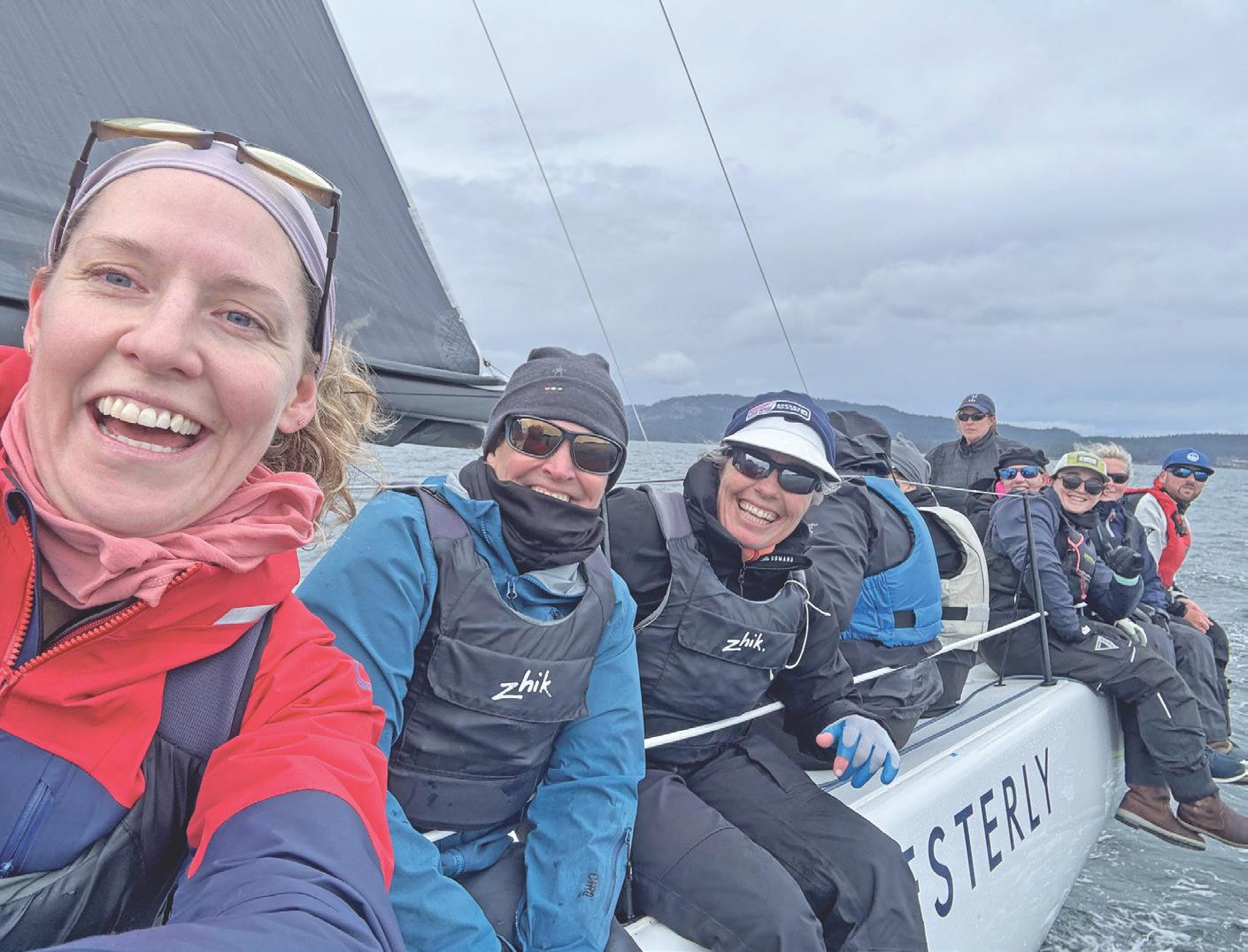
all smiles as
"The weather is the boss. When it's good, we go; when it's bad, we stop." That's what Arnstein Mustad said to me and Carla Deykin on April 6, the night before we departed Marina La Cruz de Huanacaxtle in Nayarit, Mexico. Arnstein treated us to dinner at La Peska, the Marina restaurant, which surprisingly had a nice selection of pizza and pasta.
This was my third delivery with Arnstein, so I had a pretty good idea what he meant. As a delivery skipper, Arnstein has sailed more than 250,000 ocean miles, and these are not pleasure cruises. Arnstein is Icelandic for Eagle Stone, but as we progressed, I wondered what was Icelandic for, "I only stop for fuel." We were underway 24/7 except for brief fuel stops in Cabo San Lucas and Turtle Bay on our way to Ensenada. But our trip took less than eight days; more precisely, about seven days and 22 hours, including the onehour time change. "Right on schedule," Arnstein declared.
Arnstein and Carla are both principals in Group Nautique, a new venture out of the ashes of the former Club Nautique. Carla's boat Time Warp, a Jeanneau 45, has been in Mexico off and on since the 2014 Pacific Puddle Jump, and continuously since 2024. Besides being an experienced sailor, Carla is also a fantastic cook. My first inkling was her request for fresh lemongrass to make Thai dishes. Arnstein and I happily cleaned the galley in return. When you have the best, you can reminisce about the worst. On a passage from Japan to San Francisco, someone gave Arnstein a peanut butter, wasabi pea and feta cheese sandwich. Nobody could top that.
Arnstein kept a close eye on the alternator temperature.
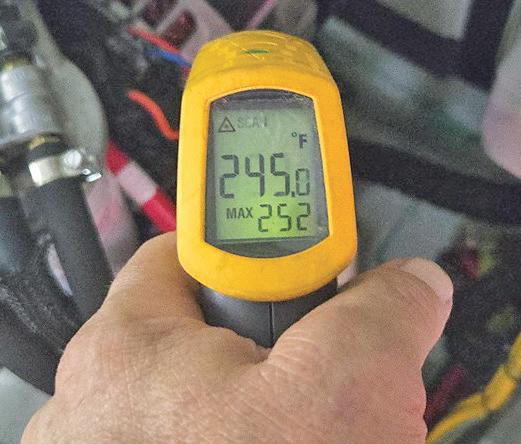
Our boat was Santorini, a brand-new and nicely appointed Contest 50CS, gelcoat like a mirror, with no spidercracks. My V-berth still had that newboat smell.
Arnstein first collected this boat in Chesapeake Bay and took it to the Virgin Islands and through the Panama Canal to La Cruz. Its eventual home will be Southern California. Santorini has lithium house batteries and numerous electrical appliances, including a dishwasher and induction stove. There is no propane. This sophistication did not come without cost. The house alternator had already burnt out. You have to run the generator for anything beyond boiling a cup of water for coffee, even when the Yanmar is running.
While making his final checks, Arnstein discovered that the house alternator's ANL fuse was blown. We had one extra, but Arnstein wanted more under the adage of "If you have one, you have none," or "Always have a backup for your backup." Inconveniently, this discovery presented itself after the daily Cruisers Net at 8:30 a.m. (Monday to Saturday) on Channel 22A. But Carla had other local resources, including Facebook groups Inside La Cruz and Banderas Bay Cruisers, and the WhatsApp group La Cruz Cruisers.
The Mexico Marine near the Marina didn't have our fuse. Someone at Zaragoza Marine in Puerto Vallarta saw Carla's WhatsApp post and told us they didn't either, sparing us a pointless 1,000-peso ($58 US) one-way taxi trip. You can take a bus to/from Puerto Vallarta, but we didn't have time.
Back at the marina we ran into Peter, the Danish marine electrician whom Carla declared the best around. He offered to swap a Class T for our ANL fuse block, but Arnstein balked, correctly assessing that we wouldn't blow another fuse underway so long as we ensured the generator was on for any big electrical draw.
To provision, we hailed a cab at the foot of the marina in front of the small park that hosts a Sunday farmers market. It was 250 pesos to the La Comer in Bucerías, a modern megastore with groceries, housewares, and even a set of tires. The driver offered to wait, but plenty of taxis were available when we
ALL PHOTOS BOB BODNAR EXCEPT WHERE NOTED
were ready to leave. Meanwhile, Arnstein checked the ECMWF weather model forecast on Windy.com. A $20 per year subscription provides sufficient detail to plan a passage.
Tuesday morning, April 7, while Arnstein met with local port officials to obtain our zarpe, or exit clearance, from La Cruz to Ensenada, I used the Cruisers' Net to offer the large tarp that protected Santorini's center cockpit from many La Cruz birds, as we weren't bringing it along. When Arnstein returned, he noticed Santorini's bottom could use some scrubbing. Carla contacted Arón, the marina's manager of boats. Within 45 minutes, Arón brought three divers for our last-minute bottom job, and we cast off at 11 a.m. for Cabo San Lucas.
We motored under bare poles, attaching a preventer to the boom, pinning it nearly to the port shrouds to keep it from rocking back and forth. We headed directly to Cabo rather than up to Mazatlán and across the Sea of Cortez, aka the "Gulf of California."
Current was significant; enough that our COG varied five or six degrees from our autopilot heading. But we weren't bashing, so I slept well in the V-berth before my first 2 a.m. to 6 a.m. watch. Carla parlayed with Arnstein for a "four hours on, eight hours off" schedule.
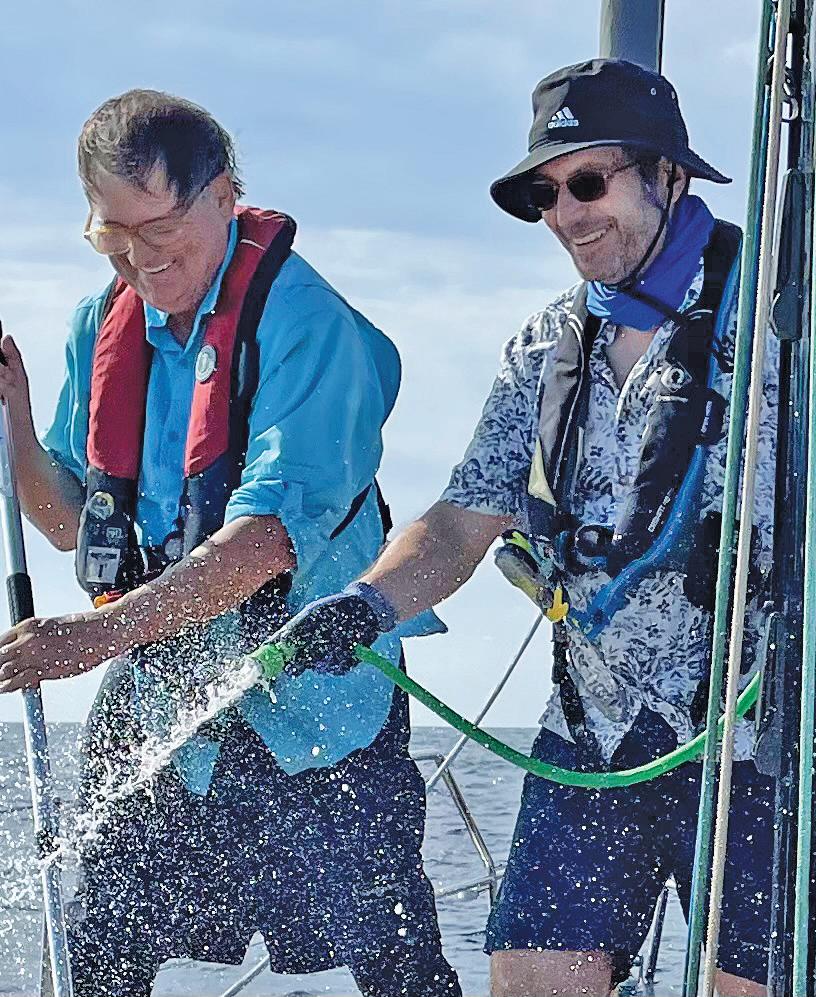
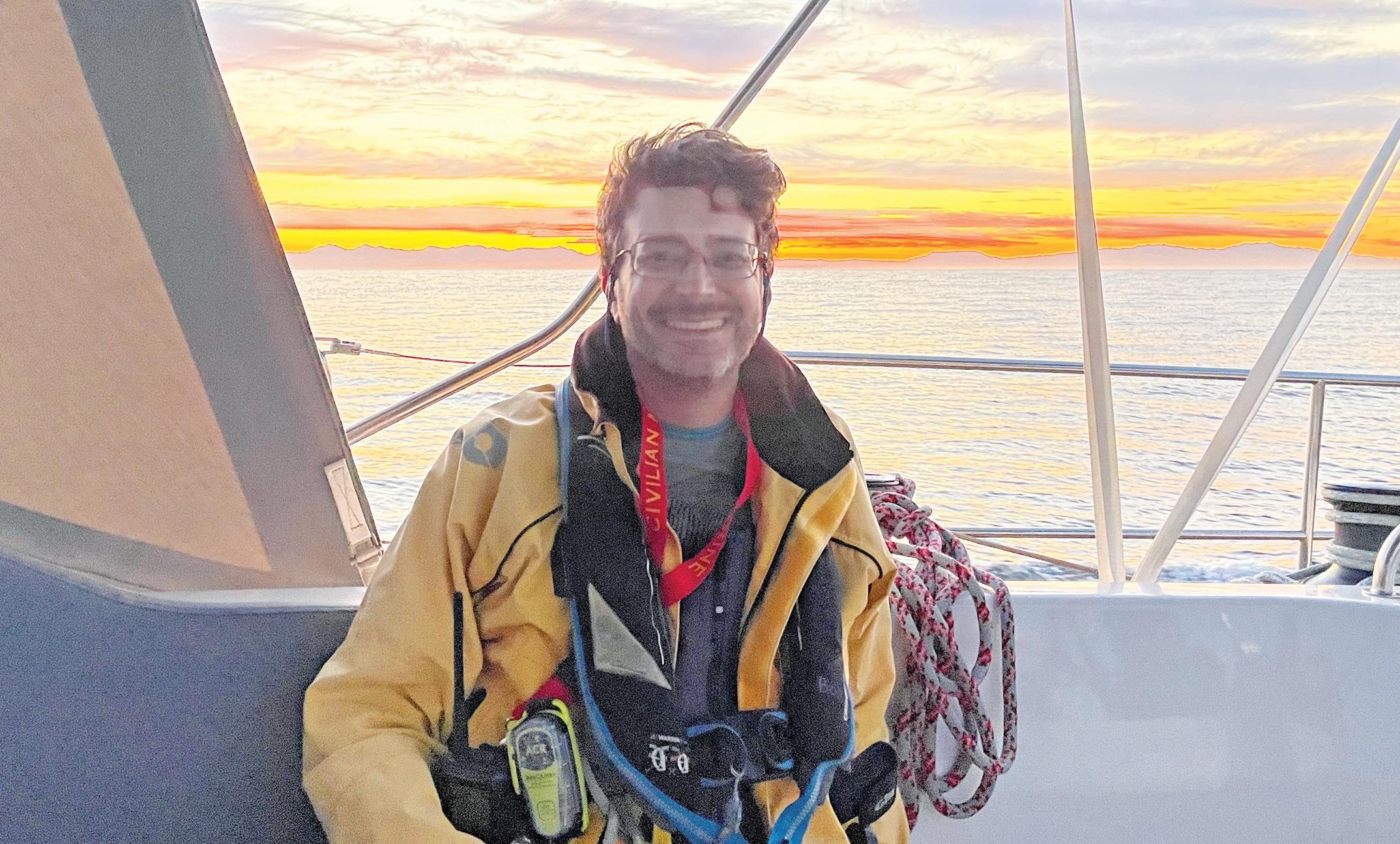
This only lasted the run to Cabo. Then we went to a "three on, six off" schedule. After two days trapped on the 2 a.m. to 6 a.m. watch, I welcomed some variety. Even so, it was a treat to sail at night in short sleeves. The first night was clear, with the Southern Cross plainly visible.
On the second day, it was calm enough to give the topsides a final scrub to remove the last remnants of two months' worth of guano deposited by La Cruz pelicans. White vinegar and elbow grease worked its magic and Santorini was looking shipshape. We raised the main and motorsailed on a port tack. Upwind bashing commenced.
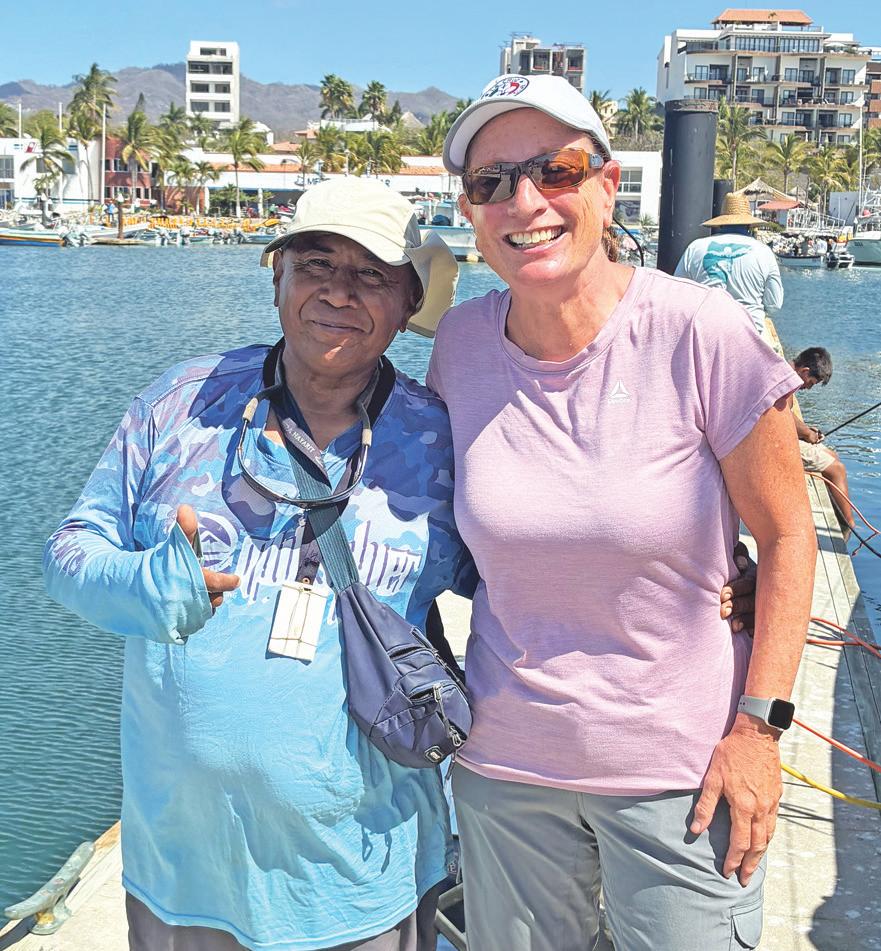
Arnstein's strategy to accomplish the smoothest possible ride north in April included keeping the mainsail sheeted in tight to the centerline and staying about 30 to 40 degrees off the wind. Santorini has a flat bottom, and as I had the V-berth, I hoped for the best. On the second night, while off watch in my V-berth, we had stronger winds just south of Cabo. After levitating off my bed for the third time, I retreated to the main salon for some rest before my watch. I did this only a few times underway, so our strategy mostly worked.
As with all deliveries, Arnstein made daily checks underway. Once a day, he used an infrared temperature gun on the Yanmar's cooling system and the
surrounding seawater, knowing the motor would run a little warmer when it was warmer outside. He also did periodic sight-smell-hearing tests on the Yanmar. It ran flawlessly at about 2,100 rpm the whole trip. Throughout the day, he checked the temperature on Santorini's new house alternator, tucked away in the engine room, where substantial insulation muffles the Yanmar but limits air circulation and thereby the dissipation of heat.
Arnstein makes a new friend.
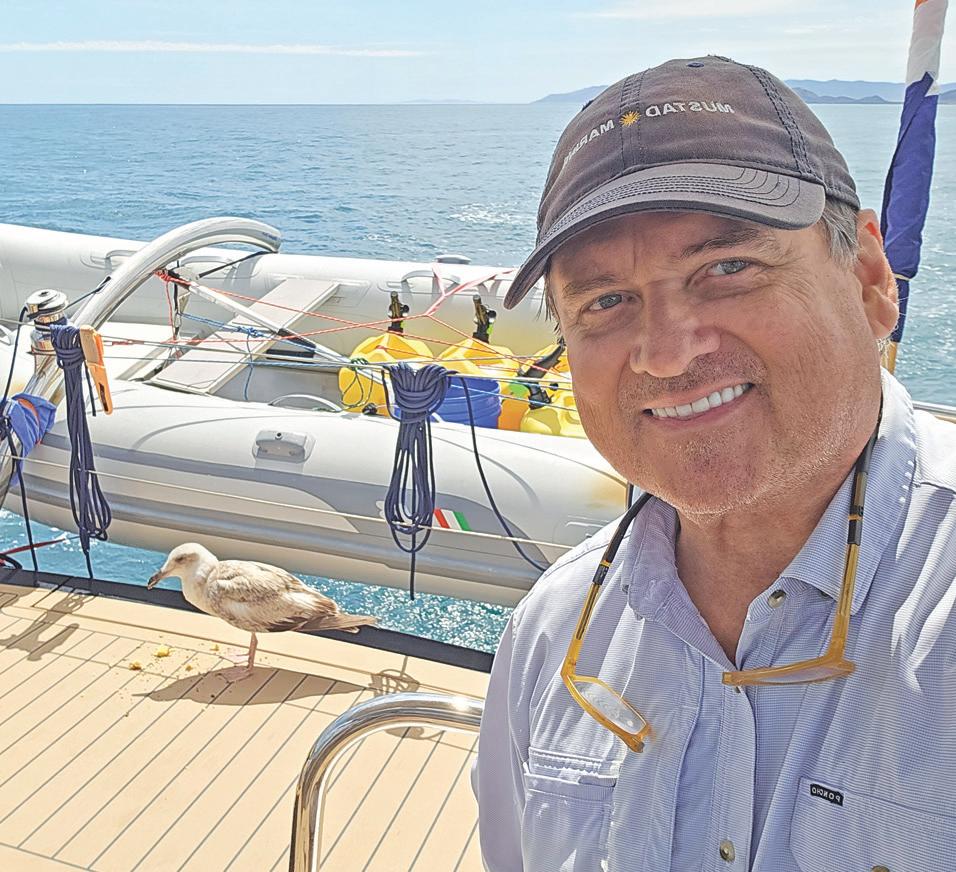
On the morning of day three we arrived in Cabo, fueled up, and were underway again. Arnstein explained that the waves and wind we were seeing as we bashed dead ahead came from the cape's wraparound effect. Water and air, both fluids, bent around the cape. The wind and waves changed after Santorini rounded the cape. We started out a couple of miles offshore. Farther out the wind would be stronger, and there'd be an unnecessary distance penalty. Plus, similarly to San Francisco Bay, winds typically build in the afternoon. Motorsailing in 15 knots of breeze under the main alone was fairly comfortable.
By day four, Santorini was making 6.5 knots with no bashing whatsoever. A pod of seals followed behind the boat in the morning. I was asleep when we passed Bahia Santa Maria 6 or 7 miles offshore, where Carla saw gray whales.
Every point or cape generates weather effects, and Arnstein decided to motorsail as close to the wind as possible and head farther offshore. We stayed well off Isla Santa Margarita to avoid most of the higher wind similar to what we'd had south of Cabo. Even 17 miles off Santa Margarita, we saw crab pots, the scourge of all propellers. With 22 knots on the nose on a starboard tack, I was able to rest in the V-berth. Motorsailing just off the wind moderated the worst of the wave action until the wind let up on day five and veered. Then it was a port tack to Turtle Bay with 20 knots sustained and a SOG above 6 knots.
Turtle Bay to Ensenada
At 9 a.m. on day six, we anchored briefly in Turtle Bay for fuel — a low-tech but straightforward operation. They hailed us and asked how much fuel we wanted. Two guys arrived in a panga with four 50-liter containers. They tied up and hoisted the containers by hand, one at a time, to Santorini's deck, emptying the diesel into our tank with a siphon hose. We wanted 250 liters, so after the first four containers were spent, they returned with a fifth. If we had enough cash, paying in pesos rather than dollars would be best. They charged 38 pesos per liter, 9,500 pesos in total. We paid $595 US, a $50 upcharge. They explained that there was no bank in Turtle Bay to exchange our dollars.
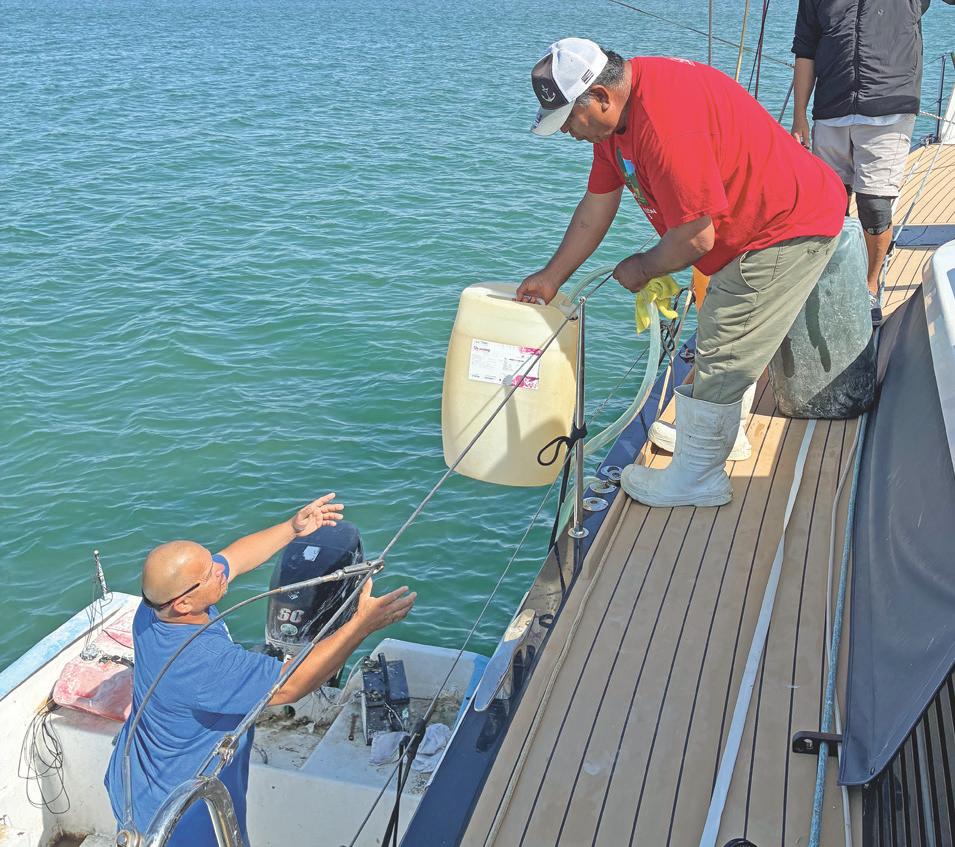
15 minutes, I saw six lightning strikes on the water farther offshore. I couldn't hear thunder to gauge the distance. Even so, it was unnerving.
At 6 a.m. on day seven, about 150 miles from Ensenada, it was flat calm, and about 30 dolphins frolicked around Santorini. Soon after, I saw five spouts 300 yards to port! I took video from one that lunged, waved a flipper, and dove slowly, revealing its humped back. This more than made up for sleeping through the whales near Bahia Santa Maria.
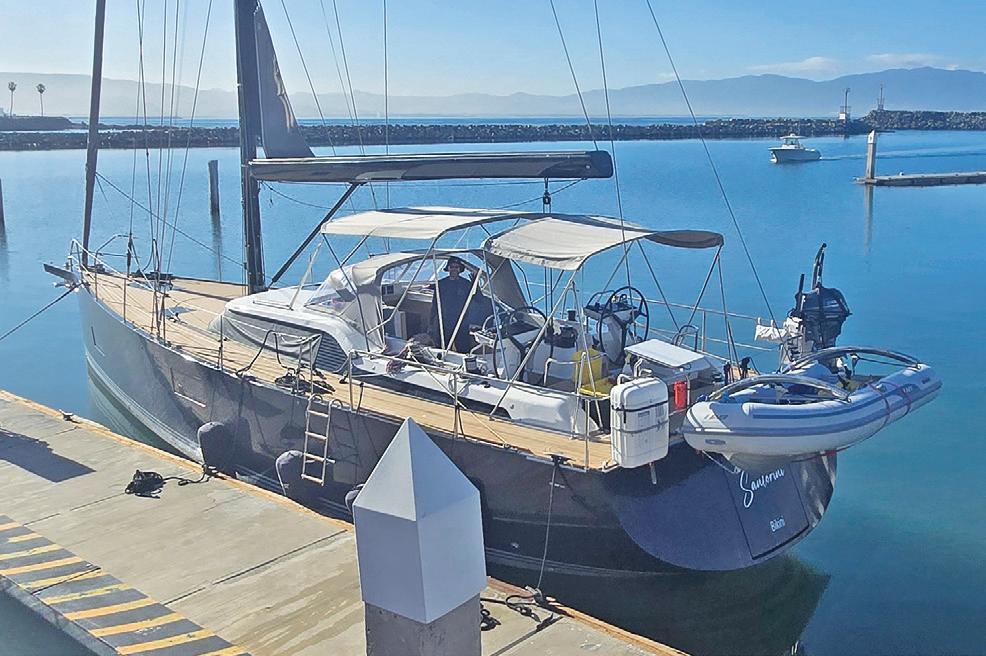
That afternoon, the wind picked up and the waves transitioned from gentle to confused seas, then finally a tolerable long-period swell. I hailed SV Matilda, the first sailboat I'd seen, running south under full sail for Turtle Bay from Ensenada. The skipper was happy to hear we'd seen only a few boats at anchor the day before.
While on a night watch, we passed less than a mile from the cruise ship Norwegian Bliss. Arnstein had hailed her on Channel 13 to confirm they'd seen us. By my next day watch, the wind dropped to 17 knots with 3-foot seas, and we continued motorsailing just off the wind. We were about 70 miles offshore as we passed the mouth of Bahia San Juanito, and bashing was minimal with an occasional head-on wave. Though the wind had shifted, the seas took time to catch up; an hour later, waves were still coming from the old wind direction.
Leaving Turtle Bay, Arnstein said we had three options. We could go outside Isla Cedros, but would have to navigate a big kelp forest with more wind. My time in the V-berth made me less enthusiastic about that prospect. We passed inside Cedros, and inside Isla Navidad, too. Arnstein would take this route only during daylight due to crab pots. This was by far our smoothest leg. The V-berth was so calm that I took steps to make it more so, securing the rattling adjustable shelves with some blue painter's tape.
Some excitement occurred as my next night watch ended. In a span of
At 8 a.m the following day, we passed the breakwater for the Hotel Coral y Marina in Ensenada, stopped briefly at their modern fuel dock, and then proceeded to our slip, where Santorini now awaits the final leg of her journey to Southern California. We then enjoyed a buffet breakfast at the marina's adjacent hotel, and later, a restful sleep before the next morning's departure for San Diego.
Carry your Global Entry card if you have it. You can then use the short line on the left side to walk across the border. The crossing took about 20 minutes, and our van was waiting on the US side.
— bob bodnar


BoatsandBrokers.ai


•
•
•
•
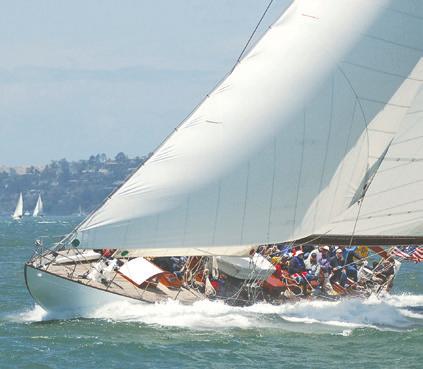
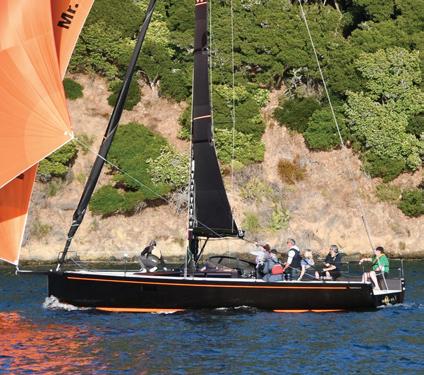
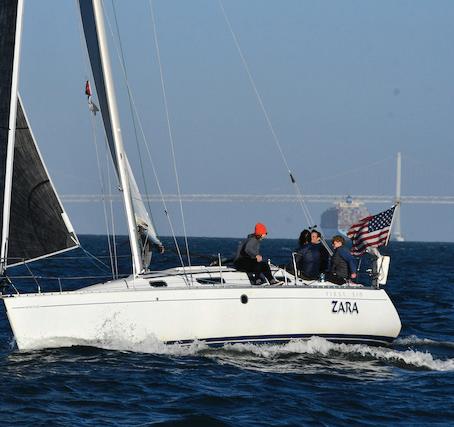


Ihave discovered another way — besides top-end, custom order deli lunches and expensive post-race dinners — to get my best crew to show up for a practice and tuning session: Buy new sails. It works best if the sailmaker is also coming out on the boat to help dial in the settings. Good crew will put a high value on a little sea time with a pro.
That's how I persuaded Lee Helm, a naval architecture grad student, to come out for an evening beer can race. She had started to respond to my crew call with one of her standard excuses, something about her thesis work, but reversed course immediately when I mentioned that the sailmaker would be joining us. Even though I had only one new sail to show off: a new 150% genoa optimized for the top end of the genoa's wind range.
The sailmaker called an excellent start. We had previously agreed our tactics would be determined by which competitor we wanted to compare boat speed against, and not by how we would place in the race that night.
Of course, that was all deep-sixed as soon as the starting horn sounded. It was much more fun to see if we could hold on to our lead.
Then the sailmaker went to work, calling for some small lead adjustments and taking a few photos of the new jib's camber stripes. The crew all agreed that it was a beautiful sail, and we were sailing fast. Except Lee.
"Like, what's with the big air gap under the foot?" she asked pointedly. "Doesn't that add a lot of induced drag? Letting air flow under the sail from high pressure to low pressure gives away the pressure gradient that causes the upwash flow into the lower part of the sail. We'd be pointing higher if there was, like, no daylight showing between the jib foot and the deck."
"We like to keep the clew off the deck," the sailmaker responded, "so lead position is less critical. Makes it much easier to adjust for the proper twist distribution."
"Max has a cordless Makita in the toolbox," Lee replied. "How many new holes, and how closely spaced do you want them?"
"Ready about!" I called from the back end of the boat.
The sailmaker pulled bundles of the black carbon sailcloth around the mast while Lee, on the low side of the foredeck, hauled the now-lazy sheet forward to make sure it didn't snag or cause a hockle.
"In a perfect tack," noted the sailmaker, "the jib never even touches the mast."
"And there are no built-in twists in the lazy sheets," Lee added. "I wish Max would get rid of those gnarly self-tailers and give us big horn cleats on the primaries."
"Horn cleats? Why?" challenged one of the crew.
"‘Cause if you wrap the sheet, like,
America's Cup 72-ft cats all grew ventral fins in 2013, to block air that flowed through the permeable tramp from the windward side to the leeward side of the main.
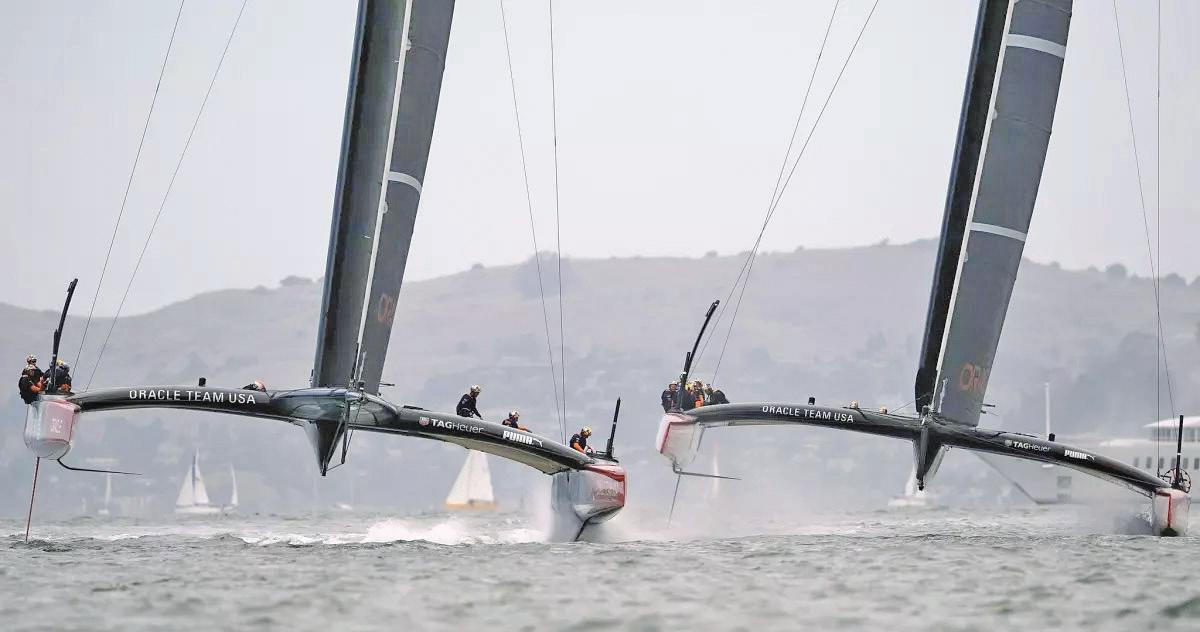
three clockwise wraps around the winch drum, then you can take three counterclockwise wraps around the cleat. And if you remember to coil the tail in a figure-eight, there's no residual twist and no kinks. The wraps on the winch and the wraps around the cleat are opposite and cancel each other."
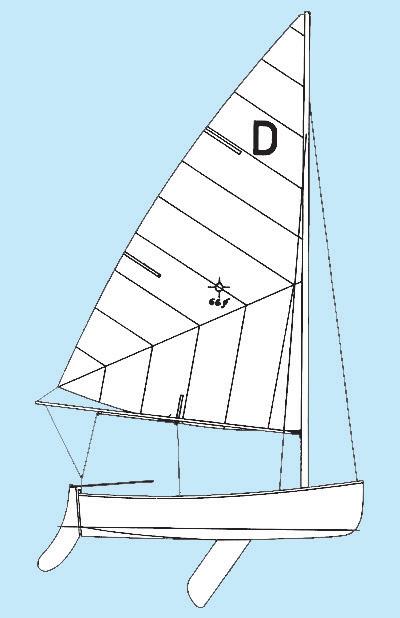
I called for a few more tacks to cover the boat astern, one that rated slightly faster, but we could hold them back if we kept them in our gas. But the wind was fading. I called for some crew to move to the lee side to keep the optimal heel angle.
"Here's a tactic you'll like," the sailmaker said to Lee as he pointed to the leeward side, where half the crew had repositioned, and then the windward side, where the other half still had their feet over the windward rail. "Everyone move to the centerline. Stay right under the boom, and get big!"
"I like it," admitted Lee. "A human flow fence, so less air can leak under the boom."
"It's only good for a fraction of a degree of point," noted the sailmaker, "but worth doing."
"But what about the air leaking under my new jib?" I complained to the sailmaker. "Lee has a point."
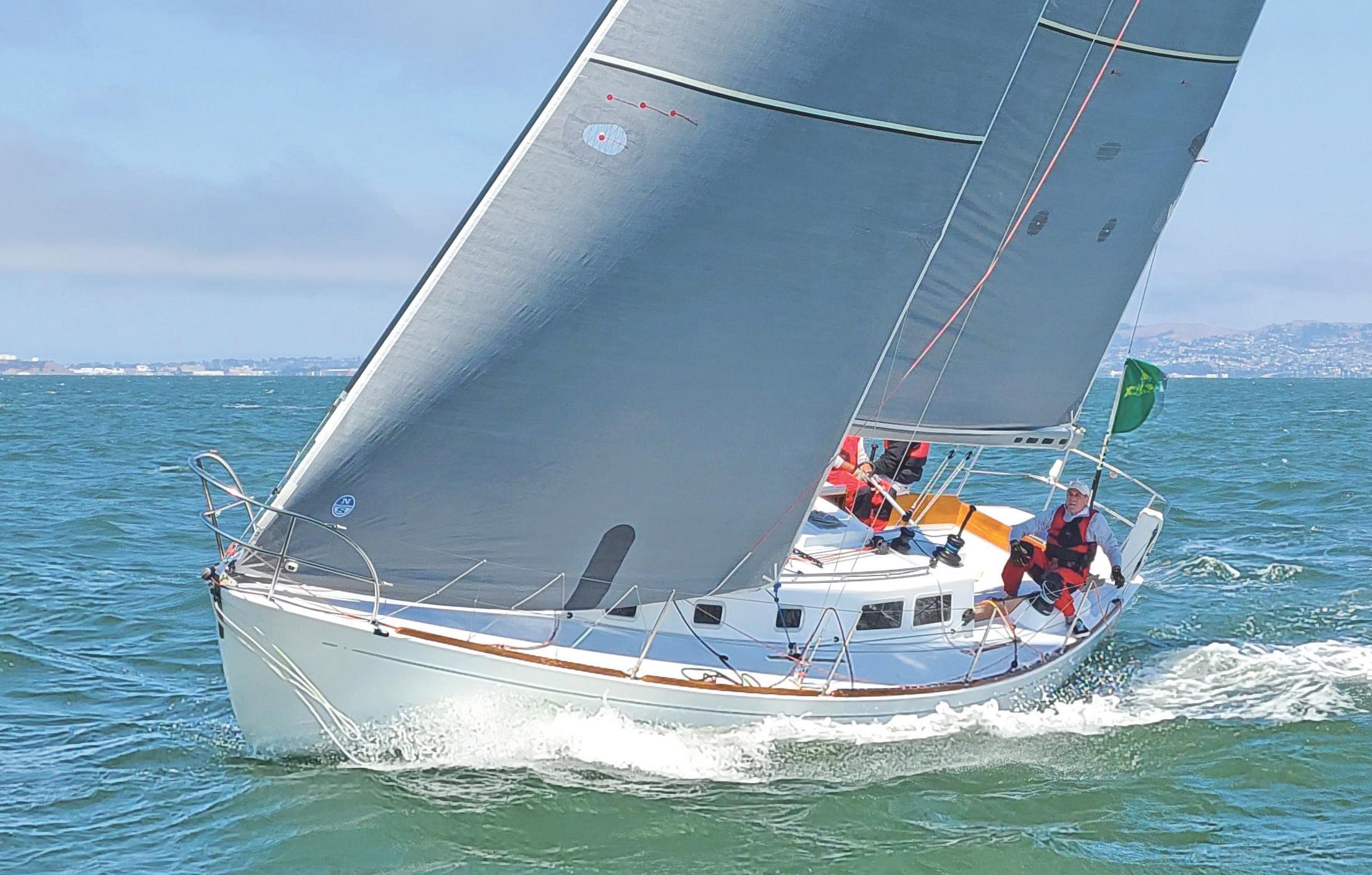
"There's a good fix," he proposed. "I'll add a foot roach. It will be soft sailcloth so it can sweep the deck: The friction will keep it from getting too floppy. Won't affect the trim at all, but it will plug the leak."
"I guess that will work," I agreed.
"But it won't bring the clew right down to the deck where it belongs," said Lee.
"You need to have a little height for twist adjustment," the sailmaker insisted.
"Just use the cunningham and halyard," Lee argued. "Move the whole sail up and down instead of moving the lead fore and aft."
Our spinnaker set was one of the best ever, with the crew eager to show off their skills. The faster boat passed us, but the sailmaker called some wellplaced jibes and we held on to first place corrected. That meant I had to buy dinner for everyone.
"Least experienced crew gets the trophy," I announced when the RC announced the results in the dining room. She was a little embarrassed, but the
most novice of my crew walked up to the lectern to receive the beer mug with "first place" printed over the club's burgee.
"Sure you don't want this?" she asked me. "I really didn't do much on the boat tonight."
"I've got service for eight," I said. "Seems like we get another one every time I buy a new sail."
— max ebb
A rare example of a true deck-sweeping genoa. It's no coincidence that the owner is a physicist.
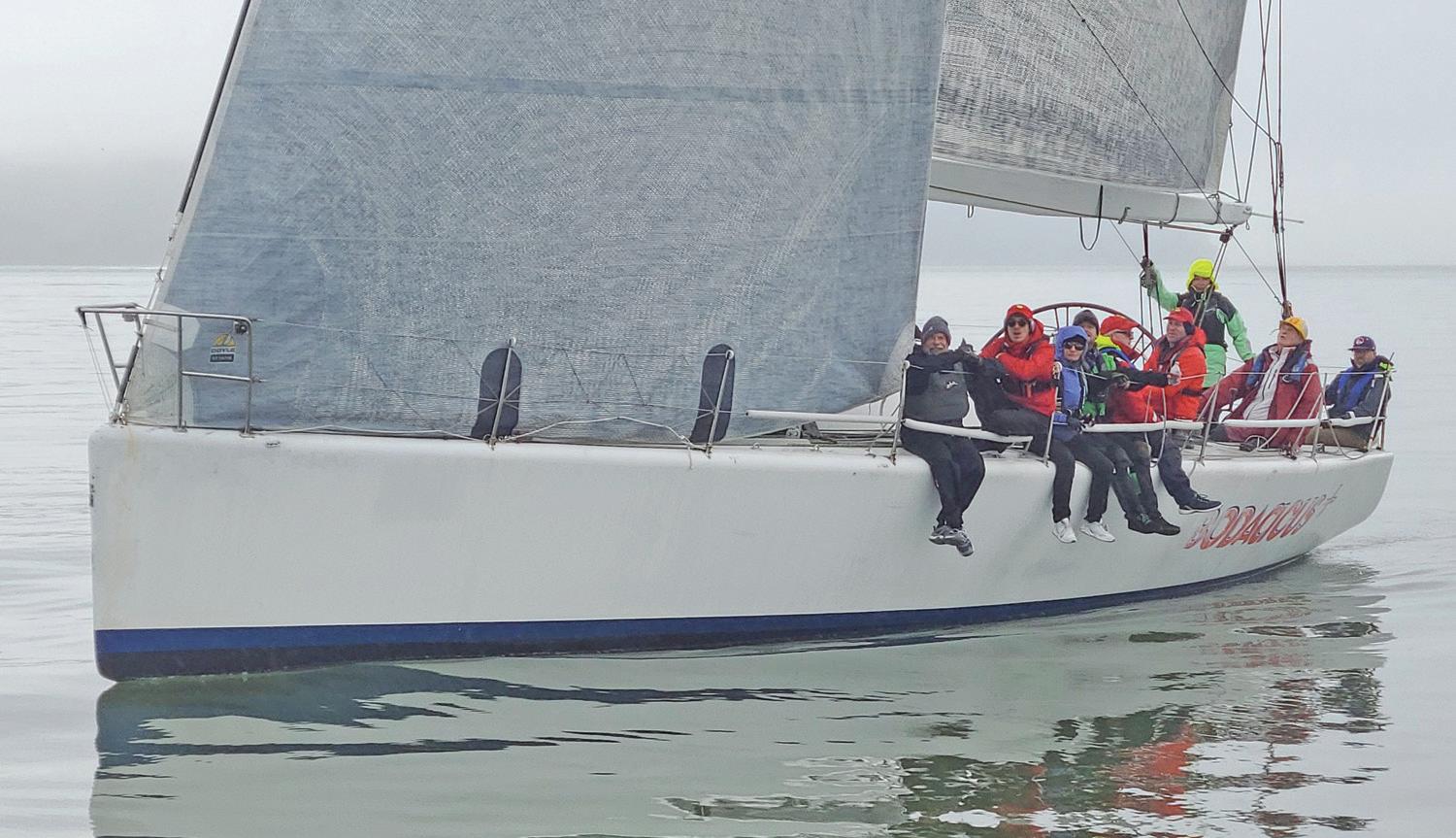
1) Make sure there is no light showing under the foot of your jib. All racing jibs should be deck-sweepers. Worried about visibility to leeward? Move the jib leads inboard and make your hiking stick longer. Control twist with cunningham and halyard.
2) Add a foot roach to any jib with a foot that does not sweep the deck as designed. It can be floppy; contact with the deck will stabilize it. Don't worry about camber and draft, it's just a flow fence. Its function is to block the air flow under the sail.
3) When the heel angle does not require live ballast to windward or leeward, concentrate the crew on the centerline under the boom. Air can't flow through bodies. Works best on smaller boats.
4) If the mainsail is loose-footed, and the boom has a track for a boltrope, convert to close-footed with a non-structural foot shelf. This will slow down the switch from racing main to cruising main, but worth the hassle. The sail trim's still the same as loose-footed, but the shelf makes an endplate.
5) Stow the spinnaker pole under the boom, in a sock as long as the pole. It will hang down from the boom and reduce the size of the gap under the boom. Some might call it "unmeasured sail area," but at least for now, it seems to be legal.
6) On a loose-footed main, add a deep foot-roach. Class rules might allow a short vertical batten to support it. The air gap will be that much smaller.
7) Build a dorsal fin on the cabin top. Most of the pressure difference is along the forward part of the mainsail foot. A fin from the mast to the companionway hatch will be effective. Use soft foam along the top of the fin for the boom to rest in with no gap. Without the usual vang, you'll need a wide traveler for upwind, and separate port and starboard vangs for downwind.
8) Build a hard dinghy that functions like a dorsal fin when stowed on the cabin top. This made more sense back when some races required boats to carry a dinghy on deck. Like the dorsal fin, it will interfere with most vang configurations, so you'll need the longest traveler that the deck can accommodate.
9) On a fast catamaran with a tramp made of loose netting, add a ventral fin under the deck center spar. The America's Cup people figured this out a few years ago for the AC72 foiling cats. Even if the foot of the main sweeps the deck, air flowing down through the permeable deck will find its way up to the other side, from high pressure to low.
10) Increase mast rake, to bring the boom closer to the cabin top or deck. A very small effect, but along with some control of spanwise flow, it explains some of the better windward performance with raked rigs.
11) Have your sailmaker build the main for a droopy boom, to reduce the size of the air gap. Also a very small effect, but with most sail designs, you also get more sail area with no rating hit.


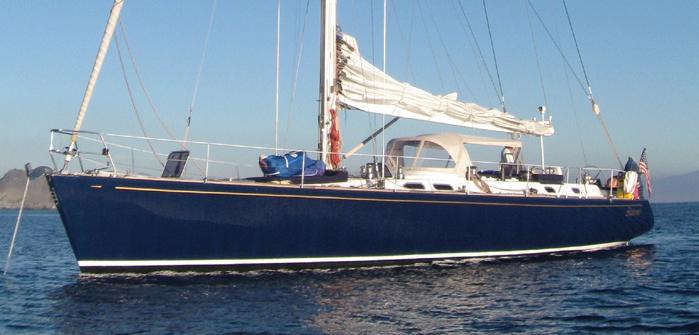
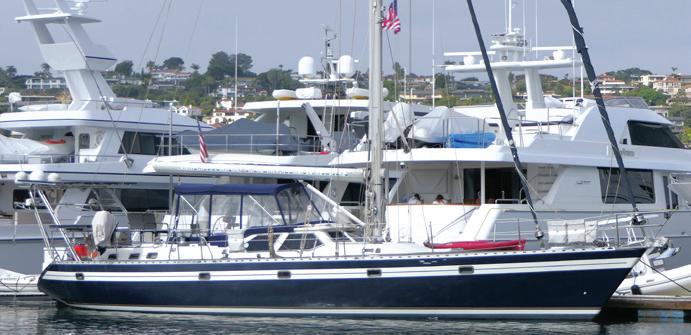
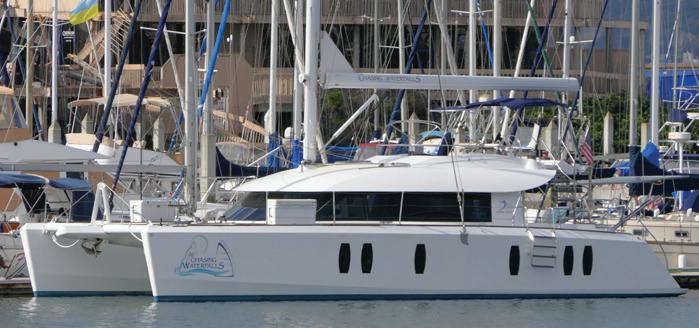
66’ GORBON 66 ’97 $475,000
Bajavento. A luxurious performance vessel that can easily be sailed shorthanded. Professionally maintained. Cruise in style and comfort.
58’ TAYANA 58 DECK SALON ’06
$447,000
Majestic. With electric winches in the cockpit, a Leisure Furl boom and bow thruster, she is easily handled by a couple. LLCowned.
50’ TAYANA ISARA 50 ’14 $1,150,000 Chasing Waterfalls. The ultimate luxury cruising catamaran! Recent upgrades make her a true turn-key offshore vessel that will fulfill your dreams.

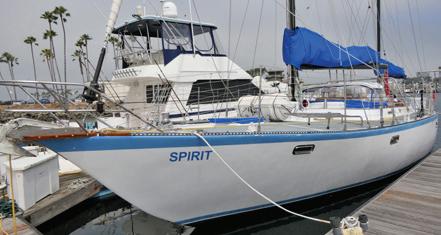
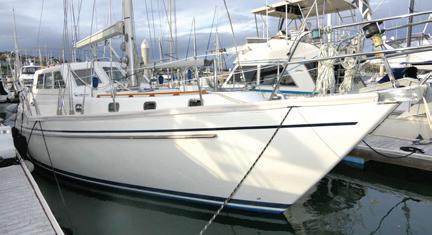
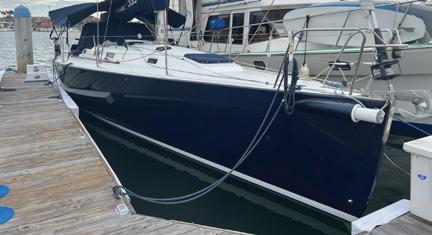
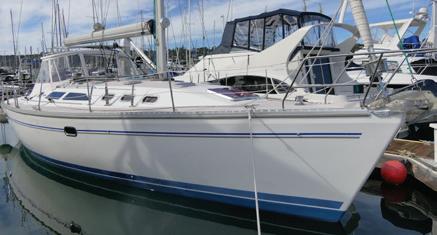
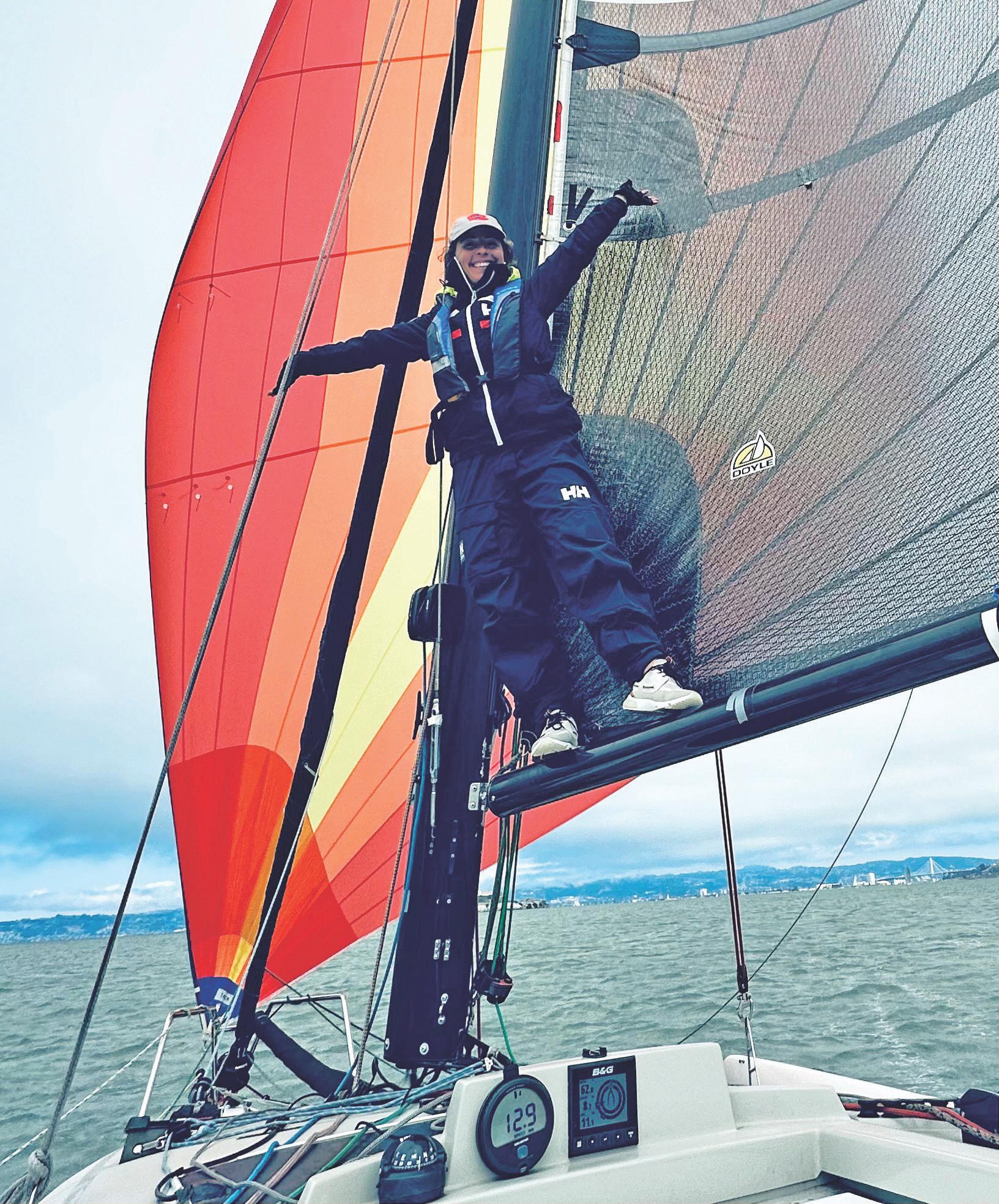

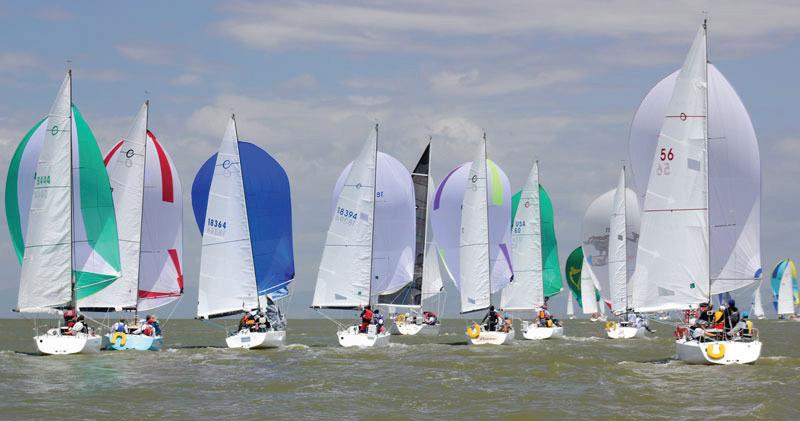


The Racing Season is in full swing on San Francisco Bay (at least for boats that aren't blocked into the San Francisco Marina West Harbor). This month's edition of Racing Sheet covers the ever-popular Great Vallejo Race, and the Moore 24 fleet racing in Santa Cruz. Then, we head south and to the world of Match Racing, where a Long Beach local is victorious at the Ficker Cup, and a 23-year-old Australian rising star registers a shock win at the 61st Congressional Cup. Finally, we wrap up with some of the best women skippers on the Bay duking it out in the J/105 fleet, and the LYSA Spring Regatta sailed in boisterous conditions.
On May 2 and 3, the two legs of the 2026 Great Vallejo Race were hosted by Vallejo Yacht Club (VYC). In what is billed by the hosts as the official start of San Francisco Bay's summer racing season, 81 boats competed across 19 divisions, a mix of PHRF and onedesign racing. Saturday saw boats race from the Berkeley circle up to Vallejo, and then Sunday's race was a return to the main part of the Bay.
There were eight PHRF spinnaker divisions, two "sporty" divisions, a non-spinnaker PHRF division, a multihull division, a cruising division, and a doublehanded division. Five one-design classes raced: Express 37s, J/105s, Express 27s, Islander 36s, and Alerion 28s.
"Fun and fast race to Vallejo this year," Katie Cornetta, aboard the winning Express 37 Golden Moon (StFYC) tells Latitude. "More reaching on starboard tack than expected in San Pablo Bay caused many boats with big asymmetrical kites to wipe out and have to drop and reset multiple times. We were just able to carry the spinnaker all the way through San Pablo Bay and up the channel to the finish. Kudos to the crew that hiked really hard on the reach, which made a big difference in our speed!
"The race home was a gorgeous beat to windward for most of the way in champagne conditions," Cornetta continues. "Being against the current slowed us a bit but kept the water nice and flat! Couldn't have asked for a better weekend of sailing."
The biggest PHRF class was the Spinnaker Three division, with seven boats. That class was won by Lori Tewskbury and Bob Walden's J/100 Wowla (RYC), who finished second in the race to VYC and won the race back. Peter Cameron's J/70 Kangaroo Jockey (StFYC) won the race to Vallejo and was third on Sunday, placing second in the division.
The biggest one-design class (and biggest class overall) was the eight-boat Express 27 class. David Wick's cleverly named Hot Sheet (RYC) won the race to Vallejo, and finished second on the way back to claim the event win. After finishing fourth on Saturday, Marc Belloli's Magic Bus (StFYC) won the return race Sunday to claim second place. Rounding out the Express 27 podium was the Tahoe snowbird boat New Wave of the South Lake Tahoe Windjamers YC, sailed by Eric Villadsen and Ashley Farr.
Eleven of the 19 divisions saw the same boat win both legs of the race, though in a few of those divisions only one boat was racing.
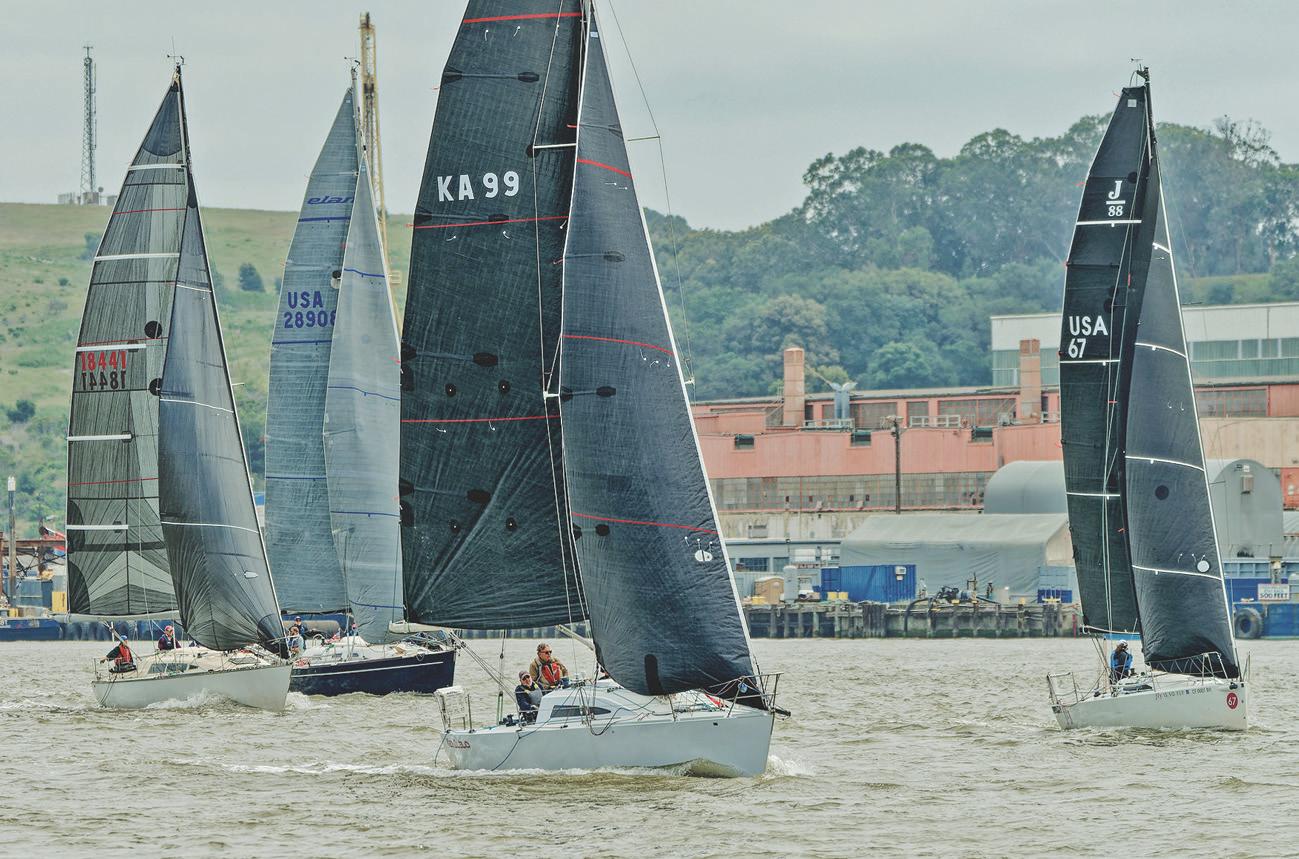
In the world of handicapped racing, Rufus Sjoberg's J/125 Rufless (RYC) won both races in the four-boat Spinnaker One division. Nesrin Basoz's J/111 Swift Ness (RYC) won both legs of the sixboat Spinnaker Two division. Rodney Pimentel's Cal 40 Azure (EYC) did the same in Spinnaker Five. Lickety Split (TYC), Rick Raduziner's Santa Cruz 27, did so in the sixboat Spinnaker Seven division. David Schumann and his Seacart 30 Bottle
Rocket (SFYC) won both legs of the multihull division.
Of the one-design fleets, Michael Quinn's Resilience (RYC) won both Alerion 28 races. Richard Schoenhair's Windwalker (BYC) did the same in the four-boat Islander 36 class. Michael Laport's Golden Moon (StFYC) also did so in the Express 37 fleet, which comprised four boats.
Of note, Bottle Rocket, the Seacart 30 that won the multihull division and is skippered by David Schumann, broke the previous record for the sail to Vallejo by two minutes. The previous record had been set in 2015.
With the Great Vallejo Race in the rearview mirror, racers now look ahead to summer kicking into high gear. Wind speeds in the Bay will increase, Karl the Fog will make himself known, and San Francisco Bay's racers will duke it out all over the Bay.
— fritz
YRA THE GREAT VALLEJO RACE. 5/2-3 (2r/0t)
SPINNAKER 1 — 1) Rufless, J/125, Rufus Sjoberg, 2 points; 2) Bodacious+, 1D48, John Clauser, 5; 3) Recidivist, Schumacher 39, Rob Reis, 6. (4 boats)
SPORTY TYPE 1 — 1) SeaSaw, Henderson 30, Stephen Sherry, 2 points; 2) Nuckelavee, Melges 32, 6. (2 boats)
SPORTY TYPE 2 — 1) JetStream , JS9000, Daniel Alvarez, 2 points; 2) Bob , Melges 24, Spencer Griscom, 5; 3) Greyhound , Viper 830, Zhenya Kirueshkin-Stepanoff, 7. (3 boats)
SPINNAKER 2 — 1) Swift Ness, J/111, Nesrin Basoz, 2 points; 2) Jeannette, Frers 40, Bob Novy, 6; 3) Talisman, First 40, Mark English, 6. (6 boats)
EXPRESS 37 — 1) Golden Moon, Michael Laport, 2 points; 2) Expeditious, Bartz Schneider, 5; 3) Spindrift V, Lisa Wilson, 6. (4 boats) J/105 — 1) Yellowfin, Dick Maclay, 3 points; 2) Sharkey, Kate Molitor/Andrea Cabito, 3; 3) Chinook, Elizabeth Henderson, 6. (3 boats)
SPINNAKER 3 — 1) Wowla, J/100, Bob Walden/Lori Tewksbury, 3 points; 2) Kangaroo Jockey, J/70, Peter Cameron, 4; 3) Humble Vandal, J/92, Rhett Smith, 7. (7 boats)
SPINNAKER 4 — 1) Jarlen, J/35, Gregory Winters, 3 points; 2) Red Cloud, Farr 36, Don
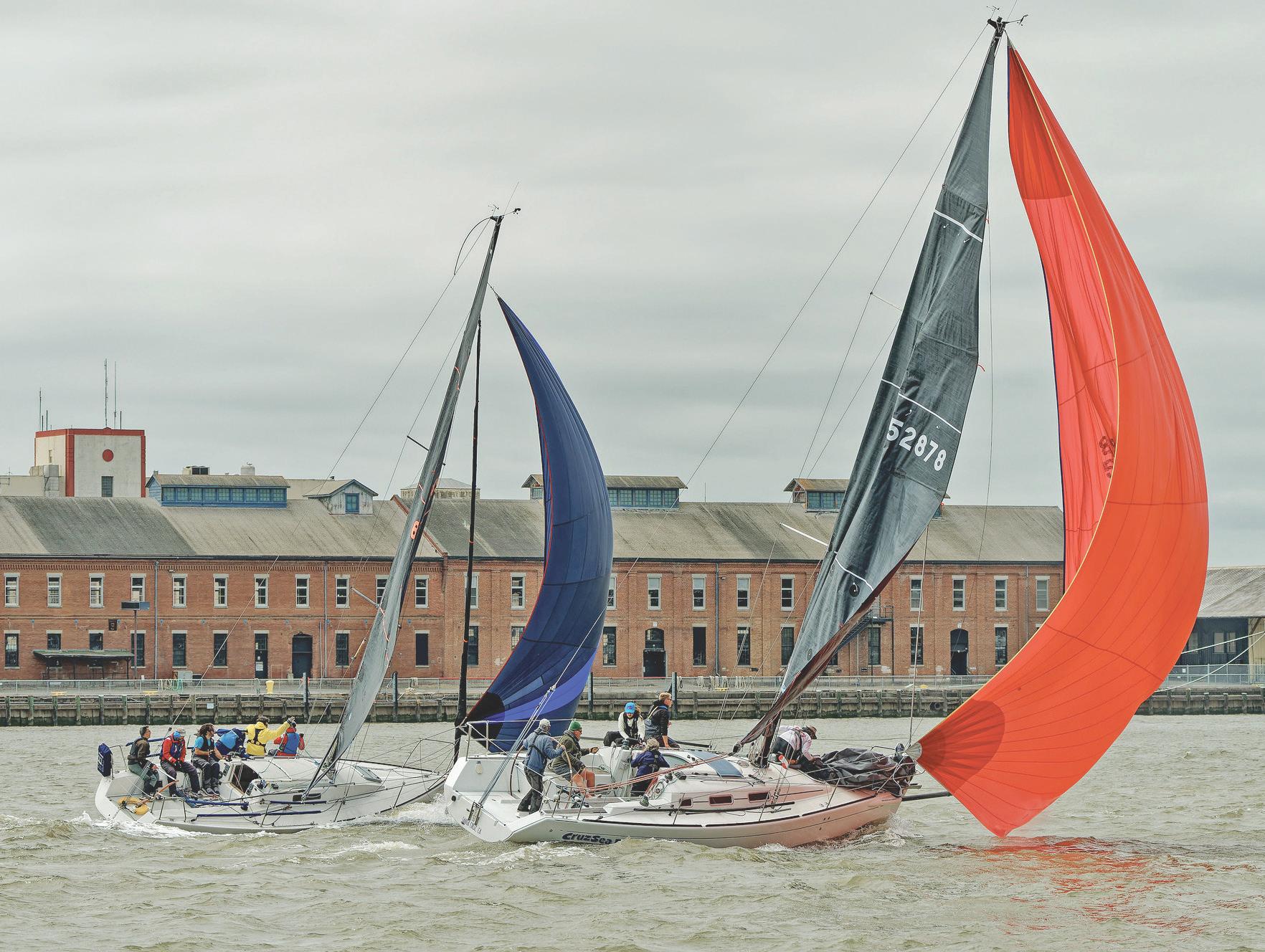
Nothing like a good tight reach on the way to Vallejo!
Ahrens, 3; 3) Mintaka 4, Farr 38, Gerry Brown. (6 boats)
SPINNAKER 5 — 1) Azure, Cal 40, Rodney Pimentel, 2 points; 2) Baleineau, Olson 34, Charlie & Colin Brochard, 5; 3) Duende, Cal 40, Philip Lavelle, 5. (4 boats)
SPINNAKER 6 — 1) Arcadia, Mull/Nash Hybrid 27, 3 points; 2) Take Five More, Olson 911, Grant Kiba, 5; 3) Heart of Gold, Olson 911s, Joan Byrne, 7. (5 boats)
EXPRESS 27 — 1) Hot Sheet, David Wick, 3 points; 2) Magic Bus, Marc Belloli, 5; 3) New Wave, Eric Villadsen, 6. (8 boats)
SPINNAKER 7 — 1) Lickety Split, SC27, Rick Raduziner, 2 points; 2) Alchemy, Olson 25, Nick Ancel, 6; 3) Liquid Asset, Ranger 33, John Rook, 6. (6 boats)
NON-SPINNAKER — 1) Free, S&S 30, Jim Carlsen, 2 points. (1 boat)
DOUBLEHANDED — 1) Northern Bear, J/100, Adam & Lingli James, 3 points. (1 boat)
ISLANDER 36 — 1) Windwalker, Richard Shoenhair, 2 points; 2) Windcatcher, Daniel Throop, 4; 3) Luna Sea, Dan Knox, 6. (4 boats)
ALERION EXPRESS 28 — 1) Resilience, Michael Quinn, 2 points; 2) Zenaida, Fred Paxton/Arnie Quan, 5; 3) Chesapeake III, James Fair/BJ Price, 6. (5 boats)
SPINNAKER 8 — 1) Neja, Dasher 32, Jim Borger, 4 points; 2) Zeehond, Newport 30 MkII, Donn Guay, 4; 3) Antares, Islander 30 MkII, Larry Telford, 6. (6 boats)
MULTIHULLS — 1) Bottle Rocket, Seacart 30, David Schumann, 2 points; 2) Flux, Seacart 30, Jeremy Boyette, 4; 3) Greyhound, F-22, Evan McDonald/Ibrahim Sargin, 6. (4 boats) Full results at www.jibeset.net
Moore 24 Roadmasters Regatta At SCYC
Low achievable goals… someone said that was the key to happiness.
As we were assembling for the race Saturday morning, I asked everyone what their goals for the weekend were.
Chris Watts' Moore 24 'Watts Moore' (center) won the Santa Cruz Yacht Club stop of the Moore 24 Roadmasters series.
Not falling in was one, beating Firefly was another (not sure that is low achievable). My goal was to have a fully functioning boat at the end of the regatta and be ONE of the competitive boats. I was really happy to see the forecast for 8-17 knots of wind, which meant we were going to be in our number two all day.
The plan was to start near the boat end of line, with people around that I was confident we could get away from. The race committee did a good job making the pin slightly favored, and that drew a lot of the top boats to the leeward end of the line. That left us space to get going to the right pretty soon after the start as one does in Santa Cruz. Getting off the line well in all three races that day was key to having clear lanes and no one tacking on us.
The second race was the traditional romp up to Natural Bridges, and once again Pegasus jumped out to the lead position. We tacked before the kelp at Lighthouse Point, and they crossed ahead and then tacked inside and ahead of us, holding us out on starboard longer than we would have preferred. The right is still favored up past the point, and often that is where gains are made.
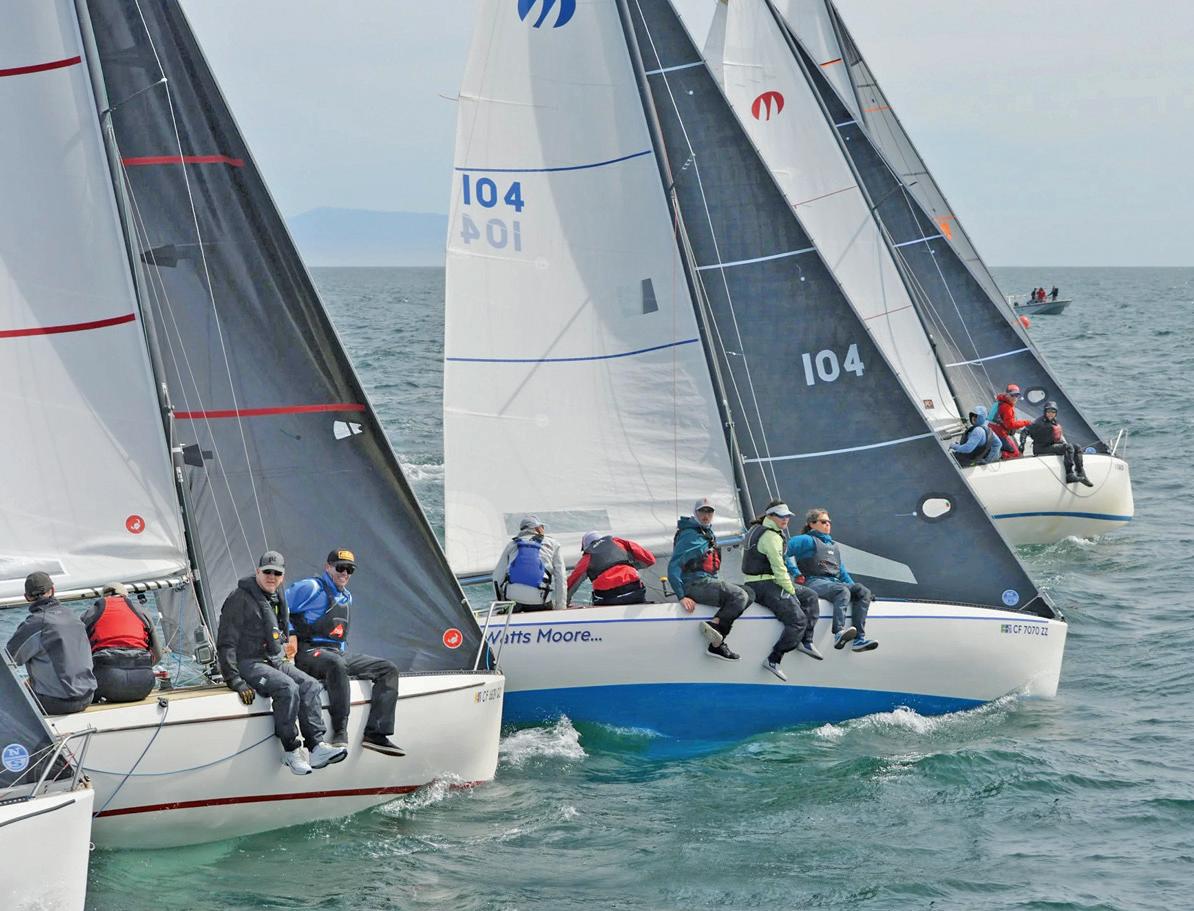
After Pegasus tacked back to port, we followed and were able to close the gap on them and actually had to duck them at the next cross. I knew the next cross we would have the starboard advantage and be slightly ahead. They tacked in a good lee bow position, but had a bad tack and we were able to get alongside them about a boat length to weather. Ideal tuning opportunity to see if we
could hang with them in equal conditions. We were close enough I could hear Tom Lewin calling out the difference in our boats and trim; at one point he said we were higher and faster! It is rare when that boat says that about us, so I asked him to repeat it so the crew could hear it again.
We were having a bit too much fun sailing with them, so we forgot about Scarlett and Firefly working up the inside. We left our buddies outside and went back inside to cover the other boats. This allowed Pegasus to get away and lead around the mark, and we rounded close behind with Scarlett; Firefly was just a few boats back. We were trying a 20-year-old North kite, and although it had good shape, the fabric had lost its stiffness and was a bit spongy. We let Firefly get inside us, thinking we had better pressure outside. We did not, and they surged ahead just off the lighthouse. We managed to hold on to third and remained in the top of the fleet overall, tied with Firefly.
The third race of the day we just did what we had been doing and started at pace near the boat. The Vakaros said we were close to the line but not over: white lights at the gun! There were a couple of boats called over, and my crew was concerned we might have been. Did not hear our number on the radio so we kept sailing. Pretty typical Santa Cruz race: Go right if you can and wait for your opportunity to tack back. Pegasus continued to look unbeatable and added another picket to their fence, winning all three races that day. Firefly was second again in this race, and we followed with a third. Headed to the bar with 8 points and third overall, 5 points off the lead.
Sunday was a bit lighter and we started with our number one as did most of the fleet. This time the pin was a bit more favored, and a majority of the fleet was down there. We were doing a late approach on port and saw room at the boat behind the last starboardtack boat, which I think was Scarlett We sheeted in and tacked to starboard just behind the committee boat and crossed line a few seconds late, but were able to tack immediately to port. The mess at the leeward end took Pegasus and Firefly out, and we ended up getting launched into first place and
sailed away from the fleet and all they had going on.
At the end of that race, we were technically in first overall, but with one more race to go, we needed Pegasus to get sixth in the last race and to do well ourselves. In the second race I found myself sandwiched between Pegasus to leeward and Mooregasm to weather, with Firefly just in front of Pegasus, slowing them down.
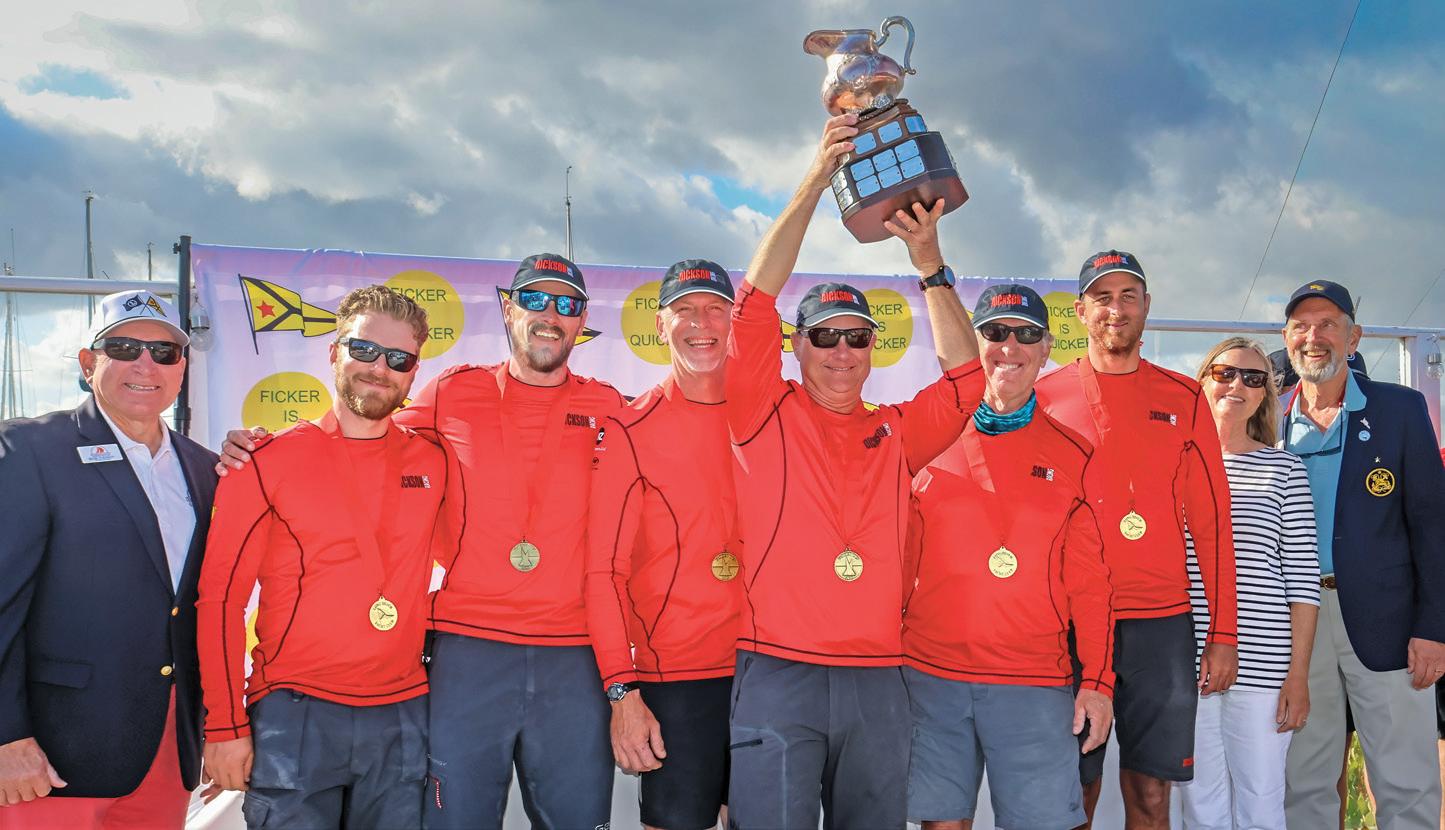
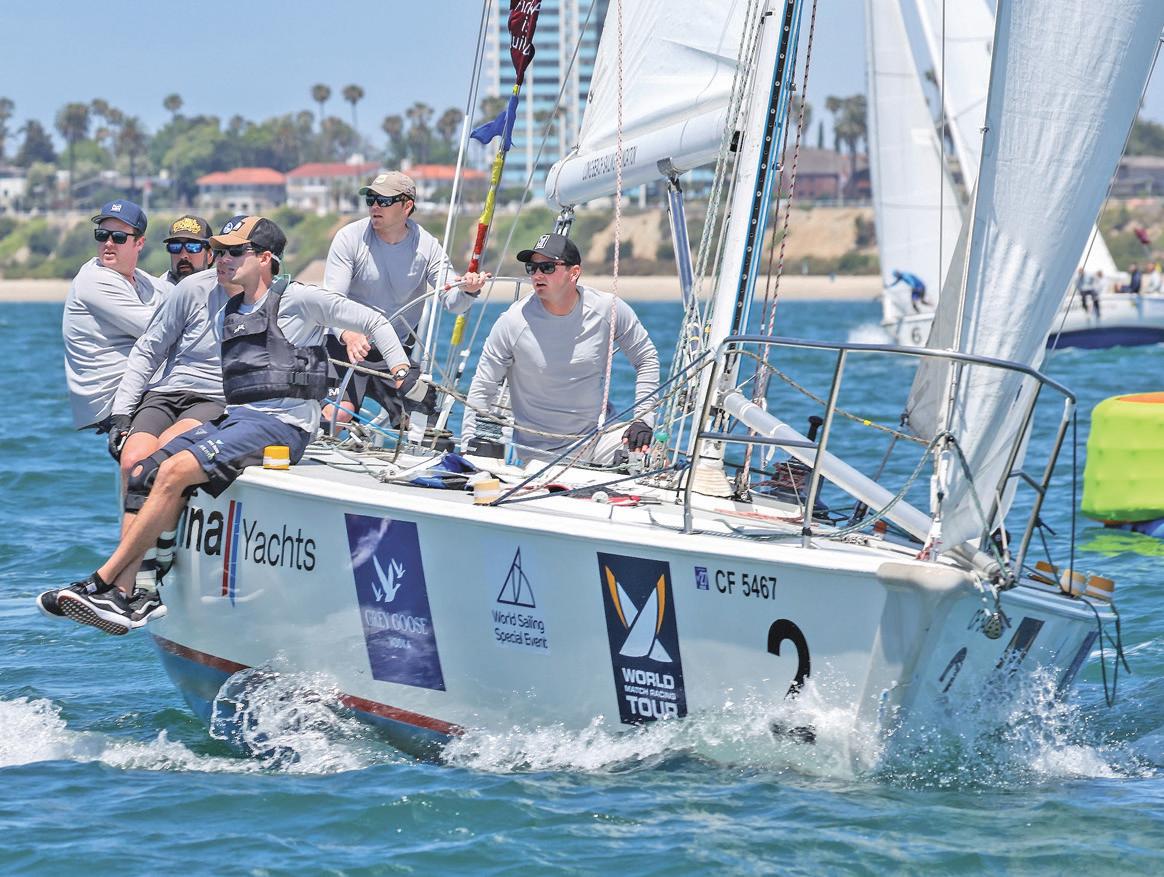
We held our lane until we were clear to tack back to the right; there were already a few going that way. Ichi Ban had gotten to the right first, and as they were coming back on starboard they approached Mooregasm and Scarlett on port overlapped with each other. Mooregasm did not see Ichi Ban until the last second and crash tacked, forcing Scarlett to tack. This blocked anyone else from gaining an advantage on that side. Paramour was leading the race, and we found ourselves in second just behind, and had a pretty good gap to the next boat.
As we rounded the top mark, we started looking for Pegasus and saw they were once again deep in the fleet, but managed to work their way back to sixth or seventh. Nothing we could do about them now, just hoped all my buddies would make it hard for them to move up. Then it happened: We finished second and waited to see if we had done enough to seal the deal. Sure enough, my pals came through and held Pegasus to sixth, and after several attempts at math, we figured we had won by one point.
The Moore 24 class will sail its 50th Nationals in September in Santa Cruz. More than 50 boats are expected.
— chris watts
SDYC MOORE 24 ROADMASTERS, 4/19 (5r/1t)
1)
Three California Teams Compete in 2026 Ficker Cup
From April 24 through 26, the World Match Racing Tour's (WMRT) 2026 Ficker Cup was sailed at Long Beach Yacht Club (LBYC). The event was won for a record 15th time by LBYC's own Scotty Dickson and his Dickson Racing team. Dickson defeated Swedish skipper Oscar Engström in the finals of the regatta in a clean sweep, winning three straight races in the best-of-five final.
Eight teams from five countries competed in total, with three California teams represented. Joining Dickson and his team were Christopher Weis's Dark Horse Match Racing team from Richmond Yacht Club (RYC) and Nicole Breault's Vela Racing team from St. Francis Yacht Club (StFYC). The regatta was sailed in LBYC's Catalina 37s.
Two round robins were sailed, with the top four teams then advancing to the best-of-five semifinals before the best-of-five finals. After the first round robin, Dickson had won six races and lost only one, to Australia's Tom Picot. Engström was tied with fellow Swede Theo Westerlind and RYC's Weis in second with four wins.
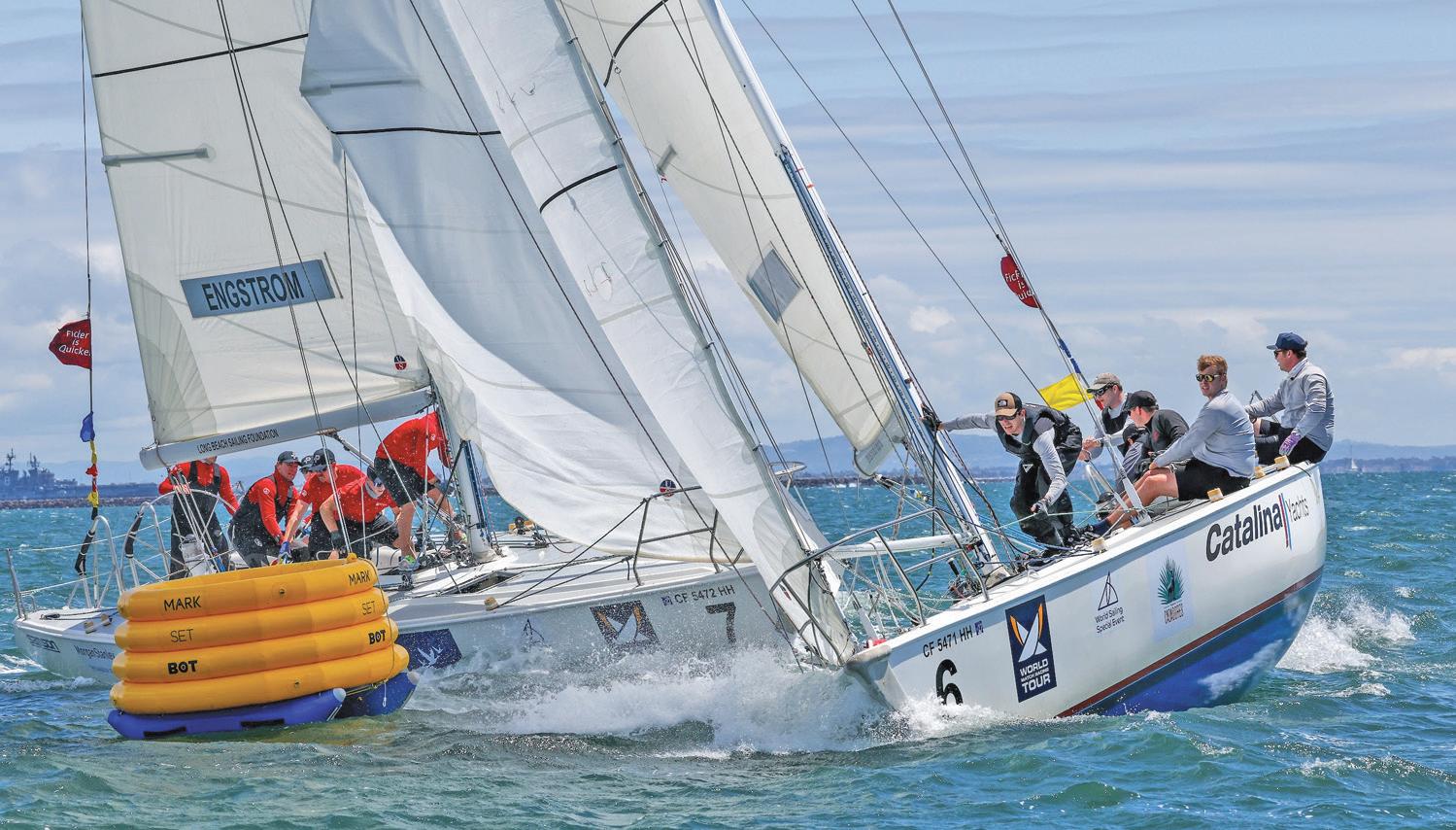
In the second round robin, Dickson won five of seven races, losing to Enström and Weis to finish 11-3 across both round robins. Weis rode a strong second round robin to a 9-5 record and a number-two seed for the semifinals. The two Swedes, Engström and Westerlind, were the third and fourth seeds at 8-6 and 7-7, respectively. Breault finished 6-8 and just missed out on making it to the semifinals.
Each semifinal was a battle of California vs. Sweden, and each region won one and lost one. Dickson swept Westerlind to make the final. Engström won the first two races against Weis before losing race three, but then clinched his place in the final in race four.
Weis and Westerlind faced off in the best-of-three petit final, with Weis winning the first two races to take third place for the event.
"The high point of the event was achieving our goals," Adam CorpuzLahne, one of the crew on Chris Weis's RYC-based team tells Latitude. "As a talented team, but one that had never raced together and a skipper who hadn't match raced in a couple of years, we always knew we had a chance at winning the event, but that wasn't the goal. Our goals were to have fun (check!), be competitive in every race (check!), and sail on Sunday (check!). Qualification for Congressional Cup would've been amazing, but not something we focused on."
The final was a showdown between Dickson and Engstöm. Dickson won in dominant fashion, clinching his record 15th Ficker Cup victory and a spot in the 2026 Congressional Cup at LBYC.
"We are incredibly proud to have one of our own not only qualify, but dominate the Ficker Cup and earn his place in the Congressional Cup," LBYC Congressional Cup chairman Tom Camp said of Dickson's performance, per the WMRT press release. "It is truly something special. His performance this week was exceptional, and it reflects the standard of excellence this event, and this club, have represented for decades. He will be a strong contender as he lines up against the world's best in our flagship event."
"California has a great match-racing scene, with the California Dreamin' Series, USMRC qualifiers, and quite a few stand-alone events including youth events," Corpuz-Lahne tells us. "Not to mention the prestigious Ficker Cup and Congressional Cup, which are World Match Race Tour events, and the Governor's Cup (well regarded as the premier youth MR event in the world). We've also got some of the best adult and youth match racers in the country, so even the local series — California Dreamin' — is a battle. When I watch our local one-design fleets race, I often see situations where a stronger understanding of how to use the rules, as a sword or as a shield, would benefit the skippers and tacticians. Many of the skills learned from match racing transfer effectively to fleet racing, so it would be beneficial to many sailors to at least dabble in match racing."
— fritz
Aussie Prodigy Stuns to Win 61st Congressional Cup
From April 30 through May 3, the 61st edition of the famed Congressional Cup was sailed in Southern California at Long Beach Yacht Club (LBYC). The prestigious trophy and coveted crimson jacket were won in stunning fashion by 23-year-old Australian skipper Cole Tapper and his Kairos Racing Team. Tapper defeated Switzerland's Eric Monnin (the defending Congressional Cup champion) in the final, with American Chris Poole (winner of the Cup in 2023 and 2024) finishing third.
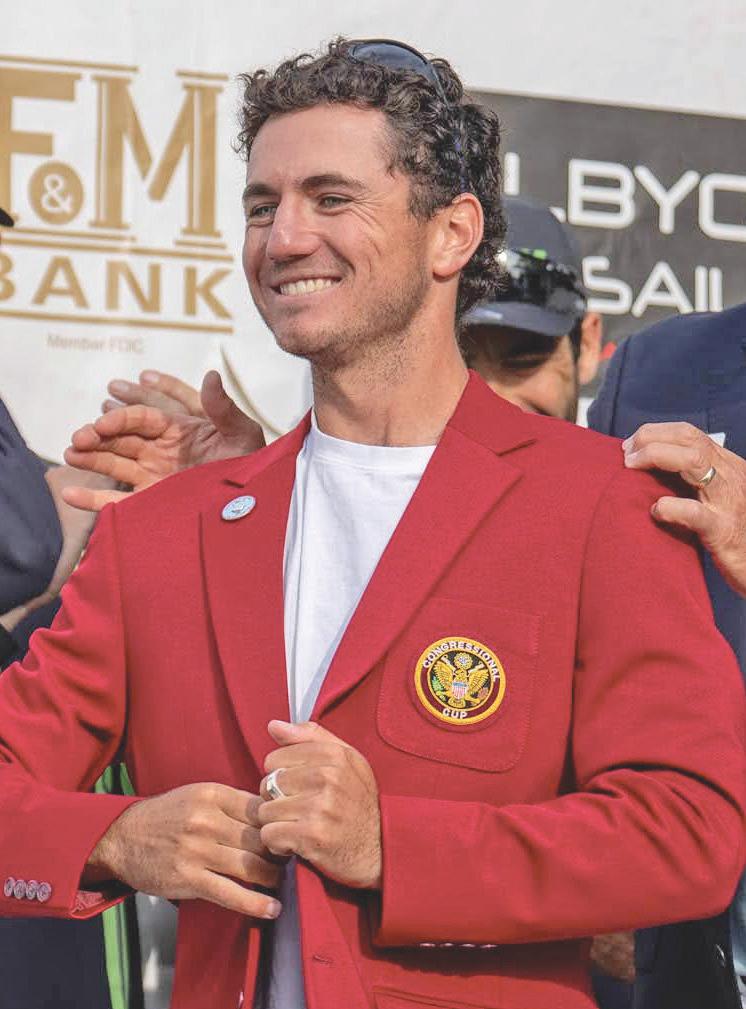
FICKER CUP, WMRT, 4/24-26
1) Scotty Dickson, USA (LBYC); 2) Oscar Engström, SWE; 3) Chris Weis, USA (RYC). (8 boats)
Full results at www.wmrt.com
Ten teams competed in the event, representing seven countries. Tapper, who had made his name in youth match racing by winning last year's Governor's Cup in Newport Beach (his second win in the event), represented Australia. Three Americans competed: the aforementioned Poole, Christian Prendergast, and LBYC local Scotty Dickson (who won the 2026 Ficker Cup weeks before to qualify). Ian Garreta and Aurelian Pierroz represented France. Monnin sailed for the Swiss, Jeppe Borch represented the Danes, and Johnie Berntsson and Oscar Engström, both of Sweden, rounded out the field.
"This means so much to me and to the team," Tapper said shortly after
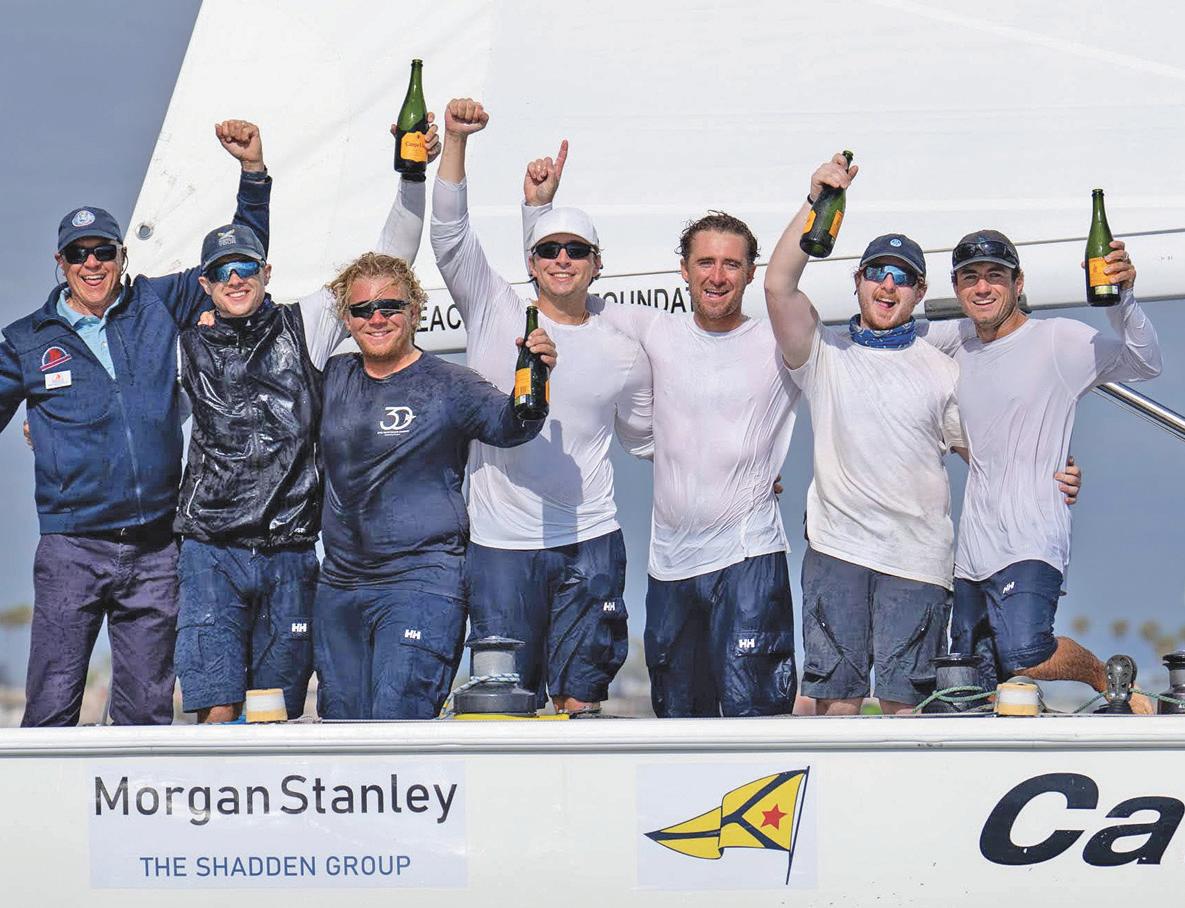
winning, per the World Match Racing Tour's (WMRT) press release. "A very special thank you has to go to Jordan Reece, our coach, as he's done a huge amount of work helping us get where we are today."
Tapper, who sailed with teammates Max Brennan, Jack Frewin, Nathan Guliksen, George Richardson and Hamish Vass, became the first Australian skipper to win the Congressional Cup since Peter Gilmour in 2004.
It was not smooth sailing from the beginning for Tapper and his team. The Aussie was in fourth place overall after the first round robin, having won five of his nine races. Meanwhile, the season veterans and recent champions Poole and Monnin were both jumping out to 8-1 starts. Johnie Berntsson also started quickly at 7-2. Poole's only loss was to Berntsson, and Monnin's was to Poole. Berntsson lost to Monnin and France's Garreta. Tapper was just one win ahead of Borch and Engström (both 4-5 after the first round robin) in defending the last spot in the semifinals.
The second round robin saw Poole in dominant form, winning all nine of his races to finish the round-robin stage with a 17-1 record after racing everyone twice. Monnin went 6-3 in the second round robin, losing only to Poole, Tapper and Borch to finish 14-4 and claim the second seed. Berntsson, Tapper and Borch all won five and lost four in the second round robin. That put Berntsson at 12-6 and gave him the third semifinal spot. Tapper was 10-8,
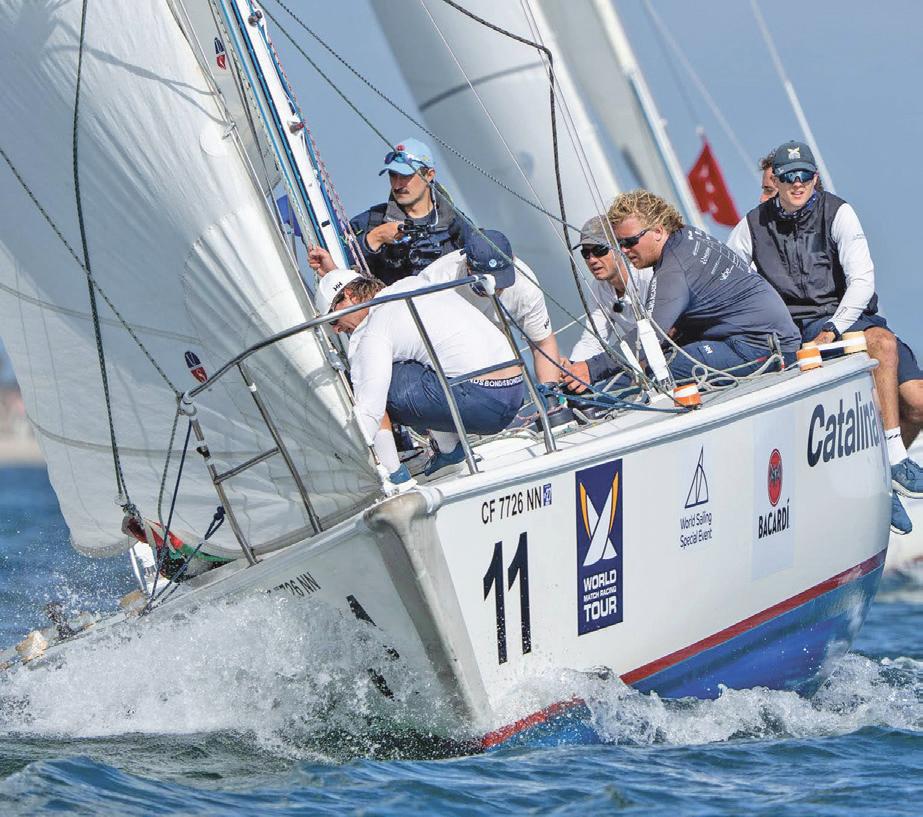
just one win ahead of Borch at 9-9. Importantly for the eventual champion, Tapper beat Borch in both of their round-robin races, ensuring that he claimed the final semifinal spot.
Tapper was set to face the top-seeded Poole in the semifinal, with Monnin and Berntsson squaring off. Both semifinals appeared headed for a decisive result once racing finished on Saturday, May 2. One finish would have been an upset based on seeding and roundrobin results, and the other would have seemed inevitable.
Going into the final day of racing, Poole continued his dominant run, beating Tapper in the first two races of their semifinal. It seemed inevitable that the winner of the Cup in 2023 and 2024 would be headed back to the final. Somewhat surprisingly, Monnin (who won both races against Berntsson in the round robin) was behind 2-0 to the Swede and also on the verge of elimination.
On the final day of racing, both Tapper and Monnin rallied. With each team one loss away from elimination, they won three straight races to come back and knock off Poole and Berntsson, respectively. That set up a final showdown between the winner of the 2025 Congressional Cup and the winner of the 2025 Governor's Cup to see who would don the crimson blazer in 2026.
Tapper jumped out to a quick lead, winning the first two races of the final. If Monnin were to defend his Congressional Cup title, he would have to do it the hard way, coming back from down
2-0 twice. It would ultimately not be in the cards for the Swiss skipper, as Tapper drew a foul at the leeward mark of race three that all but sealed the Congressional Cup for the 23-year-old Aussie. Tapper defeated Berntsson 2-0 in the petit final to claim third.
"Waking up this morning, we definitely felt like we were facing an uphill battle," Tapper said of the final day of racing, again via the WMRT press release. "But we're so glad to have rallied and come back, and the only reason we were able to do that is because of these guys on my crew."
The 2026 Congressional Cup was one for the books, seeing dominance, drama, surprises, and a new star in world match racing begin to write his name into sailing history. It remains to be seen where Tapper's sure-to-beillustrious sailing career will take him, but it's fair to assume that he will be back at LBYC next year for the 62nd edition of the Congressional Cup, along with the likes of Poole and Monnin.
— fritz
LBYC, 4/30-5/3
1) Cole Tapper, Kairos Racing, AUS; 2) Eric Monnin, Swiss Matching Racing Team, CHE; 3) Chris Poole, Riptide Racing, USA. (10 boats) Full results at www.lbyc.org
On May 9, nine of San Francisco Bay's J/105s competed in St. Francis Yacht Club's (StFYC) 2026 J/105 Women Skipper Invitational. The event drew
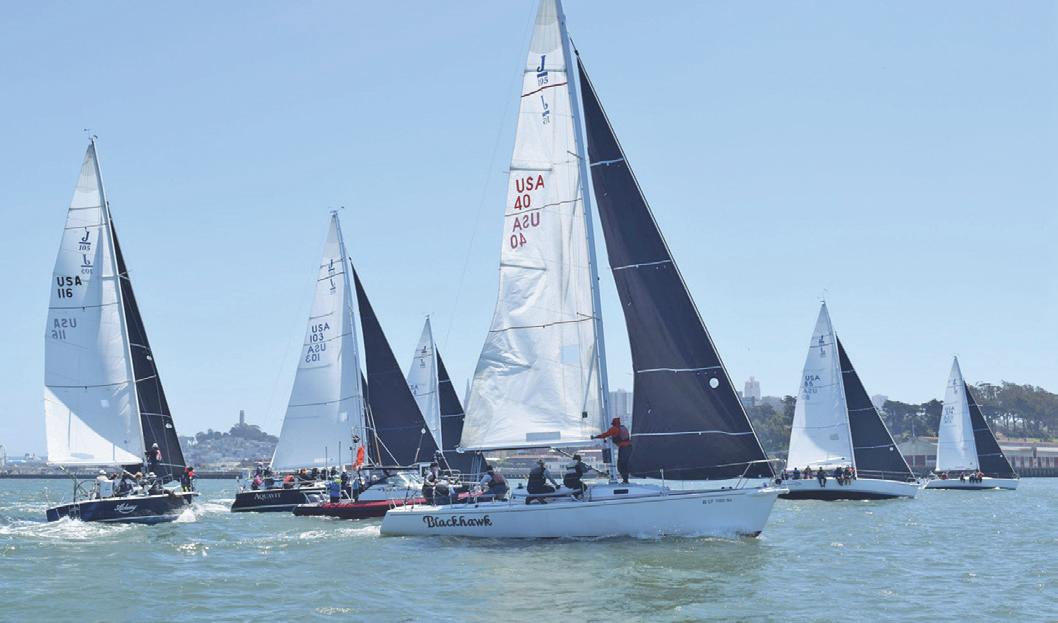
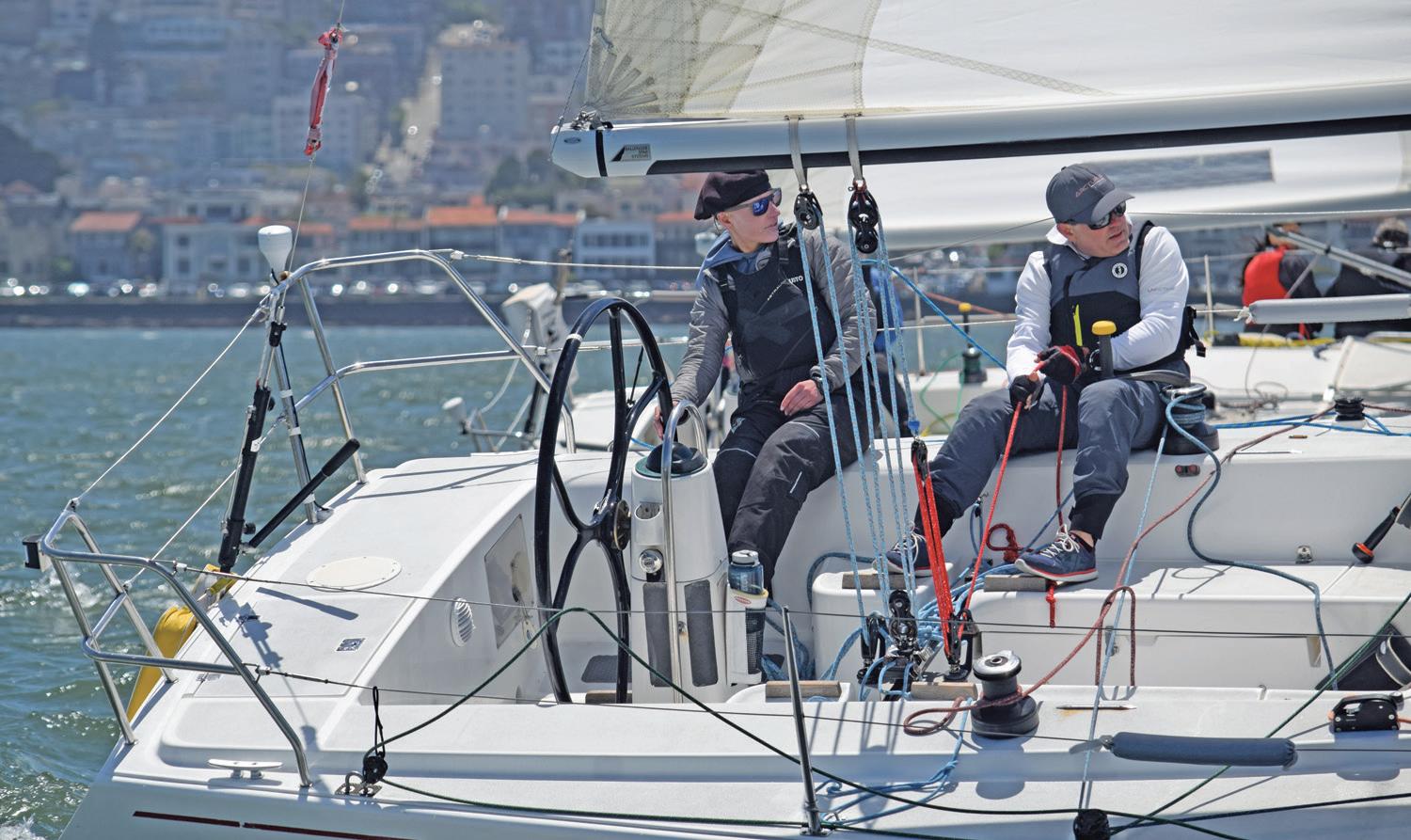
many of the best women skippers that the Bay Area has to offer.
Four races were sailed in the one-day regatta. While StFYC was in charge of the event, the regatta was primarily operated out of San Francisco Yacht Club (SFYC) due to the dredging situation at the Marina West Harbor limiting sailboat access to StFYC.
The regatta was handily won by Blackhawk (SFYC), skippered by Molly Carapiet. Sailing with Ryan Simmons (Blackhawk's regular skipper), Vicki Fennell, Shawn Bennett, Jeremy Herzog, and Brent Draney, the team was dominant, recording a picket fence.
"It was a beautiful day on the Bay and a fantastic event all around," Carapiet tells Latitude. "It was encouraging to see so many women confidently taking the helm. I am grateful for the awesome team we had and for Ryan's support with the boat."
In second place behind Carapiet and team was one of the most accomplished sailors on San Francisco Bay (and in the country, man or woman) in the form of Nicole Breault. Breault and her team, who are training for the New York Yacht Club's inaugural Women's International Regatta in September (to be sailed in IC37s), totaled 14 points from the four races, highlighted by a secondplace finish in race three.
Kate Molitor skippered Sharkey
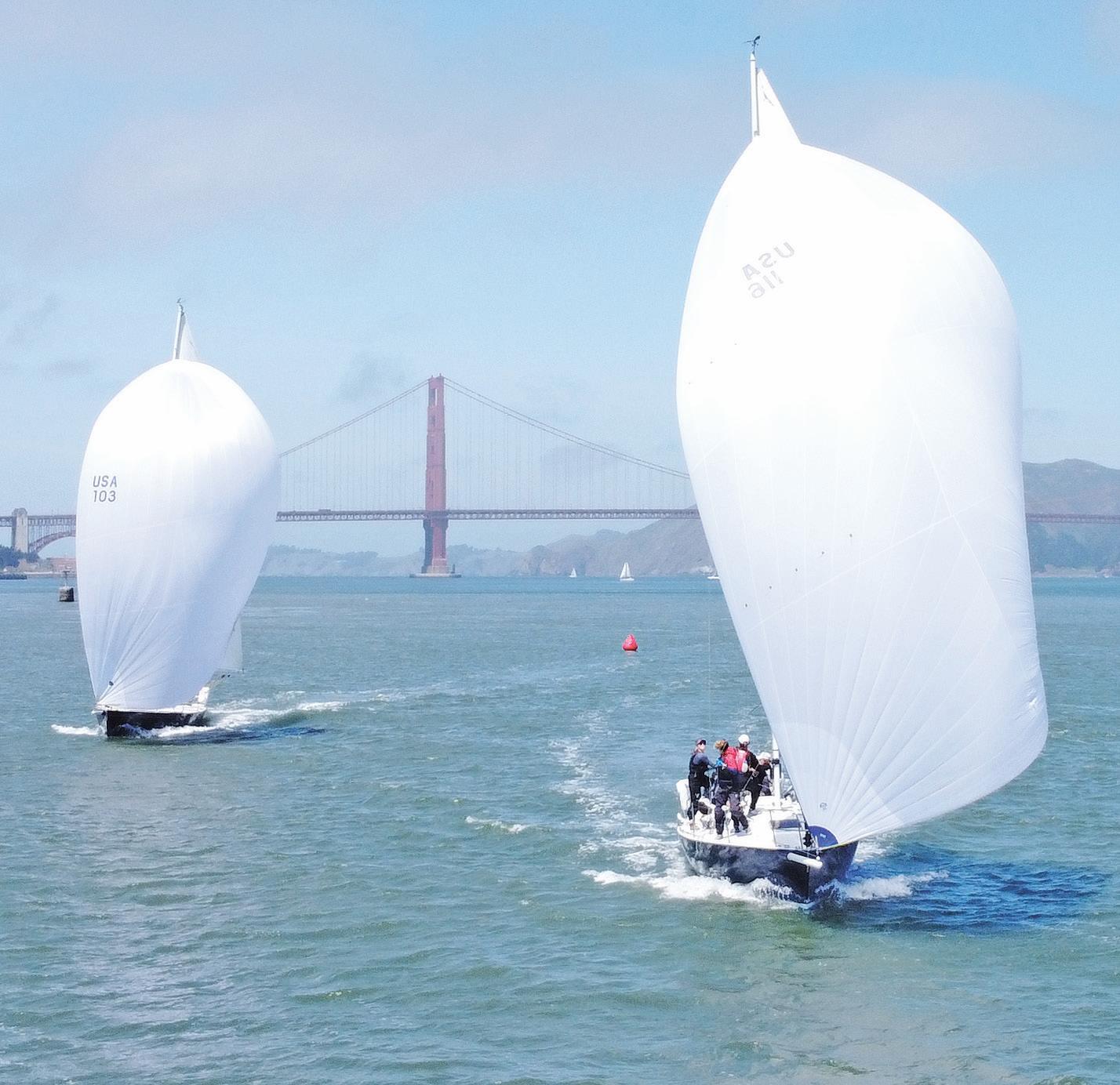
(EYC/SBYC) to third place with 16 points, highlighted by a second in race two. Beth Newman tied Molitor aboard Aquavit (SFYC) with 16 points, but lost out on tiebreaker to finish fourth. In fifth place was Sam Gebb, driving Peaches (StFYC), whose best result was a second in race one.
"This event is a fun opportunity to drive, but what I appreciate even more is the chance to put together a unique and meaningful crew," Gebb tells Latitude. "This is my third year sailing the event with both my dad Mike Gebb and my partner (now fiancé) Michael Rivlin on board. The rest of the crew was rounded out by three great female friends I've met through sailing in the Bay. Two of them are currently in their second trimester of pregnancy and still racing, which feels in keeping with the spirit of the event."
Though the regatta was a women'sskipper event, men were allowed to sail in the regatta. There was only one J/105 in the regatta that raced with a team made up entirely of women: the 2025 YRA Queen of the Bay, Chinook (IYC), skippered by Elizabeth Henderson.
"Having the top 10 boats in the fleet out there on the Cityfront made for some intense short-course racing," Henderson tells Latitude. She finished the regatta in sixth and recorded
back-to-back fourth-place finishes in races two and three. "We saw that lineup and we knew we would learn a LOT! This was especially exciting as it was our first Cityfront race. Including the four RegattaPRO Midwinters, this was our fifth one-design as well; last year we only raced PHRF. We shook out the nerves the first round, and each heat got more dialed-in in ever-changing conditions.
"Winds really picked up too, and the chop and swell, in combination with the building but very puffy conditions from the bottom to the top of the course," Henderson continues. "It was a legit struggle for an already-gassed mast person to get the kite made that fast, but it got up and we made some great runs, holding pace with the big dogs! As a driver I never get to look at anything but speed and those jib telltales, so I had no idea where we were in the pack, if we were winning or losing, or even keeping up. I was just stunned when I crossed the finish line with boats behind us!
"On the sound advice of Morgan Trubovich, I made a deal with myself to not look at the results board at this stage in our racing journey," Henderson says of her mindset for the regatta. "BUT my teammates told me we were fourth in two heats and sixth overall. AND we were the only 100%, all-female
team, even at a 'women's event.' I was just stunned. I am just SO proud of the work these women put in all winter, and it was incredibly validating to realize that we can keep up with the Fleet One royalty out there."
Another theme that echoed throughout the regatta was that of the camaraderie between the teams and the skippers within a fleet known for being the most competitive in the Bay.
"What a great showing of Corinthian spirit and sisterhood for the boats that are still stuck behind the sandbar at StFYC!" Henderson says. "Shannon Kaiser and Donkey Jack picked up another team of women, and Alchemy carried Nicole Breault's She Wolves. This fleet gets a reputation for being cutthroat competitive, but there is also such kindness and generosity, and sailors always willing to help each other out. If it weren't for that spirit, we wouldn't have been able to make this race happen.
"Just speaking for myself, it's a bit intimidating stepping into such a competitive fleet, but having J/105 women's events like this provides such a supportive and fun community of awesome women sailors and skippers to cheer each other on and get better together," Henderson continues. "I don't know of any other fleets that have competitive one-design women's racing events, but I think it's one of the reasons the J/105 class is such a strong fleet in the Bay, and Fleet One is the strongest fleet in the country. I am so lucky to be a part of it."
— fritz
StFYC SF BAY J/105 WOMEN'S SKIPPER INVITATIONAL, 5/9 (4r/0t)
1) Blackhawk, Molly Carapiet, 4 points; 2) Alchemy, Nicole Breault, 14; 3) Sharkey, Kate Molitor, 16. (9 boats) Full results at www.stfyc.com
Sailors from all over Central California converged on a beautiful and windy Lake Yosemite in Merced, CA, for the Lake Yosemite Sailing Association's (LYSA) annual spring regatta on May 16 and 17.
All but two of the registered fleets, the ILCAs and open keelboats, decided to brave the boisterous conditions with sustained winds of 20+ with gusts to
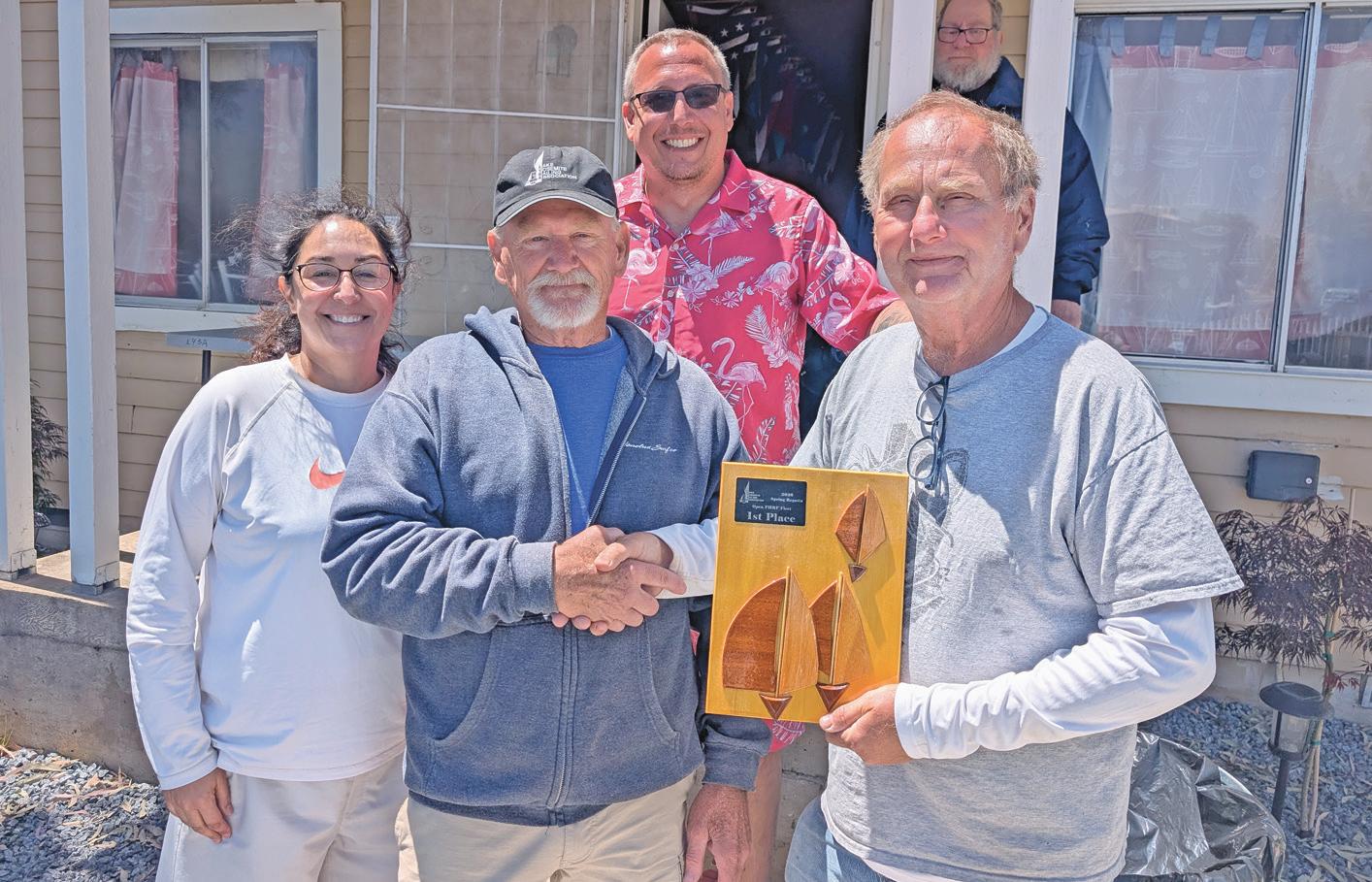
25. On Saturday, the race committee scheduled three races back-to-backto-back, with two long courses and one short course, which tested the racers in the windy and challenging conditions. There were lots of stories to share during a great Saturday evening BBQ dinner, prepared by the LYSA members at their beautiful facilities on the shore of the lake. Steve Cameron of the Richmond YC, a longtime participant at the event, presented LYSA with a beautiful RC sailboat built by his brother Brad, who passed away late last year. Brad, who had become a fixture at the regatta for many years, will be missed.
Sunday featured two more races in even windier conditions than Saturday's, with winds around 25 with gusts to 30!
An awards ceremony closed out the weekend after the last race on Sunday.
Taking first place in the open-keelboat PHRF division was Matt Loeffler and crew from LYSA on a Catalina 25. Second-place honors went to John Larson and crew, also LYSA sailors, on a Merit 25. Rounding out the field in third place were Dave and Dan Aleman and crew, also from the local club, on another Merit 25.
In the wet and wild Laser division, which was named the Brad Cameron Memorial Race, first-place honors went to Julian Soto from the Charcuterie YC. Second-place honors went to Al Sargent from the StFYC, and rounding out the podium in third was James Baurley from the ABYC.
The Lake Yosemite Sailing Association would like to invite everyone to next year's event on the weekend after Mother's Day. We offer two days of great racing, free camping at our lakeside clubhouse, and legendary LYSA hospitality!
— jay sousa
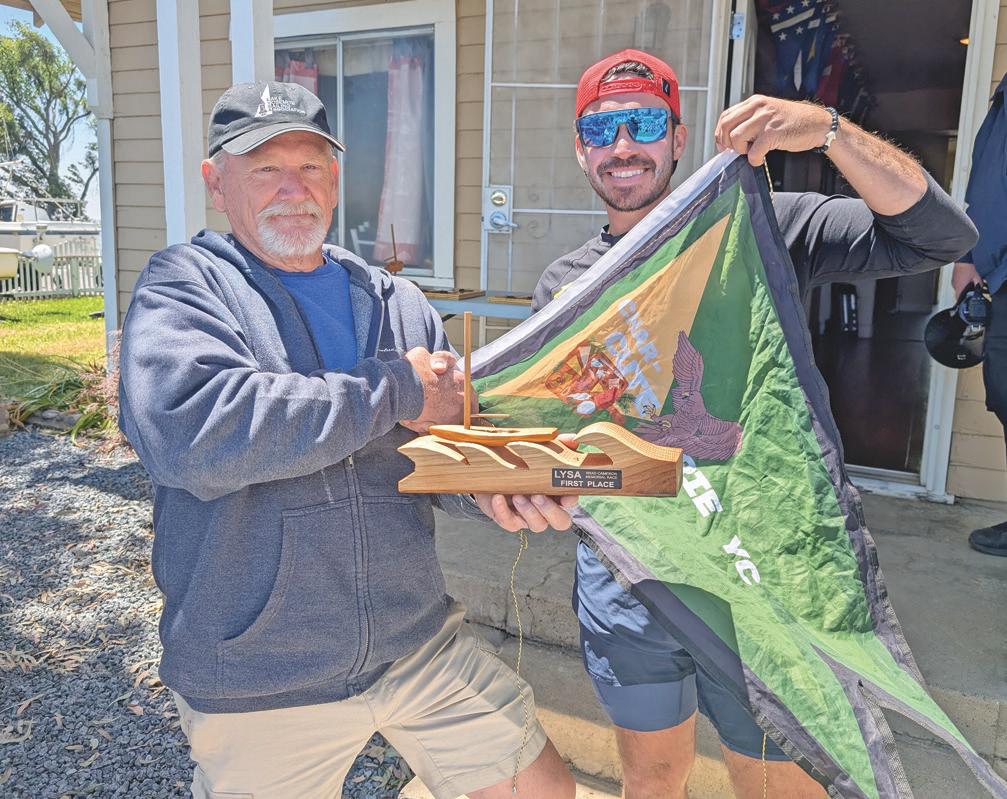
YRA THE BAY EXPEDITION, 4/19
SPINNAKER 1 — 1) Lilith, Wyliecat 39, Tom Paulling/Mike Mannix; 2) Outsider, Azzura 310, Greg Nelson/Daniel Alvarez; 3) Spindrift V, Express 37, Lisa Wilson/Andy Schwenk. (9 boats)
SPINNAKER 2 — 1) Can O'Whoopass, Cal 20, Richard vonEhrenkrook/Chris Cassell; 2) Crazy Rhythm, SC27, Timothy Duncan/Richard Treadwell; 3) Calypso, J/92, Alexander Band/ Kevin Jennings. (7 boats)
NON-SPINNAKER — 1) Latency, J/99, Camille Moussette/Brad Johnson; 2) Free, S&S 30, Jim Carlsen/Jim Bilafer; 3) Lionheart, Express 37, Dennis Rowedder. (8 boats)
ALERION EXPRESS — 1) Althea, Chris Herrmann; 2) Zenaida, Fred Paxton/Tim Knowles; 3) Chesapeake III, James Fair/BJ Price. (7 boats) Full results at www.jibeset.net
YRA LIGHTSHIP RACE, 4/25
PHRF 1A — 1) Rufless, J/125, Rufus Sjoberg; 2) Arsenal, J/125, Andrew Picel; 3) Adrenalin, SC50, Laura Parent. (8 boats)
PHRF 1B — 1) Orca, J/90, Ian Rogers; 2) Lucky Duck, J/90, Dave MacEwen; 3) Recidivist, Schumacher 39, Rob Reis. (10 boats)
PHRF 1C — 1) Shark on Bluegrass, J/99, Falk Meissner; 2) Lightspeed, Wylie 39, Gilles Combrisson; 3) Spindrift V, Express 37, Lisa Wilson. (9 boats)
PHRF 2A — 1) Wowla, J/100, Lori Tewksbury; 2) Zephyros, Beneteau First, Grant Hayes; 3) Twelve Bar Blues, J/105, Hugh Westermeyer. (7 boats)
PHRF 2B — 1) Crazy Rhythm, SC27, Timothy Duncan; 2) Duende, Cal 40, Philip Lavelle; 3) Green Buffalo, Cal 40, Jim Quanci. (5 boats)
SHS SINGLE OR DOUBLEHANDED — 1) The Floating Bear, Ericson 350, Neil Switz. (1 boat)
MULTIHULLS — 1) Round Midnight, Explorer 44 tri., Rick Waltonsmith; 2) Greyhound, F-22, Evan McDonald; 3) Caliente, Explorer 44. (4 boats)
Full results at www.jibeset.net
4/25
SPINNAKER: ≥10 PRIOR RACES — 1) Soliton, Synergy 1000, Doug Kidder. (2 boats)
SPINNAKER: 4-9 PRIOR RACES — 1) Zeehond, Newport 30 MkII, Donn Guay; 2) Starbuck, Black Soo, Matthew Beall; 3) Little Bullet, First 27, Laurence Baskin. (4 boats) SPINNAKER; ≤3 PRIOR RACES 1) Shadowfax, Olson 25, JP Camille; 2) Bazinga, Hobie 33, Sylver & Lorne Cheeseman. (2 boats)
NON-SPINNAKER — 1) Chesapeake III, Alerion Express, James Fair/Linda Powers; 2) Citlali, Olson 25, Bill & Reiko Schwob; 3) Heron, C&C 32, Chris Nye. (5 boats)
Full results at www.jibeset.net
RYC BIG DINGHY REGATTA, 4/25-26
RS FEVA — 1) Rye Antin, 4 points; 2) Ronan Lightner, 8. (2 boats)
RS TERA — 1) Skylar Dubuc, 5 points; 2) Billy de Lomotte 6; 3) Kubrick Monroe, 17. (7 boats)
ILCA 6 — 1) Chris Boome, 13; 2) Jon Andron, 18; 3) Ernest Galvan, 18. (6 boats)
ILCA 7 — 1) Al Sargent, 10 points; 2) Emilio Castelli, 14; 3) Chris Simenstad, 16. (12 boats)
RS AERO 7 — 1) Chris Cartwright, 7 points; 2) Randall Rasicot, 15; 3) Craig Perez, 21. (12 boats)
MELGES 15 — 1) Paul Krak Arnston, 8 points; 2) Dave Houser, 9; 3) Michael Sealey, 20. (5 boats)
OPEN INSIDE - ADULT — 1) Packy Davis, 6 points; 2) Keith Farrell, 6; 3) Roy Jordan, 10. (3 boats)
OPEN CLASS - OUTSIDE — 1) James Clarkson, 7 points; 2) Emilie Duckworth, 12; 3) Kirk Twardowski, 20. (3 boats)
Full results at www.richmondyc.org
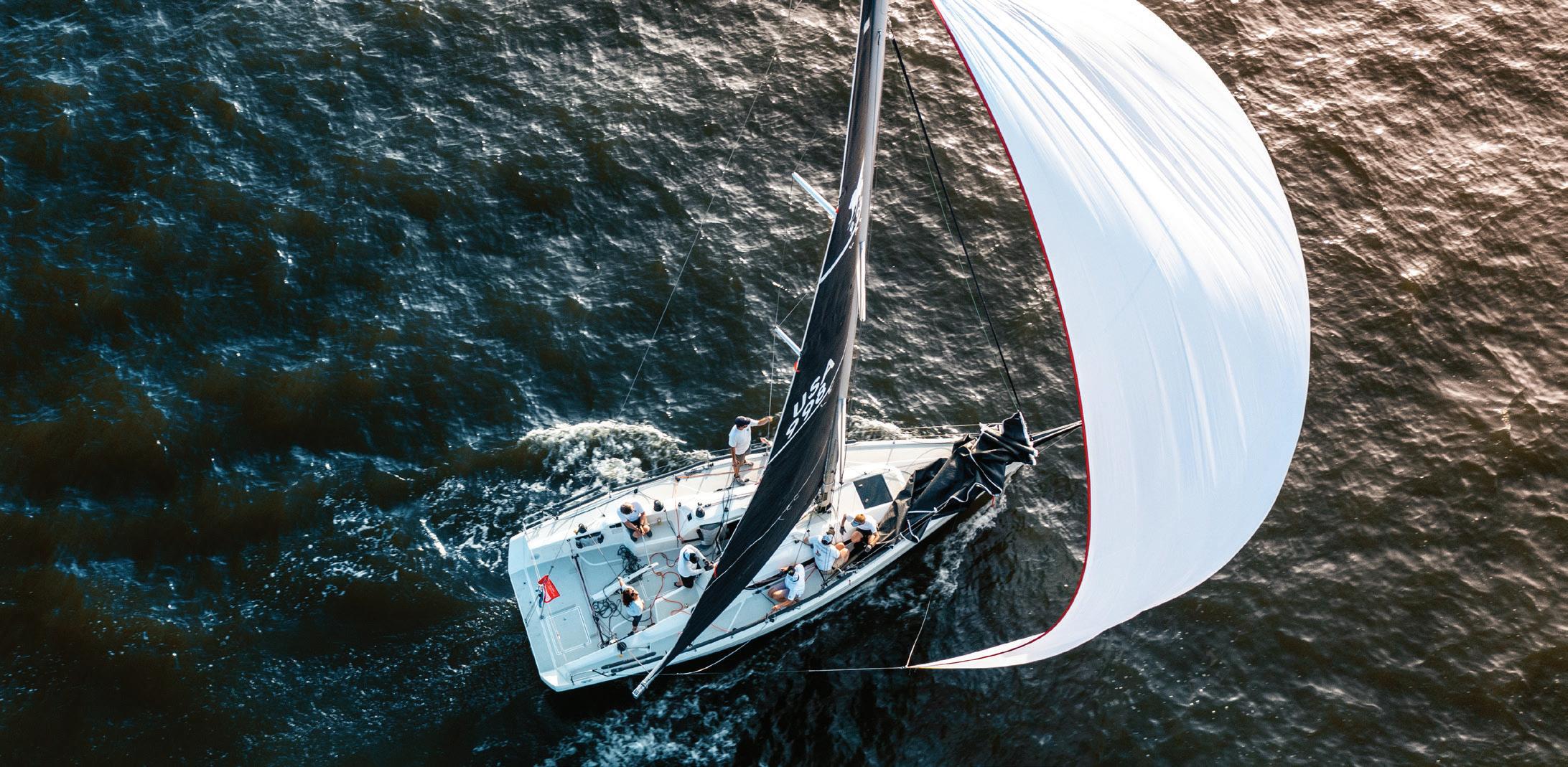

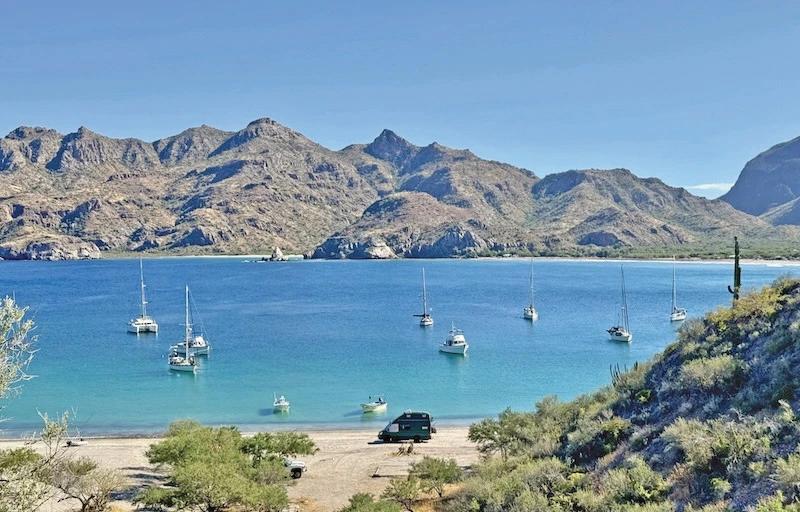
Order the First Timer’s Guide at our store or read it online on our Heading South page
With reports this month from Ondina's fun encounters with fellow cruisers; Nirvana's post-Ha-Ha adventures; Simpatico's cruise on the Coast of Joy; and some fun and interesting Cruise Notes
Ondina — Cal 29-2
John Walsh and Liz Newkirk
You Meet the Nicest People Richmond
John and Liz's first time living aboard their 29-footer was in Mexico: "Boy, did we learn some things about relationships!"
Ondina, our wonderful 1978 Cal 292, made an incredible journey as the smallest boat in the 2025 Baja Ha-Ha. The pre-departure plan, such as it was, consisted of my saying "Well, if I make it to San Diego; and if my lovely wife Liz meets me there; and if we make it to Cabo — well, we're probably not going to just turn around and head back home!" As it turns out, I did make it singlehanded from San Francisco to San Diego the last two weeks of October; Liz did meet me there; we did make it to Cabo; and we didn't stop there. From Cabo, we headed to San Jose, La Paz, and finally up to Puerto Escondido, which has become the new temporary home of our beloved vessel. Plenty of wonderful adventures continued to unfold over the following months.
After getting into PE back in December, we felt it was a good place to leave the boat and go home for the holidays. That ended my two-and-a-half-month stretch of living aboard, two months of which I shared with Liz in the limited space of our 29-ft boat. Boy, did we learn some things about relationships! Luckily, we also met some wonderful people along the way, and of course spent plenty of time in new-to-us amazing anchorages.
First, we met Maxim of Pearl from Washington. He did the Ha-Ha with his partner Maxi, though we did not cross paths until La Paz. We shared time with them, quickly known to us as "the Maxes," in various places at various times, and as recently as a couple of weeks
ago. They are a wonderful young couple whom we are grateful to have met and look forward to seeing again.
Another great couple were Steve and Julie on Brother Wind. We first crossed paths with them in San Evaristo. It was fairly windy when we pulled in there, and our first pass at anchoring brought us fairly close to their boat. Because sweet Julie, in her perfect UK accent, just said, "Why hullo there!" while waving, we made a point to dinghy over after we got settled to say hello. And good thing we did, because they are a riot. And thankfully so, as we ended up being "weather locked" in San Evaristo for three or four days. Along with the wind came rain — like real, proper rain — day after day. This was also where our lack of refrigeration really caught up with us. Up until that point, we had done OK (barely), but in San Evaristo, there was only one little tienda, with no ice. Fortunately, the little restaurant on the beach had cold beers and would sell them with food orders as well as for takeaway. Needless to say, we went there for lunch every day!
While there, we also met Dan and Eric on Jangler for the first time. Now, the only thing I can say about meeting them and running into them many more times up to and including PE is that it would take about two or three installments to even start to convey all of the tomfoolery we got up to together. Very, very good times.
When Ondina pulled into Puerto Escondido the first time, we arrived in company with Jangler, and were thrilled to see Brother Wind was there! What joy it was to gather again, with a proper restaurant and bar to enjoy together! We also met a man at the bar whom we recognized from Agua Verde, Jim of Pacific Raven. "Mr. Jim" is a treasure — the kindest man you could ever hope to meet. We are blessed to have met him, and shared much time with him since then. He has become a very dear friend.
So, because of the holidays and various issues, Steve, Jim, and Liz and I sort of got stuck in PE for the majority
of January into February. Which turned out to be a blessing in another way because we met Kate and Ian from Canada. I could go on for days about these two, but I will leave it at this: They are gold miners in the Yukon and have been coming to the Puerto Escondido area since the '80s. It was mostly land camping at first, but they now have a powerboat they live on in PE for about five months of the year. Oh, and they drive back and forth from Canada to the boat. I don't expect to meet a more adventurous couple than these two. But why we really love them is they brought us into their inner circle of old
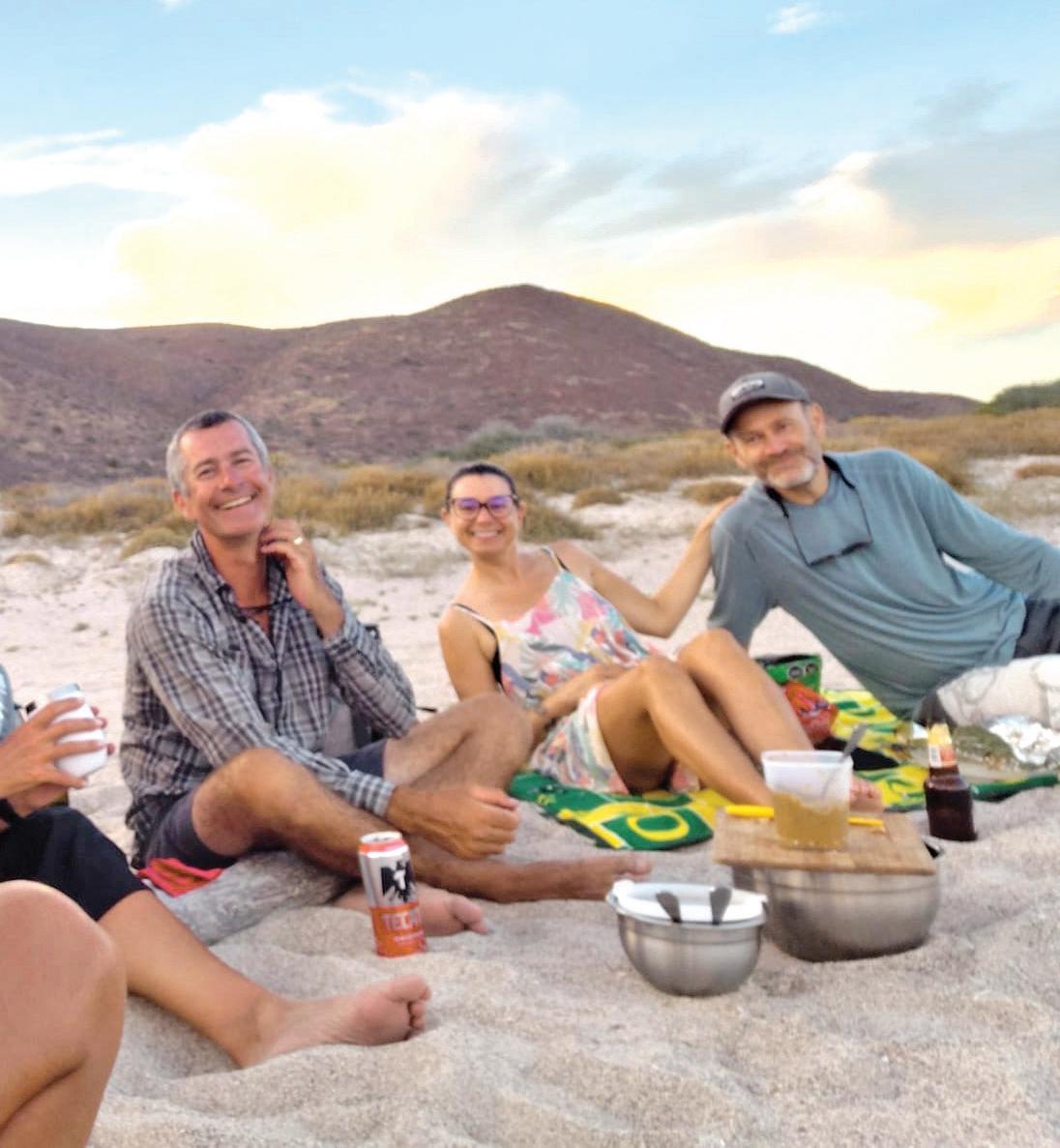
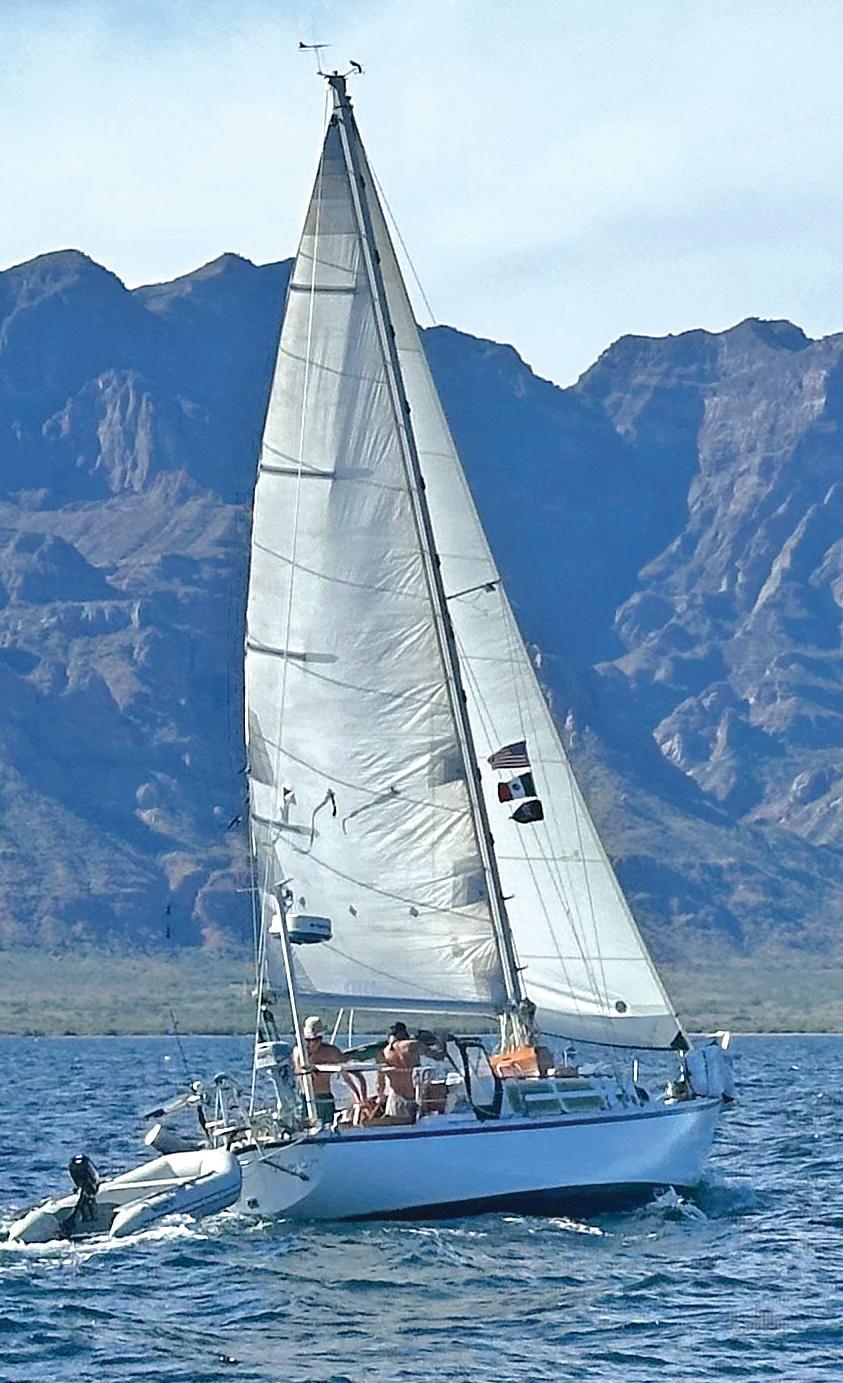
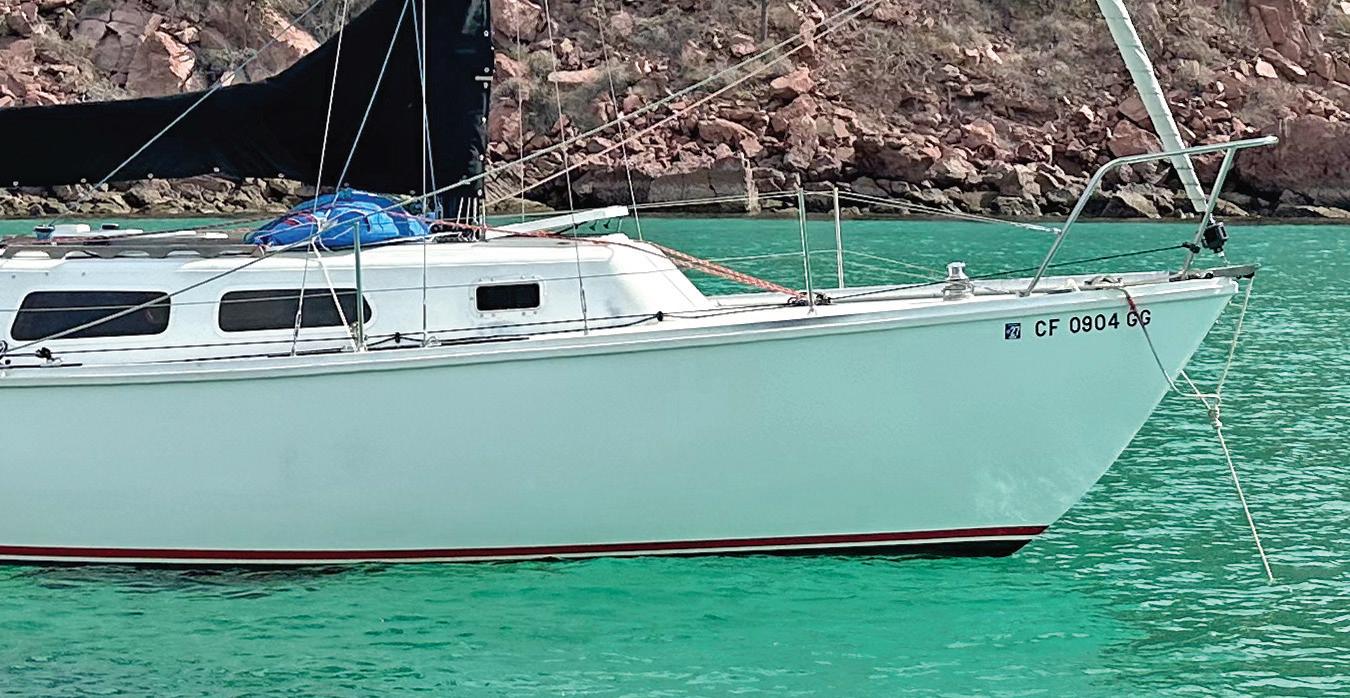
camping and fishing friends who play all-terrain bocce ball twice a week. That's right, all-terrain, as in the "course" is on the dirt road at Rattlesnake Beach Campground, with turns, ruts, hard mud, soft sand, and washouts all part of the game. What a riot! We had so much fun that Liz and I made a special trip down in late February for a week just to see them before they left for the gold season. Turns out it was also the end-of-beach-season AllTerrain Bocce Ball Tournament, where
something like 10 teams of two played double-elimination rounds until, unbelievably, Liz and I faced Kate and Ian for the final round. Well, they kicked our butts, of course, and we couldn't help wondering — is that why they brought us into the fold: new meat to beat up on the course? Of course not, they are wonderful folks with whom we continue to exchange emails. And yes, Liz and I are planning to practice ATBB for next season!
Our last trip with Ondina was late
March into April. We flew from SFO to Loreto, getting pretty good at this by now, and were picked up by Jim at the airport (thanks, Jim!). After a day of provisioning, fueling, etc., we left PE with Jim on Raven to catch another couple, Jordan and Erica on Torridon Meeting up at Balandra on Isla Carmen, we had a lovely evening together after a beautiful sail.
The next day, Liz and I went for a hike, and after we got back to the boat we saw another boat I recognized. We had met Mike of Frog briefly at PE before, and I knew he was singlehanding. We had made plans for Jim to come to our boat for sundowners. When he arrived, an inspiration hit me: "Let's take sundowners to Mike on Frog."
"Hola, Señor Frog, we come with drink." Mike was surprised to be boarded, but quickly made the most of our intrusion, and we all shared a wonderful evening together. As we eventually pulled away in our dinghy, Mike's parting words were heartfelt: "It was so good of you to come by, I'm so happy."
Now, how often do you get to hear things like that from people you just met?
— John 4/27/26
Nirvana — Taswell 49
John and Teresa Koontz
A Family Affair
Santa Barbara
In last month's Changes, we introduced readers to the Koontz family — John, Teresa and sons Dylan and Morgan. The boys grew up on the family's former boat, the Tayana 37 Cherokee, spending many a SoCal summer sailing locally and to the Channel Islands.
John and Teresa got Cherokee before they had kids. "Then one day we woke up and our children were 17- and 24-year-old men," says Teresa. "Suddenly, we needed more space — and Mama needed a door to her room."
In 2019, they sold Cherokee and bought Nirvana. When COVID hit, they poured isolation downtime into a full refit and upgrade. Last year, they finally realized a decades-long dream to sail south with the Baja Ha-Ha — with Dylan and Morgan, now 22 and 29 respectively.
Participating in the Baja Ha-Ha marked our first significant offshore
sailing adventure. We looked forward to working together as a family, exploring new destinations, immersing
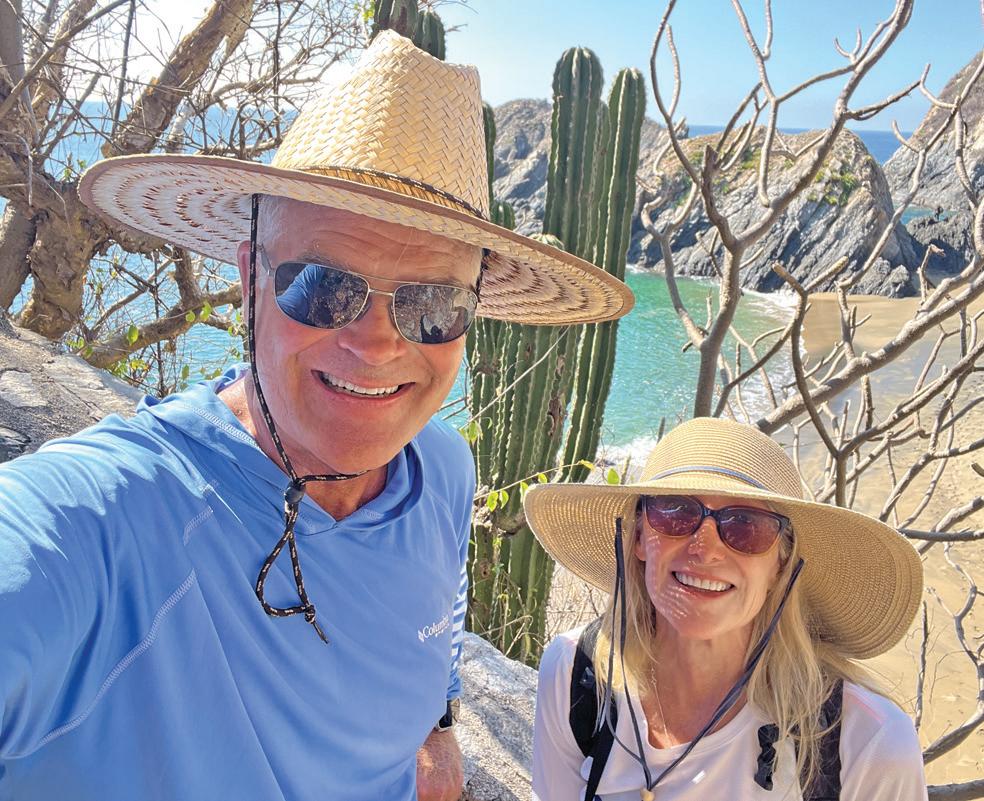
ourselves in the culture, and meeting new friends. The journey proved to be everything we had imagined and more. One of the greatest rewards was seeing how well Nirvana performed. With variable wind conditions, we often relied on motoring, and she handled the job beautifully. Just as meaningful was the comfort of knowing that our planning and preparation had paid off, making the passage both safe and enjoyable. And, of course, sharing the adventure as a family — especially while catching wahoo, dorado and yellowtail — made it even more memorable.
Now, with our boat in Mazatlán and plans underway for a return to La Paz, we find ourselves reflecting on the many places we have visited and the memories we have created since the Baja HaHa parade out of San Diego Harbor in November. Every great journey comes with its share of trials and tribulations, the moments that ultimately shape the fabric of the story.
After staying at Cabo for a few days, like many cruisers, we continued to Bahía Los Frailes, Bahía Los Muertos, and La Paz. Each destination brought its own special experiences: snorkeling among remarkable sea life, swimming with whale sharks, celebrating Thanksgiving with the crews of MaMaLu, Sagata, Orca, and Ondina, admiring the turquoise beauty of Balandra Bay, and appreciating the culture, food, and especially the kindness of the locals. These highlights easily overshadowed the inevitable mishaps of cruising:
accidentally leaving a hatch open and flooding the bunkroom, wondering whether we had enough fuel to complete the San Diego-to-Cabo passage, throwing out your back while cleaning, or stepping into the head at 2 a.m. only to discover a squid squishing between your toes.
The crossing from Bahía Los Frailes to Banderas Bay brought more offshore challenges, as the wind, swell and chop seemed to seize control of our destiny. At the same time, an animated flock of brown-footed boobies clumsily gathered on the pulpit for an overnight ride, providing endless entertainment. Passing Las Islas Marietas and entering Banderas Bay, we were greeted by dolphins and humpback whales, and after 24 hours, finally a fish on the line!
In December, we left Nirvana in La Cruz Marina and headed home for the holidays. The two of us returned in January to continue the next leg of the journey. We embarked on day trips to PV's Zona Romántica, Sayulita, Yelapa and Punta Mita before eventually cruising south to Barra de Navidad, with stops in Tenacatita, Manzanilla, Chamela, Careyes, and Tehuamixtle at Ipala.
Once again, we found ourselves surrounded by natural beauty, local charm, and the camaraderie of fellow cruisers from Carpe Diem, Luna, No Worries, and Jacquot Bateau. The opulent Spanishstyle elegance, outstanding service and inviting pools at the Barra de Navidad Marina made our stay feel wonderfully five-star. Visits to the smaller towns offered a different kind of pleasure: relaxing under a palapa with our feet in the sand, swimming in inviting water, and relishing the day's end at Sundowners with friends and a tasty maracuya margarita.
Of course, adventure was always just around the corner, whether exploring the Tenacatita mangroves, visiting the crocodile sanctuary in La Manzanilla, dinghying to La Copa del Sol in Careyes, or surviving a digestive uprising in Tehuamixtle after a single raw oyster. (Who knew one oyster could sideline you for four days?) While anchored there, we also became aware of the cartel unrest in Puerto Vallarta and worried that we might not be able to reenter La Cruz Marina. Fortunately, tensions eased, and we returned without incident.
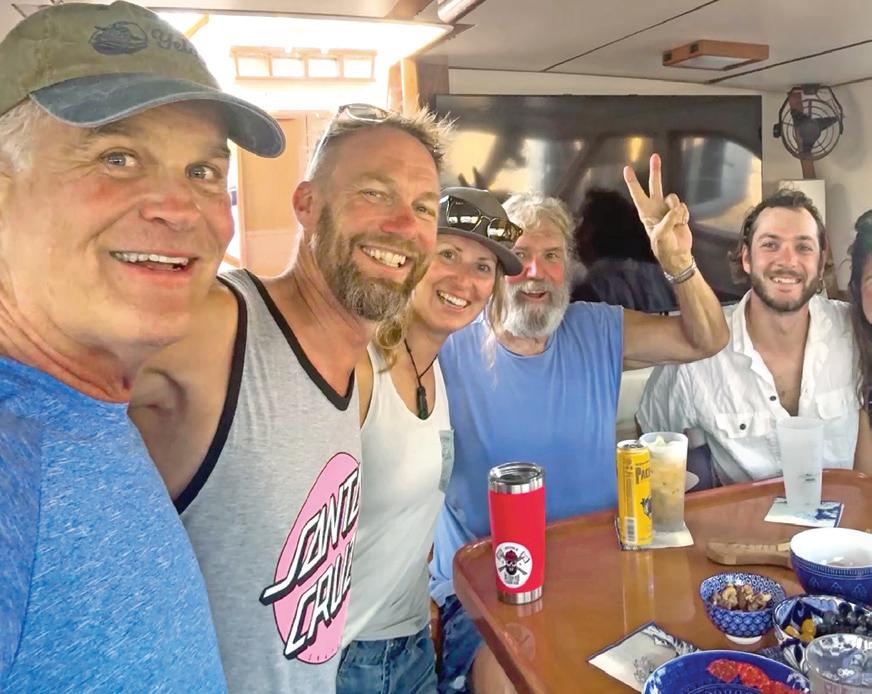
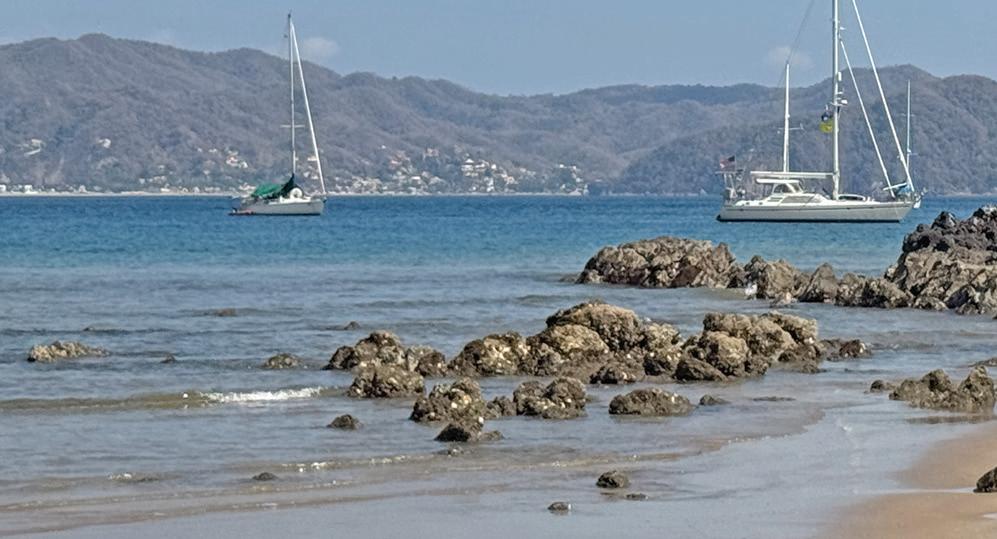
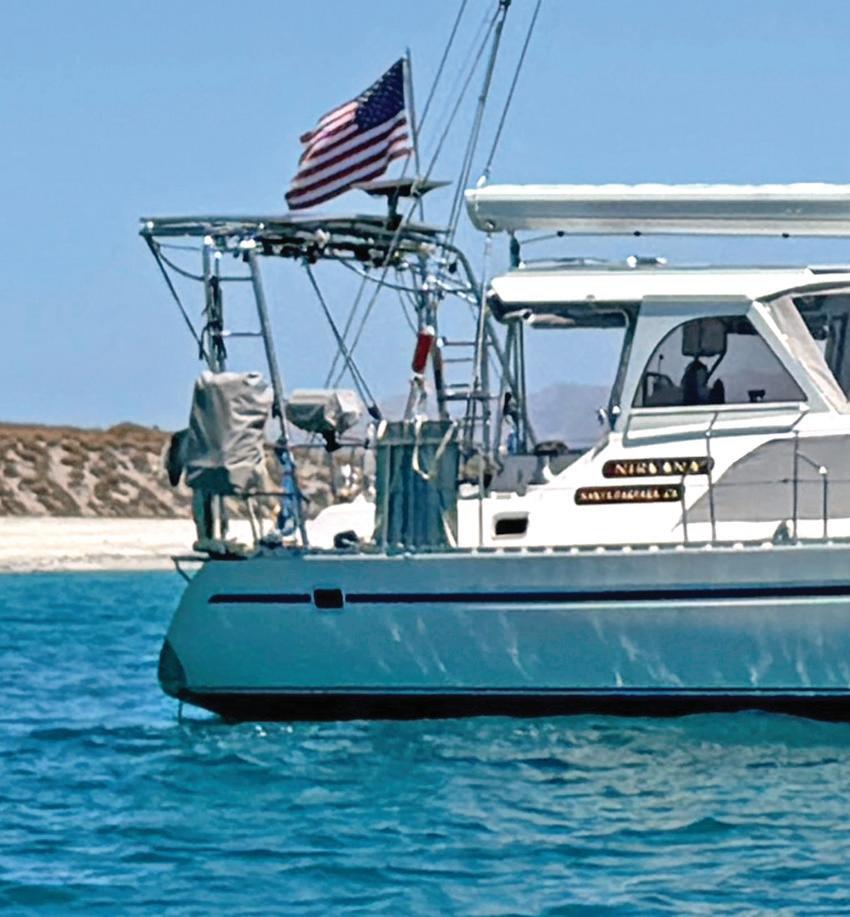
Following another brief trip home, we were eager to get back on the water. Our son Dylan joined us for spring break as we traveled from La Cruz to Isla Isabel and then on to Mazatlán. Both crossings were calm and comfortable, aside from a disappointing lack of fishing success and a panga fisherman's long line that seemed to stretch for miles just outside Isla Isabel.
Isla Isabel proved to be every bit as extraordinary as we had heard. With only three boats in the East Anchorage, we felt especially lucky to find a spot. Despite night winds of 10 knots,
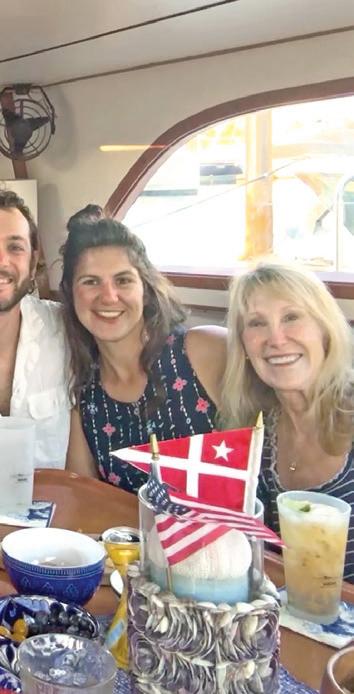
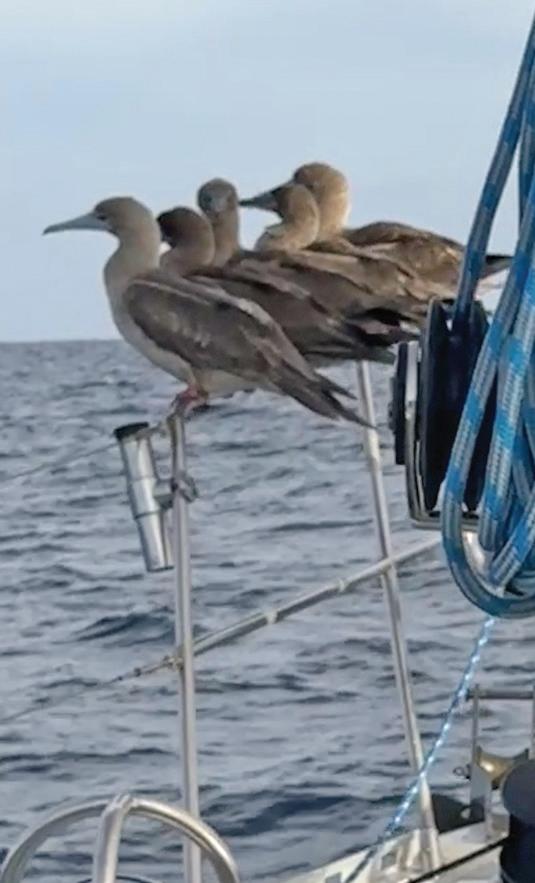
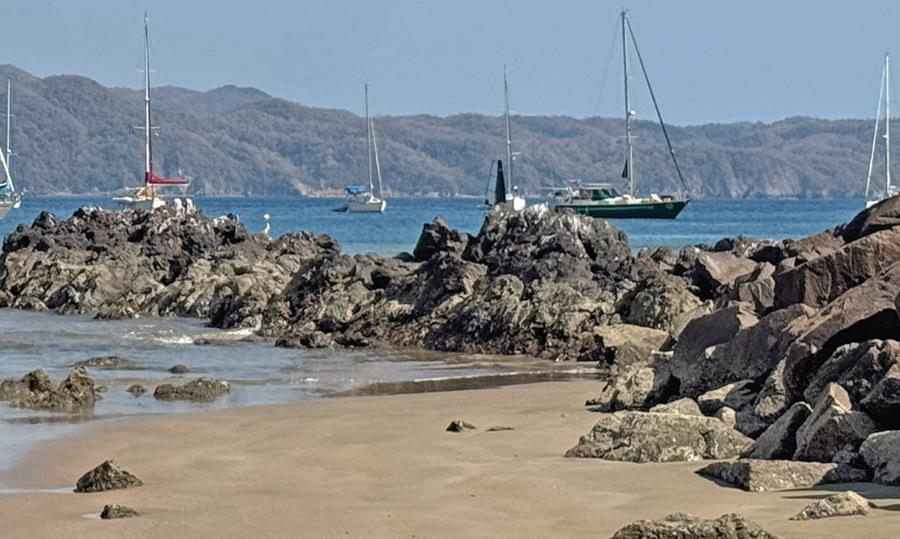
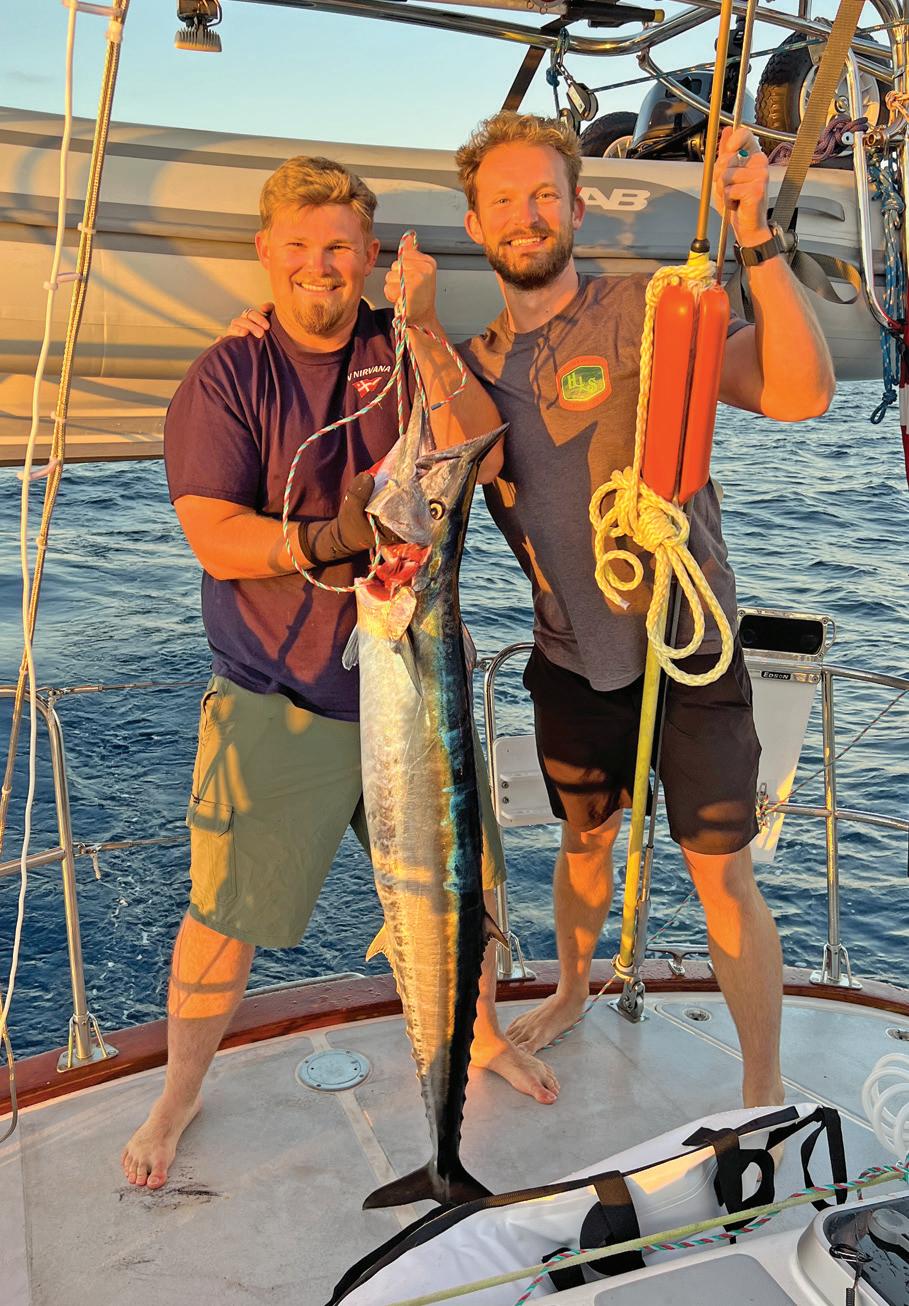
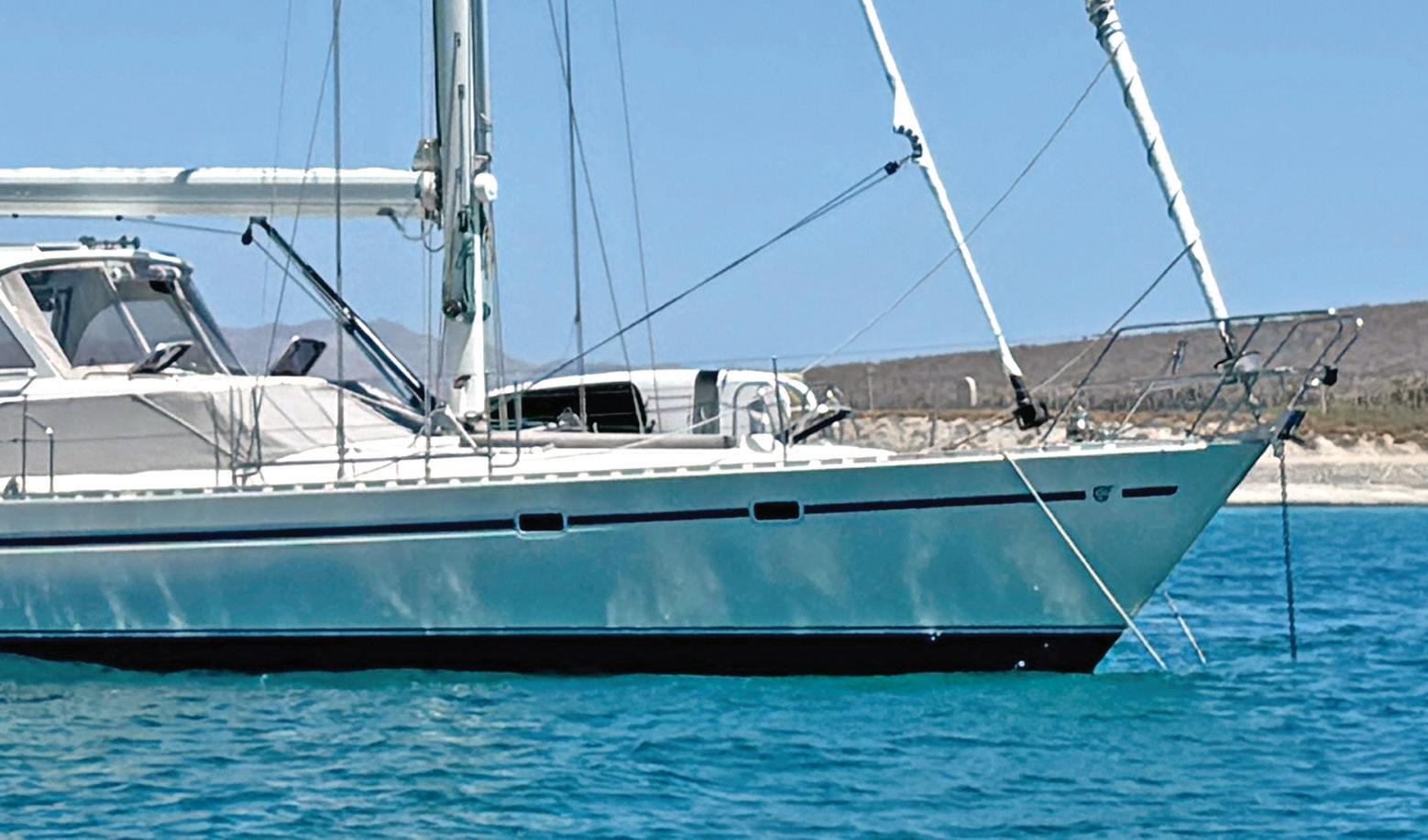
we were safely anchored and enjoyed exploring this tiny volcanic island, known as the Mexican Galápagos. We snorkeled between the pinnacle rocks, Las Moñas, surrounded by thousands of fish and a spirited green turtle. Later, we hiked ashore, taking in glorious views of the island and crater while experiencing close encounters with magnificent frigatebirds and blue-footed boobies. Because the wildlife there has so few natural enemies, the birds are
remarkably approachable. Isla Isabel was truly one of the highlights of our trip.
Presently, we are savoring a few weeks of relaxation (and feeling a bit spoiled) in Mazatlán at the El Cid Marina Resort, where we have reconnected with Mark from MaMaLu. This being our first visit to Mazatlán, we are struck by the contrast of natural beauty and tourist activity in this bustling city. Small offshore islands and long beaches
create a scenic backdrop for busy commercial harbors, quaint plazas, modern shopping areas and historical districts filled with dining and local commerce.
Our next destination is a return to La Paz to explore places we missed during our first visit, such as Espiritu Santo, Partida, and Isla San Francisco. From there, we'll retrace our route back through Los Muertos, Los Frailes, Cabo, and north, essentially reversing the path we first forged during the Baja Ha-Ha. We'll bring Nirvana back to Santa Barbara before the end of June, then begin our summer adventures cruising locally to the Channel Islands and Catalina. We have embraced every moment of this remarkable journey and look forward with gratitude and excitement to wherever the future may take us.
— Teresa 4/4/26
Last time we checked in, we had been exploring Bahia Navidad and its yatista community at Barra de Navidad. We would have liked to stay longer than five days, but the winter cruising season in this costalegre (coast of joy) region of Mexico's Pacific coast lasts only so long. We had more exploration on our minds, and we knew we would be back very soon since we would be retracing our steps.
Santiago Bay is an easy, 20-ish-mile daysail away, with the first half being a continuous, long beach backed by green, lush jungle, interrupted only by the Manzanillo airport, which is parallel to and directly behind the beach. The short passage on a typically beautiful day was uneventful until, just after passing the airport, we spotted an odd, dark cloud heading our way from land. Before we knew it, we were swarmed by bees! We fired up the iron spinnaker and set full throttle, which created enough apparent wind to cause them to disperse. We had no idea what had brought them to us. They are often attracted to fresh water, but we had none out where they could sense it. Neither of us were stung so no harm, no foul.
A couple of hours later, we anchored off Playa de Boquita in Santiago Bay. This is a large anchorage with excellent holding and
protection from the prevailing conditions. There is no town, but the beach is lined with palapa restaurants serving savory mariscos. The beach area is backed by the very large Laguna de Juluapan, which is a great paddling destination.
In the middle of the anchorage is a wellmarked dive hot spot: the wreck of the 320-ft, iron-hulled auxiliary sailing ship San Luciano. Built in England in 1892 as the Argyll, she was renamed sometime in the 1940s. In 1965, the ship struck a rock near Punta Hermanos, which is next to The Aquarium near Tenacatita. Her captain brought her down the coast we had just traversed to Santiago Bay, where Lloyd's declared her a loss. What remains of her is now a haven for sea life and a fantastic shallowwater dive attraction — average depth 15 feet! We snorkeled the wreck twice, skimming over the remains of the triple-expansion steam engine while observing the most diverse and crowded array of aquatic species we have ever witnessed. It was spectacular! (A tip for anyone who plans to visit: Because the wreck is near the mouth of the Juluapan lagoon, visibility is best during a flood current; the ebb brings a lot of silt out of the lagoon.)
While anchored in Santiago Bay, we and friends Julie and Eric Busse of the Caliber 40 Ocean Love decided to take a side trip to Manzanillo, the largest and busiest port in Mexico, and a sportfishing mecca. Though only 5 miles away, the trip featured a little bit of everything. It started with a dinghy ride through the lagoon entrance to land on an inside beach, followed by a walk down a dirt road until we were found by a mototaxi — a small, three-wheeled, mostly-enclosed vehicle powered by what sounds like a lawnmower engine. A mototaxi normally has a seat forward for the driver and a seat in back for two passengers, but our guy was happy to take all four of us. We tipped him
generously when he dropped us off at the main-road bus stop into town.
The bus ride into Manzanillo was as interesting as Mexican buses normally are; this one featured a stand-up comedian who entertained riders with jokes for tips.
In Manzanillo, we toured the oldtown district with its colorful old-world architecture, densely-packed specialty shops and multi-story food market. Adjacent is the port, which is large, modern, busy and fronted by a malecon sporting a line of sculptural interpretations of the signs of the zodiac. Another renowned sculpture there is very hard to miss: a gigantic blue sailfish/ hook that celebrates the local sportfishing community and related cuisine. We met a local cabbie, Byron, who proudly took us on a guided tour of the area, including the power plant and an iguana refuge. The iguanas are amazing. They come in a variety of colors and sizes. They run, swim, and hang out in trees, occasionally jumping out of them, which can be startling.
Once our visit to Santiago Bay was over, we had time for one more stop before heading back north: scooting a short couple of miles over to Las Hadas anchorage, where the resort and marina loom over the anchorage like a dream of the Mediterranean. This smaller but well-protected anchorage has easy access to dinghy tie-ups, restaurants, a convenience store, a small chandlery/tackle shop, and provisioning in nearby Manzanillo.
From Las Hadas, we had to start working our way back northwest. But not straight back. We did allow enough time for a stop at the tiny anchorage east of Santiago Bay called Ensenada Carrizal. This beautiful spot is surrounded on three sides by sheer hills covered in foliage with a couple of palapas on stilts wedged in. There is an actual coral reef here, and the sea life is abundant, including some small rays and sea turtles. We spent three days here in complete isolation, swimming, diving, kayaking, and living the dream.
From Carrizal we had an idyllic daysail back up to the lagoon at Barra de Navidad — no bees this time — where we again enjoyed the baked goods delivered via panga by the French Baker, and enjoyed a great lunch at Restaurante Nacho's, featuring $4 margaritas.
We had scheduled a flight back home from Puerto Vallarta, so we continued northeast. The next stop was meant to be a quick one at The Aquarium around the corner from Tenacatita. The anchorage was scenic, and flat, until zero dark early the next morning. We woke to a rapidly increasing surge-induced roll and saw breakers on the rocks protecting the anchorage from the southwest. We decided a move over to the better protection of the main anchorage in Tenacatita Bay would be wise. We quickly found a good spot and settled in — only to be awoken a few hours later by large rollers wrapping around the headland. It turns out that major weather in the South Pacific was throwing waves all the way up to
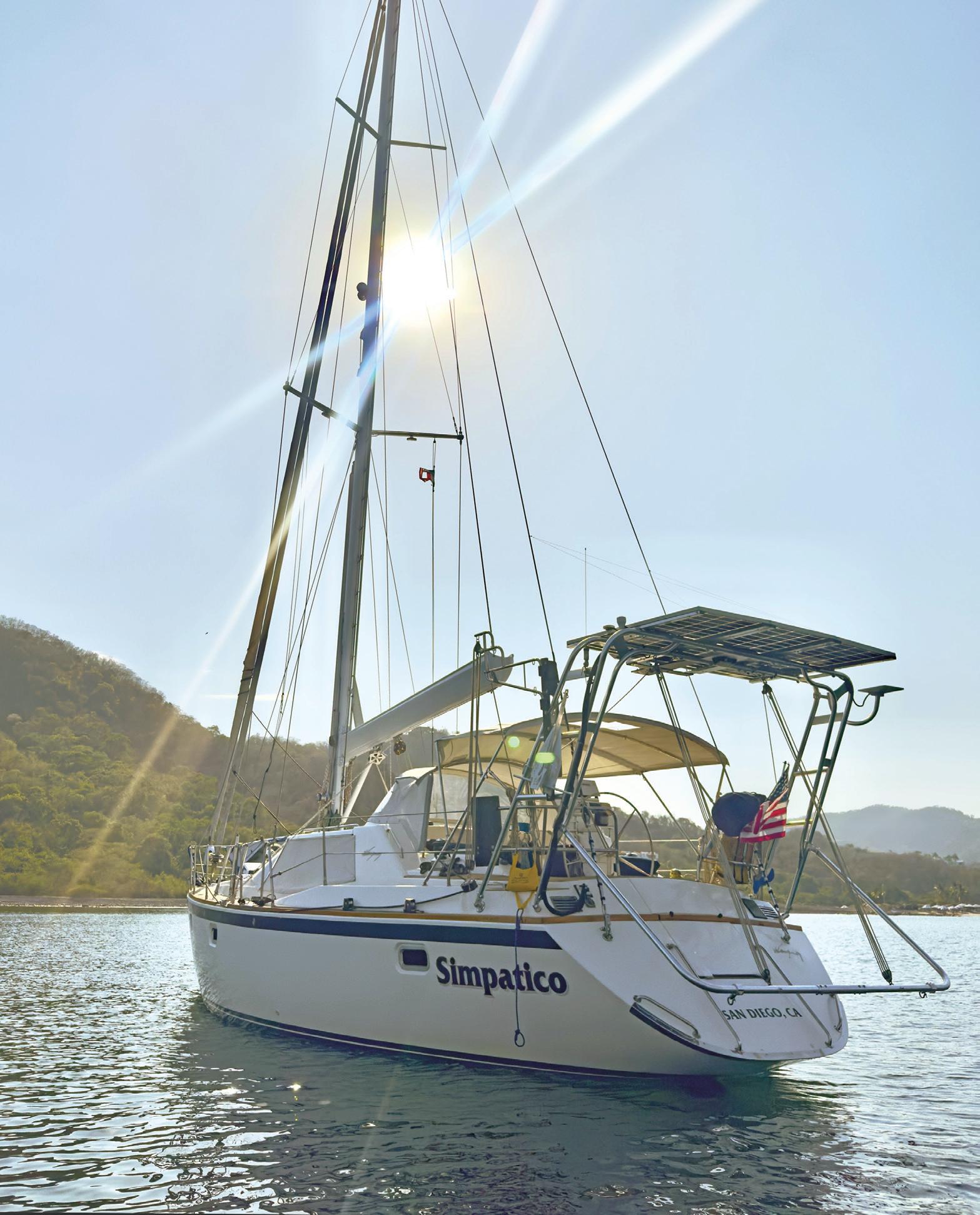
Mexico, and even creating excellent surfing conditions in Southern California. The prediction was for conditions to clear up in a couple of days — then return less than a week later with even more energy. This defined the remainder of our cruise in this costalegre region for the year: If we waited it out, we might miss our flight. So as soon as the surf subsided, we weighed anchor and enjoyed yet another beautiful day sailing 50 miles up to Isla Pajarera in Chamela Bay. In this pretty anchorage, in 15 feet with a sand bottom, I had an opportunity to clean Simpatico's bottom, and we got in a brief visit with
our friends from the 2025 Baja Ha-Ha, Doug and Brian on Kanumera, who were en route from La Cruz to Barra.
We departed Isla Pajarera under a setting sun and motorsailed just a few miles off the coast all the way up to Cabo Corrientes. Uncharacteristically for this area, known for a strong cape effect, the winds were light and seas only a little bumpy. We passed the lighthouse on the cape one-anda-half miles out and an hour after a beautiful sunrise. Within minutes, we suddenly had a 15-knot breeze off the beam on our course straight to La Cruz.
It was good to be back in this cruising paradise, protected from the south swell. On our way across the bay, we spotted a lot of red tide. We had been running the watermaker while underway, so we shut it down and diverted to Punta Mita, in the northwest corner of Banderas Bay. This roadstead is a pleasure to visit, with good holding in 25 feet with a sandy bottom, clear water and a wraparound view of modern development north and the bay south, complete with humpback whales and their frolicking calves.
We had some time and didn't want to end this paragraph of our cruise, so we decided to run across the bay, back to Yelapa. On our earlier trip there, we had seen only one of the two waterfalls the town is known for. We rented a mooring from a local panguero, Edgar, whose fee includes water taxi service. The beach landing included a couple of minutes holding his pal's large and mellow pet iguana, Pepe. We hiked up to the nearer waterfall after missing the turn and being guided back on course by a friendly little local girl.
The waterfall looks as if it would be spectacular, but when we were there the flow was meager. On the walk back, we stopped at a display of handmade wood craft items, a family-run operation where everyone has a hand in the creation process. Every sale includes a shot of raicilla (a traditional Jalisco booze, similar to but distinct from tequila or mezcal), so of course we had to buy a couple of items. With that, our time in this colorful, painted town on hillsides of winding, narrow roads and trails was up, so we dropped the mooring and reached across the bay to La Cruz.
Just as we were on approach to the anchorage at La Cruz, a wildfire was starting up and it was amplified by the breeze that we had been enjoying. We could see that fire day and night for days as the entirely volunteer firefighters, benefiting only from equipment and organization from the military, battled it into submission.
We put Simpatico in a slip for the first time in months, arranged to have some cosmetic maintenance done by a local family team while we are away, and headed back home to San Diego for a few weeks. Our 180-day tourist visas are running out, and we have
appointments at the Mexican consulate as part of the process to obtain temporary resident visas. We'll visit with friends and family, take care of taxes, and of course gather up some boat parts that can't be found in Mexico to take back with us.
Our plan after getting back to the boat is to head up to Mazatlán via Chacala, San Blas and Isla Isabel. From Mazatlán, we'll cross the mouth of the Gulf of California to La Paz and then work our way up the Baja inside as far north as Bahia de los Angeles.
We've been dreaming of this trip for decades, and are only getting started, but so far, we have found the people here to be friendly, generous and possessing easy humor. The water is warm and with few exceptions, spotlessly clean. The weather is predictable, the sailing idyllic, and food is fresh and relatively inexpensive. We are loving Mexico!
— Gary 4/17/26
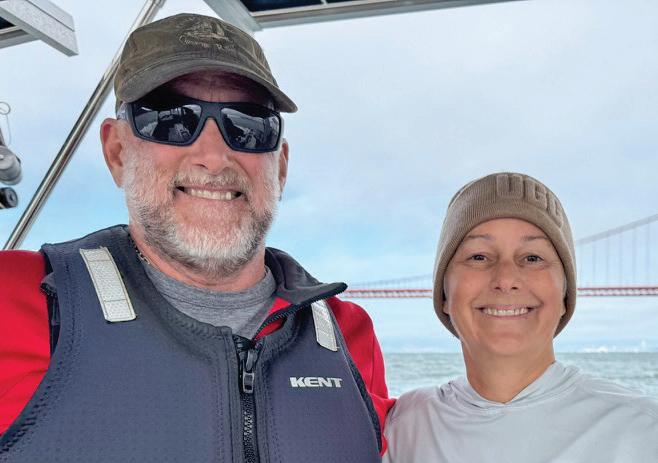
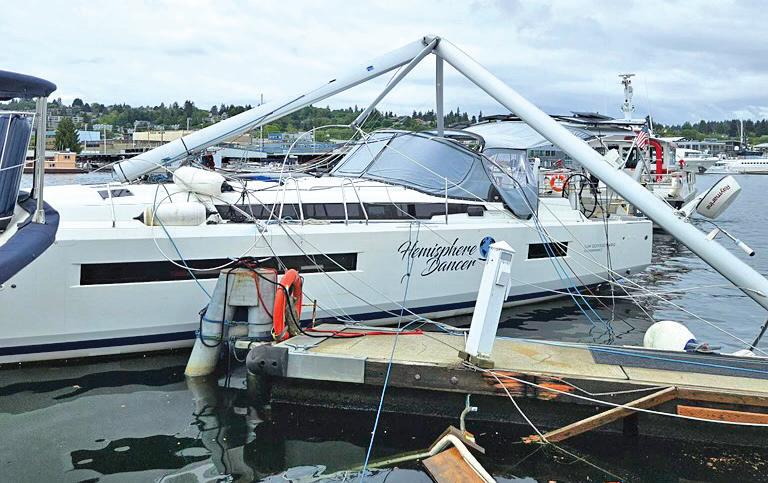
From near-tragedy (above) in 2024 to participating in the 2025 Ha-Ha (right) to completing a Pacific Puddle Jump crossing in 2026, it's been an eventful few years for Doug and Deborah.
Cruise Notes
• In May 2024, refits and upgrades were well down the road for Deborah Bessolo and Doug Lombard's Seattlebased Hemisphere Dancer, the Jeanneau Sun Odyssey 490 they'd closed the deal on just that January. It looked
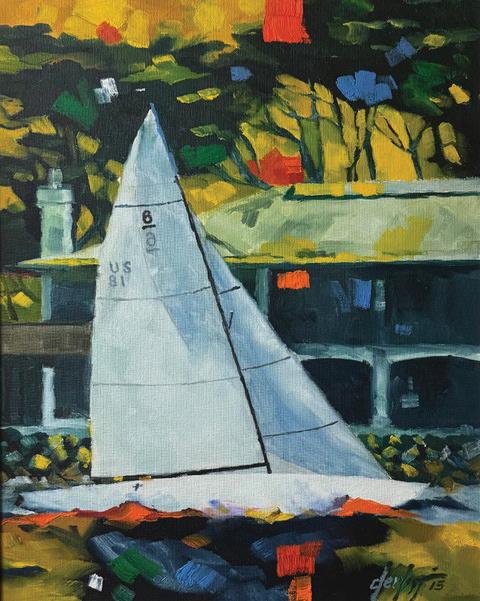
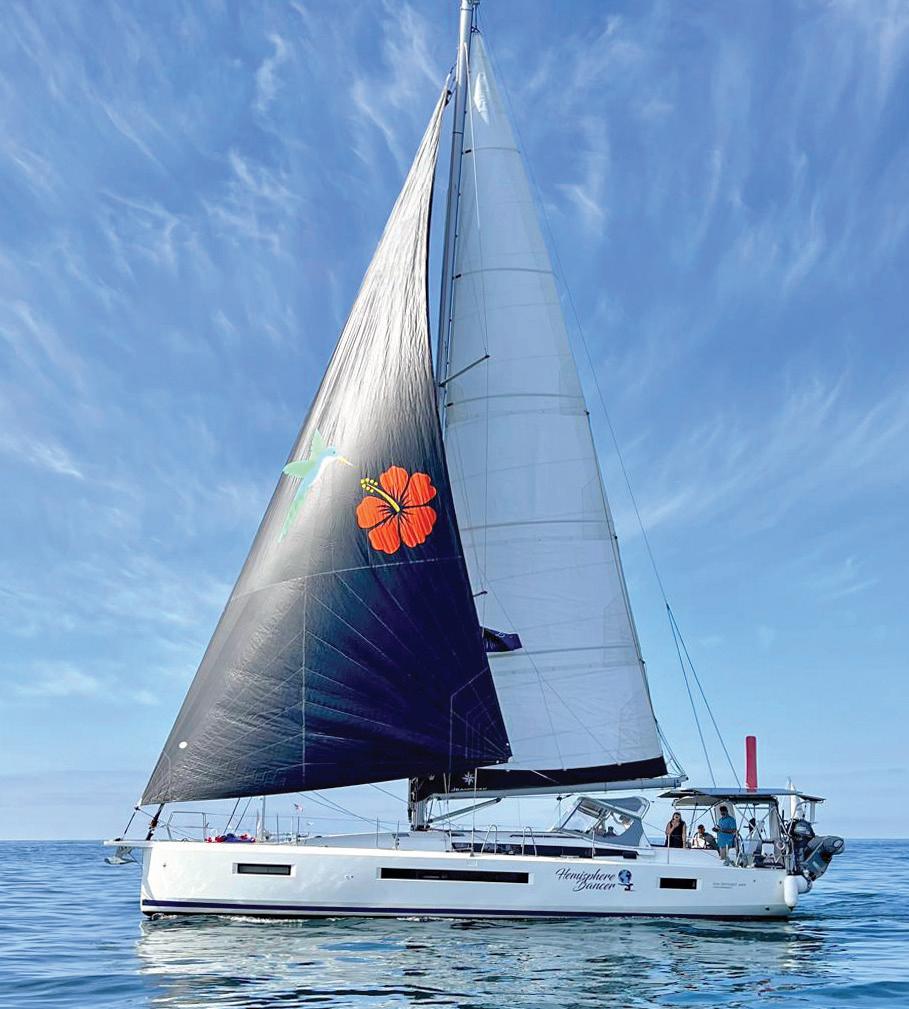
as if they'd finally be realizing the longheld dream of sailing to Mexico with the Baja Ha-Ha.
Then disaster struck: "A 70-ft, 238ton, steel-hulled commercial fishing boat lost control and slammed into Seattle's CSR Marine boatyard docks, damaging six boats, two docks and eight pilings," says Deb. "Hemisphere Dancer was the second boat hit." Serious damage included a dismasting. Minutes before the accident, a mechanic had left
At the StFYC Foundation dinner last month this painting of a 6 meter sailing right in front of the club was auctioned off to raise money for the young talented sailors worthy of assistance to get out there representing the club!
Jim deWitt was given a lot of help in this sport while gaining recognition as a champion sailor! He would approve.
The new owner is a perfect match!
the boat to get his pliers. Deb says, "He stood there on the dock and said, 'These pliers saved my life.'" Miraculously, no one else was injured — but the '24 Ha-Ha was out of the question.
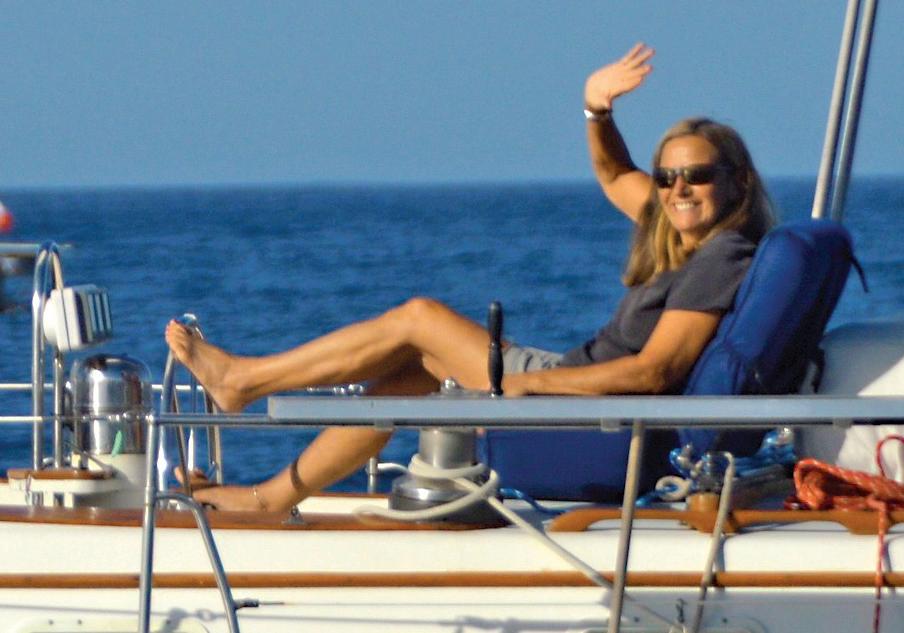
Much water under the bridge — and the keel — since then. After a year's delay, Hemisphere Dancer got to cut a rug, sailing south with the 2025 HaHa fleet — and keeping going. After a season cruising Mexico, on April 1 Deb and Doug departed for French Polynesia with the Pacific Puddle Jump fleet, arriving in Nuku Hiva 18 days later. Look for a complete report on that trip in next month's Changes
• "For a long time, May 9 was practically a holiday around here — signup day!" reports Baja Ha-Ha Assistant Poobah Patsy Verhoeven, who has
sailed her Gulfstar 50 Talion in every Ha-Ha since 2007 (including leading the unofficial Nada Ha-Ha in 2020 when the regular rally got canceled due to COVID).
"The gates would open, and boom: Within a week, half the fleet was in. It was a little like Black Friday, but with fewer elbows and more sunscreen."
This year, she says, it's a little quieter. One of the first proclamations from new Grand Poobah Chuck Skewes was to open entries for the 2026 event on January 30. So rather than a rush last month, entries have been rolling in, slowly but steadily. At this writing, 12 boats had signed up for the 32nd running of the event, which departs San Diego on November 2.
Might this be "your" year?
"Nobody has ever regretted going on
the Baja Ha-Ha. People only regret not going," says Patsy. "So commit. Sign up. Join the fleet."
For more: www.bajahaha.com
•Mark Schindler and Don Woodhouse left La Cruz in midApril aboard
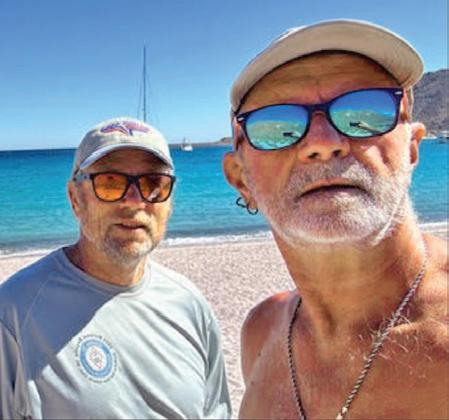
Diem, Mark's Ventura-based Norseman 447. Their first stop was Punta Mita just a few miles away; from

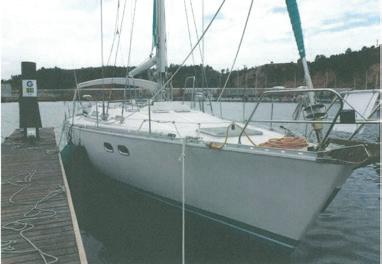
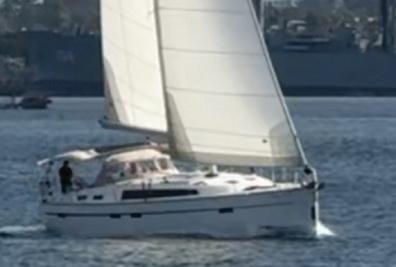
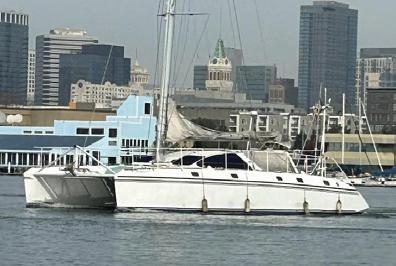
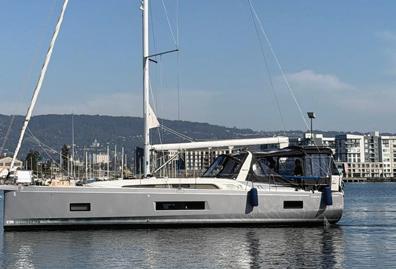
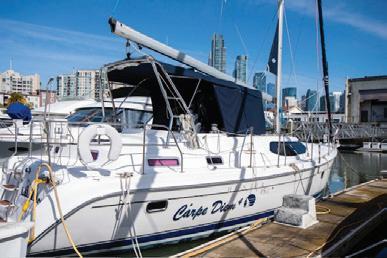
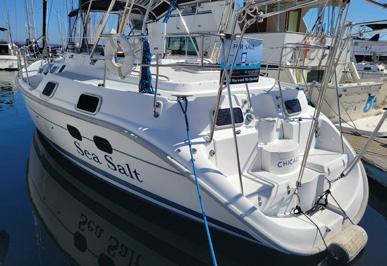
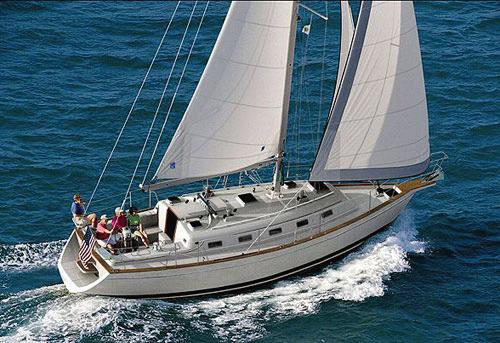
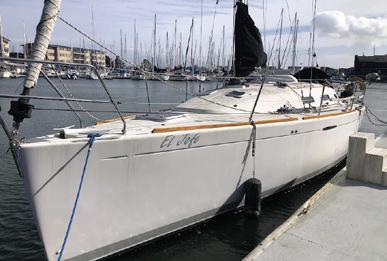
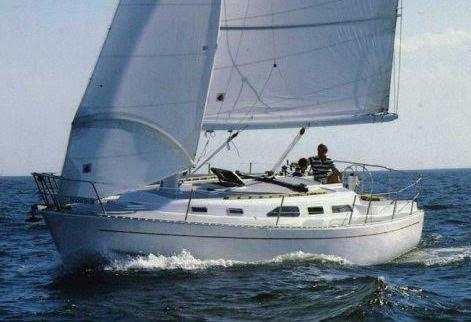
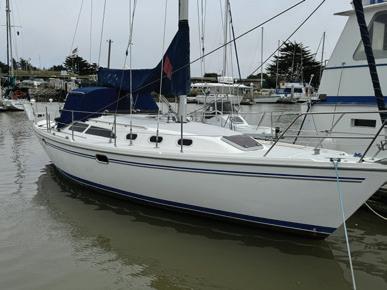
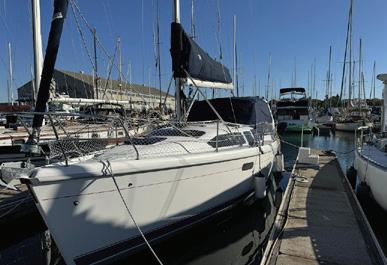
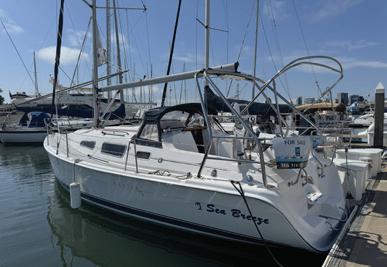
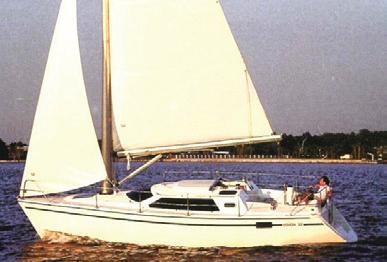
there it was over to Isla Pena, then the San Blas area. After a "night of fighting bees and no-see-ums," Carpe Diem crossed over to Isla Isabel, famous for its colonies of blue-footed boobies, frigatebirds and other seabirds. "After a couple of days hiking and enjoying the birds, it was time to cross over to the Baja side of Mexico," writes Mark. "Headwinds didn't make that easy or pleasant, but thanks to our new Ullman Sails Code 0, we made reasonable progress." After a couple of overnights, they arrived in Los Muertos. After that came stops in Espiritu Santo and Isla San Francisco — the busiest stop along the way. "I counted 20 sailboats and yachts anchored with us," writes Mark. His update ended with a mention of heading to Agua Verde, but true to the cruiser credo, Carpe Diem could be anywhere in Mexico by the time you read this.
• In what has become somewhat de rigueur for cruisers making it to New Zealand, Jim and Pam Yares of the San
Francisco-based Catana 472 cat Roam took some time to vagabond around the North Island by camper van in April. Jim reports that road-cruising bears more than a few similarities to boat cruising — their fully contained rental van was able to "tie up" anywhere, from remote beaches to parking lots, "and you have to keep tabs on stored electricity and water."
After two weeks and a 1,000-mile round trip to Cape Reinga at the northernmost tip of the country, it was back to the boat in Tauranga, with a stop in Auckland to pick up a new rudder.
At this writing, Jim and Pam were waiting for a suitable weather window for the trip back up to Fiji. "We'll spend the season there and then head back down to NZ after participating in the Musket Cove Regatta," says Jim.
• Like many of you, we spend way too much time on the internet — but hey, we're "researching" stories about sailing and cruising, so it's OK. Of particular interest are the new (to us, anyway)
Artificial Intelligence responses to general questions. For example, when we asked what was changing about sailboat cruising, AI answered, "Sailboat cruising is evolving toward a high-tech, more connected lifestyle, while facing challenges from higher costs, crowded anchorages and climate-driven weather changes. Modern cruisers often work remotely, demanding better internet connectivity at sea, and prefer wider, more comfortable 'floating apartments' over traditional, narrower boats."
Elsewhere on the internet, one YouTube video notes that sailboats are losing favor because they're "too slow, technical and demanding for a generation seeking instant results and simplicity." Another online vid cites "theft, storms and rules" as discouraging factors.
So to all you "floating apartment" dwellers out there actually living the life — what's your take on how cruising has changed, for better or worse, over the years?
HAULOUT
• Marine Travelift 25 tons
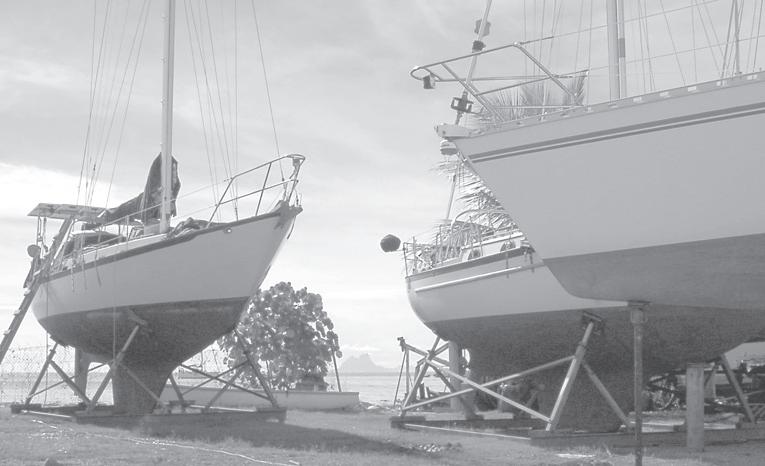
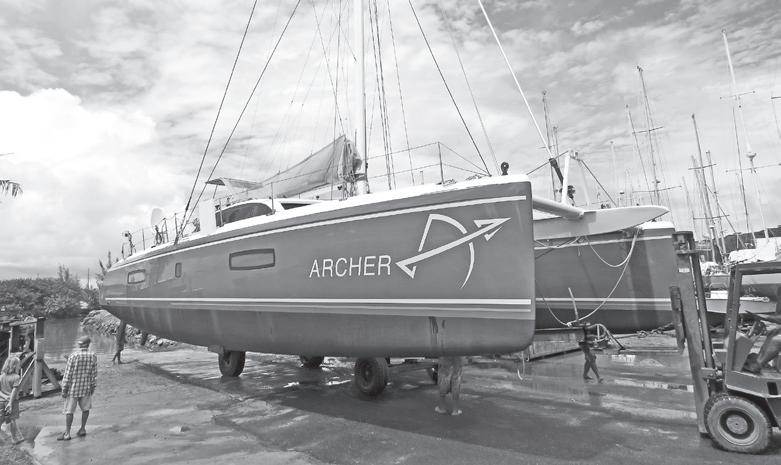
TAHITI CUSTOMS POLICY
Foreign Flag vessels can stay on dry storage in our yard for up to 12 months out of 24.
• Marine railway 70 tons
• Storage in adjustable steel cradles
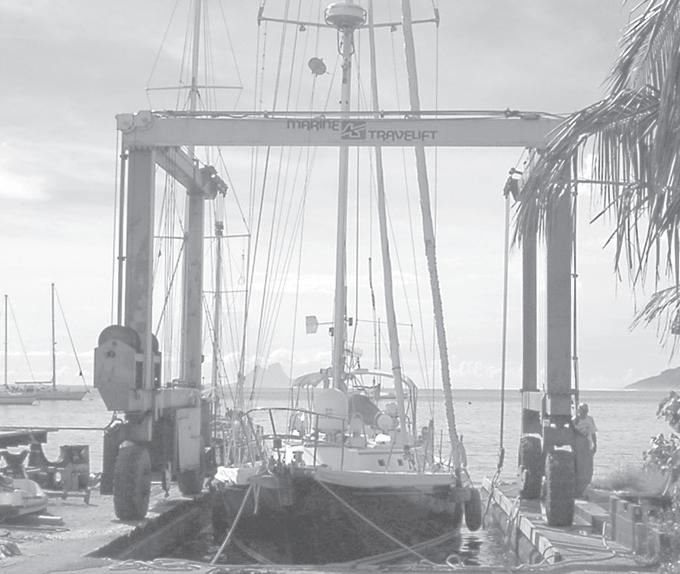
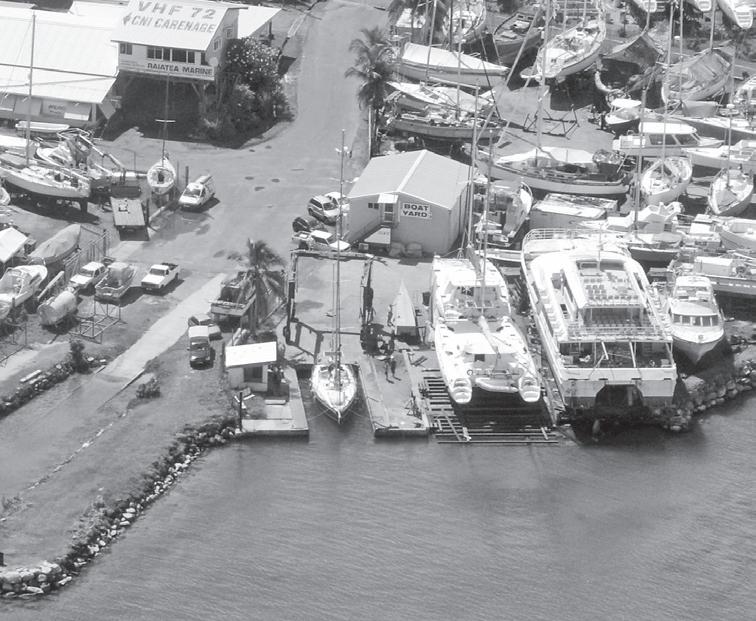
Raiatea Carenage will make sure paradise is everything you expected. Call, write, or sail in . . . we're here to serve you.
B.P. 1111 Uturoa Raiatea 98 735 Polynésie Française
• Fenced Yard
• Travelift 50T & Amphibious mobile trailer 50T
• Services of our tug for towing safety assistance and interventions
PAINTING
• Topsides, hull, bottom, varnish
• Brush, roller, spray
MECHANICAL WORK
• Inboard, outboard, diesel, gas
• All brands
REPAIRS
• Electrical repairs
• Refrigeration installation & repair
• Fiberglass & woodwork
• Welding, steel, stainless, aluminum SAIL LOFT
• Sail repairs, biminis, dodgers, covers STORE
• International, Pettit, Epiglass, Devoe
• Spares
• Fill U.S. gas cylinders
DO-IT-YOURSELFERS WELCOME!
BoatUS Cooperating Marina
Tel: (689) 40 600-545 ~ Fax: (689) 40 600-546 ~ VHF 68 Web site: http://www.raiateacarenage.com ~ email: raiateacarenage@mail.pf
Facebook : Chantier Naval Raiatea Carenage


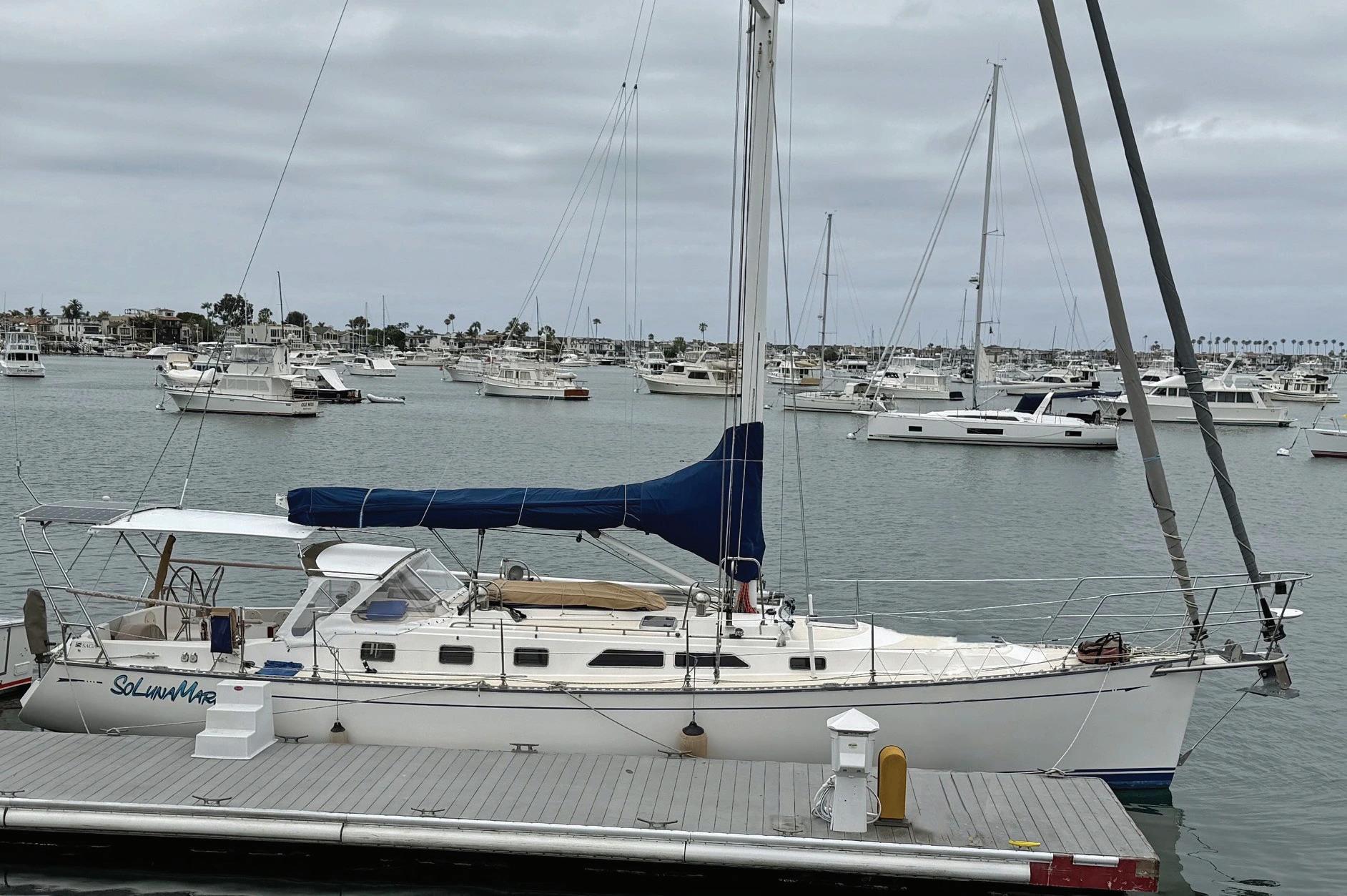



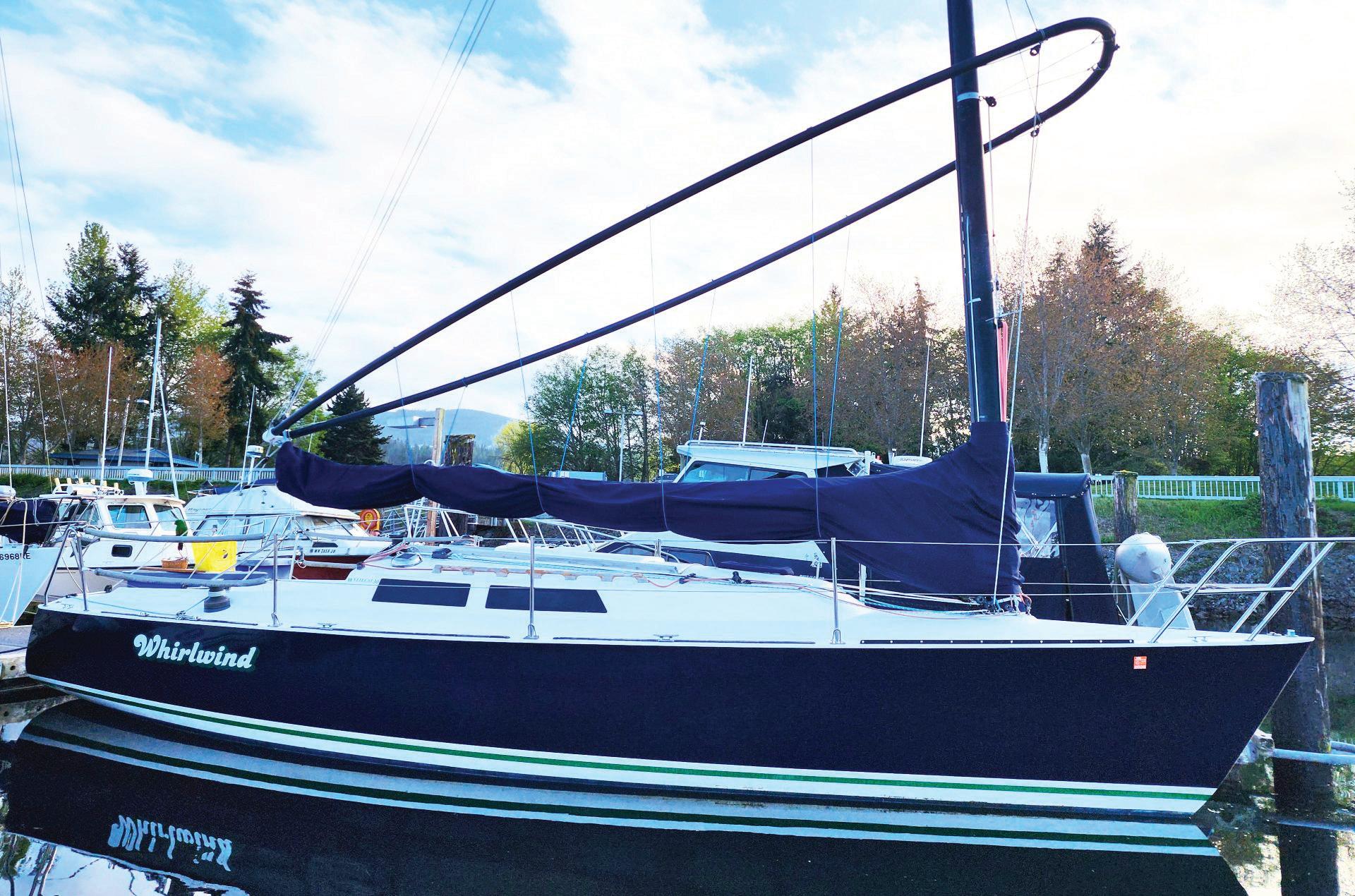

13 FT BANSHEE VARIOUS/UNKNOWN. Choose from three available boats! $900. Fair Oaks mmartorana4@gmail.com (650) 9240504
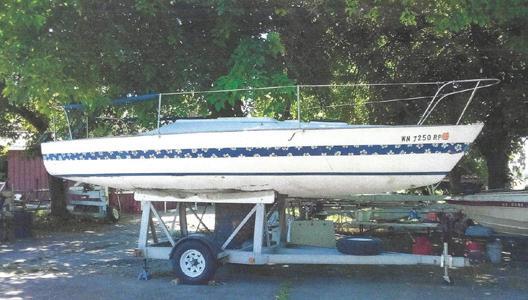
24 FT J/24 1981. ‘Blue Blossom’ boat and trailer $5500. US 4260. Boat is $4000 and lightweight aluminum trailer is $1500 and can be sold separately. Sails good. Minimum interior. $5,500. Valley Springs, CA bonnielopezunr@gmail.com (209) 273-8619
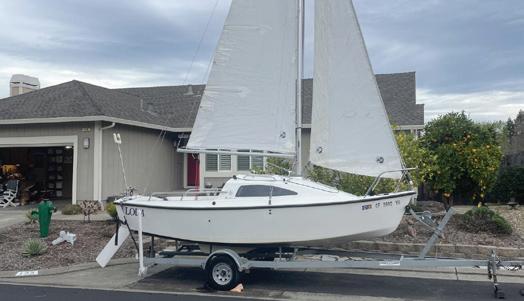
18 FT MALBEC 2020. Trailerable. Swing keel and rudder. Tohatsu 6hp outboard. In Martinez Marina currently. Almost new. Selling for $45K new. Sail the freshwater lakes this spring/summer. $20,000. Martinez sahealey@comcast.net
14 FT GIG HARBOR WHITEHALL 2003. 14-ft fiberglass rowing/sailing skiff. Includes 1 set of Gig Harbor oars, sliding rowing seat, cover and supports, dolly, main/jib sails, rudder, and daggerboard. All components are in great condition. $8,500. Quincy, CA stock.inge3@gmail.com (530) 616-0698
FT CATALINA 22 1975. Clean hull, nice trailer, great starter boat. Boat presents well and is a great platform for someone looking to get into sailing or step up from a smaller boat. Highlights: Clean hull and interior. Nice, roadworthy trailer. Easy to rig and launch. Stable, forgiving sailboat (great for learning or casual sailing). Outboard included but has not been run in a few years; will likely need service or replacement. Specs — Length: 22 ft. Keel: (update — swing or fin). Sleeps: 3–4. Includes basic sailing gear. Good opportunity for someone willing to sort the motor or repower. $4,000. Auburn, CA lastinglandscapes@gmail.com (530) 510-5161
The
still
Lead keel. Hitachi 6hp outboard motor. Electric toilet never used. Full winter cover. Summer boat cover. She is simple, perfectly balanced and being sailed on Monterey Bay. Hauled out each year for bottom paint. $5,000. Moss Landing steve@sequoiafoods.com


14 FT GIG HARBOR WHITEHALL ROWBOAT/SAILBOAT 2001. Rebuilt sliding seat system for rowing (forward and 2 rear stations). New oars, excellent sails. Sail, mast/boom rigging bags plus boat cover. New structural improvements (resin/fiberglass) and newly varnished and other woodwork. New wheels and running/brake light on trailer. She has all the “bells and whistles” available. A great boat to explore quieter waters in lakes, rivers, estuaries, etc. $5,500 OBO turnbeaugh123@comcast.net (831) 383-9192
20 FT CAL 20 1963. Sacrifice sale due to my age & health!! On trailer with 4hp four-stroke Mercury motor. Good sails, newly painted interior and deck paint. Clean boat! Good condition! Reinforced rigging! At RYC. Phone Theo at 925-8720403. $2,500. Richmond Yacht Club (925) 872-0403
18 FT CAPE DORY TYPHOON 1977. The boat is in good sailing condition, including all rigging. Hull has three undercoats of epoxy (new bottom in June 2024). North sails and newer Tohatsu outboard 4hp 4-stroke. No trailer. Fun to sail! $5,200. Sausalito (415) 250-3592
30 FT OLSON 30 1982. Late model. Includes custom dual-axle trailer and very recent Ballenger double-spreader mast with corresponding rod rigging. Last 20 years in Portland (freshwater). Rigging, stanchions/lifelines, running rigging, winches in excellent condition. Boat has been thoroughly/completely gone through at well-known Elkhorn Composites: A. All three ribs at mast foot replaced with composite elements (boat has substantial jockstrap). B. Three small soft spots in the deck/cockpit replaced w/composite core/gelcoat. C. Bottom and keel completely stripped to the gelcoat and keel fiberglassed as necessary. D. Keel bolts torqued/updated. E. New lifting rod threaded end. F. Several coats barrier, two of Pro-Line antifoul (59% Cu). Mucho $$. Not splashed yet. Two good race mains, spinnakers, older jibs. $12,500. Morgan Hill mtown@att.net
28 FT LASER 28 1984. Reputation as a high-performance racer with 5-ft 10-in standing headroom with an interior designed to be functional for cruising. It has a marine head and holding tank, two-burner gimbaled propane stove, Autohelm, custom extended rudder, and a dual-axle trailer. Sail inventory includes 150% carbon genoa one year old, lightly used code zero spinnaker, two very good spinnakers, heavy-air jib about 100%. $12,900. Humboldt County ewmatt@sbcglobal.net (707) 599-2958
28 FT LASER 28 1985. Designed by Bruce Farr, built in Canada by Laser International, ‘Sonata’ has a carbon fiber hull. She is fast and fun with a PHRF of 138 with small jib or 135 with class sails. She is equipped with Harken roller furling, and a Gori folding prop. The BUKH diesel was replaced with a ThunderStruck electric motor in 2020. ‘Sonata’ can also be used as a weekender. Accommodations include 5-ft 10-1/2-in standing headroom, double V-berth (6 ft 3 in), dinette is convertible to 6-ft 7-in berth, two-burner alcohol stove, cooler, marine toilet with holding tank. Currently in the water in Sausalito. A trailer is available. $15,000. Sausalito, CA shinn.alice@gmail.com (415) 272-0562
25 FT CATALINA 25 1986. Retractible keel with Trail-Rite 2-axle trailer. Sails in good shape, roller reefing storm jib and genoa. Pop-top cabin, 9.9 hp outboard, runs good. No leaks, CNG stovetop and propane BBQ. Tahoe only for last 15 years. Please contact Jim. $6,500. Grass Valley cedarsjim@gmail.com (530) 913-6540
outboard engine in great condition. Includes the following: pedestal wheel with binnacle and autopilot — Smartpilot X-5, tridata speed/depth/ temp instrumentation, two additional Lewmar aft winches, Forespar whisker pole, canvas package for wheel, boom, jib, life lines and winches. Cockpit cushions, enclosed head, galley with sink, stove, freshwater system and removable ice chest, roller furling jib and fully battened main with jiffy reefing. 2002 tandem trailer with telescoping system for raising and lowering the mast. Trailer has tongue extension and buddy axles and surge brakes. $12,500. Brown’s Ravine, Folsom Lake, CA 1drakej@comcast.net (916) 532-3073

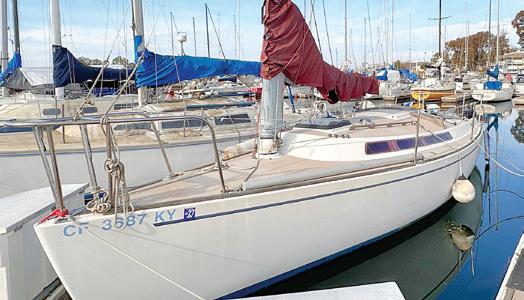
25 FT FREEDOM 25 1982. Catboat, galley, flush toilet, sleeps four, with new Newport NT600 4.4 hp electric motor (2026) never used, with self-contained LoPro iron phosphate lithium battery BMS and charger. Great daysailer or weekender. Fiberglass, needs TLC and varnish on exterior teak trim. New mainsail in 2022. Owner diagnosed with stage 4 cancer and must sell. $12,500 0B0. Alameda Captain.Hugenot@gmail.com (415) 531-6172
27 FT CATALINA C-27 1981. Tahoe boat, fresh water only. Gas inboard runs perfect. Sail are good. Aysmmetric spinnaker w/dousing sock. New sheets and halyards. $6500. Heavy duty trailer $3000. Sold as a package. $6,500. S. Lake Tahoe s.harding4910@gmail.com (530) 3635200
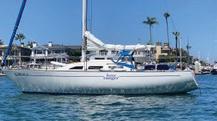
28 FT RANGER 1978. Classic racer-cruiser maintained in excellent condition by original owner for 47 years, but at age 87 it’s sadly time to move on. Excellent sails including a full-battened mainsail (2021), 130 jib with Harken furler (2013) and North asymmetric spinnaker. Whisker pole. Teak-trimmed interior with two cabins in excellent condition. Good exterior canvas with nice compact dodger. Tiller with Autohelm 880. New knotmeter/ log, VHF radio, handheld Garmin GPS and all safety gear. Good bottom paint. Upgraded and good-running Atomic 4 engine regularly serviced and maintained. Walk-through stern pulpit with boarding ladder. Lots of good cruising gear including MAGMA boat stabilizer and propane barbecue, professionally made boom tent, two anchors and WM dinghy with Tohatsu outboard. $7,000 OBO. Dana Point Marina, CA brianleepearson@gmail.com (949) 496-7782

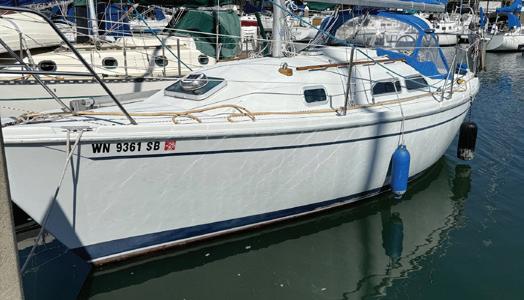
26 FT ERICSON 26 2 1988. Classic small yacht in excellent condition. Stable and fun. Roller furling jib, wheel, dodger. 10 hp Universal condition in excellent shape. New in 2024: standing rigging, wheel pilot, wireless wind instrument, StackPack. cushions. $13,500 price just lowered!. Point Richmond brianbouch1@gmail.com (707) 696-7427
27 FT BALBOA 1978. Maxi — trailerable. Health forces sale. $7,000. Marina Bay Yacht Harbor, Richmond rtrouble@pacbell.net (775) 677-7503
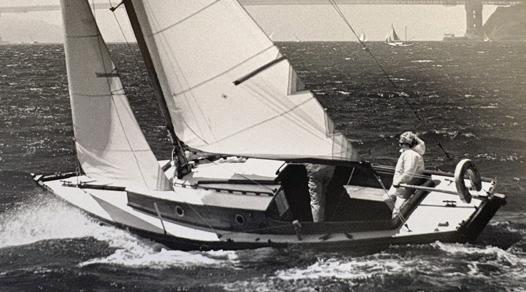
26 FT FRISCO FLYER CLASS 1960. Teak wooden sloop built by Cheoy Lee. Large cabin and cockpit. Aluminum mast and boom. A great sailboat for a day on the Bay or the weekend. Very good condition. $6,900. Richmond, CA stefroche916@gmail.com
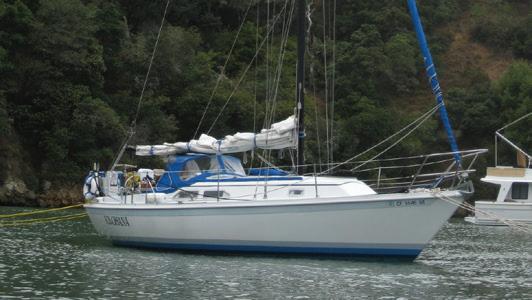
30 FT ERICSON 30+ 1980. Major price drop, due to health and age. One owner since 1996. 16hp diesel, runs great, Autohelm, good sails, attractive interior. Good bottom, no blisters, new paint 2024! Contact Theo. (925) 8720403 $9,000. Richmond Yacht Club (925) 872-0403
30 FT RAWSON 30 1964. SV ‘Rainbow’ — Roomy inside. 48V inboard electric motor with watt hour meter and solar panels on the cockpit dodger. Modern mast, self-tending jib, 5 sails with spinnaker. AC/DC cold box, Force 10 heater, and enclosed bathroom. $6,000. Alameda solarbay2020@yahoo.com (510) 541-5625
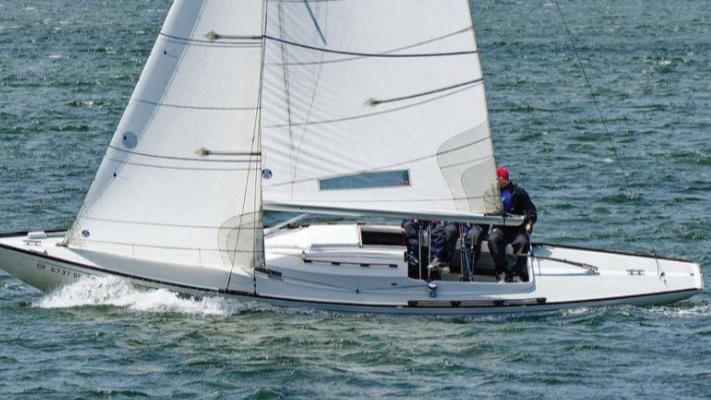
30 FT KNARR BY BORRESEN 2000. ‘Pegasus’ is a fast sailboat in all conditions. Transferable slip in S.F. West Harbor near Golden Gate Yacht Club (per harbor rules). Includes two sets of North Sails (practice/delivery and lightly used racing), new boat cover (2025), and new bottom (March 2026). Measured and weighed in 2023/24; fully compliant with Fleet/Class specifications (records available on Fleet website). Comes with 2 whisker poles, jib sheets, motor mount, and additional gear (no outboard). Ideal for racing or cruising on S.F. Bay. Check out Knarr.us for more information. $20,000. San Francisco West Harbor spmcmurray@gmail.com
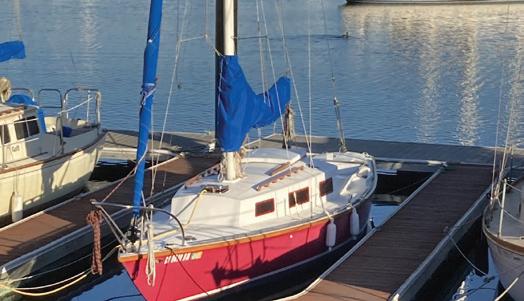
30 FT PACIFIC 30 1982. Aka Roue’ 20. LOD 30 ft, LWL 21 ft, Beam 8 ft, Draft 4.5 ft. Displacement 4700 lbs. Designed in the ‘20s, built in the ‘80s in Nova Scotia of quality Canadian fiberglass, ‘Ramona’ is 30 feet on deck with elegant overhang that guarantees compliments every time she sails. The original “gentleman’s (or gentlewoman’s) daysailer,” ‘Ramona’ has everything you need, and nothing you don’t, for a memorable day on the Bay. Dependable two-cylinder Yanmar diesel (recent List Marine service), crisp Pineapple sails, new standing rigging (including topof-mast sheaves), new Harken furler, Dutchman rig, built-in cooler, rollaway head, and a great napping berth. Why sail a motorhome when all you really need is a sports car? $7,950. Richmond rgriffoul@sbcglobal.net
30 FT FISHER MARINE NO YEAR. Year not on documents. Project. Very reasonable to right person. Great sea boat. Charleston, OR kovexair@gmail.com
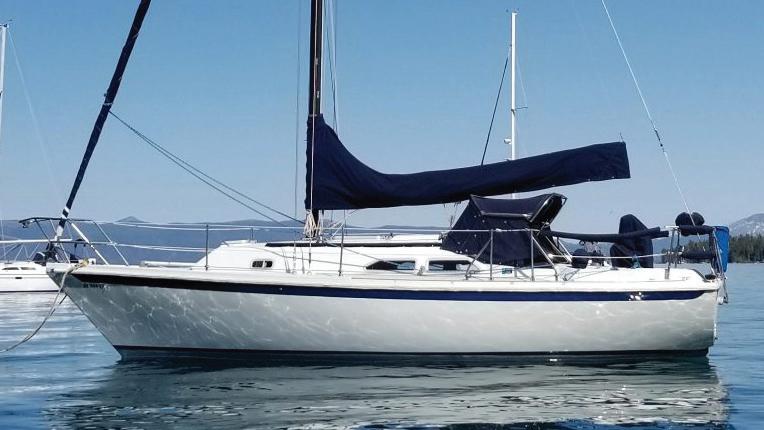
29 FT ERICSON 30+ 1985. Well kept. Great sailing. Summer use on Tahoe 20+ years. Wheel steering. Solar. Autopilot. M-18 diesel. Roller furling headsail. Galley. Head. Three cruising sails. Extras. Ready to view/launch. No trailer. $19,750. West Shore Lake Tahoe vabjrmd@gmail.com (530) 416-1183
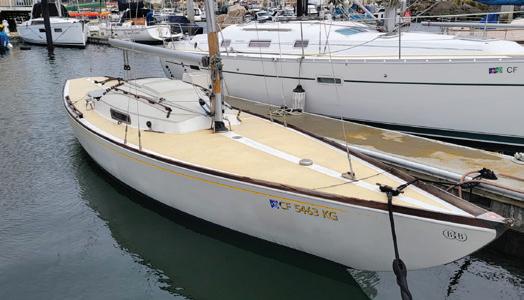
30 FT KNARR 1983. ‘Penelope’ and her transferable upwind slip next to the Golden Gate Yacht Club in the San Francisco City Marina are for sale. Knarr US 132 was built in Vejle, Denmark, 1983 at Borresen by longtime fleet member. This boat is a fiberglass example that has had consistent upgrades and always has been a top performer in the fleet for decades; have won countless races. The mast was upgraded to aluminum with the fleet several years ago and all rigging was completed by GC. The epoxy rudder, rudder stock and Billet rudder head were all replaced four years ago with work completed by KKMI. The winches have been moved forward. Multiple sets of sails, ready to continue winning races. $29,500. San Francisco Marina c.griffith@ggsir.com (415) 672-3263
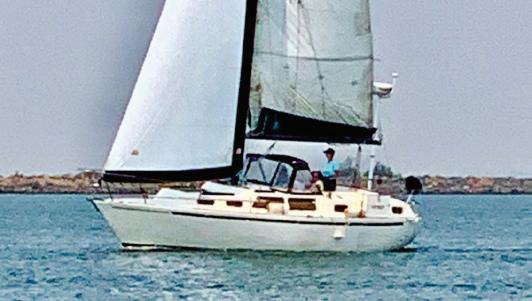
30 FT S2 9.2 1977. Draft 6 ft, 2-stroke Yanmar, 3-blade feathering prop, spinnaker, 120 genoa, self-tailing winches, documented vessel, water heater, cooler/freezer, stove, head, shower. $19,000. Owl Harbor, Isleton, CA moikit24@att.net (209) 981-2449
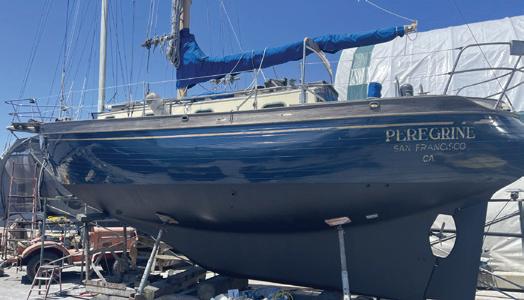
30 FT BABA 1980. Very clean, robust and capable bluewater cruiser. 3rd owner; previous owner made substantial investments/upgrades including a new motor, new mast, SS tank replacements. Original paperwork and all documentation on hand. 30hp Volvo Penta has less than 50 hrs. Teak decks, running rigging and interior upholstery redone in 2024. Recent (2023) survey available. She’s a true gem in a transferable slip in downtown Sausalito. $32,000 OBO,. Sausalito, CA bryanlee868@gmail.com (415) 5353324
30 FT CAL 3-30 1974. Racer/cruiser sloop. I am selling ‘Williwaw’, my boat of 30 years. A great boat for getting into racing, cruising and voyaging. Safe, dependable and fun to sail, even singlehanded. Full sail inventory and twin spinnaker poles. Powered by a Yanmar 16hp 2GM20F diesel in good condition with new fiberglass fuel tank. Many updated amenities: a new dinghy and engine, sail covers, hydraulic backstay, EPIRB, tiller, roller furling jib, halyards, personnel harnesses, anchor and rode, VHF, bottom paint, winch handles, Autohelm and new wireless Garmin electronics. See URL for specs. $18,500. Santa Cruz South Harbor/Slip O18 vmartin@cruzio.com (831) 818-3108 www.tinyurl.com/4dc345sc
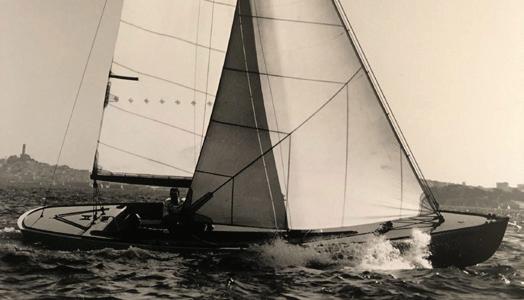
1949. Master Mariners award-winning sailboat designed by William Starling Burgess and Stone-built. ‘Flame’ was totally restored in 2015. Varnished wood hull. Roller furling. Stainless outboard bracket. 2 spinakers. All new stainless rigging. More photos available. Complete survey in 2023 available. “A Sailor’s Saiboat.” Recently shown at the Master Mariner’s Wooden Boat Show. $39,900 OBO. Richmond stefroche916@gmail.com
Do you sail a boat small enough to sail single-handed, yet substantial enough for passage-making and living aboard? Do you seek mastery beyond sailing school? www.moderngeographic.com
& Quotes: 831-212-0330
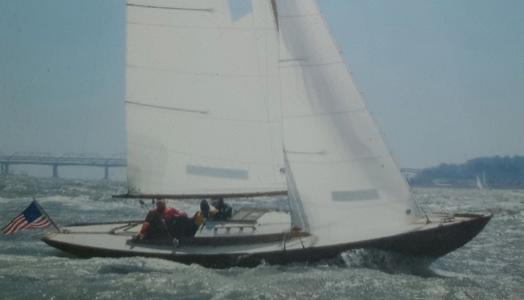
30 FT KNARR 1960. Built in Norway. Varnished. Aluminum mast and boom. Two suits of North Sails, two outboards. Stuff. Good racing record. Berthed in S.F. Yacht Club Harbor. $15,000. Belvedere, CA georgerygg@gmail.com (415) 596-6296
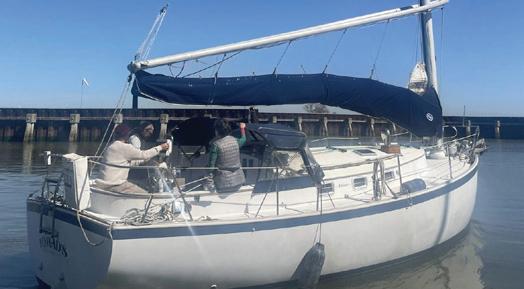
30 FT NONSUCH ULTRA 1984. Beautiful interior, comes with new canvas dodger, sail bag and rail covers, not installed. Garmin chartplotter, autopilot, wind, depth indicator, power halyard, electric windlass. $45,000. Stockton, CA cathyyochheim@gmail.com (209) 419-0839
30 FT OLSON 30 1981. With trailer. Professional open-transom conversion. Micro-adjustable mainsheet, traveler and backstay. Bowsprit, excellent like-new sail inventory, Pelagic PA1 autopilot. Much more! Sail now! DM for more pictures on Google Drive. $16,000. Richmond Boardwalk Marina spaulwarren@gmail.com (916) 9192850 www.tinyurl.com/yk7m6h7v
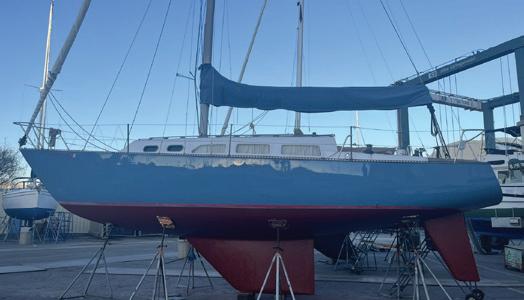
33 FT RANGER 33 1974. Summer Sailstice mothership. Atomic 4, running. Bottom paint in 1/25. Folding prop. Good electronics: wind, depth, speed and fishfinder. Nice stereo. USBs with A and C. Interior cabin lights. $20,000. Alameda wesleyinunez@gmail.com (510) 5895530 www.tinyurl.com/3se64p4z

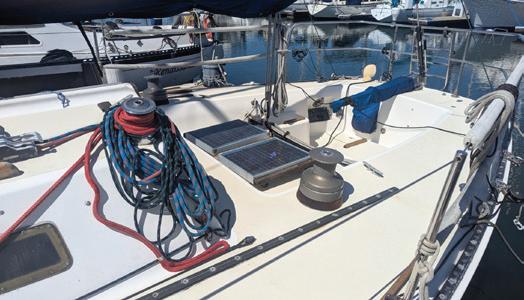
35 FT J/35 1984. Pacific Cup/Hawaii vet, well maintained, newish B&G electronics, batteries, cabin paint, cushions, shaft, motor work, solar charging. Comfortable in light air, breezy S.F. Bay, ocean crossing. Lots of extra gear, sails, anchors, etc. Designed as offshore one-design, great cruiser, listed in Sailboat Hall of Fame. Quick, stiff and safe. $35,000. Grand Marina, Oakland pratt42fairwinds@gmail.com (408) 203-2922
34 FT CAL 1967. $10k Cal 34, but consider the B&G electronics, radar, depth, wind speed, direction. Solar with 600 Ah lithium house bank, AGM start battery with DC/DC charger, 3 kW inverter, Standard Horizon VHF with receive AIS, plus second VHF. Refrigeration, Benmar autopilot, Lewmar windlass, 2-speed self-tailing winches, Ullman main (2 yr), 125% genoa (1 yr) on Harken furler, asymmetrical spinnaker (2 yrs) on a top-down furler, all Ullman sails. Hard dodger with isinglass. Excellent running Atomic 4 (4 yrs old 850 hrs). Will take best offer, can’t load photos, will send upon request. $10,000 OBO. San Pedro Edgertonjack@Yahoo.com (310) 5917601
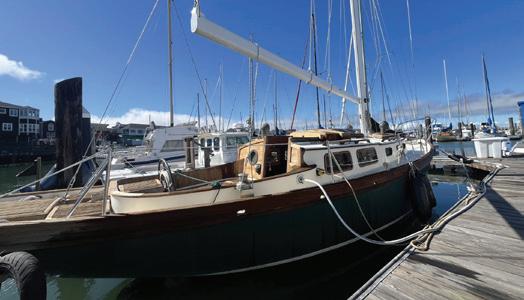
34 FT CHINOOK 1963. New in 2024 during haul out: 3-blade prop and cutlass, new standing rigging, rebuilt/ painted mainmast. Universal diesel/low hrs. Bright interior with nice upholstery. Hot water, refrigeration, propane stove/oven, bronze port lights, composting head. Optional slip transfer. $13,500 Negotiable. Pier 39 redstarmarineservices@gmail.com (415) 623-0694 ABYC Certified Surveys & Deliveries
DKT Yacht Sales & Services
Capt Dave Talton USCG 100-ton Master Mariner 415-205-0687 • www.DKTYachtServices.com Place your Business
32 FT CATALINA 320 1996. Excellent condition. Second owner since 1999. Cruised and sailed in S.F. Bay and the Delta. Great family boat. New sails in 2022 with very low hrs since. Westerbeke diesel 920 hrs. Hauled out and bottom painted in June 2025. New Batteries in 2024. No damage, no Catalina smile or gap with keel. Comes well equipped for Bay Area sailing and California Delta cruising. Selling for my parents due to father passing away. More images available upon request. $45,000 OBO. SFYC Belvedere, CA d1.davidm@gmail.com (435) 901-1013
33 FT RANGER 1973. Low-hr diesel. No exterior wood. Turnkey ready. The ultimate maintenance-free Ranger. This Ranger 33 has been systematically refitted to eliminate the common headaches of classic-boat ownership. Professionally upgraded by Robert Flowerman at KK Boat Yard, she was reinforced, repowered, and rebuilt to handle the heavy conditions of the San Francisco Bay with ease. Premium repower: 3-liter Universal Diesel with under 250 hrs. Over $20k invested in engine and install. All exterior teak replaced with custom fiberglass and stainless steel handrails. Fresh interior: brand-new Sunbrella interior cushions. Recent hull work: Bottom hauled and painted (2024). Ready to sail: brand-new house and start batteries (2023). $21,500. Richmond, CA 1974ranger33@gmail.com (707) 3044523
2005 JEANNEAU SO35. In beautiful San Carlos, Sonora, Marina Real. Boat is in great condition with new electric head, 3-blade folding prop, new AC unit, Harken battcar system for the main, bottom paint late 2025, new dinghy and 5hp motor. Many more upgrades and maintenance so call me and ask me anything. $60,000. San Carlos, Sonora, MX Jbrooksbar@gmail.com (520) 548-3458
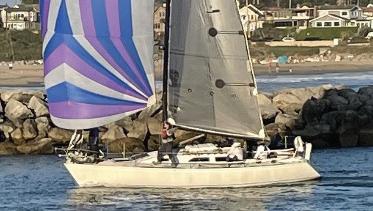
34 FT EXPRESS 34 1987. Considered one of Carl Schumacher’s finest designs! Race- or cruise-ready. PHRF slayer! Recent upgrades: new Ullman mainsail and carbon #3 (2025). New Garmin chartplotter, new upholstery, new anti-fouling race bottom (2025). Easom running rigging — tapered halyards and sheets w/Tylaska shackles. Sails include: 3 mains, 4 carbon headsails, 6 spinnakers (0.5 and 0.75 in great condition), 2 Dacron jibs: #3 & #4. B&G instruments and B&G autopilot. Yanmar 2GMF 18hp. Gori 2-bladed prop. Text Brad $39,500. Santa Cruz, CA mbsampson3@gmail.com (831) 2392602
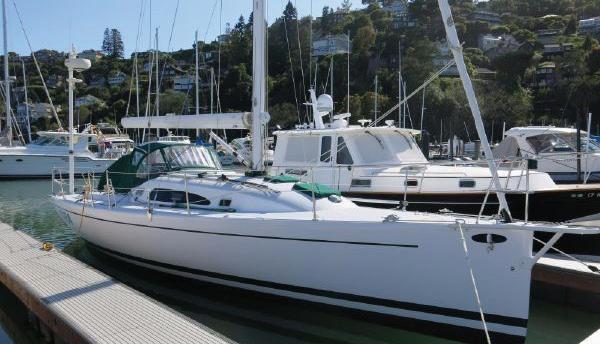
37 FT AERODYNE 38 2003. Very fun racer-cruiser setup for daysailing on the Bay, YRA racing (PHRF is 48) or blue water. Outfitted with a Forespar Leisure Furl Boom (a $40k option) allowing the sail area and performance of a fully battened mainsail with the convenience of a furler which makes hoisting, reefing, and dousing the main very easy from the cockpit with a Harken 2-speed electric winch. A large cockpit is great for daysailing with a group, or an aggressive racing crew. Includes two spinnakers. Full galley, head with shower, bow stateroom, stern bunks, well equipped Nav instruments. Yanmar 27hp Model 3GM30FC. Has original standing rigging, which may need replacement for insurance coverage. $95,000. South Beach Harbor (B30) spencer@deepdarksee.com 650-9220400 www.rodgermartindesign.com/ portfolio/aerodyne-38/
38 FT HANS CHRISTIAN 38T 1979. Traditional model, two-cabin, head/shower, Perkins 4-154 with extremely low hrs, propane stove, acres of teak below, solid bones, needs work and new sails. No negotiation. Please call. $16,500. Berkeley pfetherston@sbcglobal.net (510) 5080151
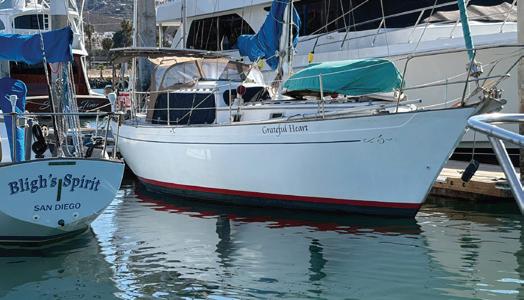
36 FT ISLANDER FREEPORT 36 1978. ‘Grateful Heart’ – Robert Perry-designed offshore/liveaboard cruiser with rebuilt Perkins 4-108 diesel (~10 hrs), custom offshore Dyneema full-batten radial mainsail by Ballard Sails, Monitor windvane, Raymarine EV-100 autopilot, Furuno DRS4W wireless radar, Vesper XB8010 AIS transponder, 400W solar, refrigerator/freezer, Force 10 stove, Pullman queen berth, and hard sailing dinghy. Includes full suite of sails (trysail, storm sails, spinnaker, etc.). Hull painted with Interlux Brightside (2020). Extensive cruising upgrades completed. Comfortable teak interior. Boat in water and usable now. Minor unfinished commissioning items fully disclosed. USCG documented. Located approx. 2 hours south of San Diego. $34,900 OBO. Ensenada, Baja California, MX svgratefulheart@gmail.com (480) 4505564
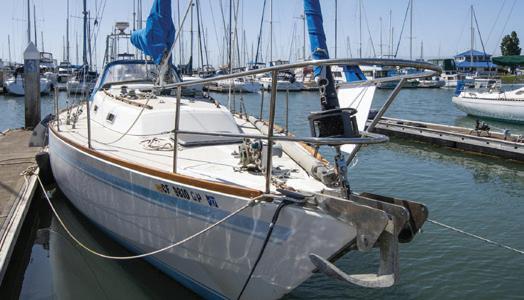
39 FT CAL 39 1979. A classic, cozy Cal 39 with 6-ft 5-in headroom — perfect for exciting adventures on the Bay or beyond! LOA 39 ft. Draft 6 ft 8 in. Beam 12 ft. Ballast 7,000 lbs. Displacement 18,000 Ibs. Perkins 4-108 diesel inboard. $29,995. Brisbane, CA scottwallphoto@gmail.com (415) 2351123
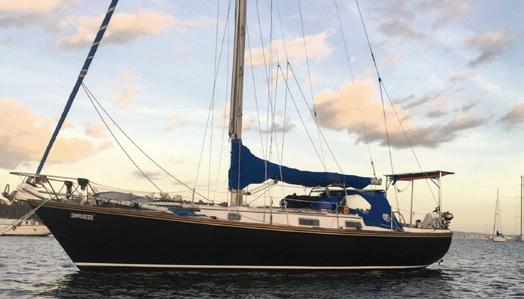
36 FT PEARSON 365 1976. Classic, capable coastal and Bay cruiser. Third owner. Upgrades include solar, increased storage, swim platform. This is a fixer-upper and priced accordingly. $17,000. Half Moon Bay thesaltycondor@gmail.com (415) 3186618
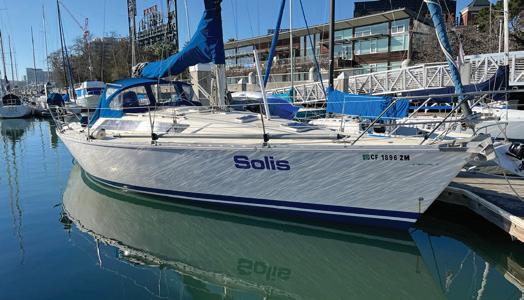
38 FT JEANNEAU SUN SHINE 1986. We sailed ‘Solis’ from Seattle in 2014 and have been enjoying the Bay Area ever since. This Tony Castro-designed sloop has beautiful lines with a sugar scoop transom (extending 36-ft to 38-ft waterline), 27hp Yanmar 3GM30 (low hrs), new bottom paint, folding prop, autopilot, GPS chartplotter, Furuno, radar, VHF, stereo, LED lights, diesel heater, 12V refrigeration, manual windlass, AIS, dodger, cockpit table and more. We love this boat and are sad to let her go. Pictures and documentation can be viewed at link. Please email. $47,000. Grand Marina, Alameda lilyandezra@gmail.com www.svsolis.com
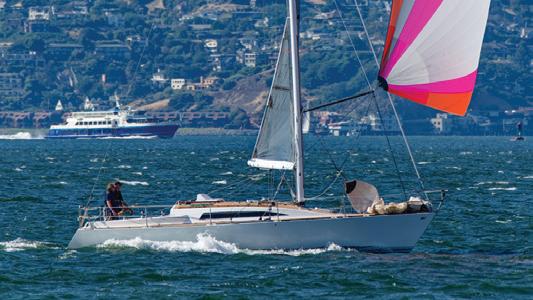
38 FT C&B FARR 38 1980. ‘Timber Wolf’ is a beautiful cold molded yacht. She is a very fast all-around racer/ cruiser in great condition. ‘Timber Wolf’ has won many races offshore and inshore. S.F. Bay PHRF 75. Always kept under a full cover for the last 28 years. Yanmar 3GM, updated Garmin chartplotter, AIS transceiver, VHF with DSC, Raymarine I70 and ST 80 instruments, autopilot with course computer, reefer/freezer, propane, stove/oven. 6 ft 5 in headroom. All-new Anderson winches. Sails: carbon main very good, Dacron main very good, #1 aramid good, #1 Pentex fair, #3 aramid good, #3.5 aramid very good, #4 Dacron old but never used, storm jib and trysail, S2 AIRX good, S2 Superkote very good, S4.75 good, S5 1.5 oz. very good. $55,000 OBO. Richmond scsailsdh@gmail.com
36 FT X-YACHTS X-362 SPORT 2000. Meet ‘Nora’, a stunning cruiser-racer that’s ready for adventure. She excels upwind and handles like a dream. Quantum Fusion mainsail and jib plus spinnaker and additional sails. 27hp, 3-blade folding prop. Beam/draft: 11 ft 5 in/7 ft 5 in. $105,000. Redwood City, CA nora.362sport@gmail.com (510) 5166094 www.tinyurl.com/yc47xsy9
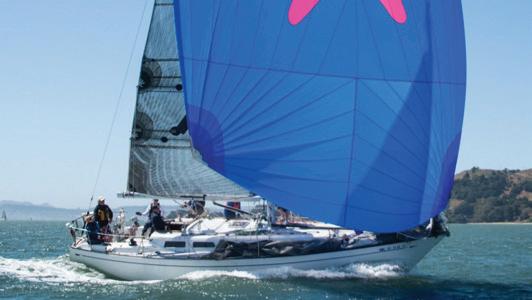
39 FT CAL 39-2 1977. ‘Sea Star’ is a veteran racer in San Francisco Bay with many championships. She’s ready to win more! Full suite of sails and also cruising gear. Currently based in the Delta for freshwater fun, she’s ready to go back to racing in the Bay or beyond. See full details at tinyurl.com/ buyseastar, which includes links to more photos, inventory and videos. This is a boat for racing, but could be a cruiser with some modification. Email bob@bobwalden.com. *** PLEASE*** do not suggest getting a “boat history report”—save us both some time. $37,000 OBO. Stockton, CA bob@bobwalden.com www.tinyurl. com/buyseastar
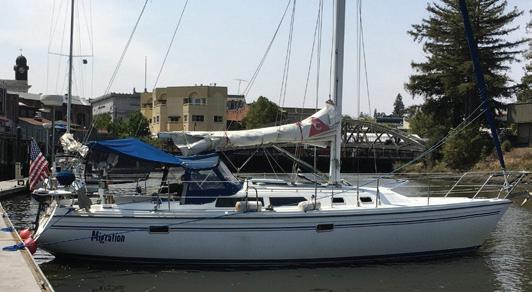
36 FT CATALINA 1994. Wing keel, 4-ft 5-in draft. Great for Bay and Delta. Universal diesel. Rocna 20K anchor, 100 ft chain, 200 ft rode. Raymarine instruments, radar, autopilot. Standard Horizon VHF, remote handset in cockpit. Sails in good condition, full-batten main w/lazy jacks, 110% jib on Schaefer roller furler. Furler rebuilt and forestay replaced 2023. 2-burner propane stove, oven, 12v refrigerator, water heater, 1kW inverter. New house batteries 2026. $55,000. Alameda chas_herman@yahoo.com (408) 4824683
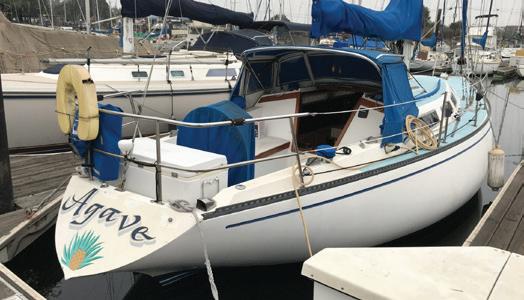
38 FT CATALINA 38 1980. The boat you’ve been waiting for! Sparkman & Stephens/Frank Butler Catalina 38. Fine lines and superior performance! Many upgrades! Yanmar 3GM30 diesel, new upholstery, new dodger, mainsail and wheel covers, Raymarine autohelm, chartplotter, AIS receiver and instruments, Standard Horizon, Matrix VHF, 2 anchors, windlass and 150-ft chain, Isotherm refrigeration, 4 12-volt batteries, new electrical panel and more! $35,000. Alameda, CA gmwill2301@aol.com
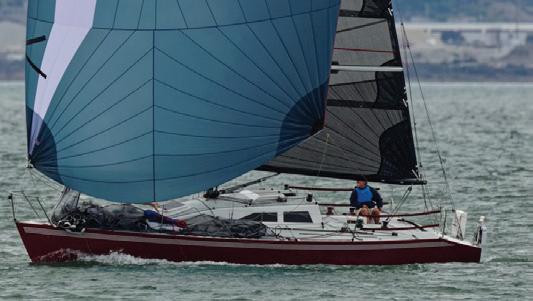
37 FT PEGASUS NEWLAND 360 1992. ‘Pegasus’, a custom Newland ULDB veteran of many singlehanded and crewed Hawaii races, is for sale. Very good condition, carbon/foam-cored hull and deck, new custom Sjoberg carbon mast, carbon and aluminum spinnaker poles, Harken winches, Sailmon instruments, autopilot, B&G chartplotter, B&G VHF, internal WiFi network, 4-person life raft, aluminum anchor, extensive sail inventory including new main, jib top, #3, symmetrical and asymmetrical chutes, Yanmar 2GM diesel, new batteries, racing and cruising propane stoves, stereo with on-deck speakers, PHRF and ORR rating certificates, last haulout February 2026. 95% ready for Pac Cup inspection, including paper charts and Transpac-length dock lines. Regrettably, illness forces sale. $65,500. Richmond Yacht Club stephenlewis1900@gmail.com (559) 2179644
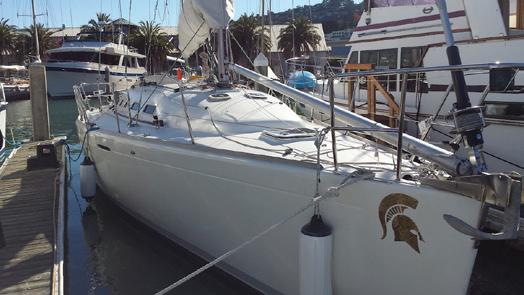
39 FT FIRST 40.7 2000. New motor and saildrive only 250 hrs. North sails main and jib in good condition. Asymmetrical and symmetrical spinnakers. New bottom paint. $125,000. Sausalito, CA argo46933@gmail.com (415) 680-0183
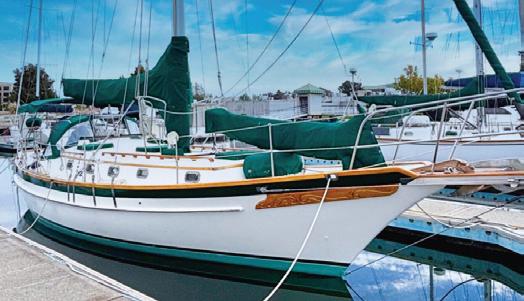
38 FT CABO RICO 1991. Full-keel bluewater cruiser. Cutter rig has a self-tacking staysail, making S.F. Bay sailing easy. Bottom paint August 2025, varnished November 2025. New lithium batteries 2024, Victron invertor/charger 2024, and many other recent maintenance and upgrade projects. Custom offshore layout has a V-berth, no quarter berth, three large lazarettes for storage. Perfect for a couple! William Crealock design. Built in Costa Rica. $89,000. Alameda, CA boats.and.otherstuff@gmail.com (831) 345-6930
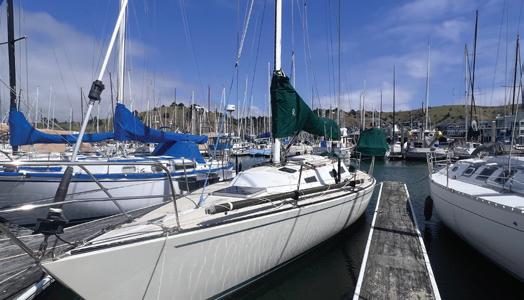
36 FT J/36 1982. Great racer/cruiser. 2021 Quantum Fusion M mainsail, #3 jib, and genoa like new. Raced one season. Forespar carbon spinnakar pole. B&G Zeus 3 chartplotter, radio with cordless hand unit. 2015 upgraded Yanmar 30 hp diesel with 400 hrs. Beam 11.75 ft, draft 6.6 ft. $25,000. Pt. Richmond, CA kmwino@gmail.com (707) 287-6397
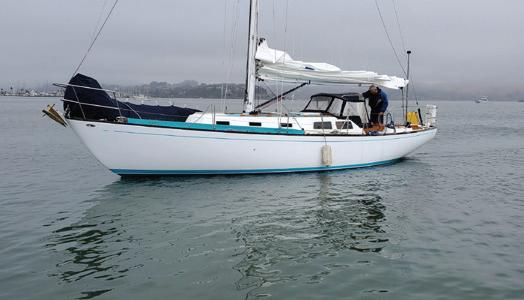
39 FT CAL 40 1964. Legendary Cal 40, built in 1964 and beautifully maintained, groundbreaking performance and timeless lines, is waiting for new adventures. This particular boat has been cared for by an owner who appreciates her pedigree and has invested in key upgrades like new sails, new electronics, autopilot and more. $68,000 price reduced. Richmond Yacht Club odilehines@gmail.com (415) 963-2160
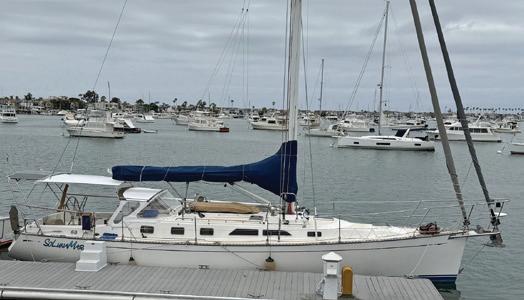
43 FT SAGA 43 2000. Sloop, original owner. Fast, comfortable Bob Perry design with excellent build quality and condition. 6 sails, Hydrovane, light use and low hrs. Email me for full specs and photos. $179,000. Newport Beach, CA Saga1108066@yahoo.com (949) 350-7861
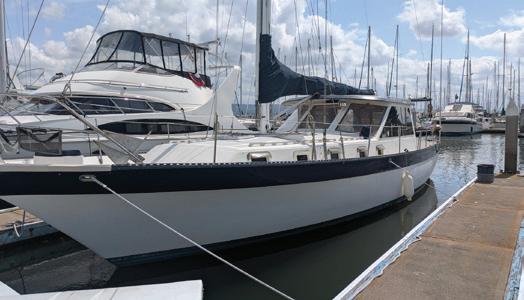
44 FT LANCER 44 PILOTHOUSE MOTORSAILER 1980. Twin Perkins 6-cylinder diesel engines. Many upgrades; see more pictures on Craigslist. Please text. $49,000. Alameda kentdillon@aol.com (510) 502-3543
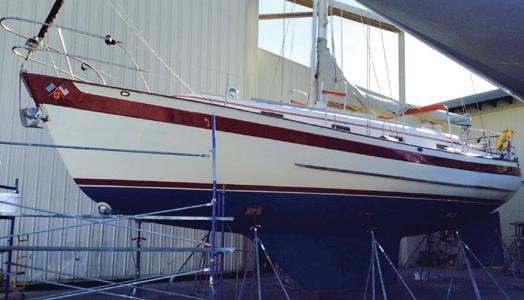
41 FT DOUBLE-ENDED CUTTER 1978. ‘Quiet Bird’, cruising design by J. Benford, is a very successful offshore double-ender. She’s made fast passagemaking a fine art. She is one of the many boats built to this design. They’ve proven to be fast, stiff and weatherly. Sailing cutter capable of sailing anywhere you wish. Comfortable two cabins. Pisces diesel 60hp low hrs — excellent condition. Slip and parking, with possible lease extension, in excellent Sausalito location! $75,000. Sausalito, CA yiannis@sbcglobal.net (415) 254-8531
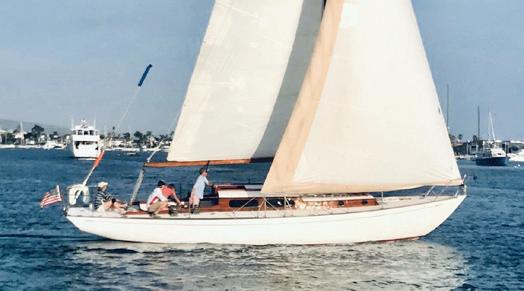
39 FT KETTENBURG K-40 1960. ‘Zephyrus III’ is one of 40 ever built — hull #11 of the iconic K-40 class. Built 1960 at Kettenburg Boat Works, San Diego. Philippine mahogany on steam-bent oak. Lead keel. Spruce spars. She’s a proven, fun, enjoyable coastal cruiser and local regatta performer with genuine offshore pedigree: second in class, 1965 Transpac; fourth overall, 1965 L.A.-Mazatlán. From 1997 to 2026, her owners invested 2,000plus hours and a recent $50,000 in a 2023 South Coast Shipyards refit. Yanmar diesel w/450 hrs. Elliot Pattison sails. Profurl furling. She’s not a project. She’s ready for a new caretaker — after 30 years of same-owner stewardship. Contact Alan Peterson. $35,000. Alamitos Bay, Long Beach apeterson@go4tpg.com (949) 4668616
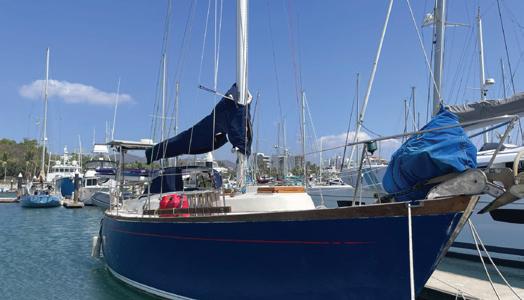
40 FT FUJI 1978. Bulletproof. Brand-new AGMs and autopilot, solar, watermaker, Yanmar w/1500 hrs. See link for details. Right boat, right place, right price. Get out there! $40,000. Puerto Vallarta, MX sellingmosaic@gmail.com www.sellingmosaic.com
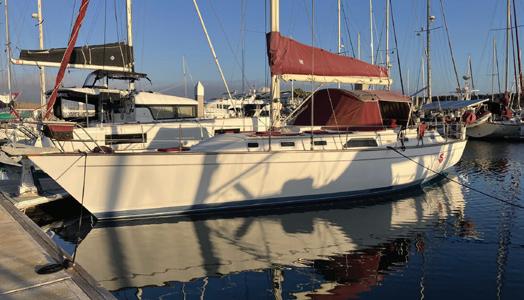
44 FT MORGAN 44 1989. Center cockpit. Well equipped, cruise-ready sloop in Ensenada, MX. Features updated electronics, solar, and robust ground tackle. Spacious interior, perfect for liveaboard or offshore voyaging. Easy access from San Diego. Save on sales tax. $60,000 For Sale. Marina Coral, Ensenada, MX frankhoffmann.pe@gmail.com (760) 424-2058
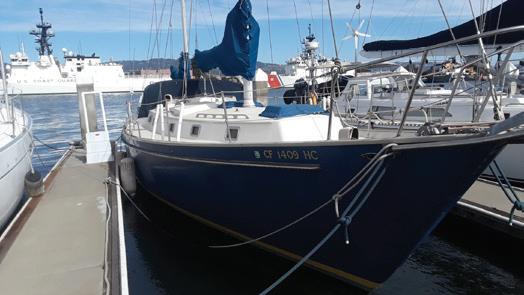
42 FT PEARSON 424 KETCH 1980. PRICE REDUCED! Classic, one of approximately 225 produced. Good main, mizzen and hank-on jib. VHF, depthsounder, windlass, claw anchor with 200 ft chain, 150 ft line. Washdown pump, 170 gal. water tankage, 80 gal. fuel. Diesel: Westerbeke 60 hp. Cockpit and midship companionways. Aft cabin double berth, V-berth. Walk-in shower. Galley: Propane 4-burner stove with oven. Double sink, under-counter refrigerator. Charming teak interior. Dedicated chart table. 2026 survey available. Priced for quick sale. Call or Email for more detail. $20,500. Alameda johnstapleton2010@yahoo.com (360) 333-8900
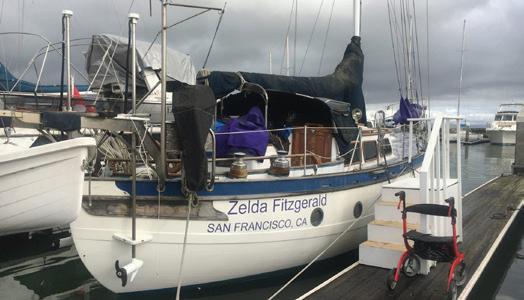
42 FT SPINDRIFT 43 PILOTHOUSE 1982. Classic cruising pilothouse sailing cutter capable of sailing anywhere you wish. Heavy fiberglass construction with a modern cruising rig. Comfortable room for five to live aboard, plus a few occasional guests. $35,000 OBO. South San Francisco robert.schulke53@gmail.com (650) 245-0226
41 FT RHODES BOUNTY 1960. Tiller steering. Westerbeke 30B Three diesel. Profurl roller 420 Harken ST 53 Lewmar ST 40 winches. Harken main traveler. Autohelm tiller GP 4000 plus ST50 instruments compass depth Icom SSB pro sail are in good condition. Boat cover, awning. $35,000 OBO. San Diego, CA barlowbuck@gmail.com (508)-685-9649
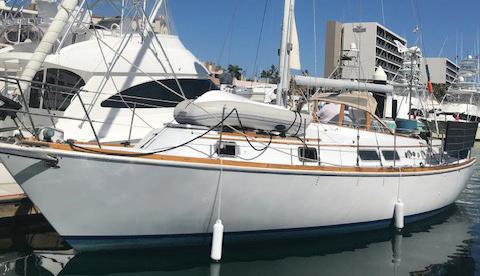
42 FT GULFSTAR 1979. Owner is incentivized to accept any reasonable offer due to health conditions. Completely reupholstered with light gray leather and all-new drapes and dodger canvas ($10,000). New Force 10 propane stove, new Raritan toilet, and all thru-hulls replaced ($10,000). Complete complement of Raymarine electronics including: autopilot, radar, E7 MFD, depthsounder/fish finder. AIS send/ receive, 3,500 watt inverter/charger. Beta 4 Kubota diesel (55hp) replaced the old Perkins in 2017 for a total cost of $30,000. In-mast and jib roller furling. Stainless barbecue, swim ladder. Price has been reduced for quick sale. All reasonable offers will be reviewed and best offer will be accepted by June1, 2026. Vallejo Yacht Club, Vallejo, CA
40 FT JEANNEAU SUN ODYSSEY 40 2003. ‘Stardust’ is now on the market due to the health of the owner. The first owner had her for 20 years and outfitted her for bluewater adventures: Mexico, Hawaii and Alaska. His preparation and modifications were thoughtful and professionally executed. I have owned her since March 2023 and sailed her around the Salish Sea and in club racing on Wednesdays. She is in excellent condition, has superior handling characteristics, is both weatherly and relatively fast, easily singlehanded, can sleep 7, and is warm and comfortable below — the best all-around boat one can imagine. $125,000. Tacoma, WA dstromquist@comcast.net (360) 606-9043
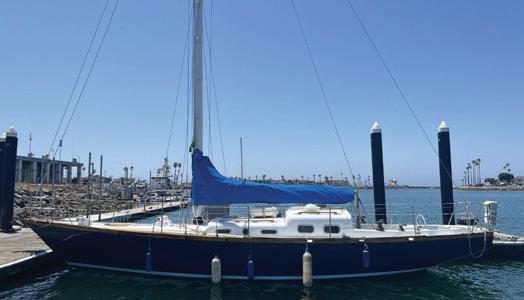
42 FT VAN DE STADT REBEL 42 1977. English-built boat, sailed across the Atlantic shorthanded with no problems. Great sea boat. New standing rigging and lifelines 2024, Perkins 4.108 diesel with BorgWarner V-drive, regularly maintained, works great. New slab-reefing mainsail 2022 and six foresails. In great sailing condition, needs modern electronics. Electric Lofrans windlass and self-tailing 44 Lewmar cockpit winches. Hydraulic steering with wheel. Recent lead acid batteries. Gimbaled gas cooker with oven. Manual and electric bilge pumps. $25,000. Channel Islands Harbor, CA philip.vaughan@gmail.com (626) 4758522
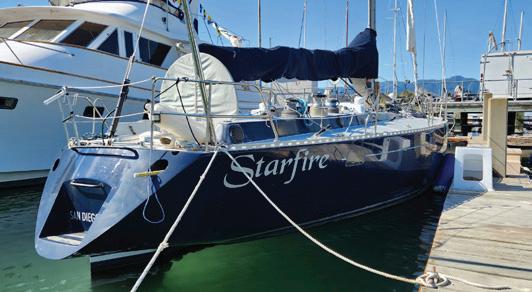
49 FT CUSTOM CHOATE PETERSON SLOOP 1988. Solid performance racer/cruiser. Spacious headroom, storage, large galley and main saloon, with roomy aft cabin and separate head. Rod rigging, great winches and running rigging layout. $70,000 OBO or Trade. Sausalito, CA libertyshipmarina@comcast.net (415) 613-3665
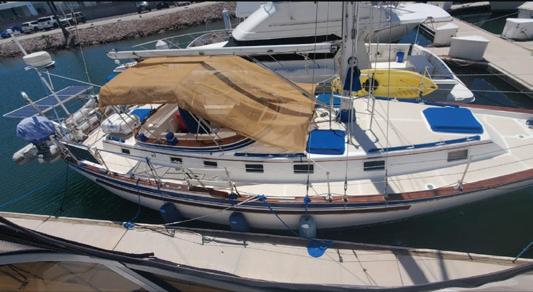
40 FT ENDEAVOUR 40 1983. Feb 13, price reduced to $42,000 great deal. The boat is in a slip at Marina Real in San Carlos, Sonora, MX. My wife and I have owned the boat for 10 years. The engine is a 2005 Yanmar 4JH4E 54hp with 1649 hrs. The included inflatable is a 2011 hard-bottom 10.4-ft Achilles with a 15hp Yamaha 2 cycle outboard. The Doyle mainsail was purchased new about 6 years ago. See URL for 200 pics I dumped into my AMZ photos. Equipment: See listing url pictures with previous pictures of Yacht world listing from 10 years ago. Most of the listed equipment is still with the boat. Payment by US bank to bank transfer only. No cash or check. $42,000. San Carlos, MX rode7runner@yahoo.com (520) 4012352 www.tinyurl.com/32twna5z
65 FT IRWIN 65 1984. ‘Blue Pearl’ is a turnkey, fully equipped head-turning beauty with all the comforts of home. She’s a cutter-rigged ketch, owner’s version with three ensuite cabins, wet bar, crew’s berth and V-berth. She sleeps nine comfortably. $285,000. Puerto Peñasco, MX sailingbluepearl@gmail.com (530) 3552926 www.sailingbluepearl.com
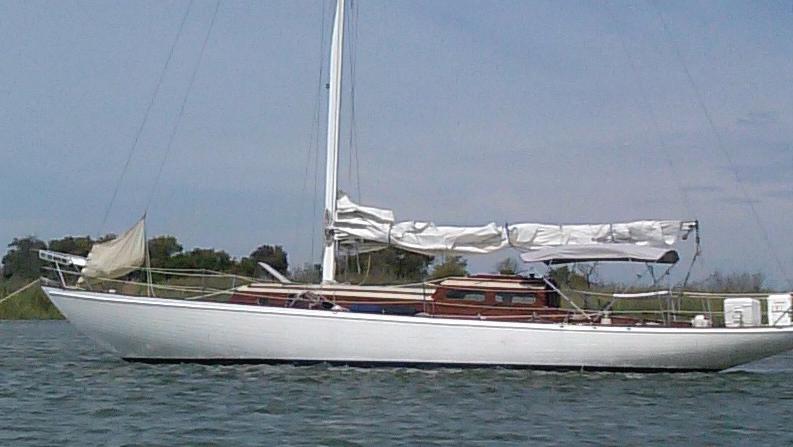
44 FT FELLOWS & STEWART ISLAND CLIPPER 1946. In the water and structurally sound for her age. Several maintenance, repair and refinishing projects are required to return to sailing condition. Needs repowering. Available without a purchase price under a range of options, with the intent that the new owner’s funds can be used for her upkeep. Good fit for a wood boat enthusiast with strong sailing skills and moderate DYI wood boat repair, maintenance and finishing skills. See website for more details and contact info. Richmond www.sfnirvana.com/blog
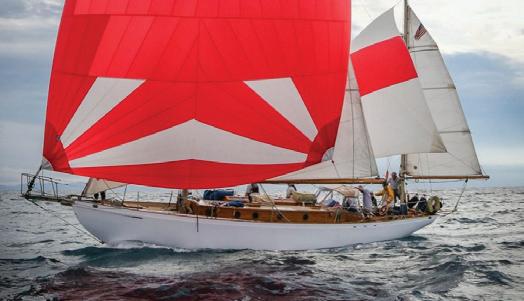
46 FT FELLOWS & STEWART YAWL 1931. ‘Cheerio II’, 1931 46-ft yawl, formerly owned by actor Errol Flynn. Three-time winner of her class in the Newport to Ensenada Race; first to finish in the 2024 McNish Classic Yacht Race; winner of “Best Represented Theme” in the 2025 Newport Beach Wooden Boat Festival. Google “Cheerio II” for photos, videos, and articles about the boat, a SoCal classic! Recent survey available. $100,000 OBO. Channel Islands Harbor jmcnish@earthlink.net (510) 846-4178 www.tinyurl.com/2bsw8djr
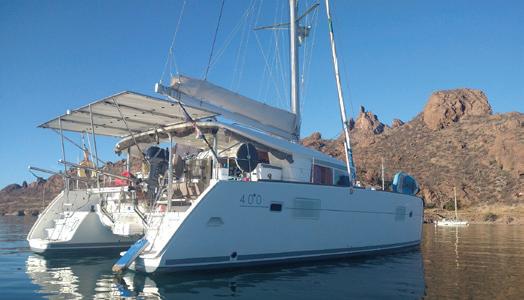
40 FT LAGOON 400 2012. Charter version, never chartered. One cabin converted in storage and laundry rooms. Watermaker. 1280 Ah solar, lithium-ion batteries. Dinghy, 2 outboards. New jib. New engine batteries. Anti-fouling Nov ’25. New stainless steel steering cables and sheaves. $265,000 OBO. Mazatlan Vy511@pm.me +52 (744) 241-7571
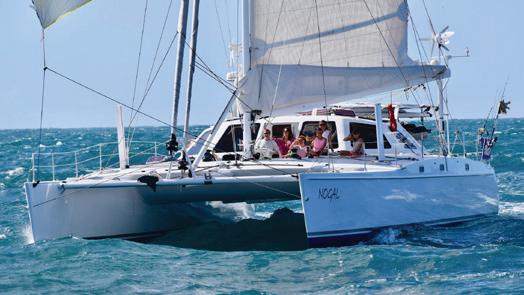
57 FT ATLANTIC 2009. ‘Nogal’ is a beautifully designed four-suite performance catamaran built for families seeking adventure, safety and speed. With only a 3-ft 5-in draft and mini keels, she can access remote anchorages often too shallow for larger vessels. Offshore, her shaped boards lower to a 7.5-ft draft, allowing for stability and speed even upwind. The forward cockpit offers a dry and protected sailing experience, allowing the crew to maintain sail controls with ease. Anchoring and mooring experiences are calm as the helmsman has close communication with deckhands. ‘Nogal’s expansive aft deck is the ultimate activity platform — perfect for landing fish, managing sports equipment, and entertaining. ‘Nogal’ is a proven bluewater vessel and fully outfitted for large ocean crossings. $1,150,000. Richmond, CA juliaagulham@icloud.com (628) 2500930 www.tinyurl.com/yu7djsbd
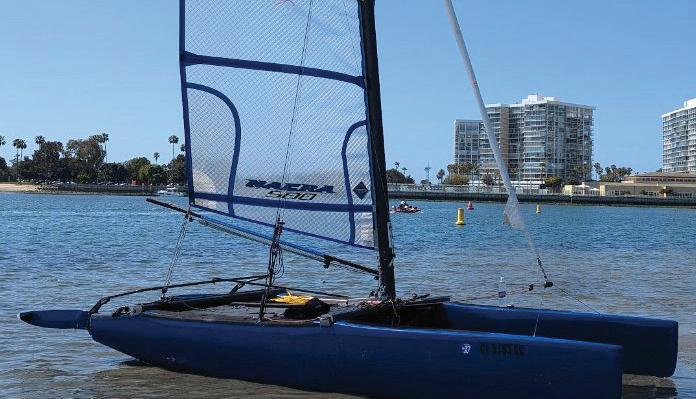
16 FT NACRA 500 2012. With trailer. Very well equipped, great condition. Full cover. Newer main, rigging; carbon boom; 2 trapezes plus harnesses; righting system. In SD? Keep on trailer in current location next to boat ramp, rig up. $12,000. San Diego framegreg@gmail.com (415) 4056384 www.photos.app.goo.gl/66BnL8zwoohFztnr6
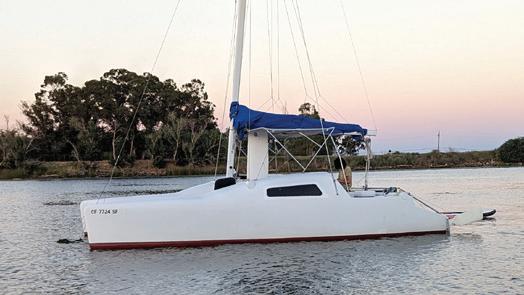
26 FT CUSTOM CATAMARAN 2000. ‘PAJA’, a custom-designed catamaran, fun to sail and kept in fresh Delta waters for 25 years. Corecell construction, aluminum crossbeams. 2023: new bottom/barrier paint; running rigging. $20,000. Rio Vista, CA Peter@Theallensite.com (916) 5381530
31 FT CORSAIR F31 1996. The F-31 remains one of the most influential production folding trimarans ever created, beloved for its fast yet accessible sailing experience. $72,955. San Francisco/Brisbane mevered@gmail.com (415) 745-0384 www.corsairf31.com
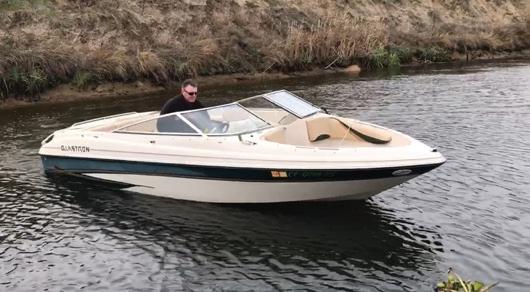
20 FT GLASTRON 1999. Pop-up changing compartment, flip-up seats, pull-up cleats, a Sunbrella bimini top, docking lights, a Porta Potti, air compressor plus carry-on refrigerator. New: starter and battery. Not working: trim gauge, depthfinder. Dry weight 2375 lbs; max seating 10; max hp 260; fuel cap 35 gal; Included: lots of toys. Registered until December 2027. Full title boat and trailer. $8,400 OBO. Livermore cmccallum@gmail.com (925) 519-1174
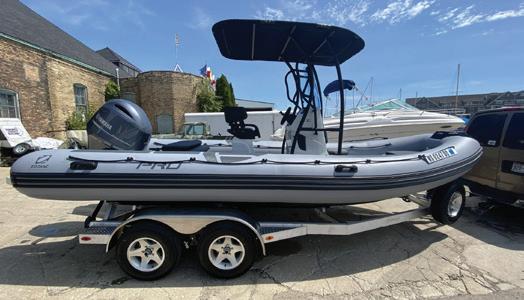
21 FT ZODIAC PRO 650 2020. 150hp Yamaha outboard. Custom dual-axle trailer. Fully optioned: T-top, tow bar, full cover, Spectra lifting bridle, swim ladder. Purchased new in Aug 2020. Approx. 375 hrs on engine. Excellent condition. $53,500. Belvedere, CA ewbaumhoff@gmail.com (415) 827-7487
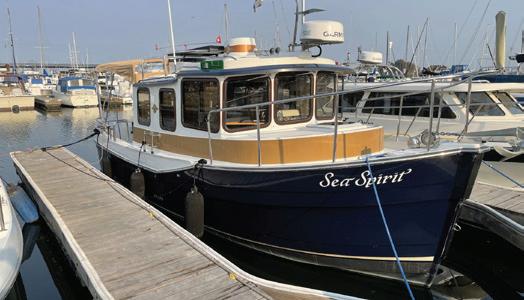
25 FT RANGER 25 SC 2016. Immaculate condition, fully equipped, turnkey ready and priced to sell. The perfect blend of classic tug styling, modern comforts, and efficient cruising. Lovingly maintained and lightly used, ‘Sea Spirit’ has been meticulously and professionally serviced. Volvo Penta D3 150 diesel, only 400 hrs, hull speed up to 20 knots, Garmin 7612 chartplotter, radar, depth, Autopilot, VHF, TV, AM/FM stereo, bow and stern thrusters w/wireless remote for easy docking; solar panel, AGM batteries and inverter, propane cooktop, refrigerator, microwave, fully enclosed head with standup shower, fuel efficient (2.5 gal @ 8 knots). $114,500. Loch Lomond Marina, San Rafael jimcolesailor@gmail.com (415) 519-6250 www.tinyurl.com/msfxz369
27 FT STILETTO 27 1979. High-performance Stiletto catamaran with 2 berths, multiple sails, 10 hp Tohatsu motor with galvanized telescoping trailer and power winch. Dry-sailed all over Southern California, Lake Powell, Ensenada and out to Catalina and San Clemente islands. Newport Beach mooring available at market cost if desired. Very light and strong epoxy honeycomb and pre-preg construction. A very fun boat to sail! $20,000. San Clemente toknkok@aol.com (949) 933-4530
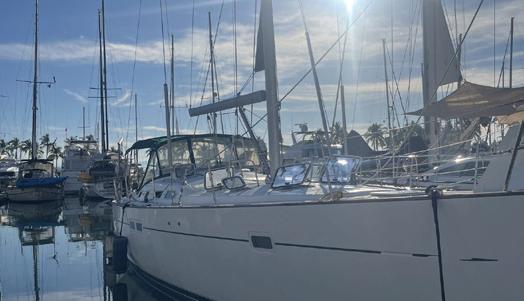
BENETEAU 473 PARTNERSHIP IN PACIFIC MEXICO/BAJA. Great opportunity to cruise Mexico. Plug-n-play. Third partner wanted, 2004 Beneteau 473. Cruise-ready. This season San Blas to Manzanillo. Next season plan to return to Sea of Cortez. Davits, dinghy, outboard, solar, Starlink, dive gear, electric winch, two heads (one electric), radar, Westerbeke 63 hp diesel with 2,400 hours, folding prop, separate shower in head, fridge/ freezer, well outfitted and maintained. 1/3 ownership $50,000. New bottom paint fall 2025. Documented, surveyed, insured. Contact Greg (415) 407-0491, grw@gwilson.com. $50,000. Barra de Navidad, MX grw@gwilson.com (415) 407-0491
DELTA MOBILE HOME FOR SALE. 1984 mobile home in a small, quaint 45-home park. 2 bdrm. 2 bath. Completely remodeled. Almost everything is new. 1248 sq. ft. situated in a park directly across from the Spindrift Marina. Enjoy dining at the Spindrift restaurant, only about a 75-foot walk. Reduced rent for the first 12 months, at $514. Normally $674. Also receive 12 months of free berthing directly across the street. A fisherman’s dream! $160,000. Isleton/Delta graywolfproperties@yahoo.com (509) 671-4009
BELIZE PROPERTY. Waterfront property for sale in northern Belize, 493 acres, 4000 ft. of ocean frontage on Corozal Bay, one mile+ of frontage on the New River. $1,800,000. Belize svsalacia@yahoo.com (831) 239-2014
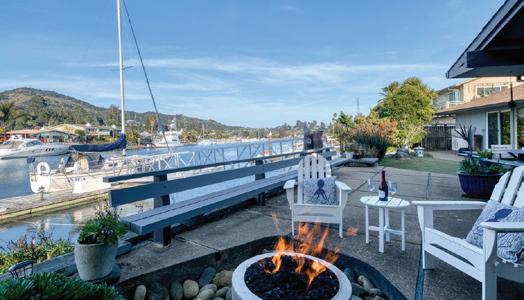
PREMIER WATERFRONT RESIDENCE. Made for boaters, designed for those who embrace the yachting lifestyle. Ideally situated on a protected deep-water channel, this 4-bedroom, 3-bath residence offers approximately 2,650 square feet of living space along with an impressive 65-foot deep-water dock providing effortless access to the Bay and beyond. $1,425,000. San Rafael, Ca ian@everynobody.com www.tinyurl. com/c4f773k5
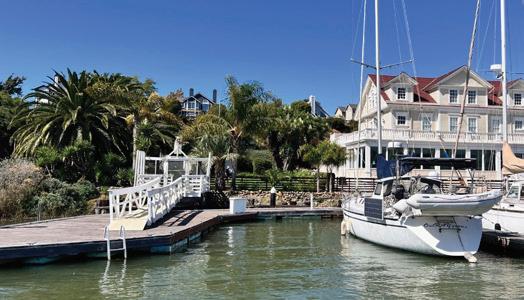
GLEN COVE MARINA SAILBOAT
SLIP. 55+-ft x 15-ft slip in a prime first-slip location offering excellent maneuverability and easy docking. Secure, gated marina with top amenities: power, water, laundry, restrooms, pump-out service and gated parking. Relaxed, pet-friendly environment with 24/7 access and quick routes to the Bay and Delta. One of the safest marinas in the area. Liveaboard option available for an additional fee (inquire for details). $650. Glen Cove Marina katiehenrich@hotmail.com (707) 3197268 www.tinyurl.com/5n7yaxc3
PRICE REDUCED 50% & 50 FT SLIP ON THE SEA WALL WITH ALCATRAZ AND GG BRIDGE VIEWS!
Price Reduced 50%. 50-ft x 18-ft slip on the coveted Pier39 G Dock. Move in immediately. Don’t miss this opportunity for some of the best views and most convenient slip on the San Francisco Bay! The slip is protected by the sea wall and offers easy access in/out launching across from Alcatraz. $7,500. Pier 39, San Francisco bserling@yahoo.com
AWESOME 50 FT SLIP PIER 39 SAN FRANCISCO. For sale: Stunning city views, 15-ft+ beam, 50-ft length. New cleats, dock box, power pedestal, and hose management. Perfectly located for entire Bay Area coverage and beyond. Very easy access, great maintenance team, parking, and more. $24,000. Slip G-32, Pier 39 Marina greg.rossmann@gjrcap.com (650) 740-0263
EMERY COVE BOAT SLIP FOR RENT. Berths for rent. Emery Cove Yacht Harbor 35-ft = $472.50/month C dock and 40-ft = $540/month E dock. Dockominium-run marina in Emeryville. emerycove.com. Brand-new docks, aluminum with Ipe wood deck, brandnew restrooms, beautiful grounds and just dredged. Great location center of S.F. Bay. Emeryville, CA studio6161@ icloud.com www.emerycove.com
REDWOOD CITY MARINA SLIPS AVAILABLE. Slips 30′-75′ at great rates! Amenities: parking, bathrooms, laundry, pump-out, free wi-fi, keyless entry. Guest berths also available. Call for availability. 451 Seaport Court, Redwood City, CA 94063 crevay@redwoodcityport.com (650) 306-4150 www.redwoodcityport.com/ marina
SEEKING EXPERIENCED BOAT CARETAKER / OWNER’S REPRESENTATIVE FOR TWO PRIVATELY OWNED VESSELS IN THE SAN FRANCISCO BAY AREA. Looking for someone practical, detail-oriented, and experienced to help my father keep up two vessels in SF/Emeryville as he gets older. Responsibilities would include: 1) overseeing maintenance and refit projects 2) coordinating with yards and subcontractors 3) identifying issues proactively 4) ability to tackle small but important detail work that often falls through the cracks at yards, including hands-on maintenance and troubleshooting 5) opportunities to captain or crew these vessels depending on experience. One vessel needs a haul out here soon and liveaboard accommodation may be available during the yard periods, so I’m open to someone from out of town! ateece16@cmc.edu 5106047071
SAILING SCHOOL OPERATIONS MANAGER. Spinnaker Sailing is a premier sailing school/club providing high-quality sailing instruction for students of all levels. Established in 1980, the school is located at the Port of Redwood City Marina in Redwood City. We offer a range of classes and activities, from beginner to advanced. We are seeking a dynamic and experienced Sailing School Operations Manager to lead our instructional programs and daily operations. The School Manager will be responsible for overseeing all aspects of the sailing school, including program development, student and member engagement, instructor management, student enrollment, club memberships, sailing vacations, corporate events and equipment maintenance. The ideal candidate will have a strong background in sailing and be able to work weekends. Competitive salary based on experience. 451 Seaport Ct. Redwood City, CA. 94063 rich@spinnakersailing.com (650) 7222389 www.tinyurl.com/2mk6yv5a
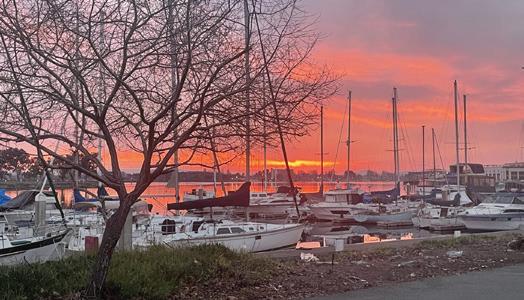
ADMINSTRATION
SAILING SCHOOL. Administrative assistant and fleet manager. Both positions are part-time. If can do both, by splitting tasks, can be full-time. Afterguard Sailing Academy is full range+ ASA Sailing school in Oakland, c. 2003. Protected free parking. A fun family atmosphere. Main tasks include front desk, marketing and enrollments. Handle emails and phones plus coordinate what is needed for courses to run smoothly. If taking on fleet management, need to ensure boats are running smoothly, order what is needed, and check that boats are clean and ready for classes or charters. Days/hours are Tue 12–5 and Wed–Sun 9–5. Other side projects? Have building space, plus equipment, for canvas, upholstery and minor sail repair work. Also an area for engine work. 1285 Embarcadero, Oakland info@afterguard.net (510) 535-1954
COACH). Peninsula Youth Sailing Foundation (PYSF) in Redwood City, CA, is seeking a passionate, experienced sailing professional to serve as Race Program Lead. This full-time, year-round leadership role oversees high school and C420/i420 programs, combining elite coaching, program management, staff supervision, and national travel. This position leads on-water training five days a week, coaches at regattas, manages logistics and budgets, coordinates with schools and families, and maintains a fleet of 20 CFJs to “white glove” standards. Ideal candidates have extensive youth coaching experience, strong leadership and organizational skills, and technical fleet knowledge. Salary ranges from $100,000–$120,000 with health and dental benefits. US Sailing certification and background check required. Redwood City, CA Office@pysf.us www.pysf.us/
WANTED. Rig shop in business for over 30 years is looking for an experienced rigger to add to our team. Excellent pay is available depending on rigging knowledge. Send a description of your rigging/boat work experience. Sausalito southbeachriggers@gmail.com (415) 331-3400
SPINNAKER SAILING S.F. Spinnaker Sailing SF is hiring experienced sailors. Join one of the top schools on the West Coast. Modern fleet (Andrews 21s, J/80s, J/105s, Santa Cruz 50), tiny class sizes, expert crew. F/T– P/T, Flexible scheduling, Midweek/weekend work available. Teach, skipper charters, or sail team events on our well-maintained yachts. ASA instructors and USCG captains encouraged. TOP PAY, Great tips, build sea time, and work as much as you like. This is a FUN place to work!. San Francisco staff@spinnaker-sailing.com (415) 5437333 www.tinyurl.com/ysh5k33a
HARBOR MANAGER POSITION.
Galilee Harbor Community Association is seeking a part-time Harbor Manager to provide administrative and logistical support to Sausalito’s working waterfront community of marine-related workers and artists. The Harbor Manager will be a central “hub” to our lively, highly “interactive” waterfront community. Please have proven administrative and project-management skills and maritime knowledge. To apply, please email your résumé and put HM Job in the subject line. galileeharbor@gmail.com www.galileeharbor.org/
36 Degrees ............................. 34 www.36degrees.nz
Antioch Marina 17 www.antiochca.gov/ antioch-marina
ATN 21 www.atninc.com
Bay View Boat Club 19 www.bayviewboatclub.org
Belize Sailing Vacations............ 91 www.belizesailingvacations.com/ Benford Yacht Hat 21 www.benfordyachthat.com
Berkeley Marina 20 www.berkeley-marina.com
Berkeley Marine Center ........... 24 www.berkeleymarine.com
Boat Yard at Grand Marina, The ......................................... 18 www.boatyardgm.com
Boats and Brokers .................... 59 www.boatsandbrokers.ai
Boatswain’s Locker 27 www.boatswainslocker.com
Boreas Race ............................ 22 www.elkhornyachtclub.org
Breakwater Cove Marina ......... 34 www.montereybayboatworks.com
Brisbane Marina 48 www.brisbaneca.org/marina
Canvas Works ......................... 31 www.thecanvasworks.com
Coyote Point Marina 53 www.smcgov.org/parks/
coyote-point-marina
Cruising Yachts 49 www.cruisingyachts.net
DeWitt Studio 78 www.jimdewitt.com
Doyle Sails San Francisco 15 www.doylesails.com/ loft-san-francisco
Emery Cove Yacht Harbor ........ 55 www.emerycove.com
Fisheries Supply Co. ................. 53 www.fisheriessupply.com
Gianola Canvas Products ......... 63 www.gianolacanvas.com
Golden Gate Yacht Club .......... 25 www.ggyc.org
Grand Marina ........................... 2 www.grandmarina.com
Haven Boatworks 59 www.havenboatworks.com
Helmut’s Marine Service 23 www.helmutsmarine.com
Hood Sails 5 www.hoodsails-sf.com
Hydrovane 29 www.hydrovane.com
Johnson Marine, C. Sherman 19 www.csjohnson.com
KKMI - Full Service Boatyard 92 www.kkmi.com
Lind Marine 13 www.lindmarine.com
List Marine Enterprises 29 www.listmarine.com
EXPERIENCED SAILBOAT CAPTAIN. Looking for an experienced part-time sailboat captain in San Francisco with a valid USCG license 25T minimum? Please contact me, John Yelda at email below. email@sailingsanfrancisco.com
JOB ANNOUNCEMENT: BOATWRIGHT. The Dolphin Club is seeking applicants for a boatwright to work out of its Jefferson Street boat shop. This is a part-time position, and one or more positions will be filled. The successful applicant(s) will promote the club’s mission and its maritime heritage through maintaining, restoring, and building traditional wooden small craft in the club’s boat shop. See full announcement at URL. San Francisco, CA boats@dolphinclub.org www.tinyurl. com/4rd7fu67
JOIN OUR TEAM OF INSTRUCTORS. Spinnaker Sailing in Redwood City is looking for ASA-certified sailing instructors to teach out of our Redwood City Marina location. Part-time, flexible schedules, midweek and/or weekends. Please contact Rich or Bob by phone or email. Redwood City Marina office@spinnakersailing.com (650) 363-1390 www.tinyurl.com/y7b2587w

Marchal Sailmakers ................. 22 www.marchalsailmakers.com
Marina El Cid 63 www.elcid.com
Master Mariners Benevolent Assn. ...................... 52 www.sfmastermariners.org
Modern Sailing School & Club 24 www.modernsailing.com
NAOS Yachts .......................... 35 www.naosyachts.com
Napa Valley Marina 31 www.napavalleymarina.com
North Beach Marine Canvas 27 www.northbeachmarinecanvas.com
Outboard Motor Shop ............. 26 www.outboardmotorshop.com
Punta Mita 80 www.baja-haha.com
Quantum Pacific 71 www.quantum.com
Raiatea Carenage Services....... 80 www.raiateacarenage.com
Richard Boland Yacht Sales 79 www.richardbolandyachts.com
Richardson Bay Marina 30 www.richardsonbaymarina.com
Rubicon Yachts............ 7,8,9,10,11 www.rubiconyachts.com
San Francisco Marina 26 www.sfrecpark.org/1228/ Marina-Yacht-Harbor
San Francisco on the Bay 28 www.sfonthebay.com/list-38
San Juan Sailing ...................... 25 www.sanjuansailing.com
Shearwater Sailing .................. 33 www.shearwatersc.net Society of Accredited Marine Surveyors/SAMS ..................... 28 www.marinesurvey.org
South Beach Harbor................. 14 www.sfport.com/ southbeachharbor
Spinnaker Sailing of R.C. .......... 23 www.spinnakersailing.com
Starboard Marine Surveyors 34 www.starboardmarinesurveyors. com
Summer Sailstice ...................... 63 www.summersailstice.com
Svendsen’s Bay Maritime 4 www.sbm.baymaritime.com
Swiftsure Yachts 6 www.swiftsureyachts.com
Towboat US 3 www.boatus.com
Ullman Sails San Francisco & Monterey Bay 16 www.ullmansails.com/lofts/ san-francisco/ Ventura Harbor Boatyard 34 www.vhby.com
Westwind Precision Details 30 www.boatdetailing.com
Whale Point Marine Supply ...... 12 www.aceretailer.com/whalepoint Yachtfinders/Windseakers ........ 62 www.yachtfinderswindseakers.com
LATITUDE 38 ‘AMBASSADOR’. Latitude 38 is seeking an “Ambassador.” The ideal candidate is a sailor based in the SF Bay Area, is friendly, outgoing, well-organized and a self-starter with excellent communication skills. They are someone who can work independently as well as manage a team of volunteers. An ambassador encourages enthusiasm, understands the scope and goal of a project and is able to appreciate, respect and organize a team of volunteers to execute a project with efficiency and eagerness. This is an ideal position for someone who is financially secure and looking to stay active and social, and is excited to be part of our vibrant sailing community. Meet and greet the great people who help us distribute the magazine. Read about a few of them here: www.latitude38.com/lectronic/meet-great-people. Email Penny with AMBASSADOR in the subject line. This is a volunteer position. SF Bay Area Penny@latitude38.com
PROFESSIONAL DELIVERY CAPTAIN
SERVICES. Capt. Dave Brotherton, USCG Licensed Master — sail or power. Serving Southern California since 1996. Deliveries/instruction/ charter. Multihull specialist — any ocean. Catamaran dealer and yacht broker. Professional consultations. davidhbrotherton@yahoo.com (619) 913-7834 www.tinyurl.com/3htxy32j
PLAN YOUR MEXICAN GETAWAY
NOW. At the gorgeous Cielo Y Mar condos. Located in Punta Mita, 35 minutes from Puerto Vallarta, available to rent from private owner. On the beach, 10 feet from the water, they offer spectacular views of ocean and mountains, the biggest infinity pool in the area, an endless beach, great surf breaks, great fishing, tremendous views of whales, bird life and the islands. While uncrowded and tranquil, just a five-minute walk to several waterfront restaurants. Choose from a spacious, beautifully furnished one- or three-bedroom unit, or an amazing two-story penthouse with lovely shade trellis on the top floor. To reserve, call or email Dona de Mallorca. puntamitabeachfrontcondos@gmail. com (415) 269-5165
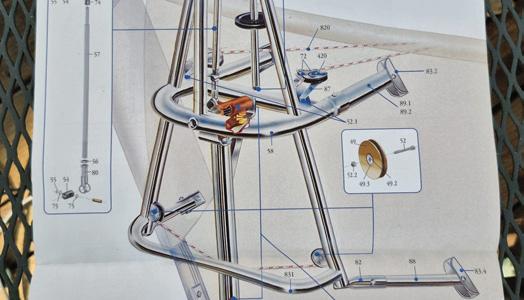
MONITOR WINDVANE STEERING.
Currently located in Bodega Bay, CA, mounted on my Tayana 37. Mounting brackets included. Free pickup, or pay shipping. $3,200. Bodega Bay, CA espinozagreg7@gmail.com (707) 953-3045
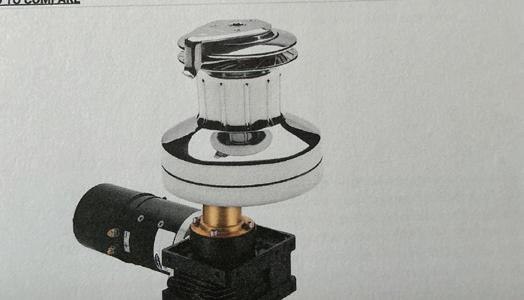
ANDERSEN ELECTRIC WINCHES. Three new Andersen stainless 12V electric winches. One 52ST-E1 w/12V electric compact motor. New. Still in original factory boxes. New $5,776, sale price $3,770. Two Andersen 72ST-E1 with 12V electric motors. New. Still in factory boxes. Retail price $9,200 ea. or $18,400 pair. Sale price $11,960 for the pair. $15,730. San Diego HarryT1952@yahoo.com (858) 9676212
SEEKING SMALL INBOARD ENGINE FOR SAILBOAT. I am desperately seeking and happy to pay good dollars for a single- /twin-cylinder inboard saildrive marine engine for 26-ft Lake Tahoe sailboat. The perfect engine would be a 1980s MR2-50S, which was a Volvo Penta Saildrive with a 7.5 Honda twin-cylinder gasoline outboard powerhead. Total weight was 80 pounds. Any condition acceptable. Can repair/ rebuild/replace engine if necessary. Seeking saildrive unit, engine, and mounting bed. Old single- /twin-cylinder Volva Penta, Yanmar, Beta would be considered. Would be happy to personally pick up anywhere in western USA. Also happy to pay any “finder” fees as well! Happy to trade for 9.9 Honda long-shaft outboard in excellent good condition. Email Gary. Western States CaliforniaKiwi49@frontier.com (916) 337-7029
WHISKER POLE. Forespar carbon telescoping LC 15-27 UTS-UTR socket-trigger whisker pole, T-125 toggle car for 1-1/4-in track. Call Robin Sodaro. $3,000. Sausalito hoodsails@aol.com (415) 279-4104
MARITIME DAY AT GALILEE HARBOR AUG 1, 2026. Maritime Day is a family-friendly, admission-free celebration of the vibrant community of artists and maritime workers who call Galilee home. Enjoy free boat rides on the Bay, live music throughout the day, visits aboard open boats and historic vessels, delicious fish and chips, homemade desserts, and local artist booths. Galilee Harbor is a self-sustaining, low-income cooperative committed to preserving waterfront access for all. Maritime Day is both a celebration and a fundraiser to support this mission. Saturday, August 1, 2026, 10am6pm. 300 Napa St. Sausalito California galileeharbor@gmail.com www.galileeharbor.org/
DONATE YOUR BOAT. The Bay Area Association of Disabled Sailors strives to make sailing accessible to people with disabilities. BAADS is always on the lookout for donated boats to support its mission. Help an all-volunteer organization while receiving a charitable tax deduction. boatdonations@baads.org (415) 5329831
Sarah Gay Huse (Sally) was born in Bryn Mawr, PA, the second of three daughters, to Herbert Willard Huse and Eunice Stanley Huse. She spent her childhood in Swarthmore, PA, and summers at Stanley Farm in New Hampshire, an 80-acre, extended-family property owned since 1863. Sally graduated from Beloit College in 1963 and later earned an MBA from Boston College, the only female in her classes. She enjoyed a distinguished career in finance, most notably at Bechtel Power Corp., where she advanced to senior financial manager at a time when few women held such positions. She met her future husband, Hans Roeben, at a ski-club dance in San Francisco in 1973, and the two were married at Stanley Farm in 1977. Together, they built a life deeply anchored in the water. They settled in Paradise Cay in Marin County, joined the Corinthian Yacht Club in 1974, and purchased their beloved sailboat,
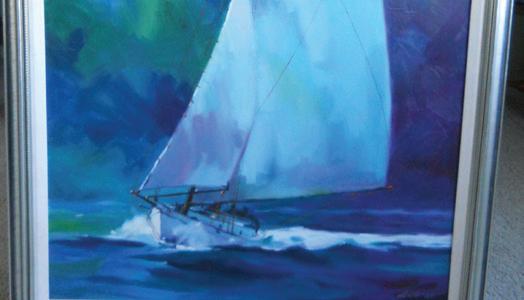
JIM DEWITT ORIGINAL OIL PAINTING.
This beautiful Jim Dewitt painting was a gift to my wife as a wedding present in 1987. The wife has gone but the painting remains. The painting “Into the Light” was taken from a photograph of the SV ‘Speedwell’, built for Carl Strom, commodore of the Aeolian Yacht Club, for Thomas Jennings commodore of the Corinthian Yacht Club from 1904–1906. The picture has some minor heat–related damage, which is reparable. Jim DeWitt’s paintings of this type are for sale for prices in excess of $15,000, which makes this painting a rare buy. $7,500 fool4flotsam@gmail.com (530) 999-8655
LOOKING FOR 24 FT PIVER TRIMARAN
‘NO NAME’;. We’re former owners of the plywood 24-ft Piver trimaran that sailed around the world in the ’70s. The boat’s last known location was San Diego. We’d appreciate hearing from anyone who might know the whereabouts of ‘No Name.’ wolfinds@mindspring.com (415) 806-3334
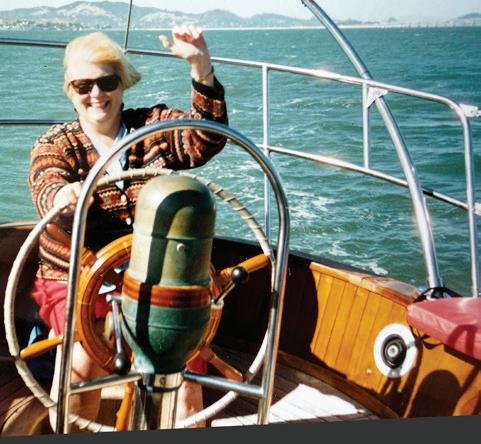
Born: January 5, 1945
Departed: March 3, 2026
The Helgoland, in 1980. Sally became a beloved fixture at CYC, known as the Flag Mother, keeper of a collection of 300 flags, and organizer of popular cruises that eventually reached every yacht club on the Bay. She and Hans also sailed the Royal Clipper, a five-masted tall ship, twelve times across the world.
Sally passed away peacefully at home on March 20, 2026. She is survived by her beloved husband of 53 years, Hans J. Roeben; her sisters Molly Johnson and Julie Estes; and many dear family members and friends. A celebration of her life will be held at the Corinthian Yacht Club
This summer, book 6 nights and enjoy your 7th for only US$500!*
*100% of 7th-night proceeds support Oceana's work protecting Belize's barrier reef
*Offer valid until November 15, 2026. Conditions apply.
KKMI Point Richmond and KKMI Sausalito are now Safe Harbor San Francisco Bay and Safe Harbor Sausalito.
These exceptional service yards now join our unrivaled network of over 150 marinas and shipyards in the world’s greatest waterfront destinations, now with 7 in the Bay Area.