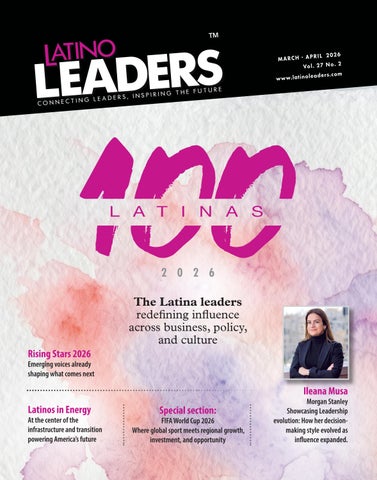
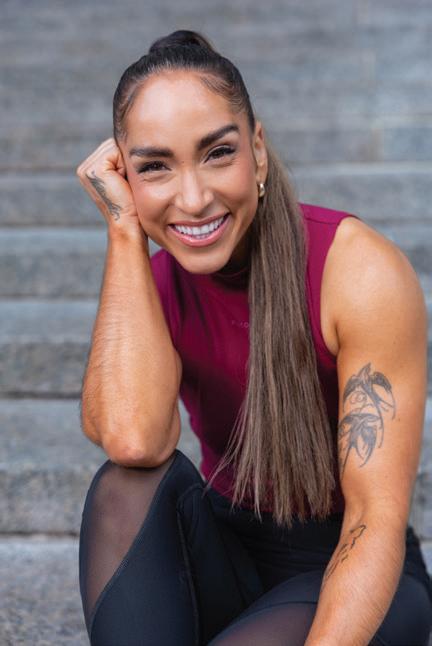
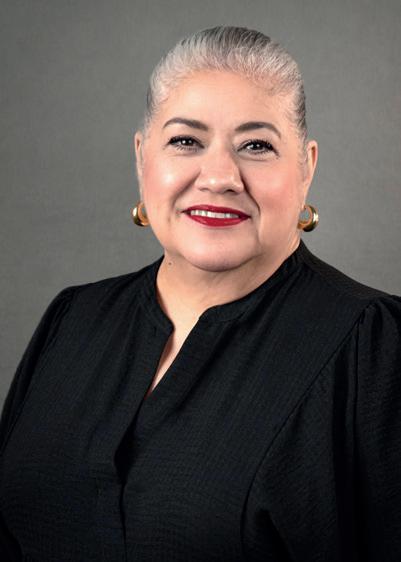
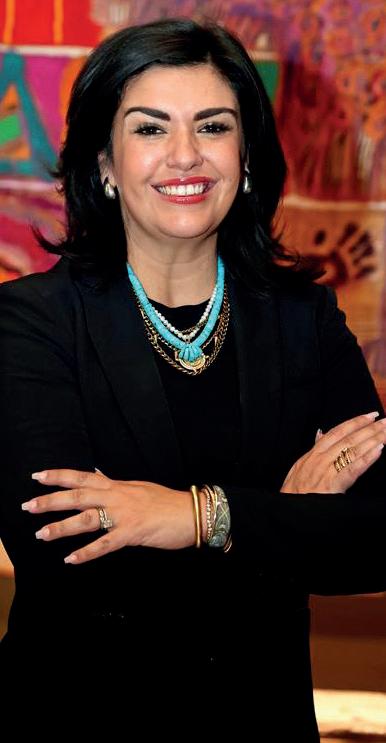
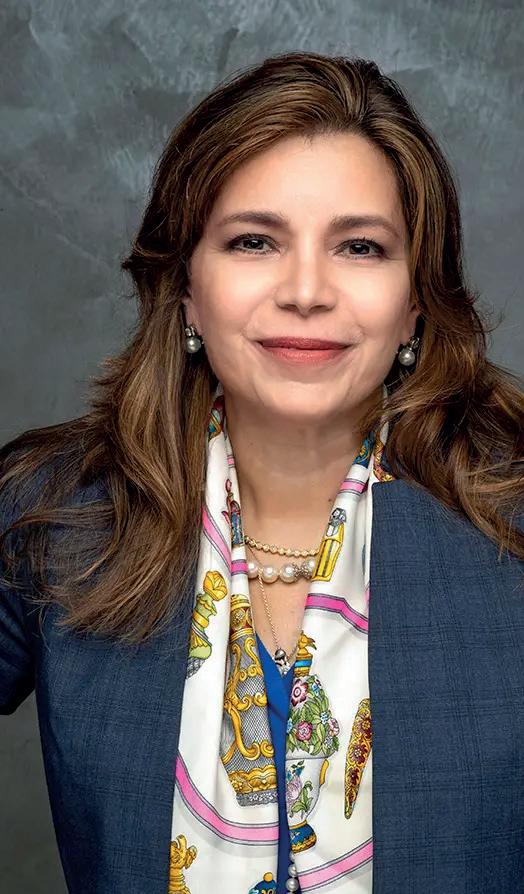
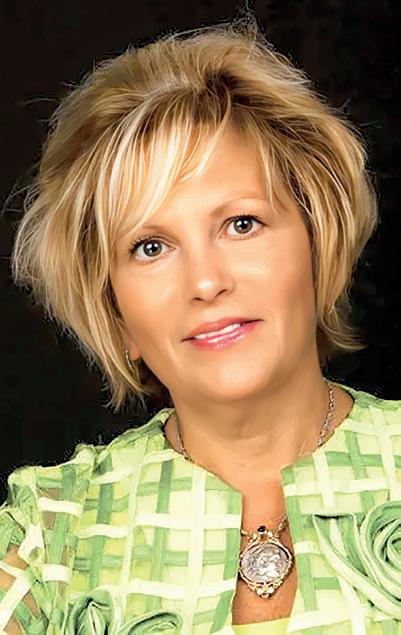
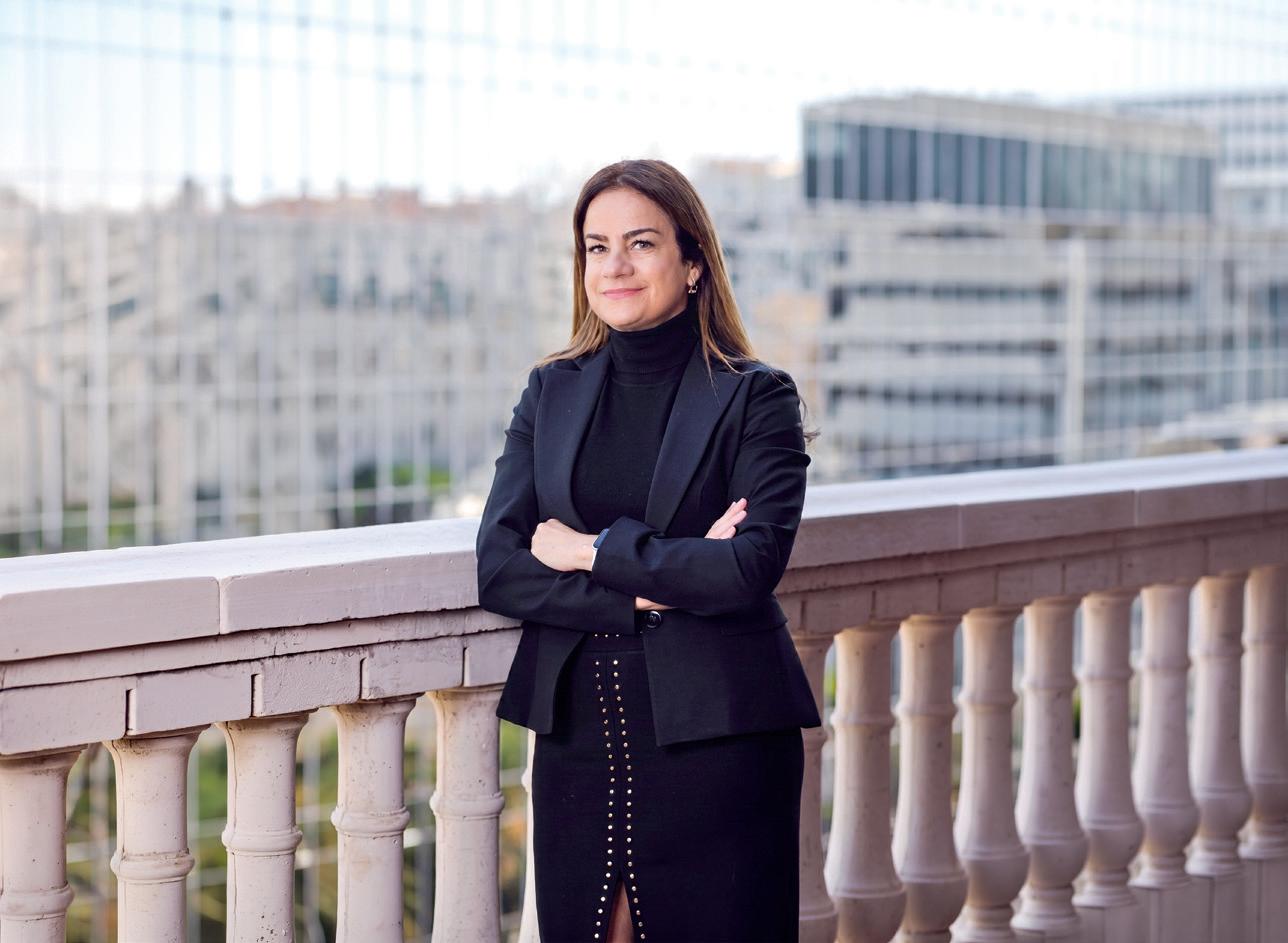
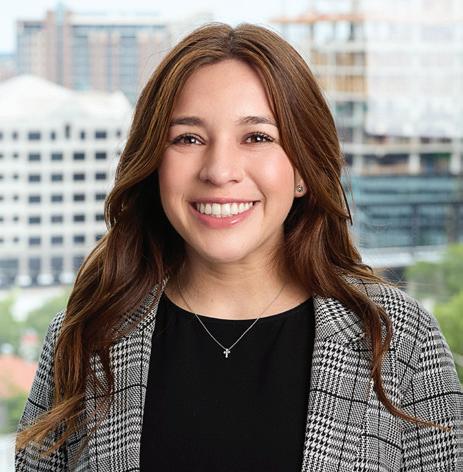
• Rising Stars 2026: A spotlight on the next generation of emerging Latino leaders and innovators - Page. 55
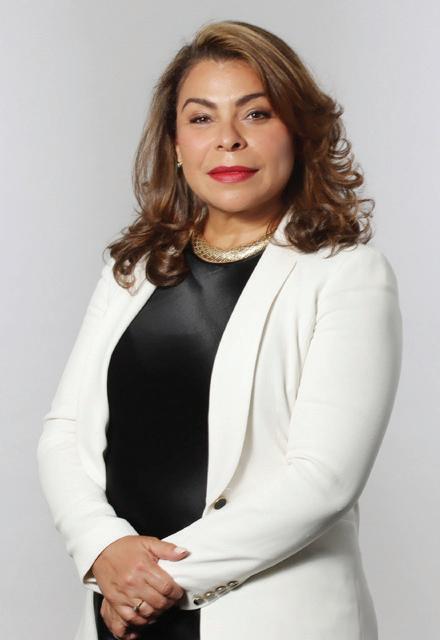
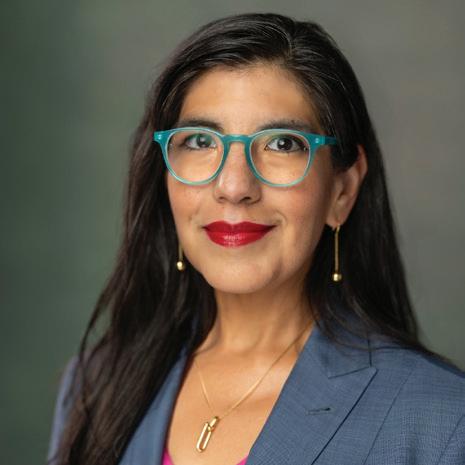
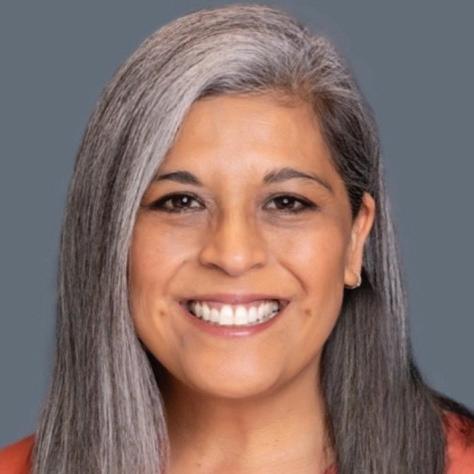
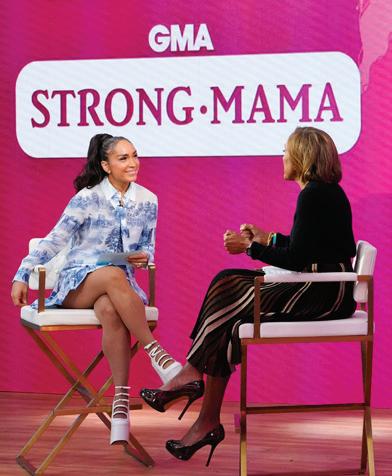
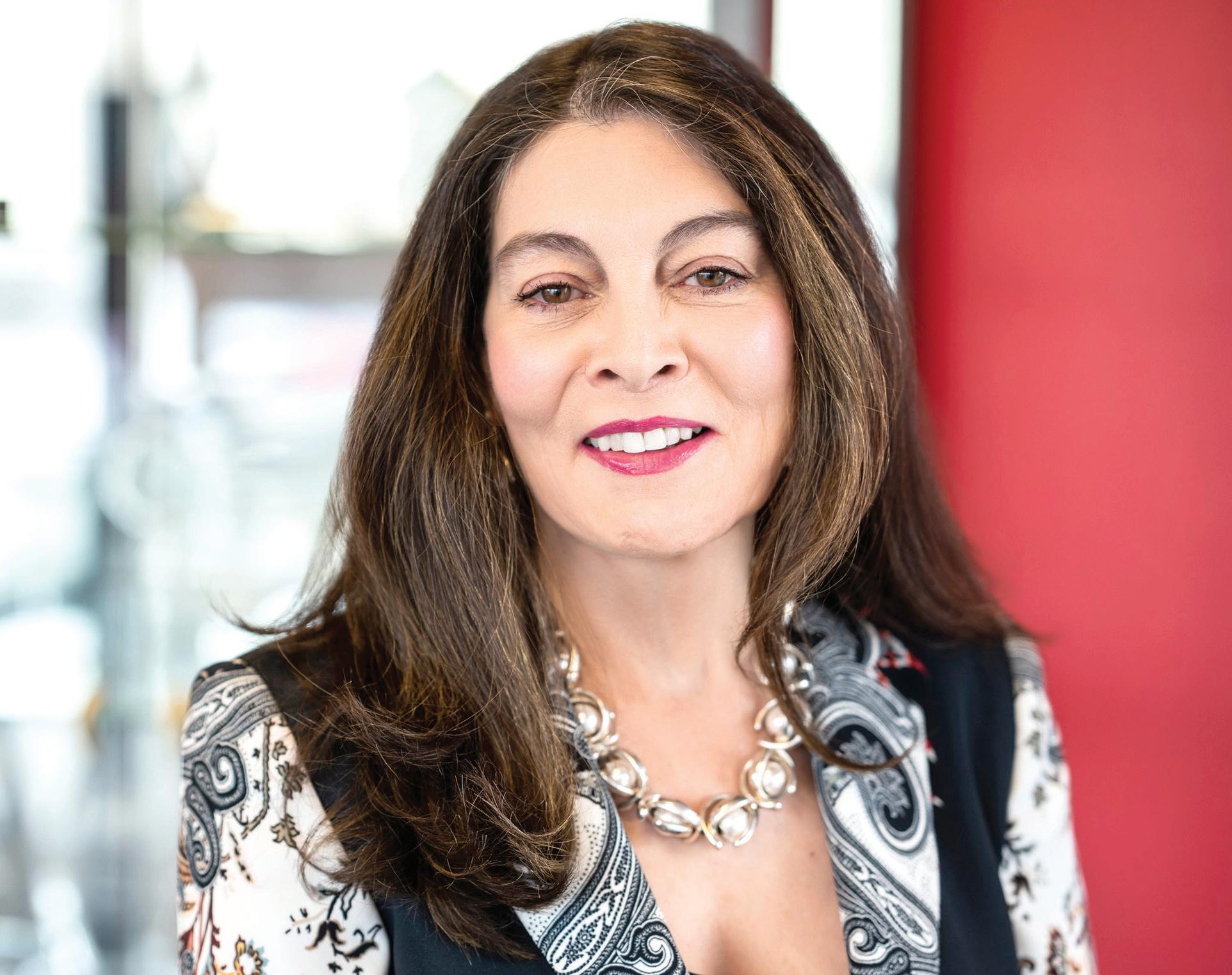
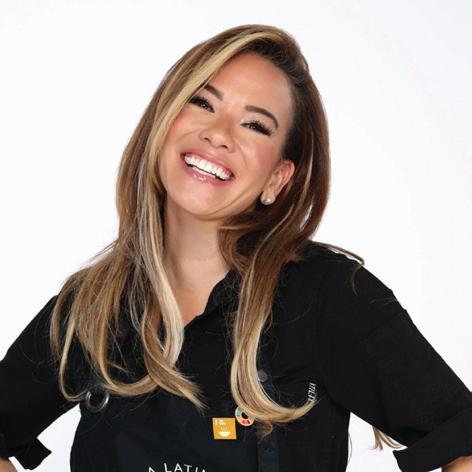
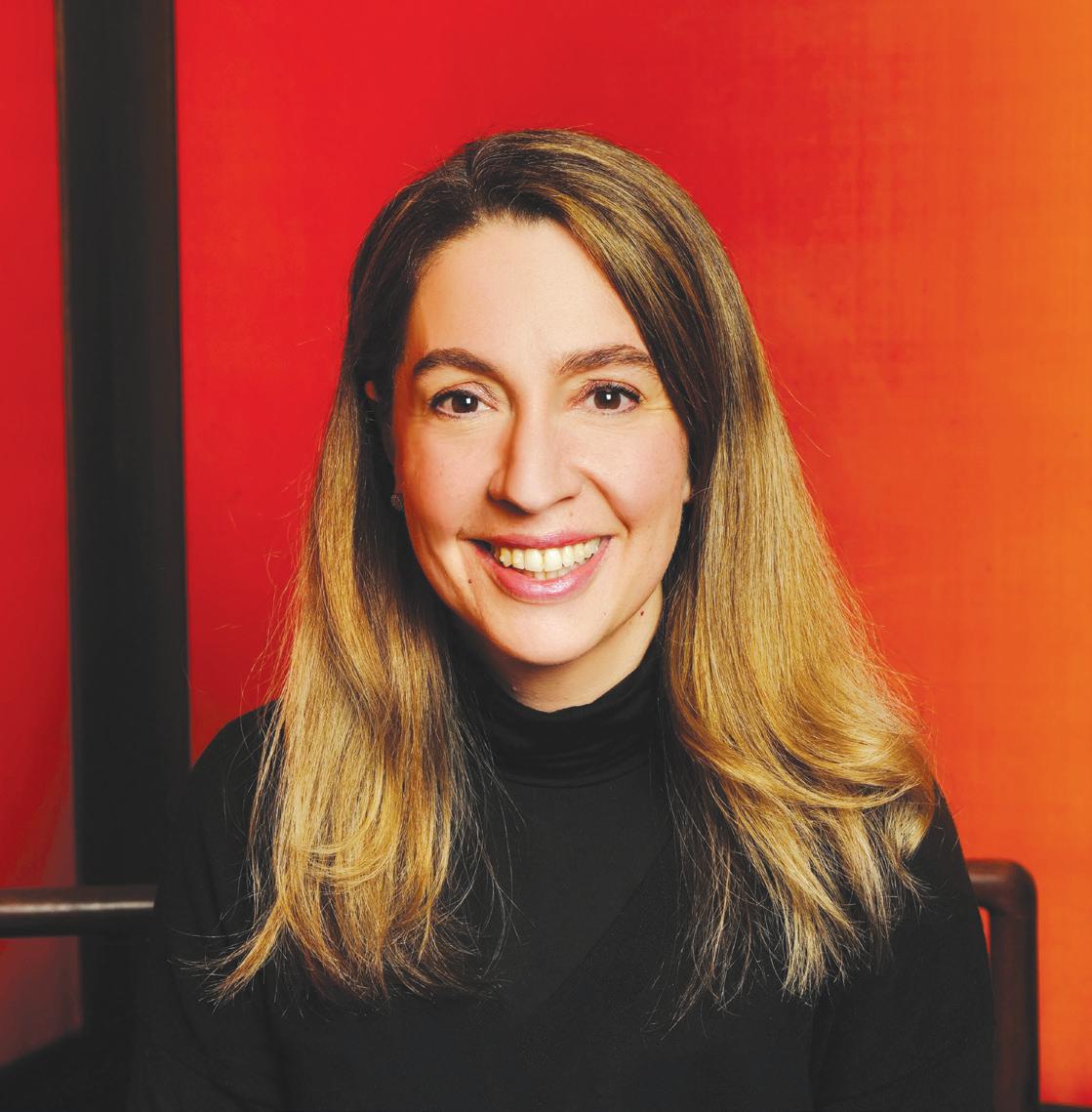
• Lucy Pérez: Driving conversations around leadership, representation, and economic mobility - Page. 63
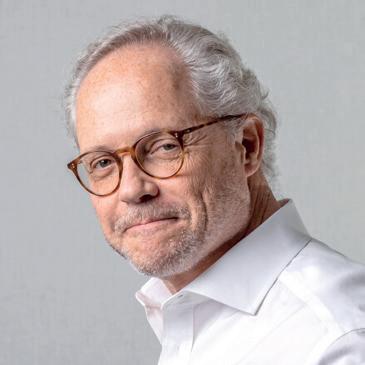
• Latinos in Energy: The executives and innovators shaping the future of the energy industry - Page. 56
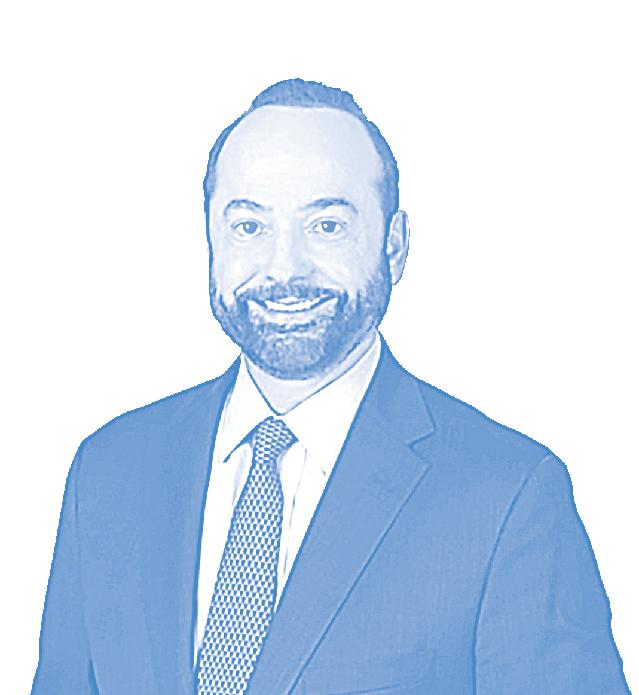
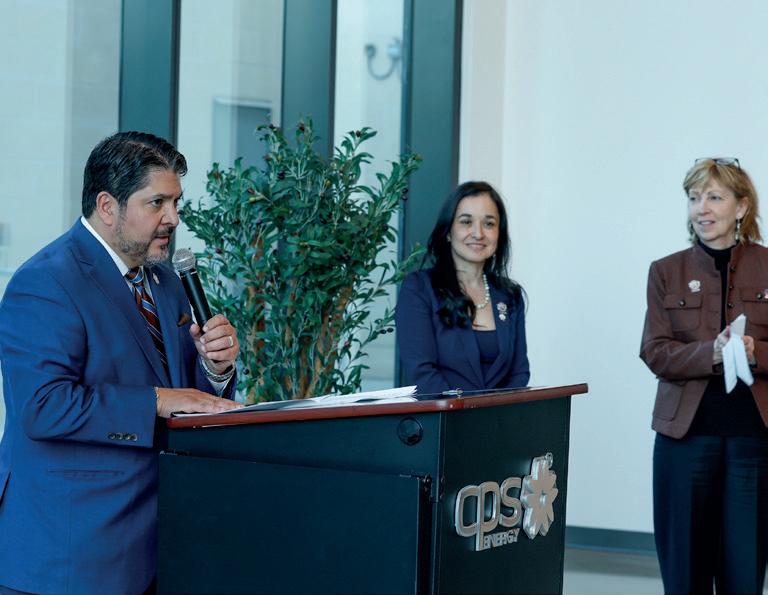
• CPS Energy: Innovation, infrastructure, and the future of public energy leadership - Page. 74
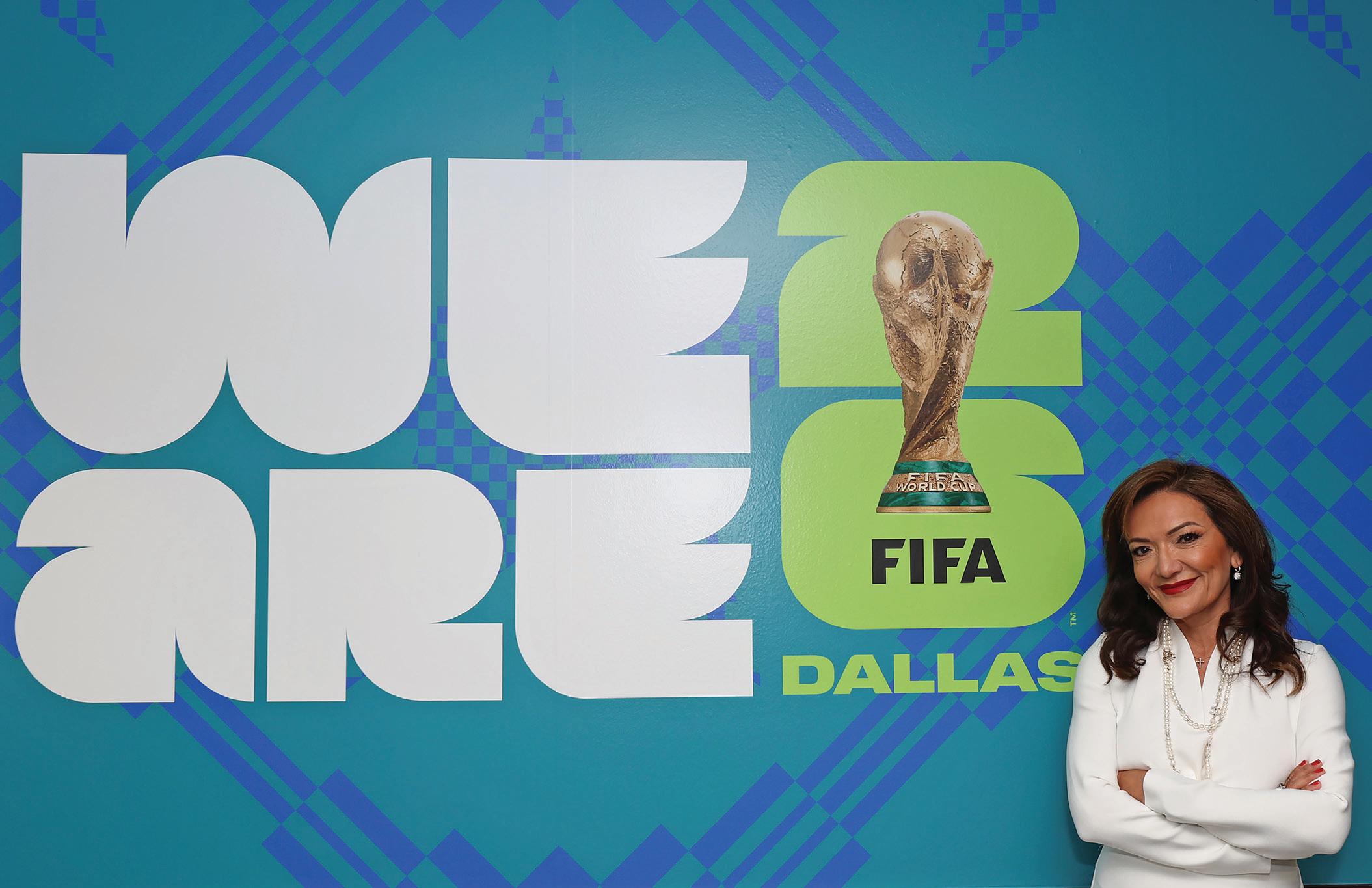
• FIFA World Cup 2026: A special section exploring the business, travel, hospitality, and economic impact surrounding the world’s biggest sporting event - Page. 79
NEW COLUMN ALERT!
• Travel: Destinations, experiences, and curated journeys shaping modern travel - Page. 87
From Smartphones to Smart Agents: The Next Wave of Innovation
Ralph de la Vega
IN TECHNOLOGY, the breakthroughs that matter are not just faster—they redefine how innovation happens. The personal computer brought computing to every desk. The internet brought information to every hand. Then smartphones put everything in our pockets, mobilizing entire industries and accelerating innovation at a pace few anticipated. Having led AT&T Mobility during that transformation, I saw firsthand how quickly a platform shift can reshape markets, compress product cycles, and redefine customer expectations. Today, a new class of opensource, agent-based AI systems—exemplified by OpenClaw—is poised to do the same for how innovation is created and executed inside the enterprise.
A new generation of AI capabilities has already begun to change how individuals work—making it easier to generate ideas, analyze information, and move faster. What is emerging now takes that foundation to an entirely different level. Instead of isolated interactions, these systems enable coordinated networks of agents, each with a defined role, working together to complete complex tasks. Instead of linear effort, work becomes orchestrated. Innovation shifts from a function of individual capacity to a function of how effectively these systems are designed and directed.
What distinguishes this technology is how it is delivered. It is open source and can run locally on infrastructure. That combination changes the innovation equation. Running locally allows organizations to innovate with sensitive data—customer insights,
proprietary models, and internal processes—without exposing it externally. Open source removes dependency on a single vendor and enables companies to adapt these systems to their own workflows. Together, these attributes expand access to advanced capabilities, enabling organizations of all sizes to innovate on their own terms.
At scale, this changes the organization’s rhythm. Innovation cycles compress. The cost of experimentation drops. Ideas move from concept to execution more quickly, allowing companies to test more, learn faster, and adapt continuously. For industries built on information and analysis, this has the potential to redefine how products are developed, how services are delivered, and how customers are engaged. The advantage will go to those who can operate at this new cadence.
But speed without control introduces risk. Running systems locally improves data control, but organizations must still ensure that access is managed, data is protected, and agent interactions do not expose sensitive information. As multiple agents operate across systems, security complexity increases. Innovation must be paired with discipline, or it can quickly create unintended vulnerabilities.
Reliability is equally critical. The models powering these agent-based systems can produce incorrect outputs, even when they appear confident. As innovation accelerates, validation becomes more important, not less. Organizations will need to build verification layers into their workflows, combining automated checks
with human oversight. The goal is to sustain speed while preserving accuracy and trust.
For business leaders, this is a moment to rethink how work itself is structured. If innovation can be orchestrated through coordinated agent systems, then workflows can be decomposed and continuously improved. The opportunity is not simply to move faster, but to redesign how the organization operates. Those who approach this as a structural shift—rather than a tool deployment— will capture the greatest value.
The implications extend to talent and competition. The most valuable employees will be those who can guide and refine these systems—defining problems, directing agents, and interpreting results. As access to these capabilities broadens, differentiation will come from how effectively they are applied. Proprietary data, workflow design, governance, and execution speed become the defining factors. Innovation itself becomes the battleground.
This emerging model signals something larger than a new tool. It represents a shift toward a world where innovation is continuous, distributed, and embedded in how work gets done. It enables organizations to move faster, experiment more freely, and adapt more quickly to change.
Because in the end, technology does not determine outcomes. Leadership does. And the leaders who recognize this shift early—who combine innovation with discipline, and speed with trust—will be the ones who turn this next wave of innovation into sustained competitive advantage.
Ralph de la Vega is the former vice-chairman of AT&T Inc. He is the author of the best-selling book “Obstacles Welcome: Turn Adversity to Advantage in Business and Life.” He is also a LinkedIn Influencer, posting regularly on leadership and innovation.
By William Hanhausen
Courtesy of William Hanhausen F. Izquierdo
TOWARD THE QUIET TRUTH OF DAMN GOOD AMERICAN ART
There are works of art that do not ask to be explained. They arrive, as if from a distant interior, carrying within them a silence that is not empty but full—dense with memory, with breath, with the unseen architecture of a life lived attentively. And before such works, one does not inquire first about origin, nor category, nor the careful labels that institutions so often require. One stands, instead, as one stands before a horizon: aware that something greater than naming is taking place.
So, it is with what we have come to call Latino art—a phrase at once necessary and insufficient, like a doorway that must be passed through but never mistaken for the house itself.
The goal, then, is not to erase heritage. That would be to deny the roots from which the work draws its quiet strength. But neither must heritage become a boundary, a narrow frame that confines what was meant to expand. It must remain what it truly is at its best: a source, a deep well from which the artist draws, without ever being imprisoned by its walls. For in the end, this art does not belong to an “other”. It does not stand apart, nor append itself timidly to the larger body of American expression. It is already within it—breathing, shaping, enduring.
Speaking plainly, though the truth itself resists bluntness: this is damn good art.
Not an “X”, as I constantly stand before. Not a mark to satisfy the restless accounting of representation. Not a gesture offered to appease the optics of inclusion. It is, first and last, the labor of mastery—of hands and minds disciplined over time, of spirits willing to confront themselves without disguise. The artists who move within this sphere do not seek permission to exist. Like the wandering knight Don Quixote, they advance toward what others might mistake for illusion, yet what they themselves know to be a necessary truth. Their courage is not theatrical. It is quieter, more enduring. It lies in the refusal to perform identity as spectacle, and instead to inhabit it fully—so fully that it dissolves into something universal. In brushstroke, in stone, in gesture, they speak not only of lineage, but of the human condition itself: of longing, of fracture, of resilience, of light.
One thinks of Carmen Herrera, whose lines achieved a clarity so severe it becomes tenderness; or Teresita Fernández, who reshapes perception into something both elemental and infinite. There is Ana Mendieta, returning the body to the earth as if to remember an ancient language, and Ramiro Gomez, who renders the invisible visible with a precision that refuses indifference. Alongside them, voices such as Benito Huerta, Eddy Martinez, Lara Alcántara, John Valadez, Marcos Raya, Frank Diaz Escalet, Aliza Nisenbaum, and Frank Romero carry forward a continuum not defined by category, but by excellence.
These artists do not ask to be seen as representatives. They ask only to be seen—truly, rigorously, without the distortion of expectation. And in this, there is a lesson not only for creators but for those who stand before their work: collectors, curators, institutions, all who would claim to love art must learn again how to look.
For art, in its essence, resists the simplifications imposed upon it. It is not political in the narrow sense, though it may contain the whole weight of history. It is not neutral, yet neither is it reducible to agenda. It exists in that fragile, necessary space where truth can emerge unguarded.
And so, the responsibility falls, quietly but insistently, upon the community that surrounds it. To recognize quality where it resides. To honor discipline over narrative convenience. To allow critique—not as dismissal, but as the highest form of respect. For only through such clarity can all art, in its many voices, stand together without hierarchy or tokenism.
In private collections, in the attentive gaze of those who have learned to trust their own discernment, this work is already understood. It is acquired, studied, and held not as an emblem, but as an achievement. And perhaps this is the quiet future toward which it moves: a place where the need to justify has dissolved, and only the work remains.
For what endures—what must endure—is this: that the art be encountered in its full measure. That it be allowed to speak without interruption. That it be known, simply and irrevocably, as what it is. “Damn good American art”.
Frank Diaz Escalet@HOLLIS-TAGGART, NYC
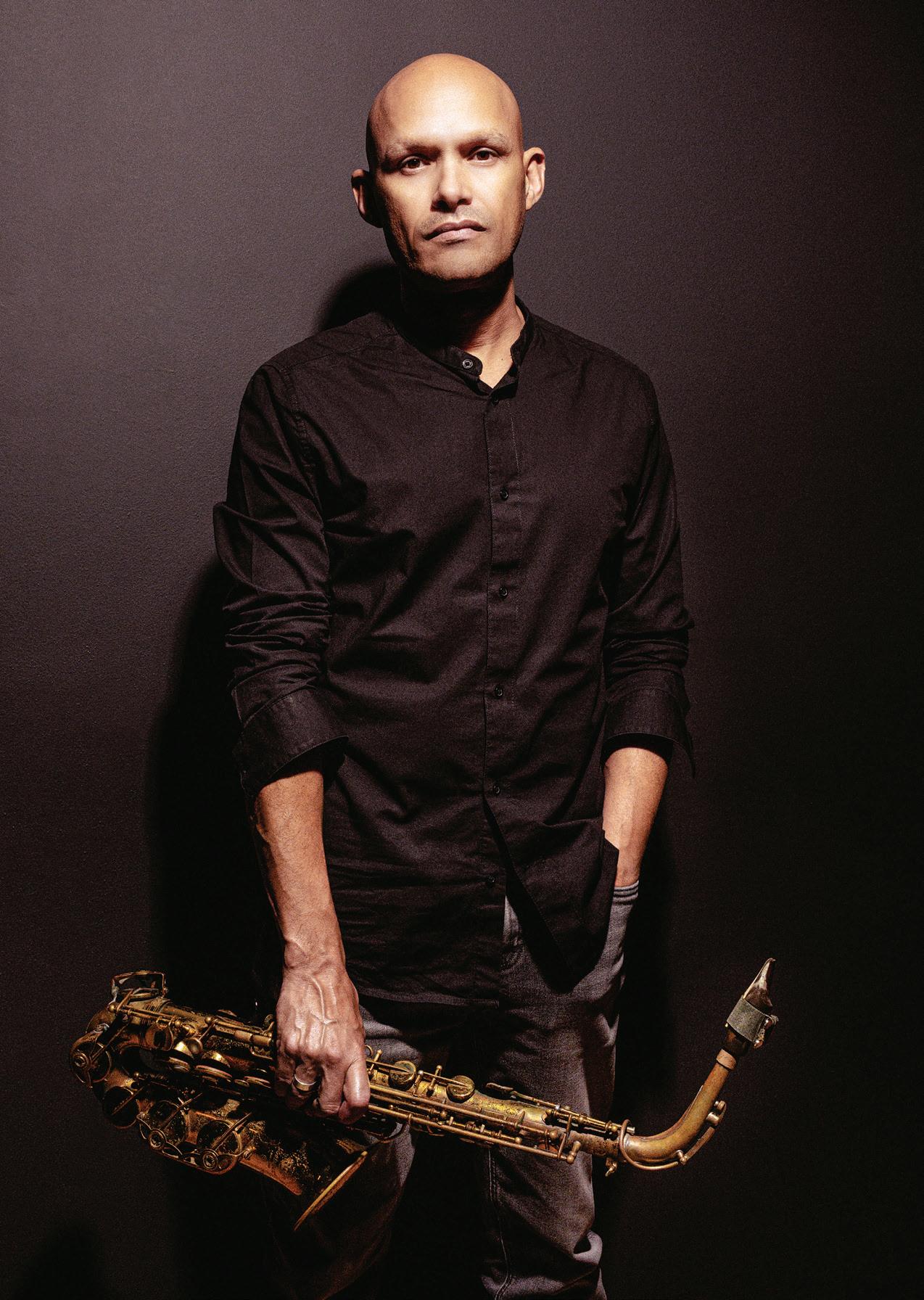
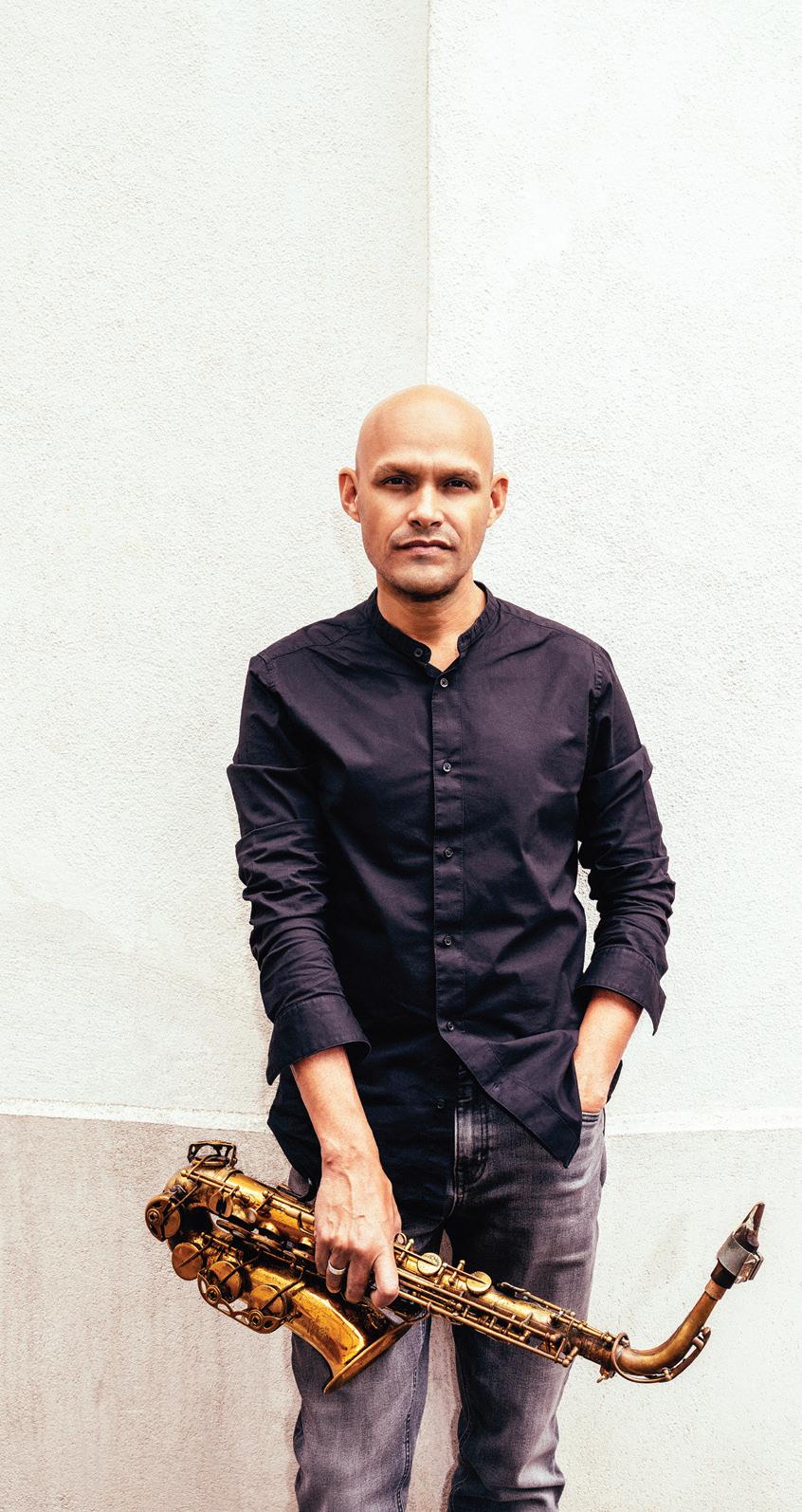
MIGUEL ZENÓN: IMPROVISING BETWEEN ROOTS AND REINVENTION
Miguel Zenón is not just one of the leading voices in modern jazz—he’s an artist who treats music like both a science and a story. A Puerto Rican Grammywinning saxophonist, composer, and educator, Zenón has built a career exploring identity, culture, and tradition through improvisation. Think jazz, but with a research department.
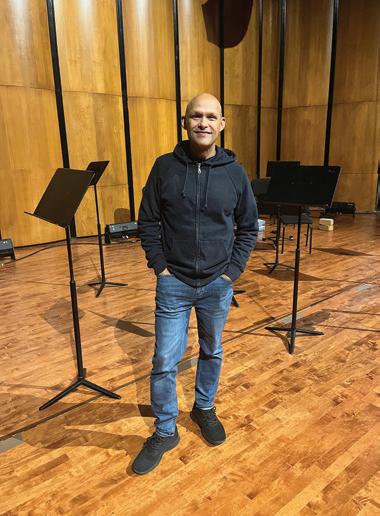
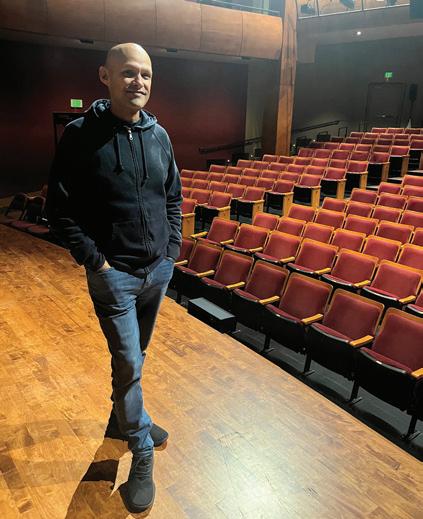
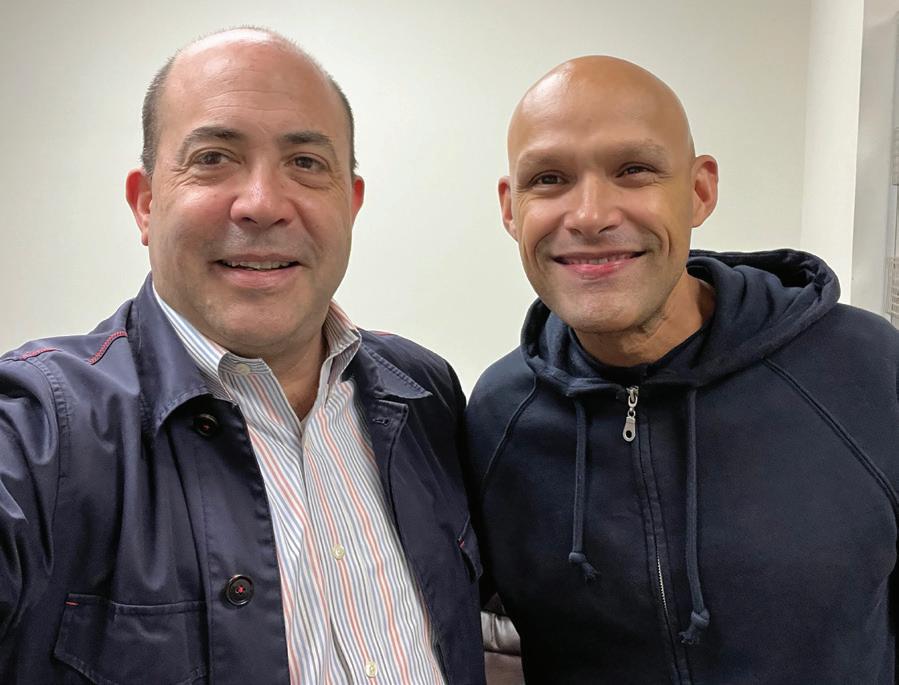
JUST BEFORE his recent live performance in Houston, I had the opportunity to meet with him and ask my favorite questions:
If you were remembered in 100 years for one piece, which one would that be?
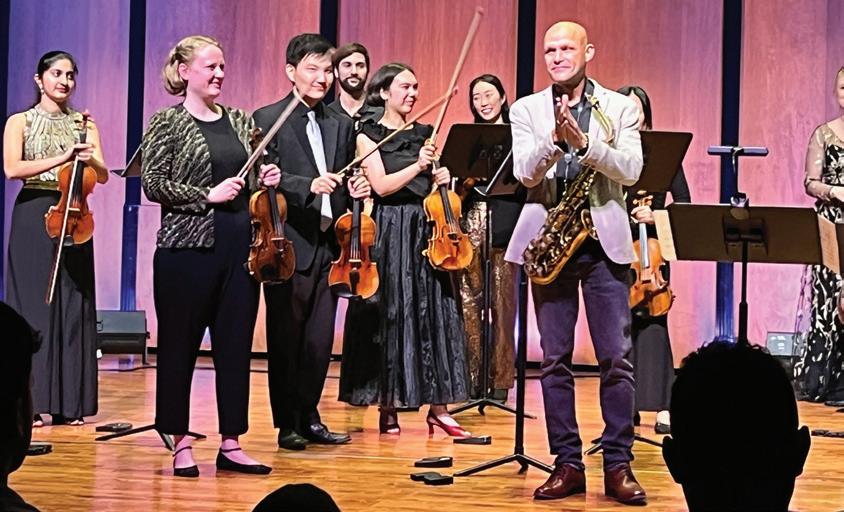
A Zenón smiled at the impossibility of the question. Choosing one piece, he said, is like choosing among your children. His work, however, has consistently focused on reinterpreting traditional Puerto Rican music in a more personal way—less about a single hit, more about a lifetime portfolio. Attending his live performance of “Yo Soy La Tradición”, a suite of eight songs for saxophone and string orchestra, makes me consider it hard to beat!
If not a musician, what would your profession be?
A Interestingly, music wasn’t always the obvious path. He studied at Puerto Rico’s Free School of Music but initially leaned toward engineering and had a strong interest in the natural sciences. Discovering jazz changed everything. Today, he teaches at the Massachusetts Institute of Technology, one of the few places where improvisation and equations might comfortably coexist.
Alexis Langagne:
The author is a Global High-Tech Executive, Global VP at Diebold-Nixdorf and previously Regional CEO/COO at HP and Oracle; Board Advisor for hightech startups and Board Director for a sports non-profit. Alexis is also a professional-level drummer.
When did music become your life?
A At 14, when he discovered jazz. By 17, he was fully committed, and by 19, he had moved to the United States to pursue it professionally. His greatest influence was Charlie Parker but Paquito D’Rivera, and Chucho Valdés also helped shape his direction. Not a bad advisory board for his music.
Career setbacks?
A Like many great journeys, his wasn’t linear. He wanted to attend Berklee College of Music in Boston but didn’t have the financial means, so he spent a year in Puerto Rico saving money. Doubt crept in—but so did progress. Sometimes the most strategic move is simply staying in the game long enough.
Next big project?
A Zenón is interested in continuing to explore the connection between music and different cultures. For him, innovation isn’t about disruption, it’s about deeper understanding.
Thoughts on Generative AI in music?
A He doesn’t see AI as a threat, but as a complement— another tool that can open new paths. However, he’s clear about one thing: the experience of a human performing live, the emotion shared with an audience, is irreplaceable. In other words, algorithms may scale, but they don’t get standing ovations.
What makes Zenón unique is his balance between discipline and freedom. Jazz is structured improvisation, and his career reflects that same principle. He knows the rules deeply—then bends them with purpose.
Spending time with him was a reminder that success doesn’t always come from chasing visibility, but from building substance. Zenón doesn’t rush. He develops. And in a world obsessed with speed, that might be the most powerful strategy of all.
Sylvain Gripoix & Alexis Langagne
100 LATINAS
2026
The 100 Latinas 2026 represent a powerful cross-section of leadership shaping business, policy, technology, culture, and community across the United States. This section celebrates women whose vision, resilience, and results are redefining what leadership looks like across industries.
100 LATINAS 2026
Beatriz Acevedo
Co-Founder & CEO SUMA Wealth
Beatriz Acevedo is a pioneering entrepreneur, global speaker, and leader at the intersection of technology, finance, and culture. She is the Co-founder and CEO of SUMA Wealth, a fintech platform using culturally intelligent AI to help younger generations build financial knowledge and long-term wealth. A serial founder, she has raised over $60 million and previously built mitú, a leading digital media platform for multicultural audiences. An award-winning producer and recognized thought leader, Acevedo has been featured in major media outlets and speaks globally on innovation and equity. She is also deeply committed to expanding access to education, capital, and opportunity.
MJ Acosta-Ruiz
Entertainment and Sports Host and Speaker NFL Media
MJ Acosta-Ruiz is an Emmy-Award winning sports and entertainment host and journalist. She became the first woman of color to host a show at the NFL Network when she was named the host of NFL Total Access in 2020. Fully bilingual in English and Spanish, she is also the co-host of the El Huddle Podcast, the first podcast by NFL Media dedicated to the vast and growing Latino fanbase. With nearly 15 years in the TV & Entertainment industry, MJ continues her work as an advocate for representation and equality.
Arcilia Acosta President & CEO CARCON Industries
Acosta is the president and CEO of CARCON Industries and Construction and the founder and CEO of Southwestern Testing Laboratories Engineers. She is a celebrated 30-year business veteran, entrepreneur, nationally recognized speaker, philanthropist and mother. Acosta has held board-level positions with some of Texas’ most successful corporations. She also serves on the board of directors of Vistra Corp., Magnolia Oil & Gas and Veritex Holdings, Inc. She is a member of the National Women Energy Directors Network, the International Women’s Forum and a sustaining member of the Junior League of Dallas.
Naomi Adaniya Chief Data Officer Drug Enforcement Administration
Adaniya serves as Chief Data Officer at the Drug Enforcement Administration (DEA), where she leads the agency’s data strategy, governance, and analytics initiatives. In this role, she works to modernize data systems and strengthen the use of data to support national security, law enforcement operations, and public safety. With extensive experience in data management, technology, and federal operations, Adaniya focuses on improving decision-making through advanced analytics and responsible data use. Her leadership helps drive innovation across government systems while promoting transparency, efficiency, and collaboration in the use of data to address complex national challenges.
Sarah Aiosa
Senior Vice President & President, Latin America MSD
Sarah Aiosa serves as President, Latin America for Merck & Co., a Fortune 500 Global Biopharmaceutical Company, where she leads a diverse region comprised of 5,000 employees in over 30 countries, manages a ~$2B+ P&L and oversees the Human Health business. She is the first woman president to lead LATAM in the company’s history. She has Board appointments on key trade associations, business councils and not-for-profit organizations. Sarah is a purpose-driven leader, focused on people and patients.
Anna M. Alvarado
Managing Director, Chief Legal Officer & Corporate Secretary Texas Capital Bancshares, Inc. & Texas Capital Bank
Alvarado joined Texas Capital Bank in October 2021 to help the firm rebuild and transform itself into the flagship financial services firm in Texas, bringing more than 16 years of broad-based expertise in leading business and legal advisory services, including scalability, expansion, and domestic and international integration. Previously, Alvarado served as the global general counsel for FirstCash, Inc.Alvarado serves as Chair of the Board of Directors and member of the Finance and Strategy Committees of the nonprofit ACH Child and Family Services.
Glory
Alcantara
Director of Multicultural Marketing General Mills
Glory is a marketing and sales capabilities bi-lingual professional, passionate about driving growth using a consumer/shopper-first approach. 15+ years of experience with some of the most iconic consumer brands and implementing processes to elevate capabilities. Her key strengths include strategy, team leadership, action-oriented, and innovation mindset.
Ana P. Ambrosi
Director of Corporate Communications and PR Avocados From Mexico
Ana leads corporate communications and PR for Avocados From Mexico. Her international business and US-Mexico relations experience helped her build and develop AFM’s corporate communications and reputation strategy and manage the marketing PR program. As a public affairs professional, Ana has more than 20 years of experience in corporate and political communications, international affairs, and media relations, and has worked in a variety of industries including government, education, and health.
100 LATINAS 2026
Ana Marie
Argilagos
President & CEO
Hispanics in Philanthropy (HIP)
Ana Marie Argilagos leads Hispanics in Philanthropy (HIP), a vast network of people building, funding, and fueling Latine power across the Americas. With experience at Ford and Annie E. Casey Foundations, she’s served in two Presidential Administrations, most recently, as Commissioner for the White House Initiative for Hispanics. Ana Marie sits on boards including Rockefeller Philanthropy Advisors, CANDID, and Poder Latinx, driving change across sectors.
Robin Arzón
Vice President of Fitness Programming Peloton
Robin Arzón is the Vice President of Fitness Programming and a leading instructor at Peloton, where she has become one of the platform’s most recognizable voices. A former corporate lawyer turned endurance athlete, Arzón has completed numerous ultramarathons and endurance competitions. She is also a bestselling author and motivational speaker who advocates for strength, resilience, and self-empowerment. Through her dynamic classes and storytelling, she has built a global community of riders and runners committed to physical and mental wellness. Arzón continues to inspire millions to push beyond perceived limits.
Patricia
Arvielo
CEO and Co-Founder
New American Funding
Patty Arvielo, Co-Founder and CEO of New American Funding, has nearly 40 years of experience in the mortgage industry. A first-generation Hispanic American, Patty co-founded New American Funding in 2003, growing it into the largest Latina-owned mortgage company in the nation. Her dedication to diversity and inclusion has earned her numerous accolades, including recognition on the Forbes 50 Over 50 list. Patty is committed to mentoring and empowering her employees while advocating for lending to diverse communities.
Elizabeth Barajas-Roman
President & CEO Women's Funding Network
Elizabeth is the President & CEO of the Women’s Funding Network, the largest global philanthropic network for gender equity and justice. With over 20 years of leadership in progressive movements, she has advocated for immigrant women’s health and rights. She’s also served as CEO of the Women’s Fund of Western Massachusetts and is a member of various advisory boards, including the UMass-Boston Center for Women in Politics and Public Policy, and the Massachusetts Economic Empowerment Trust Fund Board.
Sascha Barboza
Co-Founder & Co-CEO Sascha Fitness Corp
Sascha Barbosa is a business owner, co-founder, and co-CEO of Sascha Fitness Corp, a prominent supplement company. Driven by a passion for aiding individuals in attaining their health and fitness aspirations, Sascha has cemented her reputation as a best-selling fitness book author and a sought-after speaker. Her insightful conferences, spanning across Latin America, have garnered widespread acclaim for their impactful delivery and actionable insights.
Jen
Batchelor
Co-Founder & CEO Kin Euphorics
Jen Batchelor co-founded Kin Euphorics in 2017, blending Ayurvedic practice, psychology, neuroscience, and quantum physics to create a tonic combining adaptogens, nootropics, and botanicals. As the first Latinx woman to raise over $15M in venture capital for a beverage brand, she has transformed Kin into a wellness movement, partnering with Bella Hadid. A pioneer in the nonalcoholic wellness category, Jen is committed to innovation for better living.
Stephanie Bazan
Senior Vice President Commercial Strategy and Execution Avocados From Mexico
Stephanie leads the commercial strategy for Shopper, Trade and Foodservice for Avocados From Mexico. Under her leadership and vision, her department is responsible for driving Mexican avocado demand and has accelerated it significantly, reaching record levels. A bilingual professional with over 25 years of marketing experience, Stephanie has worked in a variety of industries including consumer packaged goods, entertainment and retail.
Nellie Borrero is known for her unwavering passion for inclusion, diversity, and sharp focus on equality. Nellie joined Accenture in 1986, creating the first role for diversity efforts. Under her direction, the company launched several successful training programs spanning multiple markets and segments of diversity. Today, she continues to build inclusive cultures inside Accenture, setting the vision and strategy behind the company's diversity initiatives, and with external partners and clients.
100 LATINAS 2026
María Luisa Boyce
VP of Global Public Affairs UPS
Maria Luisa Boyce is Vice President for International Policy at UPS Global Public Affairs, with over 20 years of experience in international trade and customs. She advocates for UPS’s priorities in Latin America, leads the UPS Women Exporter Program, and liaises with National Hispanic Organizations. Previously, Boyce served as Senior Advisor for U.S. Customs and Border Protection, advising on trade policies. She holds a degree in finance and international relations from Universidad Externado de Colombia and a certificate from the Harvard Kennedy School.
Gaby Bravo Founder & CEO Bravos Leadership
Gaby Bravo is the founder of Bravos Leadership, a leadership development platform dedicated to empowering Latino professionals and executives. Through her work as a leadership strategist, executive coach, and speaker, Bravo helps organizations and individuals strengthen inclusive leadership, cultural intelligence, and professional growth. She is widely recognized for creating programs and initiatives that elevate Latino talent and foster leadership pipelines across industries. Bravo frequently collaborates with corporations, nonprofits, and community organizations to expand opportunities for diverse leaders. Her mission centers on helping the next generation of Latino professionals lead with confidence, purpose, and impact.
Oriana Branon
Associate Vice President, Corporate Communications Royal Caribbean Group
Oriana Branon is AVP of Corporate Communications at Royal Caribbean Group, leading international, destination, and sustainability efforts. With 20 years in travel, fintech, and gaming, she’s a PRWeek Woman to Watch and Forbes-recognized Latina storyteller.
Roselin Cabrales
President & Leadership Strategist Women Economic Forum Houston & EntreLíderes
Roselin Cabrales is a dynamic entrepreneur and community leader dedicated to empowering women and Latino professionals. She serves as a leader with the Women Economic Forum Houston and is the founder of EntreLíderes, a platform that connects, mentors, and elevates emerging Latino leaders. Through her work, Cabrales fosters collaboration, leadership development, and economic opportunity within diverse communities. She is widely recognized for creating spaces where Latina professionals and entrepreneurs can thrive, grow their networks, and amplify their impact. Her advocacy and leadership continue to inspire a new generation of women determined to lead across industries and communities.
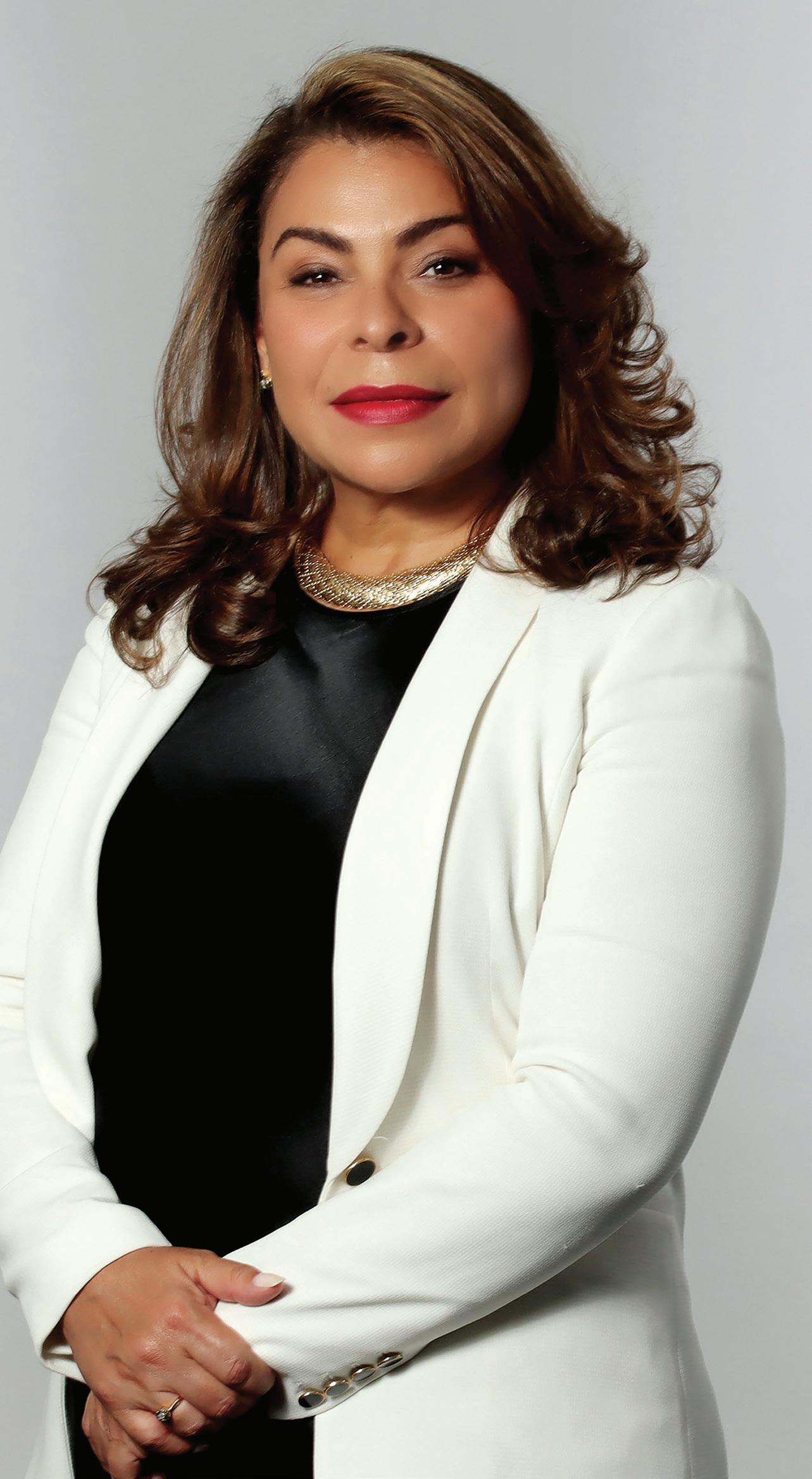
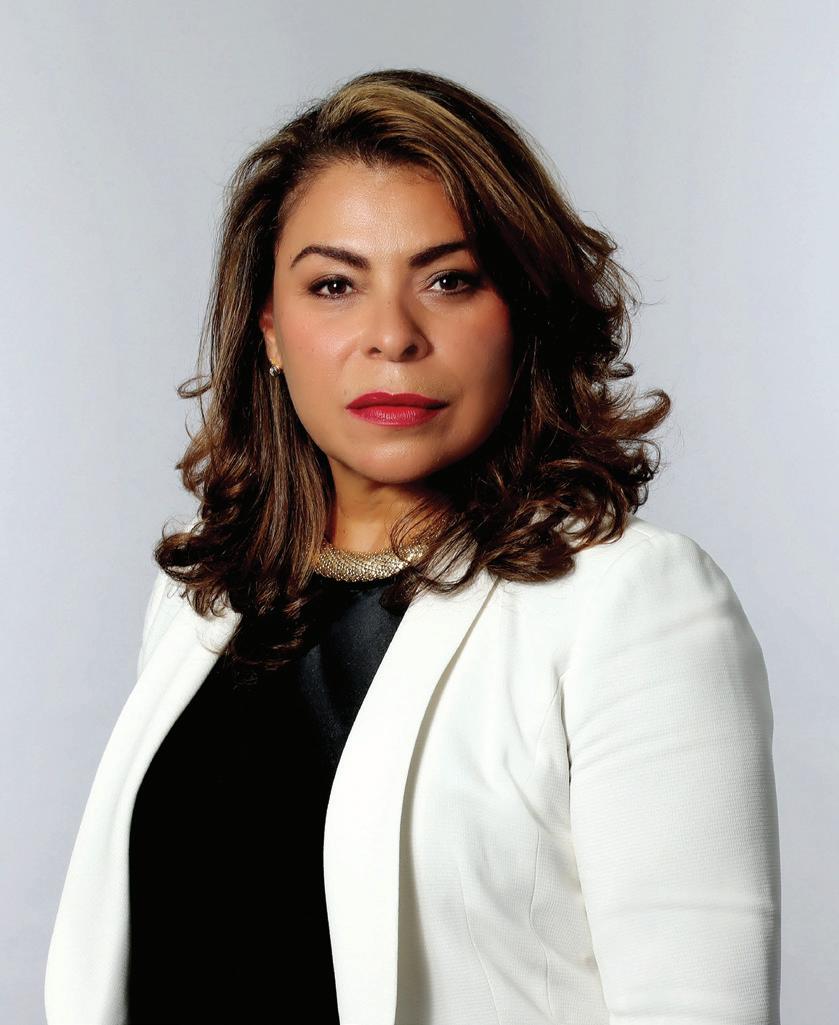
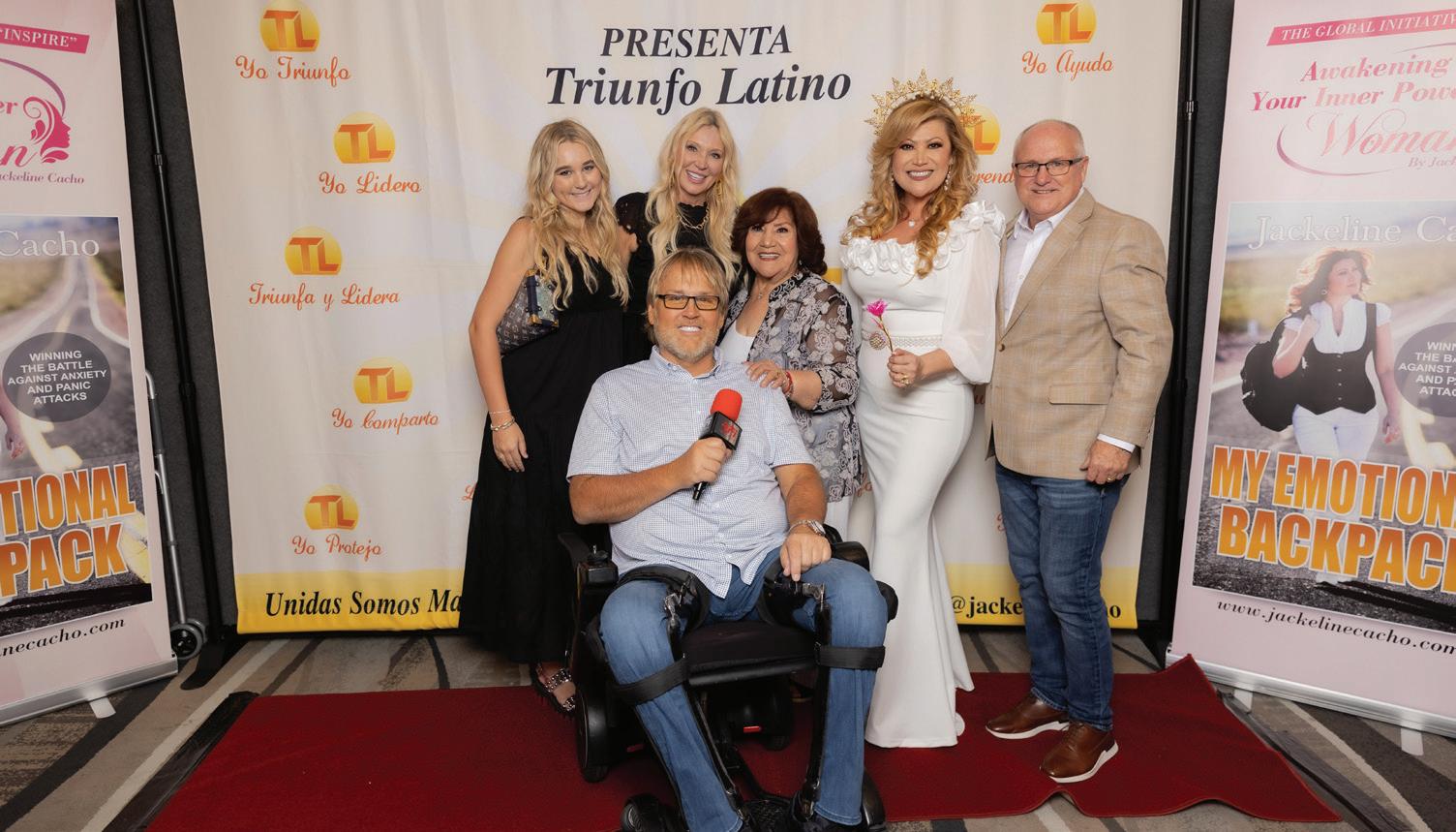
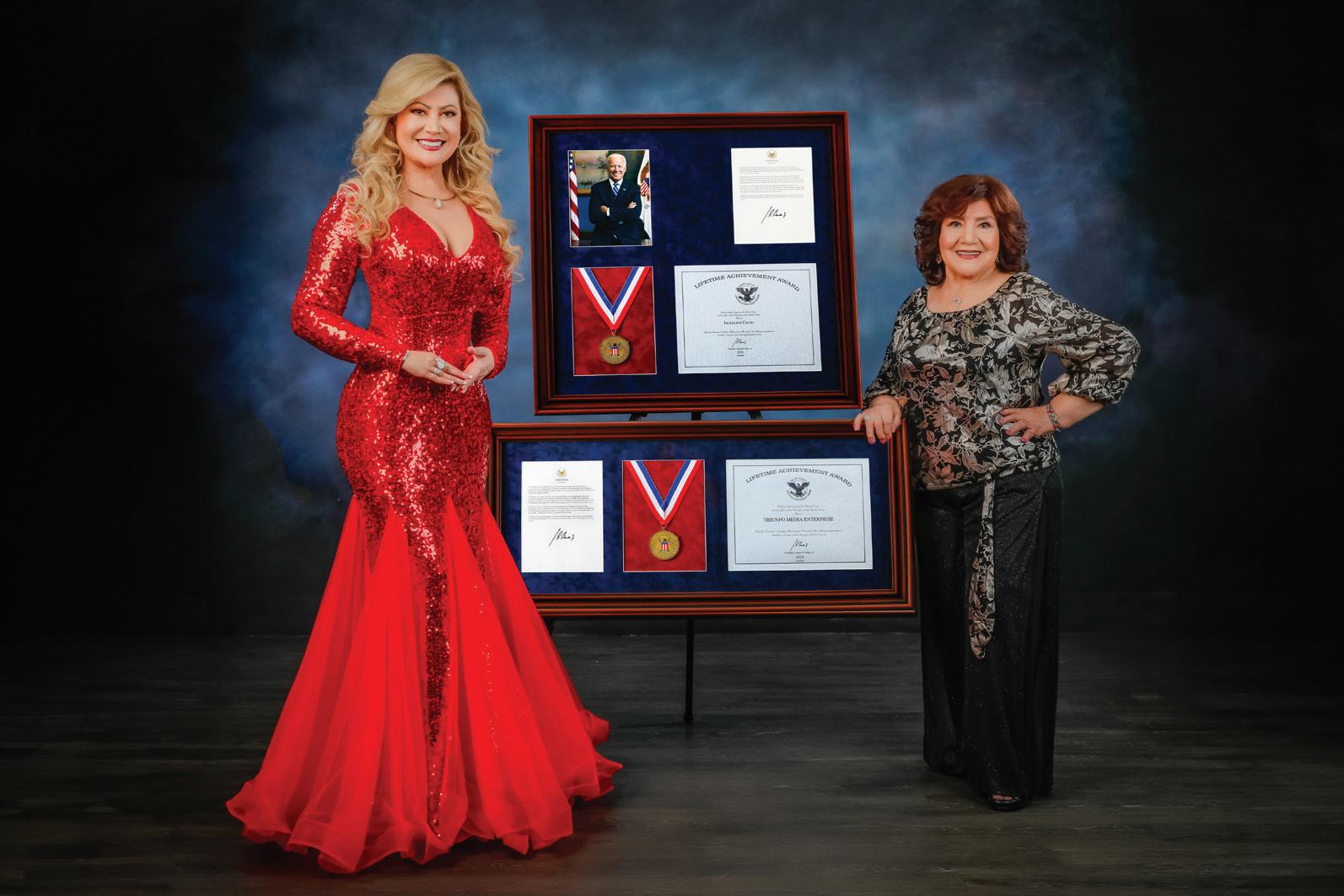
Jackie Cacho is an Emmy Award–winning journalist, producer, and founder of Triunfo Latino and JC & TM Filming Productions. With a career spanning television, media production, and storytelling, she has dedicated her work to highlighting the achievements and challenges of the Latino community. Through Triunfo Latino, she amplifies inspirational stories of Latino leaders and entrepreneurs across the country. Cacho’s production company develops media projects that focus on culture, community impact, and representation. Her work continues to elevate Latino voices while creating platforms that celebrate resilience, success, and cultural pride.
Castillo Martinez is Senior Vice President of Workforce Experience Innovation & Analytics at McKesson, where she leads strategies that enhance employee engagement, workplace culture, and talent insights across the organization. With deep expertise in workforce strategy, analytics, and organizational transformation, she focuses on creating data-driven approaches that improve the employee experience and support business performance. Martinez has built a strong reputation for advancing innovative human capital strategies that empower employees and strengthen leadership pipelines. Her work continues to shape how large organizations use data and technology to foster more inclusive, agile, and high-performing workplaces.
Emma Carrasco
SVP, Corporate Affairs
NBCUniversal News Group
Emma Carrasco is SVP, Corporate Affairs for the NBCUniversal News Group, which comprises NBC News, NBC News Now, Telemundo and NBCU Local. In this role she advises on key strategies to help transform the News Group from a legacy television network into the leading multi-platform news organization in the world. Prior to joining the NBCUniversal News Group, Carrasco was SVP & Global Engagement Officer for the National Geographic Society and CMO & SVP of Audience Development for NPR.
Rita Chertorivski
SVP of Business & Legal Affairs TelevisaUnivision
Rita Chertorivski, SVP of Business & Legal Affairs for Global Entertainment at TelevisaUnivision, oversees the legal aspects of global entertainment content across platforms. Previously, she held pivotal roles at NBCUniversal Telemundo Enterprises and operated an Independent Legal Advisory firm. Rita's career spans corporate law, academia, and independent legal advisory. She holds degrees from Universidad Iberoamericana and the University of Miami.
100 LATINAS 2026
Leila Cobo
Chief Content Officer, Latin/Español Billboard
A Fulbright scholar from Cali, Colombia, Leila oversees Billboard’s coverage of Latin music in all its platforms. One of the world’s leading authorities in Latin music, Leila was the first U.S. based journalist to cover Latin music daily and has been instrumental in transforming its coverage and perception in the U.S. Leila also programs Billboard’s yearly Latin Music Week and launched Billboard Español and Billboard’s Latin Women In Music. She has published 5 books, including Decoding Despacito, featured in the New York Times’ summer reading list.
Ana Corrales
Chief Operating Officer - Google Consumer Hardware Google
Ana Corrales is the Chief Operating Officer for Google’s Consumer Hardware & Services business. As COO, Ana leads the development process for Google hardware products and manages getting those products into the hands of customers. Ana also drives the end-to-end IT efforts and customer experience work across the Google Hardware business. Prior to Google. Ana has been recognized by Forbes as one of the 50 Most Powerful Latinas in Business, and as one of the most powerful Latinas by the Association of Latino Professionals For America (ALPFA).
Camila Coelho
Founder & CEO Elaluz (influencer)
Camila Coelho is a Brazilian-American entrepreneur, digital creator, and founder of the beauty brand Elaluz. After building a global following as a fashion and beauty influencer, she transformed her platform into a successful business focused on inclusive beauty and wellness products. Coelho has collaborated with major fashion houses and brands while using her influence to advocate for entrepreneurship and self-confidence. Through Elaluz, she emphasizes clean beauty, authenticity, and community engagement. Her journey from beauty blogger to founder illustrates the growing power of digital creators to build global consumer brands.
Coss, born and raised in Mexico City, is a pastry chef who tells stories through her technique-driven desserts, celebrating and finding inspiration in local ingredients as well as the flavors she grew up with in Mexico. She took on her first kitchen job at the age of 17 as a bread baker in Enrique Olvera’s landmark restaurant Pujol. In 2011, Coss moved to New York City to work at several top-tier culinary concepts, including Empellon, Agern, and Cosme. Coss relocated to Washington DC to join Lutèce as the pastry chef. She is now as well at the recently opened Pascual.
Isabel Coss Chef Pascual
Katty Coulson
Vice President of Business and Technology Services
Oracle NetSuite
Katty Coulson is Vice President of Business and Technology Services at Oracle NetSuite. Responsible for a variety of services that enable business processes and employee productivity. Leads a global organization responsible for business applications, infrastructure and support services, and internal communications, including transformational initiatives, onboarding services to Oracle Cloud and operational excellence ensuring productivity, security, and great user experience.
Evelyn De Jesus
Executive Vice President
American Federation of Teachers (AFT)
Since 2019, Evelyn DeJesus has been the executive vice president of the 1.7 million-member American Federation of Teachers, AFL-CIO, the first Latino/a officer in the union’s 105-year history. A skilled teacher and administrator, DeJesus is a forceful advocate for justice—undaunted and unafraid to speak truth to power. In December 2022, she was appointed by the Biden administration to serve on the President’s Advisory Commission on Advancing Educational Equity, Excellence and Economic Opportunity for Hispanics.
Stacie M. de Armas
SVP, Inclusive Insights & Initiatives
Nielsen
Stacie M. de Armas is Senior Vice President, Diverse Intelligence & Initiatives for Nielsen. She is responsible for Transforming and repositioning Nielsen’s diverse insights expertise for clients, partners, policymakers, the public, and community advocates. As well as driving innovative thinking about diverse communities through the development and commercialization of products that support diverse insights and industry diversity initiatives. Stacie has more than 23 years of communications and media experience developing and activating brand marketing campaigns.
Kiki
Del Valle
Division President, North Latin America
Mastercard
Kiki Del Valle is President of Mastercard’s North LAC Division, leading operations in Mexico, Central America, and the Caribbean. A fintech leader, she has expanded digital payments, driven financial inclusion, and launched Apple Pay, Google Pay, and Samsung Pay, transforming global payments.
100 LATINAS 2026
Carla Dodds
Chief Marketing Officer NovoMercatus LLC
Carla Dodds is Chief Marketing Officer at NovoMercatus LLC, where she leads global marketing strategy, brand development, and customer engagement initiatives. With extensive experience in strategic marketing and business growth, Dodds focuses on building innovative campaigns that connect brands with diverse audiences and emerging markets. Throughout her career, she has helped organizations strengthen their market presence while driving measurable business results. Known for her strategic vision and collaborative leadership style, Dodds is committed to advancing inclusive marketing practices and expanding opportunities for Latino professionals within the marketing and communications industries.
Susan Doniz
Chief Information & Data Officer
The Walt Disney Company
Susan Doniz is the Global Chief Information Officer at The Walt Disney Company, where she leads technology strategy and digital innovation across the company’s global operations. With decades of experience in technology leadership, she has previously held senior roles at major multinational corporations, driving large-scale digital transformation initiatives. At Disney, Doniz focuses on modernizing technology infrastructure, advancing data capabilities, and supporting the company’s creative and entertainment platforms worldwide. She is recognized as a leading voice for women and Latinas in technology leadership, championing diversity and inclusion within the tech sector.
Ivette Dominguez
President/Dealer
Alpine Automotive Group
Ivette Dominguez Drawe is a prominent automotive executive and dealer-operator of seven dealerships across Colorado, Illinois, and Oklahoma, representing major brands including GM, Ford, Nissan, and Toyota. A first-generation dealer, she has built one of the largest minorityand women-owned dealership groups in the United States, achieving record growth and industry recognition. In late 2025, she was inducted into the Colorado Automotive Hall of Fame, and in early 2026 she expanded her portfolio with the acquisition of Alpine Chevrolet. Dominguez Drawe is also deeply committed to community impact, supporting initiatives that empower and uplift underserved communities.
Luz María Doria
Vice President & Executive Producer Univision
Luz María Doria is an Emmy Award–winning television producer, author, and motivational voice for the Latino community. She serves as Vice President and Executive Producer at Univision’s “Despierta América,” one of the most influential Spanish-language morning shows in the United States. Doria is also a bestselling author whose books on personal growth and resilience have inspired thousands of readers. Through her work in media, publishing, and public speaking, she encourages audiences to pursue purpose-driven lives. Her influence extends beyond television, positioning her as a trusted voice in Latino media and empowerment.
Amanda Fernandez
Founder & CEO
Latinos for Education
Amanda Fernandez is the CEO and Founder of Latinos for Education, the first Latino-founded and led national organization dedicated to developing, placing, and connecting essential Latino leadership in the education sector, while mobilizing Latino voices to promote practices and policies that remove barriers to equitable educational opportunity. Under her leadership, the organization has grown from a Boston-based nonprofit to a national leader on education. In 2023 she was appointed to serve on the Massachusetts Governor’s Latino Empowerment.
Lidia Fonseca
Chief Digital and Technology Officer, EVP Pfizer
Lidia Fonseca is EVP and Chief Digital & Technology Officer at Pfizer, overseeing digital, data, and technology strategy. Previously, she was SVP and CIO at Quest Diagnostics. Lidia was named one of ALPFA’s 50 Most Powerful Latinas (2020-2021) and received Forbes' 2017 CIO Innovation Award. She is a member of the Tegna, Inc. Board and was on the Q2 Solutions Board from 2016-2018. Pfizer was also named one of Fast Company’s 100 Best Workplaces for Innovators during her tenure.
Gabriela Fernandez
Wine Personality, The Big Sip; On-Air Host/Producer / Director of Experiential Marketing
MegaMix radio / The Duckhorn Portfolio
Gabriela Fernandez, a first-gen daughter, uplifts culture and expands access to underrepresented communities in media and wine. Recognized by the coveted Wine Enthusiast Magazine’s ‘Future 40’ list, and the first Latina to grace the cover, her work includes The Big Sip Podcast, The LatinX Wine Summit, Hispanics in Wine, and The Duckhorn Portfolio. She helped launch Napa's first all-Spanish radio station in 2021, as is the first Latina Producer for Wine Down Media and On-Air host for MegaMix radio.
Michelle Freyre
Global Brand President, Clinique and Dermatological Brands The Estée Lauder Companies
Freyre is Global Brand President of Clinique and Dermatological Brands at The Estée Lauder Companies. In this role, she oversees the strategic direction, innovation, and global growth of several leading skincare brands. With more than two decades of experience in the beauty industry, Freyre has held senior leadership roles across marketing, brand management, and global operations. She is recognized for her ability to drive brand transformation and connect with consumers across diverse markets. Freyre is also a strong advocate for representation and inclusion within the beauty industry, helping shape brands that reflect the needs of a global customer base.
100 LATINAS 2026
Mariana Garavaglia
Chief People Officer
DoorDash
Mariana Garavaglia is a seasoned executive with expertise in human resources, operations, and business strategy. She served as Peloton’s first Chief People Officer, helping scale its workforce while maintaining a strong company culture. Previously, she spent over a decade at Amazon in leadership roles, including Managing Director of Amazon Books and Amazon 4-star, and HR Country Manager for Amazon Spain. Garavaglia holds an MBA from Dartmouth’s Tuck School of Business and a BA in International and Area Studies from the University of Oklahoma.
Nina Garcia Editor-in-Chief Elle Magazine
Nina Garcia is the editor-in-chief of ELLE, the first Latina to lead a major American fashion magazine. Since 2017, she has expanded the brand's reach and overseen a dynamic redesign, earning Adweek’s Hottest Fashion Magazine in 2019. A recipient of the 2021 CFDA Media Award, Nina has had a long career, starting at Mirabella, serving as fashion director at ELLE, and creative director of Marie Claire. She has also been a judge on Project Runway since 2004. Nina is a graduate of Boston University and FIT.
Yvonne Garcia
EVP & Client Portfolio Head – Asset Managers
State Street
Garcia is Executive Vice President and Client Portfolio Head for Asset Managers at State Street, where she leads strategic relationships with some of the world’s largest investment management firms. With extensive experience in financial services, Garcia focuses on delivering innovative solutions that help asset managers navigate complex global markets. She has built a distinguished career advising institutional clients on investment operations, risk management, and business strategy. A respected leader in finance, Garcia is also committed to mentoring emerging talent and supporting initiatives that promote diversity and leadership development within the financial services industry.
Vanessa Garcia-Brito serves as VP and Chief Impact Officer at Nike, where she leads the company’s efforts to improve sport access and experience for all youth, with a focus on providing quality coaching, engaging more kids in sport and addressing barriers that keep too many youth on the sidelines. Known for her people-first, love-powered and purpose-driven approach to leadership, she is committed to building a future of youth sport that invites everyone in by making play and sport more accessible, fun and inclusive. Vanessa has a Juris Doctorate from The George Washington University Law School and a Bachelor of Arts in Political Science and History from Rutgers University.
Brittney Garcia-Dumas
Owner
BGD Digital Marketing
Brittney Garcia-Dumas is a Business Branding Strategist in Arlington, Texas. As owner of BGD Digital Marketing, she "Amplifying Voices" by empowering businesses large and small to profit from their unique strengths. She is a proud Latina business owner, speaker, and advocate for women. Her personal touch approach to Business allows her to lead in civic and private roles focused on clever Marketing practices, women’s advancement, modern business strategies, and people-first innovation.
Mónica Gil
Chief Administrative and Marketing Officer NBCUniversal Telemundo Enterprises
Mónica Gil is a senior media executive with extensive experience in marketing, operations, and strategy, leading large-scale initiatives across broadcast, digital, and multicultural platforms. Since joining Telemundo, she has played a key role in strengthening its position as a leading Spanish-language network, driving brand growth, audience engagement, and record-setting campaigns, including major global sporting events. Known for her forward-looking approach to consumer trends and technology, she has also championed leadership development programs that support women and emerging media professionals. Widely recognized in the industry, Gil continues to shape the future of multicultural media and audience engagement.
Ericka
Garza President & CEO
Fort Worth Hispanic Chamber of Commerce
Garza is a seasoned executive and leader with extensive experience in leading consumer brands, food, retail, and scaling franchise organizations across various growth stages. Today, she serves as a board member in both the private and public sectors and is actively involved as an advisor, speaker, and, most recently, an investor in early-stage companies. Throughout her career, Ericka believes women have the ambition, work ethic, and talent to lead global businesses at the highest levels. In addition, Garza is passionate about developing new leaders and building strong teams and cultures, focusing on accountability and business results.
Lili
Gil Valletta
CEO and Co-Founder CULTURE+ GROUP
Liliana “Lili” Gil is a former corporate executive turned entrepreneur, Cultural Intelligence® expert, philanthropist, and television business commentator. An immigrant from Colombia who arrived in the U.S. at 17 without speaking English, she later spent a decade at Johnson & Johnson before co-founding Culture+ Group, an Inc. 5000–recognized network of Cultural Intelligence® companies helping brands grow through data, strategy, and inclusive marketing. She serves as an independent director at Zumiez and RCN Television and is an investor/ advisor at various PE firms. Through scholarship programs with the Latin GRAMMY Foundation and Hispanic-Serving Institutions, she champions education and opportunity.
100 LATINAS 2026
Jackie Gomez
Executive Director HACIA
Jacqueline Gomez is the dynamic Executive Director of the Hispanic American Construction Industry Association (HACIA), a trailblazing organization dedicated to advocating for equitable opportunities within the construction industry. With a passion for transformative policy and legislation, Jackie leads her team in dismantling barriers to entry, fostering the growth of members, and providing essential small business and workforce development training.
Sofia Hernandez
Global Head of Business Marketing
TikTok
Sofia Hernandez is the Global Head of Business Marketing at TikTok, where she helps brands around the world tap into the power of TikTok by challenging them to build innovative marketing strategies that drive culture on and off the platform. With over 18 years leading some of the most iconic global marketing campaigns for Fortune 500 companies. Sofia's passion for people and what makes them tick continues to fuel her keen understanding of how to drive successful connections between brands and the people that love them.
Lina
González-Granados
Resident conductor
Los Angeles Opera
After winning the Fourth Chicago Symphony Orchestra Sir Georg Solti International Conducting Competition, Lina was named the Solti Conducting Apprentice, and served as the assistant to Maestro Riccardo Muti, from February 2020 through June 2023. Last season, she was appointed Resident Conductor by the LA Opera, a post she will hold through June 2025. She has also previously held positions as the Inaugural Conducting Fellow of the Philadelphia Orchestra and Conducting fellow of the Seattle Symphony.
Megan Hogan
Global Head of Talent and Chief Diversity Officer Goldman Sachs
Megan Hogan is the Chief Diversity Officer at Goldman Sachs, leading the firm’s global diversity and inclusion strategy. She focuses on advancing diversity goals, enhancing Goldman Sachs’ reputation as an employer of choice, and improving client engagement. Megan also serves as COO of the Global Inclusion and Diversity Committee (GIDC) and has played a key role in initiatives like the Neurodiversity Hiring Initiative and commitments to Historically Black Colleges and Universities.
Iveth Jalinsky CEO
Jalinsky is the CEO of Green Resources and Bamboo Planet, companies dedicated to developing sustainable materials and environmentally responsible products. Through her leadership, she promotes innovative solutions that support eco-friendly construction, renewable resources, and sustainable supply chains. Jalinsky has built her career at the intersection of environmental stewardship and business development, working to expand the use of bamboo and other renewable materials in global markets. Her work reflects a commitment to responsible entrepreneurship and climate-conscious innovation while helping companies and communities adopt more sustainable building and manufacturing practices.
Ofelia Kumpf
Board Member / Chief Operations Officer
Frontier Airlines / CJ Foodville USA, Inc. & Tous Les Jours International
Kumpf is a seasoned executive and board leader with extensive experience in global operations, supply chain management, and international business strategy. She currently serves as Chief Operations Officer of CJ Foodville USA and Tous Les Jours International, overseeing operational growth and global brand expansion. Kumpf also serves on the board of Frontier Airlines, bringing valuable expertise in corporate governance and operational leadership. Throughout her career, she has led largescale business transformations across multiple industries. Known for her strategic vision and operational excellence, Kumpf continues to play an influential role in shaping global consumer and hospitality brands.
Vanessa Karel, a second-time founder and public speaker, created Greether to enhance women’s safety while traveling. The platform connects female travelers with local women, generating jobs and reducing safety risks. Recognized for its social impact, Greether has earned accolades from the UNWTO and PhocusWire. Backed by Expedia’s accelerator and a16z, Greether’s recent selection for the prestigious spring 2024 cohort positions it for significant growth in the travel and tech industries.
Staci LaToison
Founder & CEO / Host Dream Big Ventures / Her Money Moves Podcast
Staci LaToison is an award-winning investor, board director, and bestselling author with more than two decades of global leadership experience. She previously held senior roles at Chevron, leading multi-billion-dollar portfolios and international teams across multiple continents. Through her work, she focuses on advancing women-led and underrepresented founders while advising organizations on strategy, leadership, and growth. LaToison is also the author of Money Moves, a top-selling book on financial empowerment. Recognized nationally for her impact, she is committed to expanding access to capital, entrepreneurship, and financial education for women and underserved communities.
Vanessa Karel
Founder & CEO Greether
Green Resources / Bamboo Planet
100 LATINAS 2026
Maria Lensing
Global Chief Information and Technology Officer Sorenson Communications
Maria Lensing is a transformational executive shaping business outcomes through innovation, growth strategy, and enterprise-scale transformation. With over 20 years of Fortune 50 experience spanning sales, marketing, product, and technology at AT&T, McKesson, and Walgreens Boots Alliance, she now serves as Global CIO and CTO of Sorenson Communications, driving growth, elevating customer experience, and expanding access through inclusive innovation. A board director, author, and keynote speaker, Maria is a passionate advocate for advancing diverse leadership and unlocking opportunities for the next generation.
Lilia Luciano
Journalist, filmmaker & podcast host CBS News
Lilia Luciano is an award-winning journalist and national correspondent for CBS News known for her in-depth reporting on social justice, climate, and global affairs. Throughout her career, she has reported from across the United States and internationally, covering major political, environmental, and humanitarian issues. Luciano is recognized for her compelling storytelling and commitment to amplifying underrepresented voices. In addition to her reporting, she has produced and hosted documentary projects exploring complex social challenges. Her work continues to inform and engage audiences while highlighting the power of journalism to drive awareness and accountability.
Araceli Lewis
Global Client Executive Dell Technologies
Araceli Lewis is a senior executive at Dell Technologies, where she plays a key role in advancing strategic partnerships and business growth within the global technology ecosystem. With extensive experience in technology sales, enterprise solutions, and partner development, she has helped drive innovation and customer success across multiple markets. Lewis is known for her collaborative leadership style and commitment to fostering inclusive workplaces within the tech industry. She also actively supports initiatives that encourage Latino representation in STEM careers and leadership roles across the technology sector.
Monika
Mantilla
CEO & Co-Founder Altura Capital
Monika Mantilla is the Co-Founder and Managing Partner of Altura Capital, an investment platform focused on supporting high-growth companies and expanding opportunities for entrepreneurs. With more than 25 years of experience in finance and investment management, she has dedicated her career to building businesses that generate strong financial returns while creating economic and social impact. Mantilla works closely with institutional investors, corporations, and executives to help scale companies, particularly in underserved communities. A recognized leader in finance, she has received numerous honors for advancing Latino entrepreneurship and continues to champion inclusive economic growth across the United States.
Marilu Marshall
SVP, Executive Management and Global Chief Inclusion, Diversity & Equity Officer
The Estee Lauder Companies
Marilu Marshall is Senior Vice President, Executive Management and Global Chief Inclusion, Diversity & Equity Officer at The Estée Lauder Companies. In this role, she leads the company’s enterprise-wide strategy to advance inclusion, diversity, and equity across its global workforce, culture, and business operations. Marshall joined the company in 1998 and has held several senior leadership roles in human resources and executive management. Before entering the corporate sector, she served as a trial attorney with the U.S. Department of Justice. A first-generation American born to a Cuban family, Marshall is a strong advocate for inclusive leadership and diverse representation in business.
Maria Fernanda Mejia
Board Member Avery Dennison
Maria Fernanda Mejía is a retired executive with extensive leadership experience in the consumer goods industry. She served as the CEO, International, for Newell Brands Inc. and was previously the Senior Vice President and President of Kellogg Latin America from 2011 to 2019. Her career also includes key roles at Colgate-Palmolive across the U.S., Latin America, Asia, and Europe. Mejía holds a BS in Industrial Distribution from Texas A&M University. She was recently appointed to the Board of Directors of Avery Dennison Corporation in February 2024.
Adriana Martinez
President & CEO Casa Martinez Food Company
Adriana G. Martinez Ibarra graduated Cum Laude with Honors with her Bachelors in Business Administration with a Major in Accounting in 2008 and received her Master’s of Accounting in 2009 both from The University of Arizona; originally from Culiacan, Mexico. Adriana’s entrepreneurial spirit took her to found Casa Martinez along with her Father, a Food Company that makes gourmet, artisanal, natural product. Casa Martinez has expanded their reach to more than 12,000 stores in the continental US, having presence in all major retailers.
Silvana Montenegro
Global Head of the Office of Hispanic and Latino Affairs JPMorgan Chase
Silvana Montenegro leads a unified strategy to engage Hispanic and Latino communities within and outside the firm. Previously, she headed Talent, Diversity & Inclusion for the Commercial Bank in Latin America. Fluent in Portuguese, English and Spanish, she champions business opportunities and inclusion
100 LATINAS 2026
Laura Murillo
President & CEO
Houston Hispanic Chamber of Commerce
Laura Murillo is the President and CEO of the Houston Hispanic Chamber of Commerce. Under her leadership, the organization has expanded programs that support Latino entrepreneurs, small businesses, and corporate partnerships across Texas and beyond. Murillo is a passionate advocate for economic development, workforce opportunities, and Latino business growth. Murillo serves as Founding Executive Producer and Host of the Chamber television and radio program on CBS (which has an audience reach of 3.3 million).
Elizabeth Nieto
SVP, Talent and Culture
American Airlines
Nieto is Senior Vice President of Talent and Culture at American Airlines, where she leads global initiatives focused on leadership development, employee engagement, and organizational culture. With extensive experience in human resources and corporate strategy, she works to build inclusive workplaces that support innovation and long-term business success. Prior to her current role, Nieto held leadership positions across several major corporations, helping guide large-scale talent and cultural transformation initiatives. She is widely recognized for her commitment to diversity, equity, and leadership development, and for empowering employees to thrive within dynamic global organizations.
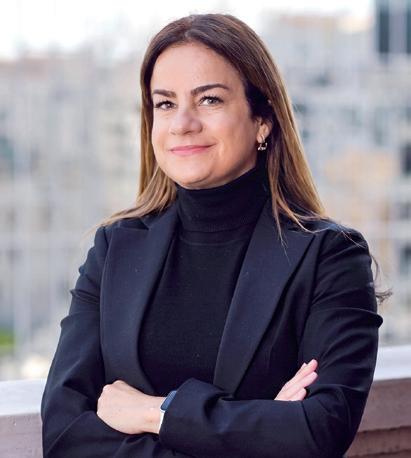
Ileana Musa
Managing Director, Head of Sales
Morgan Stanley Private Bank
Musa is the Head of Sales for Morgan Stanley Private Bank. In her role she leads a large-scale sales organization of Private Bankers, Lenders and Product Specialists who partner strategically with Financial Advisors to advise clients on both sides of the balance sheet. Most recently she lent her talent to co-heading Morgan Stanley’s International Wealth Management business. Ileana is a member of Morgan Stanley's Latin America Management Committee, and the U.S. Banks Management Committee.
Laura Nieto
Managing Director, Corporate Responsibility
Southwest Airlines
Laura Nieto has been with Southwest Airlines for 25 years, currently serving as Managing Director of Corporate Responsibility. She leads the company’s community investments, volunteerism, foundation giving, sustainability, and social impact initiatives. Under her leadership, Southwest has been recognized as a top corporate citizen. Laura holds a B.A. in public relations from Texas Tech University and serves on the board of New Friends New Life.
Iliana Oris Valiente
Managing Director, NA and LATAM Innovation Hubs Lead Accenture
Iliana Oris Valiente is the Managing Director and Head of Innovation Centers at Accenture for The Americas region, working with senior executives and boards to support their strategic transformation journeys. An accomplished corporate executive and innovation pioneer, she oversees multi-disciplinary teams across design, data, and technology, focusing on areas such as AI, and the future of work. Iliana serves on the board of directors for Sunnybrook Hospital, is an active venture capital investor, and the creator of the Potted Plant Theory. She’s a published author, a frequent global speaker, and a passionate advocate for building communities of global citizens.
Glenda Pedroso
EVP, Head of Wealth Management Banking Northern Trust
Glenda has 35 years of experience in the financial services industry. She joined Northern Trust in 1995 and has held various regional and national positions, most recently serving as Head of Wealth Management Banking. She is an Executive Vice President of The Northern Trust Company and serves on the firm’s Wealth Management Executive Leadership Team.
Yvette Ostolaza
Management Committee Chair and Executive Committee member Sidley Austin LLP
Yvette Ostolaza is a distinguished trial lawyer and crisis management expert known for advising boards and senior executives on high-stakes litigation, internal investigations, and complex corporate challenges. Widely regarded as one of the nation’s leading business litigators, she has earned top rankings and numerous industry recognitions for her work. Ostolaza has been honored by major publications including Forbes, Financial Times, and The Lawyer for her leadership and impact. Beyond her legal career, she is actively engaged in civic initiatives and legal education, supporting community programs and mentoring future leaders in the legal profession.
Jeanette Prenger
Founder and CEO
ECCO Select
Jeanette Prenger is the Founder and CEO of ECCO Select, a leading talent acquisition and consulting firm with over 500 employees across North America. Since founding the company in 1995, she has helped Fortune 1000 companies and government agencies with technology solutions. A passionate advocate for business and economic growth, Jeanette serves on numerous national and local boards, including Junior Achievement USA, Boy Scouts of America, and the Missouri Tourism Commission. She has also held leadership roles with the Latino Coalition, USHCC, and the Greater Kansas City Hispanic Chamber of Commerce.
100 LATINAS 2026
Jacquelyn Puente
Vice President of External Affair ComCast
Jackie Puente is VP of External Affairs at Comcast, managing partnerships on policy issues in media and technology. She has a strong background in strategic communications, DE&I, and coalition-building. Jackie serves on several boards advancing economic opportunity and social justice.
Grace Puma Board Member Target
Grace Puma is a seasoned executive experienced in transforming organizations into globally-connected, locally wired business functions that drive performance. Grace holds a B.A. in Business Administration and Economics from Illinois Benedictine University. She is a current board member of Organon & Co., and holds an advisory board role for the U.S. Latina/Latino Entrepreneur Program at Columbia University.
Gabriela Ramirez
Executive Director, Wealth Management USA Head of Field and Strategic Hiring UBS
Gabriela Ramirez is a Financial Services Executive with over 20 years of experience in talent acquisition, executive recruiting, and relationship management for global banks. Specializing in Private Banking and Wealth Management, she focuses on Ultra High Net Worth and Family Office clients across the U.S. and Latin America. Fluent in English, Spanish, Portuguese, and conversational French, she is known for her ability to build deep connections and foster meaningful professional relationships. Currently at UBS, she is passionate about helping others find their place in the industry. Outside of work, she enjoys yoga, family life, and her beloved cats.
Nathalie Rayes
President & CEO Latino Victory
Nathalie Rayes is a diplomat, civic leader, and former United States Ambassador to Croatia. She previously served as President and CEO of the Latino Victory Foundation, where she led national efforts to expand Latino representation in government and public service. Rayes is a Distinguished Senior Fellow at the Atlantic Council and a member of the Council on Foreign Relations. Throughout her career she has advanced initiatives that strengthen U.S.–Latin America collaboration, democratic institutions, and leadership development. Recognized with numerous national and international honors, she continues to advocate for civic engagement, diplomacy, and Latino leadership.
Miriam Rivera
CEO, Co-founder and Managing Director Ulu Ventures
Miriam Rivera is CEO, Co-founder and Managing Director of Ulu Ventures, a top seed stage venture fund in Silicon Valley. Previously, Miriam was vice-president/general counsel at Google, joining as the second attorney. Her work to simplify contracts helped Google scale from $85m to $10b in 5 years. Miriam earned AB, AM and JD/MBA degrees from Stanford and was a trustee at the university. She serves on the San Francisco Federal Reserve Bank Economic Advisory Council, Silicon Valley Bank Advisory Board, Acumen Fund America Board of Directors, Sesame Workshop (Sesame Street), and was a trustee and chair of the Investment Committee for the Kauffman Foundation.
Sara Rodriguez
Senior Vice President, Documentary Programming
HBO
Sara Rodriguez is Senior Vice President, Documentary programming at HBO. In her role, she is responsible for overseeing the development and production of documentary films and series. Before joining the programming team at HBO in 2018, Rodriguez spent four years at VICE Media, where she was most recently SVP, Global Video. Earlier in her career, Rodriguez spent 12 years at CBS News where she produced documentary specials on breaking news and hour-long programs for the long-running 48 Hours broadcast.
Janelle Rodriguez
EVP of Programming
NBC News
Janelle oversees NBC Nightly News with Tom Llamas, NBC News NOW, and breaking news specials. She is the creator of NBC News NOW, the fastest-growing streaming news network in the US, which saw record viewership last year. Distributed across more than 20 platforms, as well as internationally, NBC News NOW has expanded with linear distribution and its afternoon news program, NBC News Daily, on NBC, which is now the #1 afternoon news program on television.
Rojas is Vice Chair of The Latino Coalition, a national organization dedicated to advancing economic growth and entrepreneurship within the Latino community. A seasoned business leader and entrepreneur, Rojas has built a career supporting small businesses, minority-owned companies, and economic development initiatives. Through her leadership at The Latino Coalition, she works to promote policies and programs that expand opportunities for Latino entrepreneurs across the United States. Rojas is widely respected for her advocacy, mentorship, and commitment to strengthening Latino representation in business and public policy.
Cici Rojas
Vice Chair The Latino Coalition
Jennifer Salinas
EVP, Chief Administrative Officer, General Counsel & Corporate
Secretary Cerence
Jennifer Salinas is a senior executive at Cerence, a global leader in AI-powered automotive voice technology. With extensive experience in strategy, operations, and technology leadership, she has played a key role in advancing innovative voice assistant solutions used by major automotive manufacturers worldwide. Salinas is recognized for her ability to bridge technology, business strategy, and customer experience in fast-evolving markets. A strong advocate for diversity in technology, she actively supports initiatives that promote Latino representation in STEM fields. Her leadership continues to shape the future of conversational AI within the global mobility ecosystem.
Marlene Santos
EVP & Chief Transformation Officer Pacific Gas and Electric Company
Santos is Executive Vice President and Chief Transformation Officer at Pacific Gas and Electric Company (PG&E), where she leads largescale initiatives focused on operational transformation, innovation, and long-term organizational performance. With decades of experience in the energy sector, Santos has held senior leadership roles overseeing customer operations, workforce strategy, and corporate transformation. She is recognized for her ability to guide complex organizations through change while strengthening service delivery and operational efficiency. Santos is also a strong advocate for diversity and leadership development within the energy industry, helping expand opportunities for future generations of professionals.
Santana Founder & CEO
The Santana Group
For over two decades, Santana has transformed bold vision into lasting business success—building a thriving enterprise while opening doors for minority and women entrepreneurs. As Founder and CEO of Santana Group, she launched the company in 2002 with a clear mission: to deliver exceptional talent and workforce solutions that help organizations operate more efficiently and compete more effectively. Today, that mission fuels a portfolio of innovative companies. Santana’s leadership extends beyond business. She dedicates countless hours serving community organizations. Her work continues to inspire and shape a more empowered future for business.
Sofia Santos
Managing Director, Head of Consumer and Small Business Strategy Bank of America
Sofia Santos leads the development and implementation of strategic growth initiatives for the Retail Banking and Preferred Banking lines of business at Bank of America. With a focus on responsible growth and competitive differentiation, Sofia’s organization includes our Strategy & Business Ventures team, Business Acceleration team and Competitive Intelligence team. Sofia is the Executive Co-Sponsor of the Parents and Caregivers Employee Network (PCN), and shares their mission to create a supportive environment for Bank of America employees with children and other caregiving responsibilities.
Rosa
100 LATINAS 2026
Patricia Sierra
Director of Immigration Department & Founder U.S. Immigration Legal Practice / Social Tech Startup
Patricia Sierra is an immigration attorney, entrepreneur, and innovator working at the intersection of law, technology, and social impact. Through her U.S. immigration legal practice and social tech initiatives, she focuses on expanding access to legal services for immigrant communities. Sierra has built technology-driven solutions that simplify immigration processes and connect individuals with reliable legal support. Her work reflects a deep commitment to justice, inclusion, and opportunity for newcomers navigating complex legal systems. By combining legal expertise with entrepreneurial vision, she is helping reshape how immigration services are delivered in the United States.
Marissa Solis
SVP, Global Brand & Consumer Marketing National Football League
Marissa Solis is a magnetic business leader with over 25 years of expertise in business consulting, CPG, Retail, and Sports marketing. Currently, Marissa leads all global brand and consumer marketing initiatives for the NFL, including all national advertising, traditional and digital media initiatives, in-stadium marketing, and new fan development. A graduate of Georgetown University with a B.S. in International Economics and the University of Texas at Austin with an M.A. in Public Policy, she began her career in brand management at Procter & Gamble Latin America.
Gabriela Smith
Founder and Managing Partner GNS Law
Gabriela, Founder & Managing Partner of GNS Law, specializes in business and corporate law, serving family offices, investors, and fast-growing companies. With a rich international background, she also expertly guides multinational companies into the US market, offering strategic legal counsel that drives tangible outcomes. A dynamic leader and speaker, Gabriela is an influential figure in the legal community, sharing her insights globally. An Argentinian native with top academic honors, she serves in boards across diverse sectors, making a profound impact with her expertise and leadership.
Daniela Soto-Innes
Chef & Culinary Innovator
Chef/Restaurateur (Cosme & Atla, New York)
Daniela Soto-Innes is a celebrated chef and restaurateur known for redefining modern Mexican cuisine. Born in Mexico City and trained in some of the world’s top kitchens, she rose to prominence as the chef behind acclaimed New York restaurants Cosme and Atla. In 2019 she was named the World’s Best Female Chef by The World’s 50 Best Restaurants, becoming one of the youngest chefs ever to receive the honor. Soto-Innes is recognized for her innovative culinary vision, leadership in the hospitality industry, and commitment to mentoring the next generation of chefs.
Sonia Sotomayor
Associate Justice
United States Supreme Court
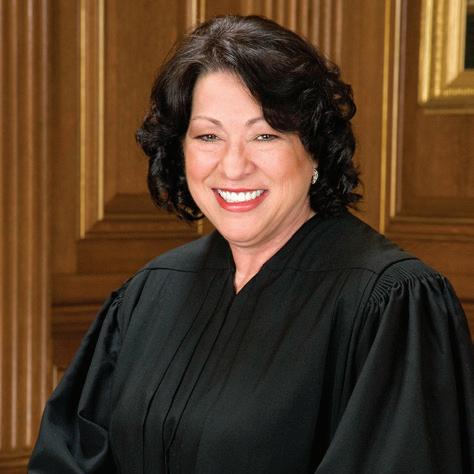
Sonia Sotomayor is an Associate Justice of the United States Supreme Court. She earned her J.D. from Yale Law School and served as an editor of the Yale Law Journal. Sotomayor worked as an Assistant District Attorney in New York and later litigated international commercial matters. She was nominated to the U.S. District Court, Southern District of New York, and later served on the United States Court of Appeals for the Second Circuit before being nominated to the Supreme Court.
Nina Vaca
Chairman, Founder & CEO Pinnacle Group
Nina Vaca is founder and CEO of Pinnacle Group, the largest Latina-owned global workforce solutions provider. Among the few Latinas serving on the boards of public companies, Nina was named one of the top five 50 Most Powerful Latinas by Fortune Magazine. As a civic leader and philanthropist, she has increased diversity at the board level and served as a Presidential Ambassador for Global Entrepreneurship through the White House. She is a Henry Crown Fellow at the Aspen Institute, a lifetime member of the Council on Foreign Relations, and was inducted into the Minority Business Hall of Fame.
Diana Trujillo
Aerospace Engineer & Flight Director
NASA
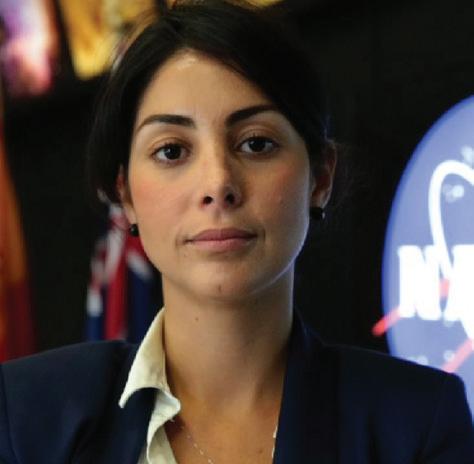
Diana Trujillo is a Colombian aerospace engineer and a Flight Director at NASA. Born in Cali, Colombia, she immigrated to the U.S. at 17 with only $300 and no English proficiency. She worked various jobs while learning the language and later earned a degree in Aerospace Engineering from the University of Maryland. Trujillo became the first Hispanic immigrant woman accepted into NASA’s Academy, eventually joining the agency in 2008. She played a key role in the Mars Curiosity and Perseverance rover missions and was the first to host a NASA planetary landing broadcast in Spanish.
Ana Valdez
President & CEO
Latino Donor Collaborative
A global thought leader bridging business, media, and research, Ana Valdez delivers data-driven insights to top decision-makers, driving economic impact and redefining leadership in New Mainstream America through her international expertise.
100 LATINAS 2026
Jennifer Velez
Executive Vice President, Health & Network Solutions
Horizon Blue Cross Blue Shield of New Jersey
Jennifer Velez is a senior healthcare executive with extensive experience in health and human services policy, strategy, and system transformation. She oversees large-scale initiatives spanning provider networks, behavioral health, population health, and clinical operations. Throughout her career, she has led efforts to improve healthcare access and outcomes, including advancing responses to the opioid crisis and expanding community-based care models. Prior to her current role, she held leadership positions in nonprofit and health system organizations and served as Commissioner of the New Jersey Department of Human Services. Velez is widely recognized for her commitment to advancing affordability and innovative, whole-person solutions.
Alexandra Wilson-Elizondo
Co-Head and Co-Chief Investment Officer
Goldman Sachs
Alexandra is a managing director in Multi-Asset Solutions (MAS) within Goldman Sachs Asset Management, serving as co-chief investment officer of MAS and co-chair of the MAS Investing Core. Previously, she was co-head of Portfolio Management for the platform and the head of multi-asset funds and models portfolio management. Alexandra is a member of the Investing Core working group and a member of the Firmwide Hispanic/Latinx Network Steering Committee, serving as co-lead to the Culture, Education and Equity pillar for the Hispanic/ Latinx Network.
Carla
Vernon
CEO & Board Director
The Honest Company
Carla Vernón is the CEO and Board Director of The Honest Company, leading its growth and transformation with a focus on clean, sustainable products. Previously, she was VP of Consumables at Amazon and an Operating Unit President at General Mills. She holds a bachelor’s from Princeton and an MBA from UT McCombs. Carla serves on the board of The Smithsonian National Museum of the American Latino and recently completed her tenure as a Princeton Trustee.
Debby Wolfe
Co-creator, showrunner, and executive producer NBC’s "Lopez vs Lopez"
Debby Wolfe is the showrunner, co-creator, and executive producer of NBC’s "Lopez vs Lopez." Born to a Salvadoran mother and Jewish father, she uses humor to explore themes like identity, generational trauma, and mental health in the Latine community. Wolfe’s other credits include “The Conners,” “Primo,” “Love, Victor,” and “One Day at a Time,” with past shows in development at Amazon, Disney+, and CBS.
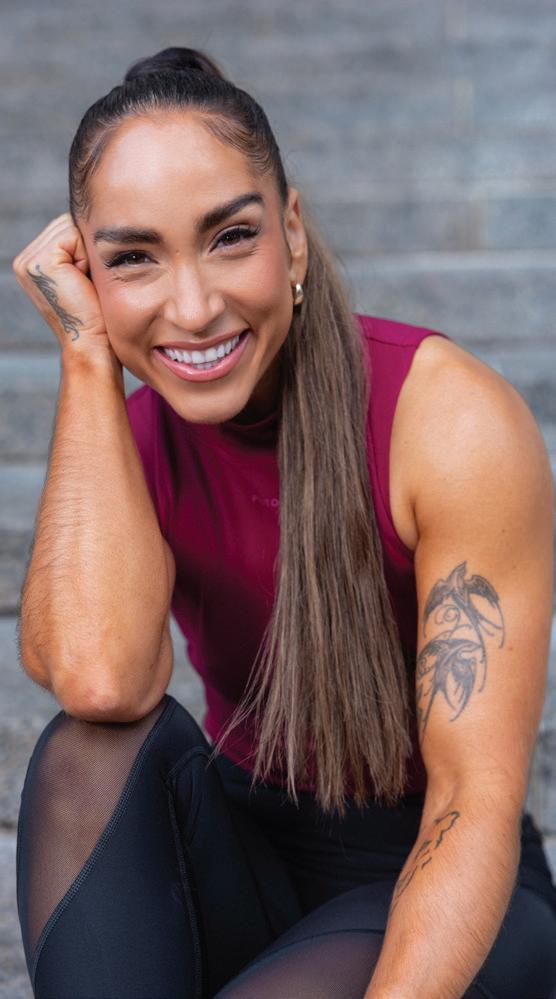
ROBIN ARZON VICE PRESIDENT OF FITNESS PROGRAMMING AND HEAD INSTRUCTOR, PELOTON
BUILDING STRENGTH THAT SCALES
Robin Arzón’s leadership philosophy
begins with a simple question: what is the human body capable of?
ROBIN ARZON
FOR HER, ENDURANCE sports were never about competition alone. They were a framework for curiosity. A way to test limits. A way to understand discipline. And ultimately, a way to build the mindset she would later bring into one of the most recognizable digital fitness platforms in the world.
Today, as Vice President of Fitness Programming at Peloton, Arzón operates at the intersection of performance, technology, storytelling, and strategy. But the foundation of that work began long before Peloton—and even before fitness itself.
She grew up in Philadelphia in a Cuban and Puerto Rican household shaped by resilience and ambition. Both of her parents worked their way through professional school—her mother through medical school and her father through law school—modeling a level of commitment that quietly shaped her expectations of herself.“I inherited their work ethic,” she says.
Her childhood memories are not defined by prestige or structure, but by family gatherings, music, and food. They are also marked by a strong sense of connection across borders and extended family networks. That environment helped establish a principle she still carries into leadership today: family bonds—and community—come before everything else.
Before entering the wellness world, Arzón spent nearly a decade practicing corporate law. During those years she began running marathons and ultramarathons, discovering endurance athletics not as a career pivot but as a personal discipline.
For Arzón, training—not racing—became the defining experience. “I think every endurance athlete is curious about what their body can do,” she explains. “These races are a format for us to answer that question.” That curiosity evolved into a leadership framework she now describes as the mindset of a “corporate athlete.” It is a concept she returns to often.
The leaders she admires most are people who combine physical resilience with intellectual rigor. Discipline in training translates into discipline in decision-making. Consistency becomes strategy. Tenacity becomes culture. “There’s a lot of overlap between what makes someone great as an athlete and what makes someone great as a corporate leader,” she says.
She works across product teams, marketing leadership, instructors, and executive decision-making functions to ensure Peloton’s programming aligns with broader business strategy.
Photography by NOBULL / Joe Greer
100 LATINAS 2026
ROBIN ARZON
That mindset made Peloton a natural fit when she joined the company in its early stages. Even then, she recognized its potential to scale far beyond traditional fitness programming. What attracted her most was not simply the workouts. It was the idea that technology could expand access to empowerment.
“It was innovative,” she says. “It was a disruptive way to use technology to arm people with empowerment.” As Peloton grew into a global platform, Arzón’s role evolved alongside it. While she remains one of the company’s most visible instructors, her responsibilities extend well beyond the studio.
“ARZÓN OPERATES AT THE INTERSECTION OF PERFORMANCE, TECHNOLOGY, STORYTELLING, AND STRATEGY.”
She works across product teams, marketing leadership, instructors, and executive decision-making functions to ensure Peloton’s programming aligns with broader business strategy. Her role involves translating fitness priorities into enterprise priorities—and vice versa. “It’s about making sure everything we’re putting into the world is both entertaining and effective,” she explains. That translation role is especially important in a company where content sits at the center of the product experience. Fitness programming is not simply instruction. It is infrastructure, it is community.
As one of the most recognizable Latina leaders in digital fitness, Arzón sees cultural connection as a powerful entry point for belonging. Representation, in her view, is not delivered through messaging alone. It happens through music choices, storytelling, language, and the subtle signals that help people recognize themselves in an experience.
Spanish-language programming plays an important role in that work. So does her presence in global events like Peloton’s recent programming in Puerto Rico. “We hope people find a place where they feel welcome from day one,” she says.
Photography by NOBULL / Joe Greer
Photography by CLINTON ELLIOTT
Photography by Jamel Toppi
“I THINK EVERY ENDURANCE ATHLETE IS CURIOUS ABOUT WHAT THEIR BODY CAN DO,” SHE EXPLAINS
Looking ahead, Arzón sees the future of digital wellness shaped by personalization at scale. Advances in AI and health data will allow platforms like Peloton to tailor experiences more precisely to individual goals and lifestyles. But she is equally clear about what technology cannot replace.
Community remains essential. “I don’t think people are looking for isolated experiences,” she says. That balance—between personalization and connection— is likely to define the next chapter of digital fitness.
Arzón herself is already expanding beyond traditional fitness leadership into media and platform building. Earlier this year she launched Project Swagger through her production company, Swagger Studios, creating a space to extend conversations she has been leading across social platforms, Peloton programming, and her writing. Her newest cookbook, Eat to Hustle, is her fifth book and reflects her broader belief that wellness extends far beyond workouts.
Whether through classes, books, podcasts, or partnerships, her goal is consistent: help people feel more fully themselves. “I want people to light fires in their own lives,” she says.
ROBIN ARZÓN OFF THE BIKE
• Music: Lately, one artist has been in heavy rotation: Karol G. Her track Latina Forever continues to anchor Arzón’s playlists, along with songs from the album Debi Tirar Más Fotos from Bad Bunny, which she says has stayed part of her personal soundtrack for months.
• In the kitchen: she points especially to her vegan tofu chicharrones and flan as favorites that connect tradition with modern nutrition, while her Cobb salad remains the recipe she returns to most often in everyday life.
• Together, music and food remain two of the most personal ways she keeps culture, performance, and community in motion— both on and off the bike.
If there is one lesson that defines her leadership journey—from law to endurance sports to executive leadership—it comes from her parents. Difference, she says, is not a liability. It is leverage.
Feeling like an outsider can be intimidating early in a career. But with perspective, it becomes a strategic advantage. “The more you study your industry,” she explains, “the more you see opportunities to shine a light on someone who’s different.”
For Arzón, that insight continues to shape how she leads—and how she builds strength that reaches far beyond the bike.
Photography by Johnny Miller
Photography by CLINTON ELLIOTT
PEOPLE, PASSION, PERSISTENCE
LAURA MURILLO PRESIDENT, HOUSTON HISPANIC CHAMBER OF COMMERCE
Laura Murillo often describes her life through three words: people, passion, persistence. They are not a phrase she adopted after success arrived, but a framework she has carried with her since childhood, long before leadership titles or national recognition became part of her story. Those words explain how a daughter of Mexican immigrants raised in Houston’s barrio built a career defined not simply by achievement, but by service, resilience, and an enduring commitment to creating opportunities for others.
Murillo grew up as the youngest of nine children in a family where work was not an abstract value but a daily reality. Her parents had crossed the Rio Grande as teenagers with little more than determination, and over time they built a life rooted in responsibility to family and community. From the age of ten, she worked alongside them in the family restaurant, learning early that contribution was expected and that dignity was closely tied to effort. Those years shaped her understanding of leadership long before she would ever use the word to describe herself.
As a child, she was curious and observant, and she remembers knowing even then that she wanted to do something meaningful, something connected
to helping people. She loved reading, she was drawn to communication and storytelling, and she paid close attention to the way her parents treated others with respect and generosity. Without realizing it, she was absorbing lessons that would later guide every major decision she made.
When she graduated from high school, Murillo received admission letters from Harvard, Stanford, and Yale. For many students, those opportunities would have marked the beginning of a journey far from home. For her, the moment became something else entirely. Her parents believed she should remain in Houston, close to family and close to the community that had shaped her. Their perspective reflected the same values that had guided them throughout their own lives. Murillo listened, and she chose to attend the University of Houston, the institution she still describes as her home away from home.
At the university she found mentors who recognized her potential early and encouraged her to take on responsibilities that stretched her confidence and expanded her perspective. She worked in student services, later in fundraising and external relations, and with each new role she developed a deeper understanding of how institutions function and how relationships sustain them. Promotions followed regularly, but what mattered most to her was the growing sense that leadership was rooted in trust rather than visibility.
There were moments along the way, however, when her confidence was tested in ways she did not expect. While applying to a doctoral program, one professor questioned whether she belonged there at all, pointing to her responsibilities as a working professional and young mother as reasons she might struggle to
“AS A CHILD, SHE WAS CURIOUS AND OBSERVANT, AND SHE REMEMBERS KNOWING EVEN THEN THAT SHE WANTED TO DO SOMETHING MEANINGFUL, SOMETHING CONNECTED TO HELPING PEOPLE.”
succeed. For a moment, she allowed herself to wonder whether he might be right. Then she thought about her parents and everything they had endured so that their children could have choices they themselves never had. That reflection shifted her perspective. She applied, she stayed, and she finished.
During that period of her life, Murillo balanced full-time work, full-time doctoral studies, and the responsibilities of raising her daughters. She prepared for one of the most demanding exams in her program while pregnant with her second child and while her mother was hospitalized after suffering a massive heart attack. It would have been understandable to pause. Instead, she continued forward. Only four of forty candidates passed the statistical analysis examination that year. She was one of them, and her mother lived long enough to watch her receive her doctorate.
Soon afterward she accepted a leadership role at the Texas Medical Center, becoming the highest-ranking Latina working there at the time. The position exposed her to a new scale of institutional responsibility and confirmed her ability to navigate complex environments that required both strategy and collaboration. Yet the transition that would ultimately define her professional life arrived unexpectedly through her involvement with the Hispanic Chamber of Commerce.
Murillo had been serving on the chamber’s board during a period of instability when leadership turnover had left the organization searching for direction. At one meeting, members openly discussed whether the chamber should continue operating at all. Not long afterward, she was asked to consider becoming its president and chief executive officer. Her first response was hesitation. She had a career she valued and a role she understood. Accepting the position meant stepping into uncertainty at a time when the organization itself was still finding its footing. What persuaded her to reconsider was not the challenge alone, but the possibility she could see beyond it. She believed the chamber could become something more influential and more relevant than it had ever been before.
The first years were demanding and required difficult decisions about governance, structure, and long-term direction, but they also allowed Murillo to reimagine what the organization could represent. Drawing on her background in communications, she proposed creating a television presence for the chamber in mainstream media so that stories about Latino leadership and entrepreneurship could reach broader audiences. The idea was initially met with skepticism, yet she continued to advocate for it until the chamber secured its own program on CBS, becoming the only nonprofit organization in the market with that distinction. Radio programming followed, along with Spanish-language outreach platforms and a CEO roundtable that brought together leaders across industries for conversations about economic opportunity and regional growth.
BESTSELLER
#1 International Bestselling Author in the U.S., Canada & Australia for my book LEAD IN LIFE: People. Passion. Persistence.
FOR MURILLO, LEADERSHIP HAS NEVER BEEN DEFINED BY POSITION ALONE. IT HAS ALWAYS BEEN DEFINED BY PURPOSE, BY THE RELATIONSHIPS THAT SUSTAIN INSTITUTIONS, AND BY THE BELIEF THAT PROGRESS BECOMES MEANINGFUL ONLY WHEN IT OPENS DOORS FOR OTHERS.
100 LATINAS 2026
LAURA MURILLO
“AND WHEN SHE REFLECTS ON THE PATH THAT BROUGHT HER HERE, SHE RETURNS, AS SHE ALWAYS DOES, TO THE SAME THREE WORDS THAT HAVE GUIDED HER FROM THE BEGINNING: PEOPLE, PASSION, PERSISTENCE.”
Equally important to her was the creation of the Emerging Leaders Institute, a program designed to prepare younger professionals for leadership roles by connecting them with mentors, networks, and opportunities that might otherwise remain out of reach. Over time the institute has helped hundreds of participants advance their education, strengthen their careers, and expand their influence within their communities. For Murillo, these outcomes represent the most meaningful measure of institutional success.
Throughout these years she was also raising her daughters as a single parent, an experience she describes as the most important responsibility she has ever carried. She speaks about their achievements with pride, but more than that, she speaks about the journey they shared together and the values they learned as a family. The girls graduated from Columbia University & Georgetown, accomplishments that Laura holds dearly. One daughter pursued studies in astrophysics and mechanical engineering and now contributes to work connected to planetary science and NASA. The other entered public service at an early age and later worked on national policy initiatives within the White House. Their paths reflect the same belief Murillo inherited from her own parents: that opportunity expands when someone is willing to invest in you.
Her leadership has since extended far beyond Houston through service on corporate boards, participation in national advisory roles connected to the Federal Reserve, and involvement with organizations shaping the future of business, education, and civic life. Each of these experiences has reinforced her conviction that representation matters and that leadership carries responsibility not only to succeed individually but to create space for others to succeed as well.
Today, as she approaches two decades leading the chamber, Murillo continues to devote her time to mentoring young professionals, speaking to emerging leaders, and strengthening the networks that connect communities across industries and generations. She often reflects on the people who encouraged her along the way and on how their confidence shaped her own willingness to take risks she might otherwise have avoided. Their example continues to guide her work.
For Murillo, leadership has never been defined by position alone. It has always been defined by purpose, by the relationships that sustain institutions, and by the belief that progress becomes meaningful only when it opens doors for others.
And when she reflects on the path that brought her here, she returns, as she always does, to the same three words that have guided her from the beginning: people, passion, persistence.
THE DISCIPLINE OF ANTICIPATING CHANGE
In 2026, global markets are navigating a convergence of pressures rarely seen in combination: active geopolitical conflicts, escalating trade wars waged through tariffs, persistent inflation, and a Federal Reserve constrained by competing policy imperatives. Against that backdrop, the question dominating boardrooms and deal tables alike is no longer simply how to grow, it is how to grow without becoming a casualty of the conditions surrounding that growth. Few practitioners are better positioned to address that question than Nanette Aguirre.
SHAREHOLDER AND LAW Firm Partner at Greenberg Traurig, Aguirre has built her practice at the intersection of derivatives, structured finance, and regulatory strategy, disciplines that have moved from the periphery of deal-making to its center as conventional financing models face mounting stress. Her clients include banks, private funds, founders, and corporate boards, all of them navigating transactions shaped simultaneously by credit conditions, regulatory evolution, and the accelerating emergence of digital assets and decentralized financial structures. The Genius Act, which advances frameworks for decentralized investment vehicles, is among the legislative developments she monitors closely, alongside oil price volatility, inflation trajectories, and the broader question of recession probability versus sustainable growth. What distinguishes her advisory approach is not simply technical command of complex instruments. It is the ability to evaluate how those instruments function together as components of a single, interconnected system and to help leadership teams act decisively before that system shifts beneath them.
Courtesy of Nanette Aguirre
100 LATINAS 2026
Structured Finance as a Strategic Response to Economic Uncertainty
"I AM NOT INTIMIDATED BY THE SIZE OF THE DEALS I WORK ON, IN PART BECAUSE I HAVE ALWAYS WORKED ON LARGE TRANSACTIONS, AND NOTIONAL VALUE IS ONLY ONE OF THE ECONOMIC TERMS RELEVANT TO MY ANALYSIS," SHE SAYS.
ments capable of distributing risk across counterparties in ways that conventional loan or equity structures cannot replicate. As recession fears mount, that demand is intensifying. Structured credit facilities, total return swaps, collateralized arrangements, and hybrid instruments are increasingly being deployed not as speculative tools but as defensive architecture, enabling organizations to remain active in capital markets while hedging against the volatility that makes conventional commitment structures untenable.
The current environment has placed particular emphasis on the role derivatives and structured products play in complementing, and in many cases, replacing, conventional transaction models. As high-cost debt, tariff-driven margin compression, and regulatory uncertainty have tightened access to traditional financing, structured solutions have provided organizations with the flexibility to preserve capital efficiency without abandoning growth objectives.
Derivative wrappers on structured loans, for example, allow companies to manage interest rate and currency exposure in ways that fixed-rate conventional instruments cannot accommodate. In cross-border transactions, including without limitation, between the United States and Latin America, a corridor Aguirre expects to see significant expansion activity, these tools are particularly valuable in environments where inflation differentials, currency volatility, and inconsistent regulatory frameworks would otherwise make financing prohibitively expensive or structurally fragile.
The scale of the derivatives market itself reflects this strategic centrality. Over-the-counter derivatives currently carry a notional value in excess of $700 trillion globally, a figure that underscores not the recklessness of financial engineering, but the depth of demand for instru -
"Structured finance and derivatives allow companies to remain creative with capital even when traditional financing conditions tighten," Aguirre explains. In the current environment, creativity is not a luxury. It is a prerequisite for competitive positioning.
Raised on Wall Street, Trained for Complexity
Aguirre often describes herself as having been "raised on Wall Street", not as nostalgia, but as a precise explanation of how she evaluates risk. Her early career on a trading floor, where decisions unfolded in real time and hesitation carried immediate consequences, shaped the analytical confidence she now brings to transactions that have already reached the billion-dollar threshold.
"I am not intimidated by the size of the deals I work on, in part because I have always worked on large transactions, and notional value is only one of the economic terms relevant to my analysis," she says. "I approach every deal with the same level of scrutiny and tact because time is of the essence, and so are the risks."
That foundation, combined with her legal expertise, positions her to move fluidly across the tension lines that define today's financial landscape: conventional banking versus private credit markets; inflation and input costs versus the expectation of uninterrupted returns; the rapid emergence of digital assets alongside legacy regulatory frameworks that were never designed to accommodate them. Rather than treating these as separate conversations, she approaches them as variables within a single system, one that requires integrated analysis if organizations are going to expand responsibly while continuing to innovate.
Clarity as a Competitive Instrument
In high-stakes environments where senior executives are already managing an overload of information, Aguirre identifies concision as a strategic advantage. The ability to distill complex, multi-variable structures into clear, actionable guidance is not merely a communication preference, it is a discipline that determines whether organizations can move first and move well.
"The worst thing I can do is fail to summarize in a very concise fashion," she explains. "The first crack at a negotiation is the most important. I always want to be first on the scene, and I always want to be armed with current information on the regulations affecting both my client and their counterparty. In a negotiation, you must pull from every useful tool in your toolbox because the correlations exist."
That forward-looking posture extends to her perspective on corporate governance. Modern boards, she argues, cannot discharge their oversight responsibilities without members who understand the real-time capital markets, legal, and technological demands facing the companies they govern. Legal insight, AI fluency, entrepreneurial perspective, and structured finance expertise are no longer supplementary credentials, they are prerequisites for meaningful oversight in an environment where competitive dynamics shift faster than governance frameworks can be rewritten.
"There is no way to have a powerful board without its members carrying a diversified lens that enables a robust, collective response to the real-time demands on the company," she says.
Representation as Infrastructure
Aguirre approaches diversity not as a cultural initiative separate from institutional performance, but as part of the same modernization imperative that drives board composition and talent strategy. She has frequently been the first Latina hired by a client or the sole Latina present at a negotiating table. She accepts the visibility that comes with that position and the responsibility it carries.
"Only one percent of law firm partners are Latina, which means I may have to be the first," she says. "Being the first means I must always push myself to be the very best, because that allows me to make a pathway for the second, third, and fourth."
Recruitment, in her view, is the most powerful lever institutions have for expanding leadership access. Non-traditional career trajectories, her own first career in finance, as a non-lawyer, being a case in point, represent an underutilized asset in both law and capital markets. The contributions of Latino professionals and entrepreneurs to the American economy, already representing one of its strongest engines of job creation and GDP growth, warrant commensurate visibility at the leadership level.
Looking Ahead
As 2026 advances, Aguirre expects structured finance and derivatives to play an increasingly decisive role as organizations manage the compounding pressures of high-cost debt, tariff-driven disruption, inflation, and cross-border expansion. In particular, she anticipates growing transactional activity between the United States and Latin America, where flexible credit architecture can support scaling ambitions while maintaining resilience against an unpredictable macro environment.
The broader takeaway from her practice is straightforward: the organizations best positioned to navigate current conditions are not necessarily those with the greatest resources. They are those that assemble the right expertise early enough to shape outcomes rather than respond to them.
"People who do their best understand that you cannot make every decision on your own," she says. "Success is about the company you keep."
For Aguirre, the work is not about helping clients react to change. It is about helping them see it coming, and ensuring they are positioned to move with confidence when it arrives.
“FOR AGUIRRE, THE WORK IS NOT ABOUT HELPING CLIENTS REACT TO CHANGE. IT IS ABOUT HELPING THEM SEE IT COMING, AND ENSURING THEY ARE POSITIONED TO MOVE WITH CONFIDENCE WHEN IT ARRIVES..”
JACKELINE CACHO ON BUILDING MEDIA
THAT CONNECTS LATINO COMMUNITIES
Jackeline Cacho has spent more than fifteen years building something unique in Spanish language media: a platform designed not only to inform audiences, but to strengthen them. Through television, digital programming, podcasting, conferences, and global outreach, she has shaped a model she calls edutainment, a space where storytelling, leadership, faith, and opportunity meet the lived realities of Latino communities across the United States and beyond.
AT THE CENTER of that work is Triunfo Media Enterprise, the multimedia organization she leads alongside her husband and producer Thene Muciño. What began as a television program has grown into a network of platforms that includes a national broadcast presence, a digital news portal, a podcast now in its third season, a syndicated radio expansion, and an international initiative focused on women and young leaders. Together they form a communications ecosystem designed to highlight Latino achievement while providing practical guidance on issues that shape everyday life.
Cacho describes the foundation of that effort in simple terms. For years she observed a lack of positive programming that reflected the experiences, ambitions, and contributions of Latino families. Rather than respond to that gap as a commentator, she chose to respond as a builder. The result was the creation of Jackeline Cacho Presenta Triunfo Latino, a national program that has remained on air for fifteen years and has introduced audiences to leaders from business, education, public service, and the arts whose stories often go untold in mainstream coverage. Jackeline expresses her gratitude for God's guidance, the support and love of her husband and Producer, the inspiration of her mother, her brother and sisters and the unconditional support of the community who have supported her dreams all these years.
Over time the program became the anchor of a broader strategy. Her media company expanded into digital publishing through its online portal triunfolatino.com and later added the JC Triunfando Podcast, where conversations with experts and community leaders address immigration, health, finance, entrepreneurship, and personal resilience.
“HER GOAL IS NOT ONLY TO REPORT ON SUCCESS BUT TO HELP MAKE IT VISIBLE, ACCESSIBLE, AND REPEATABLE.”
100 LATINAS 2026
During the pandemic period the shift toward digital engagement accelerated growth across platforms, they decided to inform in real time with JC LIVE helping her media company, Triunfo Media Entreprise connect with more than 6.5 million viewers and hundreds of thousands of followers across social channels. For Cacho, the transition confirmed something she had already sensed. Latino audiences were seeking trustworthy information delivered with clarity and purpose.
Trust remains central to her approach. She sees media not only as a space for storytelling but also as a responsibility. Many of the communities she serves are navigating complex systems related to employment, health coverage, financial planning, and immigration status. Her programming often focuses on connecting audiences with services that support stability and long term opportunity. That orientation has also shaped partnerships with national organizations and companies that share the goal of expanding access to information and resources.
This year marks the fifteenth anniversary of Triunfo Latino, a milestone that reflects both persistence and evolution. Over that period the program has received Emmy nominations and national recognitions from civic leaders across the country. It has also expanded internationally through conferences and collaborations that bring Latino voices into conversations taking place in multiple regions. For Cacho, however, the most meaningful achievement has been continuity. A program that many once believed would not survive has remained on air for more than a decade and a half because audiences recognized themselves in its stories.
Her interviews with hundreds of leaders across industries have shaped the leadership philosophy she brings to her own work. She often speaks about five elements that appear repeatedly in
“JACKELINE CACHO HAS SPENT MORE THAN FIFTEEN YEARS BUILDING SOMETHING
UNIQUE
IN SPANISH LANGUAGE MEDIA: A PLATFORM DESIGNED NOT ONLY TO INFORM AUDIENCES, BUT TO STRENGTHEN THEM.”
those conversations: faith, discipline, perseverance, mentorship, and humility. Together they form a framework that guides her decisions as a communicator and as an entrepreneur. Rather than present success as a single moment, she describes it as a process built through preparation and community. That perspective is visible in the expansion of her newest initiative, the INSPIRE global platform. Developed as a response to challenges affecting women and young people, the initiative focuses on strengthening confidence, supporting entrepreneurship, and addressing issues related to violence, anxiety, and social isolation. Over the past several years INSPIRE has brought together participants from across the United States and from countries throughout Latin America
and beyond. Conferences, mentorship circles, and outreach programs are designed to help participants identify their voice and develop the tools needed to pursue independence. Jackeline often is seen now in national commercials educating the latino community about final expenses she is the national spokesperson for SENIOR LIFE INSURANCE COMPANY.
Cacho believes that this work reflects a larger shift taking place within Latino leadership. With more than sixty five million Latinos living in the United States, the community is shaping business strategy, cultural production, and public conversation in ways that extend far beyond traditional expectations. She sees leaders placing greater emphasis on authenticity and service while also expanding representation in media and policy discussions. In her view, these developments are helping move the narrative from visibility toward influence.
Her own role in that transition has been defined by storytelling. Through her programs she high-
“LOOKING AHEAD, SHE SEES THE NEXT CHAPTER OF TRIUNFO MEDIA ENTERPRISE CENTERED ON EXPANDING DOCUMENTARY PRODUCTION AND DEVELOPING NEW SERIES THAT ADDRESS SOCIAL CHANGE THROUGH PERSONAL NARRATIVE.”
lights entrepreneurs, educators, artists, and community advocates whose contributions demonstrate the breadth of Latino impact across sectors. She often points out that many of these stories remain absent from textbooks and from mainstream coverage. By documenting them, she hopes to provide examples that younger generations can recognize as part of their own future.
Podcasting has become an important part of that strategy. The format allows for longer conversations that explore subjects not always addressed on television. Guests speak about experiences that include discrimination, recovery from trauma, deportation challenges, and the process of rebuilding careers. These discussions are intended to offer both perspective and solutions. They also reflect Cacho’s belief that media platforms should create space for honesty as well as celebration.
Looking ahead, she sees the next chapter of Triunfo Media Enterprise centered on expanding documentary production and developing new series that address social change through personal narrative. Radio syndication will continue to grow, conferences will extend the reach of INSPIRE, with her two Bestsellers and her upcoming third book (to be released 2027) Jackeline Cacho continue her journey inspiring and awakening the internal power of her community.
Throughout that expansion one theme remains constant. Cacho often describes leadership not as a position but as a commitment to service. She credits mentors who taught her that integrity and compassion are the foundations of lasting influence. Her own experience, including recovery after a serious car accident early in her career, reinforced the importance of resilience and purpose. Those lessons continue to guide the direction of her work today.
As she reflects on fifteen years of Triunfo Latino, Cacho sees media as a bridge between communities and opportunity. Her goal is not only to report on success but to help make it visible, accessible, and repeatable. Through television, digital platforms, podcasting, radio, and global outreach, she continues building a space where Latino stories shape the conversation about the future rather than wait to be included in it.
BUILDING SAFER PATHWAYS FOR WOMEN TO EXPERIENCE THE WORLD
Vanessa grew up between cultures, stories, and movement. Born in Los Angeles and raised primarily in Mexico City, she was shaped early by a family environment that treated travel not as luxury but as education. Her father, a journalist whose work took him across borders and into new narratives, showed her that the world could be explored through curiosity. Her mother, a constant entrepreneur with side businesses throughout the years, modeled independence and initiative. Together, they formed the foundation of a mindset that would later define her career.
“MY PARENTS really made sure that whatever money we were spending was on experiences over things,” she says. “That shaped my career today.”
Today, Karel is the founder and CEO of Greether, a global platform connecting women travelers with vetted local women guides (Greeters) in more than 100 countries. What began as a response to a personal moment of vulnerability while traveling has evolved into a growing infrastructure for safer, more meaningful travel experiences for women worldwide.
Her path toward entrepreneurship started early. Even before launching Greether, she had already built a company. But like many founders, the turning point that led to her current venture came
KAREL FOUNDER & CEO, GREETHER
during disruption. In 2020, the pandemic shut down film production in San Francisco, effectively ending the operations of Collective Theory, the media and production agency she had co-founded. Around the same time, she traveled to Morocco on a work permit during one of the most uncertain periods for global mobility. There, a moment of fear changed the trajectory of her next venture.
“I realized there wasn’t a service that could help me at that moment,” she recalls. “I just wanted someone trustworthy, someone local, someone I could connect with.”
Later in that same trip, she met a local woman who showed her around a small town. The expe-
VANESSA
rience stayed with her. It clarified what had been missing and what could exist.
Back in San Francisco, surrounded by the energy of Silicon Valley, she began building.
Before committing fully to the idea, she interviewed more than 500 women travelers to validate the need. The response confirmed what she had already sensed: women wanted both safety and connection. Greether launched as a platform that could provide both.
Originally, Karel believed the service would primarily support solo travelers visiting destinations perceived as higher risk. Instead, the company quickly revealed a broader reality. Women were booking Greether experiences in cities like Tokyo, Singapore, Iceland, and Norway. Mothers traveling with children began using the platform. Groups of friends booked local guides together. Even women in their 70s and 80s became users.
“It completely surprised me,” she says. “It’s not just about safety. It’s about having a local experience that’s personal.”
At its core, Greether reverses the traditional logic of guided tourism. Instead of fixed itineraries and rigid schedules, travelers define the pace and priorities of their visits. The platform’s network of local women becomes both a resource and a point of connection.
Technology plays a central role in enabling the platform’s scale, but Karel has been intentional about maintaining trust as its backbone. Each local woman guide (Greeter) goes through a verification and interview process with the team before being
“YOU DON’T NECESSARILY REMEMBER THE HOTEL, YOU REMEMBER THE EXCHANGE YOU HAD WITH SOMEONE ELSE. THAT’S WHAT MAKES TRAVELING SPECIAL.”
approved. Experiences are monitored, and feedback loops remain active. “There is no way a traveler will ever meet someone that we haven’t met,” she explains.
Building a company across borders has also meant confronting familiar structural challenges faced by many founders, particularly women entrepreneurs. Access to capital proved one of the most difficult hurdles in the early stages. “As a female founder, access to capital has been one of the biggest challenges,” she says. “But we’ve now received venture capital, and it’s been a journey.”
Partnerships have helped accelerate growth. Expedia is among the organizations supporting Greether through collaborative initiatives, and the company has begun expanding its B2B strategy with tourism boards and destination partners. A certification program designed to help destinations become more welcoming to female travelers represents one of its next steps toward broader systemic impact.
Inside the company, leadership has required its own evolution. Like many founders, Karel began by trying to control every detail. Over time, she learned to shift from perfection to progress. “I’ve had to step back from perfection and just get things done,” she says. “You have to trust your team.” That shift reflects a larger transition from entrepreneur to builder of systems and scale.
Looking ahead, she envisions Greether becoming a standard reference point for women traveling anywhere in the world, whether for work or leisure. But beyond expansion metrics and partnerships, she remains focused on what she sees as the platform’s deeper purpose.
“A lot of the money we spend when we travel doesn’t stay local,” she says. “This is one of the initiatives where it does.”In an era increasingly shaped by automation and digital distance, she believes connection itself is becoming the rarest travel resource.
“You don’t necessarily remember the hotel,” she says. “You remember the exchange you had with someone else. That’s what makes traveling special.”
CAROLYN BOOTH
HEAD OF U.S. PERSONAL & BUSINESS BANKING, BMO
LEADING CHANGE WITH COURAGE AND EMPATHY
How has your role as a leader evolved as expectations of executives continue to change?
CB: My role has evolved from primarily driving performance to stewarding people, culture, and long-term impact - alongside results. Having started my career as an entry-level frontline employee — as a teller — and worked my way up, I’ve led through periods of significant change and shifting priorities. That experience has shown me that sustainable results come from engaged people who feel connected to the purpose behind the work, which is paramount at BMO.
Today’s leaders are expected to navigate complexity with clarity, lead through transformation with empathy, and deliver strong outcomes in a way that builds trust. In 2023, BMO acquired Bank of the West, dramatically expanding our western footprint. Following the integration, maintaining momentum and excellent client service across a team of 6,000+ colleagues required transparency, listening, and intentional about bringing people through change. Expectations have shifted toward leaders being visible, values-driven, and accountable - not just for what we achieve, but for how we achieve it.
At BMO, how do you think about growth today—not just in financial performance, but in helping organizations, clients, and communities build long-term resilience and impact?
CB: I think about growth as progress that is shared and sustainable. Financial performance is most meaningful when it’s tied to helping clients and communities build confidence, stability, and opportunity over time.
At BMO, our growth is anchored in our Purpose to Boldly Grow the Good in business and in life, brought to life through initiatives like Real Financial Progress Checks and our $40 billion commitment to help more individuals, families, businesses, and communities make real financial progress. Whether we’re supporting first-time homebuyers, expanding access to careers through BMORE, or investing in small businesses that lift communities, growth is most meaningful when it strengthens economic mobility at scale. For me, growth is measured by how many people and businesses are better positioned for the future because they chose us to be their trusted partner.
As a leader at BMO, what does influence mean to you at this stage of your career, and where do you feel the greatest responsibility to use that influence thoughtfully?
CB: At this stage of my career, influence is about responsibility: using your voice and position to open doors, shape systems, and remove barriers so opportunity is more accessible to more people. I feel a strong responsibility to advocate for our clients, colleagues, and communities.
That responsibility shows how we design products, invest in workforce development, and engage with community partners. Whether through board service, mentoring future leaders, or supporting programs that connect people to jobs and skills, influence means making decisions that expand access, dignity, and financial progress over the long term.
What leadership capability do you believe will matter most over the next decade—and why?
CB: The most critical leadership capability over the next decade will be the ability to lead change with both courage and empathy. As client expectations, artificial intelligence and economic conditions continue to evolve; leaders must be decisive while remaining deeply human. Strong performance and strong culture go hand in hand. Leaders who build trust, empower innovation, and keep both clients and colleagues at the center- while navigating complexity- will be the ones who create enduring value. The ability to balance clarity with compassion is what allows leaders to move organizations forward and bring people along with them through constant change.
“AS CLIENT EXPECTATIONS, ARTIFICIAL INTELLIGENCE AND ECONOMIC CONDITIONS CONTINUE TO EVOLVE, LEADERS MUST BE DECISIVE WHILE REMAINING DEEPLY HUMAN.”
ADVOCATING FOR CLIENTS AND COMMUNITIES
AMY HALE
REGIONAL
PRESIDENT,
SUNBELT/CENTRAL BMO WEALTH MANAGEMENT
How has your role as a leader evolved as expectations of executives continue to change?
AH: Early in my career, leadership was focused on expertise and execution—having the answers and driving outcomes. Today, it’s evolved into something much more human and contextual. Expectations of executives have shifted toward empathy, adaptability, and long-term thinking. My role now is less about directing and more about enabling—creating clarity, removing barriers, and building teams that can navigate complexity with confidence. In wealth management in particular, leadership means listening deeply to what clients and colleagues are facing and responding with insight, not just solutions.
At BMO, how do you think about growth today—not just in financial performance, but in helping organizations, clients, and communities build long-term resilience and impact?
AH: Growth today must be sustainable, inclusive, and meaningful. At BMO, we think beyond short-term performance to how we help clients and communities make progress across generations. That’s especially true when working with high-net-worth families, business owners, and organizations navigating transitions—whether it’s generational wealth transfer, succession planning, or major liquidity events. For me, growth also means expanding access to advice in markets where BMO may be less well known, and ensuring our presence genuinely adds value to the communities we serve.
As a leader at BMO, what does influence mean to you at this stage of your career?
AH: At this stage of my career, influence means responsibility. It’s about using my platform to shape decisions, culture, and outcomes in a way that reflects BMO’s values. Influence isn’t just having a seat at the table—it’s about using that seat to ensure a wide range of perspectives are heard, complex client needs aren’t overlooked,
“USING INFLUENCE WELL MEANS HELPING OTHERS FEEL SEEN, SUPPORTED, AND EQUIPPED TO MAKE DECISIONS THAT WILL SHAPE THEIR FUTURE.”
and innovative solutions are brought forward. I am very intentional about how I show up, especially in moments that matter most to clients and teams.
Where do you feel the greatest responsibility to use that influence thoughtfully?
AH: I feel the greatest responsibility in advocating for clients and communities who are navigating pivotal life moments. Through my work with Women in Wealth, that includes supporting women through transitions like divorce, widowhood, or career change—moments when confidence and clarity matter just as much as financial strategy. I also see how we guide business owners through succession and liquidity planning, and how we expand thoughtfully into new markets. Using influence well means helping others feel seen, supported, and equipped to make decisions that will shape their future.
Courtesy
MONICA ADWANI
MONICA ADWANI
CEO, BREEZY SEGUROS
BREEZY SEGUROS: BUILT ON INTENTION & TRUST
What gap in the insurance market did you originally see that led you to launch Breezy Seguros?
MA: Breezy Seguros was founded after my partners experienced significant friction during a claims process, which highlighted a broader gap in how the Latino community was being served. There was a lack of accessibility, transparency, and cultural alignment. When I joined, my focus was on strengthening that foundation, enhancing the client experience and increasing visibility so that more families understood that Breezy exists to serve them with intention and trust.
Breezy Seguros focuses strongly on immigrant communities. How has that shaped your business strategy from the start?
MA: Our focus has always required a more thoughtful and deliberate approach to growth. Serving immigrant communities means prioritizing clarity, education, and trust at every touchpoint. We’ve built systems and messaging that are culturally relevant and accessible, ensuring that clients not only have access to insurance, but also the confidence to navigate it. That strategic focus has allowed us to grow consistently and credibly.
What does being recognized by the Inc. 5000 list represent for your team at this stage of growth?
MA: Recognition on the Inc. 5000 serves as an important milestone for our organization. It reflects disciplined execution and a business model that has proven both scalable and resilient. More importantly, it reinforces that companies grounded in purpose and community can achieve meaningful growth while maintaining their core mission.
How do culturally responsive and multilingual services translate into measurable business impact?
MA: Culturally responsive service directly influences performance. When communication is clear and aligned with the client’s context, engagement improves, decision-making accelerates, and long-term relationships are strengthened. We’ve seen this translate into higher retention rates, stronger referral networks, and sustained organic growth, key indicators of a healthy and scalable business.
As CEO, what has been the most important leadership lesson while scaling Breezy Seguros over the past eight years?
MA: One of the most valuable lessons has been the importance of building alignment at scale. Growth introduces complexity, and maintaining clarity of vision while empowering the right people becomes critical. Leadership, in this context, is less about control and more about creating the structure and culture that allow others to execute with confidence and consistency.
“ONE OF THE MOST VALUABLE LESSONS HAS BEEN THE IMPORTANCE OF BUILDING ALIGNMENT AT SCALE. GROWTH INTRODUCES COMPLEXITY, AND MAINTAINING CLARITY OF VISION WHILE EMPOWERING THE RIGHT PEOPLE BECOMES CRITICAL.”
Courtesy of Breezy Seguros
TEAMS AT THE CORE
BELINDA GUADARRAMA
PRESIDENT & CEO, GC MICRO
Courtesy of GC Micro
What early experiences most shaped your leadership philosophy and your commitment to talent development?
BG: Teams are important! Early in my career, I worked for a large state agency. It taught me how a group of individuals, working as a team, can more effectively solve problems. Mentoring individuals is an important strategy to build stronger and more dynamic teams.
From your perspective, what distinguishes organizations that truly invest in people from those that simply manage HR processes?
BG: I believe that a company is stronger and more successful if the people are also invested in its success. We work with our staff to achieve their individual goals. We also provide bonuses to our teams for accomplishing our goals. By doing this, people feel a part of the organization rather than just having a job.
How has your identity as a Latina influenced the way you lead teams and build culture inside large organizations?
BG: As a Latina, I have a strong sense of family. This also extends to my company. At GC Micro, we work and socialize together. We have family picnics, family bowling nights and barbeques. My management style is collaborative with an opendoor policy for both work and personal concerns.
“I BELIEVE THAT A COMPANY IS STRONGER AND MORE SUCCESSFUL IF THE PEOPLE ARE ALSO INVESTED IN ITS SUCCESS.”
What changes are you seeing right now in how companies approach leadership pipelines and workforce strategy?
BG: Many companies are now downsizing. Companies are looking for in-house talent that can demonstrate a commitment to the company’s success, has a team approach to management and brings a fresh perspective through innovative ideas and problem solving.
What advice would you give young Latino professionals who want to grow into executive leadership roles in corporate America?
BG: Take an active role in your organization. Let management know you are focused not only on your success but on the company’s success. Highlight how your skills will further the interests of the company. Take a lead in projects to showcase your leadership skills. Attend events that include higher level management and introduce yourself. Volunteer for company non-profit events.
MEET THE LATINA ENTREPRENEURS DRIVING THE FUTURE OF THE AMERICAN ECONOMY
Across the United States, a powerful force is driving economic growth in remarkable ways — creating businesses at six times the national rate and resulting in more than two million new businesses in just the last decade alone. It’s America’s Latina business leaders whose impact is rewriting today’s economic history and are our future tech billions and Silicon Valley venture capitalists.
LONG OVERLOOKED in narratives about the economy and business, Latinas are reshaping the future of American business. Nowhere is that leadership more visible than within the United States Hispanic Chamber of Commerce (USHCC), represented by these four powerhouse Latina Entrepreneurs.
Through their service, they guide organizational strategy, helping to shape the future of Hispanic-owned businesses.
JACKIE PUENTE
USHCC BOARD CHAIR
VICE PRESIDENT OF EXTERNAL AFFAIRS AT COMCAST CORPORATION
As Chairwoman of the USHCC, Jackie Puente has made it a priority to elevate the voices of Hispanic-owned businesses at every level. Since first joining the USHCC Board of Directors in 2019, Jackie’s leadership and expertise have made her uniquely positioned to understand the realities facing small businesses, and the ways public policy can remove obstacles and open new doors to success.
Puente’s career has been shaped by her work across media, technology, and telecommunications, where navigating complex policy environments and building coalitions are essential. As the first millennial to chair the USHCC Board, she brings a forward-looking lens to the role while engaging America’s next generation of business leaders.
Her work highlights a critical shift in the American economy: Hispanic-owned businesses, along with the Hispanic workforce, are established drivers of growth, increasingly present where decisions are made.
ROSA NAVEJAR
USHCC BOARD SECRETARY
PRESIDENT OF THE RIOS GROUP, INC.
USHCC Board Secretary Rosa Navejar focuses on strengthening small business owners across the country. As a business owner herself, Navejar is one of the millions of Latina entrepreneurs who have launched companies in the United States over the last decade. Her path to entrepreneurship followed 25 years in banking and over a decade providing resources to Hispanic-owned businesses as the first female President of the Fort Worth Hispanic Chamber of Commerce in Fort Worth, Texas. In 2023, Rosa was elected as board chair of the Fort Worth Chamber of Commerce, becoming the first Latina to hold that position in the Chamber’s 140-year history.
That experience shapes her approach to leadership today. Navejar understands the importance of continuous training and professional development, particularly for communities that have historically faced barriers to capital and opportunity. As a business owner, she brings those firsthand insights into her work, helping ensure that Hispanic-owned businesses are positioned to grow and succeed long term.
LATINA ENTREPRENEURS ACCOUNT FOR OVER 2 MILLION AMERICAN BUSINESSES THAT EMPLOY OVER 870 THOUSAND PEOPLE AND GENERATE $225 BILLION IN ANNUAL REVENUE.
MONIKA MANTILLA
USHCC EDUCATIONAL FUND FOUNDING MEMBER AND CHAIR
PRESIDENT & CEO ALTURA CAPITAL
Monika Mantilla trailblazed a career in a space where Latinas have historically been absent — not for lack of expertise, but lack of access. With more than 25 years of experience in domestic and international business development and investment management, Mantilla has established a legacy that expands who participates in financial decision-making and where capital is allowed to flow.
As a Latina immigrant in an industry that has long shaped economic outcomes without reflecting the communities most impacted by them, Mantilla has focused her efforts on expanding access to capital in overlooked markets. In 2005, she co-founded Altura Capital in New York and continues to connect institutional investors to emerging managers and entrepreneurs who were too often excluded from traditional investment channels. As Managing Partner of Small Business Community Capital, Monika demonstrates that when capital reaches those closest to growth, entire regions and communities’ benefit, especially in underserved communities.
That perspective carries into her service as founding member and chair of the USHCC Educational Fund Board, where her experience reinforces the importance of pairing entrepreneurship with access to capital, knowledge, and long-term opportunity.
BETTY MANETTA
USHCC EDUCATIONAL FUND FOUNDING MEMBER PRESIDENT & CEO, ARGENT ASSOCIATES, INC.
Betty Manetta’s journey is defined by resilience, generosity, and purpose — a story of perseverance, vision, and heart that continues to shape her leadership today. As a Latina executive leading in technology and supply chain industries, where representation has long been limited, she has built her success through innovation, integrity, and an unwavering commitment to opening doors for others.
As President and CEO of Argent Associates, Inc., a company nationally recognized for excellence in technology, sustainability, and professional services, Betty Manetta has spent her career redefining what leadership looks like in industries traditionally dominated by men. Her accomplishments reflect more than professional achievement; they stand as proof that when women lead with courage
THROUGH THEIR SERVICE, THEY GUIDE ORGANIZATIONAL STRATEGY, HELPING TO SHAPE THE FUTURE OF HISPANIC-OWNED BUSINESSES.
and compassion, they strengthen organizations, uplift communities, and create opportunities that reach far beyond themselves.
For Manetta, economic progress is deeply personal. It means honoring those who came before her, creating pathways for those beside her, and ensuring that the generations who follow have not just opportunity, but authority — the power to lead, to decide, and to shape the world around them. Her life’s work embodies the purpose-driven spirit of so many Latina-owned businesses, which are often founded not only to create wealth, but to build stronger families, nurture communities, and spark lasting change.
In her role as a founding member of the USHCC Educational Fund and a member of the USHCC Board of Directors, Manetta champions inclusion, mentorship, and equitable growth. Her insight and experience bring authenticity and humanity to national conversations about innovation and opportunity, reminding the business world that progress rooted in values is progress that lasts.
To Manetta, leadership is never self-contained — it is meant to be shared. Her guiding philosophy is simple yet profound: “When one Latina succeeds, entire communities move forward. Our work is not just business — it is legacy.”
Latina entrepreneurs account for over 2 million American businesses that employ over 870 thousand people and generate $225 billion in annual revenue with the potential to generate an additional $1.7 trillion for the American economy. Thanks to the leadership of women like Jackie Puente, Rosa Navejar, Monika Mantilla, and Betty Manetta, Latina business owners represent a significant driver in the American economy, and one that promises to guide continued growth well into the future.
Photos: Courtesy of USHCC
LEADERSHIP EVOLUTION: INSIGHTS ON BECOMING A FEMALE POWER-HOUSE
ILEANA MUSA MANAGING DIRECTOR, HEAD OF SALES – PRIVATE BANKING GROUP, MORGAN STANLEY PRIVATE BANK, NATIONAL ASSOCIATION
When you look back at the leader you were early in your career, what feels most different about how you make decisions today?
IM: Early in my career, my decisions were very much about validation. I was focused on building a strong track record and establishing my brand on Wall Street, so I gravitated toward putting in the hours, learning and delivering strong results not fully appreciating the power of collaboration and failure in decision making.
Today, my decision-making is much more grounded in impact and long-term outcomes. I’ve learned that you don’t get perfect information, and not every decision will work. What matters is having the conviction to move forward, the humility to adjust, and the discipline to not tie your identity to the outcome.
Was there a specific moment when you realized you could fully trust your own judgment at the decision table?
IM: It happened when I stopped assuming that relying on my own judgment was too risky. I realized that hesitation wasn’t coming from a lack of capability—it was coming from overvaluing external validation and early in your career you don’t get much of that.
WHAT MATTERS IS HAVING THE CONVICTION TO MOVE FORWARD, THE HUMILITY TO ADJUST, AND THE DISCIPLINE TO NOT TIE YOUR IDENTITY TO THE OUTCOME.
Over time, I saw that no one at the table has perfect information, and waiting for certainty doesn’t eliminate risk—it just delays progress.That shift allowed me to trust that my perspective, shaped by experience and preparation, was enough to move forward. Earlier on, if an idea didn’t land or a decision didn’t go my way, I internalized it and over analyzed it. Over time, through both wins and mishaps, I realized that decisions are about the work—not about you as an individual.
That shift allowed me to trust my instincts more fully and use my voice with confidence, even when the outcome was not guaranteed.
How has your approach to handling disagreement or opposing perspectives evolved as your responsibilities have grown?
IM: My approach has evolved from seeing disagreement as something to manage, to seeing it as something to actively seek. Early on, when I was working to prove myself, opposing perspectives could feel personal. I’ve since learned that holding too tightly to my own viewpoint can limit stronger outcomes.
Today, I work to separate my ideas from my identity and focus on the best result. I approach disagreement with curiosity, not defensiveness, and aim for solutions where both sides gain what matters most—even if it’s not everything.
That said, this takes real work. You have to be intentional about not getting pulled into emotion or ego and staying grounded in outcomes. It’s a discipline—pausing, reframing, and reminding yourself that the goal isn’t to be right, it’s to get it right.
Photo: Courtesy of Ileana Musa
This becomes even more critical at senior levels, where people may default to agreement to signal alignment or loyalty. Creating space for honest, constructive dissent helps surface blind spots and ultimately leads to better decisions. It’s something you need to remind yourself of and build it into your DNA.
That’s where real influence happens.
As your influence expanded, what became non-negotiable for you as a leader?
IM: Resilience and accountability became non-negotiable.
You have to be willing to take risks, experience setbacks, and then go right back at it with a renewed sense of purpose. 'Failing forward' is a term I learned in an executive coaching session, which stuck with me because it keeps one focused on moving forward, resetting, and restarting. In other words, as I tell my daughter Bella, "embrace the struggle, savor it, live in it"
At the same time, you have to stay grounded— keeping ego in check and staying focused on people, outcomes, and doing the right thing, especially when it’s difficult and it usually is.
How do you balance decisiveness with collaboration when the stakes are high and information is incomplete?
IM: I focus on progress!
I create space for input, but I don’t wait for 100% certainty. The reality is, information is never fully complete—assumptions shift, conditions change. Part of a leader’s effectiveness is the ability to move forward and make decisions in that environment.
I make the best decision with the information available, knowing adjustments may be needed— and that not every idea will take. That is part of innovation.
I’m also very intentional about engaging others—both my team and stakeholders I don’t work with directly, but who bring different expertise. That helps avoid blind spots, especially when teams can start to think similarly.
Importantly, I also don’t take it personally when something doesn’t go as planned. That mindset allows me to move faster, learn, and adapt without hesitation. Early in my career, a senior executive described his approach to innovation as throwing ten ideas at the board at any given time knowing maybe one would stick. That perspective was empowering—it shifted my focus from perfection or hit rate to creativity, experimentation, and continuous improvement.
ABOUT ILEANA:
leana Musa is the Head of Sales for Morgan Stanley Private Bank. In her role she leads a large-scale sales organization of Private Bankers, Lenders and Product Specialists who partner strategically with Financial Advisors to advise clients on both sides of the balance sheet. Most recently she lent her talent to co-heading Morgan Stanley’s International Wealth Management business.
Ileana is a member of Morgan Stanley's Latin America Management Committee, and the U.S. Banks Management Committee.
Ileana co-chairs the Enterprise Latino Employee Network and serves as a trustee on the Morgan Stanley Foundation Board.
Ileana is a Trustee and ViceChair of the Smithsonian National Museum of the American Latino Board of Trustees and sits on the Girl Scouts National Board (GSUSA) and the corporate advisory board of the Association of Latino Professionals for America (ALPFA).
Ileana was recently named as a 2026 Power100 Allocators Honoree by Blueprint Capital Advisors.
In 2025 Ileana was named to the Forbes 50 Over 50 list, and the 100 Latinas by Latino Leaders for the fifth year in a row
AND MOST IMPORTANTLY— DON’T TAKE SETBACKS PERSONALLY. LEARN FROM THEM, ADJUST, AND GO BACK AT IT WITH PURPOSE.
Looking back, what is something you used to believe about leadership that experience later reshaped?
IM: I used to believe that strong leaders always had the right answers. What I’ve learned is that leadership is defined more by how you respond when things don’t go right. Your reputation is built in those moments—through resilience, transparency, and accountability… your ability to keep moving forward with clarity and purpose.
Today, what does exercising leadership with confidence and intention mean to you in practice?
IM: It means being consistent in how I show up—whether things are going well or not.
Confidence is about clarity— knowing what you stand for and making decisions aligned with that. Intention is about impact—how you use your voice, how you develop others, and how you move things forward in a meaningful way.
It also means understanding timing. Sometimes a great idea isn’t the right idea for that moment. Recognizing that—and being patient enough to revisit it—is a critical part of leadership.
As your leadership voice has evolved, what perspective do you hope the next generation of Latina leaders can develop earlier than you did?
IM: I hope they realize earlier that they don’t need permission to lead.
I spent a lot of time focused on proving myself—building a track record and protecting my brand— and in that process, I wasn’t always willing to be vulnerable. But growth accelerates when you’re willing to be real, to learn openly, and to not attach your worth to every outcome.
And most importantly—don’t take setbacks personally. Learn from them, adjust, and go back at it with purpose. That mindset will take you further faster than trying to get everything right.
RISING STARS 2026
The Rising Stars 2026 spotlight emerging leaders whose trajectories signal the future of Latino influence in America. They not only promise, but momentum—and the expanding presence of Latino talent across sectors shaping tomorrow’s economy.
Ingrid Aguirre
VMG Health Director
Ingrid Aguirre, CFA is a healthcare valuation consultant at VMG Health, where she partners with physicians, health systems and legal counsel on complex M&A transactions and litigated matters such as partnership disputes.
Elisa Botero
Colombian-born lawyer and partner at Curtis, Mallet-Prevost, dual-qualified in New York and Colombia. Specializes in cross-border energy, infrastructure, and investment funds across Latin America. Fluent in Spanish, Portuguese, and English.
Gina Carriazo Hickey
Hilton Director, Communications Americas
Gina Carriazo Hickey is a communications leader with extensive experience shaping brand strategy and corporate reputation across the Americas. She specializes in storytelling, stakeholder engagement, and driving impactful communications that strengthen organizational presence and connect with diverse audiences.
Jovelyn Castellanos
Health Wildcatters Director, Strategic Initiatives and Public Affairs
Jovelyn Castellanos is a strategic leader focused on advancing healthcare innovation through partnerships, public affairs, and cross-sector collaboration. She supports initiatives that connect startups, investors, and communities, helping drive growth, visibility, and impact within the evolving healthcare ecosystem.
Curtis, Mallet-Prevost, Colt & Mosle LLP Partner
Brenda Clem
Fargo
Brenda Clem is a Latina technology executive with 25+ years of experience leading infrastructure automation and transformation, building highperforming teams, and delivering measurable gains in speed, scale, and customer satisfaction.
Carmen Fraser Youngsteadt
HITEC Director of Marketing and Communications
Carmen Fraser Youngsteadt is a strategist, connector, and advocate focused on advancing engagement with Latino communities. As founder of Fraser Merida Advisors, she helps organizations connect authentically through culturally attuned strategy, brand clarity, and community-centered storytelling.
Angie Garcia Lathrop
Bank of America Community Affairs Executive
Angie Garcia Lathrop is Bank of America’s Community Affairs Executive, leading strategic partnerships with nonprofits and overseeing outreach programs. She previously held roles at Freddie Mac and the U.S. House of Representatives. Lathrop is an active leader in Hispanic-Latino initiatives.
Conchita Hernandez
Disability Rights Advocate and Educational Consultant Conchita Consulting LLC
Conchita is a Mexican-born, blind education leader transforming how schools serve blind and low-vision students, multilingual families, and students with multiple disabilities.
Monica is a Colombian-born leader who moved to the U.S. on scholarship and began her career in software engineering. She later led digital transformation initiatives at Oracle and completed executive programs at Stanford and Harvard, building a path defined by resilience and innovation.
From receptionist to sales leader, Jessica Martinez brings 20+ years of media expertise to Spanish Broadcasting System. As Local Sales Manager, she drives growth through digital, TV & radio strategies that connect brands with millions of U.S. Hispanics.
Sandra Masciarelli is a finance executive with a strong track record in corporate strategy, financial planning, and operational leadership. She brings deep expertise in driving growth, optimizing performance, and leading high-performing teams within complex, fast-paced business environments.
Latino Corporate Directors Association (LCDA) AVP Marketing and Communications
Monique is a strategic communications leader with over 20 years of experience in marketing and public relations. She develops impactful brand narratives that elevate visibility and shape conversations across corporate, political, and nonprofit sectors.
Monique Navarro
Sandra Masciarelli
Lala USA Chief Financial Officer
Jessica Martínez
Local Sales Manager Spanish Broadcasting System
Monica Hernandez MAS Global Founder
Sineria Ordóñez
Charles Schwab
Bank
Senior Manager - Diverse Markets
Sineria Ordóñez is a strategic leader focused on expanding access to financial resources for diverse communities. With experience across multiple sectors, she builds high-impact partnerships to advance financial inclusion and create pathways to generational wealth to all populations.
Tefi Pessoa
Tefi Talks & Ask Tefi
Digital Creator & Host / Columnist
Estefanía “Tefi” Vanegas Pessoa is a pop culture creator and commentator known for her strong digital presence. She hosts Tefi Talks and writes “Ask Tefi,” offering relatable insights that celebrate Latino identity and connect with broad audiences.
McKinsey & Company
Senior Partner, Life Sciences
Lucy Pérez is a senior leader committed to advancing Latino economic mobility and representation. She supports initiatives and research that highlight the economic potential of Latino communities and help organizations drive inclusive growth and long-term impact.
Oriana Piña Ontiveros
AT&T
Lead Communications & Public Relations Manager
Oriana Piña Ontiveros is a corporate communications leader focused on advancing social impact and corporate responsibility. She has led high-impact campaigns that strengthen communities, engage key audiences, and elevate purpose-driven initiatives at scale.
Lucy Perez
Alina Plasencia
CBRE
Regional Transaction Manager Latin America
Alina Plasencia is a real estate and transactions professional with experience managing complex portfolios across Latin America. She specializes in strategic planning, lease negotiations, and client advisory, helping organizations optimize their real estate footprint while driving efficiency and long-term value across diverse markets.
Ana Rivera
Ana Rivera is a dedicated leader committed to advancing professional development and community engagement. She focuses on empowering Latino professionals through mentorship, networking, and strategic initiatives that foster leadership growth and expand opportunities across industries.
Grace Ramirez
Grace Ramirez is an award-winning chef and entrepreneur whose culinary ventures bring Latin American cuisine into U.S. food halls and school programs, while promoting cultural identity through food.
Luz
Varela
UnitedHealthcare
Luz is an award-winning strategist with 15+ years in corporate, marketing, and digital communications. She has led communications for brands like AT&T, Target, and American Airlines, and managed social impact campaigns for the American Heart Association and U.S. Army.
Director of Communications
ALPFA President of DC Chapter
La Latina Cocina / NYC Chefs Council Chef & Cultural Advocate
THE ADVANCEMENT OF LATINO COMMUNITIES
What first drew you to advancing Latino economic mobility?
LP: Advancing Latino economic mobility has always been deeply personal to me. As one of the fastest-growing demographic groups in the U.S. and an increasingly important driver of the country's economic growth, Latino communities hold tremendous potential, yet I have seen firsthand how access to opportunity still too often falls short. I grew up with parents who instilled a strong belief in hard work, education, and creating opportunities where none existed. Their resilience made it clear to me early on that talent is everywhere, but access is not. Any success I achieved also carried a responsibility to help open doors for others.
How has your work on Latino economic mobility shaped your leadership approach?
LP: My work on Latino economic mobility has reinforced that leadership is not about fitting into an existing mold — it is about expanding what leadership can look like. Being one of the only women and Latinas in many rooms taught me the importance of authenticity, preparation, and using my voice to create space for others. It also deepened my understanding of the structural barriers that can limit economic mobility and the importance of creating pathways to opportunity for historically underserved communities. I lead with the belief that diverse perspectives are not only valuable; they are essential to innovation and long-term impact.
Where do you see the strongest link between health and economic opportunity today?
LP: The connection between health and economic opportunity is profound because health influences nearly every aspect of a person’s ability to thrive. Without access to quality healthcare, individuals and families face barriers to education, workforce participation, financial stability, and long-term mobility. Improving health equity is not just a healthcare issue — it is an economic imperative that directly impacts productivity, resilience, and community prosperity.
How can organizations better unlock Latino communities’ economic potential?
LP: Organizations can better unlock Latino communities’ economic potential by recognizing the strengths already present — resilience, entrepreneurship, cultural fluency, and innovation, and pairing that with intentional investment in representation, access to opportunity, and leadership pathways.
McKinsey Institute for Economic Mobility’s research shows Latinos make up 18.4 percent of the US population and 17.3 percents of the US labor force, yet Latinos remain underrepresented
LUCY PÉREZ
PH.D., SENIOR PARTNER GLOBAL LEADER, MCKINSEY HEALTH INSTITUTE MCKINSEY & COMPANY
in higher-paying roles and leadership positions despite contributing significantly to GDP growth and the workforce.
When companies build trust, make investments in capabilities and ensure Latino talent is fully included in decision-making and advancement, they not only unlock meaningful economic value, but they can also accelerate economic mobility for those who have been historically underserved.
You help to lead the McKinsey Health Institute and the McKinsey Institute for Economic mobility. What longterm impact do you hope these Institutes will achieve globally?
LP: I deeply believe that both Institutes that I help to lead are tackling some of the most pressing issues of our time: improving health outcomes and creating more broad-based economic inclusion and shared prosperity. Both are essential to a thriving society, and my hope is that we continue to elevate and define these as areas of immense opportunity, not only economies but also for lives and livelihoods alike.
Our ambition through our Institutes is to bring the right insights to bear, build cross-sector coalitions of stakeholders to address these challenges at scale, and partner with organizations looking to accelerate progress in these areas. Ultimately, I hope our work contributes to a future where healthier lives are not determined by geography, identity, or income, and one where growth and prosperity is inclusive and representative of the world we live in.
LEADERSHIP INSPIRATION
“THERE IS NO ONE PATH. THERE IS YOUR PATH.” LUCYPÉREZ
Courtesy McKinsey & Company
LATINOS IN ENERGY
2026
Latinos are playing a growing role in one of the most strategic sectors shaping the global economy: energy. From infrastructure and utilities to renewables, policy, and technology, their leadership is helping guide the transition toward more resilient and diversified energy systems.
LATINOS IN ENERGY
Bernerd Da
Santos
Executive
Vice President and President of US & Renewables
AES
Ricardo Manuel Falú President
AES
Tish Mendoza
Executive
Vice President and Chief Human Resources Officer
AES
Juan Ignacio Rubiolo
Executive Vice President and Chief Operating Officer
AES
Maria Claudia Borras
Chief Growth & Experience Officer &
Executive Vice President of Industrial & Energy Technology (interim)
BAKER HUGHES
Francisco J. Leon
President and Chief Executive Officer
CALIFORNIA RESOURCES
Bernerd Da Santos is the Executive VP and President of US & Renewables at AES. With over 20 years at AES, he has led the company’s energy transition, supply chain transformation, and digitalization, achieving $1B in value. Previously COO and CFO, he played key roles in global finance and operations. A Venezuela native, he holds multiple degrees and serves on several energy sector boards, shaping the future of clean energy.
Ricardo Falú is the COO of AES, leading global operations to accelerate cleaner energy solutions. With 20+ years at AES, he has driven decarbonization strategies, including the Greentegra initiative in Chile, Colombia, and Argentina. Previously CFO for the Andes and Mexico, he shaped financial and strategic planning. An Argentina native, he holds an Executive MBA and serves on the boards of AES Andes and Fluence.
Tish leads global strategies to develop AES talent, fostering a culture of growth and innovation. Since 2006, she has transformed communication, culture, and talent programs, including the Energy4Talent initiative. Data-driven and impact-focused, she serves on the boards of IPALCO, Fluence, and AES Ohio. Tish holds a Business Administration degree and advanced certifications in leadership and organizational development.
Juan Ignacio has been with AES since 2001 and is Executive VP & President, Energy Infrastructure. He drives sustainable energy transitions, expanding renewables and natural gas while leading innovative solutions in Latin America. He played a key role in opening electricity markets in multiple countries. An Argentina native, he holds a Business Administration degree and a master’s in Project Management, with executive training at UVA Darden.
Maria Claudia Borras is Chief Growth & Experience Officer at Baker Hughes, leading enterprise growth, customer experience, and commercial strategy. With over 30 years in the oil & gas industry, she has held executive roles at Baker Hughes and GE Oil & Gas. She began her career as a production engineer at Esso in Colombia. Borras serves on the boards of Baker Petrolite Saudi Company and Tyson Foods and holds a petroleum engineering degree from Universidad de América.
Francisco has more than two decades experience in the industry, he previously served as the Executive Vice President and Chief Financial Officer of CRC. He played a pivotal role in repositioning CRC’s strategy and spearheading initiatives like the Carbon TerraVault carbon capture and storage (CCS) projects, contributing to significant shareholder value enhancement through strategies like share repurchase and dividend programs. He is a member of the California Chamber of Commerce Board of Directors, the California Foundation for Commerce & Education CalCEO Council and the Hispanics in Energy Board.
Julio Friedmann Chief Scientist CARBON DIRECT
Rudy
D. Garza President and Chief Executive Officer
Julio Friedmann works directly with clients, the Science team, and the leadership of Carbon Direct to solve major technical challenges around carbon management and CO2 removal. Friedmann is one of the most widely known and authoritative experts in the U.S. on carbon removal (CO2 drawdown from the air and oceans), and served in the Obama administration at the Principal Deputy Assitant Secretary at the Department of Energy's Office of Fossil Energy.
Rudy D. Garza is the President & CEO of CPS Energy, the largest community-owned electric and natural gas utility in the U.S. With over 25 years in the utility industry, he led the approval of two rate cases and developed the Vision 2027 strategic plan. Rudy holds a Bachelor of Science in Electrical Engineering from the University of Texas at Austin and an MBA from the University of North Texas. He is actively involved in his community through various board roles, including with United Way of San Antonio.
Pedro Pizarro
President and Chief Executive Officer
EDISON INTERNATIONAL
Antonio Fernandez
Vice President, Chief Ethics and Compliance Officer
FIRSTENERGY
CORP
Armando Pimentel President and Chief Executive Officer
FLORIDA
POWER & LIGHT COMPANY
Connie Piloto Vice President, Market Relations ONCOR ELECTRIC DELIVERY
Pedro J. Pizarro is President and CEO of Edison International, parent company of Southern California Edison, one of the nation’s largest utilities. He joined the company in 1999 and has held multiple leadership roles, including President of SCE and Edison Mission Energy. Previously a consultant at McKinsey & Company, he holds a Ph.D. in chemistry from Caltech. Pizarro serves on several industry boards and supports national energy resilience and innovation efforts.
Antonio Fernández leads a team focused on strengthening the company’s ethics and compliance function. He collaborates closely with the Audit Committee and its compliance oversight subcommittee. Fernández joined FirstEnergy in April 2021 after serving as Chief Compliance, NERC & Privacy Officer at Public Service Enterprise Group (PSEG). Prior to that, he held leadership roles at GE Power, Florida Power & Light, and Pacific Gas and Electric Company. He started his career at the U.S. Nuclear Regulatory Commission.
Armando Pimentel is the president and CEO of Florida Power & Light Company (FPL), a subsidiary of NextEra Energy. He was appointed CEO in February 2023. Prior to this, he served as president and CEO of NextEra Energy Resources. Pimentel also held roles as executive VP and CFO of NextEra Energy and was a partner at Deloitte & Touche. He has experience in the financial services and energy industries and served as a professional accounting fellow at the U.S. Securities and Exchange Commission. Pimentel holds a B.S. in accounting from Florida State University.
Connie Piloto has made a significant impact in the energy sector. With a background in journalism, including roles at prestigious outlets like The Miami Herald and The Dallas Morning News, Piloto transitioned to public relations before joining Oncor. Piloto is passionate about mentoring and empowering the next generation of Latinos in leadership roles. She remains committed to creating opportunities and making a meaningful impact in her community.
LATINOS IN ENERGY
Stephanie Zapata Moore
EVP, General Counsel, & Chief Compliance Officer
VISTRA
CORP
Arcilia Acosta
Board Director
VISTRA CORP
Deanna Rodriguez President &
CEO
ENTERGY NEW ORLEANS
Janie
Martinez Gonzalez Webhead, CEO CPS ENERGY TRUSTEE
Michael Guerra Vice president of External Affairs
NICOR
GAS
Maria Pia Tamburri
Vice President of Intergovernmental Affairs and Economic Development
DOMINION ENERGY
Stephanie Moore advises the leadership team on legal, regulatory, and corporate governance matters while overseeing the legal and compliance teams. Prior to her current role, she was Vice President and General Counsel of Luminant, a subsidiary of Vistra Energy, where she handled commercial matters, litigation, environmental advocacy, and regulatory compliance. She holds a degree in English from Duke University and a law degree from William & Mary School of Law.
Arcilia Acosta is the CEO of CARCON Industries and Construction and the Founder and CEO of STL Engineers. She serves on the publicly traded boards of Vistra Corp. and Magnolia Oil & Gas. She brings over 15 years of board experience, has also served on numerous other boards, and has been appointed by Governor Abbott to various Texas state agencies, including her current role on the Texas Tech University System Board of Regents.
Deanna Rodriguez is president and CEO of Entergy New Orleans, an electric and gas utility that serves more than 211,000 customers in New Orleans, Louisiana. She is responsible for the company’s safe and reliable service, financial performance, customer service, regulatory and public affairs, resource planning, economic development programs and charitable contributions.
Janie M. Gonzalez is the Founder and CEO of Webhead, a digital transformation firm with more than three decades of innovation. With a strategic engineering mindset, she leads initiatives in technology, infrastructure, and public-sector modernization. She previously served as Board Chair of CPS Energy and is active in Hispanics in Energy. A recognized speaker, she promotes responsible adoption of emerging technologies while advancing innovation and workforce development across the energy sector.
Michael Guerra serves as vice president of External Affairs for Nicor Gas. In this role, he leads Nicor Gas’ External Affairs efforts and is responsible for regulatory and governmental affairs strategies. Mike leads a team that interfaces with Illinois elected officials, while also managing rate proceedings and other complex litigation before the Illinois Commerce Commission.
Maria Pia is the Vice President of Intergovernmental Affairs and Economic Development at Dominion Energy. With a career spanning the White House and multinational corporations, she excels in public policy, communications, and economic development. Known for leading diversity initiatives, crisis management, and media relations, Maria is a bilingual executive who leverages her unique perspective as a military spouse to build cross-cultural partnerships and navigate complex stakeholder relationships.
Lea represents Arizona on the Electric Power Research Institute (EPRI) board and serves as Vice Chair of WIRAB, the Western Interconnection Regional Advisory Body. She also co-chairs the Nuclear Power Subcommittee and serves as co-Vice Chair of the Water Committee for the National Association of Regulatory Utility Commissioners. In addition, she is a member of the Advisory Council to the Center for Public Utilities at New Mexico State University.
Adrian Rodriguez is President of Xcel Energy’s New Mexico and Texas Southwestern Public Service Company (SPS), a wholly owned subsidiary of Xcel Energy Inc., that supplies retail electric utility services to 400,000 customers in eastern New Mexico and West Texas, in addition to wholesale power and interstate transmission services, and is a member of the Southwest Power Pool.
Matthew Gonzales
Executive Director
CONSUMER ENERGY ALLIANCE
Gabriel Aguilera Commissioner NEW MEXICO PUBLIC REGULATION COMMISSION
Matthew Gonzales has nearly two decades of experience as a natural resources and public policy advisor, with expertise in developing successful procedural and legislative strategies that get clients the advocacy results they want.
Gabriel Aguilera joined the New Mexico Public Regulation Commission in January 2023, following over 15 years of experience at the Federal Energy Regulatory Commission. Commissioner Aguilera's expertise focuses on electric transmission, interconnection, and Western U.S. electric issues.
Jose
L. Perez President & CEO HISPANICS IN ENERGY
Jose L. Pérez has provided visionary leadership in promoting diversity in the new energy economy from Sacramento, California to Washington, DC. José is a national speaker on diversity, public policy, community and business partnerships, and finance in the energy and utility industries.
Germán G.
Cueva Co-Founder & Partner
SANDBROOK
CAPITAL
Germán G. Cueva is Co-Founder and Partner at Sandbrook Capital, a private investment firm focused on building and transforming global energy infrastructure to support the energy transition. He helps lead the firm’s investment strategy and chairs its Climate Impact and ESG Committee. Previously, Cueva was a partner at Riverstone, where he led energy investments across the United States and Latin America. His career has focused on financing and developing large-scale energy infrastructure projects.
LATINOS IN ENERGY
Dennis V. Arriola
Operating Partner
SANDBROOK CAPITAL
Joseph Domínguez President & CEO
CONSTELLATION
ENERGY
Nancy Zarenda Vice President & Treasurer
HISPANICS IN ENERGY
Art
Del Rio Vice President, EPC & Technical Services
EDF POWER SOLUTIONS NORTH AMERICA
Frank Almaraz Chief Operating Officer CPS ENERGY
Daniela Blanco Co-Founder & CEO SUNTHETICS
Dennis V. Arriola is an Operating Partner at Sandbrook Capital and a veteran energy executive with decades of leadership experience in the utility and energy sectors. He previously served as CEO of Avangrid and held several senior roles at Sempra Energy, including Group President and Chief Sustainability Officer. Earlier in his career, he was EVP and CFO of SunPower. Arriola also serves on the boards of several major companies, including ConocoPhillips and Commercial Metals Company.
Joseph Domínguez is President and CEO of Constellation Energy, one of the largest producers of carbon-free energy in the United States. The company operates a diverse portfolio of nuclear, wind, solar, hydro, and natural gas generation that powers millions of homes and businesses. Domínguez has spent decades in the energy industry and continues to advocate for clean energy innovation and reliability.
Nancy Zarenda serves as Vice President and Treasurer of Hispanics In Energy, where she supports initiatives that expand opportunities for Hispanic professionals in the energy sector. With extensive experience in consumer engagement and language access, she has worked with utilities and organizations to improve communication and outreach to diverse communities, helping bridge the gap between energy providers and the communities they serve.
Art Del Rio is Chief Technical Officer for North America, a pivotal role in setting and implementing the strategic direction of the company’s renewable energy technology strategy. He is responsible for ensuring optimal performance, quality, cost, and advancing technology evolution to capture leading levelized cost of energy to ensure our partners are offered optimal power prices.
Frank Almaraz serves as Chief Operating Officer at CPS Energy, the nation’s largest municipally owned electric and gas utility. He oversees major operational areas including power generation, transmission, and distribution for millions of customers in the San Antonio region. With decades of experience at CPS Energy, Almaraz helps guide the utility’s operational strategy and transition toward a more sustainable energy future.
Daniela Blanco is Co-Founder and CEO of Sunthetics, a clean technology startup focused on developing sustainable chemical manufacturing processes powered by renewable energy. A chemical engineer by training, she leads efforts to reduce emissions and waste in industrial production through innovative electrochemical technologies. Her work is helping industries transition toward more sustainable and energy-efficient manufacturing solutions.
James E. Campos President RED POST ENERGY
Olman Valverde Attorney / Corporate Secretary & Board Member
VALVERDE LAW / HISPANICS IN ENERGY
Lewis Binswanger
Board Member & Vice Chairman
HISPANICS IN
ENERGY
James E. Campos is President of Red Post Energy, where he leads initiatives focused on strengthening energy infrastructure and advancing innovative energy solutions. He previously served in senior leadership roles at the U.S. Department of Energy, working on economic development and diversity initiatives across the energy sector. Campos continues to support collaboration between industry, government, and communities.
Olman Valverde is an attorney specializing in energy and natural resources law, advising clients on oil and gas transactions, energy projects, and regulatory matters. Through his legal practice, he supports complex energy developments across the United States. He also serves as Corporate Secretary and Board Member of Hispanics In Energy, helping promote Latino leadership and representation in the energy industry.
Lewis Binswanger is a longtime energy industry executive with extensive experience in government affairs and regulatory strategy. Throughout his career, he has held leadership roles at major energy companies, working closely with policymakers and industry leaders. As Board Member and Vice Chairman of Hispanics In Energy, he supports initiatives that promote Hispanic leadership and workforce development in the energy sector.
Erika Gonzalez Board Trustee CPS ENERGY
Medical expert, researcher, health equity advocate, and military veteran (achieving rank of Major, recipient of Meritorious Service Medal). Invited to provide policy guidance to elected officials and community leaders to improve access and health care equity, especially for marginalized communities of color.
Luciano Castillo
Professor & Chair of Renewable Energy & Power Systems
PURDUE UNIVERSITY
Luciano Castillo is Professor and Chair of Renewable Energy and Power Systems at Purdue University. An internationally recognized engineer, his research focuses on renewable energy technologies, wind energy, and advanced power systems. Castillo has worked with industry and government partners to advance innovation in clean energy while helping educate and mentor the next generation of engineers and energy leaders.
Courtesy of Matthew E. Gonzales
THE FUTURE OF ENERGY
MATTHEW E. GONZALES VICE CHAIRMAN, NATIONAL HISPANIC ENERGY COUNCIL (NHEC) VICE PRESIDENT, STATE AFFAIRS, CONSUMER ENERGY ALLIANCE
How is Latino leadership influencing today’s energy policy conversation?
MEG: Latino leadership is no longer on the sidelines: we are at the table and increasingly helping set it. You see Latinos serving at the highest levels of government, winning elections across the country, and leading major companies across the energy sector. That presence matters because it brings real-world perspective into policy conversations.
Too often, our communities are boxed into a single issue like immigration. The reality is we care deeply about affordability, jobs, access to opportunity, and how energy is developed; especially since many of our communities are on the front lines of that development. As one of the fastest-growing economic forces in the country, Latino communities have both the influence and the responsibility to help shape policies that are practical, balanced, and grounded in stewardship and economic opportunity.
What role should Hispanic communities play in the future of U.S. energy development?
MEG: Hispanic communities should be active participants: not just stakeholders, but leaders helping shape the future of energy. That includes involvement in decision-making, project development, workforce participation, and policy discussions at every level.
Our communities understand the balance between development and stewardship because we live it. We value protecting land, culture, and resources, but we also understand the importance of jobs, infrastructure, and economic mobility. The future of U.S. energy development should reflect that balance, and Hispanic communities are uniquely positioned to help lead it.
Where do you see the strongest opportunities for alignment between policymakers and industry?
MEG: The strongest opportunity for alignment is around shared outcomes: affordable energy, reliable systems, and responsible environmental stewardship. Where things often break down is in execution; particularly around permitting, timelines, and regulatory certainty. When projects are delayed for years, costs increase, and those costs are passed on to consumers. If we can align on efficiency and predictability, we can unlock investment, build critical infrastructure faster, and deliver better outcomes for communities.
How can energy policy better balance affordability, reliability, and sustainability?
MEG: We have to start by recognizing that this is not just a policy question: it is a human one.Affordability and reliability are not abstract concepts. For families living paycheck to paycheck, rising energy costs are immediate and real. If policy leans too heavily in one direction without considering those impacts, it can unintentionally harm the very communities it is meant to help.
A balanced approach means advancing cleaner technologies while ensuring the grid remains reliable and costs remain manageable.
What workforce opportunities are emerging for Latinos in the energy sector?
MEG: Opportunities exist across the board: finance, administration, engineering, construction, operations, and executive leadership. Latinos are already contributing at every level of the energy sector.
What is emerging now is a renewed demand tied to infrastructure buildout; especially in areas like grid expansion, advanced manufacturing, and nuclear energy. We are also seeing growth in apprenticeship programs and skilled trades, where many workers are already well-positioned to step in.
The focus should not only be on creating new opportunities, but on ensuring our communities are connected to them through training, education, and access.
How is the National Hispanic Energy Council strengthening Latino representation in energy leadership?
MEG: The National Hispanic Energy Council is bridging the gap between national conversations and local impact. While we operate nationally, much of our work is focused at the local and state level; where decisions are felt most directly.We bring together leaders from industry, government, and communities to ensure Hispanic voices are part of the conversation.
Our goal is simple: ensure decisions are informed, inclusive, and grounded in the realities our communities face every day.
What role should Texas continue to play in shaping the nation’s energy future?
MEG: Texas has long been a leader because it embraces an all-ofthe-above energy approach. It is a place where oil and gas, wind, solar, and emerging technologies have all developed side by side; and that model works.
Looking ahead, Texas is well-positioned to lead in areas like nuclear energy, grid expansion, and critical mineral development. At a time when the country needs more energy, Texas will continue to play a critical role in meeting demand, driving innovation, and demonstrating what a balanced, pro-development energy strategy can look like.
Courtesy of Dennis Arriola Carlos Cuevas
BALANCING GROWTH, RELIABILITY, AND CHANGE IN AMERICA’S ENERGY FUTURE
Dennis Arriola speaks about the energy sector with the clarity of someone who has spent decades navigating its complexity, and with the realism of a leader who understands that the challenges ahead are unlike anything the industry has faced before. At a moment when the energy transition is accelerating across the United States, his perspective reflects both urgency and discipline, an understanding that progress will depend not only on innovation, but on execution, investment, and the ability to manage competing priorities without losing sight of reliability and affordability.
UTILITIES TODAY, he explains, are operating in an environment that is far more demanding than in the past.
“Utilities in the US are operating in a more complex environment than they have historically,” he says. Electricity demand is rising at a pace not seen in decades, driven in large part by new load growth related to data centers and
DENNIS ARRIOLA, OPERATING PARTNER, SANDBROOK CAPITAL
the rapid expansion of artificial intelligence. These systems require large scale, continuous power in volumes the industry had not fully anticipated. “Demand for electricity has grown at a pace we have not seen in decades,” he adds, pointing to the growing strain this places on existing infrastructure, particularly the grid and baseload energy generation.
At the same time, customer expectations are evolving just as quickly. Consumers are experiencing rapid technological change in every part of their lives and expect utilities to keep pace. Digital tools and artificial intelligence are creating new opportunities, but they are also raising the bar for performance and responsiveness. For utilities, this means adapting not only their infrastructure, but also how they operate and engage with customers.
Layered on top of these dynamics is a shifting regulatory environment. Policymakers are asking for energy that is safe, reliable, and affordable, while also advancing environmental priorities. Meeting all of these expectations simultaneously is no small task, particularly when the industry is expected to invest more than $1.5 trillion over the next five years in resilience, reliability, and growth. The cost of those investments ultimately need to be recovered, creating a constant tension between long term strategy and near term affordability.
That tension becomes even more visible when discussing the future of the electric grid. There is no single blueprint, Arriola explains, because there is no single grid. What exists across the United States is a patchwork of systems, each shaped by its geography, its risks, and its regulatory framework. “There really is no single answer,” he says. “There just is not one grid in the
United States.” In California, resilience may center on wildfire mitigation. In Florida, it may focus on hurricanes and severe storms. In Texas, the grid operates largely as an independent system, bringing its own set of considerations.
The path forward, therefore, is not about uniform solutions, but about tailoring investments to local realities. Whether that means strengthening infrastructure, undergrounding lines, or building redundancy into the system, resilience must be designed within each region’s specific context. It is a highly localized approach to what is often discussed as a national challenge.
For investors and operators alike, this complexity translates into opportunity. Arriola points to the entire energy value chain as an area where capital will continue to flow. Transmission and distribution systems, both for electricity and natural gas, require significant modernization after years of underinvestment. At the same time, new generation capacity, including renewable energy and storage, will remain a critical focus as supply struggles to keep up with demand.
“There are significant opportunities across the energy value chain,” he says, emphasizing that the combination of rising demand and constrained supply is driving renewed interest in infrastructure. Yet the defining factor will not simply be where capital is deployed, but how effectively projects move forward. Markets that can navigate permitting and regulatory processes efficiently, while addressing the fundamental question of who pays for these investments, will ultimately stand out.
Underlying all of this is a broader shift in how the industry approaches the balance between reliability and environmental goals. Over the past decade, many policies were heavily oriented toward climate objectives, sometimes without fully accounting for affordability or system stability. What Arriola sees now is a more pragmatic perspective emerging, one that acknowledges the trade offs inherent in energy policy.
“There is growing recognition that we need a balanced energy strategy,” he explains, often referred to as an “all of the above” approach. The idea is not to move away from environmental goals, but to ensure that progress does not come at the expense of reliability or affordability. Understanding unintended consequences and managing trade offs has become central to how decisions are made.
This ability to operate within complexity is also what makes energy executives particularly valuable in the boardroom. Their experience sits at the intersection of large scale capital allocation, regulatory navigation, risk management, and technological change. In an environment where energy can be both a driver of growth and a constraint, leaders
who understand how to manage scarcity and long term investment bring a perspective that extends far beyond the sector itself.
“Energy today is both a driver of growth and increasingly a constraint,” Arriola notes. Executives who can navigate that dynamic, while balancing risk and opportunity, bring valuable insight to corporate boards. They are accustomed to making decisions that carry consequences over decades, not quarters, often under conditions that are uncertain and politically sensitive.
Arriola’s own leadership philosophy has been shaped by years in organizations that invested deeply in developing people. He speaks openly about the importance of taking risks and learning from mistakes, but just as importantly, about the value of building strong teams. Surrounding himself with individuals who bring different perspectives has been central to how he approaches decision making.
“I encourage people to challenge me,” he says. “That is where better decisions come from.” It is a mindset that reflects both confidence and humility, an understanding that leadership is not about having all the answers, but about creating the conditions where the best answers can emerge.
Looking ahead, he sees the energy and infrastructure sectors as spaces of significant opportunity, particularly for the next generation of professionals. The industry is broad, dynamic, and increasingly shaped by technology, creating roles that span engineering, finance, law, and digital innovation. The work itself carries a sense of purpose, as energy systems underpin how societies function and grow.
For Latino professionals, in particular, he emphasizes that the opportunity is real and expanding.
“There is a place in this industry for engineers, financiers, lawyers, technologists, and many others,” he says. Bringing diverse perspectives into an industry defined by complexity is not only valuable, it is necessary.
He encourages young professionals to step into that complexity with confidence, to take risks, and to engage with challenges that may initially seem daunting. The growth of the Latino population in the United States, combined with the scale of transformation underway in the energy sector, creates a moment where impact can be both meaningful and lasting.
In the end, Arriola’s perspective is grounded in a clear and pragmatic idea. The future of energy will not be defined by a single solution, but by the ability to balance competing demands with discipline and foresight. It will require significant investment, thoughtful policy, and resilient infrastructure, but also leadership that is comfortable operating in uncertainty. For those willing to embrace that challenge, the opportunities are as vast as the systems they will help shape.
ARRIOLA’S OWN LEADERSHIP PHILOSOPHY HAS BEEN SHAPED BY YEARS IN ORGANIZATIONS THAT INVESTED DEEPLY IN DEVELOPING PEOPLE.
POWERING TRUST:
INSIDE CPS ENERGY’S BALANCE OF COMMUNITY, RELIABILITY, AND GROWTH
Courtesy of CPS Energy Carlos Cuevas
Energy,
at its core,
is no longer just about keeping the lights on. For a municipally owned utility like San Antonio’s CPS Energy, it is about maintaining public trust, responding to
community needs, and navigating
a rapidly evolving operational landscape—all
at once.
THAT DUAL responsibility is what defines the organization today. On one side, governance must remain closely tied to the community it serves. On the other, operations must execute against increasing demand, infrastructure pressure, and the complexities of a changing energy mix. The intersection of those two realities is where CPS Energy is actively shaping its future.
At the board level, that responsibility begins with representation. As a trustee, Dr. Erika González sees her role as ensuring that the voices of the community—particularly those historically underrepresented—are present in every decision.
“The most important thing by being on the board is to make sure that I am representing the voice of our community,” she explains. “Our communities have very unique needs, and we need somebody that’s going to be speaking to those needs.”
For González, energy policy is not abstract. It is deeply personal and highly practical. She points to the reality that even small changes in utility bills can have outsized consequences for families. “Even four dollars on a monthly bill can make a big difference to a family,” she says. “That can mean they can’t buy their medications that month, or they don’t have transportation to
DR. ERIKA GONZÁLEZ Board Trustee, CPS Energy
Erika González approaches her role on the CPS Energy board with a clear priority: representing the community’s voice in every decision. As one of the few women to have served in the position, she brings a perspective shaped by direct experience with the communities the utility serves.
A physician by training, González understands the critical role energy plays beyond economics— particularly in healthcare. From patients relying on medical equipment to families managing tight budgets, she views affordability and reliability as deeply interconnected with quality of life.
get to their job.” That perspective reframes affordability—not simply as a financial metric, but as a social one tied directly to quality of life. Those insights directly inform how priorities are set. Reliability remains the top concern for customers, followed by affordability, with sustainability continuing to rise in importance. These are not competing goals, but interconnected ones that require careful sequencing and disciplined execution. “When we make decisions, we have to ask, does it support these priorities?” González notes. “If it doesn’t, even if it’s a good idea, maybe it has to wait.”
From an operational standpoint, delivering on those priorities is becoming increasingly complex. As CPS Energy grows alongside its community, the demands on its transmission and distribution systems continue to expand. Power
WHAT ALLOWS THAT STRATEGY TO HOLD TOGETHER IS ALIGNMENT. THE RELATIONSHIP BETWEEN THE BOARD, EXECUTIVE LEADERSHIP, AND OPERATIONS IS NOT STATIC—IT IS CONTINUOUS AND HIGHLY COMMUNICATIVE.
must not only be generated efficiently, but delivered reliably across a network under constant pressure from residential growth, industrial demand, and emerging sectors like data centers.
“We’ve got to keep our capacity ahead of the growing needs of our community,” says Frank Almaraz, Chief Operating Officer. “And at the same time, strengthen our transmission and distribution systems so we can get power from where it’s generated to where our customers need it.”
At the same time, the shift toward renewable energy introduces new variables. Wind generation can fluctuate dramatically within hours, while solar production drops off quickly in the evening, pushing peak demand later into the day. These dynamics require new approaches to grid management, including investments in energy storage, flexible generation, and smarter systems that can respond in real time. “Managing wind is one of the big challenges,” Almaraz explains. “You can go from peak generation to less than half of that in just a couple of hours. That’s something operators have to respond to in real time.”
Balancing these operational realities with affordability expectations is where strategy becomes critical. CPS Energy’s approach reflects a combination of long-term planning and ongoing adjustment. Investments must be carefully timed—buying when costs are lower, building when it makes sense, and consistently looking for ways to reduce lifecycle costs through technology and process improvements. “We’re always looking for opportunities to do better,” Almaraz says. “Using technology and processes that can lower costs while improving reliability for our customers.”
What allows that strategy to hold together is alignment. The relationship between the board, executive leadership, and operations is not static—it is continuous and highly communicative. Priorities are informed by direct engagement with the community, reinforced at the governance level, and translated into execution through operational leadership.
Transparency plays a central role in maintaining that alignment. In an environment where public trust in institutions can be fragile, openness is not optional—it is foundational. “If we ever lost our transparency, we would lose the trust,” González says. “And regaining that trust in the community is extremely difficult.” Clear communication, especially in moments of uncertainty, becomes the mechanism through which credibility is built and sustained over time.
Still, the challenges ahead are significant. Regulatory uncertainty continues to influence longterm planning, particularly around the future of traditional energy sources and incentives for renewables. Technology is evolving faster than typical infrastructure cycles allow, creating pressure to adapt without overextending financially. At the same time, the cost of transitioning to cleaner energy must be managed carefully to avoid placing undue burden on the very communities the utility is meant to serve.
Operationally, that means preparing for a more integrated and complex system. “We have to recognize the convergence of technology and power,” Almaraz says. “And build processes and systems that allow us to make the best use of all our assets for the reliability and benefit of our customers.”
Yet within those challenges lies a clear direction. CPS Energy is working toward a model that integrates operational efficiency with community accountability—one where decisions are grounded in both data and lived experience.
In that sense, the future of the organization will not be defined by a single initiative or investment, but by its ability to continuously balance these forces. Reliability, affordability, sustainability, and trust are not endpoints. They are ongoing commitments.
And in a system as essential as energy, that balance is what ultimately determines not just performance, but impact.
FRANK ALMARAZ Chief Operating Officer, CPS Energy
As Chief Operating Officer, Frank Almaraz is responsible for translating strategy into execution across CPS Energy’s operations. His focus is on maintaining reliability while preparing the system for future demand and increasing complexity. That includes strengthening transmission and distribution infrastructure, integrating renewable energy sources, and managing the operational challenges that come with a shifting energy mix. His work supports the utilities long term strategic plans.
CPS ENERGY’S APPROACH REFLECTS A COMBINATION OF LONG-TERM PLANNING AND ONGOING ADJUSTMENT.
Synthia R. Jaramillo, Chief Growth & Partnerships Officer
HISPANIC BUSINESSES
BELONG AT THE CENTER OF AMERICA’S ENERGY FUTURE
The United States is entering one of the most consequential energy and infrastructure buildouts in a generation. AIdriven electricity demand, data center growth, LNG and natural gas expansion, grid modernization, and rising power needs are reshaping the U.S. economy in real time.
For Hispanic-owned businesses, this is not a future opportunity. It is a right-now opportunity.
More than 5 million Hispanic-owned businesses already contribute over $800 billion to the U.S. economy each year. A 2025 Brookings Institution report found that Latino or Hispanic-owned employer businesses are growing at an average annual rate of 7.7%, far outpacing the 0.46% growth rate for all employer businesses. If Hispanic-owned employer businesses reflected the Hispanic share of the U.S. population, the country would have more than 812,000 additional businesses generating $1.1 trillion in revenue and $250 billion in payroll.
That growth potential is exactly why Hispanic businesses must be part of America’s energy economy, not as an afterthought, but as suppliers, contractors, innovators, workforce partners, and job creators.
At the same time, energy affordability remains a direct pressure on Hispanic families and small businesses. The Progressive Policy Institute found that Hispanic households are nearly twice as likely as white households to experience energy insecurity, and that 69% of working-class Hispanic respondents make energy decisions based on cost, not carbon footprint. The National Hispanic Energy Council has also reported that Hispanic households face a higher energy burden than the national average.
That is why affordable energy is economic mobility. It affects household budgets, small business margins, workforce stability, and longterm competitiveness.
The United States Hispanic Chamber of Commerce is focused on making sure Hispanic-owned businesses are positioned to compete in the sectors driving the next phase of American growth: utilities, natural gas, LNG, renewables, grid modernization, data centers, AI infrastructure, construction, logistics, cybersecurity, professional services, and field operations.
That work happens nationally, but it is powered locally through our state and local Hispanic chambers. Through chambers such as the Colorado Springs Hispanic Chamber of Commerce, the Hispanic Chamber of Commerce of Louisiana, the South Florida Hispanic Chamber of Commerce, the Albuquerque Hispano Chamber of Commerce, and the Virginia Hispanic Chamber of Commerce, USHCC helps connect local business communities to corporate partners, procurement opportunities, industry knowledge, and peer networks that strengthen business growth from the ground up.
Through the USHCC Energy Summit and our broader energy strategy, we are building practical pathways between Hispanic suppliers and the companies driving this growth, including utilities, EPC firms, energy producers, technology companies, cloud companies, infrastructure developers, and corporate procurement leaders.
“FOR HISPANIC-OWNED BUSINESSES, THIS IS NOT A FUTURE OPPORTUNITY. IT IS A RIGHT-NOW OPPORTUNITY IN THE ENERGY SECTOR.”
“THE PATH FORWARD IS CLEAR: MODERNIZE INFRASTRUCTURE, STRENGTHEN SUPPLIER PIPELINES, EXPAND ACCESS TO CAPITAL, BUILD A CREDENTIALED WORKFORCE, AND ENSURE HISPANICOWNED BUSINESSES ARE INCLUDED IN THE PROCUREMENT OPPORTUNITIES TIED TO AMERICA’S ENERGY TRANSFORMATION.”
That is also why USHCC partners across the energy ecosystem, including Natural Allies for a Clean Energy Future, the American Petroleum Institute, the National Hispanic Energy Council, Hispanics in Energy, and other public and private sector leaders, to keep affordability, reliability, infrastructure, workforce, and supplier access at the center of the national energy conversation.
Our approach is pragmatic because the stakes are practical: Hispanic families need affordable energy, Hispanic workers need access to quality jobs, and Hispanic-owned businesses need a fair shot at the contracts and capital tied to America’s energy future.
The path forward is clear: modernize infrastructure, strengthen supplier pipelines, expand access to capital, build a credentialed workforce, and ensure Hispanic-owned businesses are included in the procurement opportunities tied to America’s energy transformation.
Hispanic business growth is American economic growth. And in the energy sector, that growth can help power the next generation of U.S. competitiveness.
WORLD CUP 2026 SPECIAL SECTION
The FIFA World Cup 2026 is more than a sporting event. This special section explores how Latinos are helping shape the business story behind one of the world’s most influential global stages.
Courtesy of USHCC Carlos Cuevas
OPPORTUNITIES WITHIN THE FIFA WORLD CUP 2026
RAMIRO A. CAVAZOS, CEO & PRESIDENT, UNITED STATES HISPANIC CHAMBER OF COMMERCE
The upcoming World Cup represents more than a sporting event. How do you see it functioning as an economic catalyst for Hispanic-owned businesses across the country?
RAC: The World Cup is a once-in-a-generation economic catalyst. For Hispanic-owned businesses, it represents both cultural alignment and economic opportunity. The tournament is expected to generate billions in economic activity across various host cities, and Hispanic Chambers of Commerce have already played a key role in bringing these opportunities to life by participating in early bidding efforts and mobilizing local communities. Given that Hispanic audiences are among the most engaged in soccer, it’s only natural that Hispanic-owned businesses will be central to how that economic impact is realized.
THE WORLD CUP IS A ONCEIN-A-GENERATION ECONOMIC CATALYST. FOR HISPANICOWNED BUSINESSES, IT REPRESENTS BOTH CULTURAL ALIGNMENT AND ECONOMIC OPPORTUNITY.
Where are the biggest opportunities already emerging?
RAC: We are already seeing momentum build across small businesses. Particularly in sectors
tied to tourism, entertainment, local commerce, and even transportation infrastructure. But beyond that, this is a moment of visibility. We are seeing Hispanic culture and influence show up on some of the biggest stages, much like the “Benito Bowl”, and that visibility translates into real economic opportunity. With the U.S. Latino economy reaching $4.1 trillion, this is the moment to showcase the scale and strength of our businesses.
In host cities, what types of Hispanic-owned businesses are best positioned to benefit immediately?
RAC: Hospitality-driven businesses will see the most immediate impact, restaurants, hotels, transportation services, and tourism-focused retail.
At the same time, construction and infrastructure-related businesses are benefiting from the build-up to the event, from stadium upgrades to broader city improvements. Hispanic-owned businesses are positioned across that entire spectrum, from building the venues to serving the millions of visitors who will travel to the U.S.
Beyond hospitality and retail, what other sectors should we be paying attention to?
RAC: We should pay close attention to sectors like construction, energy, logistics, and supply chain services. Large-scale global events require massive operational coordination, and Hispanic-owned businesses are key players behind the scenes, supporting everything from infrastructure development to energy reliability and vendor supply networks.
Hispanic communities are among the most engaged soccer audiences in the United States. How does that translate into measurable economic momentum?
RAC: Engagement drives participation, and participation drives economic activity. Hispanic communities are doing more than just watching the World Cup; they are showing up, traveling, hosting, and spending. That level of engagement fuels local economies and creates opportunities for business growth. Just as importantly, it reinforces a sense of visibility and value, which can inspire more entrepreneurship and business formation within the community.
Could the tournament become a turning point in supplier inclusion at major national events?
RAC: Not only could it be a turning point, but it
is a test of how inclusive the economy can be. The World Cup represents a unique opportunity to rethink how supplier networks are built for major events. If done intentionally, it can set a new standard for inclusive procurement where Hispanic-owned businesses are more than just participating, they are strategic partners in delivering large-scale, high-impact events.
Beyond short-term economic activity, how can the World Cup inspire the next generation of Hispanic entrepreneurs?
RAC: These moments show what is possible. When Hispanic-owned businesses are visible on a global stage, leading, building, and delivering, it sends a message to the next generation of Hispanic entrepreneurs of what is possible. It shows that entrepreneurship is attainable. That kind of visibility can spark the next wave of business leaders who see themselves reflected in that success.
How can Hispanic-owned businesses remain integrated into the economic momentum created during the event?
RAC: Hispanic-owned businesses should be plugging into their local chambers of commerce, building relationships with larger contractors, and positioning themselves for longterm opportunities that extend long beyond the event itself. The World Cup is more than a moment – it’s a mandate - and the goal is to turn that into sustained economic growth.
THE WORLD CUP IS MORE THAN A MOMENT –IT’S A MANDATEAND THE GOAL IS TO TURN THAT INTO SUSTAINED ECONOMIC GROWTH.
NINA VACA CO-CHAIR, NORTH TEXAS WORLD CUP FIFA 2026
TEXAS FOR THE WIN
What makes the 2026 World Cup a defining moment for Dallas as a global host city?
NV: Dallas has been building toward this kind of moment for years. We are one of the most diverse and economically dynamic regions in the country and the World Cup puts that on full display. It is an opportunity to show how a city grows with intention by investing in infrastructure, embracing its diversity, and creating pathways for opportunity.
This will be the largest World Cup in history with an estimated 5 billion viewers worldwide and 104 matches played across North America. Dallas will play a central role not only as a host city, but as a global broadcast hub. The International Broadcast Center (IBC) will be located here meaning every one of those matches will be produced and distributed to a global audience from Dallas.
This is about more than hosting matches. It is about how Dallas shows up to the world and how we define ourselves as a global city for sports.
What work is happening behind the scenes right now to prepare the region?
NV: There is a significant level of coordination happening across the public and private sectors. City leaders, business organizations, and community partners are deeply aligned not only around execution, but around long-term impact and legacy. The focus extends beyond logistics like transportation and venues to include workforce readiness and small business inclusion.
The scale of preparation is already evident. We have seen more than 35,000 applications for approximately 5,100 volunteer roles, with over 12,500 interviews conducted, reflecting the extraordinary enthusiasm and engagement across our community.
This effort is being led by an exceptional team. Monica Paul, Executive Director of the Dallas Sports Commission and President of the North Texas FIFA Organizing Committee, and my fellow Co-Chair Dan Hunt have been planning for years to bring this vision to life.
It is a privilege to work alongside leaders of their caliber and a personal honor to serve as the only Latina in a cochair role for a US host city committee.
In addition, we are creating meaningful moments of engagement including the FIFA 5K “Countdown to the World Cup” fun run on May 30, the Buy a Brick campaign offering the opportunity to leave a lasting legacy on the Golden Boot statue outside Dallas Stadium, and the League of Legends Gala this fall, all designed to bring the community together and build momentum.
Ultimately, this preparation will define the experience as much as anything fans see on the field.
Where do you see the biggest opportunities for local businesses ahead of the tournament?
NV: The opportunity starts now for businesses that are willing to prepare and think beyond their current scale. There will be demand across hospitality, staffing, logistics, technology, and marketing. Companies that invest in partnerships and position themselves early will be in the strongest place to benefit.
Importantly, there are intentional pathways being created to ensure broader participation. Through platforms like FIFA’s Business Connect portal, local and small businesses can register to access procurement opportunities and be considered for contracts tied to the tournament. Early engagement in these channels will be critical.
It is essential that these opportunities reach a diverse range of businesses including those that have not traditionally had access to global events. When that happens, the economic impact becomes far more meaningful and inclusive across the community.
How does the U.S. Mexico Canada format change the scale of what this World Cup can become?
NV: Hosting across three countries reflects how connected our region already is. It expands the reach of the tournament and introduces an unprecedented level of coordination and collaboration. This will be the largest World Cup in history with 104 matches and a projected global audience of nearly 5 billion viewers creating a global moment unlike anything we have seen before. It also creates a shared North American moment that highlights both our differences and our common ground. That scale brings complexity, but it also presents a unique opportunity to set a new standard for how global events are delivered through partnership, innovation, and a shared vision across borders.
What role do Latino leaders and communities play in shaping the energy of this tournament?
NV: Latino communities bring an undeniable passion for the game and a deep cultural connection to soccer but more importantly, they are helping lead and shape the future of the sport and its impact. In Dallas, that influence is embedded in the fabric of the city.
Through efforts like the North Texas Sports Foundation, we are intentionally creating pathways for Latino leaders to engage not just as participants, but as decision-makers and drivers of opportunity. We are already seeing strong early leadership from individuals such as Araceli Lewis, Thaddeus Arroyo, Guillermo Perales, and Andy Swift, who are helping to ensure this moment is both inclusive and impactful.
Latino leaders have a critical role in ensuring the energy of the tournament reflects that authenticity while also expanding access to opportunity for businesses, talent, and future generations. Creating those connections has been a focus throughout my career and this moment is a powerful continuation of that work.
What kind of long term impact do you hope the World Cup leaves in Dallas?
NV: The goal should be lasting impact. That includes stronger infrastructure, deeper global relationships, and more inclusive economic growth. According to Deloitte, the World Cup is projected to generate between $1.2 and $2.1 billion in economic impact for North Texas and support approximately 14,000 jobs, which underscores the scale of this opportunity.
But beyond the numbers, I hope to see a legacy that is visible and felt across our communities. That includes investments in mini-pitches that expand access to the game, public art and murals that reflect the cultural energy of our city, and thoughtful programming around human rights and global engagement.
I would also like to see businesses that expanded because of this moment and individuals who discovered new career paths through it. To me, legacy is about whether this event creates momentum that continues well beyond 2026.
The real measure of success will be what endures after the final match—how these investments open doors, strengthen communities, and continue to create opportunity across North Texas for years to come, which is in short my personal purpose, “connecting people with opportunity”.
What excites you most personally about Dallas hosting matches in 2026?
NV: Dallas is home and seeing it step onto this global stage matters. I have spent my career building connections across countries and industries, so I understand what it means when the world is paying attention. What excites me most is how this moment can shape our future. It is not only about the experience during the matches, but about the legacy we create afterward. When our community is inspired to think bigger, when young leaders see new possibilities for themselves, that is when you know the impact will last well beyond the tournament.
CONNECTING THE CONTINENT FOR WORLD CUP 2026
JUAN CARLOS LISCANO
VICE PRESIDENT OF MIA OPERATIONS, AMERICAN AIRLINES
As North America prepares to host FIFA World Cup 2026 , attention is already turning toward stadiums, host cities, sponsorships, and the millions of fans expected to move across the United States, Mexico, and Canada during one of the largest sporting events in the world.
Behind that movement is an equally massive operational challenge: transportation.
Courtesy of American Airlines
FOR AMERICAN AIRLINES, the tournament represents far more than a temporary spike in travel demand. It is an opportunity to showcase the scale of its global network, strengthen connections across the Americas, and position its hubs as critical gateways for international visitors arriving for the month long event.
“Our more than 130,000 team members worldwide are ready to deliver for millions of customers and fans that will be traveling to dynamic communities across North America to celebrate and witness one of the world’s largest sporting events,” said Juan Carlos Liscano, Vice President of MIA Operations at American Airlines.
The scale of the upcoming tournament is unlike anything the region has experienced before. FIFA World Cup 2026 will span 16 host cities across three countries, creating an unprecedented flow of international and regional travel. American Airlines, already one of the largest carriers in the world, sees the event as a defining moment for aviation infrastructure across North America.
The airline’s network will play a central role in connecting fans not only to host cities, but also between them. Several of those cities are home to major American Airlines hubs, including Miami, Dallas Fort Worth, Philadelphia, New York, and Los Angeles. Those airports are expected to become major transit points for supporters traveling between matches throughout the tournament.
“With our extensive global network, American is proud to unlock access for fans worldwide to all 16 host cities,” Liscano said. “Not only do our hubs provide direct access to many games, but they also offer countless connections to other games throughout the U.S., Canada and Mexico.”
Miami is expected to play an especially important role. Long recognized as one of the primary gateways between the United States and Latin America, the city is likely to become one of the busiest points of entry for international fans traveling to the tournament. For American Airlines, Miami is more than just a hub. It is one of the company’s most strategic operations globally.
“And here in Miami, we’re proud
to be the gateway to the U.S. from Latin America, with a growing connection from Europe, where we know masses of fans will be traveling from,” Liscano said.
The importance of Latin American travelers is expected to be especially visible during the tournament. Soccer occupies a unique cultural space across the region, and cities like Miami are expected to become gathering points for fans from Mexico, Argentina, Colombia, Brazil, and beyond. Liscano believes those communities will help define the atmosphere surrounding the event.
“As a proud Latino, I know our Latin communities are going to be a major part of this historic event, fueling the tournament with energy and passion,” he said.
American Airlines’ Miami operation already handles more than 400 flights a day to 170 destinations across more than 46 countries and territories, supported by approximately 15,000 team members. During the World Cup, that operational scale will be tested in new ways as fans move continuously between host cities over several weeks.
To prepare for the surge, the airline has already begun expanding flight options connected to the tournament. Additional flights into host cities and between tournament destinations are expected to help fans follow their national teams throughout the competition.
“We’ve added more flights into host cities to make it easier for fans to experience this one in a lifetime moment across North America,” Liscano explained. “Plus, we’ve added flights between host cities, allowing fans to follow their teams and the excitement throughout the tournament and all the way to the final match.”
Beyond logistics, the tournament is also accelerating investment in the passenger experience itself. Major global events often become moments when companies test new technologies, operational improvements, and premium offerings under intense public visibility. American Airlines has continued investing in digital tools and onboard enhancements aimed at improving efficiency for travelers navigating crowded airports and complex itineraries.
Among those improvements are expanded free high speed Wi Fi for AAdvantage members, updates to the airline’s mobile app, and faster customs and security processing at major hubs.
“American is leading the industry in taking momentous strides to elevate the customer experience,” Liscano said, pointing to recent customer satisfaction gains for the airline.
The company’s role in the tournament also extends beyond transportation. In partnership with Qatar Airways, American
“AS A PROUD LATINO, I KNOW OUR LATIN COMMUNITIES ARE GOING TO BE A MAJOR PART OF THIS HISTORIC EVENT, FUELING THE TOURNAMENT WITH ENERGY AND PASSION.”
Airlines is serving as the Official North American Supplier of FIFA World Cup 26™ and the Official Airline of U.S. Soccer.
For the airline industry, the long term implications of the tournament could extend well beyond the final match. Increased connectivity between North American cities, expanded international routes, and infrastructure improvements may continue benefiting tourism and business travel for years after the event concludes.
As preparations accelerate toward 2026, airlines are becoming an increasingly important part of the broader World Cup story. Stadiums may host the matches, but aviation networks will help make the tournament possible.
“This summer will showcase all that American has to offer for both the tournament and the everyday journeys that life brings,” Liscano said. “We connect our customers to destinations around the world every day, drive regional connectivity, open up possibilities for communities, and foster economic opportunity.”
“THIS IS AMERICAN’S CENTENNIAL SUMMER, WHICH IS SET TO BE RECORDBREAKING AS WE PREPARE TO WELCOME MORE CUSTOMERS THAN EVER ACROSS OUR LARGEST SUMMER SCHEDULE IN OUR HISTORY.”
IF I COULD GO ANYWHERE:
CHICAGO EDITION
Andrea Pina Carlos Cuevas
There is a particular kind of city that quietly teaches leadership without announcing itself as a leadership destination. Chicago is one of those cities.
It does not compete for attention the way New York does. It does not rely on spectacle the way Los Angeles can. Instead, Chicago operates with clarity, structure, and intention. And that makes it one of the most instructive cities a professional can visit.
From the moment you arrive, what becomes clear is how deliberately the city is organized. The grid makes navigation intuitive. The river is integrated into daily life instead of hidden behind development. The lakefront belongs to everyone.
Chicago also offers something increasingly rare in major metropolitan centers: proximity between leisure and work. Finance and manufacturing meet at the intersection of architecture, food, culture, and transportation.The result is a city that feels connected rather than fragmented.
For executives and entrepreneurs, environments like this sharpen observation. You begin to notice how systems interact. You notice how accessibility creates opportunity. And perhaps most importantly, you notice how cities succeed when they are designed for people. It works equally well for families, professionals, and first-time visitors.
And that matters. Because travel becomes more meaningful when it allows space to observe rather than rush.
Chicago is also one of the most dynamic Latino cultural centers in the United States. Its neighborhoods reflect entrepreneurship, heritage, and community leadership that continue shaping the country’s economic future.
As for where to stay, what to eat, and what to experience, Chicago makes the answer surprisingly easy. Centrally located options like the InterContinental
Chicago Magnificent Mile, Aloft Chicago Mag Mile, and The Talbott Hotel offer reliable access to some of the city’s most walkable neighborhoods. During the day, experiences such as visiting Cloud Gate in Millennium Park, exploring Navy Pier, or taking an architecture boat tour along the Chicago River make the city especially engaging for families and business travelers alike. Along the way, Chicago’s food scene naturally becomes part of the experience—from a relaxed brunch at Yolk to the celebrated burger at Au Cheval, the creativity of Girl & the Goat, the Michelin-recognized flavors of Indienne, and a classic stop at Ghirardelli Ice Cream & Chocolate Shop. For those seeking a once-in-a-lifetime culinary experience, Alinea remains one of the most celebrated restaurants in the country.
Together, these experiences reflect something essential about Chicago: it is a city that balances excellence with accessibility.
That is why it is the right place to begin.
If I could go anywhere, I would start there.
THE RIGHT TRIP DOESN’T JUST CHANGE WHERE YOU GO. IT CHANGES HOW YOU LEAD WHEN YOU RETURN.
STATISTICS ABOUT CHICAGO
• 2,716,450 residents
• 12 of the companies published in the Index 500 are located in Chicago, IL.
• Those 12 companies amount for a total revenue of around 1.7B
• 8 major league sports teams, including two MLB teams
• More than 7,300 restaurants
• 26 Michelin-starred restaurants
• 40 James Beard Awardwinning restaurants, and host of the annual James Beard Awards
Source: Chicago.gov & Latino Leaders Magazine Index 500 of largest Latino-owned companies 2026
For more travel inspiration follow me on Instagram at: @TheCuratedItinerary
BY FRANCISCO ARIAS
THE OLD CODE OF AUGUSTA
From Rory McIlroy's Tuesday-night Champions
Dinner to the quiet presence of public figures on the grounds, the Masters reminds its guests that tradition still outranks celebrity.
“The luxury is present, but it is not the point. At Augusta, even prestige is expected to behave.”
Last year, I wrote about the Masters as a weekend of excellence, friendship, and fine cigars, focusing on the fellowship that naturally gathers around Augusta. Returning this year, I found myself paying closer attention to something quieter: the social order that makes the tournament feel different from nearly every other major event in sports.
That is part of Augusta's enduring appeal. Every April, some of the world's most recognizable athletes, entertainers, and public figures pass through its gates. Yet once inside, the place itself takes command. The course, the customs, and the atmosphere remain at the center.
As I walked the grounds with my friend Pedro De Los Santos and his son Juan Pablo, it became clear that we were witnessing more than great golf. We were also observing the subtle dynamics that seem unique to Augusta. Peyton Manning, Eli Manning, and Heisman Trophy winner Fernando Mendoza were seen enjoying the tournament together, while other high-profile personalities moved quietly through the grounds. Even with all that recognition in the air, no one seemed to eclipse the place itself.
FRANCISCO ARIAS
CERTIFIED CIGAR SOMMELIER
dishes reported were peach and ricotta flatbread, rock shrimp tempura, bacon-wrapped dates, grilled elk sliders, and yellowfin tuna carpaccio with foie gras on toasted baguette. For the main course, guests were offered a choice between wagyu filet mignon and seared salmon, followed by sticky toffee pudding with vanilla ice cream. The overall impression was of a host more interested in welcoming the room than performing for it.
That sense of proportion matters. In a room filled with former Masters champions, there is little need for showmanship. The task is simply to host well, and Rory's selections suggest he understood that.
The wine, however, quickly became part of the story. Reports noted that 1990 Chateau Lafite Rothschild was served, prompting speculation that the evening may have become one of the most expensive Champions Dinners in recent memory, with some rumors placing the wine cost alone above $50,000. Whether that figure proves exact matters less than what it reflects: Augusta still fascinates the outside world as a place where luxury and restraint somehow coexist.
That same feeling surrounds the Champions Dinner, the private Tuesday-night ritual that remains one of the most symbolically charged moments of Masters week. First established in 1952, when Ben Hogan gathered past champions for a private dinner at Augusta, it has since become one of the tournament's most enduring traditions. Each defending champion takes a turn as host, selecting the menu and welcoming the men who form one of the most exclusive circles in sports.
Rory McIlroy's version of the dinner appears to have struck the right balance. The menu was elegant, personal, and luxurious without becoming excessive. Among the
That may be why the Champions Dinner continues to hold such interest. It is more than a lavish meal. It offers a glimpse into the Masters' inner grammar, where memory, continuity, and conduct still matter. The dinner does not simply honor a champion; it places him, briefly, inside a tradition larger than himself.
In that sense, the Masters becomes more than a tournament. It begins to feel like the early chapter of a tradition among lifelong friends, one that now extends gently into a new generation. To walk those grounds with Pedro, and to see Juan Pablo experience Augusta for the first time, was to be reminded that some rituals do not end when the final round is over. They linger, they return, and they call us back. Events like this endure because each generation receives them for a moment, adds its own memory, and then passes it forward. Perhaps that is part of Augusta's deepest power: not simply that it preserves tradition, but that it invites us to step into it.