Chairman’s Message: A hero of tradition Joseph Shaw remembers Michael Davies
6 Year planner
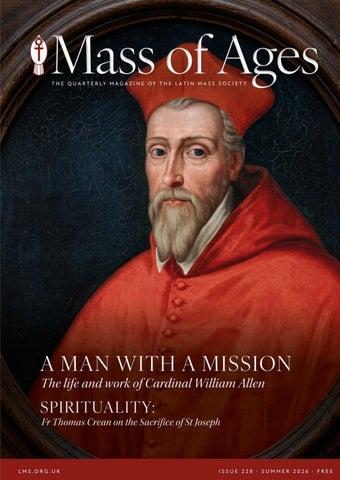
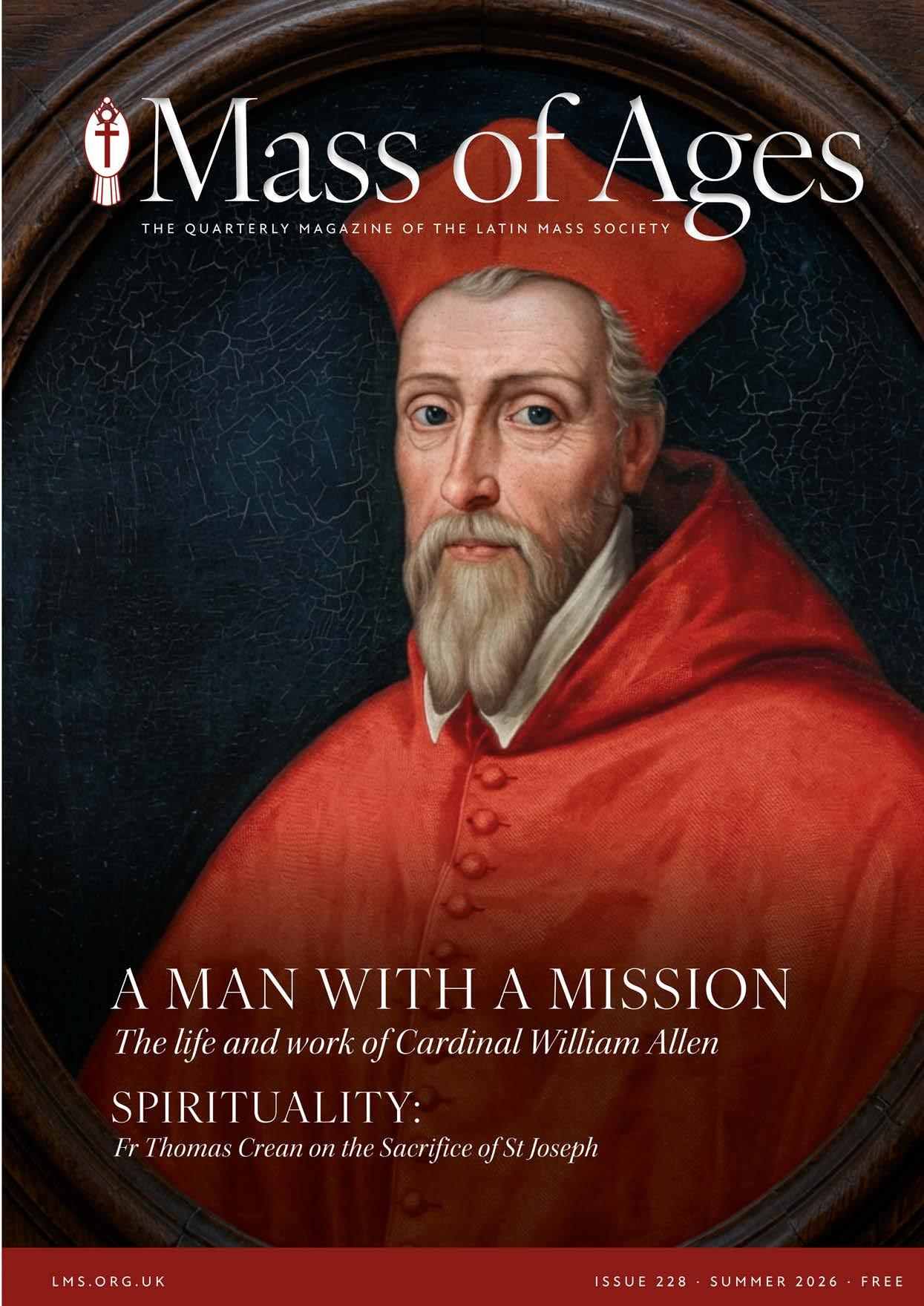
8 A man with a mission John Whitehead on the life and work of Cardinal William Allen
10 Our Lady of Champion Edward Dundon on Adele Brice’s cause for sainthood
12 Christ is King Daniel Jahansouz reports from the Summorum Pontificum Pilgrimage
13 World News Paul Waddington with an international perspective
15 Obituary: Loved by many Victoria Keens remembers Father Gerard McGuiness
16 Greatest patron Rose Lyddon on an exhibition of the work of Pope Urban VIII’s favourite artist, Lorenzo Bernini
18 Family matters: Cooperate and assist Every parent is a catechist, as James Preece explains
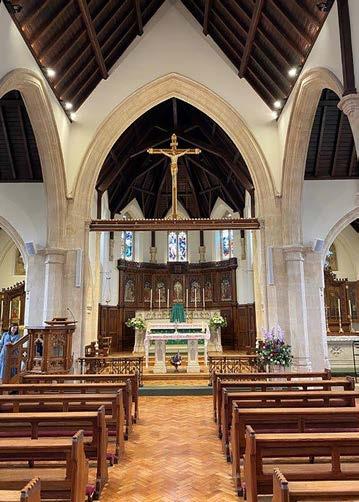
20 Architecture: The Church of St Mary and St Edwin, Evesham Paul Waddington on a church designed by one of the lesser-known members of the Pugin family
22 Wine: Something of a tradition… Sebastian Morello on the Kir Cocktail
24 Spirituality: Do not fear Fr Thomas Crean on the Sacrifice of St Joseph
26 Art and devotion: Saving the people Caroline Farey on how the Immaculate Virgin participates in Christ’s mission to conquer evil
29 The Sacrifice of the Cross Fr Aidan Nichols on Louis Chardon’s La Croix de Jésus
34 Reports from around the country What’s happening where you are
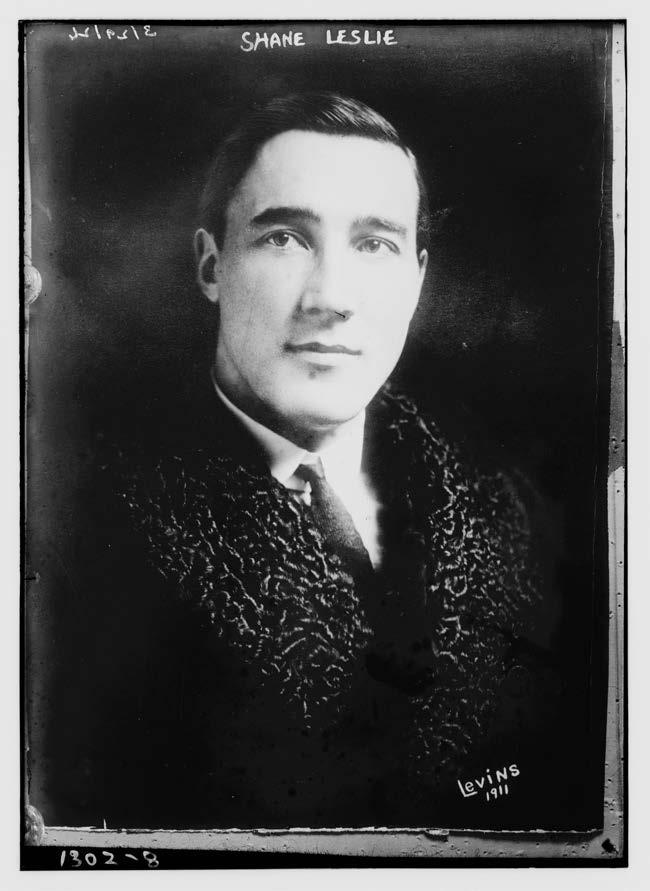
42 A pillar of Catholic society Charles A. Coulombe remembers Sir Shane Leslie
44 Liturgical calendar
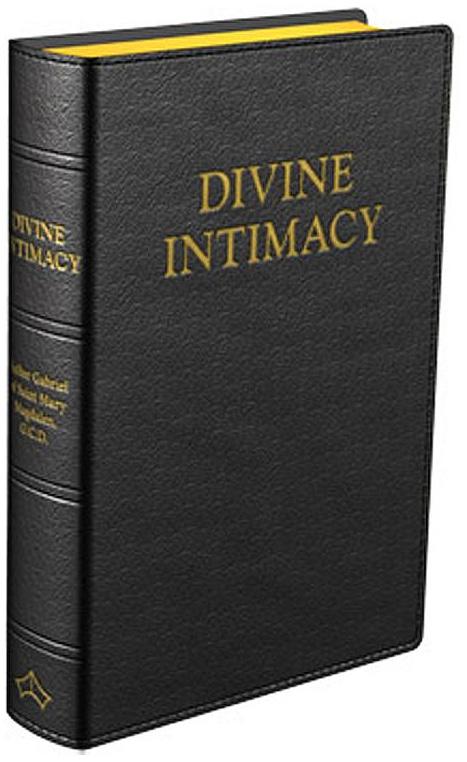
46 Text message Fr Thomas Crean reviews missals and other books from the LMS shop
MASS OF AGES MAGAZINE
Editor: Tom Quinn, editor@lms.org.uk
Design: GADS Ltd. & Selina Fang
Printers: Vyner Print Media Ltd.
Due to the considerable volume of emails and letters received at Mass of Ages, it is regrettably not always possible to reply to all correspondents.
DISCLAIMER: Please note that the views expressed in this publication are not necessarily those of the Latin Mass Society or the Editorial Board. Great care is taken to credit photographs and seek permission before publishing, though this is not always possible. If you have a query regarding copyright, please contact the Editor. No part of this magazine may be reproduced without written permission.
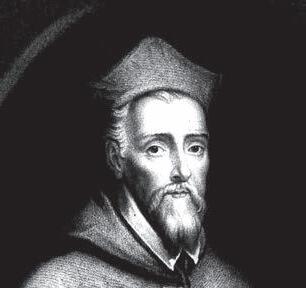
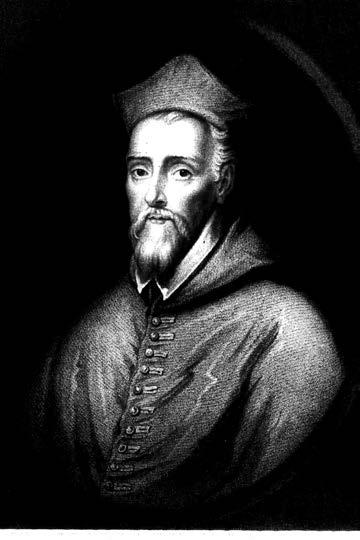
Cover image: Cardinal William Allen.
THE LATIN MASS SOCIETY
FOUNDED 1965
PATRONS
Sir Adrian Fitzgerald, Bt . The Rt Hon Lord Gill . The Rt Hon Sir Edward Leigh, MP
Sir James Macmillan, CBE The Lord Moore of Etchingham Prof. Thomas Pink John Smeaton
LOCAL REPRESENTATIVES
COMMITTEE
CHAIRMAN : Dr Joseph Shaw
SECRETARY : Selina Fang
TREASURER : David Forster
HONORARY OFFICERS : Alastair Tocher
Paul Waddington
OTHER COMMITTEE MEMBERS : Alan Gardner, Julia Jones, Kevin Jones, Antonia Robinson, Aileen Seymour
NATIONAL CHAPLAIN : Mgr Gordon Reid
STAFF AND FREELANCERS
GENERAL MANAGER : Richard Pickett, richard@lms.org.uk
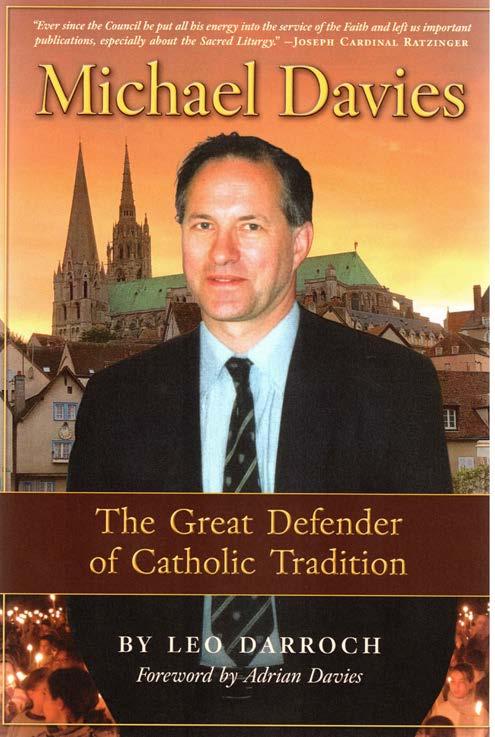
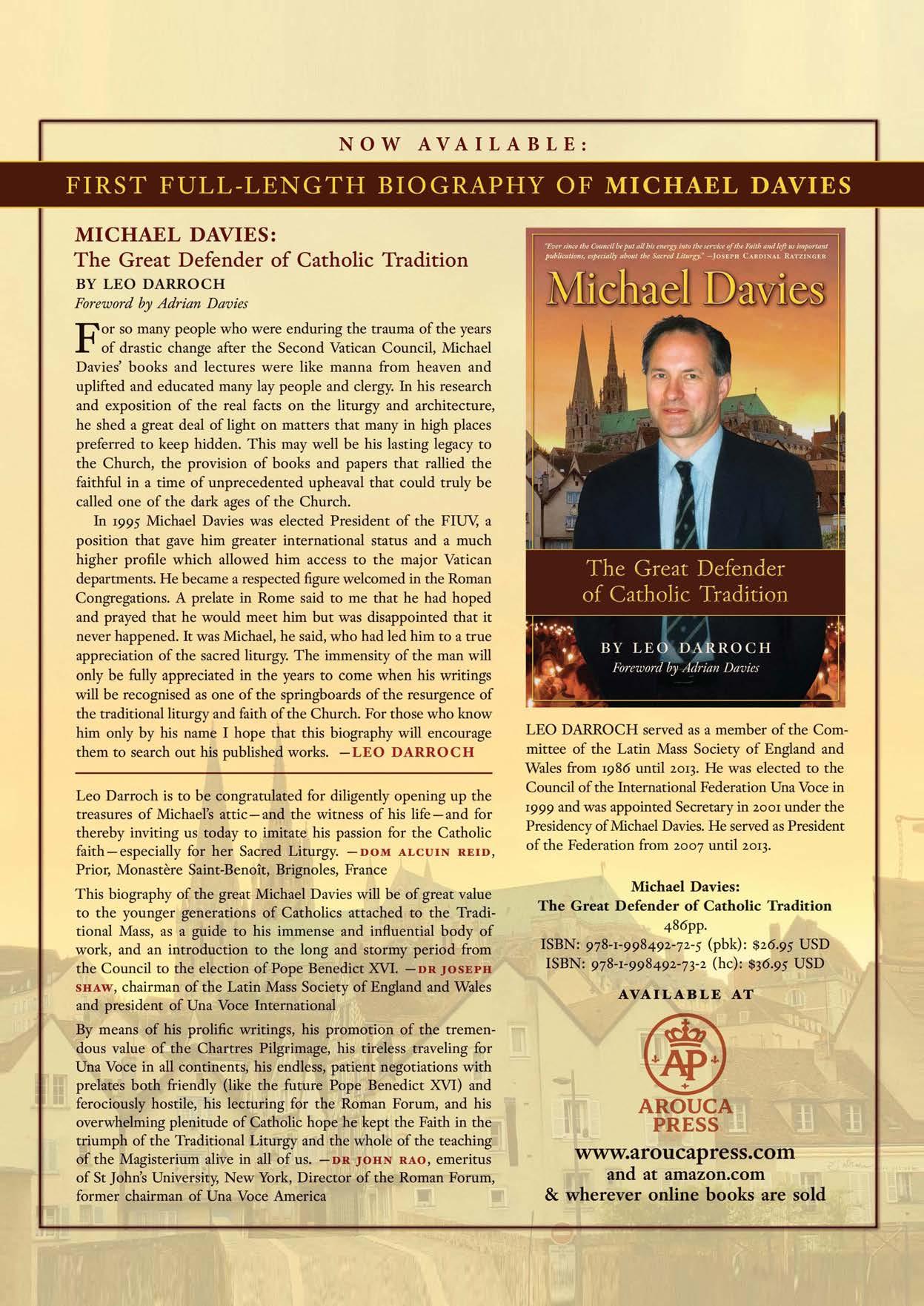
By the time this edition of Mass of Ages arrives, we will have had a book launch for Leo Darroch’s Michael Davies: Defender of Catholic Tradition, published this year by Arouca Press. Although Davies died in 2004, I think that those reading these words are more likely to have read a book by him than by any other postVatican II Catholic, with the exception of Pope Benedict XVI. He was not alone in his work, but he dominated the field in the English language, particularly on this side of the Atlantic. Indeed, those who come to read Davies after reading other Traditionalist apologists, may find his arguments oddly familiar, like the chap who thought that Shakespeare’s Hamlet was ‘full of quotes’. Davies has not been surpassed: rather, he established a foundation upon which we have all built.
I certainly don’t exempt myself from this generalisation: his books were the first I read about the liturgical reform, after I started attending the Traditional Mass regularly and wanted to find out more. I’ve read a lot since then, but his systematic treatments, Pope John’s Council and Pope Paul’s New Mass, were what I needed at that time. Indeed, I recommend them today to anyone who wants to know how we got from the situation of self-confidence and growth in 1958, to the situation 20 years later, described by Pope Paul VI himself as a time in which the Church appeared to be demolishing herself. Indeed, Davies’ temporal perspective has a special value, in that he saw the whole process himself.
Recommended:LeoDarroch’sbiographyofMichaelDavies
raised the alarm, were relentlessly attacked as false prophets of doom.
We may have versions of these same difficulties, but anyone born after the Council has seen nothing but decay and retreat, and while this is itself a psychological burden, we haven’t been through the trauma of seeing the image of the Church of our youth being rudely shattered. Indeed, we have now got to the stage of the ongoing collapse where the bad, as well as the good, is being destroyed.
benedictine communities to the Holy See; and the new scholarship and fresh thinking that was beginning to challenge the liberal consensus. His optimism about these developments was not misplaced: indeed, they have come to fruition in extraordinary ways. Who could have foreseen in 2004 that over the next 20 years the bishops of England and Wales would entrust four historic churches to those two institutes, or that the number of Oratories of St Philip Neri (including those in formation) would have increased from three to seven, with another in Edinburgh and another in Dublin? With these developments has come an enormously increased availability of the Traditional Mass. It is no small thing that supporters of the Latin Mass Society are, for the most part, now able to get to the Traditional Mass on Sundays as a matter of routine.
Let us not forget the heroic early workers in the vineyard of the Traditional movement, their extraordinary dedication, and the cost they bore for their witness, including lost friends, lost positions of respectability, and foregone earnings: you couldn’t get rich as an internet personality back then. Michael Davies exhibited the best qualities of this generation, with his fair-mindedness, good humour, and stoicism: he is to be criticised, indeed, most of all, for overwork and not looking after himself.
The task of Catholic writers of Davies’ generation was particularly difficult. The calamity of the postConciliar period shook the faith of many, and those who, like him,
In every decade, nevertheless, good news is sprinkled among the bad. Davies was able to witness the establishment of the Traditional Priestly Institutes, the Fraternity of St Peter and the Institute of Christ the King Sovereign Priest; the reconciliation of traditionalist
Leo Darroch’s biography of him is a thorough introduction to his works and ideas, and I recommend it to our readers.
Michael Davies: The Great Defender of Catholic Tradition is available from the LMS bookshop at lms.org.uk/shop priced £19.95.
YEAR PLANNER
At the time of going to press the following events are planned. See lms.org.uk/events-calendar for more details.
Gregorian Chant Network: Chant Training Days lms.org.uk/chant2026
LONDON
OUR LADY OF THE ASSUMPTION, LONDON W1B 5LZ
30 MAY, 10.30 AM TO 5.45 PM
With Iain Simcock and Julia Jones.
25 JULY
As above, with Matthew Ward and Julia Jones.
19 DECEMBER
As above, with Iain Simcock and Julia Jones.
DORCHESTER - ON -THAMES
11 JULY, FROM 9.15AM
With Iain Simcock.
ISLE OF WIGHT
6 JUNE, QUARR ABBEY
With Abbot Xavier Perrin and Dominic Bevan portsmouthgregorianchant.blogspot.com
OXFORD
26 SEPTEMBER, FROM 9.15AM
With Iain Simcock and Dominic Bevan.
PILGRIMAGES AND OTHER EVENTS:
Southwell Consort Concert
30 MAY, ST CLEMENT DANES, LONDON, 7 PM
Performing Christopher Gibbons and Henry Purcell Guerrero Baroque Collective with Simon Over , conducting.
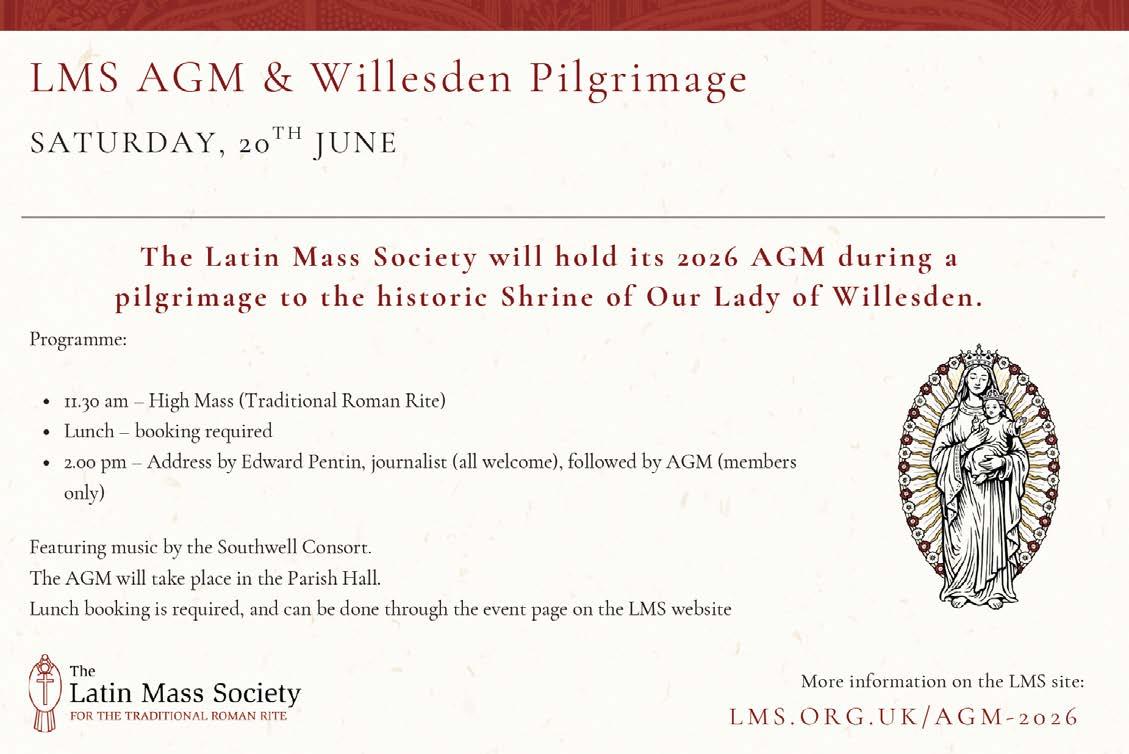
LMS Annual General Meeting & Pilgrimage
20 JUNE
OUR LADY OF WILLESDEN, LONDON, NW10 9AX
11.30am High Mass
1pm Lunch (prior booking required)
2pm Address Edward Pentin, Journalist (all welcome) followed by LMS AGM (members only)
LMS Summer Residential Latin Course
29 JUNE TO 4 JULY
Beginner and advanced streams.
St Birinus Festival
9 TO 12 JULY
DORCHESTER ABBEY, OXFORDSHIRE
The Traditional liturgy and sacred polyphony sung by the Southwell Consort, with period instruments.
Juventutem Summer Weekend
31 JULY TO 2 AUGUST for ages 18 to 35
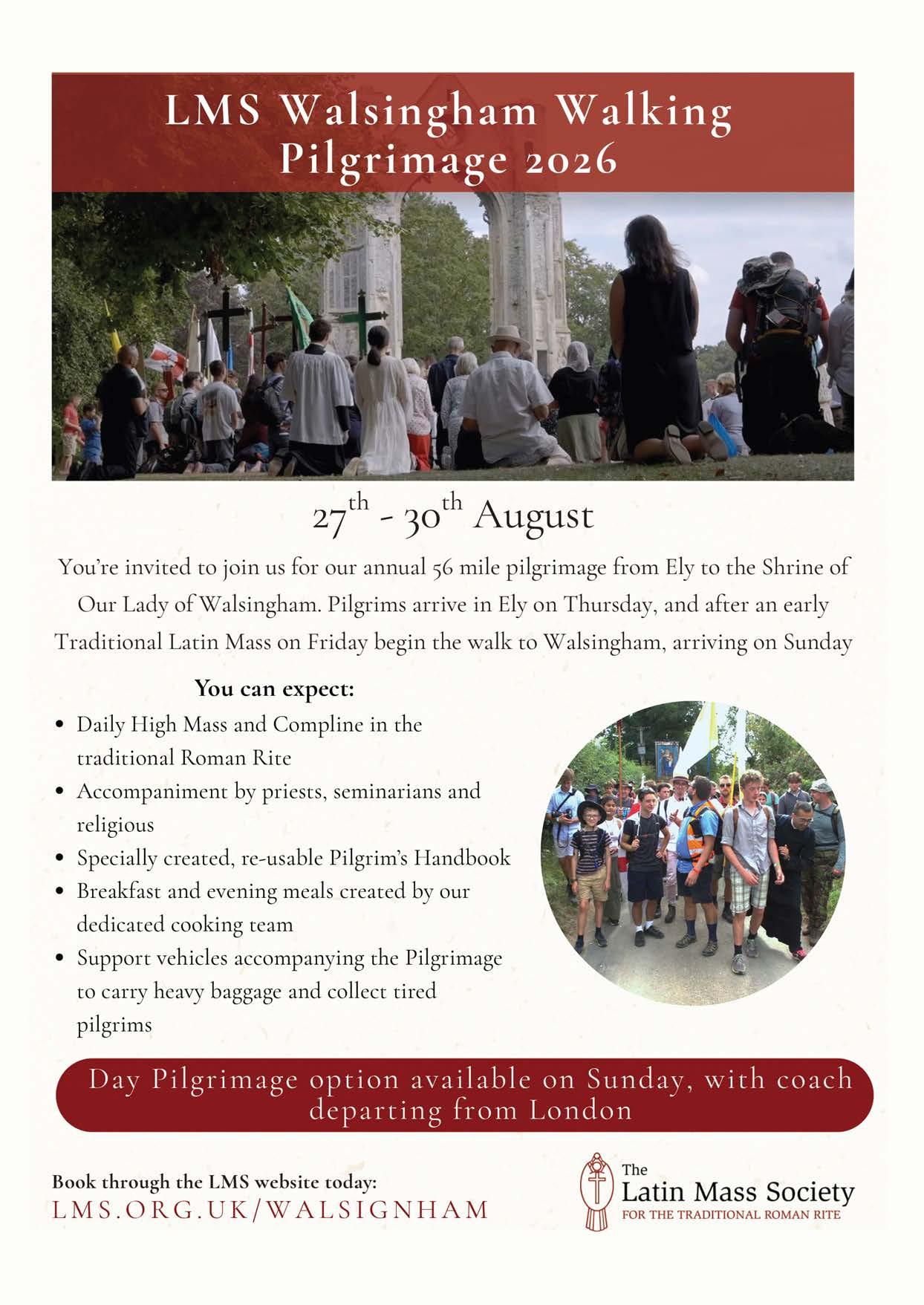
LMS Walsingham Pilgrimage 27 TO 30 AUGUST
Chideock Martyrs Pilgrimage
19 SEPTEMBER, FROM 12 : 15PM OUR LADY QUEEN OF MARTYRS, BRIDPORT, DT6 6LF
Snave Sung Mass
26 SEPTEMBER, 12.00 NOON MEDIEVAL CHURCH OF ST AUGUSTINE ON THE ROMNEY MARSH
LMS Oxford Pilgrimage
17 OCTOBER, BLACKFRIARS, OXFORD, OX1 3LY 11am High Mass in the Dominican Rite, followed by a procession at 2pm and Benediction.
Rome Pilgrimage – Peregrinatio ad Petri Sedem
23 TO 26 OCTOBER IN ROME
Catholic Military Association Annual Requiem
9 NOVEMBER, CORPUS CHRISTI, MAIDEN LANE, LONDON, 6.30 PM
Society of St Tarcisius: Server Training days
19 SEPTEMBER, 10.30 AM TO 4 PM
St Mary Moorfields, Eldon Street, London EC2M 7LS Booking at lms.org.uk for server training
7 NOVEMBER As above
These events run in parallel with Vestment Mending Days with the Guild of St Clare
THE LMS WILL HAVE A PRESENCE AT THESE OTHER EVENTS:
We Believe Festival 24 TO 27 JULY, OSCOTT COLLEGE, BIRMINGHAM, B73 5AA webelievefestival.com
Evangelium Conference 21 TO 23 AUGUST, THE ORATORY SCHOOL, OXFORDSHIRE, RG8 0PJ www.evangelium.co.uk
A man with a mission
John Whitehead on the life and work of Cardinal William Allen
Cardinal William Allen (1532-94) is a complex figure, the man who nurtured the ministry of missionary priests, yet also a man who compounded the problems of his fellow Catholics by pursuing policies which meant they could all the more easily be stigmatised by the Elizabethan regime as traitors and foreign agents.
Was he unrealistic or were his actions conditioned by the times in which he lived? These intertwined questions shaped his life and reputation. He can be seen as the emigre awaiting the imminent downfall of his enemies, hoping against hope as the actual likelihood disappears, rather as in the Cold War.
Initially he was looking for a political revolution, as in 1553, to overthrow the heretical establishment and restore Catholicism, and indeed hoped for that most of his life. In so doing he underrated his opponents, believing the situation of the 1560s still prevailed twenty years later.
Were English Catholics ready to rise? They saw the situation in their daily lives. Did the savagely repressed 1569 Northern Rising and the 1571 Ridolfi Plot show that the necessary coordination, or effective leadership, was lacking? The failure of these last regional uprisings may have stifled other attempts, although the Babington plotters were still capable of thinking it possible in 1586. Many Catholics placed their hope in having a Catholic successor such as Mary of Scots, or one believed potentially favourable, like her son James VI.
Did they look for foreign intervention or did they resent it as intrusive? Philip II was always interested, but ever cautious and distracted by other concerns. Philip might be Spanish, but he had been King and had a threefold Plantagenet bloodline through both his parents: his daughter Clara Eugenia attracted support from Protestants after 1603. As with the Jacobite claimants in the eighteenth century what people
promised and what they performed might be very different.
Allen’s most recent biographer Prof Eamon Duffy sees him as rooted in traditional Catholicism from his home area and appreciative of Spanish participation in the Marian restoration.
William Allen was born in 1532 to a devout gentry family at Rossall Grange on the Lancashire coast. This now lies beneath the nineteenth century Rossall independent school.
Aged fifteen he left Rossall for Oxford in 1547 and entered Oriel College. He achieved his Bachelor of Arts degree and became a Fellow of Oriel in 1550. This was while the Edwardian reformation was radically reshaping English religious life. In 1554, the year after Queen Mary’s accession, he became a Master of Arts and in 1556 became Master of St Mary Hall, a dependency of Oriel that taught undergraduates. By 1558, the year the Queen died, he became a canon of York Minster. Simultaneously he appreciated Spanish participation in successfully restoring Catholic practice.
Allen avoided taking the new Oath of Supremacy required, but casually enforced, by the Elizabethan settlement of 1559, remaining in Oxford until 1561. He then, like many Catholic Oxford and Cambridge men, resigned his preferments and sought refuge at Louvain and Malines in the Netherlands.
In 1562, after tutoring Christopher Blount (1555/6 -1601) an English Catholic child living in Louvain, and with an eventful life ahead of him, he was advised on medical grounds to return to Lancashire. This he did and saw that the initially fairly mild imposition of the new dispensation meant that many Catholics by conviction were occasional conformists. He urged them not to do so, as the Pope and the Council of Trent had ruled.
Allen believed that the national mood could easily swing back to the traditional faith if circumstances permitted. At that particular time, he may well have been right. He also saw that with surviving priests getting older, and with no fresh ordinations, there was an urgent need for English Catholic priests to minister to the laity and maintain their fidelity. In that he was not wrong as inevitably Catholic numbers and practice declined as a consequence of an increasingly effective hostile ecclesiastical and state establishment opposed to, and increasingly less tolerant of, Catholicism.
There was also the question as to what to do with young Catholic Englishmen in self-imposed exile in the Low Countries Thus was born his determination to train and send them back to England as missionaries.
His Lancashire campaigning drew unwelcome attention to the eloquent educated man, his distinctive height, prominent nose and auburn hair. Moving to Oxford and living with friends he wrote his first publication, on confession. He was to continue writing polemical works until close
Cardinal Allen: a conflicted legacy
to his death. He then sheltered in the household of the Duke of Norfolk before leaving England, never to return. Back in Malines in 1565 he was speedily ordained to the priesthood and authored a sizeable book on Purgatory, which had been a Lent project.
In 1567 he made his first visit to Rome to secure approval for his planned seminary. His original idea was to train clergy ready for ministry if and when Elizabeth’s system collapsed, but he was persuaded to prepare them to minister in the current situation.
In 1568 Allen established his college at Douai, alongside a university established in 1560-62. He funded it from his teaching work and with a pension from King Philip. Urbane and cultured, Allen used the latest ideas on management and courses for the large number of highly educated and motivated young men who joined. Increasingly Allen and his seminarians realised they were potentially preparing them for martyrdom.
The college had a policy of avoiding politics, above all the Succession, but the issue remained. Allen saw his students as priests sent to minister to the faithful oppressed by heretics, and that he and his seminarians were loyal to an England taken from them by that heretical regime. By contrast the English government rapidly saw them as enemy agents sent to undermine the Elizabethan regime. Given the polemical nature of the religious divide both sides could, and did, demonise their opponents in a cold war of mutual fear and hatred.
One major project was the Bible translation - the New Testament published in 1582, and the Old Testament delayed until 1609-10. It was designed to equip the mission priests in dialogue and to counteract Protestant translations. In 1580 Allen was appointed to the Papal commission on Vulgate revision.
Increasingly prominent, in 1572 and 1575 he received faculties in the absence of any English bishops. He also became a potential target for assassination. Civic religious tensions in Douai in 1578 forced the college to move to Rheims, returning in 1593. Alongside other exiles Allen became a canon of Rheims.
In 1579 the English College in Rome was established, but AngloWelsh friction in the community required Allen’s intervention to resolve
tensions in 1580, and he handed over its management to the Jesuits. An excellent practical move at the time, it doubtless fuelled in the mind of the Elizabethan government the idea of a sinister Jesuit plot, just as Frs Campion and Parsons made their way to England. From 1576 onwards Allen, under the influence of Parsons, was increasingly drawn into the world of plotters hoping to overthrow Elizabeth by a Spanish invasion and national uprising. As the voice of English Catholics in Rome, he increasingly articulated a pro-Spanish, militarily interventionist approach as the only way to re-establish the faith.
By 1581 the idea of making Allen a Cardinal began to be mooted, and from 1585 he lived in Rome. When in 1587 the entrapped Mary Queen of Scots was executed, she bequeathed her claim to King Philip II. Later that year Allen wrote to encourage Philip to send the Armada. On August 7 Allen was made a Cardinal, and if the invasion succeeded, was destined for Canterbury and Lord Chancellor. He wrote two impassioned appeals urging English Catholics to rise with the arrival of the Armada in 1588.
Allen participated in four conclaves in the years 1590-92. In 1589 Philip II nominated him for the archbishopric of Malines but the process was never completed.
As the ‘Cardinal of England’ he lived at the English College in Rome, the poorest of the Cardinals, and enjoyed the friendship of St Philip Neri. In these last years he displayed an openness to a compromise and a hypothetical scheme for toleration of Catholics in England. Perhaps somewhat disillusioned that his pro-Spanish policy had harmed his reputation he still retained a fervour to reclaim England for Catholicism. He died on October 16 1594 and was buried in the chapel of the English College, although his tomb was destroyed in the French occupation in 1799.
Living in Rome he witnessed the completion of the dome of St Peter’s, but in his will bequeathed to his home parish church at Rossall the vestments and furnishings of his chapel if the faith were restored in England. He was still the Lancashire lad rooted in the traditional faith. He was a man with a conflicted legacy whose principal goal of reconverting England eluded him. Vindicated in the long term, not in his own lifetime, he had helped save the Catholic faith in England, but at the terrible price of so many martyrdoms, a price the victims were willing to pay.
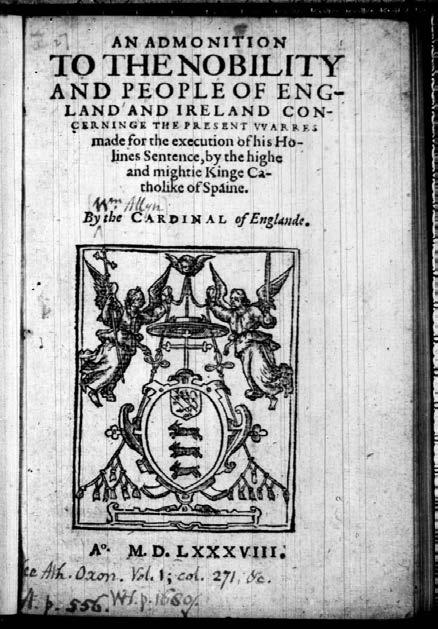
Cardinal Allen’s Admonition to the People of England
Our Lady of Champion
Edward Dundon on Adele Brice’s cause for sainthood
On 30 January 2026, Bishop David Ricken of Green Bay, Champion, Wisconsin, invited submissions from anyone with helpful information to support Adele Brice’s cause for sainthood. This marked the first step in the canonisation process of the visionary Adele Brice, who had encountered Our Lady in Champion in 1859.
In 2022, the Vatican recognised the apparition of the Blessed Virgin in Wisconsin – the only site in the United States to receive the distinguished honour of a Marian apparition. A year later, the shrine was renamed the National Shrine of Our Lady of Champion.
In 2016, the United States Conference of Catholic Bishops (USCCB) designated the grounds of the shrine as a national shrine.
The USCCB also examined historical information and testimonies concerning Our Lady’s apparitions of 1859. Among the records were Our Lady’s instructions to Adele to teach the children their catechism, the shrine’s miraculous survival in 1871 of The Great Fire of Peshtigo, and documented healings consistent with Catholic doctrine.
Adele Brice was born on 30 January 1831, in the province of Brabant, Belgium. She was pious and cheerful, despite being blind in one eye after a childhood accident. As a young girl, Adele had hoped to become a religious teaching sister in Belgium, but her parents chose to settle in the United States.
When Adele was twenty-four, her family and other Belgian settlers arrived in Wisconsin. The settlers managed to forge a good life there, but they found the harsh American winters difficult to withstand.
One day, while walking in the woods, Adele saw a lady dressed in white standing between two trees. The woman remained silent. Adele wondered what this unusual interaction signified. When she told her family about it, they pondered if it might have been a soul in purgatory visiting earth and seeking help through prayers.
In October 1859, shortly after the previous apparition, Adele was on her way to Mass with her sister and a friend.
The church was ten miles away, but she walked there every week regardless of the weather. En route, she saw the same lady in white standing in precisely the same spot.
On that same day, Adele shared this experience with her parish priest. He told her that if the lady appeared again, to ask:
‘In God’s name, who are you and what do you want from me?’
When Adele and her friends were returning home that day, she saw the lady for the third time. As they approached the hallowed place, Adele noticed that the lady was dressed in the same white cloak with a yellow sash around her waist. She wore a crown on her head. Her wavy, golden hair fell over her shoulders. Adele couldn’t look at the lady’s face because of the intense light surrounding her.
This time of meeting her, Adele fell to her knees and asked the lady what her parish priest had told her to ask.
This was her reply: ‘I am the Queen of Heaven who prays for the conversion of sinners, and I wish for you to do the same. You received Holy Communion this morning, and that is good. However, you must do more. Make a general confession and receive Communion for the conversion of sinners. If they do not convert and do penance, my Son will be compelled to punish them.’
'Adele, why can’t we see her as you do?' one of her friends asked.
'The lady claims she is the Queen of Heaven,' Adele said.
‘Blessed are those who believe without seeing.’
‘What more do you want me to do, dear Lady?’
‘Gather the children in this wild country and teach them what they need to know for salvation,’ came the reply.
‘But how can I teach them when I know so little myself?’
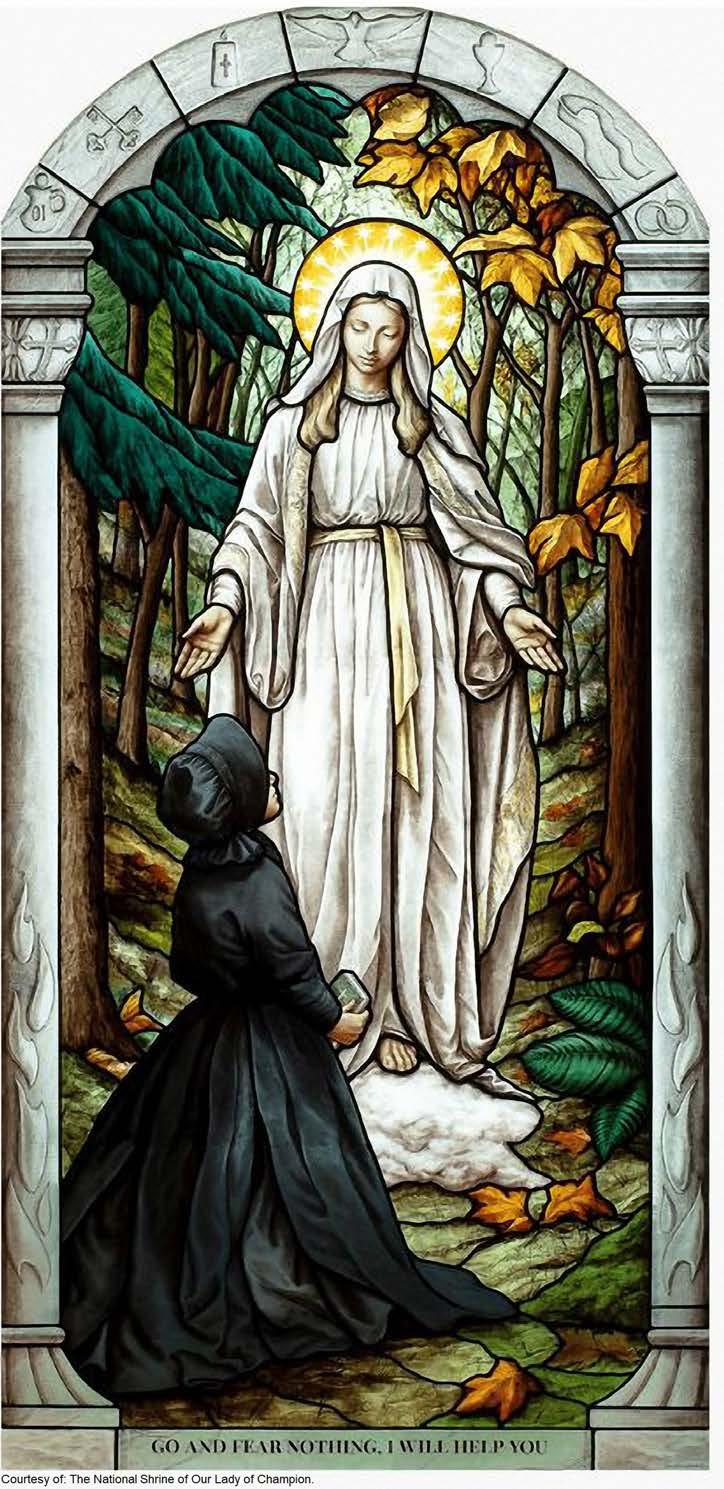
‘Teach them their catechism. How to make the Sign of the Cross and how to approach the sacraments. That is what I want you to do. Go and fear nothing.
I will help you.’
Then Our Lady, with her hands raised, seemed to bless those at her feet. When Adele looked up, she had disappeared.
After this encounter, Adele now began her mission of teaching children their catechism and about the sacraments. She told everyone, including her father about her encounter with Our Lady. Adele’s father regarded his daughter as truthful. To show his love for Our Lady, he built a small chapel at the apparition site. In 1861, a larger wooden chapel was built as by then it had to accommodate a hundred people.
For many years, Adele taught by herself. But by 1864, she had gathered a group of women to assist her with the teaching mission. They called the group the Sisters of Good Help, a Third-Order Franciscan community that was never consecrated. Then Adele received substantial financial support from parishioners to build a school and convent. So in 1867 she opened a school near the chapel.
Adele’s mission could sometimes be problematic. There were days when she and her helpers had barely enough to eat. On such occasions, the community would gather in the chapel to ask for Our Blessed Mother’s help. To their amazement, a bag of flour or a consignment of meat would soon arrive at the convent.
On 8 October 1871, gale-force winds turned the woods and forests of Wisconsin into a huge inferno. The Great Fire of Peshtigo became known as one of the most devastating fires in US history. Father Anthony Stephens, rector of the shrine, describes the inferno as ‘like the Battle of Jericho.’
People from nearby areas rushed to the chapel where the community was praying. Those present walked around the perimeter of the chapel, praying the Rosary, singing hymns and beseeching the intercession of Jesus and His Most Holy Mother for help. The procession went on throughout the night.
In the early hours of the next morning, the winds abated and a downpour of firequenching rain helped extinguish the flames before they reached the chapel, sparing both the chapel and the school. Between one and two thousand lives were lost, and more than a million acres of land were destroyed.
A local priest, Father Peter Pernin, declared that the prayers to the Mother of God were heard and the fire was extinguished. As dawn broke, the ravages of the conflagration were revealed. To borrow Father Pernin’s words: ‘Everything was destroyed: miles of desolation everywhere. But the convent, school, and chapel on the holy land consecrated to the Virgin Mary shone like an emerald isle in a sea of ashes. Tongues of fire had reached the chapel fence. . the fire had not entered the chapel grounds.’
The fire destroyed the areas around the grounds. Only the cattle led by the farmers to the chapel survived. Because of the drought of that summer, many wells in the area had run very dry, but the chapel’s well – only a few feet deep – supplied enough water for the cattle to survive. No one could explain how such a shallow well could meet the needs of such requirements. This event is often called the Miracle of the Chapel Well.
However, many other miracles have also been associated with the shrine. There was the case of a seventeen-yearold boy who developed pleurisy as a result of pneumonia. Although he had breathing difficulties and was very weak, he completed a novena at the chapel and was cured despite his damaged lungs.
Another miracle we know about happened to a young girl who had bleeding sores who had been treated by multiple doctors for many years. She, too, was completely cured when she made a pilgrimage at the chapel with her mother.
Having lost her sight after contracting measles, a young girl went to the chapel to pray with her mother. She was also cured.
For many years after the conflagration, Adele and the sisters of her community continued teaching and catechising. Adele died in July 1896. She pursued her ministry with a great eagerness and a desire to fulfil her dedication to God and His Blessed Mother. She is buried in the cemetery near the Apparition Chapel.
In October 1902, Bishop Messmer assigned the chapel duties to the Sisters of Saint Francis of the Holy Cross. Sister LaPlante served as superior for twentyfour years.
The National Shrine of Our Lady of Champion continues to be a source of both corporal and spiritual healings.
Pilgrims are always reminded of Our Lady’s unfailing words to Adele: ‘Go and fear nothing. I will help you.’
AdeleBrice:‘Goandfearnothing.Iwillhelpyou’
World News
Paul Waddington with an international perspective
On 5 March, Pope Leo met in private audience with Stephen Bullivant and Stephen Cranney. Stephen Bullivant is Professor of Theology and the Sociology of Religion at St Mary's University in Twickenham, and is the author of many works including Mass Exodus (a study of Catholic Disaffiliation since Vatican II). Stephen Cranney, whose interests include demography and the sociology of religion, is a postdoctoral Scholar at the Institute for the Studies of Religion at Baylor University in Texas.
Although Popes do meet all sorts of people in private audiences for all sorts of reasons, it seems likely that the reason for this particular meeting was specifically to discuss their recent research into the attitudes held by supporters of the Traditional Latin Mass in America.
In 2024, Bullivant and Cranney conducted research into the beliefs and attitudes of American Catholics who attend the Traditional Latin Mass. A full report of their findings will be given in a book due to be published towards the end of 2026, but many of the results are already known. The research found (among other things) that those who attend the Latin Mass are strongly pro-life, believe in the Real Presence and generally hold very orthodox views in matters of religion.
Of particular interest to us is their finding that the substantial majority of those who regularly attend the Latin Mass stated that they accepted the teachings of Vatican II. There is clearly little truth in the perception that supporters of the Latin Mass in America are characterised by an anti-Vatican II stance.
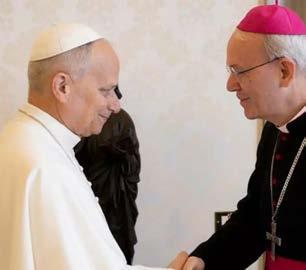
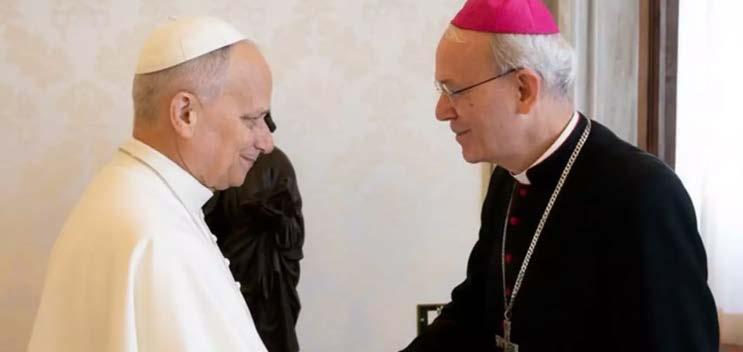
PopeLeoXIVgreetingBishopSchneiderinFebruary
Another finding was that many of the respondents made a clear distinction between what was actually in the Vatican II documents, and the way in which it has been carried out or interpreted.
No doubt, the two sociologists conveyed this information to Pope Leo at their meeting on 5March.
Divisive
In his letter that accompanied Traditionis Custodes, Pope Francis asserted that the use of the traditional Mass was divisive, stating that: ‘...an opportunity offered by Benedict XVI ... was exploited to widen the gaps, reinforce the divergences and encourage disagreements that injure the Church, block her path and expose her to the peril of division’.
He also claimed that: ‘...use of the Missale Romanum of 1962 is often characterised by a rejection, not only of the liturgical reform, but of the Vatican Council II itself, claiming with unfounded and unsustainable assertions, that it betrayed the position of the true Church’.
These two excerpts express the two principal arguments employed by Pope Francis to justify his rejection of Summorum Pontificum, and the restrictions that he applied to the older form of the Mass in his 2021 motuproprio, Traditionis Custodes. The research conducted by Bullivant and Cranney casts considerable doubt on the validity of both these arguments.
Concrete solutions
More recently, it has emerged that Pope Leo sent a message, by way of his Secretary of State, Cardinal Parolin, to the bishops of France in advance of their March Conference. The letter noted that the bishops would be discussing the liturgy, describing it as a matter to which ‘the Holy Father was particularly attentive in the context of the growth of communities attached to the Vetus Ordo’.
The message concluded with the sentence: ‘May the Holy Spirit suggest to you concrete solutions that would generously include those sincerely attached to the Vetus Ordo, while respecting the orientations set forth by the Second Vatican Council regarding the Liturgy.”
The message to the French Bishops' Conference should be read in the context of a leaked message delivered to the Conference of the Bishops of England and Wales in November of last year, when, according to the leak, the Apostolic Nuncio informed the bishops that Pope Leo was prepared to grant renewable two-year dispensations for all currently authorised celebration of the Traditional Latin Mass.
In an interview granted to Crux Magazine back in September 2025, Pope Leo stated that he had not had the chance to discuss the issue of the Tridentine Mass with the people who were advocating it. Many observers of Vatican affairs took this as evidence that the issue of the availability of the older form of the Mass was high on Pope Leo's agenda of matters needing attention.
We know that Pope Leo has subsequently had meetings with Cardinal Burke, Cardinal Sarah and Bishop Schneider, who are all strong advocates for the Tridentine Mass, and we know the subject was discussed on each occasion. The meeting with the two sociologists followed, and the matter may be revived for discussion at the Consistory scheduled for June, when the Holy Father will meet Cardinals from all over the world.
So it seems that by the end of the summer, Pope Leo will have had several opportunities to discuss the Tridentine Mass, including with several of its strongest advocates. So, it could be that some pronouncement will be made on the subject of the Latin Mass later in the year.
Loved by many Victoria Keens remembers Father Gerard McGuiness
Visiting Father McGuiness late on the day before he died, I reminded him that the next day, 9 July, was the feast of St Thomas More and St John Fisher, his two favourite saints. Father died the next morning. He had been a priest for more than 62 years.
Father Gerard Ignatius McGuiness was born in Sale, Cheshire on 31 July 1938, the feast of Saint Ignatius of Loyola. He was the youngest of the seven children born to his parents, Catherine and Joseph, who were both teachers. Before entering the junior seminary at Ushaw at age 14, he had been a pupil at St Bede’s College in Manchester. He prepared for the priesthood at Ushaw and was ordained on 16 June 1963 at Saint Joseph’s, Sale, by Bishop William Eric Grasar, who was Bishop of Shrewsbury from 1962 to 1980. During his early priesthood he also studied for a degree in history at Bangor University and later taught history at St Augustine’s, then a new Catholic grammar school in Wythenshawe. Eventually he settled in Shrewsbury, where he was a parish priest for many years.
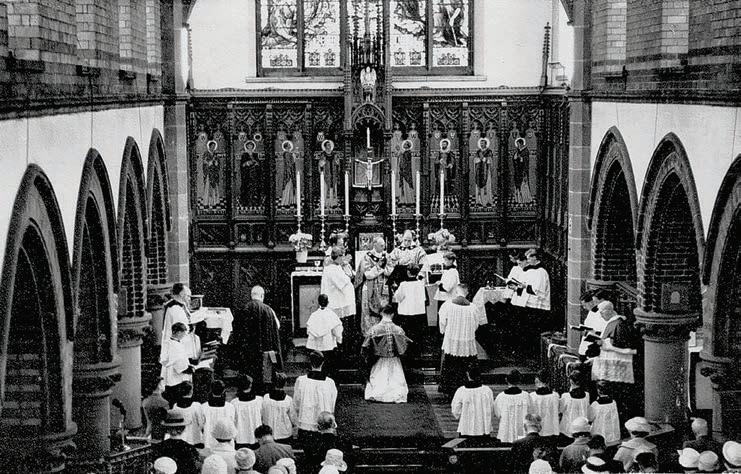
Fr McGuiness’ ordination in 1963, ‘He lived the life of a holy priest’
Our thriving Latin Mass community owes much to Father McGuiness. When he began to offer Mass at St Winefride’s, it was still rare to have Mass in the old rite offered every Sunday. A gifted speaker, he delivered wonderful homilies and sermons, enriched by his deep knowledge of Scripture, and he never hesitated to address difficult moral questions with firm Catholic truth. A kind and helpful confessor, he had a priestly heart that touched the lives of many. He loved the Mass and led others to love it.
My husband Chris and I were among those fortunate enough to have had his friendship. We regularly enjoyed many hours of lively conversation, had meals together and went on outings of various sorts. He was a wonderful companion, intelligent and well-read, with a great sense of humour. A perfect gentleman, he was patient, forgiving and generous. His humility was genuine and I never knew anyone with less attachment to material things.
I can never forget Father’s kindness and support during my husband’s final illness. On the morning of Chris’s death, despite his own failing health and disabilities, Father came to our house. Dear friend and true priest - I do
not know how I would have managed without him. We did not then know that Father himself would die less than ten months after Chris.
Over the years, Father won the hearts of both new and old rite parishioners, many of whom became his devoted friends. In all the years that I knew him, he always had visitors, whether he was at home, in hospital or finally in the nursing home. His life was full of examples to follow in our own lives. He did more good for souls than he could ever imagine. He was loved by many and is missed by many. He lived the life of a holy priest and those of us who were near him at the end believe that he died a holy death. It’s been a year now.
Præsta, quæsumus, Domine: ut anima famuli tui Gerardi Sacerdotis, quem, in hoc saeculo commorantem, sacris muneribus decorasti; in cælesti sede gloriosa semper exsultet.
[Grant, we beseech Thee, O Lord, that the soul of Thy servant Gerard, Priest, whom, while dwelling in this world, Thou didst adorn with sacred duties, may rejoice in the heavenly home in glory forever.]
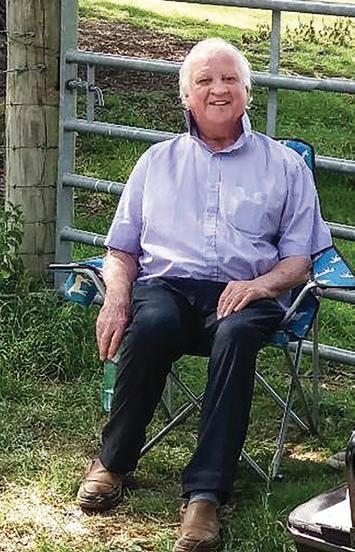
Father on picnic near Much Wenlock
Greatest patron
Rose Lyddon on an exhibition of
the work of Pope Urban VIII’s favourite artist, Lorenzo Bernini
‘You were made for Rome, and Rome for you,’ Maffeo Barberini told Gian Lorenzo Bernini during the years of his papacy as Urban VIII. The relationship between Bernini and his greatest patron is the subject of Bernini e i Barberini, a major exhibition from the Gallerie Nazionali d’Arte Antica at Palazzo Barberini which sees many of the artist’s works returning to Rome for the first time.
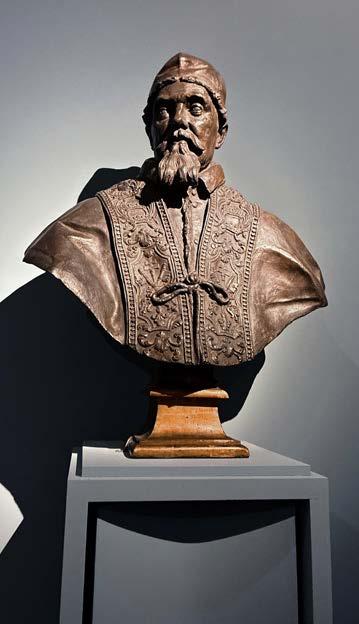
Among them are the earliest religious sculptures securely attributed to Bernini: his Martyrdom of St Lawrence and Saint Sebastian, both completed in 16171618 before he was twenty. The heart of the exhibition features rarely seen preparatory work for the Baldacchino, the immense bronze covering over the high altar in St Peter’s, and an extensive gallery of busts of Urban VIII, his predecessors and successors in the seat of St Peter, and other members of the Barberini family.
During Urban VIII’s papacy, Bernini was made architect of St Peter’s, curator of the papal art collection, director of the papal foundry at Castel Sant’Angelo and superintendent of several of Rome’s aqueduct systems. Urban VIII’s preference for Bernini (‘He claimed him all as his own,’ wrote Bernini’s son, Domenico) would transfigure Rome and make his style the signature of the Baroque. Any visitor to the city, then or now, sees Bernini everywhere. Of the relationship between Bernini and the Barberini clan, art historian Francis Haskell wrote that, ‘it is doubtful whether the relationship between an artist and his patrons has ever been more fruitful’. But patronage had its drawbacks: between Urban VIII’s election in 1623 and his death in 1644, Bernini undertook few commissions for anyone outside the Barberini family. When the Pope did release his services, it was with diplomatic goals in mind—as with the marble bust of King Charles I, commissioned by the King himself and permitted by the Pope in the hope of coaxing England back into the Catholic fold. When Urban VIII discovered that Bernini was sculpting a bust of the
Englishman Thomas Baker, he ordered him to stop, commanding that no other Bernini portrait should enter England except that of His Majesty. Bernini continued regardless—the Thomas Baker bust, on loan from the V&A, is displayed in the final room of the exhibition.
This room complicates the image of the patronal relationship. The centrepiece is Bernini’s bust of his adulterous lover Costanza Bonarelli, one of the few works made without a commission. It is a singular, difficult sculpture, made with lust or love; she is in a state of partial undress, her chemise fluttering open, her lips slightly parted. Whereas in commissioned busts, Bernini sought to exemplify particular virtues alongside the likeness of the individual, Costanza’s expression evokes the unknowability of a lover, as if the sculptor was trying to discover her through stone.
The strength of the portraits in the final room, all completed without the knowledge or patronage of the Barberini, indicates what may be lost when artistic freedom is limited. Bernini played the game well, aware of how easily an artist might fall from favour, though on a rare occasion of turning down a papal commission (to construct new defence fortifications for Rome) he complained about princes who forced their subjects into projects to which their ‘talents and experiences’ were unsuited.
Near the Palazzo Barberini, in the little Church of Santa Maria della Vittoria, is Bernini’s Saint Teresa in Ecstasy. Free, after the death of Urban VIII, to accept private commissions, Bernini spent five years on the sculpture and its enclosing chapel for Cardinal Federico Cornaro. Bernini himself thought it the greatest achievement of his career: ‘this is the least bad work I have done,’ he said. Also nearby, in the Galleria Borghese, are the finest works of Bernini’s early career, The Rape of Proserpina, Apollo and Daphne and David, all made for Bernini’s first major patron, Cardinal Scipio Borghese, between 1621 and 1625.
The Barberini exhibition fills the twenty-year gap between these achievements. In drawing together the work of those years, when Bernini was at the height of his fame and professional dominance, it is a significant curatorial feat. It highlights how powerfully patronage can reshape the aesthetic of a whole age or city in a short time. Urban VIII’s patronage of the arts set the tone for subsequent popes: Bernini was commissioned by Innocent X to build the magnificent Fontana dei Quattro Fiumi in the Piazza Navona and by Alexander VII to construct the Colonnade of St Peter’s Square. One cannot help but feel, however, that his greatest talent lay in the wild movement and affect of those sculptures, completed before and after the Barberini papacy, where he had more free rein.
Pope Urban VIII: during his papacy, Bernini was made architect of St Peter’s
The traditional Mass “expresses the most profound sense of humility and reverence before the Sacred Mysteries”
ST JOHN PAUL II
Cooperate and assist
Every parent is a catechist, as James Preece explains
Last year on Sunday 31 August my daughter received her First Holy Communion. It was a special day of course, but all the sweeter because we achieved something many parents only dream of - we had dodged the Catechists! Parents of First Holy Communion aged children are leaning in… how did you do it?
The first part was easy. Mum got hold of some materials including a First Holy Communion book - apparently anybody can just buy those over the counterthen she sat down with her daughter and worked through the materials, talking it through, answering questions, colouring in the pictures. The hard part is finding a willing priest. Somebody who is willing to actually sit down with your child and see if they are ready. You may find such a priest at your local Latin Mass (thank you Father, you know who you are) but many good priests of my acquaintance seem unable to understand the concept.
It’s not that we really want to ‘dodge the catechists’ - what we struggle with is the impersonal, one size fits all, ‘programme’ that treats our children like an industrial process. When Traditionis Custodes came out my wife had already prepared our daughter for Confirmation using the Transformed in Christ book. With the Traditional LMS confirmations cancelled we had to seek Confirmation locally and guess what - the otherwise sensible Priest insisted she had to go through the Confirmation Course using the same book, or other parents might complain. What might St Augustine have said about that? In De Catechizandis Rudibus he discusses the Catechesis of those who already have some knowledge: ‘You must deal with him briefly — not inculcating in a tedious manner things he already knows’.
The Second Vatican Council is clear: ‘Since parents have given children their life, they are bound by the most serious obligation to educate their offspring and therefore must be recognized as the primary and principal educators. This role in education is so important that only with difficulty can it be supplied
‘These are the hoops and you will jump through them’
where it is lacking’ (Gravissimum Educationis). Primary and principal educators is a funny way of saying, ‘cannot be trusted to prepare their own children for the Sacraments’.
Lest you think this a newfangled radical idea, I refer you to the Trent Catechism published in 1566 under the supervision of one St Charles Borromeo. It tells us: “With regard to the age at which children should be given the holy mysteries, this the parents and confessor can best determine. To them it belongs to inquire and to ascertain from the children themselves whether they have some knowledge of this admirable Sacrament.” Note Parents and confessor.
Dear Reader, I have been in Parishes - not traditional ones but progressive, free-thinking, down with clericalism type places where this would frankly come as a shock. What? You want us to inquire and ascertain from the children themselves? By no means! First Holy Communion happens in Year Four and That Is That. These are the hoops and you will jump through them. No, you cannot prepare your own child - are you even a catechist? Well, let’s check my qualifications. The 1997 Directory for Catechesis said that, ‘Parents receive in the sacrament of Matrimony “the grace and the ministry of the Christian education of their children”.’ The cutting edge 2020 version tells the Church to, ‘cooperate with parents through suitable pastoral initiatives, assisting them in the
fulfilment of their educational mission, to become above all the first catechists of their own children”. Catechists of their own children. Yes, every parent is a catechist.
All well and good, I hear you say - but not everybody will do it. Many parents do not know what to do. Hence the words cooperate and assist. I do not know many priests who walk everywhere because their car has broken down - they make the effort and get it fixed. If the parents in your parish do not have the skills, then do something about it! Offer them that support and assistance. Do you really think a six-week course is going to be a substitute for well catechised Parents, ‘through which the Gospel is transmitted and radiated so that family life is transformed into a journey of faith’? This is the goal - the building up of the Domestic Church, you don’t achieve that by pushing parents aside and trying to do their job for them.
Most priests are okay with the idea of personhood from conception to natural death but they seem to struggle with the bits in between. Children are people too - get to know them, and their parents. As St Gregory the Great put ita teacher, ‘ought to touch the hearts of his hearers out of one doctrine, but not with one and the same exhortation’. If you can do that, we won’t be dodging the catechists - we’ll be queuing up for solid food.
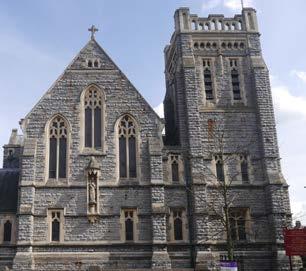
The Church of St Mary and St Edwin, Evesham
Paul Waddington on a church designed by one of the lesser-known members of the Pugin family
ACatholic mission was first established at Evesham, Worcestershire, in 1887 by the Passionist community based at Broadway. They constructed a modestly sized temporary church built from corrugated steel in the town's Magpie Lane. Ten years later, the Evesham mission became a parish and was handed over to the care of the Diocese of Birmingham. The temporary church was dismantled, and re-erected at a more prominent site in the High Street, which is where the present church stands. In 1900 a red-brick school, which now serves as the parish hall, was built alongside the church, and in 1903 a presbytery was added. When, in 1910, it came to providing a permanent church, the architectural practice of Pugin and Pugin was selected to draw up the plans. The building was designed by Sebastian Pugin Powell (1866-1949), grandson of Augustus Welby Northmore Pugin through his eldest daughter, Anne, and son of John Hardman Powell, who was a close associate of AWN Pugin, and later the Chief Designer for the Hardman Company of Birmingham.
The architectural firm of Pugin & Pugin began as a partnership between Edward Welby Pugin (AWN Pugin's eldest son) and his half-brother, Peter Paul Pugin. Following the bankruptcy of Edward Pugin in 1873, Edward's brother Cuthbert Welby Pugin joined the firm, although his architectural input was small, as he died a couple of years later, leaving the business in the hands of Peter Paul Pugin. In 1884 Sebastian Pugin Powell joined the family firm and remained there for the rest of his working life. The final member of the Pugin family to join the firm was another grandson of AWN Pugin, Charles Henry Cuthbert Purcell.
The foundation stone of the new church at Evesham was laid in September 1911, and the building was completed in November 1912, at a cost of about
£6,000. The temporary church found a new home in Pershore, where it served as a parish church for a further 46 years, before being replaced. The new church in Evesham was dedicated to St Mary and St Egwin (the 8th century bishop who founded the Benedictine abbey in Evesham). The majority of the cost of the building was funded by its rector, the Rev R J Patten. A sacristy was added soon after the church was completed.
Many gables
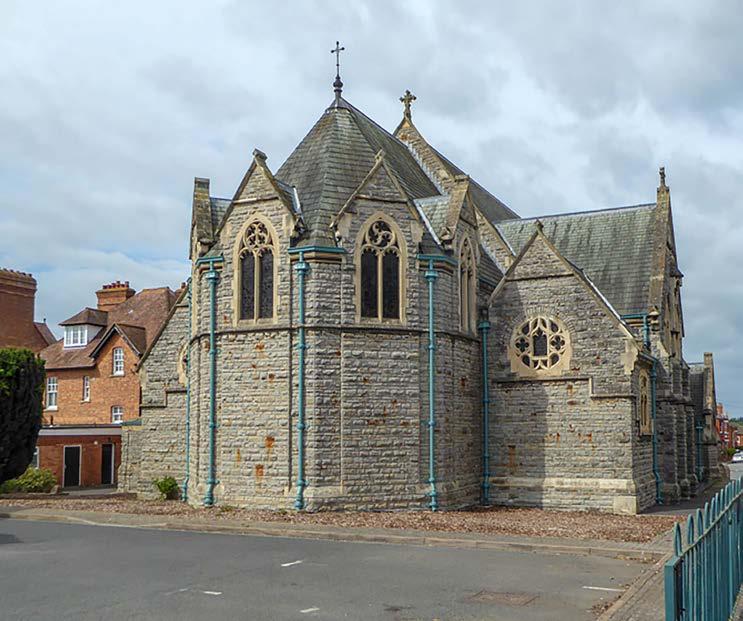
The church of St Mary and St Egwin occupies a corner site, and is built from a rock-faced local limestone with Bath stone dressings, and has Welsh slate roofs. It was built in the Decorated Gothic style, and is characterised by its complicated pattern of steep roofs and by its many gables. The church consists of a four-bay nave with narrow
cross-gabled side aisles, transepts, and a chancel. Flanking the chancel are side chapels, each with its independent double pitched roof. A square tower occupies the south-west corner, which is balanced by a gabled porch at the northwest corner. Unusually for a church of this period, the chancel has a lower roof line than the nave, and is polygonal, with each of its five faces having high level two light windows set under gables.
The exterior of the church is characterised by its steep roofs and the multiplicity of its gables. The tracery in all its windows is also quite distinctive, being of the flamboyant (French) style, and covering a greater proportion of each window than is usual.
The western facade, which is set back from the High Street, presents an impressive arrangement with the large central gable of the nave flanked by a
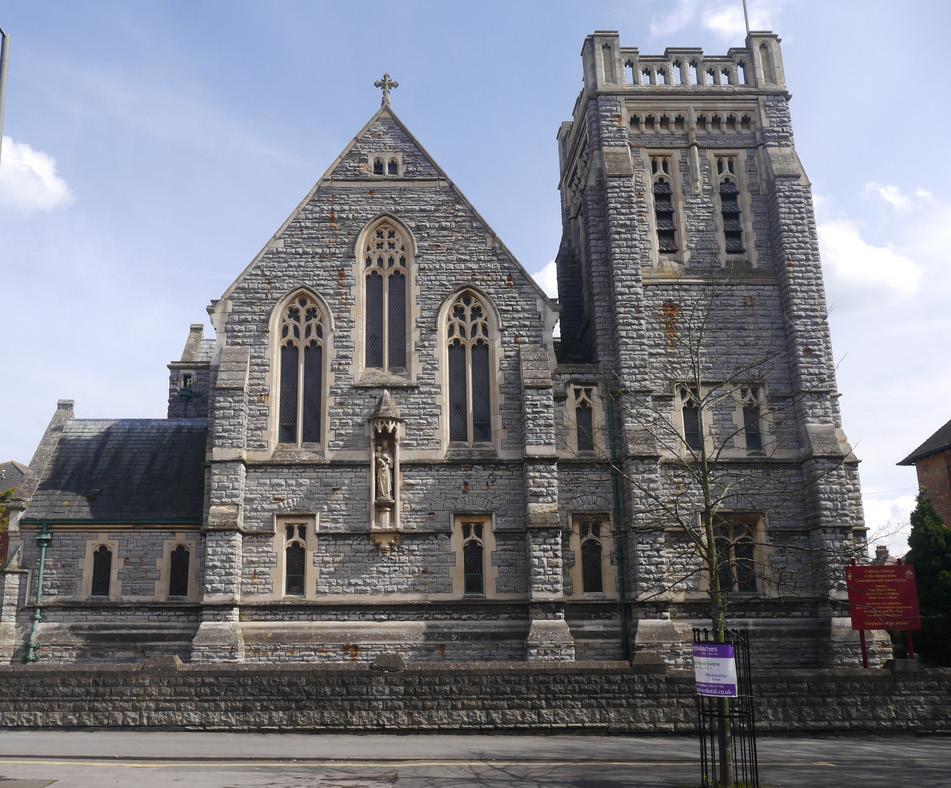
West end of the church viewed from the street
shortish square tower on the right, and the side elevation of the porch on the left. The central gable has a triplet of tall two-light windows arranged above and around a central niche containing a statue of the Virgin and Child. The tower is of three stages, with corner buttresses, an embattled parapet and louvred openings into the bell chamber.
From the side street is another impressive view, dominated by five gables. The central three belong to the northern aisle, and house threelight windows. The larger gable of the northern transept is to the left and includes a pair of two-light windows. To the right is the smaller gable of the north-west porch.
The church is entered through this porch, which takes you to a narthex area beneath a west gallery. It is separated from the main nave by an openwork wooden screen. From the narthex, there is access to the baptistry, which is located in the base of the tower.
The arcades separating the nave from the narrow side aisles have tall and slender octagonal pillars with moulded bases and capitals. The eastern bays of the arcades open into the transepts which in turn give access to side chapels located alongside the main chancel.
Spanning the lofty chancel arch is a carved and decorated rood beam carrying the rood, but without the usual statues of Our Lady and St John.
This arrangement is not original, but replaced an earlier version that was located above the High Altar. The stone High Altar is set in front of a beautifully carved wooden reredos which is the work of the Hardman Company of Birmingham. It includes seven panels with paintings of saints. Above and behind the reredos are the windows of the apse, which contain stained glass dating from the 1920s, and are the work of Paul Woodroffe. A modern forward altar has been placed in the centre of the sanctuary, but the original communion rails of gilded ironwork survive.
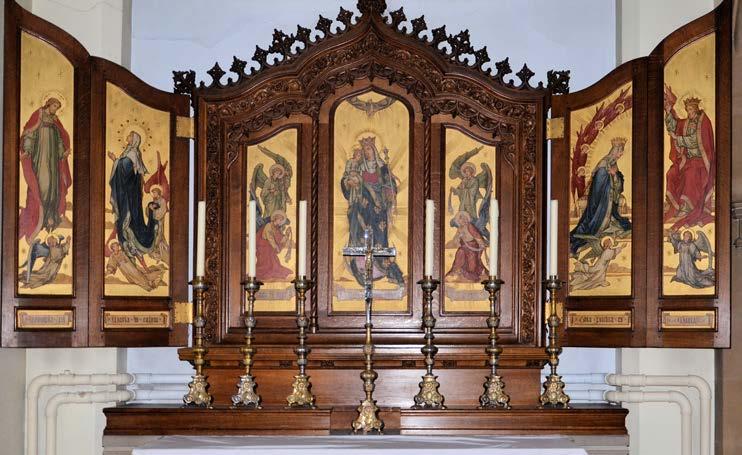
The side chapels both have stone altars beneath round windows of plate tracery. The reredos behind the altar in the Lady Chapel is in the form of a carved wooden triptych. Like the reredos of the High Altar, it includes painted panels.
The church of St Mary and St Egwin is very fortunate to have retained almost all of its original features and furnishings, which is one of the reasons it has been granted Grade II Listed status. The High Altar with its reredos, the communion rails, the pulpit, the benches and the baptismal font are all intact and in their original positions. There is also a quantity of good-quality stained glass.
A Low Mass in the Traditional Latin Rite is offered on Tuesday evenings at 6.30pm.
One horrid consequence of modernity is the disappearance of the eccentric, that marvellous locus of colour who will increasingly struggle to survive as the world grows greyer—which is another way of saying, more modern. A great eccentric of the sort that’s fast vanishing from our world was Canon Félix Kir, a priest from across the English Channel who was responsible for sending many Catholics from France to our Isles.
A staunch traditionalist who was always in cassock and black beret—that is, unless he was donning his Roman vestments for the altar—Kir had entered seminary in 1891 at the age of sixteen, and after ordination led a quiet life as a rural parish priest. But his life was thrown into disarray alongside all his fellow countrymen when France was occupied by Germany in 1940.
Père Kir immediately joined the French Resistance. During this period, he helped over 5,000 prisoners of war escape from enemy camps and found them safe passage, mostly to Great Britain. The Gestapo discovered his location; bursting into his lodgings, they shot him several times, leaving him with a badly injured leg and arm. One bullet was fatally placed, but his leather wallet in his breast pocket sufficiently slowed the projectile, preventing it from rupturing any vital organs. Upon his capture, a German court sentenced him to death, but the war was declared over before they had the chance to execute him. For his services, he was made a knight of the Légion d’honneur.
After the war, Kir returned to his parish and also took up part-time journalism, especially reporting on rural affairs and the challenges of the countryside peasantry. He spent much time studying farming and visiting the surrounding rural areas, both as a pastor and a committed agrarian who wanted to better understand rustic Burgundy as a settled landscape and an industry.
Within a year of resuming his ministry, towards the end of 1945, Père
Kir was elected mayor of Dijon. He was elected by the population of Burgundy’s capital on the strength not only of his reputation but his remarkably simple manifesto: ‘to feed, clothe, and house’.
Of course, he was able to become mayor as decades were still to pass before the issuing of the ’83 Code of Canon Law, which would forbid clerics from holding civic offices, a prohibition strongly enforced by John Paul II due to his modern views on the Church-State relation. Père Kir held the office of mayor until his death in 1968 (a year before the Novus Ordo Missae was promulgated, which we can be confident he would have greatly disliked).
Back when he was a newly ordained priest, Kir had been vocally very opposed to the formal separation of Church and State, declared French law in 1905. Later in life, he viewed
his dual position as abbé and mayor a small victory over that noxious, laïcitéinspired law.
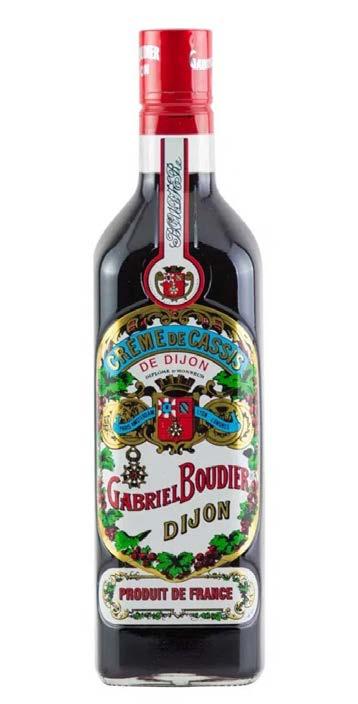
As mayor, he was eager to increase the wealth of Dijon and the surrounding area. From his deep interest in Burgundian rural life, he knew there was a great many wild blackcurrant bushes throughout the nearby countryside, and that folk had made good use of them since time immemorial to produce a liqueur called crème de cassis. They often added it to red table wine.
Père Kir preferred to add his crème de cassis to white wine—the rather acidic Bourgogne Aligoté, to be precise—and offer it as a pre-prandial cocktail to guests he entertained. This aperitif, called ‘blanc-cassis’, quickly became fashionable throughout France and beyond, having a positive effect on Dijon’s economy. After he died at the age of ninety-two, the drink became widely known simply as a ‘Kir’, the name by which it’s known to this day.
It has long been something of a tradition in my family to mark celebratory occasions with Kir Royales— that is, champagne with a splash of crème de cassis—and thus I associate that summer pudding ‘n’ fizz taste with laughter and joy. When I travel, a Kir at a bar or in a piazza is my little way of confirming that I’ve reached my destination. It’s a serious enough drink to enjoy slowly, but frivolous enough not to demand too much of you.
I like mine made with a dry Chablis of some kind, or with a New Zealand Sauvignon-Blanc, as the cassis cuts through the sharpness associated with that grape. During colder months, you can add your cassis to red wine—a drink now commonly called a ‘cardinal’—and sip your libation by the fireplace or wrapped up on the sofa. In any case, you should raise your glass to all the ways the temporal and the spiritual have vivified each other in that single, glorious, baptised territory called Christendom, bestowing upon us many gifts, including the humble Kir.
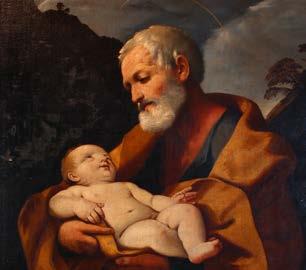
Do not fear
Fr Thomas Crean on the Sacrifice of St Joseph
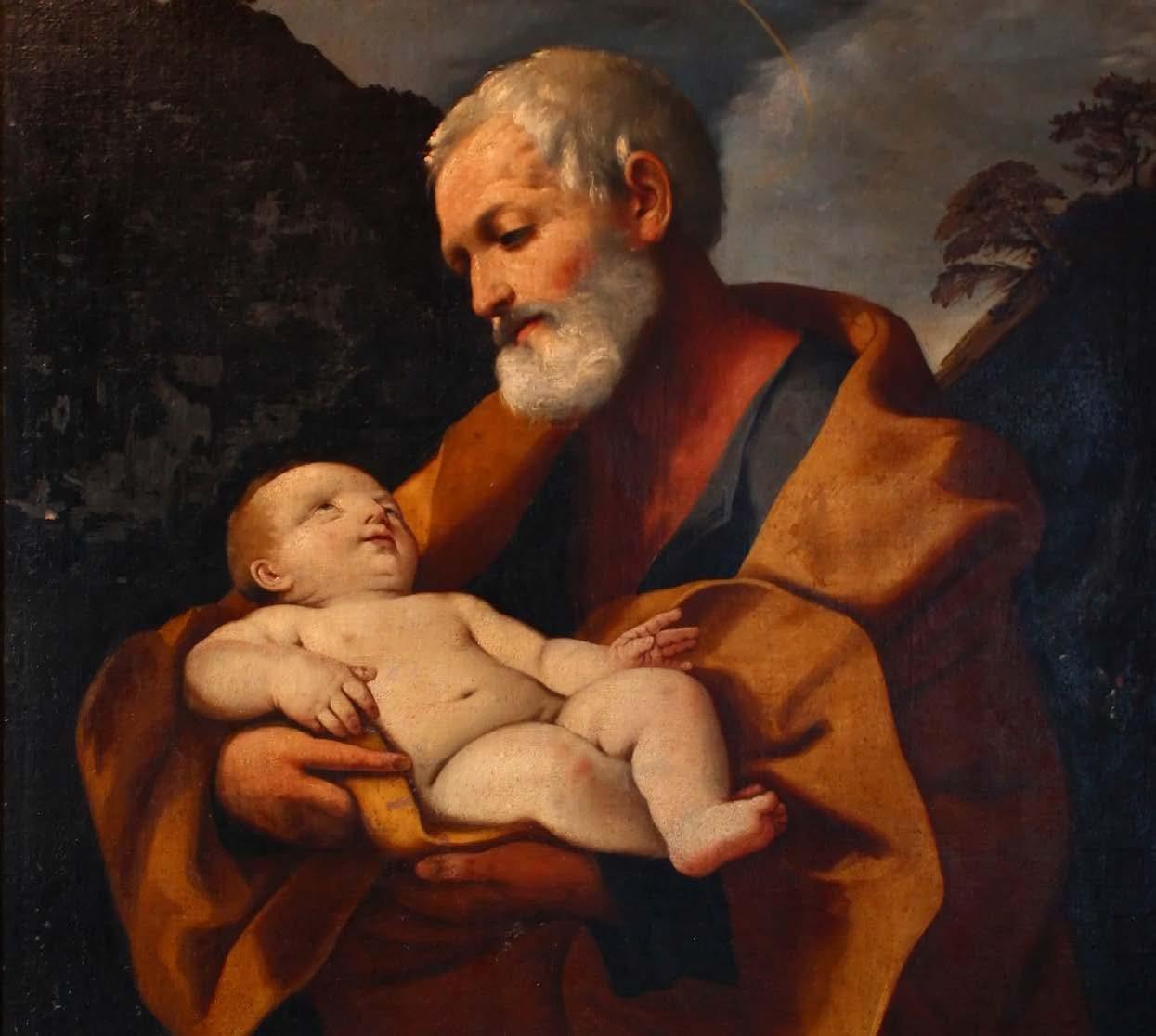
The first event recorded in the gospels, in chapter one of St Matthew, is sometimes called ‘the annunciation to St Joseph’. The evangelist relates it so succinctly that it is difficult to interpret. A hasty though widespread view is that St Joseph imagined that our Lady’s child had been conceived unlawfully; that he therefore wished to divorce her, but privately, so as to spare her feelings; and that an angel had to prevent the divorce by revealing the truth.
This unhappy interpretation falls apart under scrutiny. For one thing, as St Jerome pointed out long ago, if a Jewish husband had really supposed that his wife had been guilty of infidelity, he would have been obliged to denounce her, so that she could undergo the penalty required by the Law of Moses. St Joseph, being just, would not have defied this obligation. For another thing, a ‘private divorce’ is a contradiction in terms. Divorce, like marriage, is a legal affair: both are necessarily public.
Part of the difficulty lies in the interpretation of two of St Matthew’s Greek verbs. In verse 19, we read that St Joseph resolved to apoluo Mary. This is the word that many translations render as ‘divorce’, with the implication that he had found some fault in her; for the Law of Moses did not permit no-fault divorces. But this Greek word has in reality a much wider range of meanings: it can also be rendered as ‘set free’, ‘let go’, ‘release’. It is the word used, for example, when the old priest Simeon says: Lord, let your servant depart in peace; or again, when Christ says to the woman whom He has healed from a ‘spirit of infirmity’, Woman, thou art delivered.
The other troublesome term occurs in the same verse 19. This is the rare word deigmatizo. Different versions of the gospel render this into English variously as ‘expose to public disgrace’, ‘put to shame’, or ‘make a public example of’. All such translations tend to reinforce the idea that St Joseph had grounds for displeasure with his spouse.
However, an early Greek commentator on the gospel, Eusebius of Caesarea, remarks that this unusual word simply means ‘to make known’; it has of itself no pejorative sense (Questions on the Gospel, 1.3). The same is true of the Latin word traducere which we find used in this place in the Vulgate.
But what of the words of the angel: Joseph, son of David, fear not to take unto thee Mary thy wife, for that which is conceived in her is of the Holy Ghost? The reader must excuse a third and final excursus into Greek. The Greek conjunction gar, translated as ‘for’, is not always followed immediately by the reason which it is announcing. Sometimes it is used to ‘set the stage’ for the real explanation, which then follows. A good example of this comes later in this gospel, in the parable of the wedding-feast: after our Lord has described how the guest without the marriage-garment is thrown into the outer darkness, He continues for (gar) many are called. Clearly, it is not because many are called that someone is thus expelled! We have to read on: but few are chosen. A more natural translation of this Greek conjunction into English would thus be ‘but while’ or ‘while indeed’: ‘While many indeed are called, few are chosen.’
What happens if we apply this to the angel’s words to Joseph? We deduce that the reason Joseph is told not to fear to live with Mary as his wife is not that her child has been conceived of the Holy Ghost. On the contrary, that is a good reason to have a holy fear, like that of Moses before the burning bush. We have to read on, and so discover that the reason he is not to fear to live with Mary is that God is giving him the privilege to treat the child as his own: for he, Joseph, is to call his name Jesus.
Putting all these things together, we are now in a position to understand the course of events. St Joseph had no suspicion of wrong-doing on the part of his spouse. God would not have permitted such a suspicion to arise; and Joseph could see her radiant purity. Discovering
that she was with child, therefore, and also knowing the prophecy of Isaiah, he understood that she had conceived miraculously. Being a just man, and therefore solicitous to wrong no one, he did not want to ‘put her on display’ before people who could not have appreciated the mystery. How he was in danger of doing this, St Matthew does not explain: perhaps it was customary for fathers publicly to recognise a son or daughter as their own when the child was named, or perhaps St Joseph was thinking of less formal acknowledgements of paternity. He supposed that he would not have the right to recognise Mary’s child as his own, and feared that she would therefore either become subject to disgrace from people who did not believe in the virginal conception, or else would receive unwelcome attention from those who did. He therefore resolved to free her from the duty of living with him, by betaking himself to some unknown place, and letting Mary’s child be considered as his own. The angel intervenes to reassure him that despite the miraculous nature of the conception, he was to assume the normal duties of a father, initiated and summed up by the naming of the child.
This, incidentally, is not a new interpretation of these events, even if some aspects of Greek usage are better understood today than they sometimes were in the past. St Bernard of Clairvaux relates that the interpretation that he has received from the fathers is, precisely, that Joseph thought himself unworthy to live with his spouse. St Thomas Aquinas, likewise, writes: ‘Joseph did not wish to send Mary away so that he could take another wife, or on account of any suspicion, but because he feared to cohabit with such holiness out of reverence.’ Readers desiring a fuller history of the exegesis of this passage of Scripture may like to consult the masterly account given by the Belgian Jesuit Ignace de la Potterie (1914-2003) in his work Mary in the Mystery of the Covenant.
All this can only increase our admiration for St Joseph. It also brings out a parallel that exists between him and his Old Testament forebear, Abraham, as Fr Donald Calloway has recently pointed out in his book ConsecrationtoStJoseph. We should not be surprised that such a parallel exists. After all, both Abraham and Joseph share the privilege of being referred to in the Roman liturgy as patriarcha, patriarch. To be a patriarch is more than to be a father: it is to be a father of fathers. St Joseph receives this title in the collect of his feast-day. Abraham, of course, receives it daily in the canon of the Mass. As Abraham was the father for all God’s people in the Old Testament, so Joseph exercised a fatherly role in regard to Jesus Christ Himself and hence he does so also in regard to us, Christ’s members.
Both patriarchs found themselves having unexpectedly to make a supreme sacrifice. God told Abraham to sacrifice his beloved son, Isaac, as a sign of his obedience. Abraham was willing to do even this, and so at the last moment, the angel held back the patriarch’s hand, and Isaac came to no harm. He received him for a parable, says the apostle, mysteriously, no doubt thinking of the resurrection (Heb. 11:19). This is ‘the sacrifice of Abraham’ which the priest evokes at the altar, just after the consecration.
But Joseph also had a trial to surmount, and one that was even more excruciating. When he became aware of the miraculous conception, he received a new insight into Mary’s holiness. He knew that she belonged entirely to God, and so he resolved
to separate himself from her. Like Abraham, he was willing to give up what he loved most in the world, out of reverence for God. And heroic though his ancestor’s sacrifice had been, Joseph’s own sacrifice was still greater, since his love was greater, as was that which he had to renounce.
The angel of the Lord completes the resemblance. Just as he had caught Abraham’s hand so that he could not plunge in the knife, he also spoke to Joseph in a dream when he was on the point of executing his resolve. Joseph, son of David, do not fear. Note that it is not, ‘do not condemn’, or ‘do not be angry’, but do not fear. Do not be afraid to live with her, even though she is so holy. Do not fear to be a father to the child, even though He is God’s Son.
St Joseph: ‘A just man, and therefore solicitous to wrong no one’
Caroline Farey on how the Immaculate Virgin participates in Christ’s mission to conquer evil
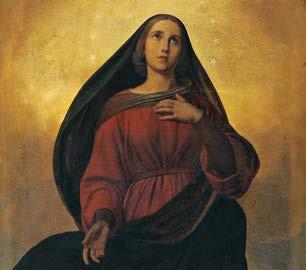
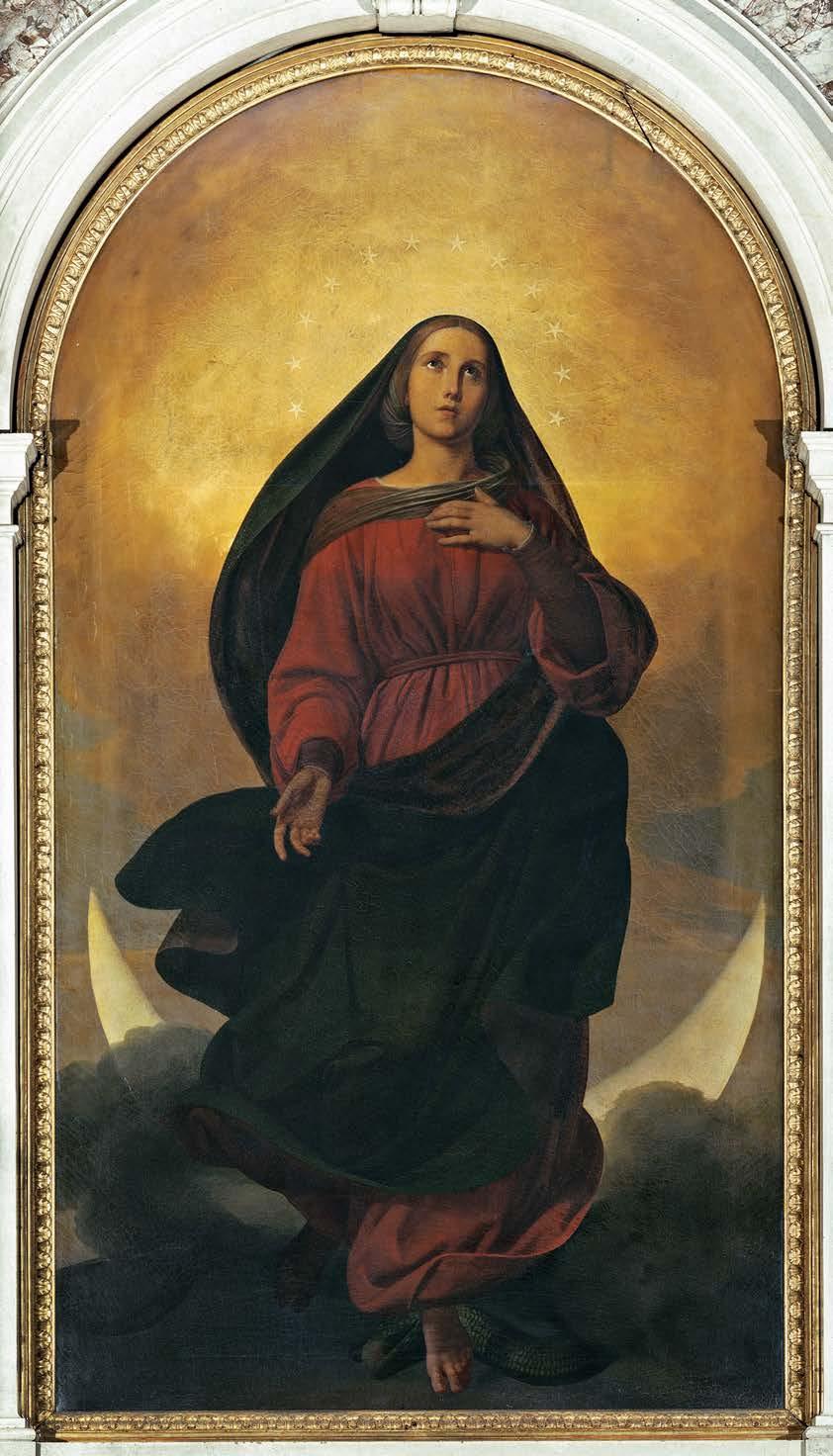
In times when the billowing clouds of evil seem to be proliferating, we can turn to an image such as that reproduced for this article. The painting might look simple, but it manifests biblical details of the great mission of the Immaculate, Ever Virgin Mother of God in the salvific mission of the Holy Trinity. The mission was chosen for her from the beginning, as evident in the serpent at her feet from the book of Genesis, to the end, as evident in the twelve stars, crescent moon and radiance of the sun from the book of Revelation. Her mission is to facilitate and participate, by grace, in the saving passion of the Son of God, her son, and his victory over evil.
At the base of the painting, we see Mary calmly walking forward through the dark clouds of the sin of the world at her feet, stepping on the head of the ancient serpent as she does so, without looking down. On the contrary, Mary’s gaze never leaves the one to whom she is listening and who she lovingly and unflinchingly trusts and obeys with her whole being.
Under Mary’s foot, in the mouth of the serpent, is the ‘fruit of the tree of knowledge of good and evil’ by which the serpent tempted Adam and Eve to distrust and disobey their loving creator. In the imagery of the Immaculate conception the fruit is always with the serpent who, this time, is not able to pass it on. It is untouched by Mary, the new Eve, firstly by a unique and unprecedented grace from God and then by her entire life of trusting obedience.
Looking at her hands, we can see that Mary is also pleading from her heart for the whole human race caught in the darkness and grip of Satan at her feet. More than that, by looking at the two extended fingers of her right hand, which in the aesthetic tradition always refer to the two natures of Christ, we can see that her pleading relates to the Incarnation of
the Son of God to save the people from the blindness of their sin and misery. The whole battle between good and evil is depicted here.
Notice Mary’s red dress, sometimes a sign of humanity, at other times also a sign of redemption by the blood of Christ. It billows out just above her foot that crushes the head of the serpent. Mary wears red because her immaculate conception, her whole being and all her powers over evil are from and for the Redeemer, the one who would pour out his blood for the salvation of the world.
'The crescent moon shines behind her by the light of the sun'
Mary’s blue cloak, normally a bright shade of heavenly blue indicating her fullness of grace, is as dark as the clouds at her feet. The virgin mother is shown here fully participating in her son’s passion and victory. All her grace at the height of her Son’s passion and death, plunges her with him into the life-giving baptism of his death.
The radiant gold clouds around her head contrast with the dark clouds at her feet which, though they flood the foot of the painting, are subdued by the overwhelming brilliance of the sky and clouds above.
The twelve stars around her head tell us that she is the portent seen in heaven. They are the twelve tribes of Israel and the twelve apostles of the new covenant in Christ. This is also, then, an image of Holy Mother Church. In the Church, we too, by grace, facilitate and participate in the
passion and victory of Christ over evil in our own times and places.
The crescent moon shines behind her by the light of the sun. In Spanish paintings of earlier centuries, this could indicate the Immaculate Virgin Mary as the mother of the one who would conquer Islam. In 19th century Venice it is more likely the symbol of the Blessed Virgin Mary who shines purely and entirely with the full light of Christ, the light of the world.
Painted in Venice by Molmenti Pompeo Marino in 1854, this particular painting reveals the fullness of faith of the people in the very year that the Immaculate Conception was dogmatically proclaimed with a liturgical feast and office for the Universal Church by Pope Pius IX. One of the most exquisite bulls ever written, Ineffabilis Deus was given at St Peter’s in Rome on the eighth day of December, 1854.
‘God Ineffable — whose ways are mercy and truth, whose will is omnipotence itself, and whose wisdom “reaches from end to end mightily, and orders all things sweetly” — having foreseen from all eternity the lamentable wretchedness of the entire human race which would result from the sin of Adam, decreed, by a plan hidden from the centuries, to complete the first work of his goodness by a mystery yet more wondrously sublime through the Incarnation of the Word. This he decreed in order that man who, contrary to the plan of Divine Mercy had been led into sin by the cunning malice of Satan, should not perish; and in order that what had been lost in the first Adam would be gloriously restored in the Second Adam. From the very beginning, and before time began, the eternal Father chose and prepared for his only-begotten Son a Mother.’
The Sacrifice of the Cross
Fr Aidan Nichols on Louis Chardon’s La Croix de Jésus
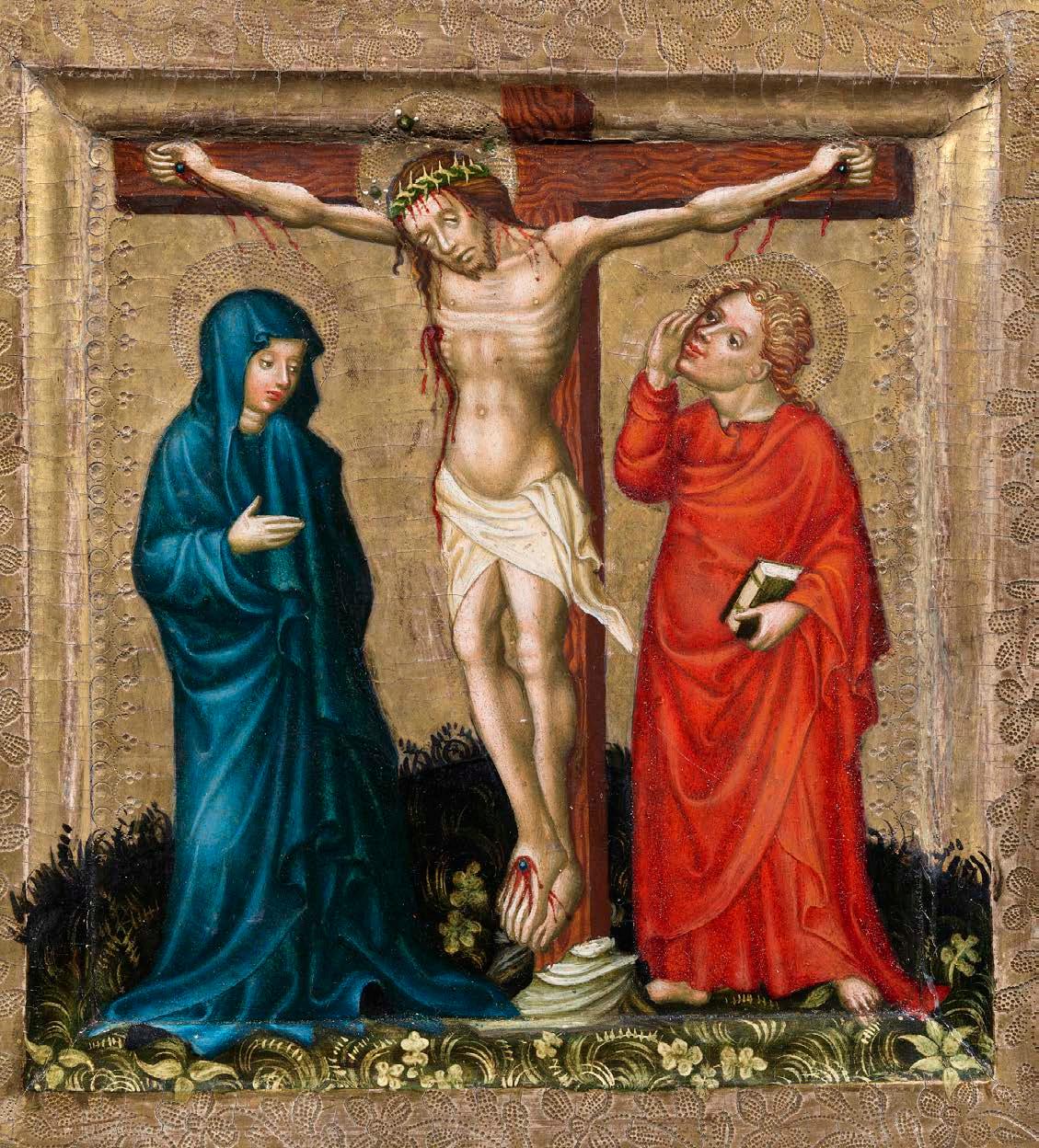
It is hard to credit that any Christian painter, poet, theologian or spiritual writer has omitted to consider the Cross. Not for nothing is the Cross of Jesus at once the simplest and the most universal sign of Christianity – even for those Protestants who abhor iconography and the veneration of sacred images. As a matter of fact, the original Iconoclasts – that would be in the Byzantine dispute over icons in the eighth and ninth centuries – made an exception for the Cross. A plain Cross, without the corpus on it, so not, in Catholic terms, a crucifix, since there is no ’crucifix’ if the artist or sculptor cannot ‘fix’ the shape of a body to the ‘crux’, the wood or stone of the craftsman’s Cross. Yet though without a corpus, a Cross is a Cross nonetheless. That the Iconoclasts, when they destroyed holy images, drew the line at abolishing the Cross shows us that, though they were heterodox in their liturgical and devotional practice, and the arguments they used to defend that practice, they had not actually let go of the essence of Christianity itself. They knew that the essence of Christianity is bound up with the Sacrifice of the Cross.
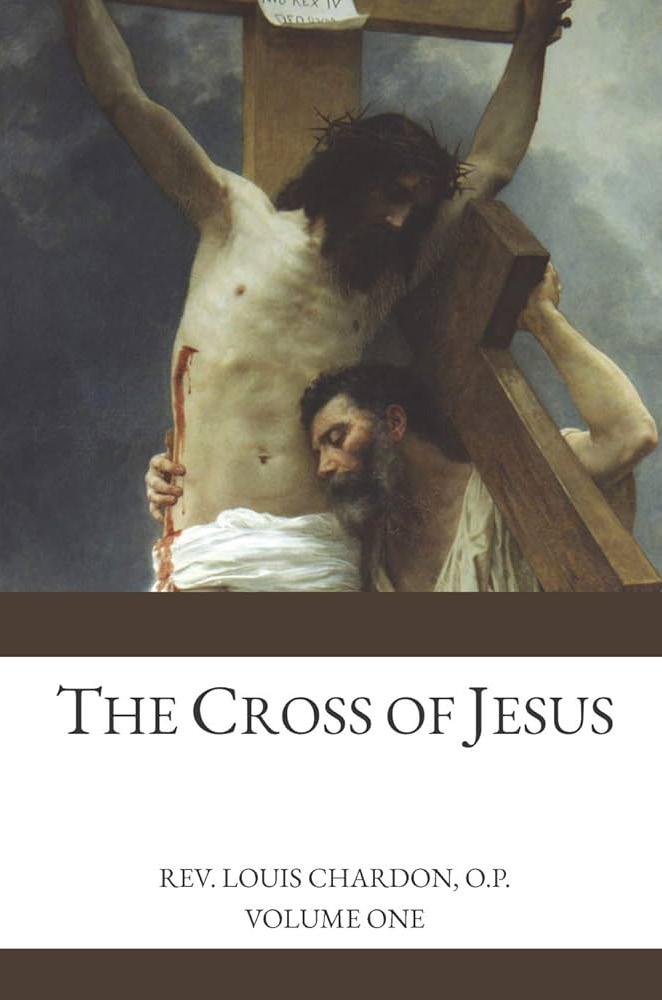
That said, who to take as one’s mentor or mentors among the crowd of those painters, poets, theologians, and spiritual writers who have made their own St Paul’s words in the Letter to the Galatians (5:14), ‘May I never boast in anything save the Cross of our Lord Jesus Christ through which the world has been crucified to me and I to the world’. Some say the greatest work of spiritual theology the Dominican Order has produced is called ‘The Cross of Jesus’, by a seventeenth century friar called Louis Chardon. Recently I decided to read it for myself.
The Cross of Jesus by Louis Chardon: ‘he will explain how, in consciously supernatural living, God uses both consolations and desolations to communicate himself’
Chardon’s The Cross of Jesus
Let me first put this Louis Chardon and his book into a historical context. His dates are 1595 to 1651, so in terms of English history he was born towards the end of the reign of Elizabeth I and lived through the reigns of the first two Stuart kings,
dying two years after the execution of Charles I in 1649. That means that his spiritual writing is contemporary with that of a Caroline divine like Jeremy Taylor, best known for his companion works Holy Living and Holy Dying or, in the Puritan tradition, John Owen, author of a treatise called
Communion with God. In the British Isles, the seventeenth was a century when religion was basically divided between these two poles: High Church Anglicanism (as with Taylor, who kept his Bible in an ebony case adorned with jewels given him by King Charles the Martyr) and the Puritans (as with Owen: at one time Oliver Cromwell’s chaplain, he was what we would now call a Congregationalist).
To my surprise, when I opened Chardon’s The Cross of Jesus I found it was much closer in spirit to the Congregationalist Owen, than it was to the Anglican High Churchman Taylor. That is because while Taylor teaches about the ascetical life – how we can come to shake off our vices and make progress in the virtues, Owen is concerned with what in a Roman Catholic context would be called the mystical life – the life of communion with God really experienced, Owen maintains, in our relations with Father, Son, and Holy Spirit. Devout Puritans tended to think all Christians were called to such mystical prayer (though they would not have used the word ‘mystical’), whereas among writers in a Catholic tradition, at any rate in the early modern and modern periods, we sometimes meet with hesitation as to whether contemplative prayer – drawing the self into conscious union with God – is really part-andparcel of the vocation of each one of the baptized. Should it not be considered, rather, something reserved for a select few? After all, most of the baptized do not normally report they have direct personal experience of God of this kind. In which case, a conclusion seems to follow. It is better to preach to people about the ascetic life, about how to live a more disciplined moral life, than to give them high-falutin’ notions of diving deep through prayer into the mysteries of God. The first cannot fail to be useful. The second, in the majority of cases, will pass them by.
That might seem a reasonable inference but, so far as I am aware, the Dominicans never adopted this ascetic-centred way of thinking, which at the start of the twentieth century was defended in the socalled ‘Mysticism Debate’ mainly by Jesuit authors. 1 As we shall see, Louis Chardon comes to the Cross
as one who wishes, with fear and trembling, to enter into the depths of contemplation at the Cross’s foot, rather in the way the fifteenth century friar-artist Fra Angelico depicted St Dominic doing in an often reproduced fresco at San Marco in Florence. That does not, of course, exclude the life of the virtues. Rather, it presupposes that life – and above all the life that is found in practicing the ‘theological’ virtues of faith, hope, and charity.
So who was Louis Chardon?
He was born in 1595 some fifty miles north of Paris in the region called Hauts-de-France. 2 The civil wars in France – the ‘Wars of Religion’ – triggered by the steady advance of Protestantism and the increasing fear of Catholics ended when Chardon was two. Thereafter, until the last three years of his life, he lived through a period of recovered political stability. The disturbances called ‘The Fronde’, an attempt by French noblemen and lawyers to control the Monarchy, petered out in 1651, the year Louis Chardon died. The word fronde comes (I read) from the French for a sling; slings were used by protesters to hurl stones at the windows of Cardinal Mazarin, the chief minister of the king. With the exception of this shortlived uprising, the French looked back on the seventeenth century as their ‘great age’, le grand siècle. That was to do in part with the flourishing of the French Church, which boasted a medley of accomplished theologians and spiritual writers as well as a goodly number of saints, including household names such as St Vincent de Paul, and St Margaret Mary to whom we owe devotion to the Sacred Heart in its modern form.
When Chardon was twenty-three he entered the Dominican community of the Annunciation which still exists, sited in the Parisian district, now very expensive and chic, called the Faubourg St Honoré. The attraction was the way of life at the priory of the Annunciation, a house of Strict Observance of the Dominican Rule and Constitutions. Attached now to a reformed Congregation of Dominican priories, Chardon wanted to go further than most of his confreres and have the Annunciation made the mother house of a new grouping of
Dominican communities, defined by an even stricter form of life than the one he had already. Though this did not come to pass it gives an idea of the man. Not a man to do things by halves, nor to shrink from drawing radical conclusions where others might have toned things down in a spirit of happy or at least benevolent compromise.
A book about prayer
Louis Chardon’s The Cross of Jesus is not, as one might have expected from its title, a work of dogmatics, investigating the general meaning of the Redemption of the world as brought about through the Atoning Death (and Resurrection) of the Son of God, though to be sure it refers back continually to this theme. Instead, it is a book about how the Cross enters oraison, the French word for what in English we call, less happily, ‘mental prayer’. I say ‘less happily’ because in contemplative prayer the head must not be separated from the heart. In oraison ‘reflections’, in Chardon’s word, may sometimes precede ‘affections’. Yet as he remarked of his writing more widely, ‘I know only one theology. The circumstance of making it affective does not destroy its nature, it perfects it’. 3 In other words, there is to be no separation of thinking and feeling: not in theology, and most definitely not in prayer. ‘Let the mind sink down into the heart’ would be the advice given by the nineteenth century Russian monk and bishop Theophan the Recluse to his clients.
But how can the Cross enter oraison? One could understand that the Crucifixion of Jesus might well be one of a number of topics we can meditate on and make use of so as to refuel our prayer. It would certainly be odd if that were not the case. It is what happens, or should do, in the classic Rosary devotion. There the Cross comes by name into two out of
1. I have in mind Paul Murray’s The Mysticism Debate (Chicago, IL: Franciscan Herald Press, 1978).
2. The fullest account is François Florand, O. P., ‘Introduction: Louis Chardon et La Croix de Jésus’, in Louis Chardon, La Croix de Jésus (Paris: Editions du Cerf, 1937), pp. XI-CLVI. The same publisher brought the work out again in 2004 in the series ‘Sagesses Chrétiennes’. There is an English translation of the 1937 text by Robert T. Murphy, O. P. (Herder: St Louis, MO and London, 1957).
3. As quoted by François Florand, O. P., ‘Introduction’, art. cit., p. LXXIV.
the fifteen mysteries – two out of twenty if one counts in the Mysteries of Light proposed as an add-on to the standard Rosary by Pope John Paul II. That total could be bumped up if we bear in mind the full name of the Fifth Luminous Mystery: ‘The Institution of the Holy Eucharist as Sign of the Paschal Mystery’ for the ‘Paschal Mystery’ means the Cross and the Resurrection taken together. But even then, the total would only be two and a half.
In contrast to this Rosarian approach (which, of course, has other merits but this is not the time and place to enter into them), the Cross, for Chardon, is not simply one of a number of themes to be chosen for meditation in mental prayer. So much is plain from the opening page of his book. The full title reads ‘The Cross of Jesus where the Most Beautiful Truths of Mystical Theology and of Sanctifying Grace are Established’. What makes mystical prayer intelligible (the ‘most beautiful truths of mystical theology’) and likewise what makes mystical prayer possible (the ‘most beautiful truths… about sanctifying grace) are all based in and on the Cross of Jesus – and nowhere else.
How does Chardon make out this claim? The body of his text consists in three what he calls ‘Conversations’ ( Entretiens), for the tone of the book is one of personal address to the reader – a typical custom of writers in the new humanism that came in with the Renaissance. The doctrinal content is drawn from Christian Scholasticism, and especially from St Thomas Aquinas, but the prose is mellifluous, it flows like honey from the jar, and is full of striking or at least opulent images, something that could never (or hardly ever) be said of a Scholastic. In his ‘Introduction’ Chardon explains that what he is looking for in his readers is two things: simplicity and purity. For his part, he will be, in his own words, ‘seeking in my Conversations the knowledge of God and the things that belong to him: to love them, and deploy all my energies to love them, to unite myself with them, and to be transformed in them’. The ‘reasonings’ he will use and the ‘truths’ he will establish are intended to ‘arouse desires, to perfect oraison, to fire up hearts, to mortify the senses
and the spirit, and to provoke to the sacred practices of religion and all the virtues’. As we begin to enter into these ‘reasonings’ and ‘truths’ we soon encounter the core of hardness in a message delivered with so much literary unction. Those words about ‘mortifying the senses and the spirit’ were seriously meant. The Cross of Christians, at Chardon’s hands, turns out to be highly invasive. Some would say cruel. ‘When I speak of the Cross I mean that which, by the separation it causes in the faithful soul, disengages it from everything that has the power to console it sensuously in this life.’
The First Conversation: a ‘single mystical person’
In the first ‘Conversation’ Chardon explains why that is a dogmatic necessity. In Christ’s Body there is only one Cross for the Head and for the members, one Cross for Christ and for ourselves. The reason is, the Head and members taken together make up a ‘single mystical person’. The phrase, borrowed from Thomas Aquinas, gives us the doctrinal foundation of Chardon’s teaching on oraison. The foundation is at once Christological and ecclesiological. It is to do with Christ, and to do with the Church.
The Cross certainly detached the Saviour from everything sensuously consoling in this life – everything from health of body to the loving embrace of friends, and it culminated in the cry of dereliction when as man he lost the sense of his Father’s presence on Calvary. Why was that? The ‘inclination to the Cross’ with which grace filled Jesus’ human soul had to go beyond what the Son-made-man absolutely needed to do to reconcile us with the Father. His couldn’t be just an ‘adequate’ sacrifice if it was to express the sheer excessiveness of God’s love for us – ‘excessive’ because exceeding any need or obligation, even that of expiating the sin of the world.
Now this same ‘inclination to the Cross’ has in turn to be exhibited in us, if we are his members, one mystical person with him. We must reproduce the same ‘excess’. We are to show a comparable love for God through an inner detachment from all finite goods, including even the good gifts that are the consolations of religion itself. Since we are truly one mystical
person with Jesus, so extreme a Godcentred love is, says Chardon, entirely feasible for us. And not only feasible but desirable. L’amour séparant, ‘separating love’, is the only known passport to joy of a Resurrection kind. This is Chardon’s version of St Paul’s cryptic promise, ‘if we have died with him, then we shall also live with him’ (Second Timothy 2:11), and therefore both a promise and a warning.
Choppy waters lie ahead on the way of oraison if ‘separating love’ is to be the climate of prayer. Chardon doesn’t hesitate to speak, in fact, of ‘brutal trials’ that are brought on by zeal ‘set on fire by the divine love’. Such trials come, he says, not just to ‘make affliction more grievous by comparison with the happiness of one’s first condition’, the happiness of the ‘man [or woman] of average appetites’. In the twentieth century, the American literary modernist Ezra Pound wrote a poem (it seems to be undated) which has this very phrase in its title, ‘L’Homme moyen sensuel’, the ‘Man of Average Appetites’. Its chief character, Radway, is someone whose ‘taste and morals’, so the website Poetry Today reports, are formed by ‘the mass media, sentimental merchandise, and profit-driven religion’. ‘I find no moral for a peroration’, wrote Pound in its closing lines, ‘he is the prototype of half the nation’. Contemporary America may be a little less sold on the Prosperity Gospel than it was in Pound’s lifetime, but the type still exists there. It is one version of fallen Adam, the fallen Everyman that exists in all of us. And that complacent Adam is what in Cross-based prayer has to be eradicated.
Yet Chardon assures his readers that the trials to be undergone by anyone who is serious about communion with God through the Crucified Christ have as their purpose nothing destructive for its own sake. Contrary-wise, their aim is to ‘bestow the ultimate beauties that will dispose one for the sovereign perfection of union’. ‘Ultimate beauties’ – les dernières beautés: this is the proper language of ‘theological aesthetics’, in the phrase coined by the twentieth century Swiss theologian Hans Urs von Balthasar. Only the language of beauty can begin to speak of what divine Glory is like.
The Second Conversation: consolations and desolations
So much for the first Conversation, which also includes a warning of what we shall find in the second. In the second Conversation Chardon sets out to describe the conditions of prayer that will follow when the members of the Mystical Body make their own the Cross that was so desired by their Head. He will not, he says, in this account keep strictly to the vocabulary of this or that school of mysticism, as mystics in those schools sought to describe progress in oraison. But while not following any one school, he will nevertheless give his readers the ‘principal truths’ about the states and conditions of prayer: truths that are, he implies, common to all schools of contemplation alike. This, then, will be the substance of the second Conversation.
In its course he will explain how, in consciously supernatural living, God uses both consolations and desolations to communicate himself. From the consolations there spring up what he calls ‘insatiable desires of holy love’ which will make the desolations experienced in prayer the more bitter. Yet the ‘spiritual crosses’, when God seems to desert us, described at some length (dryness, depression, onset of scruples, experienced withdrawal of God’s presence) are ultimately the more fruitful. They testify to the way the ‘practice and intelligence of love’ (for only generosity of spirit will make us persevere in such trials) is ‘surpassing and pre-eminent’ as compared with any personally possessed knowledge of God that may be ours.
The Third Conversation: relations with the Trinity
In the third and last Conversation Chardon moves beyond even the profound theological explanation the first Conversation offered for the kind of prayer life described in the second. In the first Conversation he had based his account of oraison on the shared vocation of Christ and his Church to come to glory only through the Cross, a glory that is not reserved for the Age to Come – not reserved for Heaven – because in the life of prayer it can already be tasted here and now as ‘beatitude begun’.
In the first Conversation that was the reason why the immediate, here and now, outcome of sustained inner suffering could be called, however paradoxically, ‘ultimate beauties’.
Now in this third Conversation Chardon takes us higher still. However ‘unequally’ – this word, inégalement, is how he deals with the apparent absence of consciously mystical prayer in the lives of most Christians – those who, in oraison, follow the way of the Cross are ‘learning what God is to them not so much by the gift of his grace as by [and now comes a difficult and demanding ending to this sentence] the presence of God’s own Substance, to have the enjoyment of that Substance which is itself not without operation’. This cries out for some unpacking.
We might begin by thinking of a familiar hymn verse. It’s the fourth verse of Cardinal Newman’s ‘Praise to the Holiest’, a hymn that originally formed part of his long poem, The Dream of Gerontius. ’And that a higher gift than grace/ Should flesh and blood refine,/ God’s presence and His very self/ And essence all-divine.’ In context, the ‘higher gift’ there is the divine nature personalized in the Father’s Word, the Word who was united in a unique way with our human nature in the moment of the Incarnation. But the Incarnation takes place not simply for our redemption from evil but for something higher. It comes about for the sake of our ‘deification’, our entry into the Trinitarian life through supernatural adoption as brethren of the Son. So we need to remind ourselves how that deification takes place.
Deification takes place through the missions of the Son and the Spirit from the Father – invisible missions these will be once the Son has ascended and Pentecost is over. And this is the ‘operation’ Chardon is talking about when he says that, beyond even the gift of grace, lies the ‘presence of that Substance which is not without operation’. Of course, the divine Substance is always energizing. It is always ‘operative’ in Its own indescribably blessed life of uncreated knowledge and love. But the inner life of the Holy Trinity is not specifically what Chardon has in
mind. Like John Owen, in his book Communion with God, Chardon is talking of those operations of the Holy Trinity which do not stay within God but reach out to ourselves, to enfold us in the embrace of the Divine Persons. As Chardon explains, the ‘happy objects and the principles of this beatitude begun’ – namely, the delight which belongs to an oraison that has submitted to the rigours of the Cross – are ‘inseparable from the invisible missions of the divine Persons’.
Enlightenment about this truth, says Chardon, is the ‘most powerful motive’ that we have for ‘spiritual progress’. If we can only appreciate what it means for us – that indwelling of the Spirit, and with the Spirit the Son, and with the Son, the Father – even more ‘beautification’ will follow for the soul. What, then, can that ‘more’ possibly be? Nothing less than the condition of union with God himself – in the Carmelite terminology the ‘transforming union’ beyond which lies only the Beatific Vision. But just in case we get carried away by our enthusiasm, this will only follow for the soul that, through detachment from sensuous consolation has gone all the way with the Crucified. As Chardon puts it, ‘Crosses are more perfect means of union than are consolations’.
It is the soul that, in Chardon’s words, ‘seeks and embraces God alone in that eminent solitude which belongs to all that is not He’, that soul and no other ‘rises on the ruins’ – the ruins of the man of average appetites, including the appetites of the average religious man. That soul alone rises to ‘divine heights’, heights that can be ‘explicated only by silence’. Only by silence. Is that ‘silence’ the explanation for why the mystics seem so few and far between, without really being so?
The critics of the Cross
That, at any rate, is the menu Chardon offers in his The Cross of Jesus to diners at his table. And if it is for real, we can understand why the very first sentence of the first of the three ‘Conversations’ runs, ‘God has not wished to place limits on the aggrandizement of man’.
The ubiquity of the sign of the Cross in Christianity from which I
Christ on the Cross with the Virgin Mary and John
began, the recognition that the Cross is inseparable from the essence of Christianity, this is not, as the German philosopher Friedrich Nietzsche thought, the proof that this religion wants to subjugate human beings, to suck warm-blooded life out of them, to turn them into grovelling subjects of a slave-master God. On the contrary,
the Cross is the signpost pointing to our deification as we make ready to enter the embrace of the Holy Trinity – a destiny far more glorious than any fulfilment of human nature the mind, or the heart, of man can conceive.
Meanwhile, however, ‘beatitude begun’ comes with a heavy price-
tag attached or this would not be salvation through the Cross. We must be inwardly detached from all consolations in this world, not excluding religious consolations. The Sacrifice of the Cross must enter definitively our oraison, where the mind sinks into the heart, for the heart to sink into God.
DIOCESAN DIGEST
Mass of Ages quarterly round-up
Arundel and Brighton
Emma-Louise Jay arundel@lms.org.uk
On the surface of things, provision of the old form of the Mass here has continued very much as has become the rhythm these past few months, however there is an atmosphere of uncertainty in terms of what may happen given that we await the appointment of a new Bishop to the Diocese. We need to pray – not only for keeping the provision we have clung to in the short term but growing this for the longer term.
This is a fairly rural Diocese spread out across countryside and bordered by a fairly wild sea. When I drive to Mass, I am mindful that many parishioners would struggle to get to the locations where some Masses are held, given a railway left to rot since the Victorian era, the extortionate price of transport for ordinary people earning basic salaries and difficult terrain in changeable blustery weather. Whilst we might not need to cross any rope bridges, in recent months I have sometimes driven through a spontaneous puddle the size of a fjord, watching other cars give up behind me to turn back around. Many families with children will struggle to travel hours for their preferred Mass in these parts, so it’s a commitment for the faithful to go out of their way for these Masses. They aren’t easy to get to and yet more and more people do get to them, such is their hunger for the old liturgy. We should not forget that lots of people in A&B would love to attend a TLM on Sunday but simply can’t right now and here we plainly see vast inequality and inaccessibility.
I might say a word about the challenges of maintaining a sense of community. Because TLM-goers tend to move about wherever the Latin Mass goes, we are somewhat rather like gypsies, pitching our caravans somewhere for a while and then moving along to a new campsite when forced out. This means that the roots of belonging to a parish often never really form as they might do. There are sad consequences related to this – they are well discussed by critics of so-called Traditional Catholicism – but if we want to live our faith well, we must find open-hearted ways to stick together. If one is part of an FSSP or ICKSP parish, this ‘belonging’ presumably happens organically, but if we are not, we are going to need to be more creative… Our strength is in our numbers and it is harder to erode the Mass if we stick together whatever the future may bring.
Birmingham & Black Country
Louis Maciel 0739 223 2225
birmingham@lms.org.uk
birmingham-lms-rep.blogspot.co.uk/
In addition to the weekly 10.30am High Mass on Sundays, the Birmingham Oratory celebrated High Mass on Ash Wednesday and the Solemnities of St Joseph and the Annunciation. The Sunday High Masse on Palm Sunday started at 10am to accommodate the additional ceremonies. The Triduum was celebrated in the 1962 Missal, starting with High Mass of the Last Supper on Maundy Thursday, the Solemn Liturgy on Friday afternoon and concluding with the Vigil on Holy Saturday, with Tenebrae celebrated in anticipation each day from Spy Wednesday to Good Friday.
In Wolverhampton, Mass was celebrated on Holy Monday and Easter Sunday, with a celebration of Missa Cantata offered on Easter Monday, in addition to the usual Friday Masses.
Birmingham Oxford Joseph Shaw oxford@lms.org.uk
Masses continue as usual: please see the Mass listings. An early music group, the Resonata Consort, took the initiative to organise a Sung Mass in Magdalen College Chapel, which was celebrated by Fr Daniel Lloyd. They sang a very lovely Mass by Nicholas Ludford (d.1557). Please look out for further Masses of this kind, which won't necessarily meet the deadlines for the Mass listings, but which will be advertised through my email list.
Cardiff-Menevia (Cardiff) Tom and Elaine Sharpling menevia@lms.org.uk 07702 230983
Magdalene College votive of the Annunciation
Thanks to Canon Jason Jones and Father Rod, we have continued with the weekly Sunday Mass at Sacred Heart Morriston where we have a steadfast congregation with a number of families and a marvellous group of young adults. We are also grateful to Archbishop Mark who has secured permission for the Traditional Mass to continue for a further two years.
We were delighted to have Miss Cantata on Easter Sunday where we welcomed a good number of people and our small Schola is coming on a treat – we were delighted that Cedo I made its first appearance. Andrew’s ability to whizz along the M4 to serve is much appreciated. Travelling long distances is a feature of the traditional Mass in Wales so we are thankful to all those who make the effort.
Our young adults are now meeting regularly after Mass under the umbrella of Juventutem - the international movement of young Roman Catholics who are devoted to the Traditional Mass. Thank you again to Canon Jason who has worked hard to secure this group.
In other news, we are sorry to announce the death of Dr Nancy Morris from Neath. Nancy was a stalwart of the Traditional Mass going back a great number of years and was one of those faithful Catholics to whom we are indebted.
The Mass is celebrated every week at 1.30pm and for any further information, please check our Facebook page at StabatMaterMenevia for news and information.
It is also worth noting that the parish at Sacred Heart has a full calendar of devotions including regular opportunities for confession and adoration. The church is open every day so if you are passing or on holiday then you will always be welcome.
East Anglia (West)
Alisa and Gregor Dick 01954 780912
cambridge@lms.org.uk
Sunday Masses at Blackfriars in Cambridge continue as normal. The dates of future sung Masses will have been posted on the noticeboard in the cloister by the time this edition of Mass of Ages goes to press. New servers and (especially) singers are always welcome.
Hexham and Newcastle
John Fagan
hexham@lms.org.uk
As I put together this Summer Report from the Northeast it is Easter Monday and the Easter Triduum is only just in the rear-view mirror. My wife and I were able to attend a wonderful Sung Mass of The Lords Supper at St Joseph’s in Gateshead, and since we are blessed with regular Traditional Mass every Sunday at Thornley which is within the geographical parish cluster where we live, it was wonderful to be able to attend there on Easter Sunday morning.
Put another way, we were able to start and finish the Triduum in the old rite which is a blessing we certainly don’t take for granted. True enough, Gateshead did involve a few extra miles for us, but nothing like the massive distances incurred by some, and indeed there are cases, maybe even some readers here to whom, either for distance or cost or some other reason, the old Mass is beyond reach. We must of course, continue to pray that this situation improves as we go forward.
The general picture is of course, far less bleak today, than in those days starting immediately after Vatican II, when the situation must have seemed impossible to most, and where hope was kept alive it was due to the efforts of a few remarkable individuals. I think it is so important that their stories be cherished and preserved for future generations.
One example would be the late Michael Davies, and I was recently made aware of the publication of a biography written by someone who has been part of the fabric of ‘tradition’ in the Northeast and beyond for many years. Leo Darroch will be known to many, and I understand was a great friend and coworker of Michael who passed away in 2004. I look forward to getting hold of a copy of what surely promises to be a most informative and enjoyable resource.
Thanks be to God, and to the many hero’s both sung and unsung, we in the Northeast have Sunday options for traditional Holy Mass at both Gateshead and Thornley, with a further possibility just over the southern border at Yarm. There are also a number of weekday Mass opportunities as well, so whilst it would be great to have more, the blessings we already have, are not to be taken lightly. Praised be Jesus Christ.
Lancaster John Rogan
lancaster@lms.org.uk
Masses at Carlisle continue as normal. Canon Watson at Workington is unwell at the moment, and so there will be no Masses there for the foreseeable future. Please pray for him, as he’s a jolly chap and does his best for us. Please also pray for Paul Briers who ‘does’ for Canon Watson there and is due to be ordained into the Permeant Diaconate this summer.
Altar of Repose at St Walburge’s in Preston
Easter is a quiet time in Lancaster, being outside term time. Masses resumed week commencing 20 April, and these Masses are open to all.
At the end of January, we celebrated the Feast of St Francis de Sales, patron of the Institute, with an External Solemnity on Sunday 25, followed by our traditional festive lunch which was a lovely way to brighten the gloom of winter.
Holy Week began with a very wet Palm Sunday so that the traditional procession around St Walburge’s had to be replaced by one around the church. Similarly, the Easter fire had to be kindled in the narthex of the church because Storm Dave made it impossible outside! However, all the services during the week were very well attended, perhaps more so than last year. There was a good sprinkling of families with babies and toddlers at the Easter Vigil, not at all deterred by it being 3.5 hours. We were privileged to welcome new Church members Jonathan, Sophie, Luca and Alexis who received Baptism, Confirmation and Holy Communion.
In March the six Candidates from the House of Discernment spent ten days at Gricigliano to immerse themselves in the life of the Seminary. They have all been accepted for admission in the autumn, Deo gratias.
Applications for grant funding are a necessary and inevitable part of life in a 170-year-old church, especially with the extra layer of complexity which comes from being Grade I listed. The church was awarded a National Lottery Heritage Fund grant of £245,380 at the end of September last year for the next stage of roof replacement. But also, as part of the project, it has allowed us to set up a team of people to preserve and make accessible the parish archives in partnership with Lancashire Archives, and also to safeguard and share our unique liturgical heritage of Gregorian chant, working with the University of Central Lancashire Global Sound Movement.
As part of this latter initiative, Canon Bunnens has been running chant workshops and developing podcasts which can be downloaded from the website icksp.org.uk/preston
Lent at Lancaster University
Liverpool
Andrew Doyle 07805 069836
liverpool@lms.org.uk
As I have reported previously there is a real dearth of Tridentine Masses within the Archdiocese of Liverpool.
Whilst there may be clandestine celebrations in chapels, churches, and catacombs, I am hoping and praying that I will be able to report in the next edition regarding a summertime TLM at an historic chapel - watch this space!
I have been reliably informed that Benediction was offered, in Latin no less, close to Archdiocesan offices on Divine Mercy Sunday, hopefully a sign of more to come.
Notwithstanding the dearth, we are blessed to have the TLM celebrated in three locations within or very close to the diocese, at the following churches:
St Mary’s Shrine, Warrington (FSSP) – LMS Rep Alan Frost
St Walburge’s Preston (ICKSP) – LMS Rep John Rogan
SS Peter & Paul & Philomena, aka The Dome of Home, New Brighton, Wirral (ICKSP) LMS Rep – Kevin Jones
In unity with all Catholics, please continue to pray for Pope Leo XIV and that he lifts the current restrictions on the Mass of Ages.
Middlesbrough
Paul Waddington
middlesbrough@lms.org.uk
The Sunday Masses offered by Fr David Smith at the Church of St Mary & St Romuald in Yarm are attracting increasing numbers in the congregation, with people attending, not only from the northern part of the Middlesbrough Diocese, but also from the Darlington area in the Hexham & Newcastle Diocese. Fr Smith is hoping to introduce occasional Sung Mass, and arrangements are being made to train both servers and singers for this.
The Thursday evening Masses offered by Fr William Massie are also doing well for numbers. Unfortunately, Fr Massie is not able to offer this Mass when it coincides with a Holyday of Obligation as he has a Novus Ordo Mass to say at that time. It would be advisable for anyone travelling any distance for this Mass to check in advance as there are other occasions when Fr Massie may not be available.
The York Oratory continues to offer a Tridentine Mass every day of the week with a Sung Mass (usually polyphonic) on Sundays. The parish was treated to the Office of Tenebrae on Spy Wednesday, with chant by the Oratory Chant Group, and polyphony by Caelestis. On the Feast of Corpus Christi (Thursday 4 June) there will be a Solemn Mass at 6pm followed by a procession through the streets of York. There will also be a Sung Mass at 6pm on 29 June, the Feast of St Peter and St Paul.
A Solemn Mass will be celebrated at 6pm in the Oratory Church on Friday 12 June at the start of Forty Hours of Devotion. Sung Compline will follow at 9pm and Matins at 10pm as part of an all-night Vigil. There will be a Traditional Low Mass at 7am the following morning, followed by Sung Lauds at 8am. The Forty Hours will conclude with Solemn Vespers and Benediction at 4pm on the Sunday.
Northampton
Barbara Kay 07399 078959
northampton@lms.org.uk bedford@lms.org.uk
We were very fortunate once again this year to celebrate a Solemn Triduum at the beautiful 11th century country church of All Saints, Kempston, possibly the only TLM ceremonies permitted in a pre-Reformation church in this country. Fr Armand de Malleray FSSP was assisted by Deacon Conan McConagle FSSP and Fr Thomas Crean OP. Matt Lukacs acted as MC. The liturgies were very well attended by the faithful from far and wide. We look forward to Deacon McGonagle’s First Mass here before too long, as his ordination to the priesthood takes place in the USA on 28 May. Please remember him in your prayers as he approaches this great day.
Speaking of vocations, 23 young men had the opportunity to join the Annual Vocations Weekend led by Fr de Malleray at Buckden Towers on 22-23 March. Please pray for them as they discern God’s plan for their future.
Maundy Thursday - Altar of Repose
Tenebrae at the York Oratory
Socially also we are enjoying ourselves! Three weeks before the Triduum, the mothers in our Bedford congregation marked Mother’s Day with tea and cakes, and the nearly monthly trek for young adults aged 18-35, with an FSSP cleric attending, including on occasion Reading-based Deacon Niall Ó hAimheirgin, FSSP, continues to attract a good number.
On a more serious note, Our Lady of Perpetual Succour, Chesham Bois, needed a new organ costing £15,000. Our Chaplaincy members there raised £2,000 towards the cost of this, for which the Parish Priest and parishioners were most grateful.
Our main Bedford fundraising activities at the moment are rather more ambitious and are with the aim of eventually buying our own church for our permanent home. The Holy Family Fund, which was set up for this specific purpose, currently stands at £37,630, so there is still a long way to go! We have a new dedicated email address for the Fund which is holyfamilyprojectemail@gmail.com and our Holy Family Fund webpage is due to go live in May. Please consider supporting this very worthy project.
Nottingham
Jeremy Boot
REPORTS FROM AROUND THE COUNTRY
nottingham@lms.org.uk
07462 018386
Our monthly Masses continue at the Good Shepherd, Arnold, Nottingham, Our Lady and St Patrick, Meadows, Nottingham, and the Cathedral. See the LMS Mass schedules for times. Excepting the Cathedral Masses, Masses are usually sung.
In addition, there are low Masses each Wednesday 6.30pm, at St Mary of the Annunciation, Loughborough unless otherwise stated. In February, we had a sung Mass there for Ash Wednesday and also for the Annunciation. We anticipate there will be further sung Masses for Corpus Christi and St John the Baptist later this year.
As ever, all thanks to our priests, organists, singers and servers, whose efforts are so much appreciated for the restauration of the Latin Mass and the Society’s work.
Sung Mass at St Mary of the Annunciation, Loughborough
Nottingham South (Leicestershire and Rutland)
Paul Beardsmore 01858 434037
nottingham-south@lms.org.uk
Low Masses at Leicester continue every Saturday (St Peter’s, Hinckley Road) and Sunday (Blessed Sacrament, Braunstone), both celebrated by Canon Cahill. There was a Sung Mass for the feast of St Joseph, and Mass was also sung on Easter Sunday morning.
There were in fact two sung Masses in the area for the feast of St Joseph, as Canon Vellacott also offered Mass at Exton Hall, with music provided by the young people of St Michael’s Chant Choir. A new venture at Oakham / Exton is an adult Gregorian Chant Choir directed by Toby Ward, Praefectus Cantorum of the Knights of Malta. For more details, email: stmichaelschantchoir@gmail.com or telephone 01572 770 580.
The Friday evening Masses at Exton Hall also continue, celebrated by Canon Dye. For Loughborough see report from Jeremy Boot. Please note new email address.
There has been a significant increase in the number of people attending Mass at Lanherne Convent Chapel. Sunday Masses are at 8am and 11am. We are grateful to our chaplain, Canon Scott Smith, and the Institute of Christ the King
Good Friday – Bringing the Blessed Sacrament from the Altar of Repose
Holy Saturday – Dipping Paschal Candle in Holy Water
Sovereign Priest, for their wonderful work in the South West of England and at Lanherne, also for Fr Budge, who sometimes supplies. To contact Canon Smith, telephone 07366 321039, or email canon.smith@institute-christ-king.org.
Please remember to support the Sisters of Lanherne, who are growing in number, if you are able. They are grateful to the Providence of God, who supplies their needs through the generous support of the faithful. To help or contact the sisters their address is: Carmelite Convent of Lanherne, St Mawgan, Newquay TR8 4ER.
We look forward to welcoming the many visitors to Cornwall in the Summer time; please make yourselves known to the chaplain and to the congregation after Mass. We are always to extend a Traditional Cornish welcome to one and all.
Plymouth (Dorset)
Maurice Quinn dorset@lms.org.uk
Organisation for this year’s Latin Mass pilgrimage to Chideock in honour of the Chideock Martyrs is in full swing, and promises to be another Dorset success. Many thanks to Canon Scott Smith, ICKSP, chaplain to the Traditional enclosed nuns at Lanherne Convent, St Mawgan, Cornwall, who discovered a Mass of the Chideock Martyrs – Salus autem – that will be sung at this year’s pilgrimage.
This year, we hope to have a number of Knights of St Columba (Province 42), giving us a helping hand on what will prove to be a wonderful day in which we celebrate these remarkable men – seven dying on the scaffold at Dorchester, and one in prison - refusing to compromise on any aspect of the Catholic faith they cherished.
As a reminder, the Chideock pilgrimage will take place at the slightly later time of 12.15 pm on Saturday 19 September, allowing time for Canon Smith to travel to Chideock from St Mawgan in Cornwall. As in previous years, Mr Andrew Proctor has agreed to be Musical Director, with a choir formed from Holy Angels, Torquay, and elsewhere.
Unfortunately, we have not managed to find a priest in the Dorset area willing and able to celebrate a regular Latin Mass for us as used to be the case. However, if any reader can help with this problem, please do not hesitate to contact me in the first instance, and we’ll do our best to get something up and running.
Portsmouth
Carol Turner
portsmouth@lms.org.uk 07983 092962
Masses continue across the region and as I write, we are in the midst of the Easter Octave with Low Sunday fast approaching. I do hope that all our readers had a very blessed Eastertide!
We had a very rich, solemn and holy Easter Triduum at St Joseph’s, where the Marian Franciscans reside. (Tenebrae was held each morning at 7am from Maundy Thursday until Easter Saturday morning.) The Solemn High Mass was offered at 8pm on Maundy Thursday followed by Adoration of the Blessed Sacrament which took place overnight at the altar of repose until the following morning. Both lay and religious accompanied our Blessed Lord throughout the night.
Good Friday was marked by another Solemn High Mass at 5pm as was the Easter Vigil which took place at 8pm on Holy Saturday evening. We sincerely thank our wonderful priests and religious for all their hard work. A special mention also to our excellent Schola, (led by Mr Neville McNally), who sang beautifully over the weekend but especially at the Easter
Vigil! Our Schola, (which is mixed), has seemed to double in size since our Gregorian Chant Course finished in March. However, we could do with recruiting some more male singers so if you would like to join us, please feel free to come along on Sunday mornings. You will be given a very warm welcome. We normally commence practice at 10.15am.
The Sung Mass on Easter Sunday was held at 11.15am as usual. On Easter Monday, we were blessed to have two Masses at St Joseph’s; one at 7am (Low) and a Sung Mass at 6.30pm.
First Friday and first Saturday devotions continue at St Joseph’s, Copnor, Portsmouth. First Friday Mass (Low) being held at 6.30pm followed by Benediction and Rosary in front of the Blessed Sacrament. The Men’s Group follows with a talk and a shared meal - new men are always welcome!
On the first Saturday, the programme has slightly been adjusted recently with the meditation and rosary starting the day at 9.30am followed by Mass at 10am. Confessions are available during the day. A talk and a shared lunch in the hall follows with some social time which is always appreciated.
At St Agatha’s Church, Marketway, Portsmouth Masses continue each Sunday at 8am. It’s normally a Low Mass but Sung on the last Sunday of the month. The Sung Easter Sunday Mass at St Agatha’s Church was held at 8am.
At the Holy Family Church, Redbridge, Southampton, Masses continue at 7.30pm on Thursday evening (Low) followed by 48-hour Adoration of the Blessed Sacrament until tea time on Saturday. A Sung Mass is offered at 9am every Sunday morning. On Easter Sunday, there was a Sung Mass held at 9am. Vespers with singing of the Te Deum was held with an Easter Procession at 5pm.
Rosary, Vespers and Benediction continue to take place at Holy Family Church, Redbridge, Southampton each Sunday at the new time of 4.30pm.
At St Thomas More, Iford, Bournemouth, Masses continue with a Sung Mass being offered on Sunday at 12.30pm. At Bournemouth Oratory (1 Albert Road), there is a Low Mass offered at 6pm on the first Friday of the Month in honour of the Sacred Heart of Jesus.
Salford
Alison F. Kudlowski salford@lms.org.uk
The Traditional Latin (Low) Mass continues to be celebrated at the Manchester Oratory, Cheetham Hill Road, Manchester at 4.45pm on Sundays. Before this Mass, Vespers and Benediction take place at 4pm
Please check the website at manchesteroratory.org or pick up a newsletter at the back of church.
Southwark (Clapham Park)
Thomas Windsor claphampark@lms.org.uk
I would like to thank James Windsor for spending tremendous amounts of time training our servers, and organising a choir so that 1962 Holy Week could be celebrated. We were unable to celebrate Tenebrae on Wednesday and Friday evening as usual due to singers and servers being elsewhere. I cannot report further on Holy Week as I was away, but our trend of increasing Mass attendance in general has gone from a yearly increase of 10% to a 10% decrease over the last six months. Preliminary numbers indicate a similar decrease from the record numbers attending Holy Week in 2024 and 2025.
Daily Latin Mass continues, with Sung Mass on Sundays and on some feasts. Sadly, we no longer have the 12.15pm weekday Latin Mass that was so useful for families and the elderly.
In some good news, we were able to celebrate Candlemas with the usual Blessing and Procession, and we had the usual Blessing of Roses and Simnel cake on Mothering Sunday. Our traditional choir continues to follow a reduced programme of polyphony as we train up new members. Members of our choir can be found singing in the churches in central London several days a week, so our labour is not fruitless.
I have continued to reduce the amount of time I spend at St Bede’s so volunteers to take on various jobs will be most welcome. We are also still looking for new members to join our choir, and members to join our chapter of the Guild of St Clare, who also have plenty of work to do. Our catechetical programmes continue including First Holy Communion and Confirmation classes for children and a programme for adults. Please check our website / newsletter stbedesclaphampark. org.uk for all our Mass times, catechetical programmes, talks and activities.
Southwark (Thanet)
Chris Serpell thanet@lms.org.uk
Everything continues at St Augustine's. We've just celebrated a beautiful Triduum, which meant welcoming quite a few faces from further afield who'd made the trip for it. We have consolidated our schola, with contributions from professionals when available, and I believe we have greatly improved since we started just over a year ago. This has been aided by a chant training day led by Matthew Ward. We have also instituted a few more servers into the Society of St Tarcisius, and the Guild of St Clare is still fixing various fabrics, though they would welcome more people getting involved.
Southwark (Wandsworth)
Julia Ashenden wandsworth@lms.org.uk
Here at the Oratory of St Mary Magdalen, Lent has been a solemn yet well-organised six weeks with Father Peter Littleton leading a weekly Lenten programme on Prayer - based on the guidance of St Teresa of Avilà and St John of the Cross.
A Parish Day of Recollection also took place at Farnborough Abbey which was a great success.
The monthly Masses for Juventutem were held as usual at 7pm on the third Friday of each month with Fr de Malleray FSSP celebrating. All are welcome to these Masses although the talk and the social event afterwards are for the members of Juventutem.
The week of Laetare Sunday was a joyful one as the Feasts of St Patrick and St Joseph fell in that week with two beautiful sung Masses - one on Laetare Sunday and one for St Joseph in the evening.
Palm Sunday was celebrated in style with the Blessing of the Palms, a Procession out into the surrounding streets and a Sung Mass.
Then onto Maundy Thursday and the Triduum, beginning with the Mass of the Lord’s Supper and watching at the Altar of Repose until Midnight.
On Good Friday the 3pm Liturgy of the Lord’s Passion was celebrated and then a wonderful Easter Vigil on Holy Saturday. On Easter Sunday David Guest’s Choir sang Mozart’s Coronation Mass with motets by Mascagni, Elgar and Handel.
As ever, many thanks to Canon Martin Edwards, whose unfailing dedication keeps this busy Parish flourishing.
REPORTS FROM AROUND THE COUNTRY
Westminster westminster@lms.org.uk
Masses in the diocese continue as usual. You can signup for the LMS’ monthly London e-newsletter at lms.org.uk/ newsletter-groups.
On Easter Monday Fr Alan Robinson celebrated a High Mass at Corpus Christi, Maiden Lane, assisted by Fr Thomas Crean OP and Fr Giles Pinnock. The Southwell Consort and Houghton Schola continue to provide magnificent polyphony and chant for the Monday evening Masses at Maiden Lane. See southwellconsort.com for the musical programme and details of the consort’s upcoming concert on 30 May, Musick Suppress'd / Musick Restored.
Booking for the LMS Walking Pilgrimage and Day Pilgrimage to Walsingham in August is now open at lms.org.uk/ walsingham. Coaches will run from Westminster Cathedral.
Westminster (Willesden)
Mauricio Rodriguez willesden@lms.org.uk
Our schedule of Masses remains unchanged. Blessed be God.
We are delighted to welcome the Southwell Consort once again on several occasions this year. They will be singing at our Masses on the following dates: Saturday 20 June, Sunday 16 August, Tuesday 8 September, and Sunday 4 October. All are warmly invited.
On Saturday 20 June, the LMS will hold its Annual General Meeting in conjunction with a pilgrimage to Willesden. High Mass will be celebrated at 11.30am, followed by lunch and an address by Edward Pentin. The AGM will then take place at 2pm in the parish hall. The High Mass, lunch, and address are open to all; however, the AGM itself is open to LMS members only. Please note that booking will be required for lunch, which will be possible to do on the LMS website in due course. See lms.org.uk/willesden2026.
For enquiries regarding Masses on Holy Days and feast days, please feel free to email me for confirmation, or consult the parish newsletter nearer the time.
Wirral Kevin Jones
wirral@lms.org.uk
Once again, those who attended the Dome of Home during Holy Week were able to take part in a splendid liturgical celebration, offered according to the venerable rites and norms that predate the reforms of the midtwentieth century, these ceremonies in fact preserve a structure reaching back to 1570.
Palm Sunday opened the week with a rich liturgy drawing us into the scene of Our Lord’s entry into Jerusalem. Its prayers, readings, and symbolic actions invited us to begin the journey with a sense of solemn anticipation. Holy Thursday combined several mysteries into a single celebration: the institution of the Eucharist, the gift of the priesthood, the command of charity, and the quiet beginning of the Lord’s Passion. The ceremonial actions of the evening, culminating in the stripping of the altars, usher us into the desolation that followed on Good Friday, itself marked by profound austerity. The liturgy unfolds through extended readings, solemn intercessions, and the slow, reverent approach to the unveiled cross but without Communion for the faithful, underscoring the Church’s profound sense of deprivation on the day of Our Lord’s death.
Finally, the Easter Vigil rises from darkness to light in a sweeping ascent of symbolism and prayer. The new fire, the proclamation of salvation history, the blessing of the font, and the shift from penitential tones to the joy of the Resurrection
all reveal the Vigil as the summit of the Church’s waiting. Its structure - rich in gesture, reading, and movement - carries us from the stillness of the tomb into the first light of Easter.
The clergy of the Institute of Christ the King Sovereign Priest, supported by visiting seminarians, a fine choir, and a dedicated team of servers, fostered an atmosphere in which the faithful could enter deeply into the richness of the liturgy. Through careful preparation, reverent service, and attention to detail, the ceremonies unfolded with a dignity that drew the congregation into the heart of these sacred rites. I wish to record my thanks for their combined efforts. I also want to commend the beautiful floral adornments, after the austerity of Lent; the return of flowers brings a welcome brightness to the church. The arrangements enhanced both the beauty of the sanctuary and the overall dignity of the vigil liturgies.
Recent months have seen a notable increase in the number of people finding the Catholic faith through their regular attendance at Ss Peter & Paul and St Philomena. Several have been received into full communion, and the number of marriages celebrated here has risen accordingly. Requests for reception and adult baptism continue to grow, with two people even approaching the Canons on Easter Sunday, inspired by the solemnity and significance of the Sacred Triduum rites.
The monthly catechism classes have likewise seen excellent attendance. Recent sessions on Moral Theology and on Angels and Demons have drawn strong engagement, reflecting a clear desire among those attending to deepen their understanding of the faith.
As we look ahead, the next phase of the restoration project is about to begin. This work will ensure the continued care and maintenance of our beautiful church, preserving it for the growing community that gathers here.
Guild of St Clare Lucy Shaw, Mistress of the Guild www.guildofstclare.org guildofstclare@lms.org.uk
Booking is open for the Guild's Sewing retreats this autumn (13-15 November) on the LMS website; all are welcome at our Vestment Mending Days in London, which coincide with the St Tarcisius server training in St Mary Moorfields, on 9 May, 19 September, and 7 November. These are in addition to the regular meetings of our chapters in St Bede's Clapham Park, St Mary Magdalen's Wandsworth, Withermarsh Green, Oxford, Leicester, East Kent, the North (Manchester and York), and Belfast.
The launch meeting of another chapter will have taken place by the time MassofAges is printed, at the London Oratory. Email us to find out more about this or the other chapters.
Society of St Tarcisius
Joseph Shaw, National Coordinator tarcisius.org tarcisius@lms.org.uk
Our London training days continue, with dates confirmed in St Mary Moorfields, in the City of London, for 9 May, 19 September, and 7 November.
Servers of all levels of experience are welcome: please book through the Tarcisius or LMS websites, where there are more details.
The winner of our spring crossword is Mr & Mrs O'Neill from Newcastle Upon Tyne. They win a copy of TheStoryoftheRosary by Anne Vail.
A pillar of Catholic society
Charles A. Coulombe remembers Sir Shane Leslie
I never see the newsboys run
Amid the whirling street,
With swift untiring feet,
To cry the latest venture done,
But I expect one day to hear
Them cry the crack of doom
And risings from the tomb,
With great Archangel Michael near;
And see them running from the Fleet
As messengers of God,
With Heaven's tidings shod
About their brave unwearied feet.
---Sir Shane Leslie, Fleet Street.
When Paul McCartney married Heather Mills in June 2002, more than 800 million people worldwide watched the proceedings on TV. I had already visited the now worldfamous estate where they were married years before – not as a location scout for Sir Paul’s wedding planner, but as part of a literary pilgrimage. The place, Castle Leslie, was the home of one of my favourite writers of the interwar Catholic literary revival, Sir Shane Leslie (1885-1971).
As Sir Shane wrote of his own family’s local origins: ‘The Irish branch of the Leslies was founded by Bishop John Leslie, who kept his diocese of the Isles creditably clear of Cromwellians during the Civil War. In Ireland, as Bishop of Raphoe, he built a fort instead of a palace, and was known as The Fighting Bishop. Before battle he used to invoke divine neutrality on the plea that, “though we are sinners, the enemy are not saints”. He lived to be a centenarian, and at the Restoration rode from Chester to London a distance of one hundred and eighty miles to welcome the King. He was then in his ninetieth year. From this grim stuff sprang a race of theologian squires with an addiction to lost causes. They supported the Stuarts and voted against the Union. One fled into exile rather than acknowledge William of
Orange, and another refused a bribe rather than betray the Irish Parliament. It was a Leslie who took out a patent for the lost island of Atlantis or Brazil, which was last seen floating down Galway Bay. The family were perhaps lucky to have so much real land to restore to the original owners under the Land Purchase Acts.”
Sir Shane’s father was Sir John Leslie, 2nd Baronet. Sir John had married Leonie Jerome, the sister of Winston Churchill's mother, Jennie. Thus the future Prime Minister was Sir Shane’s first cousin. He
was educated with his brother Norman at home by their German governess, Clara Woelke. Sir Shane’s daughter, Anita, reminisced that as children the brothers had more contact with servants than with their parents. This attitude was apparently inherited by Sir Shane and his wife, according to the same source: ‘In my parents' view schools performed the same functions that kennels did for dogs. They were places where pets could be conveniently deposited while their owners travelled.’
Sir Shane Leslie: Pope John XXIII made him a Knight Commander of St Gregory
Sir Shane’s primary education followed at Ludgrove School; Eton College and King's College, Cambridge followed. Eton he found annoying: he and his classmates lived in ‘an old, battered warren betwixt the chapel cemetery and Wise’s horse yard … [T] he food was wretched and tasteless … As for thrashings which tyrannised rather than disciplined our house, they were excessive. Bullying was endemic and Irish boys were ridiculed, especially on St Patrick’s Day’. At the last-named institution, Sir Shane became a friend of the Provost, M.R. James (better known as an author of ghost stories), visited Russia and Leo Tolstoy in 1907, and converted to Catholicism and Irish Home Rule the following year.
Of course, it was the culmination of a period of following Anglo-Catholicism very seriously under the tutelage of Lord Halifax, and under the influence of Robert Hugh Benson. Nevertheless, for a member of the Anglo-Irish Ascendancy and the heir to a Baronetcy to do such a thing was unheard of. But as had all his line, Sir Shane had a marked independence of thought. This would characterise his entire career.
In the January 1910 general election Leslie stood as the Irish Parliamentary Party candidate for Londonderry City; he lost by 57 votes. In the second general election later that year he was once more narrowly defeated by the Conservative opponent. During the next four years, Sir Shane travelled extensively; along the way he encountered the American New England clan, the Ides. Henry Clay Ide, despite being native of rural St Johnsbury, Vermont, and married to a fellow New Englander, was our Ambassador to Spain and had been American Commissioner to Samoa, and then Governor-General of the Philippines – and in the former post, he and his family became close to Robert Lewis Stevenson and his clan. On 11 June 1912, Sir Shane married Ide’s youngest daughter, Marjorie.
During World War I he served in a British Ambulance Corps, until invalided out. The government then sent hm to Washington, DC to assist the British Ambassador in massaging American public opinion. The wake of the 1916 rising and the execution of its leaders had raised a good deal of anti-British sentiment among Americans. As a committed Irish Nationalist himself, Sir Shane was very effective in assuaging annoyance. He also began editing a small literary magazine.
Because of his and the Irish Parliamentary Party’s moderation, they were trounced in the 1918 election. But despite being relegated to the nonpolitical arena, he continued to monitor its goings-on, not least because of his close friendship with his first cousin, Winston Churchill. As with many of his ilk, he felt unwanted in Ireland and abandoned by Britain. His estate no longer brought in sufficient income to support his family.
Forced to write professionally to support his family, he produced an enormous amount of material over the next six decades. As one biographer puts it: ‘He wrote extensively, in a wide range of styles, in verse, prose, and polemic, over several decades. His writings include The End of a Chapter (1916), while hospitalised during the Great War, The Oppidan (1922), a roman à clef about his life and contemporaries at Eton, an edition of the Letters of Herbert Cardinal Vaughan to Lady Herbert of Lea (1942), and a biography Mrs Fitzherbert: a life chiefly from unpublished sources (1939), together with an edition of her letters (with Maria Anne Fitzherbert), Theletters ofMrsFitzherbertandconnectedpapers; being the second volume of the life of Mrs Fitzherbert (1944). He also wrote Mark Sykes: His Life and Letters (1923), a biography of the English traveller, Conservative Party politician and diplomatic advisor. He advised budding novelist Scott Fitzgerald on the title of his first novel; they shared correspondence with the future Msgr William A. Hemmick who was Fitzgerald's teacher at the now shut Newman School.’
Sir Shane, for all that he wrote a great many articles in defence of Catholic causes and four volumes of autobiography, did not deal with the reasons for his conversion. But he continually defended the Catholic side in both speeches and articles, which led both to a visiting professorship at Notre Dame University in South Bend, Indiana, and in his being made a Papal Chamberlain by Pope Pius XI.
Sir Shane transferred the estate entailed to him to his eldest son, John Norman Leslie, who would as the 4th Baronet; he also transferred St Patrick's Purgatory on Lough Derg, a longtime family possession, to the Catholic diocese of Clogher in 1960. For this act, John XXIII made him a Knight Commander of St Gregory. Despite their relative poverty, the Leslies maintained an expensive lifestyle; as he wrote: ‘a gentleman's standing in
his world was signalled by his list of clubs and it was worth paying hundreds of pounds in subs’. They continued to entertain prominent visitors in London and Castle Leslie; indeed, their guest and invitation lists included Angela Antrim, Margot Asquith, Nancy Astor, William Maxwell Aitken, Lord Beaverbrook, Hilaire Belloc, Wilfrid Scawen Blunt, J.E.C. Bodley, Brendan Bracken, G.K. Chesterton, Winston Churchill (cousin), Sydney Cockerell, Bourke Cockran, George Curzon, Charles Dilke, Alfred Douglas, Lord Dunsany, Mrs Fitzherbert, Francois Aidan Gasquet, Oliver St John Gogarty, Rupert Hart-Davis, Vyvyan Holland, John Maynard Keynes, William Somerset Maugham, Alice, Francis and Viola Meynell, Horace Plunkett, George Bernard Shaw, Clare Sheridan (wife of Wilfrid Sheridan, great-great grandson of Richard Brinsley Sheridan), Cecil Arthur Spring-Rice, Mark Sykes, Evelyn Waugh, William Butler Yeats. Sir Shane joined the Home Guard in 1939.
Sir Shane – as had his religious mentors, Lord Halifax and Msgr Robert Hugh Benson – always maintained an interest in psychic phenomena and alleged hauntings. The culmination of his interest in these things was his recently republished book, Sir Shane Leslie’s Ghost Book. Probably his best-known work to-day, it explored the question from an eminently Catholic point of view. Sir Shane and Lady Marjorie had two sons and one daughter. Not really keen on his alma mater of Eton, Sir Shane sent his eldest son, Jack (1916-2016) to Downside School, and the younger, Desmond (1921-2001) to Ampleforth College. His eldest child, daughter Anita (1914-1985), followed in her father’s footsteps as a novelist and biographer. Lady Marjorie died on February 8, 1951. On 30 May 1958 at the now shuttered Catholic Church of St Peter & Edward, Westminster, Sir Shane married Mrs Iris Carola Frazer, daughter of Charles Miskin Laing and Etheldreda Janet Laing.
Although a true pillar of inter- and post-war Catholic Society in Britain, he did not take a public stand in the liturgical struggles following Vatican II, unlike Evelyn Waugh and J.R.R. Tolkien. He appears to have thought them imprudent, but would not make any public criticism of the hierarchy. He would die at Hove, Sussex on 14 April 1971; a Requiem Mass was held for him in Westminster Cathedral on 12 October 1971.
CALENDARIVM
MAY
Friday 15 St John Baptist de la Salle C
Saturday 16 St Ubaldus B C
Sunday 17 S unday after the Ascension
Monday 18 St Venantius M
Tuesday 19 St Peter Celestine P C
Wednesday 20 St Bernardine of Siena C
Thursday 21 Feria
Friday 22 Feria
Saturday 23 Vigil of Pentecost
Sunday 24 Pentecost
Monday 25 W hit Monday
Tuesday 26 W hit Tuesday
Wednesday 27 W hit Wednesday (Ember Day)
Thursday 28 W hit Thursday
Friday 29 W hit Friday (Ember Day)
Saturday 30 W hit Saturday (Ember Day)
Sunday 31 T he Most Holy Trinity
JUNE
Monday 1 St Angela Merici V
Tuesday 2 Feria
Wednesday 3 Feria
Thursday 4 Corpus Chr isti
Friday 5 St Boniface B M
Saturday 6 St Norbert B C
Sunday 7 Second Sunday after Pentecost
Monday 8 Feria
Tuesday 9 Feria
Wednesday 10 St Margaret Q W
Thursday 11 St Barnabas Ap
Friday 12 T he Sacred Heart of Jesus
Saturday 13 St Anthony of Padua C D
Sunday 14 T hird Sunday after Pentecost
Monday 15 Feria
Tuesday 16 Feria
Wednesday 17 St Gregory Barbarigo B C
Thursday 18 St Ephrem the Syrian Deacon C D
Friday 19 St Juliana Falconieri V
Saturday 20 Our Lady on Saturday
Sunday 21 Fourth Sunday after Pentecost
Monday 22 St Paulinus B C
Tuesday 23 Vigil of the Nativity of John the Baptist
Wednesday 24 T he Nativity of St John the Baptist
Thursday 25 St William Ab
Friday 26 SS John & Paul MM
Saturday 27 Our Lady on Saturday
Sunday 28 Fifth Sunday after Pentecost
Monday 29 SS Peter & Paul App
Tuesday 30 Commemoration of St Paul Ap
JULY
Wednesday 1 T he Most Precious Blood of Our Lord
Jesus Christ
Thursday 2 T he Visitation of the BVM
Friday 3 St Iranaeus B M
Saturday 4 Our Lady on Saturday
Sunday 5 Sixth Sunday after Pentecost
Monday 6 Feria
Tuesday 7 SS Cyril and Methodius BB CC
Wednesday 8 St Elizabeth Q W
Thursday 9 SS John Fisher B & Thomas More MM
Friday 10 T he Seven Holy Brothers MM and S S Rufina and Secunda VV MM
Saturday 11 Our Lady on Saturday
Sunday 12 Seventh Sunday after Pentecost
Monday 13 Feria
Tuesday 14 St Bonaventure B C D
Wednesday 15 St Henry Emperor C
Thursday 16 Feria
Friday 17 Feria
Saturday 18 St Camillus de Lellis C
Sunday 19 E ighth Sunday after Pentecost
Monday 20 St Jerome Emiliani C
Tuesday 21 St Laurence of Brindisi C D
Wednesday 22 St Mary Magdalen, Penitent
Thursday 23 St Apollinaris B M
Friday 24 Feria
Saturday 25 St James Ap
Sunday 26 Ninth Sunday after Pentecost
Monday 27 Feria
Tuesday 28 SS Nazarius and Celsus MM and Victor I P M and Innocent I P C
Wednesday 29 St Martha V
Thursday 30 Feria
Friday 31 St Ignatius C
AUGUST
Saturday 1 Our Lady on Saturday
Sunday 2 Tenth Sunday after Pentecost
Monday 3 Feria
Tuesday 4 St Dominic C
Wednesday 5 T he Dedication of St Mary of the Snows
Thursday 6 T he Transfiguration of Our Lord Jesus Christ
Friday 7 St Cajetan C
Saturday 8 St John Mary Vianney C
Sunday 9 Eleventh Sunday after Pentecost
Monday 10 St Lawrence M
Tuesday 11 Feria
Wednesday 12 St Clare V
Thursday 13 Feria
Friday 14 Vigil of the Assumption of the BVM
Saturday 15 T he Assumption of the BVM
Sunday 16 Twelfth Sunday after Pentecost
Text message
Fr Thomas Crean reviews missals and other books from the LMS shop
Daily Missal and Liturgical Manual
The Latin Mass Society’s shop offers many different guides to Holy Mass. Here I consider only three. The first is Baronius Press’s Daily Missal and Liturgical Manual. This is a thorough piece of work, containing more than 2,000 (thin) pages. It can however still be put into a (deep) coatpocket. It reproduces the whole text of the 1962 Roman missal, adding, of course, an English translation.
The Latin text is somewhat smaller than the English for the Mass propers, but for the ordinary of the Mass, they are of the same size. Since it also includes supplements for England, Scotland, Wales, Australia and the
USA, this missal contains everything that most readers of the Mass of Ages would be likely to need for assisting at Mass on any day of the year. As one would expect from Baronius Press, it is also a handsome volume, leatherbound and gilt-edged.
The second half of its title indicates that this book provides substantially more than ‘just’ the Mass. It contains the text of Vespers for all the Sundays and great feasts of the year, of Sunday compline, and of Tenebrae in Holy Week. It also offers a generous selection of prayers, devotions and liturgical instruction. Readers may be particularly interested in certain of the less well-known Masses authorised for ‘some Places and Congregations’, such as that of ‘the Eucharistic Heart of Jesus’ or ‘the Interior Life of the Blessed Virgin Mary’.
Children’s Missal
Neumann Press have published a small hard-back Children’s Missal. The first half is dedicated mostly to the different stages of the Mass, while the second offers a generally useful summary of the gospel for the different Sundays and (American) holy days of obligation throughout the year (vigilant parents may however want to explain to their children on the 8th Sunday after Pentecost that the author is not really encouraging them to make friends by stealing!) Almost each page has a brightlycoloured picture occupying roughly one-third of the space. A concluding section contains common prayers and a helpful guide to liturgical items. The book is furnished with a single ribbon. The author, a Cistercian writing in the 1950s, clearly desired children to participate intelligently in the holy sacrifice, according to their capacity: the text that accompanies the different sections is a simplified summary of what the priest will be saying at that point in the rite. From its tone, I should estimate that it is most suited to children aged about eight or nine, although occasionally the phrasing may be above their heads (for example language about ‘applying the merits of Christ’).
Beginner’s Guide
Derya Little’s Beginner’s Guide to the Traditional Latin Mass is a slim paperback of fewer than 60 pages, but nonetheless a valuable introduction. It aims at removing the bewilderment that may affect someone new to the Traditional Mass.
The author first offers a way into the Missa cantata (‘High Mass’, in American parlance). From pages 3 to 33, the left-hand page contains a small part of the ordinary of the Mass in English, sometimes with a brief commentary (occasionally a reader may mistakenly suppose that a scriptural phrase quoted by the author belongs to the Mass itself, but that would do no great harm.)
The right-hand page shows a simple line drawing depicting the position and action of the celebrant at any given stage, and sometimes a Latin phrase that belongs at this point e.g. Sursum corda, Domine, non sum dignus (one minor quibble is that the artist depicts the priest during the gospel as facing the altar directly, rather than looking north.) Helpful ‘rubrics’ are also provided for the Mass-goer to show when the faithful in the nave will generally be kneeling, standing or sitting. The second section deals with the low Mass in a similar way, though more briefly.
It should be emphasised that this book is meant only as a steppingstone. Hence, a short final section offers practical advice on how to use a ‘real’ missal.
Simplicissimus
Carol Byrne’s Simplicissimus, revised by LMS Chairman Joseph Shaw, is now in its third edition. Published by the Latin Mass Society itself, it is an unassuming spiral-bound volume but worth its weight in gold. Indeed, were the present reviewer by some miracle to find himself at the head of the Congregation for Catholic Education, he would require all English-speaking seminarians to work their way through it during their first year of studies. It is a comprehensive course in Latin grammar taught by means of the traditional Roman missal. Each new point is reinforced by exercises; students will have to employ selfcontrol in regard to the answer key at the back of the book.
This new edition has been further improved by the addition of stress marks in the exercises. A valuable introduction reproduces three of the scholarly ‘Position Papers’ published by Una Voce on ‘Latin as a Liturgical Language’, ‘The Teaching of Latin in Seminaries’, and ‘The Use of the Vulgate and the Ancient Latin Psalter’.
Divine Intimacy
Our fifth volume is rather different from the others: Divine Intimacy by Fr Gabriel of St Mary Magdalen. The author was a discalced Carmelite from Belgium, who died in 1953, a valued teacher of spiritual theology and guide of souls. He wrote the present work to encourage the practice of mental prayer among the faithful.
The book follows the ‘Teresian’ method of prayer, named after St Theresa of Avila. It is in reality a very simple method; reflections on a mystery of the faith or an event of our Lord’s life give rise to a ‘colloquy’ with God, which the reader may expand as he wishes. The book has a strong liturgical undergirding: reflections are provided for each day of the year, in harmony with the theme of each liturgical season, and additional reflections are provided for the principal feasts.
This volume is another handsome Baronius book, leather-bound and gilt-edged. Less pithy but more emollient than the Imitation of Christ, its twelve-hundred pages will supply the devout reader with spiritual nourishment to suffice him for many a year.
An appeal from SPUC
Right to life
At the Society for the Protection of Unborn Children (SPUC), we believe in the right to life from conception to natural death. We want to make abortion unthinkable. Through compassionate support, education and consistent advocacy, we provide not only the truth but also protect the most vulnerable members of our society: unborn children.
In recent news:
House of Lords decriminalises abortion up to birth
On 18 March 2026, the House of Lords approved legislation which decriminalises abortion up to the very moment of birth.
Under the new legislation, mothers who bring about the death of their unborn children will not be prosecuted, even if the child killed is older than the current 24-week limit.
The disregard shown for innocent human lives by “the most pro-death Parliament in history” sent shockwaves through the country and made abortion headline news.
A poll commissioned by SPUC showed that only 5% of the British public support abortion up-to-birth. 46% of the public said the 24-week limit was too high.
SPUC fought hard to convince peers to remove this clause from the Bill. Tragically, Baroness Monckton’s amendment, which would have done so, was defeated by 185 votes to 148.
Peers vote to keep “pills by post”
During the same debate, peers also rejected Baroness Stroud’s amendment to end the “pills by post” policy by 191 votes to 119.
Under the “pills by post” scheme, deadly abortion drugs are sent to mothers by post, without a medical examination taking place. This has already led to illegal late term abortions and medical emergencies for mothers.
The deadly scheme was introduced in March 2020 by former Health Secretary Matt Hancock, to ensure the abortion industry could continue killing babies during the Covid-19 lockdowns.
The failure of the House of Lords to protect unborn babies and their mothers from these dangers, shows how deeply abortion is embedded in our culture.
The next stage of SPUC’s fightback against abortion must be to transform this culture, by ensuring the truth about abortion and its heavy impact on families is heard far and wide.
SPUC’s educational, grassroots and media work is doing just that, and with your continued support we will carry on the fight until the rights of every unborn baby have been restored.
We encourage our supporters and welcome new supporters to donate towards our cause.
“the greatest historic yet living production imaginable”
MARCEL PROUST
Join us in preserving the timeless beauty of the ancient Catholic Mass for future generations