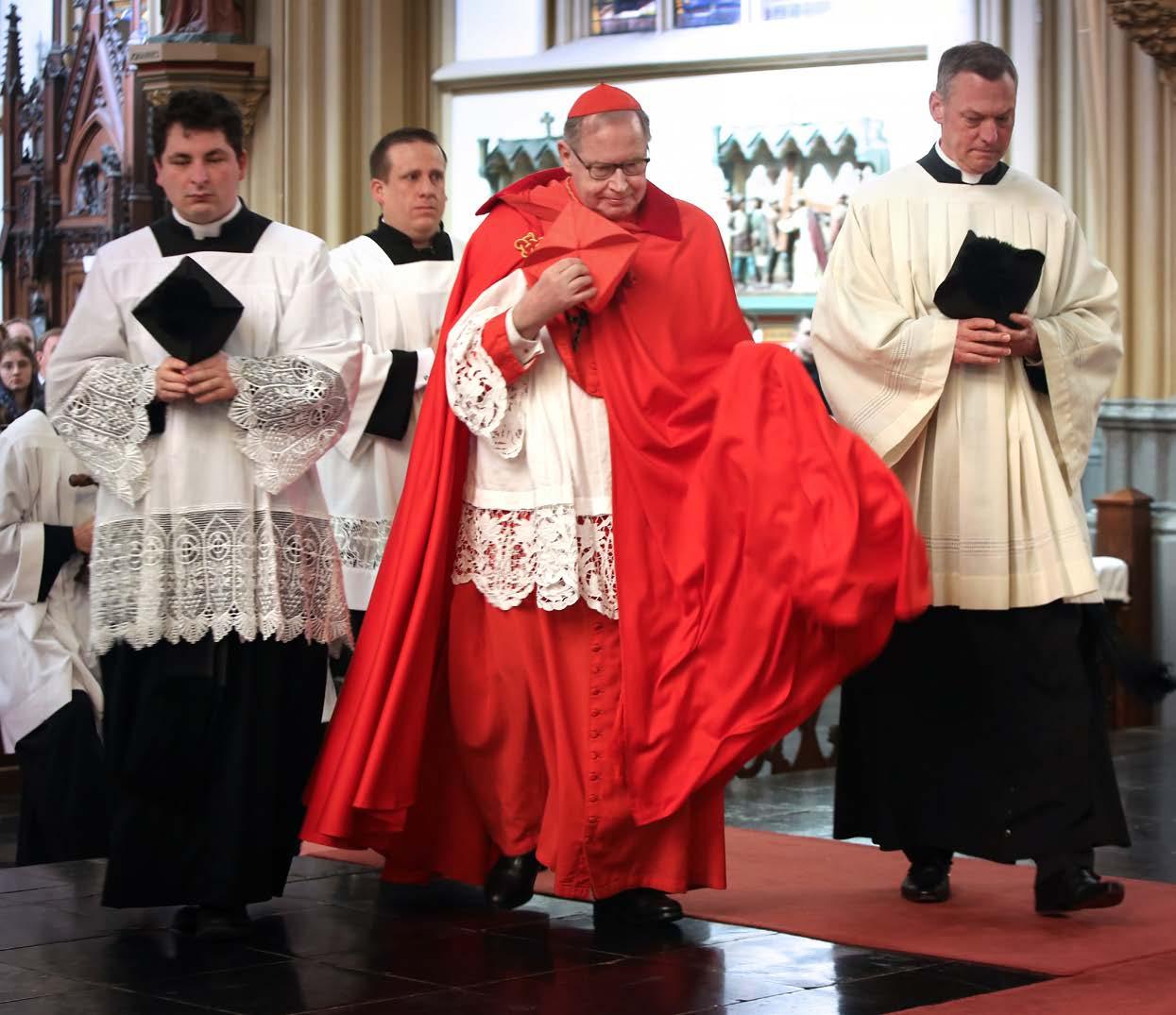
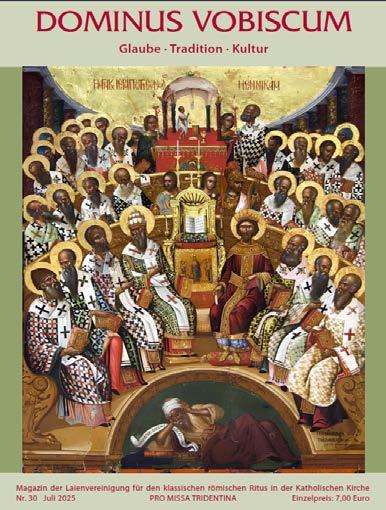
Michael Davies: new biography reviewed Cardinal Burke in Rome and Cardinal Eijk in the Netherlands Dom Pateau on Gregorian chant
Membersʼ magazines and regular features
The voice of the Foederatio Internationalis Una Voce
© Ramon Mangold

Michael Davies: new biography reviewed Cardinal Burke in Rome and Cardinal Eijk in the Netherlands Dom Pateau on Gregorian chant
Membersʼ magazines and regular features
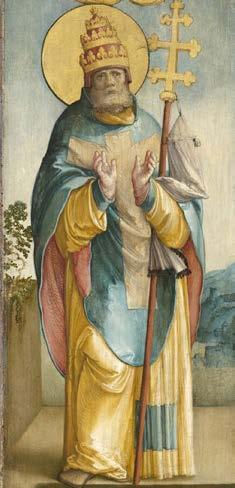
The FIUV’s magazine is dedicated to St Gregory the Great (Pope Gregory I), who died in 604 AD, a Pope forever associated with Gregorian chant and the Gregorian rite of Mass (the Traditional Mass).
Gregorius Magnus magazine aims to be a showcase for the worldwide Traditional Catholic movement: the movement for the restoration to the Church’s altars of the Mass in its traditional forms. We draw features and news from our supporters all over the world, including the magazines published by some of our member associations.
Gregorius Magnus is published twice a year: in March and in October.
The Editor wants to hear from you! We want to spread the news, good or bad, about the movement for the restoration of the Church’s liturgical traditions, from all over the world.
The production of the magazine is supported financially by the Latin Mass Society of England and Wales, and we wish to record our thanks to them.
ʻHe who would climb to a lofty height must go by steps, not leapsʼ.
St Gregory the Great
Please send contributions to secretary@fiuv.org, for our two annual deadlines:
15th February, for the March issue
15th September, for the October issue
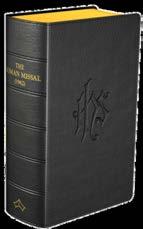
Baronius Daily Missal 1962 Highways
Reply to Cardinal Roche: Liturgical Pluralism and the Vetus
Book Review: The Traitors Circle by Jonathan Freedland by Joseph Shaw
Book Review: Michael Davies by Leo Darroch by Joseph Shaw
by
Cover photograph: Cardinal Eijk in Oss, The Netherlands © Ramon Mangold
Gregorius Magnus is published by the Foederatio Internationalis Una Voce. The FIUV is a lay movement within the Catholic Church, founded in Rome in 1965 and erected formally in Zürich in January 1967
The principal aims of the FIUV are to ensure that the Missale Romanum promulgated by Pope St John XXIII in 1962 is maintained in the Church as one of the forms of liturgical celebration, to obtain freedom of use for all other Roman liturgical books enshrining ‘previous liturgical and disciplinary forms of the Latin tradition’, and to safeguard and promote the use of Latin, Gregorian chant, and sacred polyphony.
The Council of the International Federation Una Voce, renewed at the 2025 General Assembly
President:
Joseph Shaw (Latin Mass Society, England and Wales)
President d’Honneur: Jacques Dhaussy (Una Voce France)
Vice Presidents:
• Patrick Banken (Una Voce France)
• Jack Oostveen (Ecclesia Dei Delft, The Netherlands)
• Monika Rheinschmitt (Pro Missa Tridentina, Germany)
Secretary: Andris Amolins (Una Voce Latvia)
Treasurer:
Monika Rheinschmitt (Pro Missa Tridentina, Germany)
Councillors:
• Jaime Alcalde (Magnificat, UV Chile)
• David Reid (Una Voce Canada)
• Fabio Marino (Una Voce Italy)
• Uchenna Okezie (Una Voce Nigeria)
• Donal Hanley (Una Voce Taiwan)
• Rubén Peretó Rivas (Una Voce Argentina)
by Joseph Shaw
Happy Easter, and welcome to the 21st edition of Gregorius Magnus.
I should first note that the FIUV General Assembly took place in Rome last October. The officers were re-elected unopposed; there were some changes to the Council: see the list in this issue.
In the short lifespan of this magazine, it has already witnessed some extraordinary changes in official policy towards the Traditional Mass. Pope Benedict XVI called this liturgy ‘riches’ which it was our duty to ‘preserve’ and ‘give their proper place’; Pope Francis appeared to think that the very existence of an older Missal was a danger to the unity of the Church. Now Pope Leo XIV has told the French bishops to make provision for those Catholics who are attached to it: ‘generously’, in fact. Not only that, but his message, conveyed to the bishops in a letter from Cardinal Pietro Parolin, the Secretary of State, went on to refer to a ‘wound’ in the Church:
Healing it requires a renewed openness to one another, with deeper understanding of each other’s sensitivities – a perspective that can allow brothers, enriched by their diversity, to welcome one another in charity and in the unity of faith.
The notion of the diversity represented by Catholics who attend the Traditional Mass having some positive value is indeed a welcome development. Recently, the US-based Hand Missal Project1 led by Nico Fassimo, which has republished and analysed much important historical material of the period of liturgical reform, published a long article on the implementation of the earlier stages of the liturgical reform, up to 1969. It is a reminder of the violence of the changes, and the ferocity of the polemic which accompanied them. Appeals to bishops and pastors to treat ordinary churchgoers with charity and respect increasingly fell on deaf ears. A number of bishops prohibited the celebration of the reformed liturgy in Latin, and columnists in Catholic
newspapers lambasted readers who expressed their confusion and distress about what was happening. At the same time, progressive liturgists were worrying that the reform was not working in the way that they had hoped and expected. Fassimo illustrates these trends with many contemporary sources, and makes an interesting suggestion:
The failure to generously and patiently assist the laity during the implementation of the initial liturgical changes and the sense that the changes had failed were not separate phenomena but rather, at least in part, mutually reinforcing. Recognition that the changes were not working as expected (or being received as expected) inclined champions of the reforms to be increasingly harsh with those members of the laity who embodied the failure by their hesitancy, confusion, or resistance.
It may be that later generations of liturgical progressives have gone through a similar unconscious mental process. Traditional Catholics represent, to them, the unwelcome possibility that not everything is lovely in the liturgical garden over which they preside. Rather than reflect on how changes to their approach to the liturgy might better meet the spiritual needs of Catholics –something that would require them to reconsider their favourite assumptions – they seek to make the problem disappear in a different way: by driving Traditional Catholics out of the Church. By the will of Divine Providence, Pope John Paul II and Pope Benedict XVI did not adopt this view. They considered the situation from the point of view of the salvation of souls, and adopted policies which enabled the Traditional Mass to survive. We have grounds to hope that Pope Leo shares their pastoral instinct.
Joseph Shaw, President
1. https://handmissalhistory.com/
Becoming a Friend is an easy way to support the work of the Federation for the ‘former Missal’ of the Roman Rite, and to keep yourself informed about its activities.
You can become a Friend by e-mailing your name and country of residence to treasurer@fiuv.org and making an annual donation according to your means: all are welcome. This can be sent by PayPal to the same email address, or using the bank details below.
You will be included on the mailing list for publications and regular bulletins, but your details will not be shared with others.
Two Traditional Masses are offered each month, one for living and one for deceased Friends.
Bank details:
IBAN: DE21600501010001507155
BIC/SWIFT: SOLADEST600
Bank: BW-Bank Stuttgart
Account Owner: Monika Rheinschmitt
'It is vitally important that these new priests and religious, these new young people with ardent hearts, should find—if only in a corner of the rambling mansion of the Church— the treasure of a truly sacred liturgy still glowing softly in the night. And it is our task—since we have been given the grace to appreciate the value of this heritage—to preserve it from spoliation, from becoming buried out of sight, despised and therefore lost forever. It is our duty to keep it alive: by our own loving attachment, by our support for the priests who make it shine in our churches, by our apostolate at all levels of persuasion...'
Dr Eric de Saventhem, founding President of the Una Voce Federation, New York, 1970
Editor’s note: We are delighted to draw attention to this important project of Una Voce France, which will benefit many associations around the world – exactly which one depends on what is found in this archive that has yet to be catalogued. I know from my own researches in England that many proper chants were composed by the monks of Solesmes for our proper feasts, and we have the music for these – in most cases, but not in all!
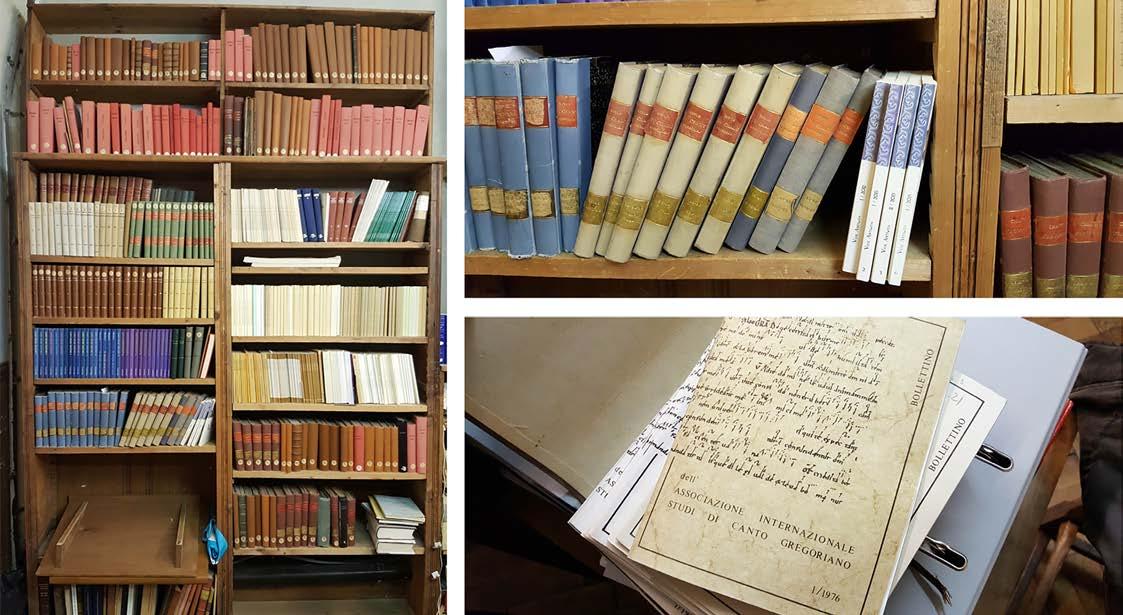
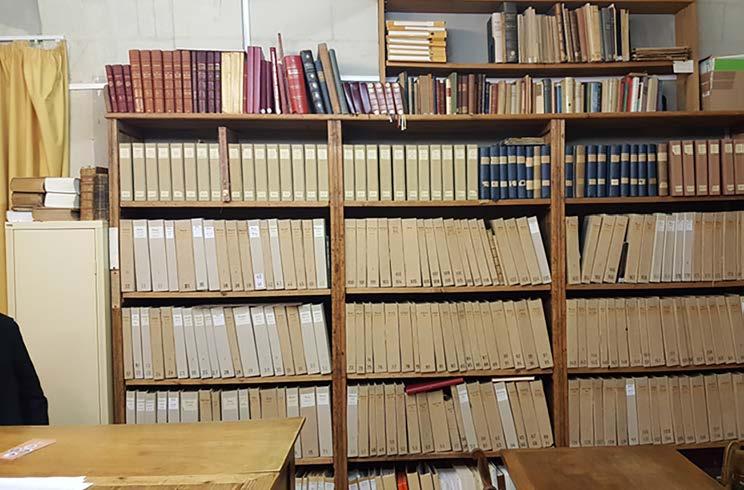
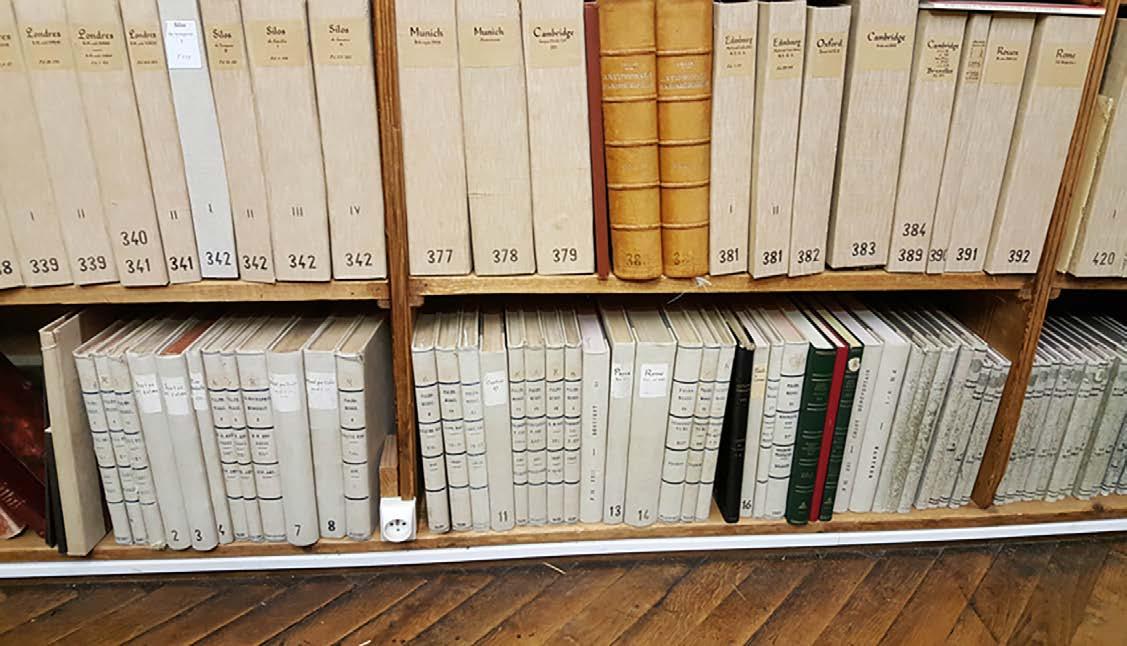
Since the middle of the nineteenth century, the Abbey of Saint-Pierre de Solesmes has been the living heart of the restoration of Gregorian chant, officially recognized by the Holy See in 1916. In this context, the monks of Solesmes not only revised the great liturgical books (such as the Gradual and Antiphonary) but also composed or restored, at the request of dioceses around the world, Gregorian pieces specific to their saints, their local feasts, and their specific liturgical traditions.
These diocesan Propers – often printed in a few dozen copies, sometimes in manuscript or in fragile booklets – represent a musical and spiritual treasure that has never been
collected, never digitized, and for the most part are unknown even to specialists. Many are now threatened with disappearance, printed on yellowed paper, with deteriorated bindings, and only existing in a few copies.
Thanks to exceptional access to the Solesmes Palaeographic Workshop –a unique conservatory of these rare documents – and a highly specialized digitization infrastructure (developed as part of a European AI project applied to manuscript music), we are now able to save this endangered heritage.
The project aims to fully digitize the approximately 200 collections of diocesan Propers: 90 French dioceses that have preserved
their own Gregorian church, and more than 110 dioceses or ecclesiastical entities abroad (Europe, the Americas, former colonies, religious congregations, etc.). Each piece will be scanned in high resolution, catalogued, and made freely accessible – to researchers, singers, faithful, and future generations.
Why was this project never undertaken until now? Because no one has ever had at the same time access to the original documents (reserved for very few), the technical skills, and the necessary standing to carry out this work.
It is the first time in history that such a corpus, dispersed, confidential, and fragile, can be united, saved, and given back to the universal Church.
The role of Una Voce France
Founded in 1964 precisely to defend Gregorian chant at the time of its abandonment, Una Voce is the natural guardian of this heritage. Only it can guarantee that these works will not sleep on a hard drive, but will be reread, sung, and prayed – as they were in the past.
What will your donations be used for?
The objective of this campaign is to raise €9,500 to cover the first essential stages of the project: photography of the works, travel, and processing of photographs (classification and description of works).
If the collection exceeds this objective, the additional funds will be devoted to an essential additional work: the creation of indexes of the texts present in the chants.
The work will be carried out by Dominique Crochu and Dominique Gatté, who have just completed the European Repertorium project for the safeguarding of the manuscripts of the Solesmes musical palaeography workshop.
The project needs funding! Not only will your contributions finance digitisation but you will:
• help restore the liturgical memory of the Church
• give voice to the forgotten local saints
• save from oblivion melodies composed in the peace of the cloisters
• offer to the Church of tomorrow the musical roots of her prayer.
These diocesan Propers are a hidden treasure: liturgically rich, musically refined, and entirely inaccessible to most singers, scholars, and faithful. Many are now at risk of physical decay. Thanks to exclusive
access to the Solesmes Palaeographic Workshop and a state-of-the-art digitisation infrastructure (developed within a European AI-for-Music project), we can now preserve and share this unique heritage.
Join us in giving voice to the saints of every land.
See the website of Una Voce France, or https://www.credofunding.fr/fr/ una-voce-2026.
by Filip Schweiner
It is a story seen all too often: an initiative begins with strength and enthusiasm, yet over time encounters difficulties, and the flame begins to fade. Sometimes it dies out completely. At other times, the torch is passed on to others who are able to keep the fire alive. And in still other cases, someone lifts the torch from the ground and reignites it. It is the last of these which describes the story of Una Voce Czech Republic.
The Czech Republic is a beautiful Central European country with a not insignificant number of faithful and priests interested, in one way or another, in the Traditional Roman Rite. The churches in which the Latin Mass may be celebrated are certainly not numerous, yet neither are they obscure, thanks to several prominent locations. Given this situation, one might well wonder why there has been no active association within the Una Voce framework. This is the question we asked ourselves last summer.
Una Voce Czech Republic ceased its activities in 2018. Since then, however, many more people – including priests – have discovered the Latin Mass and expressed a growing interest in it. Last summer, the time seemed ripe to revive the association. And so we did. New people, new structure, new ideas on
how to do things, the unchanging ideals about helping the Latin Mass spread and gain its rightful place within the Church.
Thus far, our journey has been a success. We have gained many passionate and capable members, reestablished our media presence, and launched a new website featuring a regularly updated blog. We have also applied for and been accepted into the Foederatio Internationalis Una Voce (FIUV). In addition, we have introduced ourselves to the Czech bishops and engaged in fruitful conversations with
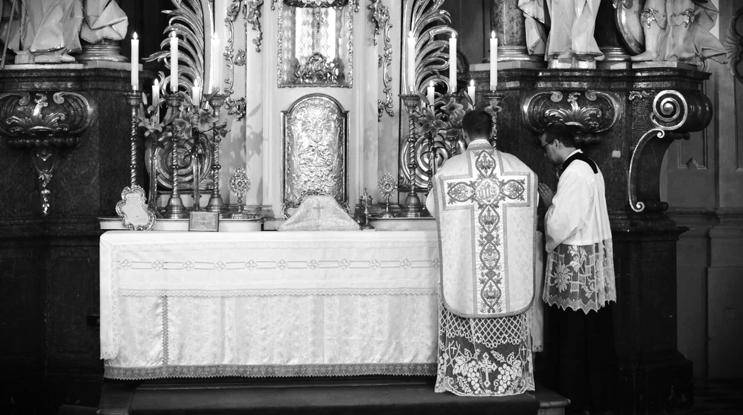
several of them – conversations that may open new possibilities for the celebration of the Latin Mass and foster greater acceptance of those priests who already celebrate it.
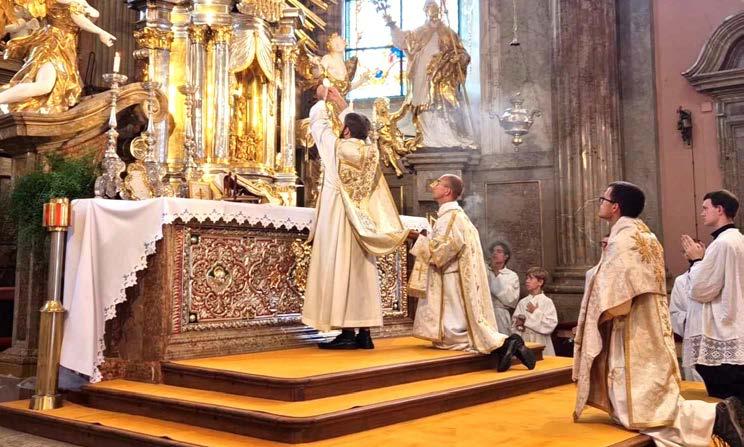
Our discussions with Mgr Nuzík, Archbishop of Olomouc, have already led to a particularly noteworthy event planned for this summer. On 29th August, the Latin Mass will be celebrated in the Basilica of the Assumption of Our Lady in Hostýn, probably the most renowned Marian shrine not only in the archdiocese but in the wider region of Moravia. The Archbishop will attend personally and deliver a sermon.
Many other events are also in preparation, including a course on Gregorian chant and a summer pilgrimage to Italy.
Much work still lies ahead. Yet the things that have been already achieved –with God’s help – give us great hope for the future. May this serve as an example that, where there is will and dedication, even an inactive organization can be restarted quite quickly and bear fruit. We would also like to ask for prayers of the kind reader of this article so that we may continue on a good path in accordance with God’s Will.
Here we reprint a feature article and a book review from the latest edition
by Anne-Marie Epitalon
The tradition of the nativity scene dates back to St Francis of Assisi, who created a living representation of it in 1223. Following his journey to the Holy Land and his visit to Bethlehem, this great saint always had a strong devotion to the Christmas feast, and wished to bring the scene of the Nativity to life so that people could feel the love and humility that filled the poor stable. To do so, he used a manger for the animals, and figures to recreate the atmosphere of Bethlehem.
A benefactor of the Franciscans gave them, at Greccio, a rock surrounded by trees. St Francis then said to his donor: ‘In the woods, you will find a cave among the rocks; there you will set up a crib filled with straw. There should also be an ox and a donkey, as in Bethlehem: I want to celebrate the arrival of the Son of God on earth and show how poor and miserable He was’. The benefactor then prepared all these things, and at midnight on 24th December, the Franciscan brothers and local residents arrived. All came with lit torches, and the Mass was celebrated over the crib that served as an altar. The attendees
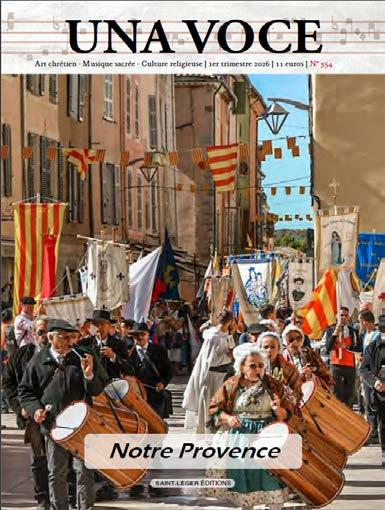
had the impression that a real child was lying in the manger, and saw St Francis, who as Deacon sang the Gospel, tenderly take Him in his arms.
Subsequently, nativity scenes became sculptural reconstructions, installed in churches during the Advent season. However, during the French Revolution, the churches were closed. The Provençals then
found a solution: to recreate a domestic nativity scene in miniature at home. It was at this time that the santons, from the Provençal term meaning ‘little saints’, appeared. They would represent the Holy Family, the shepherds, and the Magi. Soon, artisans would add figures from the Provençal populace who came to pay homage to the infant Jesus and symbolize village life. The first santon maker is often cited as Louis Lagnel (1764-1822), from Marseille. Lagnel drew inspiration from the streets of Marseille and the small trades of the time. The santon maker is a man who knows how to observe and convey the simplicity and generosity of the people of his region and who thus represents and freezes in time scenes of life from the past. The artisan therefore had the idea of moulding the figurines in clay, which allowed them to be produced on a large scale. He sculpts an original model, which is used to create the plaster mould; the figurines are then baked in an oven at around 800℃, and subsequently hand-painted. There are two styles of santon, made of clay and
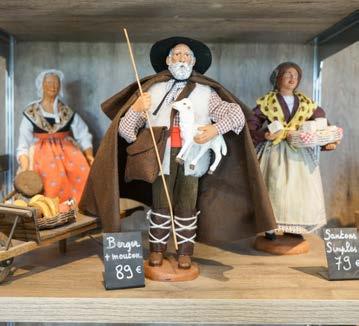
painted, or dressed in clothes made of fabric. Since 1803, santon fairs have been held every year, and santon workshops continue to preserve this expertise.
The traditional santons thus represent the Provençal people, and each one embodies a particular character trait. But first, of course, we see the infant Jesus, lying on the straw, the Virgin Mary in prayer beside the manger, and St Joseph standing with a lantern or a staff. The donkey and the ox, companions of the crib, symbols of warmth and humility, are near the Magi, who come as guarantors of Our Lord’s sovereignty over the nations. The shepherd, carrying his lamb, teaches us devotion; sometimes a shepherdess accompanies him, spinning wool. The Ravi [a simpleton] is amazed, the tambourine player plays the tambourine or galoubet and entertains the procession; the miller carries a sack of flour and walks with the knife-sharpener, the fishmonger, the laundress or basket-maker, and the gypsy. The parish priest, of course, represents faith, and is accompanied by the tinsmith and the blacksmith ... in short, all the trades of yesteryear. But the santons also embody virtues: the Ravi enchants us with his joy and wonder: his name, moreover, means ‘the enchanter’ in Provençal. The blind man and his son teach us about charity, the shepherd about simple faith, the baker about sharing bread. The angel Boufareou is God’s messenger and represents the guardian angel, creating the link between heaven and earth. The miller, bent under the weight of his sack, teaches us courage in daily labour. The fishmonger, with her headdress, is the emblem of important trades in the coastal villages of Provence; her features express joviality. She is the
link between the sea and the symbol of Christ, Ichthys. The knife grinder plays a crucial role in the society of the time, when tools are indispensable for daily work. He represents a job well done. The hurdy-gurdy player immerses us in the joy and conviviality of the Christmas celebration. The Ravi has a place of honour, he whose simple soul spontaneously recognizes the miracle. The figurines representing old age pay tribute to the loyalty of the elders who are there to pass things on.
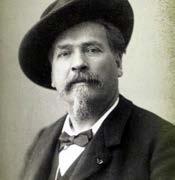
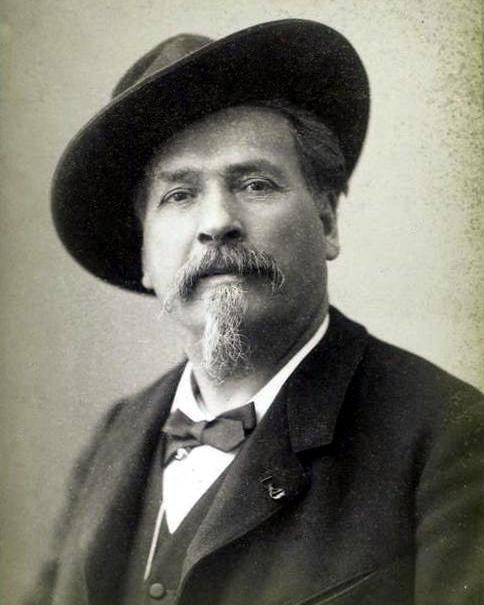
The figurines are the people of the village; they represent professions, the dignity of work, joy, and the personalities of picturesque characters. The setting also has its symbolism: water; the olive tree; the mountain, a sign of spiritual elevation. But, of course, the heart of the nativity scene is the Child, incarnation of light; the Virgin, that of purity; St Joseph, that of protection. The donkey and the ox embody, in addition to warmth, the people of Israel bound by the law for the ox, and the pagans for the donkey. Among these figurines, other characters will gradually appear: let us mention, and he well deserves it, Frédéric Mistral (d. 1914, a promoter of Provençal language and culture)!
Mistral always took care to connect the popular faith of the Provençal people, proud and devout, with regional culture. In celebrating the santons, the leader of the Félibrige asserts: ‘Nostre terro doù souleu es pas un païs de paur mai de lusie’: ‘our land of sunshine is not a country of fear but of light’. These ‘little saints’ bring a breath of freshness and poetry to Provençal culture. Mistral understood this well: ‘Even if they are made of clay, the santons speak to the heart: the one who represents the fisherman, the one who represents the shepherd, the one who represents the washerwoman, it is the peasant from our land, the good worker of our country’.
The santons of Provence are not merely decorative. They are the mirror of Provence, humble and luminous. Historically, they served as a popular catechism, reflecting daily life and acting as a tool to convey Bible stories to children and less educated people, making sacred stories more accessible to everyone.
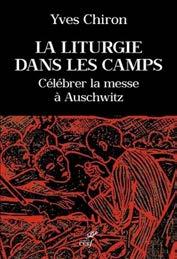
Yves Chiron, The Liturgy in the Camps: Celebrating Mass at Auschwitz (2025, 336 pp., €27)
Review by VASCO
Yves Chiron’s recent book on the liturgy in the camps covers an extremely wide field of study: the diversity of camps, chaplaincies, Masses and prayers, sacraments, funerals, and so on. It contains a wealth of testimonies from which anyone can draw, a compendium that will remain useful to consult. An index of names makes this easier (despite some errors and gaps), as well as a bibliography that extends to online documents and manuscripts. Some criticisms can be made of the publisher: the sensational subtitle (there is actually very little mention of Auschwitz); the numerous typos (including ‘guide’ instead of ‘Guy de’); and the absence of a map. At least this time they ensured the correction of Latin phrases and words. However, it is to the place of Latin in the camps to which we would like to devote our review. Latin showed its value, in the Germany of this sad time, as an international language, at least for the Catholic clergy. Chiron recalls that ‘the vast majority of the 700,000 French workers [...], if they needed a priest, turned to the German clergy’ (or to the Polish clergy at Auschwitz).
But, above all, the sacredness of the Catholic liturgy was one of its assets in the camps! It sometimes attracted Protestants and unbelievers. We can observe that some chants enjoyed great popularity: the Salve Regina, the Pater Noster, and even the Credo. Only the first of the three is still easily sung by a Catholic crowd today: Chiron himself was
able to observe on his television that the Corsican crowd could not sing the Pater Noster with the celebrants during the Pope’s recent visit to Ajaccio.
Awaiting his deportation to a prison in Bayonne, the Benedictine (and not Trappist, pace Chiron) Grégoire Joannatey, every evening after the sentry had passed, would launch into the Salve Regina in a stentorian voice, and numerous voices would accompany him, ‘from the ground floor to the first floor’. At Ravensbrück, Geneviève de Gaulle liked to recite it, finding the ‘valley of tears’ particularly suited to the situation. [Editor’s note: a phrase removed from the corresponding Psalm, 83:7, both by the 1946 Bea translation and the post–Vatican II Neo-Vulgate.]
In his Stalag in Bad Orb in 1940, the Dominican Jacques Robert saw the crowd with tears in their eyes on Sundays, every time the O Salutaris Hostia resounded, recalling, as it did, a French childhood and the services of our villages. Mother Laurentia Sibien (1891-1943), a Benedictine from Verneuil-sur-Avre deported to Flussbach, read the prayers of the Mass to fellow prisoners, ‘one of whom, who had a beautiful voice, sang the Creed’.
Holy Week, or at least Easter Sunday, was often marked by great devotion. Even in 1945, in Ravensbrück, ‘some carried out the Stations of the Cross, alone or in groups’, wrote Marcelle Douard, ‘and on Sunday we sang the Mass without a priest, yes, sang, for the choir was good, and Éliane had composed a Pater Noster and an Ave Maria. She sang her Pater to us. It was in Block 3, where there were many Communists. Some told me with tears in their eyes how beautiful they had found it’.
The Belgian Jesuit Léon De Coninck is surely not the only priest to have had the thought, when breaking the hosts into small pieces for the sake of his congregation, of the sequence composed by Thomas Aquinas for the Feast of Corpus Christi. But he noted it: ‘Tantum esse sub fragmento quantum toto tegitur’ (‘[Don’t doubt] the fragments to be as great as what is hidden in the whole’).
The chapter on funerals is very carefully crafted. One reads the account by the Dominican Claude Humbert of his labour detachment at Kaltenkirchen: ‘At the death of each French comrade, I
requested a minute of silence, and we would gather in the evening or morning at the carpentry shop, where the bodies were displayed; I recited the Libera me and the Requiem’. Regarding those who committed suicide, Yves Chiron cites the 1917 Code of Canon Law (canon 1240), according to which suicides are ‘deprived of ecclesiastical burial’. But he forgets §2 of this canon: ‘If doubt remains, one must consult the ordinary [the local bishop]’, which significantly reduced the severity of this rule. In practice, a doctor’s certificate was sufficient to testify to an attenuated responsibility, and when this was so an ecclesiastical burial was permitted.
The Carmelite Jacques of Jesus (born Lucien Louis Bunel) has been well known since the (highly romanticized) film by Louis Malle, Au revoir, les enfants (1987).
Leaving the Güsen camp in March 1945 for Linz, where he died on 2nd June, he left his companions as a testament three Latin phrases:
Per Crucem ad lucem (through the Cross to light)
Sine sanguine non fit redemptio (there can be no redemption without the shedding of blood; Hebrews 9:22f)
Qui facit veritatem venit ad lucem (whoever believes in the truth comes to light; John 3:21)
Let us conclude with the picturesque testimony of Jacques Robichez (future professor at the Sorbonne), published in Une paroisse derrière les barbelés (A parish behind the barbed wire), a collection edited by Éditions du Cerf as early as 1943. It concerns Oflag VI A in Soest (see UV No. 346, page 25). After the account of the Dominican Bonduelle, who adorned the chapel door with a long Latin inscription (of which only a translation is provided to us), Robichez recounts the extraordinarily devout Holy Week, with the Stations of the Cross punctuated by the singing of a famous stanza from the Stabat Mater (Crucifixi fige plagas). He also recalls daily Masses held in the crowded attics of the building, celebrated from 6 a.m. by the numerous priests: ‘In front of you, behind you, on small folding tables or makeshift suitcases, the muttered “Oremuses” interlace, the “Dominus vobiscums” echo each other. A distraction, or conversely an overly sustained inner attention, a half-turn to the right or to the left, and you risk
changing Mass without realizing it. You were at the Confiteor, and now you are at the Communion. Here it is the Introit, there the Orate fratres; elsewhere it is the last Gospel’.
A ‘testimony’ (undated, unlocated), published by the very reformist priest Michonneau in his 1946 book, recounts a camp episode where the Mass is presented to Protestants as ‘a family meal’, but above all as ‘a journey to meet Christ’, with the priest as ‘the first in line’ walking clad in his chasuble [‘little house’ hence the word ‘chasuble’], and thus necessarily with his back to the people he is leading! Father Michonneau did not at all foresee in 1946 that Article 91 of the 1964 Instruction Inter Oecumenici would come to demolish this beautiful image of the people walking behind their pastor, and disfigure the sanctuaries of the most ancient churches. This Article 91 would say: ‘It is good to build the altar [...] to celebrate facing the people, versus populum’!
Yves Chiron is very nuanced in his conclusions. He is even cautious, on pages 247-48, regarding the designation of ‘martyr for hatred of the faith’ – as, indeed, is Raphaël Spina in his History of the S.T.O. (Perrin, 2017) [that is, in assuming that those who died in the camps did so for the Faith, and should therefore be considered martyrs].
As for the importance of the Second World War, and more specifically of the camps, in the liturgical reforms of the second half of the century, it is difficult to say whether the liturgical experiments carried out before the war in the Dominican houses in Germany, or by Catholic Action in France (especially the J.O.C.), were accelerated or delayed by it or them. Hardly anything can be found to indicate a desire for reform, to contradict the numerous examples cited above, except for a seminarian tired of Latin (Paul Peyron), a Jesuit, and a very reformist Dominican (Henri Perrin and Father Dubarle, released in 1942). As a choirboy at the end of the 1950s, I can testify that the young vicars did not joke about the observance of liturgical rules. And I note that it was the Hellenist Robert Flacelière, a university professor with no experience in the camps (he spent the war at the Faculty of Arts in Lyon), who first published, in 1945, a reformist program (Liturgical Renaissance and Parish Life, published by Seuil). Even if he would later come to regret it.
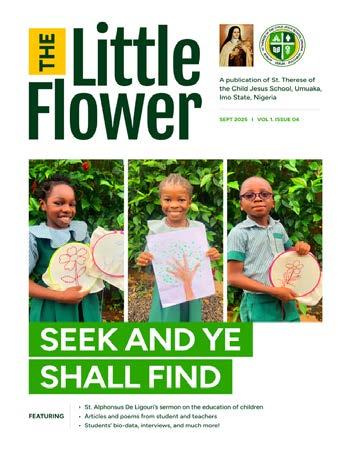
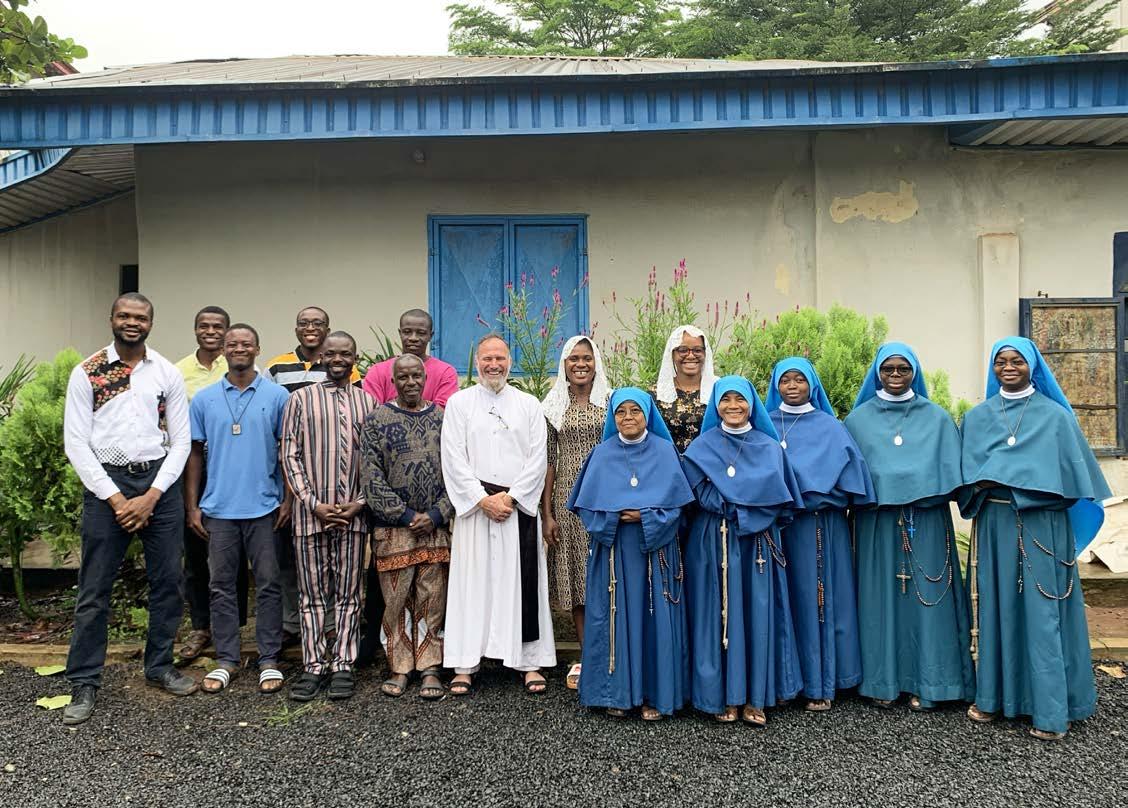
This is also the magazine of St Therese of the Child Jesus School, established with assistance from Una Voce Nigeria.
by the Sisters
What is your vocation?
Young people every now and then will hear this question put to them in one form or another. Almost every time it seems to catch them by surprise, and they feel some embarrassment about answering. They quickly realize that it is a serious question, but usually they do not know what to answer, and they try to dodge the issue by an evasive, ‘Who knows? ... I will think it over ... I will see later on’.
They may never have seriously reflected on the word ‘vocation’, and on hearing the term put to them this way unexpectedly, the sound of it seems almost strange and mysterious.
What does vocation mean?
It comes from the Latin vocare, meaning ‘to call’. Thus, we say that every vocation is a call addressed to man.
From whom does this call come?
It comes from God, who is the Master of man’s life and man’s death.
It is God who gives us being and causes us to continue to be, so that ‘in Him we live and move and have our being’ (Acts 17:28).
What does God call us to?
God calls, first, every person into human existence. Then, He calls him to carry out some mission in his life whereby he is to grow in holiness and in this way to earn Paradise.
St Ignatius of Loyola beautifully set forth the doctrine: ‘Man was created to
give praise, homage and service to God, Our Lord, and in this way to save his soul. Other things that are on the face of the earth were created for man to help him achieve the end for which he was created’.
This call to human existence and to holiness is the vocation of all – of every man that is born into this world.
But the ‘call’ to gain holiness by fulfilling one’s God-given mission during the course of his earthly sojourn determines the right state of life for each individual to adopt. Thus, one who perceives that he is called to matrimony has the vocation to marry and must live in the state of matrimony. One who perceives he is called to the priesthood must carry out his vocation in the priestly state. Someone finding himself called to the consecrated life must respond by embracing the religious state. One who finds he is called to missionary life must make his life that of a missionary.
One can also consider ‘vocation’, in its broadest sense, as a call to one of the professions or other human careers, especially the career of those who, without consecrating themselves to God, remain unmarried, completely and exclusively dedicating themselves to the occupation of physician, teacher, artist, farmer, mechanic, etc.
Each boy and girl has his own particular vocation to fulfill in life, the vocation assigned to him as his way to reach the Kingdom of Heaven. Everybody has a call from God to which he is expected to respond, so as
to faithfully fulfill it in order to attain salvation.
The task of determining what is one’s true vocation is certainly not something one does with effortless ease. But one must do it, because it is something bearing on everyone’s temporal and eternal destiny.
With a fatherly wisdom, Pope John Paul II warns us: ‘Everybody, especially if he is young, must intelligently ask himself the fundamental question about Christian life: “What is it that God calls me to?”’
There are perhaps many who do not ask themselves this ‘fundamental question’ at all, who, as they live from day to day, trust to luck it out (so to speak), and venture ahead haphazardly with frightening thoughtlessness.
How many are there, for example, who, before getting married, have reflected on St Paul’s teaching that one who, following his vocation, picks the married state, ‘does well’, but he who is not so called and for God’s sake does not choose to marry, ‘does better’ (I Cor. 7:38)? How many persons who are engaged or married were interested in determining whether God favoured them with something ‘better’ (in itself), namely, the consecrated vocation, instead of something merely ‘good’, namely, the vocation to marriage?
It may happen one day not far away that they find themselves committed to an unmeaningful life and will be painfully prompted to ask themselves too late what God truly wanted of them.
They will be like that good old lady making a voyage who, out in the middle of the Atlantic, finally asked an officer of the vessel, ‘Excuse me, sir. Is this the right ship to take for America?’
How many bitter regrets are heard from people whose sad mistake was that of choosing their path without due consideration beforehand! How many lives are ruined because people have neglected to ask themselves that ‘fundamental question’ at a suitable time! Seneca shrewdly declared that for very many men it is true that they ‘spoil one part of their lives by doing evil; they spoil a greater part it by doing nothing; and they spoil the rest of it doing everything but what they should do’. That is why St Alphonsus, citing in one of his books Fr Granada, who described choice of a state of life as the ‘chief wheel of our whole life’, adds this wise comment: ‘As with a watch, when the master wheel is broken, the whole watch ceases to function, so in the order of our salvation, when the choice of a state in life is mistaken, the entire life is mistaken’.
Let every boy and girl seriously reflect on this exhortation of St Paul: ‘I beseech you, brethren ... be not conformed to this world’ – be not worldly-minded –‘but be reformed in the newness of your mind, that you may prove what is the good and the acceptable and the perfect will of God’ (Rom. 12:1-2).
We must take care, then, to ask and answer the ‘fundamental question’ that will enable us to live a life leading us to the Kingdom of Heaven, according to the state – whatever it be – that God has determined for us. St Augustine wrote very meaningfully, ‘We are living our life in vain if we are not using it to earn eternal life’.
The example of St Francis Xavier, a brilliant student at Paris, is one to remember. His ambition as a youth was to restore his noble family to its former greatness. He lived only for this. One day he met St Ignatius Loyola, who became his roommate and classmate. From St Ignatius young Francis heard again and again these powerful words of the Gospel: ‘What does it profit a man to gain the whole world, and suffer the loss of
his own soul?’ (Mt. 16:26). At first these words left little impression on Francis. But little by little, they penetrated his heart and moved him to decide to repudiate the world with all its lures and choose God. Instead of seeking the restoration of his family, he dedicated himself to building the Kingdom of God in the souls of the faithful, as he toiled with incredible zeal in faraway Asia. He became the heavenly Patron of Catholic Missions in the Orient.
Young people who read this, consider yourselves. Do not be dazzled by the lure of creatures or by thoughtless impulses and feelings. Look ahead, look to the far future, think of eternity. ‘What does it profit a man to gain the whole world, and then suffer the loss of his own soul?’ (Mt. 16:26) One indication you have of a calling is to appreciate the value of the soul you must save and sanctify, by going wherever you could best be assured your spiritual life would grow and mature to the full stature of Christ (cf. Eph. 4:13).
In this edition of Gregorius Magnus we reprint two articles from Mass of Ages.
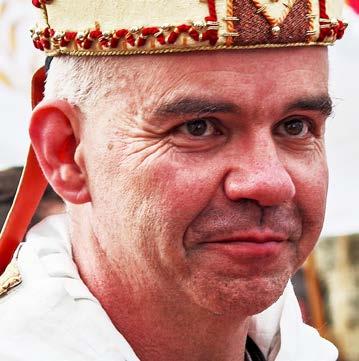
Father Abbot, could you describe your own musical journey from childhood, in particular concerning Gregorian chant?
I was born in the Vendée, a place soaked in the blood of its people since the French Revolution; a people which asserted its freedom to practice Faith in God. From a young age I was imprinted with a Christian heritage that was clung to and lived daily by a practising Catholic family. Christian life was manifested by regular assistance at Mass, family prayers, and especially by Marian devotion. My brothers and I served Mass. I was educated in Catholic school and 'Lycee' where the clergy made themselves available to the students. Without being conscious of the fact, I received spiritual welfare during my teenage years which developed early on in my heart into a simple intimacy with God. My parents were not musicians, but my mother loved singing. On Sundays on
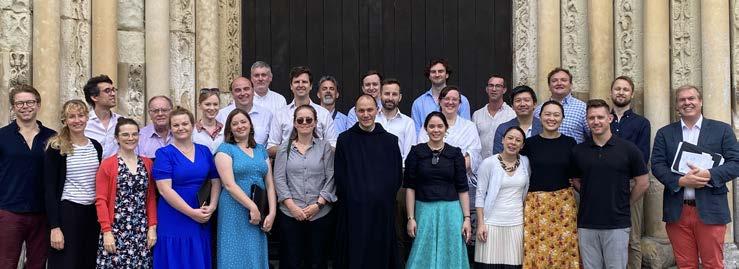
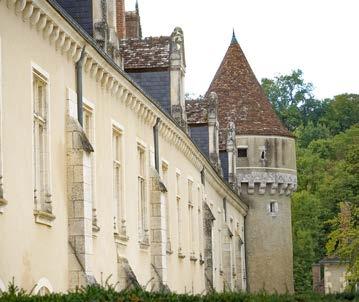
returning from Mass the house was filled with music. My first real contact with music was the obligatory weekly hour at school. We learned the recorder. I was fascinated by the organ. We were friends with the parish organist who gave lessons. At 11 or 12 I began to learn the piano and then the organ at the local conservatoire. As soon as possible I started to accompany the Mass at our parish church. At 15, I discovered that in our village an old priest was celebrating Mass sung in Gregorian chant. As we were increasingly disappointed with our parish liturgy, the family decided to go along. The timing meant that I could do both. Then my brothers, my mother and I were asked to join the choir. We started then to learn Gregorian chant and polyphony. The director of the choir was a friend of the Benedictine order and suggested that we visit a Benedictine monastery, and so I visited Fontgombault for the first time in June 1981. What are the fruits of those years? My brother is the current director of the Schola Saint-Grégoire in Le Mans, which is an international school of Gregorian chant.
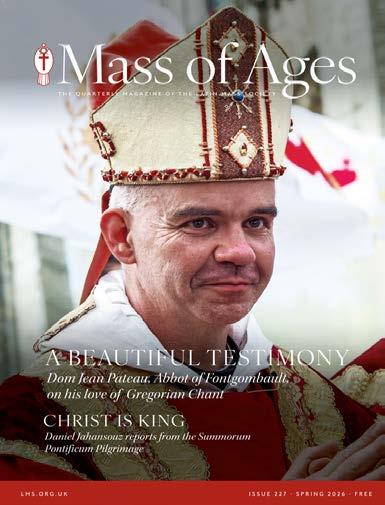
For my part, I entered Fontgombault in July 1990 after postgraduate studies in Physics. Ordained to the priesthood in 1998, I was elected Abbot in August 2011.
In your experience, is there a difference between those brought up surrounded by sacred music and children and teenagers who listen to contemporary music?
To respond to this question, I would have to have had the experience of it. However, it is undeniable that the influence of Gregorian chant and sacred music (polyphony in particular) is much more positive than contemporary music. Gregorian chant is a natural music. Its rhythm is natural, its melody simple and uncontrived; it speaks to men of all cultures, and is a profoundly humanising force. Instead of overexciting the senses and passions as does contemporary music, it spiritualises man, not by denying his nature but by sanitising it, simplifying it. Gregorian chant doesn’t try to evoke our legitimate feelings of joy, sadness, doubt,
tenderness, anger… these are considered to be the expressions of modern music. It does however express these feelings, not for themselves, but positioning them within the relationship between God and Man. It therefore rectifies them, giving them their true value. Deep down, the modern era can be characterised by living as if God does not exist, whereas Gregorian chant re-centres Man towards God as his ultimate finality. And so, a question: do we wish to live on the surface of ourselves, or do we wish to go deeper, to that place where we might come face to face with God?
Could it be possible that early exposure to Gregorian chant influences people towards a monastic vocation, like yours for example or other monks in the community?
In my case there can be no doubt. Gregorian chant is simple and humble. It forms a monastic heart. It is a simple song that has one purpose: addressing God by someone who seeks God. A monk, according to St Benedict, is a student in the school of service of the Lord. The two locations of this life are in the Divine Office and communal life. Gregorian Chant forms a major part of the Divine Office. So, day by day, it continues to mould the life of the monk and form him into a life of giving.
I find very apt the words of Dom Jean Claire during the 1985 international Gregorian Chant Congress, regarding the young people that had organised it:
These young people understand that to become sacred, music needs to be sacrificed to God, in both senses of the word sacrifice, which means both to destroy and to consecrate.
‘What needs to be destroyed is a certain consistency, a certain opacity of the sensitive element that constitutes precisely the seduction exerted on the soul by secular music, which focuses the attention and interest of listeners on itself. Sacred music, while remaining music, and beautiful music at that, must renounce being itself an object of admiration.
What needs to be consecrated is the use, the destination, the sign value of this music, which will become the bearer of a spiritual message that goes far beyond itself, elevates it, raises it to the confines of the sacramental order, making it a powerful sacramental.
This is well said, and I believe it: Gregorian chant is a true and powerful sacramental.
How would you describe the relationship between Gregorian chant and the liturgy? Interpretation, decoration, or something else?
Gregorian chant is an integral part of the liturgy; it is intrinsically linked to it. The liturgy is the prayer of the Church. Now, the Church is the Body of Christ, it is 'Jesus Christ abundant and communicated,' according to Bossuet’s beautiful expression. At baptism, the Christian is grafted onto this Body; he becomes one with Christ and with the entire Body of Christ. His prayer is therefore called to unite, in the strict sense of the search for unity, with the prayer of the Church. Now, when she prays, the Church sings because, as Saint Augustine says, 'singing is the characteristic of one who loves'. The Church sings in her liturgy to express her faith and her love. And Gregorian chant, 'the proper chant of the Roman liturgy,' as Vatican II puts it, has been shaped over centuries in the Church to become the privileged means of this expression. It is the sung prayer of the Church. Gregorian chant is closely linked, indeed essentially linked, to the Latin liturgy. Gregorian melodies were composed for the liturgy; they have no other reason for being. And they are composed to texts drawn primarily from the Word of God. It is God himself who speaks to us in the liturgy, who entrusts his Word to his Church to distribute to his children as the nourishment of their souls.
The proclamation of the Word of God is an integral part of the liturgical action. In the liturgy we have a Christian understanding of the Bible, in its most traditional and living commentary, and the liturgical use of Scripture illuminates it with a new light. Gregorian chant in turn contributes to this. One could say that Gregorian melodies give the Word of God its ecclesial interpretation. They make the Word 'resonate' throughout our lives. Saint Augustine exclaimed: 'My psalter, my joy!'
How would you describe the relationship between Gregorian chant and spirituality?
If by spirituality we mean the soul’s journey toward God, the way in which the soul, which is spiritual, encounters and unites with God, who is spirit, the relationship between Gregorian chant and spirituality stems from its relationship with the liturgy. The purpose of the liturgy is to unite all the baptised to Christ, and through Christ to God. Gregorian chant is one of the great means the liturgy uses to achieve this. It is a matter of faith, charity, and theological life. By its simplicity, stripped back, Gregorian chant places us before God in an attitude of truth and humility, pacifying our souls. This is perhaps the greatest service that Gregorian chant provides: it brings the peace that prepares us for the Lord’s visit.
But a beautiful testimony is perhaps worth more here than a long speech. I borrow it from Dom Gajard, the famous choirmaster of Solesmes, who reported the words of a laywoman: 'To understand the benefits of liturgical life in my soul, you must know that I led a culpable life for a very long time. Thanks to plainsong and the liturgy, I have rediscovered a normal human life for twelve years. Slowly, progressively, there has been a disengagement from matter, from the senses, to arrive at the life of the spirit, at the knowledge of the Church, the Mystical Body. I have rediscovered the peace of balance that a life oriented towards its end gives. This balance came above all through rhythm. I rediscovered a human heart, I understood the meaning of the hierarchy of beings, their common dependence on God, and their subordination according to the divine plan.' Gregorian chant, by its very nature, introduces us to worship in spirit and in truth, the worship that the Lord demands.
How does Gregorian chant differ from other forms of so-called 'sacred' music—polyphony? Viennese Masses (Mozart, Haydn and so on)? Traditional songs in vernacular? Chants in the 'Taizé' style?
Gregorian chant is a musical genre in its own right, which is therefore immediately distinct from polyphony and other forms of sacred music. It is their ancestor; it is from it that these other forms of music were born. It is distinguished first of all by its musical line, monodic, stripped down, simple, which readily proceeds by conjoined degrees, which does not know chromaticisms. It is distinguished by its modality, very rich and varied. The ethos
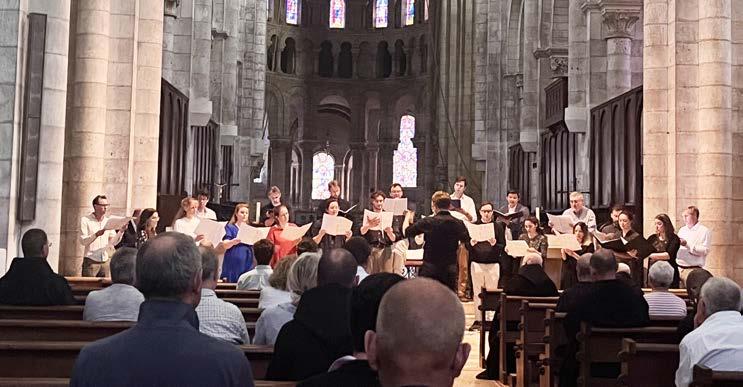
which emerges from it is much deeper and more spiritual than that of many modern melodies, because of the absence of all sentimentality. Gregorian chant does not seek emotion, but it reaches the soul in the deepest depths. It is further distinguished from more modern music by its natural and free rhythm.
All these technical aspects are at the service of the finality of the liturgy which is the sanctification of men and the glory of God. Gregorian chant excels in this regard, and all so-called sacred music can be of value in as much as it is inspired by Gregorian chant, if not in its composition, then at least in its spirit.
This is not to exclude all other forms of music, but rather to keep in mind that Gregorian Chant remains the proper chant of the Roman liturgy, that is, the sacred song par excellence of the Latin Church, the chant that most surely leads us to the heart of the mystery being celebrated. Simone Weil stated: 'Gregorian chant is both pure technique and pure love, like all great art.'
How do you respond to critics who would say that Gregorian chant is inaccessible to modern man, to the modern child, and is unsuitable for the faithful to participate in the liturgy?
The three notes, according to the Magisterium of the Church, of all authentic sacred music are holiness, beauty, and universality. By universality, we must understand the ability of music to touch people of all times and places. Yet, it is clear that this is precisely what Gregorian chant does. It is sung and enjoyed in Africa, Asia, America, and Europe. It has been attracting people for centuries, because through this chant, it is God himself that man encounters. It is not Gregorian chant
that is inaccessible to modern man; it is modernity that cuts man off from this chant, because it cuts man off from the depths of spiritual life. It scatters him on the surface of himself. Modern man lives far from humanity, from what would make his humanity truly great.
We live most of our time missing the essential. Gregorian chant is capable of awakening the sleepiest hearts and leading them to God. We just must not voluntarily close ourselves off. Modern man is dying of thirst, of a spiritual thirst. Gregorian chant is a source of living water that can quench one’s thirst.
As for the active participation of the faithful, Gregorian chant is not an obstacle, nor is Latin either. Active participation should not be understood as an obligation to do something during the liturgy. The Latin expression participatio actuosa could be translated as actual, or active, participation, as opposed to passive attendance at the liturgy. This active participation essentially consists of making oneself present with one's whole being to the mystery being celebrated, drawing from the great prayer of the Church, the liturgy, the understanding of the mysteries of salvation that will deeply nourish the soul. The faithful therefore participate actively by singing but also by listening or praying in silence. If the goal of active participation is to draw the faithful deeper into the mystery being celebrated, Gregorian chant, which involves singing the liturgy itself, is wonderfully suited to actively involve the faithful. A Gregorianist wrote: 'The paradox of depriving the faithful of the very texts of the liturgy in order to increase their participation in it has something fundamentally contradictory and even totally irreconcilable about it.' And again: 'The chants should be those
of the liturgical texts themselves, and not improvisations whose connection to the current liturgy is only distant and problematic.' In a word, Gregorian chant involves the faithful in the liturgy because it opens up to them the treasures of the liturgy itself.
Finally, what advice do you have for lay people seeking to promote Gregorian chant in their parish?
Two words: courage and patience. First of all, it takes courage to persevere, to learn Gregorian chant. Gregorian chant does not reveal its secrets at once. The ancient monks said that it took ten years to train a cantor. Gregorian chant does not tolerate mediocrity, like all true music. Therefore, one must work hard and not become discouraged. Performing Gregorian chant requires the acquisition of true knowledge. Patience too; it takes time. We could apply to Gregorian Chant what Saint Gregory said about spiritual pleasures. Unlike sensible pleasures, which are immediately desired, but once tasted, leave one unsatisfied, spiritual pleasures do not immediately provoke our desire, but once tasted, they are increasingly desired. Therefore, a certain education is required, not only in music, but especially in the spiritual life, to appreciate and make others appreciate Gregorian chant. But it is truly worth the effort. It is striking to note that lay people who regularly and seriously practice Gregorian chant in their parishes develop a profound Christian life. The purpose of Gregorian chant is not aesthetic, but is above all prayer.
Although the deposit of faith was closed with the death of the last apostle, heaven has not fallen silent since then. 'At all times', writes St Thomas Aquinas, 'there have not been lacking persons having the spirit of prophecy, not indeed for the declaration of any new doctrine of faith, but for the direction of human acts'.
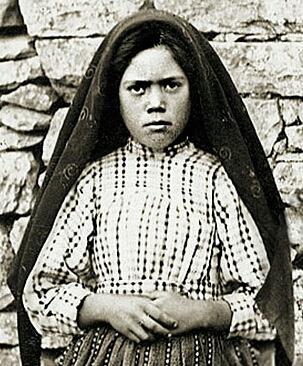
Sr Lucia dos Santos was the prophetess whom God chose to remain on earth for ‘a little while’, that is, for eighty-eight years, after the stupendous miracle of Fatima, in order to make better known the words that our Lady spoke in Portugal in 1917. It is through Sr Lucia’s testimony that we know of the ‘five first Saturdays’, and of heaven’s invitation to practise them.
The devotion was not entirely new. Pope Leo XIII, in 1889, had granted an indulgence to the faithful who would go to confession and Holy Communion for fifteen consecutive Saturdays in honour of the Blessed Virgin. St Pius X, on 13th June 1912, had indulgenced the practice of making reparation for offences against our Lady on, specifically, the first Saturday of the month. It was exactly five years later, on 13th June 1917, that the future Sr Lucia, along with her cousins St Francisco and St Jacinta, saw a vision of Mary with her heart surrounded by thorns that seemed to pierce it through. At the same time, she heard our Lady say: 'My Immaculate Heart will be your refuge, and the way that will lead you to God.'
On the following apparition, that of 13th July 1917, the three children received the famous vision of hell. Then they heard Mary say to them kindly: 'You have seen hell, where the souls of poor sinners go. To save them, God wishes to establish in the world devotion to My Immaculate Heart.' Then she promised that at some future time, she would come to ask for the consecration of Russia, and for a ‘communion of reparation’ on the first Saturdays.
Eight years passed. Saints Franciso and Jacinta had completed their short and heroic lives and gone to heaven, leaving their cousin on earth. Lucia had just entered the convent of the Dorothean sisters in Pontevedra, in Spain. On Thursday, 10th December 1925, she was in her cell after supper.
There she tells us that she experienced a vision of our Lady and the Christ child. She would describe it later, speaking of herself in the third person:
The Blessed Virgin appeared to her, and by her side, raised on a bright cloud, was the child Jesus. The Blessed Virgin rested her hand on her [Lucia’s] shoulder, and as she did so, showed her a heart encircled by thorns, which she was holding in her other hand. The Child said: ‘Have compassion on the Heart of your most holy Mother, covered with thorns, with which ungrateful men pierce It at every moment, and
there is no one to make an act of reparation to remove them’.
Having heard Jesus speak of this evil, Lucia then heard His mother speak of the remedy:
The most holy Virgin said: ‘Look my daughter, at my Heart, surrounded with thorns with which ungrateful men pierce me at every moment by their blasphemies and ingratitude. You at least try to console me and announce in my name that I promise to assist at the moment of death, with all the graces necessary for salvation, all those who, on the first Saturday of five consecutive
months, shall confess, receive Holy Communion, recite five decades of the rosary, and keep me company for fifteen minutes while meditating on the fifteen mysteries of the rosary, with the intention of making reparation to me.
Lucia told the superior of the convent, Mother Magalhaes, what had happened. Alluding discreetly to the event in the postscript of a letter written to the local bishop not long after, this superior would relate:
Maria das Dores [that is, Lucia] … told me that she had received a great grace from the Most Holy Virgin here, and I don’t doubt it because the child possesses virtue and simplicity in such great abundance that she must even charm the Most Holy Virgin! In these matters I am the most sceptical person you could find in the world, but in her case I absolutely don’t doubt it. 1
In fact, however, there have not been wanting people even more sceptical than Mother Magalhaes. Granted, they say, that heaven might encourage us in a general way to make reparation for sin, why would God reveal such a complicated devotion? And why five Saturdays, not four, say, or ten?
These objections are not very weighty. Chesterton remarked that a key might seem like an unnecessarily complicated shape to a person seeing one for the first time, but that it has the great advantage of being able to open a door. In a similar way, it does not take great faith to believe that God knows better than us what practices are most suitable for making reparation to the Blessed Virgin.
As for numbers, Scripture itself tells us that God loves them. We read in the book of Wisdom: Thou hast ordered all things in measure, and number, and weight. And the number five is divinely associated with reparation and with averting evils from the world. The paschal lamb was to be set aside five days before it was slain (Ex. 12:36); when this type was fulfilled on the Cross, five Wounds were made in our Lord’s body; when it is renewed in the Roman Mass, the priest traditionally makes five signs of the Cross both before and after the consecration. Since Mary associates herself so closely with her Son, it is not surprising if she requests five days of reparation.
But we have an even better explanation of why this number would be given us. A few years after the apparition at Pontevedra, Sr Lucia, having now taken her vows as a nun, was living in a nearby convent, in the town of Tuy. Her confessor, a Fr Gonçalves, had asked her this very question: why did God wish for five Saturdays of reparation, rather than nine, or seven in honour of Mary’s seven sorrows? Praying in the chapel between 11 p.m. and midnight, on Thursday 29th May 1930, Sr Lucia was asking for insight into the matter. She described what happened in these words:
I suddenly felt myself more intimately possessed by the divine presence and, if I am not mistaken, this is what was revealed to me: ‘My daughter, the reason is simple. There are five types of offences and blasphemies committed against the Immaculate Heart of Mary: blasphemies against the Immaculate Conception; blasphemies against her Virginity; blasphemies against her divine maternity, in refusing at the same time to recognize her as the mother of men; the blasphemies of those who publicly seek to sow in the hearts of children indifference or scorn, or even hatred of this Immaculate Mother; and the offences of those who outrage her directly in her holy images.
Sr Lucia then heard Jesus say to her: 'See, My daughter, the motive for which the Immaculate Heart of Mary inspired Me to ask for this little reparation, and so to move My mercy to pardon souls who have had the misfortune of offending her.'
It’s easy to see why it should be called a ‘little reparation’. No fasting or hair-shirts required! And yet its very littleness probably leads people to stumble at it. Like the Syrian general Naaman, told by the prophet Elisha to free himself of leprosy just by bathing in the River Jordan, we are reluctant to believe that something so simple can do much good. 'Are not the Abana, and the Pharphar, rivers of Damascus, better than all the waters of Israel, that I may wash in them, and be made clean?', he said angrily, until the wiser counsels of his servants prevailed. God was testing him, to see if he would believe that divine power can make use of whatever instruments it pleases to achieve its effects.
Sr Lucia, at any rate, had no doubt of the value of this little reparation. Writing to Fr José Aparicio, formerly superior of the Jesuit community in Tuy and afterwards a novice master, she declared: 'Your Reverence cannot imagine how great is my joy in thinking of the consolation which the Holy Hearts of Jesus and Mary will receive through this lovable devotion, and the great number of souls who will be saved through this.' Fr Aparicio became one of the earliest promoters of the practice.
Incidentally, in an undated letter, Sr Lucia would explain her own way of following what is probably the least well observed part of the devotion, namely meditation in company with the Blessed Virgin for fifteen minutes (note that this is something distinct from the recitation of the rosary itself). She says that she likes to take one mystery each first Saturday, and think about that, so that it took her fifteen months to go through them all.
As we approach the centenary of the revelations of Pontevedra, I suggest that we should seriously consider the practice of the first Saturdays, if we’re not already doing so. Are things going so well in the world at the moment, that we can afford to neglect it?
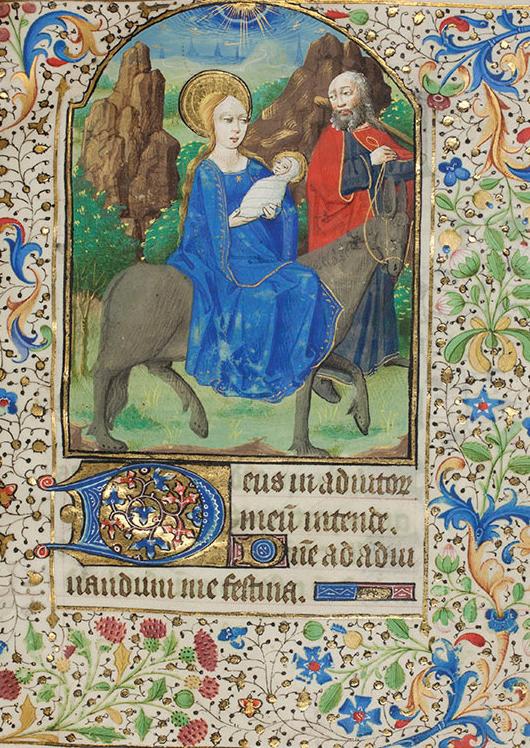
Our Lady of the Rosary appeared to the saintly children of Fatima in 1917. It is often forgotten that Our Lady continued to speak to Sr Lucia of Fatima a few more times, and in 1925 the Blessed Virgin specifically asked that on the first Saturdays of the month, we should:
• Make a good confession in a spirit of reparation for blasphemies against Our Lady’s Immaculate Heart;
• Receive Holy Communion in a state of grace, and as an act of reparation for sins against Our Lady’s Immaculate Heart;
• Pray five decades of the Rosary;
• Meditate for fifteen minutes on the Mysteries of the Rosary.
'To all those who, on the First Saturday of five consecutive months … fulfil all the conditions requested, I promise to assist them at the hour of death with all the graces necessary for the salvation of their soul'
Below we present the report of a pilgrimage to the site of a medieval Eucharistic miracle
With the companions of St Anthony
On Saturday, 22nd March 2025, a group of approximately twenty people from Friuli and Veneto – members and friends of the Compagnia di Sant’Antonio (Saint Anthony Association) – took part in the second Austrian Lenten pilgrimage to Carinthia. The Italian pilgrims joined a large group of Austrian Catholics committed to tradition, who had come together from various parts of the country.
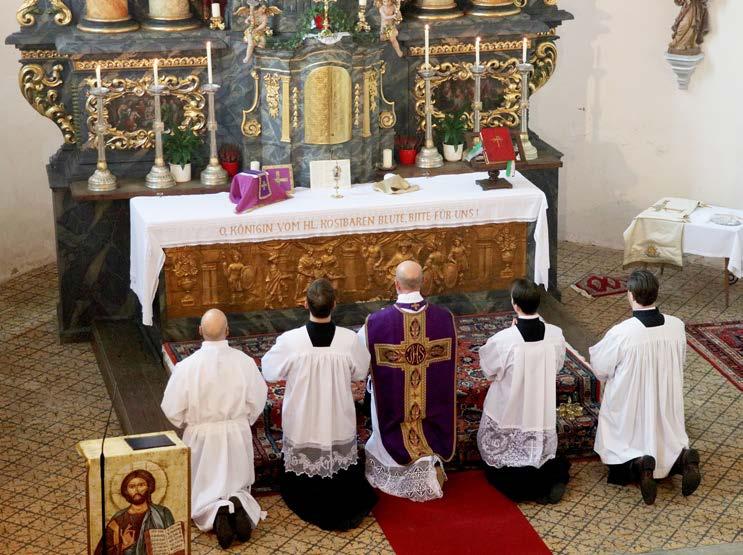
It was a day of prayer that began in the Church of the Holy Blood in Friesach, where the military dean Mgr Siegfried Lochner celebrated a solemn Mass in the traditional Roman rite. It was there that, on Pentecost Sunday 1238, a Eucharistic miracle occurred, whose relic is kept in the church itself, allowing pilgrims to venerate Christ in His Precious Blood.
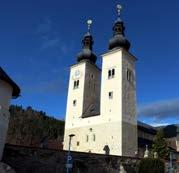
Gurk Cathedral
After a lunch featuring local specialties, the group of pilgrims set out for Gurk, where they visited the medieval cathedral. From the year 1074, the Bishop of Carinthia had his episcopal seat here for over seven centuries, though it was later transferred to Klagenfurt.
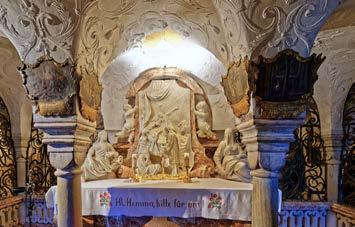
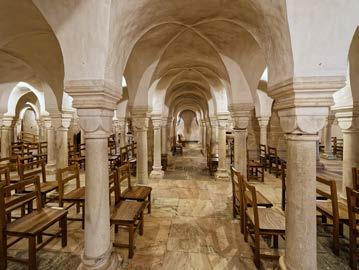
In the crypt supported by a hundred columns lies the tomb of St Hemma, countess, church founder, and beloved patroness of the region. During a brief devotion with hymns in honour of St
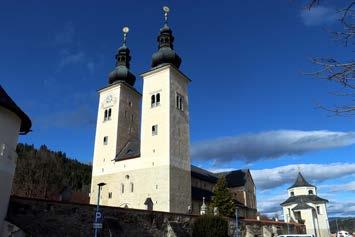
Hemma, the evening sun outside bathed the sandstone of the house of God in golden light.
Maria Saal Cathedral
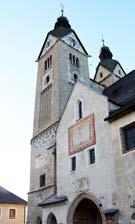
Afterwards, the pilgrims visited the Maria Saal Cathedral in the quiet dusk. There, among other things, they sought out the grave of St Modestus, the first missionary bishop of Carinthia. Around 760, Virgil, a successor of St Rupert of Salzburg, had sent the choir bishop Modestus with priests and clerics to Carinthia for the mission. He resided in Maria Saal, which remained the seat of the choir bishops until the 10th century.
This beautiful pilgrimage was a fitting way to begin Lent, as well as to see Mgr Lochner and his Austrian friends again.
Pilgrimage to Aquileia
For several years, they have participated in the traditional pilgrimage to St Mark in Aquileia. The spiritual life of the Compagnia di Sant’Antonio has an important focus on this annual event, which took place for the ninth time on Saturday, 6th September 2025. The walking pilgrimage, which proceeds under prayers and chants from the lagoon near the traditional docking point of the Mark’s ship from Alexandria to the Patriarchal Basilica, attracts numerous Catholic faithful not only from the Italian regions near Friuli but also from the surrounding countries that formerly belonged to the old Patriarchate of Aquileia, such as Slovenia, Croatia, Austria, and Bavaria.
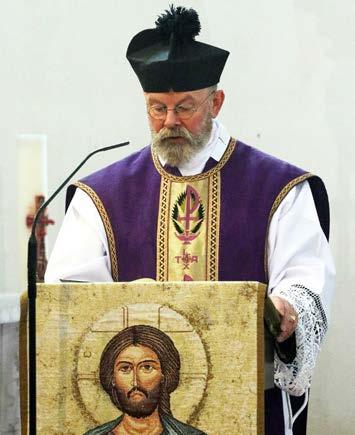
Sermon by Mgr Lochner
The pilgrimage day in Carinthia was a blessed occasion for prayer, which enabled us to rekindle or further nurture a Catholic friendship between Italians and Austrians in the spirit of our faith. We hope to meet again during the pilgrimage to Aquileia.
Although we Italians were a minority, we felt at home, honoured by the friendly reception and above all by the edifying sermon of Mgr Lochner in Italian, which we are printing here translated into English for our readers, because it
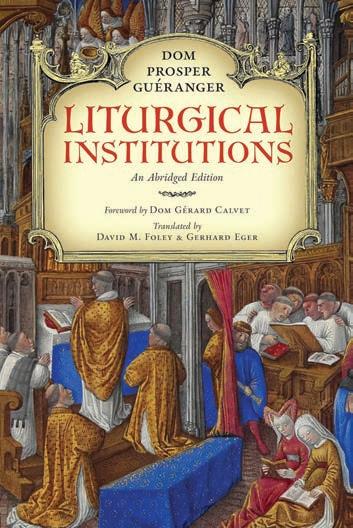
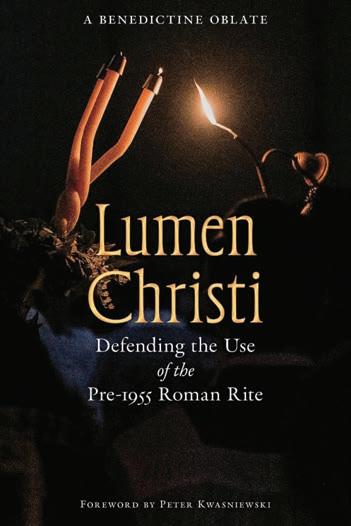
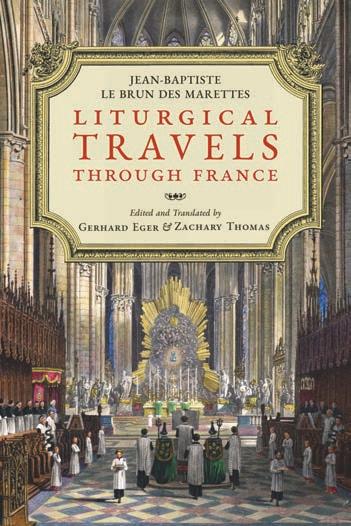
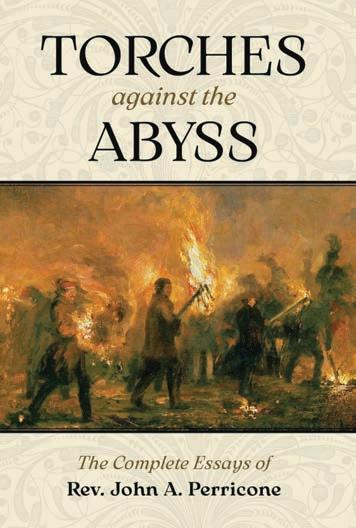
commemorates that Eucharistic miracle in Friesach, which, like every miracle, is a sure testimony of our faith.
Dear Pilgrims!
I am happy that so many of you have come to our pilgrimage to the Shrine of the Precious Blood in Friesach, Carinthia. On an ancient tombstone from 1230 in the church of Heiligenblut, the miracle of the blood is described as follows: ‘It pleased the divine omnipotence to confirm the Christian, Catholic, and all salvific faith in Jesus Christ and to demonstrate the true presence of divinity and humanity, of body and soul, of the flesh and blood of Christ our Saviour in the most sacred sacrament of the altar through a seemingly miraculous act in this our church of Our Lady’.
What had happened? On the day of Pentecost in the year 1230, a Dominican celebrated Holy Mass at nine in the morning and noticed that he could not break the sacred host after the Our Father because it had visibly transformed into bloody [bleeding?] flesh before his eyes and in his hands. When he covered the chalice, he was astonished to realize that the consecrated wine had also assumed the visible form of the most precious blood. Faced with such a miracle, the priest was not able to hide his emotion and deep feeling from his fellow brothers and the two hundred faithful present. The sub-prior of the monastery, who had hurried over, confirmed that the holy bishops Nicholas and Ulric had foretold this miracle to him in an apparition. The host, still in flesh and bone, together with miraculous blood, as well as the corporal stained with blood from the host, were then carried in a magnificent procession into the choir of the religious.
This historical event, which has brought us together in this church, reminds us of the fundamental truth of our holy faith: that the Holy Mass is, firstly,
a true sacrifice of adoration, reparation, praise, thanksgiving, and supplication; and secondly, that through the words of the Holy Consecration, the bread and wine are indeed transubstantiated into the Body and Blood of Christ.
The Gospel of today’s Holy Mass tells us the parable of the prodigal son. He voluntarily moves away from his father and, after some unfortunate adventures, ends up in the most squalid of places, where he is forced to live among the pigs. For him, there were only two possibilities: either to return or to die. He decided to return, and the father mercifully welcomed the repentant son. This Gospel teaches us where someone will end up who believes he can do without God, the Catholic faith, the Holy Mass, and the sacraments. Many today believe they can build a better world by despising God and His Holy Church. The result is an ever-growing chaos, which the French writer Antoine de SaintExupéry described decades ago with these words: ‘When men become godless, then governments are powerless, lies are boundless, debts are countless, meetings are fruitless; then enlightenment is brainless, politicians have no character, Christians no prayer, churches no power, peoples no peace, customs become licentious, fashion shameless, crimes unrestrained, conferences endless, prospects desolate’.
But for a Catholic, prospects are never bleak. Let us therefore use the time of grace, while it is granted to us, to return to our God, who awaits us in these days through His priests in the confessional, so that He may take us back into His arms like the prodigal son, and invite us to the banquet of Holy Communion, the union with our divine Saviour, who desires our eternal participation in the heavenly wedding feast. So be it
by Michael Haynes
As the fevered interest in Pope Leo XIV has yet to properly die out, the eager quest by those near and far to determine who he actually is, is very much still alive. Many have been waiting for the quiet American to reveal his true persona and set his mark by some notable statement or event. ‘With Pope Francis we knew him more because he was a Latin ...’, my Roman landlord told me, while leaving the rest unsaid – namely that Leo still remains somewhat of an enigma to him. He, likely mirroring many Romans, is waiting for some great revelation. But some with a greater knowledge of the Pope have said that there is no hidden Robert Prevost yet to be unveiled, but that what we see is indeed who he is.
Amidst all this wonder and speculation is of course the very natural theorizing about what line he will take on various moral, judicial, and liturgical issues that Pope Francis bequeathed to him. The readers of Gregorius Magnus will join the many Catholics around the world in eagerly waiting for some positive development on the Traditional Mass, and yet here the tea leaves have been – so far –difficult to read.
What then ought devotees of the Traditional Mass to expect from the American Pope? Without doubt his interview from the summer revealed that Leo is not naturally familiar with the question of the Traditional liturgy, as he seemed to equate the Novus Ordo in Latin with the Old Rite. He then added: ‘Obviously, between the Tridentine Mass and the Vatican II Mass, the Mass of Paul VI, I’m not sure where that’s going to go. It’s obviously very complicated’.
But since then the tea leaves have provided more positive reading. Following through on his expressed desire to meet with proponents of the Traditional Mass has led Leo to grant audiences to figures who were largely marginalized under the previous pontificate.
Cardinals Raymond Burke, Robert Sarah, and Gerhard Müller have all had private audiences with Leo; each of them is, in different ways, very much a firm advocate of the Traditional liturgy.
The Traditional orders have also been aware of the importance of making the Pope personally acquainted with their lives and charisms, along with the trials encountered in the living out of those. The Institute of the Good Shepherd, while not having a more formal audience, spoke with Leo after a general audience. Then the Priestly Fraternity of St Peter (FSSP) enjoyed a meeting with the Pontiff in the Apostolic Palace, describing it as ‘cordial’. Notably, the FSSP utilized its audience to brief Leo on ‘any misunderstandings and obstacles that the Fraternity encounters in certain places and to answer questions from the Supreme Pontiff’.
This fact is crucial, because while the likes of Cardinal Arthur Roche will doubtless be keen to advise Leo against the Traditional Mass, the FSSP can update him on the actual persecution that some of their churches have, in recent years, received from embittered bishops. Such vindictive moves on the part of these bishops come despite the FSSP’s having received direct confirmation of their Traditional charism from Pope Francis himself. For Leo to be informed of this will reveal to him a side of the Church that enemies of the Traditional Mass try to keep quiet.
Another crucial audience for traditional Catholics came in December, when Astana’s auxiliary Bishop Athanasius Schneider arrived in Rome for a flying visit, and to make personal pleas to the Holy Father. He revealed recently that he had advised the Pope to issue an Apostolic Constitution liberalizing the Traditional Mass.
Schneider suggested to the Pontiff that he perform ‘a new regularization of the entire issue of the traditional
Latin Mass, again independently of the Motu Proprios. Do a new, solemn regularization with this, giving the complete freedom and the co-existence of both forms, pacific co-existence, with no limitations and impediments of both forms’. Such a suggestion on the part of the Kazakhstan-based prelate was posed as the peaceful resolution to the chaos inflicted on the Church by Traditionis Custodes , given that it would seek to correct the course rather than viciously do a U-turn – something that Schneider lamented about Francis’ own actions. Schneider later noted that Leo told him during their December meeting that the liturgy would be discussed during the consistory. Though this proved impossible due to the time limitations and voting decisions of the cardinals, the expectation now remains that such a discussion might occur in June’s extraordinary consistory.
Without a doubt, Leo’s liturgical sensibilities are not those of his predecessor. It has been now widely observ ed that the Pope demonstrates a keen love of the liturgy in a way that Francis did not, and the quiet revival of certain liturgical traditions in his own Masses supports this. Perhaps this is his own way of seeking to provide Catholics with an opportunity to find solace in the Novus Ordo, given that he commented over the summer:
I think sometimes the, say, ‘abuse’ of the liturgy from what we call the Vatican II Mass, was not helpful for people who were looking for a deeper experience of prayer, of contact with the mystery of faith that they seemed to find in the celebration of the Tridentine Mass.
Nor, it seems, is Leo keen to act hastily on the Traditional liturgy. While much anticipation on the topic surrounded January’s consistory, he preferred to practise ‘synodality’ and
let the cardinals choose which two of the four themes they would discuss, and thus liturgy was left aside.
In one sense, this delay might prove to be a positive step since Cardinal Roche’s leaked memo on the liturgy has now been exposed to the just critique it deserves. Had the liturgy been selected for discussion in January, his note would have formed the basis of the conversation, but the six-month delay will afford time for suitable preparations to be made – and crucially, for Leo to listen to the advice of those actually aware of the Church’s liturgical history and tradition.
Certainly the atmosphere on the ground in the Eternal City is one of hopeful anticipation, and on occasion, even expectation. Allowing Traditionis Custodes to remain in force – with all the canonical questions surrounding it –would not seem to be in line with the style that Leo has hitherto displayed in these first months. There is the feeling that something has to change, if for no other reason than because his hand will eventually be forced, perhaps by a scenario the like of which is currently playing out in the Diocese of Charlotte in the United States.
The tea leaves are indeed hard to read, but the very fact that there is hope for positive change – despite Leo’s refraining from mentioning the Traditional liturgy in his pontificate –highlights the change in atmosphere that is still fresh in the papacy.
Michael Haynes is an English journalist in the Holy See Press Corps. He chiefly writes as Vatican Correspondent for Pelican+ and Per Mariam.
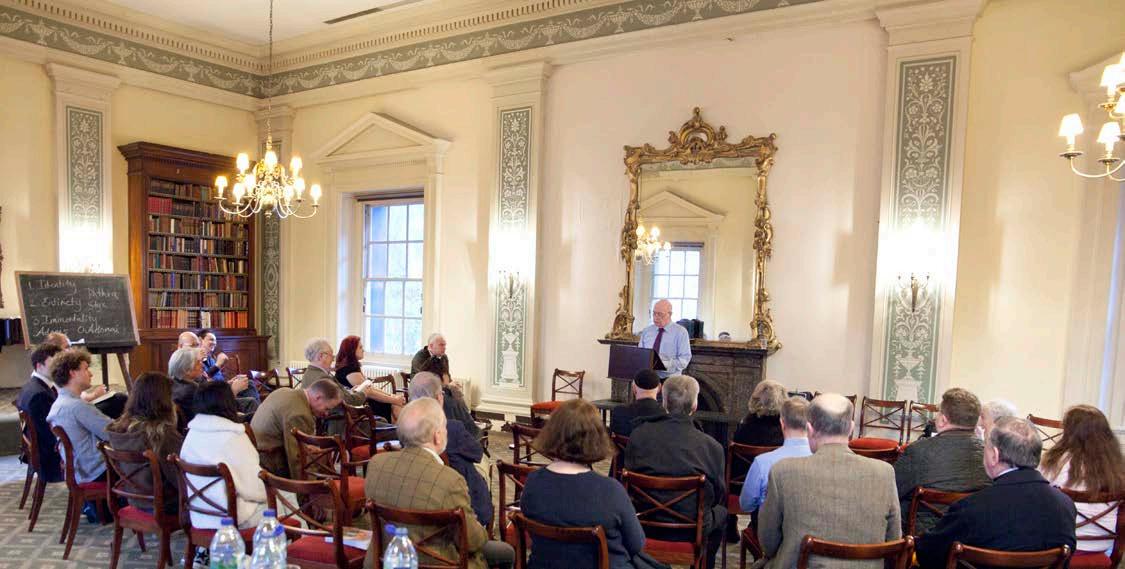
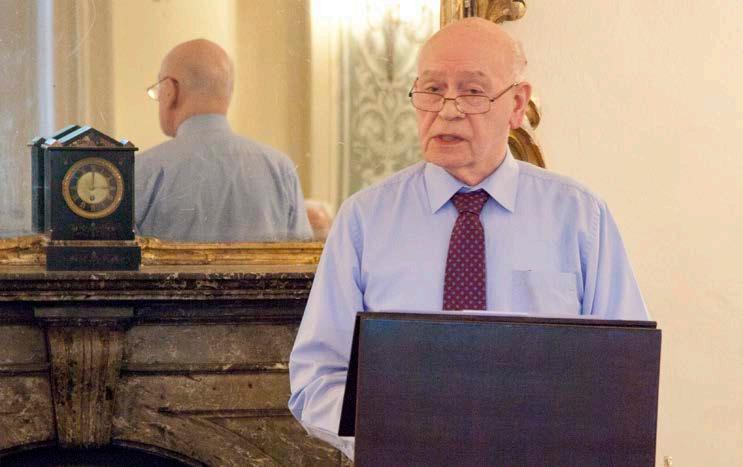
On Thursday, 23rd April, the feast of St George, the Latin Mass Society sponsored a book launch for Leo Darroch’s biography of Michael Davies: Michael Davies: Great Defender of Catholic Tradition.
It took place in the St Wilfrid Hall of the London Oratory. The text of Mr Darroch’s address will be made available in due course. See page 40 for a review.
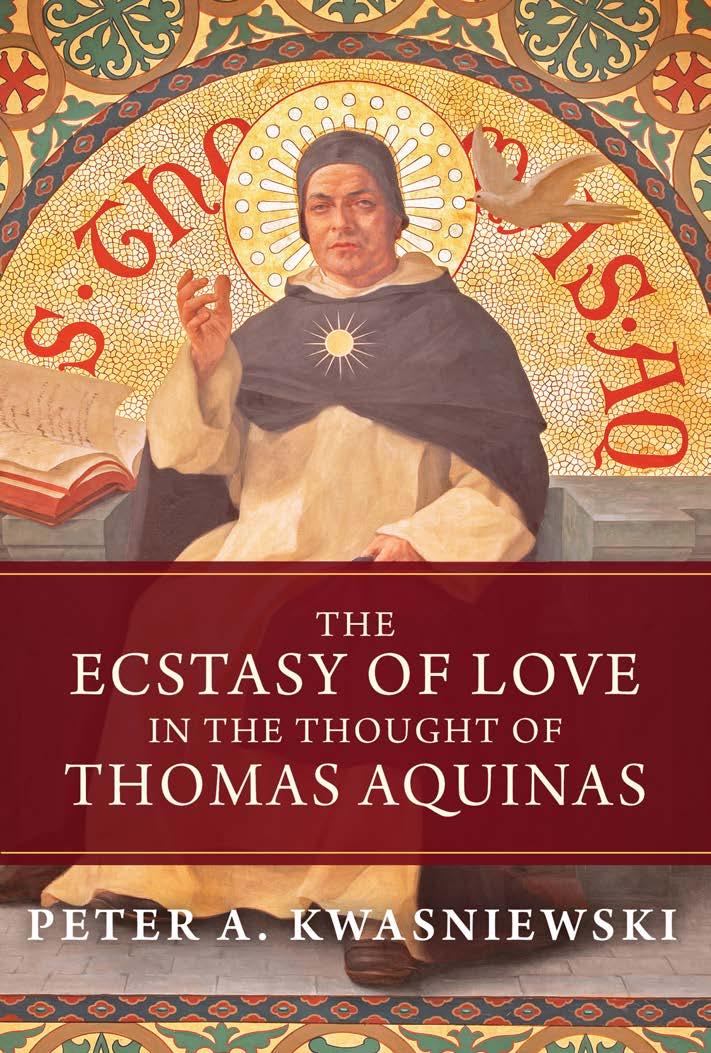
by Robert Lazu Kmita
In recent years, a vision of the works of the Angelic Doctor has begun to develop that does not follow the lines of modern neoscholasticism. Inspired rather by the interpretations of the Italian Neoplatonic Thomists Marsilio Ficino (1433-99) and Cornelio Fabro (1911-95), this hermeneutical line reads St Thomas Aquinas through the mystagogical lenses of St Dionysius the Areopagite and Amalar of Metz. From
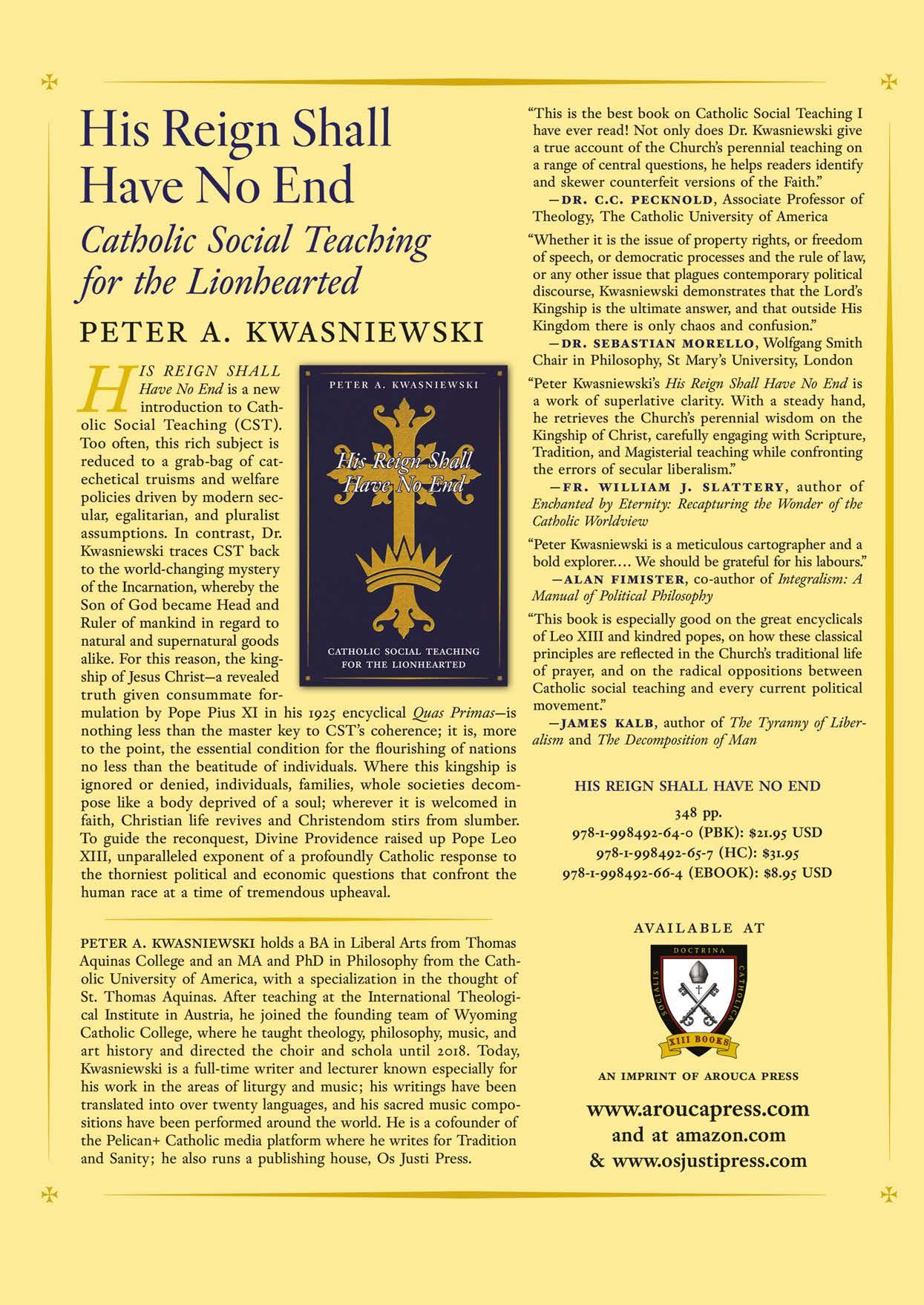
this have resulted works such as those of Dr Peter Kwasniewski, The Ecstasy of Love in the Thought of Thomas Aquinas (2021), and Dr Sebastian Morello, The World as God’s Icon: Creator and Creation in the Platonic Thought of Thomas Aquinas (2020). To these is added Urban Hannon’s essay Thomistic Mystagogy: Saint Thomas Aquinas’s Commentaries on the Mass (2024).
Concretely, Hannon’s micromonograph presents and discusses the liturgical-mystagogical texts from two major works of St Thomas: the Scriptum on the Sentences of Peter Lombard (the expositio textus of Book IV, Distinction 8) and, of course, the Summa Theologiae (Third Part, Question 83, Article 4). Though it may appear modest at first glance, the stakes of Hannon’s investigation are of the utmost importance, for what the author seeks to demonstrate is that, before being a first-rate speculative metaphysician, St Thomas is a man of prayer with a profound attachment to the Holy Mass and to the attitude of adoration before Our Lord Jesus Christ in the Holy Eucharist, which the ritual of the supreme sacrifice demands of us. If we also take into account the fact that Hannon published in 2024 an excellent study titled ‘Truth in Hiding: Saint Thomas Aquinas on the Disciplina Arcani’, 1 we easily realise that we are dealing with an entire theological program meant to recover what neoscholasticism forgot – namely the mystical and mystagogical dimension of one who has been wrongly treated as a mere continuator of Aristotle.
Undoubtedly, one of the most provocative books released in recent years is Dr Sebastian Morello’s Mysticism, Magic, and Monasteries: Recovering the Sacred Mystery at the Heart of Reality (2024). Unfortunately, however, the criticisms levelled against it so far – including one signed by Dr John Lamont and published on the Rorate Caeli blog2 – have not been
1. ‘Truth in Hiding: St Thomas Aquinas on the Disciplina Arcani ’, in Lux Veritatis: A Journal of Speculative Theology 1, 2 (2024): 227-41, https://www.academia. edu/127906536/Truth_in_Hiding_St_ Thomas_Aquinas_on_the_Disciplina_ Arcani.
2. Dr Lamont’s sensationalist title speaks for itself: 'Neoplatonism and the Antichrist: Against "Christian Hermeticism" – by Dr. John Lamont’, https://rorate-caeli. blogspot.com/2025/12/neoplatonismand-antichrist-against.html. Dr Morello’s embarrassed response is, appropriately, titled ‘A Reply to John Lamont: In Defense of Christian Neoplatonism’, https:// rorate-caeli.blogspot.com/2025/12/areply-to-john-lamont-in-defense-of.html.
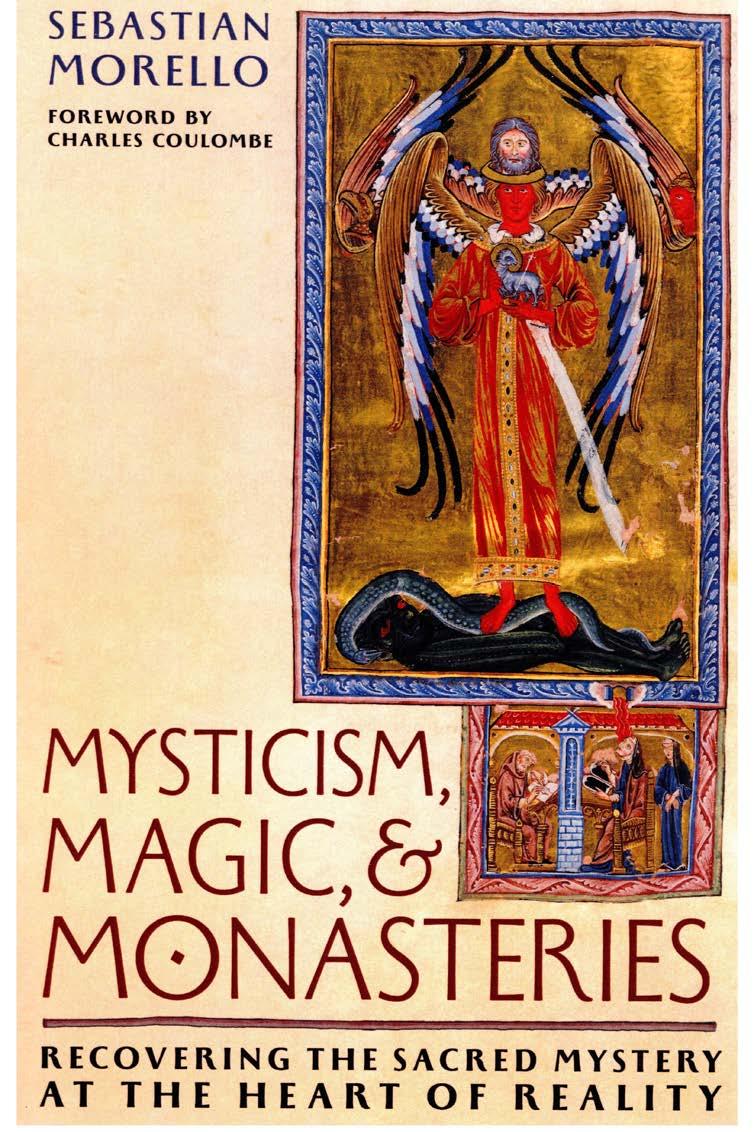

based on a complete and profound knowledge of a text written with the intention of proposing answers to the most difficult questions we all face. For this is the stake of Dr Morello’s book: a comprehensive response to the question of the overwhelming victory of modernity and a solution for breaking the ‘spell’ in which the minds of most contemporaries are chained. Without taking the trouble to read it carefully
(or perhaps simply to read it in full), Dr Morello’s critics have accused him of attempting to follow unorthodox paths in order to introduce hermeticism and possibly even magic into the Church through the back door. Such accusations are so absurd that they do not merit a response.
What Dr Morello actually proposes is a personal interpretation of the current crisis, along with a solution that
admittedly does not resemble a lesson in logic but rather an exorcism. For the author is convinced that the greatest problem lies in the bewitchment of people’s minds, which, lured by the siren song of the murky waters of the modern world, drift submerged in the hedonistic illusions of the day. Here we arrive at a point with which we can only agree: the key lies in the state of our minds. If we consider that the conversion to which the Gospel calls us is, according to St Thomas’ definition, nothing other than the adhesion of the intellect (i.e., mind) to supernatural revealed truths at the command of the will set in motion by grace, then we understand how important the discussion opened by Dr Morello truly is. I will quote a single, particularly illuminating passage:
For Aquinas, the universe is made up of individuals, and yet those individuals possess a universality by their logical participation in species classes and genera. So, each individual being has an essence which it shares with other beings. Such things share essences because they participate in a logical likeness (species and genus) in the divine mind, and they exist as individuals because they participate in a likeness of an idea of them as individuals in the divine mind. Put simply: I exist because God thinks of me. But I also exist because God, having created an essence of me from the exemplar idea of me in His mind, has held that created essence together with an ‘act of existence’ in a single substance (that I call myself). In sum: I exist because God thinks of me and wills that I exist.
The fragment you have just read contains one of the most profound and interesting ideas you can find in any metaphysical treatise. This is why Dr Morello’s book, without demanding full adherence to all its contents, invites you to a reading and reflection that may offer unexpected perspectives on the way out of the current crisis. I hope that in the future the detractors of Dr Sebastian Morello will revise their attitude and, with genuine intellectual humility, read his books first, and only then criticize his ideas.
EVELYN WAUGH,1964
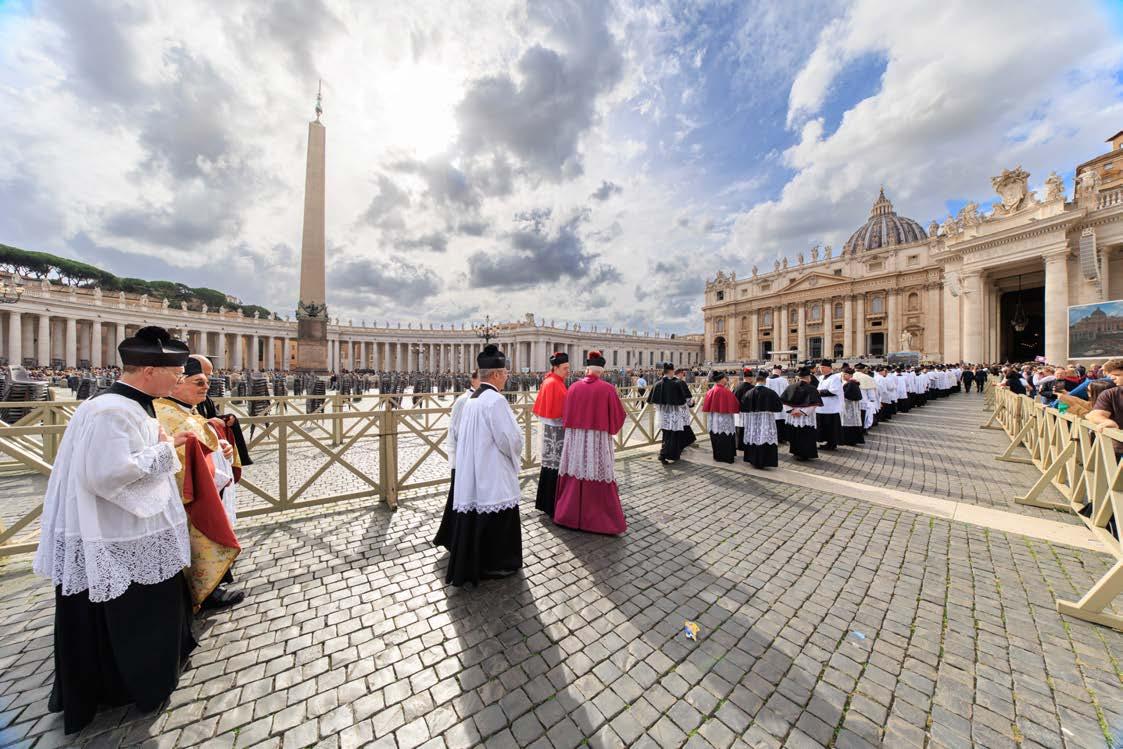
The annual Summorum Pontificum Pilgrimage ‘ad sedem Petri’ (‘to the Chair of St Peter’) took place last October 24th to the 26th. We were unable to use the Pantheon for Vespers on Friday 24th, instead having it in San Lorenzo in Lucina, which was absolutely filled. Vespers was presided over by Cardinal Matteo Zuppi, Archbishop of Bologna and until recently President of the Italian Bishops’ Conference.
Another church we were unable to use, in this case for the second year running, because it is being restored, is the small basilica of Santi Celso e Giuliano, used by the Institute of Christ the King Sovereign Priest, where in the past the procession to St Peter’s on the Saturday has been preceded by Benediction.
The highlight of the pilgrimage was Mass celebrated in the Chapel of the Throne in St Peter’s Basilica at the
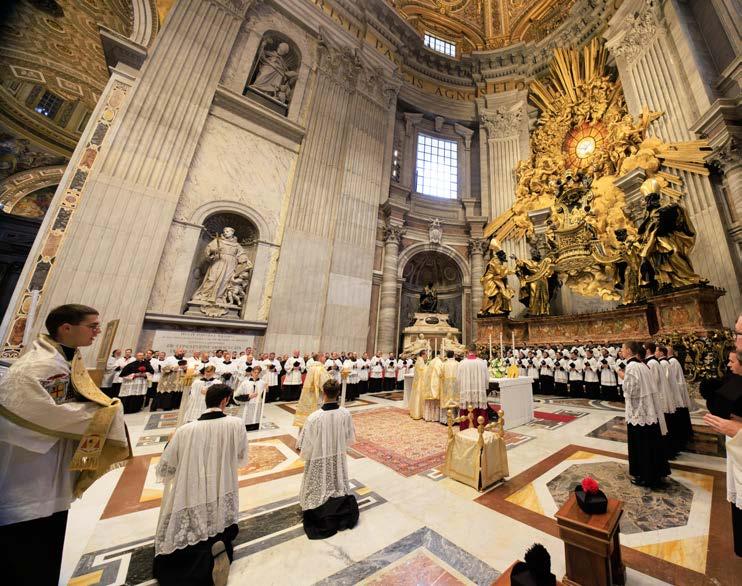
end of this procession, celebrated by Cardinal Raymond Burke. This is the first time the pilgrimage has had Mass in St Peter’s since 2022: in 2023 and 2024 we had other devotions there (Sext in 2023 and Benediction in 2024).
Mass was attended by two other Cardinals, the retired Cardinal Walter Brandmüller, and the remarkable Cardinal Ernest Simoni, 97, who spent many years imprisoned by the Communists in Albania. Cardinal Simoni said a special prayer of deliverance at the end of Mass: apparently he has a personal apostolate to do this at all the events he attends.
It was, of course, a very splendid liturgical occasion, and it attracted an enormous crowd, not only of 3,000 faithful, but of 200 priests in choir.
These priests included many who had decided in previous years that it was more prudent to stay away from the pilgrimage events, or at least to participate as members of the crowd, not in cassock and surplice in a special section of the procession, and in choir in St Peter’s. Only 50 priests attended in choir in 2024.
This Mass represented a breakthrough for the cause of the Traditional Mass in Rome, since inevitably Pope Leo himself was involved in the decision to allow it. We must pray that he allows us to have Mass in St Peter’s again, this year.
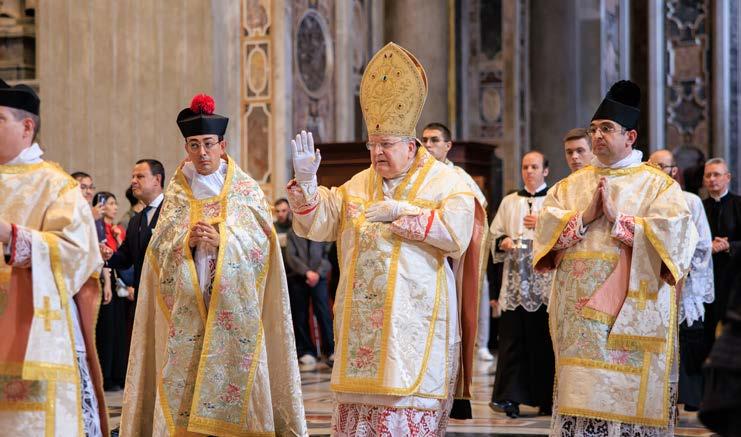
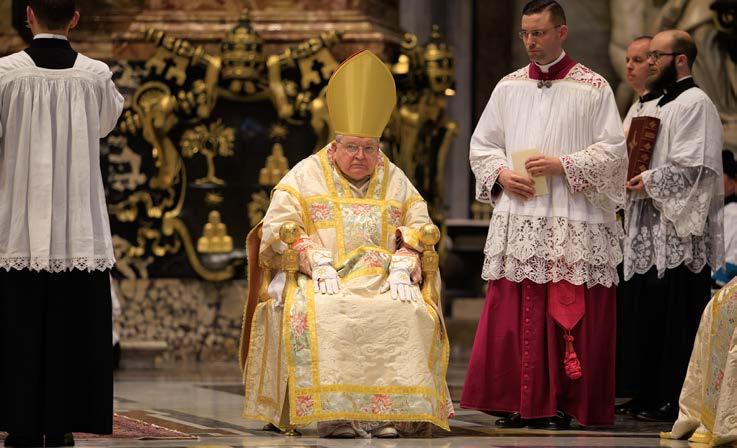
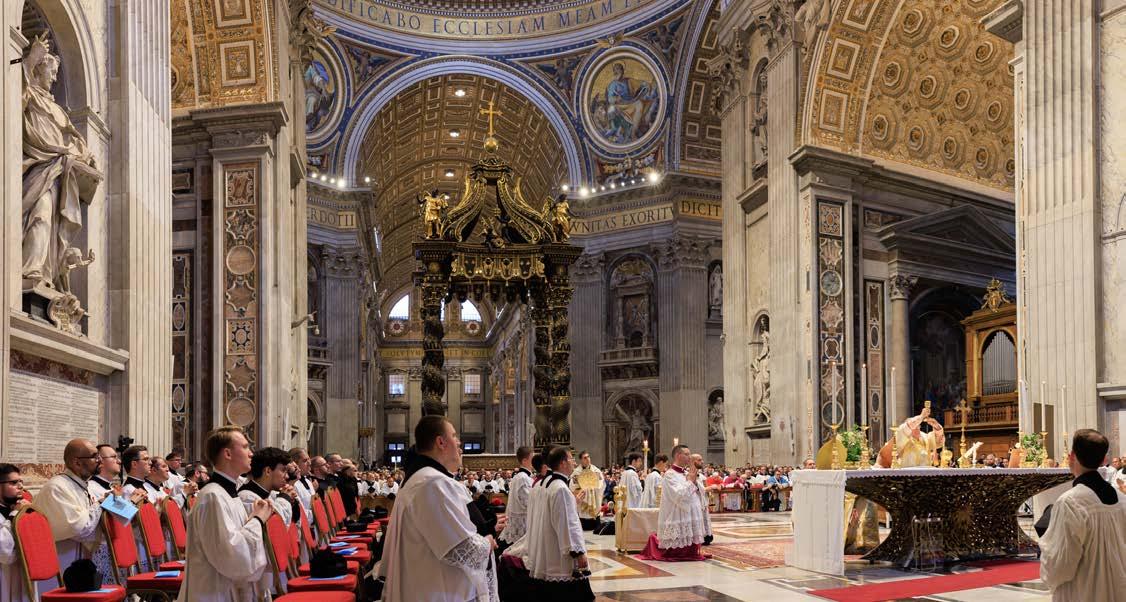
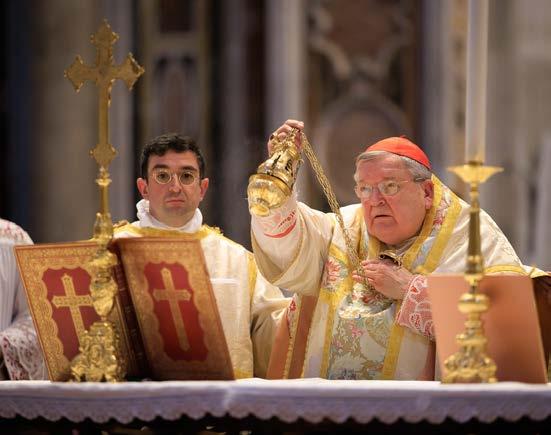
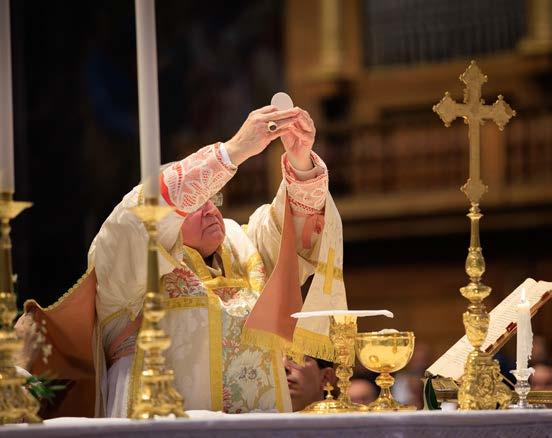
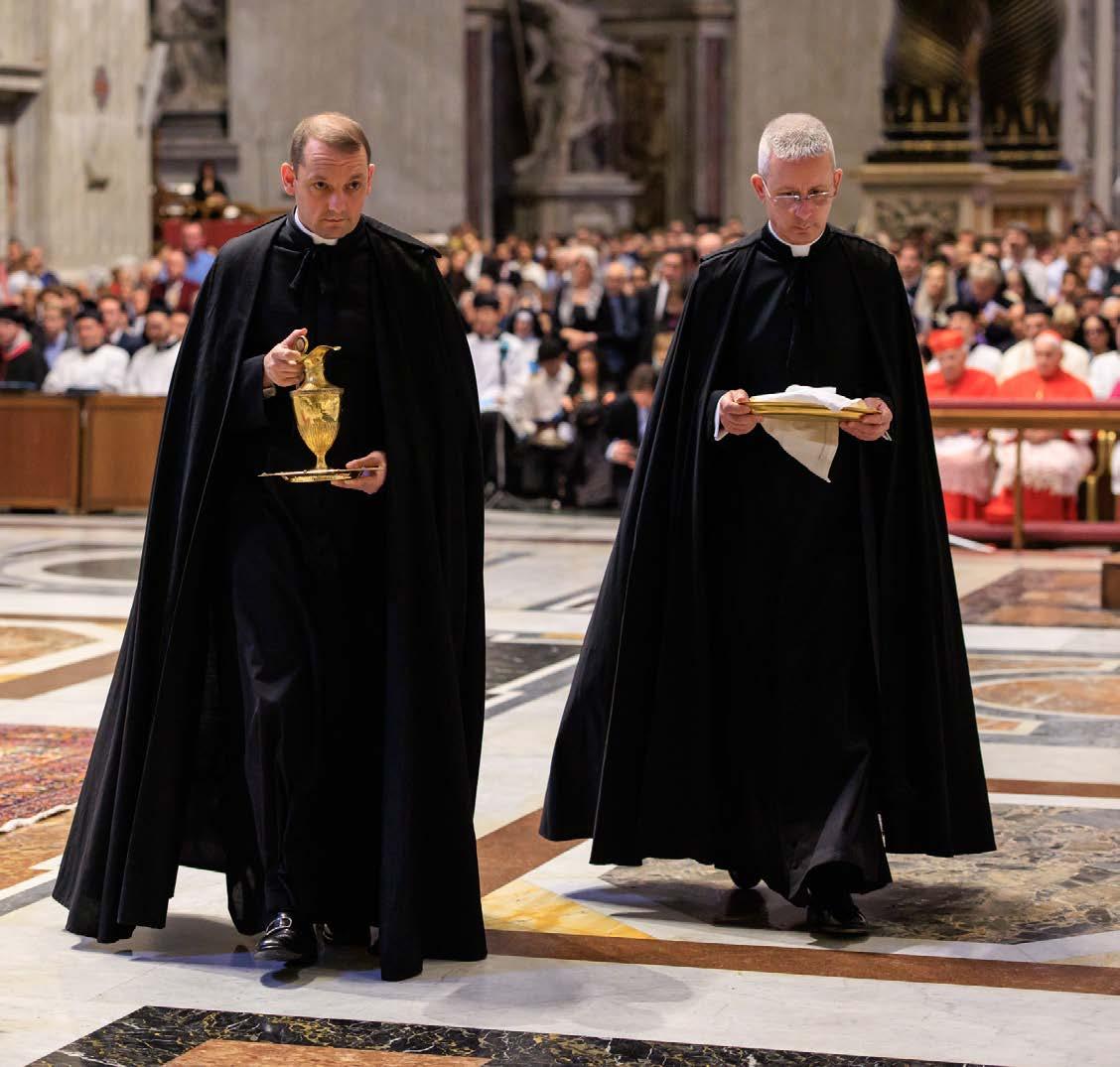
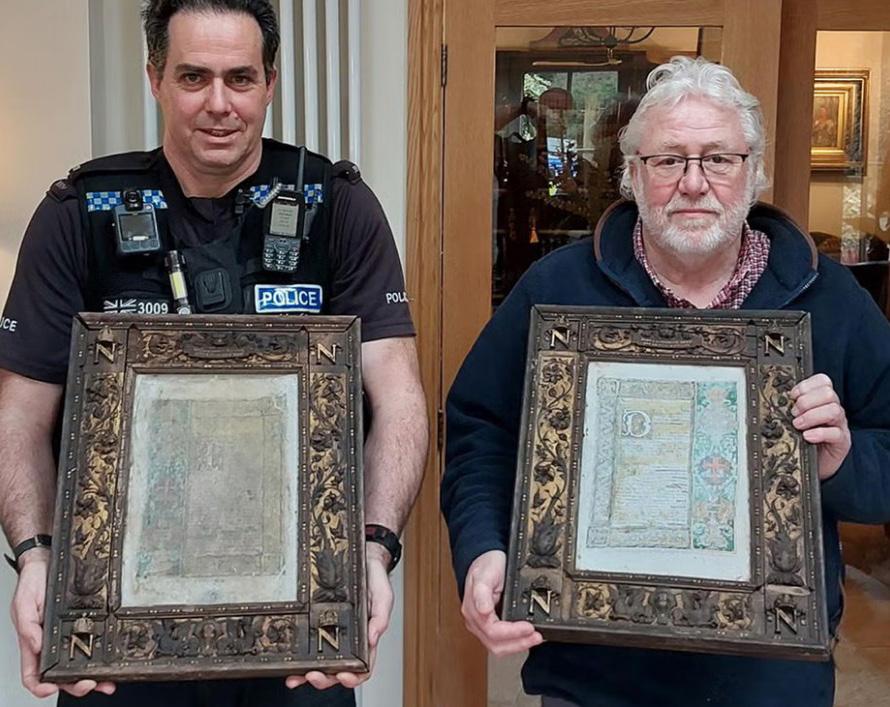
by Joseph Shaw
One of the most unexpected stories to appear in the British press recently has concerned a set of altar cards that were commissioned by Eugénie de Montijo, Empress of France and widow of LouisNapoleon Bonaparte, who reigned over France as the Emperor Napoleon III. Napoleon III took power in the troubled year of 1848, following the abdication of King Louis Philippe. At first he was President of the Second Republic, but in 1852 he become Emperor, reviving the form of government established by his uncle Napoleon Bonaparte. He established a
regime which was much more friendly to the Church than that of the first Napoleon and also, as things were to turn out, than that of the republican governments which were to follow him; his wife Eugénie was particularly pious. It was Napoleon III who preserved the Temporal Power of the Popes, sending French troops to Rome and preventing the fall of the Patrimony of St Peter, the last of the Papal States, while he remained in power. The couple went into exile in England following his defeat in the Franco-Prussian War in 1870, and he died in 1873.
The Empress Eugénie was determined to establish a worthy monument to her husband, and built and endowed St Michael’s Abbey at Farnborough in southeast England, with his mausoleum in the crypt, and stocked the monastery with French Benedictines of the Subiaco congregation. She is herself also buried there, as is their only son, Napoleon Eugene, the Prince Imperial, a godson of Pope Pius IX. In a final irony of history, Eugene was killed at the age of 23 while serving in the British Army, in the Anglo-Zulu War in South Africa in 1879.
The monastery continues to function, and the Traditional Mass is celebrated in its magnificent Abbey Church. In 2023, there were calls in the French National Assembly for the body of Louis-Napoleon to be taken to France, but the monks preferred to keep him in his specially built resting place with the rest of his family.
His mausoleum, naturally, is a chapel with a traditionally furnished altar. The Empress had fittings created for this featuring Napoleonic motifs, but the altar cards, with their gilded wooden frames, were stolen in 2014.
To everyone’s surprise, two of these, the smaller ones, were found in a field not far from the monastery by the Army (during an exercise, presumably). The military authorities sent them to an antiques dealer, Paul Gostelow, to assess. He thought that they belonged to the Napoleonic era due to the crowned letter N found in each corner, because (he said) he had watched a television drama dating from the 1980s, ‘Lovejoy’, a comedy about a disreputable antiques dealer, which apparently featured a similarly-decorated item from Napoleonic times.
Gostelow, of course, was not quite correct. From the art history point of view, the Napoleonic era is usually regarded as ending in 1815; in England, we refer to Napoleon III’s time as the ‘Second Empire’, and even that had expired by the time these objects were commissioned. They belong, properly speaking, to the Belle Époque, a particularly lovely period for the French decorative arts, if not such a happy time for French religious life. We must forgive Mr Gostelow, however, because his half-recognition led him to call the police, who found the items on the International Stolen Arts Register and returned them to the Abbey.
They are, of course, in a poor condition, having spent more than a decade, apparently, in a field, but it is pleasant that they have been returned to an institution that values them, and the Abbey will have them restored. It is not impossible that the larger, central card will also be found.
It is a colourful story, and the connection with the Lovejoy series appealed strongly to the British press. I heard it first, complete with Lovejoy reference, as a small item on the radio news. While British journalists were on familiar ground referencing a television series they may have watched as children, they were less at home with the terminology and function of the
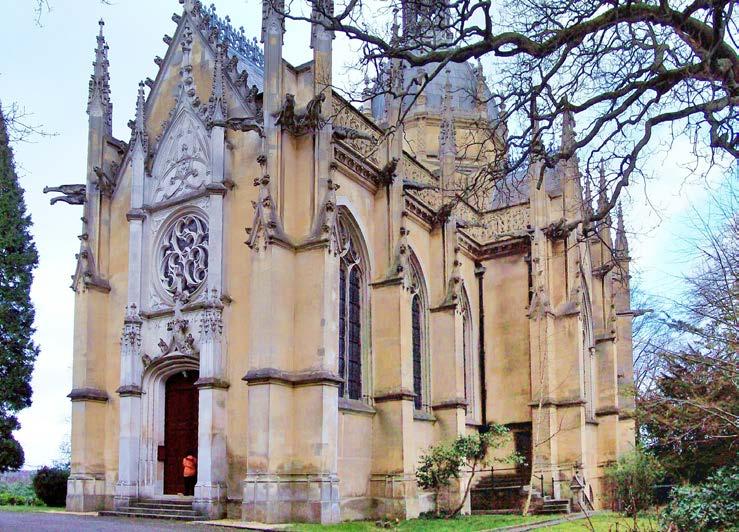
objects themselves: the radio news and the newspapers kept calling them ‘prayer frames’ or ‘plaques’.
The Daily Telegraph also got into a muddle over the names of the monks who provided quotes for the story. Similarly garbled is this paragraph from The Independent:
When [the Prince Imperial’s] body was retrieved from the battlefield, a number of handwritten prayers were found in his wallet which Eugenie had engraved and mounted to form the prayer frames which were stolen in the burglary.
Of course, these are altar cards, so one has the Lavabo and the other the Last Gospel. The truth of the matter is that the Empress incorporated extracts from the prince’s prayers into the carving on the frames. The prayers themselves are worthy of note: thanks to Abbot Cuthbert Brogan of St Michael’s Abbey, I am able to include them here. This, the final act of the Napoleonic dynasty, which did such harm to the Church in its earlier years, is one of unaffected piety.
My God, I give you my heart, do you give me faith. Without faith there can be no fervent prayer and prayer is necessary to my soul. Do not take away, I pray you, the obstacles that stand in my path, but give me opportunity to overcome them. Do not disarm my enemies, but help me to conquer myself.
Be pleased, O God, to hear my prayer; may I always keep in my affection those
who are dear to me. Grant them happy days. If, on this earth, it is your will to scatter but few joys, then, O God, take those which belong to me and share them among those most worthy and may they be my friends. And if your just retribution must fall on men, then let it fall on me.
Adversity is changed to joy by the pleasant thought that those whom we love are happy, while happiness is poisoned by the bitter thought: I am rejoicing, yet those who are dearer to me a thousand times more than myself are suffering! So, O God, let there be no more happiness for me. From it I flee; take it from my path. Only in putting the past behind me can I find happiness. If I forget those who are no more, I in my turn shall be forgotten. How sad is the thought which makes us say: ‘Time effaces all’.
The only satisfaction I seek is that which lasts forever which a quiet conscience gives. Then show me always O God, where my duty lies; give me the strength to fulfil it at all times. So when I come to the end of my days, I shall be able to turn my eyes on the past without fear. Memory will not bring bitter remorse. Then I shall be happy. O my God, above all, implant in my heart the certainty that those whom I love who are dead may witness my deeds. My life will be worthy to be seen by them and my most secret thoughts will never cause me shame.
from sacrifice of Christ, to Truth. Innocents modern unwavering fortitude. Drawing on Scripture, papal and saints, are invited to take their place in the pursuing courage compromise, and confusion, reminds the worth
Born from the sacrifice of Christ, the Faithful Witness, martyrdom remains the Church’s most powerful testimony to the Eternal Truth. From the Holy Innocents to modern saints, martyrs have offered their lives with unwavering love and f papal wisdom, and the witness of saints, readers militant Church, pursuing holiness with courage and charity. In an age of noise, compromise, and confusion, Bishop Schneider reminds us that the Truth is worth dying for, and even more, worth living for.
978 1 50512 791 1 £16.50 Tan
144pp hb
Translated &
The Letters of Abbot Anscar Vonier
A captivating glimpse into the life of Anscar Vonier 1906 to 1938 — in letters translated from the collection for the first time. These deeply personal writings follow his journey from boyhood in Germany, through his early years at Buckfast, to the traumatic shipwreck off the coast of Spain that would shape h 150th anniversary of his birth, offers a powerful reflection on faith and a moving portrait of a remarkable man.
978 1 78182 047 6
the Anscar — Abbot of Buckfast Abbey from from original French and brought together as one deeply personal follow journey Buckfast, that his life and faith. This book, published to mark the his offers faith and
£35.00 Gracewing
400pp + 16 colour plates hb
A profound and transformative work born from the simple, yet powerful, experiences of a 17th-century Carmelite lay brother. Brother Lawrence's letters and conversations reveal a startlingly accessible path to a life of perpetual joy, peace, and communion wi isn't a complex theological treatise; it's a heartfelt, practical guide to living a holy life not through grand gestures or rigid rituals, but through a conscious and continuous awareness of God's presence in the most ordinary of tasks.
978 1 50513 613 5 £10.99 Tan
The of the of God Br Lawrence of the Resurrection profound from the yet experiences letters conversations life of joy, with God. This guide to life or rituals, continuous tasks. 80pp
humanity one deep calm, result prayer and constant
Much demand since its first this and the
Extracts drawn from letters and writings reveal the evident humanity of a man once prey to ambition, anger and pride, yet the overwhelming atmosphere is one of deep calm, the result of a life of prayer and humility, of constant striving to improve. Much in demand s first publication, this edition has been edited and revised and gives further insight into the peace of Carthusian spirituality.
978 0 85244 759 8 £12.99 Gracewing
144pp
Laurence J Spiteri
Newman's the his brief to the led his discovery Catholic It details Newman's priesthood in the Anglican Church the that the by the St John Henry Newman's virtuous life and shine these pages. Through life's twists and turns, this Providence
This timely work traces Newman's upbringing in the Church of England, his brief conversion to Calvinistic Christianity, and the literary influences that led him to his discovery of the Roman Catholic Church. Church and the factions that set the stage for the liberalism he fought by organizing the Oxford Movement. The lasting impact of S extraordinary writings shine through these pages newest Church Doctor followed the "Kindly Light" and saw the hand of Divine Providence wherever our Lord led him.
979 8 88911 592 2 £15.50 Sophia
Gracewing stock and distribute the full ran Sophia Institute Press and TAN.
256pp
2 Southern Avenue, Leominster, Herefordshire HR6 0QF
Telephone: 01568 616835 Fax: 01568 613289 sales@gracewing.co.uk www.gracewing.co.uk
ock and range of titles from Angelico Press, Ignatius Press, Leominster, 613289
by Joseph Shaw
As has been widely reported, on Laetare Sunday, 15th March, Cardinal Willem Eijk, Archbishop of Utrecht, celebrated a High Mass ‘from the throne’ in Oss, in the Diocese of Den Bosch in the Netherlands, in the town’s ‘Grote Kerk’, the Church of the Immaculate Conception. This church hosts a regular celebration of the Traditional Mass, and the parish priest, Fr Pieter Zimmermann, was His Eminence’s Assistant Priest. The Mass was also recorded and broadcast by Radio María of the Netherlands.
Photographs of Cardinal Eijk in the distinctive rose-coloured vestments of Laetare Sunday have gone around the world. His Eminence told Fr Marco Begato, in an interview published in Messa in Latino, that he had learned to celebrate the Traditional Mass earlier this year, and that this was his first traditional Prelatial Mass. The celebration drew members of the faithful from Belgium and Germany, as well as different parts of the Netherlands. He commented:
Over the last five years or so, we have seen an increasing number of young people joining the Church each year, or young Catholics who were baptised as children but not raised in a religious household, and who later – usually via social media – come to know the Catholic faith and then embrace it. It is striking that a not inconsiderable number of them find their way to Christ and his Church through the Tridentine liturgy.
A Dutch commentator on Rorate Caeli, Serre Verweij, noted:
Under Pope Leo, [Cardinal] Eijk has gone from being a quiet conservative, to normalizing and promoting traditionalism, and has grabbed the world’s attention doing so. In many ways, he serves a microcosm of the trend of conservative prelates turning traditionalist, of
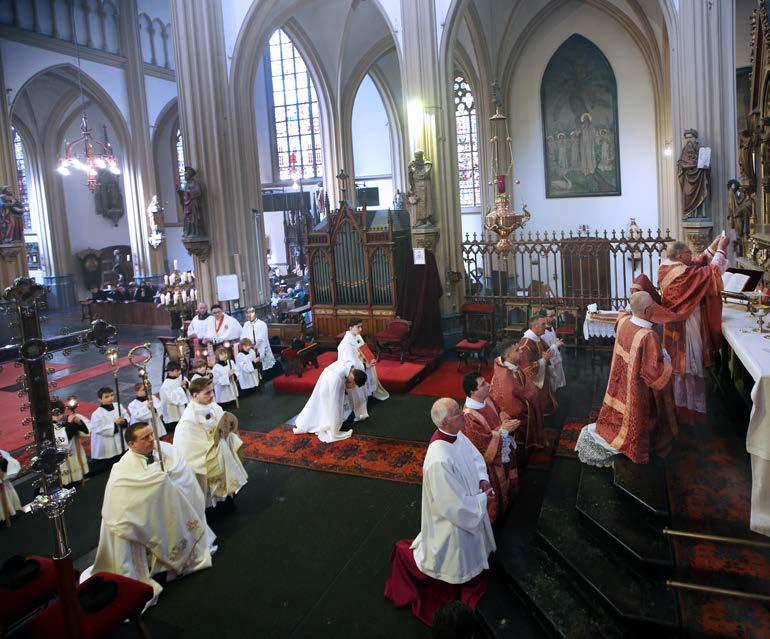
the normalization of tradition. It is no longer a fringe phenemonom. Eijk’s public celebration is also indicative of how ineffective Francis’ attempt to stigmatize or phase out the Traditional Mass was. It also suggested fear of retribution is gone under Pope Leo, something since then confirmed by the Pope’s proTLM message to the French bishops.
At the same time, responses from anti-traditional voices in the Catholic media have been extreme. A journalist in the Nederlands Dagblad, Hendro Munsterman, claimed that the Mass being celebrated was actually forbidden. Five days after this Mass, however, on 25th March, Cardinal Parolin’s letter to the French bishops passed on to them a message from Pope Leo with a very different tenor. It seems that, after all, Cardinal Eijk was ahead of the game in ‘generously including’ Catholics attached to the Vetus Ordo.
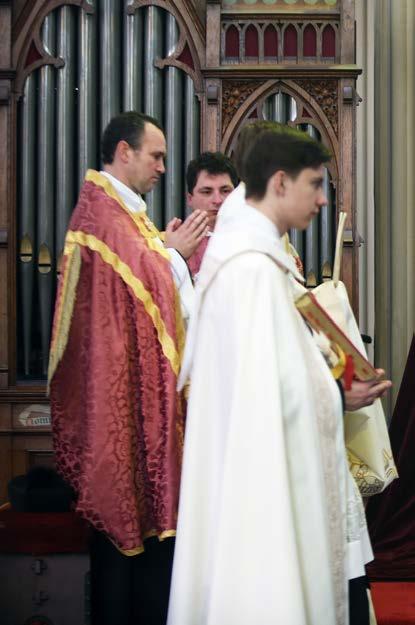
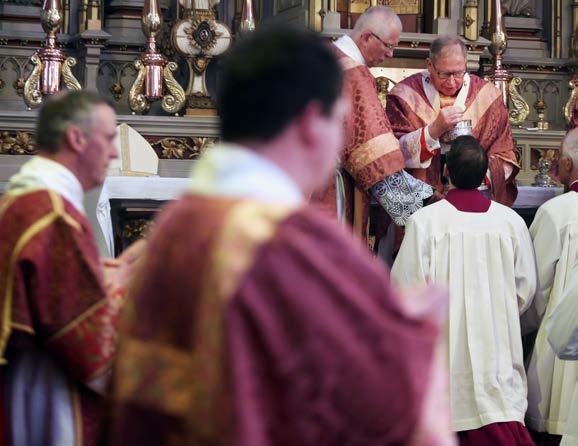
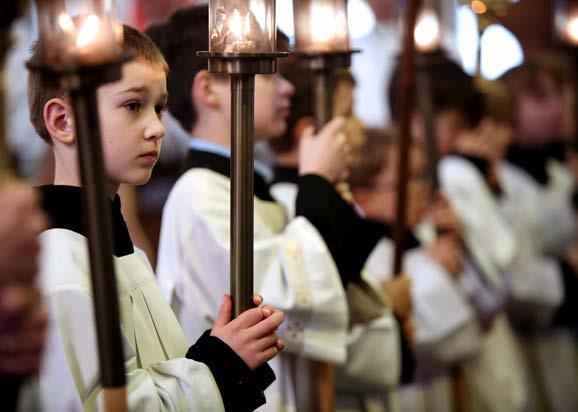
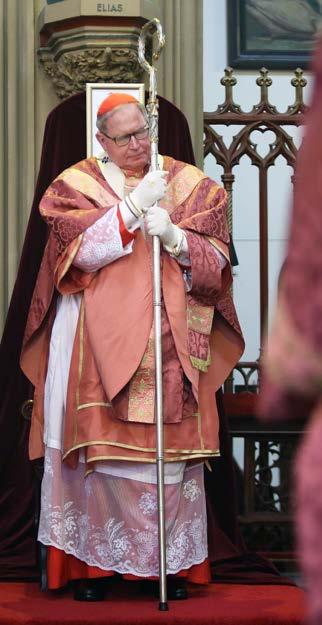
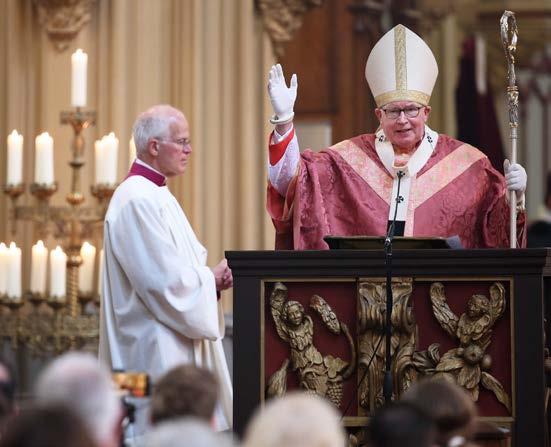
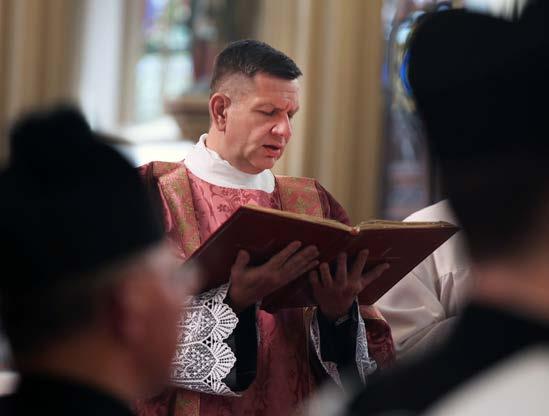
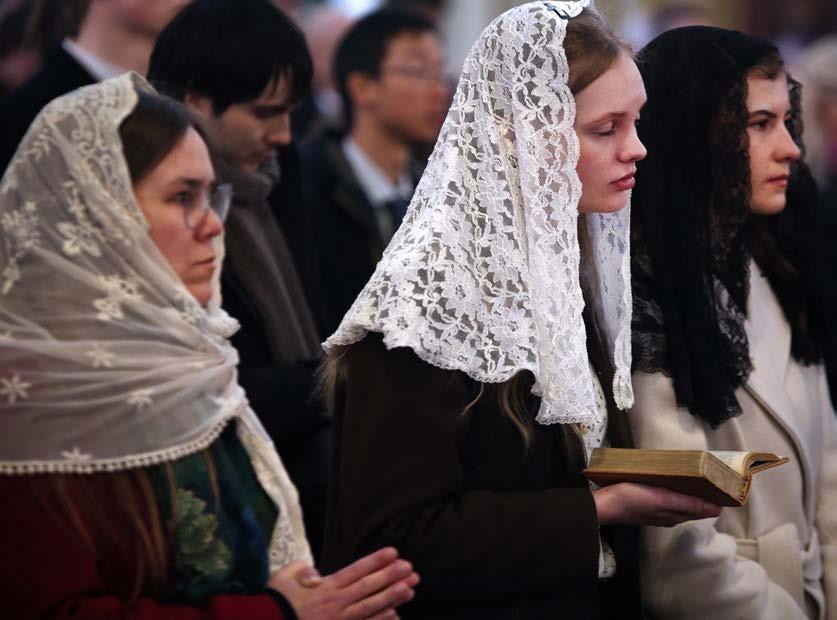
by Joseph Shaw
At the Extraordinary Consistory that took place in January, the Traditional Mass was among the topics on the agenda, but in the end the cardinals chose to focus on other topics. Nevertheless, Cardinal Arthur Roche, Prefect of the Dicastery for Divine Worship, distributed the following document to those present, which reiterates the arguments contained in Pope Francis’ Apostolic Letter Traditionis Custodes and the Letter to Bishops that accompanied it. We present it here, in the English translation he provided, for readers’ interest; after it we present a response.
EXTRAORDINARY CONSISTORY
(January 7-8, 2026)
Liturgy: careful theological, historical, and pastoral reflection ‘so that the sound tradition may be preserved and, however, the path to legitimate progress may remain open’ (SC 23).
LITURGY
Card. Arthur Roche
1. In the life of the Church, the Liturgy has always experienced reforms. From the Didaché to the Traditio Apostolica; from the use of Greek to that of Latin; from the libelli precum to the Sacramentaries and the Ordines; from the Pontificals to the Franco-German reforms; from the Liturgy secundum usum romanae curiae to the Tridentine reform; from the partial post-Tridentine reforms to the general reform of the Second Vatican Council. The history of the Liturgy, we could say, is the history of its continuous ‘reforming’ in a process of organic development.
2. Saint Pius V, in addressing the reform of the liturgical books in observance of the mandate of the Council of Trent (cf. Session XXV, General Decree, chap. XXI), was moved by the desire to preserve the unity of the Church. The bull Quo Primum (July 14, 1570), with which the Roman Missal was
promulgated, states that ‘as in the Church of God there is one way of reciting the psalms, so it is most fitting that there be one rite for celebrating Mass’ (cum unum in Ecclesia Dei psallendi modum, unum Missae celebrandae ritum esse maxime deceat).
3. The need to reform the Liturgy is strictly linked to the ritual component, through which – per ritus et preces (SC 48) – we participate in the paschal mystery: the rite is in itself characterized by cultural elements that change over time and in places.
4. Moreover, since ‘Tradition is not the transmission of things or words, a collection of dead things’ but ‘the living river that unites us to the origins, the living river in which the origins are always present’ (BENEDICT XVI, General Audience, April 26, 2006), we can certainly affirm that the reform of the Liturgy desired by the Second Vatican Council is not only in full harmony with the true sense of Tradition, but constitutes a singular way of placing itself at the service of Tradition, because the latter is like a great river that leads us to the gates of eternity (ibid.).
5. In this dynamic vision, ‘preserving solid tradition’ and ‘opening the path to legitimate progress’ (SC 23) cannot be understood as two separable actions: without ‘legitimate progress’ tradition would be reduced to a ‘collection of dead things’ not always healthy; without ‘sound tradition’ progress runs the risk of becoming a pathological search for novelty, which cannot generate life, like a river whose course is blocked separating it from its sources.
6. In the address to the participants in the Plenary of the Dicastery for Divine Worship and the Discipline of the Sacraments (February 8, 2024), Pope Francis expressed himself as follows:
Sixty years after the promulgation of Sacrosanctum Concilium, the words we read in its introduction, with which the Fathers declared the purpose of
the Council, never cease to enthuse. They are objectives that describe a precise desire to reform the Church in its fundamental dimensions: to make the Christian life of the faithful grow day by day; to better adapt to the needs of our time the institutions subject to change; to foster everything that can promote union among all who believe in Christ; to strengthen what serves to call all to the bosom of the Church (cf. SC 1). It is a task of spiritual, pastoral, ecumenical, and missionary renewal. And to carry it out, the conciliar Fathers knew where to start, they knew that there were particularly urgent reasons to undertake the reform and promotion of the liturgy (ibid.).
It is as if to say: without liturgical reform, there is no reform of the Church.
7. The Liturgical Reform was elaborated on the basis of a ‘precise theological, historical, and pastoral investigation’ (SC 23). Its scope was to make fuller participation in the celebration of the Paschal Mystery for a renewal of the Church, People of God, Mystical Body of Christ (see LG chapters I-II), perfecting the faithful in unity with God and among themselves (cf. SC 48). Only from the salvific experience of the celebration of the Easter season, the Church rediscovers and relaunches the missionary mandate of the Risen Lord (cf. Mt 28:19-20) and becomes, in a world torn by discord, leaven of unity.
8. We must also recognize that the application of the Reform suffered and continues to suffer from a lack of formation, and this urgency to address it, starting from the Seminaries to ‘give life to the type of formation of the faithful and to the ministry of the pastors that have their summit and source in the liturgy’ (Instruction Inter Oecumenici, September 26, 1964, 5).
9. The primary good of the unity of the Church is not achieved by freezing division, but by meeting in sharing what
cannot but be shared, as Pope Francis said in Desiderio Desideravi 61:
We are continually called to rediscover the richness of the general principles set forth in the first numbers of Sacrosanctum Concilium, understanding the intimate bond between this first of the Council’s constitutions and all the others. For this reason, we cannot return to that ritual form that the conciliar Fathers, cum Petro et sub Petro, felt the need to reform, approving, under the guidance of the Holy Spirit and following their pastoral conscience, the principles from which the reform was born. The holy pontiffs Saint Paul VI and Saint John Paul II, in approving the reformed liturgical books ex decreto Sacrosancti Oecumenici Concilii Vaticani II, have guaranteed the fidelity of the Council’s reform. For this reason I wrote Traditionis Custodes, so that the Church may raise, in the variety of so many languages, one and the same prayer capable of expressing its unity. [Cf. Paul VI, Apostolic Constitution Missale Romanum (April 3, 1969) in AAS 61 (1969) 222]. As I have already written, I intend that this unity be restored throughout the Church of the Roman Rite.
10. The use of the liturgical books that the Council sought to reform was, from Saint John Paul II to Francis, a concession that in no way envisaged its promotion. Pope Francis – even conceding, in accordance with Traditionis Custodes, the use of the Missale Romanum of 1962 – pointed the way toward unity in the use of the liturgical books promulgated by the holy popes Paul VI and John Paul II, in accordance with the decrees of the Second Vatican Council, the unique expression of the lex orandi of the Roman Rite.
11. Pope Francis summarized the theme as follows (Desiderio Desideravi 31): If the liturgy is ‘the summit toward which the activity of the Church tends and, at the same time, the font
from which all her power flows’ (Sacrosanctum Concilium, n. 10), then we can understand what is at stake in the liturgical question. It would be trivial to read the tensions, unfortunately present around the celebration, as a simple divergence between different tastes about a particular ritual form. The issue is mainly ecclesiological. I do not see how it is possible to say that one recognizes the validity of the Council – although it amazes me that a Catholic can presume not to do so – and at the same time not accept the liturgical reform born of Sacrosanctum Concilium, a document that expresses the reality of the Liturgy intimately united to the vision of the Church so admirably described in Lumen Gentium.
Rome, 01.08.2026
Here follows a response from the FIUV.
The Question of the Older Missal: a contribution from laity attached to the older liturgical tradition
A Position Paper of the Foederatio Internationalis Una Voce
1. The history of the liturgy up to the Second Vatican Council is characterised by ‘organic development’, not the creation of substantially new liturgical forms. Key moments of the process included the Carolingian reforms and the incorporation of the FrancoGerman Pontificals into the liturgy of Rome, in both of which cases texts from one liturgical tradition were incorporated into another, related tradition when the latter was regarded as corrupt or lacking. Later, following the Council of Trent, St Pius V established a definitive text of the Missal. In the words of the General Instruction of the Roman Missal : ‘The Missal of 1570 differs very little from the very first printed edition of
1474, which in turn faithfully follows the Missal used at the time of Pope Innocent III’.1
2. None of these reforms were motivated by a desire to develop the theology of the liturgy or to impose a single Rite across the Western Church. St Pius V wrote, referring to other venerable rites and usages: ‘We do not by any means remove from these [dioceses and religious communities] the aforesaid constitution or custom of the celebration of Mass’. Accordingly, a multiplicity of liturgical forms continued to characterise the Western Church, with French and German Missals, the Mozarabic and Ambrosian Rites, and Dominican, Premonstratensian, Carthusian, and Carmelite Rites.
3. The Second Vatican Council reaffirmed the Church’s commitment to liturgical diversity: ‘In faithful obedience to tradition, the sacred Council declares that holy Mother Church holds all lawfully acknowledged rites to be of equal right and dignity; that she wishes to preserve them in the future and to foster them in every way’ ( Sacrosanctum Concilium , Art. 4).2 The Mozarabic, Carthusian, and Ambrosian Rites were reformed after the Council, and later popes felt free to authorise new liturgical usages, notably the Zaire Use (1985) and the Ordinariate Use (2012).
4. St Paul VI, conscious that the use of the vernacular created a new kind of liturgical diversity, explained that ‘in the great diversity of languages, one unique prayer will rise as an
1. General Instruction of the Roman Missal §7: ‘Missale illud anni 1570 paulum admodum distat a primo omnium anno 1474 typis edito Missali, quod vicissim fideliter quidem repetit Missale temporis Innocentii PP. III’.
2. Second Vatican Council Decree on the Liturgy Sacrosanctum Concilium 4: ‘Traditioni denique fideliter obsequens, Sacrosanctum Concilium declarat Sanctam Matrem Ecclesiam omnes Ritus legitime agnitos aequo iure atque honore habere, eosque in posterum servari et omnimode foveri velle’.
acceptable offering to our Father in heaven, through our High-Priest Jesus Christ, in the Holy Spirit’ (Apostolic Constitution Missale Romanum , 1969).3 Since it is the very same Mass that is offered in every language and in every lawful liturgical form, liturgical diversity is not to be feared.
5. The same pope acknowledged the special character of the liturgical reform after the Second Vatican Council, referring to the new Eucharistic Prayers as the ‘principal novelty of the reform’ (‘praecipua instaurationis novitas’) (Apostolic Constitution Missale Romanum, 1969); again, referring to the reform as a whole, ‘this novelty is no small thing’ (‘non è piccola cosa questa novità’) (General Audience, 26th November 1969). He understood that this step had pastoral implications, for some people more than for others: ‘We shall notice that pious persons are disturbed most’ (‘e potremo notare che le persone pie saranno quelle maggiormente disturbate’) (ibid.).
6. It was for this reason that he permitted older priests to continue to celebrate using the older Missal, and permitted celebrations for the benefit of the lay faithful in England and Wales (1971). A version of this permission was extended to the whole world by St John Paul II (Circular Letter Quattuor Abhinc Annos, 1984), who went on to authorise the establishment of priestly institutes and religious communities which would serve the lay faithful, not only with Mass but with all the sacraments in the ‘older form’, with priests ordained using the older Pontifical, and celebrating the Liturgy of the Hours using the older Breviary (Apostolic Letter, Ecclesia Dei, 1988). He set this into the context of a fruitful liturgical diversity:
It is necessary that all the Pastors and the other faithful have a new awareness, not only of the lawfulness but also of the richness for the Church of a diversity of charisms, traditions of spirituality and apostolate, which also constitutes the beauty of unity in variety: of that blended ‘harmony’ which the earthly Church raises up to Heaven under the impulse of the Holy Spirit.4
7. In this way, the reform of 1970 left its predecessor, the Missal of 1962, as the most recent representative of ‘the former liturgical tradition’ (‘traditio liturgica antecedens’) (Pope Benedict XVI, Apostolic Letter Summorum Pontificum, 2007, Art. 5), which continued to play
its part in the life of the Church. As Pope Benedict wrote, ‘it behooves all of us to preserve the riches which have developed in the Church’s faith and prayer, and to give them their proper place’ (Letter to Bishops, 2007).5
8. As the foregoing indicates, the Church has not simply been tolerating, but actively fostering, the pastoral reality of a body of lay people, united under the same bishops as other Catholics, experiencing the common prayer of the Church, to a greater or lesser extent, through the older liturgical books: a ‘group of faithful attached to the previous liturgical tradition’ (‘coetus fidelium traditioni liturgicae antecedenti adhaerentium’). These Catholics have often shown their devotion to the Holy See in pilgrimage, and have been welcomed by successive Popes, even into St Peter’s Basilica.
9. Pope Francis affirmed the permanent nature of this pastoral reality in two important acts. In 2020, he promulgated the decree Cum Sanctissima, making provision for the celebration of recently canonised saints in the older Missal. In 2022, he confirmed the continued validity of the mission of the largest ‘Eccelsia Dei’ group, the Priestly Fraternity of St Peter, to celebrate the Mass and all the Sacraments of the 1962 liturgical books, making possible, for those who desire it, a complete Catholic life, from baptism to burial, accompanied by this tradition.
10. Observing such Catholics, Darío Cardinal Castrillón Hoyos observed in an interview:
What we frequently find is a Christian view of the life of faith and of devotion – shared by so many Catholic families that frequently are enriched by many children – that has special characteristics, and we can mention as examples: a strong sense of belonging to the Mystical Body of Christ, a desire to maintain strong links with the past –that wishes to be seen, not in contrast with the present, but in a line of continuity with the Church – to present the principal teachings of the Faith, a profound desire for spirituality and the sacred etc.6
11. The number of these Catholics is certainly very small compared to the whole body of the Faithful. It is characteristic of the Church, however, to have regard for statistically small groups and to make provision for their welfare. A certain analogy can be found
with the Ordinariates established for converts from Anglicanism, Exarchates for Eastern Catholics living in the West, and chaplaincies for immigrant communities of Polish, Italian, and other migrant communities in many countries. Again, Catholics attached to the older liturgy tend to make a positive contribution to their dioceses in terms of both finances and vocations.
12. These Catholics come from a broad range of backgrounds, drawn by the beauty and sacrality of this liturgy. They have the support of many public figures of high culture, who have signed petitions in defence of the older liturgy, most recently in 2024.7 At the same time, the older Missal provides a home for many of the simple faithful, particularly migrants, who appreciate a more traditional form of spirituality, and may be less at home in the vernacular of their adopted countries. The congregations they form, in union with the diocesan Ordinary and the Holy Father, reflect the local church, though characterised particularly by young people and families.
13. It is for bishops, and above all for the Supreme Pontiff, to regulate the liturgy, and to manage the pastoral phenomenon just described for the good of the whole
1. General Instruction of the Roman Missal §7: ‘Missale illud anni 1570 paulum admodum distat a primo omnium anno 1474 typis edito Missali, quod vicissim fideliter quidem repetit Missale temporis Innocentii PP. III’.
2. Second Vatican Council Decree on the Liturgy Sacrosanctum Concilium 4: ‘Traditioni denique fideliter obsequens, Sacrosanctum Concilium declarat Sanctam Matrem Ecclesiam omnes Ritus legitime agnitos aequo iure atque honore habere, eosque in posterum servari et omnimode foveri velle’.
3. Apostolic Constitution Missale Romanum (1969): ‘In tot varietate linguarum, una eademque cunctorum precatio ad caelestem Patrem, per summum Pontificem nostrum Iesum Christum, in Spiritu Sancto, quovis ture fragrantior ascendat’.
4. Apostolic Letter Ecclesia Dei Art. 4: ‘Necesse tamen est, ut omnes Pastores et reliqui Christifideles plane denuo agnoscant non modo auctoritatem, sed etiam Ecclesiae thesaurum, quae et in charismatum varietate et in rerum spiritalium necnon apostolatus traditionibus innituntur, quaeque et pulchritudinem efficiunt unitatis in varietate: illius nempe “temperationis”, quam Spiritus Sancti impulsu ad Caelum effert terrestris Ecclesia’.
5. Pope Benedict XVI, Letter to Bishops (2007): ‘Ci fa bene a tutti conservare le ricchezze che sono cresciute nella fede e nella preghiera della Chiesa, e di dar loro il giusto posto’.
6. Interview, Latin Mass Magazine, May 2004.
7. These are summarised on the website of the FIUV: http://www.fiuv.org/p/ petitions-to-save-traditional-mass.html. See also Joseph Shaw, ed., The Latin Mass and the Intellectuals (Arouca Press, 2024).
Church. We would draw attention to three relevant principles. First, the freedom of the People of God, affirmed by the Second Vatican Council (Unitatis Redintegratio): All in the Church must preserve unity in essentials. But let all, according to the gifts they have received enjoy a proper freedom, in their various forms of spiritual life and discipline, in their different liturgical rites, and even in their theological elaborations of revealed truth. In all things let charity prevail. If they are true to this course of action, they will be giving ever better expression to the authentic catholicity and apostolicity of the Church.8
14. Second, the principle of unity in diversity, expressed by the Second Vatican Council (Orientalium Ecclesiarum, Art. 2): ‘The variety within the Church in no way harms its unity: rather it manifests it more strongly’ (‘ita ut varietas in Ecclesia nedum eiusdem noceat unitati, eam potius declaret’).
15. Third, the principle of subsidiarity, which directs decisions to be made at the lowest level possible, where the decisionmaker is best able to judge local needs and conditions (see Compendium of the Social Doctrine of the Church, Arts. 185-88).
16. Finally, we affirm that Catholics attached to the older Missal wish only to be allowed to attend the older liturgy, in which they have found, in the words of Pope Benedict XVI, ‘a form of encounter with the Mystery of the Most Holy Eucharist, particularly suited to them’ (Letter to Bishops, 2007),9 and to do so in peace, disturbing nobody, but, in union with their bishops and the Holy Father, making their contribution to their parish and diocese, to the preservation of the Church’s spiritual and cultural patrimony, to vocations to the priesthood and the religious life, and to the raising of the next generation. It seems to us both unjust and counterproductive to make these Catholics feel that the Church has no place for them.
8. Unitatis Redintegratio, §4: ‘In necessariis unitatem custodientes, omnes in Ecclesia, secundum munus unicuique datum, cum in variis formis vitae spiritualis et disciplinae, tum in diversitate liturgicorum rituum, immo et in theologica veritatis revelatae elaboratione, debitam libertatem servent; in omnibus vero caritatem colant. Hac enim agendi ratione ipsi veri nominis catholicitatem simul et apostolicitatem Ecclesiae in dies plenius manifestabunt’.
9. Pope Benedict XVI, Letter to Bishops (2007): ‘Questa forma liturgica, si sentono attirate da essa e vi trovano una forma, particolarmente appropriata per loro, di incontro con il Mistero della Santissima Eucaristia’.
This book has a special interest for supporters of Una Voce International, since it concerns the wartime circle of our founding President, Erich de Saventhem, and indeed Dr de Saventhem and his wife, Elizabeth (born Countess von Plettenberg), are given their own, short chapter (pp. 229-32). Erich de Saventhem was known at that time as Erich Vermehren, and is referred to by that name in this book.
Readers may already know something about the extraordinary story of Dr de Saventhem’s wartime activities. They are summarised in his obituaries, which are reproduced in Leo Darroch’s Una Voce: The History of the Foederatio Internationalis Una Voce 1964-2003. Briefly, our first President, who became a Catholic early in life, distinguished himself as an opponent of Adolf Hitler and the Nazis, like another giant of the movement for the Traditional Mass, Dietrich von Hildebrand.
Erich de Saventhem refused to join the Hitler Youth, but when the Second World War started he joined the Abwehr, the military intelligence agency. This might seem surprising, but the Abwehr was a nest of opponents of the Nazis, actively recruiting like-minded people and sabotaging the German war effort with growing boldness as the war continued. The head of the Abwehr, Admiral Wilhelm Canaris, was eventually executed by the Nazis, on 9th April 1945.
Readers may also have heard of a tea party attended by a number of active anti-Nazi Germans, which took place in Berlin on 10th September 1943, and it is this tea party that forms the pivot of Freedland’s book. Freedland examines the earlier lives and motivations of the guests, their relationships, and their later fates, while hunting down the man who betrayed them, giving the book something of the character of a detective story. For this party was infiltrated by a spy who shopped the entire guest list to the authorities.

De Saventhem was not at the party, but was close to some who were, notably Otto Kiep, former German ambassador to the United States and by this time a fellow member of the Abwehr. Before the war, Kiep had put forward the young de Saventhem for a Rhodes Scholarship, which would have taken him to Oxford University had the Nazi authorities not prevented him from accepting it.
Adam von Trott zu Solz, an aristocratic member of one of the plots to kill Hitler and an official in the Foreign Ministry, was also a friend of de Saventhem, and had managed to arrange for him to be posted to the relative safety of the German embassy in Istanbul. With considerable difficulty, Elizabeth was able to join him there, authorised to do so by the Foreign Ministry but having to dodge the Gestapo and SS at various points on the journey. (Rivalry between different organs of the state was very characteristic of the Nazi regime.) They had been reunited in Turkey for only a few weeks when they heard of Kiep’s arrest. Shortly afterwards they were themselves ordered to return to Germany.
It was obvious to them that obeying this order would be a serious mistake, so de Saventhem arranged to defect to the British. British intelligence officers
in Istanbul had been on the lookout for de Saventhem: one of their number, Nicholas Elliot, greeted him with the words ‘Erich Vermehren? You were coming up to Oxford, I believe’. Elliot planned their escape, and tried to make the couple’s disappearance look like a kidnapping, to protect their friends and family still in Germany. Unfortunately, when the couple arrived in London, the propaganda possibilities were felt to be too good to pass up, and newspapers reported the defection with glee – even claiming that he had brought all the Abwehr codes with him, which was not true.
This in turn gave an opening to Heinrich Himmler to attack the Abwehr, on behalf of the SS and Gestapo, which were both under his own authority. Hitler was enraged by the reports of de Saventhem’s defection, and his rage increased on hearing Admiral Canaris’ calm and realistic briefing on the parlous state of the Russian Front. Hitler overturned the table where they were both sitting, and threw Canaris out. He
then – on 18th February 1944 – dissolved the Abwehr.
Freedland sets out the cascade of consequences of the tea party: Kiep’s arrest, the de Saventhems’ defection, and the destruction of the Abwehr. These made it all the more difficult for the party guests, many of them in custody by this point, to play down the party’s significance, with grim consequences for many of them.
The guests included some truly extraordinary people. Many were aristocratic and conservative; others were from a range of backgrounds and political persuasions. They had been drawn together by their opposition to the Nazis, and between them they saved many lives, particularly of Jews. Freedland notes the strong religious motivation of many of them, strong father-daughter relationships, and patriotism: all things which enabled these individuals to put the Nazi phenomenon in perspective, and to understand it in the context of a higher loyalty and higher ideals.
These were not detached intellectuals who wanted to see Germany fail, but, like Sophie Scholl and the White Rose student movement, they were people who saw Hitler and his policies as a betrayal of the true Germany, a Germany of culture and compassion.
I recommend this book as an antidote to cynicism. It is true that in the 20th century’s totalitarian societies, both Nazi and Communist, only a small number of people found the courage and the opportunity to resist, and an alarming number of people demonstrated the enthusiasm for those ideologies that was expected of them. The fact remains that some people did resist, and their witness gives the lie to the idea either that resistance is always impossible or that German (or Russian, or Chinese) culture and society was somehow primed for barbarism. They show that there was another way, a way that emerges from the authentic sources of German culture, including its religious culture, and which can claim the mantle of the true Germany. Their stories should be remembered.
(Arouca Press, 2026)
Book Review by Joseph Shaw
Michael Davies (1936-2004) was president of Una Voce International from 1994 until 2003; by the time of his death, he was a household name among Traditional Catholics, and his books were to be found wherever the Traditional Mass was loved, as they still are to this day.
His presidency of the FIUV occupied only one section of his extraordinarily active life in defence of the Traditional Mass and orthodoxy. This started as early as 1970, with his collaboration with Daphne MacLeod and Hamish Fraser to oppose what was called the ‘New Catechetics’.
Leo Darroch’s book, however, starts even earlier, with Davies’ early life. He was born into a Protestant family with Welsh roots, and attended a Grammar school. He saw active service in the British Army in Malaya before returning to civilian life, and he became a Catholic. He married Maria Milosh, a Yugoslavian
teacher who had been studying in England, and became a teacher himself. What led him to transform his life to become one of the English-speaking world’s foremost defenders of the ancient Catholic liturgy? It is God’s way, certainly, to work remarkable effects through people who seem quite unremarkable.
Davies’ first experience of controversy was his involvement in a campaign opposing the ‘new catechetics’ that was being imposed on Catholic schools in the wake of the Second Vatican Council, which turned out to mean a way of teaching the Faith that failed to convey its truths. Davies was one of surprisingly few teachers who had the self-confidence to object to this: such is the power of human respect, cloaked in the official ecclesiastical approval of the programme.
The reform of the liturgy seemed to Davies to be following a similar path, and his first book, Cranmer’s Godly Order, made the case that the liturgy is a key theological battlefield. The way the Eucharist was to be handled and distributed, for example, tells us something about the attitude of the celebrant, but it also leaves a degree of ambiguity. Reforming the liturgy is, in fact, an ideal way to change the people’s beliefs under cover of ‘plausible deniability’.
Davies, like everyone who sought to oppose the various kinds of madness that seemed to be afflicting the Church in the chaotic aftermath of the Council, had to decide whether the liturgy was a central or a peripheral issue. On the New Catechetics, he had collaborated with Daphne MacLeod and Major Patrick Wall, both of whom founded lay Catholic organisations
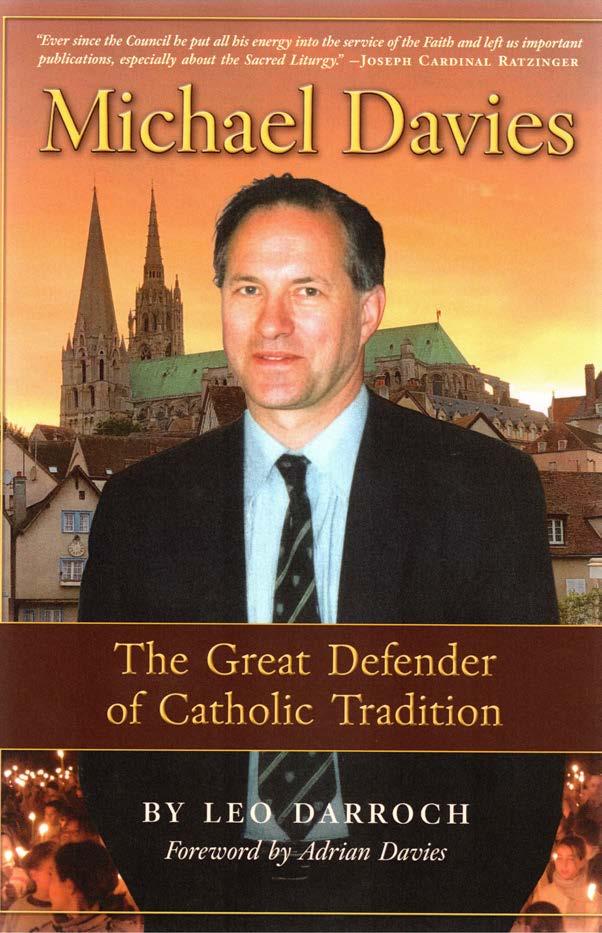
to uphold orthodoxy: ‘Pro Ecclesia et Pontifice’ and ‘Pro Fide’. MacLeod and Wall had sympathy with those upset by the liturgical changes, but thought the liturgy was in itself a side-issue. Davies, and other founders of the Traditional movement, such as the convert theologian Hugh Ross Williamson (in England) and the convert philosopher Dietrich von Hildebrand (in America), saw the two issues as inseparable. The ancient Mass is a monument of traditional theology and spirituality: its disappearance from the life of the Church vastly weakens the forces of orthodoxy, and does great harm to the prestige of the Church’s tradition. The choice made by Davies and others like him set the tone for the Traditional movement that followed.
Leo Darroch’s book maps Davies’ life through his enormous output of books and articles: this is a literary
biography above all. As a writer, Davies was ideally suited to the task he took on. He was never shy about stating his conclusions, but, like the teacher he was, he treated serious questions seriously. He wanted to get to the bottom of issues, and he wanted his readers to understand –really understand – complex matters. He tried to be fair to his opponents and to their reasoning, and didn’t try to hoodwink his readers into accepting bad arguments. When faced with complex theological or canonical issues, he explained how he had sought guidance from people more qualified than himself.
For all these reasons, his works were and remain excellent ways for people who don’t know very much about the issues to enter into the debate. My own experience here, I should think, is similar to that of many others. When I started to attend the
Traditional Mass regularly, I realised that many of the people worshipping alongside me had a degree of knowledge about the liturgical reform and related matters that I lacked, and their approach to these issues was one that I hadn’t encountered before: it hadn’t been part of the debate to which I had been exposed. They recommended I read Davies’ trilogy, and as I did so a great deal fell into place. The books introduced me to material that had been studiously avoided in my own Catholic education, and, particularly in those days, it did so with a frankness that was not to be found in mainstream Catholic media. At the same time, while Davies could write with passion when the subject demanded it, his works were not designed to maximise outrage, like social media today. Davies was, in fact, the perfect evangelist for middlebrow Catholics, bewildered and concerned about what was happening to their Church.
Indeed, he consistently rejected extremist positions, and the credibility that he established as a defender of the Traditional Mass made his case for moderation impossible to ignore. He rejected the idea that the reformed sacraments were invalid; he rejected the idea that recent popes were not genuine; he welcomed the reconciliation of Bishop Carlos Rifan of Campos, and, despite the great respect he had had for Archbishop Lefebvre over many years, he was critical of the 1988 Episcopal consecrations. What Davies wanted was not to expose the failures of the hierarchical Church, but for her to take up with renewed selfconfidence her divine munus, the gift and duty to teach with authority. He believed in the good sense and the goodwill of Cardinal Joseph Ratzinger, who in turn had great respect for Davies. Davies would have been delighted, but not surprised, by Papa Ratzinger’s freeing of the Traditional Mass in 2007.
Davies died just over twenty years ago, and many good books have been written since then from all points of view, including much valuable research into the history of the liturgy and the process of the liturgical reform after Vatican II. The essential arguments, however, have not really changed, and Davies remains a reliable, sane, and congenial guide to them.
“Robert Lazu Kmita belongs to that select group of writers whose literary purview, philosophical wonder, and theological acumen range across the entire field of Western thought (and beyond).”
PETER KWASNIEWSKI
"This fascinating book takes us on a quest into the mists of mystery.”
JOSEPH PEARCE
“Aided by his philosophical expertise and keen spiritual awareness, Kmita has written a concise— yet thorough and thoughtprovoking— book on the physical location of the earthly Paradise."
ROBERT KEIM
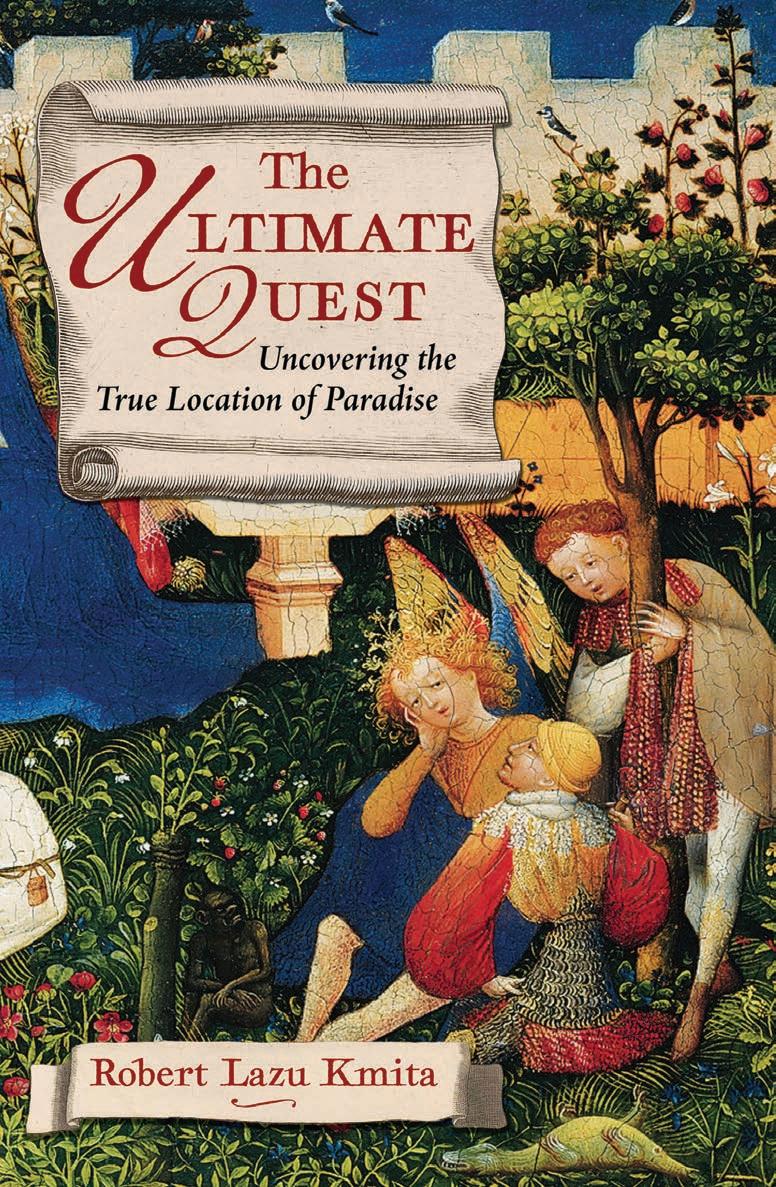
Paper: $16.95 • 979-8-89280-171-3
Cloth: $28 • 979-8-89280-172-0
This was first published in May 2013 as Positio 15; it was republished in 2019 in The Case for Liturgical Restoration (ed. Joseph Shaw).
The Lectionary is often regarded as the aspect of the Vetus Ordo which is most clearly inferior to the Novus Ordo, regardless of the language in which it is celebrated, simply because the reformed Lectionary is larger. In this paper, we set out to show not only that there are advantages to a Lectionary being relatively small (it allows a greater familiarity with the texts; it make possible pocket-sized missals for the laity, etc.) but that the ancient Lectionary is an integral part of the ancient Missal. Not only are there many cross-references between the Lectionary and other propers of the day, but also the entire spirit and rationale of the older Lectionary conforms to that of the Vetus Ordo, and contrasts with that of the reform. Missal and Lectionary are inseparable.
One of the distinctive characteristics of the Extraordinary Form is its lectionary, which consists of a single year’s cycle of readings, providing a single Gospel passage and ‘epistle’ (which may be a passage from any part of the Scriptures outside of the Gospels) for Sundays, feast days, and the ferias of Lent. On ferias outside of Lent the readings (and proper prayers and chants) are those of the previous Sunday, unless a votive Mass is being said. A greater number of lections are given for Ember Days1 and certain other days.2
By contrast, the Ordinary Form has a three-year cycle of readings for Sundays, with each Sunday assigned an Old Testament reading (or Acts in Eastertide), Epistle, and Gospel, and a weekday cycle of Gospels with alternating years of nonGospel readings.
The most ancient part of the 1962 lectionary is the cycle of Sunday gospels, which largely corresponds with the subjects of Pope Gregory the Great’s sermons on the corresponding days, given between 590 and 604. This cycle, however, continued to develop, as did the
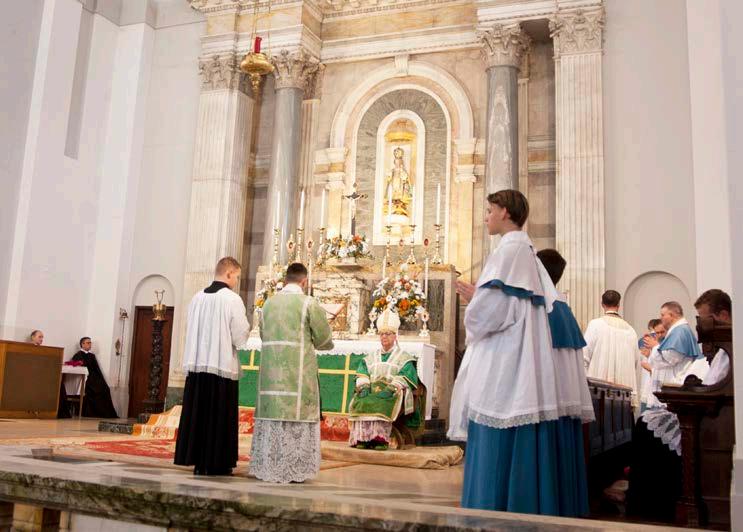
cycle of Sunday epistles, and cycles of lections for the ferias of Lent, and other ferias, and the Sanctoral cycle, until the 9th century,3 when it assumed the form still in use today, leaving aside later feasts celebrated on Sundays, such as Trinity Sunday and the feast of the Holy Family.
The great antiquity of the lectionary, coupled with its continuous use, demands our respect. First, this lectionary reflects the liturgical and scriptural thinking of the Fathers of the Church. Second, it has been the basis of the liturgical experience and reflection of countless generations of the Latin Church’s doctors, saints, scholars, and artists. Third, it is closely connected with the chants of the day, which frequently refer to its texts and constitute a musical commentary upon them (see Appendix B). Fourth, it has proved its worth, spiritually, pastorally, and in other practical ways, in a very wide range of social and cultural circumstances, over a very long period of time.
Furthermore, it is shared with the historic liturgies of Anglicans and Lutherans. The lectionary of the Book
of Common Prayer is based on that of the Sarum missal, which is essentially identical to the Roman missal; the traditional Lutheran lectionary is based on that of the Roman missal. The ecumenical value of the ancient one-year cycle gave the architects of the 1969 lectionary serious pause.4
1. Ember Wednesdays have one extra reading; Ember Saturdays have a total of five extra readings. Ember Days are celebrated four times a year. In the 1962 missal, a shorter form of the Saturday service can be celebrated.
2. Notably, the Easter Vigil and Palm Sunday. All Souls Day and Christmas Day have three Masses with their own lections.
3. See the Wurzburg MS or Comes Romanus Wirziburgensis (Universitatsbibliothek, codex M.p.th.f.62; ed. Morin, Revue Bénédictine 27 [1910]: 41-74 and 28 [1911]: 296-330), dating from ca.700. This includes readings for one, two, or three ferial days in particular weeks. By the 9th century, provision is made for a complete set of lections for Lenten ferias, a formalized Common of Saints, separation of the temporal from the Sanctoral cycles, and thoroughly revised systems of ferial readings outside of Lent. By this time also there is a degree of divergence between Roman and Gallican books.
4. See Bugnini, Reform of the Liturgy, 415-16.
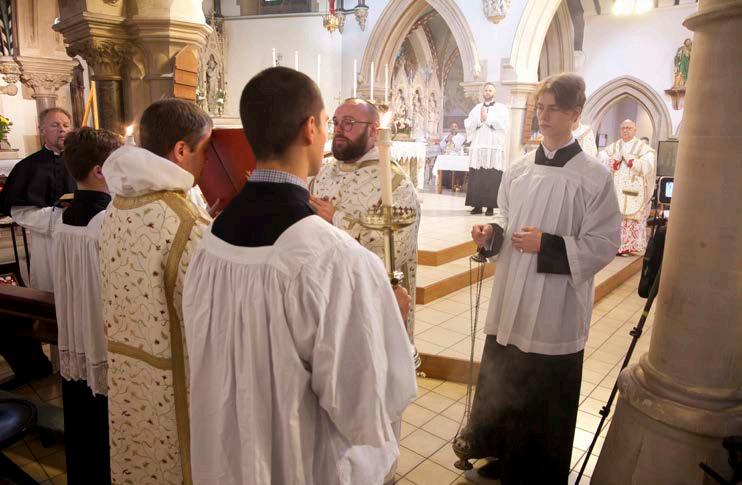
The lectionary’s development is such that the Sunday gospels and epistles each form a series, independent of each other. This is particularly evident in Advent and Lent. A pattern is nevertheless discernible in the season after Pentecost. Pius Parsch explains:
From the point of view of content, the ... cycle could well be divided into three groups. The first emphasizes miraclecures. Accounts of Christ’s miracles are related, yet these narratives are not intended for our instruction primarily, but rather as indications of the operations of God’s grace in the Mass. Such, too, was the ultimate aim and end of our Lord when He worked wonders ...
A second group tends to employ contrast pictures – the kingdom of God versus the kingdom of the world. These ... are primarily found in the Masses from the seventh to the fourteenth Sunday after Pentecost ... Ancient piety often employed this pedagogical method ...
The third class, which concentrates on the parousia, is proper to the Sundays from the fifteenth to the end of the year. These Masses are exceptional for variety of mood and depth of doctrine.5
On the other hand, Parsch warns his readers against looking for an artificial system of themes:
As children of a streamlined age, we would love to find in the current array of twenty-four Sundays [after Pentecost] a progression of thought, a system, a unifying principle ... some schematic development or idea of
evolution. This was not the mentality of ancient times. In the early centuries, the Church merely wished to give her children little Easter feasts, little parousia feasts. Sunday after Sunday in colourful array she presented the mysteries of redemption, usually with reference to baptism or to Christ’s Second Coming.6
This approach is reinforced by the independence of the two series, the Gospel passages and the epistles, which means that worshippers are not presented with connections between readings dependent on the exegetical preferences of scholars of any particular age, but rather a more fundamental working-out of the mysteries of salvation.
The lectionary’s limited size allows the faithful to attain a thorough familiarity with the cycle, particularly in the context of the use of hand missals and commentaries on the liturgy that expound the passages and their connection with the season and the proper prayers and chants of the day. The association of feasts and particular Sundays with particular Gospel or epistle passages echoes the practice of the Eastern churches, where Sundays are often named after the Gospel of the day.
The missals and commentaries just mentioned are made possible by the limited set of liturgical texts. Hand missals with only the texts for Sundays and important feasts can be truly ‘pocketsized’; children’s missals lacking the Latin for some or all of the texts can be very small indeed. The best-known commentaries, widely disseminated before the Council and still well known today among Catholics attached to the traditional Latin Mass, can
go into considerable depth in multiple volumes: Gueranger’s fifteen volumes (published from 1841 to 1844);7 Schuster’s five volumes (published in 1919);8 and Parsch’s five smaller volumes (published in 1923).9 These are themselves of great value in developing the spirituality of the faithful, and any reform that rendered them obsolete would cause the loss, for practical purposes, of an enormous body of popular liturgical scholarship and spirituality.
The 1962 lectionary corresponds (with the exception of newly created feast days) with that of the Roman missal of 1570. This, in turn, is dependent upon the Missale Romano-Seraphicum (the Franciscan missal) of the 13th century, which did not include the lections for the non-Lenten ferias found in earlier Roman books, as well as in the books of other rites and usages. They are found, however, in the Sarum missal, used in the British Isles up to the late 16th century; in the German Munster missal, in editions as late as 1835; and in Gallican (or neo-Gallican) missals into the second half of the 19th century.
The ancient ferial cycles for Lent and outside of Lent are of contrasting characters. The Lenten cycle, still found in the 1962 missal, has a rich variety of Gospel passages appropriate to the season, accompanied by non-Gospel readings, often from the Old Testament, chosen to illuminate the Gospel. One or other of the lections is sometimes unusually long. These Masses have their own proper prayers, and the corresponding chants are also sometimes long, ancient, and of great beauty. For all these reasons, efforts were made in revising the calendar in the years up to 1962 to reduce the number of occasions these ferial Masses would be obscured by other feasts, notably by raising them to the 3rd class.10
5. Parsch, Church’s Year of Grace, 1:5-6.
6. Parsch, Church’s Year of Grace, 1:4.
7. Prosper Gueranger, Abbot of Solesmes: L’année liturgique, first published in French; published in English as The Liturgical Year in 1949, and still in print. Also available online in whole or part in French (http://www.abbaye-saintbenoit.ch/gueranger/anneliturgique/ index.htm) and English (http://www. liturgialatina.org/lityear/).
8. Ildefonso Schuster, Archbishop of Milan: Liber Sacramentorum , first published in Italian in 1919; published in English as The Sacramentary from 1924–1930.
9. Pius Parsch, of the Augustinian Canons of Klosterneuburg near Vienna: Das Jahr des Heiles , first published in German in 1923; published in English as The Church’s Year of Grace in 1953.
10. This means in practice that only the more important feasts, and votive Masses of importance, can occlude the celebration of the Lenten ferial Mass.
Outside Lent, ferial Masses according to the 1962 missal are said using the Mass formulary of the preceding Sunday, though without the Gloria or the Creed. The ancient non-Lenten ferial cycles provided different lections for two or three days of the week,11 and would include, for example, parallel accounts of the pericope used in the Sunday gospel. This would make sense, of course, in light of the proper prayers and chants, which might refer to that gospel.
The ancient ferial lectionary did not displace the readings for feast days, and given the fullness of the Sanctoral cycle in Rome, and the developing popularity of votive Masses, it seems likely that the editors of Roman missals from the 13th century onwards thought its inclusion was unnecessary: there is clearly little point in a cycle of readings that is rarely used.
The tension between a non-Lenten ferial cycle and a full Sanctoral cycle with its own readings is a perennial challenge. It is for this reason that the 1966 ‘Alternative Lectionary’,12 and the lectionary of the 1969 missal, almost entirely displace the readings of the Sanctoral cycle.
The loss of the Sanctoral cycle in the usus antiquior would be a great blow to the liturgical expression of devotion to the saints. The more important saints have their own readings and other propers, which serve as a commentary on their lives and work; the less important use the Commons of the Saints, which include formularies of considerable antiquity and devotional value, and give feasts of particular groups of saints (Doctors, Abbots, Holy Women, and so on) a recognizable and distinctive character. These Commons receive detailed attention in Fr Pius Parsch’s commentary on the liturgical year.13
Such a reform would mean that the readings assigned to votive Masses, also, would have to give way to ferial readings, which would be a similar blow to the devotions to which they pertain, and for the spread of which these Masses have been encouraged by popes over many centuries. Both the feasts of saints and votive Masses, when celebrated, would be accompanied by lections that might easily be inappropriate, creating a problematic tension in the liturgy.
The other proper texts, both prayers and chants, would also be involved in this tension, whether they are appropriate to the saint, celebration, or votive Mass of the day (and therefore, potentially, not to the readings), as with the 1966 experiment, or fixed to the cycle of readings (and therefore independent of the saint, etc.),
as in the 1969 missal. The liturgical scholar Laszlo Dobszay comments: ‘The three-year system totally dissolved the association between the liturgical day (and its texts) and the pericopes assigned; this is a loss both in a liturgical and a pastoral perspective’.14
The Second Vatican Council’s Constitution on the Liturgy, Sacrosanctum Concilium, called for a more ‘lavish’ presentation of Scripture to the faithful:
The treasures of the Bible are to be opened up more lavishly, so that richer fare may be provided for the faithful at the table of God’s word [more literally: ‘so that a richer table of God’s word may be prepared for the faithful’]. In this way a more representative portion [literally ‘a more excellent part’] of the Holy Scriptures will be read to the people in the course of a prescribed number of years.15
A way of achieving this in perfect harmony with the classical Roman rite as it currently exists would be to encourage the wider use of the Divine Office, and particularly Matins. Indeed, Sacrosanctum Concilium expresses eagerness that this be done: ‘Pastors of souls should see to it that the chief hours, especially Vespers, are celebrated in common in church on Sundays and the more solemn feasts. And the laity, too, are encouraged to recite the Divine Office, either with the priests, or among themselves, or even individually’.16 This admonition is reiterated by the Code of Canon Law – ‘Other [ceteri, all of the other] members of the Christian
faithful, according to circumstances, are also earnestly invited to participate in the Liturgy of the Hours as an action of the Church’17 – and underlined by the Instruction Redemptionis Sacramentum: ‘For encouraging, promoting and nourishing this interior understanding of liturgical participation, the continuous and widespread celebration of the Liturgy of the Hours, the use of the sacramentals, and exercises of Christian popular piety are extremely helpful’.18
The lections of the liturgy always have both latreutic and didactic functions, but the former function is more emphasized
10. This means in practice that only the more important feasts, and votive Masses of importance, can occlude the celebration of the Lenten ferial Mass.
11. The Comes of Wurzburg (ca. 650) assigns ferial readings, very irregularly, to Wednesday, Friday, and Saturday, while the Comes of Murbach (ca. 750) assigns them only to Wednesday and Friday, but very regularly.
12. The ‘Alternative Lectionary’, published on 12th March 1966 for optional use, consists of a one-year series of gospels and a two-year cycle of first lessons for all days in the liturgical year De tempore which might not be impeded by a 1st or 2nd class feast. Thus, the lectionary left gaps for the more important feasts to fill. The Sunday and Sanctoral cycles were not changed. This lectionary was superseded by the lectionary of the 1969 missal.
13. Parsch, Church’s Year of Grace, 4:372-412.
14. Dobszay, Restoration and Organic Development, 143.
15. SC , n. 51: ‘Quo ditior mensa verbi Dei paretur fidelibus, thesauri biblici largius aperiantur, ita ut, intra praestitutum annorum spatium, praestantior pars Scripturarum Sanctarum populo legatur’.
16. SC , n. 100; cf. n. 85: ‘Hence all who render this service are not only fulfilling a duty of the Church, but also are sharing in the greatest honour of Christ’s spouse, for by offering these praises to God they are standing before God’s throne in the name of the Church their Mother’.
17. C IC (1983), can. 1174 §2.
18. R edemptionis Sacramentum, n. 41.
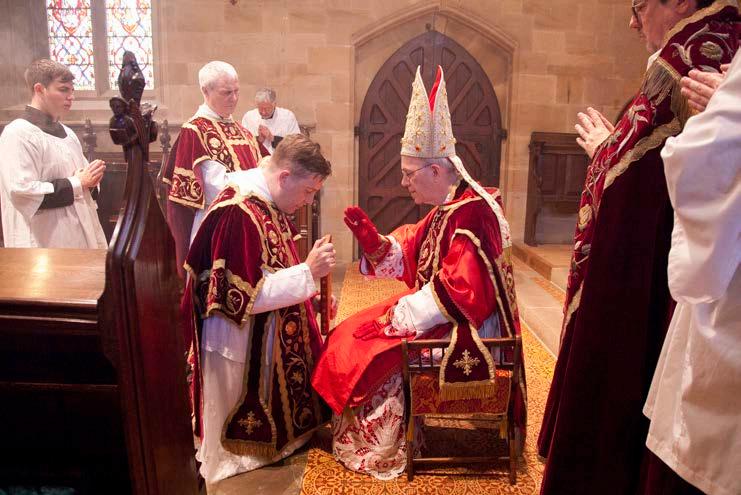
in the Mass, and the latter in the Office. The ceremonial associated with the readings at Mass encourages us to see them as a special offering to God. As Peter Kwasniewski observes:
Recitation of the text of Scripture is made decisively subordinate to the historical embodiment of Scripture’s message in holy persons. The readings serve, in other words, to frame, adorn, and bring to light the face of Christ and the faces of all his imitators. The use of Scripture is iconic, not homiletic. We are not being lectured at, but rather summoned to worship, to bow down before mysteries. The readings are to function as verbal incense, not verbose information.19
While the Divine Office is primarily a prayer, the didactic function of the readings is emphasized by, for example, the reading in Matins of commentaries from the Fathers of the Church on the very passages of Scripture just read.
Furthermore, the connection between Matins and the Eucharistic liturgy, particularly of Sundays and feasts, makes it the ideal supplement to the Mass of the day; indeed, Matins may be thought of as a preparation for Mass, as the Catholic Encyclopedia notes:
In a certain sense it is, perhaps, the Office [of Matins] which was primitively the preparation for the Mass, that is to say, the Mass of the Catechumens, which presents at any rate the same construction as that Office: – the reading from the Old Testament, then the epistles and the Acts, and finally the Gospel – the whole being intermingled with psalmody, and terminated by the Homily.20
It was not so long ago that the faithful thought nothing of going to Church twice on a Sunday, to attend Vespers as well as Mass. Matins was once widely celebrated in parish churches, a tradition that has left its mark on Anglicanism, where Matins is still commonly celebrated publicly. This practice was reintroduced by Pius Parsch into his parish. Morning Prayer is also typically celebrated before Mass in the Eastern Churches. It is perhaps easier to envisage today the private use of the Office by the laity, though occasional public celebrations would do much to encourage this. The considerable success enjoyed in the middle of the 20th century by ‘The League for the Divine Office’ in promoting the (private, vernacular) use of the Office by the laity sets an important precedent.
The role of Scripture in the liturgy is not limited to the lectionary. Both the propers and the ordinary of the usus antiquior make extensive and appropriate use the psalms, including the Asperges me (Ps. 50), the Iudica me (Ps. 42), and the Lavabo (Ps. 25). There are in addition a great many quotations of, and references to, the Scriptures throughout the Mass: to give just one example, the prayer Supra quae of the Roman Canon refers to the Old Testament sacrifices of Abel (Gen 4:4), Abraham (Gen 22:13), and Melchisedek (Gen 14:18).21 It cannot be maintained that the 1962 Mass lacks a Scriptural dimension, nor do the other sacraments and sacramentals of the 1962 liturgical books: thus, the canticle of Zachary is recited in full during burials, and the psalm Domini est terra (Ps. 23) at the churching of women (the blessing of a woman after childbirth).
The ancient one-year cycle of readings, particularly for Sundays, has an irreplaceable value in representing the thought of the Latin Fathers, in harmony with the season and feast, allowing the faithful to become as familiar as possible with the cycle, especially in light of the long tradition of liturgical commentary, and in connection with the proper prayers and chants of the day.
Until the decree Novum Rubricarum (1960),22 when a feast or a Sunday was suppressed by an occurrent feast (one occupying the same day) of greater importance, the Last Gospel would be not the opening verses of the Gospel of St John, but the proper gospel of the suppressed Sunday or feast. Given the importance of the Sunday cycle, the restoration of the older practice would seem appropriate, and would be one modest way of expanding the number of Gospel passages read to the faithful.
Most of all, however, the riches of the Scriptures are already presented in a liturgical context in the Office, and above all in Matins. The encouragement of the participation of the faithful in the existing riches of the liturgy should take priority over reform: this was the guiding principle of the more cautious members of the Liturgical Movement, exemplified by the scholar Fr William Busch, a leader of the League for the Divine Office, whose words are appropriate to the current situation:
We should not wish to change in haste what we are only beginning to revive. Let us take time to learn what the Liturgy is, and then we shall be in a position to judge what adaptations to modern circumstances may be desirable – perhaps not so many as we first imagined ...23
Passages of Scripture found in the 1962 lectionary but omitted from the 1969 lectionary
By using multi-year cycles, the creators of the 1969 lectionary aimed to include a much increased quantity of Scripture in the liturgy. It is interesting to note that, despite this, certain Gospel passages familiar to those attending the Traditional Latin Mass on Sundays are not found in any year of the 1969 lectionary’s Sunday cycle.
In some cases, the 1969 cycle provides a different version of the pericope chosen in the ancient lectionary; in others, no parallel passage is included. It seems worth listing both cases; the latter are italicized, and, wherever pertinent, it is noted if the passage is not found in the 1969 weekday cycle either (thus, not being found in the liturgy at all).24
St Matthew
8:1-13 – Leper healed; Centurion’s servant (St Mark’s and St Luke’s accounts, respectively, used)
8:23-27 – Calming of the storm (St Mark’s account used)
20:16b – ‘For many are called, but few are chosen’ (omitted from the gospel of the 25th Sunday of Ordinary Time, which stops at verse 16a; the parallel verse from Mt 22:14 is optional on the 28th Sunday of Ordinary Time)
24:15–35 – The ‘Abomination of Desolation’ (also omitted from weekday cycle); neither the parallel passage, Mark 13:14-23, nor reference to the Abomination of Desolation in Daniel (9:27; 11:31; 12:11) are found anywhere in the 1969 lectionary.
St Mark
16:14 – ‘Later Jesus appeared to the Eleven as they were eating’; he rebuked them for their lack of faith and their stubborn refusal to believe those who had seen him after he had risen (only in St Mark)
St Luke
8:4-15 – Parable of the sower (St Matthew’s account used)
11:14-23 – ‘But if it is through the finger of God that I cast out devils ...’ (St Mark’s account used)
11:24-26 – The return of the Unclean Spirit (the corresponding passage from St Matthew is also cut)
11:27-28 – ‘Happy the womb that bore you ...’ (St Luke only)
14:16-24 – The banquet and guests who refuse to come (St Matthew’s account used)
18:31-34 – ‘The Son of Man to be handed over ...’ (cut from St Matthew and St
Mark as well) (also omitted from the OF weekday cycle)
18:35-43 – Healing of the blind man at Jericho (St Mark’s account used)
21:29-33 – The fig tree (St Mark’s account used)
St John
8:46-59 – ‘You are a Samaritan, and possessed ...’; ‘Abraham saw my day and rejoiced, before Abraham was, I AM’ (only in St John) (verses 46-50 omitted from the OF weekday cycle)
14:30-31 – ‘The prince of this world is on his way ...’; ‘I am doing exactly what the Father told me’ (only in St John)
16:1-4 – ‘They will put you out of the Synagogue’ (only in St John)
16:5-11 – ‘None of you asks me, “Where are you going?” ... because the prince of this world now stands condemned’ (only in St John)
16:16-22 – ‘What does he mean: you will no longer see me, then you will see me? ...’; ‘You are sad now ... your hearts will be full of joy ...’ (only in St John)
16: 23–30 – ‘Ask and you will receive ... the Father loves you ... Now you are speaking plainly ... the time will come when you are scattered ...’ (only in St John)
A much longer list could be made of passages that are optional in the 1969 lectionary, and of verses omitted from readings of the epistles.25 A particularly striking example of the latter is the passage from the First Letter to the Corinthians (11:27-29) warning against the unworthy reception of communion, which is read on both Maundy Thursday and Corpus Christi in the 1962 lectionary, but is not found anywhere in the 1969 lectionary.26
This list shows that, even evaluated in the narrow terms of exposure to the Scriptures, the replacement of the 1962 lectionary with the 1969 lectionary involved loss as well as gain. More profoundly, it illustrates the difference in spirit between the two lectionaries: the ancient lectionary selects passages on the basis of different principles,27 and in a number of ways emphasizes what the new lectionary wishes to deemphasize. The Oratorian priest and scholar Jonathan Robinson, in criticizing the multi-year cycle of the 1969 missal, remarks: ‘I think the diversity, rather than enriching people, tends to confuse them ... This may be because the selections, as has been noted by others, were drawn up more to satisfy the sensibilities of liturgical scholars than on traditional liturgical
principles’. This underlines the general point that each lectionary is an integral part of its respective missal, and reflects its spirit and preoccupations. Adrien Nocent, who collaborated on the 1969 lectionary, wrote that it was ‘destined in the long run, but inevitably, to change the theological mentality and very spirituality of the Catholic people’.28
In considering any reform or expansion of the lectionary for the usus antiquior, an important factor discussed in the body of the chapter is the close relationship between the lections in a given Mass formulary and the other propers, particularly the chants. As already noted, Mass formularies in the Traditional Latin Mass do not usually present a single, obvious theme, and the various propers are too concerned with their liturgical function – as processional chants, as the Secret prayer introducing the oblation, and so on – to appear as a unified, didactic group. Nevertheless, they contain many cross-references, and can often serve as commentary upon one another.
This is most clearly the case when chants take their text from one of the readings. Although the great majority of chants are taken from the psalms, the exceptions frequently take their inspiration from the lections of the day. A brief review of the Sunday cycle reveals that on six occasions the communion antiphon is taken from the gospel of the day: the 1st and 2nd Sundays after Epiphany, Palm Sunday, 2nd Sunday after Easter, and 3rd and 14th Sundays after Pentecost. The communion antiphon is taken from the epistle (from Acts) on Whitsunday (Pentecost). The Alleluia verse is taken from the gospel on the 5th Sunday after Easter.
Such cross references, whether actual quotations or not, are still more frequent in the formularies of feast days and on Ember Days. Similar close connections exist between the Sunday gospels and the antiphons of Lauds and Vespers.
A more subtle and all-pervading relationship is described by the great German chant scholar Dominic Johner, in relation to the Gradual and Alleluia:
The early Church utilized these chants as a means to impress on the hearts of the faithful the lessons inculcated by the Epistle, and to make them the more readily susceptible for the Gospel. Clergy and laity should, without further ado, be enabled to devote themselves entirely to the contemplation of the chant and its import.29
All things considered, it would be impossible to change the lectionary of the usus antiquior substantially without seriously compromising the coherence and integrity of the missal.
19. Peter Kwasniewski, Resurgent in the Midst of Crisis: Sacred Liturgy, the Traditional Latin Mass, and Renewal in the Church, 2nd ed. (Kettering, OH: Angelico Press, 2015), 128.
20. See the Catholic Encyclopedia (1917), s.v. Matins. The passage concludes with a reference to Fernand Cabrol, Les origines liturgiques (Paris: Letouzey et Ane, 1906), 334ff.
21. See also Peter Kwasniewski, ‘The Reform of the Lectionary’, in Alcuin Reid, ed., Liturgy in the Twenty-First Century: Contemporary Issues and Perspectives (London/New York: Bloomsbury T&T Clark, 2016), 287-320, esp. 317-19.
22. See Sacred Congregation of Rites, Decree Novum Rubricarum (26th July 1960), n. 509.
23. William Busch, ‘On Liturgical Reforms’, Orate Fratres 11, 8 (1936-37): 352-57, quoted in Reid, Organic Development, 105. Busch was active in translating the German works of Pius Parsch into English, and helped found the ‘League of the Divine Office’.
24. The comparison of the two lectionaries is made simpler by Matthew Hazell, Index Lectionum: A Comparative Table of Readings for the Ordinary and Extraordinary Forms of the Roman Rite (Createspace Independent Publishing Platform, 2016).
25. A more comprehensive survey is made by Anthony Cekada, Work of Human Hands: A Theological Critique of the Mass of Paul VI (West Chester, OH: Philothea Press, 2010), 266-72. Reference to this work does not imply agreement with the positions defended in it. See also Peter Kwasniewski, Introduction to Hazell, Index Lectionum , for further discussion of many omitted passages.
26. Indeed, on the latter feast in the usus antiquior, the apostolic warning is repeated in the (required) Communion antiphon.
27. Jonathan Robinson, The Mass and Modernity: Walking to Heaven Backwards (San Francisco: Ignatius Press, 2005), 332.
28. Adrien Nocent, ‘La parole de Dieu et Vatican II’, in P. Jounel, R. Kaczynski, and G. Pasqualette, eds., Liturgia, opera divina e umana: studi sulla riforma liturgica offerti a S. E. Mons. Annibale Bugnini in occasione del suo 70e compleano (Rome: Edizioni liturgiche, 1982), 136; quoted in Cekada, Work of Human Hands, 273.
29. Johner, Chants of the Vatican Gradual, 6.
Argentina: Una Voce Argentina
Email: info@unavoce.com.ar
Website: http://www.unavoce.com.ar
Australia: Latin Mass Society Australia
Email: ronanreilly@hotmail.com
Facebook: https://www.facebook.com/lmsaus.org/ X: @lmsaus
Bolivia: Una Voce Bolivia
Email: unavocebolivia@gmail.com
Website: https://www.facebook.com/ALUnaVoceBolivia
Facebook: https://www.facebook.com/unavoce.bolivia.9/
Brazil: Una Voce Natal
Email: unavocenatal@gmail.com
Website: http://unavocenatal.blogspot.com
Canada: Una Voce Canada (Vancouver Traditional Mass Society)
Email: info@unavocecanada.org
Website: https://unavocecanada.org
Czech Republic: Una Voce Ceska Republika (UV Czech Republic)
Email: info@uavoce.cz
Website: https://www.unavoce.cz/ Facebook: https://www.facebook.com/fiuvcs
Chile, 1: Magnificat Chile
Website: http://asociacionliturgicamagnificat.blogspot.com
Facebook: https://www.facebook.com/MagnificatUnaVoceChile X: @UnaVoceChile
Chile, 2: Una Voce Casablanca
Website: http://santabarbaradelareina.blogspot.com
Facebook: https://www.facebook.com/unavoce.casablancachile
China (People’s Republic of): Una Voce Sinica
Croatia: Društvo za promicanje tradicionalne Mise ‘Benedictus’ (Una Voce Croatia)
Email: tradicionalnamisa.com@gmail.com
Website: https://tradicionalnamisa.com
Facebook: https://www.facebook.com/sveta.misa.svih.vremena
YouTube: https://www.youtube.com/channel UCP0QbtSAR4nqrdbxiNguvIA
Denmark
Skt. Karls Støtteforening (St. Charles [Borromeus] Support Association)
Website: https://katolikker.dk/
Dominican Republic: Asociación Litúrgica Regina Pacis (Una Voce República Dominicana)
Email: unavoce.rd@gmail.com
Website: https://unavocerd.wordpress.com
Facebook: https://www.facebook.com/UnaVoceRD
Instagram: https://www.instagram.com/UnaVoceRD
Telegram: https://t.me/UnaVoceRD
England and Wales: The Latin Mass Society
Email: info@lms.org.uk
Website: https://lms.org.uk
Facebook: https://www.facebook.com/latinmassuk X: @latinmassuk
France: Una Voce France
Email: unavoce-france@unavoce.fr
Website: http://www.unavoce.fr
Facebook: https://www.facebook.com/unavocefrance X: @una_voce_france
Germany, 1: Pro Missa Tridentina
Email: info@pro-missa-tridentina.org
Website: https://www.pro-missa-tridentina.org
Facebook: https://www.facebook.com/Pro-Missa-Tridentina-875651075860409 X: @missa_pro
Germany, 2: Una Voce Deutschland
Email: vorstand@una-voce.de
Website: http://www.una-voce.de
India: All India Laity Congress
Email: aubyne17@hotmail.com
Ireland: Latin Mass Society of Ireland
Facebook: https://www.facebook.com/groups/lmsireland
Italy, 1: Una Voce Italia
Website: http://www.unavoceitalia.org
Email: unavoceitalia@unavoceitalia.org
Facebook: https://www.facebook.com/unavoce.italia X: @UnaVoceItalia
Italy, 2: Coordinamento di Una Voce delle Venezie
Email: info@unavoce-ve.it
Website: http://www.unavoce-ve.it
Facebook: https://www.facebook.com/groups/uvvenetia; https://www.facebook.com/unavocevenetia.cuvve
X: @unavocevenetia
Korea Una Voce Korea
Website: https://blog.naver.com/unavocekorea
Japan: Una Voce Japan
Email: chairman@uvj.jp
Website: http://uvj.jp
YouTube: https://www.youtube.com/channel/UCRN9vGM5gxmgT_QZaJ6dj-w
Latvia: Una Voce Latvija
Email: unavocelatvija@inbox.lv
Website: https://unavoce.lv
Malaysia: Traditional Latin Mass Society of Malaysia
Email: tlmmalaysia@yahoo.com
Website: https://www.latinmassdir.org/venue/traditional-latin-masssociety-of-malaysia-kuala-lumpur-malaysia
Facebook: https://www.facebook.com/TLMMalaysia
Malta: Pro Tridentina Malta
Email: pro.tridentina.malta@gmail.com
Website: http://pro-tridentina-malta.blogspot.com
Facebook: https://www.facebook.com/groups/629798243823117
YouTube: https://www.youtube.com/user/ProTridentina
LinkedIn: https://mt.linkedin.com/in/pro-tridentina-malta-711874151
Mexico: Una Voce Mexico
Email: unavocemx1@gmail.com
Facebook: https://www.facebook.com/unavocemexico
Netherlands: Ecclesia Dei Nederland
Email: info@ecclesiadei.nl
Website: http://www.ecclesiadei.nl
X: @Jack_P_Oostveen
New Zealand: Latin Mass Society of New Zealand
Email: admin@latinmasssociety
Website: www. latinmasssociety.org.nz
Facebook: www.facebook.com/edsnz.org
Nigeria: Una Voce Nigeria
Email: unavocenigeria@gmail.com
Norway: Una Voce Norge
Peru: Una Voce Peru
Email: sanpiovperu@hotmail.com
Facebook: https://www.facebook.com/Asociaci%C3%B3n-de-San-Pio-VUna-Voce-Per%C3%BA-645823058790678
YouTube: https://www.youtube.com/channel/UCeKM32_g3rWa0BiqgMOhadg Philippines: Ecclesia Dei Society of St. Joseph (Una Voce Philippines)
Website: http://unavocephilippines.blogspot.com
Facebook: https://www.facebook.com/SEDSI.UVPH
Poland: Una Voce Polonia
Email: uvp@unavocepolonia.pl Website: https://www.unavocepolonia.pl Facebook: https://www.facebook.com/NRL-Ruch-Mszy-Tradycyjnej-wPolsce-367705159902
Portugal: Una Voce Portugal
Website: https://www.unavoce.pt/ Facebook: https://www.facebook.com/unavoce.portugal
Puerto Rico: Una Voce Puerto Rico Website: http://unavocepr.blogspot.com Facebook: https://www.facebook.com/UnaVocePuertoRico
Russia: Una Voce Russia Email: info@unavoce.ru Website: http://www.unavoce.ru
Facebook: https://www.facebook.com/UnaVoceRussia VK (вКонтакте): https://vk.com/unavoce
Scotland: Una Voce Scotland
Email: uvs@unavocescotland.org Website: https://unavocescotland.org Facebook: https://www.facebook.com/unavocescotland X: @UnaVoceScotland
Slovakia: Spolok latinskej Omše (Latin Mass Society of Slovakia) Email: peter.cambal@spoloklatinskejomse.sk Website: https://www.spoloklatinskejomse.sk Facebook: https://www.facebook.com/SpoloklatinskejOmse
South Africa: Una Voce South Africa
Email: unavocesa@gmail.com
Website: https://unavoce.co.za
Spain: Una Voce España
Email: unavoce@unavocespana.es
Website: https://unavocespana.es
Facebook: https://www.facebook.com/unavoce.espana X: @unavocespana
Taiwan (Republic of China): Una Voce Taiwanensis (Communitas Missae Latinae in Taïwan)
Email: dphanley@hotmail.com
Facebook: https://www.facebook.com/unavocetaiwan
Ukraine: Una Voce Ucraina
Email: unavoceua@gmail.com
Website: https://unavoceucraina.wordpress.com
Facebook: https://www.facebook.com/tradycia
Telegram: https://t.me/uvucraina
United States of America: Una Voce America
Email: info@unavoce.org
Website: http://unavoce.org
National Correspondents
In countries where we have no Member Association, we sometimes have an individual as an official contact. You can get in touch with these through the FIUV Secretary (secretary@fiuv.org).
Angola, Estonia, Finland, Lithuania, Romania, Sweden