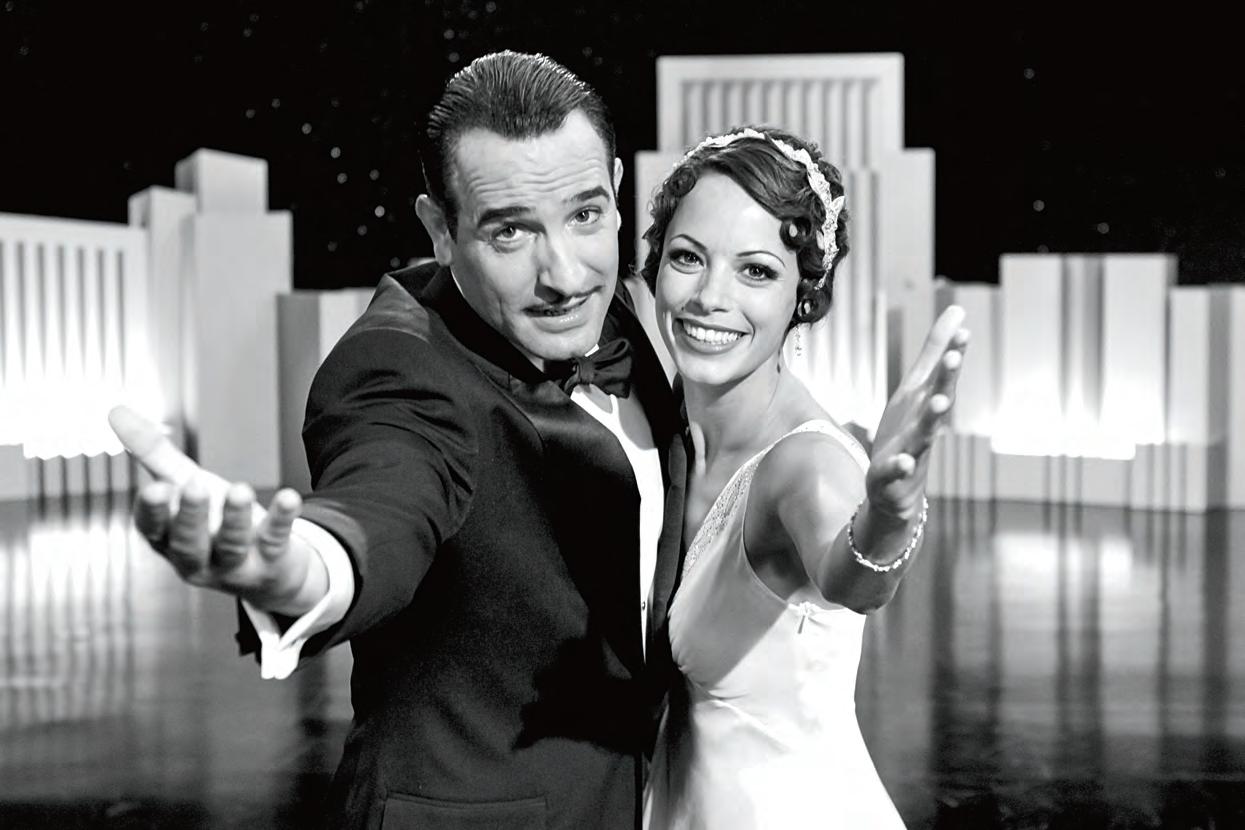
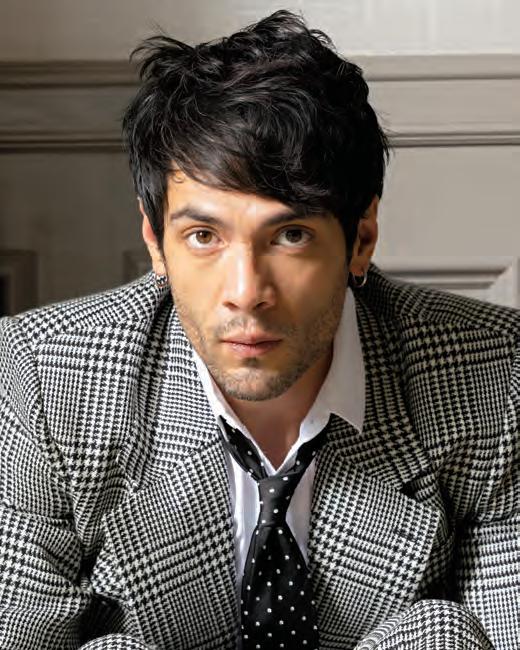
Diego Calva ‘The White Lotus
Nollywood & More ’


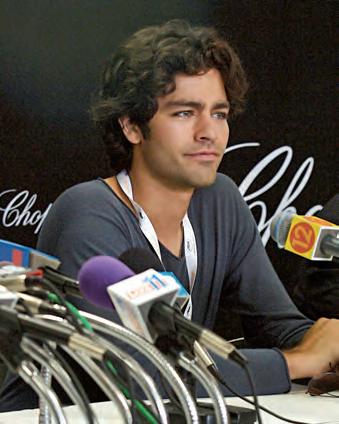
Our experts take a closer look at this year’s lineup (p 8). Meet the interpreters who make the cinematic world go round (p 12). A guide to Cannes-set movies (p 30). Why Hollywood isn’t premiering any of its tentpole films at the festival (p 32)
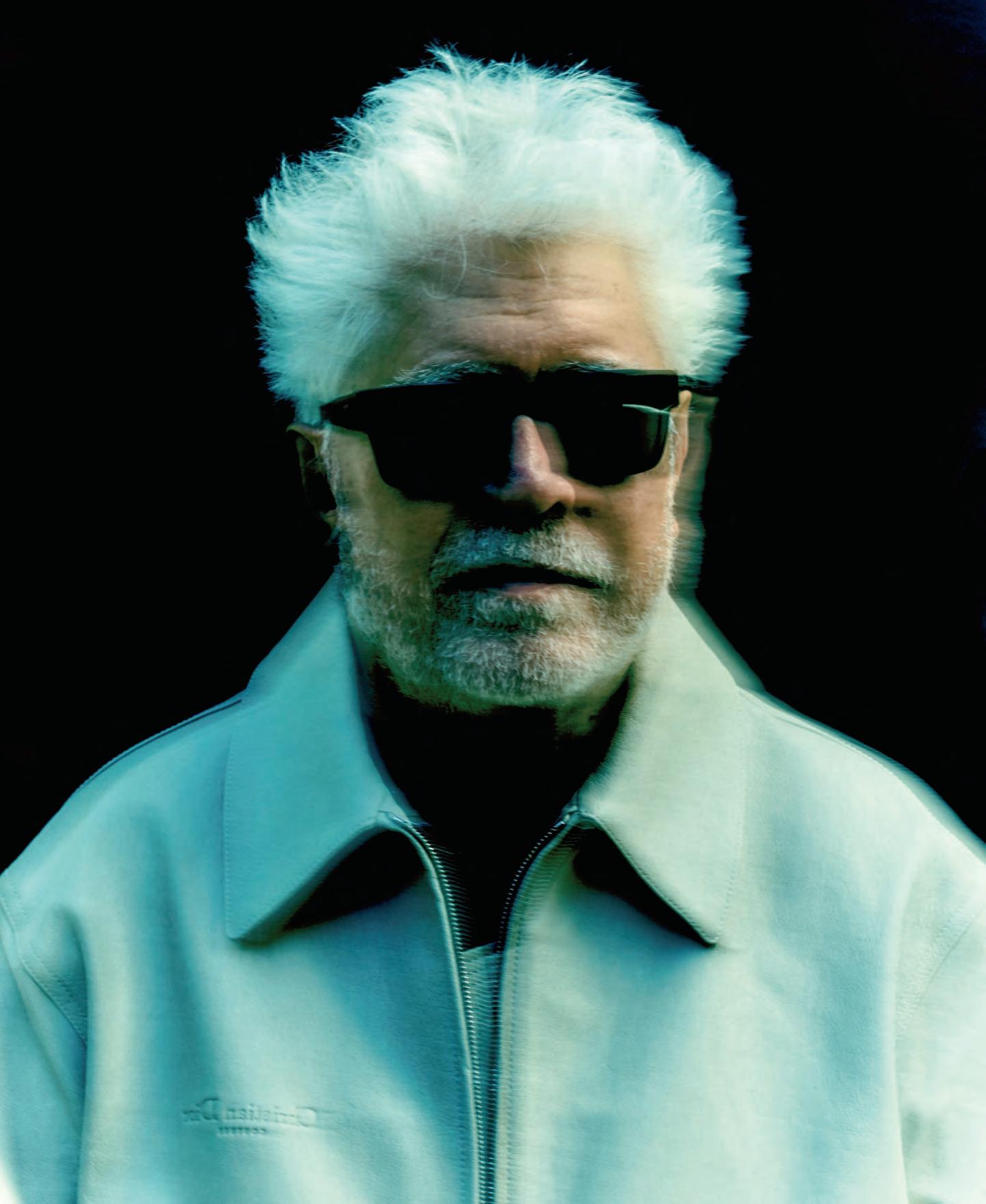
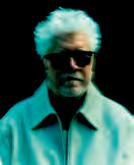
Spanish auteur Pedro Almodóvar talks about returning to Cannes with his latest film, “Bitter Christmas,” his festival rituals and how he measures success.
p24
“The White Lotus” executive producer David Bernad on what’s in store for Season 4 (p 40). Top casting directors explain why the search has gone global (p 41). How countries determine which productions get tax rebates (p 42)
EDITOR IN CHIEF
MATT BRENNAN
EDITORIAL
Columnist
GLENN WHIPP
Writers
JOSHUA ROTHKOPF
AMY NICHOLSON
COPY
Copy Chief
BLAKE HENNON
Copy Editor
JASON SANCHEZ
DESIGN
Senior Deputy Design Director
FAITH STAFFORD
Art Directors
JUDY PRYOR
JAMIE SHOLBERG
Designer AVERY FOX
PHOTO
Executive Director of Photography
KIM CHAPIN
Photo Editor
JEROME ADAMSTEIN
Photographers
JASON ARMOND CHRISTINA HOUSE
LA TIMES STUDIOS PRESIDENT
ANNA MAGZANYAN
ADVERTISING SALES
Vice President of Sales
HELYA ASKARI
KRISTEN BERKE
ERIC MA
Senior Sales Executives
JESSE BONNER
KRISTIN SANTOSUOSSO
Director, Sales Strategy
RATTANA EPLEY
Sales Project Manager
MELANIE CULLEN
Client Services and Systems
Advertising Director
SANDRA CARLOS
ADVERTISER MARKETING
Executive Vice President,
Client Solutions
MIKE KECHICHIAN
Marketing Director
DAVE PURDUE
Project Manager
HELEN CHANG
Sr. Content Strategist
ALAN LAGUARDIA
Content Strategist
DAVID CHEE
Analyst JULIA JONES
Designer MATTHEW FRANCO
AUDIENCE ENGAGEMENT
Assistant Editor, Audience Engagement
VANESSA FRANKO
Audience Engagement
Editor
DAVID VIRAMONTES
EDITION PLANNING AND OPERATIONS
JULIE BYER
JAVIER CHAVEZ
ELIZABETH GHRER-JONES
DAVE NOVOTNEY
MAURO RIVAS
KATRINA TEN
TIMMY YEE
THE ENVELOPE ROUNDTABLE VIDEOS
Producer
KEVIN HAULIHAN
Hosts
LORRAINE ALI
MARK OLSEN
YVONNE VILLARREAL
Editors
MICHAEL RAY ANDY VINER
THE ENVELOPE VIDEO PODCAST
Executive Producer
MATT BRENNAN
Production
JEFF AMLOTTE
MARK E. POTTS
Hosts
MARK OLSEN
YVONNE VILLARREAL
KELVIN WASHINGTON
PARTNERSHIPS
Executive Director, Partnerships
KATIE FILLINGAME
CONSUMER MARKETING AND CREATIVE SERVICES
Senior Director of Consumer Marketing
NIKOLE ATTERHOLM
Project Management, Creative Services
PATRICIA GARDINER
STUDIOS
Producer
KEVIN HAULIHAN
EVENTS
Vice President, Events and Sponsorship
KASEY CHAMPION
Associate Director
Event Production
DANIELLE DAVIS
Manager, Event Sales and Sponsorships
BRUNO CAVELIER
Associate Director
Event Programming
MATTIE SCHAFFER
Manager, Event Programming
CANDICE LEWIS
Events Manager
STRYKER MATTHEWS
Events Specialist
NICOLE FLORES
Executive Editor TERRY TANG
Creative Director & Deputy Managing Editor AMY KING Entertainment and Features Editor BRITTANY LEVINE BECKMAN










Looking ahead to this year’s fest — and back on 78 years of cinephilia on the Croisette
Critics’ Notebook p8
Press tour interpreters p12
Diego Calva p16
‘Entourage’ p20
Barbra Streisand p23
COVER STORY: Pedro Almodóvar p24
Cannes watch list p30
Hollywood stays home p32
Gold Standard p34
The Envelope May 12, 2026
Story By
Amy Nicholson and Joshua Rothkopf
Times journalists discuss the notable absence of American films in the Palme d’Or competition and which premieres they are most looking forward to
by Mel Haasch For The Times
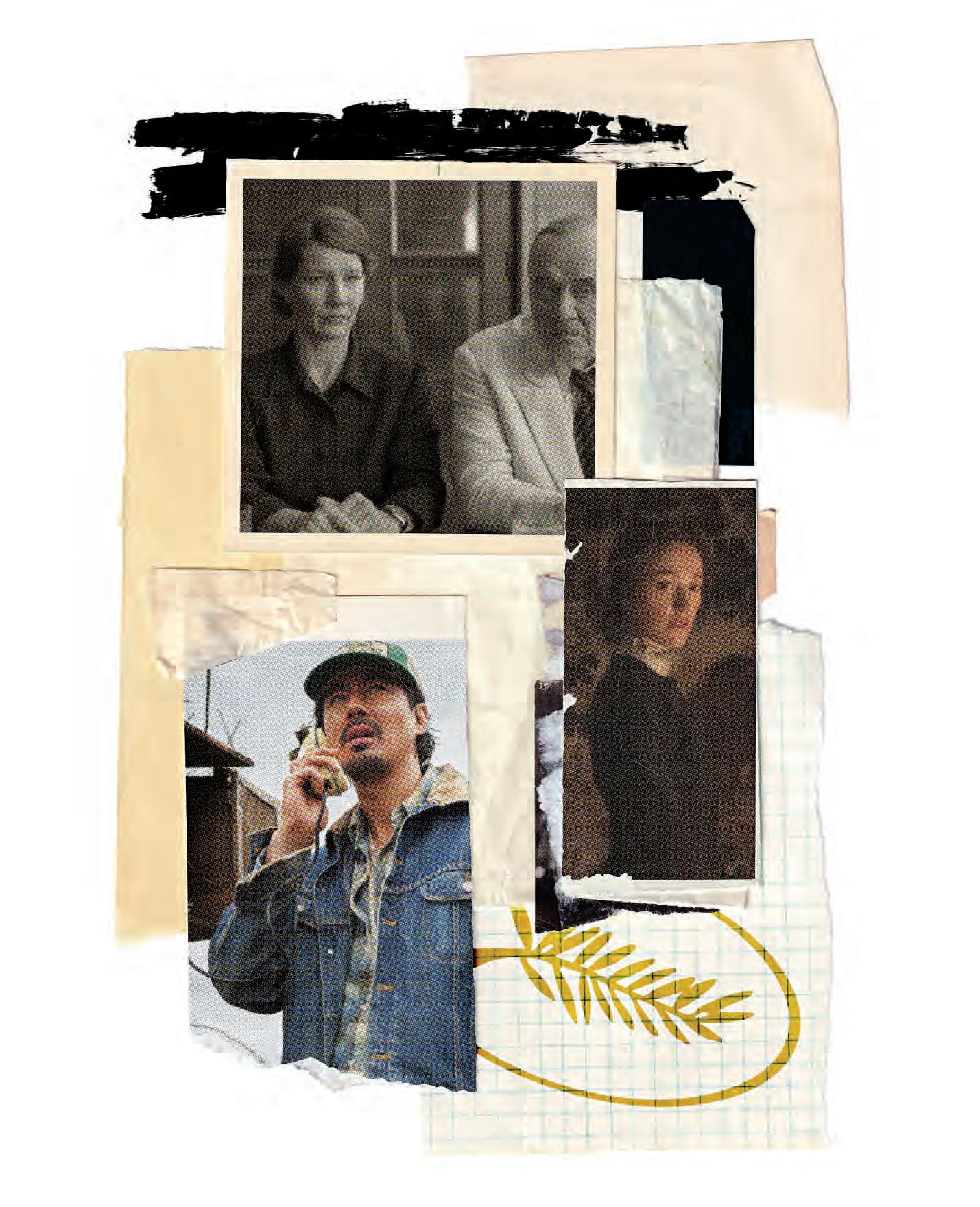
WE’RE EN ROUTE TO THE 79TH CANNES FILM Festival, which begins Tuesday and runs for another 10 days of manic movie watching, along with the slow, stunned walk of postscreening euphoria (or the opposite). Before taking in another edition of what is dependably the most significant cinema showcase in the world, Times film critic Amy Nicholson and film editor Joshua Rothkopf batted around some hopes and prejudgments — all sight unseen — of a lineup that’s sure to yield gold.
JOSHUA ROTHKOPF First, let’s talk about who’s not going to Cannes this year: American directors. Apart from Ira Sachs’ “The Man I Love” and James Gray’s late addition “Paper Tiger,” no U.S. films have been invited to compete for the Palme d’Or. This bucks a recent trend: Sean Baker world-premiered his “Anora” at Cannes in 2024 and, at least lately, the festival has
been the launching pad for some risky homegrown dares that I’ve loved, like Ari Aster’s future classic “Eddington.” You don’t even have Tom Cruise rappelling in for a “Mission: Impossible” gala.
I’m only semi-OK with this. I want Cannes to feel, at least for a week, like the galaxy-brained center of movie nerd-dom. A big dice-roll like Francis Ford Coppola’s
“Megalopolis” is definitely a part of that. My itch will be scratched, hopefully, by “Teenage Sex and Death at Camp Miasma,” the meta-horror latest from Jane Schoenbrun (“I Saw the TV Glow”), opening the Un Certain Regard section, which also includes American Jordan Firstman’s debut feature “Club Kid.” And Cannes has a way of surprising you from the margins. It’s where Demi Moore kicked off her gooey comeback with “The Substance.”
ButIlookatthisyear’sofficialposter—
Susan Sarandon and Geena Davis striking a steely pose from 1991’s “Thelma & Louise” — and can’t help but wonder if Hollywood has changed irrevocably. Thirty-five years ago, Ridley Scott’s feminist road movie made a splash on the Croisette, then opened four days later on a Memorial Day weekend to a strong box office and an awards run. Do we even get films like that now? Amy, do you think this year’s lineup says anything by its omissions?
AMY NICHOLSON Josh, I’m glad you whisked this conversation through the vel-
vet ropes and straight to that question of: Have American movies gotten worse since Cannes premiered “Kung Fu Panda” in 2008? The answer to that is oui, non and peut être. We aren’t making as many good movies as we used to, but our good movies are still excellent.
Perhaps last year was too American. In addition to Cruise conquering the Palais, it also boasted premieres by Spike Lee, Wes Anderson, Kristen Stewart, Richard Linklater,KellyReichardtandScarlettJohansson. Maybe there are political reasons our country is unpopular. Or — and this is the optimistic spin — perhaps the strong Oscars showing of other Cannes titles like “Sentimental Value” and “The Secret Agent” is a signal that our own tastes have evolved. After all, not one of the Hollywood-made 2025 titles I’ve mentioned above even got to this March’s Academy Awards. (Although “Eddington” should have.)
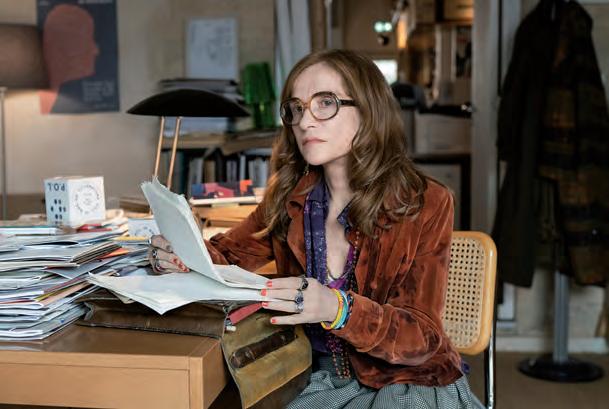
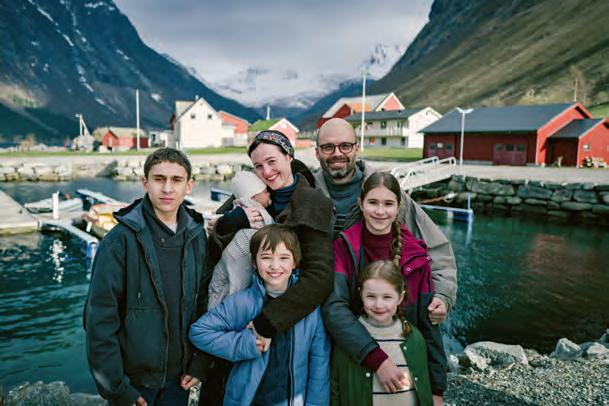
I’ve yet to swoon for a Jane Schoenbrun film, but only because their fixations like “Buffy the Vampire Slayer” fandom are so hyperspecific that they miss me by millimeters. But I’ll probably watch “Teenage Sex and Death at Camp Miasma”atleasttwice to see if that’s the one that cracks through. Schoenbrun’s work is fascinating even if, so far, it’s not for me. Spitballing from afar, the Un Certain Regard title that’s seized my attention is Zachary Wigon’s “Victorian Psycho,” a gothic horror film starring Maika Monroe and Thomasin McKenzie. Wigon’s most recent film, “Sanctuary,” was a twisty thriller about sexualpoliticswithMargaret Qualley and Christopher Abbott that deserved to make more of a splash. Maybe this will. And I have to admit, the actor I’m most curious to see in it is 13-year-old Jacobi Jupe, who was the best thing in “Hamnet.”
Speaking of: Any first thoughts on which movies we’ll be talking about for the next10 months?
ROTHKOPF So hard to say! Even when a movie outright wins the Palme, I’m usually that guy wondering: But does it have legs to go all the way? For the record, last year’s winner, Jafar Panahi’s politically inflamed abduction drama “It Was Just an Accident,” ended up with two Oscar nominations and no wins.
I can only offer possibilities. Take an awards-saturated director, Asghar Farhadi (“A Separation,” “The Salesman”), a revered French cast (Isabelle Huppert, Vincent Cassel and, sure, Catherine Deneuve) and put them in a script about several people stoically surviving the aftermath of terrorism — specifically the November 2015 attacks in Paris — and you get “Parallel Tales.” Here’s another one: Ryusuke Hamaguchi, whose roving “Drive My Car” surprised everyone, is back with a sad-sounding movie about terminal illness, “All of a Sudden.” I have a hard time imagining those two movies won’t be in the conversation.
But this is what my heart says: Na Hong-jin is a Korean moviemaker who’s only getting better. His excruciating debut, 2008’s “The Chaser,” felt like what you’d come up with if you only watched David Fincher’s “Seven” for a year and spoke to no one. A little later, he upped his game considerably with “The Wailing,” which adds ghosts, demons, dead crows and an extremely literal title. I couldn’t get it out of my head. Now he’s back with a sci-fi film called “Hope” which also, apparently, has a tiger on the loose.
It would delight me to no end if that were the movie we ended up talking about for months. Do you see hints of a mighty performance anywhere in these tea leaves?
NICHOLSON Hmmm … well, there’s no bigger hint than the name Sandra Hüller in the cast list of Paweł Pawlikowski’s “Fatherland.”
I was nuts about Pawlikowski’s 2013 “Ida,” about a young nun on a destructive road trip through her family’s history, and 2018’s “Cold War,” a tumultuous romance between two artists in a time of propaganda. “Ida” won the Academy Award for international film; “Cold War” was nominated for (and lost) three Oscars including director and cinematography. If I was going to pop over to Monaco and place a bet on next year’s heavyweight contender, “Fatherland” would be it.
Another one I’ve got my eyes on is Gray’s “Paper Tiger,” a Russian mafia movie with Adam Driver, Johansson and Miles Teller. Gray tends to get great performances out of people — Gwyneth Paltrow and Joaquin Phoenix in “Two Lovers” is an-
other personal favorite— and it’s been ages since I’ve seen Teller play a role that measures up to his potential. (His turn as the Gloved One’s lawyer in “Michael” doesn’t, although he’s perfectly fine in it.) Likewise, Driver and Johansson have four nominations between them and no wins. Maybe this will turn their luck around?
Meanwhile, Sebastian Stan has been steadily building an eclectic, challenging resume with movies like “A Different Man,” “The Apprentice,” “Fresh,” heck, even “Pam & Tommy.” It’s a relief he took time away from “Avengers: Doomsday” to shoot “Fjord” with Romanian director Cristian Mungiu (“4 Months, 3 Weeks and 2 Days”) and au courant Oscar darling Renate Reinsve. Speaking of Stan’s Bucky Barnes, is there any hope that anything in the program might break out of the art house and into the mainstream? I’ll even be content with something that has the sizzle of last year’s “Sirāt,” which you and I both dug.
ROTHKOPF “Sirāt” may just be one of those once-in-a-lifetime experiences — I still remember the room (and my chest) vibrating. Will any of these new movies feel like bass-heavy raves?
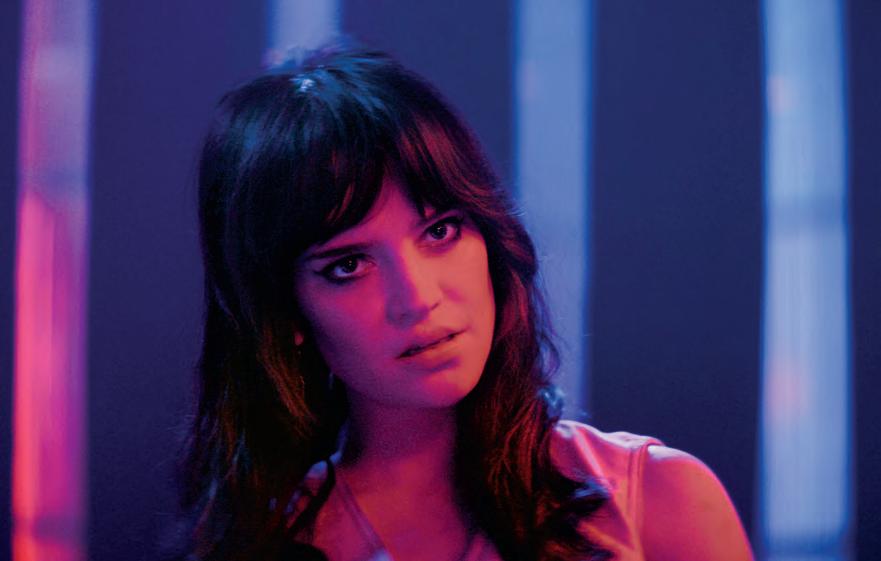
It still strikes me as improbable that a talent as weird as Denmark’s Nicolas Winding Refn somehow found his way to making 2011’s L.A.-at-night thriller “Drive,” a movie that already feels essential to this city’s psychology (scorpion jacket optional). Refn is back at Cannes with his first feature in a decade, “Her Private Hell,”
↑Sophie Thatcher in director Nicolas Winding Refn’s latest film, “Her Private Hell.”
which stars a bunch of hot young things and takes place in a futuristic Tokyo. Sounds like all the elements are there.
And Neon, the company that’s won a stunning six Palmes in a row, has already bought “The Unknown,” the mysterious latest from Arthur Harari (who won a screenplay Oscar with his partner Justine Trier for “Anatomy of a Fall”). If anyone can drag an art-house phenomenon into the mainstream, it’s Léa Seydoux, who pockets “Dune” and James Bond movies whenever she slinks on screen.
What’s the craziest-sounding movie that you can’t wait to don formal attire to see?
NICHOLSON For me, the answer is always Quentin Dupieux.
I’ve been a fan of Dupieux’s before he made movies like “Rubber” and “Deerskin,” back when he was the techno artist “Mr. Oizo” who directed his own music videos (with puppets!) that played on heavy rotation on Euro MTV while I was studying abroad. “Full Phil” is his first English-language comedy since 2013’s bizarro “Wrong Cops” and his most star-laden one since, well, ever, with a cast top-lined by Woody Harrelson and Stewart as a father and daughter on a Parisian vacation.
I’m not sure if I’ll be seeing “Full Phil” in a ballgown or blue jeans and I don’t really care. I just can’t wait to see it. Yes, it’s a pity more Hollywood movies aren’t flying to France. But I’m glad we are — and I can’t wait to report back on what’ll be worth debating until spring 2027.
“All of a Sudden” Ryusuke Hamaguchi
“Amarga Navidad” (Bitter Christmas)
Pedro Almodóvar
“Another Day”
Jeanne Herry
“The Birthday Party”
Léa Mysius
“La Bola Negra”
Javier Calvo and Javier Ambrossi
“Coward”
Lukas Dhont
“Fatherland”
Paweł Pawlikowski
“Fjord”
Cristian Mungiu
“Gentle Monster”
Marie Kreutzer
“Das Geträumte Abenteuer”
Valeska Grisebach
“Hope”
Na Hong-Jin
“The Man I Love” Ira Sachs
“A Man of His Time”
Emmanuel Marre
“Minotaur” Andrey Zvyagintsev
“Moulin”
László Nemes
“Nagi Notes” Koji Fukada
“Paper Tiger”
James Gray
“Parallel Tales”
Asghar Farhadi
“El Ser Querido” (The Beloved)
Rodrigo Sorogoyen
“Sheep in the Box” Hirokazu Kore-eda
“The Unknown”
Arthur Harari
“A Woman’s Life”
Charline Bourgeois-Tacquet
Aside from breaking down language barriers, interpreters often act as the public face for many filmmakers and end up forming bonds with clients
YOU MAY SEE THEM ONstage during a Q&A or at an awards show speaking someoneelse’swords,yet you rarely learn their names. As Americans more readily embrace world cinema and non-English languages, The Envelope spokewithsixinterpretersaboutthecomplexities of a role that has become increasingly visible and valuable — and, for a change, turned the spotlight on their underappreciated work.

Growing up in Argentina, Tidona never imagined she’d work in Hollywood. Moving to Los Angeles at 23, she initially served as a clinical interpreter and court interpreter. But then she was asked to assist Argentine actor Griselda Siciliani during the promotional campaign for Alejandro González Iñárritu’s 2022 dark comedy “Bardo.” Suddenly, she found herself onstage at the TCL Chinese Theatre.
“I think it seats a thousand people,” she recalls. “There’s very powerful lights. It’s
packed. I’m not an actress, I’m not trained to be onstage.” But Tidona wasn’t nervous — she relished the experience. “I was like, ‘I’d love to do more of this — I think I’m good at it.’”
In subsequent years, she’s interpreted for directors like Rodrigo Moreno and the Oscar-nominated sound team from “Sirāt.” Before interpreting for film professionals, she had never been whisked to places like the Chateau Marmont. “It’s like you’re a fly on the wall, especially if you’re riding in the car with the talent,” says Tidona. “But you have to be invisible. Your job doesn’t begin until they start giving an interview. You’re just, literally, along for the ride. They let their guard down — they’re being their natural selves. But I am used to interpreting for big corporations, people that are in jail for homicide. So whatever happens, their secrets are safe with me.”
This Oscar season, Dayani was a fixture alongside Jafar Panahi at Q&As and awards events. But their first meeting, on the way to the Telluride Film Festival, was a bit awkward.
“He was not in a good mood,” says Dayani, who received her PhD from NYU’s department of Middle Eastern and Islamic studies. “He did not know who I am. I don’t think he trusted that I could do the job right. It took some time for us.”
Luckily, Dayani had already interpreted for Iranian filmmakers Asghar Farhadi and Mohammad Rasoulof, and quickly earned Panahi’s respect. But because she worked so closely with him for months, and because both have family in Iran, it was hard not to get emotionally overwhelmed by the director’s harrowing stories of being tortured by the regime, which he mentioned frequently while promoting “It Was Just an Accident.”
“I’ve cried so many times with Panahi,” admits Dayani, who spoke to The Envelope about 12 hours before the United States began its attacks on Iran. “Putting all these words that I hear in first-person narrative — saying, ‘I was tortured, I was beaten’ — this really does affect you.”
Her first encounter with Panahi may have been strained, but in time they bonded while absorbing constant terrible news from Iran. “He has been a great source of comfort. I feel very lucky that we are on the same political spectrum. He has been such a strong presence [by] just being there.”
Born and raised in Taiwan, Cheng is the former chair of the speech, communication and theatre arts department at Borough of Manhattan Community College.
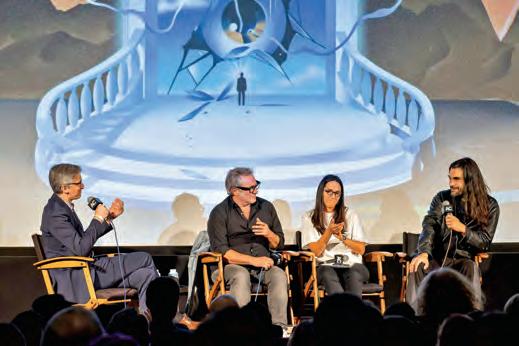
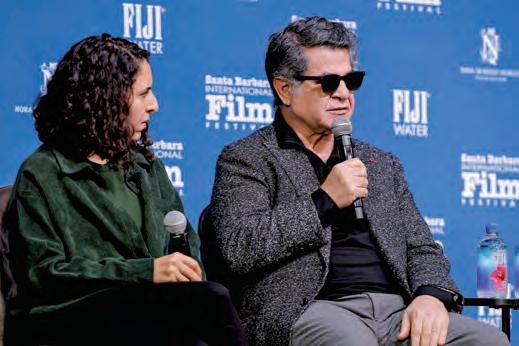

His parents wanted him to be a lawyer, but he was drawn to language and the arts. And once he started interpreting for filmmakers, he was hooked.
“I enjoy exploring the arts and cultural scenesinNewYorkCity,”hesays.“Ifeltthat maybe this is something I can do to help out the filmmakers from Taiwan and China.” Cheng started volunteering as an interpreter at local cultural institutions. Soon, he
was working with revered figures such as Hou Hsiao-hsien, Jia Zhangke andBi Gan. “He’s such a private person,” Cheng says of Bi, whom he’s known since the director’s first feature, 2015’s “Kaili Blues.” “I understand that this is something that is not natural to him — to really talk about his process and be so open about what’s in his head. It is a process of helping him get comfortable — it’s getting him out of his shell.”
Being the onstage voice of esteemed auteurs is a privilege Cheng takes seriously, especially when a director’s fans come up to him.
“I was at Cannes,” Cheng recalls. “Someone tapped me on the shoulder and said, ‘Are you the interpreter for Jia Zhangke? I recognize your voice. For me, you are Jia Zhangke.’ People recognize me, not because of me. I was very flattered, but I also understand the responsibility. This is beyond just interpretation — I see myself as his spokesperson.”
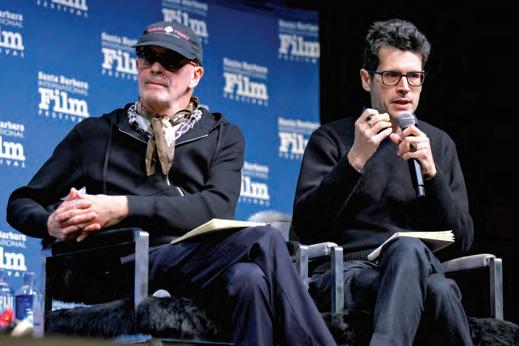

Sometimes, the best way to demonstrate your interpreter bona fides is by getting along with a filmmaker who’s notorious for being difficult. Such is the case with Elliott, a former correspondent for Cahiers du Cinéma, who got a call in 2010.
“I was living in New York. I was mostly working in theater and as a print translator,” he recalls. “But I had friends in film, and I was known as a guy who speaks [French and English]. And for some reason, they couldn’t find an interpreter for Claude Lanzmann. They brought me in with literally no interpreting experience to interpret for Claude for three or four days.”
The late director of the monumental Holocaust documentary “Shoah” had been famously combative with journalists. “All I know is that my experience with him was very positive,” Elliott says. “I met every publicist in the New York art-house ecosystem, and they all were like, ‘Whoa, this guy can deal with Claude, and Claude likes him!’ It’s not like the next day I was the go-to interpreter, but it led to other jobs.”
Since then, Elliott has interpreted for French icons such as Claire Denis and Jacques Audiard. He considers his work to be comparable to a performance.
“I’ve never considered myself a professional actor, but I’ve acted a fair amount,” Elliott says. “Interpreting has a lot of qualities of performing in a play. What I think is really key is an absolute attention to the moment. It’s being present. It’s absolute focus and presence.”
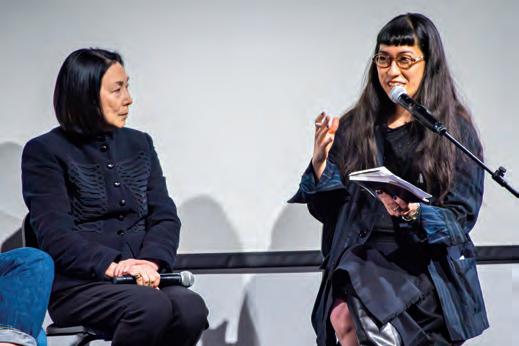
“A lot of people go into [interpreting] because they love language,” says Uchiyama, a visual artist based in Tokyo and New York. “I just really like people. I’m a very social person.”
Uchiyama, who has interpreted for JapanesedirectorssuchasRyusukeHamaguchi, used to think she had stage fright — even though she once fronted a punk band.
“I was in my early 20s, late teens, and I would just get really drunk and perform,” she says, laughing. “I didn’t make the connection that it had to do with my confi-
dence level. So when I began interpreting, it became clear that interpreting is such a flow-state activity. You’re not spending time thinking about yourself — you’re so focused on what the person is saying and your note-taking, and then deciphering your own notes, that there’s no room for nervousness.”
Uchiyama, who loved Japanese horror when she was young, now relishes the opportunity to work with genre masters like Kiyoshi Kurosawa. For this photographer and video artist, interpreting is just another form of art-making.
“That desire to collaborate connects to interpretation,” she explains. “What makes it fun for me is that I get to know filmmakers and their process. I get to be in the middle of this exciting moment, which is where an audience or a moderator asking the question really engages in someone’s art. I appreciate it so much from an artist’s perspective.”
Marlee Matlin recently celebrated 40 years of working with Jack Jason, her ASL interpreter who is also her producing partner. Jason, who grew up with Deaf parents, lived in the Bay Area as a coordinator of interpreter services when he was asked in 1986 to interpret for Matlin, who would be appearing with boyfriend William Hurt at the Oscars for his lead actor nomination for “Kiss of the Spider Woman.” The following year, she and Jason returned to the ceremony, where she won lead actress for “Children of a Lesser God.” Matlin went to the podium, while Jason stood out of frame, microphone in hand, to interpret for her.
“It was very emotional for me, having Deaf parents and seeing a Deaf person win an Oscar,” Jason recalls. “You can hear a bit of my voice cracking.”
Unlike spoken-language interpreters, ASL interpreters speak concurrently with their client’s signing, creating unique challenges. (“[The interpreting] has to be fast,” explains Jason. “It can’t be delayed.”) Prominently featured in the 2025 documentary “Marlee Matlin: Not Alone Anymore,” he is among the most well-known interpreters, tirelessly advocating alongside Matlin for the Deaf community. For decades, his voice has been associated with the actor, producer and director. All these years later, he still finds that dynamic fascinating and amusing.
“If Marlee’s doing an interview live on the red carpet, it’s almost as if I’m being interviewed, but I’m not being interviewed. At the same time, because we have such a long relationship together, people have a tendency to want to turn to me and say, ‘Hi, Jack.’ And Marlee’s joking, ‘Hey, wait a minute, I’m the Oscar winner!’”

MichaelBarker
Co-FounderandCo-President, SonyPicturesClassics

Featuring TomBernard
Co-FounderandCo-President, SonyPicturesClassics
MattBrennan



DylanLeiner
EVPofAcquisitions,Production andBusinessAffairs, SonyPicturesClassics





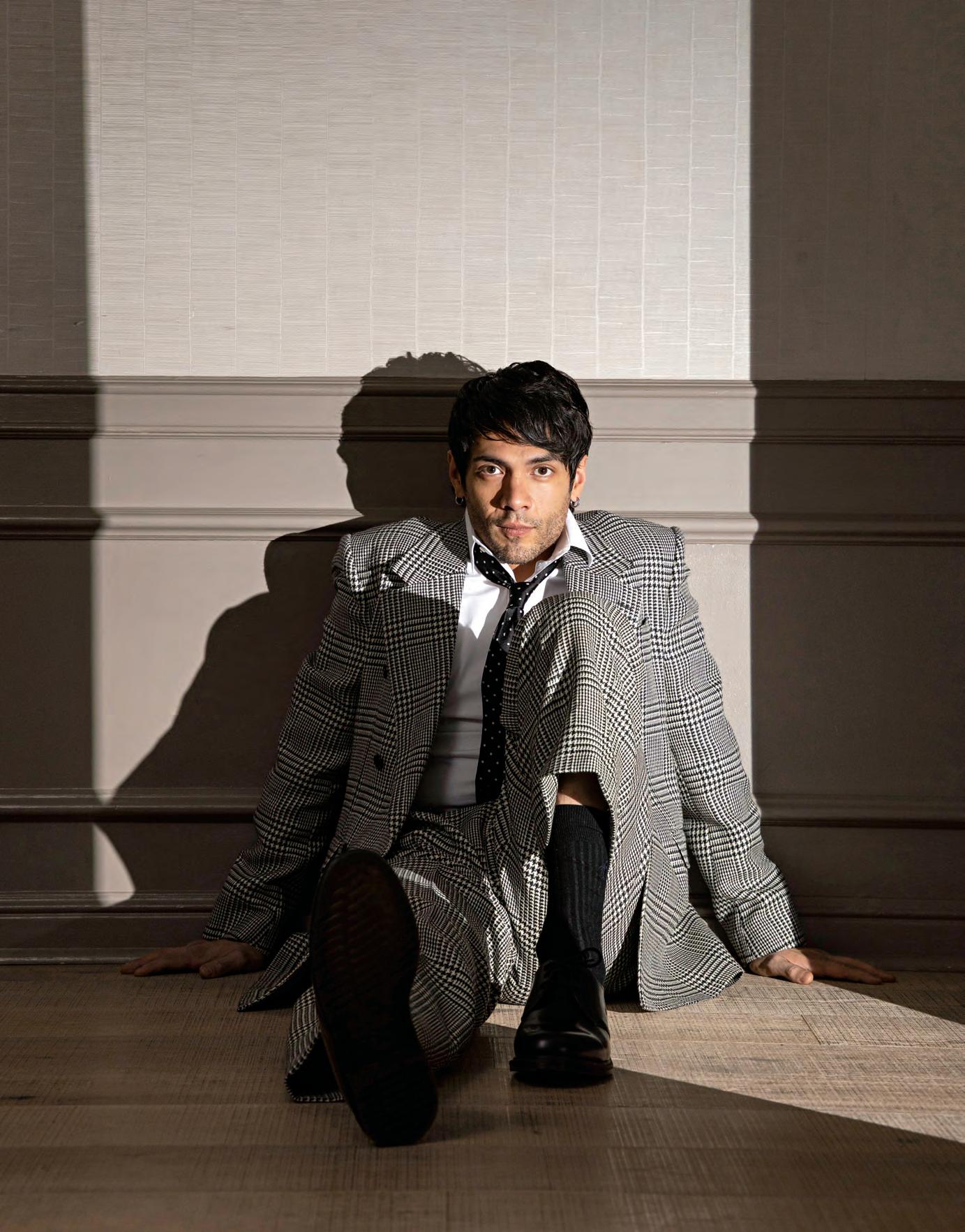
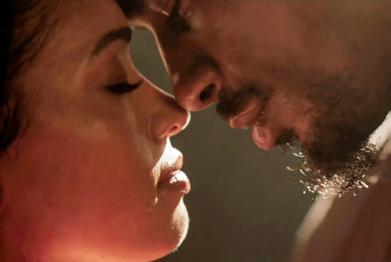
The actor is making his Cannes debut this year with roles in ‘Her Private Hell’ and ‘Club Kid,’ marking a full-circle moment
DIEGO CALVA JOKES
that his mother, Laura, almost had a heart attack when Brad Pitt called her by her name at the 2023 Golden Globes. That night the Mexican actor was nominated for his performance as immigrant dreamer Manny Torres in “Babylon,” a 1920s-set dramedy about Hollywood mythmaking and excess. Calva still cherishes that night. ¶ “My mom started chatting with [Quentin] Tarantino. We started talking with Salma Hayek. Austin Butler asked her to dance with him. His mother passed away when he was in his 20s, so seeing me there with my mother at the Golden Globes stirred up some emotion in him, I imagine,” Calva tells me in Spanish while sitting at a Beverly Hills hotel.
Since that dazzling evening, Calva, 34, has capitalized on the spotlight that “Babylon,” directed by Oscar winner Damien Chazelle, put on his burgeoning career.
Calva had only starred in a few TV series and one film, the queer Mexican indie “I Promise You Anarchy,” before breaking into Hollywood with Chazelle’s film.
“Everything that happened with ‘Babylon’ was like losing my virginity, ” he says.
Back then, a career that combined substantial work abroad with continued roles in his native Mexico scarcely seemed possible; now, with two films premiering at this year’s Cannes Film Festival — Nicolas Winding Refn’s “Her Private Hell” and Jordan Firstman’s “Club Kid” — and a role in Prime Video’s Emmy contender “The Night Manager,” Calva’s promising path seems secure. And his Golden Globes date is still soaking in every moment.
“My mom sent me an article where it said the last Mexican actor to have two films simultaneously at the festival
was the master Gael García Bernal,” he says excitedly.
“Club Kid,” which plays like a queer take on“BigDaddy,”cametoCalvabywayofhis and Firstman’s mutual friend Olmo Schnabel, director Julian Schnabel’s son. Calva portrays Oscar, a therapist who winds up romanticallyinvolvedwithFirstman’scharacter, a gay man who learns he fathered a son and now must take care of him. “Oscar is an important character for the plot, but small in terms of screen time,” Calva says.
Meanwhile, in Winding Refn’s futuristic thriller, Calva embodies a famous actor within the film’s universe who crosses paths with the protagonist, played by Sophie Thatcher. Over the course of the shoot, Calva says, a love story developed between the two characters that was not present when he first read the screenplay.
“As we were making the film, Nick would say, ‘Your character was originally only in for two scenes; now he’s in six.’ He directs with music playing and he asks for
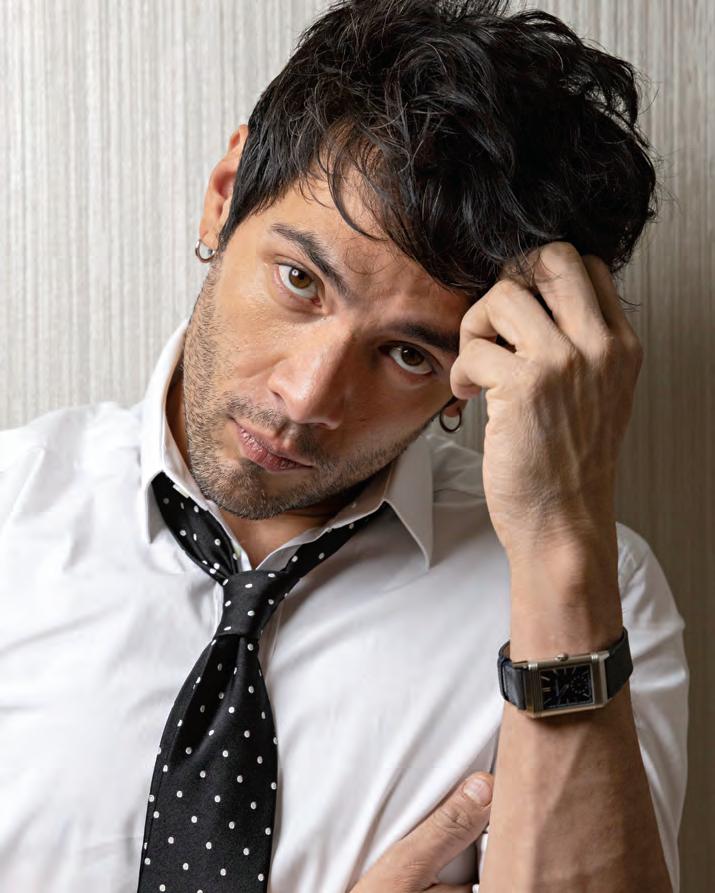
‘IF THEY CAN’T TAKE OFF MY FACE, WHY WOULD THEY TAKE OFF MYMEXICAN ACCENT?’
Diego Calva
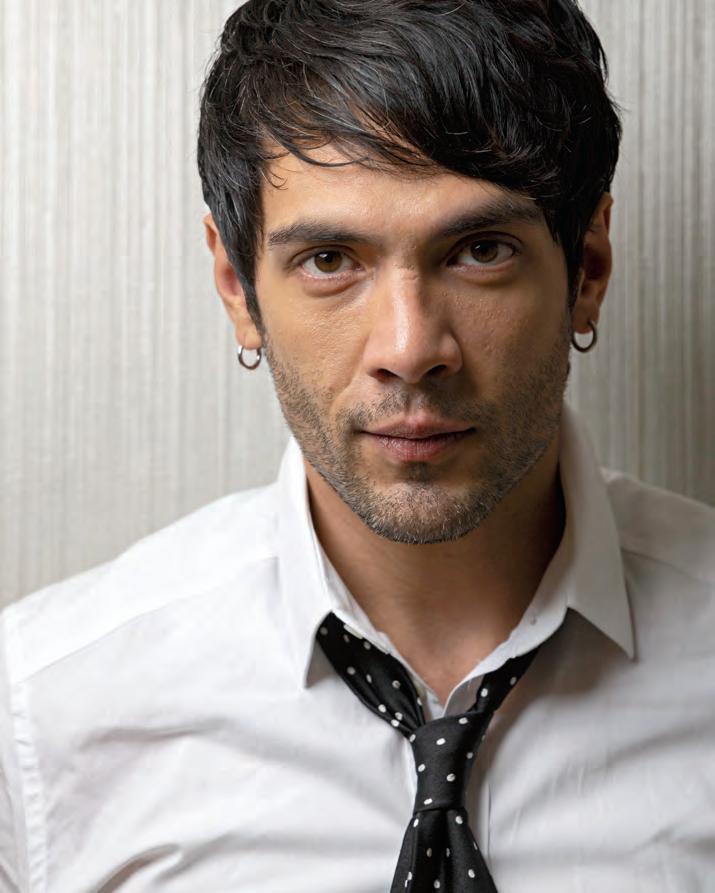
very explicit things like, ‘Look to the right, count to three, breathe, and look straight ahead,’” Calva explains. “And when you see it on the monitor, though I don’t actually like watching myself on the monitor, you see Nicolas’ technique at work; it was almost Bressonian in its approach.”
That keen eye for style is no accident: Once upon a time, after the festival run of “I Promise You Anarchy,” Calva planned to quit acting and study film directing. Those aspirations are on hold for the time being. “As long as acting continues to open up paths for me to get to know myself, I will keep devoting myself to it,” he says. “When the time comes to direct, I will stop acting completely for a while so that I can transition to directing.”
While he focuses on his onscreen endeavors, Calva remains hyperconscious of the intersection of his characters with his Mexican identity. He embraced Teddy Dos Santos, the seductive drug lord and arms dealer he plays opposite Tom Hid-
dleston in Season 2 of the “The Night Manager,” because he understood the character as an antihero whose arc and background speak to larger themes rather than a cliched bad hombre.
“I found it very interesting to tell a story in which the colonialists really are the villains, and where Latin Americans are corrupted into participating in a colonialist scheme of economic and political destabilization that’s interventionist in nature,” he says.
Calva asked the production to write Teddy as a Colombian Mexican man who had strong ties to Mexico so that his accent would make sense. “If they are choosing you, I think you have the right to bring the characters a little closer to who you are,” he says. Though he’s been asked to try to neutralize his accent in English, he’s not eager to acquiesce.
“Why should my characters not have my accent? If they can’t take off my face, why would they take off my Mexican ac-
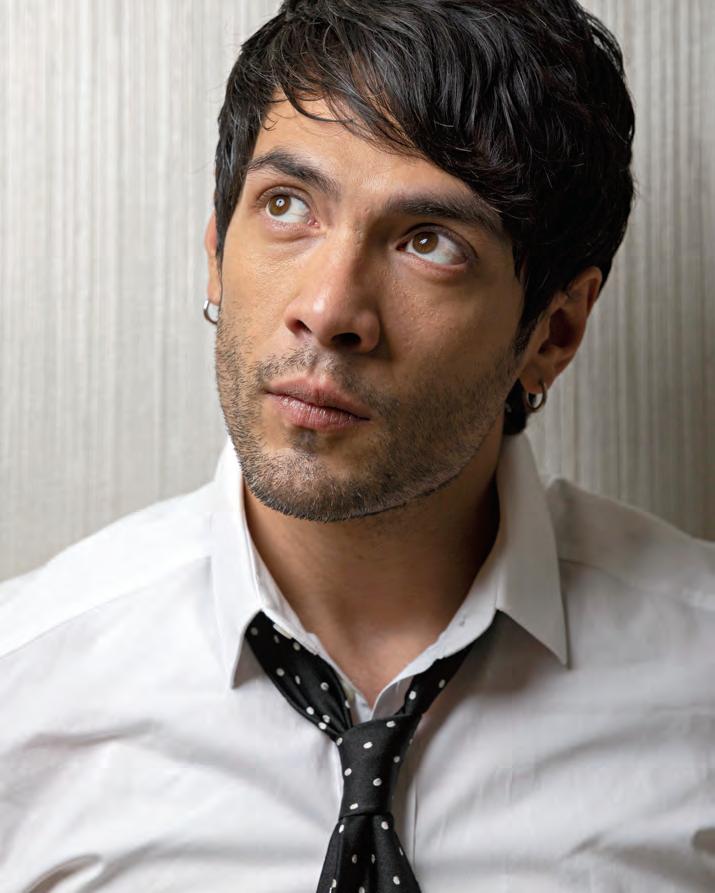
cent?” he says. “I can practice so that they understand me better in English, but not erase my Mexican accent.”
Although his life has turned into a globe-trotting affair, Calva’s permanent residence remains in Mexico City. That’s where he feels the most normal, he says. In fact, he gets recognized more in L.A. than in his hometown now. “In Mexico, people ask me my name before asking what I do. They ask how I’m doing before asking what movie I’m working on,” Calva explains. “My friends don’t care whether I have seven Golden Globes or if I’m not working at all. To them, I’m just Diego. They scold me and they help me just the same.”
In his line of work, however, Hollywood still plays an important role. “Los Angeles is like a toxic ex-girlfriend. I always have to come back to see her again. I love her with all my heart. I just don’t know if we can be together for more than two months,” Calva adds.
Having a presence in both the Mexican and U.S. industries gives him greater perspective, Calva thinks, particularly as it relates to auditions. Whenever he shoots a self-tape to vie for a part, he asks for feedback from both of his teams, the one back home and their stateside counterparts, to make an informed decision. “I’ve learned that the worst thing an actor can face is regret,” he says. “When you submit a video, you dwell on what you should have done or what you didn’t think of in the moment. You torture yourself — at least I do.”
Attending Cannes — his first time at the festival — is a full-circle moment for Calva. As a teen, he would rent movies from his local Blockbuster solely based on them having the Cannes laurels on the cover. Park Chan-wook’s “Oldboy” and Jim Jarmusch’s “Ghost Dog: The Way of the Samurai” were among his early Cannesapproved discoveries. “That’s how I started educating myself, by renting movies without knowing what they were,” he recalls.
“Not knowing the Cannes Film Festival is almost impossible,” he adds of the event’s global relevance. “Even my grandmother knows what the Cannes Film Festival is!”
High among Calva’s priorities while on the Croisette is meeting one of his cinematic idols, Spanish master Pedro Almodóvar, whose latest film, “Bitter Christmas,” is playing in the main competition. “If Almodóvar shakes my hand, I can die in peace,” he says. Nothing would please him more than turning the handshake into a collaboration down the line.
“I’m going to try to look as handsome as possible and make eyes at him all night long, because I consider him one of the mostinterestingdirectorsever,andIfirmly believe that an Almodóvar film would suit me well,” Calva says with a hopeful grin.

Story by Derek Lawrence
From blending in at the ‘Ocean’s 13’ premiere to partying with Bono, the cast and crew of the showbiz comedy look back on their iconic trip to the South of France
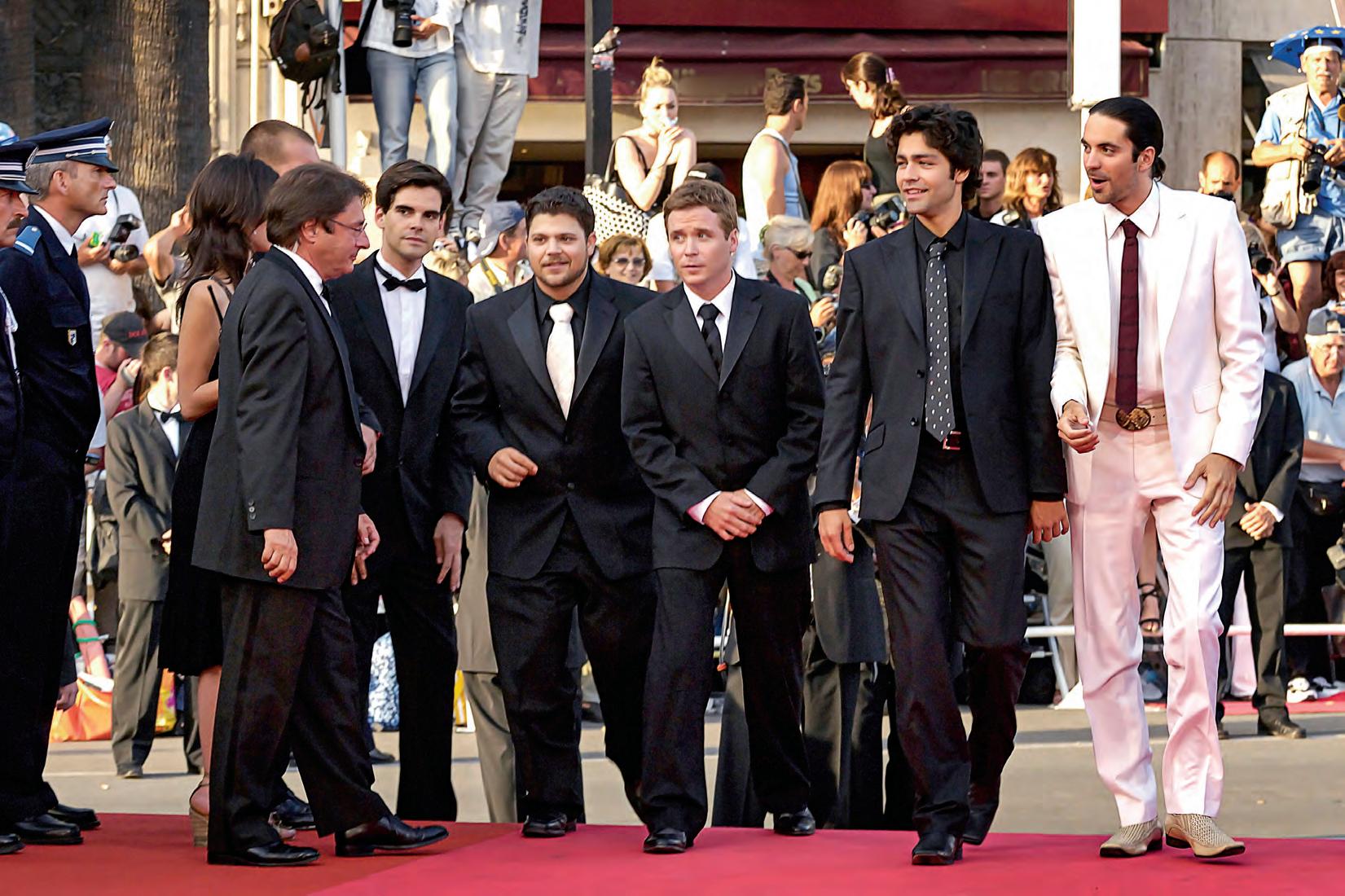
ON MAY 24, 2007, THE 60TH CANNES FILM FESTIVAL HOSTED THE star-studded premiere of “Ocean’s 13.” But the thousands clamoring for a glimpse of George Clooney, Matt Damon, Brad Pitt and Angelina Jolie were also unknowing background players in “Entourage’s” Season 4 finale, “The Cannes Kids.” ¶ HBO’s seminal bro comedy followed young movie star Vincent Chase (Adrian Grenier) and his friends as they navigated the glamorous Hollywood lifestyle, and, as Vince’s profile rose, so did the reach of “Entourage.” In Season 2, production went to the Sundance Film Festival, where Vince scored the lead of James Cameron’s next film, “Aquaman.” Instead of returning for the blockbuster’s sequel, Vince opts to pursue his passion project, the Pablo Escobar biopic “Medellin.” When it came time to unveil and sell “Medellin,” the “Entourage” team headed to the Croisette for a splashy premiere — or at least to steal one.
DOUG ELLIN (CREATOR, WRITER) My brain was never realistic; I’d come up with absurd things. My group just always made it happen.
WAYNE CARMONA (PRODUCER) At Sundance, I turned to Doug, “This is fantastic — what are you gonna do to top it?” Without missing a beat, he said, “Cannes.” All I could do was laugh.
ELLIN Part of me thought, “Obviously we’re not doing Cannes; we’ll get a theater, make it look like Cannes.” The more we dove in, we’re like, “Let’s try to go.”
JERRY FERRARA (“TURTLE”) I hadn’t left the country in my life, [so] I had to get a passport. Two nights before leaving, I’m like, I haven’t seen that passport in a minute. They sent PAs to ransack my house — it was gone. I don’t know what strings our producers pulled, but I went to the federal building hours before our flight and expedited a passport. One of the producers then held it while we traveled. [Laughs.]
KEVIN DILLON (“JOHNNY DRAMA”) Just the fact that we were going to Cannes was so shocking to me. They’re gonna take us to the South of France for a TV show? Nobody did stuff like that.
Multiple scenes were cheated back in Los Angeles, but, over three days, director Mark Mylod (“Succession”) and company brought their shooting — and partying — to the busy, celebrity-filled streets of Cannes.
RHYS COIRO (“BILLY WALSH”) The show was a mind-bending immersion into celebrity, glitz and glamour, that, for a young actor, was pretty heady. And Cannes was an exaggerated version.
GARY B. GOLDMAN (FIRST ASSISTANT DIRECTOR) We went a month before to scout, and there was the juxtaposition of being there when nothing was there to then seeing insane crowds, parties and beautiful people everywhere.
CARMONA Because we got permission late, we didn’t have the privilege of choosing accommodations.
DILLON Some people were unhappy, so production was scrambling for certain cast members.
ROB SWEENEY (DIRECTOR OF PHOTOGRAPHY) We had carte blanche to shoot anywhere in L.A. In France, it took more diplomacy … We always incorporated long
walk-and-talks, and we had a three-page scene as they’re landing at Cannes that involved some stairs, and the Steadicam operator we hired didn’t work out.
DILLON He fell on his ass.
COIRO It was a weird fever dream, where you’re jet-lagged, working, and then going to events.
ADRIAN GRENIER (“VINCENT CHASE”) The show was wish fulfillment, so we took it very seriously that we had to have fun.
ASSAF COHEN (“YAIR MARX”) They were the “Entourage” guys, and Adrian Gre-
nier can get into anything, so I got to go to some crazy boat parties.
GRENIER We didn’t wrap in time to go home, so I pulled wardrobe aside, “I’m gonna wear my outfit to this party.” She looked at me horrified, because that’s the only one of this shirt that we have. She goes, “[Sigh] No red wine!” I show up and red wine is the sponsor. I put on a napkin and I was able to drink [leaning forward]. We stayed out way too late, and I rolled right into work from the night before, in costume.
↑ The team from HBO’s “Entourage” was briefly allowed onto the Cannes red carpet in 2007 to film scenes for the show’s Season 4 finale.
FERRARA The last thing we were shooting was a bit where I’m on the phone. Everybody else was done, so we went out. It’s midnight, and I gotta be up in six hours; I couldn’t get a cab for an hour. Rhys came to me, “I walked home the other night, it’s only 35 minutes.” We began walking, straight up a mountain, and I smoked a lot of weed then, so I’m winded. He got us lost for four hours. It was the most tired I’ve ever been on a shoot.
DILLON We went to some nightclub and Bono was there. Our work was done, we
were going home the next day, and so partying with Bono was a nice way to finish.
FERRARA Not only did I not make it home for four hours, but I didn’t get to see Bono.
The reason for the show’s trip was to film the guys walking the festival’s iconic carpet and steps, and the producers negotiated a 10-minute window, for one take, at the end of the “Ocean’s 13” premiere.
CARMONA We were given permission to get on the runway after “Ocean’s” exited.
↗
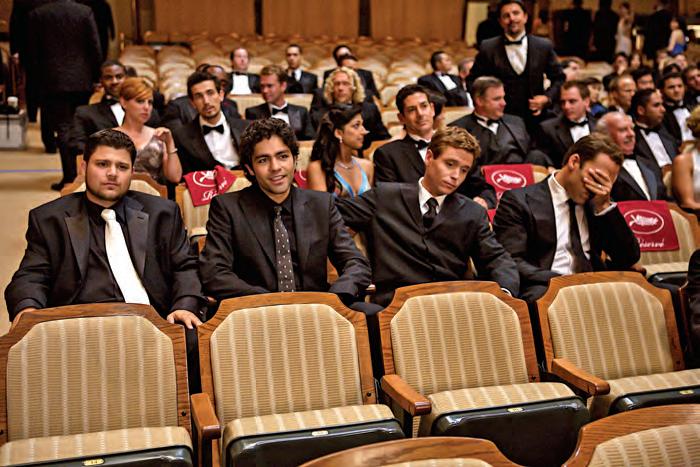
We took advantage of the production value, fans and photographers ... We heisted the heist movie.
ALI CHERKAOUI (FIRST ASSISTANT DIRECTOR) We begged the photographers to stay and do a photo call — they gave us three minutes.
FERRARA Photographers were like, “Which one of you is the famous guy?”
AMY WESTCOTT (COSTUME DESIGNER) I dressed the guys before they got in the limo, including Vince’s standard Converse low tops with his tux. Then I found out sneakers were forbidden on the carpet. We argued our case — we had established his sneaker in a previous scene — but they were vehement. I had to quickly get a dress shoe to him.
COHEN There are no retakes on this, so I knew whatever I do is gonna be in the final shot.
CARMONA It’s holding your breath and saying, “All right, here we go.” And it either worked or it didn’t.
COHEN Clooney, Pitt, they’re all there, and I don’t know if they were looking at us, “What the hell, they’re not part of ‘Ocean’s 13.’”
GOLDMAN As soon as those doors closed, I was to call action, and our cars would come forward. Damon and Pitt are about to go in, their hand is on the door, I’m like, “Here we go…” And I see them turn and run down the stairs to get another round of cheers. I was terrified that I cued the cars early. I don’t know how I kept my mouth shut for an extra second, but I did. They finally walked in, and I called action.
CARMONA The timing was so successful that the audience just kept cheering.
GOLDMAN We were nervous that people
could have imagined the [negative] critical response. There’s lots of elements that have people not realizing what they have, and that’s an exciting thing, to be at Cannes with people who believe they have a masterpiece … and then realizing it’s not.
FERRARA Towards the end of the series, people wanted us to get back to winning all the time, but this is an accurate take on the business. Cannes has a Vegas element: If tonight’s your lucky night, your life’s gonna change, and if not, you’re gonna crap out.
ELLIN “Medellin” was supposed to be great. I gave Mark full creativity on the trailer, and he pulled it off with no money, in a day and a half. The first time I saw the trailer, we were all so blown away that we’re like, “We have to figure out how to get into the Oscars.” The only feedback you could get then were HBOmessageboards,andtheyweretorching that trailer. They thought Adrian looked ridiculous in the makeup. So I’m like, “Now it’s gotta be a bomb.”
GRENIER Istill think it’s a hit.
were gonna leave as soon as “Ocean’s” left, so we handed out pictures of Vince.
FERRARA I remember being so nervous in that car. If I bumble that first line, we came to France for nothing. The minute I spit that out, then it just became fun.
COHEN I brought my camera, because I felt like Yair would do that. [Director] Brett Ratner was there, and it wasn’t scripted, but I went and put my arm around him and took a selfie of us, as Yair, in the shot.
CHERKAOUI Because we missed something, we asked the guys to walk the stairs again, but, very quickly, the Cannes people got nervous, like, “You have to clear the carpet.”
After a pre-premiere bidding war results in a $75-million sale, “Medellin” debuts to a round of boos, leading shady businessman Yair Marx to renege on the deal. It was quite the change from Ellin’s original plan.
ELLIN Everybody was telling me that my movie [1998’s “Kissing a Fool”] was the funniest movie ever, and based on test screenings, not one person at Universal
“Entourage” ran for another four seasons, followed by a 2015 film. But all involved view “The Cannes Kids” as a peak for the show.
SWEENEY It was one of the more audacious half-hour shoots, ever.
FERRARA It all happened in 72 hours, so I don’t know how it was pulled off.
CARMONA Between seasons, my agents sent me on interviews. Nobody wanted to hire me — they wanted the war stories: “What’s the secret? Because we don’t know how you did it.”
GOLDMAN It was the opportunity to be in the mecca of film festivals, and the gravity of what we were doing meant a lot.
FERRARA I can’t wait for my kids to grow up and ask, “When’s the first time you left the country?” I get to say, “We were shooting a hit HBO show on the red carpet at the Cannes Film Festival.”
GRENIER I wish I would’ve taken more time to just be in awe of how good we had it. I took a lot of it for granted. I was like, “Yeah, of course, it’s Vince’s lifestyle.” But I should have savored how f— lucky we were.
‘CANNES HAS A VEGAS ELEMENT: IF TONIGHT’S YOUR LUCKY NIGHT, YOUR LIFE’S GONNA CHANGE, AND IF NOT, YOU’RE GONNA CRAP OUT.’
Jerry Ferrara

2
Streisand won an Oscar for lead actress in 1969 for reprising her Broadway role in “Funny Girl,” and a second for original songin 1977 (“Evergreen” from “A Star Is Born”).
3
Other nominations came for acting(“The Way We Were”), song (“I Finally Found Someone” from “The Mirror Has Two Faces”) and best picture (“The Prince of Tides”).
7
“Tides” received seven nominations in 1992, but Streisand’s directing was snubbed despite a Directors Guild of America nomination.
1
In 1992, only one woman (Lina Wertmüller) had ever been nominated for directing.
62
Streisand received her 48th Grammy nomination in 2025 (for the album “The Secret of Life: Partners, Volume 2”), 62 years after her first.
8-for-48
ButherGrammywinning percentage (16.7%) is far less than her Oscar percentage (40%). She might be to the Grammys what Meryl Streep (3-for-21) is to the Academy Awards.
44%
Streisand’s highest majorawards percentage is at the Primetime Emmys: She’s four for nine, with most nominations for musical specials. (She also has a Daytime Emmy.)
Story by Carla Meyer
On May 23, Barbra Streisand, 84, will receive an honorary Palme d’Or — the latest accolade for the singer, actor, director and producer, who first received major awards attention six decades ago. But her collection of statuettes is smaller than you might assume given her cultural stature.
Streisand remains short of EGOTstatus: Her 1970 “Star of the Decade” Tony was noncompetitive.
The Spanish auteur sounds off about refusing Saudi money, the sorely apolitical Oscars and the self-criticism of his new film ‘Bitter Christmas’
Story by GLENN WHIPP • Photographs by SHAYAN ASGHARNIA
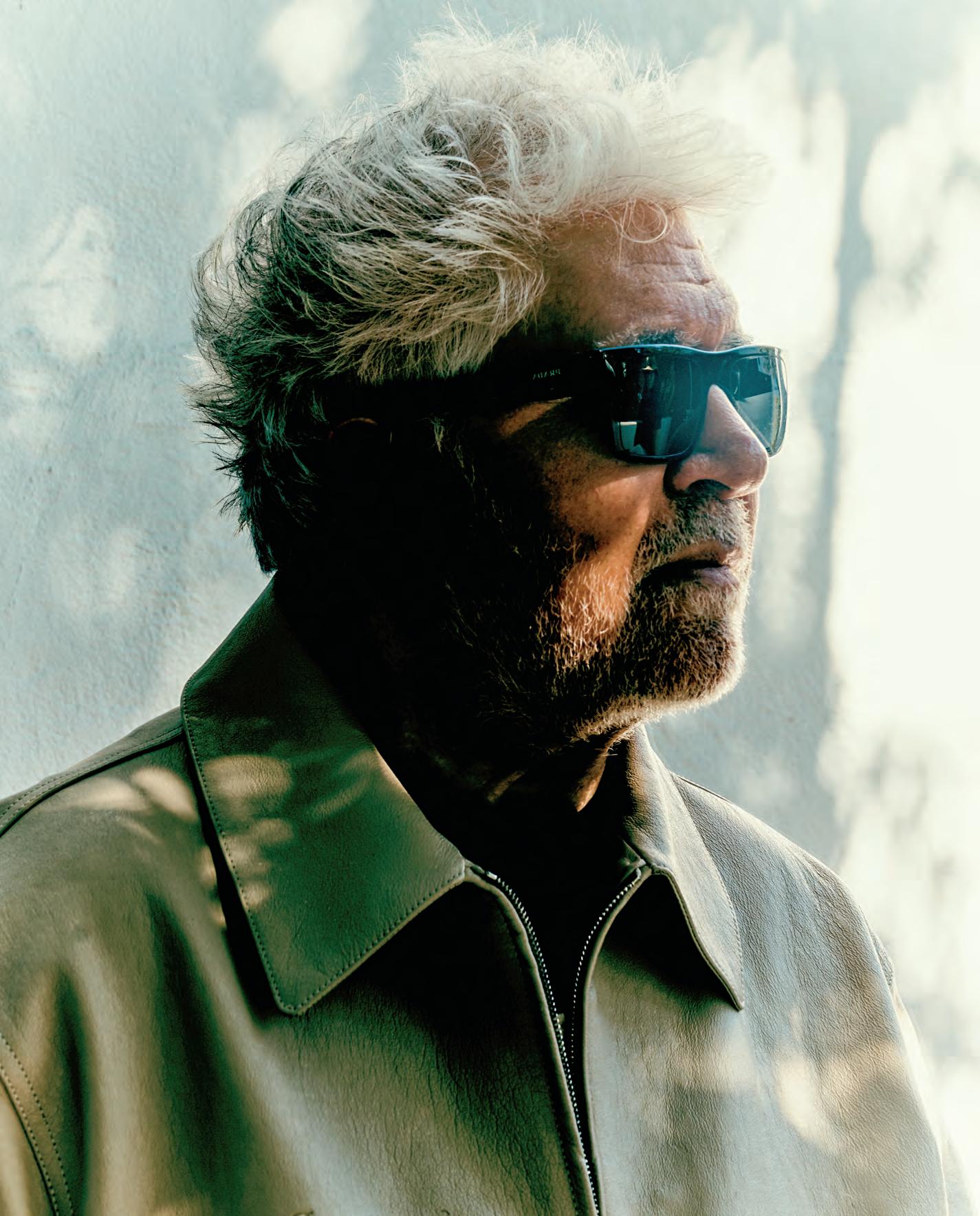
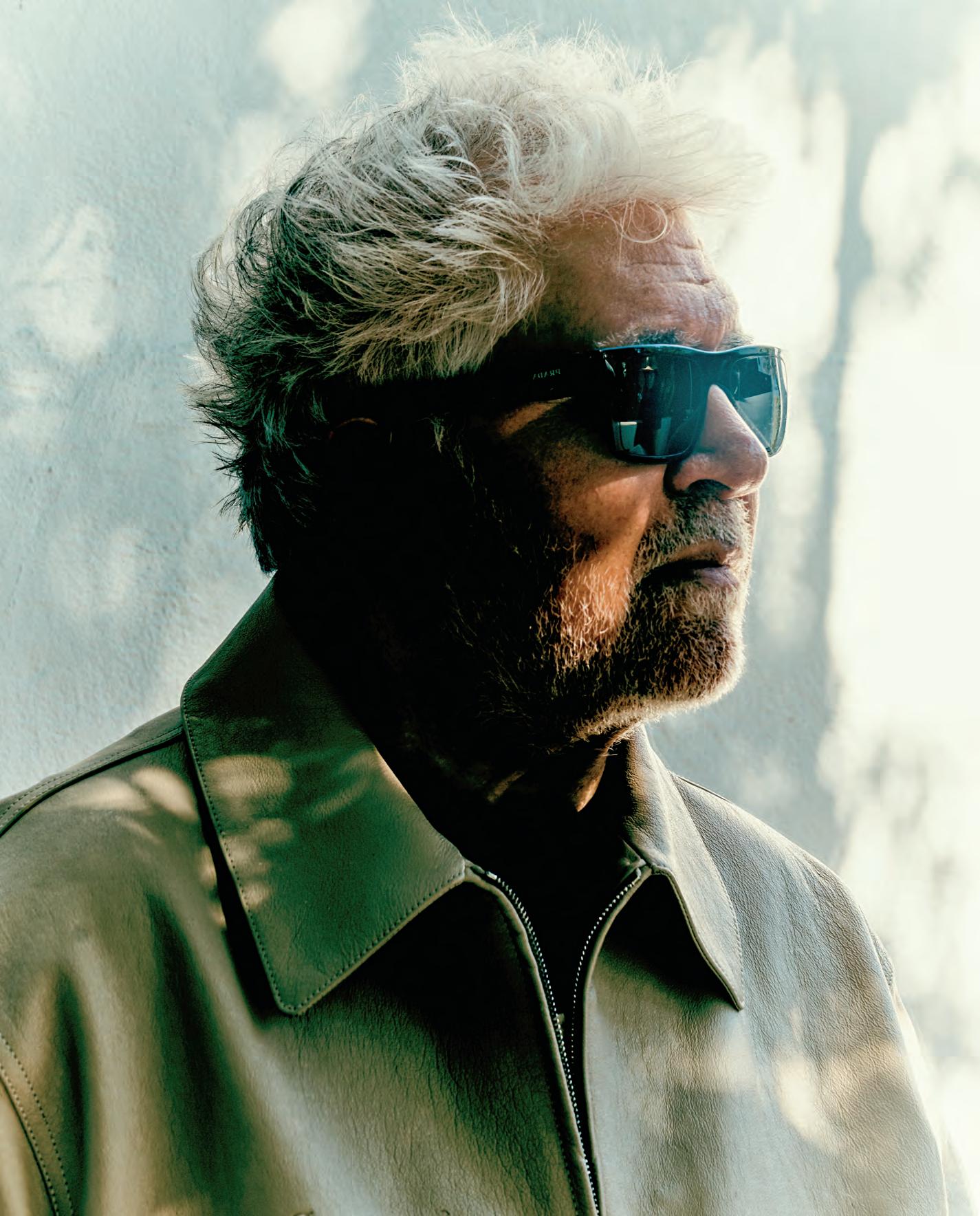
Pedro Almodóvar didn’t know the finer points of film festival standing ovations when he first showed a movie in competition at Cannes in 1999. As the credits began to roll for his acclaimed melodrama “All About My Mother,” the audience inside the Grand Théâtre Lumière rose and applauded. The acclamation continued to build, and the Spanish auteurwas overcome with gratitude — for a few moments. ¶ But after about five minutes of cheering and clapping, Almodóvar didn’t know what to do. He’s not a filmmaker given to false modesty, but how long can you bask in that kind of adoration? You can only smile and wave and clasp your hands for so long. Finally, he motioned the audience to stop, like, “OK. OK. Enough. Let’s go have dinner and a drink.” ¶ “Big mistake,” Almodóvar tells me, laughing. “[Actor] Marisa Paredes leaned over and told me, ‘Never stop an ovation!’ I didn’t have the experience and didn’t know the number of minutes of an ovation is very important and counted. For me, five minutes was more than enough. It’s humbling.” ¶ Almodóvar will be bringing his new movie, “Bitter Christmas,” to Cannes this year, his seventh competition appearance, a remarkable run that includes masterworks like “Volver,” “Broken Embraces” and “Pain and Glory.” Another film, the dark, audacious drama “Bad Education,” opened the festival in 2004, earning so much acclaim (and, yes, another long ovation) that Quentin Tarantino, serving as jury president that year, told Almodóvar, “Why are you not in competition? This is a f— masterpiece! I would give you the award!”
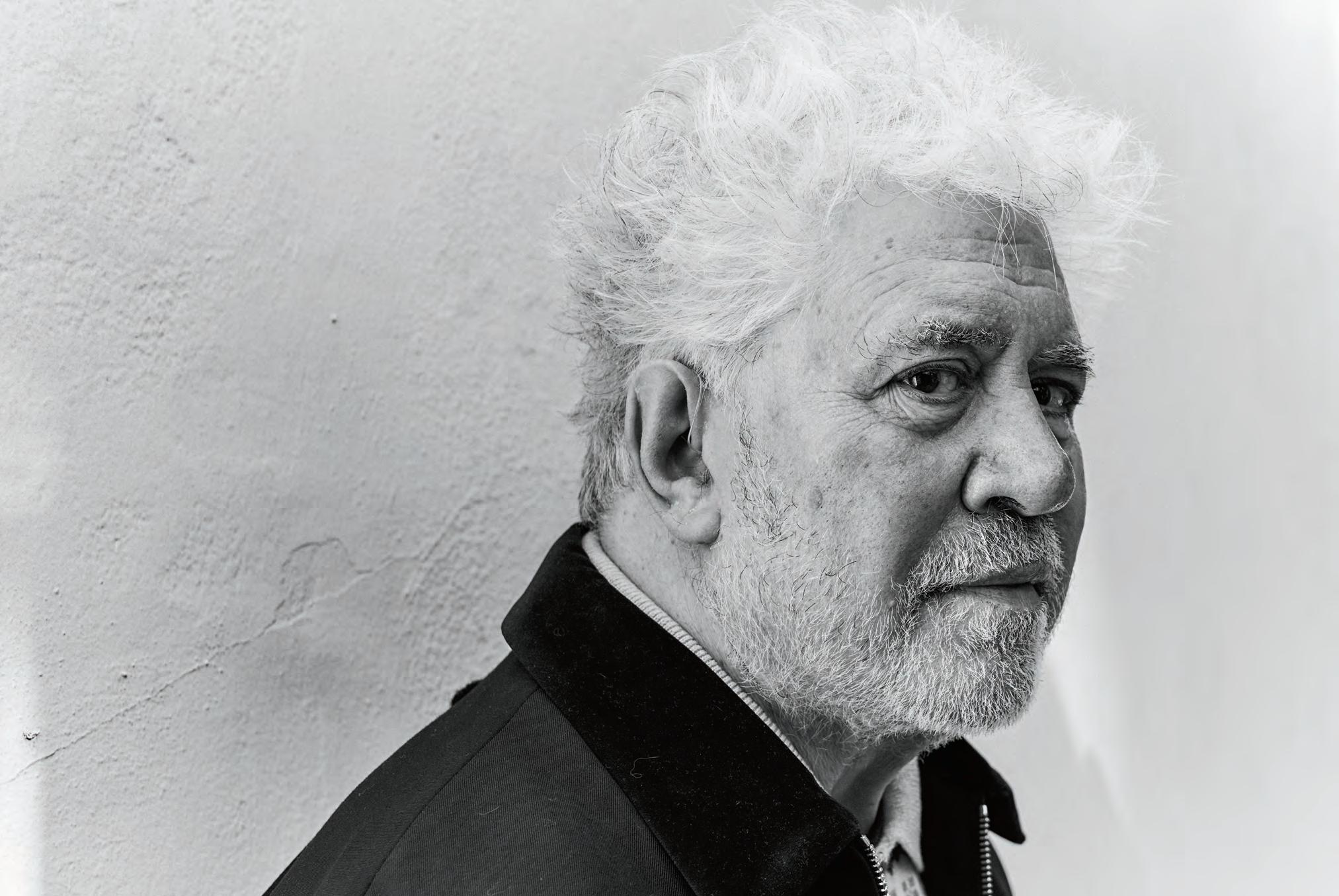
As it stands, Almodóvar’s films have a celebrated history at Cannes. “All About My Mother” earned him an honor for directing; “Volver” won screenplay and a collective actress prize for its cast in 2006; and frequent collaborator Antonio Banderas won for his lead turn in 2019’s “Pain and Glory.”
No Palme d’Or — yet. But at 76, Almodóvar shows no signs of slowing down or creative stagnation.
“Bitter Christmas,” which opened in Spain in March, is an elegantly structured, self-aware movie about artistry, following Raul, a filmmaker struggling to finish a screenplay about a cult directordealing with migraines and panic attacks as she attempts to jump-start her stalled career. The movie toggles between the two narra-
tives, slyly exploring the ways creators plunder the lives of those they know in the quest for a good story.
Almodóvar says it’s the film “where I’ve been cruelest with myself.”
“I was looking at my own creative process and asking questions about inspiration,” Almodóvar says, talking via Zoom
from his Madrid home. “I had a little bit of fun doing it.”
Almodóvar is seated behind his desk, wearing a crisp white T-shirt under a tan chore coat. It’s late afternoon, and the sun warmly filters through the windows of the room, a space he calls his “sanctuary,” the place he has written his last 15 movies. Behindhimisawallofbookshelves,theclosest one housing two Oscars, a British Film Academy prize and the Golden Lion he won at the 2024 Venice Film Festival for his first English-language feature, “The Room Next Door.” The prizes surround a framed photo of his beloved mother, Francisca Caballero.
“I don’t need awards,” Almodóvar says, “but they are here, protecting me over my shoulder.”
“You’d be hard-pressed to find many filmmakers that have had the run of quality that he has,” says Michael Barker, co-president and co-founder of Sony Pictures Classics, Almodóvar’s long-standing North American distribution partner. “Like [Jean] Renoir in the ’30s and ’40s, he’s really one of the masters, someone who continues to make films that are consistently smart and also really entertaining.”
Over the years, Almodóvar has developed rituals to help him navigate Cannes. Some have gone by the wayside, like the now-closed restaurant on the beach that served the best bouillabaisse. Other traditions, fortunately, remain intact.
“I feel trapped in a tuxedo, like I have claustrophobia,” Almodóvar says, hugging his body as if he’s wearing a straitjacket. “So dressing up before the red carpet, my brother, my nephews, some friends will help. It’s an intimate moment you share with loved ones, this ritual of getting dressed for the ceremony.”
“The other ritualistic moment,” he continues, “is ascending those red stairs that lead up to the grand Palais. There’s a long hallway there where I’ve met people who have later become my friends, people like Tilda Swinton and Jeanne Moreau. And then you have that touching moment
when you emerge from that hallway and take your first step into the theater and you receive one of the warmest welcomes you will ever receive in your life. They haven’t even seen the film and already they are showering you with love.”
It’s not a stretch to think that “Bitter Christmas” will earn the same warm reception when it plays at the festival. The film takes its title from an achingly beautiful ranchera by the late Mexican singer Chavela Vargas, a friend of Almodóvar’s. When the song plays in the movie (and, yes, it’s during Christmas), it prompts one character to alter the course of her life.
“Songs are miraculous in the sense that they can seem to talk to the person who’s listening,” Almodóvar says. “When that song plays, my film becomes a kind of musical, and in musicals it’s possible that a song changes someone.”
Like Stanley Kubrick in “Eyes Wide Shut,” Almodóvar uses the season’s festive lights to contrast the turmoil the film’s characters feel inside. He says he understands their melancholy, as he finds Christmas depressing and annually looks forward to its end.
“I felt that even as a child,” Almodóvar says. “I don’t believe in the things that Christmas celebrates, so these moments of huge happiness leave me very melancholy. Also, I live alone, and these festive moments, where people are gathering on the streets, make me feel lonely. I don’t have any familial obligations necessarily and work is interrupted, which is hard on me. Sometimes I will start writing, almost desperately, just to fill up the time. I’m bound in my home in solitude.”
“Bitter Christmas” contains a couple of sharp notes on the economics of movies today, with Raul refusing a lucrative offer to appear at a film festival in Qatar, saying, “not everything has a price.” Almodóvar has found himself in a similar position, turning down an overture from a Saudi festival. (“I am almost embarrassed to say how much they were offering me,” he says.)
For Almodóvar, success is defined as much by what he can reject as the freedom to pursue what fulfills him.
“I will never have to become a character on a reality show in order to make ends meet,” Almodóvar says. “I have the luxury of saying no.”
Later in the movie, Raul’s former assistant critiques his script, suggesting he remove a subplot he took from her personal life.Cutitout,shesays,andgiveittoNetflix. They’ve always wanted to work with him.
“I don’t mean any offense toward Netflix,” Almodóvar says, noting that streaming platforms have created a lot of work in Spain and opportunities for directors. “Again, it’s a measure of my success that I can say no.”
Almodóvar has been asked about the Netflix reference often since “Bitter Christmas” opened in Spain.
“I think the reason people keep remarking on that line is that there’s a fear about Netflix and a generalized fear about criticizing the online platforms,” he says.
And you don’t have that fear, I ask.
“Not at all,” Almodóvar answers quickly. “I don’t have many fears. In a generalized Spanish sense, here we’re not afraid to call things for what they are. We have a government that has called Gaza a genocide and the Spanish people in general are not afraid to call these wars out for what they are.”
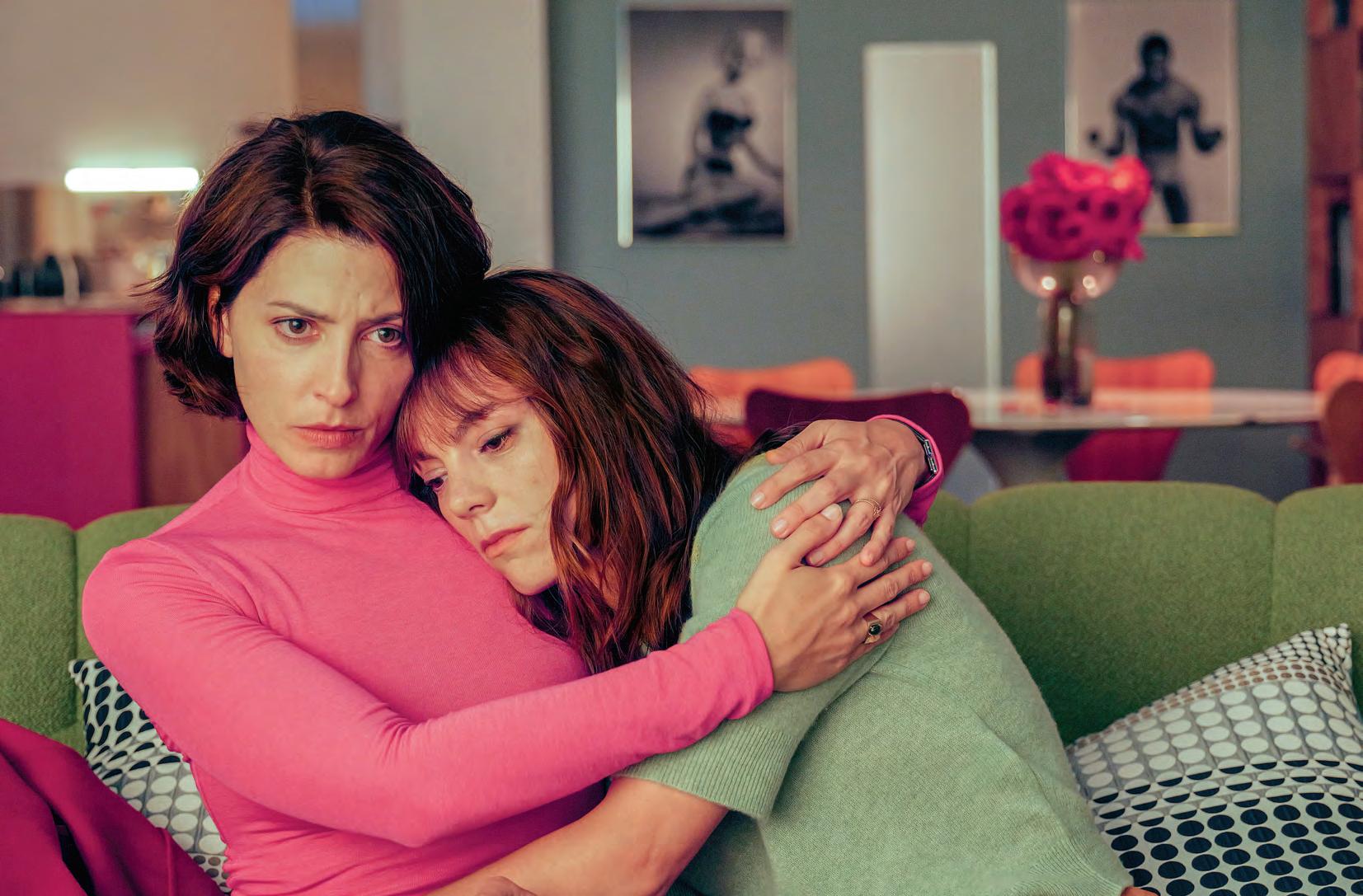
→ Antonia San Juan, left, and Cecilia Roth in “All About My Mother.”
→ Gael García Bernal in “Bad Education.”
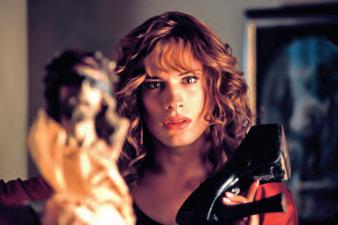
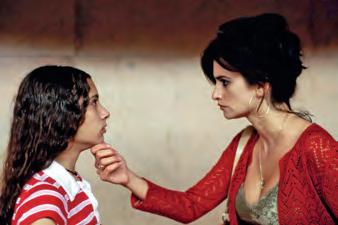
→ Yohana Cobo, left, and Penélope Cruz in “Volver.”
Accepting the Chaplin Award at New York’s Lincoln Center last year, Almodóvar demonstrated that spirit, saying that he didn’t know if it was appropriate to come to a country “ruled by a narcissistic authority, who doesn’t respect human rights” and later declaring that Donald Trump would go down in history as a “catastrophe.”
Almodóvar says he felt obliged to say something, but also notes that he can return to Spain where he lives and works.
“That makes it easier for me to be clear in the moment,” he says. “I’m a foreigner.”
“You know, I’m not really blaming anyone in particular, but it was quite notable watching the Oscar telecast where there were not many protests against the war or against Trump,” Almodóvar continues. “Maybe he wasn’t the only one, but the only real example I can remember came from a European, a friend of mine, Javier Bardem, who did directly say, ‘Free Palestine.’”
“People are obviously very frightened. The U.S. is not a democracy right now. Some people say it’s maybe an imperfect democracy, but I really don’t think the U.S. is a democracy right now. The heartbreaking and ironic thing is that democracy has given rise, through the proper, right voting mechanism, to this kind of totalitarian regime. And it’s both a paradox and it’s also incredibly sad.”
Get in on the action with these films that showcase the glitz and glamour of the storied festival
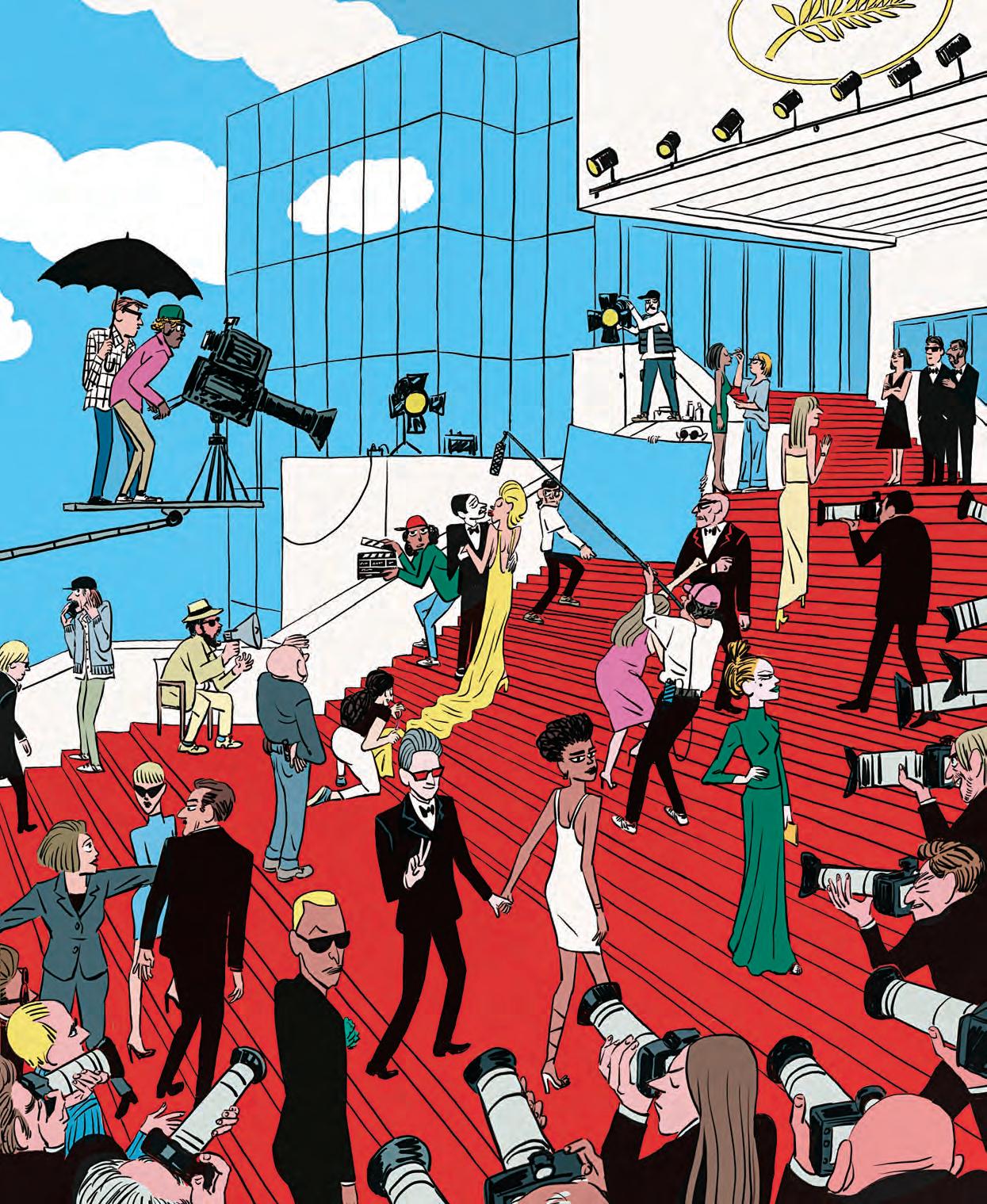
ALTHOUGH QUITE A FEW MOVIES HAVE TAKEN PLACE against the whirl of the Cannes Film Festival, only a handful have been shot within sanctioned festival spaces — often because of artistic, logistical and financial constraints. Most films have instead relied on resourceful camerawork, creative license and shrewd editing to bring an authentic, you-are-there quality to footage lensed mainly in and around Cannes, including iconic festival exteriors and the attendant bustle. ¶ Meanwhile, some productions have chosen to re-create their “official” festival scenes somewhere else entirely. Case in point: Barry Levinson’s 2008 Tinseltown satire “What Just Happened,” which saw Hollywood’s former Kodak Theatre (now the Dolby Theatre) and the Cal State Northridge campus doubling for the film’s pivotal Cannes premiere sequence. ¶ Let’s flash back to an array of movies set at the festival, and the mix of approaches taken to capture their Cannes-centric moments.
This frothy tale of an idealistic American filmmaker (Keith Carradine) who falls for the wife (Monica Vitti) of a powerful Italian producer (Raf Vallone) at the Cannes Film Festival was directed by Michael Ritchie (“The Candidate,” “The Bad News Bears”) from a screenplay by Walter Bernstein and Don Petersen. Ritchie first dispatched a French film crew to shoot second-unit, documentary-stylefootageatthe1978festival. Principal photography commenced laterthatyearinCannes,NiceandtheCôte d’Azur, and re-created the festival atmosphere. Unfortunately, the film received uneven reviews and limited theatrical play.
Director and co-writer David Winters’ lowbudget slasher movie was shot guerrillastyle — initially without permits — across the 1981 festival, using its real-time commotion, glitz and key locales as a vivid backdrop. The grisly picture involving a New York cabbie (Joe Spinell) with filmmaking delusions and the horror-movie star (Caroline Munro) he pursues in Cannes had a spotty theatrical run, sometimes under the title “Fanatic.” Through various home video incarnations (including a 2023 4K Ultra HD Blu-ray restoration), it gained cult status, chiefly because of fanfavorite Spinell, star of the 1980 grindhouse classic “Maniac” (also with Munro).
Much of this underseen indie mockumentary, which starred Seymour Cassel as a slippery film producer who plots to hype an unknown schlub (Francesco Quinn) into the toast of the Cannes Film Festival, was also shot on location, guerrilla-style, this time during the1995 festivities. A ragtag mix of on-site energy, celebrity cameos (including Johnny Depp, Dennis Hopper and John Malkovich) and satirical talking-head interviews makes for an amusing look at Hollywood machinations. Richard Martini served as the film’s primary director, with fellow co-writer Susan Shapiro credited with helming the on-the-ground Cannes material.
A handy case of corporate synergy enabled this TV movie to film a host of essential footage at the 2000 festival, even if most of the picture was shot in Vancouver. The breezy whodunit, starring French Stewart, then-wife Katherine LaNasa (“The Pitt”) and Karina Lombard, was produced by E! Entertainment Television, which enjoyed an annual festival presence as a news outlet covering the gala activities. As a result, the “Murder” crew used E!’s existing permits, credentials and technicians to more economically capture festival exteriors and Croisette ambience. Harvey Frost directed from a script by Jeffrey Hatcher.
Maverick director Henry Jaglom (“Sitting Ducks,” “Eating”) brought his freewheeling style to this film-biz comedy shot in and around the 1999 festival. The picture’s eclectic cast, which included Anouk Aimée, Greta Scacchi and Maximilian Schell (with cameos by Faye Dunaway, Holly Hunter and Jeff Goldblum), swirled its merry way across the grand event in search of romance, fame and the ever-elusive movie deal. Although independently financed, it was one of Jaglom’s few movies released via a major studioand among the polarizing filmmaker’s better-received works.
A diamond heist that unfolds during a Cannes film premiere opens this erotic thriller from writer-director Brian De Palma. Shot at the 2001 festival, the elaborate robbery sequence features red-carpet excitement as it spins the picture’s twisty plot into motion. Interior scenes set at the Palais were staged and shot apart from the festival period, as was the precise choreography of the jewel theft. The movie, which starred Antonio Banderas and Rebecca Romijn, screened out of competition at the 2002 festival to a mostly tepid response. It met a similar reaction when released in theaters later that year.
‘MR. BEAN’S HOLIDAY’ (2007)
A follow-up to the 1997 hit feature “Bean,” this slapstick farce found its title character (played by Rowan Atkinson) winning a trip to the French Riviera and bumbling his way into the Cannes Film Festival. The movie, which co-starred Willem Dafoe as an American director whose film is showing at Cannes, was another ingenious melding of actual festival exteriors and outdoor action (shot at the 2006 event) with staged and re-created material. Directed by Steve Bendelack from a script by Hamish McColl and Robin Driscoll, the film earned mixed reviews but, like “Bean,” was an international box-office success.
‘CLAIRE’S CAMERA’ (2017)
This modest comedy about a Parisian music teacher and photography buff (Isabelle Huppert) who befriends a Korean film-sales assistant (Kim Min-hee) at Cannes was shot in public spaces around the 2016 festival, timed to coincide with Huppert and Min-hee’s real-life appearances there for other films. The movie, written and directed by Hong Sang-soo, premiered the next year in the festival’s Special Screening section and later in theaters. In his 2018 Times review, critic Justin Chang called it “a delightful, teasing wisp of a tale.”
Story by Gregory Ellwood
For decades, major studios have brought their films to Cannes to make splashy debuts. But the influence of the internet and new marketing strategies have changed the calculus
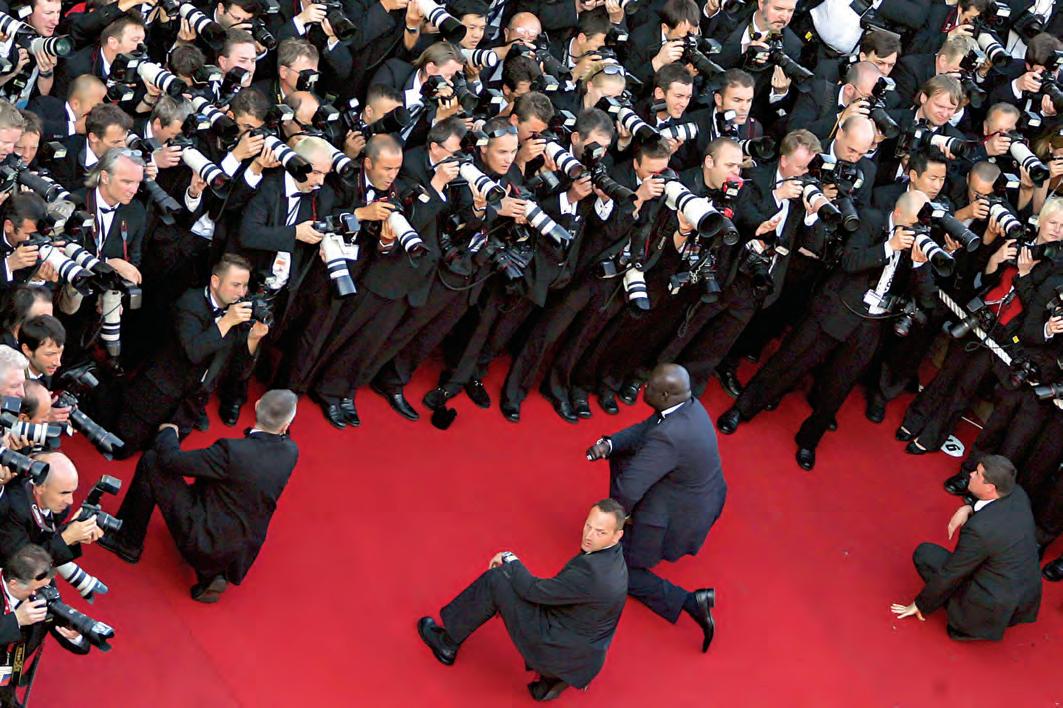
CONSIDERING ITS REPUTAtion as a showcase for auteurs, you may be surprised to learn that Hollywood has been a fixture at the Cannes Film Festival since its inception. When the event was initially planned in 1939, the RKO Radio Pictures release “The Hunchback of Notre Dame” was set as the opening night gala. World War II saw that inaugural edition scrapped, but when the festival finally unfurled in 1946, studio films such as Alfred Hitchcock’s “Notorious” and George Cukor’s “Gaslight” were part of the program. In the decades since, studios have come and gone, but the allure
of debuting on la Croisette has endured. Whether it’s a movie vying for the famed Palme d’Or, looking for international media attention by screening out of competition, or staging a PR event on the beach, generations of filmmakers, studio executives and marketing specialists have helped make Cannes into the spectacle that it is today.
“Idon’twanttosoundcorny,butthisisa festival that I watched with my mother on TV as a child, and it is the biggest stage for cinema,” says Joey Monteiro, executive vice president of international marketing for Neon. “There’s just a buzz that happens in the town and there is no red carpet like it
in the world. The fact that the red carpet is all photographers and no interviews?”
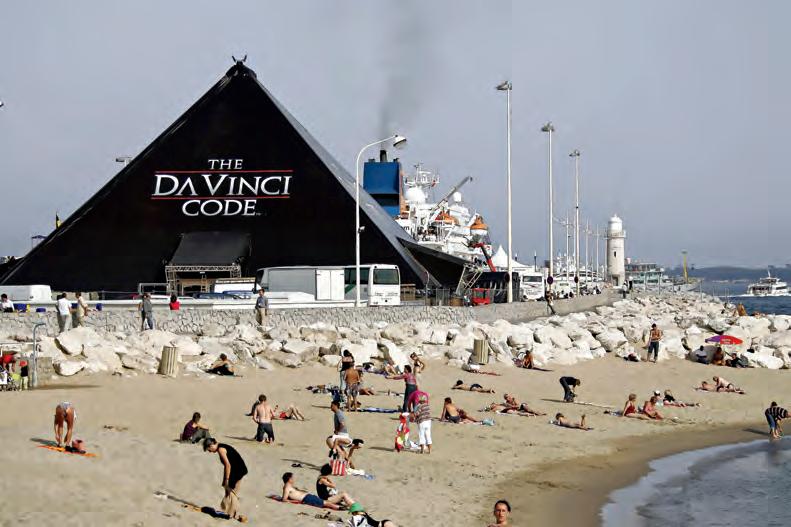
That unique platform has made Cannes a global launchpad for studio releases for decades. This century alone, blockbuster titles such as “Top Gun: Maverick,” “Mad Max: Fury Road,” “The Matrix Reloaded,” “The Da Vinci Code,” “Elvis” and “Star Wars: Episode III — Revenge of the Sith” have either had their world or international premieres at Cannes. “Shrek,” “Moulin Rouge” and “Once Upon a Time ... in Hollywood” even debuted in competition.
Admittedly, Hollywood’s infatuation with the festival has ebbed and flowed over the years, but 2026 seems like a rare
outlier. At publication, not one traditional studio release is scheduled for the festival. Yes, there will be new releases from U.S. distributors such as Apple Studios, with John Travolta’s “Propeller One-Way Night Coach”; Sony Pictures Classics, with Pedro Almodóvar’s “Bitter Christmas”; and Neon, with Ryusuke Hamaguchi’s “All of a Sudden.” But the majors are not making the transatlantic voyage this time around.
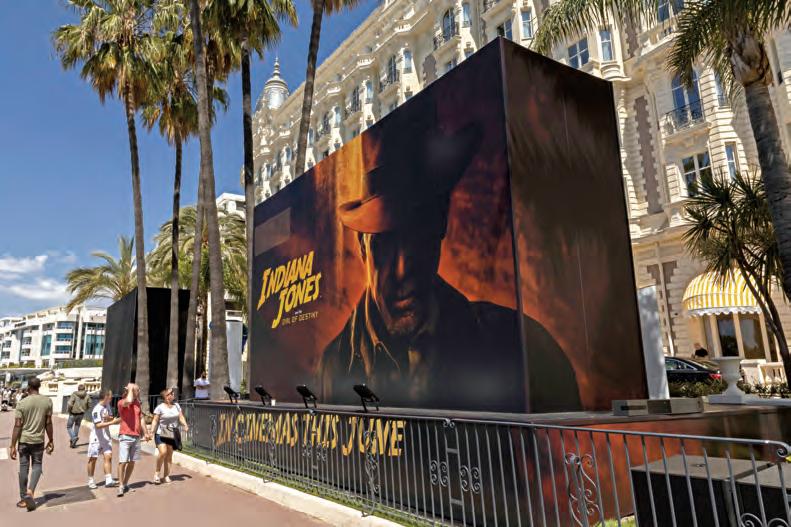
It’s a curious trend considering Cannes premieres have become a staple at the Academy Awards and three 2025 selections were nominated for best picture this calendar year. The 2024 Palme d’Or winner, “Anora,” went on to take Oscar’s top prize and “Parasite” also won both accolades in 2019-2020. But as with any premiere at a major international film festival, positive reactions are never guaranteed. In 2023, “Elemental” and “Indiana Jones and the Dial of Destiny” earned mixed reviews weeks before their global releases. Highprofile pre-pandemic releases such as Steven Spielberg’s “The BFG” and Ron Howard’s “Solo: A Star Wars Story” also failed to win over the Cannes faithful. And who can forget Kevin Costner’s “Horizon: An American Saga — Chapter 1” being almost universally panned six weeks before its June 2024 drop?
Have recent stumbles scared off some distributors?
A studio executive, who requested anonymity to speak candidly about strategy, says, “Listen, every campaign for any movie has to be bespoke to that film. Depending on what the movie is, you’re certainly constantly thinking about what the response will be there, how long of a throw you have until you put materials into the world or until the movie’s being released itself. Or if you’re thinking about an awards window, you’re definitely thinking about how that reaction can impact a movie. And we’ve seen it. It can work for or against movies.”
This is partially because social media is now also a massive part of the equation. Sites such as Reddit and Letterboxd also spread reactions to an ever-growing legion of cinephile fans online. This wasn’t as big an issue two decades ago, when 20th Century Fox premiered “X-Men: The Last Stand” before its Memorial Day weekend release, or action flicks such as “Cliffhanger” or Roland Emmerich’s “Godzilla” used Cannes to launch overseas marketing campaigns in the1990s.
“The internet has certainly changed the way audiences connect with movies, for good and for bad. That can have an outsized impact,” the studio executive says. “But these are also some of the [starriest] nights you’ll have in the movie business. And the blast radius of those nights is now bigger than ever because you can really
get some bite-sized nuggets that can travelalongwayinawaythattheyweren’table to a decade ago.”
Of course, there is a long list of widerelease films that have used Cannes to their advantage to generate early buzz in recent years, including Spike Lee’s “BlacKkKlansman,” Pete Docter’s “Inside Out,” the Elton John musical biopic “Rocketman” and “Mission: Impossible — The Final Reckoning,” which earned raves a year ago before fueling solid summer tentpole returns.
Not only is Cannes a premier global marketing launchpad, but distributors ad-
mittedly face pressure from filmmakers who want their moment in the spotlight in the festival’s famous 2,300-seat Lumière theater. The studio executive adds, “It’s also whether a film’s ready. Is it too early? When are we releasing the movie? All those kinds of questions come into play as we’re having those conversations.”
The temptation for taking center stage in the South of France remains, however.
As Monteiro notes, “When we go to a film festival, the pageantry is a big part of the presentation, and I don’t think there is any pageant that is as glamorous and scrutinized as Cannes.”
↑“The Da Vinci Code” had its premiere at Cannes.
“Indiana Jones and the Dial of Destiny” earned mixed reviews upon its debut at the festival.

Glenn Whipp Columnist
The festival has become an essential starting point for successful awards campaigns as the film academy takes on an international dimension
by Avery Fox
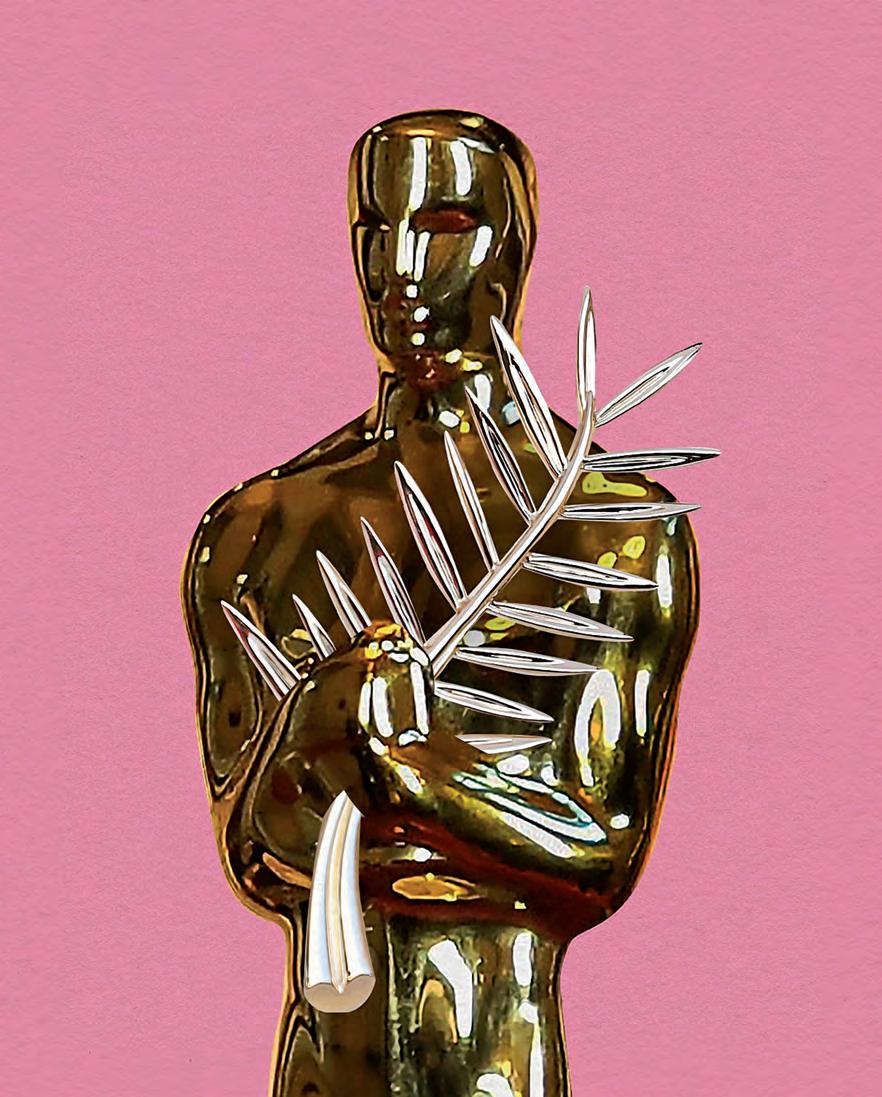
IF YOU ASK SEAN BAKER WHICH HONOR HE CHERISHES THE MOST— the four Oscars he won for writing, directing, producing and editing the 2025 best picture winner “Anora” or the Palme d’Or he took at the Cannes film festival 10 months earlier— you’d need to have a considerable amount of patience as you wait out the long pause as he considers the question. ¶ C’mon ... how do you choose? The Cannes prize started the momentum for Baker’s chaotic Cinderella story. I’m describing the movie, though since Baker had never earned a single Oscar nomination during his celebrated career, it could also describe his own journey to the Oscar record books.
“Winning the Palme was surreal and exciting beyond belief,” Baker told me. “You look at the films and the filmmakers who have won that prize over the years, and it blows your mind. There’s a reason Cannes is considered the most prestigious film festival in the world. It’s still hard to process that we actually won.”
“Anora” was the second Palme d’Or winner to win the best picture Oscar in a five-year stretch, following Bong Joon Ho’s acclaimed 2019 hit “Parasite,” the first non-English-language movie to win the motion picture academy’s top prize.
The Cannes-to-Oscars pipeline continued this year with Joachim Trier’s family drama “Sentimental Value” and Kleber Mendonça Filho’s political thriller “The Secret Agent” making the best picture cut and “It Was Just an Accident” and “Sirāt” each earning two nominations.
Only “Sentimental Value” came away with an Oscar, but Cannes could still boast that it led all festivals with 19 nominations. Movies premiering at Venice picked up 15, while two other fall festivals, Telluride and Toronto, largely programmed the Cannes features, alongside
films that didn’t land with voters. (Telluride did premiere “Hamnet,” which netted eight nominations and a win for lead actress Jessie Buckley.)
Those nominations numbers continued the shift that has been taking place the last several years as Cannes has supplanted the fall film festivals as the event with the most sway at the Academy Awards. How did this happen?
Cannes didn’t change. The Oscars did. It started with the 2018-19 awards season when Alfonso Cuarón’s “Roma” a Cannes selection before the festival introduced a rule requiring all films in competition to have a theatrical release in France — and Paweł Pawlikowski’s “Cold War” became multi-category Oscar contenders. Both were distributed by streamers: Netflix had “Roma,” Amazon “Cold War.”
With that success, streamers became eager to spend big to chase the prestige that comes with the Academy Awards.
At the same time, the motion picture academy was tweaking its rules for determining the shortlist for the international feature award, opening voting to more members. That coincided with the influx of new voting members living outside the United States as the academy diversified its ranks in the wake of the #Os-
‘WINNING THE PALME WAS SURREAL AND EXCITING BEYOND BELIEF.’
Sean Baker
carsSoWhite social media campaign. (Twenty-four percent of Oscar voters now live outside the U.S.)
So when “Parasite” won the best picture Oscar in 2020, the confluence of these factors turned the world’s most important film festival into the best launchpad for a movie with awards aspirations.
Cannes created the Palme d’Or in 1955, replacing the verbosely worded “Grand Prix of the International Film Festival” honor that was given to directors. The first Palme winner, “Marty,” a romantic drama starring Ernest Borgnine as a
← Cannes led all the major film festivals in Oscar nominations this year with 19 nods.
lonely, middle-aged butcher longing for love, won the Oscar for best picture. (Borgnine took lead actor.)
It took another 64 years for that to happen again, when “Parasite” prevailed at the Oscars.
Cannes’ late spring date gives movies playing there a head start in gaining the attention of awards voters and film critics. The playbook this decade has been to premiere at the festival in May, make a splash and then return in the fall to Telluride, Toronto and the New York Film Festival for a second wave of publicity.
“Essentially, you’re just lengthening the ramp, which with international films really helps put these movies on the radar,” says a veteran awards consultant, who, because of potential client conflicts, asked to speak anonymously. “By the time ‘Sentimental Value’ landed at New York, it had already played at Cannes and Telluride. People were talking about it from May to September.” Awards hopefuls from international auteurs, including Pedro Almodóvar’s tragicomedy “Bitter Christmas,” Ryusuke Hamaguchi’s French-language drama “All of a Sudden” and Pawlikowski’s “Fatherland,” his long-awaited follow-up to “Cold War” starring Sandra Hüller, will aim to duplicate that success this year.
At last year’s Cannes, indie studio Neon, the company behind “Parasite” and “Anora,” bought “It Was Just an Accident” (which won the Palme), “The Secret Agent” and “Sirāt,” all of which went on to be nominated, alongside “Sentimental Value” (another Neon film) and “The Voice of Hind Rajab” (a Venice premiere) for the international feature Oscar. It also purchased the French animated movie “Arco,” which earned an Oscar nomination for animated feature.
One awards campaigner believes — and he prefaces this by saying people think he’s nuts for saying this — that the advent of text messaging as the predominant way people communicate has led to people being more comfortable with subtitles.
“We’re constantly reading our communications,” he says. “We’re watching English-language movies and shows with the subtitles on. That was never the case a few years ago. Subtitles are part of our lives now.”
And, more than ever, so are the movies playing at Cannes.
Casting directors p41
Tax incentives p42

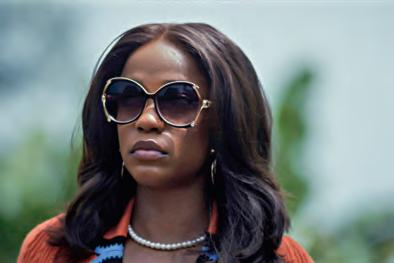
↗ “My Mother Is aWitch,” by director Niyi Akinmolayan.
↗A scene from “Love, Lanre,” written by Kay I. Jegede.
→ The cast of “Achalugo,” from director Dolly Nwaduba.
After the major streamers pulled back their investments in the West African country, creators and advocates have taken matters into their own hands
THE GROWTH OF NIGERIA’S film industry can be traced, curiously enough, to a time of neglect. During the 1990s, a lack of government funding pushed unemployed actors and crew to produce their own films and sell them on VHS or DVD to recoup costs — including Chris Obi Rapu’s home video blockbuster “Living in Bondage,” which inspired a new wave of filmmakers eager to tell their own stories. Today, Nollywood
(a portmanteau of Nigeria and Hollywood) is much larger, producing the second most movies globally after India. But financial constraints, inconsistent support systems and limited access to global markets remain, albeit in different forms and the creative hustle of that defining era is still as important as ever.
“Because our industry grew out of people and not government policies, there isn’t a massive African studio system to make and distribute films,” says Chioma Ude, the founder of the Africa International Film Festival (AFRIFF) and the AFRIFF Film & Content Market. The latter, a platform designed to connect African filmmakers with buyers, agents and investors to sell, distribute and coproduce content, has attracted the support of the Nigerian Federal Ministry of Art, Culture, Tourism and the Creative Economy (FMACCE), positioning Nigeria as a global player. “We decided to use our platform to teach filmmakers about regional distribution,” Ude says.

This independent streak has helped Nollywood weather the ups and downs of the international streaming economy, dominated by the same handful of players in West Africa as it is in Southern California.
When Netflix entered the Nigerian market in 2016 and scooped up the rights to Genevieve Nnaji’s empowering film “Lionheart” (2018), it set the stage for the streamer to bet big on Nigerian talent, signing major deals
that included “Star Wars” actor John Boyega and multititle partnerships with Mo Abudu’s EbonyLife Media and Kunle Afolayan’s Golden Effects Pictures. Through 2023 it is estimated Netflix invested $23.6 million in original content and licensing deals, bringing dozens of hits to the platform such as “Swallow” (2021), “The Black Book” (2023) and “Jagun Jagun” (2023). Netflix was not alone. Amazon Prime Video soon followed, launching its localized service in the country in 2022, signing development pacts and investing in original content, Jáde Osiberu’s polished epic “Gangs of Lagos” and the unscripted series “LOL: Last One Laughing Naija” among them. The strategy was effective: Content was reaching international audiences, production quality improved, private equity was investing and output reached new levels. Despite the pandemic, Africa’s most populous country produced 2,599 films in 2020, according to the Nigerian National Bureau of Statistics. Everything changed in 2024.
Economic challenges and a low subscriber base saw the streaming giants pull funding for original content, a decision that left filmmakers pivoting and many observers asking: What’s next for Nollywood?
The answer lies in streamlining distribution. “We are encouraging regional sales,” says Ude. “If you are a filmmaker ready to work with sales agents and distributors to sell your films regionally, it’s more work, but you will make a lot more than you even made with the streamers coming on board. That way, when the streamers do come back, asking for your worldwide rights, it’s going to be a different story. We just have to take the hit now and work hard towards elevating ourselves.”
For Ude, the shift is a positive development, but “My Mother Is a Witch” and “Colours of Fire” director Niyi Akinmolayan, whose Anthill Studios was among those to ink a deal with Prime Video, warns of potential hurdles. “I’m gonna shock you,” he says. “Even in West Africa,
it’s hard to sell a Nigerian film to Ghana, or to the Republic of Benin. They don’t get some of our jokes or subtleties. It’s also difficult to sell our films in South Africa. We may all look alike to the typical American or European, but culturally, we are very different.” His answer? Producing stories that close the gap. “I’ve told Nollywood filmmakers that one way forward is to develop films where you have a lot of cross-culture influences. When you do that, people might be excited because they can see someone like them in the story.”
Increasing access to cinemas is another effort, with the number of screens growing from 218 to 369 between 2019 and 2025. The ratio of Hollywood to Nollywood productions on those screens has shifted from 62-38% to 47-53% over that same period — highlighting the demand for local stories. “We didn’t have a lot of cinemas then as compared to now,” says Victoria Ogar, the head of distribution at FilmOne Entertainment, West Africa’s largest distributor. “We had Hollywood dominating our space, but then over time, we noticed that people started to react to Nollywood films. They speak to the value of the people, the culture.”
West Africans spent 15.6 billion naira (approximately $11.3 million) at the box office in 2025, a 36% increase from the previous year, according to Comscore data. Admission has steadily climbed since 2023, underscoring the interest in theatrical experiences. Last year witnessed the first Nollywood title — Funke Akindele’s “Behind the Scenes” — to cross the 1 billion-naira mark in the same year as its release, doing so in just19 days. Ogar suggests these numbers would be even higher if there were more local theaters, especially during the December peak season, when up to 20% of the yearly box-office revenue can be earned. “We have a lot of people who would actually
like to see a film at the cinema. But when they look at the stress of going to a different city, that in itself makes them say, ‘I’m not going.’ If the cinema was close, they wouldn’t have to spend much to get there and they would say yes.”
The most significant hurdle for Nollywood, however, is building on its international successes. “Nigeria is looking to expand beyond the UK, U.S. and Canadian markets,” notes Ogar. “Those are three countries we play a lot in because of the number of people who have migrated or relocated from Nigeria. But beyond that, places like Europe are still very shaky. The film bookers will tell you that the culture, or the language, or even the story is not well understood.”
Akinmolayan agrees. “I believe strongly that there isn’t a taste for African content outside core Africans, even in diaspora. You see that there is a curiosity for Indian cinema and Chinese cinema, but then you also have culture that has been successfully exported. So you might have an interest in going out with your friends to see a Bollywood movie.”
Ude has already observed progress in addressing Nigeria’s cultural disconnect. “Distributors in other countries are asking to buy documentaries and I asked them why. They said, ‘If I understand your culture better and who you are, then I’ll buy your films,’” she says. “It’s the getting-to-know-you phase.” Since signing the pact between the AFRIFF and FMACCE, she says they’re making positive strides in South Korean, Middle Eastern and South American markets. “People don’t really understand what policy does for the industry,” Ude asserts. “I’ve seen a lot more countries ask questions because of our partnership with the FMACCE.”
This year, AFRIFF was selected to represent Nigeria as the only African partner in Marché du Film’s “Goes to Cannes” program, which showcases curated works in
progress from international markets. AFRIFF curated five films to present during the event.
To fill the void left by streamers, Nigeria is attracting new productions and investment through tax incentives and industry reforms. Projects can access up to 30% rebates on local expenses. FMACCE also launched initiatives to build world-class studio facilities across Lagos and Abuja; signed co-production treaties with several foreign countries to give productions access to international funding, tax relief and production resources; and introduced the Creative Economy Development Fund, which provides funds and marketing grants for local film and TV projects. All in an effort to expand global reach and improve audience experience. “We have moved from quantity to quality,” says Ogar.
In turn, these developments promise to smooth out another wrinkle in the Nigerian film industry’s growth story: the talent pool. “A lot of filmmakers will say we don’t have enough funding. I would say we don’t have enough training,” Ude suggests.
Akinmolayan shares a similar sentiment. “There needs to be investment in building a hub for training. There are so many young talents and a lot of them cannot afford film school or technical schools to learn these skills. Once there is investment in local talent and good distribution pathways, production will happen and people will scale up.”
Story by Jim Halterman
The hit HBO series is headed to France. Executive producer David Bernad shares what’s on the itinerary
NEARLY FIVE YEARS ON FROM ITS PREMIERE, EVERY MORSEL OF information about Mike White’s addictive HBO series is still met with feverish excitement. And its upcoming fourth season is no exception: After previous visits to Hawaii, Italy and Thailand, the Emmy-winning series is checking into digs on the French Riviera — with its backdrop none other than the Cannes Film Festival. ¶ The road to a new “White Lotus” season is always a twisty one, as executive producer David Bernad recently told The Envelope. Read on for more about the season’s themes, key casting moves and how the production plans to maneuver around tourists.
A BAD FRENCH HOTEL RESTAURANT EXPERIENCE CHANGED EVERYTHING
Bernad and White spent a week scouting in France but weren’t sold until one fateful night. “Mike and I went to meet afriend for dinner at a hotel in the South, which will remain nameless. The maître d’ was so rude and they called security on us,” says Bernad. However, once inside, the staffer continued to be dismissive of them and the show. “The whole season crystallized in that moment, and as we were leaving, Mike’s like, ‘I know exactly what we’re going to do and we’re doing it in the South of France.’ It was the most productive dinner I’ve had,” he says.
CANNES AND ITS HISTORY FORM THE SEASON’S BACKDROP
One of the show’s familiar sights during the first three seasons has been swelling waves dramatically crashing against rocks, but you’ll see something different in Season 4. “A lot of those shots will be replaced by Cannes, the city itself and the glamour of the festival,” says Bernad. Also, the focus won’t be confined to the present but also pay tribute to the past. “It’s also the storied history and glamour of the
festival, and we’re going to be tipping our hat to French cinema throughout,” he adds.
THE SEASON’S THEME IS “REALLY INTENTIONAL”
Bernad says he’s known the Season 4 theme since they realized the hit show would be ongoing. “We’ve always had an idea that this season would explore the arts and fame, celebrity and the spiritual journey of being an artist, so we focused on countries that had a long relationship with the arts,” he says. Fashion’s influence is also key as “Dior permeates through the entire season,” he says, adding that French designers and artists are doing pieces for the show that lean into “the painful, existential journey of what it means to be an artist.”
With Cannes as the backdrop, you might think A-listers like George Clooney or Anne Hathaway will be wandering through a “White Lotus”scene. Nope. “The show lives in the universe of ‘White Lotus’ so we’re not doing cameos, we’re not doing celebrity,” says Bernad. “In that universe, there are references to real people, but everything is its own world.”
Heather Graham, Rosie Perez, Vincent Cassel, Alexander Ludwig, Tobias Santelmann, Frida Gustavssonand Caleb Jonte Edwards. It’s no surprise that multiple language interpreters will be on set, says Bernad.
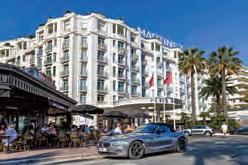

THE SEASON 4 CAST IS ECLECTIC
Ironically, the first person cast for Year 4, Helena Bonham Carter, made its most highprofile exit. Although “Mike always had her in mind as we started this process, and we built the cast around her,” according to Bernad, Bonham Carter departed the series shortly after filming commenced in April. Soon after, HBO announced that longtime White collaborator Laura Dern would join the cast, in a new role written specifically for her. She adds to an array of international artists, including Steve Coogan, Sandra Bernhard, Chris Messina, Kumail Nanjiani,
“What’s cool and unique this season is there’s going to be two hotels so not everyone is staying at the same hotel,” says Bernad. In fact, while the White Lotus Cannes is a beautiful property — the Hotel Martinez in Cannes will be used for filming — the more coveted place to stay is the White Lotus du Cap, filmed at the Airelles Chateau de la Messardière in Saint-Tropez. “That starts to play into the theme and story about ego and narcissism and how we view ourselves as it relates to how the world views us,” explains Bernad, adding filming at Paris’ Mandarin Oriental Lutetia will also double for some of the Cannes action.
Previous seasons were shot in more remote, secluded locations, but that’s not the case for the fourth season. “We’re shooting in the South of France during a very peak tourist time, and it has been the most challenging season so far,” says Bernad. “It’s like making a Jenga tower work with all the crazy dates in the South of France and things that are booked out.”
Shooting at multiple hotels isn’t new for the show, but in previous seasons, “we would stay in a hotel and we would shoot it out and then we’d move on to the next hotel,” explains Bernad. This time, it’s more of a puzzle that will make Season 4 the longest production schedule ever for the show. “We’re going to be shooting, leaving and then returning [to properties]. We’ll shoot in the spring, and then we’re going to come back in the fall when high season’s over,” he says.
Pros are making the most of digital tools and leaning on their foreign colleagues to discover new talent
CARLA HOOL’S QUEST FOR the Virgin Mary led her aroundtheEarth.Butthiswas no religious pilgrimage. The veteran casting director was working with auteur Alejandro Monteverde on his upcoming biblical epic, “Zero A.D.”
“He wanted someone very, very special,” Hool says over Zoom from her Los Angeles home office. “We saw close to 3,000 girls.” The pair ultimately found their leading lady — relative newcomer Deva Cassel, daughter of Vincent Cassel and Monica Bellucci — in Italy. The film, which also stars Sam Worthington and Ben Mendelsohn, premieres later this year.
Specificity, not to mention authenticity and representation, have always been crucial to Hool. She came to the U.S. 19 years ago from her native Mexico City, where she’d done local casting on “Nacho Libre,” “Beverly Hills Chihuahua,” “Quantum of Solace” and more. In the interim, she’s edified creatives and executives on projects from “Narcos” to “Emilia Pérez”that Mexicans and Dominicans look and sound different than Colombians and Chileans, and that roles should be filled accordingly. “I would always get, ‘Who cares? We can’t hear it.’ I would reply, ‘No, but all the Latinos can!’”
Hool used to orchestrate in-person open calls in far-flung locales to match the
have erased borders for audiences. International viewers today crave more ethnically and culturally precise storytelling, and are less resistant to subtitles (see “Money Heist,” “Lupin,” “Shogun,” etc.).
For actors, the opportunities have multiplied exponentially. No longer do they need to be in New York City, Los Angeles or London to be seen — and hired. With one click, they can even vie for multiple projects in one day. “In an afternoon, I can watch 50, 60, 70 self-tapes,” says Armando Pizzuti from Rome. He assisted the Telsey Office to find French and Italian cast members for Ryan Murphy’s “The Beauty,” then digitally combed Europe with collaborator Stefania Valestro to seek Asian actors for adventure series “Sandokan: The Pirate Prince,” filmed in Italy, standing in for 1800s Southeast Asia. “When I’m in the casting studio, I can probably meet only 20 actors per day.”
The Industry Casting
perfect performer to each part. Now, as do most of her peers, she launches global searches using electronic casting resources like Spotlight in the UK, Showcast in Australia and the Workbook in Latin America while also accessing social media, agents and managers. Self-tape auditions are solicited, with callbacks held via Zoom. Hool occasionally uses local casting pros for television, but rarely for film. “It fascinates me to discover new people,” she says.
Casting director Meredith Tucker regularly relies on foreign colleagues. She recently collaborated with Canadian pros John Buchan and Jason Knight to find talent for “Vladimir,” which shot in Toronto.
Tucker has also served as Mike White’s casting director for all seasons of “The White Lotus,” joining forces with Katie Doyle in Hawaii, Barbara Giordani and Francesco Vedovati in Italy and Non Jungmeier in Thailand for Seasons 1, 2 and 3, respectively. “I kind of let them do their thing,” says Tucker from New York City, admitting these experts know their local acting pool better than she does. White is also often already on location and skilled at selecting players. “He very much has an instinct for what he needs, what works, and what doesn’t work.”
Just as technology has removed physical barriers in casting, runaway production, co-productions and global streaming
Despite the near-boundless possibilities afforded by today’s new tools, not everyone is enamored with the rarity of in-person sessions. “I’m just gonna put it out there,” says London’s Kharmel Cochrane. “I don’t like [self-tapes] at all, actually.” The casting director — who’s worked on Emerald Fennell’s “Saltburn” and “Wuthering Heights,” aswellasonKristofferBorgli’s“TheDrama” understands she’d need to embrace innovative methods more fully if she was busier in TV. But she also realizes that without remote auditions, working on Lena Dunham’s upcoming picture “Good Sex” would have been impossible. “I’ve got children. I’ve got a family,” she reveals. “That wouldhaverequiredseveraltripstotheU.S. over six months.”
Tania Arana — a French-born casting director in Canada who routinely commutes between Montreal and Paris — employed a hybrid process to cast the upcoming family drama “Daudistan,” a feature shooting in Montreal and South Asia this fall. Posting casting notices at community centers and on social media, she sought both professional and nonprofessional Afghan men who speak Dari and live in Quebec, providing customized links through which hopefuls could submit a headshot and/or video. Once those called back were selected, she auditioned each in person alongside an interpreter, using improvisations based on the script.
“Certain things go beyond language comprehension,” Arana tells me during a video interview conducted in her native French. “It resonates deeply to see someone interpret a scene in a language one doesn’t understand. I think it’s 10 times more interesting and impactful.”
Whatever the road to get there, industry professionals agree results are what matter Says Hool, “We need to be open to finding people anywhere.”
Story by Leila Berger
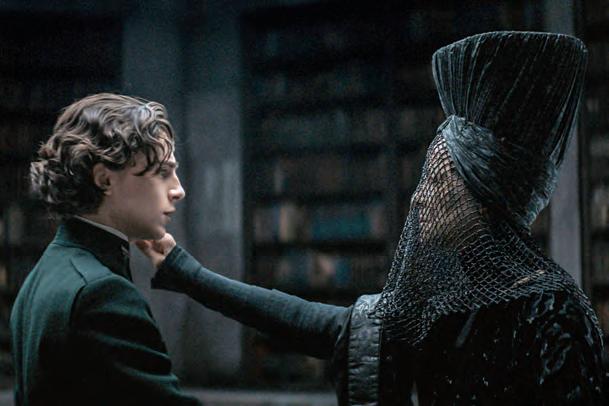
Many nations offer incentives to attract film and TV shoots. However, the projects must check a few boxes first
PROMISING REBATES OF UP to 40% on an infamously expensive art form, tax incentives for film and television production have been instrumental in luring the industry to locations around the globe. But there is a catch. Or, more precisely, a test.
Cultural testsare meant to determine if a production has significant enough ties to a given country to receive a tax rebate. But they also reveal what factors a country prioritizes to attract entertainment productions.
In the United Kingdom, the test is broken into four pillars: Content, contribution, hubs and practitioners. There are 35 points possible across the test; a production requires18 to pass.
While large international productions like “Dune” and “Poor Things” have helped boost Hungary’s film industry ranks to 20,000 workers, Káel also takes pride in smaller-scale films like “The Brutalist,” which centers the story of a Hungarian immigrant: “Our history, not only Hungary but Central Europe, is very interesting and [there are] very exciting stories which are not very well known.”
Australia’s system balances encouraging local stories with large-scale economic infusions through two separate incentive programs. Its Location Offset program, targeted at the big-budget productions that usually come from overseas, decides eligibility solely on money spent on Australian goods and services for the production; its Producer Offset uses a cultural test. “That test is really about Australian storytelling and to what depth local intellectual property ownership is part of the project and is there Australian creative leadership,” says Liana Dubois, the managing director for Australia and New Zealand at Entertainment Partners.
Rather than use a point system, Dubois describes Screen Australia’s process for passing the cultural test as more of a “holistic review” of the production’s conditions.
↗Significant portions of the “Dune” trilogy were filmed in Hungary under the country’s tax incentive program.
Of these pillars, only two are explicitly centered on the UK: “Contribution” specifically requires a connection to British heritage and “hubs” refers to a percentage of production or postproduction taking place in the UK. Points for “content” — which evaluates elements seen on screen such as the characters’ nationalities or the setting — and “practitioners” — which identifies the nationalities of the cast and crew — can be earned via representation by the UK or another European Economic Area state.
“It’s not only about location of produc-
tion,” says Lloyd Gunton, the vice president of incentives for production finance organization Entertainment Partners. “It’s also about who’s involved in it and what we’re seeing.”
Gunton notes that even relatively loose ties to Britain can help accumulate points, such as a project being based on the works of Shakespeare or in the English language. “So even if it’s … an American version of ‘Hamlet,’ entirely theoretical, it’s set in America but we’ve got all the VFX done in the UK, postproduction done in the UK, a British director, a British lead actor and a British composer, suddenly we’ve qualified that production,” Gunton explains.
Many other European countries have similar frameworks for their cultural tests. Hungary divides its test between cultural contentandproductionconditions.Thereare32 possiblepoints,24underthelattercategory.
“Cultural content is important but [it’s] more important to work with our professionals,” says Csaba Káel, chairman of the National Film Institute, acknowledging that most productions become eligible through the production conditions category. Points are awarded for having cast and crew who are Hungarian citizens, citizens of another EEA member state, and/or citizens from non-EEA member states who have been awarded a prize at an international film festival.
Indeed, the Australian government sees economic impact and cultural development as symbiotic: “The foreign investment, skills development opportunities and infrastructure these productions bring are invaluable for strengthening the local industry and its ability to tell local stories,” a spokesperson from the Australian Department of Infrastructure, Transport, Regional Development, Communications, Sport and the Arts said in a statement to The Envelope.
This mission led to a 2025 law that requires streaming services with more than 1 million Australian subscribers to invest 10% of their total expenditure for the country on local content.
The wider goal of cultural tests is to leverage the high value of tax rebates against the international reach and economic opportunities entertainment productions can offer. On top of its base rebate, Thailand offers additional incentives for productions that film in tourism provinces; employ Thai nationals in key positions; or promote a positive image, tourism and “soft power.”These conditions are visibly satisfied by Season 3 of “The White Lotus,” which highlights the tropical splendor of the country and poured tens of millions of dollars into the local economy.
“Soft power” may in fact be the most apt descriptor of a cultural test’s goal. Whether it prioritizes investment in local economies or artistic output, itincreases nations’ stake in their cultural imprint.
When Michel Hazanavicius’ “The Artist” premiered at Cannes 15 years ago, itbecame a critical darling, becoming the first silent film to win the best picture Oscar since 1929. Its charm lies in the meet-cute chemistry between George Valentin (Jean Dujardin) and Peppy Miller (Bérénice Bejo), two movie stars mirroring Hollywood’s shift to sound: George embodies the past, Peppy the future. When they reunite for the film’s climactic tap dance, cinematographer Guillaume Schiffman “had ideas about how I wanted it to look but I really didn’t know how to do it,” he recalls.Working with gaffer Jim Plannette, Schiffman referenced classic films while adding his own interpretation, capturing the sequence on 35mm color film stock and converting it to black and white. “Michel always said the most important thing was the emotion you get from the framing and lighting. I’m very instinctive, but we had to be careful ...so it looked like an old-time movie.” Looking back, the Oscar nominee calls “The Artist” a career highlight. “It was a dream come true, especially in Los Angeles, to do a movie like my American father showed me from when he was young. It’s my souvenir.”