

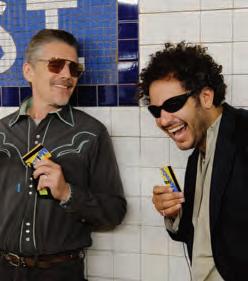
“
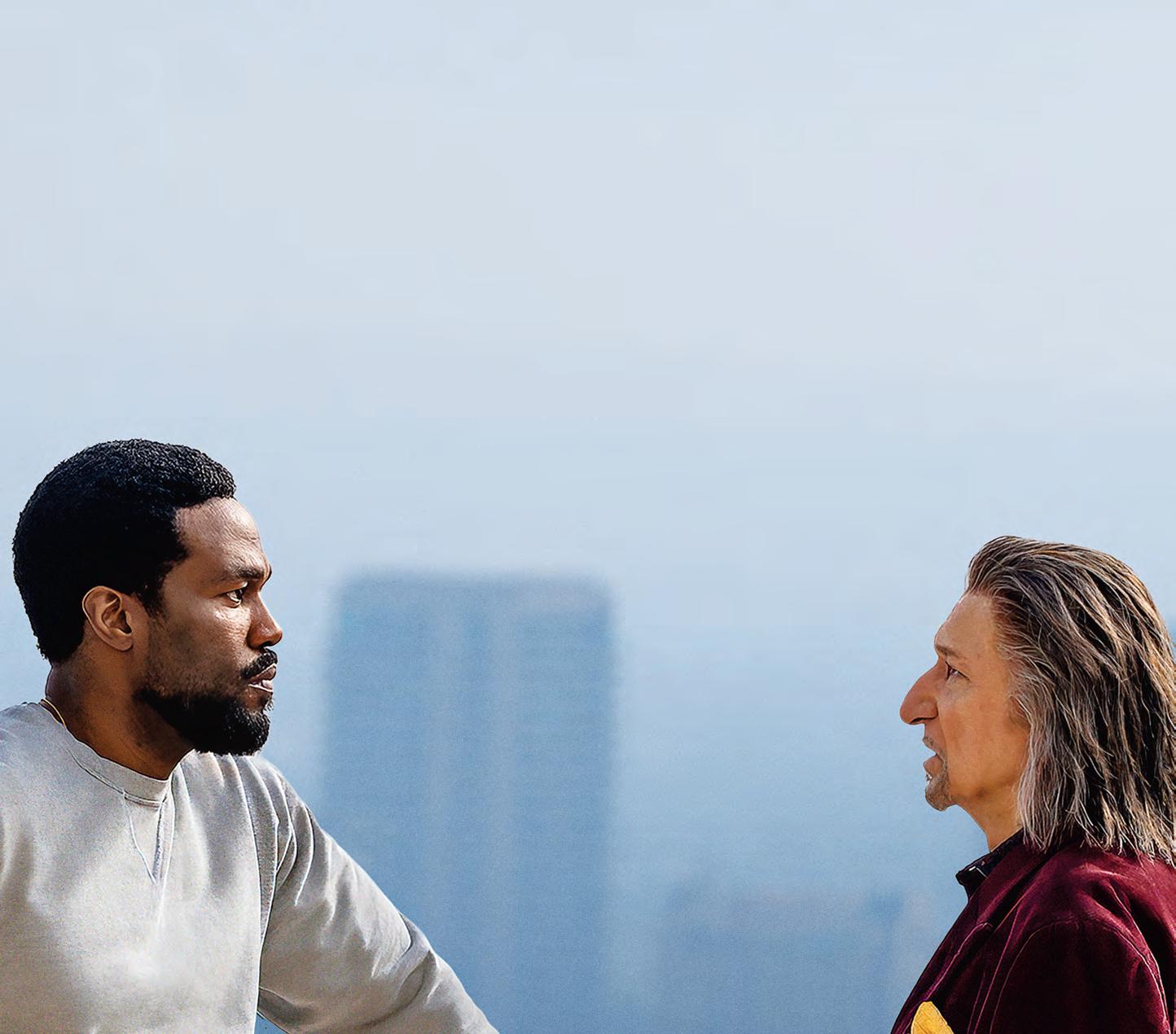
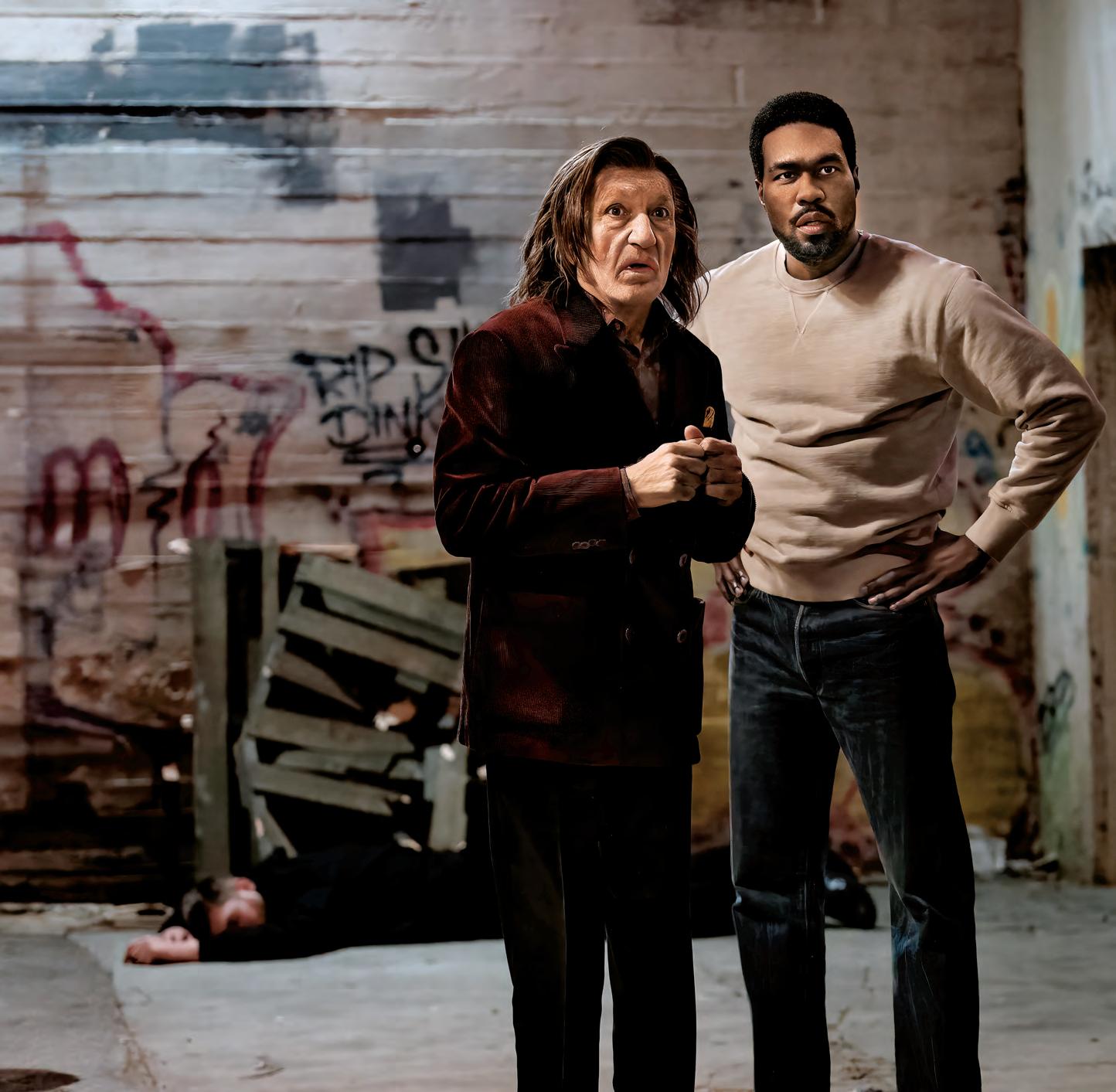
BenKingsley and YahyaAbdul-Mateen arenothingshortofexceptionalintheir on-screenchemistry.Theyevokeaclassic buddy-comedyspiritwiththeircharming charismaandcleverbanter.”



“
BenKingsley and YahyaAbdul-Mateen arenothingshortofexceptionalintheir on-screenchemistry.Theyevokeaclassic buddy-comedyspiritwiththeircharming charismaandcleverbanter.”









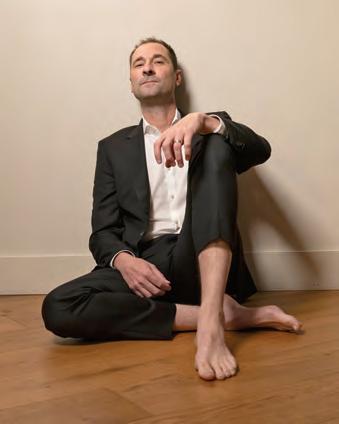

“Shrinking’s” Jason Segel (p 12) on how he and co-star Harrison Ford developed the emotional Season 3 finale together. Charles Melton and Cailee Spaeny (p 14) share why they can easily relate to the woes of their Gen Z “Beef” characters.
COVER STORY
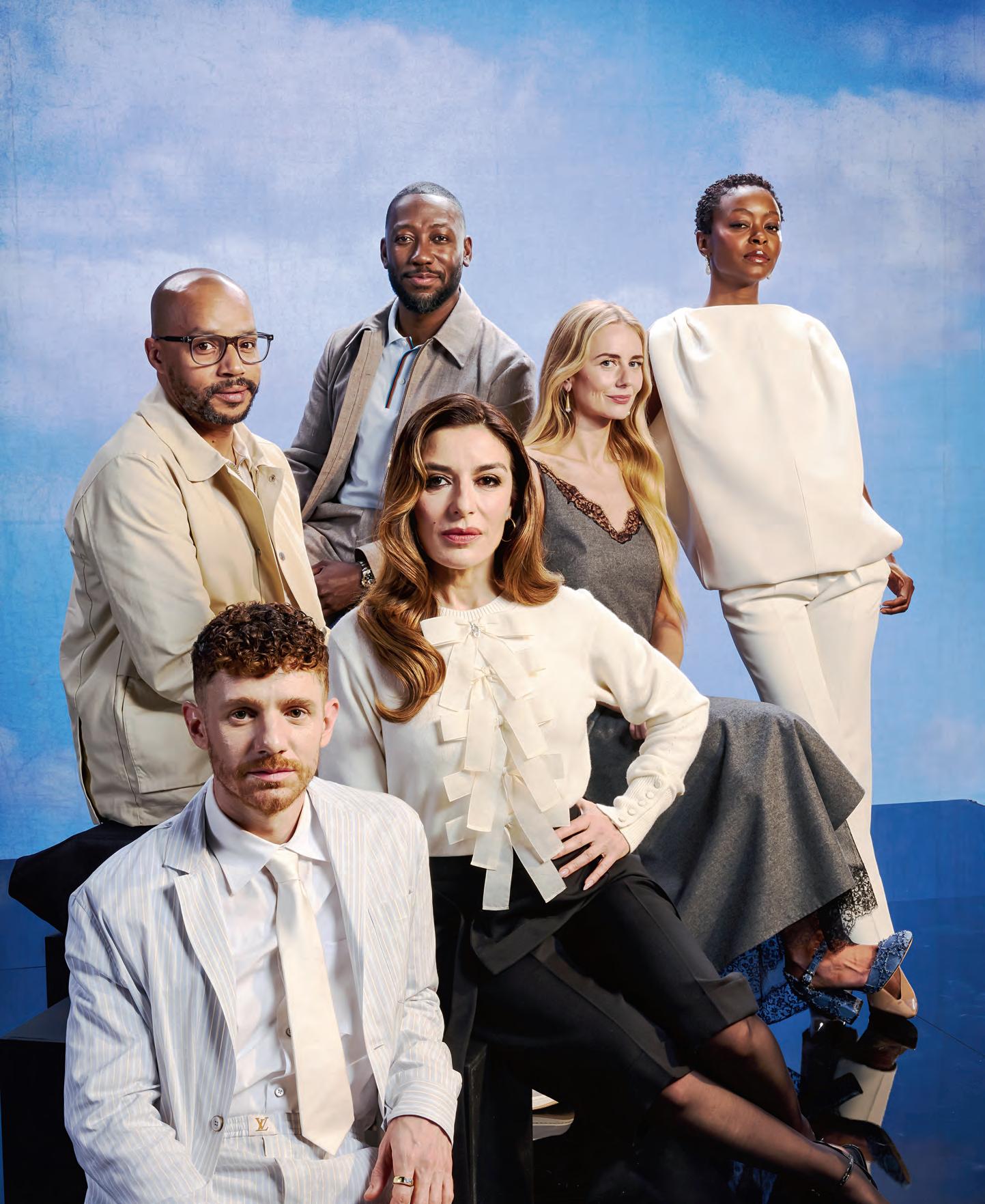
There were laughs aplenty as six actors from the season’s funniest shows joined the Emmy Roundtable to talk about misconceptions about comedy and how they struggle to keep a straight face.
The team behind “Margo’s Got Money Troubles” (p 34) reveals the inspirations for alien OnlyFans creator HungryGhost. Gold Standard (p 36) looks at the underwhelming year in TV. Meet the unwitting star of “Company Retreat” (p 38)
How Netflix is getting the ball rolling with its World Cup programming (p 41). Top executives from Sony Pictures Classics sound off on AI, film festival bidding wars and what they are looking for when acquiring new movies (p 42)

EDITOR IN CHIEF
MATT BRENNAN
EDITORIAL
Columnist
GLENN WHIPP
Writers
LORRAINE ALI
YVONNE VILLARREAL
COPY
Copy Chief
BLAKE HENNON
Copy Editor
JASON SANCHEZ
DESIGN
Senior Deputy Design Director
FAITH STAFFORD
Art Directors
JUDY PRYOR
JAMIE SHOLBERG
Designer AVERY FOX
PHOTO
Executive Director of Photography
KIM CHAPIN
Photo Editor
JEROME ADAMSTEIN
Photographers
JASON ARMOND
CHRISTINA HOUSE
LA TIMES STUDIOS PRESIDENT
ANNA MAGZANYAN
ADVERTISING SALES
Vice President of Sales
HELYA ASKARI
KRISTEN BERKE
ERIC MA
Senior Sales Executives
JESSE BONNER
KRISTIN SANTOSUOSSO
Director, Sales Strategy
RATTANA EPLEY
Sales Project Manager
MELANIE CULLEN
Client Services and Systems
Advertising Director
SANDRA CARLOS
ADVERTISER MARKETING
Executive Vice President,
Client Solutions
MIKE KECHICHIAN
Marketing Director
DAVE PURDUE
Project Manager
HELEN CHANG
Sr. Content Strategist
ALAN LAGUARDIA
Content Strategist
DAVID CHEE
Analyst JULIA JONES
Designer MATTHEW FRANCO
AUDIENCE ENGAGEMENT
Assistant Editor, Audience Engagement
VANESSA FRANKO
Audience Engagement
Editor
DAVID VIRAMONTES
EDITION PLANNING AND OPERATIONS
JULIE BYER
JAVIER CHAVEZ
ELIZABETH GHRER-JONES
DAVE NOVOTNEY
MAURO RIVAS
KATRINA TEN
TIMMY YEE
THE ENVELOPE ROUNDTABLE VIDEOS
Producer
KEVIN HAULIHAN
Hosts
LORRAINE ALI
MARK OLSEN
YVONNE VILLARREAL
Editors
MICHAEL RAY ANDY VINER
THE ENVELOPE VIDEO PODCAST
Executive Producer MATT BRENNAN
Production
JEFF AMLOTTE
MARK E. POTTS
Hosts
MARK OLSEN
YVONNE VILLARREAL
KELVIN WASHINGTON
PARTNERSHIPS
Executive Director, Partnerships
KATIE FILLINGAME
CONSUMER MARKETING AND CREATIVE SERVICES
Senior Director of Consumer Marketing
NIKOLE ATTERHOLM
Project Management, Creative Services
PATRICIA GARDINER
STUDIOS
Producer
KEVIN HAULIHAN
EVENTS
Vice President, Events and Sponsorship
KASEY CHAMPION
Associate Director
Event Production
DANIELLE DAVIS
Manager, Event Sales and Sponsorships
BRUNO CAVELIER
Associate Director
Event Programming
MATTIE SCHAFFER
Manager, Event Programming
CANDICE LEWIS
Events Manager
STRYKER MATTHEWS
Events Specialist
NICOLE FLORES
Executive Editor TERRY TANG
Creative Director & Deputy Managing Editor AMY KING
Entertainment and Features Editor BRITTANY LEVINE BECKMAN


Front-runners:
1. Martin Short, “Only Murders in the Building”
2. Jason Segel, “Shrinking”
3. Steve Carell, “Rooster”
4. Jeremy Allen White, “The Bear”
5. Ethan Hawke, “The Lowdown”
6. Steve Martin, “Only Murders in the Building”
7. Yahya Abdul-Mateen II, “Wonder Man”
8. Adam Brody, “Nobody Wants This”
Our Emmy experts share their picks

MARTIN SHORT HOLDS A SMALL ADVANTAGE OVER JASON SEGEL. IT’S HARD TO believe Short has only won Emmys for writing and producing, but Glenn Whipp wonders, “Might it be Martin Short’s year? The new Netflix documentary ‘Marty, Life Is Short’ offers a moving look at the losses Short has endured. It will only help his chances of winning” the first acting Emmy of his celebrated career. Meanwhile, Matt Roush writes, “Ethan Hawke’s bedraggled bravura performance in ‘The Lowdown’ and Steve Carell’s low-key star turn in ‘Rooster’ seem the most likely newcomers this year.” And don’t forget “Wonder Man,” which continues to get showered with love from the panel.

GLENN WHIPP Los Angeles Times
MARTIN SHORT (‘ONLY MURDERS IN THE BUILDING’)
JASON SEGEL (‘SHRINKING’)
STEVE CARELL (‘ROOSTER’)
JEREMY ALLEN WHITE (‘THE BEAR’)
YAHYA ABDUL-MATEEN II (‘WONDER MAN’)
TRACY MORGAN (‘THEFALL AND RISE OF REGGIE DINKINS’)
“Might it be Martin Short’s year? The documentary ‘Marty, Life Is Short’ offers a moving look at the losses Short has endured.”

MATT ROUSH
TV Insider
MARTIN SHORT (‘ONLY MURDERS IN THE BUILDING’)
ETHAN HAWKE (‘THE LOWDOWN’)
JASON SEGEL (‘SHRINKING’)
STEVE CARELL (‘ROOSTER’)
JEREMY ALLEN WHITE (‘THE BEAR’)
STEVE MARTIN (‘ONLY MURDERS IN THE BUILDING’)
“Ethan Hawke’s bedraggled bravura performance in ‘The Lowdown’ and Steve Carell’s low-key star turn in ‘Rooster’ seem the likely newcomers.”

LORRAINE ALI Los Angeles Times
STEVE CARELL (‘ROOSTER’)
ETHAN HAWKE (‘THE LOWDOWN’)
YAHYA ABDUL-MATEEN II (‘WONDER MAN’)
DAN LEVY (‘BIG MISTAKES’)
JASON SEGEL (‘SHRINKING’)
ADAM BRODY (‘NOBODY WANTS THIS’)
“‘Wonder Man’ became one of the year’s best comedies, thanks toa stellar performance by Yahya Abdul-Mateen II. Now can he summon some superpowers to make the cut?”

KRISTEN BALDWIN Freelance Critic
MARTIN SHORT (‘ONLY MURDERS IN THE BUILDING’)
JASON SEGEL (‘SHRINKING’)
STEVE MARTIN (‘ONLY MURDERS IN THE BUILDING’)
JEREMY ALLEN WHITE (‘THE BEAR’)
STEVE CARELL (‘ROOSTER’)
ADAM BRODY (‘NOBODY WANTS THIS’)
“Yahya Abdul-Mateen II deserves to be part of the conversation for making ‘Wonder Man’ such an entertaining (and affecting) ride.”

TREY MAGNUM Blavity
MARTIN SHORT (‘ONLY MURDERS IN THE BUILDING’)
JASON SEGEL (‘SHRINKING’)
STEVE MARTIN (‘ONLY MURDERS IN THE BUILDING’)
JEREMY ALLEN WHITE (‘THE BEAR’)
YAHYA ABDUL-MATEEN II (‘WONDER MAN’)
ADAM BRODY (‘NOBODY WANTS THIS’)
“Anod is coming for one, if not both, of the ‘Only Murders’ guys, but ‘Shrinking’s’ season puts Jason Segel a bit above.”

TRACY BROWN Los Angeles Times
MARTIN SHORT (‘ONLY MURDERS IN THE BUILDING’)
JASON SEGEL (‘SHRINKING’)
JEREMY ALLEN WHITE (‘THE BEAR’)
STEVE CARELL (‘ROOSTER’)
ADAM BRODY (‘NOBODY WANTS THIS’)
ETHAN HAWKE (‘THE LOWDOWN’)
“I think ‘The Lowdown’s’ Ethan Hawke, ‘Wonder Man’s’ Yahya Abdul-Mateen II and ‘The Fall and Rise of Reggie Dinkins’ ’ Tracy Morgan all have a shot.”
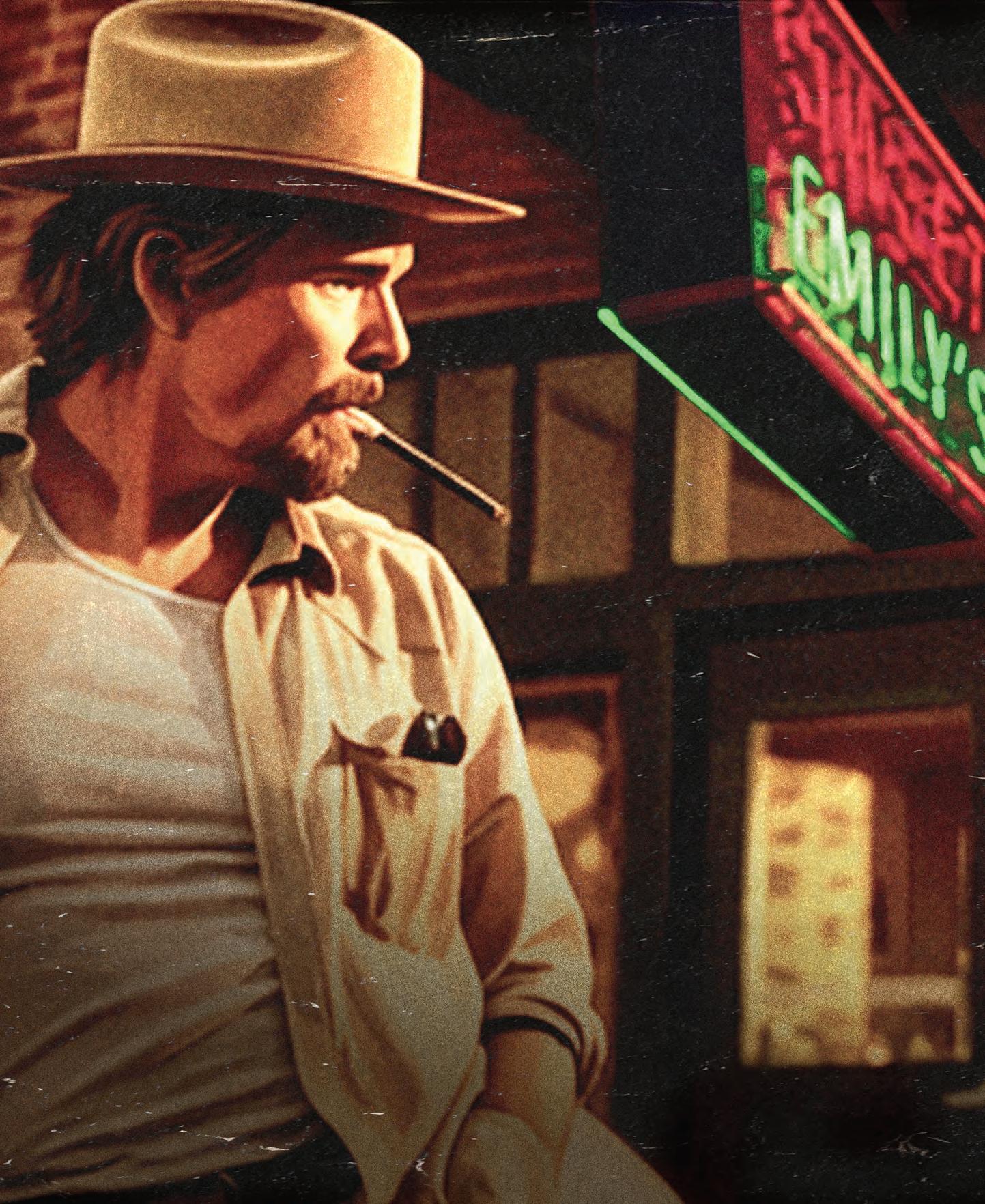




THOUGH “ELSBETH” ONLY RECENTLY COMPLETED ITS third season, the character at the center of Robert and Michelle King’s hit murder mystery has been winning over fans for 16 years. As played by Carrie Preston, the eccentric attorney-turned-police consultant is all bright colors, warm smiles and killer instinct, sniffing out criminals from every corner of New York society. Now, with the series switching to compete in the Emmys’ comedy categories this cycle, Preston stopped by The Envelope podcast to discuss her philosophy of on-set leadership, being a “fangirl” of the show’s A-list guest stars and more. Read on for excerpts from the conversation.
You made your debut as Elsbeth Tascioni in “The Good Wife,” and she leaves a memorable impression. What do you remember about the first call about this character? [Robert] called and he said, “We’re thinking about this character like a female Columbo.” I didn’t really watch a lot of “Columbo,” but I understood what he meant, which was, this is a person who is going to be coming at things in an unexpected and unorthodox way, and people are going to underestimate her. I took that to heart. But nonetheless, I was going in as a guest. As a guest, you’re going into somebody else’s house, you wanna follow their rules. You don’t wanna jump in their pool and start swimming around without asking permission.... Looking back, you can see how I was tiptoeing around, and it took a little moment before they really let me just let what my instincts were telling me to do, fly.
3
You’re known for being a scene-stealingsupporting player. Is playing a lead a particular kind of challenge? Do you have to learn how to take up space differently? I’m there to serve the script and to work with the people who are around me to elevate a scene and make it work. And to make the the job of everyone around me easy. I really feel like when you come at it with that collaborative spirit, you don’t think about, “Oh, I’m the lead.” You don’t think about where you fall into that hierarchy. You’re just there to make the scene work. And I like that. Because then I don’t feel pressure to be something more than what that is.
2
Are you ever just lost in the fact that you’re acting opposite these guest stars? Is there a moment that stands out?
I’m a huge, lifelong fan of Dianne Wiest. And when I found out she was gonna be in the episode where she plays a murderous nun, I just thought, “I’m not gonna be able to contain myself.” ...I wrote her a thank-you for saying yes/ stalker-level fan email.And she’s like, “Oh, Carrie, I’m so happy to hear that.” It was just like, “Oh, my God, I could just hear her voice.” When she showed up — I mean, she’s Dianne Wiest. And she is wearing a nun’s habit, and I couldn’t stop staring at her face. She would catch me staring at her and then she would just smile with that sweet, gorgeous face of hers, and I would say, “I’m sorry. I know that it’s probably making you uncomfortable. I just am absolutely honored. I do not even understand how I got to be so lucky to have someone like you doing this.”
4
Something that’s so striking about the character is her physicality. What was that like, finding the movement of Elsbeth?
The scripts, at the beginning, they would just say “pause” in the middle of a sentence. That became the most fascinating thing to me. “What’s happening with this woman when she’s not speaking?” That’s where the physical stuff started coming in ... I started thinking, “Oh, I guess [with] this woman, her mouth is saying one thing, her mind is thinking another and her body’s doing a third thing.” As soon as I came up with that little weird math equation, things started locking into place.

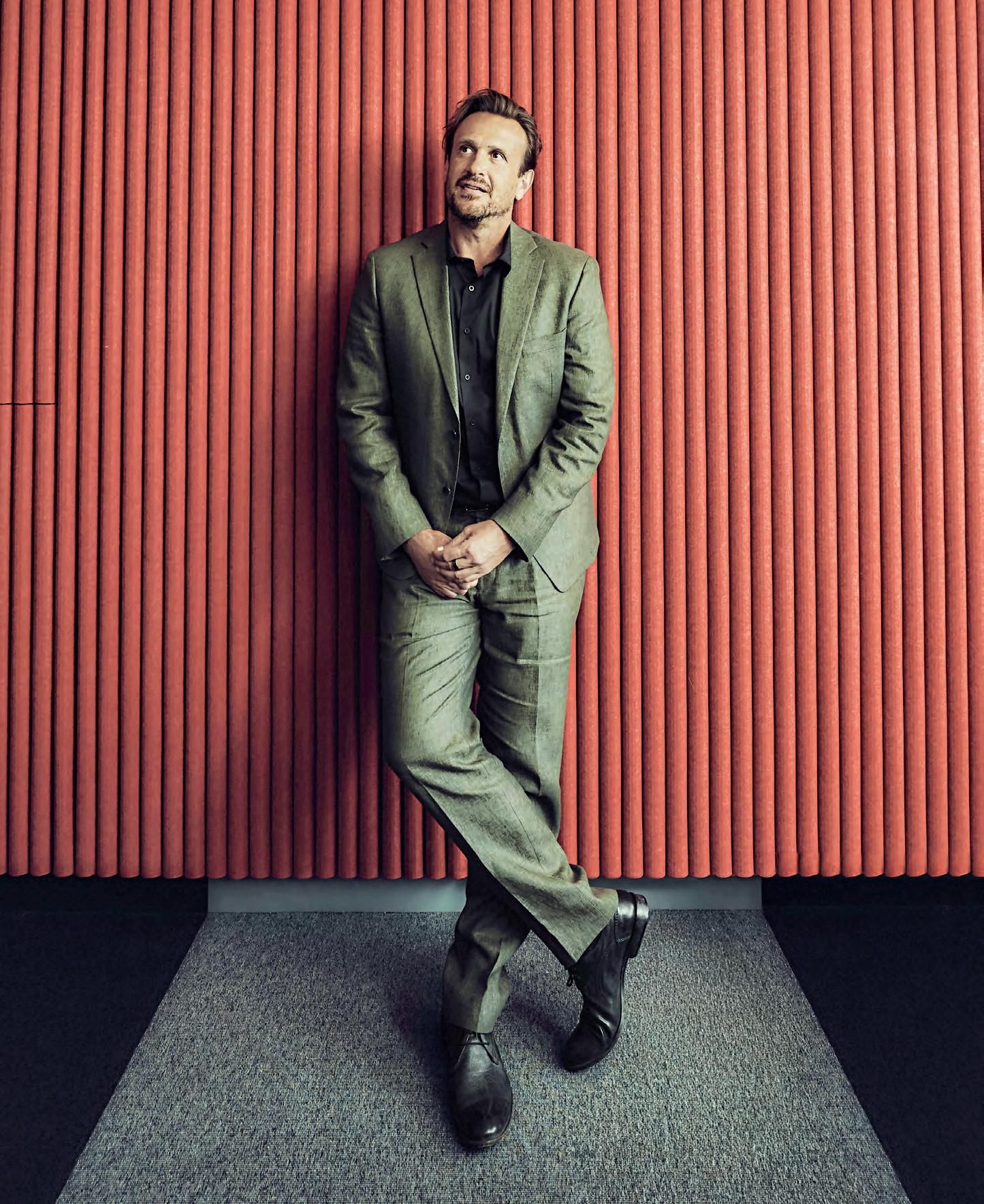
On ‘a difficult day’ of filming, Jason Segel and Harrison Ford landed on the emotional Season 3 finale together
show up anywhere at 45 years old not covered in scars.” And I went straight to Bill and [executive producer] Neil [Goldman], this is a year ago, and I said, “This is what Harrison says to Jimmy at the end of this arc.” And we worked it in.
What was the actual day of filming the scene like for you?
Story by Amy Amatangelo
THE THIRD SEASON OF Apple TV’s “Shrinking”concludes with Jimmy (Jason Segel) being, well, “Jimmy-ed.”
For three seasons, Jimmy, a therapist grieving the loss of his wife, has used unconventional methods think taking someone with aggression issues to a boxing ring — to get through to his patients. In the last moments of “And That’s Our Time,” Jimmy’s mentor and fellow therapist Paul (Harrison Ford) turns that approach on its namesake, flying across the country to give Jimmy a much needed push to move forward with his life. “Jimmy needed permission and encouragement from someone to say, ‘All right, it’s time,’” Segel says. “This is the end of this story and it’s time to start a new one.”
In the scene, Paul finally tells Jimmy he’s like a son to him. “I found ourselves writing a conversation that if we were lucky enough to have a conversation like that with our own fathers, we’d be grateful,” executive producer Bill Lawrence says. “A lot of my shows have an element of mentorship in them. To see Jimmy’s mentor come through for him in the way that I would always hope he would meant a lot to me.”
Lawrence had always envisioned the
three-season arc for Jimmy ending this way. But when they found out the comedy would be returning for a fourth season, he and his fellow executive producers were faced with a dilemma: End the season the way they would have the series or push their original ending out for one more season. After much discussion, they decided to stick the landing.
“It still felt right,” Lawrence says. “This particular story with these characters has been told and you should feel, in a good way, like it’s gonna be OK for Jimmy. Jason is so good at it, watching him play the agony of trying to get through it all and come out on the other side was my favorite kind of journey on the whole show.”
Segel spoke to The Envelope about filming this pivotal scene and bringing the third season to a close.
What did filming this final scene mean to you? To play this part of Jimmy’s journey coming to an end?
I’m always really interested in, “What is the dirty underneath? If we go one level deeper, what is the thing that the person is not saying?” This arc with Jimmy over the three seasons had been building up to Jimmy finally saying the actual thing, which is some version of, “Who’s gonna want me now?”

Paul answers that question by telling Jimmy that his scars are “evidence of a life well lived.”
I had a therapist I was talking to about having to show up somewhere with people I knew from 25 years ago. I remember having a little bit of apprehension because I’ve had a twisty-turny life. I thought, “God, there’s so much to catch up on and I’m showing up covered in scars.” And this therapist said to me, just matter of fact, “What a shame it would be to
It was a difficult day. It was loud that day. There was a little bit of discombobulation on the street. There was construction and they couldn’t hold the cars right. It wasn’t the ideal environment for a scene like this where you would love to hear a pin drop. People were coming into the restaurant asking, “Are you guys open?” It almost felt like we were making a student film. And Harrison and I took a minute and we walked away from the set and we started running the scene, walking up and down the busy street to kind of acclimate ourselves. And I’m walking up and down the street with this man who I idolize and we are at that moment like equals and teammates. We have to go build this scene together. It is a real honor to have that dynamic with him.
The other major event that happens in the finale is that Alice (Lukita Maxwell) leaves for college.
To me, [Jimmy’s relationship with Alice] has been the heart of the show and the most important storyline. The show started out with Alice parenting a troubled child in her father. And that dynamic slowly, slowly, slowly shifted to being the right direction. Until finally he is able to see her off to college and she feels safe to leave him behind. He is the parent and she is the child and everything is the right size again. I think watching Lukita as an actor and a human being grow up over these past four years, it’s been really the joy of my career. When I met her, she called me Mr. Segel. I realized she grew up with my “Muppet” movie. I have the real honor of being more of a mentor than a contemporary to Lukita.
Have you thought about how it will be to play Jimmy in the show’s fourth season now that this particular story arc has come to an end?
I think an equally interesting and complicated and fun area is someone deciding they’re ready to be happy. Because God knows it’s one thing in your house alone in front of the mirror [to say], “Now I’m gonna be happy.” And then you go out and in practice, it’s its own set of complications, right? And so, I’m actually really excited about that idea of someone ssaying, “OK, I’m ready to take it for a spin.” And then seeing that’s its own thing.
















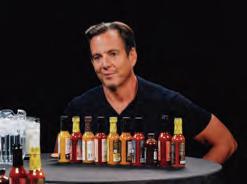
The stars of ‘Beef’ feel your pain, Gen Z
Charles Melton and Cailee Spaeny, who play the young strivers at the center of Netflix’s series, know that the game feels rigged sometimes
CAILEE SPAENY LOOKS AT Charles Melton, her co-star on the Netflix limited series “Beef,”askingforhelp.“Wait a minute ... how long were we attached?” Melton smiles and reaches for her hand. “We’ve been attached our whole lives.” ¶ Have they? Given how they tease and finish each other’s sentences, it sure feels that way. Spaeny and Melton were cast as Ashley and Austin, a Gen-Z couple working at a Montecito country club, dreaming and scheming toward upward mobility, a good 18 months before filming began in early 2025. To cement their bond, Spaeny, who hails from Missouri, and Melton, an Army brat who considers Kansas home, decided to return to their Midwestern roots, round up their families and go to a Kansas City ChiefsfootballgamejustbeforeChristmas.

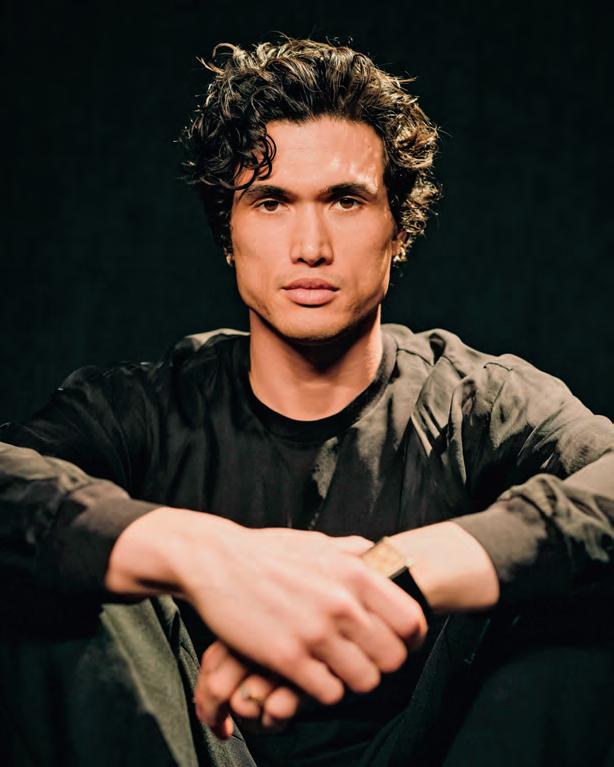
At one point, Spaeny looked over to see her brother-in-law having a heart-toheart with Melton’s dad. They were crying. After the game, they all went out for barbecue. Melton surprised his dad with a gift — a truck.
“That was very sweet and emotional,” Spaeny says of the day. “There’s a lot of filling in the blanks when your families are from the same part of the country. They’re down-to-earth, churchgoing families. It felt easy. We’re cut from the same cloth.”
When the Palisades and Eaton fires delayed the start of filming, Spaeny and Melton decamped to Solvang, rented an Airbnb with some friends and continued what Spaeny calls their “weird prep” for playing the series’ besotted couple. They cooked dinners together, played games and even watched “Riverdale,” the CW series that catapulted Melton to fame a decade ago.
“We also watched ‘Wicked’ too many times,” Spaeny, 27, says.
“You were singing a lot,” Melton, 35, tells her.
MELTON I think the generations are more alike than different. As a millennial and zillennial, I’ve done my share of weird self-diagnosing.
SPAENY TikTok therapy for sure. Holding onto words that make us feel more seen through the internet. The comment “I just read the headline. I need to start reading the articles.” It’s sad but it’s true. And I think everyone does it.
Do you relate to your characters’ Gen-Z resentment that previous generations screwed them over? “Everyone grabbed the bag before we could.”
SPAENY There was a time when having a house by your 30s was guaranteed. Now, you’re having to choose whether you want to have children or stay afloat in your career. We’re all riddled with this feeling of the life we feel we deserve ...
MELTON And what will make us happy. Ashley gets the promotion. But the social climb is never enough. It’s “if you do this thing, you’ll get this thing.”
SPAENY It’s the constant chase.
You’ve both defied the odds and enjoyed successful careers as actors. Can you be content and sit with that?
SPAENY We try. But it also feels like it’s set up in a way where you can’t sit. You have to look for the next thing because if you wait, people will get bored with you. You’ll book a job and hopefully it pays well and then you might not work again for two years. It’s easy to be in a place of desperation. Actors are also naturally people pleasers. So, unfortunately, I think it was too easy for us to relate to our characters.
“I don’t think I sang once,” Spaeny counters.
“Oh she did,” Melton says. “She’s a singer. Sing for us.”
“Guys, what are we doing?” Spaeny says, burying her head in her hands.
Whatever it is, we’re not stopping. We have, as Melton notes much to Spaeny’s chagrin, “caught a vibe.”
You two represent different generations ...
MELTON What? Excuse me?
Charles, you’re a millennial. Cailee is Gen Z.
SPAENY Oh, my God. You’re so Gen-Zcoded.
MELTON I’m a zillennial.
SPAENY Did you feel like there was an age gap between us?
MELTON I feel like we’re the same age. You know I’m an old soul. My exterior is just goofy. Cailee is wise beyond her years.
What’s the biggest difference between the two generations?
MELTON Maybe part of your question, which led to your beautiful answer, is: Where’s acceptance? I’m a father now. Sometimes, I’m super tired, but the best thing is I get to read to my kid. Looking at life through a place of abundance ... but that can be a tough thing to do.
SPAENY It’s not just the entertainment industry. I go back home and I’m with my sister, who is an amazing mother and soccer mom. And you can feel that itch inside of people back home too. Have I done enough for my children? Do I need to go to more soccer tournaments? Am I going to church enough?
MELTON It’s everywhere. And under the umbrella of class and healthcare and how expensive everything is, it’s tough. The bill we had just to have a baby was so ridiculous.
SPAENY Oh yeah. My favorite line in “Beef” was, “Do you know the 16-piece meal at KFC is $52.99 now?” That sums it up.
I looked that up. It’s true, though you can get the 16-piece chicken-only meal for about $37.
MELTON But you can’t just eat the chicken. You have to have the sides and biscuits, right?
How about Austin’s line: “All we need is each other ... and the beach.”
MELTON That’s what I love about Austin, this optimism but considered to be naivete. Really, at the end of the day, I’ll look at my partner and I’ll look at my daughter and be like, “This is absolutely all I need.”
SPAENY [Sighs] I would love to get to that point.
MELTON But then to put food on the table, you’re required to do things that take you away from the things that you say are all you need.
SPAENY The great thing about this show is that it’s zeroing in on everyday impossibilities of life, the things thatshould be so simple, but drive us all up the wall.
You both talk about Midwest sensibility. Do your roots help ground you?
SPAENY I just got back from home last night, and I always feel a layer gets peeled off when I’m there. With work, I’m always on edge and trying to hold onto this thing that could be taken away from me any day. When I go back home, I feel like it can really be that simple. But it doesn’t last. That’s the problem. The itch comes back.
There’s nothing wrong with a little ambition.
SPAENY I’m finding ambition more and more unattractive these days. Maybe that’s me just getting older and wanting more outside of the job.
MELTON We’ve talked about this. If we’re always going from one thing to the next, how can I bring the humanity and soul of my life into my work? If I had my way, I’d take three to six months off between jobs just to live and put my feet on the grass. Cailee and I connect in many ways. I love your determination and drive and passion for the work. Some people want to act like they don’t care, but I think it’s cool to care.
Timothée Chalamet does too, but he got flak for saying that out loud, that he “wanted to be one of the greats.”
MELTON I thought that was f— awesome. You want to be great? We all do.
SPAENY It’s what every actor is thinking except they’re feigning ...
MELTON We love Chalamet over here.
SPAENY Maybe he didn’t say all the right things, but that speech, that’s why we’re in the building.
MELTON It’s very much the athlete’s mentality. Like Deion Sanders is one of the greatest of all time. “You look good, you feel good, you play good.”
It’s OK for an athlete to say that, but if
an actor does, the world gives them grief.
MELTON That kind of sincerity is the default in Kansas and Missouri. You know, growing up as an athlete, I was pretty good. I ran the100-meter dash in10.9 seconds. Make sure you write that in. [Laughs] You have to have a vision. And the artists that speak on that vision, that’s awesome. Visualization is essential. I wouldn’t be here talking with one of my best friends and one of the greatest actresses ever ...
SPAENY What are you doing?!?
MELTON I’d rather give you flowers all day than talk about what I think. All that to say is that I wouldn’t be doing this if I did not have vision when I was in Kansas to leave
with $500 in my pocket, 60 cans of chicken noodle soup and 60 cans of tuna. You have to dream.
SPAENY A dollar and a dream!
I’ve got to ask. Sixty cans of chicken noodle soup on a road trip? Do you just pop the top and down it cold?
SPAENY Great question.
MELTON I’d just take off the top and lay it in the sun for two or three hours and it’s good to go.
SPAENY Please stop.
MELTON OK. I’d just dip my finger in it and because I’m so hot, it just boils.
SPAENY You see what I’m saying? He’s such a dad.


Her impeccable timing has made her an ‘SNL’ favorite. But success didn’t always seem like a sure bet.
IN HER EARLY 20S, ASHLEY
Padilla moved from the Bay Area to Los Angeles, hoping to make a living in comedy. She was taking classes at the Groundlings when an acting exercise forever changed her.
“The teacher said, ‘All right, everyone try to get my attention.’ Everyone starts going crazy,” recalls Padilla, imitating the manic movements her classmates incorporated to be as noticeable as possible. “I just stood in the back like a quiet little freak. I didn’t try to do anything. And she went, ‘I’m just staring at Ashley.’”
Padilla, now 33, is sitting in the restaurant at the1Hotel on Sunset, dressed in an elegant white blazer and long skirt, a long way both mentally and professionally from that aspiring performer struggling to find her creative voice. But that lesson remains close to her heart.
“I think about it all the time: You don’t have to be so loud. It actually is more powerful if you’re a little slower.”
Currently in her second season as a featured player on “Saturday Night Live,”
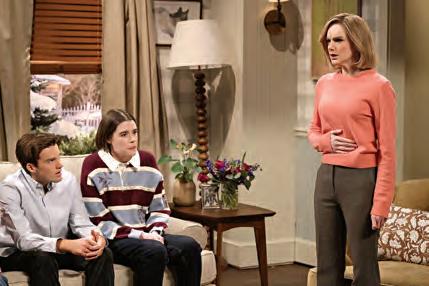
Padilla, who sports an ebullient manner and warm smile, has become a fan favorite by exploring how much humor (and tension) you can derive from stillness. Her best sketches, including “Mom Confession,” in which a MAGA mother finally, begrudgingly admits to her liberal kids that maybe Trump hasn’t been a great president, sparkle because of how expertly she builds suspense regarding where the setup is going.
“I really want to be able to stop and take that pause at the beginning [of a sketch], which are the quickest things to cut because you’re trying to save time: ‘Let’s get rid of when you enter,’” she says. “What roots me as an actor is a little breath. Before we get to the jokes, let the audience see me live in it for a second. I think I’ve proven that [those pauses are] not going to suck the air out of the room. It’s actually going to assist in the blowup that we’re waiting for.”
When Padilla lived in L.A., she adored her Los Feliz neighborhood, so on this late April afternoon she confesses to some disorientation at doing press on the Westside. Still, memories keep creeping up. “I’ll see a coffee shop, and you remember how you were feeling: ‘Will I ever make it?’”
There were encouraging moments that kept her going. One dispiriting day, she was on Melrose Avenue walking to the Groundlings. “In my head I went, ‘Will I ever be on television?’ Just then, a car passes with the girl rolling down the window going, ‘I’ve seen you perform! You’re going to be on television!’ It’s literally like someone answered my cry inside and went, ‘Calm down, it’s going to be OK.’”
Optimism came through other channels too, such as her job as Diane Keaton’s assistant. Padilla adored the late actor and filmmaker, grateful for her endless sense

of wonder, which inspired Padilla to see the world differently.
“She would stare at a tree: ‘Look at the way the sun goes through the branches,’” Padilla says, marveling. “I have a voicemail that I listen to whenever I’m feeling a little sad or I miss her — she’s just like, ‘Hey, Ash, how are you doing? I’m just checking in.’ And she stops and goes, ‘The blue sky. Wow.’ And I’m just like, ‘You are someone we all want to be around.’ It’s why she is so massive in people’s lives.”
Since girlhood, Padilla has loved to write, which was valuable once she joined the Groundlings, doing seven
shows a week. “You don’t get onstage unless you write your own stuff,” she says. Her viral “SNL” sketch “Haircut” — in which Padilla goes to dinner with friends, disturbing them with her atrocious haircut — was created at Groundlings, where it killed. But pitching it at “SNL” revealed the differences between the stage and live television.
“‘Haircut’ started as a ‘[Weekend] Update’ [feature], and I was unwilling to get rid of some stuff in there because I knew it worked at Groundlings,” she recalls. Padilla credits her frequent “SNL” co-writers Alison Gates and Kent Sublette for
helping her understand the program’s rhythms. “They made it punchier and snappier. I definitely need the other writers — they make it so much better. At the Groundlings, there’s no camera cuts, there’s no time limit — you can mosey and do behavioral stuff. But [‘SNL’ sketches] need to look good on television. These writers are so good — they’ll say a joke that I go, ‘You’ve just said everything I was trying to do in a whole page.’”
Padilla’s peculiar but grounded characters may make you wait to see what they have in store, but she isn’t wasting any time. Last summer, wanting to distract
herself from wondering whether she’d be asked back to “SNL,” Padilla wrote a screenplay, which is now being backed by Oscar-winning “Moonlight” producer Adele Romanski. Padilla won’t say much about the project, but you can bet she included a part for herself.
“It’s like, ‘I want to be on television? OK, write your sketches. I want to be in movies? I wrote a movie,’” she explains. “I don’t want to wait around for someone to give me a role. I hope I get to work with great people, but I also want to control my own career — and my own happiness as well. I want to be creative all the time.”

6comedy actors on survivingbad reviews, making their castmates break and more
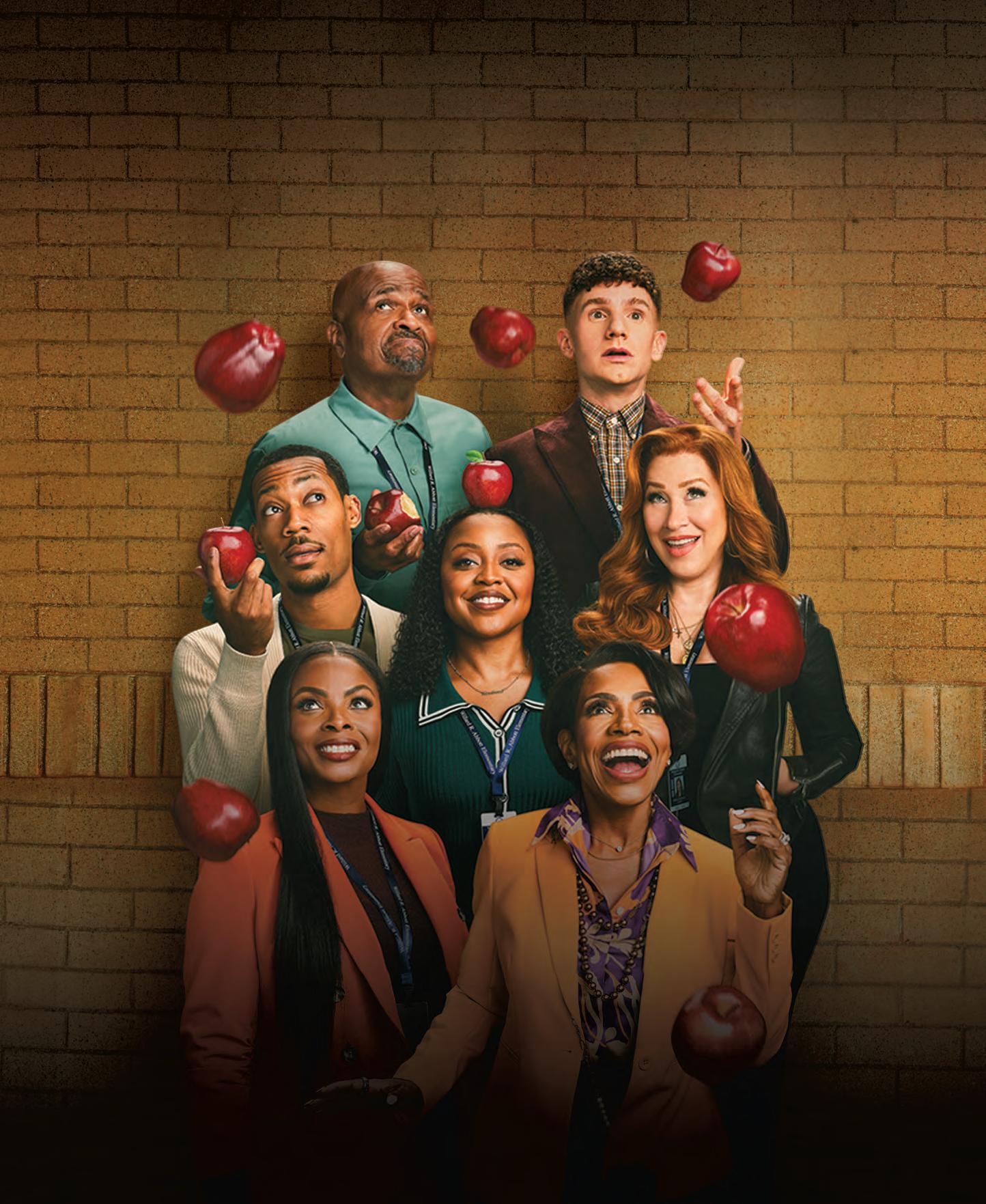
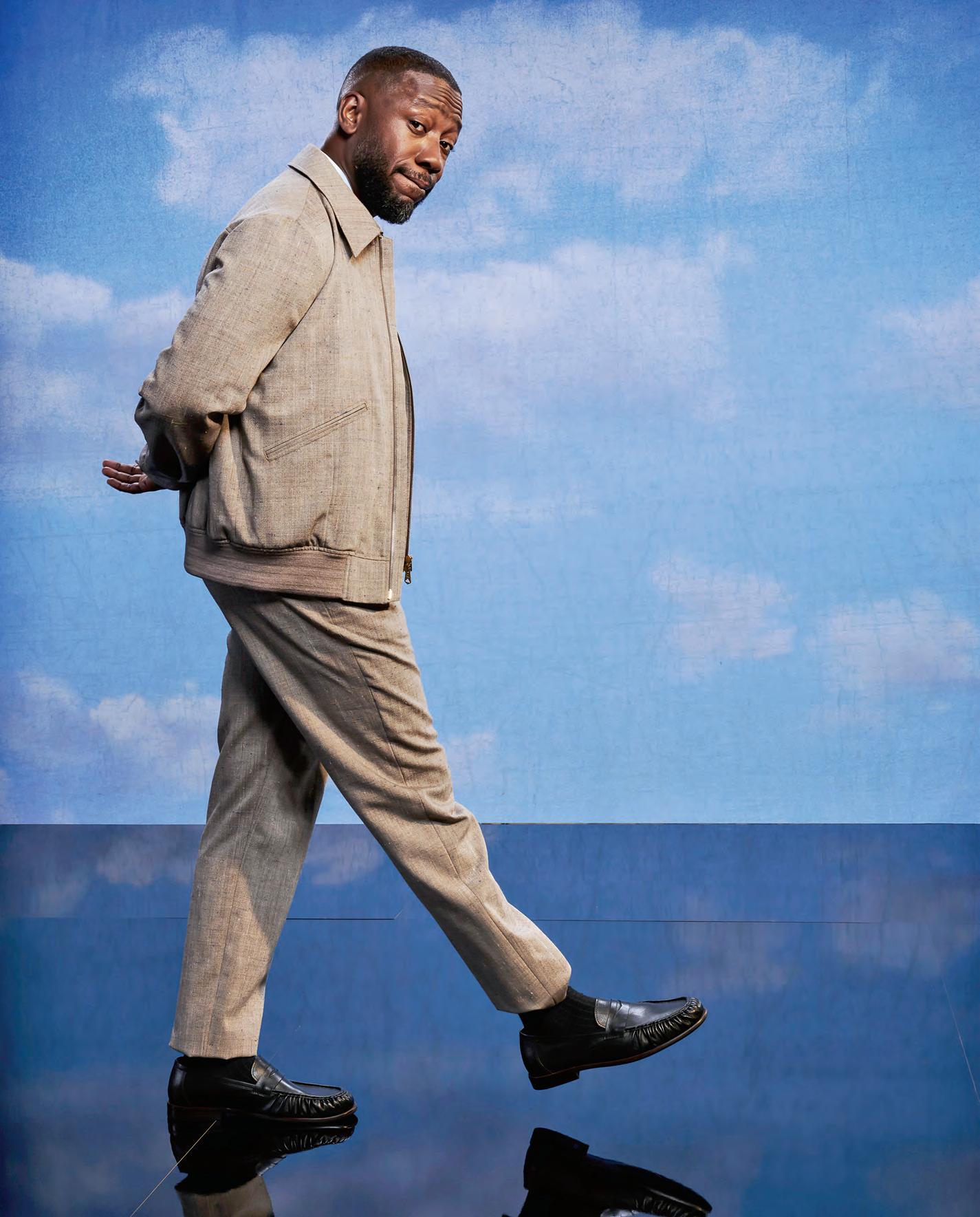
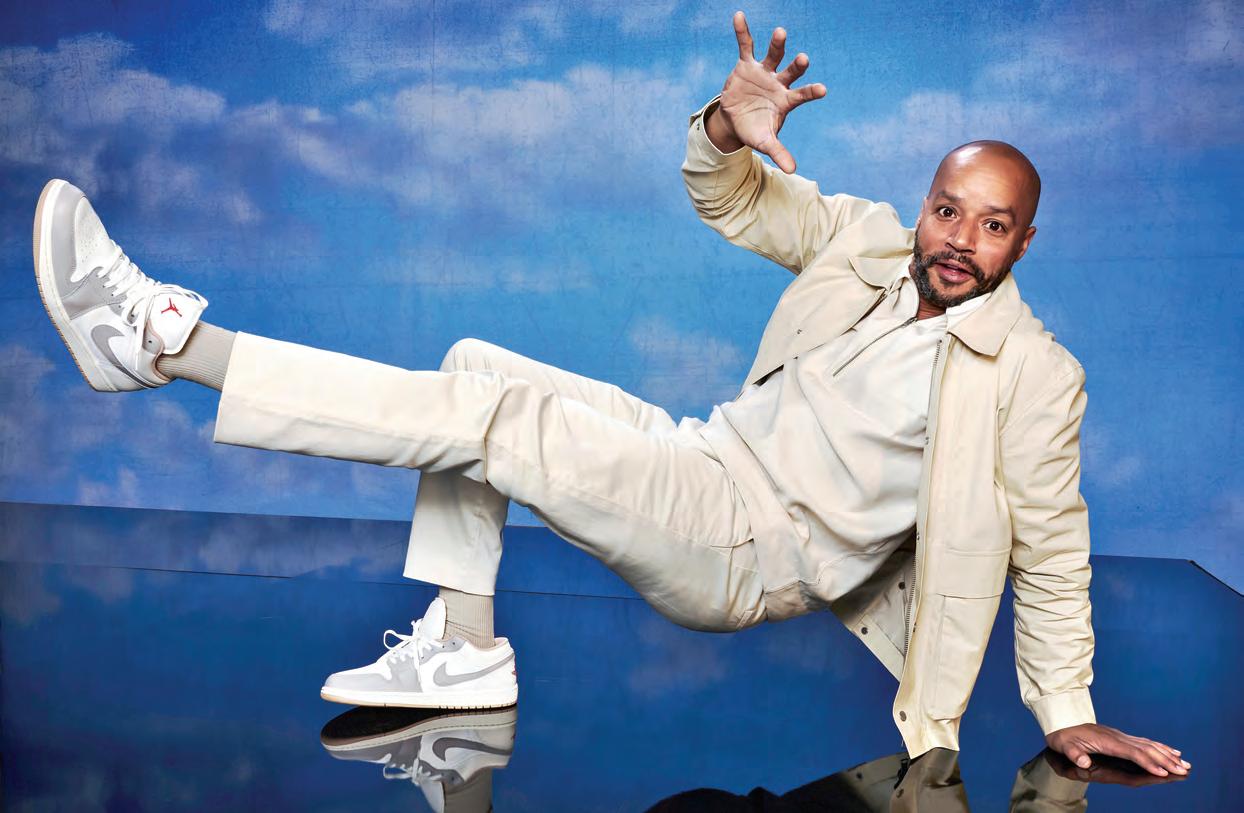
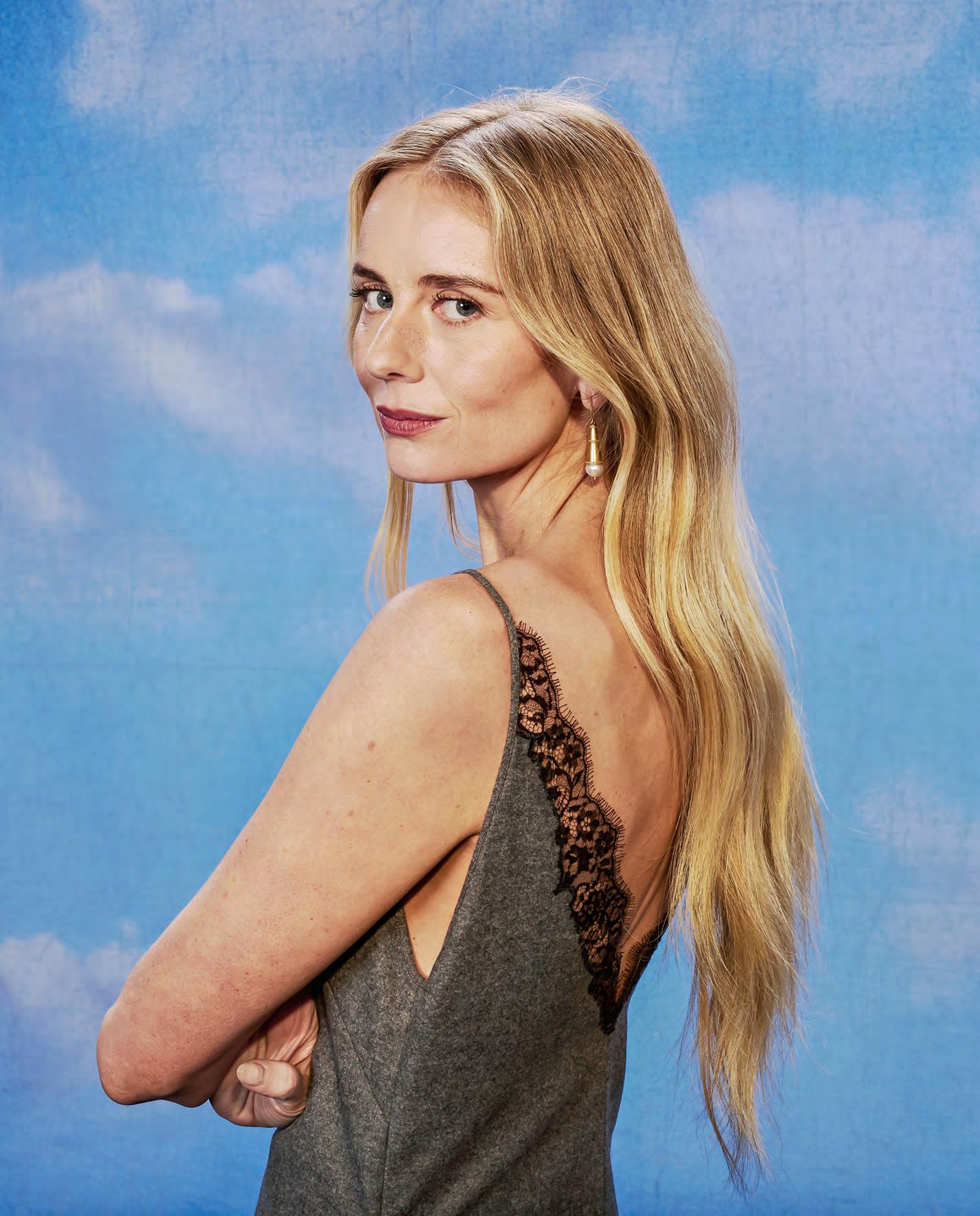
WHEN ACTORS FROM TV’S TOP COMEDY SERIES recentlygatheredforTheEnvelope’sEmmyComedy Roundtable,anylessonsthey’dlearnedovertheyears abouthow not tobreakquicklywentoutthewindow — this year’s guests made each other laugh early and often. ¶ Contributing to the hilarity were Danielle Deadwyler, whose English professor in HBO’s “Rooster” has her life disrupted by a bestselling writer; Donald Faison,who reprises the roleofChristopherTurk,nowchiefofsurgery, inthe revival of ABC’s medical sitcom “Scrubs”; Sabrina Impacciatore, who embodies the vain managing editor of a failing regional newspaper on Peacock’s “ThePaper”;JustineLupe,whoplaysMorgan,aflighty but loyal sister and podcast co-host in Netflix’s rom-com“NobodyWantsThis”;LamorneMorris,who portrays New York City journalist Robbie Robertson in Prime Video’s Depression-set “Spider-Noir”; and Chris Perfetti, who features on “Abbott Elemen- tary” as awkward but well-intentioned social studies teacher Jacob Hill. ¶ In the course of our conversation, participants discussed surviving bad reviews, what fans misunderstand about comedy and,yes,howtheykeepastraightfaceduringfunny scenes (if not on The Envelope roundtable). Read excerptsfromtheconversationbelow.
What is the last thing that made you laugh out loud, whether it was meant to be funny or not?
LUPE I have a1½-year-old. She’s just starting to talk. She doesn’t really say a lot of words at once, but she started doing this thing where, when she’s going poop, she just goes, “Oh, wow. Oh, wow.” And every time it’s just so cute.
PERFETTI I also do that when I poop, so please tell her it’s normal … I don’t know, guys. It’s scary times. I don’t find myself laughing out loud very much anymore. I guess to that end, I watch Jimmy Kimmel’s monologue every night and I think that it’s pretty drop-dead gorgeous. It’s so funny, and he’s using that platform in such a gorgeous way.
FAISON My daughter was playing a volleyball game against a very formidable opponent. I’m just going to put it out there: LeBron James’ daughter. She was serving and pushed everybody back with her serve. Boom! Everybody backs up. Now she’s got everybody out of bounds, then she taps it real soft and it falls in front of them. I laughed out loud. I was just so impressed, and my daughter looked at me like, “You mother—. Don’t you enjoy that!”
IMPACCIATORE A couple of days ago I was fighting with my boyfriend and it was a very bad fight and I really wanted him to understand my reasons. I was trying to put on my trousers and unfortunately I put two legs in one [side]. He started to laugh so loud and I wassoupset.AndthenIstartedtolaughloud too.Butit’shorriblewhenithappens,because I’m a very serious person when I fight.
Donald, the last season of “Scrubs” concluded in 2010. Now Dr. Turk is back working at the hospital with his buddy J.D. (Zach Braff) and a lot of the original cast. What was it like stepping back into that world?
FAISON When the pandemic happened, Zach and I did a rewatch podcast of “Scrubs,” and that’s where all of this started to formulate again. In doing the rewatch podcast, we researched what the fans liked, what we liked, and what we thought was funny. And we were very honest about it. If it sucked, we said it sucked. Then the TMobile [ad campaign with Faison and Braff]happened. So for the past five or six years, I’ve been playing Turk to Zach Braff’s J.D. When the revival came around, it was easy to slip back in because we had been doing this banter for so long. The only thing that’s different is that he’s older, but maturity has not set in with him yet. He’s a 50year-old kid who’s really good at cutting people open and training younger people, but for the most part, he’s still silly.

Chris, “Abbott Elementary,” which follows several teachers at an underfunded public school in Philly, is heading into its sixth season. That means you’ve been playing Jacob for quite some time. Do you ever find the line between your personalities blurring?
PERFETTI The line between Chris and Jacob is definitely blurring. When we first started, I was shocked that [creator] Quinta [Brunson] saw me as this person. We weren’t alike at all, but I trusted that she saw something [in me] she wanted to exploit. Now, I would be so lucky to steal some of what he’s got going on. He’s unbelievably loyal and ambitious and really comfortable in his own skin. He leads from that place. And I need to shut the hell up and stop telling the writers things about my own life because now they’re showing up in the show. So truly the line between Chris and Jacob is getting weirder.
Danielle, “Rooster” takes place at a fictitious college. You actually have several degrees, including multiple master’s. Did you draw on your own experience in academia for “Rooster”?
DEADWYLER I was a student, and that’s a very different dynamic than being an administrator or a professor. But I dig education. I dig the intention of the environment, the debate, the ongoing pushing of the self and weaving that into your personal life. It’s all super connected. So I just brought that to the show.
You’re renowned for your work in intense films like “Till” and “The Piano Lesson.” Do you use a different muscle for comedy?
DEADWYLER I was always saying to the [“Rooster”] team, “Hey, guys, I feel good. I can breathe. I have energy to do things. Is that normal for people?” So yes, it’s a completely different muscle. But [co-star] Steve [Carell] says this beautiful thing that characters don’t know whether they’re in a comedy or a drama. And that’s about as true as it gets. You bring full rigor and development and discipline to the making of a role, regardless of what genre.
Justine, how much do you relate to your character Morgan in the interfaith romantic comedy “Nobody Wants This”? Or is it more like you want to fix her?
LUPE I don’t know if I want to fix her because that’s what’s compelling about her. I have so much fun playing the mess of Morgan. I relate to her. I started off where she was kind of a semiautobiographical story of [show creator] Erin Foster’s relationship with her sister, Sara. Then immediately the ship left the dock when I took the character. Justine has now taken over this idea of who this person is, and it’s

alotmoresloppyandunbridled.Themessofherisactuallyme,becauseI’malittlebitsloppyasaperson.The show really captures the relationship between siblings, and sisters in particular.
LUPE evolvedIidentifywiththeideaofbeingsomeonewho’s past their original home life, and then going back into circumstances with your family and re- gressing immediately. I wanted to play with that dy- namic. Morgan might think that she’s evolved past certainthingsandthentheminuteshe’scodependent withhersister,theydevolvebackintothebrattykidlike versions of themselves that are like picking on each other. I know the feeling, when you go backhomeandyou’relike,“Wow,haveIgrownupatall?”
Lamorne, “Spider-Noir” is based on a Marvel comic and is set in anexaggerated version of1930s New York. Audiences have the choice to watch the series
in black and white or in color. How does the tone change between the two styles? MORRIS I watched both and they both have their own unique qualities. I would say the way folks should watch it is the way we traditionally watched TV as a people. You start in black and white and then when color was introduced, you would go back and watch those same films when they added color to it. While we’re filming it, [I was thinking] “How are they gonna make this visual effect look cool in black and white?” And then you watch it in black and white and you go, “What the f—?!” And I go back and watch it in color and go, “Holy — it looks great in color, too.” Everything down to the wardrobe [and] the set design, you watch it in black and white and it looks bold and as vivid as if it were in col-
or. But then you watch it in color and you go, “Holy crap, that house is blue, that suit is orange.” So just go watch it in both versions.
Sabrina, your character in “The Paper” is the managing editor of the Toledo Truth Teller, but she’s really all about the clickbait. How much did you know about that conflict in modern journalism?
IMPACCIATORE I made sure not to know anything about it because Esmeralda doesn’t have a clue. Esmeralda is not a real journalist. Esmeralda is there for some mysterious reasons that I’m trying to figure out. She’s the queen of bull—, so I made sure not to know anything about journalists. And because I had played Valentina in “White Lotus,” I wanted to make sure that this character is going to be completely different from her. She must be out loud, she must be big. So I made some choices about her, for example, the nails. I still have these nails because I’m still shooting, but usually I don’t have long nails. But these nails started to make me
thinkinadifferentway,tomovemyhandsinadifferent way. Like these are guns, weapons to manipulate people.[Touches Morris with her nails.] MORRIS Considermyselfmanipulated.
IMPACCIATORE I’mtheopposite.Ihavenofiltersinlife.
I am my own worst enemy. I’m too transparent.I don’t knowhowtohidefeelings.SoIthought,“Whatdoesshe do?”Becauseit’sadocumentary,shethinksonedayshe willbeastar.SoIhaveherhavehairlikeRitaHayworth the first day I arrived on set. They were looking at me like, “What isshedoing?”Theydidn’tget it, so I had to explain that she wants to be a star. Once you start to playamanipulativeperson,youseemanipulationeverywhere. It’s like now I’m losing a bit of innocence, because I don’t trust anybody anymore. Now randomly I say,“Areyoutryingtomanipulateme?”
“The Paper” and “Abbott Elementary” are mockumentaries. Does it make a difference in how you’re performing when it’s shot in that style?
PERFETTI Onourbestday,we’retryingtodupepeople into believingthat it’s real life.Butsimilarly,Ithink Jacob thinks that he will be the star of this documentary wheneverit comes out.He’llbeanexecutiveproducer on it. So there’s very much an element of having one foot in the audience’s experience. His outrage is heightened because he knows it’s being captured on
film. I grew up doing plays and so it’s an easy dynamic to borrow from. When you’re onstage, even on your best days, you always have even a pinkie in the audience’s experience. You have to be able to be in conversation with them. The mockumentary format really allows for that and I think it informs the show in a really beautiful way.
IMPACCIATORE The first time that I watched “The Office,” I thought, “This project is incredible, but the light is so horrible. I will look so ugly.” I was trying not to be chosen for this project because I was so scared to be so ugly. So when I arrived on set as the character, I brought my own ring light and I said, “Guys, Esmeralda, because she knows she’s in a documentary, she needs her own lighting.” I got away with it. To me, comedy is a very serious thing.
What do audiences underestimate [or misunderstand] about what it takes to make a comedy?
DEADWYLER The assumption is that you’re being funny, and it’s not that at all. When you [Chris] just talked about doing plays, I was thinking theater is the thing
that enabled me to really lean into the joy and transition into working on “Rooster.” There’s a rhythm and a quality of engagement that I learned completely in the theater world that applied to the gelling and the cohesion of “Rooster” in all of the scenes. So leaning into drama enables you to lean into the hilarity or the quirkiness or awkwardness of humor.
MORRIS If the script is funny, it’s going to be funny if you’re an actor playing it real. And obviously you have throughout history those characters who know how to add to that, who can ham it up in such a way. Chris Farley and those guys. The Belushis, the Will Ferrells. They can take something really funny and just say, “I’m gonna add my stamp to it so when you see this type of humor, you know it was from me.” Then you have your Judd Apatows of this world who can create a funny environment and all the actors are basically playing it real and playing it straight.
FAISON People think you’re actually that funny or you’re that quick and you can come up with those jokes that fast. But really you’re saying somebody else’s words and you’re being somebody else. Somehow I got labeled as a stand-up comic. I’ve never done stand-up in my life, but I’ve been in so many comedies that people think, “He must be funny in real life.” I imagine Jack Black must hate going outside because everybody’s, “Do that skandosh, sliggidy, diggity thing that you do!”
DEADWYLER They want you to do thatfor drama, too.
MORRIS “Make me cry”?
DEADWYLER They want you to give them the feeling that they know you for, because that’s all they’ve witnessed of you. They want me to ride a horse. They want me to cry. And it’s like, “I’m just trying to get these chicken wings and go home.”
And trying to break out of that, whatever that is, and move on to the next thing that you want to do.
FAISON For a long time it was very difficult as an actor to do anything else other than comedy, because you could get typecast. That’s something that happens right away. You could be the best friend for the rest of your life if you’re not careful.
MORRIS I came up in traditional comedy. Second City, Chicago. When I was a kid, I didn’tcareaboutanythingelseotherthanlike making people laugh. So in plays and things, I was always cast as the comic relief, back in my ham-it-up days. Up until the beginning of my TV career with “New Girl.” I didn’t know who I wanted to be on that show. I didn’t know who I was, and I’m thankful to the staff for just allowing me to grow into that character. But what I grew into was a f— clown. I just was like, “Oh man, I get to do this for seven years.” I loved every minute of it.

When you get recognized out in public or somebody knows they know you from something, who have you been misidentified as? Or do they simply call you by your character’s name?
FAISON I was at sushi once and it was actually another famous person that came up to me, I’m not gonna say their name. And he looks at me and goes, “Alfonso?” I said, “Nope.” And he hightailed it out so quick. I was like, “I gotta call Alfonso Ribeiro and tell him that somebody thought that I was him at a restaurant.” I’m glad to be recognized, but I am not Alfonso Ribeiro. MORRIS People think I’m everybody, but there’s one guy I get. Malcolm Barrett. This has been going on for 15 years. A good friend from theater school, we did every play together, he called me when I moved to L.A. and was like, “Dude, congratulations on your AT&T commercial!” I was like, “What AT&T commercial?” And he’s like, “The one where you’re playing Pop-aShot basketball.” And I’m like, “That’s not me.” Years later, everyone, people would come up to Malcolm all
the time and say, “Congrats on ‘New Girl.’” PERFETTI I cannot go to Philadelphia because I suddenly now have 5 million new family members. I don’t get mistaken for an actual person, but I do love the moment where you pass them on the sidewalk or on the subway and you see the wheels churning in their mind.
LUPE I have a yoga teacher that still calls me Willa [her character from “Succession”]. I’ve been going to her for like a year and she’ll be like, “And Willa, you want to move into down dog.”
Justine, you’ve been referred to as a scene-stealer more than once for your work in “Succession” and “Nobody Wants This.” What do you make of that?
LUPE That was the thing about “Succession.” I started when I was 26 and I felt like





←Lamorne Morris in “SpiderNoir.”
← Chris Perfetti in “Abbott Elementary.”
just kind of stare off into the distance afterward, it’s one of the greatest things I’ve ever seen.
Do you read reviews of your work?
MORRIS I did a movie called “Sandy Wexler” with Adam Sandler and he said to me, “Hey buddy, when a film comes out, don’t read the reviews.” He’s like, “Who cares? We got our own thing going.” … It allowed him to stay true to who he is for his fan base, which is larger than life. If you start caring so much about what people think about your art, it’s going to change what got you there in the first place. That’s what Jamie Foxx talked about after winning an award, you don’t want to switch it up all of a sudden because everybody looks at you like you’re this great actor, you won this thing.
liant.” And I know for a fact it wasn’t. So now I don’t trust s— you say.
←Justine Lupe in “Nobody Wants This.”
IMPACCIATORE On set, if someone gives me a feedback about something that he liked, I don’t want to hear that because it feels like a trap. And I don’t want to know what worked and what didn’t work because I want to be free. I want to explore things. Reading a review … it’s something rational that is describing something irrational. Like to me, acting is an irrational act. It’s wild when it happens. It’s going somewhere else and not even knowing what you did.
←Danielle Deadwyler, with co-star Steve Carell, in “Rooster.”
←Sabrina Impacciatore in “The Paper.”
FAISON I tend to not look at reviews. This was the first time ever in my life … when “Scrubs” came out this time around. It’s because we made it for the fans. It was strictly for the fans. So when we put it out and the critics were very nice this time around, that was cool. And then you get to Reddit and Instagram and you’re waiting for them to be like, “You guys suck!” “How dare you?!” And that didn’t show up. It was like, well, I’m gonna read the reviews then.
LUPE I once had a critic call me a “bargain-basement Gwyneth Paltrow.”
MORRIS You’re like, “Gwyneth Paltrow, you say?”
LUPE As long as the word Gwyneth is in there, I’m OK.
MORRIS If someone calls me “a bootleg Eddie Murphy,” I’m retiring.
FAISON “He kind of reminds me of a poor man’s Richard Pryor.” Why, thank you.
Chris, the cast on “Abbott” are so good at bouncing lines off one another. How are you not breaking all the time, or are you? PERFETTI It’s certainly gotten harder as we’ve gotten closer. We’re all trying to make each other break now. But we’re pretty good. The show is sort of made on the fly, and we’re constantly throwing jokes away or trying to see how far we can push something. I think a lot of what we find funny on “Abbott” is people trying to avoid pain. Even when it’s ridiculous, it doesn’t feel too hard to keep our feet on the ground. We’re also so blessed with the mockumentary [format]. The story is very much told by the camera. So I’m always on, and something that comes up in that take might make it into the final cut because there’s three cameras going at all times. But Quinta probably breaks the most because … she genuinely forgets about some of the jokes that she writes.
LUPE There is something to that energy of people enjoying being in that kind of space with each other, like on the verge of laughing. Riding the line of being just about tobreak,it’ssomuchfun.Thechemistrybetween them is so palpable. When you see a break like that, you’re like, “Wow, they’re really enjoying each other.”
MORRIS [It’s hard when] I’m literally loopy, it’slateandIknowthisactorI’mworkingwith is a f— killer. I start laughing before we roll, and I’m like, “This is gonna be so difficult.”
LUPE And then it’s like that thing when you’re like a little kid, where someone’s like, “Stop laughing” and it makes it worse because you are trying so hard not to laugh.
←Donald Faison, right, and Zach Braff in “Scrubs.”
I got to be a fly on the wall in so many incredible scenes with all-star actors. To even be even seen among that kind of company, it makes me so happy. I feel the same way about “Nobody Wants This.” I look around and I’m like, “Wow, these are just incredible people that I’m working with.” So it’s nice to know that people are even registering my existence.
PERFETTI Willa is responsible for what I think may be one of the funniest TV moments ever. I can’t remember which season where you read your reviews and throw the iPad overboard, but it lives in my mind rentfree. The sound you make, the way that you
LUPE There was like a part of me where I was like, “Well, if I can make it through that, then whatever. Who cares? It’s just fun to hear people’s perceptions of what you’re putting out there. How people interpret it. Because sometimes you can’t see the forest through the trees. If you have enough perspective, it’s interesting to hear the dialogue about the things that you’re working on.
DEADWYLER Ifit’sproductive,Ifindthatcriticalanalysis is useful. But if it’s critical stabbing, that’s useless to me.
FAISON I have a question for all of you guys. When it comes to acting on set, do you prefer to see what you just did or do you prefer to trust what the director says? When it comes to comedy, I wanna see what the f— we are doing just to make sure we’re in the rhythm.
LUPE I don’t watch it in the moment. I’ve gotten easier on myself watching things after they’re released. When Ifirst watched my work, I just wanted to like, in all honesty, tear my face off. It was really a tough experience.
MORRIS If I trust the director, I never look at the monitor. No knock on, like, first-time directors, because I work with a lot of first-time directors that I trust, but there are some from time to time that just go, “It’s great,” every take. And so sometimes I have to go, “Just give me a second, let me see.” ... A couple of times [they’d tell me], “Everything you did was bril-
IMPACCIATORE If there is that moment where we can break, there is a real abandonment and there is a real freedom ...It’s the most beautiful feeling about being an actor. It’s about feeling less lonely.
FAISON Danielle, you’re working with Steve. First of all, he’s gonna break everybody. I’m pretty clear that everybody on set’s gonna laugh because he’s just got that. But has anybody made him break yet? I know if I made Steve Carell break in the middle of a scene, I’m dancing for a while. I’m gonna be calling my mom like, “Yo, he f— laughed at my joke!”
DEADWYLER I know that they wilded out the day the bed broke [during a fight scene with co-star Phil Dunster]. But I have not seen him break in that way. He is so rigorous. He’s about building the character, building a dynamic, trying to tell a full story. LUPE He also must have so much practice from “The Office.”
DEADWYLER He’s strong.
FAISON I laugh harder at “Saturday Night Live” when they break than when they keep it together.
‘Margo’s Got Money Troubles’ p34
‘Task’ p35
Gold Standard p36
‘Company Retreat’ p38
Jason Bateman p39

From elaborate set designs to soul-baring honesty, these stand-up comics didn’t rely on the same old shtick this season, and Emmy voters are going to eat it up
IF ONE THING UNITES EACH OF THESE EMMY-ELIGIBLE COMEDY specials, it’s unparalleled levels of authenticity. Whether they’re deploying innovative production design to tell a story, reflecting on religious trauma in an actual church, or bounding across the stage like a sugar-high antelope, each of these comics have raised the bar with their newly televised material.
When Okatsuka thinks about the fans who call her “mother,” the bowl-haired standup submits that they would be better off calling her “father.”
In addition to being the title of her second special, “Father” hints at the comedian’s domestic cluelessness while sincerely nodding to the story of how, after coming to America as a child, she reconnected with her real dad in Japan.
“I had painted this image of my dad — that he’s such a good guy, he was so innocent, and I was taken from him by my grandma,” Okatsuka says. “And all that’s true. But as I’ve spent more time with him, he told me, ‘I was in over my head. I’m glad she is the one that raised you because I can barely cook. I’m more of a vibe.’ And I’m like, ‘I’m kind of a vibetoo.’”
Watching “Live at the Palace,” it’s easy to see why Conan O’Brien once referred to Fleming as “the goop that’s inside of a lava lamp.” Fleming reads unconventional in every way, from his manic and meta delivery to his glam-rock crushed-velvet bodysuit to a rubbery tendency to leap around the stage, no limb left behind.
“I’m moving the way that I’ve always wanted to be moving, largely thanks to the size of the stage,” Fleming says. “When we went to tour theaters in Chicago, they would time me to see how long it would take to sprint from one side to the other. At the Cadillac Palace, it took six seconds. I think it achieved a grandiosity that I have always dreamt of.”
In the decade since his first comedy special, Nanjiani has been a TV star, an Oscarnominated screenwriter, even a member of the Marvel Cinematic Universe. But superpowered paychecks and a ripped torso don’t necessarily bring inner peace — alternatively, they might give birth to some uncomfortable “Night Thoughts.”
“I hadn’t really done stand-up since ‘The Big Sick,’” Nanjiani says. “As time went by, it started to feel scarier in my head. [But] so much of acting is putting it into a format that can work in another setting,” Nanjiani says about structuring the special, which includes self-aware stories about pool trespassers, what he’d love to say to commenters who made fun of his going to therapy after the poorly received “Eternals” release, and dealing with a pet’s declining health.
“When I started talking about [my cat], Bagel, the energy in the room completely changed,” he says. “We’ve all had and lost pets. It felt like it was very much a communal experience.”
Jones’ uproarious special might as well be a side-of-the-bus ad for how awesome existence can get after 50.
Using herself as a case study, Jones outlines exactly why, despite hustling at comedy for three decades before her breakout role on “Saturday Night Live,” she wouldn’t have been able to handle success in her 20s and 30s, a segment that leads to a full-on admission that her younger self absolutely would have slept with industry predators in exchange for a movie deal.
“Our parents were sold the idea that at 50, it’s over,” Jones says. “I feel like the way that I’m handling coming of age is the natural way to do it — to just face it.”
Maron’s been the king of anxious discourse for decades. But “Panicked” finds the comedian meeting the moment with more precision than ever as he diagnoses what ails America (Theo Von, progressives annoying everyone into fascism), as well as himself.
Balancing sorrow with self-deprecation, Maron covers childhood abuse, his father’s dementia, evacuating his home with three cats during the L.A. fires and becoming the unlikeliest of Swifties. Maron also wanted to tell and show. “You see the lines, and it becomes a new piece of art,” Maron says of Marc Janowitz’s Kintsugi-inspired production design. “Once you get into the darker, more personal parts of the show, you’ll notice that the Kintsugi lines fill the wall. The whole thing worked as a piece, and it wasn’t just a comic standing in an old theater doing another special.”
Filmed at the cavernous, nondenominational Fountain Street Church in Grand Rapids, Mich., “Prodigal Daughter” finds Tomlinson in a state of true acceptance. She’s more at peace with herself, her sexuality, the trauma of her strict religious upbringing, and the ultimate mystery: whether God really exists. “Every time I’ve touched on religion, it’s come from an angry place,” Tomlinson says. “It took me a long time to deconstruct my faith.”
Unlike previous specials, Tomlinson purposefully wrote “Prodigal Daughter” to be more accessible to the community she left behind. “I really wanted it to be an hour of material that my religious family could watch and not feel bad,” she says. “Where they felt seen, but could also laugh at the points I was making.”
Story by Tomris Laffly
How 1960s sci-fi and a DIY spirit guided the costume design for otherworldly content creator HungryGhost
IWAS LAUGHing out loud. And I was crying with her.”
This is how Elle Fanningremembers the first time she read Rufi Thorpe’s bestseller “Margo’s Got Money Troubles,” now a winsome Apple TV serieson chosen families, urgent financial realities and motherly resilience created by David E. Kelley (“Big Little Lies”) with Fanning in the lead. Also an executive producer of the heartwarming dramedy, about a Fullerton College dropout who becomes pregnant by her married professor and launches an OnlyFans account to make ends meet, the Oscar-nominated actor was taken by Margo’s strength and vivid imagination. Her support system is a band of other misfits, caring figures even when they don’t approve of her choices: headstrong mom Shyanne (Michelle Pfeiffer); former pro-wrestler dad Jinx (Nick Offerman); creative LARPer roomie Susie (Thaddea Graham); and experienced OnlyFans collaborators KC (rapper Rico Nasty) and Rose (Lindsey Normington).

came into being is that his father struck a chord in recognizing that. That’s probably what Margo fell for. And so we very much wanted to explore Margo the writer.”
With the videos Margo creates on TikTok as HungryGhost, the show does exactly that. “I laughed out loud at a lot of the things in the making of those little vignettes,” recalls Kelley. “Some were improvised, some scripted. There is one where HungryGhost talks directly into camera, saying she is going to invade and conquer the viewers. I loved the visuals and delivery of that — it spoke to Margo’s nucleus of being a creative.”
as a mother and breastfeeding.”
Costume designer Mirren GordonCrozier wanted to marry Margo’s two worlds with well-considered pieces and subtle hints that bridge them. “Margo has a favorite alien T-shirt. And then in an early episode, she has another button-down shirt that has an alien. Hopefully, the viewers notice that it’s in her subconscious.”
We witness two versions of Margo’s alien persona throughout: an expensivelooking fantasy iteration that Margo imagines on a giant movie theater screen, and the actual “budget” one that Margo and Susie create, which needed to look homemade because the two women don’t have a lot of money. “The fantasy outfit is a 1960s throwback. I saw it like [Jane Fonda’s] ‘Barbarella’ with the cone bra and the antenna. She is coming to capture the cowboy aliens,” Gordon-Crozier explains. For the lovably imperfect real-life version, the designer wanted to reflect the artistry of Margo’s supportive roommate, who is instrumental in the realization of her friend’s art. “Susie is crafty and she’s into role-playing. In my mind, she had a closet full of clothes.” Finding inspiration everywhere, from fashion photography to Harajuku Girls, Gordon-Crozier especially emphasizes filmmaker Michel Gondry’s influence. “I love that he always has a DIY element to everything he does.” With that spirit, bedazzling some cowboy costumes took a village, with everyone chipping in: “Even Elle helped. I added all these moons and stars to her boots. While waiting for the shoot, she sat on the back of my truck and we bedazzled together.”
Fanning has been living with this character for a while, having recorded the audiobook as well. “I felt free playing her,” she explains. “She had something unabandoned that I wanted to capture.” Margo’s unrestrained spirit deepens thanks to her OnlyFans alter ego, HungryGhost, a mesmerizing, 1960s-coded alien-fembot with retro outfits and a large sexual appetite who is discovering Earth for the first time. “HungryGhost is birthed from Margo’s experience of feeling like an alien,” Fanning says. “Her peers don’t have children. And as a new mother, she’s certainly seeing her world through a different prism.”
Fanning wanted to emphasize Margo’s writerly talents, an intention Kelley shared.
“At her core, Margo was a writer,” he says. “I think the reason that her son, Bodhi,
In order not to lose sight of Margo during HungryGhost sessions, executive producer and director Dearbhla Walsh (“Bad Sisters”) considered the photographic tension between reality and fantasy, framing the OnlyFans vignettes by showing Margo’s real world around it. “You rarely just see the screen of OnlyFans,” explains Walsh, who directed four episodes. “You also see the outside: baby’s dirty nappy or Margo’s ordinary knickers or track pants, all the unglamorous and unsexy things.”
To Walsh, those choices represented Margo’s sense of control. “She’s a director and you could always see the creation [process], how Margo brought theater into her OnlyFans.” Such decisions also helped eliminate unnecessary sexualization and fetishization. “You only ever see her naked breasts when she is functioning
Meanwhile, Fanning had her own reference points. “I’m a big Pinterest girl and I looked up a lot of photos from the ’60s. I was also inspired by ‘The Jetsons,’ which I watched a lot growing up.” To perfect Fanning’s Space Age skin makeup, department head Erin Ayanian used a sparkly, turquoise cream eye shadow. “There were definitely shades of ‘Lost in Space’ and myriad other 1960s sci-fi stories,” says Ayanian. When it came to Margo’s bouffant hairstyle as the dream HungryGhost, stylist Jaime Leigh McIntosh used a combination of three wigs in pink. “It looked so fun next to the shade they’d chosen for the skin tone. I hope we’ll see some people in HungryGhost costumes next Halloween!”
To Fanning, there is a similarity between her own acting process and the way Margo and HungryGhost inform each other. “In my relationship to the characters I play, we’re nourishing each other. You don’t know it in the moment, but you realize it in hindsight. When I did ‘The Great,’ I felt like I was morphing into Catherine, my confidence was growing. And through HungryGhost, Margo is building her confidence too.”
I COME FROM A FAMILY OF PRIESTS AND devoted Catholics. Catholicism is the blood in my veins. My father was not a disciplinarian, but if you lived under his roof you went to church. Saturday evening or Sunday morning, didn’t matter, you went. My four siblings and I were not miscreants, but we drank beer and sneaked out, and I was once cited for stealing liquor. I can’t recall my father ever yelling at me for anything other than missing Mass.
My great-uncle Dan was a diocesan priest at St. Charles Borromeo in Drexel Hill, Pa. Dan was a fire-and-brimstone hard-liner. Every Thursday we’d gather for dinner at my grandmother’s house. Dan would drink Manhattans — plenty — and if someone expressed a view of God contrary to his own, he’d say, “It’s awfully hot down there.” “There” meant hell. My uncle Ed, my mother’s eldest brother, was an Augustinian. Patient, compassionate, inclusive, Ed’s God was very different from Dan’s. While discussing God, Ed would quote Michael Himes, “There is nothing we can do to make God not love us,” and the Trappist monk Thomas Merton, “Mercy, within Mercy, within Mercy.”
Sports was in my family too — basketball, specifically — and I came to view Dan and Ed as head and assistant coach, respectively. The head coach shouting harsh critiques from the sideline, the assistant coach there to put his arm around you when you made it, crestfallen and ashamed, back to the bench. I loved them both, but I aligned with Ed’s view of God. Dan passed away a decade ago. Ed has since left the priesthood and married a kind and patient woman named Kathy. Over the years, Ed’s views on God have changed drastically. We meet for dinner once a month to talk about life and faith, and it was during one of our conversations that “Task” was born.
Tom Brandis, played by the singular Mark Ruffalo, is a former priest-turned-FBI agent who has lost his faith Everything he held as truth in his life has come crashing down in the wake of a family tragedy. Tom believes he was called by God to adopt two
children, Emily and Ethan. Adopting these children has resulted in the death of his wife, Susan. Matricide. What kind of God allows that? I have struggled with my Catholic faith over the years, but nothing has perplexed me more than the idea of suffering. The poet Archibald MacLeish wrote, “If God is God, He is not good / If God is good, He is not God.” The message is clear: If God is God, the author of everything, then He created evil and suffering and therefore cannot be good.
In “Task,”I wanted to explore a crisis of faith with honesty and without easy answers, because that is exactly how I have found my own faith journey — arduous and circuitous. I believe in God, but I find that belief tested daily. Faith and religion are separable. Tom’s journey in “Task” is a journey of faith. In the fifth episode, Tom is kidnapped by the criminal Robbie Prendergast, played by the brilliant Tom Pelphrey. During a long and tense car ride to the Poconos, Robbie tells Tom that he doesn’t believe in God. Never has. God is an idea conjured to make life bearable. “There’s nothing after this life,”Robbie says. Tom doesn’t argue. His own beliefs have veered in that direction. The car pulls into a secluded,
wooded area. Facing death, Tom suddenly wants to call his son, Ethan, and forgive him. Robbie doesn’t allow it. Instead, he walks Tom to the edge of the woods, tells him he’s a decent man, and sets him free. Because Robbie has his own plan: to sacrifice his life in the hopes of providing a better one for his family. It’s through Robbie’s act of mercy that Tom regains faith. He believes in goodness again.
In the final episode, Tom finds himself taking care of a young and suddenly parentless boy, Sam. Sam reminds him of his own son, Ethan. Sam wants to live with Tom. And Tom desperately wants Sam to stay with him. But Tom also recognizes that Sam would be better served in the care of a young family capable of meeting his needs. Sam shouldn’t be stuck with an old man like him. Tom lets Sam go; he believes the boy will be taken care of. That is Tom’s act of faith.
When Ed and I met for dinner last month, we talked about how his idea of God has changed. He no longer sees God as a bearded white man tallying our sins and waiting to judge us in heaven.He thought God was everywhere, all the time. The love that exists between people. He thought he could feel God right then, among us at the table as we laughed.We talked about Camp Mystic. The young girls swept away. Why, God?They were there to serve You. We didn’t have any answers. We never do. But the food and wine were good, and we talked about great-uncle Dan, about how he was so different from us but how much we loved him anyway, and how, when he drank Manhattans — plenty — he could turn harsh and opinionated, but it didn’t matter because he loved God. He loved Him with his whole heart, and we thought about the unimpeachable dignity of that and what an amazing gift it would be — to believe and never doubt.
With many past winners on hiatus this season, the awards race is looking rather unspectacular. And don’t count on ‘Heated Rivalry’ saving the day.
“SEVERANCE” IS AN OUTIE. “THE WHITE LOTUS” has the no-vacancy sign up. “Andor”? RIP. “The Last of Us” is in absentia, getting ready to tee up an Abby-focused third season. Nathan Fielder is missing, probably up there somewhere, flying the friendly skies. And last year’s comedy series winner, “The Studio,” is away too, preparing to unleash a Madonnaissance for its second season. ¶ Which leaves the 78th Emmy Awards feeling a little ... underwhelming.

Glenn Whipp Columnist
The field for this year’s Emmys probably won’t produce any series nomination as egregious as “Emily in Paris” earninga comedy series nod largely as a result of pandemic-addled voters craving escapist comfort, dreaming that they toomight be able to visit the City of Light and cause a power blackout by plugging their American vibrator into a French electrical outlet.
But ... and how can I put this without offending the creators of some perfectly fine television that has, at times, delighted me and, at the very least, kept me company while I folded my laundry, brushed my dog and searched online for deals on airline flights?
Things are looking a little stale this year. Granted, the Emmys have made repetitiveness its bread and butter for decades now. Julia Louis-Dreyfus won six consecutive trophies for playing Selina Meyer in “Veep.” This year, Jean Smart will (spoiler alert) win her fifth straight Emmy for “Hacks.” Smart would probably equal
Louis-Dreyfus’ run if “Hacks” wasn’t ending with its fifth season. And to be clear, there’s nothing wrong with many of the shows likely to run back their nominations. “Abbott Elementary,” “Only Murders in the Building” and “Slow Horses” remain enjoyable enough. “Shrinking” still delivers warm, gooey vibes, much like newcomer “Rooster,” the Steve Carell comedy that shares the sadcom DNA of co-creator Bill Lawrence. “The Diplomat”? Fine, though I still can’t shake the feeling that I’d rather be rewatching Keri Russell in “The Americans” than grinding through this soapy drama, particularly since the series now seems more interested in the wrong Wyler — Rufus Sewell’s Hal and not Russell’s Kate. (Reminder: It’s called “The Diplomat,” people.)
That nostalgic longing, a sort of “Where have you gone Tony Soprano / Our nation turns its lonely eyes to you (woo woo woo)” creeps up on you watching TV these days, particularly if you’re old enough to remember when shows had ambitions that aimed for something beyond mere diversion. There are exceptions “Pluribus,” Vince Gilligan’s unnerving cautionary (?) tale about the hive mind, being the standout, its debut episode rating as one of the best pilots in television history, setting an impossibly high bar for what was to follow.
If “Pluribus” can be read as a warning about AI’s encroaching presence in our lives, the new season of “The Comeback,” the Lisa Kudrow comedy returning after a dozen (!) years for a final go-round, views it in more serious terms. “Just as reality TV was the ‘almost extinction event’ for scripted television at the time, it’s the same feeling now about AI,” Kudrow said at a news conference promoting the show. No wonder “The Comeback” felt like

one series this year immune to producers using AI to give script notes.
In that respect, the long gap between seasons of “The Comeback” seemed time well spent. For other shows, including some mentioned at the outset, you can be forgiven for wondering why you have to wait so long for new episodes and then, when they arrive, whether you still care enough to take the time to watch.
“Audiences invest their valuable time in a show and its characters, and when you have to wait two years or more for it to come back, you forget what happens, forget who they are, forget they were married to this person. ‘Oh, they’re cousins?’ ‘So that’s his son, isn’t it?’” “Slow Horses” star Gary Oldman told me recently, talking about his show’s commitment to “keeping the factory open” and returning each year.
Certainly, the Emmys feel the absence of these shows. That original “extinction event” Kudrow mentioned, reality TV? That’s what’s generating the cultural con-
Selena Gomez and Nathan Lane in “Only Murders in the Building,” Harrison Ford and Christa Miller in “Shrinking.”
← Keri Russell in “The Diplomat,” left, Lauren Tsai in “Rooster,”
versation right now. You’d be hardpressed to find a more irresistible character on television than Cirie Fields on the 50th edition of “Survivor,” or one more discussed than “The Secret Lives of Mormon Wives” star Taylor Frankie Paul.
There was one series that could have given the ceremony a lift, a show that sparked so much passion from its audience that the Golden Globes leaned into it earlier this year to convince people to ignore its irrelevancy and boost its ratings.
Unfortunately, HBO Max’s hockey romance drama “Heated Rivalry” is not eligible for the Emmys, so we won’t be seeing Connor Storrie and Hudson Williams among the acting nominees or engage in what assuredly would have been a fierce debate about whether they — and the frothy series — were worthy of such an honor. (The Peabody Awards believed it had plenty of merit.)
“Heated Rivalry” isn’t eligible because it’s a production of the Canadian TV network Crave, and Emmy rules state that
“foreign television is ineligible unless it is the result of a co-production (both financially and creatively) between U.S. and foreign partners, which precedes the start of production.”
And while you can’t begrudge any Canadian not wanting to be associated with America right about now, I’m sure the good, undoubtedly polite folks behind “Heated Rivalry” would have attended, if invited, as long as they didn’t have to give up creative control of the series. (Which they aren’t going to do — Season 2 will not be eligible for the Emmys, either.)
Yes, rules are rules, and there’s a whole separate ceremony, the International Emmy Awards, for shows like “Heated Rivalry.” We wouldn’t want the Emmys to turn into the Oscars and let in a bunch of international interlopers and become a global event, would we?
Honest answer: Probably not. We have enough television to wade through as it is. But at the moment, it’s hard not to wish that some of it were better.
The Spotlight Behind the Scenes
‘Jury
Duty’ Season 2 star thought he was at a temp job. He still went the extra mile.
Story by Justin Ray
ANTHONYNORMANDIDN’T
know he was on television when he ran full speed down a grassy slope in Agoura Hills, determined to stop a deal he believed would ravage the small hot sauce company, Rockin’ Grandma’s, he’d joined only days earlier.
As a temp, he had no real title. He had no reason to believe the head of the business would listen. He went in anyway.
“Father to father,” he told owner Doug Womack Sr. (Jerry Hauck) that he overheard the buyer’s plans to get rid of all of its workers. When Womack asks Norman whether he’s telling the truth, he responds, “I go home in two days. I genuinely have no dog in this fight besides I care about y’all.” Womack listens. And the temp saves the day.
While the scenario was preconstructed, Norman’s lines were not. “You're giving us way too much credit,” creator Lee Eisenberg said, regarding viewers who suspect Norman’s line were scripted. “I could never come up with ‘father to father.’ It took my breath away.”
That sincerity is the heart of “Company Retreat,” the second season of the hit quasi-reality comedy “Jury Duty.” The premise remains the same: Surround one real person with actors, build an entire world around them, and hope they respond with decency. But the second season was more ambitious.
Norman, left, star of “Company Retreat.”
The first installment revolved around solar contractor Ronald Gladden, who participated in a court case along with a preposterous group of actor-jurors sequestered together for the proceedings.
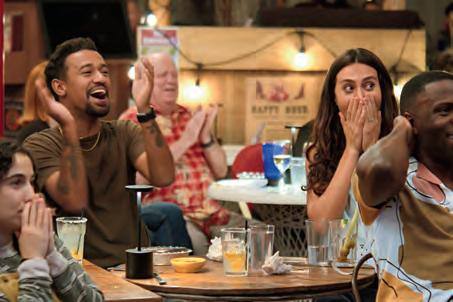
The new season takes place at the fictional Oak Canyon Ranch Retreat, providing more areas for the cast — and thus more places for their unknowing star to roam.
The task required the writers to rehearse for months to map out contingencies and shape character arcs. During the actual filming of the show, they had to rewrite storylines on the fly as unexpected events took place.
But the most difficult challenge was the fact that Norman didn’t know he was at the center of the production, so he had to be constantly baited.
“You have to create a scenario where there’s basically games where you’re bringing Anthony into it,” Eisenberg said. This was necessary because the “main character isn’t inherently active in every single scene.”
“You are on the edge of your seat all day long,” executive producer Anthony King added. “There's so many times you're like, ‘OK, he's going to the kitchen. Everyone get ready. What’s he going to do? Why is he there? Are we set up?’ It’s tense all day long.”
To follow Norman’s every move, the set contained 46 cameras — most of them hidden — to capture over 4,600 hours of footage. To coordinate events in real time, the team used code words and hand signals. And because the storyline called for employees who already knew one another, actors had to memorize years of shared backstory in case Norman asked about their history.
The Rockin’ Grandma’s staff is full of outsize characters: Jimmy Weber (Jim Woods), the warehouse manager whose misunderstanding of progressive ideals at times makes him more offensive; PJ Green (Marc-Sully Saint-Fleur), a receptionist and snack influencer who periodically has segments with Norman trying out exotic nibbles; and Helen Schaffer (Stephanie Hodge), the company accountant who never holds her tongue.
Despite the fragile construction of “Company Retreat,” always at risk of being undone by a minor mistake or unforeseen circumstance, the series’ biggest miracle isn’t that the ruse is successful — it’s that Norman never shied away from giving pep talks, offering a helping hand and being a leader amid chaotic events. The CEO’s son Dougie Jr. (Alex Bonifer), who is set to
become the next head of the company, has a penchant for self-sabotage. Norman frequently gives him positive words to keep him motivated.
Norman’s instinct to jump in didn’t come from nowhere. When asked how he became so self-motivated, he pointed to his father.
“He was my coach a lot of the time,” Norman said. “He would tell me, if we were practicing or something, just jump in there. It’ll take you far.”
It did, even before he landed on the Prime Video series. Norman said he earned a baseball scholarship because he was the first player to step forward during a drill at a college camp. That same instinct shaped his entire journey on “Company Retreat.”
“He should be a Little League coach and be the greatest coach maybe in the history of the world,” Eisenberg said. “He just knows how to support people and prop them up and make them feel like the best versions of themselves … seeing Anthony kind of navigate this world and navigate these characters … and really understanding what it means to stand up for an underdog — that’s the special sauce. No pun intended.”
King said the chance to show the beauty of humanity was what drew him to the second season. “Season 1 was just full of kindness and warmth and people connecting who had no reason to connect,” he said. “The chance to do that on a grander scale on a deeper level in Season 2 was really exciting. There’s so few things in culture that are just all about showing warmth and humanity and connection.”
For his part, Norman doesn’t see himself as a hero. When asked what’s next, he didn’t mention Hollywood, or becoming an entertainment personality. Instead, he talked about home; he hopes to build a baseball field and facility in Nashville to give back to his community.
Although his future plans are returning home, he said the experience on the show caused him to see himself differently.
“The biggest change in my life is the ability to love myself. I feel like before this, maybe I didn't love myself as much as I should have. I wasn’t as kind to myself as I was to others. This opportunity has allowed me to see the true me,” Norman said. “To see [myself] from the outside perspective is a good feeling.”
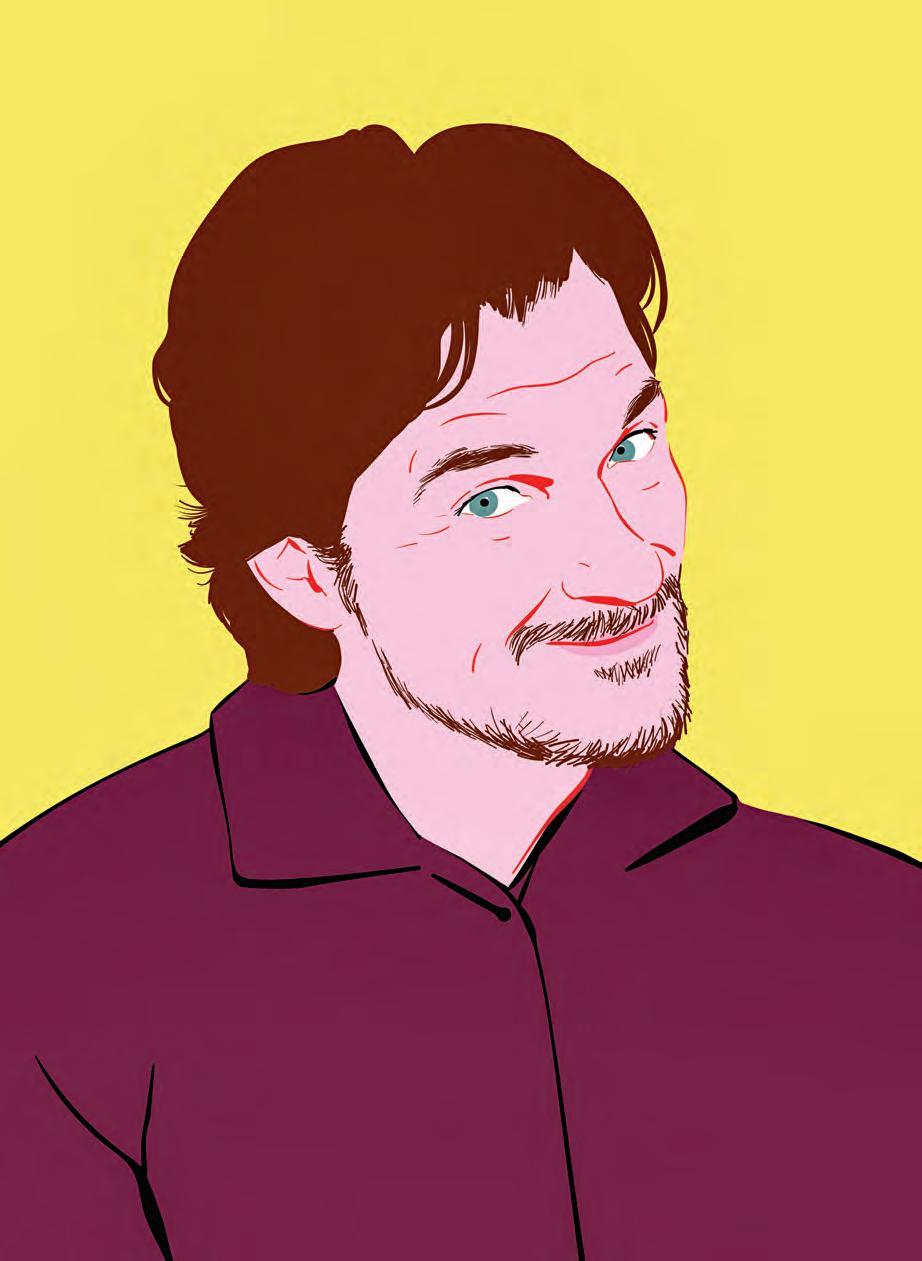
14
Bateman’s previous Emmy nominations encompass acting, directing and producing.
1
His lone Emmy win came in 2019, for directing an episodeof his Netflix crime drama “Ozark.”
21
The former child actor’s first nomination, as lead of the Fox (later Netflix) comedy “Arrested Development,” came in 2005. Bateman’s adult “comeback” has lasted 21 years and counting.
4
Times he hasreceived multiplenominations in a year, most often for acting in, directing and producing “Ozark.”
2
“Black Rabbit” and “DTF St. Louis” would mark his second time receiving acting nominations for different shows in the same year.
2020
Bateman competed for drama lead for “Ozark” and guest actor for HBO’s “The Outsider.”
0-for-7
Bateman is overdue for an acting Emmy. Hiswork in “Arrested Development” lost out to Emmy juggernauts Tony Shalhoub (“Monk”) in 2005 and Jim Parsons (“The Big Bang Theory”) in 2013.
3-for-13
Jason Bateman could snagEmmy nominations for his lead role as a deep-in-debt barman on Netflix’s “Black Rabbit” and supporting role as a sexually adventurous weatherman on HBO’s “DTF St. Louis.” Drawing more than one nomination in a year has been the norm for the actor. The Spotlight Who’s Counting
Story by Carla Meyer ■
The Actor Awards have been kinder: Bateman won three lead actor statuettes for “Ozark.”
5
Also a producer on “DTF,” Bateman has a shot at five Emmy nominations this year.
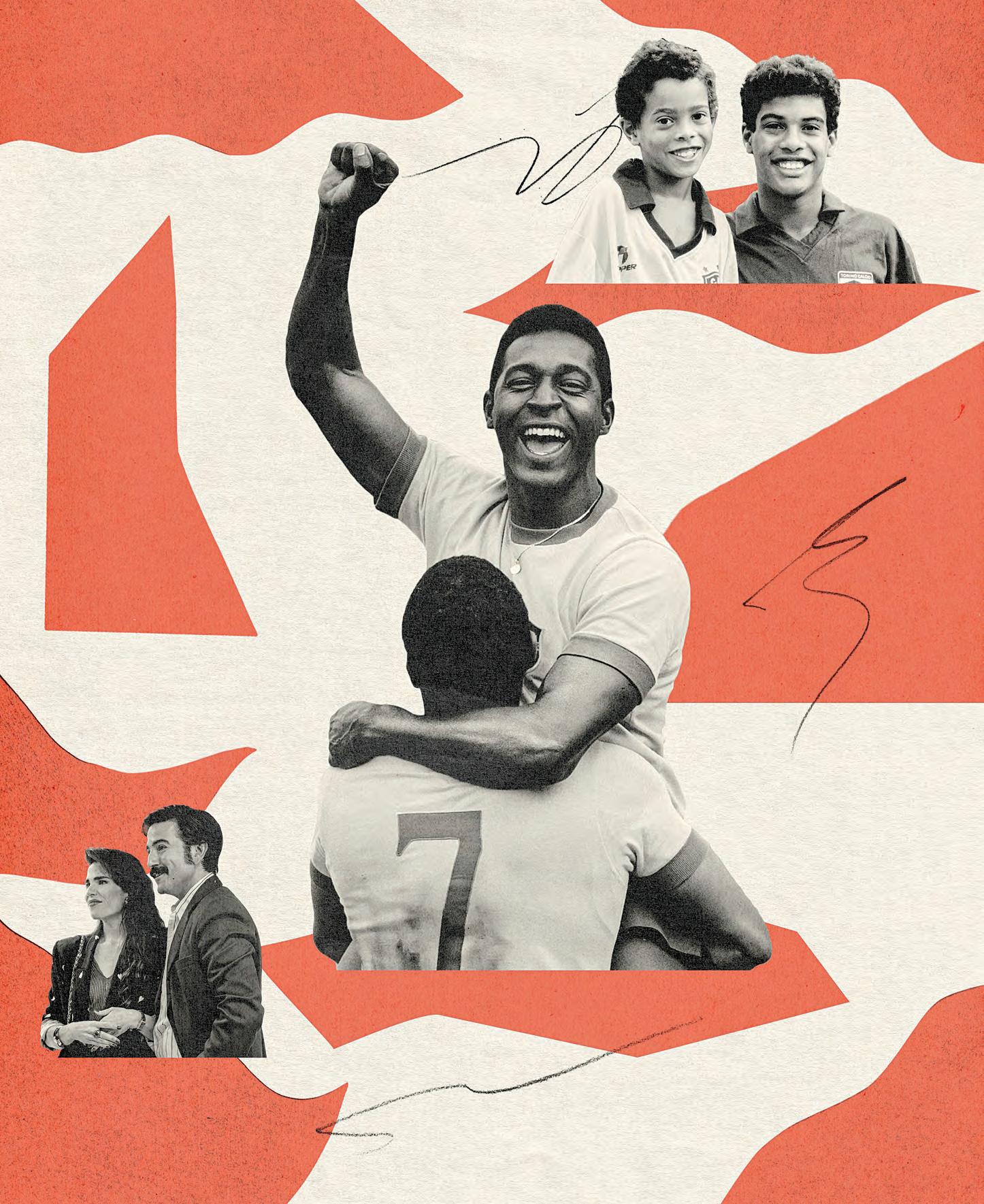
The streamer is leaning into soccer-themed content just in time for the FIFA competition
NETFLIX’S LATEST WORLD-
wide wager is a menu of programming designed to feed the building fútbol frenzy that will explode in mid-June, when the FIFA World Cup begins. They might even win some Stateside converts ahead of the platform’s presentation of the CONCACAF Gold Cup and Nations League finals in 2027 and 2029.
“We say our goal is to entertain the world; in order to [do that], we need to entertain every single country” where Netflix has a presence, says Francisco Ramos, the streamer’s vice president of original content, Latin America. “Our superpower is that we’re so deeply rooted into local storytelling, then that becomes global.
“Netflix is uniquely qualified at building global audiences” for international sports content, he says. “We are very conscious and deliberate about it.”
Not that original sports content is anything new for the streamer; its first-ever original international series, “Club de Cuervos,” was a Mexican dramedy about a soccer club. But this salvo is precisionguided to hit as about 5 billion viewers get hyped for the global tournament.
“Four years ago, during the World Cup, we launched [an Argentine] documentary called ‘Sean eternos: Campeones de América’ [Captains of the World], and it was massive, and then Argentina ended up winning a few months later,” says Ramos. “Right now, as the World Cup arrives, it’s very passionate.”
It's not just Latin America that’s being targeted with new programming: There’s a trio of documentaries about Jamie Vardy, Liverpool’s 2005 Champions League-winning team and footballerturned-actor Vinnie Jones under the “Untold UK” banner; “Poldi,” on German superstar Lukas Podolski; and “The Bus: A French Football Mutiny,” about the national team's rocky 2010 World Cup journey.
For fans, the slate offers documentaries on landmark moments in Cup history (“USA ’94: Brazil’s Return to Glory”), superstar players (“Emi Martínez: The Kid Who Stops Time” and “James”) and even up-and-comers in a prestigious amateur tournament in Brazil (“The Rootof the Game”).
But for the uninitiated, apart from the streamer’s FIFA soccer simulation game coming this summer, the gateway drug may be “Ronaldinho: The One and Only.” The doc spotlights one of the most improvisational and dynamic players ever, soccer’s Magic Johnson. The legendary attacking midfielder was a wizard on the pitch and a charisma machine off it.
“Ronaldinho retired from soccer [in 2018], and he’s still in the mainstream. He has 80 million followers on Instagram,” says Luis Ara, director of “Ronaldinho” and “USA ’94.” “You have [superstars Lionel] Messi and Neymar [da Silva Santos Júnior] talking about him like he’s God.
“He was always so cool … for him, it was not only about winning a game; it was also about entertaining the people.”
Scripted offerings include the feature “Mexico ’86,” starring a wildly hustling Diego Luna. It’s a nasty comedy about the wheeling and dealing (and outright bribery) that landed Mexico the right to host its second World Cup. Non-soccer fans might enjoy the snarky dialogue and bare-knuckled machinations — it plays like a Spanish-language, soccer-themed “Succession” or “Marty Supreme.”
“Brazil ’70: The Third Star” is a miniseries about that country’s campaign to win a third World Cup, led by a name even non-fans know: Pelé. Rodrigo Santoro stars as Coach João Saldanha.
“Brazil was in the midst of the dictatorship; they had to somehow generate some sort of national pride,” says Ramos. “The only thing that unites Brazilians
100% is their team. It becomes this compelling thing about how society is so intertwined with sports, and how sports are so intertwined with politics in Latin America.”
IS CONVERTING NEW AMERICAN FANS A REALISTIC GOAL?
When soccer is the No. 1 sport in so many nations, why isn’t it bigger here?
It might have to do with the U.S. not having been a major player on the world stage, at least on the men’s side. The men’s team’s highest World Cup finish in the modern era is the quarterfinals in 2002, while U.S. women’s teams have won a record four World Cups. But the men have qualified for the tournament this year — which will be played partially in the States — and analysts say the team has improved, though they’re no one’s favorites towin it all.
Ramos says if American audiences stop seeing it as a competition between football and fútbol, they might come to appreciate soccer’s nuances.
“Take a look at the last 20 minutes of the World Cup four years ago, between France and Argentina. It’s the most extraordinary, beautiful art of people moving, and moving in extraordinary coordination. It’s, like, the most-watched online thing ever.”
Beyond Netflix’s big bet on the World Cup slate, it’s not hard to get Ramos and Ara to make further wagers on this year’s tournament.
“Four teams have huge chances to win: Spain, France, Argentina and Brazil,” says Ara. “My heart is with Uruguay, but I don’t know if we’re gonna have a chance. Because of my bond with Brazil nowadays, I wish they could win again. A player once said to me, ‘Brazil is the second national team for any fútbol supporter.’”
“Oh, my God, I will get in trouble,” says Ramos. “I’m Mexican, and it takes place in Mexico [and the U.S. and Canada], but … I’m gonna go with Argentina. My No. 2 would be Brazil.”
Story by Matt Brennan
Sony Picture Classics leaders explain why they look beyond box-office potential when acquiring films
ATTHIS YEAR’S FESTIVAL to unveil our inaugural Cannes issue,I had the opportunity to sit down with Sony Pictures Classics co-founders and co-presidents Michael Barker and Tom Bernard and EVP of Acquisitions, Production and Business Affairs Dylan Leiner on the Main Stage at the Marché du Film to discuss the company’s festival strategy, bidding wars, artificial intelligence and more.
How much does the festival reception of a movieshape decisions that you’re making? Or is it just confirming what your gut already knows?
For a lot of people, myself included, the mystique of a festival is often around the bidding war narratives.I’m curious for your take onthe first big acquisition of this year’s Cannes, A24 buying “Club Kid” for a reported $17 million.
BERNARD Throughout the years, there were companies [that would] maybe overpay, or they were going to bid to get this movie no matter what, because they were the headline in all the newspapers covering this festival. So in terms of a company that’s branding — which, A24 is one of the best in branding — I think that that had to do with a little bit of the cash that went up.
BERNARD [French film producer] Serge Silberman, a sage of the past, he always said, “You never lose money on a movie you didn’t buy.”
That brings up a question that I had about “Nuremberg,”which was a real success.What you’re saying is,it performed in alignment with your expectations. Were there any lessons that you took away from that?
LEINER What’s interesting about that film, we acquired it here last year. Nobody else was really interested in the movie. ... So our challenge basically was to figure out how to convince the filmmaking team that, because it was a very expensive film, that we were the right company to acquire the film on the terms that we could afford and that we could make it work.
BERNARD We were never going to be able to pay to make their money back. It was a $40-million movie ...We said, “Listen, sell it to us. We think it’s going to be a great success. We’ll make your movie way more valuable over the test of time.”
BARKER There are two types of movies that are being made and distributed. One are the big tentpole studio movies. It’s about winning the weekend theatrically. And it’s all about making that huge budget back very quickly. But the other kind of film, which is why we are in business, is the evergreen. Every one of our films, we open it with the best marketing push we can. Yes, we try to get the highest box office. But even if the box office ends up being less, we believe in these films as long-term players. And these films have really long tails. You look at movies like “Run Lola Run” or “Call Me by Your Name” or even “Living” .. They have generated revenues to the filmmakers and to us that’s way beyond what the box office would have portended when it opened.
↗ Sony Pictures Classics execs
Michael Barker, left, Tom Bernard and Dylan Leiner speak with Envelope editor in chief Matt Brennan at Cannes.
LEINER At the first Berlin Film Festival we attended after COVID, I remember, in the same day, I ran into three international distributors who all asked if we had seen “The Teachers’ Lounge.” And I didn’t even know what the film was. It wasn’t on our radar, it wasn’t in competition. So we quickly saw “Teachers’ Lounge” and we acquired the film [which went on to be nominated for the 2024 international feature Oscar]. And that was one of the great values of an in-person festival, the ability very quickly to communicate with distributors, with tastemakers, with critics from around the world and get that kind of information. Gut, personal taste ... It plays into it a lot, but then we need reassurance.
BARKER Here’s a key to how we have survived. It’s different from the way you talk about it. When we acquire a movie, whether anyone else has offers, we try to block it out. And we have trained ourselves to not let that noise bother us. What is it worth to us? What do we think it’s going to do? Dylan runs these incredible models of what it’ll do on the low end, what it will do on the high end. And then you decide where you want to be.
BERNARD Or we think we can make it work.
BARKER But at no point do we sit around and worry about who else has a higher offer for the movie. Because I have to say, in very few instances, on the movies we buy, are we the higher offer. We just do the best we can, and if we lose it, we lose it.
What areas of the filmmaking or film distribution process do you think AI is appropriate for use, that you’ve experimented with it, that you’re excited about its prospects? And where are your red lines, if you have any?
BARKER We really love our young staff. One of them was writing a screenplay with AI, and told me they got certain rules on AI. And I’m listening to all these rules. You can’t have your main character die in a first scene. You can’t have your romantic female lead be totally unlikable, people aren’t going to go. I said, “Have you ever seen ‘Sunset Boulevard’?” And she goes, “No, what is that?” I said, “Go watch that movie.” She came back and she was like, “Holy cow.” I said, “Billy Wilder sat down and made that up based on what he observed.” AI is not going to be able to do that.
For “Abbott Elementary” costume designer Hachy Mendez-Smith, Season 5’s Halloween episode — in which Gregory (Tyler James Williams) and Janine (Quinta Brunson)dress up as “Sinners” filmmaker Ryan Cooglerand an Imax screen, respectively — had to do more than deliver a punch line. It also had to reflect their characters. “Gregory has always been the more grounded, measured type. And then Janine is naturally more whimsical, optimistic and quirky, so she carried the bigger, more expressive visual,” she says. “She’s always been supportive of him. So even in costume, it was like she was literally holding space for his story. It felt authentic, not just comedic.” The designer drew inspiration for Gregory’s burgundy coat from a Coogler red carpet momentwhile playing with the scale of Janine’s costume. “Quinta’s 4-11 in real life, so we had to be mindful yet over the top,” she notes. The highlight for Mendez-Smith: Coogler’s reaction. “I was honored he even watched and loved that he talked about how much the show means to him,” she says. “Initially he thought it was AI. He couldn’t believe how spot on it was.” How spot on? Janine’s screen matched the Imax aspect ratio: 1.43:1.
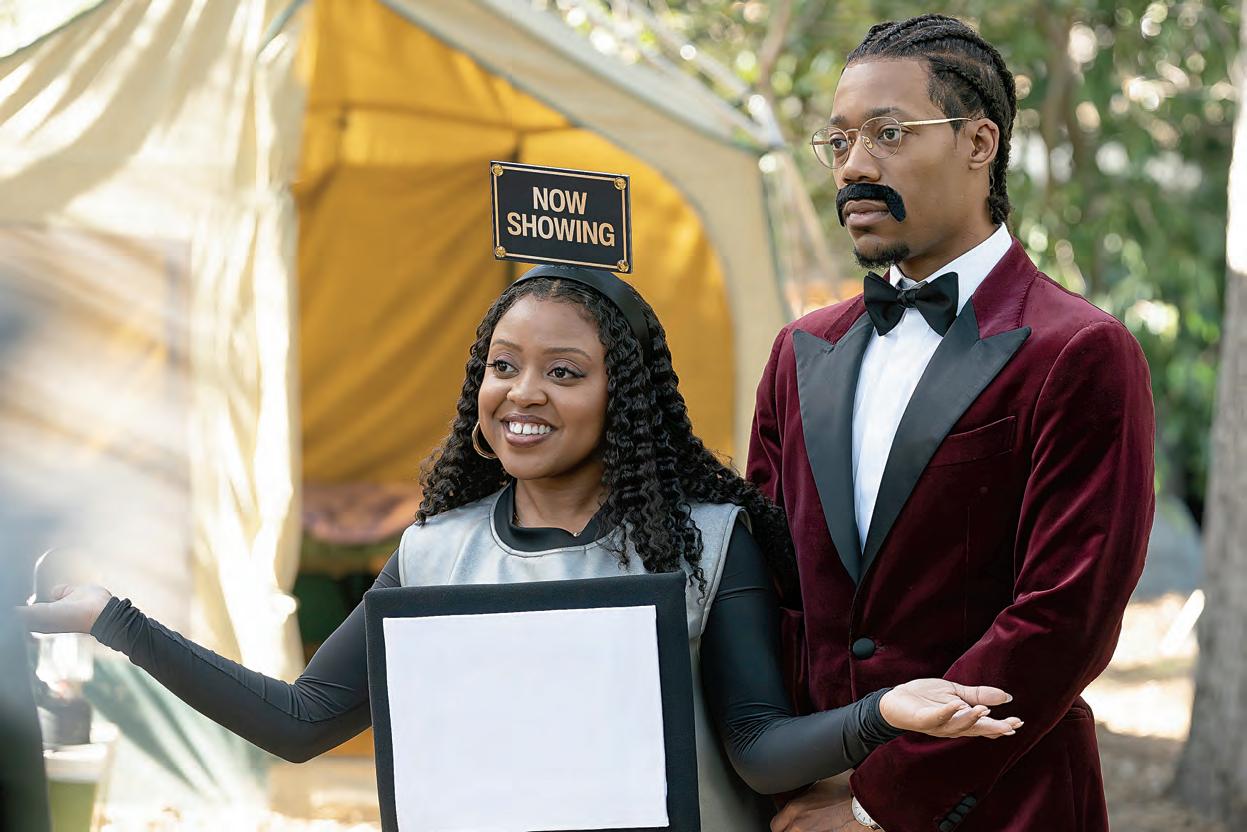
Your freemembership includes:
•FreedigitaleditionofTheEnvelopemagazine Guaranteedaccesstoeventsandpanels
•Specialcoveragethroughoutawardsseason
•One-clicksign-uptoTimesentertainment newsletterslikeTheWideShot,ScreenGab andIndieFocus
•TheEnvelopemagazineprintedition (availableonlytoAMPAS,PGAandTVAmembers)


Stayin-the-loopwithexclusiveawardsseasoncoverage, behind-the-scenesinsightsandcolumnistGlennWhipp’scommentary.



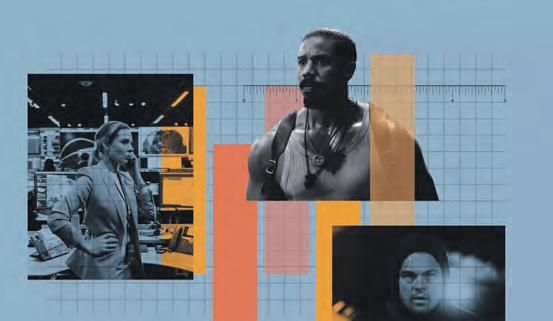



Stayonestepaheadofthefast-changingbusinessofentertainment. EveryweekinTheWideShotnewsletter,L.A.Timesreportersbreak downtopstoriesandtrendsfromtheheartoftheindustry—and whatitallmeansforthefuture.