MANUFACTURING PRODUCTION
MACHINING
DECEMBER 2026
AWARDS
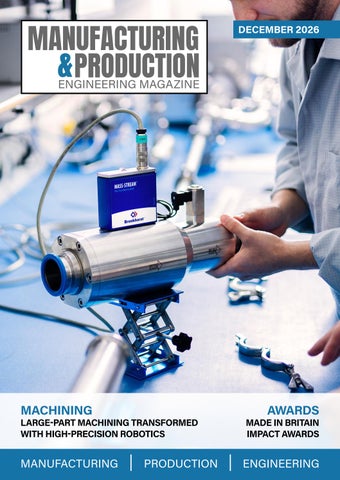
LARGE-PART MACHINING TRANSFORMED WITH HIGH-PRECISION ROBOTICS
MADE IN BRITAIN IMPACT AWARDS
MANUFACTURING
ENGINEERING
PRODUCTION
Protect Every Component of Your Business
Manufacturing insurance designed around you Whether you’re a single manufacturing facility in the UK or a global multi-site operation, Gallagher can help you protect your business, your people and your products.
CONNECT WITH A SPECIALIST TODAY. For further information, please scan the QR code.
Partner with an insurance and risk management specialist who knows your industry. Our Specialist team at Gallagher would be glad to arrange a no-obligation insurance review for your company.
AJG.com/uk The Gallagher Way. Since 1927. Arthur J. Gallagher Insurance Brokers Limited is authorised and regulated by the Financial Conduct Authority. Registered Office: Spectrum Building, 55 Blythswood Street, Glasgow, G2 7AT. Registered in Scotland. Company Number: SC108909. FP251-2026 Exp. 16.02.2027. © 2026 Arthur J. Gallagher & Co. | GGBRETUK107473
CONTENTS 40
08
15 Editor
Paul Attwood editor@mpemagazine.co.uk
Senior Editorial Assistant
John Reynolds editorial@mpemagazine.co.uk
08 15 28 40 44
28
44
Manufacturing blueprint maps route to UK floating wind facility UK Metals Council signs Memorandum of Understanding with Enginuity Successful manufacturing companies are driven by engaged workforces, not machinery! Rapid Fusion strikes ‘Zeus’ deal with Kingston University Britain’s ‘most exceptional manufacturers’ honoured at Made in Britain Impact Awards
Features Editor
Harry Peters editorial@mpemagazine.co.uk
Production/Design
Editors Note
Sales Manager
As 2026 draws to a close, it’s an opportunity to reflect on the resilience, innovation and determination that continue to define British manufacturing.
Laura Whitehead laura@lapthornmedia.co.uk
Charlotte Chapman charlotte@mpemagazine.co.uk
Accounts
Richard Lapthorn accounts@lapthornmedia.co.uk
Admin Assistant
Jade Still jade@lapthornmedia.co.uk
In this issue of Manufacturing & Production Engineering Magazine, we celebrate the businesses and people driving the industry forward. From ambitious plans to strengthen the UK’s offshore wind manufacturing capabilities to the achievements recognised at the Made in Britain Impact Awards, there is plenty to be optimistic about.
Paul Attwood Editor
We also explore the importance of engaged workforces, smarter supply chain management and investment in technologies that improve efficiency and sustainability.
Circulation Manager
Despite ongoing economic pressures, the stories throughout these pages demonstrate an industry committed to progress, collaboration and long-term growth.
Publishing Director
We hope you enjoy this issue and wish all our readers a successful year ahead.
Leo Phillips subs@mpemagazine.co.uk
Maria Lapthorn maria@lapthornmedia.co.uk
Lapthorn Media Ltd
5-7 Ozengell Place, Eurokent Business Park, Ramsgate, Kent, CT12 6PB
Every effort is made to ensure the accuracy and reliability of material published in Manufacturing & Production Engineering Magazine however, the publishers accept no responsibility for the claims or opinions made by advertisers, manufactures or contributors. No part of this publication may be reproduced or transmitted in any form or by any means, mechanical, electronic (including photocopying) or stored in any information retrieval system without the prior consent of the publisher.
mpemagazine.co.uk Connect with us @mpemaguk
Phone: 01843 808 106 Manufacturing & Production Engineering Magazine
03
Latest News
UK mid-sized businesses held back by ‘conversion gap’ despite £1.2 trillion contribution to economy Britain’s mid-sized businesses generate around £1.2 trillion in turnover and employ 7.3 million people, yet many are being held back by a “conversion gap” that is preventing them from turning ambition into growth, according to a new report from NatWest Group. Published and launched at an event attended by more than 70 mid-market NatWest customers and Lord Leong, Minister for Small Business and Enterprise, The Middle Speaks: narrowing the mid-market conversion gap through technology, talent and trade finds that mid-market businesses, defined as those with turnover of £10 million to £100 million and/or 50 to 500 employees, are often overlooked by support designed for smaller firms or large corporates.
The report argues that midmarket businesses represent one of the UK’s greatest growth opportunities. Despite creating jobs, driving innovation, strengthening supply chains and supporting local communities across the country, the segment remains relatively underserved and not well understood. As the UK’s number one bank for mid-sized companies, NatWest Group supports more businesses in this segment than any other UK bank and sees first-hand the contribution they make to local economies, employment and growth. The report describes a “conversion gap” in which midmarket firms have proven commercial potential and greater capacity than smaller businesses, but often lack the specialist skills, leadership capability and organisational resources available to larger companies.
Lord Leong with Irene Graham and Dr Poonam Malik
SAUTER takes majority stake in 24-7 Group to accelerate UK growth 24-7 Group, the national engineering and integrated facilities management business, has announced a majority investment by SAUTER, the Swiss family-owned building automation and engineering group headquartered in Basel. Founded by Andy Hawes in 2010, 24-7 Group has grown from an electrical contractor into a £70 million business employing more than 330 colleagues across the UK. Andy will remain as chief executive and shareholder, with the business continuing to operate under its existing name and leadership.
04
Manufacturing & Production Engineering Magazine
Andy Hawes, founder and chief executive of 24-7 Group, said: “When I started 24-7 Group in 2010, I had an idea of what I wanted to build. Sixteen years later, we’ve created something I’m immensely proud of, thanks to the extraordinary people in our business and the customers who’ve put their trust in us. SAUTER hasn’t invested in 24-7 to change
what makes us successful. They’ve invested because they believe in what we’ve built and, more importantly, what we can become together. “For our customers, it’s the same people, the same commitment and the same determination to do a great job, just with more behind us. I’m incredibly proud of how far we’ve come, but I genuinely believe the most exciting part of our story is still ahead of us.” Founded in 1910, SAUTER employs more than 4,020 people
Latest News NatWest Group says this gap is most visible across the three Ts of technology, talent and trade.
Key findings • Talent is the most immediate
constraint: 55% of mid-market firms identify talent and leadership development as a top barrier to growth, while 42% say recruitment and workforce capability are the economic challenge most likely to constrain expansion.
• AI adoption is rising, but firms
are struggling to scale: Up to 72% of firms who are currently using AI have adopted at least one core AI tool, but up to two-thirds of users have not fully deployed these products across their business.
• Trade challenges facing the
mid-market are widening the conversion gap: Many midmarket firms have established international relationships with ambitious plans to grow into new markets. However, they often lack dedicated customs, legal, and compliance teams, as well as geopolitical expertise and supply chain flexibility.
Five actions to unlock midmarket growth 1. Develop a dedicated MidMarket Growth Framework to close gaps in existing provision and give firms coordinated access to support.
2. Ringfence funding for a midmarket AI Adoption Accelerator to help businesses move from experimentation to strategic deployment.
Paul Thwaite
3. Launch a Mid-Market Leadership Capability Programme that builds on existing initiatives and equips leaders to scale and deliver business-wide transformation. 4. Build an employer-led growth and skills system that aligns training and technical education with regional and mid-market workforce needs. 5. Cut the cost and complexity of international growth by reducing administrative and trade barriers and improving access to end-toend export support. Paul Thwaite, Chief Executive of NatWest Group, said: “Midmarket businesses already make a significant contribution to the UK economy. They are one of the UK’s greatest growth opportunities, but too many are held back because, despite having distinct needs, the segment is often overlooked. As the number one bank for mid-sized companies, we have the specialist expertise, local knowledge and financing capabilities to help midmarket customers address the challenges they are facing and reach their full potential as growth engines of our economy across every nation and region of the UK.”
NatWest Group says this gap is most visible across the three Ts of technology, talent and trade. Irene Graham OBE, CEO, ScaleUp Institute, said: “The mid-market does not lack ideas or appetite—it lacks a system designed around the challenges firms face as they get bigger, become established, and continue their drive for growth. They still need the support to grow in accessing the expertise, skills and export services that can turn proven potential into sustained scale.” NatWest Group says government, industry and regional partners must work alongside mid-market businesses to better understand the barriers they face and ensure support is delivering stronger productivity, skills and export growth.
exciting step forward for SAUTER Group, with exceptional people, strong customer relationships and a culture that closely aligns with our own. “Combined with SAUTER Group’s established UK presence and extensive experience in delivering and maintaining complex buildings, this creates a stronger platform for growth, expands the Group’s reach and enhances its ability to provide integrated solutions throughout the building lifecycle.” across 40 subsidiaries, bringing over a century of expertise in building automation, energy management and technical facilities management.
established UK engineering and facilities management capabilities, creating opportunities for continued growth and investment.
The investment combines SAUTER’s international expertise and technology with 24-7 Group’s
Mark Clinch, EVP – Head Sales and Marketing SAUTER Group, said: “The addition of 24-7 marks an
24-7 Group will continue serving clients across retail, logistics, distribution, manufacturing and transport, while developing new opportunities through the wider SAUTER network. Visit www.24-7group.co.uk.
Manufacturing & Production Engineering Magazine
05
Latest News Mark Moody, WDS Components
Callum Huthwaite, Scarab Sweepers
‘Invaluable’ social value and supply chain certification improves credibility for UK manufacturers Manufacturers highlight the benefits of the Environmental & Social Value Certification during Made in Britain’s Social Value Month. British manufacturers have praised Made in Britain’s Environmental and Social Value (ESV) Certification for improving their “marketplace credibility” and pointing them “in the right direction for continuous improvement.” Scarab Sweepers and WDS Components have both been recognised for their clear and measurable commitment to people, planet and place, and reflected on their progress as part of Made in Britain’s Social Value Month. Global leader in the design and manufacture of road sweepers, Scarab Sweepers, is on a journey to improve its footprint not just in the UK, but around the world with a focus on its stakeholders, employees and customers. Initiatives include donating to local food banks, planting native trees via The Woodland Trust, providing education packs and visits to local preschools and extensive waste reduction policies. Callum Huthwaite, Product & Market Specialist at Scarab Sweepers, said: “The ESV
06
Manufacturing & Production Engineering Magazine
Certification has really helped us improve our marketplace credibility. The UK is one of the leading hubs for road sweeper manufacturing in the world, but we are the only supplier with the Made in Britain accreditation, so it helps us continue to push in this marketplace. The certification is a key signpost to say that we’re committed to British manufacturing and also delivering environmental and social value to our customers and stakeholders.” WDS Components, a manufacturer and global supplier of standard parts and machine accessories, prides itself on delivering a wider positive impact - beyond just its services and products. As part of this commitment, the business has a Sustainability Task Force, with representation in every department, which focuses on initiatives such as saving water, saving power, recycling and supporting the local community. Mark Moody, Sales and Marketing Director at WDS Components, said: “We’re committed to contributing to the UK economy, developing people and skills, supporting responsible supply chains, and improving environmental and community outcomes. As an SME, the certification helps give us that
focus, it helps give us ideas and points us in the right direction for continuous improvement.” The ESV Certification, which is aligned with the UK Government’s latest Social Value Model (2025) and the Procurement Act 2023, helps UK manufacturers to practically demonstrate their environmental and social value. It aims to help businesses promote their commitment to local jobs and skills, community engagement, environmental sustainability, and ethical and local supply chains. John Pearce, CEO of Made in Britain, said: “The ESV Certification is an invaluable tool for UK manufacturers, recognising the vital contribution they make to social value every single day through their commitment to skilled, meaningful employment, support for local supply chains, their environmental actions and strengthening their communities. “This all helps the growth of the UK’s productive economy and helps to build trust in the sector as we work towards a socially and environmentally viable economy.” To find out more about the ESV Certification visit madeinbritain.org/about/ environmental-social-value. For more information about Made in Britain visit madeinbritain.org.
Navigate complexity with confidence. As global leaders in process automation, we help you turn precise data into clear insight - and insight into measurable results. From cutting your emissions and energy use to improving water and resource efficiency, we give you the knowledge, tools and hands-on support to optimise your processes and move confidently towards your goals.
Get in touch to discover how we’re helping thousands of food & beverage customers optimise their processes. uk.endress.com
Company News
Manufacturing blueprint maps route to UK floating wind facility A Gloucestershire engineering company has drawn up plans for a new UK manufacturing facility that could create up to 40 skilled jobs and help supply the rapidly growing floating offshore wind sector in the Celtic Sea. Gabriel Engineering Group Ltd has partnered with the National Manufacturing Institute Scotland (NMIS) to explore how specialist anchoring and mooring systems, essential components that secure floating offshore wind turbines to the seabed in deeper waters, could be manufactured competitively and at scale in the UK.
Supported through The Crown Estate’s £50 million Supply Chain Accelerator programme, the project explored how the UK could secure a greater share of the manufacturing, employment and economic benefits of floating offshore wind. The work comes as the UK’s offshore wind supply chain is expected to contribute more than £18 billion to the economy over the next decade. With the Celtic Sea becoming one of Europe’s most promising regions for floating offshore wind, the project assessed how UK manufacturing capability could be developed to supply the specialist anchoring and mooring systems required to support future gigawatt-scale deployments. NMIS worked with Gabriel Engineering to map how the systems could be manufactured efficiently and at scale, analysing materials, labour, equipment and production requirements. Using digital manufacturing models, production simulation and cost analysis, the team tested different production scenarios and
identified what would be needed to establish a commercially viable UK manufacturing operation. The project also considered where a new facility could be situated, assessing 10 potential port locations including Milford Haven, Port Talbot, Cardiff and Falmouth. Locations have now been identified for further engagement, based on factors including access to skilled labour, available land and infrastructure capable of handling heavy materials and finished products. Gabriel Engineering also worked with Bardex® Corporation to explore how its BarLatch® and BarMoor® technologies could be produced through a modular manufacturing approach. Components would be manufactured and tested before final assembly, helping to identify technical issues earlier, reduce manufacturing risk and improve efficiency as production volumes increase. The findings are now supporting Gabriel Engineering’s and Bardex’s investment and commercial planning,
20,000 tonnes of bottles, bags and film a year become nine million metres of cable protection Liverpool repressor Centriforce marks 50 years of 100% recycled manufacturing with European expansion.
Tapetile®. Now in its 50th year of manufacturing from 100% postconsumer recycled plastic, the Liverpool company is expanding into Europe.
Centriforce reprocesses more than 20,000 tonnes of discarded plastic bottles, carrier bags and packaging film every year, turning it into more than nine million metres of products including Stokbord® cable protection and
Centriforce Products Ltd recorded sales of £28m in 2025 and expects to pass £30m in 2026. The company says growth is being driven by rising infrastructure spending – including power networks serving data centres – growing demand for
08
Manufacturing & Production Engineering Magazine
recycled products, and investment in emerging markets. The company, the UK’s market leader in recycled plastic utility protection, produces more than nine million metres of recycled products a year, including its flagship Stokbord® cable protection. It is now bringing its full range of protection to network operators, renewable energy developers and civil engineering contractors in Germany,
Company News communities at the heart of the Celtic Sea opportunity.” Graeme McLaughlin, design engineering team lead – Digital Factory at NMIS, said: “Gabriel Engineering came to us with a clear ambition to enter the floating offshore wind market. Our job was to work out what manufacturing at scale could actually look like – from the production process and equipment requirements to costs, factory layout and location. The result is a practical framework that gives Gabriel Engineering the evidence to make investment decisions and pursue commercial opportunities. As floating wind grows, this kind of manufacturing planning will be critical if more of the infrastructure can be made here in the UK.” NMIS is operated by the University of Strathclyde and is part of the High Value Manufacturing (HVM) Catapult. including discussions with The Crown Estate on the next phase of the project. If developed, the proposed facility could deliver up to 40 skilled jobs by 2028, support further employment across the regional supply chain and establish a new UK manufacturing base for critical floating wind infrastructure. Jason Simeon, chief executive officer at Gabriel Engineering, said: “Our collaboration with NMIS has been a turning point for Gabriel Engineering. By focusing on a modular process approach, we’ve been able to integrate these high-
performance products into a system designed for the factory of the future. We have created a better production process that removes the inherent risks associated with large-scale fabrication, enabling us to deliver at the pace required by the offshore wind market. “This project has never only been about products – it’s also about people and places. By pinpointing where we can build and the skills we will need, we are laying the groundwork for a facility that creates lasting, high-value jobs and helps regenerate the coastal
the Netherlands, France, Spain, Portugal, Romania, the Baltic states and the Balkans, and is recruiting distribution partners in each market.
“This could create long-term UK jobs while opening up a significant export market for our proven technologies at the volumes needed to build gigawattscale floating wind projects. We’re excited to continue working with Gabriel Engineering and The Crown Estate as this opportunity progresses into its next phase.”
routes across construction sites and sensitive ground. The expansion also responds to a shift in how Europe’s energy sector buys. EU rules including the Corporate Sustainability Reporting Directive and the EU Taxonomy are pushing large companies to scrutinise the environmental performance of their supply chains. Centriforce has manufactured from 100% post-consumer recycled plastic since 1976 – making it one of Europe’s longest-established circular economy manufacturers – a record documented in its published ESG report and backed by ISO 14001 accreditation, held since 2014.
The move comes as the European Commission’s REPowerEU plan accelerates offshore and onshore wind, solar, grid interconnection and hydrogen projects across the EU. Every one of those projects depends on buried cable networks, substation connections and site access roads that must stay protected and maintainable for decades. Centriforce has supplied Stokbord in a roll-out format on timber drums for more than ten years, protecting cable routes that carry power from offshore wind farms to onshore substations. It has worked with wind developers including Ørsted and Iberdrola, cable manufacturers NKT
Ian Finch, director of business development – EMEA at Bardex Corporation, added: “The project with Gabriel Engineering, NMIS and The Crown Estate has created a blueprint for a high-value advanced manufacturing facility for our mooring connectors and related products.
and Nexans, and contractors Balfour Beatty and VolkerInfrastructure. Its Protrack heavy-duty mats provide temporary and permanent access
The European expansion is part of Force of 50, the international growth programme Centriforce launched to mark its 50th anniversary.
Manufacturing & Production Engineering Magazine
09
Company News
Order milestone proves a perfect 80th birthday present for Alloy Wire International The UK’s leading manufacturer of precision drawn round, flat and profile wire is marking eight decades in style after hitting a major production milestone. Alloy Wire International, which employs 29 people at its modern factory in the Black Country, has just secured its 150,000th order to supply exotic alloys to a customer involved in the nuclear sector. Tom Mander, Managing Director of AWI, commented: “It doesn’t seem five minutes since we were celebrating our 75th…time really does fly when you’re having fun.To reach this major milestone in our anniversary year is fantastic and testament to the outstanding team we have in the Black Country and across our 35 international agents, who help us generate more than £8m of export sales every year.” He continued: “Our celebration event in November will bring together a host of influential figures of the past and the present to share
10
Manufacturing & Production Engineering Magazine
stories of their time at AWI, including Bill Graham who played such a massive role in the development of the business and our culture for more than 50 years.The last decade has certainly been eventful. We’ve had to overcome Brexit and the pandemic, but throughout all of this we’ve managed to ensure we continue to supply our international customer base with world class material in just three weeks - thanks mainly to our founding principles of ‘manufacturing quality, delivering reliability’.” Alloy Wire International was founded in 1946 by John Stockdale in an old ambulance station in Old Hill in the Black Country. Today, it is located in over 28,000 sq ft of manufacturing space in Brierley Hill, where it produces 60 exotic alloys every year to thousands of customers across 12 different sectors and 55 different countries. More than £1.3m has been recently invested in creating additional capacity and in
purchasing new equipment that allows the firm to maintain its industry-leading three-week delivery commitment. The latest example is a new single-hole drawing machine, which upgrades its capability to take wire from 1.00 mm down to 0.25 mm, whilst plans are in place to install a new strand annealing furnace and state-of-the-art straightening and cutting machine. Mark Venables, Chairman of AWI, added his thoughts: “I am genuinely proud and honoured to be part of the Alloy Wire International story. Personally, I have been in the manufacturing business 46 years, 16 of which have been spent as MD and now Chairman of AWI. “The company really is special - the employees, the culture, the product, the teamwork, the loyalty and our sales agents across the world who all buy into our DNA, which is ultimately giving the customer the best quality wire we can.” Visit: www.alloywire.co.uk
Control What Matters Intelligent pump features designed to manage complexity. Intelligence brings calm to complex systems. Our pumps with intelligent features give engineers the peace of mind to focus on what really matters – maximum certainty, no surprises. With our features for advanced pump control, you manage your system automatically and with ease, exactly when it matters most.
Pressure Control
Vacuum Control
Visit knf.com/control-what-matters to learn more about our cutting-edge intelligent pump features.
Flow Control
Versatile Dosing
Compressed Air, Pumps & Valves
Hydrogen trailer filling compressors - 24 years of proven reliability - and still going strong Maintaining reliability in any aspect of the hydrogen energy cycle is challenging, but achieving it over nearly 25 years is a remarkable achievement. Burckhardt Compression has sustained an enduring relationship with Infraserv Höchst in Germany since the delivery of two hydrogen compressors for a trailer filling station. Since then, the compressors have delivered
excellent availability and a mean time between overhauls (MTBO) of 8’000 - 9’000 hours. Hydrogen filling points for tube trailers are a crucial link in the delivery of fuel to the end users. However, they also pose significant challenges in terms of reliability. By their nature, they require compressors that frequently start and stop, which traditionally can negatively impact reliability. In addition, any planned
Atlas Copco launches AIRPlan Service in the UK to support customers with limited CAPEX Atlas Copco Compressors has launched AIRPlan in the UK, a new service that gives customers access to a fully managed compressed air and gas solution without the high upfront investment costs associated with purchasing equipment outright. The AIRPlan service has been developed for businesses that need to invest in their utility room, but have limited CAPEX available or do not want to own and manage compressed air assets directly. At a time when investment budgets are under close scrutiny, AIRPlan gives manufacturers a more flexible way to secure a reliable, energy efficient compressed air and gas supply, while allowing capital to be prioritised for other areas of the business. Under the AIRPlan model, Atlas Copco installs, maintains, monitors and updates the compressed air installation for the lifetime of the
12
Manufacturing & Production Engineering Magazine
agreement, with customers paying one monthly operating cost. The service can include oil-injected and oil-free air compressors and blowers, dryers, filters, nitrogen and oxygen generators, central controllers, SMARTLINK monitoring systems, AIRnet piping and maintenance. For many UK manufacturers, compressed air demand can change significantly over time. Production volumes may rise or fall, operating
hours may shift, and new processes or technologies may alter the performance requirements of the installation. AIRPlan is designed to give customers the flexibility to adapt their compressed air system as those requirements evolve, helping to avoid the risk of owning equipment that becomes oversized, undersized or inefficient over time. At the heart of the service is a managed approach to reliability and efficiency. AIRPlan includes regular servicing, genuine OEM replacement parts, expert monitoring and troubleshooting, with SMARTLINK remote monitoring providing visibility of compressor room performance,
Compressed Air, Pumps & Valves compressor downtime needs to coincide other equipment to minimize disruption.
Reliability built in Looking back to 25 years ago, the task of delivering high-pressure hydrogen was fraught with difficulties – working with the smallest molecules on the planet and ensuring no leaks from a compressor operating at 230 barg was far from easy. Today, similar installations are specifying up to 550 barg and Burckhardt Compression has continued to innovate and develop reliable solutions for the industry. Decades of experience and the development of proprietary materials have enabled Burckhardt Compression to deliver some of the most reliable equipment in the industry. For the two 2CS hydrogen compressors in this application,
energy efficiency, reports and recommendations. Advanced diagnostics also allow Atlas Copco to identify deviations in system performance and take corrective action before they develop into larger operational issues.
frequent start/stop operations were expected as part of normal operation. This could have implications for the intervals between maintenance, but for a manufacturer with so much experience, this requirement could be easily accommodated. From the outset, Infraserv Höchst had some challenging goals. The new trailer filling station also needed to have low operational costs and the compressors had to have maximum availability. The target of 8’000 – 9’000 hours was set to match the overhaul requirements of other equipment, but Burckhardt Compression was confident of delivering an MTBO of 12’000 hours if required.
Strong local support Achieving this extended durability and efficiency is only possible through expert design capabilities and carefully selected materials. Burckhardt Compression has developed proprietary materials, such as the Persisto® rings, and Redura® sealing systems, which are key components for high-pressure, dry-running compressors that need to operate at the highest standards. These mechanical solutions can be paired with digital condition monitoring, which is important in establishing operational data and enhancing performance and reliability. In this case, the facility uses many compressors for different gases across the site, including numerous Laby® compressors, all of which are supported by local technicians from Burckhardt Compression. The company’s strong presence in Germany includes four locations that provide customers with expert support that is available 24/7, which helps to
keep the total cost of ownership (TCO) to a minimum. Another crucial aspect of this relationship has been communication, which is key to a successful partnership. A dedicated single point of contact was appointed by Burckhardt Compression to ensure an effective exchange of information, which enabled the efficient delivery of all aspects of managing the compressors. From initial commissioning and training to planned maintenance and troubleshooting, the whole process has been seamless.
Optimizing productivity for the future Steffen Enghard, Betriebstechnik Mechanik, Infraserv Höchst commented: “Over the past few years, we’ve experienced an almost entirely trouble-free operation – with minimal unplanned maintenance and hardly any unexpected downtime. This has enabled us to ensure optimal productivity for our company. The continuous support from Burckhardt Compression has been invaluable, ensuring our equipment performs faultlessly. The hydrogen trailer filling process is a key element of our operations and availability is essential.” The ability to provide expert support as well as class-leading solutions for improving reliability has been a key factor in sustaining the relationship between Infraserv Höchst and Burckhardt Compression. As the energy transition continues, and the global infrastructure for hydrogen becomes more established, so the global network of compressor experts and their ability to deliver support 24/7 will grow to ensure ongoing success.
The model also supports longterm technology renewal. As new, more efficient technology becomes available, or when equipment reaches the appropriate stage in its lifecycle, Atlas Copco can replace or upgrade the installation under the AIRPlan agreement. This helps customers maintain access to efficient compressed air technology rather than relying on ageing assets, which is particularly relevant for manufacturers seeking to reduce energy consumption, manage whole-life costs and improve resilience across critical production utilities. For more information visit: https://hubs.li/Q04wv3zC0
Manufacturing & Production Engineering Magazine
13
Door Systems
Hart’s high speed doors should join North East England’s Hall of Fame writes Chris Dobson The immediate question in readers’ minds is what ‘Hall of Fame’. Even to those who have spent most of their lives in the North East very few can point to any of the inventions that have made this glorious region of Great Britain a renowned centre for invention defined as something that has never been made before. What can these be? The development of the lifeboat, the steam locomotive, the electric safety lamp for coal mines, the hydraulic crane, the power grid and hydroelectricity. Looking at the
last invention, a day out at Rothbury’s Cragside estate will reinforce how hydroelectricity was used by William Armstrong in 1880 to power incandescent bulbs. Combined, these inventions place the North East as a leader in innovation, not stopping at the initial concept stage but complete product development. This leads me to the high speed door. This is another example of fresh thinking. Clearly industry needs buildings and ways into and out
of them. “I had just that industrial building where the principal activity of manufacture of roller shutters was carried out,” explains Douglas Hart, chairman of Hart Door Systems. “I noticed on several occasions the doors into the factory were left open, even on a chilly winter’s day. Clearly energy costs must have been increased as heated air was effectively blown away. There was just one solution - a door which opened/closed automatically. “The trusty roller shutter worked extremely well but it was slow, better left open in some people’s minds. I had to come up with a solution which I did after consideration and initial product development,” says Mr Hart. Welcome to the world of the high-speed door, in the case of Hart, Speedor, now a recognised global brand made by Hart Door Systems in Newcastle upon Tyne. Hart’s Speedor is designed to open and close rapidly to control temperature, airflow, hygiene, and traffic flow in commercial and industrial buildings. Speedors are widely used in warehouses, factories, cleanrooms, and logistics sites for example. However this Newcastle gem is in use across the globe in 36 countries, a remarkable success story of an industrial door now promoted as several sub-brands such as Mini, Storm, Smart and Cleanroom. As an extremely busy company Hart Door Systems has several other brands such as its Firebrand range of fire shutters, Terror Screen security and roller shutters and Typhoon, tropical storm shutters. It’s success can be measured by the fact that Hart has thousands of doors and shutters in action in 36 countries. PICTURED LEFT: A Speedor Storm installation
For more information visit: www.hartdoors.com
14
Manufacturing & Production Engineering Magazine
Latest News Metallic show of strength as UK Metals Council signs Memorandum of Understanding with Enginuity Two heavyweight industry organisations are combining their efforts to strengthen the voice of SMEs in engineering and manufacturing. Enginuity and the UK Metals Council (UKMC), representing a combined total of 11,500 companies, 1million employees and a £200bn economic impact, signed a Memorandum of Understanding at the NEC in Birmingham today to mark day two of the UK Metals Expo 2026. At the centre of the partnership will be the Policy Centre for Supply Chain and SMEs: ‘Powered by Enginuity’, which has been developed to support evidencebased policy, improve workforce capability and ensure the voice of employers is fully reflected in skills planning, training provision and future policy decisions. Under the agreement, the UKMC will act as a key industry partner, bringing insights from its members and the wider metals sector to inform Enginuity’s work. This will include sharing market intelligence, supporting research and policy development, and encouraging member engagement with relevant skills initiatives, pilot programmes, workshops and briefings.
strength of feeling, can only be a positive move for SMEs across the sectors we both serve. Metals manufacturing is at the heart of the nation’s industrial process and sovereign capability, and a vital element of growth and prosperity for us all.” The Memorandum of Understanding covers five key areas that will benefit from a collaborative approach to tackling some of industry’s biggest challenges.
Ann Watson MBE Ann Watson MBE, CEO of Enginuity said: “We are delighted to be working with the UK Metals Council, an organisation that has such a valiant reputation for the work it does in representing and promoting such a critical sector of the UK economy. Our combined voices, commitment and sphere of influence, coupled with industry knowledge, expertise and
Rachel Eade MBE
At the forefront will be the Enginuity-led Policy Centre and this will be reinforced by a concerted drive to increase policy and advocacy, co-ordinating stronger engagement with UK government, policymakers and influential stakeholders. ‘Skills, Training and Workforce Development’ will also be a focal point, with the UKMC encouraging its members to participate in pilot programmes, research and skills development activity, not to mention forging closer links with academia. Increased cross-party communication for events and workshops, whilst contributing labour market intelligence and sector insights are the final two elements that make up the MoU. Rachel Eade MBE, Chair of the UK Metals Council, welcomed the new relationship: “There is so much we can achieve as a sector if we work more collaboratively and this Memorandum of Understanding with Enginuity is a perfect example of that. Two hugely influential organisations talking more, aligning policies, building employer views into our lobbying and, importantly, putting skills front and centre of everything ‘we ask’ going forward.” She concluded: “I’m really excited we’ve been able to seal the deal during UK Metals Expo in the heart of the UK, an event where the entire metals supply chain comes together to support and grow domestic engineering, manufacturing and construction. The rallying call will be made for everyone connected with our amazing industry to get involved and support what Enginuity and UKMC are trying to achieve.” For further information, please visit www.enginuity.org or www.ukmetalscouncil.org.
Manufacturing & Production Engineering Magazine
15
Injection Moulding
TE Connectivity cuts energy demand and improves injection moulding efficiency with free cooling TE Connectivity has improved cooling efficiency and reduced energy consumption at its Hastings site through a free cooling project delivered with ICS Cool Energy.
The global manufacturer uses process cooling to support injection moulding operations, where stable temperatures are critical to maintaining machine performance and product quality. Having worked with ICS Cool Energy on temperature control for a number of years, TE Connectivity was looking for an opportunity to upgrade older equipment and introduce free cooling to improve efficiency and reduce operating costs. By installing a new system with free cooling capability, ICS Cool Energy helped TE Connectivity reduce chiller run-time, lower electricity consumption and improve reliability across a critical manufacturing process. The project has also given the business a strong platform for wider sustainability improvements, with the free cooling approach now being considered at other TE Connectivity sites.
We’ve seen energy bills come down drastically, and the system has been running very well.
components, helping to prevent overheating and maintain stable operating conditions. For a manufacturing process that depends on temperature stability, any loss of cooling performance creates operational risk. If temperatures rise too far, machines can alarm and stop, affecting production continuity and potentially product quality. As TE Connectivity looked to reduce energy use and improve environmental performance, the Hastings team wanted a more efficient solution that would not only improve reliability, but also use low ambient conditions to reduce mechanical cooling costs during cooler periods of the year.
Solution
Challenge
Building on its existing relationship with the site, TE Connectivity approached ICS Cool Energy to upgrade the moulding process cooling system and integrate free cooling capability.
At TE Connectivity’s Hastings facility, process cooling plays an essential role in supporting injection moulding operations. Cooling is used to control temperatures around the moulding process, including heated tools, barrels and other critical machine
The project included the installation of a set of run standby chillers, both able to work alongside the free cooler. This arrangement gives the site both resilience and flexibility, allowing units to be alternated to support servicing and routine maintenance.
- Benjamin Hall
The free cooling system reduces reliance on compressor-driven mechanical cooling by using lower ambient temperatures to assist the process whenever conditions allow. At TE Connectivity, this has enabled the site to cut energy use significantly, particularly during cooler months, while maintaining the temperatures required for injection moulding operations.
Results The project has delivered both operational and energy-saving benefits for TE Connectivity. By installing new chillers with free cooling,
16
Manufacturing & Production Engineering Magazine
Injection Moulding the site has improved the reliability of a critical utility supporting its injection moulding process, while also reducing electricity consumption. Benjamin Hall, Maintenance & Facilities Manager at TE Connectivity. said: “We’ve seen energy bills come down drastically, and the system has been running very well. Free cooling has been a major factor. “The chillers are usually running at 60 to 80 kilowatts, while in winter, the free cooler is running at around 5 kilowatts. That’s a massive difference. “Just as importantly, the support from ICS has been strong throughout, and that has helped build confidence in the solution.” Alongside lower energy use, the new system has helped maintain more consistent process conditions, reducing the risk of overheating and unplanned stoppages on moulding machines. The success of the installation has also had an impact beyond the Hastings
site. As a sustainability champion within the business, Benjamin Hall has been using the project as an example when discussing energy-saving opportunities at other TE Connectivity locations in the UK and Europe. Benjamin Hall continued: “Energy use and environmental performance are both major priorities for us, so being able to show what free cooling can deliver in a live manufacturing environment is really valuable. “It is something I have been keen to promote at other sites because the difference in energy demand is significant.” Rod Avery at ICS Cool Energy added: “This project highlights the value of free cooling in helping manufacturers reduce energy use and support stable process conditions. By working closely with TE Connectivity, we were able to upgrade critical cooling infrastructure and deliver a solution that improves reliability while supporting longer-term sustainability goals.”
For more information on ICS Cool Energy and its complete range of process temperature control solutions, please visit www.icscoolenergy.com.
Manufacturing & Production Engineering Magazine
17
Opinion Piece
How to keep your supply chain intelligence ‘always-on’ in the disruptive world of today By Maggie Slowik, Global Industry Director for Manufacturing at IFS
For years, supply chain disruption has been treated as an occasional shock but now chokepoints on land, sea, and in the air are becoming the new norm. New Fed data shows global supply chain pressure has nearly tripled within one month, hitting its highest index point in four years. With the Strait of Hormuz blockade the latest example of how disruptions in energy, transport, and agricultural inputs can ripple across interconnected markets, it’s no surprise that supply chain pressures are on the rise. Manufacturers already have the data to help them take proactive measures to mitigate the impact on their operations. But to be able to use it they must transition away from their usual reactive, case-by-case decisionmaking, and move to a continuous intelligence approach with assistance from strong data governance and advanced technology, Maggie Slowik, Global Industry Director for Manufacturing at IFS, explains.
Geopolitical instability, material shortages, and climate-related events are no longer isolated events, they are a regular occurrence that disrupts operations globally. A gauge of UK manufacturer cost pressures by
S&P Global’s UK Manufacturing Purchasing Managers’ Index shows a significant increase in April (53.7 up from 51.0 in March). What’s more, delivery delays are now the most widespread since mid-2022 due to the standoff in the Strait of Hormuz, which is choking off 20% of the world’s supplies of oil and gas among other critical goods, such as fertiliser for agricultural use and other petrochemical derivatives that are used for vital medicines. For manufacturers, the question is no longer if and when disruption will occur, but whether they are equipped to respond in real-time. But what is holding organisations back from making the shift to continuous intelligence?
Data paralysis rears its head once again Organisations are not short of data. In fact, they are overwhelmed by it. A staggering 74% of manufacturing and engineering firms still rely
18
Manufacturing & Production Engineering Magazine
on old systems for day-to-day work, with information being stored across various ERP systems, transport platforms, supplier portals, spreadsheets, and unstructured formats such as emails and PDFs. What manufacturers face today is not an access issue but an orchestration problem. Siloed data is often inconsistent and difficult to act on, which leaves organisations unable to build a coherent, real-time picture of their supply chain. This traditional model is too slow for today’s supply chain environment. By the time mitigation decisions are made, often with external consultant support, conditions have already changed! This episodic approach leaves organisations structurally vulnerable to disruptive supply changes. When manufacturers spend around 10% of revenue on transportation, even a 10% increase in control can make a big difference to the bottom line. So how can manufacturers change their supply chain operations?
You can’t predict the disruptions – but with AI you can turn early signals into early action The aim today is not to predict every disruption but for manufacturers to understand their available options at any given moment and act decisively when conditions change—this is where AI becomes a competitive advantage. AI has the ability to extract and structure data, making it more coherent and useable, even when it has been created or managed in siloed ways. Yet manufacturers can go one step further by using AI-enabled supply chain modelling and simulation tools, which can use data, even
Opinion Piece where gaps remain, to build and test scenarios across the supply chain. This allows manufacturers to see which parts of the supply chain are more or less resilient, and how different scenarios are likely to play out.
In-house intelligence puts manufacturers back in the driver’s seat Manufacturers don’t need to outsource this supply chain intelligence either. Rather than relying on third-party or consultant-led, periodic analysis, manufacturers can use AI-enabled supply chain intelligence tools internally on a regular basis to explore scenarios, test assumptions, and better respond to change. For example, manufacturers can embed AI-driven transport planning within their ERP operational systems in order to move away from manual, spreadsheet-based decision-making and towards intelligent optimisation across trade lanes. Combined with zero-touch automation, this can minimise booking errors, lower operational costs, and provide real-time shipment visibility. The integration of freight audit capabilities can also validate every invoice at the line-item level and highlight billing discrepancies and manage dispute workflows.
Siloed data is often inconsistent and difficult to act on, which leaves organisations unable to build a coherent, real-time picture of their supply chain. But technology’s role in enabling the shift to continuous intelligence doesn’t stop here.
The advanced technologies driving and enhancing smarter supply chains There’s some really cutting-edge advanced technologies supporting and enhancing the shift to ‘alwayson’ supply chain intelligence. Digital twin technology such as the Siemens Digital Twin Composer, allows organisations to visualise and simulate any product, plant, or factory in its full context, in real-time. From a supply chain standpoint, digital twins allow manufacturers to test the impact of supplier changes, routing adjustments, or inventory shifts in a controlled environment. Already, over 40% of manufacturing firms pilot digital twin technology with full rollouts continuing to emerge as many experience significant operational cost reductions and enhanced planning benefits.
Then there’s the renaissance of IoT, accelerated by advances in AI. The global manufacturing AIoT market is expected to reach a value of $211.7 million by 2030 as more organisations experiment with the technology’s ability to transform raw data from connected assets into actionable intelligence that improves machinery performance, processes, and safety outcomes. For instance, sensors can continuously track the location and condition of goods in transit, providing real-time visibility. This enables timely intervention if a shipment is delayed or disrupted in the event of supply chain issues.
Smarter supply chains – from better bottom line to creating value When it comes to understanding the continuous supply chain intelligence payoff, research shows 95% of supply chain executives believe their CEO recognises the supply chain’s impact on profitability. Yet this outlook overlooks the other benefits that continuous supply chain intelligence can bring to the UK manufacturing industry. Not only does an ‘always-on’ approach improve operational resilience by enabling faster responses to disruption, it also supports sustainability goals by identifying more efficient and responsible supply chain choices. As the UK moves closer to its NetZero 2050 goal, an organisation’s ability to manage energy consumption and operational performance more efficiently will help the manufacturing sector contribute towards this sustainability target.
In a world of constant disruption, intelligence must be continuous In an environment defined by constant change, organisations that cannot adapt quickly risk being displaced by those that can. Continuous ‘alwayson’ supply chain intelligence is how organisations not only respond to change but stay ahead—regardless of the chokepoint in question.
Visit: www.ifs.com/en
Manufacturing & Production Engineering Magazine
19
Case Study
F1 battery component maker battles global giants for pole position Made Smarter North West backs Avocet Materials Group to accelerate digital transformation
A family-owned business is taking on some of the world’s biggest battery markets after transforming itself from a specialist distributor into an advanced manufacturer in just five years. Avocet Materials Group has built a 29-strong manufacturing and R&D operation in Holmes Chapel, Cheshire, developing specialist components for lithium-ion batteries which it says had previously only been manufactured in Asia. Its products are used within Formula One (F1) battery applications, as well as aerospace, defence, electric vehicles and energy storage applications. The business exports 99% of its battery products to markets including China, Japan and the US.
PICTURED RIGHT: Graham Hall, Heather Hall and Kieren Hall Now, having grown turnover from £1.5m to £3.5m, including around 25% sales growth this year, the speed and scale of Avocet’s transformation has prompted the company to take stock of the systems, technology and leadership needed for its next phase. It is working with Made Smarter North West, the governmentbacked programme helping SME manufacturers grow and innovate through digital technology and skills, to improve productivity, increase capacity and build the foundations for further expansion. Kieren Hall, CEO, said: “When you think that five years ago we didn’t manufacture anything, what we’ve achieved is pretty remarkable. We’ve built a manufacturing operation from scratch, developed our own technology and we’re now making specialist components for lithiumion batteries in Cheshire for some of the most demanding applications in
the world. We’re exporting 99% of our battery products and selling into countries with some of the biggest battery industries in the world, including China and Japan. For a business of our size to be competing internationally at that level is something we’re incredibly proud of.” Founded in 1996 by Kieren’s father, Graham, Avocet began life as a specialist metals distributor before moving into manufacturing during the Covid-19 pandemic. Backed by a £1.4m Innovate UK grant through the Advanced Propulsion Centre and further investment, it has since developed into a group spanning Avocet Precision Metals, its specialist metals distribution business; Avocet Battery Materials, its manufacturing arm; and Avocet Research Centre, its R&D operation. At the heart of the business are lead tabs, small but critical metal components which connect a lithium-ion battery cell to the outside circuit. They can influence weight, conductivity and reliability and must be manufactured to exacting standards for high-performance applications. Avocet’s innovations include Flyweight, its bimetallic lead tab for pouch cells which is used within F1 battery applications to reduce the weight of the battery system. It is also developing DryTab, a nextgeneration surface technology which recently secured government backing through the DRIVE35 programme.
20
Manufacturing & Production Engineering Magazine
Case Study But the pace and ambition of Avocet’s expansion has created a new challenge, with its systems and processes struggling to keep up with its rapidly evolving manufacturing operation. Avocet turned to Made Smarter for support, securing a £13,000 grant towards a £75,000 ERP system. Going live in January 2027, the technology will integrate operations across the business, improve productivity and give Avocet the digital infrastructure it needs to scale. Made Smarter has also supported Kieren through its Leading Digital Transformation programme, helping him develop the strategy and leadership capability needed to drive the business forward. Kieren said: “We’ve grown incredibly quickly and there comes a point where you realise the systems and processes that got you this far aren’t necessarily the ones that will take you to the next stage. Working with Made
Smarter has given us the opportunity to take stock and look at the business differently. We’re putting the right digital infrastructure in place, but it’s also helped me think much more strategically about how we lead the business, where we’re going next and what we need to get there.” Avocet is already looking to its next manufacturing challenge, exploring automated inspection technology to increase production capacity, alongside opportunities to use AI to improve efficiency and decisionmaking across the business. Donna Edwards, Director of Made Smarter North West, said: “Avocet is a fantastic example of the ambition and innovation within UK manufacturing. In just five years it has built advanced manufacturing capability here in Cheshire, developed its own technology and is now competing successfully in global battery markets. “Rapid expansion on that scale brings challenges as well as opportunities.
Made Smarter is there to give ambitious SME manufacturers access to the right technology, skills and leadership support at the right time, helping them turn that potential into sustainable growth. “It is incredibly exciting to see what Kieren and the team have achieved and to support them as they prepare for what comes next.”
For more information visit: madesmarter.uk
The UK’s leading training for acoustics professionals The IOA Diploma in Acoustics and Noise Control is a flexible way to get into the acoustics profession, with remote learning options that fit around your life. You’ll cover the essentials, core acoustics principles, lab methods, and your own project, then pick two specialist modules in areas such as Building Acoustics, Electroacoustics, Environmental Noise or Noise & Vibration Control. You can study at UK centres or online, wherever suits you, and keep a good work–life balance along the way. With over 50 years of experience, the Institute of Acoustics also connects you to a global network, events, and ongoing CPD. Find out more at: www.ioa.org.uk/education-training
E: education@ioa.org.uk
Institute of Acoustics,
T: +44 (0)300 999 9675
Silbury Court, 406 Silbury Boulevard,
www.ioa.org.uk
Milton Keynes MK9 2AF
IOA653_Ad_Diploma_180x132.indd 2
13/05/2026 12:19
Manufacturing & Production Engineering Magazine
21
Machining & Machinery
Large-Part Machining Transformed with High-Precision Robotics Machining large components requires a large CNC machine tool, right? Well, not always. What happens when the required tolerance is measured in tenths rather than hundredths of a millimeter?
For some applications, investing in a CNC machine results in paying for unnecessary capability. Fives High Precision Machines (Fives HPM) provides a different and more effective approach with the Liné Machines RoboTDM, a high-precision robotic machining solution that brings direct milling, trimming, and drilling to large workpieces.
With RoboTDM, set up is quicker and programming is easier, all while negating the cost and footprint of a large CNC machine. Not every large component demands ultra-high precision. For applications where tolerances down to approximately 0.1 mm are acceptable, the Liné Machines RoboTDM provides a highly attractive alternative. By equipping an industrial robot with a specialized end effector incorporating a spindle, toolholder, and cutter, the system can perform material removal directly on the workpiece. The result is a flexible approach to large-part machining that reduces equipment requirements while delivering significant productivity gains. Potential operations include metal face milling or deburring, such as removing burrs from castings and trimming excess weld beads. It could also include drilling pilot holes on large aerospace panels or automotive body parts, as well as trimming,
routing, drilling, edge contouring, and pocketing on large composite or thermoplastic fabrications.
Matching the Machine to the Tolerance Using a CNC machine tool for these applications will typically involve substantial set-up time and programming. The Liné Machines RoboTDM, part of Fives’ Material Removal (MR) business line, changes the equation. Rather than bringing the entire component into a large machine envelope, the machining capability is brought directly to the workpiece. For suitable applications, this strategy can deliver major advantages in flexibility, cost and cycle time. A Fives’ R&D project and development trials spanning several years have demonstrated cycle time reductions of up to 70% in trimming and milling, with some individual applications achieving even greater savings. The technology therefore addresses a simple but increasingly important manufacturing question: does the application actually necessitate a large CNC machine, or does it simply require a reliable and accurate way of putting a cutting tool in the right place?
RoboTDM systems are also configurable for processes including waterjet cutting, laser profiling, and ultrasonic cutting. 22
Manufacturing & Production Engineering Magazine
Machining & Machinery Closing the Accuracy Gap
portfolio of high-precision machine tools.
Industrial robots have traditionally struggled to answer that question. Their inherent flexibility comes at the expense of positional accuracy, with conventional systems typically achieving tolerances of around 0.3 mm - insufficient for many machining applications. The development work for RoboTDM focused on closing the accuracy gap through high-precision robotic machining (HPRM). Here, robot calibration techniques, together with advanced look-ahead and motionplanning algorithms, allow the processing of programs containing more than one million points without the latency that can otherwise compromise robot motion. The result is smoother trajectory execution, supporting multi-axis contouring and complex machining operations in a way that is more closely comparable with CNC machining. RoboTDM can reduce machining deviation up to 100 μm (0.1 mm). This represents a threefold improvement over conventional robotic accuracy and changes the range of applications for which robotic machining becomes viable.
A Robot Built for Machining It is possible to configure the machining end effector with different spindle sizes, power ratings, torque, and speed according to the task. Available systems can provide spindle power of up to 125 kW, torque of up to 80 Nm, and speeds reaching 30,000 rpm, with HSK A63, HSK F63, or HSK A100 taper toolholders. In addition, RoboTDM can incorporate automatic tool changing, tool measurement, tool-breakage detection, and part probing, while a vision system can support drilling applications. However, machining is not the only technology suitable for integration. RoboTDM systems are also configurable for processes including waterjet cutting, laser profiling, and ultrasonic cutting.
Large-Scale Flexibility The physical flexibility of a robot is again valuable when manufacturing components that are too large or
Precision at Scale Takes Different Forms RoboTDM represents another interpretation of Fives HPM’s ‘precision at scale’ cross-brand mantra. In this case, scale means finding a smarter way to manufacture large components while applying precisely the level of accuracy demanded by the application.
RoboTDM is configurable with multiple workstations and customized peripheral equipment, while its relatively modest foundation requirements simplify installation compared with a large CNC machine tool. awkward to justify moving through a conventional machine tool. RoboTDM is configurable with multiple workstations and customized peripheral equipment, while its relatively modest foundation requirements simplify installation compared with a large CNC machine tool. This factor can prove particularly attractive in sectors such as aerospace, defense, maritime, and energy, where component dimensions can be substantial and production requirements vary considerably. Of course, the technology does not pretend to solve every machining challenge. Where tolerances tighter than 0.1 mm are necessary, a highprecision CNC machine remains the appropriate choice. In this respect, RoboTDM is complementary to Liné Machines’ and the wider Fives HPM
The technology also illustrates the value of bringing specialist capabilities of many individual brands together under the newly unified Fives HPM banner. Here, the Liné Machines brand contributes decades of expertise and pioneering in large-scale milling and material-removal processes.
Engineered for the Application The development of RoboTDM originated directly from the requirements of customers. It reflects Fives HPM’s approach to engineering solutions around specific manufacturing challenges rather than forcing applications to fit standard equipment. Notably, Fives Liné Machines Inc, now parts of Fives HPM, has had a strong presence on the North American continent for almost 50 years with its facility in Granby, Quebec, Canada. The manufacturing plant produces both Liné CNC machine tools and robotic solutions, including the RoboTDM. The site also provides access to support activities that include engineering, integration, automation, service, training, and more across equipment lifecycles. Ultimately, by achieving a level of accuracy that is sufficient for a range of large-part applications, RoboTDM gives manufacturers another option between conventional robotics and the cost of a large CNC machine tools. For the right component, it can mean lower capital investment, simpler installation, greater flexibility, and dramatically shorter cycle times.
Visit: www.fivesgroup.com
Manufacturing & Production Engineering Magazine
23
Company News
PP C&A and TES join forces to electrify UK grid supply chain capability A major new deal has been agreed that will deliver a more integrated schemeto-site delivery model for the UK’s electric grid overhaul. PP Control & Automation (PP C&A), one of the UK’s leading strategic manufacturing outsourcing specialists, has joined forces with Transmission Engineering Services (TES) to help the rapidly expanding sector move from engineering requirements to operational assets. The relationship will provide customers with access to the design and engineering of protection and control panels and their subsequent build and Factory Acceptance Testing in one single solution. It is an approach that has already been employed in a major infrastructure scheme by National Grid to upgrade and reinforce the high-voltage power network across North Yorkshire.
From its world class facility at the heart of the UK, the company helps customers scale production, reduce supply chain complexity, improve flexibility and bring products to market faster. Its proven track record fits perfectly with Transmission Engineering Services’ capability in transmission and distribution projects, spanning protection and control, substation design, interface engineering, settings, testing and project delivery. The North-East business, which is NERS-accredited up to 132kV, supports complex grid infrastructure, including highvoltage substations, brownfield upgrades and protection system replacement across the UK. Dominic Cummings, Project Engineer at TES, went on to add: “Our combined offer with PP Control & Automation is ideal for Independent Connection Providers
He continued: “We believe there is north of £10m of opportunities for us over the next two years, but the long-term potential is even bigger as grid infrastructure accelerates.”
Manufacturing & Production Engineering Magazine
“Capacity is also determined by how effectively work moves through phases. When PP C&A and TES came together, our objective was to build the systems to achieve this.” He continued: “Imagine two or more organisations each increasing their resources by 20%, but continuing to exchange information through slow, fragmented and heavily transactional handovers. “Now compare that with the same organisations improving the way work flows between them: earlier involvement, clearer information, faster technical resolution and greater visibility of downstream requirements.”
For further information, please visit www.ppcanda.com and www.tes-limited.co.uk
“Our agreement with TES will provide important capacity and speed to market in a vital part of the ‘chain’, as well as employing a ‘design for completion’ approach that will identify production issues earlier in the build and not once it is installed.”
24
“The grid supply chain will undoubtedly need more people, from engineering, to manufacturing, to commissioning capability. But recruitment and investment alone are questionable as an effective solution to that challenge.
Tony at PP C&A concluded: “This collaboration is a potential blueprint for UK grid infrastructure if they are going to meet the country’s appetite for more cost-effective and stable electricity supply.”
“The scale of investment required to expand and reinforce the UK electricity network is well understood, yet the supply chain model to make it a reality still needs a lot of work,” explained Tony Hague, Director of PP Control & Automation.
PP C&A is a strategic manufacturing partner to OEMs and machine builders, providing control panels, cable harnesses, electronics, mechanical assembly and complete machine build.
(ICPs), Network Operators and Electrical Equipment OEMs.
Tony Hague, Director of PP Control & Automation
Lost documents. Slow approvals. Version confusion. Fix these bottlenecks with DocuWare for Manufacturing.
Manufacturing delays rarely start on the shop floor — they start in your process. What DocuWare delivers
Why it matters
• D igital project files: Connect all documents in one place. • Streamlined production: Automatically generate, route and archive manufacturing documents. • Version certainty: Benefit from built-in version control and audit trails. • F aster approvals: Keep work moving with guided workflows, alerts and mobile sign-offs. • A P automation: Automatically match POs, goods receipts and invoices to speed up reviews, improve cashflow and capture early-payment discounts. • E nd-to-end traceability: Link batch/lot documentation, equipment logs and QC results for product liability confidence. • A lways audit-ready: Rely on secure, long-term archiving and powerful search to support HMRC, GDPR and customer audits.
start.docuware.com
© DocuWare 2026
Shorter cycle times and higher throughput
Fewer errors and less rework
Real-time visibility from the shop floor to finance
Stronger compliance and reduced risk
Boost efficiency. Deliver faster. Please scan to learn more.
Technology & Software
How Navitas Built a MultiBetter decision-making and Million Circuit Protection mobility Brand from a Garage Startup
because the foundations were already there.”
One area where William believes MRPeasy delivers particular value is access to data.
In just over two years, Navitas Circuit Protection has grown from a startup operating out of a family garage into one of the fastestgrowing independent circuit protection brands in the UK.
Building the foundations properly Today, Navitas supplies electrical wholesalers across the UK, and is on course to achieve annual revenues of around £2.5 million. From the very beginning, Founder and Managing Director William Winter knew the business needed strong systems behind it if it was going to scale successfully. “We made a conscious decision that we wanted to build the business on proper systems from day one,” says William. William began searching for an MRP system capable of handling purchasing, inventory, bills of materials, and production planning without requiring a significant upfront investment. The search eventually landed with William’s long-time friend, Junii Whyte, who is now also a Director at Navitas. “After testing several systems, he came back and recommended MRPeasy,” William says.
Up and running in weeks Once Navitas became a full-time business, implementation began immediately. Within weeks, the team had imported customer records, suppliers, stock items, and bills of materials, allowing operations to begin on a structured platform rather than relying on spreadsheets. “The import tools made the process surprisingly straightforward,” says William.
Supporting rapid growth Growing from zero to more than £2 million in revenue happened quickly. According to William, that pace of growth exposed challenges that simply don’t exist in smaller businesses.
With thousands of products, components, and customer records in the system, quickly finding the right information has become increasingly important. “The search functionality is excellent. Whether you’re searching for a customer, a purchase order, a product code, or almost anything else, it’s incredibly quick.” Because MRPeasy is cloud-based, the Navitas team can work wherever they are. Sales representatives update customer information while visiting wholesalers, management can monitor operations remotely, and staff always have access to current information. “I can manage the business from almost anywhere,” says William.
Reducing administration Another feature William highlights is the customer portal.
“When you’re growing that quickly, new problems appear every few months. You suddenly have more products, more customers, more suppliers, and significantly more information to manage.”
Rather than emailing purchase orders or manually processing repeat transactions, customers can log in, access their agreed pricing, view invoices, check delivery information, and place orders themselves.
Rather than creating those processes later, Navitas already had the infrastructure in place.
“It reduces administration for both us and our customers while also minimizing the risk of manual input errors.”
“We’ve been able to scale without dramatically increasing administration
Looking back Reflecting on the company’s growth, William believes selecting a system early was crucial in their success. “For a business starting out, MRPeasy gave us a professional operational platform without the cost or complexity of larger enterprise systems. Looking back, implementing it early was one of the best decisions we made.”
Visit: mrpeasy.co.uk
26
Manufacturing & Production Engineering Magazine
Gain complete control over your manufacturing operation
ERP software for manufacturing SMEs Production planning, inventory, traceability, cost tracking, sales, purchases, and more! Learn more and start your free trial at www.mrpeasy.co.uk
Opinion Piece
Successful manufacturing companies are driven by engaged workforces, not machinery! The cultural transformation changing manufacturing: from shop floor to top floor
For decades, UK manufacturing has been defined by top-down compliance across rigid silos of business processes. Today, a brain drain of retiring experts plus a new tech-ready generation of workers demanding digital transparency is exposing the weaknesses of this disconnected manufacturing environment. To thrive, factories must transition to a digitally-driven culture, one that leverages connected work platforms to bridge the knowledge gap and empower workforce operators to take true ownership of their roles. From real-time data sharing to enhanced leadership visibility, digitally connected work is the catalyst to build the manufacturing company of the future, argues Antoine Bisson, CEO at Poka. And it is a cultural transformation that goes from shop floor to top floor - because the future of manufacturing will be driven by an engaged workforce, not just machinery.
As the UK manufacturing economy loses £6 billion per year due to 55,000 unfilled long-term vacancies, there’s an urgent need for digital transformation to enter a new ‘connected work’ era. For years, UK factory floors have been defined by adherence to routine, a focus on compliance, and work operating in isolated silos. Communication was limited, knowledge was passed down informally, and accountability often relied on supervisors enforcing rules rather than operators taking ownership. And now, there is a new cultural shift – a retiring workforce with its own tribal knowledge, a new tech-savvy workforce generation with its own new set of expectations, and new smart manufacturing approaches changing operations. Fostering a positive workforce culture is now as critical as technology to drive factory success. But driving cultural change is not just about adopting new tools—it’s about empowering workers, fostering collaboration, and building a system where everyone has the information and accountability to succeed. It’s called connected work, and it comes with its own set of challenges!
Plugging the brain drain to close the knowledge sharing gap between recruitment and retirement Loss of institutional knowledge is a critical hit for manufacturers, and it is in the retirement stage that many manufacturers are seeing vital insights walk out the door. One of our Poka customers, for example, identified
28
Manufacturing & Production Engineering Magazine
Opinion Piece The workforce of today is unlike any other previous frontline generation. Younger waves of workers expect the same transparency and accessibility at work as they have in their personal lives.
change. From my time working with Poka customers, which includes high-profile manufacturers such as Blue Diamond, Nortek, KimberleyClark, Bel Group, and many more, I have seen these challenges firsthand and also how modern connected workforce solutions overcome these issues by connecting workers and fostering a culture of compliance and collaboration across factory workforces. In particular, there are four key focus areas where connected work can drive cultural improvements.
- Antoine Bisson
1. Transforming compliance to empowerment
workers nearing retirement were passing down best practices informally – sometimes at what they called “family reunions.”
Manufacturers shouldn’t just follow instructions – they should be engaged, informed, and accountable. That’s why connected work shifts responsibility from supervisors to operators. When workers own their processes, they perform better.
Factories risk operational inefficiencies if they are unable to capture a structured approach to sharing and storing years of hands-on knowledge. But it’s not just productivity that can be hindered; there are also financial implications, especially when one hour of unproductive labour per week due to skill gaps can cost as much as £4,300 per employee annually.
Here’s where connected work allows operators to digitally document
and share best practices. From this knowledge base, employees can work with initiative to troubleshoot issues, which boosts efficiency, improvement, and productivity and therefore encourages a proactive workforce. Compliance processes will also be impacted by AI adoption. Nearly 40% of UK manufacturers already use AI tools in at least one core process. However, the differentiator is not adoption rate but compliance readiness. Especially when The European Union’s AI Act has made rules and governance part of the innovation cycle for AI deployments. With improved accountability, the work culture shifts in the right direction. Empowerment on the factory floor fuels innovation with more physically and mentally engaged workers, no longer relying on procedures in monotone rule books, but tapping into proactively making operational suggestions. The result – compliance issues and training are no longer a drag for the employer and employee!
Continued >>>
Eyes on the prize – accountability needs to work both ways Accountability is an often-overlooked challenge among factory workforces. Typically, supervisors are responsible for tracking compliance, while operators remain disengaged from key processes. This lack of visibility into operations creates a work ethic of frustration, hindering productivity. Modern workforces expect modern openness to change and development The workforce of today is unlike any other previous frontline generation. Younger waves of workers expect the same transparency and accessibility at work as they have in their personal lives. If new, younger hires walked into an outdated factory with expired systems such as manual paperwork and inaccessibility to work and training, they would become disinterested and lose engagement. But the digital tools are here to meet these challenges and enable cultural Manufacturing & Production Engineering Magazine
29
Opinion Piece 2. Taking collaboration to new heights Factories often traditionally operate in silos, with communication gaps between shifts, teams, and locations. Information can then get lost in transition, and best practices remain isolated within individual teams rather than benefiting the entire organisation. These disconnects create inefficiencies, slow down innovation, and make it difficult to scale improvements across multiple sites. Although hands-on work is a key way to learn and retain knowledge of onthe-job duties, it can result in retention bottlenecks. Which is why connected work captures insights as they happen, digitally recording factory floor work and procedures in realtime, allowing knowledge to be stored, shared, and widely accessible. Rather than relying on top-down directives for process improvements, they can now emerge from the shop floor as operators who are actively contributing ideas for solutions to challenges they face first-hand.
3. Real-time data is essential for collaboration All these factory floor actions should be orchestrated through the use of live data and analytics, not guesswork. With digitalisation in dashboards and knowledge-sharing tools, accessibility to support is readily available for workers on the factory floor. According to Deloitte, when frontline workers use digital technology to aid their performance, productivity
increases on average by 22%. The real impact goes beyond efficiency – it drives innovation. Operating in a more connected and digitally aligned manner allows problem-solving to be more efficient and fosters a culture where employees feel supported and capable while prioritising continuous improvement. This digital database acts as a central, accessible hub where operators, supervisors, and engineers alike can easily view stored information, which ensures everyone, regardless of when, who, or where, can view the same detailed information. This ensures that transparency, clarity, and continuous learning are free-flowing crossorganisationally. A real-time database means collaboration doesn’t stop at one site. Connected work allows employees to easily share best practices across sites, leading to improved standardisation and more effective problem-solving across the business. This creates a collaborative culture where teams work together to drive continuous improvement.
4. Beyond the factory floor: Cultural transformations are certainly not top-down initiatives! Cultural transformation isn’t just about the frontline workforce – it expands to all rungs of the business hierarchy to include leadership and key executives. When leaders actively engage with their workforce, culture shifts from top-down enforcement to a shared commitment to improvement.
With connected work, executives and plant managers gain realtime access to what’s happening on the factory floor. A key part of this transformation is visibility. Every technology investment ultimately succeeds or fails based on human behaviour. This is particularly relevant for manufacturing workforces, as automation and AI reshape enterprise workflows, senior decisionmakers in the UK are prioritising connectivity. Nearly seven in ten organisations are launching mandatory AI literacy or reskilling programmes for their employees in 2026. This reflects a clear understanding that digital maturity is not just technical. It is cultural. With connected work, executives and plant managers gain real-time access to what’s happening on the factory floor. Senior staff can see training progress, process improvements, and even areas where teams are struggling – allowing them to make data-driven decisions and proactively address issues before they escalate. This kind of direct visibility empowers leaders to champion cultural change, ensuring that factory-wide initiatives are aligned with both operational needs and longterm business goals.
The future of factory culture with connected workforces Manufacturing isn’t just about machines – it’s about people, and rethinking factory culture and embracing the shift from compliance to empowerment. Connected work platforms aren’t just a tool, they’re a catalyst for change to keep vital knowledge in the organisation and can foster a consistently positive culture across changing workforces. The future of manufacturing belongs to those who empower their people to succeed!
Visit: www.poka.io
30
Manufacturing & Production Engineering Magazine
UK Manufacturer
Measurement, Sensors & Monitoring
FLIR Launches Si2a-LD and Si2a-Pro Fixed Acoustic Imaging Cameras for Continuous Asset Condition Monitoring Teledyne FLIR completes its Si2a-Series portfolio for continuous condition monitoring. Teledyne FLIR, part of Teledyne Technologies Incorporated announced the launch of the Si2a-LD and Si2a-Pro, completing the new Si2a-Series portfolio of fixed-mount acoustic imaging solutions for continuous condition monitoring in industrial and utility environments. Designed to provide always-on visibility into asset health, the Si2a-LD and Si2aPro help organizations move beyond periodic inspections by continuously monitoring critical systems for developing issues. Integrated with the FLIR AssetLink™ ecosystem, both solutions support proactive maintenance strategies by helping teams identify problems earlier, reduce manual inspection effort, and make more informed maintenance decisions. The Si2a-LD is purposebuilt for continuous monitoring of compressed air and gas leaks, helping organizations reduce energy waste and operating costs. The Si2a-Pro expands monitoring capabilities further by combining continuous leak detection with partial discharge monitoring, providing broader insight into asset condition through a single fixed-mount solution.
32
Manufacturing & Production Engineering Magazine
Continuous Monitoring for Improved Reliability and Efficiency Compressed air and gas leaks are among the most common sources of energy waste in industrial facilities, while intermittent faults often go undetected between scheduled inspections. The Si2a-Series helps address these challenges by continuously monitoring critical assets and alerting teams to developing issues as they occur.
Continuous Monitoring with Actionable Insights By combining continuous acoustic monitoring with AI-enhanced analysis and AssetLink™ integration, the Si2a-LD and Si2a-Pro help organizations identify issues earlier, improve reliability, and make more informed maintenance decisions. As part of the broader FLIR condition monitoring portfolio, these solutions can also be used alongside handheld acoustic imaging cameras, handheld thermal cameras, and fixed thermal monitoring solutions to provide a more comprehensive view of asset health and support proactive maintenance strategies across critical infrastructure and industrial operations.
Proximity probe sensor provides optimum performance and outstanding flexibility Proximity sensors are playing an increasingly significant role in today’s machine monitoring applications, especially in harsh environments where systems demand, effective and reliable measuring of shaft vibration, position, and speed on rotating plant. To meet these demands condition monitoring specialists SENSONICS offer an established range of proximity probes including a configurable universal driver option the Senturion X eddy current proximity probe system (XPR04 Series). With the XED04 driver it is suitable for all standard probe cable length combinations.
This innovative sensor incorporates a calibrated probe, extension cable and driver and performs noncontact distance measurement targeting a rotating machine shaft utilising the eddy current principle. This combination forms a tuned circuit while the target material and variations in probe face to target distance are detected in this circuit by the driver. This type of measurement system provides a linearised voltage output proportional to target gap with a API670 standard nominal sensitivity of 7.87mV/um for 2.5mm measurement range (or extended range version 3.94mV/µm for 4mm measurement range).
Measurement, Sensors & Monitoring
Robust, reliable & accurate inclination sensors for mobile machinery Mobile machinery used in construction and other similar industries demand robust and reliable components which are essential in helping to deliver high precision and optimum reliability. This is where sensor specialist BAUMER’s safety compliant inclination sensors excel. A good example of this is their GIM600DR inclination sensor which has been specifically designed to ensure maximum robustness combined with high measurement accuracy in accordance with safety standards such as (ISO138491:2023).
The driver unit offers DIP switch selectable system lengths of 5m, 7m or 9m, with a front panel green LED indicating the selected option. This provides flexibility on-site when installing the system, where it can be the case that different system lengths are required for various machine locations, with the additional benefit of minimising the spares holding. The gap voltage monitoring socket assists with commissioning the probe system; a voltmeter can be connected directly to the driver through the 3.5mm standard audio socket to display the gap voltage at the point of installation, while the probe mechanical gap can then be adjusted to suite the application. The cable system incorporates snap lock connectors which require no torquing and provide a shake proof solution important for heavy industrial applications. The double screened cable offers robustness in
The freeware Baumer Sensor Suite can also be used for the GIM600R providing parameterisation in an intuitive dashboard. Proof of the sensors exceptional resistance was the result of demanding endurance tests resulting in an IP69K rating and guaranteed corrosion protection up to CX (C5M), along with further resistance to shocks, vibrations, dust, dirt, and salt-spray ingress. Easy integration
combination with high immunity to interference and optional stainless steel convoluted armour is available for applications or environments where cable protection is paramount. These proximity probes are designed to excel in demanding environments, full compliance to the API 670 standard ensures compatibility with third-party API670 compliant machine protection systems. Reliability of the system is underlined by Functional Safety certification to IEC 61508 SIL 2 as a single probe system. For applications within hazardous areas where there is potential for explosive gases or dusts, Ex i intrinsically safe versions are available with ATEX/UKEX/IECEx/ PESO certification.
into machinery is assured thanks to redundant standard interfaces including CANopen and SAE J1939 along with an ultra-compact housing measuring 72mm W x 24mm H x 64mm H. These key features and benefits help engineers simplify machine design, enabling higher performance in construction vehicles thanks to reliable, measured values for static stability control. OEM’s who have previously relied on the proven Baumer inclination sensors GIM140R or GIM500R can simply replace them with the new GIM600R and so benefit from enhanced performance safe in the knowledge that their systems are compliant with very latest safety standards. Additionally, the freeware Baumer Sensor Suite can also be used for the GIM600R providing parameterisation in an intuitive dashboard, saving even more engineering time.
which offers a single hardware platform for all the necessary turbine and pump vibration and supervisory measurements. Reducing spares holding and field upgradability is a key advantage of adopting this latest generation of equipment. For more information visit: www.sensonics.co.uk/proximityprobes
The universal driver concept follows on from other universal hardware platforms developed by Sensonics, such as the Sentry G3 monitoring and protection system
Manufacturing & Production Engineering Magazine
33
Measurement, Sensors & Monitoring
How Temperature and Pressure Influence Liquid Flow Measurement Accuracy Accurate liquid flow measurement can rarely be determined by the flow sensor alone. Temperature, pressure, viscosity and the physical properties of the measured fluid can all influence a flowmeter’s performance and calibration, particularly in demanding industrial applications. Understanding these variables is therefore critical when specifying a flowmeter and interpreting its output. Temperature is a particularly important consideration. As liquid temperature changes so too can its viscosity and density. Temperature can also cause thermal expansion within the flow measuring device itself, potentially altering the clearances between internal components. In positive displacement meters, where measurement depends on accurately defining a known volume and tolerances are very tight, even small changes in internal geometry can influence the amount of liquid displaced per cycle. Titan Enterprises’ Oval Gear (OG) flowmeters are designed to
minimise these effects. Two precisionmachined oval gears rotate within a closely defined chamber, trapping and displacing discrete volumes of liquid as they turn. Magnets embedded in one of the gears are detected through the chamber wall by a Hall Effect sensor, reed switch or Namur sensor. The pulses generated correspond to the number of rotations of the gear and therefore to a known volume of liquid displacement. This positive displacement principle provides an important advantage: measurement is based primarily on the volume displaced rather than the velocity profile of the liquid. Consequently, OG meters are highly tolerant of changes in liquid properties and installation effects. Indeed, unlike many flowmeter technologies, their accuracy and range of measurement generally improve as viscosity increases, moving from around 1% to approximately 0.1% of reading with higher-viscosity liquids. As liquid viscosity increases,
slip between the oval gears and the meter body is reduced, allowing the meter to capture a greater proportion of the actual flow and maintain higher measurement accuracy. Standard OG meters can measure liquids up to around 1000 cSt, with specially profiled gears available for viscosities above this range. Pressure introduces a different set of challenges. Increasing pressure can place mechanical stresses on the meter body, gears, bearings and seals, while pressure drop across the meter can become significant when measuring viscous fluids. Titan’s OG design uses the differential pressure generated across the meter to drive the gears. The larger effective surface area of the oval gears provides substantial driving force, delivering superior performance at low flow and maintaining a comparatively low pressure drop, helping extend the usable measurement range for viscous liquids. For high-pressure applications, mechanical integrity becomes just as important as measurement performance. Titan has invested in dedicated high-pressure testing capability to validate meter designs, materials and performance under demanding conditions. Its highpressure OG options can operate at pressures of up to 700 bar, with custom-designed versions tested to 950 bar, depending on model and specification. Temperature and pressure therefore cannot be considered in isolation. A liquid’s viscosity may change substantially with temperature, while pressure requirements influence the mechanical design and pressure drop of the installation. Accurate specification must consider the complete operating parameters rather than simply selecting a meter based on nominal flow rate. For engineers, this is where the flexibility of Titan’s OG range becomes particularly valuable. With different gear profiles, materials, pressure ratings and configurations available, the meter can be matched to the liquid and operating environment. Combined with individual calibration and Titan’s controlled test facilities, this application-led approach helps maintain reliable, repeatable flow measurement where temperature, pressure and fluid properties would otherwise become limiting factors. For more information, visit www.flowmeters.co.uk.
34
Manufacturing & Production Engineering Magazine
Measurement, Sensors & Monitoring which can deliver both a continuous supply and individual dosing. In addition, Bronkhorst’s gas flow meters and controllers handle flows from 0.014 ml/min up to 11m3/h - low rates of gas which require high levels of accuracy. “From microfluidic applications to demanding industrial applications, our technology provides precise measurement and control for stable and efficient processes. Once associated mostly with areas like food, drugs and chemicals, our technology now plays a role in almost every industry, product or technology delivered in the UK” notes Marc.
Flow specialists help British businesses break new ground in 25th year in UK Low-flow specialists, Bronkhorst, report they are still discovering innovative new applications for their technology, despite already boasting almost 25 years’ experience in the UK. First established in Britain in 2002, Bronkhorst are experts in technology which measures and controls low-flowing liquids or gases in a range of manufacturing and research processes. And, despite now being in their 25th year in the UK, the range of products, applications and sectors they support continues to grow. “From food to pharmaceuticals, microchips to cars, petrochemicals to scientific research, low-flowing liquids and gases are essential in so many areas. With innovation alive and well in the UK, we’re increasingly supporting clients with new and exciting projects” says Marc Wellington, General Manager of Bronkhorst UK. Low-flowing liquids and gases are frequently used in many areas of manufacturing, with common examples including food additives and ingredients for modern medications.
With innovation alive and well in the UK, we’re increasingly supporting clients with new and exciting projects. Named after the town in the Netherlands where the company began in 1981, Bronkhorst are the only dedicated specialists in lowflow control and measurement in the UK. “As we’re entirely committed to low-flow technology, we can provide cutting edge and unique solutions when conventional technology has often reached its limits” adds Marc. For processes which need to control liquids with confidence, Bronkhorst design and manufacture liquid flow meters and controllers
One of the innovative ways in which Bronkhorst technology is applied includes dosing trace amounts of elements (including phosphorus, boron, gallium and arsenic) which alter the electrical properties of silicon in microchip manufacturing. For maximum accuracy, many of Bronkhorst’s products use Coriolis technology which directly measures mass flow, fluid density and temperature by detecting the twisting forces (the Coriolis effect) within the gas or liquid. This delivers exceptionally consistent dosing for processes including filling batteries, making powerful pharmaceuticals, life-sciences research and the manufacturing of electronics for the latest technology. As well as designing and manufacturing unique products, Bronkhorst also offer technical application engineering, user training courses, calibration and after-sales service from their UK base in Newmarket, Suffolk. Bronkhorst also have an online ‘Knowledge Base’ which provides information and advice on how to use their technology within many applications and environments. “In almost 25 years in the UK, the variety of sectors we support has grown to touch almost every area of modern life and industry. As we look ahead, we’re excited by the pace of British innovation and our privileged position to help support it with low-flow technology” concludes Marc. Vist: www.bronkhorst.com
Manufacturing & Production Engineering Magazine
35
Case Study
John Mark expands into textile printing with Epson Monna Lisa The Lancashire print specialist is extending its print-on-demand model from wall coverings into textiles with the Epson Monna Lisa ML-13000.
The challenge For 14 years, John Mark has built its reputation as a commissioned printer, producing wallcoverings for leading international names and hundreds of boutique brands. Its customers repeatedly asked the business to manufacture their coordinating fabrics too, rather than relying on a separate third-party supplier. The opportunity was considerable. Many of John Mark’s customers
36
Manufacturing & Production Engineering Magazine
sell more fabric than wallpaper, and the company already had the relationships, colour expertise and quality-control processes needed to support them. However, moving into textiles had previously meant adopting a much more complex production model. John Mark, the company’s founder, explains: “Whenever I looked into fabric printers, I saw all the separate equipment and processes needed for pre-treatment, printing, post-treatment and finishing. The investment and complexity were far greater than we could take on. There was no machine that gave us the straightforward workflow we were looking for.”
The Epson solution That changed when John Mark visited Epson’s UK Innovation Centre and learned about the Monna Lisa ML13000. The direct-to-fabric printer integrates pre-treatment, pigment printing, and post-treatment within the machine, removing the need for separate processes. The approach closely reflected John Mark’s established wallcovering workflow: load the substrate, complete the necessary calibration, print, and produce a finished result with less additional handling. After seeing the ML-13000 demonstrated in Paris, the team selected it as the foundation for the company’s move into fabric
Case Study
reproduction and handle of printed linen. Because the treatment solutions are applied only to printed areas, the finished fabric retains the soft feel customers expect rather than becoming uniformly stiff.
printing, making John Mark the first business in the UK to install the model. “It did everything in one, which was exactly what we wanted,” says John Mark. “The print quality, depth and strength of colour were impressive. We had looked at the market over many years, but this was the first solution that made entering textiles work for our business.”
Hardware and setup The ML-13000 was installed at John Mark’s Leyland factory alongside an electric curing oven. Epson’s engineers connected the two systems and completed the installation. John Mark describes the process as smooth: “There were no hitches. Once the oven was installed, Epson’s team got it communicating with the printer, and everything worked very well. It did exactly what it said it was going to do.”
through the relevant fabric profile, helping the studio closely align colours across coordinating wallpaper and textile collections.
Performance to date Early customer trials reinforced John Mark’s decision to invest in the Monna Lisa. The company has been able to support customers who were working with a mill that recently went out of business. There was considerable work involved in sampling, colour matching and converting customer collections containing up to 200 colourways. But the team has now moved beyond this controlled introduction and begun fulfilling approved production orders. Customers have responded particularly positively to the colour
For John Mark, the installation creates a natural extension to a proven business model. Customers can now work with one trusted partner across wallcoverings and fabrics, using consistent colour-management processes under one roof. The company is already considering a second ML-13000 as demand grows. John Mark concludes: “We don’t regret our decision to choose Epson. The machine has lived up to our expectations and certainly does the job. We now feel confident that the team, materials and processes are ready, and we can really take this offer to the market.”
Visit: epson-monnalisa.eu/ en_IT/monna-lisa-ml-13000
Rather than rush into full production, John Mark spent the first three to four months testing materials, refining its processes and building a specialist team. This measured approach allowed its operators to develop their knowledge of the machine and apply the same disciplined standards that underpin the company’s wallcovering operation. Colour management is central to the process. John Mark uses its AVA workflow and an X-Rite i1Pro 3 spectrophotometer to calibrate and profile each fabric. Once a profile is scanned and approved, it becomes the standard for that material. Existing wallpaper artwork can then pass Manufacturing & Production Engineering Magazine
37
Training & Education
ECITB develops training on inclusive PPE in industry New training from the Engineering Construction Industry Training Board (ECITB) illustrates the risks of ill-fitting PPE and why all workers should receive the same level of protection.
With correctly fitting personal protective equipment (PPE) essential for protecting workers operating in high-hazard environments in the engineering construction industry (ECI), the ECITB has developed two e-learning modules titled ‘PPE: Right Fit. Real Protection.’ The new training sits on the industry skills body’s Learning Experience Platform (LXP) for the benefit of engineering construction workers and employers. The micro e-learning courses, known as Toolbox Talks, provide focused, practical learning for different workplace audiences – for those wearing and using PPE, plus those providing and managing PPE. They explain why PPE fit matters; how suitable PPE supports safe work in the ECI; and the role workers and organisations play in helping ensure
38
Manufacturing & Production Engineering Magazine
Everyone deserves PPE that protects them as intended, but correctly fitting inclusive PPE is not about providing different standards for different people. - Mat Parker
PPE provides the protection it is designed to deliver. Mat Parker, Head of Careers and Inclusion at the ECITB, said: “PPE is often the final barrier between a worker and serious injury or ill health. But it can only provide the protection
it was designed to deliver when it is suitable for both the task and the individual wearing it. “Everyone deserves PPE that protects them as intended, but correctly fitting inclusive PPE is not about providing different standards for different people. It is about ensuring everyone receives the same level of protection that allows them to work safely and effectively. “People differ in body size, shape, experience, medical needs, the work they undertake or have pregnancy, disability, neurodiversity or religious requirements. Recognising these differences helps organisations provide PPE that protects workers to allow them to focus on completing their job safely, confidently and effectively. “Completing our new e-learning modules will help people understand that suitable PPE protects the individual, not the average worker and that correct fit is a safety requirement, not simply a comfort preference.”
Industry collaboration The ECITB collaborated with the Women’s Engineering Society
Training & Education (WES), which reviewed the initial proposal for the training and provided industry insights through its WES Safety Forum. Susan Robson, CEO of WES, said: “We were delighted to support the ECITB in making sure that we collaboratively build an industry where the best talent feels safe to perform at its best. “The Women’s Engineering Society Voice of our Apprentices report surfaced that they were increasingly feeling a good sense of belonging at work, but at the same time were not being given well-fitting PPE, i.e. they felt safe at work, but are not actually being kept safe at work. We are grateful for the ECITB’s collaborative way of working with us to make sure engineering is a career for all. We look forward to continuing the conversation with colleagues across the sector in our WES Safety Forum.”
Raising awareness to support safer work Both Toolbox Talks are designed to raise awareness rather than develop technical PPE competence. The modules use practical engineering construction scenarios to help learners recognise why correctly fitting and suitable PPE is essential for safe and effective work. The learning introduces inclusive PPE as recognised good practice, helping organisations provide suitable protection for every worker by recognising that different people may require different sizes, designs or adjustments to achieve the required level of protection. Mat added: “The training concludes by stressing the important role of both workers and organisations. Workers should use PPE correctly, carry out routine checks and raise concerns whenever equipment no longer provides suitable protection. “Managers, supervisors and organisations should create systems that support good planning, effective selection, ongoing reassessment and continual improvement. “By working together, organisations can help ensure PPE remains suitable for today’s diverse workforce while supporting safer work across the industry.” The PPE training is for in-scope employers initially, although the ECITB hopes to be able to roll this out to the wider industry in the future.
AERO-LIFT Once Again Among Germany’s Best Training Companies For the second consecutive year, AEROLIFT Vakuumtechnik GmbH has been recognized as one of Germany’s best training companies. In the latest “Germany’s Best Trainers 2026” study conducted by business magazine Capital and the training platform Ausbildung.de, the company based in Geislingen-Binsdorf once again received the highest possible rating of five stars – both for its vocational training and dual study programs. This repeated recognition confirms the high quality of talent development at AEROLIFT. As a medium-sized, familyowned company, the vacuum technology specialist places great emphasis on practical training,
personal mentoring and the early involvement of young talents in day-to-day business operations. In addition to developing professional skills, the company focuses on personal growth and encouraging independent work and responsibility. With top ratings in both categories once again, AEROLIFT sees its commitment to developing its own skilled workforce reaffirmed. Supporting young talents is an essential part of the company’s long-term personnel development strategy and helps attract and qualify skilled professionals for the future. “We place great importance on supporting young people individually to provide them with the best possible career prospects. We are delighted that our commitment has once again been recognized with the highest rating,” says Nadja Schlegel, Head of Vocational Training at AEROLIFT.
About the Study The “Germany’s Best Trainers” study was conducted for the tenth time in 2026 by business magazine Capital in cooperation with the training platform Ausbildung.de. Companies were evaluated in five categories: Mentoring, Workplace Learning, Training Marketing, Innovation and Career Prospects. For the first time, the study also included a differentiated evaluation by industry.
Manufacturing & Production Engineering Magazine
39
Training & Education solution, removing a whole host of secondary ‘ops’ and, importantly, guaranteeing exacting tolerances as you are removing manually inputting the CNC toolpath.”
Rapid Fusion strikes ‘Zeus’ deal with Kingston University One of the UK’s leading large format additive manufacturing (LFAM) specialists has sealed a groundbreaking educational deal with Kingston University. Rapid Fusion, which supplies its solutions to customers in four different continents, has installed a £450,000 Zeus Robotic Cell into the Faculty of Engineering, Computing and the Environment. Located at its Roehampton Vale campus, the state-of-the-art manufacturing platform combines 3D printing with integrated CNC milling in one modular system, giving researchers and industrial partners access to seamless additive and subtractive manufacturing. This will reduce outsourcing, streamline production and improve repeatable quality, making it ideal for prototyping work and lowvolume complex components.
This is a real show of intent from our partners at the university and gives them access to one of the most advanced LFAM robots in the world. - Jake Hand
Kingston University is also using the cell to teach students the latest additive manufacturing solutions, with Rapid Fusion making a longer-term commitment to offer work placements, potential Knowledge Transfer Partnership (KTP) opportunities and input into the future curriculum - all designed to grow the next generation of 3D printing and robotic experts. “This is a real show of intent from our partners at the university and gives them access to one of the most advanced LFAM robots in the world,” explained Jake Hand, CEO of Exeter-based Rapid Fusion. “Zeus will provide staff, partners and grads with the opportunity to ‘print, scan and mill’ in one
40
Manufacturing & Production Engineering Magazine
He continued: “This is the first time we’ve put this system into a university, but this is just the start. There’s a real skills gap in the UK for robotics and 3D printing experts, so need to do our bit to train budding engineers on equipment and tech that is going to be used in the world real now and during the next ten years. This is what we’re doing with Kingston. As well as installing and training staff on the cell, we are also looking at how our technical experts can work with education professionals to shape the curriculum and maximise what learners can do with the solution.” Rapid Fusion has been pioneering LFAM robotic solutions for the last five years, developing and launching to market Apollo, Medusa and the containerised Cerberus solution for producing parts in remote areas. The Zeus system is one of its most popular technology platforms and delivers smoother surfaces, tighter tolerances and post machined features directly by introducing subtractive accuracy to the scale and speed of additive. It has used exclusive relationships with Zivid and Ency to incorporate the latest industrial scanning camera and AI-driven CAD/CAM robot programming software respectively. This helps to harmonise workflow by scanning the custom part or mould and creating the most accurate toolpath quickly and with minimal manual involvement. Lesley Stigling, Operations Manager at Kingston University, was a driving force behind the installation: “We are always exploring the latest technology and how it can add value to our industrial, research and educational offer. This equipment will also help drive our efforts to future-proof the faculty. Our undergraduates and postgraduates will learn on this state-of-the-art robot, giving them the hands-on experience and skills that employers want, and a head start in the graduate job market.” For further information, please visit www.rapidfusion.co.uk.
Product News mm. This level of accuracy is tight enough to enhance tool life and surface finish when working at the smallest diameters. Mounting interfaces are standardised across the full range, so the same holder types fit directly to most common machine adapters. This includes BT, CAT, C5, C6, DIN69871, HSK, ER32 and ST20 options, plus a TR mount for direct cartridge fitting. A 90° angular head is also available on both lines, allowing the spindle to run perpendicular to the machine’s spindle axis where the application demands it.
TaeguTec Expands Typhoon Jet Range with New Modular Spindles P-TaeguTec has expanded its Typhoon Jet high-speed spindle range with two new modular spindle lines, the P-JET and S-JET. The impressive new systems will fully replace the existing HPC and G-JET spindles as current stock is depleted. Both new lines share a modular design that separates the holder, which serves as the machineside mounting interface, from the cartridge, which houses the turbine drive unit. Because the two elements are independent, users can interchange holders to suit different machine adapters. This gives the end user added flexibility, with an interchangeable system that allows machine shops to replace a cartridge directly in minutes rather than sending a full spindle away for service. This cuts downtime and service and maintenance costs.
to 55,000 rpm. The S-JET is the system of choice for manufacturers seeking impeccable surface finishes in finishing operations and for those aiming to optimise the productivity, tool life and performance of micro tools. Depending on the operation and material, both lines accept tools up to 6 mm in diameter for drilling, slotting, profiling and shouldering. A new high-pressure turbine with high-speed precision ball bearings sits at the heart of both lines, paired with an ultra-precision ER11 collet that maintains runout within 0.003
Each spindle carries an integrated Bluetooth sensor that enables pairing with TaeguTec’s Jet Spindle Monitor app, launched earlier this year. This gives operators real-time spindle speed and performance data without the need for an external display monitor. As coolant-driven spindles, P-JET and S-JET run from the machine’s own internal coolant supply. This requires a coolant pressure of between 15 and 70 bar and a minimum flow rate of 10 litres per minute, so most CNC machines already equipped for high-pressure coolant can run the new range without modification. P-JET and S-JET are available now from TaeguTec UK across the full range of holder types. For guidance on which configuration suits a specific machine and application, contact TaeguTec UK.
The P-JET is the power-oriented option, delivering high torque across a speed range from 20,000 to 45,000 rpm. This model is suited to milling with small-diameter tools in both soft and hard materials. The S-JET variant is the higher-speed option, operating from 33,000
Manufacturing & Production Engineering Magazine
41
Opinion Piece
Built to last: Why ISO 9001 remains the cornerstone of quality By Natalie Walker, Director of Risk & Compliance at ISOQAR
Very few business standards have stood the test of time quite like ISO 9001. Since it was first published back in 1987, it has become one of the most widely adopted management system standards in the world; used by businesses of every size and sector to deliver consistent quality and earn the trust of their customers. With the publication of ISO 9001:2026 in September, we welcome a new
42
Manufacturing & Production Engineering Magazine
chapter for the standard. But why does it continue to matter so much? Natalie Walker, Director of Risk & Compliance at ISOQAR believes that the standard’s value is only going to grow further. As customers demand more, as supply chains become more complex, and as markets become less predictable, a well-run quality management system provides businesses with a stable foundation on which to build.
Why ISO 9001 continues to deliver The strength of ISO 9001 lies in its simplicity. Rather than dictate how a business should operate, it requires organisations to understand their processes, meet customer requirements, manage the risks involved, and keep improving throughout. These principles apply as much today as in 1987, and there’s a whole host of tangible benefits that come with it: • Customer confidence. ISO 9001 certification offers independent assurance that an organisation is able to deliver consistently. A surefire way to build trust with both existing and new customers. • New opportunities unlocked. Many buyers - both public sector and corporate - expect or require ISO 9001 from their suppliers. This means it’s a practical route towards larger contracts and supply chains. • Consistency and efficiency. Having clearly defined processes in place reduces errors, rework and waste, meaning more money and time is freed up for growth. • Resilience. Adopting a riskbased approach to thinking helps organisations anticipate problems and respond to disruption with less impact on customers.
Opinion Piece The longevity of ISO 9001 is no accident; it’s regularly reviewed to ensure it reflects how organisations actually work. - Natalie Walker
• Continuous improvement. Regular reviews, internal audits and utilising corrective action builds a habit of getting better year after year.
A standard that evolves with business The longevity of ISO 9001 is no accident; it’s regularly reviewed to ensure it reflects how organisations actually work. The 2026 revision - the first since 2015 - is the latest example of this. It’s an evolution rather than a rewrite: the process approach, the Plan-Do-Check-Act cycle and riskbased thinking all remain at its core. What the revision does add is a sharper focus on the things that separate good organisations from great ones: • Quality culture and ethics. Leaders are expected to promote a culture where the responsibility of quality and integrity sit with everyone, rather than a few. • Opportunities and risks. Opportunities are now addressed in their own right, which encourages businesses to go after improvement rather than just dodge the issues. • Change management. Planning and controlling change receives greater attention, helping organisations adapt with confidence. • Strategic alignment. Quality is linked much more closely with organisational direction. This means that your quality management system is able to actively support your business goals.
• Considering the climate. Originally introduced through a 2024 amendment, these are now built into the main text of the standard. When considered together, these changes show a standard that is able to keep pace with the expectations now placed on modern businesses by customers, its employees, and wider society in general.
What the latest revision means for certified organisations Certified businesses have a three-year transition period; the ISO 9001:2015 is valid during that time. For most organisations, the transition will take place during a scheduled surveillance or a recertification audit. Rather than labelling it as an administrative exercise, Natalie Walker encourages organisations to treat the transition as an opportunity. It becomes a natural moment to take a step back, review how your quality management system supports the business in its current state, and how it can be refreshed for what’s to come.
A foundation for integrated management ISO 9001 acts as a natural foundation for growth beyond quality. Like other modern standards, it follows the Harmonised Structure - a framework commonly shared by standards such as ISO 14001 (environmental
The 2026 revision builds on the standard’s original legacy, reflecting the realities of modern businesses, while keeping the enduring principles at its core.
management), ISO 45001 (occupational health and safety) and ISO/IEC 27001 (information security). This means that organisations can (and should) be building on what they already have in place. New, additional standards can be incorporated through an integrated management system, with shared processes for leadership, planning, internal audit and management review, rather than going back to the drawing board each time.
Five ways to get more from ISO 9001 • Quality at the top of the agenda. Reviews with the senior leadership team should be a genuine discussion about performance, customers and overall direction. • Link quality objectives to overall goals. Does what you measure reflect what matters to your customers? And where your business is heading in the long term? • Quality culture matters. Every employee should have a thorough understanding of how their role impacts the customer, and know good knowledge when they see it. • Look for opportunities as well as risks. Customer feedback and internal audits should be used to identify where processes could perform even better. • Refresh during the transition. Now is the time to review documentation, objectives and processes, ensure they align with the 2026 requirements, and simplify where you’re able to. After more than three decades since it was first published, ISO 9001 is still one of the most widely recognised and practical - ways for a business to prove its commitment to quality. The 2026 revision builds on the standard’s original legacy, reflecting the realities of modern businesses, while keeping the enduring principles at its core. For organisations of all shapes and sizes, ISO 9001 is the cornerstone of trust, efficiency and long-term success.
Visit: isoqar.com
- Natalie Walker Manufacturing & Production Engineering Magazine
43
Events & Awards News
Britain’s ‘most exceptional manufacturers’ honoured at 2026 Made in Britain Impact Awards From record export growth to lower-carbon aluminium and centuries of manufacturing heritage, the awards celebrate the businesses making their mark on British industry
Some of Britain’s “most exceptional manufacturers” have been recognised for their achievements in exports, innovation, sustainability and social value at the 2026 Made in Britain Impact Awards.
The annual awards celebrated businesses making a measurable difference to British manufacturing - from established companies with decades of expertise preserving Britain’s industrial heritage, to cuttingedge manufacturers transforming their supply chains, expanding internationally and finding more environmentally responsible ways of working. Organised by Made in Britain, the not-for-profit trade organisation representing more than 2,250 UKbased manufacturers, the ceremony took place on Wednesday 4th November at The Bank House Hotel & Golf Club in Worcester. The awards recognised winners across eight categories, alongside a special award celebrating outstanding use of the official Made in Britain trademark. The winning businesses ranged across the full spectrum of British makers, from those driving an incredible increase in overseas sales
44
Manufacturing & Production Engineering Magazine
to another using aluminium with a carbon footprint 73% below the global industry average. A manufacturer whose community initiatives have exceeded its social impact targets almost fivefold was also recognised.
The 2026 Made in Britain Impact Awards winners are: • Heritage Manufacturer of the Year: Invica Industries, an Immingham manufacturer of smokeless fuels and developer of renewable carbon products. The business was praised by judges for helping to keep Britain’s historic steam railways, traction engines and traditional industries operational, while developing more environmentally responsible fuels to meet changing requirements. • Heroes of British Export: Rotary Precision Instruments, a Somerset-based manufacturer of precision measurement and positioning equipment for the
Events & Awards News aerospace and power generation industries. The business was praised by judges for its ambitious international growth strategy, which has driven an incredible increase (668%) in US sales since 2023. • Innovation of the Year: MAV Systems, a British manufacturer of automatic number plate recognition (ANPR) cameras. The business was praised by judges for developing technology that identifies vehicles using manipulated, cloned or disguised registration plates to evade detection. Already deployed in policing and traffic enforcement, the innovation strengthens road safety and security while integrating with existing infrastructure, avoiding the need for costly system replacements. • Excellence in Procurement: Apex Pumps, a Bristol-based manufacturer of industrial pumps. The business was praised by judges for embedding procurement across its business and investing in UK suppliers and manufacturing capabilities. Its strategic approach has improved on-time delivery by 30%, reduced component stock by a third and supported the recruitment of three additional apprentices.
• Marketing Campaign of the Year: Orange Campers, a Rotherhambased campervan conversion specialist. The business was praised by judges for its strategic approach to building a loyal customer community, generating more than 650,000 YouTube views and supporting projected annual revenue growth of over a third. • Social Impact in Manufacturing: Trueform Engineering, a Middlesex manufacturer of public transport infrastructure and street furniture. The business was praised by judges for embedding social responsibility throughout its operations, combining employee wellbeing initiatives and community partnerships to deliver five times its targeted social impact over the past year. • Inspiring Leader of the Year: Anna Angel of Anya Sushko Handbags England, a London-based luxury leather goods manufacturer. Anna was praised by judges for combining entrepreneurial ambition with a commitment to preserving traditional leatherworking skills, mentoring emerging designers and creating opportunities for the next generation of British craftspeople. • Sustainability Initiative of the Year: Aluminium Shapes, a Corby-based manufacturer of bespoke aluminium extrusions. The business was praised by judges for making sustainability integral to its core product by adopting lowercarbon aluminium as standard, with
a carbon footprint 73% below the global industry average. The ceremony also presented Scarab Sweepers, part of the Fayat Group, with the Trademark Excellence Award, recognising its exceptional commitment to the Made in Britain organisation and its efforts to champion responsible British manufacturing. Presented for only the second time, the special award celebrated Scarab’s use of Made in Britain’s Environmental and Social Value Certification, its engagement with the wider manufacturing community and its commitment to British engineering, responsible procurement and community initiatives. John Pearce, CEO of Made in Britain, said: “The Impact Awards celebrate some of Britain’s most exceptional manufacturers, and this year’s winners have certainly made their mark. We’ve seen extraordinary export growth, generations of manufacturing expertise and impressive advances in sustainable production. “Each achievement reflects the ambition and determination that keeps British manufacturing moving forward. I’m particularly pleased to see the commitment our winners have shown to supporting UK supply chains, developing new talent and investing in their communities.” Now in their fifth year, the Impact Awards recognise Made in Britain members who demonstrate excellence not only in the products they manufacture, but in how they operate - from strengthening supply chains and expanding exports to supporting local communities and reducing environmental impact. The 2026 awards highlighted the breadth of modern British manufacturing, with entries spanning traditional craftsmanship, precision engineering, electric transport, specialist machinery and sustainable materials.
For more information about the Made in Britain trademark and to see the full list of members, visit www.madeinbritain.org.
Manufacturing & Production Engineering Magazine
45
Specialist Equipment & Tools The short transitions between development, tooling, production and testing enable greater consistency and shorter production timelines.
Quality starts with intelligent tool design How Spelsberg combines intelligent tool design, material expertise and bespoke engineering to deliver reliable enclosure solutions. Specifiers rely on the quality of their enclosures to deliver safe, reliable results that stand the test of time. The quality of an enclosure includes the materials used in its design and creation, its impact and ingress protection ratings, the quality of its testing and its ease of installation among a host of other considerations. With no two projects ever looking the same, each enclosure must also consider the daily demands put on the enclosure as well as potential future modifications and specific safety or regulatory requirements. This holistic approach to design is central to Spelsberg’s enclosure and switchgear development. At its main factory in Schalksmühle, Germany, the customisation process starts with initial customer requests and flows through to a certified housing unit. Developers work hand-in-hand with customers to
46
Manufacturing & Production Engineering Magazine
Spelsberg’s GEOS series exemplifies this approach. One installation for an electronics specialist included the requirement for standard functionality but also the ability to perform reliably while exposed to extreme temperatures and heavy vibration. The lightweight GEOS polycarbonate design made it fast and easy to install, with an impact rating of IK09, while its innovative ‘Drain Protect’ system for channelling moisture away from seals delivers reliable ingress protection up to IP67. The variety of sizes and accessories on offer across the GEOS range was an additional benefit to the project, alongside Spelsberg experts available at each stage to ensure high-quality results.
The benefits of plastic enclosures
establish the requirements together before creating an initial 3D CAD model, allowing mechanical details, mounting arrangements, cable entries and any project-specific considerations to be resolved before production.
While metal can deliver substantial mechanical protection, its weight and conductivity can be problematic for many installations, and its capacity for corrosion linked to environmental factors makes it sub-optimal for some project environments.
Tool design and construction are an important part of this process. Qualified specialists use state-of-theart manufacturing equipment such as two-component injection moulding and foamed thermoplastic moulding.
Plastics can offer a compelling alternative. Impact-proof polystyrene is a cost-effective, durable, lightweight option for indoor or protected outdoor use, while polycarbonate provides
Specialist Equipment & Tools high mechanical strength, UV resistance and wide temperature tolerance for more demanding environments as well as lower weight than metal alternatives. Polypropylene is a sound choice for recyclable junction boxes and conduit-sealing applications.
Designing the enclosure around the application A high-quality enclosure should speed up installation and make the final product more reliable, meaning customisation can be as important as the basic enclosure specification. Depending on the application, manufacturers can provide internal mounting provisions for DIN rail, terminals, PCBs or electronic displays, while specialist products can address requirements such as fire-critical installations or photovoltaic connections. Cable entry arrangements can also be machined to suit each installation’s specific needs. External design can contribute to both usability and protection. A recessed lid, for example, can accommodate membrane keypads or labels flush with the enclosure surface, reducing the likelihood of accidental damage. Transparent lids can make inspection faster and more reliable without the need to open the enclosure. Pre-assembly takes customisation a step further. Instead of delivering an empty box, Spelsberg can supply anything from a DIN-mounted terminal arrangement to a fully wired, tested and ready-to-install solution that minimises on-site installation time. This means customers are supported directly by working with a manufacturer while also benefiting from collaboration with an in-country specialist supplier. Specifiers need reliable, long-lasting enclosures that do more than the numbers on their datasheet. Materials, tool design, manufacturing skill, engineering expertise and project-specific support are all part of an end result that starts with a commitment to quality.
High-precision gravimetric feeding and dosing for next-generation battery powder processing The handling of battery powders is a challenging task when it comes to safety and accuracy.
This ensures maximum wear resistance and eliminates the risk of contamination with ferrous particles, a decisive quality criterion in modern battery materials processing.
Gericke’s feeding technology delivers accuracy, containment and protection against ferrous contamination for powder applications in battery production.
With the complexity of battery formulations, manufacturers face the task of dosing powders with highly variable physical properties, including NMC, NCA, LCO, LFP, graphite, silicon, CMC, carbon black, and more. POWDOS addresses this challenge through high resolution weighing, advanced control algorithms, and a geometry that ensures consistent powder flow, even for very cohesive materials.
POWDOS is a gravimetric feeding solution engineered for the precise handling of extremely fine and sensitive powders. Designed for industries where accuracy, safety, and material integrity are critical, most notably the rapidly expanding battery sector, POWDOS ensures reproducible feeding performance for both batch and continuous processes. With battery manufacturers facing increasingly strict requirements for purity and zero contamination handling, POWDOS offers a unique solution: 100% of all product contact surfaces, including hopper, screws, agitators, inlets, outlets, and even shaft seals, can be fully coated.
A strength of POWDOS is its operational versatility. The system supports batch sizes from 50 g up to 5 t and continuous feed rates ranging from 20 to 72,000 l/h, making it suitable for laboratory environments, pilot plants, and large scale industrial installations. Its compact design, low centre of gravity, and flexible hopper configurations enable seamless integration into space restricted production environments. In the handling of toxic powders, containment performance is essential. POWDOS achieves the required OEL values through advanced sealing technologies, ensuring safe and enclosed operation. To protect product quality and avoid contamination (e.g. ferrous particles), Gericke offers a wide range of wear resistant executions, including tungsten carbide, ceramic and polymer coatings. At the heart of every POWDOS system is the Gericke GUC F Gravimetric Controller, ensuring precise process control, intuitive operation, and seamless integration into modern automation infrastructures.
Manufacturing & Production Engineering Magazine
47
People on the Move BNL Bearings strengthens global team with two new business development appointments BNL Bearings has strengthened its global business development team by appointing Charlie Gage and Christina Shepherd as Business Development Managers to support customers across the UK, EMEA and North America. Charlie Gage
Charlie is responsible for the UK and EMEA, while Christina, based in Michigan, joined BNL Bearings USA to develop opportunities across North America. Both will focus primarily on the automotive sector, while also exploring opportunities in other specialist markets. Combining decades of bearing expertise with application-specific engineering, BNL develops precision polymer and composite radial ball bearings that provide smooth, reliable rotational performance while meeting the increasingly demanding requirements of modern systems. Its solution-led, engineered approach enables features and components to be incorporated into bearing designs, potentially helping customers simplify assemblies, reduce part count and optimise overall designs.
Charlie Gage – UK and EMEA Charlie has an engineering background and more than 15 years’ experience spanning application engineering, customer-facing roles and business development. His previous experience includes
Christina Shepherd Saint-Gobain Performance Plastics and SMR Automotive Mirrors. He holds an engineering degree from UCL and an MSc from the University of Bath.
Christina Shepherd – North America Christina is an experienced professional with15-plus years of experience in the automotive industry, including account management, business development, and customer-facing commercial roles with OEMs and Tier suppliers. She holds a degree in Marketing from Northern Michigan University.
New leader appointed at the BCGA The British Compressed Gases Association (BCGA), whose members operates at critical touchpoints across the UK’s manufacturing sector, has appointed a new leader to take the organisation forward into their next phase of growth. Graeme Craig joins as Chief Executive Officer, leading the national trade body’s operations nationally. With an extensive career in membership organisations and strong technical background,
48
Manufacturing & Production Engineering Magazine
Graeme joins the BCGA from the British Plastics Federation, where he served as their Senior Industrial Issues Executive for over six years.
member engagement and industry leadership. He is also a published author of fiction.
With nearly 25 years’ experience in trade associations and industry representation, Graeme has worked across the building services, steel and plastics sectors, helping businesses navigate regulatory change and influencing policy in both the UK and Europe. Starting his career as a mechanical engineer in shipbuilding, he combines technical understanding with extensive experience in advocacy,
Graeme Craig
Register at:
Register at:
Nuclear and Technology nce and Science Technology
MSc - 1 year full time time MSc MSc --12year time or 3full year part time Diploma • PG Certificate partPG time MSc - 2 or 3 year part time Short Courses for CPD
Certificate PG Diploma • PG Certificate Designed to create a generation of nuclear engineers and scientists with the skills to secure a sustainable or CPD Short Courses for CPD and safe future for nuclear energy.
to create a generation of erationDesigned of nuclear engineers nuclear engineers and Key features: Demand-driven •scientists Breadth of learning • Delivered by experts • Flexibility • Short-course format kills to secure a sustainable with the skills to secure a ar energy. sustainable and safe future for Course delivered by: The University of Birmingham • University of Central Lancashire • The University of Leeds • The University of Liverpool The University of Manchester • The University of Sheffield • The Nuclear Department of the Defence Academy
nuclear energy.
For more information: email: info.ntec@manchester.ac.uk or visit www.ntec.ac.uk
Breadth of learning • Delivered by experts • Flexibility • Short-course format
Key features:
Central Lancashire • The University of Leeds • The University of Liverpool y of Sheffield • The Nuclear Department of the Defence Academy
For more information: info.ntec@manchester.ac.uk • email: Demand-driven or visit www.ntec.ac.uk
• Breadth of learning • Delivered by experts • Flexibility • Short-course format
Choose from a selection of 19 courses units delivered by the Consortium members For more information: visit www.ntec.ac.uk
email: info.ntec@manchester.ac.uk tel: +44 161 529 4799