Community Liaison / Enlace Comunitario: Ramon Chapa Jr. r.chapa@laprensatexas.com
Advertising & Production Coordinator / Coordinadora de Publicidad y Producción: Jessica Medrano
Contributors / Colaboradores:
Dr. Ricardo Romo, Henrietta Buress info@laprensatexas.com
Editor Español: José I. Franco
Sales Representative / Representante de Ventas: Maria Cisneros
La Prensa Texas is a grassroots, bilingual publication that serves as a vital voice for the community — especially for those who are too often left out of mainstream media conversations.
Since its founding, La Prensa Texas has been dedicated to providing relevant, accessible, and culturally rooted news that reflects the lives, struggles, and triumphs of the people of San Antonio and surrounding counties.
Our mission is simple yet powerful: to inform, inspire, and empower our readers through storytelling that uplifts the diverse voices of our community.
This publication continues to be the lifeline of local news, bridging the gap between the people and the stories that matter most.
Sales Info:
Our Circulation 45,000 Printed And Distributed Weekly English And Spanish
Send Press Releases and Advertising Inquiries to: Info@LaPrensaTexas.com 210-628-9611
Let’s Talk About It:
People Who Know Their History Are Harder to Erase
When we remember, we reclaim our power. When we know our roots, we know the truth. When we become aware, we protect ourselves.
By Yvette Tello
Before Texas was Texas, this land was Indigenous land. Before it became part of the United States, it was Mexico. Many Mexican Americans did not come from somewhere else. Many of our families were already here. The border moved. Our roots did not.
For generations, our history has been divided, softened, or left out completely. We were not always taught about Indigenous nations, women leaders, healers, organizers, land protectors, and community builders who shaped this land long before borders were drawn. We were not always taught that women had power, that our ancestors had systems, culture, language, medicine, faith, and knowledge. Instead, WE were handed labels. Black. White. Hispanic. Latino, Asian. In the United States, we are often asked to fit into boxes that do not fully explain who we are. If you are from France,
you are French. If you are from Mexico, you are Mexican. If you are from Nigeria or Kenya, you are Nigerian or Kenyan. But here, so many of us are divided by race before we even understand our history, land, culture, language, or ancestry. That division is not an accident. A divided people are easier to confuse, easier to control, and easier to make feel small. This is why knowing our history matters. Not to create hate. Not to separate ourselves from others. But to understand who we are and why so much of our story was hidden from us. When we know that this land carried Indigenous women, Mexican families, Tejano communities, and generations of people who survived erasure, we begin to see ourselves differently. We stop accepting the idea that we are less than. We stop fighting each other over labels that were handed to us. We start asking better questions. Do you know the roots of your history and where you come from? Were you taught that Texas was once Mexico? Were you taught about the Indigenous women of this land? Were you taught that many of us come from people who were here before the border? And if we were not taught these things, we have to ask why; Because people who know their his-
tory are harder to divide, harder to convince and harder to erase.
Let’s talk about it…
David Cooper: “Once you discover the flim flam that you were taught to believe, your whole perspective will change in a heartbeat. You’ll question almost everything that was a lie”
. Barbara E. Flowers : “Learn your history”
Frank Harris: “ Hosea 4:6 (KJV). ‘My People perish for lack of knowledge.’ “
David Ellis: “Dr. King spoke about people feeling like exiles in their own land. For many Mexican Americans and Indigenous people of this land, that statement hits deep. Before Texas was Texas, this was Indigenous land. Before it became part of the United States, it was Mexico. Many of them did not cross the border. The border crossed them. If Mexican Americans continue to study only the last chapter of history, we will continue to be divided by labels that do not tell the whole truth of who we are. We are told to choose boxes, Black, White, Hispanic, Latino, Native, other, when our roots are older and deeper than those categories. We come from Indigenous people, Mexican
people, women leaders, healers, land protectors, workers, warriors, mothers, and grandmothers who carried power long before this system named us. We must ask why we were not taught more about the Indigenous women of this land. Why were their roles as leaders, healers, teachers, and decision makers left out? Why were we taught to see ourselves through someone else’s agenda instead of through our own history? When people do not know their history, they are easier to divide. When women do not know their power, they are easier to silence. When Indigenous and Mexican descendants forget their roots, they are easier to erase. Memory is power. Roots are truth. Awareness is protection.”
Destiny Bara: “Exactly. Just like when people have not read the Bible for themselves, they can fall under the influence of a “pimp in the pulpit,” someone who uses faith to control people instead of guiding them toward truth.”
Pyry Meskanen: “I agree... But it depends what history we are talking about?”
Francess Mendoza: “The only thing that can unite America is our History. Remembering our people.”
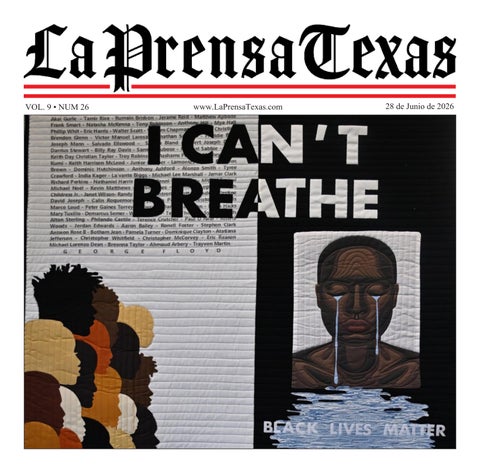
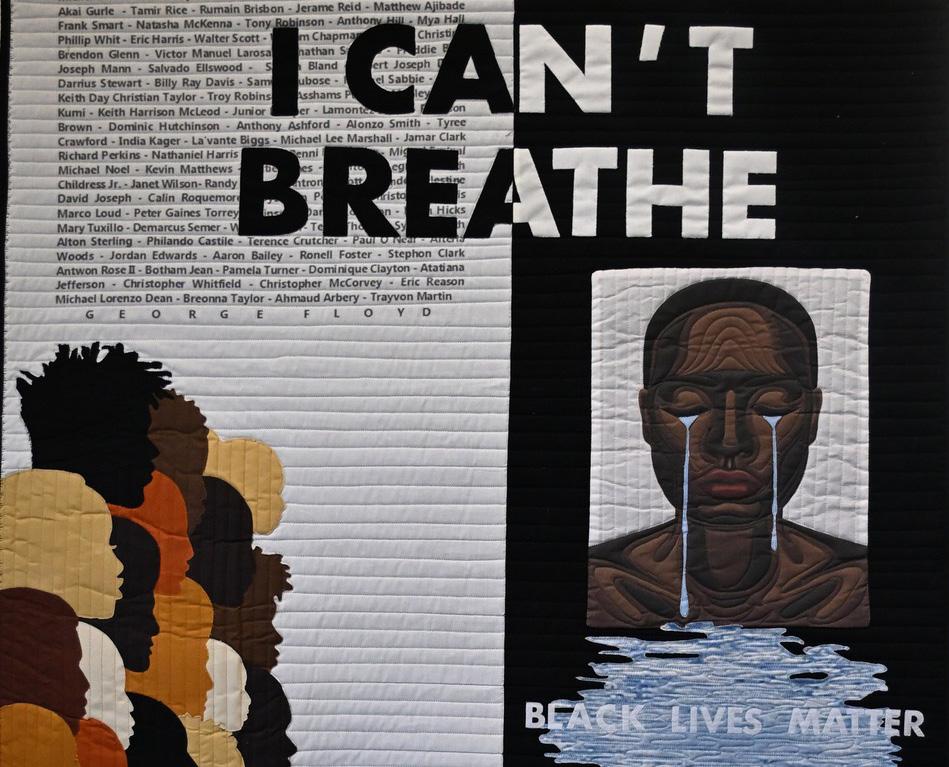
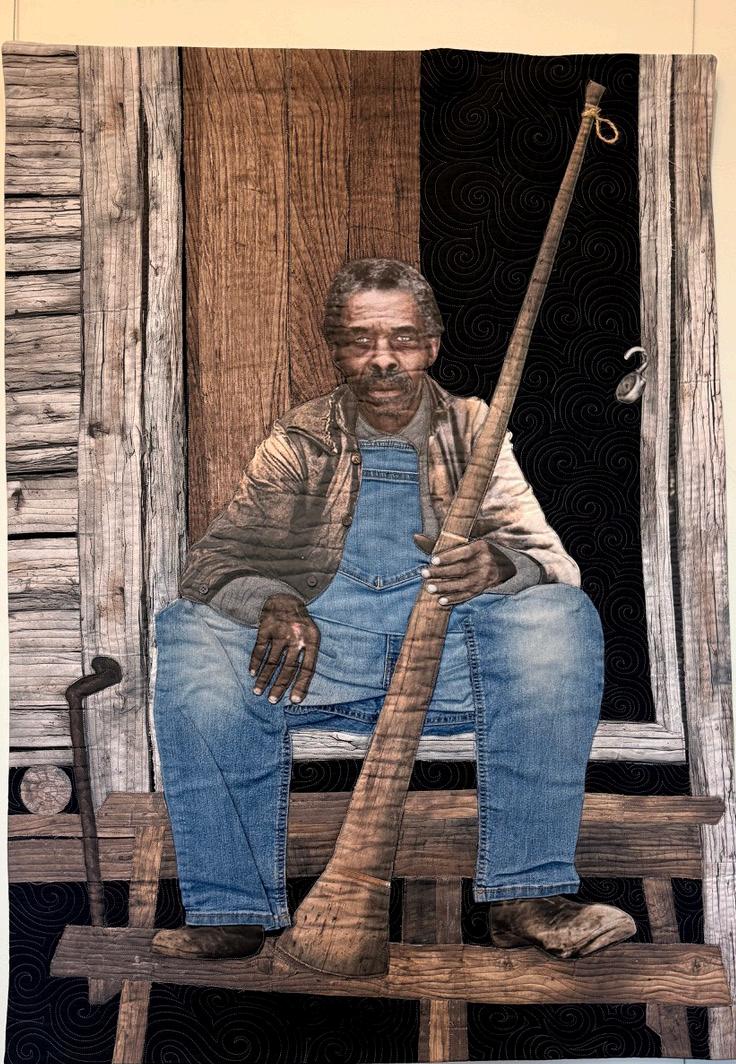
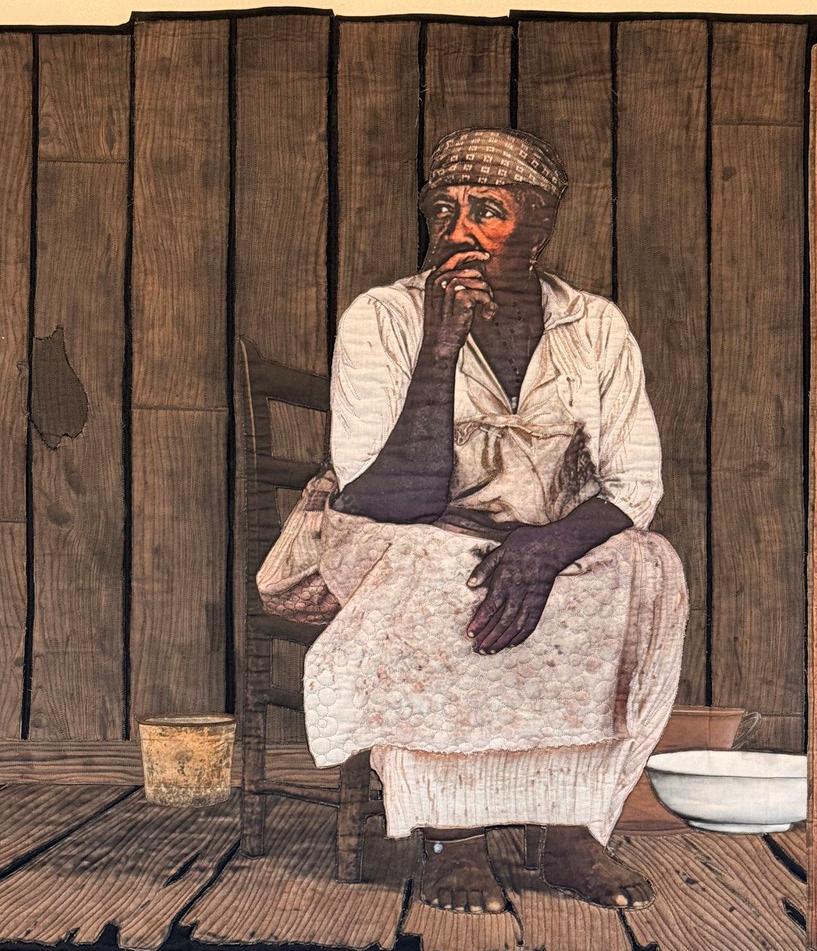
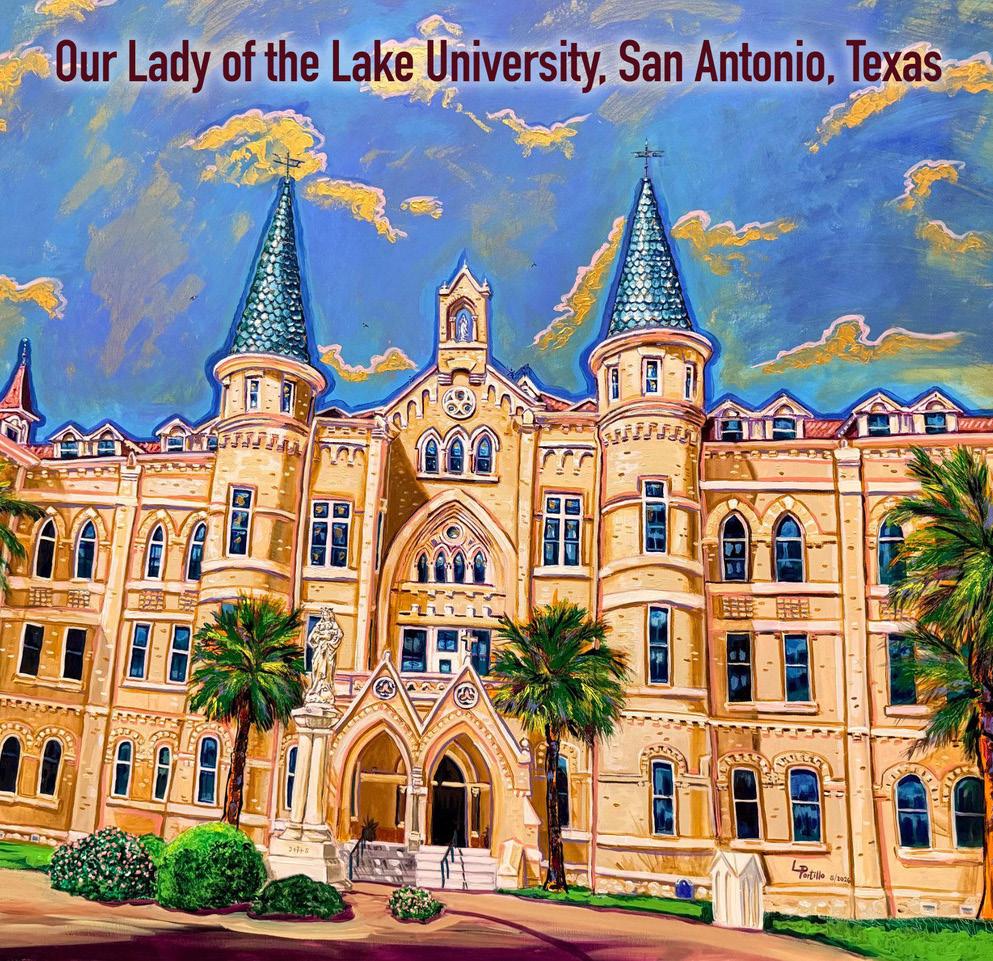
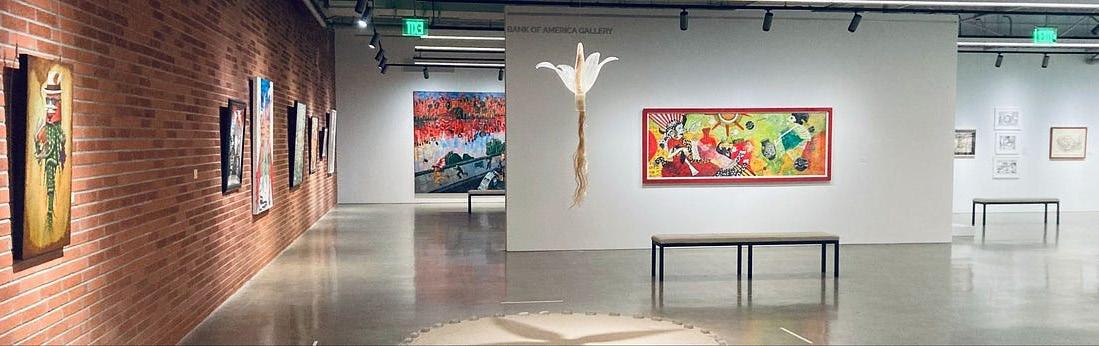
The Juneteenth art show at Our Lady of the Lake University [OLLU] celebrated culture, history, and community. The art exhibit, which opened on June 17, 2026, was curated by Maria Magdelena Williams and honors the legacy, resilience, and creativity of the San Antonio cultural community through visual arts, storytelling, cultural engagement, and collective reflection. OLLU President Dr. Abel Chavez gave the opening remarks, thanking Ms. Maria Williams and guests for their participation. This week’s cover art is by Georgia Williams from Houston, Texas. Here is her story. Georgia Williams (b. 1954, Beaumont, Texas) is a Houston-based quilt artist whose work bridges folk traditions, narrative expression, and contemporary fiber art. Raised in Southeast Texas, she earned a B.A. in psychology from Lamar University (1990) and an M.A. from the University of Houston–Clear Lake (1993). Her academic grounding in human behavior continues to shape the emotional depth and narrative focus of her quilts.Rooted in traditional quiltmaking, Williams combines technical precision in cutting, piecing, and stitching with a strong command of color, texture, and composition. Her work extends beyond craftsmanship into storytelling, with each quilt serving as a vehicle for memory, identity, and lived experience. This balance of design, skill, and narrative situates her within the continuum of American folk art while expanding its expressive possibilities. Williams’s commit-
About the Artisit Georgia Williams
ment to narrative quilting deepened through her engagement with global textile traditions. A formative influence came through her participation in the online group Quilt Africa Fabrics, founded by Miriam Galadima-Benson. Through the group’s challenges—working with mystery bundles of fabric sourced from Nigeria—Williams developed a lasting affinity for African textiles. She frequently incorporates these materials into her work, drawn to their vibrancy and symbolic richness, which contribute both visual intensity and cross-cultural resonance to her compositions. Her process is both disciplined and exploratory. Each project begins with research into the subject matter, generating initial concepts that evolve organically over time. Williams emphasizes that no quilt ends as it begins; instead, each develops through ongoing adjustments in which repetition and variation refine the final form. This openness to improvisation, combined with rigorous craftsmanship, defines her creative approach. A pivotal moment in her career came in 2020, when she shared her work with Dr. Carolyn L. Mazloomi, founder and president of the Women of Color Quilters’ Network. Joining the organization led directly to her first exhibition and marked the beginning of her professional recognition. Since then, Williams has participated in approximately twenty-five exhibitions and received multiple honors, including two Best in Show awards (Wall Hanging), Best Use of Embellishments, First Place in
Fiber Art, Third Place in Small Pictorial at the Houston International Quilt Festival, and the Juan Cantavella Award of Distinction. Her work has been exhibited widely in both solo and group contexts. In 2024, she presented a seventeen-quilt solo exhibition at the Houston International Quilt Festival at the George R. Brown Convention Center. Group exhibitions include the 2025 Harlem Fine Art Show (HFAS17) in New York, the National African American Quilt Guild’s “Praise Is What I Do” exhibition in Lake Charles, Louisiana, the American Quilter’s Society Quilt Week in Paducah, Kentucky, and a Black History Month exhibition at Creativity Shell in Kingwood, Texas. Williams’s quilts are now held and exhibited nationally and internationally. Her work is included in the permanent collection of the Stark Museum and has been exhibited at the U.S. Embassy in Tallinn, Estonia, with additional international presentations under consideration. Her quilts have also been published in volumes edited by Carolyn L. Mazloomi, including We Are the Story: A Visual Response to Racism (2021) and Black Pioneers: Legacy in the American West (2022), situating her practice within broader national conversations on history, identity, and representation. Through her evolving practice, Williams has established quilting as both her artistic medium and narrative platform—uniting research, tradition, and creative intuition into a compelling form of visual storytelling.
Reproductive Freedom for All anuncia la campaña de $23.5 millones de dólares, “My Body My Ballot”
Con 4.5 millones de miembros, la organización de defensa de los derechos reproductivos más antigua del país lanza su mayor campaña electoral de mitad de mandato, en vista de las elecciones de noviembre
En el cuarto aniversario de la decisión de la Corte Suprema en el caso Dobbs v. Jackson Women’s Health Organization, la organización Reproductive Freedom for All, anuncia el lanzamiento de My Body My Ballot, una campaña de 23.5 millones de dólares con el propósito de movilizar a los votantes, hacer responsables a los políticos que se oponen al aborto y elegir a defensores de los derechos reproductivos en contiendas clave en todo el país. En el centro de esta campaña se encuentra una verdad sencilla: el aborto cuenta con apoyo popular más allá de las líneas partidistas, gozando de mayor aceptación que cualquier político o partido político en particular. A medida que muchos votantes le dan la espalda a Trump y al movimiento MAGA debido a sus constantes ataques al acceso al aborto, la organización Reproductive Freedom for All aprovecha la oportunidad para elegir candidatos a favor del acceso al aborto en todas las categorías en la boleta electoral. Esta campaña es el programa electoral de mitad de mandato más ambicioso en la historia de Reproductive Freedom for All y se enfocará en persuadir y movilizar a los votantes —incluidos los independientes, los republicanos moderados y aquellos que practican el voto dividido— cuyo apoyo al acceso al aborto los sitúa en una postura opuesta a la de Trump y los candidatos que él respalda. Se implementará una estrategia coordinada que abarca la organización territorial, la investigación, la participación digital y la rendición de cuentas política. El programa contempla importantes inversiones en el contacto directo con los votantes, como campañas de puerta a puerta coordinadas, llamadas telefónicas, capacitación de voluntarios en organización relacional y educación electoral, priorizando estados como Arizona, Michigan, Nevada, California y Georgia, y centrándose en los distritos congresionales AZ-06, MI-07 y NV-03, así como en contiendas estatales y referendos de importancia crítica. Asimismo, la campaña incluirá un programa nacional de comunicación y estrategia digital diseñado para llegar a los votantes a través de medios tradicionales, podcasts, plataformas de creadores de contenido y los ecosistemas de redes sociales donde cada vez más se moldean la opinión pública y el debate cultural. Cuatro años después del fallo Dobbs, la libertad reproductiva sigue siendo uno de los temas más destacados de la política estadounidense. Los políticos y extremistas contrarios al derecho al aborto han dejado claro que no se detendrán tras haber logrado anular Roe. Están atacando medicamentos para el aborto, disminuyendo la atención de emergencia relacionada con el aborto, retirando la financiación a Planned Parenthood, desmantelando Medicaid e impulsando políticas que aumentan los costos para las familias que ya tienen dificultades para llegar a fin de mes. La iniciativa My Body My Ballot aprovecha un momento político crucial, marcado por la creciente división dentro del Partido Republicano. Mientras los grupos antiaborto presionan a la administración Trump para que vaya aún más lejos, los republicanos se encuentran atrapados entre un movimiento radical que exige una prohibición a nivel nacional y los ocho de cada diez votantes que apoyan el derecho al aborto legal y se oponen rotundamente a la interferencia política en decisiones médicas personales. Mini Timmaraju, presidenta y directora ejecutiva de Reproductive Freedom for All, emitió la siguiente declaración: “El aborto cuenta con un amplio respaldo popular, mayor incluso que el de cualquier político en particular. Lo que no goza de popularidad es Trump y el movi-
miento MAGA, que siguen perdiendo el apoyo de los votantes con cada nuevo ataque al acceso al aborto. En lugar de reducir costos o ayudar a las familias a planificar su futuro, los republicanos del movimiento MAGA han impulsado políticas que dificultan que las personas decidan si quieren ampliar su familia, cuándo hacerlo y de qué manera. La campaña “My Body My Ballot” (Mi cuerpo, Mi Boleta) busca garantizar que cada votante comprenda la conexión entre los temas que más le importan: nuestros cuerpos, nuestras familias, nuestra atención médica, nuestra seguridad económica y nuestra libertad. Contamos con los miembros, el poder político y la infraestructura organizativa necesarios para transformar la indignación en acción. Cuatro años después del fallo Dobbs, las prohibiciones del aborto han creado un panorama caótico y peligroso, donde el acceso a la atención médica depende de dónde viva la persona, de sus recursos económicos y de si tiene la posibilidad de viajar. Los políticos contrarios al aborto provocaron esta crisis y, este mes de noviembre, los estadounidenses se asegurarán de que rindan cuentas por ello.” El lanzamiento de la campaña marca también el inicio de la Semana Nacional de Acción de Reproductive Freedom for All, que se llevará a cabo del 22 al 28 de junio con eventos en todo el país destinados a educar a los votantes, capacitar a los voluntarios, dar voz a quienes comparten sus historias e impulsar acciones directas en estados y distritos clave. La semana incluirá 11 eventos presenciales en los estados donde tenemos presencia, así como 12 iniciativas a nivel nacional, entre ellas diversas jornadas de llamadas telefónicas y una campaña nacional de envío de mensajes de texto. Los componentes clave de la campaña incluyen: Un programa nacional de organización impulsado por los miembros: Reproductive Freedom for All movilizará a sus 4.5 millones de miembros en todo el país para ampliar su infraestructura de liderazgo voluntario y poner en marcha iniciativas de contacto directo con los votantes y eventos de visibilidad en distritos y regiones prioritarios. La campaña abarcará actividades de contacto directo en los estados donde la organización cuenta con presencia —incluyendo ciudades como Phoenix, Tucson, Bakersfield y Savannah—, así como marchas de “Pride,” mesas redondas comunitarias y ruedas de prensa con líderes electos. Asimismo, incluirá jornadas de llamadas (phone banks) de varios días, tanto en modalidad presencial como virtual. Contacto directo con los votantes en estados y distritos prioritarios: El programa incluirá importantes inversiones en el contacto directo con los votantes —basadas en programas coordinados de visitas puerta a puerta diseñados en colaboración directa con campañas específicas, así como en la activación y el crecimiento de la base de miembros mediante programas de capacitación y organización relacional a gran escala, con inversiones prioritarias en Arizona, Michigan, Nevada, California y Georgia—, centrándose en los distritos congresionales AZ-06, MI-07 y NV-03, además de en contiendas estatales y consultas populares decisivas. Mensajes respaldados por encuestas sobre la libertad, cuidados y seguridad económica: La campaña utilizará los resultados de las encuestas más recientes de Reproductive Freedom for All para vincular el acceso al aborto con las presiones económicas que ya enfrentan las familias, incluida la realidad de que decidir si tener un hijo es una de las decisiones económicas más importantes que una persona puede tomar. Asimismo, los mensajes de la campaña informarán a los
votantes sobre las amenazas al acceso a medicamentos para el aborto, la atención médica de emergencia, la privacidad de la información médica y el acceso a servicios de salud reproductiva en todo el país. Apoyo a candidatos y rendición de cuentas: Reproductive Freedom for All respaldará a los defensores de la libertad reproductiva y exigirá hacer a los políticos contra el aborto responsables por sus acciones y posturas, incluidos aquellos alineados con grupos antiaborto que presionan a la administración Trump para restringir aún más el acceso. La campaña dejará claro quiénes trabajan para proteger el acceso al aborto y quiénes trabajan para hacer que esta atención médica sea aún más difícil de obtener. Medidas electorales estatales: Reproductive Freedom for All apoyará iniciativas relacionadas con medidas electorales en Virginia, Missouri y Nevada, como parte de una estrategia más amplia para movilizar a los votantes alrededor de la libertad reproductiva a todos los niveles de la boleta electoral. Esta labor vinculará la participación en torno a las medidas electorales con la estrategia general de la campaña de contacto con votantes, persuasión y movilización para acudir a las urnas. Programas digitales para movilizar a los votantes: Reproductive Freedom for All llevará a cabo un programa digital coordinado que abarcará redes sociales, plataformas de podcasts, asociaciones con creadores, publicidad digital pagada, correo electrónico, mensajes de texto (SMS). La estrategia con creadores irá más allá de la simple amplificación pagada mediante colaboraciones con voces creíbles, creadores independientes, narradores y figuras vinculadas a la causa, capaces de llegar de manera auténtica a audiencias susceptibles de ser persuadidas y de fomentar la participación electoral. La campaña se basa en la investigación más reciente de Reproductive Freedom for All, la cual vincula la libertad reproductiva con la seguridad económica y la libertad de decidir si formar una familia, cuándo hacerlo y cómo. Dicha investigación servirá de base para los anuncios de la campaña, los guiones para el trabajo de campo, el contenido digital, la capacitación de voluntarios y las conversaciones con los votantes, incluyendo el acercamiento a votantes independientes y republicanos moderados que se sienten frustrados por el aumento de los costos y alarmados por los continuos ataques al acceso al aborto. For over 55 years, Reproductive Freedom for All (formerly NARAL Pro-Choice America) has fought to protect and advance reproductive freedom at the federal and state levels—including access to abortion care, birth control, pregnancy and post-partum care, and paid family leave— for everybody. Reproductive Freedom for All is powered by its more than 4 million members from every state and congressional district in the country, representing the 8 in 10 Americans who support legal abortion.
Provided by
Arc Thrift Stores Brings Jobs, Inclusion, Affordability, and Sustainability to San Antonio
By: Yvette Tello
San Antonio is preparing to welcome a new kind of thrift store, one built around affordable shopping, community impact, and real inclusion. Arc Thrift Stores, which began in Colorado, is opening its first Texas location at 5776 Stemmons Drive. The approximately 19,000 square foot store is expected to create about 50 local jobs while supporting workforce inclusion, sustainability, and individuals with intellectual and developmental disabilities. For San Antonio, this opening is about more than retail. It is about who gets seen, who gets hired, and who is given the chance to build a life with dignity. One of the most meaningful parts of Arc’s mission is its commitment to people who are autistic, neurodivergent, or living with intellectual and developmental disabilities. This is a major part of our community, including many families of color, that is too often misunderstood, overlooked, or left out of the conversation. Unless autism touches your family personally, it can be difficult to understand what families face when trying to help their loved ones find acceptance, employment, independence, and a true place in the world. For many parents, the question is not whether their child has talent, value, or purpose. They already know they do. The question is whether the world will make room for them. That reality became personal when one local mother brought her autistic son to Arc in hopes of helping him find his very first job. For years, she never imagined he would have the opportunity to work in a city where autistic people are not always included or understood. But at Arc, the conversation was different. Her son was not seen as a burden. He was seen as someone with potential. He became the first San Antonio Ambassador, and his mother was moved to tears. That kind of inclusion matters. It gives families hope and reminds people with disabilities that they deserve more than sympathy. They deserve opportunity, respect, patience, training, and a chance to grow. The store manager, who came from Colorado, understands that mission personally. She also has an autistic son. When she first learned of his diagnosis, her hopes were not shattered because she knew Arc existed. She knew there was a place where people like her son could be accepted, supported, and given real opportunities. Now she brings that same compassion and understanding to San Antonio. Arc’s leadership story also reflects opportunity from within. Both the store manager and the district manager began their careers as cashiers and grew with the company. Their journeys show that Arc is not only creating jobs, but also building pathways for growth, leadership, and long term stability. Companywide, Arc employs approximately 1,600 team members, including more than 250 individuals with intellectual and developmental disabilities. That makes the organization one of the nation’s largest employers of this population and places workforce inclusion at the center of its business model. The store also arrives at a time when families are looking for affordable ways to stretch their budgets. For working families, students, seniors, people of color, and individuals on fixed incomes, thrift shopping is not just about finding a bargain. It is about access to clothing, household goods, furniture, and everyday items at prices that make sense. Sustainability is also part of the impact. Resale shopping extends the life of clothing and household items that might otherwise end up in landfills. Every donated item that is reused or resold helps reduce waste and encourages a more responsible way to shop. Most importantly, proceeds raised through Arc Thrift Stores help support families and individuals with intellectual and developmental disabilities. Every donation, purchase, and job created becomes part of a larger mission to build a community where people of all abilities are valued, respected, and given the chance to thrive. As Arc Thrift Stores prepares to open its doors, San Antonio has an opportunity to welcome a new neighbor whose mission reaches beyond the checkout line. It is a mission of inclusion, opportunity, affordability, sustainability, and hope.
San Antonio Mourns the Loss of a Community Giant
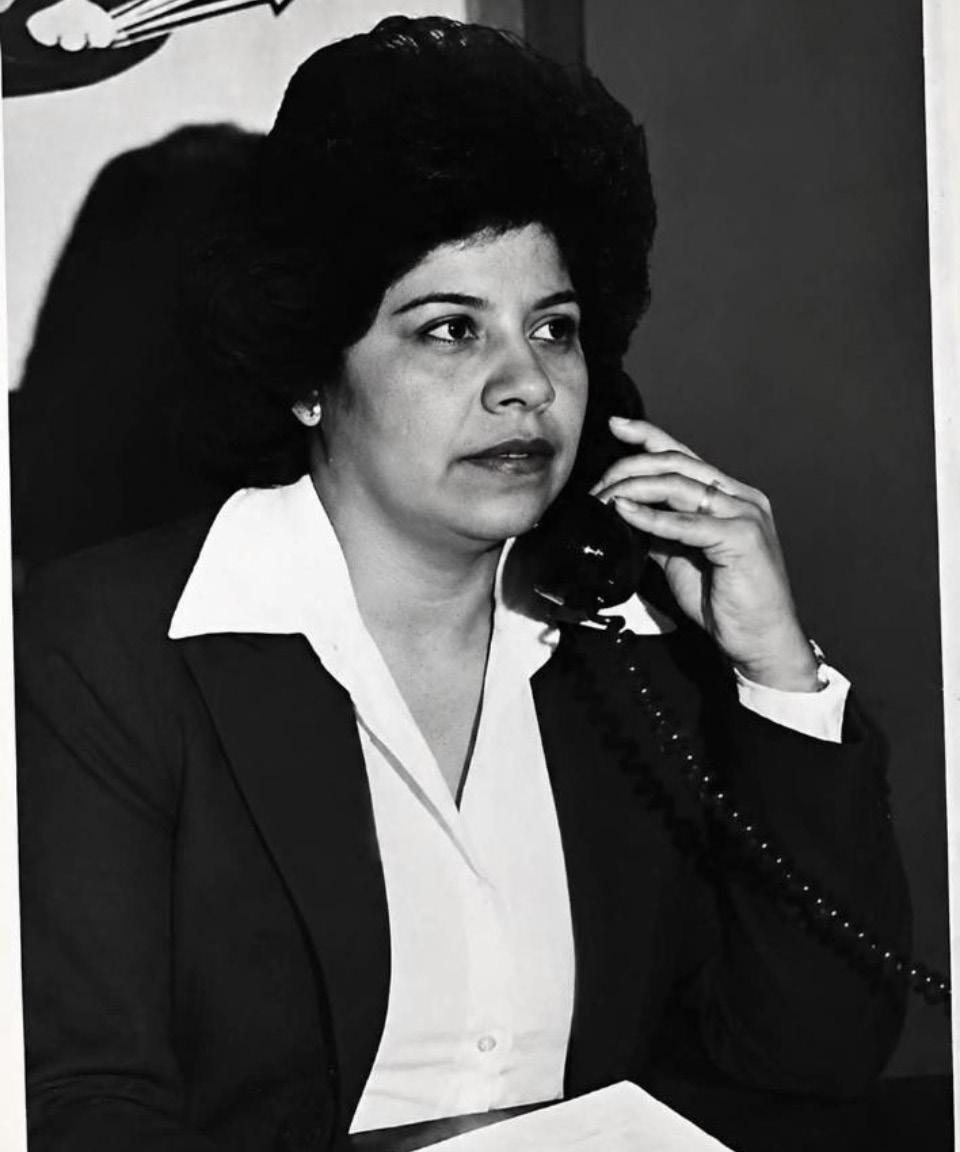
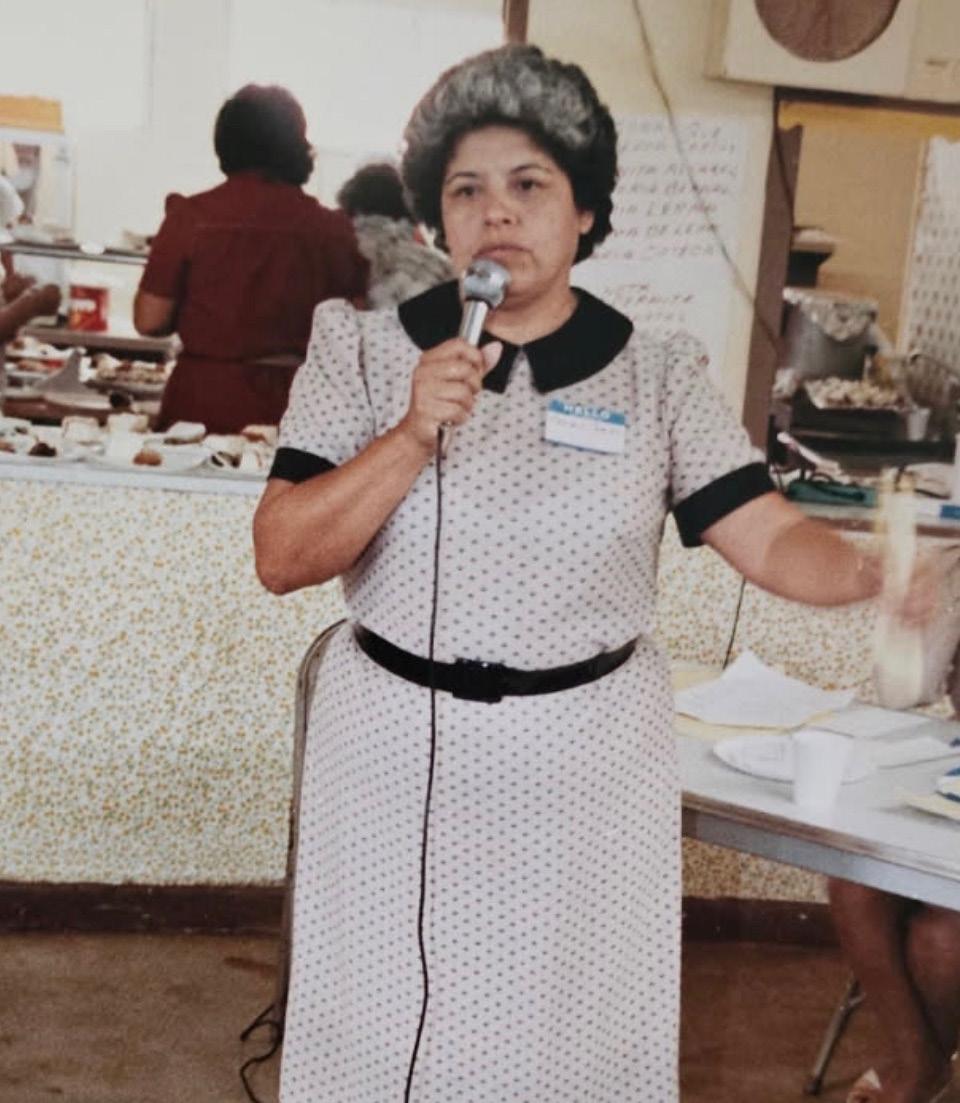
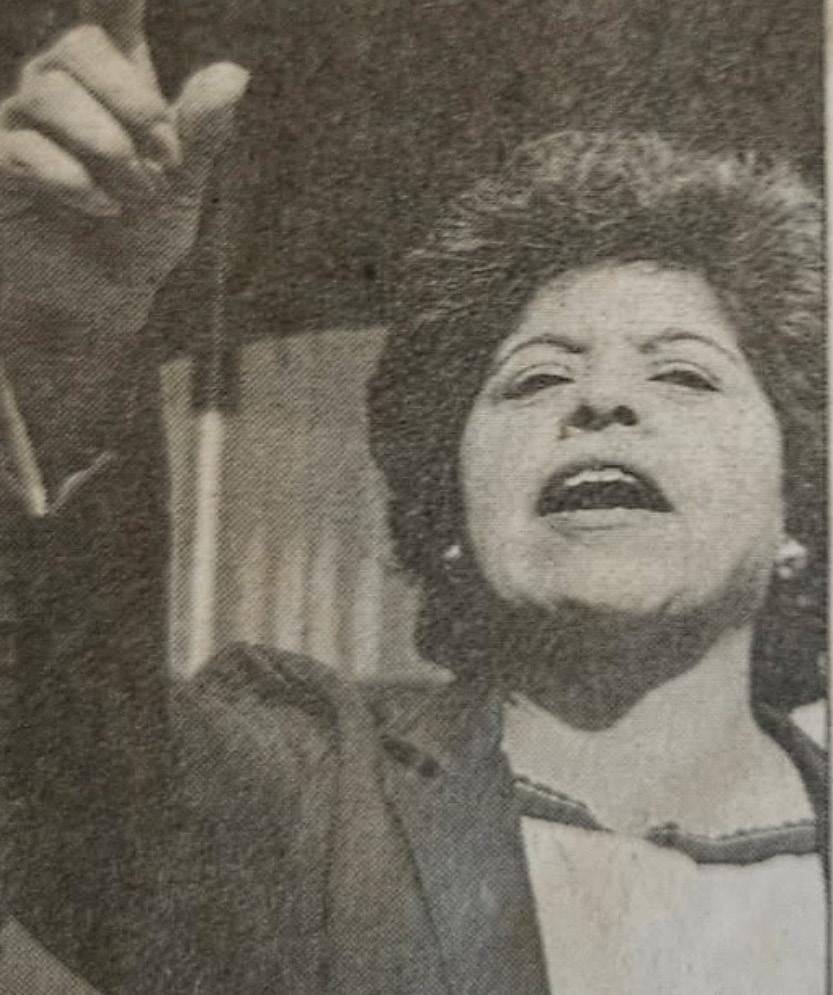
Beatrice G. Cortez
San Antonio has lost one of its most respected and influential community leaders. Beatrice G. Cortez, former President of Communities Organized for Public Service, now known as COPS/Metro Alliance, died peacefully on June 14, 2026, surrounded by family and close friends. She was 87. For more than four decades, Cortez stood at the forefront of efforts to improve the lives of families across San Antonio. Her leadership helped transform neighborhoods, strengthen public infrastructure, expand educational opportunities, and give a voice to residents who had long been overlooked and underserved. Beatrice G. Cortez was born in Kenedy, Texas, on July 29, 1938, to migrant farm workers Miguel and Josefina Gonzales. She was the sixth of ten children and, like many children of migrant families, helped her parents in the fields picking cotton and vegetables in Minnesota and other northern states along the way. She later attended Ira Ogden Elementary, Irving Junior High, and graduated from Fox Tech High School in 1957 with a diploma and a certificate in Vocational Office Education. She went on to work in civil service at Kelly Air Force Base and Fort Sam Houston. In 1960, she married Andres C. Cortez. Together, they raised five children and also helped raise three of her siblings after the premature death of her mother and the failing health and eventual death of her father. Through hardship, the family grew stronger in faith and became active members of St. Patrick Catholic Church. Beatrice and her husband joined the Altar Society and La Sociedad de Guadalupe, deepening their devotion to Our Lady of Guadalupe. They also volunteered as CCD teachers and later participated in Senior Ministries. To many in her neighborhood, Beatrice was more than a community leader. She was a motherly figure, counselor, spiritual mentor, and trusted guide. Many neighborhood children knew her phone number by heart because they knew they could call her for help, advice, or comfort. Her commitment to justice grew from what she witnessed around her. Af-
ter leaving her government job, she began volunteering with Communities Organized for Public Service. She saw the poor living conditions in her neighborhood and surrounding communities and knew she could not stay silent. Guided by her faith, she put her beliefs into action by speaking up for her family, her neighbors, and working families throughout San Antonio. In 1980, Cortez was elected as the fourth president of COPS. In that role, she became a powerful voice for public accountability and neighborhood investment. She demanded infrastructure improvements, including better streets, sidewalks, and drainage. She promoted job training programs such as Project Quest, advocated for the No Pass, No Play law, pushed for affordable housing, fought for senior tax exemptions, and helped advance the effort to build Palo Alto College on the South Side of San Antonio. Cortez understood that justice required participation. She worked tirelessly on voter registration campaigns and encouraged people to exercise their right to vote and make their voices heard. She regularly attended San Antonio City Council meetings and traveled to the Texas Capitol to demand accountability on budgeted items and to ensure that low income communities received proper representation. She did not back down from public officials or wealthy businessmen until the needs of the people were heard. As the fourth president of COPS/Metro Alliance, Cortez helped shape one of the most influential community organizing movements in Texas. Her work showed that ordinary people, united by faith, dignity, and shared purpose, could hold institutions accountable and create lasting change. Community leaders within COPS/Metro Alliance remembered her as a woman who dedicated her life to ensuring that those without power would be heard. Her legacy can be measured not only by the improvements she helped secure for San Antonio families, but also by the generations of leaders she inspired to continue the fight for justice and opportunity. Her impact can still be seen through-
out San Antonio today in neighborhoods that gained access to critical services, in families whose quality of life improved, and in the strong tradition of community organizing that continues to empower residents to advocate for themselves. Cortez was later recruited to work for the Archdiocese of San Antonio, where she helped with parish development and taught others how to organize in rural areas. Her work included efforts connected to immigration, clean water systems, and opposition to a nuclear waste dump in South Texas. She retired in 1995 as a program assistant with Housing and Urban Development. Even in her later years, she remained active with COPS/Metro Alliance. In August 2025, she participated in the renaming ceremony of the Atanacio Garcia Natatorium. In October 2025, she also took part in the 50th Anniversary Celebration of COPS/Metro Alliance, a movement she helped strengthen through decades of service. Beatrice often said, “If you want peace, work for justice.” Those words reflect the life she lived. She was a woman of faith, courage, service, and action. She fought for families living in poverty. She demanded dignity for communities that had been ignored. She believed that every person deserved clean streets, safe neighborhoods, quality education, affordable housing, and a voice in the decisions that shaped their lives.San Antonio mourns the loss of Beatrice G. Cortez, but her work continues in every leader she mentored, every family she helped, and every community member who still believes that justice is worth fighting for.
Media contact
Josephine Lozano Paul 817 682 5001
About COPS/Metro Alliance
Communities Organized for Public Service, known today as COPS/Metro Alliance, is a nationally recognized faith based community organization dedicated to developing leaders and building the power of ordinary citizens to improve the quality of life throughout the San Antonio region.
Por Franco
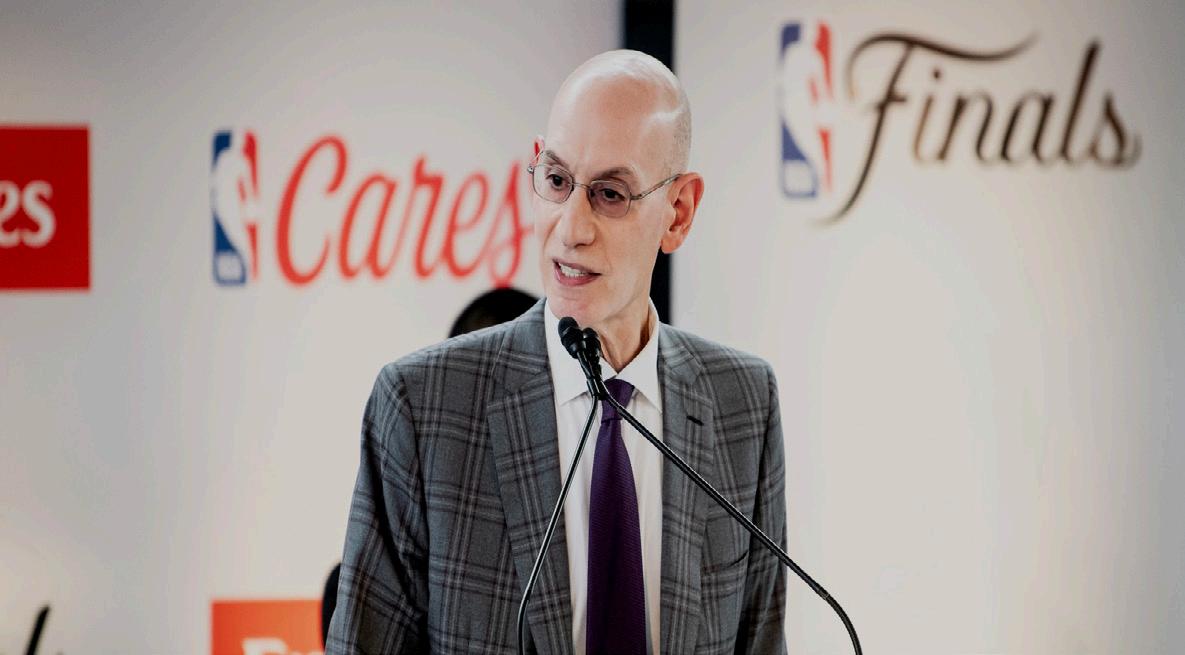
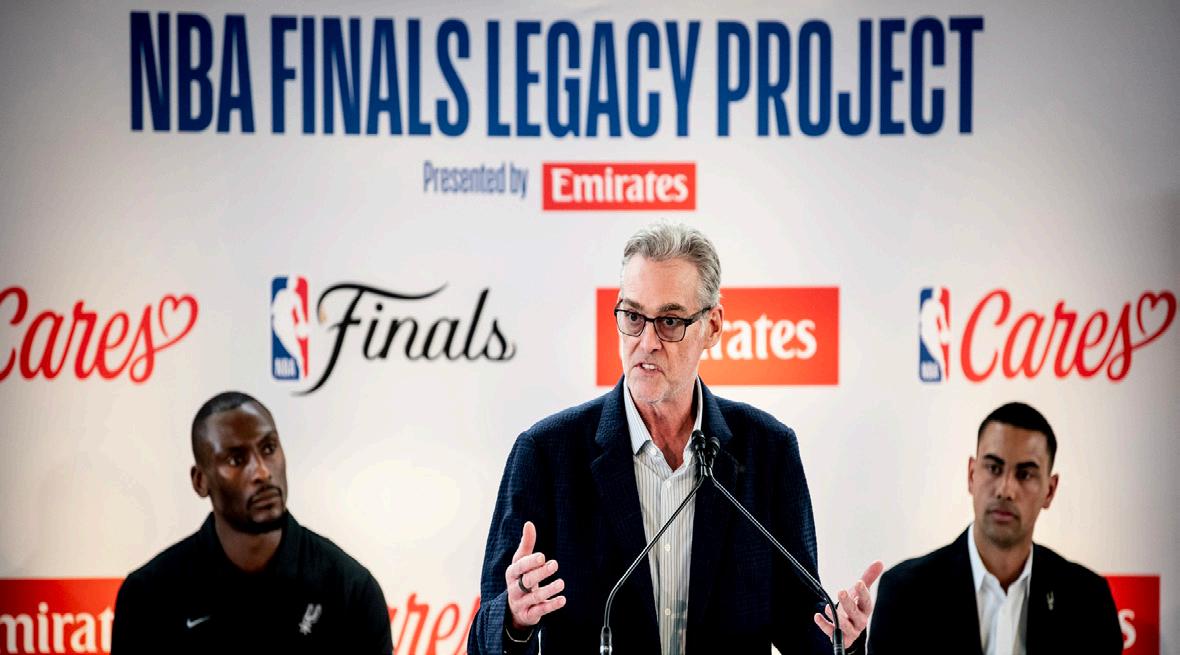
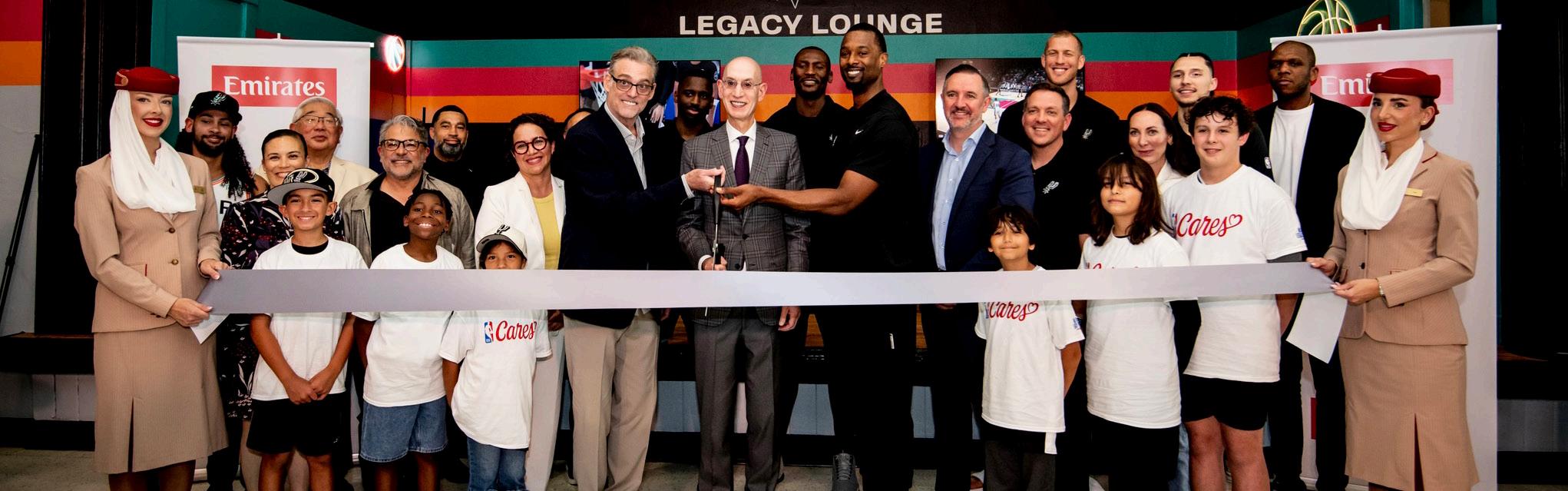
La gran final en la NBA que preside el comisionado Adam Silver, durante la serie entre Spurs de San Antonio y Knicks de NYC, dejó excelentes dividendos en pro de ambas comunidades. Tocó al ejecutivo local RC Buford, darle la bienvenida a Silver y sus acompañantes, quienes en unión del
Los Spurs Y NBA Renovaron El Denver
Heights Community Center
personal de la NBA y líderes comunitarios, acudieron al sitio Denver Heights Community Center donde con patrocinio de la empresa Emirates, con el éxito deseado cortaron el listón para dar por inaugurados los trabajos de remodelación en dicho lugar ubicado en el sector del East Side, programa que también contó con la participación
de Spurs Give, City of San Antonio Parks and Recreation Department. San Antonio Parks Foundation, todo en cumplimiento del NBA Finals Legacy Project. En boletín de prensa se dijo que esté proyecto, fue con el fin de celebrar las renovaciones de espacios comunitarios y la expansión de programas juveniles diseñados para crear un digno ambiente entre las familias residentes en el sector este. Durante la apertura, los pequeños asistentes participaron en clínicas de baloncesto siendo apoyados por jugadores de Spurs, participando a la vez
en actividades de tecnología moderna que dicho centro estará ofreciendo de hoy en adelante. Patricia Mejía, Chief Impact and Inclusion Officer at Spurs Sports & Entertainment (SS&E), dijo lo siguiente “La NBA Finals con excelente energía nos ha traído gran asociación en la que han participado organizaciones comunitarias dejando inver-
siones positivas para el futuro de jóvenes”. “Orgullosos por aume tar espacios libres con lo cual unirá gentes que estarán apoyando familias y jóvenes para aprovechar el juego deportivo en el cual jugarán, aprenderán y crecerán”, dijo Barbara Bush, NBA SVP Social Impact & Inclusión. (Fotos cortesía NBA-SS&E)
By: J. Gilberto Quezada
Mapping Chicano Civil Rights History
An initial review of the literature reveals several historic sites where Mexican American and Chicano civil rights battles took place. This list is not complete, and further research may identify additional locations tied to activism, education reform, labor rights, land justice, political organizing, and community resistance. One important site is the County Courthouse in Tierra Amarilla, New Mexico, where Reies López Tijerina and members of the Alianza Federal de Mercedes challenged the loss of land grants after the Treaty of Guadalupe Hidalgo. In East Los Angeles, Garfield, Roosevelt, Wilson, Belmont, and Lincoln High Schools became central to the Chicano student walkouts of the late 1960s. Students demanded Mexican history, Mexican American literature, more Mexican American teachers and administrators, better facilities, and college preparation courses. Laguna Park in East Los Angeles was the site of the 1970 National Chicano Moratorium march against the Vietnam War and the disproportionate number of Mexican American casualties. Law enforcement attacked the crowd, and three people were killed, including journalist Rubén Salazar. In Texas, Crystal City High School became a landmark in 1969 when Mexican American students walked out to protest discriminatory homecoming queen requirements. San Antonio also played a major role. At Lanier High School, students and parents fought for stronger academic courses. At Edgewood High School, students demanded better teachers and curriculum reform. At Burbank High School, MAYO supported a 1968 student revolt calling for curriculum changes to better prepare Mexican American students for college. Other organizing sites included the East Los Angeles Free Clinic, created through Brown Beret efforts, and La Piranya, an East Los Angeles
coffee house that served as a meeting space for Young Chicano Youths for Community Action, later known as the Brown Berets. Delano, California, was central to farmworker organizing. It was there that César Chávez opened the headquarters of the National Farm Workers Association. In San Antonio, 1705 Delgado Street was the home and headquarters of Don Eleuterio Escobar, who launched the Liga Pro Defensa Escolar to fight discrimination and poor school conditions for Mexican American students on the West Side. Sacred Heart Catholic Church in El Paso hosted a 1967 protest conference led by Dr. Ernesto Galarza, focused on the Vietnam War and the high number of Mexican American deaths and injuries. John F. Kennedy High School in San Antonio later hosted a major La Raza Unida conference in 1968, bringing together students, activists, LULAC members, MAYO leaders, and community organizers. Corpus Christi was also important. Obrero Hall was where three organizations merged in 1929 to form LULAC, and Allende Hall was where LULAC drafted its constitution and bylaws. Other significant sites include Alice High School, where Alonso S. Perales graduated, and the Nasser Building in McAllen, where Perales once had his law office with J. T. Canales and McKay. Theodore Roosevelt School in Mission, Texas, was the site of a 1952 protest against an offensive University of Texas pamphlet about Mexican Americans in the Lower Rio Grande Valley. Across these schools, churches, halls, courthouses, offices, and neighborhoods, we find more than historic places. We find the courage of a people who refused to be silent. These sites remind us that Mexican American and Chicano history is filled with students, parents, workers, veterans, organizers, and leaders who fought for dignity, education, justice, and identity. Their struggles continue to shape our community today.
Cheech Museum Features Sixty-one Chicano Artists, Including Cés ínez, Vincent Valdez, and John Valadez
By Ricardo Romo, PH.D
The Cheech Museum exhibit “We the People: Chicano Art in the U.S.A.” opened on May 30, 2026. With 126 works by 61 artists, it is one of the largest Chicano shows of this century. Organized by artist and curator Benito Huerta, the exhibition explores themes of identity, migration, community, and cultural memory through painting, sculpture, printmaking, and mixed media. This month also marks the fourth anniversary of The Cheech, the first museum of its kind dedicated to Chicana/o/x art.
Benito Huerta has given much time and thought to this exquisite exhibit, which is drawn from Cheech Marin’srenowned collection, the museum’s permanent collections, recent acquisitions, gifts, and artist loans. To those visiting the exhibit, Huerta offers that Chicanos“ are integral to the fabric of our country: the culture, the politics, the social strata, the economics, and, of course, American art. ” In several interviews with Huerta, I came to understand why he was chosen to undertake such a significant artistic commitment.
Huerta is a Texas artist who, in the later years of his illustrious career, has moved into the curatorial space. He explained that La Raza, the people represented in this monumental exhibit, have “been here since Aztlán, since Mexico, through shifting borders and histories, and now within these United States. ” He adds with pride that “ our home is here and our life is here.” I have known Huerta for many years, and we have shared mutual friendships with many Chicano artists. Huerta told me that he hoped that the art would demonstrate “not only a reflection of who we are, but also our dreams, our fears, our work, and, most importantly, our aspirations. ” There is evidence of these artistic parameters in the works by three artists whom I have followed for over 25 years: César Martínez, Vincent Valdez, and John Valadez.
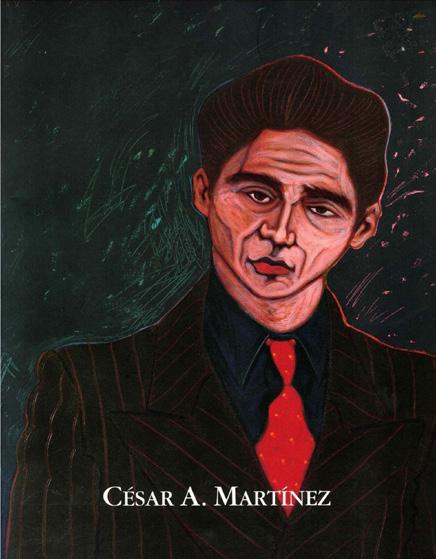
César Martínez is a major Latino artist and one of the founders of the Chicano Art Movement. He is best known for portraits, and the series is recognized as his Bato/Pachuco imagery, along with paintings of faith healers, bullfighters, and the Virgen de Guadalupe. Martinez is one of the few Latino-American artists whose work has been collected by major American museums, including the Museum of Modern Art and the Whitney Museum in New York City, the Los Angeles Museum of Art, and the Smithsonian American Art Museum in Washington, D.C. César Martínez was born and raised in Lare-
do and studied art at Texas A&I University in Kingsville. At the Kingsville campus, he formed friendships with several Latino artists who also expressed South Texas experiences in their paintings and drawings. Together, these South Texas artists constituted the early creative forces of the Texas Chicano art movement. After his college graduation, Martinez served in the U.S. Army in Korea and moved to San Antonio in 1971. San Antonio artists played an important role in the initial years of the Texas Chicano Art Movement. César Martínez was included in the Dale Gas exhibit in Houston, Texas, in 1977. The following year, Martinez began his bato and pachuco series. Martinez works with paper, canvas, wood, and metal, and, although he mostly paints with acrylics, he also excels with pastels and watercolors.
In his paintings of batos, Martinez captures the essence of iconic figures from the barrio in Laredo at a time when “Pachuquismo, ” a distinct type of dress and hairstyle represented in Chicano urban street culture, was in vogue in many of the borderland barrios. The pachucos and pachucas represented a 1940-1950 equivalent of “ cool” or “hip ” dudes and ladies. Martinez participated in numerous national exhibitions after winning the top award in the 1984 Chicano Art exhibit, Mira! The Canadian Club Hispanic Art Tour. Martinez’s solo exhibition at the McNay Museum of San Antonio in 1999 was the first ever by a Latino. He was included in CARA:
Vincent Valdez, detail, “Christmas en LA.” Registered in The Cheech Museum. Image from the collection of Ricardo and Harriett Romo.
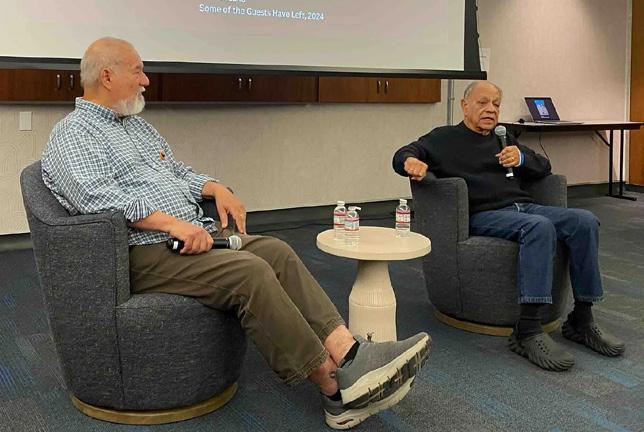
Benito Huerta and Cheech Marin discuss Chicano art at the“We the People” exhibit. May 30. 2026. Courtesy of Benito Huerta and Janet Chaffee. artists.
McNay Art Museum publication of the César Martínez show. Collection of Ricardo Romo.
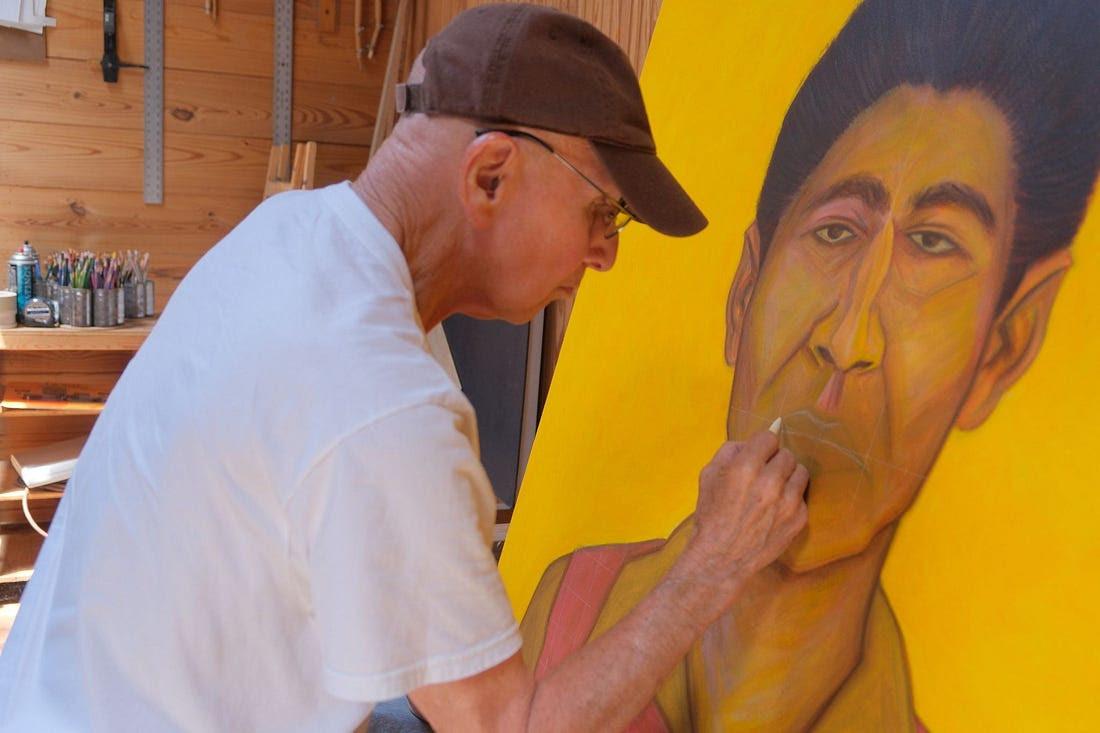
César Martínez at his San Antonio home studio. May, 2024. Photo by Ricardo Romo.
Chicano Art: Resistance and Affrmation 19651985, organized by the Smithsonian Institute, and Hispanic Art in the United States, organized by The Museum of Fine Arts, Houston. In 1999, Artpace awarded Martinez an International Artists’ Residency, and the Artpaceorganization included Martinez in several exhibits. He has also shown at the Mexican Fine Arts Museum, Chicago; Museo de Arte Moderno, Mexico City; and the Contemporary Arts Museum, Houston. A prominent participant in the “We the People” exhibit representing the younger generation of Chicano artists, Vincent Valdez was born in San Antonio’s Southside in 1977 and attended the Rhode Island School of Design, where he earned his BFA in 2000. His work is often described as monumental and hyper-realistic, with a strong social and political edge. Valdez frequently uses portraiture and history-painting themes to examine injustice, public memory, and marginalized stories. His images of American identity profoundly confront injustice and inequity while, according to Catharine Clark Gallery, “imbuing his subjects with empathy and humanity.”
Early in his career, Valdez rose to fame with portraits of Latino boxers, soldiers, embattled Mexican American families being evicted from their homes, and his powerful rendering of the Zoot-Suit Riots of 1943. The Zoot-Suit painting portrays the infamous World War II-era a tacks in Los Angeles by U.S. sailors on Mexican-Americans dressed in the era’s flashy, counter-cultural Zoot Suits. When the Houston Art League honored Valdez a few years ago, they noted that he “blends large, representa-
tional paintings—the scale of which recalls Western traditions of history painting as well as mural painting and cinema—with contemporary subject matter. ” Valdez explained that his art aimed “to incite public remembrance and to counter the distorted realities that I witness, like the social amnesia that fogs our colletive American memory.” At a recent Houston Contemporary Museum retrospective exhibit of Vincent Valdez’s works, curators explained that the artist “ celebrates everyday people as empowered, formidable, and resilient, while challenging traditional and historic symbols of power within contemporary society.”
was the youngest Chicano/Latino artist to have a solo exhibition at the McNay. His exhibition venues have included The Los Angeles County Museum of Art, The Snite Museum of Art, The Frye Museum, The Mexican Museum of National Art, Chicago, The Parsons Museum in Paris, The El Paso Museum of Art, OSDE Buenos Aires, The Laguna Art Museum, and others. He has been awarded several art residencies, including prestigious stays at the Skowhegan School of Painting & Sculpture (2005), the Vermont Studio Center (2011), the Künstlerhaus Bethanien (2014), and the Arion Press King Residency. An early Chicano mural painter and a native of East Los Angeles featured in the Cheech Museum show, John M. Valadez began his art career in the early 1970s as a muralist and expanded into a multidisciplinary practice that merges painting, pastels, muralism, and photography. While painting murals in the barrios of East L.A., Valadez attended East Los Angeles College and California State University, Long Beach. His formative artistic circles included the Centro de Arte Público and his association with “Los Four” and Master printer Richard Duardo in Los Angeles. Today, Valadez is considered one of the most important visual chroniclers of the Chicano experience in late twentieth-century urban America, particu-
larly in Los Angeles.
From the early Chicano Arts Movement of the 1970s, Valadez’ commitment to figuration was deliberate. He embraced narrative realism as a means to depict the lived realities, tensions, humor, and spectacle of Chicano life in the city. Drawing heavily from street photography, he translateds everyday urban scenes—often overlooked or marginalized—into complex, largescale compositions populated by a diverse cast of figures. The leaders of Eastern Project noted that Valadez’s “ work has come to define the iconography of Chicano identity of the period, situating it within the changing dynamics of the city rather than nostalgically attempting to reconstruct a mythical and distant past.” Over a career spanning more than four decades, Valadez has remained a persistent and influential voice, shaping the way Chicano identity is visualized and understood. His murals and public commissions across California, Texas, and internationally (including France) foreground themes of cultural hybridity, invisible borders, and layered histories linking Mexican, Chicano, and American experiences. Valadez commented in an interview with Los Angeles writer Jesus Trevino of the Latino cultural blog, Latinopia, “They call [my work] photorealism, but I appreciate people who could recognize that I wasn’t trying to redo a photo. ” For Valadez, his work was more complex than that. He added, “I was trying to draw people I saw on the street that I related to. ” He hoped his paintings would show who we are as Chicanos. He aspired to “do something that has multiple meanings because the worst thing for me is to be boring.”
The “We The People” exhibit opened at the Cheech on May 30, 2026, and closes in May of 2027. I look forward to writing future articles about additional artists featured in the show.
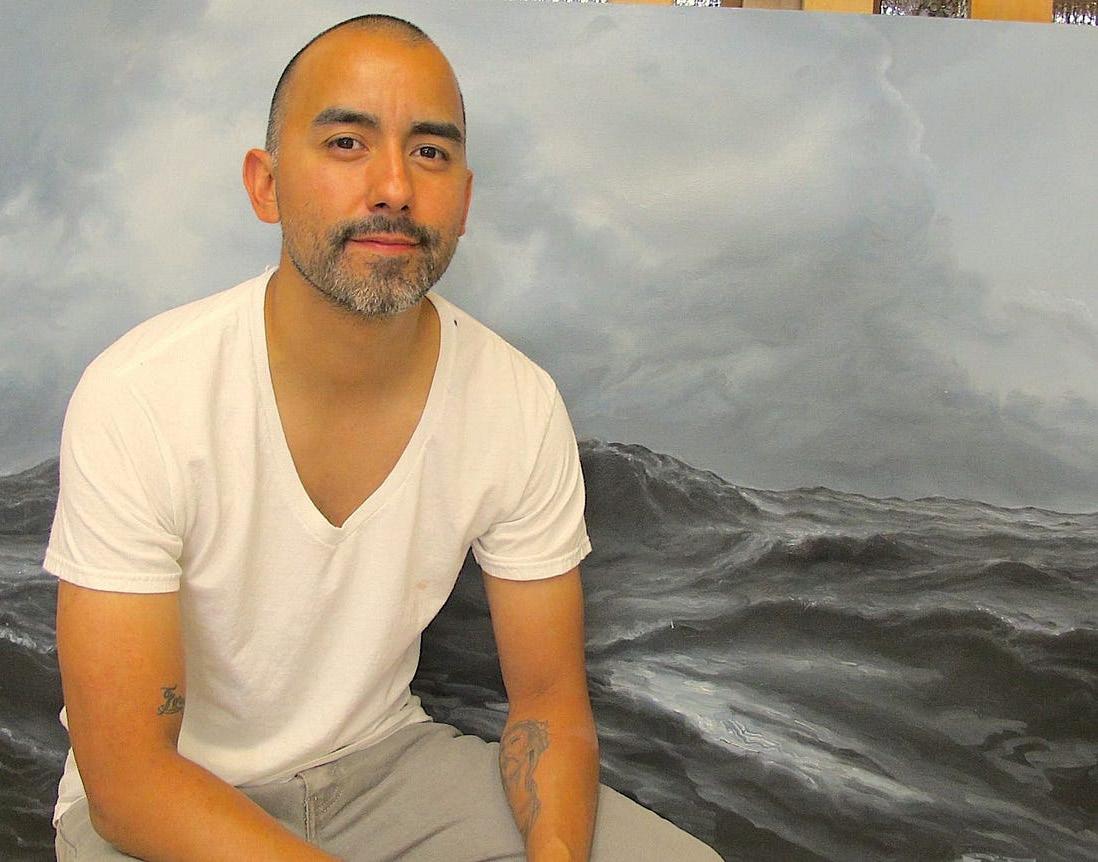
Vincent Valdez in his San Antonio studio. Photo by Ricardo Romo.
The Cheech Museum installation, “We the People”. Photo by Benito Huerta. Valdez
John Valadez’s pastel painting from the collection of Ricardo and Harriett Romo.
The Power of Grassroots Edutainment with the Doctor of Spirit Patsy Torres
by Celinda De La Fuente
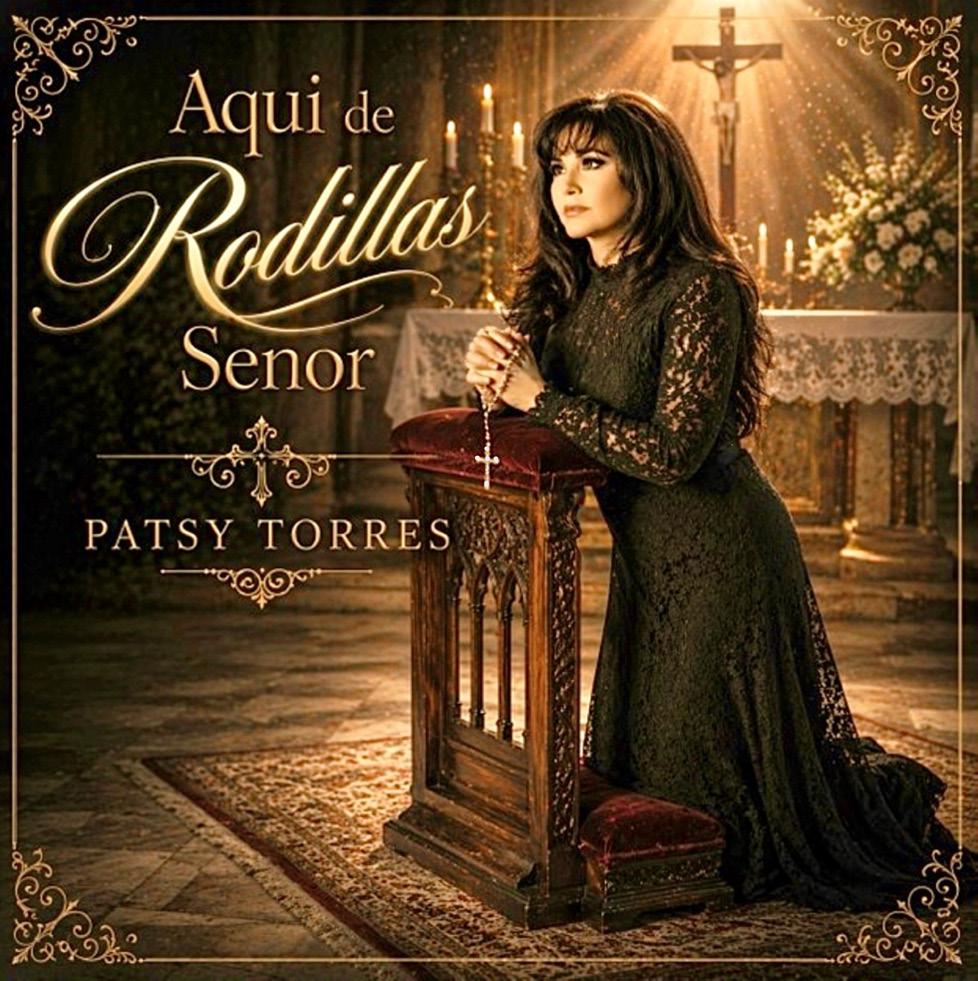
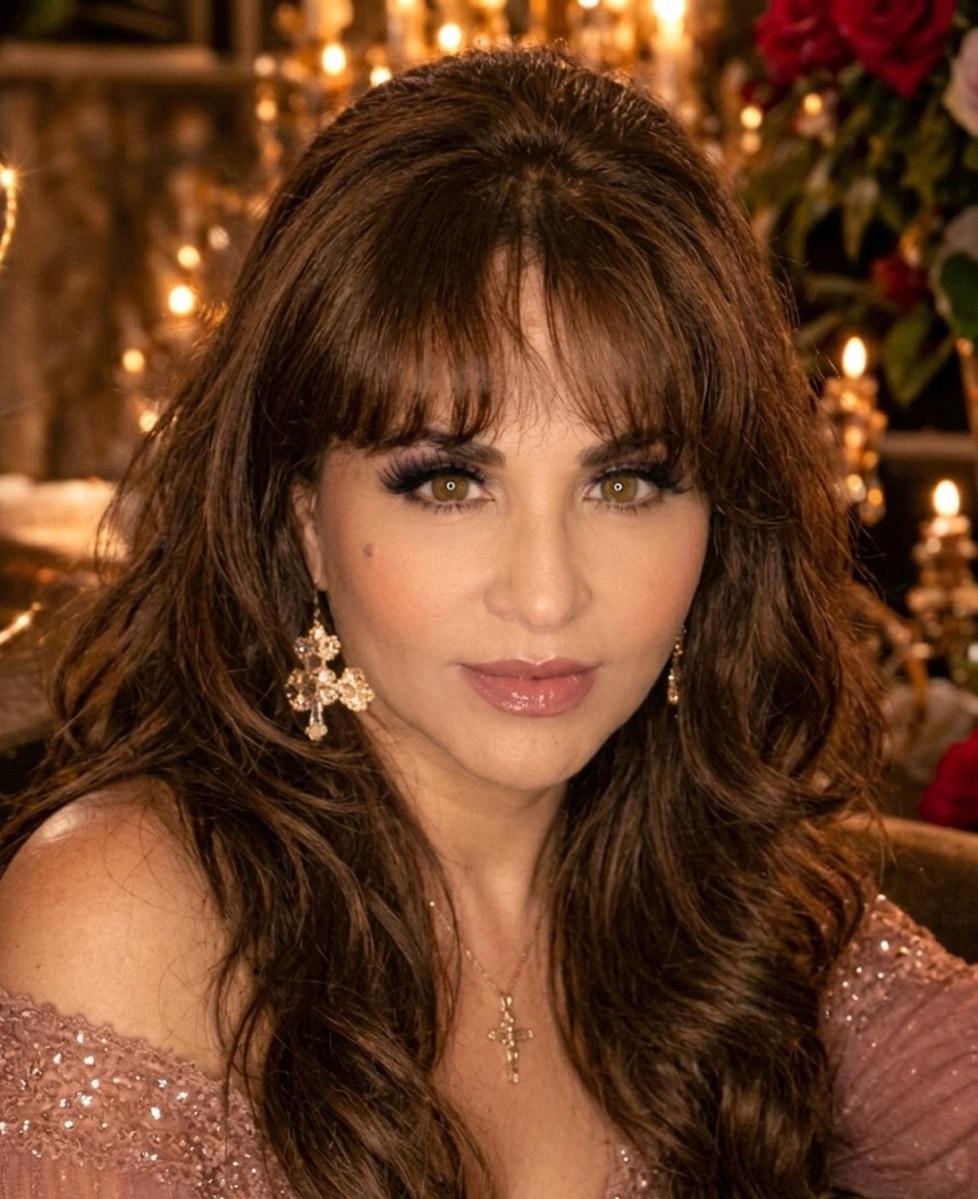
If you grew up in San Anto, you know exactly what a Westside summer night feels like. It is the heavy warm air carrying the flavors of backyard barbecues, mixed with the unmistakable rhythmic pulse of Tejano echoing down the street. As the accordion plays, and gritos from yesterday still linger, the beats become more than just songs. They are the soundtrack of our collective. The soundtrack of our lineage. The soundtrack of our gente. Music evokes emotion. It calls forth memory dormant in our DNA. And for generations, music has been our unspoken medicine. Because it is written in our DNA, in our cellular memory, traditional systems will never be able to strip away the healing power of our culture. A true testament of this ancestral form of healing is shared through the lived experience of legendary international icon Dr. Patsy Torres. Long before Patsy Torres became a household name, her childhood dream had nothing to do with performing under stage lights. She wanted to be a medical doctor, to make a difference, and to be a healer like her grandfather, Dr. William Torres. While attempting to balance rigorous pre med courses with a rising music career, it was her grandfather who gave her a life altering blessing. He witnessed her using her local
singer status to volunteer for stay in school programs and drug prevention efforts. Although he had dreamed of her becoming a doctor, he saw that she was already making a difference. He told her she was already performing preventive medicine. He said, “You can be a Doctor of the Spirit. You should sing.” And so, stepping fully into that calling, faith centered organizational leader Dr. Patsy Torres became the blueprint for an Edutainer, holding a Bachelor’s degree in Psychology, a Master’s in Education, and a Ph.D. in Organizational Leadership. For her, music became a stethoscope for the fragmented soul, and the ancestral notes that flow through her vessel became the medicine. Faith anchored Patsy Torres, Ph.D., shares, “I combine my music with my life experiences and what I’ve learned in my education to help others. To be able to make their dreams come true. Sometimes, there are obstacles people have, and when I am talking with them, I can see it right away. People tell me their life stories and I share mine with them too. I guess that is why I call myself an Edutainer.”
Dr. Torres blends the wisdom of a natural healer with the knowledge she earned through years of education, creating a powerful balance of intuition, experience, and academic strength. Her achievements were born from uncompromised
autonomy. While traditional corporate music avenues may restrict or seek to control image, especially in the case of female
artists, trailblazing Dr. Torres has maintained her genuine, authentic self and released nine independent albums under her own label, World Class Records. Her latest milestone album, Soy Tuya, stands as a testament to that self governance.“Success to me is being happy and content by having a sense of purpose, being able to provide for my family, help others, leave the world a little better than I found it, and spread God’s word,” unshakeable independent executive Dr. Torres states. “I always say, it is not about God being on your side. It is about being on God’s side.” Anchoring herself in spiritual guidance helped her navigate the music industry, especially in the earlier years when women often had to learn how to turn down indecent proposals from predatory male executives and personnel. She chose to put on her traditional performance traje as cultural armor, awakening the blood, pride, and loyalty of her ancestors, which shielded her from a system that often viewed women as easy pickings. That strength is the kind of cultural armor Dr. Torres used to help heal the division often created in male dominated industries. She remembers when the industry’s competitive environment pushed some female singers to see her as a threat instead of a sister in the same struggle. “When I first started, there were only a few female singers at the time. They didn’t want anything to do with me. I guess they felt threatened. I did not feel like I was a threat. They were already doing
great,” the legendary Edutainer recalls. “When I later met young Selena and Shelly Lares, I only wanted to help them. I spoke with their parents and advised them. To this day, Shelly and I are the greatest of friends.” Instead of guarding her knowledge, Dr. Torres shared it freely. She poured her love, experience, and wisdom into rising artists, teaching them how to publish their work, protect their copyrights, and value their intellectual property. When radio DJs tried to stir up “catfights” for ratings, she refused to play along. She chose unity, respect, and the safety of women over manufactured drama and sensationalized stories. Today, Dr. Torres carries her healing medicine directly into our neighborhoods, into our streets, and into our most precious treasure, our youth. Through her nonprofit, Positive Force Tour Programs Inc., she toured campuses such as my own alma mater, John Jay High School. The renowned Edutainer not only offered a music filled, exuberant performance, she also sat down with the 10 most high risk students at each school to listen to them, encourage them, and show them that they control their own narratives. These are vital lessons not often taught in our current education system. Through this work, she has reached over a million students countrywide. Patsy Torres, Ph.D., also performed a 10 year tenure at Fiesta Texas and has toured the United States and 12 countries, touching lives while promoting Tejano music, Texas, and the United States. She stands as
a bridge between generations, carrying wisdom forward while opening doors for those coming behind her. Her heart and advocacy have also reached spaces such as local senior care centers, the American Red Cross, the Latin Girl Scouts of America, and countless community organizations. Dressing in full 1950s fringe and boots to perform a meticulous, hour-long tribute to Patsy Cline, she exchanges raw, affectionate energy with elders who stand up to dance, clap, cry, and reclaim their joy and vibrancy through moments of nostalgia and music that lives in their bones. Comadres, for anyone entering the business world or any competitive industry, let us learn from the wise and thoughtful advice of Dr. Patsy Torres. “The only way women can continue to achieve equality and have access to opportunity is to have mentors that guide them, advise them, and set an example. Without support, we could quickly lose our footholds and freedoms in the future.” Let us become experts in our fields, educate ourselves, inform ourselves, and pass that guidance along to those coming up next. Let us listen to the music that exists in our bones. Let us protect ourselves with the strength of our culture, reject the lie that there is not enough room for all of us, and move forward with a spirit of mentorship, support, and paying it forward. Let us remember that in community, we thrive.
The Hot Henrietta Fantasy Football Charity League
By Hot Henrietta – Texas Radio Hall of Fame
As someone who has spent decades connecting with our community through radio, media, advocacy, and public service, I am always looking for creative ways to bring people together while supporting important causes. That is why I am excited to introduce a new community initiative: The Hot Henrietta Fantasy Football Charity League This exciting event combines the fun and competition of fantasy football with the power of giving back. Participants will compete throughout the NFL season while helping raise funds for a charitable cause that makes a difference in our community. Fantasy football has become one of America’s favorite pastimes, bringing friends, families, coworkers, and sports fans together. By adding a charitable component, we can turn a friendly competition into an opportunity to create a positive impact. How It Works Participants will join the league by making a charitable donation. Funds raised will support a selected nonprofit organization or community-based cause. Throughout the season, league members will draft their teams, manage weekly matchups, and compete for championship honors. In addition to the competition, participants can enjoy: Weekly league updates Leaderboards and rankings Hot Picks of the Week Special recognition for top performers End-of-season awards and prizes Opportunities to connect with fellow community leaders and football fans More Than a Game The Hot Henrietta Fantasy Football Charity League is designed to be more than just a fantasy football competition. It is an opportunity to build relationships, support worthy causes, and create meaningful engagement within
our community. Whether you are a seasoned fantasy football veteran or a first-time participant, everyone is welcome to join the fun and help make a difference. Community, Competition, and Giving Back
Throughout my career, I have been fortunate to work with organizations dedicated to empowering individuals, supporting families, promoting education, and improving lives. This league reflects those same values by combining entertainment with philanthropy. Participants will have the opportunity to compete for bragging rights while knowing their contribution is helping support important community programs and services. Looking Ahead, The vision for The Hot Seat Fantasy Football Charity League extends beyond a single season. Future plans may include: Annual charity leagues Community watch parties Local business sponsorships Scholarship fundraising opportunities Live broadcasts and podcast features Special guest appearances from sports and media personalities Join the Movement Football season is about excitement, teamwork, and community. The Hot Seat Fantasy Football Charity League brings all three together while helping those in need. Stay tuned for league registration details, draft announcements, sponsorship opportunities, and charitable partner information. Together, we can play for a purpose, compete with passion, and make a lasting impact.
Hot Henrietta Texas Radio Hall of Fame Radio Personality • Community Advocate • Podcast Host Play Hard. Give Back. Stay Hot.
CULTURA Y GENTE
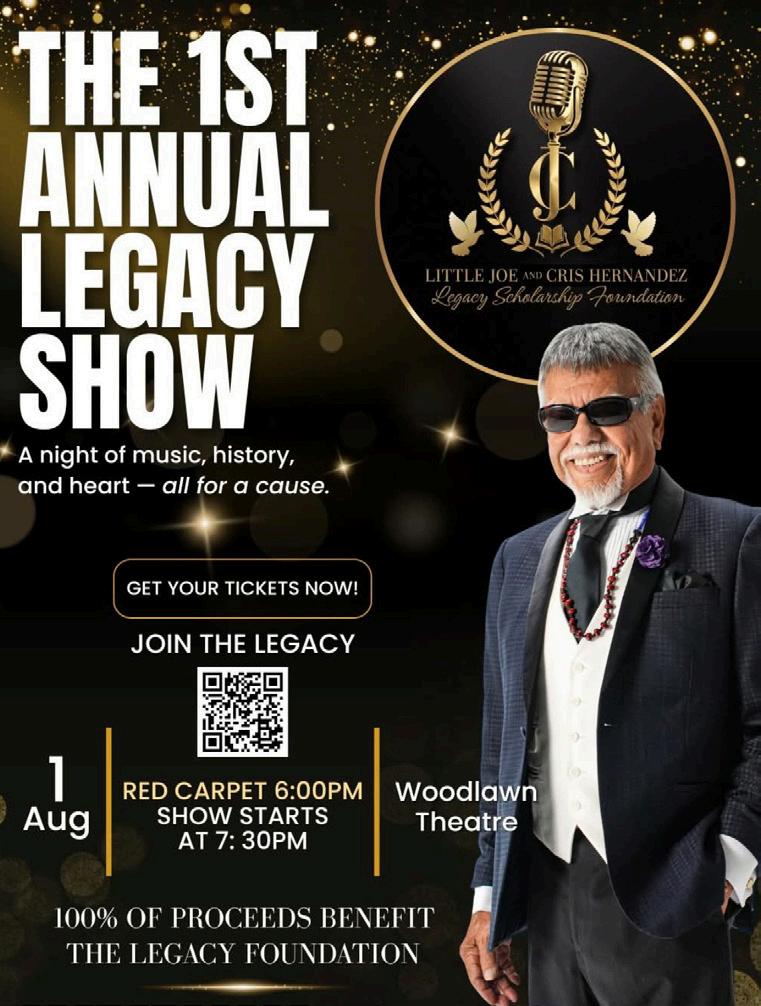
Little Joe and Cris Hernandez Launch First Annual Legacy Show to Support Scholarship Foundation
By Henrietta Burress | Hot Henrietta
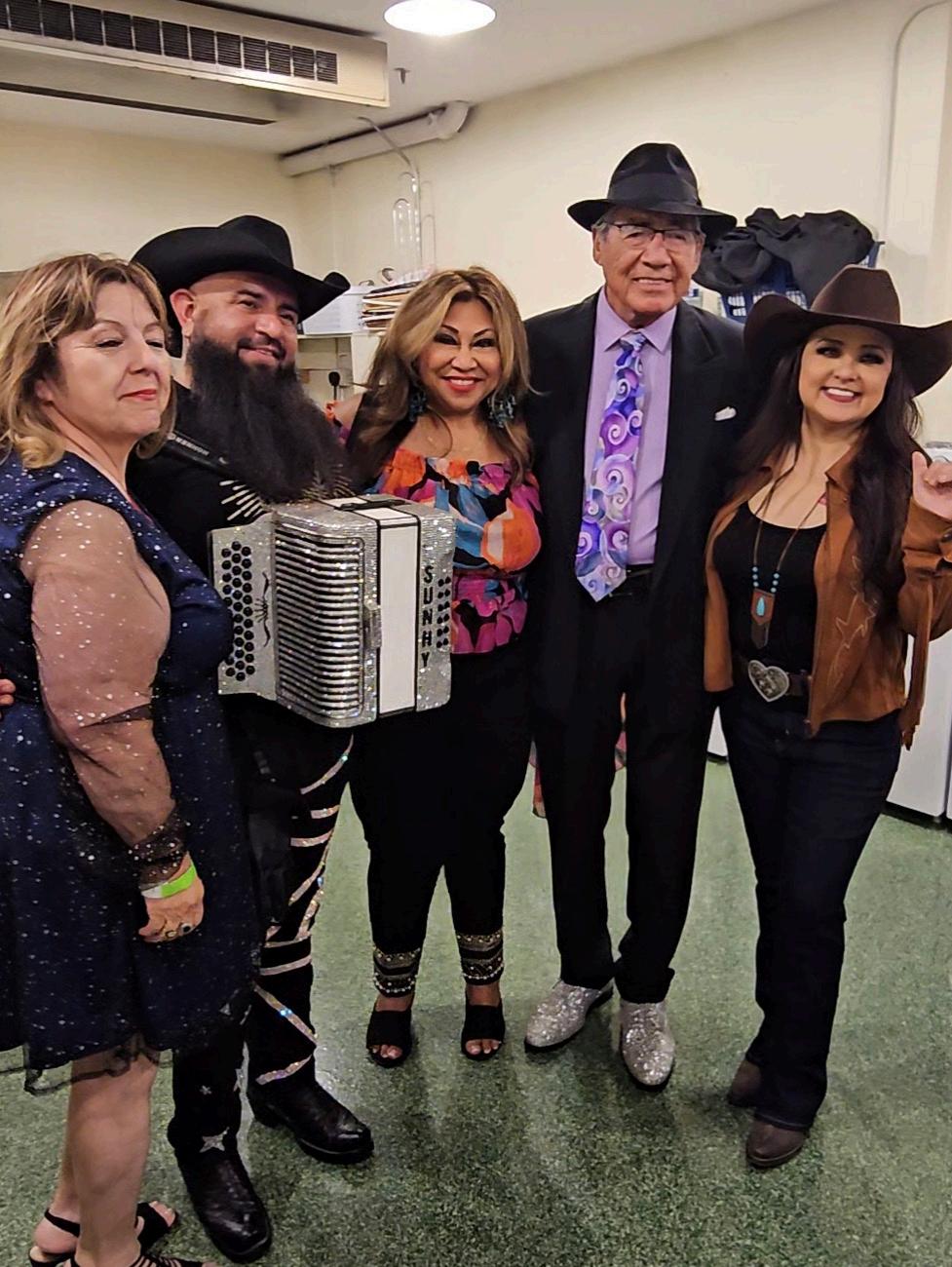
Music, culture, history, and community will come together on August 1 as Tejano legend Little Joe and Cris Hernandez present the First Annual Legacy Show at the Woodlawn Theatre. The special evening will serve as a fundraiser for the Little Joe and Cris Hernandez Legacy Scholarship Foundation, with 100 percent of proceeds benefiting student scholarships and educational initiatives. The evening will begin with a Red Carpet reception at 6:00 p.m., followed by the show at 7:30 p.m. Guests can expect a memorable celebration honoring Tejano music, cultural pride, and community service while helping open doors for the next generation of students. Throughout his legendary career, Little Joe has remained committed not only to music, but also to education, mentorship, and giving back. Together, Little Joe and Cris Hernandez have created a foundation dedicated to helping students pursue higher education and reach their goals. The First Annual Legacy Show reflects that mission by bringing the community together for a night that honors a lifetime of musical contributions while investing in future leaders. Organizers emphasize that every ticket purchased directly supports scholarship funding through the Legacy Foundation. For supporters of Tejano music, education, and community service, this event offers a meaningful opportunity to celebrate one of the genre’s most influential voices while helping young scholars continue their education. Little Joe, a five-time Grammy Award winner with his most recent win in 2020, has created a sound that remains timeless and deeply rooted in Latino culture. His songs continue to tell stories that bring generations of families together. His influence has helped pave the way for many Tejano and Latin artists, including Shelly Lares, Ruben Ramos, Texas Tornados, Sunny Sauceda, Ram Herrera, and a new generation of performers who continue to carry the music forward.
Event Details:
• Date: August 1 • Red Carpet: 6:00 p.m. • Show Time: 7:30 p.m.
• Location: Woodlawn Theatre, San Antonio
• Beneficiary: Little Joe and Cris Hernandez Legacy Scholarship Foundation
• 100% of proceeds benefit the Foundation
For tickets and additional information, supporters are encouraged to scan the event QR code or visit the Foundation’s official event page.
Por Sendero Deportivo
Tras doce fechas de buen béisbol en temporada categoría Abierta dominical Liga Potranco en honor del beisbolista Santos Vaquera, se definió los cuatro equipos que disputarán los playoff’s 2026, comenzando este domingo 28 de junio en su sede
Playoff’s Liga Potranco 2026
el estadio Potranco Baseball Field,donde el presidente Simón Sánchez y el artista Eloy Rocha, dueño del complejo deportivo y social así como del equipo Potros de Zacatecas, estarán presentando las emotividad acciones entre los cuatro equipos finalistas. Diablos vs Piratas. Potros vs Tuzos.
Resultados de la 12va fecha; Tuzos con victoria ante While Sox ganó el liderato del standing derrotando 10-1 a White Sox, Alex Hernández timonel de las medias blancas impulsó la carrera del honor. Diablos del cafetero Mike Tabhan, con pitcheo de Hyatt Lankford, derrotó a Potros de Zacatecas del manager El Caminante Victor Mercedes, quien anotó la carrera del honor con pizarra final de 11-1. La derrota fue para el estelar Leo Terán con relevo de Sean More. En categoría Masters 50+ Astros de Pedro Espinoza derrotó 9 a 7 a Despos de Elías Contreras, quien confiado en el standing segundo lugar tiene delantera de medio juego ante Astros por average ya que les han ganado en sus dos partidos
del rol regular en primera y segunda ronda. Rangers de Benito Martínez “El Venado” con pitcheo del buen amigo Héctor “Papo” Garza, doblegó a Los Rojos con pizarra de 5-2 Carreras. Rol de juegos domingo 28 de junio campo 2 Liga Potranco. 11am Los Rojos vs
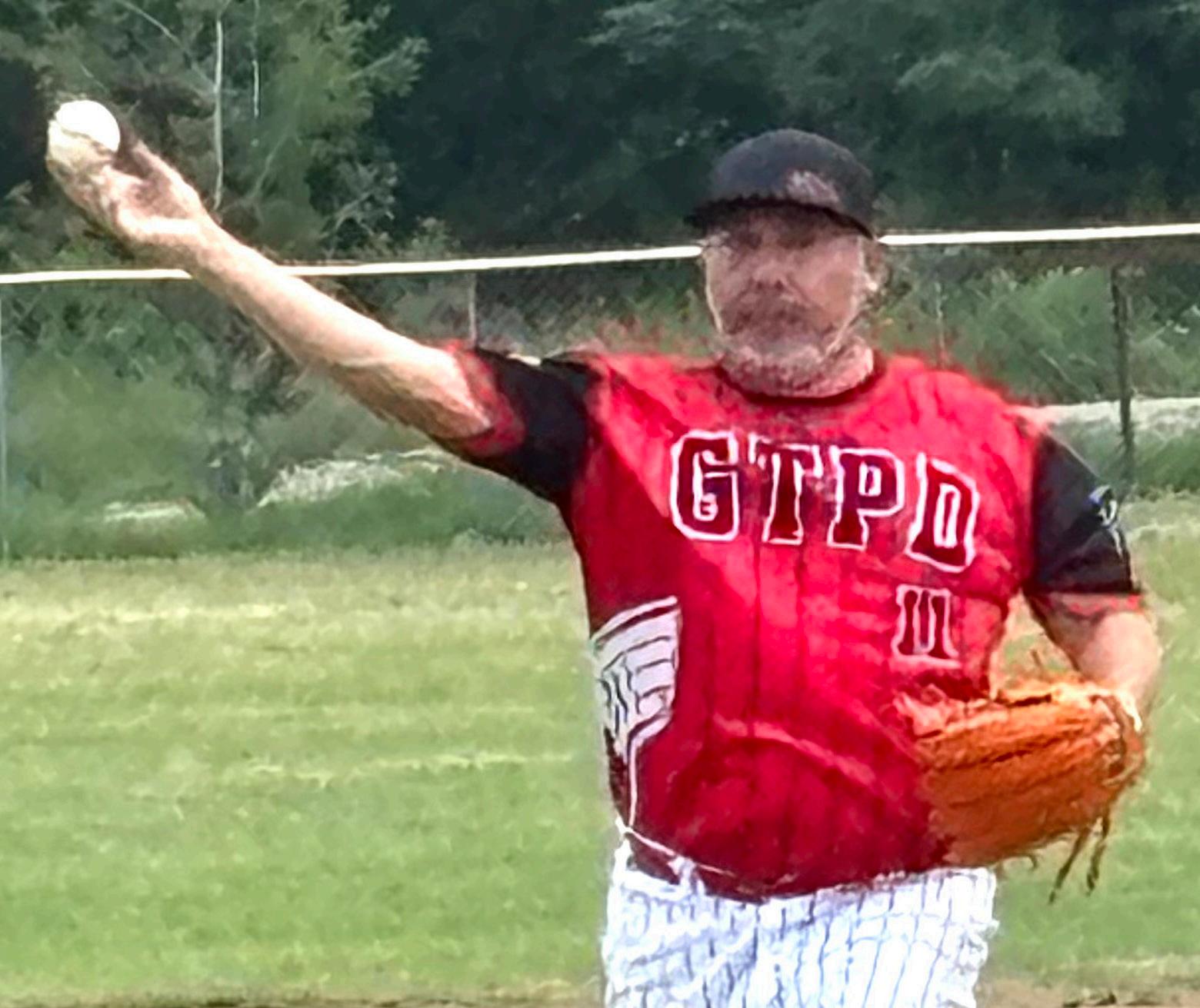
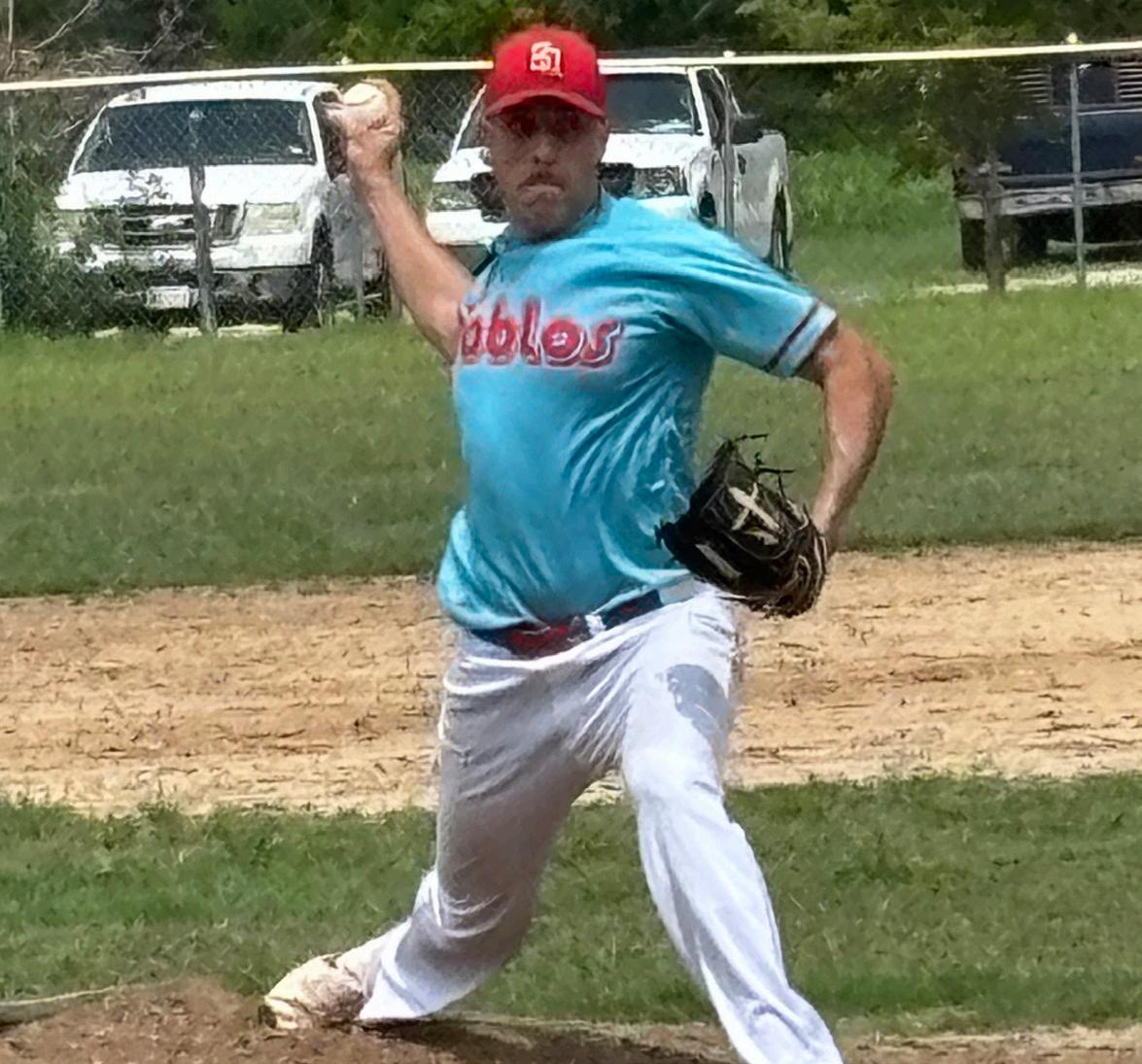
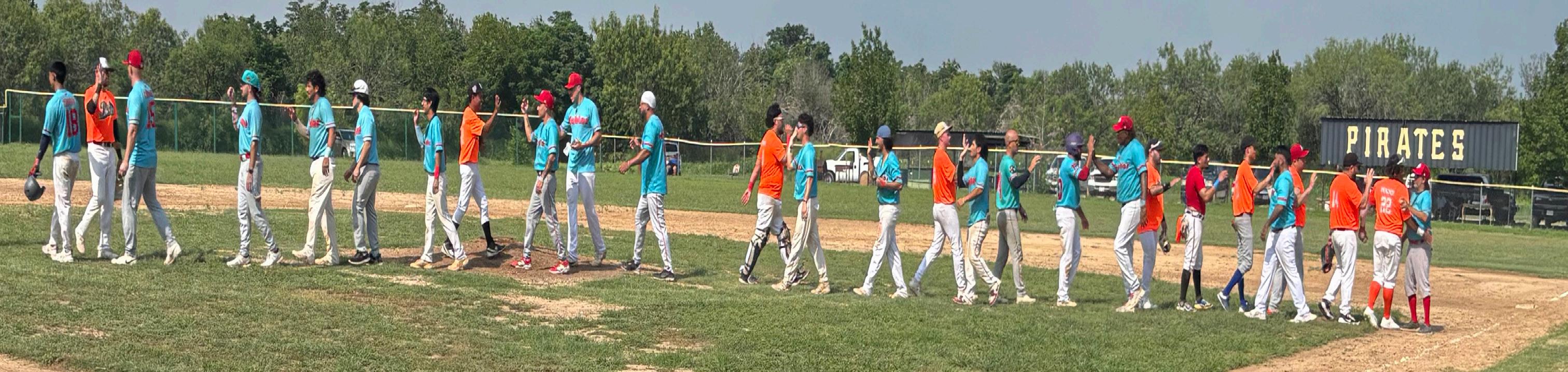
Astros. 2pm Yankees vs Despos que será el clásico dominical. Rangers descansan. En las fotos aparecen jugadores de Diablos y Potros durante el saludo deportivo. Papo Garza y Hyatt Lankford. (Fotos de Franco)
Community Invited to Free Downtown Thursday Block Party on June 25
The City of San Antonio invites the community to attend a Downtown Thursday Block Party on June 25 from 5 to 7 p.m. in Legacy Park at 103 West Houston Street. The free event will feature live music by Fast Movin’ Train, activities, giveaways, and complimentary light bites and beverages. Free parking will be available in the City Tower Garage after 5 p.m. at 60 North Flores Street, and The Local SATX will provide transportation from other downtown locations to the event. About Downtown Thursday Downtown Thursday is a weekly pilot program that brings arts, culture, music, food, and family-friendly activities to downtown San Antonio every Thursday evening through August 27, 2026. The program offers free parking in City-owned garages after 5 p.m. and a complimentary circulator operated by The Local SATX to help visitors move between destinations. Participating partners also provide a variety of special offers and events. An online parking map lists all facilities offering free Thursday parking, and the Downtown Thursday website includes details on partner events and special offers. City of San Antonio - Vibrant & Thriving San Antonio is a vibrant city with a thriving economy, deep cultural heritage, and communities that are compassionate, inclusive, and proudly diverse. It is the seventh largest city in the United States and one of the strongest fiscally managed cities in the country, nurturing entrepreneurship, encouraging investment, and funding infrastructure. The City fosters partnership and growth opportunities in aerospace, bioscience, arts, green technologies, healthcare, and information technology. San Antonio’s famed River Walk and Alamo are the top tourist attractions in Texas, and its historic missions are a designated World Heritage Site – the first and only in Texas. Proudly called Military City, USA®, San Antonio is home to one of the largest populations of active-duty military and veterans, as well as mission-critical commands, including military medicine, cybersecurity, pilot training, and basic training. For more information, visit SA.gov and follow @COSAGov on social.
les importa el tamaño de su troca.
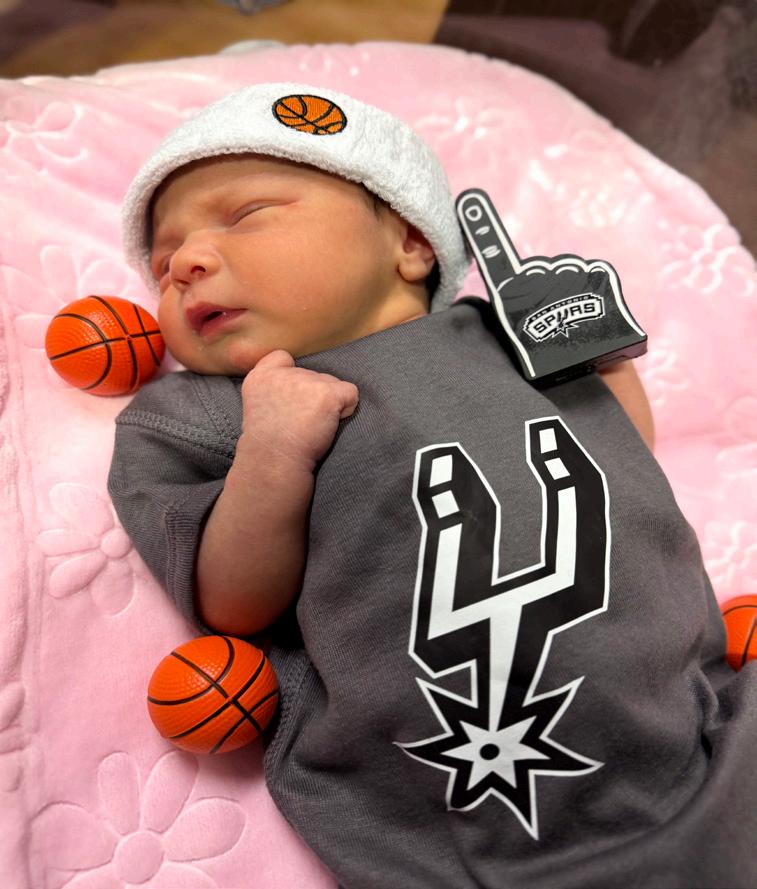
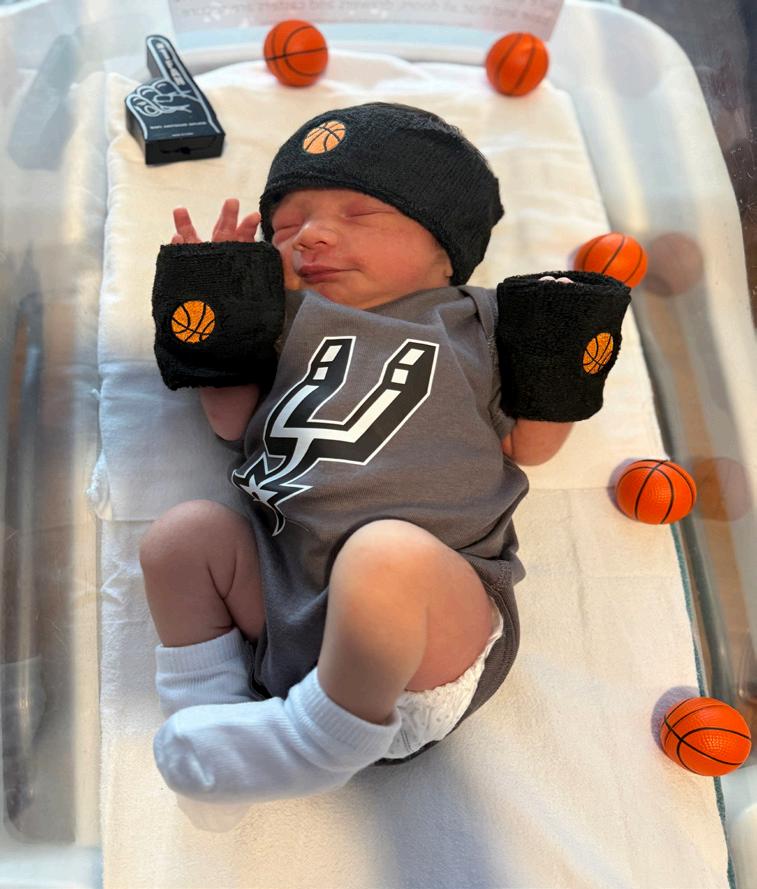
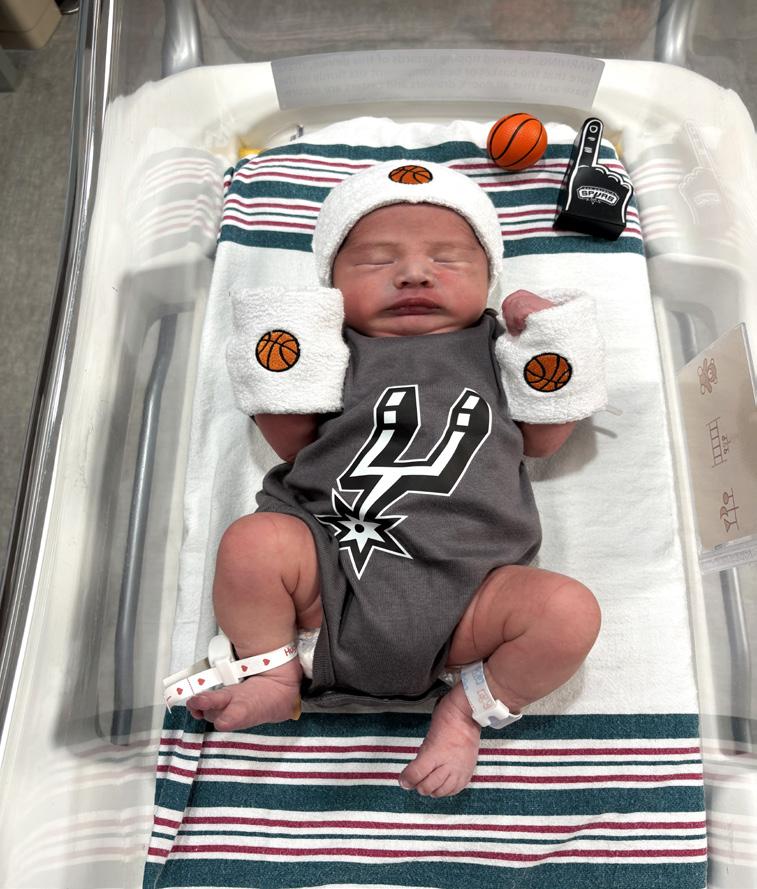
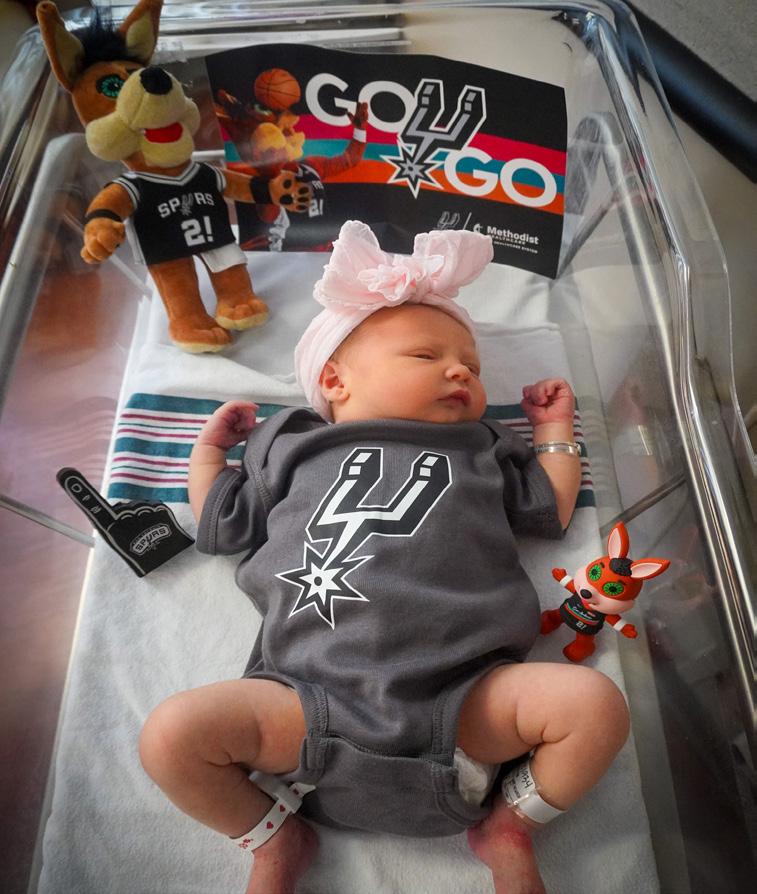
Methodist Healthcare’s littlest rookies take their first shots in life with Spurs-inspired style
Newborns across Methodist Healthcare hospitals are already on the clock ahead of the 2026 NBA Draft, suiting up in their best sports gear for their first big debut. Surrounded by mini basketballs and sweatbands, these little rookies are ready to take their first shots in life dribbling up big smiles for families, care teams and Spurs fans across San Antonio. The celebration highlights the long-standing partnership between Methodist Healthcare and the Spurs, uniting two iconic San Antonio institutions rooted in health and wellness, teamwork, and community. As the Official Healthcare System and Partner of the San Antonio Spurs and San Antonio FC, Methodist Healthcare has supported the two beloved sports franchises for more than a decade in their shared mission to build healthier, stronger communities. Methodist Healthcare delivers more babies than any other hospital system in San Antonio. To learn more about our women’s services and compassionate care team, visit: https://www.sahealth.com/womens.