Community Liaison / Enlace Comunitario: Ramon Chapa Jr. r.chapa@laprensatexas.com
Advertising & Production Coordinator / Coordinadora de Publicidad y Producción: Jessica Medrano
Contributors / Colaboradores:
Dr. Ricardo Romo, info@laprensatexas.com
Editor Español: José I. Franco
Sales Representative / Representante de Ventas: Maria Cisneros
La Prensa Texas is a grassroots, bilingual publication that serves as a vital voice for the community — especially for those who are too often left out of mainstream media conversations. Since its founding, La Prensa Texas has been dedicated to providing relevant, accessible, and culturally rooted news that reflects the lives, struggles, and triumphs of the people of San Antonio and surrounding counties.
Our mission is simple yet powerful: to inform, inspire, and empower our readers through storytelling that uplifts the diverse voices of our community.
This publication continues to be the lifeline of local news, bridging the gap between the people and the stories that matter most.
Sales Info:
Our Circulation 45,000 Printed And Distributed Weekly English And Spanish
Send Press Releases and Advertising Inquiries to: Info@LaPrensaTexas.com 210-628-9611
By Yvette Tello
Let’s Talk About It: Is It Happening Again?
lieve this could never happen to them simply because they were born here, have papers, or think they are “safe?” History teaches us that silence can be dangerous. Do you think this could never happen to you, your family, your neighbors, or someone you love? Let’s talk about it…
were called, she would say, “I hope he isn’t Mexican because for sure they will round us all up and ship us to internmentcamps. ”
Dalinda Avelar: “I worked at the Bracero center in Hidalgo in1955-56”
right way they’re a joke this country is built on LIES. They need to own up to their mistakes and promises to the American people of this nation .”
David Gonzales: “Disgusting”
In 1954, the United States launched one of the most painful and shameful deportation campaigns in American history. It was called Operation Wetback, a name that alone shows the disrespect and racism Mexican people faced at the time. During this period, hundreds of thousands of people were rounded up and removed from the United States. Many were Mexican nationals, but many others were legal residents and even American citizens. Families were separated. Communities were terrorized. People who had worked, lived, and raised families here were suddenly treated like they did not belong. (Sound familiar?) This is a history many of us were never taught. But just because it was hidden does not mean it did not happen. The scars are still there. Are we seeing this happen again? Do some people be-
Francisco J Gonzalez: “There have been various waves of mass deportations against Mexicans in the usa: post WW1, the 1950s, Obama and Biden administration and now under Trump. Each and every time our communities recover.. remember that!”
David Lopez: “Yes about 67 percent deported were Mexican American citizens mostly born in the USA ! To this day, how many Europeans have been reported?”
Mel.3rnst: “So the United States uses Mexicans when it’s convenient for them then they send them back when they’re caught up?”
Superbiejillo Luis Tercero: “On our own land,that was stolen from us!”
Martha Acedo Paglier: “My mother told me about this. It’s hard to believe, but she was right. When anything bad would happen and the authorities
Henry Martinez Sr: : “They were told to sign papers to come back . In reality, the papers said they gave up the right to come back and want to live in Mexico. They told that to my great grandmother and uncle then put them on the bus”
Angelina V Reed: “My dad was born in Texas, and I often wonder if he might have been affected by this; I’m grateful I was born in Colorado in 1952. My sister 1953.”
Ruben Ortiz: “We are here and we’re not going anywhere!”
Carlos Rivera: “Americans have always been afraid of thousands of years old Mexican culture, Washington is always afraid that México someday the economy will become so rich and powerful that it will take Texas, New Mexico, Arizona, and California back.”
Estella Pàrtida: “It’s funny how with or without papers they still deport . Yet MAGA people say do it the
Mary Ybarra: “My mother’s mother was born in San Antonio Texas and my mother’s dad was born in Brownsville Texas and my mother was born in San Antonio Texas and all nine of us were born in Houston Texas all of my and dad’s family have passed away and my mom and dad have passed away in their 90s so our children’s children are 4th generation and their children are fifth generation and it continues have no one in Mexico.”
Maria Diamond: “Shameful!”
David Mojica: “My grandpa was deported with my dad and uncles. My aunts and grandma stayed somehow. My family were citizens and they were deported. It can happen to an American Citizen. It already has and it is happening again .”
Fermin F Torrez: “They tried to deport my grandmother. She was born in Fort Stockton Texas in 1896 and her mother was born in Ft.Stockton.”
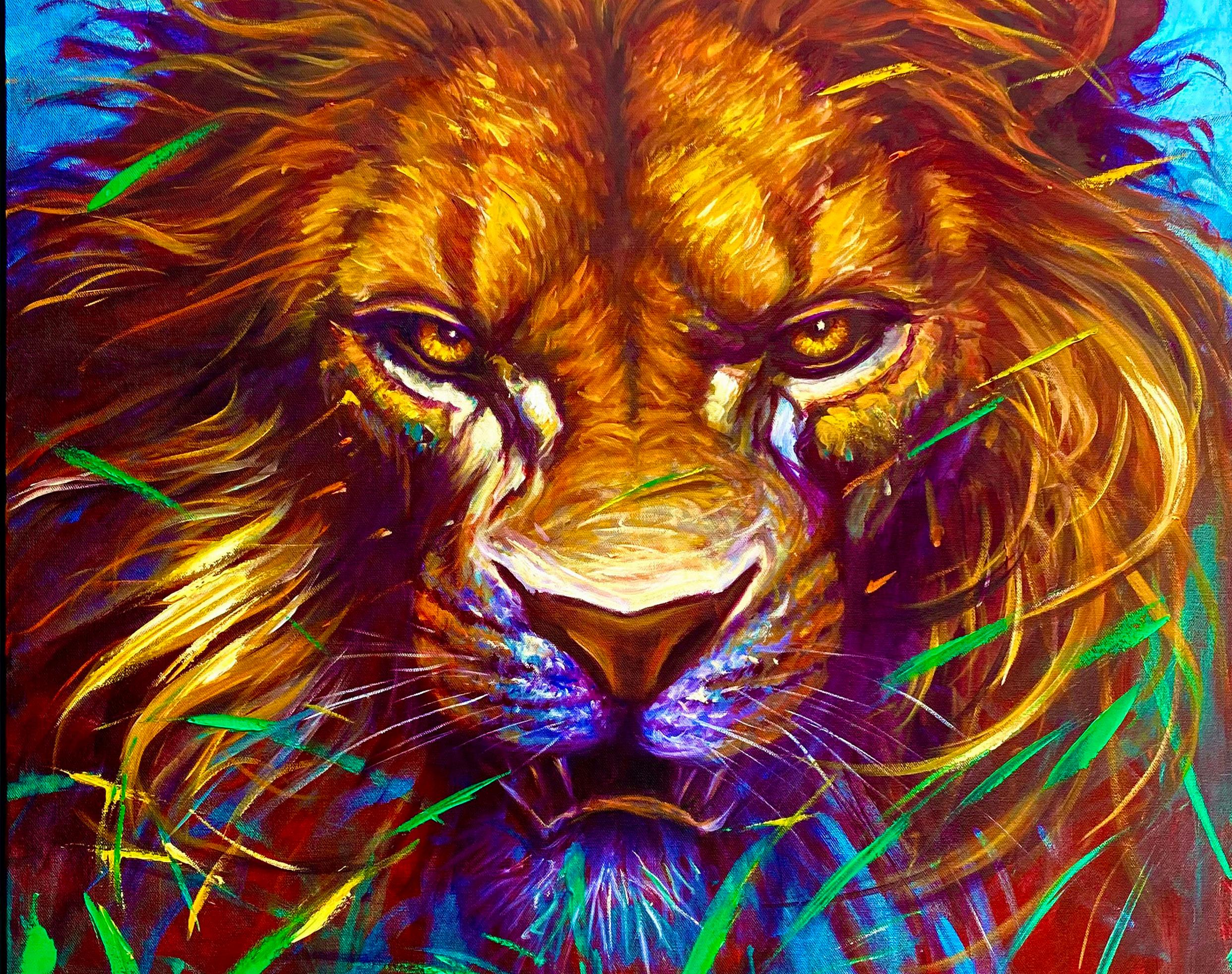
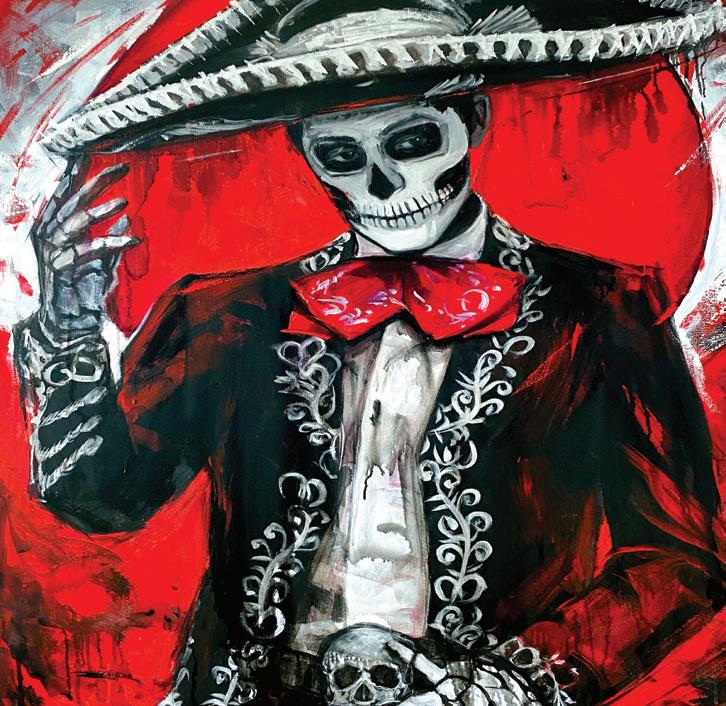
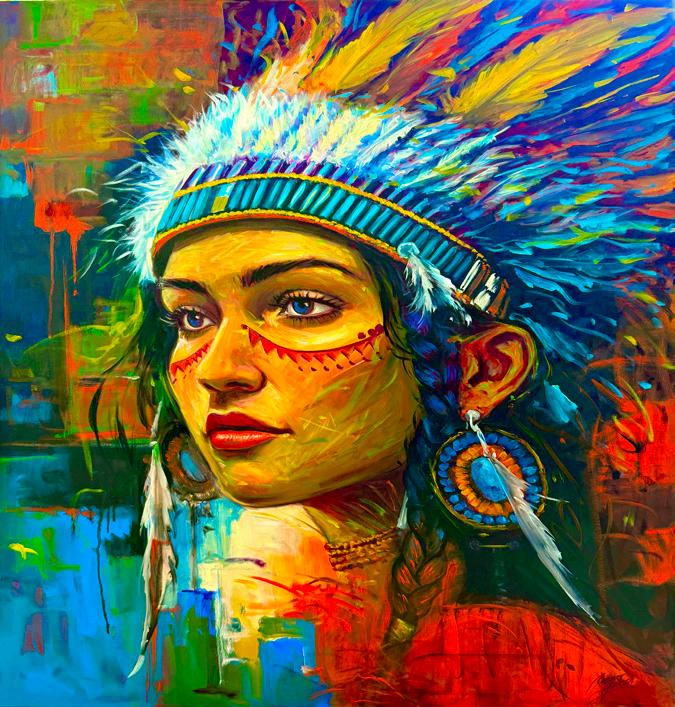
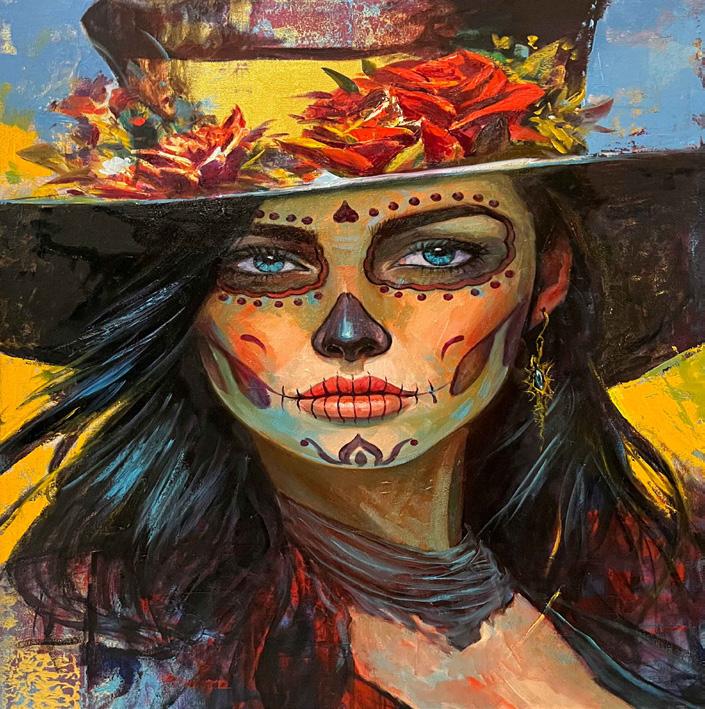
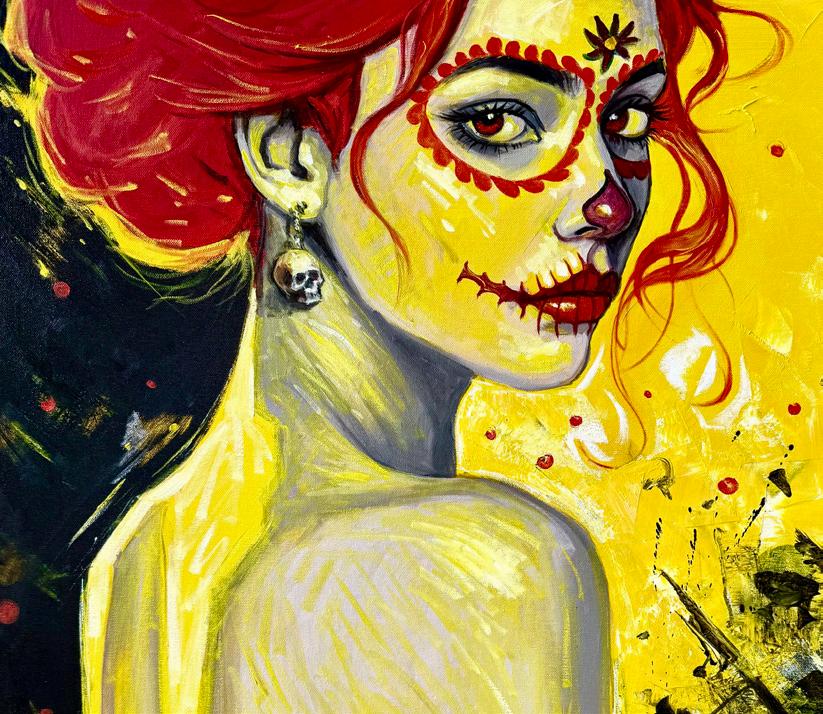
Born in Monterrey, Mexico, in 1971, Robert Garza grew up under the artistic guidance of his father, a graphic designer and cartoonist. This early exposure to visual storytelling led Robert to assist with newspaper cartoons as a teenager, igniting a lifelong passion. A selftaught master, he spent his formative years studying the techniques of icons like Rembrandt and Van Gogh, eventually launching his professional career with his first solo exhibition, “Yesterday, Today, and Tomorrow,” in 1994. Garza’s career in Mexico was marked by versatility and public engagement. From creating live portraits in Monterrey’s Plaza México to collaborating with major retailers like Sears and Liverpool, he built a reputation for capturing human emotion. He even extended his
About the Artisit
Robert Garza
reach to television, producing and hosting “Arteasy with Roberto Garza,” an educational program featuring a puppet character named Filipo designed to inspire creativity in all ages. His impact in Mexico culminated in a prestigious selection by the Mexican Postal Service, which featured his artwork on a commemorative stamp honoring Venustiano Carranza. In 2015, seeking new creative challenges, Garza moved to San Antonio, Texas. He quickly integrated into the local scene, presenting the “Faces of the Revolution” exhibition at UNAM San Antonio. His contemporary impressionist style—defined by vibrant colors and emotional intensity—found a welcoming audience. In 2016, he founded Roberts Fine Art LLC under the motto “The Art of Creating
Happiness,” and by 2018, he had established a permanent gallery presence in the city, frequently supporting military families and local community initiatives. Today, Garza’s vision has expanded into a significant cultural landmark with the opening of 520 Arts Gallery. Located in the Rivercenter Mall on the San Antonio River Walk, this 3,200-square-foot space serves as a hub for both emerging and established local artists. Beyond commerce, the gallery offers live art experiences and creative events, fulfilling Garza’s mission to provide an accessible cultural destination. This latest endeavor represents the peak of a career defined by perseverance and a deep belief in art’s power to strengthen community connections and celebrate the human spirit.
NOW HIRING
CHAIN & CHAIN CONSTRUCTION, LLC. seeks F/T Accountant for their San Antonio, TX location.
Duties: Oversees accounting activity and prepares financial statements. Manages accounts receivable and accounts payable. Reconciles accounts payable and receivable. A U.S. Bachelor’s Degree or a Foreign Equivalent Degree in Accounting + 12 mos. exp. in Accounting.
Interested applicants please submit resumes to Eduardo Cadena at chainandchainconstruction@gmail.com.
ALAMO COLLEGES DISTRICT BID/PROPOSAL INVITATION
The Alamo Colleges District is receiving sealed bids/ proposals prior to 2:00 PM (CST), unless otherwise indicated, on the date shown.
RFP# 2026-0094 Childcare Services
Proposal Deadline: June 30, 2026, at 2:00 PM
Specifications are available by visiting the Alamo Colleges District website: www.alamo.edu/purchasing or by emailing dst-purchasing@alamo.edu
ALAMO COLLEGES DISTRICT BID/PROPOSAL INVITATION
The Alamo Colleges District is releasing the Request for Proposal (RFP) on June 4, 2026 unless otherwise indicted on the date shown.
RFP 2026-0093 PURCHASE OF CONSTRUCTION AUDIT
Proposal Deadline: July 2, 2026, at Specifications are available by visiting the Alamo Colleges District website: www.alamo.edu/purchasing or by emailing dst-purchasing@alamo.edu
We the Women are not becoming powerfulWe are Remembering
By:Yvette Tello
Before Texas was Texas, before Mexico was Mexico, before borders were drawn across Indigenous land, women were already leading. They were not asking for permission. They were not waiting to be invited to the table. In many Indigenous communities, women were the table. They helped guide families, land, food, peace talks, community decisions, and entire nations. They were respected. They were trusted. They had power. A lot of us were never taught that. We were taught that women were supposed to be quiet, obedient, supportive, and grateful just to be included. But that is not the full truth of our history. Women have always been leaders. We have carried families, businesses, churches, neighborhoods, movements, and cultures on our backs for generations. And this message is for all women: Indigenous women, Latina women, Black women, white women, Asian women, young women, older women, mothers, grandmothers, sisters, daughters, businesswomen, teachers, caregivers, community leaders, women who are tired, women who are healing, and women who are just now finding their voice.This movement has to include all of us. Because when women are divided, we are easier to ignore. When women are competing, gossiping, excluding, critisizing or tearing each other down, someone else benefits. But when women stand together, support one another, mentor one another, vote, speak, organize, and lead together, we become powerful. And the truth is, that power is not new. It has always been there. In East Texas, among the Caddo people, family lines were traced through the mother. Women were central to identity, family, land, and leadership. Historical records from 1768 identify a Caddo woman named Sanate Adiva, also known as Santa Adiva, as a governor. Think about that. A Native woman was recognized as a leader on
this land long before many of the government sys tems we know today existed. Spanish explorers had already noted women chiefs among Indigenous communities in the late 1600s. These women were not symbols. They were not tokens. They held real influence. Then there was Angelina, a Caddo woman remembered in Texas history as a guide and interpreter. But let us be clear: she was more than a helper. Angelina moved between worlds. She understood language, culture, territory, and people. Today, we might call her a negotiator, cultural ambassador, diplomat, or political strategist.bAnd she was a woman of this land. Apache women also carried diplomatic power. In the 1700s, Apache women traveled between communities to help negotiate peace, free captives, and stop violence. In 1772, an Indigenous woman led a Comanche delegation into San Antonio de Béxar carrying symbols of peace. Imagine that. A woman walking into a dangerous situation not with hate, but with courage and peace. That is leadership. That is power. That is history.nBefore European systems were forced onto Indigenous communities, many women had real authority. In agricultural communities, women controlled the lodges and fields. They understood food, land, trade, family, and survival. In some communities, if a woman wanted a man to leave, she could place his belongings outside the lodge. That was not weakness. That was authority. So why don’t we know this? Because when women know their history, they know their worth. And when women know their worth, they are harder to control. Colonization did not just take land. It changed the way many communities viewed women. It brought laws, customs, religion, and social rules that often favored men as heads of household. It
pushed men to the front and women to the back. It taught women to be quiet, submissive, and dependent. It taught families that survival meant assimila tion. Assimilation means people begin to change who they are in order to fit into the world being forced on them. They change how they speak, dress, worship, raise their families, and see themselves. Sometimes, without realizing it, they begin to accept systems that do not honor them. That happened to our ancestors. And in many ways, it is happening again. Today, we are watching people, including some from our own communities, align themselves with power structures that do not always honor women, immigrants, people of color, working families, or the original people of this land. We see women’s voices dismissed, wom ee people encouraged to turn against one another instead of standing together. But we do not have to follow that path. We do not have to stay quiet. We do not have to fight each other. We do not have to shrink ourselves to make anyone else comfortable. We the Women are not trying to become powerful. We are remembering that we already are. Our grandmothers knew this. Many of them worked, raised children, ran homes, owned businesses, cooked for entire families, helped neighbors, served in churches, organized communities, and survived things we may never fully understand. We often say they were ahead of their time. But maybe they were not ahead of their time at all. Maybe they were carrying the old ways. Some of our great-grandmothers owned stores, ran family businesses, worked the land, cared for elders, healed the sick, fed the hungry, and kept culture alive with little recognition. They did not always have titles, but they had influence. They did not always have degrees, but they had wisdom. They did not always have a seat at someone else’s table, but they built their own. That is the truth we need to return to. This movement is not about hating men. It is not about pushing men out. It is about making sure women are no longer pushed down. It is about teaching our sons to respect women, teaching our daughters to trust their voices, and teaching each other that one woman’s success does not take away from another wom-
an’s success. Her win is not your loss. Her win can be our win. We need to stop letting the world turn us against each other. We need to stop the gossip, jealousy, gatekeeping, exclusion, and silent competition. We need to open doors, share information, mentor, show up, vote, speak, and lead. This is not about left or right. This is about moving forward. Because who benefits when women are divided? Not us. Not our daughters. Not our families. Not our communities. Who benefits when Latinas compete instead of collaborate? Who benefits when Black women are expected to carry movements without being protected? Who benefits when Indigenous women are erased from the very land they helped govern? Who benefits when white women are told their safety depends on staying silent? Who benefits when Asian women are dismissed? Who benefits when any woman is made to believe another woman’s progress is her loss? Not us. We the women come from leaders, healers, protectors, business owners, peacekeepers, teachers, fighters, and survivors. Whether our ancestors were Indigenous to this land, brought here by force, immigrated here with hope, or came from families who also had to fight for their place, women have always carried history forward. We led with land in mind. We led with family in mind. We led with community in mind. We led with the future in mind. And now we must do it again. We the Women are not rising because it is trendy. We are rising because history is calling us back to ourselves. We are rising because our communities need us. We are rising because our daughters are watching and our sons need to see what respect looks like. We are rising because the same forces that tried to erase our ancestors are still trying to silence women today. But this time, we will know better. This time, we will make sure our stories are told; our children will know the history that we were not taught. We will not continue to let this vicous cycle continue. We the Women are not asking for permission. We are not waiting to be chosen. We are not pretending we do not see what is happening. We are taking our place back,together.
Por Franco
Samuel Rey Hernández - Feliz Quinceañero
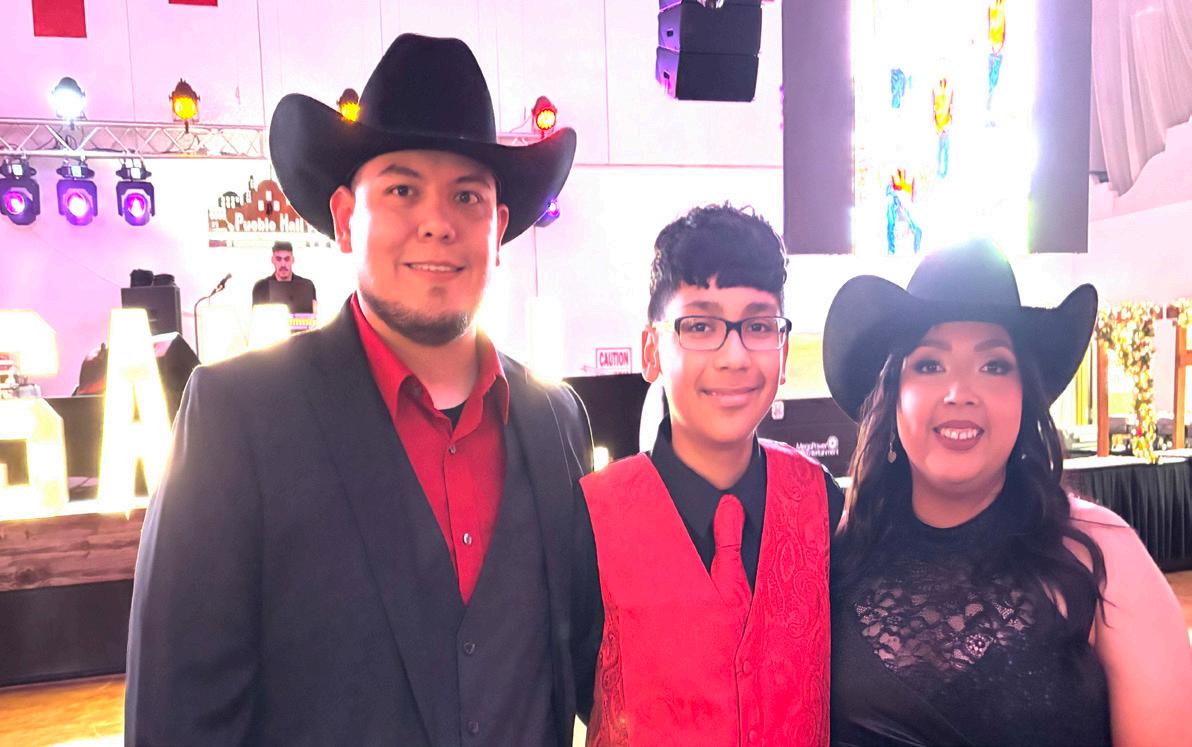
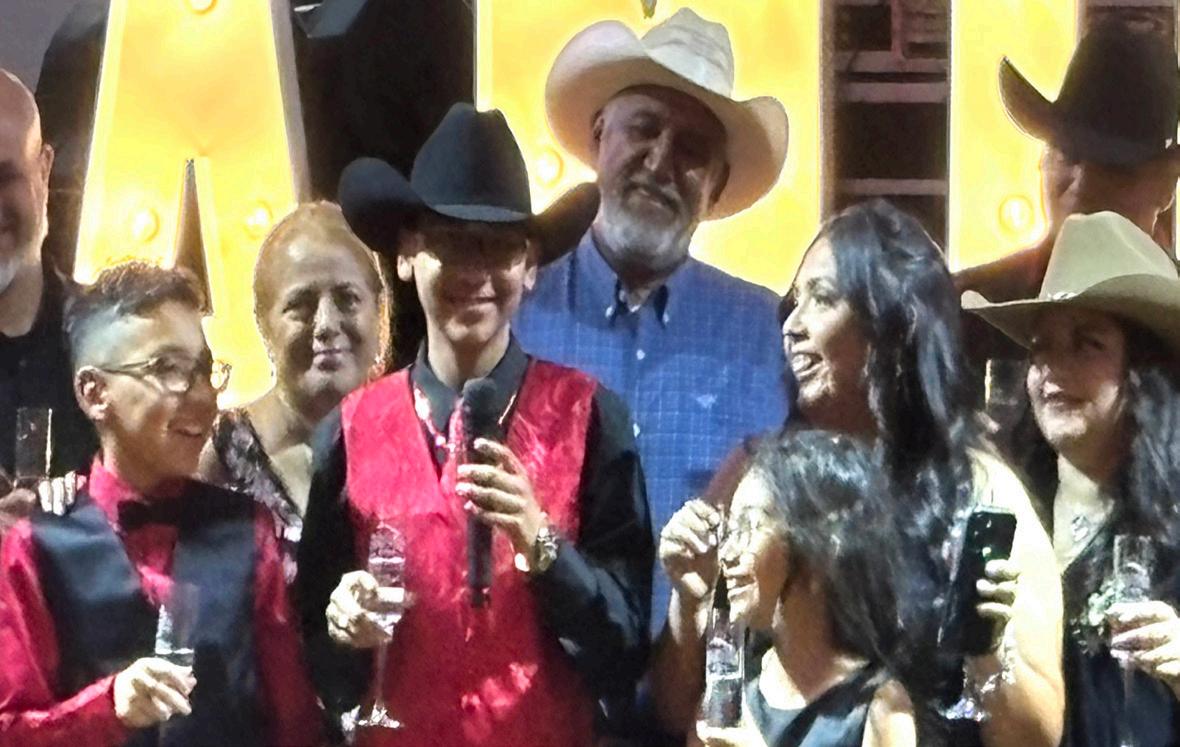
“Hoy es un día especial para mi. Doy gracias a mis padres, familiares y amistades quienes nos están acompañando y deseando felicidad “, así se expresó Samuel Rey Hernández, estudiante de Southwest High School (10th grade), durante su emotiva fiesta por sus quince cumpleaños. El evento fue ce-
lebrado el viernes 12 de junio en el elegante centro social Pueblo Hall ubicado en el domicilio 3315
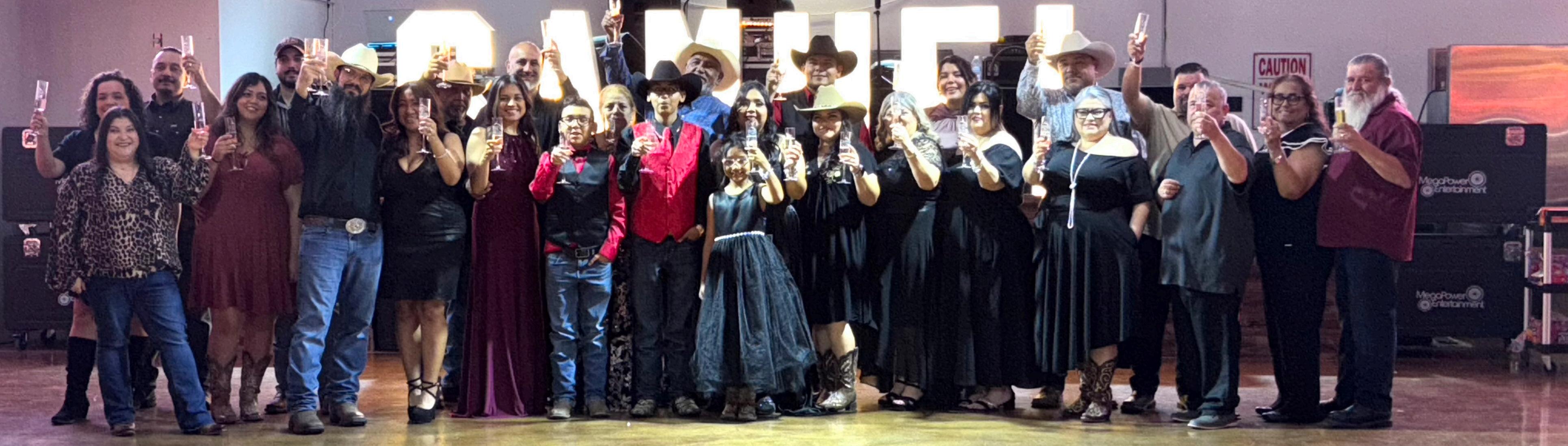
Northwestern Dr., en San Antonio. Sus padres Serena y Servando Hernández Jr., con anticipación hicieron llegar las invitaciones y excelentemente, organizaron este inolvidable festejo en honor de su hijo Samuel Rey, quien a la vez recibió felicitacio-
nes de su hermano Stevie y su hermana Sadie. Con especial felicitación de sus abuelos Janie y Servando Hernández Sr., y Frank Briseño. Así como de sus padrinos de regalos, quienes le cumplieron sus deseos y a la vez convivieron felices a su lado durante su inolvidable fiesta de quince años que fue amenizada por el DJ ProMix. Durante la cena los pequeños invitados disfrutaron deliciosos trozos de pizza y los adultos de un delicioso platillo de chicken bbq con ensalada de papa, arroz, frijoles y rebanadas de pan blanco. En la mesa del colorido pastel decorado al estilo vaquero, se ofreció diversas golosinas disfrutadas por chicos y mayores.
“Felicitamos a Samuel Rey Hernández porqué hoy celebra su Big One Five (15), los invitamos para qué junto a él bailen todas las canciones en su honor”, enfatizó el DJ René C Cárdenas. Samuel Rey, apuntó haber jugado en los deportes del béisbol, futbol americano, soccer y baloncesto. Sus padres por consiguiente agradecieron el apoyo
recibido por parte de sus familiares y padrinos quienes hicieron el éxito del festejo en honor de su hijo Samuel Rey, quien fue presentado en sociedad bailando con su feliz mamá y su bella abuela Janie Hernández.
(Fotos de Franco)
By: J. Gilberto Quezada
Celebrating Father’s DayA Memorable Story
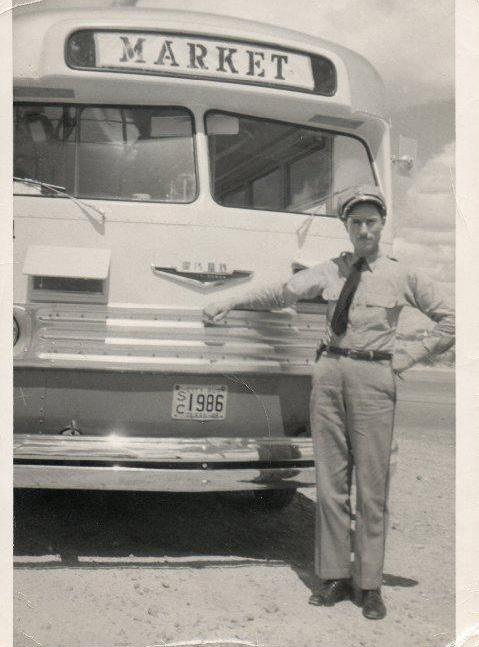
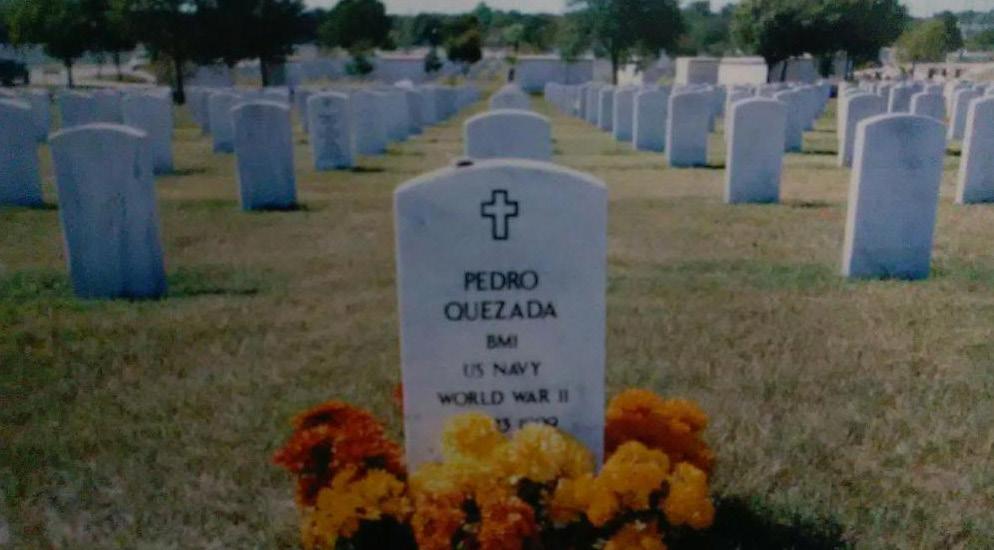
To commemorate the celebration of Father’s Day on Sunday, June 21, 2026, I would like to share a beautiful story about my father, the bus driver, that I received from a friend. His message truly touched me. My Papá, Pedro Quezada, was a bus driver for the Laredo Transportation Company for over three decades. Reading his warm and heartfelt memories of my father brought both comfort and joy during a time when those stories mean more than ever. The way he described his moments with my father — full of kindness, humor, and genuine connection — reminded me once again of the impact my father had on the people around him. I am deeply grateful that my friend took the time to share those unforgettable memories with me. And this is his memorable story: “I want to tell you something about your father. My sister and I used to go to St. Peter’s school and rode the bus in which he was the bus driver. We used to buy bus tickets; they would come in a book. Every time we rode the bus I would give him the book so he would tear 2 tickets off the book. Once in a while my mother would ask for the book, to see how many we had left over, in case we had to buy another book. She once said,‘how come you still have a lot of tickets, do you not give the book to the bus driver?’ And I would say ‘yes’ . My mot er told my father about the book, and he said, ‘I know the bus driver. ‘ My father worked for the Laredo Times newspaper, and he knew a lot of people and a lot knew of him. The last time I saw your
father, he was given out change to the bus drivers. I was working at the newspaper when i saw his obits and I was sorry I did not know that he was in San Antonio, I would have gone to see him. He was a great person. May he rest in peace. I had an uncle who pass away last few months at age of 103 in Laredo, but will be brought to San Antonio at Fort Sam and I will look up PETE the Bus Driver. I wish I had an old book of bus tickets and I would leave him one. “ My father was born on December 23, 1909, in San Luis, Potosí, Mexico. When he was a young boy, his family emigrated to Laredo, Texas. During World War II, he proudly served his country by enlisting in the U.S. Navy where he saw action in the Pacific theater. After the war, Dad became an American citizen and married my mother, Eloisa Lima Carmona, she was from Veracruz, Mexico, and they had three children. In 1941 or 1942, he started working as a bus driver for the Laredo Transportation Company. In the early 1950s, he had the Iturbide-Ma ket route, and I vividly remember riding the bus many times. In the late 1960s, Papá was promoted to Inspector and that meant that now he had to wear a white cap, and he had to carry three or four canvass bags full of rolled coins. He would walk from bus terminal to bus terminal ready to give rolled coins change to the bus dri ers in exchange for dollar bills. In the 1950s and 1960s, the office of the La edo Transportation Company was located on Hidalgo Street, across from the Plaza Hotel and next to the Laredo Gas Company. The terminal where I would see him the most was on the northeast cor-
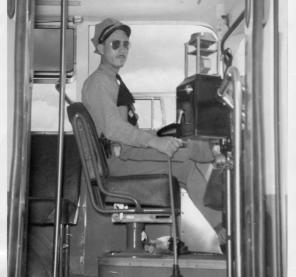
ner of Hidalgo Street and San Agustín Avenue. In 1974, he retired from the Laredo Transportation Company after thirty-two or thirty-three years of dedicated service. Lamentably, in those days the bus drivers did not have a retirement pension fund. A year later, I brought him and Mamá and my sister Lupe and her two children to San Antonio to enjoy the comforts and conveniences of a modern house. We had been living at 801 Zaragoza Street, in a mid-nineteenth century sandstone house, which was located on the southwest corner of Zaragoza Street and Santa Ursula Avenue, and next to the American Legion Post 59. Here is a brief description of two photographs that are from my personal album. First Photo: Dad is standing in front of his bus when he had the Iturbide-Market route. Second Photo: Dad ‘s right hand is on the manual transmission gear. Notice the hole puncher on his belt. The passing of my father on Easter Sunday, March 30, 1997, at the age of 88, remains a moment woven with both sorrow and profound spiritual comfort. Knowing that he left this world on the very day our Lord Jesus Christ rose to eternal life brought my family and me deep peace, for we believed that Christ also welcomed my father into the Kingdom of God and to his eternal reward beside Almighty God. That sacred timing eased our hearts and steadied our souls, reminding us that his journey did not end but transformed into everlasting life. Today, as he rests in the Fort Sam Houston National Cemetery, we hold close the faith that he is embraced by divine love, and that his spirit continues to guide and bless us.
By Ricardo Romo, PH.D
A Latino Art Family Gives Voice and Heart to Boulder Exhibit
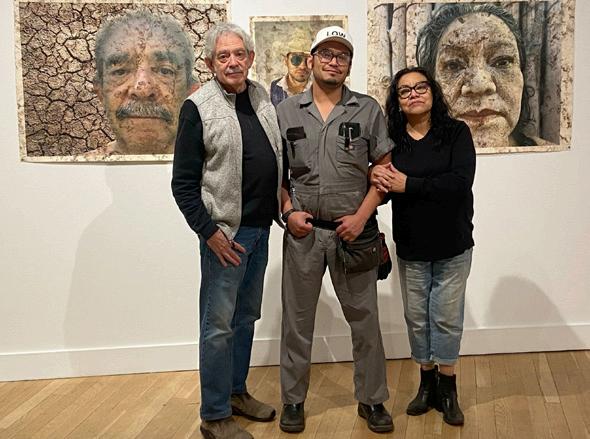
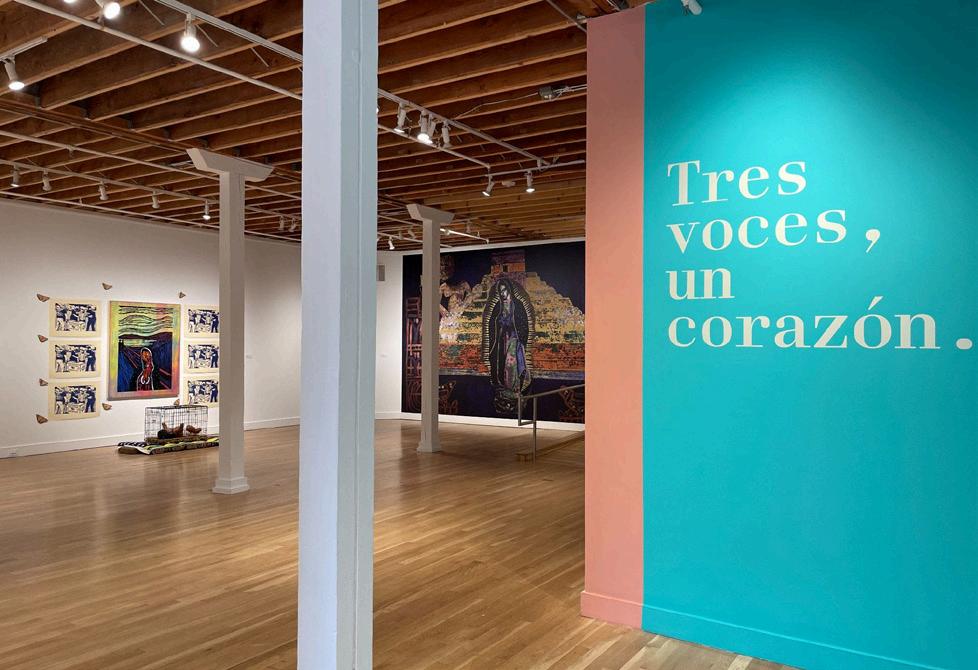
The Boulder, Colorado art scene is vibrant and multicultural. Tres Voces, Un Corazón / Three Voices, One Heart at the Boulder Museum of Contemporary Art presents the work of three artists whose practices—painting, printmaking, collage, performance, music, and visual storytelling—express distinct perspectives. The exhibit, which opened on May 21, 2026, features the work of the Ortega family–Tony Ortega, his wife Sylvia Montero, and their son, Cipriano Ortega.
In the museum world, it is rare to see a family of artists in the same show. The Boulder Museum curator noted that in the exhibit, “each voice is unique, yet collectively they form a harmonious whole, reflecting the ways family, heritage, and shared experience shape artistic vision.” Tony Ortega also shared with me in an interview that their Denver home “serves as both studio and incubator, where ideas are exchanged, collaborations take shape, and creativity flows naturally through daily life.”
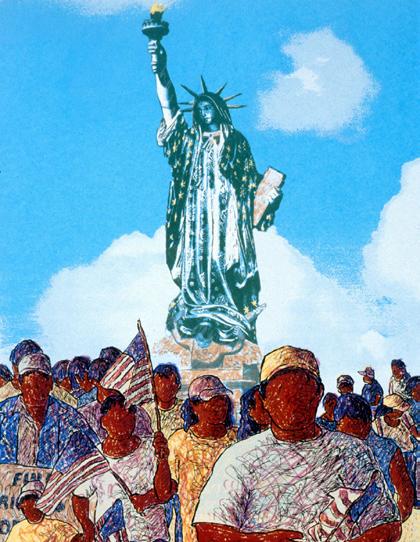
I interviewed Tony Ortega several times after my recent trip to Boulder and Denver. My wife Harriett had used one of his images of the Virgin of Guadalupe imposed on the Statue of Liberty on the cover of her book, A Bilateral Perspective on Mexico-U.S. Migration. We had plans to see the show, but a family graduation event in Boulder conflicted with his opening ceremony. Tony shared with me stories and i ages about the Boulder exhibit, allowing me to prepare this story. Tony invites viewers of Tres Voces, Un Corazón to experience the “rhythms, conversations, and creative energies that define a family for whom art is inseparable from life.”
A 9NEWS Caminos station interview in Denver, Colorado, with Tony and his wife, Sylvia Montero, offers excellent insights into the show’s opening success. Montero discussed the Boulder show and her work as a multimedia artist. She explained that her work included paintings, photography, and printmaking, noting that she sometimes combined them. Montero uses her photography as the main medium for artistic imagery. Once she decides on a certain image, she paints. In her Gaan series, Montero prints on antique sheet music before layering the image of a Gaan (Apache) dancer in the foreground. Montero proposed that by bringing the elements of sheet music and Apache dancing together, she affirms “a hybrid identity positioning cultural inheritance and personal affinity as coexisting rather than oppositional.” Her work reflects a
belief in art as a site of healing, shaped in part by her background as a former modern dancer. Montero explained that invoking this lineage, “situates Indigenous dance as an enduring influence, carried forward and rearticulated through visual practice.”
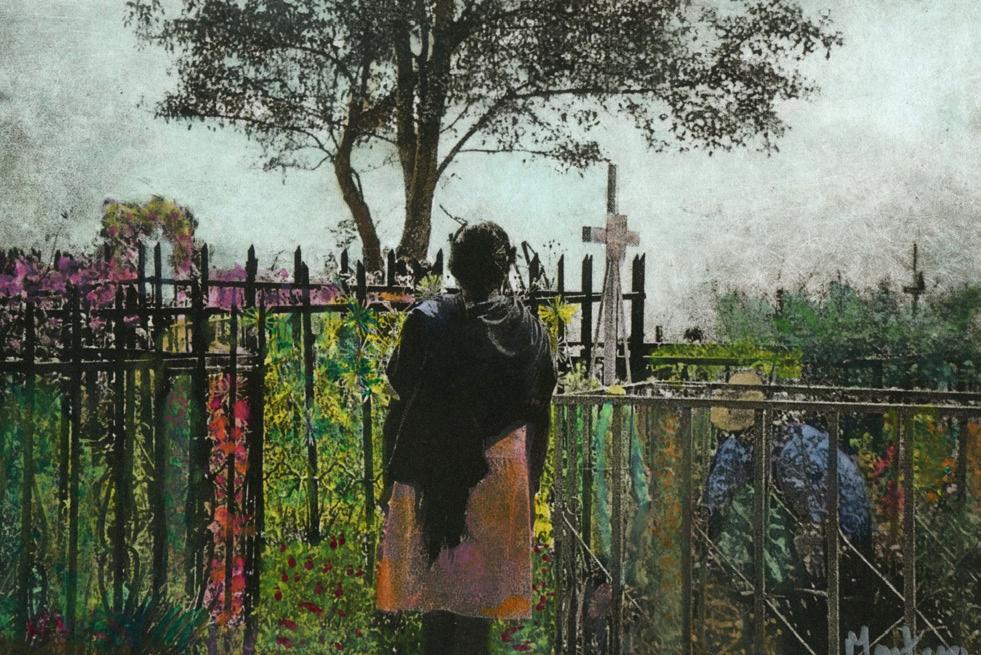
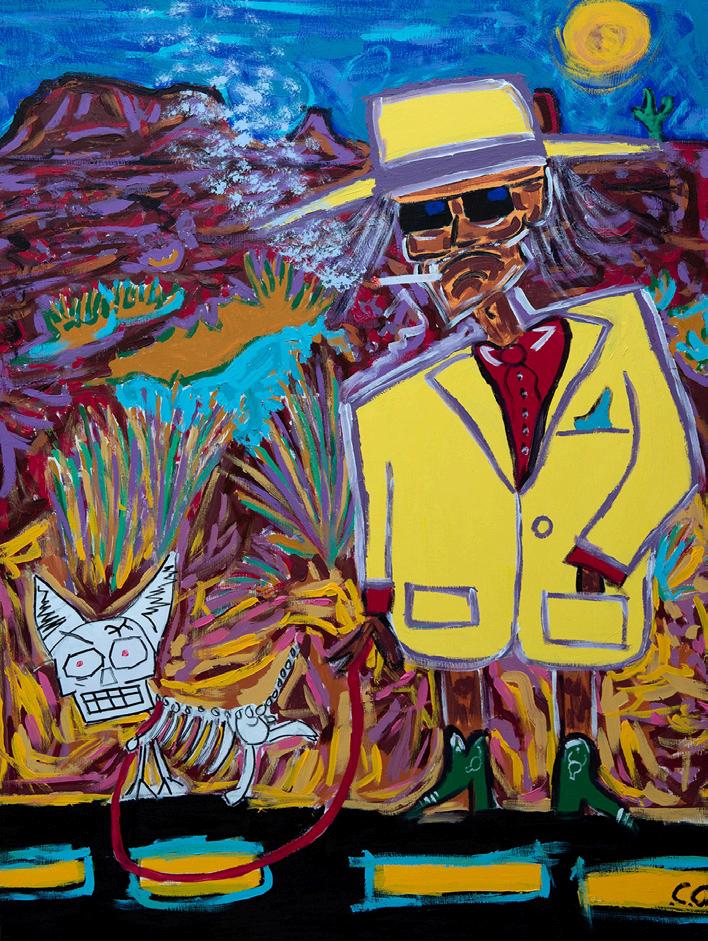
The Boulder exhibit features a series of etchings drawn from Sylvia Montero’s 2018 visit to Havana, Cuba. Working from photographs taken with a 35mm camera, Montero focused on the people she encountered, their daily lives, rituals, and family relationships. Montero sent me a note explaining that the resulting images “reflect both the visual intensity of the environment and the intimacy of these interactions.” Through this series, Montero emphasizes lived experience and connection, shaped by moments of exchange, including time, she noted, spent with local families during celebrations such as Mother’s Day. Harriett and I were in Havana, Cuba, a few years before Montero and observed what appeared to be a daily struggle for survival. Montero’s painted photos are a beautiful portrayal of Cuban daily life. In a YouTube presentation, Tony Ortega discussed how he currently works with acrylic, not just using paintbrushes but also scrapers and a squeegee to move the paint around the canvas.
Tony Ortega, Detail. “Dos Beans”. Courtesy of the Boulder Museum of Contemporary Art and the artist.
Tony Ortega, Sylvia Montero, and Cipriano Ortega. Courtesy of the Boulder Museum of Contemporary Art and the artists.
Tony Ortega, “La Marcha de Lupe Liberty.” Courtesy of the Boulder Museum of Contemporary Art and the artist.
Sylvia Montero. [Cuba] Courtesy of the Boulder Museum of Contemporary Art and the artist.
He explained he may begin the painting “a little bit with acrylic medium to make it more transparent and then paint it on the panels, and then use a squeegee to have the colors run together.” The result is an undercoat, with paint on top, hiding through that layering process.
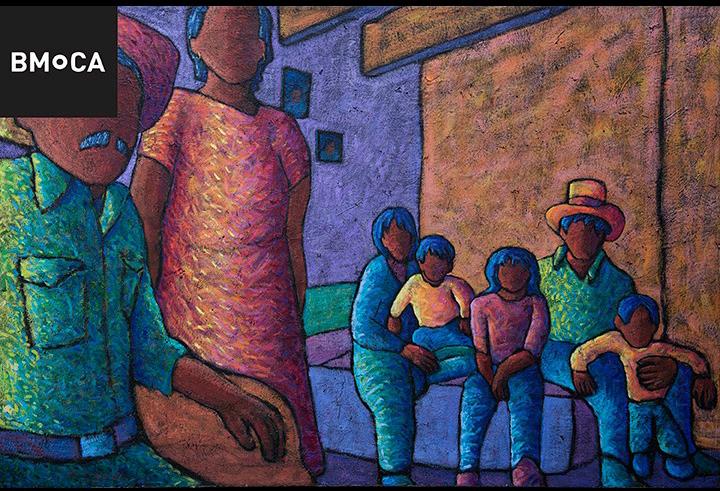
Cipriano Ortega, “Self Portrait.” Courtesy of the Boulder Museum of Contemporary Art and the artist. Tony Ortega’s paintings in the Boulder exhibit are among the best of his luminous career. I looked at his radiant “Tres Geraracions” numerous times, each time seeing something new. I saw in this painting new renderings of green and blue colors, and purple walls with small windows stood out prominently. In this painting, the placement of the grandparents in the foreground and the children with their parents in the background portrays a traditional Latino family arrangement.
Cipriano Ortega’s trajectory, from Denver Public Schools to the Denver School of the Arts and Regis University, illustrates a continuum of artistic and educational formation. His work, like that of many second-generation artists, pushes outward in scale and conceptual reach while remaining bound to the narratives that shaped him. If the mother’s work embodies preservation and care, the son’s introduces reinterpretation and activation, testing how inherited frameworks can evolve within contemporary contexts. Cipriano offers a lens for examining the evolution of Chicano cultural production across generations. Together, these three artists reveal how family-based artistic practices extend outward into institutions, shaping both the creation and interpretation of cultural memory.
der
Contemporary
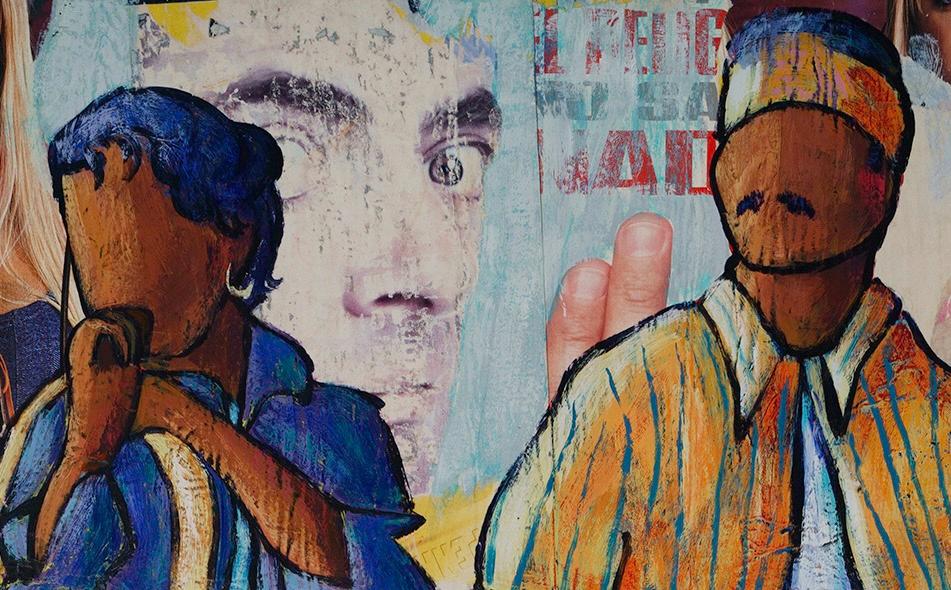
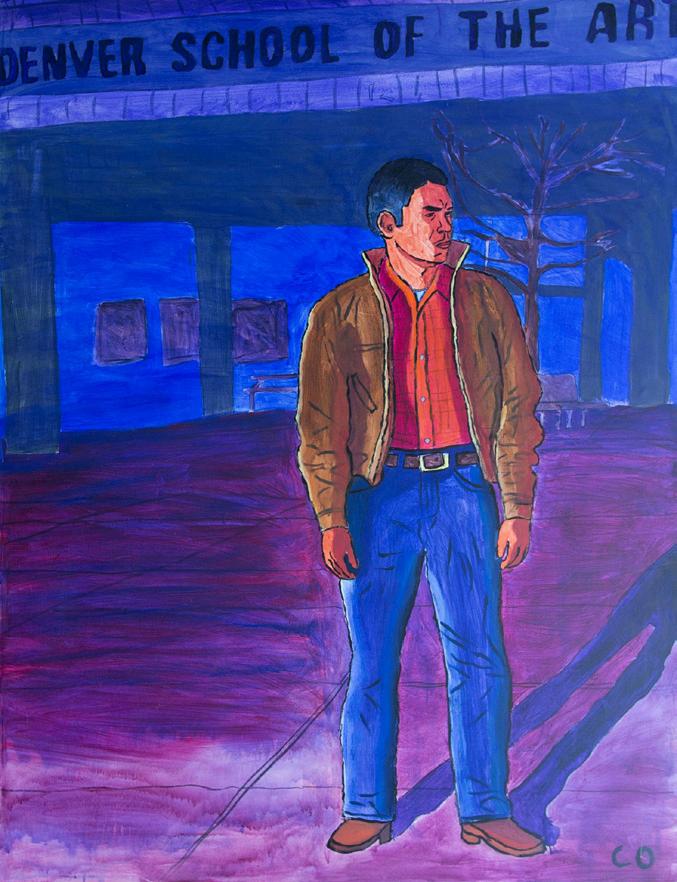
the artist. Cipriano Ortega’s paintings are in the Ortega family tradition of expressionistic art. Thepink and blue colors in his painting “Beautiful Borracho” are the senior Ortega family hues and tone traditions, but the imagery and story are unique to the younger Ortega. A Cipriano self-portrait of a college student outside the Denver School of the Arts has the blue and extraordinary purples of an Ortega heritage painting. However, Cipriano seeks to depict the subjects as they appear, with the facial features accurately represented. In contrast, Tony Ortega’s subjects represent faceless and anonymous individuals. In Cipriano’s painting, “Hope Lives in Bernard,” the colors are bold and radiant and inspired by the senior Ortega’s painting heritage. Yet,
once again, in his paintings, Cipriano gives his subject Bernard a gentle face and a personalized identity.
In The Boulder Museum curator Maruca Sanchez addressed how the family becomes both artist and steward—simultaneously creating culture and shaping the frameworks through which culture is preserved, interpreted, and transmitted. In the context of Colorado’s Chicano art scene, this perspective reveals not only the depth of individual artistic practices but the collective infrastructures that sustain them, offering a powerful narrative of continuity, transformation, and cultural responsibility. Tony and Sylvia explained that the exhibition Tres Voces, Un Corazón “celebrates the interplay of individuality and connection, highlighting how personal expression can coexist with shared purpose.” This exhibition celebrates the interplay between each artist’s individuality and their family’s interrelatedness. The exhibition runs through September 13, 2026
Courtesy of the Boulder Museum of Contemporary Art and the artist.
Cipriano Ortega, “Cipi at DSA”. Courtesy of the Boul-
Museum of
Art and
Tony Ortega, “Tres Generaciones”. Courtesy of the Boulder Museum of Contemporary Art and the artist.
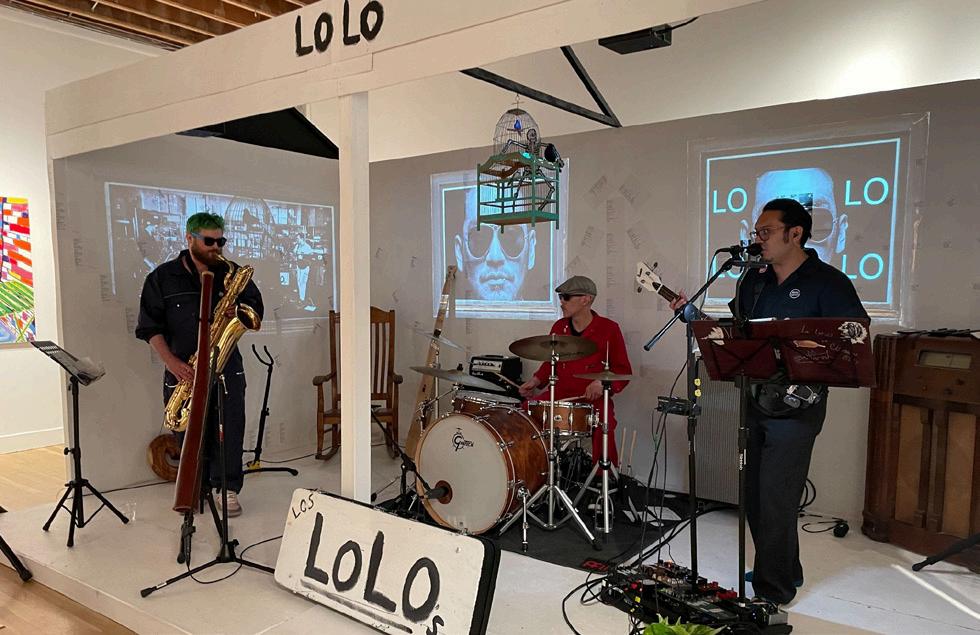
Cipriano Ortega y Los Lolos band. Courtesy of the Boulder Museum of Contemporary Art and the artist.
By Yvette Tello
Artistas de La Prensa Texas son homenajeados en SA Community Pride
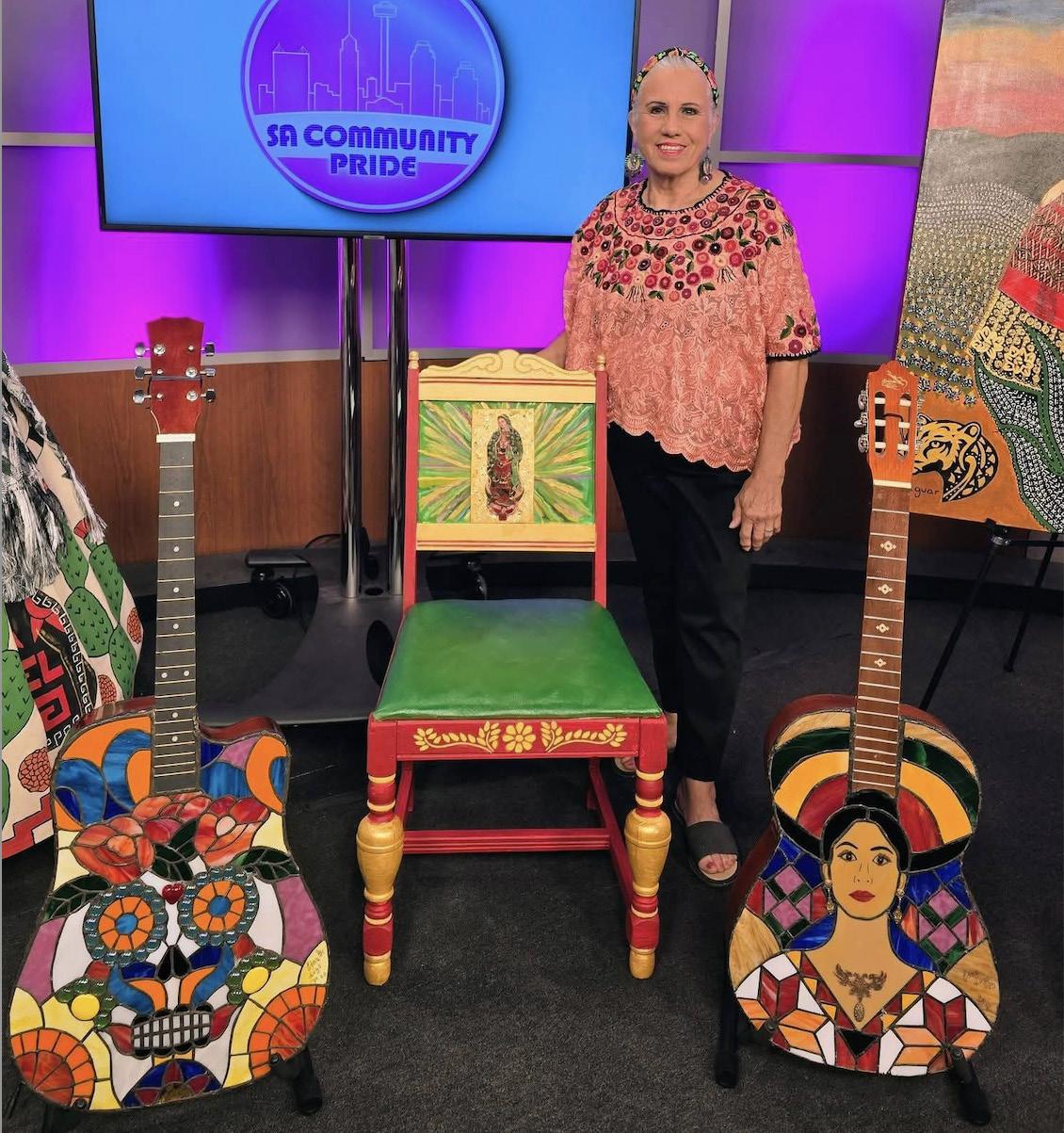
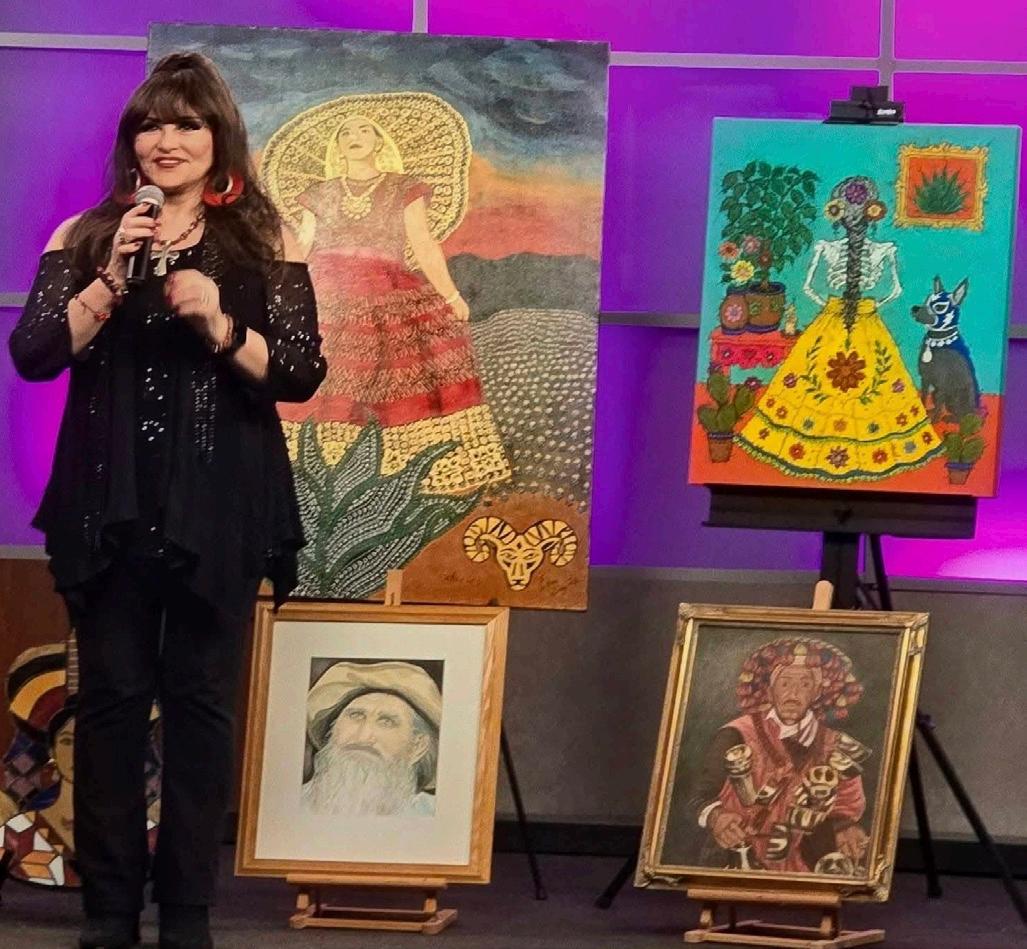
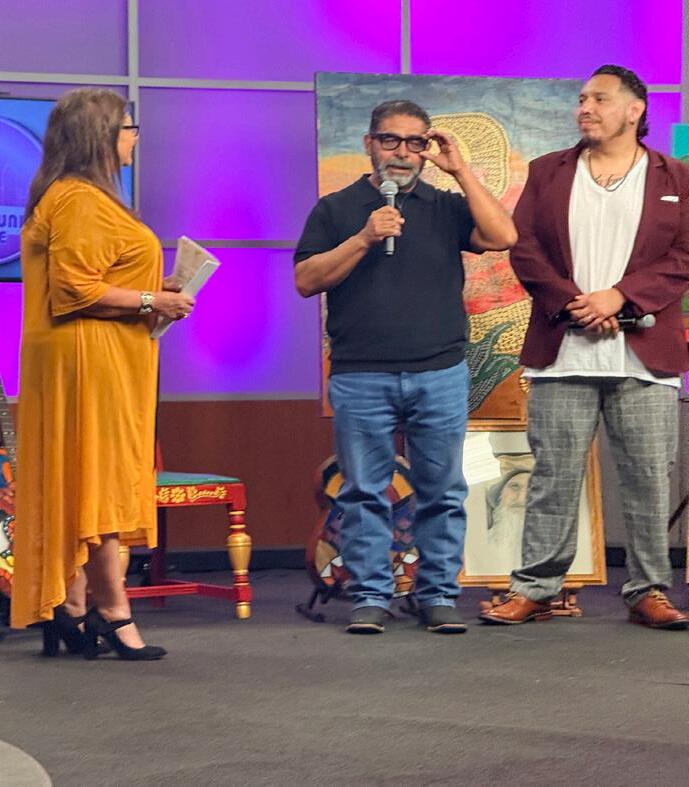
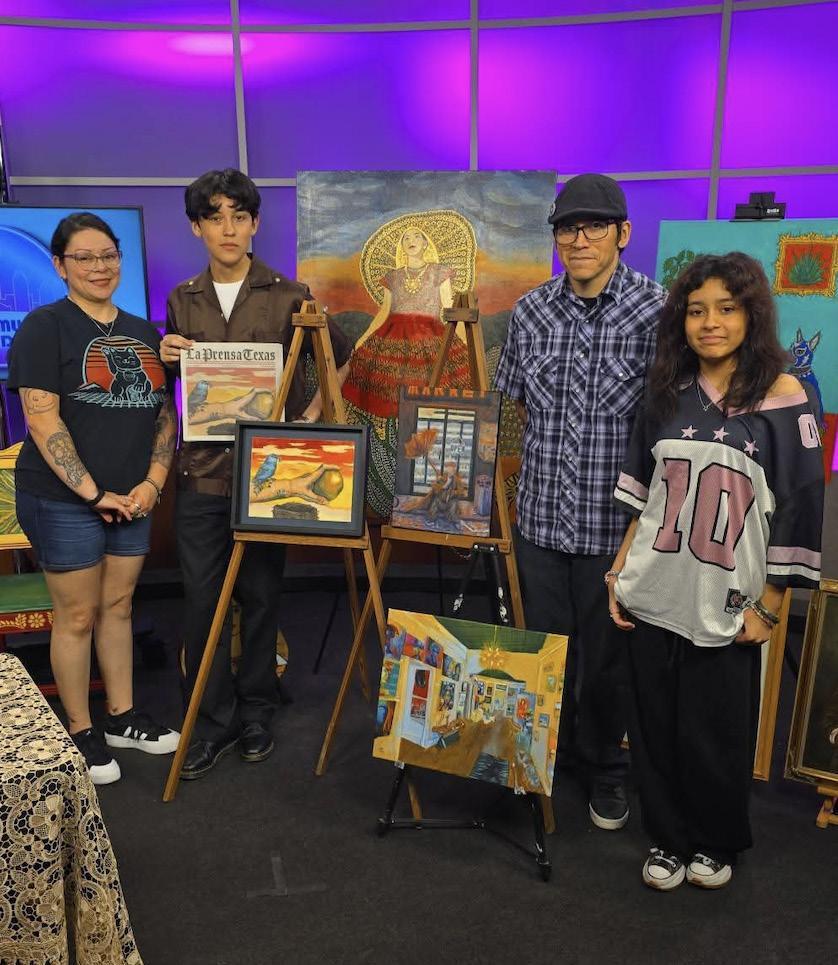
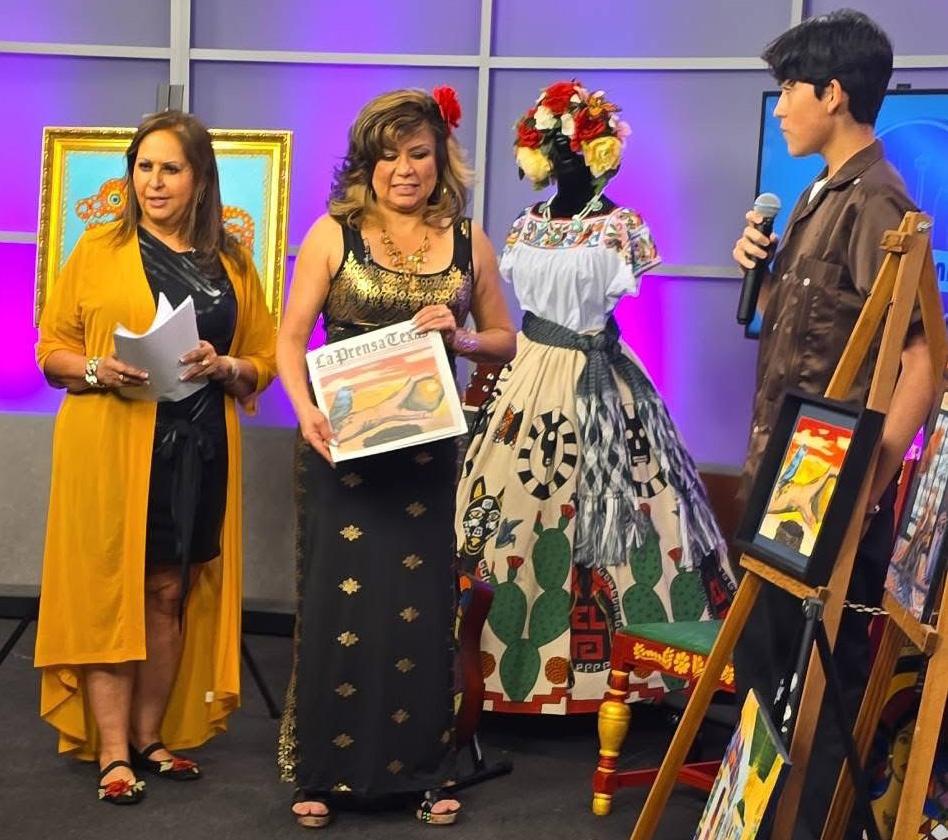
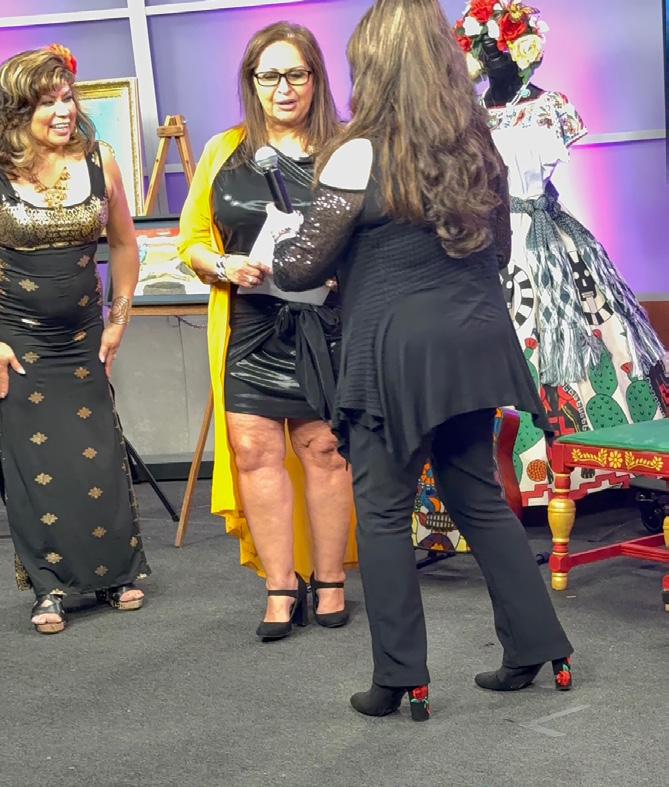
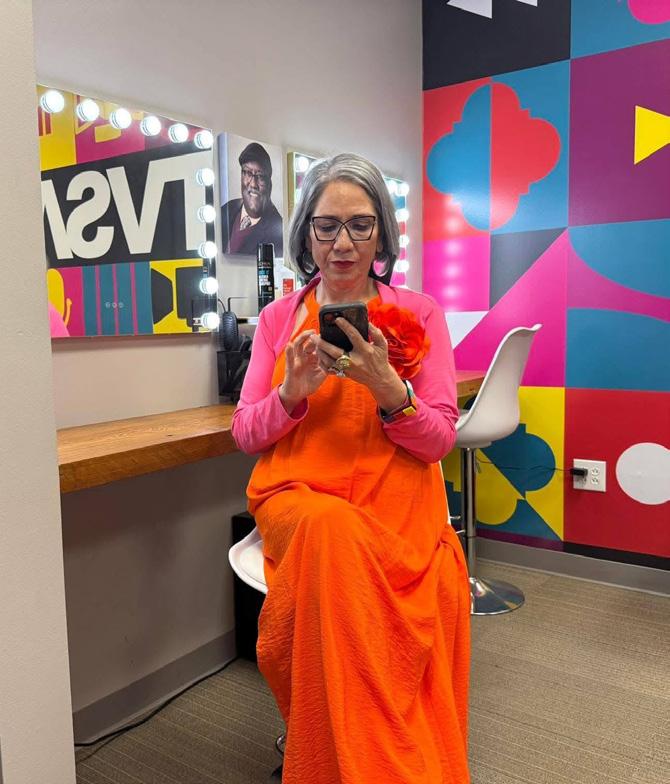
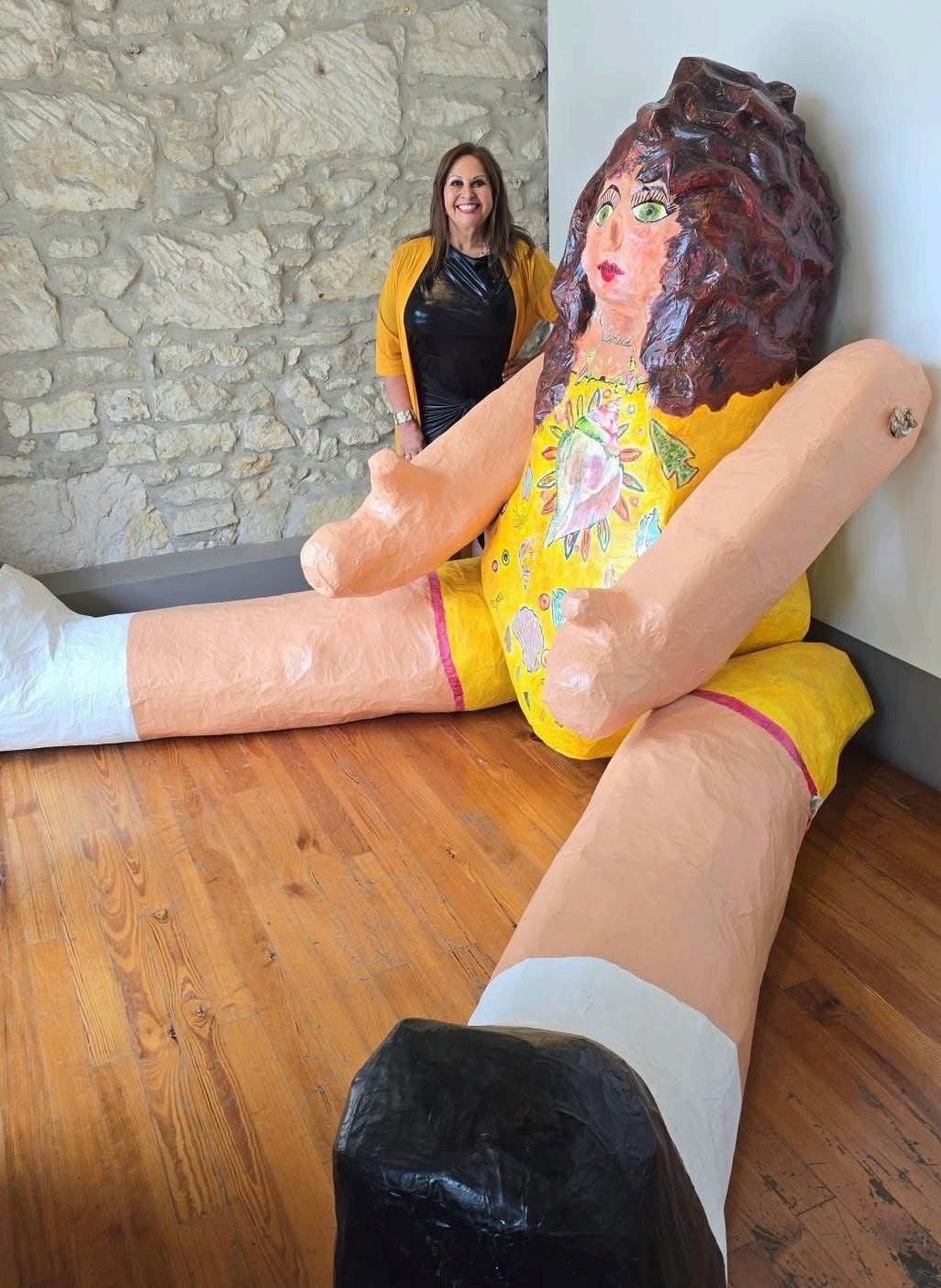
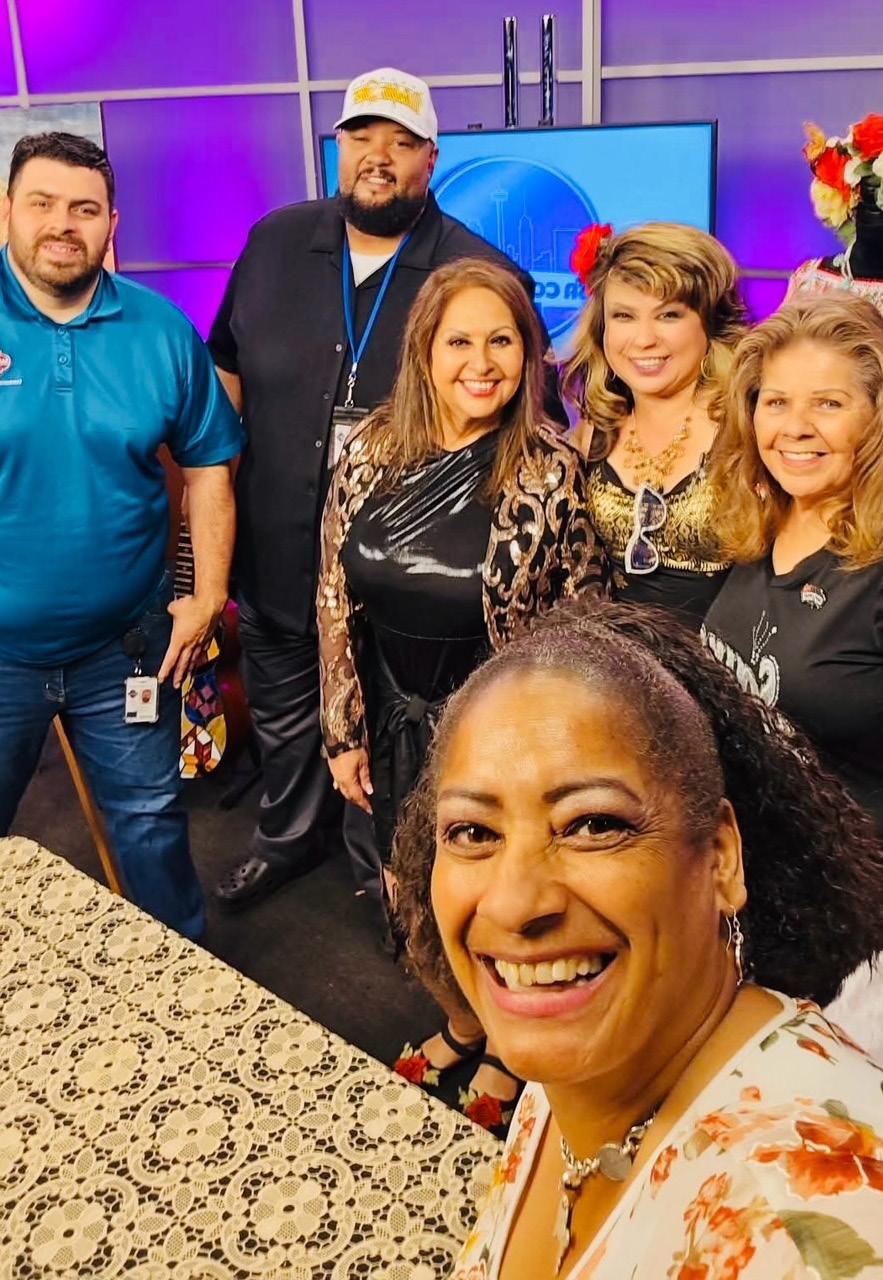
Tuve el honor de acompañar a Priscilla Sanchez-Hurt en su programa, SA Community Pride PATV Public Access, durante una grabación especial de Arte y Cultura que celebró el arte local, la música, el cine y el legado comunitario. Como Publisher de La Prensa Texas, me sentí orgullosa de co-conducir una conversación que destacó a los artistas cuyo trabajo ha sido presentado en nuestra portada y que recordó a los televidentes por qué su creatividad ya forma parte de la historia de nuestra comunidad. El programa reunió a artistas cuyas obras han aparecido en la portada de La Prensa Texas, continuando una tradición profundamente arraigada en la historia del periódico. En una época, La Prensa era conocida no sólo como un periódico, sino también como una publicación que honraba el arte, la cultura y la narración visual. Ese espíritu continúa hoy a través de la sección semanal “About the Artist”, donde artistas locales reciben una plataforma para compartir su trabajo, sus historias y su inspiración. Cómo compartí durante el programa: “Cuando La Prensa Texas coloca a un artista en la portada, no solo estamos compartiendo su arte por una semana. Estamos colocando a ese artista dentro del registro histórico de nuestra comunidad.” El programa presentó una hermosa mezcla de talento local. La querida cantante de San Antonio Patsy Torres interpretó dos canciones, llenando el programa de música y calidez. El actor y director Bert Lopez también se unió a la conversación para hablar sobre su próxima película, “Anxious Mark”, programada para estrenarse en el otoño de 2026. Los artistas destacados incluyeron a Yolanda Rios Wurgler de Yolanda’s Studio, Edna Lugo Martinez de Edna Lugo Studio, Pat Charette de Mi Corazon Artwerx, Joao Quiroz de The Blue Art Gallery, Monica Dela Cruz Walker de Briteurart, George Bedoy y Oscar A. Galvan Jr. de Galvan Studios. Sus obras incluyeron pinturas, joyería, vitrales y piezas de arte originales exhibidas durante la grabación. Cada artista aportó algo único a la conversación, pero juntos recordaron a los televidentes una verdad importante: los artistas también son historiadores a su manera. A través del color, la textura, las imágenes y la imaginación, ellos captaron lo que una comunidad siente, recuerda y espera para el futuro. El programa terminó con una nota muy emotiva gracias a Cindi Segura, DJ Bling Leader, quien compartió la historia de su difunto padre y el impacto duradero que tuvo en su vida. Ella habló sobre cómo él siempre la apoyó y le enseñó la importancia de servir a la comunidad. Hoy, Cindi mantiene viva su memoria ofreciendo su tiempo y talento como voluntaria con SA Community Pride, veteranos, adultos mayores y otras personas que necesitan alegría, música y conexión. Su historia fue un hermoso recordatorio de que el servicio, al igual que el arte, se convierte en parte de un legado. Vive a través de las personas que ayudamos, las historias que compartimos y el amor que seguimos dando. La Prensa Texas agradece a Priscilla Sanchez-Hurt, SA Community Pride, Patsy Torres, Bert Lopez, Cindi Segura y a cada artista que participó en este programa especial. Su trabajo, sus voces y sus historias ahora forman parte de la historia viva de San Antonio. Apoyemos a los artistas locales. Compartamos su trabajo. Digamos sus nombres. Porque cuando honramos a nuestros artistas, honramos el alma de nuestra comunidad.
San Antonio Honors SNCC Legacy on Juneteenth
By Yvette Tello
On Juneteenth, San Antonio gathered on the East Side to honor a powerful chapter of local civil rights history and recognize the freedom fighters who helped shape the city’s fight for justice. The San Antonio SNCC Legacy Project held a community celebration at the historic corner of Iowa and Pine Street, where the local chapter of the Student Nonviolent Coordinating Committee once operated its office. The gathering recognized the importance of the San Antonio SNCC chapter, which organized against racism, injustice, and police abuse from 1969 to 1977. Bexar County Commissioner Tommy Calvert, former San Antonio City Councilmen Mario Salas and John Sanders, and representatives from the San Antonio African American Community Archive and Museum joined community members for the celebration. African drumming by T-Bow Gonzalez brought rhythm, remembrance, and cultural pride to the event. The timing of the gathering carried deep meaning. Juneteenth marks June 19, 1865, the day enslaved people in Galveston, Texas, finally received word that they were free, more than two years after the Emancipation Proclamation had been issued. For generations, Juneteenth has been a day of remembrance, celebration, education, and reflection. It reminds us that freedom was delayed, but never forgotten, and that the fight for justice did not end with emancipation. That message was especially powerful on San Antonio’s East Side, a community with a long and often underrecognized history of civil rights leadership. Former Councilman Mario Salas noted that Black San Antonians have always been part of the larger struggle for justice. He pointed to the East Side’s connection to national movements, including Bobby Seale, co-founder of the Black Panther Party, who once lived on the East Side. San Antonio was also the first Texas chapter of Marcus Garvey’s Universal Negro Improvement Association, and under the leadership of Rev. Claude Black, became the first large southern city to desegregate peacefully. Nationally, SNCC, pronounced “SNICK,” was formed in 1960 by young activists mentored by civil rights leader Ella Baker. It became one of the most important grassroots organizations of the Civil Rights Movement, leading sitins, voter registration drives, direct-action protests, and community organizing across the South. In San Antonio, SNCC carried that same spirit, empowering Black communities and standing with those demanding dignity, representation, and equal treatment. The local chapter faced real risks. In 1969, after a downtown protest against police abuse, the San Antonio SNCC office was raided by police. That moment remains a reminder of the courage it took for local activists to organize, speak out, and challenge injustice. The historical marker at Iowa and Pine is more than a sign. It is a public reminder that San Antonio’s civil rights story did not happen somewhere else. It happened here, in our neighborhoods, on our streets, and inside the community spaces where ordinary people made extraordinary decisions to stand up. Honoring SNCC on Juneteenth connected two powerful truths: freedom must be remembered, and freedom must be protected. The celebration was not only about looking back. It was about saying thank you, preserving local history, and inspiring future generations to understand their own role in the ongoing work of justice. The freedom fighters who organized, marched, protested, registered voters, challenged abuse, and demanded equality helped shape the San Antonio we know today. Their courage deserves to be honored not only with a marker, but with memory, education, and continued action.
By Yvette Tello
The Year of La Mujer Honoring the Women Who Carried Us
For more than a century, San Antonio has been shaped by women whose names may not always appear in bright lights, but whose work lives in our neighborhoods, our families, our culture, and our history. At La Prensa Texas, as we celebrate The Year of La Mujer, we are not only looking at the women who make headlines. We are looking at the women who have held communities together, often quietly, often without applause, and often without receiving the recognition they deserve. This column is a tribute to those women. It is for the unsung giants among us. Women like Irma Muniz, whose dedication to grassroots advocacy and community health has helped protect families, educate communities, and strengthen lives for decades. It is for leaders like Diane Sanchez, whose gift for community building has helped keep our people, our culture, and our stories connected as San Antonio continues to grow and change. These women did not wait for permission to lead. They led
because there was work to be done. They showed up because families needed help. They organized because communities needed a voice. They served because, for them, taking care of la familia and la comunidad was simply the right thing to do. Many of us were never taught this part of history. We were not always taught how much women carried. We were not always told about the mothers, grandmothers, organizers, business owners, educators, healers, artists, and community leaders who built the foundation we stand on today. Too often, women’s work was treated as something expected instead of something historic. But now, we are telling the story differently. The Year of La Mujer is about honoring the women who came before us, recognizing the women leading today, and making room for the young women who are just beginning to step into their power. This is also a passing of the baton. Across San Antonio and beyond, we are watching a new generation rise. Young activists are speaking out for environmental justice on the
South Side. First-generation entrepreneurs are opening doors on the West Side. Students, artists, mothers, organizers, and professionals are finding their voices and using them with purpose. They are not starting from nothing. They are carrying forward the strength of the women before them. Each week, La Prensa Texas will sit at the table with both the icons and the innovators. We will share stories of mentorship, struggle, sacrifice, leadership, and triumph. We will celebrate women who have given their lives to service, and we will shine a light on the young leaders who are already changing the future. The Year of La Mujer is more than a title. It is a movement. It is a reminder that our history is still being uncovered, our stories are still being told, and our voices are still rising. Join us as we honor the amazing women you know, the women you should know, and the mujeres who are just getting started.
Por Sendero Deportivo
Spurs De Vacaciones
Los Spurs de San Antonio, catalogado el equipo novato en el circuito de la NBA, bajo el mando del entrenador en jefe Mitch Johnson, quien en su debut superó marcas anteriores como asistente del legendario Gregg Popovich, guiando a San Antonio en su clasificación a los playoff’s con marca de 62-20 finalizando en
el segundo lugar de la Conferencia del Oeste que fue dominada por el entonces campeón OKC Thunder. Los Spurs obtuvieron el trofeo de campeones del oeste tras eliminar a Thunder en el séptimo juego en serie a ganar 4 de 7 partidos. Con ello ganaron el boleto para disputar ante Knicks la NBA Finals 2025-26 con el mismo formato ha ganar 4 de 7 partidos. La serie llegó a su fin
el sábado 13 de junio en el estadio Frost Bank Center, donde el capitán Víctor Wembanyama (Wemby), y sus compañeros dieron tremenda pelea por conseguir su segunda vict ria de la serie. Sin embargo como es del dominio público, el entrenador Mike Brown, logró establecer su plan de juego, que fue respaldado por su capitán el guardia estelar Jalen Brunson, quien encestó 45 unidades para darle la victoria a Knicks con pizarra de 90-94. Wemby se quedó corto anotando 19 puntos, su compañero el guardia y delantero novato Dylan nHarper, puso 25 puntos en el score. El marcador oficial de la NBA, exhibió los resultados en cada cuarto de juego: Primer periodo Spurs 23 Knicks 13. Segundo periodo: Knicks 24 Spurs 19. Tercer cuar-
to Knicks 28- Spurs 30. Cuarto tiempo NYC 29 San Antonio 18: Knicks 94 Spurs
90. La cancha del Frost Bank Center, fue el escenario que con éxito dio la bienvenida al ejecutivo Adam Silver, Comisionado de la NBA, quien presentó el trofeo Larry O’Brien, al capitán Jalen Brunson, quien a la par fue designado el MVP de la serie. Knicks así celebró su tercer campeonato en su historia, el cual desde 1973 no ganaban.
Ahora Spurs estará disfrutando de merecidas vacaciones, tras haber ganado 12 partidos en el playoff y uno de NBA Finals, con lo que dejaron huella para continuar adelante en la siguiente temporada 2026-27. En las fotos aparecen Jalen Brunson en tiro a la canasta y Mitch Johnson, entrenador en jefe de Spurs. (Fotos de Franco)
The Truth Behind Pocahontas
Not a Love Story, but a Story of Survival
By LPT Staff
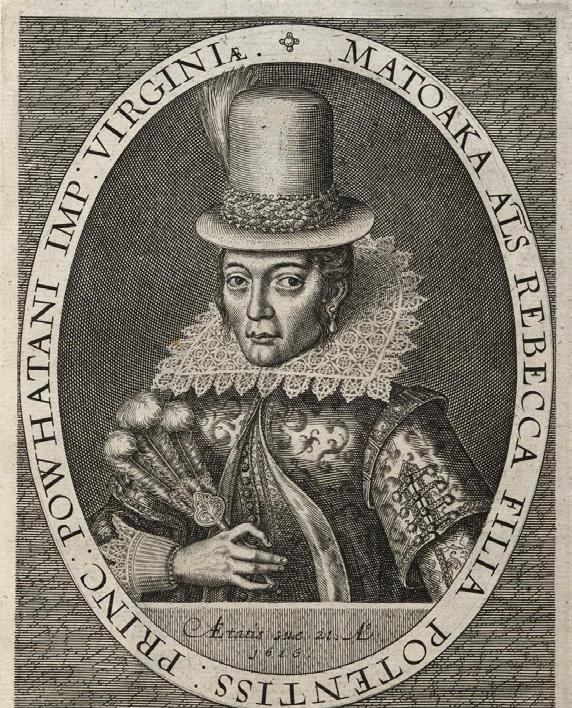
Pocahontas, also known as Matoaka and Rebecca, engraving by Simon van de Passe, 1616. Public domain image via Wikimedia Commons / Smithsonian National Portrait Gallery
For generations, the story of Pocahontas has been told as a romantic tale. Many of us were raised with the image of a young Indigenous woman who willingly crossed cultures, fell in love with an Englishman, and became a symbol of peace between Native people and European settlers. But that version is not the full truth. In many ways, it is not the truth at all. Pocahontas was not a princess in the fairy-tale sense. She was an Indigenous girl born around 1596 in what is now Virginia. Her given name was Amonute, and she also had a private name, Matoaka. “Pocahontas” was a childhood nickname. She was the daughter of Wahunsenaca, also known as Powhatan, the powerful leader of more than 30 Algonquian-speaking Native communities in the region the English would later call Jamestown. When the English arrived in 1607, Pocahontas was only about 11 years old. That fact alone should change the way we look at the story. She was a child when she first encountered English colonists. The famous story of her saving Captain John Smith
has been debated by historians for generations. Some believe Smith may have misunderstood a ceremony. Others question whether the rescue happened the way he later described it. What is clear is that the popular version turned a young Native girl into a tool for a colonial myth. The deeper truth is much harder to face. In 1613, Pocahontas was kidnapped by English Captain Samuel Argall. She was taken aboard an English ship and held captive as a ransom prisoner. The English wanted to use her to force her father to return prisoners, weapons, tools, corn, and agree to peace terms. She was not free. She was not choosing between two worlds in the romantic way we have been taught. She was being used as leverage in a colonial conflict. During her captivity, Pocahontas was moved to English settlements and placed under the instruction of Reverend Alexander Whitaker. There, she was taught English customs, language, and Christianity. She was baptized and renamed Rebecca. That reason renaming matters is because colonization has always understood the power of names. To rename someone is to claim power over their identity. It is a way of saying who you were before us does not matter as much as who we are making you become. This is what forced assimilation looks like. It does not always come with chains visible to the eye. Sometimes it comes through captivity, religion, clothing, language, marriage, and the pressure to survive inside a system built to erase you. Pocahontas had to navigate that world as a young Indigenous woman whose body, image, name, and story were being controlled by men, colonizers, and institutions. In 1614, while still under English control, Pocahontas married John Rolfe, an English tobacco planter. Their marriage has often been painted
as a love story, but we cannot separate it from the conditions surrounding it. She had been kidnapped. She had been held captive. She had been converted, renamed, and absorbed into English society. Whether she found some personal peace in that marriage or made the best decision available to her, we must be honest: her choices were shaped by captivity and colonization. By today’s language, what happened to Pocahontas can be understood as abduction, forced assimilation, and human trafficking. She was taken from her people, held against her will, moved through colonial spaces, used for political gain, and later transported to England as proof that Native people could be “civilized” under English control. Her image became propaganda. Her life became a message to investors, royalty, and the public that colonization was not violence, but progress. That lie has lasted for more than 400 years. In 1616, Pocahontas traveled to England with John Rolfe, their son Thomas, and other Indigenous representatives. There, she was presented in English society as “Lady Rebecca.” She was dressed in English clothing, shown to powerful people, and used by the Virginia Company to promote the colony. She was no longer seen as Matoaka, daughter of her people. She was being presented as proof that Indigenous people could be conquered, converted, and made acceptable to Europe. In 1617, as she and her family prepared to return to Virginia, Pocahontas became gravely ill and died in Gravesend, England. She was only about 20 or 21 years old. She never made it home. That is the part of the story many people do not sit with long enough. A young Indigenous woman was taken from her land, separated from her people, renamed, converted, married into the colonizing society,
displayed overseas, and died far from home. Yet history turned her into a love story. Movies turned her into a symbol of romance. America turned her pain into something easier to digest. Why are our stories of the Indigenous so often softened, rewritten, or romanticized? Why are we more comfortable with the idea of Pocahontas falling in love than with the truth that she was kidnapped? Why do we remember her as a bridge between two cultures, but not as a young Native woman forced to survive violence, captivity, and erasure? This is bigger than one woman’s story. Pocahontas represents what has happened to countless Indigenous women across history. Their names were changed. Their languages were punished. Their children were taken. Their bodies were controlled. Their stories were rewritten by the very systems that harmed them. And still, they survived. To tell the truth about Pocahontas is not to take away her dignity. It is to restore it. She was not a cartoon. She was not a costume. She was not a romantic fantasy. She was a real Indigenous woman, a daughter, a mother, a survivor, and a symbol of how colonization works when it hides behind words like peace, civilization, and progress. The truth may be uncomfortable, but it is necessary. For women today, especially Indigenous women, Latinas, women of color, and all women whose histories have been edited to make others comfortable, Pocahontas reminds us why we must tell our stories ourselves. We cannot allow our pain to be repackaged as romance. We cannot allow our survival to be used as proof that oppression was kind. We cannot allow history to keep erasing the violence that shaped this country. Pocahontas deserved the truth in her lifetime like we deserve the truth in ours.