Community Liaison / Enlace Comunitario: Ramon Chapa Jr. r.chapa@laprensatexas.com
Advertising & Production Coordinator / Coordinadora de Publicidad y Producción: Jessica Medrano
Contributors / Colaboradores:
Dr. Ricardo Romo, info@laprensatexas.com
Editor Español: José I. Franco
Sales Representative / Representante de Ventas: Maria Cisneros
La Prensa Texas is a grassroots, bilingual publication that serves as a vital voice for the community — especially for those who are too often left out of mainstream media conversations. Since its founding, La Prensa Texas has been dedicated to providing relevant, accessible, and culturally rooted news that reflects the lives, struggles, and triumphs of the people of San Antonio and surrounding counties. Our mission is simple yet powerful: to inform, inspire, and empower our readers through storytelling that uplifts the diverse voices of our community. This publication continues to be the lifeline of local news, bridging the gap between the people and the stories that matter most.
By Yvette Tello
Let’s Talk About It: Honoring the Native Warriors History Forgot
educate future generations, and promote a deeper understanding of American history.Let’s advocate for recognition and tell these important stories. It is time to rethink how we celebrate all who have served, regardless of background. What stories or aspects of Native American military service resonate with you? Let’s talk about it…
Sales Info:
Our Circulation 45,000 Printed And Distributed Weekly English And Spanish
Send Press Releases and Advertising Inquiries to: Info@LaPrensaTexas.com 210-628-9611
Sergeant Billy Walks About exemplifies the extraordinary bravery of Native American warriors who have fought valiantly in every major American conflict. Their courage and sacrifice often remain unrecognized compared to their non-Native counterparts. These warriors gave their lives for a land that was taken from them, navigating a complex loyalty to a nation that oppressed them. Despite their significant contributions, their stories are frequently overlooked in history. Many assimilated into mainstream culture, sacrificing parts of their identity while their service and sacrifice remained marginalized.It is vital that we share the stories of Native heroes like Sergeant Walks About. By doing so, we honor their experiences,
Ted Darden: “Why is he not simply referred to as one of America’s most decorated warriors? A great man is a great man, regardless of nationality or ethnicity.”
Ron Abney: “Hmmm... sounds like Billy Badass to me! A serious person.”
Tony Gore: “I’ll bet he didn’t expect the military to adapt to him either.”
Barbara Howard: “A true American who did all he could to help the people. To me, the American Indians are the true Americans of this USA. Others come here and are Americans, but Native Americans are the ones who lived here before us, before anyone came here. Thank you, sir. You are a brave soul. May our God bless you.”
Rhonda Ann Shephard: “Why isn’t the Cherokee Tribe of Oklahoma pushing for the Congressional Medal with 5 Silver Stars and 10 Bronze Stars, being one of the most highly decorated soldiers aside from Audie Murphy? At least the American Medal of Freedom. Does he have a statue and plaque in the Oklahoma State Capitol? The nation needs to step up and make his life acknowledged.”
Lesley Suzanne-Douglas: “Glen Douglas was nominated for the Medal of Honor five times. He received the Silver Star, two Bronze Stars, and eight Purple Hearts. He was an Okanagan warrior and, in his older years, a statesman.”
Amelia Hertler: “When did he have time to sleep?”
Rogue Regent: “My respect to this soldier.”
Michelle Forcier: “What a hero looks like.”
Jaime Rodriguez: “I appreciate knowing his story and many more stories of the true history of Indigenous Mexicans and Indigenous people who are originally from these lands.”
Mike C. Segovia Jr.: “God knows him and all those who have not been honored due to racism and evil thinkers and doers. God will judge each and every one.” Tia Jeri: “Thank you for sharing this important story.”
Virginia Harvey: “Thank you for your bravery and your sacrifice to our country. Rest in peace.”
Albert Albie Fraijo Ambriz Jr.: “A true patriot and hero. Thank you for your honorable service and leadership. God bless you, and God bless America.”
Laurie Joslin: “If his mother’s name was Carolyn, then I knew this young man when he was a small boy. He was very kind, funny, and a pleasure to know. But regardless, this hero is one to look up to. Mvto for your service.”
About the Artisit Karen Evens
HERE’S TO ART! HERE’S TO LOVE!
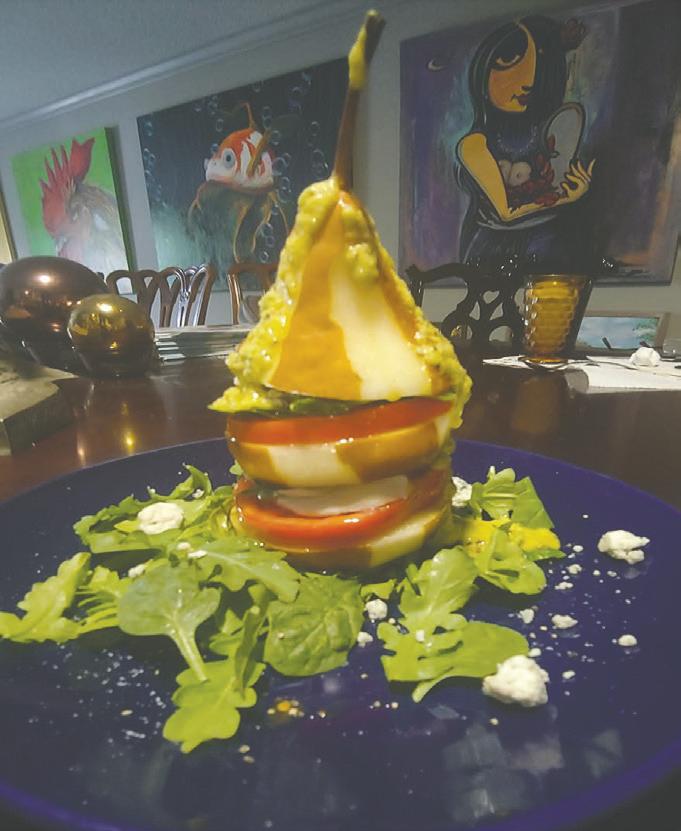
My love for food and art began as a child, when I cooked my first sunny-side-up egg at the age of 5, and won my first art competition at age 6. A trip to Europe at 14 exposed me to butter and the great European artists, and it was a whole life changing experience. My Daddy generously provided the food for me to cook, and my
Mother gave me the tools and the exposure to the art world and to the Lord that I needed to begin my wonderful journey. A late bloomer, Karen Evans was born. I blended “The Dinner Party” and “Art In The City”, representing the most talented local artists and my favorite recipes. Currently I represent some of the most renowned artists in San Antonio including Roberto Lozano, Jr., Hank Arriazola, Cindy Joeris, Richard Arredondo, and Paul Martin. I have curated unique art shows and served hundreds of “food enthusiasts” over the years at my massive, delightful table that was gifted to me by The Plaza Club. These events have been among the most inspiring experiences of my life, fueling me my passion to create many more unforgettable gatherings and a creative
spirit, so I can share with my community the abundance of delicious food and beautiful art available in San Antonio. I believe we are all given gifts and it is our responsibility to share our special gifts with others. I would love to welcome you, your friends and your families into my enchanting Paradise Galley y Cocina, where the worlds of art and food come together for an unforgettable experience! There is nothing more important and inspirational than Great Food and Beautiful Art, Except for Love, of course! Please contact me for an Art and Food Experience! Karen Evans!
Connector Curator Cook
karenevans@email.com 210-605-7062
Comisión de Calidad Ambiental del Estado de Texas
AVISO DE RECIBO DE LA SOLICITUD Y EL INTENTO DE OBTENER PERMISO PARA LA CALIDAD DEL AGUA PERMISO
SOLICITUD. Palomino Alpha, LLC, 3801 North Capital of Texas Highway, E240-137, Austin, Texas 78746, dueño de un centro de datos, ha solicitado a la Comisión de Calidad Ambiental de Texas (TCEQ) para el propuesto Permiso No. WQ0005514000 (EPA I.D. No. TX0149110) del Sistema de Eliminación de Descargas de Contaminantes de Texas (TPDES) para autorizar la descarga de aguas residuales tratadas en un volumen que no sobrepasa un flujo promedio diario de 500,000 en galones por día. La planta estará ubi cada aproximadamente 0.4 millas al suroeste de la intersección de la State Highway 123 y Farm-to-Market Road 1979, en el Condado de Guadalupe, Texas 78666. La ruta de descarga estará del sitio de la planta a un afluente sin nombre, de allí al Embalse de Sitio 7 del Servicio de Conservación de Suelos, de allí a un afluente sin nombre, de allí a York Creek, de allí al curso inferior del Rio San Marcos. La TCEQ recibió esta solicitud el día 16 de marzo de 2026. La solicitud para el permiso estará disponible para leerla y copiarla en Biblioteca Publica de Seguin, 313 West Nolte Street, Seguin, en el Condado de Guadalupe, Tejas, antes de la fecha de publicación de este aviso en el periódico. La solicitud y los avisos asociados están disponibles electrónicamente en la siguiente página web: https://www.tceq.texas.gov/permitting/wastewater/pending-permits/tpdes-applications. Este enlace a un mapa electrónico de la ubicación general del sitio o de la instalación es proporcionado como una cortesía y no es parte de la solicitud o del aviso. Para la ubi cación exacta, consulte la solicitud. https://gisweb.tceq.texas.gov/LocationMapper/?marker=-97.9525,29.771388&level=18
AVISO DE IDIOMA ALTERNATIVO. El aviso de idioma alternativo en español está disponible en https://www.tceq.texas.gov/permitting/wastewater/pending-permits/tpdes-applications.
AVISO ADICIONAL. El Director Ejecutivo de la TCEQ ha determinado que la solicitud es administrativamente completa y conducirá una revisión técnica de la solicitud. Después de completar la revisión técnica, el Director Ejecutivo puede preparar un borrador del permiso y emiti rá una Decisión Preliminar sobre la solicitud. El aviso de la solicitud y la decisión preliminar serán publicados y enviado a los que están en la lista de correo de las pers onas a lo largo del condado que desean recibir los avisos y los que están en la lista de correo que desean recibir avisos de est a solicitud. El aviso dará la fecha límite para someter comentarios públicos.
COMENTARIO PUBLICO / REUNION PUBLICA. Usted puede presentar comentarios públicos o pedir una reunión pública sobre esta solicitud. El propósito de una reunión pública es dar la oportunidad de presentar comentarios o hacer preguntas acerca de la solicitud. La TCEQ realiza una reunión pública si el Director Ejecutivo determina que hay un grado de interés público suficiente en la solicitud o si un legislado loc al lo pide. Una reunión pública no es una audiencia administrativa de lo contencioso.
OPORTUNIDAD DE UNA AUDIENCIA ADMINISTRATIVA DE LO CONTENCIOSO. Después del plazo para presentar comentarios públicos, el Director Ejecutivo considerará todos los comentarios apropiados y preparará una respuesta a todo los comentarios públicos esenciales, pe rtinentes, o significativos. A menos que la solicitud haya sido referida directamente a una audiencia administrativa de lo contencioso, la respuesta a los comentarios y la decisión del Director Ejecutivo sobre la solicitud serán enviados por correo a todos los que presentaron un co mentario público y a las personas que están en la lista para recibir avisos sobre esta solicitud. Si se reciben comentarios, el aviso ta mbién proveerá instrucciones para pedir una reconsideración de la decisión del Director Ejecutivo y para pedir una audiencia administrativa de lo contencioso. Una audiencia administrativa de lo contencioso es un procedimiento legal similar a un procedimiento legal civil en un tribunal de distrito del estado.
PARA SOLICITAR UNA AUDIENCIA DE CASO IMPUGNADO, USTED DEBE INCLUIR EN SU SOLICITUD LOS SIGUIENTES DATOS: su nombre, dirección, y número de teléfono; el nombre del solicitante y número del permiso; la ubicación y distancia de su propiedad/activ idad con respecto a la instalación; una descripción específica de la forma cómo usted sería afectado adversamente por el sitio de una ma nera no común al público en general; una lista de todas las cuestiones de hecho en disputa que usted presente durante el período de com entarios; y la declaración “[Yo/nosotros] solicito/solicitamos una audiencia de caso impugnado”. Si presenta la petición para una audiencia de caso impugnado de parte de un grupo o asociación, debe identificar una persona que representa al grupo para recibir correspondencia en el futuro; identificar el nombre y la dirección de un miembro del grupo que sería afectado
adversamente por la planta o la actividad propuesta; proveer la información indicada anteriormente con respecto a la ubicación del miembro afectado y su distancia de la planta o actividad propuesta; explicar cómo y porqué el miembro sería afectado; y explicar cómo l os intereses que el grupo desea proteger son pertinentes al propósito del grupo.
Después del cierre de todos los períodos de comentarios y de petición que aplican, el Director Ejecutivo enviará la solicitud y cualquier petición para reconsideración o para una audiencia de caso impugnado a los Comisionados de la TCEQ para su consideración durante una reunión programada de la Comisión. La Comisión sólo puede conceder una solicitud de una audiencia de caso impugnado sobre los temas que el solicitante haya presentado en sus comentarios oportunos que no fueron retirados posteriormente. Si se concede una audiencia, el tema de la audiencia estará limitado a cuestiones de hecho en disputa o cuestiones mixtas de hecho y de derecho relacionadas a intereses pertinentes y materiales de calidad del agua que se hayan presentado durante el período de comentarios.
LISTA DE CORREO. Si somete comentarios públicos, un pedido para una audiencia administrativa de lo contencioso o una reconsideración de la decisión del Director Ejecutivo, la Oficina del Secretario Principal enviará por correo los avisos públicos en relación con la solicitud. Además, puede pedir que la TCEQ ponga su nombre en una o más de las listas correos siguientes (1) la lista de correo permanente para recibir los avisos del solicitante indicado por nombre y número del permiso específico y/o (2) la lista de correo de todas las solicitudes en un condado especifico. Si desea que se agrega su nombre en una de las listas designe cual lista(s) y envía por correo su pedido a la Oficina del Secretario Principal de la TCEQ.
INFORMACIÓN DISPONIBLE EN LÍNEA. Para detalles sobre el estado de la solicitud, favor de visitar la Base de Datos Integrada de los Comisionados en www.tceq.texas.gov/goto/cid. Para buscar en la base de datos, utilizar el número de permiso para esta solicitud que aparece en la parte superior de este aviso.
CONTACTOS E INFORMACIÓN A LA AGENCIA. Todos los comentarios públicos y solicitudes deben ser presentadas electrónicamente vía http://www14.tceq.texas.gov/epic/eComment/ o por escrito dirigidos a la Comisión de Texas de Calidad Ambiental, Oficial de la Secretaría (Office of Chief Clerk), MC-105, P.O. Box 13087, Austin, Texas 78711-3087. Tenga en cuenta que cualquier información personal que usted proporcione, incluyendo su nombre, número de teléfono, dirección de correo electrónico y dirección física pasarán a formar parte del registro público de la Agencia. Para obtener más información acerca de esta solicitud de permiso o el proceso de permisos, llame al programa de educación pública de la TCEQ, gratis, al 1-800-687-4040. Si desea información en español, puede llamar al 1-800-687-4040.
También se puede obtener información adicional del Palomino Alpha, LLC a la dirección indicada arriba o llamando a Karina Martin al 512-418-4528.
Fecha de emisión: 22 de abril de 2026
Por Franco
Víctor Wembanyama Elegido Al 2025-26 Kia NBA All Defensive First Team
Ahora qué el pentacampeón La National Basketball Association (NBA), recientemente anunció que el basquetbolista francés Víctor Wembanyama (Wemby), delantero y poste del pentacampeón Spurs de San Antonio, por unanimidad fue elegido al selecto equipo denominado 2025-26 Kia NBA
All -Defensive First Team, siendo su se-
gunda elección consecutiva, después de su primer temporada como novato All-Defense y el jugador más joven en la historia de la liga durante la campaña 202324 esto de acuerdo a boletín oficial informativo de la empresa Spurs Sports and Entertainment (SS&E). Wemby, nombrado recientemente 2025-26 NBA
Defensive Player of the Year and Blocks Champion, jugando 64 partidos temporada regular, finalizó con promedio alto de 25.0 puntos y 11.5 rebotes aportando 3.1 asistencias por partido y liderando la liga con promedio de 3.08 bloqueos y 1.03 en robos durante 29.2 minutos por partido. Convirtiéndose en
el liderato tras haber logrado un total de 197 bloqueos, así como en diversos números ofensivos y defensivos incluyendo 17 partidos con más de cinco bloqueos. Wemby fue establecido en el cuarto lugar en la NBA en promedio de capturar más de cinco bloques. También en cuarto lugar en el circuito en promedio de rebotes y séptimo en rebotes con un total de 736. Wemby a sus 22 años de edad, ha guiado a Spurs ha registrar la marca defensiva en el promedio de 110.4 limitando a sus rivales a un promedio de 111.5 puntos por cotejo, lo cual los ubica como octavo lugar en la liga. Lo cual les abrió paso para llegar a lo-
grar su clasificación en la gran final de la Western Conference lo cual no sucedia
Dede 2017. Wemby desde su debut en la NBA en el año de 2023, ha logrado marcas personales de 627 bloqueos liderando la liga, así como record de más de 203 más que otros jugadores en dicho departamento. Wemby es el tercer jugador en la historia de la en bloqueos por juego, durante sus consecutivas temporadas uniéndose a los grandes elementos.
Dikembe Mutombo (1993-94. 1995-96) y Marcus Camby (2005-06 y 200708). Wemby, estará compartiendo honores con los también elegidos su paisano Rudy Gobert (Tim-
berwolves), Chet Holmgren (Thunder), Ausar Thompson (Pistons), Derrick While (Celtics), ex jugador de Los Spurs de San Antonio. En las fotos aparecen Wemby ganando el saque contra Thunder y una chica de la porra Hype Squad de los Spurs actuando y animando partido Spurs vs Thunder en Ultra Club Plaza Frost Bank Center. (Fotos de Franco)
Las Gallinas de Mamá--My Mother’s Hens
By: J. Gilberto Quezada
Las Gallinas de Mamá began as quietly as a summer morning in Laredo, not long after we moved from our tiny two-room house at 402 San Pablo Avenue to 210 Iturbide Street. The flood of the Rio Grande in 1954 had pushed us out, carrying away more than mud and debris— it swept away the familiar corners of our young lives. I was just a first grader at St. Augustine School, trying to make sense of the world while Mamá tried to rebuild a home for us. The new house, rented from the Castañeda family next door, had a big, zenced dirt backyard, the kind of space that seemed to breathe possibility. One day, Mamá decided that possibility looked a lot like chickens. At the very back of the yard, to the right, stood an old chicken-wire coop, weathered but sturdy enough to dream with. My older sister Lupe, my older brother Peter, and I walked all the way to downtown Laredo, about eight blocks, to the Ramirez Poultry store at 505 San Agustín, right across from the police department and City Hall. We felt proud, important even, carrying home a dozen tiny chicks whose soft chirps made the whole world feel gentle. Mamá’s eyes lit up when she saw them, as if hope itself had arrived in a cardboard box. In time, those little chicks grew into plump hens, and we even had a rooster who strutted around like he owned the place. Every morning, Mamá gathered fresh eggs with a quiet joy that made the simple act feel sacred. Soon we added more chickens, and the backyard became a lively playground. We let them loose to wander while we played alongside them, laughing as they darted between our legs or chased after imaginary treasures. When
the sun began to dip, they always returned to their coop, as faithful to their routine as we were to ours. Of course, not all of them were angels. One of the roosters we bought turned out to be mean—truly mean. His name was “El Toto” and he would fly at us with his claws stretched forward, ready to defend his territory against anyone foolish enough to cross it. We learned to keep our distance, watching him with a mix of fear and fascination. Even his fierceness became part of the story, another thread in the tapestry of those backyard days. When we eventually moved again, about eight years later, this time to 801 Zaragoza Street, the yard was too small for our feathered companions. We had to give them away to Don Pedro, El Lechero, the milkman who made his rounds every morning with warm greetings and a smile. Letting them go felt like saying goodbye to a chapter of our childhood. Still, the memories stayed— warm, vivid, and full of life.Even now, I can still close my eyes and hear the soft clucking, feel the dusty earth under our feet, and see Mamá standing by the coop, her hands full of eggs and her heart full of love. In the quiet moments of my life, when the world slows just enough for memory to catch up, I can still hear the soft clucking of Mamá’s gallinas and feel the sun-warmed dust of our yard beneath my feet. Those simple days, filled with laughter, chores, and the gentle rhythm of our little world, live on inside me as vividly as if they happened only yesterday. The hens, the stories, the love—they are all stitched into who I became. Sadly, my beloved parents and my brother Peter and sister Lupe have gone to their eternal reward, and I am the only one left to tell the tale. Yet in telling it, I keep them close,
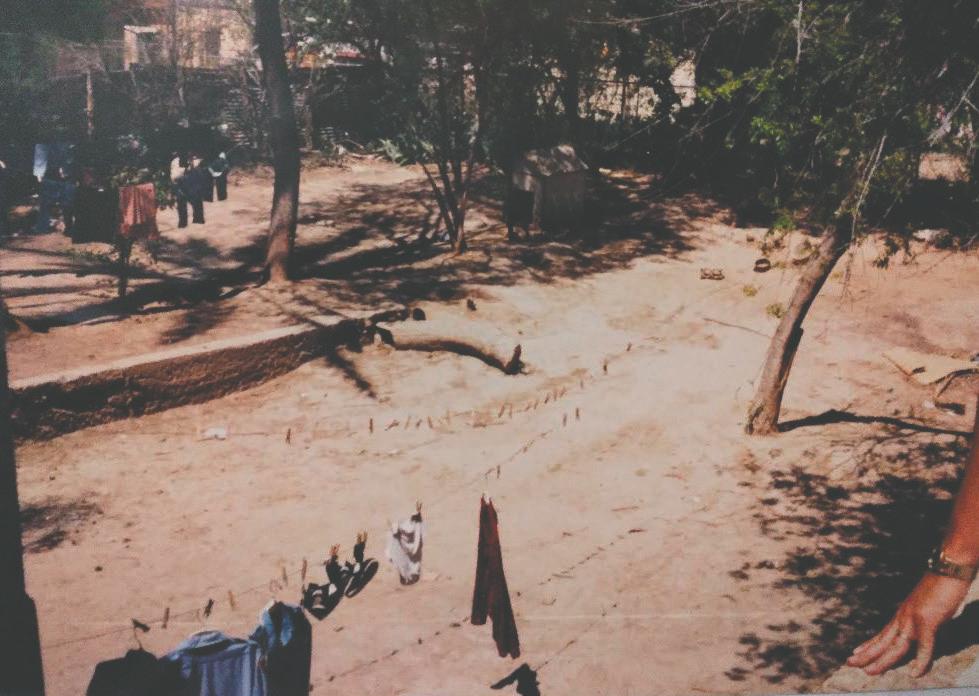
and the echo of our shared life continues to flutter like wings in the morning light. On a nice and sunny Tuesday afternoon, March 21, 1995, Jo Emma and I took a walking tour through my beloved Barrio El Azteca, a place that still holds so much of my heart and soul. When we stopped by our old home at 210 Iturbide Street and walked around to the east side to peek into the dirt backyard, it felt as if time folded gently back on itself. I immediately asked Jo Emma to take a photograph of the backyard. The old chicken-wire coop was gone. The back of the house did not have a screen door to get to the backyard. We had to use the screen door that was on the west side of the house facing the Castañeda house. Seeing that space again brought back a flood of tender memories: Mamá’s gallinas wandering around, their soft clucking filling the air, and us as children running, laughing, and playing without a care in the world. Moments like that — where the past feels close enough to touch — remind me how deeply our roots shape us, and how special it is to revisit them with someone who understands their meaning. It was more than just a walk. It was a return to a piece of my heart and soul.
By Ricardo Romo, PH.D
An Art School In The Barrio: SAY Sí Educates and Trains Young Artists
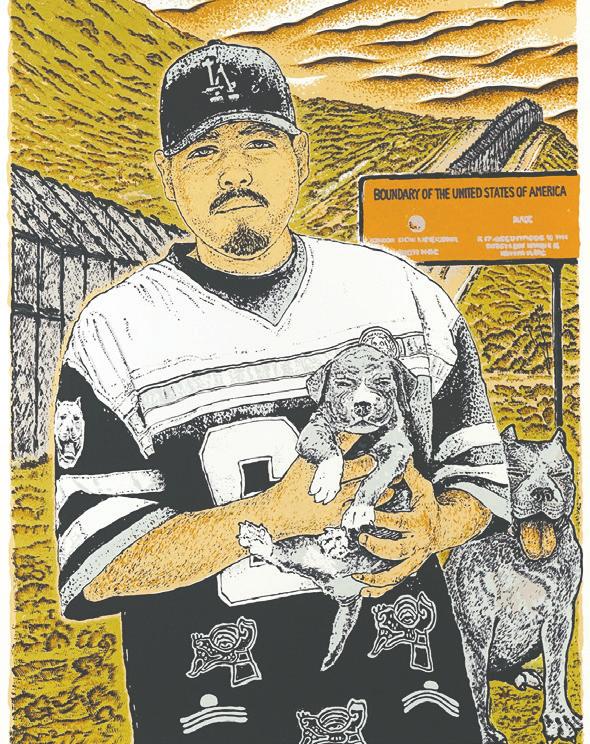
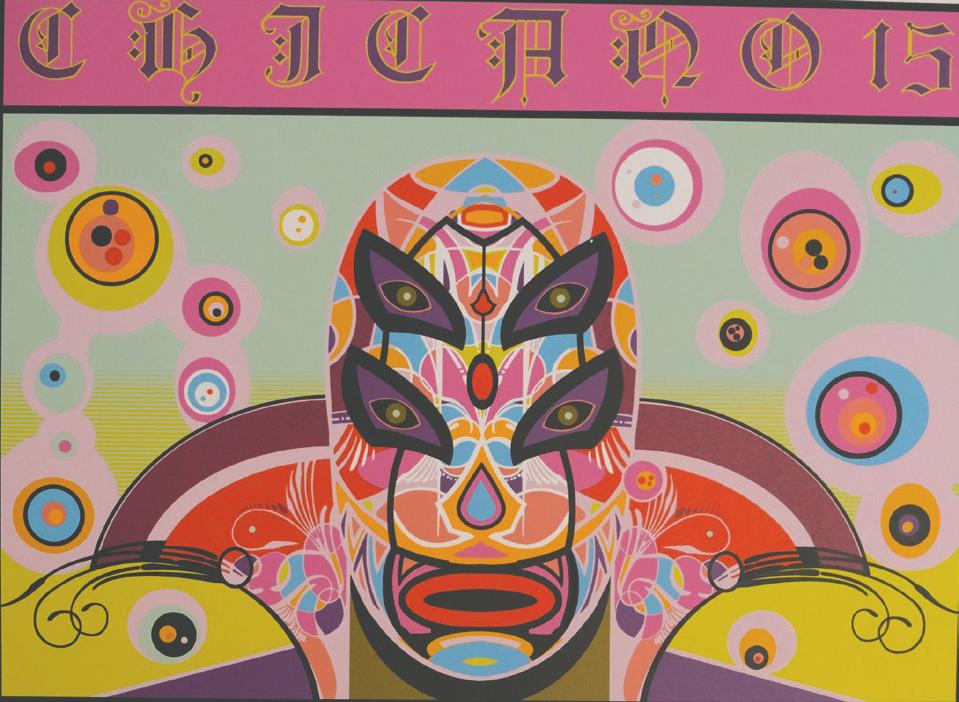
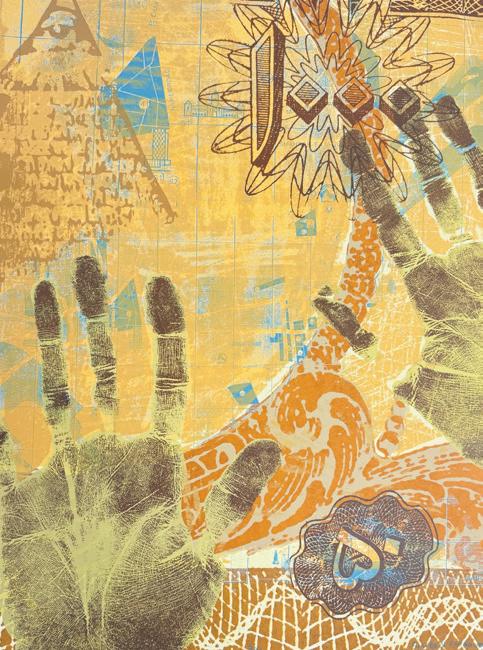
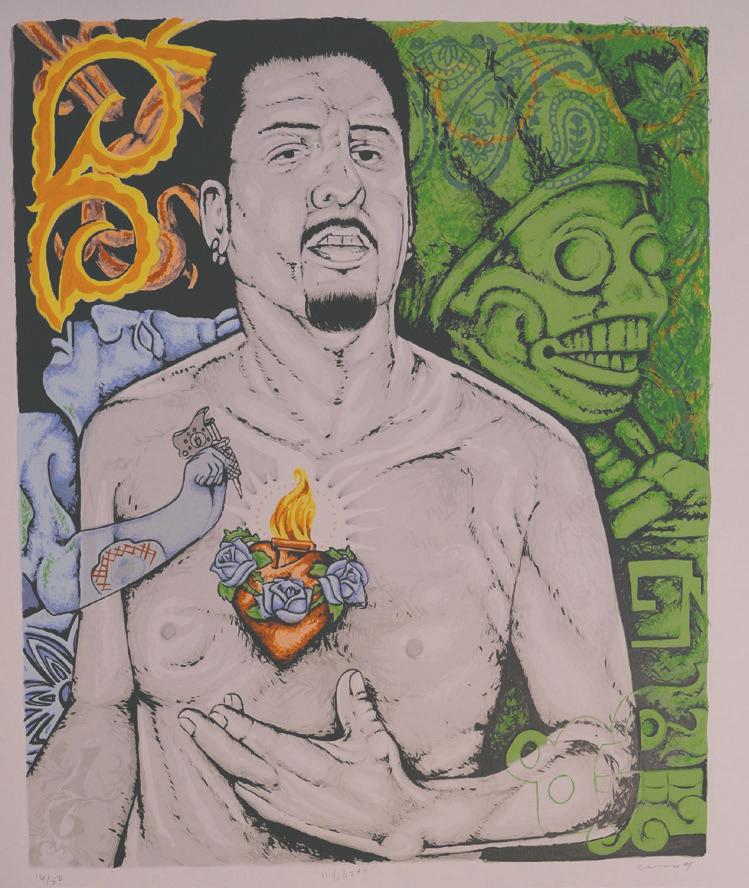
Sam Coronado was a pivotal Texas-based Chicano artist, printmaker, educator, and cultural organizer whose career reshaped the visibility and infrastructure of Latino and Chicano art in the United States. During 2010-2020, Harriett and I donated more than 200 Chicano art prints, many of them printed at Coronado Studio, to SAY Sí, a youth art program in San Antonio’s Westside. On June 13, SAY Sí will host an art fundraiser with our donation. The majority of the prints on sale come from our donation of Serie prints by Coronado Studios. Harriett and I were good friends with Sam Coronado, and I am including a short essay about him here.
Sam Coronado, Detail, “End of the Cycle.” Courtesy of SAY Sí. Donation from Harriett and Ricardo Romo.z
Born in Ennis, Texas and raised in a working-class Mexican American family, Coronado’s early experiences—including agricultural field labor and his service in the U.S. Army grounded his lifelong commitment to community and access. He dropped out of high school in 1964 to join the U.S. Army and completed his GED in the military. Upon an honorable discharge from the
Army in 1967, he pursued higher education through the G.I. Bill, earning an Associate degree in drafting and design from El Centro College.
Oscar Mayo, “Cholo.” Courtesy of SAY Sí. Donation from Harriett and Ricardo Romo.
Coronado completed a BFA from the University of Texas at Austin in 1975, where he co-founed the Chicano Art Students Association. He was also a co-founder of the Mexic-Arte Museum in 1984, which was designated the state’s official Mexican and Mexican American art museum in 2003. This effort marked a major step in establishing institutional recognition for Latino art in Texas. Equally significant was Coronado’s role as an institution builder and advocate for Latino artists.Initially working in painting, Coronado discovered his affinity for printmaking in the early 1980s, particularly serigraphy. This medium, based on pushing ink through a metal screen, became central to his artistic and political commitment. Coronado’s work blends Chicano visual traditions with elements of social realism
and popular culture, often addressing themes of Mexican American culture, history, and social justice. In the late 1980s, we worked with Coronado as art investors, buying over 750 prints to provide the resources for him to create a new studio. Art Historian Tatiana Reinoza wrote that Coronado’s greatest intervention in the Chicano Art movement came in 1993 with the founding of Serie Project, a nonprofit printmaking residency program that awarded competitive fellowships to artists wishing to explore printing techniques with the assistance of a master printer. Inspired in part by Self-Help Graphics in Los Angeles, the Serie Project created a collaborative environment where artists worked with a master printer to produce editions that were both accessible and culturally resonant.
Quintin Gonzalez, Courtesy of SAY Sí. Donation from Harriett and Ricardo Romo.
The Serie Project, noted Reinoza, hosted more than 300 artist residencies and has introduced a new generation of artists to a
graphic tradition of historical importance to the Chicano art movement. The roster of resident artists includes Malaquias Montoya, Vincente Valdez, Rubio, Ester Hernández, César Martínez, Celia Alvarez Muñoz, Juan Sánchez, Diógenes Ballester, Scherezade Garcia, and others. The Serie Project has generated a significant archive of Chicano and Latino printmaking. Coronado’s prints and paintings have been exhibited nationally and internationally and are held in major collections, including those of the Smithsonian American Art Museum. Notable works such as “Baile de Calacas I” and “Tejano Santa” reflect both Coronado’s cultural iconography and broad public reach. In parallel with his studio and organizational work, Coronado was a dedicated educator. He began teaching at Austin Community College in 1986 and became a full professor in the Graphic Arts Department in 2004, mentoring generations of artists while reinforcing the role of printmaking as both a technical and cultural practice.
Simeen Ishaque, “Emblems.” Courtesy of SAY Sí. Donation from Harriett and Ricardo Romo.
Coronado’s legacy lies not only in his own artwork but in the networks, institutions, and opportunities he created. By integrating artistic production with cultural activism, he helped establish a sustainable ecosystem for Chicano art—one that expanded access to
artists and to collectors, nurtured emerging talent, and secured a lasting place for Latino visual culture within American art history.
SAY Sí is a nationally recognized nonprofit arts organization located in the Westside of San Antonio that provides free, creative after-school programs for middle and high school students across the city. Through visual arts, media arts, and performing arts, students develop artistic skills, leadership, and confidence, all in preparation for higher education and professional careers. SAY Sí’s mission is to ignite the creative power of young people as forces of positive change while valuing artists, empowering marginalized communities, and advancing culture.
El Paso, Texas artist Jesús “Cimi” Alvarado, “Yoliztli.” Courtesy of SAY Sí. Donation from Harriett and Ricardo Romo.
SAY Sí offers long-term programming, allowing students to participate for up to seven years in creative activities. Across its three studios, students work closely with teaching artists who are active professionals in their respective fields. In addition to their teachers, middle school students receive guidance from high schoolers, known as mentors, fostering a learning environment
rooted in collaboration and peer-to-peer learning. The studios and curriculum follow a project-based structure, and students engage in long-term projects that focus on self-expression and critical thinking. Students are encouraged to develop their own artistic voice and grow as active contributors and leaders in their communities. Projects culminate in public exhibitions, live performances, film screenings, and even public art projects and installations. In addition to their youth programming, SAY Sí offers many public events, such as their annual Block Party, where local organizations, businesses, artists, and community members come together for a day of celebration, creativity, and free programming for attendees of all ages and neighboring residents.
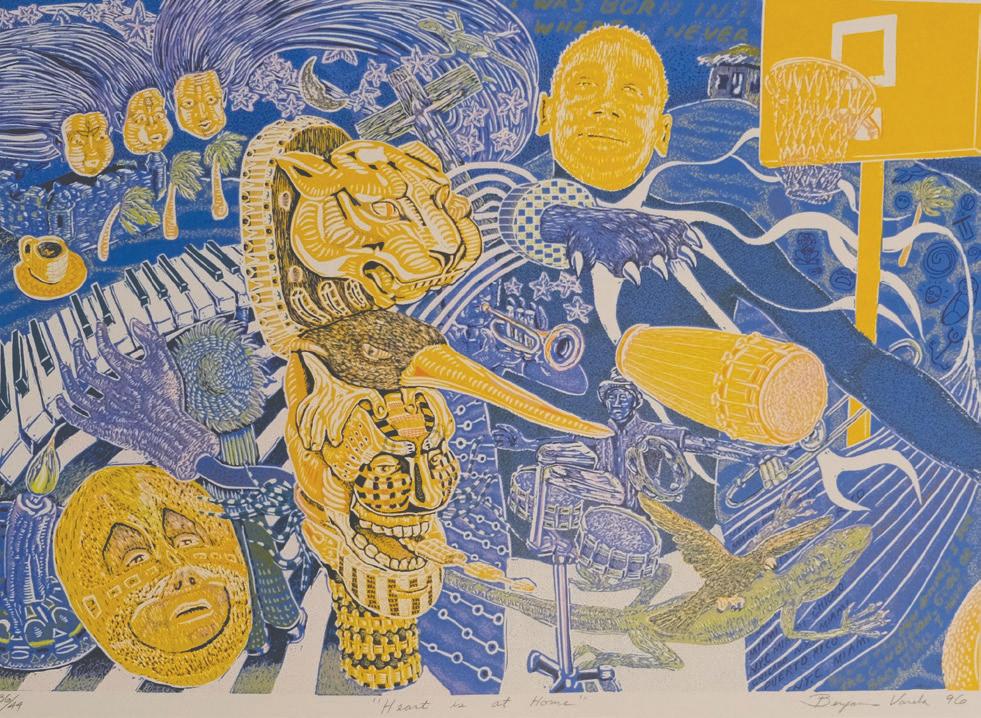
Brooklyn, New York/Kingsville, Tx artist Benjamin Valera. “Heart is at Home.” Courtesy of SAY Sí. Donation from Harriett and Ricardo Romo.
All of these programs are rooted in SAY Sí’s Mission Statement: To ignite the creative power of young people as forces of positive change. By valuing artists, empowering marginalized communities, and advancing culture, SAY Sí creates spaces where San Antonio youth are encouraged to imagine, create, and lead.
San Antonio Small Businesses Take Center Stage During Small Business Month Celebration
By La Prensa Texas Staff
San Antonio’s small business community is more than storefronts, restaurants, services, and local brands. It is made up of neighbors, families, dreamers, risk takers, and hardworking entrepreneurs who help keep the city’s economy moving forward. As San Antonio recognized Small Business Month, last Thursday’s celebration shined a spotlight on the entrepreneurial spirit that continues to shape neighborhoods across the city. Small businesses represent the hustle, resilience, and determination that San Antonio is known for, especially during uncertain economic times. According to local small business advocates, small businesses make up a significant part of the local workforce, with approximately 21 percent of San Antonio workers connected to the small business sector. Behind those numbers are real people: the business owners opening early, the employees taking orders, the service providers showing up for customers, and the families depending on local support to grow and thrive. Too often, conversations about small business focus only on economics, sales, or development. What can be overlooked is the human story behind each business. The person behind the counter may be a neighbor. The family running the restaurant may live down the street. The service provider answering the phone may be helping put children through school, investing back into the community, or working to revitalize a neighborhood one customer at a time. Last Thursday’s Small Business Month celebration was about honoring that reality. It was about recognizing the San Antonio entrepreneurial hustle that residents see every day in bakeries, barber shops, food trucks, boutiques, construction companies, professional services, and family owned businesses across the city. Small businesses play a major role in neighborhood revitalization. They bring activity to commercial corridors, create local jobs, provide needed services, and help preserve the character and culture of the communities they serve. In many cases,
these businesses become gathering places where relationships are built and local pride is strengthened. In times of uncertainty, stories of small business success and resilience offer hope. They remind the community that opportunity is often created by everyday people who refuse to give up. These entrepreneurs are not only building businesses; they are building community. As San Antonio continues to grow, the role of small businesses remains essential. Supporting local businesses means investing in the people who make the city unique. It means helping neighbors succeed, keeping dollars in the local economy, and honoring the hard work that keeps San Antonio moving. This Small Business Month, the message is clear: small businesses are not just part of San Antonio’s economy. They are part of San Antonio’s heart.
San Antonio Mariachi Featured on New PBS KIDS Series America’s Awesome Kids
By Yvette Tello
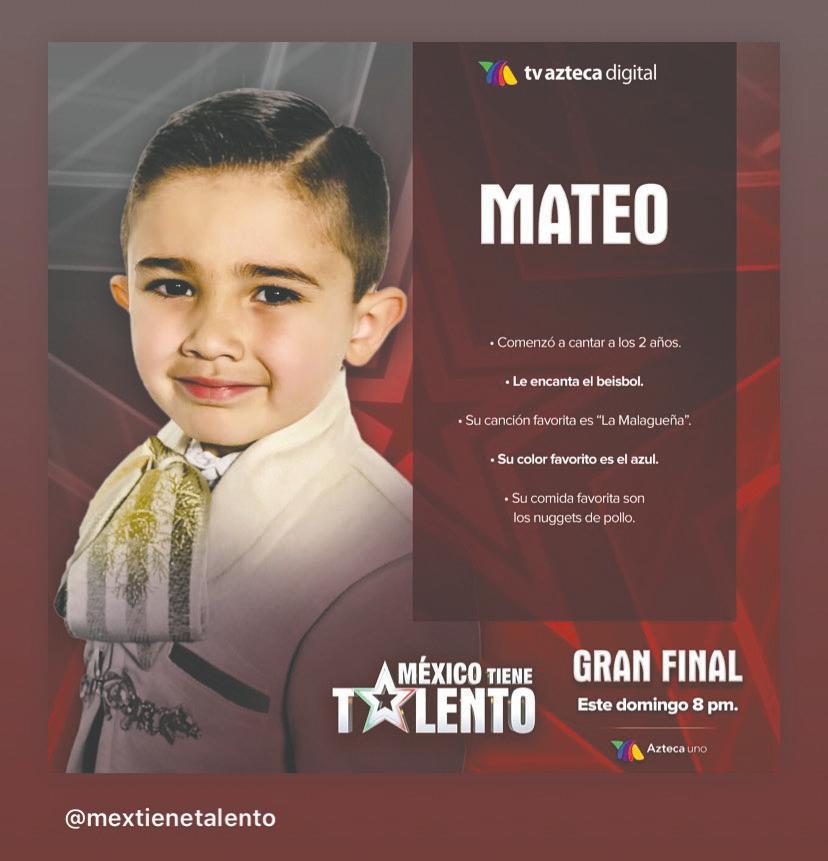
A young San Antonio mariachi is representing Texas on a national stage through a new PBS KIDS series celebrating children, culture, community, and the unique stories that make neighborhoods across America special. KLRN has announced its role in the production of America’s Awesome Kids, a new live action short form series that premiered May 22, 2026, on PBS KIDS. The series arrives as the United States prepares to mark its 250th anniversary and highlights young people from across the country who are sharing their talents, passions, hometown pride, and positive impact in their communities. Produced by GBH Kids in coordination with 23 partnering PBS stations across the country, including KLRN, America’s Awesome Kids is part of PBS’ PBS KIDS Across America initiative. The series includes 25 mini documentaries featuring children from different regions of the country and the stories that reflect where they live, what they love, and how they are helping shape the world around them. For San Antonio, that story is Mateo, a talented young mariachi recognized as the world’s youngest mariachi. Through KLRN’s involvement, Mateo was suggested as part of the national series and became the featured Texas representative. KLRN visited Mateo at his family’s home to learn more about his life, his love for music, and the impressive number of instruments he can play. During the visit, the team also had the opportunity to hear Mateo sing Happy Birth
day to his teacup chihuahua, Memo, adding a personal and joyful moment to his story. Arthur Emerson, President and CEO of KLRN, said the station is proud to see Mateo represent Texas through the series. “We are thrilled to see Mateo represent Texas on America’s Awesome Kids,” Emerson said. “As the world’s youngest mariachi, this talented young man exemplifies the vibrant cultura and traditions of our region. Felicidades, Mateo. Estamos muy orgullosos de ti.” The series features children from across the nation, including young people taking care of llamas in Iowa, Bollywood dancing in Georgia, and exploring Cajun culture in Louisiana. Each mini documentary introduces viewers to local traditions, family stories, cultural pride, and the many ways children are making a difference in their communities. Dorothea Gillim, executive producer and creative director of GBH Kids, said America’s Awesome Kids is designed to reflect the lives of young viewers while helping them learn about different places and cultures across the country. “America’s Awesome Kids reflects the lives of our young audience while also introducing them to the wide array of places, cultures and customs from around the country,” Gillim said. “Working with other PBS stations on this series has been a great opportunity to leverage the strength of public media to capture a uniquely local story for a national audience.” For San Antonio and South Central Texas, Mateo’s feature is more than a children’s television segment. It is a celebration of mariachi music, Latino culture, family tradition, and the young voices carrying heritage forward. Mariachi has long held a special place in San Antonio’s cultural identity. Through music, performance, and storytelling, it connects generations and preserves traditions rooted in Mexican and Mexican American history. Mateo’s story shows how those traditions continue to inspire young people today. Viewers across South Central Texas can watch America’s Awesome Kids on KLRN Channel 9, the PBS KIDS 24 hour channel, and streaming for free on the PBS KIDS Video App, pbskids.org, and the America’s Awesome Kids YouTube channel. For more information about local airtimes and community events, visit www.klrn.org.
San Antonio Honors Sergio Zapata and Reflects on the Deep Mexican Roots of the City
By Louis R. Escareño
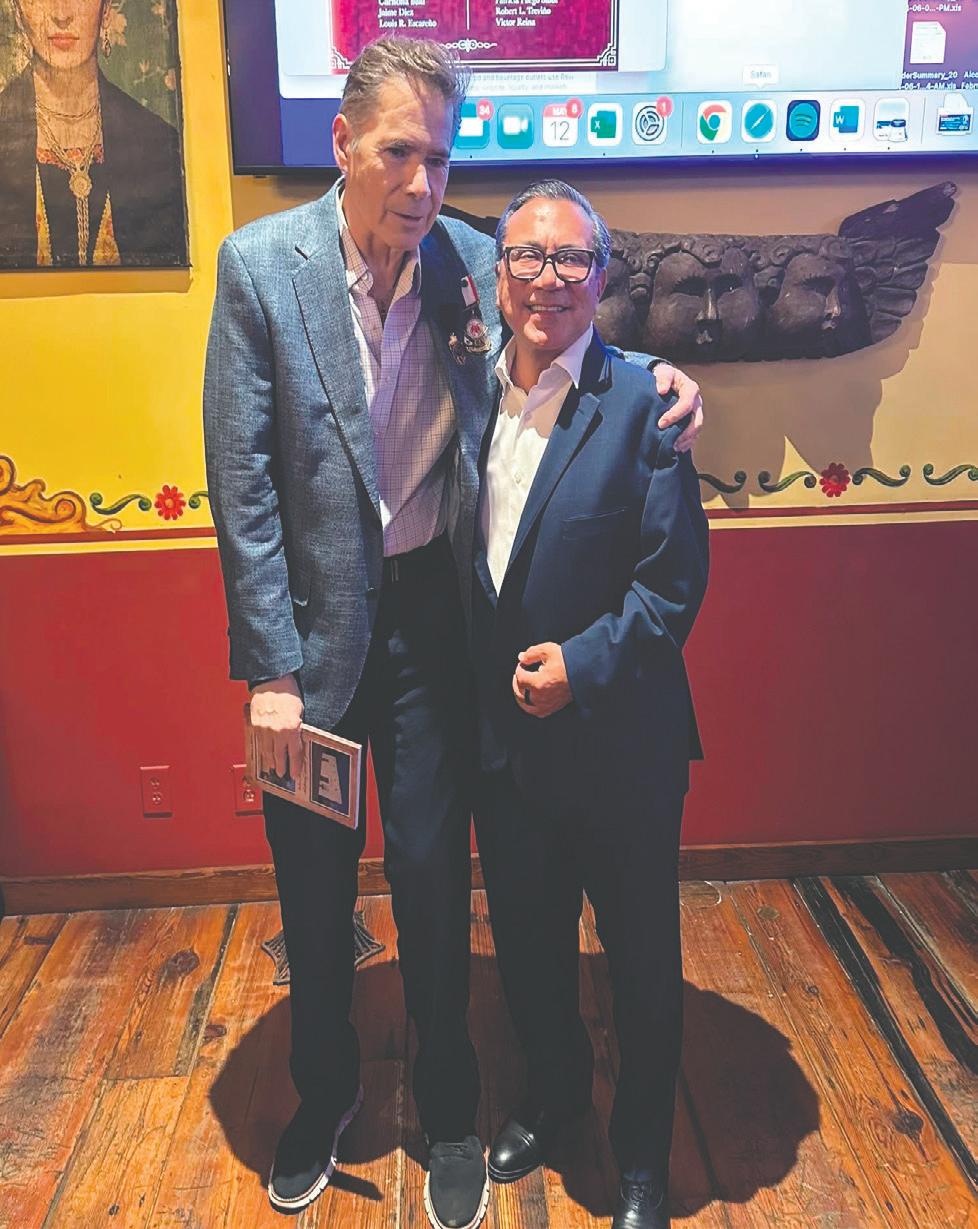
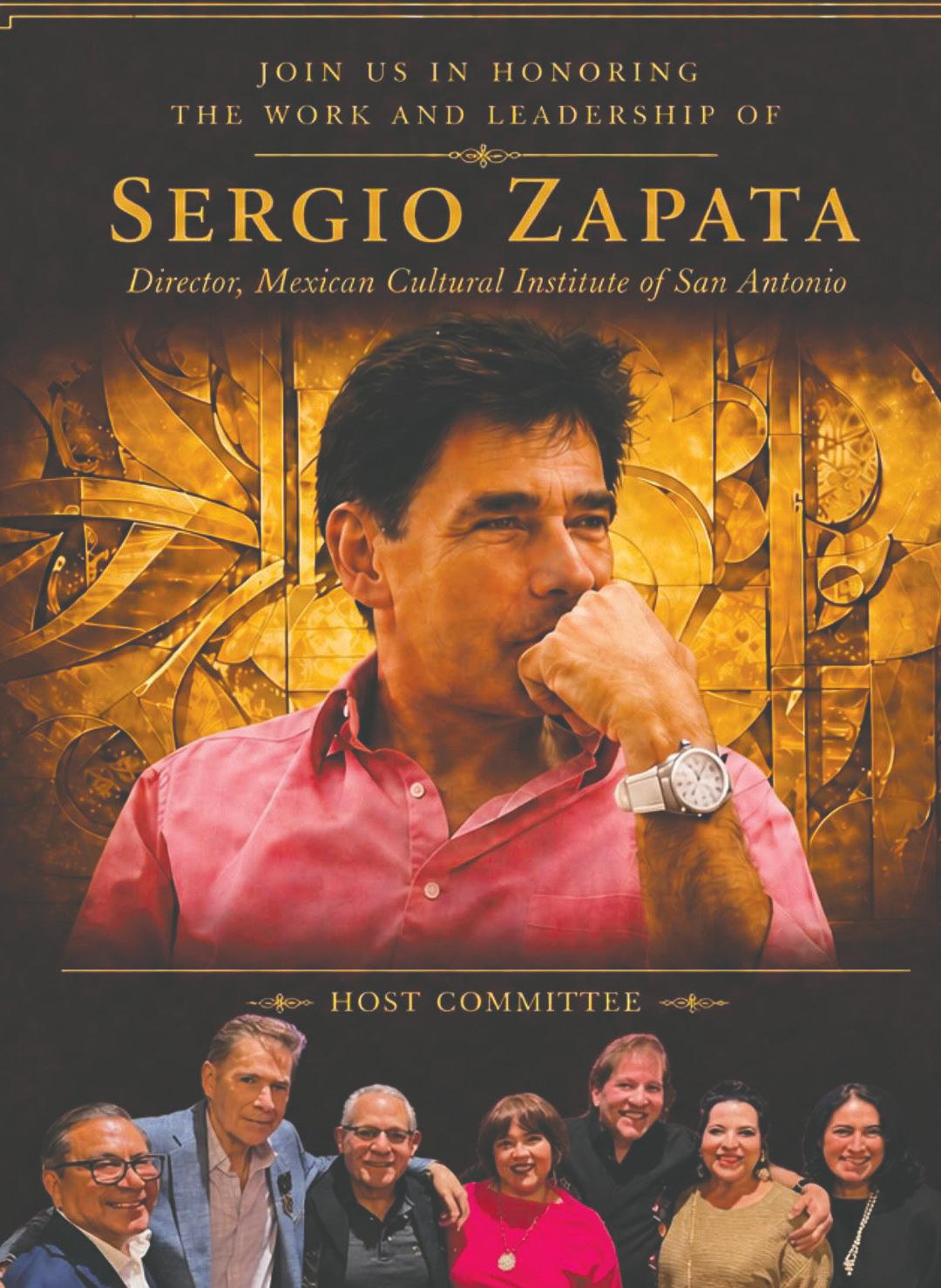
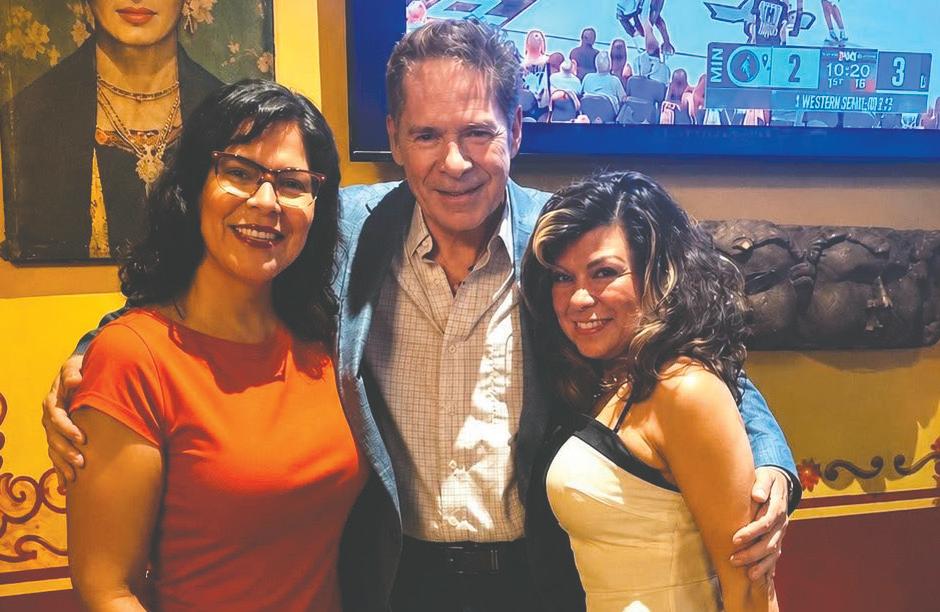
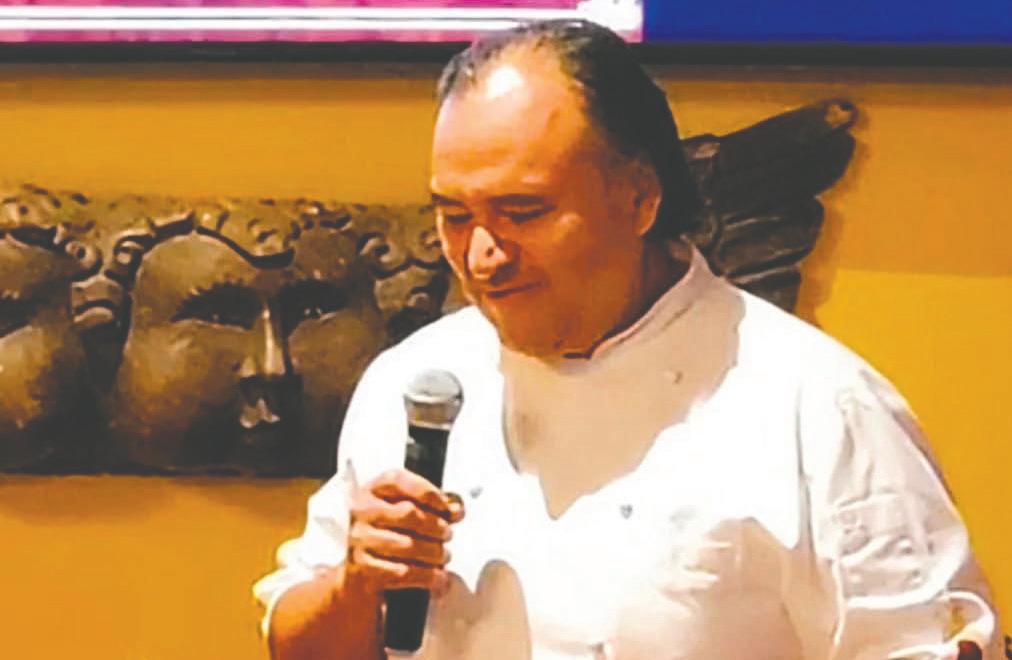
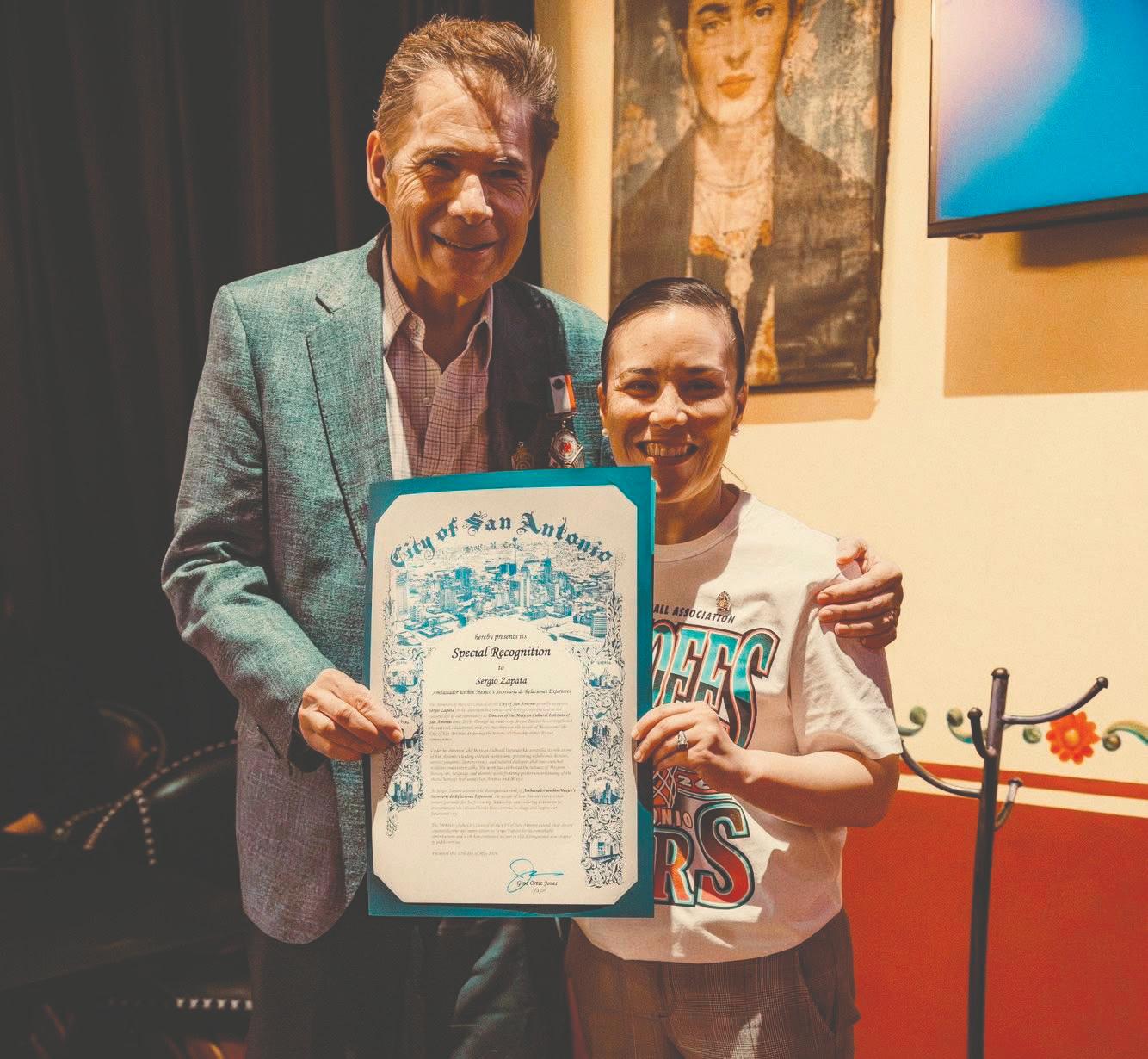
SAN ANTONIO — What began last week as a reception honoring Sergio Zapata, outgoing Executive Director of the Mexican Cultural Institute of San Antonio, evolved into something far more profound: a meditation on memory, identity, ancestry, and the enduring Mexican soul of San Antonio itself. Held at Casa Hernán and hosted by Chef Johnny Hernandez, the evening gathered civic, cultural, educational, and business leaders in tribute not only to Zapata’s leadership, but also to the institution he helped strengthen — one that many speakers described as essential to preserving and interpreting the historic relationship between San Antonio and Mexico. At the center of the evening stood the reflections of Professor John Philip Santos, whose remarks framed the gathering in historical and spiritual terms that resonated deeply throughout the room. “San Antonio was born two centuries after the fall of the Mexica Empire,” Santos told the audience. “Even though it has been almost two centuries since the appearance of the U.S.Mexico border, our story remains rooted in that great Mexican epic of humanity, of Indigenous resilience, of artistic, literary, cinematic, and culinary brilliance.” Santos described the Mexican Cultural Institute as “a beacon illuminating San Antonio’s profound origins and ongoing connection to the great story of Mexico.” Drawing from personal memory, Santos recounted attending HemisFair as an 11-year-old boy and witnessing the ancient Aztec ritual and the Flying Voladores presented at the Mexican pavilion — an experience he said awakened within him a lifelong curiosity about Mexico’s ancient origins and San Antonio’s deep cultural ties to that world. “When you put a border across a homeland,” Santos reflected, “you don’t erase
those deep ties.” Again and again, Santos returned to the idea that San Antonio’s story cannot be separated from Mexico’s story — culturally, spiritually, historically, or artistically. He praised Sergio Zapata for understanding that truth and for expanding the Institute into a space where Mexican, Mexican American, and Indigenous cultural expression could coexist and flourish together. “Under Sergio’s visionary leadership,” Santos said, “the Instituto has manifested Carlos Fuentes’call to the Mexican imagination: ‘We ought to imagine the past so the future, when it arrives, can also be remembered.’” Earlier in the evening, journalist and cultural commentator Elaine Ayala established the tone for the gathering as master of ceremonies. “Tonight is about our appreciation of Sergio,” Ayala told attendees, “but it is also about celebrating the enduring ties between Mexico and San Antonio, the Mexican American capital of the United States.” Ayala reminded the audience that institutions such as the Mexican Cultural Institute and UNAM have played a vital role in the artistic, educational, and civic life of San Antonio since HemisFair ’68, helping generations better understand the city’s layered cultural inheritance. She welcomed an audience filled with educators, artists, diplomats, business leaders, elected officials, and longtime cultural advocates “united in mutual cultural understanding.” Mayor Gina Ortiz Jones built upon those themes by emphasizing that the relationship between San Antonio and Mexico is ultimately sustained not through government alone, but through people-to-people connections rooted in shared culture and history. “It’s really the people,” the Mayor said. “Those things only come alive and flourish based on people like Sergio and his contributions that strengthen the connections between our communities.” Mayor Jones reflected on the symbolic importance of
Mexico as the destination of her first international trip as Mayor and reminded attendees that San Antonio has long occupied a unique place within Mexican and Texas history, including its connection to the drafting of the Plan de San Luis.
“Thank you, Sergio,” she said, “for all the ways in which you’ve worked to keep that rich history and culture alive and strengthen that in our community.”
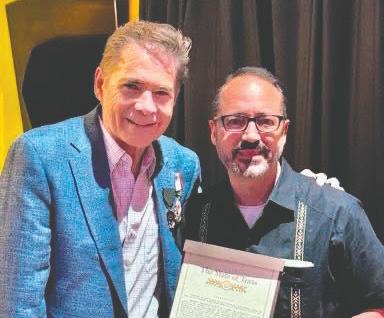
The Mayor presented Zapata with an official City Council proclamation recognizing his distinguished leadership since 2019 and honoring his efforts to deepen the cultural, educational, and civic ties between San Antonio and Mexico. Throughout the evening, speakers which included Senator Jose Menendez, Dr. Ellen Riojas Clark, Consul General Ruben Minutti, UTSA’s Ed Conroy, Becky Barrera and Magdalena Barrera repeatedly to the importance of the Mexican Cultural Institute as more than simply an arts venue. They described it as a place of memory, scholarship, dialogue, and cultural continuity. Chef Johnny Hernandez spoke emotionally about the Institute’s importance in his own life and career. “If I go back thirty years ago when I started my catering company,” Hernandez said, “it was one of the places where I was able to showcase what I love about Mexico through events and through food and through culture.” Calling the Institute “part of my family and my tradition,” Hernandez praised Zapata for bringing “class, elegance, and a high level of programming” to the institution during his tenure. Since assuming leadership in 2019, Zapata oversaw a major expansion of the Institute’s programming, including more than 125 exhibitions dedicated to visual arts, literature, music, gastronomy, and public dialogue. Under his leadership, the Institute also expanded opportunities for Mexican American artists, scholars, and younger generations to engage with questions of identity, ancestry, and cultural belonging. As Sergio Zapata prepares to assume a new diplomatic role within Mexico’s Secretaría de Relaciones Exteriores, many attendees acknowledged that while his departure leaves a void, the deeper work he championed will endure. By evening’s end, the tribute had become something larger than a farewell. It became a reaffirmation that San Antonio’s identity remains profoundly shaped by the enduring presence of Mexico — not as distant history, but as living memory carried forward through art, scholarship, language, family, and culture.
Host Committee
Beto Altamirano Arturo Almeida
Elaine Ayala Magdalena Barrera
Becky Barrera Ramiro Cavazos
Ed Conroy
Jaime Diez
Jose Rosario Gonzalez
Christina Ballí
Louis R. Escareño
Johnny Hernandez
Eileen Kret Raul Lomeli
Luis Rodriguez Dr. Ellen Riojas Clark
John Philip Santos
Yvette Tello
Victor Reina
Patricia Pliego Stout
Robert L. Treviño
Downtown Thursday Brings Free Summer Events and Parking to San Antonio
By La Prensa Texas Staff
San Antonio residents and visitors will have a new reason to enjoy downtown this summer as the City of San Antonio launches Downtown Thursday, a weekly evening program filled with arts, culture, music, food, family friendly activities, and free parking. The new summer program begins Thursday, June 4, and will continue every Thursday night through the end of August. Downtown Thursday will replace the Downtown Tuesday free parking program for the summer season, shifting the focus to Thursday evenings when more visitors can enjoy downtown events, restaurants, entertainment, and public spaces. Each week, Downtown Thursday will offer a variety of activities and experiences across the downtown area. Visitors can expect live entertainment, food and drink specials, outdoor programming, cultural events, and community partner activities. Participating partners include Centro, The Local, Hemisfair, Main Plaza, the Fairmount Hotel, the Majestic Theatre, and several downtown restaurants and bars. Travis Park and Legacy Park will also host seasonal programming throughout the summer. To help make downtown easier to explore, the City is sponsoring a downtown circulator operated by The Local SATX during Downtown Thursdays. The free transportation service will help move visitors between downtown destinations and events. The official kickoff will take place with a Downtown Thursday Block Party on Thursday, June 4, from 5 p.m. to 7 p.m.
at Legacy Park, located at 103 West Houston Street. The free public event will include live entertainment, food, activities, and giveaways. A brief welcome ceremony highlighting the program will begin at 4:30 p.m. before the block party starts. Free parking will also be a major part of Downtown Thursday. Visitors can park at participating City owned parking facilities for free on Thursday nights from 5 p.m. to 2 a.m., with some exceptions. The final Downtown Tuesday free parking day for the summer was May 26, and the program will now transition to Thursday evenings through the end of August. City officials say the goal of Downtown Thursday is to encourage more people to experience downtown San Antonio while supporting local businesses, cultural spaces, restaurants, and community organizations. The program is designed to create a welcoming summer atmosphere where families, residents, workers, and visitors can gather and enjoy the heart of the city. A full schedule of Downtown Thursday events will be announced after the June 4 block party. Downtown businesses and organizations that are interested in participating, or that already host Thursday evening events, are encouraged to contact downtown@sanantonio. gov for more information. Downtown Thursday offers San Antonio a fresh way to celebrate summer nights while supporting the people, places, and businesses that help make the city vibrant, cultural, and connected.
Por Sendero Deportivo
El Torneo Memorial Day, que se jugó el domingo 24 de mayo en el estadio Potranco Baseball Field, con una buena causa, para ayudar al fondo legal económico del manager y jugador Chuy Ramírez, de White Sox, dirigidos interinamente por el jugador Alex Hernández, y los organizadores Chuy Ramírez Jr, Simón Sánchez, presidente de Liga Abierta dominical y el artista Eloy Rocha, dueño del estadio en
White Sox Campeón
mención. Resultados:
White Sox derrotó al visitante equipo Piratas del manager Leonel Mesa con pizarra de 3-2 carreras con victoria para el lanzador Carlos Reyes. Diablos del “cafetero” Mike Tabhan derrotó 14-13 a Cubs de Martin Rodríguez, Jarrett Flores de los Diablos, pegó jonrón con un compañero en base poniendo en el noveno inning el score de 14-12 carreras, Cubs en el cierre del noveno episodio logró anotar la décimo tercera carrera,
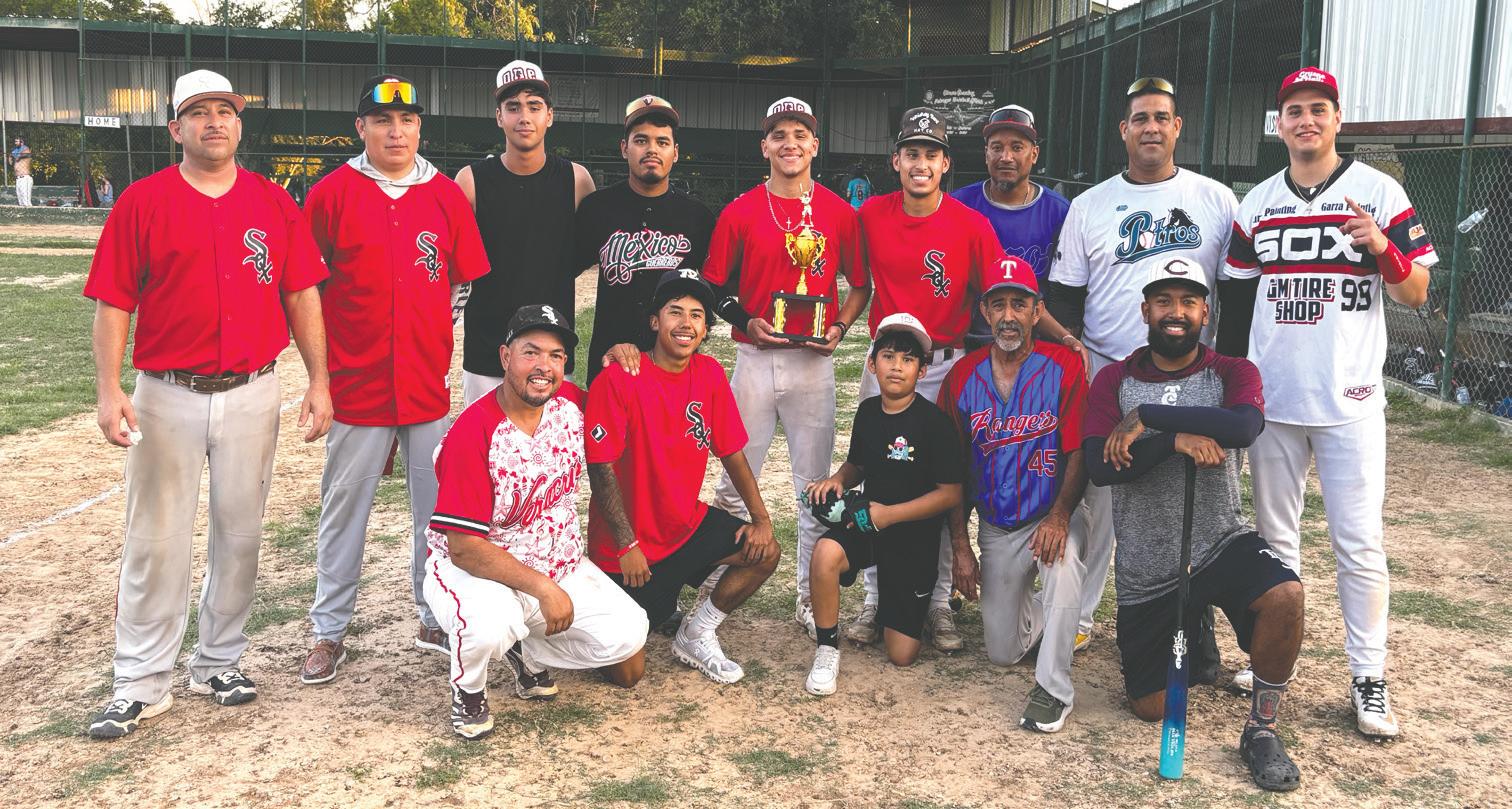
dejando ir la oportunidad con corredores en base, en lo que la defensiva rival logró contenerlos y luego disputar el campeonato a White Sox. Alex Hernández, tuvo gran acierto en conservar en la serpentina a Pedro Lira, quien logró superar al relevista Josh Gill, quien lanzó gran defensiva. White Sox, logró la captura del trofeo de campeón con pizarra de 2-1 carreras. Chuy Ramírez Jr., y el presidente Simón Sánchez, agradecieron la participación de equi-
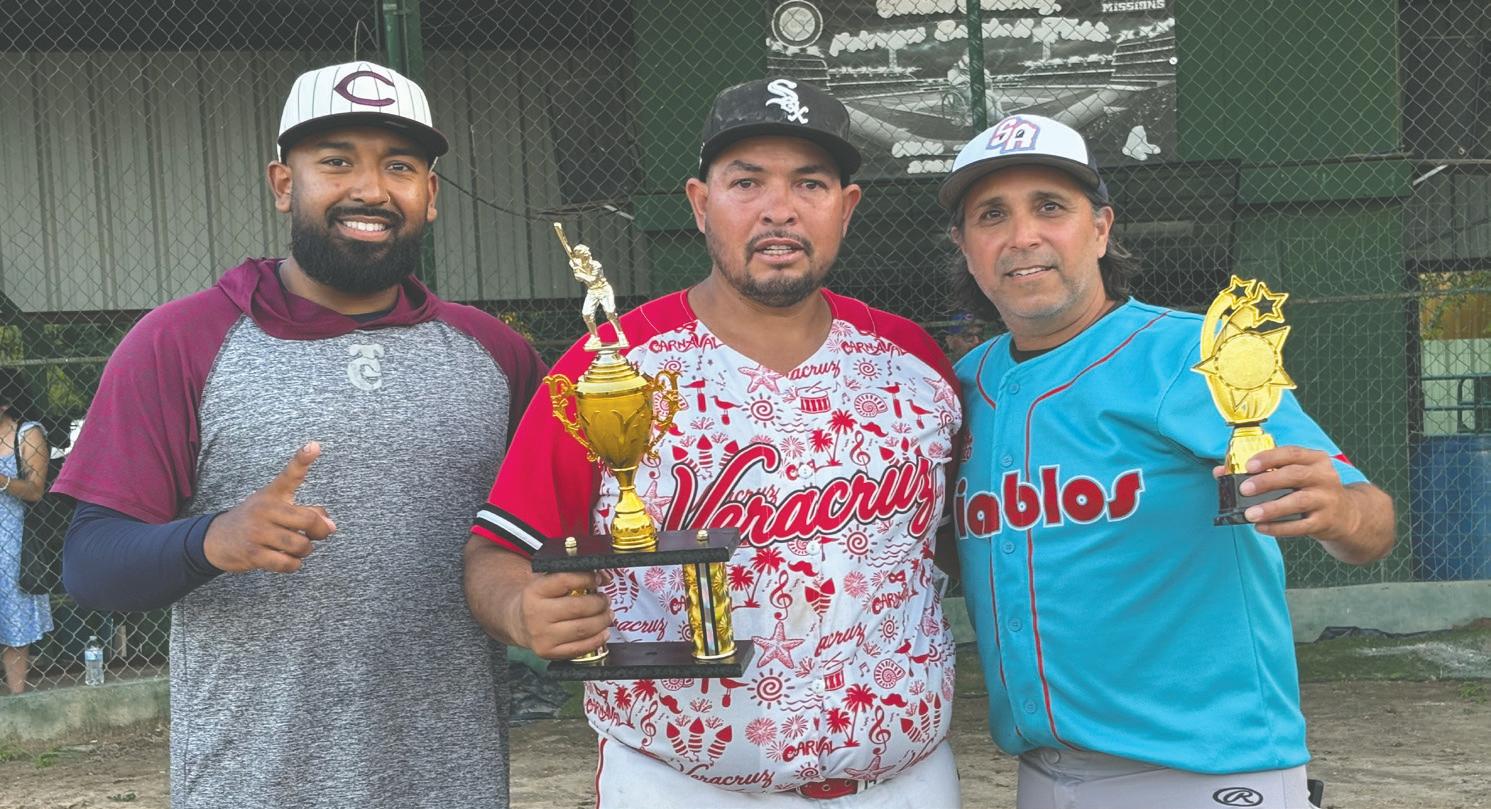
pos, jugadores y la noble afición que una vez más aportaron su respectivo apoyo al evento deportivo fincado en una gran causa comunitaria por medio del rey de los deportes. Al final Ramírez Jr., presentó los flamantes trofeos de campeón a los managers; Alex Hernández de White Sox y al subcampeón Mike Tabhan de los Diablos. En partido amistoso categoría 60+ jugado en el campo 2 de Potranco, Los Gringos derrotaron 7-6 a Los Mariachis, encuen-
tro organizado por el presidente Simon Sánchez y Jimmy Martínez (manager y jugador del club Reds- Los Rojos categoría Masters 50+). Martínez, agradeció al compilador y comentarista José Sánchez, quien anunció otro partido a celebrarse durante los festejos del cuatro de julio. En las fotos aparecen; Chuy Ramírez Jr., presentando los trofeos a Alex Hernádez y Mike Tabhan. El campeón White Sox. (Fotos de Franco)
Fiesta Big. Shop Small.
When Family Violence Takes Another Life /Cuando la violencia
familiar cobra otra vida…toda la comunidad debe escuchar
By Yvette Tello
San Antonio is grieving again. Another life has been lost to family violence, and behind that loss is not just a headline, not just a police report, and not just another statistic. There is a family. There are children, parents, siblings, friends, neighbors and loved ones left with questions that may never be answered. There is pain that will not disappear when the news cycle moves on. The Collaborative Commission on Domestic Violence has expressed its sympathy and support for the family members affected by the recent fatal family violence incident that occurred on May 22, 2026. Sadly, this tragedy is one of several recent deaths that remind us of something our community cannot afford to ignore: family violence impacts everyone. La violencia familiar no siempre comienza con un golpe. A veces comienza con miedo. Con control. Con amenazas. Con aislamiento. Con una persona que slowly starts to feel like they have no way out. For many victims, the danger is happening behind closed doors, hidden behind smiles, family photos, church attendance, work routines and social media posts that make everything look normal. But for the person living through it, nothing feels normal. Domestic violence is complex. It can involve emotional abuse, financial control, intimidation, stalking, physical harm, sexual violence, threats against children, threats involving weapons, or the constant fear of what may happen next. Many victims stay silent not because they are weak, but because they are scared, trapped, ashamed, financially dependent, worried about their children, or unsure whether anyone will believe them. That is why the response cannot be judgment. It must be compassion. If you are reading this and you are in danger, please know this: you are not alone. What is happening to you is not your fault. You deserve safety. You deserve help. You deserve to live without fear. Si estás leyendo esto y estás viviendo violencia en tu hogar, por favor escucha esto con todo el corazón: no estás sola. No estás solo. No tienes que cargar este dolor en silencio. Hay personas y organizaciones preparadas para ayudarte, sin juzgarte. In Bexar County, the Collaborative Commission on Domestic Violence was created to bring together leaders from government, the courts, law enforcement, prosecution, nonprofits, education and health care to strengthen how our community prevents and responds to domestic violence. The commission’s work includes increasing awareness, improving safety, and helping the public better understand resources, protective orders, bonds, firearm surrender policies and other local processes that may help protect victims and families. But government agencies and organizations cannot do this work alone. The community must also be willing to see the warning signs. Sometimes the person in need is your sister. Your cousin. Your co-worker. Your neighbor. Your best friend. Sometimes it is the woman who always
says she is fine. Sometimes it is the man who is too embarrassed to speak up. Sometimes it is a child who has learned to stay quiet. Sometimes it is someone sitting right next to you who is praying for somebody to notice. We must stop asking, “Why didn’t they leave?” and start asking, “How can we help them get safe?” Leaving an abusive relationship can be one of the most dangerous moments for a victim. It takes planning, support and protection. That is why resources matter. That is why phone numbers matter. That is why community awareness matters. One conversation, one safe ride, one trusted person, one phone call can save a life. If you or someone you know is affected by family violence, help is available 24 hours a day through Family Violence Prevention Services at 210-733-8810 or online at FVPS.org. For children who are victims of abuse, support is available through ChildSafe San Antonio at 210-675-9000 or ChildSafe-sa.org. If there is an emergency, call or text 911 immediately. For anyone experiencing emotional distress, mental health challenges, or thoughts of suicide, call or text the Suicide & Crisis Lifeline at 988. En una emergencia, llama o manda texto al 911. Si estás en crisis emocional o pensando en hacerte daño, llama o manda texto al 988. Si sufres violencia familiar, llama a Family Violence Prevention Services al 210-733-8810. Si un niño o niña está siendo abusado, comunícate con ChildSafe San Antonio al 210-675-9000. No family should have to bury a loved one because violence was allowed to grow in silence. No child should have to witness abuse and believe that fear is normal. No victim should have to wonder whether the community cares. We do care. And caring means more than feeling sad after another tragedy. It means learning the signs. It means checking on people. It means believing survivors. It means teaching our children that love is not control, jealousy is not protection, and violence is never acceptable. It means supporting organizations doing the hard work every day. It means speaking up before another life is lost. Today, we mourn. But tomorrow, we must act. Because behind every victim is a story. Behind every story is a family. And behind every family is a community that must decide whether it will look away or stand together. La violencia familiar nos afecta a todos. La prevención también es responsabilidad de todos. If you need help, reach out. If you know someone who may need help, do not ignore it. Your voice, your concern and your courage may be the reason someone survives. For more information about domestic violence resources and the Collaborative Commission on Domestic Violence, visit CCDV.org.