La Otra Orilla
7 September 2025


7 September 2025
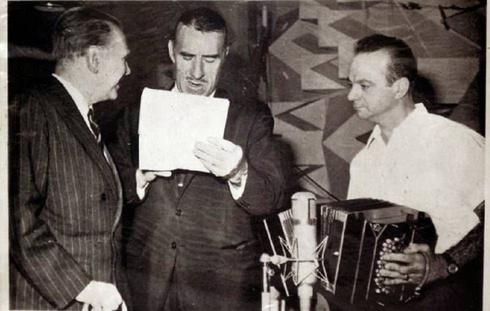
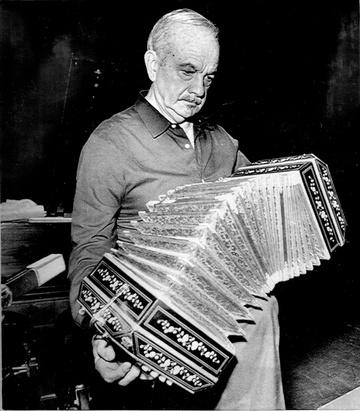
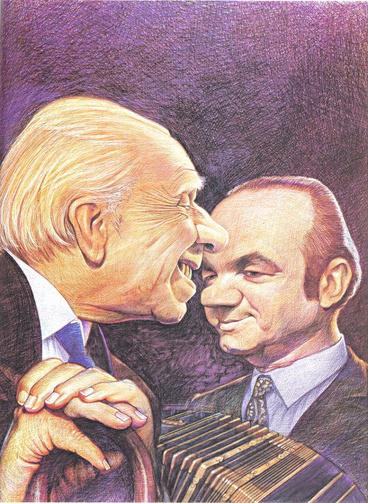
In 1965, 32 year old Argentine composer Astor Piazzolla collaborated with the esteemed 65 year old Argentine writer Jorge Luis Borges on a project that was almost iconoclastic in nature. Together they would explore the anatomy of the Argentine tango and its rather violent and certainly impassioned origins in the barrios of Buenos Aires. The result of this was El Tango, a recording project that combined Astor Piazzolla’s nuevo tango tango infused with jazz and classical elements — and Borges’ poetry.
Their collaboration was unusual: Borges often dismissed tango as frivolous, yet in El Tango he revisited the knife fights, nostalgia, and mythical figures of the Buenos Aires underworld. Piazzolla, meanwhile, was transforming tango itself, fusing it with classical counterpoint and jazz rhythms. Together they created a work that was both homage and reinvention, reflecting Argentina’s cultural identity in flux.
El Tango
Astor Piazzolla & Jorge Luis Borges (1965)
Leija’s Game
Astor Piazzolla (1987)
Milonga Del Angel
Astor Piazzolla (1987)
El Hombre De La Esquina Rosada
Astor Piazzolla & Jorge Luis Borges (1960)
Tangata (Silfo y Ondina) — Alguien Le Dice Al Tango poem
Astor Piazzolla (1989)
Pompeya
Julián Peralta (2016)
Buenos Aires Hora Cero
Astor Piazzolla (1965)
Libertango
Astor Piazzolla (1974)
Oblivion — Límites poem
Astor Piazzolla (1982)
El Tango (reprise)
Charrúa
Julián Peralta (2006)
Viejo Sabio — Arte Poética poem
Ramiro Gallo (2009)
Moda Tango
Nestor Marconi (1991)
El Tango (reprise)
¿Dónde estarán? pregunta la elegía de quienes ya no son, como si hubiera una región en que el Ayer, pudiera ser el Hoy, el Aún, y el Todavía.
¿Dónde estarán? (repito) el malevaje* que fundó en polvorientos callejones de tierra o en perdidas poblaciones la secta del cuchillo y del coraje?
¿Dónde estarán aquellos que pasaron, dejando a la epopeya un episodio, una fábula al tiempo, y que sin odio, lucro o pasión de amor se acuchillaron?
Los busco en su leyenda, en la postrera brasa que, a modo de una vaga rosa, guarda algo de esa chusma valerosa de Los Corrales y de Balvanera.
¿Qué oscuros callejones o qué yermo del otro mundo habitará la dura sombra de aquel que era una sombra oscura, Muraña, ese cuchillo de Palermo?
¿Y ese Iberra fatal (de quien los santos se apiaden) que en un puente de la vía, mató a su hermano, el Ñato, que debía más muertes que él, y así igualo los tantos?
Una mitología de puñales lentamente se anula en el olvido; Una canción de gesta se ha perdido entre sórdidas noticias policiales.
Where are they now? asks the elegy of those who are no more, as if there were a realm where Yesterday could be Today, Still, and Even Yet.
Where are they now? (I repeat) the underworld that founded, in dusty alleys of earth or in lost towns, the sect of the knife and of courage?
Where are those who passed, leaving to epic a single episode, a fable to time, and who without hatred, profit, or passion of love, knifed each other?
I seek them in their legend, in the last embers that, like a vague rose, hold something of that valiant rabble from Los Corrales and Balvanera*.
What dark alleys or what wasteland of the other world will inhabit the hard shadow of the one who was a dark shadow, Muraña*, that knife of Palermo?
And that fatal Iberra* (may the saints have mercy) who on a bridge of the railway, killed his brother, Ñato*, who owed more deaths than he, and thus evened the score?
A mythology of daggers slowly fades into oblivion; an epic song has been lost among sordid police reports.
Hay otra brasa, otra candente rosa de la ceniza que los guarda enteros; ahí están los soberbios cuchilleros y el peso de la daga silenciosa.
Aunque la daga hostil o esa otra daga, el tiempo, los perdieron en el fango, hoy, más allá del tiempo y de la aciaga muerte… esos muertos viven en el tango.
En la música están, en el cordaje de la terca guitarra trabajosa, que trama en la milonga venturosa la fiesta y la inocencia del coraje.
Gira en el hueco la amarilla rueda de caballos y leones, y oigo el eco de esos tangos de Arolas y de Greco que yo he visto bailar en la vereda, en un instante que hoy emerge aislado, sin antes ni después, contra el olvido, y que tiene el sabor de lo perdido, de lo perdido y lo recuperado.
En los acordes hay antiguas cosas: el otro patio y la entrevista parra. Detrás de las paredes recelosas el Sur guarda un puñal y una guitarra.
Esa ráfaga, el tango, esa diablura, los atareados años desafía; hecho de polvo y tiempo, el hombre dura menos que la liviana melodía… que solo es tiempo.
El Tango crea un turbio pasado irreal que de algún modo es cierto, el recuerdo imposible de haber muerto peleando, en una esquina del suburbio.
There is another ember, another glowing rose from the ashes that keep them whole; there are the proud knife fighters and the weight of the silent dagger.
Though the hostile dagger, or that other dagger, time, has lost them in the mud, today, beyond time and fateful death… those dead live on in the tango.
They are in the music, in the strings of the stubborn, laborious guitar, which weaves, in the fortunate milonga*, the festivity and innocence of courage.
The yellow wheel of horses and lions spins in the hollow, and I hear the echo of those tangos of Arolas and Greco* that I have seen danced on the sidewalk, in a moment that today emerges isolated, without before or after, against oblivion, and which has the taste of what was lost, of what was lost and recovered.
In the chords there are ancient things: the other courtyard with its vines. Behind the wary walls the South keeps a knife and a guitar.
That gust, the tango, that devilry, defies the busy years; made of dust and time, man lasts less than the light melody… which is only time.
The Tango creates a murky unreal past that in some way is true, the impossible memory of having died fighting, on a corner of the suburb.
Tango que he visto bailar contra un ocaso amarillo por quienes eran capaces de otro baile, el del cuchillo.
Tango de aquel Maldonado con menos agua que barro, Tango silbado al pasar desde el pescante del carro.
Despreocupado y zafado, siempre mirabas de frente.
Tango que fuiste la dicha de ser hombre y ser valiente. Tango que fuiste feliz, como yo también lo he sido, según me cuenta el recuerdo; el recuerdo fue el olvido.
Desde ese ayer, ¡cuántas cosas a los dos nos han pasado! Las partidas y el pesar de amar y no ser amado. Yo habré muerto y seguirás orillando* nuestra vida.
Buenos Aires no te olvida, Tango que fuiste y serás.
Tango that I have seen danced against a yellow sunset by those who were capable of another dance the knife.
Tango of that Maldonado* stream, with more mud than water, Tango whistled in passing from the driver’s seat of the cart.
Carefree and unruly, you always faced straight ahead. Tango, you were the joy of being a man and being brave. Tango that you were happy, as I too have been, so memory tells me; memory was oblivion.
Since that yesterday, how many things have happened to us both! Departures and the sorrow of loving and not being loved. I will have died, and you will go on running along the edges of our life.
Buenos Aires does not forget you, Tango that you were and will be.
De estas calles que ahondan el poniente, una habrá (no sé cuál) que he recorrido ya por última vez, indiferente y sin adivinarlo, sometido
a Quién prefija omnipotentes normas y una secreta y rígida medida a las sombras, los sueños y las formas que destejen y tejen esta vida.
Borges 1964 Of these streets that sink into the west, there will be one (I don’t know which) I have walked already for the last time, indifferent and without guessing it, subject to Him who lays down almighty laws and a secret and rigid measure for the shadows, the dreams, and the forms that unweave and weave this life.
Si para todo hay término y hay tasa y última vez y nunca más y olvido ¿quién nos dirá de quién, en esta casa, sin saberlo nos hemos despedido?
Tras el cristal ya gris la noche cesa y del alto de libros que una trunca sombra dilata por la vaga mesa, alguno habrá que no leeremos nunca.
Hay en el Sur más de un portón gastado con sus jarrones de mampostería y tunas, que a mi paso está vedado como si fuera una litografía.
Para siempre cerraste alguna puerta y hay un espejo que te aguarda en vano; la encrucijada te parece abierta y la vigila, cuadrifronte, Jano.
Hay, entre todas tus memorias, una que se ha perdido irreparablemente; no te verán bajar a aquella fuente ni el blanco sol ni la amarilla luna.
If everything has its term and its limit, its last time and nevermore and oblivion, who will tell us of whom, in this house, without knowing it, we have taken leave?
Through the already gray glass the night withdraws, and from the pile of books that a broken shadow lengthens across the vague table, there will be one we shall never read.
In the South there is more than one worn gate with its masonry urns and prickly pears, that to my steps is barred as if it were a lithograph.
Some door you have closed forever, and there is a mirror that awaits you in vain; the crossroads seems open to you, and four-faced Janus* keeps watch.
Among all your memories there is one that has been lost irretrievably; neither white sun nor yellow moon will see you descend again to that fountain.
No volverá tu voz a lo que el persa dijo en su lengua de aves y de rosas, cuando el ocaso, ante la luz dispersa, quieras decir inolvidables cosas.
¿Y el incesante Ródano y el lago, todo ese ayer sobre el cual hoy me inclino?
Tan perdido estará como Cartago que con fuego y con sal borró el latino.
Creo en el alba oír un atareado rumor de multitudes que se alejan; son los que me han querido y olvidado; espacio y tiempo y Borges ya me dejan.
Your voice will not return to what the Persian* said in his tongue of birds and roses, when at sunset, before the scattered light, you wish to speak unforgettable things.
And the ceaseless Rhône*, and the lake, all that yesterday on which today I lean? It will be as lost as Carthage*, which the Roman erased with fire and salt.
At dawn I think I hear a busy murmur of multitudes that move away; they are those who have loved me and forgotten me; space and time and Borges now forsake me.
Mirar el río hecho de tiempo y agua y recordar que el tiempo es otro río, saber que nos perdemos como el río y que los rostros pasan como el agua.
Sentir que la vigilia es otro sueño que sueña no soñar y que la muerte que teme nuestra carne es esa muerte de cada noche, que se llama sueño.
Ver en el día o en el año un símbolo de los días del hombre y de sus años, convertir el ultraje de los años en una música, un rumor y un símbolo,
ver en la muerte el sueño, en el ocaso un triste oro, tal es la poesía, que es inmortal y pobre. La poesía vuelve como la aurora y el ocaso.
A veces en las tardes una cara nos mira desde el fondo de un espejo; el arte debe ser como ese espejo que nos revela nuestra propia cara.
Cuentan que Ulises, harto de prodigios, lloró de amor al divisar su Itaca verde y humilde. El arte es esa Itaca de verde eternidad, no de prodigios.
También es como el río interminable que pasa y queda y es cristal de un mismo Heráclito inconstante, que es el mismo y es otro, como el río interminable.
To gaze at a river made of time and water and remember that Time is another river, to know that we are lost like the river and that faces pass like water.
To feel that waking is another dream that dreams of not dreaming, and that the death we fear in our flesh is the death of each night, which we call sleep.
To see in the day or in the year a symbol of the days of man and of his years, to turn the outrage of the years into music, a murmur, and a symbol.
To see in death a dream, in the sunset a sad gold, such is poetry, immortal and humble. Poetry returns, like dawn and sunset.
Sometimes in the evenings a face looks at us from the depths of a mirror; art must be like that mirror, revealing to us our own face.
They say Ulysses, weary of marvels, wept with love upon seeing his Ithaca*, green and humble. Art is that Ithaca, eternal green, not marvels.
It is also like the endless river that flows and remains, a crystal of the same inconstant Heraclitus, who is the same and yet another, like the endless river.
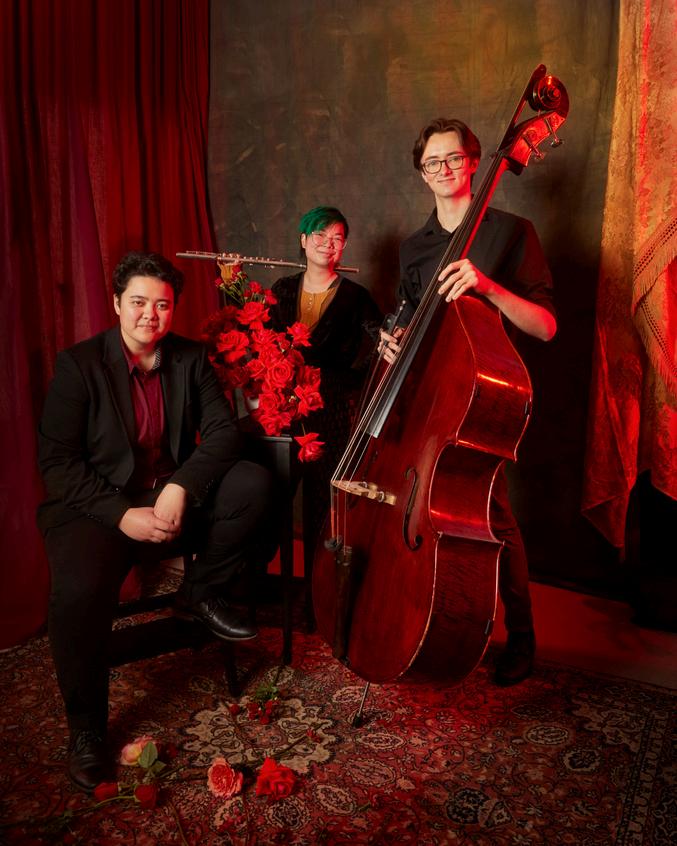
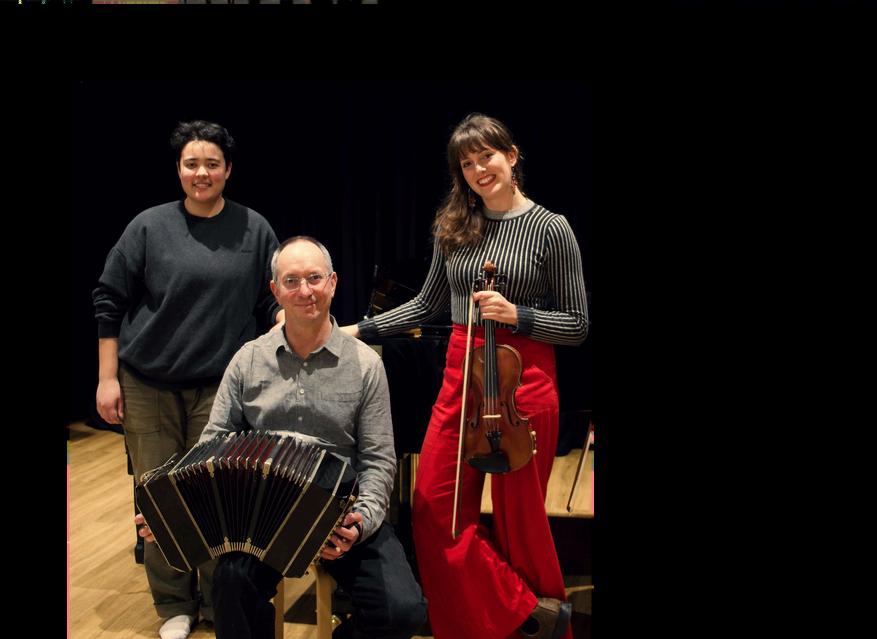
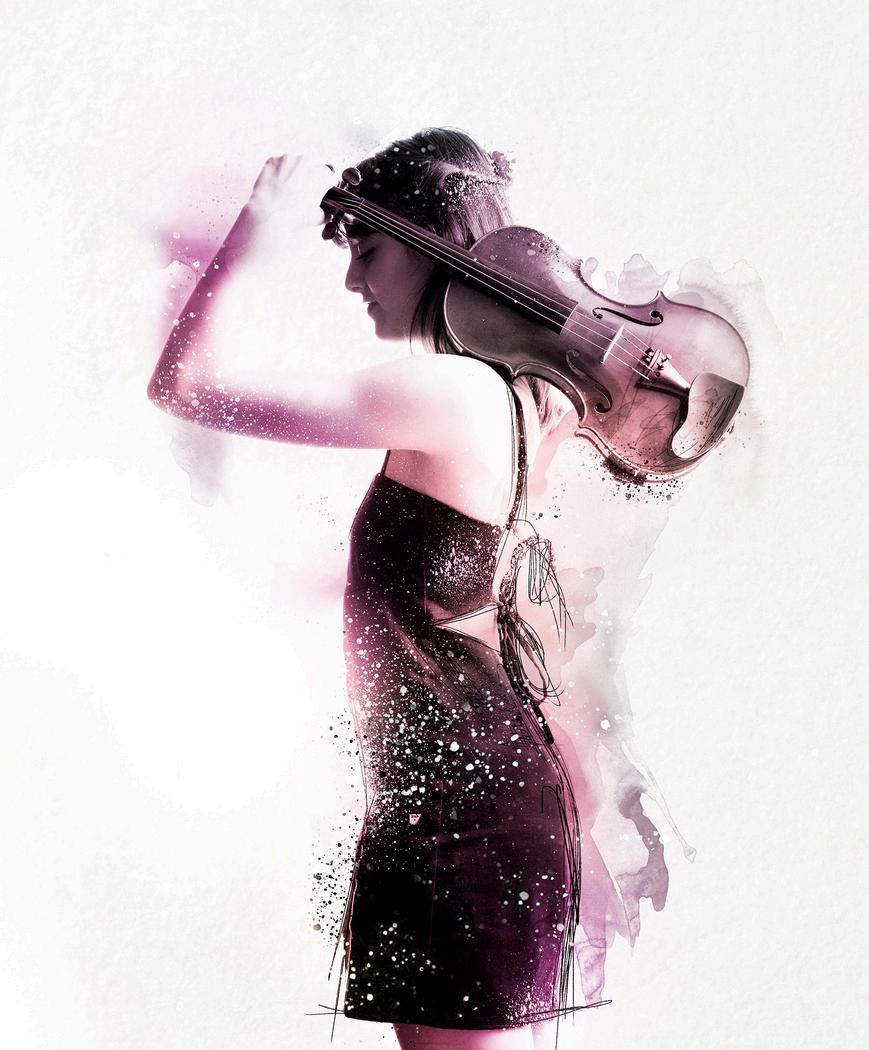
Emma Scolaro — Artistic Director & Violin
Georgia Cartlidge — Violin
Liz Cheung — Flutes
Jamie Gifford — Bandoneon
Reika Suzuki-Macklin — Piano
Harry Young — Double Bass
Poetry Reciters
Ana Garcia
Vanesa González Fernández
Moira Saunders