


HowanELCSLabPrepares CollegeStudentsfor Interviews,GroupDiscussions, andPresentations.







In the final year of most Indian college degree programmes, three communicationeventsdeterminemoreaboutastudent'simmediatefuturethan almost anything else they have studied: job interviews, group discussions, and presentations. These are the events through which placement opportunities are secured, where scholarship interviews are navigated,and where graduate study admissions are won or lost.
None of these events tests technical knowledge primarily. All of them test communication.AndallofthemcanbemeaningfullypreparedthroughELCSLab practice if that preparation starts early enough and happens consistently enough.
InterviewPreparationThroughtheELCSLab
An interview is a specific communicative genre. It has a recognisable structure, a predictable range of question types, and an evaluative dynamic that differs from casual conversation in ways that require specific preparation.
Studentswhoarriveataninterviewwithouthavingpracticedthegenrewhohave read about interview techniques but never rehearsed the actual experience of being asked a question and producing a structured response under mild pressure consistently underperform relative to their actual capability. Their communication is hesitant not because they lack ideas but because the format is unfamiliar.
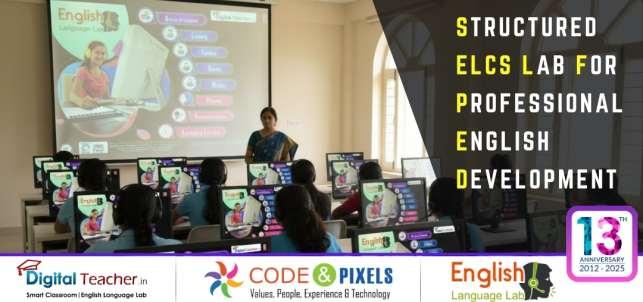


The ELCS Lab addresses this through dedicated interview simulation modules. Students work through common interview question types biographical, behavioural, situational, competency-based recording their responses, listening back, comparing to model answers, and recording again with improvements. Over multiple sessions, the format becomes familiar. The cognitive overhead of managing a novel situation reduces. Students can invest more of their attention in what they are actually saying.
GroupDiscussionPreparationThroughtheELCSLab
Group discussions test a different skill set from interviews: not solo performance, but collaborative communicative agility. The specific competencies a GD participant needs entering the discussion at the appropriate moment, building onanotherspeaker'spoint,directingatangentialconversationbacktothetopic, summarising a thread to move the discussion forward are learnable skills, but they require practice in a context that resembles a GD.
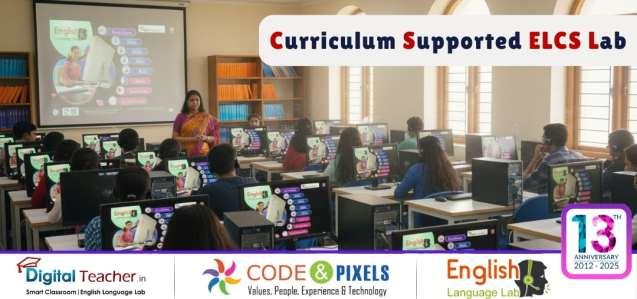
The English Language Lab provides structured GD scenario modules where students practice these specificcommunicative moves. They learn andpractice the language of GD participation the vocabulary and sentence structures for agreeing, disagreeing, redirecting, and summarising in scenarios that simulate real GD topics and dynamics.
StudentswhohavepracticedGDtechniquesinthelabarriveatrealGDswiththe vocabulary, the structural instincts, and the communicative confidence that students who have only had GD techniques explained to them do not.
PresentationPreparationThroughtheELCSLab
Presentations require a third distinct skill set: the ability to organise content into aclearnarrativestructure,deliveritfluentlytoanaudience,managepacingand emphasis, and handle the conclusion and question period composedly.
ELCS Lab presentation modules develop this through structured practice: studentsrecordpresentationsegments,listenbacktoevaluatetheirownpacing and clarity, review model presentations for structure and delivery, and build presentationscriptsthatarepractiseduntildeliverybecomesnaturalratherthan effortful.
The specific skill that separates confident presenters from anxious ones the ability to maintain clear, fluent delivery while simultaneously managing the content develops only through practice. The ELCS Lab provides the practice.
WhyStartingEarlyMatters
The preparation value of ELCS Lab practice for these three events accumulates over time. A student who begins ELCS Lab participation in their first year and continues consistently through to their final year arrives at placement season with years of cumulative communicative practice. Not weeks of intensive lastminute coaching, but a deep, practised fluency built through regular, structured engagement with the exact communication contexts that placement processes will test.
This is the kind of preparation that produces the confident, composed communicatorsthateveryplacementofficerandcampusrecruitersaystheyare looking for and that most graduating batches, despite their academic ability, consistently fail to supply.