









When educators and administrators first hear the term "languagelabsoftware," they tend to form one of two mental images. Either a room where students practice speaking sentences into microphones an audio drill station or somethingvaguelytechnicalthattheITdepartmentmanagesandnobodyquite understands.
Bothimagesareincomplete.Andthegapbetweenthoseassumptionsandwhat language lab software actually covers explains why so many schools and colleges either underestimate the investment or fail to use it to its full potential.
Here is a clear, comprehensive answer to what modern language lab software actually covers andwhy the scope matters.
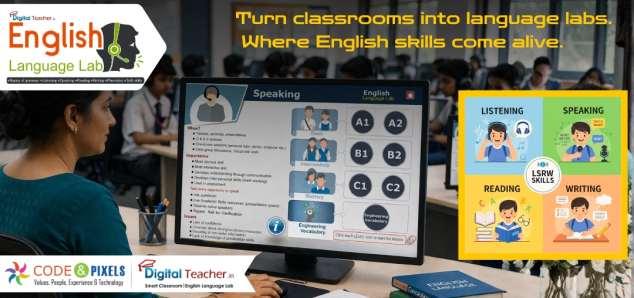
TheFourCoreSkills:NotSpeakingAlone
The most common misunderstanding about language lab software is that it focuses primarily on speaking. Speaking is a central feature and an important one but it is not the only skill the software develops.
Language lab software covers all four of the LSRW skills equally: Listening, Speaking, Reading, and Writing. These are not treated as four separate modules that students move through independently. They are integrated exercises that connect listening comprehension to speaking response, reading activities that feed into written output, vocabulary encountered in audio that reappears in reading and writing contexts.


This integration mirrors how language actually functions in real communication, where skills operate together rather than in isolation.
Pronunciation and Phonetics: More Than a Speaking Exercise
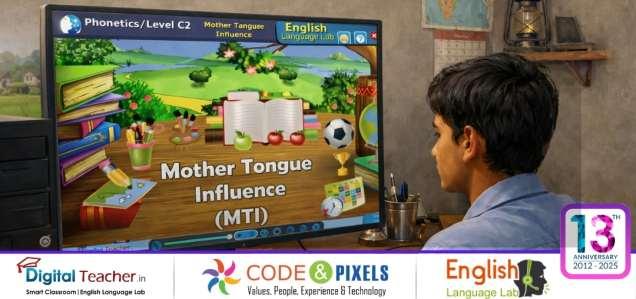
Pronunciationtraininginlanguagelabsoftwareisadedicatedcurriculumstrand, not an element of the speaking module. Students work through individual phoneme production, word stress, sentence rhythm, and intonation with audio models from native speakers, recording tools for self-comparison, and progressivedifficultylevelsthatmovefromcontrolledtonaturalspeechpatterns.
For Indian students specifically, pronunciation training includes a dedicated Mother Tongue Influence (MTI) reduction module. This addresses the characteristic phonological patterns that regional Indian languages impose on English the specific sounds, stress patterns, and rhythm features that Telugu, Hindi, Tamil, Marathi, or Kannada speakers most commonly carry into their English. This is not available in generic international language software. It is a feature designed for Indian learners specifically.
GrammarandVocabulary:InContext,NotinIsolation
Grammar in language lab software is not a rule-explanation module. It is a contextual curriculum grammar encountered in authentic situations, practiced
inrealisticscenarios,andtestedthroughactivitiesthatrequireproductionrather than identification.
Vocabularydevelopmentcoversmorethan5,000wordsacrosseightproficiency levels, with visual support, audio pronunciation, contextual examples, and usage exercises. The progression follows internationally recognised CEFR standards fromA1basicvocabularytoC2advancedacademicandprofessionallanguage.
SoftSkills:TheFeatureThatSurprisesMostEducators
Perhaps the most unexpected part of modern language lab software scope is soft skills. Leading platforms include dedicated modules for group discussion practice, interview preparation, presentation delivery, professional communication etiquette, and the specific communicative skills required in corporate and academic settings.
These are not supplementary features. For engineering colleges, management institutes,andhighersecondaryschoolswithactiveplacementprogrammes,the soft skills modules address the specific communication competencies that campus recruitment processes test. Students who have practiced group discussions and interview responses in the language lab before facing the real thing perform measurably better than those who have not.