











Not all languagelabsoftware is the same. The market includes everything from sophisticated research-grounded platforms that have been deployed across thousands of schools to basic audio playback tools dressed up as "language labs." For school administrators evaluating options knowing which features actually matter and why each one contributes to genuine learning outcomes is the difference between a successful implementation and an expensive disappointment.
Here are the six features that every language lab software must have to deliver results that justify the investment.
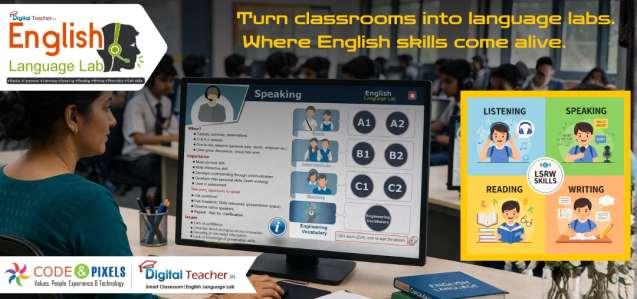
1.AllFourLSRWSkillsEquallyCovered
Language labs that cover listening and speaking but minimise reading and writing are providing partial development. Real-world English communication requires all four skills in integration a student who listens well but cannot write accurately or who speaks fluently but reads slowly is not fully equipped for academic or professional contexts. Every activity in a language lab should connect at least two of the four skills. A listeningexercisethatleadsintoaspeakingresponse,orareadingpassagethat feeds into a writing task produces integrated competence that mirrors how language actually functions.


2.VoiceRecordingWithUnlimitedAttempts
Speaking practice without the ability to record, listen back, and try again is not practice it is performance. The mechanism by which spoken fluency develops is repeated production with feedback: attempt, listen, identify what can be improved, try again.
Language lab software should allow students to record their spoken responses an unlimited number of times compare their recordings to a model and downloadrecordingstomonitortheirownprogressovertime.Capsonrecording attempts fundamentally undermine the purpose of spoken practice.
3.OfflineOperation
Internetdependencyisareliabilityriskinanyschoolcontextandacriticalbarrier in government schools and institutions in rural or semi-urban areas. Language lab software that requires stable broadband to deliver audio-visual content to thirty simultaneous users will fail regularly in real-world school environments.
Offline capability full content delivery from local installation without any internet connectionisnotoptionalforschoolsthatneedthelabtoworkconsistentlyevery session regardless of connectivity conditions.
4.CEFR-AlignedContentFromA1toC2
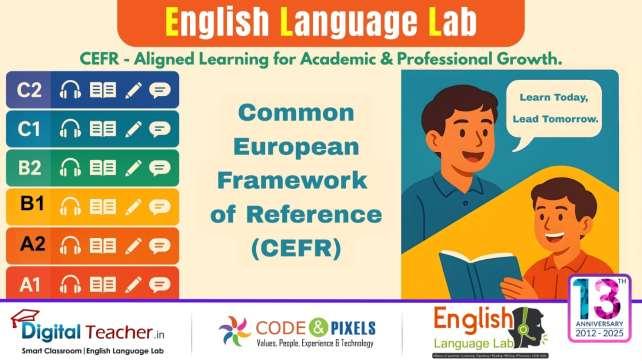
Unstructured content may be useful. CEFR-aligned content is developmental. When exercises are organised according to the Common European Framework of Reference for Languages from A1 beginner to C2 mastery students follow a structured progression path with measurable milestones. CEFR alignment also makes learning outcomes reportable in internationally recognisedtermsusefulforaccreditation forplacementcommunicationandfor the increasing number of higher education and professional contexts that reference CEFR levels explicitly.

5.MTIReductionModulesforIndianStudents
Mother Tongue Influence is the most common and most consistently under addressed challenge in Indian English education. Phonological patterns from regional languages shape how students produce English sounds in ways that require targeted deliberate practice to address.
Software designed for Indian students includes dedicated MTI exercises calibrated to the phonological challenges of speakers of Telugu, Hindi, Tamil, Marathi, Kannada, and other regional languages. Generic international software does not include this.
6.ImmediateFeedbackonEveryActivity
Delayed feedback a corrected exercise returned the next day a test result available next week is less effective than immediate feedback at supporting retention. Language lab software should respond to every student action in real time: scoring comprehension answers playing back pronunciation recording confirming vocabulary usage.
These six features together define language lab software that produces the outcomes schools invest in. Evaluate any platform against this list before committing.