









Most ESL students in Indian schools can understand more English than they can produce. They read reasonably well. They follow instructions. They understand most of what their teacher says. But ask them to answer a question in English, give a short presentation, or hold a brief conversation, and the understanding does not translate into speaking.
This gap between what students can receive and what they can produce is one of the most common and most frustrating features of ESL learning in structured academic environments. And it has a specific explanation that points directly to the solution.
Language acquisition research makes a clear distinction between receptive competence the ability to understand language when you encounter it and productive competence the ability to generate it when you need it. These are different cognitive skills that develop through different kinds of practice.

Receptive competence develops through reading, listening, and observing. Most classroom English instruction builds this well. Students who have read hundreds


of passages and listened to hundreds of explanations develop strong receptive understanding.
Productive competence speaking and writing with fluency develops through production. Through attempting to say things, making mistakes, receiving feedback, and trying again. Through the accumulated experience of generating language rather than absorbing it.
TheprobleminmostESLclassroomsisthatproductionpracticeislimitedbyclass size and time. Thirty students and forty-five minutes means very little individual speaking practice per student. Receptive competence grows. Productive competence lags behind.
An ESL Lab addresses this directly by shifting the balance of practice from receptive to productive while maintaining the structured input that ESL learners need.
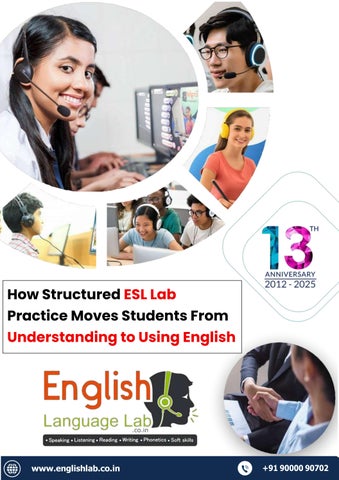
In the lab, students do not just listen to English. They respond to it. They record theirownvoiceafterhearingamodel.Theycompletespeakingtasksthatrequire them to generate English in response to prompts. They use vocabulary in contextual exercises that ask them to produce it, not just recognise it. They practice the specific LSRW skill integration listening and then speaking, reading and then writing that mirrors how language is actually used in communication.

This shift from passive to active engagement is what closes the gap between understandingandusing.Itisnotdramatic.Itiscumulative builtacrossdozens ofindividualpracticesessionsinwhichthestudentgeneratesalittlemoreEnglish each time, a little more fluently, with a little less effort.
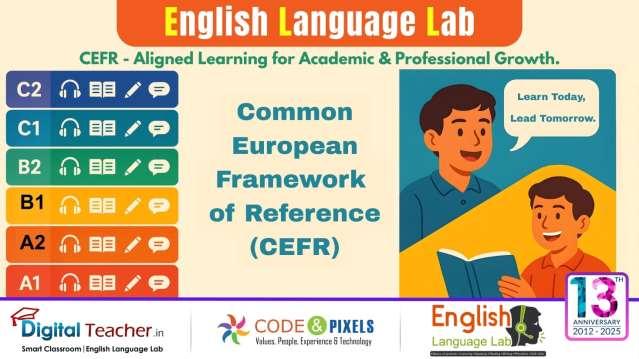
What makes this cumulative practice effective rather than random is the CEFR framework that organises it. Each level A1 through C2 defines what productive competence looks like at that stage. Students practice producing English at the levelappropriatetowheretheycurrentlyare,withclearvisibilityofthenextstage they are working toward.
This structure keeps the productive practice purposeful. Students are not just speaking for the sake of speaking. They are developing specific communicative competenciesinasequencethatmatcheshowreallanguageproficiencygrows. The ESL lab, built around this framework,turns the understanding that classroom instruction has developed into the fluency that productive practice produces. It does not replace classroom learning. It completes it.