Maybe it’s Father’s Day. Maybe it’s summer arriving all at once. Or maybe it’s simply the way this season invites us to slow down long enough to notice the people who have shaped us.
This month, I found myself thinking often about our men in Louisville, their legacy, and the many ways people show up for one another.
Whether it’s grieving the loss of a grandfather, sharing an unforgettable day with your dad at the Indy 500, or simply being surrounded by family—chasing after a wild nephew while your nanny from 17 years ago flies in from Germany to introduce you to her husband and daughter—these moments stay with us. They remind us what it means to witness someone show up fully. To be present. To lead with patience, strength, structure, humor, and compassion. To choose love in the middle of life’s chaos. To keep showing up for your family, your partner, your community, and the people who count on you.
This volume is about those men.
The men who leave an impact, sometimes quietly, sometimes boldly, but always in ways that shape the people and places around them. It’s okay to be both at different times.
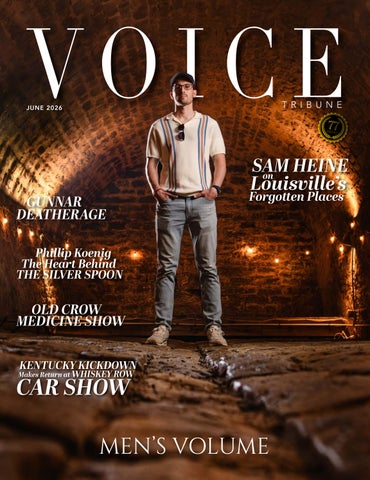
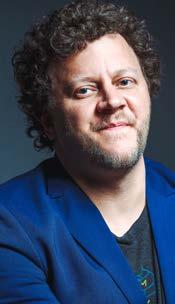
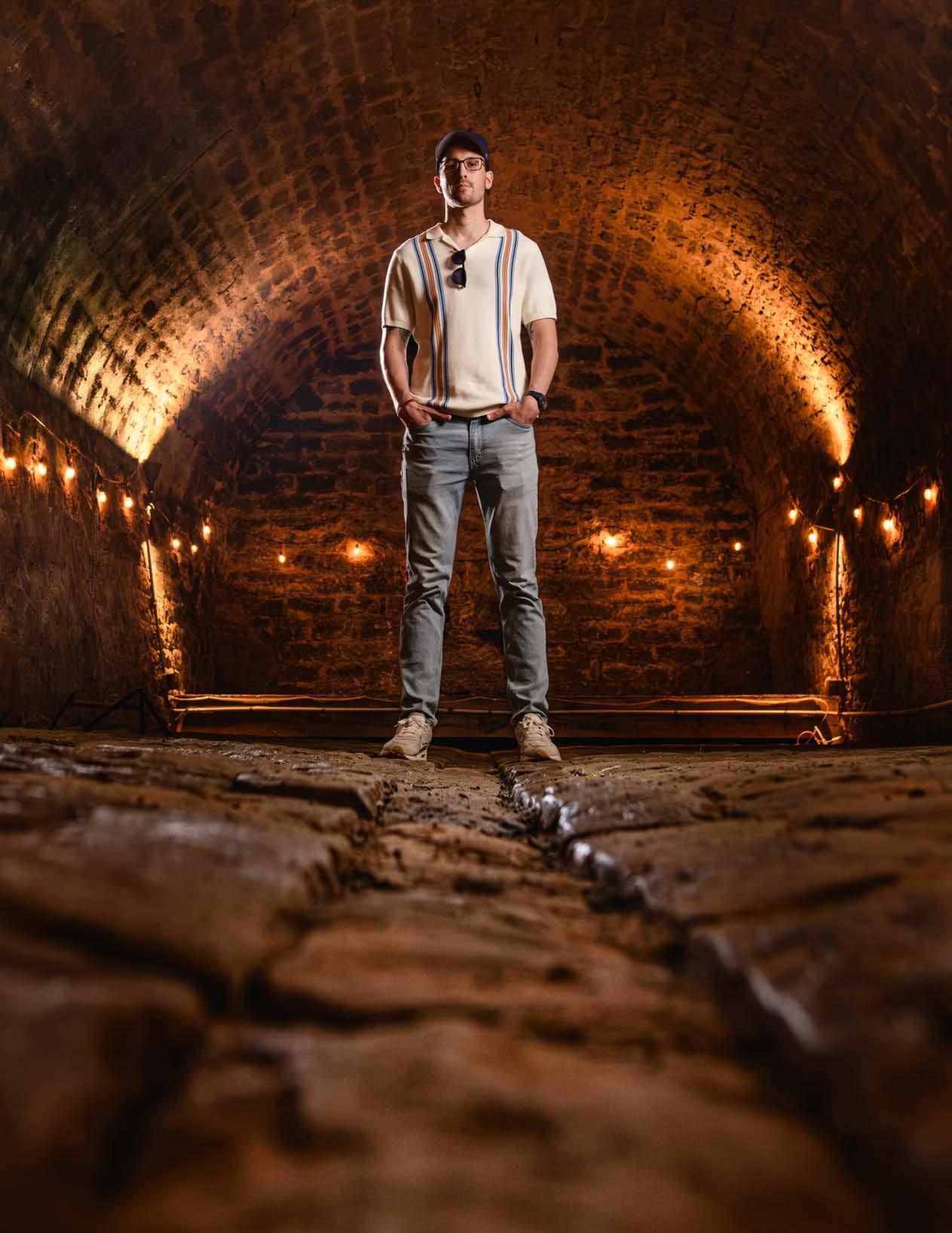
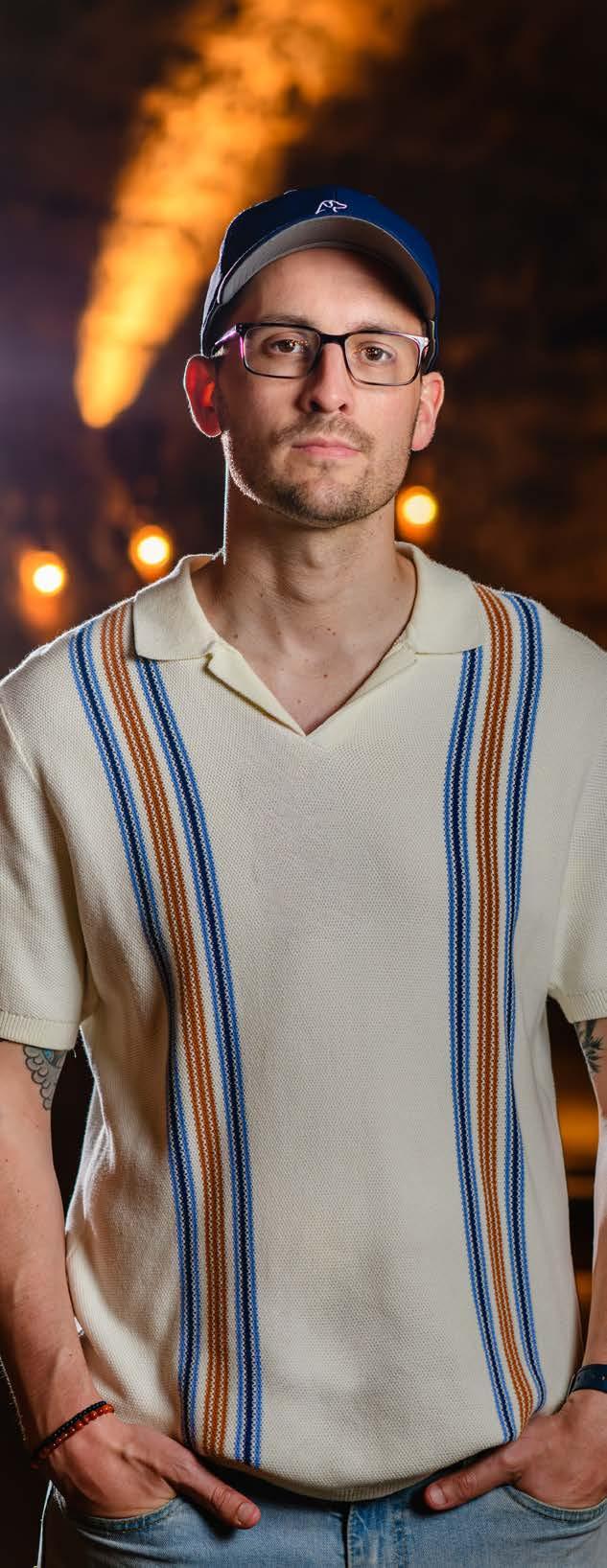
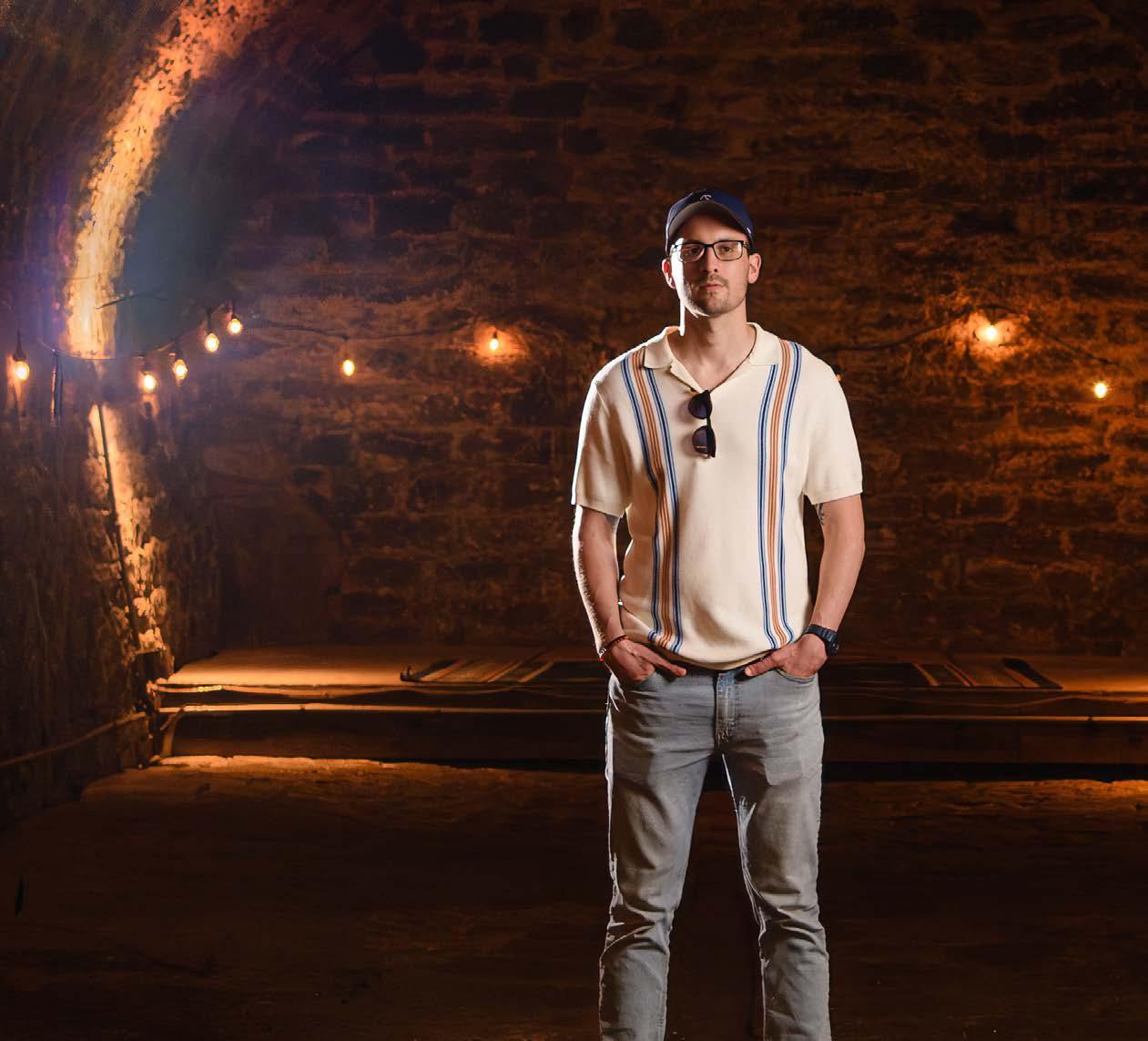
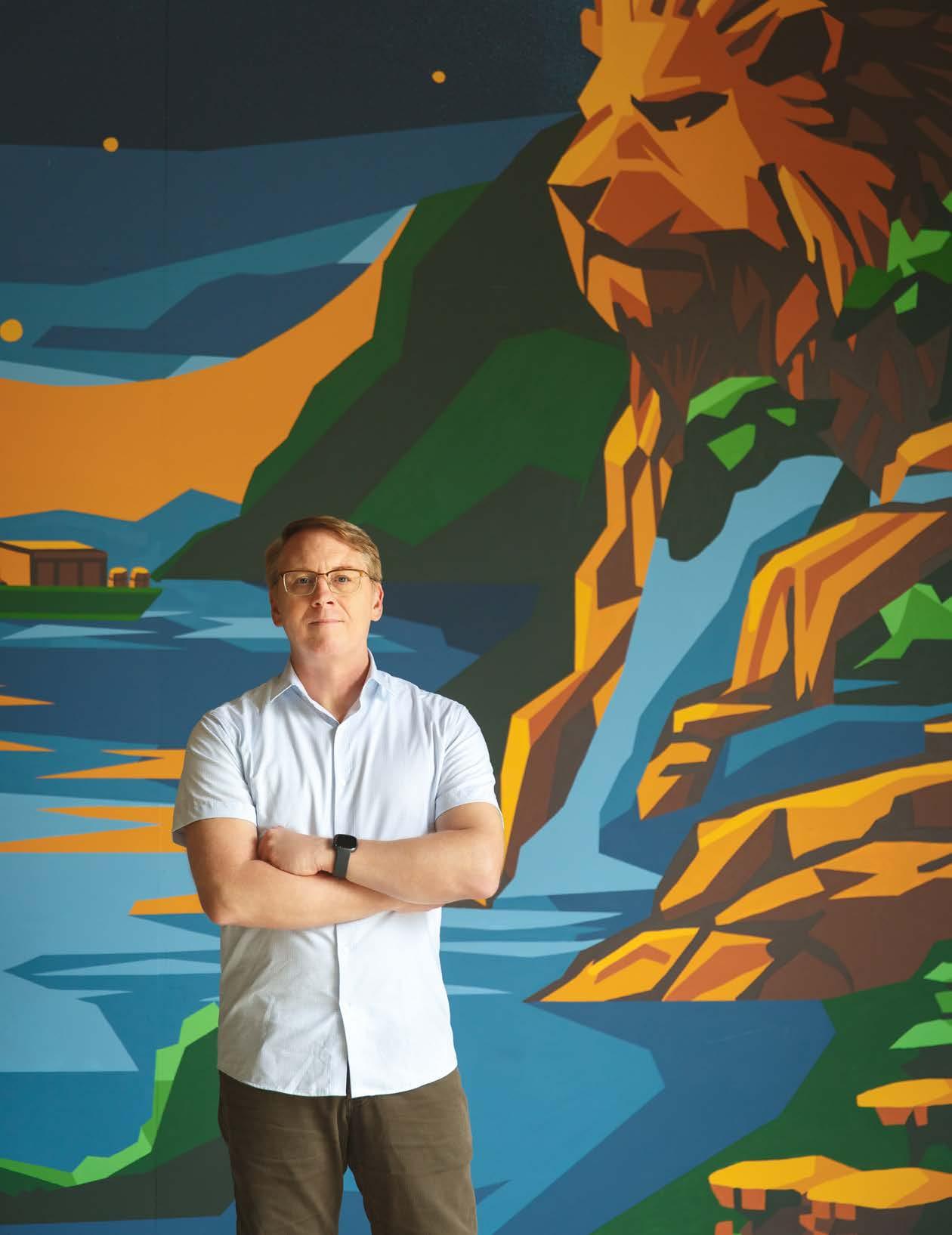
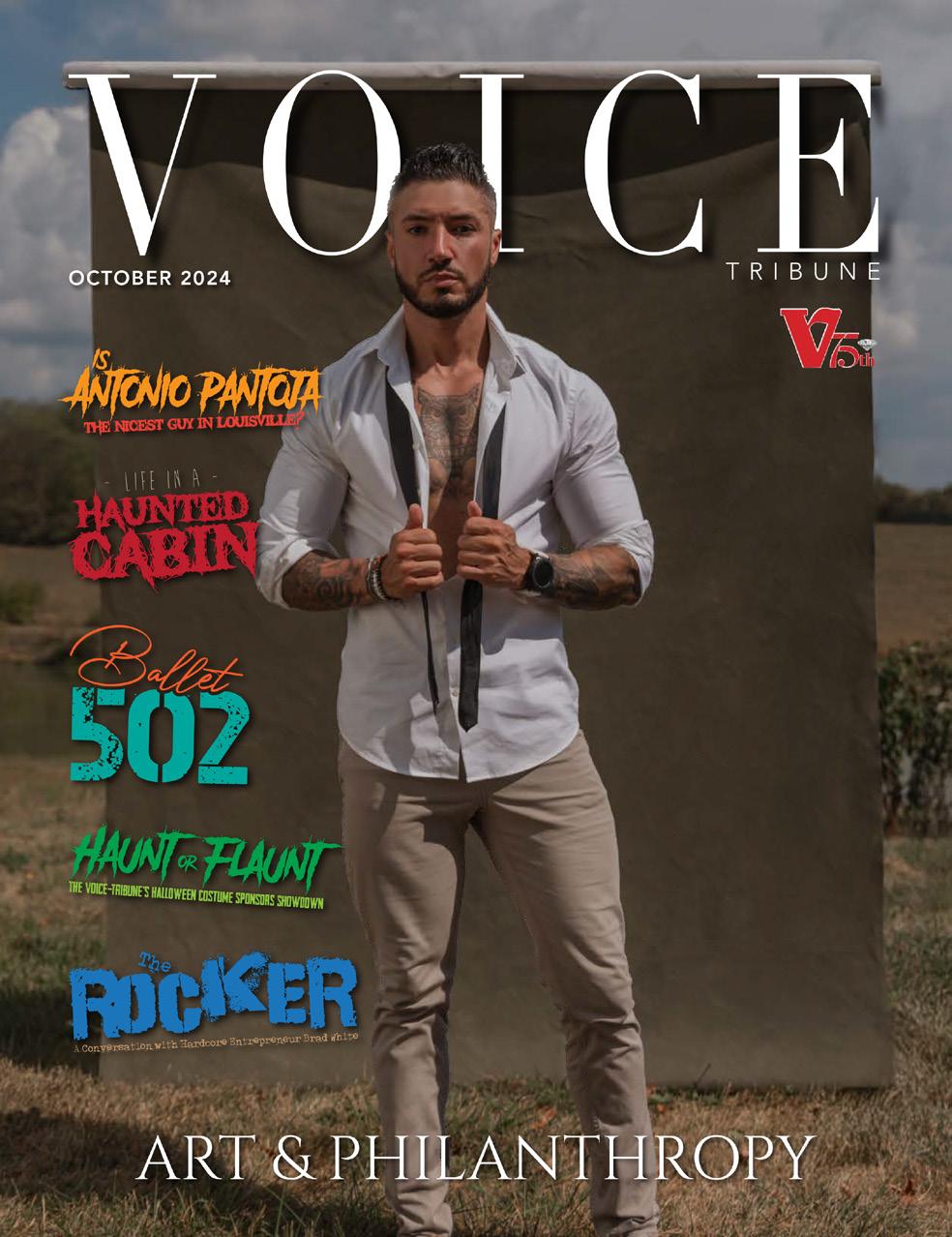
Our cover story featuring Sam Heine reflects that beautifully.
Sam has become known for uncovering Louisville’s forgotten places, bringing attention to buildings, neighborhoods, and overlooked histories many of us pass every day without realizing what came before. Through research, storytelling, and genuine curiosity, he reminds us that a city has memory, and that preserving those stories matters. His work asks us to look closer and recognize that history is not as far away as we think. It lives beneath our feet, behind familiar doors, and inside the places we call home.
That same spirit carries through so much of this issue.
We celebrate men who have built businesses, yes, but more importantly, men who have built community.
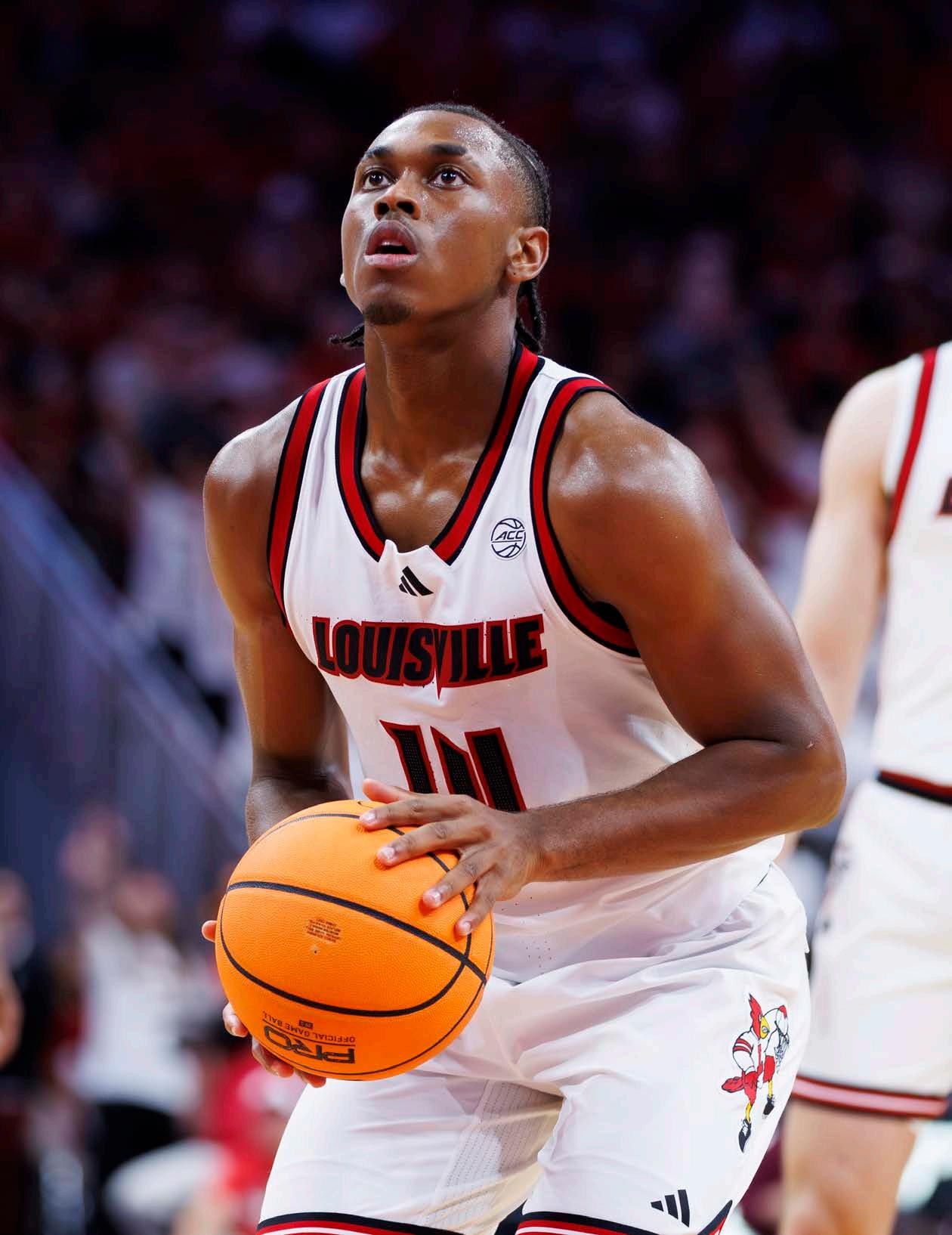
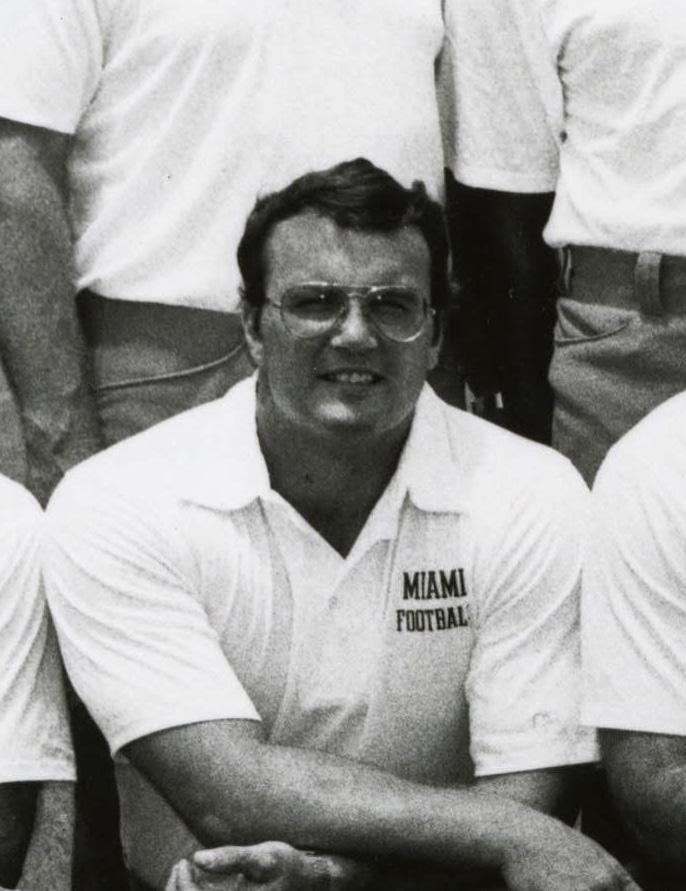
Ray Ganong has spent decades shaping generations through mentorship, discipline, and consistency, offering lessons that extend far beyond athletics.
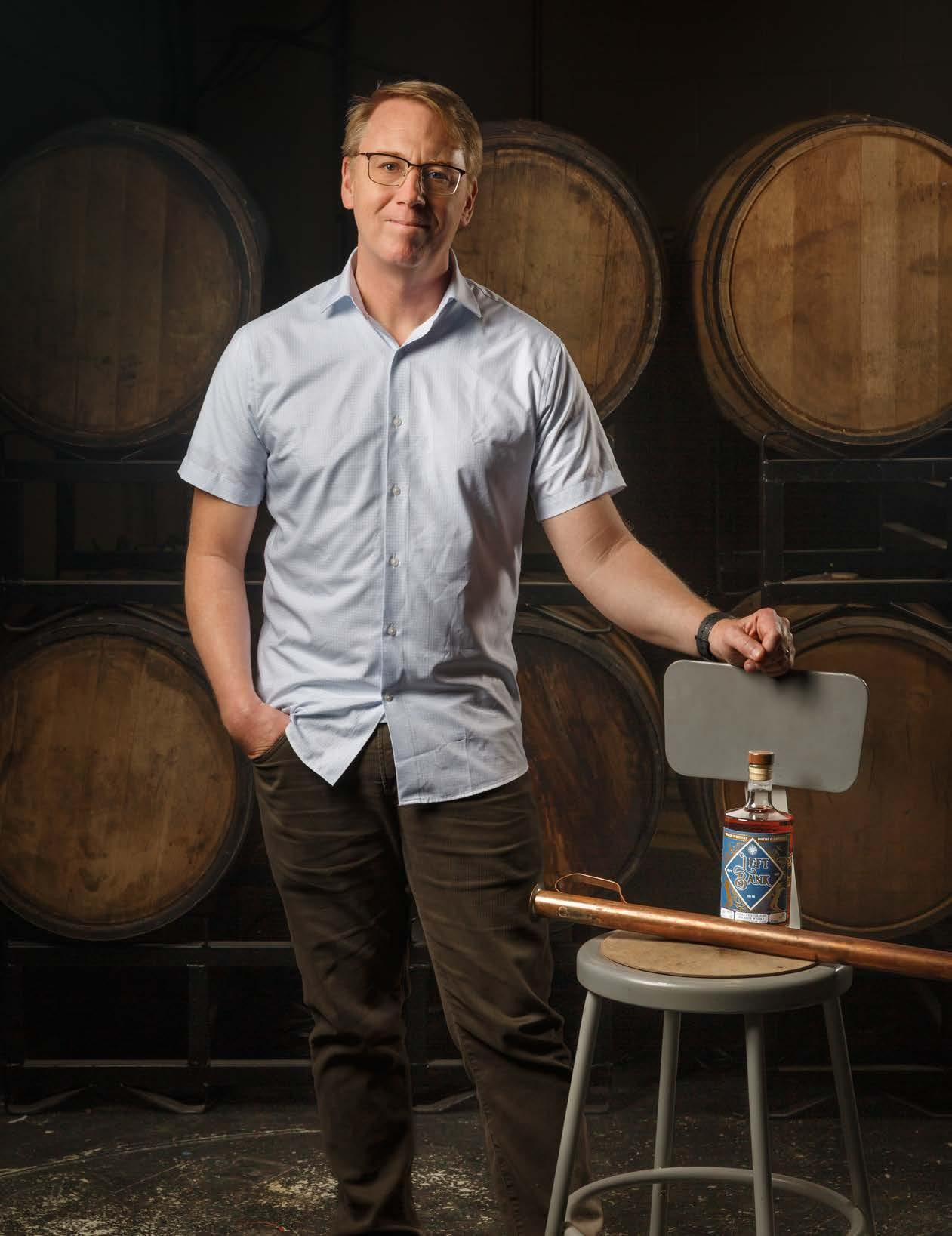
Trey Zoeller and Ken Hagan remind us that Kentucky bourbon is never just about what’s in the bottle. It’s about family history, storytelling, craftsmanship, and creating spaces where people gather.
Phillip Koenig, whom I absolutely love and adore and grew up with, has spent a lifetime helping Louisville celebrate through hospitality, generosity, and service, creating the backdrop for some of the city’s most meaningful moments.
Patrick Donley unearthed pieces of Louisville’s past, while Sam continues to document and preserve the stories still standing around us.
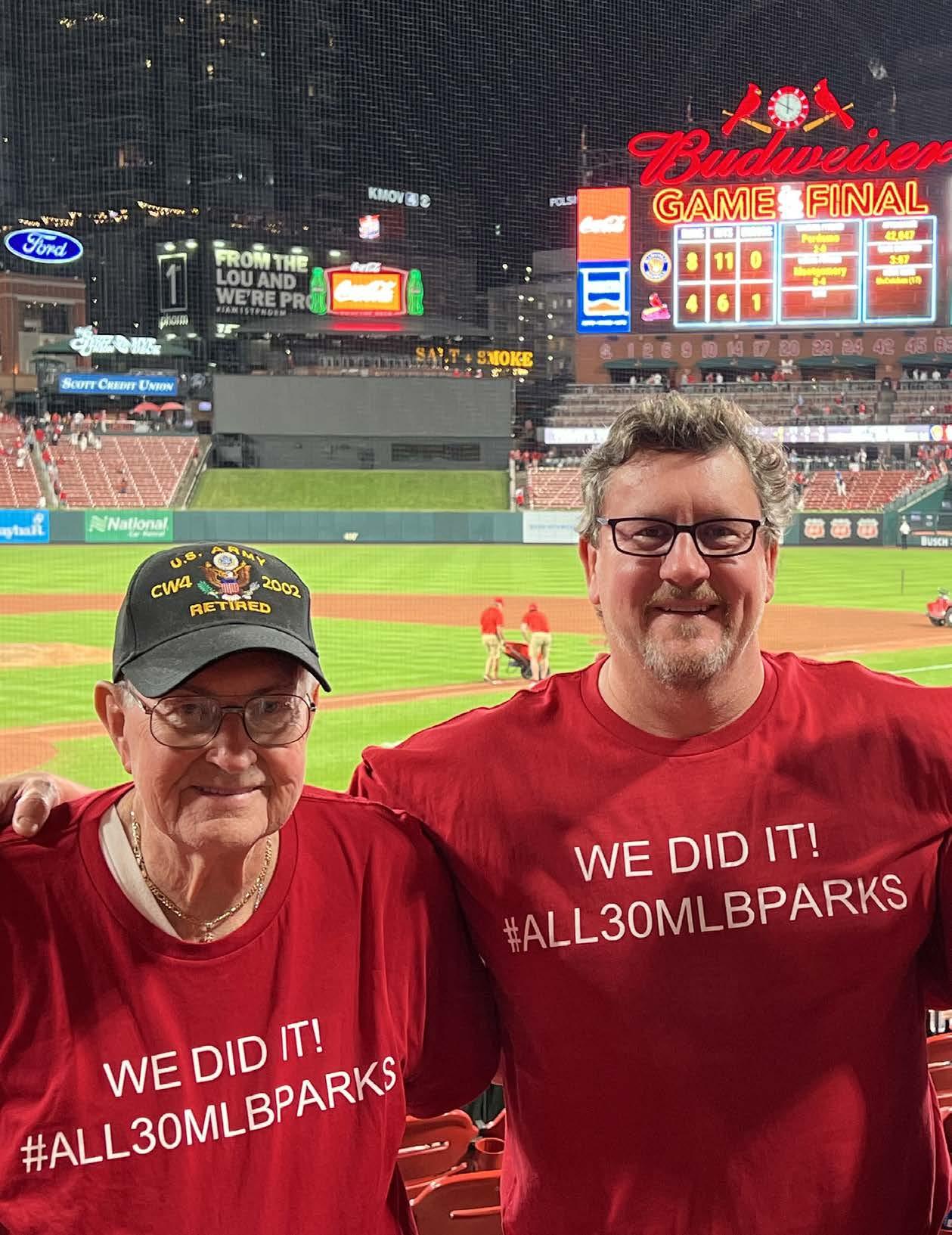
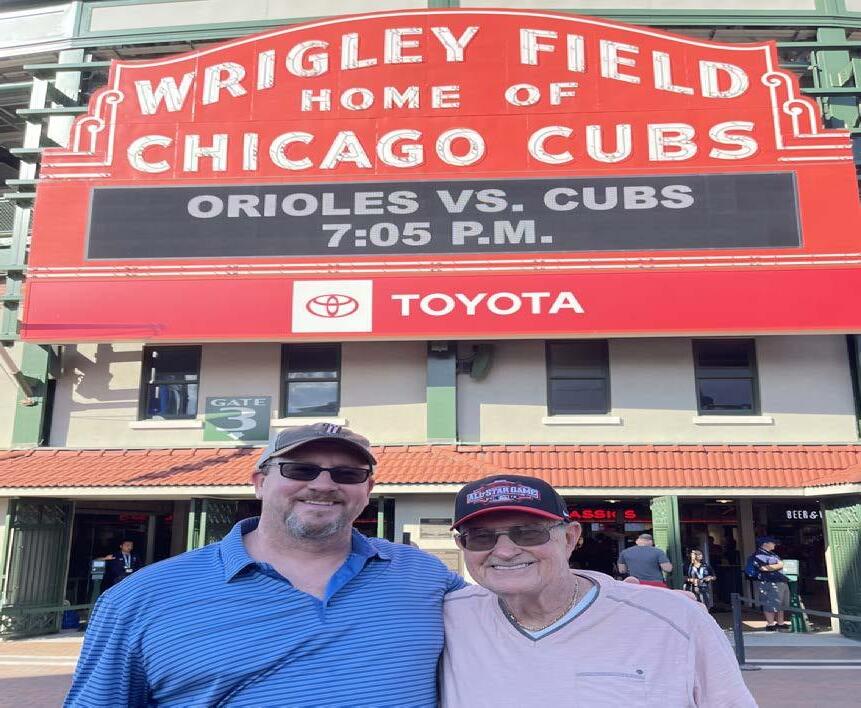
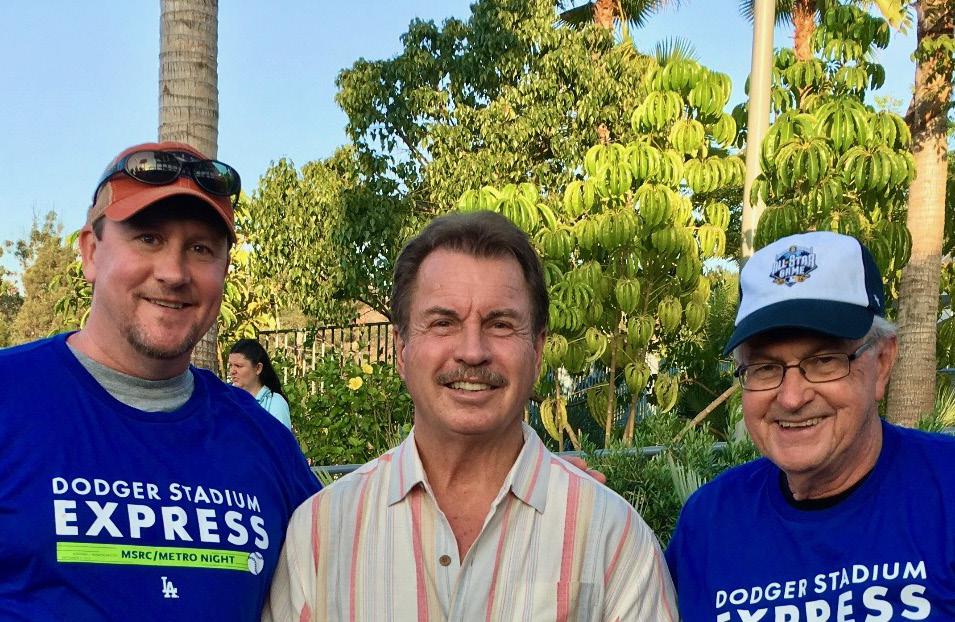
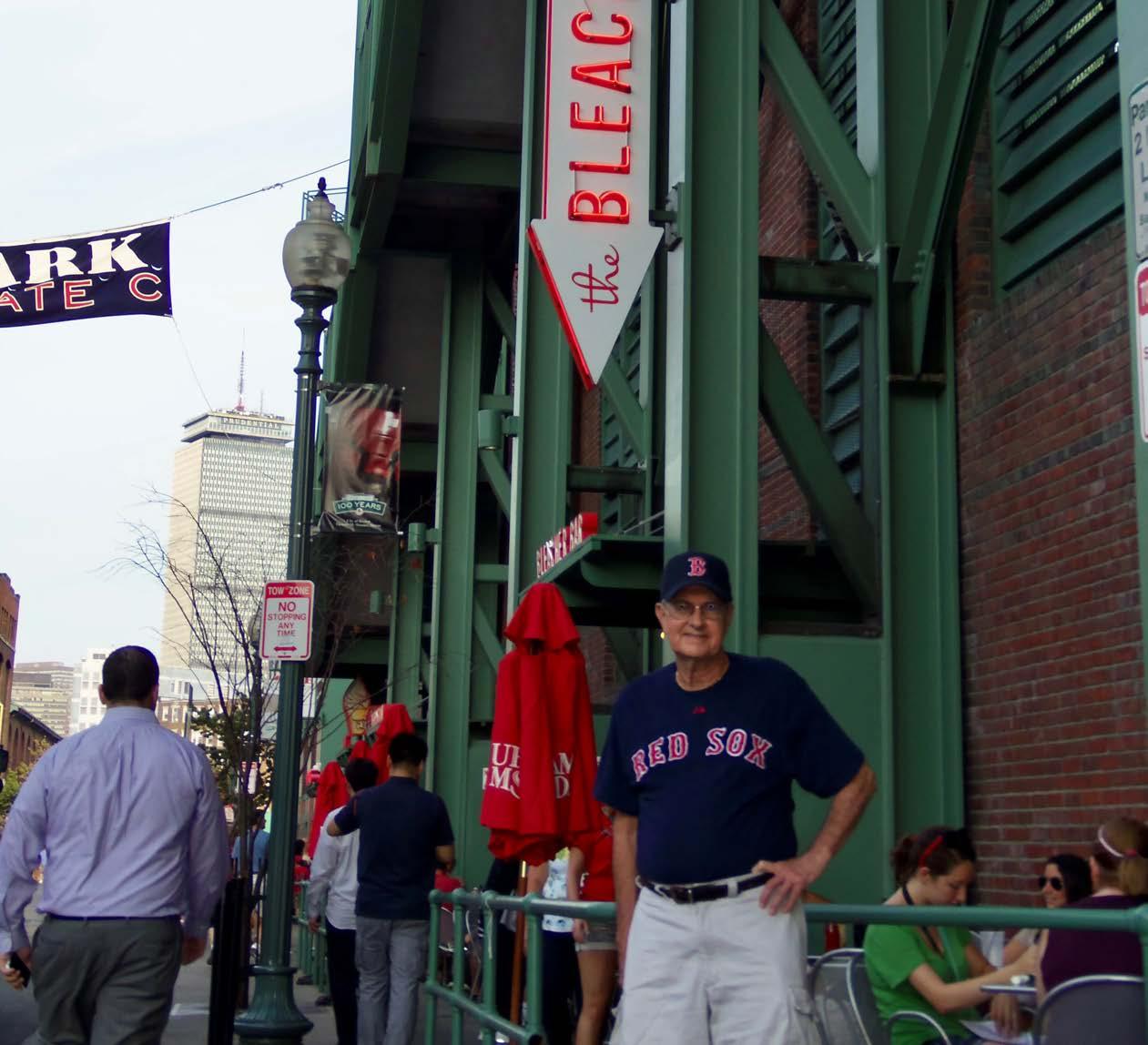
And in Bonding Over Baseball, we’re reminded of one of the most meaningful kinds of showing up: a father and son making time for each other across miles, seasons, and ballparks. Proof that legacy is often built in the simplest moments. This also applies to a Father and Daughters out there, too!
This month also brought its own unexpected lessons close to home.
I had a one-of-a-kind experience making a small appearance in Ethan Almighty, currently being filmed here in Kentucky. I’ll admit, I definitely could have done better, but I’m incredibly grateful the director was patient with me. And truly… what wouldn’t we do for man’s best friend, or to be a friend to man’s best friend?
That feeling has been especially present in our home lately.
The puppies we helped bring into the world this month, the same ones who may have completely stolen my heart, will be heading to their new homes over the next two weeks. Watching them grow has been equal parts joy, chaos, exhaustion, laughter, and wonder. During Derby season, no less. And yes, we did decide to keep one!
It’s been a long time since my husband and I have experienced something so all-consuming and heart-opening. In many ways, it has felt like its own lesson in patience, partnership, and what it means to care for something together. A reminder that growth often arrives messy and beautiful all at once.
As I read through this month’s volume, one thing became especially clear:
Leadership doesn’t always arrive loudly.
Sometimes it looks like building a business from the ground up.
Sometimes it looks like mentoring the next generation.
Sometimes it looks like preserving history before it disappears.
Sometimes it looks like carrying on a family tradition.
Sometimes it looks like opening your doors, gathering people around a table, or simply showing up—again and again—for the people you love.
This June, we celebrate those who continue to do exactly that.
To the sons, brothers, fathers, grandfathers, husbands, mentors, coaches, artists, business owners, storytellers, and community builders who help shape Louisville in ways seen and unseen, thank you.
And to our readers, thank you for continuing to show up with us month after month, helping us tell the stories of this city we love. This is my 40th Volume! (WOOH!)
As for this month’s volume, we’re honored to introduce you to these men who make the world, and Louisville, a little brighter.
With gratitude, hope, and to the Many Voices of Louisville,
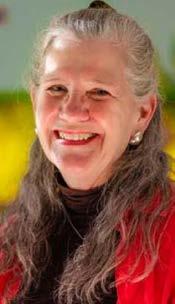
Amelia Frazier Theobald Publisher & CEO, The VOICE-TRIBUNE
Editor’s Note
Men can be many things.
This issue is full of different perspectives, personalities, and experiences brought together in one place. Throughout these pages, we celebrate individuality, character, and the people who continue to show up for their families, communities, passions, and themselves.
No single definition fits every man, and that’s exactly the point.
Take care,
Alisha Proffitt Chief Director of Editorial & Editor
PRESIDENT/CEO, AMELIA FRAZIER THEOBALD
OPERATIONS MANAGER, MARY ZOELLER
CHIEF DIRECTOR OF EDITORIAL & EDITOR, ALISHA PROFFITT
CHIEF REVENUE OFFICER & DIRECTOR OF SALES, JULIE KOENIG
CHIEF GRAPHIC DESIGNER, JOSH ISON
COPY EDITOR, RENAE ISON
SOCIAL MEDIA MANAGER & EXECUTIVE ASSISTANT, BRYLEA PEACH
FASHION & EDITORIAL PHOTOGRAPHER, MATT JOHNSON FASHION & EDITORIAL PHOTOGRAPHER & VIDEOGRAPHER, ANTONIO PANTOJA
ACCOUNT EXECUTIVE & FASHION DIRECTOR , CLEO HEINE
DISTRIBUTION, KELLI & RAGAN VAN HECKE, JILL & JOHN MINNIX, TANNER BATEMAN
CONTRIBUTING WRITERS: ALISON CARDOZA, ALISHA PROFFITT, ERIKA GANONG, JACKIE ZYKAN, KATHRYN HARRINGTON, KELSEY KNOTT, KEVIN MURPHY WILSON, LAUREN TAYLOR CARR, RUSS BROWN
CONTRIBUTING PHOTOGRAPHERS: CHRISTOPHER MINAFO, CLAY COOK, GIOIA PATTON, JACKIE ZYKAN. MARTY KING, OLD CROW MEDICINE SHOW, PATRICK DONLEY, UOFL ATHLETICS
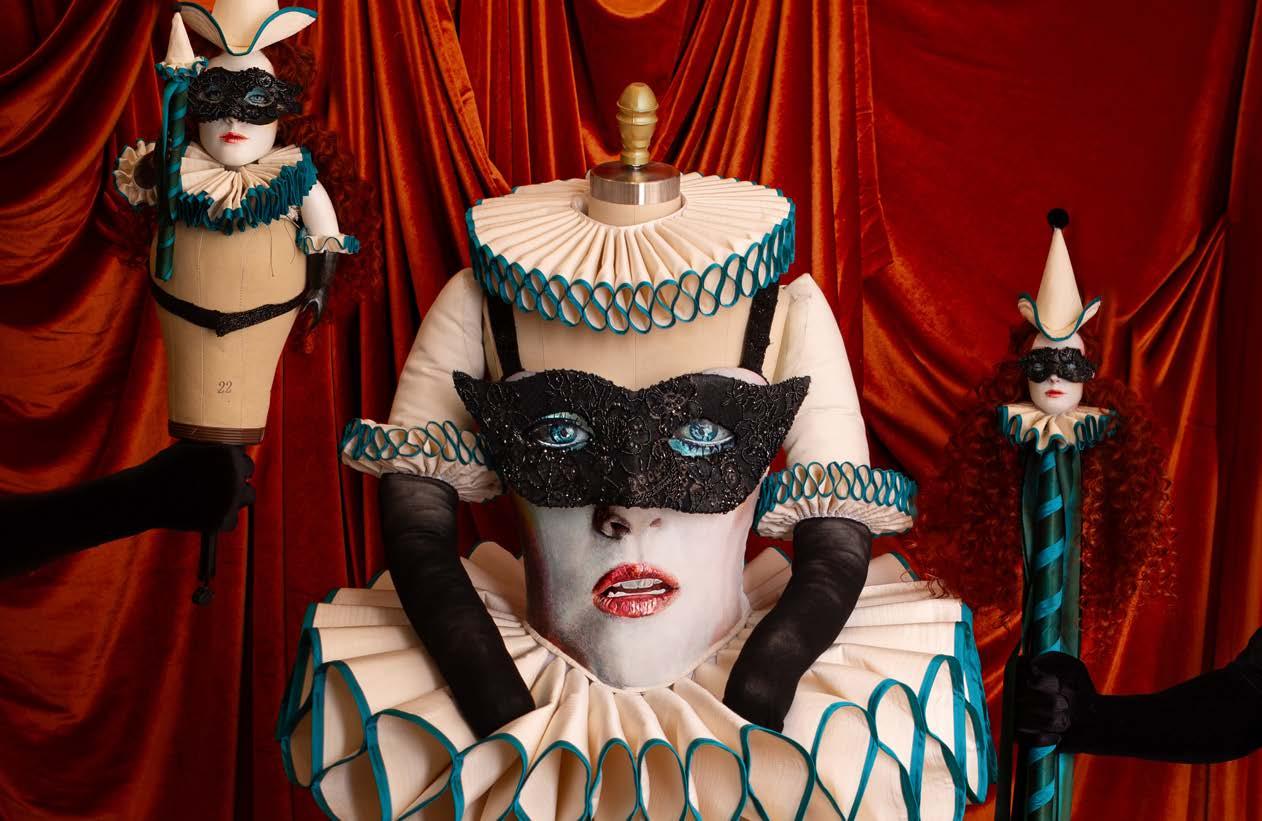
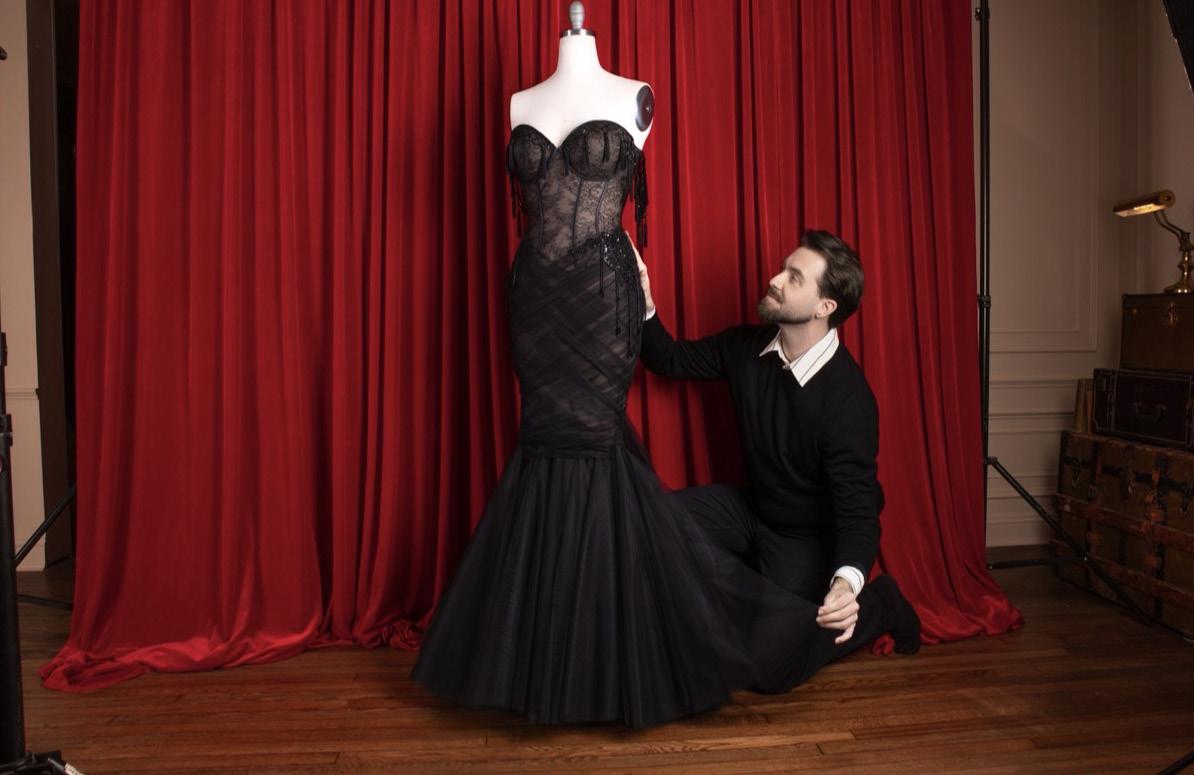
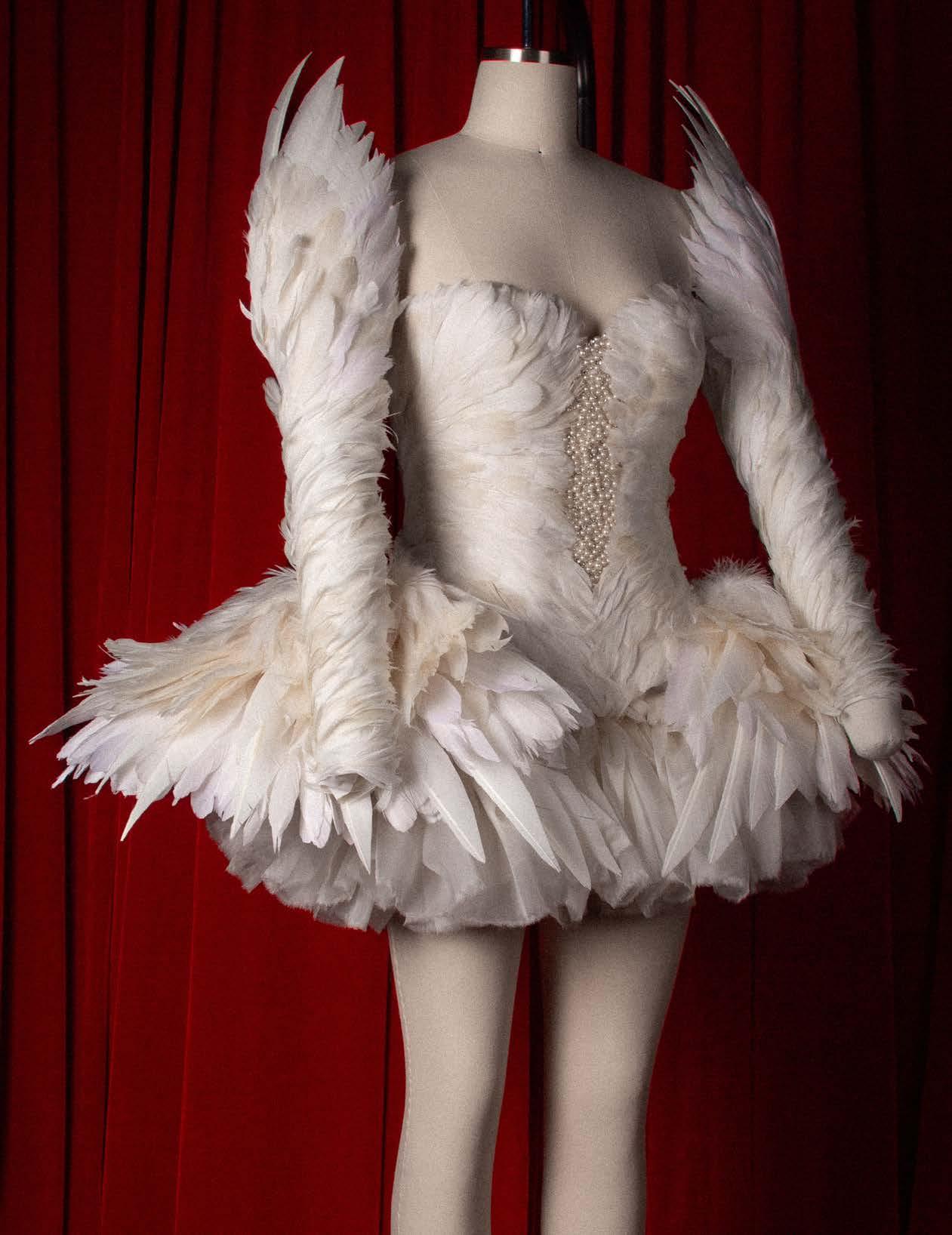
When Clothing Becomes Storytelling: A Conversation with Gunnar Deatherage
By Matt Johnson
Alisha Proffitt
Sam Heine Brings Attention to Louisville’s Forgotten
Younts talks Old Crow,
By Christopher Minafo
KMAC Couture Thanks Its Creative Community and Sponsors
River Stories and Bourbon Lore, A Conversation with Ken Hagan of Left Bank Bourbon By VOICE-TRIBUNE Photos By Matt Johnson
‘Phyllis’ helped uncover relics, leading to Patrick Donley’s Midden Project
Artist Feature:
Markham
Kelsey Knott Photos By Matt Johnson Styled By Miranda McDonald-
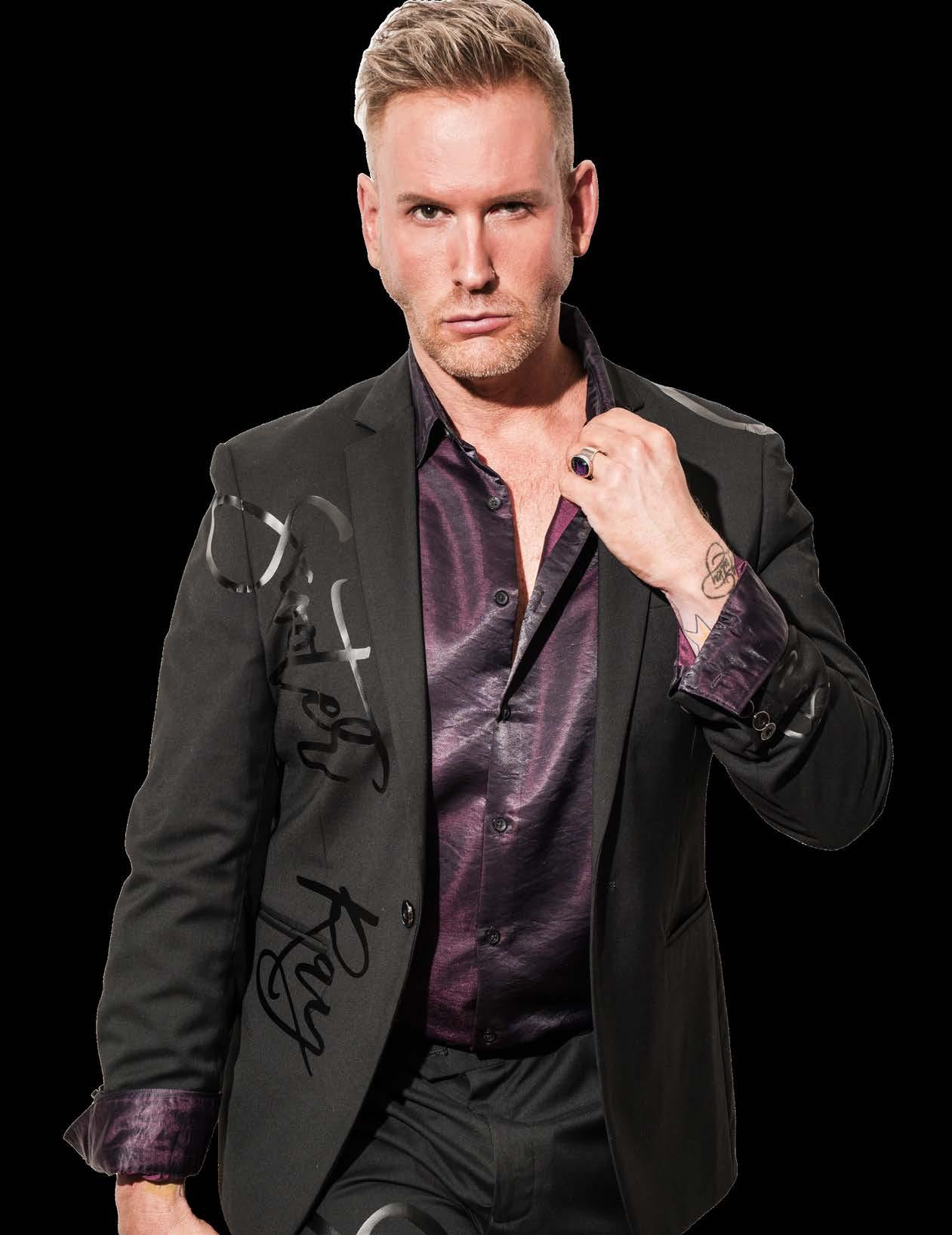
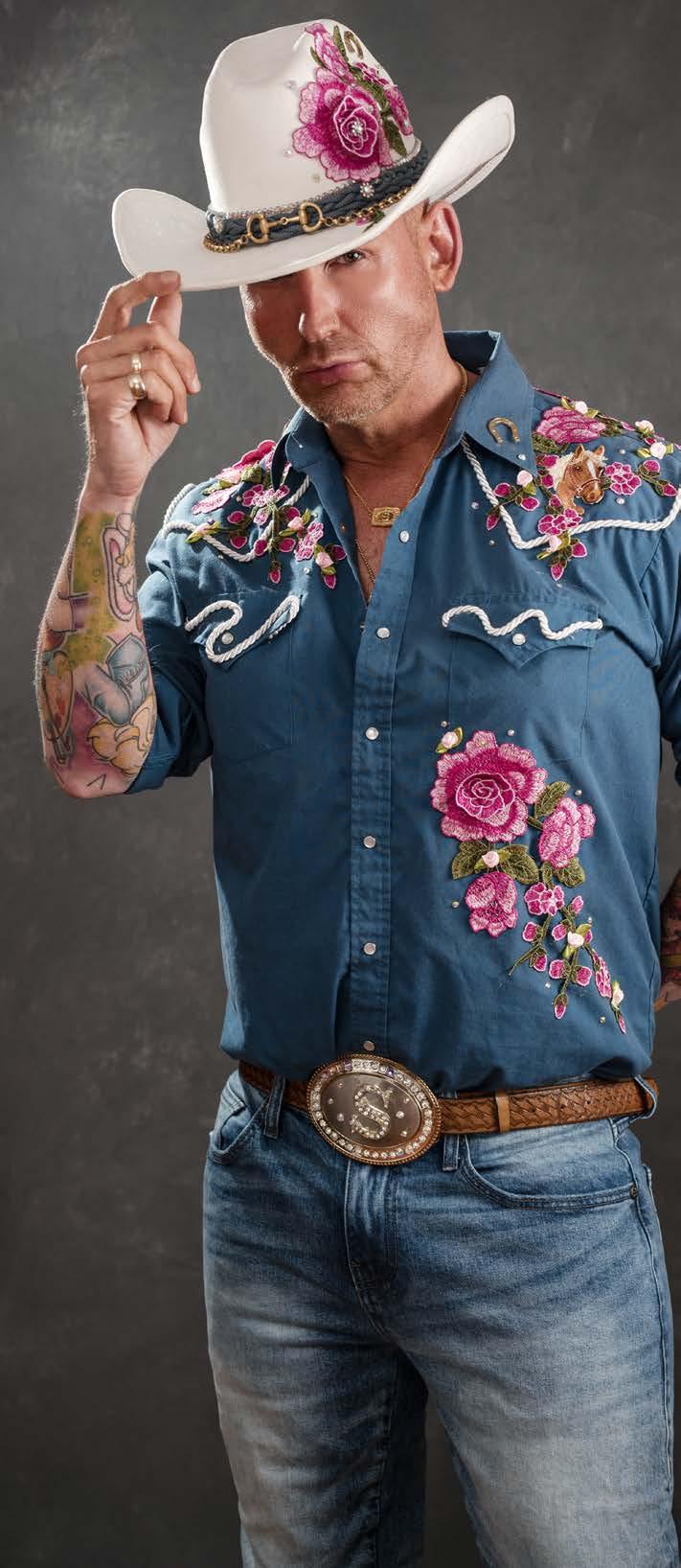
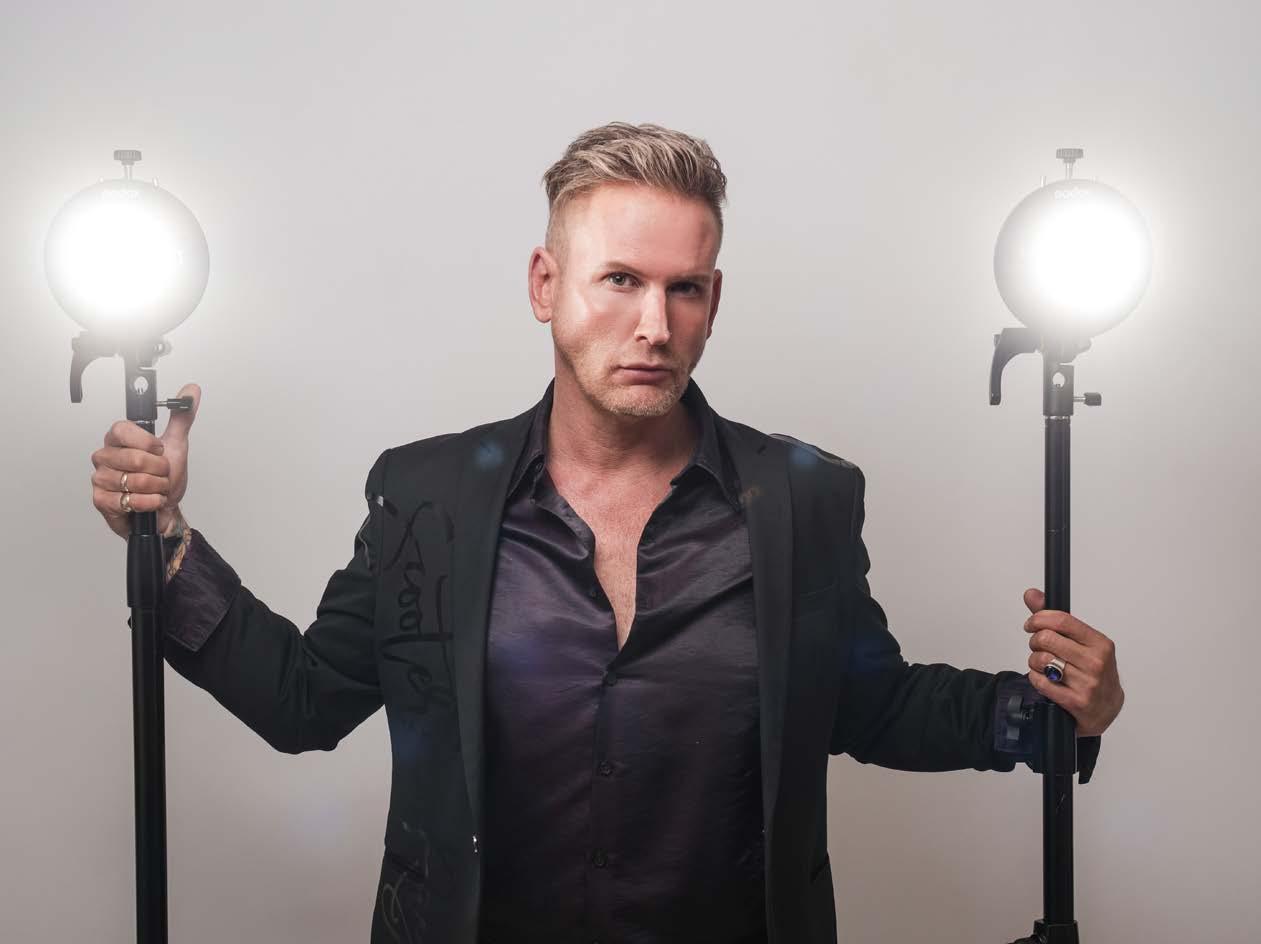
Scooter Ray: More Than The Patron Saint of Derby
VOICE-TRIBUNE
By Antonio Pantoja and Provided
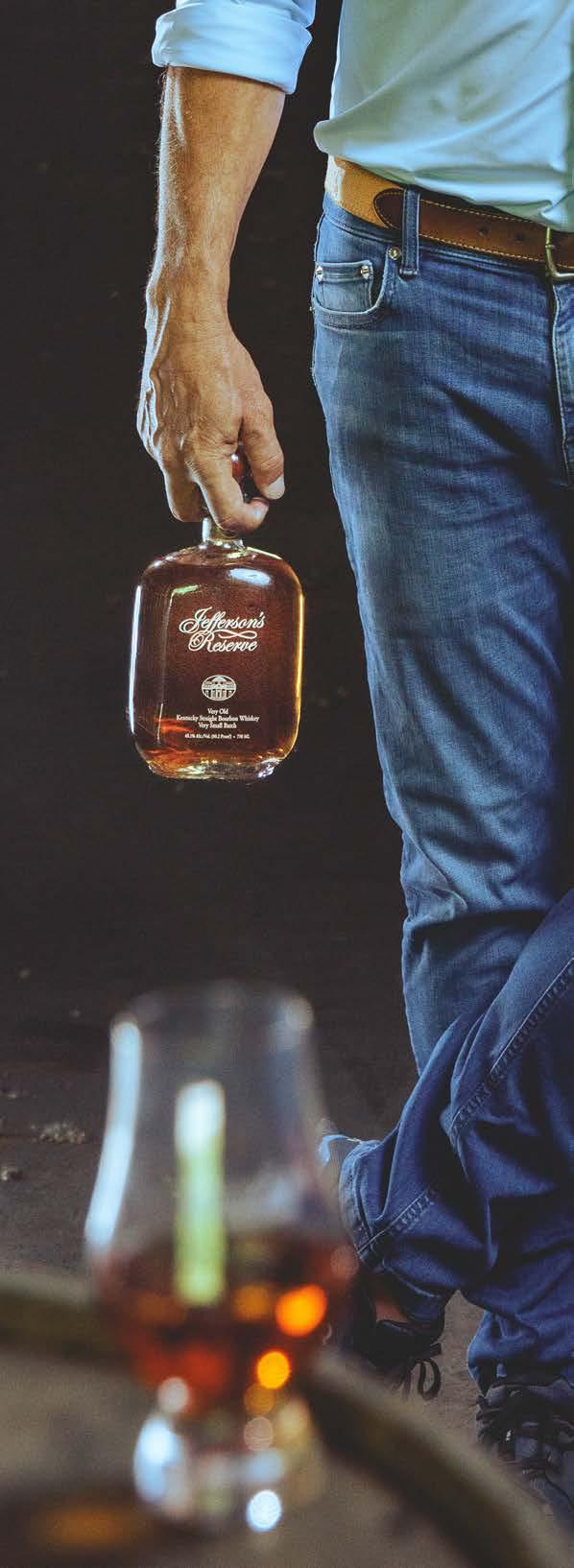
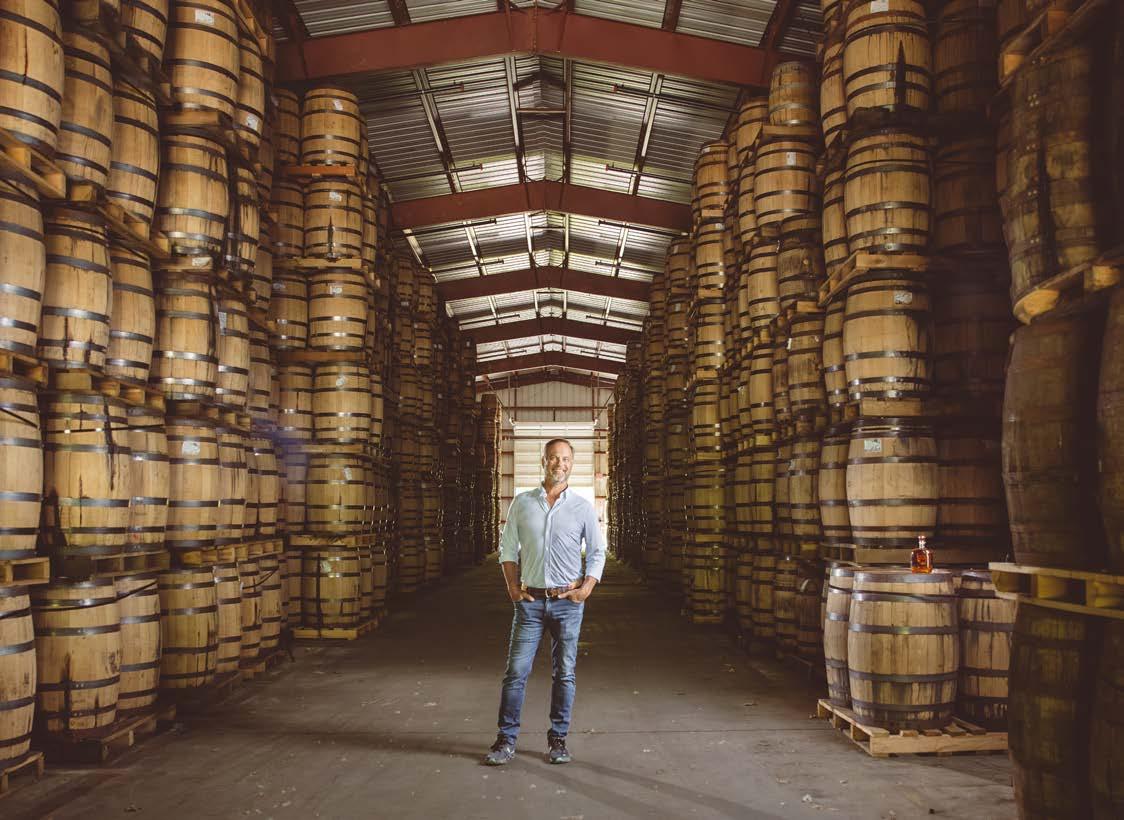
Trey Zoeller Built Jefferson’s by Asking “Why Don’t We?”
VOICE-TRIBUNE Photos By Matt Johnson
Zykan
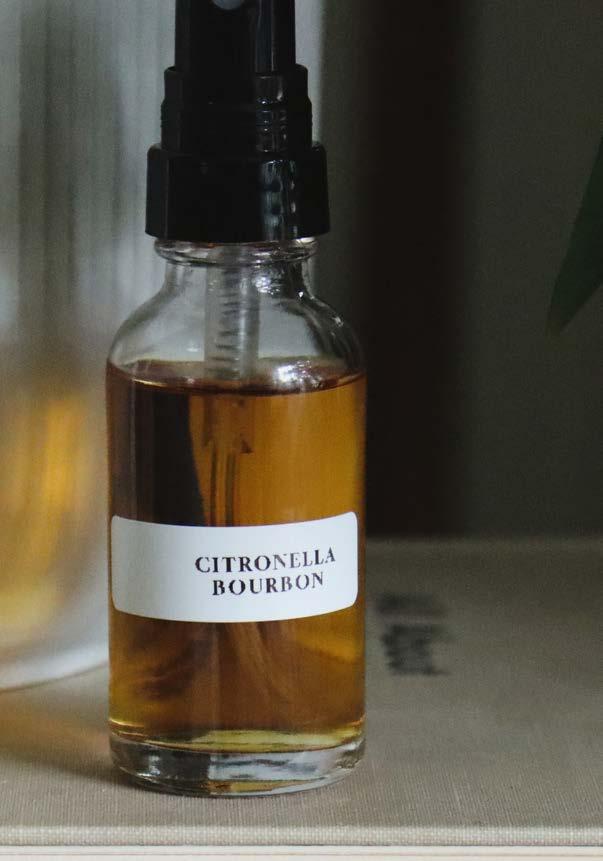
Liquoriste + Perfumer + Herbalist
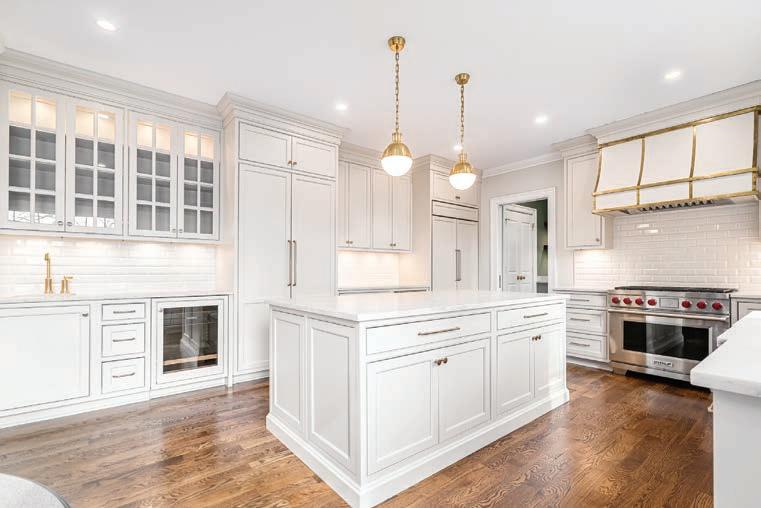
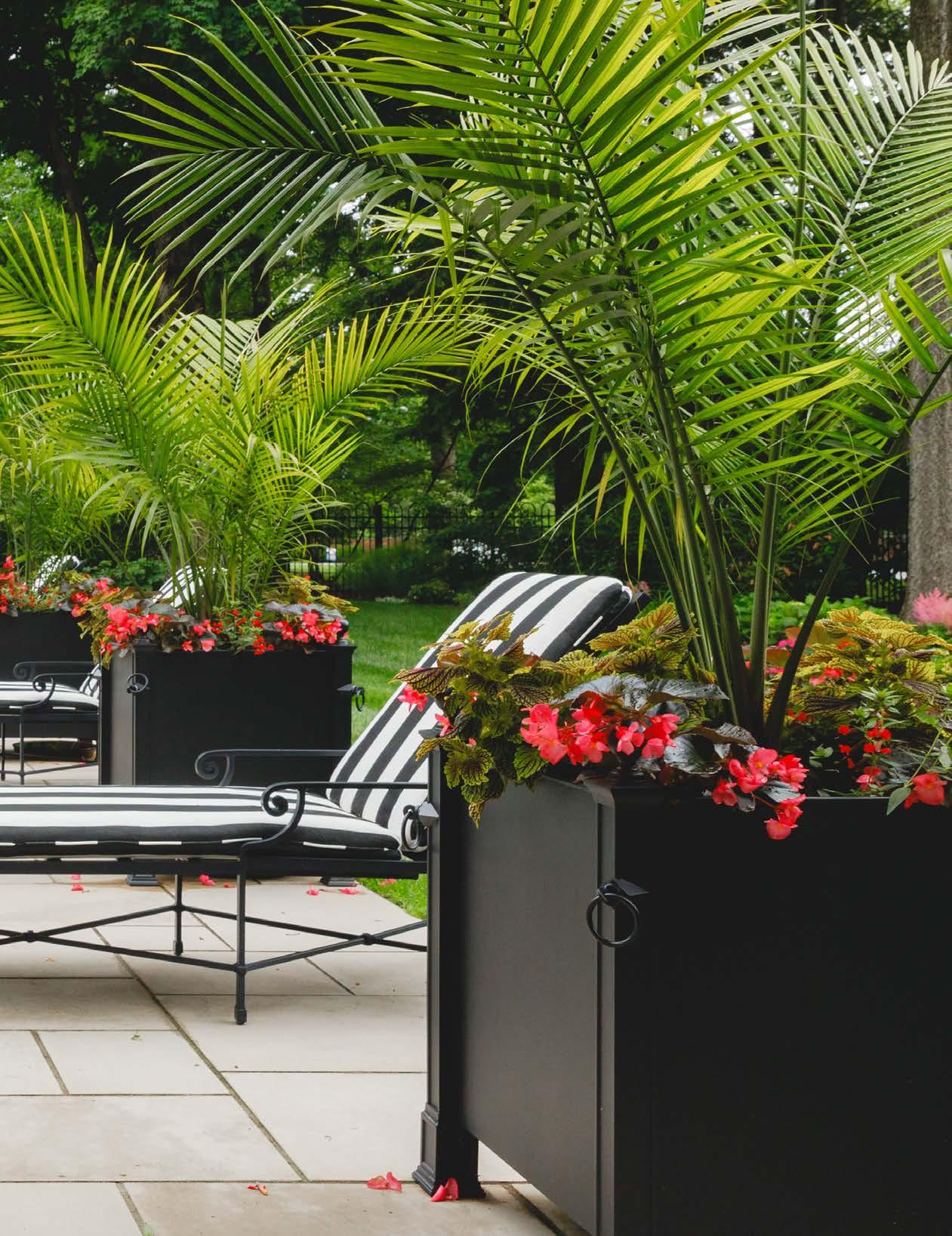
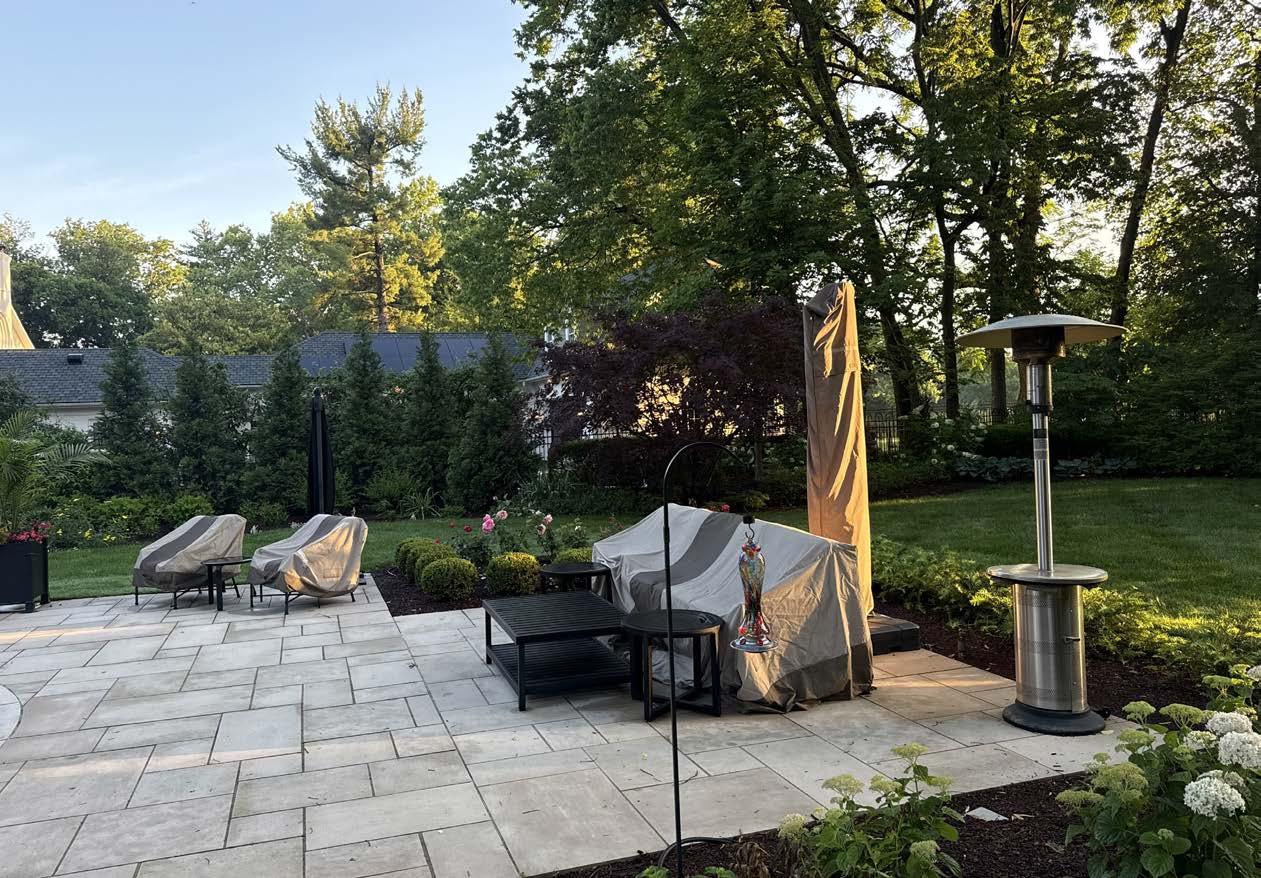
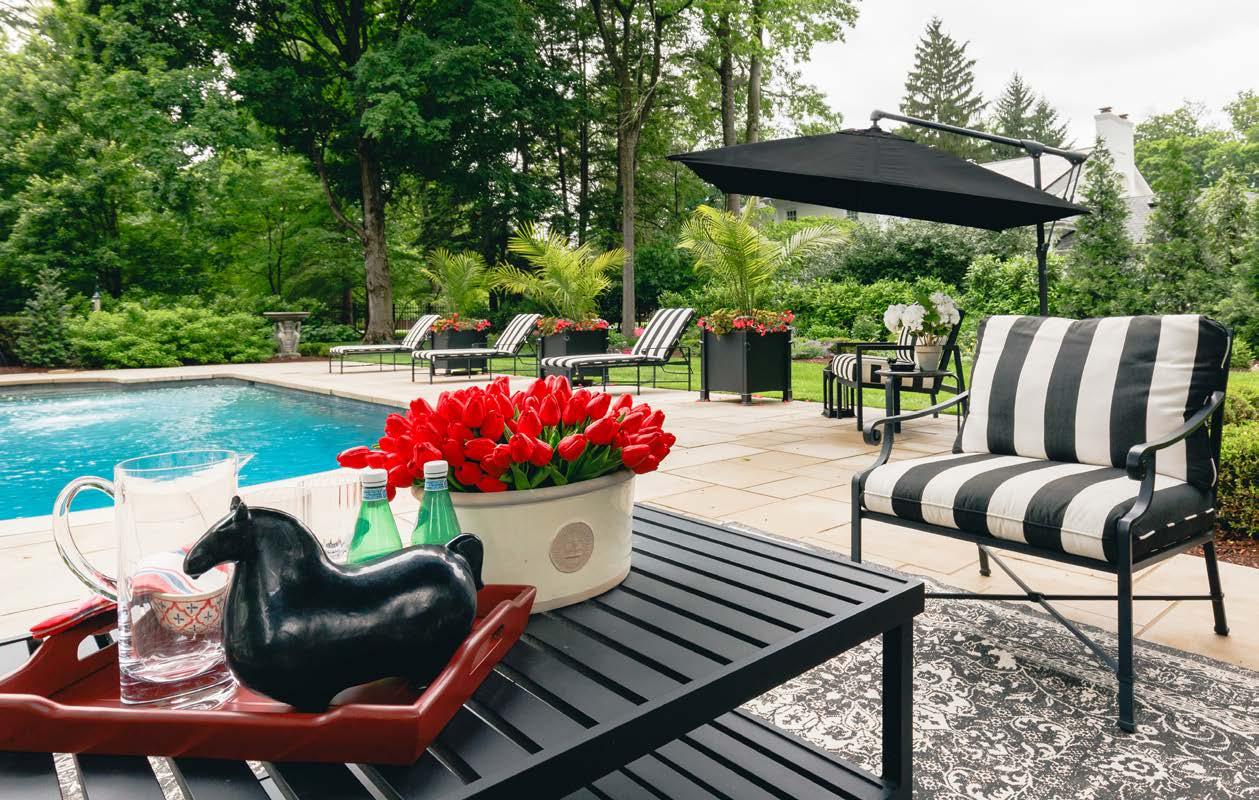
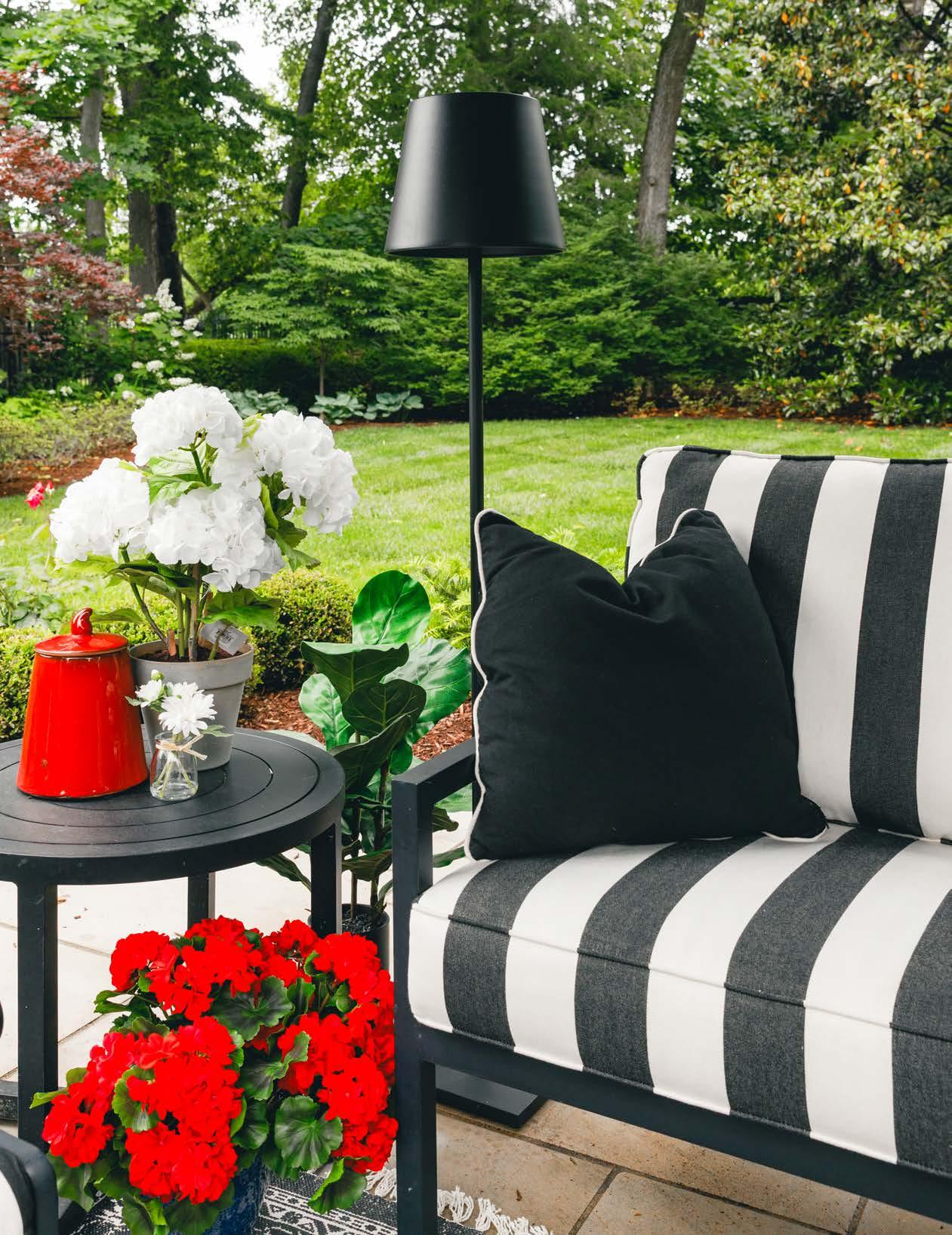
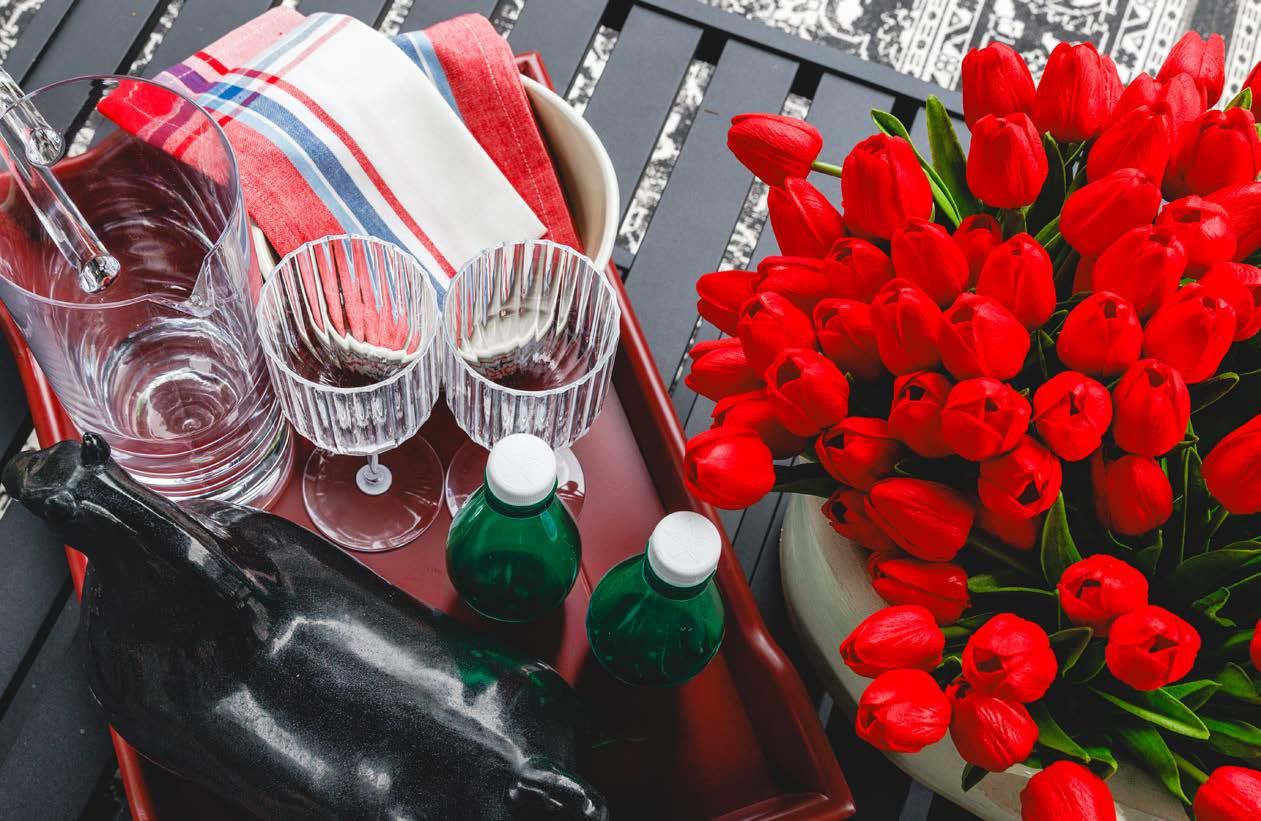
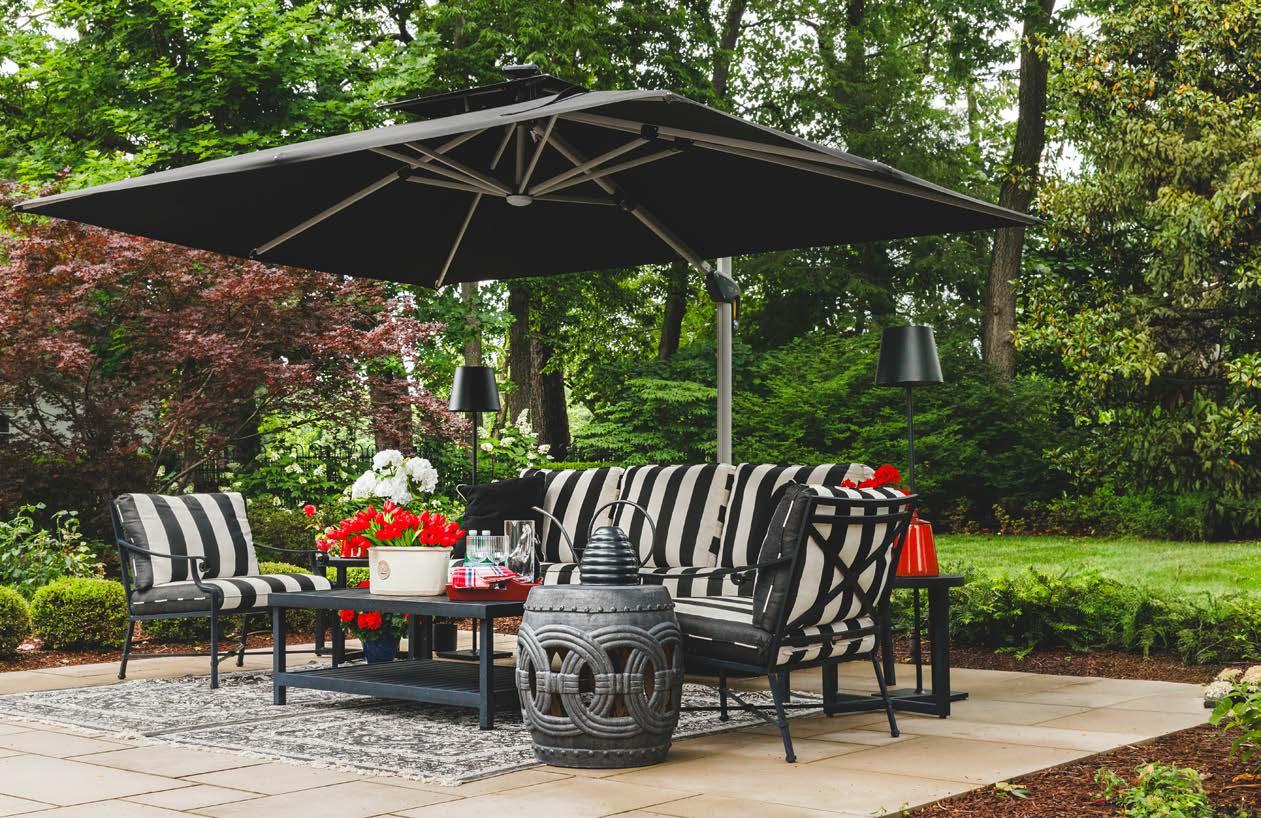
Ben Palmer-Ball’s Guide to Outdoor Entertaining with Digs Home & Garden By VOICE-TRIBUNE Photos By Matt Johnson
By VOICE-TRIBUNE • Photos By Matt Johnson
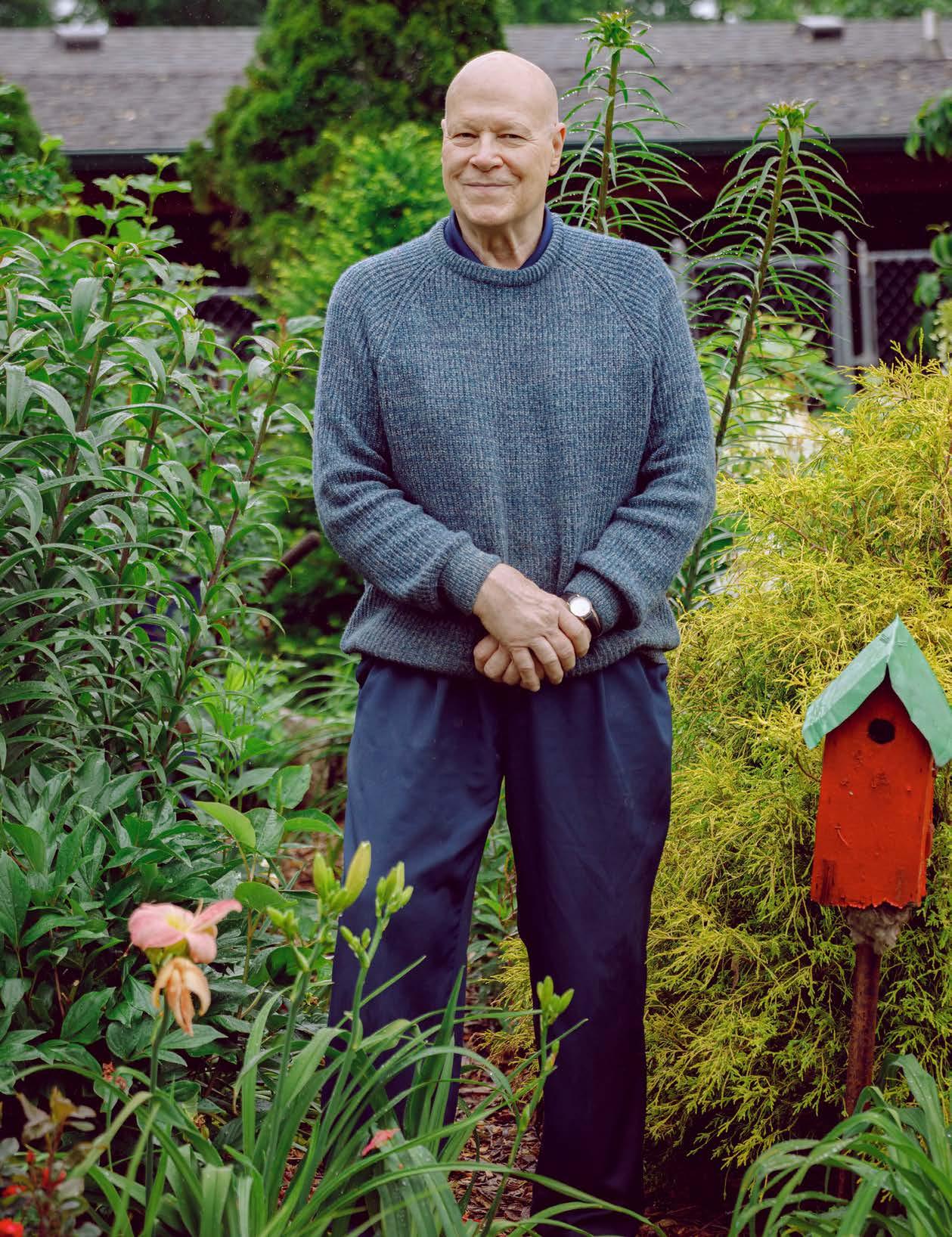
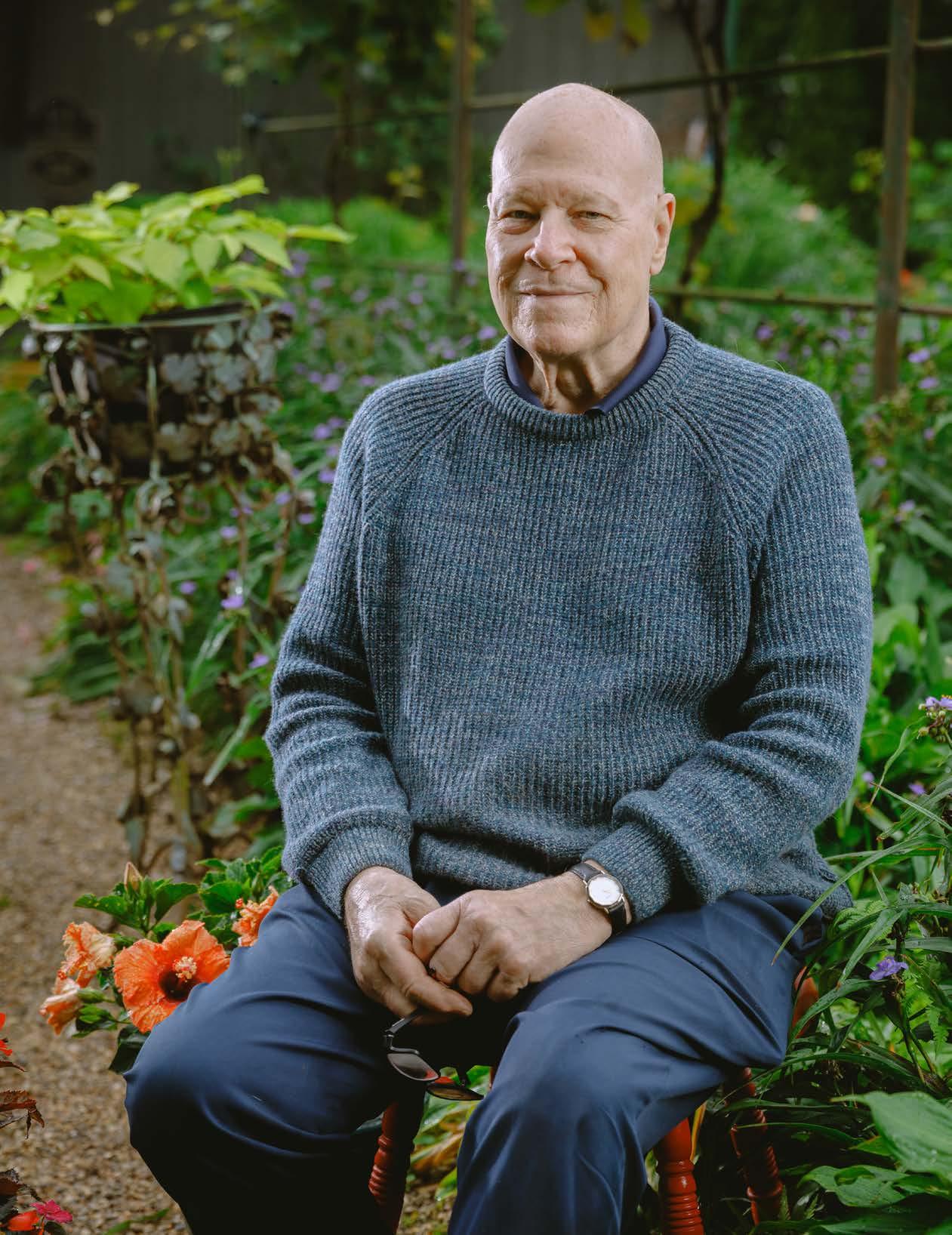
Phillip Koenig has spent decades helping set the tone of Louisville’s catering and event scene through his work with The Silver Spoon, a company that has become a trusted name at weddings, galas, Derby celebrations, and many of the city’s most recognizable venues. Alongside longtime business partner Kathy Hensley, Koenig helped build a catering company known for polished events, dependable service, and an ability to give even the largest gatherings a warm and personal touch.
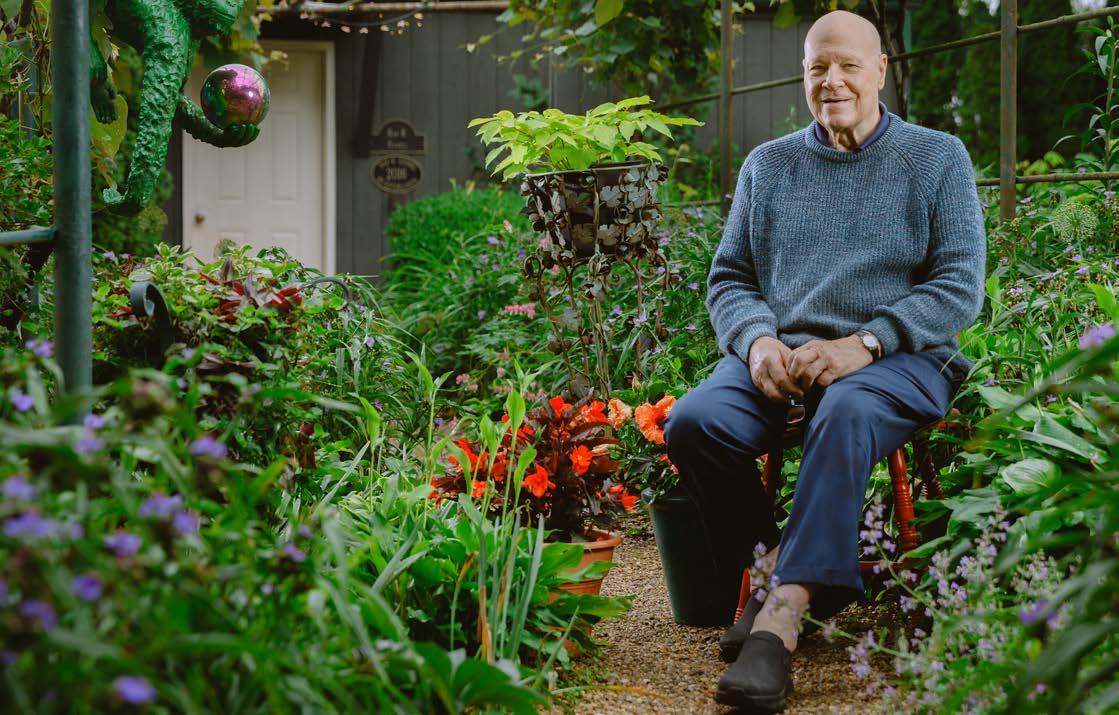
Now, as he steps into a new chapter following The Silver Spoon’s departure from The Henry Clay, Koenig seems right at home surrounded by the things that matter most to him. In Goshen, Kentucky, his garden offers a quieter setting than the bustling ballrooms and packed event spaces he has spent years managing. It is there, among flowers and the company of his beloved dogs, that friends and family see the side of Phillip they have always known best.
While Louisville knows him as a hospitality veteran, those closest to him know him as someone whose kindness has always come naturally. Phillip is the kind of person who makes people feel welcome the moment they walk through the door. Over the years, clients became friends, coworkers became family, and countless people across the city found themselves drawn to his easy warmth and generous spirit.
For many Louisville families, The Silver Spoon became part of life’s most meaningful celebrations. The company catered wedding receptions, charity events, holiday parties, corporate gatherings, and milestone celebrations for decades. Guests often remember the beautiful presentation and seamless service, but many also remember Phillip himself. Whether greeting clients during an event or making sure staff members felt appreciated behind the scenes, he carried himself with a confidence that helped put others at ease.
One of the defining highlights in The Silver Spoon’s history came with the opening of the Muhammad Ali Center, where the company orchestrated a formal sit-down dinner for more than 2,200 guests on the Belvedere in partnership with the Kentucky Center for the Performing Arts. The remarkable guest list included Bill Clinton, Jim Carrey, James Taylor, legendary boxing figures, and what was widely rumored at the time to be the first major public appearance together by Angelina Jolie and Brad Pitt. Reflecting on the occasion, Phillip Koenig credits the trust placed in The Silver Spoon by Ina Bond and Lonnie Ali as a defining moment in the company’s evolution into one of the region’s premier large-scale caterers.
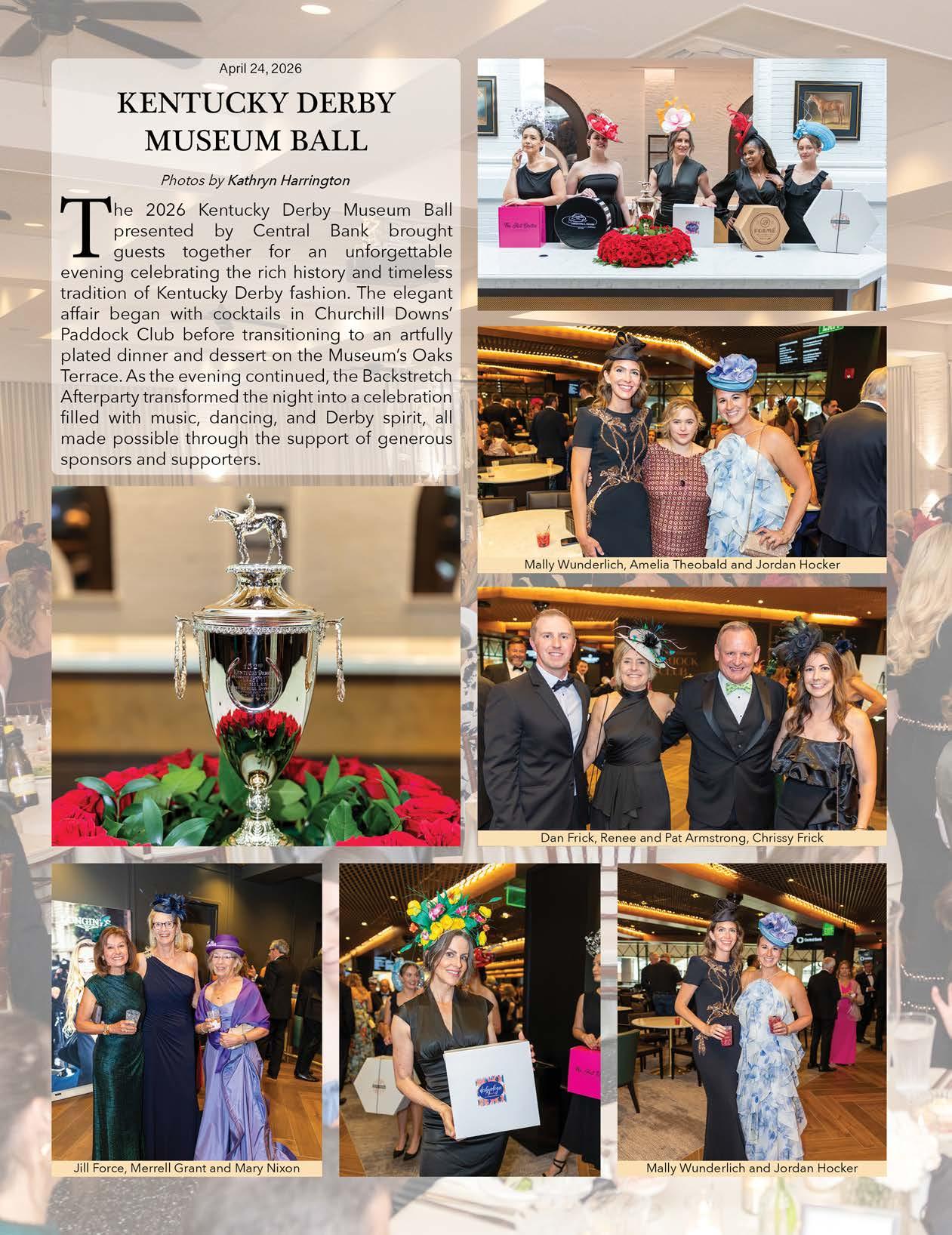
Koenig also points to the Geranium Ball at Jay Albrecht’s farm as an early turning point that introduced The Silver Spoon to the demanding world of charitable galas, thanks to the expectations set by Inge-Marie Malkin and Kaye Bowles-Durnell. Those experiences helped pave the way for decades of prestigious events, including the KMAC Bourbon Ball, the Speed Ball, the Ballet’s Nutcracker Ball, Dinnerworks, the opening of the Frazier History Museum, and a remarkable 25-year run with the Kentucky Derby Museum Ball.
Along the way, The Silver Spoon expanded its reach through major corporate and private clients including Yum! Brands and Lasma Inc., which brought opportunities to cater elite events in both Kentucky and Scottsdale, Arizona, serving distinguished guests such as Armand Hammer, Merv Griffin, Elizabeth Taylor, Wayne Newton, Aretha Franklin, and Hall & Oates. “Together we were able to make dreams a reality,” Koenig said while reflecting on the staff, clients, and longtime supporters who helped shape The Silver Spoon’s legacy.
The Silver Spoon can be traced back to the mid-1980s, when Louisville’s event industry was beginning to evolve into a more creative and competitive space. Koenig played a major role in guiding the company through that period of growth. As relationships formed with venues across the city, The Silver Spoon became one of Louisville’s most established catering operations, known for balancing elegance with hospitality that never felt overly formal or distant.
Another memorable chapter came through The Silver Spoon’s longtime relationship with The Henry Clay. The historic downtown venue became closely associated with the company’s signature style. Weddings there carried a sense of timeless Louisville elegance, and many couples trusted Phillip and his team to help bring their biggest day to life. Even now, as that chapter comes to a close, many people will always associate some of their happiest memories with evenings spent inside The Henry Clay ballroom under the care of The Silver Spoon staff.
Outside of work, Phillip’s love for family and home has always remained front and center. Friends often describe him as someone who genuinely enjoys caring for the people around him. Whether spending time in the garden, relaxing with his dogs, or gathering with loved ones, he finds joy in creating spaces where people feel comfortable and connected. That same instinct shaped the way he approached hospitality throughout his career.
Koenig’s work also extended into Louisville’s arts and cultural community, including involvement with Actors Theatre of Louisville and other civic events throughout the years. The Silver Spoon has, without doubt, become woven into the social fabric of the city.
Over time, the company continues to earn awards, recognition, and praise from clients and publications alike, but for many people, Phillip’s lasting impact has less to do with accolades and more to do with the way he made people feel. He brought people together. He celebrated important moments alongside them. He created environments where guests felt cared for, and where employees felt valued.
As Phillip Koenig looks ahead to new ventures with The Silver Spoon, there is still a great deal of excitement surrounding what comes next. After decades in Louisville hospitality, his passion for bringing people together remains as strong as ever. And for the many friends, clients, coworkers, and loved ones who hold him close to their hearts, that next chapter is no farewell, but the beginning of something new. thesilverspooncaterers.com
www.whitepicketky.com
BITTNERS
By VOICE-TRIBUNE • Photos By Matt Johnson
Sam Heine’s interest in Louisville history started the way many obsessions do: with a curiosity that kept growing. One question about an old building led to another. A drive through a changing neighborhood turned into hours researching what once stood there. Over time, that curiosity has grown an audience online as well, where thousands of viewers now follow his videos about Louisville’s architecture, forgotten places, and overlooked stories.
By profession, Sam is a Louisville-based real estate agent. But his public identity has increasingly become associated with local history and storytelling. His videos explore abandoned landmarks, demolished neighborhoods, historic homes, and the strange layers of change that Louisville has experienced over time. The appeal is not nostalgia for nostalgia’s sake. Much of his work focuses on helping people see familiar places differently.
“I think people want to feel like their city has a soul and a story behind it,” he says.
Long before he started posting videos, Sam says he was already spending time researching lost neighborhoods, reading about old buildings, and wondering what once occupied vacant lots or overlooked corners of the city. Once he began sharing those discoveries publicly, he noticed viewers responding in a more personal way than he expected. “People weren’t just watching,” he says. “They really seemed to be connecting to the stories on a personal level.”
The response often came through comments. Viewers shared memories of old businesses or neighborhoods. Others tagged relatives who remembered places before redevelopment changed them. Some contributed details and photographs of their own. That interaction revealed something larger than a niche interest in architecture for Sam.
Louisville’s history is full of contradictions. The city has experienced rapid growth and decline, preservation efforts and demolition campaigns, investment and displacement. Sam’s videos move between lighter stories and more difficult histories depending on the subject itself. “I usually just try to follow the tone of the story itself,” he says.
He has covered subjects involving segregation, redevelopment, and the long-term effects of urban renewal projects. “I don’t really want the videos to feel like lectures,” he says, explaining how he tries to keep things accessible without flattening the complexity behind it.
Part of what makes what Sam does so unique is the way historical research connects to ordinary, recognizable places. He doesn’t treat history as something distant or academic; his videos often begin with locations people already know: a building they pass during their commute, a neighborhood they grew up near, or a property that looks unremarkable until its history is explained.
One story that continues to stay with him involves land connected to Central State Hospital, where he says there may be thousands of lost or unmarked graves beneath portions of what is now Tom Sawyer Park. “Most people today know it as a normal park with walking trails and sports fields,” he says, “but they have no idea about the history of the land underneath it.”
Discoveries like that really impact how people understand the city around them, and a familiar place can suddenly gain another layer of meaning once its history becomes more visible. That idea informs the way he views Louisville’s changing neighborhoods through his real estate work, too. “A lot of the areas people are excited about today have gone through multiple identities over the decades,” he says.
His focus on buildings naturally leads to conversations about preservation. Among the areas he believes deserve greater attention is Broadway, once one of Louisville’s major cultural corridors. Historically lined with large homes, theaters, hotels, and commercial buildings, much of that architectural landscape has disappeared over time.
“People sometimes forget that once these structures are gone, they’re gone forever,” Sam asserts.
While it can sometimes be a struggle to make local history feel relevant to younger audiences, Sam’s videos have found traction partly because they avoid sounding instructional. He does not approach the subject like a traditional historian. Instead, he frames stories through curiosity and visual discovery. “A lot of people probably aren’t going to sit down and read a 300-page book about Louisville history,” he says, “but they will stop and watch a 90-second video if it feels visual, intriguing, emotional, or surprising.”
That format has also expanded his network throughout the city. As his audience has grown, Sam says developers, residents, preservation advocates, and community members increasingly reach out with tips and overlooked stories. “I’ve had a lot more people start reaching out saying, ‘Hey, you should come check this place out.’”
Those connections have turned into a steady flow of new research leads. People send him stories connected to old buildings, forgotten businesses, disappearing landmarks, and neighborhoods in transition. The work has also allowed him to highlight local events and preservation efforts to an audience already interested in Louisville’s architecture and culture.
For now, short-form videos remain his primary medium. But Sam says he eventually wants to expand into longer documentarystyle projects, walking tours, live events, and interview series that allow for deeper storytelling. “I think they’re an amazing way to spark curiosity,” he says of short videos, “but a lot of these stories deserve a deeper dive than you can fit into 90 seconds or two minutes.”
What started as curiosity about old buildings has become an ongoing archive of Louisville’s disappearing places and overlooked histories, shared by someone still approaching the city with the same fascination that started the whole thing.
To follow along, visit: www.instagram.com/samheinelouisville
‘PHYLLIS’ HELPED UNCOVER RELICS, LEADING TO PATRICK DONLEY’S MIDDEN PROJECT MUSEUM
By RUSS BROWN • Photos Provided
This is the story about a groundhog named Phyllis, a local artist, a century-old building, and buried treasure. Strange bedfellows to be sure, but stick with me and you’ll learn about the fascinating connection that binds them.
The catalyst of the tale is Patrick Donley, 64, a Louisville native who graduated from Kentucky Country Day, then followed an art eccentric trajectory at Davidson College in North Carolina, where he became a visual arts major. He went on to graduate school at Northwestern, where he earned a Master of Fine Arts degree in painting and drawing before returning to his hometown to begin his career as an artist.
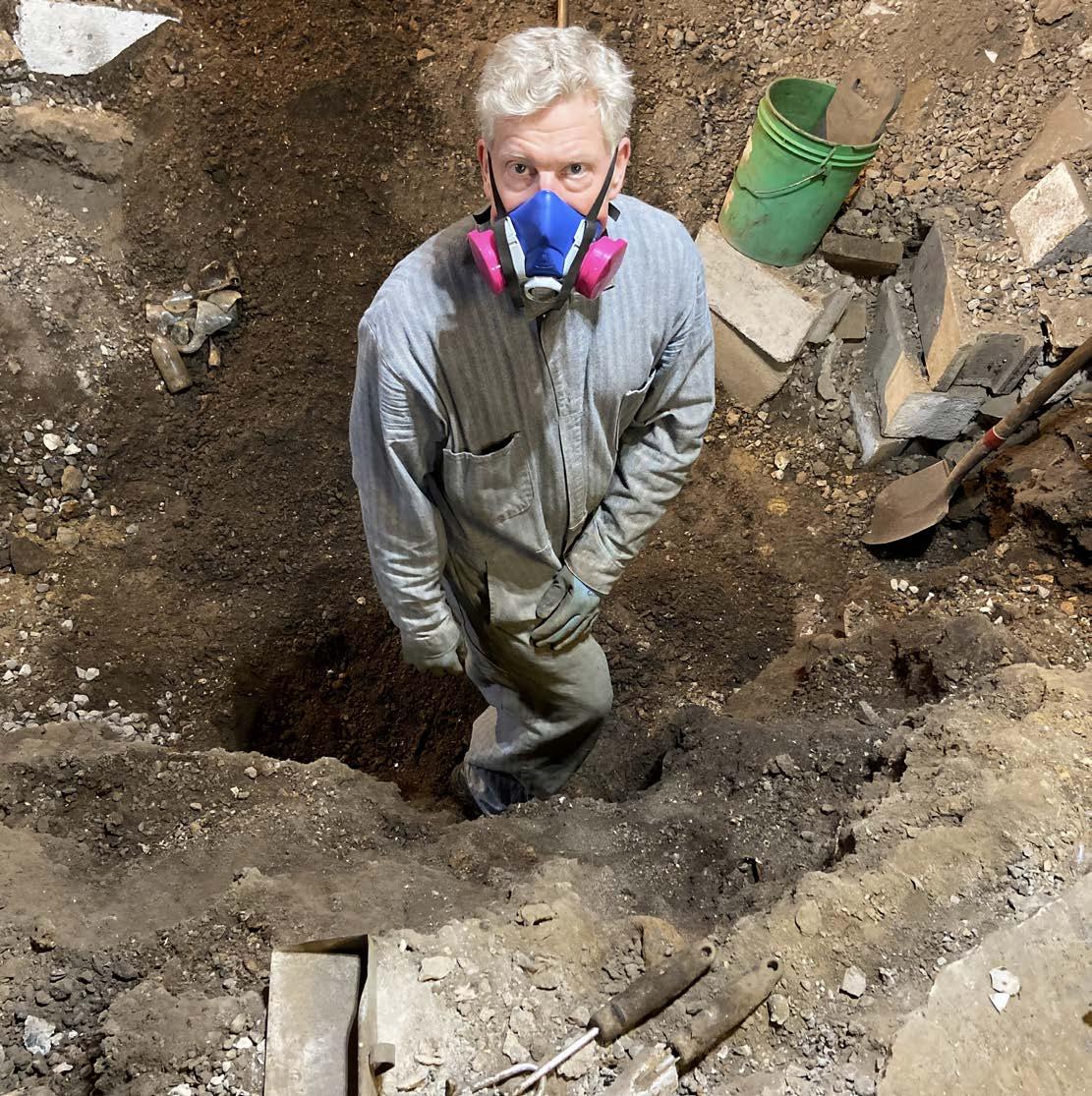
Donley had no idea what lay in store when he bought a two-story warehouse building constructed in 1920 on Mary Street in the Germantown neighborhood in 1995. But one day in 2019, he noticed a pile of dirt coming out from under a broken piece of slab. He started inspecting it and found a couple beer bottles, and thought it was simply construction trash. Not quite. Enter Phyllis.
“That’s when I discovered I had a groundhog,” Donley said. “I tried to rehome her and it was during one of those efforts to trap her that I discovered a pile of dirt coming out from one of the broken pieces. The floor was broken during the 1937 flood because when the waters receded there was nothing to support the floor and it collapsed in many places.”
(Donley named his rodent resident Phyllis, although he wasn’t sure she was female. His suspicion was confirmed when Phyllis produced the first of two litters with three kits each).
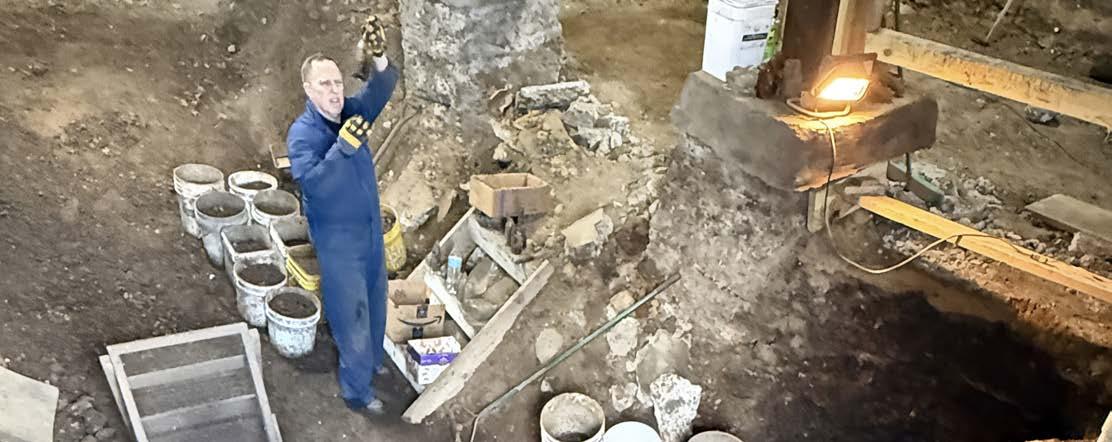
“In those piles of dirt she was kicking out, I found some medicine bottles, shards of pottery and porcelain, as well as doll parts and other domestic items. I began to realize this wasn’t just a little construction trash. So I started to open up other sections of the floor to explore further and found more of the same everywhere I went. At first, I was dumbfounded. I couldn’t quite piece together what I was finding and how it came to be here.”
Eventually, Donley learned that the building was sitting on top of a city dump that opened in the early 1870s. For 50 years, until it closed in 1919 during the Spanish Flu epidemic, people in Germantown, which was then located on the outskirts of Louisville, discarded a variety of unwanted stuff at the location. As the axiom goes, one man’s trash is another man’s treasure, and Donley, with Phyllis’s help, had found his treasure.
“For 35 years, I have been making art from found objects and collage-based paintings as well as sculptures,” he said. “So it’s very interesting that I’m the guy who discovered that his studio was built on a dump. Thanks to Phyllis.”
In honor of Phyllis, Donley -- who calls himself an “accidental archaeologist” -- named his company “Groundhog Archeology Inc.” and founded the Mary Street Midden Project. Midden is an archaeology term that’s a polite way of describing garbage or trash, which is often a gold mine for archaeologists.
“The amazing truth about this excavation is that almost every time we have dug into the soil we have found something that we’ve never seen before,” he said. “We’re talking about thousands of items, and it has taken a ton of research to even begin to fathom what we were looking at.”
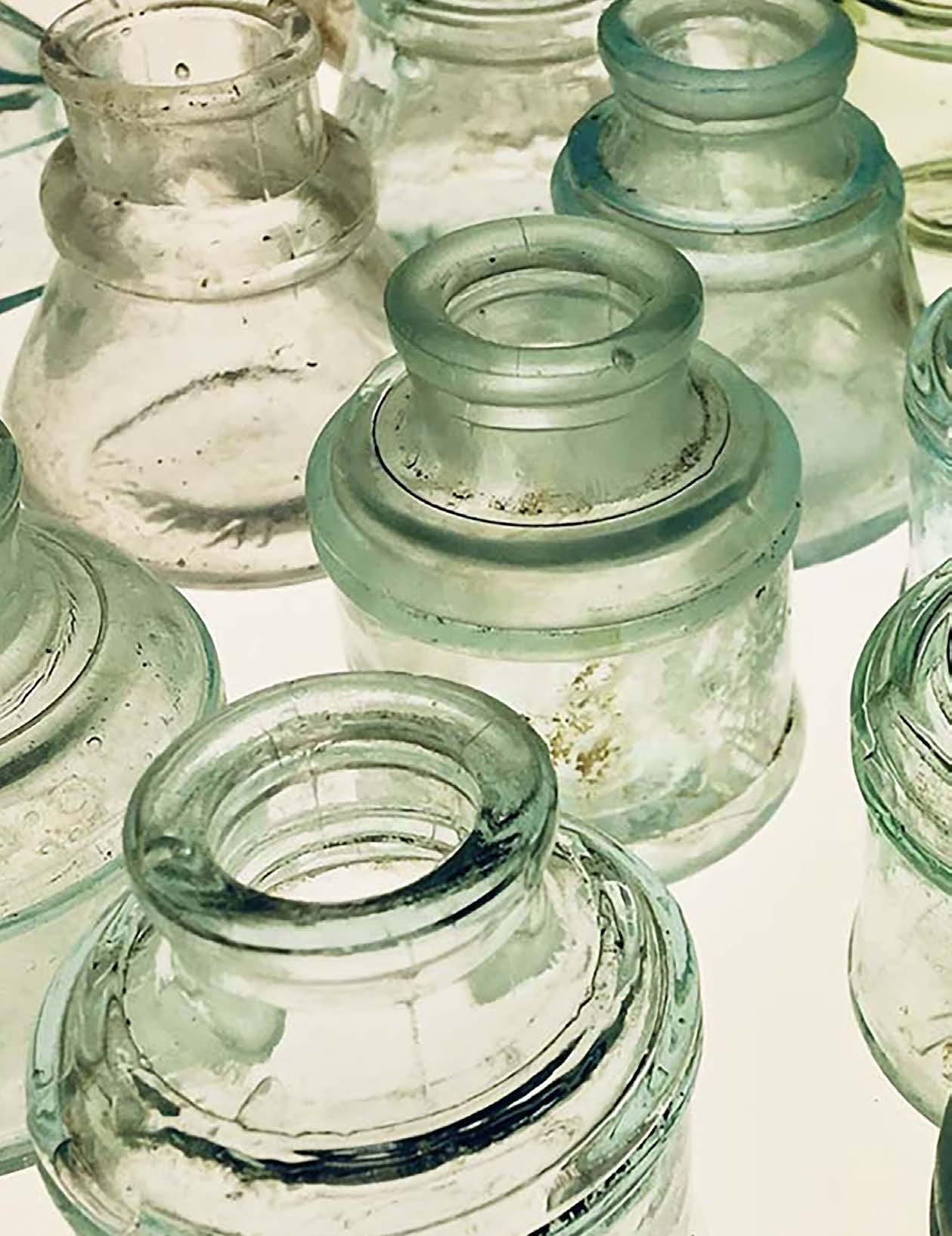
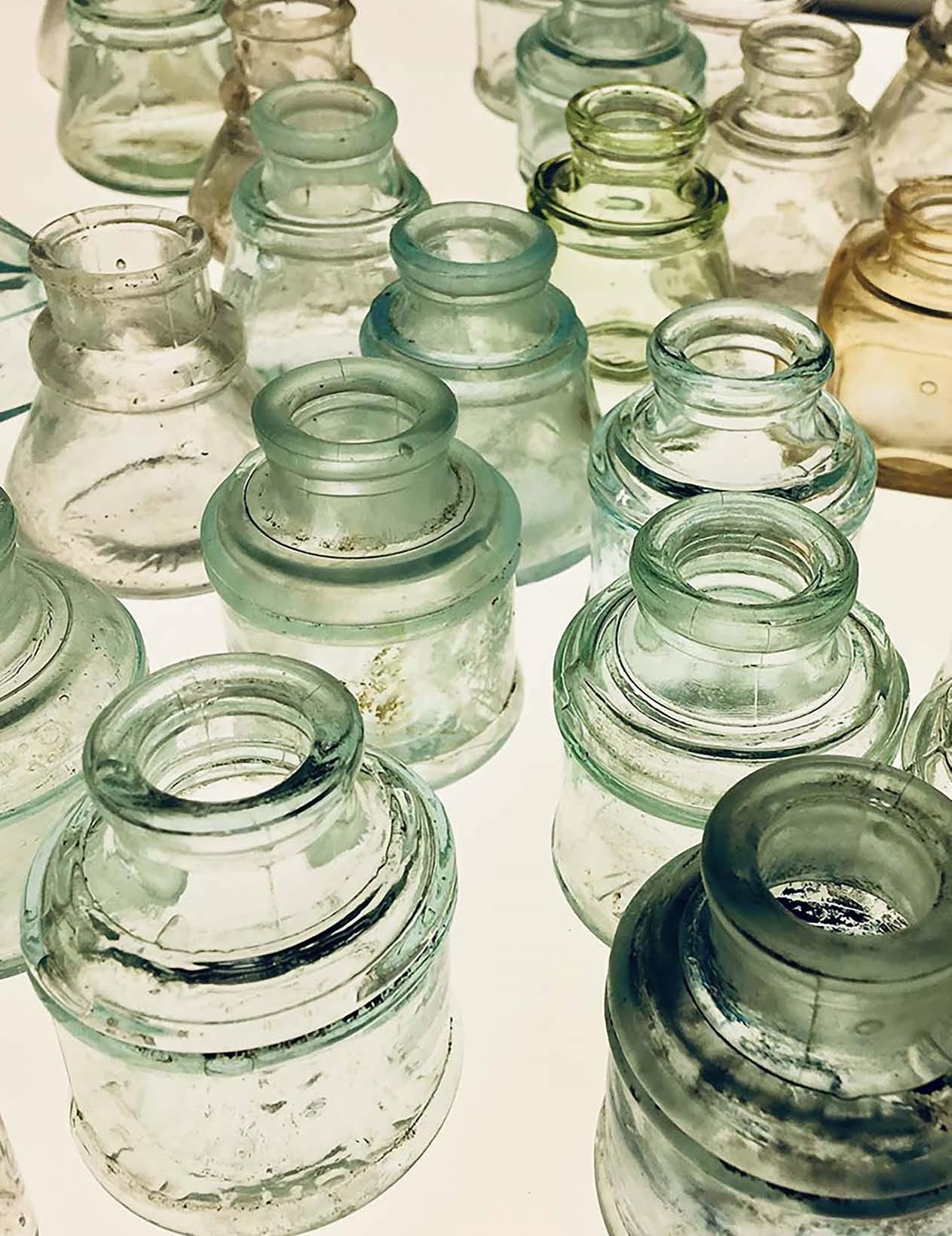
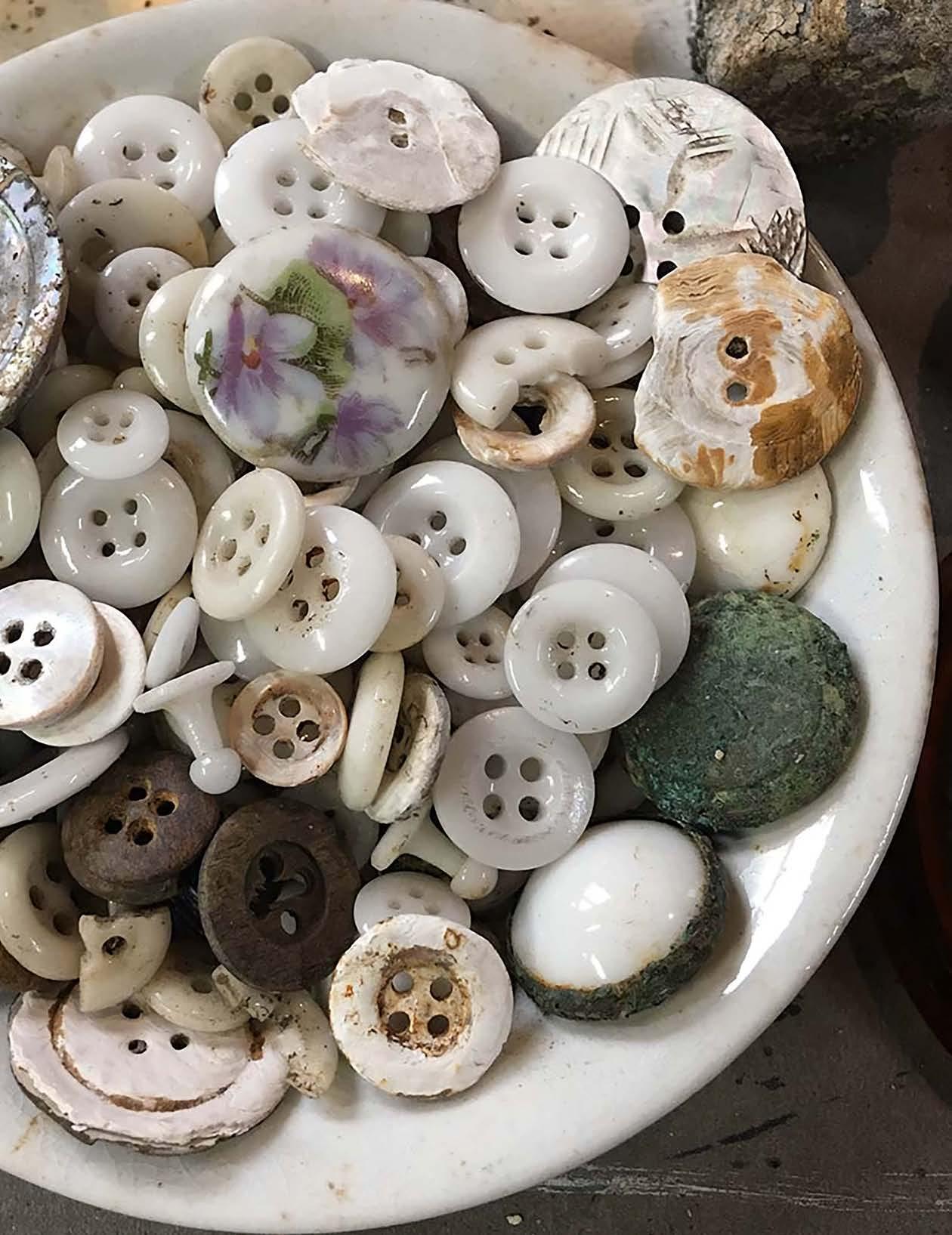
A small sample of the things he unearthed while digging up to seven feet deep includes bottles of all styles from everyday life -- medicine, soda, glues, pre-prohibition liquor -- along with household products like shoe polish, tooth powder, soap dishes, perfume, cosmetics, as well as false teeth, combs, silverware, buttons, building tiles, handguns, clay marbles, children’s toys from the Civil War era, and numerous broken flower pots. He and others dug for the relics and artifacts until hitting the water table forced them to stop.
One of the most prominent finds was a trove of Louisville Pharmacy bottles. “We found a ton of those,” Donley said. “One of our goals is to tell the story of the pharmacist who lived upstairs at the pharmacy with his family. There were no Walgreens or CVS; pharmacies involved individuals who were trained and knew how to mix medicines on site. It’s a fascinating aspect of the whole story and a history that’s not been told in Louisville.”
“About four years into the (dig), I had been asked by countless people who were following me on social media what my plans were to do with all this stuff,” Donley said. “I put my head to it, and my heart, and I thought long and hard about it. I have years of museum experience from many different institutions where I’ve worked across the country. I co-ran a cooperative art gallery for many years, so it just seemed like a natural recourse. But it’s not going to be just a dusty old bottle museum.
“This is going to be a museum that glows with light, that tells the history of Louisville and its people from 120 years ago and how they lived. These are the items they used every day and we will talk about the culture and the historical aspects of every item. If it was a medicine or a chemical, we will also explore the science behind what was in the bottle and how it was used. Many of the products are still in use today -- such as Listerine and Vaseline -- as well as many of the companies, including Eli Lilly, Purdue Pharma, and Bristol Myers.”
Donley has cleaned, organized and documented each piece for a cloud-based museum catalogue. “It is a painstaking task, but has been very rewarding as we research and learn more and more about the stories behind the artifacts, “ he said.
The two-story building totals 4,000 square feet. Donley is also attempting to purchase the bungalow next door that was built as a family home. Besides exhibitions, plans call for offices, restrooms, a gift shop, and an archaeology dig in the backyard.
The nonprofit corporation is in the process of raising funds for the project. Although no target date for opening has been set yet, the hope is the museum can be functioning in two years. An anonymous donor recently transferred stocks into the company’s stock account, which Donley said is now valued at close to $100,000.
Donley’s work has been sanctioned by the Kentucky Archaeological Survey based at Western Kentucky University. Jay Stottman, Assistant Director of the Survey, who lives near Donley, praised the venture in a recent interview with Lexington TV station WKYT.
“I walked through the door, and I was blown away by what I saw, because this is exactly the kind of time period I study,” Stottman said. “All these objects are being meticulously pieced back together. All I could think about was, ‘Wow, what kind of information that’s here could be used by archaeologists, researchers, lots of people.’”
Donations to the Midden Project can be made through its website, Marystreetmidden.org, and checks are accepted made out to Groundhog Archaeology Inc. More information can be obtained through the website and on Instagram and Facebook.
And what about Phyllis, the unlikely heroine of this story? The lifespan of groundhogs is only five years, so although she was young at the time of her basement exploits, she is gone, but not forgotten.
“She will be celebrated and remembered throughout the museum and on merchandise,” Donley said. “After all, we wouldn’t be talking if she and I had never met.”
ON FULL DISPLAY AT WHISKEY ROW
By Alisha Proffitt • Photos By Matt Johnson
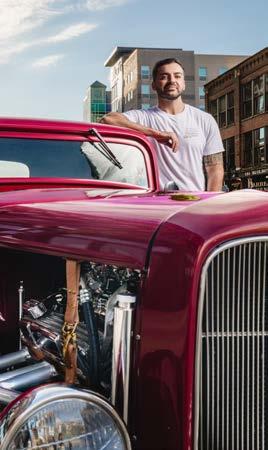
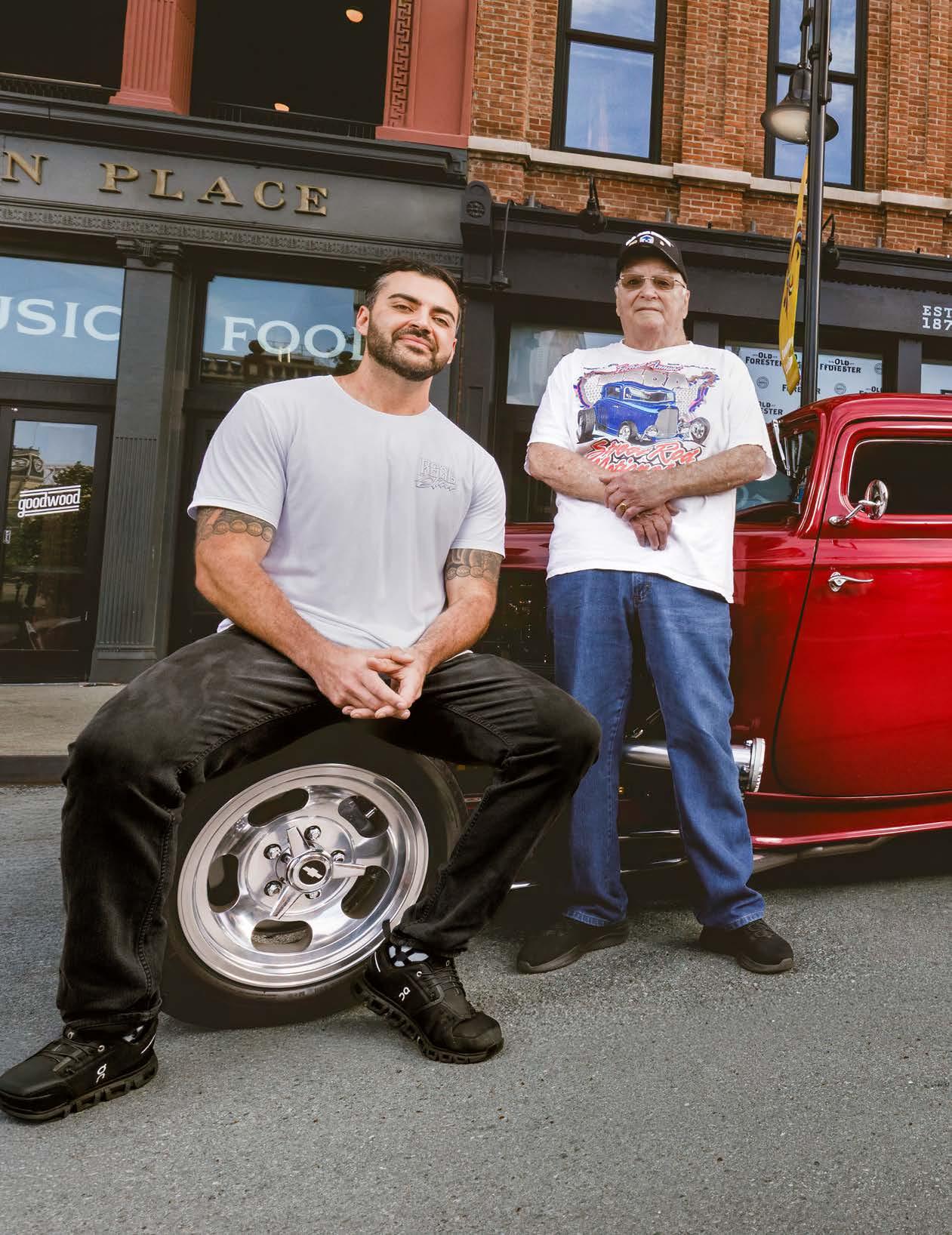
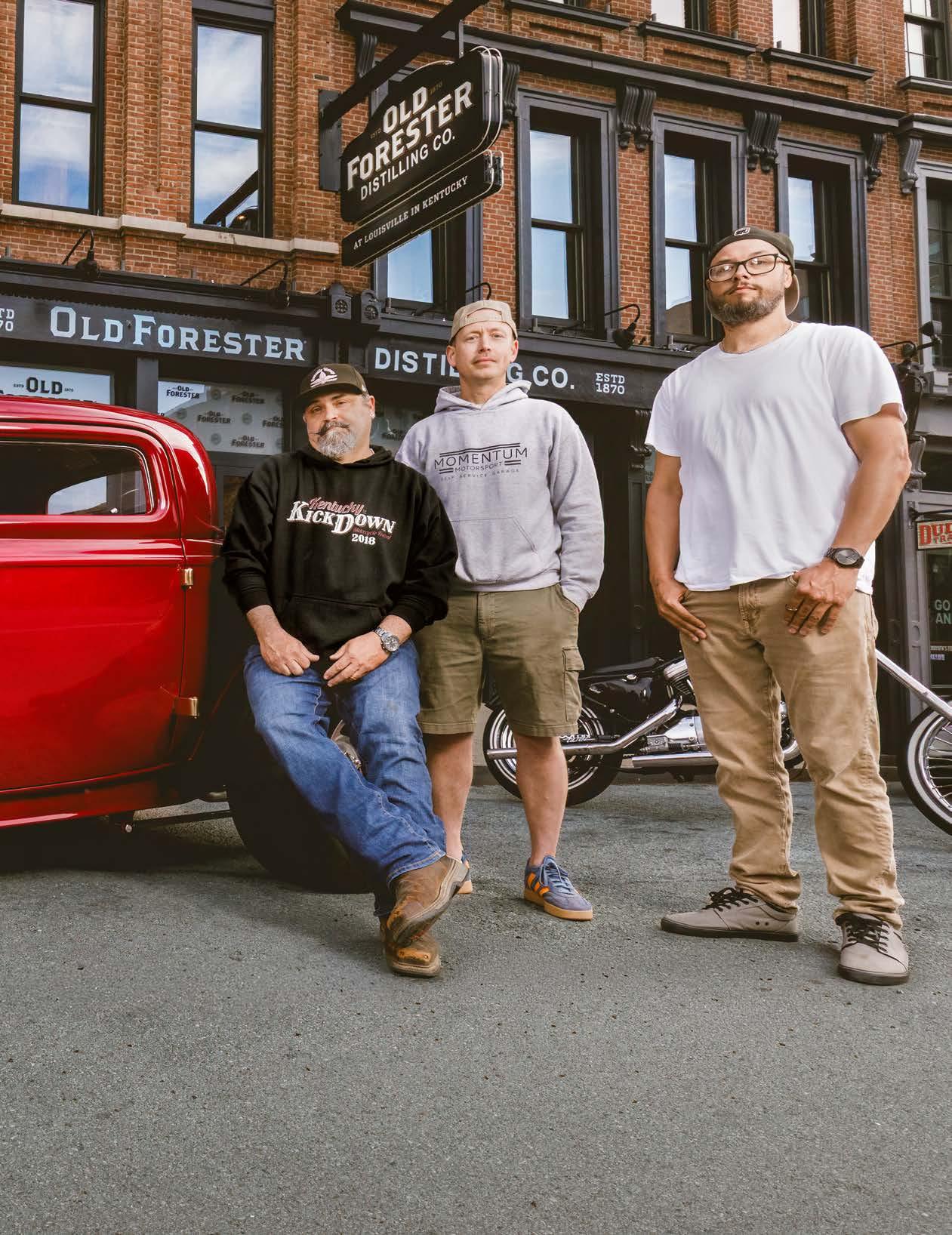
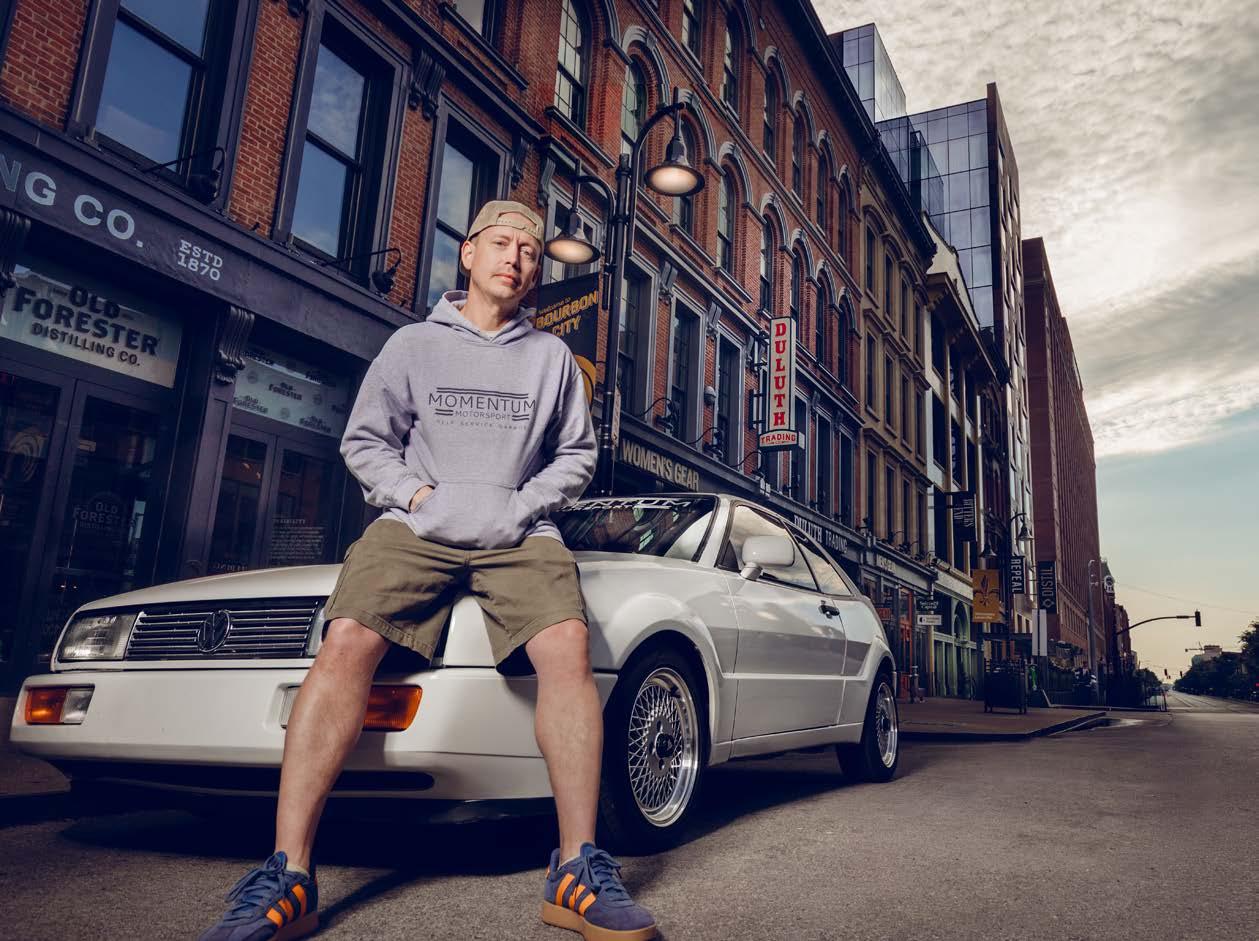
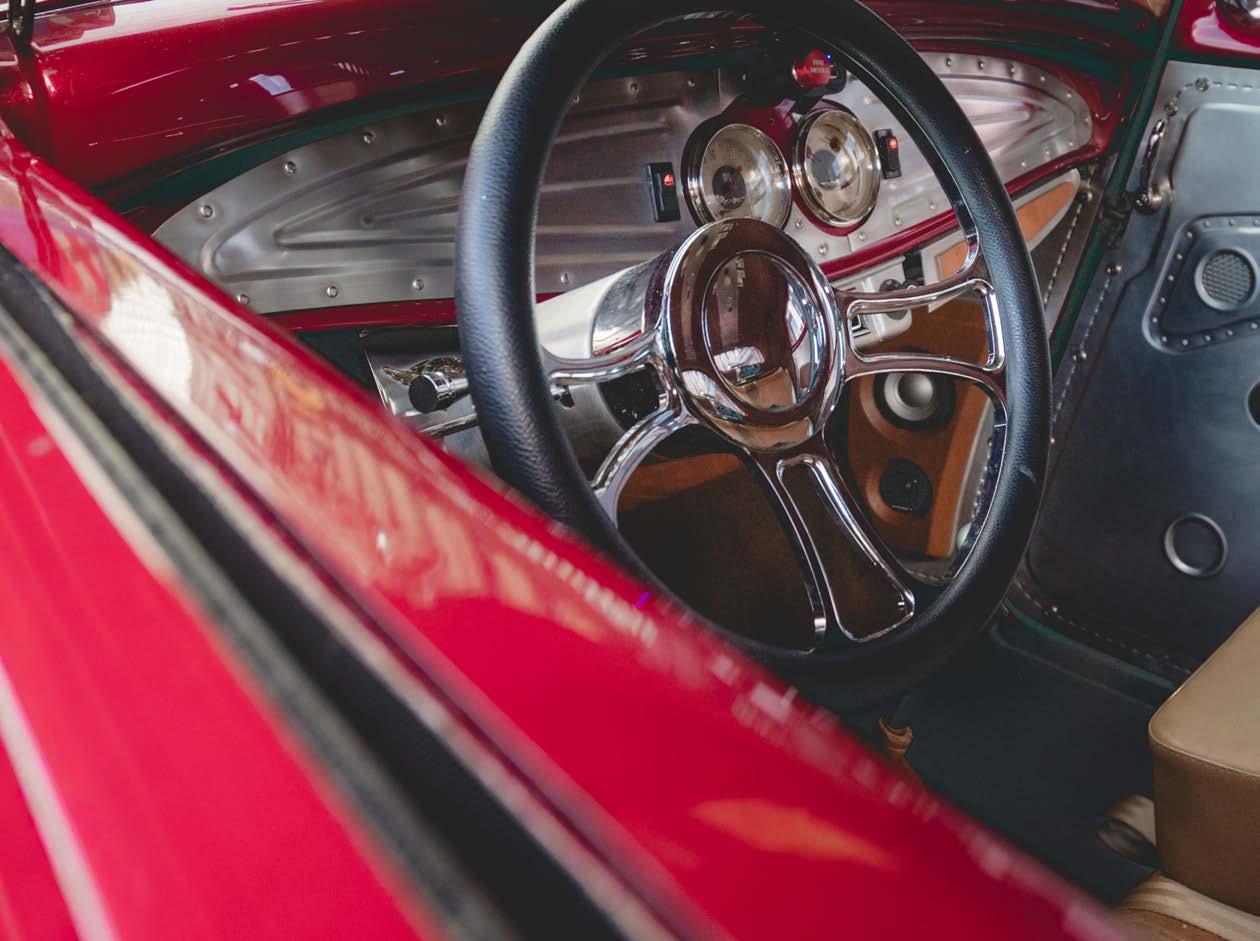
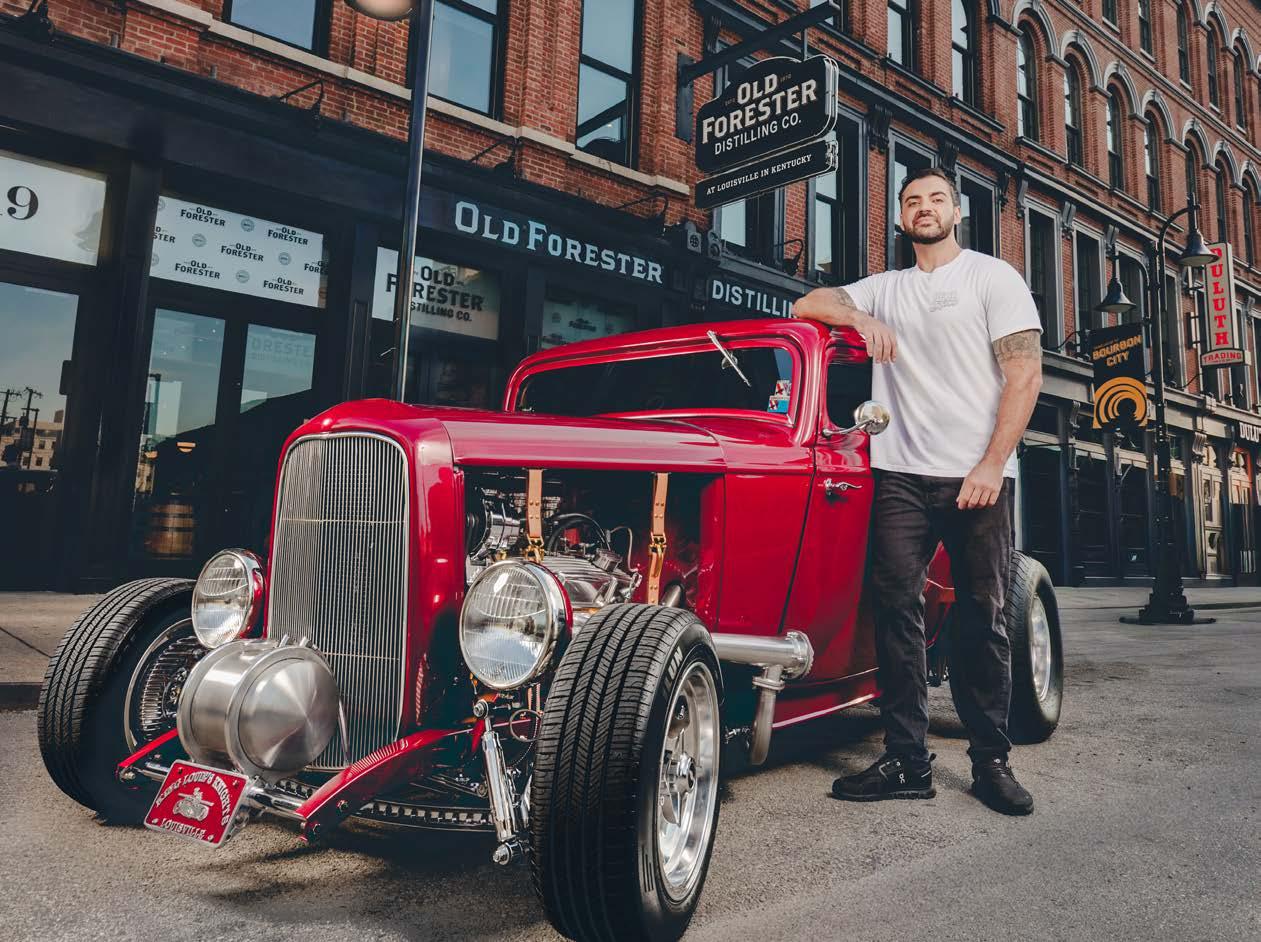
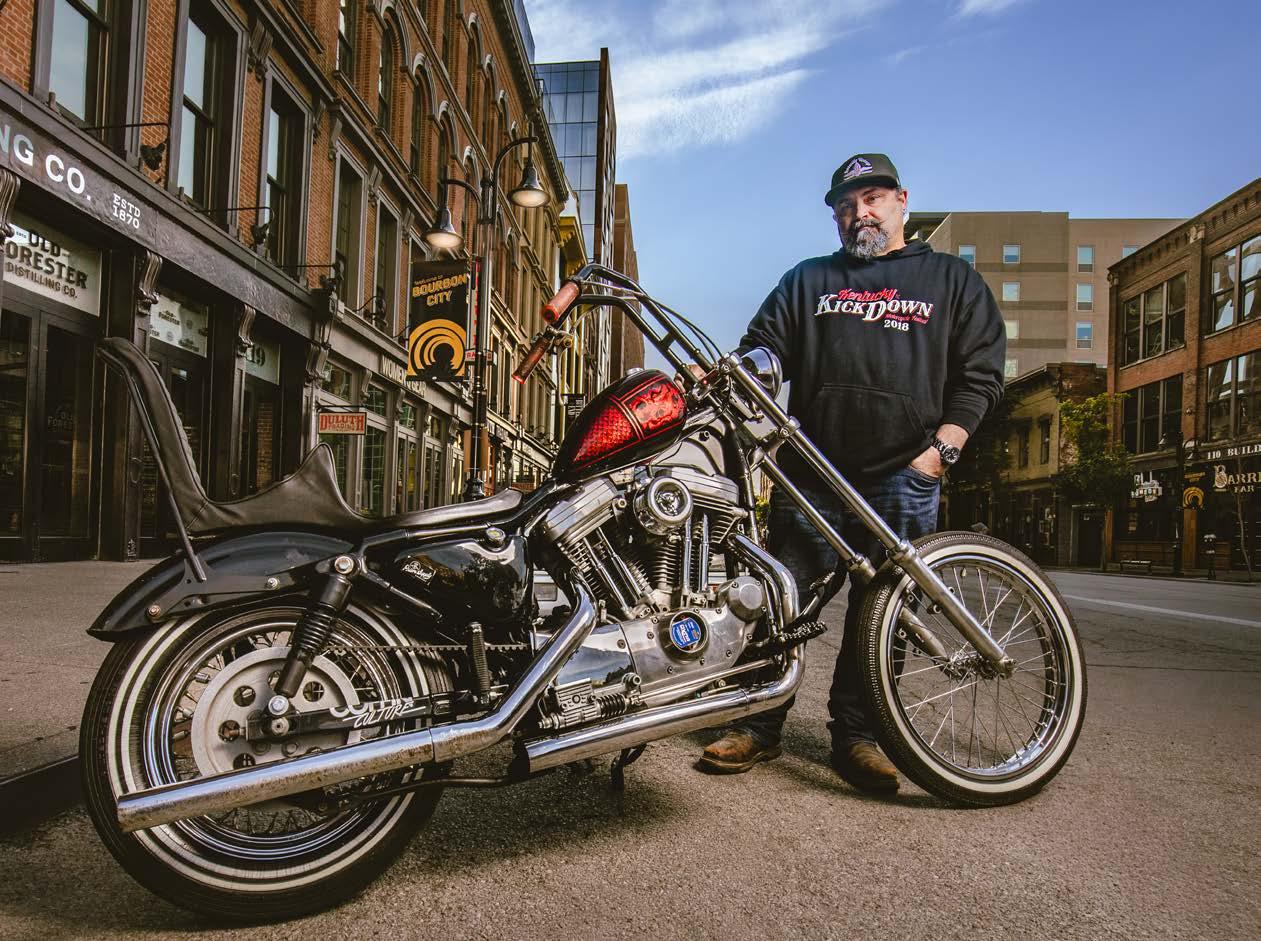
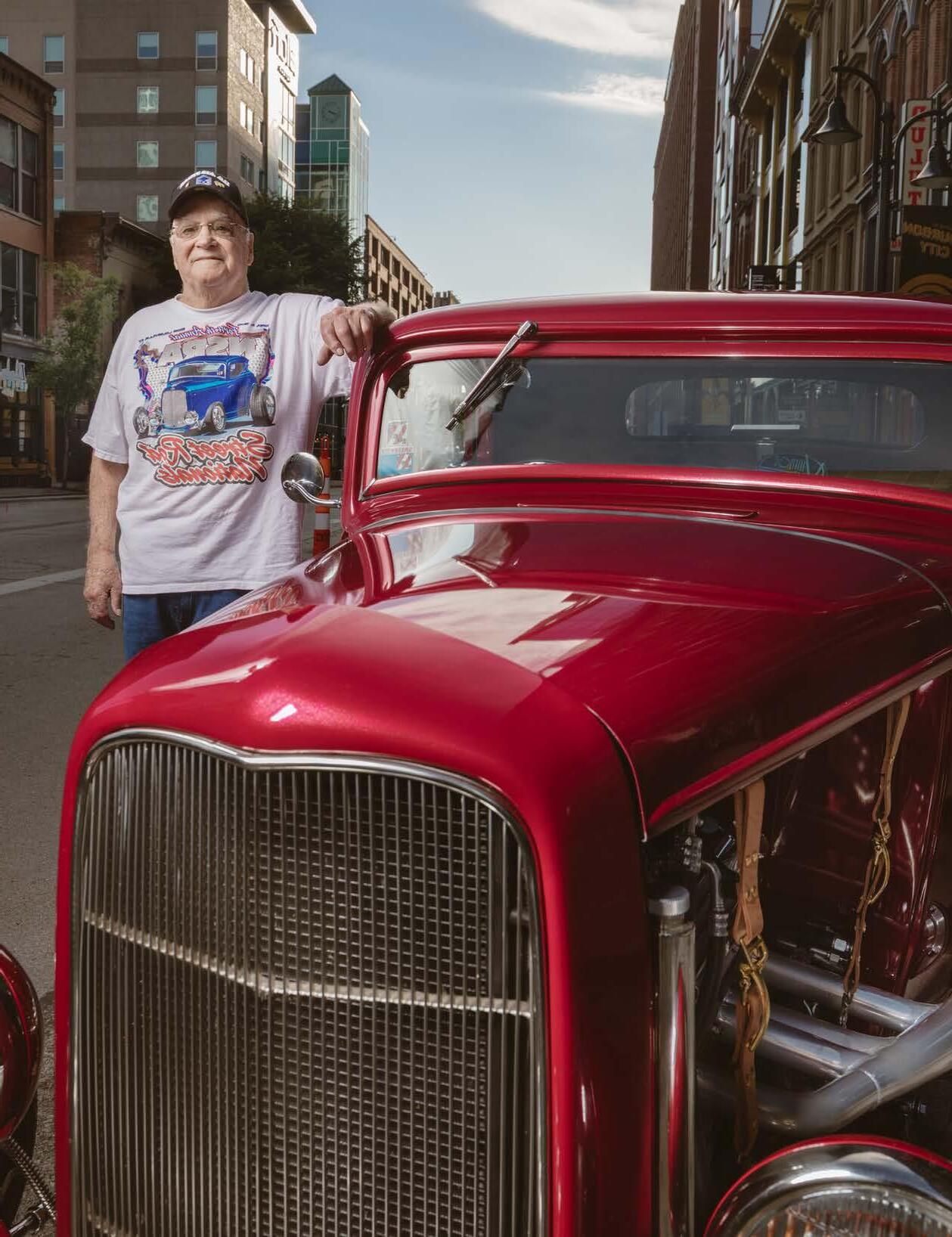
The Whiskey Row Car Show gears up for June 20th to turn a stretch of Main Street into a big, walkable automotive and motorcycle extravaganza from Floyd to 2nd Street.
Whiskey Row will once again transform into an open-air lineup of cars, motorcycles, live music, vendors, food, and foot traffic moving through the heart of Louisville’s historic bourbon district. This is not your traditional fairground car show; it’s a full downtown gearhead takeover.
Organized by Omar ElAbed and The Real Steel Car Club, and back by popular demand, expect a wide mix of classic cars, muscle cars, imports, hot rods, lowriders, lifted trucks, and modern performance builds filling the street. The variety is what keeps it approachable and fun; this show is not necessarily centered around strict categories, but more about people showing up with something they’re proud of and having a good time.
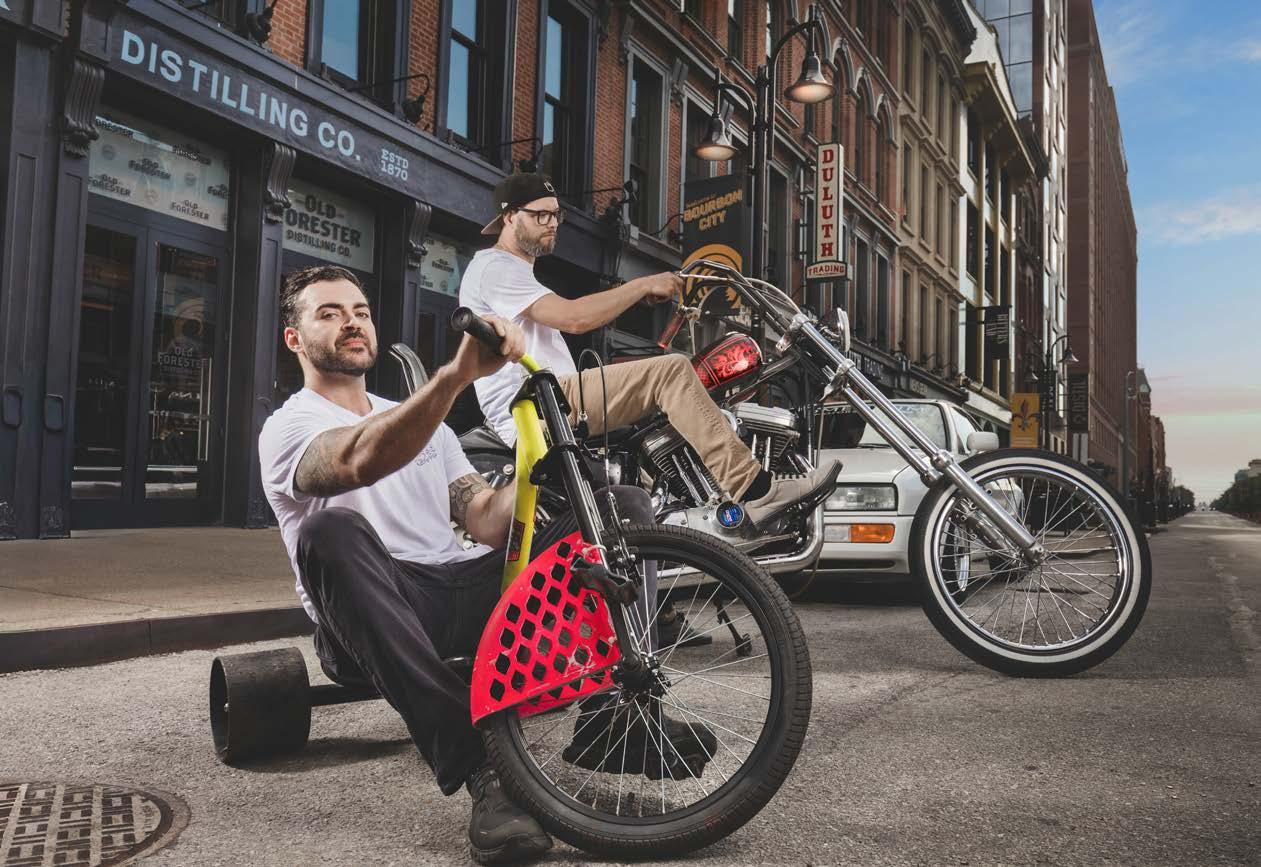
The setup is simple. Admission is free, all ages are welcome, and the layout encourages wandering, walking the street, talking with builders, checking out vendor booths, catching some live music, grabbing some food, and taking it all in the heart of Louisville’s downtown. With Whiskey Row’s bars and restaurants just steps away, and fun entertainment like the adult big wheel races or live art auction from the Louisville Paint Slingers, it’s a full-day experience.
For participants, registration usually includes entry for a driver and guest, a dash plaque, some free goodies from local vendors, and eligibility for awards. The expectations stay straightforward: arrive on time, keep things safe, and respect the environment, so the focus stays on the cars and, most importantly, the community.
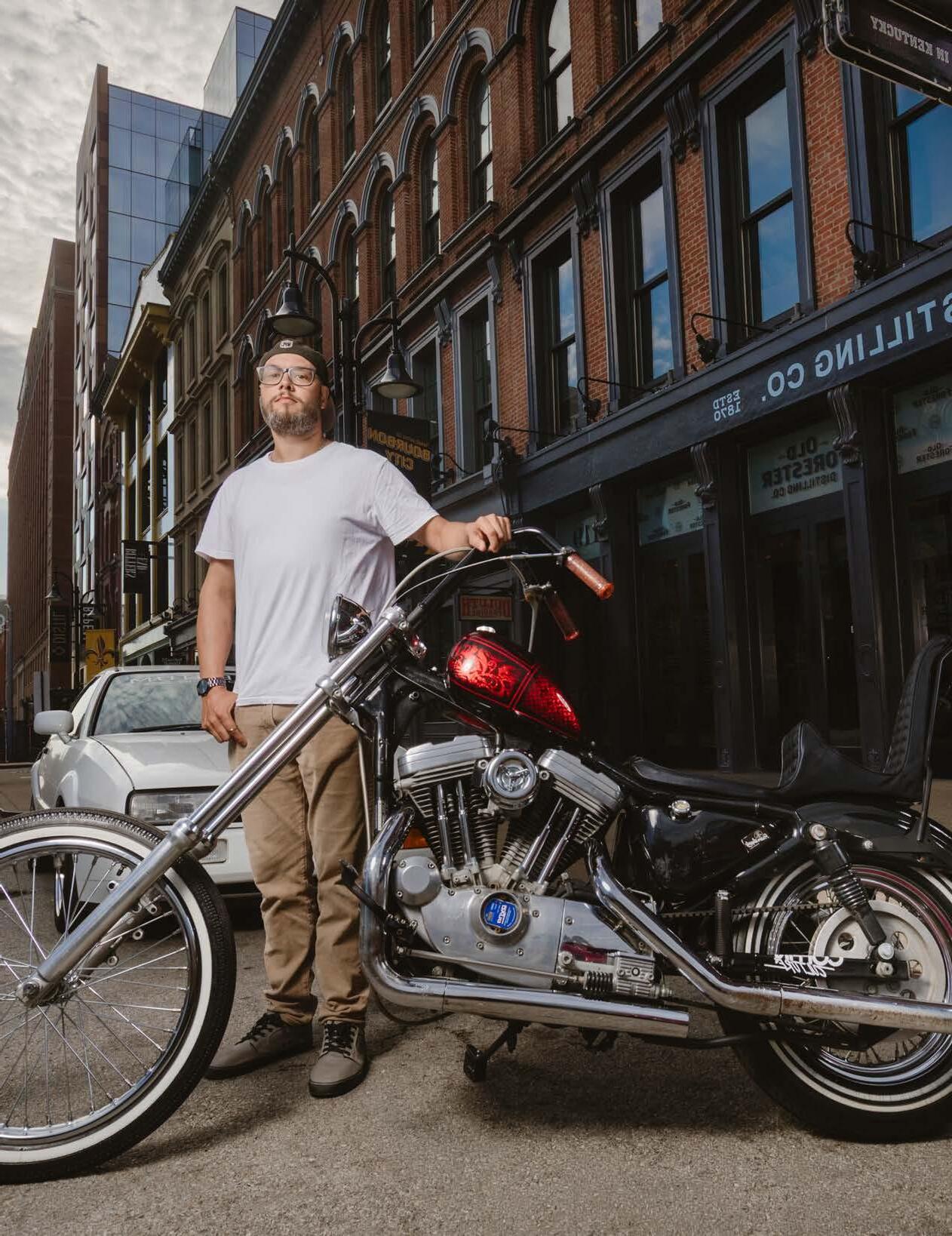
While the Whiskey Row Car Show has quickly grown into a standout downtown event, this year it has some new tricks up its sleeve and has invited some friends. This time around, it will feature a motorcycle showcase in collaboration with many local motorcycle communities- announcing the much-anticipated return of Kentucky Kick Down, as well as leading into the Abyss Motorcycle Show later this August at Portal.
For more than a decade, Kentucky Kick Down became one of Louisville’s most distinctive grassroots festivals by bringing together vintage motorcycle culture, live music, art, and that independent builder spirit into a weekend-long celebration unlike anything else in the region.
A huge part of that spirit came from Scott Halbleib, whose passion for vintage motorcycles and community helped turn a small local meetup into one of the region’s best-known grassroots motorcycle festivals. Kentucky Kick Down was always about creativity, individuality, and giving people a place to belong.
Over the years, the event grew into a Labor Day tradition scattered with vintage bikes, choppers, café racers, minibikes, swap meets, live music, burnout pits, camping, and late nights along the river at Louisville Turners. Riders and builders came in from all over the Midwest. What made Kentucky Kick Down stand out was its authenticity. Unlike larger commercial rallies focused heavily on brand loyalty or showroom perfection, the festival celebrated individuality and hands-on craftsmanship. Builders were encouraged to showcase motorcycles with character, history, and personal storytelling behind them.
Kentucky Kick Down faced setbacks after COVID, but Scott was determined to bring it back. After Scott’s unexpected passing in March 2025, many people wondered what would happen to Kentucky Kick Down. For a lot of the community, losing Scott was a major blow. But instead of letting the event fade away, those closest to it decided to carry it forward in honor of him and the many friends the community has lost over the years.
Now, longtime friend Rob Haynes is stepping up to take the handlebars.
For Rob and many others, Kentucky Kick Down is about the people. It’s about a community that consistently shows up for one another, whether that means helping build a bike, organizing a fundraiser, or simply showing up.
And show up is what he’s done indeed. While Rob plans to stay true to the original spirit of Kentucky Kick Down, he’s also bringing some fresh ideas into the mix. The community will get an early preview of what’s ahead at the Whiskey Row Car Show.
In the end, what’s unfolding on Whiskey Row this June is just a snapshot of Louisville’s broader car-and-bike culture finding new ways to stay connected, evolve, and keep showing up for each other. The throughline is momentum, how communities built on individuality, craftsmanship, and shared passions continue their own traditions forward even after they’ve been tested by time and loss. As cars line the street and motorcycles join in the fun, Whiskey Row becomes a meeting point between what’s been built, what’s being remembered, and what’s still on its way.
By Lauren Taylor Carr & Kevin Murphy Wilson | Photos Provided
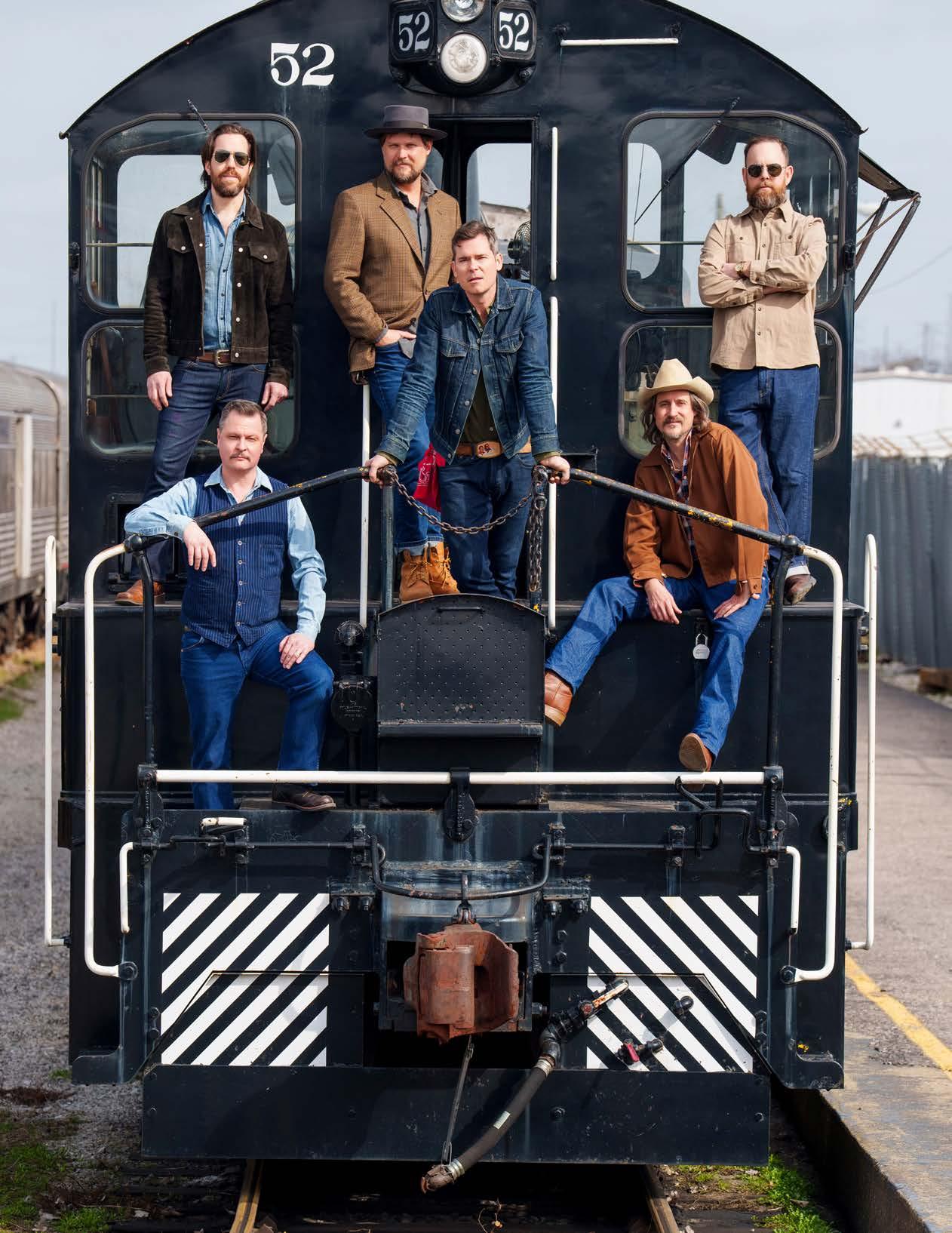
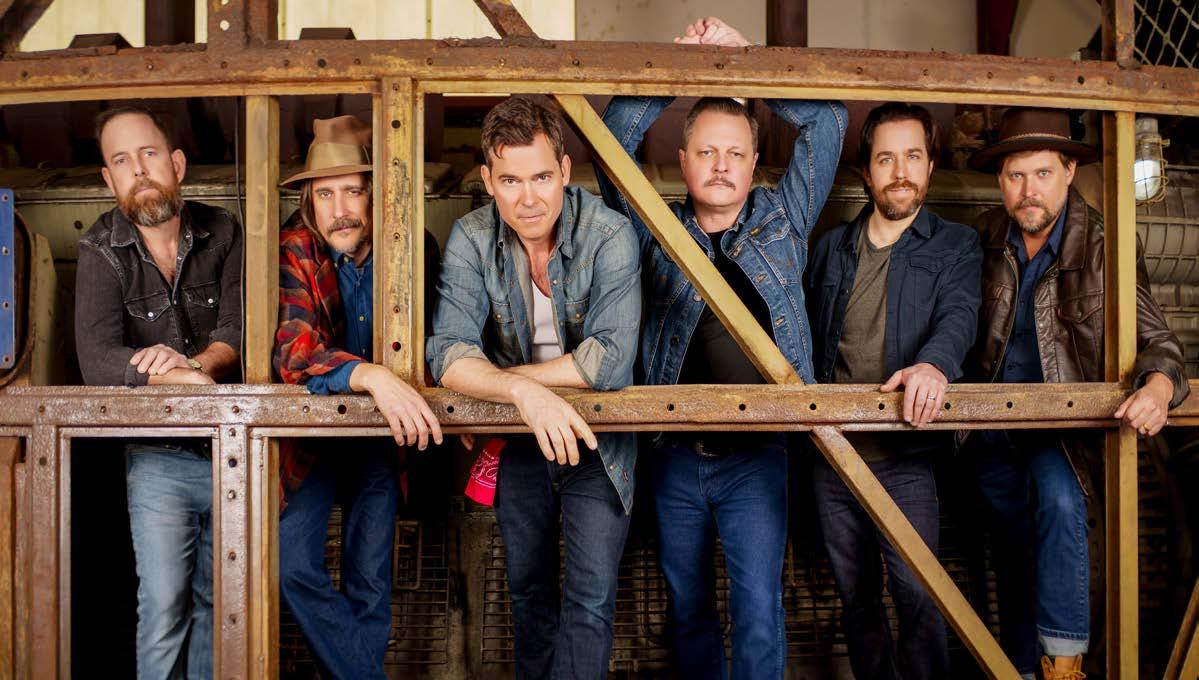
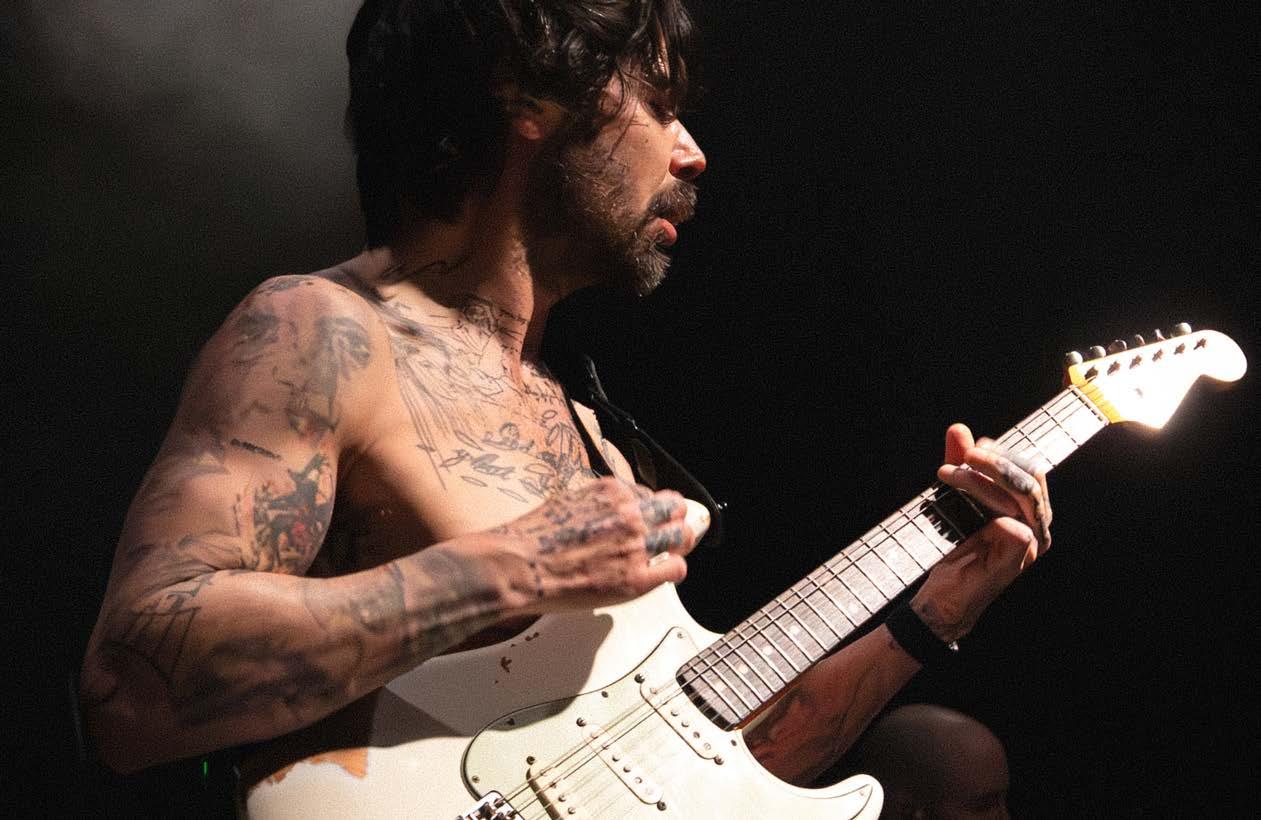
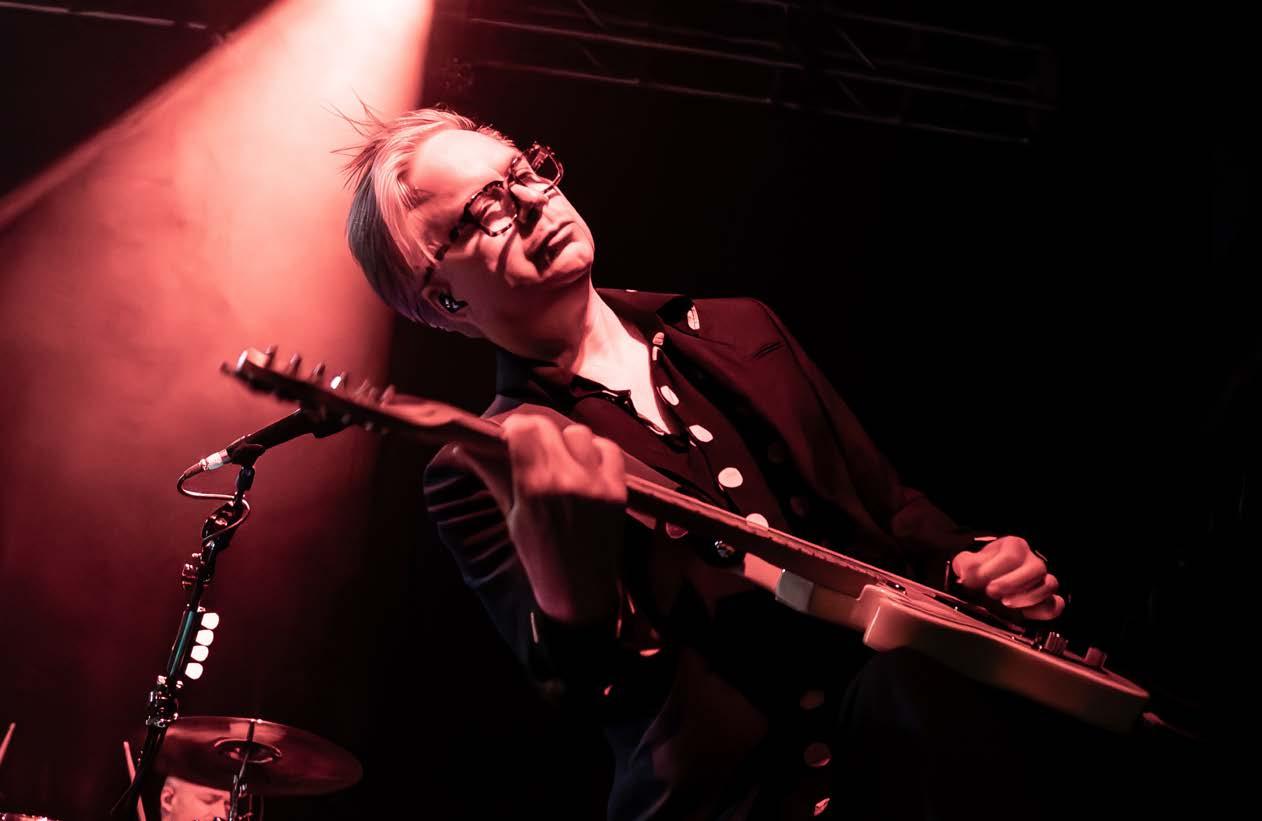
In the autumn of 1998, bandleader Ketch Secor and some like-minded musicians were all roughly 20 years-old and seeking, as Secor puts it, “that Woody Guthrie kind of wandering experience,” busking and walking into joints in search of gigs. Along the way, the resulting collective, Old Crow Medicine Show, fashioned its own brand of string-band music, built a following, secured a recording contract, and famously finished a couple of previously unreleased songs for Bob Dylan [“Sweet Amarillo” and, most obviously, “Wagon Wheel”]. In 2009, the already established Americana performer Cory Younts jumped on board that old time train with OCMS and never looked back. We recently caught up with Younts for a three-way conversation to talk about his own backstory, the new Old Crow LP entitled Union Made [out this month] that features cameos from Del McCoury and Molly Tuttle, and the tour that lands them back at the Louisville Palace on June 28.
Lauren Taylor Carr: You handle a lot of duties onstage and in the studio [mandolin, keyboards, banjo, harmonica, vocals] but drums seem to be your primary instrument. When did you first start playing?
Cory Younts: “I grew up around a drum set, because my father was a drummer for [legendary country singer/songwriter] Mel Tillis in the 70s…they were some pretty wild guys! He stopped all of that by the time I was about 1 or 2 years-old, but he was still in the music business. And so I grew up around his Rogers drum kit, and I played the drums until I was about 18 or 19, and then went to college and started studying piano and stuff like that. You know, all I really knew was how to beat on something and drums are still one of my favorite instruments and one of my primaries.”
Kevin Murphy Wilson: What did you learn from your many travels and early collaborations with [the late great] Justin Townes Earle?
CY: “Oh man, you know, he was such a great guy and such a great songwriter. If you’re very lucky, you get to meet that one person that you just sing the best with. And for me it was Justin…not that I dislike singing with the guys in Old Crow or anything, but there’s a special blend that Justin and I had, and I really miss him.”
LTC: When did you transition into Old Crow Medicine Show and how did that happen?
CY: “Well, back to Justin, we were in a group called The Swindlers in the late 90s, early 2000s, and we were a busking band in Nashville. Then the Crows moved to Nashville around that time, and they were busking too, and we met them in downtown Nashville playing on a street corner…they were just incredible! They had a fiddle player and they were just great and could mesmerize an audience. It didn’t matter if you were on your way to something else, people would stop to watch them. So I became friends with them around the time they would play at The Station Inn [a world famous Bluegrass music hall and dive bar] in Nashville and went to pretty much all of those shows. I became really good friends with Willie Watson and the rest of the boys, and I didn’t officially join the band until 2009, but my very first gig with Old Crow was in 2003 actually.”
KMW: While explaining how “Wagon Wheel” came to be, Ketch told me once that he was too young and too dumb to know that he couldn’t just finish a song for Bob Dylan. Anyway, was it a fun challenge to later get invited to re-work and tour Dylan’s entire Blonde on Blonde album?
CY: “That was so fun! It was one of the funnest things I’ve ever got to do in my entire musical career, by far. If I go back and listen to that record, it doesn’t even seem like it’s us. I don’t even remember working that hard on it, I really don’t. That really wasn’t supposed to be this big tour that it turned out to be…it was supposed to be, like, we’re gonna do two nights in Nashville, they’re gonna film it, we’re gonna be done, and then we’re gonna go back on the road and do what we normally do. Then it turned out to be, like, every promoter in this country and other countries heard about it, and were like ‘Wait a minute, I wanna see that.’ So we went to the UK, we went to Australia…it was a blast! It just got better and better every night. We eventually had all of these skits involved in it. It really became more like a review than a regular concert. It was a real, real treat to do.”
LTC: Was there anything that made the recording process for the new Union Made LP special?
CY: “This is an interesting album because Morgan Jahnig [who usually plays upright bass for OCMS] produced this album and PJ George did all the bass playing on this album, which is the first time we’ve ever done anything like that. Morgan, I think, played on one track. But other than that, Morgan was behind the board and calling the shots, setting up the mics, and helping with the arrangements and stuff like that in our studio in Nashville. It’s a great record and I had a lot of fun making it!”
KMW: What can folks expect from your current road show that brings you back to Kentucky?
CY: “It’s still a rowdy show [LAUGHTER] and we’re still at it after all these years. I’m currently in New Mexico at a big ‘hippie festival’ we’re playing tonight. So yeah, we’re still movin’ and groovin’ and still on that one bus…making the miles. We always look forward to going to Louisville, we really do. It’s just right up the road from Nashville, and we’ve played the Palace so many times that it feels like it’s just like another venue that’s part of Nashville…as big as that damn town is getting!”
LTC: The music business seems stranger than ever. In this day and age, and at this point in your career, how do you measure success?
CY: “Longevity! To me, especially in the country music world, an artist is usually only going to last until another ‘hot chick’ or another ‘goofy dude with a Solo Cup’ comes along. You know, I get mad about it, but I’m like, ‘Well, they’ll be gone in 3 years, then there will be another person who over-sings’... I get bitter about it, but then I realize I really enjoy where we are. I’ll just keep making these miles and keep doing it like we’re doing it as long as I can. That’s the way I look at it anyway.”
For tickets and more info about the June 28 OCMS concert visit louisvillepalace.com
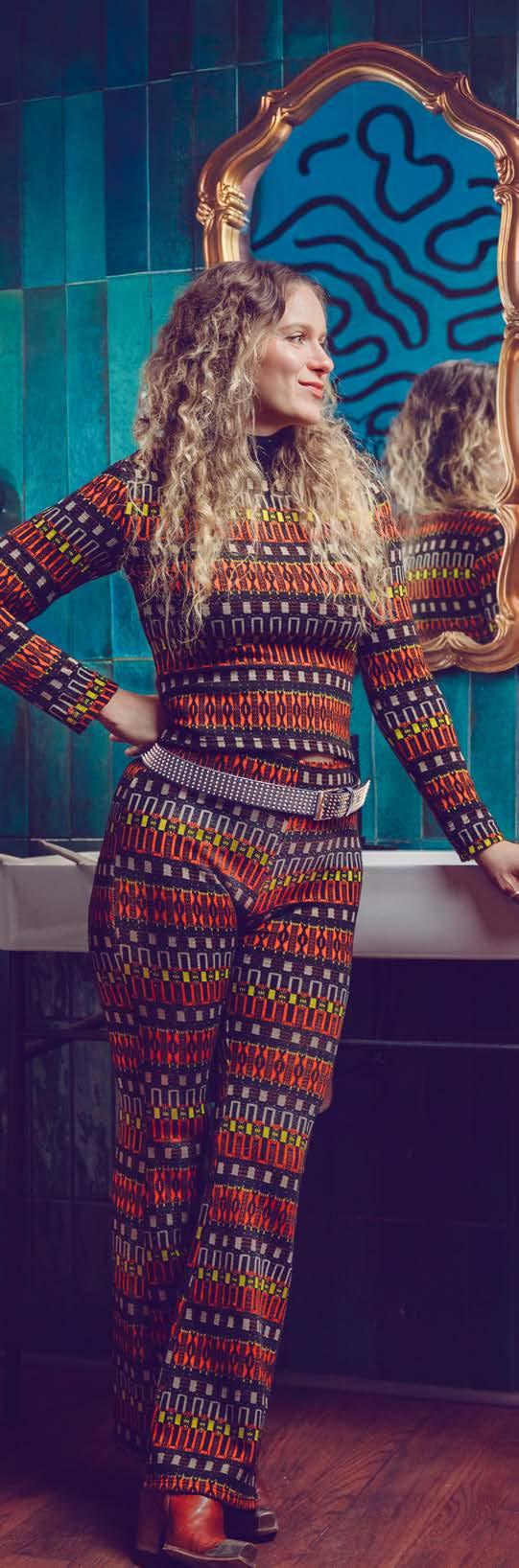
By Kelsey Knott • Photos By Matt Johnson Styled By Miranda McDonald • Location- Jane
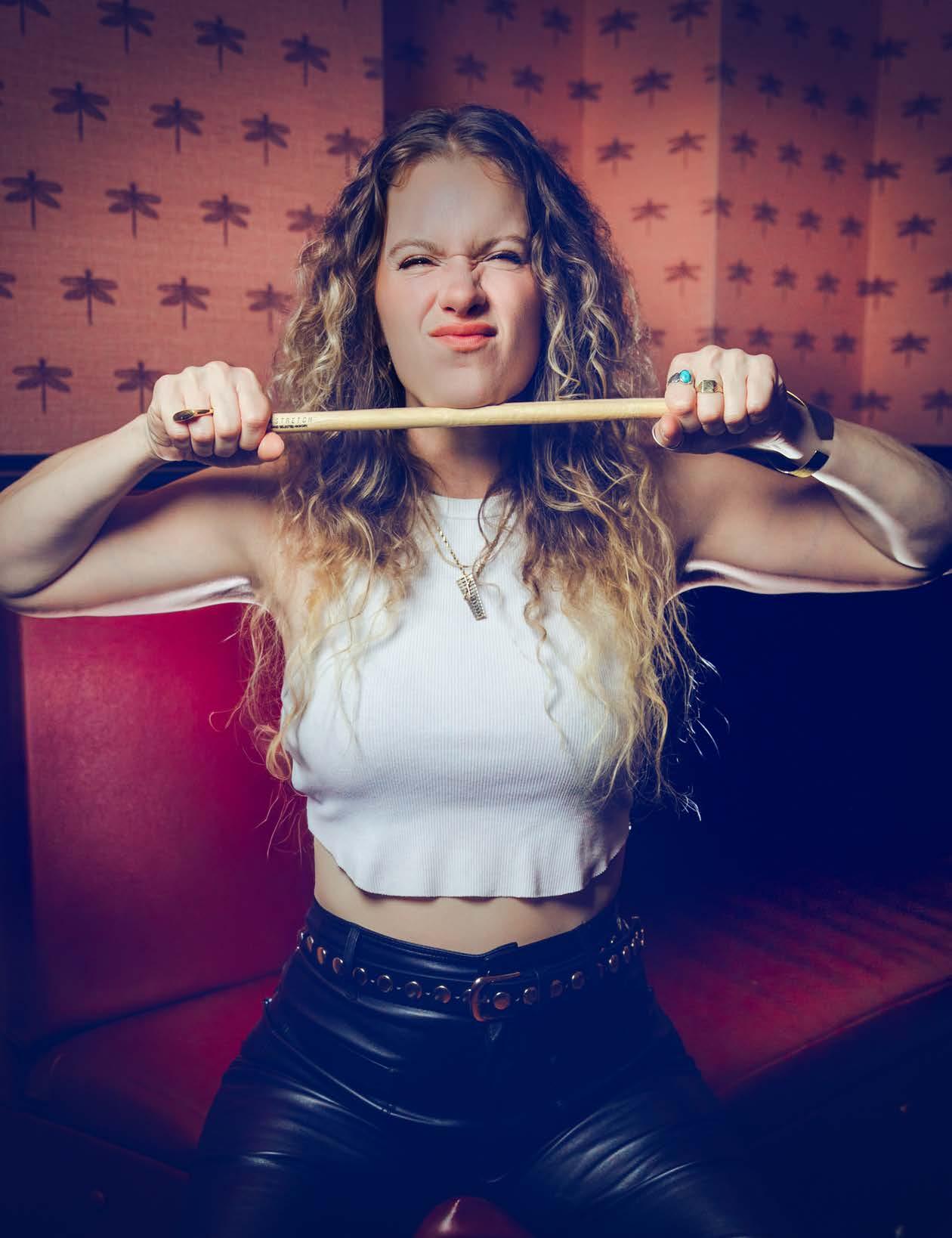
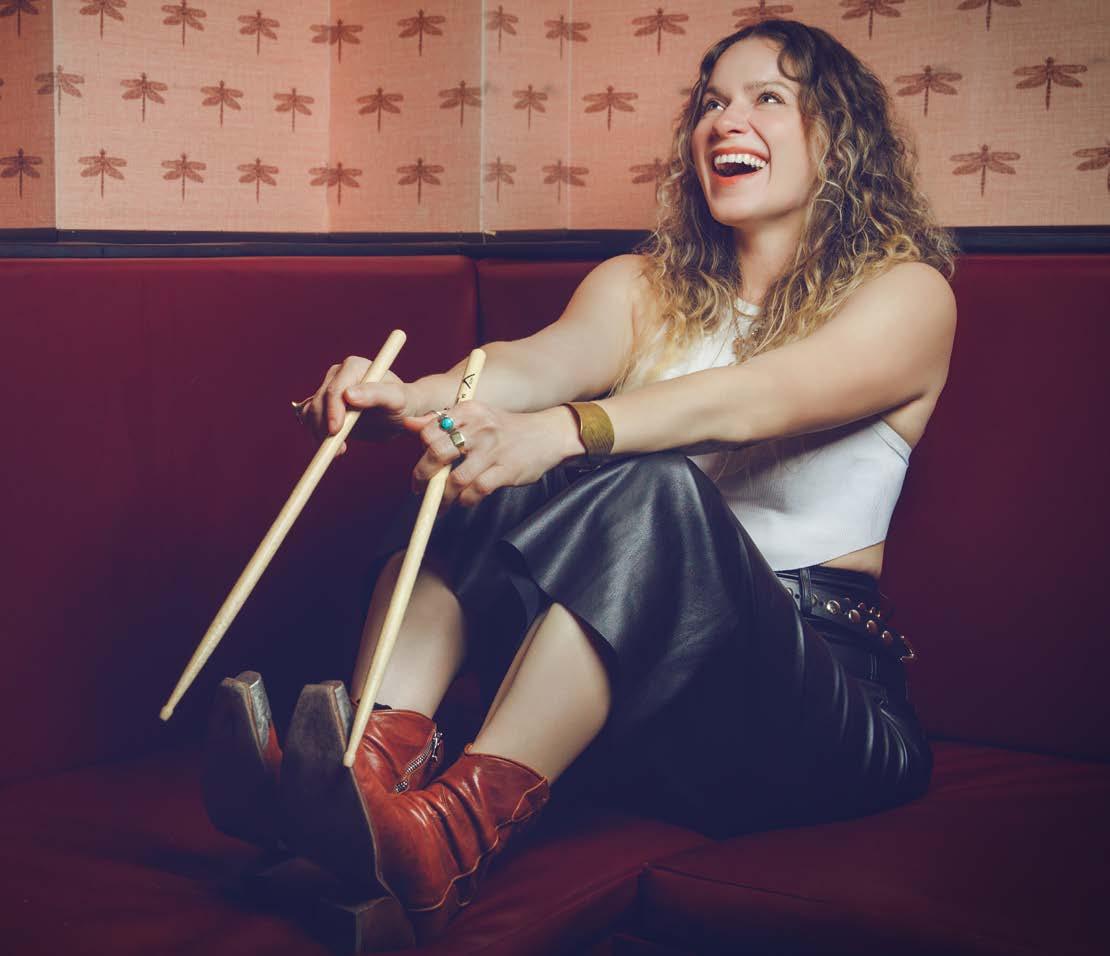
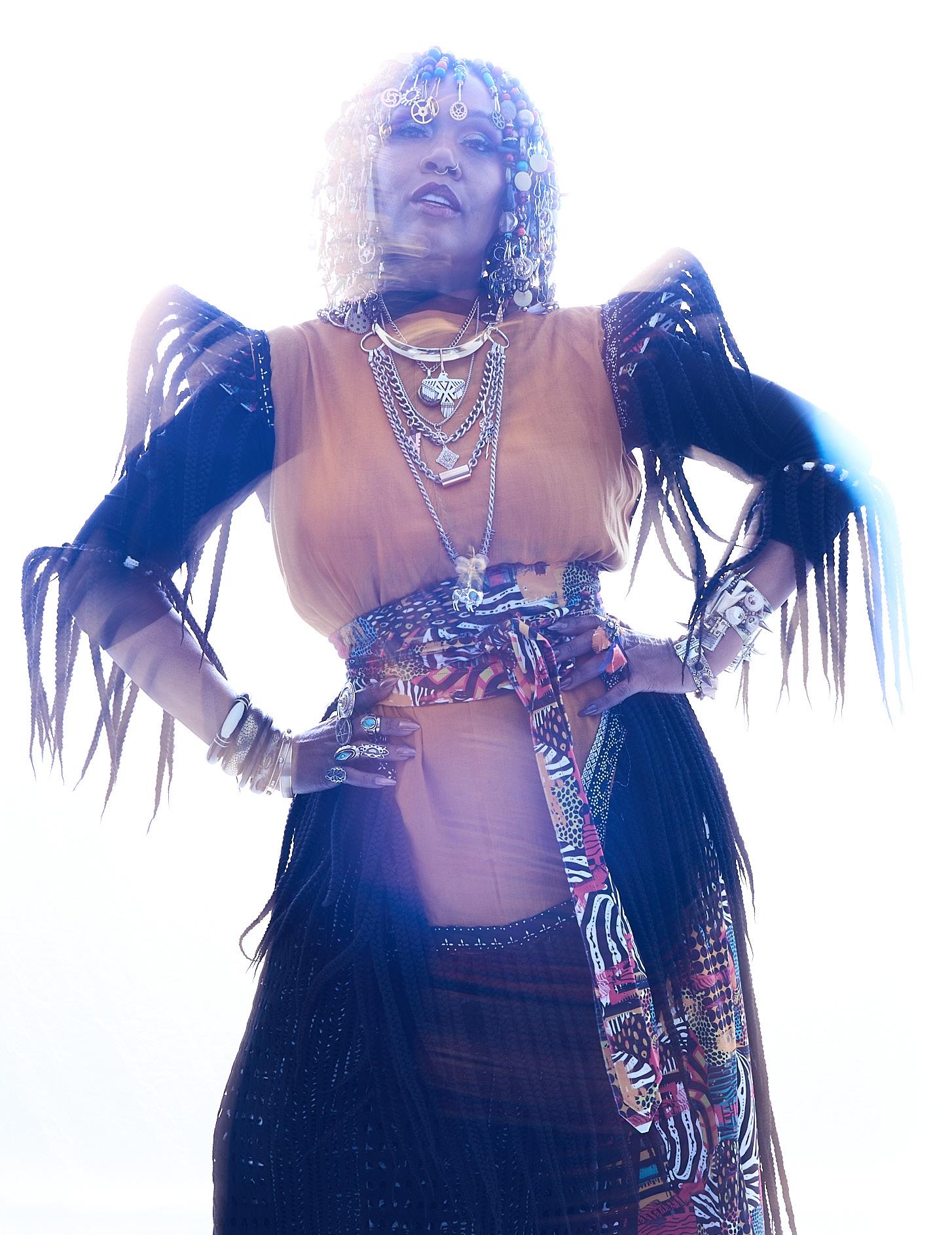
Whether captivating audiences with her drum performances or guiding students to grow their percussionist abilities, Dani Markham consistently makes a major impact on Louisville’s music scene onstage, in the recording studio, and in the classroom.
When she was seven, Markham’s second-grade teacher, Diane Downs, had a closet full of instruments meant for the end of the day when math and science were finished.“She could have been serving anything and I would have been eating it up–drums was the vehicle, but she had a way of motivating us and grabbing our attention. She allowed us to really be ourselves as kids and be weird. She would always say, ‘Hit like a girl.’ It was very empowering, and I absolutely fell in love with the drums as soon as I had sticks in my hand.” Downs started the Louisville Leopards from her classroom, one of the most prolific non-profit kid organizations around, fostering Markham’s love of music before attending the Youth Performing Arts school and taking private lessons with Todd Parker, the director of her high school percussion ensemble.
Those early positive experiences with the Louisville Leopards led her back there to teach, where she currently serves as Ensemble Director. “I love to see that I’m inspiring other percussionists and drummers, especially young women.” The joy she’s found in teaching has been paramount to her philosophy that hooking kids with joy captivates them, clearing the path to teach them anything, including teaching themselves and one another. “It’s a true blessing in life to even be placed in that role. What an honor to be considered for a position like that!” As someone from an athletically-driven family, Markham links her competitive drive as a percussionist to that of an athlete’s, fueling her fire to be great and bring her best effort for the team, or band. But she describes her inspiration and motivation behind it as constantly changing. “Now it’s my daughters, who’ve ignited a new fire inside of me and keep me excited about music and creative projects. They’ve put a microlens on my work ethic and discipline as my windows of time for myself have changed, so I’m motivated to get more accomplished. It grows my dream of being creative and making music because I want to share that experience with them.” In motherhood, Markham finds herself busier than ever musically and creatively, which she attributes to “the magic of babies.”
While living in New York, Markham took a road trip out west that led to her two-year touring start with Tune-Yards on the Nikki Nack album. Later, she hit the road with Childish Gambino for Awaken My Love! and Bando Stone & The New World albums, giving her a chance to record on two of his albums and even perform on Saturday Night Live.
Her vocals, drums, and percussion are recorded in the song “No Excuses.” She credits these opportunities to her preparedness and respect for the music as well as her ability to be sensitive and listen to her surroundings. “The most important thing is supporting someone’s artistry without overthinking and overdoing it. Then when the opportunity to be creative opens up, being excited and willing to take some risks. Practicing and showing up prepared earns respect because people see that you’ve listened to and sat with their music, and given it time.” Markham holds drum endorsements for Latin Percussion, Ludwig, Musser, and Vater.
As a born and raised Louisvillian, Markham fully grasps how special the Monarch is to music and arts in the city. “It’s the greatest thing musically that’s happened for the community since I’ve been here.” A place for musicians to rehearse and network, the Monarch facilitates creative visions and connects artists in a tangible way. With Roadie, Markham recorded drums and percussion for the entirety of his album, Between Everything, and with Scott T. Smith and the Hurricanes, who is currently opening for Tyler Childers on tour, recorded on an album that is soon-to-be-released. “I facilitate support in artists’ visions. I always hope to reach as many people as possible. Scott T. Smith is one of my best friends, and I think one of the greatest songwriters of our time. His music is powerful, like medicine, and supporting somebody like him in reaching the masses, where I think he can really have a positive impact on our society is a dream for sure.”
This summer, find Dani Markham facilitating the Louisville Leopards Summer Drum Camp, or onstage producing and performing a quarterly “Undercover” event at Galaxie. Stream “No Excuses,” Between Everything, and new music coming soon.
CHILDISH GAMBINO “NO EXCUSES”
ROADIE “BETWEEN EVERYTHING”
THE LOUISVILLE LEOPARD PERCUSSIONISTS’ SUMMER DRUM CAMP
By Kevin Murphy Wilson | Photos By Christopher Minafo
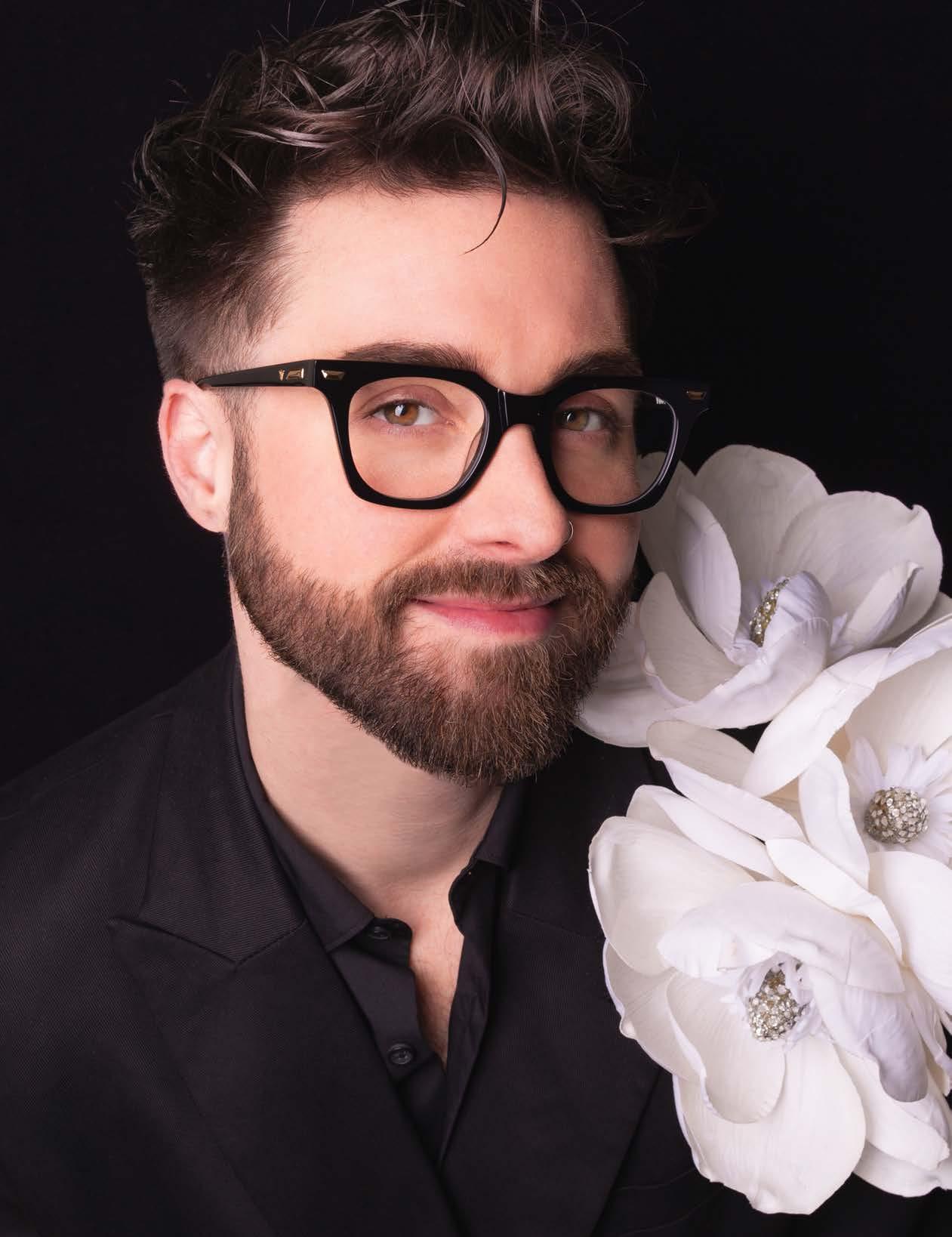
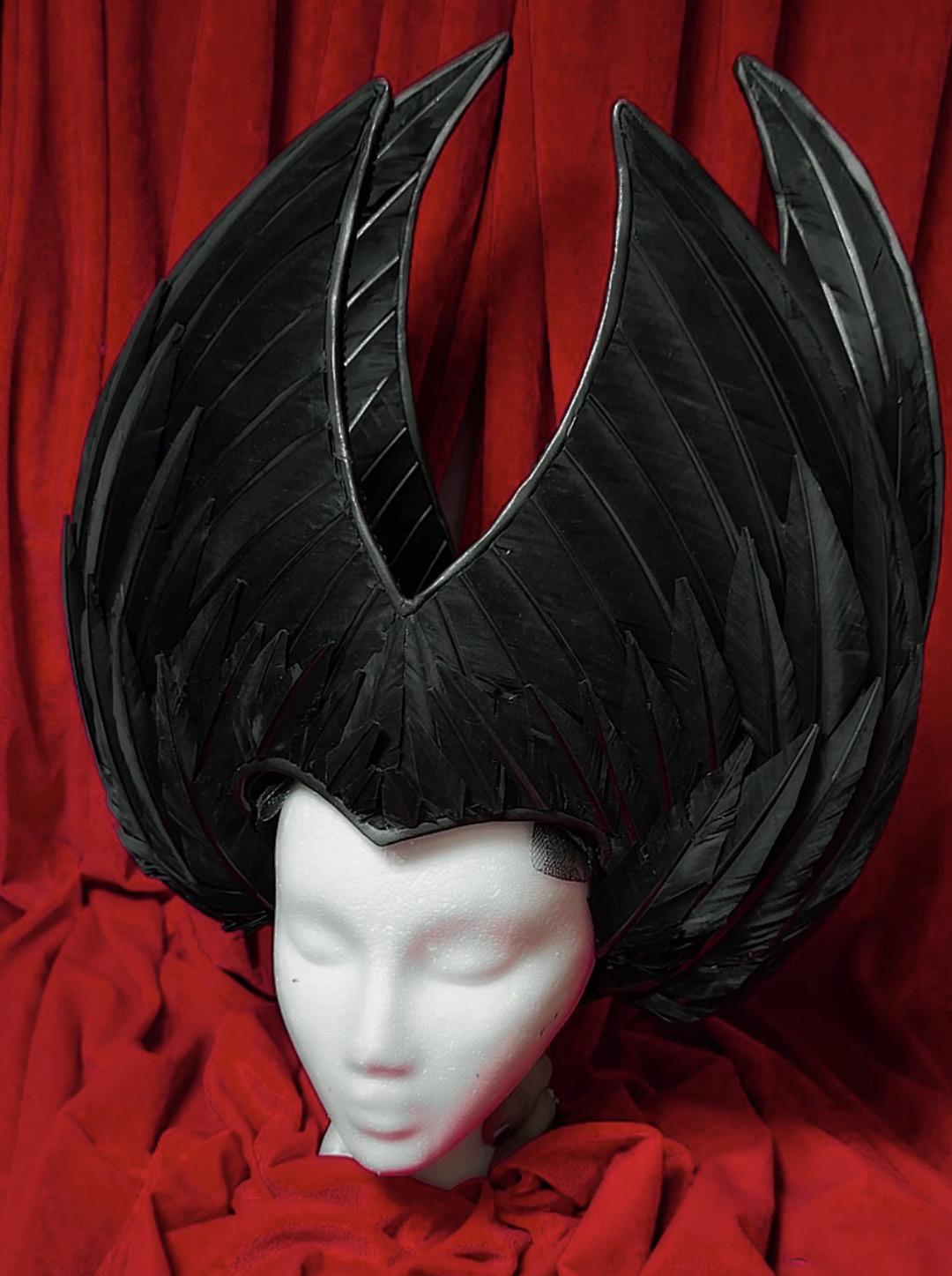
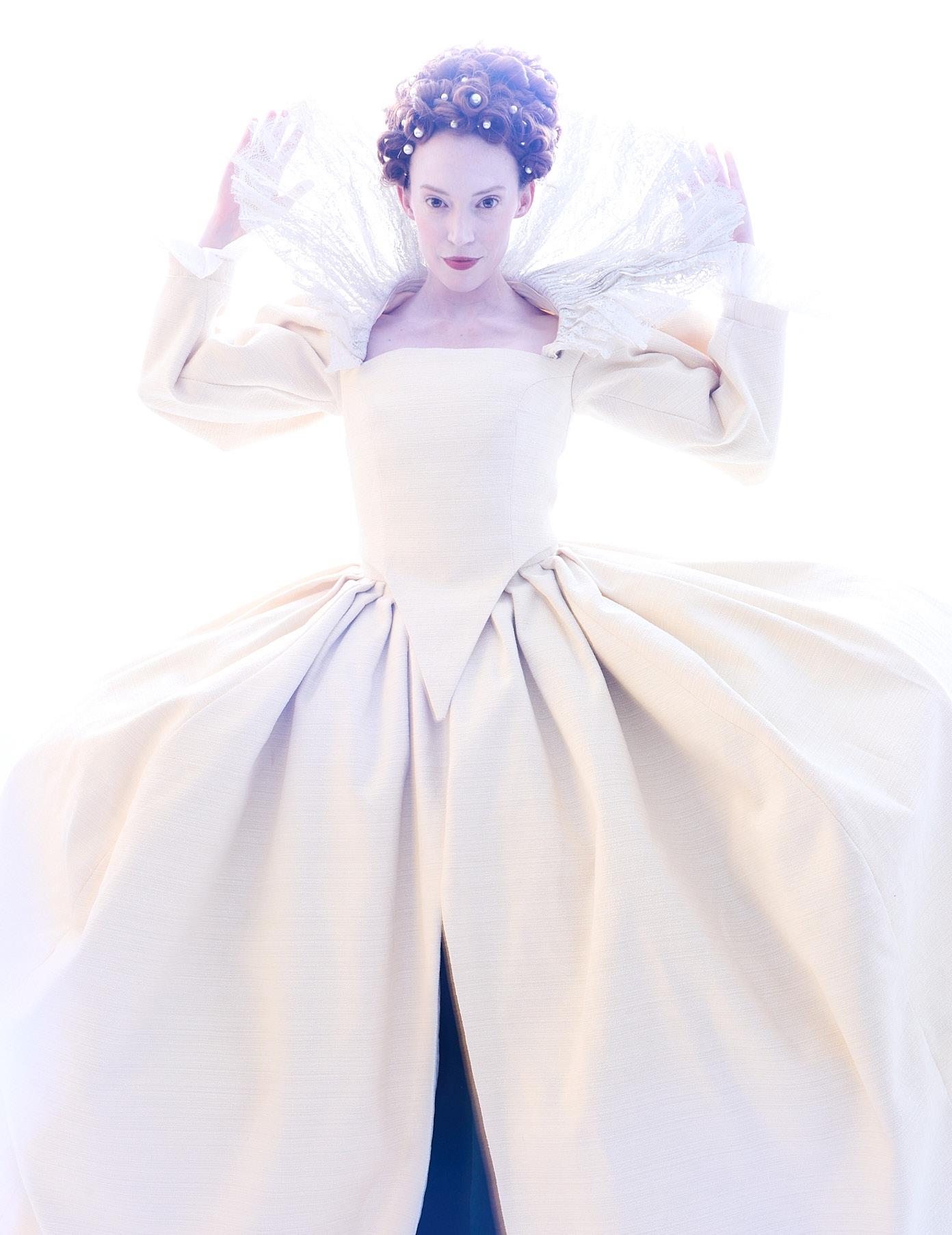
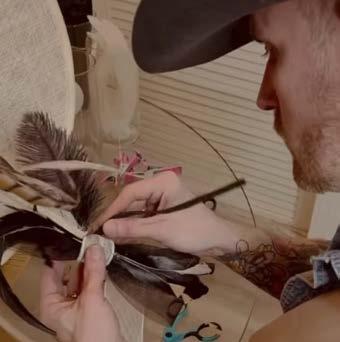
As far as fashion and costume designers go, Gunnar Deatherage is in a rather enviable position. HIs social media platforms boast millions of followers, his list of big name clients includes Lady Gaga, Shakira, Chappell Roan, and his stunning sewing pattern kits are available and accessible [via his online storefront] to even us non-stars. We recently caught up with the enigmatic artist [who is originally from our neck of the woods and once worked closely with this publication] to hear about Deatherage’s craft, his initial breakout on “Project Runway,” and his upcoming return to the area for a special project with KyCAD’s Experimental Fashion program [headed up by fellow designer Vincent Tiley] in the Fall.
VOICE-TRIBUNE: Please tell us a bit about your background and the experience you had growing up in this part of the country.
Gunnar Deatherage: “I am originally from the Hanover/Madison, Indiana area, and honestly I really credit that upbringing with shaping the way I see creativity. I began my journey in the Louisville area by attending cosmetology school at Ideal Beauty Academy in Jeffersonville, Indiana. I actually worked in salons doing hair while pursuing fashion design on the side, and I found myself surrounded by this really wonderful group of people who genuinely believed in me and my talent before I fully believed in myself. That support meant everything. As far as fashion goes, I’m entirely self-taught. I grew up around quilters, crafters, and grandmothers who saw that I loved making clothing and slowly passed their knowledge down to me over time. They taught me how to read patterns, how to construct garments, and honestly how to problem-solve creatively. Looking back now, I realize how lucky I was to grow up around people who made things with their hands. My grandparents and my mom were all makers in different ways, from sewing to woodworking to decorating to figuring out how to fix things with whatever was lying around the house. Creativity was never treated like this lofty, unattainable thing in my family, it was just part of life. At its core, sewing really is just problem-solving, and I think I’ve loved problem-solving since I was a kid. But fashion specifically clicked for me when I started watching ‘Project Runway’ with my mom. I remember feeling this almost weird gravitational pull toward it. I loved the glamour of it, the artistry, the idea of so many people seeing your designs at once. It just felt exciting in a way I couldn’t explain at the time. I definitely did not realize I’d end up on the show myself the first time I auditioned though… which, looking back now, feels slightly insane. Ha.”
VT: Are there any specific artists or designers that inspired you or that you wanted to emulate, or alternatively were there any that you knew you didn’t want to be like?
GD: “At the time I got on ‘Project Runway,’ I was only about 21 years-old, so honestly I still felt like such a baby in terms of understanding the industry, how fashion worked, or even fully understanding myself as a designer. I don’t think I had enough experience yet to feel negatively about anybody or consciously think, ‘I don’t want to be like that.’ I mostly just wanted to immerse myself in everything as deeply as possible. When I look back at that younger version of myself almost sixteen years later, what stands out to me most is how sponge-like I was. I wanted to absorb every bit of knowledge, strategy, and experience that I possibly could. The determination was honestly kind of wild thinking about it now. I was just so hungry for it. I will say, at the time I was really enamored with the Louis Vuitton shows by Marc Jacobs, the Chanel Runway shows of the early 2000s, and of course, Alexander McQueen. One thing that is worth noting is that there were a few designers in the Louisville area at that time that I was always thankful to have around me. It was nice to know that other people were also making clothing and we could bounce ideas off each other when we needed each other! Shoutout to Fhonia Ellis, Amanda Dare, Frankie Lewis, Genna Yussman, and my milliner friend Jenny Pfanenstiel of Formé Millinery!”
VT: How have your materials and processes evolved over the years? And how would you describe your designs to someone who has not seen them?
GD: “At this point in my career, I think I’ve kind of crossed over into becoming more of a costume designer versus a traditional fashion designer, and honestly that’s a place I’m really excited to be in. I spent so long thinking I wanted to exist in the fashion industry in the most traditional sense, but over time I realized how commerce-driven so much of that world can become, and sometimes the storytelling gets lost once everything is reduced down to a sale. What I love so much about the audience I’ve built online is that people connect to the stories behind the garments just as much as the garments themselves. That’s the part that excites me most. For me, clothing is world-building. It’s fantasy, emotion, nostalgia, escapism, and character development. I’m less interested in ‘What’s trending?’ and more interested in ‘How does this make someone feel?’ Obviously, when I was living in Louisville my access to materials was pretty limited to Hancock Fabrics and JOANN Fabrics, so I really had to learn how to make things work with what I had available. You become resourceful very quickly that way. After living in Los Angeles and New York for the last eleven years, needless to say the materials I now have access to are dramatically more exciting and expansive. The closure of JOANN makes me really sad for younger designers and crafters. So much of the magic of fabric comes from physically touching it and stumbling across something unexpected in person. There’s something really inspiring about wandering through aisles and discovering a material you didn’t even know existed. That tactile experience is such an important part of the creative process.”
VT: When did you begin to get noticed by some of the more fabulous people in the music industry? Who are some of the artists you have worked with or are currently working with?
GD: “I think having a following of almost 7 million across YouTube/Instagram/TikTok helped! But I think a lot of my visibility came from simply not being afraid to put myself out there. I reached out to stylists directly. I introduced myself.
I showed the work. I think people sometimes underestimate how much access we actually have now because of the internet. If you’re willing to take the initiative, you can genuinely connect with people doing incredible things. Over the years, I’ve had the opportunity to create costumes for artists including Lady Gaga, Shakira, Chappell Roan, Lainey Wilson, and Sierra Ferrell, much [of them] with my fiancé, Christopher Minafo, which is very exciting. I actually just completed my latest costume for Shakira’s world tour, which was especially surreal because it was seen live by more than two million people in Brazil. That’s one of those moments where you sort of have to step outside yourself for a second and go, ‘Wait… this is real?’ At this point, though, my biggest dream is really to move further into large-scale costume design for stage and film. I would absolutely love to design for Broadway or for a very costume-heavy historical film or fantasy project. I love when clothing becomes part of the storytelling itself.”
VT: What sort of things do you have coming up? Can you share any details about your return to the area in the Fall to work with Vincent Tiley and KyCAD?
GD: “One of the less glamorous parts of this industry is that so much of it is wrapped up in NDAs, so unfortunately I can’t share too much about future projects just yet. But I am incredibly excited about returning to Kentucky and working with Kentucky College of Art + Design in November. It feels really meaningful to return to the area where so much of my creative foundation was built. I cherish it every time I’m back, and love to see how it has grown. I think when you grow up in smaller towns, creative careers can sometimes feel very far away or unrealistic, and if my story helps make that path feel even slightly more tangible for someone else, that means a lot to me.”
For more information, visit gunnardeatherage.com
THANKS ITS CREATIVE COMMUNITY AND SPONSORS
Thank you for helping make KMAC Couture 2026 such an incredible celebration of creativity, artistry, and community. This year’s “Art Walks the Runway” experience would not have been possible without the generous support of our sponsors, participating artists, models, volunteers, and guests.
We extend our sincere gratitude to all of our sponsors and community partners whose support continues to help KMAC Contemporary Art Museum provide meaningful exhibitions, educational programming, and accessible arts experiences throughout the year.
We would also like to especially recognize and thank Churchill Downs, Julia Carstanjen, Shannon Cogan, Hair Montage, and Carpet Specialist for their exceptional support of this year’s event.
To every artist who brought their vision to life on the runway — thank you for sharing your talent, imagination, and dedication with us. Your work made this year’s show unforgettable.
Photos By Clay Cook
FEATURED KMAC COUTURE 2026
Abigail Womack, Ada Asenjo, Allen Wilson, Alynn Sherman, Amanda Schriber, Amy Willmore, Angela Davis, Annabela Cockrell, Anna Cohen, Anna Williams, Arieanna Washington, Ashton Page, Autumn Bay, Ayodeji Lasisi, Beck Zoeller, Beckett Barnes, Bo Strange, Breanna Oliver, Brianna Armstrong, Brittany Harbin, Calliope Woods, Cathy Wade Coakley, Chavo DeLaGarza, Courtney Morrison, Cyra Neimat, David Hudon, David Winningham, Deena Neimat, Donyalle Jackson, Edward Taylor, Elias Feghaly, Emily Ferry, Elizabeth Grider, Emily Benningfield, Evon Daley, Gabrielle Cole, Georgia Lawrence, Gerri Willis, Gianna Leonardo, Grace Henderson, Hyunjoo Cho, Jack Baldwin, Jayaura Brown, Jaymee Angton, Jessica Beels, Juilet Taylor, Kalai Blakemore, Kat Dillard, Katie Ensor, Kaylee Bliss, KC Colorado, Kionde Lorenza, Kris Thompson, Lakesha Washington, Lara Goo, Laura Patterson, Lilah Pudlo, Lily Angeline, Lorena Machado, Louis Taylor Barks, Maddie Donohue, Malcolm Fife, Mallory Quisenberry, Margaret Simic, Marin Kleinman, Maya Walden, Megan Bailey, Meredith Greenwell, Michael Crinot, Molly Ensor, Moonhe Baik, Moria Marge, Muny Mok, Owsley Holland, Rachel Schmidt, Rebekah Barnett, Rhea Wu, Sara Jane Coakley, Sara Salmon, SCZ, Teresa Greer, Thomas Dewson, Tiffany Mansfield, Wende Cudmore, Whitney Mattingly, Ximena Marquez, and all participating Couture Junior artists - Addie Rankin, Annabelle Eckmann, Harmony Knight, Julia Feride Biranis, Margaret Burleson, and Sophia Del Negro.
As we look ahead, we are excited to announce our Summer Ticket Special for KMAC Couture 2027. Be sure to grab your tickets early and join us for another unforgettable year celebrating wearable art and creative expression.
You can also revisit highlights from this year’s event through the beautiful photography by Clay Cook: go.claycookphoto.com/kmaccouturexiv
Thank you again for supporting KMAC Contemporary Art Museum and helping keep art and creativity alive in our community.
With gratitude, KMAC Contemporary Art Museum
By VOICE-TRIBUNE
Photos By Antonio Pantoja and Provided
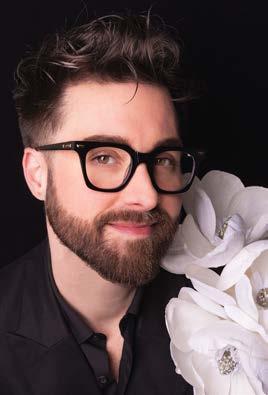
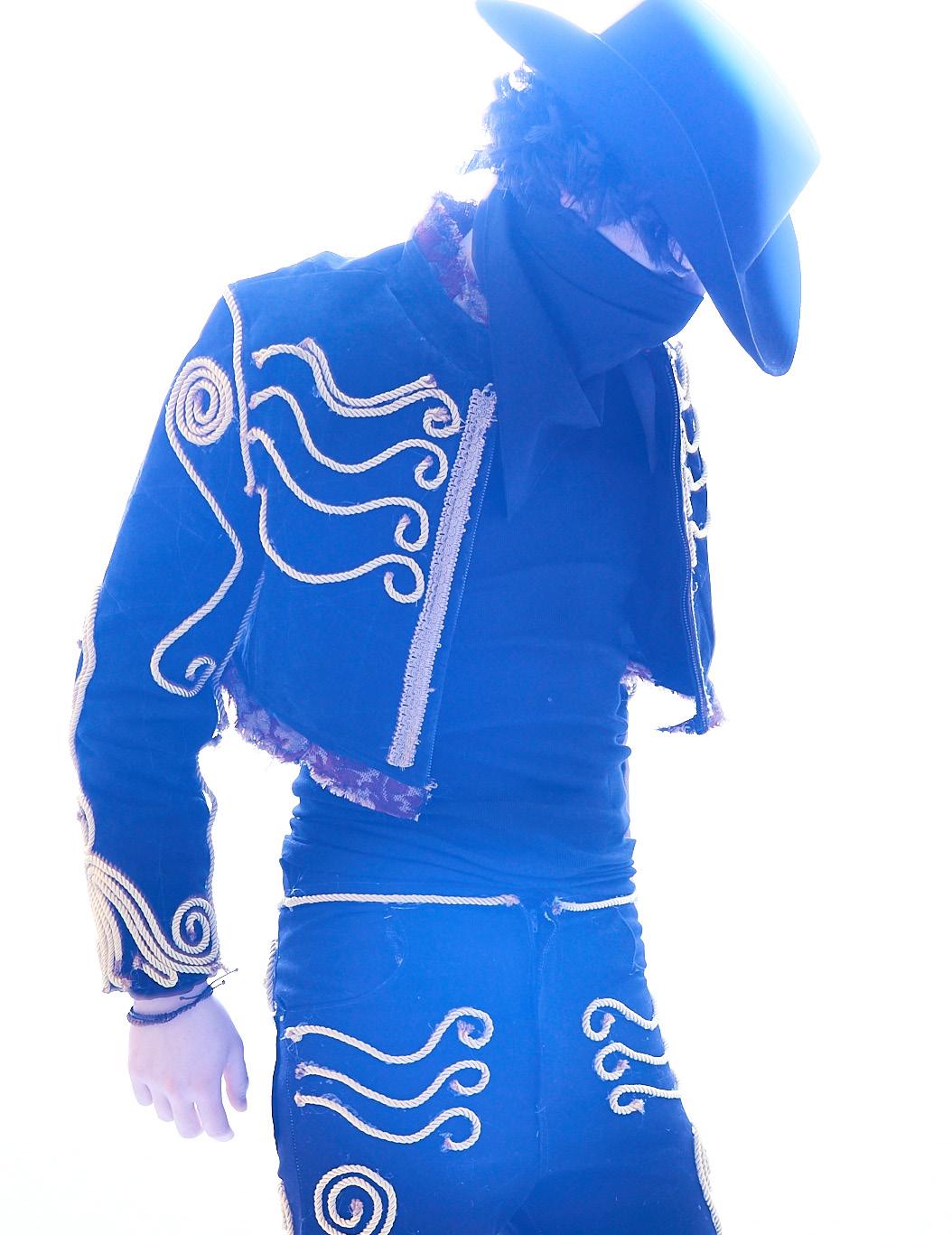
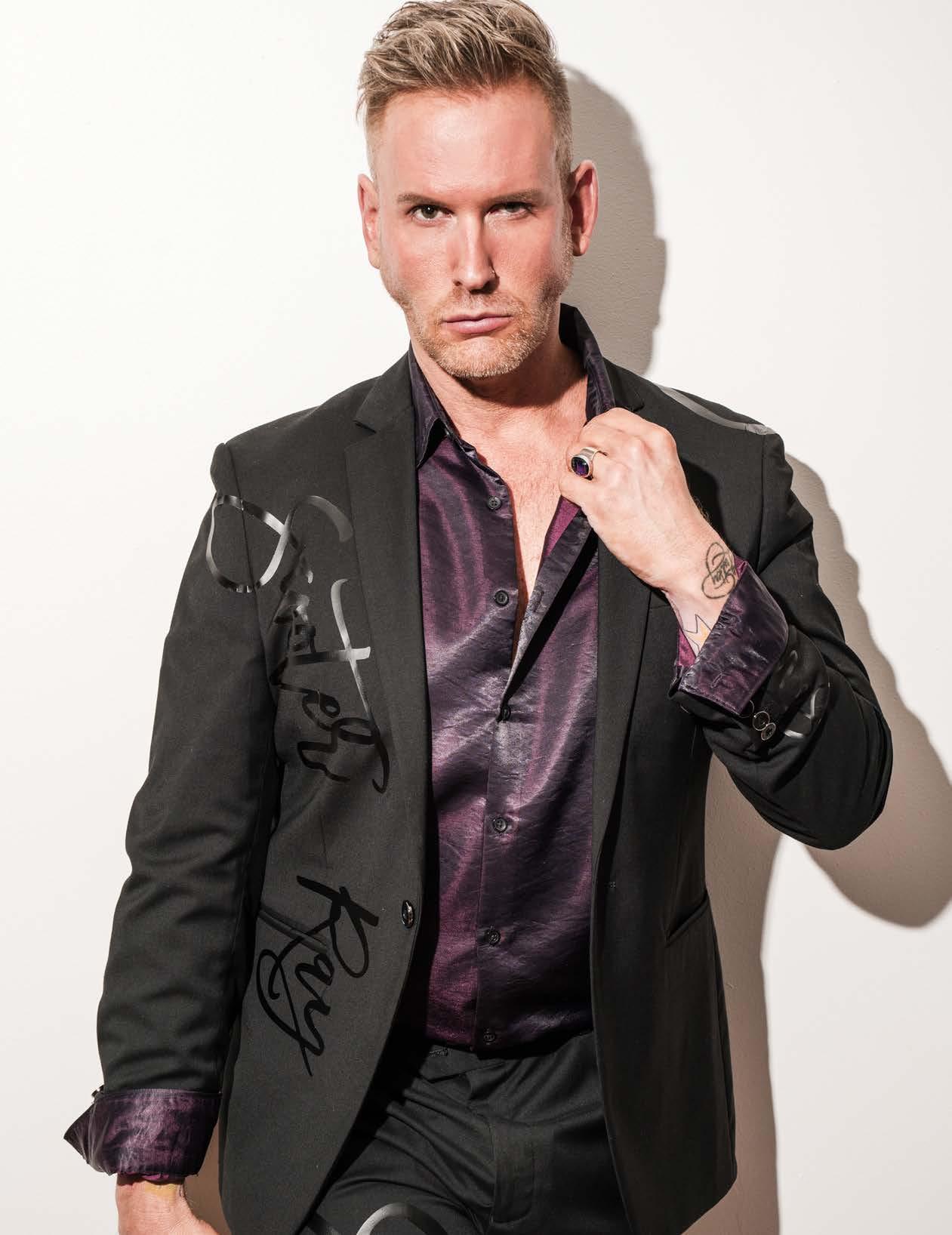
Scooter Ray Minyard’s creativity has never been something he turns on and off. It stays with him through everyday life, showing up in fashion, makeup, photography, styling, and set design with the same energy that has made him one of Louisville’s most recognizable style personalities. Around town, Scooter has become something of a local fashion icon, known for unforgettable Derby looks, playful glamour, and a visual presence that always feels larger than life. Beyond Louisville, he has also worked as a model, appearing on the covers of romance novels and in editorial spreads that showcase his unmistakable flair and charisma.
But beneath the sparkle, color, and eye-catching style, Scooter says he was raised understanding that every person is different. While many people might see his artistic ability as his biggest strength, he sees it another way. “I would say that my superpower is more about personal connection,” he says. “From an early age, my parents always supported me in anything and everything that I did, and because of their support, I was always able to do so much more.”
That support framed the way he approaches creativity today. Even though his work tackles several mediums, Scooter sees all of it connected through expression, emotion, and storytelling. “With those expressions and personal connections, there is a story in everything that I do,” he says.
His mind rarely slows down. Inspiration can come from almost anywhere, and creating has become part of his rhythm. “I seriously do something artistic daily,” he says. “It’s a part of who I am and a part of a way to express myself.”
That constant creativity is impossible to miss in his personal style. Whether he is building a dramatic Derby ensemble, designing a set, styling a client, or stepping in front of the camera himself, Scooter wants every detail to feel authentic and memorable. “When I do something, I make sure that I do it in my own way and that it catches people’s eye,” he says.
Part of what makes Scooter so beloved in Louisville is the joyfulness he brings to fashion. His looks often carry a wink of nostalgia, references to pop culture, or tributes to icons like Dolly Parton. There is always personality woven into the glamour, making his fashion feel approachable as much as aspirational. For Scooter, clothing and beauty are never just about appearances.
One of the projects closest to his heart was Celebrating Life, which reflected on grief, love, and the influence of his parents. Through that work, he explored how childhood experiences mold identity and perspective. “Because of my parents, I would not be here,” he says. “I feel we should also celebrate and acknowledge the life that was given to us.”
Scooter also speaks openly about living with ADHD, something he sees as an advantage rather than a setback. “I always make the joke that I’m medicated. Which is true of my ADHD, I would say as a blessing,” he says. “It was never looked at as a disability or problem. I was raised to cope with it and to utilize it in my daily routine. And have you ever heard the term ‘trash to treasure’?”
Even with a glowing reputation and a style instantly recognizable around the city, Scooter still finds the most fulfillment in creating for the people in his hometown. “Creating for other people brings me a lot of joy,” he says. “It also gives me joy because they chose me among so many other talented people.”
For Scooter, the work has always been personal. The makeup, the fashion, the photography, the modeling, and the design all connect back to people, relationships, and self-expression. Beneath the standout looks and camera-ready glamour is someone who simply loves to create, celebrate individuality, and make people feel seen.
A CONVERSATION WITH KEN HAGAN OF LEFT BANK BOURBON
By VOICE-TRIBUNE • Photos By Matt Johnson
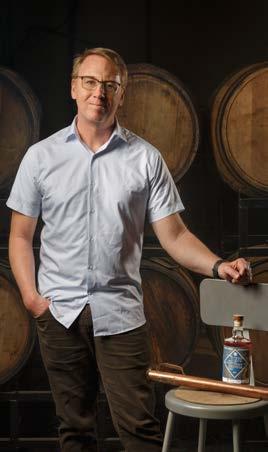
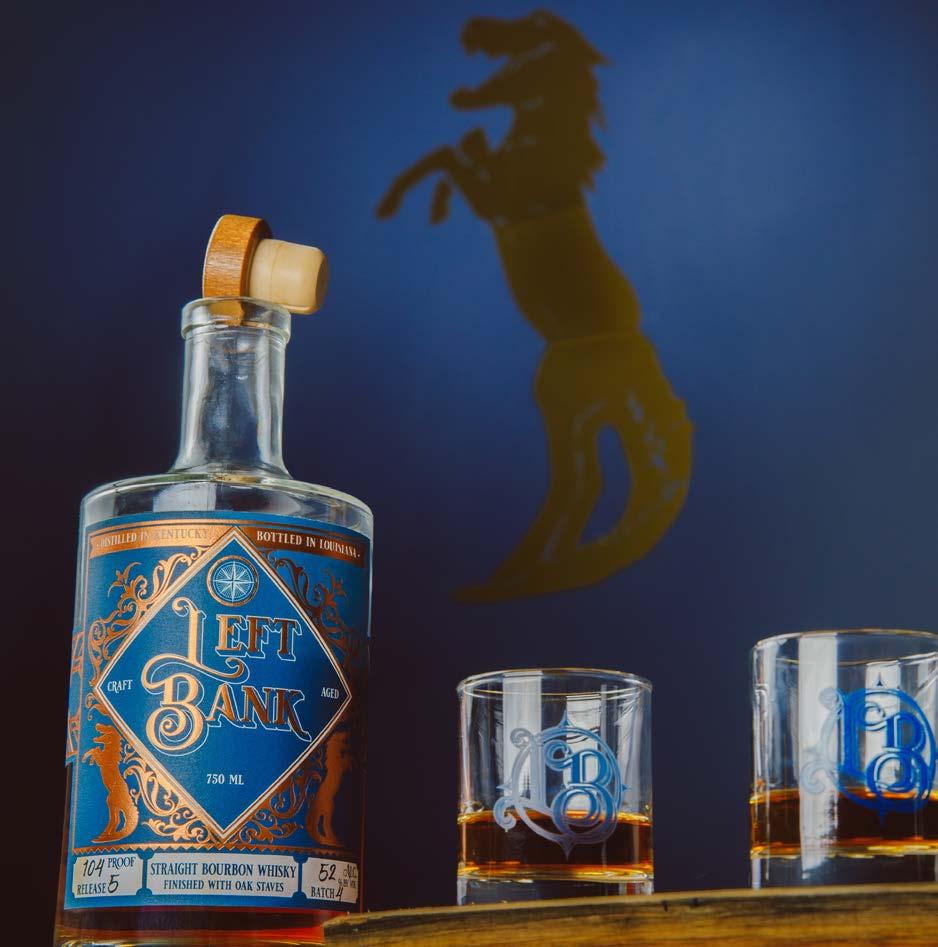
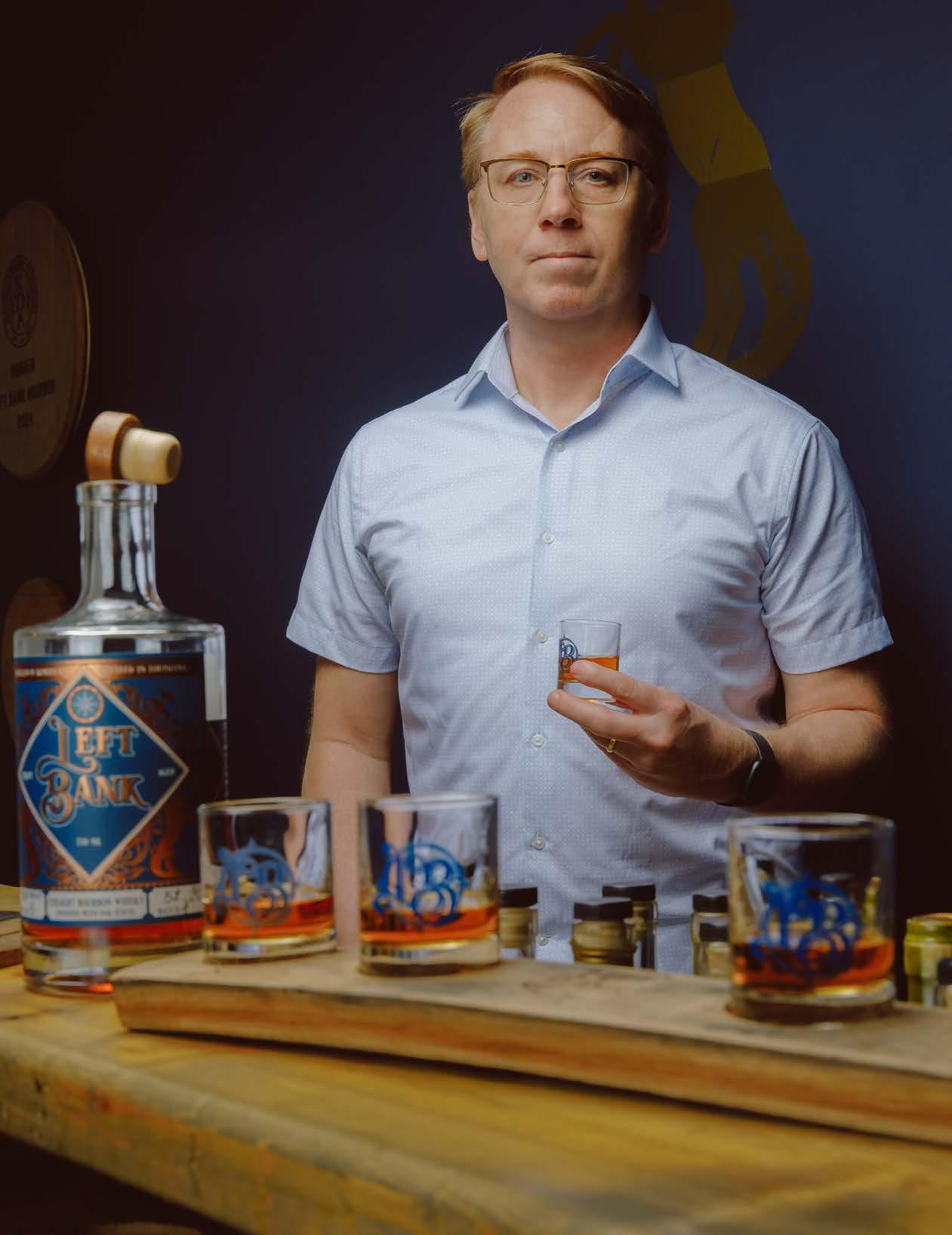
Left Bank Bourbon’s story starts with the river. Founded by Ken Hagan and Joshua Easton, the Louisville and New Orleans-based bourbon brand is inspired by the historic journey between Kentucky and New Orleans, following the same waterways that once carried whiskey, tobacco, and trade goods south by boat. That love and appreciation for river culture, folklore, and early bourbon history runs through every part of the brand, from its name to the mythology of the Alligator Horse.
What began as a focus on bourbon-making evolved as customers connected with the stories behind the bottle. The history of Shippingport to the realities of building a modern craft distillery, Left Bank blends historical research, family, and hands-on experimentation. In this conversation, Hagan reflects on the origins of Left Bank, the role storytelling plays in the bourbon experience, and what it means to build a Kentucky bourbon brand with the soul of the river running through it.
VT: The story behind Left Bank Bourbon feels very connected to the river and Louisville itself. What inspired the name “Left Bank,” and why was that identity important to you from the beginning?
KH: The name ‘Left Bank’ is based on the nautical term ‘Left Bank Descending.’ All of Kentucky sits on the left bank of the Ohio River, and most of New Orleans is on the left bank of the Mississippi (people in New Orleans refer to it as East Bank, but it’s the one on the left). This is a nod to the history of people floating downriver from Kentucky to New Orleans to make their fortunes by selling their tobacco, corn, corn whisky, and other goods. This river journey evokes a time of adventure down the rivers and the risks of pirates and other hazards along the way. Abe Lincoln did the river journey twice, and it significantly changed his perspective on the world. All of those river journeys are part of America’s growth, and Left Bank wants to keep that story being told.
VT: The Alligator Horse immediately stands out as part of the brand’s imagery and storytelling. What’s the story behind it, and how does it reflect the spirit of the bourbon?
KH: The origin of the Alligator Horse lies in a song called “The Hunters of Kentucky”. The song was written to commemorate Andrew Jackson’s victory over the British at the Battle of New Orleans at the end of the War of 1812. He used the song as a campaign jingle in both of his presidential campaigns. The Hunters of Kentucky were fierce fighters, said to be “Half Horse and Half Alligator,” and had rifles that were much more accurate at longer ranges than the guns used by the British in the battle.
That lore is an important part of the spirit of our brand. It’s not something we had in mind as founders since my co-founder and I are both pretty literal people. As the brand grew, it outgrew our vision. The Alligator Horse is the talisman for that. It’s something more than just the facts and mash bills. It’s a story of that invisible tendril forever tying together the souls of Kentucky and New Orleans.”
VT: Left Bank isn’t only selling bourbon; there is a sense that it’s preserving history and folklore. When did you realize the storytelling aspect was just as important as the bourbon itself?
KH: Left Bank was founded in 2018 with a focus on re-creating this origin story of bourbon. I thought the story would be a fun hook, but I was focused on building the processes to make a consistent and delicious bourbon. I spent those first few years working on process and analytics, like I had done for most of my career in technology.
When we started putting products on shelves in 2021, consumers taught me that the story was the thing that resonated. The bourbon had to be good. The story was so much more important to our fans.
It’s a balance I face every day I do tastings in our tasting room. Some guests want to explore the bourbon and do a full sensory tasting experience, exploring the flavors oak imparts to the bourbon during the journey. Many others want to sit and talk about the stories of the river for hours. The magic here is that I am learning more river lore from guests and (after a little bit of further reading) I am adding more stories and tangents to the conversations in the tasting room. It’s a beautiful oral tradition of building layers and layers to the story.
VT: As a Kentucky Distillers Association Craft Distiller on the Kentucky Bourbon Trail, how do you balance the science of bourbon-making with the artistry and intuition behind it?
KH: My background is analytics and operations. My wife, Angela, has worked in the art world for some time. One phrase I co-opted from her time with KMAC Museum is: “Art is the Big Idea. Craft is the Process”. That phrase is exactly how I balance art and science. The big idea is the process of stave finishing and the journey to New Orleans. That is something new to the bourbon world. Brands add staves. Brands put bourbon in motion. We did something new with the repeatable one-way journey to New Orleans that commemorates an actual historical journey.
The craft/science part of it is being able to do that consistently and keep creating a bourbon that meets and exceeds our consumers’ expectations in a crowded bourbon market.
VT: Louisville has such a unique culture, especially along the riverfront. What do you love most about living and building a business in Louisville?
KH: Louisville is my chosen home and has been for almost 34 years. This city is a perfect balance of big city amenities, manageable traffic, and cost of living. We can really get anywhere in town in 20 minutes (most of the time). One magic thing about this city is the small cities inside it and the fact that we can always discover some new part of the town we never knew existed.
Shippingport is a good example of this. It’s at the heart of our brand story since it was from there that 2 French brothers first floated Kentucky corn whisky down to New Orleans in charred barrels. I love introducing locals to the history of Shippingport and nudging them to head over there and explore a part of town that’s now an island.
Doing business in Louisville is a constant reminder of how small this city is for its size. Local businesspeople are all connected and eager to work together to help people succeed. We have business groups and city offices that are here to help grow businesses, and that’s a huge boon for a company like Left Bank. Many of the most critical connections and partnerships Left Bank has made along the way have come from casual coffee chats or chance encounters with someone who knew exactly the right person we needed to meet.
VT: Your wife’s background in art and as a creative seems like an interesting complement to your work in bourbon. Has her perspective influenced the visual or emotional identity of Left Bank in any way?
KH: My wife is my biggest fan and supporter. She’s tenacious and believes in this brand more than anyone. Running a small business is hard, and sometimes it takes that sort of belief to push through setbacks and disappointments. She doesn’t believe me when I say that some things are impossible. There’s always a tailwind driving me forward, and a lot of that is her faith that this is an amazing forever brand that belongs in the bourbon pantheon. I also completely stole the Art is the Big Idea mantra from her time with KMAC Museum.
VT: Your daughters have even helped assemble the stave netting used during the river journey process. What has it meant to involve your family so directly in the business and its traditions?
KH: The first release of Left Bank Bourbon arrived in New Orleans around August 2020. My kids were starting JCPS remotely. I took them down to an Airbnb in New Orleans, where they did school by day and helped me in the evenings. “Dad has 200ml of bourbon at 120 proof. How much water do we need to add to get to 104 proof?” Who says you don’t use middle school math in real life?
The kids help us paint and do all kinds of labour outside of the alcohol and bonded spaces. They’ve driven me on long sales trips to Colorado, Nebraska, and Louisiana. Should they go into corporate jobs, they will likely be sat down to one small department with a clearly defined job description. Right now, they see a handful of people working together with a shared purpose and nobody ever saying “that’s not my job.” They got to grow up seeing a small business being born and the realities of running a small business. I cherish that.
VT: Bourbon has become a global industry, but Left Bank still has its roots here in Kentucky. What do you hope people feel or understand after experiencing the brand for the first time?
KH: I want people to leave knowing they have just experienced a real story. Left Bank is how bourbon got its name. Our story is also part of the history of river commerce in our young nation in the early 1800s. People can recall that sense of a time before engines hurried everything along. People were still connected through stories and journeys. It was nowhere near as frenetic as life today.
I hope people feel connected to that sense of time and space. It wasn’t “simpler” than today. It was different. Our brand harkens to that sense of time with an intentional bourbon where you can taste the different steps taken to make the bourbon into what it is. Bourbon is an industry flooded with new brands. When people experience Left Bank, they are experiencing a brand that exists for a real and relevant reason: to tell the story of how bourbon became bourbon.
VT: Looking back at where Left Bank started and where it is now, what part of the journey has surprised you the most, either personally or professionally?
KH: 2018 me thought this would be like a tech start-up. Get the technology and process built, execute a few proof of concept releases, and land some 15x multiplier exit in the first 5 years. It was not.
Our first release was in 2020, at the peak of COVID. All of our original plans went by the wayside, and we had to pivot and learn a whole lot. I learned how much I didn’t know about the spirits industry and continue to learn every day on the job. This is a universe of personal connections and handshakes.
In that journey, I also realized how much of my career was spent being a part of larger teams. Being in a small venture means you have to wear all the hats until you hire people to fill them. I can drive a forklift, run a still, move barrels, and tell stories. I am not the person to do marketing, social media, and selling to bars and liquor stores. I knew in 2018 those would be my blind spots. I didn’t know how hard it would be to build the right team.
We spend a lot of our time in 2026 looking for the right folks to drive those efforts and get our brand and product out to more and more fans. The journey is slower than I originally thought it would be, but we’re learning along the way and fighting to stay true to our original story and brand.
BUILT JEFFERSON’S BY ASKING
By VOICE-TRIBUNE • Photos By Matt Johnson
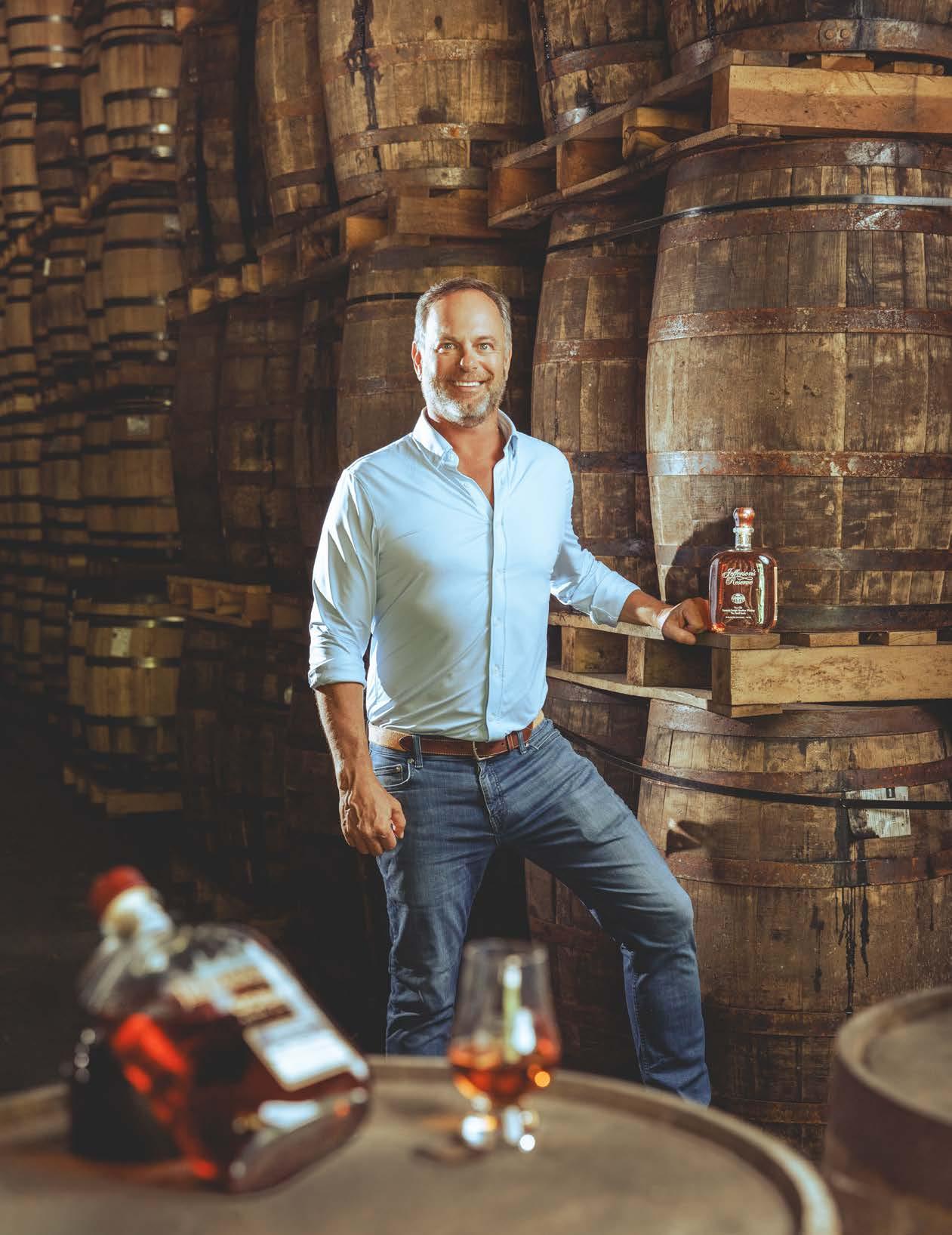
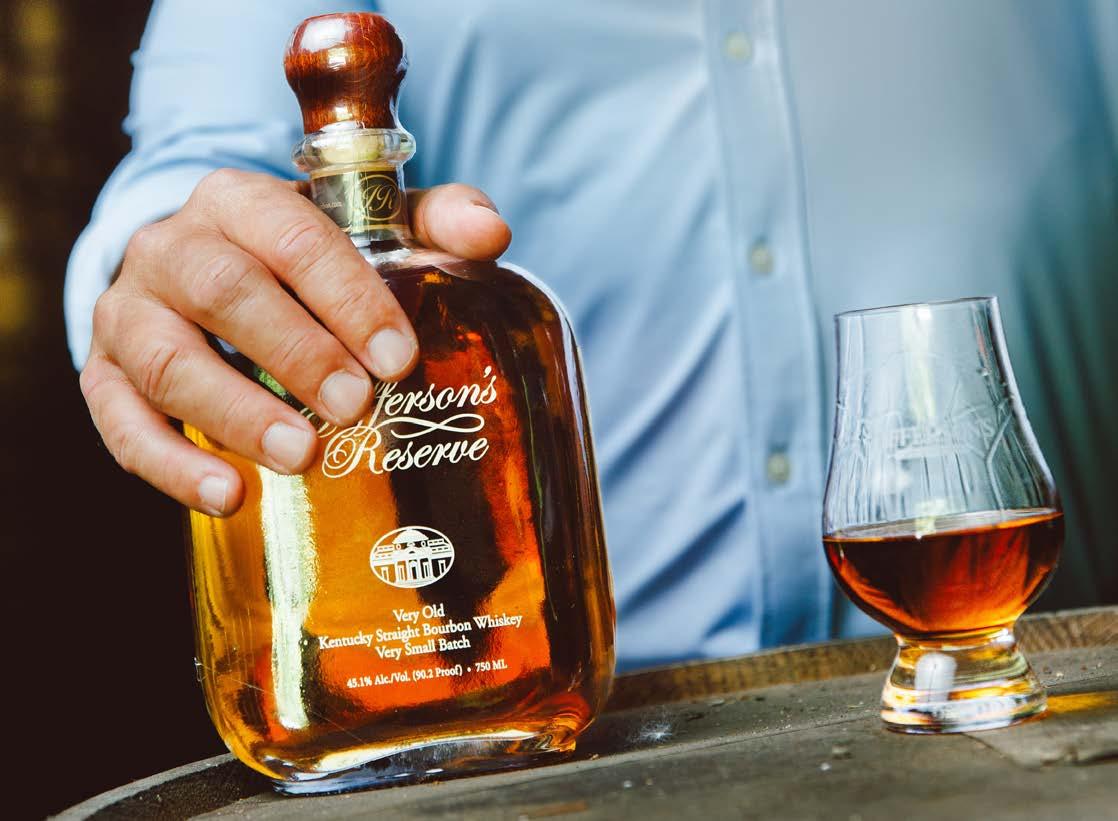
For nearly three decades, Jefferson’s Bourbon has built its identity around experimentation. Ocean-aged barrels, climate-driven maturation, and unexpected finishing techniques have helped separate the brand from more traditional Kentucky bourbon houses. But for founder Trey Zoeller, innovation has never meant abandoning the foundation of bourbon itself.
“As I like to say, we push the boundaries and definitions of bourbon without degrading it,” Zoeller says. “We are tipping our hat to tradition by always starting with FULLY MATURE Kentucky Straight Bourbon Whiskey and manipulating it one way or another.”
That technique has become central to Jefferson’s identity, Zoeller sees it as an extension of the aging process itself. “Actually, we are putting more time, money, and effort into it to hopefully improve upon the taste and mouth feel,” he says.
Curiosity has been the driving force behind much of that work. Zoeller openly admits his attention span has something to do with it.
“I have ADD (Attention Deficit Disorder), so I would be bored doing one thing,” he says. “I like to have lots of experiments going on at once.”
The experimentation also came from a realization early in his career. When Jefferson’s launched 29 years ago, Zoeller says distillers repeatedly told him that most of bourbon’s character comes from maturation, even though nearly everyone aged bourbon in essentially the same way.
“Because I was able to put my hands on aged barrels, I had the time and curiosity to experiment with the aging process,” he says.
His father, bourbon historian Chet Zoeller, also influenced the way he approached whiskey. Studying bourbon’s history made him question how much of the industry’s standard practices were based on practicality rather than flavor.
“So, I asked myself, ‘If I throw practicality out the window, how can I improve upon it?’” Zoeller says.
That balance between honoring tradition and challenging convention is also based on family history. One of the most talked-about chapters involves Zoeller’s eighth-generation grandmother, Marian McLain, who turned to whiskey production after her husband died in the Revolutionary War.
“Unfortunately for her, she forgot to pay taxes and was arrested,” Zoeller says. “Fortunately for us, we found that arrest record, dated 1799, which makes her the first woman documented in the American Whiskey business.”
The story later inspired Jefferson’s Marian McLain release, but Zoeller says the strongest influence in his life came from his maternal grandmother. After her husband died, she took over the family’s bowling alley business and eventually became the first female president of the Kentucky Bowlers Association in the 1970s.
“When you came to her house, she did not ask you what you wanted to drink, but ‘how do you take your bourbon?’” he says.
That spirit still runs through the company culture at Jefferson’s today. “We like to consider our team a family, and true to form, we have lots of women running the show,” Zoeller says.
Supporting women in business was not part of a formal strategy, he explains, but rather a natural outcome of recognizing talent and fresh ideas.
“It is not something I have sought out, however, when I identify talent and great ideas, I want to work with them or be associated with them,” he says.
He also believes outsiders can bring a different perspective to bourbon. “They don’t come in with a ‘we can’t’ attitude, but rather a ‘why don’t we?’ one,” he says.
That mindset has contributed to projects like Jefferson’s Ocean, one of the brand’s most recognizable experiments. The bourbon is aged aboard ships that travel around the world, exposing barrels to changing temperatures, humidity, and motion. While the concept sounded radical when it launched, Zoeller sees it as a return to bourbon’s earliest history.
“By distilling in Kentucky, placing into barrels, and floating on America’s rivers to New Orleans and then loading on ships to sail around to the East Coast, Americans discovered bourbon for the first time and loved it,” he says.
For Zoeller, innovation and heritage are not opposing ideas. “I believe that there is a time and place for both,” he says.
That perspective has become more personal in recent years, especially after the death of his father. Zoeller says legacy is something he thinks about more often now, particularly as his own children begin entering the whiskey business.
“This summer, my 21-year-old twins are working in internships in the whiskey industry,” he says. “They want to take this experience and create their own brand.”
Watching them step into the industry has given him a new appreciation for what Jefferson’s has built over time. Early on, many people in bourbon were skeptical of the company’s unconventional methods.
“Initially, those changes were not appreciated,” Zoeller says. But attitudes shifted over time. Recalling his father’s induction into the Bourbon Hall of Fame, he points to one line that stayed with him: “We kind of chuckled at what the Zoellers were doing – turns out they were the tail wagging the dog.”
Even after decades in bourbon, Zoeller still draws inspiration from outside the industry. Travel and the outdoors continue to influence the way he thinks creatively.
“It seems as though the more I explore, the more I run into folks who help me be creative,” he says.
Travel has also reinforced his appreciation for Kentucky and the culture surrounding bourbon. “It shows how different people are, and at the same time, we are all about the same thing: connecting with other people,” he says.
At the center of Jefferson’s, that idea of connection matters as much as the whiskey itself. Zoeller believes great bourbon can stand on its own, but he also sees storytelling as part of the experience.
“There’s nothing better than bringing a bottle, a gift, to someone’s back porch, fire pit, den – wherever – opening it up and telling them the story behind it and tasting that story, that adventure together.”
By Jackie Zykan
There I stood, once again in the makeshift aisle of plants temporarily occupying a portion of a garden center parking lot. I felt half inspired, half ashamed, hearing my son’s voice in my head over and over “more plants, mom?!”. I performed my usual mental dance of adding up the cost of any particular garden plant with the cost of just buying what it produces. Apparently this mental wrestling match seems to be my favorite pastime between the spring and autumn equinoxes given the frequency of its occurrence. I calculate yields and compare plant prices versus starting from seed, considering spacing allocations and even weighing in travel and time away from the care and feeding of the garden to thoroughly consider the commitment. But on this particular day a new contender stepped into the ring that got me thinking.
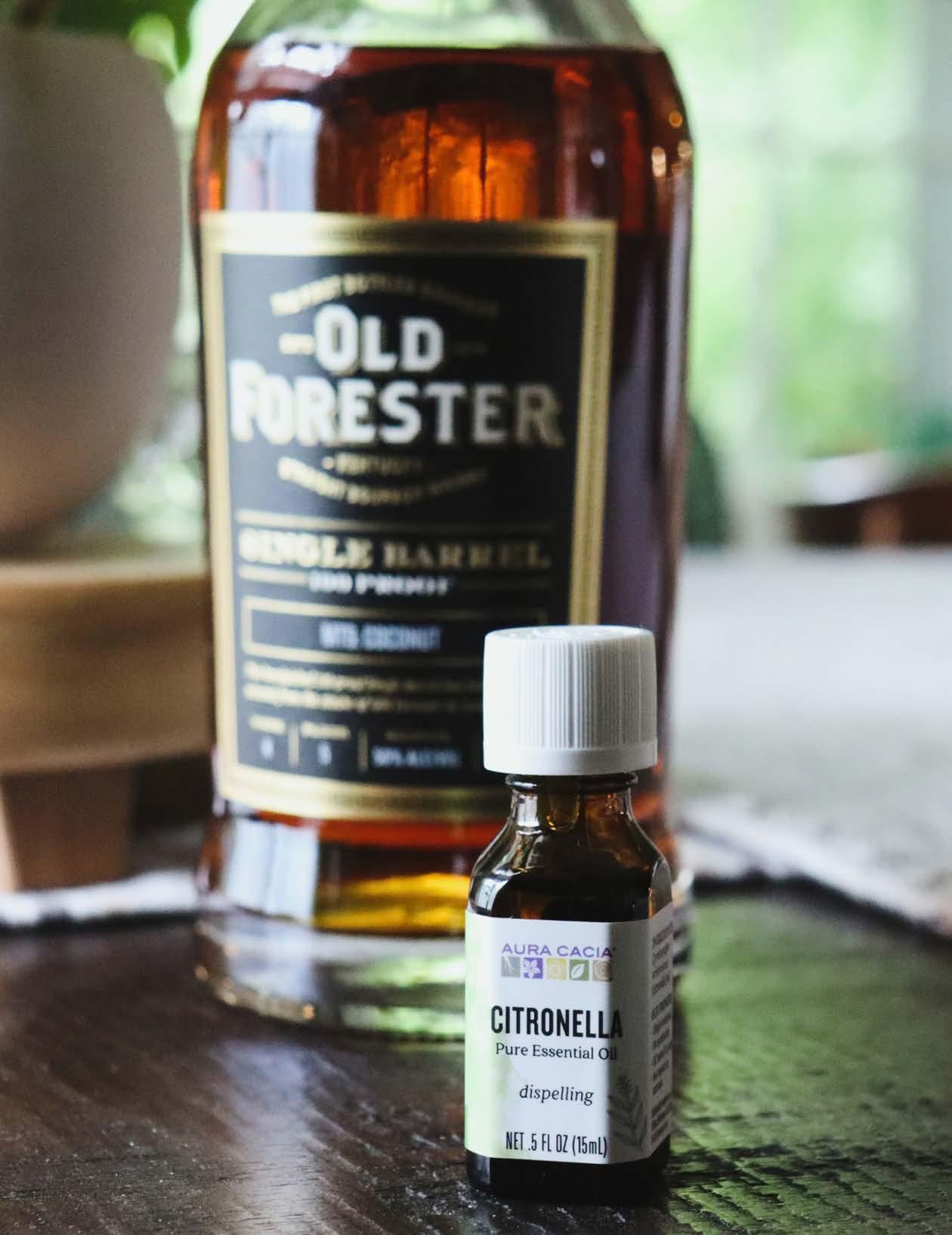
A CITRONELLA SCENTED RABBIT HOLE
As I turned the corner, there she was. A medium sized Citronella plant with a price tag mirrored that of one bottle of high end clean-ingredients-only bug spray. My brain lit up like a Christmas tree as I investigated every potential pathway to achieve the same result: to not get eaten alive by mosquitoes this summer.
Seeing this plant also made me wonder how many folks have purchased one, or many, and surrounded their outdoor spaces with them in hopes to achieve the same. I pictured citronella candles on tables, tiki torches, sprays both clean and carcinogenic, coils of incense, and bracelets. An entire slice of the summer commerce pie devoted to citronella. And here she was, just hanging out on a temporary shelf in a parking lot. The claim of providing mosquito repellent is not her fault. That’s just the residue of collective association with her name and that function, and of course, see also marketing. The citronella plant merely grows when she has water and sun. She doesn’t have an agenda, she isn’t promising anything. But the reason she fetches the price she does is that assumption of duty we put on her. My mind got curious about how many patios have been adorned with her in droves, and still required secondary, even tertiary repellent products to seal the deal. I’m not sure how many folks reading this have ever distilled an essential oil, or extracted any active compounds from plants (call me - we’re the same kind of nerd). All things considered, let’s just say this would in fact not be a plant I would recommend to grow-your-own-bug-spray given the alternatives available.
THE TRUTH WILL SET YOU FREE
I will happily fall on the sword for the sake of giving the fine people of Kentucky the truth behind that citronella plant. At the very least, it’ll save you the price tag, as well as prevent feelings of disappointment when the poor plant doesn’t show up to work, so to say. The plant you are likely to find at a garden center is Pelargonium citrosum, an aromatic geranium by classification. Known as the citronella plant. Also known as the mosquito plant. With maturity, the above ground parts of these beauties produce multiple functional compounds which are off putting to mosquitoes. This is true. The primary workhorses are citronellal, geraniol, and citronellol. Other ingredients found in smaller concentrations include limonene (think “citrus”) and eugenol (think “clove”). This is true. However, the reason you’re likely to require back up measures of insect repellent is simply that the concentration of these compounds is so significantly low compared to the predominant plant cultivated for “citronella oil” used in commercial sprays, candles, torch fuel, etc. Cymbopogon, a cousin to lemongrass and native to Asia, is a far cry from the potted plant on your patio. Another reason your makeshift backyard moat of citronella plants didn’t perform well is the leaves need to be crushed to access the oil, just like slapping the mint sprig on a julep.
HOW MANY PLANTS WOULD IT TAKE…
I fully encourage exploring plant forward home remedies, but someone needs to be transparent with you before you go out and buy a still. Aromatic plants have varying levels of yield when it comes to essential oil extraction. Even if you’re not looking to distill, knowing the oil content in various botanicals is equally beneficial when it comes to planning infusions, tinctures, teas, etc. Sticking with the mosquito plant subject, the oil content of these plants can support a 0.2-0.3% yield. This translates to distilling roughly one thousand leaves to end up with (hopefully) 1 ml of essential oil. On the other hand, the commercially utilized lemongrass relative yields upwards of 2%. This may still seem minuscule, but tuck it in your pocket as a reference the next time you find yourself scoffing at the price of essential oil. It takes a lot of plants. Tons. Literally.
HOW DOES CITRONELLA WORK ANYWAY?
Citronella’s aromatic intensity serves as a deterrent simply by overwhelming the senses of the little beasts so that they are “repelled”. In this circumstance, you are the prey, and the goal is to become undetectable by the mosquito. Think of it as aromatic camouflage. Without being able to sense your breath and sweat, the mosquito doesn’t see you as a potential food source. With this in mind, the mosquito doesn’t see the geranium plant as prey either. Nor the candles, tiki torches, etc. But unless you have the aromatic compound on your body, you are fair game.
A KENTUCKY PERFUMER’S MOSQUITO REPELLENT RECIPE
Little by little we are untangling the knot and understanding how to work with citronella to safely, naturally, and effectively prevent being consumed this summer- both by marketing and blood thirsty bugs! But just like the garnish on my old fashioned… let there be a twist! You see, the aromatic compounds we are working with are volatile, meaning they are lightweight and vaporize quickly. In order to “make them stick”, we need a base note to anchor them. And my personal favorite, as well as the foundational note source in my perfume line (ODUOAK)… drum roll please…. bourbon.
Ingredients
• A glass spray bottle
• Bourbon
• Citronella essential oil
Directions: Fill your spray bottle of choice with bourbon, add 6 drops of citronella oil per ounce, shake, and spray as needed. I know it can be tempting, but please refrain from consuming, as citronella oil is not for culinary use.
Venture First provides capital and financial services to companies with asymmetric potential
FRACTIONAL CFO
Venture First believes that every company needs a talented CFO and analyst capabilities. Some companies need multiple people in each of these roles; some need a fraction. Venture First serves as an outsourced CFO, offering an ongoing partnership to provide fractional services at a high level.
VALUATION SERVICES
Through sophisticated valuation methodologies, we go beyond mastery of best practices, offering qualified opinions and advice based on real-world business scenarios to deliver expert business valuation services.
TRANSACTION SUPPORT
Venture First offers transaction advisory services to help leading venture-stage and middle-market companies navigate complex transactions. Whether a client needs advice buying, selling or merging companies. Venture First has deep experience in transaction strategy and execution.
TO OUTDOOR ENTERTAINING WITH DIGS HOME & GARDEN
By VOICE-TRIBUNE • Photos By Matt Johnson
Outdoor entertaining season is here, and according to Ben Palmer-Ball, creating a beautiful patio setup does not require replacing everything you already own. For this styled outdoor feature at Cindy Carcione’s home, the team at Digs Home & Garden demonstrated how a few thoughtful updates like layered linens, rechargeable lanterns (which not only look gorgeous, but come in handy after losing power to a spring or summer storm), florals, and bold seasonal accents can completely refresh an existing outdoor space. Even better, much of Cindy’s patio furniture was purchased from Digs years ago, proving that quality pieces can evolve beautifully over time with the right styling. We caught up with Palmer-Ball to talk about outdoor entertaining trends, effortless upgrades, and how to create a patio guests actually want to linger in all summer long. Special thanks to Cindy Carcione for graciously allowing us to feature her beautiful outdoor space for this spread.
Digs has such a distinctive mix of indoor and outdoor style. What’s your personal philosophy when it comes to creating outdoor spaces people actually want to spend time in?
I readily acknowledge that most people collect and inherit furniture and accessories over time, and the design challenge is to take different styles, textures, and colors and create an environment that feels coordinated and reflective of the client’s life and style. Some folks feel more at ease with everything matching – and that is an easy, straightforward solution. I personally enjoy the challenge of mixing things up. That is evident in our showroom, where the variety within our family of vendors enables us to mix and match to demonstrate that approach.
When someone is getting their patio or backyard ready for entertaining, what’s the first thing you think they should focus on?
I’d say the first thing to consider for entertaining is how to structure your space to facilitate your event. Don’t let your everyday arrangement limit how you entertain — try rearranging to accommodate more guests or different functions. If it’s a dinner party or cookout, you will want to think about how you’re going to prepare, serve, and seat your company. Maybe you need to move furniture around to facilitate a logical circulation and flow. If it’s a cocktail party, maybe you need to pay more attention to creating smaller spaces or furniture groupings that are conducive to conversation and relaxing. If it’s a large gathering, you may need to plan for additional seating or dining opportunities with furniture from inside your home (there’s no problem with bringing indoor furniture outside to meet your needs!).
What are a few easy upgrades that can instantly make an outdoor gathering feel more thoughtful or elevated?
For entertaining, I am an advocate for using linens and serving ware from inside your home for outdoor events – if the weather is cooperating, of course. For those concerned about durability, we offer a wide variety of stylish outdoor-friendly melamine plates and acrylic glassware in the showroom. Many of our customers even find that these outdoor-friendly dishes are a great alternative for indoor use with growing families.
Another essential for me would be flower arrangements – not always an over-the-top centerpiece, but maybe some smaller arrangements that repeat along the length of a table or are grouped on an end table or sideboard. And don’t forget candles or lanterns for lighting and ambiance.
Louisville has such a great entertaining culture, especially in spring and summer. Have you noticed local homeowners approaching outdoor living differently over the years?
Our community tends to reflect strong Southern traditions and roots when it comes to entertaining – linens, flowers, food, and candlelight. But we’ve also seen how technology has made its way into our entertaining culture. There’s been a notable increase in popularity with rechargeable lamps and lighting, battery or rechargeable candles, durable/unbreakable dinnerware, and weather-resistant fabrics for pillows, seating, and tabletop linens.
What’s one outdoor entertaining essential you think every host should invest in?
My idea of entertaining essential(s) would probably be dependent on the occasion – but my favorite piece right now is a bar cart/trolley or console table. Having a furniture piece that can serve as a bar where guests can serve themselves frees up more time for the host to visit and enjoy the event as well. If that console table or bar cart has a lower shelf, all the better to provide storage space for additional glassware or dinnerware.
As a business owner, what’s been the most rewarding part of building Digs into a local destination for home and garden inspiration?
I take great satisfaction in providing inspiration and ideas for our customers. Listening to folks coming through the store motivates me to look at things with a different perspective than I might have envisioned. I enjoy looking at trends and making market trips to see new products and ideas and then process those things through a Louisville filter to create a unique experience in the store. With so much online competition, we strive to create something unique and attuned to our customers and community.
Can you share a bit about the pieces you chose for Cindy’s patio?
Our client selected a traditional fabric pattern to unify different furniture vendors and styles, featuring bold black and white striped Sunbrella fabric. I envisioned styling a Memorial Day or Independence Day gathering with bold red, white, and blue accents in flowers, linens, and dinnerware. A dining table with an umbrella rules out a showy centerpiece, so we featured a couple of large lanterns and smaller floral accents along the length of the table. In keeping with our ‘mix and match’ philosophy, we featured linens and glassware in different patterns and colors to provide visual interest and a casual vibe.
FOR
By Voice Tribune • Photos By Antonio Pantoja
Every year, the Go Red for Women Luncheon brings together people who care deeply about Kentuckiana and the health of our neighbors. This year’s cohort of survivors come from different backgrounds and industries, but they share a common thread. They show up for others, lead with compassion, and use their platforms to make a real difference.
In the following pages, you’ll meet the community leaders being recognized at this year’s Kentuckiana Go Red for Women Luncheon. Alongside their portraits, we’re sharing pieces of their personal stories, the experiences that changed them, and the work they continue to do across Louisville and beyond.
The luncheon supports the American Heart Association’s Go Red for Women initiative, which raises awareness about heart disease and stroke in women while funding education, research, and advocacy efforts. It is also a chance for survivors, families, healthcare professionals, and local leaders to come together for an afternoon of conversation, connection, and support.
This year’s event will take place on June 10, 2026, at the Muhammad Ali Center. Whether you attend every year or are learning about the luncheon for the first time, we invite you to be part of it.
ROBIN WHITE CHISM
When Robin White Chism experienced a stroke in May 2017, it was something she never imagined could happen to her. At 50 years old, she, like many people, believed stroke was an older person’s problem. The reality of her diagnosis left her feeling very scared and lost, unsure of what life would look like moving forward.
Recovery was hard work, both physically and emotionally, but it became one of the most eye opening experiences of her life. Progress did not happen overnight, yet every small victory reinforced her strength and resilience. Finding community and connecting with others who understood her journey helped her navigate the challenges and reminded her she was not alone.
The experience brought significant changes to Robin’s life and her family’s life. Many adjustments had to be made, and through it all, her marriage grew stronger. She credits her spouse, her aunt, and her late mother as her greatest sources of support. They were there for everything, offering encouragement, patience, and unconditional love during every step of her recovery.
Today, Robin is intentional about making heart healthy choices. She knows her numbers and takes her medications regularly, understanding how vital those steps are to her long term health. Her advice to others is simple but powerful. Know your numbers. A stroke can happen at any age, and awareness can truly save lives.
Outfit By: Dress for Success
When Sandy Juliot underwent mitral valve repair through open heart surgery in March of 2013, she was just 39 years old and facing an uncertain future. Leaving her three young children behind while traveling for surgery was one of the hardest parts. Sandy remembers feeling scared, anxious, and vulnerable, caught between fear and hope as she prayed the procedure would allow her to return home healthy for her family.
Although she believed the surgery would resolve her heart issues, her journey continued. In the years that followed, Sandy developed atrial fibrillation and atrial flutter, leading to a cardiac ablation in August 2025 at age 52. Facing another procedure and recovery was discouraging, but it also helped her gain a deeper understanding of her heart and her overall health.
Recovery has brought a positive shift in Sandy’s life. She is now more mindful of how her daily choices affect her physically, mentally, and spiritually. Her faith has provided strength during difficult moments and has helped her remain hopeful and grounded throughout her journey.
This experience has also impacted her family, bringing them closer together through shared challenges. Sandy credits her husband Matt and her children Sydney, Madeline, and Wyatt for standing by her side through every surgery, appointment, and recovery.
Today, Sandy feels stronger and more resilient. Her message to others is to listen to your body, speak up for your health, and trust that hope can grow even through uncertainty.
SANDY JULIOT
Outfit By: That Cute Little Shop
JAHREE’ RAGER
Outfit By: House of Colour/ Surprise Lily
When Jahree’ Rager was diagnosed with a right subclavian artery anomaly at the end of 2018, surgery was not optional. As a mother of young children, the fear was overwhelming. She remembers lying awake wondering if she would make it through, but she also knew she had no choice. “I had young children, so I knew I had to survive,” she says.
Years later, Jahree’ began experiencing symptoms again. Although she was told by some doctors that nothing was wrong, she knew her body was telling a different story. Trusting her instincts and continuing to advocate for herself led to life changing answers. In 2023, an aneurysm connected to her initial surgery was discovered, and she underwent a thoracotomy to repair it and rebuild the aortic bridge. The surgery saved her life, but the recovery was far longer and harder than she expected.
As a mom, true rest was difficult. Jahree’ pushed herself before learning that healing required patience. She now lives with ongoing challenges, yet she carries deep gratitude for the gift of life. The experience deeply strengthened her family’s bond, reminding them to savor every moment together.
Supported by her husband Byron and her friend Tiffany, Jahree’ found strength through faith and perseverance. Once ruled by fear, she now lives empowered. Her message to others is simple and powerful. “Always listen to what your body is trying to tell you. You are your best advocate.”
CLANCY FULKERSON (MOM)
Outfits By: Dress for Success & Buttons, Bows, & Britches
Russel Jane “Elle” Fulkerson was diagnosed with Tetralogy of Fallot on December 5, 2024, just one day after she was born. For her parents, Clancy and Benjamin Fulkerson, becoming first time parents came with an unexpected and overwhelming fear. Hearing that their perfect baby had a rare heart defect shifted their world in an instant. After the initial shock, they moved into action with determination, focusing every day on getting Elle strong enough for repair and celebrating each small victory along the way.
Elle’s journey unfolded in the best way her family could have hoped. She received excellent care, experienced no major complications, and showed incredible strength from the very beginning. Still, watching a four month old endure pain she could not understand was heartbreaking. Her parents immersed themselves in learning and leaned on a support system that could walk alongside them through the medical uncertainty. “This was a chapter that will always be part of her,” Clancy says, “but it will never be her whole story.”
Recovery meant finding a new normal. Transitioning from constant monitoring to everyday life was both scary and fulfilling. Today, Elle is thriving, laughing, and experiencing life beyond hospital walls. Her family is more grateful, patient, and aware than ever before.
One year later, overwhelmed has turned into purpose, and this family is ready to give back, inspired by a tiny survivor with an extraordinary heart.
Lauren Newcomb never imagined that both she and her daughter would become heart survivors within the first years of motherhood. Just days after giving birth, Lauren was diagnosed with postpartum preeclampsia, a life-threatening condition she did not know could occur after delivery. What began as excitement about going home quickly turned into fear as she was rehospitalized for intensive treatment. Exhausted and overwhelmed, she faced a serious health crisis while caring for a newborn.
As Lauren worked toward recovery and regained stability, the family began settling into life with their daughter Lilly. Then came another unexpected turn. At just 18 months old, Lilly was diagnosed with an atrial septal defect, a congenital heart condition that would require open heart surgery. Hearing that their happy, curious toddler needed major surgery brought a wave of fear and uncertainty back into their lives.
Lilly’s recovery was nothing short of remarkable. Each small milestone after surgery felt monumental, and within a short time she was back to running, laughing, and thriving. Today, she is off medication and continues to be followed by her cardiology team as she grows, living a joyful and active childhood her family never takes for granted.
These experiences reshaped how the Newcomb family views health, awareness, and gratitude. “This journey taught us how fragile health can be,” Lauren says, “and how powerful early care and community truly are.” Together, their story is a reminder that heart health matters at every stage of life and that hope can grow even through uncertainty.
Outfit By: Trunk & Hutch & Rocking Horse
Know someone who should be nominated as Louisville’s Best Dressed?
Scan below to nominate them!
WE WANT TO SHARE YOUR VOICE!
WE AT VOICE-TRIBUNE WANT TO SHARE YOUR VOICE AND ENGAGE WITH THE COMMUNITY. SHARE YOUR STORIES, YOUR PHOTOS, YOUR ARTWORK AND SO MUCH MORE. CHOSEN SUBMISSIONS WILL BE PRINTED IN OUR MONTHLY VOLUMES, AND ONLINE AT VOICE-TRIBUNE.COM.
SUBMIT YOUR VOICE BY SCANNING THE QR CODE BELOW!
By: Alison Cardoza • Photos By Matt Johnson • Sponsored
As we navigate life’s transitions, aging with purpose is a universal goal. Donny Weber, a member of Baptist Health Milestone, is a great example—demonstrating that 75 is just a number. His focus on health and wellness is a powerful reminder to make the most of every stage of life.
Donny was an avid runner for many years, competing in marathons including New York and multiple Boston Marathons—even the 100th. Today, his workout plan is substantially different.
“My running buddies and I used to run for two hours and have coffee for 20 minutes. Now, we like to walk for 20 minutes and have coffee for two hours,” Donny laughs.
Kevin Connell, Donny’s lifelong running buddy, encouraged him to join Baptist Milestone. “The staff at Baptist Milestone is top-notch, and the camaraderie with my friends there is priceless,” says Donny.
Having undergone open-heart surgery in 2011, Donny understands the importance of staying healthy. “I was always a healthy eater and stayed fit by running daily, but stress took its toll on me,” he explains. Now retired from his demanding yet rewarding career as an architect and general contractor— whose company actually built the very first Milestone location— Donny enjoys oil painting and is represented by several galleries throughout the states.
These days, he spends time at Milestone lifting weights and using cardio machines. He also enjoys playing golf and spending time with his grandkids and family. “Aging is an opportunity. Embrace the change,” Donny advises.
We all have choices to make. Those choices can lead us down a road of aches and pains, along with unhealthy habits—or toward a healthier, more fulfilling life. If we choose to make positive decisions in our day-to-day lives, the outcome can be incredibly rewarding. No one is perfect, so remember that moderation is key.
We would love to see you at Baptist Health Milestone. It’s never too late to make changes and live a healthier life.
Alison Cardoza- BS in Exercise Science and Sports Medicine, with a minor in Health Promotion, from the University of Louisville. ACSM-certified personal trainer and Fitour Group Exercise Instructor at Baptist Health Milestone Wellness Center, and a former University of Louisville Ladybird and NFL Colts cheerleader.
YEARS-LONG TOUR OF ALL MLB STADIUMS PROVES TO BE A HOME RUN FOR FATHER-SON
By RUSS BROWN • Photos Provided
On a sunny summer day in Louisville in 2011 Gabe Arnold Sr. and his namesake, Gabe Arnold II, loaded their gear into the car and hit the road; baseball caps pulled low against the golden glow of the early light. This wasn’t just an ordinary trip -- it was a celebration of years spent sharing the love of a game, a chance to reconnect, and a gift neither would forget. It’s also a perfect story for the month of June that contains Father’s Day.
The sentimental and meaningful journey would ultimately cover an estimated 26,000 miles by planes, trains and automobiles over nine seasons in 12 years to visit all 30 major league baseball parks in the U.S. and Toronto, Canada, 28 cities in 18 states. They actually saw 34 games because they watched two at parks in Boston, New York (Yankees), Chicago (Cubs) and St. Louis. They witnessed 9-11 ceremonies in stadiums in Los Angeles and Minneapolis, which was especially moving for the elder Arnold, who was a U.S. Army veteran.
“That was really neat,” Gabe said. “Because Pops loves the American flag, and they honored all the police officers and first responders in the military.”
The annual trips were divided into clusters based on their proximity and ease of travel, such as Baltimore, Washington D.C., Philadelphia and Pittsburgh; or San Diego, Los Angeles, Anaheim, Calif. and Phoenix.
“We were just there to see the home team,” Gabe said. “We didn’t care who they were playing.”
However, the pilgrimage wasn’t limited to baseball stadiums. Not by a longshot. Along the way, the duo also saw the Grand Canyon, Niagara Falls, numerous other national and state parks, monuments and landmarks along with multiple breweries, some of the oldest bars in the country, and an untold number of additional attractions.
It was a father-son bond made stronger with every mile traveled. The trips would have taken several years less, but they were interrupted three times -- by Gabe II’s new job, Hurricane Harvey, and the 2020 COVID pandemic.
“Some of the older cities have a lot of history, like New York, Baltimore, Boston, DC,” Gabe said. “So besides baseball, we’d always try to spend a day or two in each place to get a little flavor for the city. Tourism stuff; let’s go here, let’s go there. We covered a lot of ground everywhere we went. Every trip had its own thing I really loved about it and the games were always fun. What a great way to spend time with your father and see the country.”
Some of the more colorful places they discovered were Fred’s Not Here restaurant and Steam Whistle Brewery in Toronto; White Horse Saloon in New York; the Harley Davidson Museum in Milwaukee; Pike Place Chowder in Seattle; and Cat’s Eye Pub and The Horse You Came In On Saloon in Baltimore.
They enjoyed the famous Cheers bar in Boston, the Space Needle and the original Starbucks in Seattle; the Presidio National Park Site, Golden Gate Bridge and Mount Tamalpais State Park in San Francisco; and the Lyndon B. Johnson Space Center in Houston. Of course, no baseball sojourn would have been complete without stops at the Hall of Fame in Cooperstown, N.Y. and the Field of Dreams in Dyersville, Iowa.
“We saw lots of cornfields,” Gabe’s dad quipped of the Iowa portion. “Every place we went was so different,” he added. “And our little side trips were just wonderful. We stayed in mostly nice hotels and the traveling wasn’t too bad.”
Given the potential for problems of one kind or another, it’s somewhat amazing that they were able to avoid any serious complications. “Everything went smoothly. There were no issues,” Gabe said. “And everyone we came in contact with was so nice and helpful.”
The elder Arnold, a former computer security expert who is now 86 and living in the St. Petersburg, Fla. area, was 71 when the adventure began, 83 when it ended. Neither he nor his son can recall specific details about the origin of the trip, just the reasoning behind it.
“Pops and I started talking about our baseball trips because of our mutual love of baseball and so we could spend some time together,” said Gabe II, who put together all the itineraries and handled all the reservations.
“At first, we just sort of joked about it,” the senior Arnold said. “After a few years, I said, ‘Well, what are we gonna do about that baseball trip Gabe? If we don’t start now, we’ll never finish. I’m getting older and if I’m gonna get all of them and enjoy them we’ve got to do it.’ So he started scheduling them, thank God, because I wouldn’t have gone through all that trouble. He did a great job.”
“The hardest part about planning the trips was trying to coordinate the schedule, trying to figure out, say, when are (the teams) home in both Boston and New York?,” Gabe noted.
Every year, like clockwork, father and son would hit the road, longing for a return to the roar of the crowd, the crack of the bat and an introduction to new places and experiences.
Season One featured stops in Cleveland’s Progressive Field before the Indians became the Guardians in 2022, Toronto’s Rogers’ Center, the Detroit Tigers’ Comerica Park, and Cincinnati Reds’ Great American Ballpark. The end of the adventure came in 2022 with games in Kansas City (Kauffman Stadium) and Minneapolis (Target Field).
“Pops” said his favorite parks were Fenway -- “it hasn’t changed very much, it’s almost the same as it always was” -- Dodger Stadium, and Atlanta’s Truist Park. Gabe also mentioned Fenway and Dodger Stadium, along with Wrigley Field (Chicago Cubs) and Oracle Park (San Francisco Giants).
However, their best experience and most memorable overall was Dodger Stadium where a chance meeting with the “Mayor of Dodger Stadium” on the Dodger Express bus to the park resulted in being invited onto the field before the game, free tickets, complimentary food and t-shirts, and an introduction to former Dodger star Ron Cey.
The Arnold with former LA Dodgers standout Ron Cey at Dodger Stadium.
“It was all completely unplanned, unexpected,” Gabe said. “It just happened. My dad was really excited to meet Ron Cey.” Gabe, a mortgage broker, said he and his dad had grown apart -- or at least weren’t as close as they once were -- after his father’s divorce from his mother and subsequent move to Florida, plus his own five-year work stint in New York City. But the stadium tour changed that.
“I didn’t see much of my dad after he moved away, so this was a way for us to bond again over something we both love,” Gabe said. “We had a great time together. It was like, man, why did we wait so long to do this? He has bad back issues now that have slowed him down, so I’m really glad we got it done when we did.”
“I’ve done some other things with my son that were special,” the elder Arnold said. “But doing the bonding thing with baseball trips made it even better. I never thought it would be that good when we started, truly. What memories I have.”
There just might be another baseball trip in the Arnolds’ future, albeit considerably shorter. That’s because since they visited The Ballpark, the Texas Rangers’ stadium in Arlington, Tex. in 2018 the team has moved into the new Globe Life Field.
Returning junior guard Adrian Wooley will be joined by a large group of new teammates next season.
By RUSS BROWN • Photos Provided By Louisville Athletics
College football season is next up on the major sports schedule, with Louisville’s opening kickoff only about three months away, on Sept. 6 against Ole Miss in Nashville. But it’s the UofL basketball team that is dominating the conversation and media attention among Card Nation these days.
That’s because coach Pat Kelsey’s highly-regarded recruiting haul has Louisville fans dreaming of a return to national prominence during the 2026-27 season. UofL has spared no expense in going after the best players in the transfer portal, which closed on April 21, and it has paid off. At publication time, the Cards’ six transfers were ranked No. 1 by 247Sports and The Athletic, and in the top 5 by most other rating services.
Centerpiece of the portal class is former Kansas big man Flory Bidunga, who was the top-ranked center among the transfers. Bidunga committed early in the process and that encouraged other promising prospects to join the parade to Louisville’s campus -- Iowa forward Alvaro Folgueiras, Dayton guard De’Shayne Montgomery, USC center Gabe Dynes, Arkansas wing Karter Knox and Oregon guard Jackson Shelstad.
The Cards’ roster was further bolstered when five-star center Bubba Ejezie Jr. reclassified into next year’s class. Kelsey’s most recent additions were high school recruit Boyuan Zhang, a Chinese product who attended Veritas Academy in Garden Grove, Calif. and is ranked as high as the No. 15 small forward in the country; and guard Isaac Ellis, who also reclassified into the 2026-27 class.
Although Adrian Wooley and former NBA G2 guard London Johnson are the only returning scholarship players, it’s no wonder UofL fans are excited because the new roster has athleticism, depth and talent at every position.
A rising junior who was the Big 12 Defensive Player of the Year, Bidunga had declared for the NBA Draft, but was expected to withdraw his name by the deadline on May 27 and enroll at Louisville. He attended the NBA Draft Combine in Chicago, where he totaled 18 points, 14 rebounds and three assists in two scrimmages.
As a sophomore with the Jayhawks last season, Bidunga was the only NCAA Division I player to average more than 13 points (13.3), 8.5 rebounds (9) and 2.5 blocks (2.6). He also tied for ninth in the nation with 13 double-doubles.
Kansas listed Bidunga at 6 foot 10, but at the Combine he was measured slightly under 6 foot 8 barefoot, making him the second-shortest center there. His standing reach of 8-10 1/2 was also next-to-last, but he topped the position in both standing vertical leap (34 inches) and max vertical leap (40-1/2”).
Adam Finkelstein, 247Sports scouting director, estimated the Kokomo, Ind. product would have to be a top-10 pick in the NBA Draft to match the $5 million the Cards reportedly offered him in NIL money. Most analysts project Bidunga as an early second-round to late first-round pick. Under the NBA’s rookie salary guidelines, late first-round picks (slots 20-30) are guaranteed approximately $5.5 million to $6.8 million over the first two seasons, whereas second-round picks (slots 31-40) receive no guaranteed money unless negotiated into a standard contract.
Kelsey was able to put together such a strong class despite an upheaval of his coaching staff during the important spring recruiting period when two of his longest-serving assistants took other jobs. Thomas Carr and Brian Kloman both unexpectedly departed in late March. Kelsey and Kloman were together for 12 years and Carr had worked with Kelsey since 2022-23 at Charleston. Carr took an assistant coaching job at Indiana, while Kloman was hired as Auburn’s general manager.
To replace them, Kelsey hired former Campbell head coach John Andrzejek as associate coach and Sean Dixon, who was an assistant at Clemson the past four seasons. Kloman’s role was general manager, but no new GM was named. Kelsey called Kloman’s stint a “one-year kind of trial thing.”
“It’s important in any organization to have a very thought-out, detailed organization chart where people are responsible for certain things and they can focus on them,” Kelsey told the Courier-Journal during the ACC spring meetings in Florida. “And I think we do a good job of that in recruiting. Hiring the right people that are very talented, give them the structure and just let them go.”
One more big target was on Kelsey’s radar at this writing -- Iowa State 6-8 power forward Milan Momcilovic, who could send UofL’s fan base into a frenzy and immediately label the Cards as legitimate national championship contenders.
But the competition is brutal, with Kentucky and St. John’s also willing to open the checkbook for Momcilovic’s services. His asking price is believed to be in the $6 million range, or he could stay in the NBA draft. Even if Kelsey loses out on Momcilovic, though, the Cards will still be in excellent shape for a prosperous 2027 campaign.
INTENSITY, INTEGRITY, AND A STACK OF CHAIRS
By Erika Ganong • Photos Provided
Long before he was Coach G, Ray Ganong was known as “the Human Bowling Ball.” Alongside his foster brother, he earned a four-year high school football scholarship at West Nottingham Academy in Codorus, Maryland, an opportunity that carried him from humble beginnings to the University of Miami. Those years placed him inside the engine room of one of the most influential programs in college football history, where discipline, grit, and accountability were simply how things were done.
When his playing days ended, Ray graduated with a B.B.A. and took a job in the Management Training Program of a large corporation. He still kept his hand in the field of personal training and coaching by working at a local health club. That is where he was when he received a call from his collegiate Strength Coach at the University of Miami.
His coach was leaving for a position at another university and advised him that he had given his name as a potential replacement to the new coach, Howard Schnellenberger. After just one interview, Ray joined the staff — quietly launching his Division I strength and conditioning career and the beginning of a beautiful collegiate coaching journey.
Around that same time, Ray met Maria, the woman who would become the center of everything he built. When Schnellenberger later asked Ray if he wanted to come with him to the University of Louisville, Ray said yes, and then did what he always did — he went home and asked his wife.
“Do you want to go to Louisville?”
“Where the heck is Louisville?” she asked.
So they pulled out a map — a real one — and searched for Louisville, Kentucky together. They took the leap, moved there, and never left. Nearly 50 years later, Louisville is still home.
Ray would go on to spend 33 years at the University of Louisville, becoming one of the most respected and enduring figures in collegiate athletics. Through coaching changes, Final Fours, bowl games, championships, and rebuilds, Coach Ganong — known to everyone simply as Coach G — remains one the constants in many athletes’ lives.
When Schnellenberger left Louisville in the early 1990s, Ray wanted nothing more than to stay and continue building what they had started. Unsure of what to do, he walked into the office of longtime Louisville leader Tom Jurich and asked for guidance. Tom didn’t hesitate — he simply helped Ray figure out the next step forward. That moment of belief and support is something Ray has carried with him ever since, with deep gratitude and respect.
During Louisville’s rise in both football and basketball, he personally trained and mentored elite athletes including Donovan Mitchell, Montrezl Harrell, Terry Rozier, Peyton Siva, Russ Smith, Gorgui Dieng, Ray Buchanan, Chris Redman, and Jeff Brohm — players who would go on to lead at the highest levels of the NBA and NFL. His influence extended to every corner of the program, including helping lead Rick Pitino’s 2013 Louisville team to its National Championship, where strength, conditioning, and resilience were as much a part of the title as talent.
In Coach G’s weight room, no one was treated like a celebrity — every athlete was expected to work, respect the process, and take care of the person beside them.
Despite his enormous impact, Coach G has always been the most humble man in the room. He once turned down the chance to do the ESPN Court Walk with Jay Bilas, because attention was never what drove him — the players were.
Ironically, the spotlight found him anyway.
During a nationally televised Duke–Louisville game, ESPN famously named him “the most intense strength coach in college basketball.” Fans quickly fell in love with his relentless sideline energy — sprinting out stacks of chairs during every timeout with urgency and pride — earning him the affectionate nickname “The Chair Guy.”
Yet for all the wins, television moments, and championships, Ray’s greatest pride has always been his family.
He and Maria built a life together in Louisville, raising two daughters — Raquel and Erika — in the same community that supported his coaching career. Today, his world is made even richer by his two granddaughters, who bring him more joy than any trophy ever could.
Even now, Ray still works part-time at ProFormance Health & Wellbeing, though he doesn’t call it training — he calls it “playing.” And in true Coach G fashion, he still lives by the belief that has guided him through every chapter of his life:
“Everything happens for all the right reasons.”
Because The Coach Ray Ganong Story isn’t just about championships — it’s about the life he built, the people he shaped, and the legacy he continues to live every single day.
By Kathryn Harrington
Ok, I’ll admit it. Before walking into the Mercury Ballroom, my relationship with Biffy Clyro was built on vague awareness. As someone who tends to live comfortably inside heavier musical territory—i.e.. metal, hardcore, sludge, doom, anything capable of rattling your ribcage at unsafe volumes—Biffy had remained in my peripheral vision without fully breaking through.
This is absolutely my own fault! I can occasionally fall into the trap of treating genres like fortified borders instead of suggestions. Once you spend enough time cycling through heavy metal albums and obscure post-metal bands with album covers featuring antlers or collapsing churches, it becomes dangerously easy to ignore artists operating outside the usual rotation. So naturally, before the show, I decided to do my homework.
I spent several days working backward through Biffy Clyro’s catalog, from Futique to earlier albums like Only Revolutions, Opposites, and Puzzle. What immediately stood out was just how difficult the band is to pin down stylistically. Their older material often leans more jagged and unpredictable, pulling heavily from math rock, post-hardcore, and progressive rock influences. Songs would twist directions without warning, guitars colliding against odd time signatures while Simon Neil’s vocals bounced between vulnerability and complete emotional collapse.
Then there’s Futique. Where some of the earlier albums feel restless and explosive, Futique feels more intentional. Not softer exactly, but more emotionally refined. The chaos is still there; Biffy simply wields it with greater control. The newer material embraces larger melodies, atmospheric textures, synth elements, and emotional buildups without abandoning the muscular guitar work that longtime fans would expect. On Futique, the Scottish trio trades youthful chaos for something more reflective: a meditation on memory, friendship, time, and survival wrapped inside alt-rock hooks and enough sonic left turns to keep longtime fans on edge. It’s an album that sounds like a band aging without becoming boring, which may honestly be rarer than musical reinvention itself.
Even after diving into the albums beforehand, nothing fully prepared me for seeing the band live. The moment Biffy Clyro took the stage at Mercury Ballroom, it became immediately obvious why their fanbase is so fiercely devoted. The small venue almost amplified the intensity of the performance. Instead of feeling distant or overly polished, the show carried the kind of sweat-soaked immediacy usually associated with punk and hardcore gigs. Simon Neil commanded the room with the energy of someone simultaneously exorcising demons and having the time of his life doing it.
What surprised me most wasn’t simply how heavy the band could sound live, though songs like “Hunting Season” absolutely hit with enough force to satisfy even the most stubborn riff addict, it was how fluidly they moved between styles without losing momentum. One minute the band sounded massive and crushing, guitars roaring through the room with near-metal intensity. The next, they pivoted into beautiful melodic passages or emotionally raw singalongs that felt just as powerful. At one point during the set, I remember thinking: This is what happens when a band refuses to treat genre like a prison.
That realization became the big takeaway of the night for me. Biffy Clyro isn’t confined to alternative rock, prog rock, post-hardcore, or arena rock, even though elements of all those styles exist throughout their music. They pull freely from whatever musical tools best serve the emotion of the song. Sometimes that means intricate rhythmic chaos. Sometimes it means massive pop-adjacent choruses. Sometimes it means pure cathartic noise! And yet, it all works. The newer Futique songs especially came alive in concert. Tracks that initially felt atmospheric on record suddenly carried real physical weight live. Meanwhile, Simon Neil’s vocals sounded even more compelling in person: rough, emotional, imperfect in all the best ways.
So for someone who usually spends most of their listening hours buried inside extreme music, Biffy Clyro managed to do something genuinely rare: they pulled me completely out of my comfort zone without sacrificing intensity, emotional weight, or power. And in an era where many live shows feel engineered for social media clips first and human connection second, Biffy Clyro performs like they’re chasing a genuine emotional release. The Futique Tour concert at Mercury Ballroom didn’t feel like a nostalgia act revisiting some former glory. It felt like a band fully possessed by the need to create noise, connection, catharsis, and chaos all at once.
VIRGIL R ROPPEL
PASSED AWAY ON MONDAY, MAY
18, 2026
It is with profound sadness that the Roppel family announces the passing of Virgil Roppel, co-founder of Roppel Industries, who peacefully passed away surrounded by his children at the age of 101.
Born on August 28, 1924, Virgil lived a life defined by service, hard work, integrity, generosity, and devotion to both his family and community. At just 17 years old, he joined the United States Navy in December of 1941 following the attack on Pearl Harbor. During World War II, he proudly served aboard an aircraft carrier in the Pacific Theater before returning home in 1945. The discipline, resilience, and sense of duty he carried from his military service would become the foundation for the way he lived the rest of his life.
In 1947, Virgil helped found Roppel Industries, building the company from the ground up alongside his family. What began as a small business grew into a respected name throughout the industry, rooted in strong values, meaningful relationships, and a commitment to doing things the right way. For nearly eight decades, Virgil’s leadership, vision, and work ethic helped shape not only the company, but also the countless employees, customers, and friends whose lives he impacted along the way.
Virgil was preceded in death by his beloved wife of 57 years, Peggy Rose McMearty Roppel, with whom he shared a lifetime of love, family, and memories; his daughter-in-law, Christine Roppel; his parents, Edward J and Caroline M. (Denkler) Roppel; sisters, Helen Young, Rita Steedly, Carolyn Linebach; and brothers, Edward, Cletus, John and Jerome Roppel.
To his family, he was lovingly known as “PawPaw.” He was a devoted father, grandfather, great-grandfather, mentor, and friend who always made time for others. Whether helping someone in need, offering advice and encouragement, or simply sharing a conversation, Virgil had a remarkable ability to make people feel valued and welcomed. His kindness, humility, and generosity left a lasting impression on everyone fortunate enough to know him.
Virgil believed deeply in treating people the right way, standing behind your word, and building relationships that lasted a lifetime. Those principles became the foundation of both his family and the business he helped build, and they continue to guide Roppel Industries today.
He is survived by his children, Vince Roppel, Maureen Roppel, Linda Roppel, Peggy Wheeler (Doug), Rob Roppel (Ruth), and Tom Roppel (Sheree); 11 grandchildren; and 21 great-grandchildren; with generations of family continuing the legacy he worked so hard to build.
His legacy lives on through the family he cherished, the company he helped create, the people he mentored, and the countless lives he touched over 101 extraordinary years.
The Roppel family celebrates a truly remarkable life and legacy and will forever be grateful for the love, wisdom, and example Virgil gave to so many.
His funeral Mass was celebrated at 11 a.m. on Friday, May 29, 2026 at St. Edward Catholic Church, 9608 Sue Helen Drive, Jeffersontown, KY with burial in Calvary Cemetery. Visitation was from 3 – 8 pm Thursday, May 28, 2026 at Ratterman & Sons Funeral HomeJeffersontown, 10600 Taylorsville Road, Jeffersontown, KY.
In lieu of flowers, memorial gifts may be made to American Legion GI Joe Post # 244 , 3408 College Drive, Jeffersontown, KY. 40299
Join us in celebrating the 45th annual Zoofari gala, hosted by Friends of the Louisville Zoo, on Friday, June 12, 2026. is year, we are honoring three members of the Louisville Zoo’s majestic family: Masai gira es Baridi, Kianga, Josie, Nyasi, and Silvia. e night begins with signature cocktails, hors d’oeuvres, dinner, silent auction, a bourbon pull, and live music provided by the Louisville Crashers.
All proceeds will support the enhancement and expansion of the Louisville Zoo.
Please note that this event is for guests who are 21+ only
SCAN HERE TO BUY TICKETS
Dressed By Rodes for Her.
April 16, 2026
LOUISVILLE ORCHESTRA SPRING GALA
PhotosbyMartyKing
The Louisville Orchestra Spring Gala brought together an elegant evening of dining and celebration, highlighted by a performance from Itzhak Perlman. Held at the Muhammad Ali Center and concluding at Whitney Hall in The Kentucky Center, the night also honored Jim Welch’s lasting impact, ending with a memorable concert led by Teddy Abrams.
Ted Smith, Louisville Orchestra’s Exec Dir. Nathaniel Koch
Louise and Jay Harris
Laura and Kirk Rich
Carla Given Motes, Ali Pfeiffer, Carol Barr Matton, Carol Hebel
Serena Haming, Zamar Logan, Lydia Newton
Debby and Rob Schiller, Pam Socolow
Thank you to our sponsors for your continued support:
We extend our deepest gratitude to our sponsors, whose generous support makes it possible for us to share the stories, voices, and creative spirit of Louisville. Through your commitment, the VOICE-TRIBUNE is able to highlight the arts, culture, fashion, philanthropy, and the many facets of our vibrant society. It is because of you that we can continue to celebrate and uplift the people and organizations shaping our community with vision, style, and heart. Thank you for believing in our mission and for helping us shine a light on the voices that make Louisville truly extraordinary.