






The EV transition needs to work for all drivers without their own driveway or dedicated parking

The EV transition needs to work for all drivers without their own driveway or dedicated parking


While electric vehicles are growing in popularity, many drivers unable to charge their cars at home are dependent on the public network, which remains expensive and can be inconsistent. Consumer rights campaign Which? has raised concerns that ‘charging anxiety’ will dampen the consumer demand for EVs. It is worried that word of mouth can see even a few poor charging experiences have a negative effect on public opinion.
Which? says government can combat negative impressions by investing in the collection and sharing of data of EV charging. The campaign acknowledges that there are good independent surveys of EV driver views, but says there is no official data source for how often drivers experience problems, nor are there public targets for driver satisfaction with the public charging network.
In an exclusive article for Parking Review, Which? argues that government should adopt modern, continuous data collection at a national level in order to secure the future of the EV transition.
Mark Moran Editor


















Adam Bunce of consultancy Ethos considers how local authorities can best design and manage footway parking
Parking professionals boated down the River Thames to celebrate the launch the British Parking Awards 2026
The Car Parks 2026 conference explored ways of extending the life of ageing buildings and preparing for electric vehicles
Homes England sets out best practice for planning residential parking and developing mobility hubs for housing projects
The world of parking gathered in Coventry to check out the latest systems and services at Parkex 2026
Government must reduce consumer frictions that are slowing down the EV transition, says James Edgar of Which?
Disabled Motoring UK’s Anjna Patel and Zoe Rush went on a road trip to test out the accessibility of European EV chargers
The latest developments in electric vehicle infrastructure


Huseyin




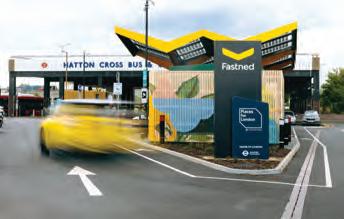




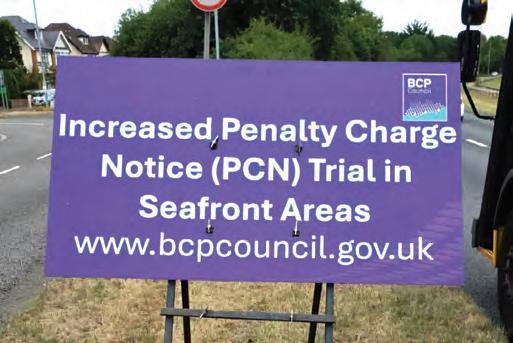
Atrial exploring the impact of higher penalties for illegal parking will be rerun in Bournemouth, Christchurch and Poole. Last year BCP Council was given permission by the Department for Transport to temporarily increase the cost of penalty charge notices (PCNs) during the summer. The scheme sought to encourage summer visitors to use official car parks and not park illegally on streets, pavements and blocking routes for buses and emergency vehicles.
The government has now told the council that the trial can proceed again as long as it demonstrates there is sufficient legal parking capacity in the area and ensure the public – particularly visitors – are properly informed.
Two PCN bands are prescribed in current regulations, to reflect the seriousness of a breach. Higher charges apply for safety or accessibility reasons such as parking in disabled bays or on yellow lines. Lower charges apply, for example, to overstaying in
a paid-for parking bay. Local authorities are advised by the Department for Transport (DfT) to choose the lowest band that will help achieve a high degree of compliance.
There is a differentiation between the cost of PCNs in London and across the rest of England. Outside London the current Band 1 PCN levels are set at £60, and at £40 for respective higher and lower-level breaches. Band 2 is set at £70 and £50.
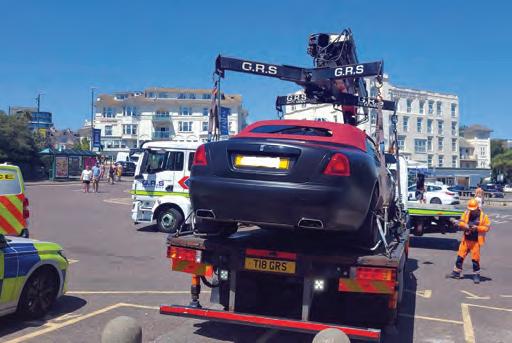
Last year’s BCP Council trial saw PCNs increased to £160, reducing to £80 if settled within 14 days. Other tariffs included a £100 wheel clamp charge and £280 to release a vehicle from a pound. These charges are comparable to those seen in London.
During Summer 2025, the higher PCNs were applied to illegal parking on roads between Sandbanks in Poole and Southbourne in Bournemouth.
BCP Council deemed the trial a success. In its report to the DfT, BCP said it issued 7% fewer tickets during the trial month than in August 2024, despite similar weather.
The council has shared the results at a number of parking conferences and has called on the government to make the changes permanent – most recently in the form of an open letter from council leader Millie Earl to transport secretary Heidi Alexander.
Cllr Earl wrote: “With summer fast approaching we are extremely keen to take on a further trial across the Bournemouth, Christchurch
and Poole Council area, not only to positively demonstrate the impact of the higher fines along the seafront, but also the behaviour outside schools and in heavy pedestrian footfall areas.”
The transport secretary is understood to have reservations about how the council shared its report of the trial, suggesting this was done without consulting the DfT. “In supporting BCP’s August 2025 trial, my officials suggested a number of steps to strengthen both the robustness of the analysis and interpretation of findings,” she is reported to have said. “This advice was not followed completely. Moreover, while BCP shared early drafts, the final report was published without further engagement with DfT officials. This must not be repeated.”
While BCP Council wanted to explore the impact of tougher enforcement around schools, it appears the DfT have only agreed to the a trial conducted in the same areas as last year – namely, roads running parallel to the seafront.
The DfT told Parking Review it has approved the running of a second trial, but that there are no plans for a national increase to penalty charge notice levels across England outside London. A DfT spokesperson said: “We are firmly on the side of drivers and we fully expect councils only to use penalty charge notices as a deterrent for law-breaking – not as a way to raise funds. While we have agreed to Bournemouth, Christchurch and Poole Council’s trial in principle, this is still subject to further checks to ensure this is run fairly.”
BCP Council says the DfT gave it very short notice when approving the initial trial. Cllr Richard Herrett, portfolio holder for road safety, said: “Last year, the secretary of state asked us to implement a nationally significant trial on 10 working days notice, during which our officers worked tirelessly, and collaboratively, with officials from the Department for Transport. We are proud of the work undertaken by our officer team which has since been recognised as best practice by other local authorities, and industry experts. We delivered everything that was possible in the timescale set by the DfT. We are committed to working with government to secure a permanent solution to reduce illegal parking. This trial offers another opportunity to show that tougher enforcement works, and we believe these powers should apply across Bournemouth, Christchurch and Poole.”
BCP Council’s proposal to increase the cost of PCNs is supported by Bournemouth East Labour MP Tom Hayes, who told the BBC: “It’s so important because residents are telling me that they want peace of mind in their communities. They are consistently having to put up with illegal and unsafe parking chaos, where cars can be abandoned on roundabouts, on the seafront, just so that people, often from out of town, will have a shorter stroll to the beach. That’s wrong. People should be able to live in their communities knowing that others will respect the rules.”
However, motoring organisations have expressed concerns about the idea of increasing the cost of penalties. While the AA agreed with a trial that was supposed to target a specific type of bad and disruptive parking, it heavily criticised the council for applying the £160 fines elsewhere. Drivers who did what the council wanted and parked in official car parks were issued bigger fines for everyday offences such as parking over the line and failing to display a ticket properly.
Edmund King, the AA’s president, said: “The Department for Transport was not happy with the way the council used its special powers. The AA called the council’s behaviour ‘unacceptable’ and a matter of ‘overreach’. Key in that was the fining of drivers who did what the council wanted by parking in the official car parks but were still hit with London-level fines for offences that happen every day across the country. These might include parking over the line or failing to display a parking ticket properly.
“The AA still believes that, after previous summers of disruptive and illegal parking along roads at the resort, the trial should be rerun but that the fines must be targeted specifically at rogue parking that is beyond normal offences. For those everyday offences in car parks and on-street parking spaces, the normal £70 fines that are used outside London should apply. The AA welcomes the government’s close monitoring of the scheme to ensure that only those drivers who deserve the London-level fines are targeted. The trial must be effective but fair.”
Government must put communities first and take decisive action over illegal parking

Cllr Millie Earl, leader of Bournemouth, Christchurch and Poole (BCP) Council, wrote to transport secretary Heidi Alexander MP to lobby for tougher enforcement powers that better deter illegal, dangerous, and irresponsible parking. The call for action followed BCP Council’s implementation of a trial of higher fines last summer.
Re: Parking PCN Trial in Bournemouth Christchurch and Poole To: Heidi Alexander MP, Secretary of State for Transport 21 April 2026
Following the higher PCN trial in August last year, we submitted our report to the Department for Transport in February with two recommendations for options going forward.
The first recommendation was that the DfT accepted the data in the report and moved to a national change and the second was that an extended trial be permitted.
The trial and the report enjoyed cross party support for its work, depth and positive impact for residents and businesses, and we were hopeful of a response for further discussion from the DfT by now to see what might be feasible as a next step.
For reference, the higher PCN trial was permitted to examine whether higher fines had a positive impact on driver behaviour and stopping or significantly reducing the poor choices made during high season on the Bournemouth and Poole seafront. The data showed this was highly likely, and our residents and visitors were able to use pavements, travel by bus and car more easily.
With summer fast approaching we are extremely keen to take on a further trial across the Bournemouth, Christchurch and Poole Council area, not only to positively demonstrate the impact of the higher fines along the seafront, but also the behaviour outside schools and in heavy pedestrian footfall areas.
I am writing therefore to formally request that BCP Council is permitted to enter into an extended trial for higher PCN fees across the conurbation as soon as possible in readiness for summer. With summer expected to be warm and air travel likely to be more expensive this year, we are anticipating more visitors to the area and want to ensure our area is safer and easier to travel around.
The Bournemouth, Christchurch and Poole area experiences significant issues with parking as soon as the temperature reaches or exceeds 20 degrees and therefore, time is of the essence.
I hope we can have an opportunity for further discussion with you at your earliest opportunity. Although our parking team turned things around very quickly to implement the trial last summer, we would appreciate as much time as possible to prepare for any potential change.
Thank you in advance for your consideration of our request.
Yours faithfully,
Councillor Millie Earl Leader, BCP Council (Bournemouth, Christchurch and Poole)
Our cities know more about how we move than ever before. So why does getting around still feel this hard?
Think about the last time you drove into a city centre. You sat at traffic lights, waited at a junction, circled for parking, and eventually pulled into a space. For you that was one journey but to the systems managing that city, it was several disconnected fragments, each owned by a different organisation, living in a different database, with limited communication between each other.
The gap between how a person experiences a journey and the way data systems record it, is at the heart of why urban mobility is not getting easier, despite more technology being deployed on our streets. London has been named the world's slowest capital city for three consecutive years according to TomTom's annual Traffic Index1, and the average British driver loses more than a full working week each year to commuting, according to research by Autotrader 2
More data is being collected than ever before, and more systems are being installed, yet the congestion persists. The reason is not a lack of information, it’s a lack of connection.
Here’s an example of how mobility data is typically handled in reality; transport authorities collect information on vehicles, councils gather parking data from paystations and apps like RingGo, private operators often manage their own car parks on their own platforms. And when a driver uses a permit or Blue Badge, that journey most likely vanishes from the record entirely, it’s a blind spot that no one can see.
Even within a single council, different teams manage different datasets covering adjacent streets, and those datasets rarely meet. Across the wider landscape, councils and private operators often serve the same areas while competing for the same drivers, which makes data sharing feel counter-intuitive even when everyone would benefit from it. The result is that today parking policy gets made without a complete overview of how parking actually works, because data is fragmented and no single source of truth exists.
The lack of available connected data has more consequences for cities than people realise. Traffic

management data is rich and well-developed, but it effectively ends the moment a vehicle parks. That means the second half of every journey, where a driver went, why they needed to be there, how long they stayed, sits outside the picture entirely. Separating a vehicle in motion from a vehicle at rest means cities are making decisions about congestion and flow without understanding the destinations driving that congestion in the first place.
The National Parking Platform is a genuine step forward, enabling drivers to pay for parking using whichever app they prefer, whether it’s RingGo or another provider, while also feeding consolidated data back to councils across the board. It demonstrates something important: that interoperability works, that organisations with competing commercial interests can find common ground when the shared benefit is clear, and that the invisible walls between datasets are not permanent fixtures.
However, payment data is only one piece of a much larger puzzle. What cities genuinely need is a single source of truth, a connected space where planners and decision-makers can see movement and parking together, trace a complete journey from start to finish, and understand not just what is happening on their streets but why. That level of insight changes the quality of every decision that follows, from where new infrastructure goes to how existing capacity is managed and how competing pressures on urban space get resolved.
Getting there requires a shared willingness to open up, not commercially sensitive data, but the kind of aggregate, anonymised picture of how a city moves that benefits everyone with a stake in making it work better. Councils, private operators, transport authorities and technology providers all hold a piece of that puzzle.
As autonomous vehicles move from emerging technology to everyday reality, the complexity of managing urban movement will increase dramatically.
These vehicles will need to navigate efficiently, find appropriate places to stop, and integrate seamlessly with everything else on the road. Unlike a human driver making instinctive decisions, they will depend entirely on data, and not just data about roads, but data about destinations, parking availability, and the full shape of how a city moves at any given moment. Without that connected picture, autonomous mobility cannot deliver on its promise. And the cities that start connecting their data now will not just be ready for what is coming. They’ll be the ones showing everyone else how it is done.
At Arrive, this is the work we are focused on every day. Drawing on decades of experience across parking, payments and urban mobility, we’re helping cities build the connected data ecosystem they need to see the full picture, make better decisions, and create cities where getting around is genuinely easier for everyone making them more livable.
Making cities easier to move around is simpler than it sounds, and the tools to do it are already there. Not through more technology alone, but through smarter use of what we already have, breaking down the silos, building the connections, and giving the people who shape our cities the complete picture they need. The goal is a city where everyone arrives at their destination a little easier, and while we’re not there yet, we know the way forward and that it’s worth the journey.
Arrive's mission is to help cities, operators and transport authorities turn mobility data into smarter decisions and more liveable places.
Find out more at arrive.com

City council to consult on options for business parking fee scheme designed to reduce congestion and support public transport
Bristol City Council will present the case for introducing a workplace parking levy (WPL) in a public consultation to be held in the Autumn.
The Green Party-led council has approved an outline business plan that sets out options for a scheme designed to reduce congestion, encourage more sustainable travel, improve air quality, reduce carbon emissions and create a long-term funding source for transport improvements.
A workplace parking levy operates through a permit-style licensing system, requiring employers to obtain licences for workplace parking spaces that fall within the scheme boundary. Money generated through the levy cannot be used for general council spending and must be reinvested in transport improvements. Early engagement with businesses has shown strong support for investment in better bus services.
The outline business plan presented to Bristol City Council sets out a range of options for a potential scheme, including different geographic boundaries, charging levels and exemptions.
Feedback from residents, employers, employees and neighbouring authorities collected via the consultation will be used to refine proposals before they return to committee for further consideration.
Councillor Ed Plowden, chair of Bristol City Council’s transport and connectivity committee, said: “The workplace parking levy offers Bristol the opportunity to tackle some of the transport challenges that residents and businesses tell us about time and again – congestion, unreliable journeys and the need for public transport that meets the needs of the city.
“The key principle behind these proposals is that any money raised would stay in Bristol and be reinvested directly back into the city’s transport system, providing vital funding to significantly improve how people travel around our city. That means better buses, better connections and better alternatives to driving. With around a third of residents driving to work most days, this is an approach being considered in many cities to offer significant new options and reliability for commuters and everyone that travels within Bristol.
“We’ve seen from Nottingham and other places considering similar schemes that a workplace parking levy can be transformative to a city’s transport system, providing a stable, long-term funding source for improvements. Just as importantly, it can help reduce congestion and support cleaner, healthier ways of travelling. We will be seeking the views of residents, businesses and commuters about how a scheme could work in Bristol, what exemptions may be
needed and where investment should be prioritised. This feedback will play a vital role in shaping any final proposals.”
The city council says evidence gathered during the development of the business case suggests a workplace parking levy has the potential to reduce congestion by encouraging greater use of public transport, walking and cycling, while generating a significant source of locally controlled funding for improvements to Bristol’s transport network.
In Bristol, several options are being considered. These range from a levy focussed on the city centre and Clean Air Zone area, through to wider city-centre coverage and a city-wide model. Different charging levels and exemptions are also being explored to ensure any scheme is proportionate and reflects Bristol’s unique transport and economic landscape.
Under the options being modelled, employers rather than employees would be responsible for paying the levy. Decisions about how any costs are managed would remain a matter for individual businesses.
A range of exemptions and discounts would also be considered, including provisions for disabled parking spaces, emergency services, NHS sites, visitor parking and operational fleet vehicles. Additional options under consideration include support for schools, education providers and some shift workers, where public transport alternatives may be more limited.
The WPL approach has already been implemented in Nottingham, where levy revenues have helped fund major public transport improvements such as the city’s renowned tram system, and wider transport investment. Other cities and regions, including Leeds, Oxfordshire and Cardiff, are also progressing proposals for similar schemes.
Walking charity flags up concerns about ‘pavement overload’
Delivery robots operating on pavements across the UK are causing chaos for pedestrians, warns Living Streets. The UK charity for everyday walking has launched Pavement Overload, a campaign that reveals that delivery robots are now operating on public pavements in Sheffield, Leeds, Reading, Cambridge, Bristol and beyond.
These devices operate without any explicit laws governing their use and, in some cases, without consent from the local authority, according to the charity.
The robots can reach 4mph, the same speed as a mobility scooter, and have been known to operate erratically, says Living Streets
The charity notes that delivery robots have been banned from cities in the US and Canada, following reports of robots injuring pedestrians, clogging pavements and crashing into pets.

Catherine Woodhead, chief executive of Living Streets, has written an open letter to transport secretary Heidi Alexander MP calling for clarification on the legality of delivery robots and urges for national regulations.
“At Living Streets, we believe that pavements are for people, and the operation of robots puts the safety of pedestrians at risk – particularly for those with mobility issues,” said Woodhead.
“Our pavements are already
lousy with dangerous obstacles, from pavement parking to wheelie bins, preventing many disabled people from leaving their homes.
“It’s also deeply concerning that delivery robots are allowed to operate on pavements with no authority – something that would be unthinkable for a vehicle on our roads. Living Streets is calling on the government not to legalise delivery robots – and to put a stop to the pavement overload.”
The new English Devolution and Community Empowerment Act introduces measures to expand devolution of local government and empower mayors and local people, including action on pavement parking.
The Act introduces strategic authorities into law and gives their elected mayors more devolved powers over transport, planning, housing and economic regeneration.
More local transport authorities will be given new powers to enforce against dangerous pavement parking including through fixed penalty notices.
There will also be new licencing powers for rental e-bikes which will allow local authorities to set specific requirements on parking, safety and accessibility standards.
The Act introduces new national standards for taxi drivers, allowing enforcement officers to suspend licences issued by other local authorities where a driver is operating outside their licensed area.




Join local authorities, developers, planners, parking leaders, and mobility providers for Mobility Hubs 2026 – the UK’s essential event exploring how to design, deliver, and operate successful mobility hubs across cities, towns, and rural communities.
Be part of the UK’s leading event on Mobility Hubs!
Showcase your solutions, share your expertise, and connect with key decision-makers. Exhibitors include:




To discuss sponsorship, exhibition, or partnership opportunities, contact Jason Conboy on: 020 7091 7895 or email: jason@landor.co.uk
Event Partners:


Designing effective mobility hubs
• What makes a successful hub?
• From concept to delivery
Scaling Up: Networks, not one-off projects
• Moving from pilots to connected systems
• Regional and national approaches
Multi-modal integration
• Rail, bus, active travel, micromobility, and car clubs
• Creating seamless journeys
Inclusive and safe design
• Accessibility for all users
• Safer design for women and girls
Active travel at the core
• Walking, cycling, and wheeling as the foundation of hubs
Urban logistics and lastmile delivery
• Cargo bikes, microhubs, and freight consolidation
Energy and EV Integration
• Charging infrastructure within hubs
Demand responsive transport
• Flexible services connecting into hub networks
10% Off Early Booking Discount
Book online todayat www.mobilityhubs.uk using promocode: MH26EBD for 10% off delegate places.
Offer ends 30 July 2026

London set to lose over 100,000 spaces as cars swell in size
European cities are facing an unprecedented loss of urban space because the trend towards large sport utility vehicles (SUVs) will eliminate large numbers of parking spaces.
According to a report published by T&E and Clean Cities, all cities are set to lose between 8.5% and 14% of their on-street parking spaces by 2040 if the size of new cars continues to increase unchecked.
T&E is a clean transport and energy advocacy, while Clean Cities is a European coalition of more than 150 NGOs and grassroots groups building public support for cities to shift to active, shared and electric mobility. Their study analyses the relentless growth of newly sold cars across all key dimensions and compares it against a ‘rightsizing’ scenario where policies help return new car sizes to 2015 levels.
Ever-bigger? Car size at a cross-
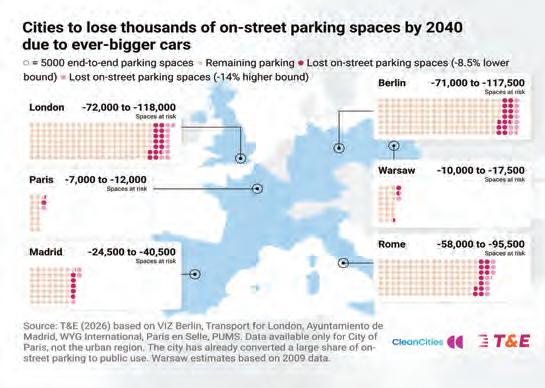
roads concludes that without intervention longer and wider cars will drastically reduce the number of vehicles that can be parked end to end along streets.
Due to growing car sizes, London is projected to lose between 72,000 and 118,000 onstreet parking spaces by 2040, according to the analysis.
Berlin faces similar losses of 71,000 to 117,000 spaces, while Rome could see a reduction of 58,000 to 95,000 spaces.
Significant capacity reductions are also expected in Madrid (up
to 41,000 spaces), Warsaw (up to 17,000 spaces), and Paris (up to 12,000 spaces).
The average length of newly sold cars is increasing by 1.2 cm every year, according to the report which analysed vehicle growth since the year 2000. Their total height is rising by 0.5 cm annually, the study also finds. Earlier studies showed that new cars also grow 0.5 cm wider each year, on average, while their bonnet heights increase by 0.5 cm annually. T&E said that despite family sizes and car occu-
Council pays more than £470k in CAZ charges, reports Deniz Huseyin
Birmingham City Council has had to pay itself more than £470,000 in daily charges and fines relating to its Clean Air Zone (CAZ) scheme. Most of the council vehicles facing daily charges were from the waste department, even though a bin strike in the city has been ongoing since January 2025.
The authority said it had been replacing non-compliant vehicles over the past 12 months and wanted “eco driving” across its fleet, but admitted one in eight vehicles still did not comply with the zone’s emissions standards.
The data, obtained by the BBC using the Environmental Information Regulations, did not specify if the council paid higher fines for late payment over all of the five years since the scheme started in 2021. The most recent fines in the past financial year covered by council purchase cards were all paid by City Operations.
The daily charge for cars,
vans and taxis is £8 in Birmingham, and £50 for HGVs and coaches unless a valid exemption is in place. Anyone who fails to pay within six days after entering the zone faces a £120 fine, which is reduced to £60 if paid within 14 days.
Since the CAZ scheme began in the city centre, noncompliant vehicles in the council’s fleet have generated 3,262 daily charges and fines at a total cost of £472,253.
The number of daily charges and fines the council has paid to itself represented around 20 times the number paid by any other UK council running a CAZ, Low Emission Zone (LEZ) or Ultra Low Emission Zone (ULEZ) that was able to disclose any similar payments for breaking their own emissions standards, reports the BBC.
A Birmingham City Council spokesperson said: “Historically, Birmingham City Council has owned and operated a large fleet of over 1,100 vehicles, many of which were not compliant with the Clean Air Zone, and therefore subject to paying the daily fee. However,
pancy declining, carmakers have moved away from producing small cars to extract higher profits from larger vehicles.
Lucien Mathieu, cars director at T&E, said: “Car manufacturers have pursued a strategy of larger, more profitable vehicles over smaller models. After 25 years of relentless growth, our roads are increasingly dominated by huge SUVs that pose a physical danger to everyone else. The result is that cities and towns are under pressure to make parking spaces bigger and then sacrifice public space to replace the lost parking.”
The safety analysis compares low and high-bonnet vehicles with the same level of crash avoidance technology. T&E and Clean Cities say the literature shows that, all else being equal, a low-bonnet car poses a lower risk to other road users than a high-bonnet SUV.
Despite the EU’s ‘Vision Zero’ goal to reach zero fatalities in road transport by 2050, the study warns that the unchecked expansion of car size will have negative consequences for road safety.
over the last 12 months an extensive replacement programme has been put in place so that the entire waste, street cleansing and grounds fleet is now fully compliant with the Clean Air Zone.”
Further changes have also been made to other vehicles which have either been decommissioned or replaced with electric alternatives, said the spokesperson. “Of all the fleet vehicles that the city council own, 142 vehicles remain non-compliant with the Clean Air Zone but these are already under review and are on track to be removed from the fleet. The council’s policy is that drivers are responsible for paying any fines they incur themselves using their own vehicles for work, unless there is evidence that the penalty resulted from a council-related issue or error.”
Money paid in charges and fines goes towards the CAZ operating costs and covering some government charges, while any surplus has to be spent on transport or environmental scheme.
Transport for London (TfL) has extended its two road user charging contracts with Capita. The contracts have an estimated total value of up to £912m.
The Extension of Road User Charging Business Operations Services (BOps) contract has been extended for an additional £510m.
The Extension of Road User Charging Enforcement Operations Services (EOps) contract gaining Capita an additional £402m.
The extended contracts will see Capita continue to operate London’s Congestion Charge, Low and Ultra Low Emission Zones (LEZ/ULEZ), tolls for the Blackwall and Silvertown tunnels, HGV safety permits, and traffic fines.
The extensions will last for an initial term of five years with a limited optional extension to a maximum of seven years.
The award notices for the extensions state that TfL expects the new contract to be awarded in mid-2029.
TfL also has the right to end the extended contracts early.
BPA’s private parking scheme adjudicator publishes 2025 report
More than 100,000 appeals lodged by motorists were heard by the Parking on Private Land Appeals service (POPLA) in 2025.
POPLA provides motorists with a free, independent review of parking charge notices issued by private operators that are members of the British Parking Association.
POPLA’s 2025 annual report shows it heard 107,202 appeals. There was a significant increase in the number of appeals that resulted in a cancelled parking charge – with more than half of the motorists who raised an appeal getting the results they wanted.
• 39,522 appeals were uncontested by the operator and therefore cancelled
• 14,578 contested appeals were successful
• 53,102 were refused.
POPLA also asked operators to cancel 343 PCNs as a gesture of

errors, airport drop-offs, liability disputes, as well as a growing number of cases where Artificial Intelligence (AI) is being used by motorists to draft appeals.
The report reveals the most common issues behind appeals were unclear or confusing parking signage, payment problems and inconsistencies in how parking operators apply their rules.

goodwill due to mitigating circumstances. These requests worked 201 times.
The increase in cancelled charges was partly due to the number of appeals that operators decided not to contest. Where this happens, the motorist automatically wins and the parking charge is cancelled.
Feedback from operators indicates that the increased rate of withdrawal was a result of appeals
The International Parking Community (IPC) has published its first ever annual report. The Manchester-based trade association is a DVLA Accredited Trade Association.
This means it meets the standards required by the Driver and Vehicle Licensing Agency to authorise its Approved Operator Scheme (AOS) members to access vehicle keeper data for the purpose of managing parking charges issued on private land.
The IPC says: “In the UK, there are over 68.5 million parking events each day. Data from 2022 shows that over 99.77% of these were compliant and without issue, while data from 2025 shows a slight decrease to 99.5% compliance. While this may seem a minor decrease, the impact is significant when considering the scale of parking events occurring daily across the UK.”
The IPC believes this highlights the decreasing effectiveness of a deterrent and the need to assess the deterrent’s cap in specific scenarios and locations.
As part of the IPC’s submission to the government’s consultation in 2025, it suggested that the level of the parking charge may need to be reviewed at locations where recorded noncompliance is high, such as large events, airports and city centres.
The report states: “The IPC remains optimistic that 2026 will mark meaningful progress toward the implementation of a government-backed code, an outcome the IPC fully supports and welcomes. Our organisation looks forward to continuing its work with government as the transition develops.”
The IPC says it will continue its work to strengthen insight, transparency and data quality across the sector. The report states: “The creation of a data sharing capability for all operators, in line with Clause 17 of the sector code, establishes a strong foundation for evidence-based oversight. This data will be shared with government, providing valuable insight into trends, highlighting opportunities for
that they identified as falling within the bounds of a new Appeals Charter.
Most appeals related to motorists not understanding the parking rules, being prevented from keeping to the parking rules due to mitigating circumstances, or believing the operator followed an incorrect procedure in issuing the parking charge.
POPLA saw significant activity with appeals raised for keying

improvement, and enabling decisions to be made on evidence rather than assumptions.”
The IPC says it will work to improve motorists’ understanding of parking. It has created a website –www.247advice.co.uk –developed in partnership with Barbour Logic, to provide guidance for motorists navigating parking charges and to help counter misinformation.
The IPC will also seek to raise standards via enhanced guidance for members, expanded online resources, as well as continued development work to support consistent improvement and sector-wide accountability.
By identifying these recurring issues, POPLA works with operators and the British Parking Association to help improve standards across the private parking sector and reduce the likelihood of similar problems affecting motorists in the future.
Ed Dodman, interim chief executive for Trust Alliance Group, which delivers the POPLA service, said: “Parking charges can be an emotive issue for drivers, so it’s vital that they have access to an independent review when they believe a charge is incorrect. The high number of appeals shows the important role that independent redress plays in giving drivers confidence that their case will be considered fairly.”
The RAC believes the name of parking charge notices issued by private car park operators should be changed.
The RAC says its own research suggests half of drivers do not realise there are major differences between private ‘parking charge notices’ and penalty charge notices issued by local authorities because they are named so similarly and look virtually identical when stuck to a vehicle’s windscreen.
Nine-in-10 (91%) of drivers surveyed by the RAC felt the term ‘parking charge notice’ is confusing as it shares the same ‘PCN’ initials.
RAC head of policy Simon Williams said: “Drivers are clearly confused by the PCN acronym, which is concerning as they are very different in terms of consequences. A PCN sent by the council is a fine and must be paid, whereas a parking charge notice, issued by a private car park operator, is an invoice for alleged breach of contract. The fact both can be put on drivers’ windscreens in identical bright yellow colour doesn’t help, either.”
Lorry Park Improvement Scheme aims to help improve site security
Lorry parking operators are being urged to apply for funding to help improve facilities after the government extended a multimillion-pound fund.
The Lorry Park Improvement Scheme is designed help improve site security and the number of spaces available for the sector.
Launched in 2023, the Lorry Park Improvement Scheme seeks to increase capacity, improve security and improve welfare facilities such as toilets, showers and gyms at lorry parking areas.
The new grants are set to cover up to 50% of capital costs.
Applications are open to all lorry parking operators, including those who have already benefitted from the scheme to fund further improvements. Businesses are invited to apply through the National Highways website.
Since the Lorry Park Improvement Scheme was estab-

lished, National Highways has contributed over £15m through its Designated Funds Programme, which has been matched funded by the industry.
Combined with support from the Department for Transport, nearly £69m has been unlocked to improve journeys, security and the wellbeing of HGV drivers.
Elliot Shaw, chief customer and strategy officer at National Highways said: “HGV drivers are a vital cog in our country’s econ-
omy, getting the goods and services we need around the country, often working round-the-clock to meet tight delivery times.
“By improving features like security and opening up more parking spaces, we’re helping to ensure drivers feel well rested and safe on our roads. We’ve already seen the benefits this fund can provide, and we’re delighted to be able to extend applications to help fund upgrading more facilities.”
A truck stop in Staffordshire has maintained its Safer Parking Freight Award status.
TheStop at The Hollies is located just off Junction 12 of the M6. The site, which lays claim to being the UK’s oldest truck stop, was one of the very first lorry parking facilities to achieve the police-recognised accreditation, formerly known as the Park Mark Freight Award.
Safer Parking Freight is an assessment created and run by Police Crime Prevention Initiatives.
It is specifically for lorry parks and truck stops, having been developed in response to the rise in cargo theft in recent years and the Department for Transport’s policies for improving roadside facilities for drivers.








Delivering safer, smarter and more effective transport outcomes requires a joined-up approach — combining technology, data, operational delivery and expertise.
Real-time visibility, intelligence-led targeting and smarter decisionmaking through advanced traffic technology and integrated data, including capabilities such as VidAlert.
Consistent, fair and proportionate services that support compliance, delivered by experienced operational teams such as NSL.
Designing, implementing and optimising schemes — from 20mph zones and LTNs to wider network management approaches.
As transport networks become more complex, the role of enforcement is changing – and it needs to. Local authorities are being asked to do more than ever: manage congestion, improve air quality, support accessibility and proactively keep towns and cities moving safely and seamlessly – all while operating within tighter constraints.
Traditional enforcement models – often reactive, resource-heavy and focussed on penalty issuance – are no longer enough. If enforcement is to play a meaningful role in modern transport strategies, it must evolve and, in many cases, that shift is already underway. Enforcement is no longer just an operational function. It is a strategic lever within modern transport systems, shaping how networks are used and how policy is delivered in practice. This shift does not move away from compliance. It changes how it is achieved. Increasingly, enforcement must sit alongside traditional engineering, education, safety, communication and community engagement.
Measures need to be understood, justifiable, proportionate and seen as fair – not arbitrary or revenue-driven. Trust and public buy-in are critical, supporting a compliancefirst approach, with enforcement applied only where needed, not as the starting point. That shift is underpinned by better use of professional insight and data-led evidence.
An intelligent, data-led approach moves authorities beyond reacting to issues. By analysing historic network performance data with professional insight, it becomes possible to anticipate pressure points on a network, identify where non-compliance has the greatest impact, and target intervention where it delivers the most value. This is not just about efficiency, it is about effectiveness. With a clearer understanding of how networks are used – where congestion builds, how people interact with road layouts and how behaviour changes – authorities are better placed to make decisions that support safety, accessibility and movement.
This matters even more as authorities roll out schemes such as 20mph zones and Low Traffic Neighbourhoods (LTNs). These depend on behaviour change. Clear communication, visible purpose and local engagement are essential to building understanding and support, with enforcement playing a role where necessary. In this context, enforcement forms part of a wider system shaping how the highway network is used. Data is what connects that system. It gives us a clear strategic overview that enables a more targeted, proportionate interventions at a granular level in real-world conditions –helping target where action is needed, when it should apply, and how different groups are affected. It also allows schemes to evolve as behaviours and pressures change.
At the same time, advances in traffic technology are accelerating this shift.

By moving from reactive positions to data-led action, smarter enforcement is key to future transport strategies, writes Marston Holdings’ Luke Normington
An intelligent, data-led approach moves authorities beyond reacting to issues Luke Normington
Connected vehicles data, mobile floating data, intelligent transport systems (ITS), strategic transport models, digital twins and advanced fleet telematics all allow for real-time monitoring and automated data capture to provide a richer view of network performance.
These are capabilities that support more informed decision-making when applied in coordination within the VidAlert ecosystem –which spans enforcement, data and operational delivery. But no single capability delivers this alone. Enforcement, data, technology and operational delivery are often treated separately, yet their impact is far greater when brought together. Real value comes from integration of enforcement data, its technology and operational delivery with the wider ITS industries, enabling local authorities a real-time analytical, proactive network management tool.
Integrating these elements creates a clearer picture of how networks function in practice –linking activity on the ground with wider performance, behaviour and outcomes. This, in turn, enables authorities to move beyond reactive intervention and towards more strategic, outcome-led decision-making. The real opportunity, however, lies in how that intelligence is applied.
Authorities are seeing the strongest results when they are embedding evidence into
decision-making and are prioritising activity based on impact, aligning enforcement with wider transport and environmental goals, adapting as new information becomes available. There is also a clear behavioural dimension. Enforcement supports compliance, but it also shapes how people use and think about the network. A more informed approach encourages adherence through clarity, consistency and fairness, rather than relying solely on deterrence.
In practice, this means targeted messaging, clearer communication and local outreach to explain why measures are in place – because when communities understand the purpose, they are far more likely to support and comply. This transition is not without challenges. Data quality, integration and governance remain critical, alongside the need to maintain transparency and public trust. Approaches must be clearly communicated, proportionate and demonstrably fair.
The direction of travel is clear. Enforcement is no longer a back-office function. It is a strategic part of a wider transport ecosystem that is supporting policy, shaping behaviour and helping to deliver more effective, sustainable and resilient networks. Ultimately, smarter enforcement is not about issuing more penalties, it is about making more informed justifiable decisions.
Connecting the ever-increasing number of data streams now available to them allows local authorities to make informed decisions to where, when and how to intervene, enabling them to move from reactive models to proactive, outcome-focussed approaches that support compliance and the long-term ambitions of the places they serve.
Luke Normington is managing director, traffic technology, Marston Holdings marstonholdings.co.uk
Pavement parking can turn pavements into obstacle courses
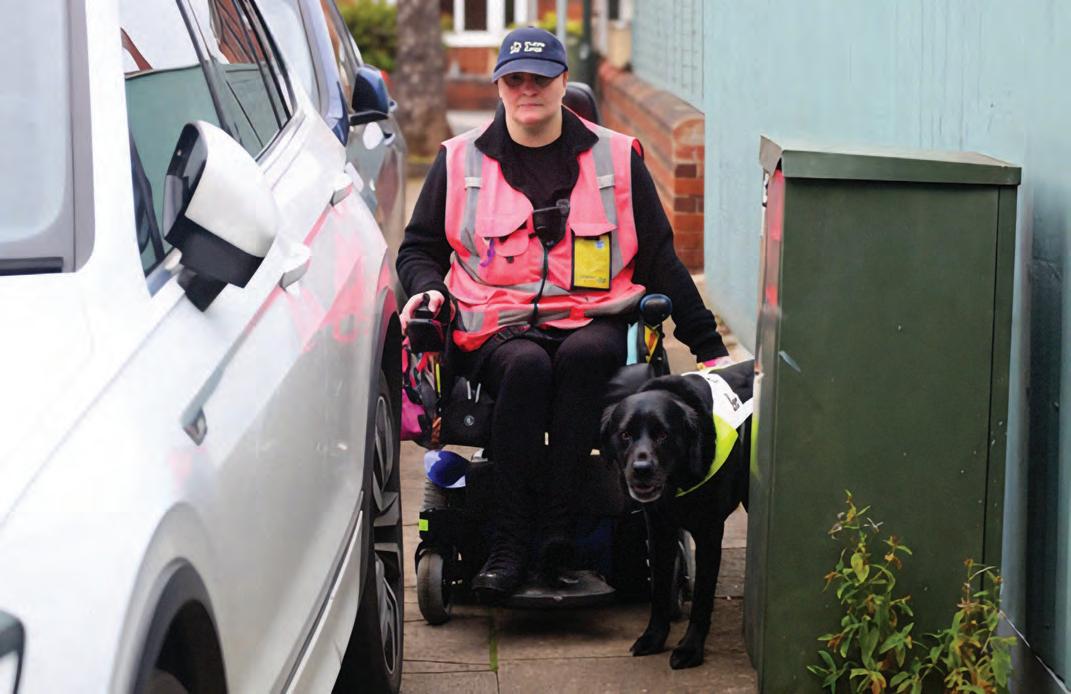
With government moving toward granting local authorities the power to enforce pavement parking restrictions, we need to explore what the change could mean for road safety, parking policy and how councils approach street space in the future.
The Department for Transport has confirmed that it intends to move forward with granting local authorities in England the powers to enforce pavement parking restrictions outside London. While the detail and legislative pathway are still developing, the direction of travel is now clear. Pavement parking enforcement is likely to become a responsibility for councils rather than the police. For many authorities, this represents a significant shift. Pavement parking has long been recognised as a problem in towns and cities across the country, but until now enforcement outside London has been extremely limited. The proposed change creates both an opportunity and a challenge for local authorities who will need to consider how they respond strategically.
The debate around pavement parking is often framed as a parking issue, but in practice it sits within several policy areas including road safety, accessibility, urban design and active travel.
When vehicles mount the footway, pedestrians are frequently forced to step into the carriageway to continue their journey. This creates particular difficulties for wheelchair users, visually impaired pedestrians, parents with pushchairs and older residents. In many cases, the problem is not just inconvenience but a safety risk.
There is also an increasing alignment between pavement parking reform and wider transport policy objectives. Authorities
across the UK are introducing 20mph environments, School Streets, Liveable Neighbourhoods and active travel infrastructure. Pavement parking can undermine many of these initiatives by obstructing pedestrian routes and reducing the usability of footways. As a result, the issue is now being viewed less as a minor parking inconvenience and more as a barrier to safe and inclusive streets.
Why enforcement alone will not solve the problem
One of the key lessons emerging from areas that already enforce pavement parking restrictions is that the issue cannot simply be addressed through civil enforcement alone.
In many locations, pavement parking has developed over decades because streets were never designed for modern vehicle sizes. Car ownership levels have increased significantly, while vehicle dimensions have grown substantially.
The rise of SUVs and larger family vehicles means that the standard 2.4 metre parking bay width used in many streets is often no longer sufficient when mirrors, door opening and pedestrian clearance are considered.
This creates a difficult dilemma for local authorities. Strict enforcement could reduce available parking capacity in residential streets where space is already constrained. Conversely, allowing vehicles to continue parking partially on the footway may maintain parking supply but at the cost of pedestrian safety and accessibility. For this reason, the introduction of enforcement powers is likely to require a broader policy response that considers:
• Street design and available carriageway width
• Existing parking provision and demand
• The potential displacement of vehicles
• Local road safety risks and accessibility requirements.
Treating pavement parking as purely an enforcement issue risks creating unintended consequences unless it is considered within a wider parking and transport strategy.
The strategic choices authorities may need to make
If the proposed changes progress as expected, authorities will effectively be presented with several possible policy approaches. Some may consider a blanket prohibition model, similar to the London approach, where pavement parking is banned unless explicitly permitted. Others may adopt a more targeted approach, identifying specific corridors where footway parking remains necessary while prohibiting it elsewhere.
A third option may involve prioritising interventions around locations where the safety and accessibility impact is greatest, such as near schools, town centres or public transport hubs.
Each approach carries different implications for Traffic Regulation Orders (TROs), signage requirements, enforcement resourcing and public communication. Crucially, the political and community sensitivity around parking means that any changes will need to be carefully managed and supported by clear evidence.
For parking and highways teams, the introduction of pavement parking enforcement powers could represent one of the most significant policy shifts in recent years.
Authorities will need to consider a number of questions before implementation, including:
• How widespread pavement parking currently is across their network
• Which streets present the highest safety risk
• Whether existing parking provision can absorb displacement
• How enforcement would be resourced and prioritised.
This suggests that pavement parking reform is unlikely to be a single regulatory change. Instead, it will require a structured implementation programme involving policy development, technical assessment, stakeholder engagement and operational planning.
A broader conversation about street space
Ultimately, the pavement parking debate reflects a broader question about how street space should be allocated.
Over time, the growth in vehicle ownership has placed increasing pressure on residential streets. At the same time, policy priorities have shifted toward safer streets, improved accessibility and greater support for walking and cycling.
Managing pavement parking sits at the heart of this tension. Authorities will need to balance the legitimate need for parking with the equally important need to protect pedestrian space.
Done well, the reform could support safer streets, improved accessibility and more attractive environments for walking and cycling. However, achieving this will require careful planning rather than simply introducing enforcement powers.
Adam Bunce is the managing director of Ethos www.ethosconsultants.co.uk
Given the scale of change that may be approaching, it is important for authorities to begin thinking about the issue now.
Ethos hosted a Landor LINKS webinar exploring the relationship between pavement parking, road safety and parking strategy. The session examined how authorities can approach pavement parking reform in a structured and evidence-led way, considering not only enforcement but also street design, accessibility and wider transport policy.
The themes explored in the webinar have helped shape a major national conference that will take place in Birmingham on 18 November
Landor LINKS and Ethos hope the conference will help local authorities understand the choices available to them and how pavement parking policy can be implemented in a way that supports safer and more inclusive streets.
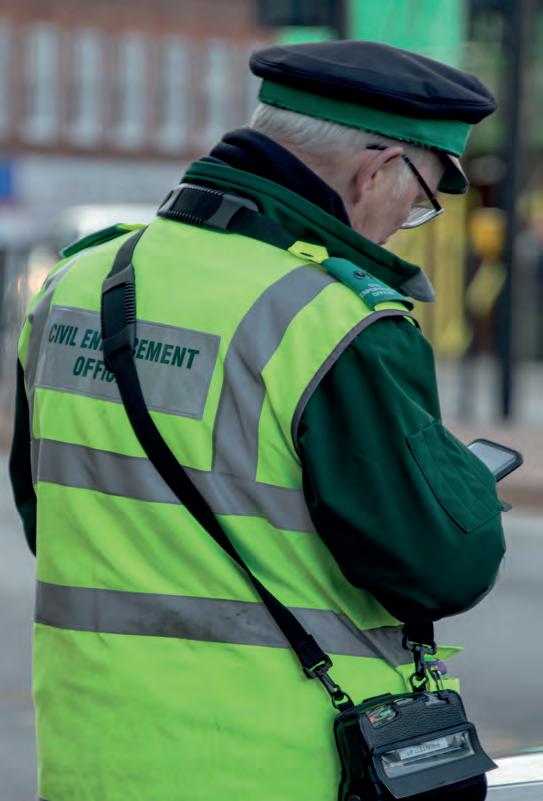
Legislation to enable local leaders to prohibit pavement parking in England has been included in the English Devolution and Community Empowerment Bill. The amendment included in the bill will enable the Secretary of State for Transport to make regulations giving each English local transport authority the power to impose a prohibition on the parking of motor vehicles on the footways and verges. The Bill received Royal Ascent on 29 April.
Under the new English Devolution and Community Empowerment Act, local transport authorities will be given new powers to enforce against dangerous pavement parking including through fixed penalty notices. There will be new licencing powers for rental e-bikes which will allow local authorities to set specific requirements on parking, safety, and accessibility standards.
The move to give English local authorities pavement parking powers has been welcomed by Living Streets, the UK charity for everyday walking. The charity Living Streets, which organises an annual National Walking Month, is celebrating the long overdue action to make streets more accessible. Catherine Woodhead, chief executive of Living Streets, said: “For too long, our streets have been no-go zones for people with wheelchairs, guide dogs and pushchairs. Blocked pavements force people off the safety of the pavement and into oncoming traffic. Our latest research for National Walking Month found that it stops nearly one in ten of us from walking more. This legislation will give people the freedom to enjoy their local streets and reap the many benefits of walking and wheeling. It is vital that the government provides clear guidance to encourage local authorities to use these new powers to prevent a postcode lottery across the nation. Wherever people live, work or visit, they deserve safe and accessible streets.”
Dr Amit Patel is a disability rights campaigner and Living Streets’ trustee. He comments: “This is a step forward from the UK Government to address pavement parking. Local authorities must make use of these new powers. As a blind person, the frequent menace of pavement parked cars regularly affects the streets I walk on and streets I don’t. For me the issue is black and white – the pavement is for people.”
Living Streets shares responses from supporters about the new freedoms this legislation could bring them:
• Johnny, Huddersfield: “I will be able to use my walker at last when visiting my daughter. Before I had to get the bus, as I suffer with extreme arthritis; it’s not helped my daily walking. It’s so scary going on the road to get past these vehicles.”
• Teresa, East Anglia: “I use an electric wheelchair/scooter and when cars park on the pavement, I can’t get through, so then I’m stuck.”
• Simon, Suffolk: “I have been forced into busy roads on countless occasions with my guide dog. This is clearly an unacceptable position to be in, so I welcome that provisions are being put in law which allows visually impaired people, parents with pushchairs and wheelchair users to use our pavements as designed, and that is to be kept safe at the side of the road and not in it. Of course, this doesn’t only apply to cars but all vehicles, keep our pavements clear, keep us all safe.”
Parking payment provider promotes commercial director
Mobile parking payments provider PayByPhone has promoted Rebecca Maisey to UK managing director from 1 July 2026.
Maisey, who has been with PayByPhone for 15 years, steps into the role after serving as the company’s UK commercial director. In her new position, she assumes full strategic and operational leadership of the UK business.
The appointment marks the return of the UK managing director role to the company’s organisational structure to champion localized expansion and technological innovation.
She will continue to report directly to PayByPhone’s president and chief executive officer, Jonny Combe.
“Rebecca is an exceptional leader whose deep industry expertise and long-standing ded-


ication to our clients make her the perfect person to lead our UK operations,” said Combe.
“Having risen through our ranks for 15 years, she embodies the culture and ambition of PayByPhone. I am incredibly confident that under her guidance, the UK business will continue to thrive, innovate and deliver world-class digital payment experiences for our users.”


Nina van der Kroef has been made UK head of PayByPhone Business, which serves the fleet market.
Van der Kroef moves from being a corporate sales executive within PayByPhone’s UK commercial team, where she managed regional business-to-business sales initiatives, cultivating high-value client relationships and expanding the PayByPhone’s footprint across the competitive UK parking ecosystem.
As head of PayByPhone Business Van der Kroef will be responsible for leading the strategic expansion of the business-to-business arm of PayByPhone’s operations, which aims to provide simplified parking administration for companies.
Van der Kroef said: “Managing mobile workforces and corporate
fleets comes with significant administrative and financial friction. I am eager to lead the PayByPhone Business team and to help businesses leverage PayByPhone Business to gain clear visibility over their total parking activity. My focus will be on accelerating our market footprint, building strong partner relationships, and ensuring PayByPhone Business continues to deliver meaningful cost-efficiency and operational control for understress fleet managers across the country.”
Van der Kroef reports directly to Rebecca Maisey, PayByPhone’s UK managing director, and will join the UK commercial leadership team.
Maisey said: “Nina has the passion and innovative mindset to move PayByPhone Business forward in the UK. Her 16 years’ experience in B2B parking means she has a proven ability to unlock value for clients. As we continue to focus on operational excellence, her localised commercial expertise with her five-year tenure at PayByPhone and her deep understanding of our technology will be instrumental in expanding our footprint and supporting fleet managers across the country.”
Under Maisey’s leadership, PayByPhone in the UK will now focus on expanding its digital payment ecosystem, which includes parking, EV charging, and fuel finder services, while also helping local authorities and private operators navigate evolving infrastructure frameworks.
Maisey said: “I am absolutely thrilled to take on the role of
UK managing director at such a pivotal time for our business and the wider parking sector. As the UK parking landscape continues to evolve, my priorities are clear: accelerating PayByPhone’s growth under Lightyear Capital’s stewardship, deepening our client partnerships, and ensuring PayByPhone remains the app of choice for both motorists and parking operators.
“Having been part of PayByPhone’s journey since its early days in the UK, I have seen first-hand how our technology simplifies journeys for drivers and been proud to play my part in that growth.”
Maisey’s journey with PayByPhone began in November 2011 when she joined as a client account executive. Over the next decade and a half, she has played an instrumental role in the company’s growth, rising through positions including client account manager, senior client manager, head of client management and senior client director.
PayByPhone has appointed Terri Butler-Lee as global director of customer experience and support.
Based in the UK, she is responsible for leading PayByPhone’s global customer service, care and support operations.
Her career features over two decades of driving operational transformation, fostering inclusive corporate cultures and building scalable, digitalfirst support frameworks.
Butler-Lee joins PayByPhone following a decade-long tenure at UK-headquartered global fashion e-commerce retailer ASOS, where she held a variety of senior leadership roles focussed on digital customer care innovation,


building brand loyalty and scaling cross-functional teams.
She said: “I am thrilled to be joining PayByPhone at such an exciting stage of its growth journey. It is a privilege to lead the customer experience strategy for a company that actively simplifies everyday journeys for millions of people worldwide. I look forward to supporting a culture of operational excellence and continuing to enhance the digital customer experience as we innovate together.”
Butler-Lee reports directly to Anthony Cashel, PayByPhone’s chief operating officer.
Cashel said: “Terri has the passion and innovative mindset to drive our global service operations forward, and we are delighted to welcome her to the team. She brings a wealth of digital transformation expertise to PayByPhone and has a proven track record of creating highperforming team cultures. As we continue to focus on operational excellence, this is an appointment our app users, city clients, and private parking operators will certainly see the benefit of.”
Parking operator adds Aberdeen to ongoing airport contract
Parking operator APCOA has secured a new three-year contract with AGS Airports, extending a long-standing partnership to include all three of the group’s airports.
AGS Airports was established in 2014 to invest in Aberdeen International, Glasgow and Southampton airports and is the second largest airport group in the UK.
Having managed parking operations at Southampton and Aberdeen for over a decade, APCOA will now extend its services to Glasgow. The contract covers a suite of operations, including valet parking, staff parking, public parking and bussing services across all three locations.
Operations at Glasgow Airport are now fully underway, alongside APCOA’s continued work at Southampton and Aberdeen.
Ruth Cousin, surface access and ancillaries director at AGS

Airports, said: “We are pleased to be extending our partnership with APCOA across all three AGS airports. Its proven track record at both Aberdeen and Southampton, combined with their operational expertise and focus on innovation, makes it a strong partner as we continue to enhance the passenger experience and drive operational efficiency across our airports.
“Bringing Glasgow into this
partnership marks an important step in delivering a more consistent, high-quality parking and ground transport offering for our customers.”
Kim Challis, regional managing director at APCOA UK, said: “We are delighted to continue and extend our successful partnership with AGS Airports, delivering the highest operational standards for both staff and customers.”


Parking and Secure Documents (PSD) has strengthened its UK sales operation with the appointment of Dave Hope, who joins the business as part of its continued nationwide expansion.
With more than a decade of experience in the parking industry, Hope brings specialist knowledge across a range of products. He will support PSD’s strategy of broadening its producting offering and enhanced customer support.
Mike Simpson, sales director, said: “Dave brings a wealth of experience to the team. His expertise will allow us to expand the range of specialist products we offer, while supporting continued growth in our core areas.”

director at Intelliscape. “Khalid brings the commercial mindset and relationship focus needed to expand our reach, unlock new opportunities, and deepen engagement across our portfolio.”

Intelliscape, a provider of intelligent traffic enforcement and transport technology solutions, has appointed Khalid Khan as strategic partnerships manager.
Khan joins Intelliscape after holding business development roles at Marston Holdings, Yunex Traffic and Metric Group.
In a newly created role, Khan will be responsible for building and strengthening strategic relationships across the public and private sector, with a focus on enabling outcome-driven solutions for customers.
“Strong partnerships are at the heart of delivering longterm value to our customers,” said Alastair Cobb, managing
“I’m excited to join Intelliscape at such an important stage in its growth,” said Khalid Khan. “There is a clear opportunity to strengthen how we work with customers and partners to deliver smarter, more connected solutions. I look forward to building partnerships that drive measurable outcomes and long-term success.”
Formerly SEA’s Intelligent transport systems division, Intelliscape is now owned by Modaxo and is part of a wider Modaxo portfolio that has an increasing focus on leveraging partnerships, digital innovation, and AI-enabled solutions to enhance transport systems and public services.
Modaxo owns traffic and enforcement technology providers such as Conduent, Imperial and Taranto.


Property investment and car parking operator Town Centre Securities PLC (TCS) has appointed Matthew Gibson as senior facilities manager. Gibson joins the business with senior-level experience in facilities management, operations, and security across complex environments.
In his new role, he will lead a multi-disciplinary team spanning ‘hard FM’, ‘soft FM’ and 24/7 security operations. Gibson said: “I’m pleased to be joining TCS at an exciting time for the business. I look forward to working with the team to build on the strong operational foundations in place, driving high
standards, supporting our occupiers and ensuring safe, efficient and customer-focussed environments across the portfolio.”
Katrina Townsend, operations director at TCS said: “Matthew brings exceptional experience in managing complex, high-performing environments and leading integrated facilities teams. His expertise in safety, compliance and operational delivery will be instrumental as we continue to enhance standards across our portfolio.”
TCS is a Leeds-based property investment and car parking operator working across England and Scotland.
Payment scheme appoints former Marston Holdings man
David Sinclair has been appointed to lead the National Parking Platform (NPP), a notfor-profit organisation that enables multiple parking service providers to connect to multiple locations nationwide. Instead of being tied to just one parking app, drivers in participating areas can use the NPP to choose from a range of approved providers and use the one they already know and trust.
Sinclair has more than 20 years of experience in parking, and has a background in parking technology and innovation. He joins the NPP after serving as managing director of traffic technology at Marston Holdings. Prior to this Sinclair held operations and account director roles at NSL Services and management roles at National Car Parks.
A long-time supporter of the NPP’s vision, he strongly believes in the platform’s potential to transform the driver experience while supporting a stronger and more open parking market.

Sinclair’s appointment comes as the NPP platform continues to grow, welcoming new local authorities and service providers, and building momentum across the UK. Sinclair brings a strategic and commercial approach to the role, with a focus on supporting the continued expansion and long-term success of the platform.
Speaking about his appointment, Sinclair said: “I’ve followed the NPP journey closely and truly believe it has huge potential to transform the parking expe-

The National Parking Platform (NPP) is a not-for-profit business that connects multiple parking service providers to thousands of locations nationwide. Instead of requiring drivers to download multiple apps, the NPP integrates those apps so that drivers can use the payment channel they trust at any location.
Created by the Department for Transport and now run independently, the NPP is governed by local authorities, service providers, and the British Parking Association.
Local authorities
• Bassetlaw District Council
• Birmingham City Council
• Bolton Council
• Buckinghamshire Council
• Cheshire West and Chester Council
• Coventry City Council
• East Hertfordshire District Council
• East Suffolk Council
• Lincolnshire County Council
• Liverpool City Council
• London Borough of Sutton
• London Borough of Tower Hamlets
• Manchester City Council
• Peterborough City Council
• North Warwickshire Borough Council
• Oxfordshire County Council
• Stevenage Borough Council
• Stratford on Avon District Council
• Walsall Council
• Warwick District Council
• Welwyn Hatfield Borough Council
Payment providers
• APCOA Parking
• AppyParking
• Caura
• JustPark
• PayByPhone
• RingGo www.npp.org.uk
rience for drivers while creating a stronger and more connected market for the industry. I’m incredibly excited to be joining at such an important stage of growth and I can’t wait to reconnect with colleagues old and new to discuss how the NPP can deliver for them.”
Sinclair became executive director on 1 June. He has taken over from interim chief executive Sarah Randall, who had overseen the NPP since its launch as a not-for-profit company in May 2025. Randall said: “As my sec-
ondment at the National Parking Platform comes to an end it’s given me pause for thought about how parking and mobility systems can better serve both local authorities and the public. It’s clear there is a genuine appetite between the private sector and public sector for integration and better data.
“It’s something that Department for Transport is already spearheading as part of its data action plan and is borne out in my many engagements with parking apps and local authority decision-makers.
“In many ways the NPP feels like it has the potential to act as a conduit for a lot more data sharing in future: so that local authorities not only benefit from the services that the likes of parking apps can provide citizens, but by harnessing more and better data, they can design transport systems that better serve local people.”
The NPP said: “We would like to take this opportunity to thank Sarah for her hard work, leadership and dedication to the National Parking Platform during a hugely important period of its development.”
Birmingham City Council will be joining National Parking platform (NPP), an initiative that aims to simplify the process of paying for parking via apps.
Craig Evans, head of parking services at Birmingham City Council, said: “Birmingham City Council is pleased to be joining the National Parking Platform, supporting an improved experience for residents and visitors by making parking payments simpler, more flexible and
easier to access across the city.”
Making the announcement at Parkex, Sarah Randall, interim chief executive of the National Parking Platform, said: “The NPP is all about giving drivers greater choice and making parking simpler, while supporting local authorities with more flexible and future-ready infrastructure. We are excited to work alongside Birmingham City Council as they become part of the growing national network.”






Fixed Term (Full Time) Council Oces, Letchworth (Hybrid working) £49,256 - £57,142 dependent on experience
As our Parking Manager, you will lead and develop the Council’s parking service, ensuring it operates e昀ectively and delivers consistently high standards for residents, businesses and visitors to the District.
As well as overseeing day-to-day operations, you will also play a key strategic role. You will be responsible for developing and implementing parking policy, setting tari昀s, managing Trac Regulation Orders, and delivering parking schemes and initiatives that support the Council’s wider transport priorities and corporate objectives. This will involve close collaboration with the Transport, Parking & Projects Service Manager, the Transport Policy & Projects Team Leader, Hertfordshire County Council, other local authorities, contractors, councillors, and key stakeholders.
We are looking for someone with experience of successfully managing a full parking service and leading multi-functional teams, including supporting, motivating and developing sta昀.
You will have strong knowledge of the parking sector and relevant legislation, along with experience in project management, contract delivery and performance monitoring. You will also have practical experience of parking enforcement and administration, including ensuring legal compliance, overseeing parking challenges and appeals, and responding professionally to enquiries and issues raised by the public.
For an informal chat about the post, you can contact Louise Symes, Transport, Parking and Projects Service Manager on 01462 474359
Applications will close at midnight on 5 August 2026.
Face to face interviews will be held on 21 and 25 August 2026.
We are committed to promoting equality, diversity, and inclusion in our recruitment practices and in our employment policies.
For full details of the vacancy and to download the job pro昀le document scan the QR code.





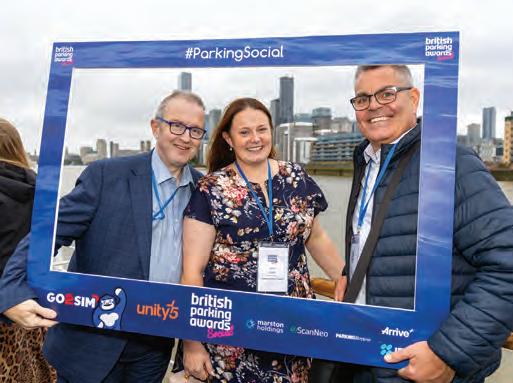

Parking professionals boated down the Thames to launch the British Parking Awards 2026
The launch of the British Parking Awards 2026 was a spectacular event, full of music, dancing, entertainment and great food. Over 200 parking professionals gathered aboard the good ship Golden Jubilee. As the boat cruised along the Thames on 11 June, the London skyline provided a dramatic backdrop full of iconic sights both ancient and modern.
There were the storied seats of power: the Houses of Parliament and Tower of London, as well as reminders of Britain’s relationship with the sea in the form of HMS Belfast, Golden Hinde, Cutty Sark and the Old Royal Navy College at Greenwich. But London keeps growing, with the skyscraping towers growing out of the City and Docklands testament to the ongoing power of the commerce that grew from the city’s central role in global trade.
The event’s guests were drawn from across the usually landlocked world of parking. Managers mingled with planners, technologists, consultants adjudicators and civil enforcement agents – and even this year’s celebrity host Angela Barnes (albeit in cardboard cutout form). The ‘parking crew’ learned about this year’s competition from the Parking Review team, headline sponsor Go2Sim, past winners and jury members.
Angela Barnes will line-up with regular ‘Voice of Parking’ Roger Tilling to reveal the winners at the Royal Lancaster London on Friday 18 September
The British Parking Awards Social was made possible by the kind support of its sponsors. Landor LINKS would like to thank: Go2Sim, Unity5, Marston Holdings, ScanNeo, Arrive and IPS Group




THEY’VE BEEN FRAMED! Parking professionals were very much in the frame at the British Parking Awards Social, held aboard the Thames
an




The Parking Team of the Year Award recognises the excellent work of both on-street and off-street parking operations. The category is open to teams working in both the public and private sectors.
The Parking Person of the Year award is open to all local authorities and private operators, who can nominate an individual working in parking who has consistently made an outstanding contribution to the sector and represents a ‘model of excellence’.
The Parking Manager of the Year trophy will be presented to a person with a record of effective delivery and who is held in high regard by colleagues, colleagues and peers across the parking sector.
There is a lot of emerging talent in the parking sector. Recipients of the Rising Star Award may be young employees or recent joiners of any age.
The British Parking Awards recognises the importance of partnership working in the parking sector. Partnerships may involve pairings or groups of local authorities, companies, professional bodies, campaign groups and other stakeholders.
The Parking Operator of the Year category recognises car parks that are managed, designed and maintained in a way that makes the start and end of each driver’s journey a pleasant experience.
The Parking Technology Award recognises advances in the systems used to manage parking. The innovation can be a piece of parking hardware, software or a service that makes the management of parking more efficient and customer-friendly.
The Parking in Action Award recognises targeted projects and programmes that seek to improve the parking experience of drivers or tackle antisocial and unauthorised parking behaviours.
Parking can be a challenging profession. The Front Line Award is dedicated to parking personnel who engage with drivers and the general public as a part of their day-to-day activities.
The Back Office Award recognises the excellent work of back office teams working for local authorities, private parking operators, transport consultancies and civil enforcement agencies.
The planners and engineers that make up traffic teams are skilled experts responsible for implementing traffic and parking schemes such as Controlled Parking Zones, Traffic Regulation Orders, School Streets, permit schemes, loading schemes, payment systems and electric vehicle charging.
The British Parking Awards showcases imaginative, engaging and informative approaches to communicating with the public and stakeholder organisations through advertising campaigns, websites, social media and publications.
Parking is an essential service and can be a positive contributor to local communities. The Parking in the Community Award recognises people working within the parking sector who have engaged with and supported their local communities.
Wellbeing initiatives create a positive, supportive and inclusive environment where employees can thrive, and feel valued and fulfilled in their roles. The Wellbeing Award recognises work being done to enhance the physical and mental health experiences of people in the parking sector.
The Best New Car Park Award is a site-specific category that recognises outstanding design and construction techniques that turn car parks into landmark structures that are easy to use.
Car parks are open to the elements and subjected to heavy traffic loads. The Car Park Renovation Award recognises projects and approaches that breathe new life into these important structures.
The British Parking Awards recognise people and organisations making a positive contribution to the world of parking.
The Inspiration Award recognises individuals and organisations that have made a significant contribution to improving parking. Inspiration Award recipients are exemplars of excellent practice that have inspired colleagues, clients and the wider parking community.
The Lifetime Achievement Award will be presented to a parking professional who has made an outstanding contribution to the sector over the course of their career. Parking organisations and professionals are invited to nominate an individual who has consistently made an outstanding contribution to the industry and represents a ‘model of excellence’ across their entire career.
The Special Jury Award is presented to a scheme, project or person that has particularly impressed the British Parking Awards jury, which is a panel of experts drawn from across the parking, automotive, transport and related sectors.

The worlds of parking and electric vehicle charging are connecting. The parking sector is playing a key role in the transition to electric vehicles (EVs), as reflected in Parking Review’s EVolution news section and website.
The EV Charging Provider Award recognises chargepoint operators, car park operators, facility managers and/or destinations that are actively supporting the transition to electric vehicles through providing accessible and well planned EV charging infrastructure.
The EV Charging Technology Award recognises hardware manufacturers and software developers that have developed innovative, transformative and best-in-class EV charging systems.

AHOY THERE! The British Parking Awards Social is one of the highlights of the parking calendar as it gives people working across the public and private sector the chance to share best practice and network in a relaxed and enjoyable way







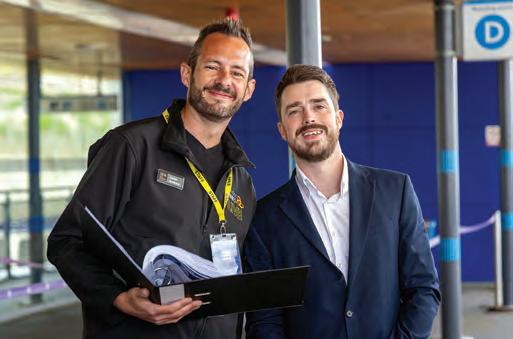
The British Parking Awards 2026 will be presented at the Royal Lancaster London by stand-up comedian and broadcaster Angela Barnes. Since winning Radio 2’s New Comedy Award 2011, she has become a regular on TV and radio. Besides her regular appearances on the BBC’s Mock the Week, Angela has appeared on Live at the Apollo, Have I Got News for You, Richard Osman’s House of Games and Radio 4’s News Quiz. In parallel to her stand-up work she has also made documentaries about the Cold War and co-hosts the We Are History podcast with writer John O’Farrell.



One of the most wellknown and trusted voices on British television, Roger Tilling is now firmly established as the voice of the British Parking Awards.
With over 25 years of television and radio experience, the UK’s television networks have made Roger their first port of call when a ‘Voice of God’ delivery is needed for major television events and primetime shows, from The Royal Variety Performance to The British Soap Awards, and Never Mind The Buzzcocks to Top Gear.



Car parks play a vital role in supporting local economies, unlocking destinations and enabling safe, efficient movement in urban environments. They also need adapting to accommodate electric vehicles, shared cars and active travel options such as cycling. This is why car parks are worth talking about. Car Parks is the UK’s premier conference and exhibition dedicated to the design, construction, operation, maintenance and future of parking structures. The annual event is organised by Landor LINKS and programmed by Parking Review in partnership with the team at Stripe Consulting.
This year there was a focus on the business of providing and maintaining parking facilties. The day discussed the inspection, maintenance and renovation of car parks. It looked at what to do when structures are approaching what appears to be the end of their operational lives. But is demolition the inevitable outcome when a car park is old? A highlight was a special ‘game’ devised by the team at Parking Perspectives which invited an expert panel and delegates to decide whether or not they would refurbish or replace an array of problem car parks.
There was a special presentation by Police CPI on the new look Safer Parking Scheme, and by Disabled Motoring UK on how the accreditation now covers accessible parking.
The conference also looked to the future. Rather than just being places to store vehicles, the next generation of parking facilities will be user-friendly and safe places where you can re-charge electric cars, pick up online purchases, store your stuff, catch a bus, hire bikes, grab a coffee or have a business meeting.
To find out how to be a part of Car Parks 2027 contact Jason Conboy, managing director of Landor LINKS, by email on: jason@landor.co.uk
www.landorlinks.uk/car-parks-2026
Russell Simmons sets out why car parks matter
Car parks are often treated as background infrastructure – unnoticed until something goes wrong. But, in reality, they are active enablers of everyday life. For residents, shoppers, patients, commuters and businesses, a safe, reliable, easy to use car park often determines whether a place is accessible, or avoided.
When car parks function well, the effect is positive: trip times shorten; stress is reduced; footfall increases; town centres remain competitive; and local services stay funded and available to those who need them. But when car parks fail, the impact is immediate: congestion increases; vsitors are frustrated; trade is lost; and residents avoid local areas altogether.
It is thus important to recognise that car parks are economic infrastructure. They underpin: retail, shift work patterns, healthcare access and leisure economies. Car parks generate revenues that support councils and private owners. They are not incidental assets; they are core public utilities.
The message from Car Parks 2026 is simple: practical planning, grounded in evidence, engineering and good design, is what turns car parks from liabilities into high performing, future-proofed assets.
Russell Simmons is managing director of Stripe Consulting www.stripeuk.com










Car Parks 2026 provided advice on how to design, build, maintain and renovate parking facilities
The UK has an ageing stock of multi-storey car parks built from reinforced concrete in the 1960s and ‘70s. Many have exceeded their original design life and require an increasing level of investment to operate.
Dr Steve Holmes, head of technical at Sika, a construction materials manufacturer, discussed effective approaches to protecting parking structures. Dr Holmes explained how corrosion of steel reinforcement is the real enemy of car parks. Structural defects arising from issues with design, materials and workmanship, exacerbated by neglect and the demands placed on them by owners and operators. Maintenance and repair approaches for these structures is often a case of patch repairing damage rather than adopting a whole life maintenance strategy. However, reactive maintenance does not always ensure that car parks are maintained to a good state of repair.
Not treating the causes of deterioration can result in the need for much larger and more expensive interventions. The cost of repair works is exacerbated by the full or partial closures they entail, which has the knock-on effect of reducing footfall for surrounding businesses. The damage can be long-lasting, as valuable customers are lost to ‘competitor’ car parks and the businesses they support.
Rejuvenating city centre parking was the theme of a joint presentation by Stripe Consulting’s technical director
Enrico Tomasi and senior structural engineer Hugo Fernandes They used the case study of a multi-storey that was showing multiple signs of concrete damage and deterioration. The structure had been assessed and deemed unsafe in some areas, so was partially closed to the public. The closed areas had become subject of antisocial behaviour and graffiti.
Stripe Consulting was commissioned to take a fresh look at the site. It used a mix of calculations and in-depth analysis to show that the car park was actually suitable for reopening, once appropriate concrete repairs had been carried out. This fact-




based assessment and repair project means the car park is once again an asset available to the community.
Ryan Williams, director of Concrete Preservation Technologies (CPT), talked about corrosion control. He explained how deterioration in car parks begins beneath the surface, often years before it is visible, and how what appears to be minor surface damage can indicate significant underlying corrosion. By the time cracking or spalling is seen, the structure may already be compromised. He set out how the need to use advanced surveying and testing to reveal hidden risks and to act before significant damage occurs. Williams advised adopting a structured approach to conserve and repair structures. He underlined how important it is to consult experts.
Life Care Plans offer a structured approach to extending the serviceable life of car parks, explained Harry Smith, senior technical manager at Stripe Consulting. A formalised process of inspections and interventions will assist a structure exceed design life by preventing defects from becoming structural issues. Instead risks are controlled, documented and managed, preventing unexpected failures or emergency shutdowns.
Life Care Plans help car park owners make informed decisions because they provide a basis for forecasting and decisionmaking, enabling more sustainable management, better strategic planning and informed investment decisions. Ultimately, a planned approach helps prepare for the end of a car park’s life.
Looking to the future, Abu Aktar, architectural designer at Stripe Consulting, talked about how to design new car parks that work for the destinations they serve. He explained that an architectural perspective is one which seeks to integrate the car park into the site’s context. Making use of topography-driven layouts can help enhance access and flow, while optimising a building’s footprint. When planning the next generation of car parks, Aktar advised developers to think about how the way in which we travel will change by making provision for electric vehicles and cycles, with structures becoming mobility hubs rather than just car parks.


Energy and data will drive car parks of the future
Car parks are playing a central role in the transition to electric vehicles. Manny Rasores, parking and e-mobility consultant at Mr Parking Consultancy, led a session that explored the business aspects of EV infrastructure.
Tom Gallagher, head of parking at Ealing Council explained the extensive planning, design and safety engineering work that was put into installing charging provision in a 1960s-vintage multi-storey car park. There were many issues to consider around utilities connections, working on a site adjacent to a railway line and locating the chargers that minimised fire risk.
Lucy Day, senior account manager at chargepoint operator Believ, provided insights into devising a sustainable business model for public EV charging. Working with CPOs can enable parking operators to access commercial expertise, funding and pathways to ensure systems are maintained and upgraded.
Solar car ports are structures which enable solar panels to be erected above parking spaces. Shaun Wightman-Smith, business development manager at RenEnergy, explained that solar car ports are now classified under permitted development. This means they do not require planning permission for
DMUK and Police CPI agree new partnership


Police Crime Prevention Initiatives (Police CPI) and Disabled Motoring UK (DMUK) used Car Parks 2026 to announce a new strategic partnership aimed at enhancing and expanding the Safer Parking Accessible accreditations. Since its inception by DMUK in 2014 as the Disabled Parking Accreditation, the scheme has seen significant evolution. After receiving operational support from the British Parking Association (BPA) in 2016, the accreditation has grown to include 1,300 car parks across the United Kingdom.
The transition to Police CPI marks a pivotal moment in the scheme’s maturity, providing the enhanced operational




installation, alteration, or replacement.
Car parks are dynamic environments, with shifting usage patterns and a variety of users through the day. Chris Newman, chief executive of data collection expert ScanNeo, discussed how car park operators can monitor and manage operations more effectively by combining live data analytics to provide intelligent insights.
management necessary for its next phase of growth.
The Safer Parking Accessible accreditation is the only policebacked safety and accessibility benchmark. It has become an integral component of planning and tender requirements for new car park developments, ensuring that inclusion is ‘built-in’ from the ground up.
By joining forces, Police CPI and DMUK will provide the accreditation scheme with:
• Enhanced operational management: Leveraging Police CPI’s expertise in crime prevention and security standards
• Strategic growth: Expanding the footprint of accredited sites to ensure consistent national coverage
• Enhanced user focus: A renewed momentum behind the services that matter most to motorists with disabilities, including ease of use, safety and site maintenance.
Graham Footer, chief executive of Disabled Motoring UK, said: “Partnering with Police CPI provides a strong foundation for future development while preserving the values, standards, and impact that have underpinned the scheme since its inception. This partnership with Police CPI ensures the scheme continues to raise accessibility standards in car parks for disabled motorists and build confidence in safer parking facilities.”
Michael Brooke, head of government advocacy and police engagement, said: “Police CPI is delighted to be forming this partnership with DMUK. Bringing together our focus on personal safety and crime prevention with DMUK’s expertise in representing disabled motorists, we are committed to improving awareness, accessibility and experiences for disabled road users nationwide.”


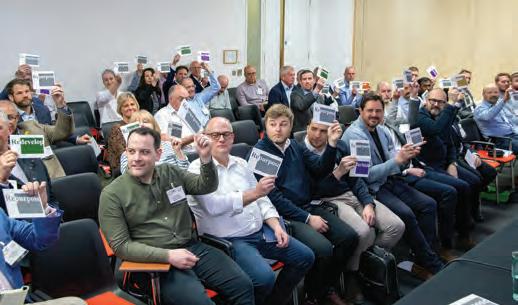
Votes please!

Many multi-storey car parks are now approaching what appears to be the end of their operational lives, leading to worries about their structural safety. But is demolition the inevitable outcome when a car park is old?
Parking Perspectives has developed an interactive game which uses a ‘Strictly Come Parking’ format to explore to decide
There has been a raft of media coverage about the increasing size of vehicles and it has been reported that over 160 cars are now too large for standard parking spaces. This is having a significant impact on how we design car parks, suggested Chris Whapples, car park and structural consultant, Stripe Consulting.
“The size of vehicles has increased and so has the weight,” Whapples told Car Parks 2026. “This has been compounded by the introduction of electric vehicles. It is not the small city-type


what do with problematic multi-storeys.
Drawing on real world scenarios, the game asked an expert panel and delegates to decide whether it is better to partially close, repair, fully refurbish the multistoreys, or actually wiser to demolish and replace the problem car parks.
The expert panel included.
• Tom Gallagher, head of parking, Ealing Council
EVs that are a concern, but the long-range vehicles as they require a larger battery and the vehicle needs to be bigger to accommodate it.”
The increase in gross vehicle weight has led to an increase in the design loadings. New build car parks can be designed to be stronger in accordance with the Institution of Structural Engineers’ Car Park Design guidance. The increased loadings are being incorporated into the UK National Annex to the Eurocodes. When these documents are published it will be mandatory for all car parks to be designed and assessed to accommodate electric vehicles, reported Whapples
“For older car parks the solution is not as
• Elizabeth Gilliard, VP, CILT UK
• Fraser Richards, parking services director, Anchor Group Services
• Chris Whapples, car park and structural consultant, Stripe Consulting.
Repair. Refurbish. Replace. Redevelop. Repurpose was devised specially for Car Parks 2026 by Andrew Potter and Graham James of Parking Perspectives.
straight forward,” he said. “Some owners and operators are now providing larger parking bays, but it is a fallacy to assume that spreading the load over a larger area compensates for the increase in weight. Car parks do collapse for a multitude of reasons, but it should be avoidable.
“Firstly, car parks need to be inspected regularly and have their load carrying capacity determined. Often only localised strengthening is required rather than strengthening the whole car park. It is sometimes possible to rearrange the internal layout or to limit the heavyweights to the ground floor. Or to use an electronic tagging system to identify the heavyweights and to control entry.”
Local government secretary confirms plan to review guidelines
The government has confirmed that it will seek information to support proposed legislation aimed at preventing fatal falls from multi-storey car parks.
The plan was set out in a letter sent by housing, communities and local government secretary Steve Reed to a coroner who conducted an inquest into the death of a young man who fell from a car park.
Liverpool and Wirral coroner Helen Rimmer produced a Prevention of Future Deaths report following the inquest. Joshua Perry, a 21-year-old, was fatally injured when he fell 19 floors from a city centre car park in Liverpool in March 2025.
The court heard Perry had consumed ketamine before his death which was “consistent with moderate excessive use”, but that this more likely than not influenced his functioning. Rimmer concluded it was not clear whether the man had intended to take his own life.
Rimmer wrote a letter to the UK government about what she regards as a conflict between the wording in different guide-


lines that govern the minimum height of car park barriers. The coroner said resolving the contradiction may prevent future deaths.
In his reply to the coroner, Reed said the Ministry for Housing, Communities and Local Government (MHCLG) will make a forthcoming call for evidence on Building Regulations 2010 Guidance: Approved Document K (ADK) seeking views to help it understand which areas may need strengthening, greater clarity or further research.
The call for evidence will include the case for changes on guarding design and wider fall and accidental prevention measures. On 1 June, Reed wrote: “This will provide an opportunity
for regulators, industry experts, and other stakeholders to share evidence on the effectiveness and clarity of the current guidance, including its application in complex environments such as multi-storey car parks, and to inform consideration of whether further clarification or revision would support improved safety outcomes. This approach will ensure that any future changes are developed carefully, on the basis of evidence, and subject to appropriate consultation. We will also ensure that any changes are considered within the wider framework of the Building Regulations.”
Last summer Prime Minister Sir Keir Starmer confirmed the government would review the
To:
Helen Rimmer
Area Coroner for Liverpool and Wirral 1 June 2026
Dear Helen,
Thank you for your letter and report dated 7 April regarding the tragic death of Joshua Perry. I recognise the profound distress this tragic loss would have caused and would like to express my sincere condolences to Mr Perry’s family and friends.
Your letter and report were made in accordance with paragraph 7 of Schedule 5, to the Coroners and Justice Act 2009 and regulation 28 of the Coroner’s (Investigations) Regulations 2013. You set out matters of concern and recommended that I, in my capacity as Secretary of State, of the Ministry of Housing, Communities and Local Government (MHCLG), should take action.
You noted that there is conflict between the Building Regulations 2010 Guidance: Approved Document K (ADK) and BSI Standards, barriers in and about buildings, Code of Practice. Specifically:
• It is not clear from the guidance and standards where the starting point of the barrier height is to be taken from when a wall, parapet, balustrade or
similar obstruction is used as guarding.
• There is no mention of the use of horizontal railings being avoided to prevent adults and children over the age of 5 being able to climb the guarding. The guidance only makes reference to children under the age of 5.
The minimum heights in both ADK and the British Standards are measured from the floor level to the top of either parapet, barrier or guarding in most cases. The British Standards go further to state that the height of barriers installed on top of low parapet walls should be measured from the top of the parapet and not at walk level. This is because a low parapet wall could constituent a step therefore reducing the effectiveness of the barrier.
At Mr Perry’s inquest, you established that he died as a consequence of falling from the nineteenth floor of a multi-storey car park from which he suffered multiple injuries, which proved fatal. You established that horizontal railings at the car park facilitated Joshua’s fall from height.
Consideration of the matters of concern
The Ministry for Housing, Communities and Local Government (MHCLG) intends to consider the issues raised through a forthcoming call for
proposals. Starmer told the House of Commons: “We will conduct a call for evidence on... the building regulations about minimum guarding heights so that the necessary protections are in place to prevent future tragedies, and we will also look at the contents of the Bill.”
The Prime Minister’s announcement was addressed to Peter Dowd MP, who has introduced the Multi-Storey Car Parks (Safety) Bill, which calls for an increase to the legal minimum height of the perimeter edge throughout multi-storey car parks, currently 1.1-metre, and 24-hour on-site security.
The Private Member’s Bill is co-sponsored Maria Eagle, Labour MP for Liverpool Garston.
The MPs have been working with Jonny Santer, who has been calling for improvements to safety in car parks since his 15year-old son Gabriel Santer fell from a multi-storey car park on Hanover Street in Liverpool in 2020. An inquest recorded an open verdict after a coroner heard there was no evidence to confirm how the teenager came to fall from the building.
Joshua Perry’s mum, Natasha Perry, has backed the proposed ‘Gabe’s Law’.
evidence on ADK where we will be seeking views to help us understand which areas may need strengthening, greater clarity or further research. This will include the case for changes on guarding design and wider fall and accidental prevention measures. This will provide an opportunity for regulators, industry experts, and other stakeholders to share evidence on the effectiveness and clarity of the current guidance, including its application in complex environments such as multi-storey car parks, and to inform consideration of whether further clarification or revision would support improved safety outcomes. This approach will ensure that any future changes are developed carefully, on the basis of evidence, and subject to appropriate consultation. We will also ensure that any changes are considered within the wider framework of the Building Regulations. The matters raised in your coroner’s report will be taken into account as part of this work.
Conclusion
I fully recognise the seriousness of this incident and the measures set out above look to prevent this type of incident from occurring.
Yours sincerely Rt Hon Steve Reed
OBE MP Secretary of State for Housing,
Communities & Local Government
Multi-storey provides 680 parking spaces at waterfront destination
The new Mermaid Quay car park serves a popular waterfront destination at the heart of Cardiff Bay. The opening of the 679space car park marks the completion of a year-long construction project that was delivered alongside live businesses, public footpaths, busy carriageways, extensive buried services and a live tunnel interface.
Built for Schroders Capital and operated partly by Goldbeck Parking Services, the development required careful planning from the outset to address foundation constraints, sleeved piling requirements and the presence of high-voltage (HV) and lowvoltage (LV) infrastructure running through the site.
Extensive coordination between designers, engineers, contractors and approval stakeholders was required to ensure construction could proceed smoothly while protecting existing infrastructure and maintaining public access around the


area’s visitor destinations.
Craig Davies, managing director at Goldbeck, said: “This project demanded a high level of collaboration and engineering expertise from everyone involved.
“Delivering a major structure on a constrained site above existing infrastructure required meticulous planning and sequencing throughout the programme.”
The structure was delivered using Goldbeck’s composite steel and precast concrete system, enabling rapid assembly. The completed building provides 597
standard parking bays, 33 accessible spaces, 29 family bays, 20 electric vehicle charging spaces as well as around 50 bicycle spaces across a split-level arrangement designed to maximise capacity and improve vehicle circulation.
More than 850 twisted aluminium fins create a distinctive façade that changes appearance throughout the day, helping to reduce the visual impact of a large parking structure while giving the building a strong architectural identity. Public art-
Leicester City Council is securing a multistorey car park, which closed in March when NCP went into administration. The council and Leicestershire Police said the site had been left unsecured since it closed.
The city says neither the owners, administrators or NCP have taken action to ensure the Lee Circle site is not accessible to members of the public, which has resulted in anti-social and criminal behaviour. The authority said the 1,000space multi-storey had been used for illegal car meets, drug use, and that trespassers had been starting fires and defecating in the stairwells.
Leicester Magistrates Court has granted an order that will allow Leicester City Council to secure the former NCP car park at Lee Circle to prevent anti-social behaviour from taking place.
District judge Nick Watson said: “I’m satisfied the criteria for making a closure order have been met. There is clear evidence of criminal behaviour taking place in the premises.”
The Closure Order was granted for a period of up to three months, after which the council can apply for an extension if needed. The order means that anyone who


does enter the building without the council’s or court’s permission – as set out on the order – could face a fine, imprisonment, or both.
Leicester City Mayor Sir Peter Soulsby said: “Despite many requests, neither NCP, or the owner of the building have made any attempt to secure it and prevent it from being a hazard to the public, and so the council has taken this action.
“Our safer communities team has spent some considerable time and effort in gathering the evidence needed to secure this order, so the court’s decision today is very welcome. While we remain hopeful that an operator will still come forward to take over the car park, it’s essential that the building is made safe and secure in the meantime, and the work needed to ensure this can now go ahead.
work, landscaping, wildflower planting and carefully controlled architectural lighting further strengthen the building’s relationship with the surrounding public realm.
The facility incorporates a fully cashless ANPR parking management system, electric vehicle charging infrastructure and accessible lift provision, supporting the operational needs of the area’s leisure and hospitality destinations.
Goldbeck Parking Services has delivered the hardware and software for the parking management system. Gregor Hensel, managing director of Goldbeck Parking Services, said: “We are pleased to provide an integrated hardware and software solution for the parking management system at Mermaid Quay with +gate Parking Solutions. Thanks to fully automated number plate recognition and ticketless processes, we ensure a smooth and efficient flow at the entry and exit points of the car park. This not only enhances convenience for parking users but also sustainably increases the overall attractiveness of the location.”
“We will, of course, be seeking to recover all of our costs for this work from those responsible for the building.”
Nicola Odom, head of the council’s safer communities service said: “We have made numerous attempts to get the owners of this site to make it safe and secure, and prevent it from being a hazard to the public, but they have failed to do so.”
Solicitors for the site owner, Synergie Portfolio Limited, and NCP’s administrators, PwC, attended the hearing but they did not oppose the order.
The city council had been working alongside Leicestershire Police to try to prevent anti-social behaviour at the site.
Inspector Ryan Ludlam, commander for the Central Leicester Neighbourhood Policing Area (NPA), said: “Leicestershire Police fully support the council’s action to secure this site, which has been linked to ongoing anti-social behaviour and criminal activity. This is a positive step in protecting the public and preventing further incidents while longer term solutions are put in place. We would continue to encourage our communities to report any such issues to us by calling 101 or visiting our website.”
Lee Circle is one of five car parks which closed when NCP went into administration. Three of these – Abbey Street, St Nicholas Circle and East Street – have been reopened by Euro Car Parks. NCP’s Rutland Centre car park remains closed.
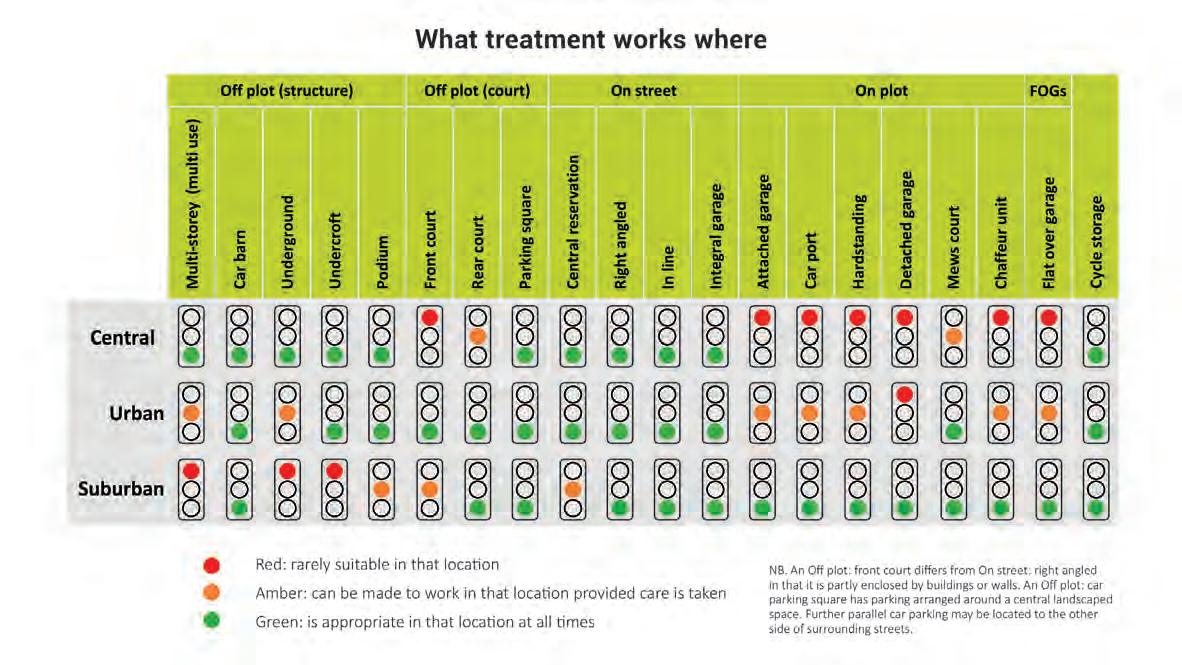
Car parking is a perennial problem, as evidenced in the most recent National Housing Design Audit, says sustainable placemaking guidance from the government’s housing and regeneration agency. Homes England has updated advice on the design of parking for residential areas published 20 years ago.
Parking: What Works Where does not specify how much car parking should be provided, but focusses on making it efficient, attractive, safe and multi-functional.
Inefficient car parking can use 25-50% of land, so one of the main purposes of the guide is to help planners and developers reduce the amount of land lost to poorly organised car parking. This will have the benefit of enabling greater density, says Homes England.
The original Car Parking: What Works Where (CPWWW) was published by Homes England’s predecessor organisation, English Partnerships in 2006.
The new Parking: What Works Where builds upon the first edition of CPWWW that set out simple rules for car parking (including cycle storage and EV charging). It introduces alternative strategies to manage parking on residential schemes and presents updated case studies to demonstrate best practice, showing how parking can be successfully integrated into new developments.
The document, which is part of the Homes England sustainable placemaking guidance series, addresses changes in policy focus, notably to:
• Consider a Visio- Led Transport Planning Approach, as cited in the National Planning Policy Framework (NPPF).
• Create compact places that support an increased housing density, lessen the car parking demand and use land efficiently.
• Enable active transport, in terms of walking and wheeling and integrate good cycle parking and storage.
• Take into consideration the impact of climate change, the biodiversity crisis, surface water flooding and overheating mitigation, along with health and well-being considerations.
Almost 20 years have passed since Manual for Streets (MfS) and Car Parking: What Works Where were first published. Going back to 2007, MfS stresses that car parking should not dominate the streetscape, and designs should encourage walkability, safety, and a pleasant environment.
In the new Parking: What Works Where, Homes England recommends that parking should be integrated into the development, in a way that does not compromise the quality of the public realm. However, the location and design of new development has increasingly locked residents into car dependency, increased car ownership and compromised the public realm.
Homes England warns this ‘cycle of induced demand’ leads to ever more cars on the roads, and increased demand to park them. Developments which are remote with limited public transport inevitably have even greater pressure. Parking: What Works Where highlights the importance of choosing sustainable locations for new housing developments that do not promote car dependency.
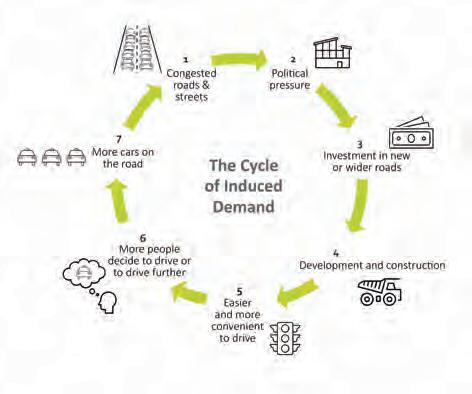
A check list for designers and developers
In Parking: What Works Where, Homes England sets out a set of what it calls ‘Golden Rules’ to be followed when delivering parking on residential schemes.
• Target flexible ownership: Unallocated car parking is the most efficient, as it helps balance the needs of households with different levels of car ownership. If a car parking bay is no longer needed for an occupant, someone else can use it, which is best delivered by taking some car parking bays off plot.

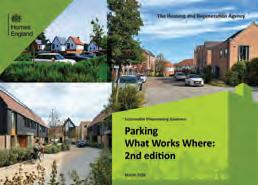

• Make walking and cycling easy: Make walking and cycling easy, with greater density and compactness to reduce the need for cars. Making connections to places and public transport services in the most direct way by walking and cycling can lessen the car parking demand for the site. Provide safe, secure and easy to access cycle parking. Cycle parking should be a pleasure not a struggle.
• Get the streets right first: Get the streets right before the car parking. A clear street hierarchy is needed for placemaking, way-finding and will help you plan different types of homes. Having a variety of streets with a good sense of enclosure is less costly than trying to create character by spending on the buildings. Streets and spaces should not be dominated by car parking, so they can also be places for social interaction.
• Use a range of car parking treatments: A broad range of house types and car parking treatments is key to placemaking. There isn’t a single best solution. Each car parking treatment should reflect the density of a development, the particularity of a place, how busy the street is and how it contributes to a compact walkable layout.
• Efficient car parking raises density: Raise density by reducing land dedicated to highways and car parking, not the size of homes. Car parking and streets typically take up about a quarter of the land on site, with about 8-9% of the land budget being car parking alone, and this can be considerably more, depending on house and parking types. Most schemes in this guide raise density by shrinking the set backs of buildings to the street, not surrounding buildings with an apron of surface car parking. This maintains good-sized homes with direct street access and reduces dependence on apartments for density.
• Avoid single purpose land use: Avoid dedicating land to a single purpose, especially to car parking. Land that contributes a range of requirements as well as parking, such as helping manage surface water management, incorporating leisure and play space and supporting biodiversity, is efficient land use.
• Think about landscape: Convert the look and feel of parking by investing more in landscape, such as street trees, hedges and planting. Alongside the improved appearance, landscape brings much needed shade to reduce the build-up of heat on streets and in cars and helps to manage surface water and air quality too. Use specialists to advise on the design, maintenance, and adoption.
• Consider grouped parking: Grouped car parking requires less circulation and access space and is often more efficient in land use terms. Grouped car parking could be on the periphery or where the streets widen out, such as in squares.
• Include integral garages: Integral garage and courtyard house types that include parking within the footprint of the dwelling help increase density and provide a more secure solution for EV car charging. These designs need to be wider than most current house types, with additional width to allow for secure bike storage. However, the use of a wider house plan, with an integral garage and a minimal set back from the road can lead to achieving a greater density.
• Avoid narrow frontages: Over dependence on narrowfronted house types with car parking perpendicular to the carriageway (to the front or side of the curtilage) generally challenges the above rules.
Mobility Hubs can play an important role in delivering more sustainable residential developments, says new guidance from Homes England, the government’s housing and regeneration agency. Mobility hubs provide a user-centred approach to urban transport and the configuration of infrastructure, buildings and public space. A mobility hub is a place where different types of transport are brought together in a single location so people can easily change between them. They usually combine public transport with shared and active travel options, such as walking and cycling.
In new sustainable placemaking guidance, Homes England promotes their integration into development as a way to support active travel, shared transport, public transport and placemaking.
Delivering Quality: Mobility Hubs explores the concept and purpose of a mobility hub, and outlines the process through which one can be planned and delivered. Homes England says mobility hubs can play an important role in delivering the ‘vision-led’ transport planning requirement of the National Planning Policy Framework. When treated as part of an integrated transport system, hubs can provide social, economic and environmental benefits, and help create a sustainable place to live.
The guide states: “A mobility hub should support people on the move, whatever their lifestyle. For it to form an integral part of the journey, it is important to consider what happens before, during and after visiting it. Thinking this way focusses more on what a mobility hub does, than what it is.”
The guidance states that there is no one-size-fits-all template for mobility hubs, and their components will depend on site-specific factors, so could mix cycling, public transport and vehicle sharing. In terms of placemaking, there should be seating, including sheltered waiting areas, high-quality public realm, street trees, landscaping and interactive elements for play and exercise. Hubs could offer water fountains, community noticeboards, Wi-Fi, phone charging points, toilets, baby-changing facilities, showers and public areas. Commercial components could include package delivery lockers, a kiosk, café, co-working space or cycle sales and repair shop.
Homes England offers advice on managing risk when developing mobility hub projects, stating: “Different procurement and operating models entail different risks between the project partners in the public, private and third sectors. Funding from the public sector should be used to support economic, environmental and social objectives in public policy rather than subsidising commercially viable operations. Over-reliance on the private sector should be avoided, whereby individual components could be withdrawn if they make a loss. Over time some components may also vary between being revenue generators and revenue liabilities.”
The content of Delivering Quality: Mobility Hubs is informed by a review of existing literature on mobility hubs, including documents from Arup, CoMoUK, Oxfordshire County Council and Transport Scotland. It also summarises results from a structured workshop with local planning authority representatives, advocacy groups, and consultants from the Homes England DARTS Panel. In all, there were 20 participants from across the country.
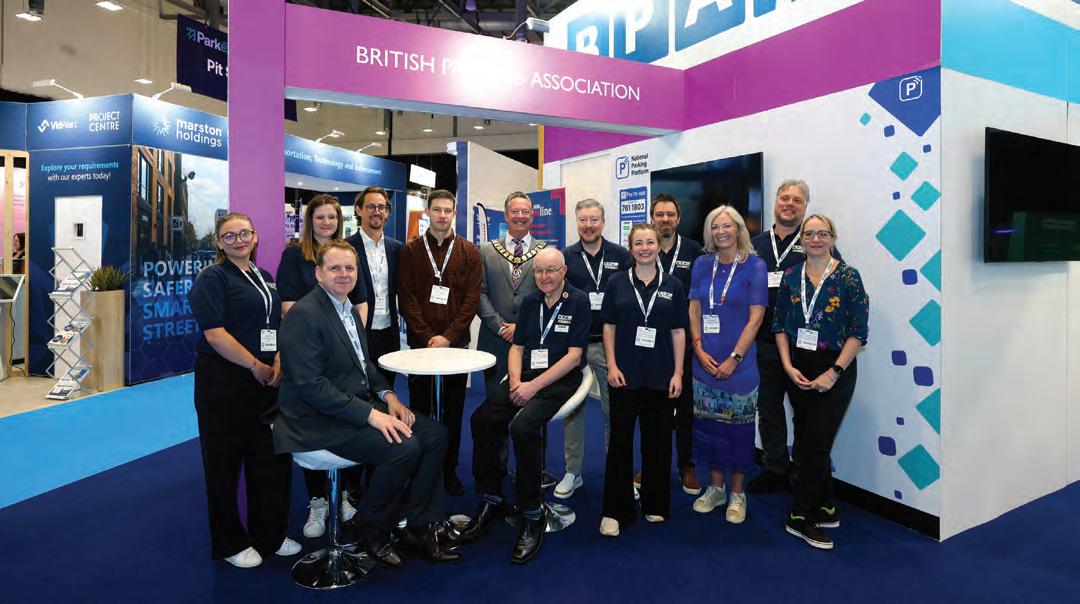
The latest parking systems and services were on show at Parkex 2026
Parking professionals from around the globe gathered at the British Parking Association’s Parkex 2026 trade show, which was held at the CBS Arena in Coventry during May. The annual show runs in parallel to Traffex, with both events providing a showcase for system and service providers in the highways sector.
The exhibition halls hosted a series of ‘live theatre’ seminars discussing issues such as digital parking, the Blue Badge scheme, staff welfare, electric vehicle charging and parking on private land.
BPA chief executive Andrew Pester said: “Parkex 2026 showed that our BPA community is not reacting to change – it’s driving it. Policymakers, practitioners and partners came together to tackle the big themes, including smarter mobility, AI, accessible infrastructure and enforcement. This reflected a sector embracing technology to deliver fair, effective and inclusive services.”
The Parkex 2027 and Traffex 2027 shows will take place at the CBS Arena in Coventry on 19-20 May next year. www.parkex.net

The British Parking Association honoured the late John Heasman, a former president of the organisation, with the John Heasman Awards. The awards recognise excellence and technological developments at the forefront of the parking sector, to encourage and celebrate forward-thinking approaches and organisations.
Winner: National Persistent Evaders Database (NPED) NPED was recognised by the judges as a genuinely transformative solution with the potential to significantly improve vehicle fleet enforcement. By creating a national behavioural intelligence platform that integrates data across PCN, DVLA, DVSA, and insurance systems, it enables multiagency collaboration and the identification of persistent offenders across authorities.
The judges highlighted its highly innovative use of crossauthority intelligence, predictive offender profiling, and integrated enforcement data as setting it apart within the parking technology landscape.
Winner: Brighton and Hove City Council
The Zero Emission Award celebrates infrastructure projects that significantly contribute to reducing carbon emissions and promoting sustainable transportation.
The judges were highly impressed by Brighton & Hove’s project’s strong, inclusive approach to expanding EV charging access, particularly for residents without off-street parking, placing user experience, accessibility, and community impact at its core, while maintaining the integrity of the public realm.
They also commended the strategic expansion of a diverse and convenient charging network, designed to meet users where they are, and remove barriers to access. The approach is both innovative and replicable, offering a clear model for other areas.








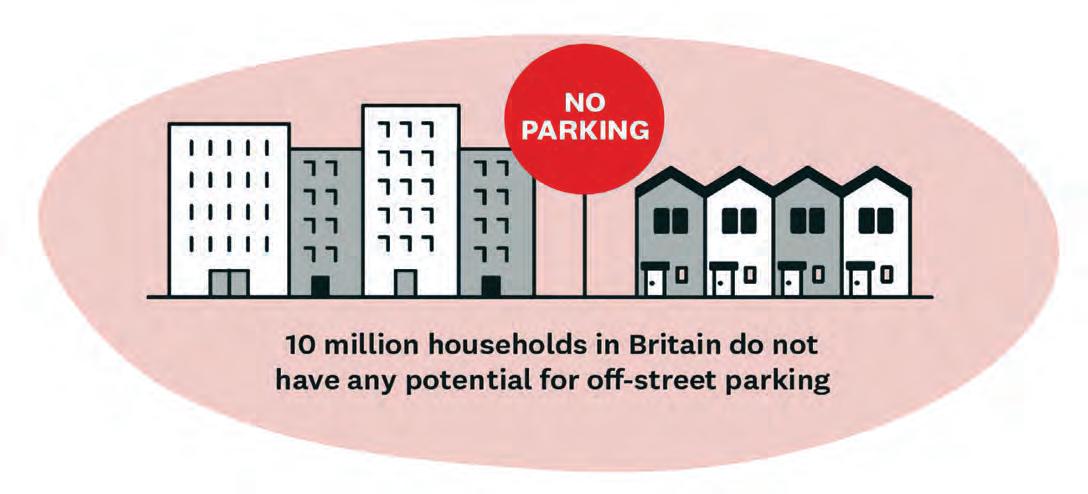
Government must reduce consumer frictions that are slowing down the EV transition , says James Edgar of Which?
The transition to electric vehicles (EVs) is gaining momentum across the UK. At Which?, our recent policy report, Charging Ahead, estimates that on an average day more people are now travelling by EV than by train, while 54% of drivers tell us they would consider buying an EV in the future. But despite high average satisfaction rates, top-line figures mask a critical structural issue that threatens to derail the next wave of mass adoption.
The stark home charging divide is a glaring issue. Currently, 10 million households in Britain do not have any potential for offstreet parking. Because they cannot install a home charger, any potential EV drivers in these households cannot access the cheap home charging rates that average between 10p and 28p/kWh. Instead, many such drivers must rely on the public charging network, facing much higher costs of 54p/kWh or more, alongside all the other frictions that come with public charging. It is therefore no coincidence that 60% of drivers without driveways say they will never consider an EV.
While government policy remains heavily focussed on topdown targets for the roll-out of vehicles and charging infrastructure,
it is not paying enough attention to the fact that there are still far too many systemic frictions in the daily driver experience on the public network.
Although there have been some improvements, Zapmap figures show that in the past year 75% of drivers encountered a broken or faulty public charger. Furthermore, 51% of en-route users and 49% of destination users faced a shortage of available chargers relative to the volume of demand at least once in the past year.
Beyond broken and occupied units, significant proportions of drivers still sometimes encounter poor signage, mobile connectivity dropouts when trying to charge, and infuriating delays in receiving pre-authorisation payment amounts back from their banks. Problems with the day-to-day experience of driving an EV can heavily damage consumer confidence, leading to a hesitancy to switch, and EV policy does not focus sufficiently on aggressively reducing these everyday frictions.
These are not just inevitable teething problems of a new technology; there are often public policy reasons for this underperformance and regulatory issues directly exacerbate many of these consumer pain points. For example, changes to how network charges are recovered have led to a staggering 462% surge in standing charges for rapid and ultra-rapid charging sites since 2021/22. These are costs that inevitably trickle down to the consumer.
If the public network remains expensive and inconsistent, conversational narrative and everyday ‘charging anxiety’ will dampen the next phase of consumer demand. We should never underestimate
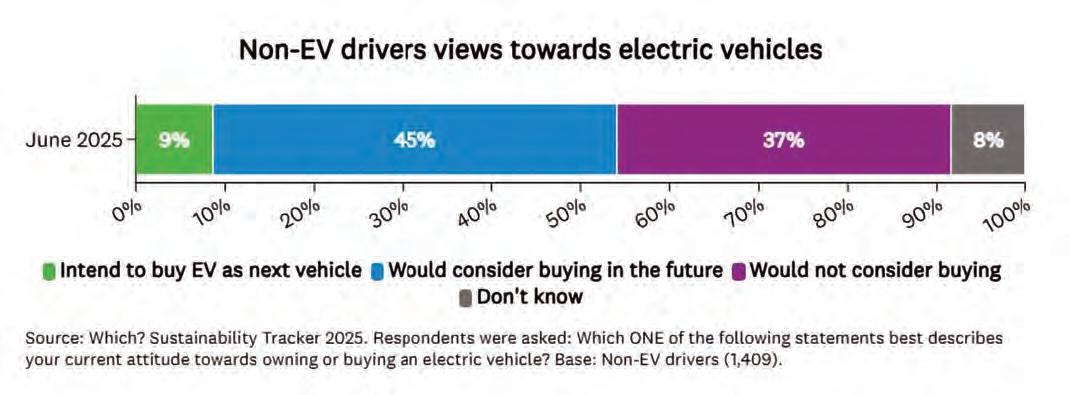
how powerful word of mouth is: even a few poor experiences are passed on and quickly form part of the prevailing public opinion.
A key cause of the government’s failure to address this is a lack of data. Despite the existence of excellent independent surveys of EV driver views, there is no official data source for exactly how often drivers are experiencing problems, nor are there any public targets for driver satisfaction with the public charging network.
We can see how far EV policy lags behind by comparing it to more mature transport sectors. In the rail sector, 130,000 passengers are surveyed every year through the Rail Customer Experience Survey about their most recent journeys to generate actionable, contemporaneous scorecards. In stark contrast, the government’s Office for Zero Emission Vehicles (OZEV) relies on a retrospective survey of just 1,000 EV drivers per year. Even worse, the only contemporaneous travel diary data collected last year came from just 80 drivers. When it comes to the daily realities of the public charging network, policymakers are flying blind.
The solution is clear. To secure the future of the EV transition, the government must adopt modern, continuous data collection at a national level. Implementing app-based spot sampling would capture the contemporaneous experiences of drivers exactly when they finish (or fail) a charging session.
However, collecting data is only the first step. This data must be actively harnessed to relentlessly tackle the problems users are facing and materially improve the driver experience. To start, Which? is calling for immediate action in three key areas:
• Tackle the causes of the high cost of public charging: The government and Ofgem must take prompt action to bring public charging costs down, including reviewing network standing charges and removing environmental and social levies from energy bills.
• Improve signage of EV chargepoints across the country: We need further coordinated action between the Department for Transport, OZEV, National Highways, and local authorities to ensure more chargepoints can be legally and clearly signposted from nearby roads.
• Identify the source of delays in the return of pre-authorisation payment holds: Government and financial regulators must actively engage with and assist industry efforts to identify the scale and causes of this issue, and ensure drivers aren’t left substantially out of pocket for days just because they needed to charge their vehicle.
The transition to electric vehicles needs to work for everyone, not just those with their own dedicated parking spaces. By relentlessly focussing on the driver experience and eliminating systematic frictions, we can build a public charging network that is trusted and truly fit for the future.
James Edgar is the senior policy adviser at Which?, leading on New Energy and Electric Vehicles. He was previously a senior economist at the Department for Transport www.which.co.uk
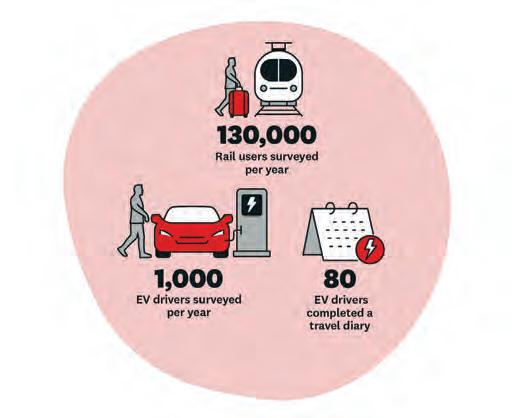
Consumer group raises concerns about ANPR

Many drivers are being unfairly penalised because number plate reading cameras used in car parks and petrol stations are not always reliable, argues Which? The consumer rights campaign is highlighting how issues such as the incorrect positioning of cameras and numberplate fraud can lead to motorists being issued erroneous penalties.
Hannah Downes, who covers consumer rights issues for Which?, says: “Even at an accuracy rate of around 97% – as cited by Fraser Sampson, a former Home Office biometrics and surveillance camera commissioner – that’s more than two million inaccurate reads per day. And these inaccurate reads all too often result in unfair parking charge notices (PCNs), debt collection threats and customer service headaches for innocent motorists.”
Which? identifies a number of problem areas with ANPR systems:
• Double-dipping: Drivers who regularly visit the same car park in a short space of time – perhaps to go to the supermarket or take a family member to the station – can be caught out: This occurs when they visit a car park on two separate occasions, but the ANPR does not record the first exit or second entrance onto the site. Drivers who fall victim to this will likely be issued a PCN for overstaying.
• Camera installation issues: Poorly installed cameras can also be problem. If cameras are not set up properly – perhaps installed in a high-up position or are angled downward – it can lead to misreadings. Incorrect PCNs may also be issued if a driver’s numberplates is masked by the car in front.
• Numberplate fraud: Drivers can be sent incorrect PCNs due to licence plate fraud, which involves their car’s vehicle registration plate being cloned to avoid ANPR detection. Rogue drivers might then overstay in car parks, fill up with petrol without paying or drive fee-free through congestion zones.
Which? sent Freedom of Information (FOI) requests to the councils that issue the most parking fines, asking them how many PCNs they’ve had to cancel due to a numberplate having been cloned.
“Of the five councils that responded to our FOI requests, three saw the number of fines cancelled as a result of cloned plates rise year on year since 2023,” reports Downes.
The number of privately issued parking fines continues to rise, says the consumer group.
“Fines often feel disproportionate and unfair,” says Downes. “The government is introducing a new Private Parking Code of Practice, which will replace the industry’s self-set code. It first proposed this code in February 2022, but it was withdrawn later that year after the industry issued legal proceedings against proposals to change maximum fines and ban additional fees. In September 2025, the government launched a consultation on the Code. Which? responded, calling for tougher measures to be included to curb unfair PCNs. Some of these measures include standardised signage across car parks, a ban on debt recovery fees and an independent single appeals service to improve the appeals process.
“We also want a ban on parking charges issued to motorists who pay for their stay in full before leaving an ANPR car park. This means if you experience delays making your payment, beyond the fiveminute grace period typically offered, Which? believes you should not receive a PCN.”


Twenty-four charging sessions. Three countries. Nearly 3,000 miles. One clear conclusion: no electric vehicle charging network used during Disabled Motoring UK’s accessibility road trip was fully accessible to a disabled motorist. The EV infrastructure sector is currently one of the fastest-growing industries in the world. Despite being introduced during a period where inclusive design and accessibility are far better understood and acknowledged, accessibility has remained an afterthought rather than a core requirement.
Between 5 and 13 May, Disabled Motoring UK member Anjna Patel, 68, travelled from Birmingham to Torrevieja, Spain, in a fully electric vehicle, a Volkswagen ID.4. She was accompanied by the charity’s campaigns manager Zoe Rush.
The journey became the first documented accessibility assessment of public EV charging across England and Europe using a bespoke audit.
The pair completed an audit at each charging location. The audit criteria were developed with reference to the Safer Parking Accessible EV Accreditation, owned by DMUK and Police CPI, which supports the requirements of PAS1899:2022.
Patel and Rush drove 2,955 miles and successfully charged at 24 chargers whilst also abandoning several chargers due to digital interface issues and full bays. A few of the well-recognised companies they charged at included Ionity, Powerdot, Siemens, Tesla, Zunder, Gridserve and Allego.
Their findings are now available in a report called Accessible EV Europe Road Trip: The Route to Accessible EVs.
The report highlights the challenges experienced by Anjna during
the trip and covers chargers in the different countries, frequent inconsistent design between chargers, individual charger audits, their best and worst charging experiences, and driving an EV as a disabled person. The report makes recommendations for physical and digital improvements to charging stations and to EVs, with which they hope to engage chargepoint operators (CPOs), local authorities, parking operators, and EV manufacturers to improve the accessibility and usability of public EV charging.
Disabled Motoring UK says the findings will highlight the urgent need for inclusive EV infrastructure, increase awareness of the barriers disabled motorists continue to face, and improve confidence among disabled drivers by demonstrating that long-distance EV travel is possible.
DMUK chief executive Graham Footer said: “This project showed that disabled motorists can make long-distance journeys in an electric vehicle, but they often have to overcome barriers that non-disabled drivers simply don’t face. We found examples of good practice, but no charging network we used was consistently accessible. We hope this report provides practical evidence that helps chargepoint operators, manufacturers, and policymakers make accessibility a standard feature of future EV infrastructure.”
The trip was supported by AVC & Specialist Vehicle Rental, which supplied the vehicle; Euan’s Guide, a charity dedicated to improving disabled access information so as to make everyday experiences stressful; the electric vehicle driver’s association EVA England; and Police Crime Prevention Initiatives, which operates the UK’s Safer Parking Scheme.
Information from each charger they can be found in In the report, on the Euan’s Guide website, via Google Maps and on the DMUK YouTube channel.
Accessible EV Europe Road Trip: The Route to Accessible EVs www.disabledmotoring.org
DMUK’s Anjna Patel MBE and Zoe Rush share lessons from their European EV road trip

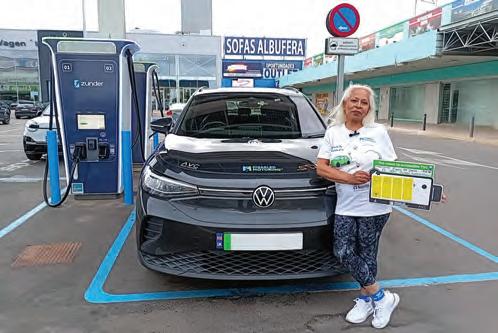
TDuring May, Disabled Motoring UK organised a roadtrip from Britain to southern Europe to explore how to make electric motoring accessible to all.
Leading the journey was Anjna Patel, a DMUK member and trustee, who has lived with severe rheumatoid arthritis for over two decades. On occasion, at charging locations, Anjna used her walking stick or sat in a wheelchair to provide a clear visual representation of some of the challenges disabled people can face. These were documented through photographs and videos.
Following each charging session and audit, Anjna assigned each charger a rating from 1 to 5 based on her experience and the extent to which the site met the audit criteria. Eleven chargers received a positive score for the overall experiences and accessibility of the bays.
Some of the accessibility issues encountered during the trip include:
• Weight of charger and cable management
• Force required to use the chargers
• Size of the bay
• Lack of waiting areas by the chargers
• Obstacles surrounding bays, including bollards, kerbs and lack of shelter
• Lack of on-site support, isolated locations and lack of security of the site
• Digital interface issues – lack of buttons, font type not being accessible, confusion between phone and charge screens
• Payment issues
• Height of components on the charge unit not matching the audit requirements for sitting and standing use
• Lack of sufficient shelter
• Requiring assistance to find alternative reliable chargers via apps
• Range anxiety was heightened by risk of the charger not working and the restriction of needing to recharge every two hours
• All bays in use and lorry blocking bays
• Designated disabled bays but with no clear signs of further accessibility thought about.
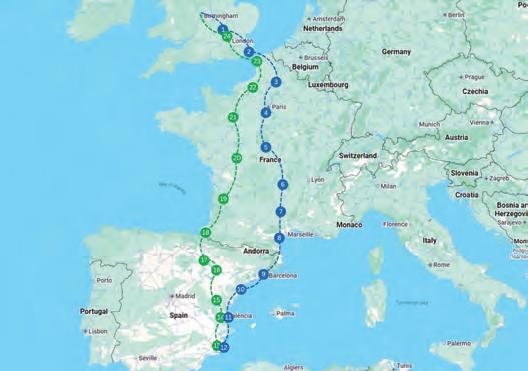

he electric vehicle (EV) infrastructure sector is currently one of the fastest-growing industries in the world. Despite being introduced during a period where inclusive design and accessibility are far better understood and acknowledged, accessibility has remained an afterthought rather than a core requirement. From the outset, the EV industry’s focus seems to be on maximising grant opportunities and positioning itself as an early adopter of new technology, rather than ensuring infrastructure has longevity and is accessible and usable for all members of society.



The Accessible EV Europe & England Road Trip was implemented to document the real-life challenges of travelling abroad in an electric vehicle as a disabled person, highlight the urgent need for inclusive EV infrastructure, and to improve understanding of, and confidence in, EV infrastructure among disabled drivers ahead of the Zero Emission Vehicle Mandate.
The road trip was successful in gathering valuable data on the accessibility of the EV charging infrastructure and the experience of a disabled person travelling abroad using an electric vehicle. The trip demonstrated that the growing number of EV chargepoints across Europe provides greater flexibility in route planning and access to a variety of EV chargers. However, the findings also highlighted significant accessibility challenges. Throughout the journey, there were consistent issues with payments, charging cables, height of plugs/interfaces, inconsistent digital interfaces, a lack of space for wheelchairs and numerous obstacles resulting in several designs not being accessible. Many charging locations also lacked clear on-site support, which could leave travellers stranded or unable to charge independently. Out of all 24 chargers charged at, none of them was fully accessible; they all need improvements.
As organisations such as Motability continue to support the transition towards electric vehicles, it is important to recognise that EV ownership can work very well for many disabled people, particularly those who are able to charge at home and primarily undertake shorter journeys. Confidence and independence in using an EV will increase as drivers become more familiar with different charging networks, understand the accessibility features and standards offered by each provider, and learn where suitable charging locations are available.
While travelling by EV across Europe is becoming increasingly achievable, we would not currently recommend that wheelchair users or people with significant dexterity impairments undertake long-distance international journeys alone without careful planning. Further improvements are needed to ensure the charging infrastructure is designed with accessibility in mind.
Recommendations made within the report should be taken into consideration, and the organisations responsible for the individual chargers reviewed are encouraged to make immediate adaptations to their chargers. Chargepoint operators, site owners and local authorities should consider adopting the Safer Parking Accessible EV Accreditation, which demonstrates a commitment to accessibility and aligns with the standards set out in PAS1899 for accessible chargepoints.
DMUK will continue to campaign to ensure motorists feel safe, confident and independent when using EV stations.
Anjna Patel MBE is a trustee of Disabled Motoring UK and Zoe Rush is DMUK’s marketing and campaigns manager


Government review will not look at costs of domestic charging
The terms of reference for a review of public electric vehicle charging in the UK have been published by the government.
At Budget 2025, the government committed to reviewing the cost of public EV charging, reporting in autumn 2026.
The review will consider: the impact of energy prices; wider cost contributors; options that government and industry can take for lowering these costs for consumers. However, the review will not look at the costs of domestic EV charging and there will be no recommendations on tax policy.
The government has appointed energy expert Philip New as independent chair for the review, with support provided by the Office for Zero Emission Vehicles (OZEV).
The review will report to ministers in the Department for Transport, the Department for Energy Security and Net Zero and His Majesty’s Treasury.
OZEV, a joint unit between the Department for Transport and the Department for Energy Security and Net Zero, is the responsible government sponsor for the review.
The review will be developed in collaboration with Ofgem, given their responsibilities for energy sector regulation in Great Britain.
Where relevant policy is devolved, the review will consider impacts and outcomes with the devolved governments.
The costs of charging on the public chargepoint network are to be examined


The terms of reference for the review’s leadership, governance, scope and outputs are to:
• Examine the costs of charging electric cars and vans on the UK public chargepoint network, how these costs have changed in recent years, and how they might change in the future without intervention.
• Consider the costs of charging across the entire public charging network, including lower powered on-street charging, destination charging (for example, in retail car parks) and higher powered en-route charging (for example, at motorway service areas).
• Consider the costs of charging relative to the costs of fuelling internal combustion engine cars and vans.
• Consider the extent to which cost savings from policy changes might be passed on to consumers that use the public charging network, including consideration of market competition.
• Consider the impacts of possible options, and costs, on other energy consumers.
• Consider the impacts of possible options on the costs for EV fleet operators that charge at private depots.
• Consider the impacts of greater access to domestic charging for more drivers.
• Propose options and recommendations for reducing public charging costs.
The areas to be considered include, but are not limited to:
• regulation
• government funding routes and prioritisation
• wider government levers and policies to address costs
• actions taken by the relevant regulators
• market-based trading schemes
• dynamic pricing (time of use tariffs).
Tax costs will be reflected within the report. However, the review will not make recommendations on changes to tax policy. This is
The UK government is seeking views on proposals for a scheme to support the provision of a high electricity network upgrade costs at motorway service areas (MSAs) in England. The high costs of introducing chargers sites are seen as the principal obstacle to achieving a comprehensive network of EV charging at the 116 MSA across the motorway network in England.
It is hoped a new Strategic Charging Infrastructure (SCI) scheme will strengthen electricity network infrastructure to MSAs where investment is not commercially viable. This will enable the deployment of ultra-rapid chargers.
The consultation seeks industry views on site selection and terms for accessing the resulting network capacity.
The scheme will support the development of a strong open-access EV charging offer across the motorway network by removing electricity upgrade costs as a barrier to EV charging provision at a subset of impacted MSAs in England. The government will do this by strengthening electricity networks to selected MSAs where costs are uncommercial. The resulting network capacity will then be available to industry at a subsidised, commercially viable price.
The Strategic Charging Infrastructure (SCI) scheme will replace The Rapid
consistent with other such reviews which avoid pre-empting fiscal events, where decisions on tax can be made in the round, taking into account the wider economic and fiscal context. Domestic charging costs are out of scope.
The review will provide a report to be published in autumn 2026, structured in three sections.
• Section 1: A review of the current costs of public charging, how these have changed in recent years, and the drivers for these changes.
• Section 2: An assessment of how, and why, public charging costs might change in the near and medium term, to 2030, without intervention.
• Section 3: What government, and industry, could do to reduce the costs of public charging. This will cover ongoing work, and recommended options to go further.
The government states: “Whilst we expect many drivers to primarily charge their electric vehicle (EV) at home, effective, accessible and affordable public charging infrastructure is critical to support those who will rely on the public charging network. “Good progress has been made to develop this network, with more than 120,000 public chargers installed across the UK. However, the tariffs drivers must pay to charge their vehicles on the network have risen in recent years, with industry analysis estimating that average charging prices have increased by 38% since 2021”
Charging Fund (RCF), which was announced in 2020 by the previous Conservative government, and which sought to support the delivery of EV charging by part-funding electricity network upgrades where costs were not commercially viable for industry.
To test how best to provide funding via the RCF, the government ran a £70m pilot scheme, the RCF pilot, which was launched in December 2023. After working between government and applicants, the pilot concluded without making awards.
The Department for Transport said a critical lesson from the pilot was that MSA operators which applied were not willing to contract directly with government to receive grant funding for such upgrades, on the terms required by government, despite extensive good faith negotiations on both sides.
Fastned creates 12-bay facility in partnership with Places for London
A 12-bay ultra-rapid electric vehicle charging hub has opened near Heathrow Airport, the first of 25 planned to open across London by the Places for London and Fastned partnership.
The Fastned and Places for London partnership officially opened its first state-of-the-art ultra-rapid EV charging hub at Hatton Cross Underground station. Places for London is the dedicated commercial property arm of Transport for London (TfL). Operating with independent financing, it focusses on developing residential and commercial spaces where people are proud to live and work.
The Hatton Cross EV hub is the first of 25 planned to be delivered across London by the partnership. It has been designed with accessibility and comfort in mind. It includes extra-wide bays and two fully accessible charging spaces in line with the
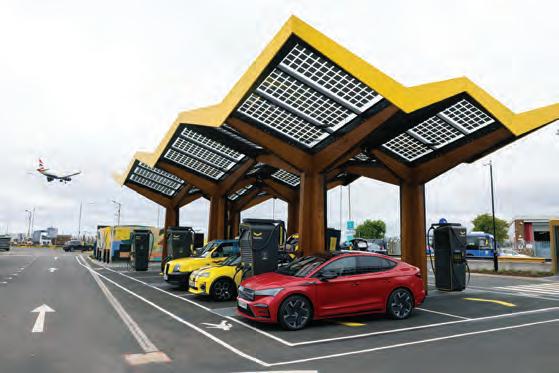
latest British Standards Institution guidance, alongside weather protection provided by Fastned’s signature yellow solar canopies.
The hub features CCTV coverage throughout the site and 24/7 multilingual customer support, ensuring a safe, easy and enjoyable experience for all users.
Open 24/7 and powered entirely by renewable energy, the hub features 12 ultra-rapid (400kW) charging bays, capable of delivering up to 100 miles
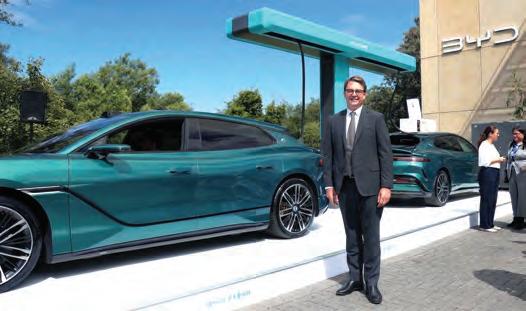

BYD Auto, a Chinese manufacturer of electric vehicles, is collaborating with automotive data provider Parkopedia to enhance in-car parking experience for drivers in Europe.
Parkopedia will supply a mobility solution that enables BYD models to use its parking data and in-car payment functionality, making searching and paying for parking from the vehicle seamless for drivers.
The collaboration will enable BYD drivers to benefit from Parkopedia parking data and in-car payment functionality via a branded user experience
within the Android Automotive OS (AAOS) environment.
The new arrangement aims offer a better service than offthe-shelf parking and EV charging services by providing better discovery, notifications and auto-stop.
Parkopedia is a service provided by global mobility platform Arrive. BYD cars will also benefit from integrations with parking payment services provided by Arrive – RingGo in the UK and EasyPark across Europe.
The in-car service is due to be made available in production BYD vehicles at the start of 2027.
(around 160 kilometres) of range in just five minutes. It is strategically located within easy access to Heathrow Airport, the M25, M4 and A30, making it a convenient stop for airport commuters, residents, taxi and private hire drivers, and business fleets.
It has been designed for vehicles of all sizes, from cars and taxis to vans and smaller commercial vehicles, providing an option where home or depot
depend on public charging, with the UK having around 2 million battery electric vehicles on the roads now, and around 40% of UK households lacking off-street parking.
The capital leads the way in EV uptake nationally, with more than 175,000 battery electric cars and vans already registered in the capital. EV numbers on the road in London are projected to reach over 1 million by 2030, making up to 36% of London’s car and van fleet.
The partnership aims to make ultra-fast charging more accessible by creating a city-wide network of hubs which are thoughtfully designed for all users, with planning already in place for a flagship 36-bay location at Hanger Lane and an 8-bay hub at East Finchley Underground station car park.
Three other sites are within the planning process across Newham, Haringey, and Barking & Dagenham, with a further seven sites due to be submitted