WITH COMPLIMENTS OF SAFARILINK | JULY–SEPTEMBER 2026
WITH COMPLIMENTS OF SAFARILINK | JULY–SEPTEMBER 2026
PROTECTING PARADISE FOR TOMORROW
ASTRO TOURISM
KENYA LOOKS TO THE STARS LOISABA AND LAIKIPIA OFFERING A MORE IMMERSIVE SAFARI CURATED CALM EXPERIENCE THE SLOW SIDE OF ARUSHA

6 Astro tourism
Kenya looks to the stars
10 Kaloki Nyamai
From rebellion to repair
17 Remembering 'Craig'
A tribute to Amboseli’s legendary tusker
19 Digital tourism
The rise of digital tourism in Kenya
23 Yellow feather
Follow the flock for curated calm in Arusha
27 Laikipia
The bespoke safaris of the conservancy model
31 Bongohoodz
Meet the Dar es Salaam creatives taking guerilla filmmaking to a new level
36 Mabamba Swamp
Explore this haven of the rare shoebill stork
39 Lamu ecotourism
Sampling the islands' sustainable stays
43 Naivasha
The rugged city break from Nairobi
47 In numbers… Mount Kenya

Phoenix House, Wilson Airport
PO Box 5616-00506, Nairobi, Kenya
Tel: +254 20 6690000 / 730 888 000
E: res@flysafarilink.com www.flysafarilink.com
The Link is published by:
Media & Design House Ltd
A Subsidiary of Land & Marine Publications Ltd
Park Place, 2 Parklands Road, Off Limuru Road Nairobi, Kenya
Head Office: Land & Marine Publications Ltd
6 The Square, Ipswich, Suffolk, IP5 3SL, UK
T: +44 (0)7714 448059
E: publishing@landmarine.com www.landmarine.com
Managing Editor: Mark Edwards
E: markedwards@landmarine.com
Advertising sales: Antony Gathi, Country Manager
T: +254 (0)721 584 465
E: antonygathi@landmarine.com
Terryann Mutindi
Digital marketing and communications strategist
E: terryann@flysafarilink.com
Printed in Nairobi.
Welcome aboard your Safarilink flight and thank you for choosing to travel with us. It is always a privilege to be part of your journey, whether you are heading off on an adventure, returning to a place you love, or travelling for work and connection. For all of us at Safarilink, there is something deeply meaningful about helping people experience the beauty, warmth and wonder of East Africa, and we are delighted to have you with us today.

We also continue to invest in our fleet with plans in place to add at least six more aircraft over the next two to three years.
This past year has been an important one for Safarilink. We have been proud to open more convenient regional access through additional Entebbe flights, increase capacity on the Nairobi-Arusha route, and strengthen our partnership with Kenya Airways so that Kenya’s safari destinations can be seamlessly reached by more international travellers. We also continue to invest in our fleet with plans in place to add at least six more aircraft over the next two to three years. Each of these developments is part of a bigger ambition: to make travel across our region easier, more connected and more enjoyable for the people who place their trust in us.
As we look ahead, we do so with optimism and a strong sense of responsibility. Safarilink is widely recognised for its strong commitment to sustainability. Our focus is on growing thoughtfully by investing in the right fleet, the right partnerships and the right experience for our passengers. Above all, we remain committed to serving you with care, reliability and the spirit of hospitality that defines who we are.
Thank you for flying with us, and I hope this journey is the start of something memorable.
ALEX AVEDI | CEO
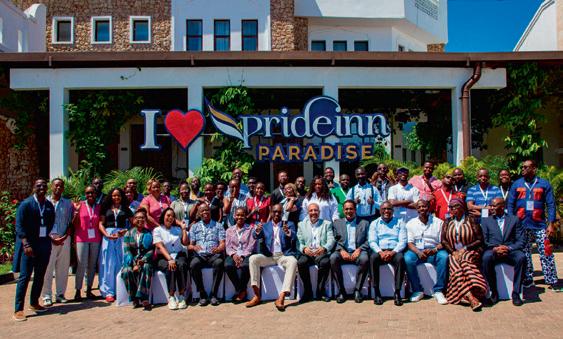
Safarilink, in partnership with Kenya Airways, recently launched the inaugural Aviation Media Lab – an event designed to give media professionals an immersive look into the world of aviation.
Held at Safarilink’s Wilson Airport base, the experience brought together journalists and content creators for a behind the scenes exploration of regional air travel. Participants took part in guided tours of operational facilities and enjoyed scenic flights to Safarilink destination Nanyuki, highlighting the vital role aviation plays in
connecting people, places, and stories across Kenya.
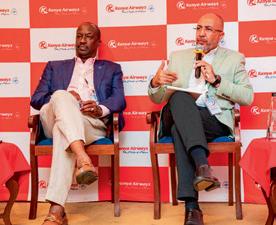
Led by Safarilink CEO Alex Avedi and Kenya Airways Head of PR and Media Henry Okatch, the programme showcased how collaboration between airlines strengthens regional connectivity, boosts tourism, and opens access across East Africa.
The Aviation Media Lab forms part of a broader initiative to empower storytellers with deeper insight into aviation operations and the industry’s growing impact on Africa’s future.

Safarilink partnerships brings Kenya’s best beach and bush escapes within easy reach of international travellers.
For international travellers, Kenya opens up fast with Safarilink. Through its partnership with Kenya Airways, guests can now book an international flight and an onward domestic connection on a single ticket, making it easier to move from Nairobi straight to the country’s most iconic safari landscapes and Indian Ocean shores.
That means less time juggling separate bookings and more time getting where you want to be: the Masai Mara, Amboseli, Samburu and Nanyuki for classic bush adventures, or Kenya’s coast for sun, sand and Swahili charm. Safarilink’s network is built to connect travellers quickly and smoothly, whether the plan is game drives at dawn or a barefoot arrival by the beach.
Operating from Nairobi’s Wilson Airport, Safarilink specialises in the last mile of the journey, flying into key airstrips that bring travellers closer to camps, conservancies and coastal hideaways. The result is a more seamless way to experience Kenya: one trip, one booking, and direct access to some of East Africa’s most memorable destinations.

Magnificent wild animals such as lions, elephants, and giraffes are synonymous with Kenya’s world-famous wildernesses such as the Masai Mara, Laikipia, and Samburu. The Kenya Tourism Board would like visitors to know that you can also see a great (and little) bear, a wolf, and a dolphin.
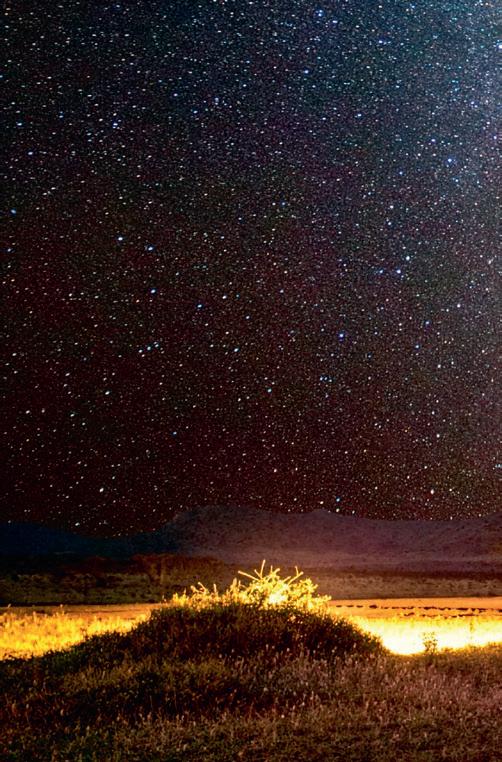
Those who are convinced the last list of animals are not found wild in East Africa should look up, way up. Ursa Major and Minor (the great and little bear), Lupus (the wolf), and Delphinus (the dolphin) are all constellations that appear vividly in the unpolluted skies above Kenya’s remote parks and reserves. The country’s closeness to the equator allows visitors to clearly observe celestial features from both the Northern and Southern Hemispheres while its vast wildernesses far from urban glare allow the human eye to detect distant stars that would otherwise remain invisible.
The Kenyan government seized on these astronomical advantages to launch an Astro Tourism initiative in 2025. It was led by the Ministry of Tourism and Wildlife with scientific backing provided by the Kenyan Space Agency (KSA).
The collaborative project looks to promote space-related travel experiences such as guided night sky tours, astrophotography, and starlit camping. Lodges in the reserves are onboard with many offering
star beds a night’s sleep under Kenya’s canopy of constellations.
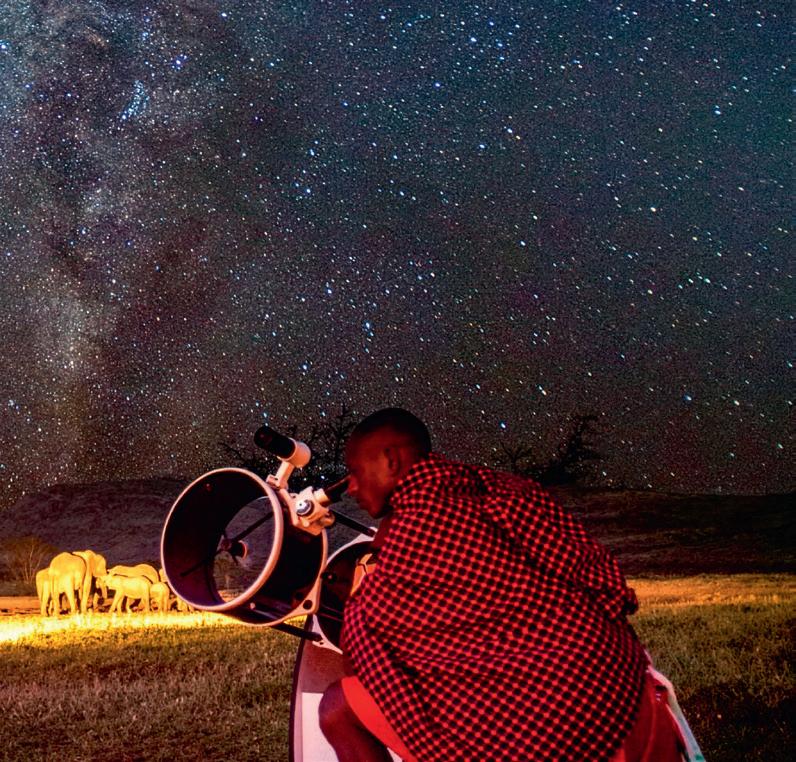
Among the private initiatives that have partnered with the KSA to provide planetarium experiences and star-gazing trips is Travelling Telescopes. Founded in 2014, the astronomy outreach project can be seen as a pioneer that set the stage for the astro-tourism push. It opened East Africa’s first permanent planetarium in Nairobi, which is now complemented by two inflatable and portable planetariums for a stargazing experience in schools and communities beyond the city.
Travelling Telescopes co-founder Susan Murabana speaks to The Link about how she sees the central astro tourism initiative as a humbling acknowledgement of the groundwork that she and partner Daniel Chu Owen have laid.
Q: Travelling Telescopes has been operating well before this countrywide push. Do you feel your work helped lay the groundwork for Kenya embracing astro tourism at a national level?
Through our experiences, whether with international tourists, local audiences, or the communities in the areas we visit, as well as media features and partnerships, we’ve helped introduce and grow awareness around astronomy as a meaningful tourism offering.
We are very open and excited to continue supporting this
Astronomer Susan Murabana on star safaris, storytelling, and building a uniquely African astrotourism movement.
momentum, not just in Kenya but across Africa. Astronomy is such a powerful and accessible resource, and many of the places already known for their landscapes and biodiversity also have incredibly beautiful night skies. There is a real opportunity to build something impactful and uniquely African.
Q: From your perspective, does the government’s involvement legitimise and amplify what you’ve been doing, or does it introduce new challenges? It feels like a stamp of approval and, in many ways, a recognition of the work we’ve been doing over the past decade. At the same time, it really helps to amplify what we do by opening up the space to more people.
Q: Looking back, what gap did Travelling Telescopes originally set out to fill in Kenya’s tourism or education landscape?
“The climate is also favourable; it’s not extremely cold at night, which makes stargazing comfortable and accessible.”
I think the gap we wanted to fill was simply giving more people the opportunity to experience the night sky, and to engage with astronomy in a meaningful way. For many, this wasn’t accessible before, especially through a telescope.
What we do is really a balance: about half is the telescope experience itself, and the other half is storytelling – helping people make sense of what they’re seeing and connecting it to culture, science, and their own sense of wonder. That combination is what really brings the sky to life.
We’ve approached this through astro-tourism, but also very strongly through education. A big part of our work is taking these experiences to schools and communities, using astronomy as a tool to inspire the next generation. At its core, it’s about giving people the chance to look up, connect, and feel inspired.
Q: Were you intentionally thinking in terms of ‘astro tourism’ before the term entered mainstream use in Kenya, or did your work evolve organically into that space?
Yes, when Chu and I first met, we were very intentional about sharing the beauty of the night sky with people. One of our key focuses was school children, because we didn’t have that kind of experience growing up.
At the same time, we recognized a unique opportunity. Kenya has incredibly dark skies, and being on the equator means we can access both the northern and southern skies throughout the year. Many of these skies are found in some of the most beautiful and sought-after tourism destinations in the country. We also coined ‘Star Safari’ as a way to describe and share this experience in a way that resonated with the tourism space.
Q: Why does Kenya lend itself so naturally to astro tourism? Is it primarily geography, environment, or something more cultural?
That’s a fantastic question. Geographically, we are right on the equator, which is a huge advantage. It means we can view both the northern and southern skies throughout the year, and many celestial objects pass almost directly overhead. When something like Saturn, Jupiter, or the Moon is high in the sky, you’re looking through less atmosphere, so the views are much clearer and more striking.
For me personally, that’s what sparked my interest in astronomy, seeing Saturn through a telescope, with its rings so crisp and clear, almost like it was floating in space.
Environmentally, many of Kenya’s prime tourism destinations, places like Laikipia or the Masai Mara, also have beautifully dark skies with very little light pollution. The climate is also favourable; it’s not extremely cold at night, which makes stargazing comfortable and accessible.
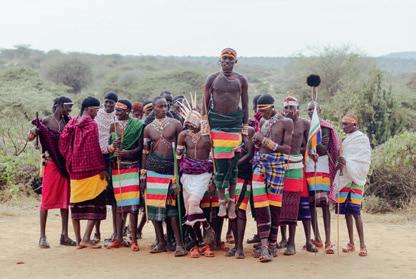
But beyond geography and environment, there’s a strong cultural dimension. Many communities in Kenya have deep connections to the night sky. For example, the Samburu, a sub-group of the Masai, have rich traditions and stories linked to celestial objects, there are beliefs about origins connected to planets like Venus.
Much of what we teach about constellations today is rooted in Greek astronomy, but there is so much value in bringing in local knowledge so that people feel a deeper sense of ownership and connection to the sky.
Q: Do you think visitors underestimate how powerful Kenya’s night skies can be compared with its daytime wildlife experiences?
I think we still have a lot of work to do in terms of marketing and awareness around our night skies. I wouldn’t say visitors underestimate them, it’s more that many people simply aren’t aware of what’s up there.
When you’re not used to looking up, and with all the distractions from phones and daily life, it’s easy to forget that there’s this whole universe above us waiting to be explored.
That’s really why we exist, to inspire people to look up and discover something new. And once they do, there’s something very powerful about that experience.
Q: Do you see a shift in how young people imagine their futures after engaging with astronomy and space science? We’ve had direct contact with young people who have experienced our planetarium visits in schools and who have gone on to shape their career paths around space science and astro-tourism in very interesting ways.
For example, we had a student who later pursued law but shifted into space law, and he reached out to us on LinkedIn saying that our visit to his school played a role in inspiring that direction.
We also work with university graduates in Kenya, including members of our own team who studied astronomy and space science locally.
Over the years, we have reached more than half a million children, so while we cannot always track long-term outcomes for everyone, the stories and connections we do
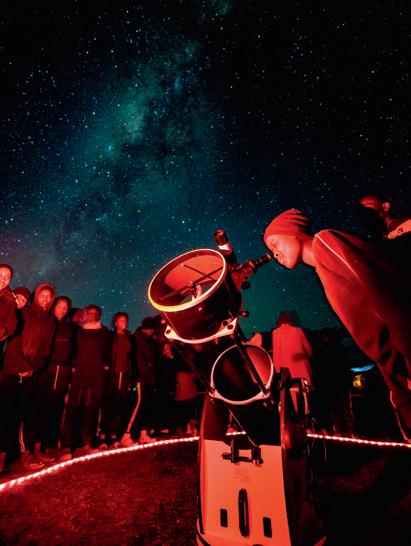
receive show a clear shift. Young people are beginning to imagine real futures in space science, astronomy, and related fields, and they are actively trying to build narratives and careers around them. The presence of institutions like the KSA has also helped reinforce the idea that these are legitimate and accessible career paths.
Q: Do you feel astro tourism can become a genuine community driven opportunity rather than something designed purely for visitors?
In many of the areas where we work, there is already a strong cultural and practical connection to the night sky.
As astro-tourism continues to develop, its success will depend on how intentionally it includes and empowers these communities. Fortunately, many of the lodges and partners we work with are already very conscious of this and are genuinely committed to working with and benefiting the surrounding communities.
Q: What does “responsible” or “ethical” astro tourism look like to you in practice?
In practice, we hope that by giving more people the chance to
experience the night sky through telescopes and stargazing experiences, what we call star safaris, we are also encouraging a stronger sense of stewardship for the planet.
Responsible astro-tourism also includes protecting dark skies themselves, not just for scientific observation, but for biodiversity. Many species, from insects and pollinators to larger wildlife, are affected by light pollution. So, preserving the night environment is not only about astronomy, but about protecting entire ecosystems.
Q: What is Travelling Telescopes offering in 2026?
We continue to run our public planetarium shows three days a week, with two sessions each day at 5pm and 7pm. These are onehour immersive shows led by our experienced presenters, focusing on how the night sky changes over different timescales, from nightly motion to seasonal shifts.
Once a month, we run a camping experience just outside Nairobi where visitors can join us under darker skies and observe the night sky through high-quality optical equipment. It’s a relaxed, immersive experience where guests can also bring tents and enjoy a proper night under the stars.
We are also expanding our special ‘Star Safari Wild’ experiences –camping-based stargazing events timed with major astronomical events. We are planning activities around the Perseid meteor shower in August and the Geminids in December, both of which should be especially spectacular this year with the potential for shooting stars.
To book an astronomy adventure with Travelling Telescopes, visit www.travellingtelescope.co.uk
among the featured artists at this year's venice biennale, the Kenyan creative weaves heritage, memory and repair into his massive and meaningful creations.
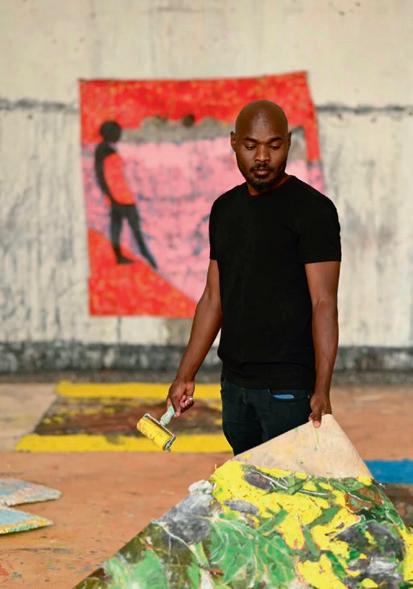
For Kenyan artist Kaloki Nyamai, art began as an act of resistance. As a stubborn, fun-loving boy growing up in Nairobi in the 1980s and 1990s, he covered school walls and desks with drawings, pushing back against the rigid discipline that surrounded him. The creative act became both rebellion and refuge. “I was raised in a time where the cane was the only answer in life,” he says. “So, it was cane at home, cane in the morning because I would always be late to school. Drawing was the answer for me. I would always find freedom in drawing.”
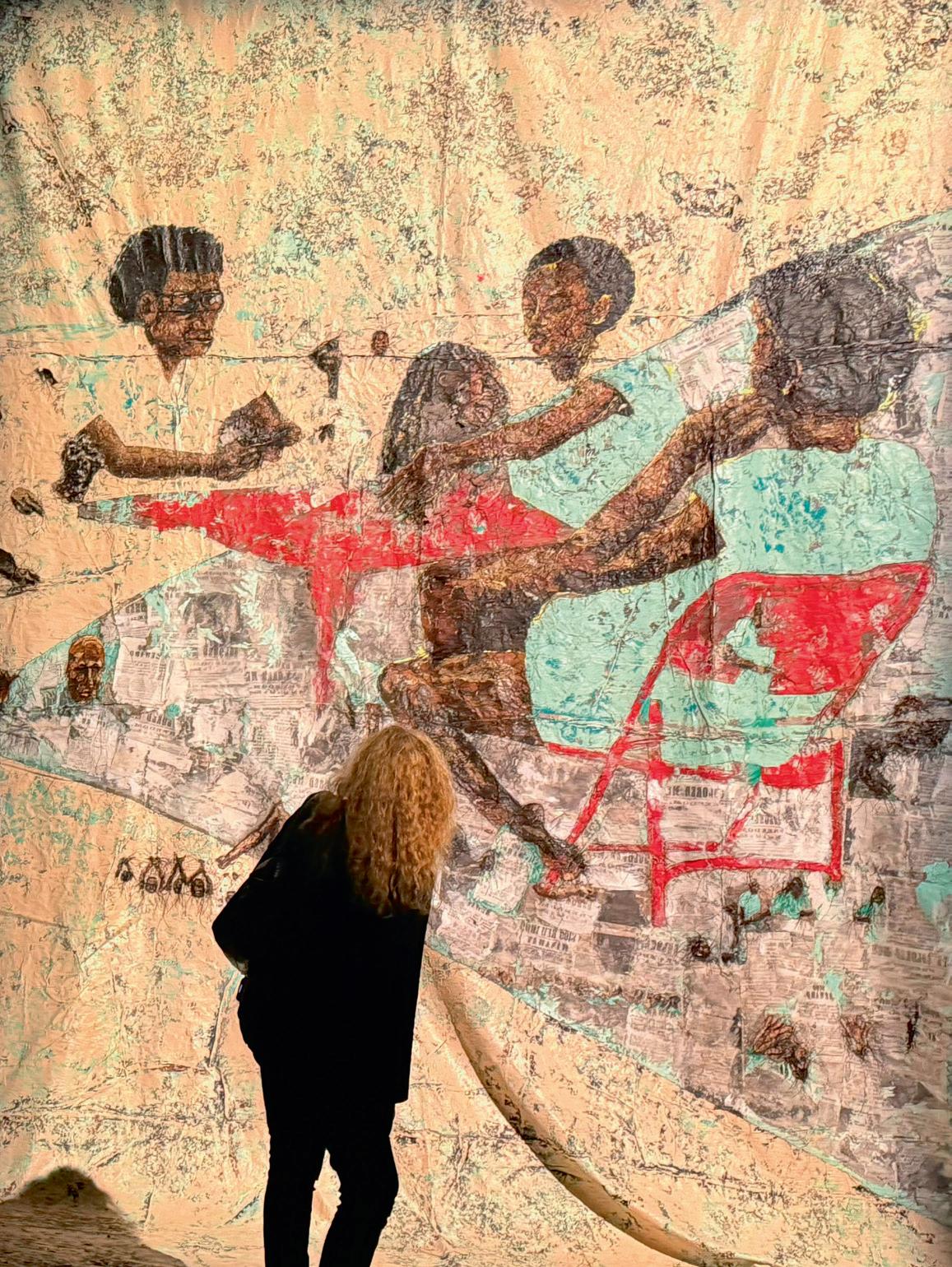
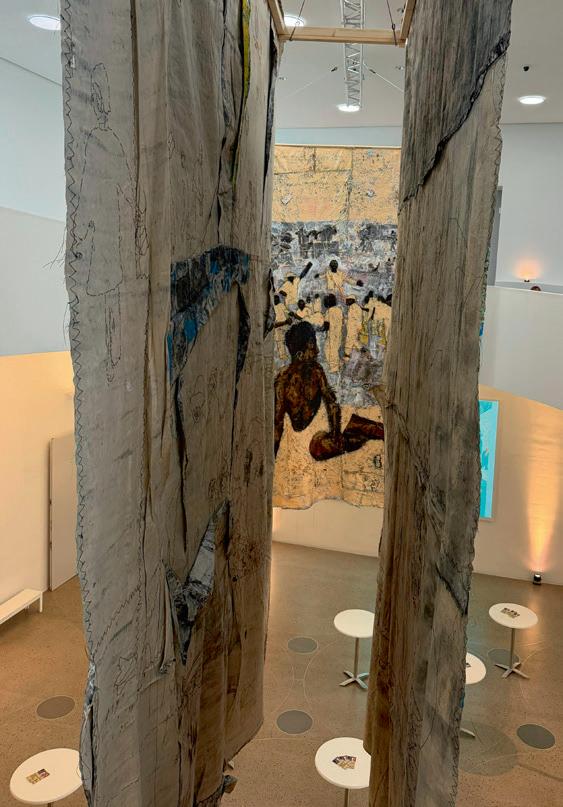
Other sanctions designed to curb Nyamai’s waywardness included being regularly sent to stay with his grandparents in Kitui, where he was born. Far from a punishment, Nyamai found these trips “super fun”. The small town in eastern Kenya is known as the main home of the Akamba people and Nyamai relished the opportunities to listen to his grandmother – a local folk musician – sharing stories and songs. Nyamai has gone on to preserve these connections to his ancestral lineage in the monumental textile-based paintings the 41-year-old has become famous for as one of Kenya’s leading contemporary artists. Two works from his 2023 collection Dining in
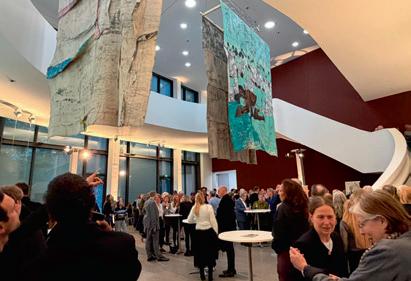
Chaos are currently pulling crowds at this year’s Venice Biennale – the world’s oldest and most prestigious art exhibition – which runs until November 22.
Akamba heritage
“My Akamba heritage is everything,” he says. “Its history is who I am; it is where I come from. Over the years, I have witnessed this culture and history fading away, but my work is a constant reminder.”
This sense of erosion is countered through material preservation. His works, often monumental in scale, are built up with layers of paint, hand-woven sisal ropes, reclaimed threads from salvage of burnt-out rubber tyres, archival newsprint, and photo transfers. “All the materials I use, the textures, and the layering of paper, to me, represent the layering of history,” Nyamai says.
Sisal, a recurring element, holds particular resonance. “Sisal was once used as a form of currency. For example, during wedding ceremonies, gifting sisal rope symbolised the gift of a goat,” he says. “It was also used to carry water, thatch traditional houses and make clothing. It had so many purposes and retains a strong symbolic significance in my work.”
In Nyamai’s hands, sisal is both material and metaphor – a tactile link between past and present. His canvases become palimpsests: surfaces repeatedly marked, erased, stitched, and reworked, mirroring the accumulation of history itself.
While Nyamai’s work is rooted in Akamba heritage, choosing art as a profession was another act of defiance. His father had hoped he would become an engineer, reflecting a generational belief

that such careers offered the only reliable escape from poverty. “He wanted me to be a white-collar worker,” Nyamai says. “When I said I needed to do art, it was very difficult for him.”
However, Nyamai’s mother, who he describes as a “multi-talented artist” who worked across fashion, music, and community leadership – offered unwavering support. “My mother encouraged me to continue doing art,” he says. “From that point on, one of my biggest focuses was to make my mother happy.”
This duality – defiance paired with deep familial loyalty – runs through
his practice. His art is not rebellion for its own sake but a means of asserting identity, dignity and belonging.
If rebellion formed the origins of Nyamai’s art, its mature direction is towards healing.
Unity is a central theme, expressed visually in the stitching together
MY MOTHER ENCOURAGED ME TO CONTINUE DOING ART. ONE OF MY BIGGEST FOCUSES WAS TO MAKE MY MOTHER HAPPY
of canvases using charred tyre strings. The stitching becomes an act of repair – both for Kenya, a country whose history has sometimes been marked by violence, from colonial land dispossession to entrenched ethnic tensions that continue to surface during elections, and for the wider world.
“The solution to violence is not more violence, but coming together,” says Nyamai. “When you stitch someone up, it is a healing process, so not only are we coming together, but we are also healing ourselves in the process.”
This emphasis on collective restoration situates his work within both Kenyan history and a broader global condition. Scenes of communal activity – dance, eating, protest –appear in work such Dining in Chaos as visual propositions for coexistence, countering fragmentation with shared experience.
Nyamai’s artistic development is mirrored in the physical expansion of his working environment. Starting out in Nairobi, he worked from what he describes as “a tiny studio in Ngong Road.”
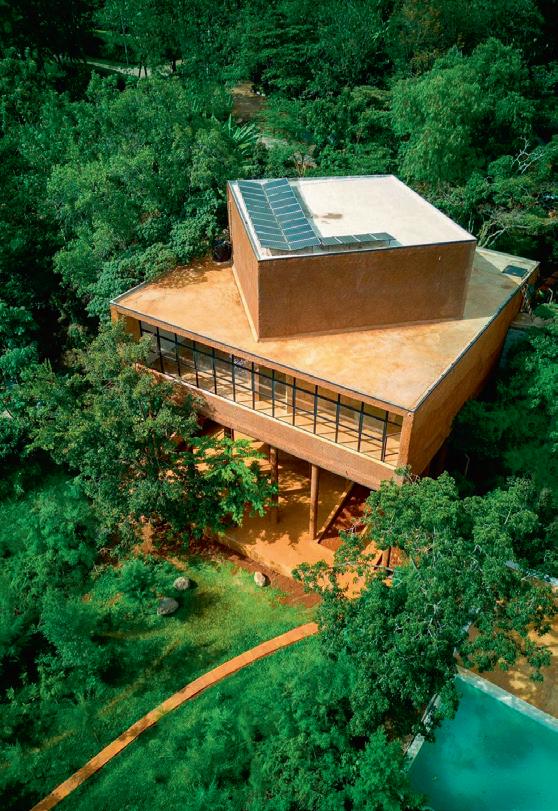
Today, he occupies a striking, purpose-built studio in the city’s desirable Karen neighbourhood, designed by David Adjaye. Nyamai initially approached the acclaimed architect to build an art residency for other artists. But after seeing his cramped conditions, Adjaye proposed first creating a space worthy of Nyamai’s own work.
The result is Nyamai’s “studio for life” – a tree-shrouded sanctuary of polished low-carbon concrete, with large, light-filled rooms for both making and exhibiting his most ambitious pieces. Here, he works on multiple paintings
at once, each evolving slowly –“maybe a year, maybe two years,” he says – in what he describes as a dynamic dialogue. “For me, the work communicates, and I communicate back.” Colour choices emerge from this exchange: “Some colours do balance, and other colours do not. It has to be the painting itself that balances.”
Once his studio was complete, Nyamai turned to the residency he had originally envisioned.
The Kamene Art Residency on Ngong Road provides a space for emerging artists to immerse themselves in their practice and collaborate with others. Alongside exhibitions, it hosts workshops,
film screenings and a library, forming a hub for a growing cultural community in Nairobi. “Right now, we’re planning a major exhibition by three artists,” he says. “Priority at the residency is given to artists, filmmakers, and creatives of African descent.”
Nyamai’s own work now commands global attention, as evidenced by his two appearances as an exhibiting artist at the Venice Biennale. His selection this year is intertwined with his relationship with the curator Koyo Kouoh, whom he met during the 2022 Biennale. “I always loved the way she works, her humbleness,
and how strong she is with her voice,” he says.
The Cameroonian-Swiss Kouoh sadly passed away in 2025 shortly after being appointed as the first African woman to curate the Biennale. Nyamai was “extremely excited” to be among her selected artists for the 2026 event. “I knew I had to give the best of the pieces that I have,” he says.
He selected two works from Dining in Chaos, a series that reflects on conflict while searching for moments of stillness within it. Created in 2023, the pieces encapsulate the trajectory of his practice: rebellion transformed into reflection, memory embedded in material, division answered with unity.
In many ways, they return to the instinct that first led him, as a child, to draw on school walls – an attempt to carve out space, however small, for freedom within constraint. “For me, these pieces are about trying to find peace within a chaotic space,” he says. “That’s what they are voicing out for me.”
To keep up with Kaloki Nyamai’s latest work, go to his Instagram page @kalokinyamaistudio
For more details on Kamene Art Residency, visit kameneculturalcenter.com
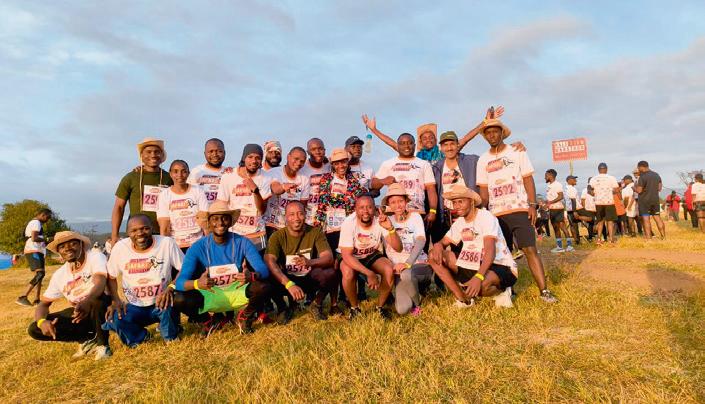
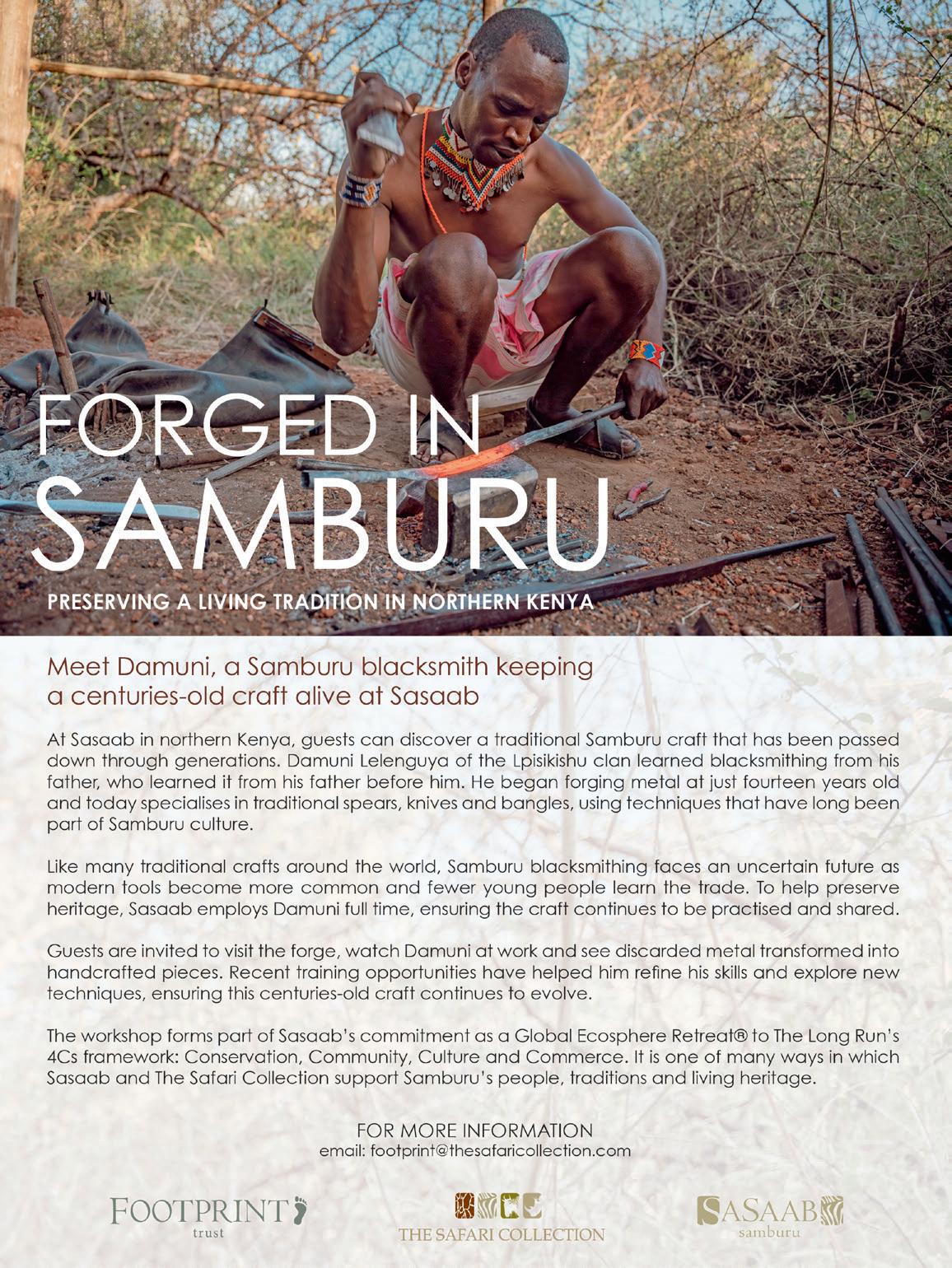
A 20-strong Safarilink team laced up for a cause at this year’s Lewa Safari Marathon, joining runners from around the world in support of Kenya’s wildlife and communities. Here’s a closer look at the iconic conservation event we’ve proudly backed for over 15 years.
On June 27, around 1,500 runners set off across the savannah plains, acacia woodlands, and riverbanks of the wildlife-rich Lewa Wildlife Conservancy – running alongside some of Africa’s most iconic wildlife.
Now in its 26th year, the Lewa Safari Marathon has become a bucket-list challenge for runners in Kenya and around the world, offering a rare chance to experience the conservancy up close while supporting its vital conservation work.
Participants share the course with some of Africa’s most endangered and iconic species. The conservancy is home to one of Kenya’s highest wildlife densities, including around 12 per cent of the country’s critically endangered black and white rhinos and the world’s largest population of Grevy’s zebra. It is also one of the best places to spot rare species such as the reticulated giraffe, gerenuk, and Somali ostrich.
Each step taken by runners helps protect this precious ecosystem. Through entry fees and peerto-peer fundraising, the event has raised millions of dollars to
safeguard threatened species and expand access to healthcare and education for local communities.
Safarilink is proud to play an active role in this conservation model.
In addition to sponsoring a team of employees to take part, we support the event logistically by transporting staff and participants. Year-round, we also contribute a percentage of every passenger
ticket to support the ongoing work of the Lewa Wildlife Conservancy.
FANCY TAKING PART IN 2027?
The event includes full and half marathons, a 10km executive race, and a 5km kids’ run –offering something for every level of runner. Secure your place at www.lewasafarimarathon.com and let Safarilink get you to the start line on time.

Safarilink partnerships brings Kenya’s best beach and bush escapes within easy reach of international travellers. Safarilink is delighted to announce its nomination for Kenya’s Leading Domestic Safari Carrier at this year’s World Travel Awards. Widely regarded as the ‘Oscars’ of the global travel and tourism industry, the awards celebrate excellence across the sector – and we are honoured to be recognised among the nominees. Help us bring the award home by voting for Safarilink at www.worldtravelawards.com/vote
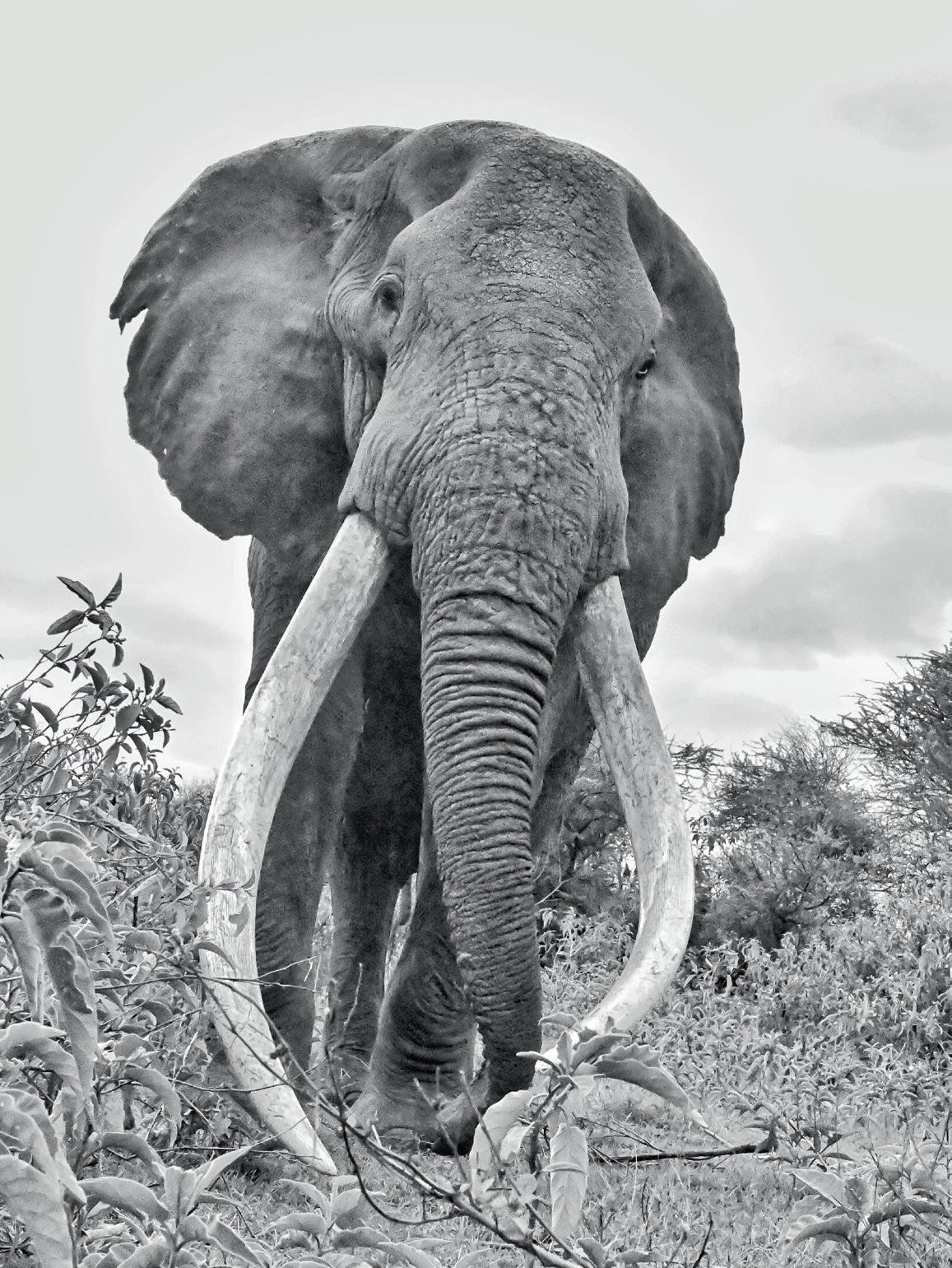
“I TOOK THE PICTURE UNAWARE IT WOULD BE A FAREWELL”
Following on from our tribute to ‘Craig’, in the last issue of The Link, we now share one of the last photos taken of Amboseli’s legendary tusker. It was captured by wildlife photographer Carl Jousset who shares how the story behind the image.
One of the last people to capture Craig on camera was Carl Jousset. The Frenchborn, East Africa-based photographer took this majestic image on January 1, 2026, the day before Craig died. Carl, whose work has been exhibited worldwide and documents his travels to more than 80 countries, says the image will always have a special significance to him because of its timing and the way it captures the legendary super tusker’s age-defying grandiosity. “The light was soft over the plains of Amboseli National Park when he appeared – silent, immense, undeniable,” recounts Carl. “He paused, facing me – not in curiosity, but in calm awareness. I took the photograph unaware it would become a farewell. This image holds that final stillness – a meeting with a legend, just before silence.”
To see more of Carl’s work, visit his website carljoussetphotography.com

Kenya is rapidly cementing its position as one of Africa’s leading digital tourism destinations, driven by innovation in payments, artificial intelligence, and smart travel platforms. The country is actively shaping how technology enhances the entire visitor journey – from trip planning and entry processes to onthe-ground experiences and payments.
At the heart of Kenya’s digital tourism transformation is its globally recognised leadership in mobile payments. With mobile money adoption exceeding 90 percent and tens of millions of active users, digital payments are already embedded in everyday economic activity across both urban centres and rural areas.
Building on this foundation, one of the most significant recent developments is TouristTap, a travel-focused payment platform developed by Craft Silicon in partnership with KCB Bank and Visa. The platform enables tourists to make cashless payments across the entire tourism value chain – covering
Harriet James explores how the country is using technology to reshape travel, payments and visitor experiences.

airports, hotels, national parks, transport services, restaurants, and even informal markets –through a single digital interface.
What sets TouristTap apart is its ability to integrate mobile money systems with international card payment networks. Visitors can make secure transactions using NFC-enabled smartphones without requiring local SIM cards, physical cash, or currency exchange services. This innovation reflects a broader push towards frictionless travel, where payment complexity is removed from the tourist experience entirely.
In parallel, the Kenya Tourism Board’s collaboration with Visa highlights a growing reliance on digital payment data and consumer insights. These efforts are
helping to optimise tourist flows, refine marketing strategies, and expand financial inclusion for local tourism operators.
Kenya’s digital tourism strategy extends beyond payments into visitor navigation and real-time information access. The Kenya Parks & Safaris app, developed by Nature Expeditions Africa, transforms smartphones into digital safari companions – with GPS-based navigation, destination information, suggested itineraries, wildlife and attraction details, and practical guidance while travelling.
At the same time, the Kenya Wildlife Service has rolled out e-ticketing systems across national parks, replacing manual entry processes with secure and efficient


digital alternatives. This builds on broader efforts to digitise tourism infrastructure, including online bookings for accommodation, transport, and park access.
Mobile apps now also enable travellers to compare accommodation prices, locate nearby attractions, check weather conditions, and navigate unfamiliar destinations using GPS technology.
Kenya is also embracing artificial intelligence and data-driven governance to strengthen its tourism sector. The government’s introduction of an Electronic Travel Authorisation (eTA) system simplifies entry procedures, streamlining the visa process for international visitors.

Beyond entry systems, AI-driven data analytics are being integrated into tourism planning and management. Hotels, airlines, and travel companies are increasingly using automated systems and customer data to personalise experiences and improve service delivery.
At a national level, the Ministry of Tourism is leveraging data to forecast demand, target high-value travellers, and manage visitor distribution across destinations. This approach supports Kenya’s ambition to significantly increase international arrivals while maintaining sustainability and protecting sensitive ecosystems.
Technology is also transforming how Kenya markets itself to global audiences. Social media platforms such as Instagram, TikTok, and YouTube have become powerful tools for destination visibility, enabling locations like Maasai Mara, Diani, and Samburu to reach millions through visually driven storytelling.
Influencers and travel content creators now play an increasingly important role in shaping tourism demand, with viral content capable of driving immediate interest in previously overlooked destinations such as Turkana and Rusinga Island.
In addition, virtual tourism is gaining traction. Through drones, virtual reality, and 360-degree video content, travellers can preview destinations before visiting, helping them make more informed travel decisions while building anticipation.
Despite these advances, challenges remain. Limited internet
connectivity in remote tourist areas can restrict access to digital services when they are most needed. Cybersecurity concerns, including online fraud and data breaches, also present ongoing risks as the sector becomes increasingly digitised.
However, these barriers are being addressed alongside continued investment in infrastructure and digital regulation. As innovation accelerates, Kenya is demonstrating how emerging markets can leapfrog traditional systems and build modern, tech-driven tourism ecosystems.
From integrated payment systems and AI-driven planning to mobile apps and virtual experiences, Kenya is redefining what it means to be a modern tourism destination. Technology is no longer a supporting feature –it is the backbone of the entire travel experience.
FLY WITH US: THREE FLIGHTS DAILY
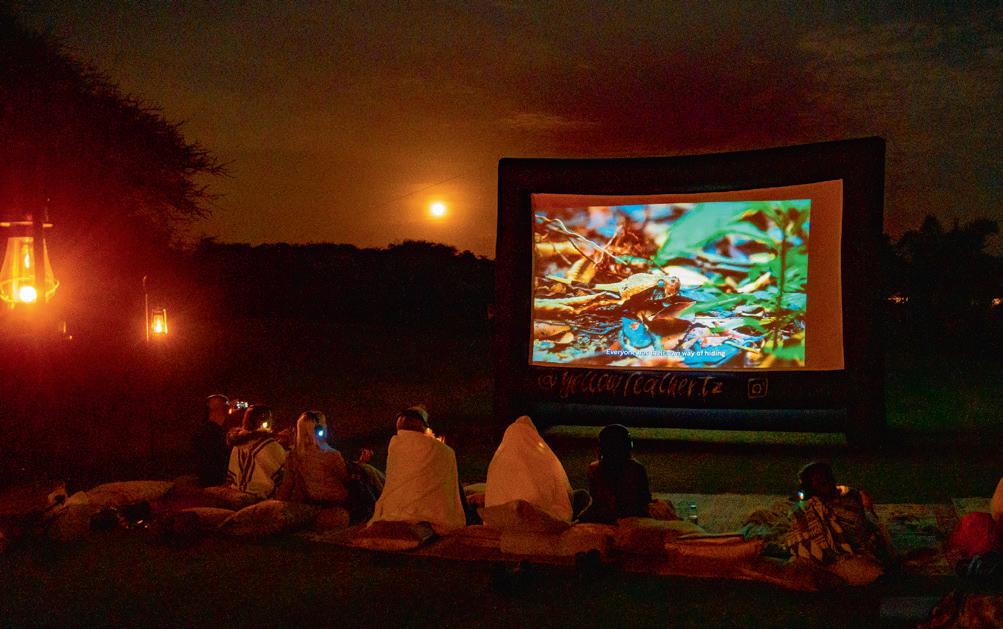
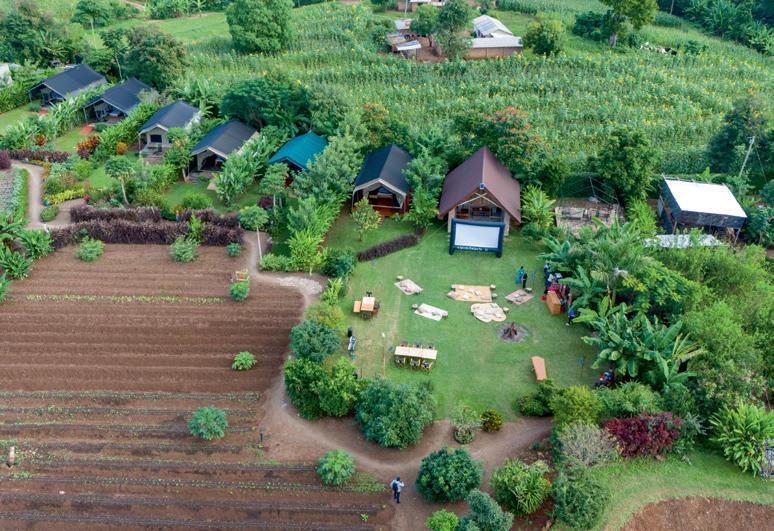
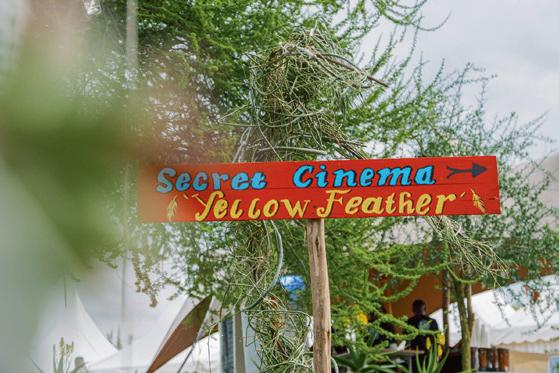
In a city best known as the gateway to Tanzania’s iconic safari circuit, Yellow Feather is quietly reshaping how both travellers and residents experience Arusha after the game drives are done. The lifestyle experience brand has announced its much-anticipated July to October 2026 season, promising more of its signature blend of open-air cinema, creative gatherings and immersive social experiences set against the city’s lush natural backdrop.
Founded in 2025 by Gloria Marandu, Yellow Feather has quickly built a devoted following –or ‘flock,’ as its community fondly
calls itself – by offering something refreshingly different: a slower, more intentional way to engage with Arusha. In its debut year alone, the brand hosted a diverse programme of events that drew more than 600 guests, signalling a growing appetite for experiences that go beyond the traditional safari itinerary.
Arusha’s identity as a safari hub often means its social rhythm is defined by early starts, packed itineraries and evenings that tend to revolve around nightlife. Yellow Feather introduces an alternative.
“Arusha’s social life can often feel repetitive or heavily centred

around nightlife and drinking culture,” explains Marandu.
“We wanted to create something softer, slower, and more intentional. Experiences that encourage people to connect not only with each other, but also with themselves and the nature surrounding the city.”
That vision has resonated strongly. Travellers passing through the city – often unsure how to spend downtime between safaris – are increasingly seeking meaningful ways to engage with the destination itself. Yellow Feather steps into that gap with experiences that prioritise atmosphere, creativity and connection over speed.
“One thing we’ve noticed is that many people visiting Arusha often don’t know what to do while actually spending time in town,” Marandu says. “There’s been growing interest around more intentional, lifestyle-oriented experiences within the city itself.”
Cinema under the stars
The backbone of the 2026 season will once again be Yellow Feather’s much-loved open-air cinema nights, held primarily on Thursdays and Saturdays at The Blue Heron Restaurant – a tranquil dining spot
set in lush gardens with sweeping views of Mount Meru. Beginning on 4 July and running through to the end of October, these screenings offer a relaxed, social setting where guests gather under the stars to enjoy carefully selected films.
Programming remains deliberately fluid and community-driven. Each month’s schedule is announced via Instagram and WhatsApp, with members of the ‘Sunbirds’ community actively shaping the lineup through polls and conversations. Film selections range from
SOCIAL EXPERIENCES SHOULDN’T FEEL LIKE SOMETHING YOU NEED TO RECOVER FROM AFTERWARDS, BUT SOMETHING THAT LEAVES YOU FEELING MORE PRESENT, GROUNDED, AND CONNECTED.
nostalgic favourites and cult classics to occasional African cinema, depending on what resonates most with audiences.
Beyond film, Yellow Feather’s calendar expands into two distinctive formats: Wild Popups and Slow Gatherings.
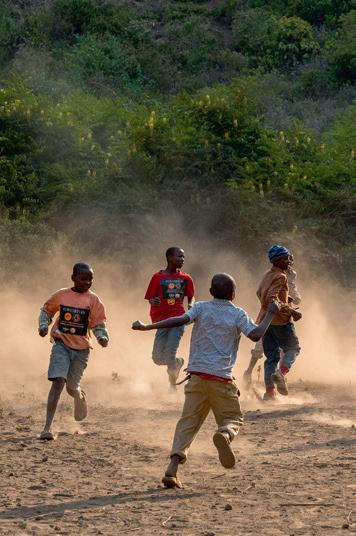
Wild Popups are dynamic, location-based experiences designed to surprise and energise. One standout from last season – returning in 2026 – is Football in the Volcano, staged at the Kilimamoto Crater in Ngaramtoni. The event saw guests descend into the crater basin for a spirited seven-a-side match surrounded by dust, wild
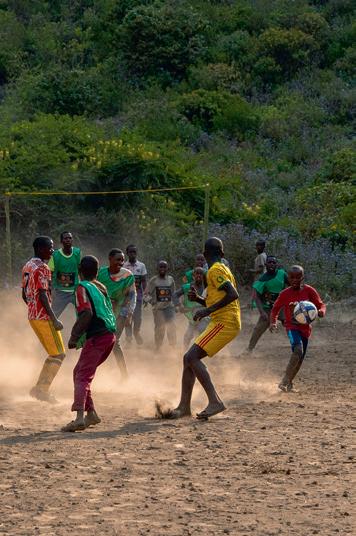
flora and cheering spectators, before gathering at the rim for sunset DJ sets and sundowners.
Slow Gatherings, by contrast, lean into stillness and reflection. These experiences are crafted around presence and atmosphere, blending elements such as sound healing, film and nature. One memorable evening paired a moonlit screening of the Tanzanian conservation film Chameleonair with a sound bath under the full moon. This year, the concept expands further to include movement,
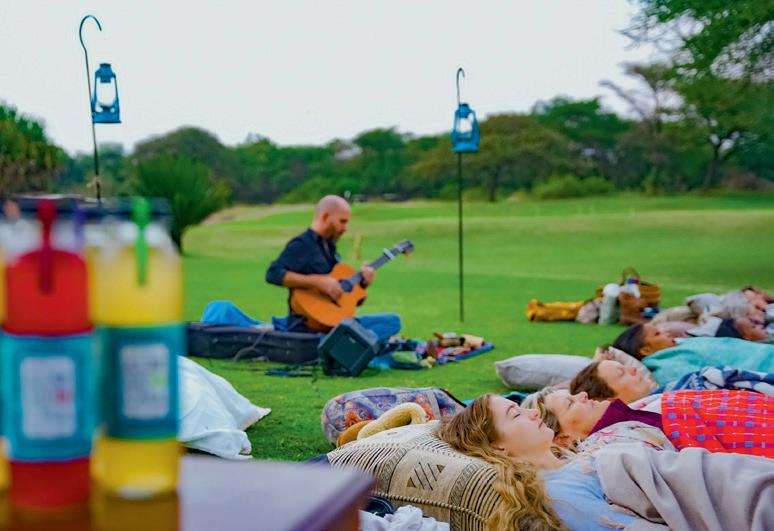
food and connection-centred experiences.
What distinguishes Yellow Feather is not just its programming but its emphasis on fostering genuine connections. Events are intentionally designed to create space – both physically and socially – for people to linger, interact and form bonds.
“Yellow Feather was built around the idea that social experiences shouldn’t feel like something you
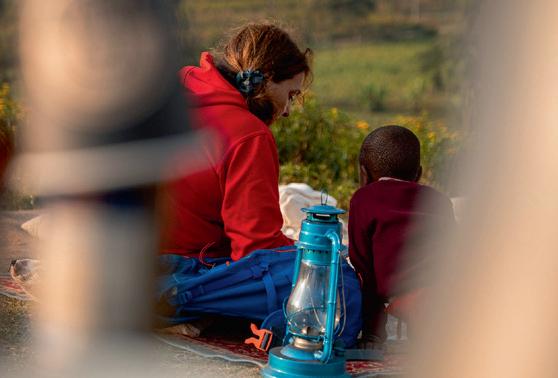
need to recover from afterwards,” says Marandu. “But something that leaves you feeling more present, grounded, and connected.”
This approach has helped cultivate a growing network of locals and travellers who return not just for the events themselves, but for the sense of community they offer.
As travel trends shift towards more experience-driven and culturally immersive journeys, Yellow Feather represents a compelling evolution of Arusha’s identity. It adds a new layer to the destination – one that complements its world-famous wildlife adventures with something equally memorable, yet entirely different.
For visitors, it offers a way to engage with the city beyond transit and checklist tourism. For residents, it is helping to redefine what social life in Arusha can look like.
And as the 2026 season approaches, Yellow Feather continues to invite guests to step off the fast track and into something more meaningful.
Laikipia’s conservancies offer rare space for a more immersive safari. Safarilink highlights Loisaba – a standout example.
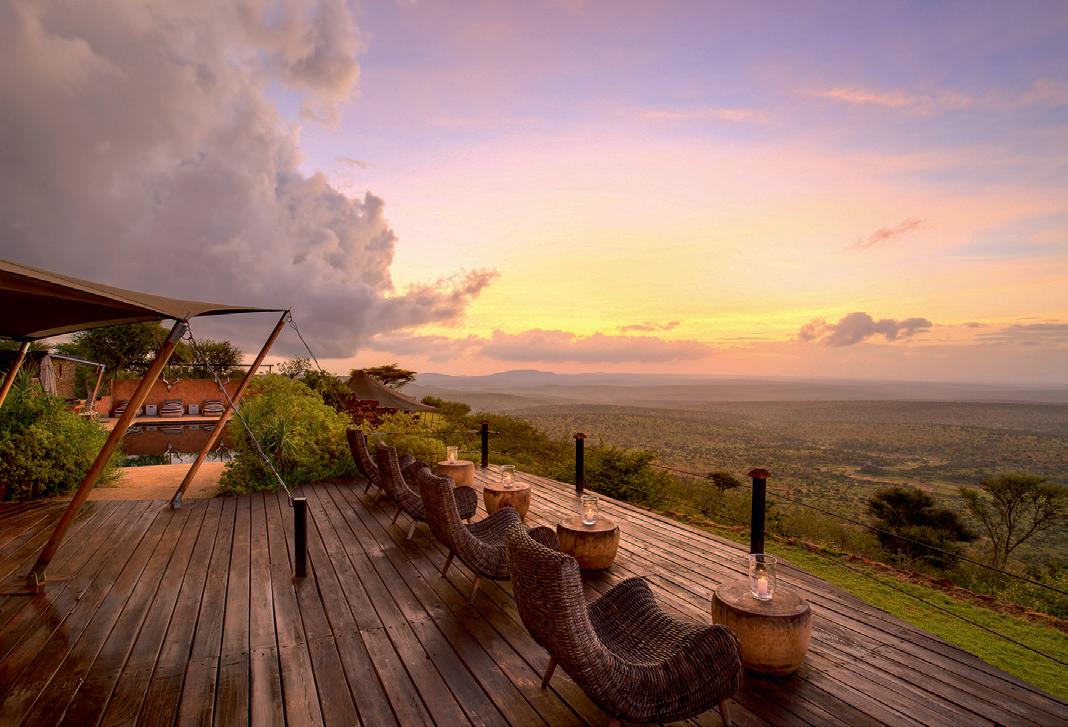
Safarilink offers multiple daily flights from Nairobi into Laikipia. The county – a vast, high-altitude plateau in central Kenya – is known for its network of 24 private wildlife conservancies. Our aircraft fly into Nanyuki, which is the gateway to several major wildlife conservancies, as well as airstrips inside the conservancies of Loisaba and Lewa.
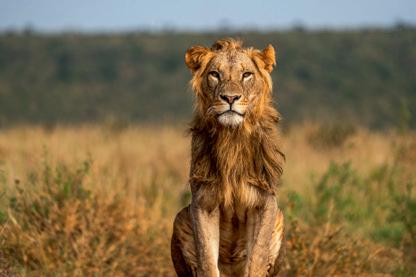
The conservancies model a safari experience that is markedly different Kenya’s busier national reserves: fewer vehicles, no daytrip crowds, no constant pressure around sightings, and a stronger sense of open, lightly peopled wilderness. The result goes beyond privacy to a more immersive, conservation-led encounter with the land.
Among these conservancies, Loisaba stands out as one of the most complete expressions of what Laikipia does best. Spread across 58,000 acres in northern Laikipia, it combines dramatic scenery, serious conservation ambition and bespoke safari adventures.
The topography is spectacular: escarpments fall away towards wide plains and Mount Kenya rises on the horizon. Here, wildlife moves on its own terms, in a landscape shaped by nature rather than staged for spectators. Loisaba offers a safari built on space, silence and variety.
That difference is intentional. As Hannah Campbell, Loisaba’s Chief Administrative Officer, puts it, Loisaba is “deliberately managed
as a low-impact, high-value destination: no day visits are permitted, and there is a maximum of just 28 rooms across the conservancy”. In practical terms, that means guests can spend hours out on the conservancy without seeing another vehicle, and sightings unfold with a calmness rarely found in higher-volume reserves. The sense of exclusivity is not merely a luxury flourish; it is part of the
conservation strategy. Fewer guests mean less pressure on the land, more natural wildlife behaviour and a pace of safari that invites deeper attention.
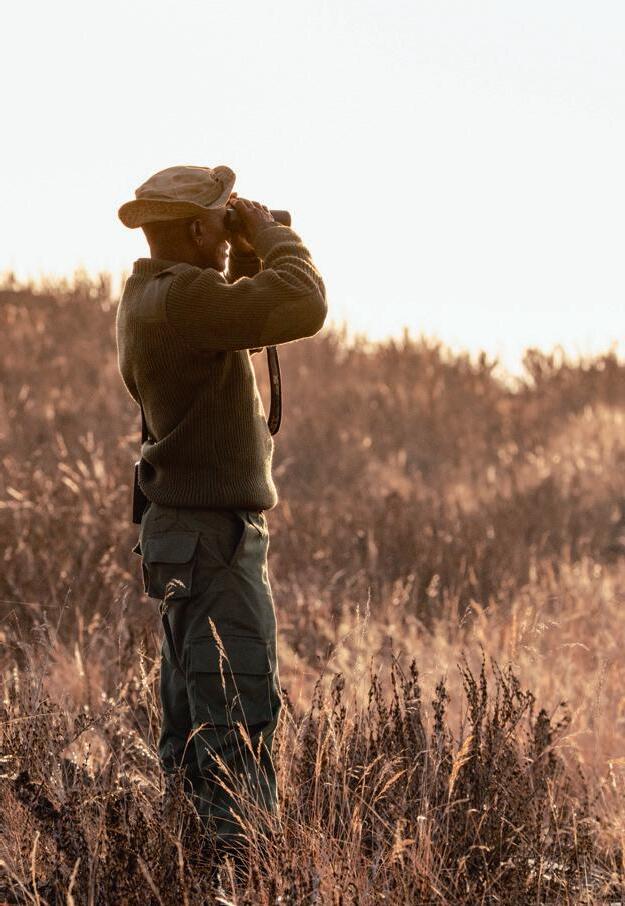
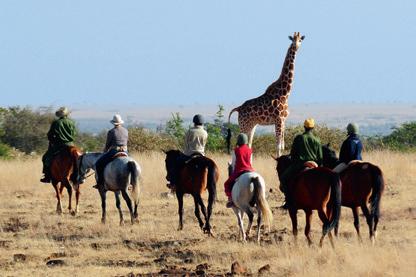
Loisaba, like the other lease-hold conservancies in Laikipia, is not tied to the rigid state laws of parks and reserves that restrict exploration beyond game drives. Options include guided bush walks, horseback safaris, camel rides, Mountain biking, fishing, cultural visits, anti-poaching dog visits and helicopter excursions.
Hannah says “guests do not experience Loisaba through a single lens”; they leave having engaged with the landscape, wildlife, conservation and culture from multiple angles. That variety gives the stay an unusually immersive quality: part safari, part field experience, part access to the inner workings of a living conservancy.
What many visitors remember most, however, is the peace. Because access is limited to guests staying at the conservancy’s lodges, Loisaba retains the feeling of
a private wilderness rather than a public attraction.
There are sundowners with nothing else in view but the folds of the land, breakfasts taken out in the bush without nearby engines, and long stretches of safari in which the only movement comes from elephant, giraffe or rhino. Hannah describes the result as “a safari experience that feels far more personal and immersive”.
The places from which guests encounter Loisaba are integral
A SAFARI EXPERIENCE THAT FEELS FAR MORE PERSONAL AND IMMERSIVE
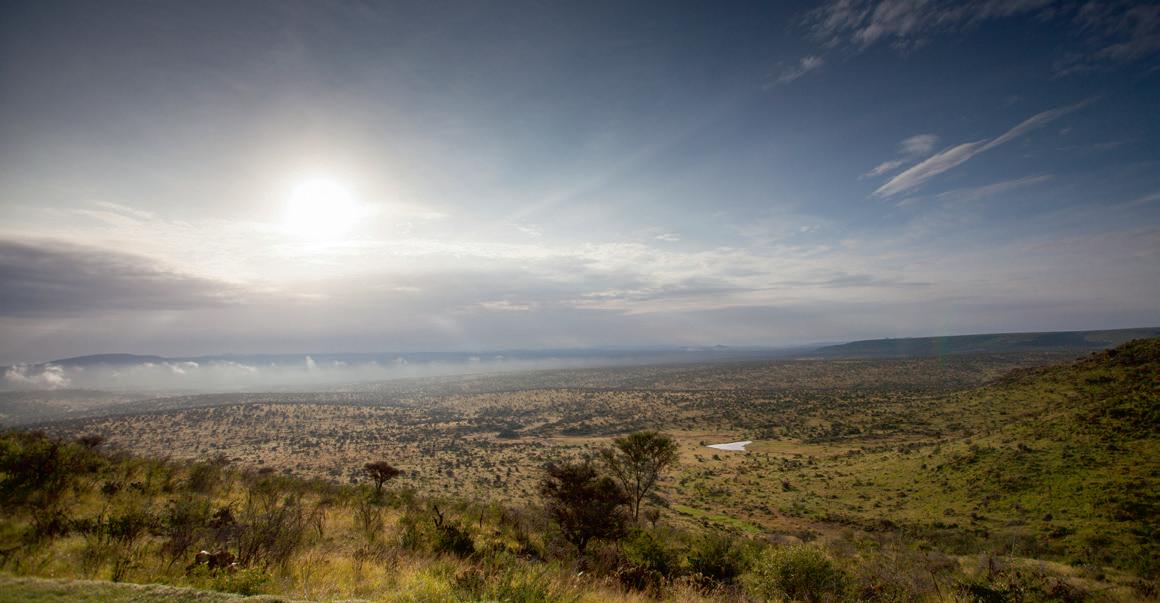
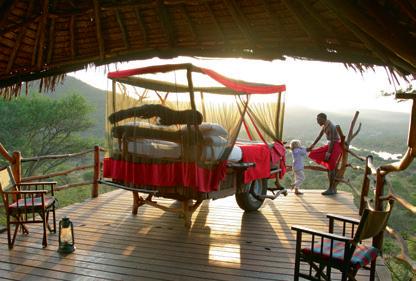
to its appeal. The three Elewana properties are positioned to make the most of the conservancy’s extraordinary outlooks, while the Star Beds remain among the most memorable sleep-outs in Kenya, placing visitors directly beneath an open sky dense with stars. Even from camp, wildlife often appears within view. First-time visitors, says Hannah, are frequently surprised by “how much wildlife can be seen directly from camp” and by the scale and drama of the landscape itself: rocky outcrops, open plains, escarpments and uninterrupted views.
Yet Loisaba’s strongest claim to significance lies beyond the guest experience. The conservancy model allows a flexibility and ambition that would be difficult to replicate in a traditional national park. Since coming under the Loisaba Community Trust in 2014, the land has been secured for conservation in perpetuity, removing the risk
of subdivision and embedding a longer-term vision in which tourism, habitat protection, research and local livelihoods support one another. Hannah argues that conservancies represent one of the most sustainable models for safari tourism in Kenya because they align conservation, community benefit and tourism revenue rather than treating them as separate priorities.
At Loisaba, that model is visible on the ground. The conservancy supports jobs, education, healthcare outreach, women’s enterprise and managed grazing partnerships with neighbouring communities, while also investing in anti-poaching, habitat management and wildlife research. Its rhino programme has become one of the clearest symbols of its leadership. In 2024, black rhinos returned to Loisaba after an absence of 50 years, making it Kenya’s 17th rhino sanctuary; by early 2026, the population had risen to 38 black and white
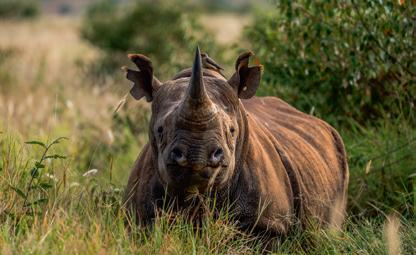
rhinos, including calves born on the conservancy. Hannah sees this not as an isolated achievement but as part of a wider role for Loisaba as a hub for knowledge-sharing and security expertise across neighbouring conservancies and community lands.
In a country whose most famous reserves are often judged by density of wildlife and drama of sightings, Loisaba makes a different case: that room to roam, freedom to explore, and meaningful investment in people and landscape may be the more important measure of success.


Tanzania’s biggest actors and musicians want in on their films, and audiences around the world are already watching. Bongohoodz Pichaz are guerrilla filmmaking game-changers, rewriting the rules of Tanzanian cinema from the ground up.
Dar es Salaam’s ‘Bongo Movie’ guerilla filmmaking industry has dominated the Tanzanian film scene through the 21st century. With its “no budget” feature films that capture in compelling style the day-today dramas in Dar’s inner city, independent production house Bongohoodz Pichaz is part of that heritage, yet pushes it into radical new territory.
“What we’re doing is revolutionary,” says BongoHoodz producer and actor Noriega ‘Scooby’ Francis. “There is Bongo Movies and then there is Bongohoodz.”
Key to the distinction is the production house’s pioneering move to separate itself from the DVD-based distribution that has long defined the Bongo industry and make its films – in Swahili with English subtitles – free to stream worldwide on its YouTube channel. Scooby says the decision was fuelled by a desire to retain full creative control over their work with Government film boards, restrictive regulations, and unreliable or exploitative distributors often standing between the
team and its intended audience. “We wanted to put our films out in our way, and build our own fan base,” says Scooby.
Launched in 2017, Bongohoodz Pichaz now has a catalogue of over 20 feature films available to view online. The collective’s first release, 2018’s wild crime caper Bongo na Flava, has been watched more than 180,000 times – a significant success for an independent film. Follow-up films have been similarly fast-paced slices of Tanzanian street culture, crime and ambition. These include last year’s Kichaa Kichizi (Crazy Crazy), which follows a victim of a brutal assault on a path of revenge; Siku za Alosto (Days of Addiction), a story about a former drug addict trying to rebuild his life; and Mikasa Mikosi na Makosa (Mistakes and Mistakes), in which two friends attempt to piece together the events of a drunken night out. Each is pushing six-figure views.
The impressive engagement metrics of these online films highlights another way Bongohoodz distinguishes itself from the guerrilla
filmmaking scene: the quality of its output. While the wider Bongo movie business model often prioritises rapid production for quick returns – frequently at the expense of cinematography, dialogue, and editing – Bongohoodz takes a different approach. The collective releases just three or four feature-length films a year, each carefully crafted. “A lot of work and dedication is put into our productions,” says Scooby.

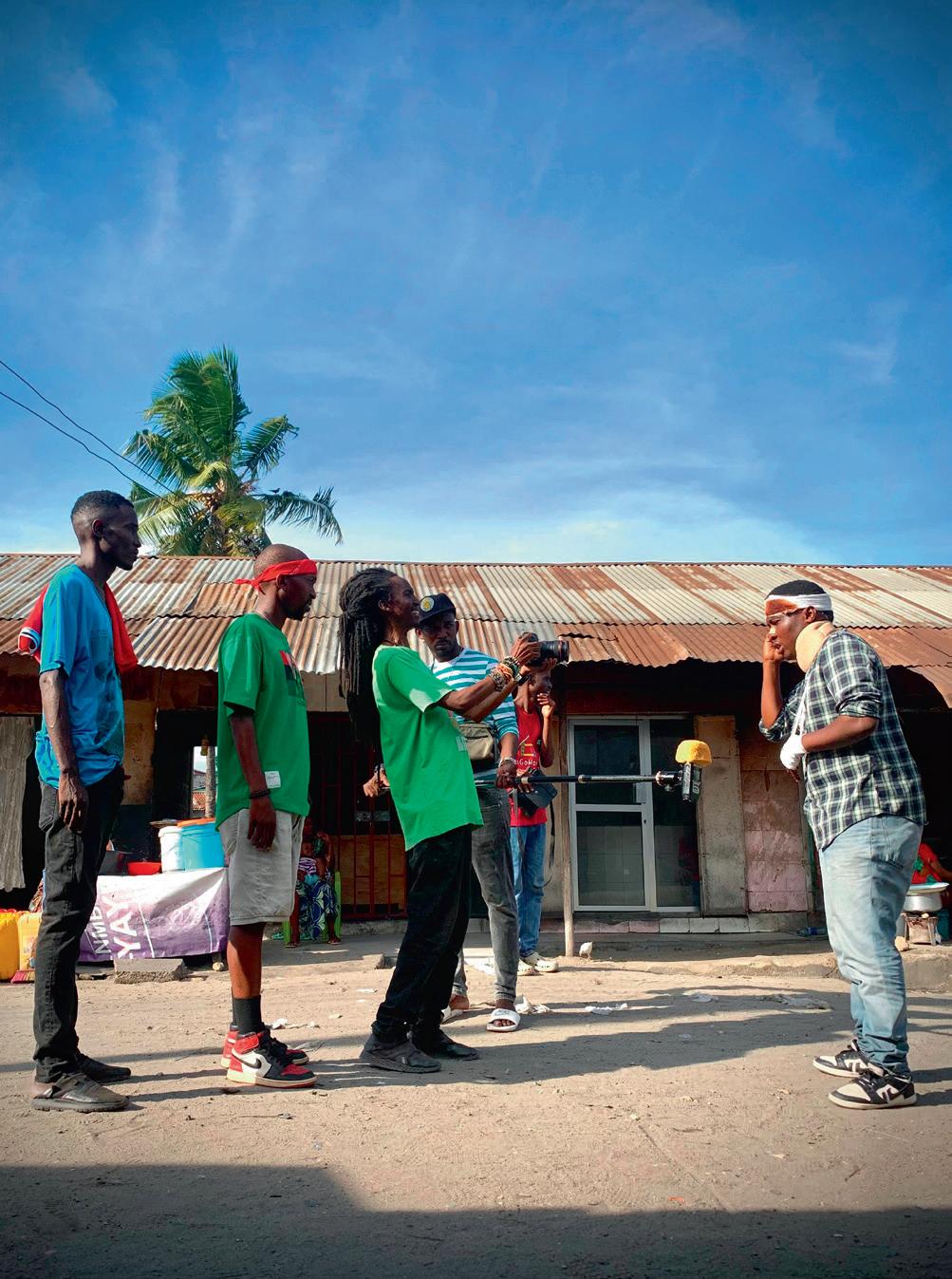
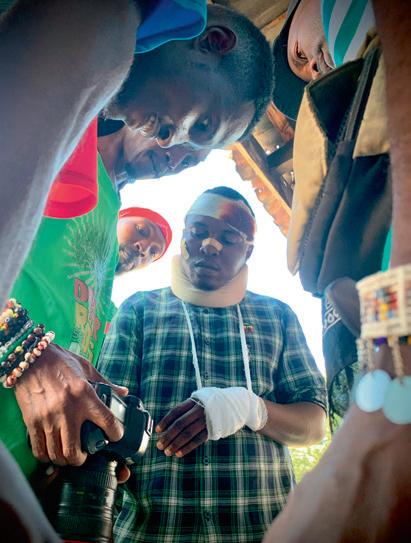
Integral to this emphasis on quality is Bongohoodz Pichaz founder Novatus ‘RrahC’ Mugurusi, the collective’s principal director and scriptwriter. Working with a stripped-back crew – often just himself filming with a tiny DJI pocket 3 hand-held camera and a sound operator balancing a pole topped by a taped-on microphone – RrahC captures footage with a high-definition clarity that belies the production’s extreme minimalism and lends the films a polished, big-budget feel online.
RrahC is also known for his immersive and inventive camera work that elevates the energy of these gritty urban dramas. Just how far the director is willing to go to get the perfect shot is evidenced on the Bongohoodz Pichaz Instagram page, which includes some behind-the-scenes footage from Deni La Damu (Blood Debt), a 2026 release about a local thief who tries to clear his name after being framed for murder. RrahC can be seen hanging off a speeding bajaji, camera trained on an argument
erupting between driver and passenger. On another occasion, he rides as a passenger on a moving motorbike, facing backwards to stay ahead of – and film – a dramatic chase scene.
Scooby says innovations such as these are a team effort, recalling how for one film a wooden crane was built from scratch and attached to the roof of a car to hold a camera and put viewers directly in the driver’s seat for another intensive chase sequence.
RrahC's film ideas are grounded in Dar street reality, but elevated with high-stakes tension and unexpected dramatic pivots. "My inspirations come from my community, I read and observe the daily challenges which the people face and try to address it in a dramatic way."
Scooby adds: "When RrahC has finished a script, he’ll put it on the Bongohoodz WhatsApp group chat and we’ll all throw in ideas. Someone might know a location or a house that would work for a certain scene.”
The films are shot in dusty, busy Dar es Salaam central neighbourhoods such as Kinondoni, Manzese, and Buguruni. These areas form the heart of ‘Bongo Hood’, a nickname for the city’s inner districts that inspired the production house’s name. Here daily life is driven by constant hustle and inventive – ‘Bongo’ means brainy or clever in Swahili – means of survival. “This is the real Dar es Salaam,” says Scooby. “Our films represent where we’re from.”
Collaboration at Bongohoodz Pichaz draws on a broad in-house creative skill set. The production house’s community includes musicians who compose original soundtracks, fashion designers responsible for wardrobe, make-up
artists, and even chefs who handle on-set catering. For Scooby, this collective ethos is central to the films. “We live as family,” he says. “The bond between us is very strong. Everyone here, whether in front of or behind the camera, is trying to do their best for the film.”
Beyond its core collective, Bongohoodz Pichaz has drawn support from a wider circle of high-profile names in Tanzanian entertainment, keen to associate themselves with an independent company expanding the possibilities of Tanzanian cinema.
Since day one, the country’s hiphop community has shown strong support, with the raw, authentic portrayal of urban life in these dramas striking a chord with local rappers. Arusha hip-hop legend JCB and Bongo Flava artist Soggy Doggy have even made appearances in front of the camera.
The pull of Bongohoodz has reached some of Tanzania’s most recognised screen talent. Angel Mazanda, star of the TV drama Noma and Female Actress of the Year in 2025, and Isarito Mwakalindile – producer and actor of the multi-award-winning feature My Son – have both appeared in Bongohoodz productions.
Bongohoodz adopts a repertory approach, drawing repeatedly from a large, consistent pool of local actors. The talent spans teenagers to established performers, many of whom have appeared across several of the production house’s films. The charismatic Scooby is one of the most familiar on-screen faces, with lead roles including Bongohoodz’s latest release, Deni La Damu. His passion for performance began in school plays and later took him to drama school. Yet he says the characters he plays
feel so close to his everyday life in Dar es Salaam that he barely feels like he’s acting at all. “My life is a drama,” he says.
Scooby is also a conduit for the network of connections necessary to complete each film. He’s described on the Bongohoodz Pichaz website as “the guy who knows the guy” and he tells me that his influential circle of friends is as important to him personally as it is professionally. “There is nothing better than having friends, and I have a lot of friends,” he says. “Things always go smoother when you know people.”
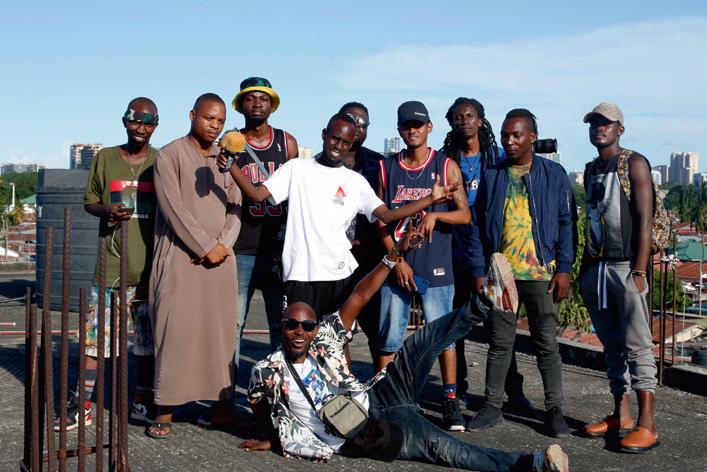
The Bongohoodz inner circle includes several of Tanzania’s most prominent entertainment figures, among them celebrated actor and comedian Idris Sultan. “He’s always been there for us,” Scooby says. The wider network also takes in influential industry figures such as radio presenter Adam Mchomvu, Tanzanian musician and politician Hamis Mwinjuma, and Kenyan rapper Kaa La Moto. Far from
decorative associations, these relationships play a practical role in Bongohoodz’s survival – helping to forge new connections, unlock opportunities, and, at crucial moments, support productions financially.
That web of relationships underpins what Scooby describes as Bongohoodz’s “no-budget” model of filmmaking. In reality, this does not mean films are made without money, but that there is no banked budget to cover an entire production from start to finish. Instead, films are assembled in stages, dictated by the availability of funds, people, and logistics. “Our movies can take from three to five months,” Scooby explains. “Things happen – cast members get sick, someone is travelling.” When the right conditions align –actors are available, fees can be paid, or a vehicle essential to a scene can be secured –the shoot moves forward.
Sharing their films for free on YouTube generates no direct income for Bongohoodz, but it has built a growing local and international following that continues to
raise the production house’s profile. The collective’s channel now has around 40,000 subscribers, and each new release is keenly anticipated online. That enthusiasm carries offline too: in Dar es Salaam, pop-up premiere screenings draw packed crowds and have become hot tickets.
For Scooby, the films’ popularity reflects the care and commitment invested in them. He sees the online catalogue as proof of what Bongohoodz Pichaz can achieve with “no budget” – and as a calling card for potential investors who could help take the collective to its next stage. “We see the films on the site as trailers for even better things to come,” he says. “When we have the means to do it, then our fans will see the full-blown movies.”
By combining guerrilla methods with professional ambition, Bongohoodz Pichaz has redefined what no-budget cinema can look like in Tanzania. The films stand as both a creative statement and an invitation – evidence of how far the collective has come, and how much further it aims to go with the support to match its vision.

Bongo na Flava (2018)
The film where it all started. A fast-paced crime caper that announced the collective’s raw, street-level style.
Kichaa Kichizi (Crazy Crazy)
A gritty revenge drama following a man scarred by a brutal assault as he spirals toward retribution on the streets of Dar es Salaam.
Siku za Alosto (Days of Addiction)
A former drug addict struggles to rebuild his life while navigating the pressures and temptations of inner-city Dar.
Mikasa Mikosi Na Makosa (Mistakes and Mistakes)
After a drunken night out, two friends attempt to piece together events that quickly spiral beyond their control.
Deni La Damu (Blood Debt)
A local thief fights to clear his name after being framed for murder in this tense crime drama.
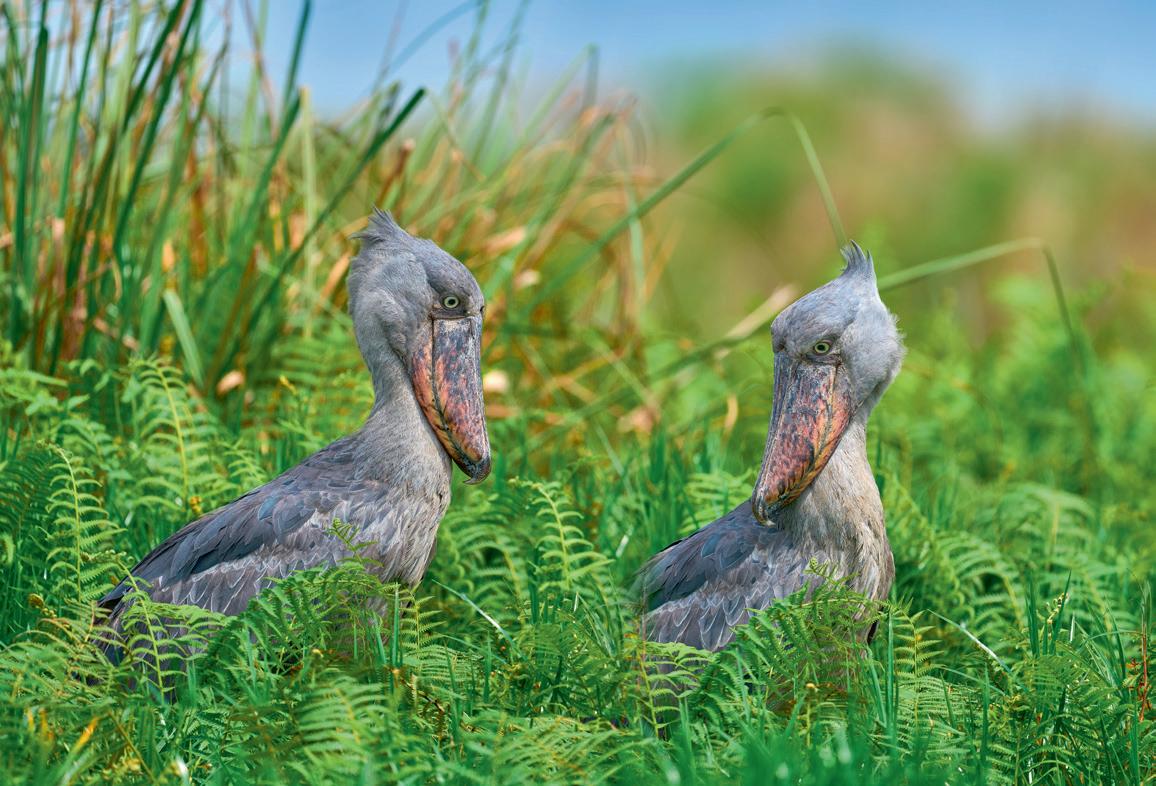
a scenic 45-minute boat ride on Lake Victoria will take you from Safarilink destination Entebbe to one of East Africa’s most thrilling wetland encounters.
The trip might not be long, but travellers will soon realise they have left the city far behind. Mabamba is lush world of papyrus walls, glassy channels and rustling reeds. Every sound here seems turned down low, except for one. The peace is occasionally broken by a loud, rapid clattering noise like a machinegun. This is the tell-tale call of the shoebill stork as it snaps its massive beak. The bird looks as extraordinary: huge and almost prehistoric-looking with that clog of a beak.
Sightings of this rare bird are a major part of the magic of Mabamba Bay. The wetland’s vast mosaic of papyrus swamp, marsh, open water and floating vegetation creates exactly the kind of quiet, food-rich environment the shoebill loves. These birds are patient ambush hunters, perfectly suited to still, shallow wetlands where lungfish and other prey move below the surface.
Even if the shoebill is the headline act, Mabamba is no one-bird wonder. The wetland is a celebrated birding hotspot with more than 300
Mabamba swamp supports a highly protected population of shoebills
recorded species, so every outing comes with a rich supporting cast. Look out for African jacanas tiptoeing over lilies, malachite and pied kingfishers flashing over the water, herons and egrets stalking the shallows, and the unmistakable cry of the African fish eagle ringing across the swamp. Lucky visitors may also spot papyrus specialists such as the papyrus gonolek and papyrus yellow warbler, along with lunging marsh harriers overhead and the occasional shy sitatunga in the reeds. In short: bring binoculars, and do not expect to put them down.
For travellers who like their adventures with a side of bragging rights, Mabamba is pure gold. It is close enough to Entebbe for a half-day escape, wild enough to feel like a revelation, and singular enough to deliver one of the region’s great wildlife moments.
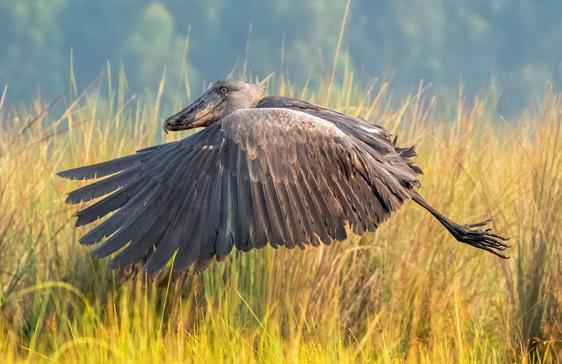
As if the stare, the stature and the sheer strangeness were not enough, the shoebill also comes with a treasure trove of glorious trivia. Here are a few facts and figures to make the case for why this remarkable marshland celebrity deserves a place on every birder’s wish list – and every curious traveller’s camera roll.
It is enormous…
An adult shoebill typically stands around 110 to 140 centimetres tall, with some birds reaching about 152 centimetres. Its wingspan can stretch to roughly 230 to 260 centimetres, which helps explain why a close-up sighting feels less like birdwatching and more like meeting a feathered monument.
That bill is the real deal…
The shoebill’s famous clog-shaped bill can measure around 19 to 24 centimetres long. It is not just for show: the sharp edges and hooked tip help the bird seize slippery prey such as lungfish, catfish and tilapia.
It is not actually a stork…
Despite the nickname, the shoebill is not a true stork at all. It sits in its
own family, Balaenicipitidae, and modern evidence places it closer to pelicans and herons than to storks. In bird terms, it is wonderfully in a league of its own.
It hunts like a master of suspense…
Shoebills can remain almost completely motionless for long stretches, waiting for prey to surface. Then comes the strike: fast, forceful and startlingly effective. Around 60 per cent of strikes result in a kill – impressive odds for such a statuesque hunter.
Lungfish are a favourite. One reason Mabamba suits the species so well is that shoebills thrive in wetlands where lungfish are plentiful. They also take frogs, snakes and even small crocodiles, but lungfish are one of their preferred menu items.
ITS WINGSPAN CAN STRETCH TO ROUGHLY 230 TO 260 CENTIMETRES, WHICH HELPS EXPLAIN WHY A CLOSE-UP SIGHTING FEELS LESS LIKE BIRDWATCHING AND MORE LIKE MEETING A FEATHERED MONUMENT.
It sounds as strange as it looks…
Shoebills are often quiet, but they are known for dramatic bill-clattering, especially around the nest or in displays. The sound has been compared to a burst of machine-gun fire, which is not the usual soundtrack to a peaceful swamp morning.
It likes its personal space…
This is a bird that does not do crowd scenes. Shoebills are famously solitary, often foraging at least 20 metres apart, and even breeding pairs may feed at opposite ends of their territory.
It is built for the swamp…
Long legs, large feet and elongated toes help the shoebill move across floating vegetation and marshy ground.
It is a patient parent… Shoebills build substantial nests on floating vegetation or mounds in the swamp. Females may lay one to three eggs, and both parents help incubate, guard and cool the eggs and chicks, sometimes carrying water in their bills to splash over the nest in the heat.
It is rare – and that matters…
The shoebill is classified as Vulnerable, with an estimated 3,300 to 5,300 mature individuals left in the wild, and the population is thought to be decreasing.
It is a genuine bucketlist bird…
For seasoned birders, the shoebill is one of Africa’s great prizes. Mabamba provides chance to encounter one of the avian world’s true originals, just a short journey from Entebbe.

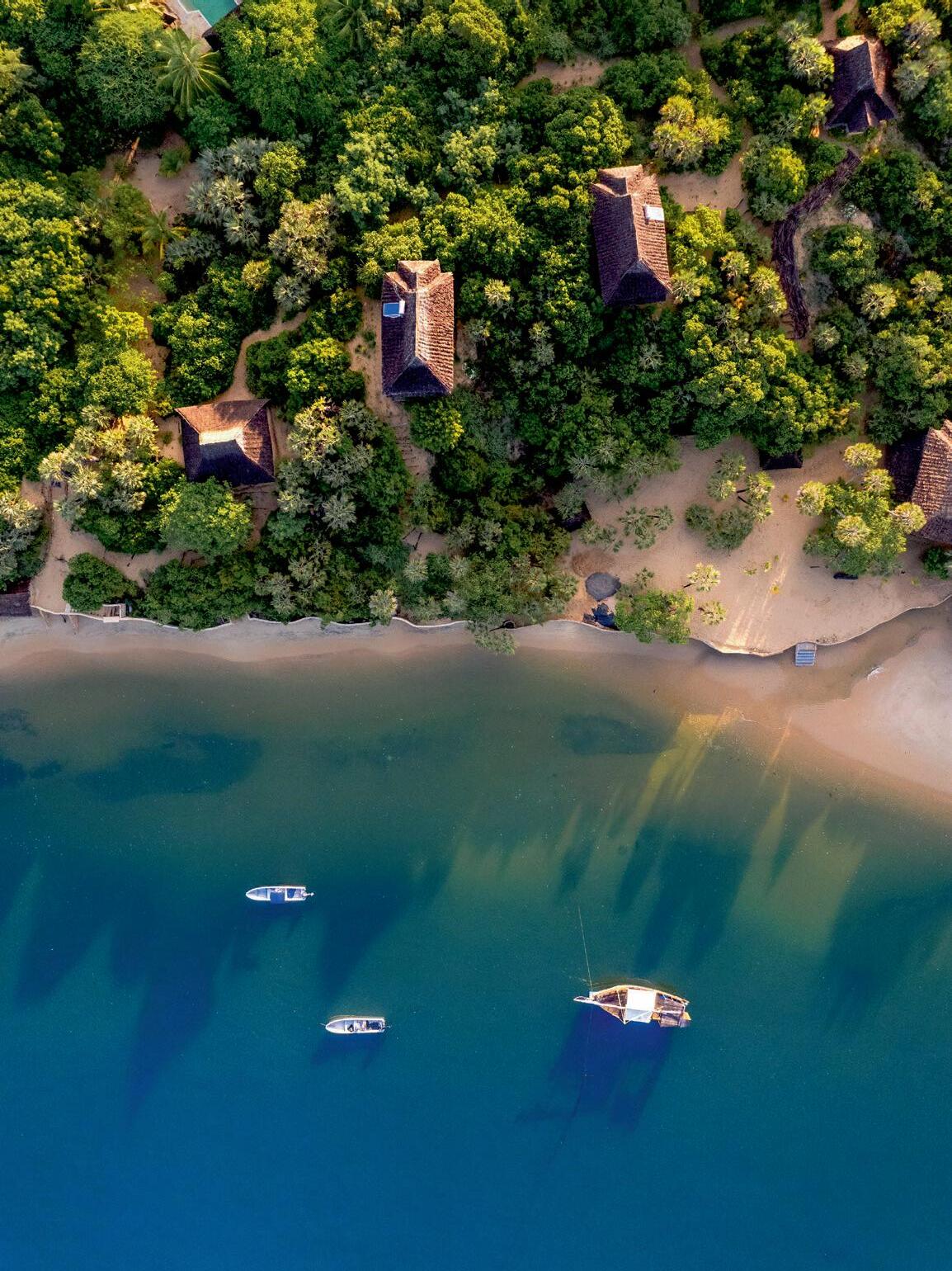
Sustainability isn’t a selling point in Lamu, it’s survival. Sarah Kingdom samples the hotels, resorts and artisans protecting the archipelago for tomorrow.
One of the first things you notice about Lamu is the silence. It’s not the absence of sound, but rather the absence of noise. No honking traffic. No towering hotels. No shopping malls.
Instead, there’s the wind moving through the palm trees, the creaking of wooden dhows drifting across the channel, the sound of waves, birdsong, quiet
conversations, the clip-clop of donkey’s hooves, children reciting lessons in classrooms, the call to prayer echoing through coral-stone alleyways.
I hadn’t come to Lamu looking for a lesson in sustainability. I’d come looking for rest. What I found was a place and people trying to ensure tourism benefits the archipelago. From barefoot island lodges powered by the sun, to craftsmen
turning ocean plastic into dhow fishing boats, Lamu is proving that conservation and community can coexist.
Moving between Lamu Old Town, Shela Beach, Manda Island, and the quieter edges of the archipelago, I realised Lamu offers something increasingly rare in modern travel: balance. Perhaps because the environment feels so fragile, sustainability here stops
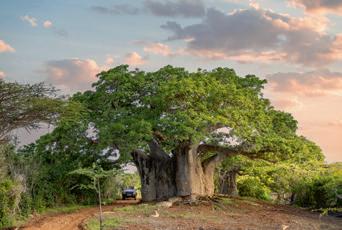
feeling abstract. You become acutely aware of the limits – water is precious, waste matters, and ecosystems like coral reefs and mangroves are vital. Some of the most inspiring eco-conscious stays in Lamu understand this deeply.
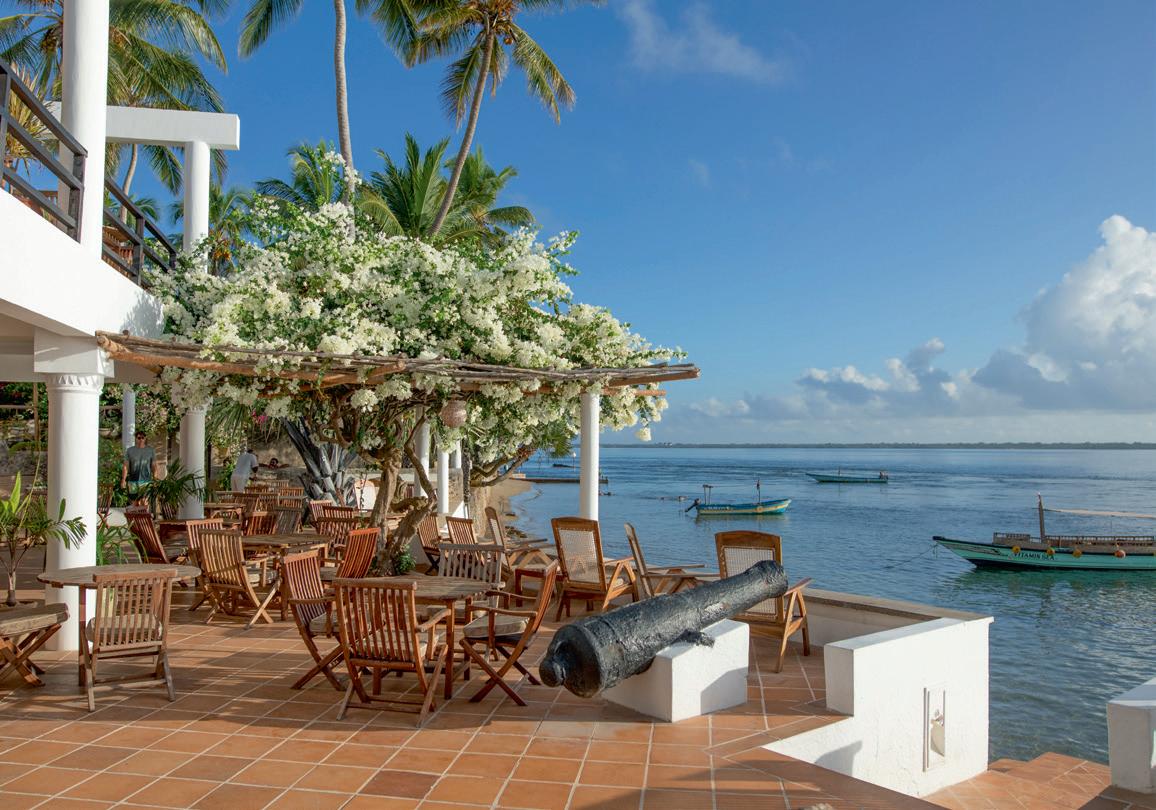
The harbourside Peponi Hotel holds pride of place among the whitewashed coral-stone buildings
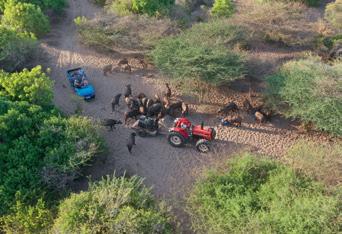
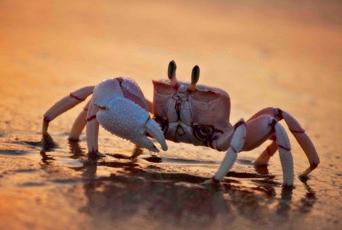
of affluent Shela village, fitting neatly into its waterfront setting. Its restaurant is one of the island’s best dining options, with a breezy verandah overlooking fishermen unloading their catch. That super-fresh seafood finds its way straight onto the menu.
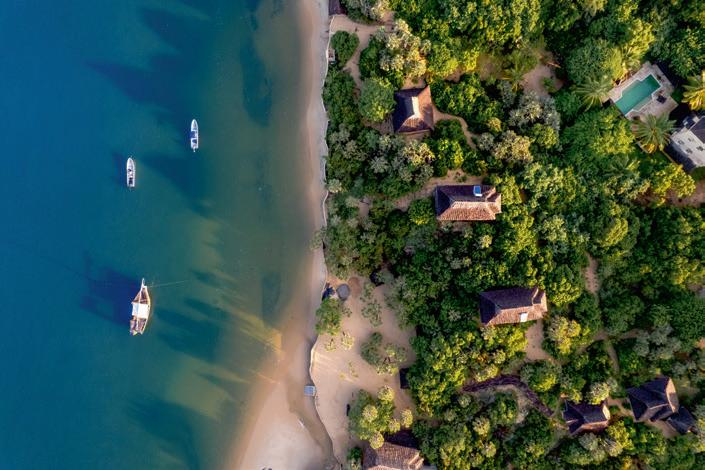
The story behind The Cabanas is a moving one. Today, the property
feels lush, shaded, and deeply connected to nature, but it didn’t begin that way. Before the palms and vegetation, this stretch of Kizingoni Beach was exposed to sand and wind. What transformed it was not construction, but planting.
For the first five years, the owners planted indigenous trees across the 24-acre property, stabilising the sand dunes, while creating shade, moisture, and a habitat for birdlife. Only later did the accommodation emerge, within that restored environment, a philosophy that still defines the property today.
The buildings themselves blend into the landscape. Built using local materials including makuti, coconut poles, coral stone, and casuarina wood, they feel as though they belong to the island rather than having been imposed onto it.
The property operates almost entirely on renewable energy, dramatically reducing diesel consumption and carbon emissions. Freshwater usage is also carefully managed, in recognition of how vulnerable the island’s underground aquifers are. Meanwhile, the food reflects the same philosophy – fresh seafood, Swahili fish curries, crab cakes, chapattis, fruits and salads – meals made using local ingredients and benefiting local livelihoods.
Reaching this exclusive luxury resort located on the secluded north-western tip of Manda Island within the Lamu archipelago feels like entering another world. The only way to get there is by boat weaving through mangrove-lined channels before opening into a calm, sheltered bay.
The rooms, built from driftwood, palm, and local materials, are intentionally designed to blend in to this unspoilt setting. Open-fronted
THIS
spaces allow natural, cooling airflow, solar energy powers most of the lodge, and freshwater comes from the property’s desalination system, rather than depleting the island’s limited groundwater reserves.
But what impresses most is how seriously Manda Bay approaches conservation. The property supports beach cleanups, composting, recycling, and operates without single-use plastics. It also engages directly with ecosystem restoration and wildlife protection on the island itself.
There’s a resident herd of buffalo here, cut off from the mainland by changes in the channels. The lodge helps sustain the buffalo with water and supplementary feeding during dry periods, and veterinary care when needed. There are ranger patrols to remove poachers’ snares, wildlife monitoring, invasive plant species removal, and coral reef restoration projects.
Of all the sustainability initiatives I encountered in Lamu, the Flipflopi project may be the most imaginative – a traditional Swahili sailing dhow constructed predominantly from recycled plastic waste.
Plastic pollution has become one of the greatest threats to coastal ecosystems across the world. Flipflopi melts and moulds discarded plastics, turning them into durable, usable products, including furniture, household products and
decorative pieces, all the while educating communities about waste reduction and ocean conservation.
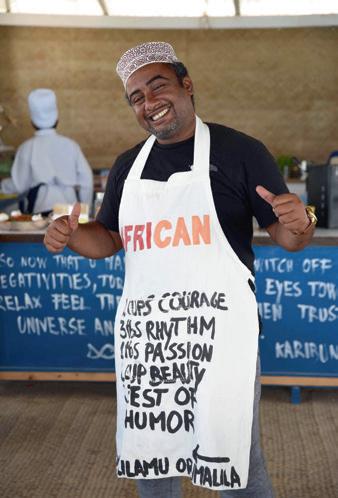
Ali Lamu
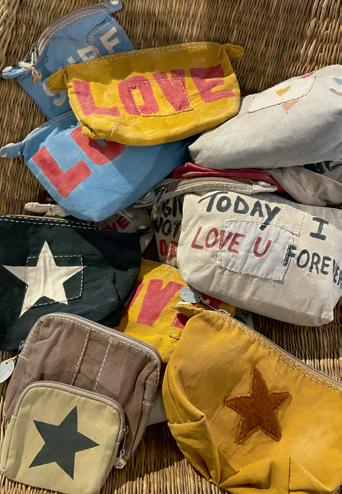
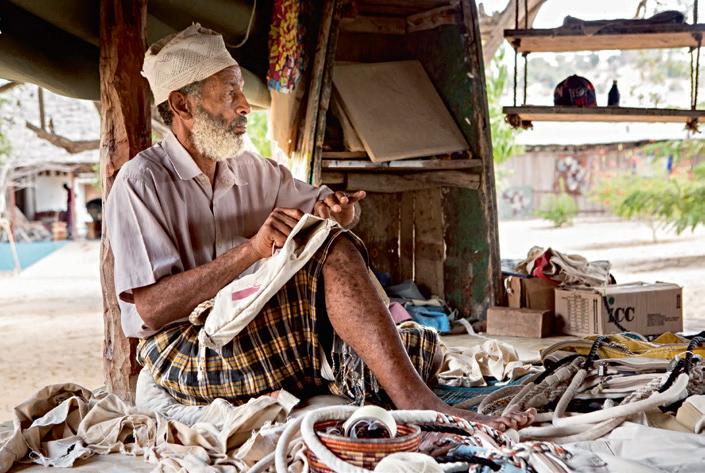
This local craft brand is known for its upcycled handcrafted products. Reclaimed old dhow sails, are repurposed into bags, cushions, home décor pieces, accessories and artworks. The worn sailcloth gives each product a distinctive
texture and history, tying the modern design directly to Lamu’s historic maritime culture.
Cultural sustainability matters. When traditional skills disappear, communities lose both economic opportunity and identity. Ali Lamu reminds visitors that sustainability is not only about protecting landscapes, it’s also about protecting traditions.


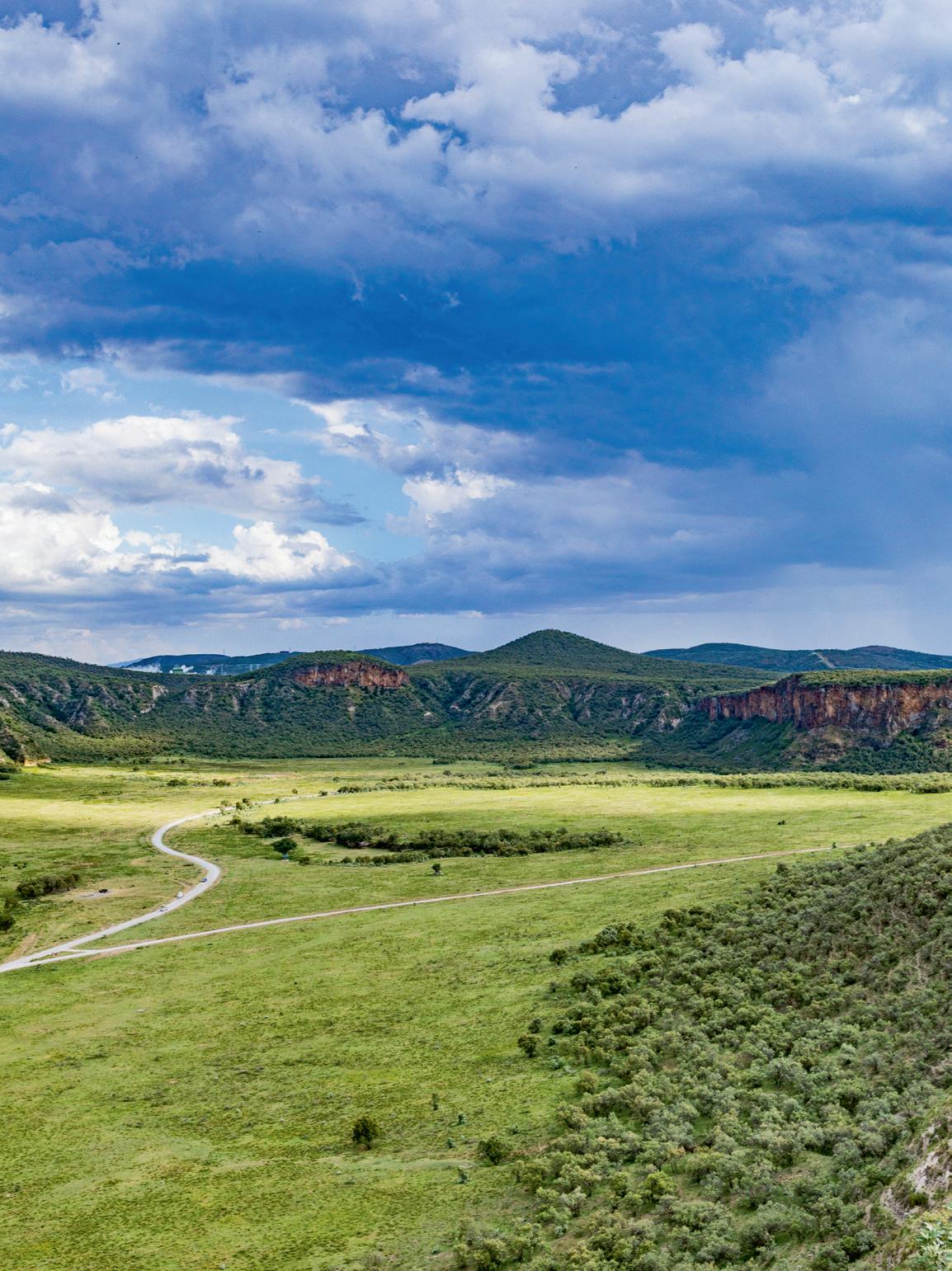
With its wildlife, volcano rims, serene forests, and vibrant local life, the lakeside town provides an unforgettable and restorative break for Harriet James.
For many Nairobians Naivasha is the closest holiday escape from the hustle and bustle of city life. Living in the capital, I have visited the town many times, yet I always find something new to do while I’m there.
On my most recent visit I based myself at the O’leleshwa Retreat, a collection of luxury private villas in a secluded setting near Lake Naivasha.
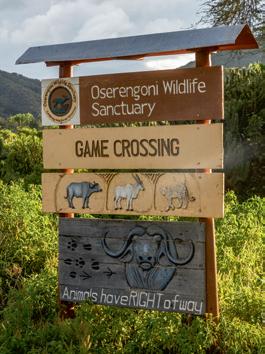
My adventures began with an early morning game drive at Oserengoni Wildlife Sanctuary where giraffes, elands, and warthogs emerged from the tall grass, unhurried and unbothered by our presence. This vital safe haven for wildlife is set in
18,000 acres. The drive ended with a classic bush breakfast served under acacia trees. As I sipped tea and nibbled on fresh bread, I felt a connection to the land and the wildlife that inhabit it.
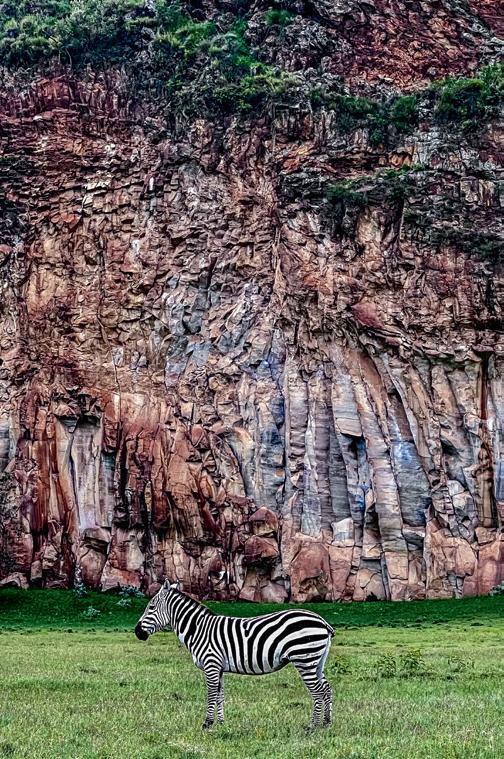
Another Naivasha favourite of mine is Hells Gate National Park with abundant wildlife roaming its dramatic landscape of cliffs, gorges, natural hot springs, and bubbling geysers.
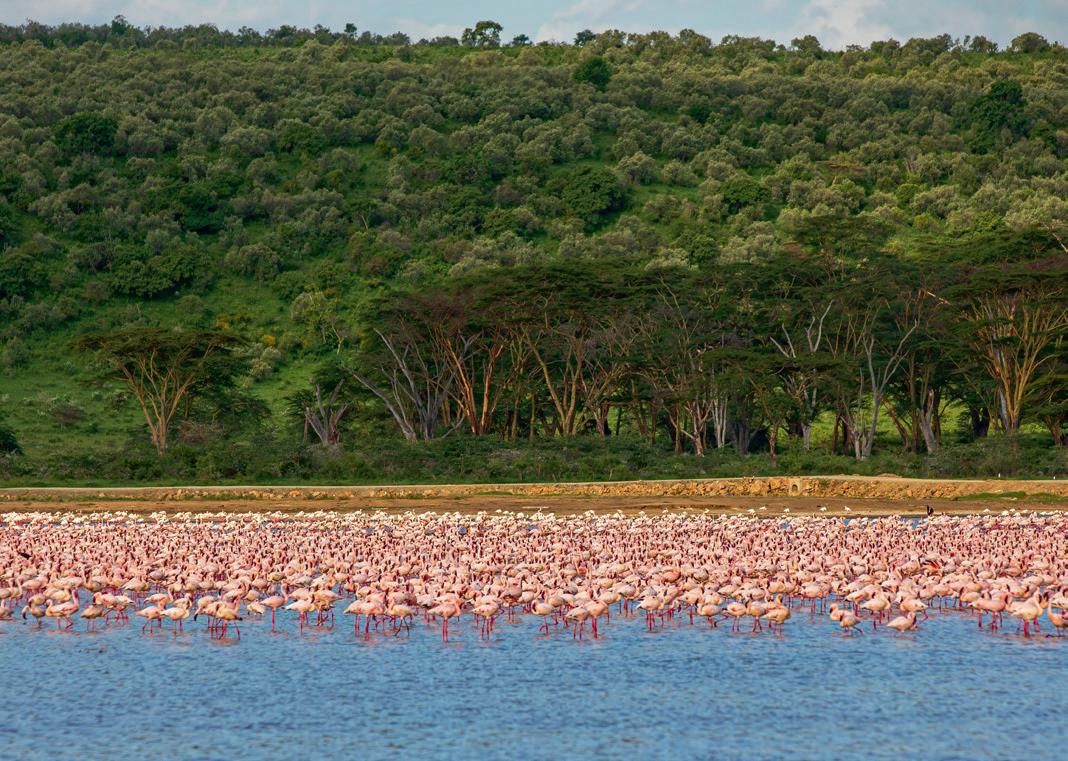
To extend the wildlife experience, one can also journey to Nakuru National Park for a full-day game drive. Known for its flamingo-filled lake and rhino conservation, the park provides a different lens on Kenya’s rich biodiversity. On previous visits I have spotted white
and black rhinos, waterbucks, and countless bird species.
Nearby, is also Eburru Forest, a lush expanse in which cypress and olive trees provide welcome shade over a network of hiking trails. The earthy scent of moss and soil, punctuated by occasional birdcalls, made the forest a place for reflection and slow discovery.
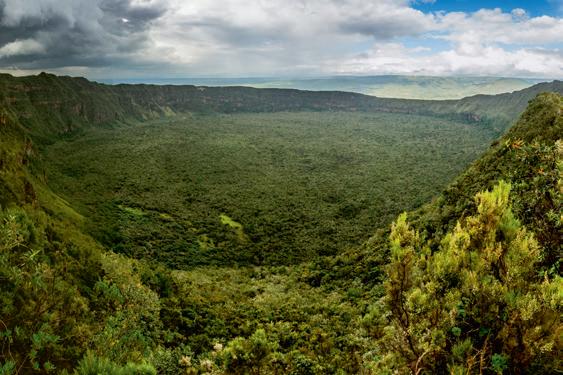
For more challenging hikes head to dormant stratovolcano Mount Longonot. The trail to the rim climbs steadily through dry forest and shrubland before opening onto the caldera, offering panoramic views of the Rift Valley and Lake Naivasha below. Making it to the top and getting to look down into its massive
crater was an unforgettable moment for me.
With its ideal combination of fertile volcanic soil, consistent year-round warm temperatures, and abundant water for irrigation from its lake, the Naivasha region is renowned for its flower farms. We visited one of them, Groove Flowers, and walked through endless rows of roses destined for markets as far afield as Europe and the Middle East. The farm managers explained the delicate balance between scale and sustainability – how water from Lake Naivasha is carefully monitored, how integrated pest management reduces chemical use, and how workers are trained in both safety and skill. Beyond the blooms, the
visit revealed the human side of flower farming, from employment opportunities for surrounding communities to initiatives supporting housing, education, and healthcare.
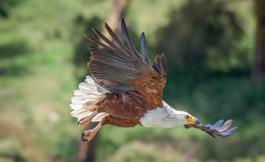
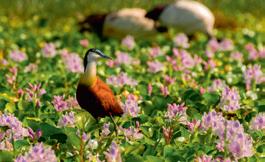
The next morning, we took a boat ride on Lake Naivasha that revealed its abundant bird life –scanned the shoreline and reed beds for birds: African fish eagles perched majestically, grey herons glided gracefully over the water, and African darters flitted above the lake. We stopped at Crescent Island, a private animal sanctuary reachable by boat from the mainland. Here, zebras, giraffes, and impalas roam freely, unbothered by human presence. Walking among them, hearing birds call across the
savannah, I was reminded how extraordinary it is to witness wildlife at such close range.
We also took time to connect with the communities in Naivasha. Kasarani Village is located on the lake shore. Here we watched the Tafa Christian Youth Football Team train and discovered how the Wazesha student program here empowers young people through education and mentorship.
I spent my last afternoon at O’leleshwa Retreat basking in its sweeping views, swimming in its pool, and exploring the grounds on one of a fleet of available e-bikes. I felt restored and ready to return to Nairobi.



The Link compiles some staggering stats on Kenya’s highest peak.
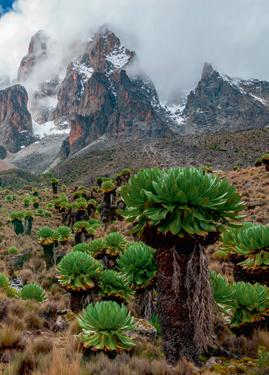
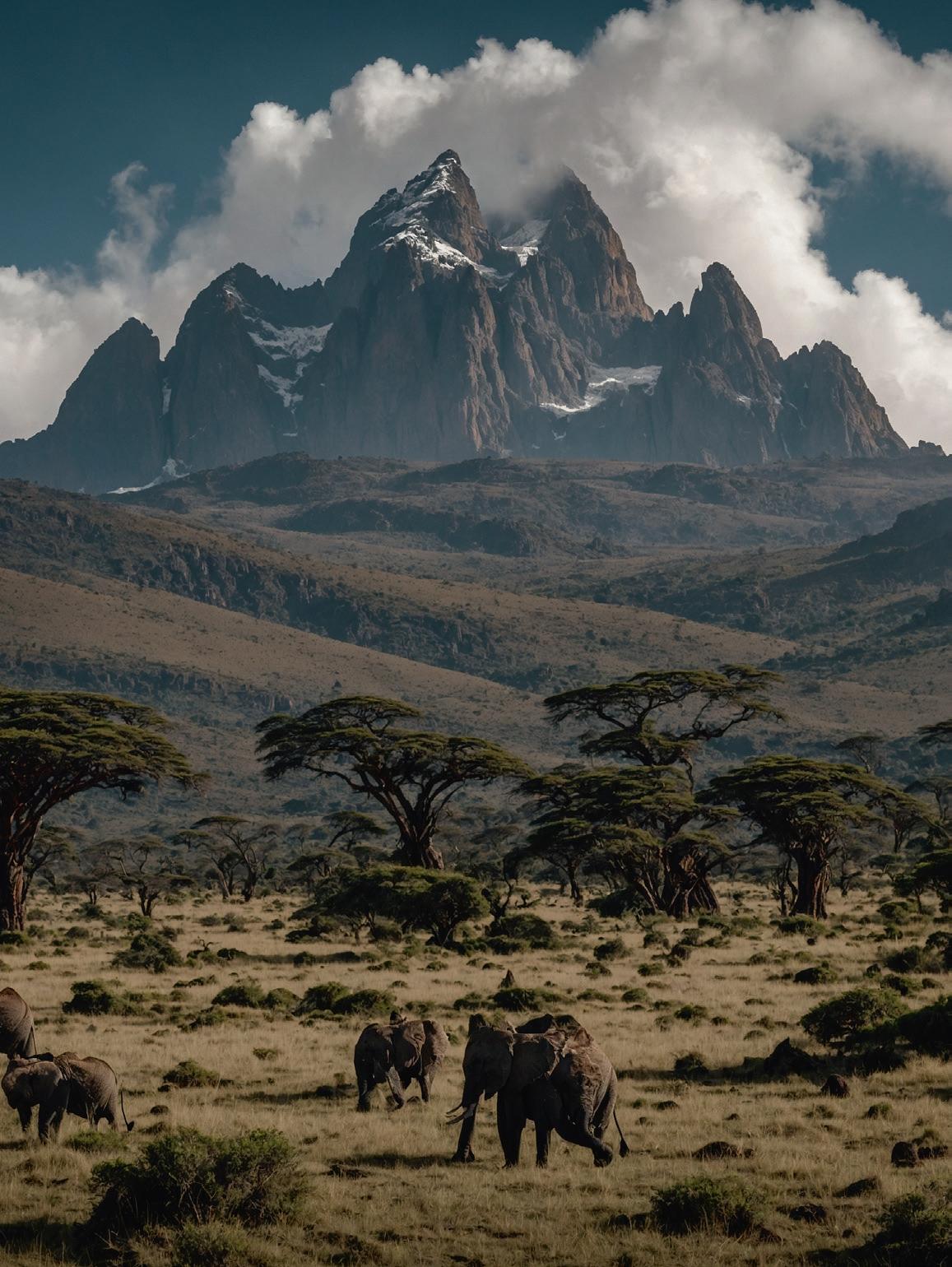
From glacier-tipped summits to wildlife-filled forests, Mount Kenya packs an astonishing variety of experiences into one destination. Whether you’re trekking, climbing or simply soaking up the scenery, these numbers tell the story of a mountain that’s as diverse as it is dramatic – and absolutely worth the journey.
3
5,199 metres peaks 3
The height of Mount Kenya’s highest peak, Batian, making it the tallest point in Kenya and Africa’s second-highest mountain.
11 million-plus years old
This extinct volcano formed millions of years ago along the East African Rift, giving it its rugged, sculpted shape.
Batian, Nelion and Point Lenana form the mountain’s main summits, each offering different climbing challenges and spectacular views.
Only a handful of small glaciers remain on the mountain today, retreating rapidly due to climate change. glaciers (and shrinking)
153 km
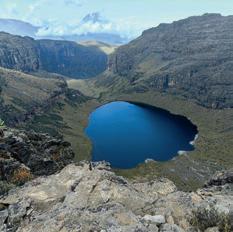
12-to-20 alpine lakes 1997
Scattered across its slopes are numerous glacial tarns (small lakes), shimmering at high altitudes and perfect for scenic trekking stops.
80-plus mammal species UNESCO status
From elephants and buffalo to the critically endangered mountain bongo, the surrounding ecosystem teems with wildlife.
The mountain’s vast circumference at around 2,400 metres altitude gives a sense of its sheer scale and variety of landscapes.
7 valleys
Mount Kenya National Park earned World Heritage recognition for its breathtaking scenery and unique biodiversity.
Glaciers carved deep, dramatic valleys radiating from the summit, creating postcard-worthy landscapes in every direction.
From Kenya’s premier national parks through Africa’s highest mountain to the best beach resorts of the Indian Ocean coast, Safarilink’s network of 17 destinations showcases East Africa’s finest attractions.
The non-stop Kenyan capital is also Safarilink’s hub with our operations centred at the city’s Wilson Airport. Nairobi is the place to soak up Kenya’s contemporary culture with its vibrant food, music and art scenes. If you want to escape the bustle, head to the capital’s ‘green lungs’, Karura Forest, or make the most of Nairobi being the world’s only wildlife capital with a visit to Nairobi National Park.
ARUSHA (Three flights daily)
Arusha is a vibrant city with a growing cultural scene, offering diverse music, food, and art experiences. Known as the ‘Safari City’, it’s the gateway to Tanzania’s world-renowned
Northern Circuit of wildlife reserves such as Serengeti, Ngorongoro Crater and Tarangire National Park. For those short on time, Arusha National Park offers game drives, walking safaris, and canoeing on the city’s doorstep.
(Two flights daily)
Entebbe is a welcoming lakeside town on the shores of Lake Victoria, offering a relaxed atmosphere and friendly locals. It’s not just a charming destination itself, but also the gateway to Uganda’s prime animal adventures. From here, embark on unforgettable mountain gorilla trekking or head to Jinja, the adventure capital of East Africa, for
thrilling activities like white-water rafting and bungee jumping.
TSAVO WEST (Daily flights)
Tsavo West National Park offers some of the most magnificent game viewing in the world with its safari staples including elephant, rhino, hippos, lions, cheetah, leopards and buffalo.
NANYUKI (Three flights daily)
The gateway to the wilderness of Mount Kenya National Park where wildlife includes leopards, giant forest hogs and more than 100 bird species. The town is also the starting point to trails ascending Africa’s second-highest peak, Mount Kenya.
(Two flights daily)
Kenya’s historic second city is a living museum that reflects its time as a trading hub linking Africa with China and India. It is also an excellent starting point for Kenya’s renowned beach resorts.
MALINDI (Daily flights)
The town of Malindi sits amid a string of tropical beaches dotted with hotels and resorts. Much of the spectacu-
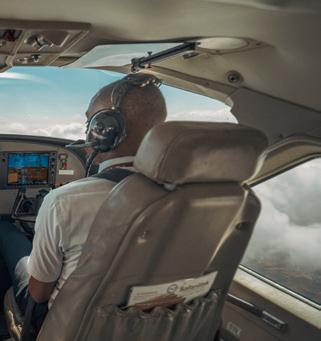
lar coastline is protected by the Malindi Marine National Park and there is more untouched natural splendour at the nearby Arabuko-Sokoke Forest Reserve, which is home to elephants and more than 200 species of birds.
(Three flights daily)
The Lewa Wildlife Conservancy is famous for the variety of rare wildlife it protects. Set in a valley in the middle of the
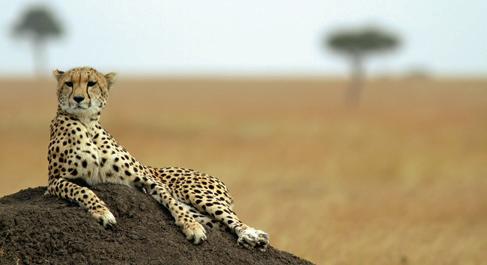
Laikipia Plateau, it is home to East Africa’s largest rhino population as well Grevy's zebra, Sitatunga antelope, cheetah, lion, elephant and reticulated giraffe.
LAMU (Daily flights)
Sun, sea and Swahili culture. Lamu is a true island escape. Wander the labyrinthine streets of its Unesco-recognised town – the oldest and best-preserved Swahili settlement in East Africa – take in the spectacular sunset from a traditional dhow fishing boat or just explore the stretches of footprint-free beaches that ring the island.
(Two flights daily)
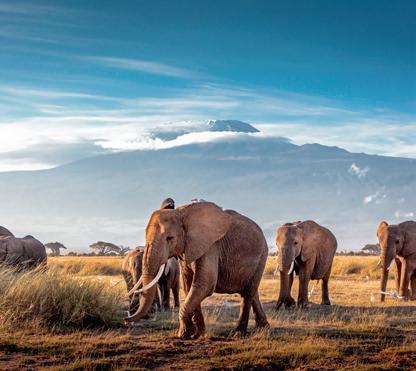
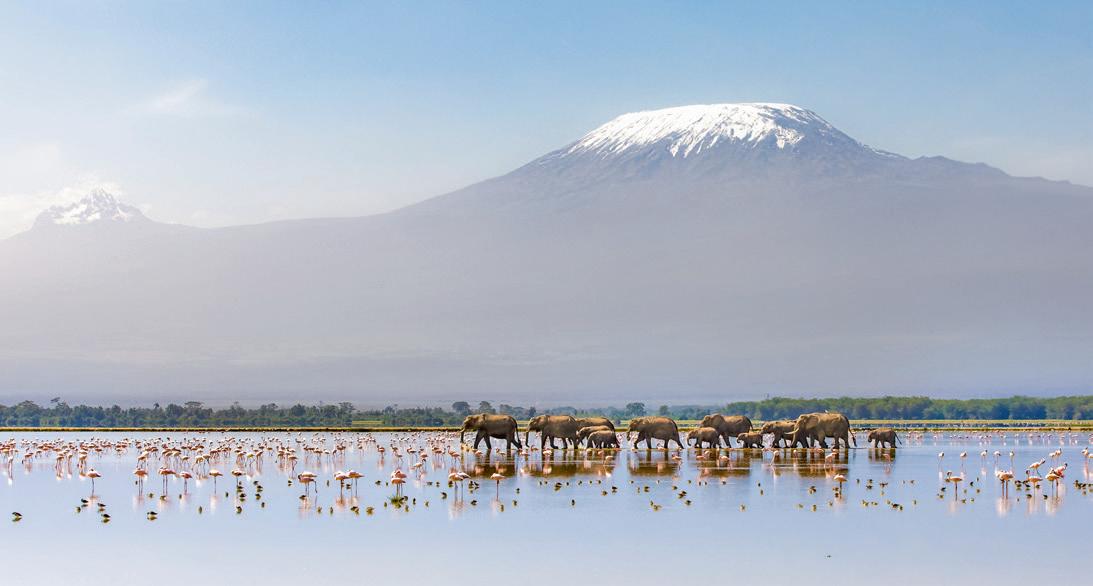
Mount Kilimanjaro provides the stunning backdrop to the Amboseli National Park, framing your safari views of huge herds of elephant as well as leopard, lion, cheetah, giraffe and more than 600 bird species.
(Two flights daily)
This vibrant Indian Ocean island offers visitors a taste of Swahili culture old and new. In the ancient port of Stone Town coral and limestone houses, palaces, and forts survive from its 19th century trading heyday while the island’s coastline is a blend of sleepy fishing villages and swanky beach resorts. Inland
follow your nose for the heady perfume of the spice farms.
(Three flights daily)
The Samburu National Reserve is known for its abundance of rare northern specialist species such as the Grevy Zebra, Somali Ostrich, Reticulated Giraffe, Gerenuk and the Beisa Oryx – also referred to as the ‘Samburu Special’.
NAIVASHA (Daily flights)
The calm, glassy waters of Lake Naivasha contain a huge hippo population. Boat trips are available, some that take you to the privately owned game sanctuary of Crescent Island, which is walkable and will reveal giraffe and zebra. Far more wild animals are to be found in the neighbouring Hell’s Gate National Park with herds of buffalo and all manner of antelope roaming amid the dramatic Rift Valley landscape.
(Four flights daily)
The wild and rugged landscapes of the Masai Mara offer Kenya’s premier safari adventures. From July to October, it hosts the world-famous Great Migration of 1.5 million wildebeests with the Mara river crossings a dramatic highlight. The park also hosts all of the Big Five animals.
(Three flights daily)
The Loisaba Conservancy in Northern Kenya is a haven for over 260 bird and 50 mammal species, including endangered Grevy’s zebra. Big cat lovers will also find prides of lions, cheetahs and leopards. African wild dogs, thought for many years to be extinct in the region, are returning.
KISUMU (Five flights daily)
Kenya’s third-largest city is situated on the northern shores of Lake Victoria. The lakeside vantage point offers some spectacular sundowner opportunities as well as boat rides and fishing trips. For animal adventures, head to the Kisumu Impala Sanctuary that shelters herds of impalas, zebras, cheetahs and baboons.
(Two flights daily)
The Kenyan coast is blessed with beautiful beaches galore, but Diani may be the fairest of them all. With 15 km of powdery white sand and waters calmed by an off-shore coral reef it provides ideal conditions for swimming, snorkelling, scuba diving, kite surfing, and water sports like windsurfing and kiteboarding.
MIGORI (Two flights)
The high altitude and clean air of this city nestled in the highlands of western Kenya has produced some of the world’s best distance athletes. It is a place that rewards the outdoor life with natural attractions such as the Rift Valley, Kakamega Forest, Kerio Valley and the Nandi Hills nearby.
Entebbe
Kisumu
Samburu Laikipia Loisaba Nanyuki Naivasha
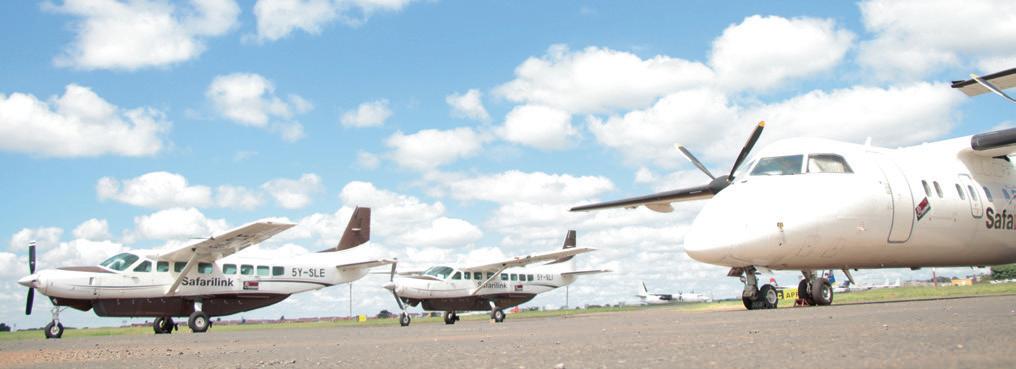
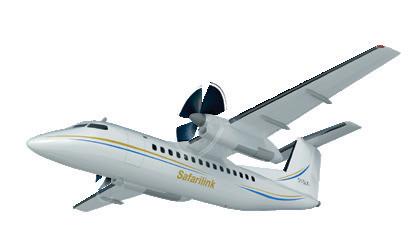
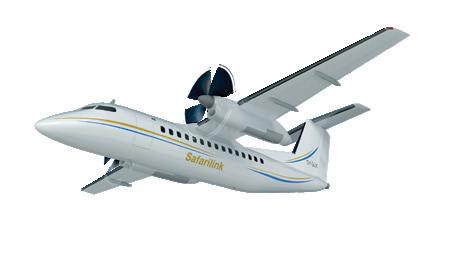
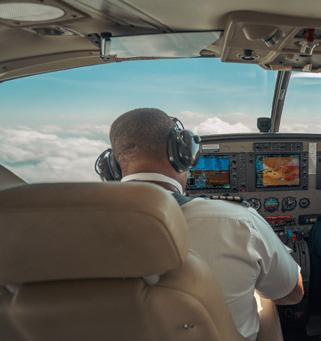
The 14-strong Safarilink fleet includes aircraft suited to the remote airstrips and short flight times that make up the majority of the destinations we serve. We also have four twin-engine Dash 8s to fly more passengers on longer routes
CESSNA CARAVAN
C208BS
Number of aircraft: 11
Engine type: Turbo-prop single engine
Manufacturer: Textron Inc (formerly Cessna)
Crew: Two pilots
Maximum passengers: 12
▪ This workhorse of the fleet is a rugged fixed under-carriage aircraft that is ideal for landing on the ‘dirt’ airstrips common in game parks. Its high wings and large windows allow exceptional viewing of the unfolding scenery and animals while in flight. Our Cessna Caravan fleet now totals 10 after the arrival of two new aircraft in March 2024.
8-106 (5Y-SLD)
Number of aircraft: One
Manufacturer: DeHavilland Canada
Engine type: Twin engine
Crew: Two pilots and one flight attendant
Maximum passengers: 37
▪ This Pratt & Whitney 120A powered aircraft is well known to commuter travellers around the world. Its pressurised cabin enables it to fly above the weather on the longer routes and its all-leather seats provide a touch of luxury.
ADDRESS: PHOENIX HOUSE WILSON AIRPORT, PO BOX 5616
NAIROBI 00506, KENYA
TEL: +254 20 6690 000
TEL: +254 730 888 000
EMAIL: RES@FLYSAFARILINK.COM
WEBSITE: WWW.FLYSAFARILINK.COM
CALL CENTRE: 020 669 0000
TWITTER: @FLYSAFARILINK
FACEBOOK: @FLYSAFARILINK INSTAGRAM: @FLYSAFARILINK
8-315 (5Y-SLK)
Number of aircraft: One
Manufacturer: DeHavilland Canada
Engine type: Twin engine
Crew: Two pilots and two flight attendants
Maximum passengers: 52
▪ This Pratt & Whitney PW123E powered aircraft has a pressurised cabin which enables it to fly above the weather on the longer routes. It features all-leather seats for each passenger.
8-311 (5Y-SLC)
Number of aircraft: One Manufacturer: DeHavilland Canada Engine type: Twin engine Crew: Two pilots and two flight attendants
Maximum passengers: 50
▪ This Pratt & Whitney PW123B powered aircraft has a pressurised cabin which enables it to fly above the weather on the longer routes. It features all-leather seats for each passenger.
8-202 (5Y-SLO)
Number of aircraft: One Manufacturer: DeHavilland Canada
Engine type: Twin engine Crew: Two pilots and one flight attendant
Maximum passengers: 37
▪ This Pratt & Whitney PW123D powered aircraft has a pressurised cabin which enables it to fly above the weather on the longer routes. The interior is with all leather seats to provide a touch of luxury.
NAIROBI
PHOENIX HOUSE, WILSON AIRPORT
CELL: +254 730 888 000
DIANI
TELEPHONE: +254 710 772 222/ 735 697 410
EMAIL: DIANIOFFICE@FLYSAFARILINK.COM
KISUMU
TELEPHONE: +254 793 500 500/ 757 500 500
EMAIL: KISUMUOFFICE@FLYSAFARILINK.COM
MALINDI
TELEPHONE: +254 769 700 700
EMAIL: MALINDIOFFICE@FLYSAFARILINK.COM
LAMU
TELEPHONE: +254 769 600 600
EMAIL: LAMUOFFICE@FLYSAFARILINK.COM
ENTEBBE
TELEPHONE: +256 792 171 846
EMAIL: ENTEBBEOFFICE@FLYSAFARILINK.COM
KAMPALA
TELEPHONE: +256 792 170 946
EMAIL: KAMPALAOFFICE@FLYSAFARILINK.COM
MOMBASA
TELEPHONE: +254 769 000 444/ 101 888 000
EMAIL: MBAAIRPORT@FLYSAFARILINK.COM
ZANZIBAR
TELEPHONE: +255 674 308 858
EMAIL: ZNZOFFICE@FLYSAFARILINK.COM
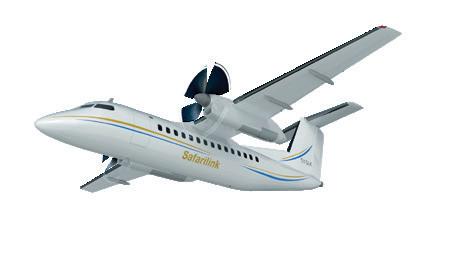
Book your flights at www.flysafarilink.com and pay by credit card or mobile money. Alternatively, email res@flysafarilink. com for other payment options such as credit card payment links‚ or bank transfer options.
Children of two years of age and above but not more than 12 years of age are charged at 75 per cent of the applicable adult fare‚ depending on the class booked. Infants under two years of age are not charged providing they are not occupying a seat. Infants are not entitled to a baggage allowance.
Save time at the airport and check-in online between 18 hours and two hours before your flight. You can also checkin and download your boarding pass on your phone. When you check-in online‚ you can choose your seat for free. Once you have checked in online you will be required to present yourself at the check-in counter to confirm your presence.
Check-in counters will close 60 minutes prior to departure time on international flights (to/from Zanzibar, Arusha, Entebbe and Kilimanjaro) and 30 minutes prior to departure time on other services. After these cut-off times passengers will not be allowed to check-in.
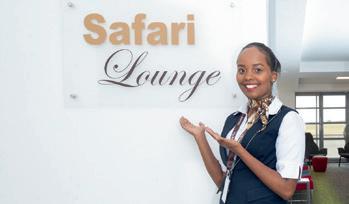
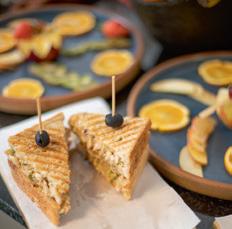
Our Safari Lounge is an extension of our main dedicated lounge and is located at our head office on the first floor at Wilson Airport‚ Nairobi. Whether you’re travelling for business or pleasure‚ you can relax in our executive lounge for up to four hours before your flight. While here passengers can enjoy the services of a personalised barista with coffee roasted by hand. They can also take advantage of the shower facilities and

the drink and snack bar. The Safari Lounge opens daily from 0600hrs to 1600hrs and can be booked for passengers on both private charters or scheduled flights at a fee of US $40 per person. It must be booked at a minimum of six hours prior to departure time. Children under 12 years will not be permitted unless booked as part of a private charter group. To book‚ contact our reservations team at res@flysafarilink. com or call +254 730 888 000.
▪ Safarilink’s frequent flyer programme, ‘Safari Bonus’, allows passengers to earn reward points on every Safarilink scheduled flight. To sign up complete the online enrolment form on our website.
▪ Once you have signed up you will get a membership number, which you will need to quote at the time of booking or upon checking in.
▪ Points can be earned on both one way or return Safarilink scheduled flights. The number of points earned are subject to the class of travel and fare paid.
▪Points cannot be earned on complimentary tickets. Children upwards of two years old can register as members. Points earned can be transferred to a registered member.
▪ Once you have sufficient points‚ book your reward ticket to any of our 17 amazing destinations
▪ Requests for award tickets should be sent to safaribonus@ flysafarilink.com‚ quoting your membership number and name. For any queries or clarifications‚ please send an email to safaribonus@flysafarilink.com
Zanzibar‚ Kisumu‚ Diani‚ Lamu, Entebbe, Mombasa and Malindi: 20kg max
All other destinations: 15kg max
▪ The baggage allowance is inclusive of hand luggage. Infants not paying for a seat are not entitled to baggage allowance. Excess baggage will only be carried‚ at the sole discretion of the captain of the aircraft‚ if the payload of the aircraft and/or space permits and will be charged at the prevailing rate for carriage of freight.
Is there anywhere I can store any excess baggage?
▪ Yes‚ there is a complimentary secure store at our Wilson Airport Office. Please ask at the Check-in counter.
Is the 15kg baggage allowance inclusive of hand luggage?
▪ Yes. If passengers have significant excess baggage they can book a ‘freight’ seat at an adult rate‚ which permits confirmed carriage of an extra 75 kgs. What happens if my baggage is over the weight limit?
▪ In most circumstances our check-in staff will use their discretion and allow a leeway of up to two kgs. However additional excess baggage will only be carried‚ at the sole discretion of the captain of the aircraft‚ if the payload of the aircraft and/or space permits and will be charged at the prevailing rate for carriage of freight (currently KES350 per kg on domestic flights; US$5 per kg between Mombasa and Zanzibar; and US$10 per kg on flights between Nairobi and Zanzibar).
Why do you ask that my luggage is in a soft bag?
▪ Most of our flights are operated by aircraft whose luggage compartments have limited volume and are of an irregular shape. It is thus more difficult for us to stow large rigid suitcases‚ which in an extreme situation‚ might have to be carried on the next available flight.