promote and foster the highest quality service to the maritime industry through training development; working with all agencies, groups and other associations for the benefit and development of its members and the peoples of the Caribbean region.
GENERAL COUNCIL MEMBERS 2025 – 2026
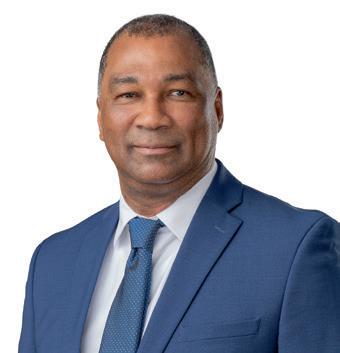
President: William Brown
Vice President: MarÍa del Mar Rodriguez
Immediate Past President: Marc Sampson
Group A:
Chairman: Nazillia Simone Philips
Representatives: Kevin Choo Quan
Andre Rochester
Max Mella Jr.
Group B:
Chairman: Cristyan Peralta
Representative: Enrique Figueroa
Group C:
Chairman: Robert Bosman
Representative: Agenor Olivardia
Group D:
Chairman: Rachel Matthews
Representative: Martin Medina
Milaika Capella Ras – CSA General Manager
CARIBBEAN SHIPPING ASSOCIATION
4 Fourth Avenue, Newport West PO Box 1050, Kingston CSO, Jamaica Tel: +876 923-3491
Caribbean Maritime is delivered to subscribers in biodegradable packaging and the magazine is produced using paper from PEFC certified sources implementing sustainable forestry policies to help preserve our environment.
A call for collective action
As the Caribbean maritime community convenes for the 2026 Caribbean Shipping Executives' Conference (CSEC), we do so at a defining moment, one that calls for both honest reflection and a renewed commitment to collective action.
Across the global shipping landscape, the pressures are well known. Supply chain volatility, accelerating digital transformation, climate imperatives, and evolving regulatory frameworks are reshaping the industry. For small, trade-dependent economies such as ours, these forces are not abstract. They are immediate, structural, and consequential. The question before us is not whether these challenges exist, but whether we are prepared, as a region, to respond to them with the coordination and resolve they demand.
Progress
The Caribbean maritime sector has made meaningful progress in dialogue and cooperation. Yet, as we gather for CSEC 2026, we must be candid with ourselves: implementation has not kept pace with ambition. Today, a container moving between two Caribbean islands can take longer and cost more than one travelling from Asia to Miami, not because of distance, but because of the absence of coordinated logistics, harmonized
William Brown President Caribbean Shipping Association
documentation, and shared port standards. The transition we need, from fragmentation to alignment, from conversation to coordinated execution, from intuition to data-driven decision-making, requires more than the commitment of the maritime sector alone. It requires the full engagement of the political and institutional leadership across our member nations.
We have participated in, and in
many cases led, an increasing number of regional and international forums convened by bodies such as PMAC, the European Union, the World Bank, and the IMO, all pointing toward the same imperative: a collaborative, practical, and implementable approach to port development, logistics efficiency, climate resilience, and digitalization. The case has been made, repeatedly and convincingly. What remains is the will to act.
FROM THE CSA PRESIDENT
Seismic
As former Jamaican Prime Minister P.J. Patterson reminded us, what the region needs is a seismic shift, toward greater cohesion, toward a shared road map for resilience, prosperity, and selfdetermination in a world that too often marginalizes our interests. That call is no less urgent today.
The CSA is doing its part. Through targeted partnerships and strategic initiatives, we are laying the groundwork for a more integrated and resilient regional maritime ecosystem. The development of a Caribbean Trade Observatory, in collaboration with the Inter-American Development Bank and Americas Market Intelligence, represents a transformative step toward improving trade visibility, enabling evidence-based policymaking, and strengthening regional competitiveness. Our work on disaster risk management, supported by the Caribbean Institute for Meteorology & Hydrology and the Organization of American States,
is establishing a coordinated framework for port resilience and business continuity. Our collaboration with the World Bank on transport connectivity and logistics reform addresses the inefficiencies that continue to constrain intra-regional trade. And our expanding program on energy transition, covering shore power readiness, green fuel bunkering, and emissions reduction, reflects our commitment to ensuring the Caribbean is not left behind in the global shift toward sustainable shipping.
Theoretical
These are not theoretical commitments. They are practical, implementable, and designed to deliver measurable progress. But their full potential will only be realized with corresponding commitment from Ministries of Trade, Transport, Finance, and Tourism across the region, and from the regional institutions mandated to advance our collective development.
The CSA is doing its part. Through targeted partnerships and strategic initiatives, we are laying the groundwork for a more integrated and resilient regional maritime ecosystem”
CSEC 2026 is therefore more than a conference. It is an opportunity to move from aspiration to action, and to demonstrate that the Caribbean maritime community, alongside its governments and institutions, is ready to build the integrated, resilient, and competitive regional system our economies require.
I encourage all participants to engage these discussions with a genuine sense of purpose and shared responsibility. We are not only defining the future of Caribbean maritime. We are actively building the systems, partnerships, and data-driven foundations required to achieve it.
The opportunity is significant. So too is the responsibility. The time for alignment is now.
Mabelin Santos / Shutterstock.com
Delivering results
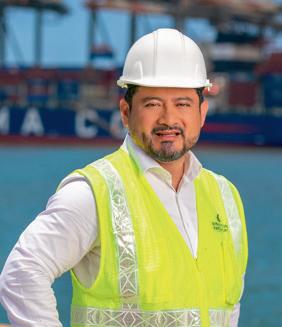
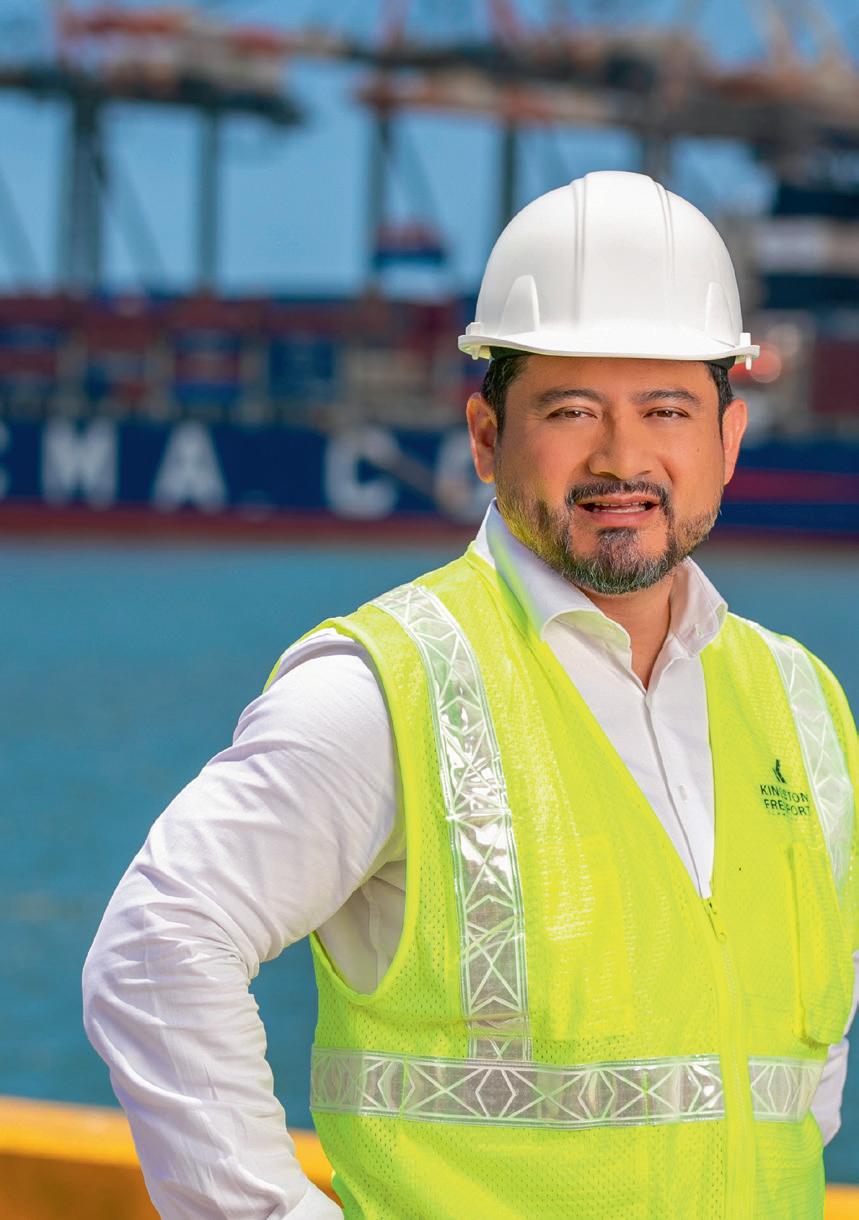
Carlos Cabrera
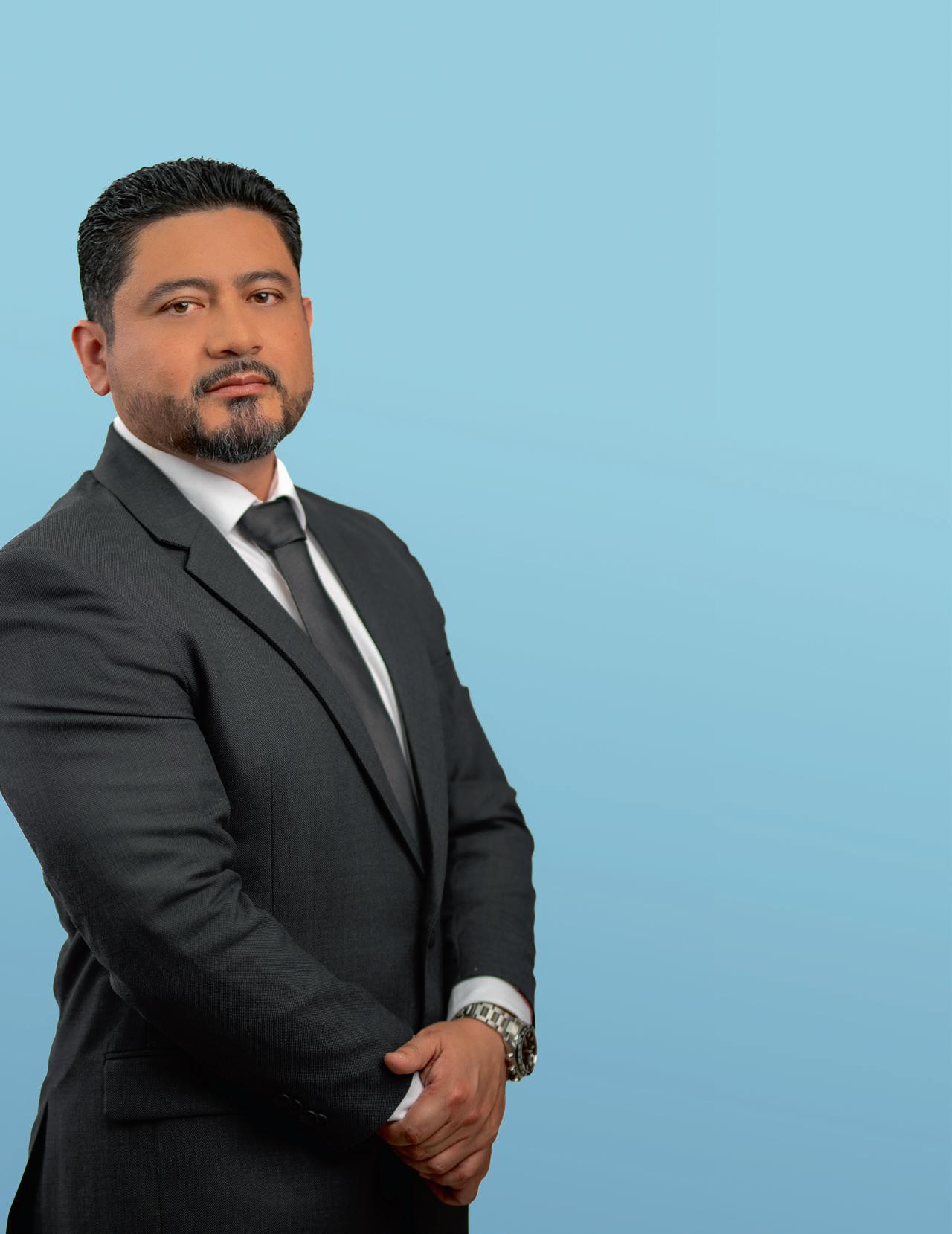
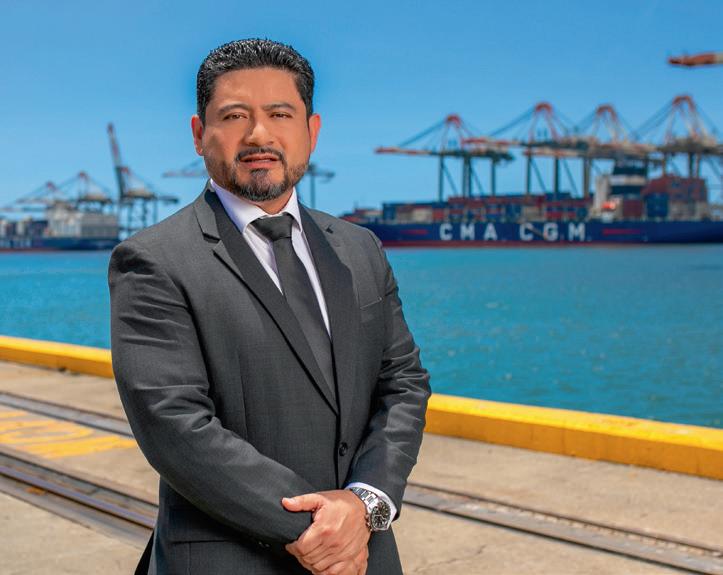
Carlos Cabrera is not a man to sit still. In fact, he has been eager to take on fresh challenges and seek new horizons in many different parts of the world. In what is proving to be a remarkable career, Carlos now finds himself heading up Kingston Freeport Terminal as he positions the business as a reliable, high-performance regional transshipment hub.
QWhere were you born?
A. I was born in Guatemala.
Q. What influence did your parents have on your early life?
A. A defining one – and honestly, the foundation of everything I’ve achieved. I attribute most of my career success to my upbringing.
I started working with my father in his company when I was 12. That’s where I learned business – not in theory, but in practice. He taught me discipline, accountability, and what it means to earn results.
In a family business, you don’t separate yourself from the outcome. I was raised to work as if every penny was mine. That mindset – ownership, responsibility, and long-term thinking – is something I carry with me every day.
Q. What was life like growing up in Guatemala?
A. It teaches you resilience early. You understand quickly that nothing is guaranteed –you have to create your own opportunities. That builds drive, adaptability, and a strong sense of urgency to improve.
Q. Where did you go to school?
A. In Guatemala City, in an international school environment.
Q. Did the US curriculum make a difference?
A. Yes, it gave me a global lens early on. It made transitioning into international roles much more natural later in my career.
Q. Where did you attend university?
A. Florida State University.
Q. Was your time there positive?
A. I started in inventory control and purchasing. Shipping wasn’t the plan yet, but I was always drawn to operations – how things move, how systems work, how to make them better. That naturally led me into logistics and ports.
A. Very. It was an important step in building independence and expanding my perspective beyond my home country.
Q. What was your first job, and were you already thinking about shipping?
Q. You moved on quickly – were you already aiming higher?
A. Yes. I was looking for scale, complexity, and international exposure. I wanted to be where things were happening.
Q. What drove your move to Houston?
A. It was a strategic decision. Houston gave me access to a more advanced logistics environment and closer proximity to global trade flows.
Q. Was joining APM Terminals a turning point?
A. Absolutely. That’s where my career in ports truly began. It gave me end-to-end exposure to terminal operations and set the foundation for everything that followed.
Driving efficiency at scale – capacity planning, optimization, and infrastructure strategy across multiple terminals. It shifted my thinking from local execution to global performance.”
Q. How was your experience in Argentina?
A. Transformational. It challenged me culturally and professionally, and it’s where I really stepped into leadership. It taught me how to lead teams in complex, realworld conditions.
Q. What did you focus on as Global Head of Terminal Planning?
A. Driving efficiency at scale – capacity planning, optimization, and infrastructure
strategy across multiple terminals. It shifted my thinking from local execution to global performance.
Q. What did the COO role in Valencia add to your experience?
A. Execution under pressure. Valencia is highly competitive, so it was about delivering consistent, high-level performance across productivity, safety, cost, and service – every single day.
Q. As CEO of Kingston Freeport Terminal, what is your priority today?
A. To position KFTL as a reliable, highperformance transshipment hub in the region.
We are investing in capacity – like new ship-to-shore cranes – but more importantly, we are focused on operational discipline, productivity, and cost control.
In today’s market, it’s not enough to grow. You have to be competitive, consistent, and resilient. Our goal is to build an operation that delivers under any conditions and strengthens Jamaica’s role in global logistics.
Q. What has been your most memorable accomplishment?
A. It’s not one moment – it’s the consistency. Delivering results across different countries, different teams, and different challenges. Turning complexity into performance.
Q. What do you value most as a leader?
A. Developing leaders.
I’ve been fortunate to have managers who invested in me and accelerated my growth. I see it as my responsibility to do the same for others.
Strong organizations are built by strong people. If you develop the right leaders, performance follows.
Q. What are your interests outside of work?
A. I like to stay active and spend time with family. My family is everything and everything I do is for them. They supported me in all my roles in different countries.
I’m not someone who learns by sitting back and reading – I learn by doing, by testing, by improving continuously. I believe in constant evolution, both personally and professionally.
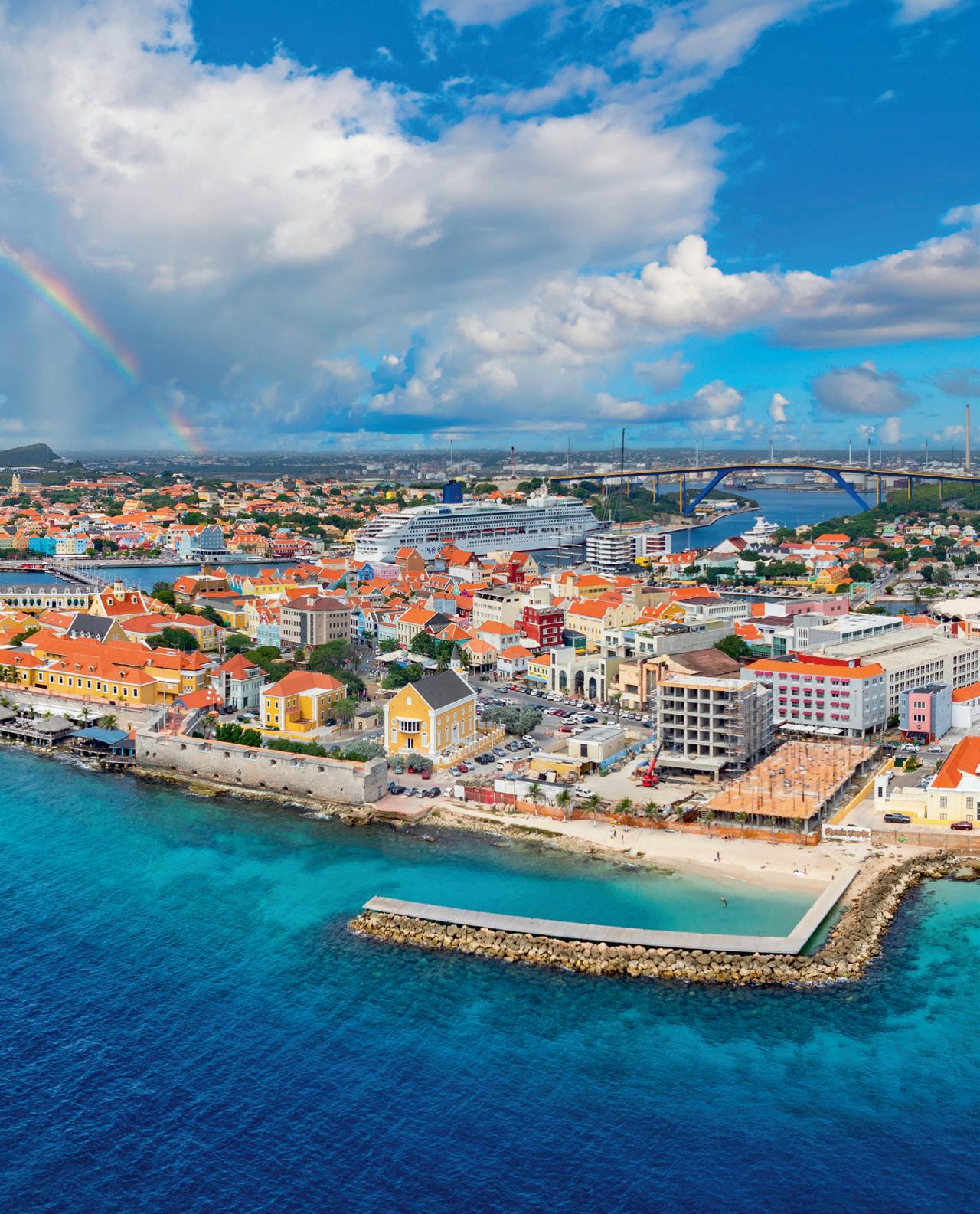
Curaçao riding a ‘Blue Wave’ of success
Maritime strength, energy revival and sporting success reshape Curaçao’s outlook
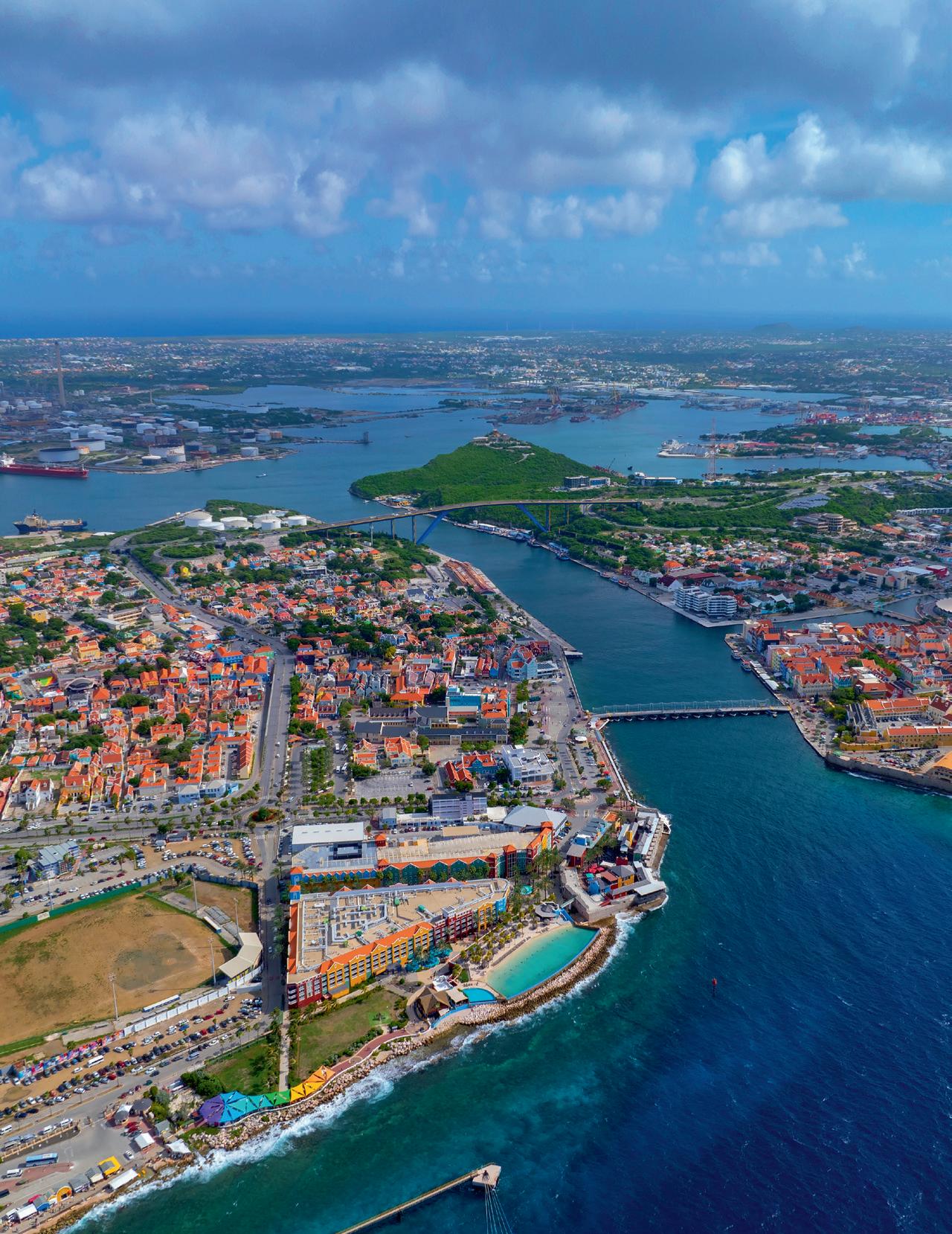
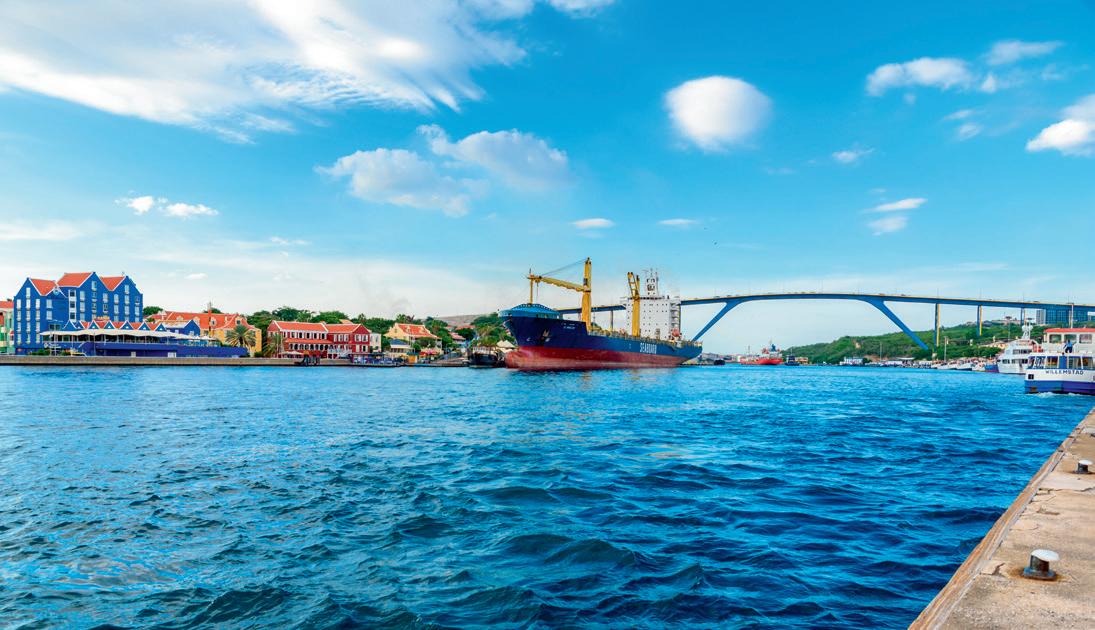
These are notable times for Curaçao. In May, the island not only hosted the Caribbean Shipping Association’s flagship Caribbean Shipping Executives Conference (CSEC), but also made headlines across a range of other fields – some maritime related, others far beyond it.
Most prominently and unrelated to the shipping industry is the qualification of Curaçao’s soccer team for the upcoming FIFA World Cup. In qualifying, Curaçao –with a population of just 185,000 – has the distinction of being the smallest nation to do so in the tournament’s 94-year history.
The incredible success of the ‘Blue Wave’ – the team’s nickname – is, in many ways, emblematic of the island’s optimistic outlook – economically, culturally but particularly in its all-important and broadly based maritime sector.
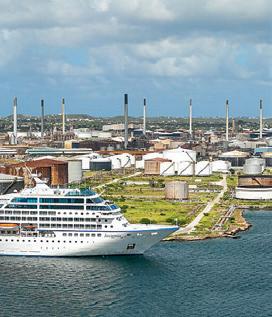
Despite lacking some of the geographic advantages of, say Jamaica or The Bahamas – it’s easy to understand why Curacao thrives. It has a highly educated multilingual workforce, a settled legal system, decades of maritime knowhow plus excellent airline connections with both North and South America as well as daily flights to Amsterdam. These factors have allowed Curaçao to punch above its weight with key roles in regional shipping and energy logistics. At the same time, the island’s ports and terminals are critical not only for trade but also for supporting economic activity across a range of sectors, including tourism and oil distribution.
Developments
And there some major developments in Curaçao’s traditional role in oil storage and refining. Ignoring the right and wrongs of how this situation has come about, there seems to further positive news from beyond Curaçao’s shores in this area. January’s removal of Nicolás Maduro as the president of Venezuela has quickly created a brighter outlook for Curaçao’s long-idle 335,000 b/d capacity oil refinery. Once the bedrock of the economy the refinery has been shuttered since
Cruise destination
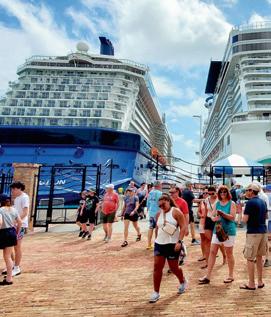
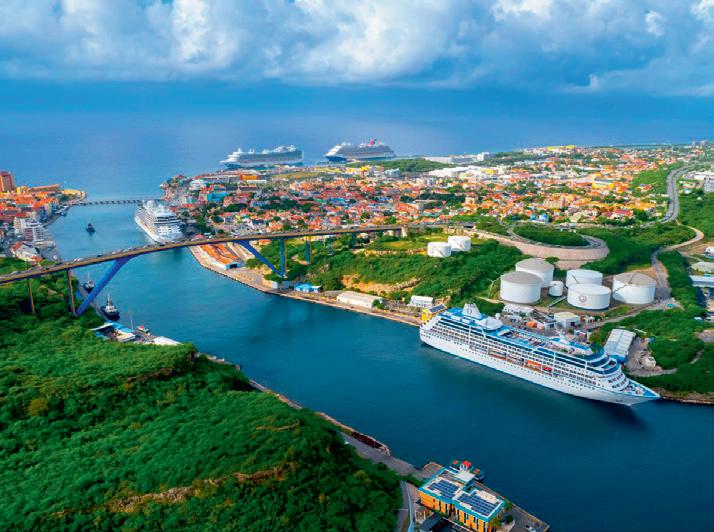
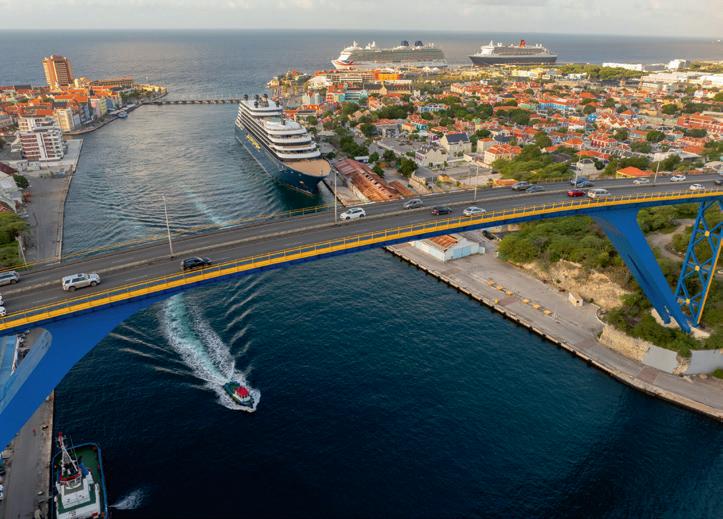
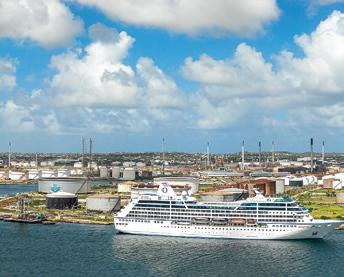
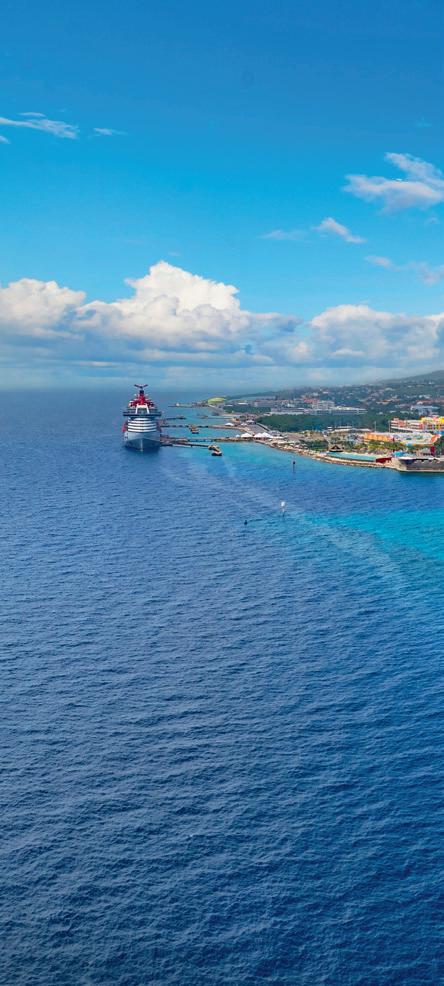
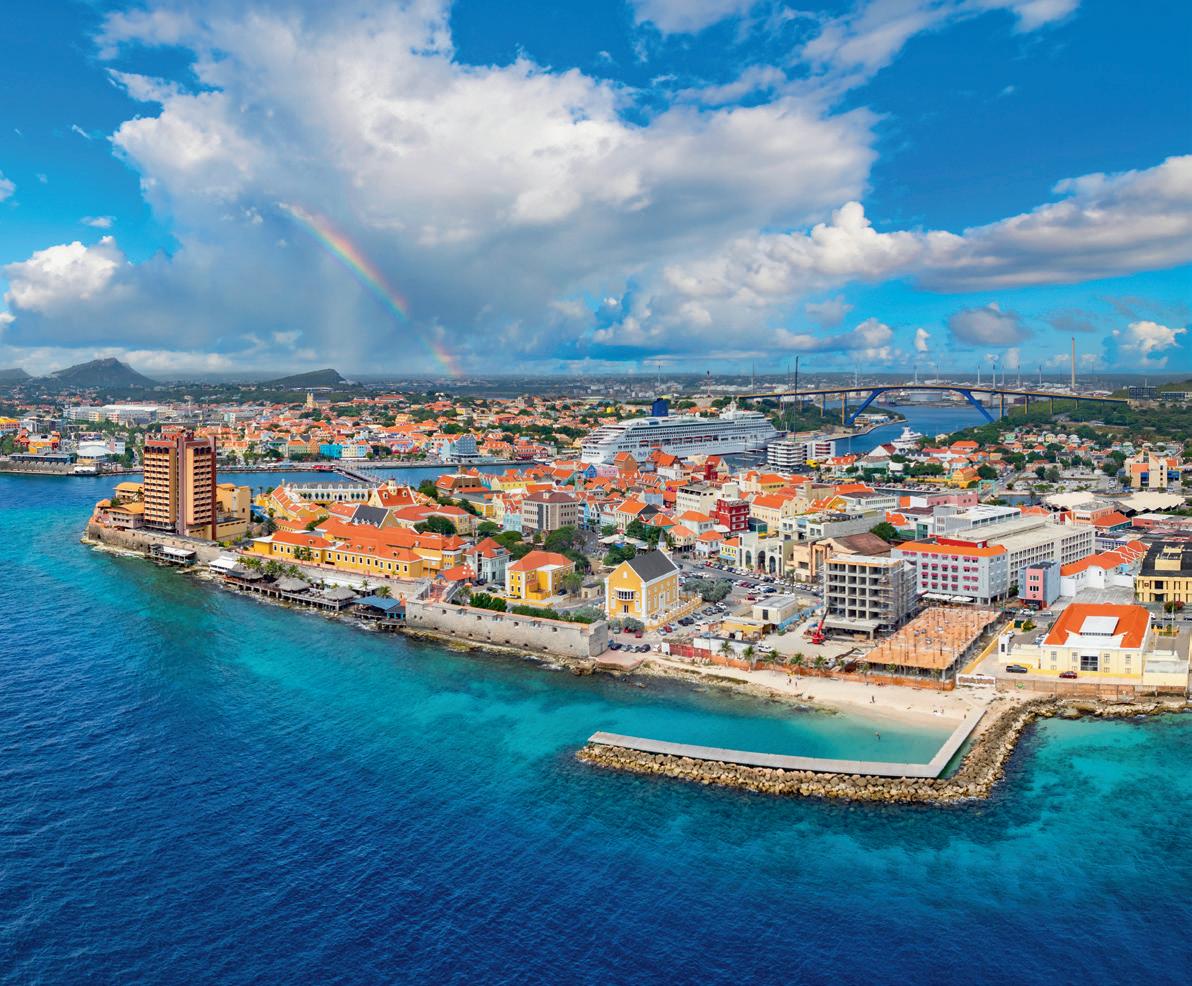
Given that Willemstad’s inner city is a UNESCO World Heritage Site and the delights of Sint Anna Bay are there for all to see, it’s no surprise that Curaçao remains an extremely popular southern Caribbean cruise destination. The Curaçao Ports Authority-run cruise facilities welcomed a record 883,000 passengers in 2025 – a six per cent rise over the previous 12 months.
2019 when a contract with Venezuela’s state-owed oil company Petróleos de Venezuela (PDVSA) ended. The prospect of Venezuelan heavy crude oil once again being freely traded on world markets has led to a Korean-fronted consortium looking to re-open the refinery.
The proposal, submitted to both stateheld owners Refineria di Korsou and the government of Curaçao, outlines plans to invest in, rehabilitate, and operate the refinery. However, this plan appears to be dependent on what happens in Venezuela. But at time of writing, this seems a step in the right direction for Curaçao’s shipping agents and others with the welcome prospect of tankers once again passing Sint Anna Bay to discharge and load in the Schottegat.
Given the strategic importance of the refinery to Curaçao’s economy, the authorities are nevertheless expected to take time to finalize any agreement to re-start operations.
At the same time, the Bullenbaai Oil Terminal – used for the storage and transshipment of Venezuelan crude – and the Curaçao shipregistry had inadvertently been caught in geopolitical factors relating
There is local recognition that Curaçao must remain agile and wellpositioned to adapt to a rapidly changing maritime environment”
the so-called shadow tanker fleet has surprised many and action is being taken to prevent something like this happening again in the future. There is local recognition that Curaçao must remain agile and well-positioned to adapt to a rapidly changing maritime environment, where global events can have immediate local consequences and to ensure this situation does not arise again in the future. As is the case elsewhere, countries within the Kingdom of the Netherlands are stepping up efforts to combat fraudulent ship registrations and the circumvention of international sanctions.
As Damen Shiprepair Curaçao celebrates 100 years of shiprepair this year, the government has named the Dok–BuskaBaai (located alongside the shipyard) zone as the heart of a futureready maritime, industrial, and circular economy – a clear signal that Curaçao is ready to anchor its economic renewal in the sea that surrounds it.
Resilience
This direction aligns with national policy and the Landspakket (literally translated as National Package) goals: strengthening its economy, boosting resilience and
increasing execution power. The Curaçao Maritime Association (CMAR) plays a leading role as the sector’s convener, while the Minister of Economic Development steers alignment across ministries and with maritime partners.
The BuskaBaai project will undoubtedly underscore the island’s position as a dynamic maritime hub. In fact, Curaçao's Blue Economy strategy aims to transform the island into a regional leader in oceandriven innovation, marine conservation, and economic diversification. A positive showing next month by the Blue Wave can’t do any harm either.
Curaçao has just hosted the Velas Curaçao Rendez-Vous 2026. The event brought together a fleet of international tall ships from Spain, Peru, Colombia, and Uruguay. Visitors had an opportunity to board and explore the vessels and a chance to experience the historic training ships up close.
Velas Curaçao Rendez-Vous 2026
Ports at the Crossroads
Across the Caribbean, many ports are approaching a critical juncture
By Dr Averne Pantin Author of Execution Intelligence
The Caribbean sits astride some of the world’s most strategically important maritime trade corridors. For most island economies, maritime trade is not optional; it is the backbone of national survival. Food imports, fuel supplies, manufactured goods, and export commodities all pass through the region’s ports. In practical terms, ports are not merely infrastructure assets. They are economic lifelines.
Yet across the Caribbean, many ports are approaching a critical juncture. Aging infrastructure, governance challenges, slow investment cycles, and fragmented digital systems are increasingly colliding with the
realities of modern global shipping. At the same time, shipping alliances, larger vessels, and complex logistics networks are rapidly raising the operational standards expected from ports worldwide.
Few regional experts have examined these issues as closely as Dr Averne Pantin, a Trinidad-based turnaround and maritime developmental expert with more than three decades of experience across manufacturing, logistics, and maritime operations in Asia, Africa, the South Pacific, and the Caribbean. Known for his work on governance reform and organizational execution, Dr Pantin has
advised corporations, governments, and multilateral institutions on supply chains, strategic transformation, and institutional performance.
He is also the author of Execution Intelligence and The Misalignment Trap, two works that explore the leadership and governance dynamics that determine whether complex organizations succeed or fail in executing strategy.
Dr Pantin examines the structural challenges confronting Caribbean ports and outlines the reforms necessary to ensure the region remains globally competitive in maritime trade.
Strategic Importance
According to Dr Pantin, any discussion of modernization must begin with a clear understanding of the role ports play in Caribbean economies.
“Ports are not simply cargo handling facilities,” he explains. “They are national logistics platforms that determine the cost of trade, the reliability of supply chains, and ultimately the competitiveness of entire economies.”
Most Caribbean nations are small island developing states that rely heavily on imports for essential goods. Inefficiencies at the port level therefore ripple across the entire economy.
“When port operations slow down or become inefficient, the consequences move quickly through the supply chain,” Dr Pantin notes. “Importers face higher logistics costs, businesses face delays, and consumers ultimately pay more.”
Despite this strategic importance, modernization across the region has been uneven. “Many Caribbean ports were designed decades ago for smaller vessels and less complex trade patterns,” he explains. “Global shipping has evolved dramatically. Ports must evolve as well.”
Infrastructure Pressures
One of the most visible modernization pressures relates to vessel size. Over the past two decades, container ships have increased significantly in scale as global shipping lines pursue economies of size. Mega-carriers now dominate many major trade routes, and port infrastructure must adapt accordingly.
“Several Caribbean ports were designed
for ships that are a fraction of the size of today’s vessels,” Pantin explains. “If a port cannot accommodate larger vessels, it risks being bypassed by major shipping lines.”
Adapting to these changes requires large-scale investments in dredging, quay extensions, berth strengthening, and modern container-handling equipment. These investments can be costly for small economies, but failing to upgrade infrastructure carries even greater risks.
“Ports must balance financial sustainability with long-term competitiveness,” Pantin says. “When infrastructure modernization is delayed too long, trade flows begin to shift elsewhere.”
Digitalization Gap
Beyond physical infrastructure, digital transformation is rapidly becoming a defining feature of modern port operations.
Globally competitive ports now operate integrated digital ecosystems that connect shipping lines, terminal operators, customs authorities, freight forwarders, and logistics providers through shared data platforms.
In many Caribbean ports, however, digital integration remains limited.
“Digitalization is not simply about installing new software,” Pantin explains. “It is about building an integrated port ecosystem where operational data moves seamlessly between stakeholders.”
Such systems typically include port community platforms, electronic documentation processes, cargo tracking systems, automated yard management technologies, and real-time operational dashboards. Where these systems are absent,
Digitalization is not simply about installing new software,” Pantin explains. “It is about building an integrated port ecosystem where operational data moves seamlessly between stakeholders”
inefficiencies multiply. “Manual processes create delays and documentation errors,” Dr Pantin says. “Cargo dwell times increase, and shipping lines begin to look for more efficient alternatives.”
He believes digital transformation represents one of the most immediate opportunities for improving Caribbean port competitiveness.
“Technology can dramatically improve transparency, coordination, and operational speed. But implementation must be strategic and integrated rather than piecemeal.”
Governance
While infrastructure and technology are visible aspects of modernization, Dr. Pantin believes the most significant challenges often lie within governance structures.
Many Caribbean ports operate as stateowned enterprises with boards appointed by governments. While public oversight is necessary, blurred boundaries between political oversight and operational management can slow decision-making.
“The issue is not government involvement,” Pantin clarifies. “The issue arises when governance frameworks weaken accountability or disrupt long-term strategic planning.”
In some cases, modernization initiatives stall because institutional roles are not clearly defined between governments, port authorities, terminal operators, and regulators.
“Ports operate best when governance frameworks are stable and responsibilities are clearly structured,” he says. “Strategic direction must be insulated from shortterm political cycles.”
For Pantin, modernization requires governance systems that support consistent decision-making, investment discipline, and operational accountability.
Human Capital
Technology and infrastructure alone cannot transform port operations. Human capital remains a decisive factor. Modern container terminals rely on sophisticated equipment, digital platforms, and complex logistics coordination. Skilled personnel are therefore essential.
“Human capital is often underestimated in discussions about port modernization,” Dr Pantin says. “Advanced equipment requires trained operators, skilled managers, and technically capable support teams.”
Training programs for port professionals, including operations managers, engineers, logistics specialists, and maritime administrators, are therefore increasingly important.
Dr Pantin has been involved in executive education initiatives aimed at strengthening leadership capacity within maritime institutions across the Caribbean. “Modern ports require leadership that understands both operational efficiency and institutional governance,” he explains.
Opportunities
Another structural challenge lies in the fragmentation of the Caribbean port system. Dozens of small island economies operate independent port authorities, often pursuing modernization strategies in isolation.
“There are natural national priorities,” Pantin notes. “But there are also opportunities for regional collaboration.” Shared training programs for maritime professionals, standardized digital platforms, coordinated infrastructure planning, and joint marketing initiatives could strengthen the region’s maritime position.
“Caribbean ports do not necessarily need
to compete with each other in every dimension,” Pantin argues. “Strategic collaboration could enhance the region’s collective competitiveness.”
Competitive Pressures
The Caribbean maritime sector also faces intensifying global competition. Major transshipment hubs across Latin America and the wider Atlantic basin are investing heavily in infrastructure, automation, and digital systems. Ports such as Panama, Cartagena, and Freeport have expanded capacity and improved operational efficiency in recent years.
“These ports are investing aggressively in modernization,” Dr Pantin observes. “Caribbean ports must recognize the competitive environment they operate within.”
Shipping lines increasingly prioritize ports that deliver reliable turnaround times, efficient cargo handling, and predictable costs. “Operational discipline matters,” he says. “Ports that consistently deliver efficient service attract shipping traffic. Those that do not risk marginalization.”
Discipline
Dr Pantin’s views on port transformation are strongly shaped by his broader work on organizational execution. In Execution Intelligence, he argues that many organizations fail not because strategy is unclear, but because execution systems are weak.
This insight applies directly to port modernization. “Most port authorities already understand what needs to be done,” Pantin explains. “The real challenge lies in executing modernization strategies consistently over time.”
Leadership turnover, bureaucratic delays, and funding uncertainties often slow progress. “Modernization requires institutional discipline,” he says. “It is a long-term commitment that must survive leadership transitions and political cycles.”
Optimistic
Despite the challenges, Dr Pantin remains optimistic about the region’s maritime future. The Caribbean retains powerful structural advantages, including its geographic location along major shipping
lanes and its long maritime heritage.
However, maintaining competitiveness will require coordinated modernization.
Pantin identifies several priorities for the coming decade:
Infrastructure upgrades to accommodate larger vessels and higher cargo volumes.
Integrated digital platforms across port and logistics systems.
Governance reforms that strengthen institutional accountability.
Investment in training and leadership development.
Regional collaboration to enhance maritime competitiveness.
“These are not unattainable goals,” he says. “But they require sustained commitment, disciplined execution, and a clear understanding that ports are strategic national assets.”
Regional Voice
As global trade networks continue to evolve, the modernization of Caribbean ports will play a decisive role in shaping the region’s economic future.
With decades of international experience spanning industry operations, strategic consulting, and executive education, Dr. Averne Pantin has emerged as one of the region’s leading voices on maritime governance and port transformation.
“Ports will remain central to the economic trajectory of the Caribbean,” he concludes. “The question is not whether modernization will occur. The question is how quickly and how effectively we execute it.”
For economies whose prosperity depends on maritime trade, the answer will define the next chapter of Caribbean competitiveness.
Dr Averne Pantin is a turnaround and Maritime developmental consultant with more than 30 years of international global experience in manufacturing and regional and local maritime operations. He is the author of Execution Intelligence and The Misalignment Trap, works that examine leadership, governance, and execution challenges in complex organizations.
Francisco Blanco / Shutterstock.com
UWI-Caribbean Shipping Lanes Project
Towards a just and equitable transition in shipping
For the Caribbean, the sea is not a boundary; it is a lifeline. From the food on our tables to the fuel in our vehicles, nearly everything that sustains life across our archipelago arrives via the blue highways of the Atlantic Ocean and the Caribbean Sea. The World Bank estimates that between 80% and 90% of all food consumed in the Caribbean is imported, the vast majority of which arrives by sea. This high volume of freight shares the region’s waters with a massive
tourism industry as the Caribbean is the world’s most popular cruise destination, accounting for 43% of global cruise traffic in 2024. The Caribbean is therefore a region defined by maritime transport, where shipping is the heartbeat of its economies. Yet, for too long, while the global rules of the ocean were being agreed, the Caribbean’s voice remained but a whisper.
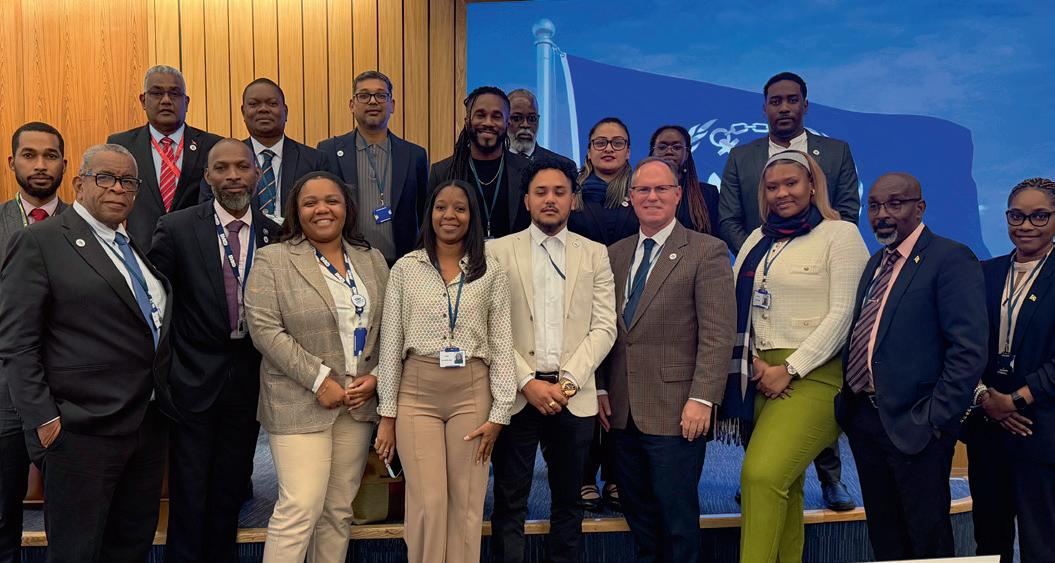
That changed in 2024 with the emergence of the University of the West
Indies-Caribbean Shipping Lanes (UWICSL) Project.
A wake-up call
In 2023, the International Maritime Organization (IMO) adopted a historic strategy to slash greenhouse gas (GHG) emissions from global shipping. While the world celebrated this climate victory, the Caribbean was largely absent from the negotiating table.
The numbers told a sobering story: at
the critical MEPC 80 meeting, where key decarbonization measures were finalized, only four out of sixteen Caribbean IMO member states were in the room. A few months prior, participation was even lower. The barrier wasn’t a lack of interest, but a gap in technical capacity at the high-stakes intersection of climate science, economics, and legal policy. This was a moment of profound realization, and the spark that initiated the collaboration that would morph into UWI-CSL.
Reclaiming our seat at the table
Recognizing this urgency, the Belize Port Authority, the United Nations Foundation (UNF), and University College London (UCL) launched an initiative to reclaim the region’s seat. This movement quickly gained steam as Jamaica, Grenada, Barbados, and Trinidad and Tobago joined the movement, followed by other Caribbean nations eager to expand the region’s influence.
By August 2024, this momentum was formalized into the UWI-CSL Project, housed at the University of the West Indies’ Shridath Ramphal Centre (SRC).
From Bystanders to Catalysts
While UWI-CSL began as a response to IMO negotiations, it has rapidly evolved. The project has undergone a strategic pivot, expanding its mandate from purely technical negotiations within the IMO structure, to a much broader mission of leading the maritime decarbonization movement within the Caribbean.
UWI-CSL recognizes that the region should be a catalyst in the green transition, and not merely a bystander. The Caribbean is blessed with vast renewable energy potential – sun, wind, and geothermal resources; that could position the Caribbean as a hub for green fuels. Tackling the challenges that come with
transition however, will require collective action from all stakeholders, including governments, regional institutions and the private sector to ensure that the transition is both achievable and sustainable for the region.
The Strategic Blueprint
UWI-CSL serves as the region’s technical support on decarbonization within the shipping sector. Its mission is to empower the Caribbean’s voice through technical excellence and inclusive dialogue. To achieve this, the project stands on four strategic pillars:
Substantive Technical and Advisory Work
Outreach and Stakeholder Engagement
IMO Delegation Training and Support
Communications and Knowledge Management
The project has supported Caribbean states through national consultations across more than 10 countries and convening critical regional meetings, alongside the delivery of high-level briefing notes, negotiation guides, and targeted training workshops and webinars to strengthen capacity. It has also
The work is only just beginning, but the impact is already being felt. The UWI-CSL machinery has already made history by delivering the first-ever joint Caribbean submission to the IMO”
produced economic impact assessments and other technical reports to inform decision-making, while providing realtime technical support and convening regional debriefs to enhance coordination. Together, these efforts position UWI-CSL as a key hub for practical, evidence-based support to Caribbean maritime engagement and transition planning.
The work is only just beginning, but the impact is already being felt. The UWI-CSL machinery has already made history by delivering the first-ever joint Caribbean submission to the IMO (Document ISWG-GHG 17/2/18), providing the world with a comprehensive shipping profile of our states for the first time.
Looking to the horizon
The UWI-CSL calendar is packed with purpose. From interactive webinars and the Lighthouse Brief newsletter to a major campaign exploring the history of Caribbean shipping, the project is keeping the momentum alive. UWI-CSL will continue to provide hands-on support to delegates for future MEPC meetings while building international collaborations that amplify our regional influence.
The story of UWI-CSL is one of empowerment. It is the story of a region moving from the sidelines to the center of the global stage. By bridging the gap between international policy and regional potential, UWI-CSL is ensuring that the future of our seas is not just green, but also fair, resilient, and uniquely Caribbean.
As the world navigates this hopefully just and equitable transition, UWI-CSL stands as a lighthouse, guiding the way toward a more sustainable and prosperous maritime future.
For more information about the UWI-CSL Project, visit https://shridathramphalcentre.com/caribbean-shipping-lanes/ or follow on LinkedIn, Facebook and Instagram @caribbeanshippinglanes
Caribbean Ports Commit to Environmental Transition
The CariPorts II Project was officially launched in October 17, 2025, marking the deployment of the First Environmental Label Dedicated to Caribbean ports. This second phase of the initiative is led by Grand Port Maritime de la Guadeloupe in partnership with Caribbean Shipping Association, with financial support from the European Interreg Caribbean program.
CariPorts II aims to support ports across the Caribbean in their collective environmental transition while strengthening their capacity to adapt to climate change. The project builds on the collaboration and synergies developed with seven Caribbean ports during the first phase of the program conducted between 2021 and 2024.
A label designed for Caribbean environmental challenges
The CariPorts label is based on a comprehensive approach to environmental management specifically adapted to
the Caribbean context. It is structured around eight Environmental Performance Indicators:
Environmental management of port activities
Waste management and treatment
Reduction of greenhouse gas emissions
Protection of ecosystems and natural capital
Prevention of water and soil pollution
Reduction of underwater noise
Adaptation of infrastructure to climate change
Cooperation and sharing of expertise among Caribbean ports
The objective is to provide a common framework enabling ports to measure their progress and strengthen their environmental transition strategies.
Core Programs
The implementation of the label is organized around three major programs: the Pioneer Ports Program, the Partners Program, and the School Program.
The Pioneer Ports Program is an exclusive and free initiative reserved for a limited number of Caribbean ports wishing to become pioneers in implementing this new certification.
Participating ports benefit from methodological and technical workshops, inter-port visits, exchanges with recognized experts, and personalized support related to environmental certification and sustainable port management.
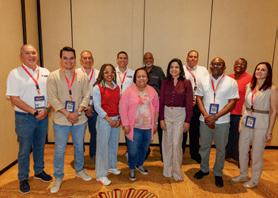
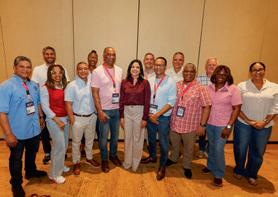
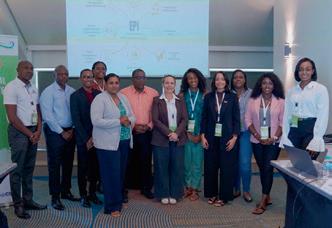
From March 23-25, Caribbean port stakeholders gathered in Santo Domingo for the official launch of the CariPorts II Pioneer Ports Program. Representatives from ports in Barbados, Jamaica, Dominican Republic, Antigua and Barbuda, Dominica, and Guadeloupe took part in the international meeting, which focused on sharing and integrating the methodology required to implement the label. The next meeting is scheduled to take place in Jamaica for the launch of the first training workshops.
The Partners Program is open to scientists, associations, institutions, non-governmental organizations, and companies involved in climate adaptation initiatives for Caribbean ports or engaged in one of the environmental performance areas covered by the label.
This program also offers the opportunity to be included in the first Caribbean directory dedicated to environmental initiatives,
Representatives from ports in Barbados, Jamaica, Dominican Republic, Antigua and Barbuda, Dominica, and Guadeloupe took part in the international meeting”
support mechanisms, and sustainable actions related to the maritime sector.
The School Program targets schools, universities, and training organizations throughout the Greater Caribbean region. The environmental themes addressed by CariPorts II are designed to engage all generations and raise awareness about sustainability and climate resilience.
Through awareness campaigns, educational exchange trips, and interactive activities focused on environmental issues, younger generations are encouraged to understand, analyze, and take concrete actions for the future of the region. The CariPorts project team is currently preparing activities for the 2026 academic year.
Eco-responsible Ports
As climate change continues to impact coastal and maritime regions, a new community of eco-responsible Caribbean ports is emerging. Combining innovation, regional cooperation, and environmental responsibility, these ports aim to become key players in the sustainable transformation of the maritime industry.
With CariPorts II, the Caribbean is taking a major step toward building a more resilient, modern, and environmentally responsible port sector for future generations.
Building Scalable Capacity in CARICOM MARKETS
Just one month after its launch in April, Florida-based SUM Shipping Line is already operating two vessels and establishing a scalable presence across the CARICOM and South American markets. The company’s strategy is centered on reliability, operational control, and long-term growth.
Strategy
SUM Shipping Line forms part of a broader, integrated operating model developed by Tree Corporation. This model brings together multiple business units into a single, coordinated framework designed to enhance execution, reliability, and scalability.
“At the core of the model, each part of the business reinforces the next, strengthening both execution and reliability,” said CFO Stefanie Obermeier. “With the addition of SUM Shipping Line, the group has taken a decisive step toward full vertical integration.”
Rather than functioning independently, divisions such as commodity trading, logistics services, and retail distribution operate as interconnected components. This structure enables demand generation, operational execution, and shipping capacity to reinforce one another within a continuous cycle.
“This is not simply about adding vessels,” noted Mr. Sola. “It is about building a system where commercial activity and operations are fully aligned, allowing for greater control and consistency in service delivery.”
The result is a framework designed to improve control over cargo flows, enhance reliability, and support efficient
scaling in increasingly complex global shipping environments.
Operations
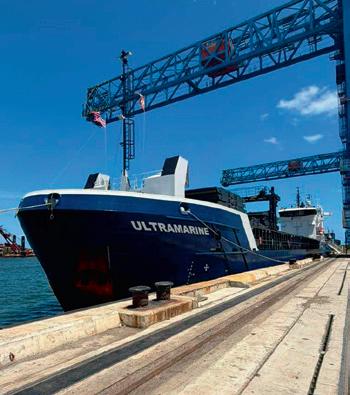
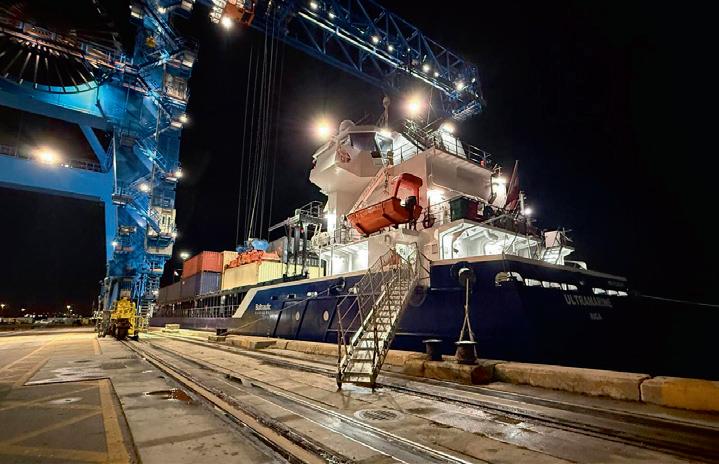
Operating from Port Everglades, SUM Shipping Line currently deploys two vessels across dedicated services in the U.S.–Caribbean trade: the 367 TEU MV ASG Kherson and the 172 TEU MV Ultramarine. The company is currently moving approximately 300 forty-foot containers per week to the Caribbean. As operations continue to stabilize, there are plans to expand service coverage to additional destinations within the region.
Positioning
The launch of SUM Shipping Line represents a strategic step toward greater vertical integration, allowing for increased control over transportation capacity while supporting a broader logistics and trading ecosystem.
“Our focus is to build scalable capacity with a disciplined approach to operations,” added Mr. Sola. “The objective is long-term stability, not short-term expansion.”
By aligning commercial activity, operational execution, and maritime transport within a single structure, the company aims to deliver consistent service levels while maintaining the flexibility required to scale in dynamic markets.
Mr Sola previously sold SCLine more than a decade ago. After an extended period away from vessel ownership – during which he remained active in the industry as a non vessel operating common carrier – he has now returned with the launch of SUM Shipping Line, marking a new chapter in his maritime career.
Shaping the Future of the Maritime Sector
BVI Ports Authority
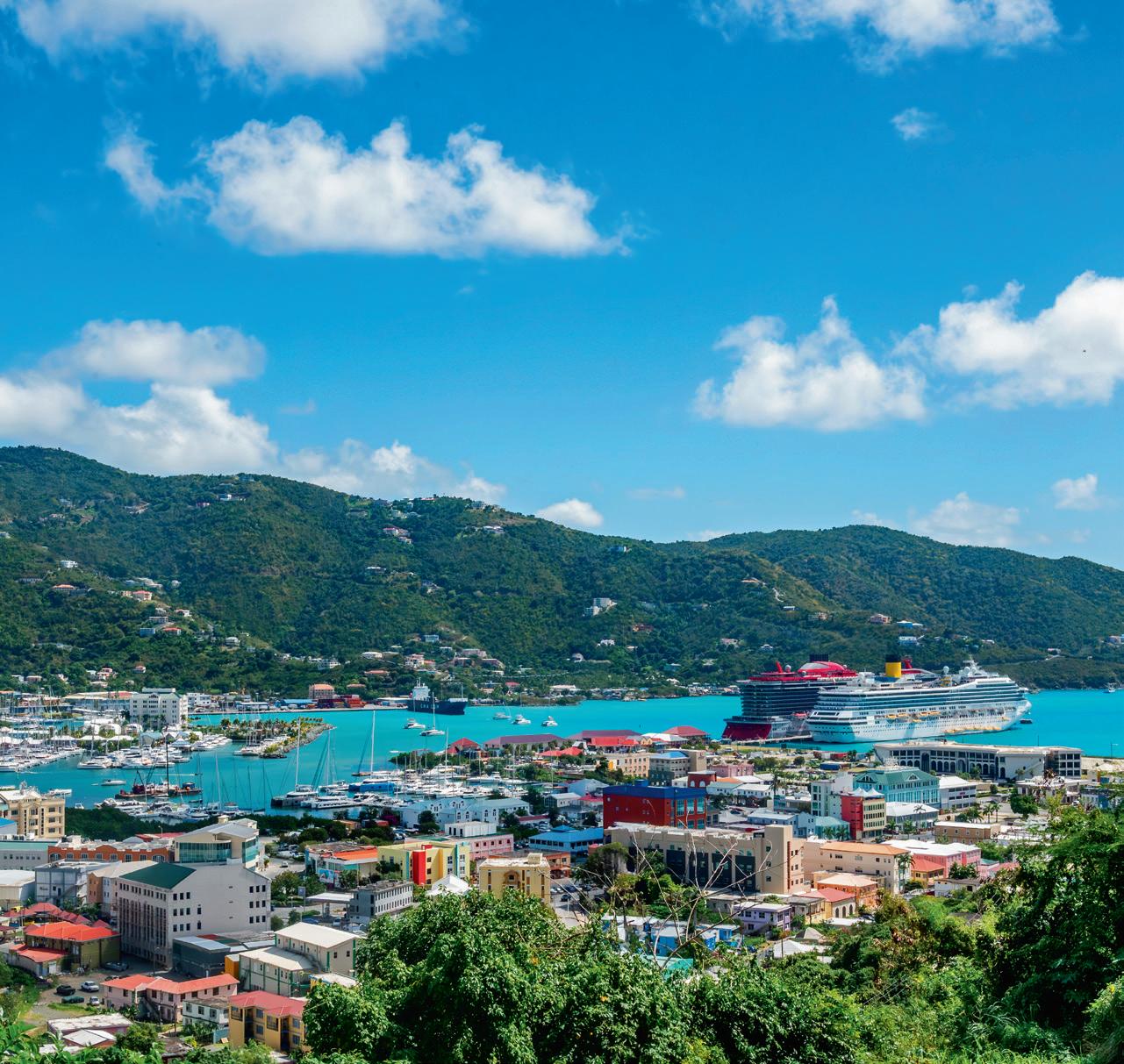
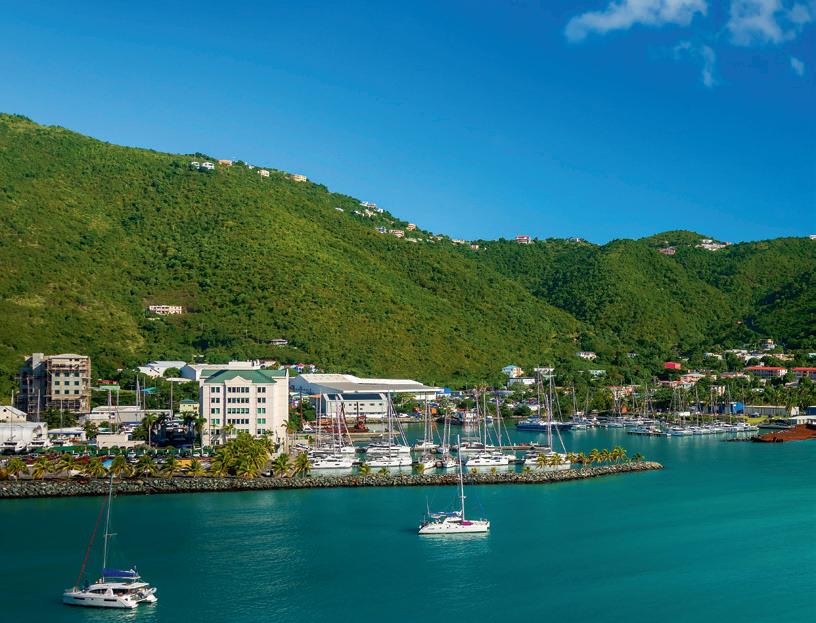
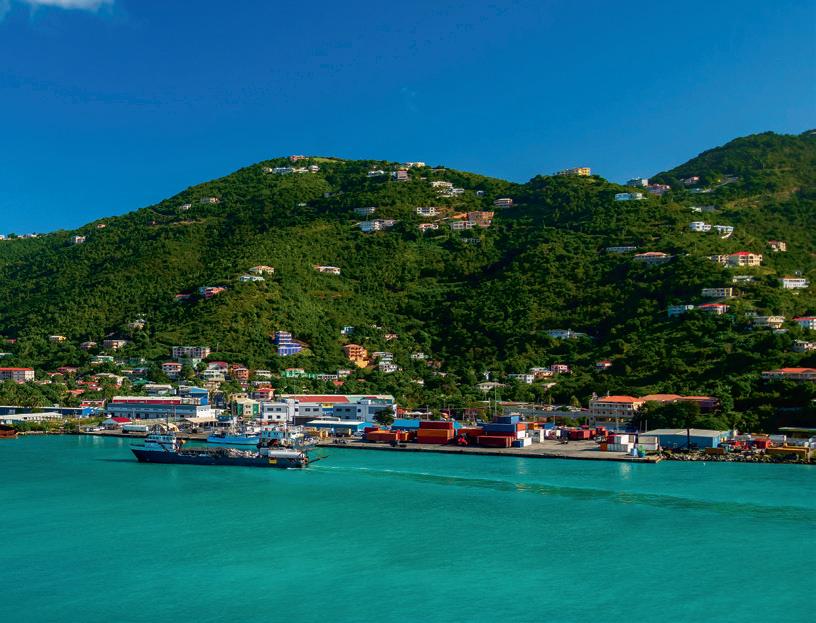
The British Virgin Islands (BVI) has long been celebrated as a premier maritime destination defined by pristine waters, a strategic geographic location, and globally recognized yachting and cruise industries. At the center of this thriving marine ecosystem is the British Virgin Islands Ports Authority (BVIPA) – a key driver of national development, trade facilitation, and regional connectivity.
By Alicia Green Marketing Manager, BVI Ports Authority
As global maritime dynamics continue to evolve, the BVIPA has positioned the Territory at the forefront of innovation, resilience, and operational excellence. This commitment was underscored in 2025 with the receipt of the prestigious Ludlow Stewart Container Port of the Year Award, presented by the Caribbean Shipping Association (CSA). The recognition marked a defining moment, affirming the impact of a small but high performing port authority within a competitive regional landscape and reinforcing the BVI’s growing influence in Caribbean maritime affairs.
The maritime sector remains a cornerstone of the BVI economy, supporting cruise tourism, cargo logistics, inter island ferry transport, and one of the world’s most dynamic yacht charter industries. With its archipelagic geography and proximity to key regional shipping routes, the Territory is uniquely positioned as a hub for both leisure and commercial maritime activity.
Infrastructure
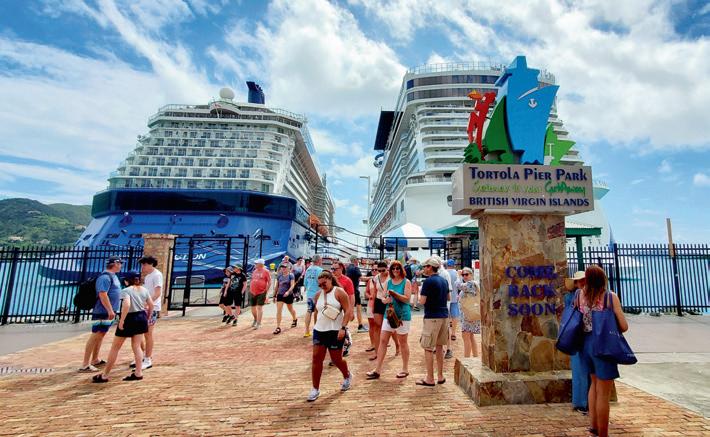
From the bustling cruise pier at Cyril B. Romney Tortola Pier Park to cargo operations at Port Purcell, port infrastructure plays a pivotal role in the movement of people and goods. In 2025 alone, the BVI welcomed approximately 875,000 cruise passengers across 658 calls, highlighting
the vital role ports play in sustaining tourism, supporting local businesses, and maintaining food security, construction supply chains, and overall economic stability.
To meet growing demand and future proof operations, the BVI Ports Authority has embarked on strategic infrastructure upgrades focused on efficiency, safety, and capacity. Key investments at Port Purcell are optimizing cargo flow, strengthening
storage capabilities, and enhancing operational safety. At the same time, continued improvements to cruise facilities are designed to deliver a seamless, world class visitor experience, ensuring the BVI remains a preferred port of call in the Caribbean.
Beyond physical development, the Authority is advancing a digital transformation agenda aimed at improving communication, stakeholder engagement, and operational transparency – creating a more agile, responsive, and data driven port environment.
The strength of the BVI’s marine sector lies in its interconnected pillars:
Cruise tourism, driving visitor arrivals and economic activity
Cargo and logistics, ensuring the steady flow of essential goods
Ferry connectivity, linking communities across islands
Yachting and charter services, reinforcing the BVI’s position as a global sailing capital
Together, these sectors form a resilient ecosystem that underpins national growth and anchors the Territory’s blue economy.
Looking ahead, the BVI is poised to further elevate its role in the regional maritime space with the launch of PortVision 2026, the Territory’s inaugural maritime conference, scheduled for this October. Under the theme “Navigating the Future: Innovation and Sustainability in Seaport Operations,” the conference will bring together port authorities, government leaders, cruise and shipping executives, marine service providers, and international experts.
PortVision is designed as a dynamic platform for dialogue, collaboration, and forward thinking solutions. It will explore critical topics including infrastructure development, digital transformation,
sustainability, climate resilience, and workforce advancement – issues central to the future of ports across the Caribbean. By convening this level of expertise in the region, the BVIPA aims to strengthen partnerships, elevate the BVI’s global maritime profile, and contribute meaningfully to regional and international best practices.
Ports Authority role
As the Territory navigates an increasingly complex maritime landscape, the role of the Ports Authority has never been more vital. Guided by a clear vision to be a regional leader in maritime excellence, innovation, and sustainability, the Authority continues to demonstrate leadership through strategic investment, strong governance, and a commitment to continuous improvement.
The BVI is poised to further elevate its role in the regional maritime space with the launch of PortVision 2026, the Territory’s inaugural maritime conference, scheduled for this October.”
As it celebrates 35 years of service, the BVIPA is embracing a future defined by transformation while honoring its legacy. A renewed emphasis on storytelling, institutional memory, and meaningful engagement has given rise to its official podcast, Portside Conversations. The series brings to life the voices behind the ports past and present, featuring authentic voices and bold ideas from industry leaders, policymakers, employees, and partners who continue to shape the BVI’s maritime journey. Through thoughtful dialogue and shared experiences, Portside Conversations reflects the Authority’s commitment to transparency, knowledge sharing, and deeper connection with stakeholders at home and across the region.
From infrastructure development and workforce investment to thought leadership platforms like PortVision and Portside Conversations, the BVI Ports Authority is setting a new benchmark for what ports in the Caribbean can achieve.
Anchored in legacy. Driven by vision. Leading the future.
From the shores of the British Virgin Islands, the next chapter of maritime excellence is already underway.
Caribbean shipping leaders convene in Curaçao
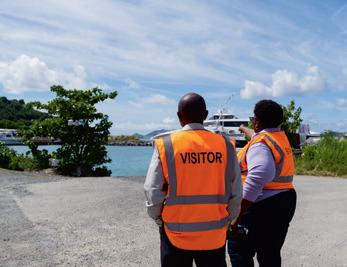
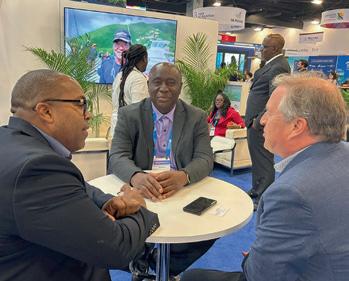
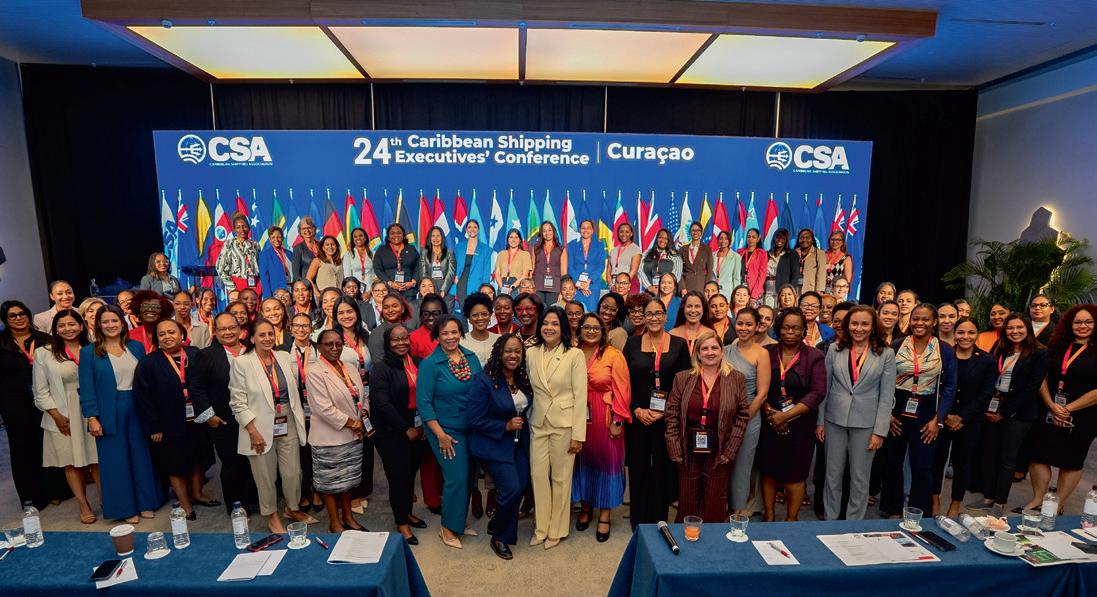
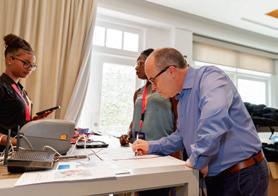
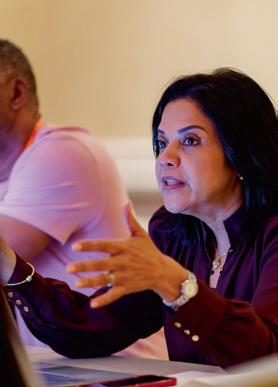
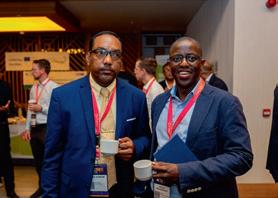
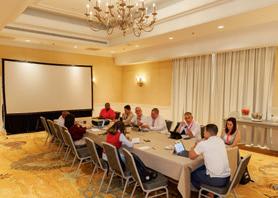
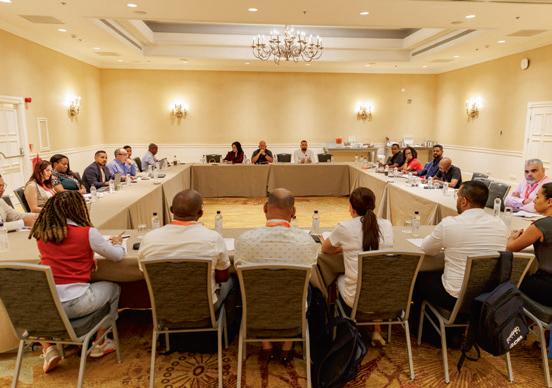
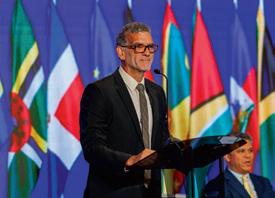
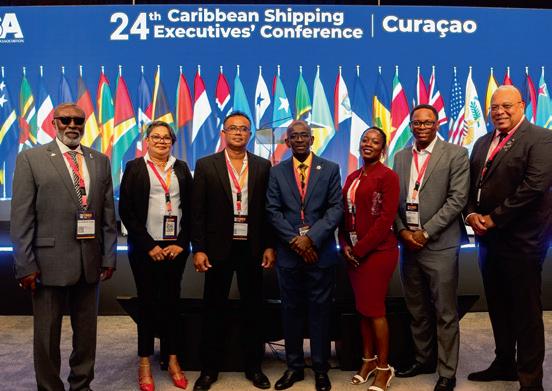
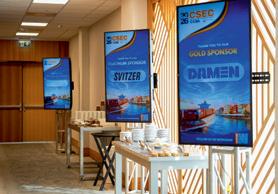
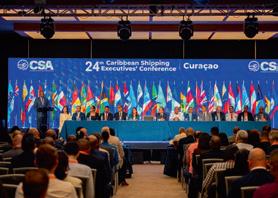
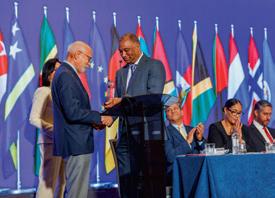
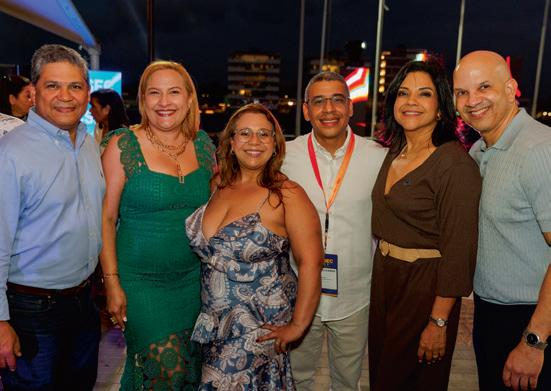
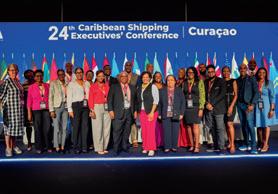
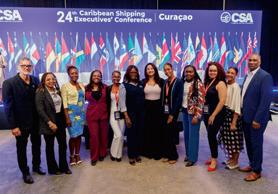
The 24th Caribbean Shipping Executives' Conference (CSEC) brought together maritime leaders, policymakers, and industry professionals in Willemstad, Curaçao, from May 17 to 19, 2026, at the Curaçao Marriott Beach Resort. Hosted by the Caribbean Shipping Association (CSA) in partnership with the Curaçao Ports Authority, the three-day conference served as the region's premier forum for dialogue on trade, logistics, port development, and maritime security.
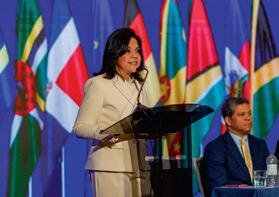
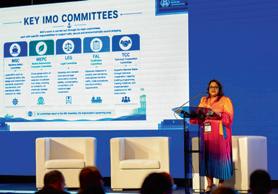
Opening proceedings on Monday, May 18, CSA General Manager Milaika Capella
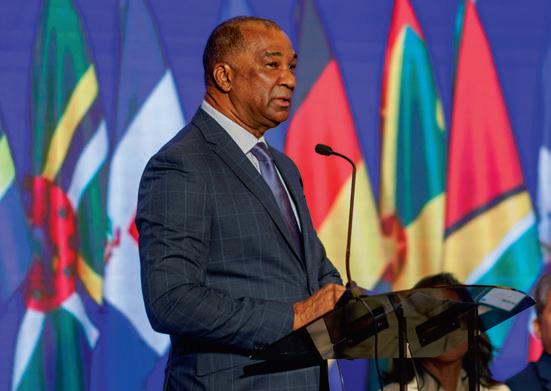
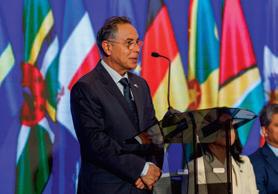
Ras and President William Brown welcomed delegates alongside host dignitaries including Humberto de Castro, Managing Director of the Curaçao Ports Authority, and the Hon. Charles Cooper, Minister of Traffic, Transport and Urban Planning. In a welcome addition to the program, His Excellency
Mr. Mauritsz de Kort, Governor of Curaçao, also addressed delegates, underscoring the significance of the conference to the island and the wider region.
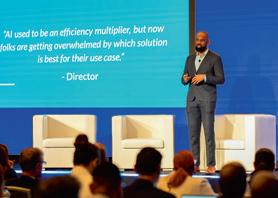
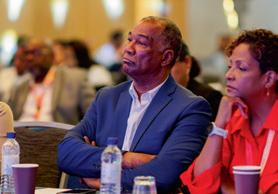
The agenda featured high-level sessions addressing intra-Caribbean trade connectivity, artificial intelligence, digitalization, decarbonization, corporate social
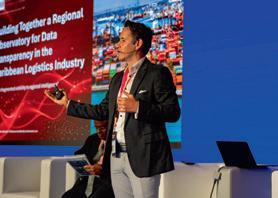
responsibility, and the protection of critical maritime infrastructure. Regional and international experts delivered presentations on ports as energy hubs, data transparency in Caribbean logistics, and the economic impact of an increasingly volatile global environment.
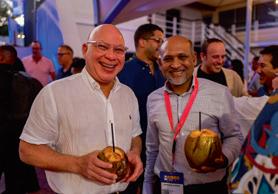
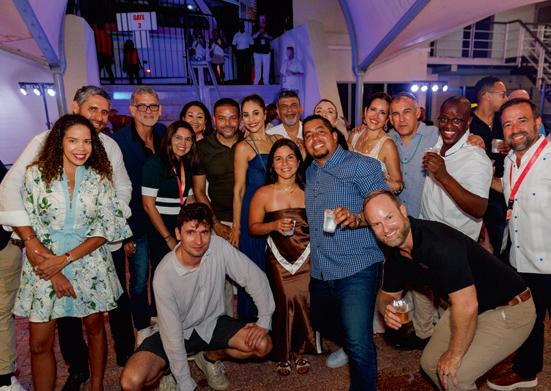
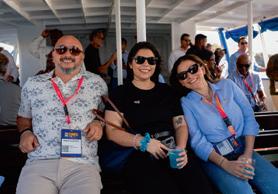
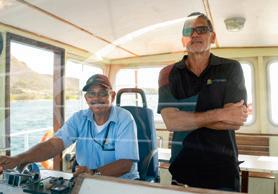
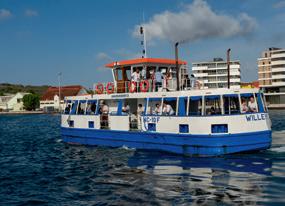
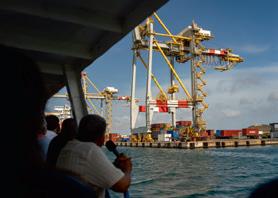
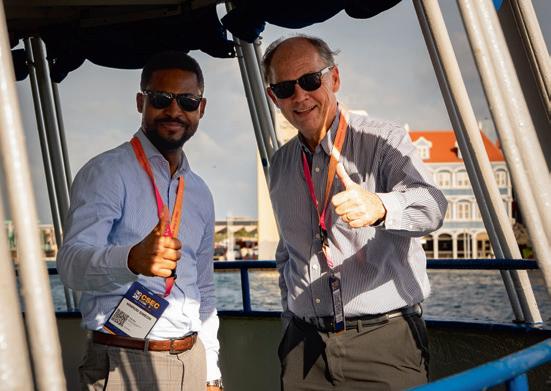
The conference concluded on Tuesday, May 19, with a port tour and networking opportunities, reinforcing Curaçao's role as a significant hub in Caribbean maritime operations. Delegates departed with fresh perspectives on the policy, investment, and innovation priorities shaping the region's shipping future.
Puerto Rico’s new Center of Excellence
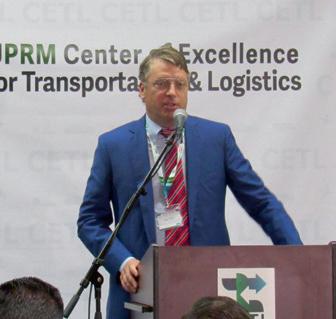
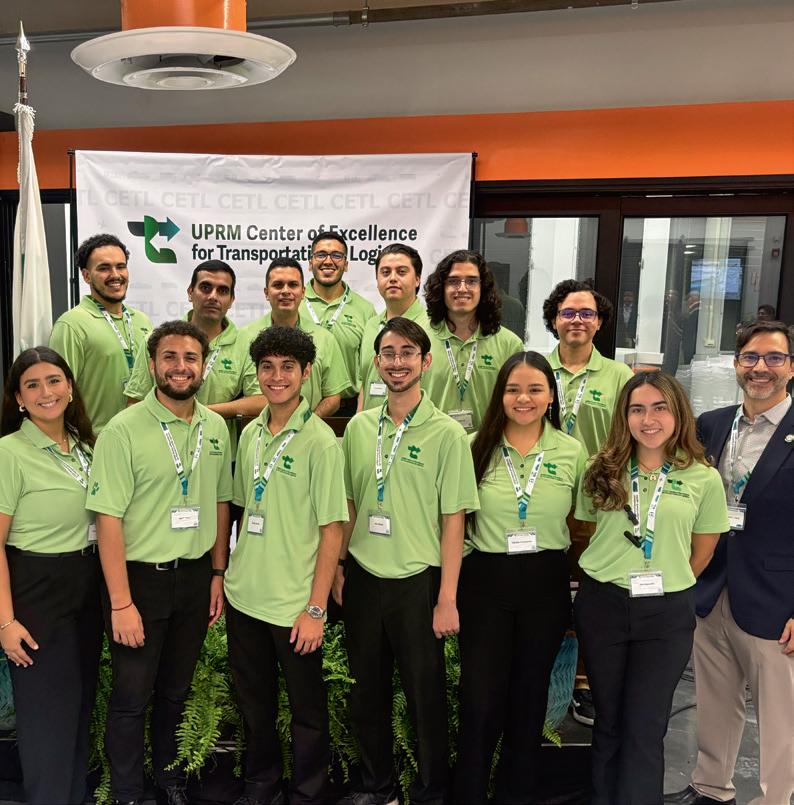
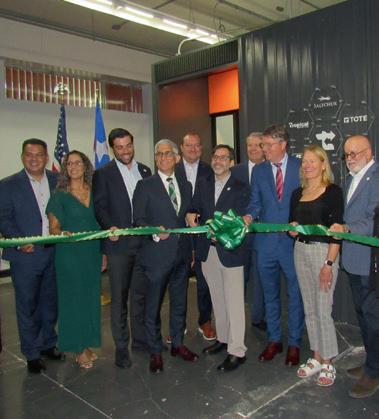
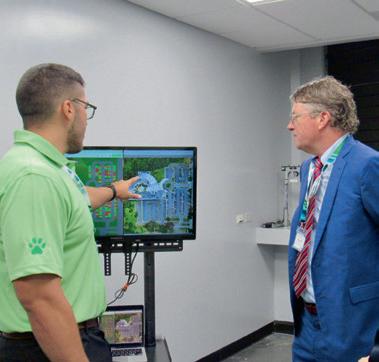
Last year the University of Puerto Rico at Mayagüez (UPRM) inaugurated the Center of Excellence for Transportation and Logistics (CETL). This is a pioneering initiative for Puerto Rico and the Caribbean region designed to advance specialized workforce development, applied research, and academia–industry collaboration to address real supply-chain challenges across the island and the region.
Under the direction of Dr Héctor J. Carlo, the CETL is built on three pillars: Hands-on academic programs, co-ops, internships and others; Applied research in resilience, cold chain, and multimodal transportation; and Strategic partnerships with industry to accelerate technology transfer, innovation, and career pathways.
“The opening of the CETL is a historic milestone for UPRM and for the University of Puerto Rico itself. This Center will catalyze innovation and relevance across our academic mission by working hand in hand with industry peers on solutions that impact the economy and the quality of life of our people,” said Dr Carlo, CETL Director,
University of Puerto Rico-Mayagüez (UPRM).
The Center was launched with the support and contribution of US$10 million dollars of Saltchuk and its family of companies with presence in the Caribbean (principally TOTE Maritime Puerto Rico, Puerto Rico Terminals, Aqua Gulf, Tropical Shipping and Caribtrans) deepening a longterm collaboration with UPRM to expand high-value opportunities for students, enhance the competitiveness of Puerto Rico’s logistics ecosystem, and strengthen the reliability of the island’s supply chain.
For more than 35 years, Saltchuk's companies in Puerto Rico have driven economic growth and trade expansion by ensuring reliable imports and promoting
exports from Puerto Rican companies to the Caribbean and beyond, strengthening the island's supply chain and global connections.
“Saltchuk is proud to partner with the University of Puerto Rico at Mayagüez to launch the Center of Excellence for Transportation and Logistics. Service is our purpose and through this Center, we’re committing to the students who will learn, grow and build careers that strengthen the region’s supply chain and communities,” stated Mark Tabbutt, Chairman, Saltchuk.
The CETL is also supported by an advisory board composed of executives from multiple sectors such as manufacturing in general, pharmaceuticals, medical devices, food & general merchandising retail
Saltchuk is proud to partner with the University of Puerto Rico at Mayagüez to launch the Center of Excellence for Transportation and Logistics”
and distribution, ground transportation, hospitality, construction and others. The president of this board, Eduardo Pagán (Vice President of Corporate Affairs for the TOTE Group), emphasized that one of the main factors companies consider when establishing their relocation strategies is the quality of the professional talent
available in each jurisdiction. "Now, with this Center, we have a solid foundation to provide our students with the opportunity to be the best, since they will have access to data, information, projects on the current transportation and logistics situation in multiple areas and will be able to contribute to improving all these processes," Pagán stated.
The Center invites companies and trade groups to collaborate on internships and co-ops, as well as applied-research challenges and data-sharing initiatives, mentorships, guest lectures, and practice-based teaching. Additionally, companies can provide in-kind support and service on the CETL Advisory Board to help set priorities and impact metrics.
INSPIRING CAPTIVATING INFORMATIVE
Land & Marine specialises in innovative and creative contract publishing and design services. Whatever your promotional requirements are, we can offer a variety of distribution channels specific to your needs. Land & Marine helps clients worldwide reach potential customers in many appealing ways that get key messages to the correct audience.
For further information please contact Land & Marine Publications
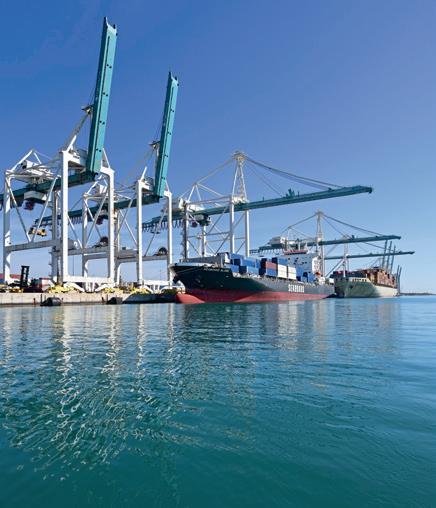
Liebherr Container Cranes has delivered two new ship-to-shore (STS) cranes to Port Tampa Bay. These are the first cranes of their kind on Florida’s Gulf Coast.
The cranes, manufactured in Killarney, Ireland, are a key part of the port's Vision 2030 expansion which aims to handle larger vessels and will deliver significant gains in berth productivity, vessel turnaround efficiency, and long-term operational reliability.
CURAÇAO
Damen Shiprepair Curaçao has achieved triple ISO certification, the first company in Curaçao to do so. The ISO 14001 covers quality, safety, and environmental management.
GUADELOUPE / MARTINIQUE
Two new passenger-only ferries, Tamour and Aubaïa, belonging to FRS Express des Îles have successfully completed their sea trials. This investment marks a major step forward and strengthens inter-island connectivity in the Caribbean with an updated passenger experience epitomizing comfort, safety, and performance.
FRS Express des Îles serves Guadeloupe. Martinique, Dominica, Saint Lucia and on occasion Saint Kitts.
THE BAHAMAS
The Government of The Bahamas has agreed a public-private partnership to develop a new cruise port and cargo facility on Mayaguana –the nation’s eastern-most island.
The agreement involves the Bahamian government, the local Global Lead Consultant Group, and 77 Construction UK to create a major maritime and logistics hub. Mayaguana's location close to key Atlantic shipping routes would seem ideal for both cruise tourism and cargo transshipment.
Development will take place in three phases, beginning with a make-shift off-loading facility and a deep-water port focusing on both bulk and containers, followed by a cruiseship terminal, and culminating in a deep-water transshipment port for larger with the necessary supporting cargo and landside infrastructure.
The project will be jointly owned by the government, the public-private Mayaguana Island Development Fund, and Global Lead Consultant Group Limited, with Mayaguana Port Group Ltd serving as the operating company.
The Bahamian government had already approved working with US investors MMC to turn Mayaguana into a free trade zone.
FLORIDA
New Liebherr crane are now operating at JAXPORT’s Talleyrand terminal – the third new crane to enter service at JAXPORT in the last few months — expanding cargo-handling capabilities at Florida’s largest container port.
“With support from our partners at the State of Florida, we continue to make strategic investments that create economic growth and support jobs,” said JAXPORT CEO Eric Green. “All three of the new cranes we’ve added over the last year ensure JAXPORT is well positioned to keep cargo moving efficiently for our customers and community.”
TRINIDAD & TOBAGO
The Secretariat of the Organization of American States (OAS) Inter American Committee on Ports, in collaboration with the OAS Inter American Commission of Women, is delighted to announce that Michelle Scipio Hosang, Vice President, Port and Estate Management at the National Energy Corporation of Trinidad and Tobago, has been named the 2026 Outstanding Woman in the Maritime and Port Sectors.
After a highly-competitive process, Michelle Scipio-Hosang was selected as winner for her demonstrated dedication, leadership, and innovation, empowering other women across the sector, as well as her professional contributions over her 26-year career for the development of the maritime-port sector of Trinidad and Tobago and the Americas.
TOWT
After making a total of 36 Atlantic crossings (including port calls in Guadeloupe, Martinique and Colombia) and saving an estimated 5,000 tonnes in CO² omissions, pioneering French sail-powered operator TransOceanic Wind Transport (TOWT) has ceased operations.
Built at the Breton shipyard Chantiers Piriou TOWT had since 2023 operated two 80-meter length industrial-scale cargo sailboats, with a carrying capacity of 1,100 tonnes. (See CM issue 44).
But despite the rising price of bunker fuel and freight contracts from several top brands, the business failed to turn a profit.
JAMAICA
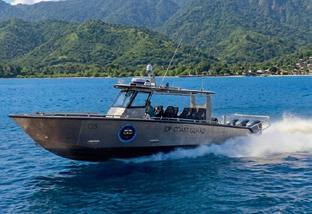
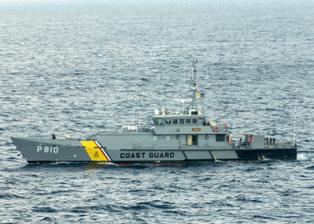
Louisiana-based boatbuilder Metal Shark Boats recently delivered and commissioned the first eight of 22 high-speed interceptor vessels for the Jamaica Defence Force (JDF) Coast Guard.
The remaining 14 vessels are currently in production at Metal Shark’s production facility in Jeanerette, Louisiana, and are scheduled for phased delivery.
Henry Irizarry, Metal Shark Boats’ Senior Vice President of International Business Development, said that the new JDF Coast Guard interceptors will perform a range of missions including coastal patrols, counterillicit trafficking enforcement, search and rescue, and border monitoring.
SUM SHIPPING
Port Everglades’ Reheboth Terminal has awarded newcomers Floridabased SUM Shipping the management of its second Caribbean Container Loop.
It becomes Rehoboth Terminal’s fifth service from Port Everglades to the Caribbean, a combination of both container and RoRo vessels. SUM (Strong Unity Maritime) Shipping is a shipping line that offers regular container services from Port Everglades to key destinations in the Caribbean.
TRINIDAD & TOBAGO
The proposed restart of the 150,000 b/d capacity Pointe-àPierre refinery – which was closed in 2018 – in late 2026 is set to see tankers returning to South Trinidad.
Talks on the possible restart of the refinery have intensified in light of the ongoing conflict in the Middle East, which has raised concerns about global energy supply.
Guyana is also seeking a nearby refining option for its growing crude oil exports and to shuttle output to Trinidad.
Nevertheless, re-opening the refinery would require significant investment.
THE BAHAMAS
MSC Group’s Cruise Division has announced that Sandy Cay – a new luxury private island destination located adjacent to Ocean Cay MSC Marine Reserve in The Bahamas – is due to open in 2028. Sandy Cay is designed for guests of both MSC Cruises and sister company Explora Journeys.
Conceived to complement the existing Ocean Cay facility, Sandy Cay will offer a more secluded escape. Sandy Cay has been envisioned as a destination designed to offer a more intimate yet elevated and immersive experience.
Located within the same Bahamian waters as Ocean Cay MSC Marine Reserve, Sandy Cay will complement the company’s existing private island destination.
DUTCH CARIBBEAN
Damen has signed a contract with the Ministerie van Defensie (Dutch Ministry of Defence) to build three Stan Patrol 5009 cutters for the Dutch Caribbean Coast Guard. These vessels will replace the current generation — Jaguar, Panter, and Poema — a Damen Stan Patrol 4100 design which have served reliably for over 25 years but are reaching the end of their operational life.
The new cutters are larger than their predecessors and designed to handle the challenging local sea conditions, providing better crew comfort, thereby enhancing extended mission capabilities. The trio will be equipped with modern sensors, including an advanced surveillance radar and electro optical sensor, enabling effective surveillance day and night, in all weather conditions.
Alongside the cutters, Damen is also delivering four fast DI 1102 interceptor boats one on each vessel, including an additional unit for training and maintenance rotation. Expected to be operational by early 2029, these boats are designed to intercept fast smuggling vessels and support law enforcement operations across the region.
GUADELOUPE
The Caribbean is taking another step towards more sustainable ports with the launch of the CariPorts II pilot ports program.
From March 23 to 25, 2026, port stakeholders from the region gathered in Santo Domingo to mark the launch of the pilot ports program, a key milestone for Caribbean maritime and environmental cooperation.
Led by the Grand Port Maritime de la Guadeloupe (GPMG), in partnership with the Caribbean Shipping Association, and co-financed by the Interreg Caraïbes program, the CariPorts II project aims to deploy the first environmental label dedicated to Caribbean ports.
This label will make it possible to structure, harmonize and promote the initiatives undertaken by ports in their ecological transition.
The pilot ports participated in the first two methodological workshops related to the integration of the new label. This work is part of a particularly sensitive regional context.
CURAÇAO
Damen Shiprepair Curaçao has achieved triple ISO certification – the shipyard we now covers quality, safety, and environmental management.
The shipyard says this milestone belongs to our people. Their craftsmanship and commitment made it possible. Adding: “This is not an endpoint, but a strong foundation for continued growth as a leading shipyard in the Caribbean.”
In a region particularly exposed to the effects of climate change – rising sea levels, intensification of hurricanes, coastal erosion – ports play a strategic role for trade, the local economy and tourism development. Strengthening their resilience and improving their environmental performance is more than ever a collective challenge
The construction phase with the pilot ports will make it possible to concretely test the tools and methodology of the future label, before its deployment on a regional scale. Ultimately, the objective is to create a network of Caribbean ports committed to a common approach to environmental performance and climate.
COLOMBIA
In Barranquilla, AmaWaterways River Cruises has christened a second purpose-built 68-metre length river cruise vessel for the River Magdalena. The AmaMelodia is a 64-passenger sister ship of the AmaMagdalena (see CM issue 44) – the first such river cruise vessel to operate on Colombia’s longest and busiest waterway for more than 60 years.
Michael R. Bresnahan / Shutterstock.com
THE BAHAMAS
Boskalis has carried out the float on of Lucayan, a new floating dry dock for Grand Bahama Shipyard, measuring 413 meters in length and 85 meters in width.
Thanks to clever engineering the floating dock was transported from Qingdao in China in four separate sections using two semi-submersible heavy transport vessels Blue Marlin and White Marlin. Each vessel now has carried a dry dock section measuring over 156 meters in length, with an additional smaller section placed on top of it.
LOUISIANA
The Port of New Orleans (Port NOLA), Ports America, and Terminal Investment Ltd (TiL), a global container terminal investor and operator part of the Switzerlandheadquartered MSC Group, have announced the formal incorporation of Louisiana International Terminal Holdings LLC, a joint venture between the two private partners that is now active and will serve as the operating group for the Louisiana International Terminal (LIT) project.
The creation of Louisiana International Terminal Holdings, LLC marks an important milestone in the development of the Louisiana International Terminal, a nextgeneration container facility that
Upon arrival in Freeport the four sections are being discharged and assembled into a single floating dry dock. Once operational, Lucayan will be one of the largest floating dry docks in the world, with a lifting capacity of 130,000 tonnes.
The Lucayan transport marks the second major transport that Boskalis has carried out for @ Seabridge Marine and Grand Bahama Shipyard. Last year, the BOKA Vanguard transported the 357-meter-long East End dry dock to the Caribbean.
JAMAICA
The Shipping Association of Jamaica (SAJ) was proud to see Honorary Member, The Hon. Charles Johnston OJ, CD, featured on the Titans of the Industry, airing on Television Jamaica (TVJ).
Mr Johnston's connection to Jamaican shipping spans generations. His
will position the state as a premier gateway for global trade.
The joint venture company is intended to manage the operations of the terminal, working in close coordination with Port NOLA, which is responsible for designing and constructing the facility to meet global standards.
Strategically located to accommodate the largest container vessels calling the Gulf, the Louisiana International Terminal will enhance cargo capacity, improve supply chain efficiency and resiliency, and expand market access for US exporters.
GEEST LINE
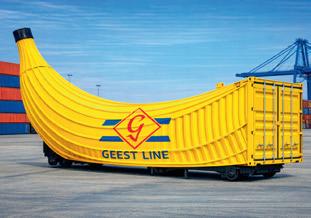
The UK’s Geest Line had a clever and original April Fool’s Day joke to play on an unsuspecting freight industry.
The company claimed to be trialling ten of the banana-shaped containers in its fleet specially designed to fit at the aft of a vessel – ensuring space is fully utilised. These boxes were be used to transport tropical produce from the Caribbean, ensuring cargo arrives safe and fresh.
Geest Line announced: “a great initiative to maximise loadings on our vessels, they look great too”, Adding: “A lots of research has gone into these boxes and Geest is proud to be part of the project – the market is ripe for this kind of development.”
Not to be considered foolish by perpetuating the joke, Geest line said it was making the final decision whether to invest in these boxes and place an order for these containers by midday Wednesday 1st April.
grandfather was a founding father of the SAJ; his father served as its chairman. He rose to the presidency of the Association, was inducted into the SAJ Hall of Fame in 2022, and was conferred with the Order of Jamaica in 2023, among a distinguished list of national and regional honours.
As Executive Chairman of Jamaica Fruit & Shipping Company and Chairman of Jamaica Producers Group, Mr Johnston has spent six decades shaping the local maritime, agricultural, and logistics landscape.
From documents to data to decisions:
How AI is fixing shipping’s data problem
The Caribbean shipping and logistics sector sits at the centre of regional and global trade, yet many organizations face a quieter but persistent constraint: limited access to clean, usable data. It is not that data does not exist. Rather, it is often locked away in fragmented non-standardized formats. This lack of uniformity creates friction across day-to-day operations and makes it difficult to extract timely, reliable insights.
The data problem in shipping Shipping processes generate vast amounts of data, from cargo manifests and bills of lading to invoices and Customs declarations. However, this data often arrives in formats such as PDFs,
Spreadsheets, and Word documents that are not easily machine-readable. As a result, companies frequently resort to manual data entry to input information into critical systems such as ASYCUDA or Port Community Systems (PCS). This manual approach introduces several inefficiencies:
Time consumption, as staff must spend hours extracting and re-entering data.
Human error, as manual processes inevitably lead to inaccuracies.
Inconsistent data quality, as variations in format and structure make standardization difficult.
These challenges are not just operational inconveniences. They directly impact a company’s ability to generate meaningful insights. Key Performance Indicators (KPIs), which are essential for measuring efficiency and performance, depend on clean, structured, and computer-readable data. Without it, organizations struggle to achieve reliable business intelligence.
Where AI makes the difference
Artificial Intelligence (AI) offers a transformative solution to these long-standing issues. By leveraging AI-powered document processing, shipping companies can automatically extract, interpret, and standardize data from a wide variety of formats.
AI systems can:
Convert unstructured documents into structured, machine-readable data
Normalize data across different formats and sources
Integrate seamlessly with existing systems like ASYCUDA and PCS
Reduce reliance on manual data entry
This capability not only accelerates operations but also significantly improves accuracy. With standardized data flowing into operational systems, companies can generate more reliable KPIs and unlock deeper insights into their performance.
From data to intelligence
The true value of AI in shipping lies in its ability to transform raw data into actionable intelligence. Clean, standardized data enables organizations to:
Monitor operational efficiency in real time
Identify bottlenecks and areas for improvement
Enhance compliance with regulatory requirements
Make faster, data-driven decisions
In a competitive global market, these advantages are not optional; they are essential.
…it enables users to quickly convert disparate data into formats that can be easily uploaded into systems like ASYCUDA and PCS”
A practical step forward
While the concept of AI-driven transformation may seem complex, practical tools are already making this shift accessible.
One such example is ADVANTUM’s AI Document Converter. Designed specifically to address the challenges of non-standardized shipping documents, it enables users to quickly convert disparate data into formats that can be easily uploaded into systems like ASYCUDA and PCS.
By reducing manual effort and improving data accuracy, these AI-enabled tools support the broader goal of achieving clean data and robust business intelligence. In doing so, they empower shipping companies to operate more efficiently and make smarter decisions.
What comes next
The industry’s data challenge will not be solved at the ecosystem level until it is solved within individual organisations.
Clean, structured, and reliable data must start at the source. That means addressing the everyday realities of fragmented documents, manual re-entry, and inconsistent formats.
AI provides a practical way to take that first step. By standardizing data at the point of capture, organizations create a foundation they can trust internally before attempting broader integration.
Only then does the larger opportunity come into focus. With consistent, highquality data across operators, ports, and agencies, the industry can begin to move toward true interoperability. Shared data environments, more efficient port community systems, and improved regional coordination all depend on this foundation being in place.
The path forward is not abstract. It starts with fixing the data you already have. From there, the industry can begin to unlock the collective value of data at scale.