
Issued by

Issued by
Reviewed by
Approved by (signature) (signature) (signature)
Group COO A. Moschini
Compliance & Risk Mngt T. Zobel
AD M. Moschini
In today’s business landscape, ESG (Environmental, Social, and Governance) factors are becoming critical to the success of businesses across sectors. Customers, employees, shareholders, investors, rating agencies, and regulators are increasingly focused on how companies conduct their business, its impact on the world, and their contribution to society.
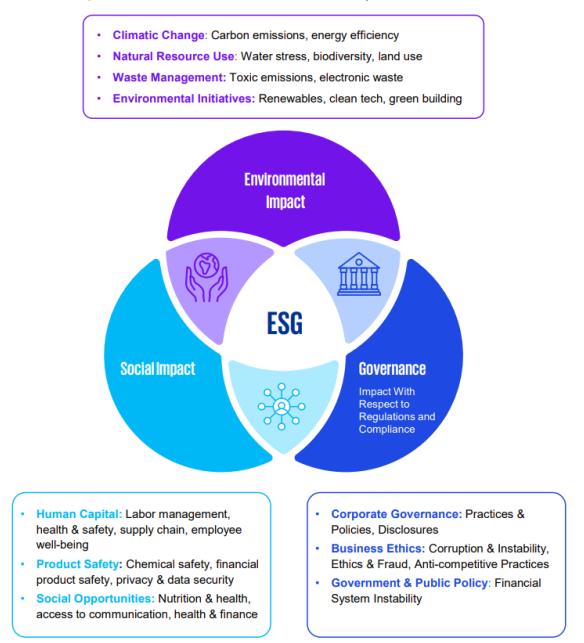
The purpose of this Policy is to define the risk assessment criteria for the scope of ESG Due Diligence in the case of corporate acquisitions/mergers.
The Policy also defines environmental, social and governance issues in the closure, decommissioning and divestment processes.
The assessment is based on the following aspects:
• Governance
• Environmental impact
• Social impact.
The Policy applies to Laminazione Sottile S.p.A. and to all subsidiary companies (part of the LS Group). It can also be shared with any Third Parties with which the Group maintains relations of any nature.
Subsidiary companies are responsible for adopting this document and for ensuring compliance with it.
This Policy is valid from the date of its issue indicated on the cover.
Any subsequent update cancels and replaces, from the date of its issue, all versions issued previously.
The Group Sustainability Committee is responsible for reviewing this document and approving any revisions and for requesting, where needed, the update of the Policy.
LS Group actively monitors its investments and at the same time engages with the management teams of the companies it has invested in to start and streamline development plans aimed at making the investments more solid from an ESG standpoint too
LS Group divestment activity is based on impartiality, equal treatment, transparency, costeffectiveness and remuneration principles.
When an investment opportunity arises, in conjunction with the financial, legal and regulatory assessments, an ESG Due Diligence is carried out which consists of an analysis of potential critical issues, strengths and/or areas for development relating to social, environmental and governance aspects.
In particular, the ESG Due Diligence focuses on the following aspects, which are also analysed
according to their relevance to the specific investment opportunity under consideration:
• environmental issues such as, for example, energy consumption and raw materials management, emissions, protection of land and biodiversity;
• social issues such as personnel development, non-discrimination and equal opportunities;
• ethics and governance aspects such as, for example, corporate governance, risk management and integrity in business.
The above points are also verified, where possible and relevant, with reference to customers and suppliers (e.g. in terms of product safety and quality, transparency, responsible supply chain management) and to local communities (e.g. in terms of general and common interests pursued, direct and indirect economic and social impacts generated).
Risk assessments are submitted to the relevant Committee and to the Board of Directors.
The first phase of the Due Diligence consists of a business overview, such as:
Company name
Industry/Business sector
Type of operations associated with the business e.g. office, manufacturing/production, warehousing, logistics, etc.
Site description, nature of the business, and previous management and operational practices
231 Model (for italian companies) or other applicable laws
A) Has the company implemented an Organization Model 231?
B) Does the model cover environmental and social aspects?
Sustainability /Non-Financial Disclosure Report
A. Does the Company prepare a Sustainability (or Non-Financial Information) Report?
B. Is the Company subject to the Legislative Decree no. 254 regarding non-financial disclosures?
ESG Policy, Environmental Policy, Health&Safety Policy, Social Responsibility Policy
Does the Company have policies that cover ESG aspects (ESG Policy, Environmental Policy, Health&Safety Policy, Social Responsibility Policy)?
Sustainability section on the website
Does the Company publish sustainability information on its website?
The second phase of the Due Diligence consists of an assessment of the Governance, Environmental and Social impact aspects.
Roles and responsibilities
Has a designated reference person for ESG matters been assigned?
Policies & Procedures
A. Are ESG Values and principles clearly communicated (e.g. on the website)?
B. Does the Company have Sustainability or Business Conduct policies? Do polices cover discrimination, and child, forced or compulsory labour, health&safety and environmental issues?
C. Are there environmental/health&safety procedures or management systems in place?
D. What is the level of establishment and integration of procedures?
Monitoring & Reporting
A. What are the arrangements in place for monitoring and reporting ESG issues and performance to senior management/ Board?
B. Does the Company publish an ESG/CSR/Sustainability report or a designated section in the annual accounts?
C. Is there a Sustainability section on the website?
Corruption and business ethics
A. What does the organisation currently do to safeguard against illegal practices?
B. Any corporate governance and/or ethical related employee claims/breaches/enforcement/litigation actions related to issues such as anti-bribery and corruption, cases of unfair labour practices, human rights abuses, and other unethical business practices?
C. Does the Company make financial or in-kind political contributions?
D. Are there any anti-trust issues?
Supply chain
A. Are key suppliers located in markets with high social, human labour, environmental risks?
B. Does the company have a responsible purchasing policy/Code of Conduct for suppliers? Are ESG criteria included in the selection and monitoring of key suppliers?
Regulatory compliance
A. Serious incidents/regulatory breaches regarding environmental aspects. Nature of the incident, improvements made/lessons learnt and regulatory action (enforcement/prosecution/fine).
Natural hazards
Is the Company subject to flood, seismic or other natural hazards?
Carbon emissions
A. Does the Company operate in an energy intensive sector?
B. Does the Company monitor GHG emissions (inclusive of non-directly generated e.g. outsourced logistics, use of final product etc.)?
C. Is the production (in particular the carbon intensive activities) mainly outsourced?
D. Is the company subject to a cap and trade scheme (EU ETS)?
E. Plans or actions to control and/or reduce emissions.
Air emissions
Can the Company operations originate significant emissions to air (e.g. oil&gas, energy, transportation, chemical)?
Energy and water management
A. Are the Company operations energy or water intensive?
B. Are there any plans in place to reduce energy consumption, increase percentage of renewable energy in the
Company's energy mix?
Chemicals/hazardous substances handling & supply chain
A. Are chemicals/hazardous substances used in the production process?
B. Is management aware of any potential disruption to the supply of chemical/hazardous substances used in the production process through regulatory phase-out (e.g. REACH regulation)?
C. Is the company considering the use of more environmentally friendly and safer raw materials/chemicals in the production process?
Waste management/end of life of products
A. Does the production process originate relevant quantities of waste or hazardous waste?
B. Waste management initiatives to minimise or reuse/recycle waste.
C. Are products offered designed to reduce their end-of-life footprint?
Soil & groundwater
A. Is there a risk of soil contamination resulting from the activities of the Company?
B. Is the company aware of any former or current soil/groundwater contamination issues at the site(s) and is there a need to conduct investigation or remediation activities?
C. Has the company recognised any financial provision in the accounts to address any environmental liability such as contaminated land/environmental restoration?
Biodiversity impact
Has the production process an impact on biodiversity (including deforestation and land degradation)?
Green products
Does the Company offer "green" or "low impact "product lines?
Packaging
A. Do the products offered by the Company require a relevant amount of packaging (eg. fragile goods)?
B. Are sustainability criteria considered in the design of packaging?
Human resources
A. Workforce composition (employees, self-employed, trainee, seasonal workers)
B. Do all employees have a formal contract of employment?
C. Turnover rates and
D. Employee retention management/ programmes
E. Diversity issues (e.g. diversity on boards, pay gap)
F. Serious labour related complaints/claims/enforcement actions
G. Freedom of association and collective bargaining
H. Training
I. Benefits provided to employees
Health and safety
A. Is the Company operating in an industry that presents a high risk for health and safety?
B. Has the company been subject to enforcement actions by the regulators for breaches of relevant H&S legislation?
Community involvement
A. Community investments, sponsorships, donations
B. Formal programmes in place to promote company involvement with the community (volunteering, stakeholder engagement, etc.)
Consumer safety /product regulations
A. Product or sector specific regulations (e.g. food safety, pharma GMP, other)
Customer privacy
A. Company's data security policy and IT security management system
B. Sensitivity of information in possess of the Company
C. Breaches in cyber security within the last years
D. Substantiated complaints regarding breaches of customer privacy and losses of customer data Innovation
R&D investment plans, patents, innovative products
Environmental, social and governance aspects
Associated facilities under the control of the company
Workers
Communities, key stakeholders
Management measures aimed at preventing negative social, environmental and governance impacts and promoting positive outcomes
Adequate financial assurance
This Policy is communicated and disseminated to all LS Group personnel.
7. REVISIONS
REVISION
DATE
REV. 00 – FIRST ISSUE (for Italian Companies) APRIL 2022
REV. 01 – UPDATE (LS Group) MAY 2024
• Laminazione Sottile Group - Code of Ethics
GLOSSARY
Key words Definition
Employees/ Personnel All the people linked to the Laminazione Sottile Group or to the Group Companies by an employment contract (including consultants and seconded persons), as well as all members of the executive, strategic and control bodies
Group Companies The Companies of the Group directly or indirectly controlled by Laminazione Sottile S.p.A.
Group The Laminazione Sottile Group, made of Laminazione Sottile S.p.A. and all its Subsidiaries (controlled Companies)
Third Parties Individuals (natural person) or legal Entities linked to the Group by a contract such as, for example, customers, suppliers, agents, etc.