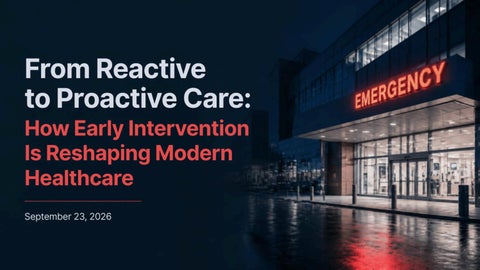
The Reactive Model Today Over
70%
of healthcare costs are driven by preventable chronic conditions
The Cost of Delay Delayed care leads to increased hospitalizations and worse outcomes
What Is Proactive Care? Proactive care: anticipating and preventing disease before symptoms worsen Early intervention: timely diagnosis and management to improve outcomes Patient engagement and continuous monitoring
05
Benefits of Early Intervention Reduces hospital admissions and healthcare costs Improves patient quality of life and long-term outcomes Enables personalized treatment plans Supports population health management
Early Intervention in Action Technology and community programs empower early detection and care
Case Study:
Diabetes Management Program
25%
Reduced complications by 25% over 3 years
Increased patient adherence through digital monitoring
18%
Lowered emergency visits by 18%
Implementing Proactive Care 01
02
03
04
Year 1:
Year 2:
Year 3:
Year 4:
Assess patient population and identify risk factors
Integrate digital tools and train care teams
Launch pilot programs and collect outcome data
Scale successful interventions across the system
Challenges and Solutions CHALLENGE
SOLUTION
Data silos
Integrated health IT platforms
Patient engagement
Personalized communication
Cost concerns
Demonstrated ROI through pilot data
Moving Forward Together Embrace a cultural shift towards prevention Invest in early detection technologies Collaborate across care teams and communities
Thank you – Questions and Discussion