I arrived in New Zealand from Chile in the third week of March, several years ago. Before coming, I tried to understand this island, not only in practical terms, like how much one could earn per hour, but also in something that, for many, might seem less sexy, its history, its culture, its ways of thinking. I wanted to know where I was going to live, not just how. ANZAC already appeared as an inevitable date. But it was not my story. And yet, experiencing it was something else. The country seemed to come to a halt. I remember the early morning light, the silence, the sense that something was happening without needing to be explained. It was not just another public holiday. There was a form of reflection that did not impose itself, it was simply there. At the time, it felt unfamiliar. I did not fully understand what was being remembered, but I knew it was not something light. At dawn, in a ceremony that returns each year, the country pauses for a minute of silence.
Over time, I began to understand what holds that day together, and how a shared memory takes shape. Not just a recollection, but something harder to name. A deep, quiet pain carried by thousands of families whose sons were taken from them and sent to die far away, very far away, in a war few ever truly understood.
But there is also something else, a form of quiet pride that coexists with that loss, a way of holding what happened without turning it into a closed narrative. This year, that frame felt different. And with it, an uncomfortable question, how do we remember ANZAC in a world at war?
Images circulate every day, constantly, across social media, in a flow that erases distance. What once belonged to history books now appears fragmented, immediate, often without context. War is no longer only the delusion of a handful of presidents. It is also the ease with which that delusion becomes possible, the way it takes hold and finds resonance. It is in Europe. It is in the Middle East. And it is also in places barely seen, in Africa, in the horror of the civil war unfolding in Sudan for the past three years, where more than 160,000 people have died and 34 million urgently need humanitarian aid, in one of the worst catastrophes on the planet. A war that exists but does not always become visible.
ANZAC, then, in this context, no longer belongs only to the past. It becomes present. Not as repetition, but as a measure. Because just as 111 years ago New Zealand families were torn apart, the same is happening today to thousands of families, in other places, under other names. It becomes inevitable to return to that uncomfortable question. How do we remember ANZAC in a world at war?
What did we do with that silence at dawn while war continues to unfold?
Santiago Bonhomme - writer and journalist
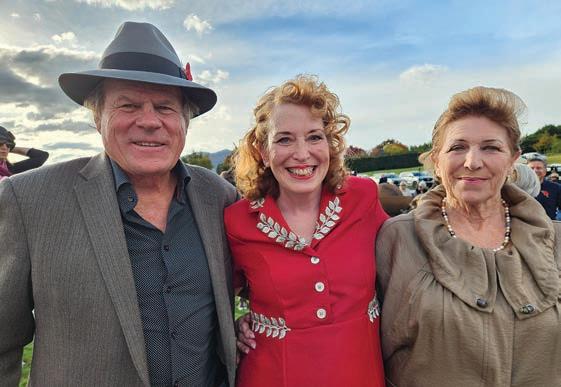
Grant Stalker, Margaret O’Hanlon & Sharyn Stalker at a celebration of Vera Lynn, Anzac Day garden party. Photo credit: Jodi Walters
ON THE APP THIS WEEK
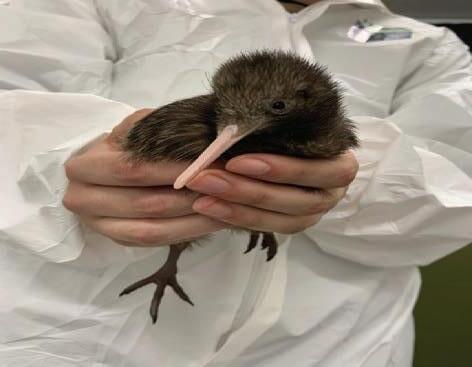
New Life for a National Icon: Kiwi Bird Hatched in Queenstown
Kiwi Park Queenstown is delighted to announce and celebrate a new arrival!
A baby kiwi hatched at our site on 26 March. Why it Matters
This is the first successful hatching at our park for two years…
Importantly, this genetically distinct form of Brown Kiwi – an Eastern Provenance Brown Kiwi - is classified as conservation dependent. Making the event a significant contribution to conservation.
What Else
The breeding pair named Anzac (father, 8 years old) and Atawhai (Mother, 8 years old) are in great health.
Notably, the father kiwi completed the impressive 78 days of incubation and was present during the hatching.
This arrival is great for conservation advocacy as it will be on display until it is old enough to contribute to our breed and release program, ultimately being released into the wild.
What’s Next
The chick is being kept under close care and monitored by our team. Feather testing to ascertain sex will take place in the coming days. Happily, the new arrival has been putting on weight – 176 grams at birth up to 304 grams by April 21 and is adding roughly 9 grams per day.
Beth Millican, Head of Wildlife, says, “We’ve lost some sleep to the excitement, but watching this breeding pair become first-time parents has been a joy. Special thanks to Emma Bean at the National Kiwi Hatchery for her dedicated support during this time.”
Todd Jenkinson, Wildlife Curator, says, “The work the Wildlife Team here has achieved in managing the breeding pair for a successful full-term incubation is fantastic. We’re proud to contribute to the conservation work taking place across Aotearoa for this awesome species - including working with the Department of Conservation and Zoo and Aquarium Association, to whom we extend our thanks.”
Keep up with Kiwi Park’s social media to see more.
Queenstown farmer offers to pay for lift after hearing of dad forced to carry disabled daughter
A farmer in Queenstown has offered to pay the shortfall for a lift so a dad does not have to carry his teenage daughter from her wheelchair to their front door.
The Thomas family live on a steep section in Wellington and need a lift installed but that work has been on hold for more than a year because the funding won’t cover the cost.
After hearing the story on Morning Report, the farmer got in contact with RNZ to offer help. He wishes to remain anonymous.
“I just thought that’s a bit tough for some people and I do appreciate that the government can’t cover absolutely everything and I thought yeah well I can afford to cover that so why not.”
The Thomas family have seven steps to their front door.
Dinson Thomas said they park the car near the steps and he then carries his 13 year-old daughter Ann, who weighs close to 40 kilograms and has cerebral palsy and complex needs, into the house. The farmer said that sounded like a hard situation to be in, and he wanted to help.
“I was just thinking well it wouldn’t be too good if he did slip and I know that’s easy enough to do on stairs and it’s just nice to be able to help when you can sometimes.”
Thomas said they received the maximum funding to have a platform lift installed, just over $15,000.
The work started last February but a month later he was advised the quote came in $4000 over the funding - so he put the project on hold because he can’t afford it.
Now it can go ahead and Thomas is very thankful.
“I’m really surprised...it will be really helpful for Ann [because] contributing that much amount suddenly is really hard in this situation. Me, my wife, Ann and her sister Aimee are really thankful for him.”
SILENCE IS GOLDEN: QUEENSTOWN’S NRG EVENT BATTERIES POWER A CLEANER EVENTS FUTURE
SPONSORED CONTENT
There’s a sound that follows almost every outdoor event - a low, persistent drone that hums beneath the music, the speeches, and the applause. It’s a diesel generator, and for decades it’s been as much a fixture of event production as the stage itself. A new Queenstown company is working to change that.
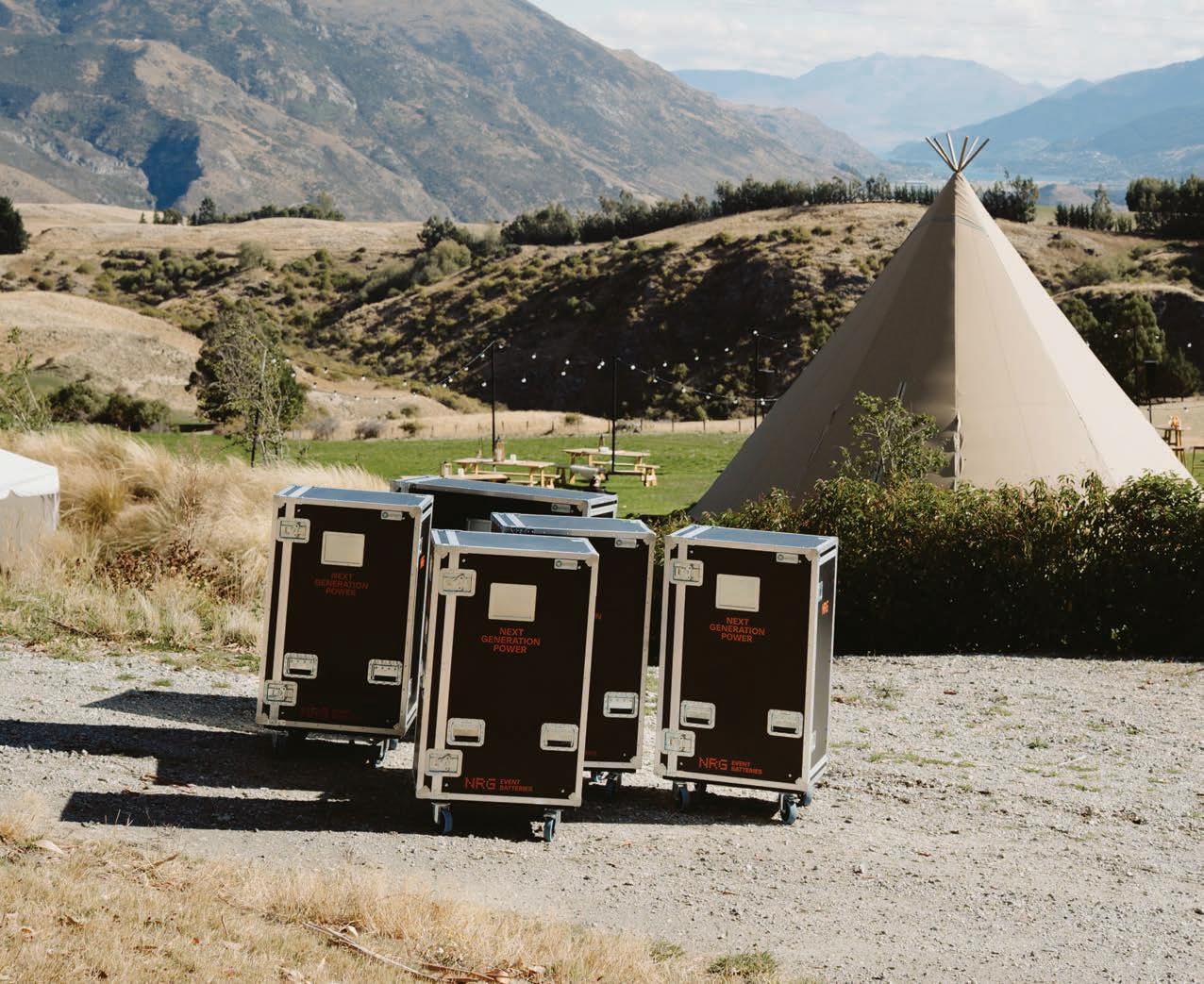
NRG Event Batteries is New Zealand’s first eventspecific battery power solution, designed and built in Central Otago by industrial electricians and event technicians. It’s the work of Hamish Roberge, founder of TomTom Productionsone of the region’s most experienced event production and AV companies.
The idea grew from TomTom’s own efforts to understand and reduce the carbon footprint of event delivery. When the team mapped their emissions hotspots, diesel generation kept rising to the top.
“There’s a lot of sustainability talk in events, but meaningful change has to work in the real world,” Hamish says. “We built NRG to replace diesel at the source with a system that’s silent, clean, and engineered for show conditions - and it also makes event delivery more efficient to deploy.” Off-the-shelf battery systems proved too large, too heavy, and too expensive for live production.
So, the team started from scratch, engineering a modular, road-case system built around the specific demands of events - one that travels with existing production equipment and can be deployed via off-road access for remote venues. The result delivers three-phase battery power recharged from New Zealand’s renewable electricity grid. The South Island grid runs at 95–98% renewable, drawing on hydro, wind and geothermal generation, meaning every event powered by NRG operates with zero onsite emissions and zero fossil fuel consumption during use. A diesel generator, by contrast, emits 2.68kg of CO₂ per litre burned - continuously, including during speeches, between sets and whenever demand drops low.
Beyond the emissions case, there’s a practical logic to the system. Power is supplied as required rather than running constantly, and the road-case format reduces the labour and logistics typically involved in moving temporary power into venues. Every deployment includes load analysis and real-time monitoring as standard, with onsite technician support available for larger events. Queenstown is well-suited to be the birthplace of a solution like this. The district has become a testing ground for cleaner infrastructure across
tourism, transport and events, and NRG draws directly from that energy - the product was inspired in part by TomTom’s involvement with Electrify Queenstown, the district’s annual clean energy event.
The team is planning a launch demonstration event for local industry partners in Queenstown. NRG is now available for hire across the Lower South Island for weddings, conferences, film and screen productions, festivals, corporate activations and luxury events. Hybrid configurations and multiple units are available for large or multi-day events.
The company takes a transparent approach to sustainability, acknowledging battery manufacturing impacts while making a databacked case for the lifetime environmental advantage of battery power over diesel. All environmental claims are sourced from published data provided by EECA, MBIE, and Transpower. Queenstown has long been a place where practical innovation finds a natural home. NRG is the latest example - less a disruption than a logical next step for a district serious about protecting what makes it worth visiting.
Further information is available at nrgeventbatteries.co.nz
Born out of Queenstown’s events sector, a new battery system is changing how outdoor productions are powered - without the noise, fumes or fuel.
TREASURER 101 WORKSHOP
Nighttime smash-and-grab-style tool thefts - Tradies’ vehicles hit by
Sue Fea
7 May | 5.30pm – 7.30pm Salvation Army Queenstown
Scan the QR code or head to huddl.nz to learn more
Brazen thieves are continuing to target tradies locally, turning from building sites to work utes and vans, smashing rocks through windows and making off with more than $20,000 worth of tools and equipment in recent weeks.
Three tradies’ vehicles were hit overnight outside their homes in smash-andgrab-style break-ins from Lake Hayes Estate to Kelvin Heights – one plumber losing more than $2000 worth of hand tools overnight on Sunday, 19 April – a prized collection built up over 20 years in the trade.
Police are urging anyone with information about any of these burglaries, and anyone who’s noticed suspicious behaviour, to contact them.
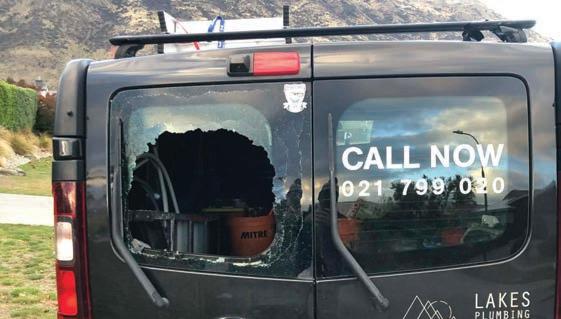
Devastated Lake Hayes Estate plumber Russell Longthorn’s prized hand tools were stolen from his Lakes Plumbing Services van, after thieves smashed the back window and helped themselves.
Police say the Acheron Place break-in happened sometime between 5pm Sunday and 7am Monday.
“I came out early on Monday morning, blurry eyed before my coffee and noticed all the glass shattered at the back of my van. I was in complete shock!” Longthorn says. “They took a large black and yellow Dewalt toolbox with all my hand tools. That’s my livelihood. Those things are irreplaceable. They’re the tools you miss and get used to having,” he says. He’s never had a problem in the neighbourhood in 15 years.
Ironically, Longthorn is booked to work on the drains for a newly completed build at Park Ridge, which was also targeted just a few weeks ago. Thieves smashed a window and made off with thousands of dollars’ worth of paint and spray-painting equipment.
That homeowner Candice Buchanan says they were away and got a concerned call from the painter.
“Our plumber Russell is a really good guy so everybody’s inconvenienced in this,” Buchanan says. Due to the excess, it wouldn’t be worth claiming insurance so would leave them $2000 or so out of pocket. “It’s frustrating. If people can’t afford to buy these things, then they should go to work like everyone else,” she says.
Tradies and Police say stolen tools often turn up for sale on sites like Facebook Marketplace and people should be vigilant and watch out for their gear. Police are also urging tradies to ensure tools and valuables are secured and, if possible, work vehicles are parked on private property or inside a garage. Longhthorn, who doesn’t have a garage, says he has security cameras operating around his house and driveway. “I now have one facing the road.” He says he’s now faced with a loss of earnings and two insurance claims.
His electrician mate from Cedar Drive in Kelvin Heights was also targeted the next night with the driver’s side window of his Toyota Hilux smashed on the street in front of his home and his $1000 radar detector stolen. His wallet and money sitting between the front seats was untouched, as were his valuable electrician’s tools in the back.
Longthorn says another plumbing friend had a side window smashed in his work vehicle parked up the driveway on his property behind a gate with the keys still in the ignition a fortnight ago. “They took nothing, but it looks like the security light came on so they probably ran off,” he says.
With several new homes in the Jack’s Point area hit, rocks thrown through windows or ranchsliders and some $17,000 worth of gear stolen, now a spate of vehicle break-ins, Police urge anyone with information to come forward. They also encourage people to install good security lighting and cameras, and ensure valuable tools and equipment are clearly labelled and secured, or brought inside at night.
The shocking sight that greeted Lake Hayes Estate tradie Russell Longthorn as he prepared to leave for work early on Monday
CRIMELINE
Five arrested for supplying cocaine
by Sue Fea
Five local men have been arrested by the Queenstown CIB on alleged cocaine charges in the last two weeks, with Police warning such activities will not be tolerated. Sergeant Blair Duffy says the five men were arrested for the alleged sale and supply of cocaine – a Class A drug.
“Police are aware of the harm the use of illicit drugs causes to our communities and as such will not tolerate these activities,” Duffy says. He says they’re urging anyone with information about the sale, supply or possession of illegal drugs to get in touch with Police, either directly or anonymously through Crimestoppers (0800 555 111). “The public’s help in relation to assisting Police investigate drug related offences is critical and plays a very important role in enabling Police to identify and deal with those involved,” Duffy says.
Serious assaults - Offensive weapon
Two local teenagers have been charged with a number of violence-related offences, including alleged assault and possession of an offensive weapon, after allegedly entering a Frankton residential address at 6.45pm on Sunday, 19 April, Duffy says. The two young men, aged 18 and 19, allegedly assaulted the two occupants of the address who had approached them. Further charges of possession of cannabis and being unlawfully on a property have also been laid, he says.
Left unconscious
A man was allegedly left unconscious after a serious assault on Buckingham Street in Arrowtown around 5pm on Saturday, 18 April. Duffy says members of the public came to the man’s assistance. A local 28-year-old man has been arrested and charged with assault and intent to injure.
Police chase, use spikes – Fleeing driver evades arrest
Police are “following positive lines of enquiry” in their hunt for the driver of a vehicle who allegedly fled on foot in the Cardrona Valley after a prolonged Police chase that only ended when the vehicle was spiked, Duffy says. Police had attempted to stop the vehicle in Frankton around 7pm on Friday, 17 April, with the driver allegedly fleeing from them. The vehicle was later spiked in the Cardrona Valley area after which the driver of the vehicle allegedly continued to try to evade Police before oming to a stop, he says. The driver then allegedly fled the scene. Police are now working to locate the offender in relation to a number of alleged driving offences.
Late home from golf
A 21-year-old local man allegedly blew 854mcgs after allegedly being seen by Police driving a golf cart on Lake Hayes-Arrowtown Road at 4.23am last Thursday, 16 April. Duffy says a golf cart qualifies as a vehicle under the Land Transport Act and the man will appear in the Queenstown District Court on Friday, 24 April.
Now where was it?
A 26-year-old local woman allegedly blew 854mcgs just before 2.30am on Saturday, 18 April, after allegedly parking her vehicle in the CBD and reporting to Police that it had been stolen. However, enquiries showed she had in fact forgotten where she had parked it, Duffy says. The woman was arrested and appeared in court on Monday.
Police are concerned at how many young people have access to electric motorbikes and say they’re increasingly dealing with crashes and serious injury as a result. Duffy says roads are “a significant risk when it comes to our youth who are both young and inexperienced at operating on local roads and other public areas”. Riders of these bikes risk fines, bikes being impounded and prosecution, depending on the circumstances involved, he says. “These bikes are also not to be used on our local trails and tracks.”
ON THE APP THIS WEEK
Wilding pine control group fears Queenstown’s vistas could be decimated without more funding
A wilding pine control group warns Queenstown’s beautiful vistas could be decimated in a decade if the government does not stump up more funding to stop the spread of invasive trees.
Whakatipu Wilding Control Group volunteers have been working to remove young Douglas fir seedlings from a previously heavily-infested area on Ben Lomond saddle that they describe as a hard-won success story.
The group is publicly-funded and receives private donations - but volunteers said it was not enough money to stop the pines’ spread, and their gains were being tarnished by the vast scale of the problem elsewhere in the Whakatipu Basin.
Executive member Graeme Watson said he was worried about what the basin could look like in 10 to 15 years without more funding.
“It would be completely covered and it would look like Queenstown Hill. We want to save the beautiful beech forest down here and the alpine tussock,” he said.
Whakatipu Wilding Control Group carries out volunteer events at sites like Queenstown Hill, Coronet Peak and Ben Lomond.
Founder Peter Willsman said last year’s budget of about $1.3 million was only enough to hold the line in areas already cleared.
“If we had $5 million every year here, we could get on top of it. Until government come and allocate millions to the problem it’s just going to get out of control,” he said.
The control group carried out volunteer events in accessible areas like Queenstown Hill, Coronet Peak and Ben Lomond, and backcountry operations with helicopters, machinery and control crews.
Volunteer coordinator Padraic Prendergast said the group could not reach new areas as quickly as it would like.
“We did quite well with the Jobs for Nature money but unfortunately that has dried up and as a result of that, we have been having to defer work,” he said.
Help the Women’s Shed Build Our Own Space for the Community COMMUNITY NOTES
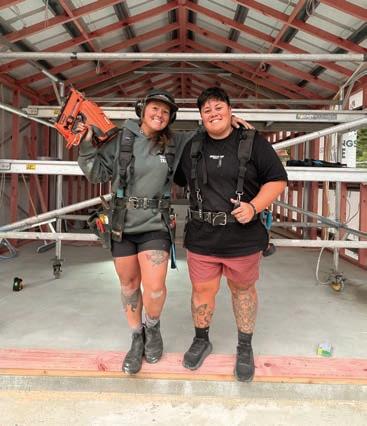
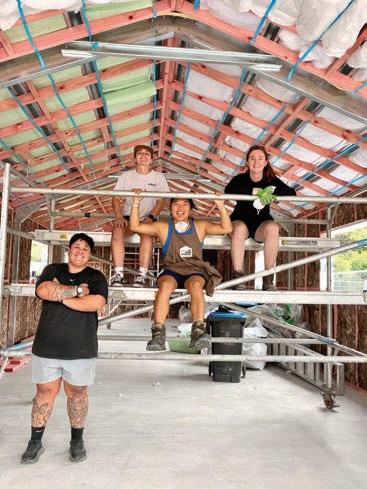
After fi ve weeks of steady progress, the Women’s Shed in Queenstown is nearing completion, with its long-awaited permanent home set to open to the community in May. The new shed, located at Country Lane in Frankton, marks a signifi cant milestone for the grassroots initiative, which has grown rapidly since launching just over two years ago. What began as a series of small tool workshops run from a shared space has evolved into a thriving community. Now, that momentum is being carried into a purpose-built space designed to meet increasing demand.
Founder Alex van Dam says the nearcompletion of the build is both exciting and a relief after a period of uncertainty when the group’s previous lease was coming to an end.
“It’s been a long process designing, planning, securing funding and building, but to now be standing in a space that’s almost ready to open - something that’s been built specifi cally for this community - is pretty special.”
The expanded facility will allow the organisation to increase workshop capacity, diversify its programmes, and introduce more open-access community sessions. It will also strengthen pathways into trades, building on existing introductory workshops and creating opportunities for participants to develop practical skills that could lead to apprenticeships or further training in tradebased careers.
The new site has been designed with fl exibility in mind, supporting both structured courses and casual, drop-in use.
van Dam says accessibility remains central to the kaupapa.
“We’ve always wanted this to be a space where women can walk in and feel welcome and capable, regardless of their experience level.”
While the structure itself is nearly fi nished, attention is now turning to the fi nal fi t-out, with tools, workstations and safety equipment being installed ahead of opening. Support from local funders, businesses, and volunteers has been instrumental in getting the project to this stage.
The team is still encouraging community support as they complete the fi nal stages of the build and prepare the space for opening. Donations can be made via their Givealittle page: givealittle.co.nz/cause/save-thewomens-shed-queenstown
Their website also provides more information about workshops and upcoming events: www.womensshedaotearoa.org.nz
As the fi nal stages of construction wrap up, anticipation is building for the offi cial opening next month. For many involved, it represents not just the end of a build, but the beginning of a new phase.
What started as an idea - to create a space where women could learn, build, and back themselves - has now quite literally been built from the ground up. And come mid-May, the doors will open.
Fitting and information closer to home
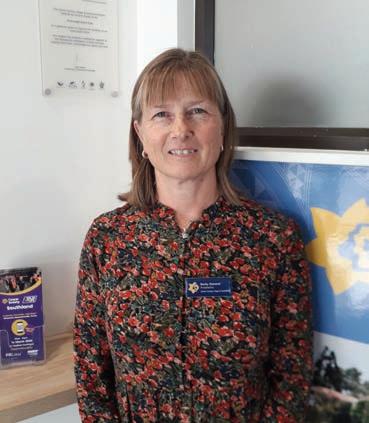
Becky Osmond is the Cancer Society’s expert Prosthetics Service Coordinator, and she will be coming to Queenstown for free fi ttings on May 14. Having previously worked as a Registered Nurse, she moved into prosthetics several years ago.
With the prosthesis and mastectomy bra fi tting service covering Southland and Central Otago, this will be the fi rst time the free clinic will be held in Queenstown. Becky is here to support anyone on their breast cancer journey, providing information and advice, as well as post-op supports to increase comfort.
Her prosthetics room is well stocked with different types of breast forms, bras, camisoles and more for all types of activities and lifestyles. She has three major suppliers that she can order high-quality Amoena, Anita, Silima and American Breast Care brands. The
wide range of American Breast Care brands. The wide range of non-wired mastectomy bras covers everything from pretty and lacey, soft and comfortable, smooth and seamless to supportive and sporty. There are lots of different breast forms available too, including ones for swimming.
She’ll be here to support anyone on their breast cancer journey. Fittings will take place between 9am and 3pm on 14th May at Cancer Society, Remarkables Park Town Centre. Bookings are essential - to book your free appointment, contact Becky on 021 225 2501 or 03 218 4108.
Lakes Weekly gives community organisations in Queenstown Lakes the chance to address our readers directly though our Community Notes page. If you’d like to take part, email Jess at info@qmg.co.nz
Public Notice | Pānui
Request for proposals - Queenstown Events Centre Café
Queenstown Lakes District Council (QLDC) is inviting proposals from experienced food and beverage operators keen to run the café at the Queenstown Events Centre (QEC) in Frankton.
The café sits in the main foyer of QEC and serves a busy flow of gym-goers, swimmers, sports teams, event attendees, and whānau using the facility every day.
With the current licence approaching its end, QLDC is seeking an experienced operator to commence from 21 July 2026.
All proposals need to be submitted by 5.00pm on Friday 22 May 2026.
Visit www.qldc.govt.nz/cafe-rfp for full details and to submit.
10 Gorge Road Queenstown
Phone 03 441 0499 | www.qldc.govt.nz
14 - 23 MAY 2026
QUEENSTOWN MEMORIAL CENTRE
TICKETS VIA SHOWBIZQUEENSTOWN.COM
ON THE APP THIS WEEK
Uber expands into Wānaka
Residents in Wānaka now have a new way to move around their community. Uber has officially arrived in Wānaka, continuing its commitment to provide flexible, reliable transport options for regional New Zealand.
Wānaka is amongst one of the seven new regions that Uber is bringing its service to today, including Levin, Ashburton, Hāwera, Whakatāne, Tokoroa, and Oamaru, as well as reinvesting Uber’s footprint in Waiheke Island. This means more than 350,000 New Zealanders across 27 towns and cities can now access the Uber app to get from A to B.
“We’re proud to be bringing Uber to Wānaka, helping local businesses connect with new customers and offering people a safe and reliable
way to get to events, activities and home at the end of the night,” says Emma Foley, Managing Director, Uber Australia and New Zealand. “We know that in regional communities, being able to get a ride on demand can make a huge difference in staying connected to friends, family and local businesses.”
This also brings new, flexible earning opportunities for people in Wānaka. Locals can sign up to drive and earn, and choose when and how often they drive, depending on what works for them.
“For those who choose to drive in Wānaka, it offers a new way to earn flexibly that fits their lifestyle,” says Foley. “It’s about locals helping locals get where they need to be.”
MUSIC AND LYRICS BY DOLLY PARTON
BOOK BY PATRICIA RESNICK
health MENTAL
The Appointment Ends. The Journey Doesn’t
by Katherine Froggatt
Nobody tells you what happens after treatment ends. The surgeries are done. The chemo is nished. Radiation is over. Everyone around you exhales with relief and expects life to return to normal. And you smile and nod, because what is the alternative?
Inside, your nervous system is still braced for the next blow. Fear whispers in quiet moments. Exhaustion lingers without explanation. Your body, the one that carried you through so much, no longer feels like yours. I know this because I lived it.
Ten years ago I was diagnosed with stage 2 breast cancer. When treatment ended, the calendar cleared. The appointments that had structured my weeks simply disappeared. I told myself I was ne. I was grateful to be alive. But underneath that gratitude, my nervous system was exhausted and stuck in survival mode. My sleep was broken. My digestion was erratic. The fear of recurrence sat quietly in my body every single day, and I had no framework for processing any of it.
I want you to know that this will not be your forever. You will get through this. I am ten years in from patient to thriver, and today I help other women navigate a journey that can feel like being in a storm without any control. The anchors that held me safe were reconnecting with my breath, allowing myself to pause, and talking to someone who truly got it. This is why connection is non-negotiable for me after my own diagnosis. It is not a nice-to-have. It is survival.
What I experienced has a name. The survivorship gap. It is the space between the end of treatment and the beginning of actually feeling well again, and it is largely unsupported. The clinical system is extraordinary at
treating the cancer. It is signi cantly less equipped to support the woman left behind once treatment ends.
This is why I built Breast Wise.
Breast Wise is a breast cancer recovery and survivorship coaching platform for women who are technically through treatment but not yet through the hardest part. Built around what recovery actually requires: nervous system regulation, metabolic clarity, emotional processing, and a community that truly understands.
It is the support I wished had existed when I needed it most.
If you are somewhere in that journey right now, the Breast Wise Readiness Assessment is a good place to start. It is free, takes just a few minutes, and helps you understand where you are and what support might help most right now.
Take the assessment at breastwise.co.nz/resilient-remission-assessment
For more personalised answers, book a free 30-minute Clarity Call with me at breastwise.co.nz/clarity-call
If you are in Queenstown this month, I am speaking at Mountain Club’s Pink Ribbon Fund Raising event on 19 May. Come and join in a morning of wellness. I would love to meet you.
Katherine Froggatt is a 10-year breast cancer thriver, Evidence-Based EFT Practitioner, Metabolic Health Coach, and founder of Breast Wise, a breast cancer recovery and survivorship coaching platform based in Queenstown. Visit breastwise.co.nz
www.easyadmin.co.nz
EVENT
GOINGS ON ABOUT
EVENTS - MUSIC - ART THEATRE - AT THE GALLERIES
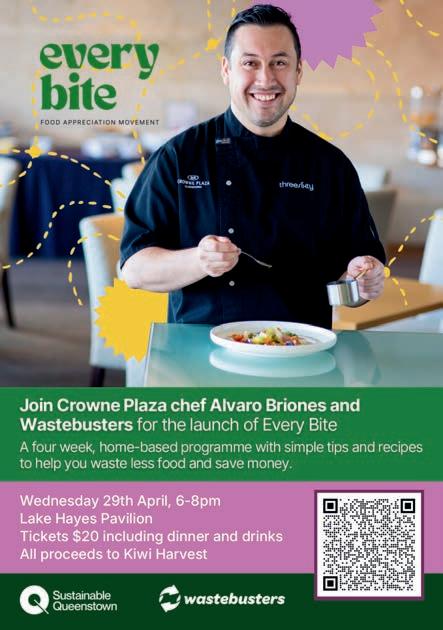
Every Bite
COMMUNITY
Wastebusters and Sustainable Queenstown are stoked to be bringing Every Bite back – their food waste prevention programme designed to help households cut back on their food waste, become more food resourceful, and save money in the process. This fourweek programme provides resources, support and loads of tips, tricks, and tasty recipes for keeping your kai in date and on your plates. With the average household throwing away more than $1300 worth of food a year, a few tweaks to your daily habits can make a big difference to your household food waste and your grocery bill. Head to Humanitix for more info and to sign up.
When: Wednesday, 29 April, 6pm – 8pm
Where: Lake Hayes Pavilion, 719 Lake Hayes-Arrow Junction Highway, Lake Hayes Estate
Better Building Brekkie: This Is How We Build
Join Better Building Southern Lakes for the launch of This Is How We Build - a new training series designed to support the building industry to build smarter and more circular at every stage. This FREE brekkie session (eligible for LBP points) launches the first two modules in their six-part series - Why Care and Circular Economy 101. You’ll watch the short, practical training films together, followed by a quiz and kōrero on what better building looks like in action and how it can be applied in your work right now.
When: Wednesday, 29 April, 7.30am – 8.30am
Where: Mitre 10 MEGA, 46 Brookes Road, Frankton
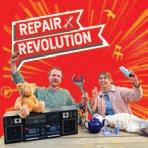
Repair Revolution, Arrowtown
Banff Centre Mountain Film Festival
Banff Centre Mountain Film and Book Festival is one of the largest and most prestigious mountain festivals in the world! Hot on the heels of the Festival that is held every fall in beautiful Banff, Alberta, the Banff Centre Mountain Film Festival World Tour hits the road. From the over 400 entries submitted to the Festival competition each year, award-winners and audience favourites are among the films that are carefully selected to play in theatres around the world.
When: Wednesday, 29 and Thursday, 30 April, 7pm
Bring us your broken treasures: clothes, shoes, electrical appliances, electronics, toys, bikes, and more. Our Repair Heroes are willing to have a go at anything. Learn how to fix your favourite jumper, give some TLC to that trusty toaster, and save them from ending up in landfill. Free event!
Repair Revolution is created by Wastebusters and supported by QLDC Zero Waste District Programme.
When: Saturday, 2 May, 10am-2pm
Where: St John’s Presbyterian Church, Berkshire Street, Arrowtown
Treasurer 101
Being a treasurer is an important role in any community or non profit organisation. This practical workshop is designed to support new and existing treasurers with the essential knowledge and skills needed to manage your organisation’s finances responsibly. This workshop will cover:
• The role and responsibilities of a treasurer.
• Key legislation and compliance requirements every treasurer needs to understand.
• Financial reporting responsibilities.
• Tax returns and key filing obligations.
• How to prevent and identify fraudulent behaviour. $25 to attend with more details at huddl.nz/existing-groups/upskilling-andconnections/treasurer-101
When: Thursday, 7 May, 5.30pm - 7.30pm
Where: Salvation Army Queenstown, 8 Pin Oak Avenue, Frankton
If you would like your show, event, exhibition or meeting promoted
Where: Queenstown Memorial Centre, 1 Memorial Street, Queenstown
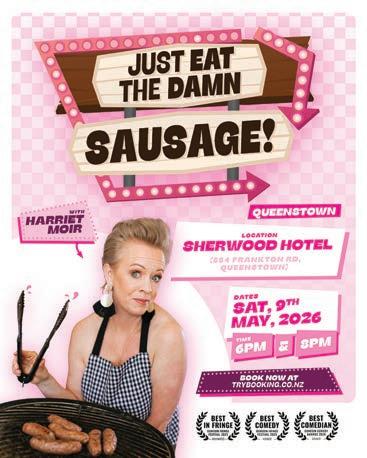
Just Eat the Damn Sausage with Harriet Moir
In her bold and brave new solo hour of comedy.multiaward winning comedian and entertainer Harriet Moir flips the bird to the patriachy and the multiple ways it has tried to keep her small and keep her quiet. Puberty, periods, pregnancy, perimenopause, piss, processed meat. And please be quiet. Queenstown audiences will recognise Harriet from the Central Otago Whine Tour comedy shows and previoulsy supporting Ben Hurley and Ed Byrne.
When: Saturday, 9 May, 6pm and 8pm
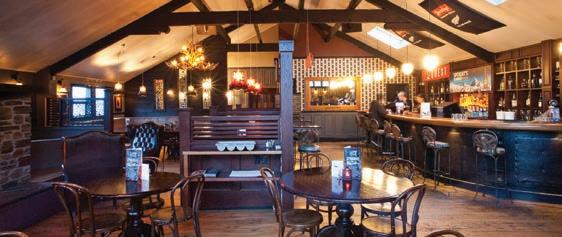
Where: The Sherwood, 554 Frankton Road, Frankton
Doing Democracy Better
Catalyst Trust Queenstown’s next Catalyst Kōrero speaker, executive director of Australia’s new Democracy Foundation Iain Walker, will join them to discuss how we might not just defend our democracy, but how we could renew and improve it. This challenge has perhaps never been more relevant than in this era of declining public trust and polarised politics. This is the community’s opportunity to learn from this global expert follows sessions in Wellington with local and national government leaders. His programme has been supported by Julian and Lizanne Knights and the IDEA Institute.
When: Wednesday, 13 May, 7pm – 10.30pm
Where: The Rees Hotel, 383 Frankton Road, Queenstown
Whakapapa by Jolt Dance
ARTS
Whakapapa, by Jolt Dance, shares the stories of six dancers with intellectual disabilities, exploring identity, culture, and ancestral connection through dance, text, and film. Co-created by the dancers, each piece offers a deeply personal perspective. Together, these stories celebrate individuality and move beyond labels of disability, offering a powerful vision of belonging and cultural pride.
When: Friday, 1 May, doors at 6.30pm, performance 7pm – 8pm
Where: Te Atamira, 12 Hawthorne Drive, Frankton
Central Otago Regional Orchestra
An unforgettable musical experience as the Central Otago Regional Orchestra returns this May with Gravitas - a bold, dynamic and exciting concert series led by newly appointed Musical Director and conductor Rakuto Kurano. This thrilling programme features the powerful contemporary works Gravitas and Warrior Legacy by Soon Hee Newbold, alongside the brilliance of Joseph Haydn’s Piano Concerto No. 11 and Max Bruch’s Romance for Viola — both featuring Rakuto as soloist. Audiences will also enjoy the entertaining and energetic Fiddle Faddle by Leroy Anderson and the beautiful Suite for Strings by John Rutter. This exciting programme is not to be missed.
Taco Tuesday 2 tacos & a beer for $30* *on selected beers and drinks Thursday
Tuesday Pizza Night
Live music with John 4pm DJ Aidan 7pm $15 Parmi
Burger & Beer
Enjoy a burger & a beer for $30*
*on selected beers and drinks
Live Music with Rob Glenn 5pm DJ Stubacca 8pm $15 Burger & Fries
Now Pouring @ Atlas
Brewery: Altitude Brewing Beer: The Garston Handshake Hazy Pale Ale 5%. This beer showcases the unique and intense profiles of Garston’s signature hops... One to try!
$15 Fried Rice
QTMBC COMBO
Atlas Nachos & A Pint*
$2 from every combo sold donated to QTMBC *Choose from 1812, Ginger Bear or Queenstown Lager
Supported by Altitude Brewing, Crimson Badger Brewing & Emerson’s Brewery
15% off large pizzas, dine in or takeaway* Wednesday
Quiz at 7pm!
Book your team on 03 442 5555 or info@lokalqt.co.nz
Open Mic with Dave Arnold from 9pm
Monday/Tuesday Karaoke with “WOLFE” 9pm
Tuesday $12 Classic Pizzas
Karaoke from 9.30pm
Gourmet Pizzas, BBQ platter & ribs, burgers Dine in & takeaway.
*NEW Delivery via Uber Eats*
with Lenni Vibe
DJ Gambo 10pm-late H/hour Guinness $9.60 Pink gin Promo $8
Happy Hour 12-4pm
Quiz Night from 7pm
Happy Hour
Happy hour prices on house beers, wines and spirits
Snack Menu & Cabin www queenst 755 Peninsula Roa OWN’S AP CH ION pm daily am-2:30pm et Selection All owngolf co nz d, Kelvin Heights Day
Arts+Culture
Puberty, perimenopause and processed meat
Funny woman Harriet Moir will bring her bold and brave new solo comedy show, Just Eat the Damn Sausage, to Sherwood in May. The multi-award winning comedian is flipping the bird to the patriarchy and will talk all things puberty, periods, pregnancy, perimenopause, piss and processed meat.
Moir is based in Dunedin and has brought a few shows to Queenstown in the past – she’s the brains behind the Central Otago Whine Tour shows and has previously supported Ed Byrne and Ben Hurley. Her latest show covers themes such as solo parenting two teenage daughters, dating, and the weight of beauty standards on women.
“It’s a show essentially about all the ways in which women are made to feel shit about our bodies and beauty standards, and all that stuff,” Moir says. “I go through personal stories, anecdotes and jokes – the overwhelming feedback I get when I do the show is just how relatable it is.” One review of the shows says “Delights those in the know, enlightens those who need to know and entertains us all.” Moir has three awardwinning solo comedy shows under her belt and this show won the prestigious Best Comedy Award and the New Zealand Fringe Tour Award at the Dunedin Fringe Festival, something she’s proud of.
by Jessica Allen
“You slog away for years and years at these things, and then to be recognised and to win that award has been really, really helpful. I just feel really proud – we all suffer from imposter syndrome a lot, and there’s nothing quite like preparing a new creative work in your head and writing it, putting it out into the world and having it land really well – it’s just so satisfying and so rewarding. Just knowing, leaning into being able to trust my instincts as a comic and know that I’m on the right track.”
Some of the stories include Moir’s two teenage daughters, who she says are great about it all –she does get permission to share. Occasionally they say no, but they’re mostly on board with it all.
“I go through personal stories, anecdotes and jokes – the overwhelming feedback I get when I do the show is just how relatable it is.”
“They’re pretty great about it all – they kind of love the fact that mum’s a comedian. I think they’re really proud of their mum.”
Feedback has been fantastic and Moir loves hearing from people who have resonated with her stories. It’s a great opportunity to grab a couple of friends, have a pre- or post-show dinner, have a drink or two and a laugh. All are welcome and Moir says guys coming along are really enjoying the show, and maybe even learning something. “I love performing in Queenstown and I love Queenstown audiences, they’re always absolutely golden – it’s always a great show. I’m really looking forward to entertaining people in Queenstown.
Harriet Moir will bring Just Eat the Damn Sausage to Sherwood on Saturday, 9 May, with two shows at 6pm and 8pm. Tickets are $35 + booking fee and available at Try Booking, or you can scan the QR code.
Short and snappy
Remarkables Theatre will bring their Pint-Sized Plays to the Crown next week. First happening in Tenby, Wales in 2008, the premier international playwriting competition features short-format theatre performed in pubs featuring a small cast and using minimal set, props and tech support.
Greg Dorn at Remarkables Theatre will be directing one of this year's shows and has been involved in Pint-Sized Plays for more than ten years now. He explains the beauty of these shows is that each show is very different, so you get a good bit of variety.
"At the end you get to vote for which one you liked best - which one you think is the best written as it's a writing competition, technically," Dorn says. The Remarkables Theatre committee selected ten plays, which were submitted from all over the world, to be included this year. The directors and performers don't know who has written the plays until the endsometimes it's someone they know but often it's not.
"I'm directing one and there's different directors for each one, so you get a variety of directors, therefore it gives you something different for each play. That's why it's important to look at the writing as sometimes directors do things differently."
Dorn explains that directing this year is a different challenge than acting, which he has done in the past.
"When you're acting, your main focus is getting your lines down and then work out how you're going to move around the stage and what your character is doing. When you're directing, you're looking at the whole thing and then trying to interpret what is basically a blank script."
At the show, the MC will introduce each play and give you a bit of background to what's happening. You can expect variety and a pretty fast pace with a range of posibilities.
"It's just a really fun evening out. You come with your friends and you can discuss different plays, and after each one, you have a little card - you keep adjusting your marks. Some of the plays will catch you by surprise."
Pint-Sized Plays will be at The Crown on Wednesday, 6 May and Thursday, 7 May from 7pm - 9.30pm. Tickets and more information can be found at remarkablestheatre.co.nz
Advertising
Patricia
Jessica
by Sue Fea
My Life story
‘SPUD’ MURPHY
The man behind the bar
He was one of Queenstown’s most loved hospitality characters, everybody’s mate, during his 30 years owning and running the then Chico’s Restaurant and Nightclub – a popular, late night Queenstown venue.
‘Spud’ (Grant) Murphy didn’t do the cooking, but as bar manager and frontman he always had the recipe just right. He’s still not sharing that ‘recipe’, especially for his infamous Brain Eraser cocktail, which got him…and his customers… into a little strife at times. “Yeah, that was me – 100%. I never told anyone the recipe.”
Heavily involved in the Wakatipu Rugby Club as player and coach for 40-plus years, Spud was made a Life Member about 2014 – Chicos becoming a popular after-match function venue. Spud learned young that mixing work and business came at a cost after taking over Chico’s at just 21 in 1987 with Roaring Megs’ American chef Domenic Mondillo.
A young farmer managing his dad Gordon’s 250ha Arrow Junction deer farm while Gordon renovated his New Orleans building in Arrowtown, Spud says he quickly got over having a few drinks every night after work. “My business philosophy at 21 was employ my mates and get on the booze. After two years I thought, ‘No!’ and enjoyed my days free doing sport,” he says. “When my two daughters were small, I worked most of the night and then had the day with them, snowboarding, teaching them to ski, ice skating and water-skiing.” The girls went on to top level ski racing – Cameron internationally, while Dad raced in Masters Snowboarding.
Spud’s never been afraid of hard work, heading home to run the family farm at 18, after working as a farmhand in Tuatapere when he left Southland Boys’ High.
Born in Invercargill, Spud’s mum was from Fiji, so fun holidays were spent with his grandparents there growing up. “I’d be the only white boy
playing with the boys on the beach. Time didn’t matter there. It was far less regimented. If you were hungry you went into the bush and picked an orange or banana.”
Back home Gordon was over the wet conditions on one of their two Southland farms, so they toured the South Island looking for drier pastures. “We got to Blenheim and there was a drought then we came down the Coast and he looked out
“We applied for Queenstown’s first alfresco dining tables. That was a big deal. You’d think we’d grown horns”
over the Crown Range and said, “This is it. We’re coming here.” Spud was 11.
Later running the farm Spud, also a qualified shearer, joined Young Farmers and the Rugby Club, playing for the Juniors then Premiers, which he’s captained, also representing Otago Country for five years – Central Otago first.
During those early years he completed a Diploma of Agriculture via correspondence. He also worked locally in live deer and goat recovery, leaping from hovering helicopters and copping a nasty 18-stitch gash to his face once when he missed the prize. Spud then took a part-time job washing dishes at Roaring Meg’s where he met Domenic.
He recalls many run-ins with the various councils of the day as he navigated controversial changes to liquor licensing hours – from 1.30am closing to 24-hour trading then 3am closing. “We applied for Queenstown’s first alfresco dining tables. That was a big deal. You’d think we’d grown horns,” he grins.
Hauled over the coals for selling his very potent Brain Eraser drinks, Spud says he was “dragged into the council” where the regulatory committee
told him he couldn’t sell them. “Margaret McHugh was chairing the meeting and I said, ‘I can legally sell these and your deputy mayor, Margaret McHugh, was in our bar last week drinking one!’ You should’ve seen her face,” he chuckles. “Margaret was great. I then presented her with one of our Brain Eraser T-shirts at the meeting.” Somehow likeable lad Spud seemed to win the authorities over and the fad died down.
He’s broken up his fair share of brawls and reckons that special Spud diplomacy goes a long way in diffusing anger in fiery, alcohol-fuelled situations. “You learn that in hospo. Always move them quietly to the door and talk there so as not to embarrass them.
“I remember Paul Kiely and I had to literally dive over the bar regularly to break up 10 to 15-person brawls, especially when tradies were here building the Novotel (Lakefront Hotel).”
Noise compliance issues disappeared after they installed 510 speakers in the ceiling.
Domenic had sold out after four years and by 1999, in the middle of the notorious record, 100year floods, Spud opened Old Man Rock Café underneath Chico’s in the historic Mall frontage building. “On opening day the water was lapping at our door. People were coming to see the flooding, kicking us straight into gear.”
When Spud’s eldest daughter Jordan turned 18 and began dancing on Chico’s reinforced tables with everyone else it was time to sell up. “That was a red flag that maybe this is enough,” he grins.
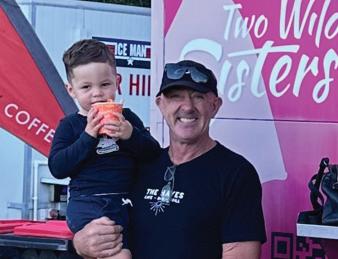
Since selling up about 10 years ago, he’s retrained as a builder and, now a grandad, keeps just as busy running the family catering business – Two Wild Sisters, born out of their former Frankton café. Spud can still turn out those long hours though. “We’ve just finished catering at the Global Games – three marathon days straight.”
Grandad Spud gets a hand from grandson Freddie out on the job for Two Wild Sisters Catering
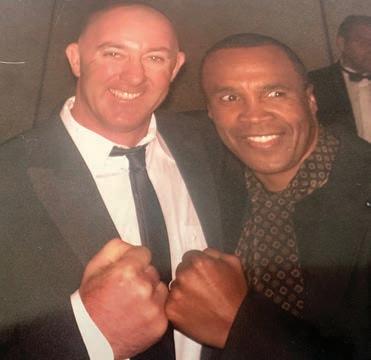
Spud American boxing legend Sugar Ray Leonard, getting geared up to fight in the Thriller in the Chiller fundraising event
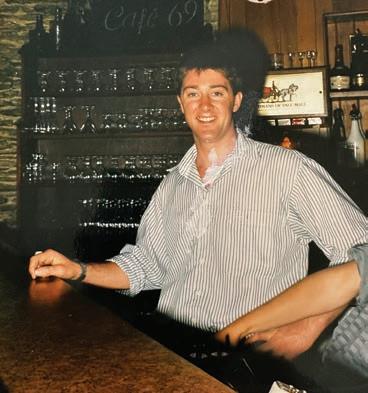
Spud at Chico’s bar back in the day
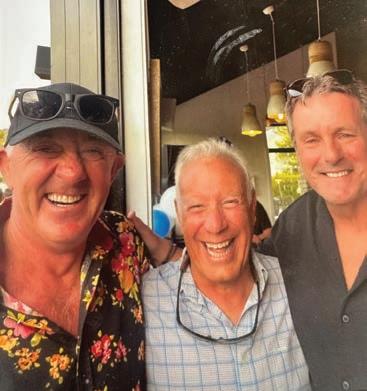
Spud, left, celebrating his 60th birthday last year with old mates Domenic Mondillo, centre, and Paul Kiely
Advanced
Surgical Dentistry & Dental Implants
Remarkables Dental is pleased to offer advanced surgical dental care with Dr Stephen Atkin, a New Zealand-trained dentist with postgraduate training in oral surgery.
Stephen has a special interest in surgical wisdom teeth removal, crown lengthening, tooth exposures, and dental implants, providing carefully planned treatment delivered locally. planned
Book online at www.remarkablesdental.co.nz or phone 03 442 3531
Monthly Column
Joseph Mooney MP for Southland
Amongst Queenstown-Lakes’ world-class wide-open spaces is a passionate community grappling with growing pains.
The infrastructure supporting growth; roads, water, housing, and basic services, has often lagged behind. For too long, central and local government have resembled ships passing in the night.
Whilst Regional Deals and the new Fast Track legislation offer a chance to change course, I feel projects connected to these policies could benefit from greater community engagement to explain the ideas behind them. New houses, business ventures, transport options - we need thembut our community needs to see ways new projects can mitigate their downstream effects.
Our government is keen on a major shift toward joint planning and practical delivery.
Regional Deals and Fast Track applications are about realism, not rhetoric. Developing and delivering proposals for driving economic growth, improving infrastructure, and making housing more affordable.
But, I want to see greater engagement from fast track applicants with the wider community. Better explanation of how projects will support the roads, wastewater systems, and transport networks that keep the region functioning. While legislation doesn’t require this, it’s simply good practice. It’s how we build trust and ensure development enhances, rather than overwhelms, our communities.
Infrastructure challenges here are not theoretical, they’re lived every day. We all feel it when we head over the Shotover or Kawarau into town. Whether it’s traffic congestion, pressure on water services, or the inability of thousands of residents to receive basic mail, these are solvable problems if we align effort and responsibility.
The postal issue is unacceptable. People must be able to receive essential communications like health letters, voting papers, even parking fines. I am disappointed there hasn’t been better co-ordination between NZ Post, consenting authorities and developers to solve this.
I’m currently seeking ministerial advice on whether systems can evolve to allow more electronic delivery options, ensuring no resident is left behind. This week, the government announced it’s improving how it selects infrastructure projects by making a series of changes to the Investment Management System, to ensure infrastructure meets New Zealanders’ needs, represents value for money, and can be successfully delivered. Another idea I think worth exploring is whether a Regional Deal for Central Otago Lakes could trial New Zealand’s first Special Economic Zone. The New Zealand Initiative and others have long argued that our centralised model leaves little space for regional innovation. A SEZ could give local authorities greater flexibility to test new policies and retain a fairer share of the growth they generate. This is especially relevant in Queenstown-Lakes where visitor driven infrastructure puts unique strains on local budgets.
Nationally, the government’s Fast Track Approvals process is already delivering. So far, 19 projects have been approved by expert panels, 18 more have panels appointed, and 149 are listed. Decisions are being made in roughly 126 working days. I have had feedback that the fast track process is more comprehensive than regular consenting processes. It is a better co-ordinated planning process rather than a shortcut. This is proof the system can accelerate delivery while maintaining robust oversight. Combined with the 30 year National Infrastructure Plan, this approach provides certainty and helps cut the red tape that has too often stalled essential works.
We have an unprecedented opportunity to make growth smarter, not harder, by joining up planning, speeding up delivery, and keeping our communities at the heart of decision making.
Regional Deals and Fast Track consents are not magic bullets, but together they can form the backbone of real progress.
Whilst much of New Zealand is crying out for growth and development, I am aware of a collective sigh when major developments are announced for Queenstown-Lakes. It’s not nimbyism, its residents’ common-sense concern of how we can absorb more growth considering the existing challenges people experience.
I am strongly conveying the communities concerns and strong desire for better co-ordinated planning and investment to Government, and advocating for these to be addressed in regional deal considerations. We are fortunate to be a thriving, growing town, but I would like to see our growth come with better assurances for locals; better planning for infrastructure, and a greater acknowledgment of Queenstown-Lakes’ challenges - and opportunities.
Lost & Found
LOST & FOUND
UNCLAIMED ITEMS SITTING AT THE Police Station, at 11 Camp Street, this week include:
- ROCCO JEPSEN – WALLET
- JAMES ARTHUR – WALLET
- HO SHU YEE – purse
- IPHONE GREY IN CLEAR case
- TORI JOHNSON - PURSE
- MENG YE – BLACK camera bag
- TAHLIA RILEY - WALLET
- BIKE, BLACK TORPEDO VORTEX 2.0 Mountain Bike
FOR RENT
FOR LEASE - COMMERCIAL KITCHEN with adjoining modern one bedroom apartment. LOCATION rural Alexandra. $650. per week. Call 027 405 1849
LWB QUIZ
1. Which country is known as the Land of the Rising Sun?
2. Which New Zealand region is known for its vineyards and wineries, especially Pinot Noir?
3. What is the largest lake in the world by surface area?
4. Which country is famous for inventing pizza?
5. What is the name of the longest walking trail that runs the length of New Zealand?
6. Which New Zealand city is closest to Antarctica?
7. What is the name of the closest star to Earth?
8. Which metal is commonly used to make electrical wires?
9. What is the name of the famous glowworm caves located in the North Island?
10. What is the name of New Zealand’s native flightless parrot?
Trades & Services
TRADES & SERVICES
PAINTER. FOR ALL YOUR INTERIOR & exterior painting needs. Local painter with over 30 years experience. Phone Simon: 021716485
DIRTY SOLAR PANELS??? ECO SOLAR Clean is taking bookings in Central Otago for the month of May. Certified, chemical-free solar cleaning specialists. Get a free no obligation quote: www. ecosolarclean.co.nz
WĀNAKA WASTEBUSTERS WINTER DROP, 16–17 May. Huge range of pre-loved skis, boards, boots, helmets, goggles, jackets, pants & kids’ gear. Doors open 9am - main hard gear drop all weekend, with regular restocks daily & the weeks following!
EVER WANTED TO TRY WOODTURNING? Come along to one of our sessions and have a go! The Wakatipu Woodcraft Guild meet fortnightly on a Monday night, 6pm. You’ll be amazed at what you can create. Contact Kerrie on wakatipuwood@gmail.com to enquire.
WHAKATIPU BEEKEEPERS SUPPORTING LOCAL BEEKEEPERS with sharing knowledge, mentoring and maintaining best practice. Most importantly a group of likeminded individuals who love bees. Meeting regularly, for more info or to join us whakatipubeekeepers@gmail.com
NEW TO THE AREA OR got more time on your hands & looking to give back to your community? Altrusa International Qtwn is looking for volunteers just like you to join our women’s charitable & service organisation supporting our local community. Want to know more? Email: president.queenstown@altrusa.org.nz or message us on Facebook.com/AltrusaQueenstown
&
SPCA OP SHOP – 51 GORGE RD. Open 7 days a week 9am- 5pm. Pre-loved goods and clothing at great prices. Help support the ongoing work done by the SPCA. Accepting donations now. Call into store now to enquire about Volunteering. Your old goods, or your time, could help save a life.
WSCA – ROOMS FOR HIRE - Spacious, sunny rooms are available for hire to Queenstown Community Groups. The rooms hold up to 90 people, with seated dining for 40. Located on the 1st floor of Malaghan House, 10 Memorial Street, Queenstown with lift access. There are kitchen facilities, toilets, Wi-Fi, media equipment for projection onto large screen plus large screen TV. Contact us on 03 4429214 or info@wsca.org.nz for more details.
XS STORAGE
Secure self storage units – various sizes available Phone: 0800 297 786 www.xsstorage.co.nz
WATCH REPAIRS NOW
For all your repairs, watches, clocks, batteries, key cutting & straps.
Level One, Stratton House (Below Sky City), 24 Beach Street, Queenstown Mon - Fri, 9.30am till 5.30pm. Closed on Saturdays. Phone/ text: 027 217 0442
Ph: 03 409 2800
enquiries@qmg.co.nz
jobfix.co.nz
OFFICE MANAGER/ACCOUNTS ADMINISTRATOR
We are looking for a capable and professional person to manage the administration and finance aspects for our office.
You must have experience in a similar role as an Office Manager or Accounts Administrator and be confident in your abilities, be familiar with bookkeeping (Xero, Reckon, Project Works or similar), payroll (ACE or similar), and general office administration practices. Previous experience in a professional services or consulting environment is an advantage. Training in specialist software can be provided if relevant.
You must demonstrate initiative and have a bright personality with outstanding client service skills together with sound knowledge of professional office systems and practices. This is an exciting role where you will be exposed to all aspects of the business, providing significant career growth and learning prospects for the right candidate.
You must have excellent computer skills (MS Office Suite) along with strong written and oral communication skills. If this sounds like you, please contact us to find out more or apply to:
Hadley Consultants Ltd PO Box 1356
Queenstown Ph: 03 450 2140 or email: jobs@hadleys.co.nz
Remuneration will be appropriate to experience. Applications will be treated in the strictest of confidence. Applications close on Friday, 24 April 2026.
JOIN THE WHIZZY E-BIKES CREW - WINTER 2025
Queenstown | 20–40 hrs/week | Immediate Start
Whizzy E-Bikes is a growing Gibbston-based E-Bike tour operator looking for enthusiastic crew this winter, with permanent summer positions available for the right people.
You'll be:
Transporting guests to self-guided e-bike experiences around Arrowtown and delivering bikes across the Queenstown Lakes area.
You'll need:
• Aged 18+ with a clean passenger licence
• Legal right to work in NZ
• Your own vehicle to commute to our Gibbston base
• Strong customer service skills and cool-headed problem-solving
• E-bike/mechanical knowledge a definite
We offer:
$25 - $28 per hour, flexible hours including weekends and evenings, and the chance to help shape an ambitious local tourism business from the ground up.
Join the team at Paper Plus Queenstown Airport
Ph: 03 409 2800
enquiries@qmg.co.nz
jobfix.co.nz
JOBS. JOBS. JOBS.JOBS.
We’re looking for a friendly, reliable and motivated person to join our busy team at Paper Plus Queenstown Airport.
Retail experience is a bonus, but it’s not essential. What matters most is a positive attitude, a willingness to learn, and being able to work well in a fast-paced team environment. This role is five days per week
If you enjoy working with people, take pride in doing a great job, and are looking to be part of a supportive team, we’d love to hear from you.
Please send your CV to: queenstownairport@paperplus.co.nz
Hours to suit you | Weekly pay | Exclusive discount at Barmuda | Earn extra when you Refer a Friend.
Whether you’re looking for short-term work or your next career move, we’re here to help.
Taxi Driver / Owner Operator –Flexible Hours
We’re looking for reliable Taxi Drivers or Owner Operators to join our friendly team.
Flexible hours – work more, earn more
Airport and local fares
Supportive, established company
You’ll need:
• NZ Class 1 Licence with P Endorsement
• Late model white van, COF, security camera in pristine condition for Owner Operator option
• Clean criminal record
• Excellent English and customer service skills
• Professional presentation
• Flexibility for mornings, evenings & weekends
• Legal right to work in NZ
Email your application to: kirsty@greencabs.co.nz
GARDENER
Looking for a reliable individual to help maintain a residential property in Queenstown. Lake Hayes.
Want to work less and earn more?
Queenstown’s only escort agency, is seeking a select number of women to join our team.
Smiths Craft Beer House requires CHEFS & DUTY MANAGERS
The successful candidate must have:
A VALID NZ LCQ certificate/the ability to obtain one, a VALID WORK VISA good for at least 6 months and be prepared to start within a week or two.
Please pop up in person or email your CV to Chris@smithscraftbeer.co.nz
STORM Queenstown Part-Time Stylist
Love fashion and working with customers? Join our boutique team on Beach St Accommodation available.
Email: stm16@stormnz.com
If you’re over 20, based in the Queenstown area, confident, adventurous, enjoy fitness and intimacy, this could be for you. Set your own hours, earn in one booking what you might make in a week elsewhere. All enquiries are confidential and obligation-free. Contact Jennifer on 021 895 131 | www.bonton.co.nz
• Approx. 1 day per week (or 2 days per fortnight)
• Flexible hours
• General gardening: mowing, weeding, pruning, spraying
• $40 per hour
• Ongoing, long-term role
Ideally suited to someone local who enjoys gardening and is perhaps semi-retired. Not a contractor/company role.
If interested, please email a brief background and availability to: shannon@clearmont.co.nz
KEEP IT COOL!
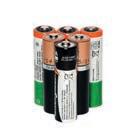
NEVER BIN A BATTERY
Batteries, and battery containing devices, cause fires if damaged so keep them out of all rubbish and recycling bins.
Scan the QR code to find out more about where to safely recycle your batteries and electronic devices via our A-Z Rubbish and Recycling Directory.