

SUMMER TERM HALE JOURNAL
Front cover designed by Amna L4
Edited by Mya L6
HALE HOPE HAIKU
COMPETITION ENTIRES
COME AND COLLECT YOUR PRIZES FROM MRS ALLISON
Hope always shines bright
Waiting to be found and used
Glistening like stars
- Anaira 3rds
Glitter under eyes. Banners drink the city rain— streets widening slowly.
- Amna L4
At dusk the sun falls, But tomorrow it will rise, To start a new day
Hope is belief, Not only for the desperate, But for those who will fight
Because where there is Sorrow, there are also new, Opportunities
Try know that from now, Even in the dark, things will, One day get better
- Annabelle L4
The Rue is ablaze
Still, each morning I awake
Birdsong in my yard
- Anonymous
Although all poetry is up for reader's interpretation, the paragraph below gives a brief overview of my linguistic choices regarding the haiku:
This piece of poetry, following the traditional structure of haiku poems, discusses hope in the face of climate change and encourages a call to action regarding appreciating the natural world around us. Rue is a flower commonly associated with regret, whilst on a surface level the burning of this flower may symbolise a growing hope for the future. The reason I personally chose this flower has to do with its mythological connotations, the basilisk, whose breath could cause flowers to wilt had no effect on rue. It was a recovery plant and has since then been referred to as an herb of grace, this was an important detail for me as it critiques the damage that humans have done on a symbolically indestructible plant through global warming and the burning of our lands. Morning is a chance for new beginnings; the second line mirrors the birth and renewal of life on earth with each opportunity to make change each day. The third line, an homage to the birds that sing in the early morning outside of my window regardless of the weather, is a direct antithesis against the chaos presented in the first line. Here hope is implicitly personified as the bird producing the song, highlighting the life that we could lead if we protect the environment.
HUMANITIES
Is Climate Change an Unsolvable Collective Action Problem?
By Jasmine L6
Climate change is often described as the ultimate collective action problem. Greenhouse gas emissions affect the entire world, yet the costs of cutting emissions fall mainly on individual countries, creating an incentive for some states to benefit from these global reductions while contributing little themselves. As global temperatures continue to rise despite decades of international discussion, it can be tempting to think of climate change as unsolvable. However, labelling it as such reflects the challenges of political cooperation, rather than a lack of economic solutions. Climate change is therefore not unsolvable, but its solution requires incentives that align national interests with global welfare, in order to ensure cooperation becomes the rational choice over the exception.
A collective action problem arises when individuals act in their own self-interest but produce an outcome that is inefficient for the group. Climate change is a clear example. Emissions of carbon dioxide and other greenhouse gases create a negative externality: energy companies and consumers benefit privately from activities (burning fossil fuels through cheaper energy and higher profits) - whilst the resulting environmental damage such as rising temperatures and extreme weather is shared globally. Because these environmental costs are not fully reflected in market prices, emissions remain higher than is socially efficient. Governments therefore face a similar incentive problem, as taking action alone can raise domestic costs, such as higher energy prices for households, increased production costs for firms, and job losses in carbon-intensive industries. Since these sacrifices only produce limited global benefits unless other countries act as well, many governments delay action and rely on others to reduce emissions, resulting in persistent pollution.
However, climate change also appears unusually resistant to solution, leading to this argument that it is unsolvable. One reason for this is the problem of time inconsistency. The costs of climate action are immediate and visible, while the benefits are uncertain and lie far in the future. Governments typically operate on short electoral cycles, making it politically unattractive to impose costs on current voters for benefits that will largely be felt by future generations. Since future generations do not have political representation, their welfare is undervalued in policy decisions, instead prioritising the interests of current voters.
In addition, the impacts of climate change are unevenly distributed. Some countries, particularly those in colder regions, may experience benefits from rising temperatures, such as longer growing seasons or access to new shipping routes. Meanwhile, developing countries often face the most severe climate damages despite having contributed the least to historical emissions. This asymmetry weakens incentives for coordinated action, as countries disagree over responsibility and burden-sharing. As a result, international negotiations frequently stall, reinforcing this perception that global cooperation is unattainable.
There is also a lack of effective enforcements within international agreements. For example, the Paris Agreement relies largely on voluntary commitments, with no credible punishment for non-compliance. Without enforcement, countries may publicly commit to emissions targets while privately failing to meet them. For example, in February 2025 nearly all countries missed the United Nations deadline to submit updated emissions reduction plans for 2035, with just around 10 of nearly 200 parties delivering on time - including major emitters such as China, India, and the EU failing to do so. In addition, the United States (historically one of the largest contributors to greenhouse gas emissions) formally withdrew from the Paris Agreement in January 2026, undermining global cooperation and weakening international climate governance. This clearly demonstrates that without effective consequences in place, countries can retreat from international agreements with little cost, no matter the global impacts.
Despite these challenges, describing climate change as ‘unsolvable’ is too strong. The issue is not a lack of solutions, but the difficulty of putting them into practice. One of the most widely used approaches is carbon pricing, which has been adopted by governments seeking to reduce emissions by changing incentives. For example, the EU’s Emissions Trading System (introduced in 2005), places a cap on total emissions and allows firms to trade permits, encouraging reductions where they are cheapest to achieve. Early phases were critiqued for setting the cap too high, but later reforms have contributed to a fall in emissions from the covered sectors. Similarly, British Columbia introduced a carbon tax in 2008, which was followed by a significant reduction in fuel consumption without harming overall economic growth. However, these policies often face strong public opposition as they can raise energy prices, making governments reluctant to introduce or maintain them.
Furthermore, effective cooperation does not require universal participation. Even smaller groups of major emitters can meaningfully reduce global emissions, and in turn influence the behaviour of others. This idea underpins the concept of ‘Climate Clubs’, which is where participating countries agree on shared climate policies and apply trade measures to discourage free riding. An example is the EU’s Carbon Border Adjustment Mechanism, introduced in 2023, which places a levy on carbon intensive imports such as steel and cement from countries with weaker climate regulations (eg. Turkey and India). Unlike traditional international agreements, this system creates economic consequences for nonparticipation, as exporters risk losing competitiveness in a large and valuable market. Early evidence suggests that this has encouraged firms and governments outside the EU to improve emissions and consider stronger climate policies. These initiatives demonstrate that cooperation can be achieved without global consensus, undermining the claim that climate change is inherently unsolvable.
Additionally, technological change challenges this view by reducing the economic costs of emissions reduction over time. As renewable energy technologies become cheaper and more efficient, cutting emissions increasingly requires substituting energy sources rather than
sacrificing economic growth. The cost of solar electricity has fallen by around 85% since 2010, while onshore wind costs have declined by over 50%, placing renewables at competition with fossil fuels in many countries. In this context, climate action aligns with domestic economic interests, as investing in renewables supports growth and reduces dependence on imported fossil fuels, whilst also generating local employment, lowering household energy bills, and improving air quality in affected communities. However, the expansion of renewable energy raises important environmental concerns. The extraction of materials such as lithium and cobalt, which are essential for batteries and energy storage, can damage local ecosystem and place significant pressure on water resources, particularly in developing regions. This highlights that the transition to clean energy must be carefully managed if it is to be genuinely sustainable. Nonetheless, the continued improvement and falling cost of low-carbon technology changes incentives governments face, resulting in a gradual shift from resistance to engagement in climate policy.
Historical experience further undermines the idea that global action is impossible. A leading example is the ‘Montreal Protocol on Substances That Deplete the Ozone Layer ’, agreed in 1987. Under binding reduction schedules, nearly 98% of ozone-depleting chemicals have been eliminated, and the ozone layer is now showing clear signs of recovery. The treaty’s Multilateral Fund helped developing countries adopt safer alternatives, ensuring that cooperation was feasible even across nations with different capacities. This success demonstrates that when enforceable commitments and support mechanisms are combined, nations can coordinate effectively. If similar elements are applied to climate change - strong rules and support for poorer countries, meaningful global cooperation is not only imaginable but achievable.
In conclusion, climate change is a serious collective action challenge, shaped by free-riding, emissions that harm the global community, and weak incentives for individual countries to act alone. These factors make it one of the most difficult issues the world faces. Yet calling it unsolvable ignores the fact that the main barriers are political, not economic. Historical experience, such as the Montreal Protocol’s success in a reduction of ozone chemicals, shows nations can cooperate effectively when rules are clear and support is provided to countries with fewer resources. More recently, mechanisms like the EU’s Emissions Trading System demonstrate how well-designed policies can align economic incentives with climate action and lead to progress. Advances in renewable energy and cleaner technology further reduce the cost of reducing emissions, making climate action both feasible and beneficial. At the same time, it is important to recognise that these technologies are not environmentally neutral: the expansion of solar power and energy storage depends on materials such as lithium, whose extraction can have negative environmental consequences. However, this limitation does not undermine the broader case for climate action. Instead, it highlights the need for careful regulation and responsible sourcing alongside the energy transition. If governments and societies can combine these strategies with effective institutions and longterm planning, it is possible to tackle climate change and secure a sustainable future for generations to come.
“Addressing the plastic waste problem requires a fundamental change in the international regulation of how plastics are made and disposed of.” Discuss.
By Amelie L6
The plastic waste problem is a major global issue, with between 19 and 23 million tonnes of plastic waste entering aquatic ecosystems each year (UNEP, 2026). It is a major cause of polluting rivers, oceans and lakes which can then alter the ability of an ecosystem to perform the natural processes which are required to adapt to the increasing risk of climate change. In addition, plastic waste can also damage habitats which can in turn lead to human health risks. This issue increases dramatically each year with over 400 million tonnes of plastic being produced annually, with production expected to triple by 2060 (UNEP, 2025). To argue that the issue of plastic waste requires a fundamental change in the international regulation of production and disposal, implies that a structural and long-lasting modification of existing international rules is needed in relation to the extraction, manufacturing and ultimate disposal of products made from plastic. Some argue that international agreement on changed regulations is the only way to combat plastic waste, however there are also other ways in which to improve the issues around plastic including: technology, shifting consumer behaviour as well as national schemes and agreements.
One explanation to understand the need for a change in international regulation to solve the plastic pollution issue is due to it being a major transboundary issue, a problem which spreads across multiple countries borders (UNEP, 2026). This means that national laws are insufficient as the plastic can travel across national borders through water sources, primarily across oceans. As a result, a coordinated set of rules is essential as national regulation alone is not strong enough to have a major impact on reducing the pollution issue. Another major reason global negotiations are necessary is to allow emerging and developing countries to be supported with adequate infrastructure and help which they may not currently have access to. The extent of the plastic issue is greater in developing countries as much of the manufacturing and extraction of plastic occurs in these areas due to lower costs. The necessary funding is unlikely to be forthcoming from single national efforts, but international cooperation has a far greater chance of success. An example of an earlier international regulation is The Basel Convention of 1989. This regulated the international hazard waste trade to protect human health as well as the environment. Promoting disposal of hazardous waste locally through strong management allowed toxic waste exports to be controlled which had a significant impact on the plastic pollution issue (Basel Convention Secretariat, 2026). However, the impact of the agreement was limited as many countries found loopholes about what waste could be considered as recycling, and due to the lack of enforcement not all waste exports were eliminated, and some were still done illegally (Sustainability Directory, 2025). This proves how effective an international agreement can be if it is enforced strongly. By learning through all the limitations that have occurred previously it is still possible that an effective regulation could be formed which could significantly reduce the plastic pollution problem.
Another argument in favour of changing international regulation is that it needs to be adapted to not just focus primarily on plastic disposal, but there is also a need to for an indepth study of the production of plastics. The global production of plastic rises annually. This
can be explained by the relative inexpensiveness of the material and its ability to be mass produced on a large scale; making it a highly cost-effective choice for many industries. If plastic ends up in the oceans, which is a very common output due to the lack of recycling, it decomposes over a very long period of time. Once it breaks down into microplastics, it can enter the marine food chain which can dramatically damage the life of many species in the sea (WWF, 2026). Another impact of plastic production is that it can significantly harm human health through increasing the risk of diseases such as leukaemia and brain cancer. Not only does this affect those in the production process, but it also has notable impact on residents adjacent to plastic production sites (The Guardian, 2023). Methods of reducing the damages caused by plastic pollution could include placing caps on the amount of plastic a firm can produce which could reduce the overall production of plastic, in particular unnecessary primary plastic polymers. However, a cap on production should allow the manufacturing of necessary plastics as they cannot eliminated entirely (Institute for Energy Economics and Financial Analysis, 2024). Another way to reduce unnecessary production of plastic is by phasing out single use plastics as this will reduce some of the impacts caused by pollution. Some simple transitions could be to replace plastic single use bottles with reusable metal bottles, or by not using excessive packaging on some goods and services (WWF, 2026). Overall, a shift in production is more vital in reducing the plastic pollution problem but should be paired with better enforced disposal control.
Another major issue with the current international regulations is that disposal systems are inadequate globally. Currently, there is a major divide between developing and developed countries including the availability of infrastructure which makes recycling readily available. Waste is a greater issue in developing countries as they are greater producers of materials such as plastic, the largest manufacturer being China. To contribute to this waste, trade occurs between developed and developing countries which makes low-income countries and small island developing states bear the major brunt of the problem (WWF, 2023). By altering international strategies, disposal practices could be standardised across the globe thereby making it more accessible for all. However, this may require global funding to support the required infrastructure in developing countries, which explains why this method of reducing plastic pollution will only be effective if international regulations are coordinated and restructured so that the issue of plastic pollution can be solved on a global level.
An alternative view is that transforming international regulation is the not the only way to reduce plastic waste. Technological advancements are a major contender to reduce the impacts of the issue. This solution could be to do with preventing plastics from entering waterway initially or collecting and removing marine and riverine plastic pollution before it can have significant impact. The fourth Industrial Revolution which began in the early 2010s represented a shift to advanced technology innovations. These include artificial intelligence and new biotechnology, which began to reshape industries at a great pace (World Economic Forum, 2025). These technologies can carry the power to completely stop plastic pollution or at least significantly reduce it. The use of this restructuring could allow for more accessible sorting systems which would increase recycling schemes. Furthermore, the production of plastic might be reduced as new biodegradable or compostable materials are introduced into the economy. These factors could allow for increased disposal of plastic in the correct and ideal manner. Additionally, these developments within the digital industry could well improve
the issue at a faster rate than modification of international policies. This is because the process of infiltrating the new improvements would not need the same level of negotiations and diplomacy which the arrangement of international agreements requires in order to be effective. Moreover, another reason technological advancements are likely to be an effective measure to combat plastic pollution is because most are generated as a result of private investment, this means the outcome of it is likely to be more effective. This is due to the private sector holding greater profit motive and efficiency as well as higher innovation and productivity. However, a limitation of relying on technology developments is that they do not necessarily reduce the amount of consumption, meaning in order to be entirely effective it would be ideal to pair with national policies in order to combat the issue of overproduction as well as improving plastic disposal as they are both major factors which cause the waste problem.
Consumer behaviour is also a main contributor to the current waste issue, which illustrates that to solve the problem, the population is required to cooperate. The structural change in the issue of waste can come from a shift in demand as opposed to changing regulations. This is because by lowering use of single use plastic combined with stimulating demand for sustainable alternatives would ultimately reduce the waste leakage into the environment. This can be done through increasing public awareness through education on the needs behind changing consumer habits. A major advantage of using this method as a way to reduce plastic pollution is that due to it being a voluntary movement the improvements are likely to occur at a faster rate than formal agreements. On the other hand, it can be argued that without enforcement, people are not held accountable for the required actions which can mean that the movement and improvement is likely to be inconsistent so will not act as a major solution to the issue.
A final alternative to reduce the plastic waste issue without international regulation is the implementation of national policies. Strong domestic strategies can create an effective solution which can be altered to fit a countries culture or economic patterns. These policies can be within the production, consumption and the disposal of plastic which in turn could reduce the issue massively (Sustainable Production and Consumption, Volume 36, Pages 148-160, 2023). Some examples of governmental policies which could be applied include the use of labelling and certification schemes to ensure the production of products is in line with certain regulations and of high standard. Additionally, a ban on unnecessary products could be put in place. A final example applies to the disposal of plastic; collection targets could be implemented to incentivise citizens and increase the amount of recycling which could significantly reduce the issue as currently less than 10% of plastic waste is recycled. Another major reason why national schemes may be highly successful is because if a country leads by example initially, this could lead to others replicating the same kind of mentality. Additionally, any change to international regulations is likely to be highly time consuming as well as ending in political compromise therefore the infiltration of national scale regulations is a more ideal solution. This must be balanced with the fact that due to the smaller scale of national resolutions, the enforcement of them might be unsuccessful meaning international could still be more effective in resolving the cross-border waste issue in the longer term.
Whether the current international regulations need ‘fundamental change’ in order to reduce the ever-increasing plastic waste pollution issue also needs to be addressed. It is true that despite current recycling efforts, production of plastic continues to grow exponentially. This
proves that present-day policies are only fragmented and not entirely effective. Waste trade highlights the imbalance of the severity across the globe. Alternatively, it can be argued that only small changes to international rules should targeted as any major modification could have negative consequences such as limiting production and reducing technological advancements. Combined, these factors have major impact on the growth of the economy. In conclusion, addressing the plastic waste problem would require significant transformation of international regulation but not an entire modification of it. The use of international policies holds countries accountable and prevents the problem from continuing to shift across borders. However, due to plastic pollution being such a complex and deep-rooted issue, international reforms need to be combined with multiple other solutions including national enforcement which is necessary as it enforces regulations on a local scale and can encourage responsible production. Technological innovation should undoubtedly be included as a partial solution to the problem by providing alternatives to traditional plastics and making sustainable options more accessible. The final resolution which should be taken into consideration is the altering of consumers behaviour. This is because when an individual can reduce single use plastics, reuse products more often and make more environmental conscious decisions the demand for harmful products can be reduced. Therefore, the most effective solution to reduce plastic pollution is not entirely through a single solution but through a combination of resolutions which will allow for a highly effective method in reducing the plastic waste issue.
Reference list
1. Borst, D. Dijktra, H. Duijndam, S. Rehdanz, K. van Beukering, P. van Oosterhout, L. (2023) ‘ Triggering sustainable plastics consumption behaviour: identifying consumer profiles across Europe and designing strategies to engage them’, Sustainable Production and Consumption, Volume 36, pp148-160. https:// www.sciencedirect.com/science/article/pii/S235255092200344X
2. Davey, M. (2023). Plastics cause wide ranging health issues from cancer to birth defects, landmark study finds. https://www.theguardian.com/environment/2023/ mar/29/plastics-cause-wide-ranging-health-issues-from-cancer-to-birth-defectslandmark-study-finds
3. Diana, Z. Dunphy-Daly, M. Gunady, E. Melvin, E. Rittschof, D. Schmaltz, E. Somarelli, J. Virdin, J. (2020) ‘Plastic pollution solutions: emerging technologies to prevent and collect marine plastic pollution’, Environment International, Volume 144. https://www.sciencedirect.com/science/article/pii/S0160412020320225
4. Mattei, S. Sanzillo, T. Sinha, A. (2024) Why a production cap on plastics makes financial sense. https://ieefa.org/resources/why-production-cap-plastics-makesfinancial-sense
5. Sustainability Directory. (2025) What are the major criticisms regarding the effectiveness of the Basel convention in preventing illegal e-waste trade. https:// pollution.sustainability-directory.com/learn/what-are-the-major-criticisms-regardingthe-effectiveness-of-the-basel-convention-in-preventing-illegal-e-waste-trade/ #:~:text=A%20major%20criticism%20of%20the,in%20many%20transit%20and%20r eceiving
6. United Nations. (2025) Beat plastic pollution. https://www.un.org/it/node/71013
7. United Nations Environment Programme. (n.d Assessed: 2026) Plastic pollution. https://www.unep.org/plastic-pollution
8.
United Nations Environment Programme. (n.d Assessed: 2026) Basel convention on the control of transboundary movements of hazardous wastes and their disposal. https://www.basel.int/theconvention/overview/tabid/1271/default.aspx
9. World Economic Forum. (2025) Advanced technologies are changing our lives – and they can help us beat plastic pollution. https://www.weforum.org/stories/2025/01/ advanced-technologies-are-changing-our-lives-and-they-can-help-us-beat-plasticpollution/
10. World Wildlife Fund. (2023) The burden of plastic pollution is not equal. Here’s how the global treaty to end plastic pollution can help. https://www.worldwildlife.org/news/ sustainability-works/the-burden-of-plastic-pollution-is-not-equal-heres-how-the-globaltreaty-to-end-plastic-pollution-can-help/
11. World Wildlife Fund. (n.d Assessed: 2026) Plastic pollution – the never ending story. https://www.wwf.org.uk/learn/environment/plasticpollution#:~:text=The%20impact%20of%20plastic,being%20consumed%20by%20us %20daily
HART - Sir Trenchard Cox Scholarship Entry
By Raphaela
ARTWORK I LOVE
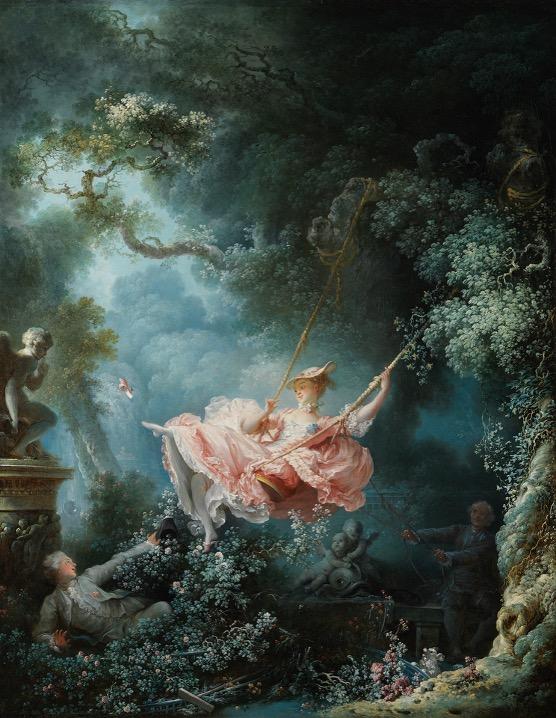
I feel like I am in a dream whenever I admire ‘ The Swing’ by Jean-Honoré Fragonard. Originally the woman captured my intrigue, especially her exquisitely detailed dress and how the light is intentionally angled to draw attention to her rather than the two men. I immediately assumed that it presented a feminist perspective, portraying her as higher status than the man who watched from a hidden view as one of her servants pushed her on the swing. This interpretation fascinated me, as I assumed that other depictions of woman during the 18th century were filled with gender inequality. However, after researching to see if my original thoughts were correct, I discovered that JeanHonoré Fragonard had a different intention to what I had assumed. The painting was commissioned by a courtier who wanted a
Jean Honoré Fragonardà - The Swing
portrait of his mistress being pushed on a swing by a bishop, himself disguised within the bushes. The oil painting therefore symbolises a scandalous situation, of a deceived husband who pushed the swing with a smile on his face, without suspecting that his wife is not as loyal as he thought. This utterly unexpected and almost sinister backstory completely changed my understanding of the artwork. Despite this, while meticulously examining this piece my eyes are always subconsciously led back to the radiant woman on the swing. The paint seems to melt into one, creating the rich, flowing fabric that adorns her and this completely transfixes me. This material evokes a sense of movement as she glides through the air, almost as if the swing is actually moving. How is there even a brush that petite to fully capture the fleeting effects of atmosphere, light and movement so perfectly? Inspecting this artwork more thoroughly, I notice the endearing white dog almost hidden beside the base of the hefty tree trunk. This is another aspect I so admire about this painting; you can discover an unforeseen feature every time you lay your eyes on it. Perhaps because the paints fuse together this adds a layer of hyperrealism and depth which conceals aspects of the artwork. It seems more like a photograph rather than an intricate painting; an idea which I cannot fathom. I genuinely cannot comprehend how a human being has created this piece; it feels unfeasible. It is no wonder that ‘ The Swing’ took approximately one year to complete (sometime between 1767 and 1768) as the level of craftsmanship is extraordinary.
ARTWORK I LOATHE
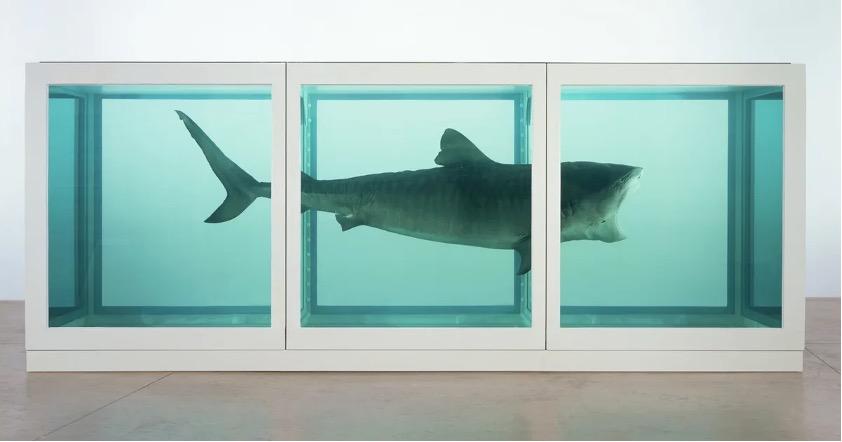
Damien Hirst - The Physical Impossibility of Death in the Mind of Someone Living
This artwork quite literally makes me shudder. Beyond my fear of sharks, this creation makes me angry. Damien Hirst himself has not actually produced an artwork but purely stolen mother nature’s creation. Her mouth has been positioned to gape open as she is frozen in a suspension moment that was once threatening but now feels disturbingly artificial. She was shipped from Australia to the UK in a 20-foot freezer. Even more inhumane than this, the poor animal carcass was then invasively drilled into so that preservative chemicals could penetrate her thick skin. He
offends Mother Nature while he infiltrates her creation with these man-made toxins. Although I appreciate that the tiger shark herself is stunning and intriguing, I cannot fathom the necessity of this ‘artwork’. The sheer fact that it took £50,000 to create this piece, with the shark itself costing £6000 genuinely astonishes me. Why would you ever spend such an alarming amount of money and effort on an ‘artwork’ when you can just use the internet to look up an image of a tiger shark? Why go to such extreme lengthsincluding shipping such a large animal carcass halfway around the
world to form an ‘artwork’ which is pointless? Hirst has not meanifully created something new, instead he is purely encasing another being, so therefore she not his to be proud of, and neither for all of us to admire. It is uncomfortable to remember how she is deceased and has been brought onto land where she’s examined and analysed by humans. Hirst wanted something “big enough to eat you”, while I solely feel pity for her. This greatly powerful predator who once thrived during the Mesozoic era is being manipulated by a man, a thought which I find devastating. This fearsome creature who was at the top of the food chain, has been reduced to a lifeless body to be constantly gawked at. All while a human receives praise and prizes for her. As a collective, are we simply going to ignore our commending of this ‘artist ’? Some suggest that anyone could have done it, while Hirst dismisses them with the phrase “But you didn’t, did you?”. He is an arrogant man who feeds off the wynoriffic tiger shark, purely for money. This greed is evident, as this ‘artwork’ was sold for at least $8 million. All that ’s left to say is that Damien Hirst has a lot to answer for.
HART - Sir Trenchard Cox Scholarship Entry
By Evie
ARTWORK I LOVE
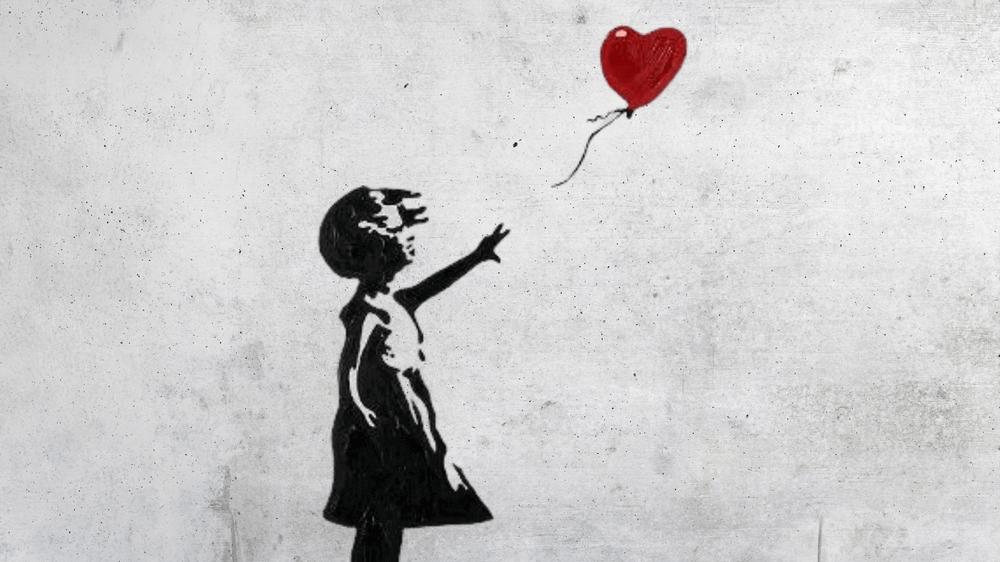
‘Girl With Balloon’ - Banksy (2002)
Banksy originally created ‘Girl With Balloon’ in 2002. Whilst much of his work is iconic, this particular mural was voted the UK’s favourite piece of art in 2017, and is arguably one of the most reproduced artworks in the world. It clearly speaks to people across the globe, but this is not the reason that I have chosen it as a piece I love. I am particularly fond of it because it evokes a sense of childhood innocence, a period of our lives about which many of us feel nostalgic (myself included). A wide array of people are therefore drawn to this work.
Like much of Banksy’s work, the meaning of the image appears very ambiguous; it is not clear to the viewer whether the girl is releasing, or reaching for, the balloon. I
especially love this aspect, as it allows the work to become more personal, letting each viewer see it through their individual perspective. For example, those who see the balloon as being carried away by the wind (and therefore related to loss), might feel a sense of the inevitable ‘slipping away’ of childhood and the loss of innocence. Alternatively, those who think that the girl has let the balloon go, might instead view the image with a sense of acceptance and the freedom that comes with growing up.
Like much of Banksy’s work, the main image is a monochromatic depiction –in this case of a small girl. However, the stark contrast of the blood red, heart shaped balloon immediately
drew my attention. Whilst some may argue a red heart is contrived, it is used here with impact to represent the fragility of life and might suggest the need for, or loss of, hope, love and joy. It seems, therefore, that Banksy uses the balloon to speak to the human instinct for such emotions, and it is no surprise that the piece has been used to support many different social campaigns. On the original stencils, the phrase ‘ There is always hope’ was written, showing that the artist ’s primary message was one of optimism even when it seems out of reach. What draws me most to this piece is its simplicity. Banksy has used the scale and colours that he needed to create the effect he wanted, without overly complicating the piece. It is an effective way of relating to a large audience.
ARTWORK I LOATHE

Balloon Venus Hohlen Fels (Magenta) – Jeff Koons (2022)
Jeff Koons’ ‘Balloon Venus’ (2022) is part of his iconic collection of balloon–like sculptures, and is a piece that I loathe. This particular sculpture is based on the ‘ Venus of Willendorf ’, a small limestone figurine from the Palaeolithic era, dating back to around 25,000 years ago. It has been suggested that the ‘ Venus of Willendorf ’ was a symbol of fertility or maternal intuition and may have been a good luck charm at the time. I find the simple, naturalistic form of the piece appealing, and loathe the way Jeff Koons has commercialised this classical, almost mystical, object, removing the depth and narrative of the original work. One thing I find especially distasteful about Koons’ sculpture is the warping of dimensions. Not only does the artist scale up the piece drastically (it is almost ten feet tall, whilst the original was
only eleven centimetres), he also alters the physical size of certain elements of the reference piece. As a result, his giant work looks excessively artificial, overwhelming the original Venus of Willendorf and diminishing its historical significance.
Similarly, the colour and materiality of the Balloon Venus furthers this point. As with the other sculptures in the series, Jeff Koons has made use of a very modern, metallic and reflective material. This directly contrasts with the original piece’s natural quality, arguably undermining its value. Additionally, the stark textural contrast from the rough, earthy finish of the Palaeolithic piece to a synthetic, perfectly smooth surface transforms the symbol of fertility into something made for a display. The casting in a series of bright colours, (this in pink, with other works in orange or red) further
strips away the meaning and value of the original work, making a mockery of the simple beauty in the ancient piece. Additionally, it presents the female form almost as decoration, trivialising the original intentions behind the object. It transforms the symbolic depiction of the figure of ‘ Venus’ into a display, reinforcing the objectification of women. The commodification of the female body, and the commercialisation of an ancient item, are the key reasons I loathe this work of Koons. His approach transforms a powerful and meaningful object, into an enormous, excessive display, that undermines the work’s original intent. Overall, I loathe ‘Balloon Venus’ not simply for its overt interest in aesthetics, but for the exploitation of the piece it was based on.
An Original Translation - Aeneid Book II, Lines 705-729
By Amna L4
“Come, dear father. Rest your arms around my neck.
I will lift you onto my shoulders. This is not a burden, it is something I was meant to carry.
Whatever awaits us beyond these flames will meet us together, one danger shared, one promise of safety.
Let little Iulus walk beside me. Let my wife follow a little behind our steps.
Listen, all of you.
Beyond the gate stands an old mound, and beside it the forgotten shrine of Ceres, and a dark cypress, guarded through generations by the reverence of our fathers.
Let that be our meeting place. Though we go by different paths, we will gather there again.”
“You, father, take in your hands the sacred things — the household gods of our people.
For me, coming straight from battle, with the dust and blood of war still on me, it would not be right to touch them until I have washed in living water.”
So he said.
Then I bowed my neck and spread across my shoulders the tawny skin of a lion,
and bent myself to the task.
My father settled above me — not a weight, the memory of Troy itself.
Little Iulus placed his hand in mine and hurried beside me, stretching his steps to match his father ’s longer stride.
My wife followed behind.
So, we moved through the shadowed streets.
And I, who until then no storm of spears, no shouting ranks of Greeks had ever made afraid,
now trembled at every stirring of wind, every murmur in the dark, not for myself,
for those beside me,
for the small hand in mine, for the sacred gods carried above me,
for the fragile future we were carrying out of the ashes of Troy.
For even while the city fell behind us, something of it, its memory, its gods, its meaning was walking with us into the night.
ARTS
Drama - Camden Fringe August 2026
By Alice and Iqra U5
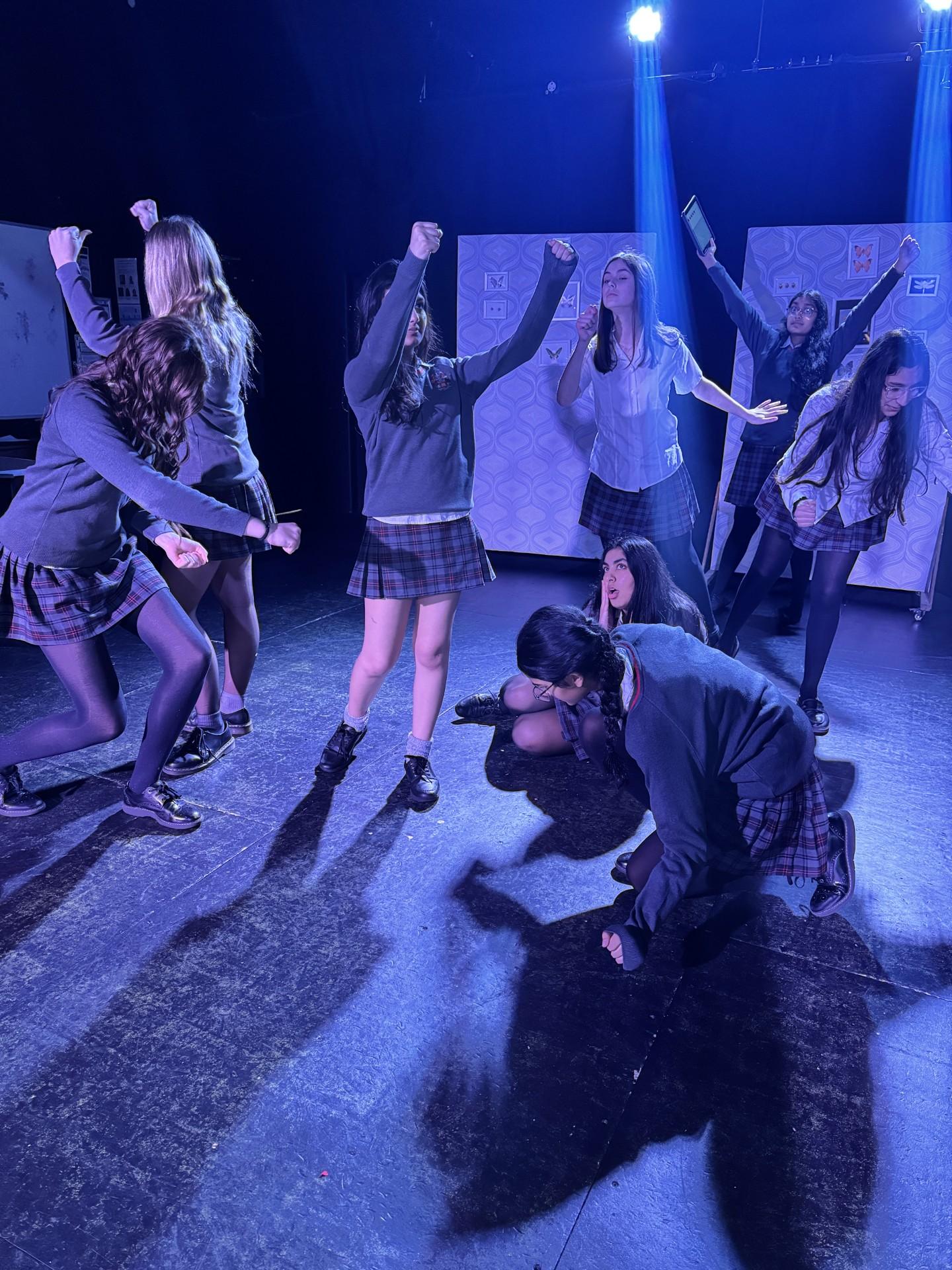
This year a group of U5 and L5 students have been devising their own comedy called 'Lost, Found and Completely Confused' to perform at the Etcetera Theatre as part of the Camden Fringe on Saturday 22 August and Sunday 23 August 2026.
Centred around the theme of “lost and found,” the show is set aboard a cruise ship where a range of characters have misplaced items that reflect their distinct personalities. The main narrative follows the protagonist, Elijah, as he searches for his missing engagement ring in the hope of proposing to his girlfriend. Along the way, his efforts are continually disrupted by other passengers, including an overzealous, self-appointed detective working as a cleaning lady, who leads a chaotic and often unhelpful investigation. This is an ensemble piece and we hope to include live music to act as a Greek chorus of sorts, narrating the story through song.
This is the first time the LEH Drama Department will participate in the Camden Fringe Festival, making it especially exciting for us as students. Being involved in such a vibrant and diverse celebration of theatre, especially in a festival as well-known as Camden Fringe, which showcases a wide range of emerging talent and creative performances across London, has been truly amazing. Our teachers, the wonderful Miss Torrent and Ms Bedford, have worked incredibly hard to organise this opportunity, enabling us to perform as part of this renowned and dynamic festival. We have loved the weekly rehearsals, as they allow for much experimentation. We get to give our own ideas and inputs, making the piece feel personal and individual for all of the students involved. Ridhi (U5) and (L5) have then put together the group’s energetic ideas to produce a highly farcical script. We can’t wait to perform our original play ‘Lost, Found and Completely Confused’.
Music and Drama trip - ‘Into the Woods’
By Zuri L6
On Thursday 24th April, Lower Sixth and Lower Fifth Music and Drama students went to see the London Theatre Company’s production of ‘Into The Woods’, by Stephen Sondheim and James Lapine, at the Bridge Theatre. This musical weaves together several well-known Brothers Grimm fairy tales, bringing characters such as Cinderella, Little Red Riding Hood and Jack (Jack and the Beanstalk), together, as they venture into the woods to fulfil a personal wish. The story reflects on the unpredictability of life and our journey into adulthood, demonstrating how the joys and difficulties of life shape who we become. This was an incredibly dynamic musical with a talented cast, supported by particularly impressive creative choices that shaped the whole production. One memorable moment was the reveal of the forest set, which was visually stunning and intricately detailed, with beautiful lighting choices made by Aideen Malone. The designer of the set, Tom Scutt said that he “wanted as real a forest as possible so the audience could fully invest in the characters’ stories”, which was most certainly successfully achieved. Scutt was also the costume designer for this production, and aimed to merge traditional, often dark, fairytale aesthetics with vibrant musical theatre, which can be seen most notably through the costume of Cinderella. The cast worked together incredibly well to form this ensemble piece, and I would recommend it to anyone considering to go.

LANGUAGES
Salamanca trip write-up
By Gina U5
¡Hola!
This February half-term, 30 Spanish GCSE students embarked on a journey to Salamanca, Spain for 5 days of learning, culture and delicious food!
Upon landing in Madrid Barajas Airport, after travelling to the city of Salamanca, we were met with our wonderful host families. Shortly after, we headed out to the Plaza Mayor for some free time and a chance to familiarise ourselves with the lively, picturesque city. The rest of the weekend involved some delicious Churros con Chocolate, followed by a tour through the city, learning about the history of Salamanca; we were able to visit the building of the University of Salamanca, one of the oldest universities in the world. Amidst the magnificent architecture, we were even given some good luck for our exams by seeing the infamous frog hidden on the outside of the building! The evening took us to a movie theatre to watch Zootropolis 2 in Spanish, a certain challenge, but a great film nonetheless.
Lessons with Lola Languages School started from Monday- Thursday, which were engaging and definitely helpful in improving our skills and expanding our knowledge of Spanish culture. We were enriched by a variety of activities throughout the afternoons, including a tour of the Catedral de Salamanca, flamenco workshop, photo rally, museum visit and paella night. However, the tapas experience and karaoke night, which involved a near-perfect rendition of Macarena by us and Señora Arrieta, with some incredible dancing skills from all!
Before we knew it, we had reached our last day and it was time to say goodbye to our host families and head to the school for our final lessons. We were then headed to the airport back home to Heathrow, with prizes given out to photo rally winners (my group won!), and special prizes handed out to those who displayed outstanding skills and resilience throughout the trip. Beyond exquisite food and jaw-dropping views, we were able to put our Spanish skills into practice in real-life situations when asking for directions, talking to shop employees and conversing with our host families. We returned to London with endless photos, improved Spanish skills, and memories to last for a lifetime!
Chinatown trip write-up
By Serin U4
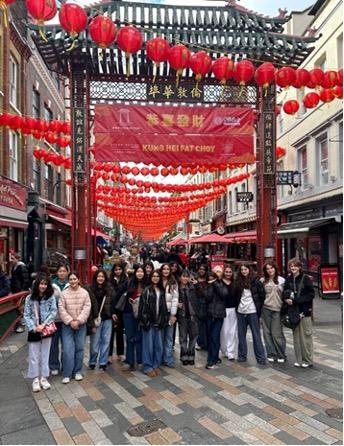
On Tuesday, our Mandarin class went on a school trip to Chinatown, just off Leicester Square, and it was one of the most enjoyable trips I’ve had since the beginning of the year. We drove to Feltham station, then took a train to London Waterloo, and finally the tube, which took us to Chinatown. When we arrived, we had about 20 minutes to explore the area, and my friends and I went to Chinatown Bakery, which had a variety of buns and
pastries that were really nice. After that, we were split into groups and given a worksheet for a “scavenger hunt,” where we learned about the history of Chinatown and answered questions about each street, such as, “When was this restaurant established?” and “Look at the menu of Rui Restaurant. How much are eight ⼩笼包?”
For lunch, we ate at a restaurant called Real Beijing Food House, where our teacher, Mr Ng, shared Asian dining etiquette with us and, of course, had some conversations in Mandarin about food and drinks. We had different Chinese dishes, including ⽺⾁, ⽜⾁, 鸡⾁, and 蔬 菜, which were all delicious. After lunch, we had 30 minutes of free time, and my friends and I got bubble tea and a corn dog from Bunsik, which was a nice treat. Some other friends had bubble waffles, matcha ice cream, and more bubble tea. Overall, it was a brilliant experience, and there weren’t any issues with travelling or misplaced belongings. My class arrived back at school (quite reluctantly) and agreed that the trip was a memorable one, with photos and videos to remember it by.

Onatti Mandarin Play write-up
By Khadija U4
On Friday 6th March, I had the wonderful opportunity of watching a play fully in Mandarin along with the rest of my Mandarin class. This was the first time ever an Onatti Production play had been performed fully in Mandarin, and we were the first group from our school to watch it!
Although at first, watching a play fully in Mandarin seemed like an intimidating challenge, the other girls and I found it immensely interesting. Due to the slow pace at which the actors were talking in and their expressive hand gestures which hinted what message they were trying to deliver to the audience, we were able to easily comprehend the plot. The funny punch lines and humorous story line has everyone in the audience laughing and overall, we all enjoyed having an amazing time watching, picking up small phrases, and developing our listening abilities.
ANTHEA BELL COMPETITION ENTRIES
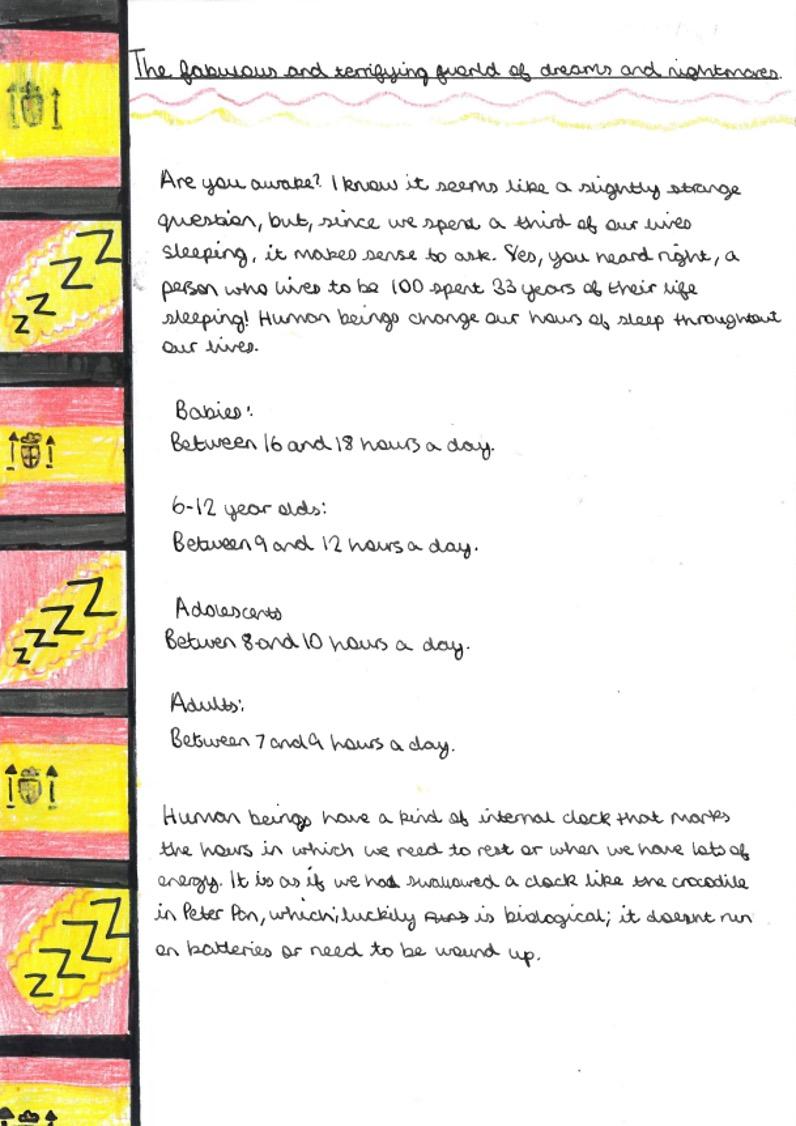
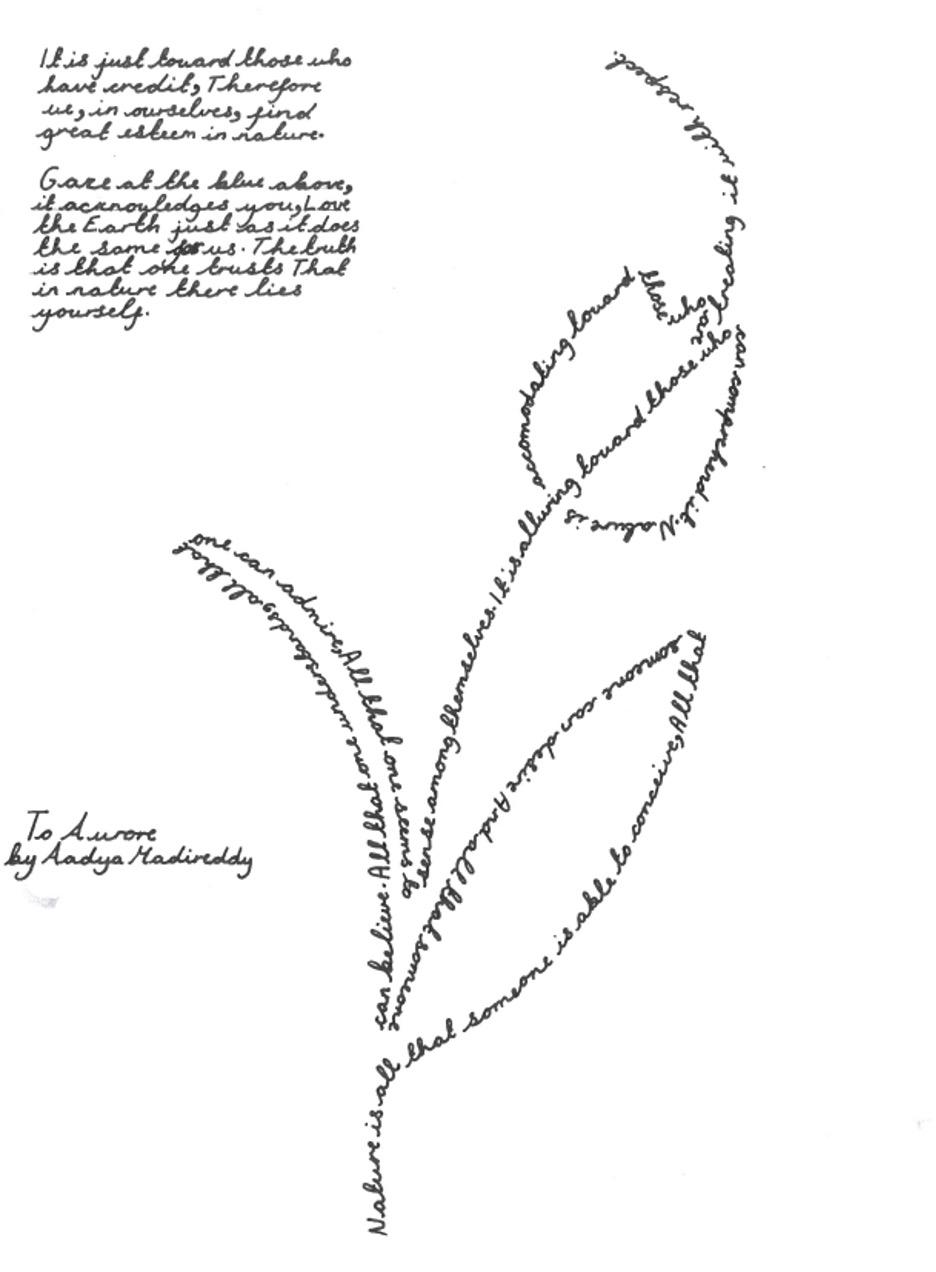
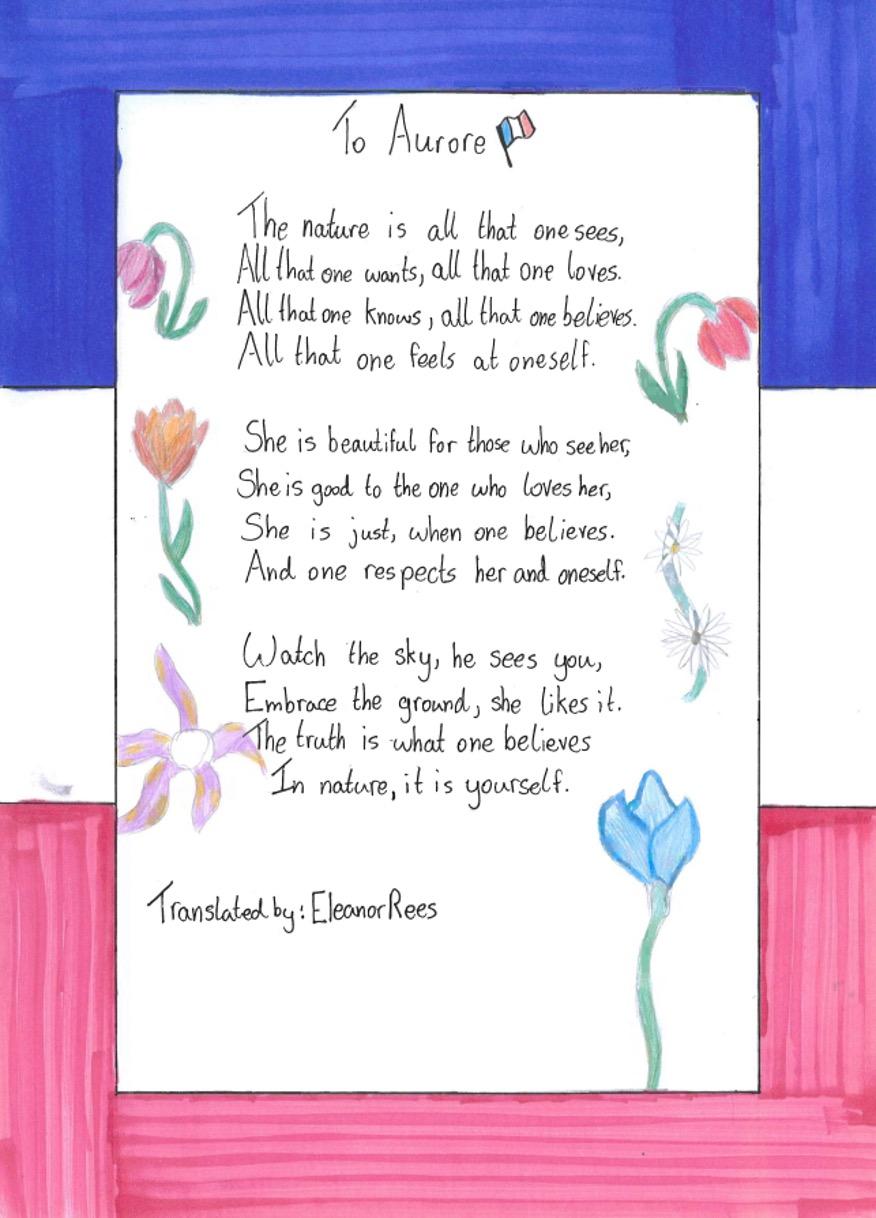
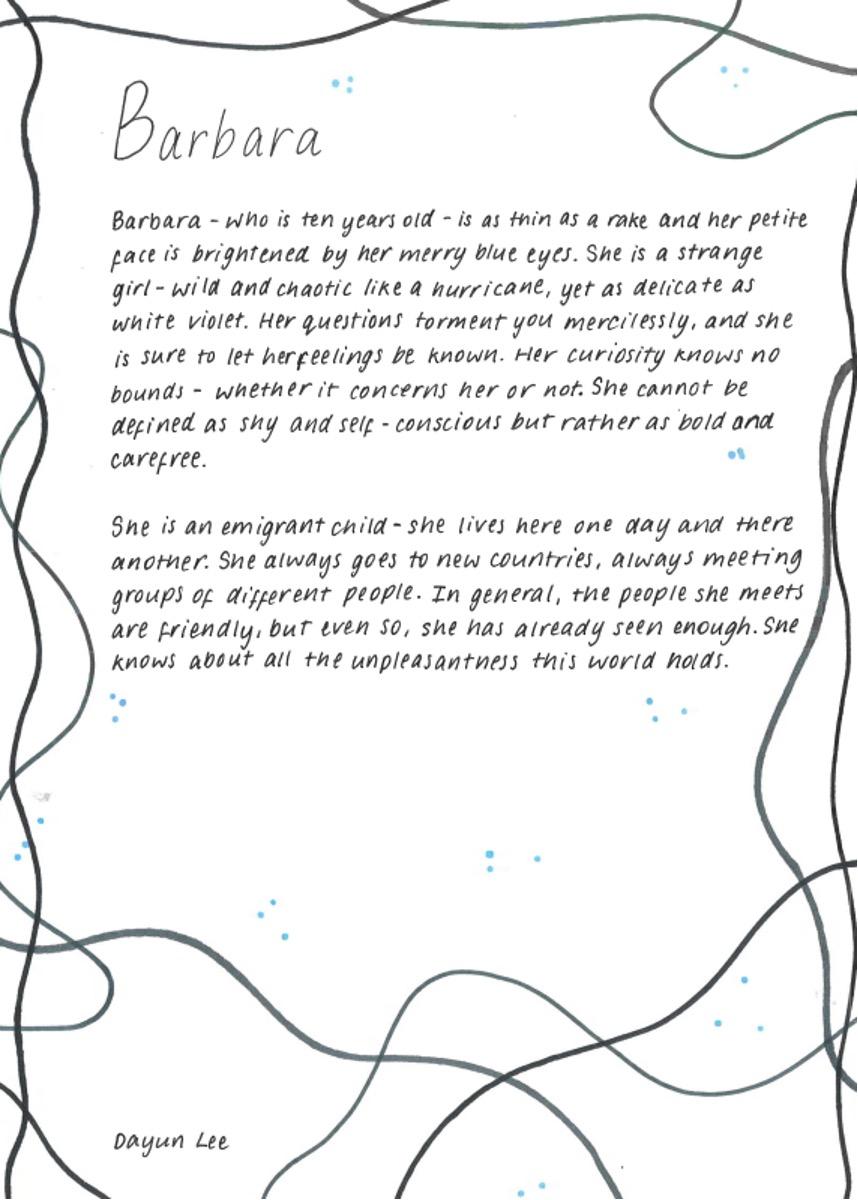
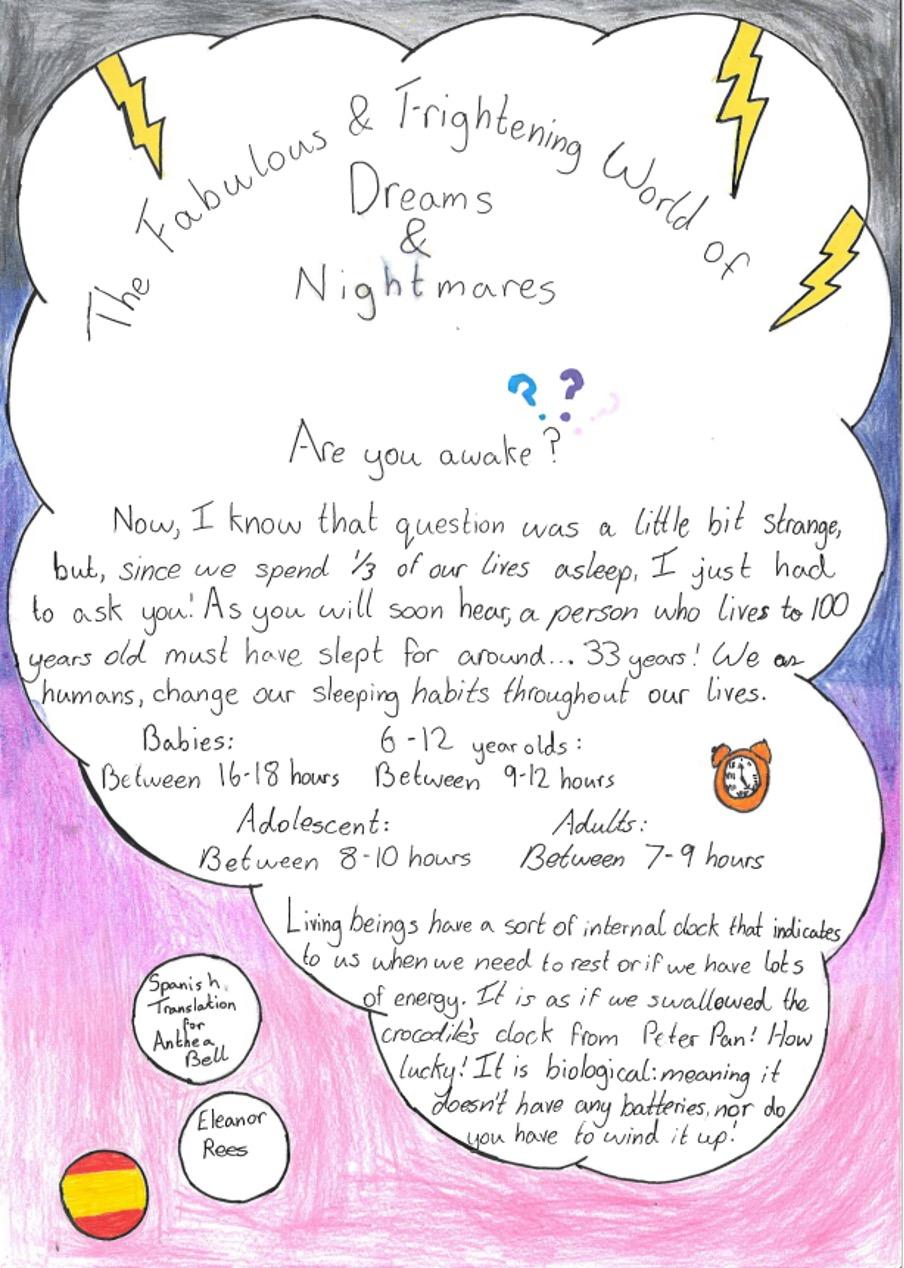
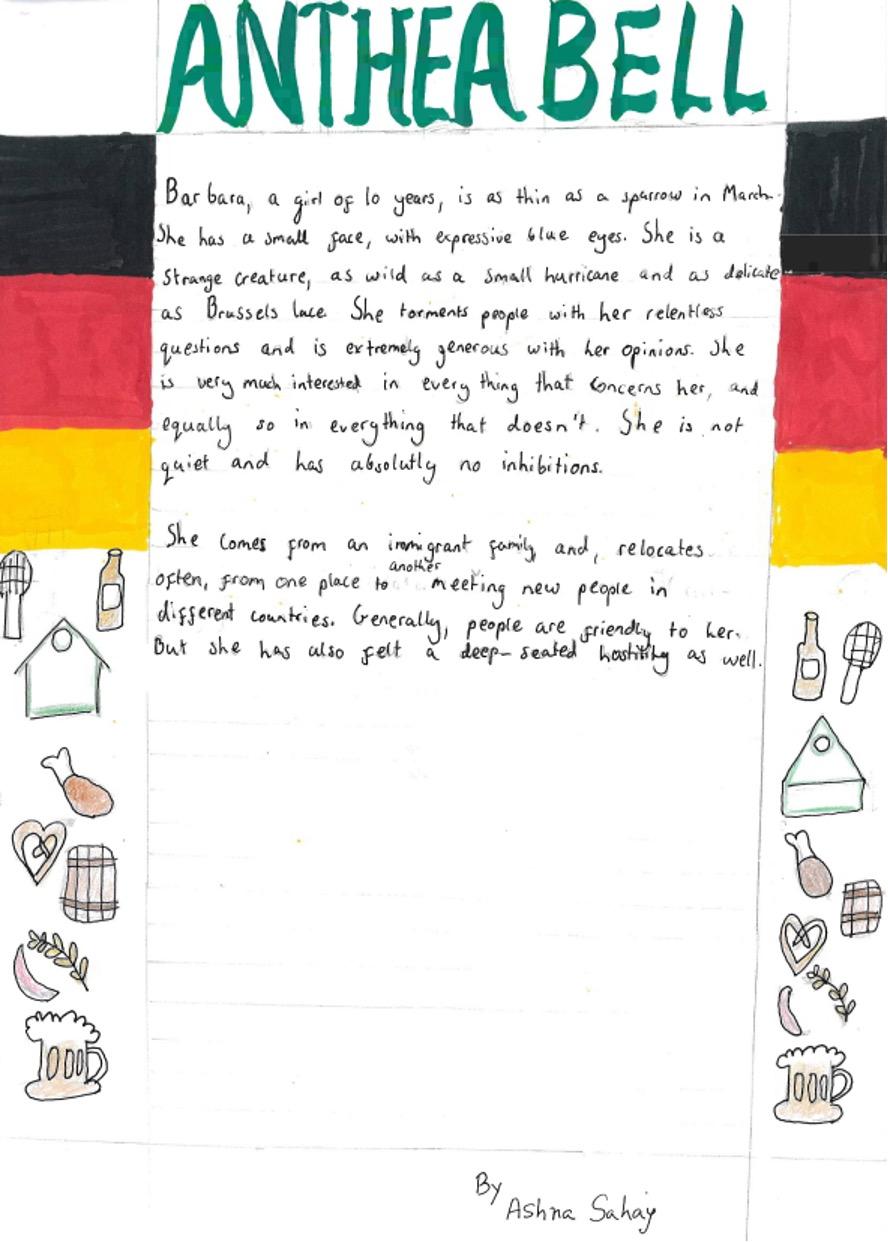
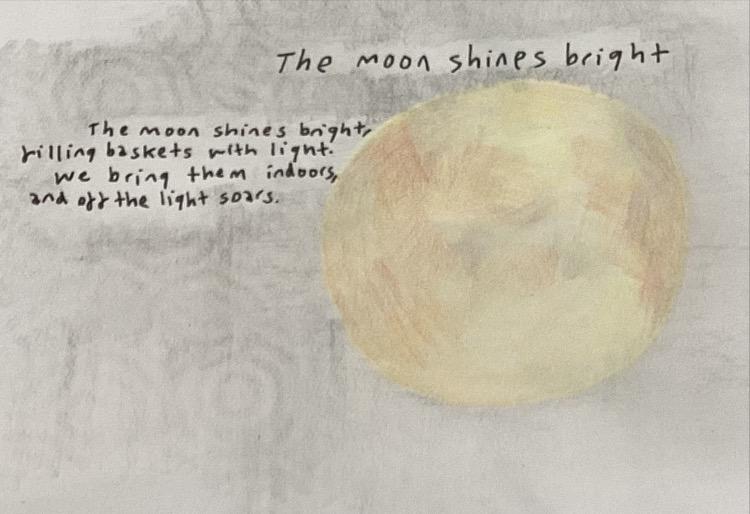
This term, LEH pupils submitted their entries to the Anthea Bell translation competition organised by Oxford University and inspired by the life and work of the great translator Anthea Bell. The competition was introduced with the aim to promote language learning across the UK and to inspire creativity in the classroom.
The competition was open to our Lower 4 (Level 1), Upper 4 (Level 2), Lower 5 (Level 3) and Lower 6 (Level 4) pupils with the challenge of translating poetry, fiction and non-fiction excerpts.
By Amaya L4

By Stella L4
By Eleanor L4
By Eleanor L4
By Ashna L4
By Yuna U4
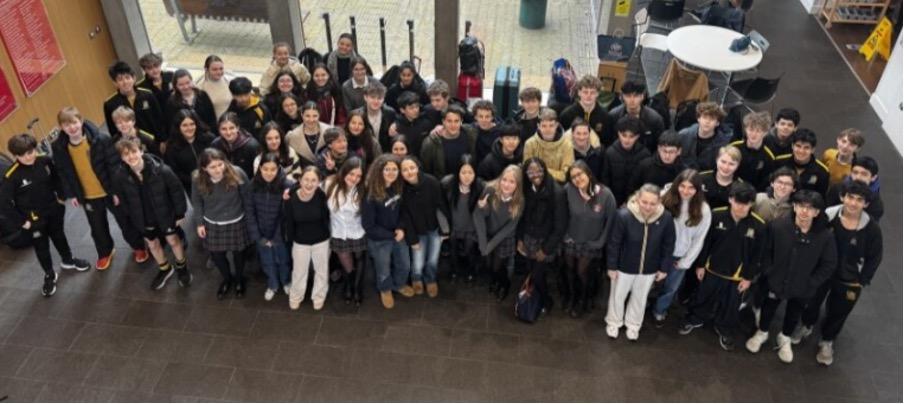
PARIS EXCHANGE
Tuesday 10th – Tuesday 17th March
We said Bonjour to our lovely French Exchange students who joined us at LEH / Hampton School for a week of learning and adventure with their LEH counterparts. The LEH / Hampton School pupils are looking forward to visiting their exchange partners in Paris very soon!
Mr Agulian, Head of Modern Foreign Languages
As part of our Thirds' German cultural awareness programme, our pupils have been researching the life and work of Austrian artist, Friedensreich Hundertwasser. Students did some fact finding and then tested their creative skills by recreating one of his famous, colourful artworks. The best artwork will be displayed in school Modern Foreign Language corridor.
Mrs Hewitt, Head of German
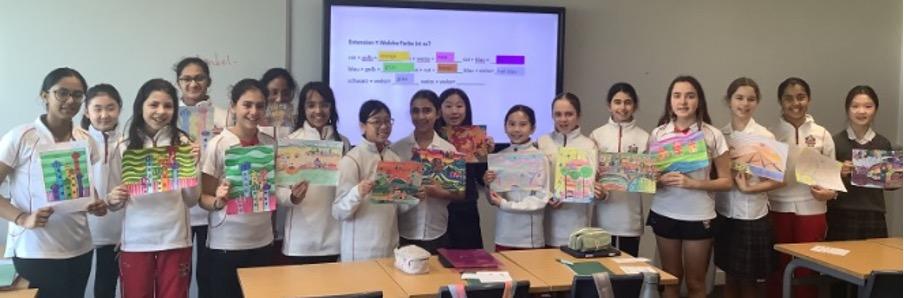
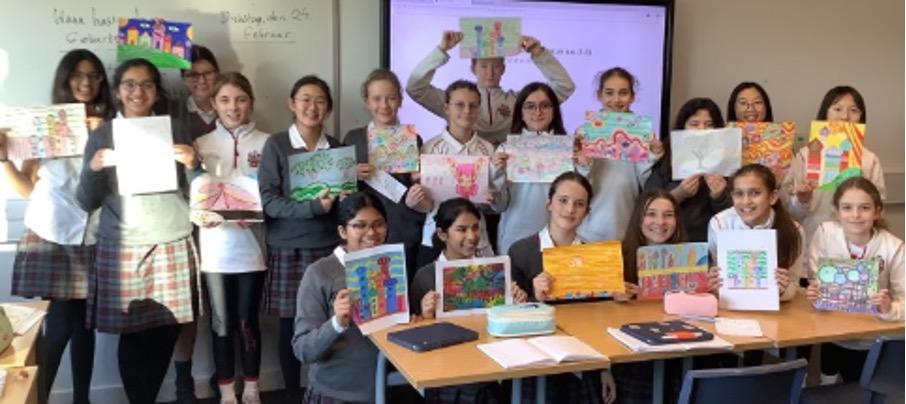
3RD’S WORK ON AUSTRIAN ARTIST HUNDERTWASSER
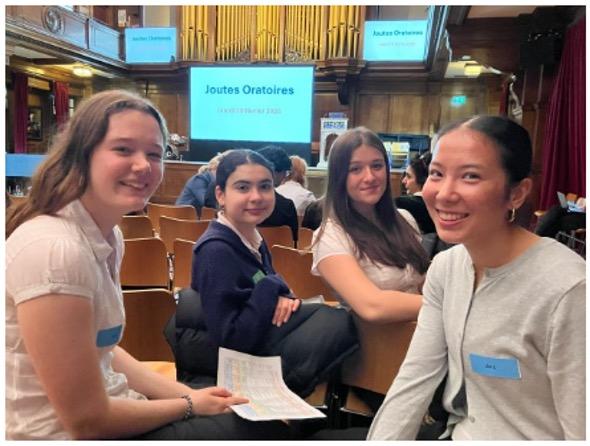
On Tuesday 10th February, four intrepid French debaters (two teams, one Upper 6 and one Lower 6) journeyed to St Paul’s Girls’ School to compete in the “Joutes Oratoires” against 60 other teams.
Mr. Agulian, Head of Modern Foreign Languages
Lower 6 linguists, Maryam ie McGowan tell us how they got on:
“We had worked for weeks preparing debates on three topics: surrogacy, influencer culture and mass tourism.
Our initial three debates went extremely well: our passion and eloquence convinced the judges of our victory, despite the occasional slip into French-accented English (we now know that relevant is not a French word…). We managed to convincingly win all three, even against Eton Boys, much to our jubilation!
This clean sweep secured us a place in the 'argent' finals to compete for the silver spot. The conditions greatly contrasted with our initial preparation: a ‘secret motion’ was announced for each final, with our lot being to argue against the motion 'academic institutions should focus on teaching contemporary books and films more than classical literature’. The rules were rigorous; we were confined to a room for just fifteen minutes under strict supervision to plan our argument and prohibited from using any technology.
For our final, we were pitted against a pair from CLSG. An extremely heated debate began, with strong arguments and great eloquence from both sides. After closing speeches, the judge began her deliberations at length, lamenting her inability to give us a tie. After a good ten minutes mulling over the winner, she admitted that the other team had won by an incredibly narrow margin, stating that the only reason we did not bring home the win was our 'incredible level of passion!' This is perhaps testament to our love for debate and strong opinions on the merits of classical literature as two English A-Level students.
Despite this narrow loss, we have truly gained so much from this experience and will be returning next year to enact our revenge!”
SUCCESS AT SPANISH
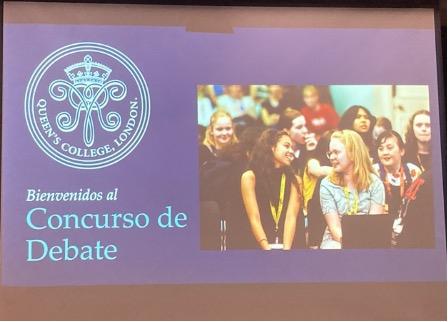
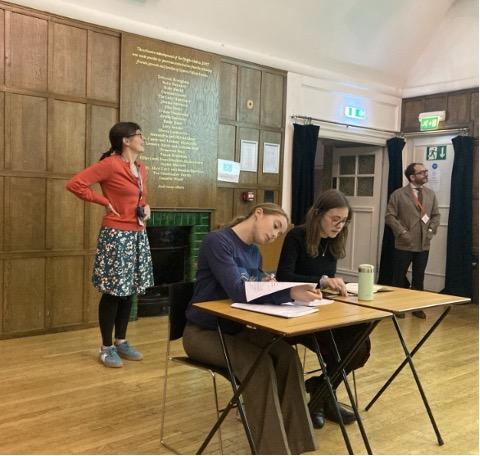
We are extremely proud of our Sixth Form Spanish students, Ella Heyhoe and Polina Popotseva on their success at the Spanish Debating Competition on 10th March. Showing some wonderful linguistic skills, they won their first three rounds, competing against Eton College, North London Collegiate and Bancroft's School to reach the semi-finals where they had only 30 minutes to prepare their new topic: Should Museums be free? In the semifinal against St Paul's Boys School, Ella and Polina had amazing points, great vocabulary and debating skills however, narrowly missed out on the win by one point! Well done!
Mrs Arrieta, Head of Spanish

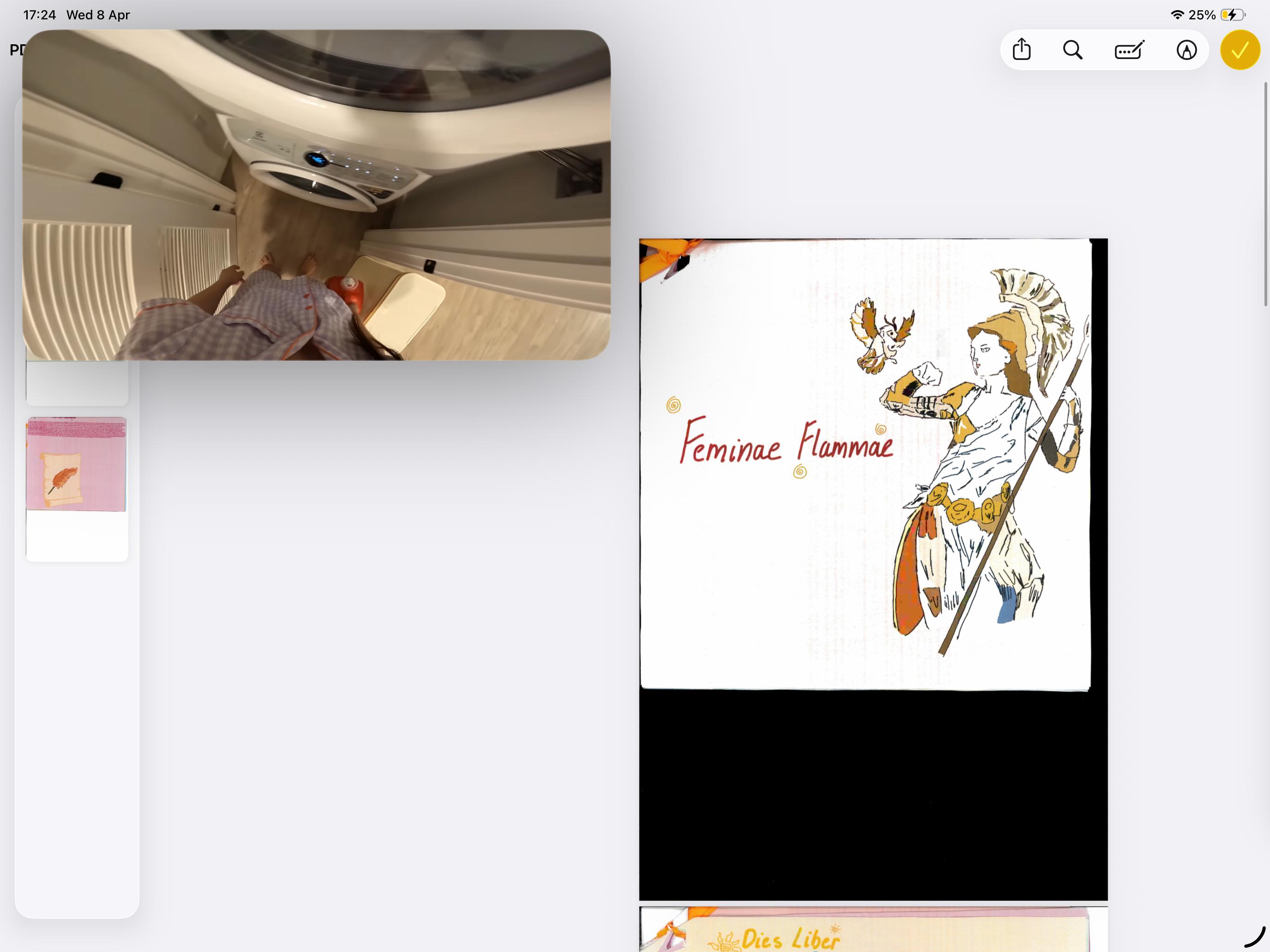
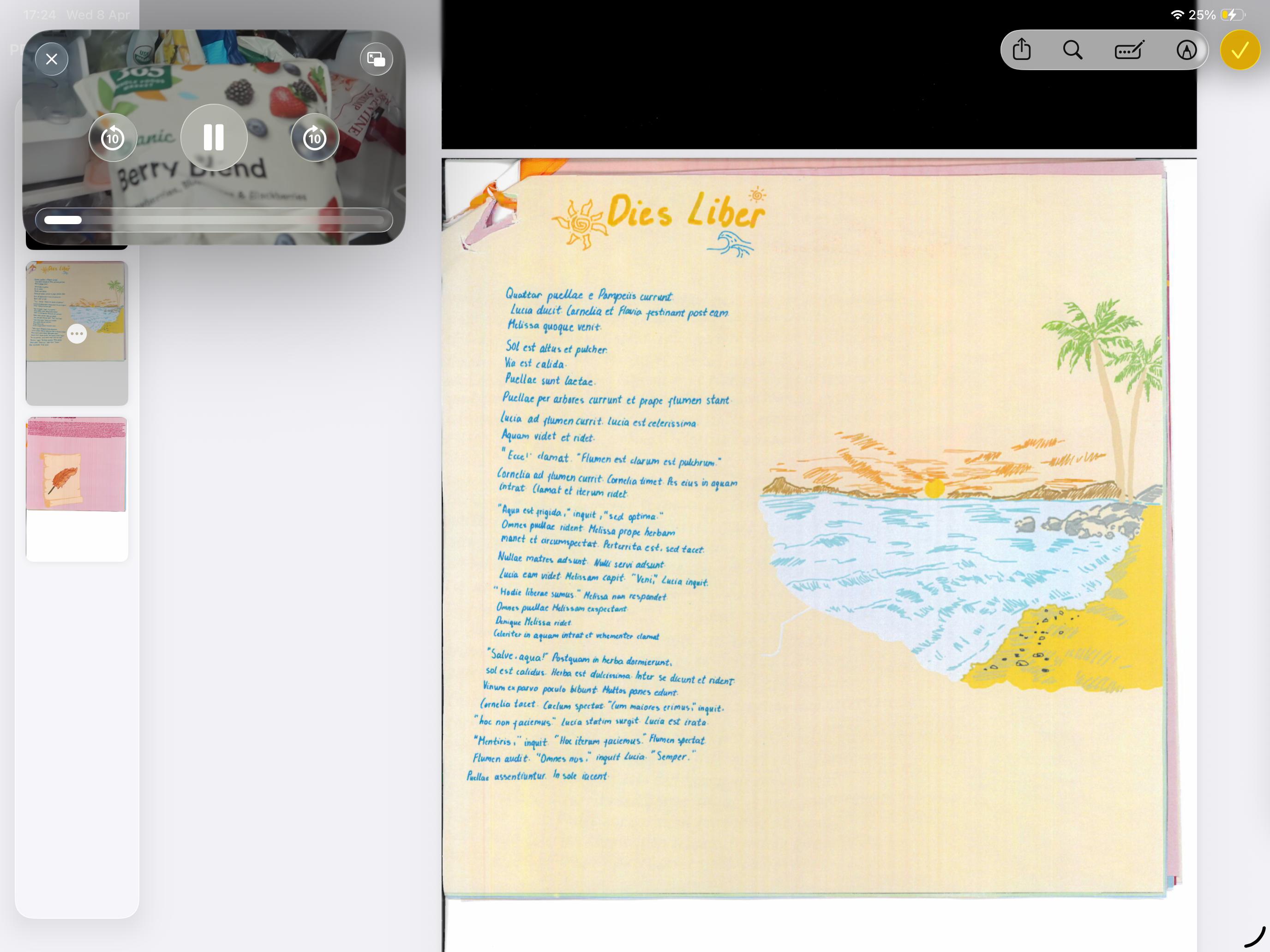
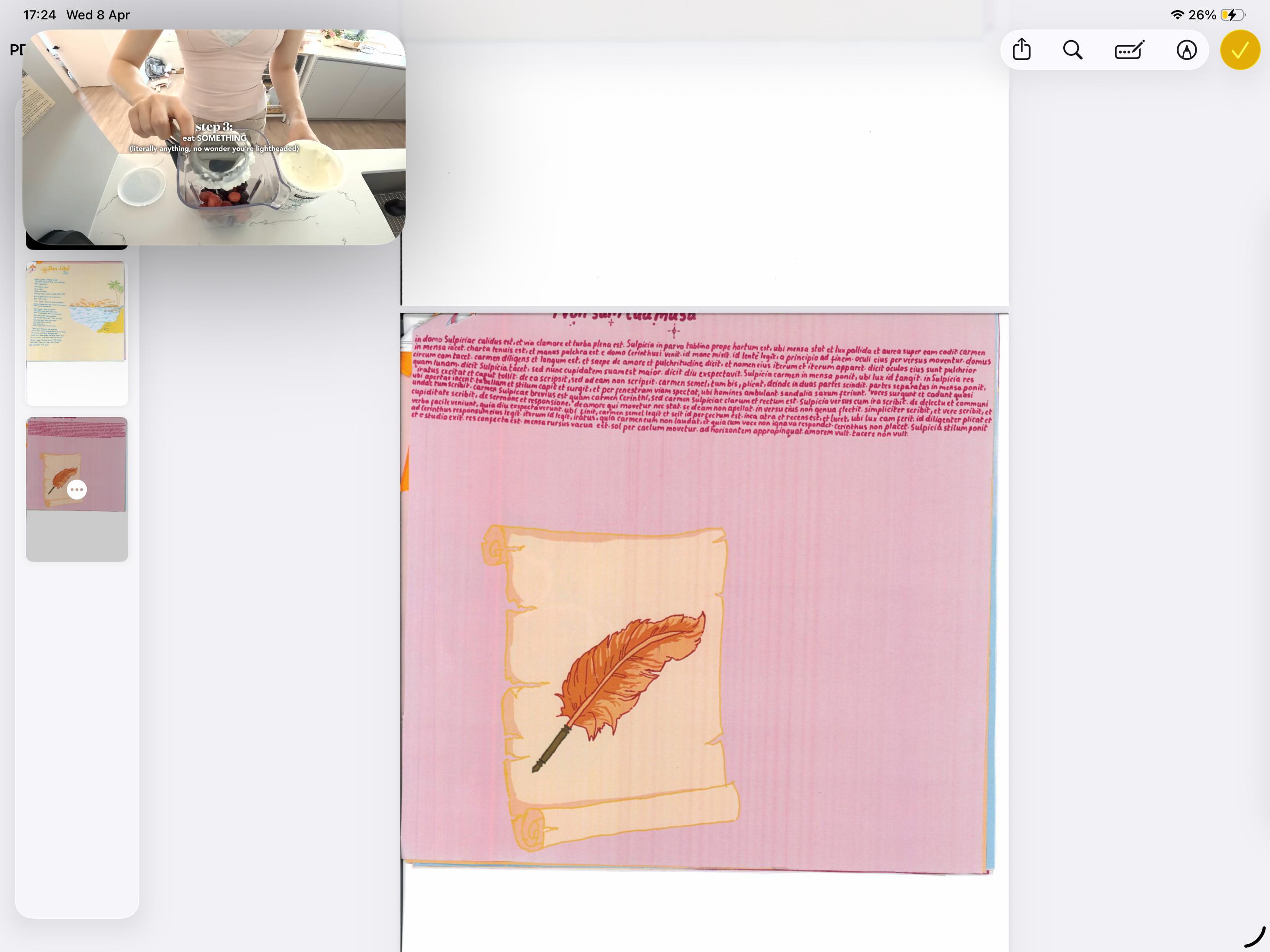
FITZWILLIAM COLLEGE FRENCH TRANSLATION COMPETITION
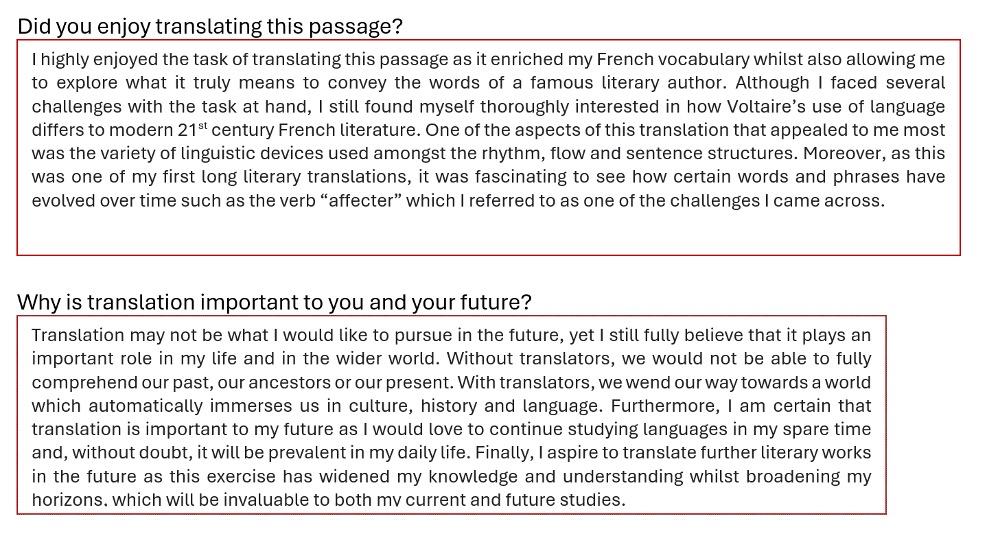
Jana in L6 translated a passage from Voltaire’s “Zadig ou la Destinée” as part of the Fitzwilliam College French Translation Competition.
ENGLISH
Poems
By Amna L4
a second sky
Rain again the kind that turns the streetlamps to thin silver stitches and leaves the whole road humming under its breath and I am walking back to that house with his voice still in me not in my head exactly but lower than that lodged in the door-bone table-bone ear-bone part of me the part that startles when keys turn too hard in a lock and I keep the old schoolroom words moving through my mouth because they are older than him older than this street older than the small kingdom of fathers and their weather avis ala domus words with pale gold edges words that do not flinch words that sit on the tongue like little lamps
the rain gets into my cuffs my collar my lips and everything shines with that bruised metallic tenderness of evenings when the body is only a coat you are carrying home and above me the birds keep writing their black scripture across the sky their exits so clean they almost hurt to look at and I think not yet not yet not yet because hope is not wings it is the certainty coiled somewhere under my shoulder blades the old migratory ache that keeps pointing my body north and one day that treason in the bones will gather itself into flight one day the narrow weather of that house will lose its hold on me and until then I walk with words in my mouth ala avis and the sound of them is almost a wingbeat
the night carrying the morning
ink again the stubborn dark kind the kind that settles beneath the crescent moons of fingernails and will not leave the skin easily the kind that seeps slowly through cardboard through the small trembling bones of hands and the street is rinsed with rain and sodium lamps burn their soft amber halos over wet pavement and we are standing there with our handmade signs and our damp sleeves and the quiet thunder of hope beating somewhere under the ribs because even now even here the future feels faintly present the way spring is already hidden inside a branch
the night smells of something electric and we are writing our names large enough to resemble weather large enough to outlive the small rooms where they once had to whisper and the crowd moves like a slow tide glitter and colour and breath rising into the dark while somewhere behind us stand the quiet centuries the long invisible procession of people who loved carefully we hold a flame a lantern a pulse a living ember and we lift it higher
because hope is a lantern carried through generations hope is a brightness that refuses extinction hope is the stubborn belief that one day the world will widen enough for all our names to breathe
maybe the finished morning will belong to people we will never meet but still we carry the lantern still we carry the quiet blaze of it through rain through doubt through history's long corridor of locked doors because one day someone will speak their truth without fear and the night will not shatter and the long dark hallway of history will loosen its splintered grip and learn the music of hinges opening.
Intermediate Martindale Finalists 2026 Is Technology the Problem or the Solution?
Entry by Cecilia L5
Technology is a tool to enable humans to adapt and improve their existence. Since the dawn of time, there have been countless examples of technologies which have been pivotal to human survival and success, such as fire, the printing press, air travel and the Covid vaccination. Technology can be a force for good or evil. If it is used for malicious purposes or has negative impacts, it is not the fault of the technology per se, but of the humans who manipulate it or use it irresponsibly. As psychologist B F Skinner said, “The real problem is not whether machines think but whether men do.”[i]
The term technology conjures up images of advanced medical equipment such as MRI scanners and telecommunications satellites, but it is important to define what technology means. The word derives from the Greek word ‘techne’ meaning art, skill, craft and ‘logos’ meaning word. Technology relates to the application of scientific knowledge for practical purposes, and industrial advancements.[ii] Technology, therefore, is anything created to facilitate a process.
Humans throughout history have been afraid of new technologies and their potential. I have chosen a picture which superimposes an image of a 19th century Luddite smashing modern day AI-automated car manufacture. The Luddites were English textile workers who feared their skills would be replaced by the invention of machinery. They tried to stop the tide of change through destroying new machines such as spinning looms.
The Luddite movement ’s ethos mirrors contemporary fears about the use of Artificial Intelligence (AI), such as it removing the need for entry level jobs, causing mass unemployment and superseding human knowledge.
I have selected this picture as it conveys the age-old fear of new technology which is often seen as ‘the problem’ by humans, afraid of the unknown, whereas I firmly believe most new technologies bring about positive change and improve lifestyles in the long term.
Technology is rooted in the era in which it is created; at one time, the creation of fire would have been a radical technology. In the sixteenth century, the printing press was a state-of-the
art invention and the invention of the motor car at the turn of the twentieth century revolutionised our lives. These are all examples of disruptive technologies which solved problems, but also paradoxically created them; or we could say that every new technology inevitably has some negative consequences. The printing press for example, “was used to spread falsehoods as much as enlightened truth”[i]. The advent of the motor car resulted in traffic accidents and pollution.
Humans introduce new technologies without planning for their impact. In George Orwell’s 1984, technology is used to control people’s freedom and telescreens spy on citizens and spread government propaganda. The idea of manipulating our freedom has parallels with our current reality of online news being misleading and how hard it has become to distinguish facts from ‘fake news’.
Humans are self-interested and often manipulate the power of technology. An example of this is how new technologies are adopted in warfare. Technology creates advances and solutions in war but also accelerates destruction. It is estimated that in the Second World War, the invention of the Enigma code-breaking machine by the Allies, curtailed the war by two years[ii]. The new technology enabled crucial intelligence about naval routes and German bombing to be intercepted. In this instance, for the Allies, technology was a key solution and catalyst for the earlier cessation of war.
The nuclear bomb, however, brought the Second World War to a devastating end. In the Western world it was presented as the only solution, however no one could consider nuclear energy to be a positive technology when used as a weapon. The damage in Hiroshima and Nagasaki killed 204,000 and led to horrific health impacts such as foetal miscarriages and leukaemia.[iii]
Technology is at the heart of every civilisation’s progress. The impact of technology in health care is exponential. Examples are mass vaccination programmes, keyhole surgery and chemotherapy – all of which have changed life outcomes throughout the world. It is estimated that immunisation currently prevents 3.5 to 5 million deaths per year.[iv]
Medical advances have dramatically changed human life expectancy and living standards. Modern technology, for example, has pioneered gene therapies enabling people with sickle cell anaemia (SCD) to live pain-free lives. Through the creation of a genetic engineering tool, a treatment called CRISPR-Cas9, the patient ’s DNA can be edited to encourage the production of foetal haemoglobin which has a higher affinity for oxygen.[v]
Technology has also played a huge role in creating a more inclusive society. Thanks to specialised carbon materials and the sophisticated use of AI, amputees can now benefit from bionic limbs which accurately mimic the motion of a natural limb.[vi] Technology enables those marginalised in society to participate equally in everyday life. Examples would be text-tospeak tools, hearing aids and neurodiversity apps. However, a recent study suggests that disabled people are still 50% more likely to face digital access barriers than non-disabled. Assistive technologies can be life changing for disabled people but can only have a genuine impact if accessibility challenges in society are eradicated.[vii]
of industrial technology and specifically the burning of fossil fuels, mass industrial processes and industrial-scale deforestation have increased global temperatures. Human technologies ironically risk becoming our downfall.[i]
However, the application of technology is also the route to slowing down climate change. Technology is already being used to help predict methane emission and destructive sand dredging.[ii] If scientists work together with politicians and business leaders, there is an opportunity to bring about change through technology to delay global warming. Scientists are investigating reducing solar radiation by launching a massive sunshade into space to counter the effects of global warming. This would require a combination of innovative technologies such as data modelling, space travel and AI, as well as international collaboration.[iii]
AI is in its infancy and offers endless possibilities. Investment in AI is set to reach 2 trillion US dollars by 2027.[iv] It has had a dramatic impact already in industry, healthcare and education. Scientists have designed the genetic code of a brand-new biological organism, which takes us into a “post-Darwinian landscape where life can be authored, rather than simply inherited.”[v]
However, AI is also a technology which raises existential questions. Will AI supersede human intelligence and be used for nefarious ends? What is to stop AI technologies being used to generate global pandemics, disrupt stock exchanges or take out high-speed internet connections? The totalitarian regime envisaged in 1984, where humans have no autonomy, seems frighteningly possible, “Winston kept his back turned to the telescreen. It was safer, though… even a back can be revealing.”[vi]
AI is here to stay. It cannot be ‘uninvented’ and we can foresee the risks: there have already been examples of election rigging. During the last two decades, the explosion of social media was not adequately planned for, and governments are now trying to retrofit regulation and control. The Online Safety Act was introduced in the UK in 2023 and there are discussions about a ban on social media use for under 15s.[vii] We have seen the dangers of social media if not regulated[viii]. Research found that 90% of young people have been exposed to harmful content on social media.[ix] But with AI, we have an opportunity to consider the problems up front and to be responsible. To fully benefit from this new technology, humans in rich and poor countries need to plan, co-operate internationally and set guidelines and regulation about the safe use of AI. The horrors of the Holocaust in the Second World War led to the creation of the International Treaty of Human Rights. Today, with AI we need to plan before disaster happens.
Technology is a core part of human evolution and holds the secret to the future of our existence. Humans need technology more than ever to combat climate change, and we can harness it to create a better, fairer existence for all. But our species tends to be solipsistic. It is rarely the technology that is the problem, but rather how humans misuse, or even abuse it. AI is one of the most important technologies we have ever created, and we can avoid it becoming a problem, or at worst exterminating the human race, if we collaborate, plan and act morally. We must not be like the Luddites and try to shut it down. Technology is a tool that we humans must manage; “Artificial Intelligence is not here to replace us; it is here to remind us of what makes us uniquely human.”[i]
Bibliography:
[i] https://rochemamabolo.wordpress.com/2023/11/14/enemies-of-innovation-the-man-vsmachine-meltdown-inside-the-clash-on-the-factory-floor/
[ii] https://www.bartleby.com/essay/B-F-Skinner-4B212ED688D563A2
[iii] (https://oxfordre.com/classics/display/10.1093/acrefore/9780199381135.001.0001/ acrefore-9780199381135-e-6251
[iv] https://www.thecrimson.com/column/under-indexed/article/2023/2/15/underindexedgutenberg-gpt/
[v] https://www.britannica.com/topic/Enigma-German-code-device
[vi] https://www.icanw.org/hiroshima_and_nagasaki_bombings.
[vii] https://www.who.int/health-topics/vaccines-and-immunization#tab=tab_1
[viii] https://pubmed.ncbi.nlm.nih.gov/33283989/
[ix] https://www.bbc.co.uk/news/technology-68368439
[x] https://www.techuk.org/resource/inclusive-innovation-unlocking-the-potential-of-tech-foraccessibility.html
[xi] https://www.un.org/en/climatechange/science/causes-effects-climate-change
[xii] https://www.unep.org/news-and-stories/story/ai-has-environmental-problem-heres-whatworld-can-do-about
[xiii] https://www.sap.com/blogs/by-land-sea-and-air-emerging-technologies-to-tackle-climatechange
[xiv] https://www.itpro.com/technology/artificial-intelligence/global-ai-spending-is-set-to-hitusd2-trillion-next-year-heres-where-all-the-money-is-going
[xv] The Sunday Times, 25/01/26, Page 10, Dawn of the post-Darwin age: AI fires silver bullet for creating life
[xvi] 1984, by George Orwell Part 1, Chapter 1, Penguin Classics
[xvii] https://www.gov.uk/government/publications/online-safety-act-explainer/online-safetyact-explainer
[xviii] https://safe.ai/ai-risk
[xix] https://www.turing.ac.uk/news/almost-90-young-people-exposed-harmful-content-socialmedia
[xx] Bernard D'sa, The Future of Superintelligence https://www.goodreads.com/quotes/tag/technology-quotes
When Sofia started school in Norway, she was invited to go in a day earlier than other students to meet someone special. Her robot. Receiving oxygen therapy meant school attendance could become a challenge, but her local school provided a robot to sit at her desk, so she could take part in lessons from the safety of her house when needed. Robotic technology would help give her the same opportunities to learn as other children.
In a world where hacking scandals, social media bans for teens and fake content make headlines, it is easy to condemn technology, viewing it as a source of all evil; but it is impossible to ignore the issues that continue to be solved by advancements in technology, improving quality of life for millions of people. It is now already more than eight years since London‘s Science Museum held its first special exhibition on robots (see picture), teaching visitors about the processes robots could make more efficient and how social humanoid robots could help people battle loneliness, tackle learning disabilities and support independent living. In addition to robotics, imaging technology has revolutionised healthcare, sports and security, improving life expectancy and enabling people to stay active for longer. These areas within technology – robotics and imaging – stand out in terms of transforming life quality, and with the addition of AI integration, there are now even more opportunities for robotics and imaging technology to prove that technology really is the solution as long as legislation can keep up with the pace of development.
In the UK, one of the main issues since Covid has been a significant drop in school attendance, with the Children‘s Commissioner claiming nearly 18% of students missed at least 10% of school in the autumn term 2024/25[1]. To tackle high absence rates, often caused by mental health issues, some schools have started introducing classroom robots, like the one Sofia was offered, giving children the opportunity to take part in lessons from home. Absent students can connect to a robot via an app on a device at home, and the robot will film a livestream of the lesson. In addition, the student can press a button on the app to ask or answer a question, and this will make the robot ‘s head light up, providing students with a near-real experience. According to BBC News, more than 1,600 classroom AV1 robots, produced by Norwegian company No Isolation, are being used in the UK to allow persistently absent students to participate in lessons and connect with friends[2]. Another example of a robotics technology making a difference to education is the socially-intelligent fist-bumping robot Pepper. Pepper is a humanoid robot produced by United Robotics Group, who can help students learn how to regulate emotions and gain confidence to engage in more social interactions. In June 2021, a three-week long research project was launched in a special needs school in Somerset, where Pepper took part in activities like storytelling, joke telling and dancing to assist children in managing emotions and improve wellbeing[3].
Moreover, another current issue for the UK government is the massive NHS waiting list, and an investment in robotics technology is seen as one of the best solutions. Surgical robots allow doctors to complete more complex surgeries in a shorter period of time. The gynaecology team at the Chelsea and Westminster hospital, for example, managed to perform 30 robotic hysterectomies in two days, seeing five times as many patients as normal, and in the same weekend, another surgical team operated on almost a month‘s worth of
patients, with the help of robotics[4]. Additionally, the use of nursing robots has been explored, particularly for help with elderly care due to an ageing population, freeing up hospital beds. For example, Robear, the bear-shaped Japanese robot, can move patients from their beds and into a wheelchair, and robots like Hospi and Moxi, which are used in the UK, can deliver supplies like medication and meals. Furthermore, robotic pets are having a positive impact on elderly care, with research showing older adults and dementia patients experiencing improved wellbeing from lifelike companions, such as JustoCat, a cat robot used in the UK. In 2021, BBC Breakfast reported Essex care homes had seen the introduction of 300 robopets, with success stories including a 97-year-old non-verbal resident starting to attempt communication with staff after interacting with her new companion[5].
In healthcare in general, another area within technology that is impossible to overlook is imaging, as use of X-rays, ultrasound, MRI and CT scans have had an indisputable impact on patient care. According to the British Institute of Radiology, radiologists can diagnose approximately 20,000 diseases and more than 50,000 risk factors that could lead to a disease[6]. Imaging technology continues to advance, with recent developments being focused on utilising AI to improve analysis of medical images. Market.us Media states use of AI in imaging technology would reduce diagnostic errors, increase efficiency of work, and decrease the time taken to report results[7]. This highlights how the use of AI in imaging technologies would overall improve quality of diagnoses and reduce risk of human error. In an article in Time magazine, Jensen Huang, CEO of Nvidia, explained, “a decade ago… some AI scientists predicted that AI would put radiologists out of work; today, they are in more demand than ever because AI has made them better at spotting cancer.”[8] Another area where AI-capabilities have also been particularly noteworthy is within cardiac imaging, and considering cardiovascular diseases are responsible for 26% of deaths in the UK annually, improved understanding of the heart and early detection has the potential to save many lives.[9]
In the world of security, imaging has faced controversy with some arguing CCTV surveillance in cities is an invasion of privacy. Yet, the introduction of imaging technology to address public safety has helped tackle crime and improve efficiency of the police force. Continuous improvements in screening technology are also enhancing safety measures for border control and airport security, where equipment for scanning travellers, luggage, and cargo is in use. With help of drones, police can now more easily run search and rescue missions in difficult terrain or vast areas and monitor events attracting large crowds. Similarly, body-worn cameras help ensure fair law enforcement, providing the police with unbiased evidence from incidents. In addition, facial recognition technology is used to identify suspects, while automatic number plate recognition (ANPR) assists police in locating stolen cars or fugitives. When ANPR was first piloted in the early 2000s by the British Police Force, 1,152 missing cars were retrieved in 13 months, highlighting the success of the technology. Another success story about technology in the police force is how Nottinghamshire Police’s drone team was deployed more than 2,000 times in 2024, saving 19 vulnerable members of the public, finding many criminal suspects, tracking down six stolen vehicles, and supplying aerial support at football matches[10]. The next step now is the integration of AI tools, with one area being the forecasting of where crimes might occur to deploy resources more efficiently[11]. The British Police Force recently introduced Bobbi the AI virtual assistant to their website to alleviate pressure on the 101 non-emergency police call line, ensuring
efficient use of police resources[12]. Bobbi can answer any police-related questions, or he can give advice on the best precautions to take in a situation.
In sports, imaging technology has had a significant impact in terms of performance and training-related systems and video-assisted refereeing (VAR). While video analysis has been used by sports coaches for decades, there are now highly-specialised systems analysing and tracking progress to improve performance. Sports simulators for golf, football, hockey and other activities also provide new training environments, which can be more accessible than actual sports facilities and therefore help enable sports participation to support a healthy lifestyle. In addition, indoor training may sometimes be the only option for practising seasonal sports. There is even a new indoor golf league, where professionals compete in an arena, making the sport more spectator friendly. In professional sports, the introduction of VAR has also been groundbreaking, and in 2018, the International Football Association Board approved the use of VAR, calling it a “historic step for greater fairness.”[13] Since then, VAR has continued to improve with faster decision-making enabled by AI integration and generating near instantaneous results.
Although technology can result in unintended negative consequences, imaging and robotics technology are some of the areas that have proved to transform lives and there continues to be significant potential to further improve existing systems by integrating AI capabilities to speed up medical diagnosis, improve decision making and forecast crimes. Despite the obvious benefits, new advancements in technology also require new regulation to protect citizens, and more than ever before, there is a crucial need for lawmakers to stay one step ahead. Technology offers a vast range of opportunities for the human race, and with the right focus on safeguarding, the solutions technology offers can outweigh any potential problems.
[1] Why attendance remains my priority, Children’s Commissioner, https:// www.childrenscommissioner.gov.uk/news-and-blogs/why-attendance-remains-my-priority/ #:~:text=So%20it%20is%20really%20concerning,iii
[2] Gardner, Tony. “Classroom robots to support absent children” (BBC News, 8 May 2025)
[3] “Socially intelligent robot helps autistic Somerset pupils” (BBC News, 26 June 2021)
[4] Chelsea and Westminster Hospital cuts waiting lists with record number of robotic surgeries, Chelsea and Westminster Hospital NHS Foundation Trust, https:// www.chelwest.nhs.uk/about-us/news/news-archive-old/2024/chelsea-and-westminsterhospital-cuts-waiting-lists-with-record-number-of-robotic-surgeries
[5] Hinman, Niki. “Robot pet trial to target loneliness in care homes” (BBC News, 23 September 2025).
[6] Mello-Thoms, Claudia and AB Mello, Carlos. “Clinical applications of artificial intelligence in radiology” (British Institute of Radiology, April 2023).
[7] Deb, Trishita.“AI in medical imaging market registers rapid expansion at 25.8% CAGR during 2025 – 2034” (United States Market News, 12 December, 2025).
[8] Jacobs, Sam.“The choice”, (Time, 29 December 2025).
[9] Behrends, Wolfgang. “Faster, smarter, deeper: how new technologies redefine cardiac imaging” (Healthcare in Europe, 13 October, 2025).
[10] Police drones save lives and snare criminals during demanding 2024, Nottinghamshire
Police, www.nottinghamshire.police.uk/news/nottinghamshire/news/news/2025/january/ police-drones-save-lives-and-snare-criminals-during-demanding-2024
[11] AI to help catch criminals before they strike, Gov.uk, https://www.gov.uk/government/ news/ai-to-help-police-catch-criminals-before-they-strike
[12] Corrigan, Phil. “Police force to trial AI ‘agents’ on 101 service”, (BBC News, 26 November 2025).
[13] Historic step for greater fairness in football, The International Football Association Board, https://www.theifab.com/news/historic-step-for-greater-fairness-in-football
Websites:
AI to help catch criminals before they strike, Gov.uk, https://www.gov.uk/government/news/ ai-to-help-police-catch-criminals-before-they-strike
Chelsea and Westminster Hospital cuts waiting lists with record number of robotic surgeries, Chelsea and Westminster Hospital NHS Foundation Trust, https://www.chelwest.nhs.uk/ about-us/news/news-archive-old/2024/chelsea-and-westminster-hospital-cuts-waiting-lists-withrecord-number-of-robotic-surgeries
Facts and figures, British Heart Foundation, https://www.bhf.org.uk/what-we-do/news-fromthe-bhf/contact-the-press-office/facts-and-figures
Historic step for greater fairness in football, The International Football Association Board, https://www.theifab.com/news/historic-step-for-greater-fairness-in-football
People + robots working together makes the best team, Diligent Robotics, www.diligentrobots.com
Police drones save lives and snare criminals during demanding 2024, Nottinghamshire Police, www.nottinghamshire.police.uk/news/nottinghamshire/news/news/2025/january/ police-drones-save-lives-and-snare-criminals-during-demanding-2024
Reduce school absence with AV1 robots, No Isolation, www.noisolation.com
Top 6 Types of Law Enforcement Technology, inTime, https://intime.com/industries/police/ top-six-types-of-law-enforcement-technology/
What Conditions Can Be Diagnosed Through Radiology Services?, Innovative Open MRI & Imaging, https://www.innovativemri.com/2021/10/08/what-conditions-can-be-diagnosedthrough-radiology-services/
Why attendance remains my priority, Children’s Commissioner, https:// www.childrenscommissioner.gov.uk/news-and-blogs/why-attendance-remains-my-priority/ #:~:text=So%20it%20is%20really%20concerning,iii
Entry by Ji Won Jeong
In the twenty-first century, technology is the most significant factor that is influencing our lives. It is defined as the application of scientific knowledge for practical purposes, especially in industry.[1] An example of this is the Ukraine War, which has been ongoing for four years now, had outlaid approximately five hundred thousand casualties of the Ukrainian forces. The majority of this damage was caused by weapons, developing at a rapid rate to intimidate the opposition. Employment is affected by technology, as in the upcoming years of 2028, car manufacture is arranged to be handled by humanoids in Hyundai as a replacement for human workers. The most authoritative issue, AI, is questioned the security of the personal data it holds. I strongly agree that technology is the solution, despite the
reiterated problems we are facing.
Technology in the medical field is aiding the human limitations and potentially making some diseases irretrievable. One of the largest success of the defeat of disease is malaria, in the USA. Today, malaria is no longer a threat in America, unlike the known Sub-Saharan regions of Africa where the parasite kills 600,000 people a year. [2] Malaria was rampant in the southern states of America in the twentieth century. However, the Tennessee Valley Authority (TVA) launched as part of the New Deal in 1933, initiated the largest insecticide operation in US history. It included methods such as covering millions of homes with a chemical barrier against mosquitoes, and eliminating areas prone to mosquito habitations like swamps. This continuous effort resulted in victory over malaria in 1951. Yet the extent of suffering of the areas that are currently influenced differs from the experience America witnessed. America was in an advantageous position as it was a seasonal outcome, contrasting to Sub-Saharan regions with tropical climates all year round. The perpetual growth of technology brought together higher effectiveness and less vulnerability to resistance. New drugs such as tafenoquine are contributing to the elimination of the recurring strains. The United Nations injects seasonal chemoprevention protecting children during the peak transmission period. This innovation and investment of medications is fundamental to extricate the global humanitarian from diseases.
Technological innovation determines the income inequality between the wealthy and the deprived. A significant factor is the difference in status of being in control of technology, and on the other hand, being replaced by it. Aristotle in around 350 BCE, wrote a passage claiming if we had fully automated weaving machines that could replace human act, we would not need workers. [3] Keynes also mentions in his essay, Economic Possibilities for Our Grandchildren (1930), that over the course of time “There will be ever larger and larger classes and groups of people from whom problems of economic necessity have been practically removed”.[4] These abstractions formate technological unemployment, which is because of the objective set for them, leading to a potential of problematic outcomes. Majority of low skilled workers can easily be unemployed as technology can now preform the function of the employees. On the other end of this spectrum, high skilled workers in fields such as engineering and medicine are complemented by technology and experience an increased demand in their fields leading to an increase in wages.[5] However, technology is constructed by humans with purpose, and although it is almost never exploited, future development is likely to affect a wider range of people on account of its unpredictability increasing the vulnerability of the wealthy as well.
The expeditious development of technology had portrayed climate change to become part of the quotidian life. Greenhouse gas issue was first published in the 1800s. Nevertheless, post World War Two, emissions started increasing dramatically. At present, the Earth’s surface temperature is about 1.3 Celsius hotter than industrialisation in the late 1800s.[6] Therefore, climate change is a scale problem which needs a solution that offers scale. Us humans are living in a society based on hydrocarbons. One of the second overused component after water is cement. Low-carbon cement is addressing the construction industry especially CCUS, which is carbon capture, utilisation, and storage, can cut up to 90 percent of emissions from cement plants. The most promising solution overall is nuclear energy. Nuclear energy fusion is uncertain, but nuclear fission, where a particle is fired at an atom to split into two smaller atoms, is important to keep working on. In nuclear fission, heat energy is transferred into
pressurised steam. This is released through turbines, turning the heat energy of the steam into kinetic energy that turns electrical generators to produce electricity. It is differentiated from other renewable energy sources, as it helps lower the carbon intensity of the electricity supply during times when other sources are not available.[7] There are managements of carbon emissions in industries such as Dioxycle, which recycle carbon emissions, and Climeworks in Iceland, where they remove carbon dioxide from the atmosphere using direct air capture and storage plants. This is an essential to the scale up technology of the environment. Climate change is a problem humanity has to change caused by the process of misinformation coming together.
Technology has produced its dominant representation of current state of affairs, AI. AI is prominent globally, withholding issues such as increased emotional reliance on it, and laws created to protect the young against it. But what is AI? Artificial intelligence refers to computer systems that can perform complex tasks normally done by human reasoning, decision making, and creating.[8] Generative AI tools are built using machine learning(ML) and deep learning. Deep learning is a subset of machine learning that enables unsupervised learning: they can automate the extraction from unstructured data sets, and make predictions of their own based on them. This is because of neural networks, which are modeled after the human brain structure and function. [9] AI therefore inadvertently imitates human behaviours. This leads to problems such as bias. Humans are innately biased, and AI reflects our biases. For example, Grok AI has recently been issued with the generation of nudified images of women, which is an outcome of the human bias of discrimination against gender. However, this can be resolved by establishing an AI governance strategy encompassing policies that guide responsible development and uses of the technology. Many are forming emotional connections with AI, involving shares of personal thoughts and feelings, which links to data privacy. Large language models (LLMs) are the underlying AI models for generative AI applications such as virtual assistants and chatbots. These language models require an excessive amount of training data which is often obtained without the consent of users and the possibility of containing personally identifiable information (PII). One in three adults in the UK are using AI for emotional support or social interaction, according to the AI Security Institute (AISI). Improvements can be made by informing consumers about the data collection practises for AI systems, and the potential inclusion of PII. It is known that China has created laws restricting the use of AI for the young to prevent AI encouragement of self harm.[10] This brings one of the biggest issues of the wide use of AI to the surface. Are humans responsible for AI actions? This may become a placement in employment, which would easily drag people into the deep end. On the other hand, there lies immense positive uses of AI technology from the revolutionising of healthcare to insights across industries. To conclude, with the eminent volume of information humans receive in the twenty first century, it is essential for ourselves to acknowledge the principal consequences of the technology.
Stephen Hawking once said, “Our future is a race between the growing power of our technology and the wisdom with which we use it. Let ’s make sure that wisdom wins.”[11] Humanity is the primary origin of technology, which means that risks that seem predetermined can be greatly changed by our actions. Anthropologist Sander van der Leeuwe, examines the law of nature humans inevitably experience.[12] When we first face the problem, we think and build a conceptual model of how part of the world works. This is used to propose solutions, which we act upon based on the understanding. The façade of the problem looks interpreted, but humans tend to omit the unanticipated consequences. Some of
the intrinsic consequences of human activity as introduced before are income inequality, climate change, and the growth of AI. The image above is relevant to this conception because alongside technological development, us humans are evolving to use modern tools which have made humanity the ultimate superior of Earth. It can have negative connotations because of the pyramidal shape illustrating decline, but it symbolises the farther evolution of technology referring to today’s tools as a stepping stone for humanity to achieve surpass. In conclusion, humans need to negotiate that life with technology is necessary, and that humanity and technology need to synchronise for human lives to ameliorate.
[1] https://www.google.com/search?client=firefox-bm&q=definition%20of%20technology&safe=active
[2] https://www.gatesnotes.com/home/home-page-topic/reader/when-malaria-was-anamerican-problem
[3] https://www.goodreads.com/quotes/11746198-aristotle-around-350-bce-raised-thepossibility-of-machines-replacing
[4] http://www.econ.yale.edu/smith/econ116a/keynes1.pdf
[5] https://thinkers50.com/blog/artificial-intelligence-making-rich-richer-poor-poorer/ [6] https://350.org/science/?utm_source=google&utm_medium=cpc&utm_campaign=grantssearch&gad_source=1&gad_campaignid=20380475489&gbraid=0AAAAADk67B61o9B06 xNBSZ5wt7SPdjim2&gclid=EAIaIQobChMIvt-7_p3SkgMVPYKDBx0vCBBIEAAYASAAEgIQlP D_BwE
[7] https://www.nationalgrid.com/stories/energy-explained/what-nuclear-enery-and-why-itconsidered-clean-energy
[8] https://www.nasa.gov/what-is-artificial-intelligence/
[9] https://www.ibm.com/think/topics/artificial-intelligence
[10] https://www.bbc.co.uk/news/articles/c8dydlmenvro
[11] https://www.goodreads.com/quotes/9581871-our-future-is-a-race-between-the-growingpower-of
[12] https://www.theguardian.com/commentisfree/ng-interactive/2025/jul/24/why-doestechnology-create-new-problems-for-each-problem-it-solves
Entry for the Oxford University Creative Writing Competition
By Amna L4

I used to think the arena was the centre of the world. When they called my name, the stone answered, tier after tier of mouths broke open, and I mistook that noise for glory, for something the gods might bother to lean down and bless. They set laurel on my hair as though leaves could transcend a mortal into permanence. They said city, honour, empire, and I was young enough to hear my own pulse inside those words, to believe that I could rise beyond, that each bruise was an offering, each fracture a rung, each man I felled another country added to the map of me. I gave them my shoulders, my jaw, the soft hinge beneath the ribs. I gave them years. I gave them the bright obedience of my youth. But now, the seats are empty. The torches have gone out one by one. There is no thunder, no anthem. There is only the cold chalk of moonlight on the benches, and me beneath it, suddenly too small even for my own skin.
My calloused hands lie in my lap like animals that have survived their master. Their knuckles are swollen into hard little planets; the scars cross and recross like roads to cities already burnt. This is the worst part: not the pain, but how late the doubt arrives. It comes after the shouting, after the wreaths have wilted brown in their boxes. I cannot gather up the years from the sand grain by grain. Somewhere beyond these walls the empire goes on naming itself eternal. Somewhere priests rinse blood from altars, and boys with golden eyes are wrapping their hands for the first time, drunk on the kindness of lies. And I am here on this step, trying not to come apart, trying to understand why the sky keeps such immaculate distance. I was promised largeness. I was promised that a crowd could lift a man out of the common dark. But the stars are not a crowd. They do not chant. They do not turn their faces when I ache. They burn, and burn, and say nothing.
A broom is moving somewhere in the sand below, drawing the night across the sand in long patient strokes. Soon even the marks of my falling will be gone. It undoes me, that this empire and its gods are too enormous to notice one missing body. I sit here and feel myself thinning, a cracked cup under a monument. Yet breath keeps entering me with its blunt insistence. My chest rises, though I have not commanded it. My pulse goes on knocking at the wrist as if it has a reason. I am still here. Just a man on a step, tasting iron at the back of his mouth, listening to the emptied arena breathe around him, and wondering why all my life I was striking at other men when what I wanted was to be told I had not been placed on this for nothing