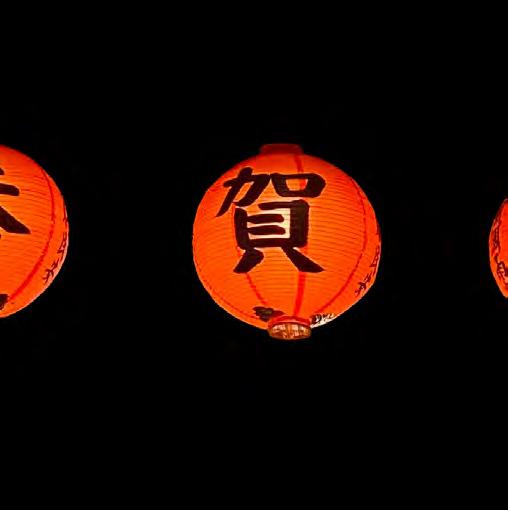
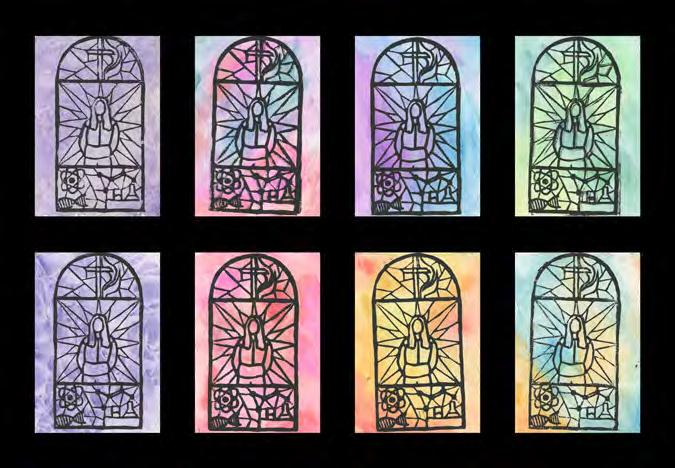
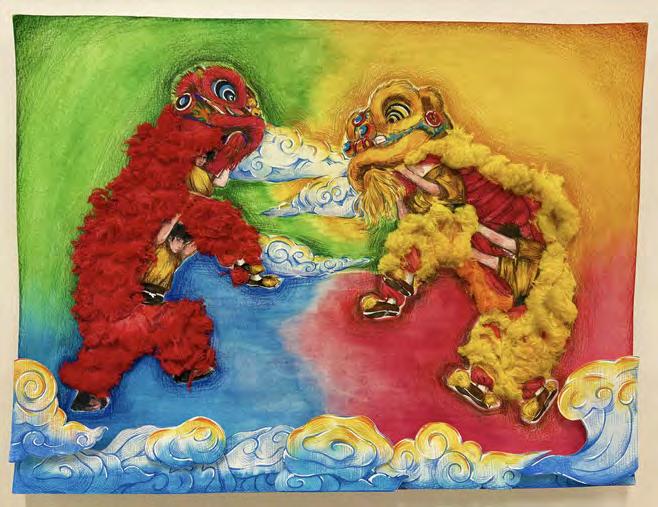
Melodrama is a literary magazine with the intention of showcasing the art, writing and photography of the Ladue High School’s staff and students. Our purpose is to be an outlet for student expression and refect the diversity and creativity of our school community.
Mission Statement Editorial Policy
Melodrama is a literary magazine created as an extracurricular activity by staffers of Ladue Media and student body submissions reviewers at Ladue High School. Melodrama accepts submissions of any writing, art, photo, video or other creative form throughout the school year via Google Forms. Detailed submissions guidelines are provided to the submitters throughout the submission process. Submitters are invited to include additional information regarding their submission. Submissions and notes are reviewed by a student editorial board at monthly meetings and accepted, rejected or deferred based on quality, quantity and similarity of subject matter. Melodrama only accepts submissions from current students and staff of Ladue High School. Melodrama reserves the right to edit writing for grammar errors that are not intentional, stylistic choices, and reserves the right to design the magazine using elements from visual pieces that do not misrepresent art or prevent the unaltered work itself from being featured prominently. Melodrama requests permission from creators before making any image alterations and grammar edits. Melodrama uses Jotform to collect artist signatures. Anonymous pieces are left without a signature but maintain the signature line.
Ladue Horton Watkins High School
1201 S. Warson Road
St. Louis, MO 63124 April 2026 | Volume 7 laduetoday.com (314) 993-6447 ext. 5844 publications01@ladueschools.net Instagram: @ladue.melodrama
School Population: 1593 total 177 staff 1416 students
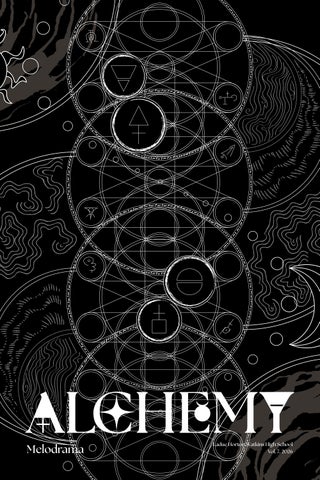
CREDITS: Front and back cover design by Celina Zhou.
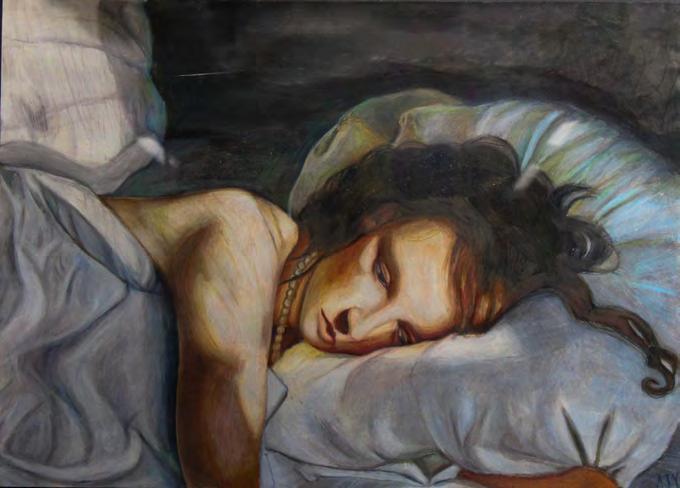
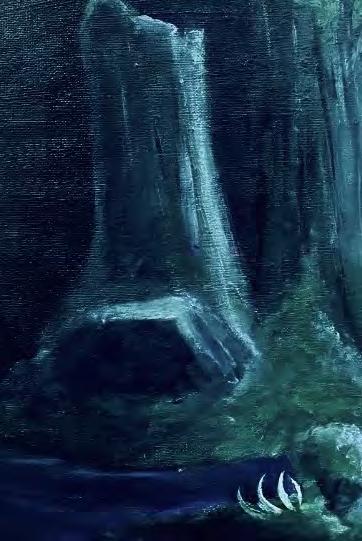
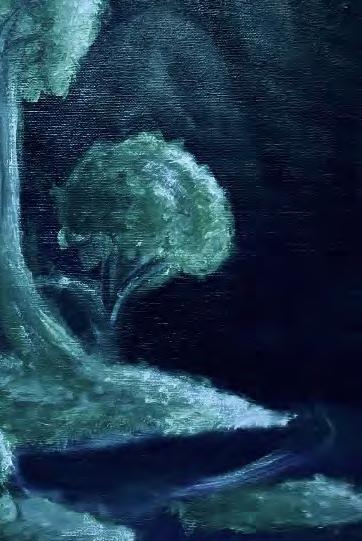
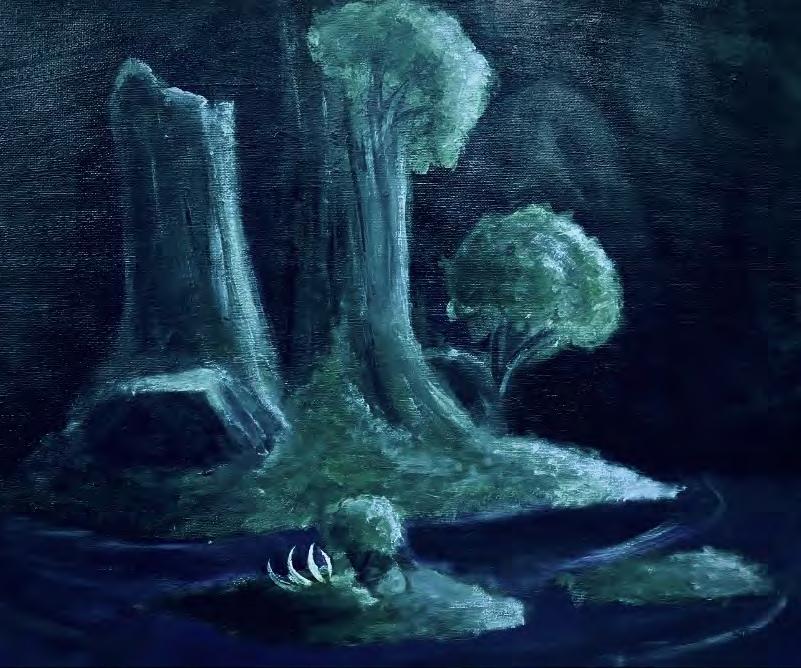
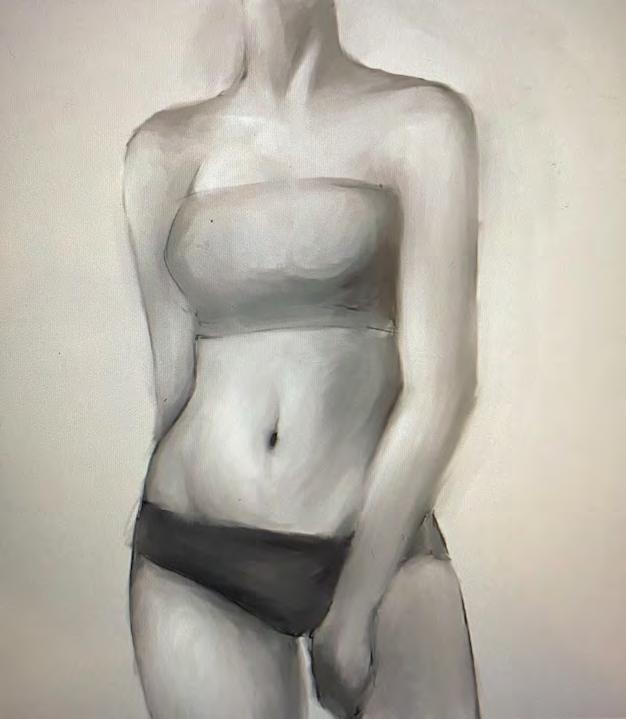
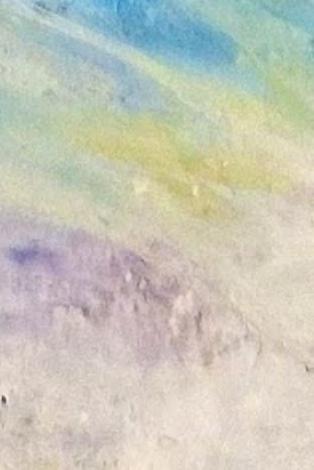
Morning
AUDREY YOUNG,
acrylic
Dear Reader,
Welcome to the seventh volume of Melodrama! Founded four years ago by Ladue School District alumni Cassie Beisheim (2020) and Anna Liner (2020), Melodrama has evolved from an arts-and-culture magazine to a bona fde literary arts magazine, shining a spotlight on the creative efforts of Ladue High School’s students and staff. At the helm of this metamorphosis was Rhea Patney (2022) and Oviya Srihari (2022), who believed in the importance of artistic expression for discovering individual identity. Melodrama has transformed into an anthology of art, writing, photography and multimedia. Through the efforts of Olivia Hu (2023), Mimi Zhou (2024), Annie Zhao (2024), Arti Jain (2025) and Emily Liu (2025), Melodrama has remained steadfast in its goal to provide an outlet for the creative work of our student body.
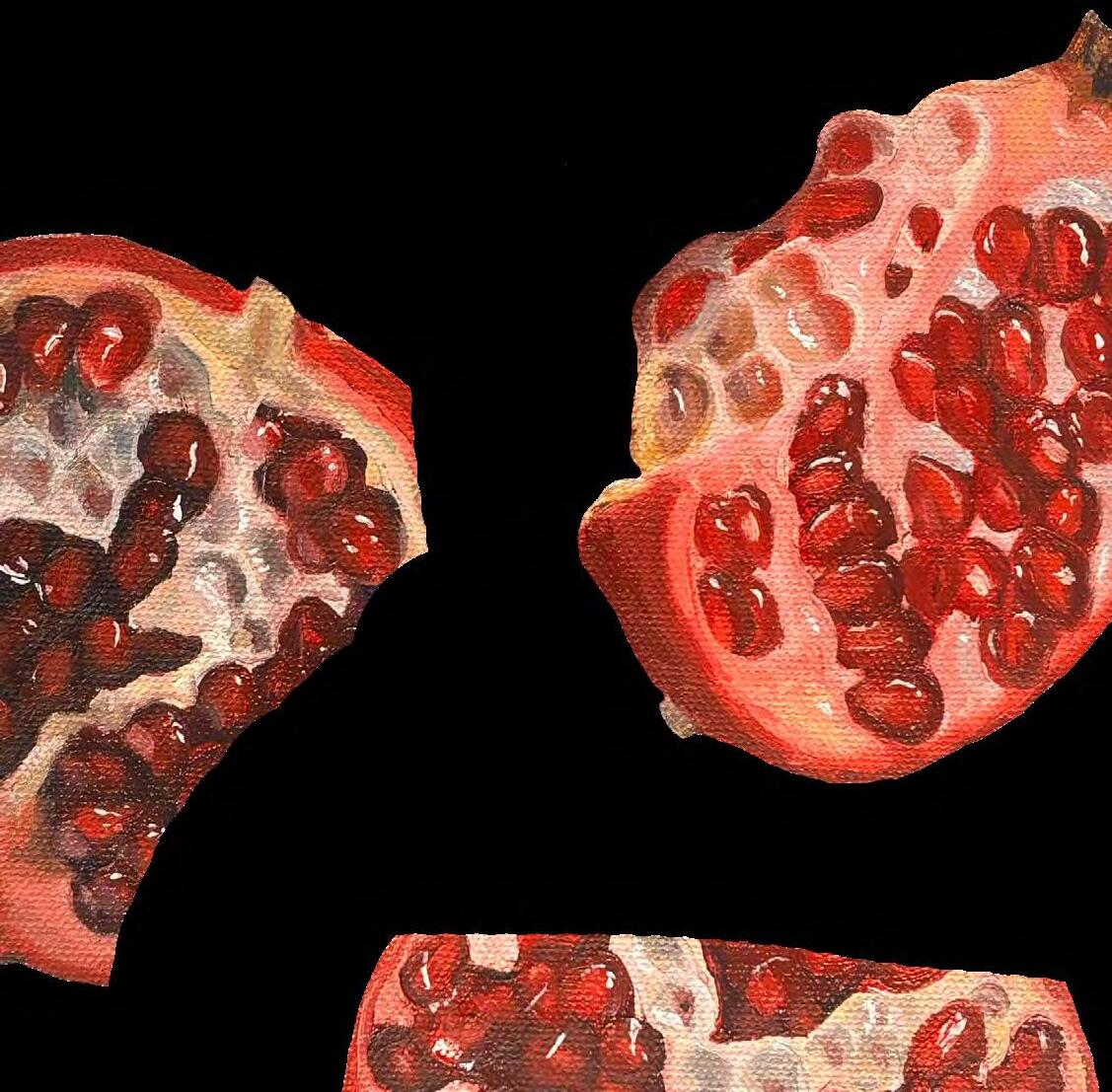
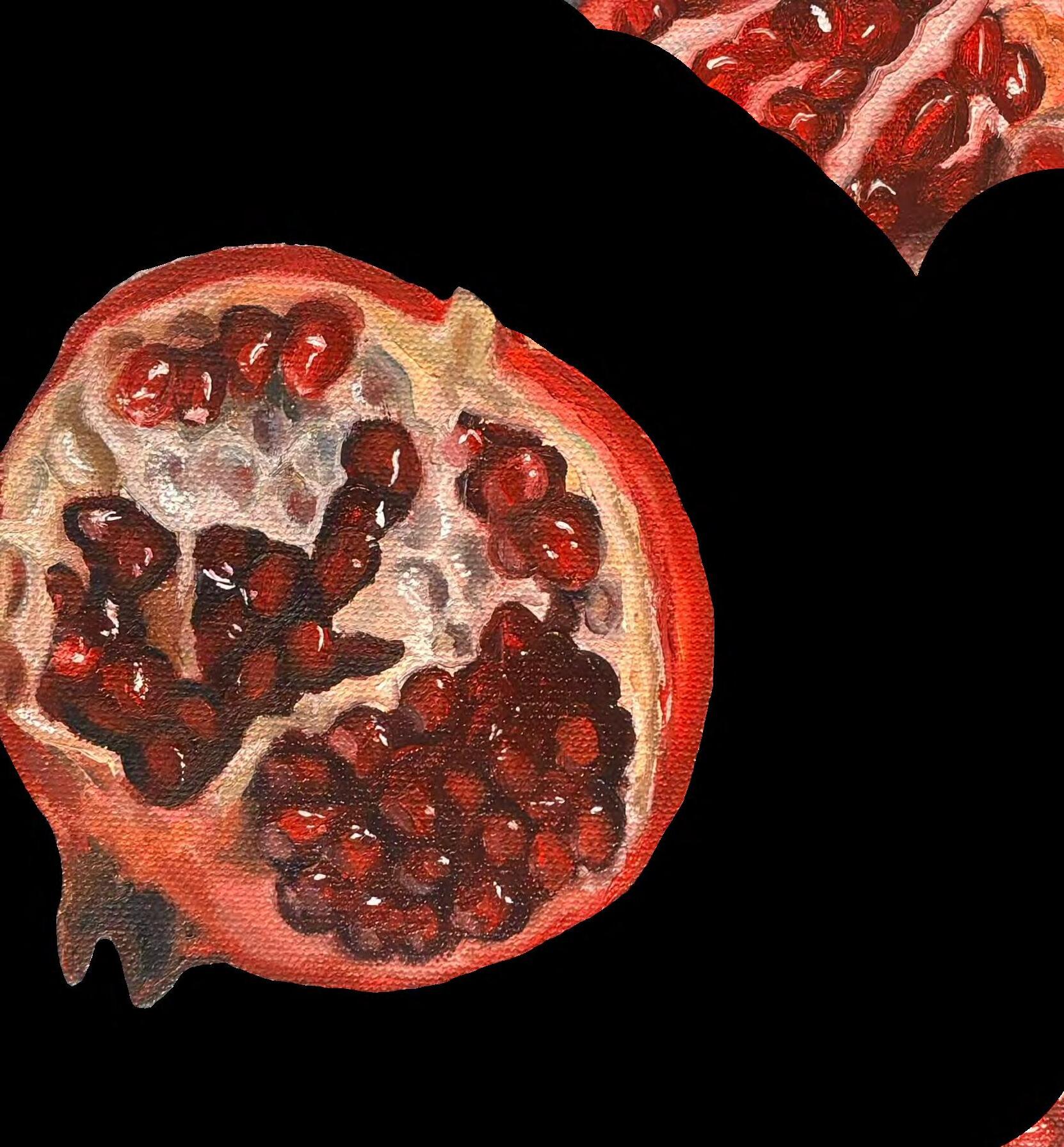
This year’s theme is alchemy: the practice of change and transformation in the pursuit of nobility, with each piece asking the reader not only to consider its own beauty but also how it exists as part of the whole. Collages of submissions delineate the four stages of the Magnum Opus — decay, purifcation, dawning and gold. First, you’ll perceive decay, the traditional burning
and decomposition that begins rebirth, learning the shape, sight and sound of the material. Next, you’ll undergo purifcation, the washing away of impurities and the bringing of clarity into the work you see. Then, dawning: the rise of warmth as you turn towards the sun. Finally, you’ll experience gold — the culmination of the work and the synthesis of self. We invite you to see gold, the Magnum Opus, as not just this fnal stage, but as the magazine itself: the culmination of all the work, creativity and passion that have contributed to Melodrama.
To close, we have several thank you’s. First, thank you to our staff — editors, submission reviewers and designers — for helping us advance the magazine and sharing this passion for Melodrama. It was a joy to watch the magazine take shape with you. Secondly, thank you to our advisers Sarah Kirksey and Abigail Eisenberg for their guidance, patience and time. Of course, none of this would’ve been possible without our submitters. We loved reviewing every single piece submitted; we’re so incredibly lucky to be surrounded by such talented and creative students. Last but defnitely not least, thank you, dear reader. We hope you enjoy the seventh volume of Melodrama.
MAYA MATHEW, CELINA ZHOU, MEDHA CHODE, editor in chief junior editor in chief
PURIFICATION
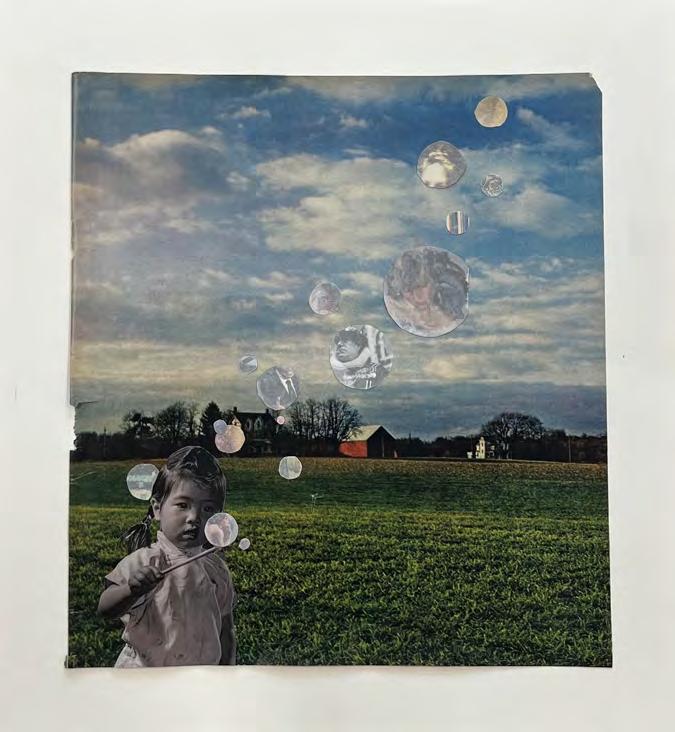
Bubbles for the First Time
Josephine Lock Acrylic 26
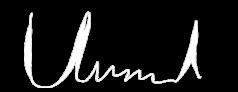
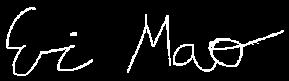
Urmil Patel & Eric Mao Poetry
27
Anonymous
Cricket
Fiona Van Allen
The White Man’s Burden
Anonymous
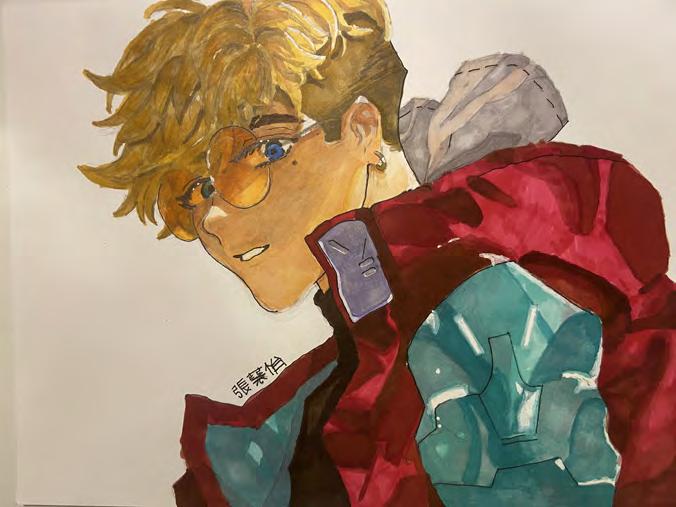
Trigun-Vash Saverem/Nicholas D. Wolf
Niko Zi-Yi Dalton
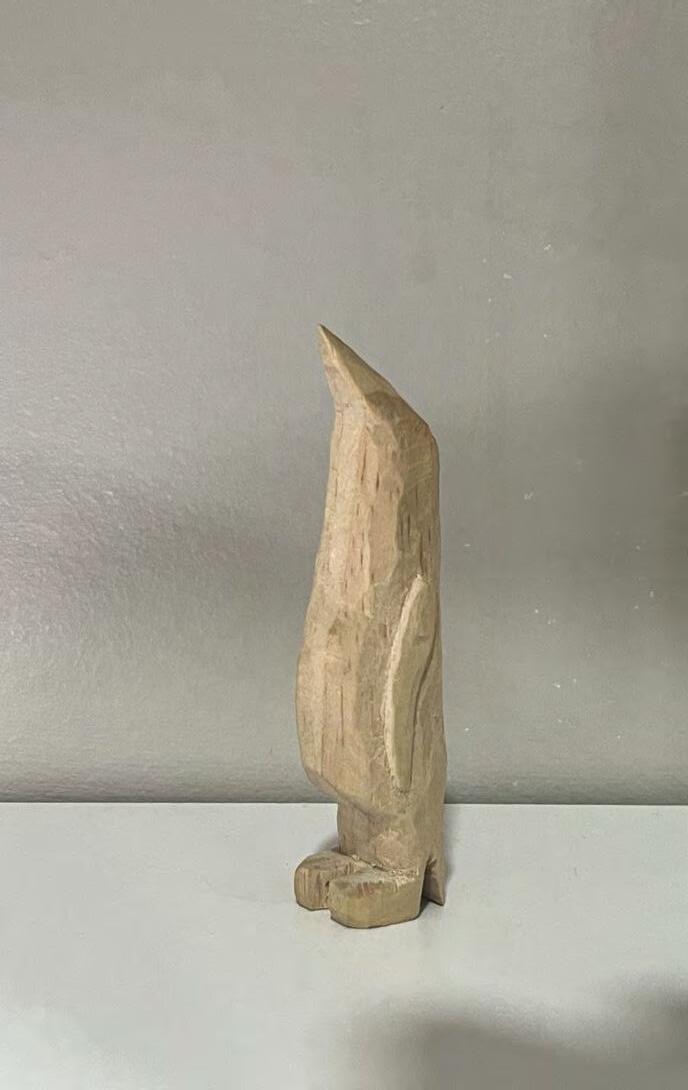
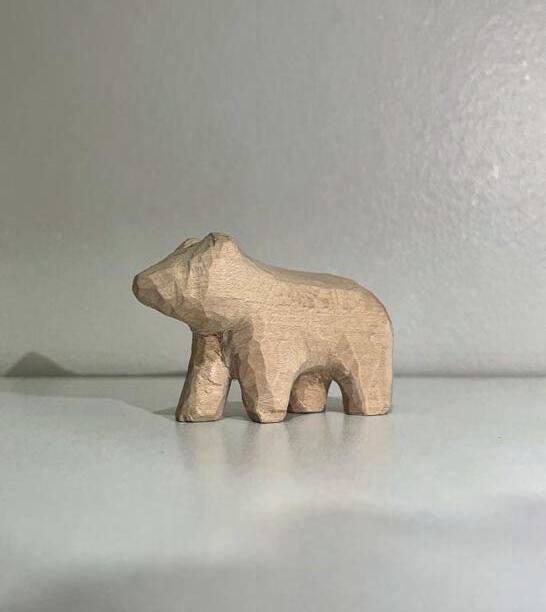
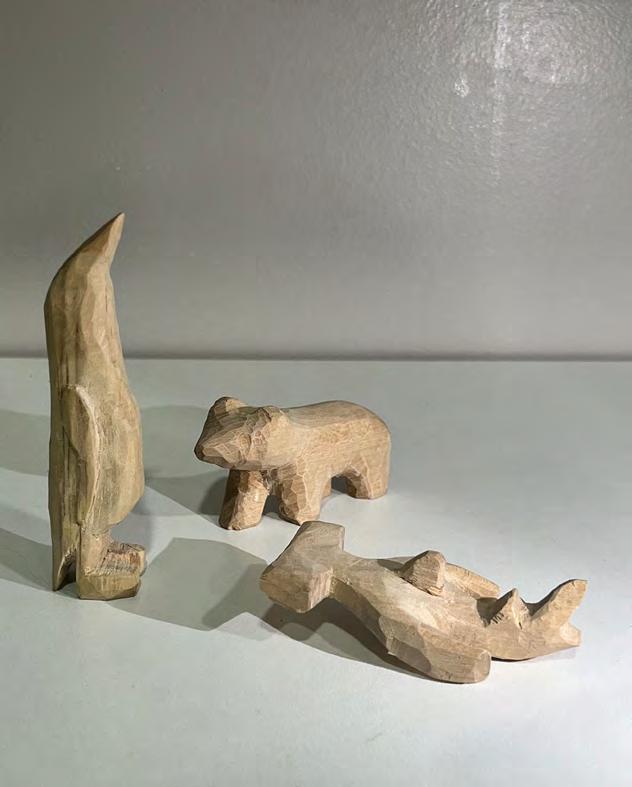
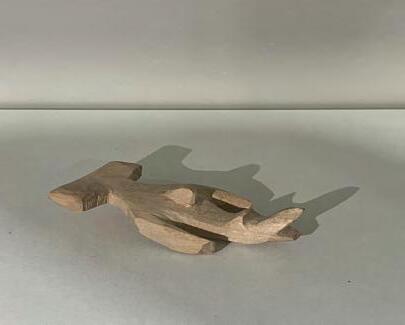
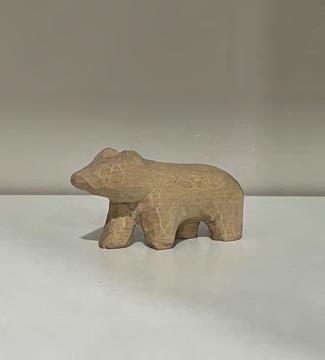
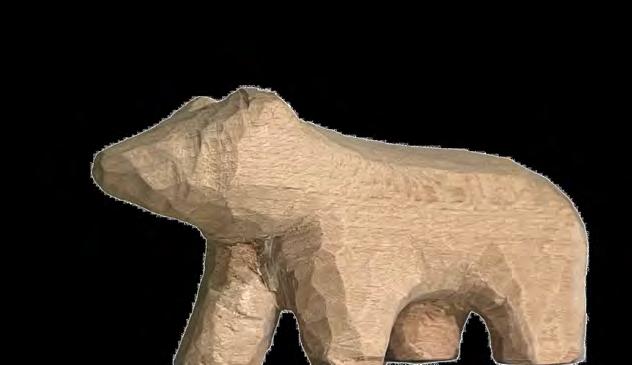
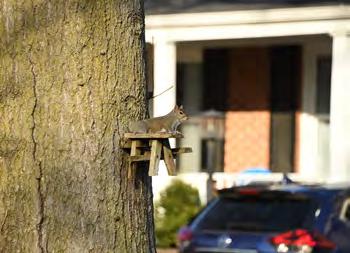
Wood Carving Animals
Seph Zhu
Blurred
Josh Devine
Existing: To See, To Live
Teo Lee
Socratic Seminar
Elsa Flores-Tamayo
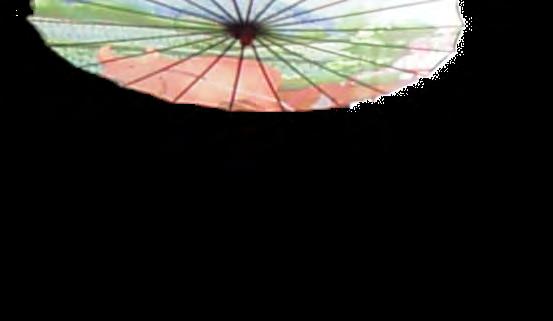
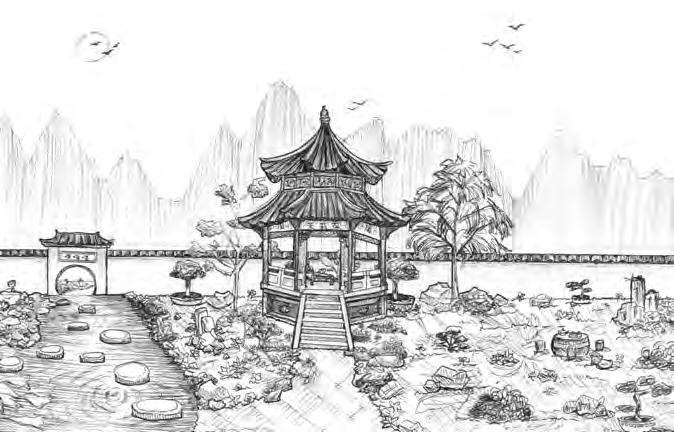
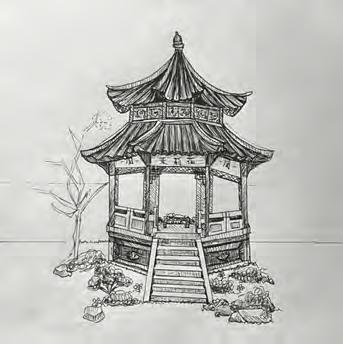
Tranquil Pavilion
Lily Zhou
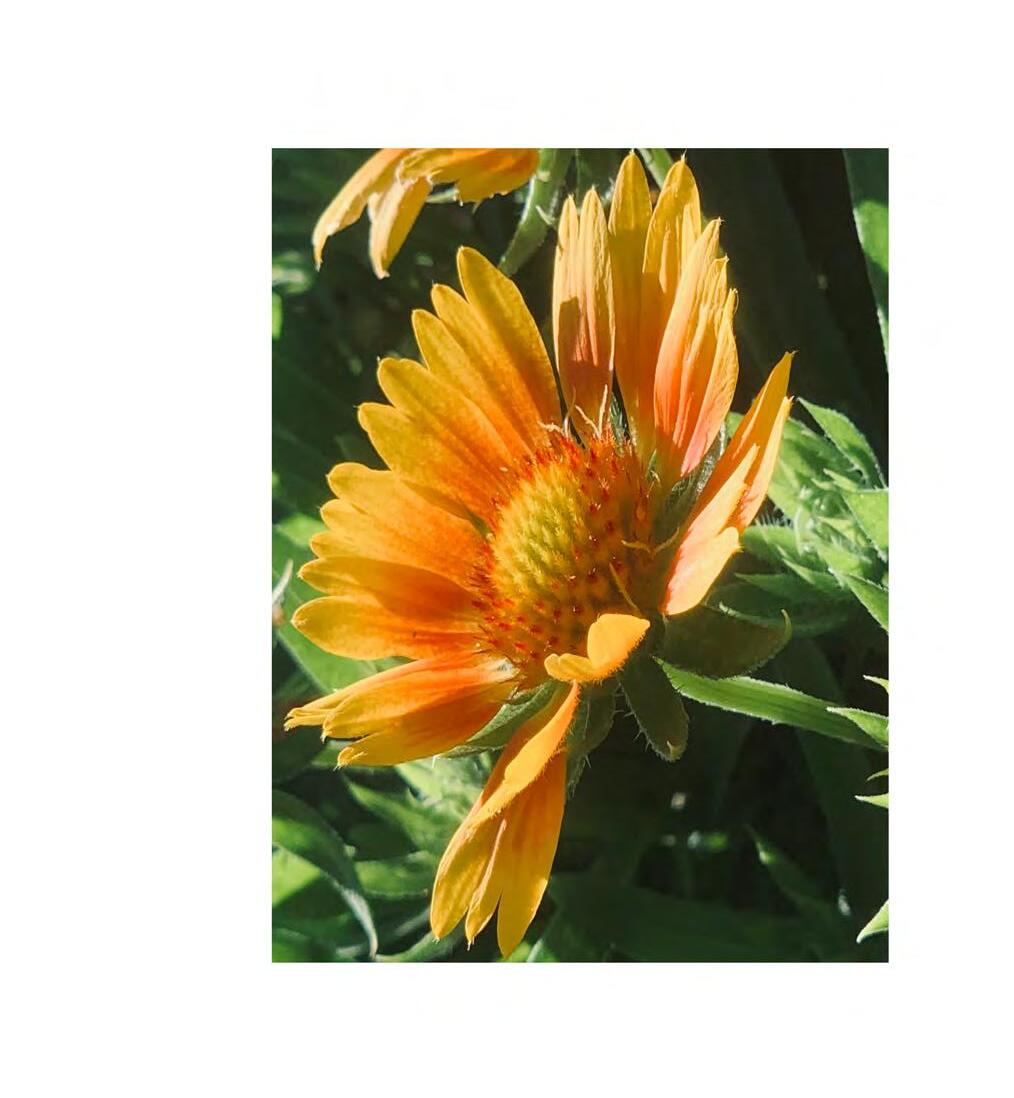
DAWNING
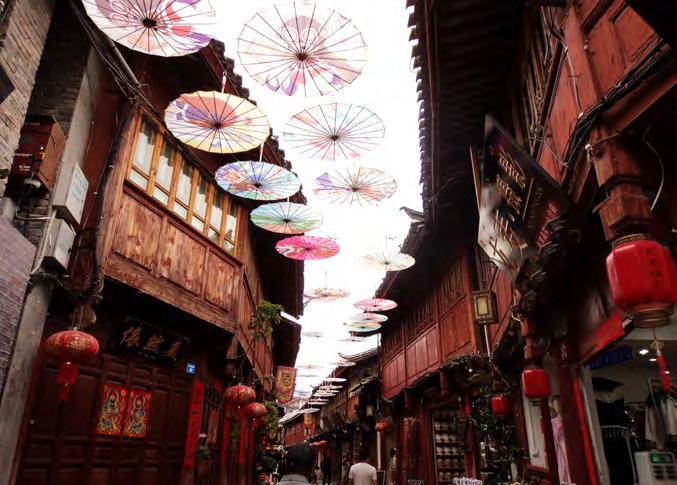
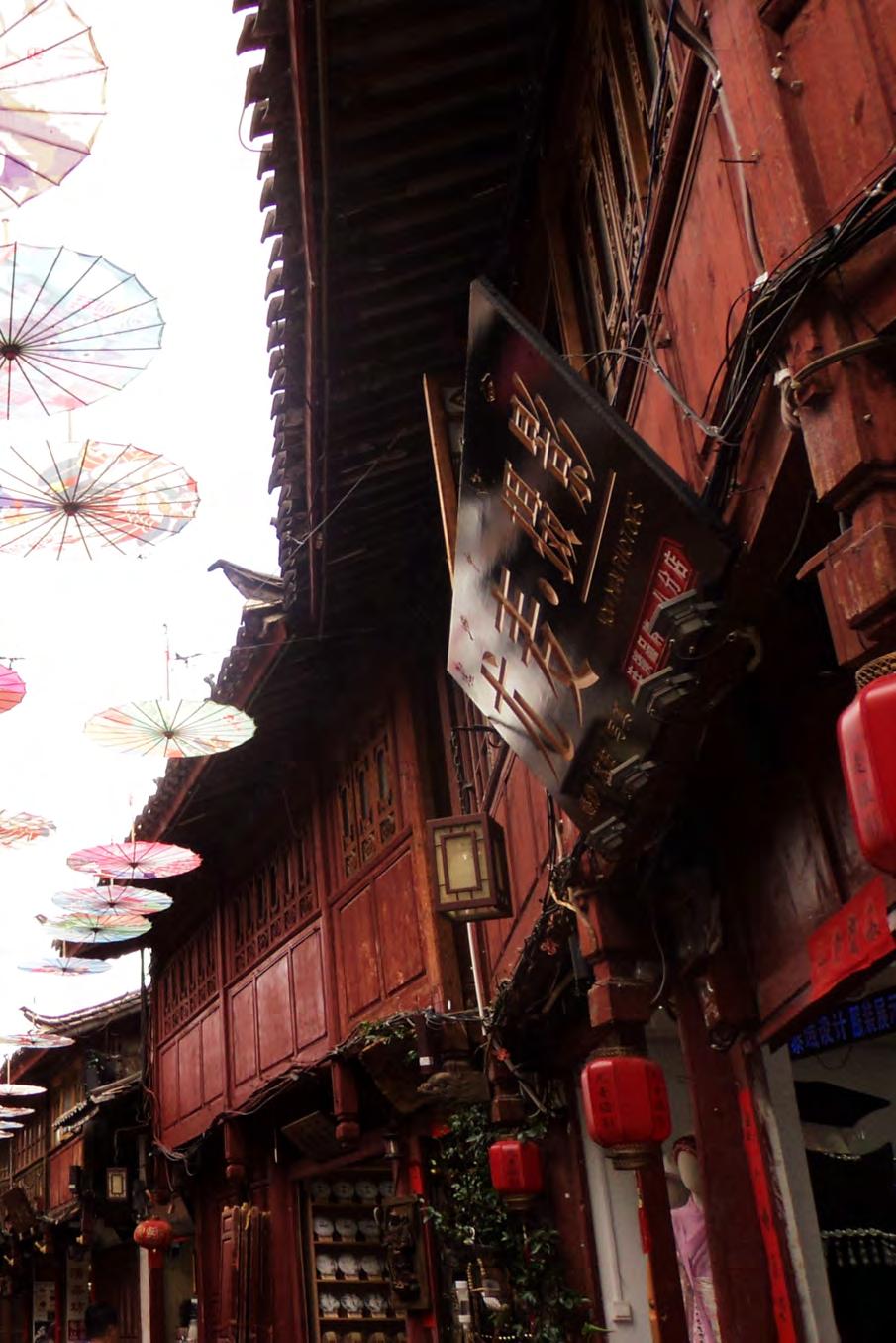
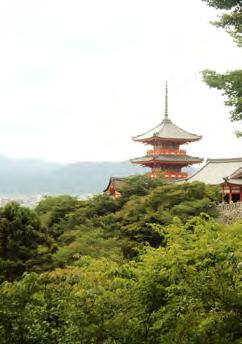
China
Tracy Wu
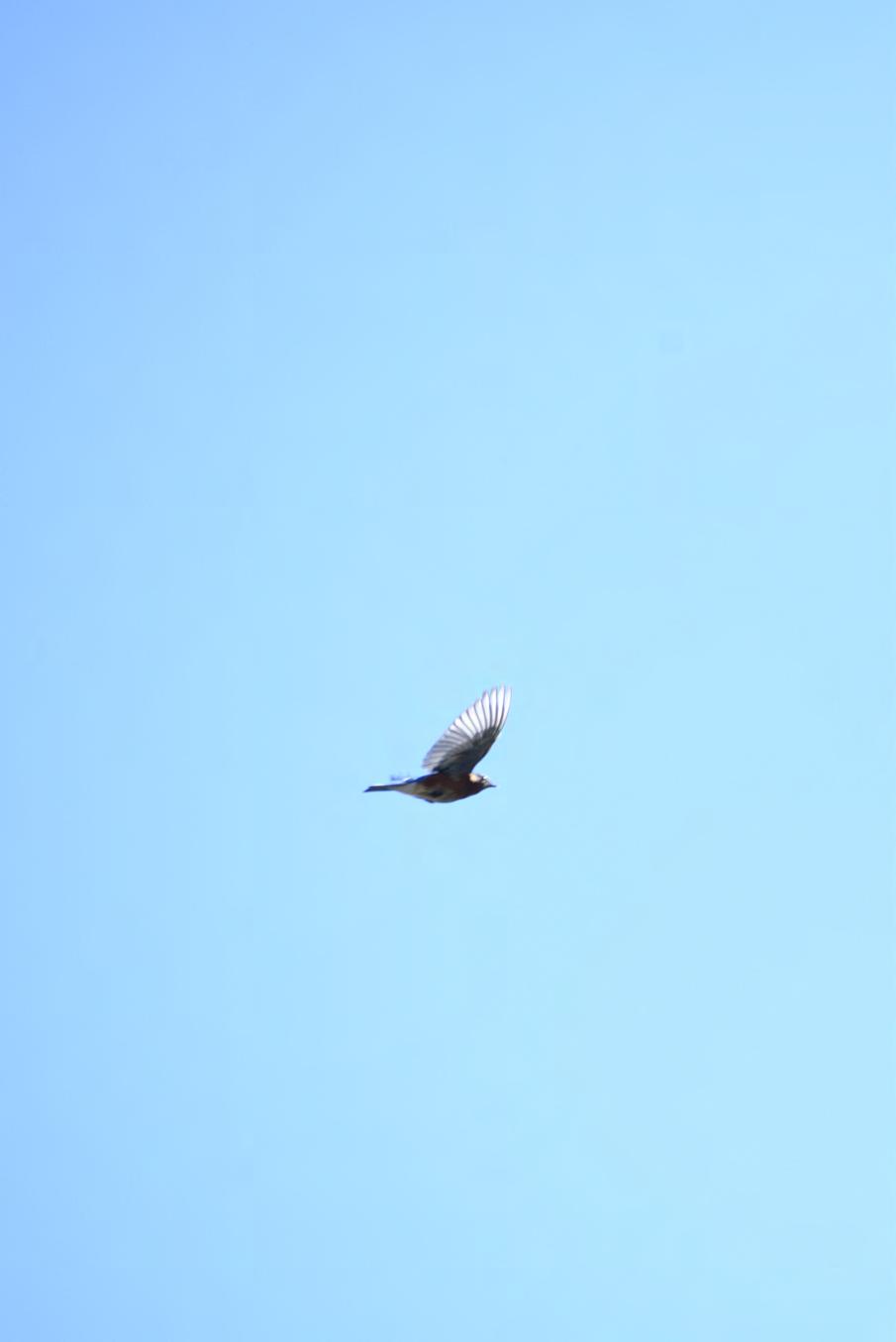
Hello, the Sky
Alex Wang
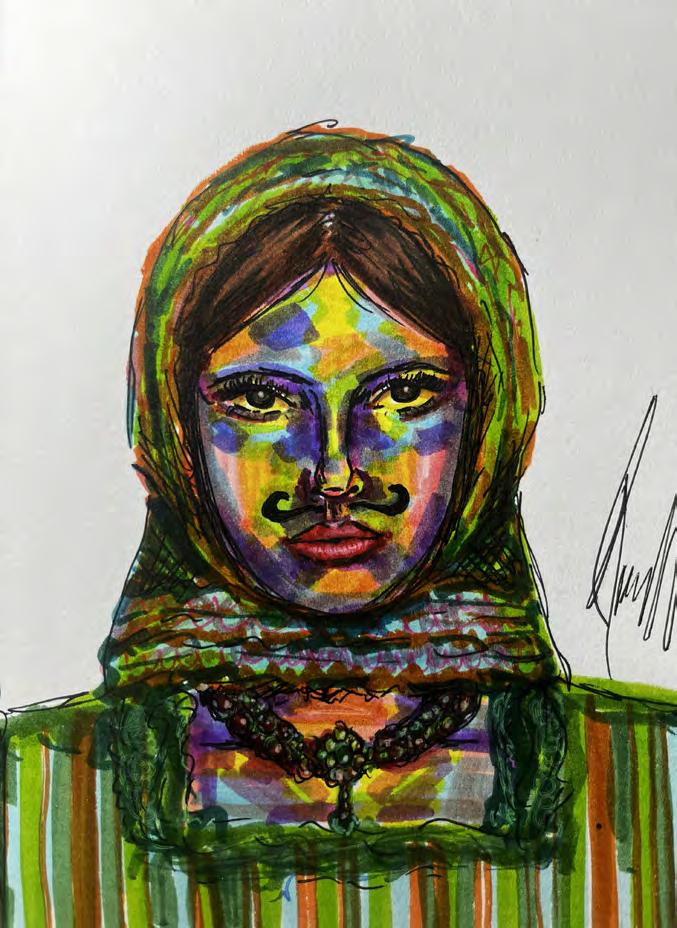
Alien
Tracy Wu
Scene Where The Cowboy Watches
The Sun Set Over The Horizon
Mia Lalov
To The Isle
Josh Devine
Sunrise
Niko Zi-Yi Dalton
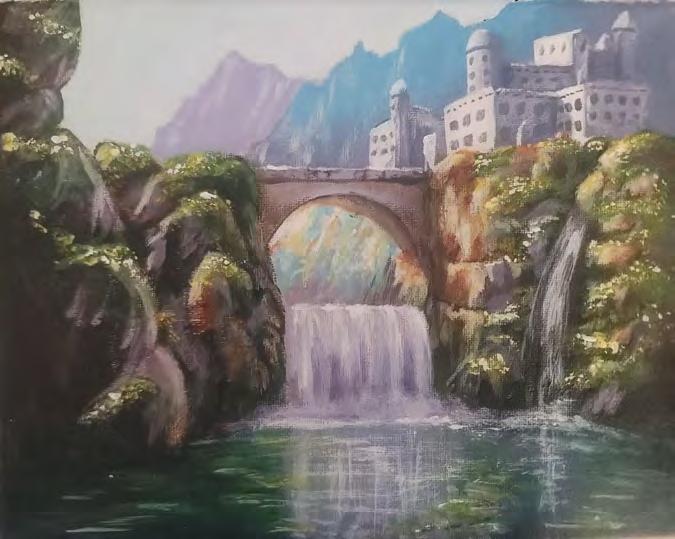
The Sacred Pool
acryllic
Wolves
ANONYMOUS, poetry
Snap and snarl up at the silent night sky
Howls of mourning that light the day
The shadows hide your gray dark fur
As you hunt and chase the rats away
Tireless efforts, survival but barely
You drink up the full moon light
There’s little left but threadbare fate
What is there left to do?
The rats, they swarm at your feet
The stench of festering wound
Your fnal goodbye of fesh and blood
Something of desperation
The rats, they swarm, they scavenge
Unruly without your presence
Your slow decline gave rise to them
And their ravenous mouths and attention
You, who fell victim of persecution based on
The teeth and claws you were always born with Hunter becomes the hunted, your story changed
Because you dared to be a sharp hunter wolf
The fies, they gather, they ficker and buzz
A symphony of sadness in your place
You knew what it meant to be who you are
And yet the bullet wound hurt nonetheless
Big Sisters
ANONYMOUS,
Twist and turns may hurt me, my feelings siding, dividing, hiding, Trying to fnd me.
To push and pull Me back, Putting and placing my pieces back together. Holding, folding everything
Taking a toll on me, rolling me up, I’m suffocating.
I feel like I’m trapped in a tiny little box with no space, no air, no way out.
I feel if i move and try to turn everythings Going to come down on me
I feel like im trapped like what ever i do im wrong
Moving the wrong way, speaking, listening, looking.
I feel that if i do something i just want to do I’m doing it wrong, I’m a bad person. And I would be the bad guy a thousand times again before I ever let my siblings see the pain I go through. The nights i stay up, the tears i shed, the pain i feel they will never see me feel Because big sisters don’t cry. Big sisters don’t show the the pain, the misery we go through
We just show them the side that we will always Be there for them.
Not the side where you feel the pain
The side where you wanna be alone just The happy, energetic side that shows We are tough.
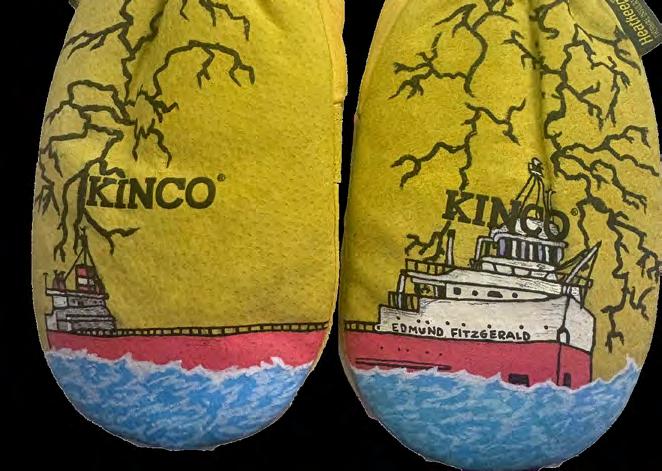
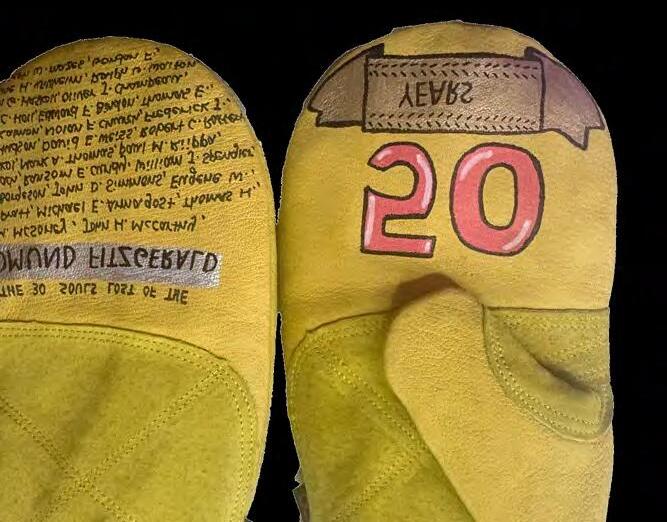
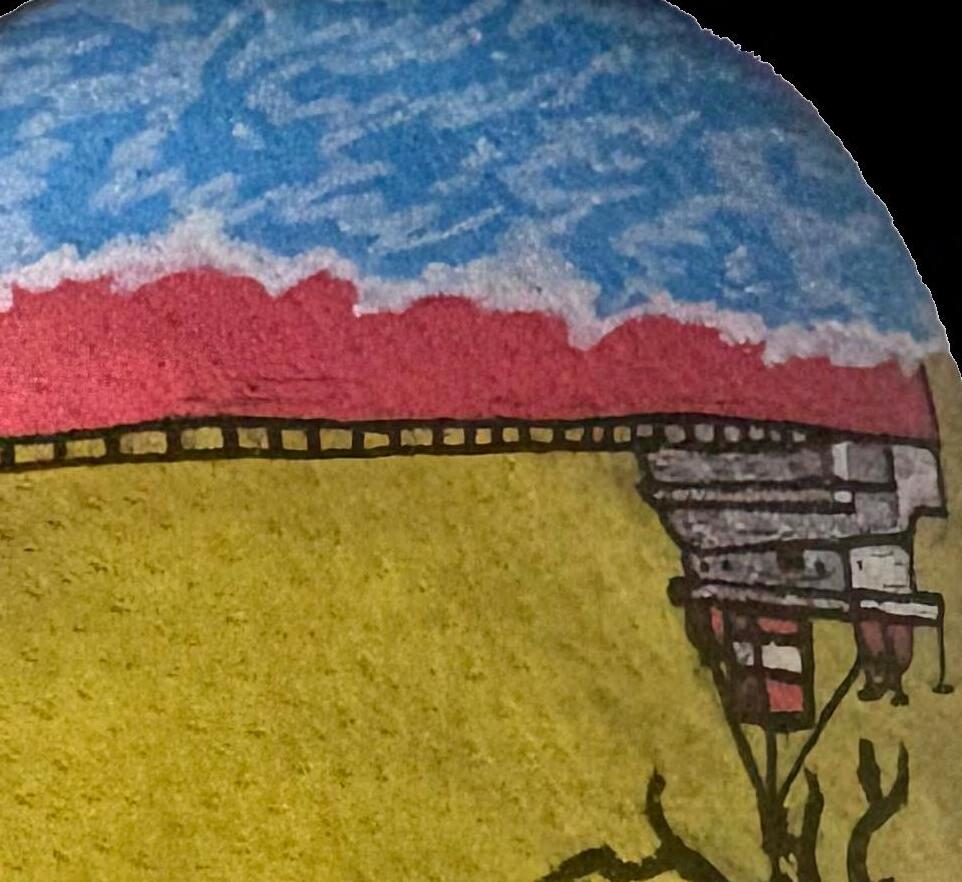
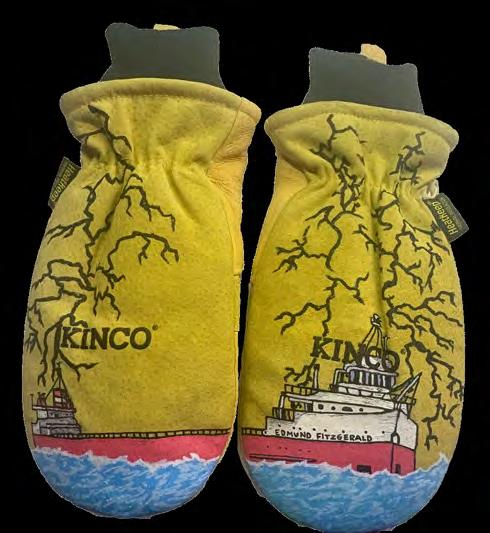
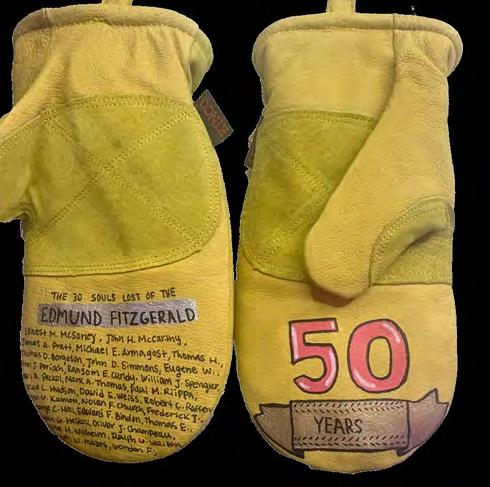
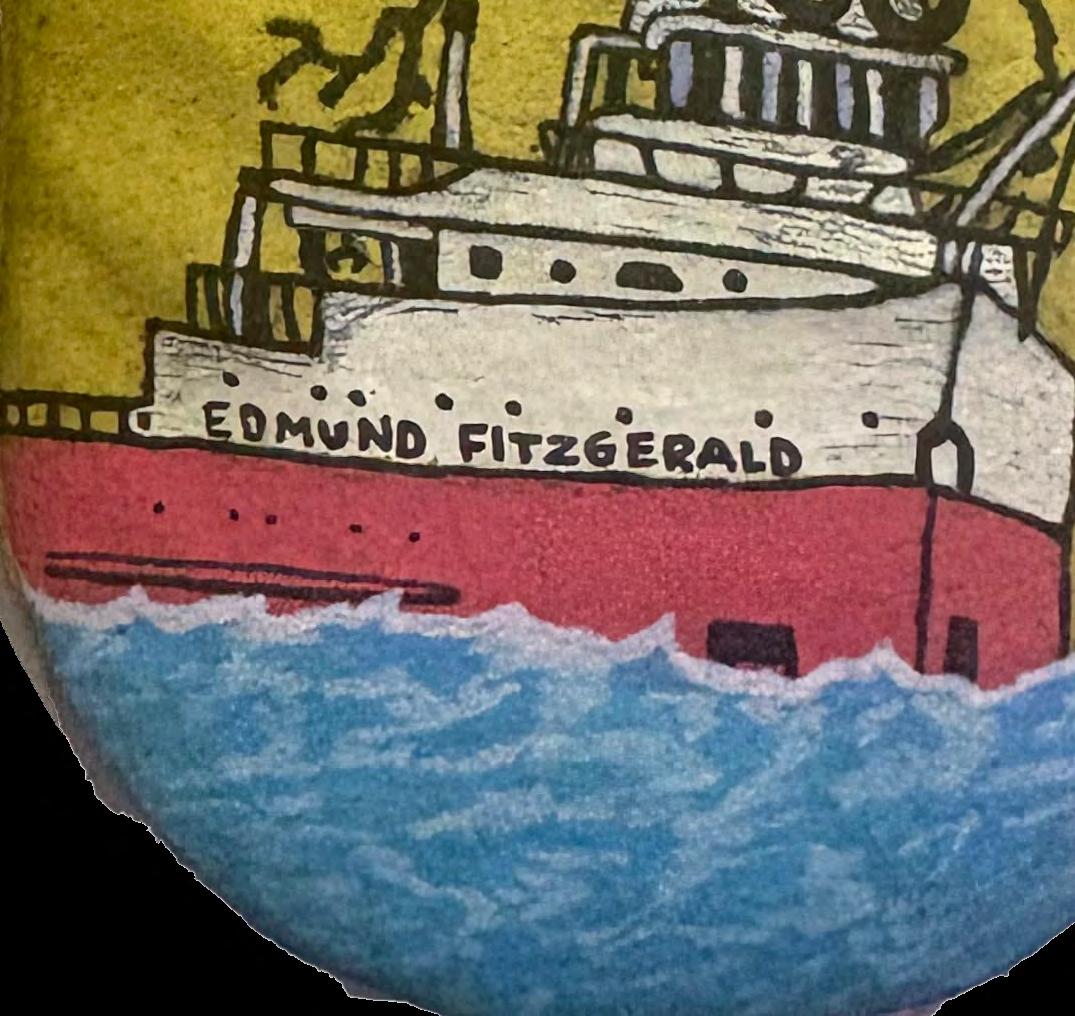
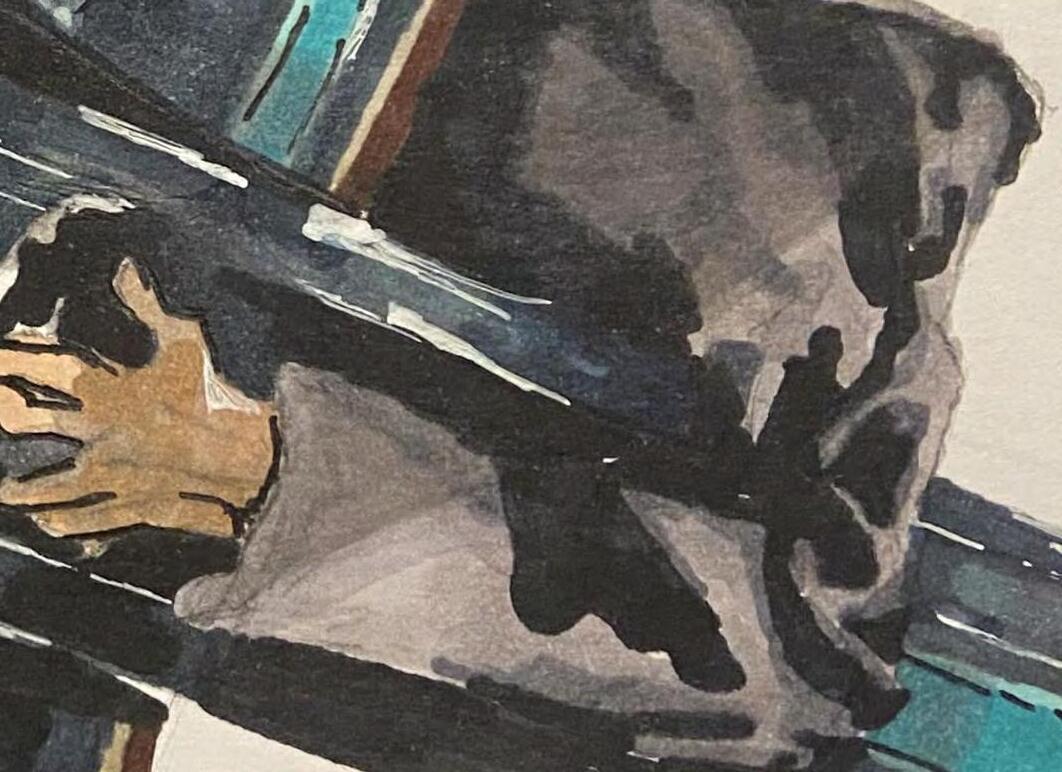
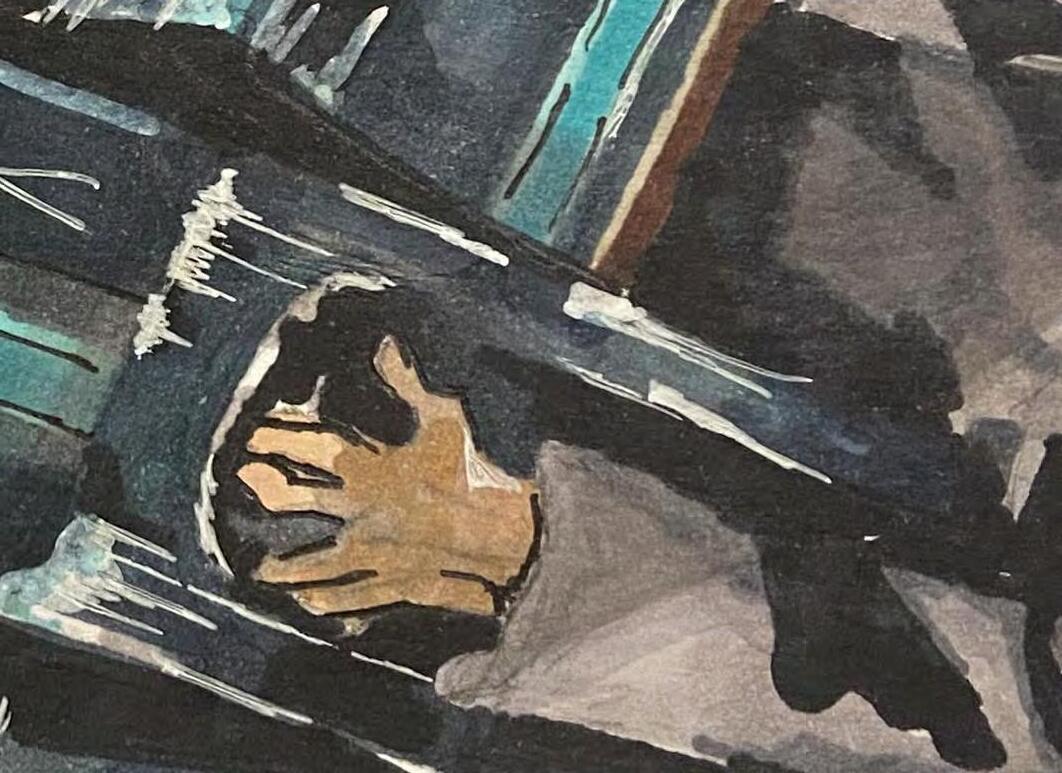
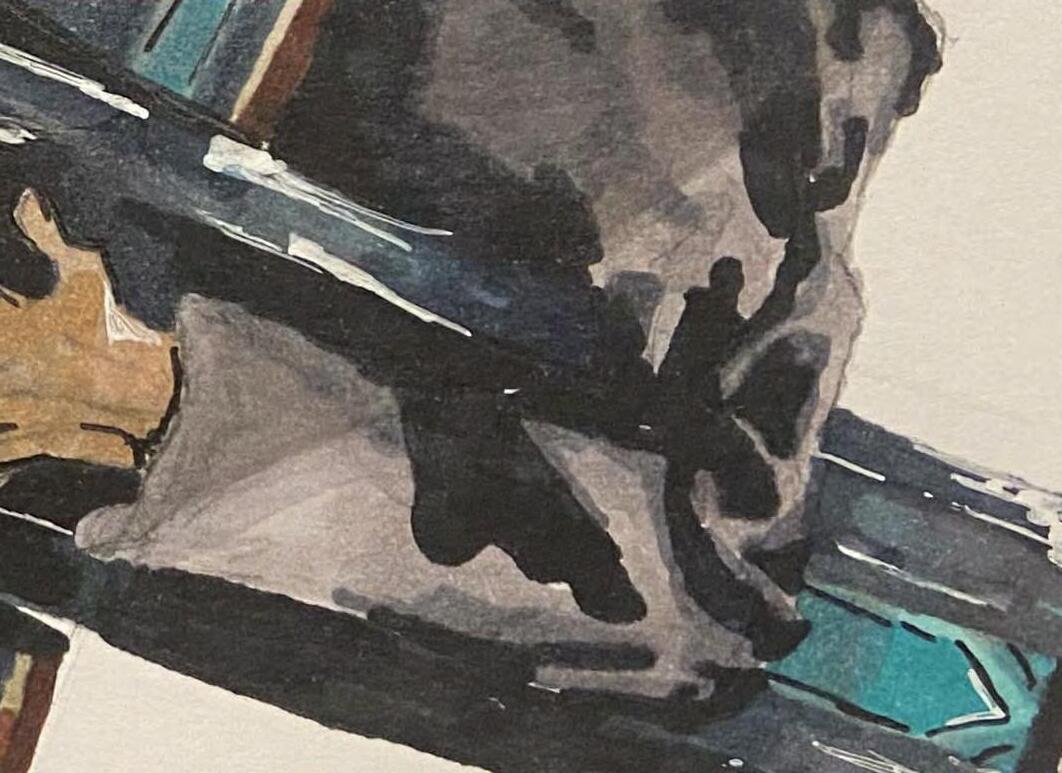
Edmund Fitzgerald
EMILY PRITCHARD, paint marker and Kinco gloves
In the Making
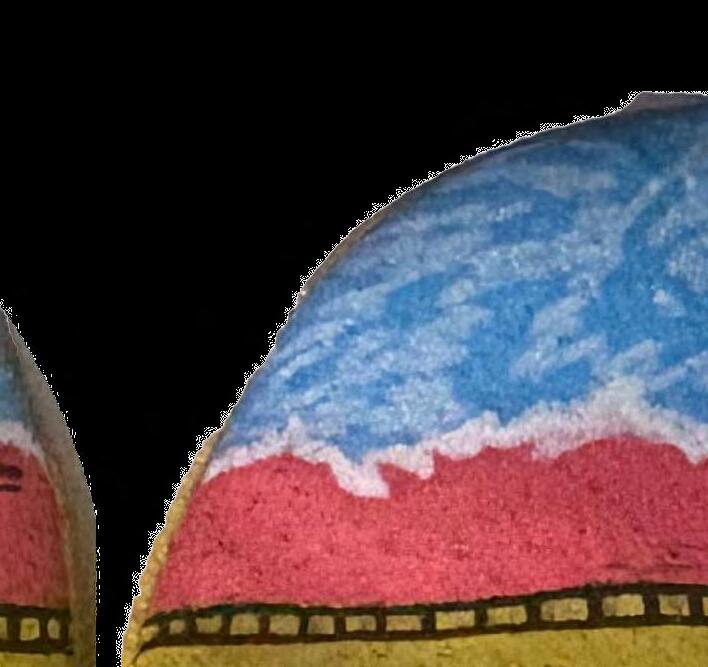
This piece was inspired by the Edmund Fitzgerald, an American Great Lakes freighter which sank in 1975, killing 30 people. The names of all 30 people are listed on one of the gloves, and the ship and water are depicted on the other.
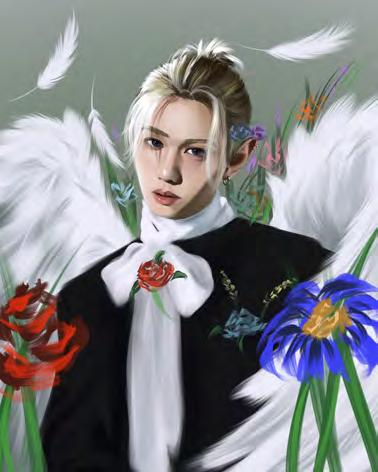
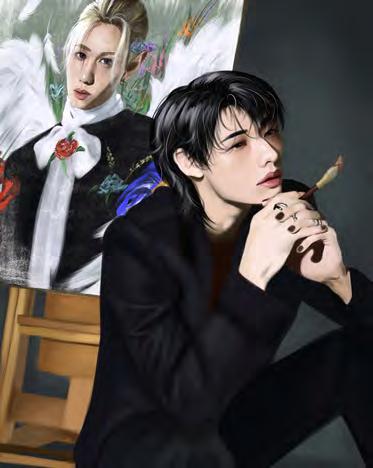
The Muse
The Artist
VELVET MAJUMDAR, digital
Plastic Life
TARIQ SPENCER, poetry Scan For the full poem
Sometimes I look out at the world
And I see that the sky is too blue
The trees are too green
The summer air is just a bit too fresh
It all looks like a movie
Sometimes I look out at the world
And I see that the leaves fall too effortlessly
That the orchards and the patches Aren’t too crowed
But flled wholesomely
The autumn breeze is not as bitter as it should be
It all looks like a movie
Sometimes I look out at the world
And I see that the snow is too white
The Christmas tree has just the right amount of ornaments
Its cold, but not cold enough
The scarves wrap perfectly round people’s necks
The apple cider on New Year’s
Glows like candlelight
It all looks like a movie
Sometimes I look out at the world
And I see that spring came too early
The cherry blossoms are fush
The morning dew sparkles like diamonds
The wind seems too gentle
Nature is too quiet
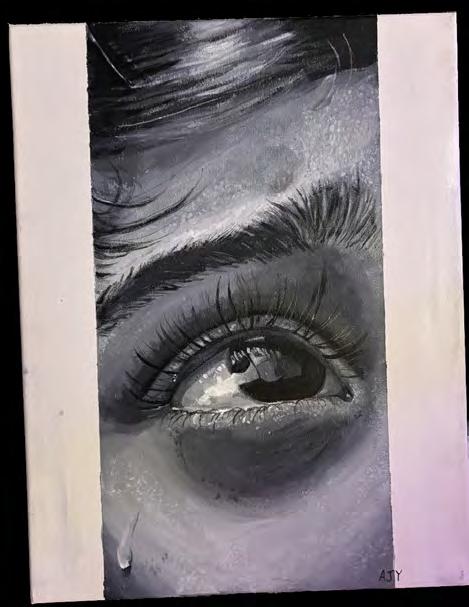
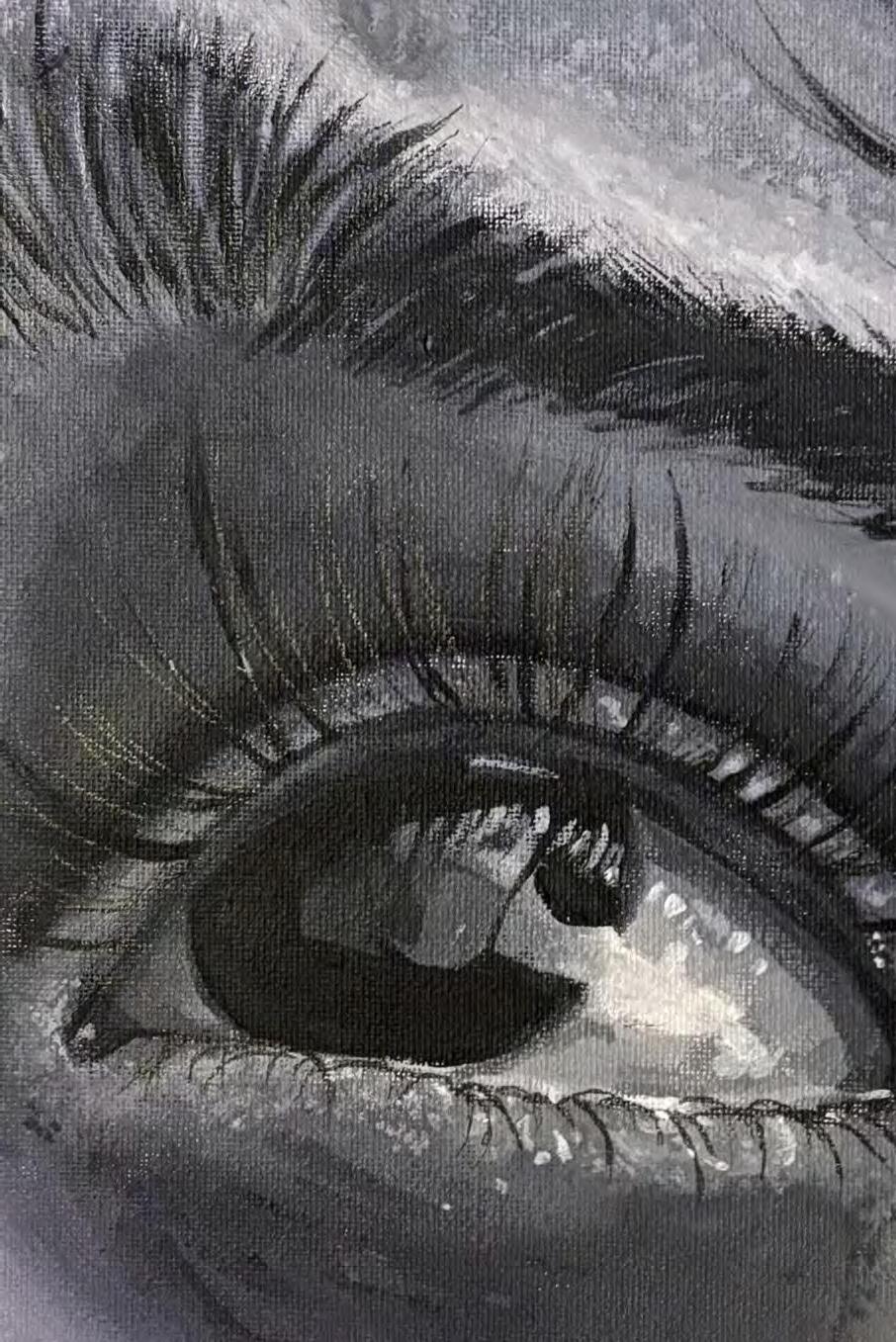
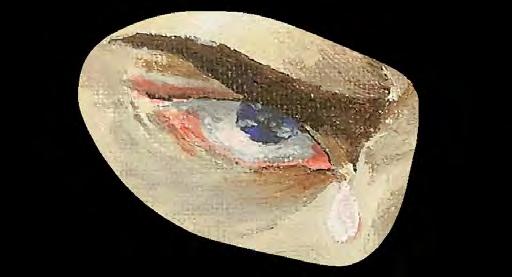
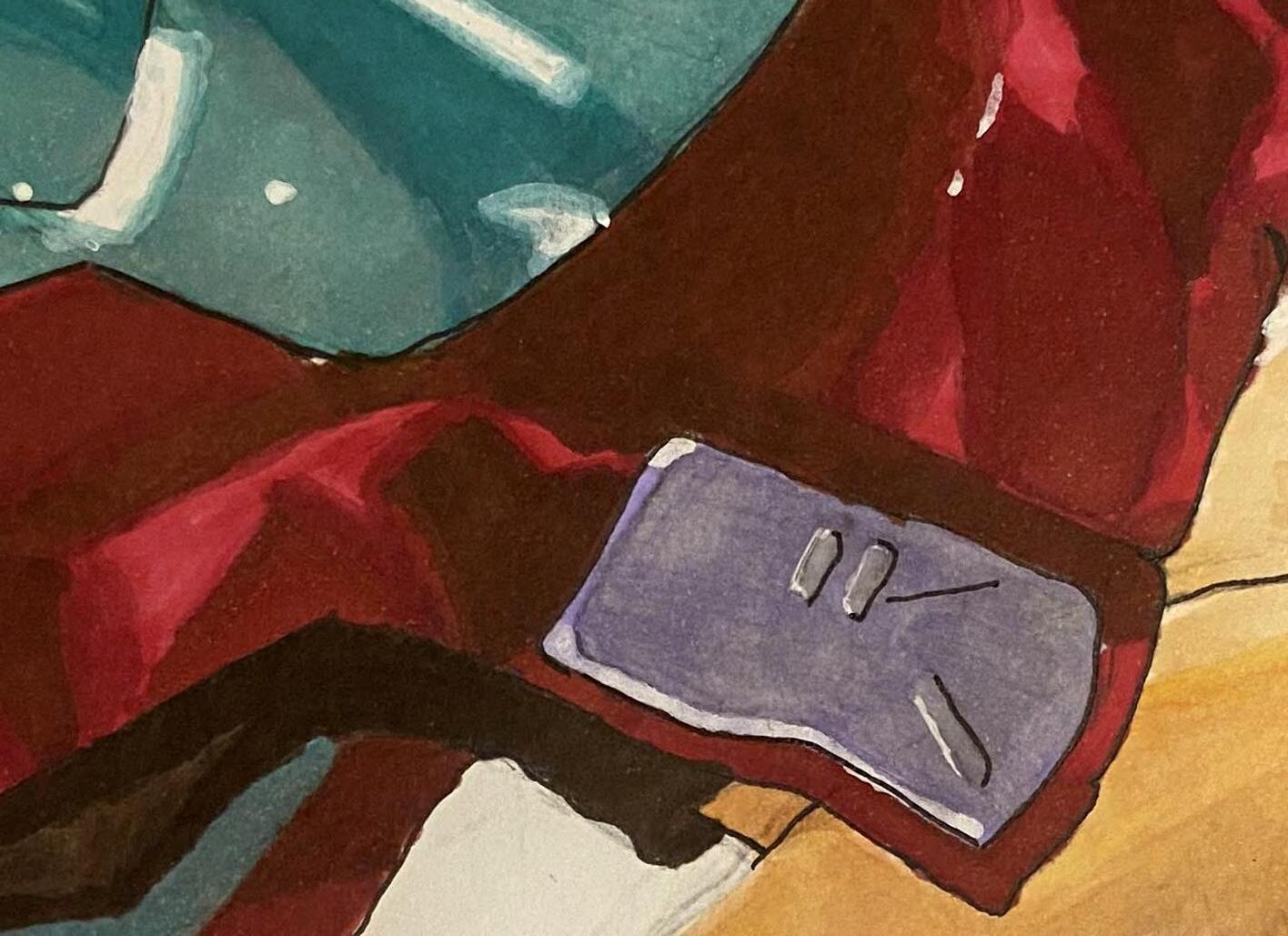
AUDREY YOUNG, acrylic
Interview with Audrey Young
Q: What inspired this piece?
A: I wanted to try to capture emotion using only one part of the face. So I chose an eye, and I wanted to challenge myself to try to make the subject seem scared or sad, whatever you think it looks like, just using one part of the face.
Q: What emotions do you hope your piece evokes in people?
A: I wanted it to be left up into interpretation. Fear, maybe, and sadness, or I guess that’s kind of how I view it. But I defnitely think it’s also up to interpretation.
One of Many
ISAAC TYNDALL, poetry
How long has it been?
Weeks, months, years?
Only days.
We see time pass in the the faces of the dying
An everlasting nightmare
Here I am alone
Helpless in the dark
There are hundreds of thousands
Words fail me
Half a loaf of bread a day
Stream of blood pouring out
Hundreds of thousands
Watching me
I am Only one Alone
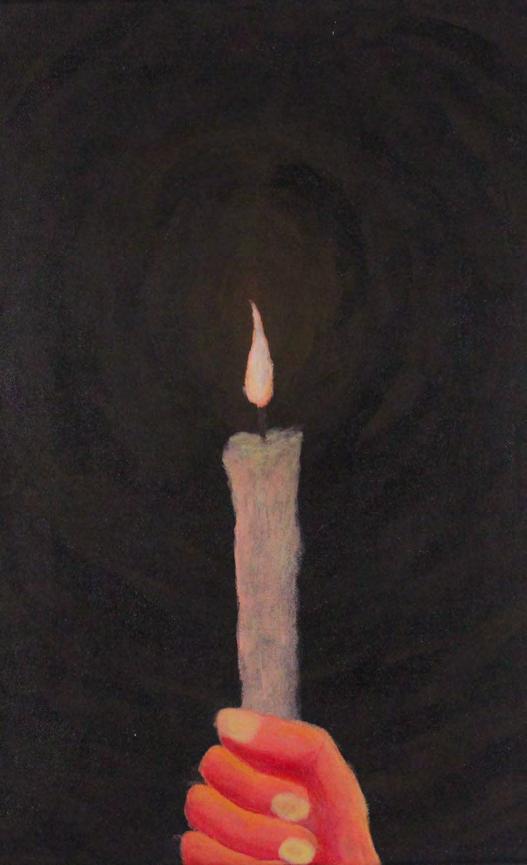
Silent Night, Candle Light
acrylic HENRY BRENNEMAN,
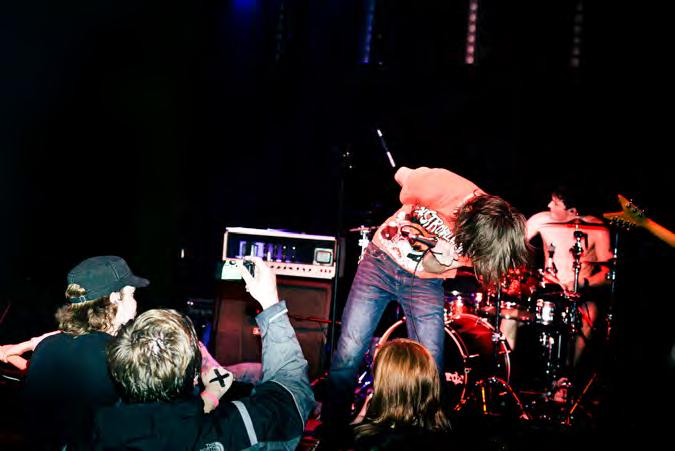
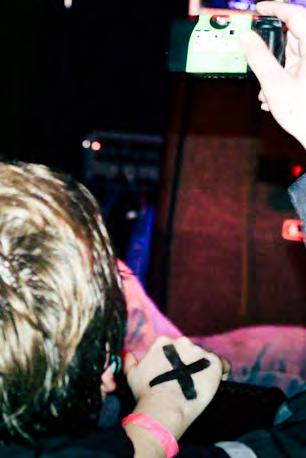
2/15 at Atomic STL
SILAS BALTZELL, photography
In the Making
This is the EP release show for my band “septumswordfight.” We are a local St.Louis metal/screamo band. We have five members and I’m the only Ladue student a part of the group.
My Living Room
ANONYMOUS, poetry
There is a man in my living room
Sitting on my comfest chair
A contemptuous smile on his face
Puffng on a cigar that flls my room with thick smoke
He is going to make my chair smell like smoke
I don’t want my chair to smell like smoke
But I can’t move him
He won’t let me
There is a young woman in my living room
She wears an apron and has a plate in her hand
The plate is empty
She breathes in the smoke and holds in her cough
Because she can’t cough
Even though the smoke hurts her
I would like to move her so she can breathe fresh air
But He won’t let me move her
There is a Black man in my living room
He is looking at me
He is not supposed to be here
He was brought to my living room against his will
I would like let him leave
But He won’t let me
Now I am in the living room
Because they said we should go back there
The living room was good they said
They say so many things
But now I am stuck in this living room
And I would like to get out
But He won’t let me
that which has gone
ANONYMOUS, fiction
The path from coming into the world to dying is as straight as an arrow fies; that is to say, not very.
Death is—contrary to popular belief—not kind. It is not unkind either, because non-existence merely is.
Trillions upon trillions of things fall into its grasp every second. Concepts, memories, thoughts, beings, loves… well, the list could go on until words die too. Death holds all of these things, dividing up each second into trillions upon trillions of tiny sections of time where barely an atom moves, and it holds the soul of that moment.
This son has a tragic death by most standards of Earth. His is a tale of a failing body, hostile to the soul it houses. The words mostly few over his head, malignant, aggressive, I’m sorry. That one, at least, he understands. He looks at death as much as a human consciousness can, and asks it, “Did I do good?”
Death says there is no good.
The son balks at it. “What? You’re saying that– that bad things happening is inevitable or something?”
Scan For the full story.
In the Making
I believe in death of the author, but I’d also like to say not to take this as a hedonistic point of view. The other people around you are also living, and their perspective and emotion is just as rich as your own. Take care of each other. Allow others to take full advantage of their chance at life. One person has no more inherent worth than any other, and this is a good thing.
In the Making
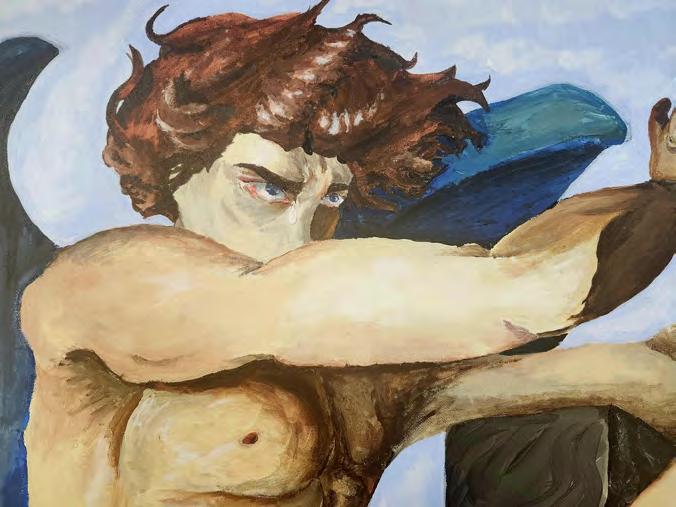
This piece is an exploration of classical training through master studies. I created it to examine how foundational techniques—whether in physical art, music, mathematics, or historical literature—shape modern interpretation. It is a reflection on the importance of studying those who came before us to better understand the architecture of our own creative expressions.
The Fall of Lucifer - Reprise
MICAH JOHNSON, acrylic
PURIFICATION PURIFICATION
PURIFICATION PURIFICATION
Bubbles for the First Time
Josephine Lock, collage
Subzero
Urmil Patel & Eric Mao, poetry
stacks on stacks, the insurmountable range sugar from the sky and savory trails your permanence, I realise is so strange
frozen, A world that can NEVER be changed taint the cold blanket, a human, the snails stacks on stacks, the insurmountable range
a box, hamsters squeal in holy exchange panoramic eyes on the blue roof-tails your permanence, I realise is so strange
red monsters, whose goal is to misarrange, And cut veins out of the great arctic sails stacks on stacks, the insurmountable range
men of the earth construct men of the sky and watch the cold inferno light ablaze stacks on stacks, the insurmountable range
apollo rides, A rapid rate of change so stay (and jump!) in another, dream Veils your permanence, I realise is so strange stacks on stacks, the insurmountable range
Listen
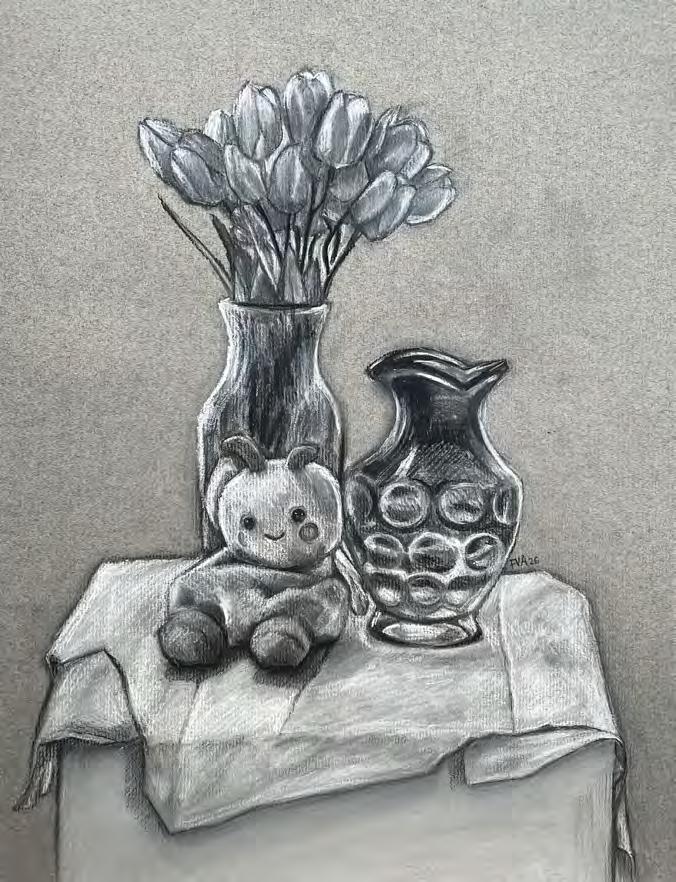
ANONYMOUS, poetry
I’m a pinprick, looking out Windows of time and space I don’t understand what this is about What am I going to face?
It calls, I listen, waiting for more It calls, it beckons for me to go I do, I sit behind a thin paper door It’s there, always, high when I’m low
It waits, it watches, eyes unblinking It hears, it is buried deep in my mind It knows my mind, somehow syncing Its cycle, it knows when to cross that line
And then, it does, when push comes to shove It hurts, I come back, but it’s not a form of love
It pulls me in, a fsh, their hook, it reels, I let it Because it lets me feel real, even if just a bit
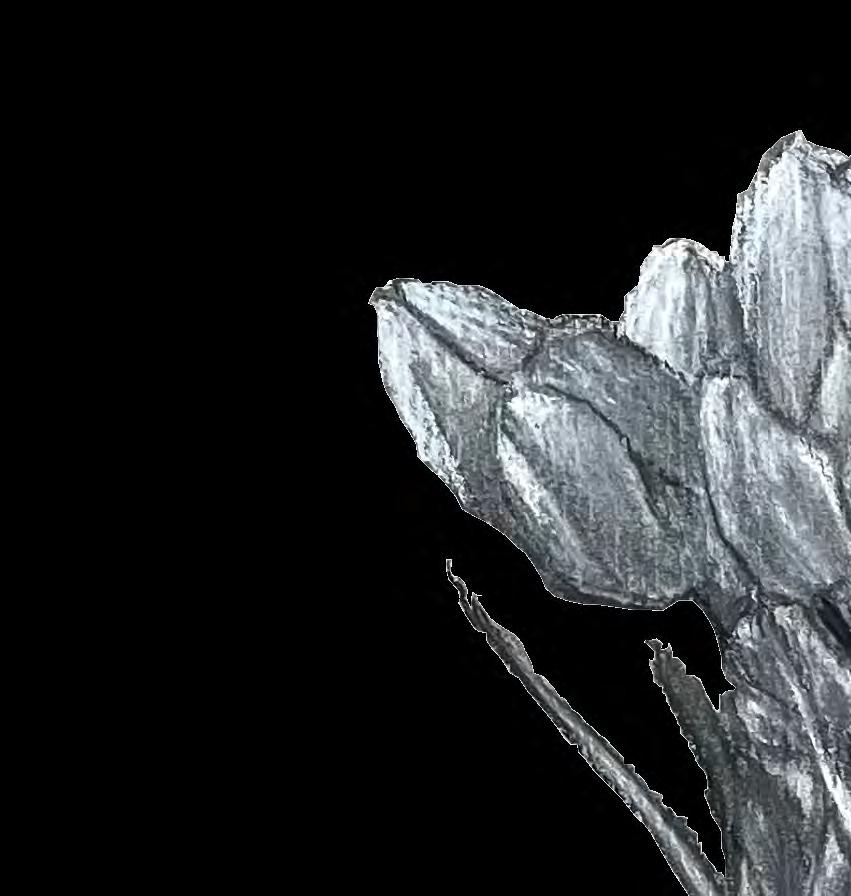
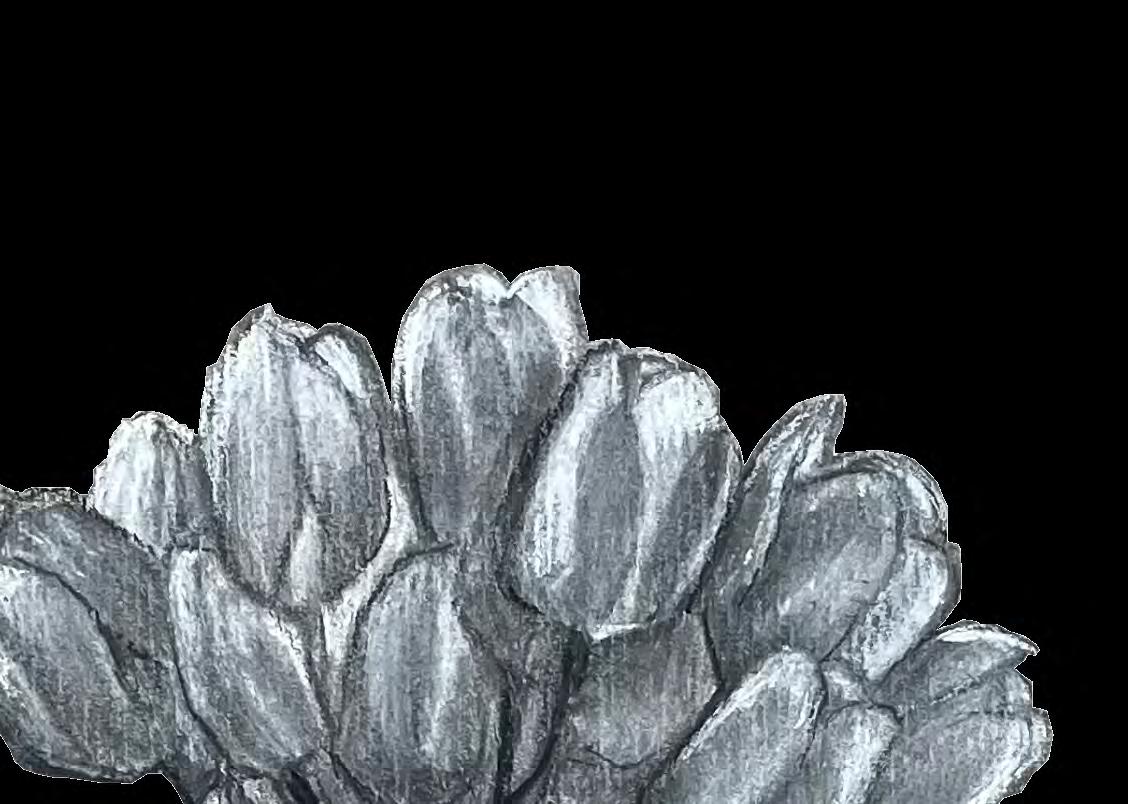
FIONA VAN ALLEN, charcoal
The White Man’s Burden
ANONYMOUS, poetry
Blue eyes, blonde hair
Crawling down from rural mountains to the town square
Asking for help for the family he had seen
Through his phone, all the way in Filisteen
How strange it was to see
A boy like that weeping for people like me
How strange it is to be Be human, Be alive
While children are fghting for their lives
Just on the other side
Of that screen
Separated from the crisis
Driven apart by seas
We will fnd a river
(Free! Free!)
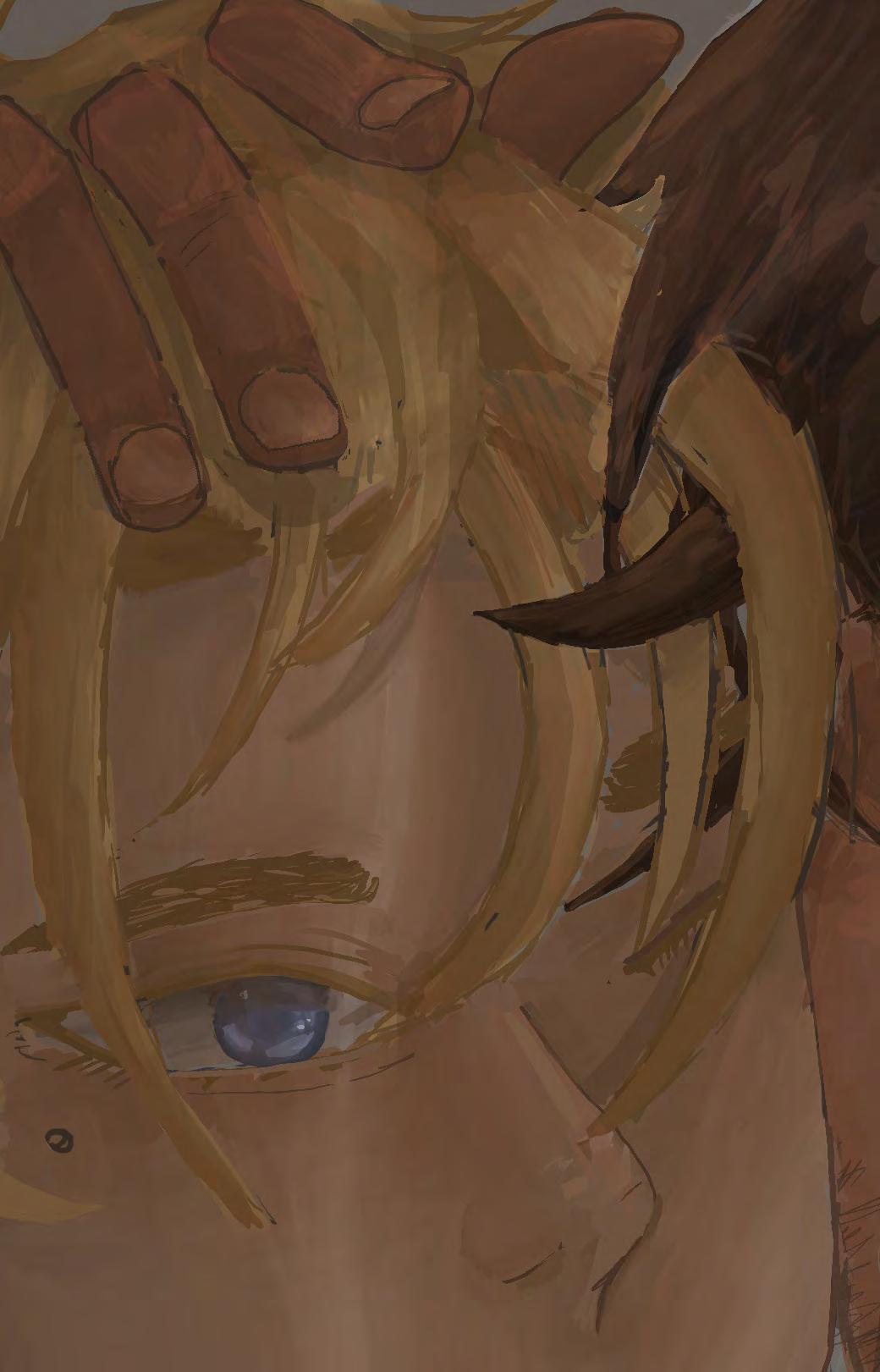
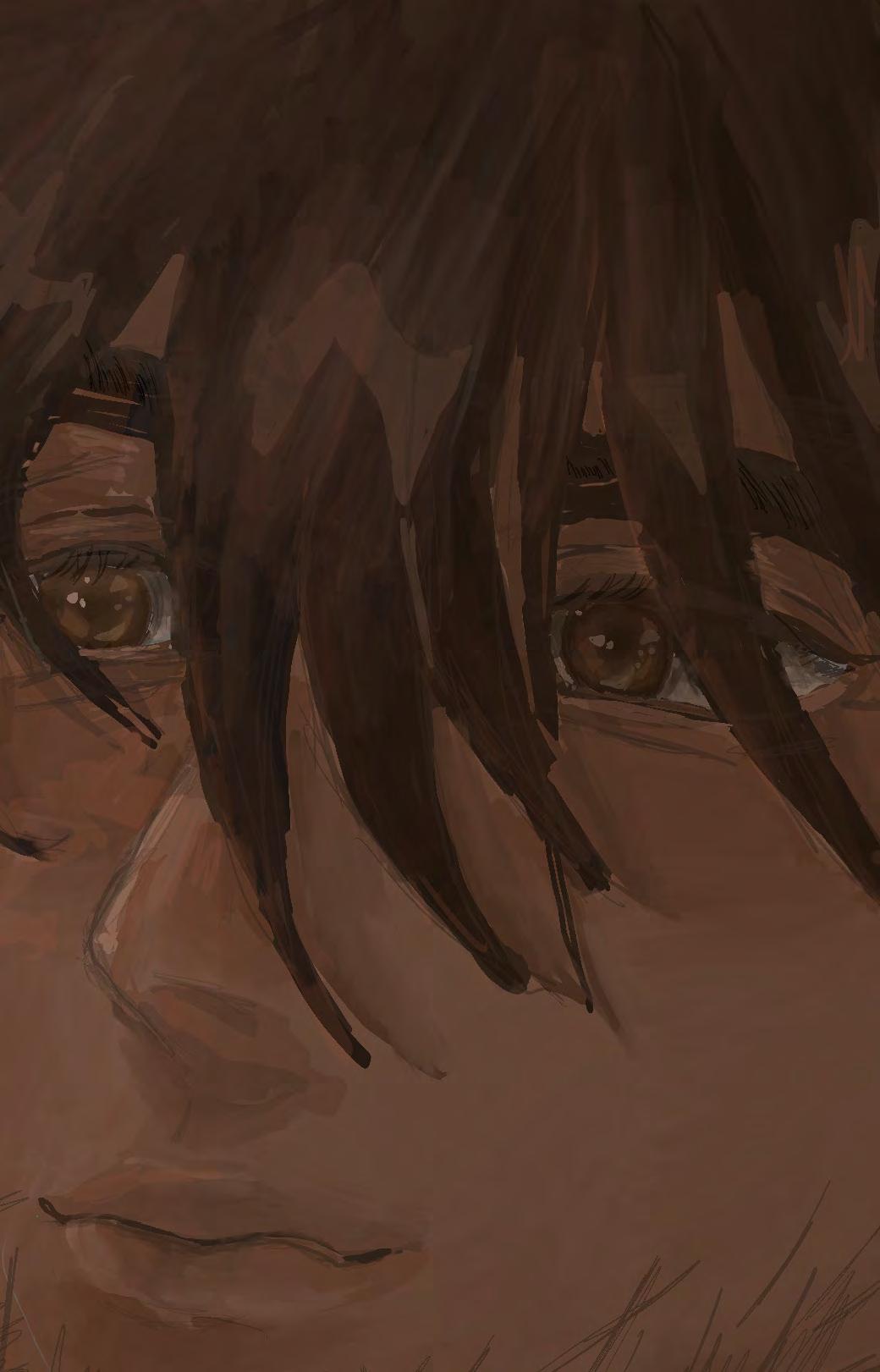
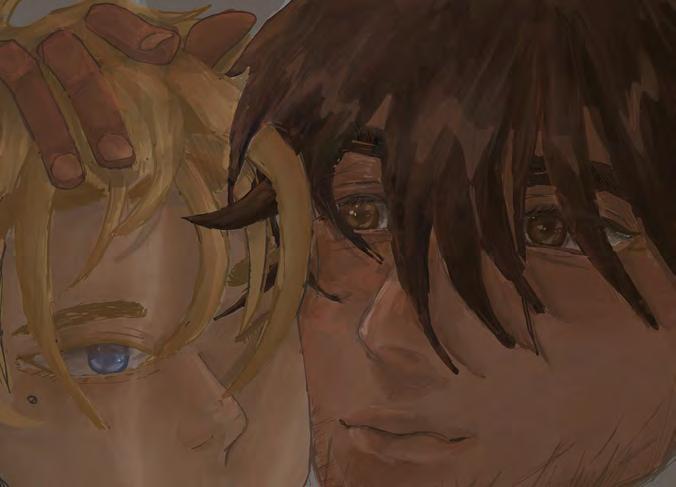
Trigun - Vash Saverem
NIKO ZI-YI DALTON, alcohol marker
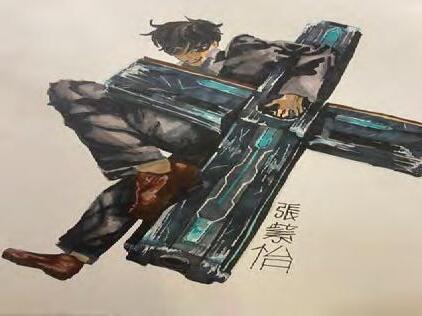
TrigunNicholas D.
Wolf
NIKO ZI-YI DALTON, alcohol marker
Wood Carving Animals
SEPH ZHU, wood sculpture
Blurred
JOSH DEVINE, poetry
“Come on, get on the bus.”
Doors fy open. Which seat do I pick, where do I place myself today?
The tires screech to a start, cold air rushes through the cracked windows, beginning my day in a yellow blur.
Doors burst wide open, lonely goodbyes and elongated embraces. The faint smell of a new beginning. Doors fy open but am I ready to walk through? Leaving my old life behind in nothing but a blur.
A familiar sense of dread as the day grows to a start. Days get longer, the sun shines less. Rapid routine turned to a bore. Time raged on, and I no longer looked for the door, As life began to get lost in a blur.
Eyes close tight, remembering the rows of seats, now replaced by card swipes and subway stops. I think back to the yellow blur, the simple, the screech, the start.
“Come on, get on the bus,” I whisper, but the doors aren’t open anymore.
Scan For the photographer’s message.
Existing: To See, To Live
TEO LEE, photography
Existing: To See, To Live
TEO LEE, photography
I wasn’t worth being a part of your story, and now you’ve been taken away.
The circle is the same as always. The teacher tells us there’s no right or wrong to say, then the attention turns to us and the air becomes thick with anxious fear. Do we deserve to be here? Our eyes dart around or look down, or fall beneath a tissue. We know the drill, the A student will talk frst. They will be the least afraid. This isn’t for a grade, but the ripple of unsaid acknowledgement that passes beneath our stares says points will still be earned or lost. The assumed A students are obvious around the circle, they’re the ones with the puffest eyes and the ones surround- ed by the most tissues. Our reactions are what really get them points, what passage from her story made us cry the most? Which chapter made us laugh? Which ones make our eyes con- tinuously ficker towards the door ex- pecting her to walk in? When a pause of silence envelopes the room and the fear rises back to the surface we all wait for her voice to break the silence- she was always the bravest. In her absence, a pressing feeling engulfs the room and ideas hosted by students too afraid of failure pass between us. Would that be A worthy or C? Do the C students deserve to be here? Did they know her as well as us? Did they deserve those moments where they felt special, and funny, and worthy? Am I a C student? Did I pay enough attention or did I skim through, trying to cut my work short but now there’s no way back. I wasn’t worth being a part of your story, and now you’ve been taken away.
Socratic Seminar
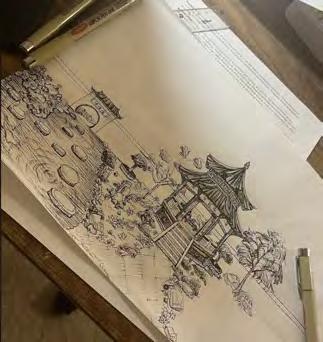
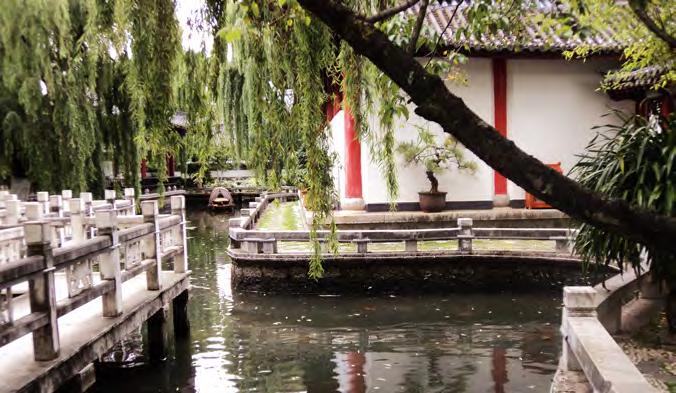
Tranquil Pavilion
LILY ZHOU, ink
In the Making
I created this piece for my grandpa (爷爷) because he enjoys art a lot, and now it’s in China with him!
In the Making
DAWNING
DAWNING
focuses scattered photons and refashions it into neural impulse.
From the undefned horizon surges strands of soft, silky cirrus, stretching towards edges, as if the earth has grown wings.
I look through wind-rifted leaves to alleviate the glare, so honey yellow sun diffracts between the fractal edges; kaleidoscopic whiskers of light illuminate my irises.
I, engaged with the sky’s richness, render the heavens into memory, but not perfectly since our minds are, as I prefer, not machines and its inherited beauty is
China
Tracy Wu, photography
TRACY WU, markers and ink
Scene Where The Cowboy Watches The Sun Set
Over The Horizon
MIA LALOV, poetry
Ah hate the desert. Everythin’ ‘s so dead ‘n lifeless, an’ y’ can feel it. It makes me awfully depressed. It’s like it’s suckin’ the soul out uv yew to feed itself. It reminds me of death: “one day we’ll all b’come dust”. The Book says that we come frum dust and that’s what we’ll return t’. How many souls, y’ reckon, make up these grains of sand? When ah take a step, whose back does mah foot land upon? Y’ think it’s made up of the ol’ white man soul, er the African soul? N’ what about the Native soul? The Mexican? The poor Easterner? What mix uv souls make up this land? Whose bodies ‘s this nation built upon?
Interview with Mia Lalov
Q: What was the writing process for this piece?
A: I was hiking in Nevada when I wrote this poem. Initially, I was just writing about how much I disliked the Southwest. When I wrote the line ‘whose backs’, the poem started to have a different meaning for me. Because no longer was I thinking about people dying to the desert, but all those who had died on this land.
The full interview with Mia Lalov
To the Isle
Josh Devine, poetry
Take the boat going off to who knows where. Thousands of trails waiting to be wandered, you never know what you may fnd out there.
Chances to explore like this come rare, trees and mountains awaiting eyes fonder. Take the boat going off to who knows where.
Scenes unbounded making you stop and stare. Hike all day and wind up over yonder. You never know what you may fnd out there.
Pitch a tent and fall asleep without care, the world feels so small under the broader. Take the boat going off to who knows where.
Wake up, let the river fow through your hair, laces on, its time, keep moving ever stronger. You never know what you may fnd out there.
Wind up back at the dock, it doesn’t seem fair, returning to a world of ever so blander. Take the boat going back to you know where, You’ll always remember what you found out there.
Sunrise
Niko Zi-Yi Dalton, digital
The Train
MIA LALOV, poetry
Do you hear the train? The wind howls, the trees sway. Watch as it comes along the way, It’s heavy steam cloud making the sky gray. It will race along, from throng to throng, Carrying pieces of each place it’s been, coming and going at the speed of lightning. You’ll know it by its roar. Even if it’s miles away it’ll shake your foor; Loosen the hinges of your door—even make your car soar.
So be careful not to stand too close to the tracks, Because this engine isn’t known to stop. Stay off that leveled path, Lest you get rounded up in that engine’s wrath. Do you hear the screeching sound? See the train come around. Duck down, stay low to the ground:
The train is coming through town.
In the Making
Due to the speed of winds produced by a tornado, when nearby, it is said to sound like a train. I remember experiencing that sound when standing outside during the May 16 tornado.
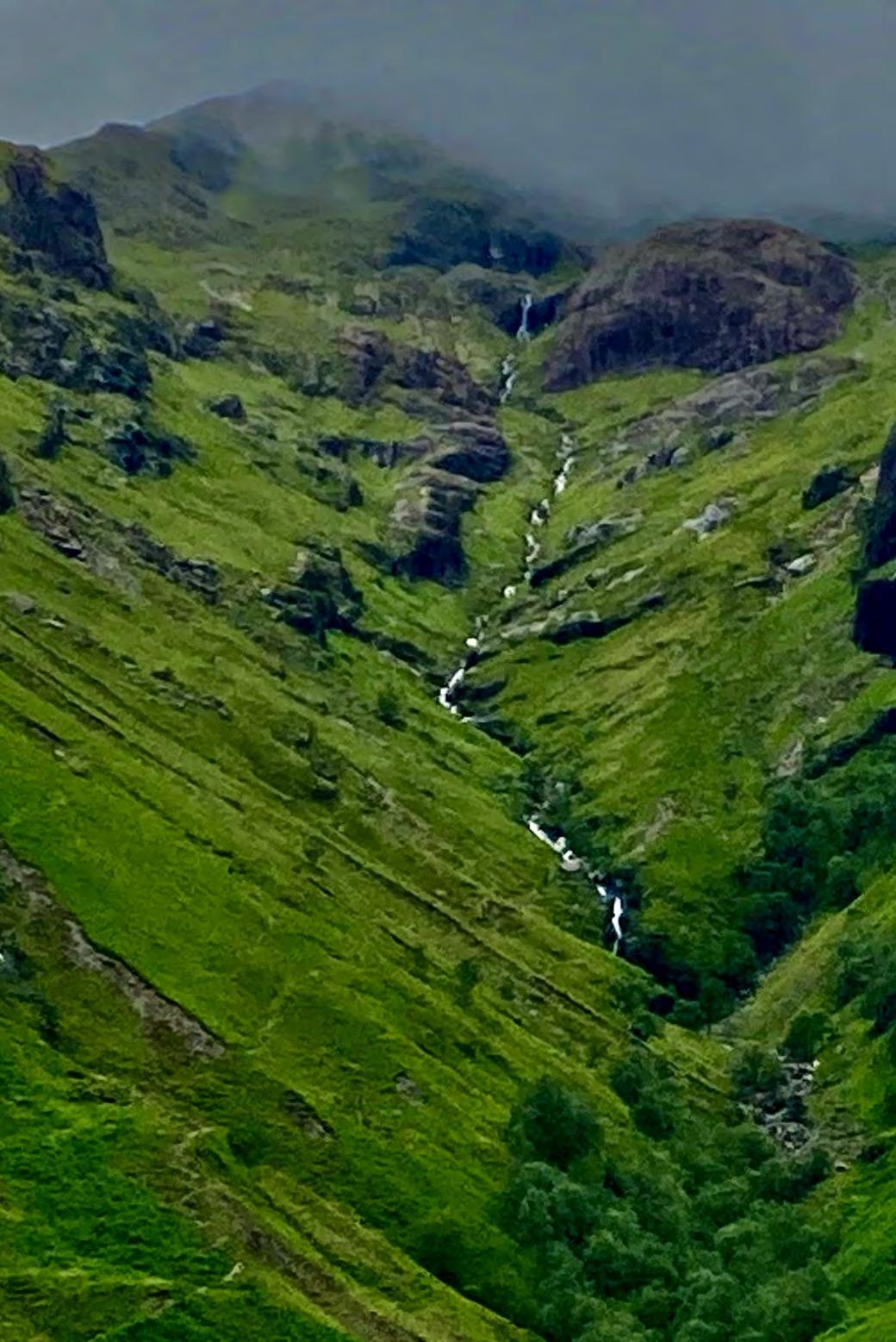
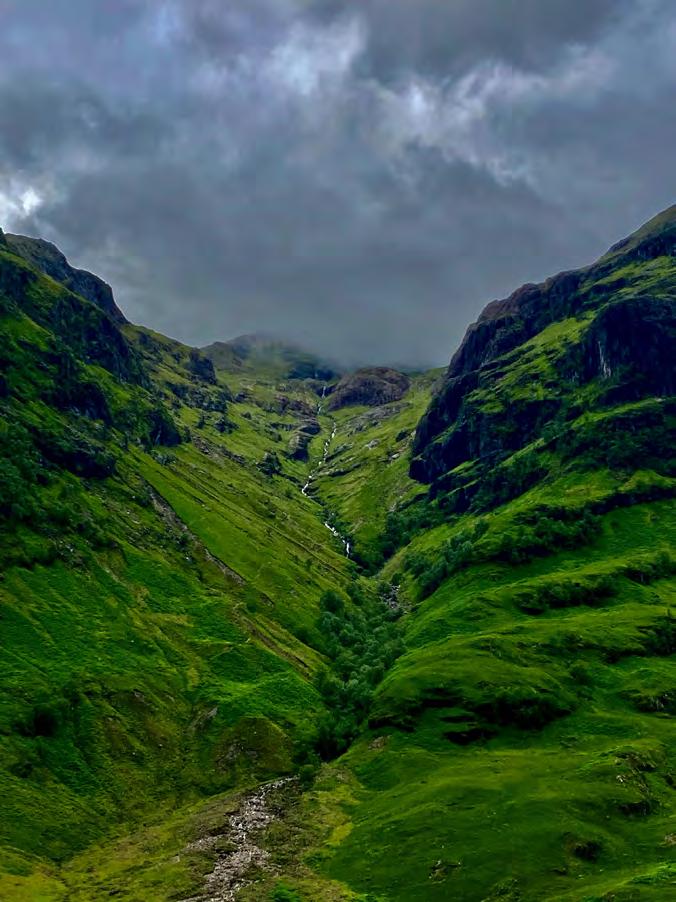
The Highlands
SKY RAZAFSKY, photography
Logical Theologian
HENRY BRENNEMAN, prints on watercolor
Promise
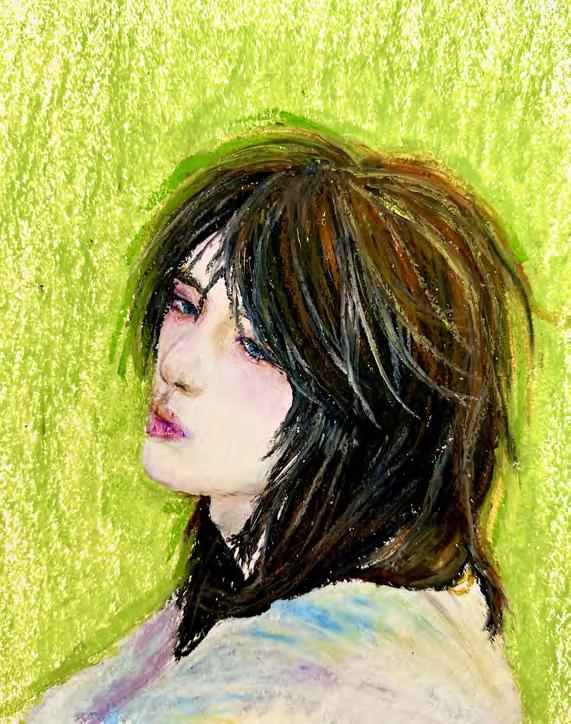
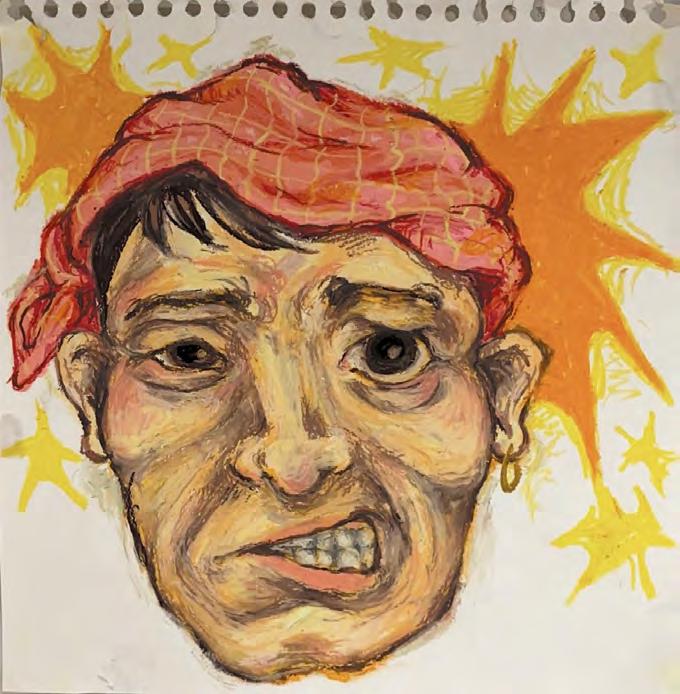
LILLIAN PLUMB, oil pastel
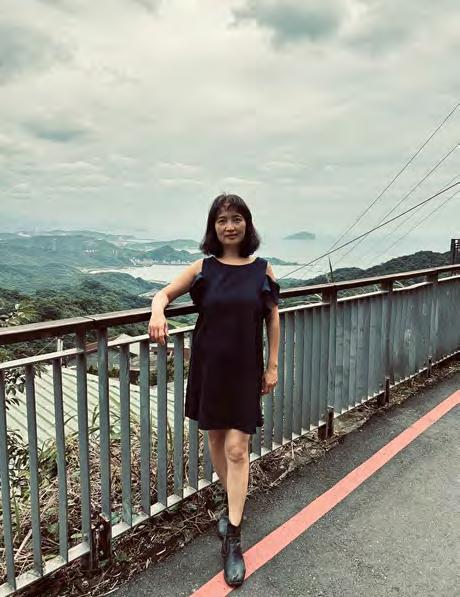
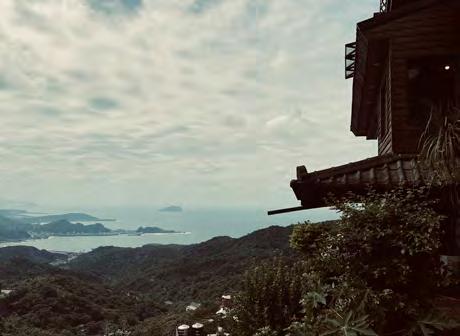
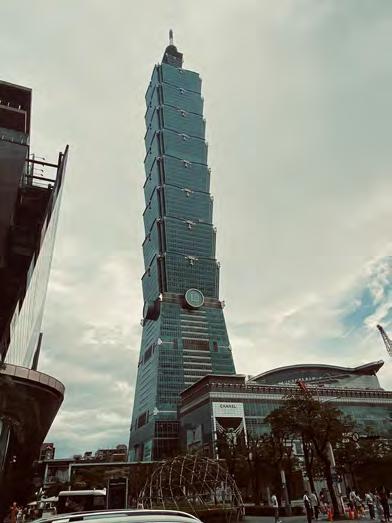
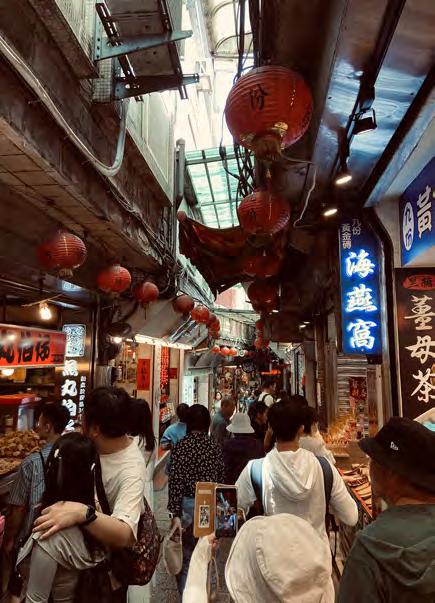
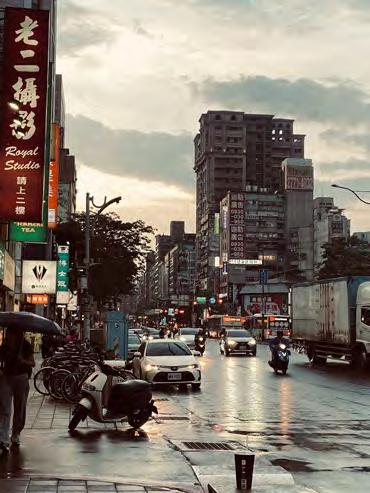
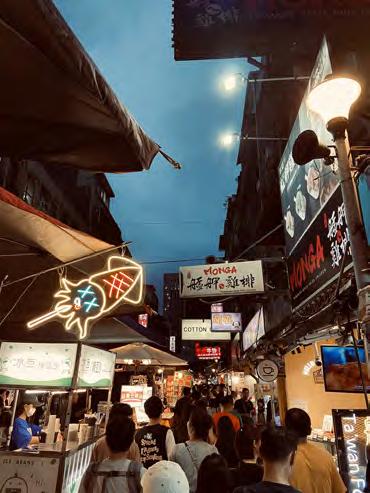
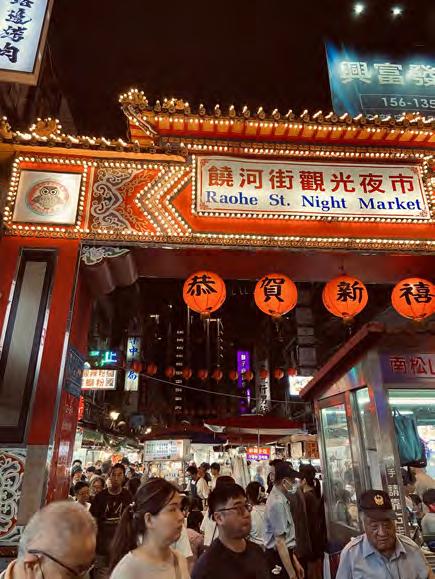
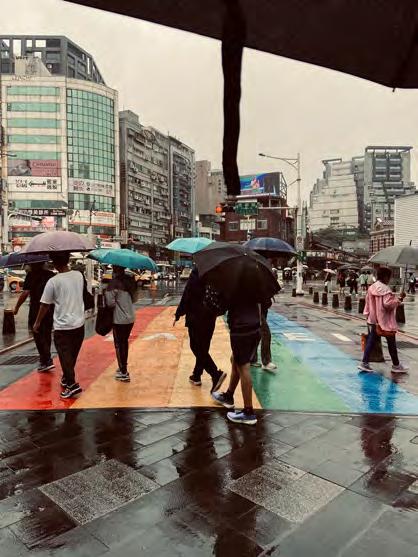
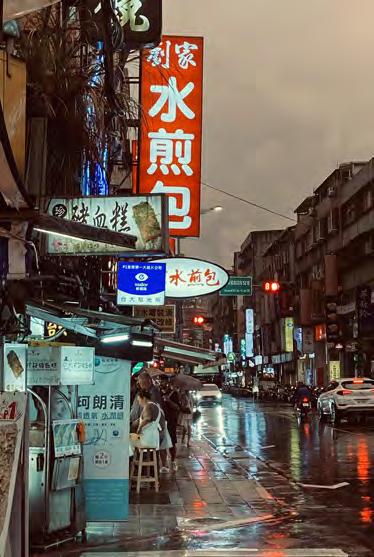
My Mother’s Country
NIKO ZI-YI DALTON, photography
Interview with Niko Zi-Yi Dalton
Q: How did you frst get into art?
A: It was an interest from when I was a kid because I watched a lot of cartoons and anime with my mom, and I was interested in character design. So I had my own sketchbook, and it went from there. I started drawing more seriously in middle school when I got my frst drawing tablet.
Q: How does art allow you to express yourself?
A: It’s a great way to express emotion and my own interests. A lot of the times when I’m feeling angry or excited and I’m drawing, you can kind of see that in the art.
Q: What does “My Mother’s Country” mean to you?
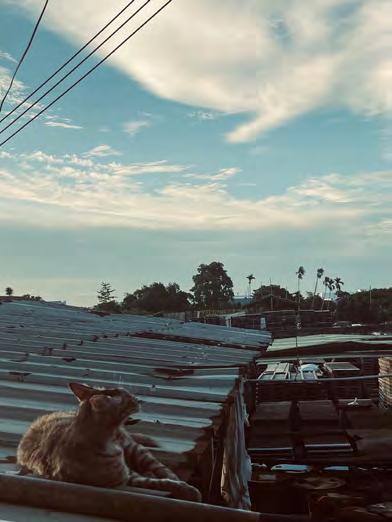
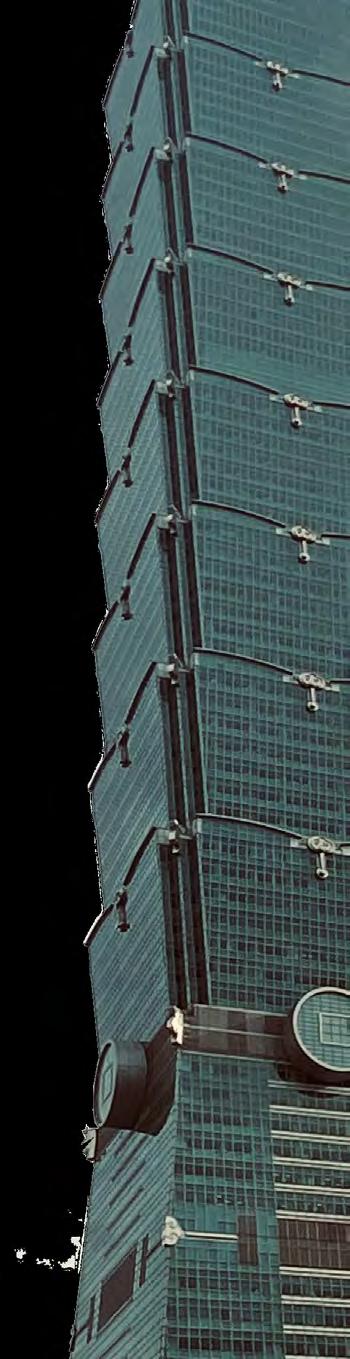
A: I decided to call it that because I think it would be inaccurate to say [Taiwan’s] my home country, because I was not born there. But growing up, it’s been very apparent to see that my mom is always missing home, and she’s always happiest when she’s home. So that’s why I decided to call it that.
Q: What drew you to photography as a medium for this piece?
A: I don’t do photography often, mostly because I am not around a lot of really scenic places in St. Louis, but when I’m on vacation, I really love to take photographs and then get them printed and hang them in my room. It was fun for me to submit something that I don’t usually submit for Melodrama, because I am proud of my photography, even if it is just on my iPhone. It’s also fun to to share parts of my trips.
Q: How has creating “My Mother’s Country” changed the way you see identity and belonging?
A: I think it’s a pretty big thing for me because I’m biracial, and a lot of biracial people struggle to ft in one culture or the other. But recently, I’ve felt a little bit closer to my mom and Taiwanese culture, and so the photos I take in Taiwan and the memories I create are something that I cherish a lot.
My Mother’s Country
NIKO ZI-YI DALTON, photography
Dawn
ANASTASIA AMROMINA, acrylic
Blue Eyes
TARIQ SPENCER,
poetry
Scan For the full poem.
Those lovely eyes
They entice and mesmerize
They control my every move
You seem to put a spell on me
Those blue eyes
They manipulate and hypnotize
Biggie don’t got enough spells in his pocket
To compare to what you do to me
I thought I found the remedy I thought I broke the curse
But I keep singing your praises
Such an intoxicating melody
What I fool I’ve become All for you
Those lovely eyes
Do you know what you do?
Probably not
But that’s okay
This is just a thought
Don’t get my words confused now
I said I was over you
That was true
And yet I can’t seem to escape
Your eyes,
All they do is take and take
You’ve become my everything
Those eyes have seen my fate
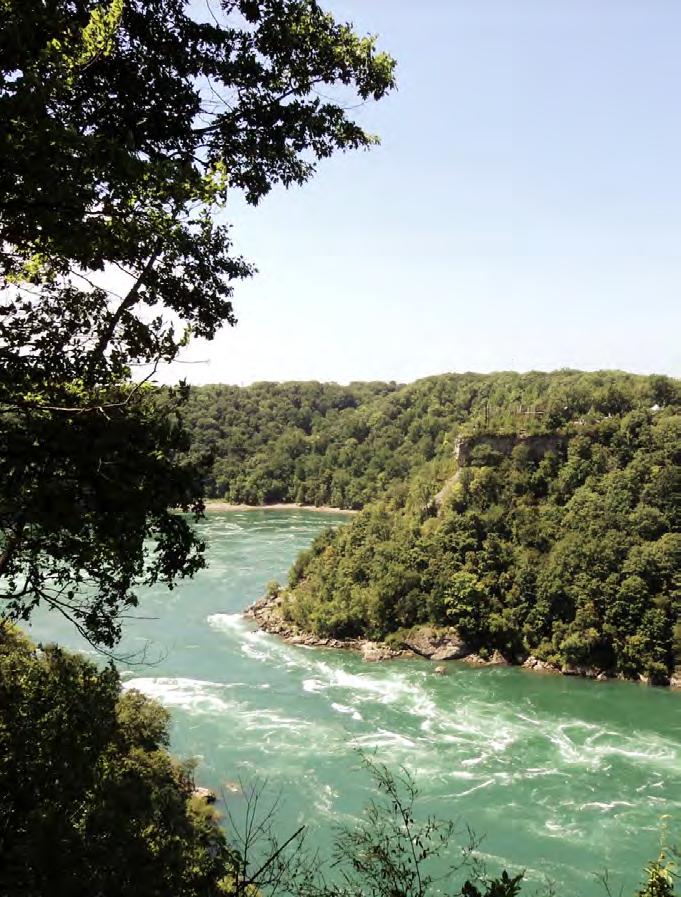
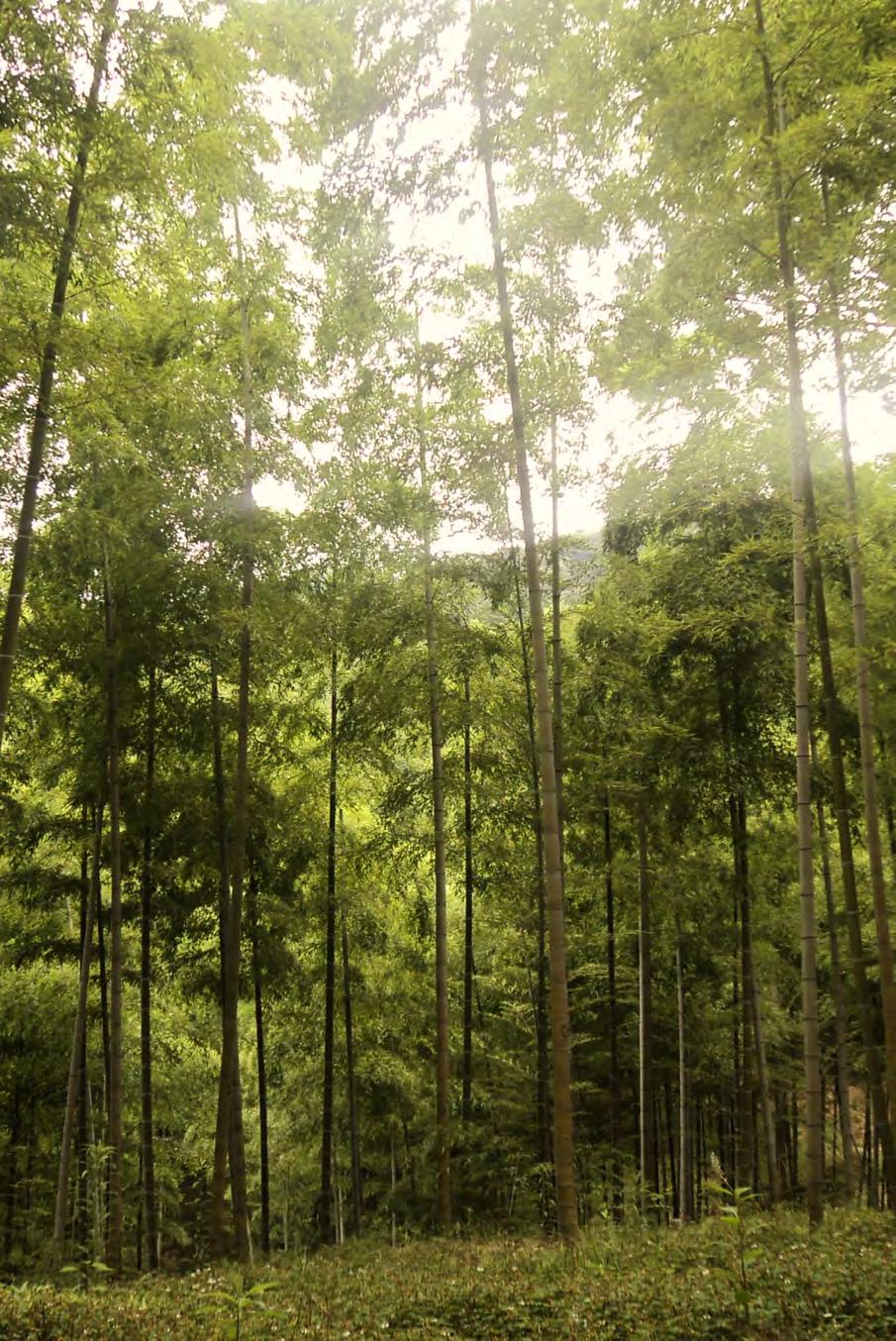
Traveller
Tracy Wu, photography
Traveller
Tracy Wu, photography
Interview with Tracy Wu
Q: How did you frst get into art?
A: I frst got into art when I was about 6 years old. My grandparents really wanted me to be an artist so I just started drawing. Also I was instructed by an illustrator for about three years when I was [around] 10.
Q: How does art allow you to express yourself?
A: I sketch and also use color, but I think for expressing myself, art helps because of how nuanced color can be. I really like experimenting with different color palettes, and especially unconventional ones because I think it makes art more interesting and it shows more emotion. And also art is so subjective, you don’t even have to be good at it. it’s just what comes from your soul.
Q: What does “Traveller” mean to you?
A: The Traveller is actually a title of a Beach House song. Beach House is my favorite artist of all time and I also like to travel.
Q: What drew you to photography as a medium for this piece?
A: I think photography captures traveling the most. I mean with photography, you don’t really do much except take the picture. I love taking pictures and documenting my life, especially travels.
Q: How has creating “Traveller” changed the way you see nature and the world around you?
A: Creating this album has inspired me to go outside more. I think it really made me appreciate the color green and how beautiful nature is.
Tidal Wave
Scan For the full play.
JOAN GAFFIGAN, stageplay
Scene 1
Lights up. Ash and Nadia are sitting on a bed, doing homework.
Ash: ...Then you multiply by x on both sides, and you have your answer.
Nadia: Yes! Thank you thank you thank you! Flops backward on bed. Ugh, I hate fnals.
Ash: At least they’ll be over soon.
Nadia: Yeah, then it’ll be summer break! Sits up. Say, what do you want to do during break? We could go to the zoo, see a movie, have a sleepover every night...
Ash: ...About that. I have something I need to tell you.
Nadia: Sure, what’s up?
Ash: I’m –
Nadia’s mother comes in.
FERN REYNOLDS, oil pastel
The Penguin
Alex Wang & Aidan Qian, poetry
Nothing exceptionally interesting happens in the chilled colony. It’s believed to be a gift (a pleasure!) to live a halcyon life, a blessing to rest at the feet of virgin mountains. The ice, the fsh, and the sea are enough for a penguin! No inkling of danger, no tremor of fear, no reason to wander—even a step—away.
Bad things (they’ve been told) happen to strays; far away from the security of the colony, sea lions, orcas, and sharks produce fear and become real threats to the tranquil life they could have entertained as a penguin under watch of the impregnable mountains
above. Yet beneath those very mountains just a few brave steps away,
and is it true that now we (all of us) have nothing to fear?
In the Making
Sestina about the Nihilist Penguin from Werner Herzog’s Encounters at the End of the World.
Scan For
the complete poem.
2025 STLCS
SOPHIE TRAN, mixed media
In the Making
Center of Our World
ANONYMOUS, poetry
Past the sprawling woods, past the mundane houses, past the little intersections, A clearing comes into view.
Structure emerging from interim space. Sharp lines and solid walls. Brick. Stone. Glass. Steel. It stands strong, ready for duty.
Sunlight carves through chambers of glass, scatters through dropped shades, blends with the even fuorescence of the grid above and the glow of screens as on skyscrapers in a bustling city.
Corridors twist in endless machinations— paths crossing, linking, shifting. Smooth avonite foats crowds of rushing students like the rails of a maglev.
People fnd their future here. Splitting like atoms to power the world in this mystical reactor. Ideas arise in infnite parallel Connections form like constellations in the midnight sky.
I gaze into the core of this boundless expanse and three thousand eyes look back.
The Tragedian of Dundee
TRIP HOFFMAN, poetry
SCENE 1: !e Bard’s Introduction, and our rst Taste of his Poetry Lights come up on a stage. Two-thirds to the le , a wall divides the stage in two. On the le side of the wall, a man sits, furiously scribbling, while his friend sits a bit upstage, looking at him. George gets up and turns to the audience
Scan For
The full stage play script
GEORGE: !is man next to me is one of a very special ilk. He comes from a somewhat wealthy family of weavers, he served in the militia in his youth, and he loves his country like no other. However, he is, rst and foremost, a poet.
MCGONAGALL: Okay, how’s this one, George?
GEORGE: “’Twas in the year of 1808, and in the autumn of the year, Napoleon resolved to crush Spain and Portugal without fear; So with a mighty army three hundred thousand strong !rough the passes of the Pyrenees into Spain he passed along.”
…A quite terrible one, admittedly. ,
MCGONAGALL: It’s about the Battle of Corunna, see? !e heroic death of General Moore! !e drama! !e tragedy! !e-
GEORGE: William, William, it’s… ah…
MCGONAGALL: Yes?
GEORGE: It’s been done before.
In the Making
Untitled AUDREY YOUNG, acrylic
Child of Magnolia
KYRA SIEGEL, physical media and poetry
Light protrudes through your skin in hues of rose and gold You sway softly like satin peace you aim to uphold Though storms attempt to strike child of magnolia you shall endure
In the Making
Magnolias are my absolute favorite flowers because they represent perseverance and strength. Magnolias are survivors; they are unwavering during times of great di culty. I am a magnolia, and so are you.
Melodrama Staff List
copy editor
IRA RODRIGUES
photo editor
VINCENT HSIAO
editors in chief
art editor
FIONA VAN ALLEN
staff
NORA BRUNNQUELL
ADDIE FLINTROP
MADELINE FONG
SYDNEY GAO
KATIE JANSEN
TIYA KAUL
AARON LIN
EMERY MAO
JANE SCHEFFEL
ISAAC ZELINSKE
ANGELLA ZHANG
advisers
SARAH KIRKSEY
ABIGAIL EISENBERG
junior editors in chief
Colophon Thruong
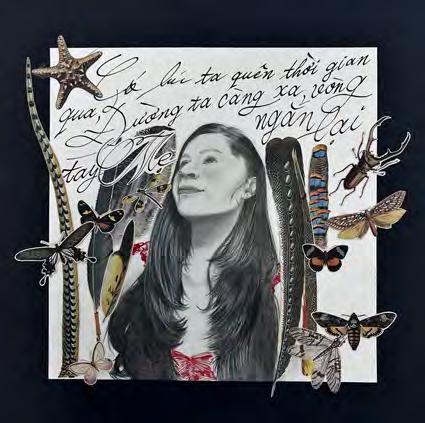
SOPHIE TRAN, mixed media
In the Making
In Vietnamese, the word thương doesn’t have a direct English translation. It’s most compared to love but carries a deeper complexity, blending love, care and connection. This art piece explores the moments that reflect the quiet tenderness and warm emotional bonds that define thương.
Design: Adobe 2026 software
Paper Type: Cover: #80 Classic Linen; Inside: Smooth
Opaque Text #70
Page Size: 9” x 6”
Typography: Gotham, Lora, The Seasons
Content Creation: All pieces are made by Ladue High School students
Paper: 200 issues, distributed to the Ladue High School community free of charge
Publisher: The Missourian
DECAY
NIGREDO MELANOSIS
The decomposition and cleansing of prima materia in pursuit of the alchemical magnum opus
PURIFICATION
ALBEDO LEUCOSIS
The washing away of impurities and bringing of light and clarity to prima materia
DAWNING
CITRINAS XANTHOSIS
The rise of warmth, intellectual light and the integration of solar light into purifed prima materia
GOLD RUBEDO IOSIS
The culmination of the work and the synthesis of self, an integration of opposites for a complete whole