
AND SPECTACULAR
My
honest review of the new mexican restaurant: Huatulco
story by Mallory Bullock
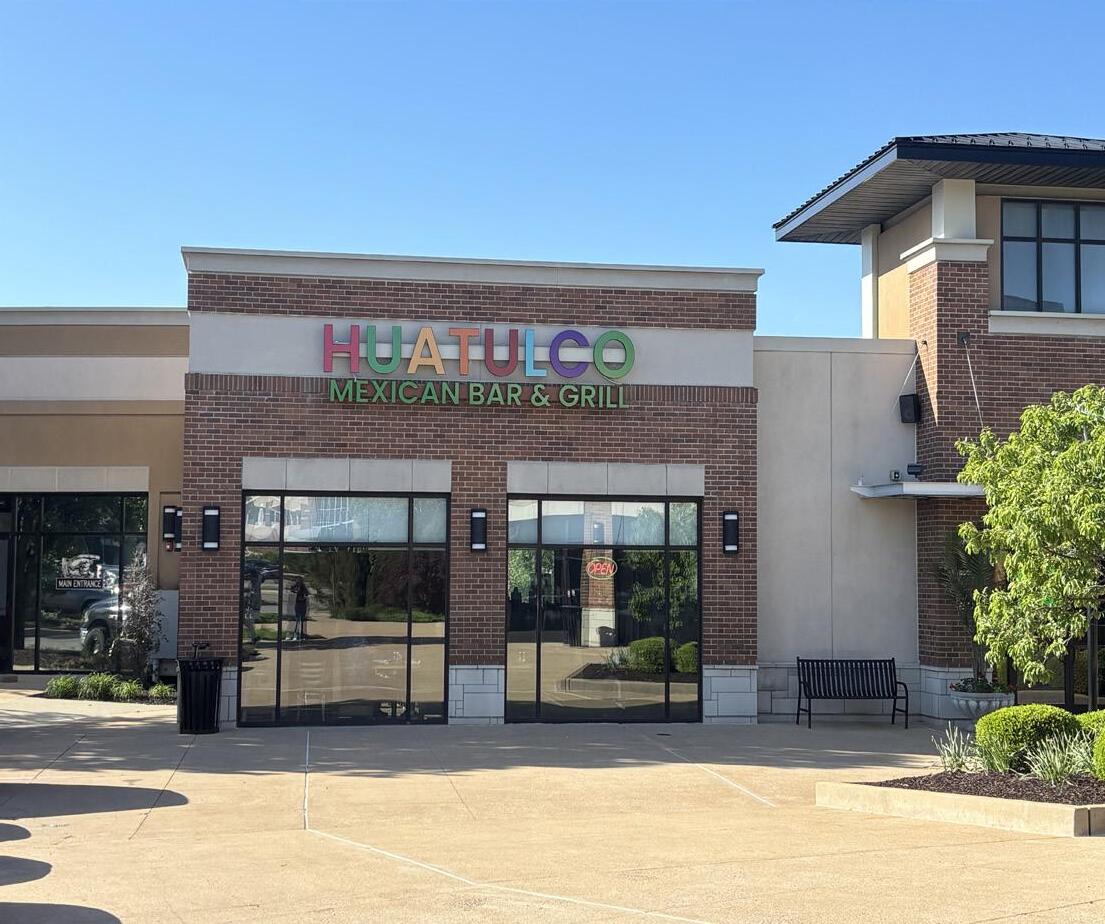

The dish that I got at this restaurant was called Pollo Loco. The dish contained chicken on top of mexican rice, covered in queso. First impression, the looks of the food looked good. The chicken looked like it was cooked perfectly well, as well the the rice did to. First bite, I knew that this meal was going to be a good one. The chicken was not too hard and not too rubbery. The chicken was also not too chewy either, it had the perfect texture. The queso on top of this also had a perfect cheesy taste and it also wasn’t too stiff or too runny. The rice was also a nice texture. This rice was cooked for the right amount of time and had a lot of favor. Overall, I would rate this new restaurant a four out of fve stars. The food and the service was good, but it could have been quieter inside.
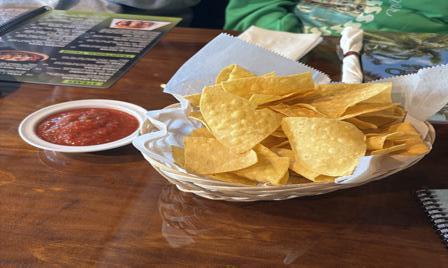
CAPTION 1: The outside of the new mexican restaurant Huatulco that had just opened in Rock Hill. CAPTION 2: The dish that I had ordered while trying the food at this new restaurant. CAPTION 3: The view of the bar inside the restaurant. CAPTION 4: The chips and salsa that is served here when you sit down. CAPTION 5:The cover of the menu that includes beautiful palmtrees.
on April 10, 2026, Rockhill had opened a brand-new Mexican restaurant named Huatulco. This restaurant was originally a Hangar, until they went out of business. When I came here, the outside of the restaurant looked very stylish. The patio had a wide area of seating as well as heaters when it’s cold. Coming inside, I was impressed by the interior design and the beautiful paintings they had put up. Half of the restaurant was people coming to eat, while the other half of it was a bar with a bunch of televisions for the dads who wanted to watch a football game. There, I was greeting by a nice and sweet employee who took me to a booth. About two minutes later, a waitress greeted us with a smile and handed me my menu. While eating, she asked if I needed a refll on my drink or if I wanted more chips. I was pretty impressed by the service.












2.Tacos al Pastor
3. Mole Poblano
4. Chilaquilles
5. Pozole
6. Tamales
7. Chiles en Nogada
8. Enchiladas
9. Birria
10. Cochinita Pibil
1.Tacos
From the
DUST
story by Sasha Zolotov
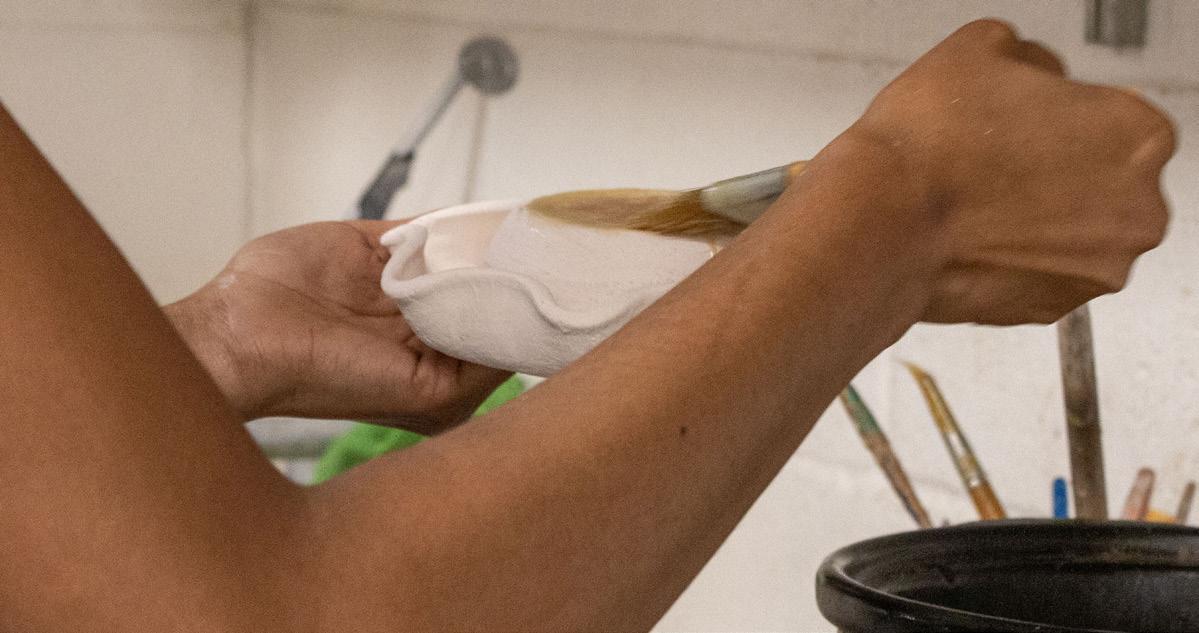
(1) SPINNING MAGIC: Hannah Lu (10) gets her hands dirty while by throwing a pot on the wheel in Mr. Robbins’ room April 28. (photo submitted by Sasha Zolotov)
(2) MELTING: Mariah Johnson (12) prepares to glaze her pot by waxing it. In order to prepare the wax, Johnson would have sanded it and then blown off the excess dust with an air blow gun. (photo submitted by Sasha Zolotov)
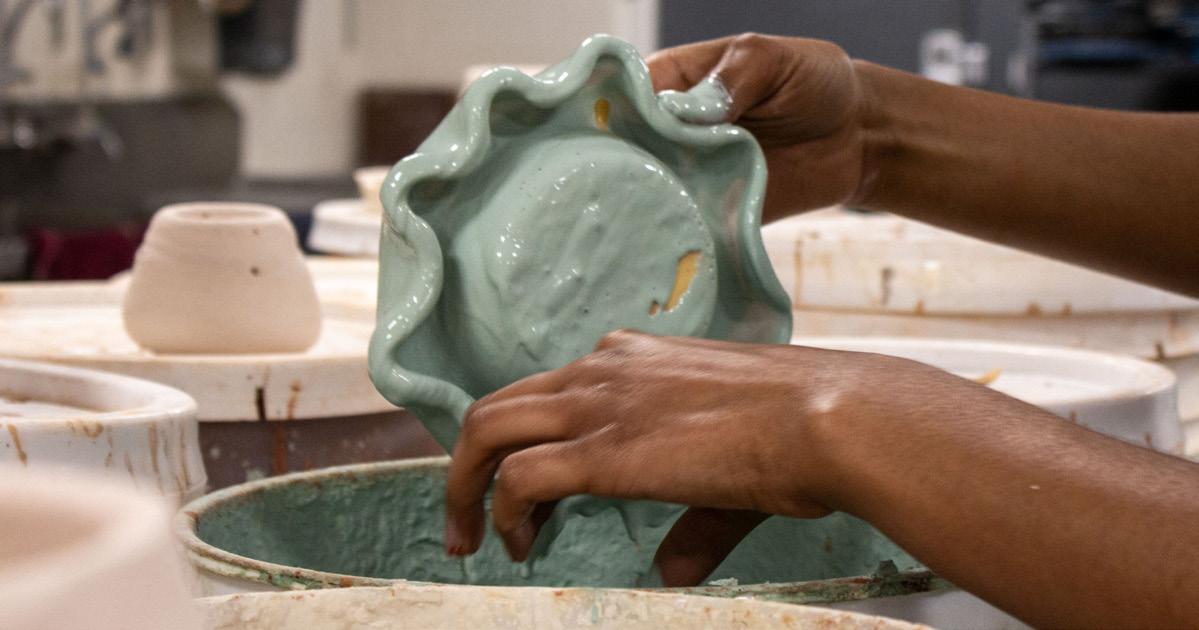
(3) GLAZE CRAZE: Mariah Johnson (12) picks Oribe, a type of glaze, for her piece. The glaze takes about two minutes to dry, and then it is ready to go in the kiln. (photo submitted by Sasha Zolotov)
(4) GRAND FINALE: Fired pots and bowls made by the seniors are being displayed in the art gallery as part of the senior show. After glazing, the peices would be put in the kiln over the weekend. Once fred, students will sand the bottom of their pieces. (photo submitted by Sasha Zolotov)
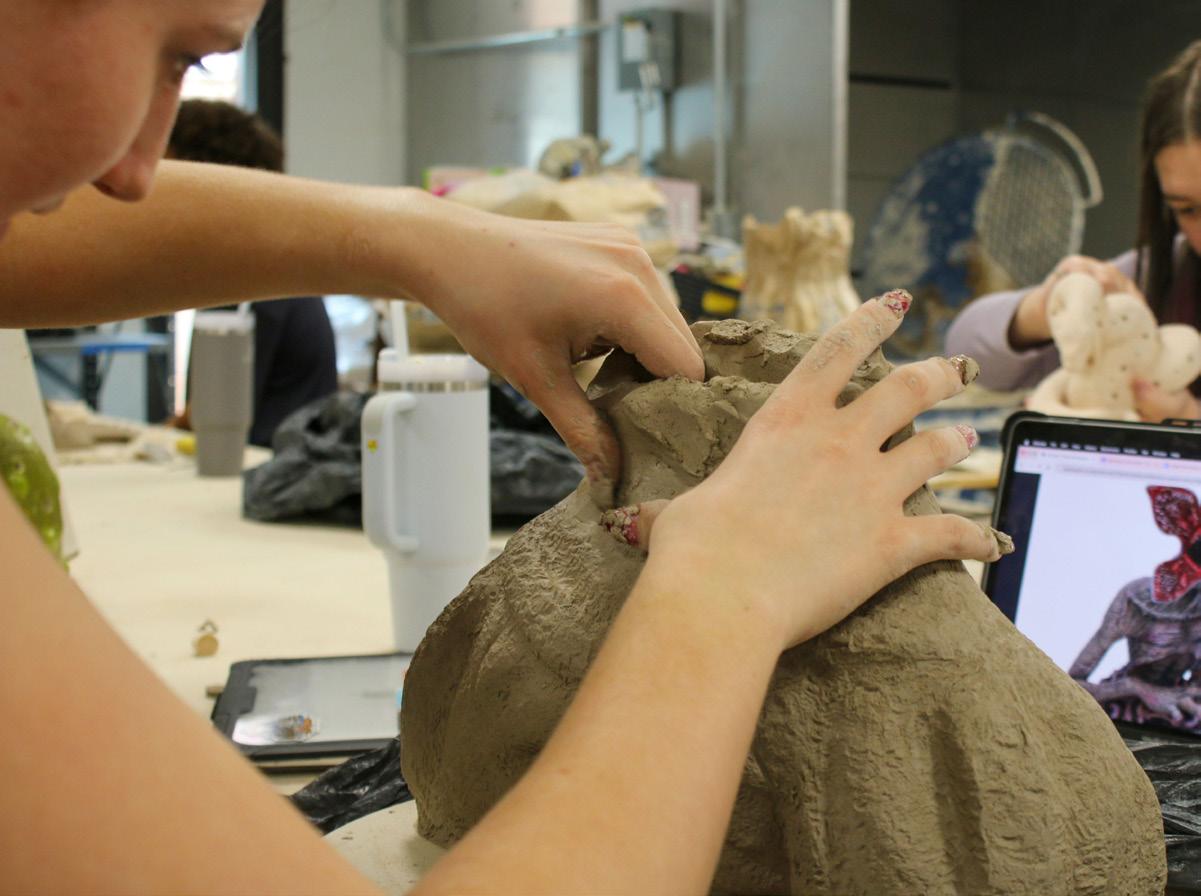
(5) NOT A STRANGER TO CLAY: Mia Panic (11) is working on a Demogorgon bust in ceramics class. She completed everything but the head, which will be the most challenging and rewarding. (photo submitted by Sasha Zolotov)


Photo
Prismatic SYMPHONY
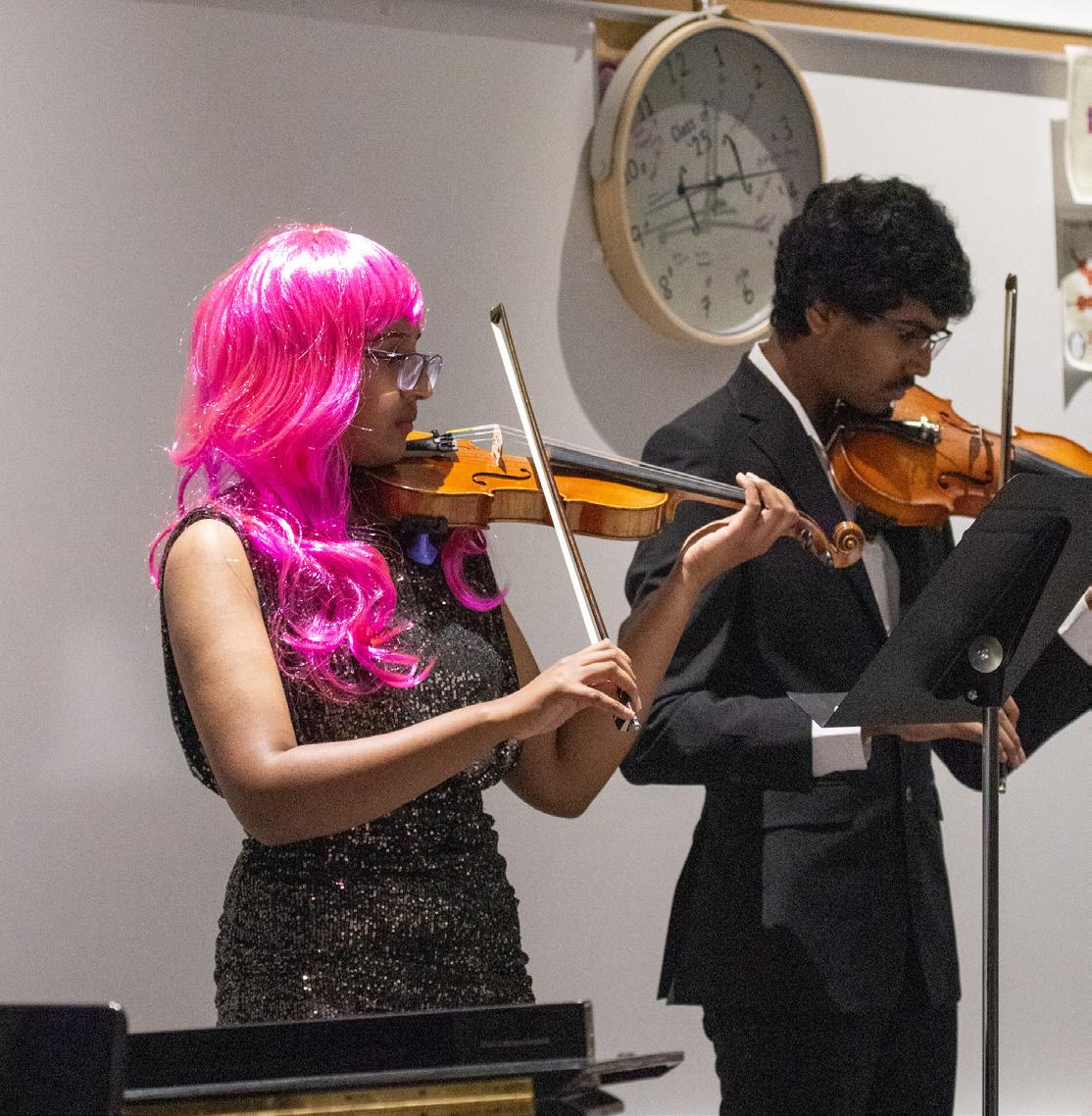
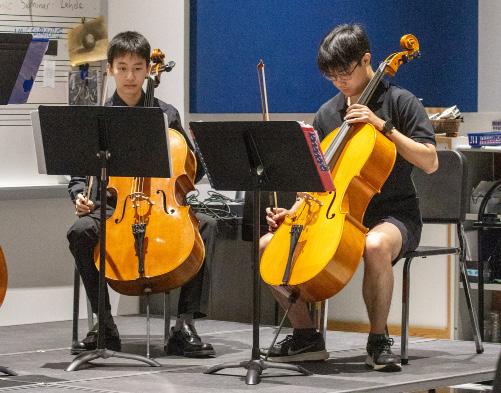
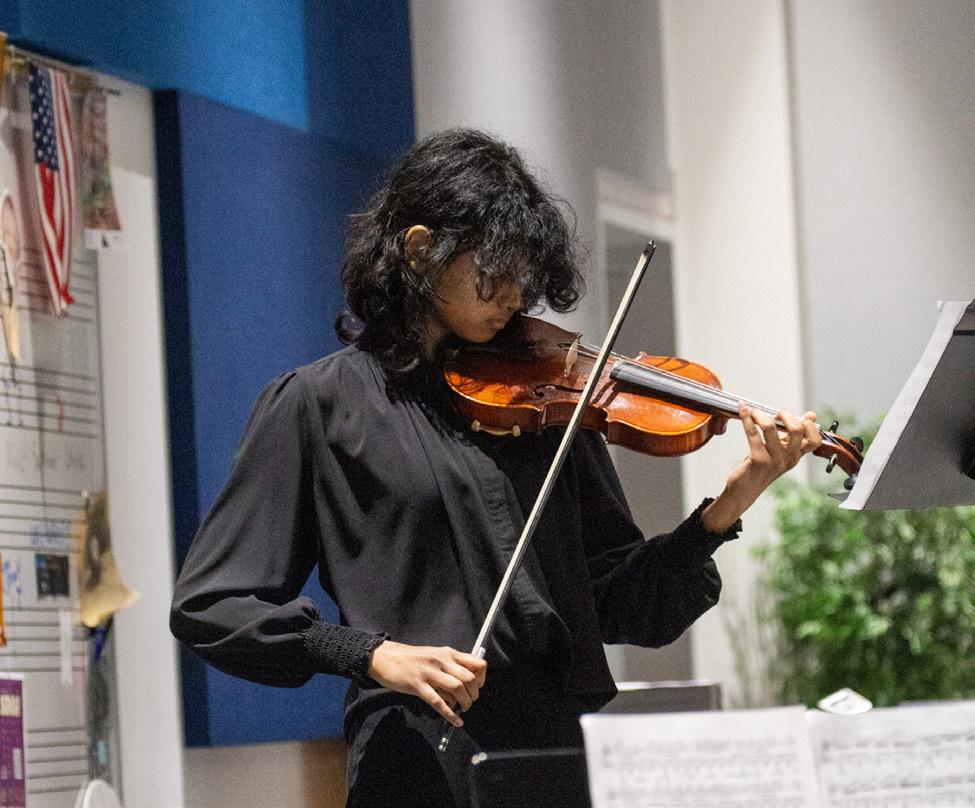
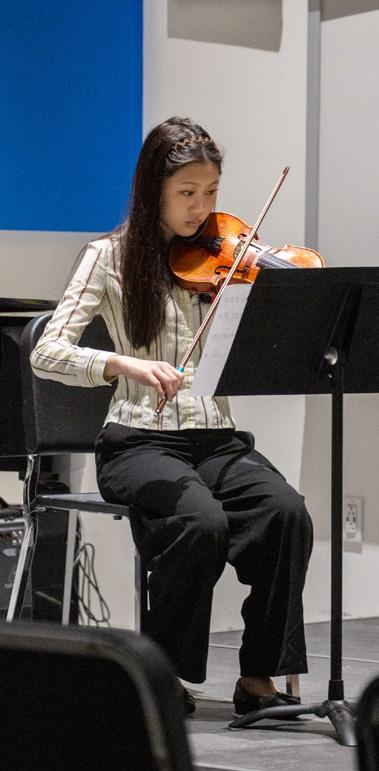
1:Diya Kannan (10) and Dheeran Ramesh 10) perform their piece, A Thousand Miles, at the Kaleidoscope Music Festival. They played as a quintet consisting a piano, a viola, and violins.
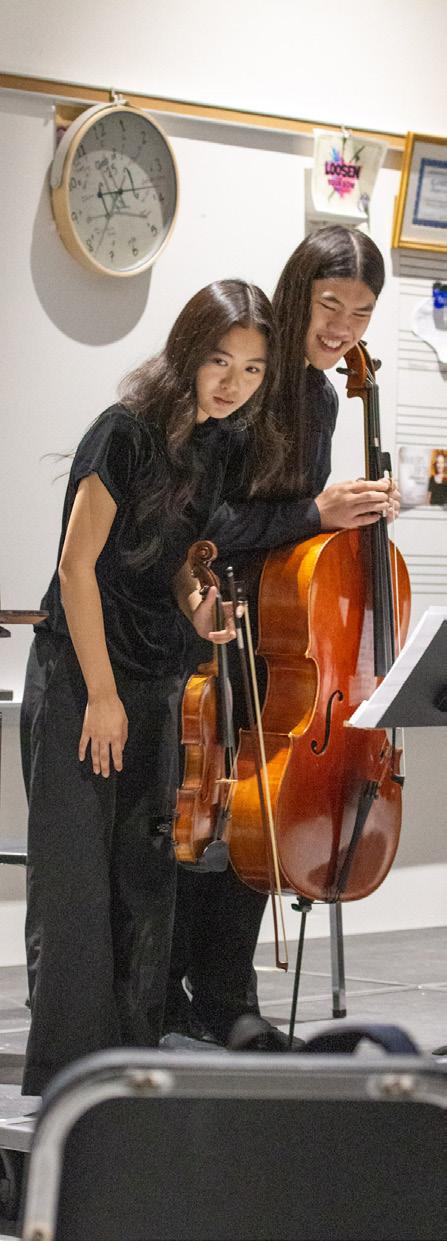
2:Aston Liang (10) and Joshua Gu (12) play as a cello duet in their sextet performing the piece Falling Behind.
3:Miyasi Welivita (9) holds a long note during her trio performance. They performed Senbonzakura.
4:After concluding their piece, Castle in the Sky, Elizabeth Hung (11) and Steven Shaw (11) stand up to take a bow.
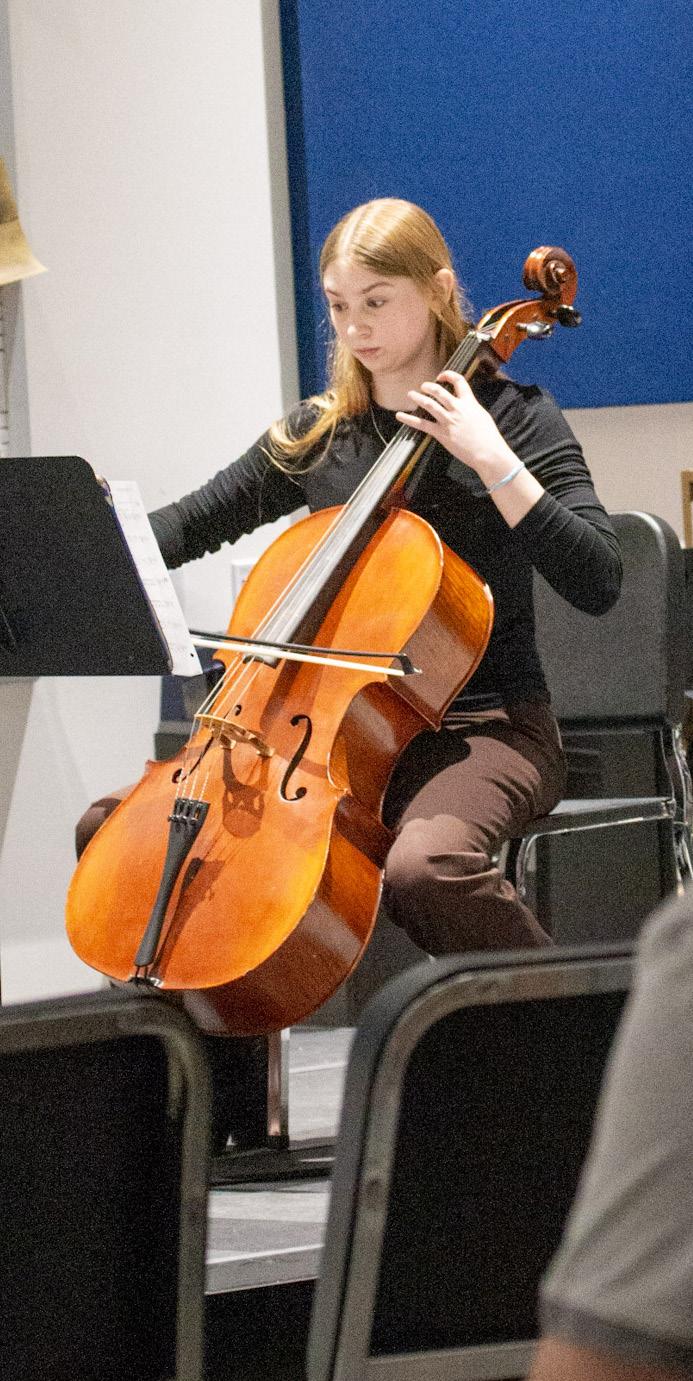
5:Fiona Van Allen (12) reads her sheet music as she plays Here Comes the Sun.
6:While playing in her Kaleidoscope trio, Joyce Li (10) performs their piece, Here Comes the Sun.
STORY BY Kevin Wu
A TWO WAY
STREET
Some students struggle with transportation-others feel that it’s fine
Story by Lasya Kureti
Story by Adam Glassman
Three Per
RUSHING ROUTES
Story by Kellie Ji
RIDING THE
BUS
etting home after school is complicated. Whether you’re walking, driving, or riding one of the classic yellow school buses lining the school’s circle drive, there’s always something to elevate your heart rate. For many, it’s the process of getting on one of those golden buses. The expectations? Neatly fling into the bus, slipping into seats with friends, and a smooth ride home. The reality? A high stress war zone, flled with screams and desperate offers to sit by loved ones.
Freshman Abby Schreiber knows all about it, having rode the bus since ffth grade. Although it gets her to school and back, afternoons on L22–her bus since the beginning of high school–are an unnecessary hurdle for tired students; Schreiber’s bus frequently doesn’t run on schedule and she has had many concerns for her safety.
“We are defnitely over capacity for people - it can sometimes feel hard to breathe on the bus. There is no need for us to have this many kids riding,” Schreiber said in an email interview.
Beyond issues with space, a critical issue for Schreiber is the inability to know when the bus will actually arrive at her stop. Although the Ladue School District’s bus company, Missouri
42% Of Students Ride the Bus After school (Survey of 248)
Central School Bus’ app called Here Comes The Bus aims to help students and parents know just that, Schreiber has not found it to be helpful.
“The bus company has always been oblivious to certain issues and there always seems [to be] an arrogance to issues that they have,” Schreiber said. “They should make sure the bus app is always working and not make it impossible or stressful when parents reach out with questions on their [kids] bus.”
Once Schreiber is on the bus, conditions aren’t any better. Oftentimes, she and fellow riders of bus L22 such as 15-year-old sophomore, Bryan Yang, are unable to fnd a seat due to the sheer number of people. Yang sees this everyday, and the crowding has gotten so out of hand that the bus seats themselves cannot comfortably ft everyone.
“When the buses are about to leave, I see 5 to 10 people unable to fnd a seat, and [they] need to sit 3 to a seat,” Yang said.
A recent survey conducted by Ram Page found that a substantial number of Ladue students agree with Schreiber and Yang’s opinion. This leads people like 14-year-old freshman Penny Whitteck to wistfully ponder solutions to the numerous problems within the bus system.
“I wish it could be split up into two buses,” Whitteck said. “And our bus driver is often yelling at us a lot. So it’s not really fun to hear a bunch of yelling when you just want to get home.”
But as hopeful as this solution may be, it’s unrealistic for it to properly go into place in time for students like Schreiber, Whitteck, or Yang to experience it. That’s why many take their minds off of the current bus struggles, and instead place their sights on their future means of transportation.
“I’m really excited to have a parking pass,” Whitteck said. “It means that I can drive myself to school on my own terms and not the bus driver’s.”
BETWEEN THE LINES
PAY TO PARK
Do you think that a $125 fee is valid for a parking spot?
Parking spots are essential for students hoping to drive
(Survey of 248)
30.8% Of Students Drive After School
DRIVING
When a student declares they hate school, are they talking about grades or the fact that they need to be at the bus stop at the crack of dusk? While the upperclassmen battle over spots of pavement at school, underclassmen cram into bus aisles, overloading the capacity of the vehicle. Sophomore Niyumi Rajapaksha wakes up at 5:45AM to ensure that she is out the door by 6:30AM. Her destination isn’t a driver’s seat, it’s her overwhelmed bus: L12.
“If I [were] able to drive, I could wake up a little later, [make] a coffee and come to school.” Rajapaksha said. “Or I could’ve gone to Starbucks.”
Rajapaksha is one of the hundreds of students currently racing to attain a spot. Rajapaksha turned 16 on Apr. 25 and aims to get her license as soon possible; while she hasn’t applied for a spot this year due to no consent from her parents, she has been maintaining her grades, checking the school email daily, going to all classes on time and has read the handbook.
“I think the requirements needed to get a spot are pretty fair because they show how responsible you are,” Rajapaksha said. “It helps the people who decide who get[s] the spot know that I really do want that parking spot.”
As Ladue is a high achieving district with competition, the prices for the
amenities provided to the students are often lofty. A fee of $125 is currently required for an allocation in the south lot.
It’s a little overpriced,” Rajapaksha said. “But regarding how you just get a parking spot for the entire year, I guess it’s fair enough.”
The transportation department manages the balance of senior priority and grade-based requirements, yet, the student body still remains somewhat divided over the idea of senior status. While Rajapaksha argues that students
“
“I think the requirements needed to get a spot are pretty fair because they show how responsible you are” -Niyumi Rajapaksha
spot assignments should be a frst-come frst serve basis, junior Eelana Riddle sees the current hierarchy as standard.
“I do agree with senior status. They are upperclassmen. They’re the oldest in the school and [have] been here the longest so I think they should be able to get the closer spots, or be granted a spot frst,” Riddle said. “We’re all going to be seniors at one point so we all will end up getting the status.”
The competitive nature of the school is often refected in the scramble for the spot, however, those who act fast – getting their license and submitting applications the moment they are eligible –fnd the entire process undemanding.
“All I had to do was sign up on time, fll out the google form and submit my driver’s license,” Riddle said. “It could be competitive if you are late to the process because [then] you’ll be on the waiting list and you would have to wait until someone either gets their parking spot taken from them, or something else. If you do everything on time, I think [the process] moves really swiftly.”
The most exciting privilege that comes from owning a spot is freedom. For students who dislike relying on their parent for transport/riding the crammed bus, having a parking spot may feel like luxury.
“I actually really wanted to drive to school [and] didn’t want my parents to drive me to school so that’s why I really wanted a parking spot,” Riddle said. “I also do think you do get some hype from it, because you’re an upperclassman and driving to school could seem a little bit cool.”
SISTER OR UNPAID CHAUFFEUR?
Some students rely on parents or siblings for transportation
RELYING
ON OTHERS
It’s 7 a.m. on a Monday morning and Ladue High’s senior Brielle DeRuisseau is ready to get to school. In past years, DeRuisseau has been able to get to school on her own; whether it was riding the bus her freshman and sophomore years or driving herself during her junior year, getting to school had never been particularly challenging for her. However, at the start of the 202526 academic year, everything changed. DeRuisseau’s younger brother, Wyatt DeRuisseau, began as a freshman at the high school. Although her parents didn’t force her to drive her younger brother to school, it still became a cornerstone of her new daily routine.
“I mean, I think it’s just kind of an expectation,” DeRuisseau said.
This ‘expectation’ has changed the way that DeRuisseau spends her days. In the morning, instead of just getting to school herself, she now has to make sure that her brother is ready to come to school with her.
“Sometimes he’s late, which I don’t appreciate,” DeRuisseau said. “He likes to shower 13 minutes before we’re supposed to leave.”
Shifting focus to the afternoon, it’s a whole different story. DeRuisseau and her younger brother have different after school activities which often leads to conficting schedules and miscommunications over transportation.
“He doesn’t tell me that he needs a ride home,” DeRuisseau said. “I’ll assume he needs a ride home and [if] he
rides the bus, I’ll just be waiting around.”
These occurrences make DeRuisseau feel underappreciated for her efforts, often making her feel more like an Uber driver. Nevertheless, younger siblings relying on their older siblings to drive them face similar problems. Freshman Liv Spiegelglass has been relying on her older sister, junior Kyla Spiegelglass to drive her to school. Although she likes that her sister drives her to school, issues between the two have come about.
“The challenge of relying on my [older] sister to drive me is that my sister is sometimes late and running behind, which has sometimes caused us [both] to be late to school,” Spiegelglass said in an email interview.
Being late to school in the morning has become inevitable for several other sibling pairs. Junior Claire Zhang has been driving her younger sister Chloe Zhang to school this year and–similarly to DeRuisseau and Spiegelglass–she also has dealt with that same issue of a sibling not being ready to leave in the morning.
“Sometimes in the morning, I have to wait for my sister to fnish getting ready. It’s slightly annoying since we always arrive at school right when the bell rings,” Zhang said in an email interview.
For Zhang and her sister, conficting
schedules are also a problem.
“Since we are involved in different extracurriculars, it can be challenging to fgure out transportation after school,” Zhang said. “If I have a short club meeting, I typically have to have my sister wait after school for me to drive her home.”
Conficting schedules are oftentimes the root problem that these students deal with, as providing transport can be troublesome for those who have after school activities at different times or places. DeRuisseau plays water polo which holds practice at the high school while her younger brother Wyatt participates in rowing; his practices are completed at the Creve Coeur Lake, 20 minutes away from the high school. These scenarios eliminate the benefts one would expect from the free transport provided by an older sibling. It is most likely that parents are still required to partake in driving students all over the place while the continued, inconsistent bus protocol is still unreliable. It is because of this unpleasant bus experience, that Spiegelglass contends that despite some of its faws, receiving transportation from an older sibling is still better than riding the bus.
2.4% Of Students Walk After School (Survey of 248)
“It is defnitely worth the hassle,” Spiegelglass said. “Because I avoid sitting three per seat and getting yelled at by the bus driver everyday.”
22% Of Students Rely On Someone else For Transport After School (Survey of 248)
Art by Regina Copeland
Lost in the
The
numbers
RamPage believes grades dominate over real learning
Elle Woods, Rory Gilmore, Bill Gates, Mark Zuckerberg, Jeff Bezos, Elon Musk — the media glorifes prestigious universities with international success and wealth. With a 25% acceptance rate in 1973, all Bill Gates’ classmates needed to get into Harvard was a 3.9 GPA and a 1500 SAT. Nowadays, that acceptance rate is as low as 3%, with students feeling the need to be Gates and start 10 non-profts, build schools and fnd a cure for cancer.
Most students dream of an Ivy League acceptance. Comparison plagues Ladue Horton Watkins High School (LHWHS) as busy work pours into hands of burned out students, trying to plan their week full of sports practices, club meetings and project deadlines. In a curriculum built for learning, education starts to fail when the need for perfect grades becomes a priority.
When deciding which class to take, grades are always the top priority. High achieving students are swayed away from taking classes that interest them in favor of “easy As” and stacking AP’s to boost their college admission chances. All AP U.S. history students recite 46 presidents and parties every spring til perfection for a test but few retain historical connections to the real world.
Information comprehension and peer
collaboration are overtaken by the need to receive perfect marks in every class. At LHWHS, an A+ is a 100% — every mistake means you miss out. High grades mean even more when our school starts to incentivize them with free rewards.
Although benefts can increase motivation, it also causes students who are on the edge of an A to overfxate on grades. An article written by the education department at Queens University explains that grade obsessions lower self esteem for students. In a competitive system, relationships are harmed by the need to stand out, and can even cause anxiety and mental health issues. Tests limit different ways of learning, leading to low risk taking and prioritizing memorization over connecting concepts.
Nowadays, many students prefer project based assessments over tests. With projects, students have more control over their learning, allowing more creativity and lower stress. Tests have one correct answer, but real-world problems often have multiple. Students gain the ability to adapt to different situations when they get the opportunity to explore different pathways instead of conforming to assessment rigidness.
The Round Table Review at John Champe High School found that 91.4% of students
preferred projects over tests. The article explains that students can create real-world connections and references Open College which states 90% of information is lost 14 days after a lesson.
Some educators argue that learning test taking strategies is valuable in preparation for the SAT and ACT. While that is inherently true, PubMed Central found that 54% of high school students have test anxiety that affected their results. With more than 75% of students feeling stressed before an exam, it makes us question the system that was made to help students feel prepared.
Although tests are important and necessary, using projects for learning is equally as valuable. For younger students, developing collaboration skills and handing students control over their learning helps eliminate intense grade competition as they get older.
We as a district should bridge the gap in our education and address the fractures in the status quo. School is becoming more about grades than learning, and students are negatively affected. Cramming a month of information into a few nights is becoming the norm for students who don’t comprehend the information from basic lectures. So it makes us start to wonder, does our education system need to be changed?
LESSONS FROM
LOST LECTURES
Teachers should engaging more with students
story by Jillian Lin
In through one ear and out through the next, my eyes are on the clock waiting for the teacher to be done talking. Thirty minutes pass–then an hour. The teacher’s words don’t register in my brain but it doesn’t even matter. I don’t have to listen, all the directions are posted on the slides anyways. Every day, it’s the same thing over and over again, reading off the information on the slides and then letting us fnish some busywork.
In the end, it’s always th same; Teachers don’t care enough and students don’t learn. It’s no wonder why students are bored, tired, and unfocused when all that teachers do is read off the slides and make students copy them down instead of making things more engaging. Then they assign ten pages of homework and you have to learn things by yourself. This lack of guidance stems from the indifference that teachers feel towards us. They simply don’t care enough if you’re truly learning the material. I mean why should they? Your grades have no impact on them anyways and your suffering makes no difference to them.
You are just a job. Not a person. According to “Education Week,” less than a quarter of students said that their teachers have tried to make an effort to understand what their lives are like outside of school in a survey of 88,000 students, furthermore proving why students often have trouble in classes. The connections that we make help us grow as people and when your bonds with your teachers are inadequate, then it would obviously lead you to hating that certain class and trying less. Additionally, teachers often pick favorites, giving more attention to the students they like more. According to “Penn State Center for Collegiate Health”, in a data research of 35,331 clients from university and college counseling, 20% have reported discrimination within a period of 6 months.
In my personal experience as an East Asian, not one–not two–but three different teachers have called me by the name of my other friend and of course she was the only other Asian in those classes. In the fall of the school year I had been out during a golf tournament and the exact same friend had
75%
40% of students report feeling lonely of students report constant stress of students report lacking emotional support
21%
been sent down to the principal and asked why she had been marked as an unexcused absence since my teacher had confused the both of us. I had also received her tests and quizzes multiple times in multiple different classes we were in together when being passed back. When I told my experiences to my other friends they had been shocked and had said we looked nothing alike. It may not be intentional, however the lack of caring leaves a deep mark, especially since the school year is already over and this problem is still occurring.
If this doesn’t convince you how little teachers really notice their students then I don’t know what will. What needs to happen is that teachers need to treat everyone equally instead of favoring particular individuals, be more mindful, and actually teach instead of giving us pointless, unnecessary work. One more thing to all my fellow students: stand up for yourselves and your identity and show that you truly deserve to actually learn without discrimination.
A CONTENT
LANDFILL
AI “slop”, Why We All Need To Push For Human Made Art
story by
Sasha Prasad
Tonight on Fruit Love Island, Strawbanina just got dumped by Bananito, Tung Tung Tung Sahur is stirring drama, and Watermelina just got dumped before recoupling. You probably laughed. Or at least, you almost did, before you caught yourself and thought: Wait, what…?
“AI slop” is the term that defnes an absurd volume of algorithmically generated images, videos, and characters fooding our feeds. And the most alarming part is that most of us know when it’s AI, yet we still engage with it anyway. For years we have worried about the death of authentic culture. The television rotting our brains, Photoshop warping how people see themselves. But AI slop is different in both its scale and its kind. Those previous threats were about the people who consumed, but this is production.
For the frst time ever, the barrier to generating passable creative output has dropped to zero. Anyone with a prompt and thirty seconds can food the internet with something that looks like art, reads like writing, and means absolutely nothing. Keep it coming fast enough and people stop asking where
it came from. And once that question stops getting asked, the standard for what counts as creative work shifts with it.
The damage falls hardest on working artists. The illustrator who spent eight years developing a style is losing clients to people who can generate “close enough” in under a minute. These are careers and entire creative lives being pushed out by a tool that requires no value. Platforms optimize for engagement rather than origin, and audiences are being conditioned to consume without questioning.
Every share of AI slop reinforces that cycle. The algorithm does not care who made something or what it cost them. It measures clicks, and right now, slop is winning. Younger audiences especially are growing up in a media environment where the origin of content rarely comes up, and that normalization is diffcult to reverse once it takes hold.
Part of what makes this hard to contain is how normalized it has become. Teachers have been using the same AI tool students are getting fagged for using. Reputable institutions adopting it without acknowledging the contradiction, sends a message so a larger audience, making it a detrimental impact. Doing something about this impact
starts small. Pay attention to where content comes from, then pay for it even during this rather bad economic climate. Buy a print, stream an independent album, subscribe to a writer whose work you actually read. Money reaching a human creator adds up across a community that chooses to care. It also sends a signal to platforms that origin matters, and that audiences still distinguish between something thought out and something generated.
A teenager scrapping plans for pursuing humantities because the career no longer feels viable is making a real decision based on a market that has been reshaped. When enough people reach that same conclusion what gets lost is the kind of original work that gave the internet something worth scrolling for in the frst place.
The gap between something made with intention and something generated for engagement is worth protecting for yourself and people who have a passion for the arts. This is true even when you almost laughed or cried at Strawbanina getting dumped off slop island, and even when part of you wants fruit love island fnd out if Tung Tung Tung Sahur manipulated Bananito or the new fruit-shell next. Stay tuned, just not for this slop.
Should there be more
Electives?
Reasons why or why not there should be more electives
story by Barrett Druck.
Have you ever had the feeling that there should be more elective classes? That it would be cool to have a certain subject or activity taught in school. Well the reason why it does not already exist as a class is simply because it’s near impossible to add them. Sadly the reality is that new elective classes are extremely hard to implement; especially if the subject or activity is very niche. This is due to even more factors as well but the main ones are that the school could need more staff to run classes, the school may need to buy new equipment for classes that involve specialized tools, and the possibility that the majority of students just won’t be interested.
The frst issue being that the school could need more staff/teachers
to actually teach these new elective classes is a huge, glaring problem. The idea of needing to add more people to the schools overall pay each and every year is already enough to get administration to drop the thought of new classes. Now a solution that some may say is how we can get existing teachers to teach some of these new elective classes instead of hiring new teachers. The thing wrong with getting teachers to also teach many new elective classes is that having too many classes could overwhelm a teacher, while also having the chance that they could not be qualifed to teach that new class at all. So in short the frst main problem of needing more staff is reason alone not to add more elective classes; since having even more people added to the yearly pay and then just having existing teachers fll this role is a nightmare for all staff involved.
As for the second concern of needing to buy newer and specialized equipment is an immediate road block
for elective classes being suggested. In the same vein as adding more staff, buying new equipment just adds to the schools overall spending amount for the year. This already sounds like a negative outcome for administration but it does not end there; as the new equipment could require yearly upkeep that also adds more money spent on just one new class. It is also possible that this theoretical new class could require a teacher who needs to be specialized to use the equipment as well. There is also the topic of student safety as even though we have an industrial tech class that uses dangerous tools, having new ones that could be dangerous as well would need to be taught to be used carefully. So needing new equipment just adds more to the schools immediate and yearly pay; with the possibility of needing safety rules and lessons around them.
Now there is the fnal issue, that being the real outcome of majority of students just not having an interest or passion for the subject being taught. This would be the fnal concern in the way, since the class could be easily implemented but not worth the trouble if a handful of students actually take the course. All of the effort will go to waste if this is the case since no admin would green light a class almost no one would take. The new teacher and equipment that would be brought in suddenly not needed anymore. The reality of the situation is that if no student will take the class, admin would discard the idea of making that class.
So in the end a new elective class would need to catch a lot of students attention for admin to even consider implementing it for years to come.
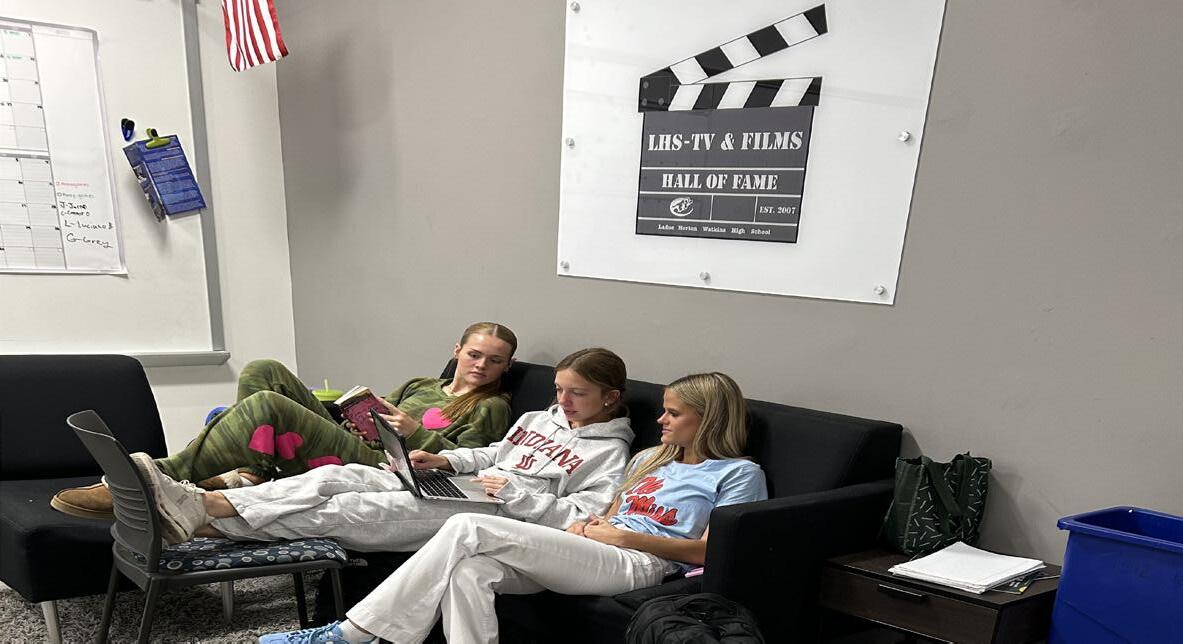
Students Mira, Riely, Lucy, and McKenzie work on their multimedia player profles to give media attention to the sports teams in room 1337. These students were in two separate classes those being multimedia two & three. By Barrett Druck
Finding Water
story by Keller Strauss
Americans and Mozambicans stand hand in hand around a newly improved solar panel well. Prayers ring out from the circle as the well is blessed for the frst time. After prayers are said, the children run around playing with each other. Among the celebration is Henry Brenneman (12) and his father Jeff Brenneman. They are in Mozambique

ABOVE:Henry stands with a group of Mozambican children. Throughout the trip, the Brennemans had many interactions with the children of the village.
“There’s a little boy that looks up and catches my eye, and I just kind of waved at him, and he popped up and ran over to me,” Jeff said. (photo submitted by Henry Brenneman) RIGHT: Two Mozambican women stand with their babies. The women played a large role in the ceremonies that the did.
“The African ladies did this thing with their tongues, where they like, trill it.” Jeff said.(photo submitted by Henry Brenneman)
for the trip of their lives and to aid the churches in Mozambique with the Mozambique Initiative.
“My church specifcally focuses on clean water, and that’s hard to do from going there and helping when it’s mostly just being done with actual excavators and tools,” Henry said.
The Mozambique Initiative is a group that connects the Methodist churches of Missouri, to the Methodist churches of Mozambique. The Gathering, the church that the Brenneman’s belong to, works mostly on the building of wells in Mozambique.
“
Henry Brenneman (12) discovers himself on a mission to Mozambique
the trip was to celebrate a new solar powered well, Henry gained something personal out of this experience. This was a new style of adventure for Henry, and he gained a new viewpoint on the world.
“My church specifcally focuses on clean water, and that’s hard to do” -Jeff Brenneman
“Once we raise the funds, then they hire local contractors to actually dig the wells,” Jeff said, “Another piece of us working with the initiative is that we then send groups over to meet the folks in the churches or at schools or wherever it is we put the wells.”
Even though the main goal of

“I remember having such a good experience with [missions] that I wanted him to have the opportunity to do something like that,” Jeff said. “He hadn’t been out of the country at that point either, and I thought this would be cool for him to do that.”
This trip was a rush for Henry as he got to experience new traditions in his religion as well. This was a chance for him to see a different form of Christianity.
“I get out of this van, and the frst thing I’m having is this entire community singing in a different language to me, I just don’t understand anything that’s happening, and then we end up walking down to a river and witnessing a baptism,” Henry said.
These new religious experiences helped Henry learn who he was philosophically.
“I have only been able to fgure out my religious identity through a long time of getting to sit with it, but I think having the trip has helped me to explore it,” Henry said.
Through the trip, Henry has been able to get closer to fnding who he is religiously. He still thinks about it today but the impact of new experiences on a mission trip are never lost on his religious journey.
“I refect on [my religious identity], and I come up with a new idea or a new belief,” Henry said, “But also I think in the short term, it was like I got to just know what it was like to be somewhere new.”
DAY 1
DAY 2
DAY 3
DAY 4
DAY 5
Arrive in Nampula and drive to Malema. Attend two large churches in Malema. Visit a local school to have a ceramony to bless the new solar well. Visit a resort on the way back to Nampula. Attend one last church, and get a tour of the village. Finaly get sent off by the community. by Day Day
start FRESH A
Sophomore Eva Korotkova leads the START club to support refugees and honor her Ukranian heritage

story by Regina Copeland
The smell of freshly baked Paska drifts through the kitchen as upbeat Ukrainian pop music thumps from a nearby speaker, filling a suburban American home with the sounds of a distant land. At the center of the room stands Eva Korotkova, a sophomore whose life is a vibrant tapestry of two worlds. While she navigates the hallways of the high school with bubbly energy, she remains deeply rooted in her heritage, keeping her family and the
home she left behind at the center of her heart.
This connection to her ancestry was forged long before the move to the United States, anchored in the simple, quiet moments of early childhood. For Korotkova, the image of her homeland is defined by one specific memory.
“My earliest memory of Kyiv is of walking with my grandma from her house to the toy store,” Korotkova said. “We would walk everywhere all the time because everything is really close together in Ukraine, unlike in
America. Her home was so warm and peaceful, and when I revisited, it felt the exact same way.”
Kyiv remained with Korotkova even after moving to the United States at age 4. Her mother, Valentyna Korotkova, believes her daughter embodies the most essential values of their people.
“Bravery, independence and freedom, I think those three are the most important values for Ukrainians, and for Eva,” Valentyna said.
However, that independence is often shadowed by a heavy concern for the relatives remaining in a war zone. This
Eva smiles for a picture while celebrating a traditonal Ukranian holiday. Eva has been celebrating this holiday since since she was young. (Photo submitted by Eva Kortkova)
emotional friction creates a sharp contrast between Korotkova’s life in Missouri and the reality facing her family.
“What’s happening in Ukraine makes me extremely angry and upset,” Korotkova said. “It makes me even angrier that I get to be here and have a good education and life while my cousins fear for their lives.”
To channel this frustration, Korotkova took over the START club to support displaced families in St. Louis. Vice president Talia Poremba (10) has watched her personal history fuel a magnetic leadership style.
“I have gone to clubs before where people are only there to have a leadership position for their resume, but with Eva, you can tell she actually cares and is passionate,” Poremba said.
This passion is evident to the faculty as well. Deepa Jaswal, an ESOL teacher at Ladue High school has noticed that Korotkova possesses a rare ability to com -
START’S 25-26 EVENTS
mand a room.
“Eva is able to capture everyone’s attention,” Jaswal said. “She speaks very strongly and her presentation skills are incredible. I wish I could present the way that she does.”
But charismatic speeches are
“
“Because of my Ukrainian heritage, when I lead, I understand the value of community.”
-Eva Korotkova
only half of the equation. The club’s true impact is measured by the tangible relief provided through local fundraisers.
“The most successful project this year has been the Crumbl



Cookies sale,” Korotkova said. “We sold out so quickly we had none left by the end of lunch. We raised $600 and plan to give the money to refugees in need.”
This effort resonates far beyond the school walls. Valentyna believes these acts of service carry profound weight for those still living through the war.
“Eva’s relatives would be very thankful,” Valentyna said.
“All help, it doesn’t matter if it is big or small, is very important and appreciated in countries in war like Ukraine.”
This global perspective has fundamentally changed Korotkova’s mission. She now measures success by her ability to eliminate the feeling of displacement for others.
“I hope that through START’s work, there are families who feel at peace and supported,” Korotkova said. “I hope we have eliminated the feeling of displacement for as many families as we could.”
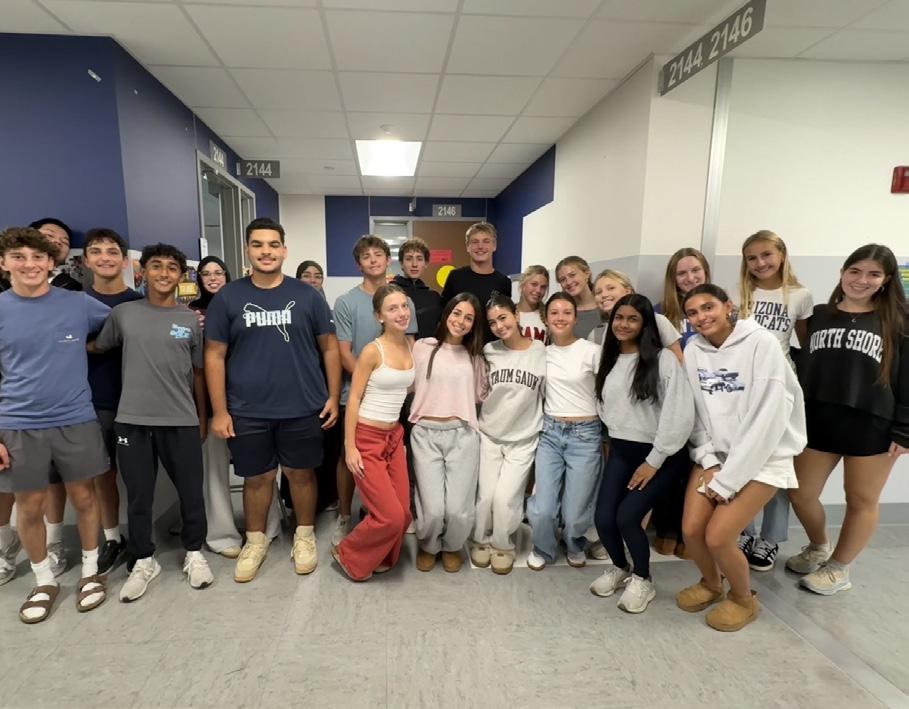
TOP LEFT:Eva smiles for a picture with her friend from Ukraine. Eva has known Sophia since they were young. “Me and my friend Sophia celebrated Easter together because we are both Ukrainian,” Eva Korotkova (10) said. TOP RIGHT: The frst START meeting of 2025 takes place at Ladue. A new large amount of students attended this meeting. “START is important because we live in a very diverse community and the fact that we are able to help so many refugees with our volunteer services we provide is really amazing,” Zev Hall (10) said. BOTTOM LEFT: Students from START skate with refugee’s at Brentwood Ice Rink. This event happens annually to provide a fun experience for refugee families. “As somebody who has over a decade of experience of ice skating it was really moving to teach refugees how to skate.” Elsa Flores-Tamayo (10) said. BOTTOM RIGHT: Eva poses with her mom, Valentyna at a family event. Eva and her mom still stay in touch with their family as much as possible. “I stay connected to Ukraine through our language, our music, and our food.” Korotkova said. (all photos submitted by Eva Korotkova)
Crumble fundraiser at lunch raised $600.
START members tutor refugees in English monthly.
START members teach refugees how to ice skate.
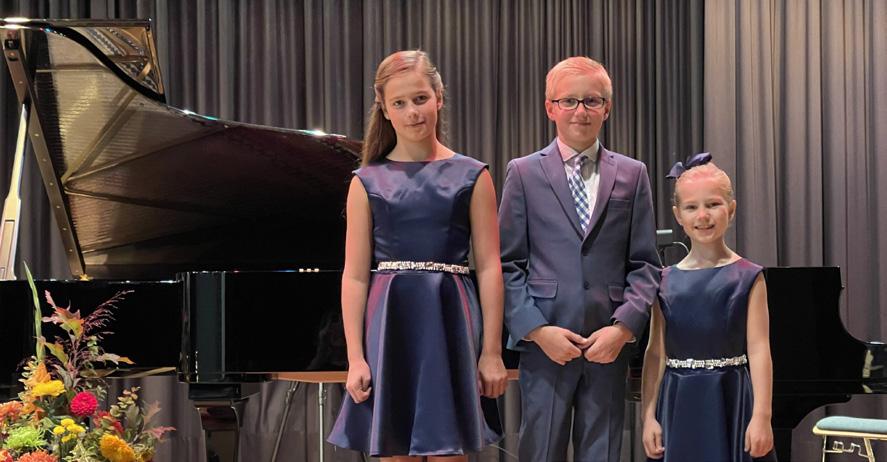
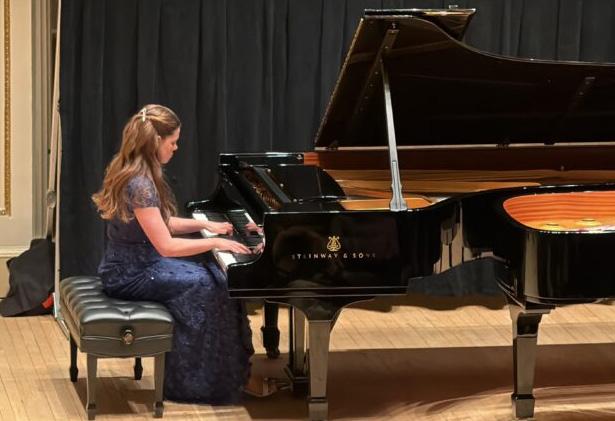
RIGHT: Kate Brinton (9) plays the piano at Carnegie Hall March 23 during a family concert. She’s enjoyed playing piano ever since she was little. “I know music will always be part of something I’m doing,” Brinton said. (photo submitted by Kate Brinton). BOTTOM: 8-year-old Brinton poses with her brother and sister at a family concert in Germany. Brinton grew up in a family of pianists. “My grandma, she is really big on piano,” Brinton said. “So, we do concerts sometimes with her.” (photo submitted by Kate Brinton).
The Keys to Kate
Brinton (9) performs at the
story by Jessie Liang
It’s March 23 in New York. From Carnegie Hall, considered one of the most prestigious concert venues in the world, strings of notes foat up into the air. They weave together to recreate the sound of a peaceful harp, with twinkling high notes carefully placed in the mix to complete the dreamlike mood. Once in a while a descending chromatic scale gets elongated and slowed down, the image of dominoes falling flling the audience’s mind and anticipation strengthening the tension in the air. At the center of it all sits a 15-year-old girl at the grand piano, hands gliding on top of the keys to masterfully manipulate the melody of Franz Liszt’s Un Sospiro.
A pianist for eight years, Kate Brinton (9) is currently learning with Helen H. Chiu. Brinton frequently performs in many places across Missouri and has even been a guest performer at the Capitol Theatre in Salt Lake City as well as for sold-out audiences in Germany. Those that have been lucky enough to hear her play always leave with a deep impression. One of them is Adie Jeliazkova (9), a close friend of
Brinton.
famous Carnegie Hall Success
“She’s a very expressive player,” Jeliazkova said. “So whenever she plays, you can tell that she’s having fun performing the pieces she’s playing. It’s always really cool to see her play.”
To further enhance her piano studies, Brinton has a piano practice tutor, Young Whun Kim. His daughter, Claire Kim (9) has heard Brinton play at her family’s concert.
“She has a very loud tone,” Claire said. “She plays very frm, stiff and very agile and [has] a lot of motion. That was good to hear. ”
Brinton has accumulated multiple distinguished honors, including being a Gold Prize winner in the Franz Schubert International Music Competition for the 11-13 age group, a First Prize winner in the International Music Competitions Best Debussy Performance for the 11-13 age group and the runner-up at the 2023 Missouri Music Teachers Association State Competition for seventh grade.
“She’s a great performer,” Jeliazkova said. “She doesn’t really like when people acknowledge her achievements of piano. She gets a little embarrassed, but she’s very good at performing on stage with the pieces and everything.”
Yet with all of the prestigious
More about piano competitions Put it Test to the
An online competition where awards are given based on scores judges give. Franz Schubert International Music Competition
An in person competition, where all participants have to pass the regional competition frst. Missouri Music Teachers Association State Competition
An online competition where awards are given based on scores judges give. International Music Competitions Best Debussy Performance
awards and medals she’s been rewarded, Brinton still regards the process of learning and progress as more important. She focuses on the journey that’s flled with challenges instead of the results, which may be the very key to her success.
“My greatest achievement is learning to be able to critique myself and think of how I can play better on my own,” Brinton said. “It [was] really hard for me to fgure out since I was like, ‘Okay, how do I make this better? How do I make this sound better?’ But now I can… I look closely at maybe the dynamics and the directions, and that helps me know how I can make what I’m doing better.”
It’s important to learn from past mistakes and just as important, if not more, is holding on to hobbies or passions that bring joy. Music is something Brinton has always loved, and she hopes everyone can enjoy and come to love it.
“Music and learning instruments has been something that maybe people don’t really achieve much focus or likeness to these days, and I think it’s something [that’s] really important, especially classical music,” Brinton said. “It’s happy and it’s good and people should listen to it more.”
Getting back on the
STORY BY Amara Loynd
Junior Alina Tenenbaum makes a recovery back to dance Beat
Great turn, remember to keep your arms up.”
From the front of the studio, sat against the mirrors, Alina Tenenbaum watches her Laduette teammates dance. She calls out corrections and encouragement as dancers go through combinations. Though she isn’t dancing due to a torn ACL, she remains a fxture of every rehearsal, helping to shape the team from the sidelines.
Tenenbaum is a junior at Ladue Horton Watkins High School and a veteran of the Laduette dance team. After tearing her ACL during a routine practice in early autumn, she shifted into a supporting role while focusing on a long recovery. A dancer since ffth grade, she had fnally reached the competition team—a selective group performing at the highest levels—when the injury occurred.
“When I frst found out that I couldn’t dance, I was pretty upset,” Tenenbaum said. “Junior year was kind of the year that I was moving up.”
Staying involved became a priority, even as her physical participation stopped. She attended nearly every competition and game, despite a grueling physical therapy schedule that often kept her away from standard practices. The shift from performer to supporter was a diffcult emotional adjustment.
“I think it’s just really affected my relationship with dance overall,” Tenenbaum said. “I just felt so disconnected from everyone and from the team.”
Despite that disconnect, her presence remained vital to her peers.
Esther Badmus, a sophomore teammate, noted that Tenenbaum never truly left the space. She would “mark” choreography—using hand gestures to simulate movements—and provide feedback that only a veteran dancer could offer.
“She would cheer us on and sit in the front and help us out,” Badmus said. “She’ll always be there, no matter what. Even if she can’t dance, she’ll still show up for us.”
While Tenenbaum stayed present for the team, the recovery process was a solitary journey. She navigated the transition from surgery to rehab mostly on her own, noting a handsoff approach from her coaches that left her feeling somewhat isolated.
“They kind of didn’t react,” Tenenbaum said. “I think they didn’t really know what to do, and there wasn’t anything they could do, so they just did nothing.”
From the coaches’ perspective, the focus was strictly on safety and medical clearance. By following the expert guidance of trainers, they aimed to ensure she didn’t rush a return that could cause permanent damage.
“We take the guidance from the trainer... to make sure that we’re doing the right thing,” Coach Julie explained.
Now, six months after surgery, Tenenbaum is slowly stepping back onto the foor. While she has grown as a leader and a mentor during her time away, the physical return brings its own set of anxieties.
“Now that I’m in practice again, it just feels kind of awkward and out of place,” Tenenbaum said. “I’m just really nervous about how I’m going to get back.”
“
“I’M JUST TAKING IT ONE DAY AT A TIME,” -ALINA TENENBAUM
2.MEDIA
Alina Tenenbaum
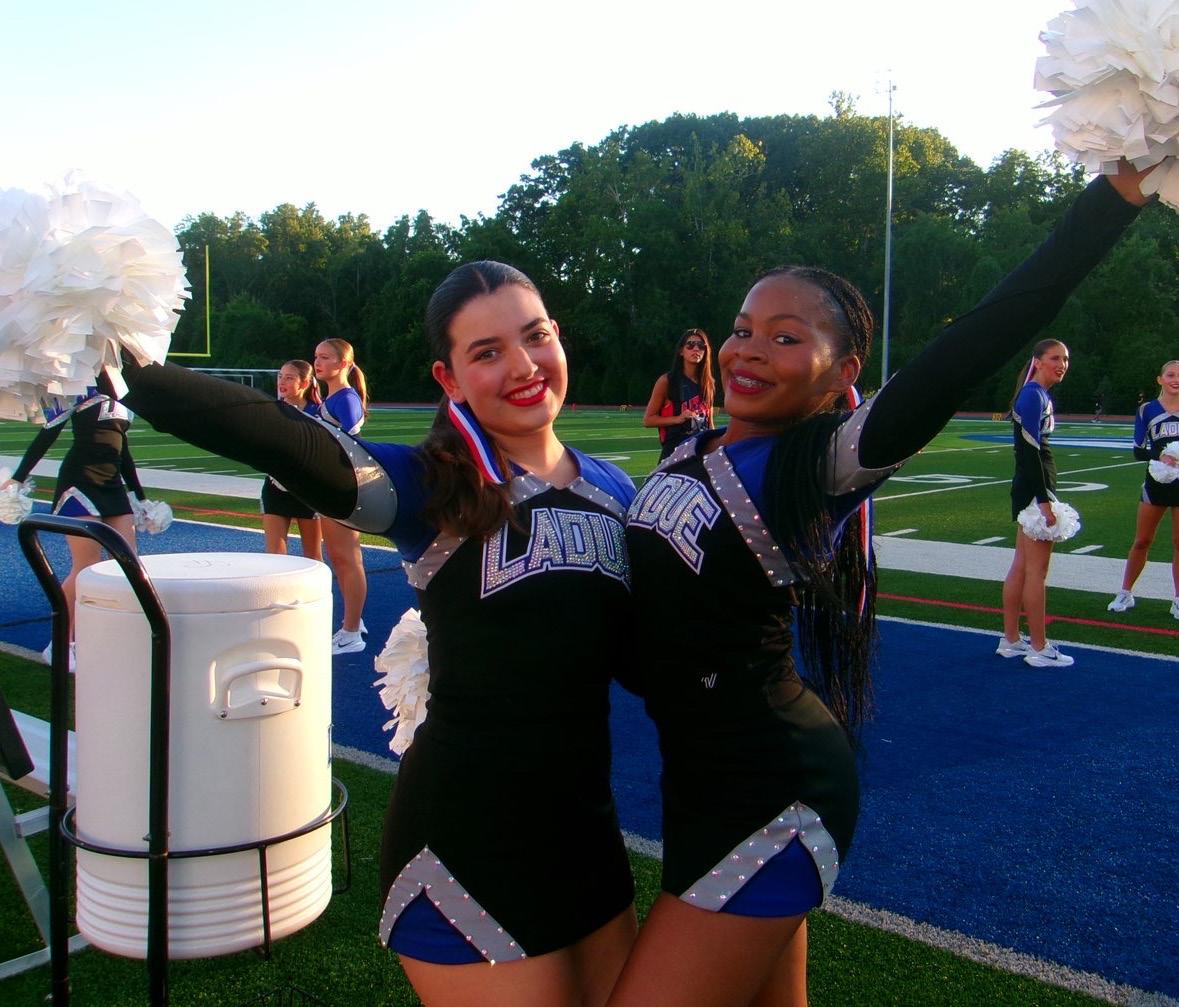
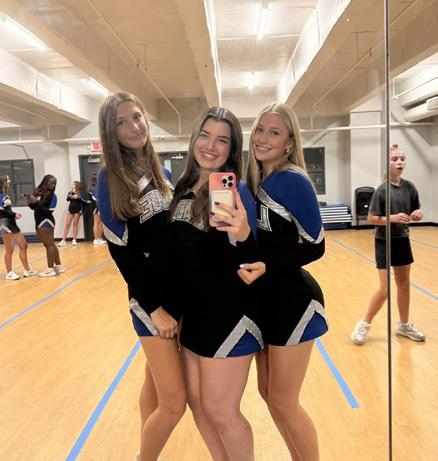
poses in the studio mirror with teamates Emme Hirsch
and Sophie Leidenfrost (right) during Laduettes media day at the Ladue 5th Grade Center. Photo submitted by Alina Tenenbaum.
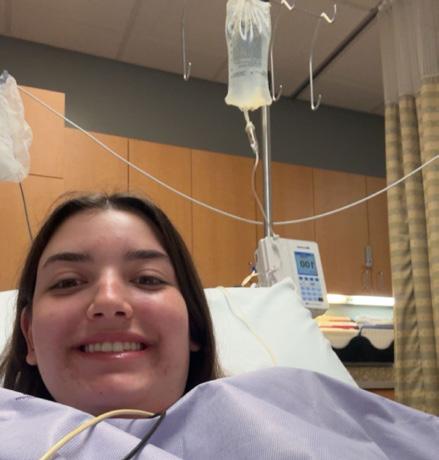
3.SURGERY SELFIE: Alina Tenenbaum takes a selfe while in a hospital bed following surgery after tearing her ACL at practice. She smiles for the photo in late October. Photo submitted by Alina Tenenbaum.
1.FNL: Alina Tenenbaum (left) stands on the Ladue High School football feld with teamate Tamaira Brown (right), taking a photo together before football game. Photo submitted by Alina Tenenbaum.
DAY:
(center)
(left)
New leader, Math teacher and former assistant coach
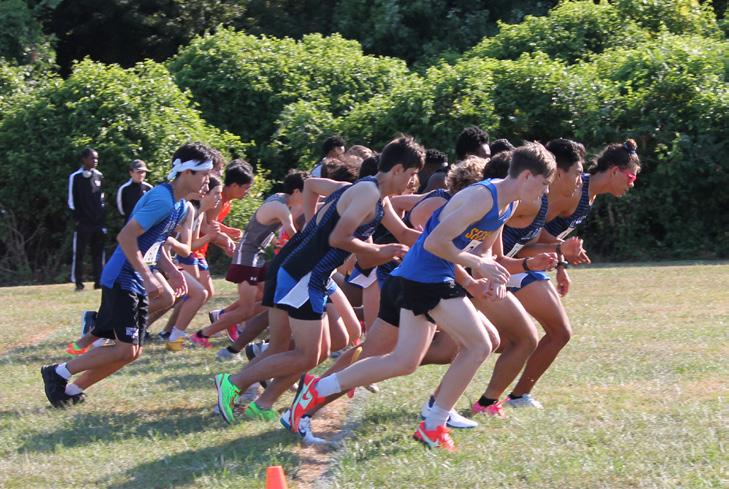
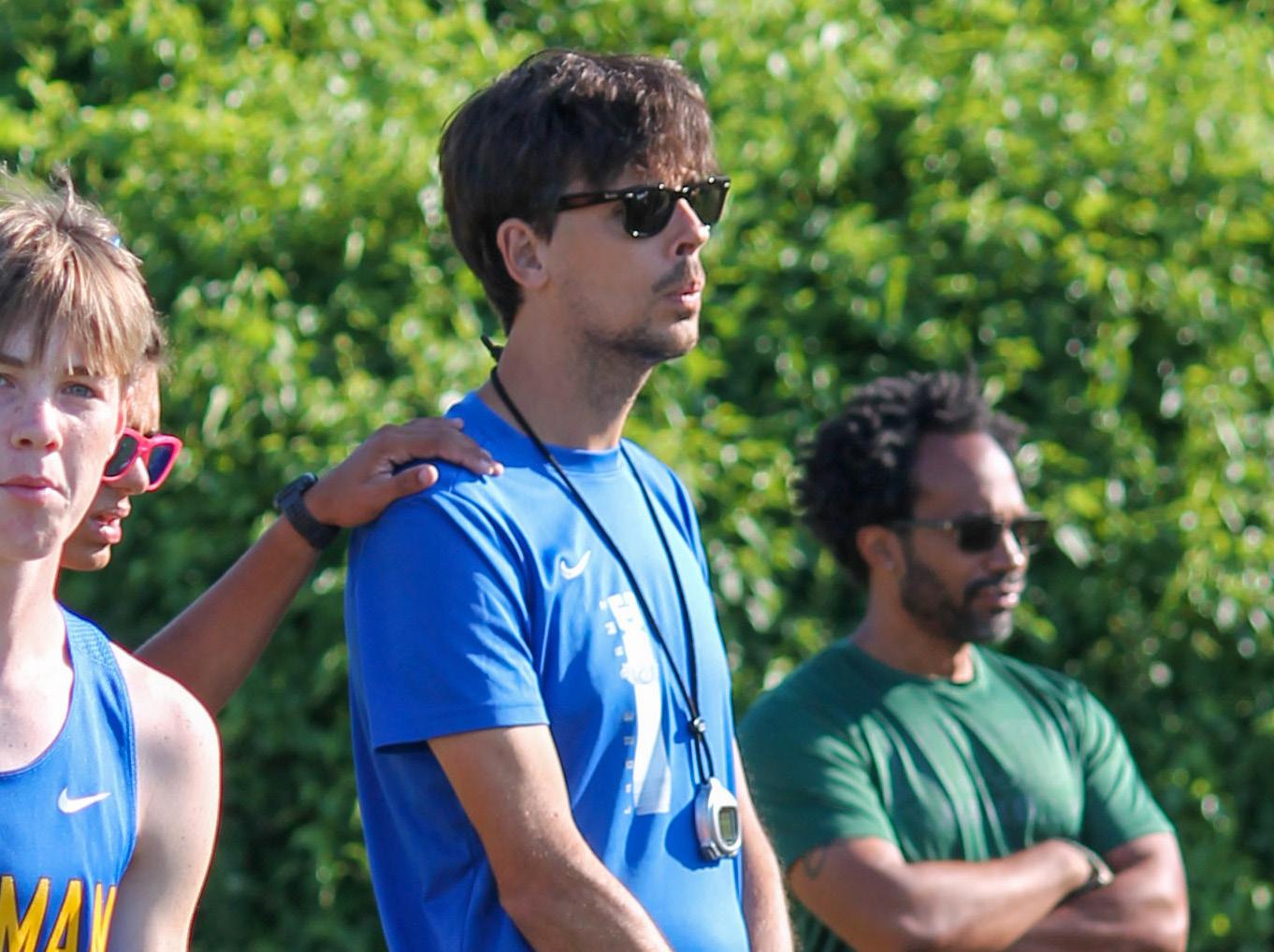
LEFT: Coach Ryan Rzeszutko stands, waiting for the start gun on Aug. 30, 2025 at the Clayton Classic at St. Vincent Park. This was the frst meet of the season, and the weather was ideal for a cross country race. “I can give you a workout, but it’s up to you how hard you’re going to work,” Rzeszutko said. (photo by Claire Yates) ABOVE: Boys varsity takes off for the frst race of the day on August 30. They places third place out of 10 teams, six of which had team scores. “Most kids aren’t going to walk away remembering the specifc workouts that they did, but they’re going to remember being challenged and growing throughout those workouts,” Buckvar said. (photo by Claire Yates)
same goals
Ryan
Rzeszutko steps up as head coach for the coming cross country season
story by Claire Yates
On a Friday, many people at Ladue Horton Watkins High School leave the building as quickly as possible. But for Ryan Rzeszutko, his day isn’t over. He is the former assistant coach for the cross country team and is stepping up as head coach for his fourth year at the school in the coming season. He is following in his dad’s footsteps as both a high school teacher and coach, and has worked with the former head coach, Nick Buckvar, to create a program that fosters the needs of the entire team.
Rzeszutko has many aspirations and goals for the team with his coming leadership, and he knows that it’s possible with this group of athletes. He was the head coach at his old school in Maplewood Richmond Heights for a while, so this is not his frst time in this role.
“I still have fond memories when I think back on my high school experience. I think in those four years, I grew a lot as a person,” Rzeszutko said. “I made some connections with people, and I felt like I really belonged. It was a big part of my high school experience…I think my top goal for athletes [is] all about just personal growth, getting better, and just being
proud of your evolution over the course of your time in this program here.”
Rzeszutko had also collaborated with Buckvar on workouts and day-to-day things in the past few seasons. The transition is going
“
“I think my top goal for athletes [is] all about personal growth” -Rzeszutko
to be much cleaner, as the coaches worked together to make the team what it is today.
\“I think we all agree[d] on certain goals and expectations that we [had] for the overall program,” Buckvar said. “Just being able to discuss different workouts [and] really thinking in terms of how that ft[s] into our philosophy of training and how we want training to look [as well as] being able to differentiate amongst
groups of athletes that we have.”
Junior Addie Salvatori feels a strong sense of community and belonging in the team, especially coming from Rzeszutko. Salvatori has lots of memories associated with him and is excited to see what he will do as the head coach.
“He’s one of my favorite coaches [and is] really encouraging,” Salvatori said. “I was injured one year, and he was one of the only coaches to reach out to me. He makes every teammate feel appreciated and they’re part of the team.”
When navigating the change in coaching staff, there is still the need for consistency. Rzeszutko likes some of the things that have been core parts of the team culture Buckvar implemented in the past and plans to keep them. He hopes athletes can look back on their experiences and enjoy their time within the team culture alongside their performances.
“I really hope when they think back on their experience, they can be proud of where they were freshman year or when they joined our program to where they are now…” Rzeszutko said. “We have a lot of really cool traditions in cross country, [doing] a cookie bake off and…weekly team awards that I think are really awesome.”
Photos by Arin Navjith
Home
STRETCH
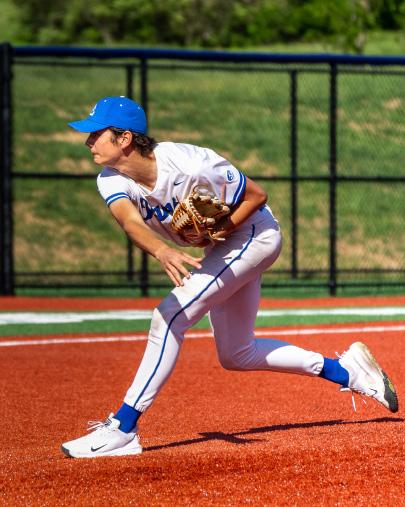
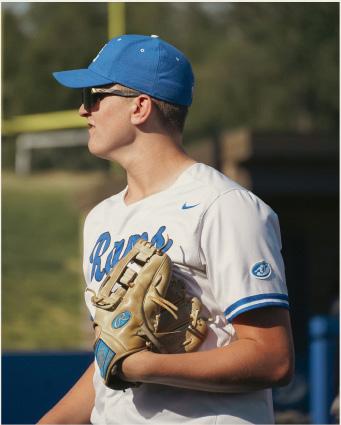
1. Johnny Lloynd (10) delivers the frst pitch of the game against Parkway North, setting the tone for the Rams on the mound. The sophomore looks to shut down the Vikings from the opening throw.
2. Henry Bogart (9) makes his way back to the dugout after holding down the outfeld during the frst inning. The freshman keeps his composure as the Rams prepare for their next at-bat.
3. Henry Morrison (9) connects on a powerful swing, sending the ball over the fence for a home run against Parkway North. The freshman’s big hit energizes the Rams and adds to the team’s lead.
4. Henry Morrison (9) slides headfrst into home plate, scoring a crucial run against Parkway North. The freshman’s aggressive baserunning proves key as the Rams push to extend their advantage.
5. Parker Crane (9) walks back to the dugout after being thrown out at frst base, his frustration clear on his face. The freshman refocuses as the Rams look to keep the pressure on their opponent.




Rhythym
Manon Hernandez shares Laduettes Competition Experience
story by LANDON PAGE
Finding the Team Chem
Manon Hernandez is a Junior in high school who participates in the Laduettes Competition Dance Team. “I have been dancing since I was 3 years old. I did studio, and [then] quit when I joined the school team to make a full time commitment to Laduettes,” Hernandez said.
It’s not an easy feat to balance work and sports for athletes, lots of passion, commitment and hard work are required. Year round training is needed to keep up with the level of competition. On top of that, time inside rehearsals is just as busy. “I spent the whole year trying to improve in all aspects of dance,” Hernandez said.
“Cleaning the dance takes months, we usually change things in the dance after we get comments from judges at regional competitions, which takes
when we compete at nationals,”. Even so, she’s had a bit of an advantage having 3 years of experience balancing the work of every team, an opportunity not many get. “I was on all of the teams, including Comp when I was a freshman. I was the one of two freshmen that made all [of] the teams. It felt great, I felt very included and also very special because I was considered really good and they trusted me [enough] to put me on all the teams,” Hernandez said. “Comp team practices everyday cleaning pom and hip hop after we learn the choreography in August. All Team is where ‘all teams’ are more heavy during football season on Tuesdays and Thursdays, where we clean the routine we perform [during] that week of the game.”
Eventually, all of this hard work pays off. The Laduettes placed 2nd overall at the 2026 NDA Nationals in Orlando, Florida, “One of my most memorable moments was fnding out

we were all getting unready from our performance, and the scores came out. I was in my [hotel] room when we all heard screaming in our hallway, we went outside to see and we were all screaming of joy that we were in second place,” Hernandez said. In addition to all of this, it’s important to maintain a good work life balance, as too much of anything can become overwhelming, “During the season we have practice every day, where we stretch and run, as well as practice and clean the dances. My mental health stays balanced through hanging out with friends and keeping my grades up, since it was my third season I already knew what to expect,” Hernandez said.

2. SILVER PLATTER: Laduettes Competition team bites their silver NDA medals in celebration of their second place win. “It felt really good because we have never been so close to frst before,” Hernandez said.
3. POMS UP: Laduettes Competition poses for a picture before their routine. “We keep pushing to frst place, Nationals is what motivates us,” Hernandez said. ( all photos submitted Manon Hernandez)

“Since I have been on Laduettes, Manon has always been supportave, encouraging and an amazing leader. Her leadership skills have taught me so much!” Samantha Goldenberg (10)

“Manon is a great teammate and friend. She is so caring and funny. She is a great leader and amazing dancer. Her passion for the team inspires all of us to work harder, especially as seniors”
Emme Hirsch (11)

“I think of Manon as a very inspiring and funny person and as a good teamate. She’s a leader and motivates me to never stop.”
Baleigh Swillinger (10)
1. FRIDAY NIGHT LIGHTS: Manon Hernandez and Marah Swillinger hug for a photo together during a Football game, “My friends play a huge role because they make practice easier to get through,” Hernandez said.
STEINBACH STRIKES
Sophomore Sadie Steinbach makes her Varsity debut on the Ladue Girls Lacrosse team
story by MELIA SAFFOLD
Lax and Luck
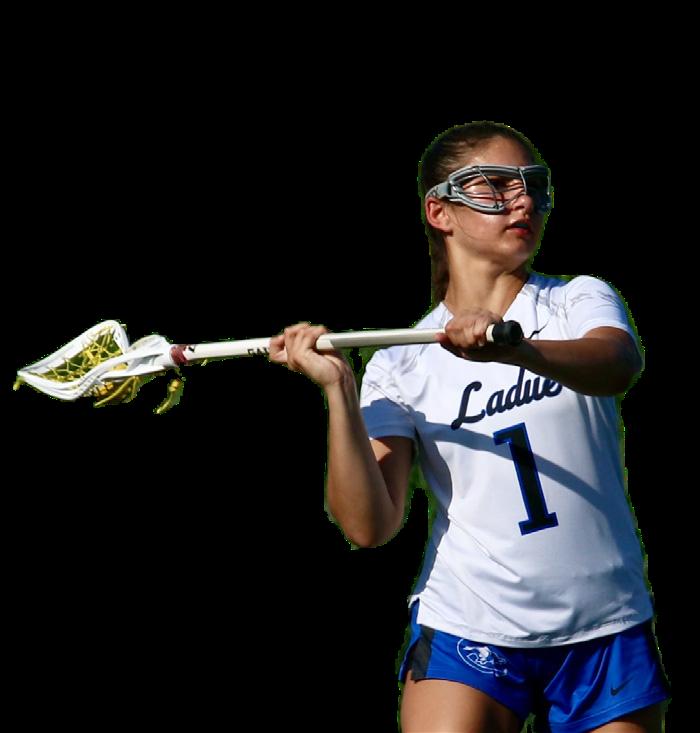
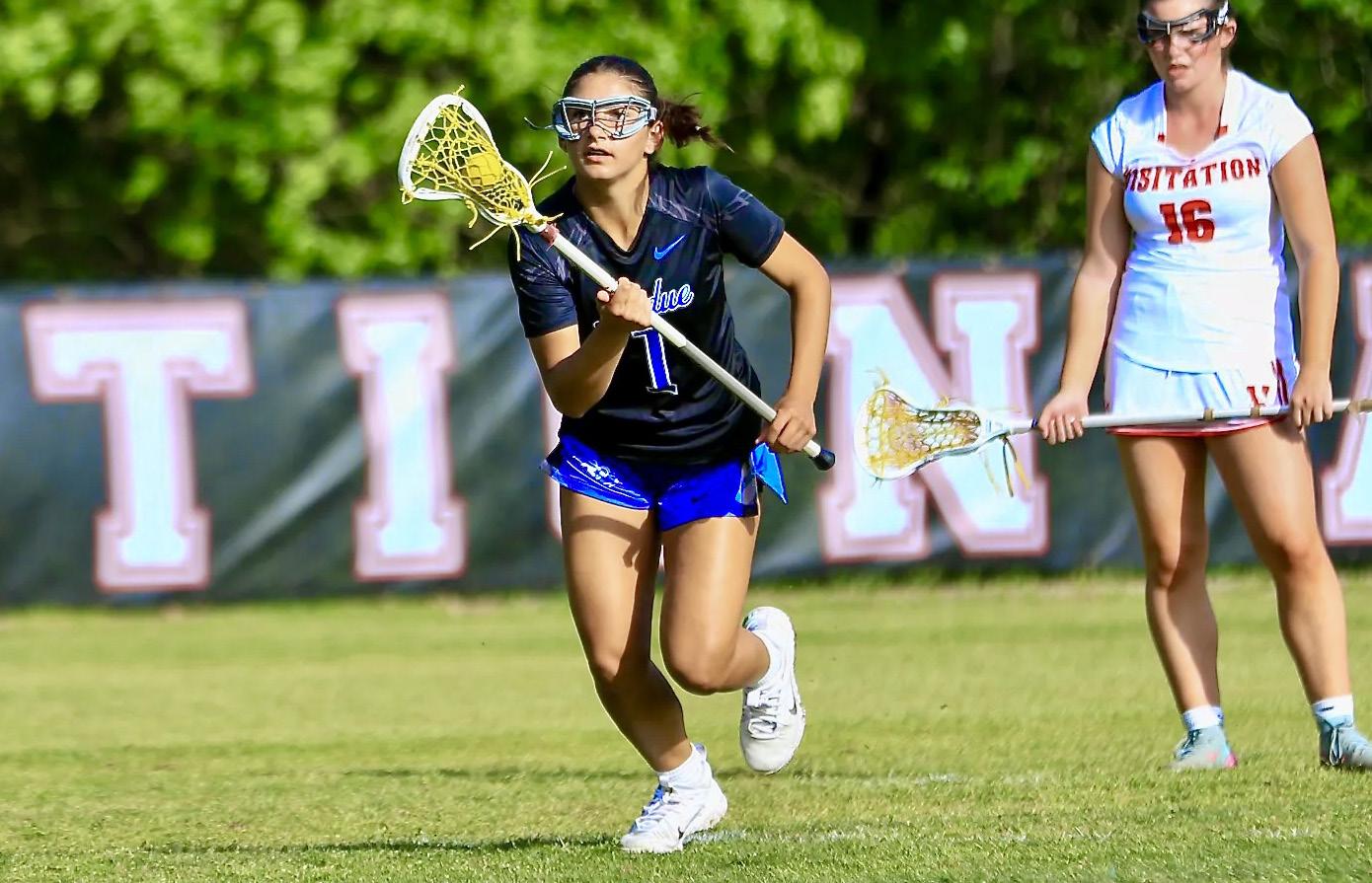
Sophomore Sadie Steinbach joined the Ladue varsity lacrosse team for the 2026 season. Ladue currently holds an unbeaten 10-0-1 record and is riding a 10 game winning streak. “We’re doing pretty well,” Steinbach said. “We have some of our biggest games coming up, so we really never know how things will change especially with the post season coming up” The main reason that Ladue girls Lacrosse holds and plays up to the standards of this record is by the incomparable connection they have on and off the feld. “The friendship that we share off the turf helps us communicate with each other during high stake moments,” Steinbach said.
What is one thing you love about
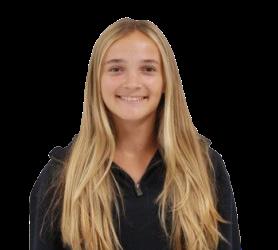

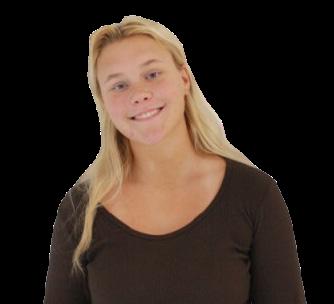


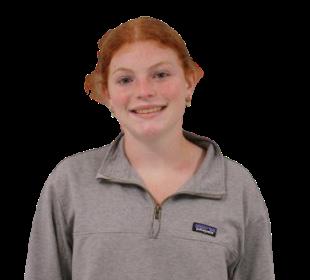
“I love the sweet community and all of the friendships we have built,”
Lucy Gollener (10)
“I love the connections formed from coaching, and the close knit bonds,” Rachel Brewer
Ladue Girls Lacrosse?
“I love the team and getting to work with a large variety of different girls,”
Mimi Tabscott (11)
“I love all of the girls I have met and gotten closer with throughout the season,”
Caroline Burrus (10)
“I love the family built off of lacrosse and all of the people I got closer with,” Harper Sokolich (11)
“I love being part of such a friendly team and playing alongside supportive girls,” Reade Stokes (9)
Sadie Steinbach dashes across the Vivets lacrosse feld, shifting her weight from her heels to the balls of her feet. She dodged through the defensive line and fred a powerful, but well placed shot intox the back of the net. “Our game against Viz was a really good demonstration of how our team really opperates” said Steinbach.
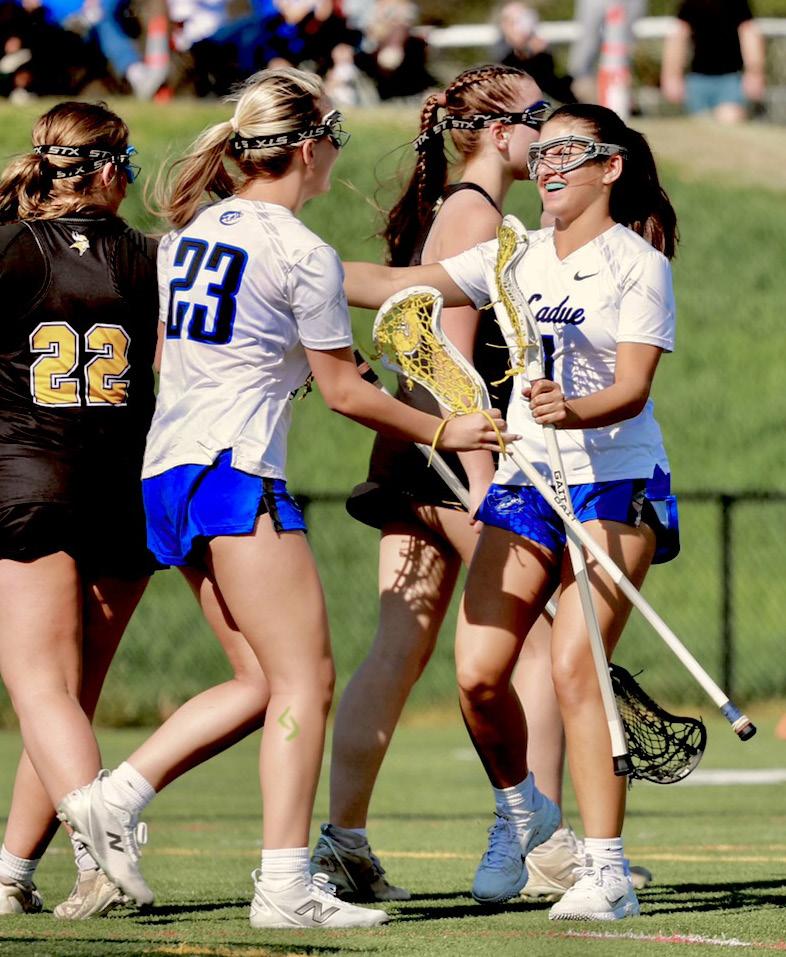
Ladue Horton Watkins junior Lyla Sandler (#23) is embraced by teammate Sadie Steinbach after scoring a goal against Lafayette High School. Sandler is in her second season on the varsity girls lacrosse team.
“I love being with my teammates, they’re all so outgoing and fun,” said Sandler (11)
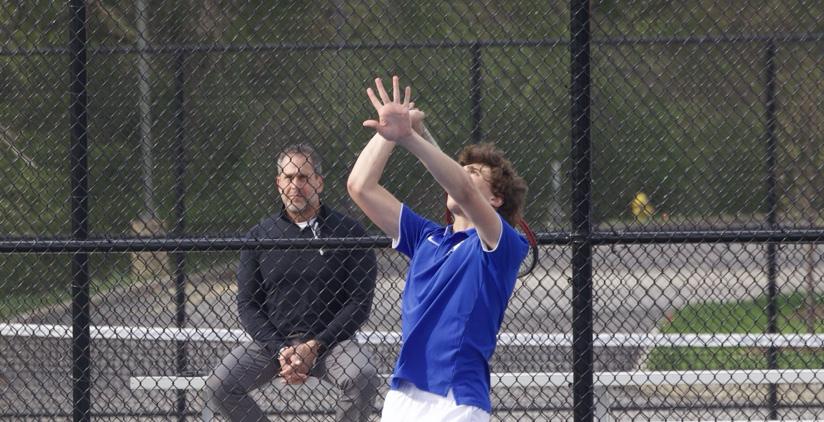
POINT BY POINT
Navigation through Jack Garland’s junior year season
STORY BY OLIVIA GOLDENBERG
Jack Garland, a junior at Ladue Horton Watkins High school who is on the junior varsity tennis team. The journey of Garland’s tennis career started at a very young age and has continued ever since
“I have been playing tennis since I was 7 years old,” Garland said. As a junior in high school, homework does not fall easy. While being involved in a school sponsored sport, Garland urges to fnd time to manage stacked homework while also focusing on tennis.
“Some struggles of being on the tennis team are fnding the time to manage my excessive amounts of homework while attending all practices and matches,” Garland said. Garland has mastered the ways to ensure he has time to ft in all his homework and will be extremely busy with tennis practices and matches.
“I manage my homework by using my time in the seminar to complete as much as possible to keep the amount I have to do at home minimal,” Jack Garland said. The Ladue tennis team season only excels from March to the beginning of May which provides curiosity for when Garland plays outside of the season.
“Yes, I play tennis recreationally and at the creve ceour racket club,” Garland said. During the tennis season, memories tend to stack up whether it ranges from winning the game point, playing doubles with other teammates, and moments through practices.
“My favorite memory of the season is when I won my very tough match against CBC. I felt very accomplished and knew my hard work paid off directly in that moment,” Garland said. High schoolers usually tend to focus on their friendships and their social lives. It can be diffcult to prioritize your sport when differing functions and activities happen as well.
“I prioritize tennis by focusing on the aspects of punishments and how much time outside of the tennis season I can spend with my friends,” Garland said.
Garland’s tennis teammate Luca O’Neal speaks on Garland’s positivity and uplifting aspects that he adds to the junior varsity tennis team.
“Jack is a very supportive teammate and is always willing to put others before himself. For instance, at our last match a player was feeling off balanced, and dizzy. Jack was the frst one to step up and offer him some water and to even take his place if needed,” Luca O’neal said.
Garland’s frst season on the tennis team may have been stressful and chaotic towards the beginning but has become more enjoyable by the second. Garland has many favorable moments while being involved in the tennis team but he continues to speak excitingly on his more memorable moments.
“Meeting all new friends from different grades and creating bonds through similarities makes the team so enjoyable,” Garland said.
The Struggle UNSEEN


enough rest, and not stress myself out,”
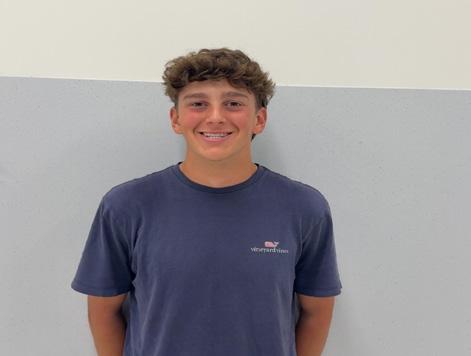
“The best of the best fail 7 out of 10 times, so it’s very hard to keep your head up. For me, I walk my dog or I even just do something to get my mind off of it for a while,”
Zev Hall (10)
of the Ladue Horton Watkins High school Junior Varsity tennis team
Oliver Franz (11)
Darci Levinson (12)
RISE LUKE REISER
Senior Luke Reiser makes his final remarks on the
Ladue Boys Volley ball team for the 2026 year

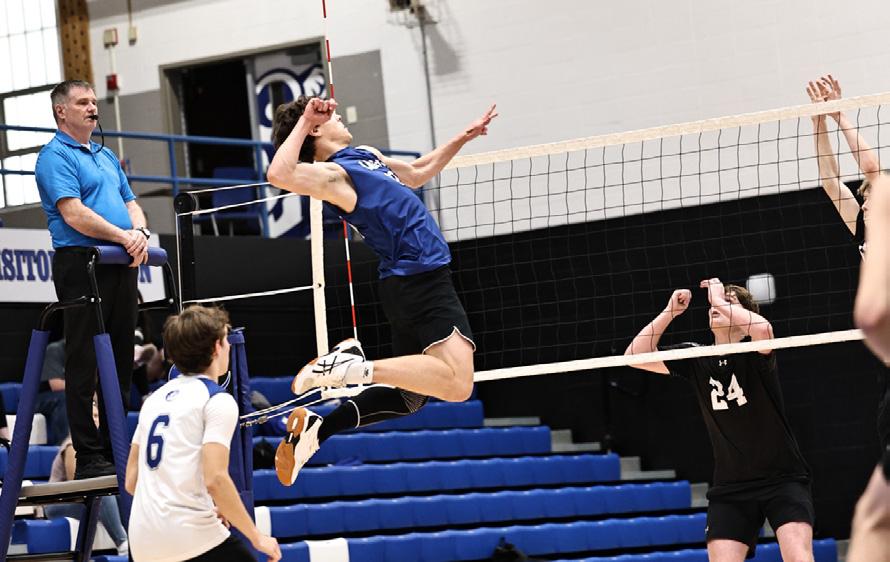
Senior Luke Reiser, the star player of the boys volleyball team, has had a season nothing short of spectacular. Reiser led his team to a 19-1 record through the frst 20 games of the season, a huge feat for the young program.
“I started playing volleyball my freshman year the same year I started playing for Ladue. My freshman year was the frst year of the program,” Reiser said.
The young program at Ladue had a rough start during its frst two years going 8-30 during Reisers freshman and sophomore seasons. Even though last season they improved to a 16-8-2 record during Reisers junior season, this year Ladue has shown their star studded program potential and displaying one of the most impressive turnarounds by a program in higschool sports. Things have been different this year for the team and many players have noticed eachothers progression. “I have Luke and Floyd as seniors and I have more options to set, we’ve been able to form a great connection this yeat,” Nathan Daniels, a junior at Ladue and a member of the varsity volleyball team said.
Another big change made for the program is the new head coach that was brought in Tom O’Toole. O’Toole has an exceptional coaching resume which includes coaching Reiser during club season and currently coaching at NLVA aswell. “He’s a cool dude, I feel like I can trust him with a lot, I trust his ability to coach, I trust his knowledge, he doesn’t overwork us and seems to have our best interest in mind and just wants
to win,” Reiser said. O’Toole and Reiser have put together an outstanding season on the court while also improving team dynamics within the player group. “The team dynamic is very strong. We all feel a sense of belonging and are able to play better because of the relationships we have,” Gavin Bader, a sophomore at Ladue and member of the varsity team said.
As the season heads twords districts, expectations from both players and fans have risen. “We have a pretty tough district having the number 1 and 2 team in the state, Lindbergh and SLUH, but we know that we’re a good team and will patch up any weak spots before we head into the post season,” Bader said. However, along with districts approaching, so is the end of Reiser’s illustrious highaschool career, but he is not ready to say goodbye yet. “I really want to see a Ladue boys volleyball team that I was a part of get a trophy. I said a lot last year before districts that I want to see Ladue boys volleyball in wooden brass, a Missouri plaque with a nameplate,” Reiser said.
Reiser will not be fnishing his volleyball career in high school, he and his incredible 43 inch vertical will be playing at the division 1 level next year, “I’m committed to play division 1 volleyball at Queens University in Charlotte. There’s a lot of unknowns but I know that I will put my best foot forward and do my best and compete,” Reiser said. So with the season ending soon, Reiser and the rest of the Ladue boys volleyball program ask you to keep them in mind and watch as they attempt to make history.
FAR LEFT: Reiser gets ready for a kill against Mehlville inside of the Neilson gym in the second set. Reiser has more than 250 kills this season. “I don’t know how I jump, I kind of just do,” Reiser said. (photo submitted by S. Derkach)
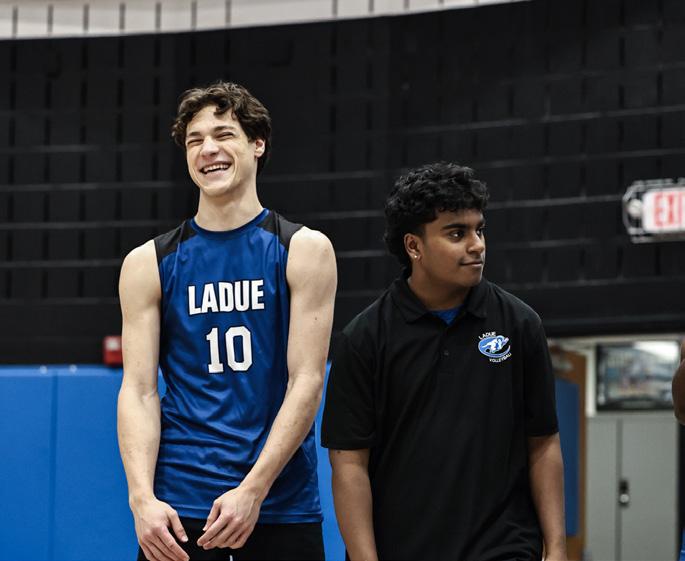
LEFT: Reiser shares a laugh with teamate and good friend Nathan Daniels after a win inside the Neilson gym. Reiser and Daniels have been teamates for three years. “Luke gives a variety of options as a teammate to get more points in games,” Daniels said. (photo submitted by S. Derkach)
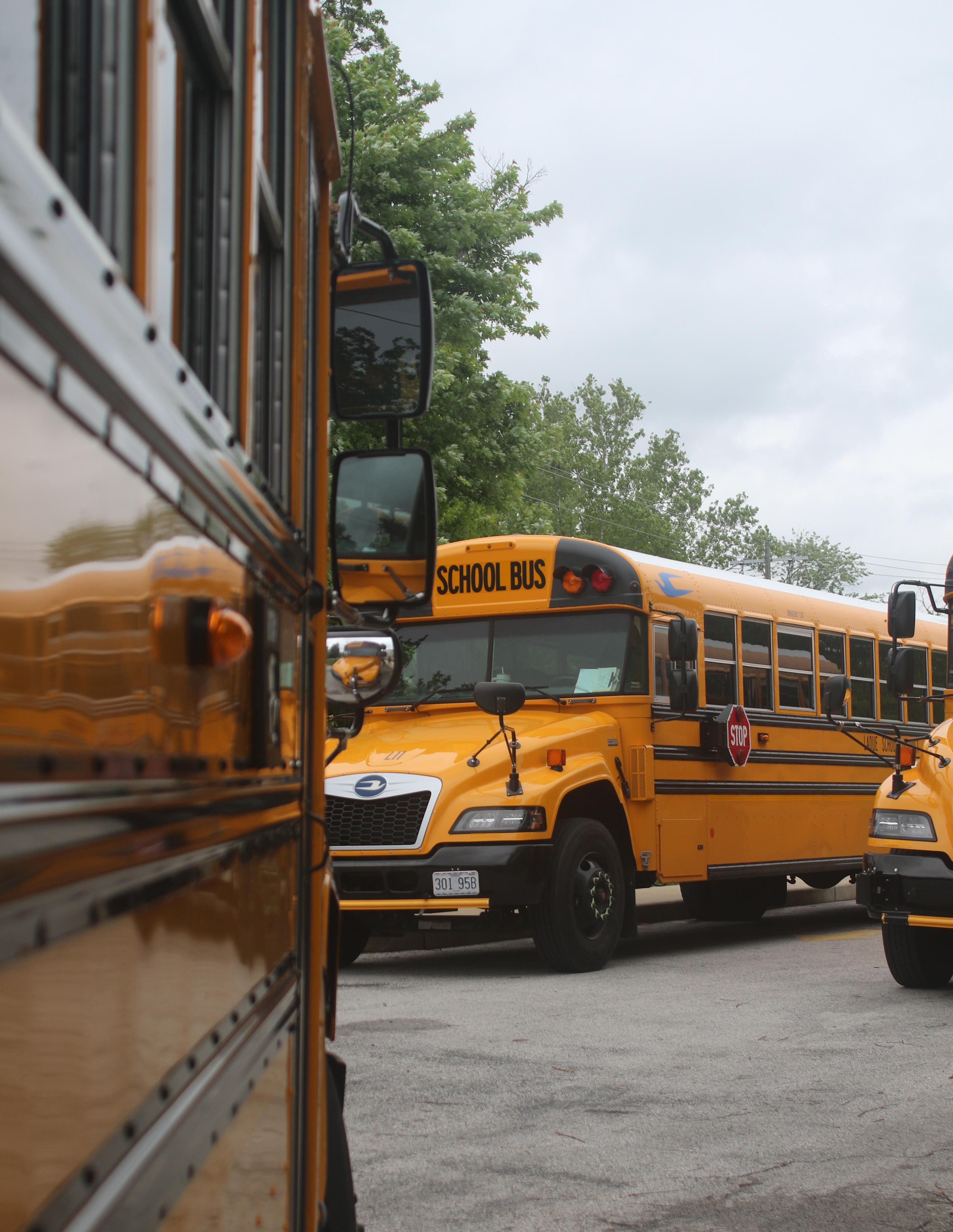
PHOTO BY KELLER STRAUSS