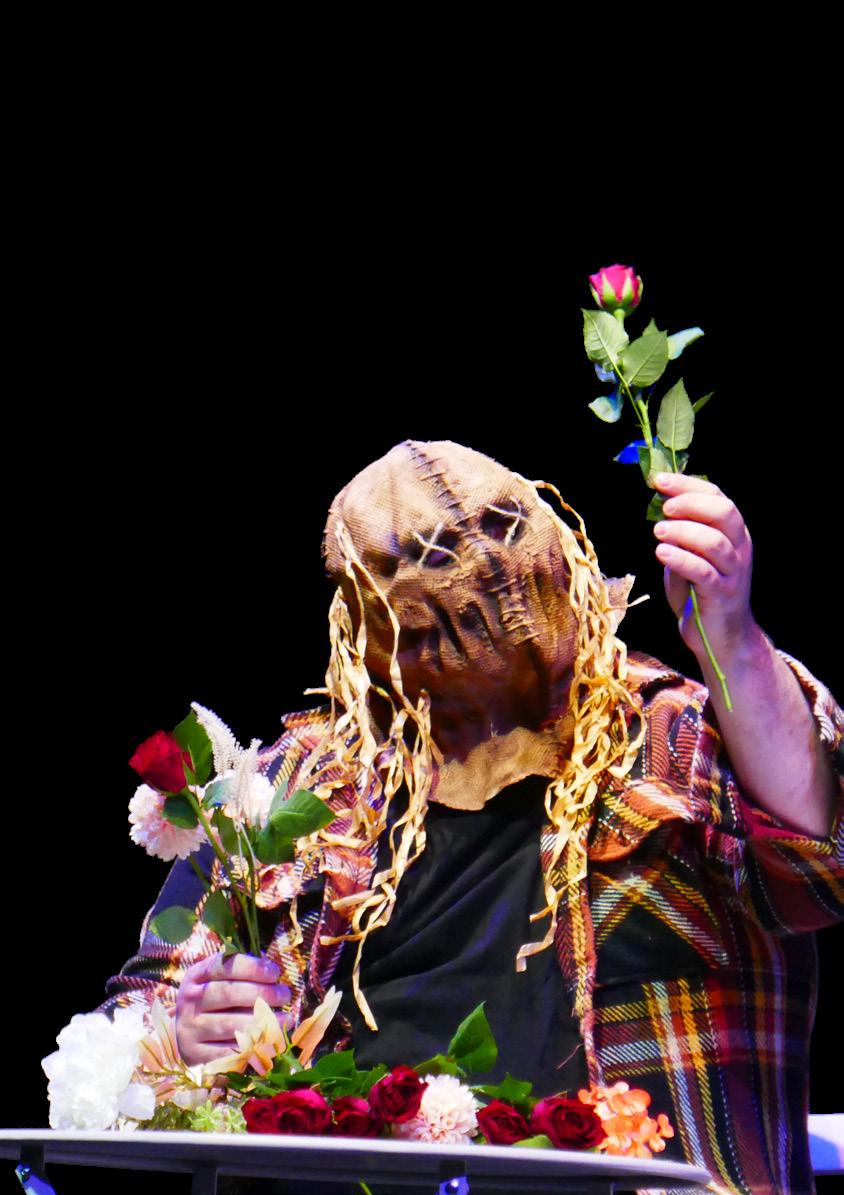
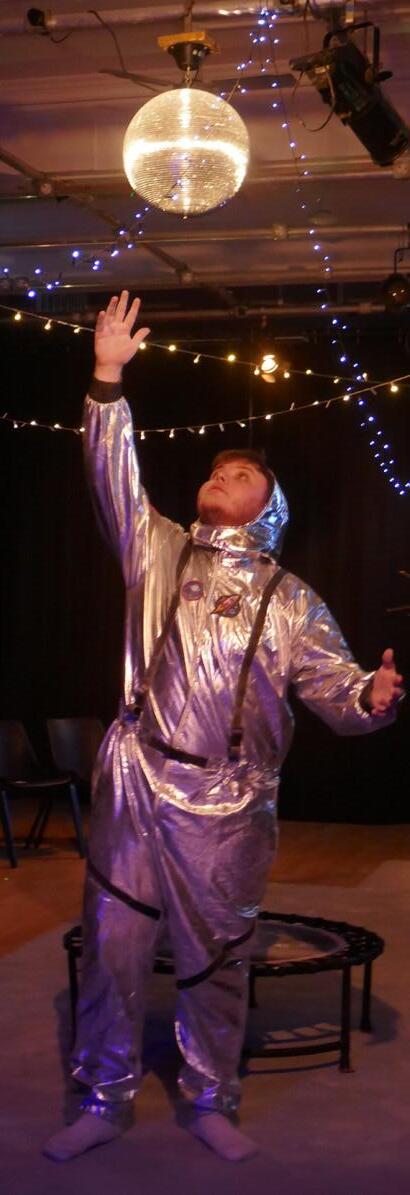
Beyond the Roses, a physical theatre performance inspired by Caitlin Moran’s (MA Theatre) experience of living with Cystic Fibrosis
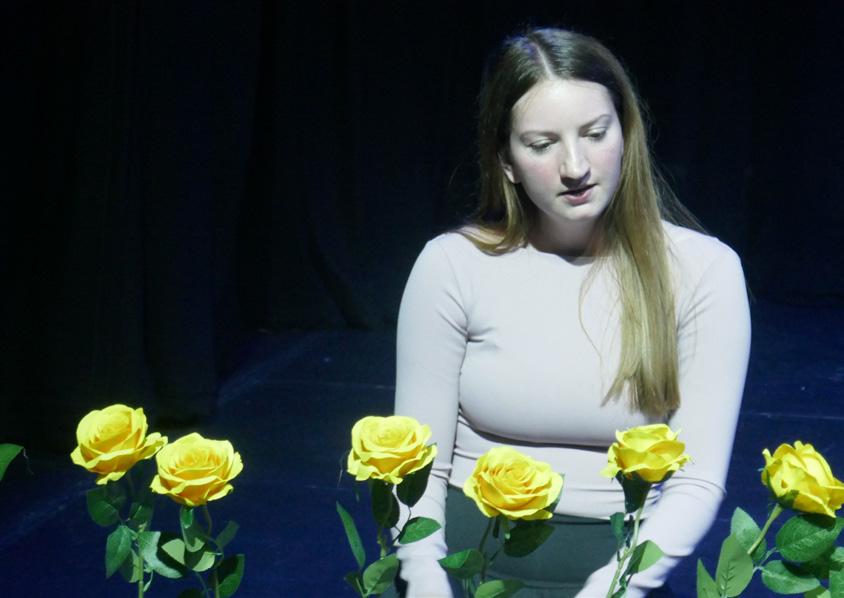
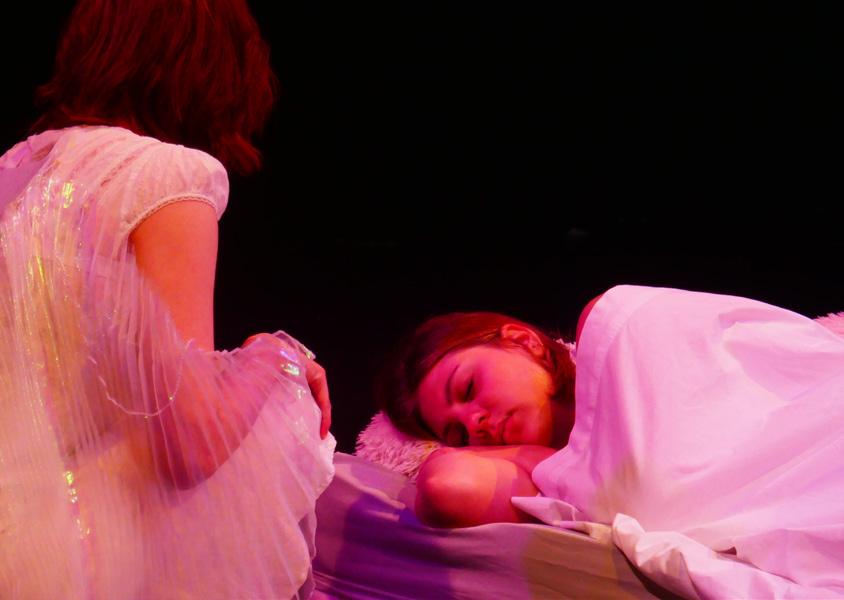
Fledgling, a tender comingof-age performance directed by Libby Jeffries (MA Theatre)
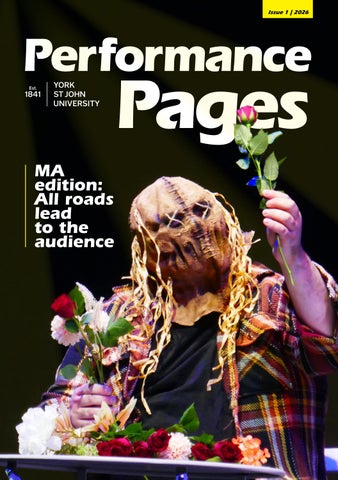
Beyond the Roses, a physical theatre performance inspired by Caitlin Moran’s (MA Theatre) experience of living with Cystic Fibrosis
Fledgling, a tender comingof-age performance directed by Libby Jeffries (MA Theatre)
The writers gathered in this issue of Performance Pages, all MA Theatre and MA Music students, arrive from different places. Diverse practices, diverse disciplines, diverse relationships to the stage, the classroom, the open mic, the mask. However, what you might first read as differences, soon emerge to the reader as convergences. They draw upon space – how we design it, occupy it, and perform within it. There is a common thread of identity within these texts, that questions: who are we? Who do we become in front of an audience? They raise questions of deliberateness, ritual, and the courage it takes to stay present in a room and mean it.
This is reflective practice in action, done honestly. It isn’t wrapped in a pretty bow, it may not resolve, but it pays attention, observes and keeps returning to the work, to the audience, leaving us with just one question: why do we make at all?
We hope you find something of yourself in these pages.
Jake Winterburn (MA Theatre) Editor
To redefine what it means to be a Dilettante, we first go back to 1700s Italy. Here the word was used to categorise artists who made art for fun rather than the sensibilities of a lifelong forage for knowledge. In the 18th century the word was snatched up by a wave of negativity toward the dabbling hands of a Dilettante and it became a derogative term to shame artists who didn't seem as "devoted."
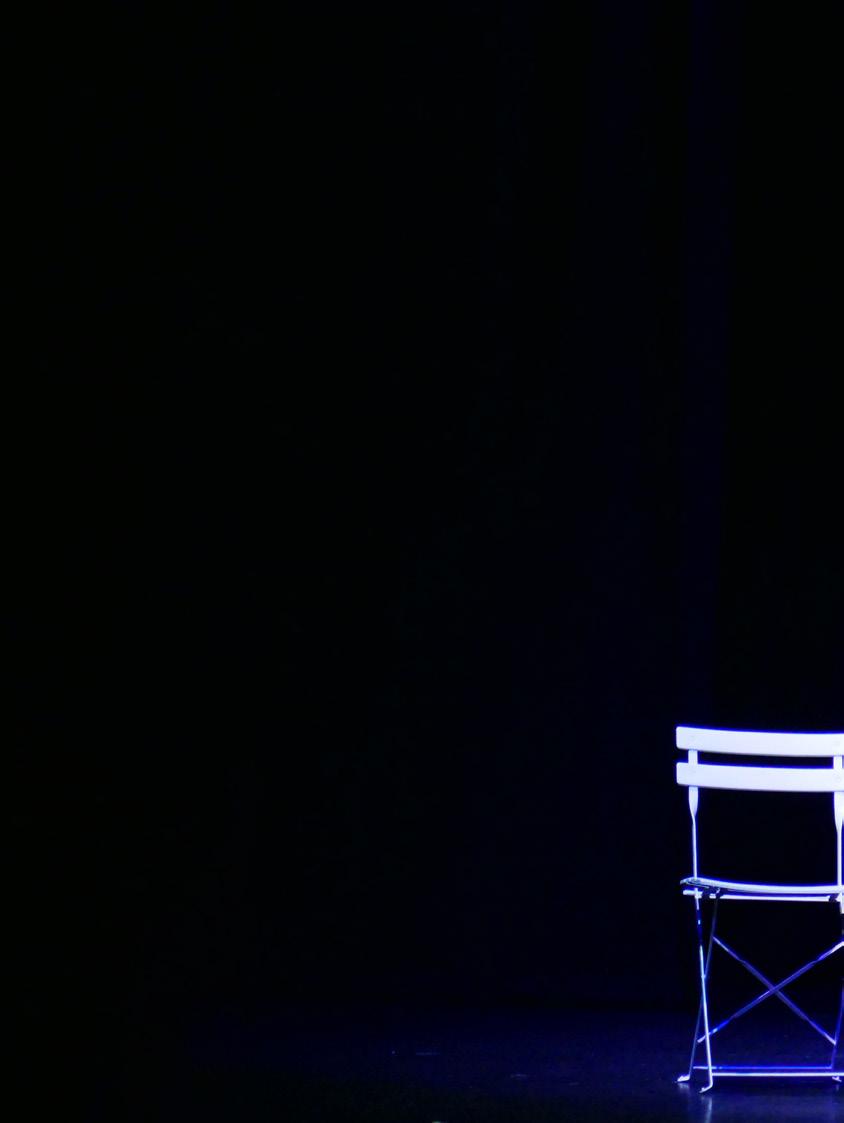
But in 1900s Germany, the Dada art movement was also where the Dilettante fought back for their right to create the unsellable.
It is around this time that in France, Aimé Césaire, a poet, met with Léopold Sédar Senghor and Léon-Gontran Damas, with an intention to create a space where Black people could settle in for an evening of poetry, music and performance.
La Salon de Clamart, a tea shop in Paris –home to the first openmic evening.
This could have been a social response to the artistic conflict of the time, where in Italy the Renaissance era was gradually shifting into the late Baroque era. A period that inflicted its architecture, art and music with grotesque, emotional grandness and ornate detail – to the then conformed, strict and critical eye of Neoclassicism. It's no wonder that as these social environments began to mould irregular shapes into perfect spheres, that the Dilettante's delight to dabble became a source of ridicule.
Still, the same ritualistic structure is emulated today in the UK, Ireland, and globally:
• Regular weekly meetings
• A list of performers
• A free event
• Open to anyone
This open-mic scene inspired the 1950s Beat Generation of New York – a literary movement connected with Dilettante communities that questioned materialistic ideologies for more natural, bohemian lifestyles and art grounded in the roots of personal satisfaction.
Evidently the Dilettante and the open-mic goer have had a working relationship since the beginning.
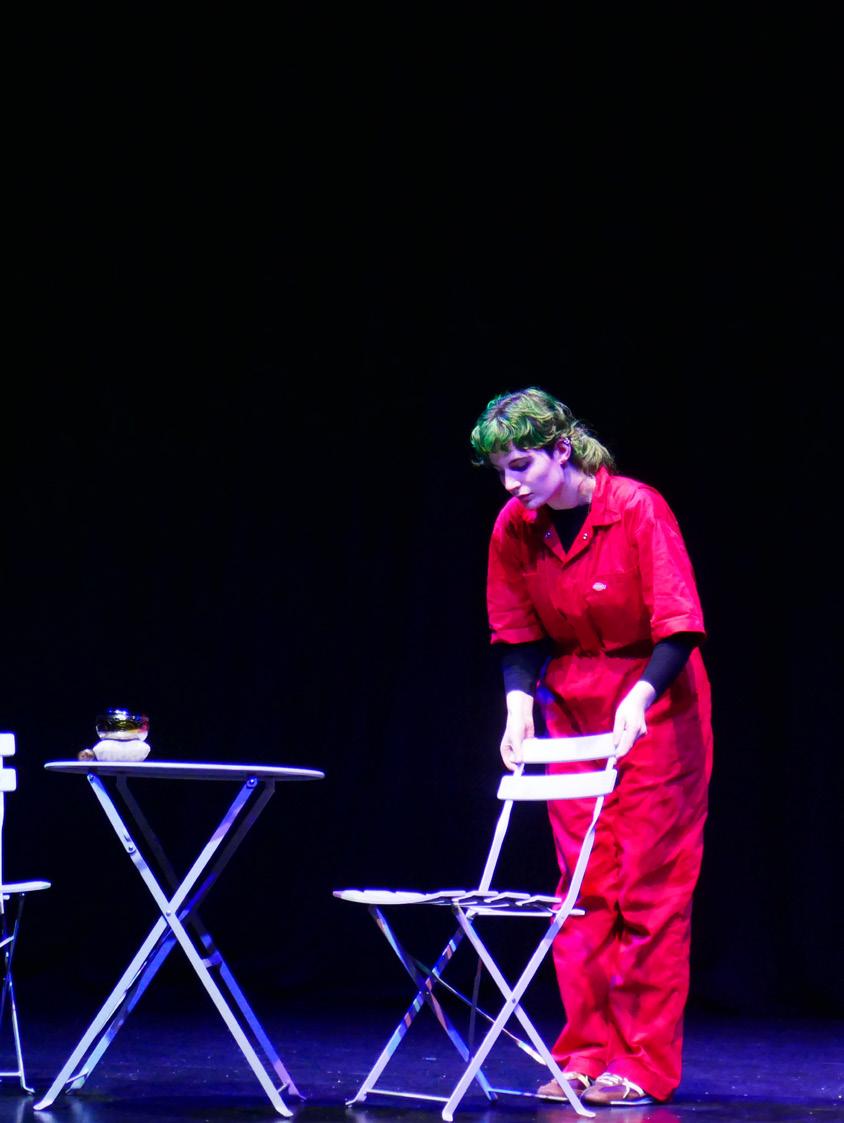
So I, the writer, as a Dilettante myself, have been exploring the open-mic scenes of York and Leeds, and have been compiling all my knowledge. I encourage you, the reader, to go to one of these events and be a Dilettante about it! They are a brilliant place for artists to improve and practise performance with a supportive audience.
Damien Collis (MA Music)
Collaboration has become central to how I understand growth within my compositional practice. Although notation software has played an important role in how I generate, organise and present musical ideas, I began to recognise that it was also shaping the music in limiting ways. My writing was becoming increasingly formulaic, often returning to keyboard centric textures, clean visual flow and the security of playback. Across different works, I noticed recurring gestures, similar directional shaping and a tendency to trust what looked convincing on the screen before fully testing what it might mean in live sound. I observed these habits in my works Cloverfield Dance and Days Gone By.
Collaboration offered a way of interrupting that cycle. Rather than treating it as a final stage of refinement, I came to understand collaboration as a reflective method through which musical ideas can be tested, challenged and reshaped in real time. Working with others introduced perspectives and processes that I could not generate alone. It shifted composition away from solitary control and towards dialogue, negotiation and responsiveness. In doing so, it made me question not only how I write music, but how I listen, adapt and make decisions within the act of composing.
This shift came into focus when I co-composed with fellow student Richard Peace, whose process differed
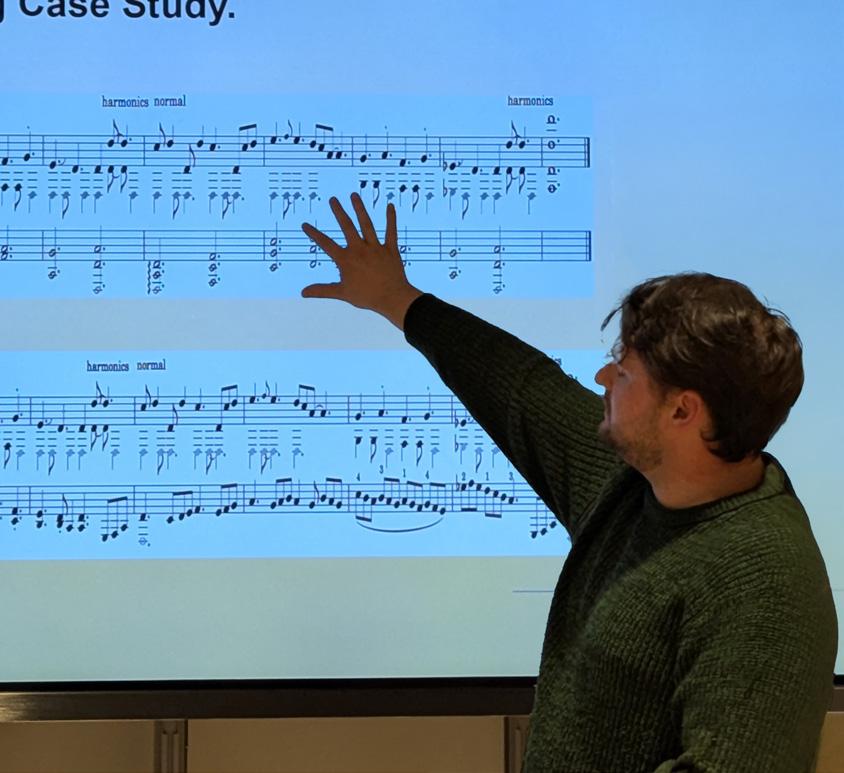
significantly from my own. Where my approach was notation-led and structurally planned, his was more aural, instrumental and rooted in playing, recording and refining. Working together changed the music through altered voicings, added countermelody and a lighter, more interwoven texture. More importantly, it changed how I understood authorship. Composition
no longer felt fixed within the score but active within exchange. What emerged was not a loss of compositional identity but an expansion of it. By moving from screen to shared space, I began to see collaboration not as support for practice, but as a condition of artistic growth.
Amy Sparke (MA Theatre – applied route)
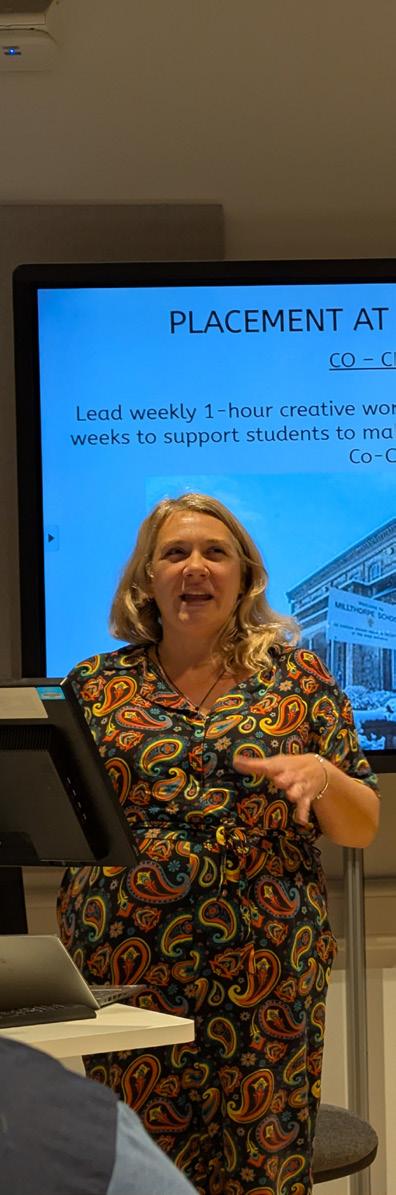
As part of a Theatre Environments module, a placement with Year 10 GCSE drama students at Millthorpe School offered a rich site for exploring performance as both practice and research. Working towards the York St John Co-Create festival, centred on the theme of Enchantment – the experience illuminated the complexities and rewards of applied theatre facilitation in a school context.
Initially daunting due to limited experience with teenagers, the placement prompted a critical reflection on prior practice with community groups, where processled, inclusive, and slow practices underpin engagement. Rooted in pacing, reflection, and attentiveness, slow practice resists urgency,
instead privileging depth over speed. Translating this into a school setting, defined by timetables, outcomes, and efficiency, required careful negotiation. Moments of pause, repetition, and embodied exploration became vital tools for grounding students within the work and fostering meaningful creative connection.
Drawing on practitioners such as Augusto Boal and Keith Johnstone, sessions incorporated games, mirroring exercises, and ensemble-building techniques, supporting both creative exploration and group cohesion. Importantly, these activities were not rushed – allowing time for students to settle into exercises, reflect and revisit ideas enabled a more sustained engagement with the theme of Enchantment.
Central to this practice was an evolving facilitation style. Inspired by Michael Balfour’s emphasis on interpersonal dynamics, the work foregrounded authenticity, responsiveness, and the negotiation of diverse energies, learning styles, and social dynamics. Slow practice here also meant listening – observing when to extend an activity, when to shift pace, and when to allow space for quieter voices to emerge.
The theme of Enchantment was explored through mind-mapping and physical embodiment, influenced by Sharon Blackie’s ecological and mythic perspectives. Students devised performance material using platform theatre conventions, relying solely on physicality. By slowing down the devising process and lingering in movement exploration and image-making, students were able to create more detailed and intentional physical compositions.
The school environment itself presented tensions: regimented spatial structures, limited time, and an assessment system weighted heavily towards written work contrasted sharply with the values of slow, embodied practice. These constraints often compressed creative processes, challenging the integration of reflective pauses and deeper exploration.
Despite this, student feedback highlighted the value of these slower, processdriven approaches. Sessions fostered joy, confidence, and creative agency, offering a contrast to the accelerated pace of curriculum demands. This ongoing placement continues to shape a facilitation practice rooted in care, adaptability, and the belief that slowing down is not a limitation, but a powerful methodology for nurturing meaningful engagement and artistic growth.
Ash Strowger (MA Music)
Erving Goffman believed everything is a performance. Every action we make, every space we create is designed to send a message to others. He proposed that we understand life better if we look at it like a performance using performance terms.
Every performance needs to consider its audience. Within the context of a music lesson a teacher has two audiences. The student they are teaching and the wider expectations of what a music lesson should be.
When a student enters a classroom carrying their own personal schema (Piaget) to help them interpret their environment. This schema is built from previous interactions (either positive or negative) with music lessons as well as attitudes to learning from their own social demographics (Vygotsky).
When a teacher is setting up their own classroom, they also bring a schema of how a classroom ‘should’ be set up. Psychologist Hugo Metcalfe reflects that he designed his clinical space to emulate his supervisor’s expectations, absorbing them without question into his clinical practice. Metcalfe now views the process of setting up a room as a ritual designed to help him navigate the liminal space between one version of himself and the therapist version. A consistent space design may also help a student transition to a learning environment.
In the context of a music lesson a teacher may design their room traditionally due to practicality. It may be that a piano, music stand and chair are found in every classroom because they’re needed.
A personal analysis of my own teaching practice showed in the last month I used a:
• Chair 30% of the time
• Music stand 65% of the time
• Piano 50% of the time
However, diversity in learning styles means the traditional approach cannot work for everyone. Schechner considers how we can perform an action differently in order to get a different result. In my classroom I have introduced a picnic blanket as a new piece of ‘set’. The picnic blanket acts as a form of scaffolding to support a student within their Zone of Proximal Development (Vygotsky) providing a time to work on difficult skills away from the established schema attached to a music stand.
I haven’t got rid of the traditional set however the picnic mat is now just as expected within our classroom. Altering the ‘set’ of the music lesson means less ‘performance’ gets in the way.
Jake Winterburn (MA Theatre)
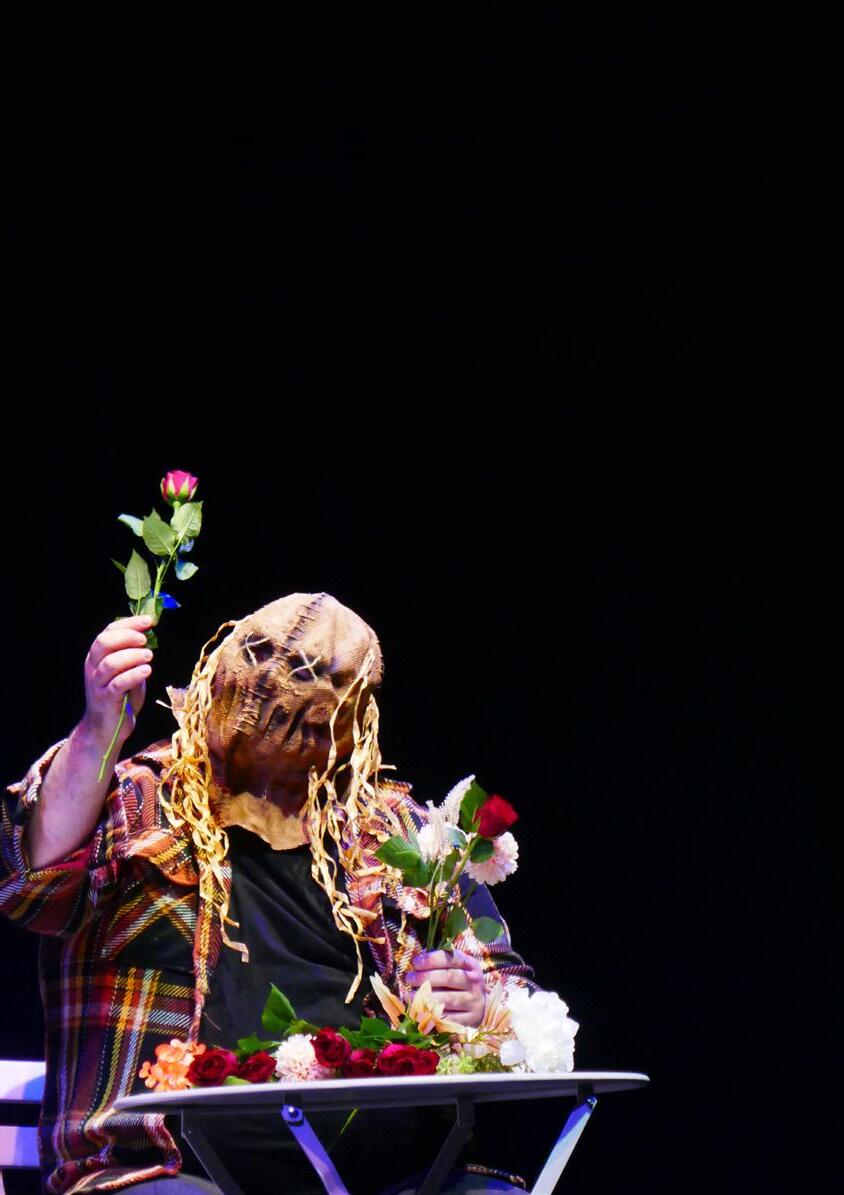
I decided to use a mask and Lecoq’s techniques of “the seven levels of tension” and “the non-verbal rule” but I adopted a grotesque scarecrow mask. I set out to explore the boundaries of discomfort. While performing, I found that, while it was an expressionless mask, the grotesqueness of it challenged me to live up to that “stereotype”. I wanted to challenge the need to live up to the mask and to reverse what the audience initially feel towards me in the mask to foster empathy so they could connect to the character. This process of the inverted V-effekt tries to provoke emotion and reaction using empathy from the audience that interrupts the established Brechtian techniques.
While studying on the reflective practice module we were introduced to Eda Ercin’s video essay: Song, Border, Body. My analysis made me think of the audience and how we have let a once beloved space for people turn into rubble and memories long forgotten. Linking
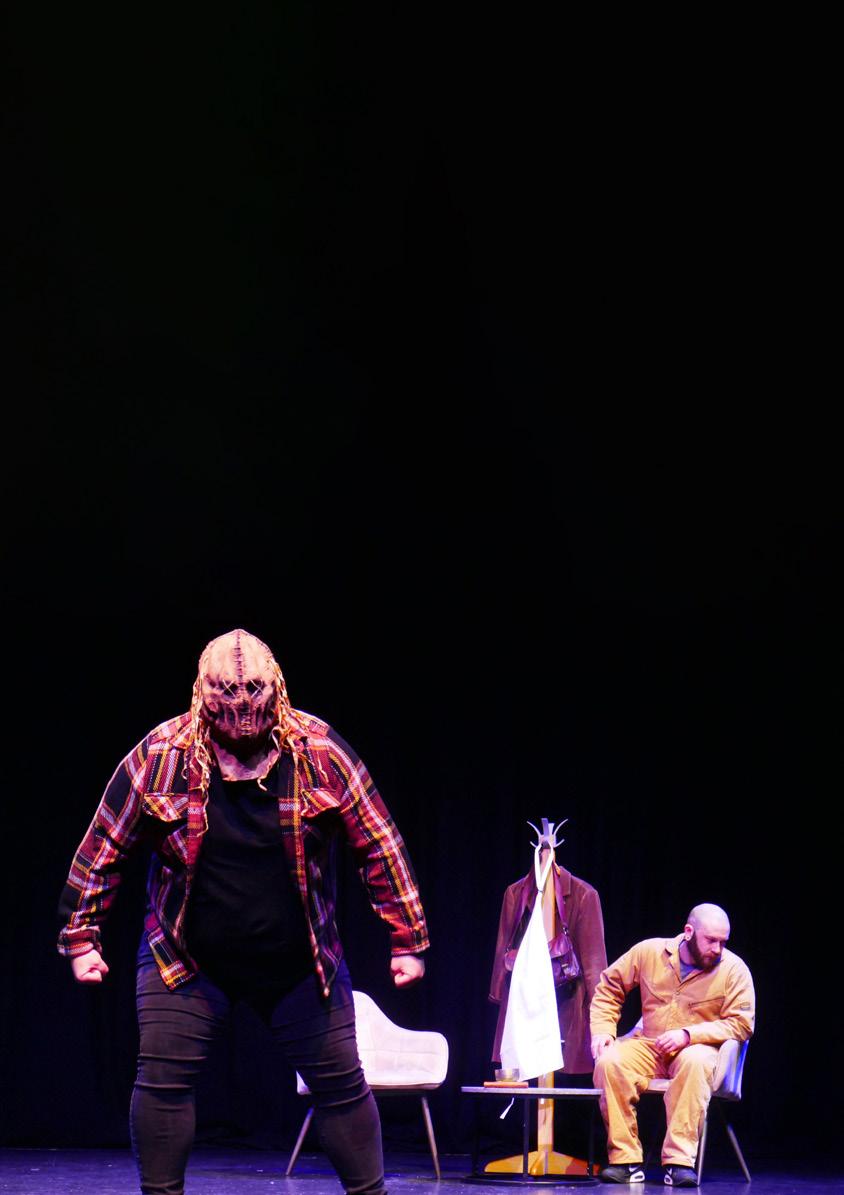
this to my practice of the scarecrow I found I wanted to shine a light on real life problems like loneliness. After experiencing this as an audience member I realised I wanted to invoke a reaction from my audience, by standing still, holding eye contact, and refusing to look away. Being unapologetically present with the audience.
While recognising that using the inverted V-effekt was not a technique but more of a calculated risk, I didn’t know how the audience would react and engage in the journey to empathy from discomfort. I realised that I can just create the catalyst for those moments to happen. From speaking to people after I was shocked how often it happened.
I apply this through the scarecrow being on stage as he is present with the audience in the space and having his story being simple and focusing on the struggles that he is facing. I have humanised the scarecrow by having him fall in love and lose someone and use physical movements such as dancing and giving flowers to create empathetic experiences for the audience. By the end of the process, I was no longer performing the scarecrow's loneliness – I was feeling it. In understanding this I became a mirror for the audience, showing loneliness and yearning for human connection. Within that moment of recognition, the question lingers –aren’t we all just a little bit scarecrow?
Patrick Heath (MA Theatre)
I want to begin with a proposition.
I propose that endurance, craft, and somatic attention can hold space for co-survival, that by staying, making, and noticing, the performer creates containers where 'overconnection' becomes relation.
This proposition came out of something my tutor said in a tutorial.
As I told her that everything I touch becomes too full, a key is never just a key; it becomes ore, mine, land, labour, enclosure, global supply lines, the metaphor of opening, locking in, being locked out, the theology of thresholds, the living body of God…
She called it an overconnection disease (jokingly).
So, she asked me to try something else instead: not trying to shut out connection, to learn how to carry it. Not to reduce it, but to give it somewhere to live: a container:
St Kevin and the Blackbird.
Kevin kneels in his tiny cell, praying, his arm thrust out of the window, his hand open. A blackbird lands. He stays still long enough for a nest to be built.
Long enough for the egg to hatch. Long enough to become part of the survival of something other than himself.
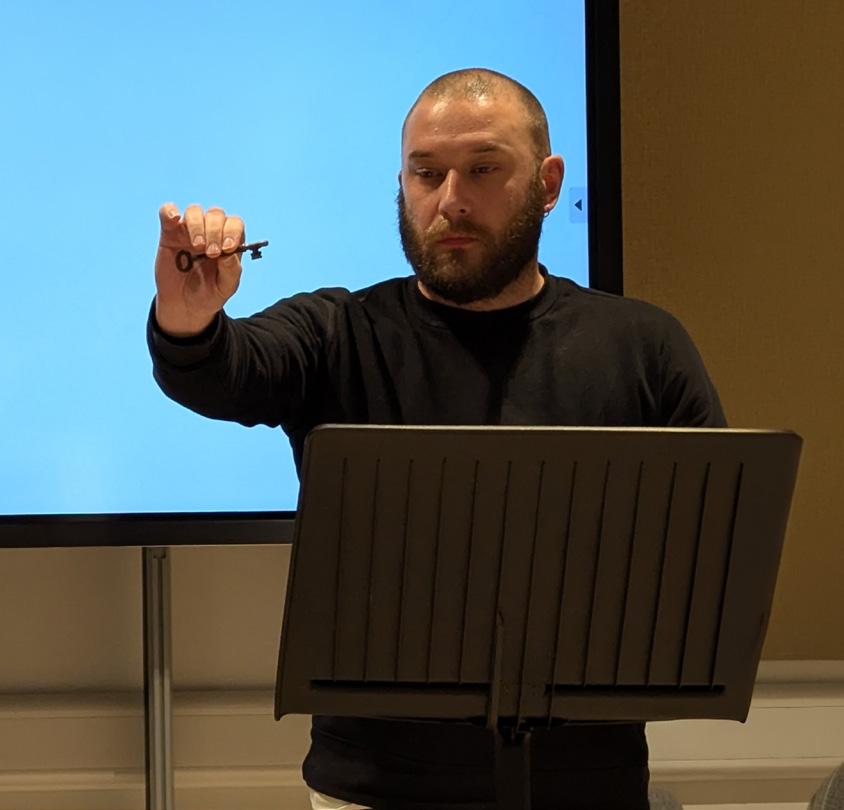
A container is a simple, durable structure that can hold my overconnection:
A container is a stillness you choose: a place where the blackbird can build. It does not limit meaning. It holds it.
In my work, dry stone walling, straw plaiting and the spinning of yarn
take the place of the blackbird. The durational process invites others into a required rhythm, beat and slowness as a reaction to busyness of the Anthropocene; each process is a container for as many connections as I want and as many, or as few, as the audience themselves want.