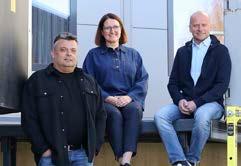
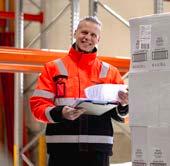
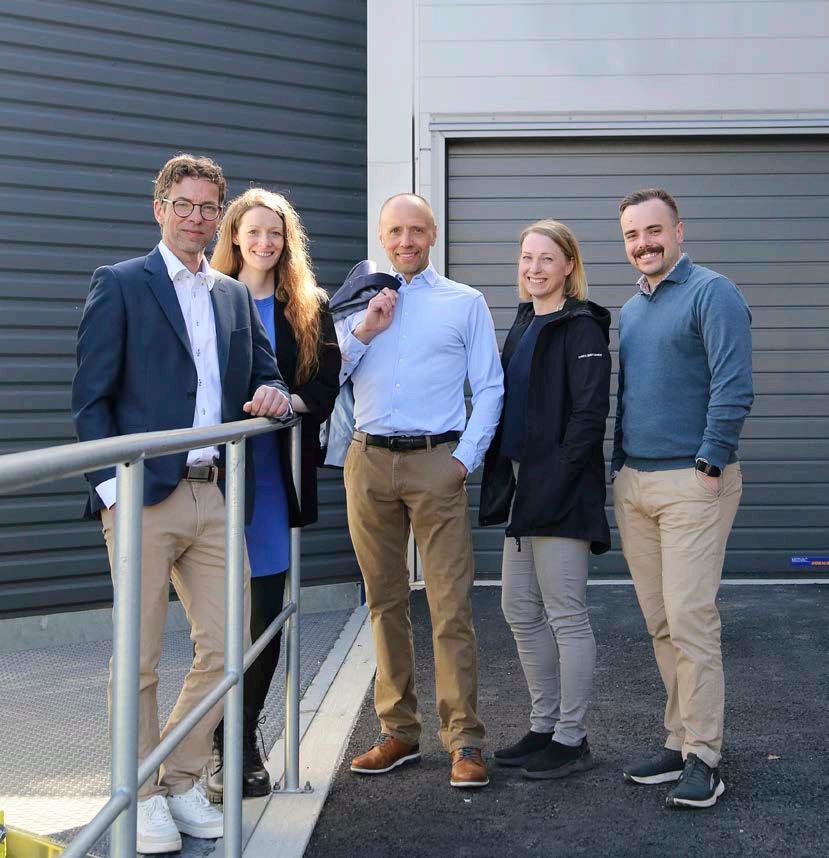
Editorial: Mikael Löfqvist, Johan Lövdahl, Helena Perätalo, Carola Bäckström, Anna Sand, Lisbeth Bäck
Text & Photo: Anna Sand/bySand
Translation: PNP Crossing Borders Oy
Layout: Kustmedia
Printing: Waasa Graphics 2026
Staff well-being
We all have the ability to influence our own well-being. When work and personal life are in balance, we create better conditions for energy, job satisfaction and long-term sustainability. As employers, we have a responsibility to pay attention to the person behind the performance and to foster a workplace built on understanding, consideration and support. At times, challenges outside work can affect everyday life at work. That is why it is so important to treat one another with respect, sensitivity and responsibility, while still respecting personal boundaries. By putting people first, we strengthen not only individuals, but also our community and the workplace as a whole.
In the transport industry, many people spend much of the working day sitting. That makes physical activity more than a healthy extra – it is an important investment in health, energy and long-term ability to work. We are made to move, yet modern daily life often leaves us far less active than our bodies need.
Small changes can have a big impact: take a walk, choose the stairs, fit in a short workout or simply move a little more than yesterday. Over time, the benefits become clear in your body, your energy and your mental wellbeing.
Staff well-being has long been a priority for the company’s management, and at Scandic Trans we actively invest in it. We keep an ongoing dialogue about how to support health in everyday life, including during shared coffee breaks when exercise, recovery and effective routines are often discussed. Many employees use the company’s wellness benefits, which we encourage and see as making a positive difference. The results reflect this commitment: sick leave remains low and the annual staff survey shows very strong scores.
In this year’s issue of Delivered, we put people centre stage. In transport and logistics, people make the real difference. AI and robotics are now part of everyday operations, but we see them as tools that support our work rather than replace the human contribution behind it.
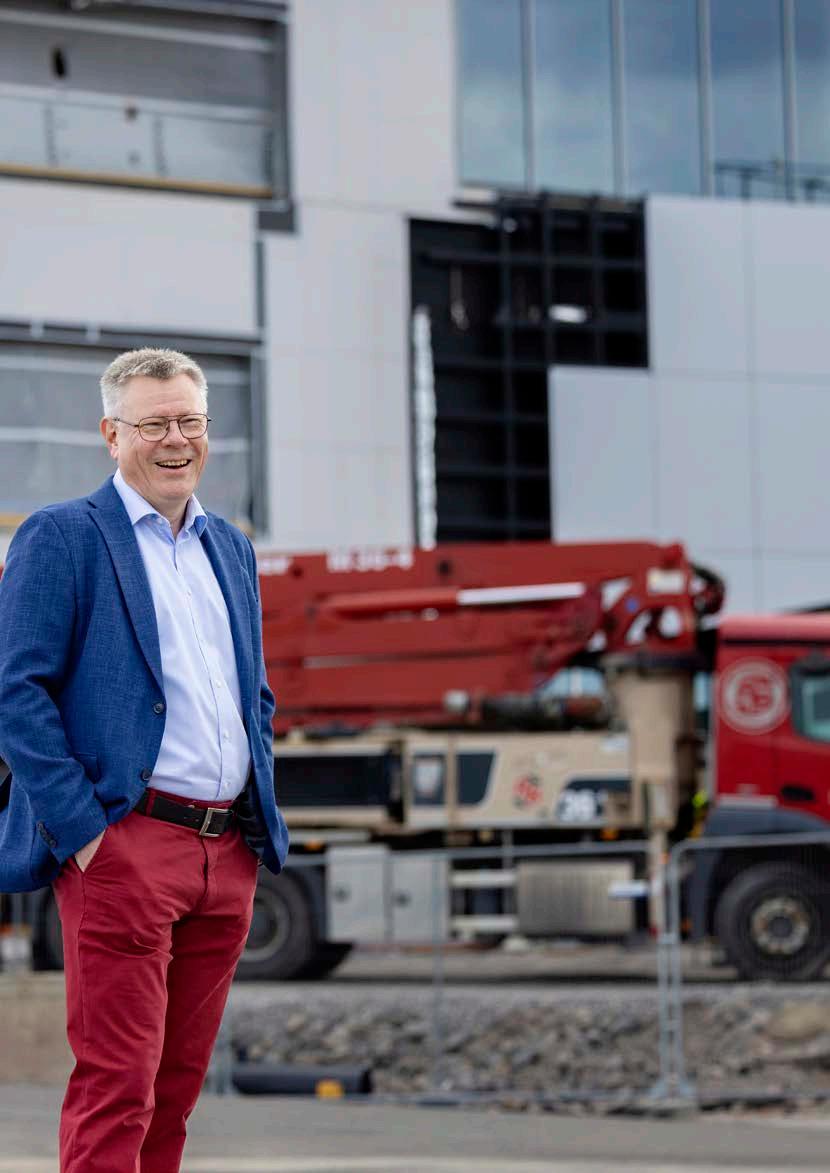
Mikael Löfqvist, CEO Scandic Trans
Transport over time
– from Mobidigi and faxes to real-time tracking and AI-Johnny
From handwritten notes and frequent contacts by telephone to real-time tracking and digital workflows, the transport industry has undergone a major transformation over the last three decades. Our longest-serving employees look back on what work used to be like and how developments have shaped today’s logistics.
Text: Anna Sand • Photo: Anna Sand & Jan Gullans
The story of Scandic Trans began in 1990 when five hauliers with their own vehicles and operating licences decided to start cooperation.
“Göran Sandås and Curt Löfqvist started from scratch by phoning their contacts to find loads for the lorries, and in October 1990 Kerstin Berg was hired to take care of invoicing and finance,” Pie Lassander recalls. Pie has been with the company since 1993
Everything from order processing to transport planning and invoicing was done manually and on paper.
“Transport planning was a jigsaw puzzle laid out on large tables using A4 paper where the vehicles’ registration numbers were written down and slips of paper were moved back and forth between them,” Richard Romar remembers. Richard started at Scandic Trans in 1996.
THE BEGINNING – THE EARLY 1990S
• Manual work
• Mountains of paper
• Mobidigi, fax and NMT
Two years earlier, all employees had been given their own computers, but the first computer system functioned more like a typewriter than a proper transport planning system.
“It was really double the work; the planning was done manually on paper before it could be fed into the system,” Richard says.
Initially, communication with the vehicles was handled via the analogue Mobidigi network, but its use was limited due to poor coverage. Richard recalls:
“It worked in some vehicles – in others it didn’t.”
During the 1990s, freight transport to the East really got underway following the collapse of the Soviet Union, but contact with the drivers travelling there was very limited.
“There were long queues at the border, up to 38 hours, and the attention to detail regarding the stamps and all the details in the documents was extreme at customs,” Pie remembers.
The Russian era lasted until 1999, when the rouble collapsed and purchasing power vanished. A few years earlier, Finland had joined the EU, which liberalised the transport sector.
“Customs duties to Sweden were abolished then,” Pie remembers, “and that was a major step that made it all a lot simpler.”
The NMT system made mobile telephony possible across the Nordic region, but the situation didn’t
TRANSPORT
TO RUSSIA
MID-1990S – THE EU AND CHANGE
• Deregulation and efficiency improvements
• The GSM network revolutionised communication
– THROUGHOUT THE 1990S
• Bureaucracy – stamps, commas and full stops were crucial
• Day-long queues in no man’s land
• Risks and language barriers
really change until the GSM network was introduced.
“Communication within the transport industry has undergone a major transformation over the last few decades,” Richard notes. “Previously, we were in constant telephone contact with the drivers and all instructions were given verbally; we were on the phone all the time. Today, the noise level in the office is completely different as this is no longer necessary and everything is done digitally, via email or an app.
Joakim Lerbacka joined Scandic Trans in 2003, at a time when text messages were the most common means of communication with the vehicles.
“But some still had fax machines in their vehicles back then,” he points out.
When the company started using the transport planning system LogiControl, the work changed profoundly; now the computer would take care of sorting the goods into the right vehicle and in the right order.
“But back then, most people were still using maps – or relying on their own good memory. The maps in the telephone directories were well-used, and the drivers also helped each other find their way,” Joakim continues.
Digitalisation continued throughout the 2000s, and work in the company finance department changed enormously as we started to use digitally scanned waybills.
“Then they could be linked directly to the correct order,” Pie explains.
A postal strike in 2019 sped up the process, and in 2020 Scandic Trans became a paperless office.
“The pandemic and distant working put an end to the last of the written transport orders. We had a set date and time – after that, not a single order was printed,” Pie recalls.
The old, huge piles of paper are now a thing of the past – something all three describe as a major change.
Another such change is the fact that few customers today maintain their own stock.
“It’s the vehicles that act as the warehouse these days. Moreover, there’s far less flexibility in the timetables now,” Joakim explains.
EARLY 2000S – GROWTH AND SPECIALISATION
• The vehicle fleet grows many times over
• Specialisation in food transport
• The last paper invoice is sent in November 2019
• From 2019 all consignment notes are scanned directly into the transport order in Logicontrol
There isn’t a single curtain side trailer left on the roads today. The company’s specialisation in temperature-controlled transport began as early as the beginning of the 2000s, and the fleet today consists mainly of food transport lorries.
“If we look at the industry as a whole, we can see that there is now a much larger number of foreign operators on the Finnish roads, but Scandic Trans is one of the few companies that is still 100 per cent Finnish,” Richard concludes.
THE 2020S – DIGITALISATION AND MODERN LOGISTICS
• New terminals and subsidiaries
• The last order is printed on 21 March 2020
– after that pricing directly in LogiControl
• The paperless office
• AI and real-time tracking
• Sustainability work – HVO introduced in 2020
SCANDIC TRANS 2030
• Towards emission-free transport
• Customers’ first choice
• 150–160 vehicles
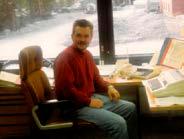
Bredbacka at his typewriter.
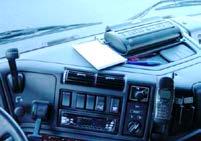
Fax and GSM equipment in the vehicles.
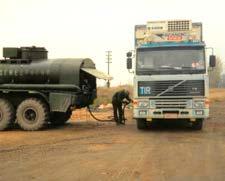
Refuelling in Tosno, 1994.
Gullans unloading ice cream in Moscow, 1994.
Today, there are no curtainsided trailers left on the road.
Everyday life on the road
It’s early in the morning. Most people are still asleep, but out on the roads the day has already begun. A new two-week shift awaits Matias Koponen, a driver for Anssi Mäkinen Oy working for Scandic Trans. Join him on his journey behind the wheel – starting off in Ostrobothnia, then over to Sweden and back to Finland. Using his own photos taken along the way, Matias tells us how he spends his hours – from the first stop to the final kilometres arriving home.
Text: Anna Sand • Photo: Anna Sand & Matias Koponen
Usually, the driver changeover takes place at the weekend and in Turku for Matias, who is originally from there but now lives in Nivala with his family. This time, exceptionally, it was a Monday morning in Ostrobothnia, and Matias sets off down to Turku from the head office in Korsholm with an empty lorry.
“On Thursday I was told when and where my shift would start. This is often done over the phone with the dispatchers. All orders and information regarding loading and unloading
Loading of seedlings in Närpes at approximately 1:00 p.m.
Driver change, meaning the start of the work shift at the terminal in Vaasa at 9:00 a.m.
38 pallets of seedlings destined for Sweden.
points come directly through the MobileLite app,” Matias explains.
This morning he knows he is due to load seedlings in Närpes, that the lorry will be full and that the load is to be unloaded in Sunne in Värmland, about 400 km west of Stockholm.
But where does the journey take him from there, and what does a driver’s working day look like?
Join us on the road as we follow the key stages of one of Matias’s work shifts.
Note: The journey is presented here in simplified form and does not include all stops, waiting times, breaks, and work tasks.
Refuelling/break with a friend in Örebro at 11:30 a.m.
Arrival in Sunne, Sweden, at 6:00 p.m. to unload seedlings at a farm. Unloading is carried out using a tractor. The delivery is confirmed in real time.
Boarding the ferry in Turku at 7:20 p.m.
At 9:30 a.m. Return cargo to Finland loaded together with a colleague in Vansbro. Full truckload of frozen goods. The temperature is checked during loading.
Morning upon arrival in Stockholm at 6:30 a.m. The consignee is notified of the arrival.
Arrival at the Viking Line terminal in Stockholm at 2:45 p.m.
Loading more cargo from the next customer at 4:00 p.m.
Meal on board the ferry at 9:30 p.m.
Boarding the ferry in Stockholm at 7:45 p.m.
Loading in the Helsinki metropolitan area together with a colleague at 3:00 p.m. A new order is received digitally from transport management and acknowledged electronically.
Weekly rest period at the terminal in Turku from Thursday evening until Saturday evening.
Truck washed at Rekka Spa in Lieto on Thursday at 9:45 p.m.
Waiting to unload the frozen goods in Vantaa at 11:30 a.m.; unloading time at 12:00 noon.
Sunset on the ferry deck. Breakfast before arrival at the port at 6:45 a.m.
Having a coffee with Kajtsu, a driver from Ristimaa Trucking, before heading onto the car deck.
Terminals offering comprehensive services, speed and transparency Logistics without bottlenecks
With its own terminals at three strategic locations across the country, Scandic Trans can offer smooth and flexible warehousing services in both the capital and Turku regions, as well as at its head office in Ostrobothnia. Extensive logistics concepts tailored to the customers’ specific needs give Scandic Trans a unique position within the industry, and thanks to its comprehensive service, the company is more and more often becoming its customers’ first choice.
Text: Anna Sand • Photo: Anna Sand & Linda Svarfvar
Scandic Trans offers a bespoke, comprehensive service in both terminal services and warehousing, all tailored to the customers’ needs. The flow of information from the warehouse management system can be integrated with other external systems according to specific customer requirements. Additional and value-added services such as packaging and repackaging as well as distribution are also available.
Matias Korte is in charge at the Turku terminal.
The terminals have excellent locations for logistics next to Ring Road III in Vantaa, near the Port of Turku and on National Road 8 and serve customers with anywhere from a single pallet to thousands of pallets, as well as various types of special cargo.
“Trucks arrive at the terminals early in the morning with imported goods. Unloading these trucks is prioritised so that they can make it to their next unloading or loading slot. Some goods need to be distributed as quickly as possible, others require temporary storage,” Peter Dahlgren at the Vantaa terminal explains.
"We prioritise
a well-organised terminal environment where all pallets are clearly labelled, transport documents are in place and every delivery has a designated spot or queue
“Goods arrive daily from Sweden for example from one of the Nordic region’s largest furniture suppliers, which will be quickly redistributed to the correct stores. The stores, however, are not always able to receive the goods at once – there may not be storage space available in the store at that moment, or staff available for unloading, which is when our temporary storage services come in handy,” Peter continues.
In addition to this, Scandic Trans also handles return pallet management for companies.
The cargo space in the vehicles and their routes are optimised to make the transport chain as efficient as possible.
“If there are any deviations from the timetable, we always contact the customer by phone,” he explains.
The terminal also handles special goods in various formats, including from one of Sweden’s largest suppliers of office and educational products. These are often deliveries linked to specific projects such as new school facilities, where large volumes of special goods requiring special handling arrive at the terminal at short notice. The shipments are time-sensitive and therefore require a terminal close to the customer where the goods can be delivered on time.
“Some of the goods are distributed to our partners’ terminals. Our transport management system is integrated with most systems and information flows seam-
lessly, including details of which last-mile deliveries are pending,” Peter explains. He describes speed and direct communication with customers as areas where Scandic Trans excels.
“As a Finnish company, we keep our promises. Our ‘Johnny’ approach is applied throughout the entire process. We are ‘Johnny’ to all our customers,” he states.
The same applies at the Turku terminal, where Matias Korte is in charge.
“A well-run terminal operation is based on structure and order. We prioritise a well-organised terminal environment where all pallets are clearly labelled, transport documents are in place and every delivery has a designated spot or queue,” Matias says.
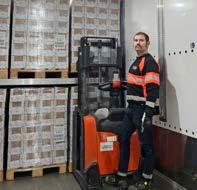
On arrival at the terminal, drivers receive assistance with loading and unloading and, where necessary, guidance on where the goods should be placed.
“We aim to stay one step ahead by keeping track of when deliveries arrive, what needs to be loaded and ensuring that all necessary transport documents are available to accompany each shipment,” he continues.
The digital traffic system is updated in real time with all new deliveries, quantities, final destinations and delivery times. Integration with subcontractors’ systems via EDI (Electronic Data Interchange) ensures an efficient and automated flow of information between the systems. From the Turku terminal, seasonal products among other things are distributed to partner terminals, from where the shipments then continue to various retailers across the country.
“Thanks to our systems, the customer can track the goods and their location in real time,” Matias adds.
Nevertheless, he describes human resources – the staff and drivers – as the company’s greatest strength.
“Together we sort everything out straight away; there are no loose ends here. Customers can reach us directly – our availability is top-notch – and we care about our customers. What’s more, we have skilled and reliable drivers,” he concludes.
Peter Dahlgren.
A workplace people feel good about
Working together towards the same goal
In an industry where competence and reliability are crucial, people are the company’s most important resource. For Scandic Trans, employer responsibility is not just about recruiting the right people, but also about creating a working environment where employees thrive, develop and where they want to stay.
Text & photo: Anna Sand
Being forward-thinking and developing is one of Scandic Trans’ five values and is applied at all levels - sustainability, technology and obviously as an employer.
“Here, everyone works as a team towards the same goal. You can trust that everyone is doing their job, but also that you can get support from your colleagues. The threshold is low between departments and at Scandic Trans everyone can be themselves,” HR Specialist Helena Perätalo explains.
She sees the working community and the team spirit of the company as its greatest strength – both from the point of view of the company and the employees.
“We’re all Johnnys - no one is left out or on their own here. Additionally, you get to speak your own language and, thanks to a small workforce of just under 30 people, everyone knows each other. We have a good working environment with fine facilities, modern technology, good equipment, several meeting rooms and plenty of social areas. After the expansion, we all now also work on the same floor in Korsholm, which is very positive,” Helena continues.
She also notes that Scandic Trans takes care of its employees in several ways:
“In addition to the statutory insurance, we are all covered by accident insurance even during our free time. The company provides everyone with travel
insurance and an extra health insurance policy that covers both medical expenses and medicine, which is very valuable.”
On top of all of this, there is also additional group pension insurance for everyone who has been employed for more than two years.
“These are substantial staff benefits, which are further supplemented by a lunch allowance as well as fitness, massage and cultural benefits of up to 400 euros per year per person. These are highly appreciated and are utilised almost 100 per cent”, she adds. “They provide added value for employees – something that supports both the ability to work and work-life balance.”
Last year, 78% of the benefit was used for exercise, 4% for massage and 18% for cultural activities.
Scandic Trans’ employer policy also has a clear effect on both sickness absences and staff satisfaction with their workplace.
“We have lower sick leave than the industry average. The results of the staff survey we have carried out since 2021 have also been very good every year,” Helena
The survey focuses on the employees’ own work, the workplace community, the employee’s own work ability and competence development and management.
“Our investments in our staff have turned out to be successful - this year we achieved the best result in the survey so far,” Helena concludes
Exercise as a benefit – energy as a result
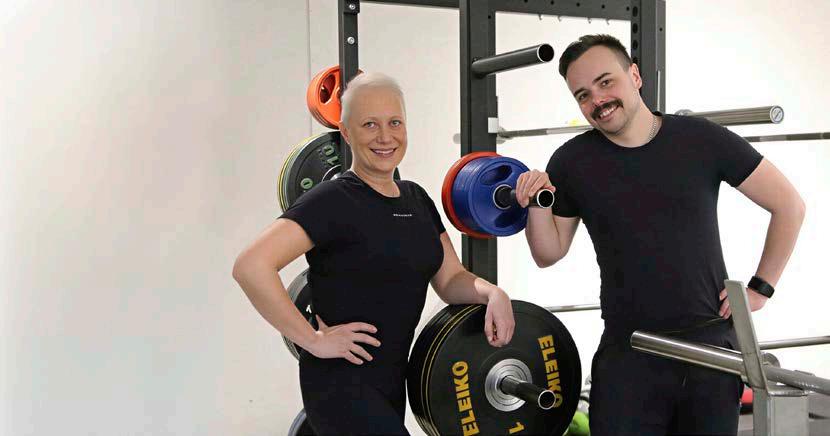
These initiatives can also be seen in practice in the everyday lives of employees. For Scandic Trans employees, it’s not just about competitive benefits, but about concrete opportunities in their daily lives. We meet Johan and Carola who have chosen to use the exercise benefit for strength training - and tell us how it affects both their job satisfaction and energy levels.
Text & photo: Anna Sand
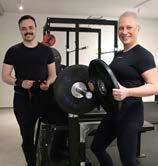
Both Johan Lövdahl and Carola Bäckström use almost 100 per cent of their company wellness program for gym membership and strength training.
“It was something I had wanted to do for a long time but wouldn’t otherwise have prioritised financially,” says Johan, who has been doing strength training for five years now.
Carola, on the other hand, has always been active – but mainly in group training sessions in various forms.
“I had tried most things, but I had also realised that it’s difficult to get any real development through such forms of exercise. The more I read and the more informed I became, the more I understood that strength training with a progressive load is the only way to develop – while it’s also extremely important the older you get,” she says, referring to the fact that you start losing muscle mass after the age of 30 if you don’t actively counteract the process.
Thanks to the exercise benefit, however, there is the possibility to ”spice up” the training weeks with other sessions at other gyms, which Carola also does.
“I now do HYROX once a week in addition to my strength sessions. I wouldn’t do that if we didn’t have the luxury of this benefit from our employer,” she states.
They have both noticed only positive effects from the training.
“Even though I have an office job and am mostly sitting all day, something my body isn’t really made for, I haven’t noticed any typical office ailments,” Johan explains.
Carola agrees. “In the past I had to go for neck and shoulder massages, but since I started strength training that is not necessary anymore. In addition, exercise makes you both more alert and happier; you can cope with more in everyday life and instead of using up energy, the exercise gives you energy. I can’t think of anything negative at all about exercising,” she adds.
“You simply end up with a better baseline”, Johan says.
When it comes to strength training in particular, he emphasises the importance of having a structured training programme – consistency and progression are key to achieving results.
“It’s exactly the same as at work. You need to structure your tasks to achieve your goals, and in that respect too, they complement each other.” “Strength training is also a relatively inexpensive form of exercise – apart from access to a gym, no expensive equipment is required beyond comfortable clothing”, he adds.
They are both very grateful for the exercise benefit and the other employee benefits.
“At many other workplaces, none of this is a given, and the insurance is of especial value. You don’t realise it until you really need it,” Carola concludes.
Start at the level you are and make progress over time,” Johan Lövdahl advises anyone thinking of starting to exercise.
Turku harbour is getting a new shape
The Port of Turku is being fundamentally rebuilt – not only to meet the city’s development, but also to handle growing traffic volumes and to streamline flows between land and sea. The investment of over EUR 170 million will turn the port into a modern transport hub where both passenger and freight traffic can move faster, more safely and more predictably.
Text: Anna Sand • Photo: Linda Svarfvar
The remodelling of the Port of Turku involves a comprehensive restructuring of the entire existing logistics flow. A new joint terminal for Viking Line and Tallink Silja, updated quays and improved road and rail connections will reduce bottlenecks and create a more cohesive transport system.
For freight traffic the project, which will run until 2028, includes better connections to roads and a clearer separation of different forms of transport – something that is becoming increasingly important in a port where around 80,000 lorries pass through every year.
“For freight traffic, the biggest difference will be the new road into and out of the port. It will mean time savings of 15-20 minutes each way,” says Erik Söderholm, former CEO and current Senior Advisor of the Port of Turku Ltd and with long experience as a freight forwarder himself.
The entire port area is being reorganised through the project.
“We’re building a whole 7 km of parking space for lorries and trailers,” he continues.
ERIK SÖDERHOLM
• Born with logistics in his blood and already worked summer jobs at the Port of Turku in 1980.
• Lives in Espoo and on the island of Kimitoön.
• Has held senior management positions at companies including Kuehne + Nagel, DB Schenker, VR, Pohjolan Liikenne, DFDS Transport and Wilson Logistics.
• Has been responsible for logistics and transport operations across large parts of the Nordic countries, the Baltic states, Poland, the United Kingdom, Ireland, Russia, Belarus and Ukraine.
• Has worked and been stationed in Finland, Sweden and Poland.
• Served as Managing Director of the Port of Turku from 2019 to 2026, leading several major development and investment projects.
• Retires in the summer of 2026 but will continue contributing to the port’s operations as a Senior Advisor.
• Enjoys spending his free time travelling, being a grandfather, engaging in sports and visiting Lapland.
• Remains open to new and interesting challenges, even though his full-time working career has come to an end.
The check-in system is also being modernised to make it smoother. New smart gates that read licence plates will show which lane to choose. Mr Söderholm believes that both professional drivers and private individuals will be pleased with the result.
“A smooth and fast check-in is important because the time in the port is very short for the ships with only 1 hour and 15 minutes for both unloading and loading,” he adds.
The project doesn’t just take into account the current situation but is preparing for future needs. For this reason, they have also chosen to invest in charging stations for electric lorries – demand for which will increase in the long run, according to Söderholm.
“Initially, they will probably be used mainly by Finnish haulage companies, but we chose not to wait with this investment.”
After the remodelling, the port will have room for more shipping companies and the focus will not only be on Sweden, but also on Europe.
“More departures would be a benefit for freight traffic and after the remodelling we can handle significantly higher volumes than today,” says Mr Söderholm.
A central part of the redevelopment is the Ferry Terminal Turku (FTT), where the City of Turku, the Port of Turku and the shipping companies Viking Line and Tallink Silja will have their operations together in one single terminal. In connection with this, quays, traffic areas and logistics solutions are also being rebuilt, which changes how flows will be organised in the port area.
“The shipping companies have previously owned their own terminals - now we will operate the new terminal ourselves. This means interesting times – a new life and new opportunities,” Mr Söderholm says and he believes it will attract more passengers.
“It’s important that the shipping companies are doing well - they have to live off both freight and passenger traffic. At the same time, our plan is to make things easy for drivers, and the new terminal will offer improved social facilities for them too.”
The project has so far gone as planned and the final work will be completed in the summer of 2028. The improvements will make the Port of Turku a stronger national and international transport hub and part of a chain of European cities.
“The port will become a modern maritime centre that meets all the requirements of modern, fast, smooth and safe shipping.”
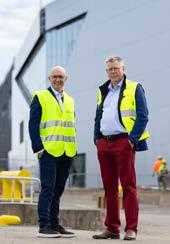
Erik Söderholm, former CEO and current Senior Advisor at of the Port of Turku, sees clear efficiency gains in the redevelopment. The new port will bring together terminal functions, quays and traffic solutions in a more coherent system, where both freight and passenger flows can be handled more efficiently. Söderholm is succeeded by Minna Pirkkanen.
From vision to reality Step by step towards 2030
In last year’s Delivered readers were given an insight into Scandic Trans’s new vision, Vision 2030. Work to achieve the agreed objectives is ongoing on a daily basis and can be seen across all areas: organic growth and market establishment, quality targets, environmental targets, technology and AI, expanded partnerships with customers and skilled and motivated personnel.
Text & photo: Anna Sand
Mikael West, Helena Perätalo, Marko Äbb, Yvonne Wikström and Johan Lövdahl are part of the newly formed crossdepartmental collaboration group. In addition to them, Bengt Dahlgren, Matias Korte and Mattias Streng are also members of the group.
We are committed to continuous improvement and development,”
CEO Mikael Löfqvist begins. “In our annual strategy we highlight all our processes and what each department needs to achieve during the year so that we can reach the objectives we have set for 2030 – and so that we can be our customers’ first choice.”
This year, we are working to develop our sales tools and methods – something that has already brought results.
“Our sales staff have been given new tools and information to enable them to inform customers about what Scandic Trans offers – not just what we are selling. With this new approach, they can more easily demonstrate how we stand out from our competitors, and as a result they also feel more confident in their own work when dealing with customers”, Mikael explains.
One area where Scandic Trans stands out in the industry is its work to reduce emissions. Its sustainability efforts and environmental targets, which comply with EU directives, form a key part of the company’s vision.
“We are now actively seeking solutions for customers aiming to reduce their CO2 emissions from 90 per cent all the way up to 100 per cent, thanks to the possibility of using HVO for road transport and LBG for sea transport. Our target is to eliminate even the very last one per cent of emissions.”
"to increase the level of automation and accelerate operational processes.
“Technology will play a greater role in traffic management in the future,” Mikael hopes. To maintain the highest possible standard of vehicle condition, AI camera surveillance has also been installed at the Turku terminal this year.
“The cameras scan the vehicles and will in future be used for a variety of purposes including as a service report for hauliers. Thanks to this data collection, we can reduce damage and the number of deviations on the vehicles,” he explains.
The use of AI continues to grow in other areas too. The Johnny videos have been very well received by our customers.
“This is where we clearly stand out from other players in the industry. It has proven to be a very useful tool and we are constantly developing it further,” Mikael continues.
We are now actively seeking solutions for customers aiming to reduce their CO2 emissions from 90 per cent all the way up to 100 per cent. Our target is to eliminate even the very last one per cent of emissions
One way is to ‘buy’ our way out of it through emission allowances.
“However, we are looking for other ways to reduce total emissions,” Mikael states. “Until now biogas has not been a viable option for us, and as for hydrogen, development has been at a standstill for several years.”
At the moment, therefore, electricity looks to be the most logical and viable option – and also the one that customers understand best and most wish and opt for.
The transport department is also working on its strategic vision – the aim is to increase the number of vehicles from around 115 to 150–160 by 2030
“The more vehicles we have, the higher our turnover and the greater our ability to take on new customers,” Mikael explains.
A project is underway within traffic management
There is also a whole lot more going on in the IT department.
“This year, a brand-new introduction system for all new drivers is being taken into use. The training takes place via a web-portal and, thanks to the new auditing process, we are able to demonstrate and prove the drivers’ competence to our customers in a more concrete way. This training will be adapted and further developed for hauliers and also for our staff, who are the company’s most important resource,” he adds.
Another step in the realisation of Vision 2030 is the creation of a new team leader role in the IT department and a comprehensive integration project with customers’ own systems – this is to simplify the invoicing process and reduce the ‘manual work’ previously required in certain specific customer cases.
“We are constantly looking for new ways to simplify our processes, even though this can be very resource-consuming and require the adoption of new working methods.”
Another part of our vision work is a brand-new collaboration forum between the company’s various departments – a group in which each department is represented by its own team leader.
“The aim is to improve collaboration and communication in all directions. The work is still in its infancy but is under continuous development,” Mikael concludes.
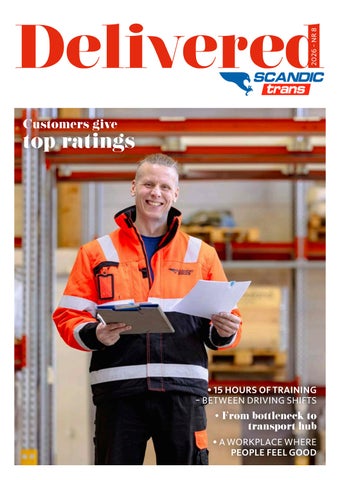
Customers give Scandic Trans top marks
Chief Financial Officer Reko Märsylä is delighted with the results of the latest customer surveys, which have also been shared with staff, the board, passengers and drivers as part of the company’s quality assurance work.
How do customers rate their experience of working with Scandic Trans? The latest customer surveys show very strong results. The company receives particularly high feedback on our responsiveness, customer service and expertise. At the same time, the responses provide valuable feedback that helps to improve our ongoing quality work.
Text & photo: Anna Sand
Scandic Trans conducts annual customer surveys to monitor how our cooperation with various partners works in practice. The results provide both an overall picture of customer satisfaction and specific comments on what works well – and what could be improved.
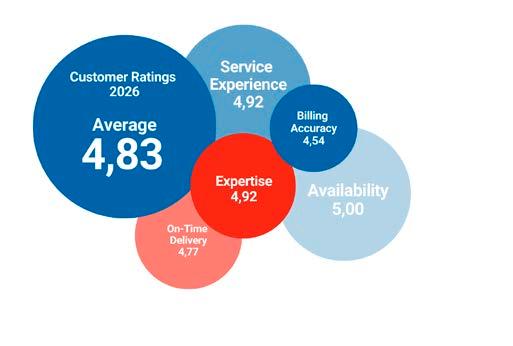
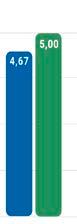
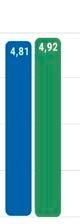
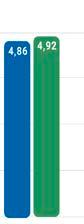
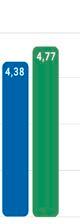
The latest survey was conducted at the beginning of 2026 and was aimed at all customers. The results show that customer satisfaction remains very high, with an overall average rating of 4,83 on a five-point scale. The previous year, in 2025, a similar survey was conducted, but only among the company’s 20 largest customers. There too, the feedback was very positive, with an average rating of 4,62
“I am very pleased and proud of the feedback we
have received and the quality of our business that it shows,” says Reko Märsylä, Finance Director at Scandic Trans, and he adds, “Even on what is perhaps the most difficult point to meet, keeping to the promised transport timetable, the rating is high.”
In several areas, the company receives almost the highest possible rating. Availability, expertise and customer service are among the aspects that customers value most. The comments in the survey particularly highlight quick responses, flexibility and a professional approach. Several customers describe the collaboration as smooth and reliable, with good communication and transport that runs as planned.
“We always strive to ensure that customers receive replies to emails and even quote requests immediately – ideally within half an hour,” Märsylä points out.
At the same time, the responses also contain ideas and suggestions for improvements. Among other things, there are requests for more proactive information regarding changes to loading times, clearer information flows and, in some cases, more digital solutions for tracking shipments.
“It’s a challenge to always keep up with communication regarding the timetables, as they are often finalised at a very late stage. This is because we strive for as much flexibility as possible and to be able to meet our customers’ needs,” Märsylä states.
For Scandic Trans, the customer survey is a key tool in its ongoing quality assurance work.
“We hold weekly follow-up meetings regarding our quality. All feedback received in the surveys has been highlighted and discussed, just as we always do with any deviations or complaints,” Märsylä continues.
“We aim to work proactively by informing our staff, drivers, passengers and even the board about all feedback, and by providing clear instructions on how to handle different situations. In addition, we work on continuous improvement, identify the root causes and take corrective action.”
The results of the customer surveys confirm that our quality assurance work is highly effective – the average scores in the two most recent surveys were 4,83 and 4,62 out of a possible five. These results both confirm what is working well and provide valuable guidance for the future.
" You’re quick to reply to emails and confirm bookings. You usually have vehicles available for urgent deliveries too
" Always a warm and friendly customer service " A very professional business; the vehicles are clean and wellmaintained, and agreements are always honoured
" Your drivers are always friendly, professional and ready to help!
Sustainability strategy taken to a new level
Scandic Trans’ sustainability work has been going on for more than 25 years and is now moving forward into a new phase. The EU’s upcoming emissions trading scheme for road traffic and heating, ETS2, will change the conditions for the industry. At the same time, Scandic Trans is updating its sustainability strategy with the goal of further reducing the climate impact of both road and sea transport.
Text & photo: Anna Sand
In recent years, important steps have been taken towards more climate-friendly transport and the interest among our customers has grown steadily and more and more of them prefer and choose greener solutions.
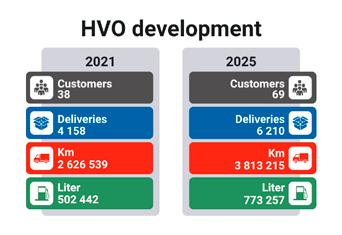
“Today 27 of our trucks are fuelled with HVO,” explains Linda Bengs, Sustainability Manager at Scandic Trans. “The number is growing every year and renewable diesel is becoming increasingly visible in our procurement.”
For many customers, sea transport accounts for a large proportion of the entire transport route and since 2025, Scandic Trans customers have been able to choose biofuel for this as well – something that reduces emissions by over 90 per cent for the entire transport chain.”
However, the world around us is changing rapidly and sustainability efforts are not slowing down despite the progress that has been made over recent years. New
Linda Bengs leads Scandic Trans’ sustainability work, where ETS2 and EcoVadis are the next steps to adapt to.
climate requirements, clearer reporting of emissions and the EU’s expanded emissions trading scheme will have a big effect on the transport sector in the coming years. For Scandic Trans, this means that sustainability work is entering the next phase, with an updated and more detailed sustainability strategy.
The EU’s emissions trading scheme, ETS1, was introduced already in 2005. It is based on the principle that companies must have emission allowances for their carbon emissions, which creates an economic incentive to reduce them.
“The EU is now expanding emissions trading with a new scheme, ETS2, which will cover fuel for road transport,” Linda continues. “For the transport industry, this is another tool in the transition towards more sustainable solutions and a more efficient use of energy.”
”ETS2 is likely to further increase the price of fossil fuels – which in turn may have a positive effect on the use of HVO and its price,” Linda believes.
To steadily keep up with developments and the increasingly stringent requirements and to update the company’s own sustainability strategy are important parts of her work, so the strategy will be taken to a new, more detailed level in 2026. Scandic Trans will also be implementing another environmental management system.
“We have had ISO14000 for many years and the next step is to join EcoVadis”.
EcoVadis is an international platform used to evaluate and compare suppliers’ sustainability performance within supply chains.
“It is currently used by over 100,000 companies globally and many large international companies now require an EcoVadis assessment from their suppliers,” Linda adds.
The switch to HVO is also just one part of Scandic Trans’ climate work. In addition to renewable diesel, the company now also offers emission-free sea freight thanks to its collaboration with Viking Line and the possibility of using LBG in their ships. Moreover, other fuel alternatives for road transport – biogas, hydrogen and electricity – are continuously being l ooked into and investigated. You can read more about this in the article on Scandic Trans’ vision work
THE IMPACT OF ROAD TRANSPORT ON THE CLIMATE – WHICH POLLUTANTS CAUSE WHAT?
CARBON DIOXIDE (CO₂)
• Clearly the biggest driver of transport’s climate impact
• Produced when fossil fuels such as petrol and diesel are burned
• Accounts for around 95–99% of the climate impact of road transport
• One litre of petrol burned produces about 2.3 kg of CO₂
• One litre of diesel produces around 2.6 kg of CO₂
• CO₂ stays in the atmosphere for hundreds of years
NITROUS OXIDE (NITROUS OXIDE) (N₂O)
• Formed in small quantities in catalytic converters and during combustion in engines
• Has about a 273 times stronger greenhouse effect than CO₂
• Is found in much smaller quantities than CO₂
• Can stay in the atmosphere for over 100 years
• Contributes relatively little to the overall climate impact of transport but is very potent per molecule.
METHANE (CH₄)
• Methane is produced particularly by gas-fuelled vehicles
• About 28 times stronger greenhouse gas than CO₂
• Has a shorter lifetime in the atmosphere, about 12 years
• Can leak as unburned gas from engines and fuel systems
• Less prevalent than CO₂, but important as methane is a powerful greenhouse gas.
SOOT / BLACK CARBON
• Soot particles from diesel engines in particular are not counted as a greenhouse gas but affect the climate
• Consists of very small carbon particles
• Absorbs solar radiation, increases melting and warms the atmosphere
• Short lifetime in the air (days-weeks) but strong warming effect
HEAVY ROAD TRAFFIC AND EMISSIONS IN FINLAND
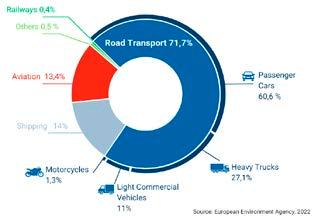
• Road transport accounts for over 90% of transport sector emissions in Finland – in the EU the level is around 72%
• Heavy goods vehicles account for around 30-40% of all road transport emissions
• A truck driving 120 000 km per year can emit 100–140 tonnes of CO₂ per year, which is roughly equivalent to the emissions of 60–70 average passenger cars
Behind the wheel towards Ironman
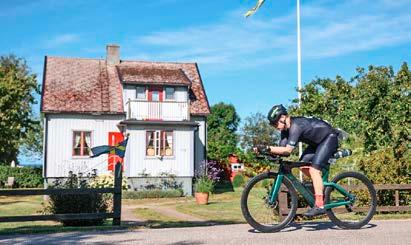
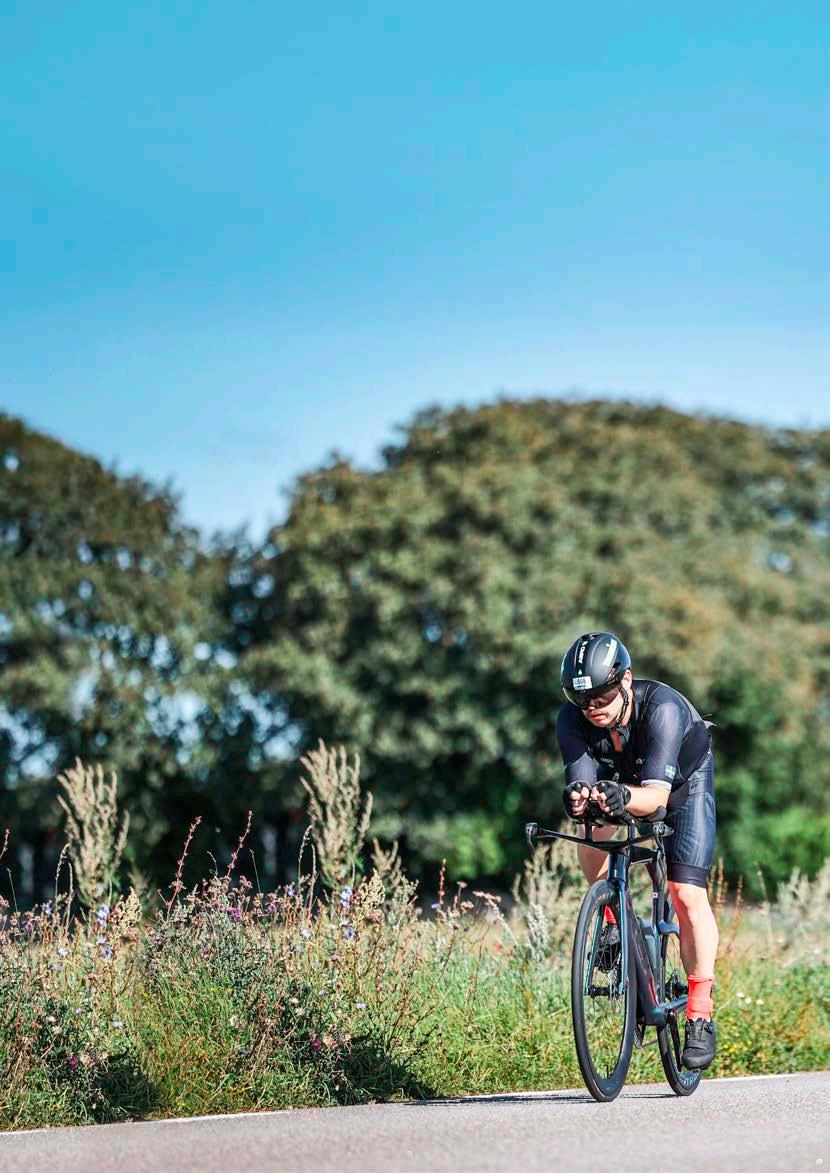
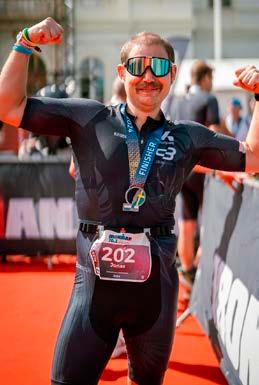
Office work is often seen as a job with a lot of sitting. The same goes for the driving profession - but that doesn’t stop Jonas Krooks from Vörå from training both purposefully and a lot – far from it. Last year he completed his first Ironman-race – a challenge that gave him a taste for more.
Text: Anna Sand • Photo: Private photos and press photos/Sportograf.com
I’ve worked as a professional driver all my adult life – for Trans Sandås and Scandic Trans for the past 15 years,” Jonas Krooks begins. ”Throughout these years, I’ve been keen to keep my body active as a counterbalance to all the sitting behind the wheel, but I’ve mainly been swimming, once or twice a week.”
In connection with the pandemic as he suffered from a serious case of Covid-19, Jonas had something of a delayed 30-year crisis and decided to start training seriously with the goal of being able to complete an Ironman competition, something he had briefly thought about before.
“Being interested in politics, I’ve been following Alexander Stubb for a long time; he’s a great role model in every way. He came second in his age group in a triathlon last year, which is incredible given his schedule. In addition, I have also been inspired by both staff and hauliers at Scandic Trans. If you can keep going and compete at a high level as a CEO and business owner, there are no excuses for a driver,” Jonas says and mentions both Björn Rosenqvist and Mikael Löfqvist as sources of inspiration.
With the help of a Swedish triathlon coaching service, he has now been training in all three disciplines –swimming, running and cycling - for a few years, and in 2024 Jonas took part in his first race in Jönköping – a half-distance event. “It went well and I had quite a bit of energy left after the competition.”
Last year he completed his first full Ironman competition in Kalmar, and that race also went very well. In August he will be doing it again. “The goal now is primarily to improve my own times. Basically I’m not a competitive person and I mainly compete against myself,” he says.
Ironman is one of the world’s most demanding endurance events and consists of a marathon, a 3.68 km swim and a 180 km bike ride.
JONAS KROOKS
Age: 36
Home town: Vörå
Works as: Long distance driver at Trans Sandås/Scandic Trans Competes in: Triathlon (swimming, cycling, running)
Role model: Alexander Stubb
Jonas Krooks is a truck driver who completed an Ironman competition. Despite his profession he manages to fit in about 10 hours of training every working week and 15-20 hours during his weeks off.
He has no major problems with training even during his working weeks – but planning is key.
“During a normal week I train for 15–20 hours. There are usually two running sessions, two cycling sessions, one swimming session and one strength session. When the working day is done and I park the car, I simply lace up my running shoes and head out or find a swimming pool. At the ferry’s gym I usually do strength training and run intervals, while the cycling sessions are done during my weeks off,” Jonas explains.
In wintertime, he often swaps his running shoes for cross-country skis and this winter he also completed his first Vasaloppet-race with around 500 km of skiing ”under his belt”. “It should have been twice that - skiing is a technical sport and requires many kilometres for it to flow really well,” he explains. “It was harder than I thought, but there will probably be more Vasalopp in the future despite that,” he says.
The effects of the training and improved fitness were immediate and they are also
noticeable behind the wheel.
“I have become much more stress-resistant and simply a better version of myself. Your body can take a lot of abuse until your 30s, but then, if not sooner, you have to start taking care of it if you’re going to cope. Training is a must, and besides all the physical benefits, it has improved my self-confidence and given me a new circle of friends,” he adds.
Beating last year’s time and performance at this year’s Ironman is now his main focus. But from a broader perspective Jonas mainly trains to achieve better health.
“Simply for my future self,” he concludes.
IRONMAN
Ironman is one of the world’s most demanding triathlon endurance competitions. It consists of three events that are completed in direct succession without a break:
• Swimming: 3.8 km
• Cycling: 180 km
• Running: 42.2 km (marathon)
Total 226 km in a single race
Jonas’s first Ironman competition went very well and now he aims to improve his times in this year’s competition.
Adversity turned into opportunity
The turbulent world situation, depressed prices and increased costs are affecting most companies today. The subsidiary Scandic Logistics, based in Helsingborg on the west coast of Sweden, experienced just that last year. But after spending most of 2025 focusing on streamlining both flows and internal processes, the company has managed to turn the downturn into an upturn.
Text: Anna Sand • Photo: Johan Lilja
The first quarter of 2025 was very positive, but then volumes started to fall sharply with our existing customers, while our own costs increased significantly,” recalls Joakim Lassen, CEO of Scandic Logistics
Thanks to the fantastic commitment of all four employees, the trend reversed towards the end of the year and this positive trend continued into the spring of 2026.
“From April to December 2025, the focus was on streamlining all processes and flows. We negotiated with existing subcontractors, sought new ones, and analysed and reviewed the costs of the business,” Joakim continues, explaining the reason for the reduction in volume he says,
“There was a lot of idle capacity in the market, which in turn pushed down prices.”
While working to turn the downturn into an upturn, a high priority has been given to not impairing our
service to customers - something that is valued by many.
“We insist that personal contact is important – we want to be Johnny to everyone,” he says.
They have now managed to find the right flows and customers and growth in Western Europe has continued.
“We have grown mainly in Belgium, the Netherlands and Germany, but now also in Spain and France. Our participation in logistics fairs organised in Poland and Germany has led to an expanded cooperation network.”
According to Joakim it is crucial to be responsive to the wishes of both customers and subcontractors.
“You need to work together - you can’t do it on your own. Today, we have expanded our network of hauliers, even though the number of vehicles is the same as a year ago, which allows us to be more flexible and quickly adapt to changing flows and market needs. Right now things look positive, but we do know from experience that things can change very quickly - especially given the unstable state of the world,” he continues.
The current situation bodes well for the future and it looks like Scandic Logistics can continue to choose customers who value their service and expertise.
“We continue to prioritize a good dialogue with our customers and strive to develop together with them. We have also learnt to look ahead with them in the longer term and with a broader horizon,” Joakim concludes.
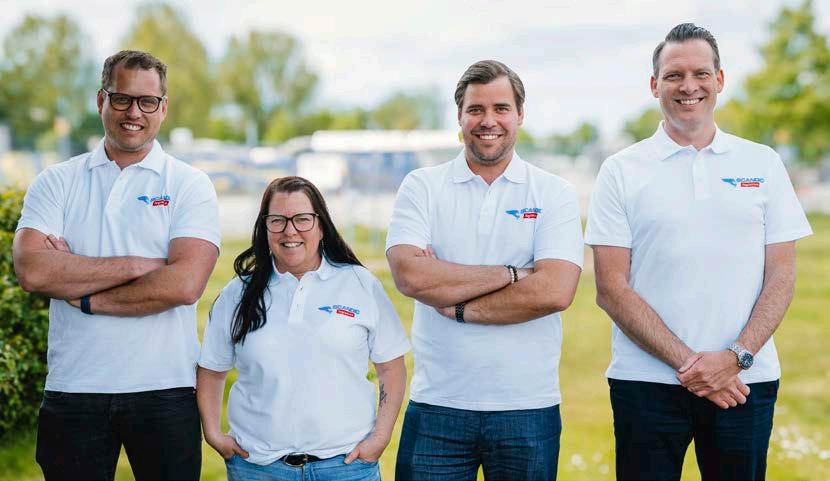
The team consists of Robin Svensson, Jennie Dahlström, Ludvig Holmberg and CEO Joakim Lassen.
Scandic Trans at
the Power Truck Show
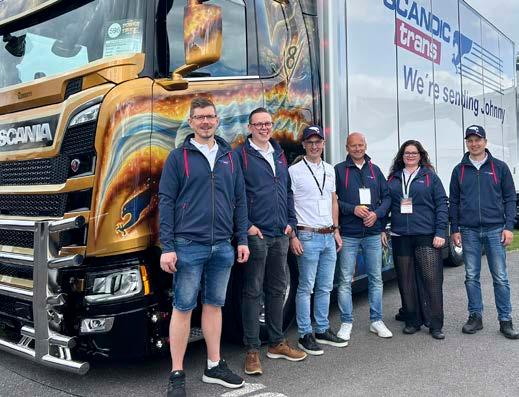
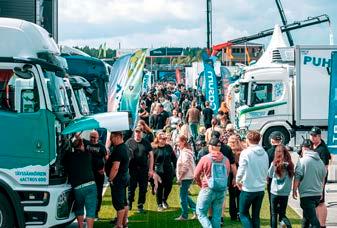
Scandic Trans’ participation in the Power Truck Show in Alahärmä, one of the Nordic region’s largest events for the lorry and transport industry, has become a tradition. Every year, the event attracts thousands of visitors, hauliers and companies from across the Nordic region and Europe.
Text: Anna Sand • Photo: Scandic Trans, Power Truck Show
The event, held at Power Park over an actionpacked August weekend, is an excellent opportunity for Scandic Trans to raise its profile and gain visibility among both hauliers and drivers – both existing and potential new ones.
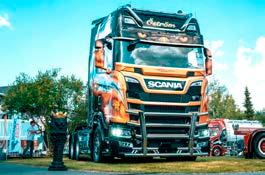
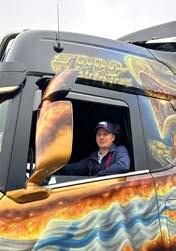
Over the course of the event, hundreds of lorries and trucks are on display – ranging from new models to highly customised vehicles where details, themed livery and lighting get the most attention. At the same time competitions, trade exhibitions and a diverse range of entertainment activities are organised.
“We have now taken part for two years running and will be there again this year. It’s an opportunity for us to showcase our values,” CEO Mikael Löfqvist says, and adds,
“Our aim in taking part is also to highlight the important work that both drivers and other road users do every day. During the trade fair, we’ll be providing information about the industry and how we work, whilst also offering training and sharing our expertise. We also see it as a great opportunity to connect with haulage companies that have the right attitude and competence to work together with us.”
Last year’s participation gave us many new contacts and positive feedback from attendees.
“It was a very rewarding experience and we hope that our participation this year will be just as successful.”
In this photo report, we follow Scandic Trans’ participation and their presence at the Power Truck Show 2025
Scandic Trans is more than just trucks and logistics – we are a committed partner who cares about your transport from the first contact to the final unloading.
Our sales team has extensive experience and deep knowledge of the industry. We listen to your needs and find solutions that work, whether you transport food, industrial goods or something else entirely.
We’re here to make it easy and simple for you to make the right choice – every time. Get in touch and we’ll tell you more!