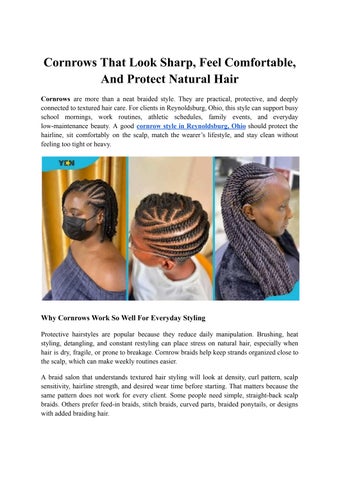
Cornrows That Look Sharp, Feel Comfortable, And Protect Natural Hair Cornrows are more than a neat braided style. They are practical, protective, and deeply connected to textured hair care. For clients in Reynoldsburg, Ohio, this style can support busy school mornings, work routines, athletic schedules, family events, and everyday low-maintenance beauty. A good cornrow style in Reynoldsburg, Ohio should protect the hairline, sit comfortably on the scalp, match the wearer’s lifestyle, and stay clean without feeling too tight or heavy.
Why Cornrows Work So Well For Everyday Styling Protective hairstyles are popular because they reduce daily manipulation. Brushing, heat styling, detangling, and constant restyling can place stress on natural hair, especially when hair is dry, fragile, or prone to breakage. Cornrow braids help keep strands organized close to the scalp, which can make weekly routines easier. A braid salon that understands textured hair styling will look at density, curl pattern, scalp sensitivity, hairline strength, and desired wear time before starting. That matters because the same pattern does not work for every client. Some people need simple, straight-back scalp braids. Others prefer feed-in braids, stitch braids, curved parts, braided ponytails, or designs with added braiding hair.
For families near Main Street, Taylor Road, Brice Road, and Blacklick Creek, convenience is a real benefit. A clean cornrow style can reduce morning stress while still looking polished.
Comfort Should Come Before Tightness One of the biggest mistakes with Cornrows is assuming tighter means longer lasting. Braids should feel secure, not painful. Excessive tension can irritate the scalp, pull at edges, create bumps, and increase the risk of traction-related breakage. A skilled braider pays close attention to the hairline and nape area. These zones are usually more delicate than the middle of the scalp. Proper parting technique, even sections, balanced grip, and controlled tension help the style look clean without putting unnecessary stress on the roots. Pro Tip: If your scalp feels sore, raised, or tender after braiding, the style may be too tight. Protective styling should not require pain. Ask for lighter tension, larger sections, or a softer feed-in method during your next hair braiding appointment.
The Best Pattern Depends On Lifestyle Not every client wants the same finish. A student may need kids' cornrows that last through school, recess, and sports. A professional may prefer a simple braided hairstyle that looks neat at work. Someone preparing for a vacation may want long-lasting braids that reduce styling time. Men’s cornrows may focus on clean parts, short-hair grip, or designs that pair well with fades. In Reynoldsburg, Ohio, where daily routines may include work commutes, school activities, shopping near Taylor Square, and weekend plans around East Columbus, style practicality matters. Common options include: ● Straight-back cornrow braids for a classic clean look ● Feed-in braids for a softer, more natural start ● Stitch braids for crisp parting and bold definition ● Small scalp braids for longer wear ● Large cornrows for quicker installation ● Kids' styles with beads or simple parts
Preparation Changes The Final Result Good natural hair braiding starts before the first braid. Hair should be properly detangled, clean, stretched, and moisturized. Product buildup can make parts less clean and reduce hold. Very dry hair may feel brittle during braiding. Hair that is too oily may be harder to grip evenly.
A thoughtful braider may recommend a gentle shampoo, conditioning treatment, leave-in conditioner, blow-dry stretch, or light oil before installation. The goal is not to overload the hair. The goal is to prepare the strands so they can handle the style comfortably. Did You Know: Hair that is stretched before braiding often allows cleaner parts, smoother braids, and less pulling during installation. Stretching can be done with low heat, banding, twists, or a blow-dryer with heat protectant.
Cornrows Can Support Growth Goals When Done Correctly Many people choose Cornrows while growing out natural hair, transitioning from chemical treatments, or giving hair a break from heat tools. The style can help because it limits daily friction, reduces combing, and keeps ends tucked or controlled. Still, cornrows do not automatically grow hair. They support length retention when paired with healthy scalp care, gentle takedown, moisturizing, and proper rest between styles. Leaving braids in too long can cause matting, dryness, buildup, and breakage during removal.
Scalp Care Keeps Braids Cleaner Longer A clean braid care routine helps the style last while protecting hair health. The scalp still needs attention under the braids. Light oil, scalp mist, or braid spray can help reduce dryness, but too much product may cause buildup. Clients in Reynoldsburg, Ohio, may also notice seasonal changes. Cold weather can make natural hair feel drier. Summer heat and outdoor activity can increase sweat around the scalp. Both situations affect how braids feel and how soon they may need refreshing. Helpful care habits include: ● Wrap hair with a satin scarf or bonnet at night ● Avoid scratching the scalp with sharp nails ● Use light moisture instead of heavy buildup ● Clean the scalp gently when needed ● Protect edges with low tension styling ● Remove braids before matting begins
Kids, Adults, And Men Need Different Braiding Approaches A child’s scalp may be more sensitive, so kids cornrows should be neat without being tight. Beads, bows, and simple designs can make the style fun while still practical. Adults may prefer professional styles, creative parting, or longer wear. Men’s cornrows often depend on hair length, fade placement, parting design, and scalp visibility.
A good braider adjusts technique instead of treating every head the same. Hair density, tenderness, short areas, thinning edges, and previous breakage should all shape the appointment.
A Better Cornrow Style Starts With The Right Technique Beautiful Cornrows should look clean, feel comfortable, and support the health of the hair underneath. The difference often comes down to sectioning, tension control, product choice, braid size, scalp awareness, and aftercare guidance. For clients in Reynoldsburg, Ohio, the best cornrow style is not only about appearance. It is about finding a look that fits school, work, errands, workouts, family routines, and personal expression. With the right braiding technique and care plan, cornrows can be stylish, protective, and easy to maintain.
Frequently Asked Questions 1. How long do cornrows usually last before they need to be redone? Most cornrow styles last about 2 to 6 weeks, depending on braid size, hair texture, scalp oil, activity level, and nighttime protection. Cornrows with smaller sections may last longer, while larger or looser designs may need refreshing sooner to prevent frizz, buildup, or matting. 2. Are cornrows safe for edges and thinning hair? Cornrows can be safe when tension is controlled and the hairline is protected. People with thinning edges should avoid tiny, tight braids, heavy extensions, and repeated pulling in the same direction. Larger sections, softer feed-in braids, and rest periods can help reduce stress. 3. Should hair be washed before a cornrow appointment? Clean, detangled, and stretched hair usually gives the best result. Washing before the appointment removes product buildup and helps the braider create cleaner parts. Conditioning is also helpful, but heavy oils or thick creams should be avoided because they can make the hair slippery. 4. Can kids wear cornrows for school and sports? Kids can wear cornrows for school, sports, and daily routines when the style is comfortable and not too tight. Simple patterns, secure ends, and gentle edge care make the style easier to manage. Parents should watch for tenderness, bumps, or excessive itching.
5. How should I care for cornrows at night? Wrap the hair with a satin scarf, bonnet, or durag to reduce friction and preserve neatness. Avoid sleeping directly on cotton pillowcases when possible. Light scalp moisture, gentle edge care, and keeping the braids covered can help the style stay cleaner longer. Ready for sharp, comfortable cornrows that protect your natural hair? Contact us today and let our salon family create a style made for you.