

This past November, Kuleana Coral Restoration celebrated our five year anniversary! Since 2019, we ’ ve faced challenges, learned valuable lessons, and refined our strategies to give Hawaiʻi’s coral reefs the best chance at recovery. Our mission is clear: to sustainthereefthatsustainsus.
Hawaiʻi is unlike any other place in the world, with a powerful ocean environment and coral species that support our way of life. Determining the mosteffectiveandsuitabletechniquesto restore them has been a challenge, but alsoacentralpartofourkuleana
Over the last year we have expanded our restoration toolkit, innovated on restoration interventions such as emergency repair, and continued the dedicated and rewarding work of scaling restoration in partnership with local
local communities Our reefs belong to the people of Hawaiʻi, and we will continue to empower local communities to guide the restoration process in their ocean backyard as the entity offering thetechnicalaccess.
We believe that the resilience of our reef is intertwined with the resilience of our people, which is why community engagement remains our largest strength in the restoration process. By tailoringourrestorationapproachtothe needs of the community we are serving, we can ensure the restoration outcome benefits the people who use the reef for their livelihoods, joy, and way of life. Looking ahead, we hope to bring this community engagement framework to the broader restoration sector to supportscalabilitythroughreciprocity.


Aloha Kākou,
I am filled with gratitude and satisfaction for the incredible progress that Kuleana Coral Restoration has made in 2024 Through the unwavering commitment of our team and the support of our partners, we continue to expand our influence as a leader in active coral restoration in Hawai‘i. Together, we are shaping a future where our coral reefs can thrive for generations to come One of the most exciting developments this year has been the growth of our collaborative partnerships, both locally and internationally. By working with diverse organizations, scientists, and community members, we are combining expertise, resources, and passion to amplify our impact These partnerships not only enhance our restoration efforts but also underscore the critical global importance of Hawai‘i’s reefs.
This summer we completed our second annual COAST training programandhaveexpandedourcapacityasacoralrestoration community with talented new restoration divers. We’ve also welcomed several exceptional new team members whose skills and dedication have elevated our work, enabling us to innovate and scale our efforts even further, ensuring that we remain at the forefrontofcoralrestorationinHawai‘i
Our hope that Hawai‘i’s reefs will flourish as healthy, resilient ecosystems that sustain life and inspire future generations, remains steadfast By fostering community engagement, advancingcutting-edgerestorationtechniques,andnurturingour partnerships,wearetakingmeaningfulstepstowardthisvision.
I’d like to mahalo Stan Kimura for his years of service as former president of Kuleana Coral Restoration Stan has been a stalwart board member, and we are grateful that he will continue with KuleanaCoralRestorationastheboardtreasurer.
Mahalo for your continued support, belief in our mission, and shared commitment to the health of Hawai‘i’s coral reefs Together, we are striving to fulfill our sacred kuleana to our belovedcoralreefs.
Dr Daniel DeMartini President of the Board

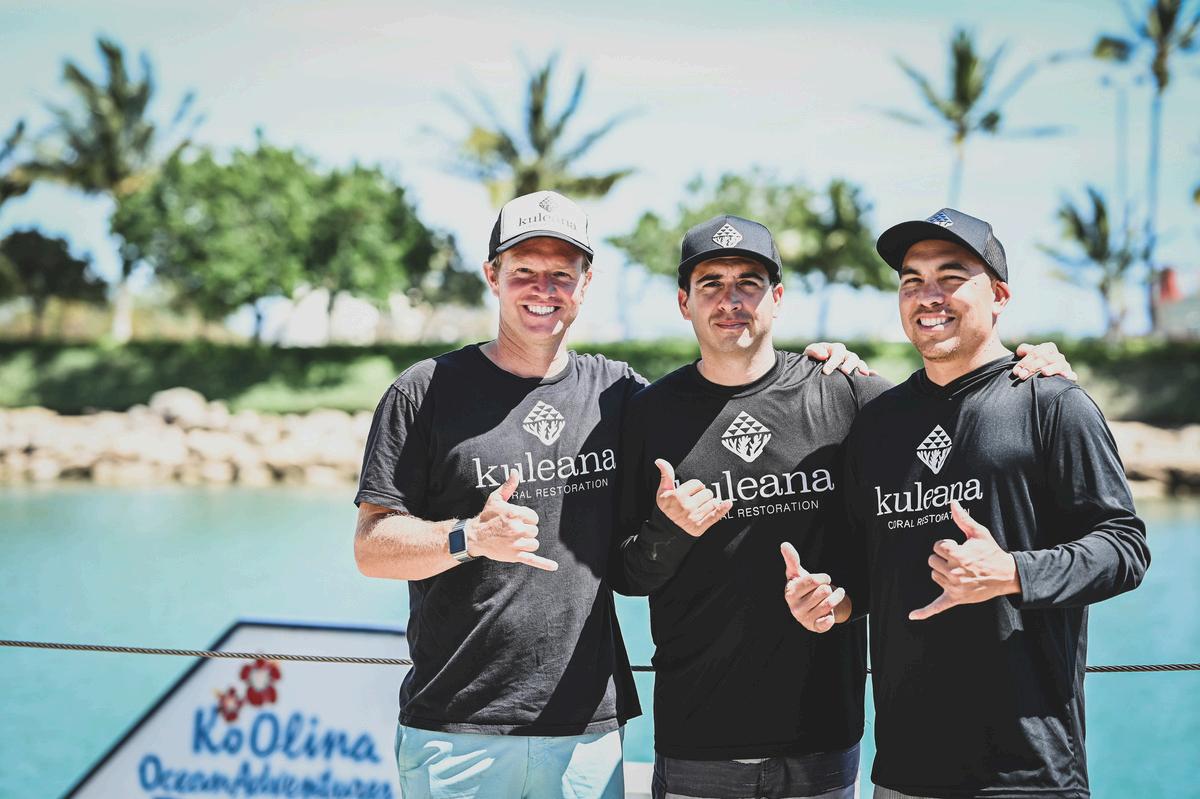
Daniel DeMartini, PhD, Co-Founder and Board President
Stan Kimura, Treasurer
Michelle Van Tassel, Secretary
Matt Parry, PhD, At Large
Sweetie Nelson, At Large
Duane DeSoto, At Large
BoAAlika Peleholani Garcia
Co-Founder and Executive Director
Kapono Kaluhiokalani
Co-Founder and Community Coordinator
Kuleana Coral Restoration is a nonprofit corporation under section 501(c)(3) of the U.S. Internal Revenue Code. EIN 84-3445902. Your contribution is taxdeductible as allowable by law and your tax situation.

1,194 Large Rescued Colonies (LRC) Coral Fragments 4,291
5,475Total Outplants
81 Photomosaics generated
Over seven football fields of imagery!
38,152 Sq Meters of Reef Imaged
2,836 Training Hours 1,519 Scuba Tanks
985 Total Hours Underwater

6,532 Engaged Participants at Outreach Events
7,487 Followers & Fans
128K Impressions
C U M U L A T I V E I M P A C T C U M U L A T I V E I M P A C T ORT GRESS
EMERGENCY RESPONSE
ECOLOGICAL RESILIENCE

COASTAL PROTECTION

FISH HABITAT

Community-Based
Coral Restoration
Education & Outreach
Conferences
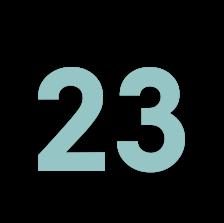
Coral Restoration
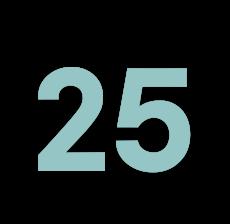
Reef Stars
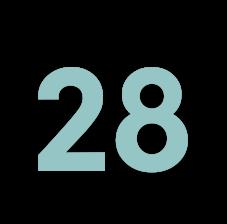
Global Restoration Community
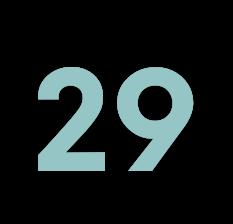
Mapping & Monitoring
Modern Science & Indigenous Wisdom Dive & Boat
Training Program Training & Restoration Hub
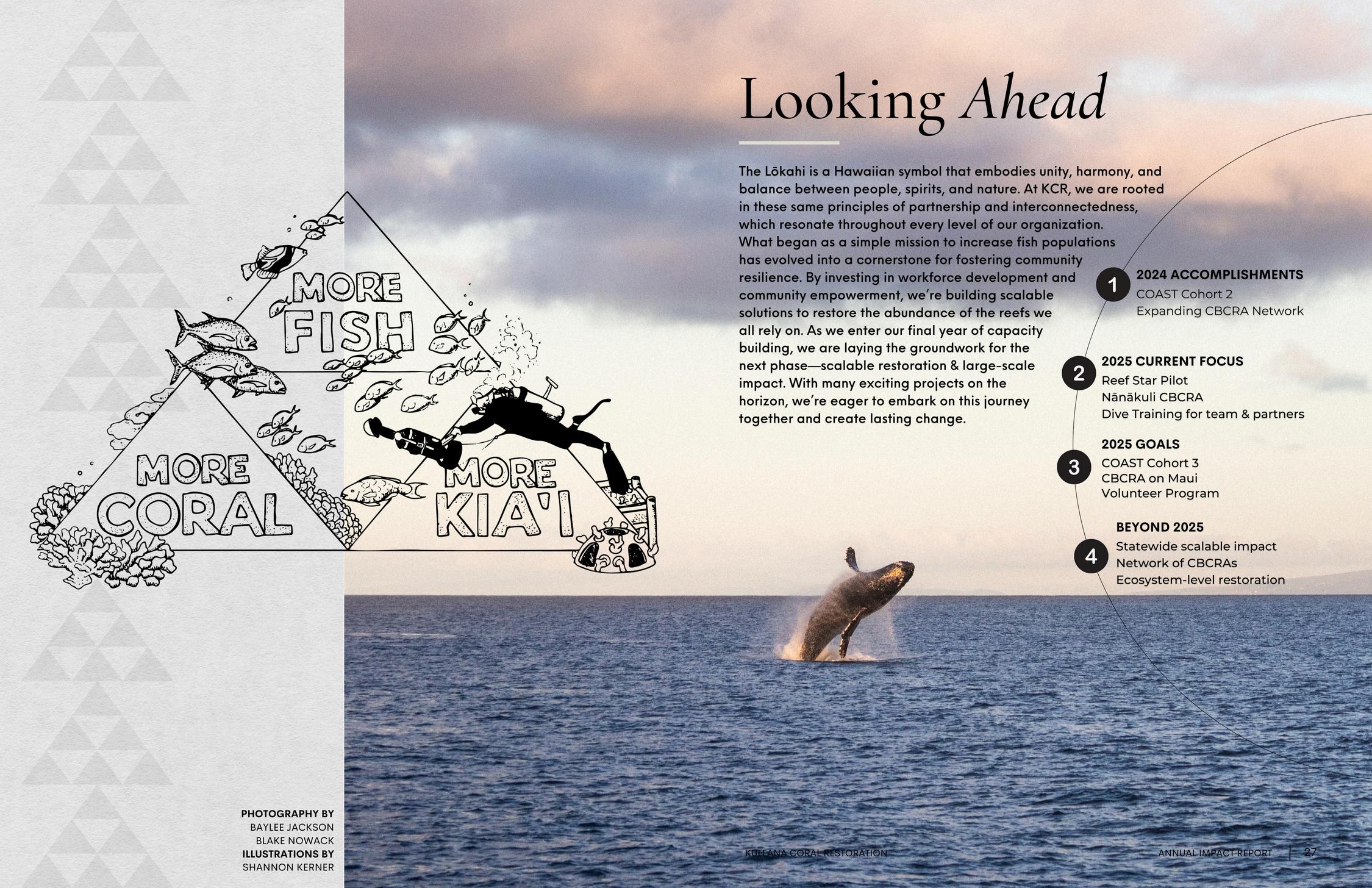
Looking Ahead
Mahalo!
A harmful event in one place ripples out to all others, and by the same principle, a restorative change catalyzes far-reaching and often unexpected forms of revitalization.
Indigenous land management practices are increasingly being recognized as effective solutions to many of our world’s complex environmental challenges today Prior to Westerncontact,theHawaiianahupua‘asystem empowered communities to achieve selfsufficiency by carefully managing the resources they relied on and understanding the interconnectedness of ecosystems This system was built on the belief that actions upstream inevitably affect our downstream environments, including coral reefs in land divisions as an essentialcomponentofahealthywatershed
Inspired by the resurgence of these traditional practices, Community Based Coral Restoration Areas (CBCRA) offer a holistic framework that alignswiththegoalsoflocalcommunities
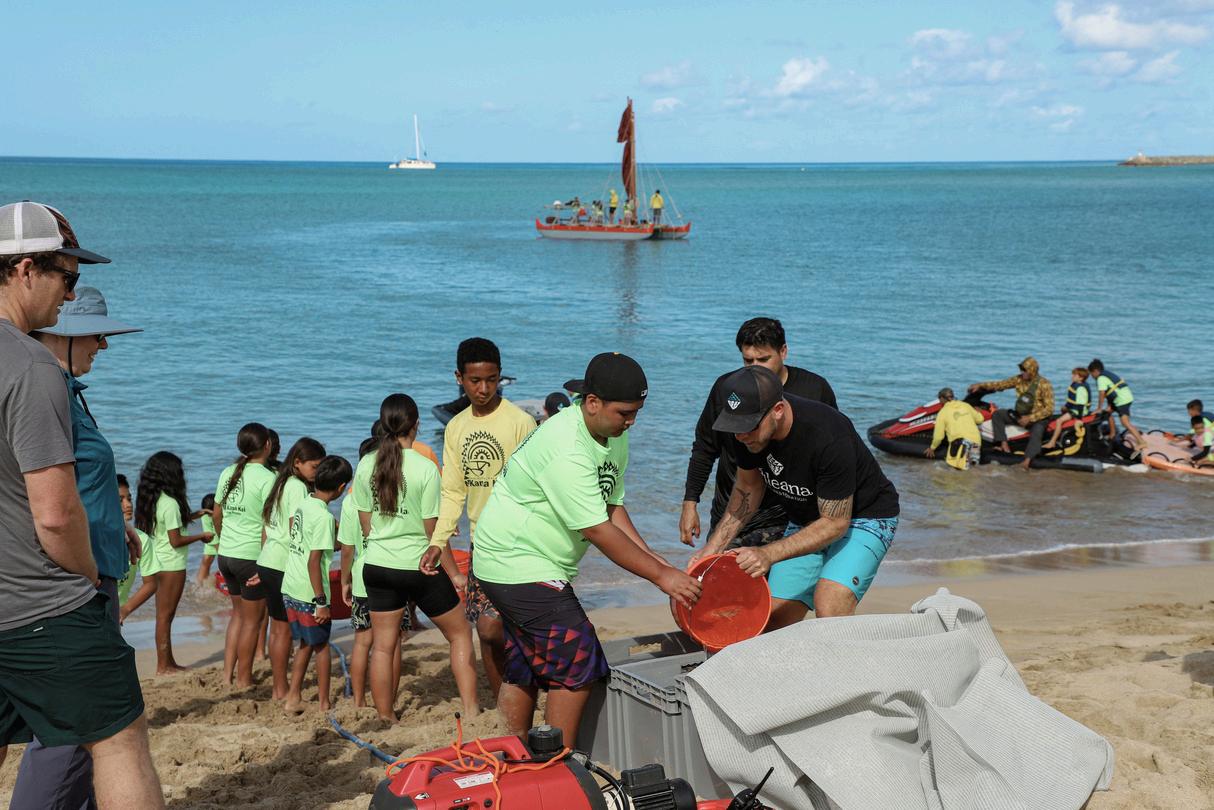
CBCRA can bridge the gap between landbased conservation efforts and the work we do in the water to create lasting positive change fortheentireahupua’asystem
Building a network of pilot scale restoration sites across different areas will allow us to build regionalcapacityandcomparesimilarmethods in multiple sites to inform archipelago-wide scalable restoration projects as communities determine them necessary This adaptable, place-based approach ensures that efforts are tailoredtotheuniqueneedsofeachcommunity, offering critical lessons about what strategies succeedandwhereimprovementsareneeded
This network will also enable swift responses to anticipated climate disasters while facilitating preventative measures via proactive restoration andemergencyresponsedepothubs
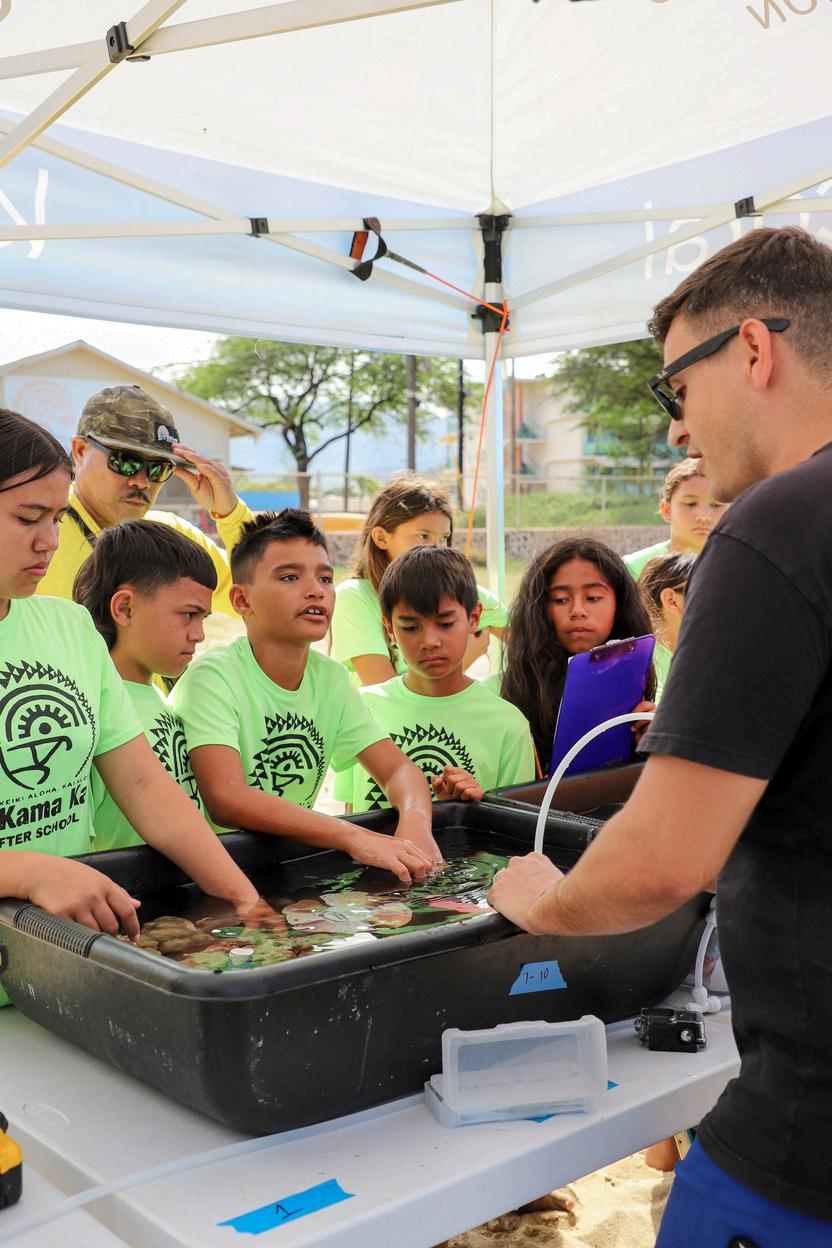
We partner with local community organizations to lead CBCRA efforts and identity restoration goals basedoninterventionpriorities.
Contingent upon community approval, KCR evaluates the restoration potential of proposed sites, maps the area through photogrammetry for baseline understanding, and facilitates community exchanges andland-basedoutreachexperiences
KCR begins direct coral interventions at the restoration sitesalongsidepartners
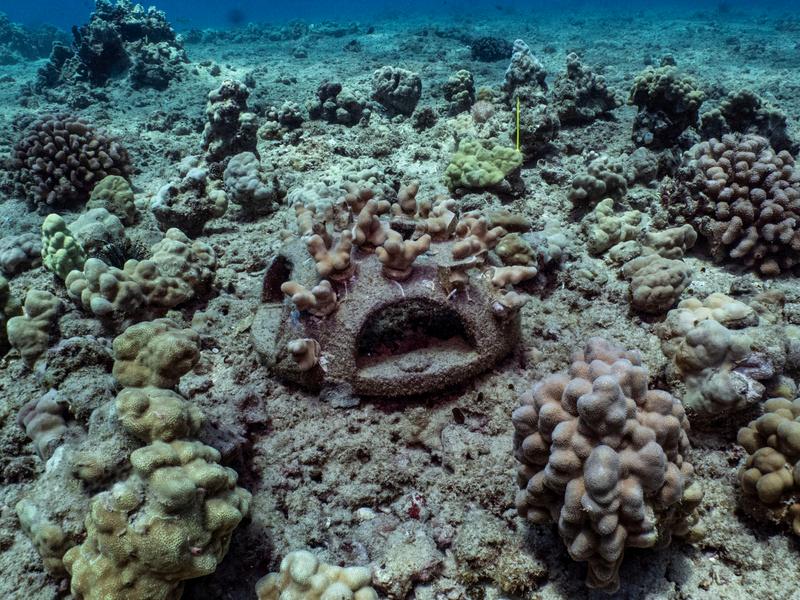
Each restoration site spans approximately 4k sq feet, divided into two halves: one dedicated to intervention and the other serving as a control Our template is characterized by ~6 pyramid modules, ~6 dome modules, and up to ~188 Large Rescued Colonies, but our CBCRA model is designed to be guided and adapted through community input based on needs of eachplace
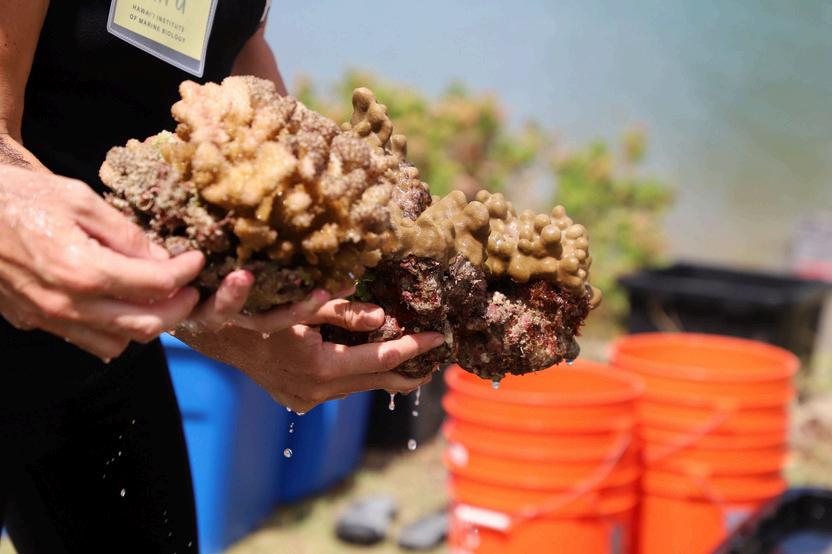
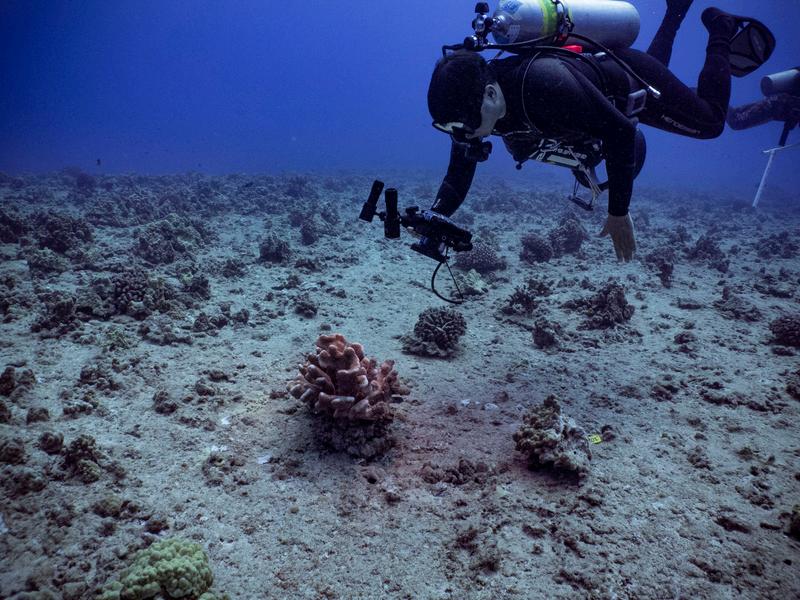
Our framework includes scheduled assessments at 6 months and 1 year post-restoration, along with additional monitoring following critical events such as mass bleaching or ship groundings Through mapping, comprehensive surveys & monitoring, our goal is to identify changes in fish abundance, biodiversity, coral growth, coverage, and survival KCR provides necessary training to community partners to actively participate in and support the monitoring activities

2,900
PEOPLE ENGAGED 30 COMMUNITY EVENTS 5 CONFERENCES
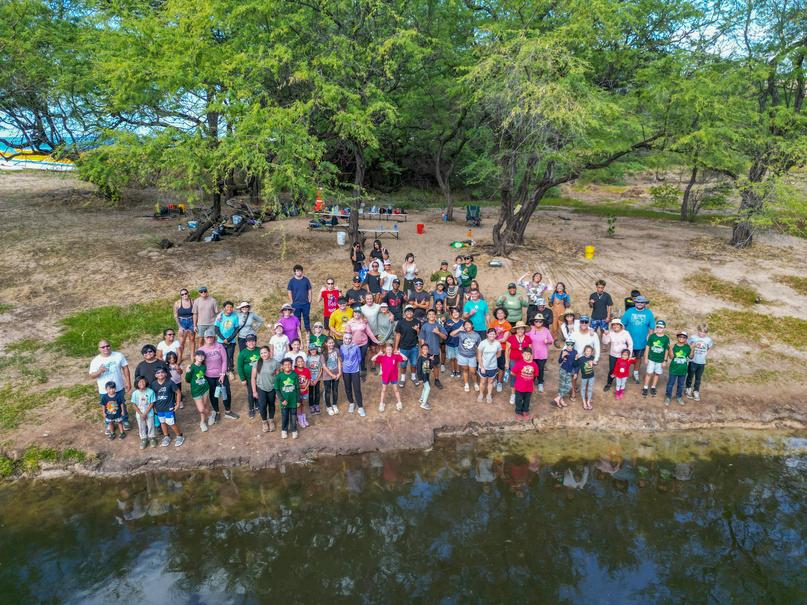
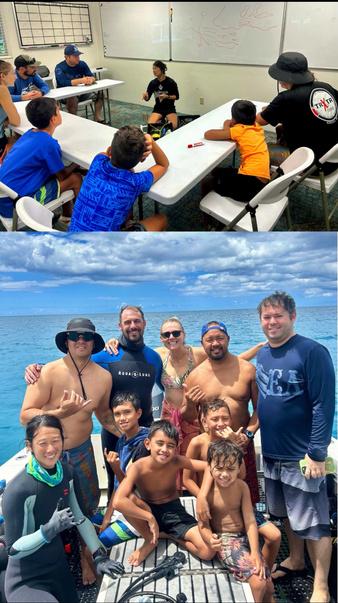
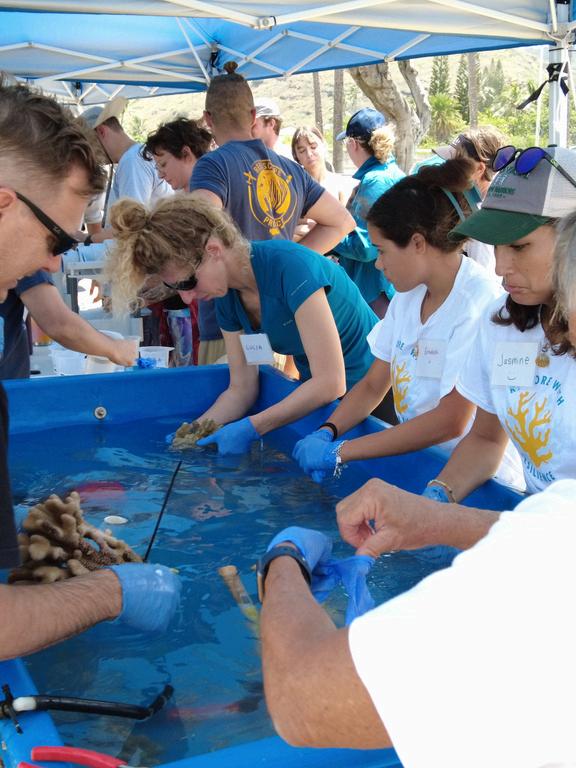
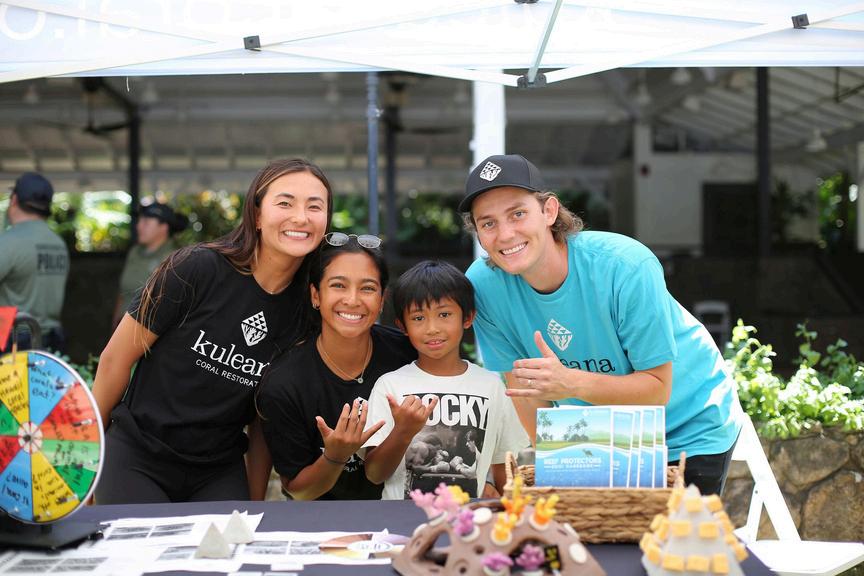
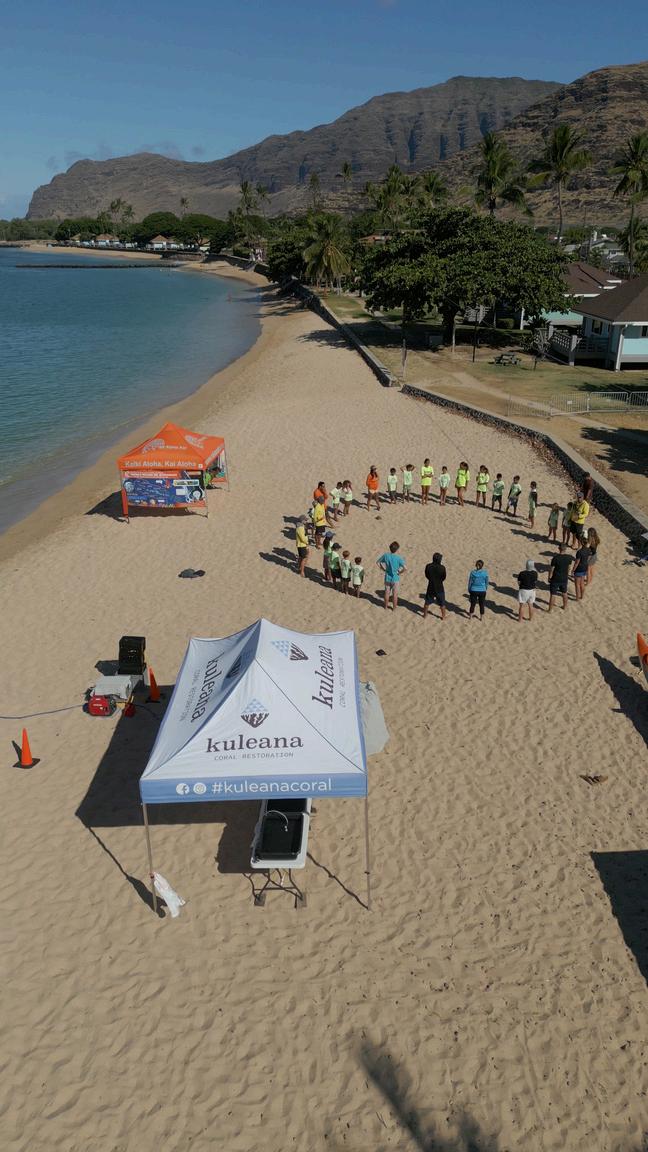
In 2024, our team engaged 2,900+ individuals at 30 community events across Hawaiʻi. We continue to participate in annual gatherings like Hoʻākea Mauka to Makai at Pōkaʻī Bay, World Ocean Day at Waimea Bay and Disney Aulani, and Pilina Kanaloa Ocean Day at the Capitol because these events provide meaningful opportunities to educate the next generation of stewards, engage local leaders and decisionmakers in the important work we ’ re doing and demonstrate what’s possible through collaboration with our partners and community.
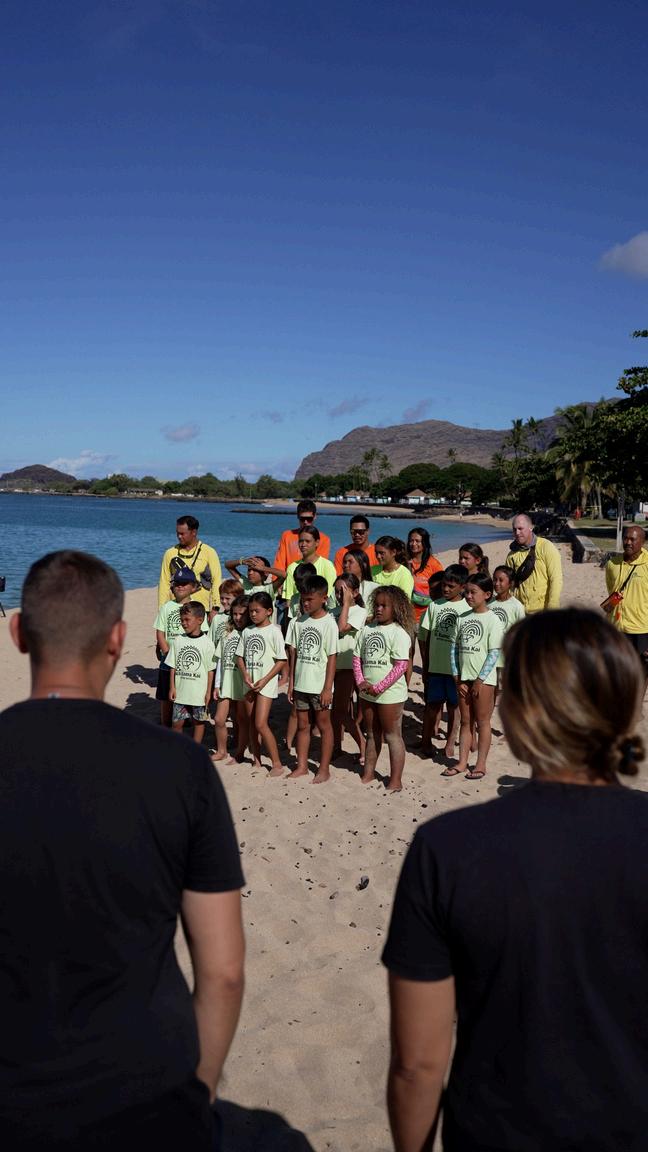
After supporting Mālama Maunalua & Coral Resilience Lab with dozens of successful Hana PūkoʻaeventsatMaunaluaBay,wewerethrilled e this outreach model to our West munity.In2024weledthreeofthese restorationevents:
OCEANDAYATDISNEYAULANI
AYCOMMUNITY-BASEDCORAL TIONAREA(CBCRA)WITHNĀKAMAKAI
NCH/CELEBRATIONOFHĀNIʻOCBCRA ʻOLAHĀNIʻO orable events allow participants to tore coral in their own backyard, ngaboutthethreatsandsolutions
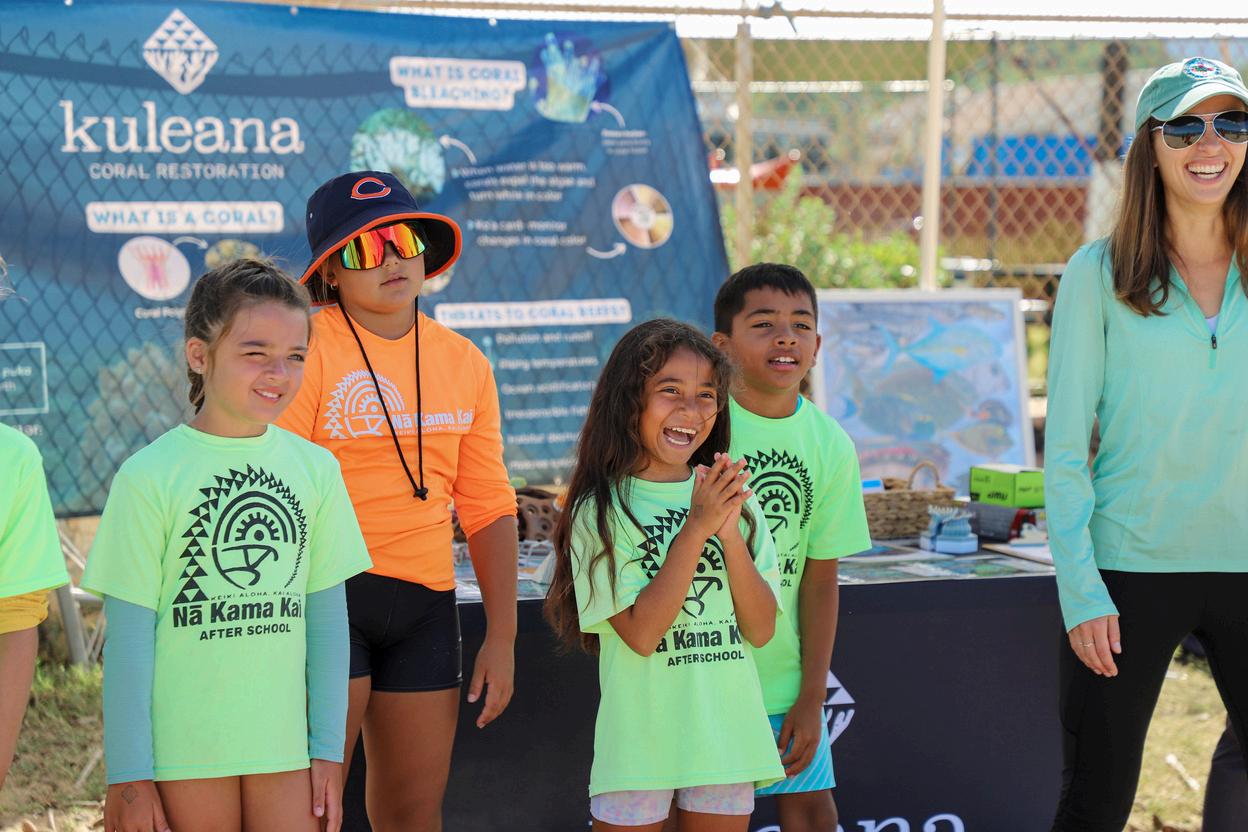
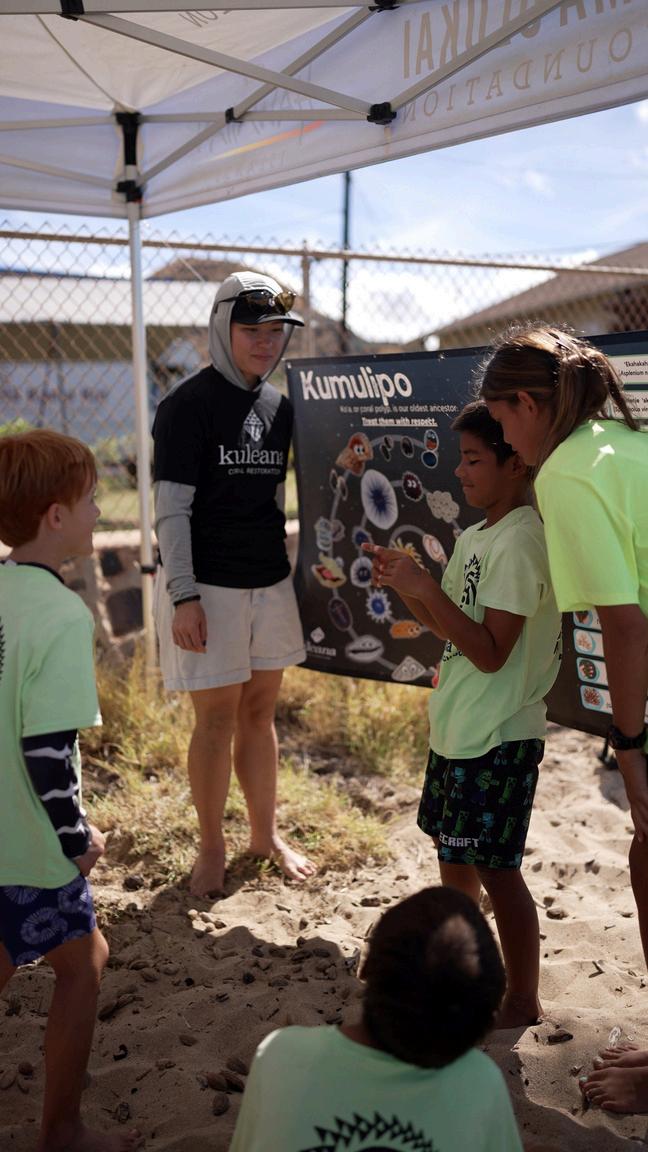
This year, our team focused on creating new outreach materials aimed at enhancing ocean literacy through placebased approaches and a Hawaiian cultural lens These resources can be utilized in classrooms, at community outreach events, or paired with our Hana Pūkoʻa experience. In collaboration with Nā Kama Kai, we have incorporated coral restoration education into their teaching programs and provided a keiki coloring book as an engaging resource for their students. Additionally, our work with the Hawai’i Fish Habitat Partnership enabled us to develop outreach materials uniquely designed for the Pōkaʻi Bay Community-Based Coral Restoration Area. These materials emphasize the vital connection between reef health, fish abundance, and a resilient ocean ecosystem
m with contemporary scientific knowledge and technology KCR strives to be the “Makai” partner that supports “Mauka” communities in ahupua’a restoration
HawaiʻiConservationConference: ‘AuamoKuleana
FestivalofPacificArts&Culture (FestPAC)
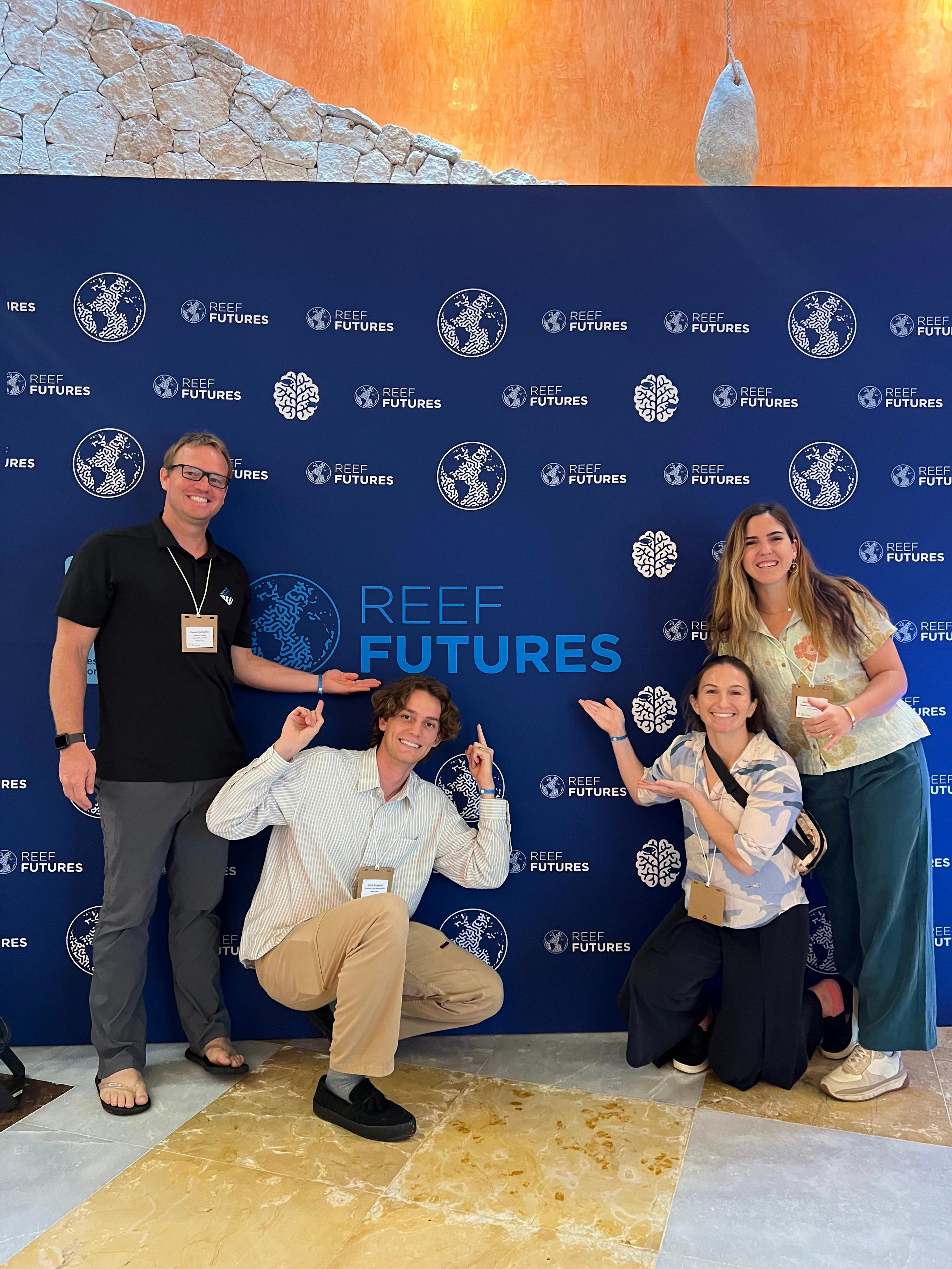
ReefFutures2024
AmericanFisheriesSociety
SantaCruzRestorationSymposium
ThermalStressDesignThinking ChallengebyNationalMarine SanctuaryFoundation
In 2024 we presented on restoration techniques, community engagement, mythology and our workforce training program, COAST
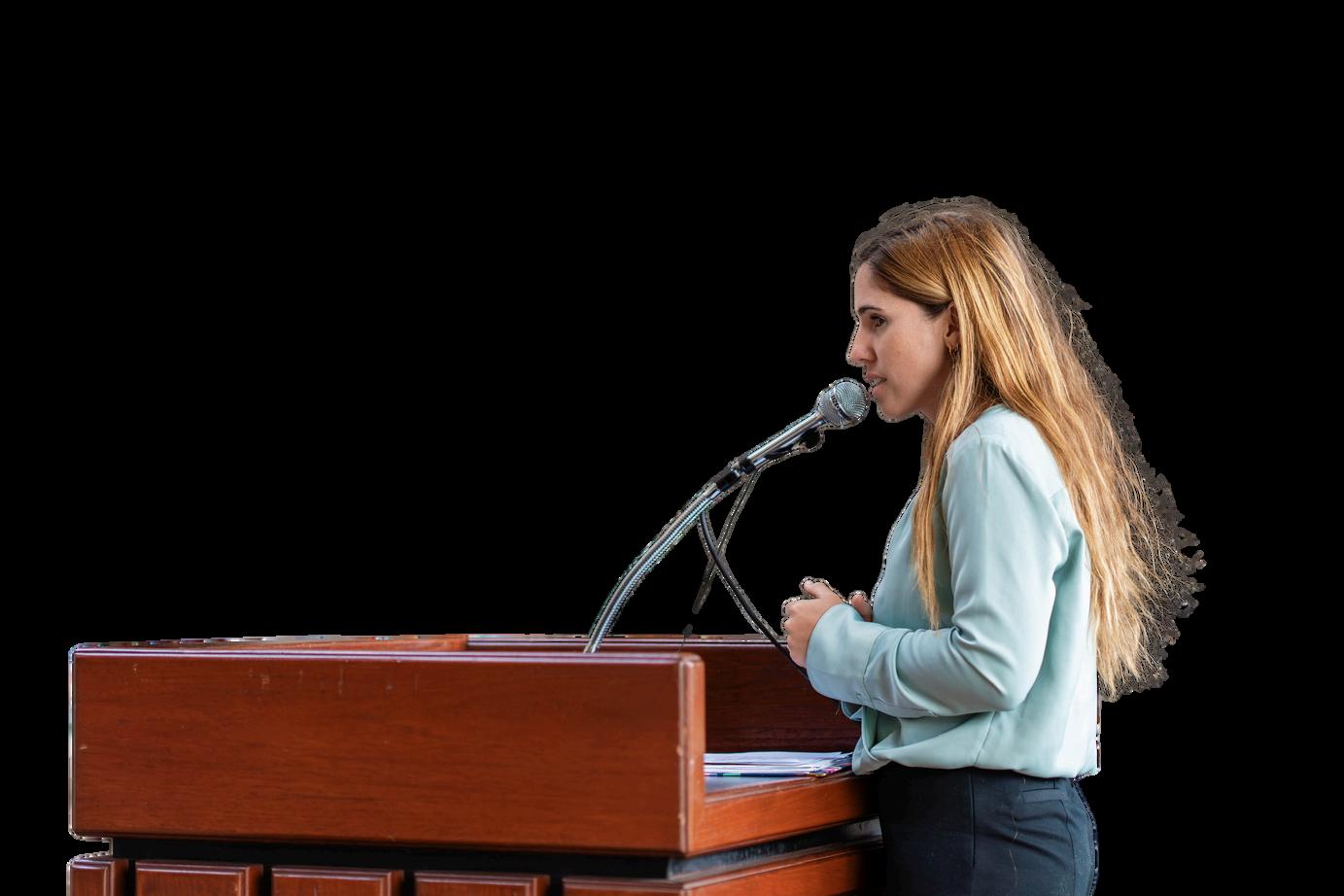
Kuleana Coral Restoration is committed to sharing our community-focused approach with the broader coral restoration network To achieve this, we ’ ve prioritized attending conferences, symposiums, and speaking engagements beyond Hawaiʻi These platforms enable us to share the techniques and frameworks that shape our work, offering others insight into how we scale restoration efforts while honoring local, place-based needs Equally important, these exchanges provide us with opportunities to learn from partners working in diverse regions, allowing us to bring valuable lessons back home and enhance our own restoration practices.


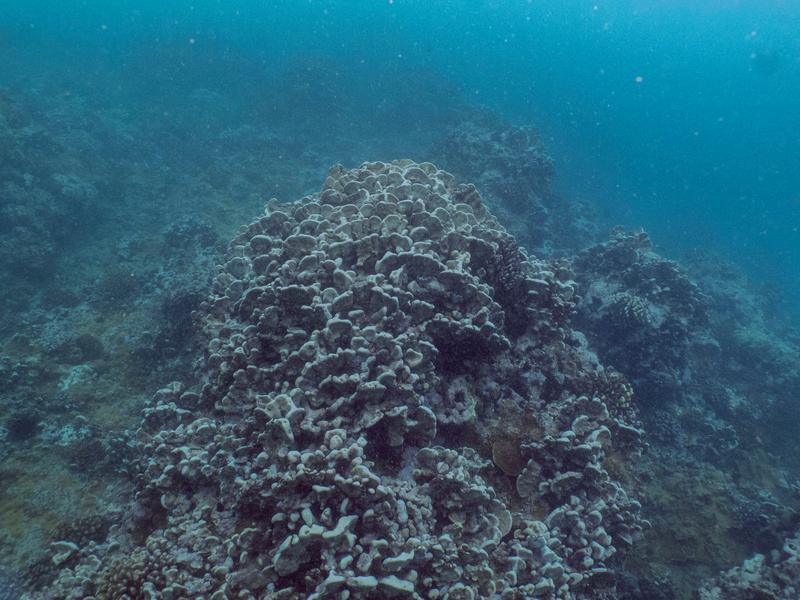
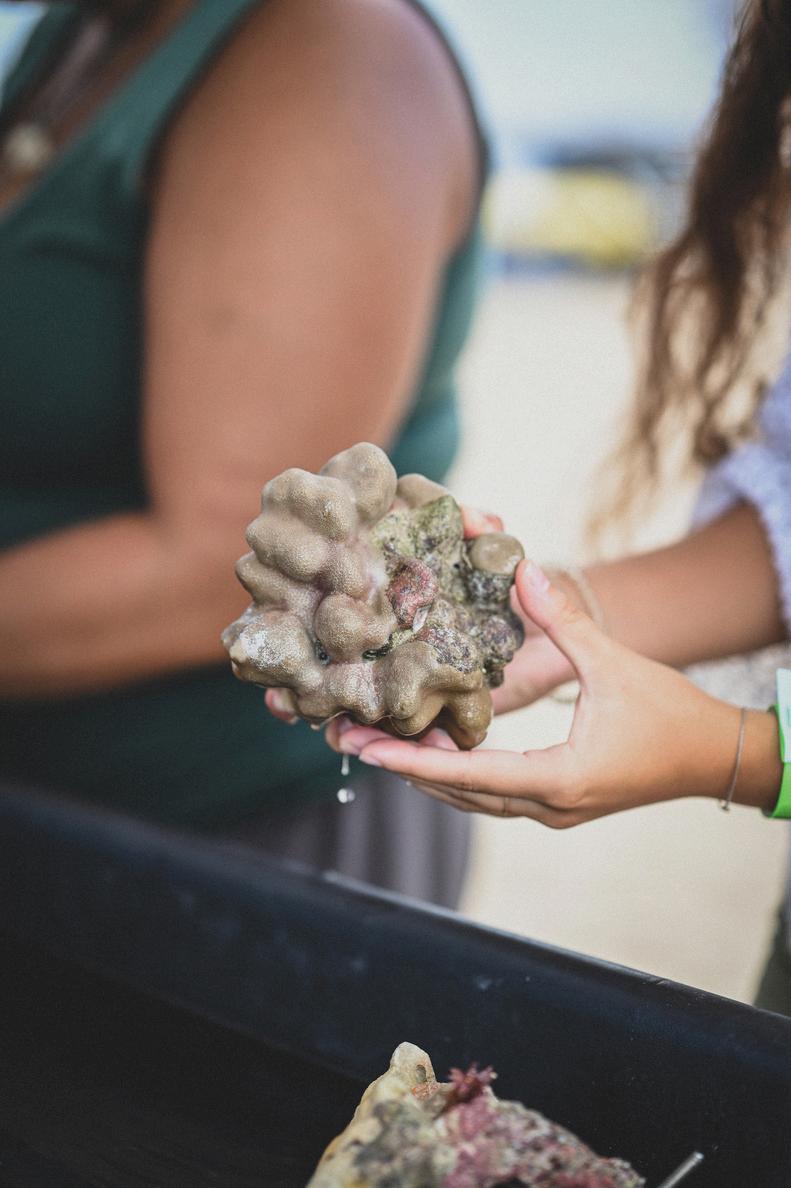
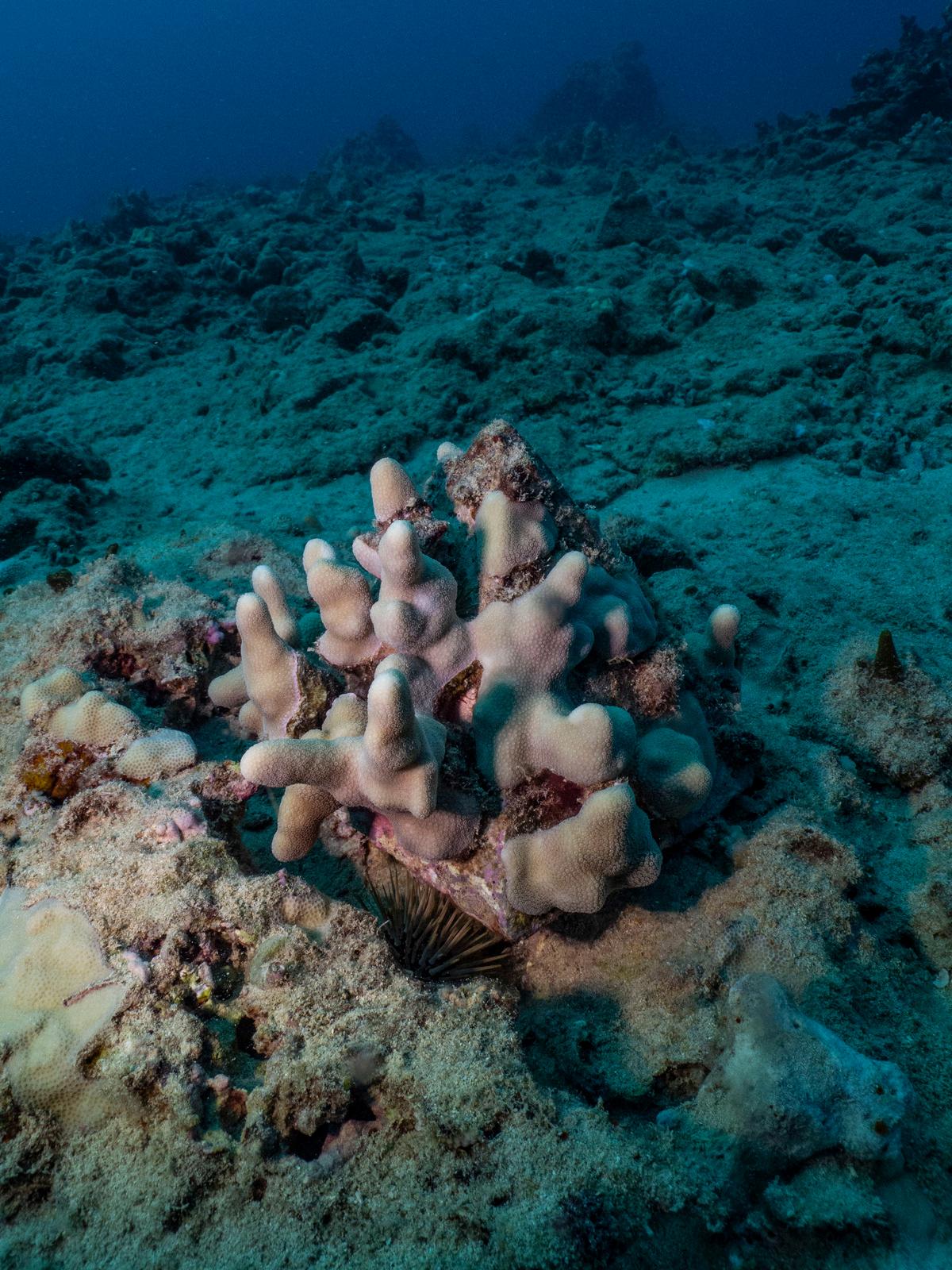
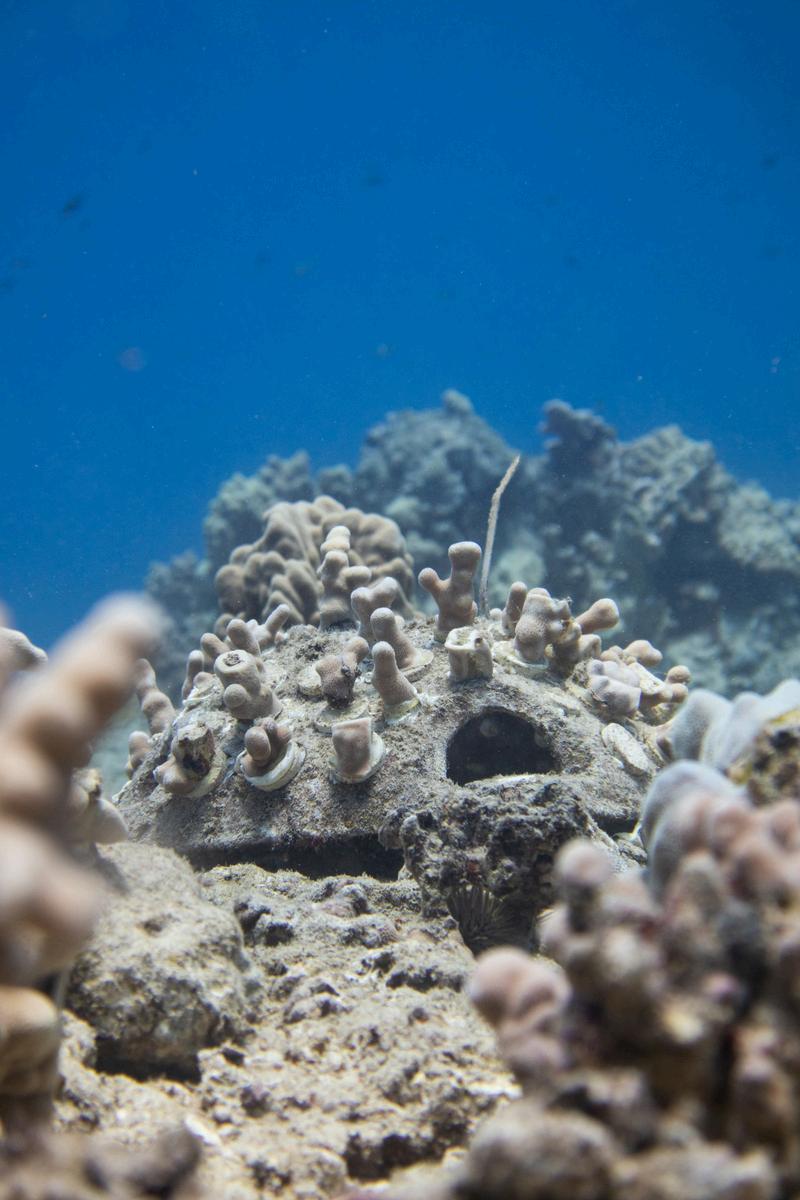
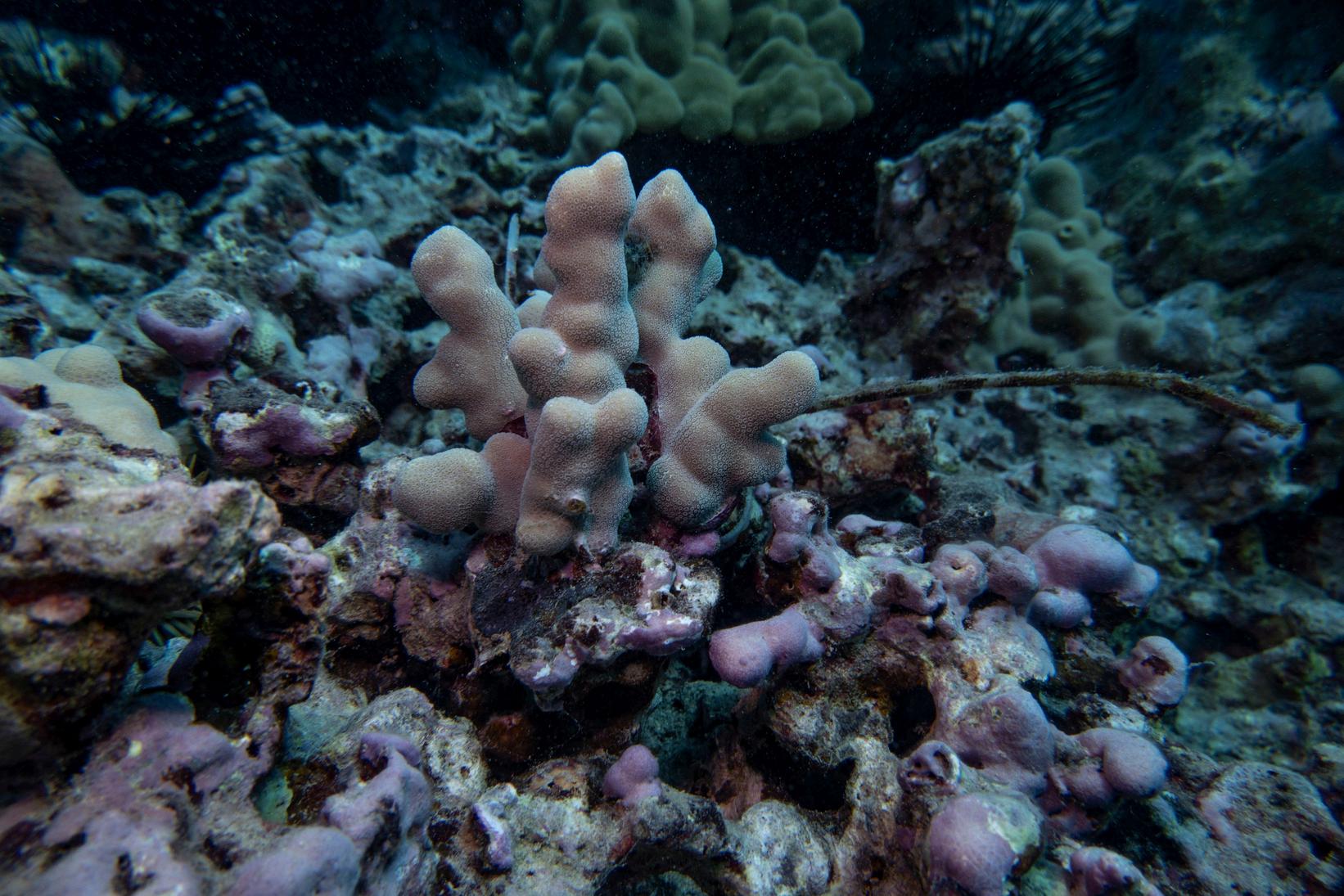
Porites compressa or finger coral is the focal species of our restoration efforts at Pōkaʻī Bay because its intricate branching structure offers vital habitat, especially for juvenile fish. We trialed several approaches to outplanting this species to determine which is the most effective across different areas.
By collaborating with the Hawai’i Department of Transportation we’re eager to explore nature-based solutions (NBS) for coastal protection in East O’ahu The working group, Mālama i Ke Ala Kahakai, will facilitate community engagement, identify areas of concern, and identify NBS that can be most effective for specific areas.
We’ve expanded our collaboration with the Restore with Resilience initiative to stress test one of our sites on west O’ahu We developed a workflow for rapid in-situ implementation with the goal of establishing a living library of corals with known thermal tolerance to inform future management strategies
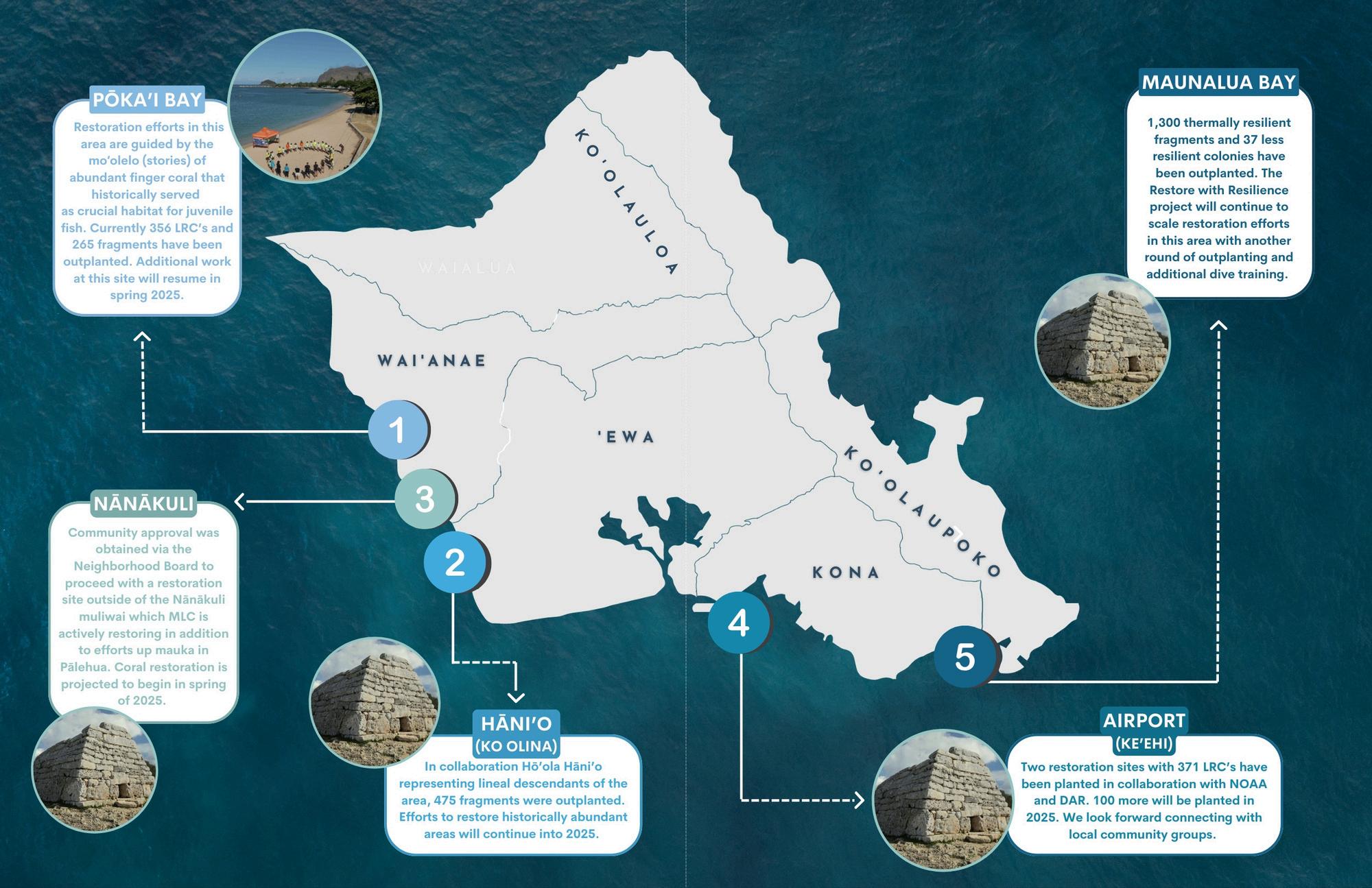
We completed our first emergency response project in collaboration with NOAA and DAR following a damage incident at Kewalo. A total of 206 colonies were reattached. We also participated in a Rubble Stabilization Workshop hosted by NOAA and Coral Restoration Foundation at the M/V Vogetrader ship grounding site outside Ko Olina Marina.
R E S T O R A T I O N P I L L A R S
EXPANDING INTO NEW AREAS AND OPTIMIZING EFFICIENCY
1,194
4,291
LARGE RESCUED COLONIES (LRC)
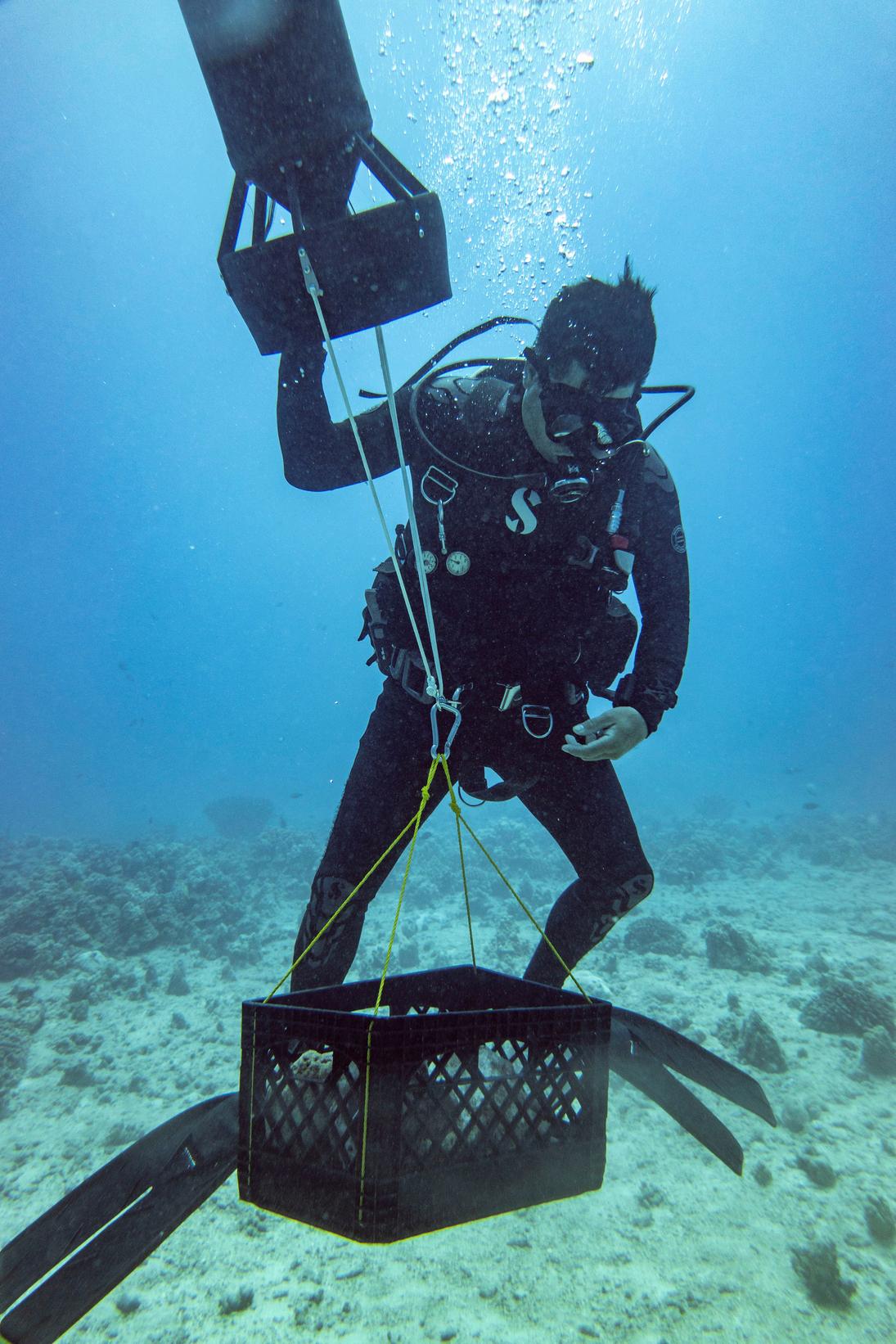
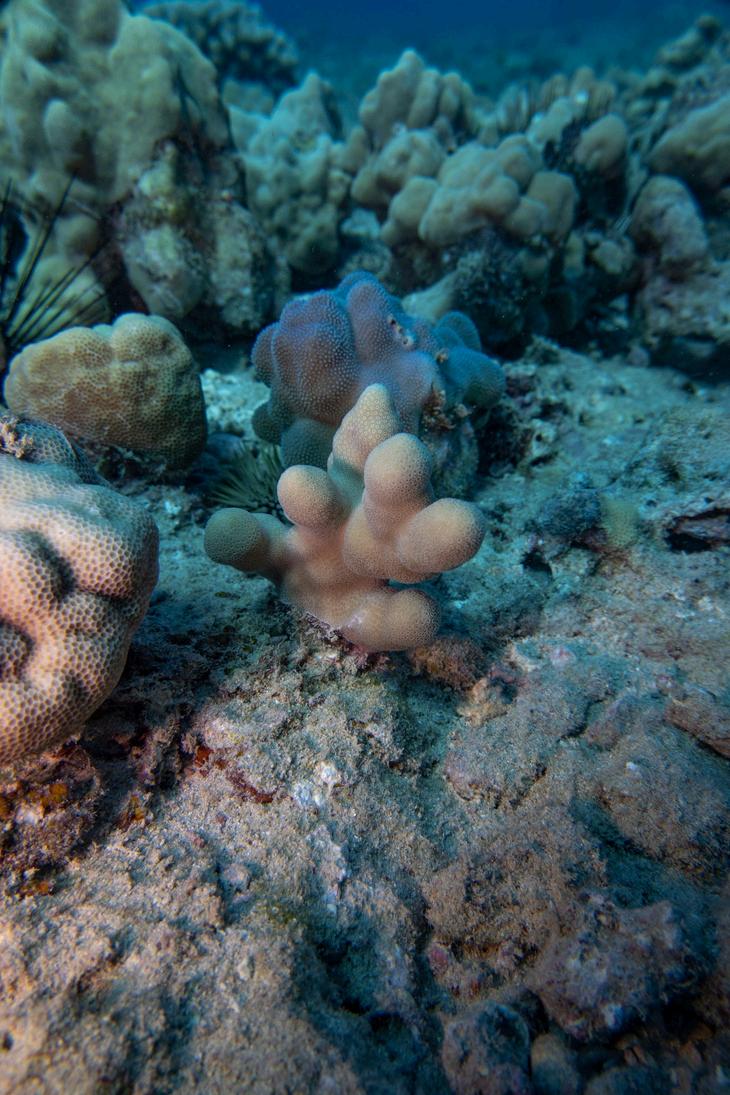
It’s been a busy year for our restoration team! This year we increased efforts in new restoration areas while training additional team members and optimizing the efficiency of our workflow. In total, 540 large rescued colonies (LRC) and 2,477 fragments were planted across nine restoration sites As we expanded into new areas, we found some restoration methods needed to be adapted requiring a place-based approach. These insights continue to guide our work and help inform other projects
CORAL FRAGMENTS
5,475
TOTAL OUTPLANTS
inform other projects A prominent focus of 2024 was restoration site design as we began to incorporate different elements into our sites such as mixed species outplanting, coral size and spacing, as well as strategically leveraging facilitative ecological processes. We also continued to mitigate losses due to detachment by refining our attachment methodology with promising results so far. Diligent monitoring will continue to inform our efforts.
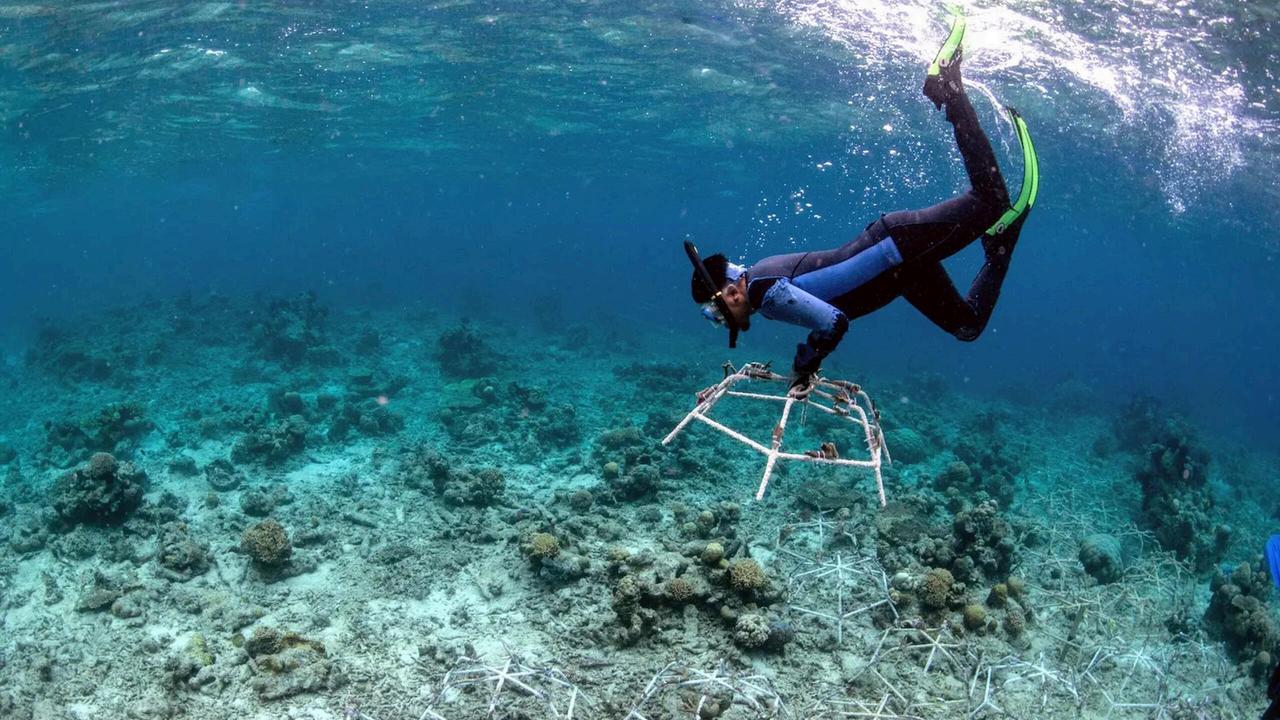
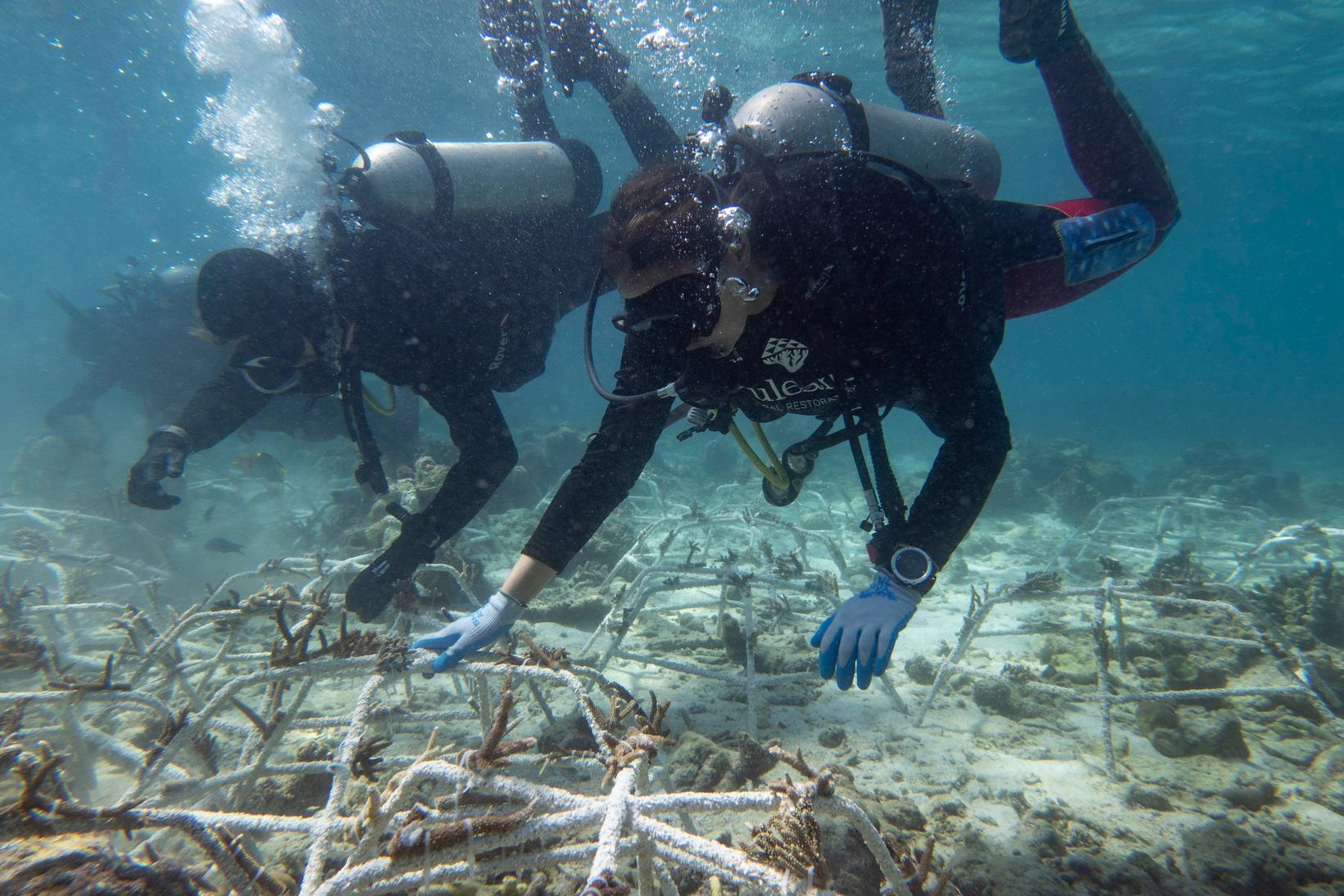

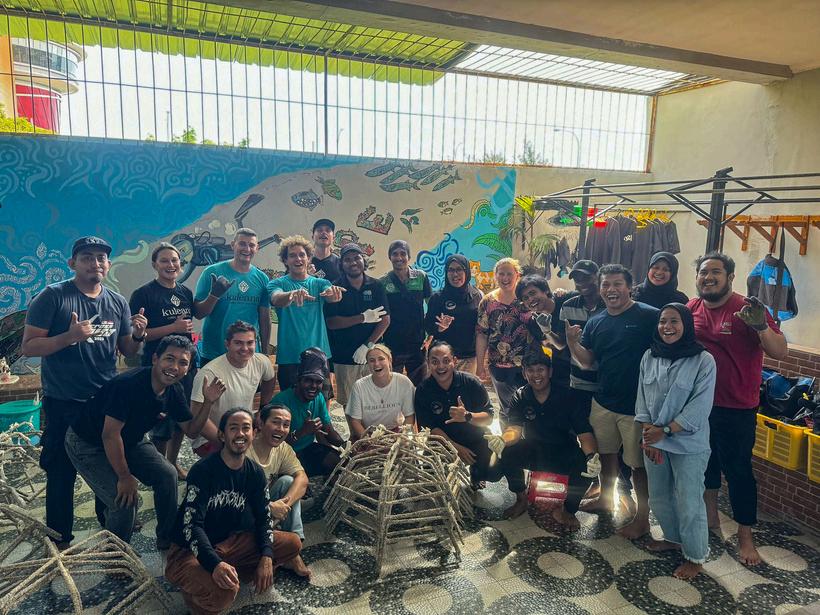
This summer, the KCR team returned to Indonesia with Mars Sustainable Solutions (MSS) and Sheba Hope Grows to train four additional team members on the Mars Assisted Reef Restoration System (MARRS). Not only did we have the privilege of learning from skilled local experts, but training alongside other restoration partners from around the world including Australia, Malaysia, Kenya, and the Maldives enriched our experience. Together, we gained deep theoretical and practical knowledge that we put to use in the field.
Indigenous internationalism and knowledge exchange emerged as a powerful theme during our time together as we shared insights and learned from each others efforts As one of the most biodiverse regions on the planet with nearly 600 coral species, the reefs looked strikingly
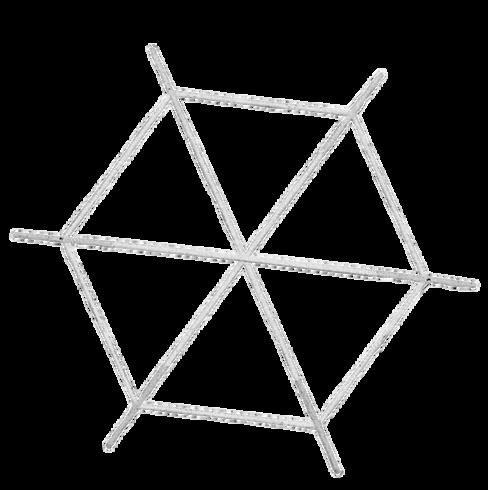
nearly 600 coral species, the reefs looked strikingly different from the seascapes we have here in Hawai'i. Despite these differences, shared experiences of island nations and coastal communities united us in our effort to install 600 reef stars with over 9,000 fragments, all while forging meaningful connections and memories that will last a lifetime
Reef Stars have been successfully deployed across 63 sites in 11 countries, providing a promising solution to restore coral-damaged areas with little chance of natural recovery. KCR is exploring the restoration potential of Reef Stars in Hawai’i as a rubble stabilization method, a particularly challenging issue due to Hawaii’s extreme wave energy
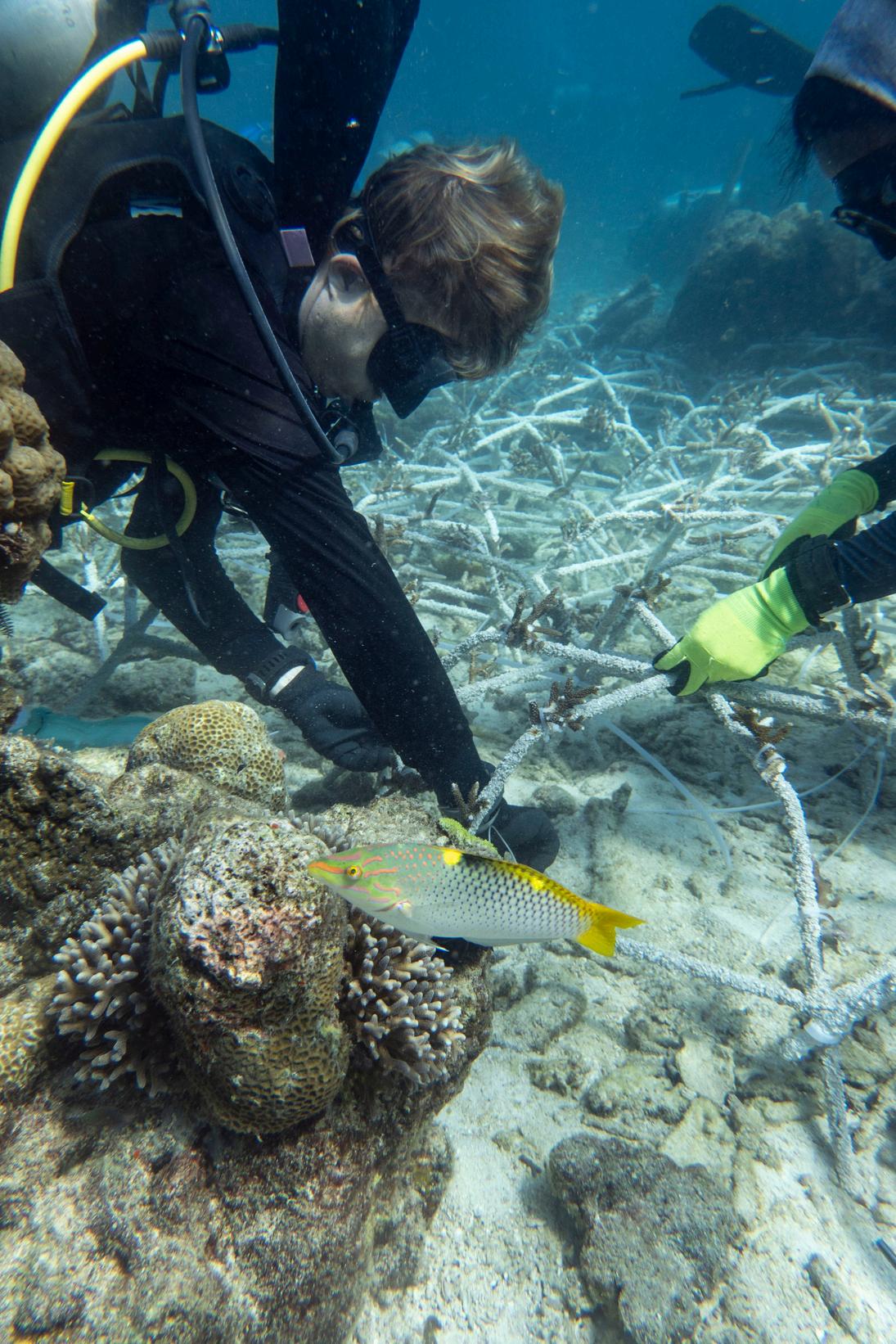
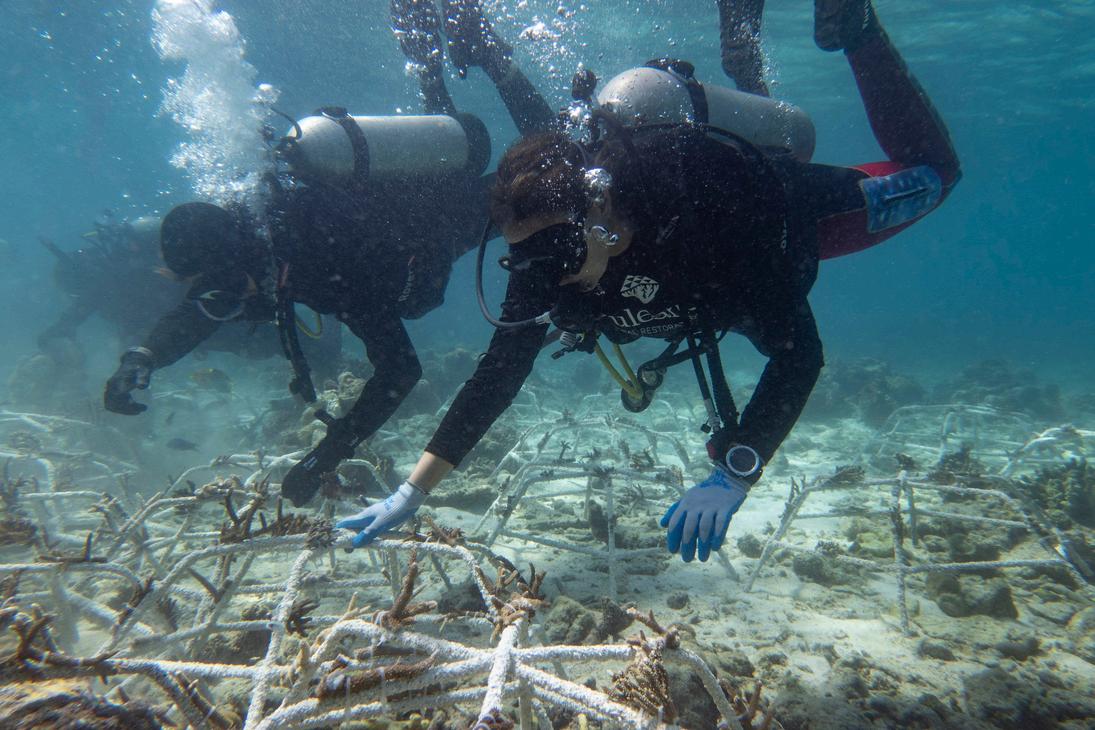
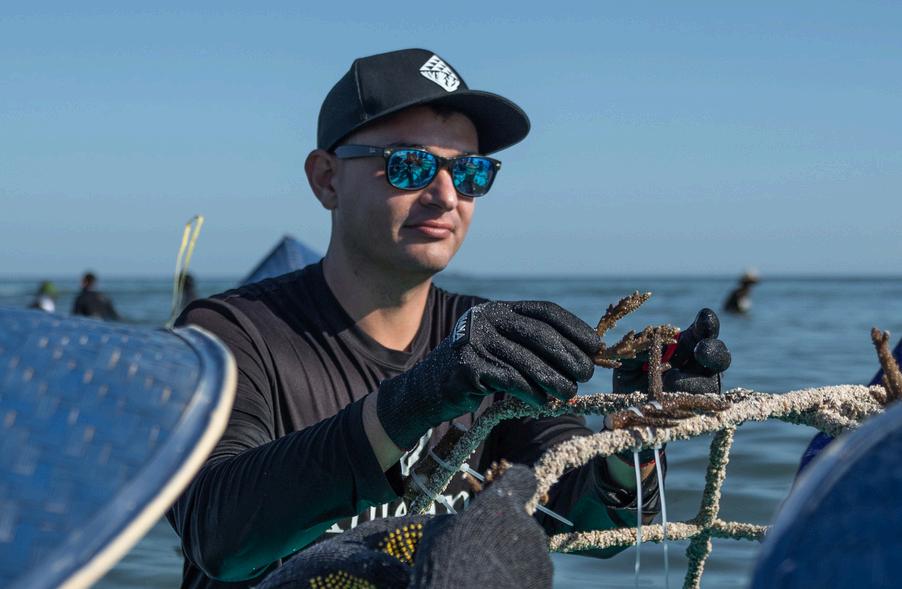
To evaluate the suitability of Reef Stars in Hawaiian waters, KCR will conduct a Pilot Scale Reef Star Installation Project with a small number of Reef Stars at two different locations.
Goals of this project include demonstrating sound attachment, documenting accelerated growth rates, compatibility with Hawaiian coral species, and observing interactions with fish assemblages
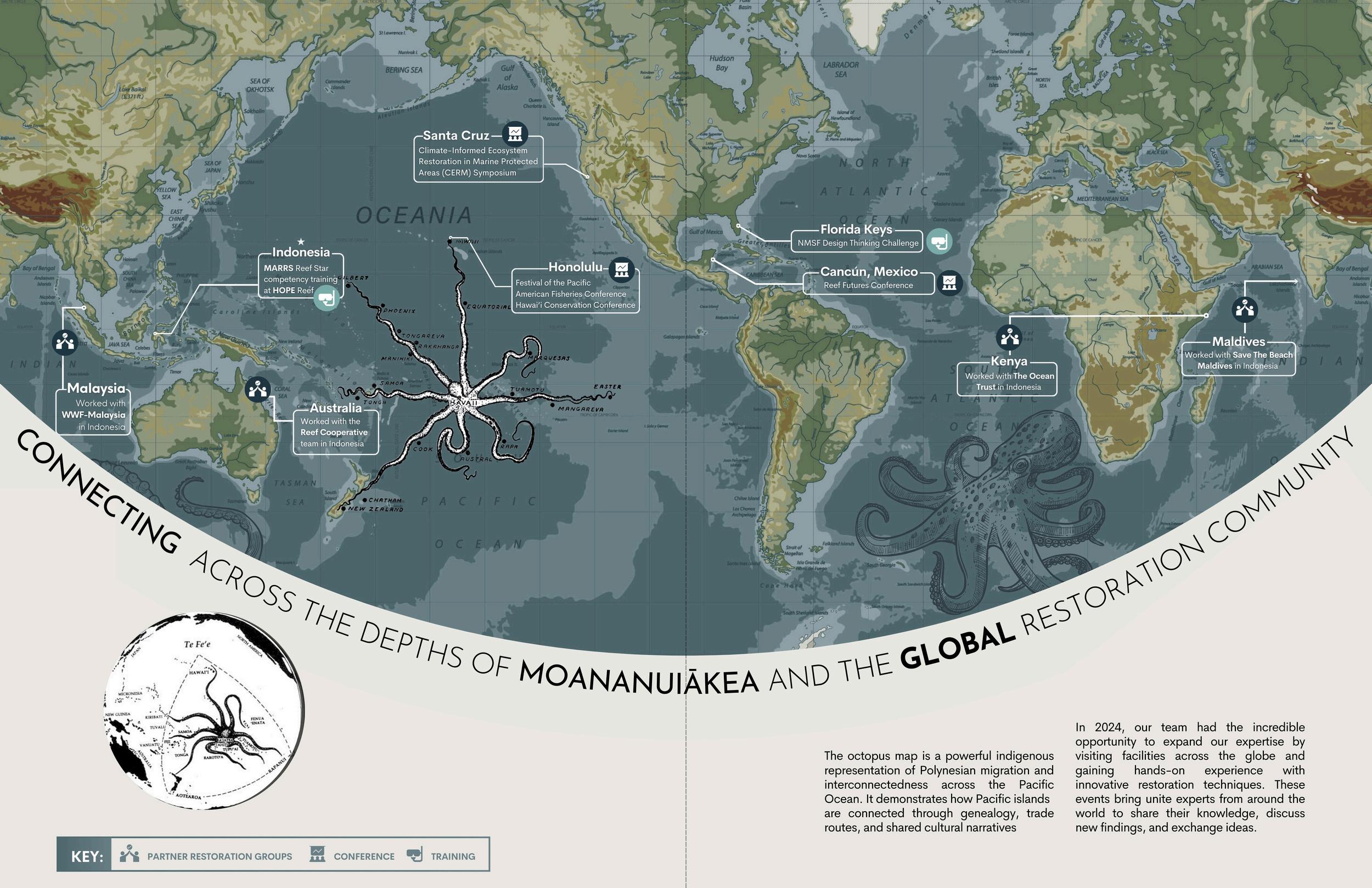
The octopus map is a powerful indigenous representation of Polynesian migration and interconnectedness across the Pacific Ocean. It demonstrates how Pacific islands are connected through genealogy, trade routes, and shared cultural narratives
In 2024, our team had the incredible opportunity to expand our expertise by visiting facilities across the globe and gaining hands-on experience with innovative restoration techniques. These events bring unite experts from around the world to share their knowledge, discuss new findings, and exchange ideas
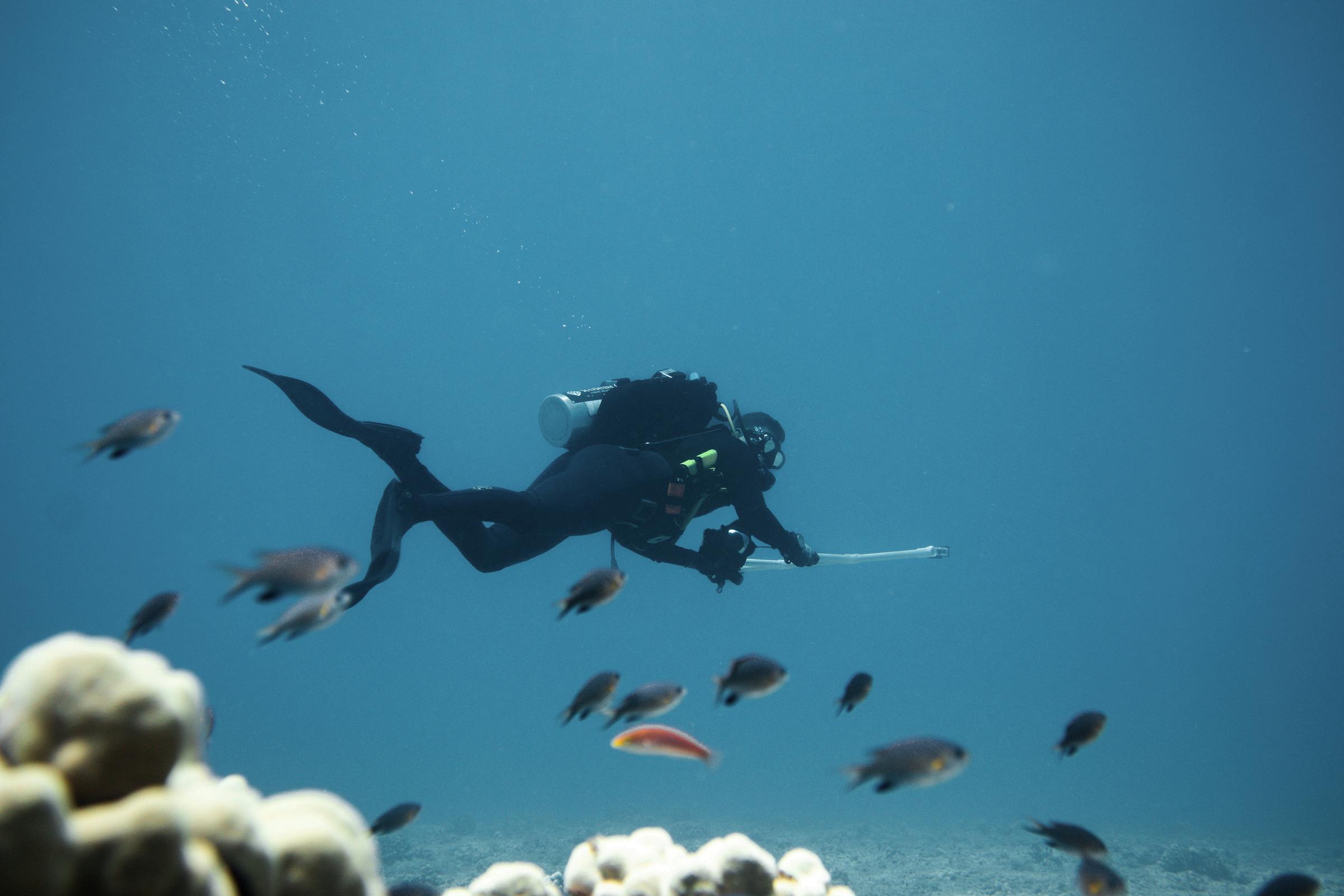
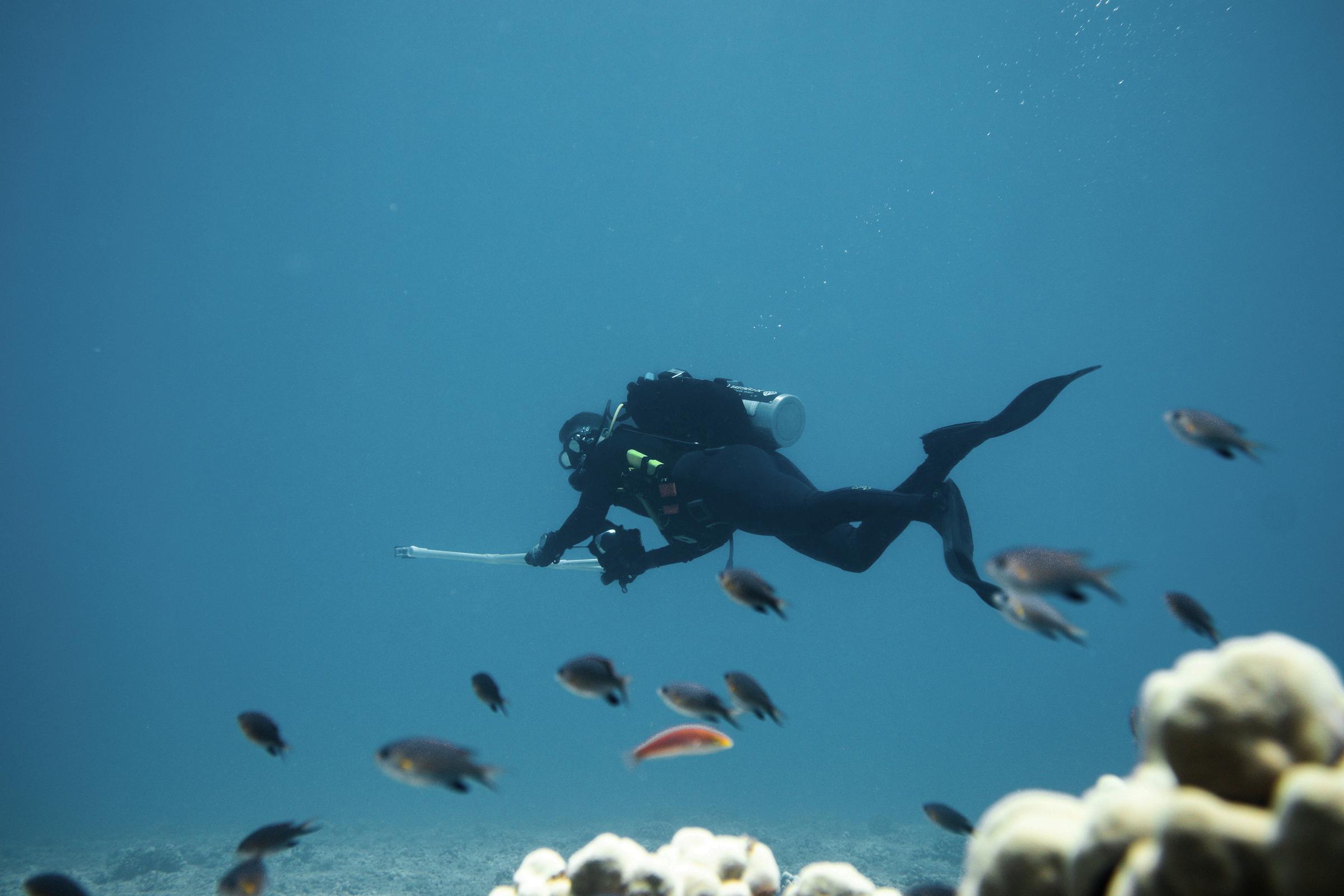
2024wasarecord-breakingyearforKCR’sMonitoringTeam ourbusiestyet!We successfully completed an impressive 22 photomosaics of restoration and emergency repair sites across O’ahu, covering more than 5,000 square meters of reef over 12 basketball courts! These photomosaics serve as a digital archive, allowing us to track the growth and survivorship of our coral outplants over time
Throughout 2024, we ’ ve used photomosaics to track over 540 coral colonies that wereoutplantedbyKCR
Twoofourrestorationsitesreachedaremarkablemilestonethisyearastheyturned ed just outside of Ko Olina, are our longest restoredcoralcoloniesacrossthesetwosites
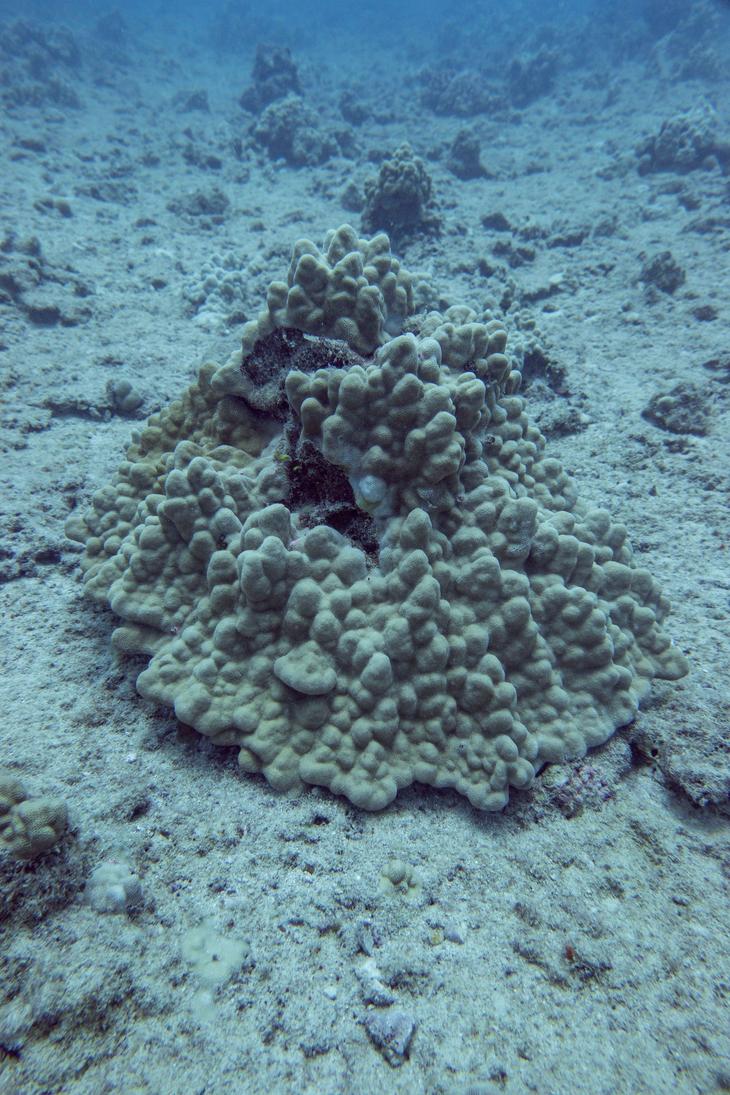
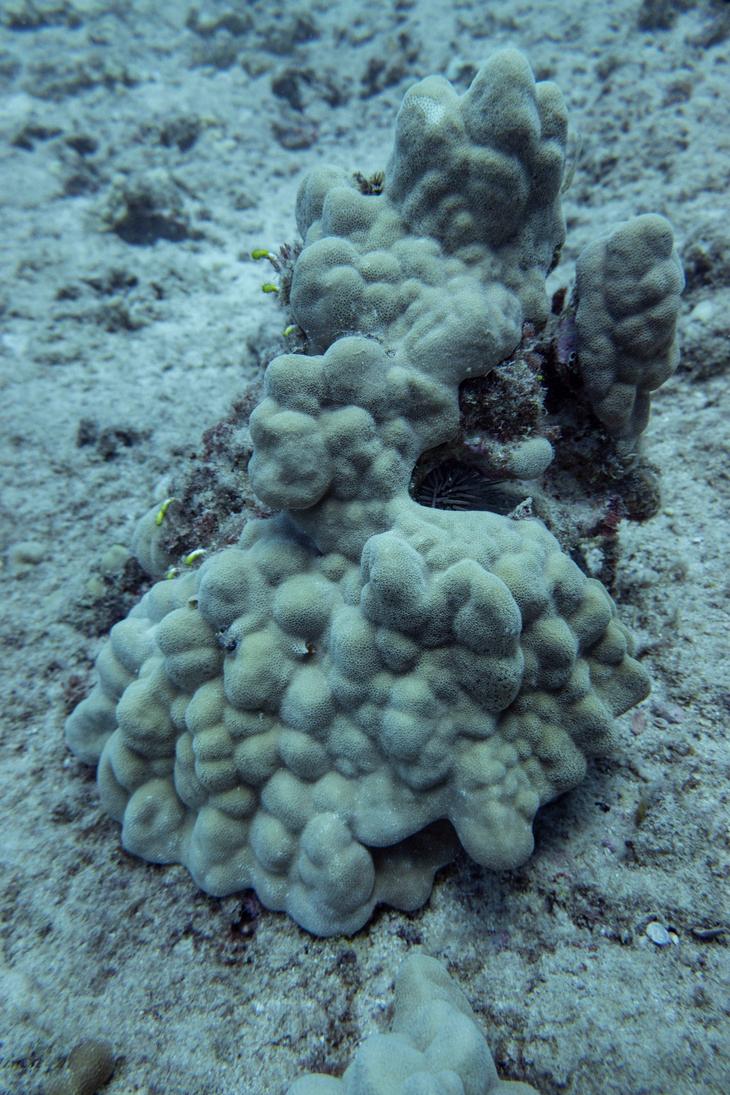
81 PHOTOMOSAICS GENERATED
38,152 SQ METERS OF REEF IMAGED
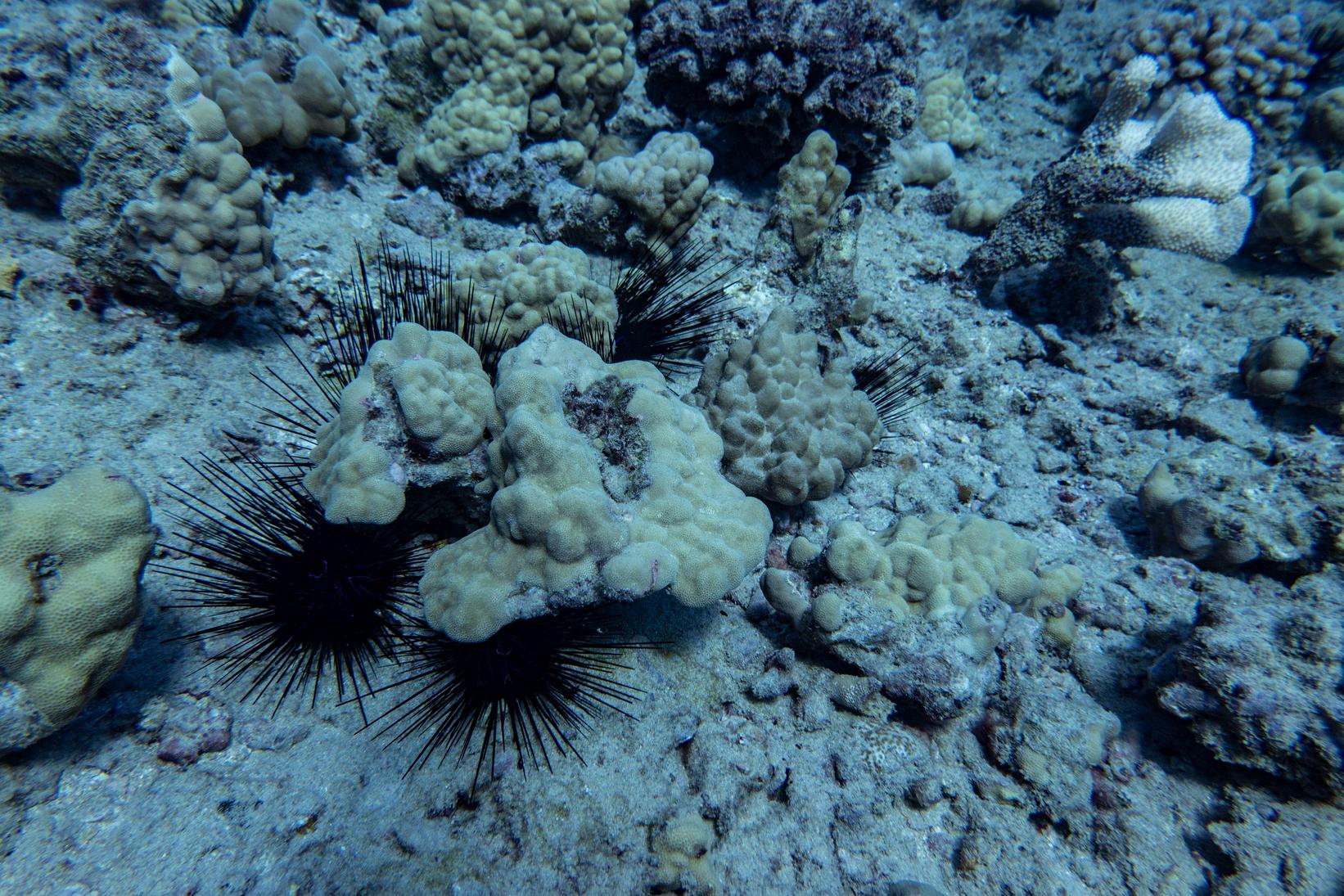
in 2024, so did our monitoring workload To ded two new team members: a Monitoring ngManager Withtheirexpertise,we’vebeen more restoration sites but also enhance our program to include monitoring other reef communities, such as fish and invertebrates (eg, urchins and sea stars) By late 2024, we had already initiated theseexpandedsurveys,completing7reeffishsurveysand4invertebratesurveysat ourrecentlyrestoredPōka‘īBaysite Thesesurveysprovidevaluableinsightsintothe ecosystem-wideimpactsofcoralrestorationonthelocalreefenvironment
Lookingaheadto2025,wehaveambitiousplanstogrowourmonitoringprogram even further This includes collecting data on additional environmental factors like temperature,salinity,turbidity,andsoundscapes We’realsoexcitedtopilotanew, community-based reef monitoring tool These advancements will deepen our understanding of the interconnected dynamics of coral reef ecosystems and strengthenourrestorationeffortsforthefuture.
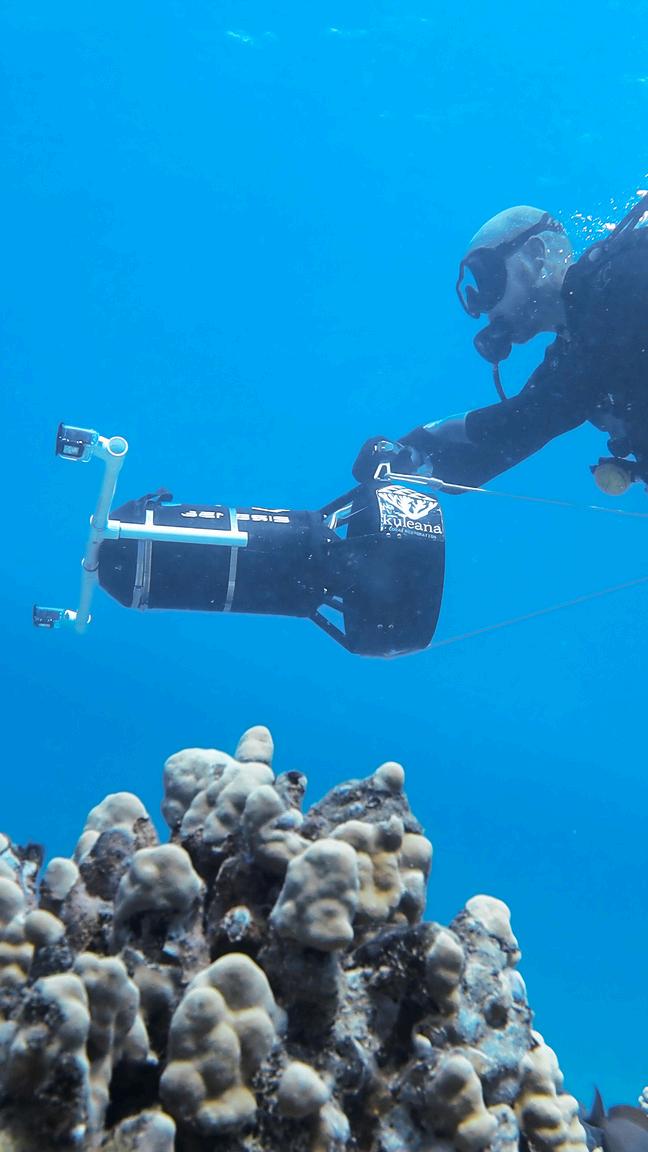
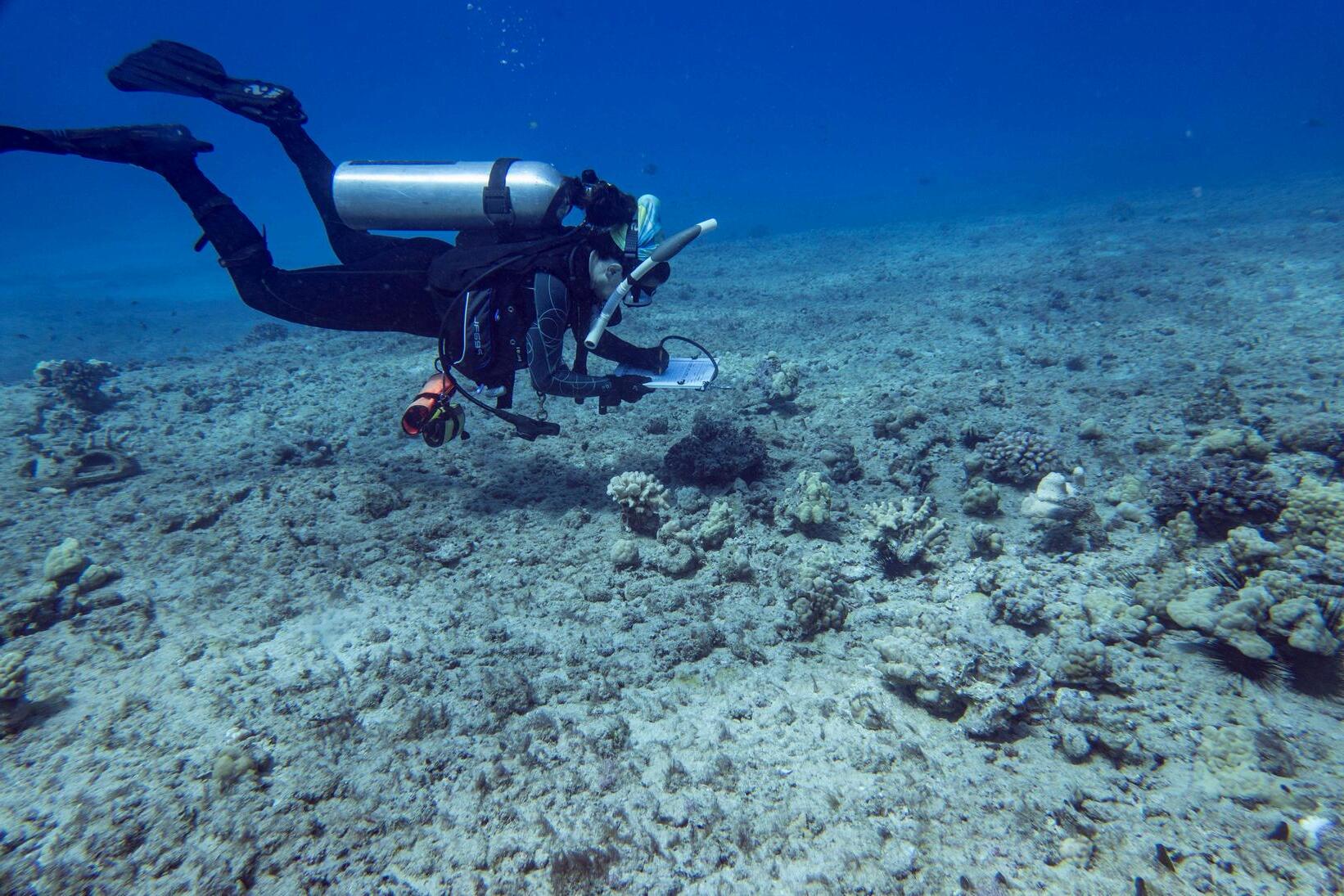
Guidedbythemultitudeofknowledge embeddedintheKumulipoandakua associatedwithareasinwhichwework, ourmonitoringeffortswillbeexpanding inthecomingyeartokiloourrestoration siteswiththelatestscientifictools andtechnology.
Focalareaswillinclude:
Benthic Invertebrate Monitoring
Coral Spawning Monitoring
Acoustic Monitoring
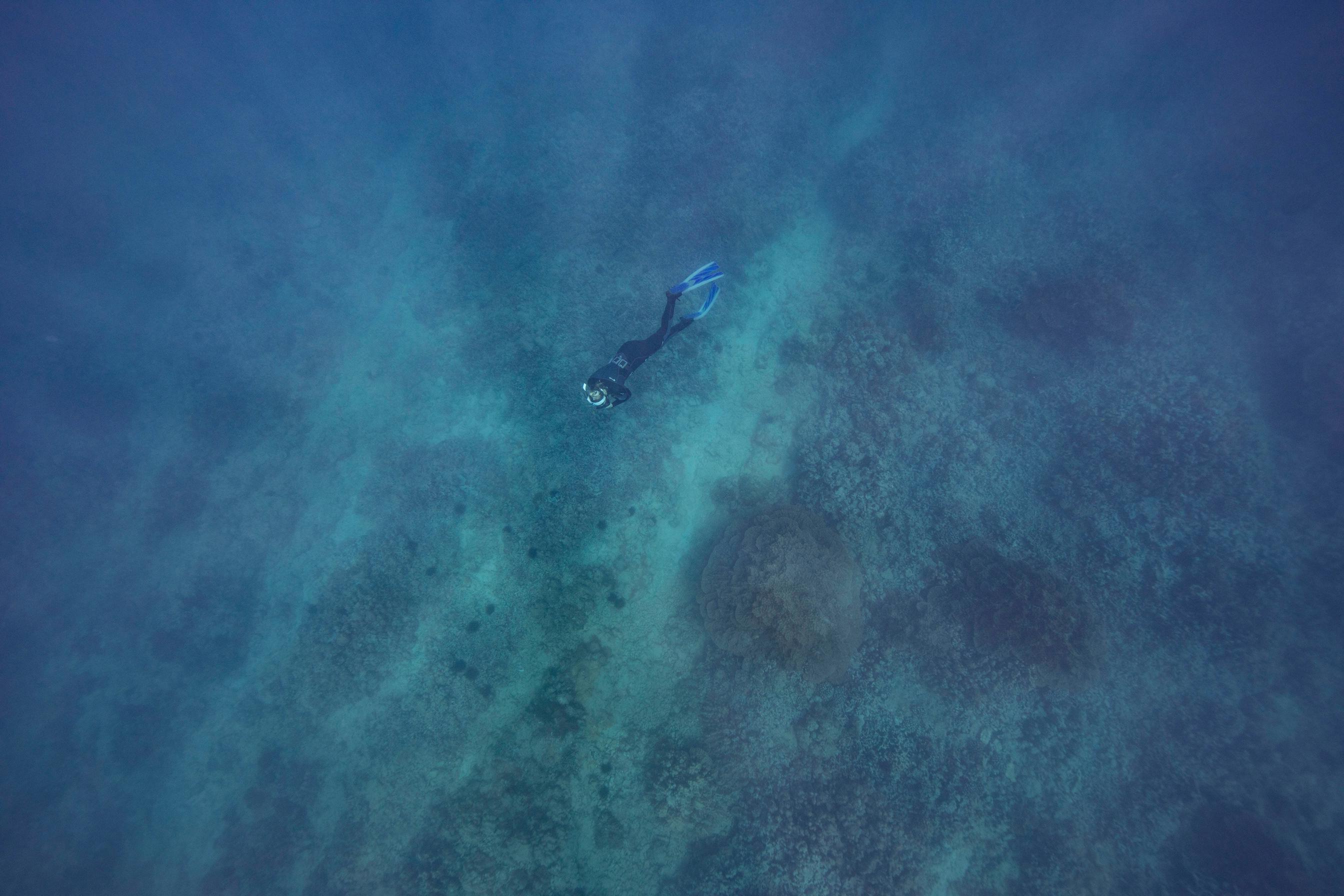
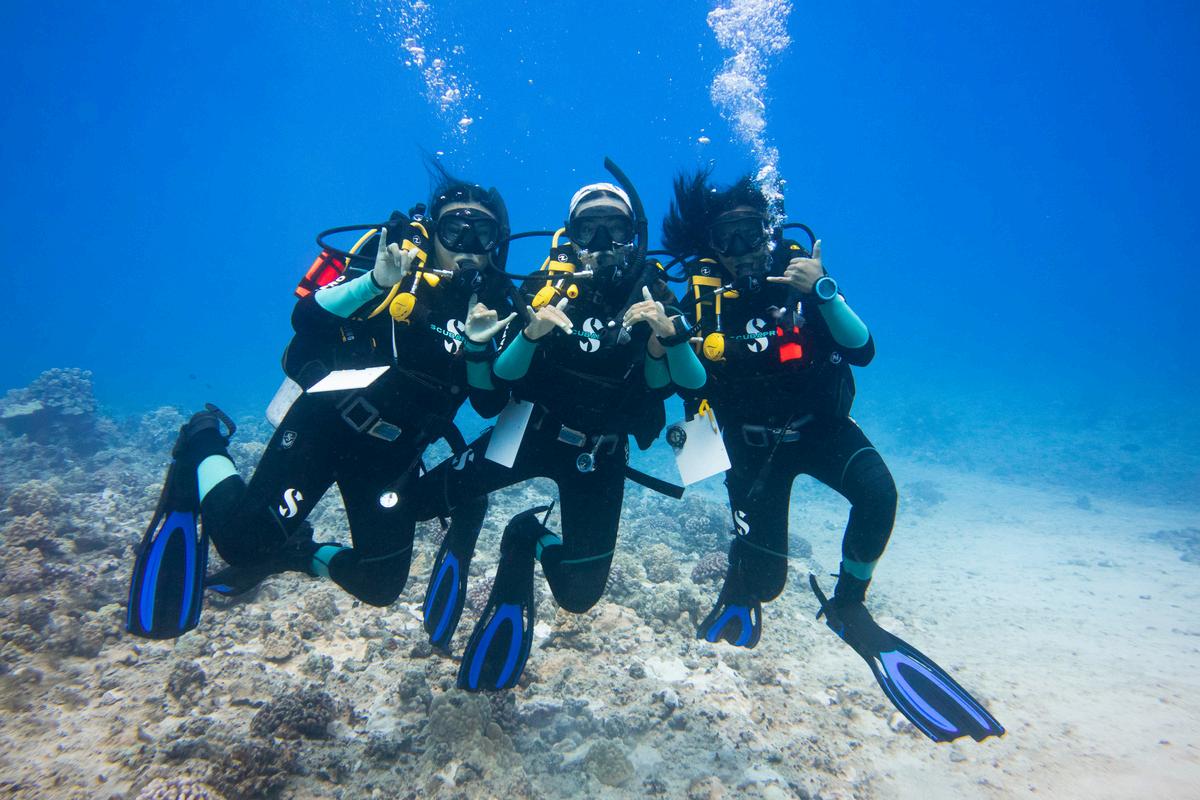
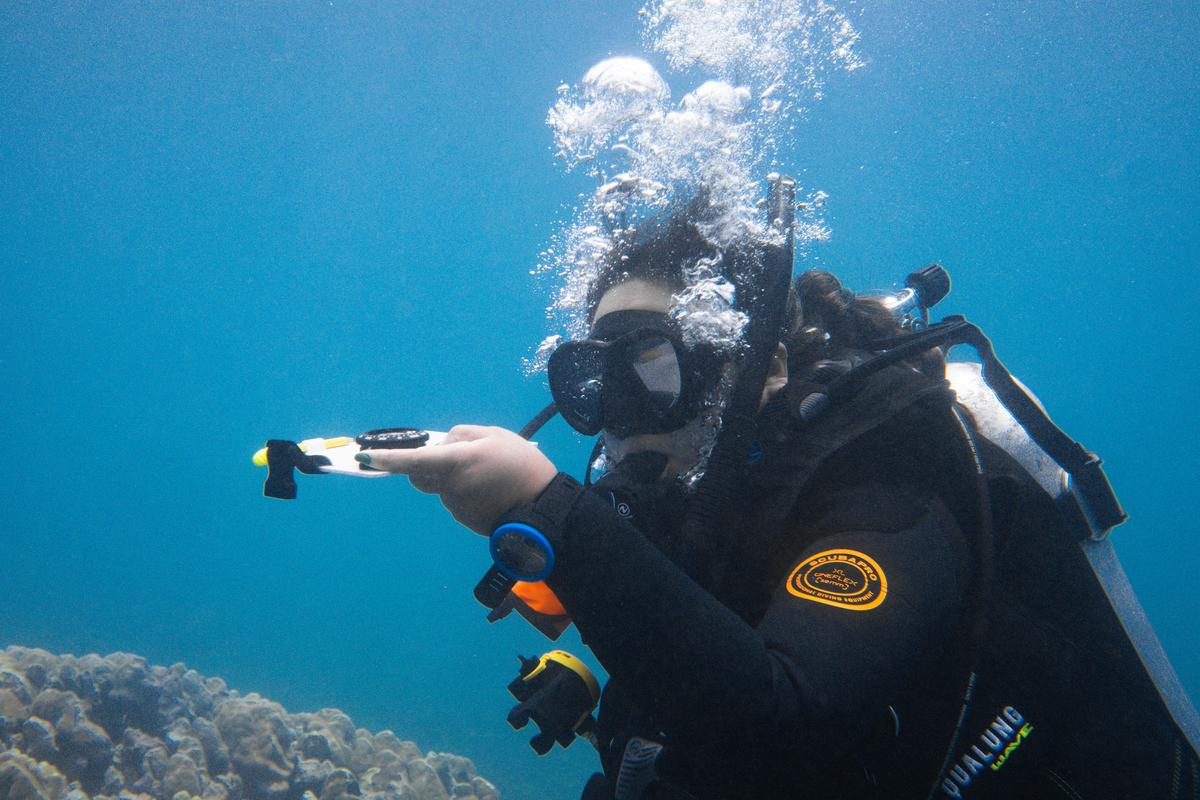
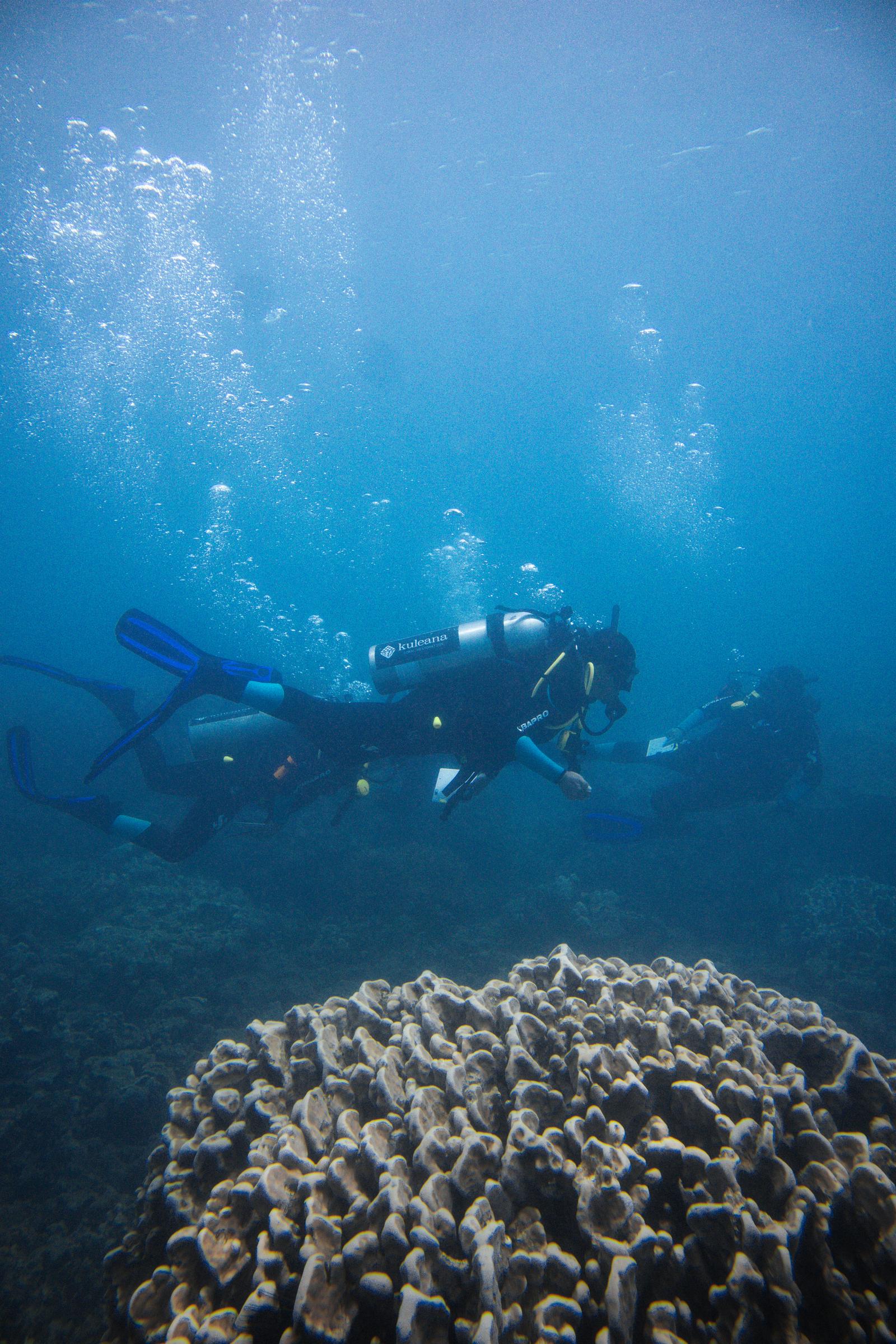
In the Summer of 2024, we proudly celebrated the graduation of our second cohort from the Coral Occupational Applications and Scientific Techniques (COAST) Program. This intensive 8-week restoration accelerator provides fully funded dive certifications and hands-on restoration training, designed to build local capacity and break down barriers to blue economy careers. In August 2024, seven participants successfully completed the program, equipping them with valuable skills to contributetomarineconservationefforts.
As global restoration needs continue to increase, programs like COAST offer a scalable solution to meet the growing demand for skilled restoration professionals. To amplify its impact, our team shared COAST’s structure, benefits, and replicable framework at multiple conferences, encouraging others to adopt similar models and expand the reach of restorationtrainingworldwide.
HAWAIʻICONSERVATIONCONFERENCE
FESTIVALOFTHEPACIFIC
REEFFUTURES2024
AMERICANFISHERIESSOCIETY
SANTACRUZRESTORATIONSYMPOSIUM

THERMALSTRESSDESIGNTHINKINGCHALLENGE BYNATIONALMARINESANCTUARYFOUNDATION
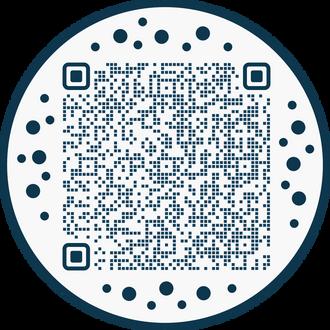
This course is made possible by funding from the NOAA Office of Habitat Conservation, who spotlighted COAST in a webstory and short video Scan the QR code to check it out!
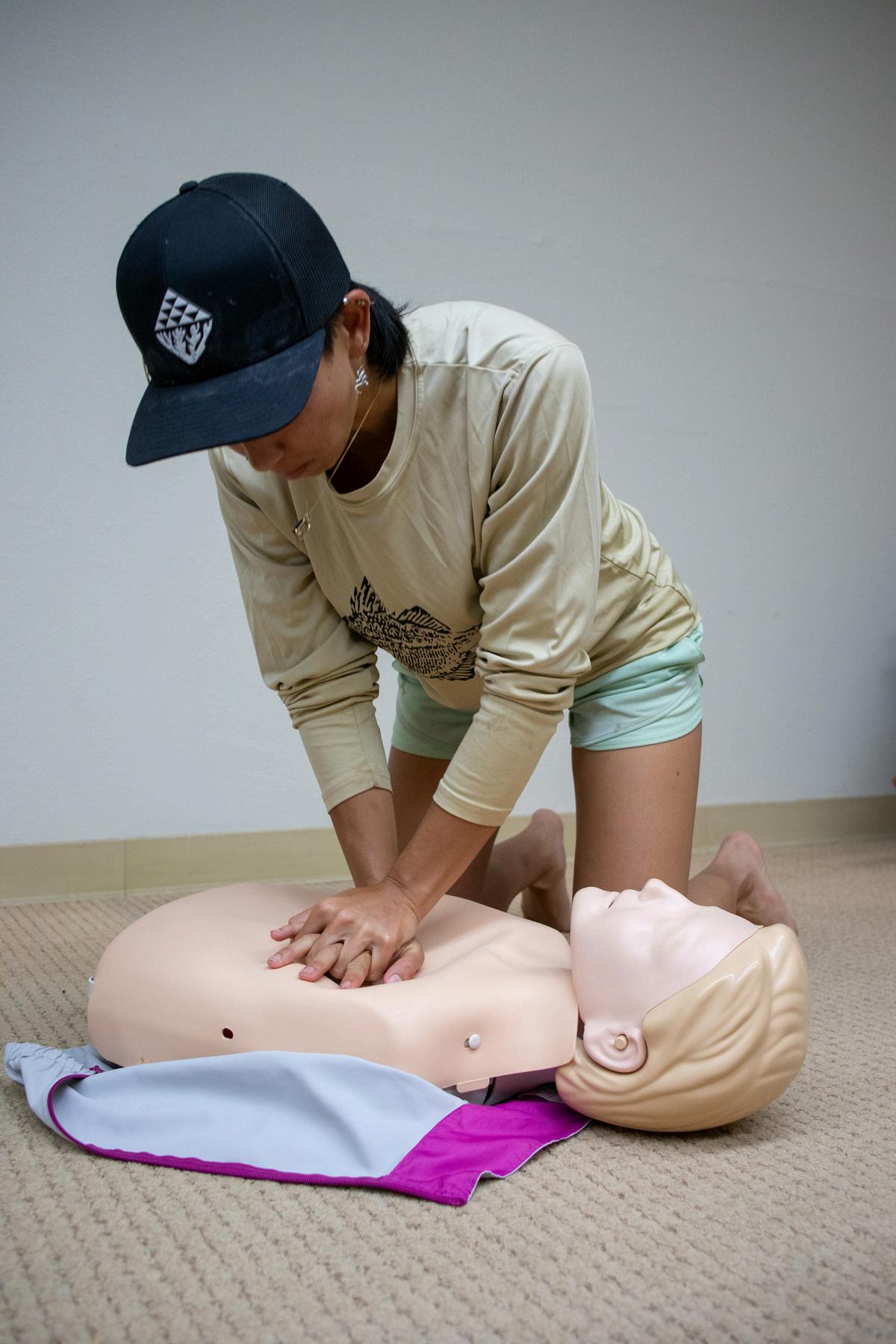
“Kuleana COAST offered the framework and connections to hope for a better future for Hawaiʻi's coral reef ecosystems. This program was more than an introduction to SCUBA, restoration techniques, and the dedicated staff who envision a path to restoration. COAST equipped me with the skills and confidence to play an active role in protecting the marine ecosystems that sustain my passion and the health of my community.”

atOver the past year, we have made tremendous progress in building both internal capacity year, we progress and external partnerships, working towards the goal of standardizing and expanding working goal standardizing and expanding training opportunities for our team, partners, and local community members. team, partners, community









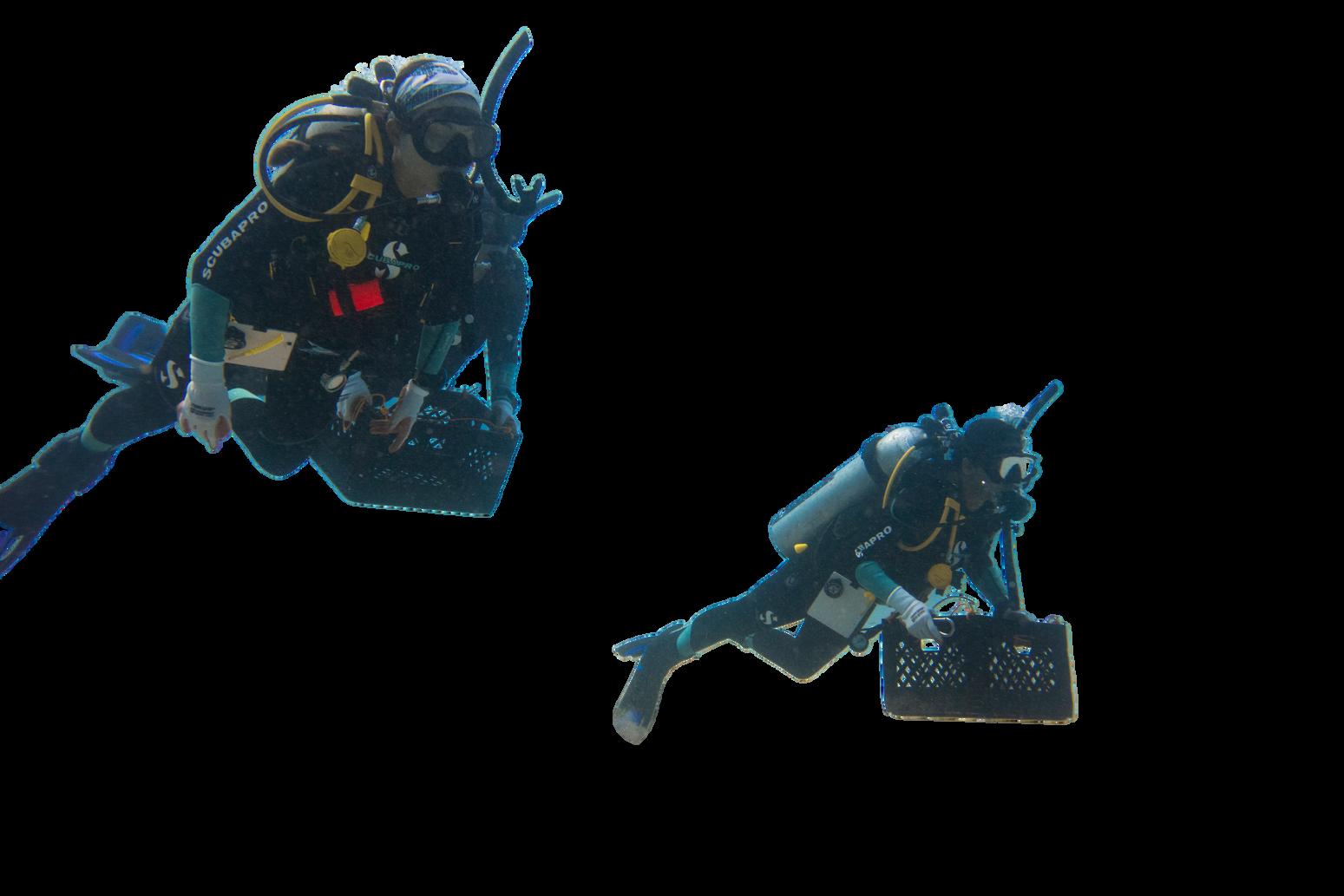
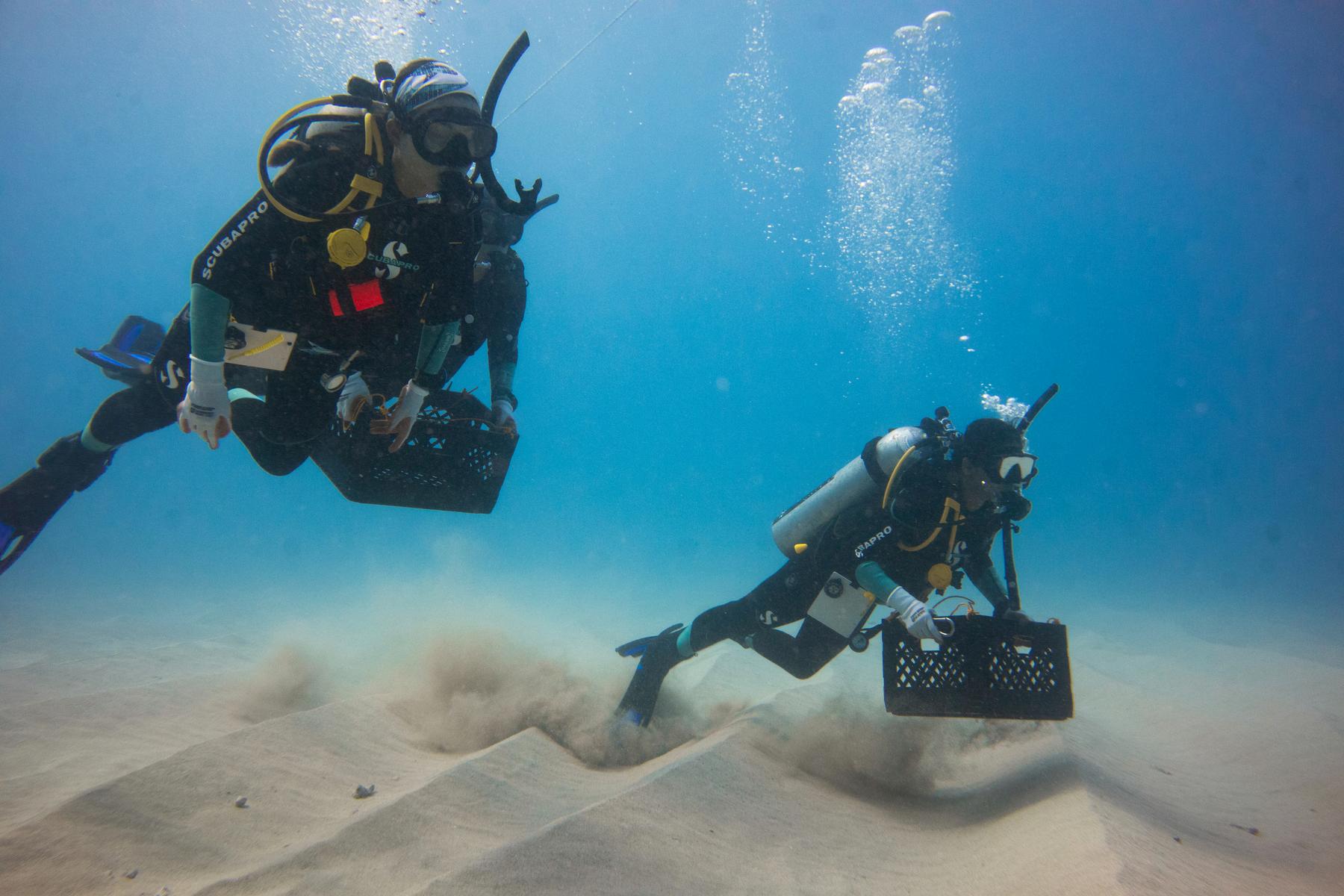
One of our key achievements was the successful our the successful completion of AAUS (American Academy of of (American of Underwater Sciences) Scientific Diver training by Underwater training by seven core staff members This prestigious This prestigious certification not only enhances our team’s diving not enhances our diving expertise but also ensures they meet the highest expertise the highest professional standards in standards underwater research underwater research and safety and

These milestones represent our ongoing commitment to empowering our local community members to fulfill their kuleana, while advancing marine conservation through education, skill-building, and collaboration.
We wrapped up a highly successful second a highly year of our COAST program, which focuses our program, on workforce development through dive development training and related skills. This year, seven training and related skills This seven community members graduated from the program, equipping them with practical experience and certifications to access new certifications access new jobopportunitiesinmarineconservationand jobopportunitiesinmarineconservationand otherrelatedfields. otherrelatedfields.
In collaboration with our Maui-based In with partners Maui Nui Marine Resource Council, partners Maui Nui Marine Resource Council, we conducted our first Restoration Training session.Thisinitiativeisdesignedtoenhance the skillsets of our partners and lay the our the groundwork for broader community-wide broader community-wide restoration efforts, fostering sustainable practices and preserving our coastal practices and preserving our coastal ecosystems.
With the successful completion of these With initiatives, we are now poised to expand our are reach. The standardization of our training The protocolsenablesustooffertheseprograms to a wider network of partners, allowing us to scale our impact and further empower further localcommunities.
As we continue to build on our build on accomplishments, our focus will shift to our focus increasing our capacity and offering these our and these training programs to more partners and training to more and community members. We are committed to are continuing the COAST program, building building more robust partnerships, and developing more partnerships, developing additional restoration training opportunities training opportunities to support the sustainable growth of our sustainable community and the health of our ecosystems and the health ecosystems forgenerationstocome. forgenerationstocome.









TO ALL OF THE PARTNERS, VOLUNTEERS & FRIENDS WHO ALLOW US TO CONTINUE FULFILLING OUR KULEANA