is produced by the Department of Marketing and Communications
Audrey Hambright
Joe Montgomery
Kelsey Grimm
Wendy Barnes
Rylee Coy
Dean’s Office
College of Veterinary Medicine
Kansas State University
101 Trotter Hall
Manhattan, KS 66506-5601
785-532-5660
vet.k-state.edu
Kansas State University College of Veterinary Medicine is dedicated to the advancement of health and welfare of animals, people, the environment and the veterinary profession through excellence in teaching, research, service and outreach.
We are committed to a professional degree program with broad training opportunities across a comprehensive range of companion and exotic animals, and livestock species. Our focus is on initiatives that address important societal needs at a local, national and global level.
Exceptional teaching. Impactful research. Outstanding service. Extraordinary graduates.
Like us, follow us and watch us:


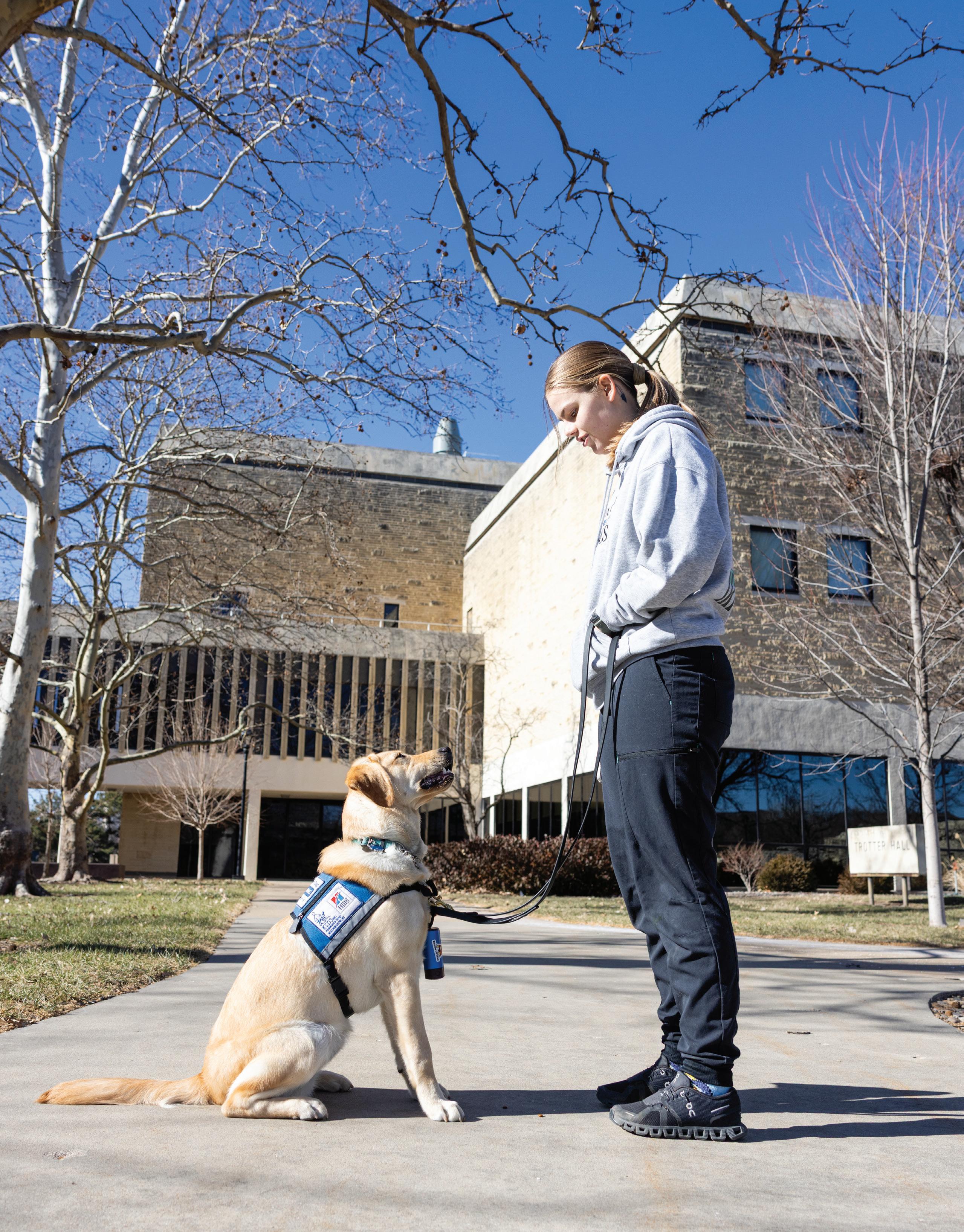
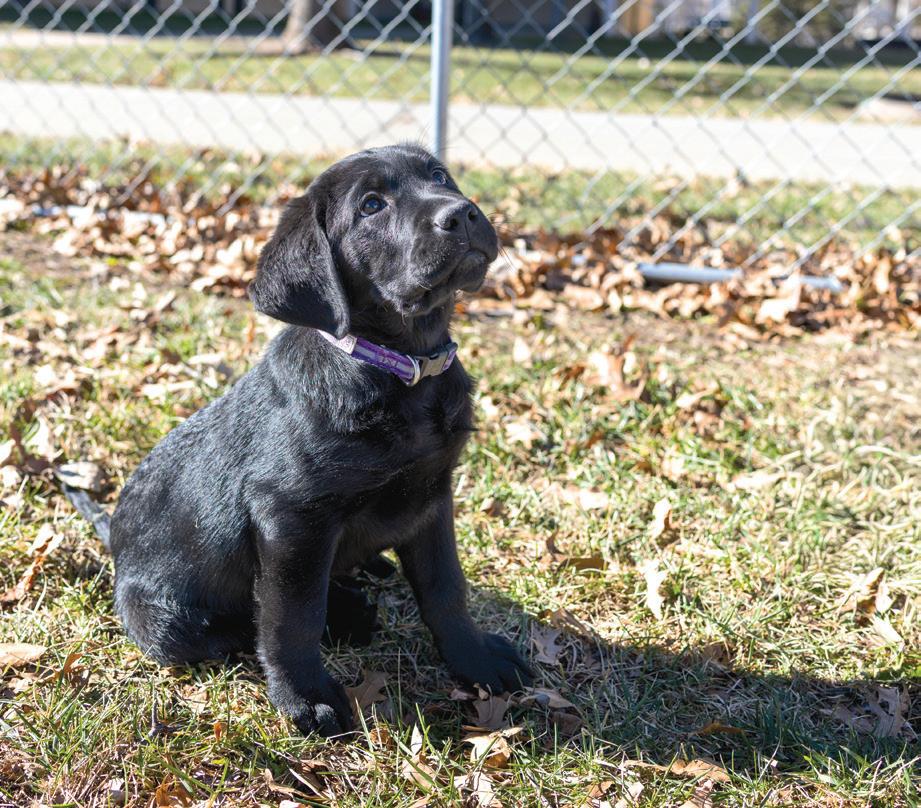
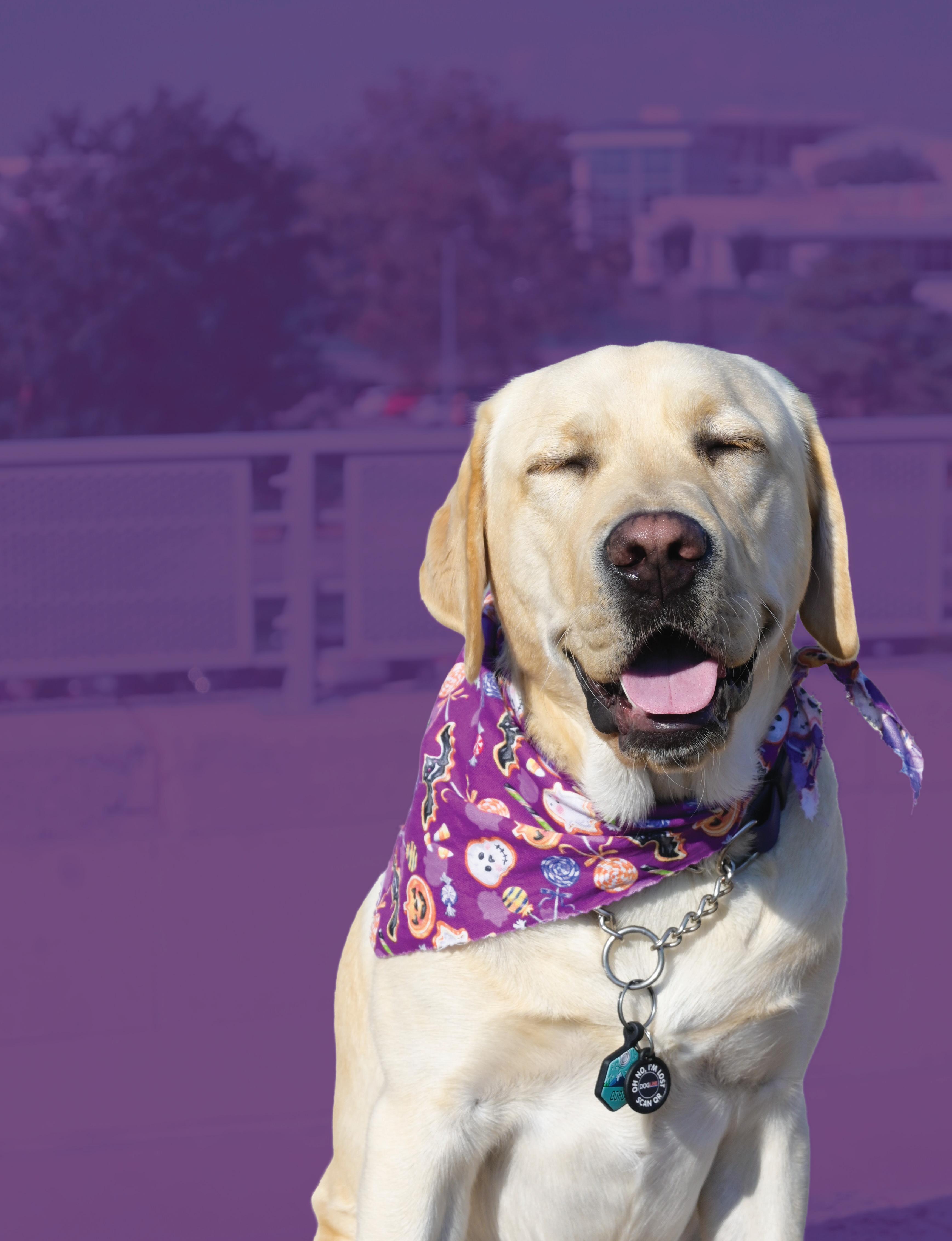
On the cover: Ray Riggenbach, a first-year student, practices handling skills with Fox, a KSDS service dog in training. Story on Page 8. Photo by Audrey Hambright.
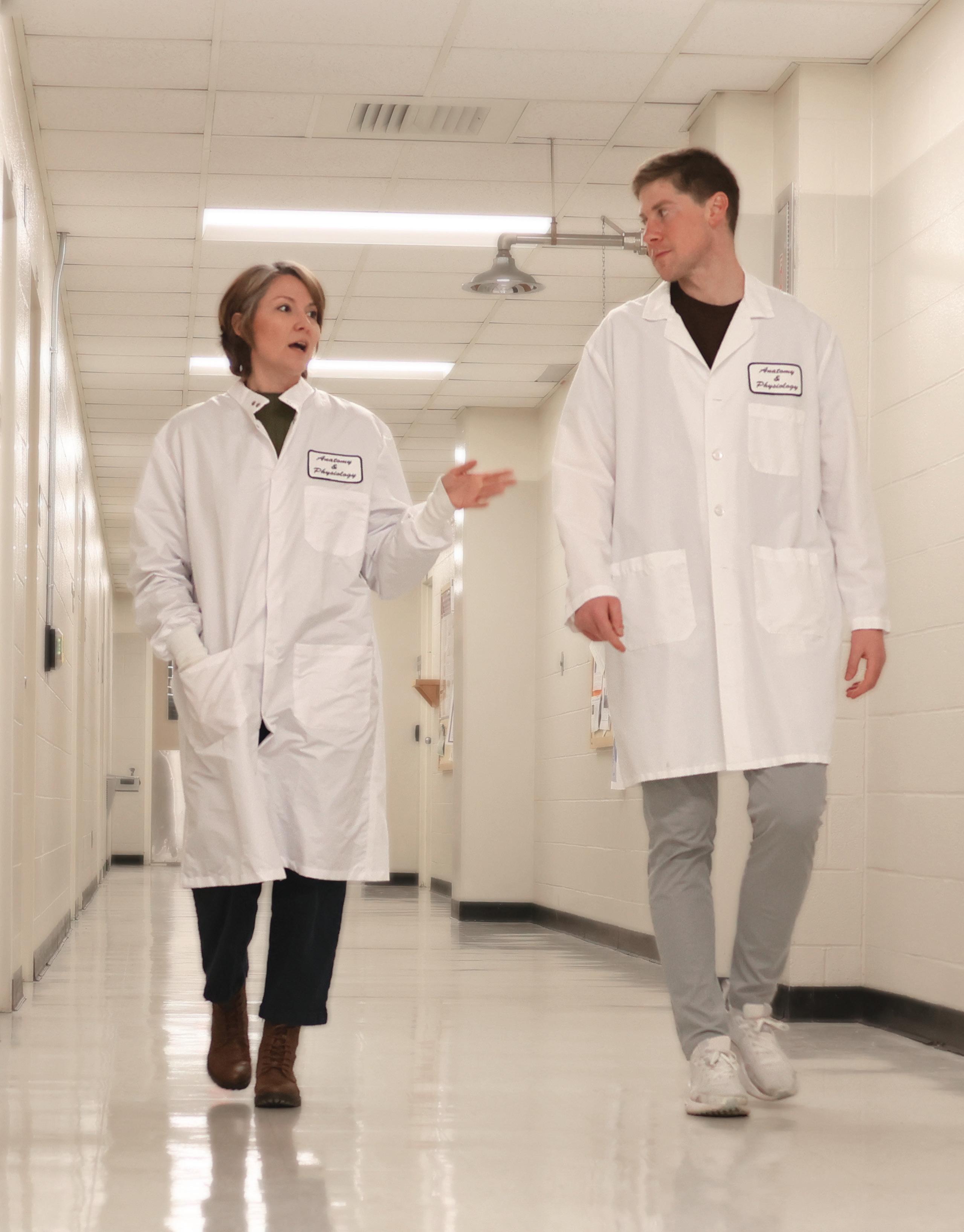
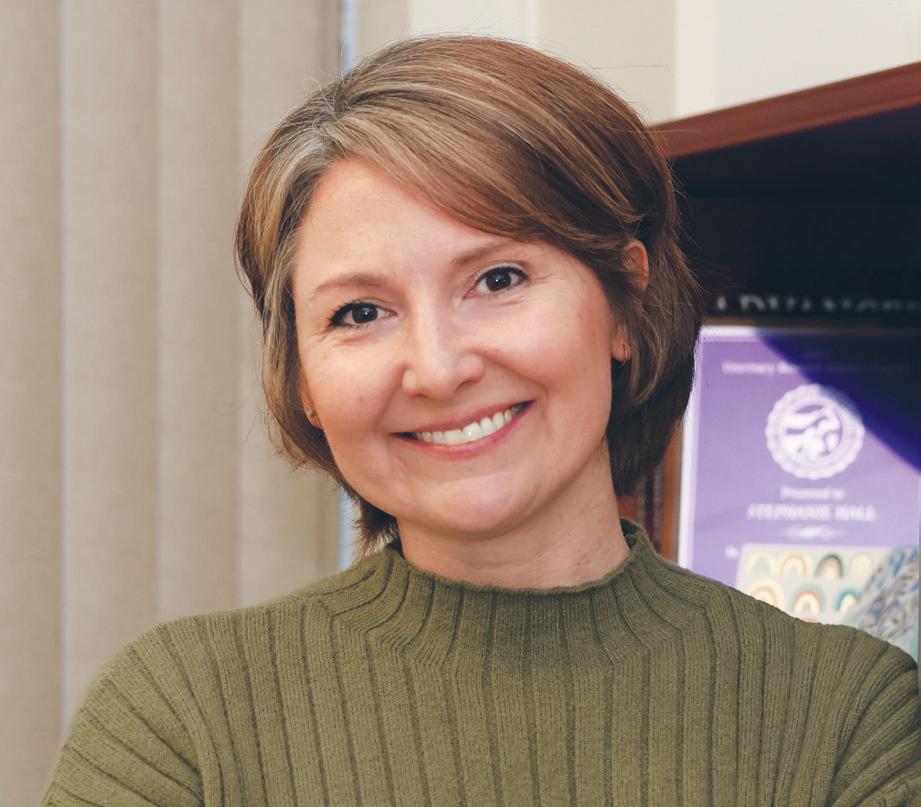
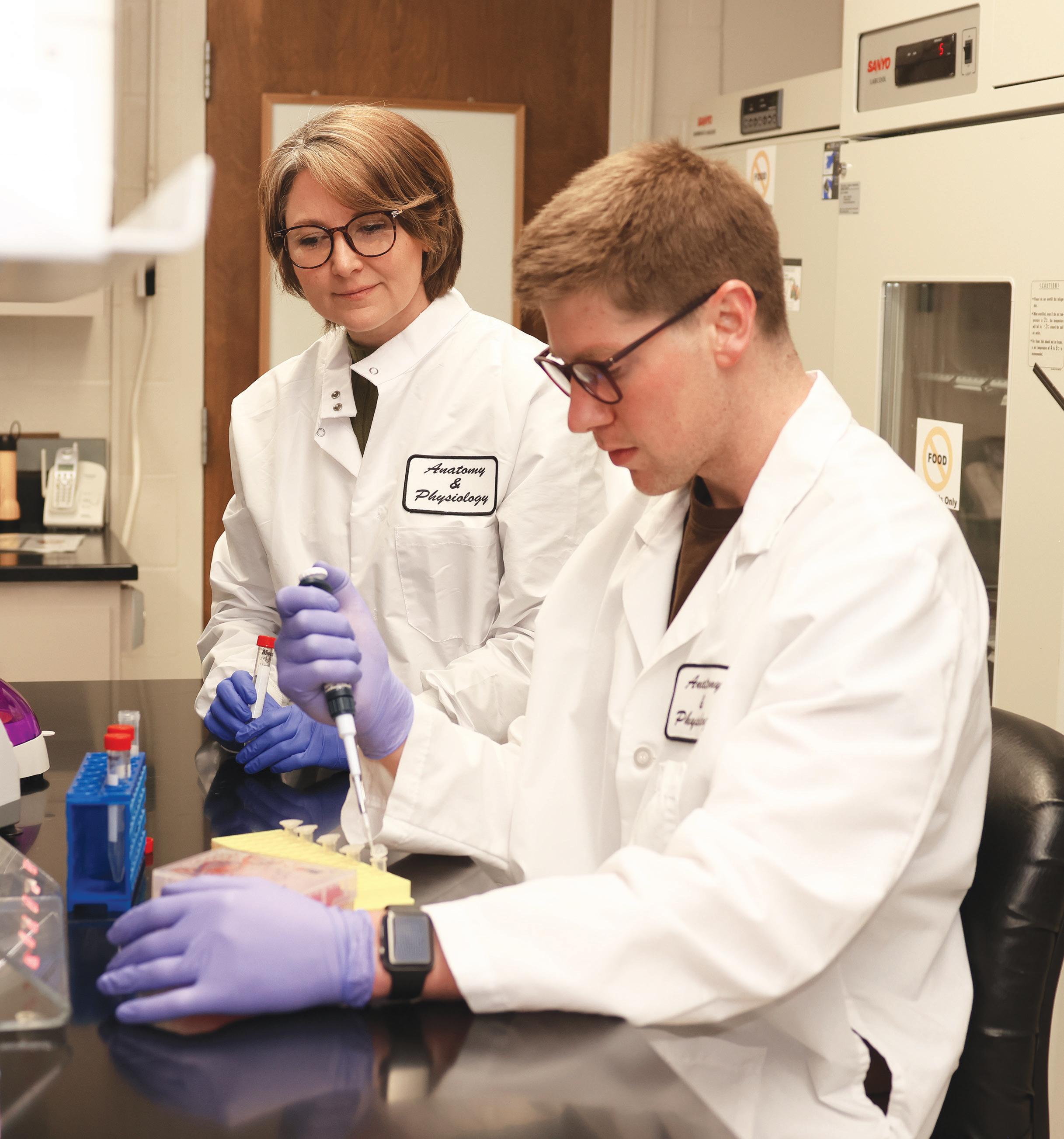
Right: Dr. Stephanie Hall, assistant professor in anatomy and physiology, discusses a research project with Zachary White, a postdoctoral trainee. Story on Page 24. Photo by Joe Montgomery.
A special partnership creates unexpected learning opportunities. By Wendy
Barnes
The beginning of a wildcat veterinarian story
How K-State CVM Ambassadors hold the door open for future veterinarians. By Rylee Coy Meet the class of 2029
A visual representation of the class of 2029. By Kelsey Grimm
Dr. Stephanie Hall leads research efforts toward preventing Alzheimer’s disease. By Joe
Montgomery
Local
Joe Montgomery
Joe Montgomery
Kelsey Stremel
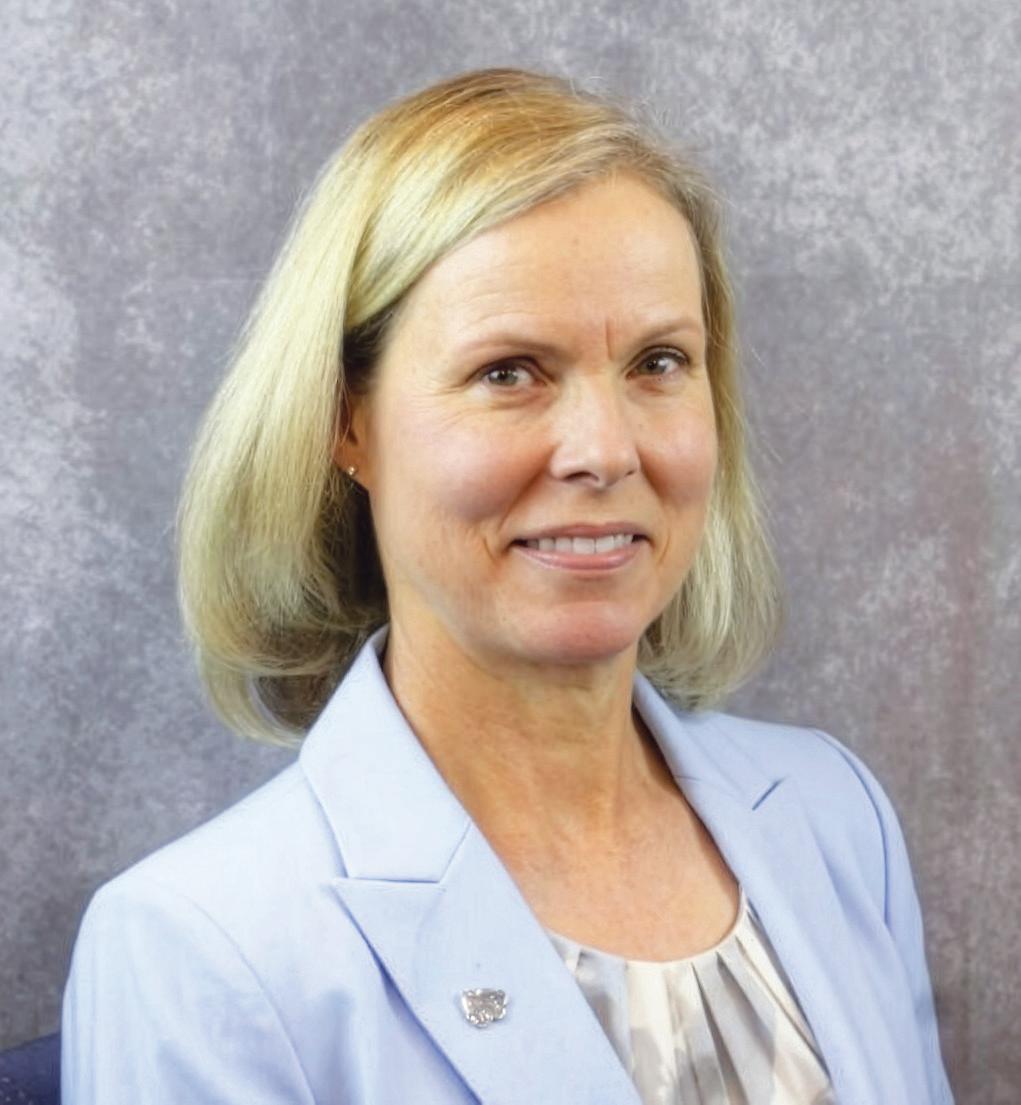
By Interim Dean Beth Davis
It is an exciting time for the College of Veterinary Medicine, and this issue of Wildcat Veterinarian will provide some insight into activities happening throughout the college. This issue begins with Dr. Mike Apley who is a valued alumnus from the program who has served in many roles throughout his career. In the past 21 years with the college, he has served as a dedicated faculty member and currently serves as Department Head of Anatomy and Physiology. We are fortunate to have his tremendous leadership with a foundation of history and science resulting from his background as a member of the K-State CVM Family with expertise in livestock medicine and clinical pharmacology. Having KSDS service dogs raised within the CVM by dedicated veterinary students has been a rewarding experience over the past several years. You will learn impactful details about the dedication of the veterinary students that contribute to this valued and rewarding effort. Current veterinary
students contribute to the training and development of these remarkable canine assistants through repetition, discipline, and dedication. In the end everyone wins, students achieve an impressive record of training success, the dogs in training have a bright future of service, and the recipient community members benefit from the remarkable services provided by these talented canines. The CVM values this important partnership that contributes to the mission of animal services in our communities. In 2026, the cycle continues through the training of Fox and Ace who are currently in the stages of puppy training.
Dr. Stephanie Hall is among the talented faculty within the college with success in the field of physiology-based research. Dr. Hall’s investigations aim to help answer complex questions relating to Alzheimer’s disease. Her work to gain insight into this serious disorder within the Department of Anatomy and Physiology provides tremendous opportunities for scholarship success and graduate student training. Among infectious disease reports from the college, impactful work from the Kansas Veterinary Diagnostic Laboratory has identified a concerning invasive tick species into Kansas. Additional reports include Dr. Natalia Cernicchiaro who serves as the Director of the Center for Outcomes Research and Epidemiology (CORE) within the college has recently published findings that indicate that Japanese Encephalitis Virus transmitted by mosquitoes results in reproductive disease in swine. Highlights of her work and research team are provided in this informative report. This work was completed by an accomplished collaborative group of investigators including individuals from National Bio-Agro Defense and USDA. Notably this project was funded by the Swine Health Information Center, providing producers and veterinarians with needed insight on this serious pathogen. As described by Dr. Cernicchiaro this work is reflective of the
CORE mission to advance preparedness for transboundary and emerging diseases through multidisciplinary research.
The College of Veterinary Medicine is fortunate to have a wide array of remarkable talent; recently funded research includes Dr. Phillip Lancaster who serves as primary investigator for a USDA Natural Resources Conservation Services funded investigation on the topic of grazing education and tallgrass conservation in Kansas and Oklahoma.
Dr. Laura Miller has collaborated with Dr. Bradley Olson of the Data Science Core for Kansas INBRE which provides graduate students with an opportunity to engage in advanced interdisciplinary research and training. This work is a USDA National Needs funded investigation that will integrate graduate students in areas of pathobiology and genomics in livestock.
Additional WV highlights provide insight into the college student ambassador program, that includes students who, in addition to managing their rigorous studies contribute to the veterinary program to host visitors, provide tours and help visitors learn about college spaces, services and operations. In June we had every reason to celebrate as we enjoyed the scenic views of the MHK Museum of Art and Light while celebrating the first decade of the CVM Shelter Medicine program, a great evening of fun and education about the impact Shelter Medicine and Community Outreach in Kansas.
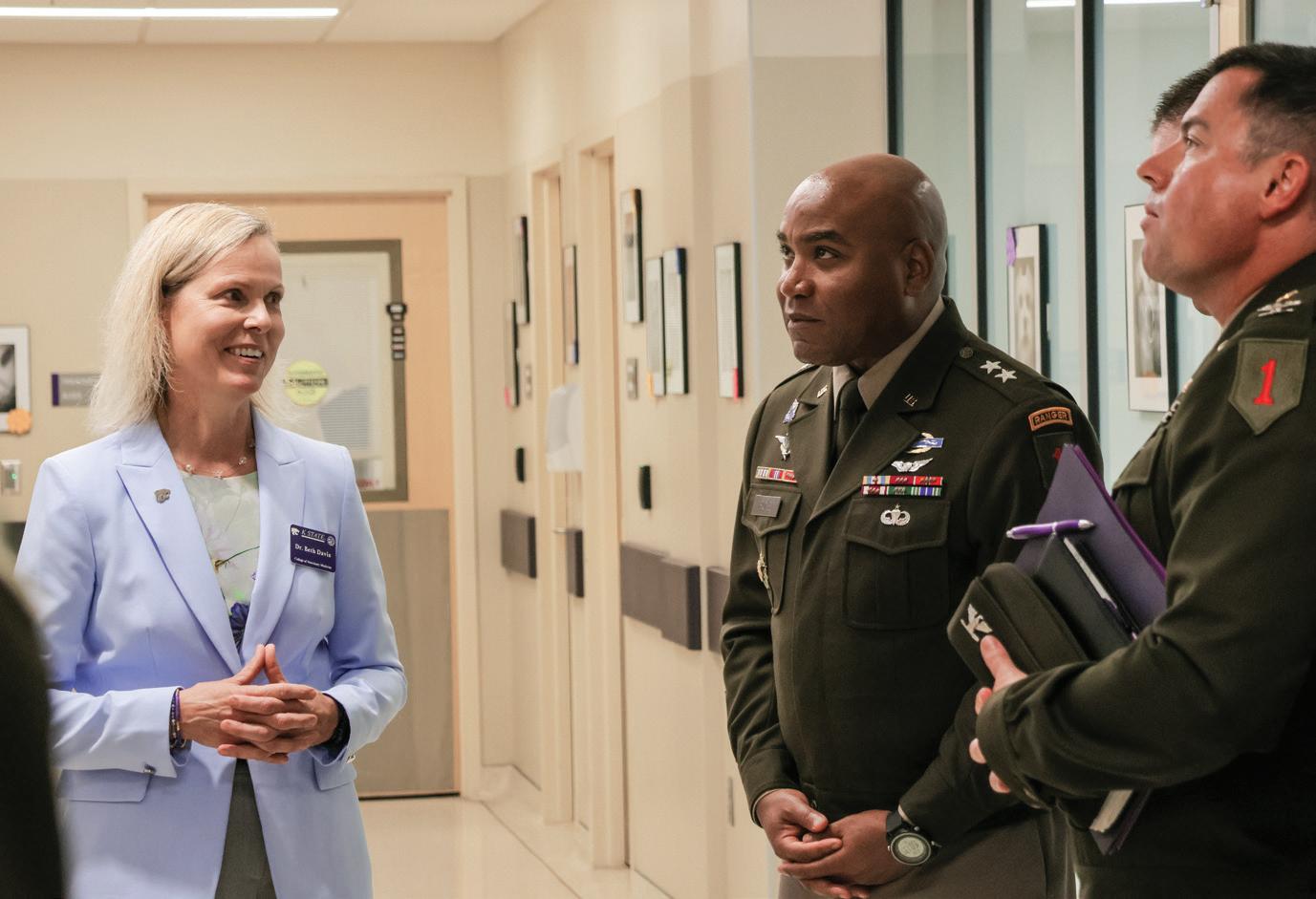
In August we had a fantastic visit in Dublin Ireland during the festivities of the Air Lingus football game between Kansas State University Wildcats and Iowa State University Cyclones. Although the outcome of the football game was not what we would have hoped, nonetheless the visit was a complete success. An Ag-Innovation Summit was hosted in the pre-football game activities and during the meeting a formal agreement was established between KSU-ISU and the University of College Dublin colleges of Veterinary Medicine. This agreement provides a valuable opportunity for veterinary college student and scientific exchange. Having a formal signed agreement among the three veterinary programs
has helped to unite these similar and agriculturally based programs in unique ways. The agreement provides support for united mission and vision among programs toward student training and advancement of agricultural innovations.
Among passages for the year, with a heavy heart we had to say goodbye to Dr. Masaaki Tamura, although we were saddened by his loss, we value the time he was at the CVM and are inspired by the legacy of work that he left behind.
Even though Kansas is globally recognized for cattle production, learning about shared grazing and the positive impact that camels have on the regional environment; a fantastic story is provided regarding the residents of Shamrock Farms located east of Manhattan. Learning about the variety of livestock in the region, the incredible work from Drs. Leslie and Bryan Weaver, owner Valeri Crenshaw and the opportunities for veterinary student training provides a fantastic story to end this issue.
We hope you enjoy reading the updates and information from the CVM as much as we enjoyed preparing this edition. Wildcat Veterinarian is truly a labor of joy, and we are thrilled to provide exciting insight about the great things happening at the CVM.
Happy reading and Go ‘Cats!!

A special partnership creates unexpected learning opportunities.
Story by Wendy Barnes
On any given day in the College of Veterinary Medicine complex, it is not unusual to see students, faculty or staff pause to pet or cuddle a dog in the hallway, library or business office. For many, these moments offer a brief break in a demanding day. For a select group of veterinary students, however, those dogs represent something more — a responsibility, a learning experience and, eventually, a difficult goodbye.
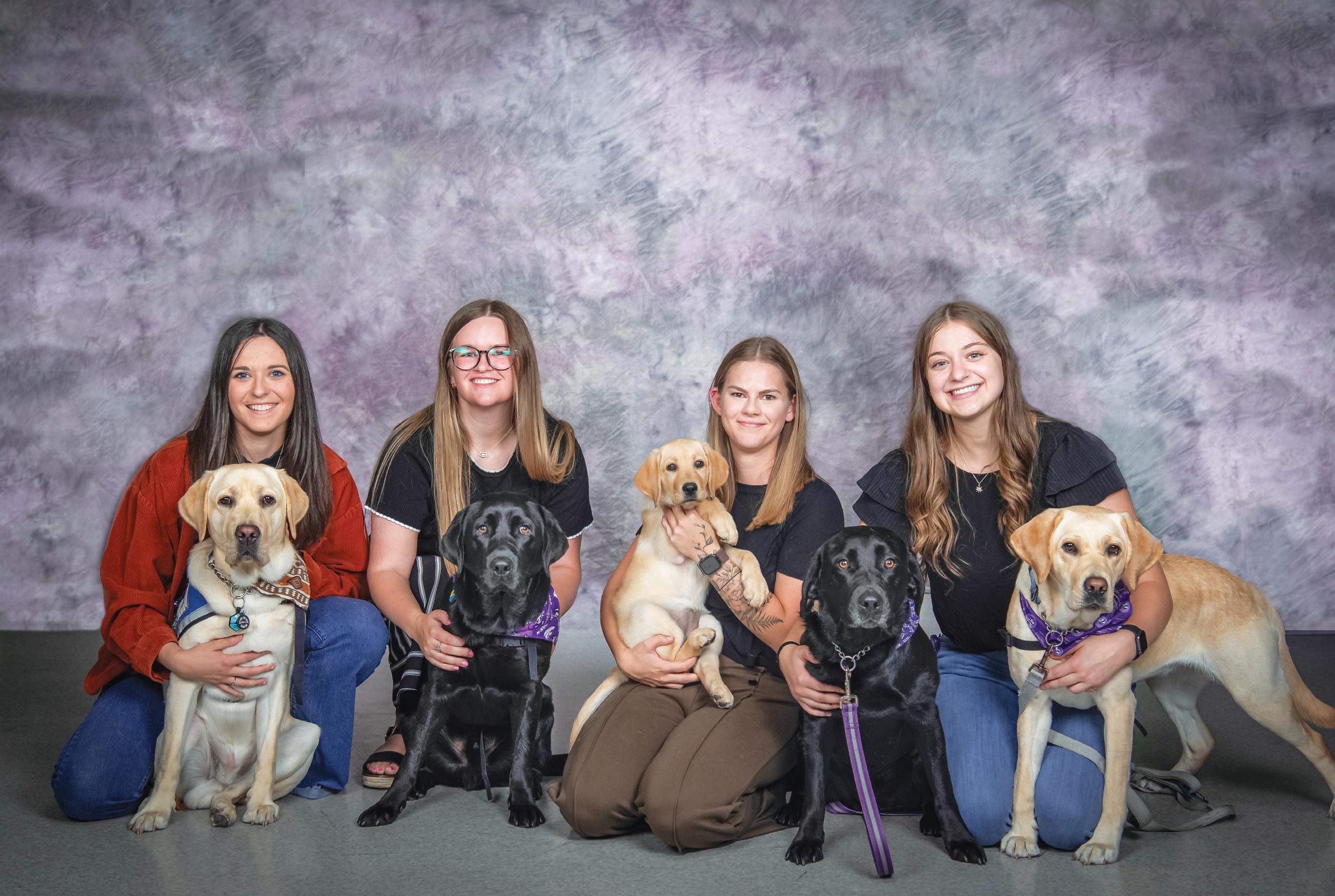
For Kansas State University veterinary students, the path to becoming a Doctor of Veterinary Medicine is demanding, filled with long days and heavy coursework. For some students, that journey now includes an unexpected companion: a Kansas Service Dog Society (KSDS) dog-in-training quietly curled at their feet during lectures, labs and late-night study sessions. Through a partnership between KSDS, located in Washington, Kansas, and the College of Veterinary Medicine, students take on the role of handlers, raising and training future service dogs while navigating veterinary school. The experience challenges them, connects them to one another and gives purpose to moments both inside and outside the classroom.
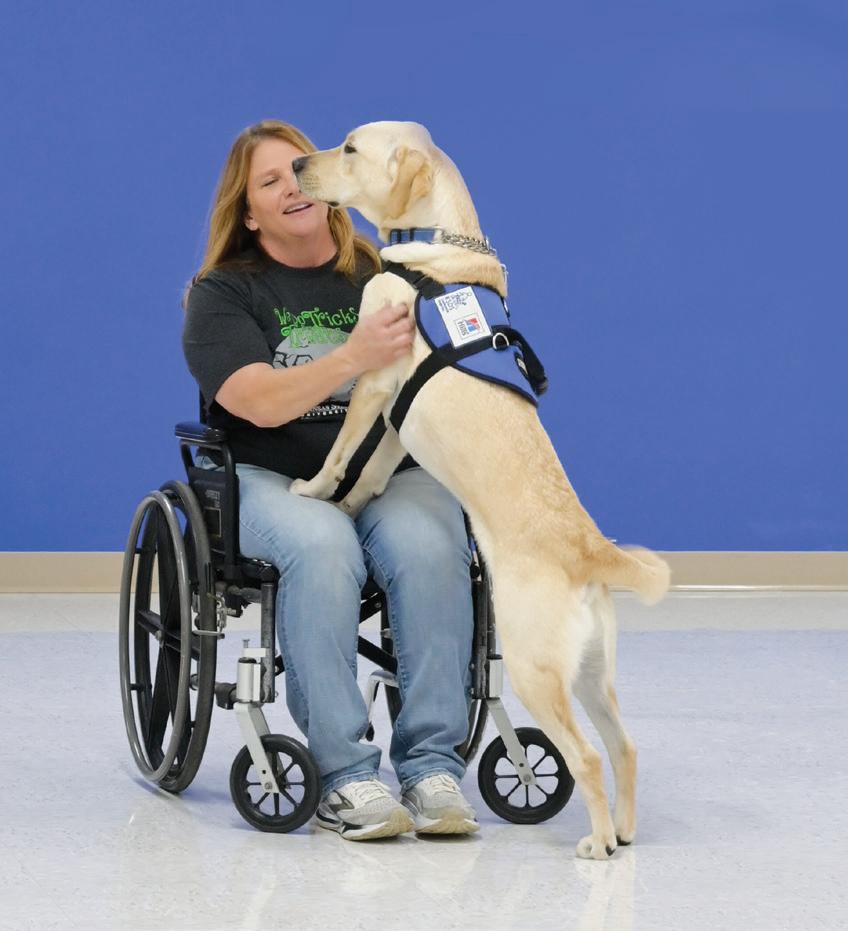
The idea for the program began during the COVID-19 pandemic, when former Dean Dr. Bonnie Rush explored wellness initiatives to support students facing unprecedented stress. Building on the college’s long-standing relationship with KSDS, she proposed bringing dogs into the classroom — not as pets, but as trainees with a mission.
Working alongside Annette Kohlmeyer, breeding coordinator at KSDS, the college encourages students to apply for the program. Kohlmeyer then screens applicants to determine which students are best suited to receive a dog.
“We’re looking for a little bit of what their background is,” she says. “Do they have a fenced-in yard? Do they have some experience in animal behavior? So, we will call and check that kind of stuff, just to see which would be the better ones.” KSDS encourages students who are not selected for a dog to work together as a team. While one student serves as the primary handler, others can act as secondary trainers, helping share the responsibility and reduce stress.
I learned so much — not just about training a dog, but about responsibility and priorities.
”
Madison Latham

What began as a wellness idea quickly became part of daily life. Today, KSDS dogs are a familiar presence in lecture halls — quiet, focused and rarely disruptive.
“All of the professors, I think since they’ve dealt with dogs since Snyder, they’re all very familiar with the dogs in the classroom,” says Kylie Bitcon, class of 2028, who raised Cork. “If a dog is snoring during class or lets out a small whine or a bark, it doesn’t faze them at all.”
Becoming a KSDS handler is not a casual commitment. Students commit to 18 months of training, socialization and reporting. Over that time, handlers teach their dogs 30 commands, reinforce appropriate public behavior and help them remain calm and focused while wearing their service vests.
Despite the added responsibility, students consistently say the dogs help them manage stress rather than add to it.
Ray Riggenbach, class of 2029, applied after watching a documentary about a student handler and realizing the impact one person could have on another’s life.
“I feel very lucky,” she says of raising Fox. “She’s a very, very good puppy. I’ve raised puppies before, and she’s by far the calmest and most well-behaved one I’ve ever had.”
For Ray, Fox provides grounding and motivation during demanding days.
“She doesn’t make anything harder,” Riggenbach says. “She actually makes it better.”
For Madison Latham, class of 2026, the journey began during first-year orientation, when images of KSDS dogs appeared on screen.
“My roommate, Jamie Williams, and I just looked at each other and knew,” Latham says. “We wanted one.”
They were the only students from their class who showed up to receive a dog — and that dog was Snyder.
Snyder attended classes with Madison, learning how to behave in public spaces. Training continued at home, often replacing mealtimes.
“For dinner, instead of just feeding him, we’d train,” she says. “Kibble by kibble, working on commands.”
As Snyder progressed, Madison’s understanding of patience, structure and responsibility deepened.
“I learned so much — not just about training a dog, but about responsibility and priorities,” she continues.
Ally Hazy, class of 2027 is Gordo’s handler and previously trained McFly, explains that McFly and Gordo’s presence in her life has helped her get through vet school.
“I feel like he (McFly) is part of the reason I’ve been able to do everything that I’ve done because he helped settle a lot of things; now Gordo does the same thing,” she says. “I can be having a bad day, but then these kiddos come out and they just make everything better.”
Training does not happen in isolation. Posters listing the 30 required commands hang throughout the college, and classmates, faculty and staff help reinforce consistent behavior. At the same time, students learn to advocate for their dogs’ training needs — especially when the dogs are working.
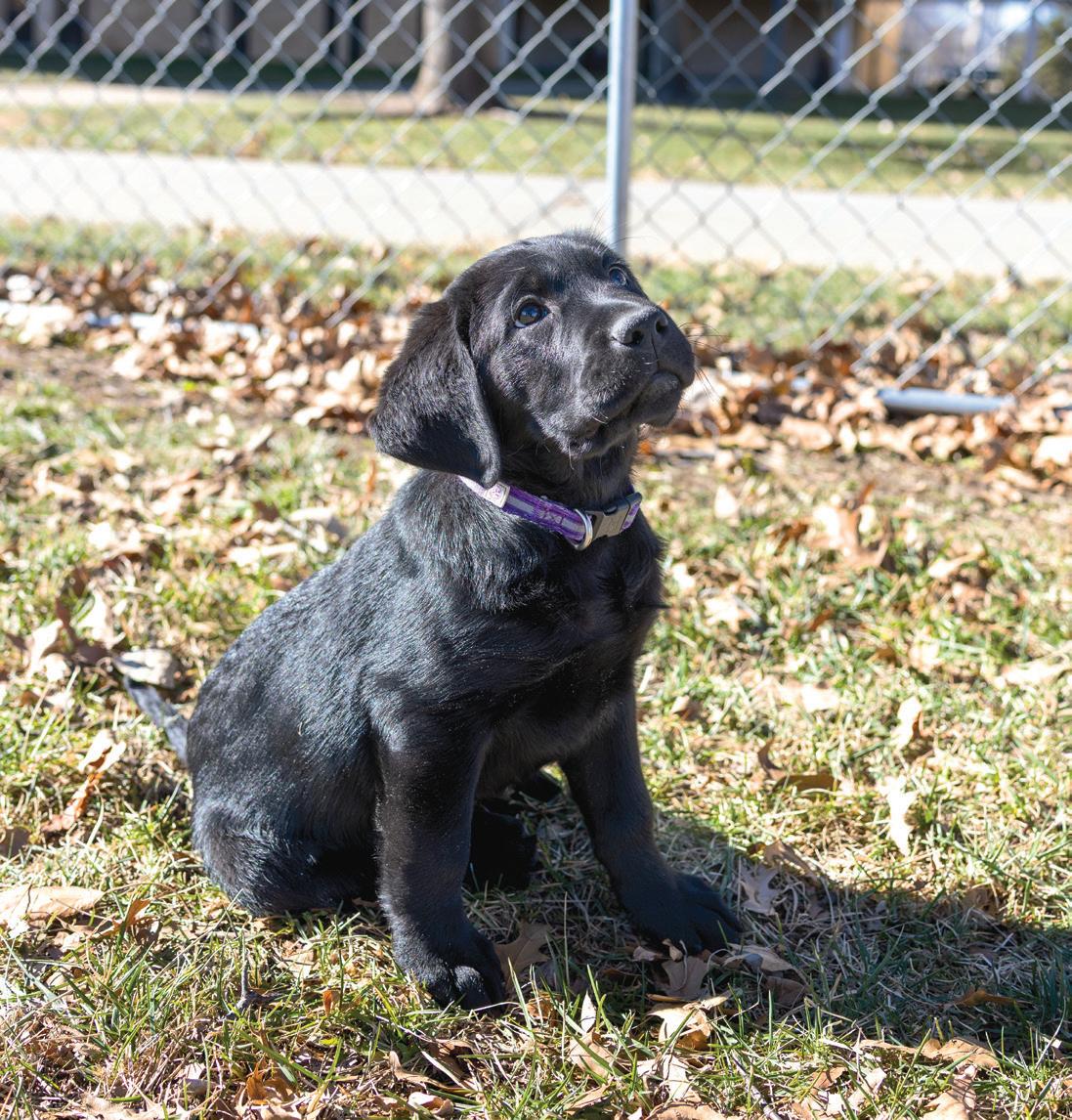
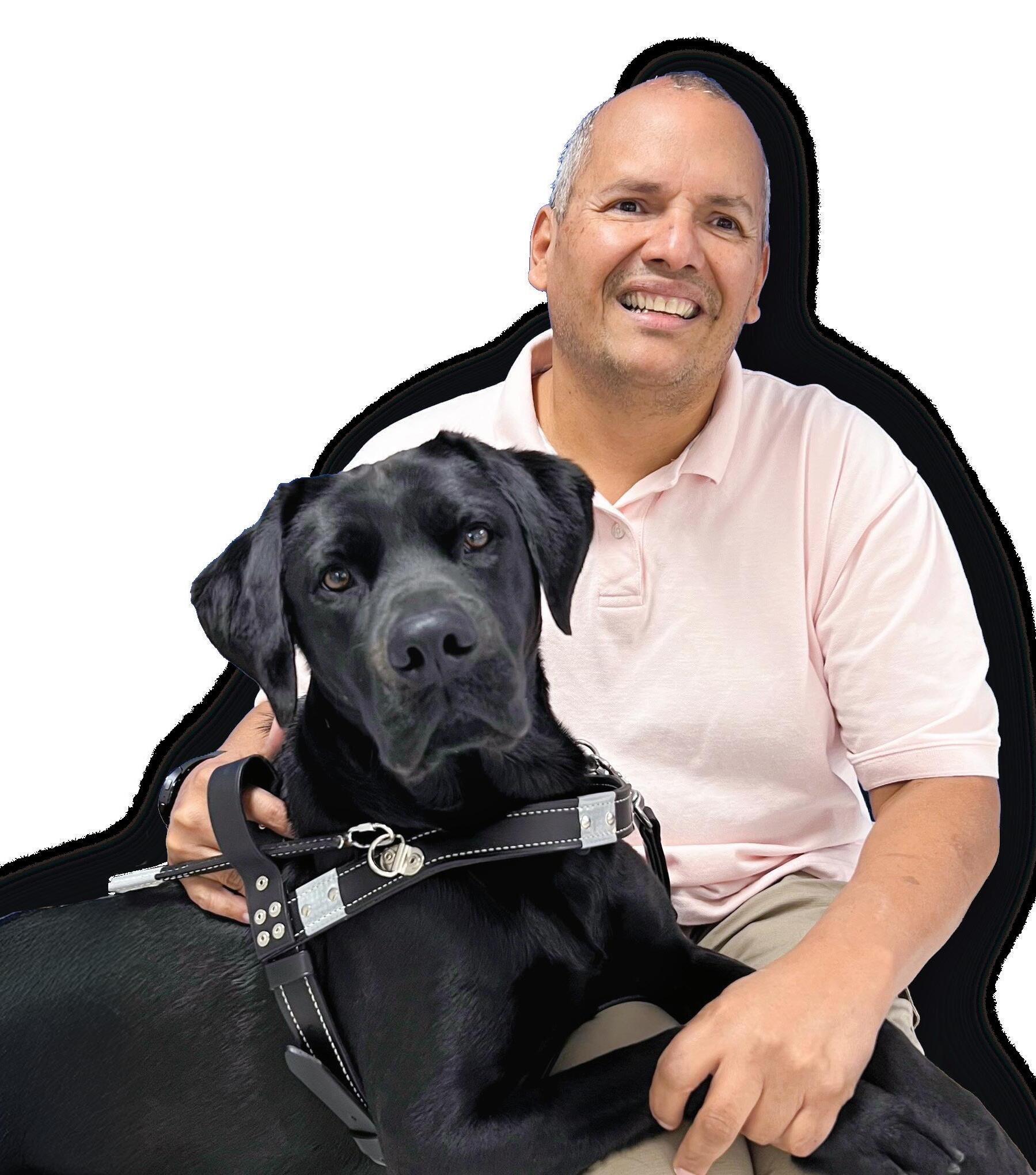
“If she has her vest on, people are supposed to ignore her,” Riggenbach explains. “No petting, no talking. She needs to know she’s working, not playing.”
Kylie’s experience di ered slightly. Cork was already seven months old when she received him, shifting her focus from basic commands to socialization.
“Bringing him to school every day was huge,” Bitcon says. “ ey learn how to chill during lectures. I honestly think the dogs learn just as much as we do here.” rough the program, Kylie also gained a deeper understanding of what service dogs provide to people with disabilities.
“Getting to talk with some of the graduates and hear about the di erent things the dogs can do for them, like tugging o their coat or helping them pull o their shoes,” she says. “ ings that we can do and don’t even think twice about.”
From the start, handlers know their time with the dogs is temporary. Still, saying goodbye after 18 months is never easy.
“She’s not just leaving me to be a pet somewhere else,” Ray says, thinking ahead to Fox’s future. “She’s going to change someone’s life. She’s going to do something important.”
For Madison, meeting Snyder’s new partner, Miquel Hernandez Sanchez, made letting go easier.
“He’s in such an amazing home,” she says. “It lled my whole heart with joy. He’s living his best life.”
Kylie admits her biggest concern was whether she had done enough for Cork and how the transition might a ect him.
“We’ve spent the last year and a half with those dogs and then luckily at the turn-in process they do make it a quick goodbye; which is kind of sad, but I think it’s easier on everybody,” she says.
e other three dogs who have left the halls of the college, Ohlde, McFly and Cork, have moved on to their next chapters. Ohlde now assists Vivian Lane in Paris, Arkansas, McFly works as a facility dog and Cork continues training as a service dog, with an anticipated graduation in April 2026.
As new students step into the role of handlers, the program continues to shape future service dogs and future veterinarians.
Kohlmeyer says working with the students has been rewarding.
“ e girls did a great job raising them (Ohlde and Snyder),” she says. “ ey were fun to come back and work with.”
Kylie welcomed her new KSDS dog, Ace, in early January. Ray, still early on her journey with Fox, is already looking ahead.
“ e rst one always makes me want another, and then the second one is a terror most of the time,” Ray laughs. “But I’d do it again in a heartbeat.”
For these students, raising a service dog is not just an addition to their education — it is an experience that teaches empathy, resilience and the true meaning of service.
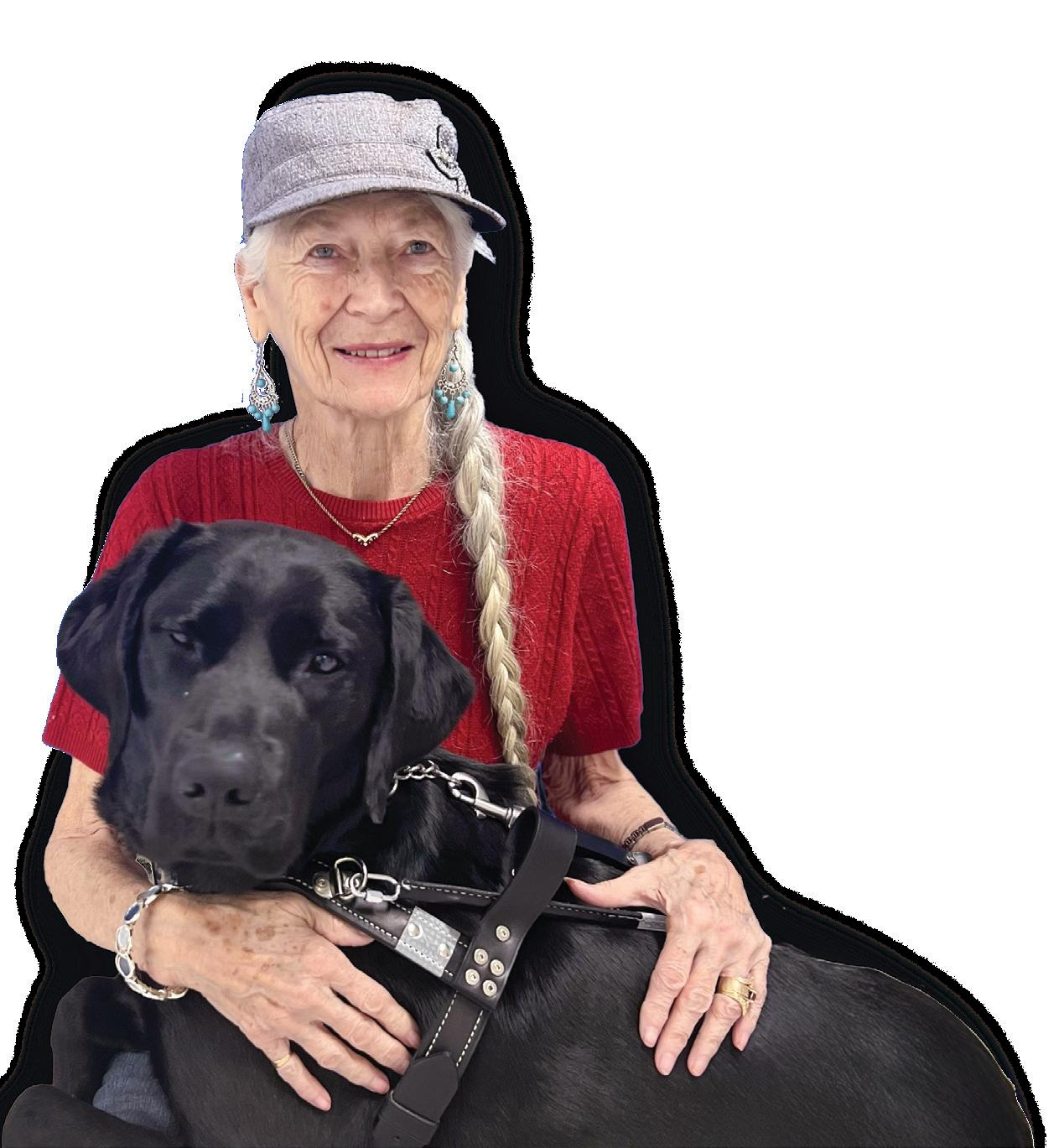
Miguel Hernandez Sanchez (left) and Vivian Lane (right) are the recipients of Snyder and Ohlde respectively. They are receiving full-time support as a result of the dogs’ KSDS training at K-State’s College of Veterinary Medicine. Courtesy photo.
How K-State CVM Ambassadors hold the door open for future veterinarians. Story and photos by Rylee Coy
If you linger long enough in the halls around the College of Veterinary Medicine, you’ll notice something special. A student pausing their busy day to lead a family through learning spaces across the college where futures begin. A student offering a kind, reassuring smile to a nervous veterinary school applicant before their interview in January. In both instances, a confident assurance that, yes — they belong here.
These moments come from the College of Veterinary Medicine Ambassadors, students in gray polos who carry the culture of K-State in every handshake, hallway conversation and Vet Town*
*Vet Town is a social event held at the college before each home football game.
I’m greatly honored to represent the K-State family to visitors and future Wildcats.
Anna
Rustad First-year student and CVM Ambassador
greeting. They’re not just tour guides. They’re storytellers, cheerleaders and sometimes anxiety-soothers — always the first to hold the door.
Ambassadors often say their “why” traces back to the day they once stood in a visitor’s shoes. Nervous, unsure and hoping they were in the right place; someone helped them feel welcomed, seen and supported. Now they feel called to pay that feeling forward.
“I first considered becoming an ambassador after my interview with K-State this past spring,” first-year student Lynsey Buehler says. “After I interviewed, I couldn’t remember any questions I was asked or who was on my panel due to my extreme nerves.
However, I remembered the faces of those who spoke to me both before and after my interview. Those girls were some of the current third-year ambassadors! It was so nice to have a comforting face to ease my nerves during the interview process. I knew I wanted to give someone else applying and interviewing the same comfort during such a stressful time. I also thought it would be a great opportunity to meet other students in and out of our class.”
The ambassador program is built around connections. Admissions staff can share facts and figures, but ambassadors show how the college feels. They are the bridge between curiosity and commitment — between possibility and belonging.
During interviews, they’re everywhere at once — guiding applicants in the right direction, striking up a conversation to ease nerves and often offering quiet encouragement before one of the biggest interviews of someone’s life.
“Although there are so many fun aspects that being an ambassador brings, I would definitely have to say that interview season is my favorite,” second-year student Ben Ramsey says. “It’s so interesting and fulfilling to be able to be a part of the process that sets students on a path toward the future they’ve been dreaming of. Whether it’s shuttling students to or from the school, providing tours or helping calm nerves before interviews begin, all of us ambassadors
get to play an important role in facilitating the selection of the College of Veterinary Medicine’s next class of DVM candidates.”
The ambassadors also help with Vet Town in the fall, as well as the White Coat and Commencement ceremonies in the spring. They support alumni during reunions and help them revisit cherished memories. They lead special tours for school and community groups. Wherever extra hands are needed, chances are there will be an ambassador or two.
Their job isn’t to recite a script; it’s to help someone feel at home.
“To me, ambassadors are the people who can make or break an experience,” first-year student Anna Rustad says. “They are the first line of communication with prospective students who want a firsthand experience with the veterinary medicine program. They also make connections with prospective students and keep connections positive with alumni.”
The ambassadors themselves are one of the program’s greatest strengths. They represent the full spectrum of students at K-State — different home states, species interests, backgrounds and paths into veterinary medicine.
Some moved across the country, choosing K-State over offers closer to home. Some are first-generation graduate students. Some gained experience in clinics, research labs or animal-related organizations before veterinary college and
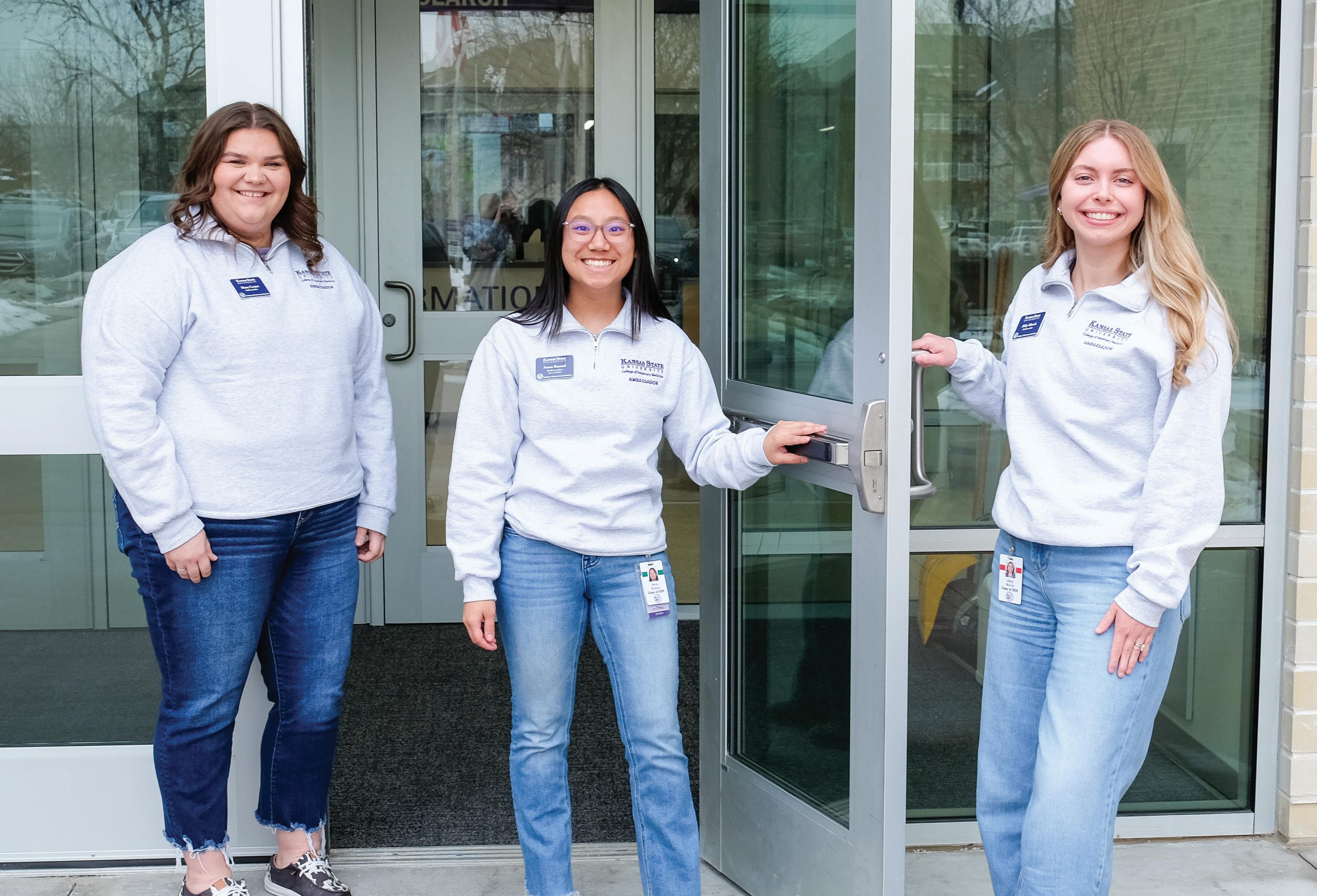
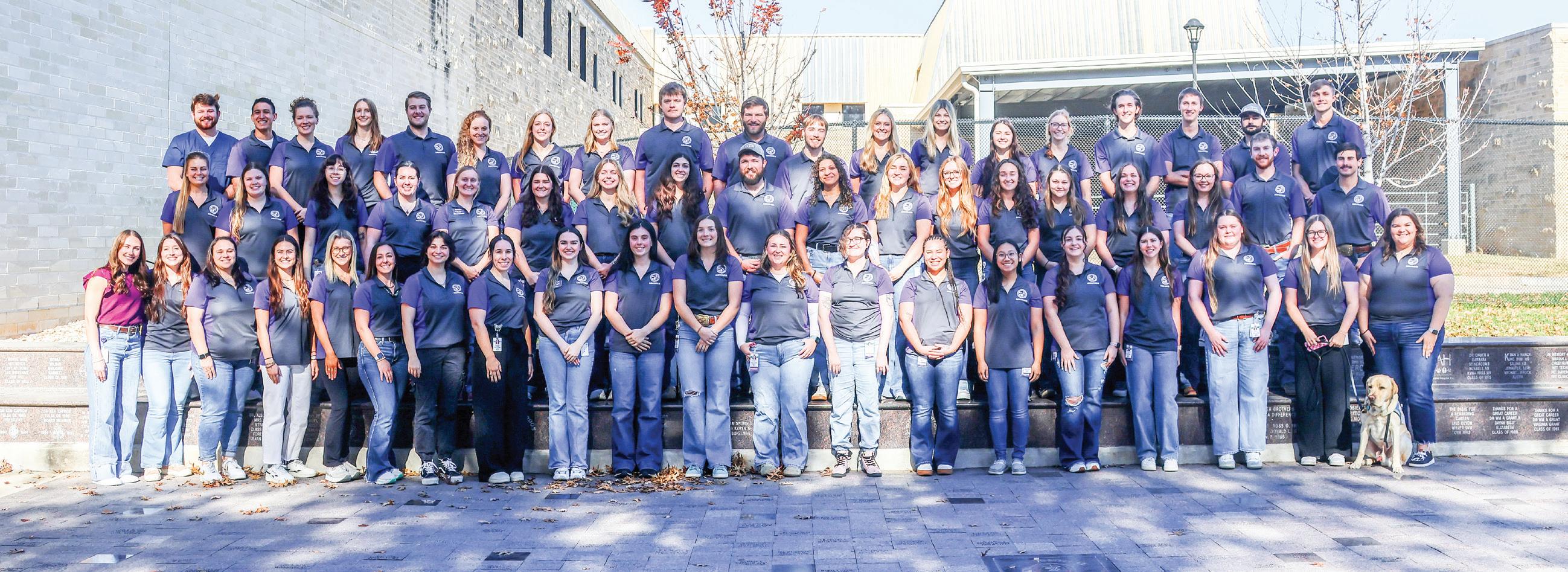
Opposite: Ambassadors open the door to the College of Veterinary Medicine, setting the tone for every visitor’s experience. From left: second-year student Mara Coates, first-year Anna Rustand and second-year Abby Morris. Below: The college boasts 82 ambassadors who represent the college at different events throughout the year.
now enjoy helping others explore similar opportunities. They are proof there is no single “path” to becoming a veterinarian.
“I am greatly honored to represent the K-State family to visitors and future Wildcats,” Anna says. “I have very strong opinions about this school being the best. I was fortunate enough to get into every veterinary school I applied to and, ultimately, I came to K-State because it was the best school.”
Their different experiences allow prospective students to see someone they can relate to. It’s easier to envision their future when someone has similar experiences, interests and goals as them.
And sometimes, ambassadors end up being the first real connection a future Wildcat makes or the moment a dream begins to feel real.
For students who serve as ambassadors, the role quickly becomes more than a title. It’s an opportunity to represent their college and strengthen essential professional skills. Ambassadors learn how to take charge of a moment when someone needs directions and how to offer support when someone needs reassurance. They learn to adjust their communication style for anxious parents, enthusiastic school groups and alumni returning to relive their own memories — meeting people where they are at.
The ambassadors gain professionalism through every shift, learning how to make a positive first impression, how to talk about a place and profession they believe in and how to listen intentionally as visitors process information.
ambassadors program. “This experience gives them room to grow and lets them see firsthand the impact they have on everyone who walks through our doors. Being an ambassador is more than just recruiting students — they have the chance to leave a lasting impression on every guest they meet.”
Sometimes, ambassadors see their impact right away — a prospective student leaves smiling and encouraged. Other times, the moment comes months later, when a familiar face arrives at orientation ready to start veterinary school.
There are also interactions with alumni — watching their excitement as they revisit old classrooms, share memories or point out where the spark of their career began. Ambassadors help keep that legacy alive.
“I distinctly remember getting to help with the alumni reunion for the class of 1969,” Ben says. “It was so interesting
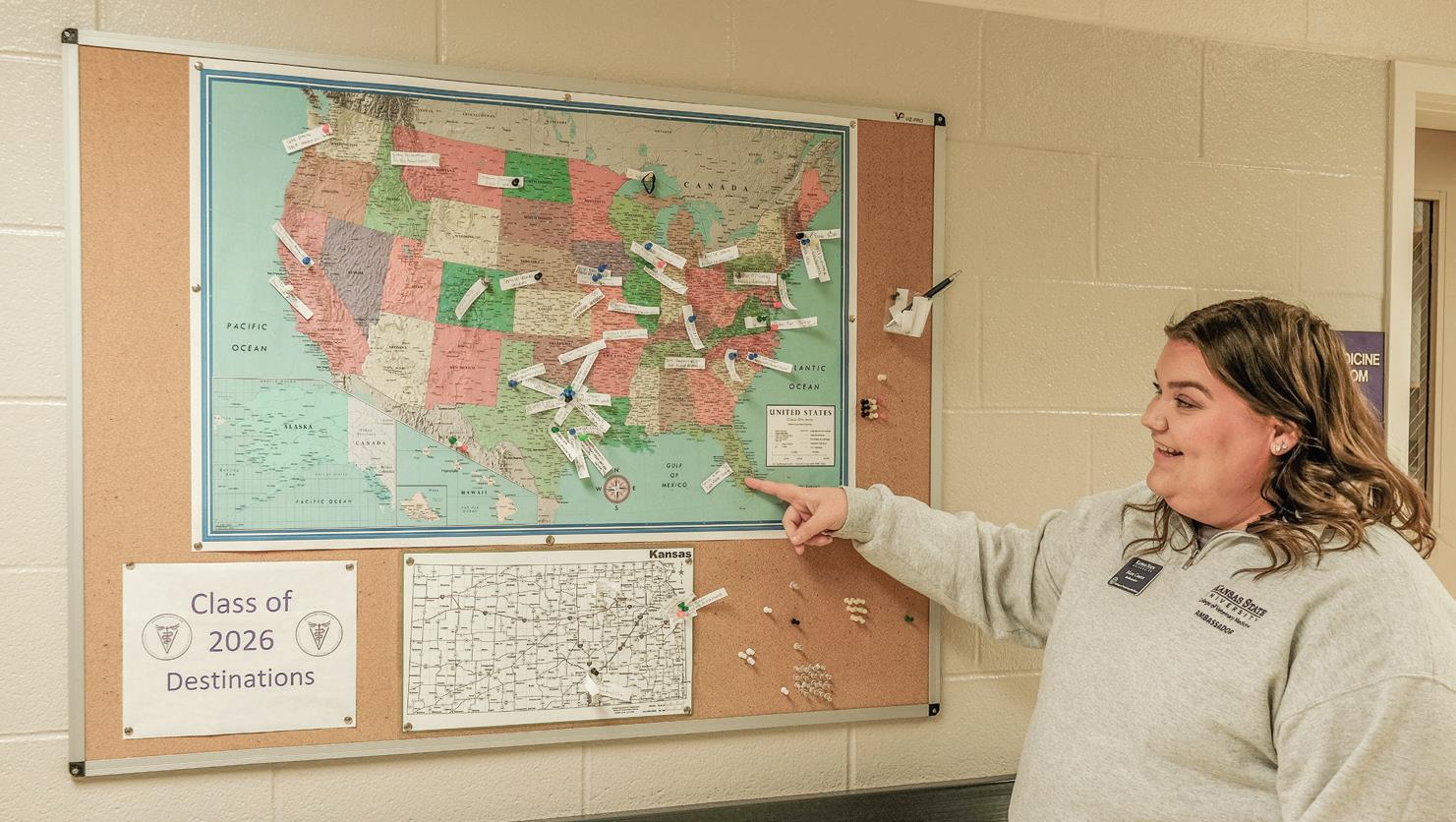
“Through being an ambassador, I have learned how rewarding it is to share your passions with other people,” Ben says. “I have been able to make a distinct positive impact on how applicants perceive and experience K-State, and the opportunity is one that will push me to share my passions more in the future as well.”
Over time, leadership emerges. Networking becomes second nature. Friendships form across class years and career interests, creating a peer support system that extends well beyond the student success centers.
“I’ve seen a lot of students grow in confidence,” says Rosa Blaske, recruitment coordinator, who oversees the
to connect with K-State doctors who graduated so long ago and chat about how the school and profession has changed throughout the years.”
“I love the people, community, curriculum and values of this school, which make it an incredible honor to represent the CVM as an ambassador,” Lynsey says.
Ambassadors are the ones who open the door and when they hold it for someone else, it isn’t just a gesture — it’s the beginning of a Wildcat veterinarian story.

65 Non-Residents Accepted
60 Kansans Accepted 460 Interviewed 125 Total Accepted
Total Accepted Total Applicants 16,143 1,988 Non-Residents Accepted
Residents Accepted
Where K-State Veterinary Students Are From
Where National Veterinary Students Are From
Annual Data Report 2024-2025 [Internet]. Washingston, DC: American Association of Veterinary Medical Colleges; 2025 November. p. 1-60 Available from: https://www.aavmc.org/about-aav mc/public-data/
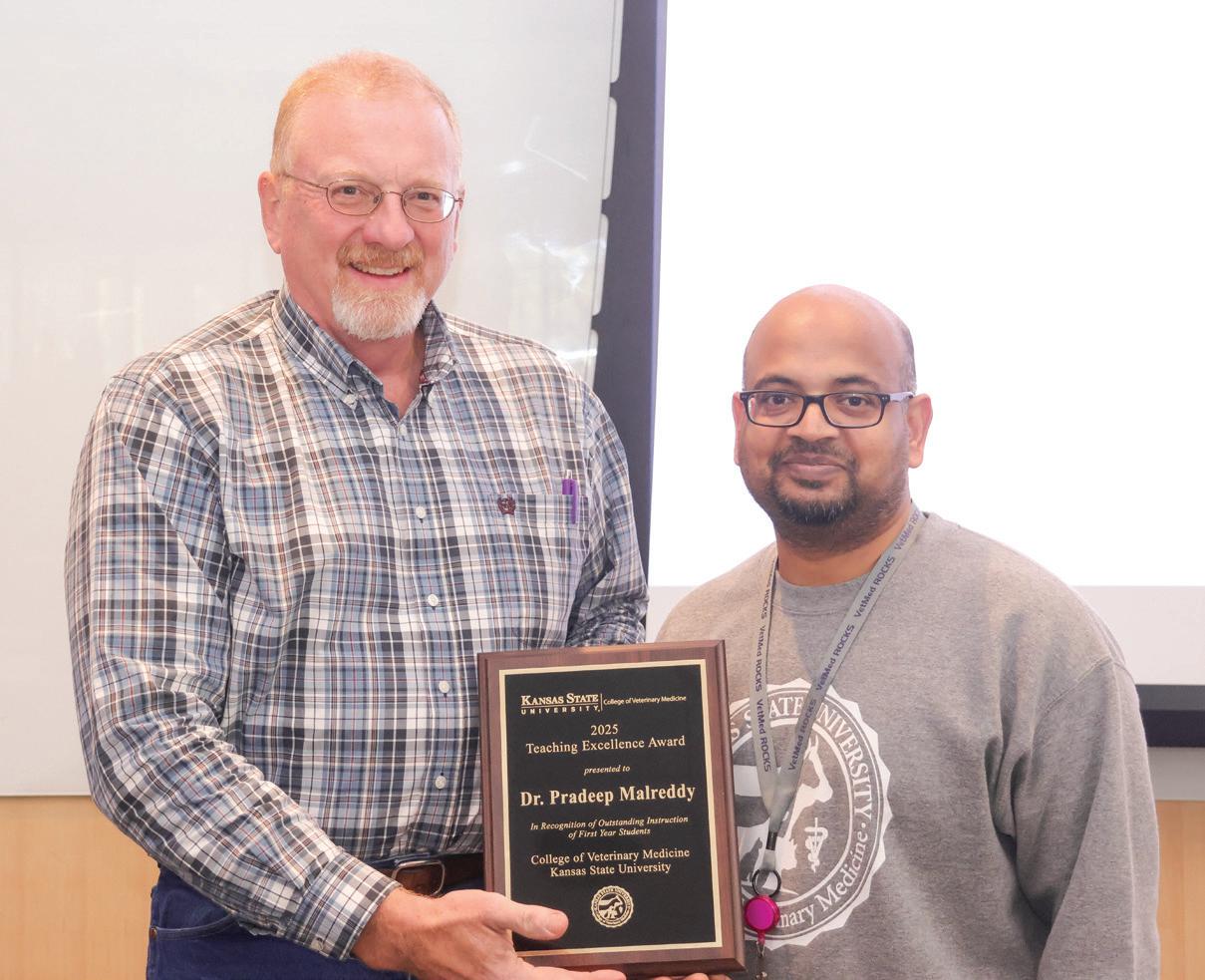
After two years in practice, Dr. Apley returned to K-State to complete a Ph.D. in physiology with an emphasis in pharmacology — a decision that would reshape the direction of his career. His background in production medicine and a key professional connection led to a role in feedlot consulting and contract research, where he spent several years on the road consulting with feedlots on the high plains as well as conducting pivotal drug approval and post-marketing studies. During his time in practice Dr. Apley completed his board certification in the American College of Veterinary Clinical Pharmacology (ACVCP). With a growing family, Dr. Apley transitioned into academia, joining Iowa State University in 1996 to develop its beef production medicine program.
For Dr. Mike Apley, his journey to become the head of the Department of Anatomy and Physiology feels a bit like coming full circle. His story with K-State began quite literally at birth.
“I was born in my dad’s freshman year of vet school [at K-State],” he recalls. “I was brought home from the hospital to the K building, which stood where the open lawn in front of JP’s* is today.”
Raised in and around veterinary practice, Dr. Apley’s early life lived at the intersection of family, community and the profession. Yet becoming a veterinarian was not a straight path. He first explored pre-law and then physical therapy before rediscovering the calling he grew up around. He completed his pre-veterinary requirements, earned his DVM in 1987 and began his career in mixed animal practice alongside his father.
*JP’s is a local restaurant on campus, located just down the street from the college on Jardine Drive.
In 2005, he returned to K-State’s College of Veterinary Medicine where he has taught production medicine, clinical pharmacology and, for a short period assisted with field service. Alongside his teaching and research, he has served in several national leadership roles, including president of the ACVCP, the Academy of Veterinary Consultants and the American Association of Bovine Practitioners. He also served as a founding member and vice chair of the Presidential Advisory Council on Combating Antibiotic-Resistant Bacteria.
The Department of Anatomy and Physiology has two primary missions: training the next generation of veterinarians and conducting high-impact research. The department teaches most of the first-year veterinary curriculum as well as pharmacology in the second year. It also supports a wide range of biomedical research initiatives.
Dr. Apley’s goals center on two priorities: building a stable, strong teaching environment and supporting robust, sustainable research programs.
“Our faculty teach the foundation of the DVM program,” he explains. “We need talented educators who will grow here, and the infrastructure to support their success.”
Recruiting new faculty is particularly competitive right now, he notes, as multiple veterinary schools across the country are expanding.
“Hiring is one of the two most important responsibilities a department head has,” he adds. “The other is shepherding faculty through tenure and promotion. Both determine the long-term health of the department.”
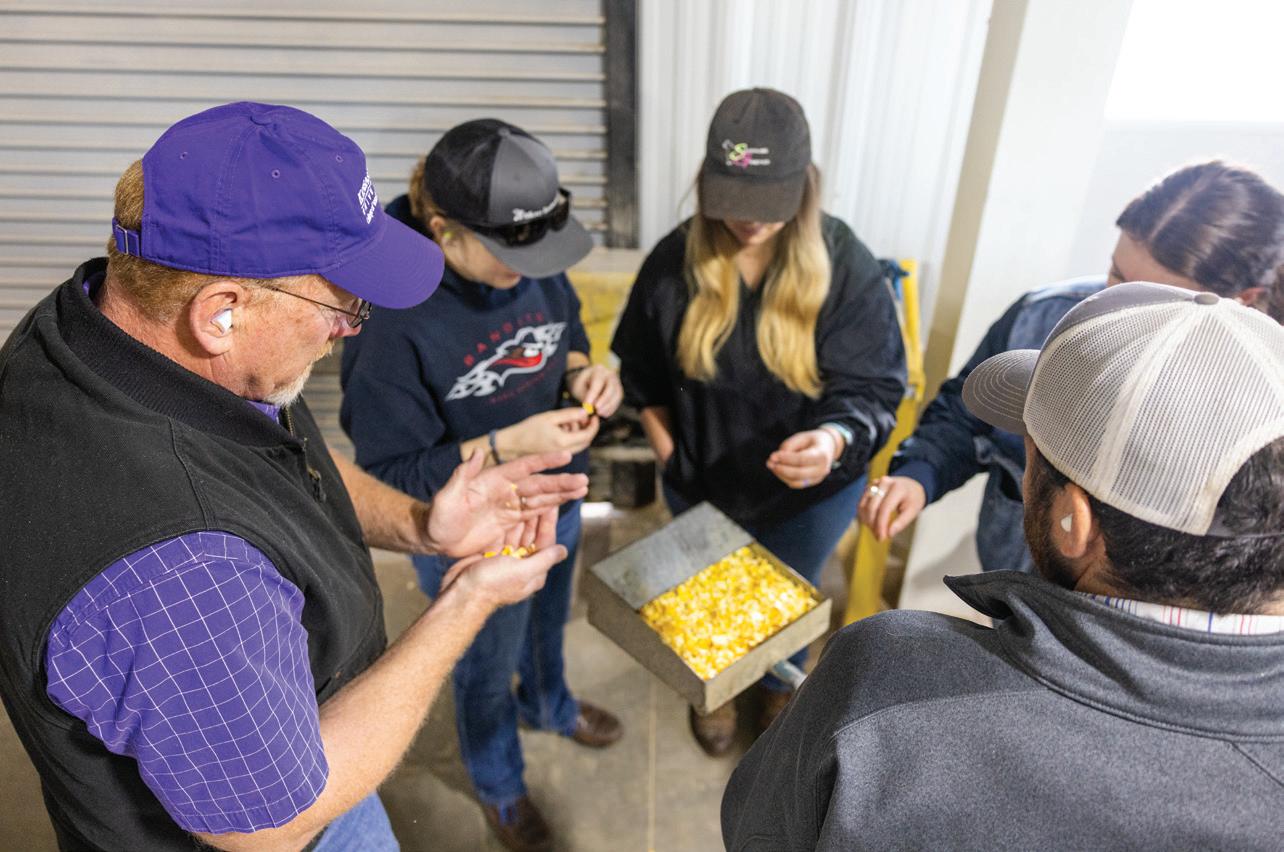
The department also supports campuswide research through four core facilities: the Nanotechnology Core, Analytical Chemistry Core, Radioimmunoassay Core and the Confocal Microscopy Core. These resources make collaborative, interdisciplinary research possible across the College of Veterinary Medicine and beyond.
After two decades at K-State, Dr. Apley speaks with deep pride about the college’s approach to veterinary education.
“I would put our faculty up against any institution in the country,” he says. “We remain focused on preparing competent, well-rounded entry-level veterinarians.”
Dr. Apley is particularly proud that K-State does not track its veterinary students into early specialization.
“Our graduates learn the full breadth of veterinary medicine — small animal, equine, food animal, and beyond. That broad foundation makes them adaptable, capable and prepared for whatever comes next.”
He believes this approach also cultivates an understanding of animal populations; an essential skill in food animal medicine and an advantage K-State students carry with them into practice.
“When you work with herds or large populations, your perspective changes,” Dr. Apley explains. “Veterinarians learn early how to think at both the individual and population level.”
K-State’s smaller class sizes also create stronger connections between students and faculty.
“Without our faculty, this place is just a building,” he says. “It’s the people who make it exceptional.”
What excites Dr. Apley most about the future of the college is simple: the students.
“These past two weeks, I was teaching the feedlot elective. We traveled, we worked hard and it was intense,” he says. “Their energy, curiosity and commitment remind me why we do this.”
The Department of Anatomy and Physiology plays a pivotal role in helping first and second-year students adjust to the rigor of the DVM program. Beyond teaching anatomy, physiology, pharmacology and foundational biomedical sciences, faculty help students develop the study strategies, time management skills and professional habits they’ll rely on for the rest of their careers.
For Dr. Apley, the most rewarding part of his role is watching faculty and students succeed.
“It’s exciting to see faculty recognized for their research or teaching and students find their footing,” he says. “Those moments make all the work worthwhile.”
As he reflects on his first year leading the department, Dr. Apley is energized by the potential he sees across the college — new research directions, talented faculty and students who remind him daily why veterinary medicine remains, in his words, “a really, really great profession.”
Kansas State University, Iowa State University and University College Dublin met at the beginning of the 20252026 school year to build veterinary medicine partnerships and create global academic and research collaborations.
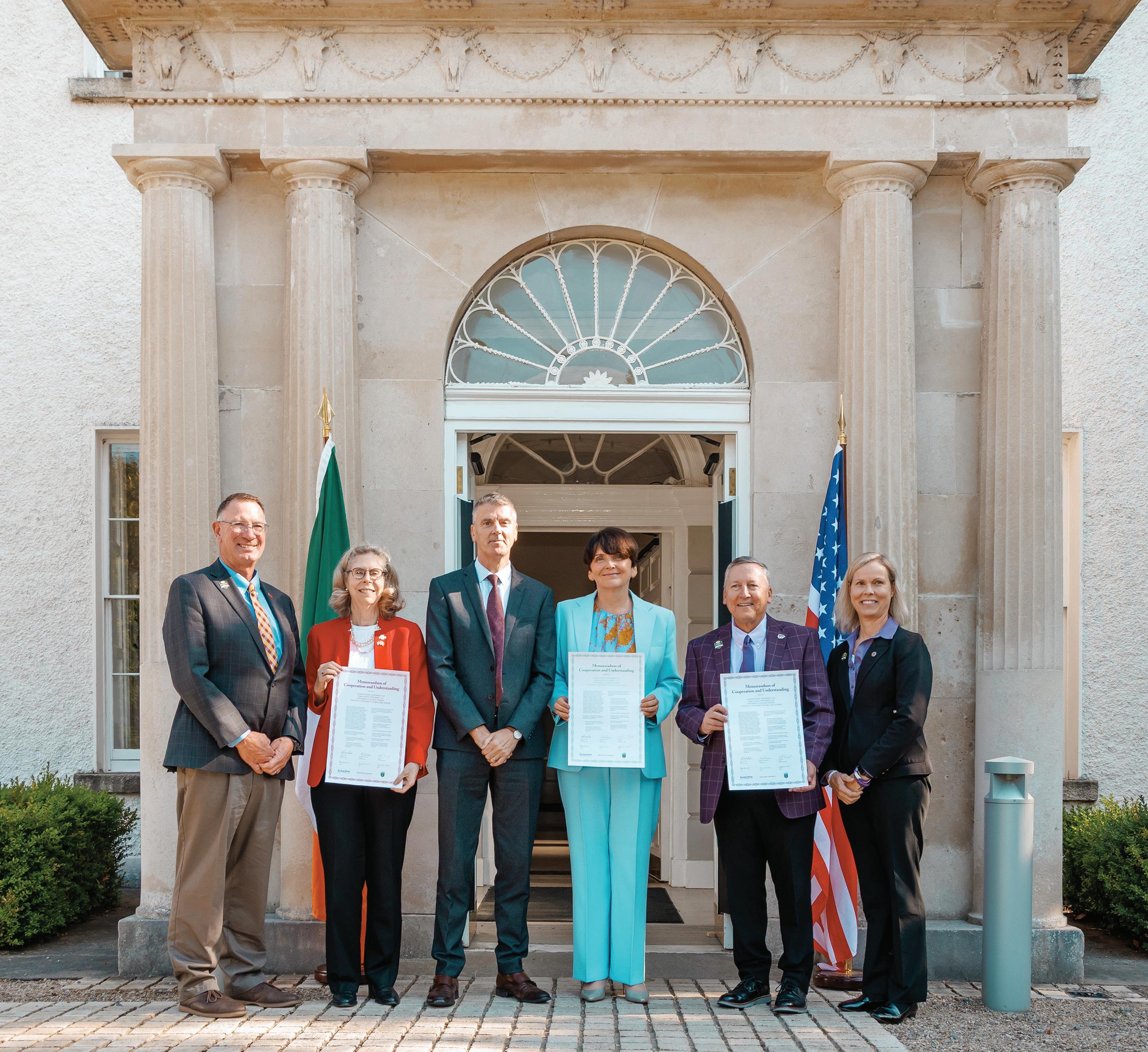
The presidents of each university — Kansas State University President Richard Linton, Iowa State University President Wendy Wintersteen and University College Dublin President Orla Feely — signed a Memorandum of Cooperation and Understanding Aug. 22, at the One Health Ag Tech Summit in Ireland.
The agreement focuses on building academic exchange, cooperation and collaboration with the veterinary medicine colleges at each institution.
“This partnership will provide tremendous value to our College of Veterinary Medicine,” says Dr. Beth Davis, interim dean of K-State’s College of Veterinary Medicine. “As a next-generation land-grant university, forging important partnerships like this helps our K-State veterinary medicine students, researchers and faculty members to do good in Kansas and across the world.”
The signing event and One Health Ag Tech Summit coincided with the Aer Lingus College Football Classic that featured the K-State football team against Iowa State.
The agreement focuses teaching and research activities between each institution while deepening the understanding of the economic, cultural and social environment of each institution, including:
• Promoting faculty and staff exchanges in a variety of teaching, research and professional development activities.
• Receiving undergraduate and graduate students for periods of study and research.
• Organizing coordinated teaching activities.
• Organizing symposia, conferences, short courses and other meetings on academic and research issues.
• Joint research and continuing education programs.
• Exchanging information related to developments in teaching, student development and research.
“Having CVM students visit University College Dublin and learn about veterinary medicine in a well-established program and understand the profession in a different culture will greatly benefit our students,” Dr. Davis says. “Additionally, having students from University College Dublin or Iowa State visit K-State will build on our ability to exchange knowledge and skills that are well established throughout our curriculum, particularly in the fourth-year clinical rotation.”
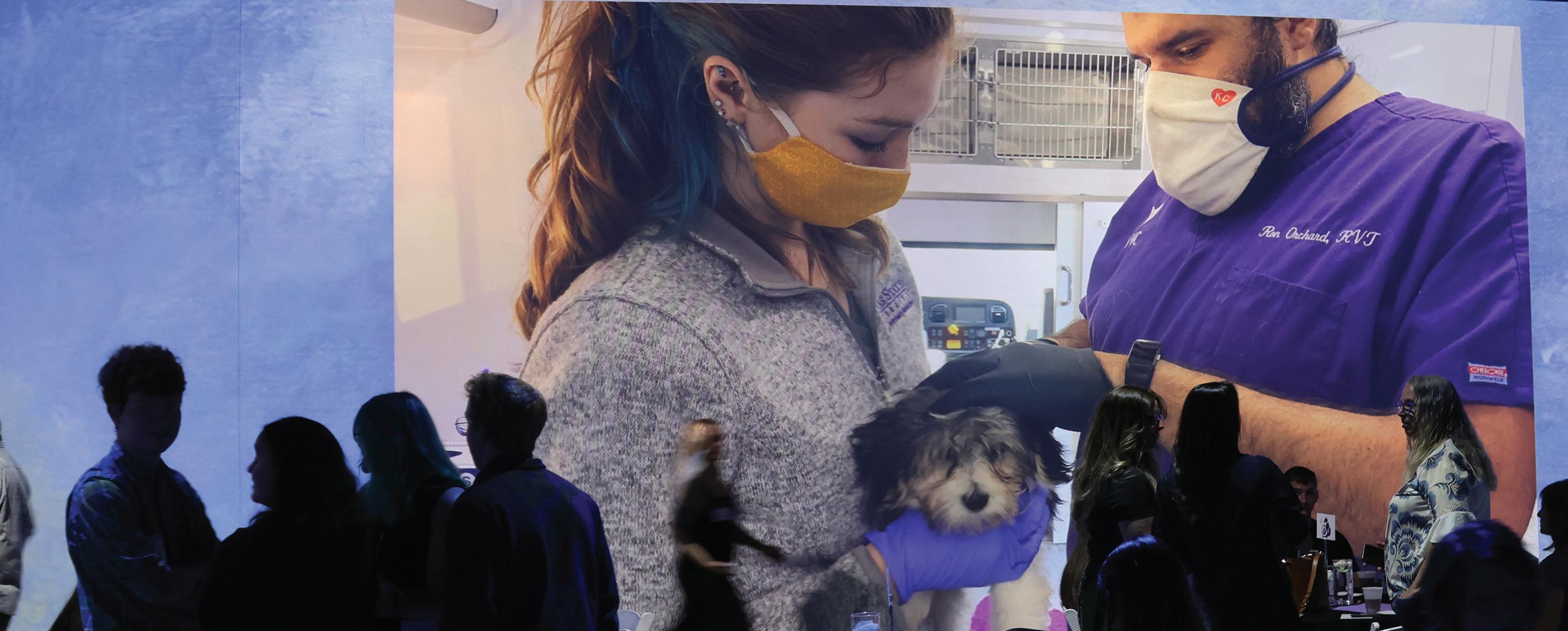
A group of shelter medicine partners joined students, staff and faculty from the Shelter Medicine program in May 2025 to celebrate 10 years of service and success.
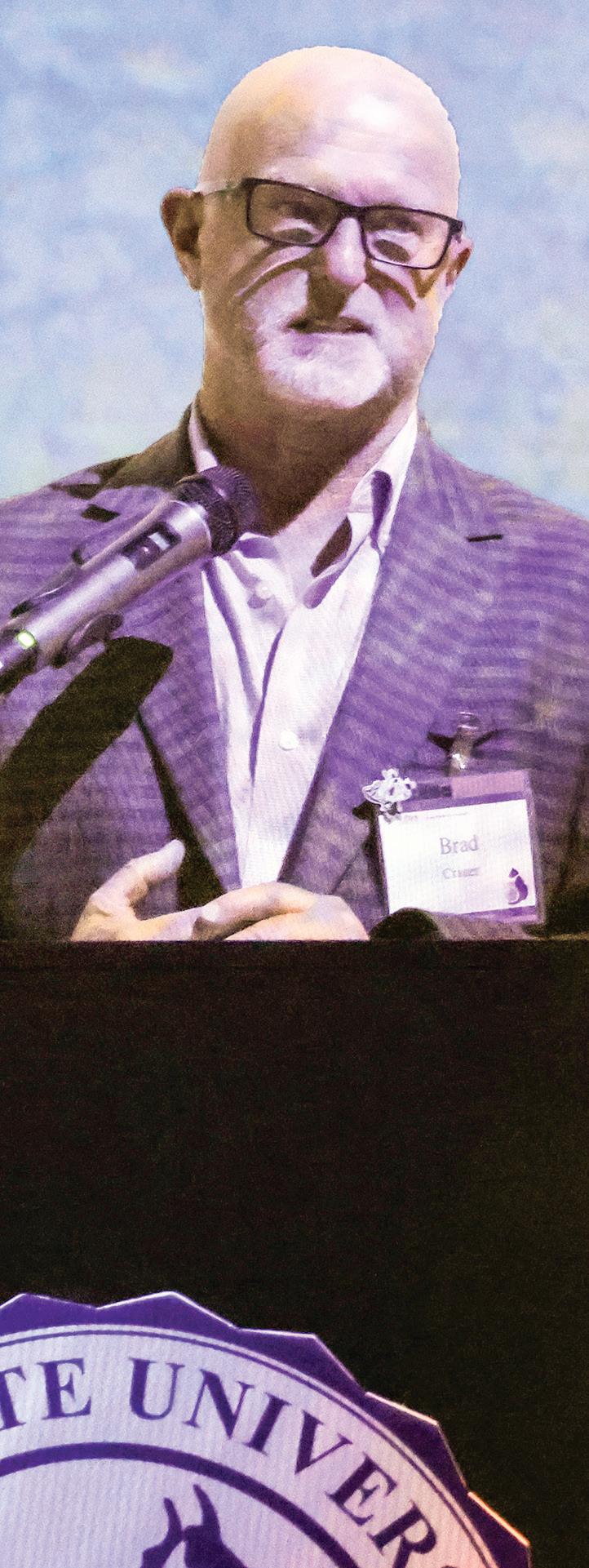
Dr. Brad Crauer shares memories from the road with the Mobile Surgery Unit during his years as the director.
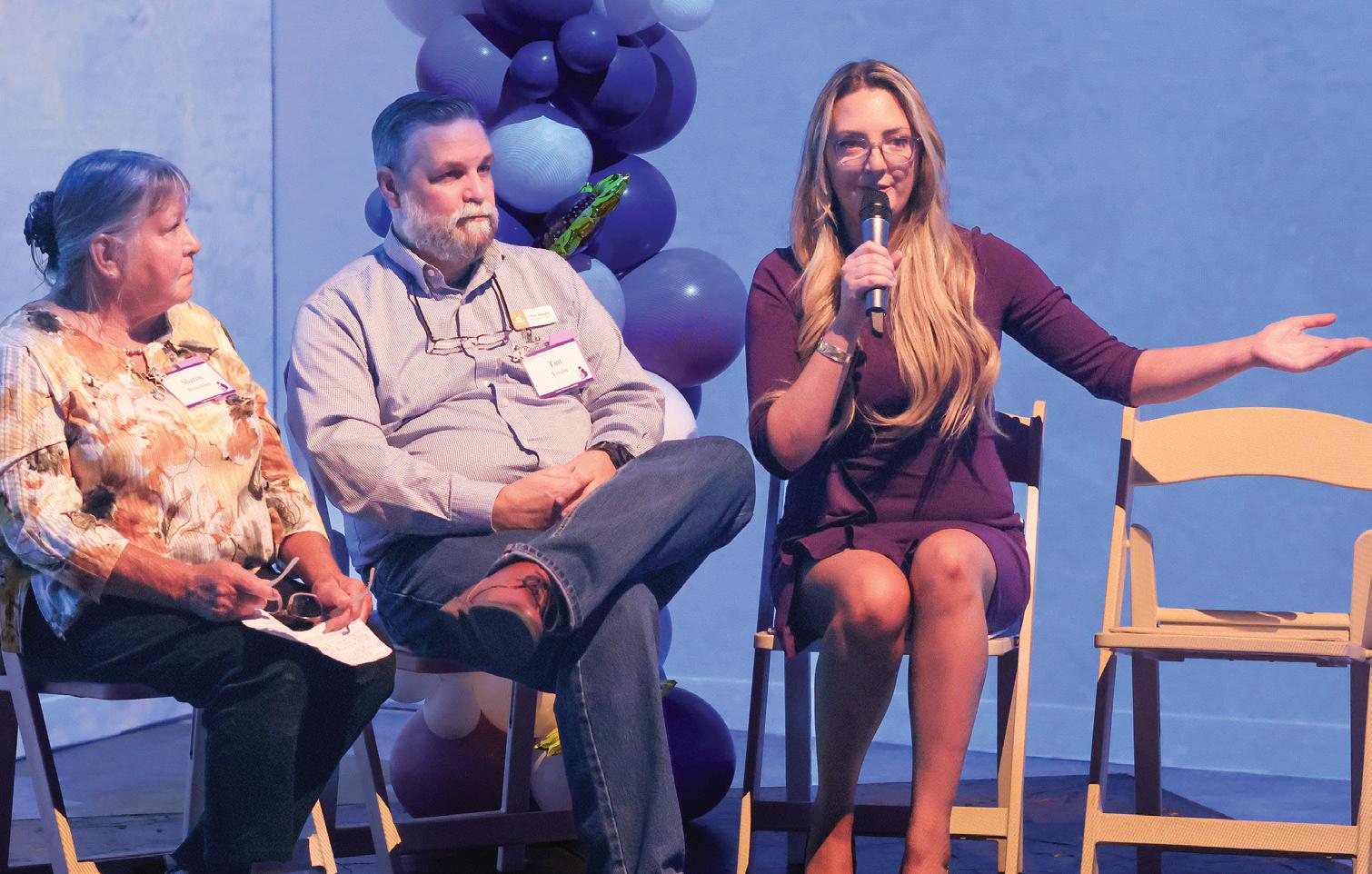
Invited speakers (from left) Sharon Blankenship, Jefferson County Pet Project; Tim
Operation Prairie Paws Animal Shelter; and Vanessa
Prairie Paws Animal Shelter, tell stories about K-State’s Shelter Medicine impact on different local communities.
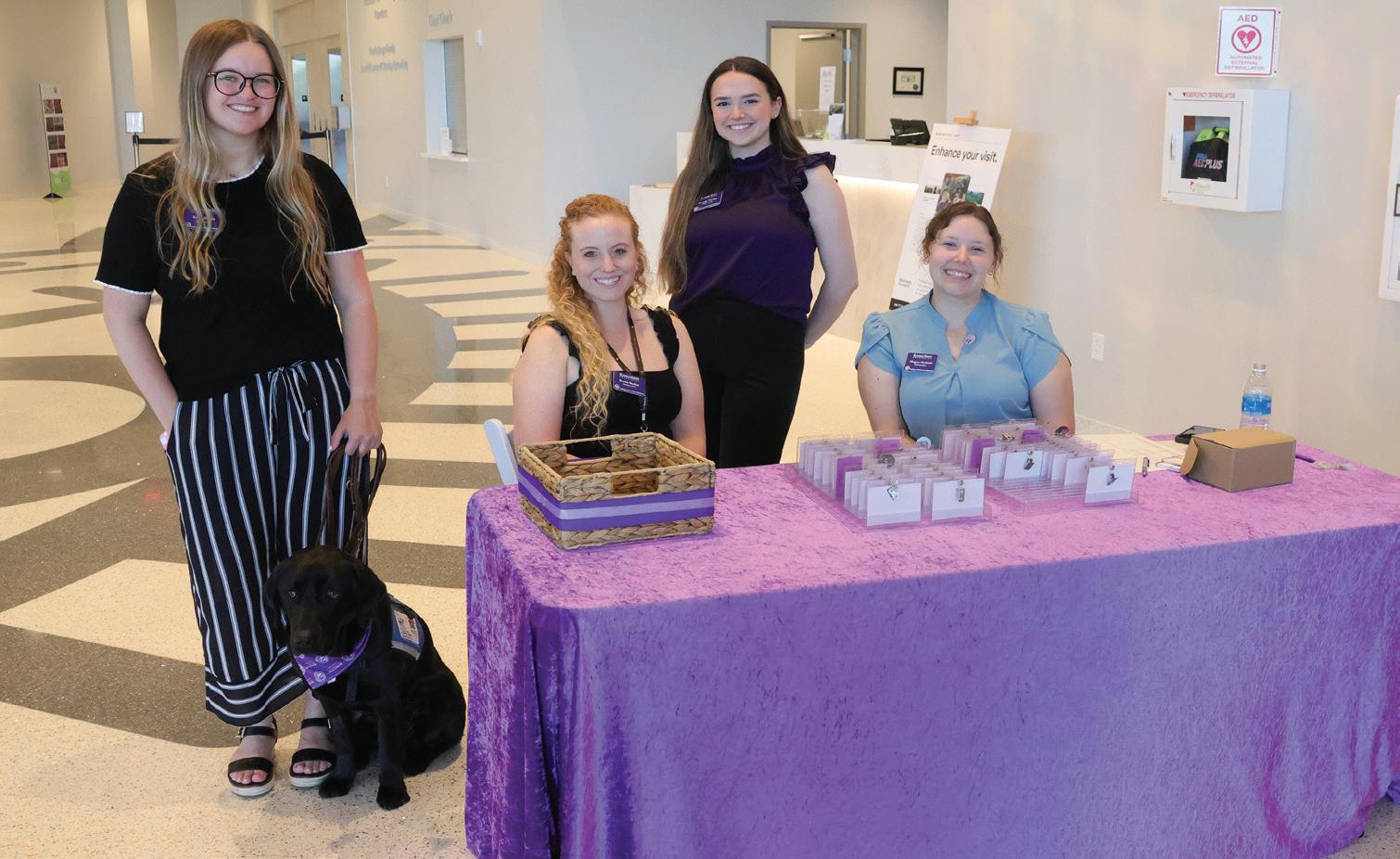
Veterinary Medicine Student Ambassadors Kylie Bitcon, with Cork (KSDS service puppy in training), Brenn Becker, Brooke Paisley and Megan McGee provide nametags at the welcome table in the Museum of Art and Light.
Long-time professor Dr. Masaaki Tamura passed away Jan. 16, 2025, following a sudden illness. Born in Shiozawa, Niigata Prefecture, Japan, he earned his Doctor of Veterinary Medicine degree from Kitasato University in 1973 and a Ph.D. in biochemistry and nutrition from Azabu Veterinary College in 1980.
Dr. Tamura began his academic career as an assistant professor at Tokyo University Medical School before moving to Nashville, Tennessee, in 1982 to pursue postdoctoral research in the Department of Biochemistry at Vanderbilt University. He continued there in lab management roles and as a research assistant professor until 2005, when he relocated to Manhattan, Kansas, to join the Department of Anatomy and Physiology at K-State’s College of Veterinary Medicine. He was promoted to full professor in 2018.
As a dedicated and passionate scientist, Dr. Tamura devoted his 47-year career in biomedical research to improving human and animal health. He taught and supervised an active research lab at Kansas State until his recent sudden illness. Over the past three decades, he worked tirelessly in the fight against cancer, focusing on innovative approaches such as targeted gene therapy, applications of stem cells, cost-effective immunotherapies, and the discovery of natural products for cancer prevention and treatment. His scientific contributions also extended to studying the angiotensin II receptor and its role in heart disease and cancer.
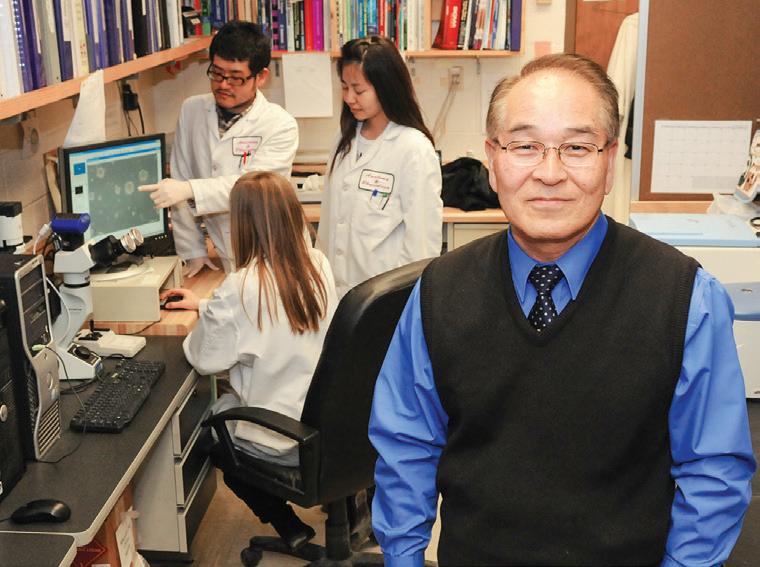
Dr. Tamura was a prolific scholar who coauthored more than 100 peer-reviewed scientific publications and nearly 30 conference talks and posters. At K-State, he secured over $2 million in external grants for cancer research as principal or co-principal investigator, including awards from the National Cancer Institute, Midwest Biomedical Accelerator Consortium, Kansas IDEA Network of Biomedical Research Excellence (K-INBRE), Kansas Bioscience Authority, Johnson Cancer Research Center and Fan Family Foundation. His outstanding achievements earned him a Kansas Technology Enterprise Corporation Scholar award from K-INBRE.
Dr. Tamura, or “Masa,” as he was known to students and colleagues, was a beloved mentor to numerous trainees and junior faculty, including 39 undergraduate students, six graduate students and seven postdoctoral researchers who worked in his lab. Many of these students have gone on to successful careers as veterinarians and scientists.
Kansas State University will soon offer groundbreaking integrated training for graduate students in the pathobiology and genomics of livestock diseases to address critical expertise shortages in animal production and advance research in livestock disease management.
Thanks to a prestigious U.S. Department of AgricultureNational Institute of Food and Agriculture, or USDANIFA, National Needs Fellowship grant, K-State will offer the Integrated Training in the Pathobiology and Genomics of Livestock Diseases fellowship program. This will be a collaborative effort involving key partners across K-State, including the College of Veterinary Medicine and the Division of Biology. Dr. Laura Miller, associate professor of veterinary virology, spearheaded the proposal in partnership
with Bradley Olson, director of the Data Science Core for the Kansas INBRE and an associate professor of biology.
The program will address a targeted expertise shortage area in animal production, focusing on the disciplines of animal science and veterinary medicine. It will fund four graduate students — two master’s students and two doctoral students — and provide them with opportunities to engage in advanced interdisciplinary research and training.
The program is designed to recruit and train students who are committed to advancing the animal production targeted expertise shortage area. The training will equip students with the skills needed to tackle global challenges in livestock health and production while fostering communication, ethical reasoning and innovative research approaches.
A thought exercise.
Dr. Stephanie Hall has research on the brain.
Dr. Stephanie Hall does research on the brain.
Dr. Stephanie Hall does research on the effects of exercise on improving brain function.
Dr. Stephanie Hall does research on the effects of exercise on Alzheimer’s disease, or AD, a progressive brain disorder.
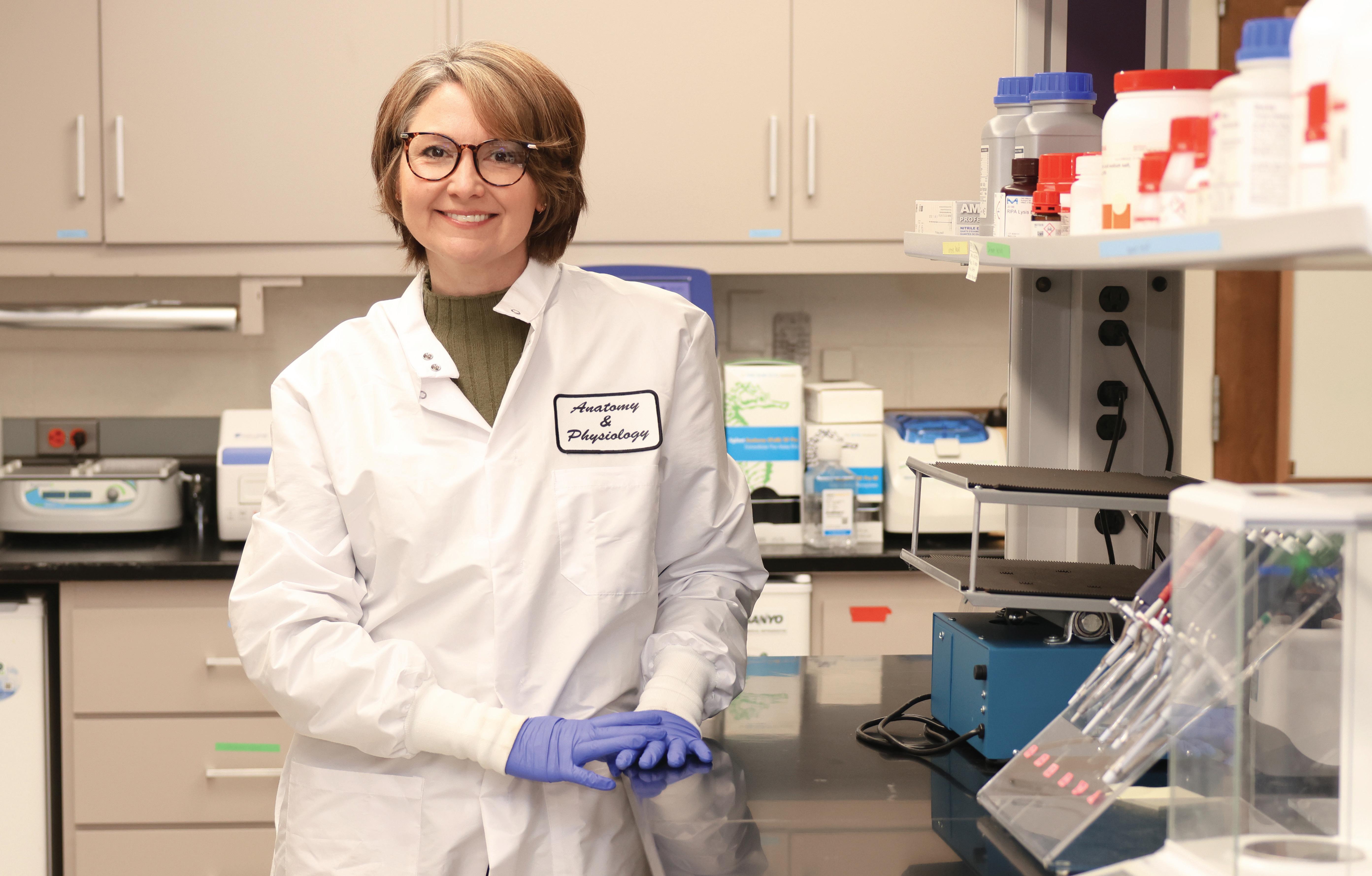

Dr. Stephanie Hall leads research efforts toward preventing Alzheimer’s disease.
By Joe Montgomery
“While age is the greatest risk factor for AD, there are 14 identified modifiable risk factors, and modifying those risk factors could prevent or delay prevalence of AD by 50%,” Dr. Hall says. “And of those 14 modifiable risk factors, and in more than half of them, exercise has direct impacts. It reduces depression. It improves blood pressure. It improves cholesterol. So, exercise is a huge player in this area.”
As an assistant professor in the Department of Anatomy and Physiology, Dr. Hall has an extensive research background dedicated to exercise physiology and its effect on a variety of diseases that are relevant to both humans and animals.
“The pathology of AD is present as early as 20 years before symptoms,” Dr. Hall says. “It is essential to understand these early stages of AD. And exercise is one of the ways we can do that. I felt I could help contribute to this with my training and apply it to a different disease model.”
Dr. Hall grew up in Blairsburg, Iowa, a town she says has less than 200 people.
“Small towns are not a strange thing to people in Kansas, but when I was doing my Ph.D. and postdoc, it was shocking to my colleagues,” Dr. Hall says. “It’s a farming community; my family grew corn and soybeans. As young as my teen ages, my focus was on exercise physiology.”
Her Ph.D. work was at the University of Northern Colorado in Greeley. And her postdoctoral work was at the University of Florida in Gainesville.
“My first faculty position was in Boise, Idaho, and then I’ve been here at K-State since 2020,” Dr. Hall says.
K-State is the first veterinary college for Dr. Hall.
“I’ve always been interested in how exercise can impact our health span and keep us healthy as we age,” Dr. Hall says. “And that, of course, spans all species. We all want our domestic pets to live as long as possible. And exercise is a great avenue to promote a healthy long health span.
Dr. Hall says her work is very mechanistic.
“We evaluate the impact of exercise, and we want to learn specifically what pathways are eliciting the positive effects,” Dr. Hall says. “In my Ph.D., I worked in a lab that studied how exercise promotes health and survivorship with cancer, which is something that definitely translates to our domestic pets as well.”
“The animal model that I work with is an Alzheimer’s disease animal model,” Dr. Hall says. “Having experts who can help me give excellent care to these animals as they age is
really valuable. We age our animal model to 18 months. At that age, the animals can have health effects not related AD, so it’s really helpful to have great animal care knowledge right here at my fingertips.”
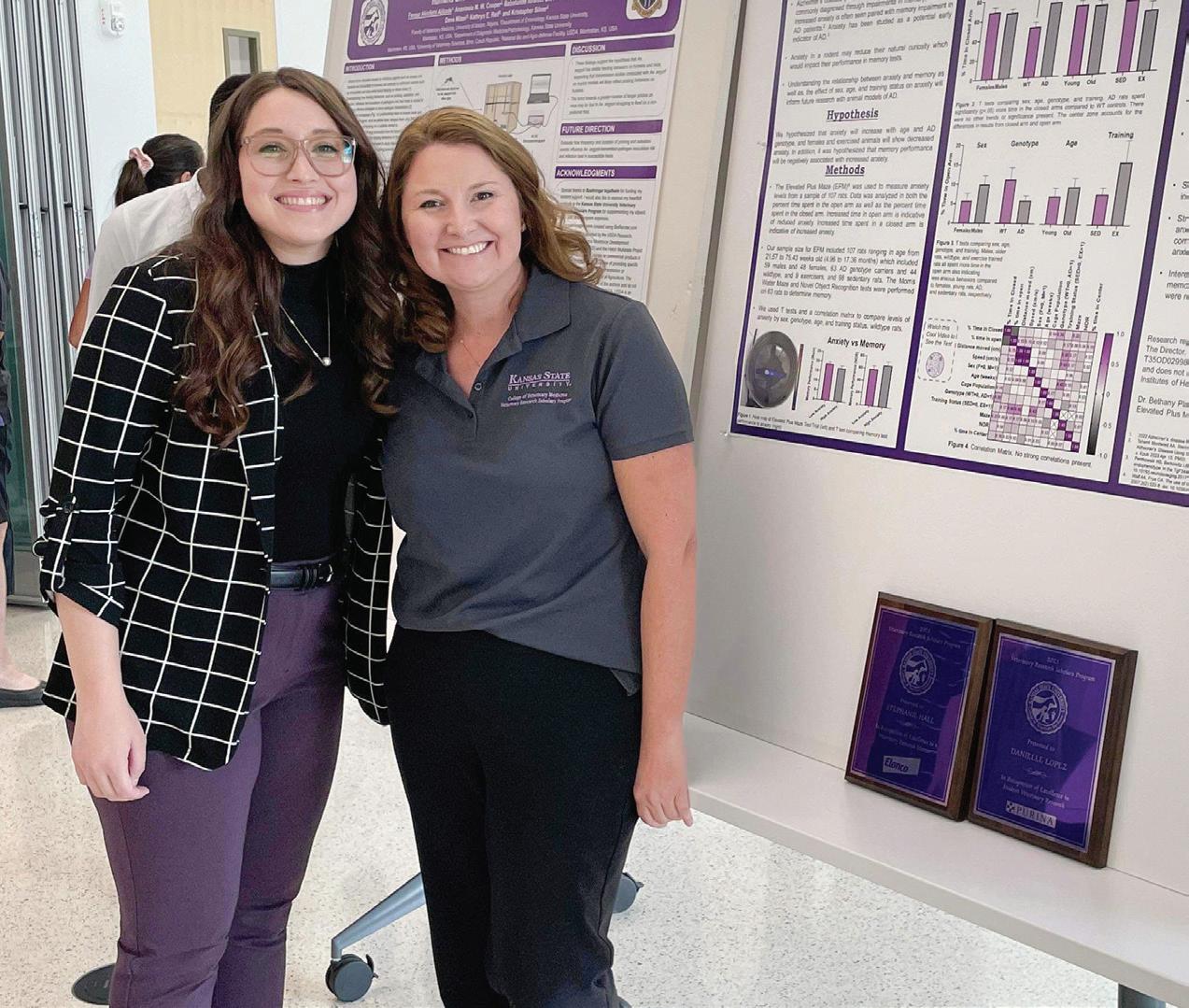
Dr. Hall works with graduate and undergraduate students in her lab. She has also participated in the K-State CVM program called Veterinary Research Scholars Program, or VRSP. This involves training DVM students in research techniques during a summer session that culminates in research posters, presentations and scholarly articles.
“Dr. Hall took the time to train me on procedures, met with me regularly to discuss what I was learning, and established checkpoints and schedules to help me reach my goals,” say Danielle Gibbs, a fourth-year veterinary student, who participated in the VRSP in the summer of 2023. She created literature reading and writing goals to help me develop essential skills for the summer and my future career.”
Danielle’s research project was titled “Anxiety in Alzheimer’s disease rats is independent of memory and impacted by genotype, age, sex, and exercise” and was published in Alzheimer’s & Dementia, the official journal of the Alzheimer’s Association.
One of Danielle’s classmates, Jessica Burger, participated in the VRSP in the summer of 2024. Her project was called “Anxiety and Alzheimer’s: An Alzheimer’s disease animal model experiment.”
“Working with Dr. Hall has been a fantastic opportunity for me to learn more about Alzheimer’s disease as well as the animal models that support the research effort for this disease,” Jessica says. “I also learned about the responsible use of animals in research and the important role that
veterinarians play in upholding their health and welfare throughout the research process.”
Dr. Stephanie Hall says research projects have to be tailored to fit the constraints of a summer-length program and that some aspects may extend past the end of the session.
“We try to develop projects students can easily accomplish and that are really valuable for the field to know” Dr. Hall says. “Jessica collected all of her data points, but we need to fill in other pieces so that her work can get published.”
Dr. Hall has served on graduate committees in K-State’s kinesiology and psychology departments. She has served as a project leader with the Cognitive and Neurobiological Approaches to Plasticity Center, or CNAP, which is an NIH-funded Center of Biomedical Research
Excellence at K-State. And her biggest collaborators, of course, are within the Department of Anatomy and Physiology.
“You don’t apply for a job as a physiologist at K-State without knowing that you’re going to get some great faculty members as colleagues,” Dr. Hall says. “From day one, Drs. Tim Musch and David Poole have brought me in and fostered collaborations. And right now, Dr. Judy Delp and I are working on collecting some cerebral vascular function pilot data, which is really a hot topic right now.”
Dr. Hall seeks to understand some of the additional benefits of exercise.
“When skeletal muscle contracts, it releases molecules into the blood that can cross the blood brain barrier and promote
new cell growth,” Dr. Hall says. “We need to identify molecules and their mechanisms of action to make the biggest impact on AD prevention and treatment.”
Dr. Hall is also examining nutritional aspects of diet as another modifiable risk factor and its long-term effect.
“We are looking at different nutritional and dietary restriction interventions and they’re showing promise,”
Dr. Hall says. “What we really want to understand is why these interventions and mechanism matter, uncovering that, is genuine progress toward solving an extraordinary complex disease.”
CVM researchers and their collaborators aim to take some of the bite out of mosquitoes — or more specifically, a troublesome virus transmitted by mosquitoes. Japanese Encephalitis Virus, or JEV, can infect humans and animals, causing a range of illnesses, particularly reproductive abnormalities in swine.
Dr. Natalia Cernicchiaro, professor of epidemiology and Associate Director of Research at the Center for Outcomes Research and Epidemiology (CORE) at the College of Veterinary Medicine, led a recently published study on the transmission of the virus and its impact on the pork industry. She was assisted by other researchers at K-State and with the USDA National Bio- and Agro-Defense Facility (NBAF) in Manhattan. “Mosquito vector competence for Japanese encephalitis virus: a systematic review and meta-analysis update” was published early this year in the journal, Parasites and Vectors.
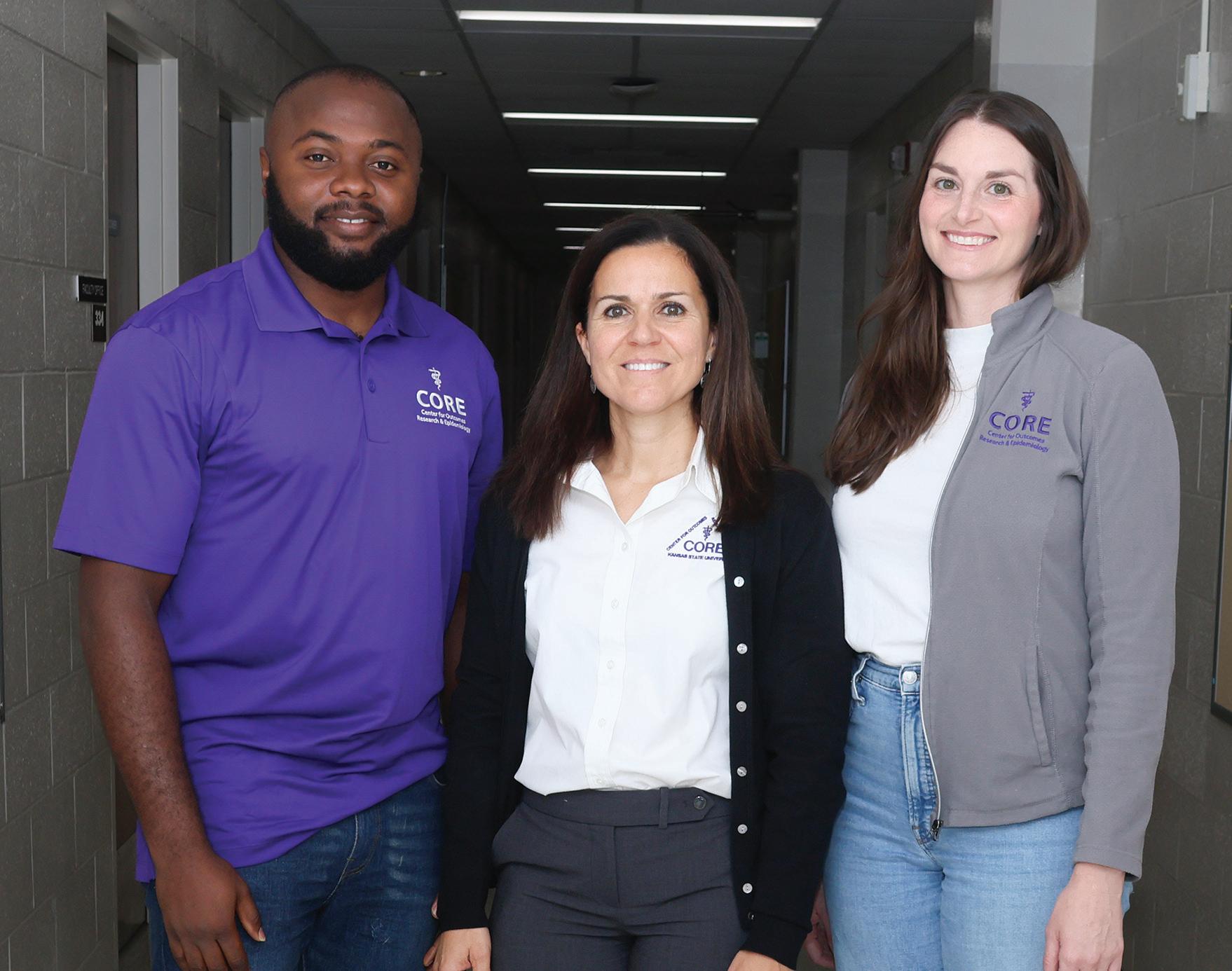
K-State researchers with the Center for Outcomes Research and Epidemiology recently published findings on Japanese encephalitis virus. From left: Dr. Stephen Edache, doctoral student; Dr. Natalia Cernicchiaro, professor of epidemiology and associate director of research for the center; and Dr. Andrea Dixon, senior data scientist.
“We updated our previous systematic review of the literature and meta-analysis on JEV vector and host competence, published from 2016 through 2023,” Dr. Cernicchiaro says. “While JEV is transmitted primarily by the Culex group of mosquitoes, we found nine to 12 additional mosquito species that can be potential vectors for JEV.”
Dr. Cernicchiaro’s project was organized through CORE and was funded by the Swine Health Information Center, or SHIC.
“SHIC invited me to join a webinar and podcast in 2022 to discuss our initial assessment of the risk of Japanese encephalitis virus (JEV) introduction into the continental United States, following recent outbreaks in mainland Australia,” Dr. Cernicchiaro says. “This work directly reflects CORE’s mission of advancing preparedness for transboundary and emerging diseases through multidisciplinary research.”
Dr. Cernicchiaro says that by integrating epidemiology, entomology, virology, and modeling, CORE is able to provide stakeholders with science-based insights that inform surveillance, prevention, and response strategies for highimpact threats like JEV. Although JEV has not been detected
in the United States, the presence of competent mosquito vectors and susceptible hosts elevates the risk of incursion.
“We estimated an overall JEV infection rate of 45.4% across 51 unique mosquito species, meaning that nearly half of the mosquitoes exposed to JEV in experimental settings became infected,” Dr. Cernicchiaro says. “The overall JEV transmission rate across all species of mosquitoes and studies was 22.7%, which means nearly one in every four infected mosquitoes can transmit JEV to hosts.”
The K-State research team included Dr. Andrea Dixon, senior data scientist with CORE, who led the execution of the study, overseeing all technical aspects and ensuring rigorous implementation; Dr. Stephen Edache, a current doctoral student; and Ana R. S. Oliveira, a former master’s student who is now conducting doctoral studies at the University of California, Davis.
Amanda Roth, a fourth-year student at Kansas State University’s College of Veterinary Medicine, received the 2025 American Veterinary Medical Foundation (AVMF) 2nd Opportunity Summer Research Stipend. This prestigious national award supports veterinary students returning for a second summer of research, enabling them to deepen their expertise and contribute to critical advancements in animal and public health.
Their current project investigates Echinococcus multilocularis, a tapeworm capable of infecting dogs and humans.
“While rare, this disease caused by this parasite is fatal if humans or dogs become infected as an intermediate host with budding cysts in the liver,” says Dr. Brian Herrin, Amanda’s former mentor. “Amanda’s work is vital in developing more sensitive diagnostic methods that will improve detection of Echinococcus in canine fecal samples.”
Last summer, Amanda worked on improving DNA extraction and qPCR techniques to increase the sensitivity of
diagnostic testing. Her research will help lay the groundwork for broader surveillance efforts and improved public health protection across the country.
“Receiving the 2nd Opportunity Research Scholarship from the AVMA/ AVMF has been instrumental in supporting my development as a future veterinary scientist,”
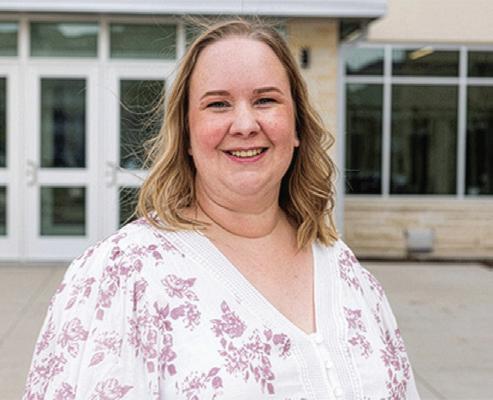
Fourth-year student Amanda Roth
Amanda says. “This funding has allowed me to actively contribute to research that addresses real-world challenges in animal health — specifically, by investigating anthelmintic resistance in canine hookworms, a growing concern in both veterinary and public health. It’s an incredible opportunity to build critical skills, work alongside inspiring mentors, and deepen my commitment to advancing evidence-based veterinary medicine.”
Research grant supports grazing education and conservation efforts for tallgrass prairie in Kansas and Oklahoma
There’s no place like the tallgrass prairie of Kansas and Oklahoma — and a new research grant at Kansas State University aims to protect grazing lands in the prairie through education and improved land-management practices.
Dr. Phillip Lancaster, clinical assistant professor, received a $998,195 grant from the USDA Natural Resources Conservation Service. His is one of 29 projects in 36 states funded through the Grazing Land Conservation Initiative.
Dr. Lancaster’s project is titled “Addressing natural resource concerns in the tallgrass prairie and beyond through education, technical assistance and peer grazing networks: Building an education template for U.S. grazing lands.”
“The tallgrass prairie region of Kansas and Oklahoma [known as the Flint Hills] is one of the most biologically diverse ecosystems in the world,” Dr. Lancaster says. “Threats to continued ecological functioning are increasing encroachment of invasive plant species, loss of biodiversity due to habitat fragmentation, soil erosion and loss of soil organic matter.”
Dr. Lancaster says a large, generational transfer of grazing lands has been occurring in the tallgrass prairie.
“We’re seeing increasing numbers of new and beginning farmers and ranchers and non-operating landowners, including farmers and ranchers from several Native American tribal communities, such as the Osage, Potawatomi and Sac and Fox” Dr. Lancaster says. “We plan to develop and test an educational program pilot to meet the needs of these farmers and ranchers through the adoption of a three-part strategy that includes educational courses, consultation and technical assistance, and the creation and facilitation of ongoing likeminded peer networks.”
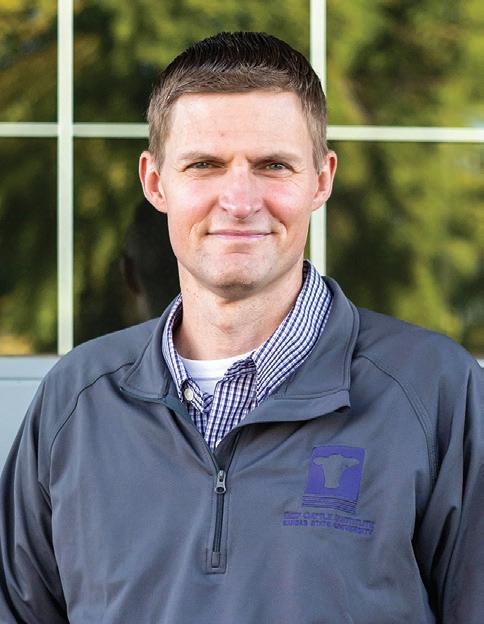
Dr. Lancaster says three educational courses will be developed and delivered annually for three years along with encouraged completion of existing Range Academies of the Kansas Grazing Lands Coalition to provide region-specific information.
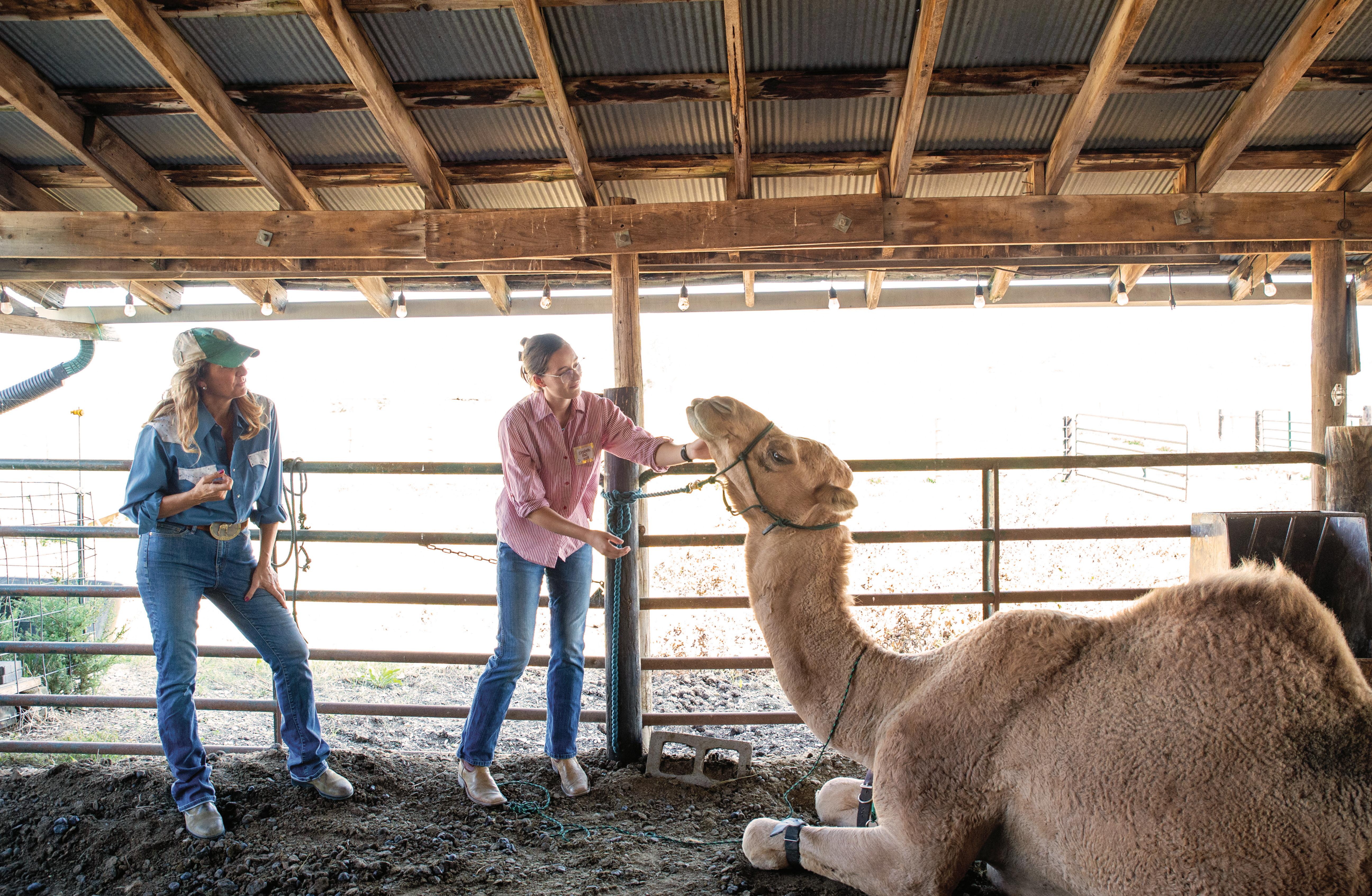
Local field trips remove any drama from dromedary medicine.
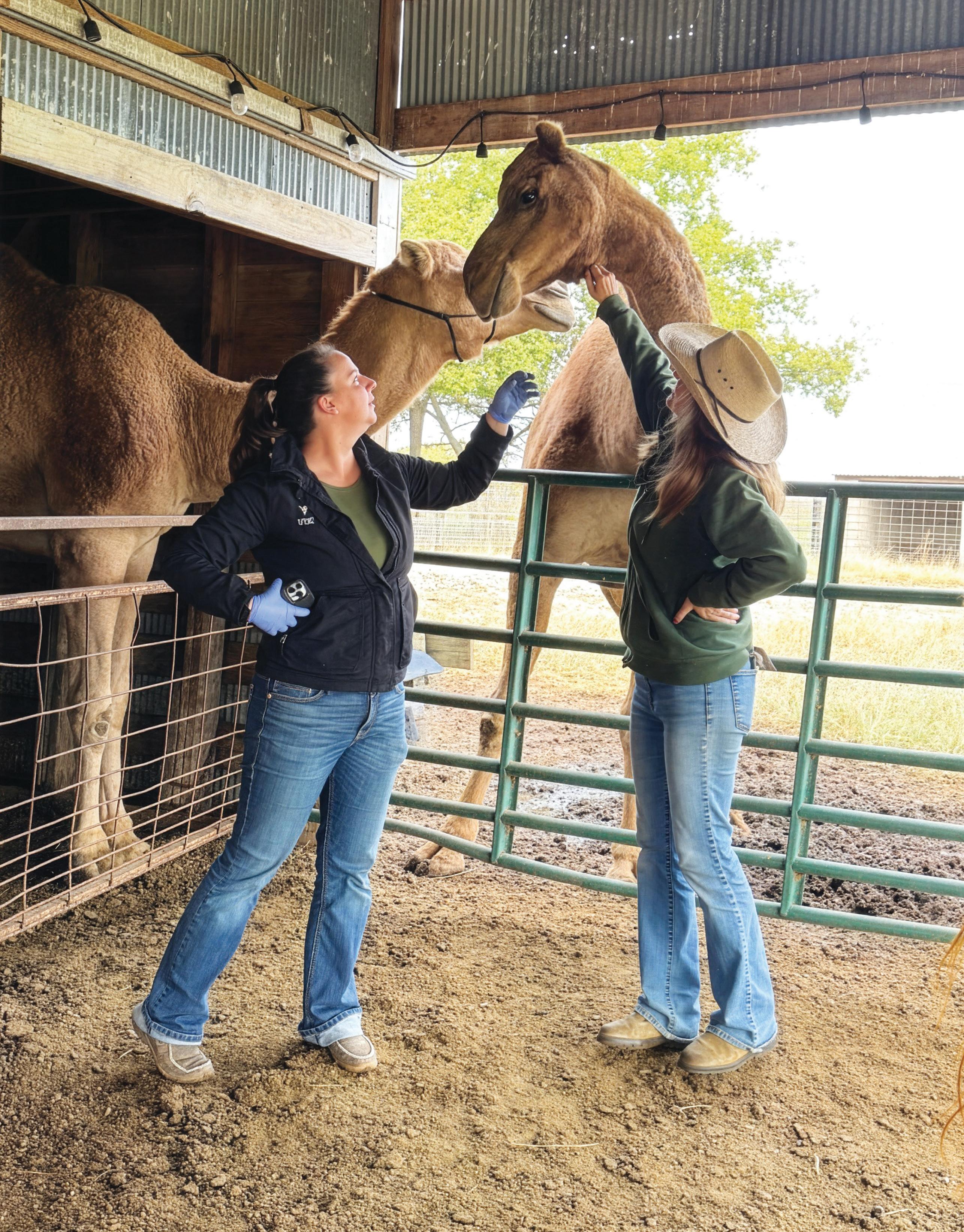
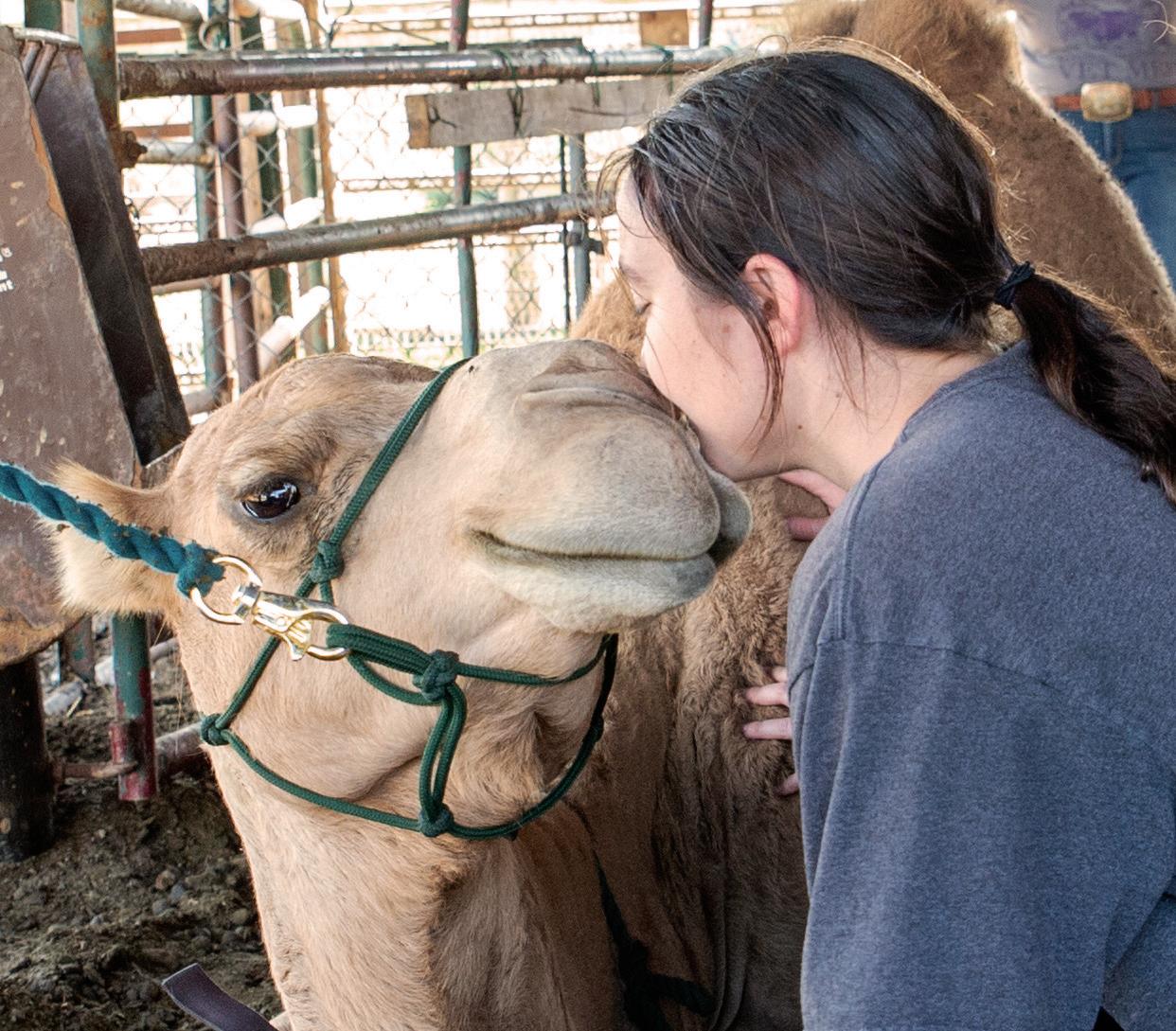
First-year student Myah Balnoschan takes a turn at performing a physicial examination on one of the camels.
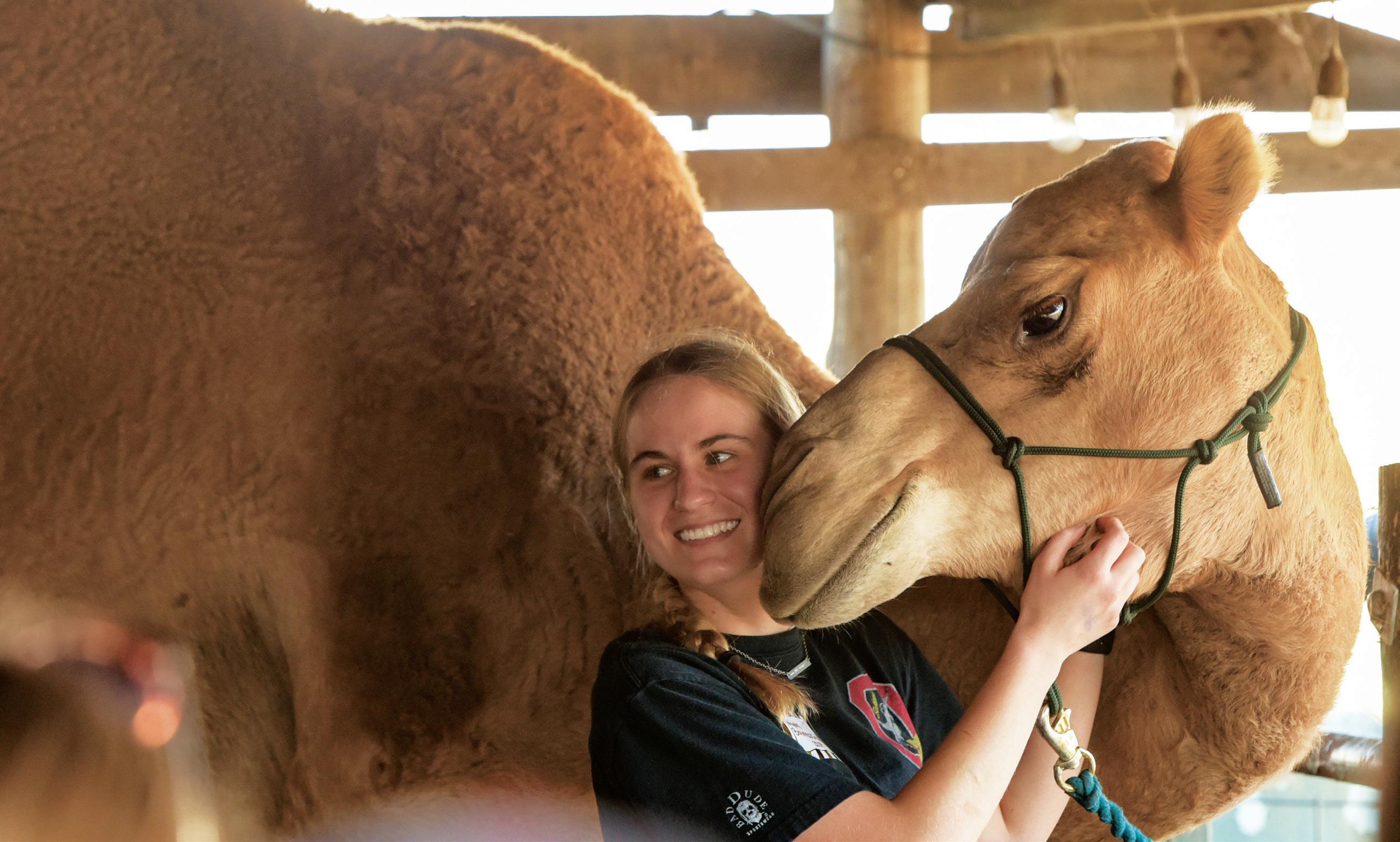
Yes, there are camels in Kansas. There happen to be five such cherished dromedary residents at Shamrock Farms, located just east of Manhattan in the Flint Hills. The farm’s proximity to K-State provides a unique and excellent learning opportunity for veterinary students.
“K-State has been a lifeline for my camel herd for 20 years and I am so grateful for this,” says Valeri Crenshaw, the manager of Shamrock Farms.
“The service I have received from KSU veterinarians has also been greatly envied by other camel owners within North America,” she says proudly. “Our partnership of providing workshops for K-State veterinary students has highlighted KSU as a pioneer among other veterinary schools.”
Dr. Leslie Weaver, clinical assistant professor of livestock services, says visiting the camels gives students both a realworld and a worldly experience in the field. “Valeri is very passionate about teaching our students how to work with camels in hopes that more veterinarians will feel comfortable working on them in practice,” Dr. Weaver says. “She is an incredible voice for North American camel owners and has been a great resource to my husband Bryan [who is also a clinical assistant professor in livestock services] and I for working with camels.”
Valeri says other veterinary colleges need to follow the K-State example.
“This progressive approach by the veterinary school has allowed us to literally say to other universities, ‘Look, K-State has been doing this for 10 years and you need to get on board for the sake of your students and our camels,’” Valeri says.
Dr. Weaver says her team provides regular herd health appointments to do annual physical exams and give vaccinations.
“When I take students out there, my goal is for them to get exposed to some of the common camel restraint techniques,” Dr. Weaver says. “Valeri’s camels are all very well trained, so we can talk about couching on command [helping the camels
to lie down comfortably] and using various hobble techniques for either cush or standing procedures.”
“Shamrock Farms offered us a unique opportunity to practice physical exams and blood draws on camels, a species you don’t often encounter but could easily see in mixed animal practice,” says fourth-year student Tessa Flournoy. “I was impressed by how well-trained and safe the camels were to work with, and by Valeri’s generosity in teaching us about camel handling and husbandry. The experience highlighted the variety you can encounter in veterinary medicine and reinforced the importance of being prepared for any type.”
While these visits are generally conducted through livestock field services, the exotics service has occasionally consulted at
the farm and with zoo animals, particularly when there are in-house camel cases.
“Our last camel workshop at Shamrock Farms [in October 2025] included 35 KSU veterinary students,” Valeri says. “We always make it a point to talk about how to approach the camel, how to interact with the camel, how to respond to the camel’s stress and how to soothe a camel. The K-State students at this workshop jumped right in and used their new skills to provide good bedside manner to Sadri [one of the camels] and he seemed to eat it up. That’s a great sign!”
“Our story begins with a deep-rooted legacy in cattle farming, where we have always been passionate about raising registered Angus cattle on our expansive 1000acre ranch,” says Valeri Crenshaw, manager of Shamrock Farms near Manhattan. “Raising camels in the midst of cattle country was a challenge, with limited resources and guidance available in the United States. We relied heavily on the expertise of a local university’s veterinary school, learning about camel care, feeding and health needs.”
Valeri says camel farms are relatively rare in the United States.
“Despite the large size of our country, the numbers of camels remain relatively small,” Valeri says. “We estimate there are around 7,000 to 8,000 camels in the U.S.”
There are several types of typical camel farms in America. Valeri says the types of farms include camel milk dairies, breeding producers and tourism destinations.
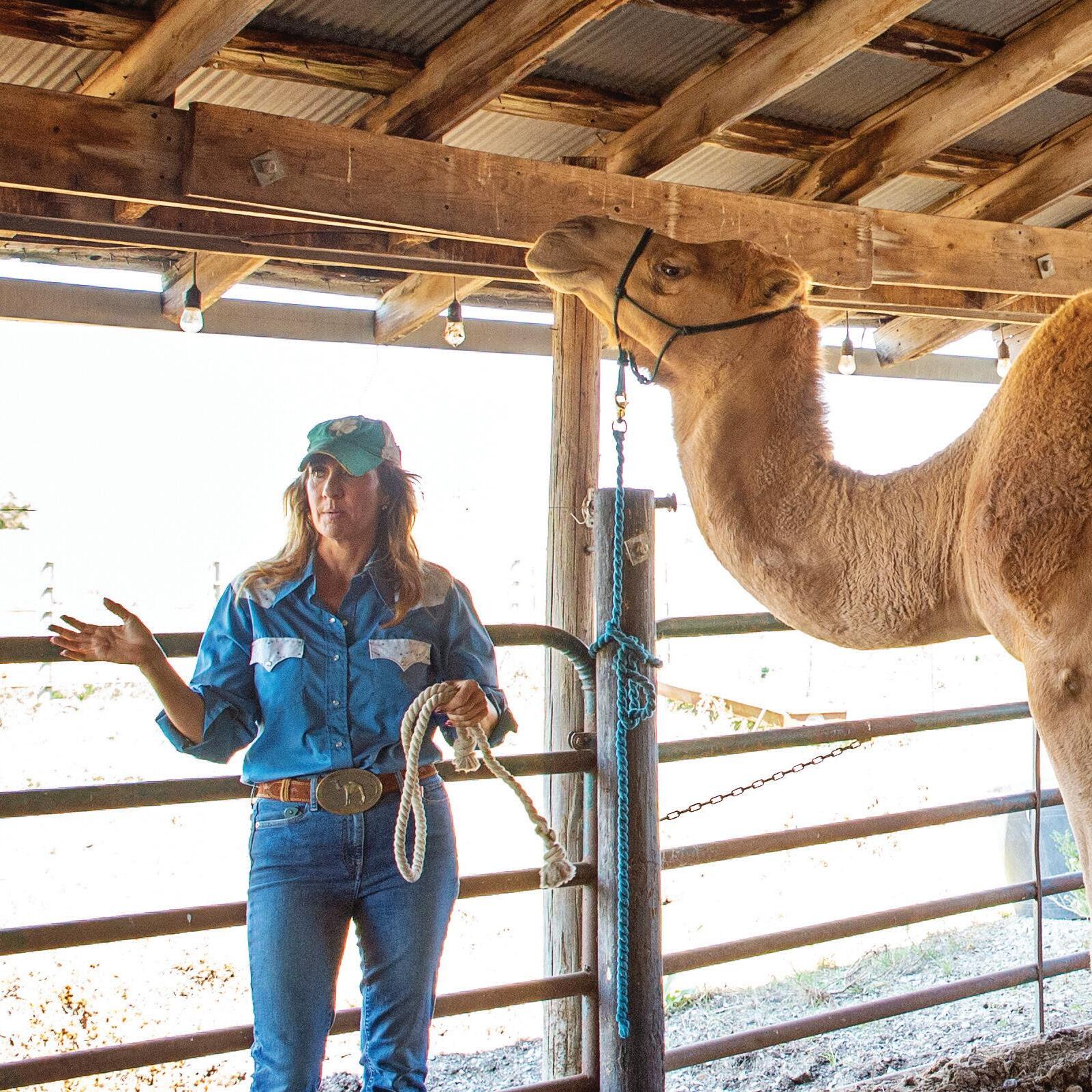
Valeri introduces Sadri the camel to students during one of the recent field trips.
“Many camel farms are multispecies farms that have a small number of camels but a large range of animals that are considered exotics,” Valeri says. “Some of the exotic-animal farms are designed for tourism or family entertainment such as petting zoos or places to conduct parties, children’s educational programs or holiday events.”
Unlike cattle farms as mentioned earlier, camels are generally not raised as a source of food.
“We don’t have the numbers yet for camels to be used for meat production in the U.S.,” Valeri says. “We have immigrant populations that seek camel meat, just as they seek camel milk. But due to the cost of camels, the small population in the U.S. and some cultural norms, camel
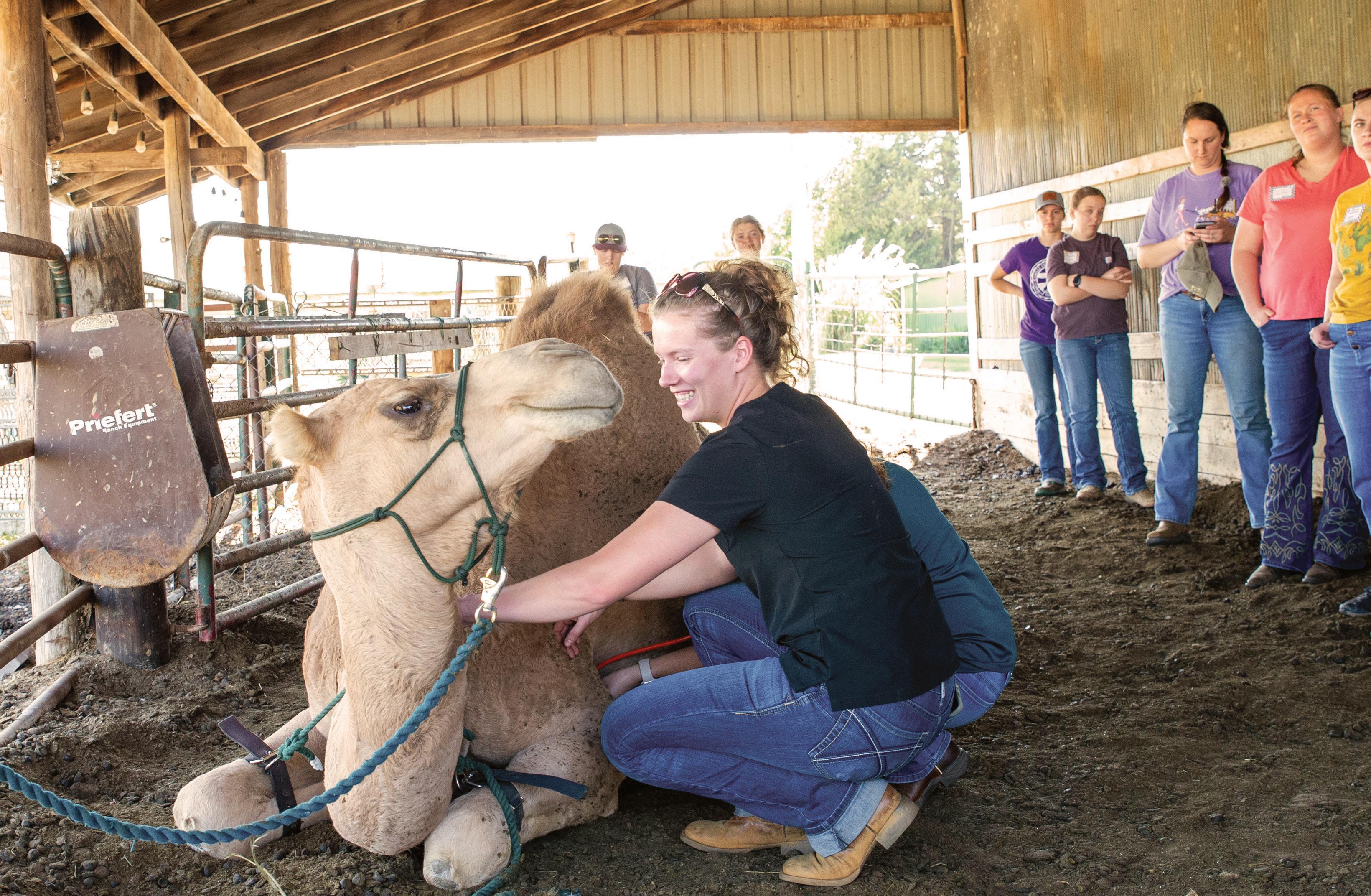
A group of K-State veterinary students learn how to couche the camels, which is the fundamental skill for helping a camel lower itself into a sitting position.
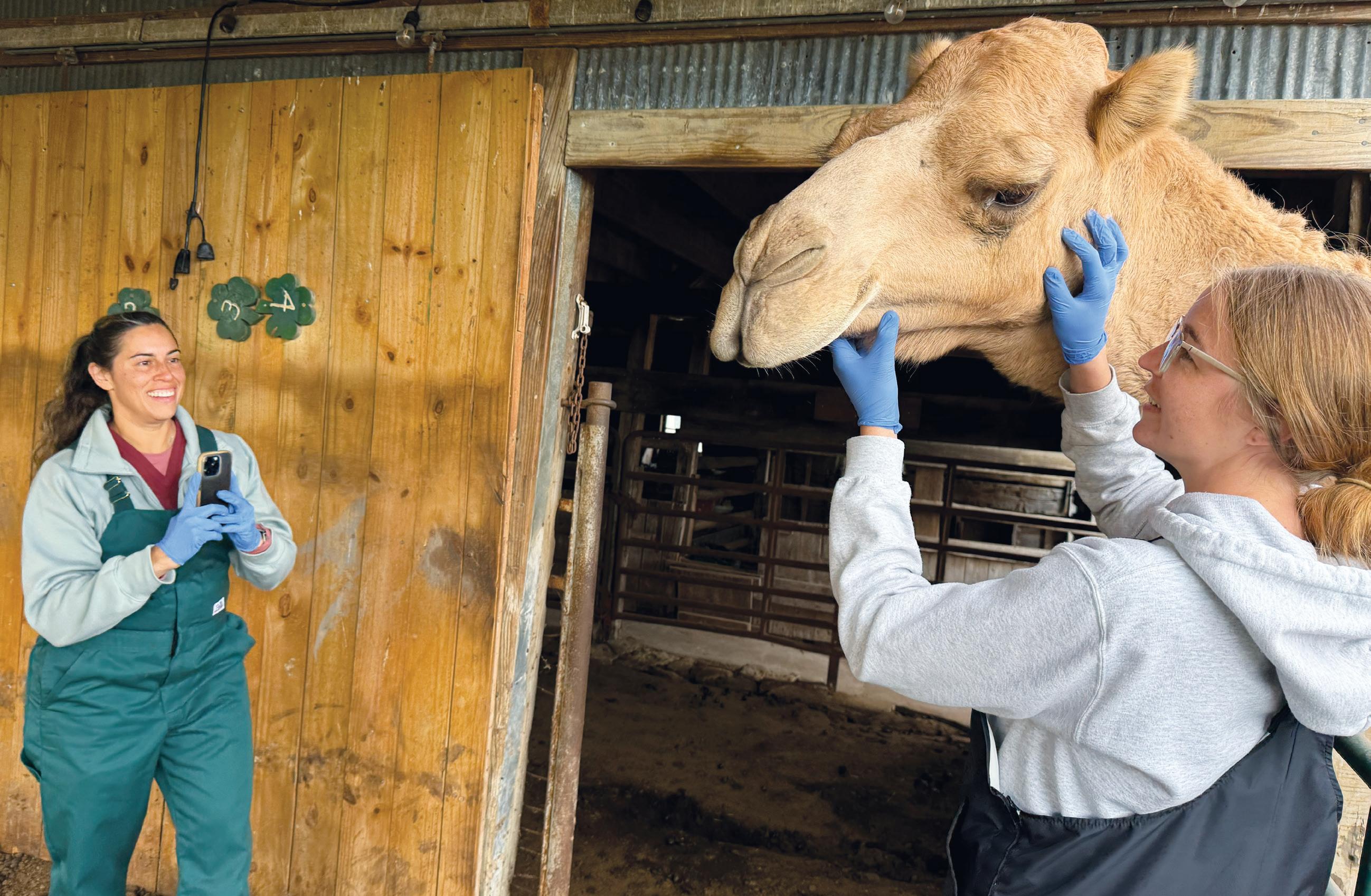
Fourth-year student Desiree Bentler photographs her classmater Tessa Flournoy, who is palpating the camel’s jaw as part of a routine physical examination. Camels commonly suffer from a condition called fibrous osteodystrophy. Photo by Dr. Leslie Weaver.
meat production is not common in the U.S. and thus is typically imported from other countries.”
Valeri says one of the reasons they have camels at Shamrock Farms the two species of camel and cattle complement each other’s grazing practices.
“The camels are naturally attracted to the invasive plants that ranchers do not want in the prairie and the cattle do not want to eat,” Valeri says. “Camels will eat those plants other livestock won’t, such as locust trees, Buckbrush, Serecia Lespedeza, musk thistle and Dog Wood.
Valeri says. She serves as the secretary general for NACROA. “I am so impressed with how our community comes together to work toward the highest industry standards and welfare for our camels.”
By providing educational programs about camels, we are paving the way for improved care for our current
Valeri says one of the most beneficial programs NACROA has is its drive to engage universities and veterinary students.
“By collaborating with these institutions and their students, and by providing educational programs about camels, we are paving the way

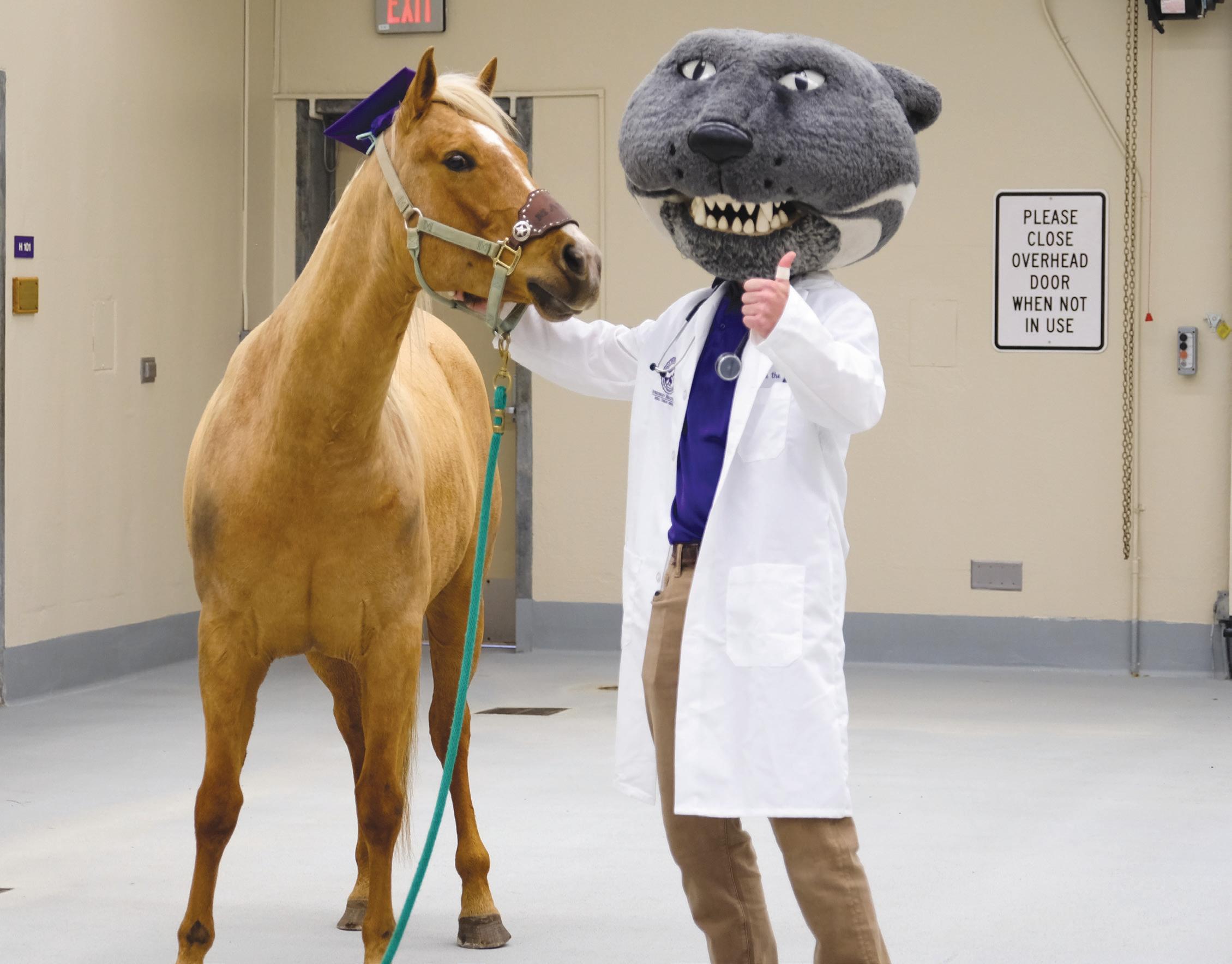
Patient reunions reconnect families and care teams at the VHC.

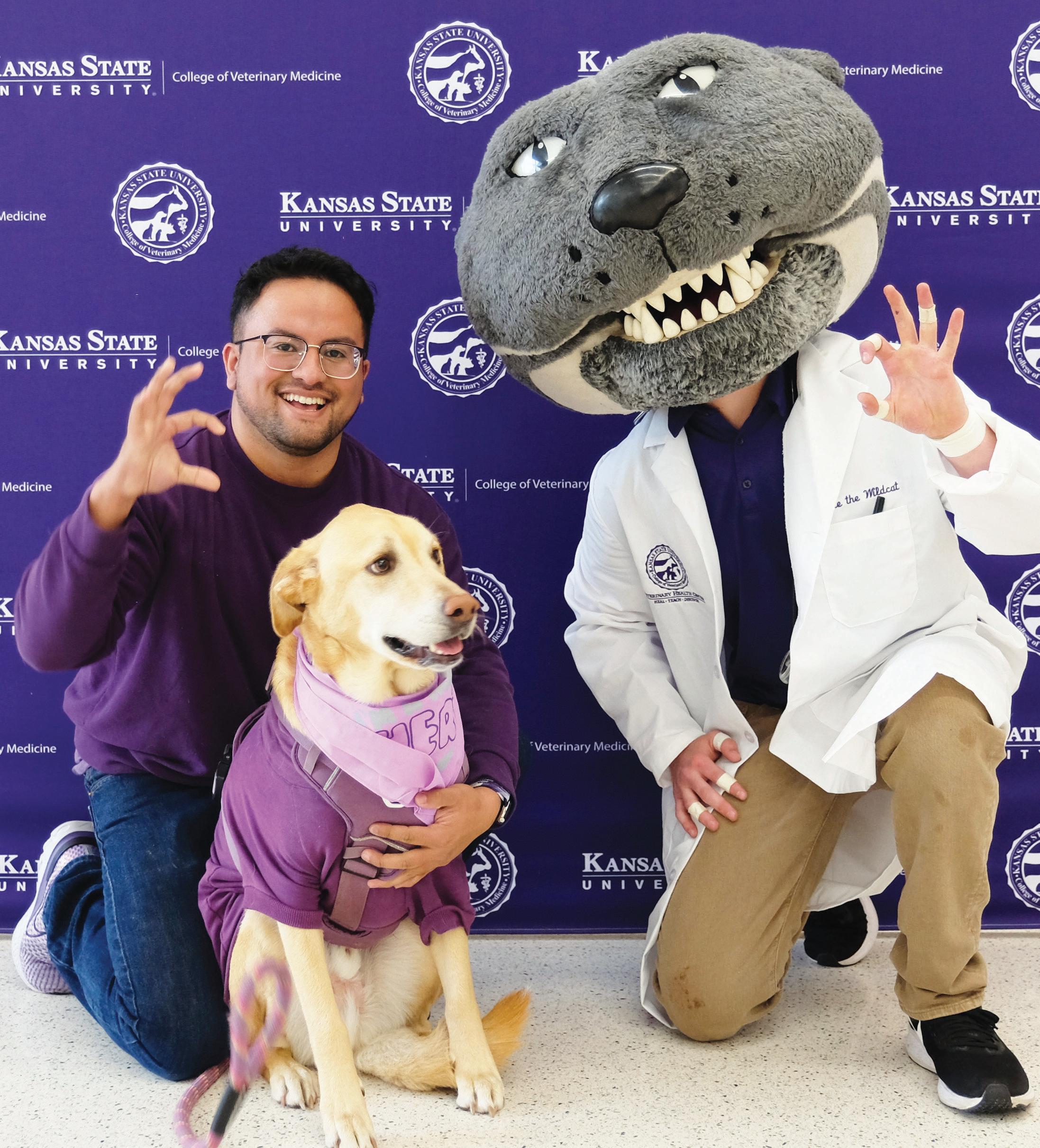
A horse leaning into a familiar scratch, dogs wagging their tails with excitement and cats quietly observing the scene — the Veterinary Health Center (VHC) Patient Reunion was filled with moments that made it clear this wasn’t just a gathering — it was a celebration of second chances.
The reunion brings former Veterinary Health Center patients back to the College of Veterinary Medicine to reconnect with the care teams who once treated them during some of their most critical moments. For many families, it’s the first time they have returned since long days spent in exam rooms, ICU stalls or hospital wards. This time, they have thriving, healthy animals by their side.
“We are honored and humbled by her caregivers remembering her and being able to spend that special time with them outside of the chaos of the medical emergency
by getting to come back together when all of the dust had settled,” Jennifer Holthaus, owner of Malibu, a horse that received emergency treatment for life threatening blister beetle toxicity.
Cassidy Moreau, veterinary social worker at the VHC, helps organize the event. She says inviting owners back is a way to continue the bond formed during their animal’s hospitalization. Many of the patients spent extended time in the ICU, including critically ill dogs, cats and large-animal patients like horses that required intensive, around-the-clock care.
“Our hope is that by inviting them back, we continue the relationship that was established while their animal was here as a patient,” Moreau says.
The reunion has grown steadily since its first year. Six families attended the inaugural event in 2024, and that number more than doubled in 2025, with about 15 families returning. Attendees included a mix of Healthy Weight Clinic graduates, small-animal ICU patients and even a horse. Each animal had a unique story of resilience and recovery.
“Archie and I would go on plenty of walks when he was still a puppy, but as he got older, I didn’t pay close enough attention to his activity or diet,” Rafael Garcia says. “He got to be 108 pounds in the summer of 2024. I’d long known about the Hill’s Healthy Weight Clinic, but I had lived elsewhere in the state. When I took a job in Manhattan, one of the first things I did was investigate how to enroll Archie.”
Archie was seen by Dr. Katherine Oakes, a previous nutrition intern, and her team for six months to help create a plan for a heathier and more active lifestyle. Archie graduated from the Healthy Weight Clinic at 72 pounds and a love for playing fetch.
“It was a pleasure to be able to go back to visit with Dr. Oakes and some of her team a few months later at the VHC Patient Reunion,” Rafael says. “We got to show Archie’s continued progress in maintaining a healthy lifestyle and keeping the weight off, and we also got to take a few photos with Willie — the one cat Archie doesn’t mind.”
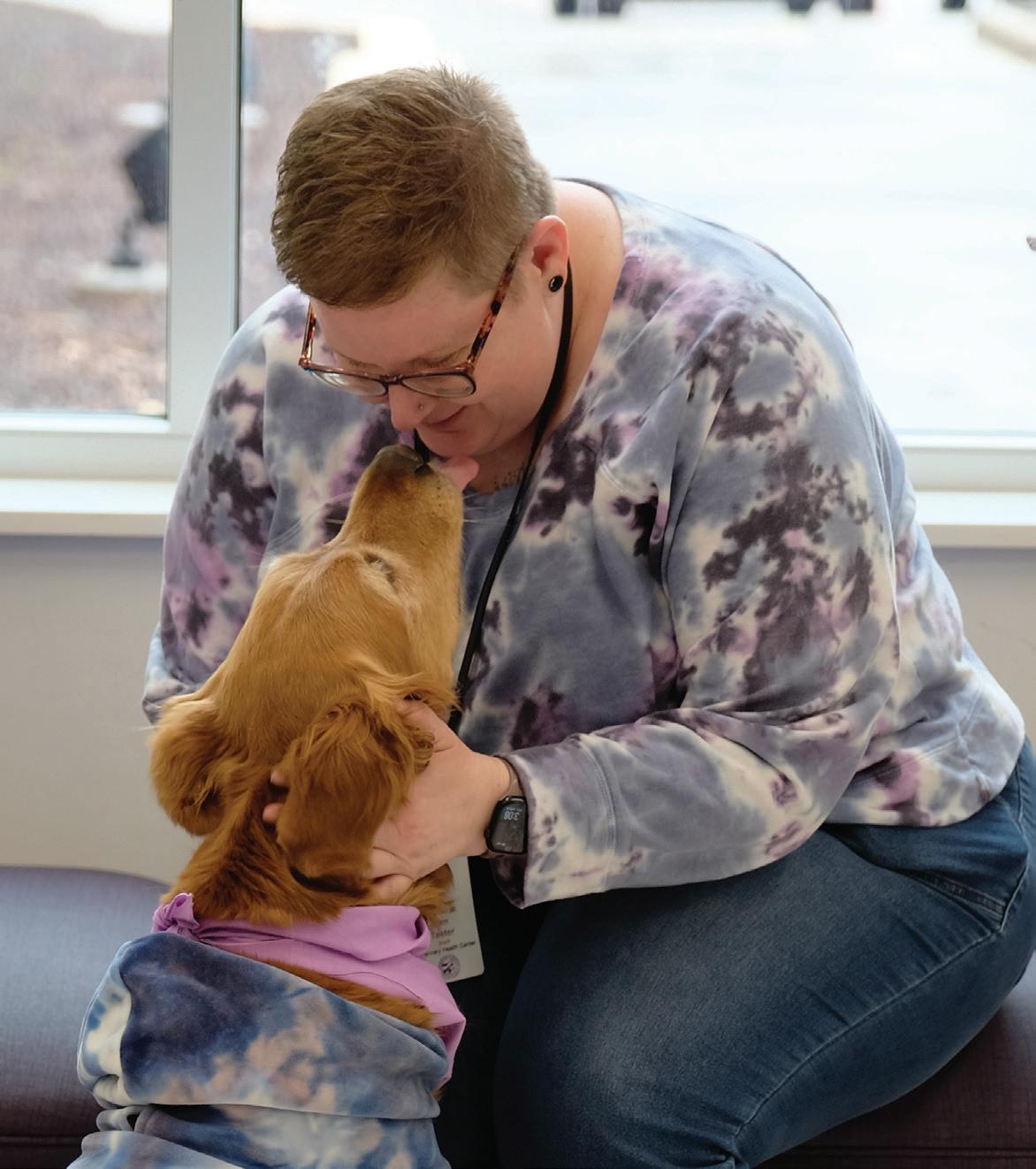
“Getting to see all the smiles made my heart swell,” Moreau says. “Not just from the owners, but from the care teams. Our faculty, staff and students are so
passionate about this work, and it was incredibly meaningful to celebrate a patient’s health and happiness after illness.”
We are honored and humbled by her caregivers remembering her and being able to spend that special time with them.
“ ”
VHC Client
Those moments of joy have deeper meaning for the VHC team. As a social worker who supports the mental health and overall well-being of faculty, staff, fourth-year students and house officers, Moreau sees firsthand the emotional weight that comes with veterinary medicine.
“Compassion fatigue and burnout are real,” Moreau says. “Moments of joy, what I call nuggets of happiness, must be intentionally sought out. When we celebrate wins like this, we support staff well-being and compassion satisfaction.”
The reunion also serves as a heartfelt thank-you to the clients who place their trust in the VHC during difficult times.
“It’s heartwarming how the teamwork between the owners and the VHC team makes the difference in improving patient outcomes,” says Dr. Michell Gonzalez, clinical assistant professor in anesthesia emergency.
From families whose dogs or cats required intensive care to owners who traveled back with horses once hospitalized for serious conditions, the event brings together a community built on trust, perseverance and the human-animal bond.
That bond doesn’t end when a patient is discharged.
“We care about our patients long after they leave the hospital,” Moreau says. “It’s not unusual for us to think about them even after we go home for the day. Being able to come back together strengthens those long-term relationships and fosters a sense of belonging.”
Capturing the atmosphere of the reunion in words isn’t easy, but those who attend understand it immediately.
“It’s pretty special,” Moreau says. “I’d put it right up there with a K-State game day win.”
With plans to continue growing the event in the future, the VHC Patient Reunion stands as a reminder of why this work matters. It celebrates healing, honors relationships and welcomes former patients back not as cases, but as family.

It’s not unusual for us to think about them even after we go home for the day.
“ ”
Cassidy Moreau
Veterinary Social
it is a
Veterinary diagnosticians help producers stay informed as Kansas confirms live presence of Asian longhorned tick
Story by Kelsey Stremel
There’s an emerging threat to Kansas cattle and human health, but one that experts at Kansas State University are prepared to monitor, diagnose and counter, as part of the university’s mission to enhance biosecurity around the state and world.
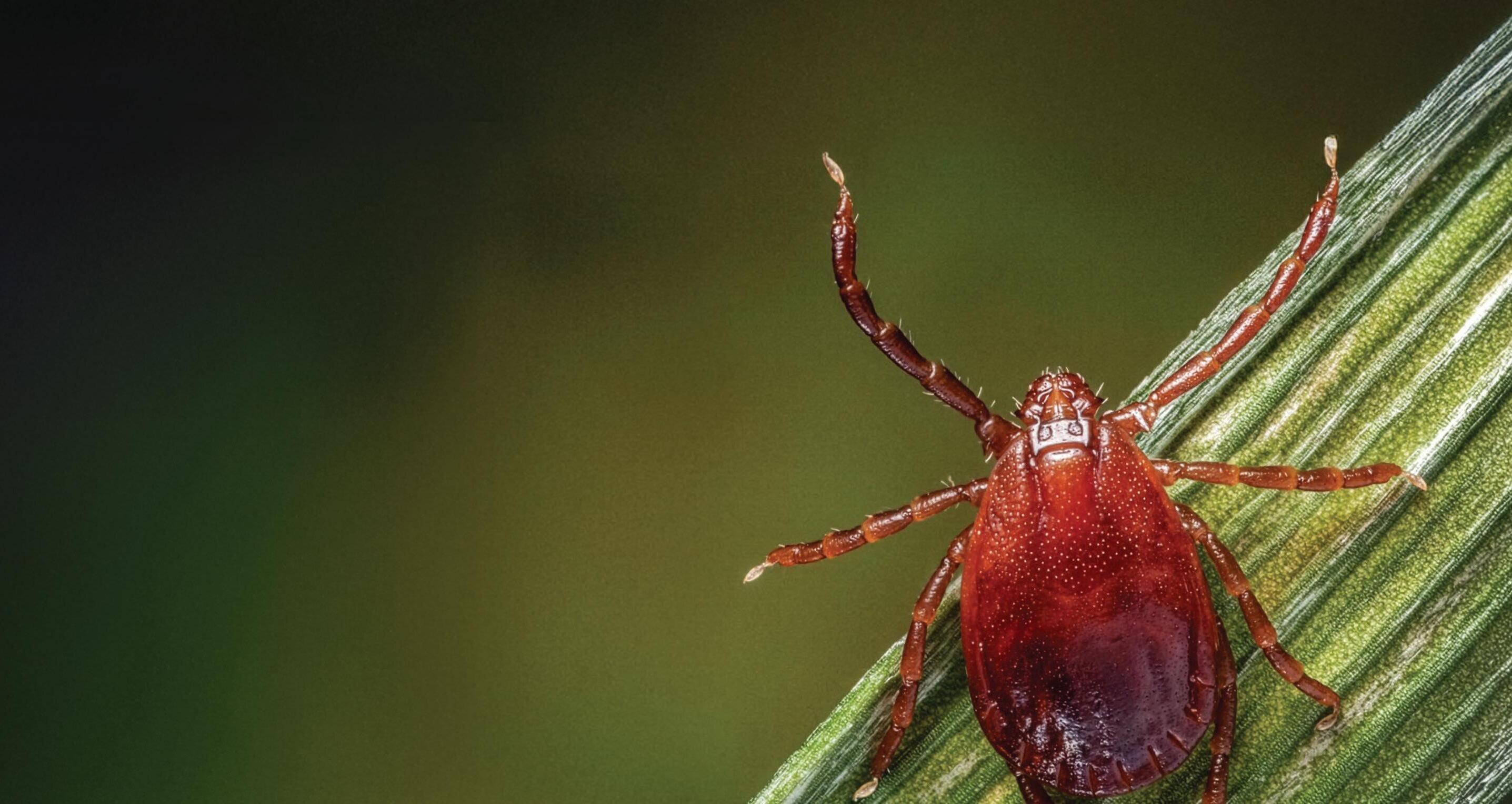
Earlier in October, the Kansas Department of Agriculture confirmed the presence of a live Asian longhorned tick in Kansas — the first known detection of the exotic, invasive species in the state.
For Dr. Gregg Hanzlicek, professor and associate director of the Kansas Veterinary Diagnostic Laboratory, or KVDL, the discovery reinforced what K-State’s veterinary medicine and extension programs were built to do: translate emerging science into practical tools for producers.
“This doesn’t mean we have a widespread or established population,” Dr. Hanzlicek says. “But it’s a reminder that these ticks, and the diseases they can carry, can move quickly. Awareness is key to limiting their impact.”
The Asian longhorned tick is the primary vector for Theileria orientalis Ikeda, a protozoan parasite that infects red and white blood cells in cattle. The disease causes anemia,
weakness and, in some cases, death. It is not responsive to antibiotics, and once infected, cattle remain carriers for life.
“It’s not a bacteria, it’s not a virus—it’s a protozoa that remains in the animal’s system for life,” Dr. Hanzlicek explains.
As the parasite invades and replicates in cattle red blood cells, it changes the surface proteins on each cell. The spleen identifies those cells as abnormal and removes them from circulation, which leads to anemia and deprives the animal of oxygen.
Affected cattle often appear weak, sluggish, and uncoordinated as their bodies struggle to function with reduced oxygen-carrying capacity.
While adult cows usually recover, young calves are far more vulnerable. In outbreaks documented in other regions, as many as 80% of calves became sick and nearly half died.
Late-term abortions have also been reported in some herds, though these cases have not been common in Kansas.
The Kansas Veterinary Diagnostic Laboratory is one of only three laboratories in the U.S. with a validated polymerase chain reaction test to detect Theileria orientalis Ikeda.
Since 2022, the lab has tested about 2,000 samples from across the country, and roughly 38% have been positive — mostly from herds showing clinical signs of disease.
Housed within K-State’s College of Veterinary Medicine, KVDL serves as the front line for animal health testing in Kansas and across the region. The laboratory conducts tens of thousands of diagnostic tests each year for veterinarians, producers, and animal health agencies — helping identify emerging diseases, confirm diagnoses, and protect both animal and public health.
“We have found one confirmed case — an older cow born and raised in Kansas that never left the herd and tested positive,” Dr. Hanzlicek says. “It tells us the tick is here, and we’re still learning as we go.
In addition to the tick, the longnosed cattle louse can also transmit the pathogen, and biting flies have also been proposed to be vectors, although both are probably likely less effective than the ticks.
Our
found outside its native range of central and east Asia has been female, and each one can lay thousands of eggs, allowing populations to grow rapidly once established.
The tick feeds on a variety of hosts — including cattle, deer, wildlife and birds — allowing it to move long distances. It has been documented in at least 20 states and continues to spread westward. The tick thrives in warm, humid areas, offering some hope that the drier regions of western Kansas may slow its expansion.

job is to provide answers.
The
sooner we identify an infection, the better a producer can manage it and prevent further spread.
Dr. Gregg Hanzlicek KVDL Associate Director
Dr. Hanzlicek says diagnostic partnerships like this illustrate how Kansas State University fulfills its broader mission — translating science into action for Kansas agriculture. Through KVDL’s testing and consultation, veterinarians and producers can confirm suspicions quickly and take informed steps to protect herd health.
Testing is especially important in herds where cattle show signs of anemia, weakness or jaundice, or where unexplained calf losses have occurred.
“Our job is to provide answers,” Dr. Hanzlicek says. “The sooner we identify an infection, the better a producer can manage it and prevent further spread.”
The Asian longhorned tick has a three-host life cycle, feeding on three different animals as it develops from larva to nymph to adult.
At each stage, it can acquire and transmit Theileria to new hosts.
“These ticks are amplifiers,” Dr. Hanzlicek says. “When they feed, their saliva contains high concentrations of the organism, and that’s how the infection spreads.”
Unlike most tick species, this one can reproduce with or without males, making it extremely efficient at establishing populations in new area. Every single Asian longhorned tick
“We don’t believe it will survive in the drier regions of western Kansas,” Dr. Hanzlicek says, “but eastern Kansas could provide suitable habitat.”
Veterinarians often suspect Theileria when cattle show anemia or poor condition. Enlarged spleens are a common finding in necropsy exams.
“If we open up a case and see a very large spleen with a history of anemia, that gives us a pretty good idea what we’re dealing with,” Dr. Hanzlicek says.
There are currently no approved antimicrobial treatments for Theileria orientalis Ikeda in the United States.
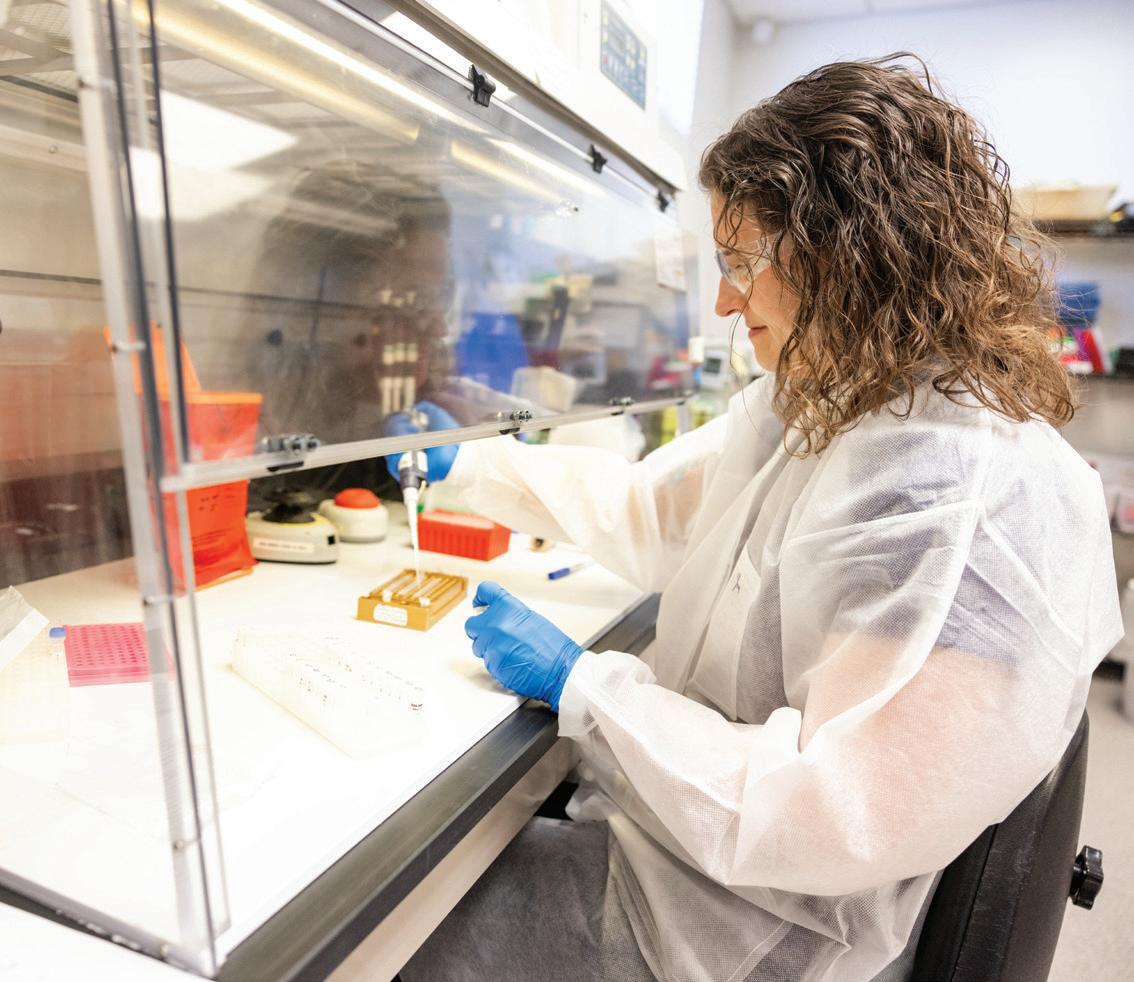
Cori Ondrashek, research assistant in the Molecular Research and Development section of KVDL performs a PCR reaction preparation using DNA previously extracted. The PCR reaction allows amplification of a small piece of genomic DNA that is specific to the Theileria genome, enabling the identification of the Theileria species.
Instead, management focuses on supportive care and prevention.
“Most animals will recover if they’re provided good husbandry — shade, bedding, clean water and proper nutrition,” he says. “Treatment doesn’t change the disease course, but management can make a big difference.”
He recommends regular tick inspections — especially around the ears, udder and tailhead — and the use of sprays, pour-ons or backrubbers for control. Ear tags alone are not effective.
Producers are also encouraged to isolate new or purchased cattle, particularly from regions where Theileria or the tick have been identified, and to submit any unusual ticks to KVDL or the Kansas Department of Agriculture for identification.
While the Asian longhorned tick is primarily an animal health concern, it can also bite humans. In other parts of the world, the tick has transmitted diseases such as Rocky Mountain Spotted Fever.
“Right now, our concern is mainly for cattle,” Dr. Hanzlicek says. “But like any tick, people should take precautions: wear long sleeves, use insect repellent and check for ticks after being in grassy or wooded areas.”
The same vigilance that protects livestock, he added, also helps protect people.
Theileria orientalis Ikeda has been endemic in Asia, Australia and New Zealand for decades. In those regions,
management focuses on reducing animal stress, improving nutrition and monitoring herd health rather than eradication.
“In Japan and New Zealand, they learned to live with it,” Dr. Hanzlicek says. “Producers focus on management and resilience. That’s likely what we’ll have to do here — stay aware, adapt, and make informed decisions.”
At Kansas State University, researchers are continuing to study both the tick and the disease it carries to better understand how they interact with local environments and cattle systems.
Through KVDL and K-State Research and Extension, the university shares information with veterinarians, producers, and industry partners to prepare the state for potential future detections.
“What we’ve learned in the last two years is amazing,” Dr. Hanzlicek says. “Two years ago, we knew almost nothing about this parasite in U.S. herds. Now we’re beginning to understand its behavior and how producers can respond.”
That collaborative approach, Dr. Hanzlicek adds, reflects K-State’s long-standing role in serving the people of Kansas through science, education, and shared problem-solving.
He encourages producers to stay informed but not alarmed.
“This detection tells us the tick is here,” he says. “It doesn’t tell us how widespread it is or how long it’s been here. By reporting what we see and working together, we can stay ahead of this challenge.”

Our board-certified clinical pathologists and skilled technologists combine advanced instrumentation with a commitment to quality, accuracy, and collaboration — so you can provide the best care for every patient.
• Hematology
• Clinical chemistry
• Diagnostic cytology
• Endocrinology
• Protein electrophoresis
• Urinalysis for common domestic and exotic animal species
Professional consultation provided for our laboratory results!

Capts. Levi Jackson and Chalise Brown conduct clinical ‘side-by-side trainings’ with veterinary personnel at the Koror State Animal Shelter in Palau. Photo by Mass Communication Specialist 2nd Class Jordan Jennings, US Navy.
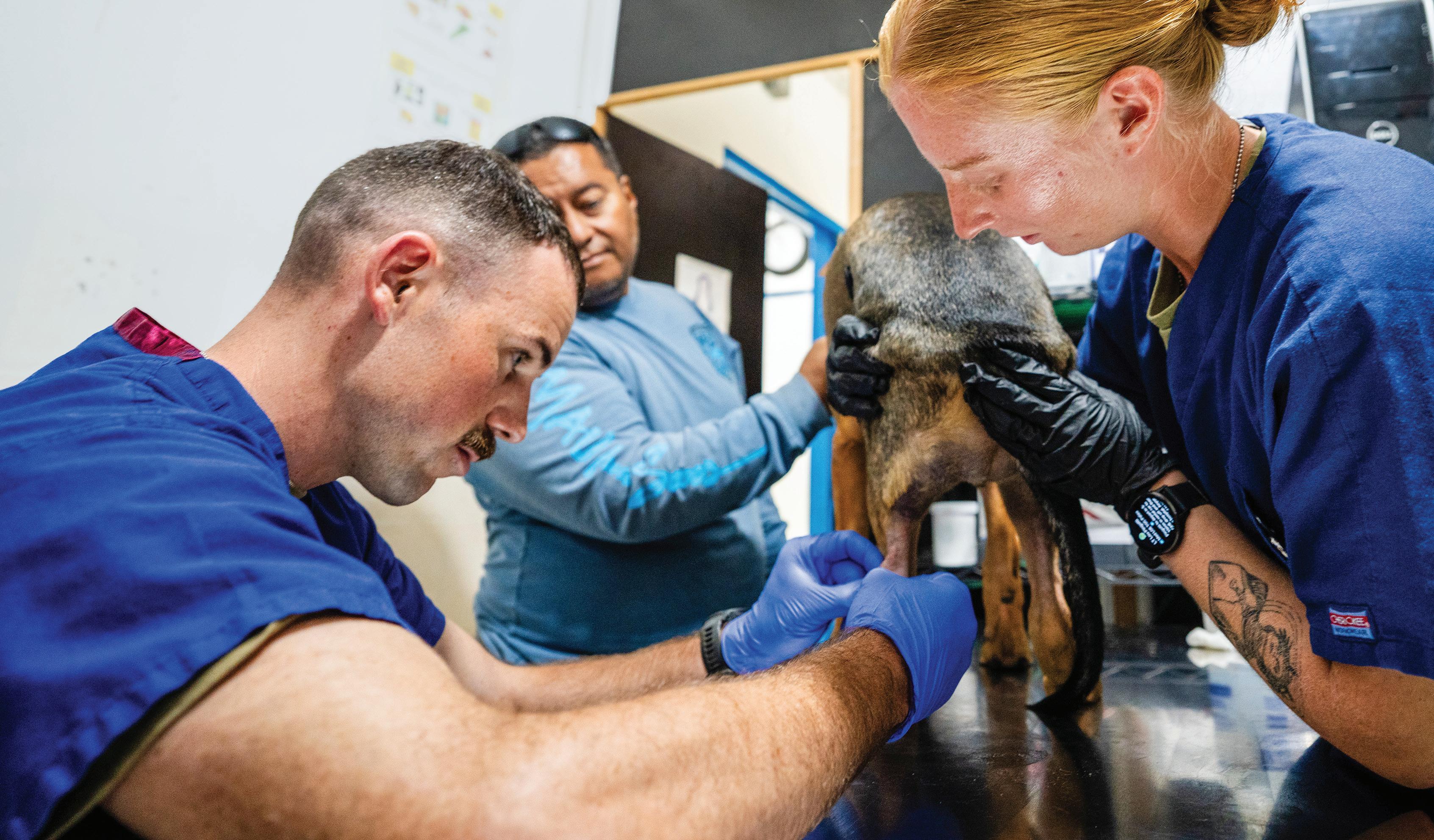
Military veterinarians provide critical care during international deployments.
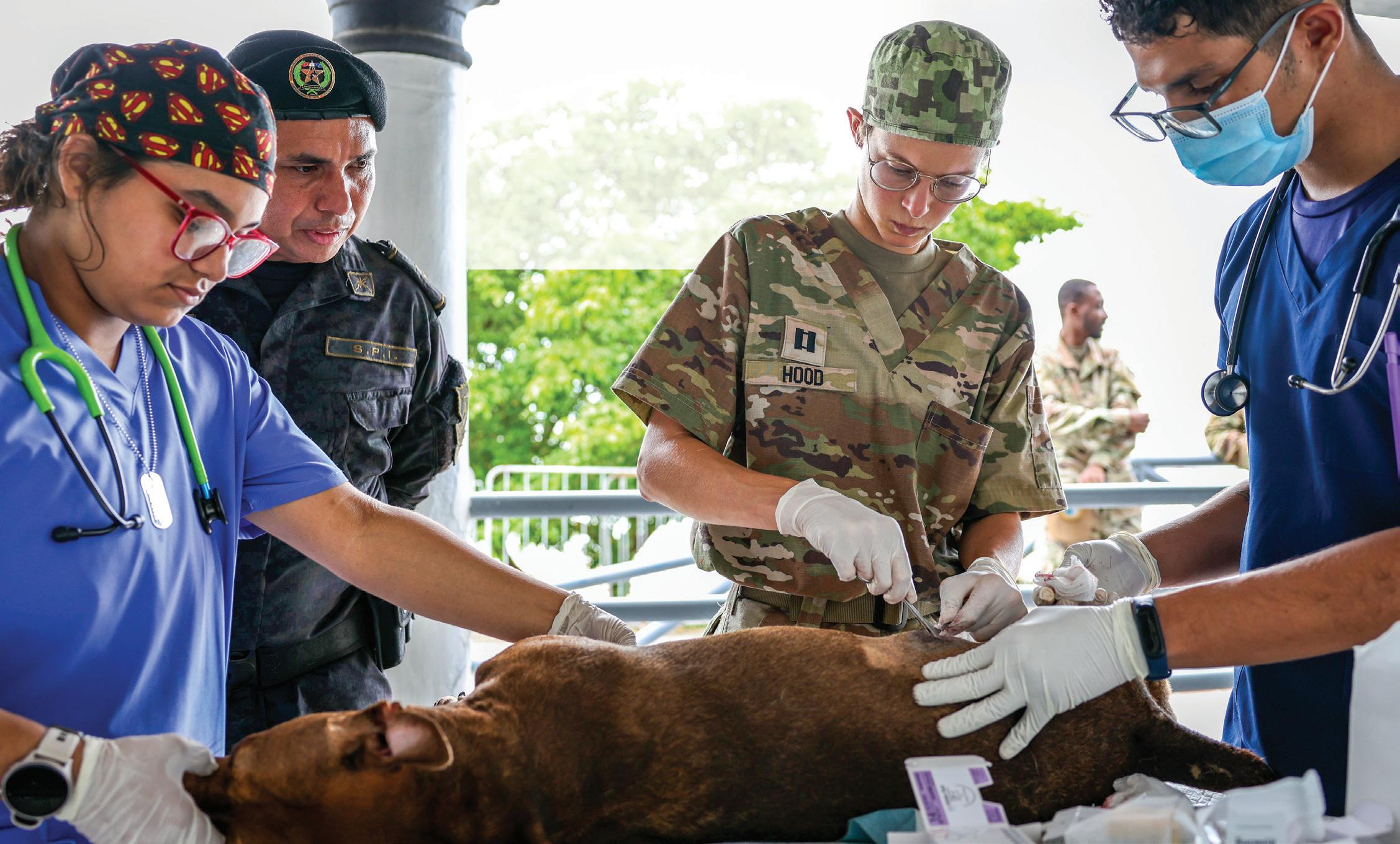
Capt. Hood performs surgery on a dog with the assistance of local veterinary nurses and medical technicians in Veracruz, Panama. Photo by Sgt. Samuel Qin, US Marine Corps.
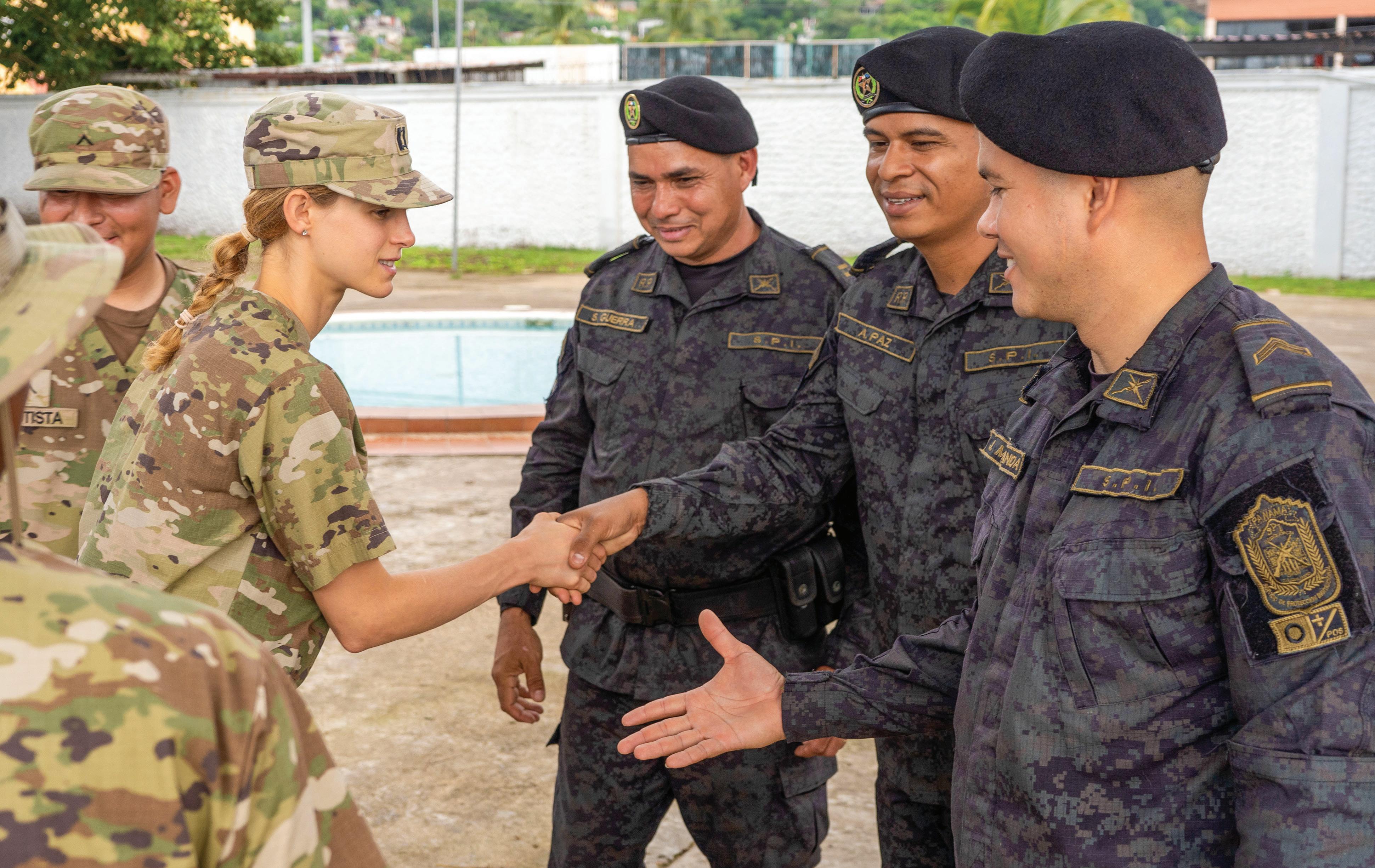
Capt. Hood meets with Panamanian members of the Institutional Protection Service during a subject matter expert exchange during Continuing Promise 2025 in Veracruz, Panama. Photo by Mass Communications Specialist 2nd Class Jonas Womack, US Navy.
By Joe Montgomery
Two veterinarians and classmates from the K-State DVM class of 2023 recently experienced similar opportunities to get out of their normal routines. Drs. Levi Jackson and Karen Hood, are both now serving as veterinarians and officers in the U.S. Army Veterinary Corps. During the summer of 2025, the pair were both deployed with the U.S. Navy on two different overseas missions.
Capt. Hood deployed on Continuing Promise 2025 and Capt. Jackson deployed with Pacific Partnership 2025.
“We both served as the mission veterinarian for our respective missions, leading events in animal medicine, surgical operations, agricultural training, food safety and veterinary public health across several countries in the Pacific Ocean [Pacific Partnership] and the Caribbean Sea [Continuing Promise],” Capt. Jackson says. “Both of these missions are focused on building capabilities in the local populations, preparing these countries for independence and readiness for response to disasters.”
Capt. Jackson says the veterinary teams utilized their unique skill sets to make lasting impacts and build connections from individual farmers and families to the heads of state and national leaders.
“We are increasing the safety and security throughout the region, and allowing for shared expertise across 14 separate countries,” says Capt. Jackson, who is originally from San Angelo, Texas. His current unit is the 72nd Medical Detachment, Veterinary Service Support (MDVSS), at Fort Campbell, Kentucky, so this ocean-going mission provided a novel experience.
Capt. Jackson explains that the Pacific Partnership was the 21st iteration of the largest annual multinational humanitarian assistance and disaster management preparedness mission conducted in the Indo-Pacific. He and the rest of the team deployed to places such as Fiji, Chuuk, Palau, Papua New Guinea, Pohnpei, Samoa, Tonga and Vanuatu. The mission worked with military partners from Australia, Canada, France, Germany, Japan, Malaysia, New Zealand, Singapore, South Korea and the United Kingdom.
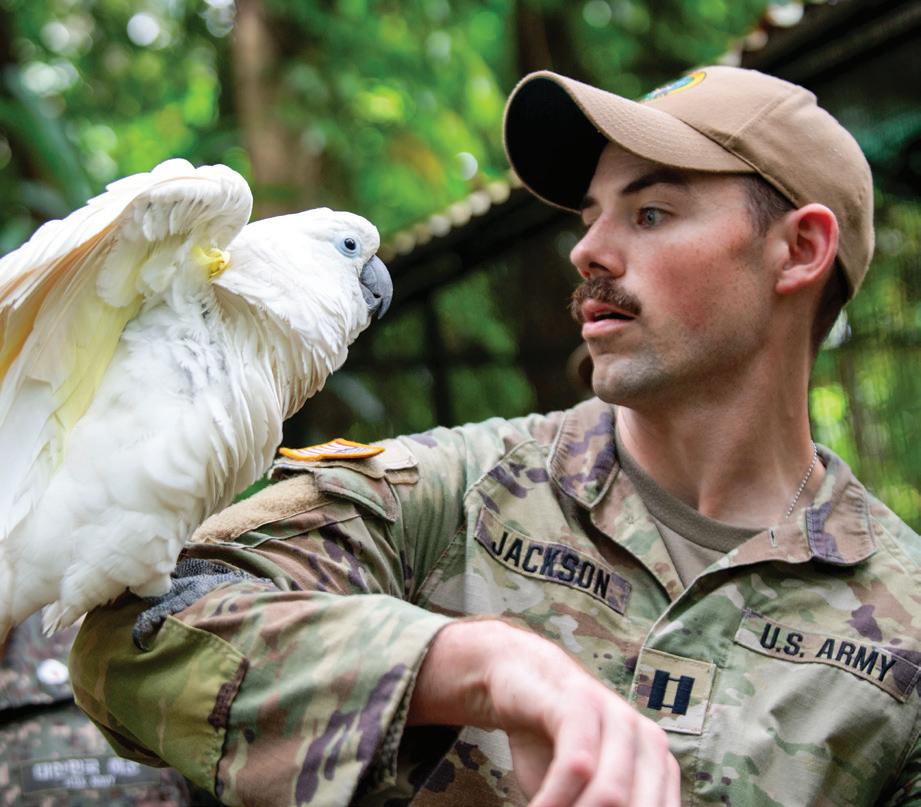
Capt. Jackson interacts with a cockatoo at the Rainforest Habitat, a wildlife sanctuary in Lae, Papua New Guinea, where the veterinary team conducted behavior and mental enrichment training with the animal caretakers. Photo by Mass Communication Specialist Seaman (MCSN) Isabel Mendoza, US Navy.
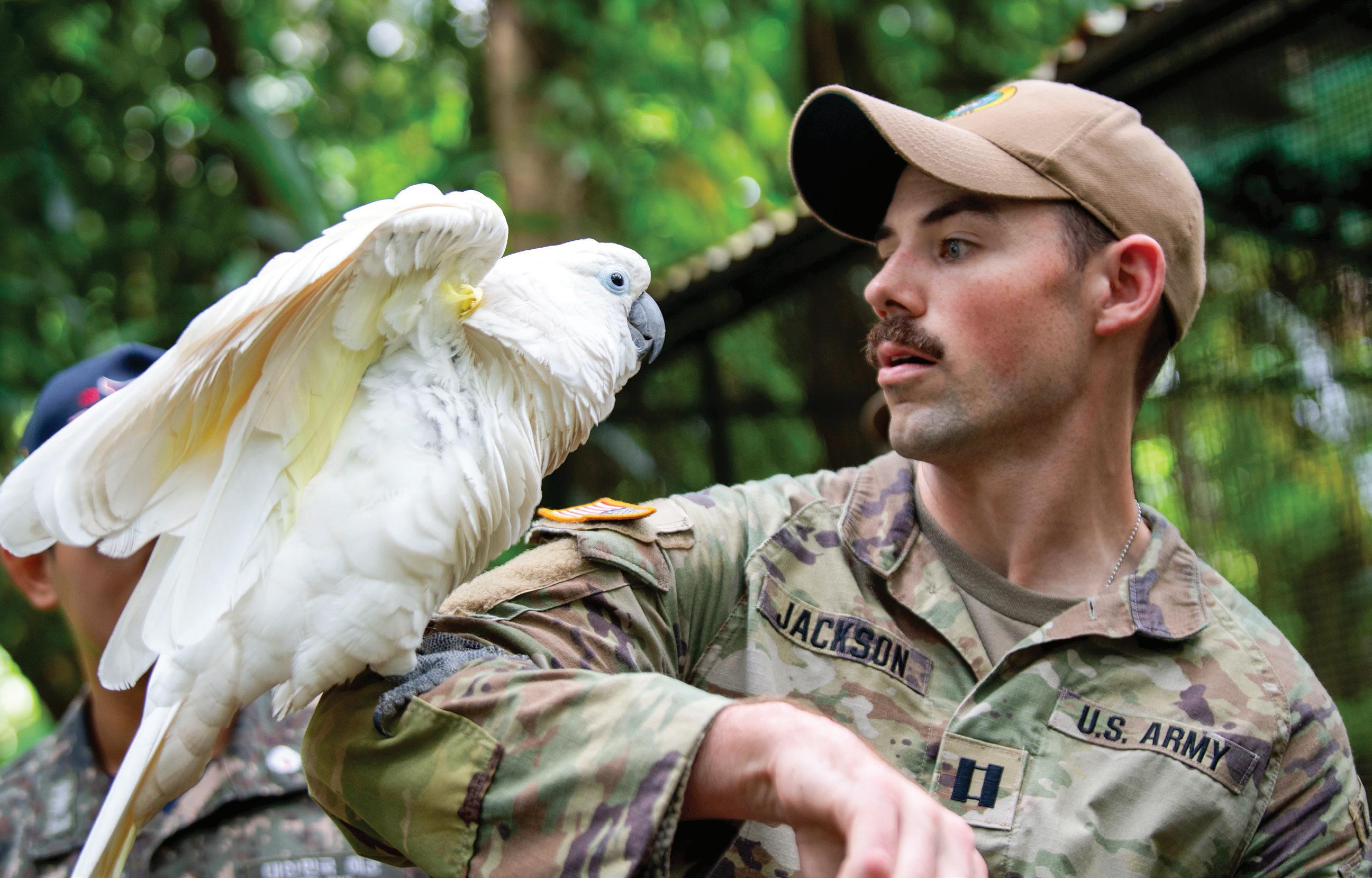
Capt. Hood hails from Sterling, Virginia, and is stationed with the 248th Medical Detachment, Veterinary Service Support (MDVSS), at Fort Bragg, North Carolina.
She served with the Continuing Promise team, which deployed to Costa Rica, Dominican Republic, Ecuador, Grenada, Panama and Trinidad. Capt. Hood led her team in discussions and trainings with local farmers, local and national government agencies and non-governmental organizations, covering issues in the cattle ranching industry, gaps in ruminant veterinary care in rural areas and learning from the locally experienced veterinarians for how they practice austere (or resource-limited) medicine.
“We were able to work with some of the same veterinary teams as previous Continuing Promise missions, so that continuity of US-local relations was nice and provided an easier introduction for this year’s team,” Capt. Hood says. “It was also amazing hearing from the experience of local veterinarians and cattle producers.”
Capt. Jackson led his team in 64 veterinary engagements under the scope of animal medicine, veterinary public
health and food safety, including 106 desexing (spay/neuter) surgeries, 93 livestock and companion animal appointments, 56 food safety side-by-side inspections of restaurants, markets, and commercial facilities, and 14 agricultural workshops reaching over 930 individual participants.
“It was an amazing experience to see what veterinary medicine looked like across the globe and in resourceconstrained countries,” Capt. Jackson says. “It was amazing to get to work with so many fellow veterinarians from across the world! Each experience and event together with these veterinarians were able to teach me different tips, techniques and skills in approaching surgeries and other procedures.”
Capt. Hood’s Continuing Promise team also worked alongside local veterinarians, conducting surgical side-by-side operations for small animal desexing (spay/neuters). These events allowed for sharing of different surgical techniques and efficiency tips.
Capts. Hood and Jackson both fill similar roles for their regular duties back at their home bases
Capt. Jackson builds friendships with elementary students at the Tata Presbyterian School in Luganville, Vanuatu. The veterinary team here provided critical education on safety around stray dogs to reduce animal bites and zoonotic diseases. Photo provided by Capt. Jackson.
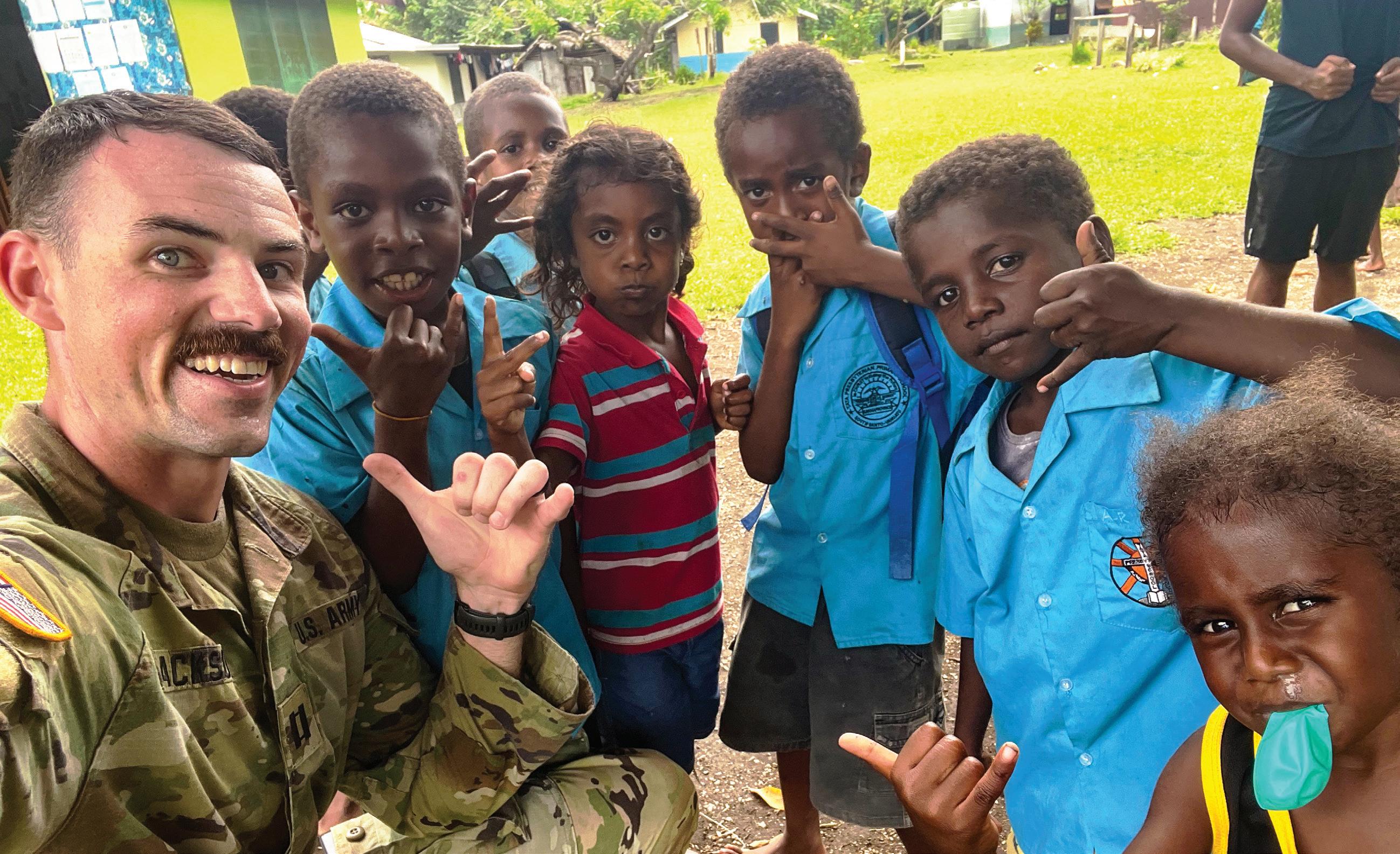
“Both Karen and I fill the role of the Officer in Charge (OIC) of a Veterinary Service Support Team (VSST) at our home units,” Capt. Jackson says. “As the VSST OIC, we are the singular veterinarian for the team, and also the primary leader/manager for the team, consisting of approximately one to two veterinary assistants and four to six food inspectors.”
Capt. Jackson says the VSST serves as a deployable unit to provide Role 2 veterinary care and food protection assets to a division (about 10,000 to 20,000 soldiers) in a deployed environment.
“As the Role 2 providers, our medical capabilities are focused on receiving injured Military Working Dogs (MWD) after they have been evacuated from the front lines, providing medical and surgical care aimed at stabilizing the MWD prior to transferring the patient to a more definitive level of care,” Capt. Hood says. “For food safety, we provide inspections of the food shipped in and served within the area of operations, ensuring that the food and water is safe for consumption, minimizing non-battle related injuries and preserving the general fighting force.”
When not deployed, their role as the VSST OIC is leading the team in training and ensuring the team is prepared to deploy within 48-72 hours. This training is focused on
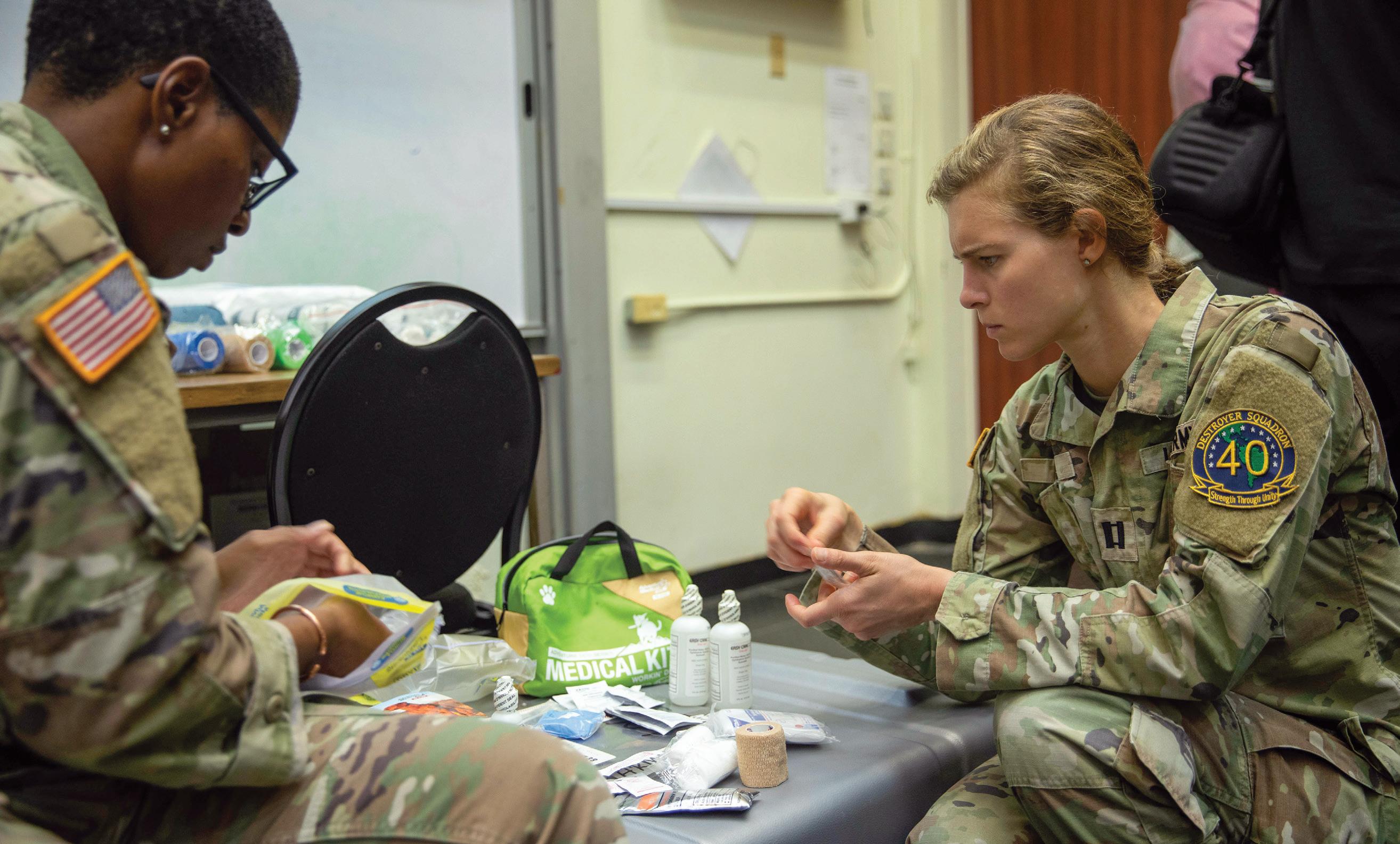
maintaining clinical proficiency, emergency triage and stabilization and general military tactics.
“We also train and prepare both the MWD Handlers and the Combat Medics with the fighting units on what is called K9 Tactical Combat Casualty Care.” Capt. Hood says. “This is the emergency care provided at the point of injury, whether it be a gunshot wound, blast from an explosive device or other combat wounds.”
Due to the structure of the fighting units, there are no veterinary personnel assigned to the front lines with these MWDs.
“In the event of a combat casualty, the human combat medics, the MWD handler and the human medical triage teams will be providing the initial triage and care needed to keep the MWD alive to reach the Role 2 veterinary care with our VSST,” Capt. Hood says.
Capt. Jackson noted how military veterinarians can be tasked with non-combat operations, to include missions like Pacific Partnership and Continuing Promise, as well as other missions.
“I’ve had the opportunities to go on missions with the US Secret Service to the Democratic National Convention, United Nations General Assembly and the 60th Presidential Inauguration,” Capt. Jackson says. “At these events, I was the
Capt. Hood examines an animal first-aid kit during a class on canine first aid for students at the University of West Indies in Port of Spain, Trinidad. Photo by Pfc. Jordan Bristol.
lead veterinarian for the Army team tasked to provide care and treatment to all MWDs and Federal Police K9s tasked to the support and security for the high-value attendees.”
Capts. Hood and Jackson credit their K-State education and their contacts with the faculty with helping them complete their respective missions.
“I am constantly thankful for the veterinary community from K-State and how willing the clinicians are to help out!” Capt. Jackson says. “There were multiple points that I reached out to clinicians at K-State for questions and guidance. The first time was talking with Drs. Cody Dressler and Brad Crauer during the initial mission planning, where I sought their expertise of shelter surgery to build instrument packs and take some extra pointers on surgical operations with limited resources.”
He says he also reached out to Drs. Bryan and Leslie Weaver, with Livestock Services in the Veterinary Health Center, for consultation on some livestock and cattle medicine.
“Being able to send a quick text to ask for their expertise was a comforting feeling,” Capt. Jackson says. “It was great knowing there was always an ability to fill in any gaps
or specific details in knowledge, especially in livestock management and clinical medicine, where I don’t have the routine practice knowledge.”
Beyond having the ability to consult with current K-State faculty, both captains agree that K-State provided a great foundation for facing the challenges of veterinary medicine in the military.
“I often consider myself fortunate to have gone to K-State for veterinary school, and this mission really reinforced that feeling as I had a strong education in cattle management, including vaccine scheduling, herd health, nutrition, reproduction, different breeds and pathology,” Capt. Hood says. “I don’t practice large animal medicine on a day-today basis, but my class notes were a great resource for this mission.”
Capt. Jackson was quick to concur. “My time and education at K-State helped prepare me for the confidence and medical knowledge needed to plan, lead and execute a mission of this size.”
2025 recipient Dr. Ronald Marler, DVM 1973
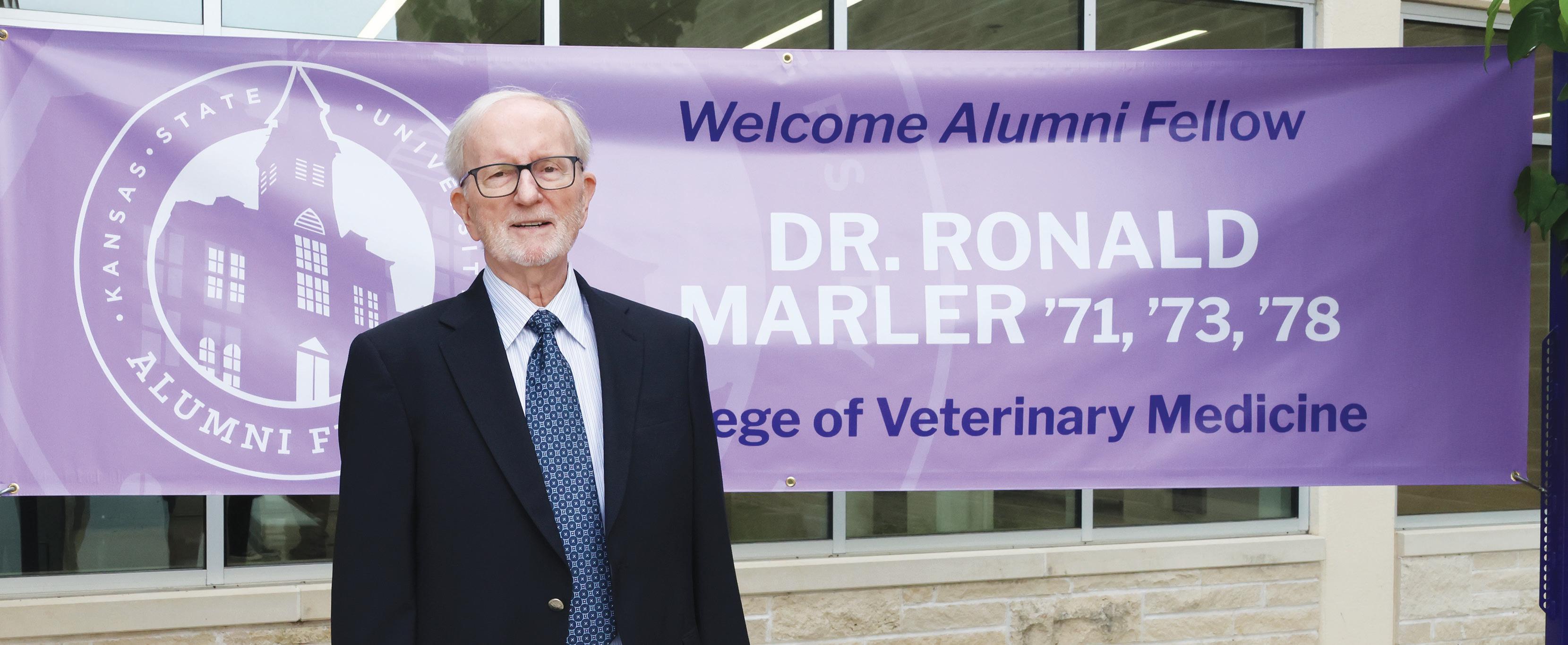
Dr. Ronald Marler, Scottsdale, Arizona, received his bachelor’s degree in 1971 and Doctor of Veterinary Medicine in 1973 from K-State. A short time after graduating, Dr. Marler joined the U.S. Army Veterinary Corps as a captain and then returned to K-State to complete a Ph.D. in veterinary pathology in 1978. Dr. Marler, who served as dean of the College of Veterinary Medicine at K-State from 1994 to 1997, is recognized as an expert in non-clinical drug development, pharmaceutical pathology and toxicology. He is board-certified by the American College of Veterinary Pathologists.
Dr. Marler’s industrial career began in the late 1970s with Mead Johnson Pharmaceuticals as a veterinary pathologist. By 1981, he had moved on to the toxicology laboratories of Merrell Dow Pharmaceuticals. During his tenure at Merrell Dow Pharmaceuticals, he held adjunct professorship positions at Butler University College of Pharmacy and Purdue University College of Veterinary Medicine. Dr. Marler worked with Merrell Dow Pharmaceuticals/Marion Merrell Dow Pharmaceuticals in various positions, including project leader, senior research toxicologist, group leader and head
of the toxicology department, as well as director and vice president of Global Drug Safety. In 1994, he returned to his alma mater to become dean of the K-State College of Veterinary Medicine.
Dr. Marler returned to industry in the mid-1990s and quickly became a vice president at Covance Laboratories. He joined the Mayo Clinic Arizona in 2004. He held multiple positions, including director of core research facilities, associate director for research, clinical procedural skills laboratory director and senior adviser for non-clinical drug development. As part of Mayo Clinic’s executive-on-loan program, Dr. Marler served as Colorado State University Venture’s interim CEO and board of directors, interim CEO and CSO of Bridge Laboratories, and board of directors for Pharmaron Laboratories.
He retired from Mayo Clinic Arizona as a professor of experimental therapeutics and molecular pharmacology and is now a professor emeritus. In “retirement,”Dr. Marler is the principal of a research veterinary pathology consulting business.
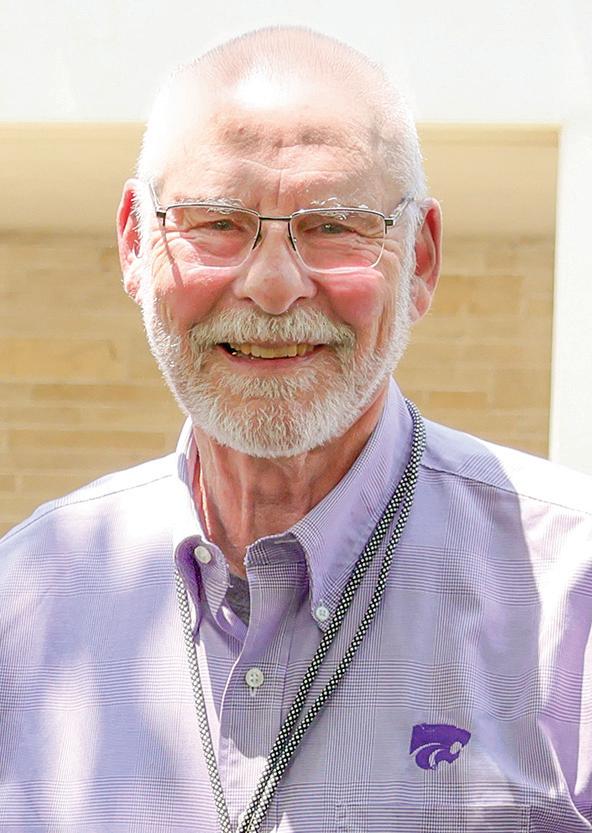
Dr. Ralph Richardson, DVM 1970
Dr. Ralph C. Richardson, Olathe, Kansas, served as dean and CEO of the K-State Olathe campus from 2015 to 2019 after serving 17 years as the dean of the College of Veterinary Medicine at Kansas State University. Originally from South Carolina, he grew up in Manhattan, Kansas, and earned his Doctor of Veterinary Medicine degree from K-State in 1970. After graduating from K-State, Dr. Richardson served as a captain in the United States Army Veterinary Corps from 1970 to 1972. He then completed an internship in small animal medicine and surgery at Purdue University in 1973. This was followed by the completion of a residency at the University of Missouri-Columbia in small animal internal medicine in 1975. After spending a year in private practice in Miami, Florida, he returned to Purdue where he joined the clinical faculty. Dr. Richardson was appointed as dean of the veterinary college at K-State in 1998. Under his leadership, enrollment experienced controlled growth from a graduating class of 79 students in 1998 to a class size of 112 by the time of his retirement in 2015. More than $72 million was raised in private support for the college including the creation of 150 scholarships and seven permanently endowed professorships. Dr. Richardson had an active role in helping to promote the Veterinary Training Program for Rural Kansas, or VTPRK, that offers a debt repayment incentive for graduates to work in rural practices in Kansas.
Dr. Steven Swaim, Geuda Springs, Kansas, grew up in Kansas City, Kansas, and near Geuda Springs, Kansas, southeast of Wichita. His wife of 60 years, Marjorie, is from Colby, Kansas. As a former professor of small animal surgery and medicine and as director of the Scott-Ritchey Research Center with a 37-year career at the Auburn University College of Veterinary Medicine, Dr. Swaim’s interests included teaching, research and service in clinical neurosurgery and soft tissue wound management and reconstructive surgery.
Dr. Swaim earned his Doctor of Veterinary Medicine degree in 1965 at Kansas State University and he received his Master of Science degree from Auburn University in 1971. He was presented with both an Alumni Recognition Award by K-State in 2003 and a Distinguished Alumni Award from Auburn University in 2018.
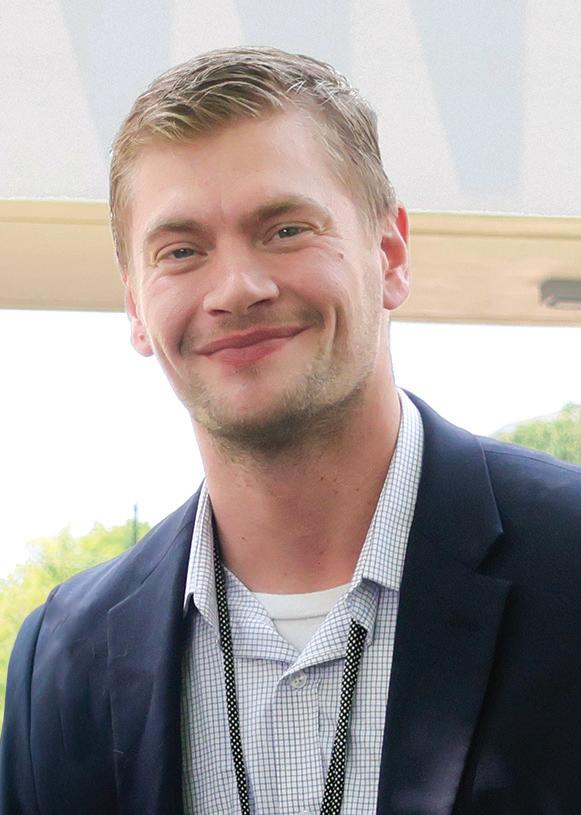
Dr. Trenton Shrader, Manhattan, Kansas, is a Nebraska native, originally from the small town of Elmwood, which is between Lincoln and Omaha. Some of his fondest memories of childhood are raising chickens and rabbits with his dad to show for 4-H at the county fair and giving book reports to his grandma so she could keep tabs on his reading skills. He earned a bachelor’s degree in 2012 and his Doctor of Veterinary Medicine degree in 2015, both from Kansas State University. He completed a specialty internship in zoo, exotics, and wildlife medicine at the University of Saskatchewan’s Western College of Veterinary Medicine. After his year at USask, Dr. Shrader completed a specialty internship in zoological medicine and surgery at Omaha’s Henry Doorly Zoo and Aquarium. Following the training program, he was offered the opportunity to stay as an associate veterinarian at the Omaha Zoo, where he worked until being offered the director of medicine and conservation position at the Lincoln Children’s Zoo. With the encouragement of Dr. James Carpenter, Dr. Shrader was recruited back to Kansas State University to begin training students as the clinical assistant professor of zoo, exotic, wildlife and avian medicine and surgery in 2022.
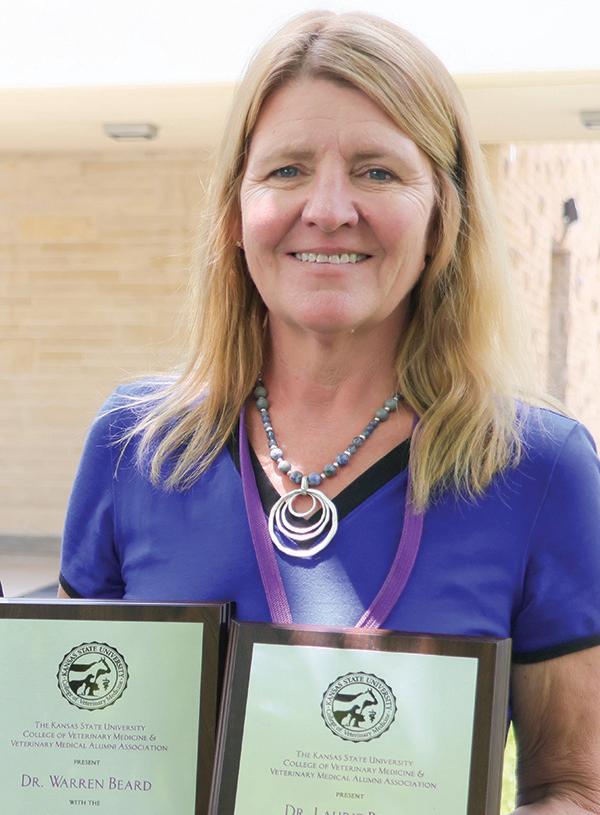
Dr. Laurie Beard is a clinical professor/section head of equine medicine and surgery. Dr. Warren Beard was a longtime professor and equine surgeon at K-State. He passed away unexpectedly in July 2023.
Dr. Laurie Beard attended Washington State University where she earned her DVM in 1991. She did an internship at Rood and Riddle Hospital followed by a residency in equine internal medicine, and a master’s degree at the Ohio State University. Dr. Beard was a clinical assistant/associate professor at OSU for seven years as an equine field service veterinarian. She joined K-State in 2004 and worked as an equine internist. She was later promoted to clinical professor.
Dr. Warren Beard received his DVM degrees from Texas A&M University in 1983 respectively. He entered private practice in Dickinson, Texas, for two years before moving to Ohio State University to begin a residency in equine surgery. He completed his surgical residency and received a master’s degree in surgical sciences in 1988.
For 14 years, he was an assistant professor and associate professor before leaving to start a new position at K-State in 2004.
Dr.Maureen Sutter, DVM 2007
Dr. Maureen Sutter, Paola, Kansas, is the owner of Red Oak Animal Hospital in Bucyrus, Kansas. She earned her Doctor of Veterinary Medicine degree from Kansas State University in 2007. After completing an ambulatory internship at Rood and Riddle Equine Hospital in Lexington, Kentucky, she began working for the Kentucky Horse Racing Commission and covered several high-stakes races (including the 2009 Kentucky Derby). In 2010, she was given the opportunity to return home to Kansas and continue her passion for helping animals and their owners.
Dr. Sutter has worked with Kansas State University to form the “Guiding Wildcats into Future Equine Vets” mentorship group, where they have paired equine practitioners with equine interested students. This mentorship opportunity started spring of 2022 and has continued to grow.
Dr. Copper Aitken-Palmer, DVM 2003
Dr. Copper Aitken-Palmer, La Grange, Illinois, earned her DVM and a master’s degree in clinical sciences, both from K-State University in 2003. She also holds a Ph.D. from the University of Maryland and is a board-certified specialist in zoological medicine with the American College of Zoological Medicine. She works at Brookfield Zoo Chicago and consults internationally with Vet-CT. After graduating from K-State, Dr. Aitken-Palmer worked in Maryland as an associate veterinarian/small animal veterinarian in Maryland while working on her Ph.D. She studied giant panda reproductive physiology and went on to have success performing artificial insemination, which resulted in the birth of 10 giant panda cubs. Dr. Aitken-Palmer’s work has contributed significantly to the conservation of giant pandas.
Dr. Dean Henricks, DVM 1969
Dr. Dean Henricks, Carmichael, California, grew up on a farm near Herington, Kansas. He earned bachelor’s degree in 1966 and a Doctor of Veterinary Medicine degree in 1969, both from Kansas State University. After graduating he began practicing in St. Helena, California. A year later, Dr. Henricks bought a practice in Crescent City, California, and in 1979, he moved to the Sacramento area. After working as a veterinarian in Citrus Heights for many years, he bought and grew Citrus Heights Pet Hospital, where he has worked the rest of his career. Dr. Henricks sold his practice in 2010, although he continued to work part-time for the new owner until he retired in 2021.
Dr. Candace Lundin, DVM 1983
Dr. Candace Lundin, Middletown, Virginia, was born in Manhattan, Kansas. After graduating with a DVM in 1985, she stayed on to become the veterinary teaching hospital’s first-ever equine intern. She obtained a master’s degree in anatomy and physiology. She moved to Virginia and spent two years specializing in equine surgery at the Marion DuPont Scott Equine Medical Center in Leesburg. She moved from Baltimore, where she was in a private equine practice, to the suburbs of Chicago, and served as associate medical editor of JAVMA and AJVR for the AVMA, and later to New York, where she managed global scientific communication plans for Pfizer’s Animal Health Division.
Her career path moved into pharmaceutical research and medical publishing. While working with “big pharma,” Dr. Lundin commuted weekly to the horse country of Virginia to work with her husband, the late Frank Zureick, in a thoroughbred breeding/ sales, training and racing business. Today, she breeds and shows Russell Terriers under the prefix D.B.F. Russell Terriers.
Dr. Ron Highland, DVM 1975
Dr. Ron Highland, Wamego, Kansas, retired in 2023 after 10 years of service as a state representative for House District 51. He grew up in Brewster, Kansas. His career included veterinary practice, teaching, military service and pharmaceutical research and development. In 1966, Dr. Highland entered the U.S. Army, where he was commissioned as a second lieutenant. He was a platoon leader in Korea. During his first enlistment in the Army, Dr. Highland was stationed at Fort Leonard Wood, Fort Ord, Fort Benning and Fort Riley. He next attended K-State, completing two degrees — a bachelor’s degree in 1973 and DVM in 1975. He went into private practice, mainly with large animals.
Dr. Highland re-enlisted in the Army Veterinary Corps, and later returned to K-State to complete a Ph.D. in physiology/pharmacology.
He was the manager of pharmacology development for Bayer Animal Health for 20 years. He was elected to the Kansas House in 2013 and served five terms.
Drs. Erin, DVM 2004, and Ben Schroeder, DVM 2002
Drs. Ben and Erin Schroeder, Hartington, Nebraska, own and operate Cedar County Veterinary Services where they also star in Nat Geo Wild’s show “Heartland Docs, DVM,” which debuted in 2020. Ben, who was from Nebraska, had attended the University of Nebraska-Lincoln while Erin, from New York, attended Syracuse University. The couple met at K-State while Ben was a thirdyear veterinary student and Erin was a first-year veterinary student. Ben completed his Doctor of Veterinary Medicine degree (DVM) in 2002, and Erin completed her DVM in 2004.
Ben grew up as the son of a veterinarian. Dr. John Schroeder, a 1972 Iowa State graduate, started Cedar County Veterinary Services and practiced for 30 years in Coleridge, Nebraska. Erin grew up in Westport, New York. They married in 2001, while both were still in veterinary college. After Ben graduated in 2002, he worked in a small animal practice in Manhattan.
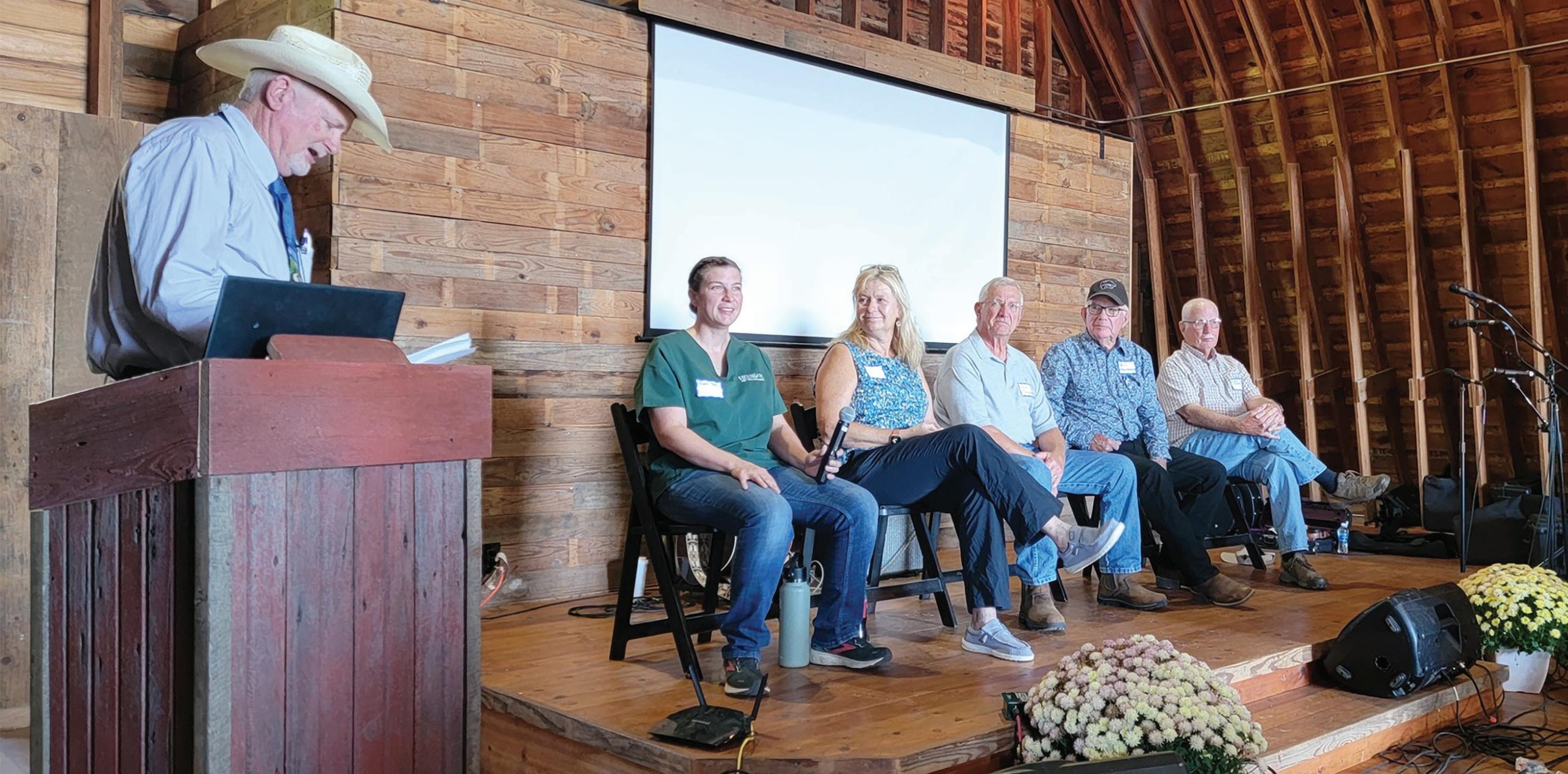
Pioneer Bluffs host Jeff Davidson introduces the panel for “Flint Hills Veterinarians Tell their Best Ranch Stories” at the “Fall Roundup” held at Matfield Green, a small community in the Flint Hills 78 miles south of Manhattan. The veterinarian panel included four K-State veterinary alumni and an Oklahoma State University alumna: From left: Dr. Audra Blasi, Oklahoma State DVM 2014, of Council Grove; Dr. Jessica Gernhard, DVM 2019, of Marion; Dr. Tom Jernigan, DVM 1979, of Council Grove; and Dr. Bill Brethour, DVM 1966, of Wamego; and Dr. Duane Henrikson, DVM 1967, of Emporia. A video is posted on YouTube with the discussion on “most fulfilling moments” as a veterinarian.
Dr. Mike Dryden DVM 1984
Parasiticides need to be administered properly and consistently to prevent heartworm disease. Michael W. Dryden, DVM, MS, Ph.D., DACVM (Parasitology), drove the point home in a keynote lecture that launched day two of the 2025 Fetch dvm360 Conference in Kansas City, Missouri.
Dr. Dryden, professor emeritus at K-State, is the author of numerous articles, book chapters, and books; and a frequent lecturer on parasitology at industry events around the world. He has also won multiple awards, including the distinctions of 2015 American Association of Veterinary Parasitologists Distinguished Parasitologist of the Year and the 2017 American College of Veterinary Microbiologists Distinguished Microbiologist of the Year.
Dr. Mendel Miller, DVM 1991
The South Dakota Animal Industry Board has named Dr. Mendel Miller as the next state veterinarian and executive
secretary of the South Dakota Animal Industry Board. He has served as the assistant state veterinarian since 2009. Prior to working for the AIB, Dr. Miller owned a private mixed-animal practice in Canton, South Dakota, for more than 13 years.
“I am grateful for this opportunity and for the privilege of working alongside the previous state veterinarians, from whom I’ve learned so much. I am especially thankful to Dr. Sam Holland, Dr. Dustin Oedekoven and Dr. Beth Thompson for their leadership, guidance and support over the years,” Dr. Miller says. “I look forward to working closely with the board and South Dakota producers to protect and preserve our livestock industry.”
Sarah Burkindine DVM 2002
Dr. Sarah Burkindine has written and self-published a memoir about her “journey through burnout and subsequent recovery, with the hope of helping others in the profession.” She says, “My intention in sharing my story is to encourage others who may recognize themselves in my experiences to seek help sooner than I did.”
The memoir, “Scarlet Macaw Ascending,” is listed with Amazon and Apple Books.
Matthew Edson, DVM 2011
Dr. Matthew Edson is currently serving as the founding dean of the Shreiber School of Veterinary Medicine at Rowan University in New Jersey. He was appointed in September 2025 by Gov. Phil Murphy to the New Jersey State Board of Veterinary Medical Examiners.
Justin Jones, DVM 2016
Dr. Justin Jones and his clinic were picked by the Richmond Times-Dispatch in its Best of 2025 poll for the veterinarian category. “Thank you to everyone who voted and supported us,” Dr. Jones posted on the Facebook page for Jones Veterinary Care PLLC. “Huge shout out to our staffthey are incredibly special and have embodied our mission to increase access to veterinary care.”
1951
Dr. William Bruce Grene
Feb. 26, 2025 Wichita, Kansas
1952
Dr. Howard Eugene Gill
Feb. 7, 2022 Cherryvale, Kansas
1954
Dr. Harry F. Blanchard
Aug. 1, 2024 Santa Cruz, California
Dr. Charles Fuller
June 25, 2024 Park Rapids, Minnesota
1956
Dr. Martin Raymond Frey
June 21, 2024 Lakeway, Texas
Dr. John Deam
Jan. 10, 2024 Salt Lake City, Utah
Dr. John Edward Kuenzi
Dec. 27, 2024 Waukesha, Wisconsin
1957
Dr. Thomas Frederich Burton
Nov. 14, 2024 Falls City, Nebraska
1958
Dr. Earl Tobler
July 10, 2023 Rogers, Arkansas
Dr. Gerald D. Rousseau
Oct. 21, 2023
Leavenworth, Kansas
Dr. Robert H. Pierson
May 4, 2025 Northfield, Minnesota
1959
Dr. Richard L. Hackler
Nov. 3, 2024 Clinton, Missouri
Dr. Donald Impson
Nov. 2, 2024 Magnolia, Arkansas
1960
Dr. Edward J. Bickwell
June 28, 2024 Manhattan, Kansas
Dr. Lonnie S. Critchfield
Aug. 4, 2024 Halls, Tennessee
Dr. William Mengling
May 2, 2025
Ames, Iowa
1961
Dr. John Robert Kennedy
March 14, 2025
Placerville, California
Dr. Paul McRae
Sept. 2, 2024
Hays, Kansas
Dr. Richard Bowen
Sept. 26, 2024 Greenfield, Indiana
Dr. Ben R. Craig
Nov. 3, 2024
Topeka, Kansas
Dr. Robert Glenn Skaggs
March 21, 2025
Greensburg, Kansas
1963
Dr. Kenneth E. Roberts
March 6, 2024
Pella, Iowa
Dr. Duane Thomas
Oct. 29, 2024
Siloam Springs, Arkansas
Dr. Daniel Mead Winger
Feb. 22, 2025
Cadott, Wisconsin
Dr. Dallas Lowell Glenn
April 16, 2025
Clarinda, Iowa
1965
Dr. Gary Thomas
Oct. 6, 2024
South Dakota
1966
Dr. Ivan Schrock
April 21, 2025
Hutchinson, Kansas
1968
Dr. Sherwood Lionel Svarvari
May 6, 2025
Kansas City, Missouri
1969
Dr. Warren E. Boomer
Oct. 9, 2024
Hideaway, Texas
Dr. Ronald L. Schindler
Dec. 1, 2024
Fairhope, Alabama
1970
Dr. Jerry Dean Leroux
April 29, 2024
Hollister, California
Dr. Perry Ray Griffith
Feb. 25, 2025
Huntington Beach, California
1971
Michael A. Barnett, Master’s Degree
April 5, 2024
Hollywood, Florida
Dr. James Paul Grossardt
July 3, 2024
Siloam Springs, Arkansas
Dr. Keith L. Eberhart
Aug. 17, 2024
Surprise, Arizona
Dr. Richard Karl Bartel
Nov. 8, 2024
Gossel, Kansas
Dr. Jerre Kent Rorick
Jan. 12, 2025
Marion, Illinois
1973
Dr. Ronald Gene Kenton
Aug. 1, 2024
Basehor, Kansas
1974
Dr. Jack J. Robinson
Nov. 5, 2024
Frankfort, Kansas
Dr. George B. Reddin Master’s Degree
April 1, 2024
North Baltimore, Ohio
1975
Dr. Patrick J. Growney
June 2, 2021
Punta Gorda, Florida
1977
Dr. Timothy Anderson
July 29, 2024
Bakersfield, California
1980
Dr. Jay Paul Weidner
March 4, 2025
Pullman, Idaho
1981
Dr. Robert E. Main
Aug. 15, 2024
Gainsville, Missouri
1982
Dr. Dan Edward Schilling
June 19, 2024
Leavenworth, Kansas
1984
Dr. Donald Verne Cain
July 1, 2024
Broken Bow, Nebraska
1987
Dr. Scott Cramer Van Pelt
July 23, 2024
Lenexa, Kansas
Dr. Gordon Jewett
June 20, 2025
Otis Orchards, Washington
1992
Dr. Jay Bryce Tracy
Dec. 4, 2024
Thornton, Colorado
1996
Dr. Matthew Zupka
June 16, 2025
Topeka, Kansas
1998
Dr. Eric Charles Liska
May 2, 2024
East Helena, Montana
Dr. Errick Anthony Clayborn
June 3, 2024
Wichita, Kansas

Veterinary Health Center launches expanded, renovated small animal surgery center.
By Joe Montgomery
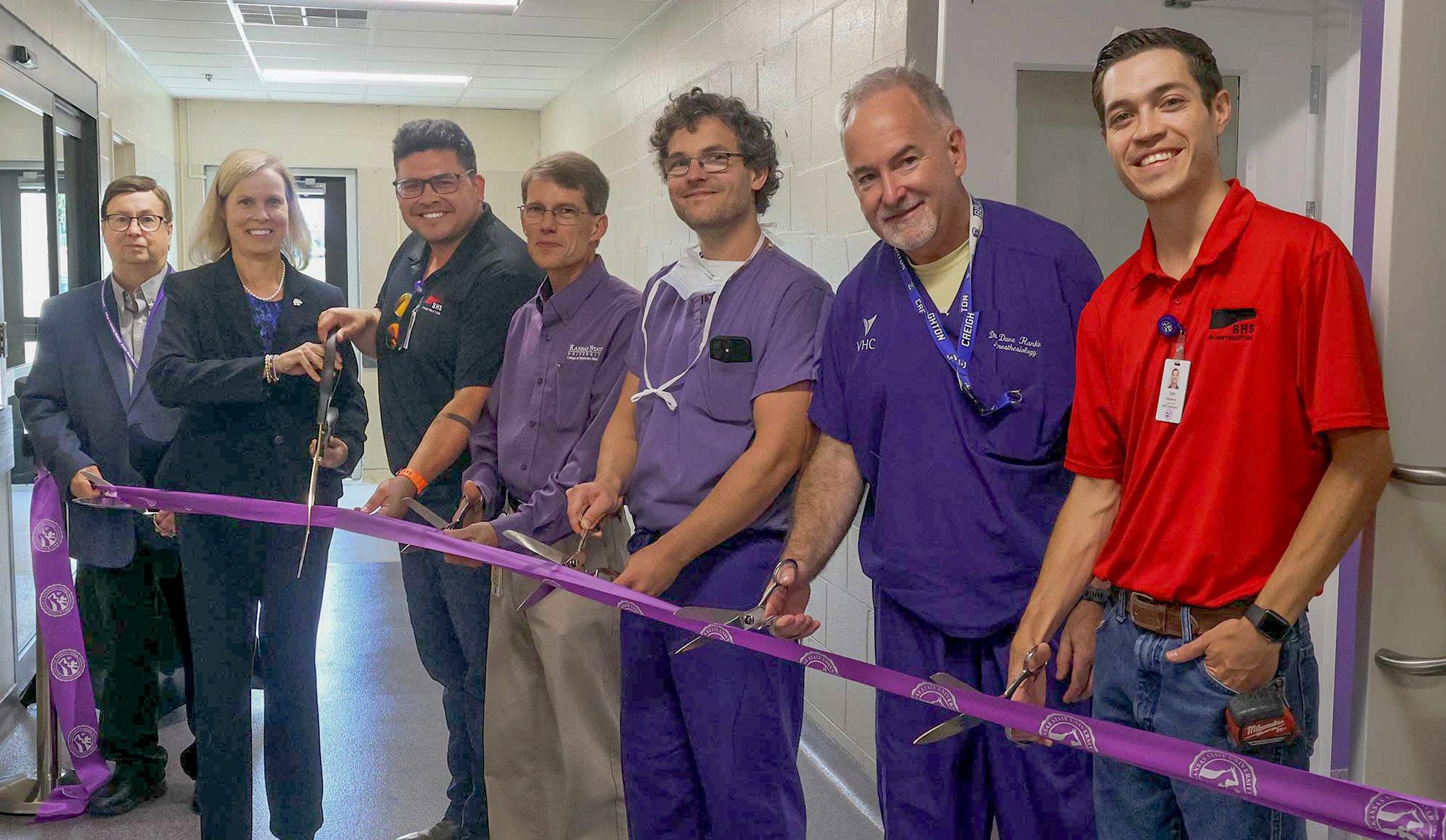
Nearly 50 years after it was built, the Veterinary Health Center has officially expanded its walls to renovate and enlarge its Small Animal Surgical center. The construction efforts occurred with relatively swift surgical precision thanks to a concerted team effort. The results will increase the surgical capabilities at Kansas State University while enhancing its educational mission.
Dr. Elizabeth Davis, interim dean for the Kansas State University College of Veterinary Medicine hosted a ribboncutting ceremony where she acknowledged all those who participated in the renovation.
“We’ve had the dream to upgrade our small animal surgery center for a long time, and it took a dream team to make this happen,” Dr. Davis says. “It began with a design drawn up by Dr. Walter Renberg [section head for small animal surgery] turned into actual blueprints by Hadley Stolte [lead
architect and K-State alumnus] at Clark and Enerson. BHS Construction turned it into a reality and at lightning speed.”
“The renovation of the surgical suites is a huge step forward for the hospital,” Dr. Renberg says. “Going from three small operating suites to five large ones and having centralized induction and recovery rooms will allow us to be much more efficient.”
Dr. Davis explained how the small animal surgical services had to be temporarily rehoused within Mosier Hall, while giving credit to the college’s faculty and staff for their flexibility over the period of nine months — from Nov. 2024 to Aug. 2025 — to provide uninterrupted service to clients of the Veterinary Health Center.
“Our goal was to be ready to have the Small Animal Surgery center ready for occupation before the end of August, so we have now moved equipment into place and made sure
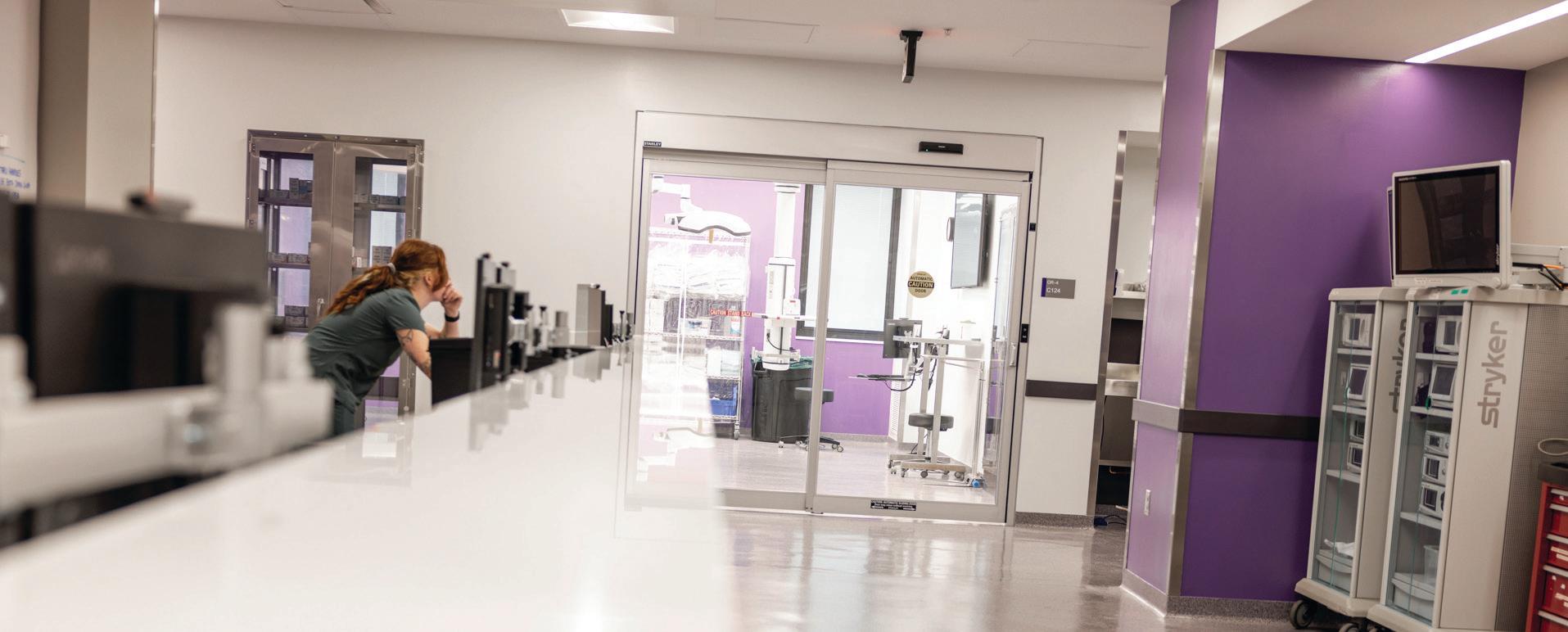
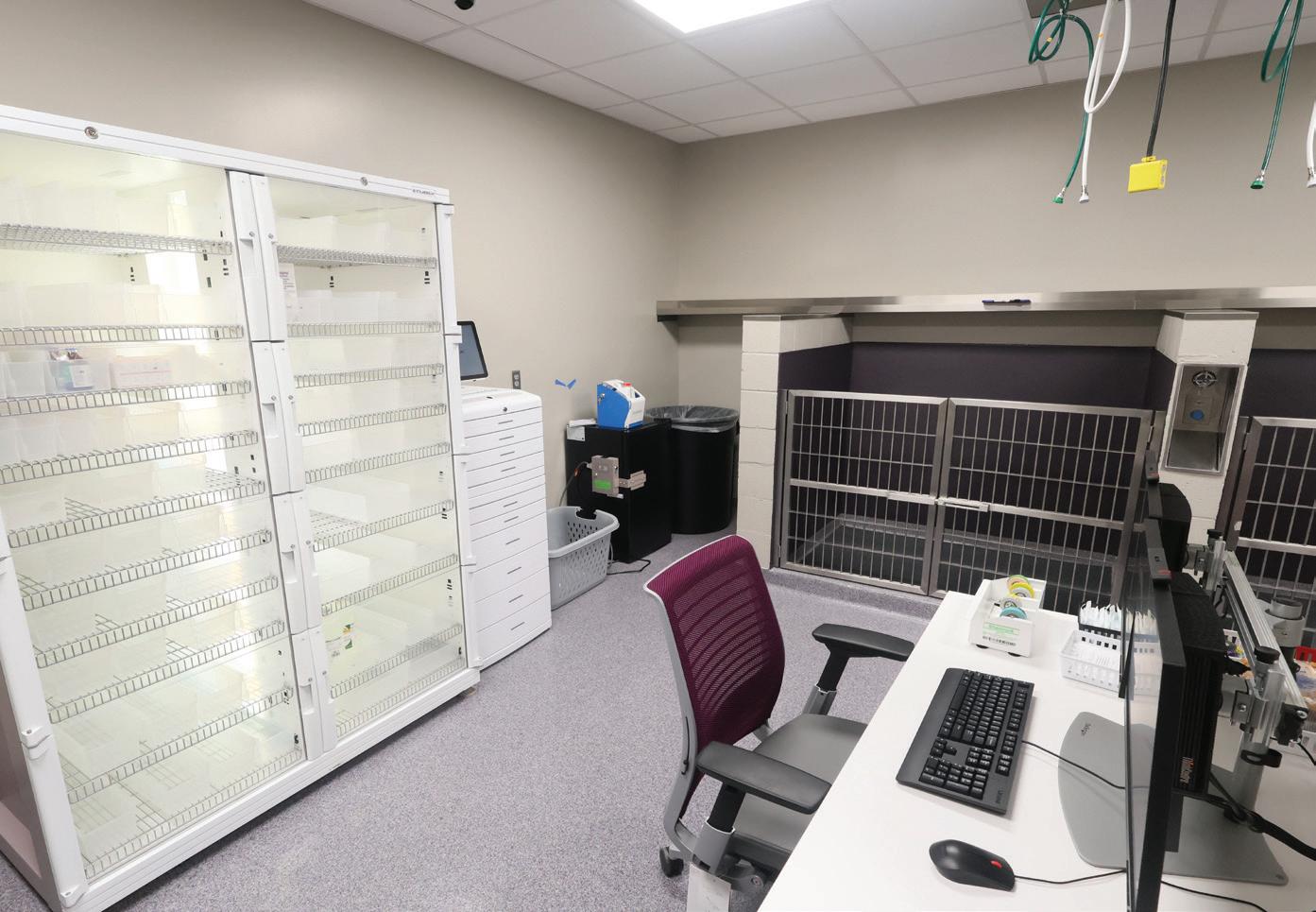
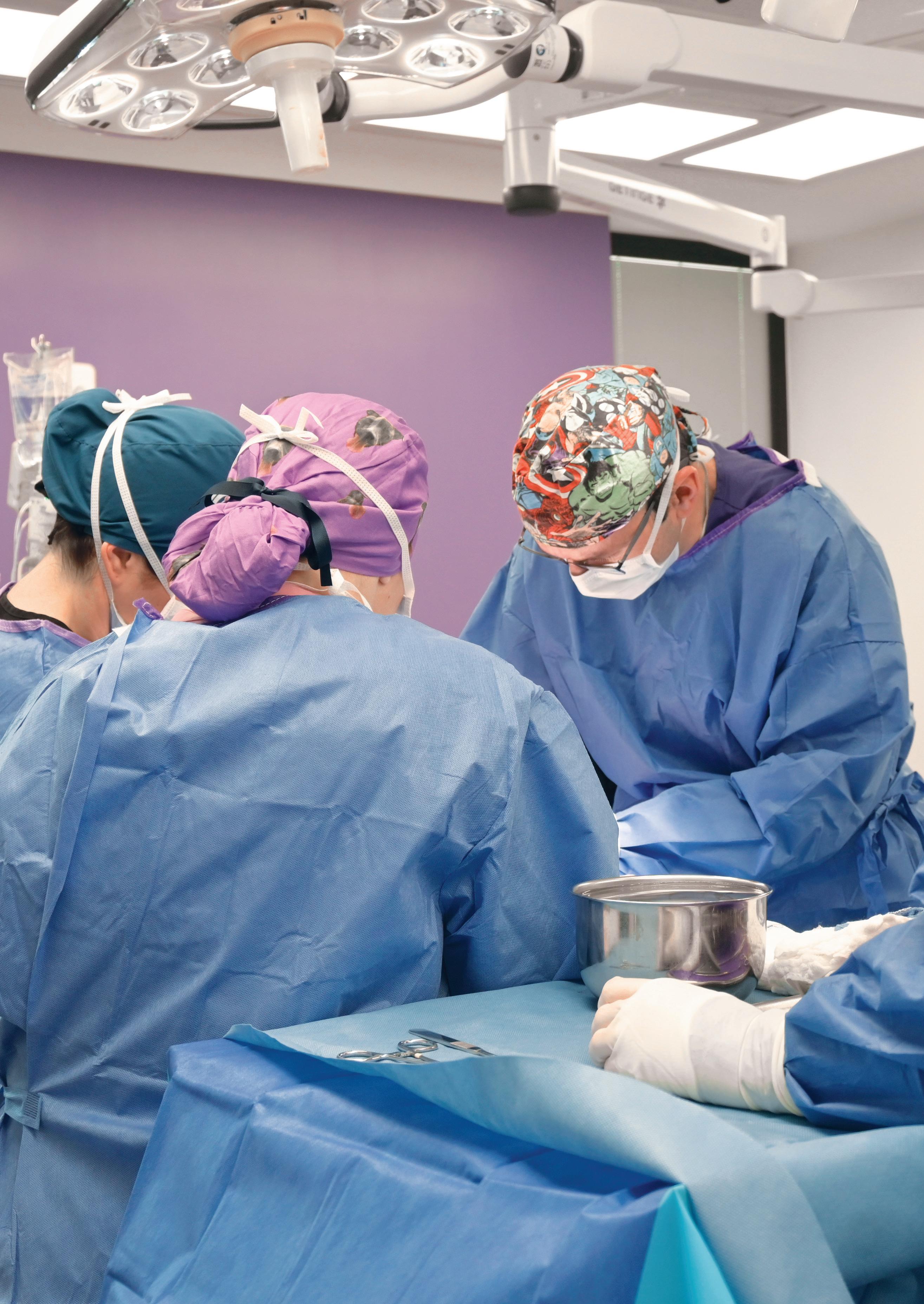
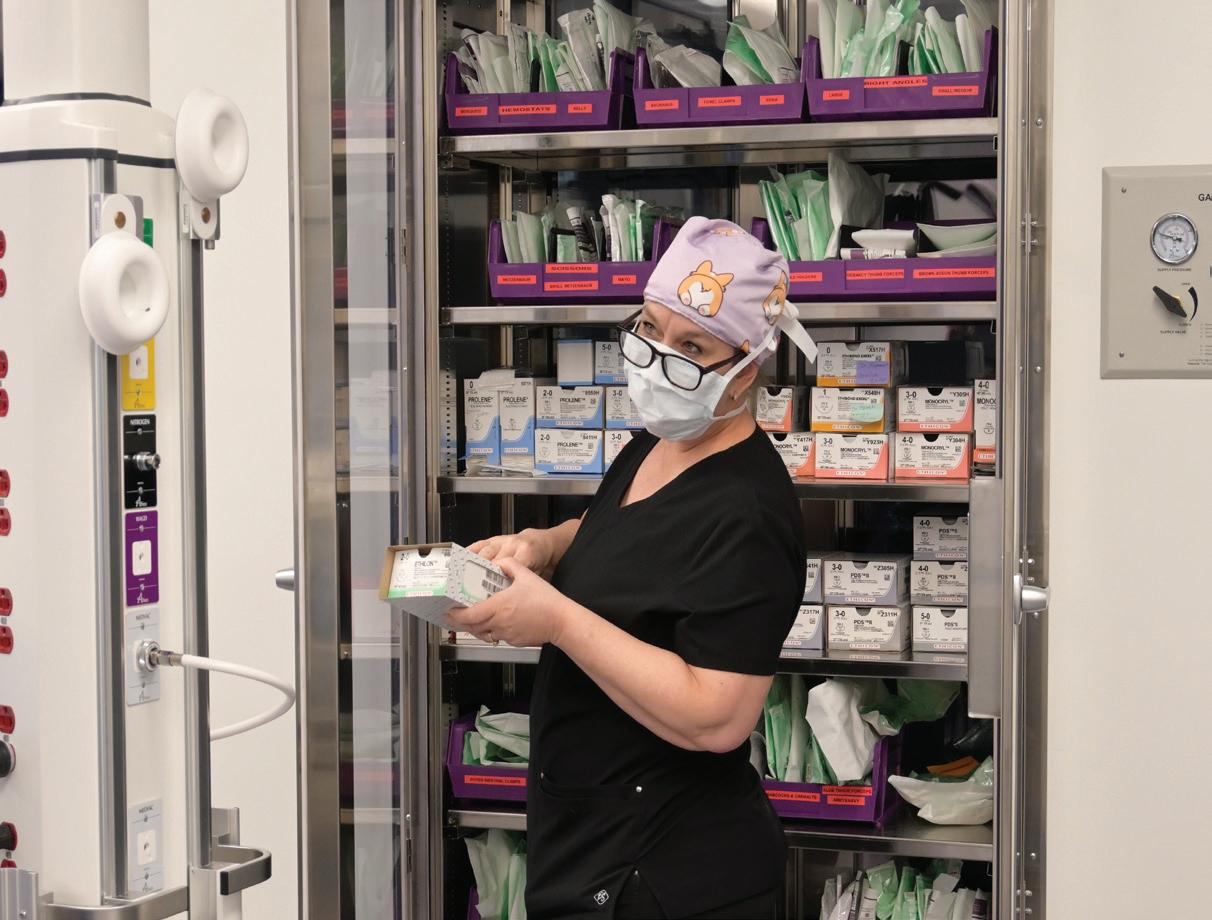
the area was cleaned and sanitized for use by the surgery and anesthesia service doctors and staff,” Dr. Davis says.”
“We anticipate the care for patients will be better, and we should be able to accommodate more, and different, cases,” Dr. Renberg says. “Ophthalmologic surgery suite improvements and the nurses’ workspace changes will benefit our mission tremendously.”
Renovations for the surgery center were made possible through a series of private donations. Individual gifts supported the surgery suite, anesthesia, orthopedic, soft tissue, anesthesia recover and the nurses’ station.
“The new surgical suite allows the surgery and ophthalmology services to function at the level of a human operating suite,” says Dr. David Upchurch, associate professor of small animal soft tissue surgery. “We now have several larger operating rooms fed by a central hub that allows for more surgeries at the same time, more efficient
communications with staff and, as a result, better patient care. The improved technological integration in the rooms allow us to display diagnostic imaging in a much larger format than previously, and to share real-time video from several operating rooms with the students outside the operating suite.”
Dr. Dale Kuhn, DVM class of 1975, designated his gift toward anesthesia.
“I have lived my life’s dream as a veterinarian,” Dr. Kuhn says. “I was raised in New York, but my heart is at K-State.”
The Gray family — Bruce, Robin and Dr. Mackenzie Gray supported anesthesia recovery. They shared their belief that, “Every recovery is a journey, and compassion is the path we walk together.”
For more information and an online tour of the new suite, scan the QR code!