Kunst en klimaat wandeling
Kunstenaars zijn betrokken mensen. Door kunstwerken te maken, onderzoeken ze de wereld, geven ze er commentaar op en laten ze ons ervaren wat hen bezighoudt. Maar hoe kunstwerken ons raken, ligt ook voor een deel buiten de bedoeling van de kunstenaar. Als publiek hebben we een andere blik, eigen associaties en ervaringen.
Wetenschappers zijn ook betrokken mensen. Met onderzoek, metingen en theorieën onderzoeken ze de wereld om ons heen. Klimaat- en biodiversiteitwetenschappers zijn zeer bezorgd, maar de urgentie van de problemen overbrengen is niet eenvoudig: modellen en grafieken zijn ingewikkeld en de vereiste zorgvuldigheid van wetenschap gaat niet goed samen met soundbites of oneliners.
Deze wandeling brengt kunstenaars en wetenschappers bij elkaar. Het Kröller-Müller Museum en Scientist Rebellion, een internationale beweging van wetenschappers en academici die zich grote zorgen maakt over de klimaat- en ecologische crisis, hebben samengewerkt om via kunst na te denken over klimaatontwikkelingen. In een selectie van negen beelden word je uitgenodigd om te reflecteren op de rol van kunst, wetenschap en de mens in tijden van klimaatverandering. De beeldentuin blijkt hier heel geschikt voor. Hier worden de gevolgen van een veranderend klimaat, zoals droogte en afnemende biodiversiteit, zichtbaar.
Op geheel eigen wijze roepen de negen kunstwerken vragen op over klimaatverandering. De wandeling informeert daarover, en zet vooral aan tot nadenken over wat deze ontwikkelingen betekenen voor ons als samenleving en wat voor samenleving we willen zijn.
Wat kan jij doen?
In de wandeling bespreken we aspecten van klimaatverandering en geven we bij nagenoeg elk kunstwerk adviezen waarvan wetenschappers weten dat ze effect hebben. Je kunt veel meer dan je denkt en dan je nu al doet! De Canadese klimaatwetenschapper Katherine Hayhoe stelt: ‘Het belangrijkste
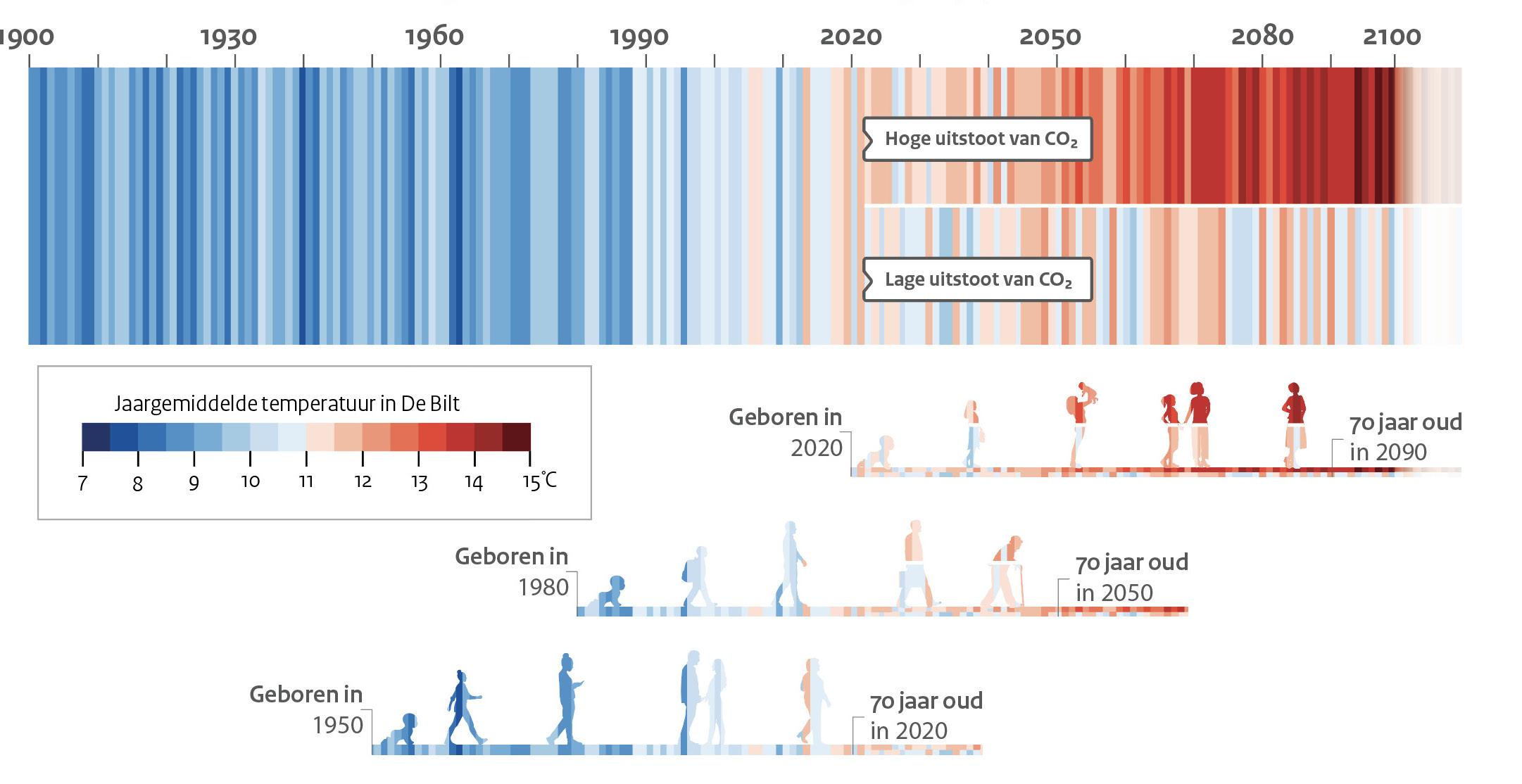
Klimaatverandering in Nederland: wat ga jij hiervan meemaken?
KNMI’23 klimaatscenario’s
dat je kunt doen in de strijd tegen klimaatverandering: erover praten.’3 Begin daarmee tijdens deze wandeling: praat erover en blijf dat doen. En zet je inzichten vervolgens om in actie!
Je invloed voelt misschien beperkt, maar je hebt veel rollen waarin je verschil kan maken. Als burger kun je je stemrecht gebruiken voor beleid dat de belangen van mens en natuur verdedigt. Maar ook als consument, collega, buurtgenoot, vriend of familielid; inspireer en irriteer de mensen om je heen. Spreek uit dat je je zorgen maakt en deel je kennis. Laat zien dat het anders kan; zo zet je je omgeving aan het denken. Dat is een belangrijke opmaat naar grotere maatschappelijke verandering.
Natuurlijk is alleen individuele actie niet voldoende. Daarom richt Scientist Rebellion zich op de partijen die het meest verantwoordelijk zijn voor klimaatverandering en biodiversiteitsverlies: bedrijven, banken en regeringen. Daar is de grootste winst te behalen. Toch zijn het individuen die samen deze partijen tot verantwoording roepen en aanzetten tot verandering. Verenig je met andere bezorgde burgers; gezamenlijke actie heeft effect.
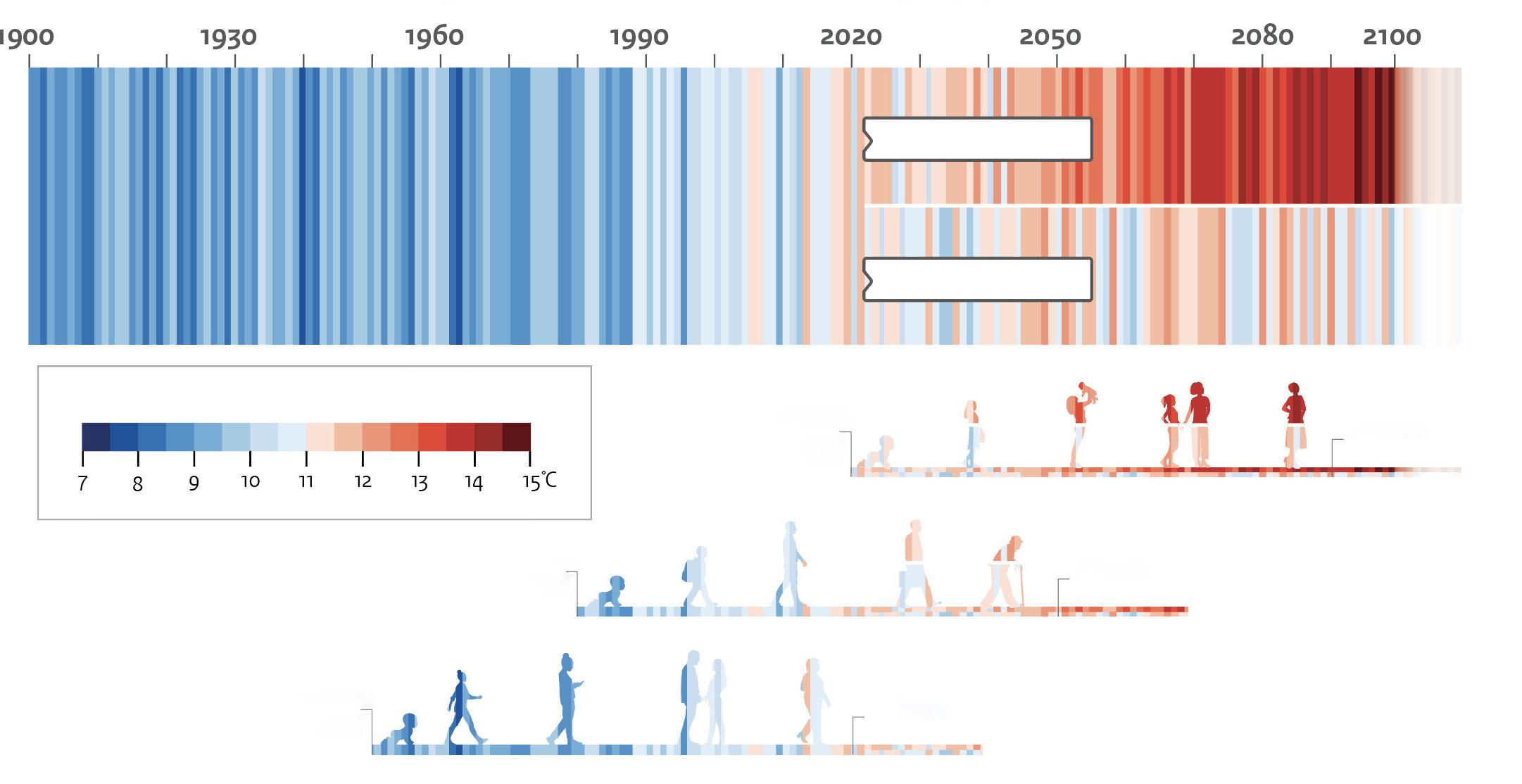
Klimaatverandering gaat over ons, over mensen elders op de wereld, én mensen die nog niet geboren zijn: de kinderen en kleinkinderen van onze kinderen. Deze grafiek laat zien hoe het klimaat veranderd is in de periode 1900-2020, en hoe het verder verandert in de periode tot 2100.4
Bron:
Waterschaarste en soortensterfte
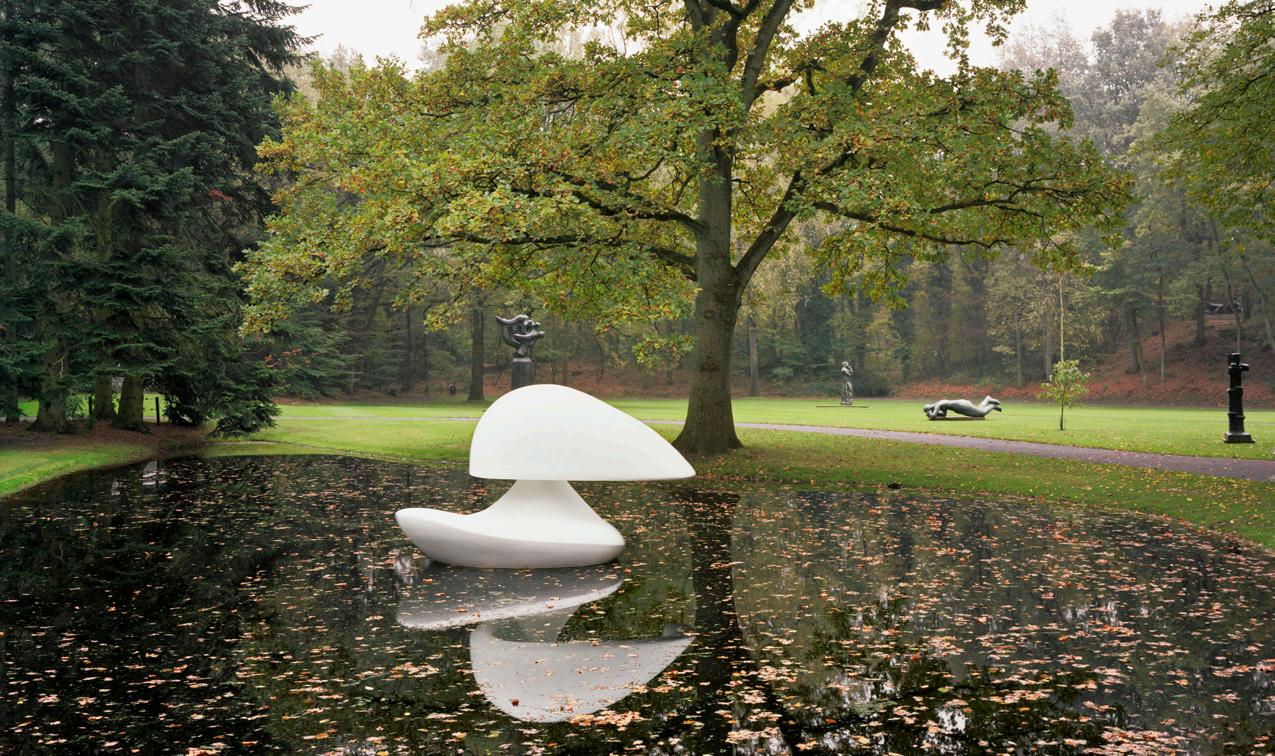
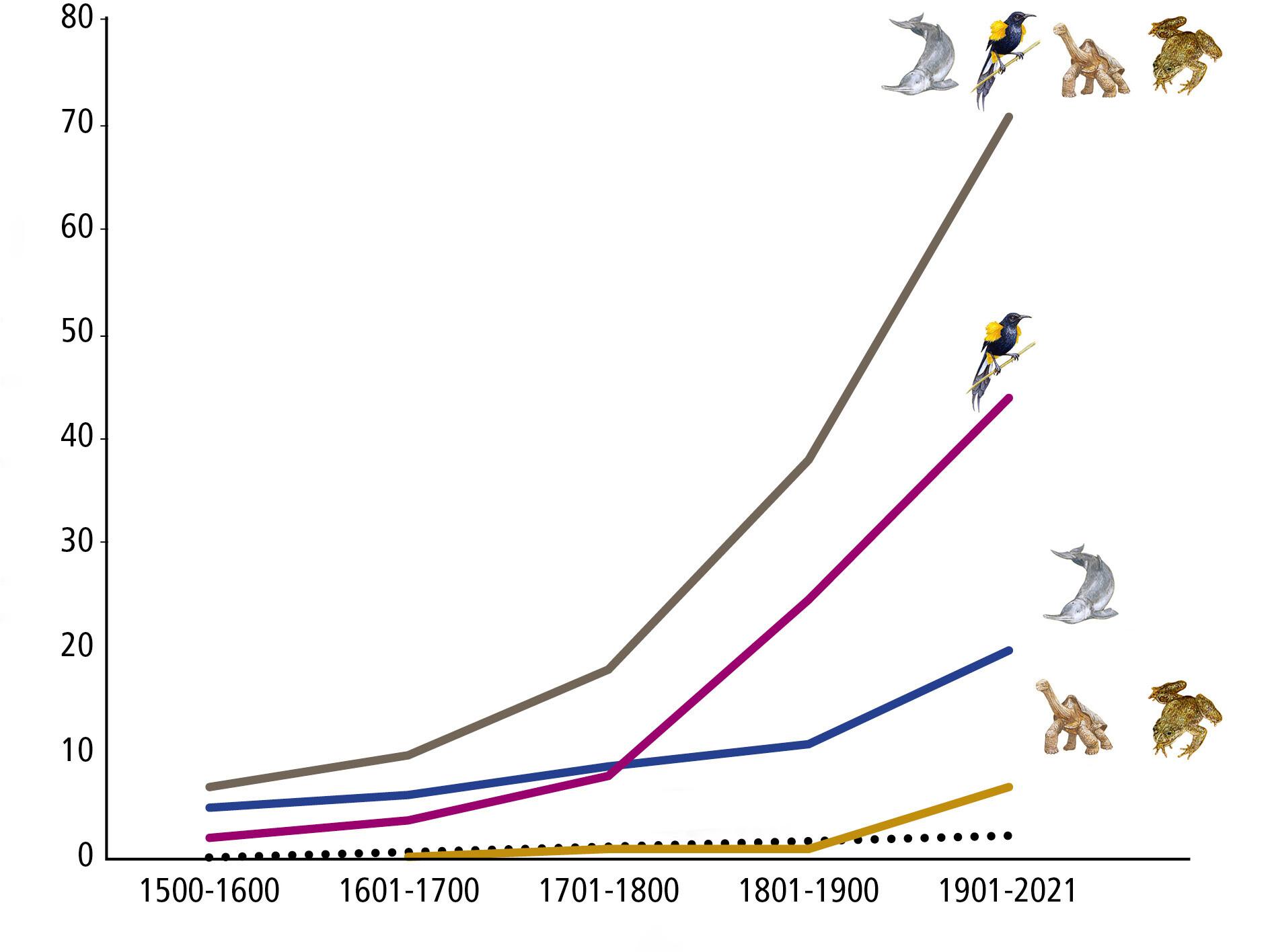
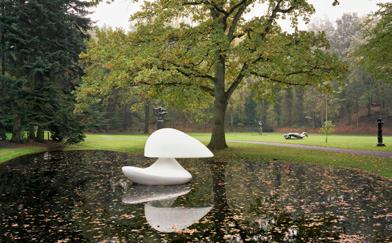
Als een sierlijke speelbal van de wind beweegt Sculpture flottante, Otterlo (Drijvende sculptuur, Otterlo) van de Hongaars-Franse beeldhouwer Marta Pan (1923-2008) over het water. De vijver waarin deze ‘zwaan’ drijft, is onderdeel van het kunstwerk. Die is in 1960 speciaal aangelegd, want op de zanderige Hoge Veluwe is water altijd schaars geweest. Door onze wateronttrekking aan het landschap voor industrie, landbouw en drinkwater neemt het tekort in heel Nederland toe. Het grondwater daalt, beken en vijvers vallen droog. Hierdoor hebben bomen het zwaar, verdort de heide en kunnen dieren en planten moeilijker overleven. De verscheidenheid aan diersoorten neemt al eeuwen af, maar het gaat steeds sneller, zeker duizend keer sneller dan gemiddeld in onze geologische geschiedenis.5 Sinds 1500, en vooral sinds het begin van de industrialisatie drie eeuwen later, is zo’n 30% van alle diersoorten op aarde uitgestorven of met uitsterven bedreigd.6 De zesde golf van massale uitsterving voltrekt zich nu. De gevolgen zijn er niet alleen voor de betreffende diersoorten maar voor het hele ecosysteem. Inmiddels is bijvoorbeeld 50% van alle bijensoorten uitgestorven. Let wel: de bij is een cruciale schakel in onze voedselketen.
Wat kan jij doen?
• Spreek de waterschappen en grote zakelijke gebruikers als energiebedrijven, de industrie en landbouw aan op hun waterbeleid.
• Bespaar water door korter te douchen, een waterbesparende douchekop te installeren en je tuin minder te besproeien.
Marta Pan, Sculpture flottante, Otterlo, 1960-1961
Totaal aantal uitgestorven geslachten / Cumulative number of extinct genera
Achtergrond / Background
Alle gewervelden / All vertebrates
Vogels / Birds
Eeuwen / Centuries
Ontwikkeling in het aantal uitgestorven soorten sinds 1500, met een verdeling in zoogdieren, vogels en reptielen en amfibieën.
Zoogdieren / Mammals
Reptielen, amfibieën / Reptiles, amphibia
Grafiek gebaseerd op figuur 2 uit: Gerardo Ceballos en Paul R. Ehrlich, “Mutilation of the tree of life via mass extinction of animal genera,” Proceedings of the National Academy of Sciences 120, nr. 39 (2023): e2306987120, https://doi.org/10.1073/pnas.2306987120.
Trends in the number of extinct species since 1500, broken down into mammals, birds, and reptiles and amphibians.
Graph based on figure 2 from: Gerardo Ceballos and Paul R. Ehrlich, “Mutilation of the tree of life via mass extinction of animal genera,” Proceedings of the National Academy of Sciences 120, no. 39 (2023): e2306987120, https://doi.org/10.1073/pnas.2306987120.
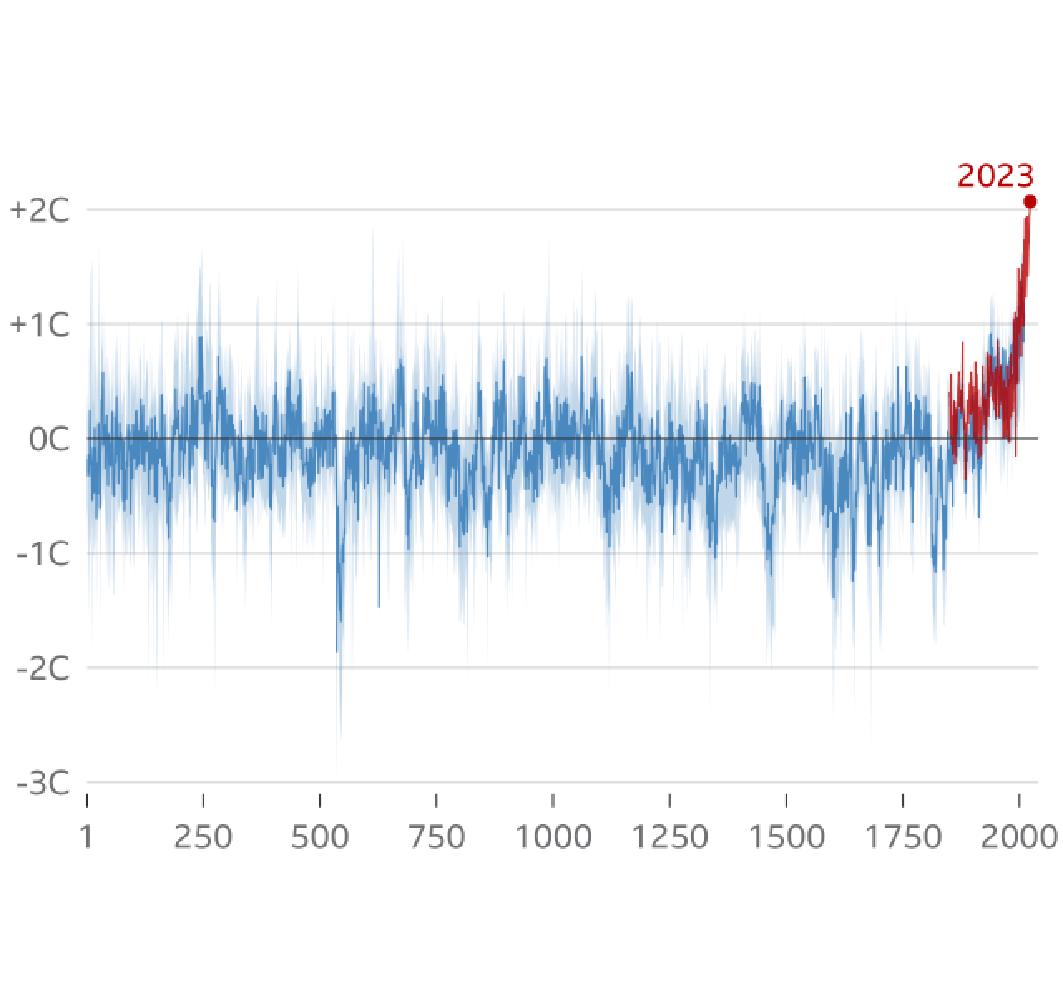
Temperatuurstijging in de afgelopen 2000 jaar op het noordelijk halfrond. De nullijn is de gemiddelde temperatuur van 1850-1900. De grafiek toont dus de afwijking van dit gemiddelde. Wat valt op? De temperatuur schommelt rond het gemiddelde tot het begin van de industriële revolutie rond 1850. Vanaf 1950 schiet de temperatuur omhoog. De zomer van 2023 was de warmste zomer in 2000 jaar. Wetenschappers kunnen de temperatuur bepalen door reconstructies (blauw) en metingen (rood).
Temperature increase in the Northern Hemisphere over the past 2,000 years. The baseline represents the average temperature from 1850 to 1900. The graph therefore shows the deviation from this average. What stands out? The temperature fluctuates around the average until the start of the Industrial Revolution around 1850. From 1950 onwards, the temperature shoots up. The summer of 2023 was the warmest summer in 2,000 years. Scientists can determine temperatures using reconstructions (blue) and measurements (red).
Figuur door de BBC vormgegeven, afkomstig van “Climate Change: Last Summer Hottest in 2,000 Years, Trees Reveal,” 14 mei 2024, https://www.bbc.com/news/articles/c72pp3yqzjyo. Gebaseerd op de gegevens uit: Jan Esper et al., “2023 Summer Warmth Unparalleled over the Past 2,000 Years,” Nature 631, nr. 8019 (2024): 94-97, https://doi.org/10.1038/s41586-024-07512-y.
Illustration designed by the BBC, sourced from “Climate Change: Last Summer Hottest in 2,000 Years, Trees Reveal,” 14 May 2024, https://www. bbc.com/news/articles/c72pp3yqzjyo. Based on data from: Jan Esper et al., “2023 Summer Warmth Unparalleled over the Past 2,000 Years,” Nature 631, no. 8019 (2024): 94-97, https://doi. org/10.1038/s41586-024-07512-y.
Temperatuurstijging
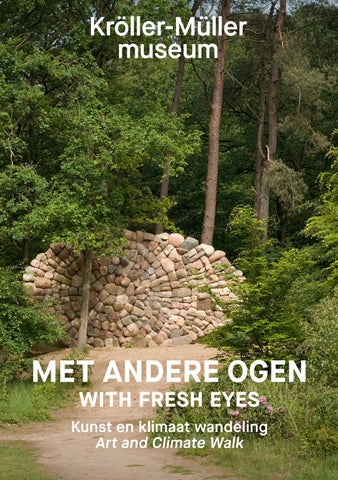
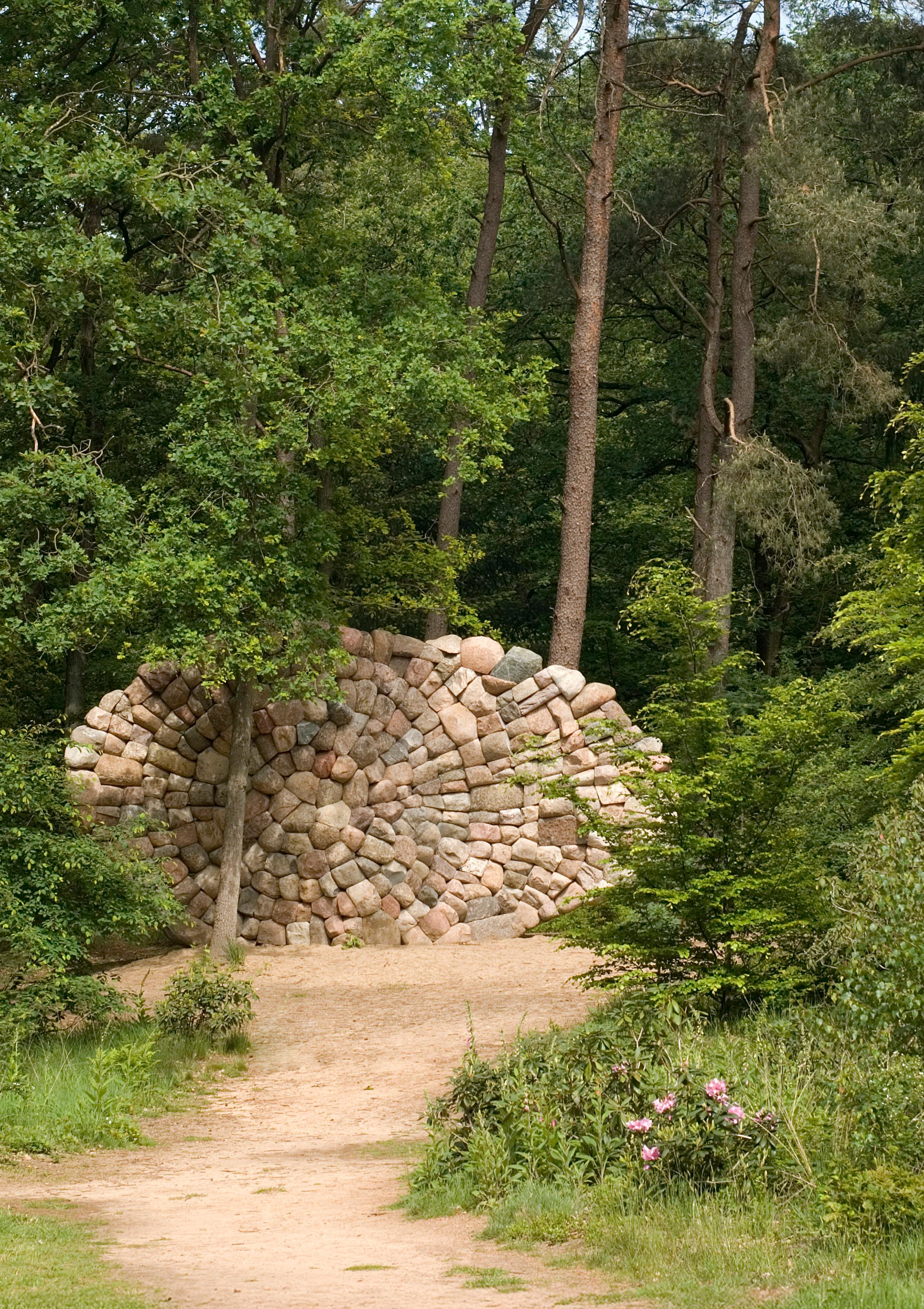
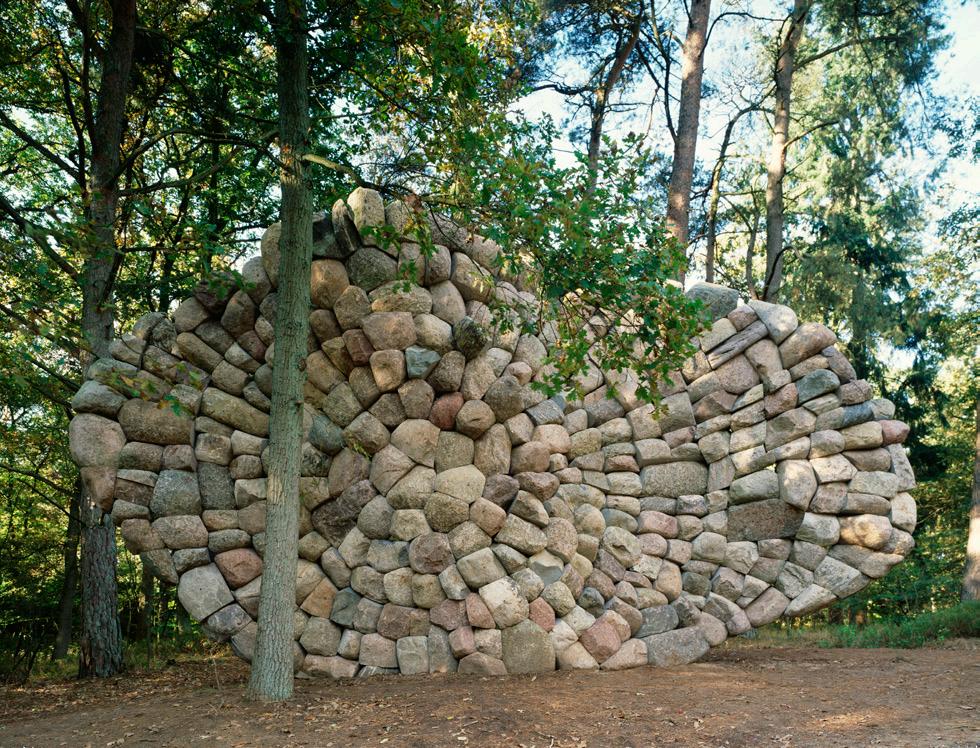
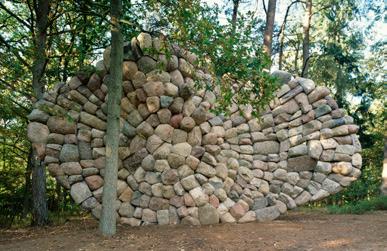
Echo van de Veluwe bestaat uit 310 zwerfkeien die de Nieuw-Zeelander Chris Booth (1948) op de Hoge Veluwe verzamelde. De stenen kwamen hier zo’n 150.000 jaar geleden terecht tijdens de voorlaatste ijstijd, het Saalien. Gletsjers schoven vanuit Scandinavië over Nederland, dat toen een koud, droog klimaat en een metersdiepe bevroren grond had. Na deze ijstijd volgde een warmere periode, waarin de temperatuur en zeespiegel een stuk hoger waren dan nu en er hier zelfs bosolifanten en nijlpaarden leefden. Temperatuurschommelingen komen altijd voor, maar door de uitstoot van broeikasgassen stijgt de temperatuur nu heel snel. Met name door de verbranding van fossiele brandstoffen zoals aardolie, aardgas en steenkool, stoten we veel broeikasgassen uit en is de wereldtemperatuur de afgelopen eeuw met ruim 1,5 °C gestegen. Dit lijkt misschien weinig, maar het gevolg is dat eind deze eeuw de zeespiegel een meter gestegen is, soortenrijkdom ernstig onder druk staat, we meer droogte en hittestress ervaren en meer wateroverlast zullen hebben. Een verandering die eerder vele tienduizenden jaren duurde, is nu in zo’n 150 jaar gebeurd: sinds de invoering van de stoommachine.
Wat kan jij doen?
Steek je licht eens op bij organisaties als:
• Youth for Climate NL: www.youthforclimate.nl
• Grootouders voor het klimaat: www.grootoudersvoorhetklimaat.nl
Helena Schmidt, onderzoeker energietransitie: ‘Om klimaatverandering aan te pakken, moeten we het gebruik van fossiele brandstoffen drastisch terugdringen en kiezen voor schone, duurzame energiebronnen. Grootschalige projecten voor wind- of zonneenergie kunnen op weerstand stuiten omdat ze het landschap veranderen, geluidsoverlast veroorzaken en risico’s voor de natuur met zich meebrengen. Daarom moeten we 1) vroeg beginnen en luisteren: betrek de lokale bevolking vanaf het begin bij het proces, en 2) zorgen voor een eerlijke verdeling van de voordelen: lokale gemeenschappen moeten er concreet beter van worden.’
Waterbommen
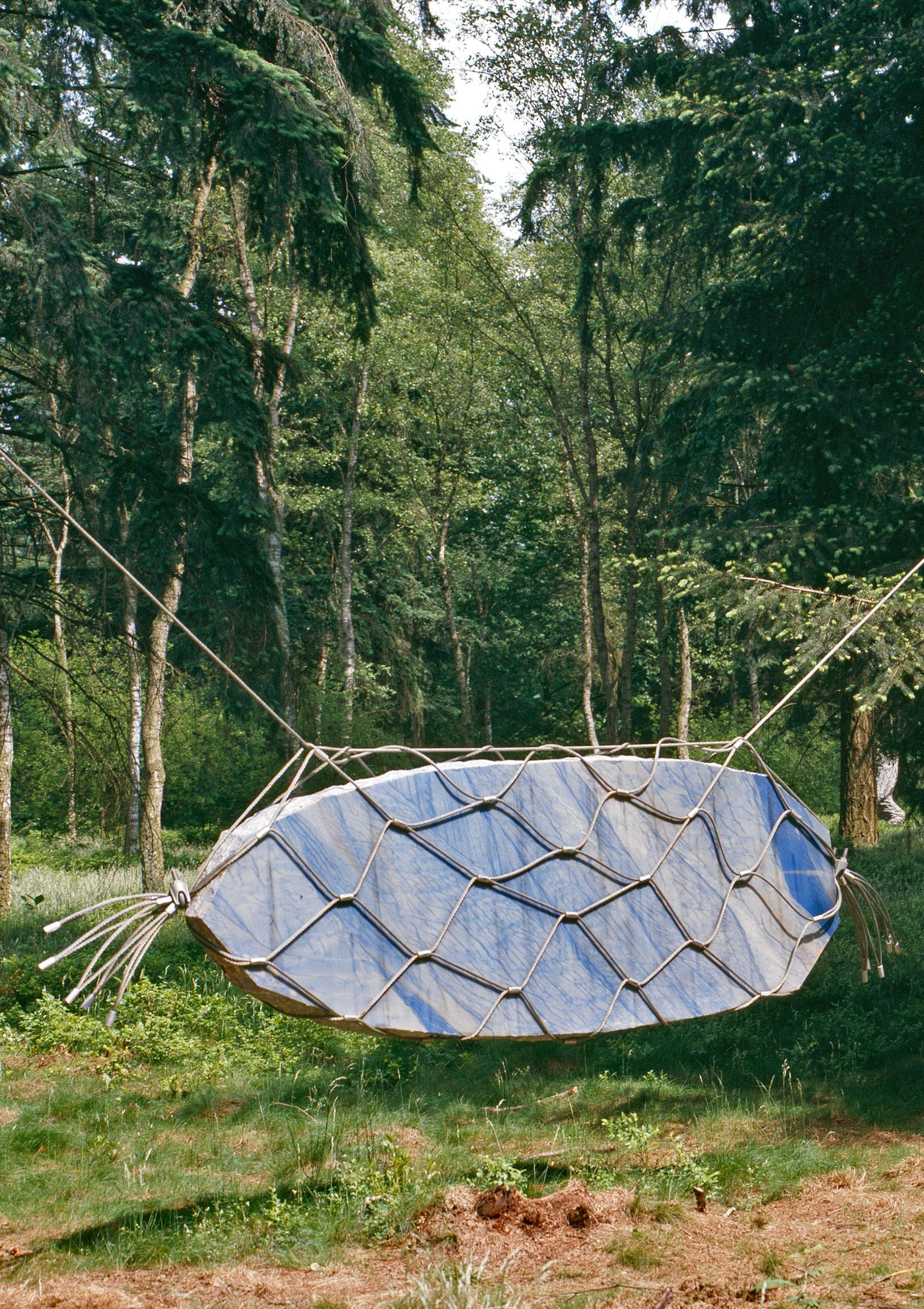
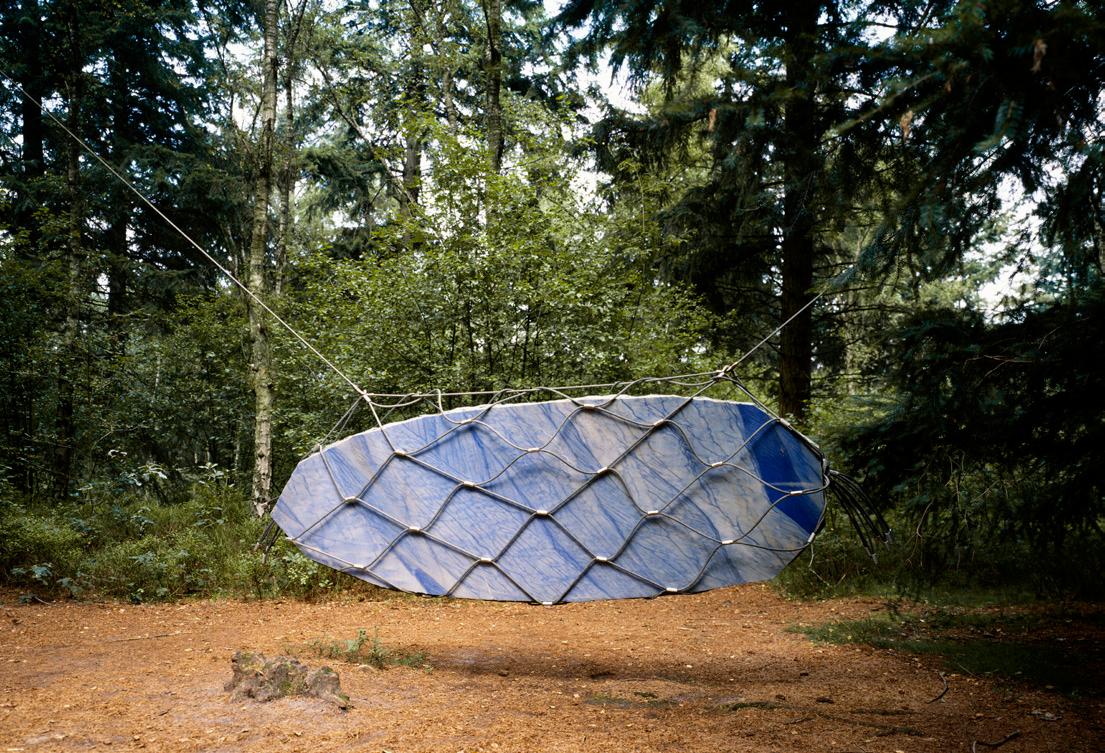
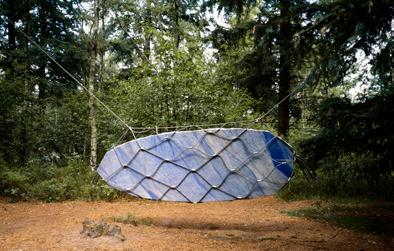
Het tweeledige gezicht van de hemel, heet deze hangende marmeren sculptuur van de Italiaanse kunstenaar Luciano Fabro (19362007). Het verwijst naar de Italiaanse lucht – de blauwe, gepolijste kant van de steen – en die in Nederland: de grijze, ruwe zijde. De hemel boven Italië en Nederland is nu vaak anders dan toen Fabro het beeld in 1986 maakte. De opwarming van de aarde verhoogt de temperatuur van de lucht, die daardoor meer water vasthoudt. Zodoende wordt een flinke regenbui al snel een ‘waterbom’: een grote hoeveelheid in korte tijd. Het leidt tot langere periodes van droogte en uitdrogende grond. ‘Watertekorten leiden tot mislukking van oogsten, tot voedseltekorten en afname van hygiëne. Dit betekent toename van honger en ziekte.’ Klimaatwetenschapper Marthe Wens onderzoekt droogte. ‘Droogte is een sluipmoordenaar: je ziet het pas als het te laat is. Dat maakt aanpassen moeilijk. Steeds vaker maken steden een Day Zero mee: een dag zonder water. Maar zelfs een beetje minder water kan al rampzalig zijn voor kwetsbare gemeenschappen, die bijvoorbeeld afhankelijk zijn van lokale landbouw, waterkracht of boottransport.’
Wat kan jij doen?
Plant meer bomen, haal de tegels uit je tuin, pleit voor groene schoolpleinen en groene daken of installeer zonnepanelen.
Lisette Klok, onderzoeker klimaatadaptatie: ‘We zullen ons moeten aanpassen aan het veranderende klimaat. Voor steden geldt: zorg ervoor dat steden groener en natuurlijker worden ingericht. En bouw woningen daar waar de natuur, de bodem en het water het toelaten. Maar we kunnen ons niet eeuwig blijven aanpassen. Het is daarom ook belangrijk dat we onze uitstoot van broeikasgassen verminderen.’
Verbinding
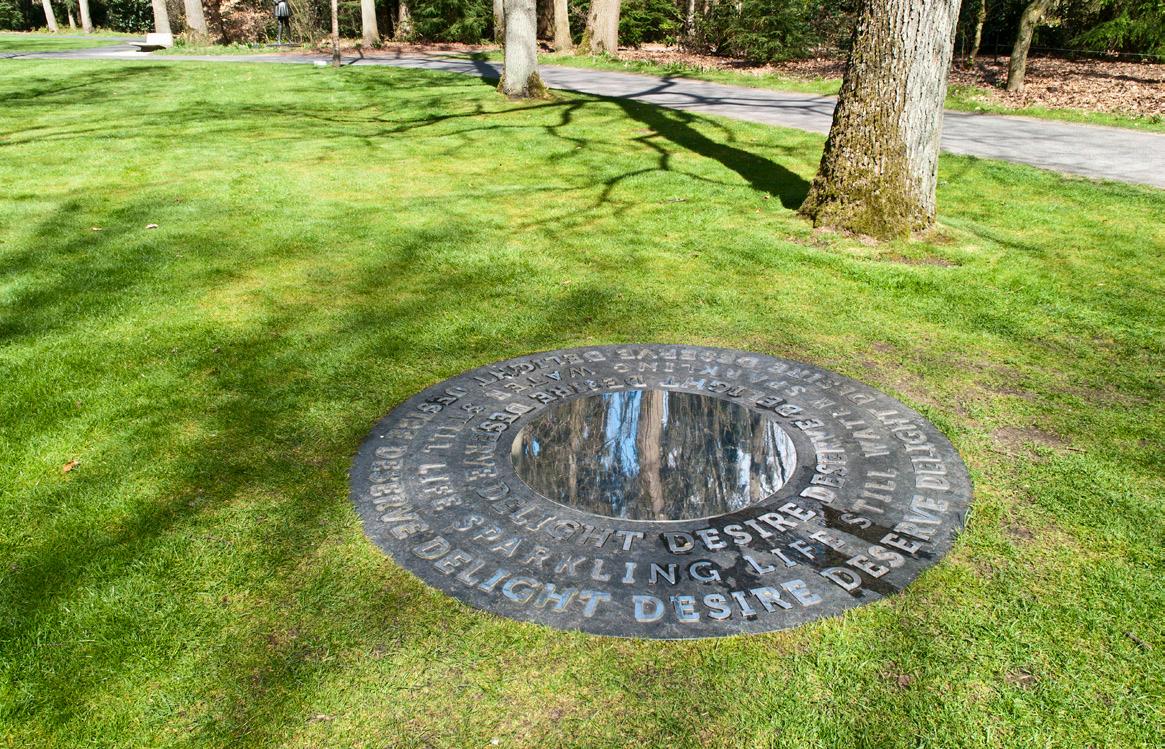
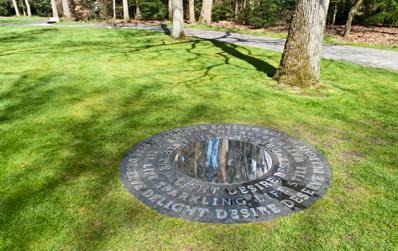
Diep onder de grond lopen allerlei ‘waterwegen’ die elkaar soms raken. Zo ook in de beeldentuin. Op vijf van deze knooppunten legt de Braziliaanse Ana Maria Tavares (1958) in 2008 ronde spiegels met de tekst: Desire, Deserve, Delight, Still Life, Sparkling Water, Still Water, Sparkling Life. Tavares refereert hiermee aan het universele verlangen naar leven en water als levensbron. Ze wijst ook op aanwezige maar niet altijd zichtbare verbindingen. Ecologen duiden het leven als een diep onderling verweven systeem. Alles – van zoogdieren tot insecten en van bomen tot bacteriën – speelt een rol in dit complexe netwerk; geen enkel organisme staat op zichzelf. Juist door die vervlechting is leven mogelijk. Maar de mens beschouwt zich maar al te vaak als losstaand, onafhankelijk wezen dat de omgeving, dieren en planten naar believen kan gebruiken, verhandelen, en herontwerpen. Omdat leven alleen bestaat door de onderlinge verbinding is het verbreken van dit verbond gevaarlijk.
Wat kan jij doen?
Start een gemeenschappelijke groentetuin of realiseer in je buurt een speelplaats die ook ruimte biedt aan planten, insecten en vogels.
Ana Maria Tavares, Secrets of the Waters (for Mnemosyne), 2008
Zeespiegelstijging
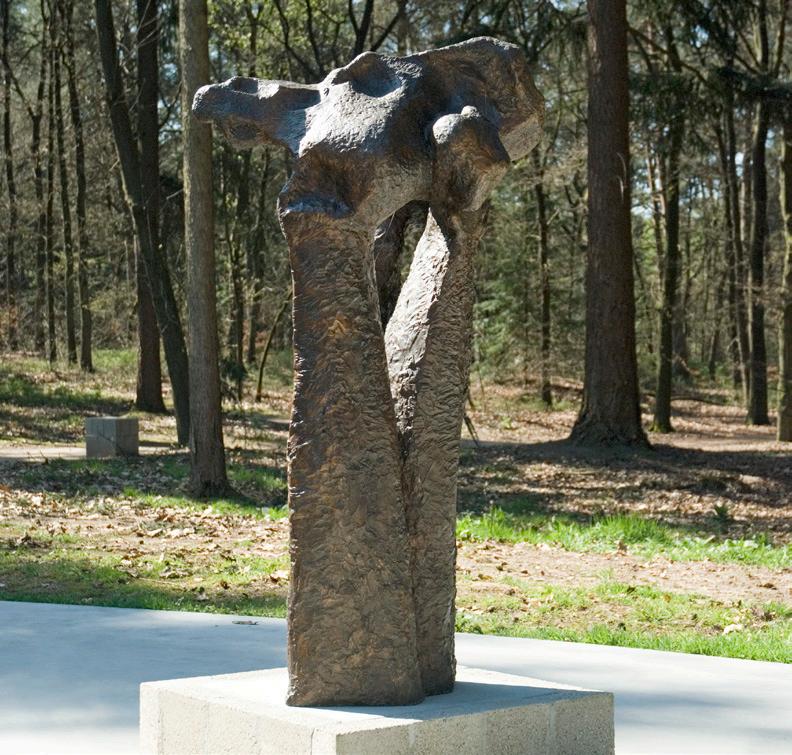
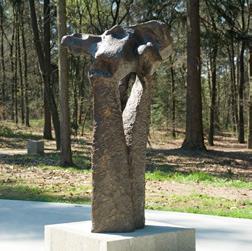
De abstracte sculptuur Wave (Golf) van de Amerikaans-Nederlandse beeldhouwer Pearl Perlmuter (1915-2008) is niet eenduidig, al geeft de titel een richting. Wave is een bronzen gietsel uit 1999 van een gips dat Perlmuter in 1958 maakt. Vijf jaar eerder, in 1953, vond de Watersnoodramp plaats. Een groot deel van Nederland overstroomde. De natuurramp zette aan tot de aanleg van de Deltawerken. Dammen, dijken, polders en stormvloedkeringen houden sindsdien hoogwater onder controle. Maar klimaatverandering test deze menselijke ‘overwinning’ op de natuur nu tot het uiterste. De effecten van de zeespiegelstijging zijn in Nederland te merken, zowel in de delta waar verschillende rivieren uitmonden en waar 26% van het land onder zeeniveau ligt als in de drie bijzondere gemeentes Bonaire, Sint Eustatius en Saba.7 Door de opwarming van de aarde stijgt de zeespiegel; deze eeuw met ongeveer één meter, tot wel vijf meter in 2200.8 Dat vergt vergaande aanpassingen aan het landschap en aan onze opvatting over leven in een rivierdelta. We kunnen dijken versterken, maar misschien moeten we kwetsbare plekken opgeven en ons verplaatsen naar hoger gelegen gebieden.
Wat kan jij doen?
Verdiep je in de scenario’s over Nederland om je een voorstelling te maken van de gevolgen van zeespiegelstijging.
zeespiegelstijging hebben toegelicht, welke vervolgens zijn besproken met experts op het gebied van waterbeheer Deze bijeenkomsten hebben inspiratie en bouwstenen opgeleverd voor het samenstellen van lange termijn oplossingsrichtingen
Beschermen gesloten
Zeewaarts
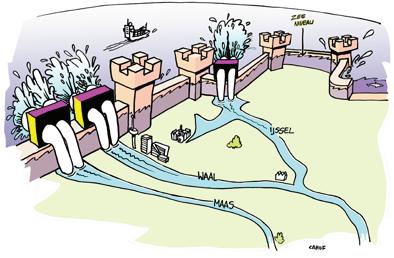
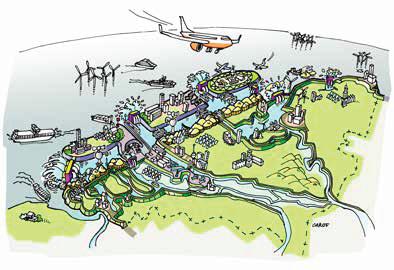
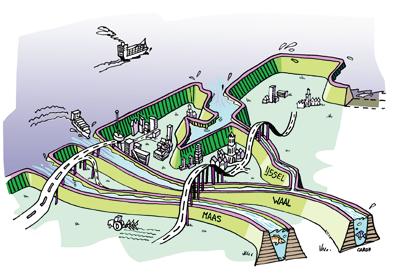
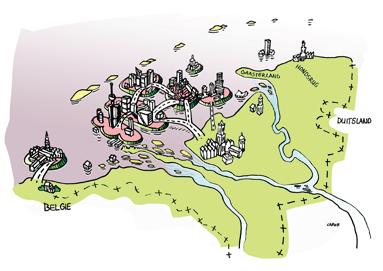
Het kennisinstituut Deltares schetste vier oplossingsrichtingen voor Nederland om met hoge zeespiegelstijging om te gaan.
dit rapport staan deze bouwstenen centraal bij het verder analyseren van de oplossingsrichtingen.
Beschermen open
Meebewegen
3 Een overzicht van ideeën voor aanpassen aan zeespiegelstijging en ook korte pitches van de plannenmakers is te vinden op de wiki http://nladapt deltares.nl
17 Inleiding
Zie: M. Haasnoot en F. Diermanse (red.), Analyse van bouwstenen en adaptatiepaden voor aanpassen aan zeespiegelstijging in Nederland, 2022: https://publications.deltares.nl/11208062_005_0001.pdf.
The knowledge institute Deltares has outlined four possible approaches for the Netherlands to deal with significant sea-level rise: protect-closed (top left), protect-open (top right), advance (bottom left) and accommodate (bottom right).
See: M. Haasnoot and F. Diermanse (eds.), Analyse van bouwstenen en adaptatiepaden voor aanpassen aan zeespiegelstijging in Nederland, 2022: https://publications.deltares. nl/11208062_005_0001.pdf.
Figuur 1 Vier oplossingsrichtingen om met hoge zeespiegelstijging om te gaan (Deltares, 2019). (Schetsen zijn gemaakt door ©Beeldleveranciers-Carof in opdracht van Deltares).
Ontbossing / Deforestation (Miljard hectaren / Billion hectares)
Ontbossing / Deforestation
Deze grafiek laat zien dat de wereldbevolking sinds 1800 sterk is toegenomen en een steeds sterkere stijging vertoont (bruine lijn), én dat de ontbossing in dezelfde periode sterk toenam (paarse lijn), maar de snelheid waarmee dit gebeurt is de afgelopen decennia dankzij beter beheer en herbebossing afgenomen.
Grafiek uit: FAO (Food and Agriculture Organization of the United Nations), State of the World’s Forests, 2012, https://www.fao.org/4/ i3010e/i3010e.pdf. Gebaseerd op gegevens uit: Michael Williams, Deforesting the Earth: From Prehistory to Global Crisis (University of Chicago Press, 2003).
Bevolking / Population (Miljard / Billion)
Bevolking / Population
This graph shows that the world’s population has risen sharply since 1800 and is increasing at an ever-faster rate (brown line), and that deforestation has also risen sharply over the same period (purple line), but the rate at which this is happening has slowed in recent decades thanks to better management and reforestation.
Graph from: FAO (Food and Agriculture Organization of the United Nations), State of the World’s Forests, 2012, https://www.fao.org/4/ i3010e/i3010e.pdf. Based on data from: Michael Williams, Deforesting the Earth: From Prehistory to Global Crisis (University of Chicago Press, 2003).
Ontbossing
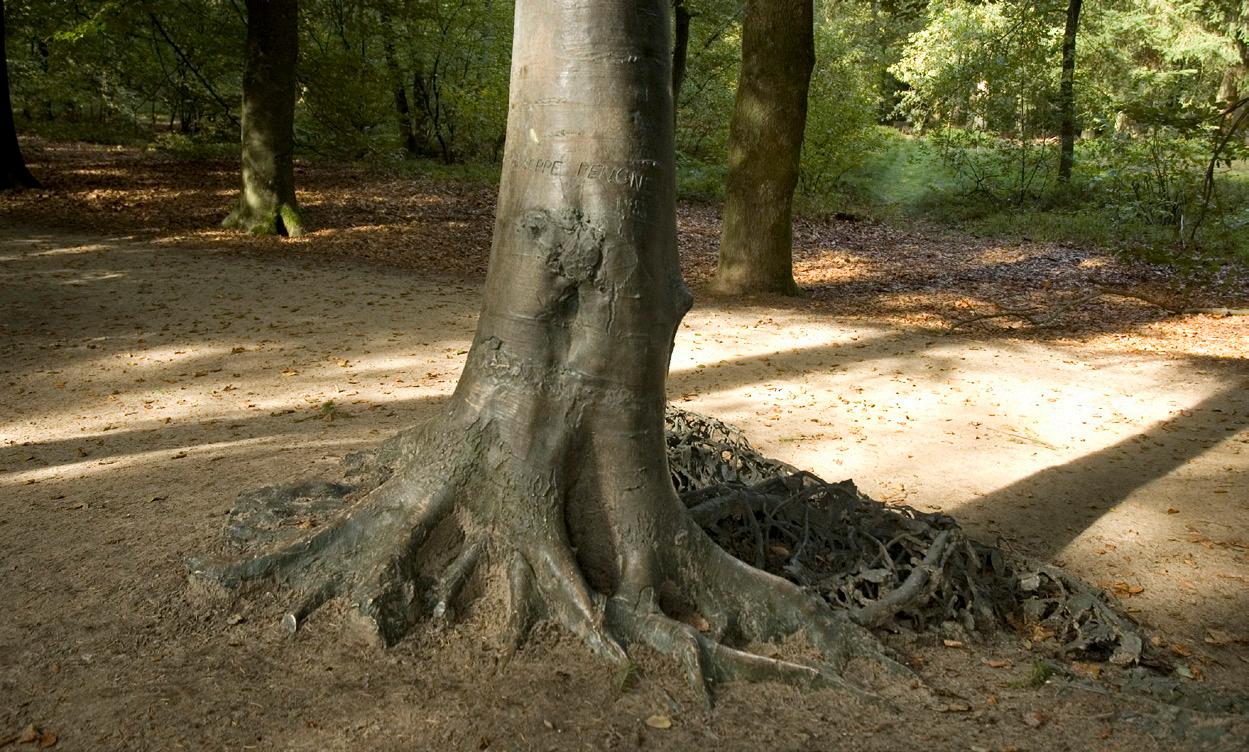
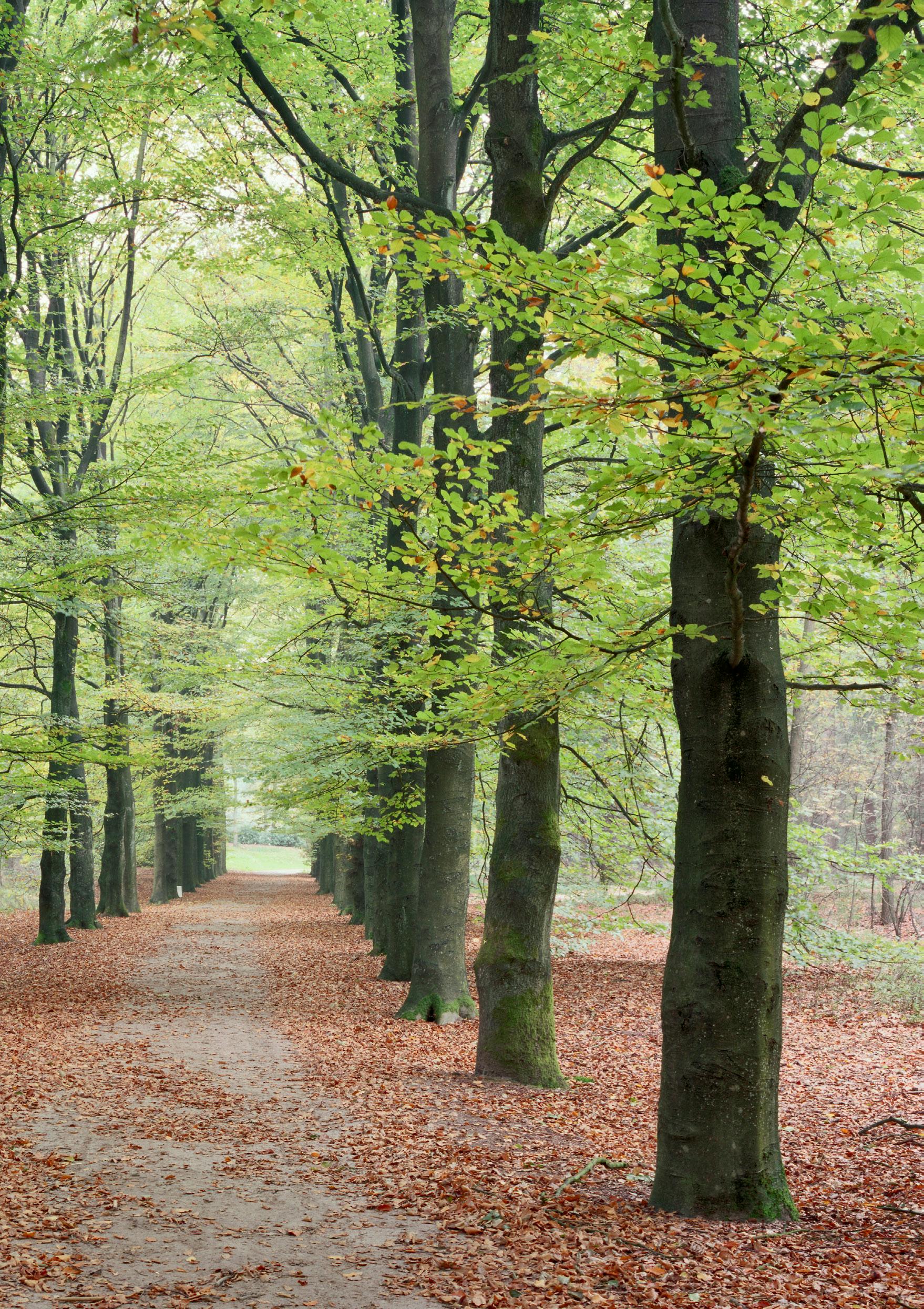
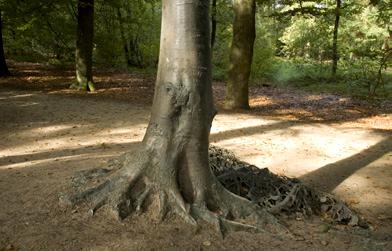
Tussen een rij echte beuken plaatste de Italiaanse kunstenaar Giuseppe Penone (1948) een bronzen beuk, waarin hij twee keer de vorm van zijn eigen lichaam verwerkte. ‘Als je iets aanraakt, voel je het, maar het object, de persoon of de boom voelt jou ook. We moeten het gevoel van gelijkheid tussen mens en natuur niet vergeten,’ aldus de kunstenaar. De gelijkheid waar Penone het over heeft is misschien lastig te vatten, want in het overheersende westerse wereldbeeld heeft de mens zichzelf buiten en boven de natuur geplaatst. De natuur wordt gezien als alleen maar dienstbaar aan de mens: als voedsel, brandstof of gebruiksvoorwerp. Verreweg de grootste drijvende kracht van ontbossing is de landbouw (80%). Meer dan driekwart van landbouwgrond wordt gebruikt voor veeteelt.9 Ons eeuwenlange intensieve gebruik van natuurlijke grondstoffen heeft de aarde definitief, veelal schadelijk beïnvloed. De bronnen – olie, steenkool, gas, hout, water – raken op. Sinds Penone Faggio di Otterlo (Otterlose beuk) hier bijna veertig jaar geleden plaatste, is de wereldbevolking met 60% toegenomen terwijl ruimte voor de natuur afnam.
Wat kan jij doen?
• Wapen je tegen onnodige aankopen met de vuistregel: Refuse, Reduce, Re-use, Repair & Recycle.
• Sharing is caring: het delen van spullen die je niet altijd gebruikt is zuinig, efficiënt en levert leuke contacten op. Deel met de buurt wat je hebt.
Klaudia Pasik, onderzoeker alternatieve economische systemen: ‘Wat we nodig hebben is een verschuiving van op export en groei gerichte agribusiness naar lokale, sociaalmaatschappelijk georiënteerde ondernemingen. Dat kan door financiële regels aan te passen. Bijvoorbeeld door aanbestedings- en subsidieregelingen die educatie, het welzijn van de gemeenschap en ecologisch herstel meewegen. Daarmee waardeer je ook de niet-financiële uitkomsten, in het voordeel van ethisch verantwoorde producenten.’
Natuuramnesie
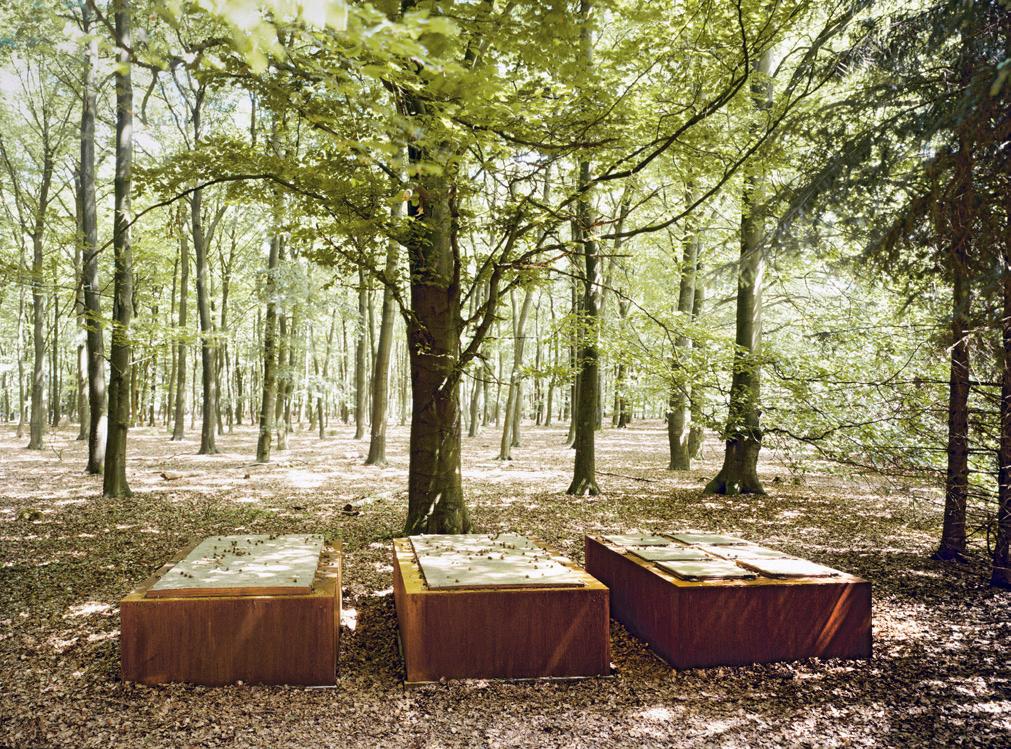
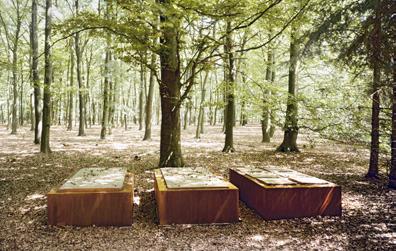
De kern van Otterlo Mist is de beuk die erbij staat. De Japanner Isamu Wakabayashi (1936-2003) bestudeert eind 2000 de boom nauwkeurig en verzamelt zijn bladeren. Wat hij ziet, beschrijft hij uitvoerig op koperen platen, die hij op drie stalen sokkels voor de beuk plaatst. Die zorgvuldige aandacht van een mens voor één boom is best uitzonderlijk. Terwijl vrijwel alle Nederlanders (92%) zich zorgen maken over de staat van de natuur, gaat de kennis over die natuur sterk achteruit. Meer dan de helft van de Nederlanders herkent de beuk niet; bij jongeren is het zelfs maar één op de drie die de beuk wél herkent.10 En als je iets niet herkent, merk je ook niet dat het verdwijnt.11 Elke nieuwe generatie weet steeds minder hoe anders en rijker de natuur was ten tijde van de jeugd van hun ouders. Door dat beperkte geheugen over hoe de natuur was, zijn we ons steeds minder bewust van wat er aan soortendiversiteit verloren is gegaan. Dat staat een gevoel van verbintenis én van urgentie in de weg.
Wat kan jij doen?
• Vraag je bij de volgende beslissing over een aankoop af: waar is het van gemaakt, welke dieren, planten en grondstoffen zijn erin verwerkt en waar kwamen deze vandaan?
• Installeer apps als Obsidentify of Birdnet en leer plantennamen en vogelgeluiden herkennen.
• Bekijk oude kaarten op www.topotijdreis.nl en zie hoe de wereld om je heen is veranderd.
Marc Argeloo, ecoloog en natuurhistoricus: ‘De mens is een kortetermijnwezen. Langetermijndenken en daarnaar handelen is een collectieve opgave – als groep, cultuur, land – en ontstijgt ons vermogen daartoe als individu.’
Pierre Huyghe, La Saison des Fêtes, 2010 (uitvoering 2016)
Inheems
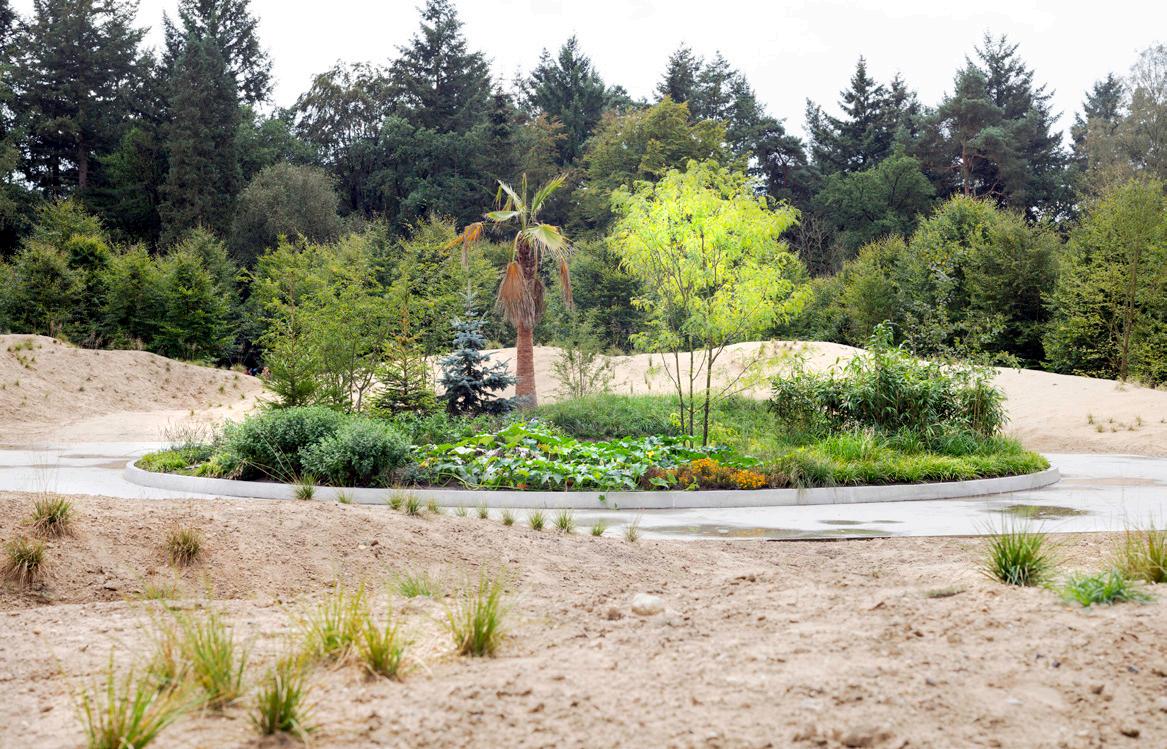
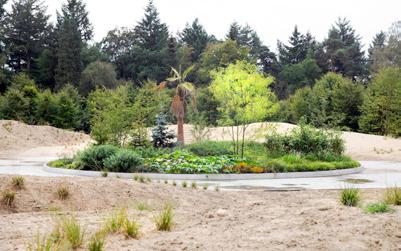
Dit levende kunstwerk van de Franse kunstenaar Pierre Huyghe (1962) is een ecologische kalender van feesten van over de gehele wereld. Elke plant in La Saison des Fêtes heeft een link met een cultureel feest of ritueel ergens op de wereld; deze bloeit in de maand waarin het feest plaatsvindt. En zo is een palmboom beland op de Hoge Veluwe. De combinatie van planten in dit werk oogt vreemd en kunstmatig. Dat is het ook, want lang niet alle planten die Huyghe koppelde aan de verschillende feestdagen groeien in Nederland. De kunstenaar moest ook enkele alternatieven vinden, die hier wel kunnen leven. Dieren en planten zijn veelal ‘habitat-gebonden’; ze kunnen overleven op hele specifieke plekken. Door ons idee van maakbaarheid en ons ingrijpen in de natuur halen we vaak het ecosysteem van planten en dieren overhoop, en zo onze eigen, daarmee verbonden menselijke natuur.
Wat kan jij doen?
• Verbeter samen met je buren jullie gezamenlijke directe omgeving. De gemeente helpt je graag met jouw ideeën.12
• Plant inheemse plantsoorten en koop biologisch geteelde bloembollen en planten zodat je geen gif dat dodelijk is voor insecten je tuin inbrengt.
• Word een luie tuinier: laat blad liggen, maai laat, gebruik geen gif.13
Bodemrijkdom
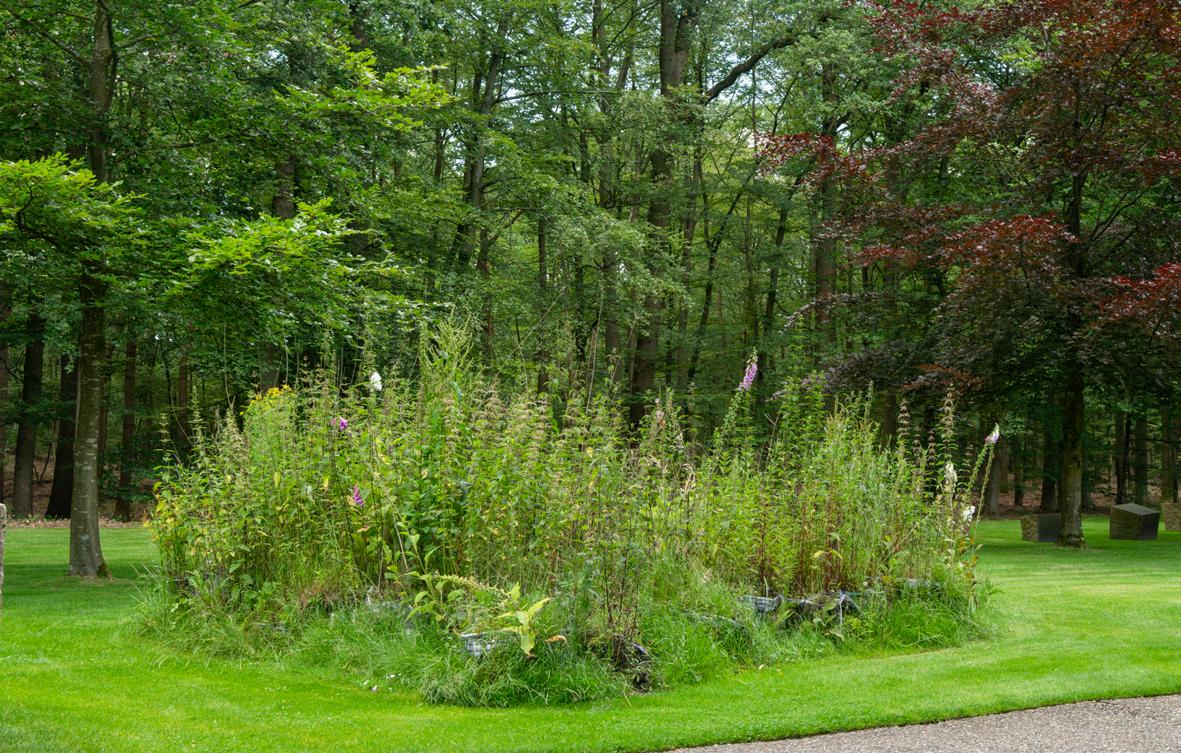
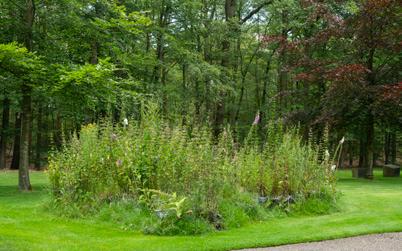
Portable Garden van de Oostenrijkse kunstenaar Lois Weinberger (1947-2020) ziet er elke week anders uit. In de met aarde gevulde tassen groeit ‘onkruid’, een benaming voor sommige inheemse planten. Maar met een sterk waardeoordeel: de planten zijn ongewenst en moeten worden gewied, terwijl juist deze planten broodnodig zijn voor een goed en gezond ecosysteem. De grond in de tassen is afkomstig uit de directe omgeving, maar met het verplaatsen van die enkele kubieke meters grond is een rijk netwerk aan planten, insecten, virussen en bacteriën flink verstoord. Als voorbeeld: een enkele roggeplant heeft na vier maanden groei zo’n 15 miljoen worteltjes met een gezamenlijke lengte van ruim 600 kilometer en een oppervlakte van ruim 200 vierkante meter.14
Via deze wortels staat de roggeplant in contact met eindeloos veel andere organismen die elkaar wederzijds voeden en informatie uitwisselen. Met bouwwerkzaamheden of door het gebruik van bestrijdingsmiddelen grijpt de mens vaak drastisch in op deze uitgebreide netwerken. Portable Garden nodigt uit om onze veelal instrumentele opvatting over natuur te herzien: grond dient niet slechts ter verhoging van de tuin of het funderen van wegen; het is een complexe samenhang van levende en wederzijds afhankelijke organismen.
Let op, dit kunstwerk bevindt zich aan de voorzijde van het museum.
Nathalie Roos, docent en onderzoeker: ‘Voor mij is de oplossing om onderwijs te ontwerpen, gericht op het stimuleren van kritisch denken én kritisch maken, om zo mijn studenten, als toekomstige docenten kunst- en maatschappijleer, te inspireren voor het ontwerpen en geven van vakoverstijgend kunst- en burgerschapsonderwijs, gericht op sociaal engagement en activisme.’
Lois Weinberger, Portable Garden, 1994 (uitvoering 2022)
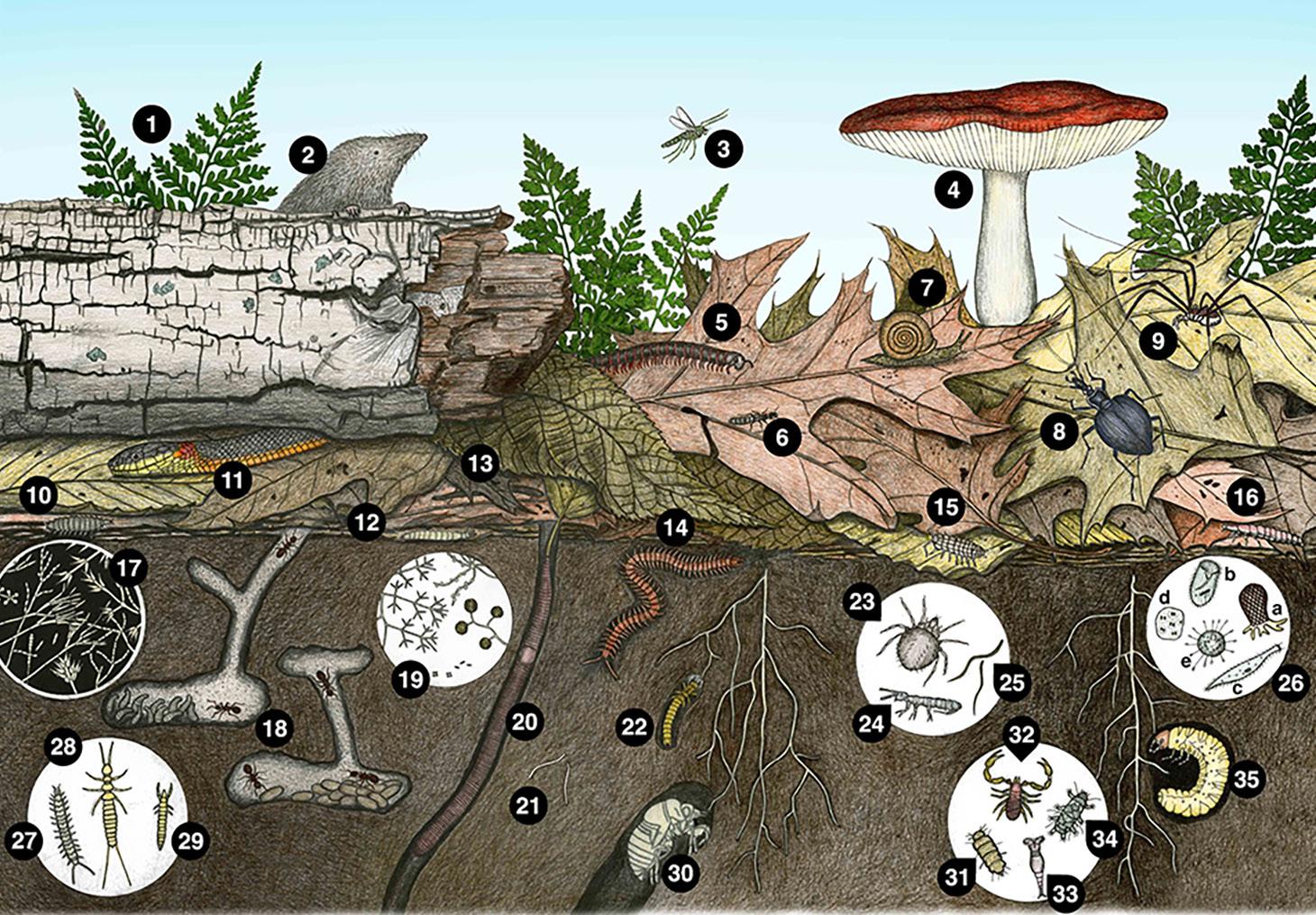
De bodem is – letterlijk en figuurlijk – een belangrijke basis van ons bestaan samen met de zeeën. Hij is cruciaal voor de groei van planten, water wordt er gefilterd en is een belangrijke opslag van CO2. Een heel klein beetje gezonde aarde bevat al duizenden soorten organismen. De meerderheid van alle soorten op aarde leeft in onze bodem.
1. niervaren; 2. spitsmuis; 3. zwarte vlieg; 4. mycorrhizapaddenstoel (Russula); 5. duizendpoot; 6. kortschildkever; 7. slak; 8. slakkenetende loopkever; 9. trilspinnen; 10. larve van de zwarte wapenvlieg; 11. ringnekslang; 12. larve van de langpootmug; 13. landplatworm; 14. bodemduizendpoot; 15. landpissebed; 16. vuurvlieglarve; 17. schimmeldraden (hyfen) van bodemschimmels; 18. mieren met hun larven en poppen; 19. bacteriën en actinomyceten; 20. regenworm; 21. potwormen; 22. larve van een kniptor; 23. oribatida mijt; 24. springstaart; 25. rondwormen; 26. protozoën en algen: (a) protozoën met een schaal, (b, c) trilhaar-diertjes, (d) blauwalgen, (e) zonnediertjes; 27. wortelduizendpoten; 28. dipluren; 29. proturen; 30. cicadenlarve; 31. weinigpoot; 32. bastaardschorpioen; 33. raderdiertje; 34. waterbeertje; 35. larve van een mestkever
Illustratie uit: Jennifer Hopwood et al., “Farming with Soil Life: Our Living Soil,” SARE, https://www.sare.org/publications/farmingwith-soil-life/our-living-soil/. Gebaseerd op: Nardi, Life in the Soil (University of Chicago Press, 2007).
Together with the oceans, the soil is – literally and figuratively – a vital foundation of our existence. It is crucial for plant growth, filters water and acts as a major sink for CO2. Even a tiny amount of healthy soil contains thousands of species of organisms. The majority of all species on Earth live in our soil.
1. wood fern; 2. shrew; 3. March fly; 4. mycorrhizal mushroom (Russula); 5. millipede; 6. rove beetle; 7. snail; 8. snail-eating ground beetle; 9. daddy longlegs; 10. soldier fly larva; 11. ringneck snake; 12. crane fly larva; 13. soil flatworm; 14. soil centipede; 15. woodlouse; 16. firefly larva; 17. filaments (hyphae) of soil fungi; 18. ants with their larvae and pupae; 19. bacteria and actinomycetes; 20. earthworm; 21. potworms; 22. click beetle larva; 23. oribatid mite; 24. springtail; 25. nematodes; 26. protozoa and algae: (a) testate protozoa, (b, c) ciliated protozoa, (d) blue-green alga, (e) heliozoa; 27. symphylan; 28. dipluran; 29. proturan; 30. cicada nymph; 31. pauropod; 32. pseudoscorpion; 33. rotifer; 34. tardigrade; 35. scarab beetle larva
Illustration from: Jennifer Hopwood et al., “Farming with Soil Life: Our Living Soil”, SARE. https://www.sare.org/publications/farming-withsoil-life/our-living-soil/. Based on: Nardi, Life in the Soil (University of Chicago Press, 2007).
Eindnoten
1 “Country Overshoot Days 2026,” Earth Overshoot Day, https://overshoot. footprintnetwork.org/newsroom/countryovershoot-days/.
2 Zie: “Wat zijn planetaire grenzen en welke zijn reeds overschreden?”, Klimaatplein, https://klimaatplein.nl/wat-zijn-planetairegrenzen-en-welke-zijn-reeds-overschreden/; Katherine Richardson et al., “Earth beyond six of nine planetary boundaries,” Science Advances 9, nr. 37 (2023): eadh2458, https:// doi.org/10.1126/sciadv.adh2458.
3 Katharine Hayhoe, “The most important thing you can do to fight climate change: talk about it,” TED Talk, Palm Springs, Californië, november 2018, 17 min, 2 sec., https://www. ted.com/talks/katharine_hayhoe_the_most_ important_thing_you_can_do_to_fight_ climate_change_talk_about_it.
4 “KNMI’23-klimaatscenario’s,” KNMI, https://www.knmi.nl/kennis-en-datacentrum/ achtergrond/knmi-23-klimaatscenario-s.
5 Gerardo Ceballos en Paul R. Ehrlich, “Mutilation of the tree of live via mass extinction of animal genera,” Proceedings of the National Academy of Sciences 120, nr. 39 (2023): https://doi.org/10.1073/ pnas.2306987120.
6 Forest Isbell et al., “Expert Perspectives on Global Biodiversity Loss and Its Drivers and Impacts on People,” Frontiers in Ecology and the Environment 21, nr. 2 (2023): 94-103, https://doi.org/10.1002/fee.2536; Jacques Barzun, From Dawn to Decadence: 500 Years of Western Cultural Life; 1500 to the Present (HarperCollins, 2001).
7 “Klimaatgevolgen,” Klimaateffectatlas Bonaire, Sint Eustatius & Saba, https://bes. climateimpactatlas.com/nl/klimaatgevolgen.
8 IPCC, AR6 Synthesis Report: Climate Change 2023, https://www.ipcc.ch/report/ sixth-assessment-report-cycle/.
9 Vincent van der Veen, “Generatie natuuranalfabeten dreigt,” IVN Natuureducatie, http://www.ivn.nl/nieuws/merendeelnederlanders-herkent-beuk-niet/.
10 “11 Deforestation Facts to Know in 2026 (plus Solutions),” FSC, 26 januari 2026, https://fsc.org/en/blog/deforestation-facts.
11 Wetenschapper Marc Argeloo schreef hierover het boek Natuuramnesie. Hoe we vergeten zijn hoe de natuur er vroeger uitzag (Atlas Contact, 2024).
12 Zie bijvoorbeeld: “Samen in actie voor een groene buurt,” IVN Gelderland, https:// www.ivn.nl/provincies/gelderland/groenebuurtinitiatieven/.
13 Zie: “Ecologisch tuinieren,” Velt, https:// velt.nu/ecologisch-tuinieren; “Duurzaam tuinieren,” WWF, https://www.wwf.nl/kom-inactie/met-tijd/tips-gedrag/duurzaam-tuinieren.
14 James B. Nardi, Life in the Soil. A Guide for Naturalists and Gardeners (University of Chicago Press, 2007), 18.
Geciteerde wetenschappers en onderzoekers
Marc Argeloo is ecoloog en natuurhistoricus. Hij bestudeert gevolgen van menselijk handelen op de natuur, wereldwijd, in de recente geschiedenis en in een ver verleden, en hoe wij met die gevolgen omgaan.
Thomas Fransen is onderzoeker en adviseur transformatieve verandering bij DRIFT (Dutch Research Institute for Transitions) en organisator bij Ontgroei Nederland.
Lisette Klok doet onderzoek naar klimaatverandering, smeltende gletsjers, extreme weersomstandigheden, stedelijke hitte en klimaatadaptatie. Bij Stichting CAS (Climate Adaption Services) ontwikkelt ze hulpmiddelen die beleidsmakers helpen om de wereld klimaatbestendig te maken.
Klaudia Pasik is onderzoeker (MSc) alternatieve economische systemen. Zij voltooide haar master bij Wageningen Universiteit in samenwerking met Grass Ceiling Project.
Nathalie Roos is docent, onderzoeker, cultureel antropoloog en activist, gespecialiseerd in artistiek activisme en activistische kunstpedagogie.
Helena Schmidt is sociaal wetenschapper bij de TU Delft en onderzoekt maatschappelijke acceptatie en communicatie rond hernieuwbare energie, met focus op een rechtvaardige energietransitie.
Marthe Wens is universitair docent bij de Water and Climate Risk groep aan de Vrije Universiteit Amsterdam. Ze onderzoekt waterzekerheid en adaptief gedrag in Europa en Afrika en gebruikt machine learning en co-creatie om droogterisicoprofielen en natuurgerichte adaptatiestrategieën te ontwikkelen.
Verder lezen
Op de website van het Kröller-Müller Museum (www.krollermuller.nl/kunstenklimaatwandeling) vind je een selectie bronnen per onderwerp, dit zijn enkele algemene links:
• De website www.klimaatveranda.nl (door o.a. Bart Verheggen) geeft in een helder geschreven artikel “Wat weten we?” een uitstekend startpunt om te begrijpen hoe klimaatverandering werkt.
• Veel vragen over klimaatverandering zijn gevraagd (en beantwoord) op www.klimaathelpdesk.nl.
• Het KNMI heeft in 2023 verschillende scenario’s geschetst die de gevolgen van klimaatverandering voor Nederland duidelijk maken: www.knmi.nl/kennisen-datacentrum/achtergrond/knmi-23klimaatscenario-s.
• De meest aangehaalde bron over klimaatverandering is het rapport van het IPCC (Intergovernmental Panel on Climate Change): www.ipcc.ch. In verschillende rapporten bundelt deze organisatie de kennis van wetenschappers over de gehele wereld. Het laatste rapport is uit 2023, het zesde Assessment Report, met een uitstekend leesbare samenvatting.
• www.klimaatwiki.nl biedt een rijk overzicht van de laatste stand van zaken.
• Het kennisinstituut Deltares heeft vier deltascenario’s, de mogelijke toekomstbeelden van Nederland voor klimaat en sociaaleconomische ontwikkelingen in 2050 en 2100, opgesteld: publications.deltares. nl/11209219.pdf.
Climate change in the Netherlands: how will it affect you?
Source: KNMI’23 klimaatscenario’s
You may feel your influence is limited, but there are many roles in which you can make a difference. As a citizen, you can use your vote to support policies that protect the interests of people and nature. But also as a consumer, colleague, neighbour, friend or family member; inspire and annoy the people around you. Express your concerns and share your knowledge. Show that things can be done differently and make those around you think. That is an important first step towards greater social change.
Of course, individual action alone is not enough. That is why Scientist Rebellion focuses on those parties most responsible for climate change and biodiversity loss: corporations, banks and governments. That is where the greatest impact can be made. Nevertheless, together individuals can hold these parties to account and effect change. Join forces with other concerned citizens; collective action makes a difference.
Climate change affects us, people elsewhere in the world, and those not yet born: our children’s children and grandchildren. This infographic shows how the climate has changed between 1900 and 2020, and how it is set to change up to 2100.4
in De Bilt, NL
Water Scarcity and Species Extinction
Sculpture flottante, Otterlo (Floating Sculpture, Otterlo) by Hungarian-French artist Marta Pan (1923–2008) glides across the water like a graceful plaything of the wind. The pond in which this ‘swan’ floats, is part of the artwork. It was specially constructed in 1960, as water has always been scarce in the sandy Hoge Veluwe. Our extraction of water from the landscape for industry, agriculture and drinking water causes increased shortages across the Netherlands. Groundwater levels are falling, streams and ponds are drying up. As a result, trees are struggling, heathland is withering, and animals and plants are finding it harder to survive. Biodiversity has been declining for centuries, but the decline rate is accelerating – at least a thousand times faster than average throughout our geological history.5 Since 1500, and particularly since the onset of industrialisation three centuries later, around 30% of all animal species on Earth have become extinct or are threatened with extinction.6 The sixth wave of mass extinction is currently underway. The consequences affect not only the species concerned but the entire ecosystem. For example, 50% of all bee species have now become extinct. Note that bees are a crucial link in our food chain.
What can you do?
• Call on the water authorities and major commercial users, such as energy companies, industry and the agricultural sector, to review their water policies.
• Save water by taking shorter showers, installing a water-saving showerhead and watering your garden less.
See illustration on page 9
Rising Temperatures
Echo of the Veluwe consists of 310 boulders collected in the Hoge Veluwe by the New Zealander Chris Booth (1948). The stones ended up here around 150,000 years ago during the penultimate ice age, the Saalian. Glaciers advanced from Scandinavia across the Netherlands, which at that time had a cold, dry climate and frozen ground several metres deep. This ice age was followed by a warmer period, during which temperatures and sea levels were considerably higher than they are today; even forest elephants and hippos lived here. Temperature fluctuations are a natural occurrence, but greenhouse gas emissions are now causing very rapid temperature rises. Particularly the burning of fossil fuels such as oil, natural gas and coal increases greenhouse gas emissions, and global temperatures have risen by more than 1.5 °C over the past century. This may not seem like much, but it means that by the end of this century, sea levels will have risen by a metre, biodiversity will be under severe pressure, we will experience more droughts and heat stress, and we will face more flooding. A change that previously took tens of thousands of years has now occurred in around 150 years: since the introduction of the steam engine.
What can you do?
Get inspired at Youth for Climate NL (www. youtforclimate.nl) and Grootouders voor het klimaat (Grandparents for the Climate) (www. grootoudersvoorhetklimaat.nl).
Helena Schmidt, energy transition researcher: ‘To tackle climate change, we must drastically cut back on fossil fuels and embrace clean, renewable energy sources. Projects for wind or solar power can create resistance because they change the langdscape, create noise en pose risks for wildlife. We must start early and listen to locan people right from te start, and ensure fair tangible benefits for local communities.’
See illustration on page 10
Marta Pan, Sculpture flottante, Otterlo, 1960–1961
Chris Booth, Echo of the Veluwe, 2003–2005
Rain Bombs
The Double Face of Heaven is the name of this suspended marble sculpture by Italian artist Luciano Fabro (1936–2007). It refers to the Italian sky – the stone’s blue, polished side –and the Dutch one: the grey, rough side. The sky above Italy and the Netherlands is now often different from when Fabro created the sculpture in 1986. Global warming increases the temperature of the air, which consequently retains more water. As a result, a heavy downpour can quickly turn into a ‘rain bomb’: a large amount of rainfall in a short space of time. This leads to longer periods of drought and parched soil. ‘Water shortages lead to crop failures, food shortages and a decline in hygiene. This means an increase in hunger and disease.’ Climate scientist Marthe Wens studies drought. ‘Drought is a silent killer: you only notice it when it’s too late. That makes it difficult to adapt. Cities are increasingly facing a “Day Zero”: a day without water. But even a slight reduction in water supply can be disastrous for vulnerable communities that depend, for example, on local agriculture, hydropower or transport by boat.’
What can you do?
Plant more trees, remove the paving slabs from your garden, campaign for green school playgrounds and green roofs, or install solar panels.
Lisette Klok, climate adaptation researcher: ‘We will have to adapt to the changing climate. For cities, this means ensuring that they are designed to be greener and more natural. And we must build homes where nature, the soil and the water allow. But we cannot keep adapting forever. It is therefore also important that we reduce our greenhouse gas emissions.’
Ana Maria Tavares, Secrets of the Waters (for Mnemosyne), 2008
Connection
Deep underground run all kinds of ‘waterways’ that sometimes intersect. This is also the case in the sculpture garden. At five of these junctions, Brazilian artist Ana Maria Tavares (1958) installed round mirrors in 2008 bearing the text: Desire, Deserve, Delight, Still Life, Sparkling Water, Still Water, Sparkling Life. As such, Tavares refers to the universal desire for life and water as the source of life. She also points to existing but not always visible connections. Ecologists describe life as a deeply interconnected system. Everything –from mammals to insects and from trees to bacteria – plays a role in this complex network; no organism exists in isolation. It is precisely this interdependence that makes life possible. But humans all too often regard themselves as separate, independent beings who can use, trade and redesign the environment, animals and plants as they please. Because life exists solely through interconnectedness, breaking this bond is dangerous.
What can you do?
Start a community vegetable garden or create a playground in your neighbourhood that also provides space for plants, insects and birds.
Luciano Fabro, La doppia faccia del cielo, 1986
Pearl Perlmuter, Wave, 1958/1999
Rising Sea Levels
The abstract sculpture Wave by AmericanDutch artist Pearl Perlmuter (1915–2008) is ambiguous, although the title offers a clue. Wave is a bronze casting from 1999, based on a plaster model that Perlmuter created in 1958. Five years earlier, in 1953, the North Sea Flood occurred. A large part of the Netherlands was flooded. This natural disaster led to the construction of the Delta Works. Dams, dykes, polders and storm surge barriers have kept the high water in check ever since. But climate change is now pushing this human ‘victory’ over nature to its limits. The effects of rising sea levels are already being felt in the Netherlands, both in the delta where several rivers flow into the sea and where 26% of the land lies below sea level and the three special municipalities of Bonaire, Sint Eustatius and Saba.7 Global warming is causing sea levels to rise; by around one metre this century, and up to five metres by 2200.8 This will require far-reaching changes to the landscape and to our understanding of life in a river delta. We can reinforce dykes, but perhaps we need to abandon vulnerable areas and relocate to higher ground.
What can you do?
Read up on the scenarios for the Netherlands to get an idea of the consequences of rising sea levels.
See illustration on page 15
Giuseppe Penone, Faggio di Otterlo, 1987–1988
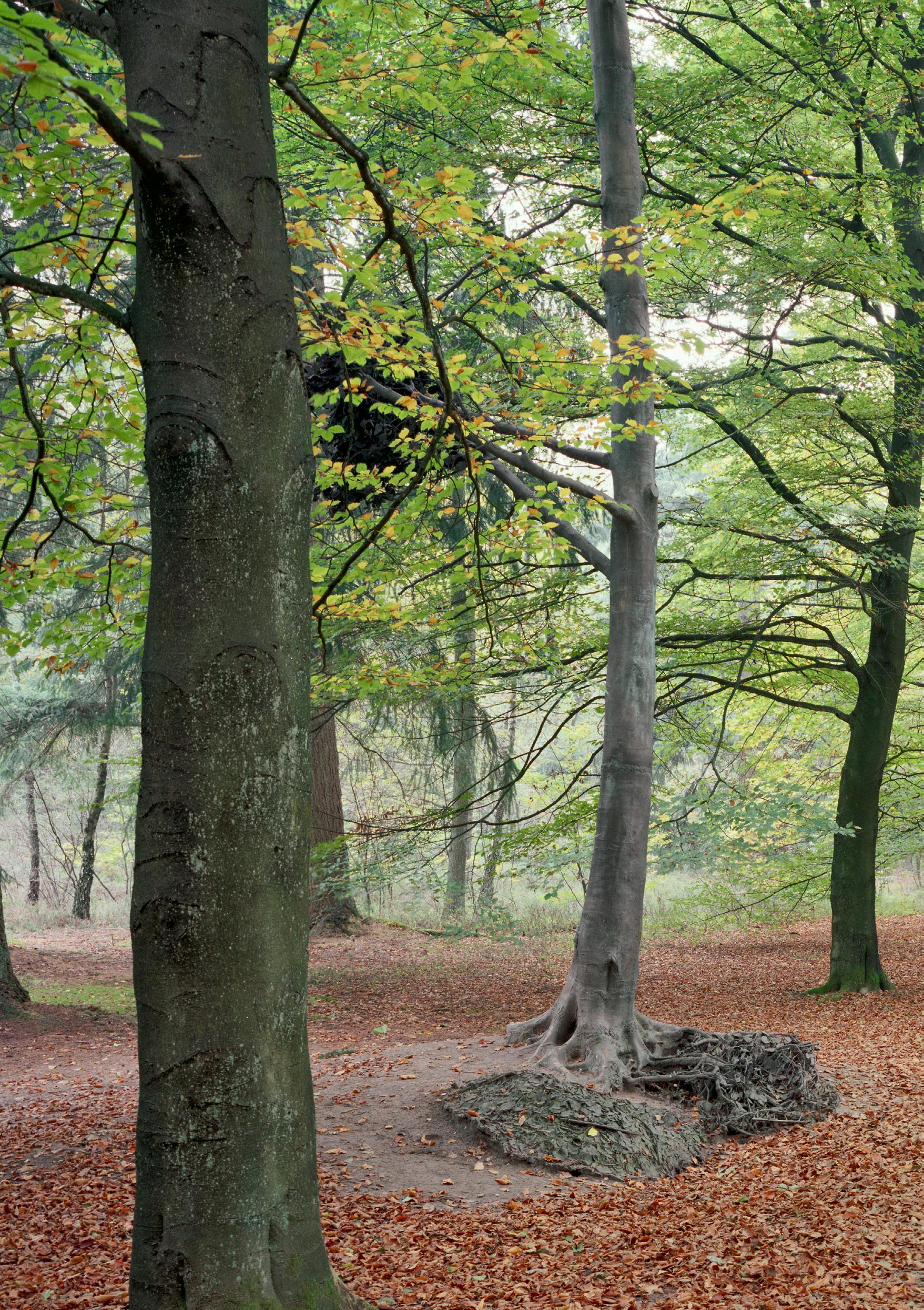
Deforestation
Between a row of real beeches, Italian artist Giuseppe Penone (1948) placed a bronze one, in which he incorporated the shape of his own body twice. ‘When you touch something, you feel it, but the object, person or tree feels you too. We must not forget the sense of equality between humans and nature’, says the artist. The equality Penone refers to may be difficult to grasp, because in the prevailing Western worldview, humankind has placed itself outside and above nature. Nature is seen as subservient to humans: as food, fuel or commodity. Agriculture is by far the biggest factor driving deforestation (80%); more than threequarters of agricultural land is used for livestock farming.9 Our centuries-long intensive use of natural resources has had a permanent and often harmful impact on the Earth. These resources – oil, coal, gas, wood and water – are running out. Since Penone installed Faggio di Otterlo (Otterlo Beech) here almost forty years ago, the world’s population has grown by 60%, while the space available for nature has decreased.
What can you do?
• Avoid unnecessary purchases by following this rule of thumb: Refuse, Reduce, Re-use, Repair & Recycle
• Sharing is caring: sharing things you don’t always use is economical, efficient and helps you make new friends. Share what you have with your neighbours
Klaudia Pasik, researcher into alternative economic systems: ‘What we need is a shift away from export- and growth-oriented agribusiness towards local, socially responsible enterprises. This can be done by adjusting financial regulations. For example, through tendering rules and subsidy schemes that take education, community well-being and ecological restoration into account. This recognises the value of nonfinancial outcomes, to the benefit of ethically responsible producers.’
See illustration on page 16
Isamu Wakabayashi, Otterlo Mist, 2001 8
Nature Amnesia
Central to Otterlo Mist is the beech tree that stands there. In late 2000, Japanese artist Isamu Wakabayashi (1936–2003) studied the tree closely and collected its leaves. He described what he saw in detail on copper plates, which he placed on three steel pedestals in front of the beech. Such careful attention paid by a person to a single tree is quite exceptional. While virtually all Dutch people (92%) are concerned about the state of nature, knowledge about that nature is declining sharply. More than half of Dutch people do not recognise the beech tree, and among young people, only one in three does recognise it.10 And if you don’t recognise something, you won’t notice when it disappears.11 Each new generation has an increasingly limited understanding of how different and richer nature was during their parents’ youth. Because of this limited memory of how nature used to be, we are becoming less and less aware of the loss of bio-diversity. This prevents us from feeling a sense of connection and urgency.
What can you do?
• The next time you’re considering a purchase, ask yourself: what is it made of, which animals, plants and raw materials have been used, and where did they come from?
• Download apps such as Obsidentify or Birdnet and learn to identify plant names and bird calls.
• View old maps of the Netherlands at www.topotijdreis.nl and see how the world around you has changed.
Marc Argeloo, ecologist and natural historian: ‘Humans are short-term creatures. Thinking long-term and acting accordingly is a collective challenge – as a group, a culture, a country –and is beyond our capacity as individuals.’
Native
This living artwork by French artist Pierre Huyghe (1962) is an ecological calendar of festivals from around the world. Every plant in La Saison des Fêtes is linked to a cultural festival or ritual somewhere in the world; it blooms in the month in which the festival takes place. And so a palm tree has found its way to the Hoge Veluwe. The combination of plants in this work looks strange and artificial. And indeed it is, because many of the plants that Huyghe associated with the various festivals do not grow naturally in the Netherlands. The artist also had to find some alternatives that could thrive here. Animals and plants are generally ‘habitat-dependent’; they can only survive in very specific places. Due to our belief in controllability and intervention in nature, we often disrupt the ecosystem of plants and animals, and thereby our own, intrinsically linked human nature.
What can you do?
• Work with your neighbours to improve your local area. The municipality will be happy to help.12
• Plant native species and buy organically grown bulbs and plants so that you don’t introduce pesticides that are harmful to insects into your garden.
• Become a lazy gardener: don’t rake up leaves, mow late, and don’t use pesticides.13
Pierre Huyghe, La Saison des Fêtes, 2010
1994 9
Soil Richness
Portable Garden by Austrian artist Lois Weinberger (1947–2020) looks different every week. In the bags filled with soil grow ‘weeds’, a term used to describe certain native plants. But the term is highly judgmental; the plants are considered unwanted and must be weeded out, whereas it is precisely these plants that are essential for a thriving and healthy ecosystem. The soil in the bags comes from the immediate vicinity, but moving those few cubic metres of soil has significantly disrupted a rich network of plants, insects, viruses and bacteria. For example: after four months a single rye plant has grown around 15 million roots with a combined length of over 600 kilometres and a surface area of over 200 square metres.14 Through these roots, the rye plant is connected to countless other organisms that nourish one another and exchange information. Humans often drastically disrupt these extensive networks through construction works or the use of pesticides. Portable Garden invites us to rethink our often utilitarian view of nature: soil is not merely a means of raising the level of a garden or laying the foundations for roads. it is a complex interplay of living, interdependent organisms.
Nathalie Roos, teacher and researcher: ‘For me, the solution lies in designing education aimed at fostering critical thinking and critical making, thereby inspiring my students – as future teachers of art and social studies – to design and deliver cross-curricular art and citizenship education focused on social engagement and activism.’
Please note: this work of art is at the front of the museum.
See illustration on page 21
Lois Weinberger, Portable Garden,
Endnotes
1 “Country Overshoot Days 2026,” Earth Overshoot Day, https://overshoot. footprintnetwork.org/newsroom/ countryovershoot-days/.
2 See: “Wat zijn planetaire grenzen en welke zijn reeds overschreden?”, Klimaatplein, https://klimaatplein.nl/wat-zijn-planetairegrenzen-en-welke-zijn-reeds-overschreden/; Katherine Richardson et al., “Earth beyond six of nine planetary boundaries,” Science Advances 9, no. 37 (2023): eadh2458, https:// doi.org/10.1126/sciadv.adh2458.
3 Katharine Hayhoe, “The most important thing you can do to fight climate change: talk about it,” TED Talk, Palm Springs, California, november 2018, 17 mins, 2 sec., https://www. ted.com/talks/katharine_hayhoe_the_most_ important_thing_you_can_do_to_fight_ climate_change_talk_about_it.
4 “KNMI’23-klimaatscenario’s,” KNMI, https://www.knmi.nl/kennis-en-datacentrum/ achtergrond/knmi-23-klimaatscenario-s.
5 Gerardo Ceballos and Paul R. Ehrlich, “Mutilation of the tree of life via mass extinction of animal genera,” Proceedings of the National Academy of Sciences 120, no. 39 (2023): e2306987120, https://doi.org/10.1073/ pnas.2306987120.
6 Forest Isbell et al., “Expert Perspectives on Global Biodiversity Loss and Its Drivers and Impacts on People,” Frontiers in Ecology and the Environment 21, no. 2 (2023): 94-103, https://doi.org/10.1002/fee.2536; Jacques Barzun, From Dawn to Decadence: 500 Years of Western Cultural Life; 1500 to the Present (HarperCollins, 2001).
7 “Climate Impacts,” Climate Impact Atlas Bonaire, Sint Eustatius & Saba, https://bes. climateimpactatlas.com/en/climate-impacts.
8 IPCC, AR6 Synthesis Report: Climate Change 2023: https://www.ipcc.ch/report/ sixth-assessment-report-cycle/.
9 Vincent van der Veen, “Generatie natuuranalfabeten dreigt,” IVN Natuureducatie, http://www.ivn.nl/nieuws/merendeelnederlanders-herkent-beuk-niet/.
10 “11 Deforestation Facts to Know in 2026 (plus Solutions),” FSC, 26 January 2026, https://fsc.org/eng/blog/deforestation-facts.
11 Scientist Marc Argeloo wrote about this in his book Natuuramnesie. Hoe we vergeten zijn hoe de natuur er vroeger uitzag (Atlas Contact, 2024).
12 See for example: “Samen in actie voor een groene buurt,” IVN Gelderland, https:// www.ivn.nl/provincies/gelderland/groenebuurtinitiatieven/.
13 See: “Ecologisch tuinieren,” Velt, https://velt.nu/ecologisch-tuinieren; “Duurzaam tuinieren,” WWF, https://www.wwf. nl/kom-inactie/met-tijd/tips-gedrag/ duurzaam-tuinieren.
14 James B. Nardi, Life in the Soil. A Guide for Naturalists and Gardeners (University of Chicago Press, 2007), 18.
Cited scientists and researchers
Marc Argeloo is an ecologist and natural historian. He studies the consequences of human activity on nature, worldwide, in recent history and in the distant past, and how we deal with those consequences.
Thomas Fransen is a researcher and advisor in transformative change at DRIFT (Dutch Research Institute for Transitions) and organiser at Ontgroei Nederland.
Lisette Klok researches climate change, melting glaciers, extreme weather conditions, urban heat and climate adaptation. At the CAS Foundation (Climate Adaptation Services), she develops tools to help policymakers make the world climate-resilient.
Klaudia Pasik is a researcher (MSc) of alternative economic systems. She completed her master’s degree at Wageningen University in collaboration with the Grass Ceiling Project.
Nathalie Roos is a teacher, researcher, cultural anthropologist and activist, specialised in artistic activism and activist art pedagogy.
Helena Schmidt is a behavioural scientist at Delft University of Technology and researches social acceptance and communication regarding renewable energy, with a focus on an equitable energy transition.
Marthe Wens is an assistant professor in the Water and Climate Risk group at VU Amsterdam. She researches water security and adaptive behaviour in Europe and Africa, using machine learning and co-creation to develop drought risk profiles and nature-based adaptation strategies.