KRKONOSE UNIQUE NATURE
“Take a deep look into nature and things will be easier to understand.”
Albert Einstein
Introduction
Meet a landscape that can’t be seen elsewhere in the world.
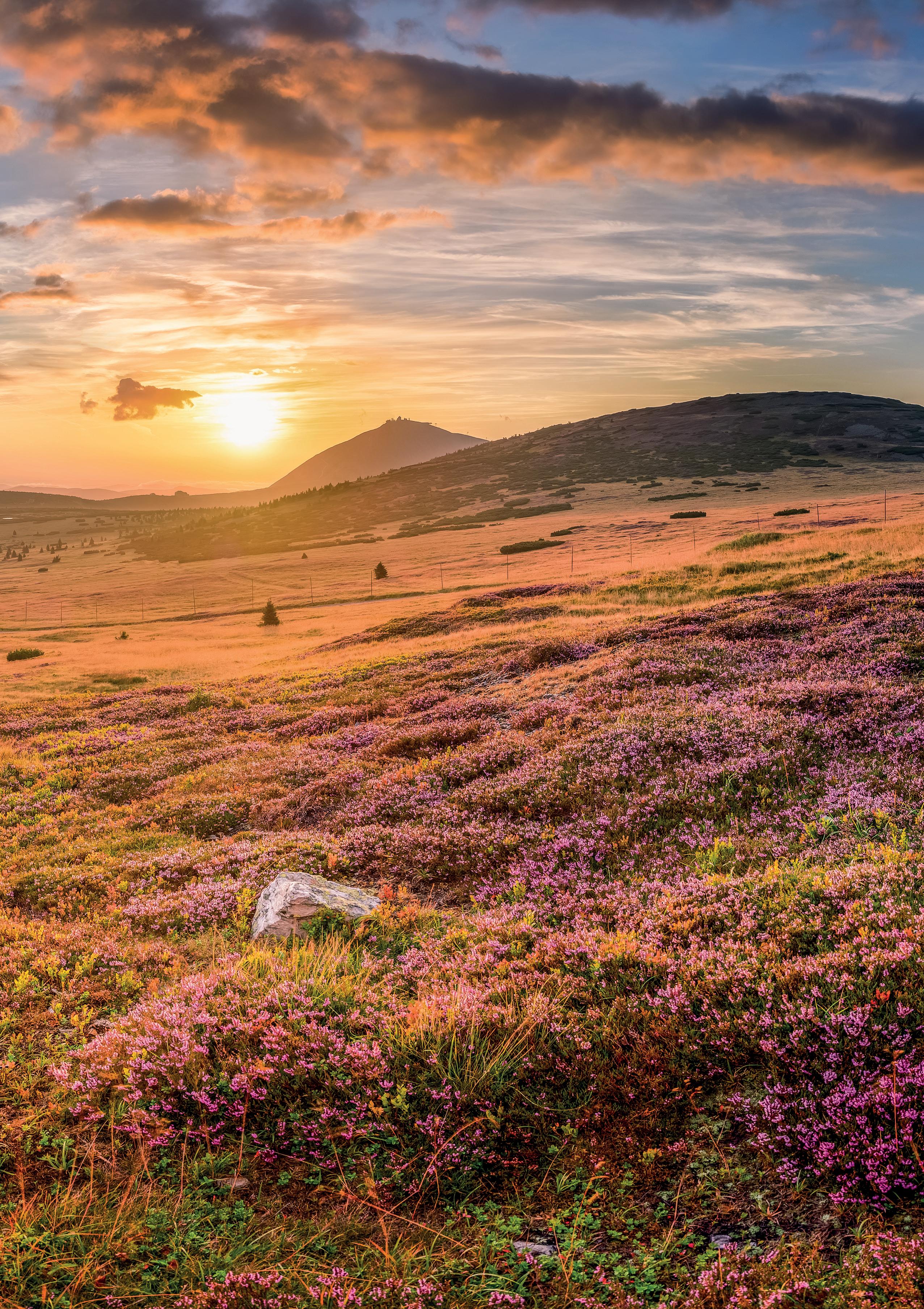
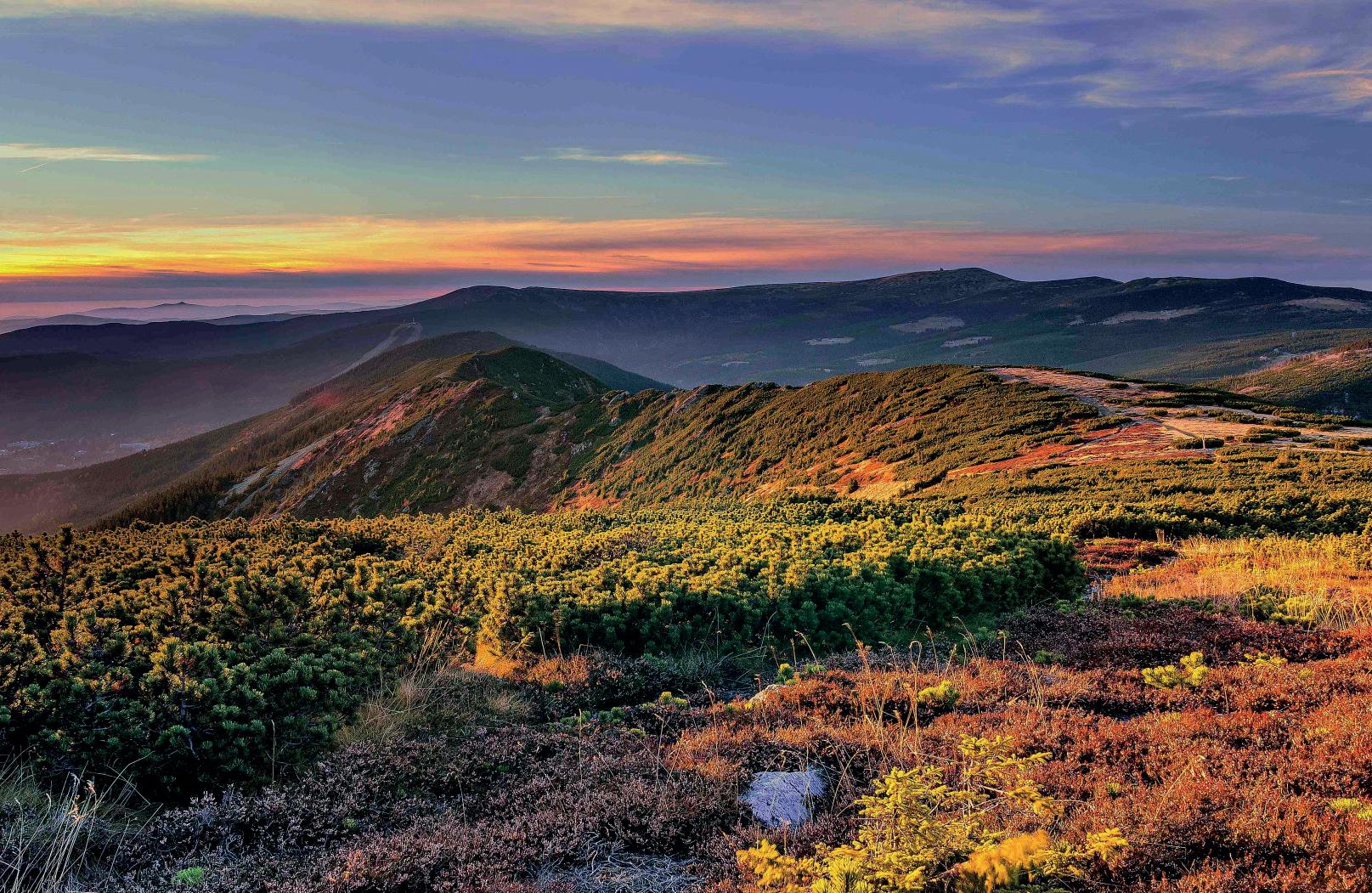
The Krkonose are a cold island of mountains in the middle of central Europe. It is an island brushed by glaciers and influenced by winds from the North Sea, an island shaped into a variegated mosaic of intertwining natural phenomena. You can see several vegetation zones in a single day. From the foothills, you climb through the Krkonose’s blooming meadows, rich in herbs and deep beech forests. As you ascend the hills, you can listen to the gurgling brooks flowing wildly through the valleys and falling from the mountains in roaring waterfalls. If you go upstream you come to an area so inhospitable that even forests cannot thrive here. This is where the Arctic-Alpine tundra rules, the most important of the Krkonose’s phenomena. It is a unique environment that developed from the merging of Scandinavian and Alpine influences. It consists of extensive matgrass meadows, stone fields, peat bogs and corries. Above all this rises Mount Snezka, the highest Czech mountain, shaped by glaciers into a three-sided pyramid.
Thanks to all these unique features, the Krkonose Mountains was made a national park more than 60 years ago. Come and see its hills and valleys and learn about this unique natural heritage.
The Krkonossky National Park
The Krkonossky National Park, established in 1963, is a shield that protects the Krkonose’s nature. It guards the story of the unique landscape which started back in the Proterozoic and has been influenced by man in recent centuries. The combination of natural circumstances, unique in Europe, and human influence has made the Krkonose an unusually diverse environment. Forests, blooming meadows, wetlands, waterfalls and Arctic-Alpine tundra are the most important and admired phenomena.
Let us appreciate every step we take through these rare sites where nature still rules and shapes them as it deems fit. Let us walk through this home to discover endangered and rare plant and animal species as humble guests. Let us listen to the stories told by the mountains. We will then understand that protecting them is our joint task and mission.
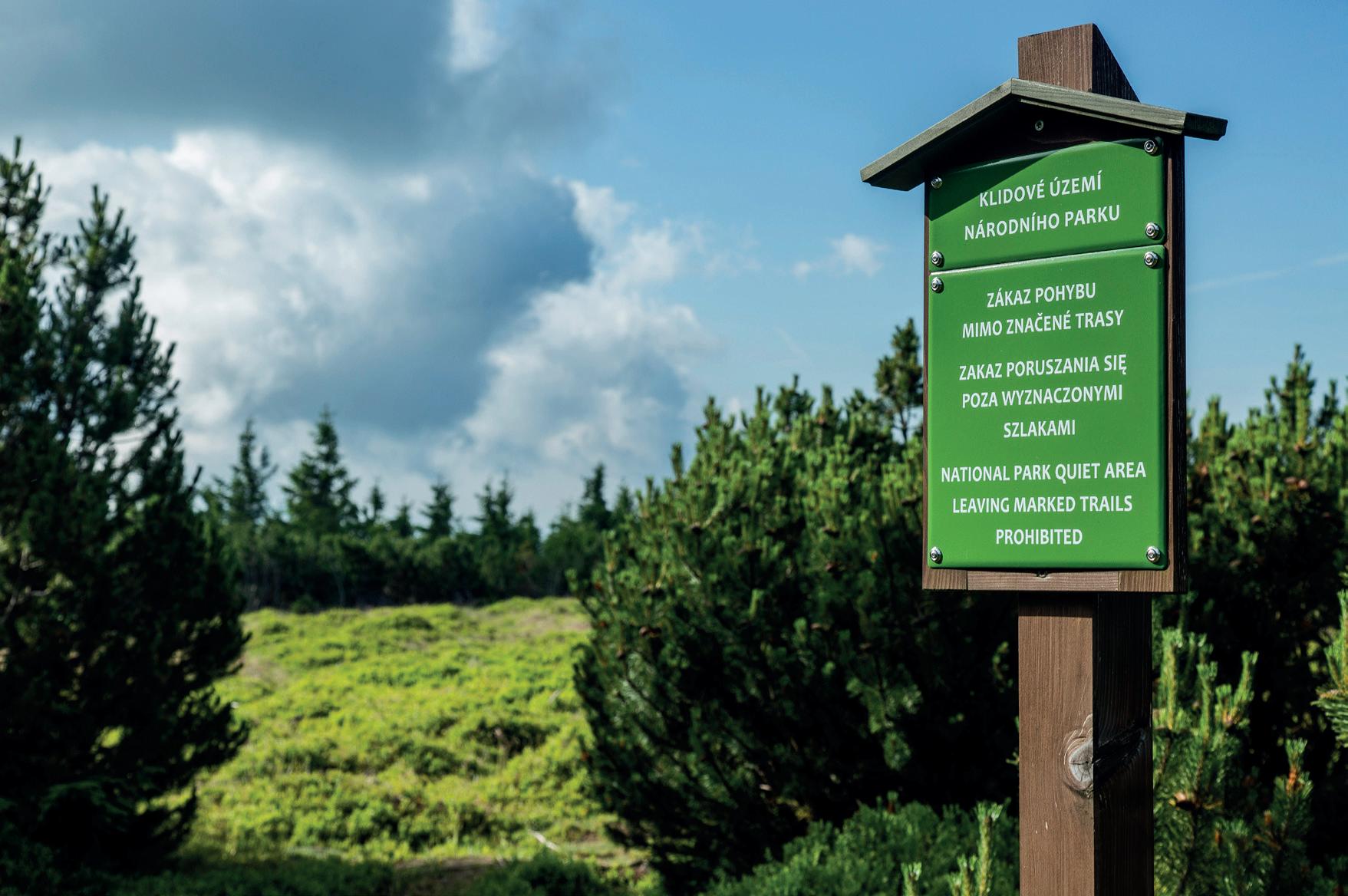
The limitations imposed on visitors’ movements in the national park are insignificant when compared to the possible consequences if they are violated, and certainly won’t impair your experience. On the contrary, they will allow you to enjoy silence and harmony. The primary rule is: always stay on marked paths when in the quiet zones and do not leave traces of your presence there.
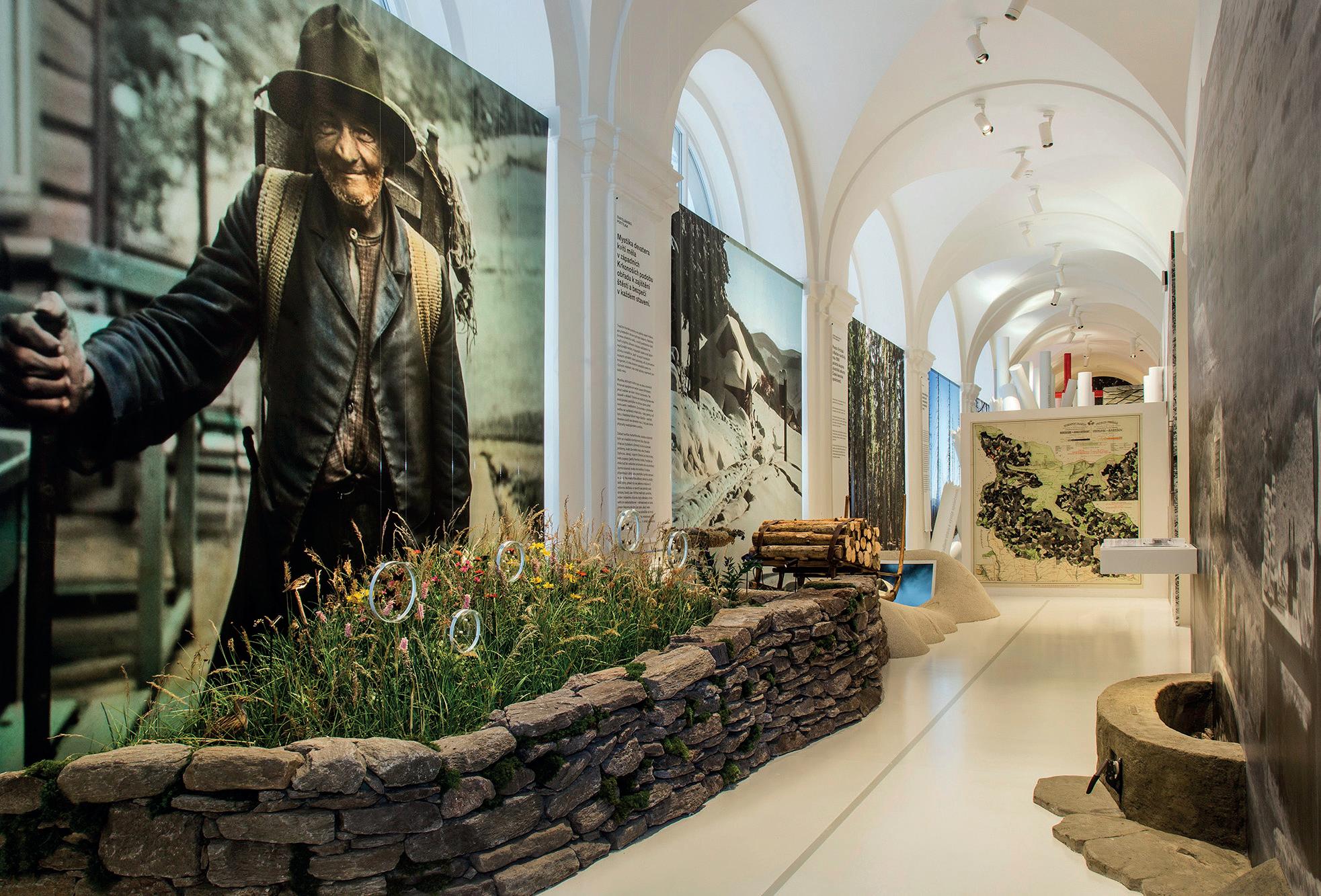
01 The Krkonose Museum and the Visitors’ Centre of the KRNAP Administration in
Vrchlabi
If you want to dive deep into the Krkonose’s story, touch all the phenomena in one place and understand the importance of their protection, you should not miss the Krkonose Museum in Vrchlabi. Its permanent exhibition will impress and touch you, entertain as well as inform.
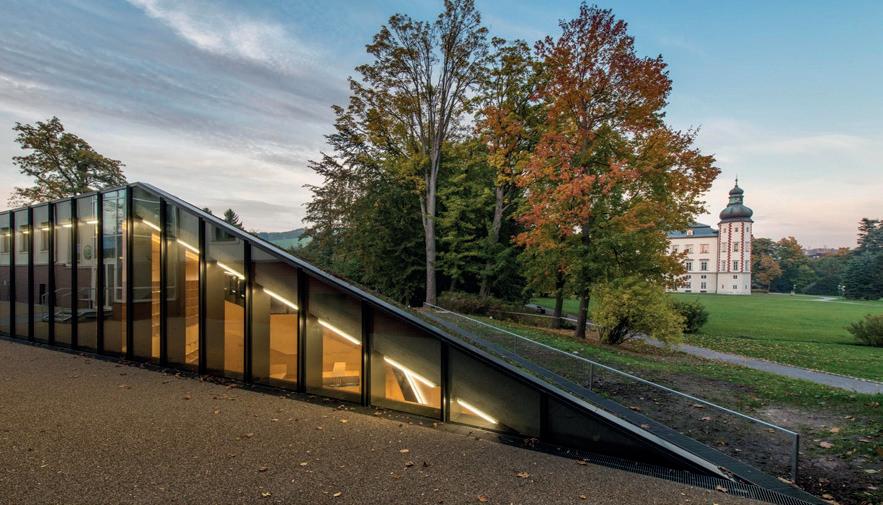
02 The Krtek Environmental Centre in Vrchlabi
The Krkonose Centre for Environmental Education, nicknamed Krtek (‘The Mole’), is located in a building that has won awards for its unique architecture, buried in the ground like a mole. You can have a look around and take the visitor brochures, or attend some of their excellent lectures and other public programmes.
An Island of Tundra in the Middle of Europe
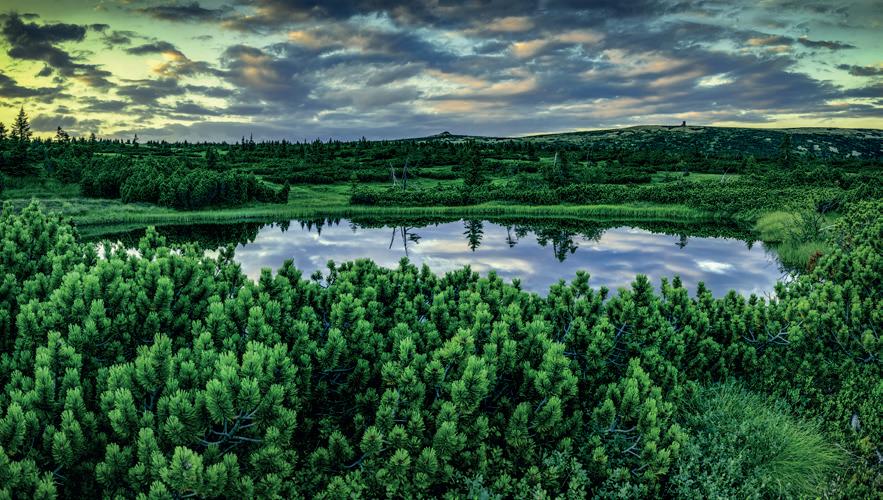
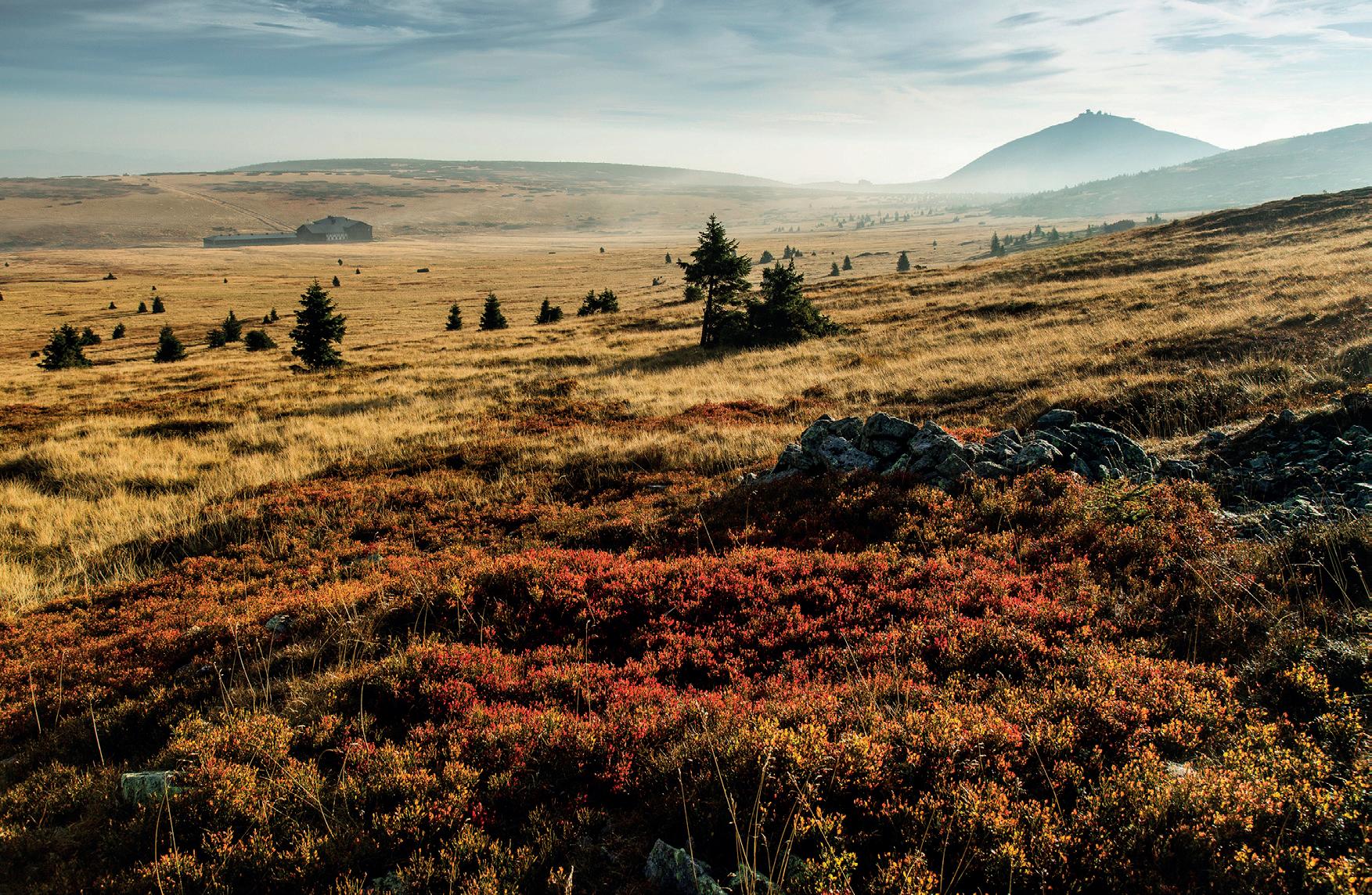
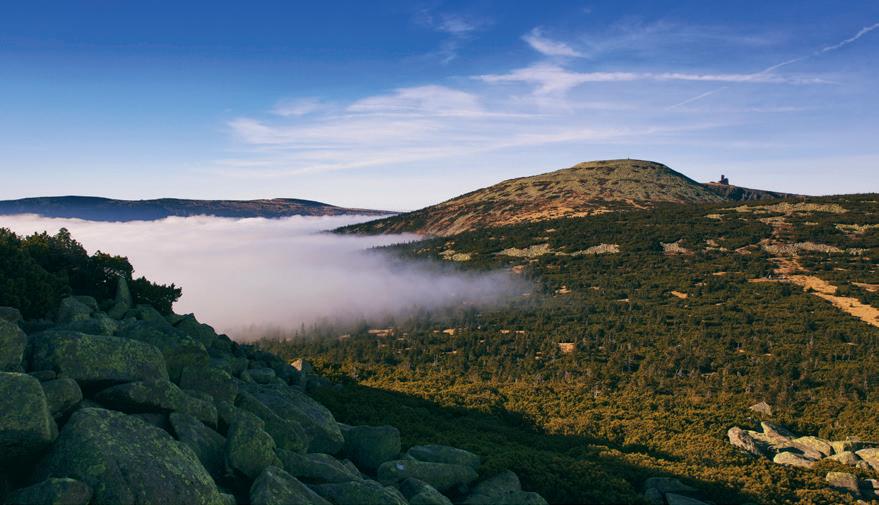
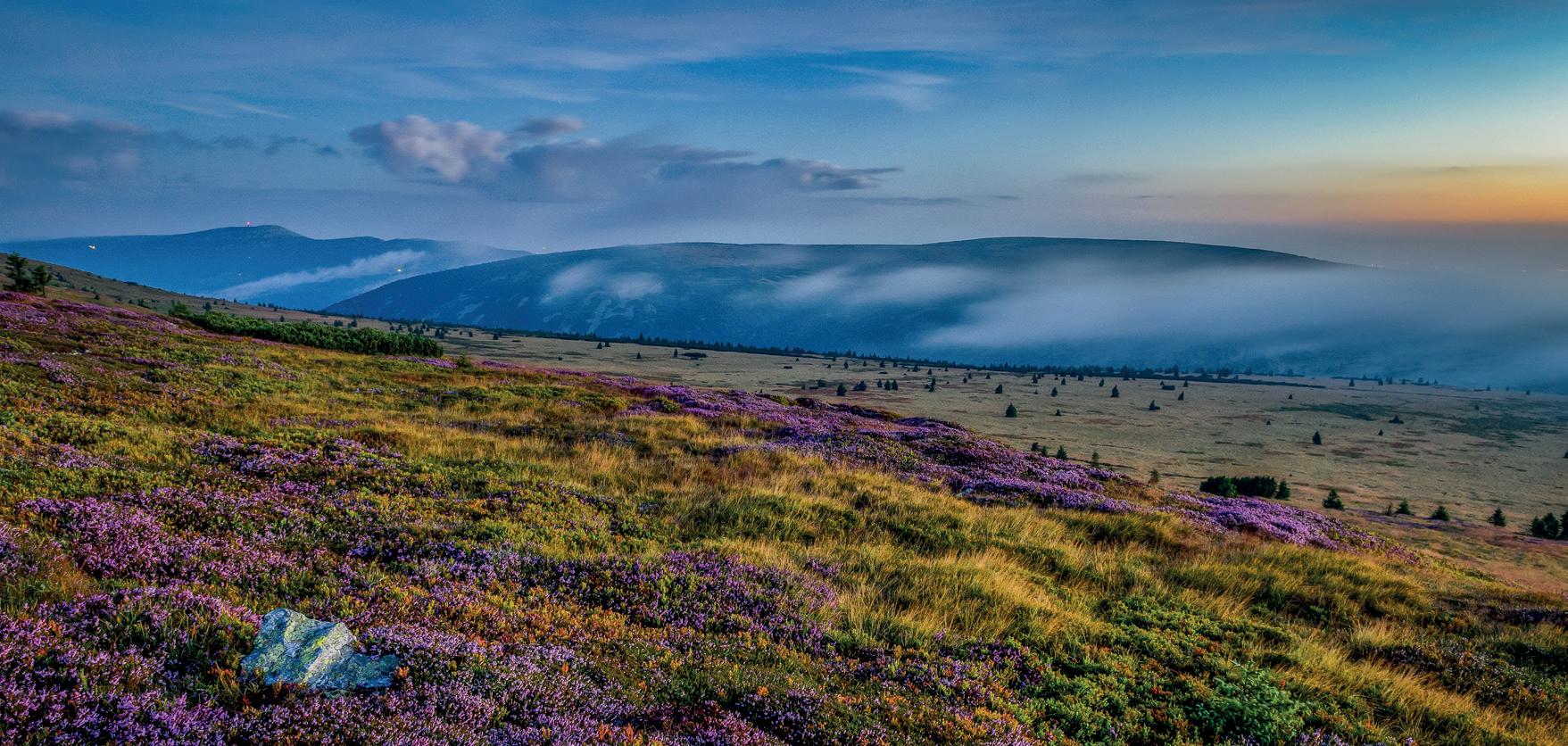
The Arctic-Alpine tundra is a unique environment that developed from the merging of Scandinavian (polar) and Alpine influences. The Arctic tundra was left here by the Scandinavian continental glacier, while the Alpine tundra descended to the Czech basin from the Alpine peaks. Both of them brought various relics to which the uppermost parts of the mountain range became home and made it a unique environment, the most valuable part of the Krkonossky National Park. An island of tundra was formed, isolated in a mountain range in the middle of Europe.
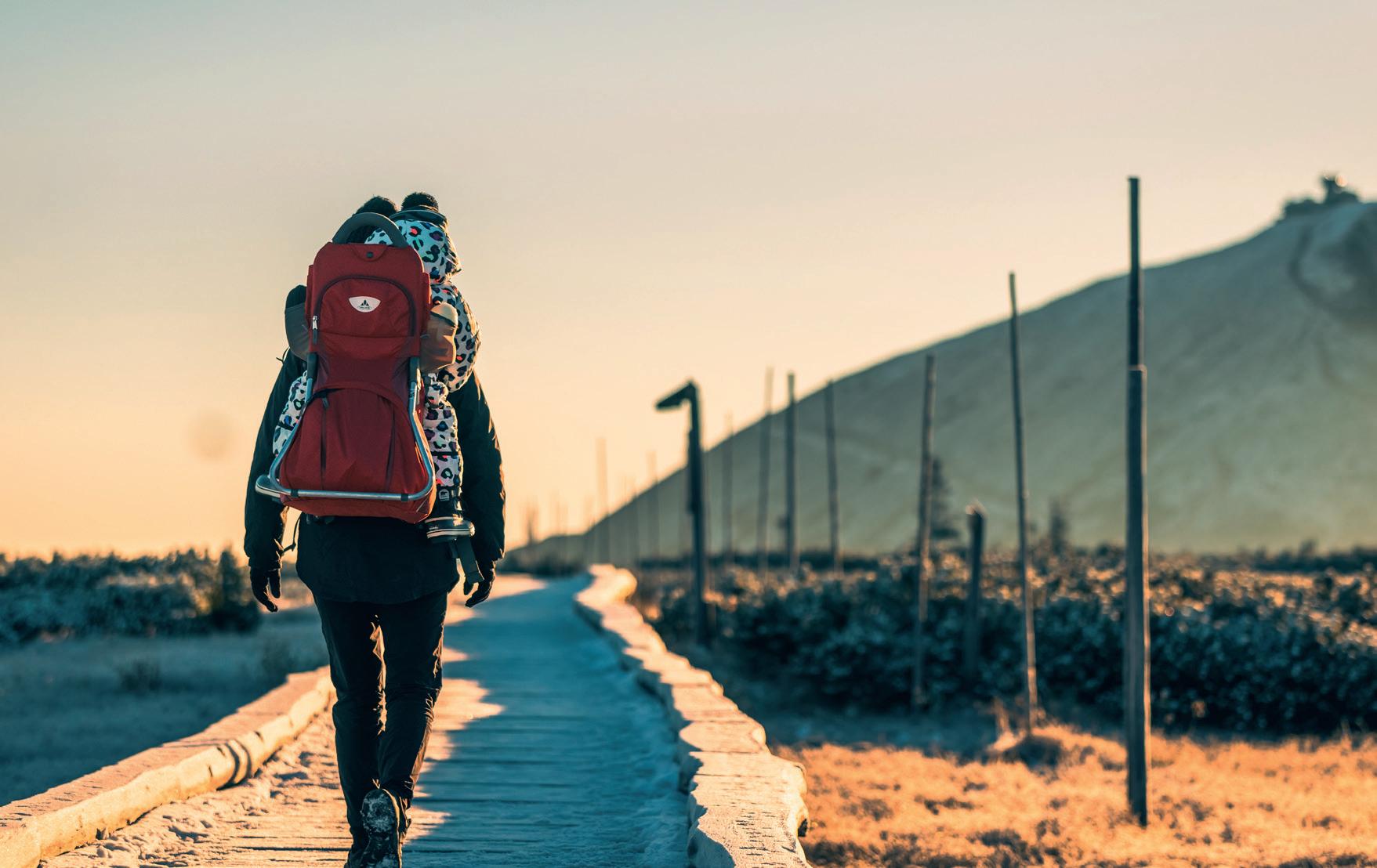
How will you know you are in a tundra? Look around first. If meadows with coloured blooms have been replaced by peat bogs and stone fields covered in lichen, the forest has turned into low dwarf pine growths, and there are unceasing strong winds and you are feeling the cold, you’re there.
In some languages, ‘tundra’ means a bare hill. It can be found on the very tops of the mountains. Only a few dozen metres below that, it turns into a different, more hospitable form. The matgrass growths are replaced by peat bogs covered in cottonsedge. On the margin of corries, the most attractive form of tundra can be seen blooming with typical Krkonose rowan.
03 The Krkonose Tundra Nature Trail and Mount Snezka
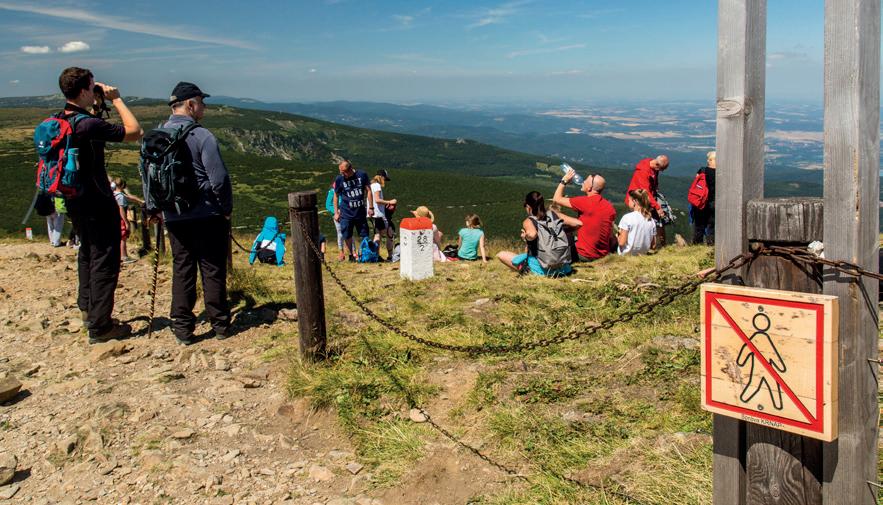
At 1,603 m a.s.l., Mount Snezka is the highest Czech mountain. It may seem to you like a pile of stones, but it is the peak of the Arctic-Alpine tundra, with endemic and rare plant species growing on its plains. You will best enjoy it outside the main season, and you can take the Krkonose Tundra nature trail on your hike down Obri dul valley.
04 Snezne jamy Corries and Vysoke kolo Mountain
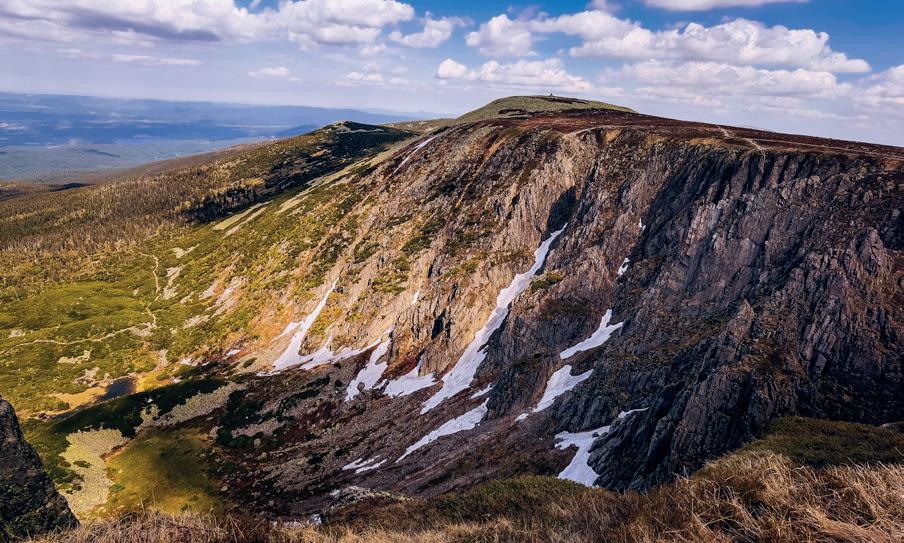
These are two massive corries on the northern side of the Krkonose, dominated by a building called Wawel above them on the border with Poland, near the sources of the River Labe. The corries are up to 215 m deep. Vysoke kolo is the highest mountain of the Western Krkonose, easy to recognise from a distance thanks to its extensive scree field.
Blooming Mountain Meadows
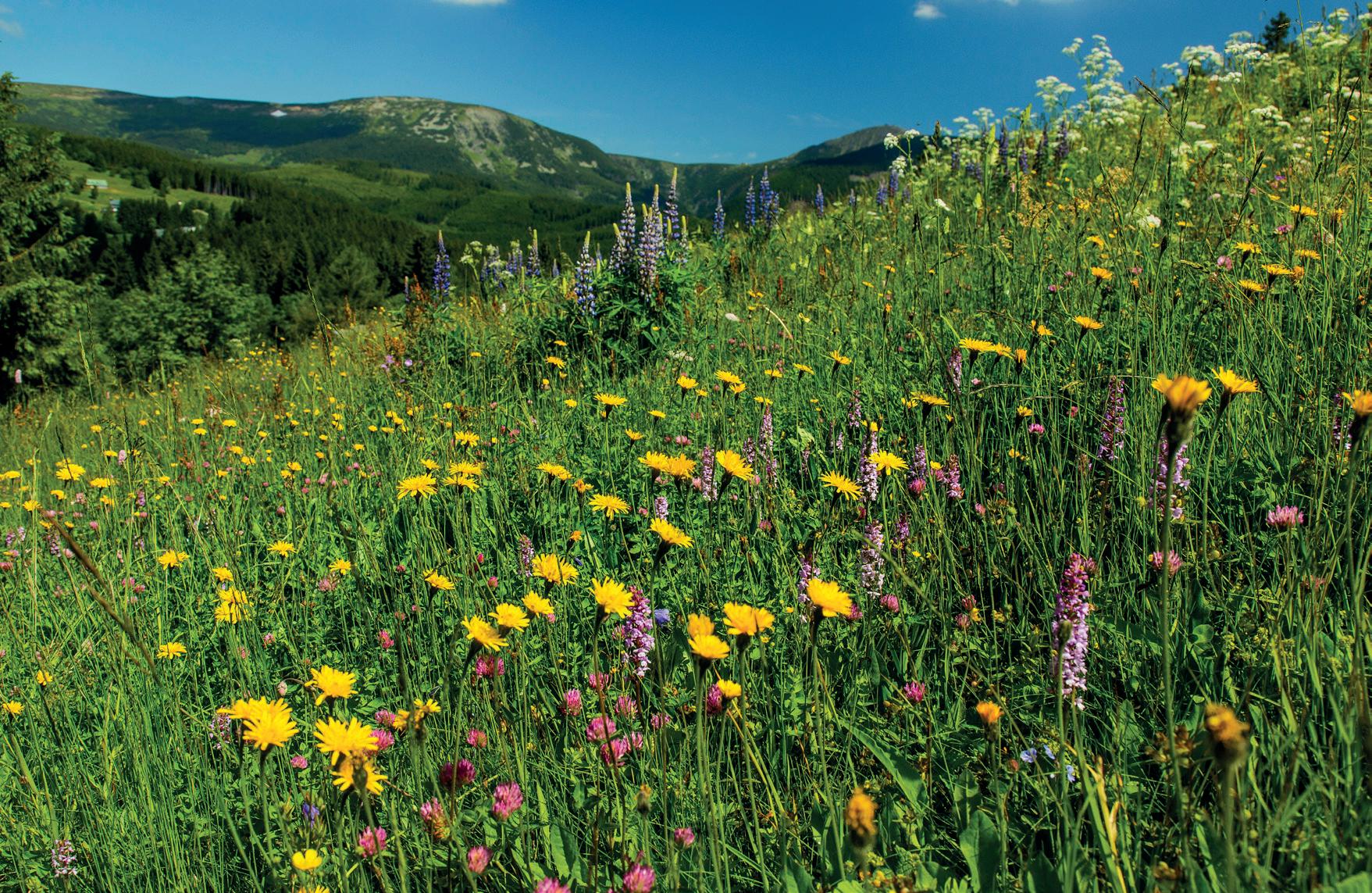
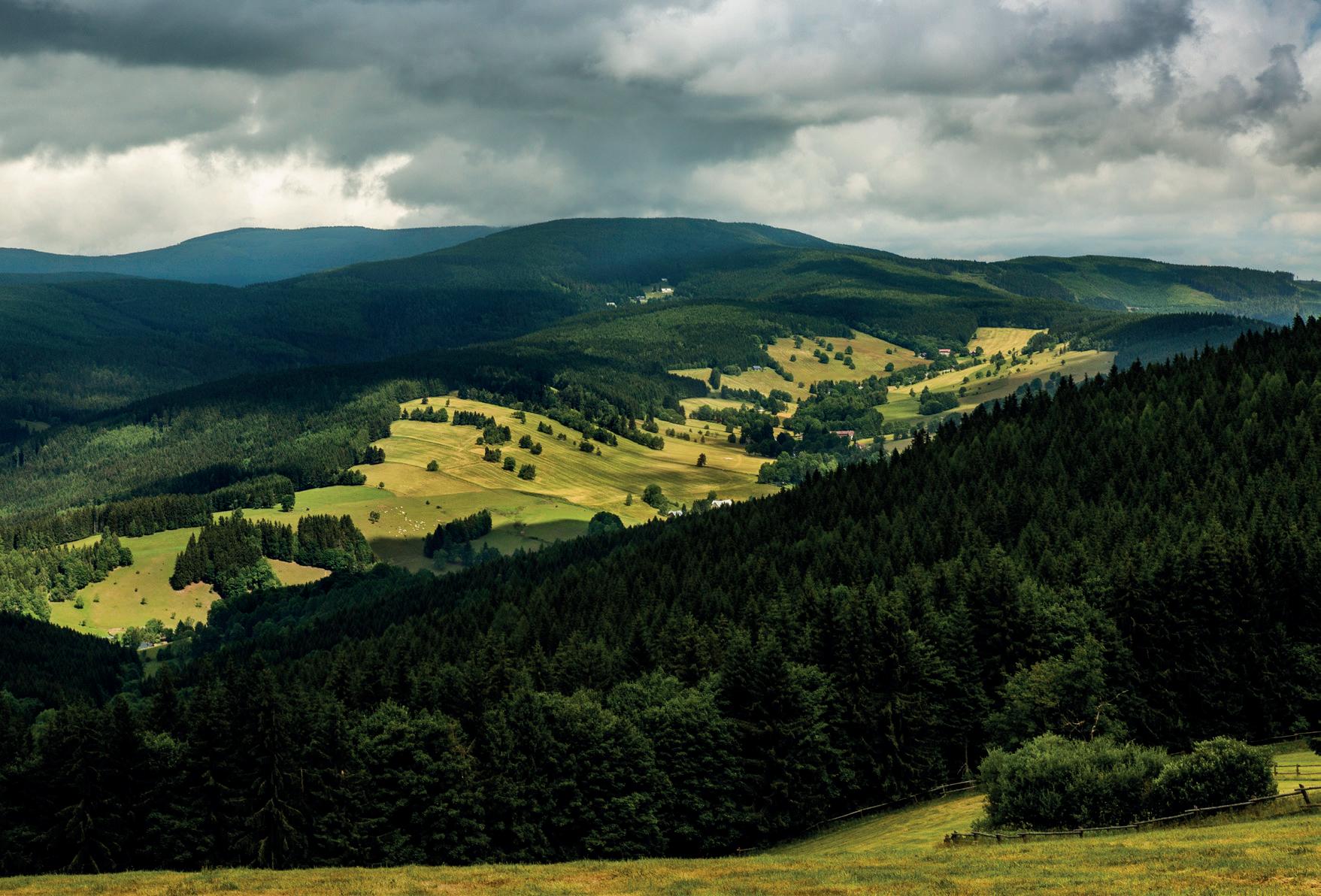
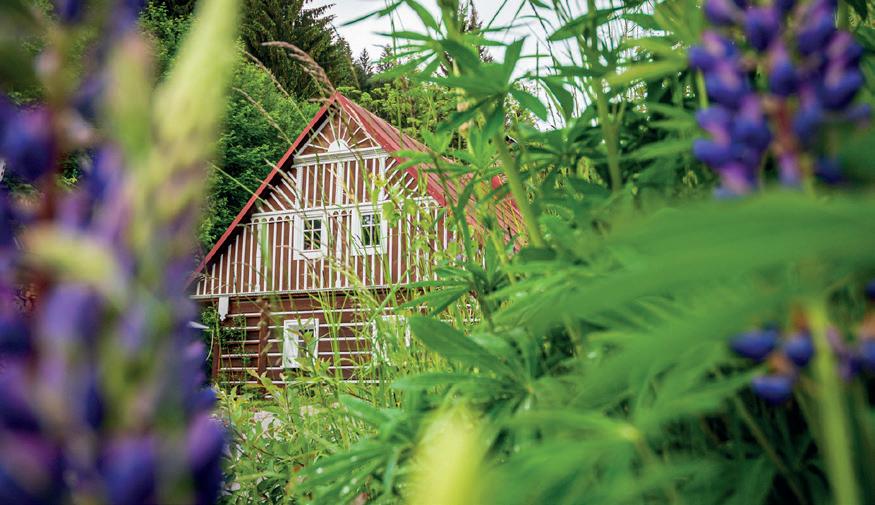
As you walk through the Krkonose’s deep forests, thinking they are probably endless, a clearing will suddenly open up in front of you, with a small chalet or two. It may look like a fairytale picture, but it is one of the meadow enclaves, typical for the Krkonose. These enclaves are a reminder of man’s activity from the time the first chalets were built high in the mountains. A refuge, a safe place to live was thus created in harsh conditions. The surrounding forests had to be felled and transformed into pastures and meadows. Those who lived in the mountains regularly mowed and fertilised the meadows, and let them be grazed by cattle. This way, man has unconsciously contributed to maintaining biodiversity. Just as the mountains became a safe haven for people, people created a sunny and fertile place for the Krkonose’s rare plant species, now protected. These include the mountain pansy (Viola lutea subsp. sudetica), the endemic bellflower (Campanula bohemica), the willow gentian (Gentiana asclepiadea), orange hawkweed (Hieracium aurantiacum) and many other species.
05 Horni Alberice
Take a trip to the landscape around Horni Alberice, where peacefulness rules. The meadows are close to Mount Snezka, but facing the sun and covered in thermophilous plant communities, with species such as the thistle and plantain.
06 Slunecna stran near Svoboda nad Upou
As you walk out of the beech forests near Antoninovo valley, you can enjoy impressive scenery dominated by Cerna hora mountain and Mount Snezka. The local bog and peat meadows are home to many endangered plant species, including orchids and the globeflower.
The Krkonose’s Forests
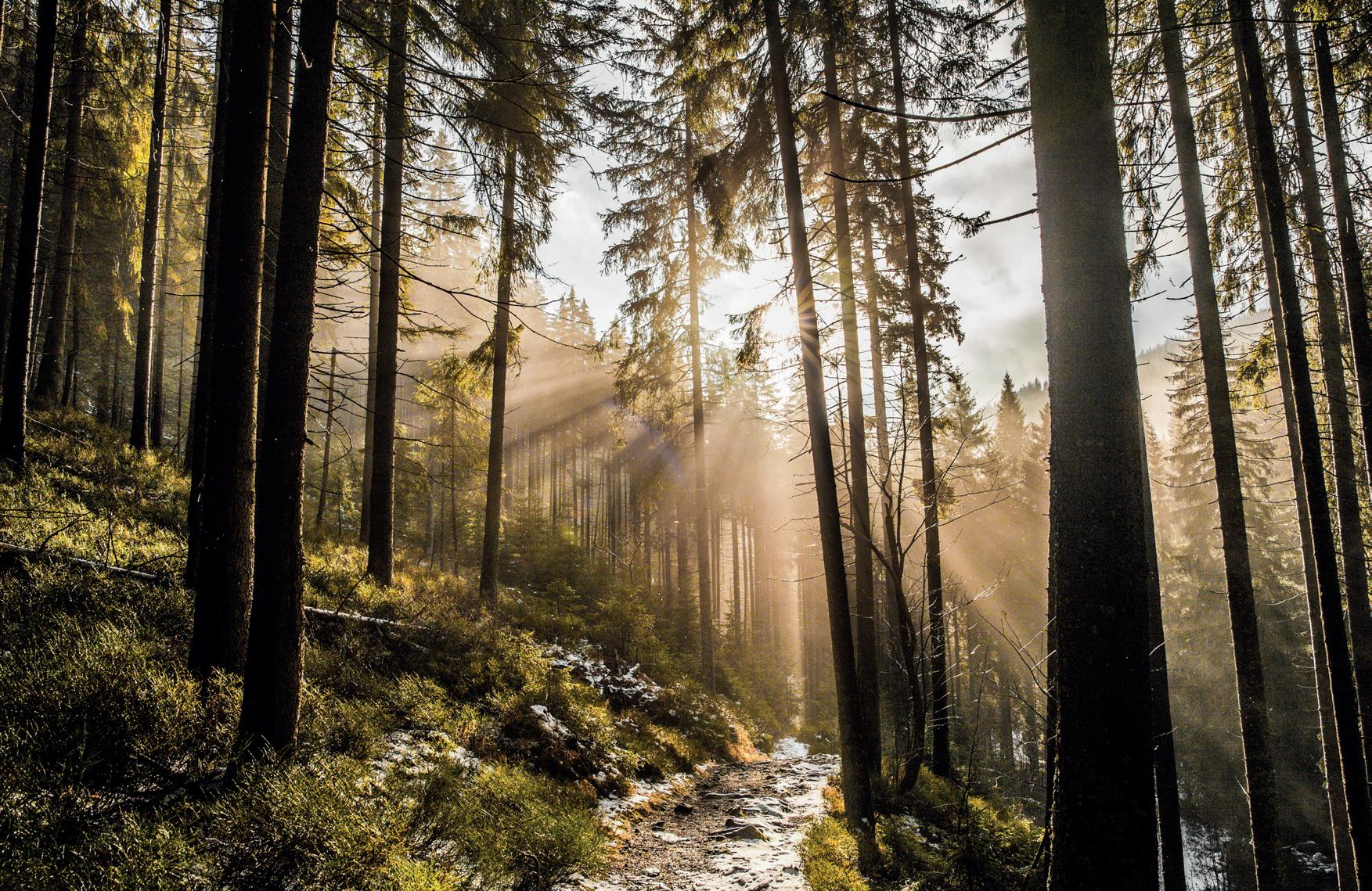
Forests are one of the greatest gifts of a landscape. They retain water, strengthen the soil, cool the air, provide shelter and shade. They actually breathe for us. They also symbolise beauty, calmness and inner strength, which we can feel when breathing in the smell of moss or looking at the tree crowns.
Some 700 years ago, the Krkonose forests were wild, dark and impenetrable, and people looked at them in awe and respect. They had to overcome this to be able to get wood for use in quarries and glassworks. Some forests also had to give way to pastures, meadows and small fields. That changed the look of the mountain landscape forever. Extensive devastation of the forests by excessive felling, along with the environmental disaster at the end of the 20th century when the forests were almost killed by acid rain coming to the Krusne Mts. and the Krkonose from German brown coal power plants, made the Krkonossky National Park one of the five most endangered national parks in the world. The consequences of these events are still being combatted today. The KRNAP Administration is trying to implement natural renewal of the Krkonose’s forests even now.
The prevailing species today are the common spruce, dwarf pine and beech. The oldest trees are more than 200 years old. The rarest species are the endemic Krkonose rowan (Sorbus sudetica) and the cloudberry (Rubus chamaemorus).
07 Dvorsky Forest
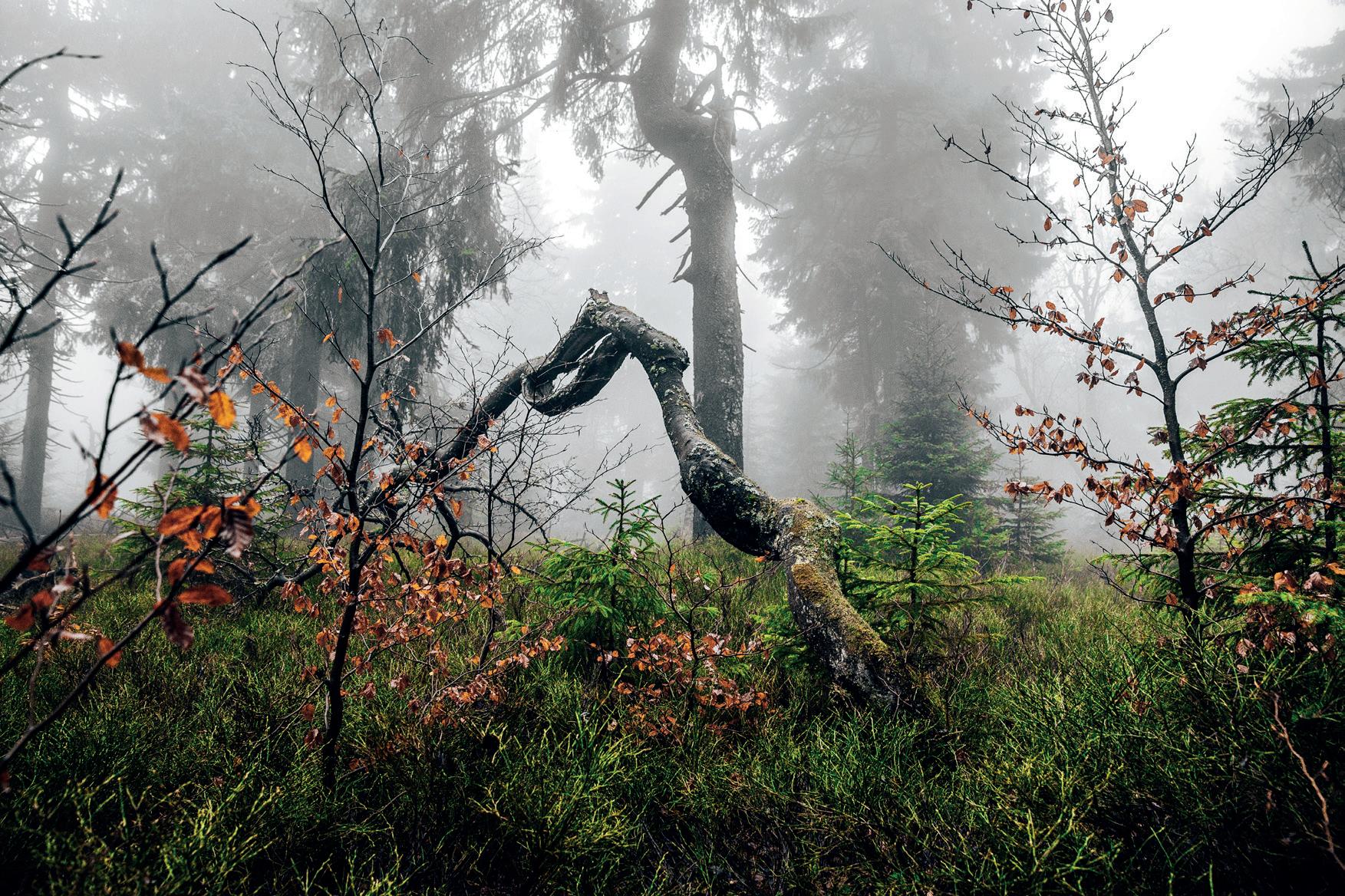
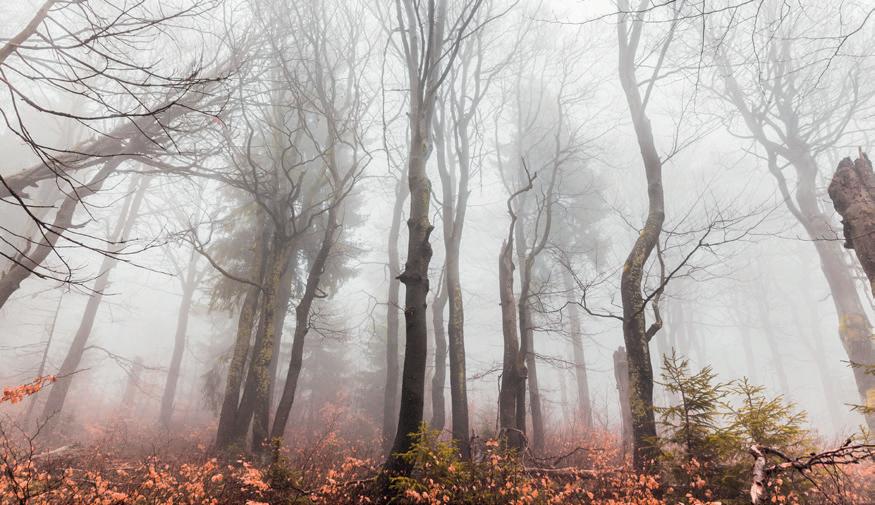
This is a bizarre beech forest, devastated by the harsh climate and grazing well after World War Two, which can be found in the Krkonose’s easternmost ridge called Rychory. You can sometimes find it marked on maps as the Dvorsky primeval forest (‘prales’ in Czech), but it isn’t actually a real primeval forest untouched by man. It is best experienced in the autumn when the dwarf and twisted trees are covered in moss and hidden in thick fog.
08 Professor Fanta Nature Trail
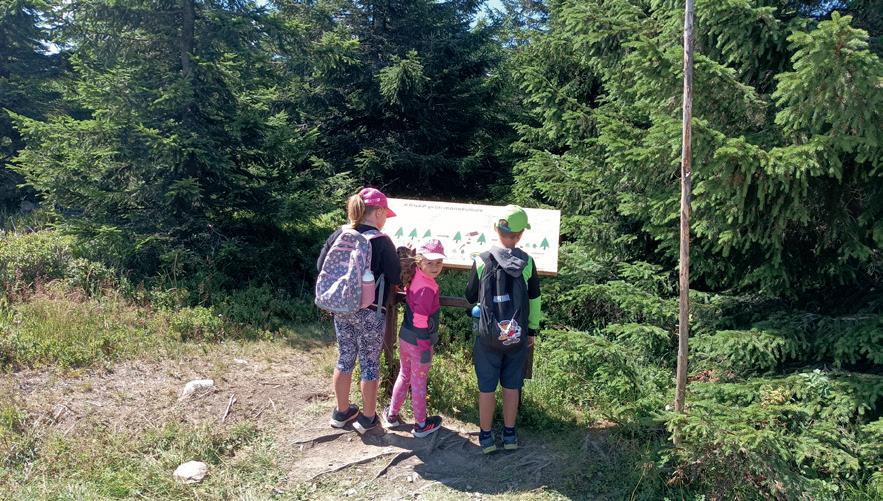
This short trail runs along the Czech and Polish border from Spindlerova chalet to the intersection near the Forest Renewal Memorial Stone. The panels explain the story of the Krkonose’s forests, and you can see how it continues today on both sides of the border.
Peat Bogs and Wetlands
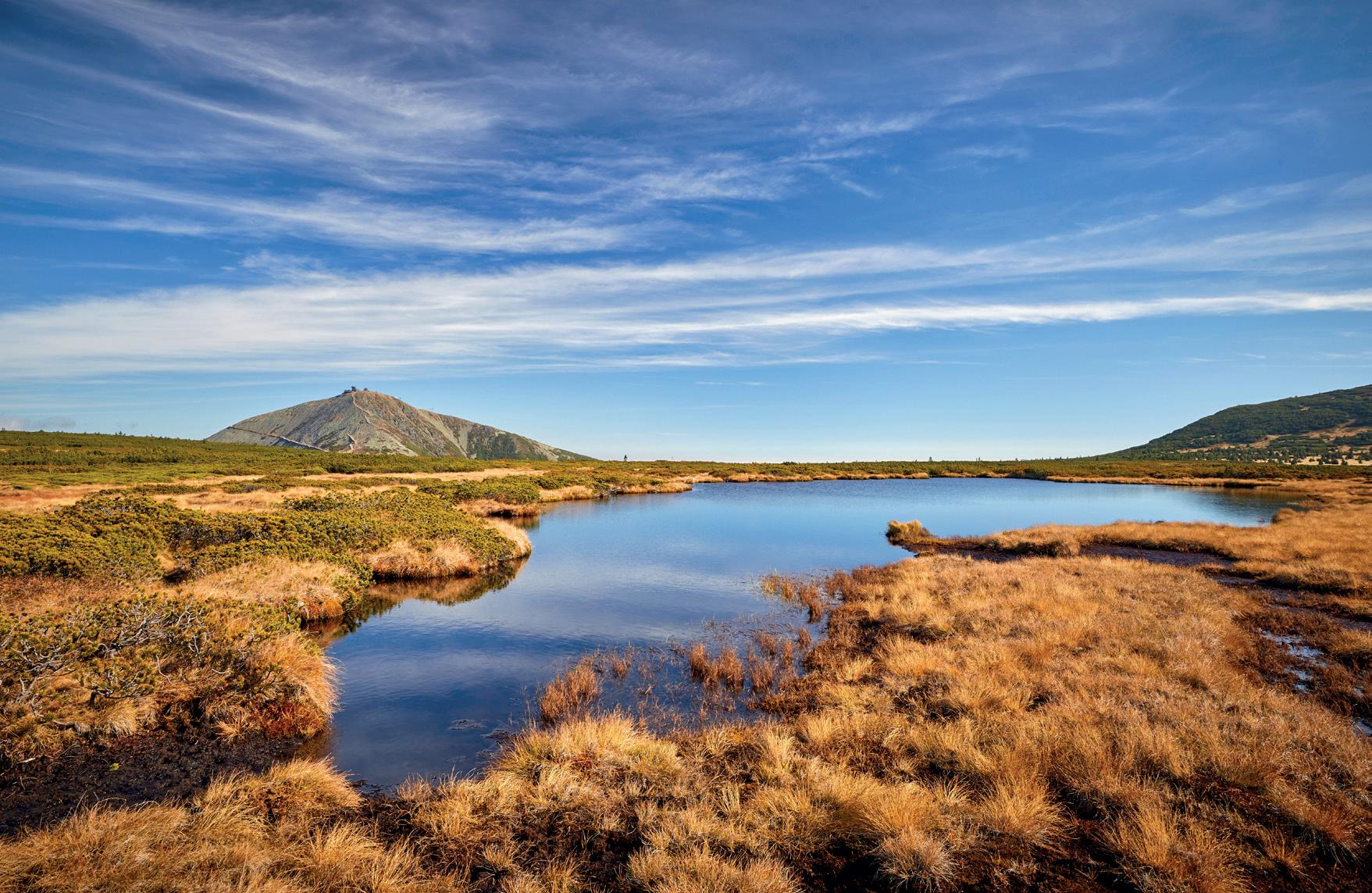
The Krkonose’s raised peat bogs complement the Arctic-Alpine tundra and preserve much of its secrets. They are silent guardians of the water, natural repositories where new life stems from the past. They look impressive especially when covered in blooming cottonsedge. You can walk above them on wooden walkways and enjoy their unique atmosphere.
Peat bogs are formed in wet places and in depressions from which water cannot escape. The dead parts of the bog moss and other plant species pile up here and do not decompose as quickly as in warmer areas. Over time, they become completely sodden. As other layers of plants appear on the surface, the peat layer becomes thicker. This process takes hundreds to thousands of years. The Upske and Pancavske peat bogs are quite exceptional, and are now included in the list of the world’s most important wetlands. Man was never able to exploit them, and they are now relics of true wildlife.
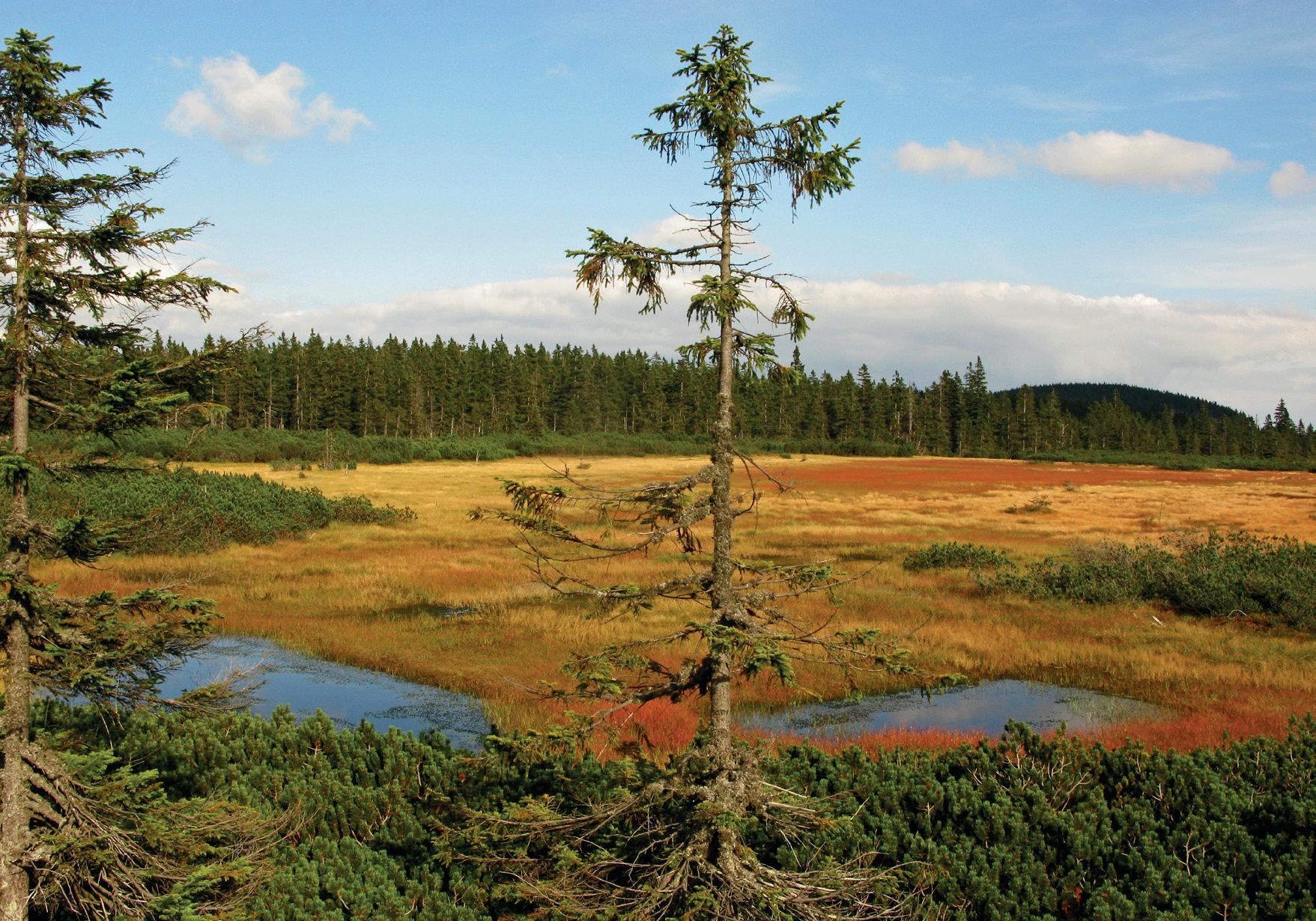
09 Cernohorske raseliniste Peat Bog
The largest raised peat bog in the Krkonose has existed for more than six thousand years. The cottonsedge and bog moss fill a small lake up to 2.5 m deep. You can see it along the nature trail and from the Hubertova viewing point.
10 Upske raseliniste Peat Bog
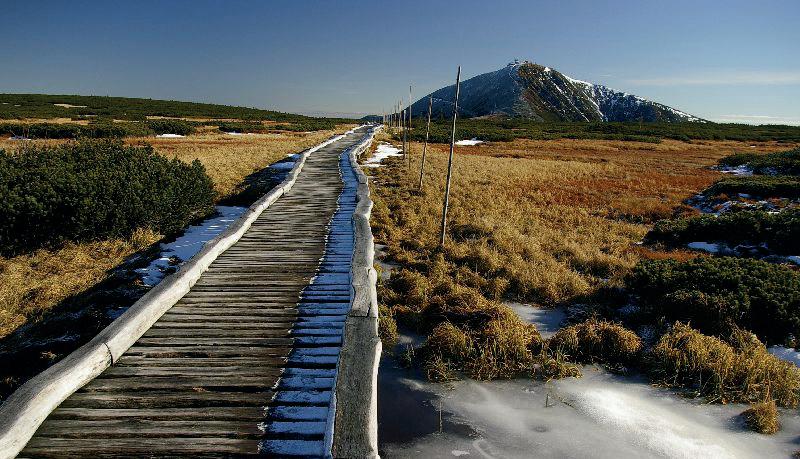
One of the best views of Mount Snezka is from the wooden walkway that runs across the Upske peat bog. Its appearance differs from a meadow by the small islands densely covered in vegetation, interchanging with depressions where water can be seen.
Mountain Rivers, Brooks and Waterfalls
You can admire the wild mountain water in all its forms: refresh your face after a long ascent, freshen your lips from an ice-cold crystal-clear spring, enjoy the roaring waterfalls and dip your hands into a quiet pool.
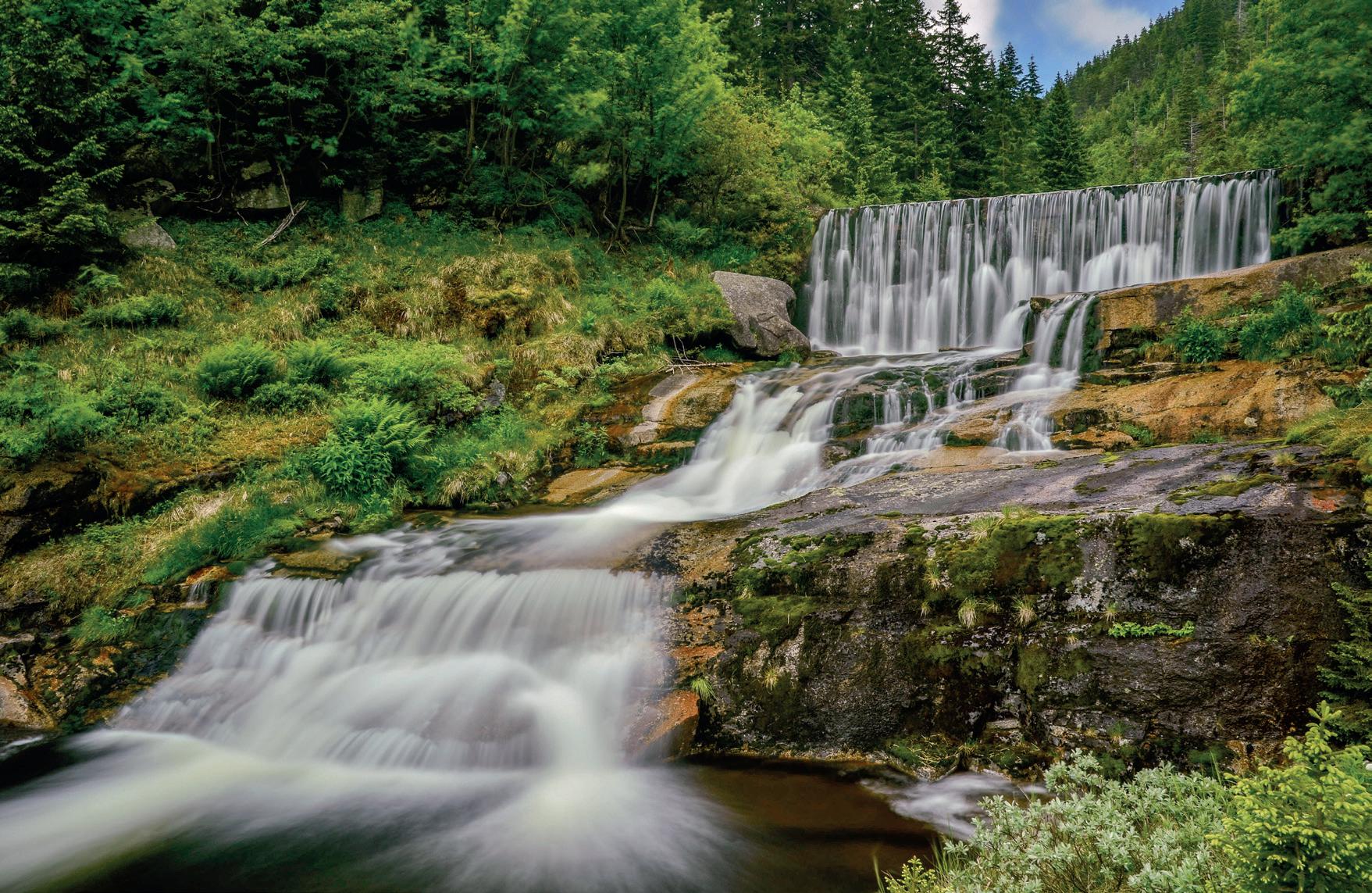
The Krkonose mountain brooks are wild and steep. In the spring, they can be as loud as a rock band in a stadium. In the summer, they gurgle like a lullaby. They bring life to the landscape through which their beds were cut in the Quaternary era, tumble over the edges of corries in waterfalls and spray out at the bottom. The brooks and torrents are fed from melting snow and rain, as is the longest Czech river, the Labe (Elbe), with its sources in the Labska meadow, which takes mountain water far beyond the country’s borders. Its tributaries drain especially the central parts of the Krkonose, while watercourses in the eastern parts flow to the Upa and in the western parts to the Jizera and the Mumlava rivers.
The local brooks and rivers are also home to a rare fish, the European bullhead (Cottus gobio), and other aquatic animals.
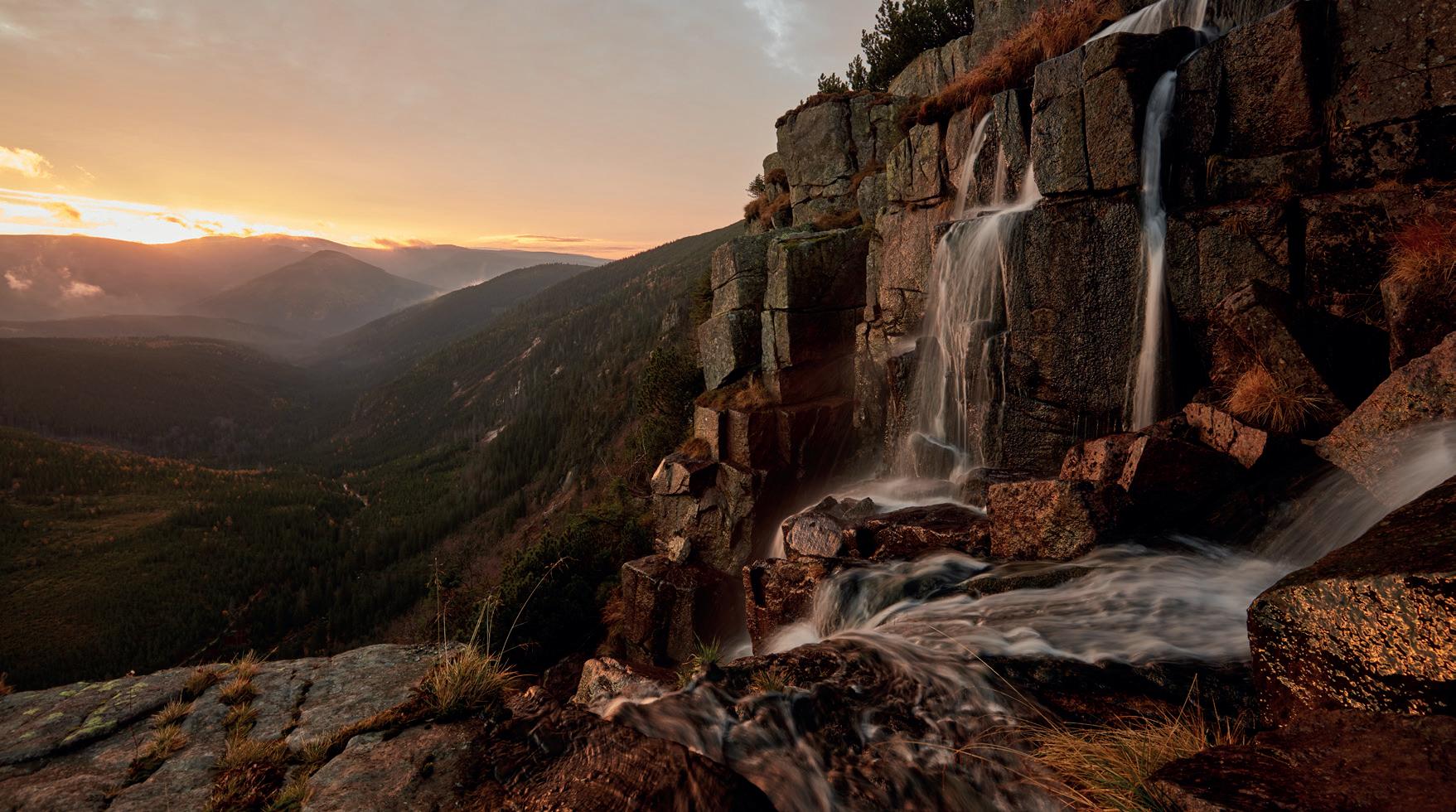
11 Pancavsky Waterfall
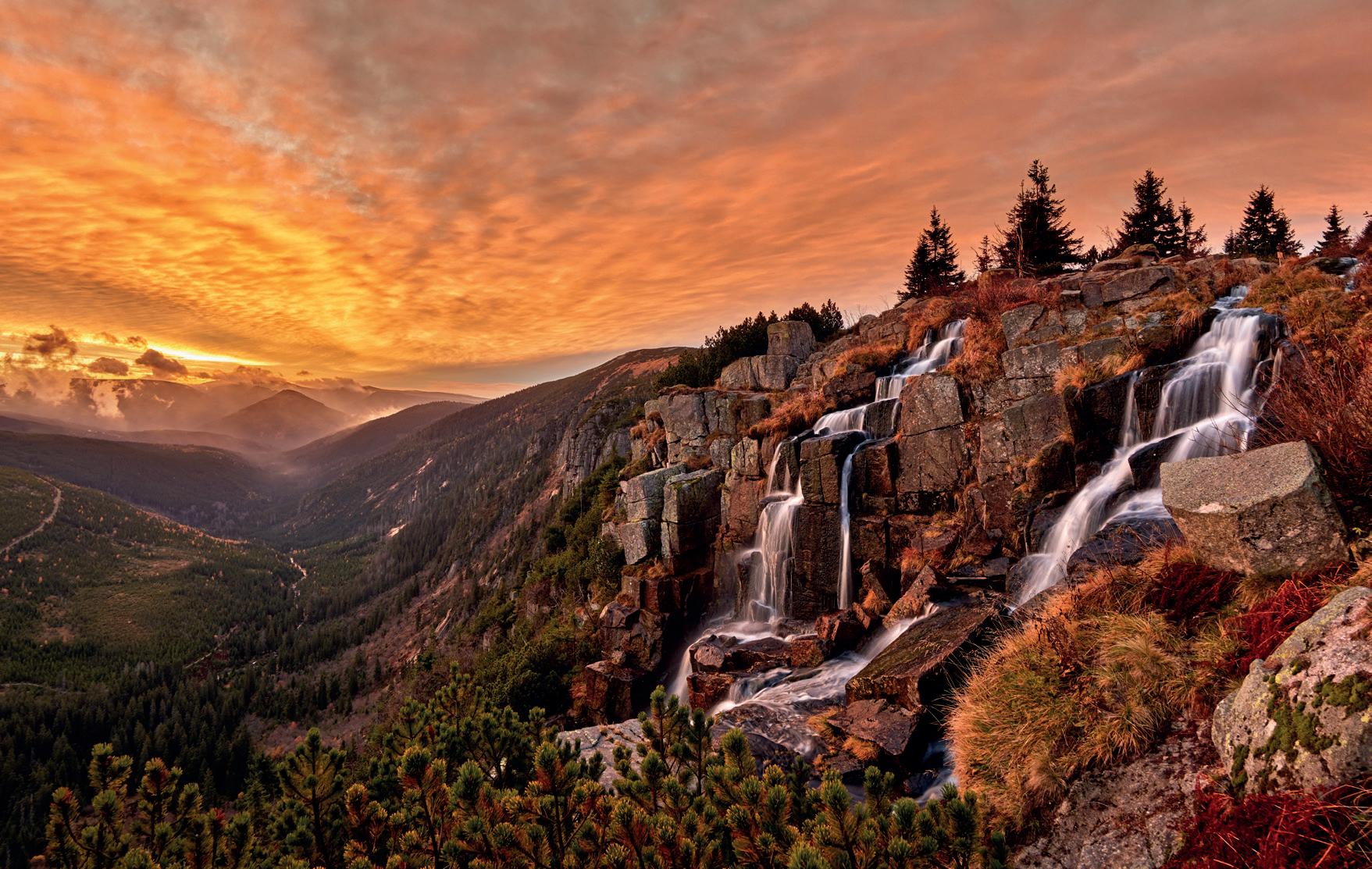
The highest waterfall not only in the Krkonose, but also in the whole country, falls over the edge of the Labsky dul valley and flows down cascades to the valley bottom. The waterfall is exposed to the sun from dawn, making it one of the most attractive places in the Krkonose.
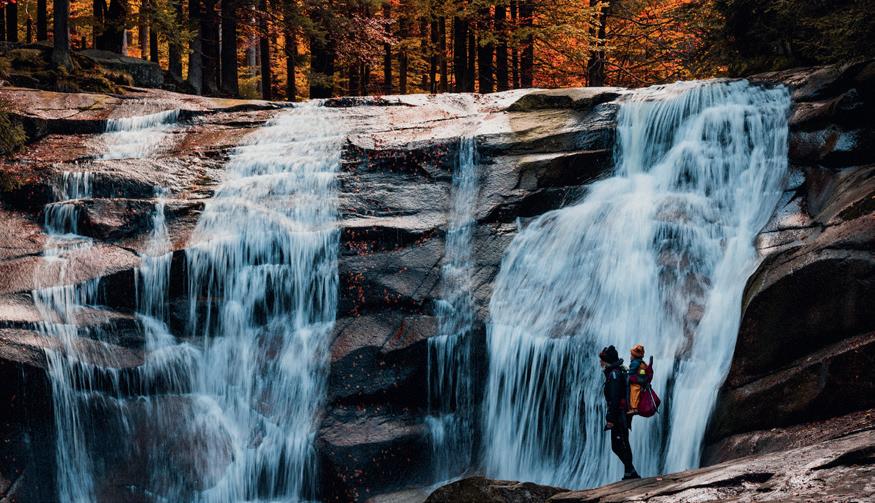
12 Mumlavsky Waterfall
The Krkonose’s most abundant waterfall can be seen near Harrachov. It is only 10 m high but powerful especially during the spring. The River Mumlava has a wide riverbed here, full of boulders and stones, and also huge “pots”, or evorsion holes.
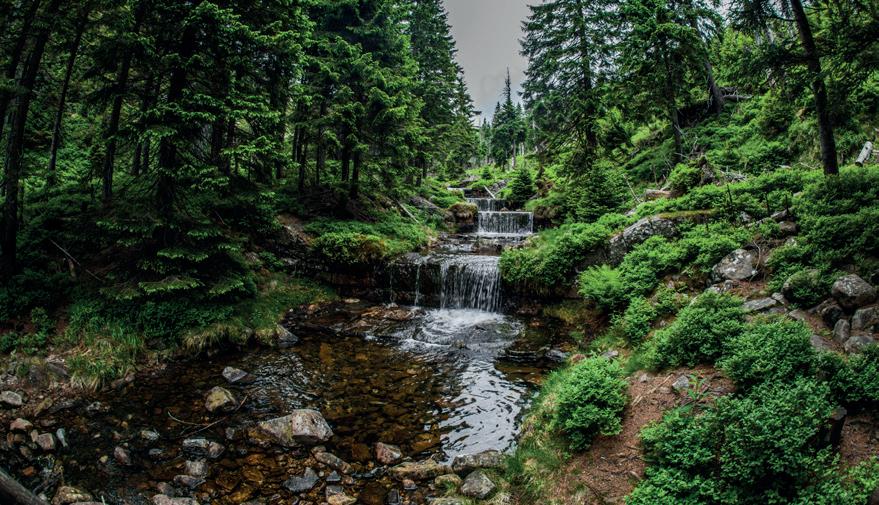
13 Certova strouha
Certova strouha is an enchanting torrent which man’s hand has made special. Its bed features many torrent control structures made of stone to prevent flooding. The water runs over them in small rapids and waterfalls. The nature trail will show you why and how these structures were built here more than 100 years ago.
The Fauna of the Krkonose
Almost 16,000 animal species live in the Krkonose. The rarest ones are endemic species that can’t be found elsewhere in the world. Many other species are endangered.
Undoubtedly the greatest celebrity among the endemic species is a small, only 15 mm long gastropod known as Cochlodina dubiosa ssp. corcontica. It lives mostly at lower altitudes in the eastern Krkonose. It hides under the bark of dead trees and can usually be seen only after rain, like most gastropods.
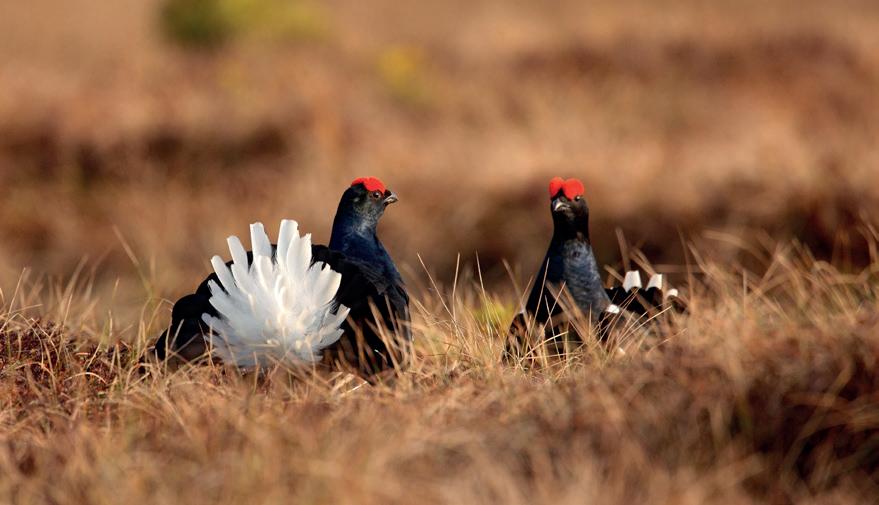
The black grouse (Lyrurus tetrix) is the symbol of the national park. The males have dark plumage and are known for their fights to win females. Their mating calls can be heard on silent spring mornings while they perform a complex dance to win the attention of the females. They are one of the most endangered species, and if they continue to be disturbed in their nests by people, they are likely to become extinct by 2040.
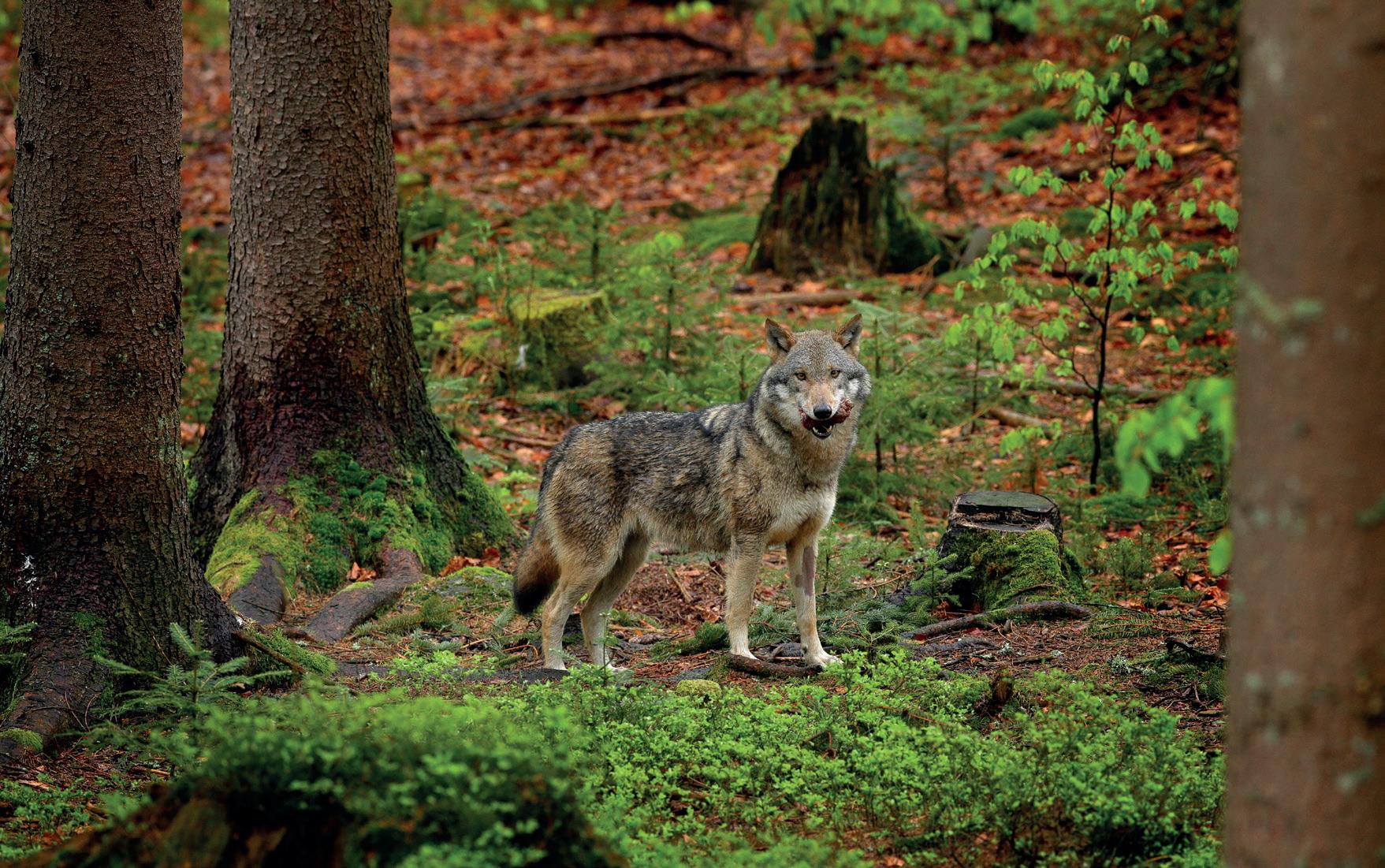
What’s the story behind wolves? They are slowly returning to the Krkonose’s landscape, where they were wiped out around the year 1800. Show them respect, but there’s no need to fear them. The wolf is a hunter and people are naturally afraid of being attacked. However, the risk of that happening is extremely small. Wolves are timid animals and keep away from marked paths, which makes seeing them quite unlikely. You could spot a wolf in a forest outside marked paths, but even so, there is no reason for panic. Just give the wolf some time and space to retreat.
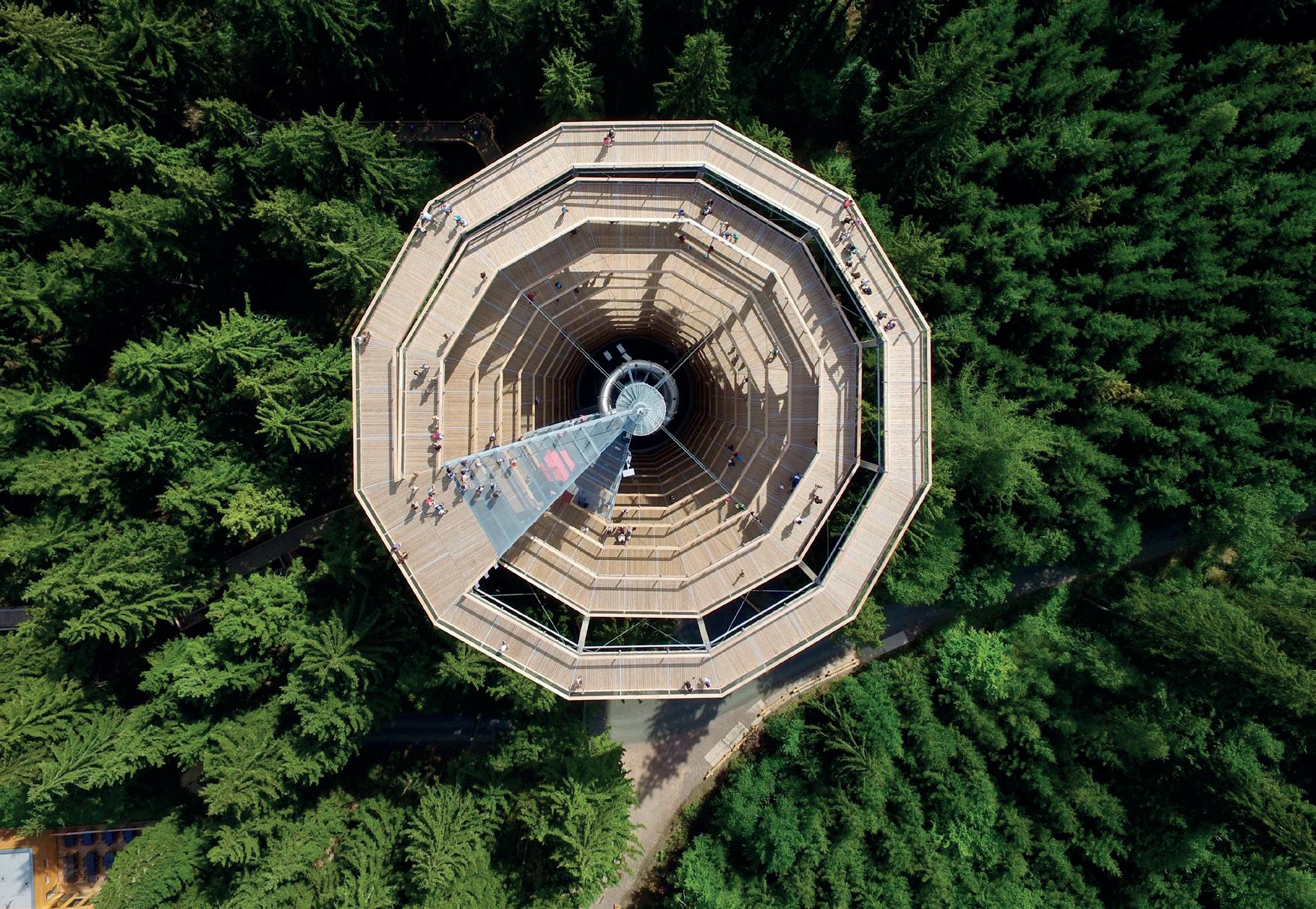
14 The Krkonose Treetops Trail
The Treetops Trail in Janske Lazne is not just a walk from the tree roots to their tops. It also presents some of the animal species living in the mountains, for instance the Cochlodina gastropod which you would otherwise have difficulty finding.
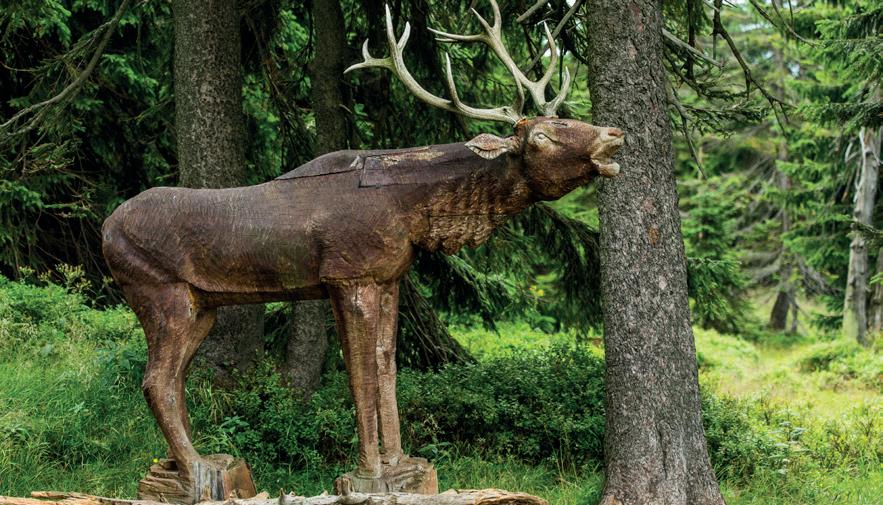
15 The Krkonose Animals Nature Trail
This short nature trail runs to Moravska chalet, and reveals many of the Krkonose animals, hiding in branches or in the moss. The panels give the most interesting facts about them.
The Flora of the Krkonose
On the one hand, there is the harsh side of the Krkonose, on the other, there is the fragile elegance of the plant world. The most resilient species can survive even in the inhospitable conditions of the tundra. These include Taraxacum alpestre and Veronica bellidioides, two species that grow even on the slopes of Mount Snezka. They struggle not only with the demanding climate but also with humans treading where they are not supposed to. In the tundra, the vegetation period is much shorter than at lower altitudes. The plants therefore have much less time to renew and regenerate. Every intervention and every step can be fatal for their survival.
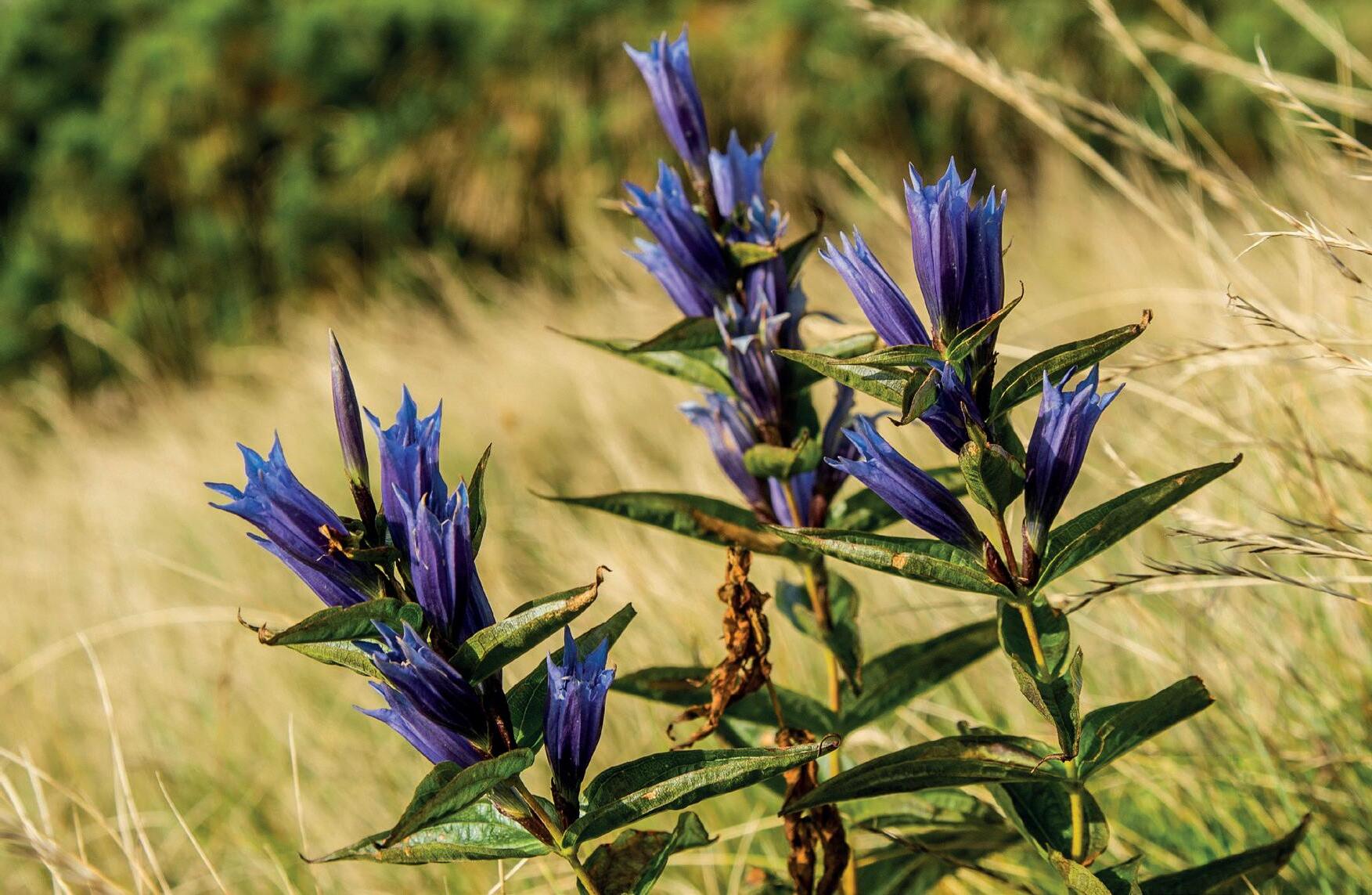
The lower you go from the Krkonose ridges, the more lively the landscape you will see. The silent peat bogs are embellished with cottonsedge and its white bunches blowing in the wind. The steep slopes of corries are adorned with the red fruits of the Krkonose rowan. You can also see the blue-violet flowers of the willow gentian, the Krkonose’s emblematic plant.
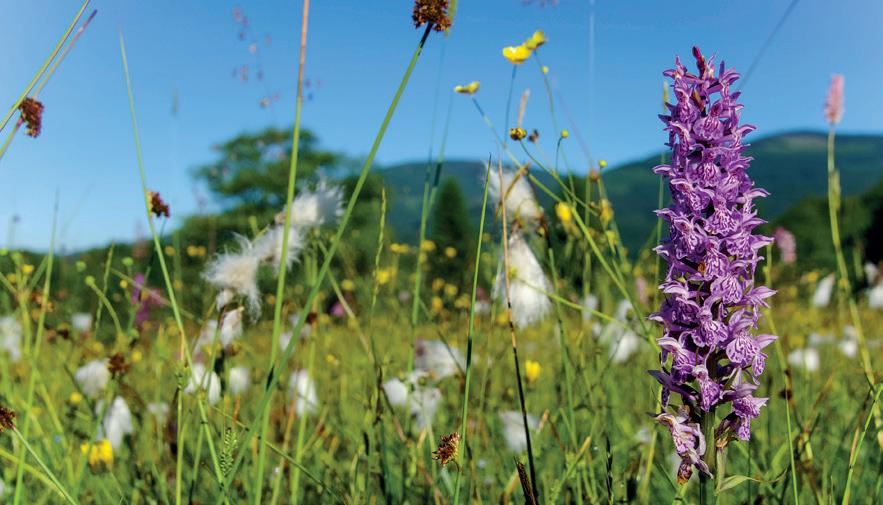
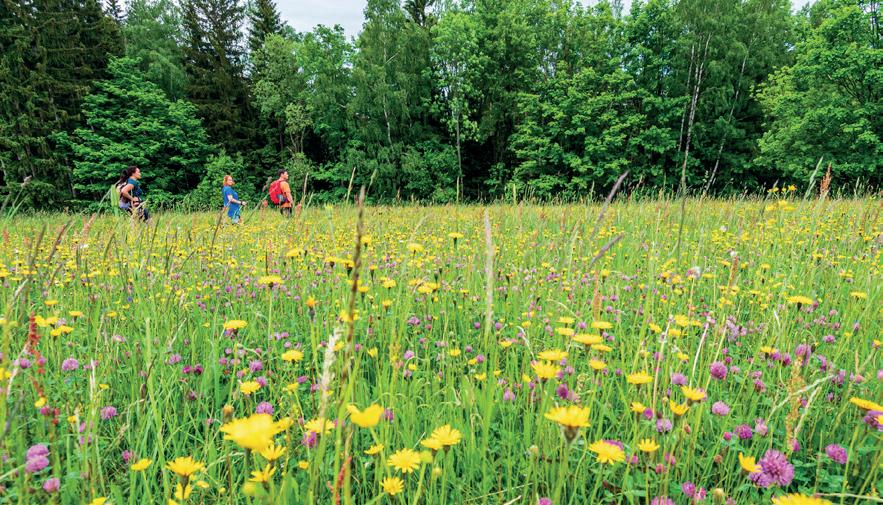
The Krkonose meadows are a colourful and lively parade of the mountains’ flora. You can see the bellflower blooming in sunny wet sites, and up to eleven orchid species can be found in the meadows and herb-rich beech forests.
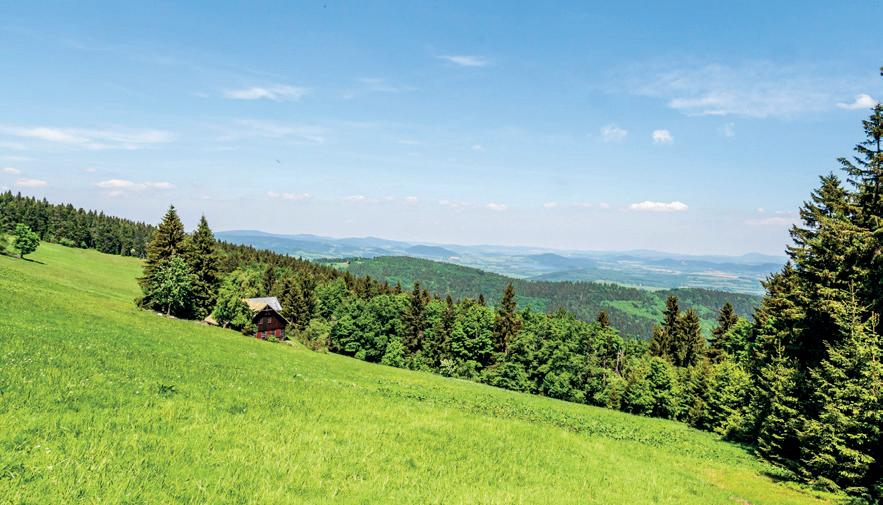
16 The Monastery Garden in Vrchlabi
In Vrchlabi, there is a chance to see the Krkonose’s plants close up without having to step outside the marked paths. The flowerbeds here are a true mirror image of the mountain meadows, including many herbs. The monastery garden is linked to the gene pool garden run by the KRNAP Administration where endangered plant species are grown and preserved.
17 Snezne domky Meadow Enclave
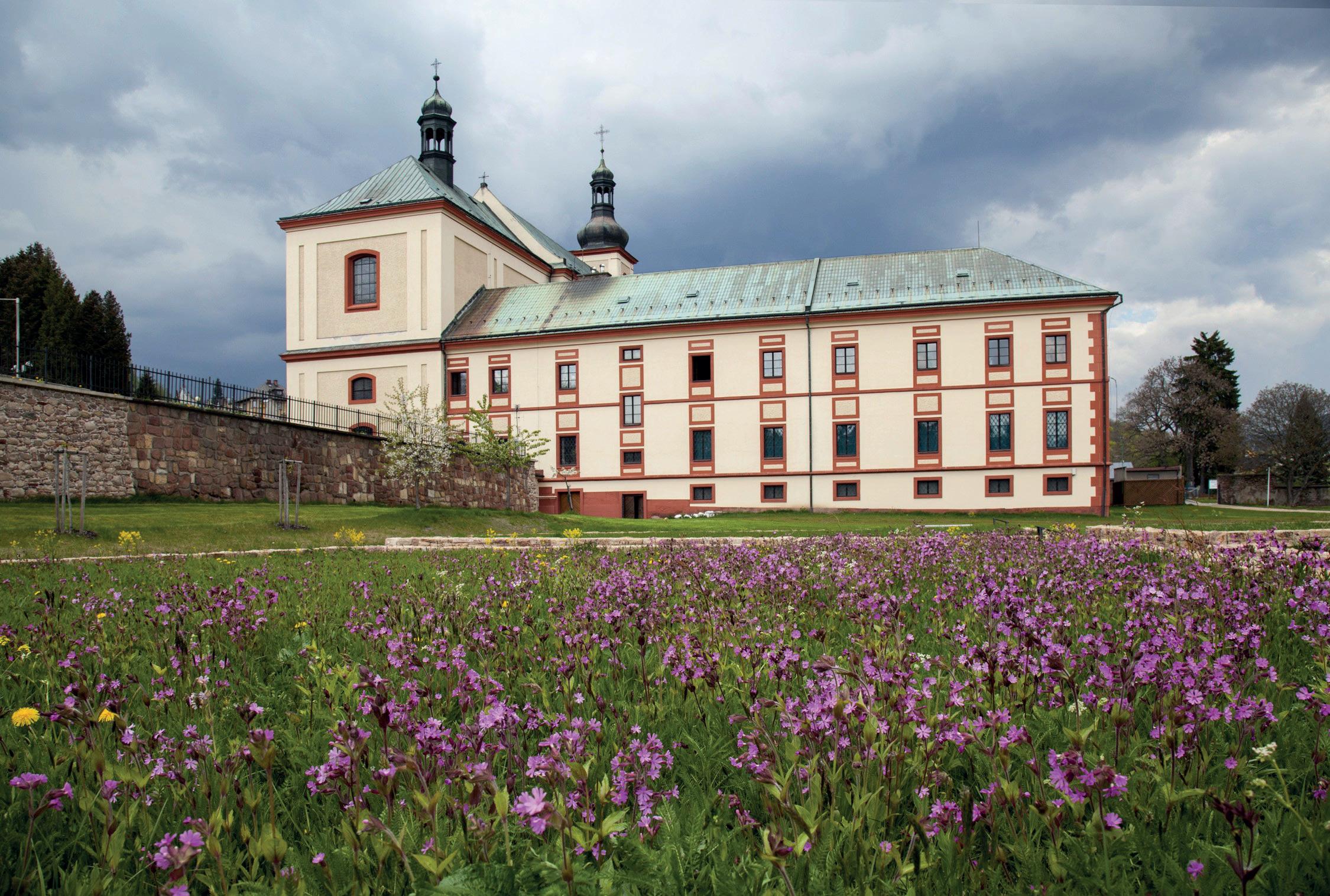
Rychory is a forested ridge in the easternmost part of the Krkonose, and as it is so remote it is almost untouched by tourism and human activity. This is where the Snezne domky meadow enclave can be found, with blooming orchids and white gentians.
Rules of Conduct in the Krkonossky National Park
Let us remember a few basic rules that must be followed in order to preserve the diversity of the Krkonose’s nature. They are easy and won’t pose a problem for you during your travels.
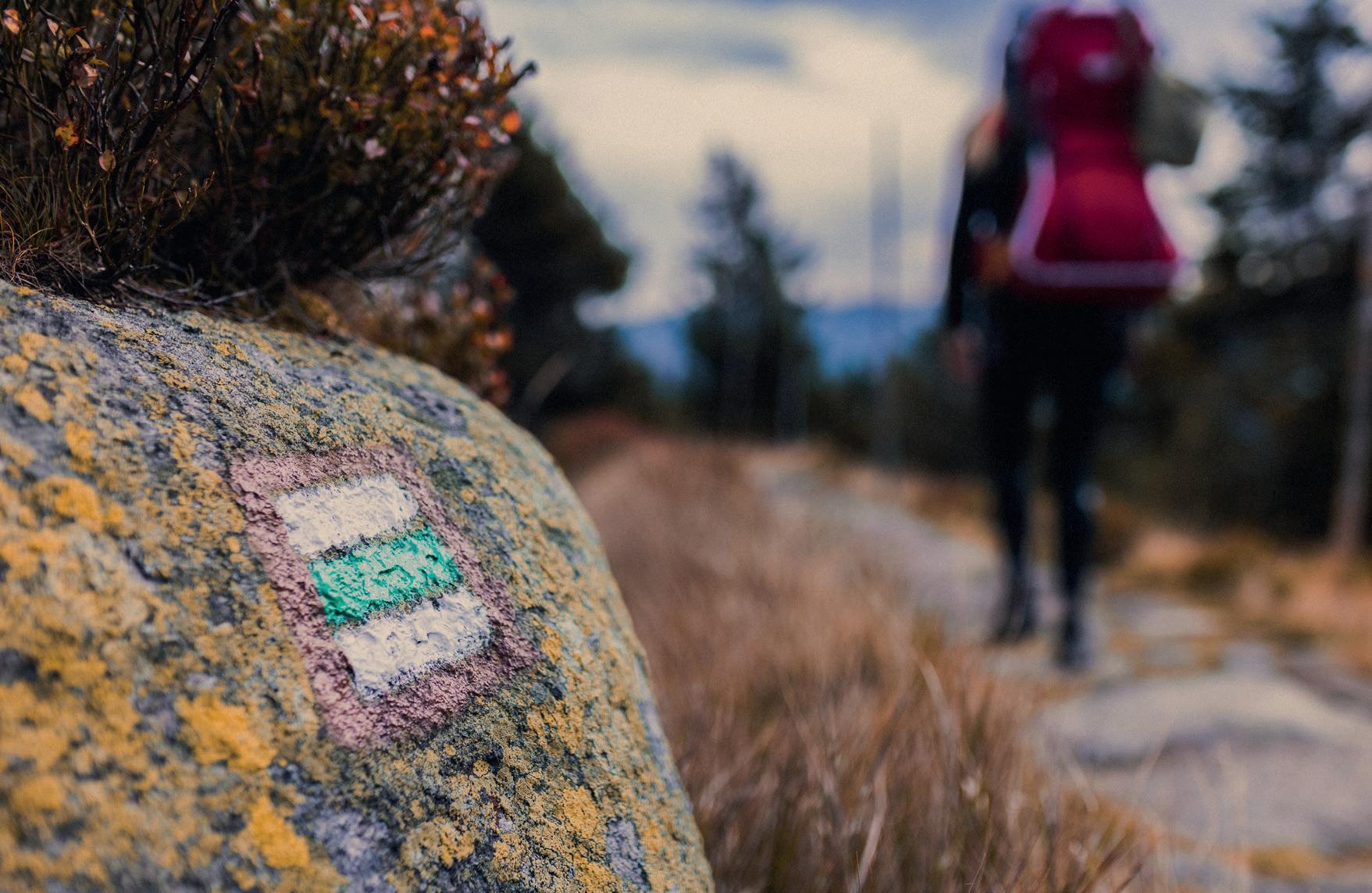
• The basic rule says – Stay on the marked paths when in the quiet zones! Even though it may seem that there is nothing but ordinary grass around the paths, the real highlights may be unseen but are still there. This rule applies to the quiet zones, which make up some 22% of the national park’s area including the most valuable locations.
• Do not disturb the Krkonose’s animals. Even though we may be silent, the animals know that we are there. They need to nest, mate, hunt and rest.
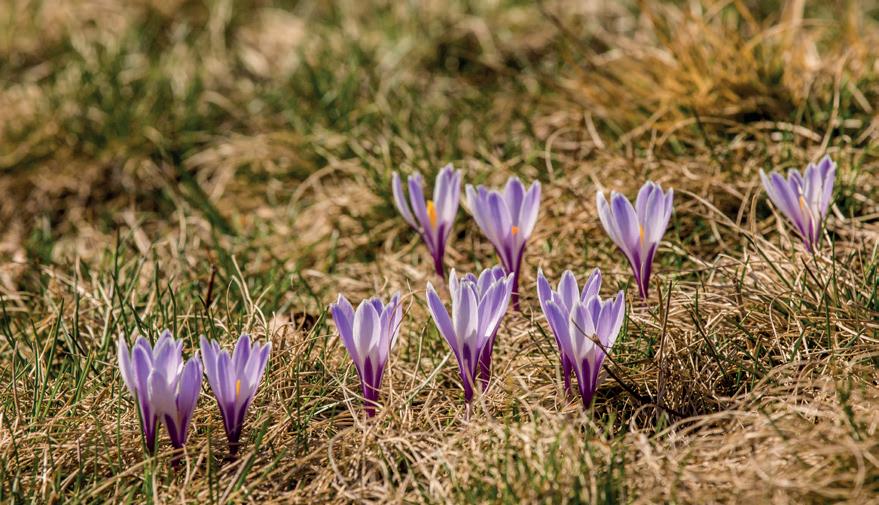
• Do not pluck wild flowers. This does not apply to the invasive species that occupy areas normally taken by the local species. One of these invasive species is the lupine. If you pluck it you actually help the Krkonose’s meadows.
• Do not enter non-mown meadows. They are left unmown for a reason. The plants need to spread their seeds and be pollinated. Let them do so. There are also small animals living on them that need the flowers and fruits of meadow plants to live. Such meadows are mown later than usual.
• Do not damage forests. Do not enter or ride in forested areas.
• Protect spring areas and watercourses. The water which has its sources in the Krkonose refreshes many hikers, including you and your children. Keep the spring areas and watercourses clean.
• Do not camp or light a fire in forests or anywhere in the Krkonose, except for designated places. A small spark is enough to trigger a disaster.
• Take away whatever you bring with you. Do not leave any traces.
You won’t find dustbins in the mountains. If you could pack your whole snack, there will certainly be a room for the packaging or peel in your backpack. Do you need to relieve yourself but there are no toilets around?
Don’t worry, the nature will cope, unless you leave paper there.
• Only ride your bike during daytime and on marked tracks. Use your skis only on downhill tracks and marked Alpine skiing tracks.
• Leave your drones and fireworks at home. Do not fly Chinese lanterns.


Trip Destinations
Trip Routes
Text: Alena Cejnarová, Michal Skalka