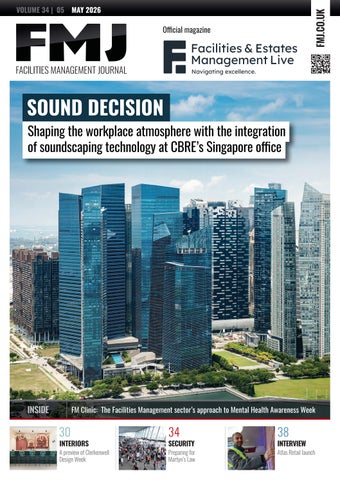

SOUND DECISION





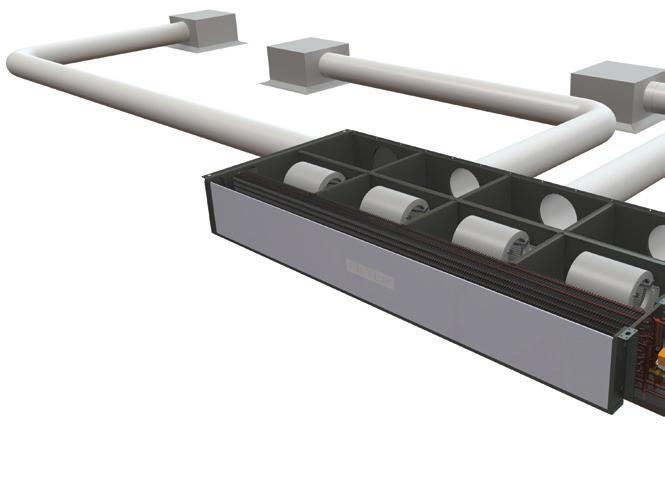
At Ability by Dimplex we’ve been innovating in fan coil units for over 25 years, so we understand that every cooling and heating specification brings unique challenges.
Our market-leading ranges of chilled water cassettes, fan coil units and multi-room FCUs give engineers the tools they need to deliver the right solution every time.
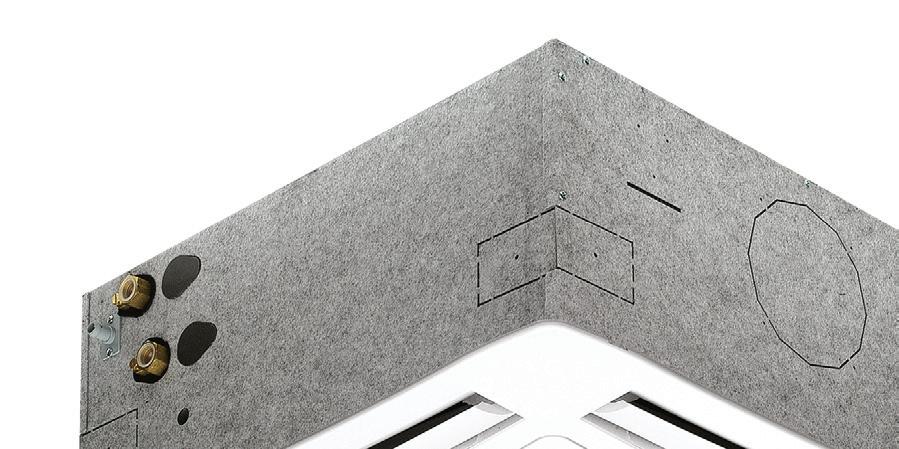




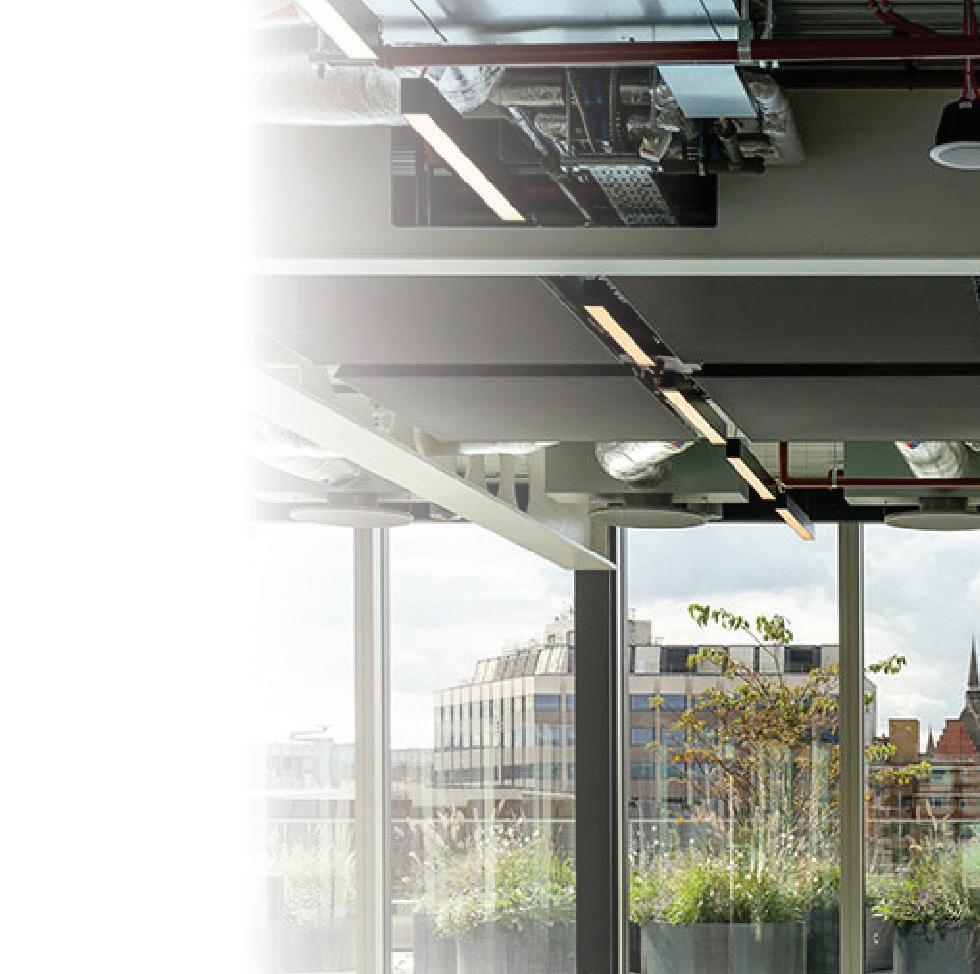





To find out more about how Ability can bring the most effective mix of technologies to your next project, visit us as abilityprojects.com


kpm media Unit 1 Mill Place, Platt Business Estate, Maidstone Road, Sevenoaks, Kent TN15 8TB Tel: 01322 662289
Editor Sara Bean sara.bean@kpmmedia.co.uk
Assistant Editor & Social Media Development
Sarah O’Beirne sarah.obeirne@kpmmedia.co.uk Tel: 01322 476815
Director & Designer Warren Knight warren.knight@kpmmedia.co.uk Mob: 0780 1947757
Sales Director Danny Grange danny.grange@kpmmedia.co.uk Mob: 07867 418994
Business Administrator & Circulation Maxine Howell maxine@kpmmedia.co.uk
Editorial & Events Assistant Madeleine Ford madeleine@kpmmedia.co.uk
Accounts Diane Jarvis accounts@kpmmedia.co.uk
Editorial steering committee
Alan Hutchinson, Facilities Director, Howard Kennedy LLP
Alex McCann, Senior Facilities Manager – EMEA & APAC Global Support, Informa Group Plc
Darren Miller, Group Head of Real Estate & Workplace, Experian
Ian Wade, Head of UK Estates, British Medical Association
Jenni Gallop, Director of Estates & Facilities and H&S, Provide Community (NHS)
Lucy Hind, Senior FM Lecturer, Leeds Beckett University
Paul Cannock, EFM Consultant. Former Head of the Estates and FM, European Space Agency
Russell Burnaby, Head of Facilities Management, Finance & Resources, Brent Council
Simon Francis, Director of Estates and Facilities, LifeArc

One of FMJ’s remits is to represent the entire Facilities Management universe. As well as providing FM services to the workplace the sector is also an essential support services provider to the public sector, healthcare, educational, retail and leisure.
This month’s issue focuses on the challenges of servicing and managing customer centric physical spaces - including shopping centres, gyms, cinemas, and stadiums.
Our interview with Nick Atkinson and Kris Brown of Atlas Retail on page 38 explains how being a specialist provider of security, cleaning and FM services to the retail sector entails delivering services that drive footfall and protect the client’s brand reputation.
What was notable about our discussions was the interaction between the cleaning and security sta in helping create safe and welcoming environments. Safety in public spaces has come under scrutiny with the passing of Martyn’s Law which, though it o icially became law last April, has been allowed a minimum 24-month implementation period to allow organisations time to prepare.
Simone Fenton-Jarvis, Group Director of Workplace Consultancy and Transformation, Vpod Solutions
Wayne Young, Facilities Manager at DB Cargo (UK)
Total Average Net Circulation
18,740 January to December 2025 SUPPORTED BY
Group CEO Nigel Copp kpm media adopts a sustainable policy of using paper from managed forests. Printed in the UK by The Gemini Print Group www.gemini-print.co.uk
© Copyright 2026 kpm media
The publisher does not necessarily agree with the views and opinions expressed by contributors. No material may be reproduced in part or whole without written permission from the editor. Editorial contributions are accepted on an all-rights basis only. Letters to the editor may be published in their entirety or in edited form and remain the property of kpm media. While due care is taken to ensure the accuracy of information contained in this magazine, the publishers cannot be held responsible for any errors in editorial articles or advertisements. Subscriptions are available to non-qualifying and overseas readers at £120 p.a. (UK), £160 p.a. (EU countries) and £240 p.a. (overseas-other).
On page 34 we reveal what the legislation means for FMs with responsibility for venues and other publicly accessible buildings and suggest the actions they should take to implement the measures recommended by the Act which aims to help mitigate potential risks to the public.
The role of security o icers in deterring criminal acts and protecting the public is spotlighted in the comment piece on page 12 which reflects on how frontline workers provide reassurance to visitors and clients that a venue is being kept safe and secure.
Security o icers are o en the first on the scene to handle situations before the emergency services arrive, so along with other FM frontline workers, from cleaners to concierge, this article is an important reminder of the contribution made by frontline sta , whichever sector they serve.
As always, we’d welcome your feedback about any aspect of the magazine, together with your insight into what’s happening in the FM sector.
OUR CORE AREAS.
MECHANICAL & ELECTRICAL SAFE SYSTEMS OF WORK
HTM HEALTHCARE ESTATES & FACILITIES
MECHANICAL & ELECTRICAL TECHNICAL
F-GAS HANDLING
LEGIONELLA (WATER HYGIENE)
FIRE SAFETY
Our competence-backed training sets the standard, empowering your workforce to cross-skill for maximum flexibility or up-skill for technical mastery. By bridging the skills gap with industry-recognised, assured certification, we ensure your team remains compliant, efficient, and futureready. Invest in proven expertise. Elevate your operational standards and team performance at PPL Training.
Setting the Standard in Estates & Facilities Training. Elevate and up-skill your team’s capabilities... 0333 121 1215
info@ppltraining.co.uk ppltraining.co.uk






THIS MONTH...
This month’s summary of everything that has hit the headlines in the FM sector.
The latest news and views from membership organisations.
The Sustainable Design Forum examined how design and circular thinking are shaping greener, healthier spaces for the future.


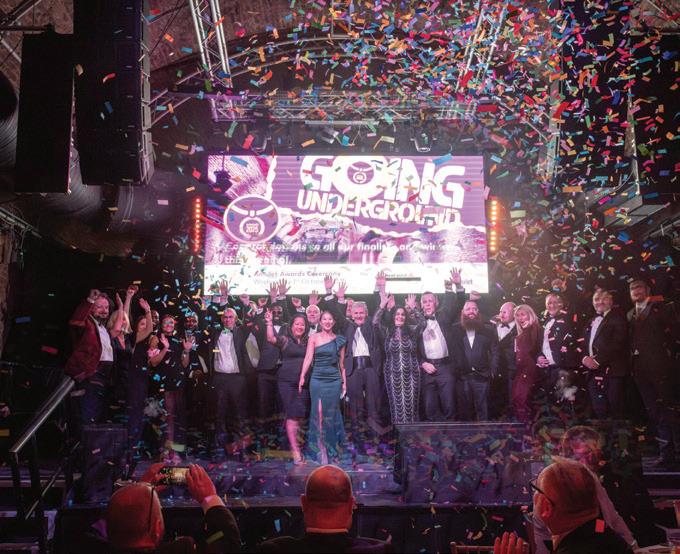

Kieran Mackie, MD at Amulet discusses the importance of recognising the daily e orts of frontline security o icers.
Andrew Dennehy, Founder and CEO, PEW Electrical on why it’s incumbent on FMs to close the compliance gap to strengthen li fire
Mark Humphreys, CEO, Airey Miller, shares his views on why stadiums are becoming FM-driven smart assets.
Digital transformation in commercial real estate still struggles to scale, says Allan Fourie, International Tech Product Lead, JLL Technologies UK.
Mental Health Awareness Week takes place from 11 – 17 May 2026, so we’re asking, what can the FM sector do to help address mental ill health within the


CASE STUDY
26

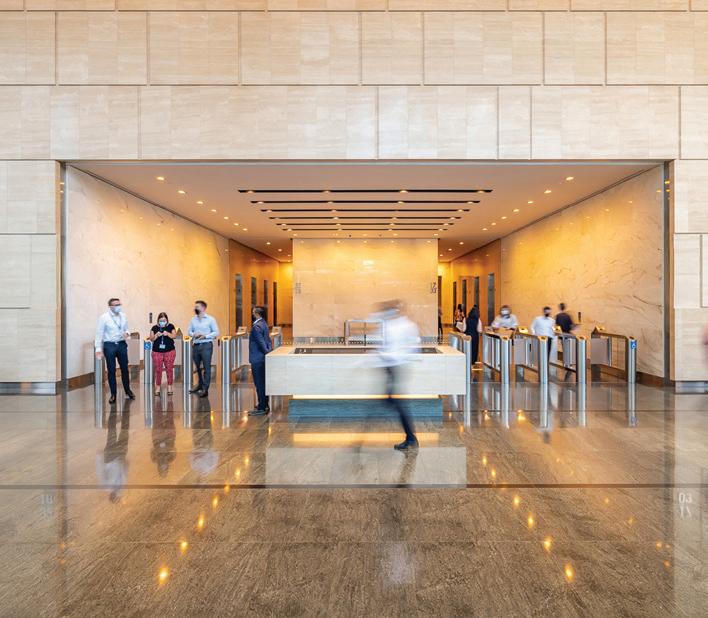
Soundscaping is transforming workplace wellbeing and performance at CBRE’s Singapore o ice, helping to enhance the workplace experience.
INTERIORS
30
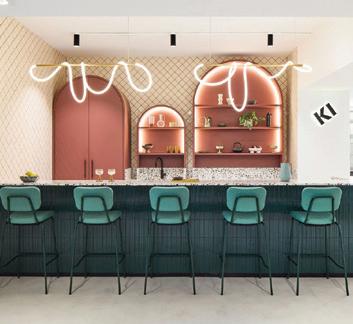
Clerkenwell Design Week 2026 is just around the corner and boasts a programme filled with specially curated events for its fi eenth anniversary. Madeleine Ford presents a preview of what’s to come.

SECURITY
34
Anthony Coo, Head of Product Marketing, UK & Ireland Quadient says organisations need to move beyond awareness and into action to prepare for Martyn’s Law.
36 Adam Bennett, a photo ID card specialist at Digital ID, warns that photo ID can no longer be used as a physical security measure but one which incorporates digital security.
INTERVIEW
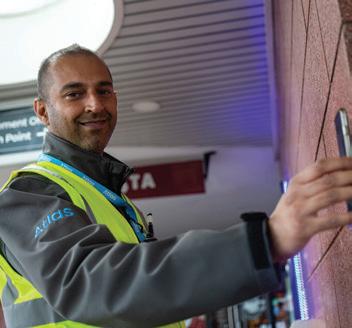
38 Nick Atkinson, Managing Director and Kris Brown, Senior Operations Manager, Atlas Retail describe the specialist expertise required in providing FM services to the retail sector.
SPECIALIST SERVICES
42 Je Charlton, Environmental Hygienist and Principal Consultant at Building Forensics Ltd explains why a specialist approach is required to secure safe ventilation in buildings.
RECYCLING & WASTE MANAGEMENT
44




Marking a year since Simpler Recycling came into e ect, Martyn Hodgkinson of Rubbermaid Commercial Products (RCP) explains how to review progress to unlock capability.

Find out who’s moving where in the facilities management profession.
RECRUITMENT
52 Habiba Khatoon, Director of Robert Walters Midlands delves into the benefits and pitfalls of the increasing application of AI in UK hiring.
A series of surveys on training trends have revealed a disconnect between the training on o er and the value of the training being delivered. Sara Bean reports.
CAREERS NEWS
A brief roundup of the latest careers news in the facilities management sector.


In next month’s issue we focus on drinks in the workplace; ranging from what FMs and engineers need to know about workplace water quality and filtration to why the provision of good co ee and other beverages plays an important role in drawing sta back into the o ice. Faced with geopolitical instability and the oil crisis we’ve a timely look at how the built environment can accelerate the adoption of energy management solutions that lower energy costs and help meet sustainable goals. For our case study we discover how a cleaning and security contract is being delivered to a busy university campus. And we reveal how catering operators are using signage to enhance communications; from streamlining customer flow to supporting allergen and nutritional compliance.


LATEST STATISTICS SHOW NEARLY HALF OF ALL FIRE SAFETY INSPECTIONS UNSATISFACTORY
Richard White, Commercial Director, Sertus
The latest figures from GOV.UK show that fire safety concerns are at an all-time high, with the number of unsatisfactory audits and formal notices served soaring. Of the 51,026 fire safety audits carried out in 2024/25, 42 per cent (21,312) were found to be unsatisfactory, with almost 3,000 premises served formal notices.
Unsatisfactory fire safety audits have increased steadily over the last eight years from 17,320 in 2016/17 to 21,312 in 2024/25, a rise of 23 per cent. Additionally, formal notices served to premises owners have also risen from 2,044 in 2016/17 to 2,990 in 2024/25, an alarming 46 per cent increase in the last eight years.
Analysis of the statistics suggest that while there has been an alarming number of unsatisfactory audits and formal notices served, the industry has been forced to take building fire safety more seriously since the Grenfell disaster. The implementation of the Fire Safety Act 2021 and Building Safety Act 2022 have forced auditors to scrutinise fire safety more closely.
While the statistics may be alarming on the face of it, I’d argue that the increase is likely happening because of the implementation of the Building Safety Regulator and new legislation. There is a proper process in place now, and there wasn’t before. More people are beginning to understand what good looks like when it comes to fire safety and are picking up the pieces from sloppy auditing in the past.
The spotlight has been firmly placed on high-risk buildings due to the failings that led to the Grenfell tragedy. The failings stem from a de-regulated building culture that stems back many years, meaning that we have been through decades of design and build which has largely happened without third party inspection.
WHY FIRE SAFETY REQUIRES ONGOING ATTENTION FROM FACILITIES MANAGERS
The sharp rise in unsatisfactory fire safety audits means that FMs must place emphasis on ensuring adherence to fire safety standards to avoid unexpected remedial work and penalty notices.
It’s important to be well informed about changing regulations, as any major changes can impact your existing fire safety compliance. A good example of a major change in the industry is the impact the 2024 update to BS991 had on smoke control.
A few key areas to consider for fire safety checks on a regular basis are:
Fire Drills & Training – Organise regular fire drills with occupants of your building to ensure they understand the emergency plan, location of equipment and evacuation routes.
Weekly Checks – Check your fire safety systems are working as they should be, such as your smoke vent system, emergency lighting and fire extinguishers. For smoke control, ensure that smoke dampers are performing correctly, whilst also monitoring that all fans and powered exhaust ventilators are operating.
Quarterly Checks – Every three months, carry out a simulation scenario in which smoke ventilation needs to occur. Each zone needs to be tested separately, ensuring that the system responds and functions correctly. The secondary power supply should also be tested to ensure a back-up power supply is in good working order should the primary power source fail.
Annual Checks – Full servicing of all fire safety equipment and features by a competent person to ensure your building is compliant with current fire safety standards.
RICS PARTNERS WITH THE RETROFIT ACADEMY
The Royal Institution of Chartered Surveyors (RICS) has partnered with The Retrofit Academy (TRA), to help its members develop critical retrofit skills across the UK.

At the heart of the partnership is access to UK Government-backed Warm Homes Skills funding, enabling RICS members to receive up to 80 per cent funded training on two of the sector’s most in-demand courses, including the Level 4 Retrofit Assessor qualification.
According to a 2025 UK Parliament Energy Security and Net Zero Committee report, around 29 million homes require retrofit work to meet the UK’s 2050 Net Zero targets. This work includes cavity wall insulation, lo insulation, and heat pump installations.
Luay Al-Khateeb, Director of the Future Innovation Hub at RICS, said: “There is enormous demand for retrofit skills as the UK looks to meet its Net Zero targets for 2050. Surveyors play a crucial role in this work to deliver it at scale with quality and consistency. Partnering with the Retrofit Academy to deliver this training to RICS members made perfect sense. RICS is working closely with organisations across industry to mitigate skills shortages and this skills delivery partnership is a cornerstone of this work.”
GLEEDS MARKET REPORT SHOWS INDUSTRY FEARS GROW AS IRAN WAR FUELS MARKET VOLATILITY
The latest Market Report from international property and construction consultancy, Gleeds, has revealed growing concern from the sector over the long-term implications of the Iran war. Global conflicts overtook interest rates and inflation as the primary threat to the industry this quarter, with around two-thirds of those questioned worried about commodity shortages and price hikes in the wake of the ongoing aggression.
Respondents warned of tightening supply chains, cost spikes and a deteriorating economic outlook, highlighting the damaging knock-on e ects that the increase in oil prices will have, particularly for those engaged in plant and energy heavy trades.




Almost 50 per cent of respondents said they had turned down a tender opportunity in Q1, signalling a reluctance to take on risk in an increasingly uncertain environment. A further 57 per cent reported that contractors had become more risk averse, with many citing volatile input costs and concerns about a potential global downturn.
The report also highlighted frustration with a lack of clear government direction, with 60 per cent of respondents saying the Chancellor’s spring statement failed to provide cause for optimism. When asked what would help stimulate hiring, 22 per cent pointed to reversing the rise in Employers’ National Insurance Contributions, while others called for increased investment in skills (21 per cent) and better promotion of construction careers (34 per cent).
You can read Gleed’s latest Market Report at https://bit.ly/4n7mwX4
GAPS IN WORKPLACE SAFETY MAY BE HOLDING BACK WORKFORCE PERFORMANCE AND BUSINESS GROWTH




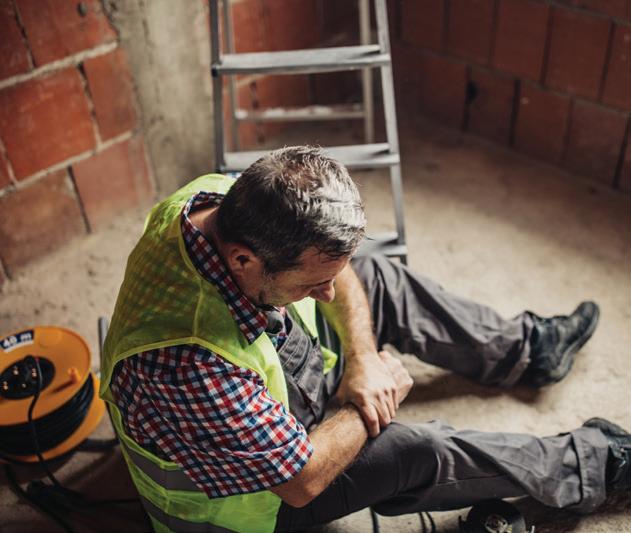
New
research reveals workplace safety is now a business performance driver, but broadening operational pressures are making progress harder to sustain.
As UK productivity plateaus, with output per hour worked down 0.5 per cent year-on-year, new research from EcoOnline, a leading global provider of safety and sustainability so ware, reveals that gaps in workplace safety may be holding back workforce performance and business growth.
Findings from EcoOnline’s annual Workplace Safety Report found that of 1,300 workers surveyed across the UK and Ireland, 90 per cent said a safer workplace made them more productive, with 79 per cent saying they would consider leaving a position due to unsafe workplace conditions.
The research shows that the barriers to worker safety, productivity, and operational resilience are becoming more varied and more persistent:
Nearly a third (30 per cent) of UK lone workers experienced an accident while working alone in 2025, while confidence in employer responsibility fell from 68 per cent to 62 per cent year-on-year.
Stress remains the dominant factor (61 per cent) among the 39 per cent who say they or a family member have experienced a workplace accident or illness.
Chemical exposure is rising, with 44 per cent of workers now handling chemicals at work, up from 42 per cent in 2025, but e orts to phase out hazardous substances remain flat at 62 per cent.
Just 30 per cent say they are aware their employer has a crisis plan and understand it well.
Workers also point to a broader set of operational challenges than traditional safety hazards alone, reflecting a growing awareness of risk across the workforce. Their top perceived threats to business continuity are:
Cyberattack or data breach: 42 per cent
Serious workplace injury or medical emergency: 27 per cent
Fire or evacuation-related incidents: 23 per cent
Physical security threats or unauthorised access: 23 per cent
Technology is increasingly seen as part of the workplace safety solution, with 72 per cent of workers saying more digital EHS tools would make them feel safer, up from 67 per cent in 2025. However, sentiment on AI remains cautious. While 47 per cent believe it could improve workplace safety, the majority still emphasise the need for human investment and expertise. Workers top asks for safety investment were more training for all sta (37 per cent) and ensuring more employees work specifically on safety (38 per cent), reinforcing that technology must support safety teams and scale their expertise, not replace them.
To read the Workplace Safety Report visit https://bit.ly/4d1TzXL
WATES ACHIEVES RECORD TURNOVER IN 2025
Family-owned construction, development and property services company, Wates Group, has delivered record turnover and its largest-ever pipeline of work in 2025.
Reporting a strong and resilient performance, the Group achieved its “best-ever” turnover of £2.56bn in 2025 and statutory profit before tax of £29.2m, extending Wates’ unbroken record of profitability to 26 consecutive years.
The business ended the year with a record net cash position of £248.3m, up £52.7m, while its forward order book increased by £1.3bn year-on-year to a record £10bn.
Last year represented a year of consolidation for the Group following significant strategic investment and change in 2024. This included the embedding of property services company Liberty and the Wates Fit Out business, as well as senior leadership changes in the Wates Construction and Wates Residential businesses, all of which, says Wates, positions the Group well for the next phase of sustainable growth.
IWFM UPDATES GOOD PRACTICE GUIDE: RECYCLING, WASTE AND RESOURCE MANAGEMENT
IWFMhas launched a revised edition of its Good Practice Guide, Recycling, Waste and Resource Management. This updated guide reflects continued changes in legislation, policy and professional practice, providing workplace and facilities management professionals with clear, current and practical guidance.
Since the previous edition, the context for recycling and waste management has evolved rapidly. New regulatory requirements, increased focus on ESG performance, growing expectations around social value, and the need for better data to support carbon reporting have all raised the stakes for FMs. This revised guide responds directly to those changes, ensuring professionals have access to up-to-date, authoritative advice.
According to IWFM’s Head of Policy and Insight, Andrew Gladstone-Heighton, “recycling and waste management are no longer back-of-house operational issues. They’re a visible part of ESG performance, corporate responsibility and risk.
Our updated guide gives facilities managers the practical tools they need to make informed decisions, demonstrate value and respond confidently to changing expectations.”
Written by sustainability specialists Nicki Chennells and Kirsteen Harrison of Not Sustainable, and peer-reviewed by experts from across the sector, the guide combines strategic insight with practical application. It’s designed for FMs at all levels – from those shaping organisational strategy to those managing day-today operations where recycling and waste form part of a wider role.
The guide places waste management firmly within the wider responsible business agenda. It explains how everyday decisions contribute to business resilience, climate action and organisational reputation, and why poor practice now carries greater legal, financial and reputational risk than ever before. It also highlights the opportunities for FMs to demonstrate value
RICS LED INITIATIVE TO ALIGN WHOLE-LIFE CARBON REPORTING ACROSS BUILT ENVIRONMENT
The Royal Institution of Chartered Surveyors (RICS) has announced the launch of the Coalition for Life Cycle Emissions Alignment and Reporting (CLEAR); a global initiative designed to harmonise the measurement and reporting of whole-life carbon emissions across the global built environment.
As founder of the coalition RICS will play a leading role in delivering the initiative alongside its co-founders, the World Business Council for Sustainable Development (WBCSD) and the Global Building Data Initiative (GBDI), as well as sponsor Autodesk. It will work with key industry collaborators including AECOM, Arcadis, Autodesk, Avison Young, Heidelberg Materials, Morgan Sindall, Once For All, OneClickLCA, Turner & Townsend, and we2sure.
The built environment is responsible for a significant share of humangenerated greenhouse gas emissions, spanning both embodied and operational carbon. Yet despite growing recognition of the need for whole-life carbon measurement, fragmented and inconsistent methodologies continue to make it di icult for industry and policymakers to compare results, benchmark performance and make informed decisions.
CLEAR aims to address that challenge by aligning how whole-life carbon emissions from buildings and infrastructure are measured and reported across di erent markets and jurisdictions. In its first year, CLEAR will focus on coalition building, analysing existing whole-life carbon assessment methodologies and developing resources that can be used by both industry and policy stakeholders. The long-term ambition is to support a global framework that enables more e ective reporting, stronger benchmarking and more confident carbon-related decision-making across the built environment.

by reducing carbon, managing resources more e iciently and supporting social outcomes.
Key updates include expanded guidance on applying the waste hierarchy and circular economy principles, measuring and managing carbon emissions, and responding to new and upcoming UK legislation. These include Simpler Recycling requirements, changes to duty of care, digital waste tracking and the continued shi towards extended producer responsibility. The guide also reflects the growing importance of data quality and auditability in supporting sustainability reporting and net zero targets.
The Recycling, Waste and Resource Management Good Practice Guide is free to download for IWFM members. Non-members can purchase the guide for £19.99.
Download the revised guide now and ensure your approach reflects current best practice.
CIBSE CERTIFICATION LAUNCHES REFRESHED BRAND IDENTITY
Following the recent CIBSE brand refresh, CIBSE Certification has o icially unveiled its refreshed brand identity. CIBSE Certification is a wholly owned subsidiary of CIBSE. It provides accredited certification, registration, and verification services across the built environment, helping professionals, organisations, and products demonstrate competence, compliance, and quality. Its services cover areas such as energy assessment, building performance evaluation, management systems certification, and personnel registration schemes. While operationally independent to ensure impartiality, CIBSE Certification shares CIBSE’s commitment to advancing building performance, raising professional standards, and supporting regulatory compliance. The refreshed identity strengthens its global presence and reflects confidence, clarity, and ongoing commitment to the sector.
Kieran O’Brien, Director of CIBSE Certification, commented: “We welcome this brand refresh as an important step in ensuring CIBSE Certification reflects the modern, evolving needs of the built environment industry. As demand grows for transparency, assurance, verified performance data and competence, it’s vital that our identity represents the clarity, credibility and professionalism that underpin our services. This refresh is not just about how we look it’s about reinforcing CIBSE’s role within certification and supporting higher standards across the industry.”
The brand refresh ensures a cohesive connection between CIBSE and CIBSE Certification while giving Certification its own recognisable identity. It reinforces the organisation’s role in supporting industry professionals and organisations as they deliver safe, sustainable and high-performing buildings worldwide.












How are FM leaders deploying technology in 2026? d
Our new research of 110 FM decision makers reveals the technologies, priorities, and hidden blind spots in FM tech investment in 2026.


































SUSTAINABLE DESIGN FORUM
BLUEPRINT FOR BETTER
The Sustainable Design Forum examined how collaboration, authentic design and circular thinking are shaping greener, healthier spaces for the future. Madeleine Ford reports
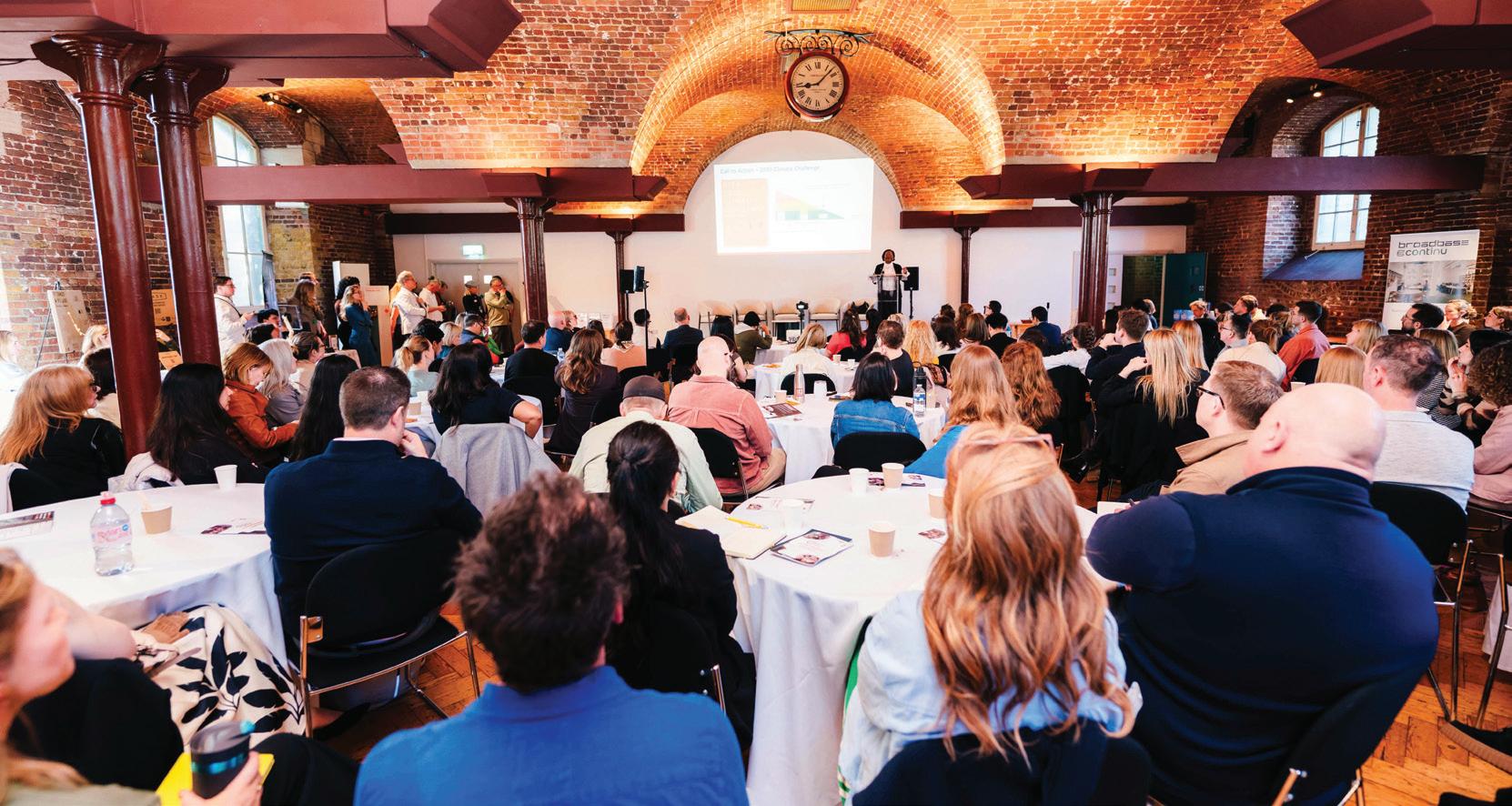
Marking its fourth year, the Sustainable Design Forum took place 23 April at Crypt on the Green in Clerkenwell. The event is curated by the Sustainable Design Collective (SDC), a voluntary think tank of architects, designers and specifiers whose mission is to connect, inspire and engage. The Collective believes that sustainability is about balancing three key factors- products, places and people, an approach which has evidently filtrated down into the ethos and content of this event. This year’s forum brought together industry leaders, designers and architects for a day of insight, collaboration and discussion to explore how sustainable thinking can move beyond theory and into practical, measurable action.
OPENING REMARKS
The tone of the day was set in the opening address by Dr Valerie Vaughan-Dick MBE, Chief Executive O icer of the Royal Institute of British Architects (RIBA) who explored the opportunities and challenges in advancing sustainability across the built environment. Her involvement in the event highlighted the important role of industry leadership in supporting
environmental responsibility, social value, and inclusivity.
Dr Vaughan-Dick’s address centred on the idea that sustainability must be embedded into every stage of design and decision-making, rather than treated as an a erthought or compliance exercise. She emphasised that architects, designers and FM professionals all play a critical role in shaping the lifecycle of buildings, from concept and construction through to operation and end-of-life reuse.
She spoke about the need for genuine collaboration across disciplines, stressing that sustainable outcomes are only possible when stakeholders work together with shared goals. VaughanDick further highlighted the importance of education and leadership in driving meaningful progress and encouraging organisations to invest in both knowledge and accountability.
Her message was clear: sustainability is not simply about reducing harm, but about creating buildings and spaces that actively contribute to environmental and social wellbeing.
WHERE SUSTAINABILITY STARTS
One of the standout sessions of the day, entitled ‘Greener Thriving Spaces for People + Planet’, hosted by Sam Allen, Associate Director for Engineering
Technology & Sustainability at M Moser Associates, discussed the challenges in designing for people and public spaces and the need for authenticity in sustainable design.
The panellists: Asif Din, Director of Regenerative Design at Perkins & Will, Lucy Bagshaw, Director of Sustainability at TP Bennett, Katie Bowes, Head of Design at Axis @ Work, and Phil Towle, Head of Sustainability & Supply Chain at Future Works, were posed the opening question, what is the biggest challenge in terms of designing for people and public spaces?
Phil Towle stated that from his experience gaining stakeholder alignment across both clients and supply chains was the biggest challenge. He spoke candidly about the challenges of bringing these parties together –along with contractors and designers - in a shared sustainability vision as di ering priorities, from cost constraints to programme pressures, can dilute sustainability goals before they are fully realised. The panel stressed that early engagement and clear communication are critical, as sustainability needs to be defined as a core project driver from the outset.
The panel argued that the industry must move away from surfacelevel gestures and instead embed
sustainability into the very fabric of design thinking. This means prioritising material choices, energy performance, longevity and adaptability, even when these decisions are less immediately visible.
The discussion turned to a broader and more reflective conversation around authenticity in sustainable design and what that truly means in practise. According to the panel, authentic sustainable design goes beyond certification targets, it is about making honest, informed decisions that consider the full lifecycle of a space, from embodied carbon to user experience and future adaptability.
PASSPORT TO CIRCULARITY
Among the most notable presentations of the day, Amalie Aarestrup, Sustainability Lead at CBS, explained the importance of Digital Product Passports for enhancing circularity and sustainability. DPPs, mandated by the EU for furniture and textiles, provide a structured digital record of a product’s environmental impact, supply chain and end-of-life information. She explored how DPP’s can help organisations make better decisions around procurement, maintenance and reuse and further explained how this level of visibility can significantly reduce waste while improving compliance, reporting and long-term asset value. As legislation and sustainability targets continue to evolve, digital tools such as these are likely to become increasingly important.
CONCLUSION
The message of the event was that sustainability is not just shaped at the design stage, but through the long-term operation and performance of buildings; therefore, collaboration across the entire built environment supply chain will be essential. The Sustainable Design Forum made it clear that sustainable design is not a trend, but a shared responsibility that must move into an everyday action, one that requires commitment, transparency and action from every part of the industry.





















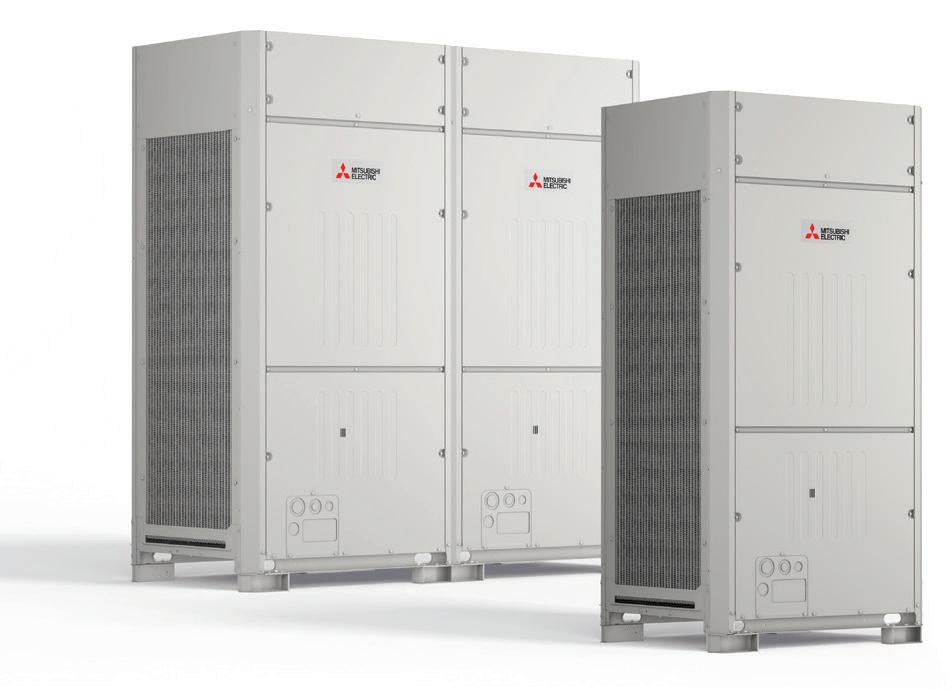
With 20% reduction in running costs,* 10% more energy efficiency and 6% smaller footprint, the new City Multi R32 VRF YXM range will help you heat and cool your building, whilst helping you on the road to net zero.
Your building, our solutions. Launching May 2026.
To find out more about the new City Multi R32 VRF YXM range, visit https://citymultiyxm.com/
*Compared to 30kW R410A YNW model
FRONTLINE SECURITY

Security o cers deter criminal acts and serve as a physical reminder of public safety, but they can often go unrecognised. Kieran Mackie, Managing Director at Amulet, discusses the importance of recognising the daily e orts of frontline security o cers
Whenwe think about safety at work or on our commutes, we o en think of emergency services. The police arriving on the scene, paramedics attending a medical emergency or fire services reacting to a catastrophe. Though emergency responders are vital, they cannot be everywhere at once.
Frontline workers are o en the unseen yet absolutely vital components of public safety, overseeing the compliance, engineering, and cleanliness of our o ices, civic buildings, and train stations. In these areas, security o icers act as a layer of protection, deterring criminal acts and serving as a physical reminder of safety measures.
Frontline o icers o en face life-threatening situations, but their work can go overlooked. In 2025, recorded crime in England and Wales stood at 9.3 million cases (June 2024–June 2025), with knife crime accounting for 51,527 o ences.
When incidents happen, security o icers are o en the first on the scene to handle situations e ectively and safely before emergency services arrive. And though it’s part of their daily job, it requires constant vigilance that rarely makes the headlines.
STORIES FROM THE FRONTLINE
Modern security is not just about protecting assets. Instead, it requires active involvement in the communities they serve. From multi-tenant o ices to train stations, o icers act as a clear point of contact.
Di erent sites each come with unique challenges. In Manchester, for example, we have 113 TravelSafe Support & Enforcement O icers working across its bus fleet, creating a larger network of responsive and constantly mobile teams. These o icers are responsible for monitoring and responding to threats or incidents, working with witnesses, and aiding individuals, the police, and ambulance services.
In 2025, I witnessed the lengths o icers go to protect others. For example, in Bolton, two men came into the station, one with a machete, fighting each other and members of the public. The Bolton team immediately sprang into action, tracking the men as they fled and providing the police with their exact locations, leading to their detention. Without hesitation, o icers put themselves in danger to protect the public, remaining clear and organised.
Day-to-day security is o en about helping beyond the job description. When a man was attacked by an XL Bully dog, two o icers freed him from the dog's grip and, faced with a long ambulance wait time, took him to the hospital. These o icers stepped into harm’s way to save someone from a potentially fatal attack and continued providing support when another emergency service was overrun. O icers o en step up to keep their communities safe as quickly and e ectively as possible.
Without o icer presence, incidents could quickly become catastrophic. Public spaces and transport hubs depend on o icers to keep people safe, provide an assuring presence, and intercept
incidents before they escalate.
RECOGNISING DAILY EFFORTS
These examples represent just some of the realities of frontline work. But o icers do an incredible job every day, and acknowledging these e orts is crucial for building support networks and keeping employees motivated. Employees receiving highquality recognition are around 65 per cent less likely to actively search for a new role, so these acts support the business and bring sta together at the same time.
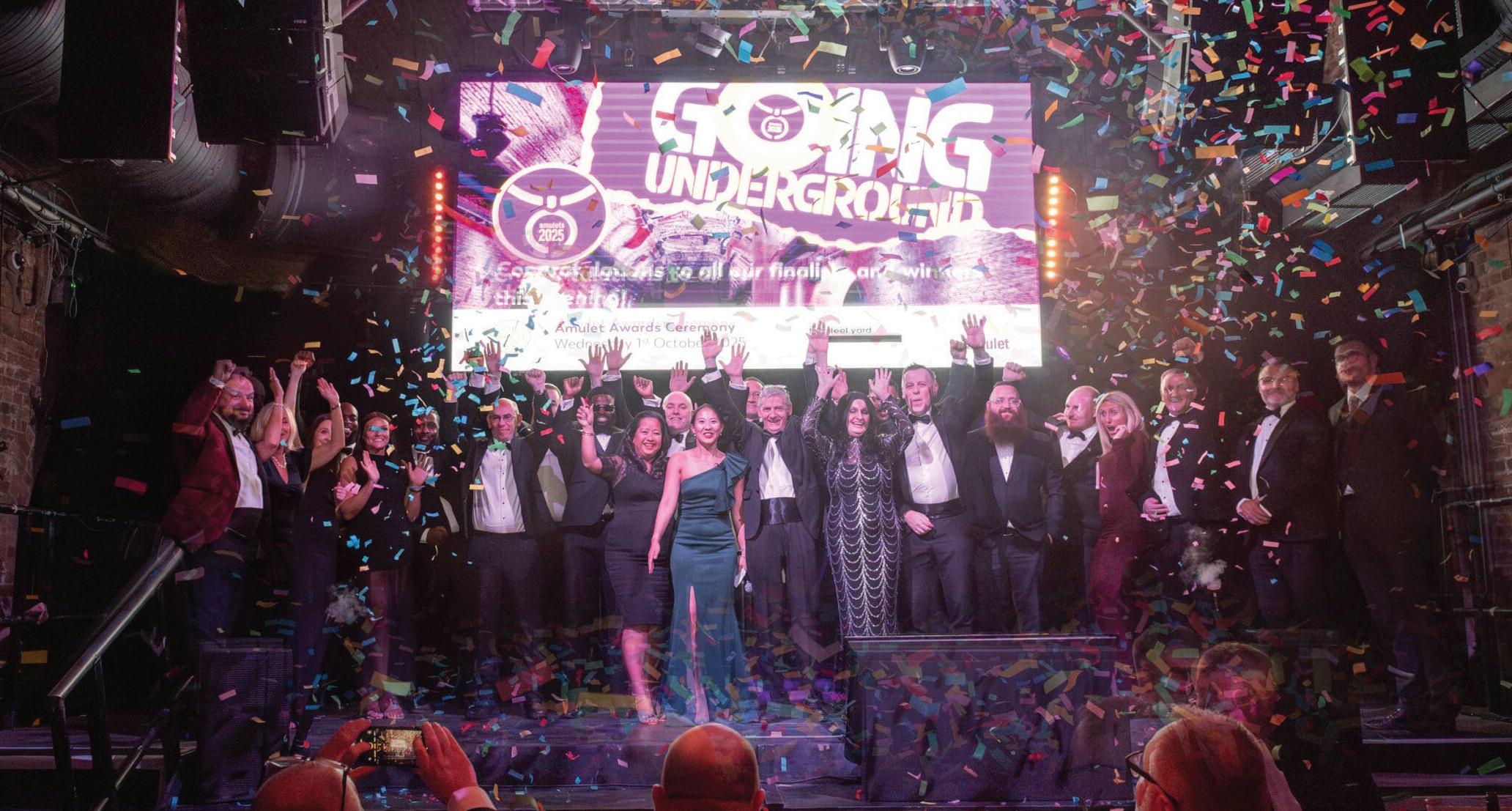
Industry awards and hosting annual award events are one way to recognise standout acts of bravery, consistent e ort, and the significant milestones of team members. For example, our Amulets awards allow us to celebrate individuals like Daniel Smith. When he found that young homeless people were using local train stations as places to stay, he set up a referral scheme with a local youth homelessness charity to help find them safe accommodation. As a result of his e orts, he won the Heart of Amulet category for his safeguarding work that engaged with the wider community.
Though we host our Amulets awards annually, organisations shouldn’t limit recognition to one day a year. In an industry where o icers o en work 12-hour shi s in small teams, if not alone, there is a need to dedicate time and resources to frontline celebrations frequently.
For security providers, quarterly awards can embed recognition more regularly into colleagues’ work. For everyday operations, on-the-spot rewards also immediately show colleagues that their work is appreciated, like vouchers or smaller tokens of gratitude. Awarding e orts like these publicly appreciates the non-emergency work o icers do day in, day out.
THE MODERN SECURITY OFFICER
Modern security o icers are integral to the smooth operation of public buildings and shared spaces, working closely with facilities teams and the public. Security o icers are vital players in FM, and we need to recognise their impact. Yes, they save lives, but their presence makes the communities around them safer every day. O icers who feel valued perform better, and workplaces that support a culture of recognition improve through the collective e ort of their people.
Do you run a heat network or charge residents for heat?

If so, you’ll need to register your heat network
Ofgem now regulates heat networks across Great Britain.
If you operate or supply heat to a heat network, these rules apply to you. Our heat networks digital registration service is now live.
Heat network operators and suppliers should use this to register their heat networks by the regulatory deadline of 26 January 2027.
To get started, search: ‘Comply with heat networks consumer protection regulations’ at www.ofgem.gov.uk
COMPLIANCE
CLOSE THE GAP

LiAndrew Dennehy, Founder and
CEO,
PEW Electrical on why it’s incumbent on FMs to close the compliance gap to strengthen lift
s have always been a critical part of building operation and accessibility, but their role within fire strategies is becoming more prominent. They support evacuation planning, enable firefighter access and o en form part of the wider building safety infrastructure. Yet responsibility for li s is rarely held in one place. Design, maintenance, inspection and documentation are typically distributed across multiple contractors and stakeholders, each with their own systems, priorities and processes. In the past, this fragmentation was less visible. Today, it must be actively managed and clearly demonstrated.
NO COMPLIANCE WITHOUT CLARITY
Our recent research highlights the extent of this challenge. It found that 44 per cent of FMs remain uncertain around their obligations under the Building Safety Act and nearly half (47 per cent) of FMs say that the industry su ers from fragmented and inconsistent record-keeping. These are not marginal concerns: they point to a broader issue around how compliance is understood and evidenced in day-to-day building management.
In many buildings, li service records may sit with maintenance contractors, technical specifications with manufacturers, and upgrade histories with managing agents or consultants. Over time, this creates a patchwork of information that is di icult to access, verify, or interpret consistently.
The concept of a “golden thread” is intended to address this by ensuring that safety information is accurate, accessible and up to date. But in practice, maintaining that thread across li systems can be challenging. Where records are incomplete or inconsistent, duty holders are le without a clear line of sight into system performance, even where the work itself has been carried out correctly.
In higher-risk or more complex buildings, this lack of visibility has wider implications because li s don’t operate in isolation; they form part of an integrated fire strategy. If information about those systems is not aligned with wider building data, it becomes more di icult to assess how risks interact, or to demonstrate that they are being
e ectively managed.
THE RETROFIT ENVIRONMENT
Historically, li safety has been viewed primarily through a maintenance lens. If systems were regularly serviced and tested, they were considered compliant. While this remains an essential foundation, it is no longer su icient alone. Compliance now extends to how systems are specified, how responsibilities are defined, and how information is shared across the supply chain. Adding to this complexity, many facilities teams are now working within buildings that were never designed to meet current fire safety expectations.
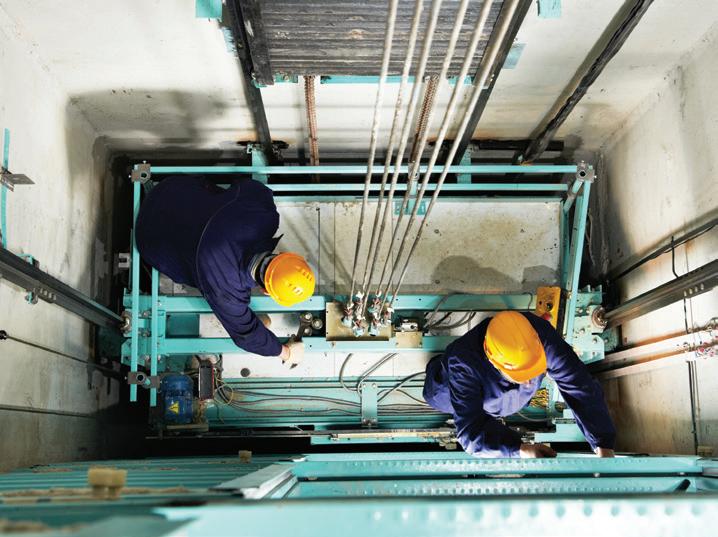
Therefore, upgrading li systems o en involves navigating physical constraints, legacy infrastructure and competing priorities across the estate. As a result, retrofitting to modern standards is rarely straightforward, particularly where li sha s, power supplies or control systems limit what can be achieved.
Delivering compliant outcomes o en requires input from multiple parties, including li specialists, fire engineers, managing agents and contractors. Each brings a di erent perspective, but without clear alignment, there is a risk that decisions are made in isolation rather than as part of a coherent strategy, which is where gaps emerge and risks can increase. This means that adopting a more joinedup approach to li management is essential.
ACTIVITY TO ASSURANCE
What is striking about our research is that regulatory uncertainty exists alongside strong

operational performance. Inspections are being carried out regularly, maintenance regimes are in place, and there is widespread confidence in how buildings would respond in an emergency. This shows that the issue is not a lack of action, but that the systems used to coordinate, record and demonstrate it have not kept pace with regulatory expectations.
Centralising information is a key solution to this, but it is only e ective if it is supported by clear ownership and consistent processes. FMs need visibility not just of what has been done, but of how and why decisions have been made. This includes understanding how li systems interact with wider fire strategies and ensuring that any upgrades are properly documented.
In this context, engagement with specialist partners is critical. Li systems are highly technical, and their role within fire safety is o en nuanced. Therefore, bringing in expertise at an early stage, particularly when reviewing strategies or planning upgrades, can help to identify risks that may not be immediately visible and ensure that solutions are both practical and compliant.
ENSURING ALIGNMENT
Ultimately, the challenge for facilities managers is not a lack of activity, but a lack of alignment.
The industry has reached a point where operational diligence alone is no longer enough. What is needed now is clearer connection between the work being carried out on the ground and the regulatory frameworks that sit around it. This means reducing fragmentation, improving visibility, and ensuring that all parties involved in li systems are working toward a shared understanding of compliance.
For FMs, compliance can no longer be assumed, it must be clearly demonstrated. For the broader industry, it’s not about entirely new processes, but about better collaboration to strengthen our existing ones.
Because in the current landscape, assurance depends not just on what is done, but on how well it is understood, recorded and shared.
And that cannot be achieved in silos.










Easier compliance with UK legislation









STADIUM WINNER
FMJ AIMS TO SUPPORT TECHNICAL EXPERTISE IN THE FM MARKET

Mark Humphreys, CEO of property and construction consultancy Airey Miller, shares his views on why stadiums are becoming FM-driven smart assets
Football stadiums are no longer single-use venues. They are complex, operational estates running seven days a week and they increasingly demand the same level of facilities management as any commercial asset.
From conferences and corporate hospitality to community programmes and large-scale events, clubs are managing multi-use environments where safety, compliance and e iciency are critical. Yet across the UK, many stadiums rely on legacy drawings, fragmented digital files or knowledge held by longstanding sta . For facilities managers, that presents a growing risk but also an opportunity.
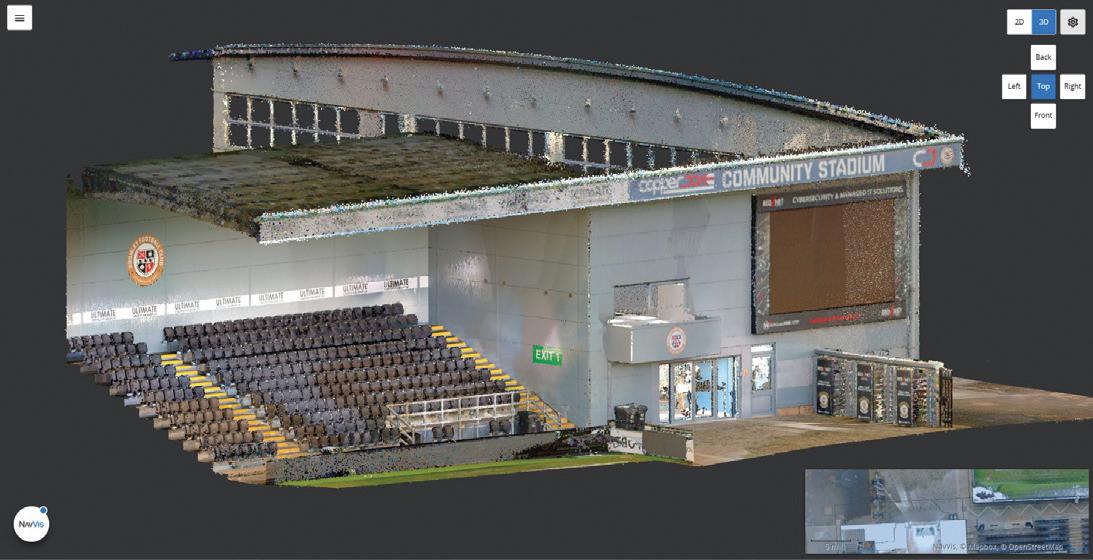
Airey Miller’s recent partnership with Bromley FC reflects a shi that is beginning to reshape how these assets are understood and managed; the adoption of digital twins.
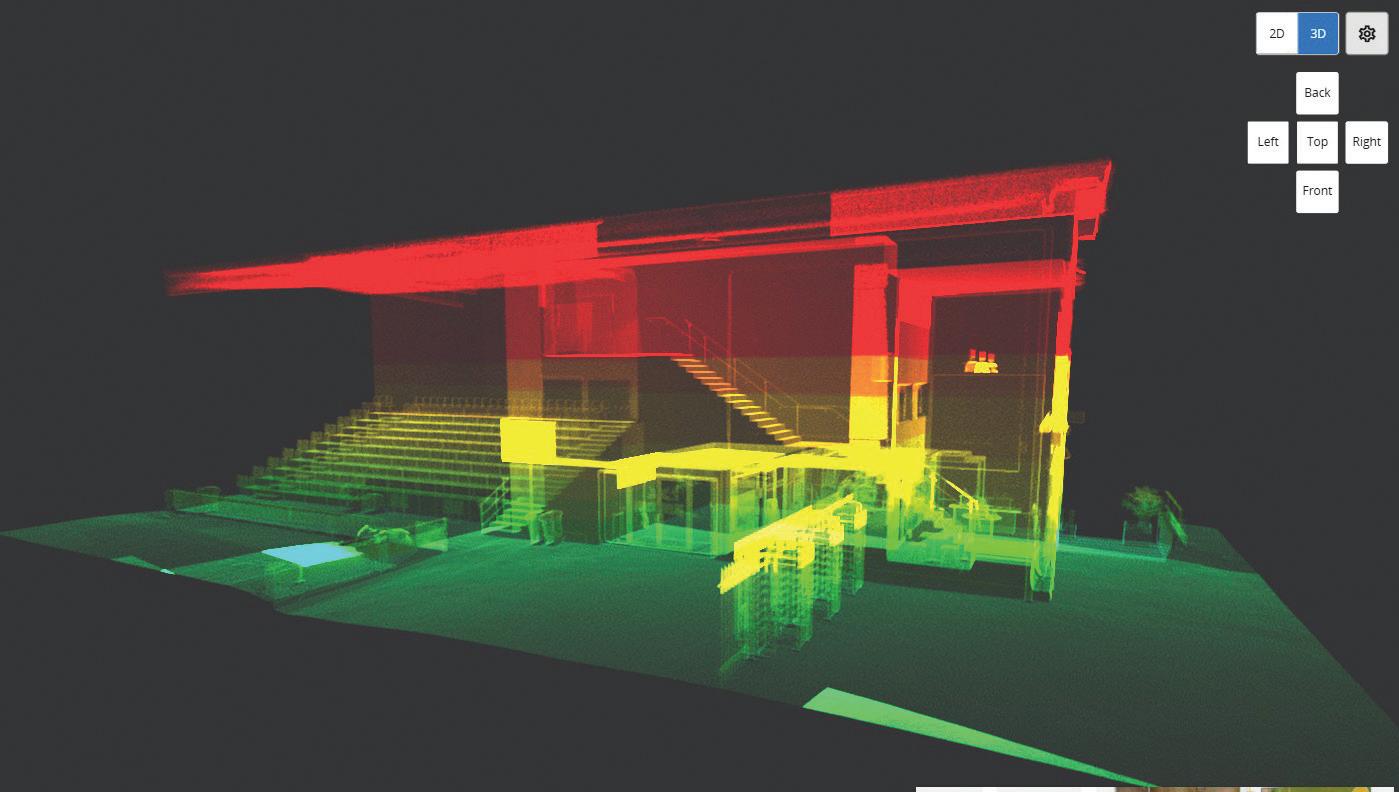
Using advanced mobile mapping technology, the club’s stadium is being captured as a high-accuracy, immersive 3D digital model that captures every accessible internal and external space. But this is more than a visual replica. It is a data-rich environment that supports asset management, compliance and operational decision-making in real time.
ACCURATE DATA
One of the biggest challenges in facilities management is access to accurate, up-to-date building information. In
many stadiums, critical data sits across multiple systems, or worse, in paper files. When issues arise, time is lost locating drawings, verifying dimensions or conducting repeat site visits.
A digital twin addresses this by consolidating asset information into a single, accessible platform. Facilities teams can remotely navigate the building, interrogate plant rooms, check access routes and confirm spatial constraints without leaving their desk.
This becomes particularly valuable when coordinating contractors or responding to faults. Instead of relying on assumption or outdated plans, FM teams can provide precise, visual context, improving response times and reducing the risk of error, it removes reliance on institutional memory. When sta move on, knowledge doesn’t leave with them, it remains embedded within the asset itself.
ENABLING THE ‘GOLDEN THREAD’
The regulatory landscape is also shi ing. In the wake of the Building Safety Act, the principle of maintaining a clear and accessible ‘golden thread’ of information is becoming embedded across the built environment.
Digital twins provide a practical route by creating a living record of the building, capable of being updated over time and shared securely with stakeholders. This supports audit readiness, strengthens compliance processes and reduces
exposure to risk.
Historically, detailed surveying has been seen as intrusive particularly in live environments, like stadiums. Closing areas, erecting tripods or restricting access can have direct commercial implications. New-generation mobile mapping changes that dynamic. Wearable scanning systems allow surveyors to move freely through a building, capturing large volumes of data quickly and accurately in a single pass. Entire stadiums can be mapped in hours rather than days, o en without the need to interrupt normal operations. Applications include supporting planned and reactive maintenance by providing accurate spatial context; enhancing fire safety planning through clear visibility of routes, systems and access points; streamlining contractor engagement with better upfront information; improving space planning for events and commercial use and reducing unnecessary site visits through remote access.
PLANNING FOR CHANGE AND GROWTH
Stadiums are not static assets. Many clubs; particularly outside the top tier; are actively exploring expansion, refurbishment and reconfiguration to meet league requirements and commercial demand.
For facilities managers, this creates
additional pressure as poor quality data can lead to design clashes, delays and cost overruns. A digital twin provides a reliable baseline for future works.
Accurate spatial data supports design development, improves coordination across project teams and accelerates the route to planning and delivery.
In the case of Bromley FC, current on-pitch success brings the possibility of promotion and stadium upgrades. Having a construction-ready digital model in play allows the club to move at pace and with greater confidence if those requirements materialise.
The evolution of stadiums mirrors a broader trend across the built environment: the emergence of digital twins as the backbone of compliant asset management. Expectations on FM are rising with teams being asked to do more with less, while maintaining higher standards of safety, performance and user experience. Digital twins sit at the intersection of these pressures. They enable a shi from reactive to proactive management, o ering the tools to anticipate issues, optimise operations and demonstrate control over assets.
While adoption has been strongest among larger organisations, the opportunity is arguably greater further down the leagues, where improved asset intelligence can unlock e iciencies and support investment cases.
The partnership between Airey Miller and Bromley FC is indicative of a wider change in mindset. Digitisation is no longer confined to front-end experiences or smart building systems; it is becoming fundamental to how assets are managed.
Accurate, accessible building data is moving from “nice to have” to operational necessity. As stadiums continue to evolve into multi-use destinations, digital twins are set to become part of the standard FM toolkit; underpinning safer, more compliant and more commercially e ective operations.

YOU SHOULD EXPECT MORE FROM WASTE MANAGEMENT
Waste management directly a ects a building’s costs, compliance, user experience, and public perception. Yet too o en, it is viewed as a simple transaction rather than a choice of strategic partnership. As the responsibilities of facilities teams increase and scrutiny intensifies, the choice of waste and recycling partner has become a defining decision. It’s not enough to provide routine collections; facilities management and waste management must be in a lock-step partnership to make long-term, strategic choices for buildings.
THE RISKS OF GETTING WASTE MANAGEMENT WRONG
When waste systems fail, the consequences can be widespread and immediate. Missed or inconsistent collections disrupt day-to-day operations. Poor segregation brings high contamination rates and lost recycling value. Inadequate reporting creates blind spots that make it di icult to measure progress, assess weaknesses, and prove compliance. This can undermine ESG reporting, leave organisations exposed to reputational damage, and put businesses on the back foot as regulations tighten. With more waste legislation coming in 2027, now is the time for facilities management teams to ensure their waste management systems are airtight.
COMPLIANCE IS THE FLOOR, NOT THE CEILING
The introduction of Simpler Recycling legislation in 2025 established a national baseline for commercial waste and recycling. Core materials, including glass, metal, plastic, food, paper, and cardboard, must now be separated for recycling; a responsibility that ultimately sits with businesses. Compliance is essential, but should not be mistaken for success. Forward-thinking organisations are already treating this legislation as the floor, not the ceiling. They recognise that improved recycling performance, better material recovery, and clearer reporting all
support broader objectives, from cost control to sustainability commitments.
Achieving meaningful gains in recycling rates, time, and cost savings requires more than just additional bins. It requires innovative systems, data-driven insight, and an experienced waste management partner that understands the operational realities of complex buildings.
THE PRACTICAL APPROACH TO RESOURCE MANAGEMENT
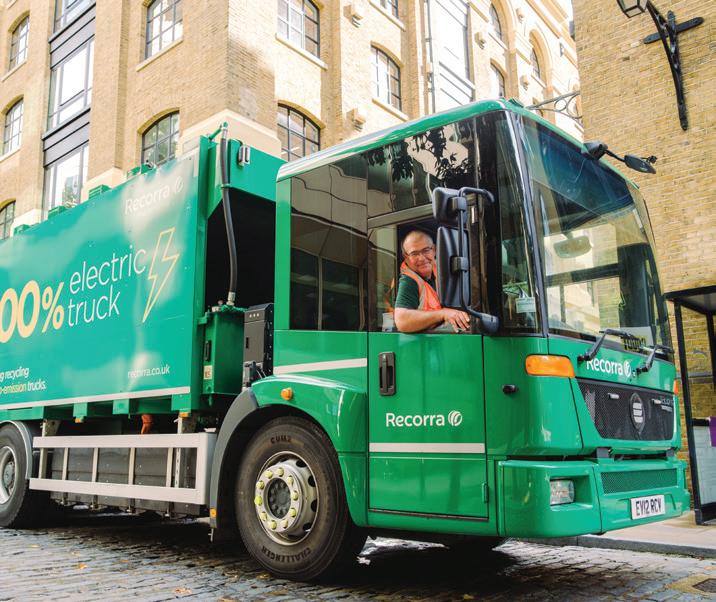
Recorra was built to meet the needs of modern facilities. While fundamentally a commercial waste and recycling collector, the business operates with a much broader view of resource management. Recorra supports organisations across commercial property, hospitality, healthcare, events, and other complex sectors where flexibility and accountability matter. Recorra works with facilities teams to cra solutions that reflect how buildings are actually used. We collect and process over 35 di erent materials, from traditional recyclables to flexible plastics, confidential shredding, electronics, and bulky waste. We o er a large array of services because we are constantly responding to customer needs. As clients ask to recycle new or harder to manage materials, we build services around those requests.
TRUE TRANSPARENCY
Around two thirds of the UK’s plastic is sent abroad for recycling. Too o en, waste management relies on opaque supply chains, with materials exported overseas and limited clarity on final outcomes. For organisations, that lack of clarity brings environmental, regulatory, and reputational risk. Recorra takes a di erent approach. Ninety-eight per cent of the waste we collect is processed within the UK, providing our clients with complete traceability. We only export waste when there are no processing solutions in the UK, and we only work with processing partners who meet our stringent environmental and compliance standards. Furthermore, we operate our own Materials Recovery Facility (MRF) in the London area.
By keeping materials close to home, Recorra maintains tighter control over quality, transparency, and recovery outcomes. We’re proud to report that, across Recorra’s customer base, an average of 61 per cent of materials are recycled.
INNOVATING FOR TOMORROW
The right waste management partner should help facilities teams understand their buildings better, not just service them. At Recorra, our technology


is designed to give clear, practical insight into how waste is generated and managed across estates.

Our SmartWeigh, SmartAudit, and SelfWeigh technology tracks when, where, and how waste is produced within a building. This data is available 24/7 through the MyRecorra live reporting portal, giving facilities teams oversight across operations and the confidence to make informed, evidence-led decisions, from improving recycling performance to planning operational changes.

Innovation also plays a role behind the scenes. We have invested in AI-powered robotic sorting at our MRF to improve recovery rates for our customers’ materials, directly supporting better recycling outcomes.
Alongside this, our fleet operates entirely on electricity and hydrotreated vegetable oil fuel, reducing emissions at the point of collection. In a single year, this approach helped avoid more than one million kilograms of CO2 equivalent emissions, supported by ISO 14064 1 accredited carbon reporting. For facilities teams, this means clearer data, more credible reporting, and a partner actively working with you to reduce impact, not just measure it.
THE VALUE OF THE RIGHT PARTNERSHIP
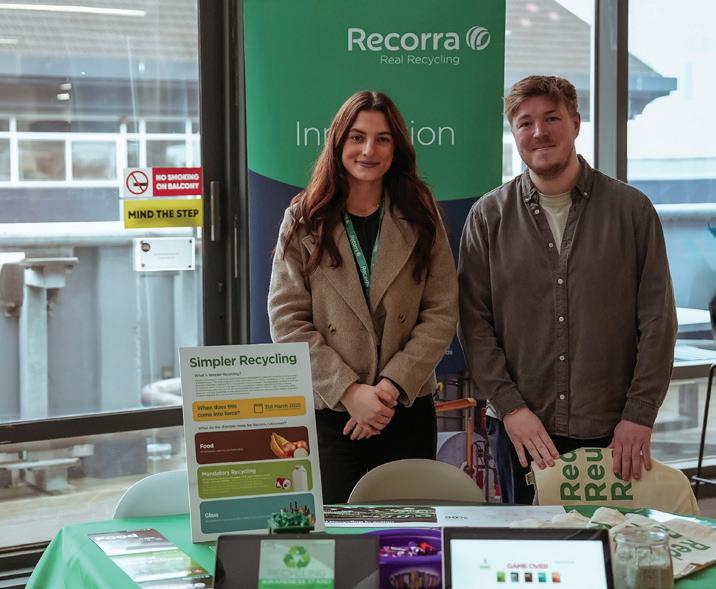
FM cannot remove every risk, but they can choose partners that reduce uncertainty. In an environment where expectations continue to rise, waste management must be reliable, transparent, and flexible enough to evolve with you.
With the right partnership in place, waste systems stop being a source of friction and start contributing to better buildings, stronger reporting, and more resilient operations.


@CIBSE CIBSE is delighted to announce that Sebastian Taylor Aguilar has been awarded The Worshipful Company of Fan Makers CIBSE Bursary for 2025/26. Congratulations, Sebastian! To read the full story, visit https://buff.ly/5Dpq1ZB
@matrixbooking Excited to be exhibiting at Local Authority Property and Estates 2026! If you manage property, assets or resources across a local authority, come and meet us, we’ll be showing how Matrix Booking helps councils get more from their estates.
@mitie Celebrating Earth Day! By creating places that are smarter, safer, cleaner and greener, we’re committed to reducing carbon emissions, cutting waste and using energy more efficiently across the nation. From our biodiverse living walls to solar power, we’re creating high-performing places for a low-carbon, sustainable future. Delve into our latest ESG report to discover more > https://bit.ly/3QzHO3k

@BritSafe “Gone are the days where free fruit Fridays is a sufficient sticking plaster for chronic #stress, absenteeism / presenteeism, reduced productivity” Our Head of Culture Change & Psychosocial Safety on psychologically safe workplaces https://ow.ly/msAt50YO0Si

With a record number of entries received this year, the judging is nearly underway, and the finalists for #IWFMAwards2026 will be revealed on 28 July! While you wait for the exciting announcement, book your place to join us to celebrate the boldest innovations in #WFM on Thursday 8 October at Grosvenor House. https://iwfmawards.org/
@CBRE On The Weekly Take, Macerich CEO Jackson Hsieh identifies the three essentials for creating the best shopping + entertainment environment: Great product. Great service. Great inventory. Simple to say. Not easy to execute. Listen now. https://cbre.co/4vIinwx
@SodexoGroup How can chefs become drivers of the transformation towards sustainable food systems? Discover how we mobilize our culinary teams to create replicable low-impact recipes: https://bit.ly/4efaSqE

ALLAN FOURIE, INTERNATIONAL TECH PRODUCT LEAD, JLL TECHNOLOGIES
DIGITAL TRANSFORMATION IN COMMERCIAL REAL ESTATE STILL STRUGGLES TO SCALE
In a recent CRE roundtable discussion in partnership with the UK PropTech Association, one message was clear, it’s no longer about if digital transformation matters, but how to make it work.
Across landlords, operators, and PropTech leaders, there was clear agreement: tech investment in commercial real estate is accelerating beyond e iciency alone. Priorities for the next 12–24 months include operational optimisation, data unification, AI adoption and a single source of truth, while current investment is still driven by e iciency, cost reduction, and competitive pressure.
Yet while investment appetite is growing, scaling digital initiatives remains di icult.
The clearest barrier identified by participants was not budget or even technology itself, it was culture. In a live polling, 67 per cent of respondents identified cultural resistance as the primary reason digital initiatives fail to move beyond pilot stages.
That finding aligned closely with the discussion in the room- technology o en moves faster than organisations are prepared to absorb it.
A recurring point was that many digital projects still begin with leadership enthusiasm but lack operational ownership. In many cases, the team purchasing the technology is not the same team expected to use it every day. Without early involvement from users, clear accountability and visible sponsorship from senior leadership, even well-funded initiatives struggle to gain traction.
Participants also noted that commercial real estate continues to wrestle with fragmentation.
Many organisations operate across multiple systems, vendors, and regional workflows, making integration far more complex than it first appears. Several attendees described portfolios where buildings are still selecting technology asset by asset rather than through a unified strategy. This creates inconsistency, slows scale and makes ROI harder to prove.
That complexity is one reason why change management emerged as another dominant theme. More than half of respondents in the room said the greatest thing each side underestimates, whether landlord or technology provider, is the e ort required to manage organisational change.
Technology capability is rarely the only challenge; adoption depends on how well people understand why a system exists, how it improves their work and what outcomes it should deliver.
AI inevitably became part of the conversation, but notably in a more mature way than many technology discussions of the past year. Rather than focusing on novelty, attendees focused on governance, accountability, and practical
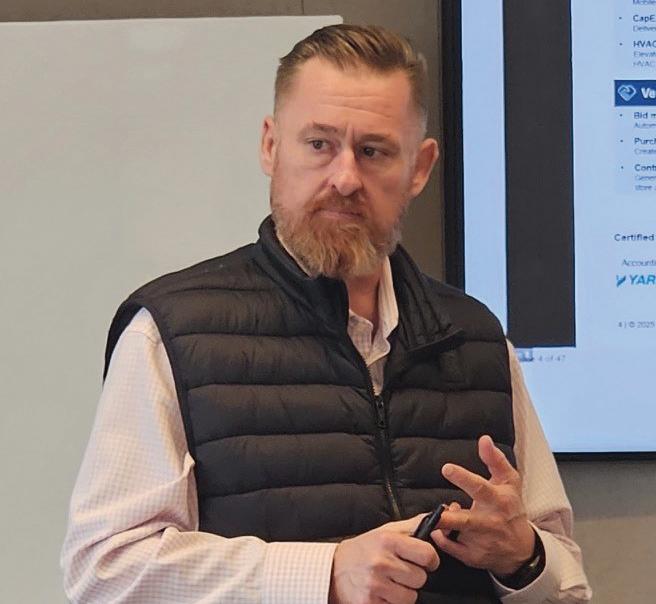
application. There was a strong consensus that AI’s most immediate value lies in data management, surfacing insight faster, and improving decision-making, particularly in environments where teams have historically depended on individual spreadsheets, manual reporting or siloed knowledge.
At the same time, there was caution. Poor data quality remains a concern, as does cybersecurity and data provenance. Several participants stressed that while “bad data in, bad data out” remains true, waiting for perfect data is increasingly seen as its own risk. Organisations that delay experimentation may simply fall behind. The financial lens remained constant throughout the discussion: if technology does not clearly save money, make money, or protect value, adoption slows.
That means ROI conversations are becoming sharper. E iciency alone is no longer enough as a narrative; financial defensibility is becoming the standard for approval.
Perhaps the most important takeaway here is that digital transformation in commercial real estate is no longer a technology conversation alone, it is increasingly a leadership conversation. The leaders will become the ones who tie it to organisational confidence, cross-functional ownership and the ability to move from experimentation to embedded operational practice.
The sector has historically moved cautiously, but expectations are changing quickly. Smart buildings are becoming baseline expectations and tenant demands mean the o ice continues to evolve. AI is accelerating how decisions can be made across portfolios.
For commercial real estate leaders, the challenge now is less about finding the next tool, and more about building the internal conditions that allow the right technology to create measurable value.
Allan Fourie, International Tech Product Lead, Jll Technologies



















































































































































































































FM CLINIC


Mental Health UK’s Burnout Report revealed 91 per cent of workers report high or extreme levels of pressure or stress, with one in five needing to take time o in the last year. Mental Health Awareness Week takes place 11 – 17 May 2026, so for this month’s FM Clinic we’re asking, what can the FM sector do to help address mental ill health within the built environment and the wider workforce?
structures and shi patterns to workspace design, lighting, ventilation, quiet areas or flexible working arrangements.
Supporting healthy interactions between teams and managers is equally important.
Senior management commitment is crucial. Leaders set the tone for how seriously stress is treated. When executives visibly prioritise mental health, allocate resources, and model healthy working practices, stress prevention becomes embedded in everyday decision-making rather than reactive. Without this visible leadership, e orts are o en inconsistent and short-lived.
Worker involvement strengthens prevention. Sta can help
In FMJ's regular monthly column, our team of FM experts answer your questions about the world of facilities management
THE HSE’S VIEW
JON WELLS, HSE WORKING MINDS CAMPAIGN COMMUNICATIONS LEAD
Work-related stress is a serious health and safety risk, and facilities management can make a real di erence. In 2024/25, 964,000 UK workers su ered from work-related stress, depression, or anxiety, resulting in 22.1 million lost working days (HSE, 2025).
identify specific stressors and suggest practical solutions. Interventions should be evidence-based, drawing on sickness absence data, surveys, or observations, and reviewed regularly for e ectiveness.

Jon Wells


Health and safety law applies to all workers: employees, agency sta , apprentices, zero-hours workers, and outsourced teams alike. Stress should be managed like any other workplace hazard, through risk assessment, targeted interventions, and ongoing monitoring and review.

Facilities management professionals are ideally placed to put HSE guidance into practice. By shaping workplace design, operational processes, and overall business performance, FM teams can directly influence the factors that drive stress and improve worker wellbeing.
HSE’s Management Standards framework provides a practical approach for stress risk assessment. It focuses on six key areas that, if poorly managed, are linked to poor health, lower productivity, and increased sickness absence: Demands, Control, Support, Relationships, Role, and Change. Many of these can be influenced through FM decisions, from contract
HSE’s Working Minds campaign o ers practical tools for organisations of all sizes, including free eLearning modules and guidance on identifying the root causes of stress. While aimed at SMEs, any organisation can use it to carry out meaningful risk assessments and implement e ective solutions.
Supporting data from Mental Health UK shows 91 per cent of workers report high or extreme levels of pressure, with one in five needing time o in the past year. These figures underline why HSE guidance, combined with proactive FM-led interventions, is essential to protect mental health in the workplace.
The key message is simple: make stress prevention routine. By embedding risk assessment, worker involvement, and regular monitoring and review into daily health and safety management, FM professionals can protect workers’ mental health, boost productivity, and create workplaces that genuinely support wellbeing.
MENTAL HEALTH CHARITY’S VIEW
SAM DOWNIE, MANAGING DIRECTOR, MATES IN MIND
At its simplest form, the answer is: make work good for workers’ mental health. Create a culture of prevention, one that focuses on eradicating excessive stress, ending the stigma that surrounds mental ill-health, educating everyone to understand their own and their colleagues’ mental health, and providing support to those who need it. But for many, creating a culture of prevention is not always that simple or straightforward. For a start, what is the first step?
Before I share some e ective interventions for building positive mental health in and across the facilities management
sector, we should be clear that e ective stress management in the workplace is required by law.
“Employers have a legal duty to protect workers from stress at work by doing a risk assessment and acting on it. This is the same duty you have to protect people from other health and safety risks” (HSE).
communicated regularly with sta .

This is important, because in December 2025, the University of Birmingham was found to have material breaches of the Management of Health & Safety at Work Regulations 1999 for not having e ective arrangements in place to manage the risk from work-related stress. This action demonstrates the HSE’s clear intention to investigate potential breaches of HSE legislation.



Investing in workers’ wellbeing is not only necessary for avoiding potential prosecution, it also improves the organisation’s bottom line by supporting workers’ mental health. At Mates in Mind, we work with organisations of all sizes, to help them create and embed cultures of prevention by implementing comprehensive programmes of education and support. Through our e ective approach we make work safer for everyone so that noone reaches crisis point and looking a er the mental health of workers becomes everyone’s responsibility.
So how do you do that?
Get management buy-in and lead by example (in terms of talking about your own mental health and demonstrating it is ok to ask for help).

and acting on
Put simply, ask yourself: do we satisfy our duty of care to our employees? If you answer ‘no’, then it’s time to act. A quick next step is to visit our website where you can download free resources and watch a series of short videos on stress awareness: https:// www.matesinmind.org/training-and-resources/information-andresources.
THE FM PROVIDER’S VIEW
ANDREW
LEWINTON, VP QUALITY, HEALTH, SAFETY AND ENVIRONMENT (QHSE) ABM UK&I
Facilities management plays a vital role in addressing mental health across both its own workforce and client environments.
In the UK and Ireland, our approach starts from a simple principle that wellbeing and safety are inseparable. Creating environments where people feel physically and







psychologically



safe is fundamental, and it’s embedded in how we operate every day.
At its simplest form, the answer is: make work good for workers’ mental health. Create a culture of prevention, one that focuses on eradicating excessive stress, ending the stigma that surrounds mental ill-health, educating everyone to understand their own and their colleagues’ mental health, and providing support to those who need it.”






A key part of that is ensuring the right support is



A key part of that is ensuring the right support is available on the ground. Mental health support must be designed with the workforce in mind, particularly in FM, where many people are frontline, remote, or less digitally connected. Across our business, we have trained Mental Health First Aiders (MHFAs) who provide an accessible, immediate point of contact for team members who may be struggling with work-related pressures or challenges outside of work. This helps normalise conversations, o er early support and signpost further help where needed.




Assess where you are on your mental health journey and develop a tailored action plan to fill any gaps. This includes policies (especially a mental health policy), regularly conducting and acting on individual stress risk assessments and performance, by ensuring those with responsibility can fulfil this role.
SamDownie







Set targets, monitor outcomes and record evidence. Know what success looks like regarding the mental health of your workforce; plan in what and by when you will fill the gaps identified in your assessment; and keep records of the outcomes and evidence of actions you have taken.
Educate your whole workforce so they have the skills, clarity and confidence to spot the signs of mental ill-health, start conversations, signpost support and make reasonable work adjustments if needed.
Provide support – be that through Mental Health First Aiders, HR Team, Occupational Health, an Employee Assistance Programme, peer mentors, and ensure the information is

Importantly, we are continuing to evolve how ensuring it is inclusive and reachable for frontline

Importantly, we are continuing to evolve how that support is accessed, removing barriers and ensuring it is inclusive and reachable for frontline team members as well as those in o ice-based roles.



Alongside this, we take a proactive approach through regular wellbeing communications and a strong, accessible Employee Assistance Programme (EAP), again ensuring support is visible, easy to access and relevant to everyday challenges. Culture across the industry is equally important. We’ve built an environment where people feel comfortable speaking up, where inclusion is prioritised and where wellbeing is a shared responsibility. Our ‘Think Safe’ approach reflects this, going beyond traditional safety measures to ensure people feel empowered, supported and able to raise concerns. This is reinforced through our Disabilities & Carers Impact Group, which helps ensure that mental health, accessibility and lived experience are reflected in how we design policies and working environments,
Andrew Lewinton
Sam Downie
the mental health of workers becomes
individual stress risk assessments and performance, by ensuring
FM CLINIC
so that people can be their authentic selves and thrive at work, and in life.
Industry-wide initiatives also have a key role to play. Programmes like our annual Safety Week keep wellbeing front of mind, while external recognition helps set standards. ABM’s multiple RoSPA Gold Awards are a strong reflection of our ongoing commitment to health, safety and wellbeing across the business.
For the FM sector, the lesson is clear: addressing mental health demands a joined-up approach that combines frontline support, leadership commitment and a strong, inclusive culture. That means recognising that mental health does not sit in isolation – it intersects with other aspects such as disability, caring responsibilities and wider wellbeing.
FM providers are uniquely positioned to influence both the environments’ people work in and the experiences of the people who maintain them. Investing in the right initiatives, as we have done, and embedding wellbeing into safety programmes and creating inclusive structures can make a tangible di erence.
THE FM RECRUITER’S VIEW
CHRIS SYCAMORE, ASSOCIATE DIRECTOR FM, COBALT RECRUITMENT

As a sector FM is trying to transform itself from a secondary career to the first-choice option for young people entering the UK workforce. But we must be alert to the fact that we’re trying to appeal to a generation for which mental health issues are far more prevalent. According to the Youth Future Foundation, between 2000-2019, the number of 16–25-year-olds presenting to primary health care with mental health issues tripled, so for FM to appeal to this generation we need to adjust workplace strategies accordingly.
One way we’re seeing this addressed is through more businesses utilising Employee Assistance Programmes (EAP) as part of their benefits packages. These can directly relate to mental health through access to online counselling but crucially also cover many other aspects such as financial planning, legal advice, access to virtual GPs and more. These serve as a key alleviator of factors that contribute to mental health issues, making them an invaluable tool for businesses. However, for me, EAP’s serve as a sticking plaster rather than an antidote to the problem. For that we need broader action across the industry. Mental health issues do not arise in a vacuum but due to a myriad of factors such as economic pressures, employment insecurity and the rise of social media which all need to be addressed.
The elephant in the room for me is workload.
Facilties are still seen as a cost by the wider industry, which can leave it under-resourced and overworked. It’s not uncommon to find employment gaps plugged by adding responsibilities onto other sta for sustained periods and in a role that already involves spinning many plates this can be a key recipe for burnout.
It’s also worth noting that in a survey conducted by Cobalt, 83 per cent of UK FMs said they were dissatisfied with their salary, highlighting a perceived imbalance between responsibilities and reward exists in the industry. Facilities Managers understand the need to muck in, but if this becomes the status quo without reward & recognition, we’re simply creating a petri-dish for mental illness and then chucking future FM’s in at the deep end. Secondly, we need to address management. Eighty per cent of FMs surveyed reported having no formal training in the last year whatsoever – let alone on management and mental health first-aid. In an overworked industry, managers are no exception and can be forgiven for resorting to the way they themselves were managed. However, we need to realise that for a new generation of FM’s resiliency needs to be learned not assumed. This requires us to equip our managers with the tools, time, and training to coach this into them.
Lastly, I would encourage businesses to explore building stronger social networks within their FM teams. Whether by mentor schemes, workshops or socials, we need to create more opportunities to build internal relationships. Those in regional roles may spend more time travelling alone than interacting with others in their shoes, and Building Managers are not immune to this isolation. It’s crucial we build connections with those that can understand and empathise with the workplace stresses we face otherwise these issues can fester and become bigger, particularly for the next generation which is less equipped for this initially.
Simply put, FM can be a stressful, unpredictable job, that o en goes unrecognised as the positive parts of your work take place behind the scenes. In this environment, looking a er your team’s mental wellbeing isn’t a “nice to have” initiative, it’s a fundamental investment that keeps the industry’s talent pipeline from running dry.
Do you have a question that you’d like answered by the FMJ Clinic?
Email: sara.bean@kpmmedia.co.uk
Chris Sycamore













IS YOUR ORGANISATION DESTROYING CONFIDENTIAL DATA SECURELY?

Facilities managers are responsible for more than buildings and maintenance. They are increasingly on the front line of protecting sensitive information. Ensuring confidential materials are destroyed securely and in line with legislation is now a critical part of operational risk management
THE COMPLIANCE RISK MANY ORGANISATIONS UNDERESTIMATE
With the UK GDPR and the Data Protection Act placing strict responsibilities on organisations that handle personal or sensitive information, secure destruction should not be an a erthought. Organisations remain responsible for data throughout its entire lifecycle, including its disposal.
From personnel files to hard drives and other data storage devices, organisations generate vast quantities of confidential material every day. However, many businesses still overlook what happens when that information is no longer needed. A 2023 YouGov report, commissioned by the British Security Industry Association (BSIA), found that 19% of small businesses, 8% of medium businesses, and 3% of large businesses surveyed had no paper waste
stream for confidential paperwork. Kristian Carter, Chair of the BSIA’s Information Destruction section and Commercial Director at Shred Station shares his thoughts.
“Failure to manage confidential waste correctly can have serious consequences. Non-compliance can result in penalties, reputational damage and loss of customer trust. For facilities managers tasked with overseeing operational risks within
their organisations, this makes secure information destruction a critical part of information governance and data protection compliance.”
Despite many organisations still not having secure waste streams in place for confidential materials, industry research has shown that procurement decision-makers increasingly recognise the importance of selecting trusted and accredited suppliers when outsourcing confidential waste destruction. Businesses want reassurance that their suppliers can demonstrate compliance with data protection regulations and operate in line with strict industry standards.
WHY PROFESSIONAL INFORMATION DESTRUCTION MATTERS






BS EN 15713 is so important because it doesn’t just consider particle sizes of shredded materials. It covers the entire destruction lifecycle, including collection, transportation, processing methods, sta vetting and the final disposal of materials. Operating in line with the standard ensures information is protected from point A to point B, not just at the finish line.”

collection through to final
Outsourcing to a professional information destruction provider o ers several advantages compared with in-house shredding. Specialist companies use secure collection procedures, controlled transport, monitored destruction processes and detailed audit trails. This ensures that confidential materials remain protected from collection through to final destruction.
Professional providers can also supply
Professional providers can also supply documentation such as Certificates of Destruction and Duty of Care records. These documents support your company’s audit trail and demonstrate your GDPR-compliant information disposal.
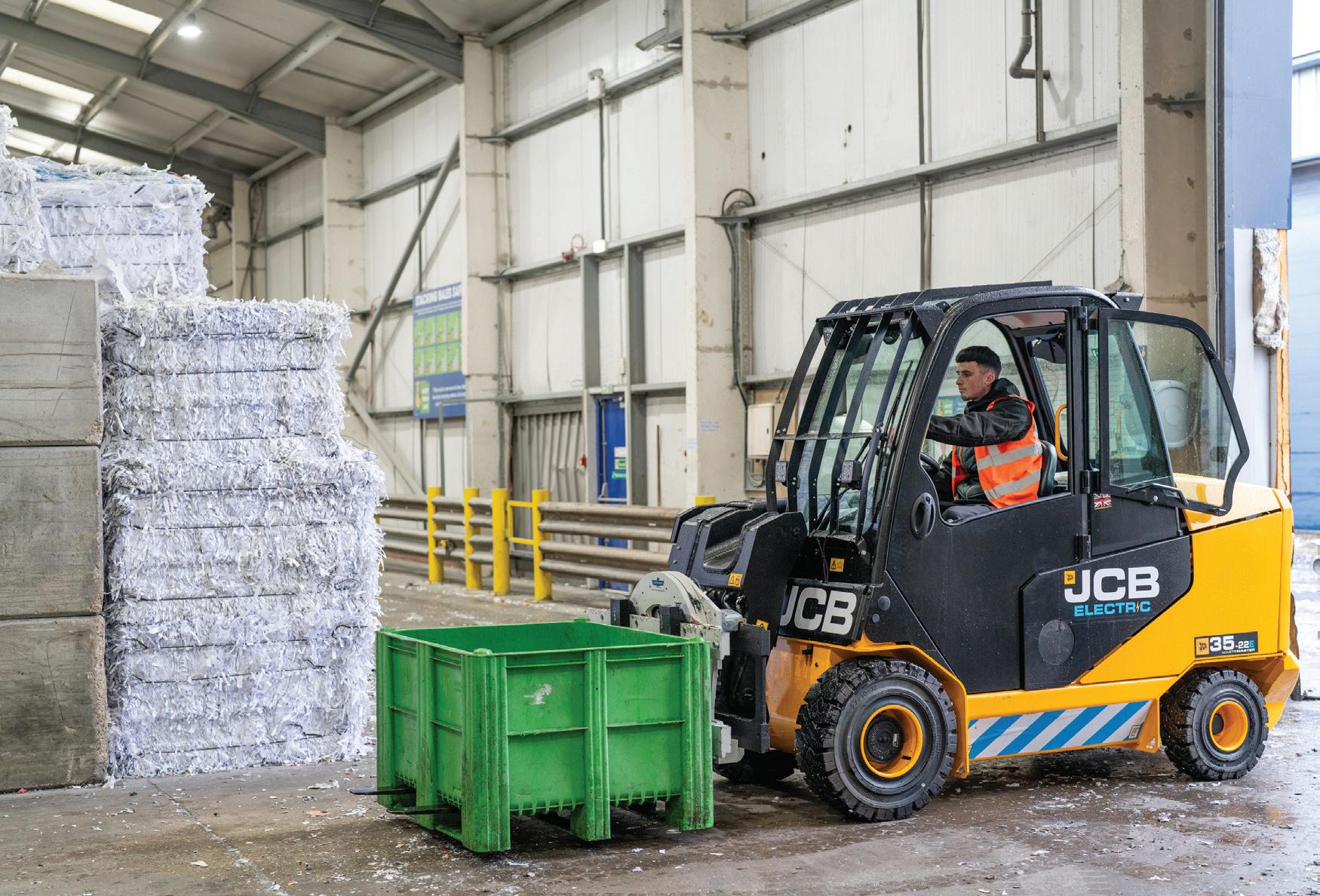





THE IMPORTANCE OF BS EN 15713
The most important benchmark for secure information destruction is BS EN 15713. This European standard sets out holistic best practice guidance for the destruction of confidential material.
Kristian, who was part of the team that revised this standard in 2023, further impresses the importance of a fully comprehensive approach to information destruction.
“BS EN 15713 is so important because
it doesn’t just consider particle sizes of shredded materials. It covers the entire destruction lifecycle, including collection, transportation, processing methods, sta vetting and the final disposal of materials. Operating in line with the standard ensures information is protected from point A to point B, not just at the finish line.”
For organisations seeking assurance that their confidential materials are handled securely, working with providers that comply with BS EN 15713 o ers an important level of confidence.
WHY CHOOSE A BSIA INFORMATION DESTRUCTION MEMBER?
The BSIA’s Information Destruction section brings together specialist providers who



operate to the highest industry standards. Members adhere to BS EN 15713 and follow a strict code of ethics governing security practices, customer service, and environmental responsibility.
For facilities managers, partnering with a BSIA Information Destruction member helps reduce risk, demonstrate compliance and provide peace of mind that sensitive materials will not fall into the wrong hands.
SECURITY AND SUSTAINABILITY GO HAND IN HAND
Environmental responsibility is also becoming an increasingly important consideration when disposing of confidential materials
The shredding industry plays a significant role in the UK’s recycling infrastructure. Materials such as paper, metals and electronic components can o en be recovered and recycled a er secure destruction, reducing waste and conserving resources.
By working with a professional destruction provider, like a member of the BSIA Information Destruction section, FMs can ensure confidential waste is handled securely while also supporting broader environmental goals.

SETTING THE TONE


ASoundscaping is transforming workplace wellbeing and performance at CBRE’s Singapore o ce, helping to shape the workplace experience
s the role of the o ice has evolved over the past decade, organisations are rethinking how workplaces can support wellbeing and performance and encourage sta back into collaborative workspaces. While o ice design has long focused on how spaces look, attention is now shi ing towards sound and its powerful influence on wellbeing, focus, and productivity.
For CBRE’s new Singapore o ice, Simon Long, CEO & Founder of Technology and AI Consultancy SQRD, envisioned a workplace where employees can choose how they work by shaping the atmosphere through the integration of carefully curated Moodsonic soundscaping technology. Valeo Technology, a specialist provider of wellbeing-led technologies, led the full design and delivery of the solution, working with local installation partner ESCO and Hewshott consultants.
“Architects have been creating visually impressive o ice spaces for years, but acoustics are o en overlooked,” explains Marcus Rose, Owner and Director at Valeo Technology. “At CBRE’s new o ice, Simon wanted to bring sound to the
forefront, using soundscaping to create an environment that positively impacts employees.”
His vision was to design a space that not only looks visually striking but actively encourages people to return to the o ice. By creating a flexible environment that caters to di erent working styles and preferences, the goal was to ensure the space works for everyone. “We believe wellbeing and performance aren’t competing priorities,” says Long. “When someone is comfortable and their environment responds to what they’re doing or what they need, they perform better. And we wanted that for our people.”
AUDIO SYSTEMS
Valeo Technology meticulously planned a tailored audio system in 14 key areas using 120 BCS300 PoE speakers. Across the vast, 2,000-metre squared o ice, soundscaping is utilised in front-of-house and back-of-house areas, focus rooms, wellness spaces, quiet zones, bathrooms and café areas, which helped create a cohesive sound environment throughout the workplace. The space is
intentionally immersive, guiding movement and behaviour through sound as much as through architecture and visual design.
The o ice has been deliberately split into distinct sections to support di erent ways of working, communicating, and interacting, encouraging choice and autonomy rather than simply sitting at a desk all day.
“We asked: what should someone feel when they arrive? What do they need when they’re focusing, or when they’re collaborating? Every decision was driven by the desired experience,” explains Long.
“From the moment employees step out of the li s into the lobby, they’re greeted by an incredible view of Marina Bay and a striking video wall, with soundscaping immediately present,” adds Rose. “Audio is intentionally played only on the opposite side of the foyer, acting as a subtle wayfinding tool that guides visitors naturally towards the o ice.
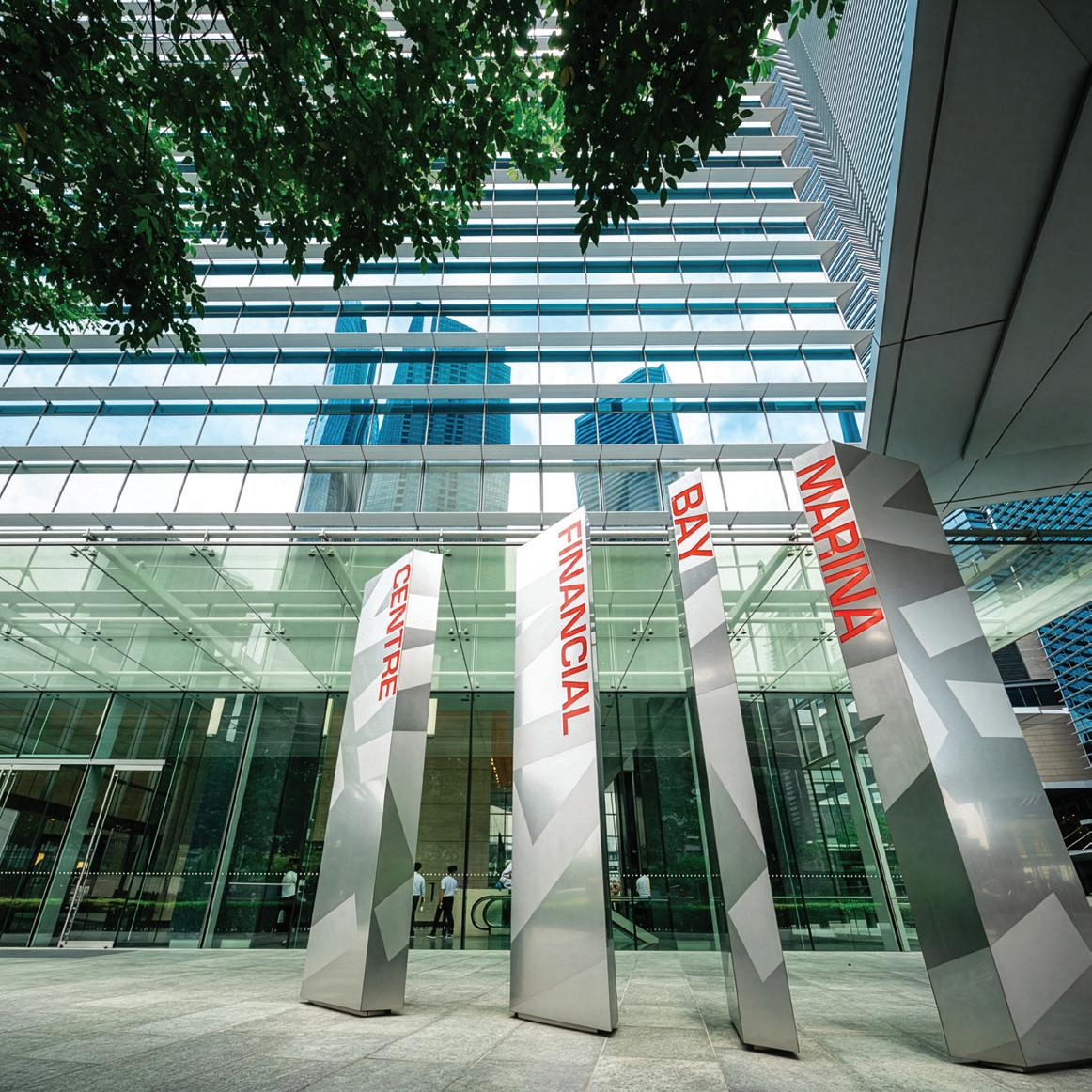
main working areas, we use more harmonic soundscapes.
“Sta then move into a vibrant co ee area and casual collaboration space, where the soundscape shi s to something more energetic and upli ing,” he continues. “As people move into the back-of-house working area, soundscaping clearly defines busier and quieter zones, allowing sta to choose the area best suited to their needs, from deep-focus to more dynamic collaboration.”
Moodsonic’s intelligent monitoring allows each space to adapt in real-time. “Although there are pre-defined sound profiles for each zone, the system responds to changes in noise levels,” explains Rose. “If sound levels rise, frequencies adjust to help mask speech and reduce distraction. When the noise level fades, the sound will then drop o again.
“The dedicated quiet areas use subtle, ambient sound to encourage focus,” explains Rose. “There’s a common perception that deep work requires complete silence, but for many people that can create tension. It can make people hesitant to speak or interact, which ultimately becomes counterproductive.”
STRIKING THE TONE
While sound levels play an important role, the selection of sound itself is fundamental to delivering e ective soundscaping. “In the lobby, we use nature-based circadian soundscapes, from gentle waves and birdsong in the morning to babbling brooks as the day progresses, creating a calming, welcoming journey,” explains Rose. “In the
creates evolving sound in real time. This avoids repetition, which people can quickly notice and find distracting. By generating sound dynamically, the environment feels more natural and less artificial, helping users stay comfortable and engaged for longer periods. “The sound is made from multiple layers, and these will change depending on what is happening in the space, so no two days sound the same.”
While Moodsonic soundscaping operates as the default setting throughout the o ice, the system also allows for flexibility in use. For example, if teams want to change the music in certain areas on a Friday a ernoon, they can temporarily switch to their preferred streaming service via the BluOS app and just as easily revert to Moodsonic when required.
Traditional, lyrical music is too subjective, so we avoid it. Naturebased soundscapes tend to resonate with the majority and people quickly become accustomed to the sounds. Once they become part of the environment, they become something people genuinely value and miss when they’re not there.”
“Traditional, lyrical music is too subjective, so we avoid it. Naturebased soundscapes tend to resonate with the majority and people quickly become accustomed to the sounds. Once they become part of the environment, they become something people genuinely value and miss when they’re not there.”
Rather than relying on short audio loops, generative soundscaping continuously
BEYOND AUDIO
The system extends beyond audio alone. Valeo Technology has delivered full integration with wider smart building technologies across approximately 14 focus rooms and a similar number of meeting rooms, with sensors monitoring both lighting and acoustic levels. Lights only activate when spaces are in use and automatically adjust depending on how the rooms are being used, improving both comfort and energy e iciency.
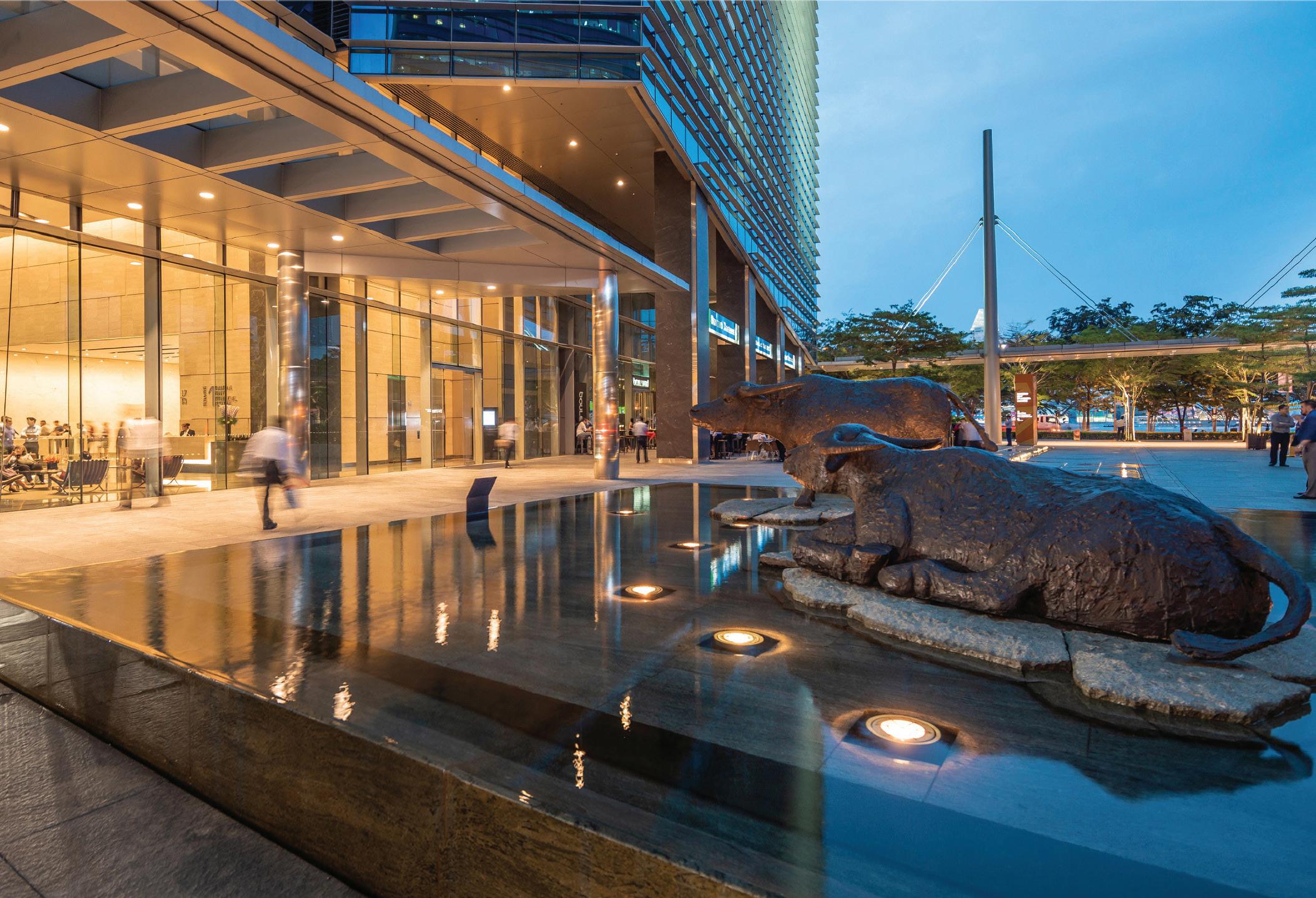
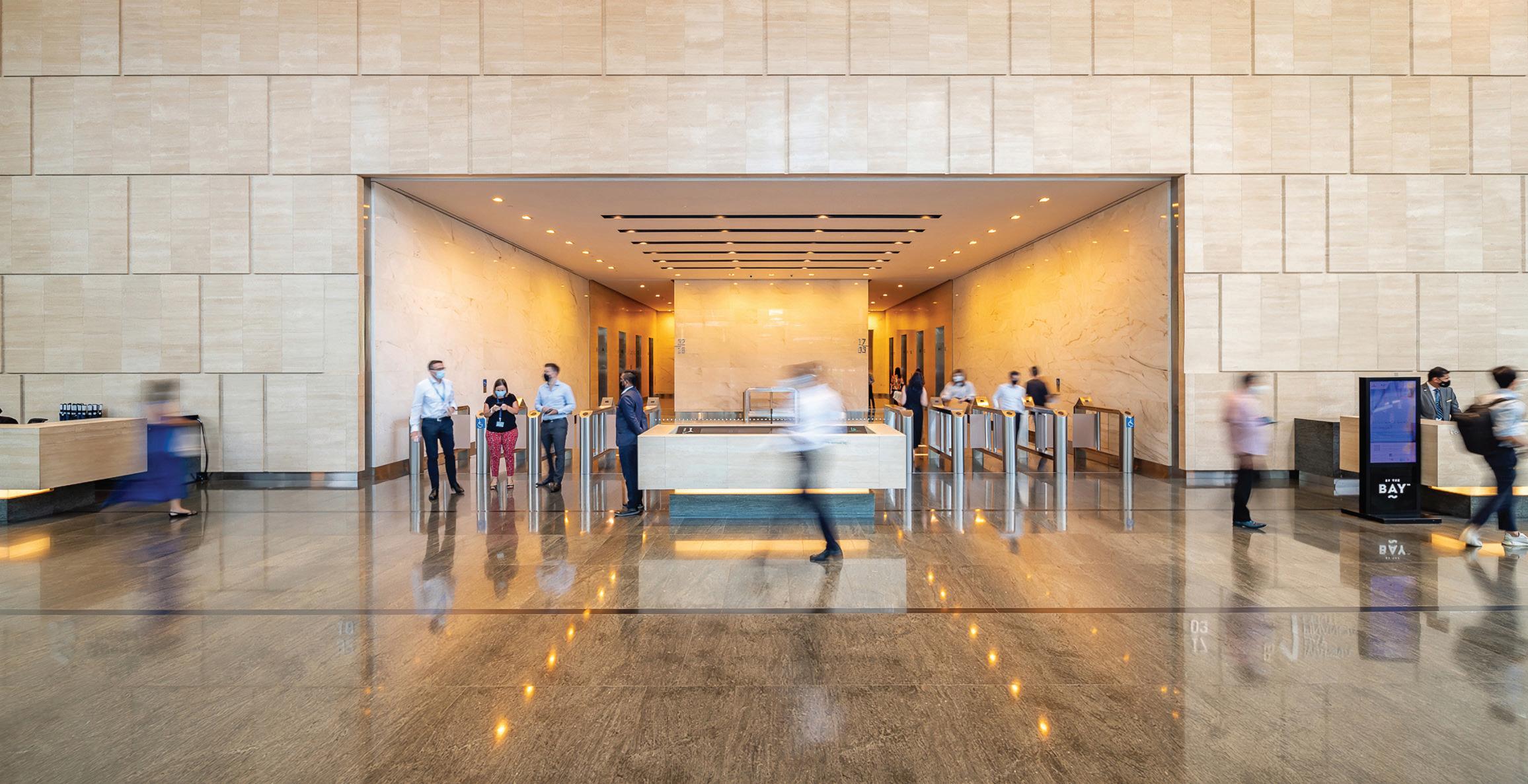
By analysing data from occupancy, lighting, acoustic systems and even air quality, the facilities team can gain a real-time understanding of how the o ice is performing and makes informed adjustments when necessary. If a space is underutilised, the data helps determine whether it’s too bright, too noisy, or otherwise uncomfortable. Changes can be implemented and immediately evaluated, with alerts highlighting any significant shi s in conditions. This insight-driven approach enables continuous optimisation of the workplace environment.
INSIGHTS AND MONITORING
Using Moodsonic’s insights platform, teams can also monitor what is playing in each zone, adjust volume levels, schedule changes, and switch between sound themes depending on the desired atmosphere. Access to controls is typically limited to key users, ensuring consistency across the workplace, although certain areas, such as CBRE’s wellness room, allow for occupant adjustment.
“The Moodsonic system gives us something we’ve never had before: real behavioural insight through sound data. Acoustic sensors across our 14 zones reveal not just how loud a space is, but how it’s being used,” explains Long. “Low levels indicate focused work, while higher levels suggest collaboration or calls. That insight is incredibly valuable for space planning, helping us understand whether we’ve created the right mix of environments based on how people work, not how we assumed they would.”
Supported by Bluesound Professional’s
networked audio system, BCS300 speakers enabled rapid installation and flexible configuration, with adjustable postinstallation zoning. Each speaker can be individually monitored and controlled via the network, allowing the team to quickly respond to issues, make remote adjustments, and receive fault reports.
“Compared to traditional passive systems, which require extensive cabling and manual intervention, this approach significantly simplifies management while providing greater adaptability and long-term operational e iciency,” reflects Rose.
WORKPLACE BENEFITS
By
the outcome has been clear. “Sta feedback on the ambient sound environment has been overwhelmingly positive,” confirms Long. “The move from pink noise to biophilic, harmonic soundscapes are clearly noticeable, with some even requesting specific nature sounds. I think that speaks to how biophilic audio connects with people on a more emotional level.
“I honestly believe we couldn’t have delivered this project without Valeo,” Long reflects. “They really stepped up to our high ambitions, as this wasn’t just another o -theshelf deployment—we were pushing into new territory with a lot of new systems and integration complexity.
analysing data from occupancy, lighting, acoustic systems and even air quality, the facilities team can gain a real-time understanding of how the o ce is performing and makes informed adjustments when necessary. If a space is underutilised, the data helps determine whether it’s too bright, too noisy, or otherwise uncomfortable.”
Since installation, the e ect on the workplace environment and sta wellbeing has been overwhelmingly positive. “Sometimes it can take time for people to adjust to soundscape environments and find the right balance,” reflects Rose. “Valeo worked closely alongside the installation team throughout, ensuring every zone was tuned and performing to the standard we’d promised CBRE. The e ort paid o , sta took to it immediately. In fact, it’s been such a success that it’s a key feature CBRE demonstrates when bringing clients through their o ice.”
In terms of meeting Simon Long’s vision,
“Valeo with Moodsonic delivered an exceptional outcome and exactly what we wanted to provide: a world-class workspace built for wellbeing and productivity.”
As organisations look to encourage people back into the o ice, experience has become critical. Sound plays a major role in this, shaping mood, behaviour, and comfort in ways that are o en subconscious yet deeply impactful. Recognised as Best Corporate O ice at the InAvate APAC Awards, CBRE demonstrates how soundscaping, combined with intelligent technologies, can elevate both wellbeing and performance. As Rose concludes: “It’s a real-world blueprint for how scalable, smart audio and intelligent soundscaping can elevate these types of buildings.”
Slightly different name, same great team.
We handle the tasks you don’t want to.
Facilities Managers and Workplace Professionals juggle multiple requirements every day but this can be a challenge when your building is at the end of its lease and you need to fulfil any dilapidations needs whilst also moving your business to a new location.
With East On Projects, our team will deliver your dilapidations project from start to finish so you don’t need to coordinate a range of suppliers and contractors. And we can create an inspirational workplace for your next premises too!
Working as main contractors and project managers, we are trusted by some of the UK’s most high-profile businesses. Whether you have office fit out, dilapidations or remedial works requirements, come to the team that has the solution.
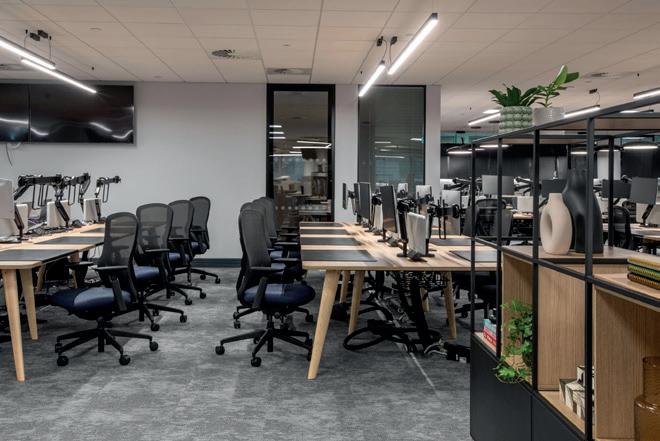

Design & Build
Interior Design
Furniture
Specialist Audio Visual
Space Planning
Dilapidations
Cat A & B Fit Out
M&E
HVAC IT

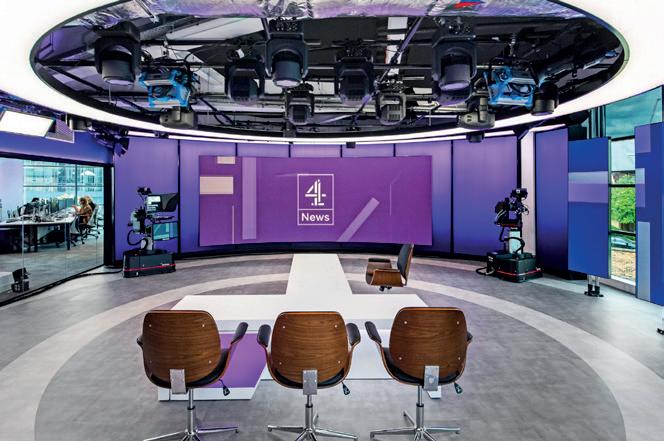

CLERKENWELL CALLING
Clerkenwell Design Week 2026 is just around the corner and boasts a programme full of specially curated events for its fifteenth anniversary. Madeleine Ford presents a preview of what’s to come
The 19-21 of May 2026 marks the 15th anniversary of Clerkenwell Design Week. Reiterating its reputation as the UK’s leading design festival, CDW 2026 presents plenty of specially curated events familiar to regular visitors, intertwined with exciting new features and venues. Set against the backdrop of one of London’s most designrich districts, the festival brings together a compelling mix of established brands, emerging talent and creative thinkers, transforming showrooms, streets and historic venues into a vibrant, walkable showcase.
THEMES
This year, the festival is focusing on two prominent themes, sustainability and sound.
SUSTAINABILITY: CHAMPIONING CIRCULARITY
CDW 2026 is placing environmental responsibility at the centre of its programme, from recycled structures to circular product design.
The Canary Clock Tower: the sculptural landmark by George King Architects, is inspired by Clerkenwell’s historic tradition of clockmaking. The structure embodies circularity with a lightweight frame of reclaimed sca olding, a tactile timber base, and a fully recyclable outer skin. Once the festival is over, George King Architects will relocate the piece to a permanent public setting, with all plastic components returned to Smile Materials for full recycling.
Alexane Quender : the theme of circularity is continued by the French
designer with her five BinSight Benches which are made entirely from waste materials considered too di icult to recycle. She brings in an aspect of education with QR codes on each bench linking to a quiz to identify the waste materials used.
Reddie: the progressive Australian/ Indonesian brand unveils its collection of made-to-order chairs, desks, shelving and sofas cra ed from reclaimed Indonesian teak salvaged from old railways and houses.
Back2Bolon: introduced by the Swedish flooring brand Bolon, it is a take-back initiative that makes its flooring and rugs fully circular. Products installed without permanent adhesive can be returned to Bolon’s recycling plant where they are transformed into new floors and rugs. This initiative closes the loop from design to rebirth and significantly reduces

CO2 emissions compared to virgin production.
Maverick: Edmund Bell presents a recycled blackout fabric designed for hospitality, workplace and public sector interiors. Made from recycled yarns, the fabric delivers reliable light exclusion, flame retardancy and a contemporary textured finish; demonstrating that sustainability and specification performance are no longer in conflict.
SOUND
CDW explores sound for its second theme, from immersive community installations to award-winning acoustic workplace solutions.
Recreatura - an immersive, sound-led installation inviting visitors to reimagine architecture through listening. Two historic sites in Clerkenwell are explored through the voices, memories, and soundscapes of local residents revealing the textures and stories embedded in the neighbourhood. Listeners will respond by drawing on ceramic tiles which will be placed within a cube installation in Charterhouse Square forming a collective structure evolved from shared sounds and memories.
BOX17- the German Polish acoustic booth manufacturer makes its CDW debut with its award-winning Cube 1 Stand. Its interior is lined with premium Italian wool felt, bringing biophilic warmth to the modern workplace.
The BAUX Floating Pavilion - located outside the entrance to Old Sessions House, the Swedish brands new X-FELT Floating Collection will exemplify how acoustic design can shape both architecture and how we experience spaces.
CLERKENWELL CLASSICS
Once again CDW presents hundreds of brands across over two hundred
showrooms and 16+ exhibition venues. Furniture, lighting, textiles, surfaces, home accessories and product design will be showcased across all the venues. UK and international design names will be featured with confirmed exhibitors including String Furniture, Moroso, Swedese, Dornbracht, Vincent Sheppard, and collections from Austria, Denmark and Italy will also return.
Showroom partners are integral to CDW. Hundreds of partners will host product launches, talks, and workshops. Confirmed showroom partners includeActiu, Andreu World, Boss Design, Camira, Domus, HAY, Hansgrohe, Herman Miller, Humanscale, J.Adams & Co, Knoll, Muuto, Milliken, Modus, Iris Ceramica, Tarkett, and Cosentino.
Clerkenwell Design Week, like previous
years, makes use of both contemporary and historic venues including:
Old Sessions House - home to brand activations, presentations and the festival hub.
The Charterhouse - contemporary furniture, decorative lighting and luxury finishes.
Detail & Finishes - featuring refined luxury products and finishes in St John Priory Church.
British Collection - taking over the whole of St James’s Church, highlighting the best British design talents and brands.
Ceramics of Italy - hosting Italian ceramic and porcelain tile brands at a pavilion on St John’s Square. Organised by the Italian Trade Agency in collaboration with the Ceramics Association of Italy.
Commercial Design in the Park (formerly Project) - focused on contract furniture and surface design, the venue will also host a series of talks from Commercial Interiors UK.
Commercial Interiors on the Green (formerly Clerkenwell Green Pavilions)contract furniture, solutions and surfaces brands from around the globe.
Interior Hardware (formerly Elements)dedicated to architectural hardware and finishes.
Future Talent (formerly Platform)spotlighting emerging design talent and companies.
NEW FOR 2026
This year’s event will feature a new curated series of large-scale installations called Design Interventions: a series of
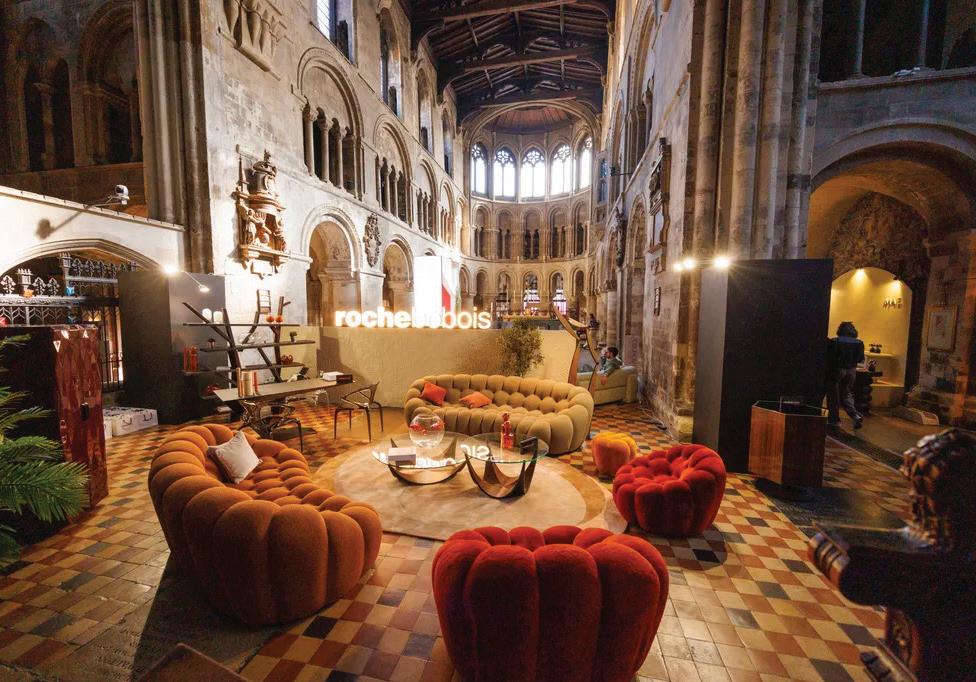
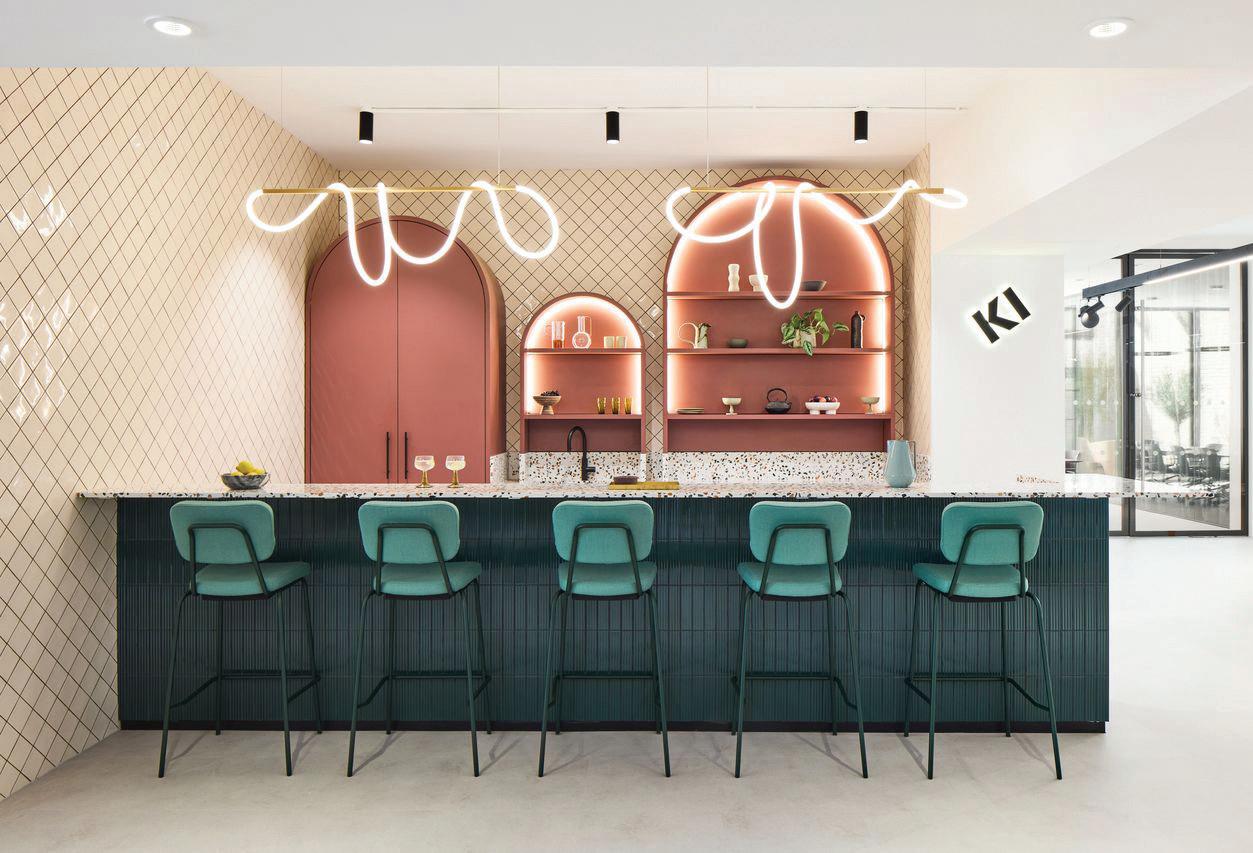
immersive and inspiring installations designed by designers and architects to challenge the perceptions of design. Positioned throughout Clerkenwell, the installations will punctuate the festival landscape and encourage exploration while creating moments of pause and reflection. From bold structural statements to more subtle, thought-provoking pieces, Design Interventions pushes design beyond purely the visual and into something more experiential, discursive and ultimately, memorable.
Additionally, 2026 boasts several new venues:
Haberdashers’ Hall - known as The Luxury Edit during the show, it will be hosting the CDW Awards ceremony on 19 May in partnership with Design Milk. This venue will also host the talk series Design Meets featuring industry experts and leading brands. Outside The Luxury Edit will be a ‘living’ outdoor installation called The Pulse of Becoming, it explores the cyclical nature of death, rebirth and life. Chia seeds embedded in two opposing crescent shells will sprout during the festival, turning bare surfaces green.
The Museum of the Order of St Johnbuilt in 1504, this venue is one of the great hidden treasures of London. The deeply historical venue will be home to Interiors from Spain, a platform for contemporary Spanish design produced by design journal Disegno.
Material Source Studio - a showcase for products and materials for architects, interior designers and property professionals.
Workplace on the Square - a platform for design brands catering to o ices, located outside The Zetter Hotel.
Alongside the new additions to the events venues, the CDW Awards will
return this year with new categories. Adding to the Awards’ debut categories of 2025, including furniture, lighting, materials, and interior solutions, the awards will now include a focus on the individuals, teams and ideas challenging conventions and celebrating the creatives driving design forward today.
HIGHLIGHTS
Some exciting highlights from across the three days not to be missed:
Tuesday 19th:
Women in O ice Design - ‘Designing for Neuroinclusion and Neuroaesthetics’.
Panel Discussion - Traditional Fit Outs Continue to Meet Today’s Needs, or Do They?
Circularity is the New Recycling -
Malgorzata Hermanowicz Sustainability & ESG Mute.
Neuroinclusive Design by Neurodivergent Designers.
Wednesday 20th:
Scarlet Opus - ‘How to be a Trend Forecaster’ and ‘Interior Design Trends for 2027’.
Europe’s First Adaptable O iceMalgorzata Hermanowicz Sustainability & ESG Mute.
Clerkenwell. Past, Present & Future. Rethinking Materials through Food, Design and Process.
Thursday 21st:
Informare - ‘What Happened to Cool Britannia’.
Beyond the Brief: Delivering Bespoke Hospitality Design.
How Can Sound Shape Workplace and Commercial Design.
Nurturing Spaces to Thrive with Norwegian Design.
CONCLUSION
This year’s Clerkenwell Design Week will again o er a showcase of leading designers and design brands aimed at the commercial o ice sector from the UK and abroad. CDW 2026 aims to be not just a celebration of aesthetics, but a working snapshot of where the o ice interiors industry is heading. This year’s programme leans into innovation, sustainability and collaboration, with fresh names sitting comfortably alongside established brands to create a well-rounded, future-facing line-up.
www.clerkenwelldesignweek.com
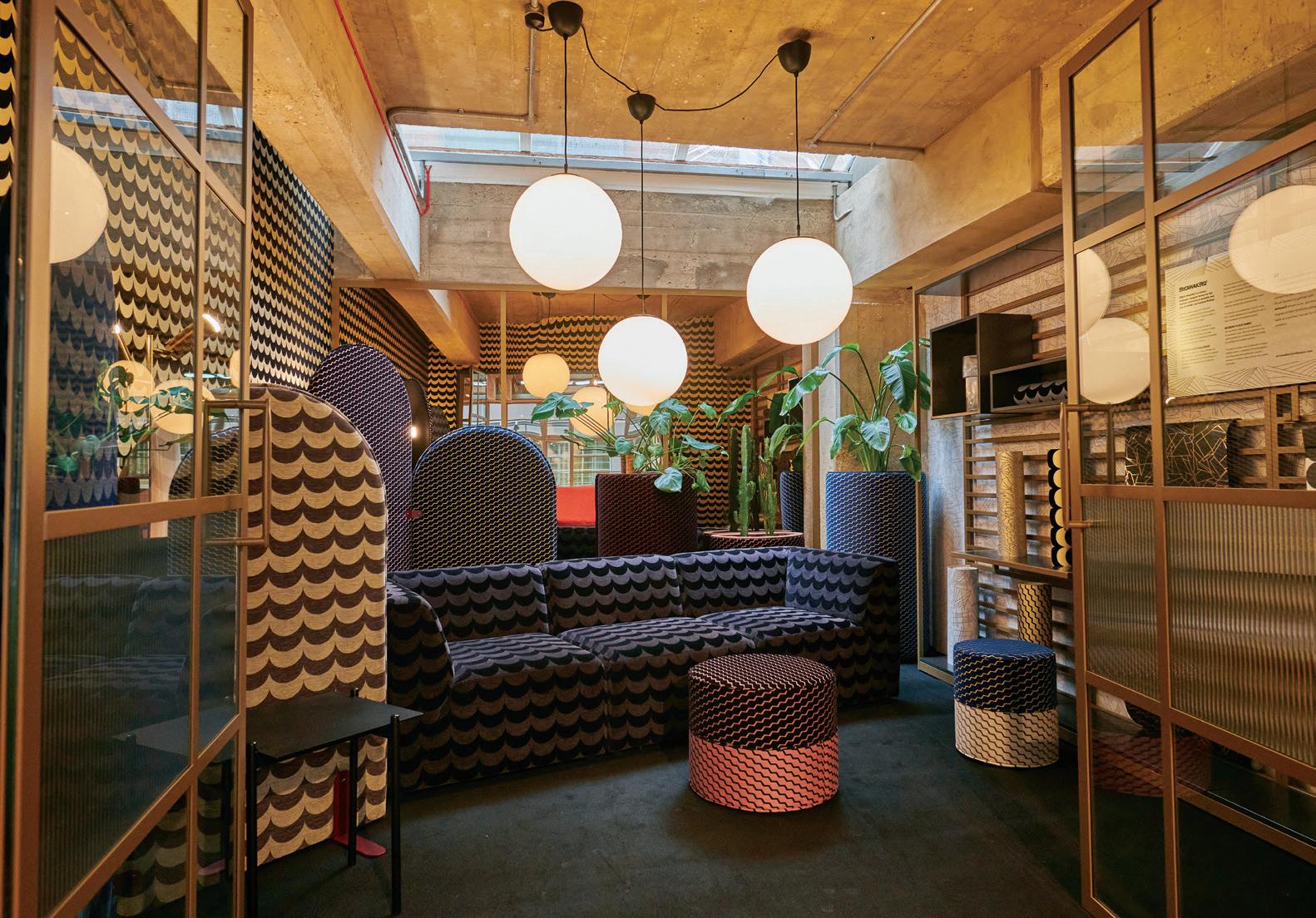

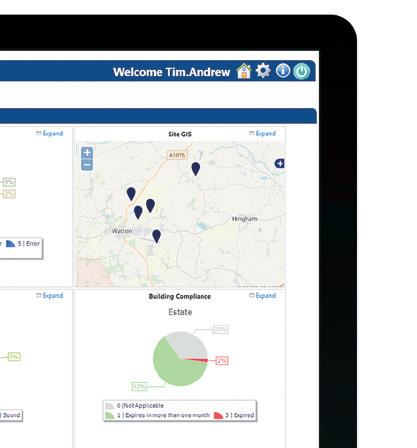



READYFORACTION

Anthony Coo, Head of Product Marketing, UK & Ireland Quadient says organisations need to move beyond awareness and into action to prepare for Martyn’s Law
Martyn’s Law, named a er Martyn Hett, one of the 22 people killed in the Manchester Arena attack in 2017 will require public venues across England, Wales, Scotland, and Northern Ireland to conduct security assessments and implement necessary measures to mitigate potential risks to the public.
With April 2027 currently planned as the point of implementation, organisations should already be moving beyond awareness and into action. That means treating compliance as a live operational discipline now, not a future deadline. Although the legislation is now law, the finer details of compliance are still being worked through. That makes this
implementation period particularly important, giving organisations time to understand what will be required and prepare in a practical, proportionate way.
COMPLIANCE POLICY TO PRACTICE
Organisations must ensure they’re using this time to become genuinely prepared, by testing the practical realities of each site: where vulnerabilities lie, which areas are most exposed to unauthorised access, how people move through the venue, where pressure builds at high-tra ic areas, and who has responsibility for key decisions when something suspicious is identified. Good security is not measured by whether a policy exists on paper. It’s
measured by whether a venue can respond in practice to suspicious activity or packages, prohibited items, and whether its procedures would hold up under pressure. If one part of that response is weak, the whole system becomes more vulnerable.
For FM teams, that means looking at buildings as operating environments, not just assets. Entrances, exits, foyers, loading bays, service corridors and publicfacing reception areas all matter, because these are the points where security either works in practice or starts to break down.
SCREENING DESIGN
A lot of the discussion around Martyn’s
Law focuses on screening. Measures such as bag checks, metal detectors and x-ray scanners can play an important role in helping venues detect weapons or other dangerous items before they enter the building.
But screening only works when it’s part of a well-designed operating model. It needs to be proportionate, properly sta ed and designed around how the venue operates. Too o en, organisations think about screening as equipment first and process second, when the reverse should be true. Before investing in tools, teams need to be clear about what they’re trying to detect, who needs to be screened, where that screening should take place and how the process will hold up under pressure. That includes preparing for practical challenges and unexpected scenarios, such as bottlenecks, bad weather, a suspicious package or even a suspect vehicle on site. If those questions have not been thought through in advance, screening can quickly become a weakness rather than a safeguard. That’s why entry management needs to be treated as both a facilities issue and a security issue. If visitors are not told in advance what to expect, or sta are not trained to manage the process confidently, even sensible measures can become operational problems.
SUSPICIOUS PACKAGES
Suspicious packages and unattended items still deserve attention in venue security. That’s why preparedness cannot focus only on the people entering a venue. It also must account for what may already be on site, or what could be le there unnoticed. In practice, that means carrying out regular site searches in vulnerable areas, especially high-footfall zones such as foyers, car parks and loading areas. It also relies on teams understanding the di erence between routine cleaning and a proper security search. Clear, consistent procedures matter, and every member of sta should understand the same golden rule: if a suspicious item is found, it should not be touched or moved.
Sta need the confidence to report anything that feels out of place. A strong security culture depends on vigilance being normalised across the organisation. People should feel able to flag an unusual package, suspicious behaviour or an unsecured area without worrying that they are overreacting. In these situations, a false alarm is far easier to manage than a missed warning sign.
REHEARSE,
REHEARSE, REHEARSE
Compliance runs through every route in and out of the building. Access and egress planning is one of the strongest tests of

whether a venue is genuinely prepared. Teams should be confident that they know every public and private entry point, whether doors can be secured quickly if the situation changes and whether parts of the building can be isolated without causing unnecessary confusion elsewhere.

Lockdown should not be treated as an abstract concept. Its purpose is to create time and distance between a threat and the people inside the building. But that only works if the process has been thought through and, crucially, practised.
The same principle applies to visibility during an incident. Clear camera coverage, strong communications and realistic response planning all make a di erence to how safely people can be moved, and which exits remain viable.
SPECIFIC SOLUTIONS





The more regularly teams rehearse lockdown procedures, the more likely they are to react quickly and confidently in a real incident.





Regular drills are also vital. Everyone involved, from security and facilities teams to front-of-house sta and contractors, needs to understand their role. Communications need to be clear and consistent, and where appropriate, buildings should be thought about in sectors rather than as one single space. That makes partial lockdown or phased evacuation far more realistic if an incident develops quickly.




A shopping centre, education campus, hospital or arena all operate di erently, which is exactly why preparedness needs to be proportionate rather than generic.
Regular drills are also vital. Everyone involved, from security and facilities teams to front-of-house sta and contractors, needs to understand their role. Communications need to be clear and consistent, and where appropriate, buildings should be thought about in sectors rather than as one single space.”



proportionate rather than generic. be a combination.


For some sites, preparing for the legislation may mean stronger screening or access control. For others, the immediate priority may be sta training, site-search routines, better incident communications or more realistic lockdown planning. In most cases, it will be a combination.







What matters most is whether the measures chosen would work under pressure. Can sta use them confidently during an incident? Are responsibilities clear? Have scenarios been tested thoroughly? Do procedures reflect how the building operates on a busy day, not just how it looks in a policy document?
clear? Have scenarios been tested thoroughly?
One year on from Royal Assent, those responsible for venues should already be pressure-testing those questions. When preparedness is built into the day-to-day management of a building, compliance becomes more than a legal obligation. It becomes part of how safer, more resilient spaces are run.
PHOTO FINISH
Adam
Bennett,
a
photo ID card specialist at Digital ID,
warns that photo ID can no longer be used as a physical security measure but one which incorporates digital security

Security is no longer just about locked doors and reception checks. Workplace security is moving faster than ever, and many businesses are struggling to keep up with it. Digital technology has changed how we think about access to buildings, and any organisation still relying solely on a non-secure physical photo ID risks falling behind.
It is critical that anyone who is responsible for IT, cybersecurity, networks, databases and API’s (Application Programming Interfaces) incorporates photo ID into their wider security strategy.
Many businesses still view photo ID as nothing more than a PVC badge on a lanyard or a visual tool to show who belongs in the building and who doesn’t. While a few years ago this would’ve been seen as the standard for good security, we are seeing these systems very quickly become outdated and easy to clone. Nowadays, identity cards are still the foundation of physical security, but they are also deeply intertwined with your company’s digital security strategy.
SECURITY EVOLUTION
Workplace security has evolved rapidly over


the past decade, with the number of people in cybersecurity roles tripling in the last five years. This shi has been driven mostly by the fact that cybercrime very quickly became much more organised. At the same time, remote working went from rare to the norm, so security was no longer location-dependent, it now had to follow the employee to wherever they work.
Most businesses have invested heavily in cybersecurity tools, firewalls, endpoint protection and cloud security, yet many are still operating photo ID systems that sit entirely outside their wider IT strategy. That creates a dangerous disconnect. If your ID cards are not integrated into your access control systems, your HR database, your network permissions and your wider identity management processes, then you are ine ectively managing risk in silos and therefore creating vulnerabilities.
Photo ID is no longer just about being able to visually recognise sta . It is about controlling and auditing access to buildings, to secure areas and increasingly to systems. Modern ID solutions can integrate directly with network credentials, single sign-on environments, and API-driven databases. That means when an employee joins, change’s role or leaves the company, their access rights can and should update automatically across the organisation. If that process is manual, fragmented or delayed, you create gaps that expose the business to risk.
BRIDGING THE GAP
One of the biggest issues is businesses treating physical security and cybersecurity as two separate conversations. They are both rooted in identity. If someone can walk into your building unchallenged because an outdated badge system is not properly managed, that becomes a cyber risk as well as a physical one. The same applies if former employees retain active credentials because systems are not integrated. Identity is the bridge between physical and digital security.
Forward-thinking organisations are now incorporating photo ID into their wider IT and
cybersecurity strategies. They are ensuring badge issuance is tied to secure data management policies. They are integrating access control with HR systems. They are using APIs to connect ID management with network authentication tools. Critically, they are ensuring that data protection and compliance standards are applied to ID systems just as rigorously as they are to any other database containing personal information.
IMAGE STORAGE
In practical terms, this means that storing sta photos digitally, whether in badge systems or access control platforms, must follow the same rules as HR records under regulations like UK GDPR. Images are classed as personal data, so they must be stored securely, typically using encryption, with access limited to authorised sta only. There also needs to be a clear, documented reason for collecting and keeping them.
Modern systems operate like secure digital filing cabinets, where photos are uploaded, protected, and only accessed when needed for identification or entry. Facilities managers should also ensure retention policies are in place, so images are deleted when no longer required, such as when an employee leaves.
CONCLUSION
For organisations, the message is simple. If photo ID still sits purely under facilities or is treated as an administrative a erthought, it may be time to reassess. Security threats are more sophisticated, workplaces are more flexible and regulatory expectations are higher than ever. An outdated approach to identity management does not just look old-fashioned, it can signal wider vulnerabilities. Ultimately, modern workplace security starts with knowing exactly who has access to what, when and why. Photo ID should be part of that strategic conversation, not separate from it. Businesses that recognise this convergence between physical and cyber security will be far better positioned to protect their people, their data and their reputation.

High-reach internal cleaning made easy
Transform your existing vacuum into a powerful high-level cleaning solution. Our lightweight carbon fibre telescopic poles reach up to 28ft, eliminating ladder risk by safely accessing ceilings, ducting and air vents from the ground, while collapsing to just 5.7ft for easy storage.
For total top-to-bottom flexibility, pair with the skyVac Bacuum, a lightweight 5.4kg backpack vacuum available in mains or battery-powered options with an ergonomic harness for all-day comfort.
www.skyvac.com // 01604 968700
Unit 33, Salthouse Road, Brackmills, Northampton. NN4 7EX
Request a demo today

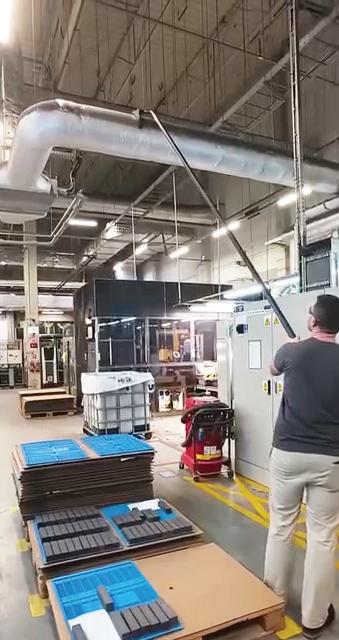






















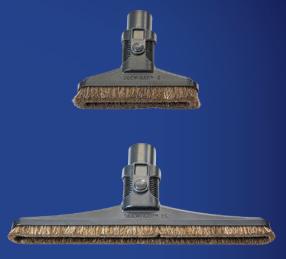

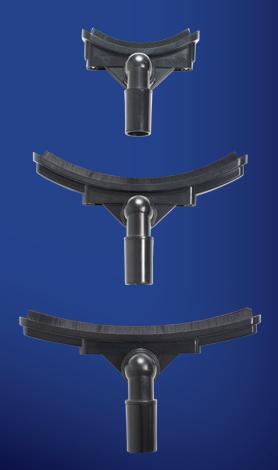


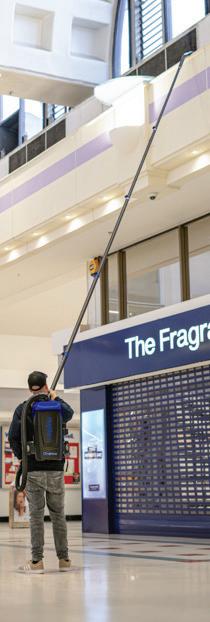

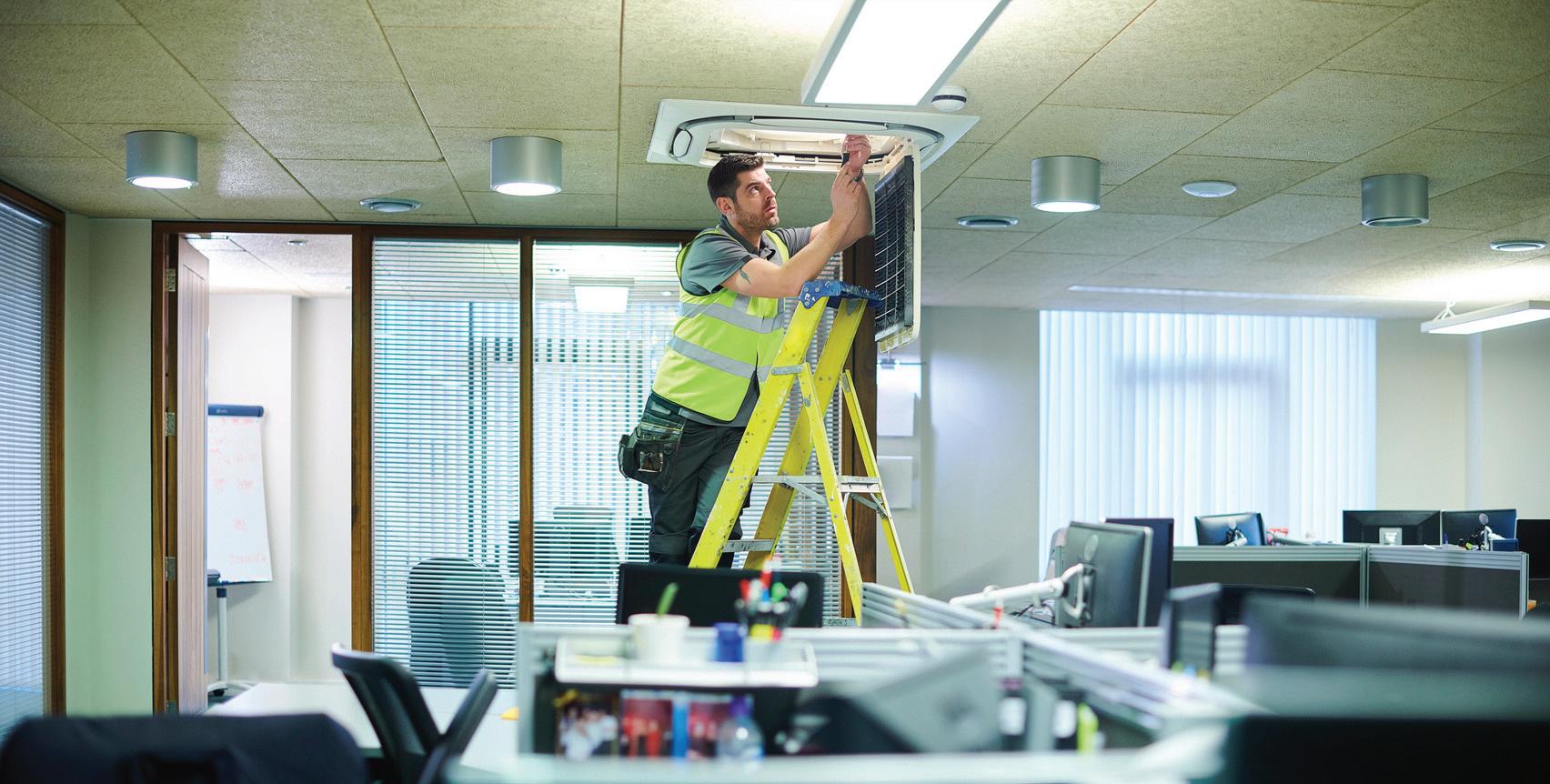







Sidewinder End Tool
Curved Ducting Brush
Telescopic
RETAIL VISION

Nick Atkinson, Managing Director and Kris Brown, Senior Operations Manager, Atlas Retail
describe the specialist expertise required in providing FM services to the retail sector
Atlas FM recently announced the formation of a new specialist FM Retail business delivering cleaning, security, concierge services (and other associated FM services) to shopping centres, retail parks, leisure parks and mixed-use destinations. This marked the latest move in a period of massive growth for Atlas, which over the past decade has grown into a major UK facilities management company with an estimated £380m+ turnover.
In 2017 the company e ectively doubled its size with the acquisition of security and cleaning provider Emprise and in 2022 expanded its capabilities into technical
facilities management and hard services with the purchase of Salisbury Group and the establishment of a new Workplace Services division.
But it’s the transition to 100 per cent employee ownership through the creation of an Employee Ownership Trust at the end of last year which underlines the groups ethos says Atkinson, Managing Director of Atlas Retail. Nick joined Atlas following its acquisition of retail specialist Aston Services Group (ASG) in 2024, where he’d been MD since 2019.
“Atlas approaches every acquisition with the question; how does this help our clients? Is this going to benefit our
colleagues and our clients and move the business forward in a way that not only makes commercial sense, but also genuinely improves things.
“It really comes down to making commercial sense by finding businesses that align with the same values and the same purposes. Because retail is such a unique environment and requires such a tailored service and expertise, ASG was a perfect opportunity.”
Commercially it also makes perfect sense. Commercial operators ranging from tech o ices to retail parks accounted for approximately 41.95 per cent of the total UK FM market share in 2025 [Mordor


Intelligence]. But retail is also one of the most pressurised sectors for FM. Retailers and their managing agents demand their FM providers enhance both their front-ofhouse customer experience and backof-house logistical e iciency to increase footfall and profitability.
Atkinson is confident the newly branded Atlas Retail will meet the challenges: “As a specialist service provider of security and cleaning, and FM services to the retail sector, a lot of the ASG clients tend to extend their contract with us because of the high degree of service that we deliver. And now as part of Atlas retail, we’re looking to extend that success still further under the
new branding and drive that specialism across the whole of the country.”
RETAIL EXPANSION
Atlas Retail has got ambitious plans for further growth by extending its portfolio of shopping centre sites across the country from ASG’s base in the North of England and the Midlands, by leveraging its relationships with existing managing agent clients including Savills, Ashdown Phillips and Monroe K. This wider geographical reach will also enable the company to expand its reach further by connecting with other leading
managing agents, with whom the company doesn’t presently deal.
According to Kris Brown, Senior Operations Manager, Atlas Retail, Atlas delivers a single, integrated operating model, with each individual location supported by a dedicated management team o ering a coordinated approach that ensures a high-quality environment for visitors, tenants and on-site teams.
This approach is spelt out from the start of the contract tender process beginning with a meeting with the on-site management team and representatives from the managing agents to gather a full understanding of their needs.
It really comes down to making commercial sense by finding businesses that align with the same values and the same purposes. Because retail is such a unique environment and requires such a tailored service and expertise, ASG was a perfect opportunity.”
“We can’t deliver a service without understanding what is needed, and each contract is di erent in terms of the geographical location and requirements,” says Brown.
“As part of a new contract, our tender document e ectively becomes our Bible of what it is that we need to deliver and the specific requirements for us to deliver the best quality service needed.”
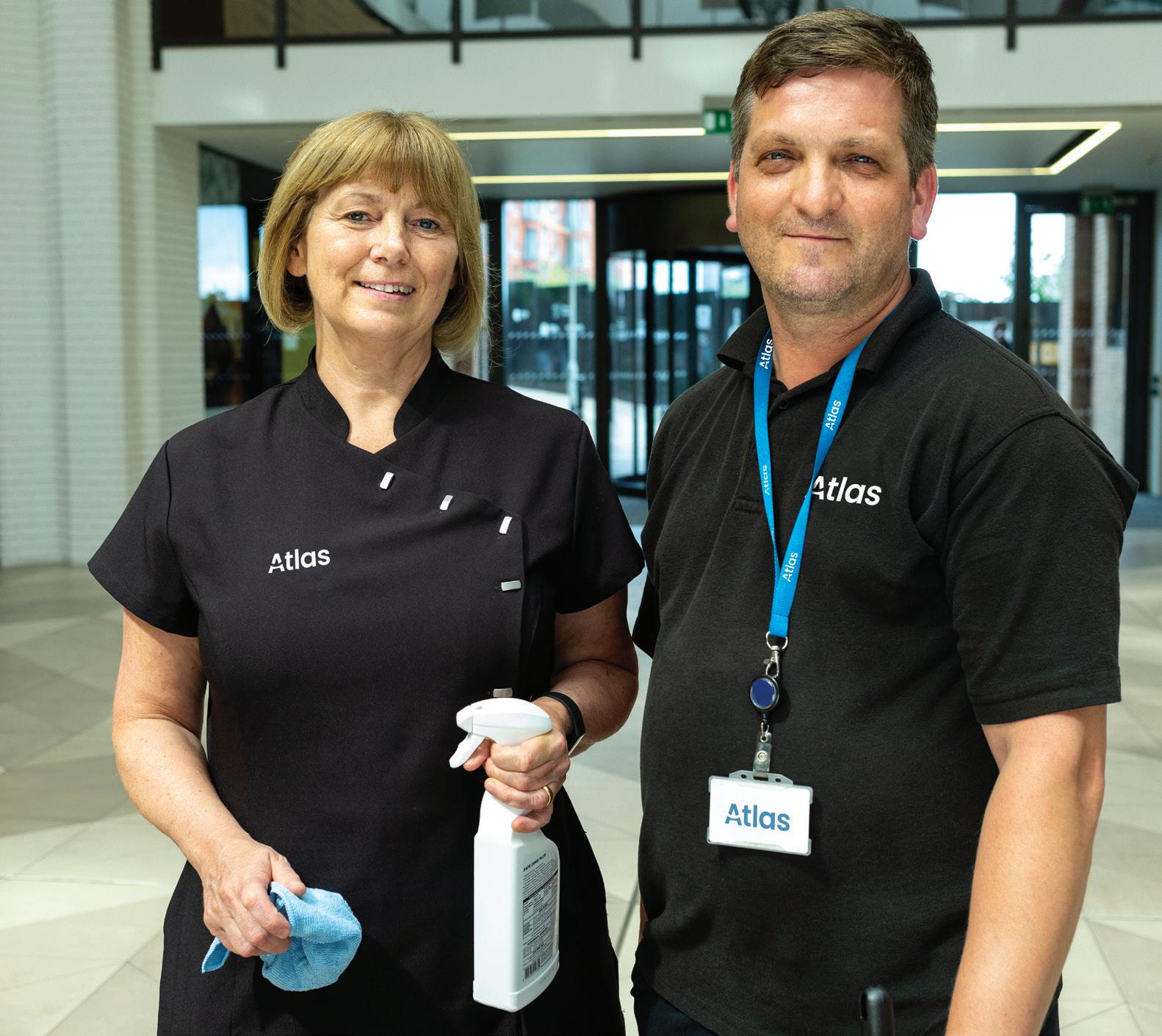
PEOPLE CENTRIC
For many of the new contracts, the existing teams are Tupe transferred and prior to mobilisation Atlas will check their contracted hours and carry out a skills analysis. As part of the Tupe meetings each member of the team will be asked about their knowledge of the industry, modes of service delivery and their understanding of the client’s requirements. This helps determine whether they know what they’re doing or require more mentorship to ensure a consistent level of service.
“But crucially,” says Brown, “we’ll always look to mentor people rather than to replace them as we want to take them on the journey with us.”
Atkinson says the emphasis is always on the customer experience, so for instance a shopper asking for directions at a mall won’t just be given directions but shown there by an Atlas team member as all the sta , whether from security, cleaning, housekeeping or concierge are trained to communicate with the general public.
Security personnel are not just there as a deterrent and to ensure people feel safe. They’re there to help and support visitors in a variety of ways, and if a member of
Kris Brown, Senior Operations Manager Nick Atkinson, Managing Director

security sta sees some rubbish on the floor of a shopping centre, they’ll pick it up, not leave it to the cleaner.

on top of that, we go
Says Atkinson: “When people come to a shopping centre they need to feel secure and see a nice clean environment. But on top of that, we go above and beyond in terms of ensuring that our sta are approachable, helpful, and are willing to enhance the entire visitor experience.”
to make them feel supported and cared for, which in turn, allows them to be able to deliver a fantastic service.
budget. We don’t have a ‘one size fits all’ product that we can pick o a shelf and market at a specific price.
“We need to remain fluid within our operations to understand the trends within the retail sector and the demands and the requirements of our clients.”
Measuring the performance of so services in retail facilities management involves tracking Key Performance Indicators (KPIs) including the occupancy levels of retail tenants and the throughput of people, and Atkinson reports that the retail business exceeds virtually every KPI report that they submit because they go above and beyond what is expected.
“We’re so public facing, there’s nowhere to hide in terms of the cleanliness and the security of the place so we do directly have an impact, in terms of ensuring that people are coming to a shopping centre where they feel secure, the toilets are clean and well managed and the overall experience not only encourages them to visit the centre, but stay there for longer periods.”
Many of the managing agents deploy mystery shoppers who report back on the level of cleanliness and the feeling of security, with which an FM team can be held to account on any complaints.
CONCLUSION





Adds Brown: “It’s our people that make our company a success and without our teams on the ground delivering a service to our clients and visitors, we wouldn’t have a business. We look at our structure as an inverse pyramid, with day-to-day teams at the top and the management team sitting underneath.”






He explains that the cleaning, security, back-of-house and front-of-house teams are all equally important in the service delivery chain and Atlas will support them by providing the right tools, from the latest cleaning equipment to the right training, fair pay and flexible holidays, all designed


“It’s our people that make our company a success and without our teams on the ground delivering a service to our clients and visitors, we wouldn’t have a business. We look at our structure as an inverse pyramid, with day-to-day teams at the top and the management team sitting underneath.”









Good communication is also fundamental to delivering a safe, attractive and e icient environment. All the sites employ a variety of ways to communicate, whether by two-way radio, a chat group or face-toface communication between security managers, cleaning managers and so services managers; whether with the centre manager or other members of sta .
Good communication is also fundamental to delivering a by two-way radio, a managers services managers; whether centre manager or other
Atlas Retail is keen to expand geographically, particularly into London, the Home Counties, and the South East, where they’ve had light representation. Now being part of the wider group, these ambitions are backed by a considerable support structure, particularly in the Home Counties where Atkinson reports they’re keen to leverage the Atlas group’s bandwidth and scale to help drive their growth.




MEASURING SUCCESS

Unlike commercial o ices, healthcare or education, retail-based FM has a direct remit to drive customer footfall and enhance brand reputation. The managing agent who runs the site on behalf of the landlord, will use KPIs and sales figures to produce reports on how the retail centre is performing.
Explains Brown: “Retailers and landlord’s budgets are very tight, so we will work with managing agents to help deliver a high-quality service within that
He says: “Our expertise is shopping centres and retail parks, and that is why Atlas is supporting us in continuing to develop business in those sectors where our specialist approach sits. We don’t measure success with KPIs because, from our perspective, if you train, and put the investment into the people, the KPIs will manage themselves and if you’re not looking a er the people that deliver the service, you can have all the KPIs in the world that you want, but you won’t deliver the performance.
“The key to success is the level of specialism that we o er. We’re at the heart of a customer facing environment, so whether it’s a city centre, an out-oftown shopping mall or retail park, or a large flagship destination we’re there to deliver that clean, secure and welcoming experience.”











CLEAN AIR ACTS

Je Charlton, Environmental Hygienist and Principal Consultant at Building Forensics explains why a specialist approach is required to secure safe ventilation in buildings
Indoor air quality has become one of the most discussed issues in modern facilities management. Yet many buildings that proudly display environmental certifications still fail to deliver genuinely healthy environments for their occupants.
The clearest indicators of poor indoor air quality and the associated return on any investment in improving air quality are human behaviour.
Facilities managers and human resources departments increasingly observe patterns of absenteeism associated with building occupancy. The phenomenon sometimes described as “Friday absenteeism” or late-week fatigue has been reported in many workplaces. Employees may experience headaches, fatigue, respiratory irritation or cognitive impairment
that improves after time away from the building.
Environmental investigations increasingly show that ventilation failures, humidity imbalance, microbial contamination or chemical exposure can contribute significantly to these symptoms.
When HR data is reviewed alongside building conditions, patterns often emerge that point directly to environmental performance issues. Occupants often become an early warning system, highlighting building problems long before technical inspections identify their source.
MEASURING COMPLIANCE
Environmental certification schemes such as BREEAM and LEED have improved awareness of sustainability, ventilation and energy efficiency


in building design.
However, their indoor air quality requirements typically focus on a relatively small number of measurable pollutants, including carbon monoxide, formaldehyde, nitrogen dioxide and particulate matter. These indicators are useful, but they represent only a small portion of the environmental factors affecting occupant health.
Building-related illness rarely results from a single contaminant. In practice, it is usually linked to the interaction of several issues, including ventilation performance, moisture intrusion, microbial growth, chemical emissions from materials and poor hygiene within mechanical systems.
This creates a significant gap between certification compliance and the real performance of operational buildings.
HIDDEN COMPLEXITY OF INDOOR ENVIRONMENTS
Modern buildings contain thousands of chemical and biological compounds originating from construction materials, furnishings, cleaning products, electronics and outdoor pollution sources such as traffic emissions.
Many construction materials rely heavily on adhesives, coatings, plastics and synthetic fabrics. These materials can release volatile organic compounds (VOCs) for months or even years after installation.
Moisture intrusion introduces another layer of complexity. Damp materials can support microbial growth that produces spores, fragments and microbial VOCs rarely considered in routine air-quality testing.
Ventilation systems are designed to control these risks, yet they frequently become part of the problem. Poorly maintained air handling units, contaminated ductwork and neglected plenum spaces can accumulate dust, microorganisms and chemical residues. Once disturbed or recirculated, these contaminants may spread throughout the building.
In large commercial properties, HVAC systems effectively become the lungs of the building. If they are contaminated or poorly maintained, they may distribute pollutants faster than they remove them.
In many buildings we inspect, ductwork that appears visually clean from access panels can still contain significant contamination deeper within the system or inside plenum spaces. These areas are rarely inspected during routine maintenance but can play a major role in redistributing contaminants.
CLOSING THE MAINTENANCE GAPS
Routine maintenance of ventilation systems is essential, but the standards governing inspection and cleaning often fail to address the scale of contamination that develops over time.
Ventilation duct cleaning is frequently carried out to satisfy visual cleanliness standards rather than to reduce microbial or chemical contamination. Incredibly, sanitation may still be judged by the thickness of visible deposits rather than meaningful environmental measurements.
Air-handling units are sometimes disinfected using chemical agents without consideration of the residues or biological fragments left behind when microorganisms are killed. The result is that buildings may technically comply with maintenance schedules while still exposing occupants to complex mixtures of biological and chemical contaminants.
These problems rarely appear during routine inspections because contaminants
usually travel through airflow pathways rather than remaining visible on surfaces.
The most significant drivers of indoor contamination are airflow patterns, pressure differentials and mechanical circulation within the building.
EMERGING RISKS
Indoor air quality is no longer limited to comfort and productivity as FMs must also consider emerging environmental risks. Buildings are not passive shelters. They can trap contaminants, redistribute them through ventilation systems and expose occupants repeatedly over time.


In events involving toxic smoke, biological contamination or industrial accidents, mechanical ventilation systems may become the primary pathway through which hazards spread.

the primary pathway through which hazards

Emerging technologies are also introducing new challenges. Lithium-ion battery fires associated with electric vehicles and energy storage systems can release toxic gases, heavy metal particles, and dense smoke that can spread rapidly through buildings.
Once thermal runaway begins, these fires are extremely difficult to control and may produce contamination long after the initial event. These developments highlight the growing importance of airflow management, ventilation hygiene and contingency planning within facilities management.
INDUSTRY STANDARD ISSUES
A further issue is how many building and maintenance standards are developed. Committees responsible for writing standards often include contractors, equipment manufacturers and service providers.
This can mean that standards reflect operational practice or equipment capability, rather than the long-term health interests of building occupants.
Compliance, therefore, should never be assumed to guarantee a healthy building environment - independent assessment and critical evaluation (especially around the human behaviour being seen) remain essential.
PREVENTATIVE BUILDING HEALTH
The most effective approach to indoor air quality is preventative rather than reactive. Instead of responding only after complaints arise, facilities managers can identify environmental risks early and address them before they affect occupants.
Important steps include:
Independent environmental inspections beyond routine maintenance.
Monitoring airflow, humidity and ventilation performance.



Improving hygiene standards within ventilation systems.
Identifying chemical emission sources within buildings.
Integrating occupant feedback and HR data into building management.
Preparing for emerging environmental hazards.
The objective is not to create alarm but to recognise that buildings are dynamic environments in which air movement, materials, and human activity interact continuously.
When these factors are managed properly, organisations often see tangible business benefits including improved productivity, reduced absenteeism, lower maintenance costs and healthier workplaces.
Five questions every FM should ask about Air Quality…
When was the ventilation system last inspected internally, rather than just visually from access panels?
Are ductwork and air-handling units cleaned to reduce contamination, or simply to satisfy visual cleanliness standards?
Do we monitor airflow balance, humidity and pressure relationships, or only temperature?
Have occupant complaints or HR absenteeism patterns been reviewed alongside environmental conditions? If a contamination event occurred tomorrow — smoke, biological contamination or chemical release — do you understand how your ventilation system would distribute it?
SIMPLER RECYCLING REVIEW

Marking a year
since Simpler Recycling came into e ect, Martyn Hodgkinson, Senior Manager, Brand Commercialisation EMEA at Rubbermaid Commercial Products (RCP) explains how to review progress to unlock capability
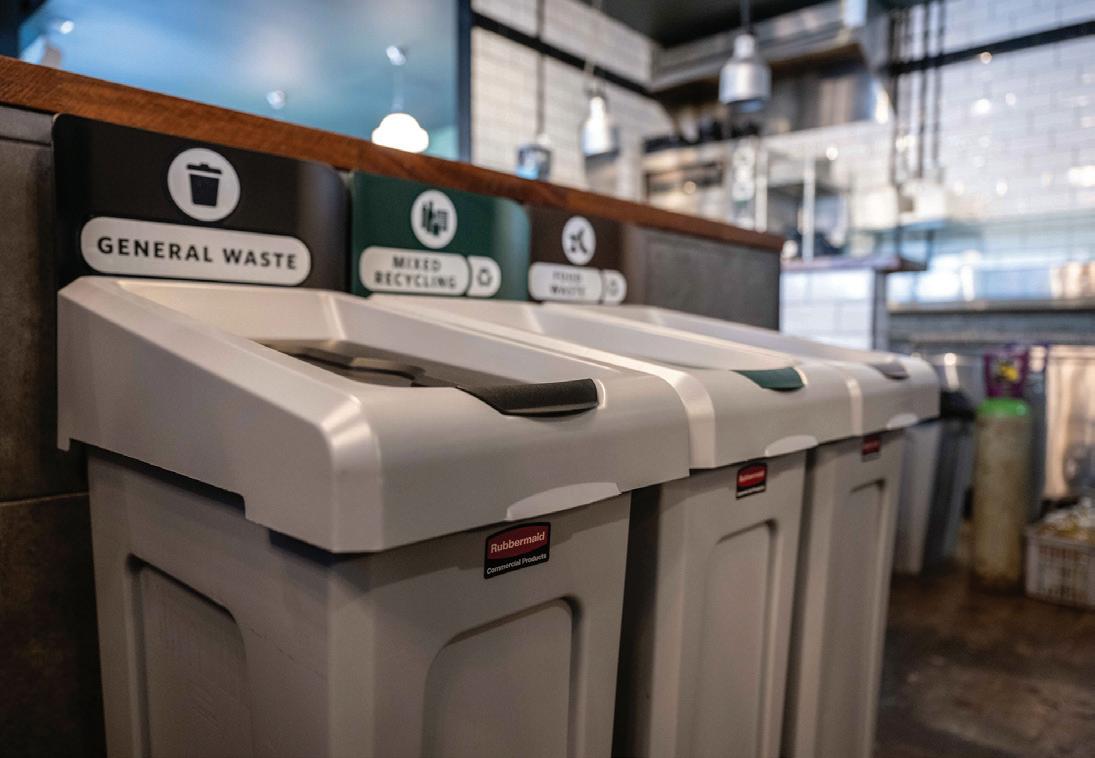
Simpler
Recycling, which came into e ect last year, is designed to standardise waste collection and management across England, requiring all businesses with 10 or more full-time employees to separate their waste streams on site, prior to collection from a waste contractor.
A er taking action to comply with the new regulations, Simpler Recycling has evolved from a pressing concern to an operational reality, but that’s not the end of the story.
You’ve invested in the bins, delivered training to your sta and updated your policies. The box has been ticked, and your facility is compliant. But while meeting the requirements laid out by Simpler Recycling is one thing, building a system that works, intelligently solving your waste management issues, is another entirely.
The system you built to comply with the changing regulations could inadvertently be the cause of hidden costs, lost productivity and growing ine iciency.
It can be hard to spot, but this gap can impact your facility in several ways: Contamination - Low recycling rates and cross-contamination are a surefire sign that something is wrong with your system. One piece of plastic wrap in the cardboard stream, food in your mixed recycling and your carefully separated waste ends up contaminated and can
lead to increased costs from your waste management contractor.
Lost productivity - A key concern is the impact of waste management systems on productivity. The way that your system was designed, right down to the placement of your bins, can have a massive impact, as centrally or poorly located bins can force sta to make multiple trips to properly dispose of waste. Even if those trips only take a few minutes, those small ine iciencies can quickly add up, especially if they are replicated across an entire facility.
Ine iciency - Poorly designed systems create additional work as people are forced to spend time fixing errors, managing overflowing bins, and checking waste that should have been separated at the point of collection.
GOING BEYOND COMPLIANCE
Compliance shouldn’t be viewed as a finish line but as a foundation on which you can build and refine your waste management systems. No matter how much thought, planning and preparation went into its creation, the waste management you put in place to meet the requirements of Simpler Recycling may be already outdated. If you want to elevate your waste management system, here are some simple steps you can take:
Find out where things are failing - Your first step should be to understand what’s working and where things are breaking down. A ‘waste walk’ is a systematic tour of your facility to assess your current set-up, where waste’s being generated and how much, and where contamination may happen. This takes out the guesswork, helping you to make informed decisions about improvements. Do this once a quarter and you’ll pick up on good and bad recycling trends and behaviours.
Clear labelling - Iconography, colourcoding and custom signage are key to e ective labelling, a vital tool to help people separate waste correctly at the point of collection and significantly reduce disruption and contamination, so consult employees to find out if your labels are e ective.
The right bins for the job - Compact solutions with narrow footprints and modular designs mean recycling can work within your space, not against it. Choosing the right bin for the environment will ensure that your people can e ectively separate waste at the point of collection, wherever they are in your facility.
Industrial-grade solutions - Cheap solutions such as budget bins may not be tough enough to stand up to the rigours of day-to-day work. This could lead to FOD (Foreign Object Debris)
hazards and contamination crises. No one wants to have to replace items a er only a year in use. But replacing substandard bins with industrial-grade solutions now, will be well worth it in the long run.
Re-engage your people - To be e ective, education needs to be continuous. Is the training you delivered when Simpler Recycling was first rolled out already been forgotten? Without ongoing support, fatigue sets in and even the best systems can fail. Re-engage your people, help them to understand the real, visible benefits of recycling so that it moves beyond a tick-box exercise to become a shared cultural commitment.
THE TIME TO ACT IS NOW
A year on from its implementation, the direction of travel that started with Simpler Recycling is clear. With more legislative changes slated for 2026 and beyond, waste management is going to be an ongoing concern for some time to come.
Compliance is important, but it’s only a starting point. Facilities that treat recycling as an opportunity rather than an obligation can unlock genuine benefits from lower costs to increased productivity. But the time to act is now, and facilities that take steps to review and refine their recycling will be the ones best positioned to adapt to the changing legislative landscape.

NORTHWOOD RE-LAUNCHES LEONARDO WASHROOM BRAND
Northwood Hygiene Products Ltd – the leading manufacturer and supplier of away-from-home (AfH) professional paper hygiene and wiping products – has re-launched its Leonardo brand, which now includes a brand new range of commodity washroom dispensers. The brand was o icially unveiled at Interclean Amsterdam 2026.
Providing end users with a trusted and a ordable washroom brand, the high-capacity Leonardo range of dispensers and paper products delivers hygiene, whilst achieving competitive cost-in-use.
The range, which is well-suited to a wide variety of washrooms across the commercial, services, education and healthcare sectors, has been updated and introduces transparent white dispensers for the first time to allow for easy monitoring of soap and paper supplies.
Paul Mulready, marketing manager at Northwood, says: “Leonardo is back by popular demand, but this time, it’s even better! When re-developing the range, we looked at what matters most to customers – hygiene, e iciency, a ordability and sustainability – and Leonardo delivers on all fronts.
“The dispensers are sleek and well-engineered and are designed to work in perfect harmony with our trusted UK manufactured paper products - and they are all conveniently available from an established supplier that’s committed to keeping the miles that products have to travel to a minimum.”
Every dispenser in the Leonardo range is made from durable Acrylonitrile Butadiene Styrene (ABS) plastic for scratch and impact resistance and are lockable to prevent the and vandalism.
The range of toilet roll dispensers includes a jumbo roll and mini jumbo dispenser, a bulk pack dispenser, a twin toilet dispenser and a new centrepull dispenser.
The range of hand roll dispensers includes a roll towel dispenser, a hand towel dispenser, a

centrefeed dispenser and a new portable




centrefeed dispenser, which can be conveniently moved and stored where needed.
















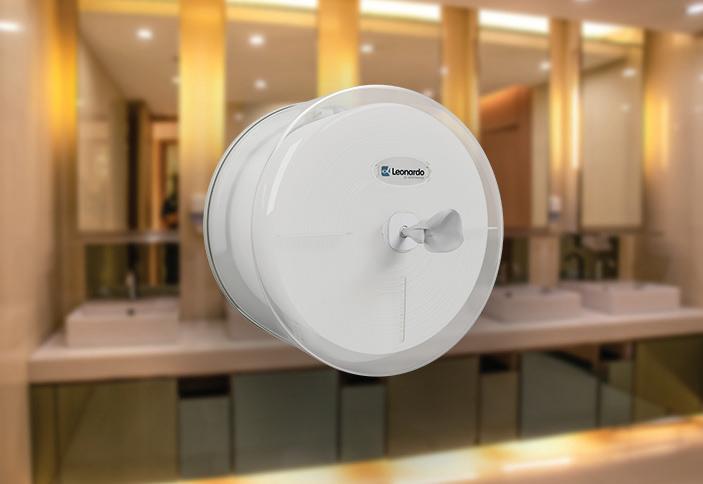

Leonardo brings a diverse range of economy and premium paper products,




which all meet the CHSA So Tissue Standard and carry the FSC® certification. Luxurious pure pulp products are also available, with embossed items providing additional comfort and style. There are also products made from recycled tissue within the range.
Leonardo hand towels are available in a number of formats, including roll, C, D and Z -Fold and there is even the White Flight C-Fold Hand Towel, which is so , strong and flushable.


Dispenser contact areas are protected with an antimicrobial agent to inhibit the growth of microorganisms. The dispensers are wipe-clean and contactless units are available.
All Leonardo roll inserts, dispensers and used paper towels are compatible with Northwood’s Green Loop recycling service. www.northwood.co.uk

CELEBRATING 20 YEARS OF DEDICATION AT FUEL STORAGE SOLUTIONS
In an industry where the typical tenure for an engineer can be as little as 3–4 years, reaching two decades is an extraordinary achievement. This month Stuart Burton, Senior Engineer, has achieved 20 years of service at Fuel Storage Solutions (FSS), the UK’ s leading provider of fuel storage systems and solutions.
Joining the business as Field Engineer just 4 years a er its launch, Stuart has contributed significantly to the exceptional growth experienced by FSS. He is known, and warmly welcomed, by customers across the UK. His expertise, dedication and professionalism have earned him tremendous respect among colleagues and clients alike as his knowledge of the fuel storage industry is second to none. Modest, self-e acing, and a true team player, Stuart is a man of few words and many actions.
He has a trademark style of delivery evidenced by his deep commitment to training, mentoring and supporting young engineers as they embark on their careers; he embraces continual improvements in Health & Safety, Education and Compliancecornerstones of the fuel industry. Above all, his ‘can do’ attitude means he is always the first to volunteer
MAKITA LAUNCHES HEADTO-TOE WORKWEAR RANGE
Makita has built a global reputation for tools that perform day in, day out, on demanding work sites. That same practical, performancefirst approach now defines the new Makita Workwear range - tough, considered and built for real working environments.

for overtime, regardless of the job or location.
Reflecting on the milestone, Stuart shared: "I remember when I started at FSS and how it was
a major jump for me joining a business that was literally new. My early days were spent working with Jonathan Barnett, Managing Director, and I have fond memories of times spent together out on the road. I’m shocked about the 20 years milestone and my absolute heartfelt thanks go to all of the Directors in addition to Jonathan - Katharine Barnett, Finance Director, and Vince McCarry, Operations Director. Their support over the years, as well as that of the team, is remarkable. FSS is a true family business.”
Commenting Vince McCarry said: “I have always had great confidence in Stuart’s knowledge, experience and capability. His pressure testing of fuel tanks is legendary. There are very few people I’ve come across in my time in this industry with whom I’ve had (and continue to have) such an excellent working relationship. He hit retirement in July 2021 and chose to carry on working full time at FSS.
“His motto in life – it’s ‘keeping going that keeps you going’! We hope that Stuart will continue to do what he does so exceptionally well for many years to come.”
Developed by Castle Clothing - the team behind Tu Stu Workwear - and drawing on over 50 years of industry experience, the head-to-toe collection covers everything from base layers to outerwear, trousers, shorts and safety footwear, including dedicated womenswear sizes. Every piece is designed around the realities of site life: kneeling, climbing, li ing, stretching and working through all conditions.

The di erence is in the detail - durable fabrics, high-quality components and smart detailing that improve comfort, flexibility and long-term wearability. Performance features are built in where they matter most:
• CORDURA® reinforcements in high-wear areas
• YKK® zips specified for durability
• Ripstop fabrics for strength without unnecessary bulk
• Durable PFC free water-repellent finishes for reliable weather protection
• Dedicated use of recycled fibres and responsibly sourced 100% BCI cotton
• Work-focused fits designed for movement and all-day comfort
Engineered to the same standards tradespeople expect from Makita tools, the range delivers durability, comfort and technical performance without compromise. Makita Workwear launches in May 2026 through a network of dedicated trade stockists across the UK.
www.makitaukworkwear.com
ROBERT SCOTT INTRODUCES INDUSTRY-FIRST BIODEGRADABLE SOCKET MOP TECHNOLOGY
Robert Scott has become the first company in the UK cleaning sector to incorporate a biodegradable plastic additive into its mop socket design. This innovation means that Exel® sockets are designed to biodegrade in managed landfill environments, eliminating the environmental impact of traditional plastic components polluting the planet for hundreds of years.
A recent redesign to the socket is now saving 137 tonnes of plastic each year. In addition, the socket is made from durable polypropylene (PP); a type five plastic which can be recycled continuously into new products.


However, Robert Scott understands that products that can be recycled aren’t always recycled, especially considering regional discrepancies in recycling methods and complexities of waste streams. In many instances, these will be disposed of and can end up in landfill.
That’s why Robert Scott is now adding an innovative additive called BioSphere® to Exel® sockets, which speeds up the biodegradation process in managed landfill conditions. Plastics treated with the additive still have unlimited shelf life and are non-toxic.
Independent laboratory tests carried out by Eden Research Laboratory in accordance with ASTM D5511 are ongoing. A er the first 12 months, the sockets have already degraded by 29.6%.
To watch the Biodegradable Socket Animation visit https://vimeo.com/1172136067?fl=ip&fe=ec)*
www.robert-scott.co.uk
PHS TEACRATE INVESTMENT REDEFINES THE CRATE WASHING MARKET
phs Teacrate, the UK’s market leader in crate hire and washing services, has invested in new technology that redefines hygiene and sustainability standards in the UK’s crate market.
The new, next-generation tray & pallet washers set a new benchmark in sustainability for the sector by more than halving water usage during crate washing.
The new bespoke machine only uses six litres of water per hour, compared to the standard 15 litres per hour for older machines, o ering huge water savings, it has been designed to deliver the cleanest, and be one of the most sustainable wash and dry processes in the market.
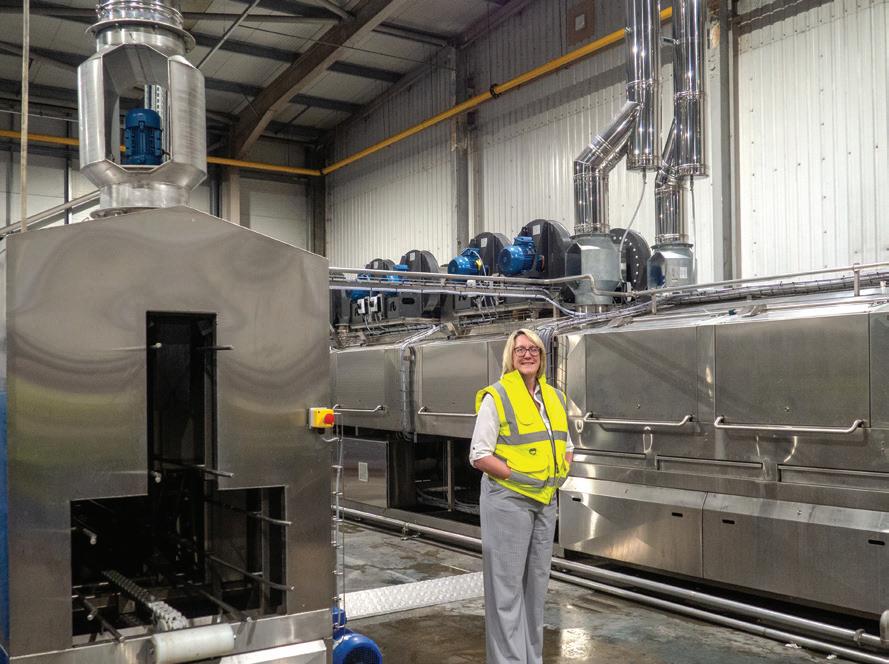

Based at phs Teacrate’s Curdworth facility, the new technology also gives the company unmatched speed and capacity in the crate washing market.
Made in the UK by experts Unitech, the new tray and pallet washing systems are manufactured from high grade stainless steel, using the latest hygiene technology to provide the highest quality clean, even
on the heaviest soiled totes and pallets.
Its unique wash and dry cycle prevents contamination, improves the lifespan of the products and ensures that all products comply with strict hygiene standards.
Victoria Rhodes, Managing Director at phs Teacrate, said: “This is a bold investment in next-generation
DAIKIN APPLIED (UK) TARGETS FLEXIBLE VENTILATION WITH NEW VERTICAL DX AHU
Daikin Applied (UK) has launched a floor-standing Vertical DX air handling unit (AHU) designed to simplify ventilation in large, complex buildings while supporting low-carbon operation.
Aimed at facilities managers responsible for large or complex buildings, the plug-and-play unit o ers a decentralised approach to air treatment. By delivering conditioned air closer to occupied zones, it improves control, reduces energy losses and responds more e ectively to changing occupancy.
The system integrates with Daikin VRV and ERA platforms and features a factory-installed direct-expansion (DX) kit, eliminating the need for secondary water circuits. This helps reduce installation complexity, footprint and energy use.



Its compact, floor-mounted design supports faster retrofit installation with minimal disruption, while BMS compatibility enables straightforward integration into existing building systems.
Daikin Applied says the unit o ers a practical route to improving ventilation performance without major infrastructure changes.
www.daikinapplied.uk
wash technology that is setting a new standard for hygiene, e iciency and sustainability. Our goal as a business is to always raise the bar and lead the way in sustainable, innovative practices.
“The machine features water recycling systems and the latest energy e icient technology to minimise water and energy consumption, creating the most sustainable wash process available.
“Businesses today demand compliance, speed, e iciency and eco-friendly solutions and our new crate & pallet washing machines are designed to deliver just that. It is taking phs Teacrate and our customers to the next level of best practice.”
phs Teacrate, which is part of the phs Group, rents, pools & moves millions of crates per year. As well as o ering a wash solution, Teacrate has extensive range of RTP solutions for hire and purchase, including attached lid containers, RPC’s, bale arm / stack nest containers, pallets, dollies, pallet collars, FLC’s, and roll cages, and by having their own extensive fleet over a next day delivery service!
BRITANNIA FIRE LAUNCHES AVD FIRE EXTINGUISHER AND FIRE BLANKET TO TACKLE RISE IN LITHIUM-ION FIRES
Britannia Fire, a global leader in the manufacture of composite fire extinguishers, has announced the launch of two new products designed to tackle lithium-ion battery fires: a 6-litre AVD fire extinguisher and an AVD fire blanket. The product development comes in response to a sharp increase in UK incidents over recent years involving lithium-ion batteries in electric vehicles, e-bikes and scooters, consumer electronics and communication systems.
The new Aqueous Vermiculite Dispersion (AVD) fire extinguisher is the latest addition to Britannia Fire’s popular P50 range. All P50s are made from innovative, lightweight composite materials that resist corrosion and require minimal servicing. The P50 AVD contains a water-based extinguishing fluid mixed with vermiculite particles, specifically formulated for combatting lithium-ion battery fires.
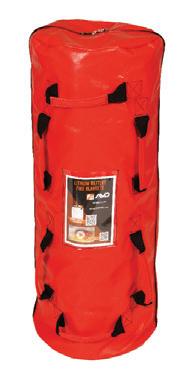


As the ideal complement to the P50 AVD, Britannia Fire’s AVD fire blankets have been designed as the first barrier to help contain and control lithium-ion battery fires. Made from specialist high-silica glass fibres, with flame and heat-deflecting surface coatings and an oxidised base fabric, the blankets can be placed over a burning battery-powered device to help contain flames, block heat radiation and prevent the fire from spreading. The P50 AVD can then be discharged under the blanket edge to cool and extinguish the fire.
www.britannia-fire.co.uk
sales@britannia-fire.co.uk
HÖRMANN SPU F42 DOOR DELIVERS RELIABILITY AND PERFORMANCE FOR RNLI LIFEBOAT STATION
Hörmann UK industrial trade partner, Norwichbased Cooks Doors, has successfully completed the installation of a Hörmann SPU F42 sectional door at the RNLI Lifeboat Station in Mablethorpe, Lincolnshire. Designed to perform in some of the UK’s most demanding environments, the new door provides the RNLI with a robust, reliable, and highly e icient solution to support its vital operations.
Measuring an impressive 7500 x 3650mm, the SPU F42 sectional door was specified for its strength, durability, and consistent performance in what is a challenging coastal setting. Manufactured from galvanised steel with a solid, double-skinned construction and a high-grade polyurethane foam core, the door o ers excellent thermal e iciency, helping to maintain a stable internal environment within the lifeboat station. With a thermal insulation value of 1.2 W/m2K, the door helps reduce heat loss, supporting energy e iciency and creating a more comfortable working space for the RNLI crew.
Given the exposed coastal location, resistance to the elements was a key consideration. The SPU F42 achieves Class 3 performance for both wind load
and water tightness, helping to protect the station interior, equipment, and lifeboats from harsh weather conditions. Additional corrosion protection has been applied to the door fittings to further enhance longevity, ensuring reliable operation despite constant exposure to salty sea air.
The door is finished externally in Gentian blue (RAL 5010), complementing the lifeboat station’s appearance, while the o -white interior finish (RAL 9002) helps to brighten the internal space. Two rows of vision panels were incorporated into the design, allowing increased natural light into the building and improving visibility without compromising strength or security.
Operational reliability is critical for the RNLI, where rapid response times are essential. The SPU F42 is powered by a 400v three-phase operator, providing smooth, dependable day-to-day operation. In the event of a power failure, a manual hand chain ensures the door can be operated, maintaining access at all times. Safety has also been prioritised, with an integrated safety edge that automatically stops the door if an obstruction is detected, helping to protect personnel, vehicles, and equipment.
CONDAIR STRIKES A CHORD WITH FORTH PIPE ORGANS
Forth Pipe Organs, a specialist pipe organ builder, restorer and maintainer, has been incorporating Condair humidifiers into its projects for over 20 years. Serving a range of clients from large-scale performance venues to schools and church organs around the country, it helps protect instruments from the dangers of dry air, ensuring they remain mechanically stable and tonally consistent.
David Page, Director at Forth Pipe Organs, comments: “Pipe organs are constantly reacting to the air around them. When humidity drops too low, timber components move, leather parts sti en and tuning stability su ers. What’s important for us in choosing a humidifier partner is having confidence that they understand the application and that the solution genuinely fits the environment we’re working in. Condair’s range gives us that flexibility. Whether we’re dealing with a large performance venue or a much smaller, more challenging space, Condair’s humidifiers and application advice always help us find the right humidity solution.”


Steve Hale, Special Projects Contractor for Condair, comments: “When selecting the most appropriate humidification solution for a pipe organ project, it’s important to consider not just the size of the space, but how air moves through it and within the organ itself. Ensuring balanced humidity throughout the internals of the organ, rather than in just one area, is critical.”

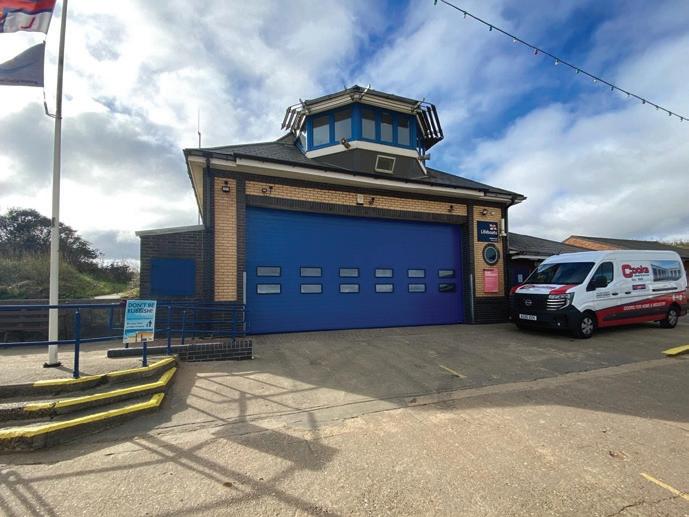
The installation of the Hörmann SPU F42 sectional door will help ensure that RNLI Mablethorpe are able to launch quickly and e ectively in all conditions, ultimately helping them continue their lifesaving work along the Lincolnshire coast.
For further information on the Hörmann Industrial Sectional Garage doors visit https:// www.hormann.co.uk/industry-commerce-andpublic-authorities/industrial-doors/industrialsectional-doors/.
INTERFACE EXPLORES TEXTILE ART AESTHETICS WITH NEW CRAFTED CONNECTIONS™ CARPET TILE COLLECTION
Interface, Inc., the global flooring and sustainability leader, today launched its new textile artinspired carpet tile collection, Cra ed Connections™. Featuring rich textures and subtle patterns, the collection brings warmth and character to today’s commercial spaces.


From traditional textures to bouclé and batik styles, woven aesthetics continue to gain favour across commercial environments. Cra ed Connections o ers three styles illustrating each of these visuals in one coordinated collection: Thread Lightly, Bound to Last, and Dual E ect. Each provides endless possibilities for layered design, with easy zoning and wayfinding across the coordinating styles.
The collection brings depth and visual interest to the floor, transforming neutral patterns into design statements. Designers can use Cra ed Connections to create a refined foundation or introduce subtle accents that define space.
. Thread Lightly: Captures the sophistication of weaving with a rich texture that brings depth to the floor. It is o ered in 18 colourways.
. Bound to Last: Makes a bold statement, drawing inspiration from outsized bouclé and mid-century tweeds. It is available in nine neutral colourways.
. Dual E ect: Unites batik style with geometric patterning for modern floors, featuring dotted diagonals over a textured backdrop. It is o ered in nine neutral colorways.
Cra ed Connections is a low-carbon flooring solution and is Cradle to Cradle Certified® at the Silver level.
DAIKIN RENTAL SOLUTIONS ACCELERATES UK EXPANSION WITH MAJOR MULTI-TECHNOLOGY FLEET INVESTMENT
Daikin Rental Solutions has announced a major expansion of its UK rental fleet, combining new high-capacity cooling systems, low-carbon heating solutions, process cooling equipment, and UK-manufactured air handling units to meet growing demand for flexible, high-performance temporary HVAC.
The investment reflects increasing pressure on UK organisations to maintain operational continuity while responding to ageing infrastructure, rising temperatures, tighter regulation, and the transition to lower-carbon energy systems.
Building a next-generation rental platform
Daikin Rental Solutions o ers access to the latestgeneration factory-built systems, designed for e iciency, reliability, and seamless integration.
This approach enables customers to deploy modern HVAC solutions quickly, with performance and control aligned to permanent installations. All projects are delivered as fully managed packages, including system design, installation, commissioning, and ongoing support, ensuring minimal disruption and consistent operational performance.

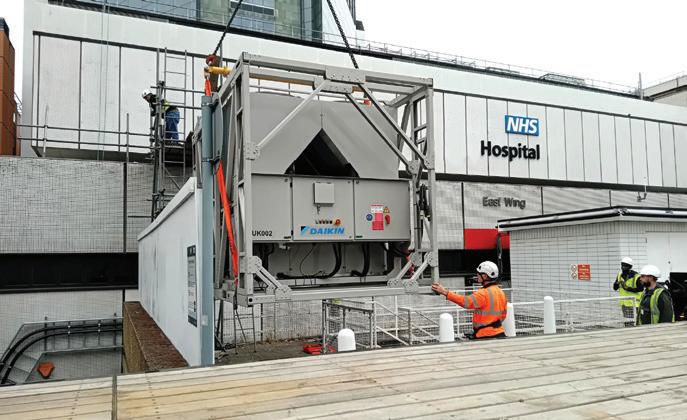
Supporting critical environments and process industries
Demand for temporary HVAC is increasing rapidly across sectors where downtime is not an option.
To address this, Daikin has significantly expanded its high-capacity cooling capability with the introduction of 800kW and 1MW inverter-driven screw chillers, alongside a broader range of scroll heat pumps from 50kW to 500kW. These systems provide scalable, e icient cooling and heating for complex and highload applications. Complementing this, the addition of 250kW and 500kW Dry Air Coolers strengthens Daikin’s ability to deliver complete process cooling solutions. These units provide e icient heat rejection
for closed-loop systems and can support free-cooling strategies under suitable ambient conditions, reducing reliance on mechanical cooling and improving overall energy performance.
Enabling the transition to low-carbon heating
The expansion of Daikin’s heat pump rental o ering enables customers to deploy low-carbon heating solutions for both planned upgrades and interim requirements. This provides a practical pathway to electrification without compromising operational continuity.
Expanding system capability with airside solutions
To deliver fully integrated HVAC systems, Daikin Rental Solutions has also introduced a new fleet of purposebuilt air handling units, designed and manufactured in the UK. Engineered specifically for rental applications, the AHUs are optimised for rapid deployment, ease of installation, and reliable performance in demanding environments. The range includes 50kW vertical units and 100kW standard AHUs.
This investment strengthens Daikin’s ability to deliver complete, airside and waterside solutions as part of a single, integrated rental package.
CCF CHAMPIONS COLLABORATION AND GREATER ACCURACY IN ESG REPORTING
National interior building products distributor CCF has joined forces with manufacturer supply chain partners British Gypsum and Isover to highlight the growing importance of accurate carbon data within the construction supply chain.
Held at the Saint Gobain Solutions Centre on Portland Street in London, more than 30 main and subcontractors attended, including sustainability specialists Construction Carbon and environmental leads from across the UK. The event was part of CCF, British Gypsum and Isover’s wider Focused on Building for Good campaign, which promotes greater supply chain collaboration between manufacturers, suppliers, contractors and project teams.
Several speakers took the stage, with British Gypsum, CCF and Construction Carbon sharing insights into the challenges and opportunities surrounding carbon reporting. The session explored the increasing regulatory and commercial pressure on manufacturers to provide verified Environmental Product Declarations (EPDs) and Life Cycle Assessments (LCAs), and the complexities involved in producing this level of detailed product information.
A key challenge highlighted during the event was the
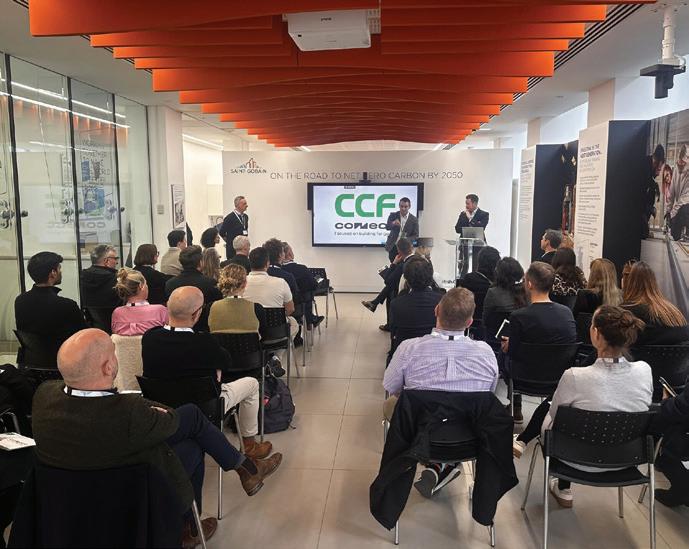

limited availability of reliable carbon data, with many organisations still relying on generic industry averages rather than verified manufacturer information. Discussions throughout the day reinforced the need for greater transparency and traceability across supply chains to enable materials to be tracked from manufacturer through to installation on site.
Speaking on behalf of CCF was Head of Customer Sustainability Solutions and Sales Phil Monkman who outlined how the company has been working closely
with subcontractors, main contractors, industry specialists and the wider Travis Perkins Group to develop CONNECT, a carbon calculation tool designed to provide more accurate reporting than anything currently available in the market.
Representatives from CCF’s customer base were also in attendance, with BPC Interiors, an early adopter of the CONNECT tool, sharing first-hand experience of using CONNECT and how gaining access to more accurate product data is helping them manage waste, support early project acceptance and access rebate payments linked to carbon reduction.
Phil said: “CONNECT has been shaped in partnership with the people who will use it every day, so hearing from early adopters like BPC Interiors is invaluable. By combining verified manufacturer data from partners such as British Gypsum and Isover with CCF’s own supply chain insight, CONNECT gives contractors a clearer picture of their carbon impact and the confidence to make better informed decisions at every stage of a project.”
For more information visit www.ccfltd.co.uk/ content/focused-on-building-for-good and download the whitepaper.
DAIKIN APPLIED EXPANDS R-290 CHILLER AND HEAT PUMP PORTFOLIO FOR COMMERCIAL AND INDUSTRIAL HVAC
Daikin Applied (UK) has expanded its portfolio of R-290 (propane) chillers and heat pumps, introducing a new generation of systems designed to support decarbonisation across commercial, industrial and mission-critical HVAC applications.
The extended range combines natural refrigerant technology with modular system architecture and advanced safety engineering, enabling building owners and operators to transition to lower global warming potential (GWP) solutions while maintaining the reliability and e iciency required for large-scale plant installations. The portfolio spans capacities from 17 kW up to 2,000 kW, supporting a wide range of hydronic cooling and heating requirements.
Propane (R-290) is a natural refrigerant with an extremely low GWP and zero ozone depletion potential, making it an increasingly attractive option as the HVAC industry responds to tightening environmental regulations and ambitious decarbonisation targets across the built environment.
Integrated safety engineering
Because R-290 is a flammable refrigerant, safety considerations are central to the design of these
systems. Daikin has addressed this through a comprehensive engineering approach known as the Daikin Safety Shield, which integrates multiple layers of protection throughout the unit.
Modular design for large-scale installations
capacity range

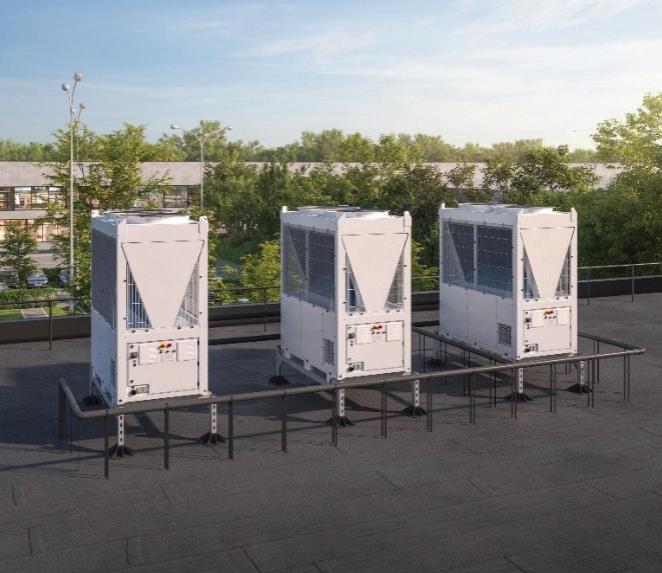
For higher capacity applications, the portfolio includes the EWYK-QZ modular heat pump range, designed for scalable plant installations. Using a modular architecture, multiple units can be combined to deliver capacities of up to 2,000 kW, operating together as a single integrated system. This approach allows designers to match installed capacity closely to project requirements while retaining flexibility for future expansion.
Extending the portfolio across a wider
JPC BY SAMSIC LAUNCHES NEW WEBSITE
JPC by Samsic, London’s premium concierge-led cleaning provider, has launched a fully redesigned website at jpcbysamsic.uk, creating a digital platform that reflects the scale and standard of buildings the company supports across the capital.
The new site replaces a legacy platform that no longer represented the quality of JPC’s operations or the calibre of buildings in its portfolio. From The Leadenhall Building and Regent’s Place to Here East and the Pontegadea portfolio, JPC maintains some of London’s most recognised commercial landmarks.


Today the company supports millions of square feet of commercial real estate across London, working with leading landlords, developers and property managers to maintain some of the capital’s most demanding buildings.
The redesigned website has been built to mirror that environment, o ering a modern and immersive experience that brings visitors inside the buildings, teams and operational standards that define JPC’s work.
“Our standards are non-negotiable. Every building we look a er is treated as a landmark, and this website is an extension of that standard,” said Adam Black, Director of Sales and Marketing at JPC by Samsic. “We wanted a platform that shows exactly what we do and why the biggest names in London property trust us to deliver it.”
Complementing the modular systems, Daikin has also introduced the EWA(Y)K-CZ monobloc range, which covers capacities from 17 to 85 kW and is available in both cooling-only and heat pump versions. These compact air-to-water units are suited to smaller commercial buildings, light industrial applications and distributed hydronic systems, where a compact footprint and installation flexibility are important. They can also be deployed as part of distributed plant strategies or to support satellite cooling and heating loads within larger facilities.
Advanced plant control
For complex installations, system control operates on two levels. Within a single array of modules, a built-in multi-unit sequencer coordinates operation across the individual units. Where several arrays are combined, plant performance can be optimised using the Daikin Intelligent Chiller Manager (iCM). This platform manages load distribution, sequencing and system optimisation across multiple units to maintain e iciency and ensure continuity of service in largescale applications such as hospitals, data centres and industrial facilities.
COMMUNITY HUB BENEFITS FROM TORMAX ENERGY SAVING AUTOMATIC DOOR
Recently redeveloped, the Sutton Life Centre is a vibrant community and education hub in South London, o ering a blend of learning, leisure, and civic facilities. TORMAX was contracted to work with façade specialist Sealtite Windows, alongside main contractor Thomas Sinden, to design, manufacture and install a new automatic entrance solution.
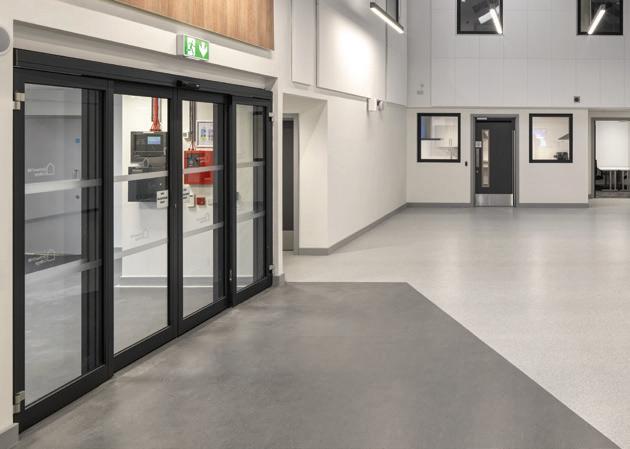
Powered by iMotion door drives, two sets of bi-parting automatic sliding doors work in tandem to create a thermally e icient lobby. Further contributing to reduced heat loss from the building, the outer set of sliding doors incorporates the technologically advanced TORMAX LR32 Secure + Therm profile. This system has a very narrow, compact design with circumferential seals that reduce the exchange of cold and warm air.

As a busy public destination welcoming schools and community groups throughout the year, dependable and inclusive access was a key design requirement. The new entrance e ortlessly combines security, energy e iciency and long-term operational performance for this high-tra ic public access point.
At the heart of the installation is TORMAX’s advanced iMotion drive technology. Featuring low-wear, brushless synchronous motors with intelligent microprocessor control, the operators o er smooth, near-silent operation while continuously self-monitoring to optimise performance and reduce maintenance requirements.
ISS UK&I APPOINTS GREG NICOLL AS GENERAL COUNSEL


ISS UK & Ireland has appointed Greg Nicoll as General Counsel, e ective 1 June 2026. Nicoll will report to ISS UK & Ireland CEO Scott Davies and will join the company’s Country Leadership Team (CLT) and ISS Group’s global Legal community.
In his new role, Nicoll will lead the UK & Ireland Legal team as it supports the achievement of ISS’ strategic objectives. In particular, he will strengthen ISS’ commercial, market, regulatory and internal risk identification, mitigation, and management framework, while also bringing his prior experience to bear by revisiting and optimising the company’s legal obligations throughout the commercial lifecycle.
Nicoll joins ISS in the summer from Serco, where he has held a range of commercial and leadership positions over a 13-year period, including General Counsel (UK & Europe), Commercial Director (UK & Europe) and for the last five years, Chief Legal & Risk O icer (UK & Europe).
ADRIAN MOLE APPOINTED CEO OF ROBERTSON’S REBRANDED FM BUSINESS

Robertson Group has appointed Adrian Mole as the CEO of its rebranded FM business, RFM.
Mole has worked at Robertson for the last eight years, most recently as Executive Managing Director of Robertson Facilities Management. With over three decades of industry experience, Mole has been instrumental in driving the success of the facilities management o ering by securing and delivering major contracts while supporting expansion across the UK.
In his new role, he will oversee the next phase in the development of RFM which will continue to deliver within both the hard and so FM markets and further expand its o ering in energy management and decarbonisation.
SIMI GANDHI-WHITAKER JOINS
ARCUS FM
Arcus Facilities Management has appointed Simi Gandhi-Whitaker to the role of Managing Director for Account Management, where she will drive the company’s market presence.
Gandhi-Whitaker joins the business with a wealth of account management experience gained from a long career in FM. She has held leadership roles at Carillion, Galliford Try, EMCOR UK and most recently at Mitie. Across all of these roles she has built high performing teams with a focus on ensuring the customer has exceptional experiences.

Passionate about developing and embedding cultures of compliance, safety and sustainability, she has recent experience driving digital adoption and modern FM methodologies to drive continuous improvement, service delivery, and lasting value for her customers.
Looking for FM candidates?






AI-ENHANCED HIRING LANDSCAPE
Habiba Khatoon, Director of Robert Walters Midlands delves into the benefits and pitfalls of the increasing application of AI in UK hiring

AI is now an embedded part of hiring practices across the UK. Employers are using these tools to dra job adverts, streamline communications, as well as screen and match profiles, while jobseekers are cra ing their CVs with AI, receiving real-time interview assistance and applying for roles en masse.
Both sides are reaping the benefits in terms of speed and productivity, but they must now navigate new risks of bias and eroding authenticity. In this current environment, employers who prioritise balance will gain the competitive edge. This means auditing AI tools to get consistent results, keeping humans at the heart of decision-making for fairness and trust and using AI to enhance and not detract from the candidate experience.
HOW AI TOOLS ARE TRANSFORMING RECRUITMENT
Screening, matching and ranking – Job ads are receiving more applications than ever, making e ective shortlisting more vital but even more challenging. AI-powered screening tools promise pace and consistency by instantly reading job descriptions and ranking candidates against them. These systems do still carry significant risks in
LATEST JOBS ON FMJ
HEALTH + SAFETY MANAGER
Salary: Up to £40,000 + bens
Location: Dorset/Somerset based
https://bit.ly/3ZdBnE8
TECHNICAL FACILITIES MANAGER
Salary: £55k per year +
Location: Clacton-on-Sea
https://bit.ly/3NRehki
HEAD OF MAINTENANCE
Salary: £65k - 70k per year +
Location: London
https://bit.ly/3Z9TU4f
amplifying bias at scale and losing the contextual nuance that only humans can provide. Tools include LinkedIn’s Hiring Assistant, SeekOut, Eightfold AI and Entelo.
AI-powered candidate engagement - Candidate communication is one of the fastest-moving areas of AI adoption. Outreach once relied on recruiters dra ing every message, now, new tools can generate personalised emails in seconds. Early adopters are already seeing increased response rates and faster replies as a result, with emerging data suggesting that candidates are responding 10 per cent faster. However, success relies on structured human oversight to keep AI-generated messages accurate and relevant.
Tools include LinkedIn AI Assisted InMail, Copilot. Instant job ad copywriting – Before AI, recruiters would spend hours cra ing and adapting templates, finding the right tone and tailoring language to attract the right people. Today, AI can generate polished ads in seconds. With tools like Textio flagging biased phrasing (e.g. “competitive” skewing male, “supportive” skewing female).
Yet an overreliance on these AI outputs without the necessary refinements risks stripping ads of an employer’s unique voice and introducing avoidable errors.
In February 2024, Robert Walters launched a bespoke AI Ad Writer trained on our recruiters’ best practice. It reduced time spent on creating ads from one hour to 90 seconds, giving our teams more space to refine and perfect. Within the first three months of introducing the tool, our AI-written ads received 68 per cent more applications.
GROWING RISKS
Artificial intelligence is being woven directly into daily hiring processes, in turn creating new skillsets for both recruiters and hiring managers. Copilot, ChatGPT or Claude all demand prompting knowhow which is shi ing hiring skills from writing to directing.
Regardless, it remains crucial these tools aren’t leant on as a standalone solution. As AI does more, there is a danger of removing a crucial layer of human insight that distinguishes true fit from mere ‘algorithmic’ match.
The more employers use AI to filter prospective hires, the more jobseekers will use it to beat the filters. This could lead us closer to recruitment processes that are e ectively AI interviewing AI, introducing additional risks like amplified bias,
overlooked candidates, and ultimately, poorer hiring decisions.
A CONSISTENT HUMAN THREAD
Human judgement must remain a constant within processes, even as AI usage increases. To achieve an accurate assessment of a prospective employee’s suitability, certain elements should be nonnegotiable:
In-person interaction.
Live exercises.
Portfolio reviews.
Peer or panel introductions.
Skills-based assessments.
Specialist recruitment partners play a pivotal role in helping to reduce the noise through producing strong, succinct shortlists of appropriately skilled professionals.
We believe human interaction is where the real di erentiation happens, by meeting all of our candidates face-to-face, we can discover the qualities that go beyond what’s written in an online application.
The strongest candidate for the job isn’t always the one who looks strongest on paper, and you would never spot that from a CV alone, particularly an AIenhanced one.
FINAL THOUGHTS
AI is undoubtedly transforming hiring processes. However, without careful application organisations risk weakening trust in their own processes.
The most e ective approaches will be those rooted in human judgement, ethical usage, and transparency.
AI should be used to clarify hiring, not replace it. Technology can optimise, but our insight is the factor that will ensure the right decisions are made and the best people are hired.



TRAINING PUZZLE

AccordingA series of surveys on training trends have revealed a disconnect between the training on o er and the value of the training being delivered. Sara Bean reports
to the IWFM, training in facilities management is responding to the advances in technology by taking a more data-driven, strategic, and sustainable model, requiring a shi from operational maintenance to managing digital systems, AI, and environmental impact.
However, new research by Bidvest Noonan has revealed a training paradox which could be undermining these modernisation e orts. The report highlights a significant gap between technology ambition and its successful adoption in the FM sector.
Bidvest Noonan surveyed 110 senior FM decisionmakers with authority over technology investment, managing estates ranging from 20,000 to over 500,000 square feet across the UK and Ireland. The findings revealed that human factors, not technology itself, are key limitations to success.
While 64 per cent of FM leaders cite inadequate training and change management as a primary cause of technology underperformance, only nine per cent identified it as a critical factor when reflecting on technologies that had succeeded. Bidvest Noonan describes this gap as the 'training paradox'.
Phil Darcy, Head of Data & Emerging Technologies at Bidvest Noonan, said: “Our research reveals a troubling contradiction. When technologies underperform, inadequate training is among the top causes cited, yet it ranks lowest among the factors that organisations prioritise for success. Closing that gap should be a priority for any organisation investing in technology.
“The data shows something important here, almost half of FM leaders identify skills and capability
gaps as a major barrier, while only one in seven cite sta resistance to change. This tells us that what looks like resistance is actually a capability issue. People lack confidence in their ability to use new technology e ectively, which can result in hesitation or pushback.”
PUBLIC AND PRIVATE SKILLS DEFICITS
Di erences in skills training have been revealed in the IWFM Market Outlook survey which suggests that the public and private sectors may be dealing with significantly contrasting skill deficits within their organisations. It found that the biggest skills gap around data analysis is in the private sector, with 43 per cent of FMs reporting a gap compared with 30 per cent in the public sector.
This contrast between public and private sectors is even more stark in the sustainability and energy management skills category. Here, just 17 per cent of public sector FMs reported a skills gap in the area, compared with 40 per cent in the private sector. This area of skills showed the biggest variation between public and private sector responses.
By contrast, asset management is an area where private sector FMs were less concerned than their public sector counterparts; 25 per cent of private sector FMs talked of having a skills gap in this area compared with a sizeable 47 per cent of public sector respondents.
Responses also suggested public sector deficits compared with the private sector in technical proficiency, so skills, and finance skills. By contrast, the private sector did better than the public sector
in terms of project management, procurement and general digital skills, although these gaps were less pronounced.
VALUE FOR MONEY
Determining which skills are of most value is a key challenge in delivering workplace training. A report by compliance training provider Skillcast reveals that streamlining basic and mandatory sta training and stepping up ‘high value’ skills development in the workforce could make up for an estimated 21m working hours which is currently being “lost” a year on training that only enables employees to meet the minimum requirements for their job. This costs an estimated £416 million per year, or 11,147 full-time equivalent roles.
Of the 11 sectors analysed, business services topped the list, spending 3.3m hours – or £65.3m – on basic and mandatory training. Hospitality ranked second at 2.8m hours (£55m), followed by wholesale and retail at 2.6m hours (£51.4m).
The figures were compiled by Skillcast as part of its Lost Hours Report – a sector-by-sector study examining where mandatory training is eating up working hours, and how they can be reclaimed.
Training on health and safety may be non-negotiable – but the report argues that it could be delivered more e iciently without compromising quality and e ectiveness. This would free up sta to focus on building ‘high value’ supervisory, managerial or technical skills that help businesses be more productive, innovative and profitable.
“Ine icient training comes with a he y price tag for businesses, and the UK economy” says Vivek Dodd, CEO of Skillcast. “It’s not just the time and money spent on training itself but the missed opportunities to develop employees’ skills in a way that delivers value.
“Essential training doesn’t have to be timeconsuming, in fact, it’s o en better when it’s not because employees are more likely to engage in it.
Targeted sessions, based on an individual’s skills requirements and role, ensure they’re meeting the standard while also giving them back time for building their professional and specialist skills.”
London o ce workers want better quality workspaces, not superficial perks
According to research from independent property consultancy, BPS London, 63 per cent of o ice workers said they would be more willing to work from the o ice more regularly if their workplace was more modern, comfortable and better equipped.



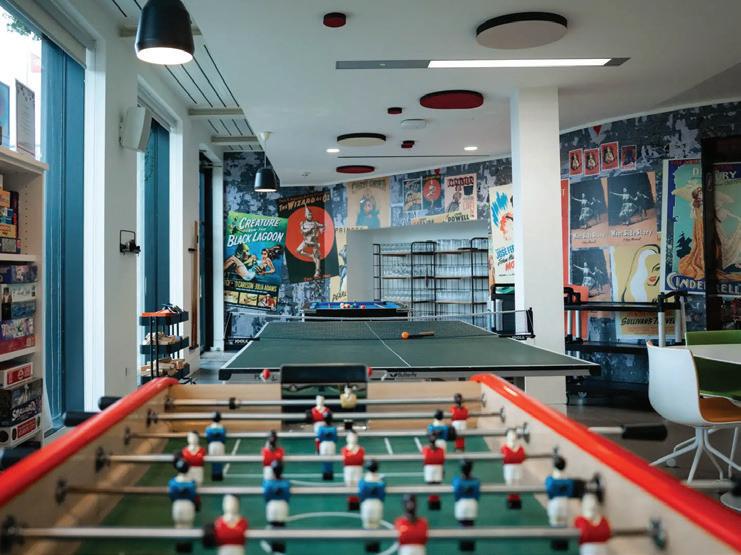
Just 47 per cent said they enjoy their current o ice environment, with the remainder describing it as simply “okay” or worse.
Better outdoor space was one of the most attractive workplace improvements, alongside more comfortable breakout areas, gyms and wellbeing facilities, and quiet areas where employees could work away from the noise and distraction of the wider o ice. Better ventilation, improved technology and more natural light also ranked highly amongst London workers.
The survey also found that workers would rather see employers invest in higher quality o ice facilities and design, as well as more wellbeing benefits outside of the o ice, than in sta perks or gi s, o ice parties and social events, or free lunches.
The firm believes that while employers continue to focus on superficial perks, many workers are looking for workplaces that support their wellbeing, productivity and day-to-day experience, particularly in the post-pandemic era where employees have become more selective about when and why they travel into the o ice.
Over a third of managers lack confidence on neurodiversity adjustments
More than a third (35 per cent) of HR and compliance professionals say managers in their organisation lack confidence when discussing reasonable adjustments for neurodivergent employees, according to a survey from compliance eLearning provider VinciWorks.
With at least one in seven people in the UK estimated to be neurodivergent, the confidence gap among those responsible for managing them carries significant workforce implications. Almost a third (31 per cent) of the same group identified sta lacking awareness as the single biggest obstacle to improving support for neurodivergent employees, and over a fi h (22 per cent) cited manager confidence. The data suggests organisations may be measuring intent rather than outcome, rating themselves on the existence of policies rather than on whether those policies are reaching the one in seven employees who are neurodivergent.
MAJORITY OF CONSTRUCTION PROFESSIONALS SEE AI AS RETENTION ENABLER, NOT JOB THREAT

More than half of construction professionals would be more likely to stay with their current organisation if it significantly increased its investment in AI and technology tools, with one in four saying they would be significantly more likely to stay. This is according to a new survey across 14 countries in Europe, the Middle East and AsiaPacific by PlanRadar.
The research suggests construction professionals do not view AI as a threat to jobs, with fear of job displacement ranked last of all concerns globally, cited by just six per cent of respondents. Instead AI is seen as a practical answer to the pressures that define the working day. Nearly half of respondents spend 11+ hours a week on work they believe AI could reduce or streamline. Among those already using AI-integrated tools, two-thirds report saving at least two hours per week, per project.
Rob Norton, UK Director at PlanRadar, commented: “We’ve reached a point in UK construction where a pay rise alone just isn’t enough to keep hold of your best people. They don’t want AI to do their jobs for them; they want it to clear the paperwork o their desks so they can focus on high-value project delivery. If firms keep ignoring that, they’re going to lose their most experienced leaders to the competitors who are actually willing to modernise these outdated manual processes.”
Survey suggests workplaces not fit for purpose in the era of hybrid working
A survey from Diamond Interiors found that sta spend an average of 42 per cent of their time in face-to-face meetings and a further 28 per cent on confidential calls, meaning around 70 per cent of the working day is spent communicating. Despite this shi , most o ice environments remain heavily desk-focused, raising questions about whether workplaces are fit for purpose in the era of hybrid working.
The findings point to a growing demand for privacy in the workplace. Open-plan environments and informal collaboration spaces performed significantly worse than enclosed meeting rooms, suggesting employees are increasingly uncomfortable holding conversations in open settings.
Hannah Prescott of Diamond Interiors said: “We are seeing a real shi away from the idea that open-plan equals collaboration. In reality, people want spaces where they can focus, speak freely and not feel overheard. Designing for privacy, comfort and flexibility is becoming far more important than simply maximising desk space.”


www.torkglobal.com