Equity market update and IPO compass

Capital Markets Team —
March 2026

Capital Markets Team —
March 2026
February’s rotation from software and tech into cyclicals may increase uncertainty, but defense and industrial companies, in particular, continue to face potentially advantageous listing conditions as part of Europe’s solid IPO pipeline.

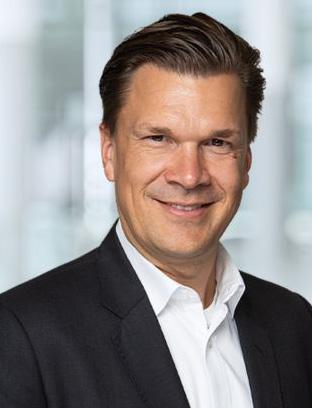
Ralf Pfennig Partner
Head of Deal & Capital Markets
Services
Volatility rose in February, with the average VIX increasing from 16.0 in January to 19.1 and briefly moving over the 20-stress threshold on several days.
Source: FactSet.
Current market developments could shift the odds for Europe's IPO pipeline
Increased geopolitical tensions, elevated volatility and investor caution around potential AI-disruption may increase uncertainty, while beneficiaries in the defense, industrial and other less tech-exposed sectors could seize the current market sentiment for their IPO plans.
Source: Dealogic.
The next European defense IPO is in the making IPO Live Event 29. April 2026 1:00 - 6:00pm Event location: Deutsche Börse, X-Lounge
Börsenplatz 4, 60313 Frankfurt (Main)

Geopolitical tensions have increased uncertainty around rate cuts: markets now expect around two Fed cuts in 2026 but with lower near-term odds, while the probability of a March BoE cut has dropped below 50% after February’s close vote to hold.
Source: FactSet.
Note: See slide 8 for index definitions.
European markets sustained their strong 2026 momentum on the back of record fund inflows, while US equities faced a challenging month, with the S&P 500 and Nasdaq posting their weakest monthly performances since March 2025.
Source: FactSet.
Following the largest ever defense IPO globally of CSG in January, German naval supplier Gabler Group announced its “intention-to-float” mid-February, and will become the second European defense IPO of the year, with trading expected for early March.
Source: Dealogic

Check whether your business is ready to go public at:
Initial Public Offering (IPO) | KPMG Atlas
On February 28, geopolitical tensions resurfaced when the US and Israel carried out joint strikes on Iran. Once markets reopened, oil and gas prices rose sharply as traders priced in the risk of disruptions in the Strait of Hormuz, a route that carries about one-fifth of global oil shipments.
The geopolitical tensions have made the interest rate outlook picture more complex: futures still price roughly two 25bp Fed cuts in 2026 – with June/ July as the most likely starting point – but the rise in energy-related inflation risks has trimmed near-term odds and raised policy-path uncertainty.
Furthermore, markets now put the odds of a March BoE cut below 50% – down sharply from nearly 80% before the 2 March open – following the BoE Monetary Policy Committee’s narrow 5–4 decision to hold rates in early February.
Despite ongoing geopolitical tensions, Eurozone economic indicators remained broadly resilient for the month February. The HCOB Eurozone Manufacturing PMI rose to a 44-month high to 50.8 (exceeding the 50-expansion threshold), supported by the strongest increase in new factory orders since April 2022. Germany’s industry also strengthened, with its headline PMI jumping and returning to growth for the first time in three and a half years.
Volatility rose in February, with the average VIX increasing from 16.0 in January to 19.1 and briefly moving above the 20-stress threshold on several days.
European markets sustained their strong 2026 momentum: the STOXX Europe 600 gained 3.7% and the FTSE 100 rose 6.7% in February, reaching new record highs and extending their winning streaks to eight consecutive months –their longest since 2013. Germany’s DAX ended the month up 3.0%, and the MDAX advanced 1 3% AI disruption narratives prompted rotations out of software and data-centric sectors, while asset-heavy and defensive names attracted greater demand under the “halo-trade” theme (“heavy assets, low obsolesce”). Record fund inflows, improving Eurozone macro indicators, contained inflation and solid corporate earnings provided further support. Nevertheless, geopolitical and trade-related risks remained elevated, particularly after a US Supreme Court ruling deeming certain US tariffs unconstitutional was followed by the introduction of new broad-based tariffs, increasing uncertainty around the not-yet-ratified EU-US trade agreement.
In the US, equities faced a challenging month. The S&P 500 fell 0.9% and the Nasdaq declined 3.4% in February, their weakest monthly performances since March 2025. The declines reflected a broader rotation out of AI-linked names amid scrutiny of Big Tech capex plans and concerns about AI-related disruption in exposed sectors, while emerging private credit worries provided an additional headwind. Meanwhile, the equal-weight S&P 500 outperformed as investors rotated into cyclicals. Double-digit earnings growth and a supportive economic backdrop remained positive counterpoints.
Rhetoric around potential US & Israel intervention in Iran intensified and eventually materialized over the weekend following the month’s final trading day. Looking forward, the impact on equities may depend on the duration and severity of the situation as of 27 February 2026.
After January delivered the largest defense IPO ever globally (Czechoslovak Group, CSG) and Germany’s first new listing of the year (ASTA Energy Solutions), February saw no further sizeable IPOs begin trading in Europe, though two major transactions were nearing completion during the month. Meanwhile, IPO momentum in the US continues to build.
German naval supplier Gabler Group, owned by industrial holding Possehl Mittelstandsbeteiligungen, announced its “intention-to-float” in mid-February. The company is targeting a deal size of approx. EUR 133m, implying a market capitalization of approx. EUR 266m. Trading will commence in early March on the Scale segment of the Frankfurt Stock exchange. Gabler Group is positioned to benefit from sustained investor sentiment toward defense-related names, following other German companies such as the spin-off of TKMS.
In Norway, tanker spin-off Capital Tankers has successfully placed its approx. EUR 427m 1 offering at the end of February, following an upsizing driven by strong investor demand At an implied market capitalization of EUR 1 6bn1, trading is expected to commence on Euronext Growth Oslo in mid-March. The company plans to consider an uplisting to the main segment of Euronext Oslo following its listing and a potential dual listing in the US in due course.
In the US, IPO activity remains robust, with the month marking the busiest February for sizeable new issuances since the 2021 IPO wave, as 10 major offerings were priced. Year-to-date activity is likewise tracking at its highest level since 2021. Aftermarket performance has overall leaned positive, with an average gain of roughly 28% and 8 out of the 10 larger IPOs trading above issue price by month-end. The standout performer is Veradermics, a hair-loss biopharma firm and the first US IPO of the month, which is up 170% since IPO.
Note: Aftermarket performance data based on IPO price and share price at month-end unless stated otherwise; 1) Based on 11.2085 NOK/ EUR exchange rate as of 27 February 2026; Source: Dealogic, Norges Bank, KPMG, Germany, 2026.
in EUR billion
Source: Dealogic. European1 IPO emission volume (in EUR billion) and no. of offerings per quarter
Note: = Current status for Q1-2026 as of 27 February 2026; 1) European = Transactions on exchanges in Western Europe, Benelux & Nordics.
European1 follow-on emission volume (in EUR billion) and no. of offerings per quarter
in EUR billion
Note: = Current status for Q1-2026 as of 27 February 2026; 1) European = Transactions on exchanges in Western Europe, Benelux & Nordics.
Source: Dealogic.
Note: 1) Considering transactions with deal value >€150m excl. Greenshoe, excl. SPACs, 2) At IPO, 3) Excl. Greenshoe, 4) Compared to issue price at IPO as of 27 February 2026 Source: Dealogic.
The European IPO pipeline continues to build, but increased geopolitical tensions, elevated volatility and investor caution around potential AI-disruption may increase uncertainty.
Select sectors are however benefiting from the current environment. Defense, in particular, remains a standout: Germany’s Vincorion, backed by Star Capital, is expected to target a Frankfurt IPO as early as March, while Franco-German defense group KNDS is reportedly preparing for a dual listing in Paris and Frankfurt. Furthermore, momentum is currently being driven by private equity investors, which are preparing multiple portfolio companies for potential listings in 2026. Expected candidates include Hg Capital-owned Visma (NO), EQT’s IVC Evidensia (UK), Advent- and Cinvencontrolled TK Elevator (DE) as well as Odido (NL), which is backed by Apax and Warburg Pincus. Other assets, such as mobile.de (DE), owned by Permira and Blackstone, remain on a dual-track process Further potential candidates include Nordic Capital- and Leo Foundation-owned Leo Pharma (DK), Elliot Management’s Waterstones Booksellers (UK), which is said to be evaluating a London and/ or New York listing.
Source: Dealogic, Mergermarket, KPMG, Germany, 2026
Current trend: IPO impact:
Current trend: IPO impact:
Current trend: IPO impact:
Sign-up now
Participation is free of charge.
Target group:
Cross-industry, C-Level, Head of Tax, Finance, Legal, Corporate Development, Private Equity Portfolio Companies.
Wednesday, 29. April 2026
1:00 – 6:00pm
Börsenplatz 4, 60313 Frankfurt (Main)
Agenda
Panel discussion including:
• Johannes Linden (PFISTERER)
• Stefan Maassen (Deutsche Börse)
Ottobock IPO success story
• Dr. Arne Kreitz
Overview of the current market environment & IPO timeline
Required financial data for an IPO and corporate governance requirements
Pre-IPO restructuring from a legal perspective
Structural specifics including IPO implementation
Being-public requirements
Get-together

Ralf Pfennig Partner, Regional Head West –Cologne, Head of Deal & Capital Markets Services

Manuel Rothenburger Partner, Accounting Advisory Services, Capital Markets Advisory Your contacts
Definitions and methodologies of referenced survey data indices
The PMI is an economic indicator that measures the health of the manufacturing and service sectors through surveys of purchasing managers, focusing on factors like new orders, production and employment. The PMI ranges from 0 to 100, with a value above 50 indicating expansion and below 50 indicating contraction. Hamburg Commercial Bank (HCOB) and S&P Global collaborated to calculate the PMI in the Eurozone (Germany, France, Italy, Spain, the Netherlands, Austria, Ireland and Greece). The PMI is based on a representative sample of around 5,000 industrial and service companies.
The ESI reflects overall economic confidence, particularly in the European Union, based on surveys of various sectors such as industry, services and consumers Expressed as an index with a long-term mean of 100, an ESI above 100 indicates optimism and stronger confidence, while a value below 100 suggests pessimism and weaker confidence. The ESI helps gauge economic trends and outlooks.
The CCI is the arithmetic average of the balances (in percentage points) of the answers to the questions on the past and expected financial situation of households, the expected general economic situation and the intentions to make major purchases over the next 12 months. It is used as an economic indicator to gauge consumer spending behaviour. Values above zero percent (percentage points) indicate positive views of the economy, whereas values below zero percent (percentage points) indicate negative views, and a value of zero reflects an equal balance of positive and negative views.
Source: European Commission, S&P Global, MSCI.