European issuers stayed active in June, with a run of smaller new issuances priced, sizeable transactions nearing completion and a wider mix of names lining up – though execution remains dependent on macro development and sector sentiment.
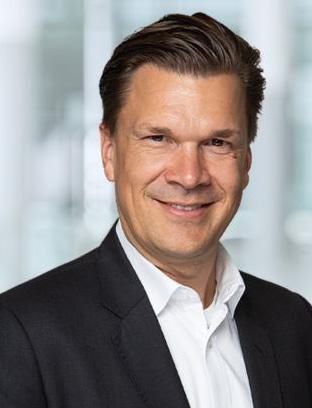
Ralf Pfennig Partner
Head of Deal & Capital Markets Services
AVG. VIX
The VIX averaged 17.9 in June and closed at 16.5, despite brief spikes above the 20-stress threshold on news of US-Iran flare-ups, a more hawkish leaning Fed and a 25-bps ECB hike. 17.9
Source: FactSet.
SpaceX dethrones Saudi Aramco as largest IPO ever –by far
In the US, SpaceX priced its historic USD 86bn IPO on 11 June, making it the largest IPO on record and surpassing the previous Saudi Aramco 2019 benchmark by c. 2.9x (based on deal value). The stock closed up +19.2% on its first day of trading and ended the month up +26.6% (vs issue price).
Source: Dealogic.
The ECB's 25-bps hike on 11 June was read as the likely peak of the cycle by some market participants, though Reuters polls still pointed to one more 25-bps move in Q3 as of 30 June.
Source: FactSet.
Note 1) See slide 7 for index definitions.
Mixed signals from Europe’s aerospace & defense pipeline
European equities advanced in June, with the STOXX 600 (+2.5%) hitting fresh highs on perceived easing Middle East risks, while the S&P 500 (-1 1%) and the Nasdaq (-2.8%) slipped on cooling AI sentiment and a perceived hawkish leaning Fed. Check whether your business is ready to go public at:
Source: FactSet.
While KNDS has postponed its FrankfurtParis dual listing amid volatility in the European defense sector, German space technology group OHB has staged a "comeback" to the stock exchange in what can be characterized as a “Re-IPO”.
Source: Dealogic
Macro environment and outlook
H1 2026 was marked by persistent geopolitical crosscurrents, with the Middle East conflict remaining the dominant source of uncertainty for markets and policymakers alike.
As of 30 June, the Strait of Hormuz has partially reopened under the US-Iran framework agreement, though throughput remains below pre-crisis levels. Brief flare-ups in late June tested the ceasefire, with questions around Iranian tolls and control of the waterway still unresolved.
Falling oil prices began reshaping the monetary policy debate. The ECB's 25bps hike on 11 June was read as the likely peak of the cycle by some market participants, though Reuters polls still pointed to one more 25-bps move in Q3 as of 30 June. The Fed, meanwhile, held rates steady at 3.50-3.75% on 17 June but removed any key language indicating a bias toward future cuts and signaled possible hikes ahead during its most recent meeting.
Eurozone leading indicators sent mixed signals in June, offering little directional read. Growth remains subdued (Eurozone 2026E GDP at 0.8%, Germany 0.7%) with CPI still above target (2.7% and 2.8% respectively), suggesting a cautious backdrop for markets for now, with the outlook likely to firm up once inflation and growth signals become clearer.
Equity market overview
Global equity markets closed H1 2026 firmly in positive territory, having weathered heightened geopolitical tensions and periodic bouts of volatility –with the Nasdaq (+11 9%) and S&P 500 (+8 7%) leading in the US, alongside solid gains for the STOXX 600 (+8.3%).
European equities extended their advance in June, with the STOXX Europe 600 setting a fresh all-time high toward month-end as perceived receding Middle East risks lifted sentiment US markets were more mixed: the S&P 500 and Nasdaq registered new record closes early in the month before drifting lower as investors weighed a more hawkish Fed against easing energy prices.
Despite the broadly positive tone in Europe, the DAX underperformed in June (-0.4%), weighed down by a sharp reversal in defense names after the German government cancelled a major frigate procurement program, as well as continued weakness in automakers on the back of profit warnings and mounting Chinese EV pressure. The FTSE 100 (+0.8%) also lagged, as Starmer's resignation on 22 June dampened UK sentiment.
In the US, both the S&P 500 (-1.1%) and the Nasdaq (-2.8%) ended June in the red as renewed doubts in the AI narrative emerged around the SpaceX IPO. Sentiment cooled through the month as investors focused on corporate pushback against rising AI spend, the rise of cheaper open-source models as well as tighter US oversight.
The VIX averaged 17.9 in June and drifted back to 16.5 by month-end, even as two US-Iran flare-ups, a hawkish Fed pivot and an ECB rate hike briefly increased volatility above the 20-threshold. Investors appear willing to look through short-term noise for now, though the calm is fragile and could easily be tested again in the weeks ahead.
STOXX Europe 600 sector performance LTM
Source:
Issuance activity
While no sizeable IPO (with a deal value of min. EUR 150m) has priced in Europe this month, a series of smaller new issuances, predominantly in the Nordics, successfully priced in June. Furthermore, Digi Spain (a subsidiary of Romanian telecommunications group Digi) and Swiss real estate company Infracore have announced their intention to float with trading expected in July assuming successful pricing.
In parallel, German space technology group OHB has staged a "comeback" to the stock exchange in what can be characterized as a “Re-IPO”. The first tranche of the transaction was upsized on the back of strong investor demand and raised total proceeds of approx. EUR 900m, of which approx. EUR 482m accrued to the company as primary proceeds, with the remainder going to financial sponsor and shareholder KKR. Although OHB's original IPO dates back to 2001, the free float had been reduced to less than 6% following KKR's public tender offer in 2023, with the majority of shares held by the founding family and KKR. Over the past years, OHB has benefited from its exposure to aerospace and defense tailwinds, translating into a significant re-rating of its valuation. Following completion of the transaction, including the ongoing second tranche and assuming full exercise of the greenshoe option, free float is expected to increase significantly to c. 20%, while the founding family will continue to hold more than 60% and KKR retaining c 20% of the company
In the US, SpaceX priced its historic USD 86bn IPO on 11 June, making it the largest IPO on record and surpassing the previous Saudi Aramco 2019 benchmark by c. 2.9x (based on deal value). The offering was structured at a fixed price with a free float of only c. 5% and featured a comparatively high retail allocation of c. 20%. The stock closed up +19.2% on its first day of trading and ended the month +26.6% (vs issue price). Notably, SpaceX will be fast-tracked into the Nasdaq100 within 15 trading days under Nasdaq's revised May 2026 rule, with analysts estimating multi billion USD inflows from mechanical index buying at inclusion.
Source:
Note: 1) European = Transactions on exchanges in Western Europe, Benelux & Nordics
Dealogic.
IPO compass and outlook
Selected European IPO emission activity YTD
Factors influencing IPO market activity
Note: 1) Considering transactions with deal value >€150m excl. Greenshoe, excl. SPACs, 2) At IPO, 3) Excl. Greenshoe, 4) Compared to issue price at IPO as of 30 June 2026 Source: Dealogic.
European IPO outlook
By end-June 2026, Europe's IPO pipeline continues to broaden beyond defense and across sectors, supported by easing volatility – though execution remains contingent on sector sentiment, macro headlines and the interest rate trajectory.
While KNDS has postponed its Frankfurt-Paris dual listing amid volatility in the European defense sector, thyssenkrupp is reportedly considering a spin-off of materials distributor and supply chain services provider tk accelis on the Frankfurt Stock Exchange before year-end 2026, while private equity firm Mutares is reportedly preparing a potential H2 2026 IPO of firefighting vehicles and rescue equipment manufacturer Magirus as part of a dual track process.
In Denmark, Leo Pharma, which is backed by the Leo Foundation and private equity firm Nordic Capital, is reportedly advancing towards a Copenhagen listing.
Source: Dealogic, KPMG, Germany, 2026
Appendix - definitions
Definitions and methodologies of referenced survey data indices
S&P Global Eurozone Manufacturing Purchasing Managers’ Index (PMI)
The S&P Global Eurozone Manufacturing PMI is compiled by S&P Global from responses to questionnaires sent to survey panels of manufacturers in Germany, France, Italy, Spain, the Netherlands, Austria, Ireland and Greece, totalling around 3,000 private sector companies. The panels are each stratified by detailed sector and company workforce size, based on contributions to each country’s GDP. The index is the sum of the percentage of ‘higher’ responses and half the percentage of ‘unchanged’ responses. The indices vary between 0 and 100, with a reading above 50 indicating an overall increase compared to the previous month, and below 50 an overall decrease.
Economic Sentiment Indicator (ESI)
The ESI reflects overall economic confidence, particularly in the European Union, based on surveys of various sectors such as industry, services and consumers Expressed as an index with a long-term mean of 100, an ESI above 100 indicates optimism and stronger confidence, while a value below 100 suggests pessimism and weaker confidence. The ESI helps gauge economic trends and outlooks.
Consumer Confidence Index (CCI)
The CCI is the arithmetic average of the balances (in percentage points) of the answers to the questions on the past and expected financial situation of households, the expected general economic situation and the intentions to make major purchases over the next 12 months. It is used as an economic indicator to gauge consumer spending behaviour. Values above zero percent (percentage points) indicate positive views of the economy, whereas values below zero percent (percentage points) indicate negative views, and a value of zero reflects an equal balance of positive and negative views.