A next-level economy depends on cities that are smart
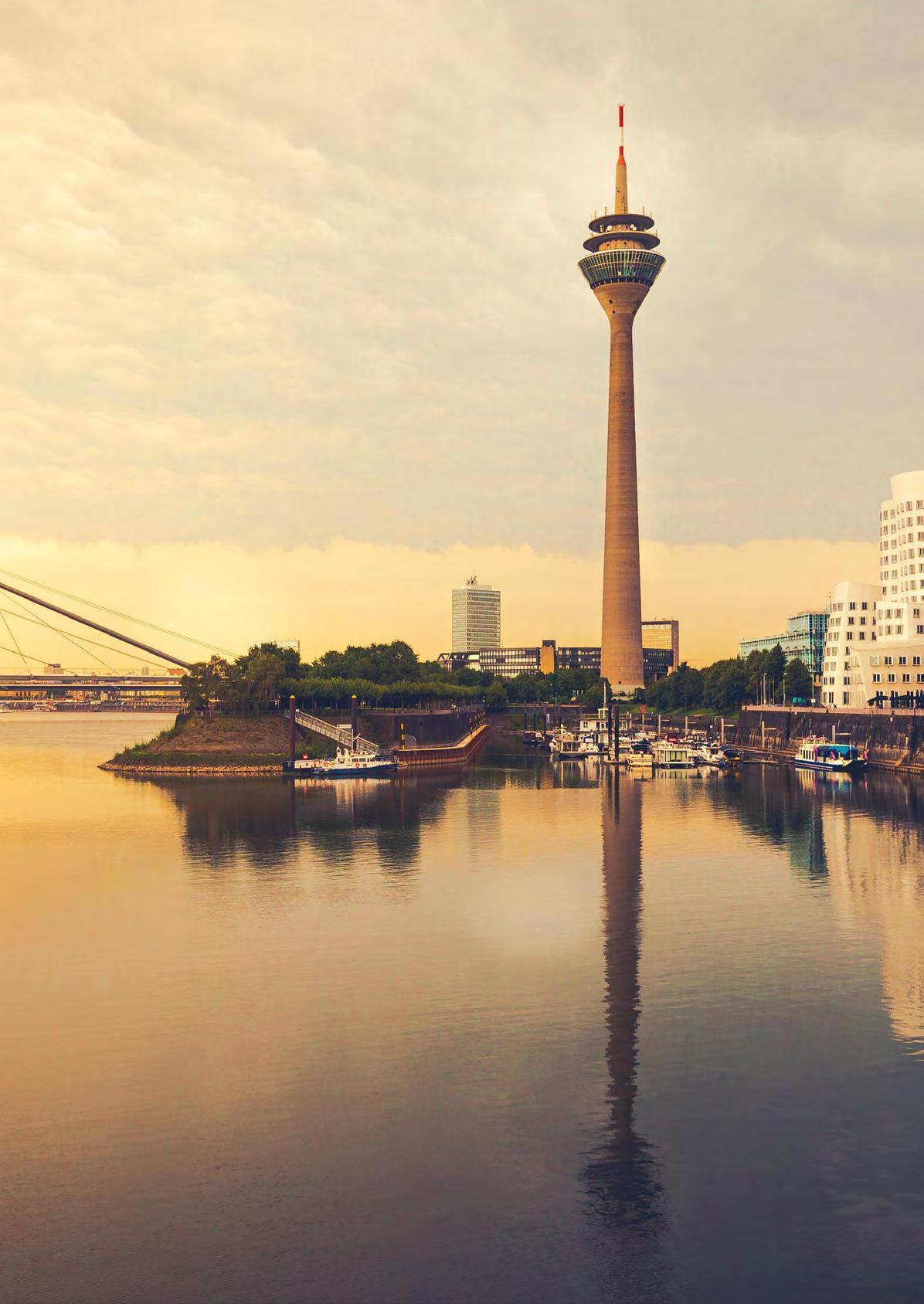
Business Hotspot North Rhine-Westphalia North Rhine-Westphalia is strong, dynamic and ideally located
July 2018
www.kpmg.de
Protectionism and Populism on the Rise Abroad
Dear Reader,
The newly enforced US customs and trade policy is sending shock waves around the globe. Major economies around the world are responding with retaliation. In today’s world, pretty much everyone and everything is globally connected, so all of us will have to deal with the fallout. Of course, companies with an international footprint are first in line when it comes to mitigating the risks as they will be impacted the most, but wherever and however you operate your business, you will feel the effects. I have just come back from the US, where German and US business leaders have voiced great concern about their respective business prospects. Harley-Davidson – which has been directly targeted by European countermeasures – is one of the first firms to rethink its global operating model, with some parts of its production being relocated to avoid impending tariffs imposed by the EU.
At the same time, the EU is experiencing what is probably the most difficult period since its formation. Differing views among European countries on how to deal with growing migration have led to an ever greater threat of disintegration as well as a rising number of right-wing governments in Eastern Europe, Austria and Italy. An increasing number of people are questioning the concept of democracy as a whole, suggesting that only strong leaders are able to provide answers to those challenges. Just last week the Turkish electorate confirmed that trend.
What’s the message for investors? Germany is a very safe bet. Austerity is coming to an end here. Also, Germany will not embrace protectionism and advocates free trade internationally. Fortunately, political decisions here are made in a well-tempered, rational fashion. Nowadays, that is not a given any more.
Best regards,
Andreas Glunz Managing Partner International Business KPMG
Current Data 01
The German economy is still in a boom phase. However, some troubling issues are coming to the fore: shortage of skilled labour as well as limited production and transport capacities are becoming greater business risks.
MAY 2018 INFLATION
Source: German Federal Statistical Office, 05/2018
APRIL 2018 EXPORTS
Source: German Federal Statistical Office, 06/2018
GREENFIELD INVESTMENTS IN GERMANY Q1 2018 (GLOBAL RANKING)
Source: fDi Markets, 04/2018
NUMBER OF THE DAY
44.6
EUR / USD
Source: ECB, 06/17/2018
2018 GDP GROWTH EXPECTATION
EUR / CNY
MILLION PEOPLE IN EMPLOYMENT IN GERMANY IN THE 1ST QUARTER OF 2018 2.2% 1.16 7.44 € 110.3 bn € 89.9 bn #5
Source: ECB, 06/17/2018
APRIL 2018 IMPORTS
2.0 %
Source: Oxford Economics, 06/2018
Source: German Federal Statistical Office, 06/2018
APRIL UNEMPLOYMENT RATE
3.5%
Source: German Federal Statistical Office, 05/2018
In April 2018, the number of people in employment in Germany was 44.6 million. Compared to the same month last year, this is an increase of 1.4 %. The usual seasonal decrease in employment in the first quarter of the year was lower in 2018 than the average of the past five years. This was mainly due to the growth in the service sector, especially in public services, education and health. This should have a noticeable effect on the development of wages.
Source: German Federal Statistical Office, 05/2018
02 Brexit: Hope for the Best and Prepare for the Worst
Brexit and its economic impact – an expert interview with Nikolaus Schadeck and Oliver Dörfler from KPMG.
Mr Schadeck, Mr Dörfler, on 29 March 2019 the United Kingdom will leave the European Union. How significantly will this impact trade relationships between the UK and Germany?
Schadeck: Separations are never easy – it doesn’t matter if these play out on a personal level or at the level of economic policy. At the end of the day, a lot depends on whether you part ways on good terms and whether or not you want to maintain close contact, or whether you want to engage with the other party from a distance for now. To put it another way: the key issue is whether there is going to be a hard or soft Brexit.
Dörfler: A lot depends on the details that relate to economic factors. That is to say: what will the terms of access to the European Single Market look like, will the UK remain in the customs union and how close will ties be to the EU?
What is your prediction?
Dörfler: Of course, we cannot really predict anything with absolute certainty with the way things are at the moment. Especially as the negotiations are still ongoing. However, I think it is probable that we will only have a Brexit with further arrangements and a transition period, at least if an agreement has been signed by autumn.
Schadeck: A transition period until the end of 2020 is certainly realistic. In this way both sides would have more time – I don’t necessarily want to say enough time – to come to an agreement on the most important points and create a smooth transition from an economic policy perspective.
Figure:
Selected results of the joint BCCG/forsa/KPMG study “Brexit and its consequences”: opinions differ widely between businesses and the public
Source: Brexit BCCG Expert Group Yearbook 2018/2019 http://www.bccg.de/bild/download/Brexit_Umfrage_Ergebnisse.pdf
Does Brexit also cast doubt upon the importance of the EU?
Dörfler: Brexit will certainly set a precedent as no country has as yet left the EU. There can be no question that this is a turning point for the confederation of states. Nevertheless, opinions vary as to the extent to which the importance of the EU will be diminished. In this regard, 43% of the economic representatives and members of the British Chamber of Commerce in Germany e. V. (BCCG) are of the opinion that the importance of the EU will diminish without the UK. However, only 27% of German citizens share this opinion. This was shown in the survey “Brexit and its consequences” carried out by forsa on behalf of KPMG. By contrast, I personally do not think that the EU will lose importance as a result of Brexit. Be that as it may, this is also dependent upon no other EU Member States now following the UK’s lead and deciding to leave the EU.
Schadeck: The differing perspectives shown by the public and business are also evident when it comes to the potential consequences of Brexit. In this way, only 33% of German citizens expect that Brexit will have negative consequences for the German economy. However, amongst the representatives and members of the BCCG, 73% anticipate that it will have damaging implications. Consequently, these findings are especially important as 52% of those companies questioned stated that in the last five years they have carried out more and more business with British partners.
How do you see future relations between the EU and the UK?
Schadeck: The British are certainly also interested in maintaining good economic ties with the EU – despite their differences. To this extent, London will likely try to cooperate as closely as possible with the EU. However, this is of course a delicate balancing act, especially when critical economic factors are at stake, such as London’s prominent position as a global financial hub and largest financial centre for commodities traded in euros.
Dörfler: A CETA-plus agreement is currently being discussed, which is based on the economic and trade agreement (CETA) and the relations the EU has with Norway and Switzerland. However, I would rule out the idea that the provisions which apply to Norway and Switzerland – i.e. continued unrestricted access to the EU Single Market in return for participation in the EU budget or freedom of movement for workers in line with the EU model – would be copied one for one. This is partly because the British side has already indicated that creative solutions would be sought. Therefore, businesses should certainly keep this point in mind.
Do you also think that there will be an impact on investments made by British companies?
Schadeck: No, Germany is such an important market that British companies cannot simply scale back their investments here in Germany. This also holds true on an international level: only 9% of international companies domiciled in Germany want to invest less because of Brexit, indeed 5% say they want to invest more. This was shown by the results of our study “Business Destination Germany 2018”, for which we surveyed 529 CFOs at German subsidiaries of international corporations.
Dörfler: In my opinion, this is also in line with the following development that I have noticed in the course of my activities for British corporations: German branch offices are being assigned more and more tasks for Continental Europe as a result of Brexit. For example, in addition to Germany, Austria and Switzerland, they are also responsible for the Benelux countries and Eastern Europe. I think that this trend will intensify the nearer we get to the exit date.
So at the end of a day it is all about compromises?
Schadeck: Definitely. Both sides are closely connected and dependent upon one another. The UK and EU negotiators are also aware of this fact. In this respect, neither side can afford to cherry-pick and endlessly play for time. Even under the best of circumstances, Brexit is going to be enough of a burden as it is. A hard Brexit with bad feeling and no plans as to how things are to proceed constructively would be detrimental to both sides.
Dörfler: Therefore, we recommend keeping a critical distance, looking at everything from a long-term perspective and not making any sudden decisions. Or as the British would say: keep calm and carry on.
Mr Dörfler, Mr Schadeck, thank you very much for this discussion.
This interview was conducted for the BCCG (British Chamber of Commerce in Germany) Yearbook 2018/2019, which will be published around July 2018.
For further information, please contact:
Oliver
Dörfler
Partner,
Head of Country Practice UK KPMG in Germany odoerfler@kpmg.com
Nikolaus Schadeck Partner, Audit KPMG
in Germany nschadeck@kpmg.com
03 Making Cities Smart
A next-level economy depends on cities that are smart. Municipalities are eager to build the necessary infrastructure and are receiving ample public funding. A great opportunity for foreign tech companies.
Becoming a smart city, in our view, is a holistic process covering 12 dimensions, which each require high levels of technology and investment. These dimensions include, amongst others, the digitisation of the economy, industry, infrastructure, transport, mobility, health, security and government/administration. Implementing innovative strategies relating to these topics enables cities to increase the efficiency and effectiveness of their public services and thereby greatly improve citizens’ experience and the way in which their needs are met.
Setting up an intelligent infrastructure, digital procedures and processes, digital networks and smart data and analytics systems is therefore crucial for the German public sector. It is lagging behind and the timing is perfect: both the federal and state governments are currently willing to make large investments in order to fill the existing gap in Germany’s digital development. For example, the federal government wants to spend 25 billion euros on digital infrastructure alone, setting up a 5 billion euro funding scheme for digital education, new publicly funded research programmes, and security or transport system funding. Meanwhile, the state of North Rhine-Westphalia is spending 100 million euros on a model digital cities programme. Few cities currently have a digital agenda, but most are eager to start their processes soon, requiring private partners for the procurement of necessary tools.
This demonstrates the strong potential for international technology businesses – such as those from the US, Japan, Korea or China – to set up branches in Germany and the EU, and to develop successful sales strategies for entering the German public sector market. Digital commodities and services, including hardware, software, new technologies, capital and investments and relevant services, will see significant rises in demand in Germany, as they are increasingly required by cities, public enterprises, and education and healthcare institutions. They are dependent on innovative global companies producing high-quality technological goods, including 3D printers, intelligent street lighting, smart inventory management systems, virtual learning environments and many more.
However, the challenge remains that foreign companies often have misconceptions about the cultural and legal frameworks for optimally setting up their sales organisation in Germany. In other words: the tradition and culture of working with the German public sector is different. Market entry and distribution strategies must carefully consider the specific regulatory, competitive and customer landscape. International businesses ought to understand the German market, purchasing and communication processes, contracting requirements and optimal pricing and track records for winning valuable public clients. It helps to complete an initial market entry assessment, including periodic reports, and a customer and competitor analysis.
This should be followed by the development of a market entry strategy which requires, for example, sales forecasting and a well-defined business model. Product and pricing, brand and marketing, organisation, people and processes, sales concept, market and location are all key considerations when entering the German market as well.
While this might seem like a complex procedure, it is easily manageable with the correct strategic planning or the involvement of relevant experts. Foreign technology companies should recognise the huge potential in Germany’s public sector market, as the need for digitisation and innovation is urgent while the timing is ideal. There is also a good chance that if a product starts in the public
Figure:
sector – at schools, universities, in the urban environment –it will more easily become accepted as the standard and established in people’s minds.
For further information, please contact:
Hartfrid Wolff
Senior Manager, KPMG Law Rechtsanwaltsgesellschaft mbH hwolff@kpmg-law.com
Dr Nicolas Sonder
Senior Manager, KPMG Law Rechtsanwaltsgesellschaft mbH nsonder@kpmg-law.com
The digitisation of a city is a holistic process with 12 dimensions
Digital buildings and living
Digital government and administration
Digital natural environment
Digital education
Digital society
Source: KPMG in Germany, 2018
Digital farming and gardening
Digital health
Digital economy and industry
Digital security and safety
Digital infrastructure
Digital energy and construction
Digital transport and mobility
04 Business Hotspot North RhineWestphalia
– Guest Article –
North Rhine-Westphalia (NRW) is strong, dynamic and ideally located. The state is the most important economic region in Germany. We look at why it is so popular among foreign companies in Europe – and why there is still plenty of room for investment.
North Rhine-Westphalia is a highly diversified and attractive business hotspot with conditions that offer investors optimal opportunities for success. Above all, companies value its central location in the heart of Europe. With 17.7 million inhabitants, North Rhine-Westphalia is the most populous of Germany’s 16 federal states. Around 160 million people live within a 500 km radius of the state capital Düsseldorf –equivalent to almost one third of all EU consumers. From no other location in Europe can so many people with such high purchasing power be reached within such a short distance as from North Rhine-Westphalia. The state accounts for 22 per cent of Germany’s purchasing power. The inhabitants of NRW annually spend more than 350 billion euros on private consumption and already constitute an interesting consumer market in themselves. In 2017, the state generated more than one fifth of the German GDP at 692 billion euros, equivalent to 4.5 per cent of the European GDP (EU-28). This would put North Rhine-Westphalia among the top 20 in a worldwide comparison if it were an independent state.
The size of the market attracts companies to the Rhine and Ruhr regions. 19 of the 50 highest-grossing German companies have their headquarters in North Rhine-Westphalia (NRW), including Bayer, Bertelsmann, Deutsche Post, Deutsche Telekom, E.ON, Metro, Rewe, RWE and ThyssenKrupp. The trading volume is also impressive: 14.9 per cent of German exports are made in NRW, with a total value of 180 billion euros. 21.5 per cent of all German imports go to NRW (207 billion euros).
The favourable business environment also attracts foreign investors. In a comparison of the 16 German states, North Rhine-Westphalia has established itself by a wide margin as the leading investment destination for companies from all over the world. There are now more than 19,000 foreign companies based on the Rhine and Ruhr. They include global players such as 3M, BP, Ericsson, Ford, Huawei, QVC, Toyota and Vodafone, as well as numerous SMEs. And the trend is rising – in 2017 alone, around 421 foreign companies opted for North Rhine-Westphalia as their investment or expansion location.
One of those success stories is the Japanese company Asahi Kasei, which is currently intensifying its activities in the field of hydrogen production in Europe. The Japanese technology company with its European headquarters in Duisburg is a leading supplier of chlor-alkali electrolysis systems, which are used at 126 production sites in 26 countries worldwide. In April 2018, Asahi Kasei Europe, the Asahi Kasei Group’s European operating headquarters, launched a demonstration project to produce hydrogen from simulated wind energy in the Hydrogen City of Herten in North Rhine-Westphalia. The joint project together with the Hydrogen Competence Center h2herten will contribute to the development of an electrolysis system to produce green hydrogen on a large scale.
There are good reasons why Asahi Kasei and the other foreign companies have settled and invested in NRW. The state’s excellent infrastructure plays an important role in the choice of location. All major European cities can be reached within three hours from the two major international airports in Düsseldorf and Cologne/Bonn, Germany’s third-largest cargo airport. A dense network of waterways, railways and roads provides fast routes to sales and procurement markets in Europe and the rest of the world. In Duisburg, the world’s largest inland port with more than 129 million tonnes of goods handled per year ensures reliable connections to the Belgian and Dutch seaports. Another reason is the many available industrial and commercial sites which provide ample room for investment. But North RhineWestphalia has even more to offer.
The US company and global player Amazon has also identified the location’s advantages, mainly with regard to the logistics infrastructure of North Rhine-Westphalia. Amazon runs six sites in NRW, including several logistics hubs and a development centre, employing about 7,000 people. Furthermore, there are plans for new logistics centres in Mönchengladbach and Oelde with a total of 3,000 employees and some 4,000 robots.
The British cosmetics manufacturer Lush opened a production facility in Düsseldorf in June 2016 – the company’s biggest investment on the European mainland. On a 10,700-square-metre site, the company manufactures products for Germany, France, Benelux and Sweden. The company already employs about 600 workers here in distribution and manufacturing. 20 per cent of its production has now been relocated from the UK to Düsseldorf.
Excellence through diversity
As a creative and innovative business hotspot, North Rhine-Westphalia is characterised by its diversity. Here, science and research deliver first-class performance. The more than 110 technology centres and non-university research institutes in the state form the densest research network in Europe and provide ideal conditions for technology transfer. And the wide range of studies offered by its 70 universities ensures that companies from all industries can find qualified employees here. For this reason, many of the companies based in the state are market leaders in their respective sectors. This is also reflected in the more than 100 international trade fairs that take place here every year.
For further information, please contact:
Petra Wassner
Chief Executive Officer
NRW.INVEST GmbH Wassner@nrwinvest.com
Marc Ufer
Regional Head – Region West Düsseldorf mufer@kpmg.com
Christoph Beumer
Regional Head – Region West Cologne cbeumer@kpmg.com
05 Reinventing Hamburg
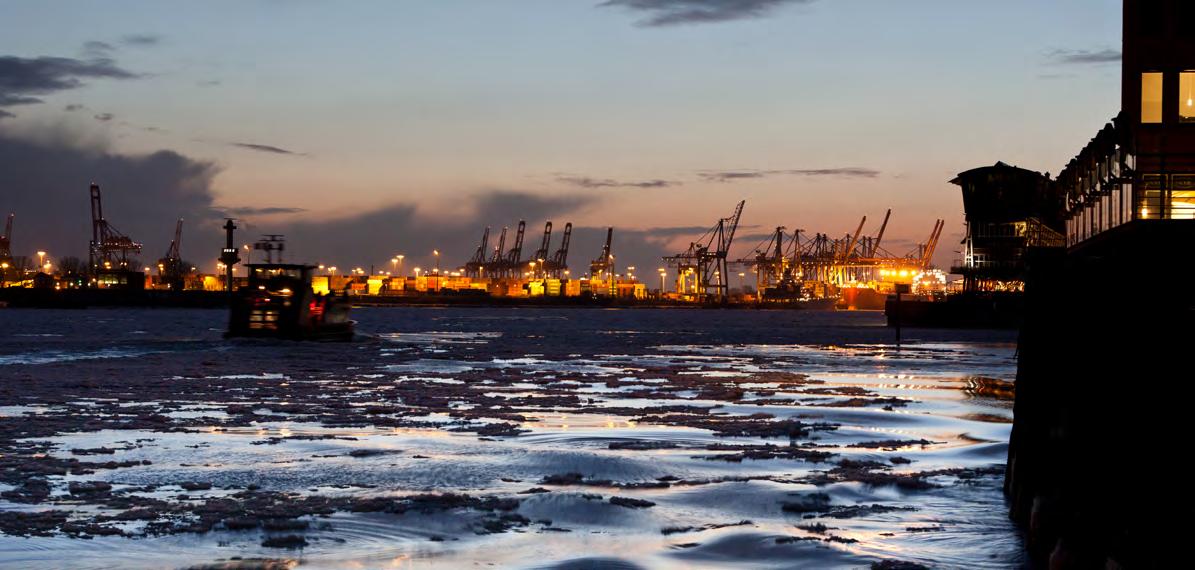
Hamburg is Germany’s biggest port city with a long tradition of trade and logistics. Using its advantages in infrastructure, mobility and logistics, it is well positioned to champion the digital transformation towards a city of solutions.
The gateway to the world
Known as the gateway to the world, Hamburg is the biggest German maritime port, connected with the North Sea via the River Elbe. With 1.8 million residents, it is also the second-largest German city and an EU model region for future-oriented cluster policies and strategic initiatives. Hamburg’s cosmopolitan and liberal-minded reputation is due to its long maritime and trade history not only with the Western hemisphere, but also with Asia, Eastern Europe, the Baltics and Russia. However, Hamburg is not only a logistics hub and trade city: it’s also a city of media, energy, life science, aviation and shipping.
To promote the development of all those economic sectors and foster the site-specific network exchange between the relevant economic, scientific and political stakeholders –especially with regard to the potential for innovation – the City of Hamburg has launched a cluster initiative (“smart specialisation strategy”). With this, Hamburg aims to strengthen existing economic sectors and to actively handle the technologically driven change process by facilitating interdisciplinary, future-oriented exchange in innovative hubs.
ITS World Congress and “Hammerbrooklyn” –two examples for Hamburg’s change strategy
Two of those important exchange hubs which will contribute to the dynamic change of Hamburg – the ITS World Congress and the project “Hammerbrooklyn” – are attracting remarkable attention.
Firstly, the City of Hamburg was selected to host the world’s biggest congress for intelligent transport systems (ITS) in 2021, together with the Federal Ministry of Transport and Digital Infrastructure. This selection stands in line with Hamburg’s status as a model region for electromobility and its “City of Solutions” vision. This vision reflects Hamburg’s aim to become a pioneer in implementing intelligent, environmentally friendly mobility and transport systems as well as services such as on-demand shuttles, automated and connected driving, and infrastructure solutions like automatic traffic volume regulation. Also, with the “smartPORT initiative”, Hamburg wants to evolve into a model city for innovative logistics with the support of industry and research. To become such a smart city, Hamburg plans to offer a testing ground for new technological mobility systems and has already formed strategic partnerships with well-known private companies, such as the Volkswagen Group, BMW, Daimler, Deutsche Bahn and HERE Technologies.
Secondly, the Senate of Hamburg is engaged in promoting the exchange between established companies from all industries with start-ups, “beyond thinkers” and the city institutions by founding the “Hammerbrooklyn.DigitalCampus”. Named after the combination of Hammerbrook, a district of Hamburg, and Brooklyn, the famous district of New York, USA, the campus is the result of a public-private partnership. The first part is expected to be completed in 2019. It will represent the centre of Hamburg’s digital scene and enable entrepreneurs, IT specialists and scientists – among others – to experiment, learn and execute digital innovations (e.g. in the field of 3D printing, blockchain technology, etc.). Thus, the centre’s goal is not only to actively handle all of Hamburg’s challenges, but also to positively confront its economy and inhabitants with the era of digital transformation. Furthermore, “Hammerbrooklyn” will contribute to using the huge potential of knowledge-based synergies, ensuring Hamburg’s important economic role as the smart gateway to the world in the future.
For further information, please contact:
Mattias Schmelzer
Regional Head – Region North Hamburg KPMG in Germany mschmelzer@kpmg.com
06 Treasure Island: German Mittelstand
In Germany, most family businesses and medium-sized firms are passed on to the next generation. What happens if a suitable successor is not to be found? KPMG, in cooperation with the association DIE FAMILIENUNTERNEHMER e. V., has launched a digital transaction platform called Matchmaker that brings together the world-class German Mittelstand, enterpreneurs and investors from all around the world.
Transferring shares or company succession is one of the most complex challenges that family businesses and medium-sized firms in Germany (known as Mittelstand) must face up to sooner or later. The interests of family, firm and management need to be reconciled. As regards business succession or joint investment, entrepreneurs sometimes need to expand their search beyond the family or the company as they look for a new owner.
Strong pressure to invest, favourable financing conditions and increasing interest from abroad are currently leading to greater competition among investors. And this should not come as a surprise: Germany’s Mittelstand, with its hidden champions, upcoming generational handovers, new growth potential and long-term orientation, represents an attractive prospect. This provides additional opportunities for companies who want to sell their shares. The growing trend of family equity companies providing investment is enlivening the market. These companies not only bring experience and industry knowledge gained from their own business activities: they also have a strong interest in sustainable growth and a highly motivated workforce. Assuming responsibility and thinking long-term in generations: these are the strongly held values of family equity companies.
But how do you find the right new owner? And what about determining the purchase price, financing, risk diversification and company culture?
Whole/partial sale or business succession options
There are various factors at play in the decision to sell: the purchase price, sustainability, compatibility with the company’s own values and culture, and professional handling of the transfer of the company can ultimately prove decisive. These factors need to be thoroughly considered. One attractive option for a partial sale is a management buy-in. This involves an external person being brought into the company in the capacity of a managing partner/shareholder, and offers the entrepreneur the prospect of continuing their life’s work in a sustainable manner. There are many leadership personalities in the market who are interested in acquiring a company without necessarily founding it themselves.
The entrepreneur can obtain considerable value added from dialogue with people who themselves come from an entrepreneurial family or have links to the Mittelstand. Family equity companies or family offices have their roots in the Mittelstand and thus follow a similar long-term and sustainable approach. Due to the financial leeway that it offers an entrepreneur, from a growth perspective it could be a very sensible decision to opt for a sustainability-minded financial investor or a Mittelstand holding company.
In many cases, suitable buyers may also be strategic investors, with whom sustainable synergies for both companies can be generated with a view to growth and to the company successfully continuing its operations.
The clearer the company’s visions, the easier it is to later successfully advance the sale or investment process. However, the market for investment often lacks transparency. A lot of good Mittelstand companies may know their customers, suppliers and direct competitors, but when it comes to selling the firm or shares in it, or making succession arrangements, they often don’t have a contact person to help them along. At the same time, the issue is highly emotional from the seller’s perspective as it concerns transferring their life’s work to hands outside of the family.
Relevant and suitable business partners are determined based on available matching information
Confidentiality is of paramount importance in the M&A sector. Whether for strategic, economic or personal reasons –there are many feasible scenarios in which it is crucial that employees, competitors or the public do not learn about a planned sale at too early a stage. Matchmaker thus focuses on anonymity and offers a sophisticated search function (“smart matching”) and a closed environment. Sellers enjoy special protection; they are first made aware of potential
business partners. They can then decide if they want to make their contact details and company information accessible to the other party.
The advantage for investors: they save time with the search, benefit from a transparent process and can invest their energies in the negotiation phase and in working out the details without hindrance.
KPMG, in cooperation with the association DIE FAMILIEN U NTERNEHMER e. V., has launched a digital transaction platform that brings together family entrepreneurs and suitable successors as well as various investor groups. Via the platform, called KPMG Matchmaker, the offer side – family entrepreneurs –connect with potential business successors and investors, including family offices, family equity companies, management buy-in candidates, recruitment consultants and financial investors.
Source: KPMG in Germany, 2018
For further information, please contact:
Dr Vera Elter
Managing Partner, Family-Owned Businesses KPMG in Germany velter@kpmg.de
Michael Königer
Manager, Deal Advisory KPMG in Germany mkoeniger@kpmg.de
Figure:
M&A consultants
07 The New EU General Data Protection Regulation
Starting from scratch?
European General Data Protection Regulation –following the German model?
It is finally here: the new EU General Data Protection Regulation (GDPR) came into effect on 25 May 2018. The GDPR is directly applicable at the national level in all Member States of the European Union and thereby harmonises data protection laws across EU Member States to a large extent. The GDPR includes more than 70 opening clauses which leave room for the EU Member States to implement stricter, less strict, or more detailed rules.
GDPR based on the former German Federal Data Protection Act
Germany has had and still has a strict understanding of data protection which is different from the understanding of many other countries. Many people fear that their data, whether stored with private companies or the government, can be easily abused. This might explain why attempts to weaken German and European data protection laws have not been successful. Therefore, to a considerable extent, the new so-called “rights of the data subject” relating to the processing of personal data have been adopted from the principles from the former German Federal Data Protection Act.
The principles of lawfulness, purpose limitation, data minimisation, accuracy, storage limitation, integrity and confidentiality as well as accountability of data processing companies for compliance have been existent in German law for over 15 years and should be well known to companies doing business in Germany.
The challenge
As a complete overhaul of European data protection law, the GDPR goes far beyond the scope of the former EU Data Protection Directive 95/46/EC of 24 October 1995 and the rules that national legislators implemented as a consequence, which was the first European attempt to harmonise the rules that protect personal data and free movement of such data.
The EU regulation contains the following key elements:
1. T he EU General Data Protection Regulation extends its territorial scope. This might be evident. However, the extension goes beyond the European borders.
It applies:
– To all companies worldwide that target European markets and in this context process personal data of European Union citizens (regardless of where the processing takes place) and
– To those companies that process data of European citizens in the context of their European establishments.
Therefore, non-European companies may also fall under the requirements, making the GDPR the first global data protection law.
2. The GDPR tightens the rules for obtaining valid consent to process personal information. Valid consent is one of two possibilities to justify data processing, the other being legal justification. The conditions for obtaining valid consent have been strengthened. Companies will not be able to use long illegible texts full of legalese. The request for consent shall be submitted in a manner which is clearly distinguishable from the other matters, in an intelligible and easily accessible form, using clear and plain language.
3. Accountability is one of the key data protection principles of the GDPR – and probably the most crucial of all. It makes organisations responsible for complying with the GDPR and shifts the burden of proof: organisations must be able to actively demonstrate their compliance with the GDPR. Therefore, appropriate technical and organisational measures must be introduced to an organisation’s compliance management system to meet the requirements of accountability.
4. The GDPR introduces mandatory privacy impact assessments (PIAs) and requires data breach notifications. PIAs are not mandatory for all data processing activities. They are only mandatory where processing is likely to result in a high risk to the rights of individuals and are particularly relevant where new data processing technology is being introduced to minimise risk to data subjects. Organisations must conduct a PIA before starting projects involving personal information, to ensure their compliance as projects progress. In practice, this leads to an obligation for controllers to continuously assess the risks associated with the processing activities in order to identify when a type of processing is likely to result in a high risk for the data subject.
5. The most visible effect of the GDPR to the regular citizen might be the new information requirements. These state that every data controller collecting personal data from a data subject or through another source has to inform the data subject at the time their personal data is collected from them about the collection and use of their personal data. The information must include the purposes for processing the personal data, respective retention periods for that personal data, and who it will be shared with. This is a key transparency requirement under the GDPR. If personal data is collected from other sources, in general, the data subject must be provided with privacy information within a reasonable period of obtaining the data and no more than one month. Organisations should therefore regularly review and, where necessary, update their respective privacy information.
6. Within the last few years, the number of international transfers of personal data in the private sector have increased dramatically. However, the GDPR imposes restrictions on the transfer of personal data outside the European Union, to third countries or international organisations. These restrictions are in place to ensure that the level of protection of individuals afforded by the GDPR is not undermined. When engaging in international transfers, e.g. to group companies or to external third parties, it is important to implement safeguards to ensure that the protection travels with the data.
7. Last but not least: the GDPR is enforced by significant fines for non-compliance of up to 20 million euros or 4% of annual global turnover, whichever is higher – coupled with negative PR associated with mistreatment of client data. This makes data protection a boardroom issue for companies.
Outlook
It remains exciting how European Member States will (re-) interpret the legislation of data protection at a European level. The variety of the Member States’ approaches and their respective authorities who will apply the law certainly will lead to a multi-layered approach. The European legislator clearly stated that one of the main goals of the GDPR is to strengthen the rights of individual data subjects. However, it will be crucial to also protect business flexibility when it comes to new models to handle personal data. It is the GDPR’s challenge – and ours as advisors to our clients – to find a balanced approach to these complex interests.
Author:
Nina Neuhaus KPMG Law Rechtsanwaltsgesellschaft mbH
For further information, please contact:
Lars Meixner Partner
KPMG Law Rechtsanwaltsgesellschaft mbH lmeixner@kpmg-law.com
Nikola
A.
F.
Werry, LL.M. (UK) Manager
KPMG Law Rechtsanwaltsgesellschaft mbH nwerry@kpmg-law.com
08 Data Privacy, German Style
Have you noticed that Germans tape stickers or pieces of paper over their laptop cameras? Or how they change names on social media and Katherina, for example, becomes “K-ta”? For someone from outside Germany, this might seem odd or even exaggerated, but the truth is that Germans have a long history of mistrust in data collection as well as state surveillance.
During the Weimar Republic (1918–1933), German public authorities collected and maintained extensive records of people’s affiliations like religion, sexuality or political preferences. These records were later misused by the Nazis (1933–1945) to identify and track down “undesirables”, who were subjected to ruthless terror including imprisonment and murder.
After World War II, the Ministry for State Security of the German Democratic Republic (Stasi) continued to use extensive surveillance and control tools to track the whereabouts of each and every person living in East Germany. Likewise, households were ordered to keep record books with information on people living in the house, visitors and daily activities.
To prevent this from ever happening again, the German government has gone to great lengths to create legislation which regulates the collection, processing and use of personal data for individuals, companies and public authorities in Germany.
Data protection legislation in the European Union has been extensive but different in every Member State. To regulate the differences, on 25 May 2018 a new regulation has come into effect to ensure minimum standards for data protection in the EU: Regulation 2016/679 (General Data Protection Regulation). The new provisions include a requirement for all companies operating in Europe (even if they have their headquarters outside the European Union) to comply with the local standards for data protection. Another feature is that users have the right to be completely erased from companies’ servers, and they can take their data with them.
Call it exaggerated or old-school, but when Google launched Street View a few years back many Germans opted to have their homes made unrecognisable. So, when conducting business in Germany, you had better ask twice how much your clients and staff are willing to share publicly. Merely not asking violates their rights.
For further information, please contact:
Barbara Scheben Partner, Compliance & Forensic KPMG
in Germany bscheben@kpmg.com
Joachim von Prittwitz
Senior Manager, International Business KPMG
in Germany jprittwitz@kpmg.de
Three Questions 09
Interview with Mr Abdulaziz Al-Mikhlafi, Secretary-General of the Ghorfa Arab-German Chamber of Commerce and Industry
In your view, what are the key growth sectors in Germany?
The German economy is well positioned, particularly in areas such as mechanical and plant engineering, aviation, the automotive sector and healthcare. Due to the outstanding German dual education system, German experts are well known all over the world. However, in order to generate sustainable growth in the future, there is one issue that spans all sectors: digitisation. Of course, one could say that the IT sector plays a particularly important role in Germany, but considering this industry alone would not go far enough. In my opinion, all sectors must continue to push ahead with Industry 4.0 and topics such as smart networks, artificial intelligence or autonomous vehicle control.
We will, of course, discuss this at our most important forum, the Arab-German Business Forum from 25 to 27 June in Berlin. Besides digitisation, we have identified the most important topics that are relevant for Arab-German cooperation, like we do every year. We will ask, for example, what German companies can contribute to the planned infrastructure measures, or to food security in the Arab countries. And, of course, we will also discuss direct investment and knowledge transfer. We have once again invited selected experts from Germany and the Arab world to take part in the debate.
Which cultural site or event in Germany would you recommend as a must-see?
Berlin is definitely worth visiting – for tourists but also for business or healthcare travel. I have lived in Berlin for almost 20 years and I am still amazed at how quickly this city is developing. In this regard, Berlin and its ambitions are also a blueprint for every developing society. Just 70 years ago, the city was totally destroyed. Of course, you can still see the effects of the Second World War on Berlin and Germany in many places or in the numerous museums and monuments. On the other hand, you see a booming city striving for sustainable growth. Therefore, Berlin is the best example of the enormous economic development that began with groups of women clearing away the rubble after bombing and has gained worldwide respect through the diligence of an entire society.
That is what the Arab countries can also benefit from. I am not only talking about the countries destroyed by war, such as Yemen, Iraq or Syria, but also about the more developed countries. Young people who are encouraged to build their own businesses with diligence and courage are the foundation of every functioning society.
How do you perceive Germany’s economic role in the world?
We all know that Germany is one of the world’s leading and most diversified economies. German products are known for their high quality. It is true that the trade deficit with Germany is very high for many countries, which has triggered several debates recently. As regards the Arab countries, the Ghorfa Arab-German Chamber of Commerce and Industry has always tried to bring about a more balanced trade relationship.
But in this debate, we should not forget to see the bigger picture. If we look behind the numbers, we can see that German exports are more than just products. In many cases, German companies are bringing know-how to the country alongside their products. This is the kind of sustainable export which we at the Ghorfa are working for.
Considering this, I would say that Germany’s role in the world for many countries is not just that of an economic partner, but also a friend. This is especially true of the Arab countries. The ties have been growing for more than a century. For example, Siemens laid cables through the Suez Canal to connect Egypt in 1859. On the other hand, Arab investments in Germany have been fruitful for many decades. Kuwait, for example, which is this year’s partner country at our Business Forum in Berlin, has been one of the biggest investors in Daimler AG for more than forty years.
For further information, please contact:
Stefan Friedrich Partner, Head of Country Practice Saudi Arabia sfriedrich@kpmg.com
Abdulaziz Al-Mikhlafi
Secretary-General
Ghorfa Arab-German Chamber of Commerce and Industry e.V. ghorfa@ghorfa.de
10 Key Events
Events:
FIFA World Cup
14 June – 15 J uly 2018, Russia
IFRS 16 (International Financial Reporting Standards) and Artificial Intelligence (KPMG webinar)
19 July 2018 (10.00–11.00 a.m. CET)
Rhein in Flammen (Rhine in Flames fireworks display)
11 August 2018, Koblenz
Museum Embankment Festival 2018 (three-day event with a unique combination of culture, arts, music and cuisine)
24 – 26 August 2018, Frankfurt
Payment Fraud (KPMG webinar)
4 September 2018 (10.00–11.00 a.m. CET)
International Motor Show Germany (IAA)
20 – 27 September 2018, Hanover
Oktoberfest
22 September – 7 Oc tober 2018, Munich
Matchmaker (KPMG webinar)
20 November 2018 (10.00–11.00 a.m. CET)
If you are looking for more KPMG seminars and conferences, please click here
That Special Event
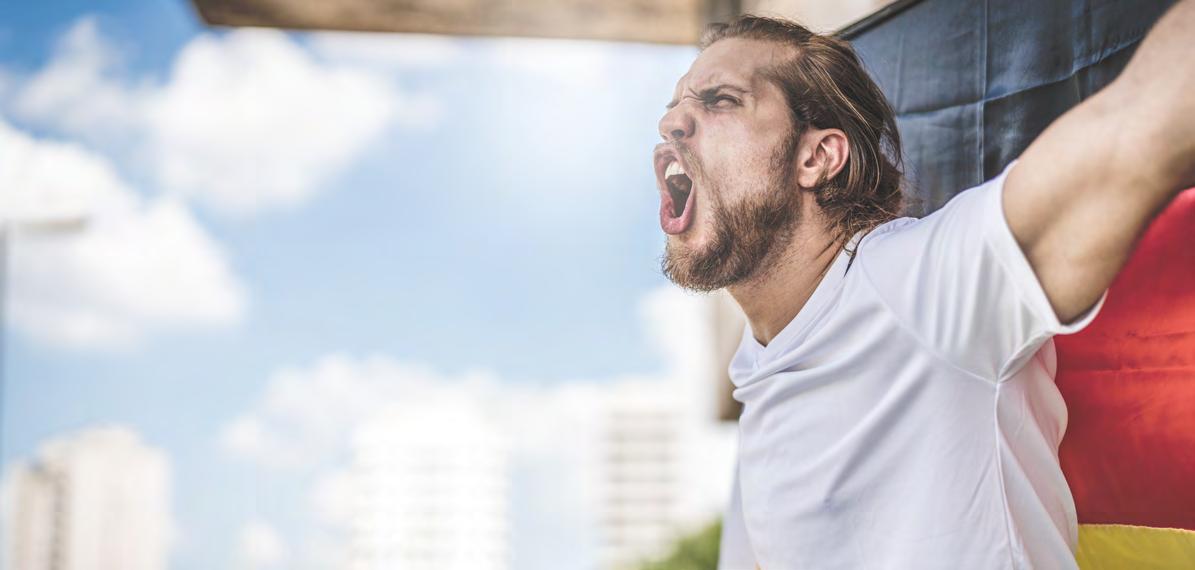
One of the most important events for football-loving Germans is the FIFA World Cup, which takes place in summer every four years. This year’s host country, Russia, promises a lot of excitement for fans. It is an event that attracts fans to watch the matches to -gether, be that in public venues or on a friend’s sofa. Most German companies allow for special working hours, set up video screens and even let staff take the day off to watch important games.
In 2014, Germany gave Brazil a devastating 7-1 defeat and triumphed against Argentina in the final, making Germany the first European team to win the title in South America. In fact, the Germans were aiming to defend their title this year. However, if you look back at the last 20 years, this is actually an impossible feat. Why? Because the winners in 1998 (France), 2006 (Italy) and 2010 (Spain) all crashed out in the group stages when trying to defend their title. And this is exactly what happened to the German team at the end of June as they got knocked out at the group stage.
Our Publications
Useful insights for doing bu siness in Germany
Business Destination Germany 2018 The study takes a look at foreign business activity in Germany, including a large survey on what foreign companies like and dislike. Available in English and German.
Industry 4.0 The latest jump in technology enables the wide application of artificial intelligence and a new level of automation. What do foreign companies in Germany think about their role in Industry 4.0?
Digital Finance The capabilities of algorithms are rapidly expanding. This empirical study shows the potential in the finance function.
Brexit – an Impact Analysis G reat Britain was the preferred location for the European headquarters of non-EU multinationals. How will they be affected by Brexit? And which country is now the most promising?
German Tax Monthly German Tax Monthly provides information on the latest tax developments in Germany, focusing on foreign investors and selected topics of interest in daily international business. Subscribe
Investment in Germany This guide provides you with a comprehensive overview of the German business and legal environment, including economic facts, legal forms, subsidies, tariffs, accounting principles and taxation.
KPMG AG Wirtschaftsprüfungsgesellschaft
Andreas Glunz
Managing Partner, International Business T +49 211 475-7127
aglunz @ kpmg.com
Joachim von Prittwitz*
Senior Manager, International Business T +49 30 2068-4195
jprittwitz @ kpmg.com
If you would like to subscribe to this n ewsletter please click here
Feedback to the editorial team: B usiness in Germany
www.kpmg.de www.kpmg.de/socialmedia
A Quick German Lesson
Mannschaft, die – Although Mannschaft means team in German, when Germans speak about die Mannschaft they are talking about football. While other countries have a long tradition of squad nicknames –such as Brazil’s seleção, France’s Les Bleus and Italy’s Azzurri – the men’s national football team in Germany had no official name until 2014 when they won the FIFA World Cup in Brazil.
The information contained herein is of a general nature and is not intended to address the circumstances of any particular individual or entity. Although we endeavour to provide accurate and timely information, there can be no guarantee that such information is accurate as of the date it is received or that it will continue to be accurate in the future. No one should act on such information without appropriate professional advice after a thorough examination of the particular situation.