Brexit is only six months away – and yet there is still no indication of what kind of Brexit to expect.
Given that companies and financial services organisations cannot wait any longer, a growing number of market players have initiated contingency plans that mitigate the Brexit risks by building up stock, warehousing and delaying production whilst others are moving operations into one of the EU27 countries securing frictionless access to Europe’s 400 million consumers. Many cities in continental Europe are vying for these precious institutions. Apparently, Frankfurt looks like a winner. Current data from the German Landesbank Helaba shows that more banks have decided to move to Frankfurt than to Paris, Dublin, Amsterdam and Luxembourg combined.
I am convinced that many other multinationals have made Germany one of their top options when considering an additional footprint within the EU. And it would be a brilliant choice. The German economy is surging, enjoying many years of consecutive growth with an unemployment rate hitting a 27-year minimum.
When placing your bet on Germany, the large budget surpluses accumulated by the German government over the last years should be a good indicator of the availability of public spending, should this be necessary during future downturns. The relatively low debt-to-gdp ratio is indeed a very strong safety net.
Trade disruptions could be one of those triggers for a crisis to come. In our newsletter, we look at the China-US dispute from a European perspective. Plus, we analyze how future-ready German companies are. You will also be able to read about the Germans and how much they like insurance policies. It’s better to play it safe!
Best regards,
Andreas Glunz Managing Partner
Business
Current Data 01
The summer high witnessed by German companies continues. A strong domestic economy, increased real wages and low unemployment are creating a good mood in the country. Nevertheless, the dangers of a ‘hard’ brexit and a trade war with the USA are a cause of great concern for German exporters.
AUGUST 2018 INFLATION
EUR / USD
EUR / CNY
2.0% 1.16 7.99
Source: German Federal Statistical Office, 09/2018
JULY 2018 EXPORTS
Source: German Federal Statistical Office, 09/2018
GREENFIELD INVESTMENTS IN GERMANY Q1 2018 (GLOBAL RANKING)
Source: fDi Markets, 09/2018
NUMBER OF THE DAY
Source: ECB, 09/19/2018
2018 GDP GROWTH EXPECTATION
Source: ECB, 09/19/2018
JULY 2018 IMPORTS
€ 111 bn € 94.5 bn #5 1.8% 0.5% 3.4%
INCREASE IN REAL (PRICEADJUSTED) EARNINGS IN 2ND QUARTER OF 2018
Source: Oxford Economics, 09/2018
Source: German Federal Statistical Office, 09/2018
AUGUST 2018 UNEMPLOYMENT RATE
Source: German Federal Statistical Office, 09/2018
For the second quarter of 2018, the German Federal Statistical Office reported real wage growth of 0.5% year-on-year. This growth was achieved despite a high inflation rate of 2.0% in this period. Above-average nominal wage growth of 3.6% was recorded in former East Germany. On the other hand, growth in former West Germany was slightly below average at 2.4%. The energy supply, manufacturing and real estate industries recorded above-average nominal wage growth.
Source: German Federal Statistical Office, 09/2018
02 Changes in Trade
Changes in trade with China and the USA from a European perspective
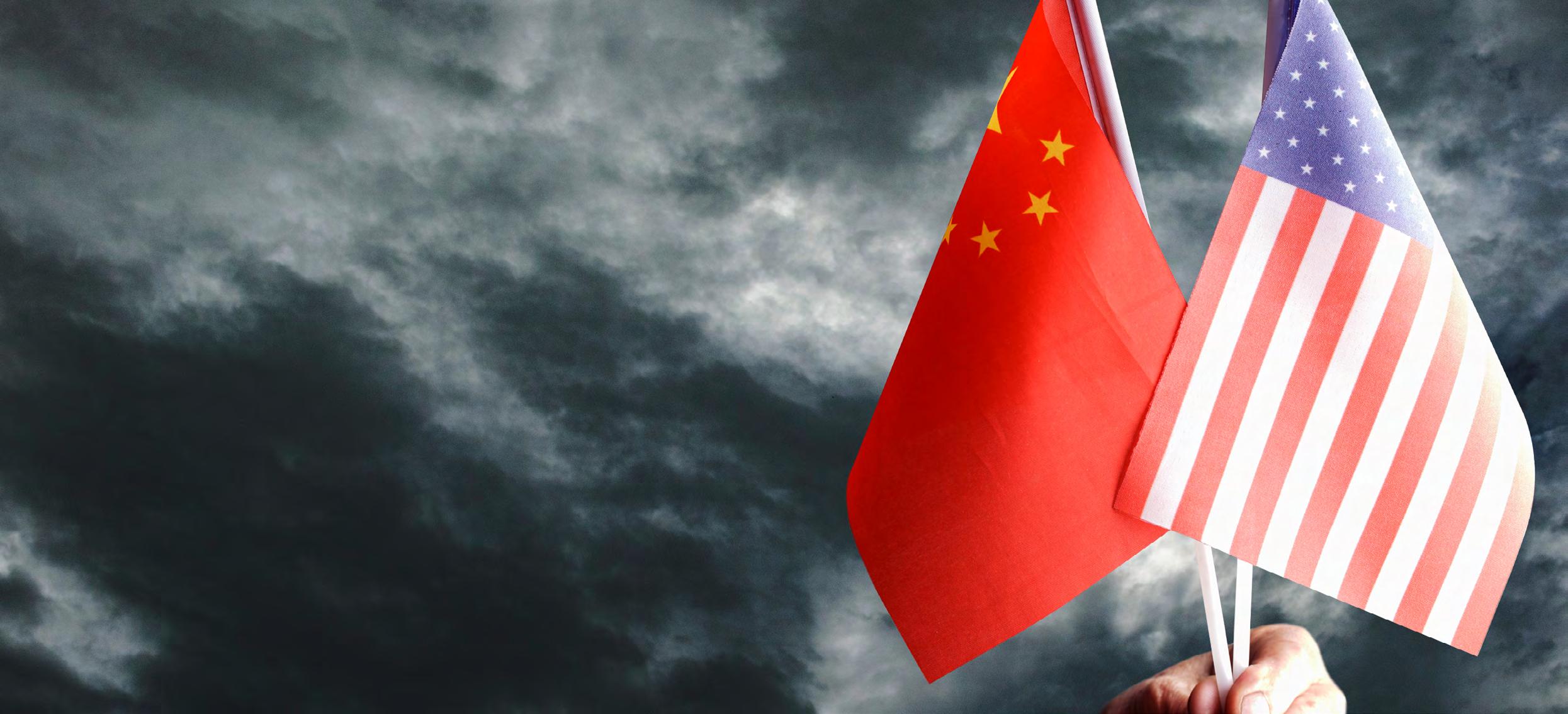
Over the last months, the ‘Trade War’ has been in focus in the media and has therefore attracted a lot of public attention, causing a certain amount of hysteria. This article summarises the challenges that European companies face and where the opportunities for new relationships and opportunities lie.
It is obvious to everyone that the election of Donald Trump has resulted in the definition of a new area of global trade and disruption within historical and common trade partnerships. However, no one is really complaining anymore and most of the politicians and companies have accepted the ‘new rules’ of global trade. This being said, it is important to assess what these new rules look like and what they could mean in terms of both challenges and opportunities.
As a reaction to the additional duties imposed by the US government on Chinese goods, the supply chains and sourcing strategies of companies acting (especially producing) in the EU could be a good example of how to cope with these new rules of global trade.
To avoid the additional duties imposed on Chinese imports into the USA (in accordance with Section 301 of the Trade Act of 1974), companies in the EU sometimes transform Chinese products to such an extent that the country of origin must no longer be declared as China. Of course, such a significant change in the supply chain and processing flow needs to be calculated very accurately. However, it shows that the return of production actions into the EU could be worthy.
Furthermore, the side effect could be to benefit as an EU exporter from the different Free Trade Agreements that have been conducted by the EU as the exported goods could be – under special circumstances – treated as good with preferential origin in the EU.
As a more global and strategic response, the EU could spread their wings to new partners in the Trade world. One
prime example of this is the JEFTA (Japan EU Free Trade Agreement). This agreement was very nearly buried but was suddenly resurrected – and quite rightly so – in light of the disruption caused by the US government to trade.
The current annual volume of exports from Japan to the EU amounts to €84 billion, of which €66 billion is generated by goods and €18 billion by services. This makes the EU one of the biggest Japanese trading partners worldwide, although certain areas like the automobile sector are subject to both non-tariff and tariff barriers (e.g. tariffs on cars are 10%, but will be reduced to zero within a period of 8 years). With regards to the Japanese economy, the JEFTA is estimated to increase the Japanese real GDP by approximately 1% (approximately €4 billion) and employment by approximately 0.5% (approximately 290,000 jobs).
Another example of a closer commercial alliance is the FTA with India, the fastest growing economy in the world. Negotiations started in 2007 and have officially been on hold since 2013. In 2017, goods with an import value of €44 billion have been imported into the EU. If both parties reached an agreement – the details of which are still uncertain – India could increase its economic performance by a 1.3% annual growth in GDP. Based on the country’s GDP in 2018, this would lead to an increase of €37 billion. Even though these numbers are only estimations, they prove that reducing non-tariff and tariff barriers to promote trade and create closer commercial alliances is a way of strengthening the economy, rather than building walls by introducing additional duties to protect the domestic market and disrespecting close commercial alliances, which have been in place for several decades.
For further information, please contact:
Gabriel Kurt Partner, International Business, Head of Customs & Trade KPMG in Germany gkurt@kpmg.com
03 Assessing Future Readiness
A German perspective
Times are changing: with technology developing at an epochal pace and geopolitical upheaval dominating the news, our Future Readiness Index provides a snapshot of how well German companies are prepared for the future.
When it comes to industrial production, German companies have long been known as market leaders. The reputation of the Mittelstand – medium-sized companies that are often world leaders in their niche – is based on developing state-of-the-art products. Likewise, German blue chips, especially in the automotive sector, excel with cutting-edge technology.
Yet, nothing persists forever. The market environment is changing faster than ever before. It is better to be well-prepared to manage the transformation, otherwise known as the great market reshuffle. To measure just how future-ready German companies actually are, we have developed the Future Readiness Index.
Determining future readiness in four dimensions
The index is based on a survey conducted at the beginning of 2018 among more than 600 top managers of companies representing twelve key industries and about eleven percent of German GDP. We asked them to reflect on their current mood regarding future optimism, to evaluate how they are positioned in decisive business areas, to state their current investment focus, and to judge the importance of future trends. By tapping the KPMG Research Cloud, we derived which trends would really be fundamental and compared these to the answers given by the top managers.
The overall result: 6.3 on a scale of 0 to 10 with the upper end indicating optimal future preparedness.
Figure: Future readiness in four dimensions
Source: KPMG in Germany, 2018
Looking at the four subcategories gives a more detailed picture.
Overall, 82 percent of top German managers surveyed look ahead at least somewhat optimistically. Only 6 percent found reason for pessimism. The economy is going strong, demand is high. Almost three in four judge their product port folio to be good or very good.
Strengthening strengths
“Interestingly, we found that companies overwhelmingly invest in the areas in which they are already strong”, Karl Braun, Partner at KPMG in Germany, points out. “Capital is put where the juice is flowing. In principal, strengthening one’s strengths is fine. However, you should not miss the areas that will be decisive in the future.”
Giving insights into precisely what will drive the future is the centerpiece of the study. Analyzing 24 million data points –scientific publications, patent registrations, and other sources –the KPMG Research Cloud provided a trend map that they matched with the answers provided by the survey.
Underestimating automation
“Companies have realized how important customer demands have become in a digital world with constant feedback loops. Precisely meeting customer needs is now possible and increasingly done”, says Karl Braun.
“The most urgent topic for us, however, is declining innovation cycles, followed by automation. This includes the mounting pressure for faster product release. The intelligent factories of the future enable just that. Companies should therefore expand their efforts to move towards Industry 4.0. As the trend is just as important for the service sector, service companies should advance by installing robotic process automation and other process optimisation technologies to avoid falling behind international competitors.”
Little prepared for geopolitical challenges
Managers also pointed out some weaknesses. In total, 62 percent feel insufficiently prepared for potential changes. A similar proportion (63 percent) spot deficits in their preparation for geopolitical changes.
“German companies seem a bit fatalistic when confronted with the current geopolitical risks”, says Karl Braun. “Only 19 percent of the companies surveyed assigned a high investment priority to adaptions to international crises and conflicts. At the same time, almost a third of manufacturing companies judged their adaptiveness to economic and geopolitical disruptions to be good.”
Which industries see the increasing number of geopolitical challenges as the top priority for the future?*
“It is no surprise that companies that apply professional strategic planning prove to be more successful than those stumbling into the future”, underlines Heiko von der Gracht, Futurist and Senior Manager at KPMG in Germany. “Some disregard longterm planning as looking into the crystal ball. Others claim it to be too expensive, while a third group are convinced that they are already doing the right thing. All of them risk missing important innovations and falling behind their competitors”, Heiko von der Gracht cautions. “Our Future Readiness Index shows that this risk is real.”
According to Heiko von der Gracht, planning has to go beyond simple projections. As complexity and dynamics have increased, extrapolation of historic data only goes so far, and sector limits become more and more obsolete. He advises companies to develop next-level forecasting by employing scenario analysis and trend radars.
“The Future Readiness Index with its connected self-assessments on our digital Atlas platform can provide significant insights in this respect.” The value of the findings will increase over the years with subsequent editions.
More insights
You can find the detailed results of the Future Readiness Index here. The executive summary is complemented by an in-depth analysis of twelve branches, which recognises that each branch faces its own specific challenges. Access the KPMG Research Cloud to explore upcoming trends in our interactive tool. You can also assess your own future readiness and compare yourself with the results of your branch. (Websites in German.)
For further information, please contact:
Karl Braun
Partner, International Business Head of EMA Markets KPMG in Germany karlbraun@kpmg.com
Heiko von der Gracht
Senior Manager, Consulting KPMG in Germany hgracht@kpmg.com
Source: KPMG in Germany, 2018
* Percentage of companies that believe geopolitical tensions will be an important or very important challenge over the next five years, broken down by sector.
Figure:
04 Germany –Electronic filing of A1 applications
An employee working on assignment within the EU/EEA member states and Switzerland (referred to hereinafter as ‘member states’) needs a certificate of coverage (form A1) to prove that he is covered by the social security of his home country during the assignment. As of 1 January, 2019, the application for an A1 certificate in Germany must be filed electronically via a payroll programme or a similar system calling sv.net.
An A1 certificate is required each time an employee is assigned within another member state. The legal framework of the Regulation (EC) 883/2004 does not define a minimum length of assignment. An assignment can refer to an employee being seconded to another member states for one or two years (e.g. for the implementation of a project), or an employee attending a conference or business meeting. In other words, any professional activity in a member state requires an A1 certificate.
The A1 application is to be filed before the start of the assignment or business trip. If the A1 certificate is not available, there is a risk of:
– problems on entering the foreign workplace (e.g. access to company premises or the construction site)
– significant fines for the employer and/or employee, up to €10,000 per case (e.g. in France, Austria, Greece and Croatia)
– payment obligations for (additional) contributions in accordance with the regulations of the host country
– disputes between the domestic and foreign insurance carriers over the obligation to pay benefits following the occurrence of a claim (e.g. in the event of an accident at the workplace or whilst commuting).
In the past, A1 applications in Germany could be filed in paper form and sent to the respective authority by post. Currently, this paper form can also be sent to most authorities by email as a pdf form.
The electronic A1 application is becoming increasingly important for several reasons, including the Electronic Exchange of Social Security Information (EESSI).
EESSI was established by the European Commission in July 2017. It is an IT system that helps social security institutions across member states exchange information rapidly and securely, as required by the EU rules on social security coordination. Beginning July 2017, member states have two years to finalize the implementation of EESSI and connect their social security institutions to the cross-border electronic exchange system. In Germany, employers must be prepared for the new electronic A1 application process by 1 January, 2019.
The electronic application process is to be integrated into employers’ standard payroll programmes. However, not all of the standard payroll programmes currently provide this function. From 1 January, 2019, the electronic application process will be mandatory. This means that payroll programme providers must be able to provide their clients with this function by this date, and employers must be familiar with the new process. However, German authorities also provide a system called sv.net, which allows employers to
use the electronic application process in case their payroll system does not provide this electronic solution.
A1 applications must be filed electronically in the following instances:
– assignments (and business trips) up to 24 months
– deployment of civil servants in another member state
– special arrangements (according to Art. 16 of Regulation EC 883/2004)
The electronic filing process does not apply to persons who carry out their work regularly in two or more member states (‘multi-state workers’). The A1 application for multistate workers can still be filed in paper form. The same applies to certificates of coverage where Germany has concluded a social security agreement.
As the A1 form is required for the first day of an assignment in or business trip to another member state, the challenge for employers will be to identify all company employees on assignment abroad. IT solutions could be developed to keep the employer (especially the HR department) informed about business trips and ensure compliance with social security regulations. If necessary, new interfaces should be created within existing operating structures so that the application data and A1 certificate can be exchanged between the employer and respective authority.
For further information, please contact:
Kerstin Kind
Senior Manager, Global Mobility Services, Tax KPMG in Germany
kkind@kpmg.com
Investing in Berlin 05
– Guest Article, Berlin Partner –
Berlin attracts both people and businesses
The German capital has undergone tremendous development in the last decade. The city’s famous creativity and outstanding research landscape have been complemented by considerable economic power. Berlin has become a magnet for talent from all over the world and the home and birthplace of a constantly growing number of technology companies. These young, innovative businesses are particularly strong in the fields of ICT, media and creative industries, healthcare, energy technology, transport and photonics.
Berlin attracts both people and companies. Germany’s political and cultural centre has been experiencing a sharp economic upswing for years now. More people, more jobs and new economic strength. Companies benefit from Berlin’s central location, the outstanding research environment, the vibrant start-up scene and the dynamic labour market. Employees appreciate the cultural diversity, the moderate costs of living and the relaxed lifestyle of a green and modern metropolis. As the capital of the biggest national economy in Europe, it goes without saying that Berlin plays a pivotal role in European Union decision-making. It is the heart of the new Europe. And who doesn’t want to be where the action is? Berlin offers excellent infrastructure. The capital region connects Western and Eastern Europe. It is an intersection of European transportation routes with the largest internal market in the western world.
Rapid growth through innovation and technology
Berlin has rapidly developed to establish itself as a hub for modern technologies and industries of the future. The city boasts numerous well-connected commercial, industrial and technological locations. In fact, it has more large-scale urban areas dedicated to business and science than any other European city. These remarkable city-wide locations create a sustainable urban development for working, living and playing. It’s no surprise then that this unique network of spaces – known as ‘Zukunftsorte’ (locations of future innovations) – is home to top research, teaching and some of the world’s most influential companies and creative minds.
Although the office market is also developing rapidly, there is still great potential. In 2017, more than 1 million square metres of new office space was rented. In total, Berlin has 20.3 million square metres of office space. 1.3 million square metres are scheduled for completion in 2020.
Source: German Federal Statistical Office, 2018
Figure: Economic growth in 2017
Europe’s start-up capital
Berlin is the start-up centre of Europe. In 2017, almost 3 billion euros of venture capital were invested in Berlin startups. According to KPMG’s Enterprise Venture Pulse Report, 2018 also got off to a very strong start with over 930 million euros of investment recorded in the first quarter, including 475 million in the Auto1 Group, 135 million in the FinTech company N26, 60 million in solarisBank and 54 million in the Frontier Car Group. This means that four of the ten largest investments in Europe went to Berlin-based companies. According to estimates by the Federal Association of German Start-ups, around 30% of all start-ups are based in Berlin.
High-calibre jobs for talented people from all over the world
Dynamic start-ups and top-level investors are also successfully stimulating the job engine in the city. The start-ups employ an average of 28 people; in Hamburg or Munich it is less than half of this. Over the last 10 years, 47,000 new jobs have been created in the digital economy, with a total of almost 90,000 by 2017 and annual growth rates of 10-15%. Although this is primarily due to start-ups, an increasing number of corporate groups are moving their digital divisions in Berlin, or establishing these divisions in the capital.
A city with a good lifestyle
The German capital is one of the most attractive cities worldwide, especially for young people. The Millenial Cities Ranking assesses 110 cities according to job opportunities, the cost of living, openness, tolerance, and fun. In the overall ranking of 17 individual factors, Berlin came first in 2018, ahead of Montreal, London, Amsterdam and Toronto.
Despite the Berlin boom of recent years, life in the city is still quite affordable by international standards. In New York, Dublin and Singapore, the costs are 37, 25 and 22% higher. Housing costs are 44% lower than in London. Food is 29% cheaper than in Paris, and clothing costs 15% less than in Copenhagen.
Figure:
Cost of living in European cities (Expatistan Cost of Living Index)
Source: Expatistan Cost of Living Index, August 2018
The Berlin way
A creative spirit pervades the city. Creativity means interrupting the usual way of things and coming up with something new. This happened after the fall of the wall and continues to happen on an everyday basis in the countless start-ups and creative businesses. Berlin is a place of growth, change and renewal. The German capital is an exciting place, where citizens can contribute to shaping the future and grasp business opportunities.
For further information, please contact:
Dr. Stefan Franzke
CEO
Berlin Partner for Business and Technology gf@berlin-partner.de
Frank Wiethoff
Managing Partner
Regional Head – Region East KPMG in Germany fwiethoff@kpmg.com
This is an article by Berlin Partner für Wirtschaft und Technologie GmbH , the economic and technology development agency for companies and investors in Berlin.
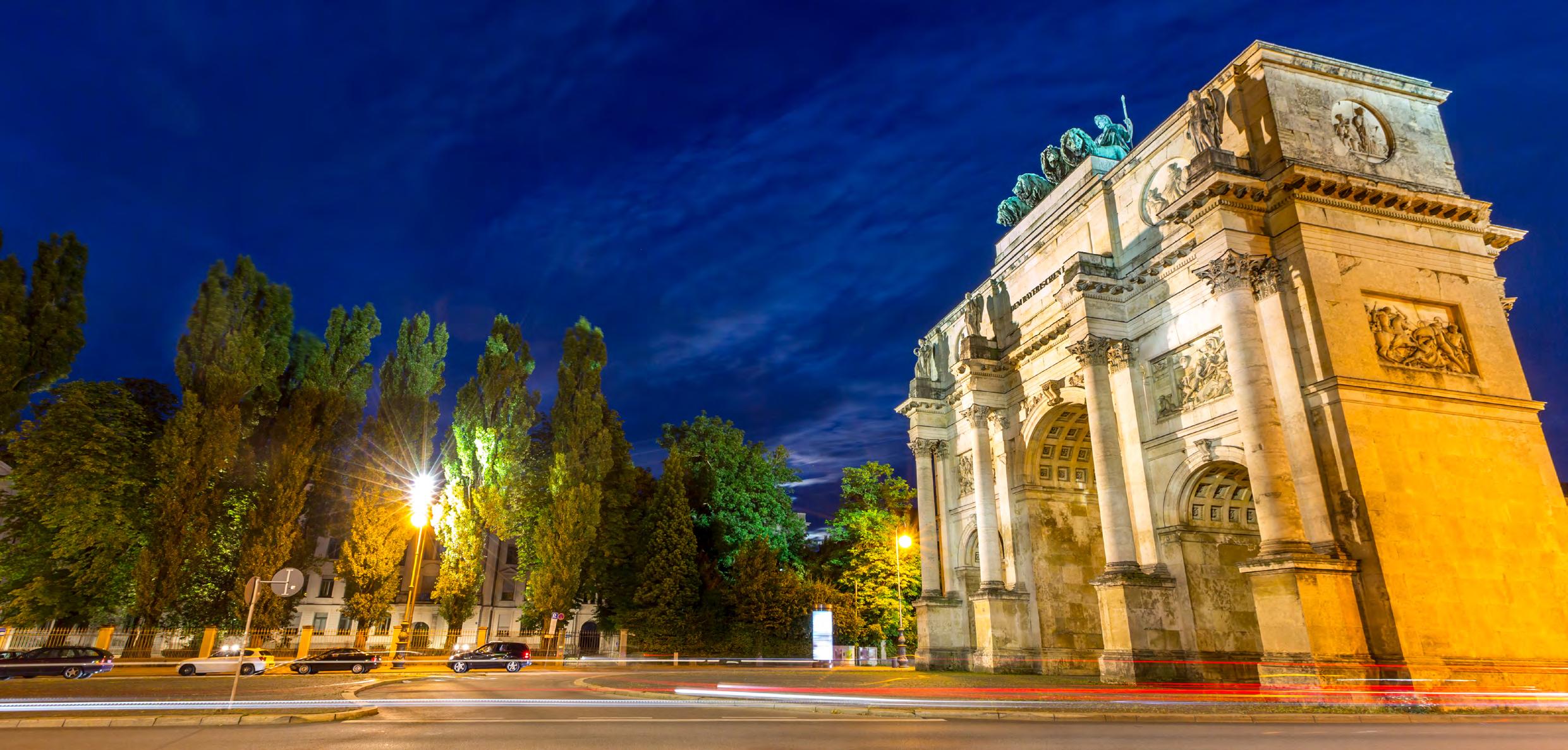
06 Welcome to Munich
Tradition
meets innovation
The gateway to the world
Munich is one of the most attractive, dynamic and innovative business locations in Europe. Major rankings have repeatedly shown the Bavarian capital to be among the leading international business hubs as well. A population of 1.55 million makes Munich Germany’s third-largest city, after Hamburg and Berlin. And this is an ongoing trend –Munich is one of the growing metropolises of the industrialised world and is particularly attractive to young, welleducated adults. Forecasts indicate that the resident population will exceed the 1.7 million mark in 2022. Thanks to its unique mix of cultural, geographic and economic factors, the city enjoys sound economic prospects, the highest purchasing power among major German cities and great recreation facilities.
Munich – strong links between incumbents and start-ups
Munich’s economic strength is rooted in a broad and well-balanced mix of industries and an excellent infrastructure. A diverse array of global players, small and mediumsized companies (SMEs) and innovative start-ups gives the Munich economy its forceful dynamics. With Allianz, BMW, Infineon, Linde, Munich RE, Siemens and Wirecard (from September 2018) seven of the blue-chip corporations listed on the DAX 30 index are headquartered in the Bavarian capital – more than in any other German city.
A creative mix of industries – experience and innovation
Alongside information and communication technology (ICT) and automotive engineering, high-tech industries such as medical engineering, environmental technology and aero -
space are strong market drivers. Munich is also an important media hub and the centre of the southern German finance sector. It ranks as Germany’s number one insurance city. Especially, ICT is one of the backbones of Munich’s economic achievements. Much of the city’s success in this area derives from IT companies’ excellent links with universities and research organisations, as well as the outstanding training and education opportunities available in the Bavarian capital. Seventeen universities and more than 115,000 students make Munich Germany’s second biggest city for higher education. Two elite universities, plus an array of other universities and research institutions (including the Fraunhofer Society, the Max Planck Society, the German Research Center for Environmental Health and the digitalisation center ZD.B), attract highly qualified labour to the Bavarian capital, giving innovative start-ups in the city access to a large pool of highly specialised experts and top talents.
Munich has recently become a dynamic and extremely wellconnected start-up hub in Germany. One very visible face of Munich’s start-up community is its annual Bits & Pretzels congress, which, in the space of just a few years, has flourished and grown into a three-day start-up festival attracting 5,000 participants from Germany and abroad.
However, Munich is not only well known for its strong economy and as an important research and knowledge hub, but also for the city’s wealth of artistic and cultural offerings, including opera houses, theatres and museums, and authentic Bavarian traditions.
For further information, please contact:
Kai C. Andrejewski Regional Head – Region South KPMG in Germany kandrejewski@kpmg.com
07 Key Events
KPMG Events:
Treasury meets Tax
23 October 2018, Frankfurt
Tax Update IV/2018 05 December 2018, webcast (in German)
Online VAT course: current developments across the EU 20 December 2018, webcast (in German)
If you are looking for more KPMG seminars and conferences, please click here
External Events:
Asia-Pacific Conference
01 November – 0 3 November 2018, Jakarta
Karneval/Fasching (Carnival) 11 November 2018
Focus on Eastern Europe – Discussion about the Economy 14 November 2018, Hamburg
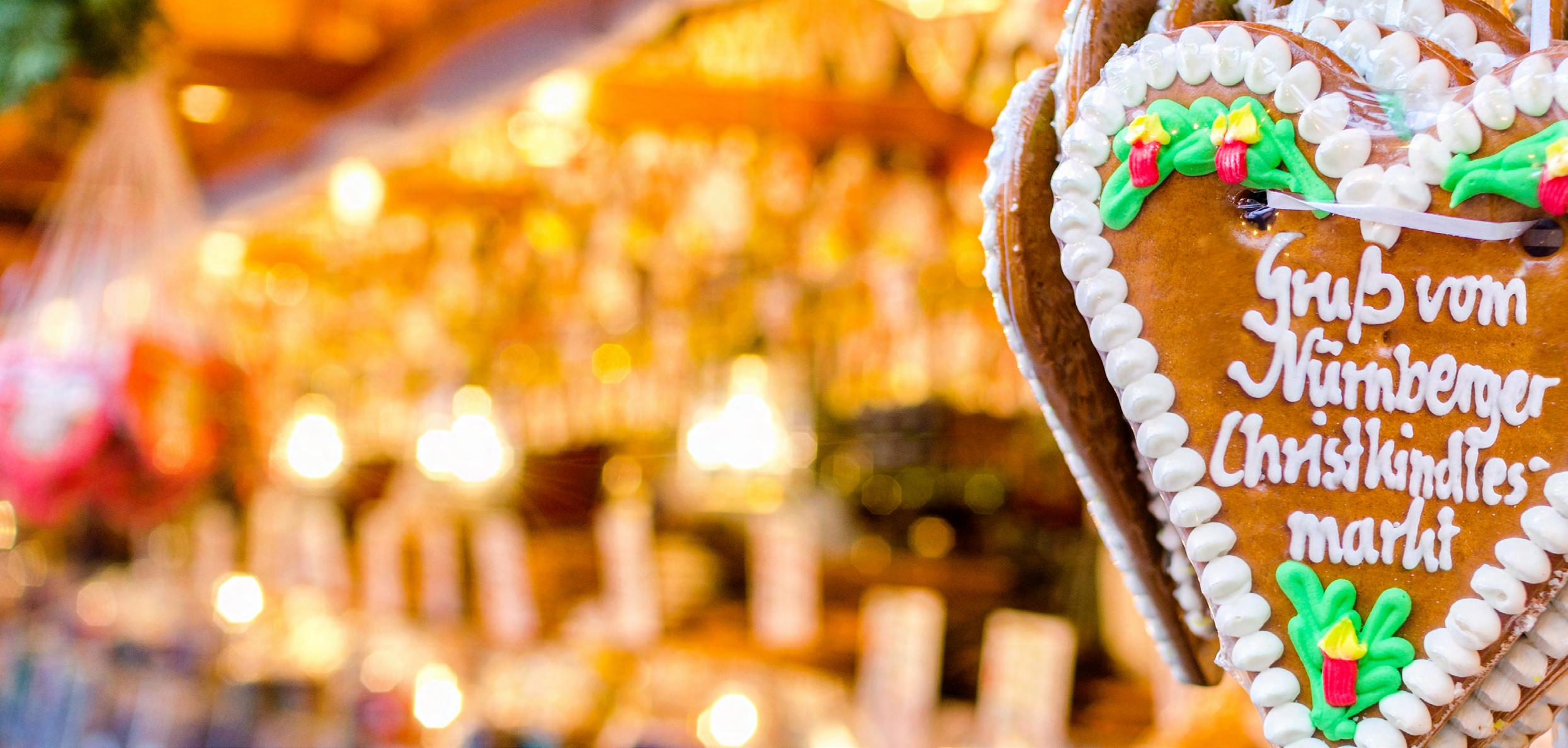
Christkindlesmarkt (Christmas market)
30 November – 24 December 2018, Nuremberg
Electronica Munich 13 November – 16 November 2018, Munich
That Special Event
“You, women and men, who were children once yourselves, can be children once again!”. This is the b eginning of the opening speech by the ‘Christkind’ at the ‘Christkindlesmarkt’ Christmas market in the old town of Nuremberg. The first Christkindlesmarkt was first held almost 400 years ago and its stands have opened annually in December ever since.
The market, welcoming approximately 2 million visitors from all around the world, has become a unique, traditional event that brings people together. Visitors can enjoy the fantastic atmosphere over a mug of mulled wine or a delicious piece of gingerbread.
08 German Business Etiquette – Overinsured Germany
Over-insured Germany
Did you know that the average German has more than five insurance policies?
As early as 1750 BC, the Code of Hammurabi, the Babylonian king, contained rudimentary forms of insurance such as a provision for bearing the losses of tradesmen who were robbed on caravans. The first insurance policies appeared in Germany at the end of the 16th century. These ‘sea treaties’ protected ships against piracy at sea. However, is it really true that Germans have a unique relationship with insurance? It is certainly the case that the German population has a love-hate relationship with this type of protection. Bring up the topic and most will complain about expensive premiums, and missing or delayed payments after making a claim. In spite of this, the majority of Germans are insured for everything and everyone.
Why is this the case, and where does this mentality come from? Firstly, you could say that the German people are somewhat risk-averse and want to avoid taking any chances. Another reason could be that Germans are frequently seen as having a more pessimistic and cautious approach, which has given rise to the expression ‘German angst’ across the world. This could also explain why Germans always want to be covered in the event of a worstcase scenario.
In Germany, there are countless kinds of insurance to cover almost every possible eventuality. In 2015, the average German spent a total of EUR 2,387 on insurance covering all kinds of contingencies, compared to the European average of EUR 2,010.1
An immensely popular type of insurance in Germany is virtually unknown in most other countries: the ‘private Haftpflichtversicherung’ or personal liability insurance. Currently, Germans subscribe to 45.3 million of these policies. This insurance covers third-party claims arising from damage caused by the liable party. Of course, it would be too easy if this insurance covered every kind of claim. Damage caused by cars requires another kind of insurance – motor vehicle liability insurance: Germans subscribe to 62 million of these policies, making it the most popular kind of insurance in the country. Other common types of insurance in Germany include endowment policies, comprehensive vehicle insurance and, of course, pension insurance.
For further information, please contact:
Joachim von Prittwitz
Senior Manager, International Business KPMG in Germany jprittwitz@kpmg.de
An interview with Mr Jan Rönnfeld, Managing Director of the German-Indonesian Chamber of Industry and Commerce
Indonesia is one of the biggest countries in the world with a large and stable, growing economy. Nevertheless, Germany and the Western world knowns little about the country. What is important to know about Indonesia? What are the key growth sectors?
Indonesia has a population of over 265 million people, which makes it the world’s fourth largest nation in terms of population and the third largest democracy.
There are still plenty of opportunities in Indonesia with its fast-growing middle class and young population. A widely overlooked fact is that these young Indonesians are adapting to today’s digital age on a bigger scale and in a faster manner compared to most parts of the world. Indonesia has 130 million active social media users. Jakarta was at times the ‘twitter capital of the world’ and is one of the most ‘instagramed’ places on earth. Four Indonesian digital start-up companies are classified as ‘unicorns’. That is more than in most other countries, with the exception of the US and China. Global tech companies are actively looking for ways to tap into the country’s potential digital market and try to attract creative talents. An Indonesian designer, for example, invented Universal Pictures’ Minions from the Despicable Me franchise.
More traditionally, the country also has vast natural resources. Currently, together with Malaysia, Indonesia supplies nearly 90% of the world’s palm oil, which is an ingredient used in 50% of the food and personal care products found on our supermarket shelves. Indonesia is the largest producer of natural rubber, and much of the cocoa and coffee found in Europe are imported from Indonesia. The Grasberg mine on Papua Island is the largest gold mine in the world, Indonesia is the second largest nickel producer, and its coal exports will reach 371 million tons in 2018.
Over the last 15 years, Indonesia has had the most stable economic growth rate among the G20 countries, with an average above 5 percent. This rate of constant growth over such a long period, combined with a stable political environment, has led to one of the strongest consumer confidence climates in the world. This fuels local and foreign direct investment as companies try to tap into this growing market. Almost every industry sector offers potential, from consumer products to healthcare and public infrastructure.
How are economic relations between Germany and Indonesia and how do you see this relationship developing over the coming years?
Politically, Indonesia and Germany have always enjoyed very good relations.
Next year, they will both have a seat at the UN Security Council – a fact that has triggered intensified communication.
Although Indonesia is not the easiest market to enter, it is committed to multilateralism and free trade in the same way as Germany is. This is a political view that is unfortunately rather scarce at these times. Indonesia and the European Union are currently negotiating a comprehensive economic partnership agreement, CEPA.
Trade between Germany and Indonesia is relatively balanced and stable, with a turnover of over US$6 billion in 2017. However, investment by German companies in Indonesia is relatively low, considering the size and potential of the economy and compared to investment in other neighbouring countries.
I expect both trade to grow in the future, once the Indonesian manufacturing sector picks up again and investment when German companies learn more about the economic potential and when they recognise that the Indonesian government is serious about its economic policy reform. Under the current administration, Indonesia has climbed to rank 72 out of 190 countries in the World Bank’s Ease of Doing Business Index. Although it still has room to improve, it is an impressive achievement considering it ranked as low as number 127 when President Joko Widodo came to power at the end of 2014.
The upcoming Asia-Pacific Conference of German Business (APK), which will take place from 1 to 3 November 2018 in Jakarta, will help to bridge the knowledge gap about Indonesia, as approximately 1000 delegates will attend this highlevel event.
On a more personal side: What are the Indonesians like? What sights or places would you recommend to firsttime visitors to the archipelago?
With more than 17,000 islands, Indonesia is the world’s largest archipelago with an abundance of natural beauty. It would take more than a lifetime to visit it all.
The most well-known tourist attraction is the island of Bali, which amusingly enough, people in the Western world seem to know better than Indonesia itself.
I dare say that Bali has everything tourists want on holiday, from beautiful, relaxing beaches to exciting volcanic mountain treks, not to mention a buzzing nightlife, good restaurants and breathtaking rice fields.
However, there is more to Indonesia than just Bali. Lombok in West Nusa Tenggara and Labuan Bajo at the western tip of Flores are up-and-coming holiday destinations. The latter is only a short boat ride away from the last remaining dragons on Komodo Island.
To add a few more examples to the list, there are the rainforests of Sumatra, the home of the orangutans; the world’s largest Buddhist temple, Borobudur, in Yogyakarta on Indonesia’s main island of Java, which also offers picturesque tea and coffee plantations, and world-class diving spots like Raja Ampat in Papua, where divers can swim with manta rays and whale sharks. These, as well as countless other attractions and destinations, are definitely worth a visit, but you have to bring a certain amount of patience because some places are still lacking a well-developed tourist infrastructure.
In my opinion, Indonesians are the most welcoming and friendly people in Asia. This genuine hospitality and interest in others is probably the most striking memory visitors will take home with them after staying in this wonderful country.
Jan Rönnfeld, the Managing Director of the German-Indonesian Chamber of Industry and Commerce, first travelled to Indonesia in 1986. He has been working and living in Jakarta for more than 20 years.
For further information, please contact:
Jan Rönnfeld Managing Director of EKONID director@ekonid.id
Dirk P. Koehnlein Partner, Head of German Desk KPMG in Indonesia dirk.koehnlein@kpmg.co.id
Our Publications
Useful insights for doing b usiness in Germany
Business Destination Germany 2018 This study takes a look at foreign business activity in Germany, including a large survey on what foreign companies like and dislike. Available in English and German.
Industry 4.0 The latest jump in technology enables the wide application of artificial intelligence and a new level of automation. What do foreign companies in Germany think about their role in Industry 4.0?
Digital Finance The capabilities of algorithms are rapidly expanding. This empirical study shows the potential in the finance function.
Brexit – an Impact Analysis Great Britain was the preferred location for the European headquarters of non-EU multinationals. How will they be affected by Brexit? And which country is now the most promising?
German Tax Monthly German Tax Monthly provides information on the latest tax developments in Germany, focusing on foreign investors and selected topics of interest in daily international business. Subscribe
Investment in Germany This guide provides you with a comprehensive overview of the German business and legal environment, including economic facts, legal forms, subsidies, tariffs, accounting principles and taxation.
KPMG AG Wirtschaftsprüfungsgesellschaft
Andreas Glunz
Managing Partner, International Business
T +49 211 475-7127
aglunz @ kpmg.com
Joachim von Prittwitz*
Senior Manager, International Business
T +49 30 2068-4195
jprittwitz @ kpmg.com
If you would like to subscribe to this newsletter please click
A Quick German Lesson
Sitzfleisch, das – Taken literally, the German word Sitzfleisch means ‘the flesh you sit on’ or, to put it more politely, one’s posterior or bottom. However, it has a much wider meaning in the real world. Having Sitzfleisch means the ability to sit still for the long periods required to see projects through and be really productive; in other words, having the necessary patience and perseverance to handle challenging situations and to get the job done.
The information contained herein is of a general nature and is not intended to address the circumstances of any particular individual or entity. Although we endeavour to provide accurate and timely information, there can be no guarantee that such information is accurate as of the date it is received or that it will continue to be accurate in the future. No one should act on such information without appropriate professional advice after a thorough examination of the particular situation.
The views and opinions expressed in guest contributions are those of the interviewees or authors and do not necessarily represent the views and opinions of KPMG AG Wirtschaftsprüfungsgesellschaft.
* Responsible for content according to German law
Sm all B u sin e s s or Inter n at ion al
B u sin e s s?
Make a di f ferenc e toge ther wi th us
Are you interested in audit, tax or corporate advisory in an international set ting? T hen take the opportunity to join our K PMG International Business Team!
We of fer:
- a variet y of projects with multinational clients
- work in interdisciplinar y teams
- challenging roles that call for individual exper tise