Business in Germany
Insights for Foreign Investors
A Genuine Global Player
Examining German investments abroad
Mastering Industry 4.0
German tech clusters prove successful
Special: Invest in Bavaria
The centre for IoT
March 2017

A Genuine Global Player
Examining German investments abroad
Mastering Industry 4.0
German tech clusters prove successful
Special: Invest in Bavaria
The centre for IoT
March 2017

The world is changing. We started 2017 with the inauguration of Donald Trump as the 45th President of the United States and Theresa May’s announcement that the UK would leave the European Single Market. Do not be surprised if populists perform strongly – not only in the Netherlands and France, but also in Germany –in the elections this year.
I strongly believe, however, that they will not surge to power in any of these countries. Instead, it could be the start of a type of globalisation that is felt to be more reasonable and just as favoured by many at the World Economic Forum in Davos.
Even though huge changes lie ahead of us, we have an opportunity to move closer together and reorient ourselves in order to further strengthen the German and European economies. In her speech to the German Chamber of Industry and Commerce in Cologne on 17 January 2017, Chancellor Angela Merkel appealed to leading business experts to work closely with the German government: “I ask you not to deviate from what we understand as fundamental and successful principles only to seek short-term opportunities.”
With an increasing number of unforeseeable events that impact our globalised world, Germany remains a safe haven in turbulent times. Almost no other economy in the world is as closely linked to foreign economies as Germany, as highlighted in our Investment Report. Germany stands for mindfulness, justice and tranquillity, and is standing up for its core values. Our belief in ourselves and these values is essential for strengthening the economic and political position of the European Union as a whole.
Angela Merkel summarised it nicely by saying, “Those who do not stand up for their ideals, for their basic values, who give them up for the smallest short-term advantage, won’t be successful in the future.” I agree.
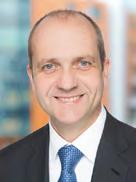
Andreas Glunz Managing Partner International Business
The German economy grew by 1.9% in real terms in 2016 (German Federal Statistical Office, 2017) and remains on a stable growth path in 2017. However, increasing protectionism puts pressure on German exports. Growth is hence primarily driven by domestic consumption.
EUR / USD
EUR / CNY
1.06 7.28 1.9 %
Source: German Federal Statistical Office, 03/2017
DECEMBER EXPORTS
97.4 m
Source: German Federal Statistical Office, 03/2017
GERMAN INTERNATIONAL RANK BY GREENFIELD IN VESTMENTS FROM ABROAD, 2016
Source: ECB, 27/02/2017
2017 GDP GROWTH EXPECTATION
1.7 %
Source: ECB, 27/02/2017
DECEMBER IMPORTS
78.7 m #6
Source: fDi Markets, 03/2017
NUMBER OF THE DAY
27,420
GERMAN SUBSIDIARIES AROUND THE GLOBE
Source: OECD, 11/2016
Source: German Federal Statistical Office, 03/2017
DECEMBER UNEMPLOYMENT RATE
3.9 %
Source: German Federal Statistical Office, 03/2017
Germany is the country with the world's most subsidiaries abroad –an astonishing fact considering the country only ranks 17th by population. This, again, underlines the international focus of German companies.
Source: OECD, 2017
With Germany being one of the world's leading export nations, the success of German businesses is based on a strong international focus. A changing risk perception seems to lead to a shift in strategy.
German companies are among the most international in the world and they will continue to invest strongly abroad. However, their regional and strategic focus is changing. This is revealed in the KPMG Investment Report, for which we conducted a survey among 200 CFOs and heads of strategy at large German companies.
Number of subsidiaries abroad by country
Twenty-two of the thirty largest German corporates, which form the German stock index DAX, generate 70 per cent or more of their annual revenue abroad. Although Germany is known for being one of the largest export countries in the world, a significant portion of this revenue is earned by German subsidiaries based in foreign markets. With more than 27,000 subsidiaries abroad, German companies rank number one regarding international entities, above the US.
Source: OECD, 2016; data from 2013. * Data from 2012

The outlook for the next five years, however, reveals a regional and strategic shift in investment strategy. Whereas German companies have strongly increased their involvement in emerging markets in the past decade, they are now turning their focus back to the mature markets in North America and Europe. Among the BRIC countries of Brazil, Russia, India and China, only the latter seems to remain a key investment target for German companies. Obviously, economic and political crises in Brazil and Russia have forced the firms to rethink their regional investment strategy. However, economic risk is increasing in other countries
as well, for example, in Turkey and the United Kingdom, which draws a picture of a difficult worldwide investment environment at present.
To overcome this situation, German companies are shifting their focus from expansion to investments abroad. About one quarter of the surveyed companies will also invest abroad in the next five years to reduce risks, either by diversifying their market portfolio or by increasing their own contribution to the product supply chain and thus being more independent from international suppliers.
In which countries or regions will you invest more intensively over the next five years?
Source: KPMG, 2016
For further information, please contact:
Andreas
Glunz Managing Partner
International Business
KPMG, Germany
aglunz@kpmg.com
A rapid change in technology could hit any industry. The pressure exerted by digitalisation on industrial manufacturing is severe. However, it seems like Germany has found the right answer.
The industrial manufacturing sector forms the basis of the German economy. Industry sectors in most First World countries nowadays have a GDP share of approximately 20 per cent, whereas the industrial sector in Germany contributed more than 25 per cent to the German GDP of about three trillion euros in 2015 (World Bank, 2016; Federal Bureau of Statistics, 2016). Besides the famous German automotive sector, its success is mainly driven by the machinery and equipment engineering sector. Companies like Siemens and Bosch are famous worldwide. However, there are also 10,000+ small and medium-sized enterprises (SMEs) in this industry – known in Germany as the Mittelstand – which have nurtured the legend of products made in Germany over the past few decades.
Over the next few years, new technologies and opportunities like 3D printing, the Internet of Things and learning algorithms will disrupt the industrial manufacturing sector completely, turning it into Industry 4.0. Production processes will change dramatically. Robots will be able to manage more production steps than ever and the co-working of machines and human beings will progress to a new level.
The German Federal Ministry for Education and Research (BMBF) started to promote Industry 4.0 back in 2011. By November 2016, the BMBF had spent more than 120 million euros on research projects.
One of the high-tech clusters is called “it's OWL” and is based in Ostwestfalen-Lippe, a region in the northwest of Germany. It brings together 180 companies, universities, research institutes and organisations, which are developing innovations in the field of intelligent technical systems.
Further excellence clusters include “microTEC Südwest” in the Stuttgart region for microsystem technology, “Cool Silicon” in the Dresden region for microelectronics and nanoelectronics, and the “Software-Cluster” in southwest Germany for the development of business software to manage future processes.
All of these clusters and initiatives are pursuing the goal of placing German companies in a leading position when it comes to developing the standards of future production processes.

The number of cross-border M&A deals with German targets in the last two years impressively documents the success of these initiatives and clusters. Industrial manufacturing is the
most interesting sector for international companies investing in German firms: 18 per cent of all deals in Germany were recorded in this sector. Regarding deal value, around 21 per cent of the total M&A investments were directed towards this industry.
Cross-border M&A deals with German targets, number of deals (as a % of total*), 2015 – 2016 Source: Thomson One, 2016
A recently published KPMG study on the digital transformation of the manufacturing industry, which included a survey of 76 CEOs, owners and department heads, mainly from the mechanical and plant engineering sector, underlines the progressiveness of German companies with regard to Industry 4.0.
According to the study, one of the main driving forces behind digitalisation is the strong focus on customer needs. German manufacturing companies expect that their customers will increasingly intervene in product development and manufacturing processes. In the next ten years, a huge majority of 87 per cent of German manufacturing companies wants to meet new customer requirements for new features and innovations.
Algorithms are also finding their way into technical systems, such as those used for autonomous vehicles, the aerospace industry or medical diagnostic models. 18 per cent of the companies surveyed in Germany already consider the use of complex knowledge-based systems to be relevant and want to bring this to the forefront of their own company.
In light of all this, the German industrial manufacturing sector offers excellent investment opportunities for international companies. Their involvement in German industry can be expected to increase further.
For more information, please contact:
Harald von Heynitz Partner, Head of Industrial Manufacturing, KPMG in Germany hheynitz@kpmg.com
National and cultural borders still restrict the development of digital ecosystems. New research shows that European countries are at various stages of development when it comes to digital transformation within the real estate market.
There is no doubt that the massive trend towards digitalisation will have a huge impact on the economy and society. Trends in the German real estate market are already influenced by the digital economy, which comprises information and communication technologies and internet-related companies.
Due to its strategic location in the centre of Europe and its excellent infrastructure, the logistics sector is one of the main drivers of Germany’s economy. The e-commerce boom that accompanies digitalisation has led to increasing demand for logistics space in recent years. At around 6.0
million square metres, take-up increased by approximately 15 per cent between 2014 and 2015, reaching a new record level. Moreover, the amount of newly constructed logistics space is also increasing. The proportion of new-build space rose from approximately 59 per cent of total take-up in 2015 to 66 per cent in 2016.
As a consequence, logistics properties are becoming increasingly attractive to investors. Evidence for this is found in the record transaction volume levels (up by around 30 per cent in 2014 and around 40 per cent in 2015), which has compressed the German real estate market.
The question is, how is the retail sector itself impacted by the e-commerce boom and trend towards digitalisation? Market participants expect demand for retail space in prime locations to remain stable. This retail space will be converted into showrooms and flagship stores, breaking down the barrier between over-the-counter retail and e-commerce by focusing on customer retention. Customers are inspired and advised in-store so that they buy products online afterwards. However, demand for retail space in B- or C-grade locations is expected to decline.
There is no definitive answer to the question of what impact digitalisation will have on office buildings and forecast demand for office space. Digitalisation brings with it a fear that jobs will be replaced by technology and automation. However, it is evident that the digital economy also creates new employment. According to the Bundesagentur für Arbeit (the German Federal Labour Agency), employment in the digital economy increased in four of the top five locations in Germany between 2008 and 2013. This increase ranged from 17.4% in Frankfurt to 44.0% in Berlin. Munich was the only city where employment in the digital economy decreased, albeit by only 9.2%.
According to calculations by Investitionsbank Berlin, the digital economy could create around 270,000 additional jobs in Berlin alone.
300,000
250,000 200,000
150,000 100,000 50,000 In sq. m.
Digital economy companies are also driving demand for office space. The take-up generated by these companies amounted to approximately 625,000 square metres in 2015, an increase of about 60% compared to 2013. Berlin plays an exceptionally important role as Germany’s ‘digital hotspot’. Whilst digital companies accounted for approximately 21% of take-up in the capital in 2013, their share of office space take-up in Berlin reached around 39% in 2015.
Digitalisation brings with it other trends that influence the office sector: co-working, remote working and home offices. These all lead to enhanced requirements for flexible office space. An up-to-date IT infrastructure is crucial whenever letting office space. Besides the impact of digitalisation on demand for rental space and investor interest in specific asset classes, digitalisation goes hand in hand with other benefits. These include the simplification of the transaction process and development projects brought about by storing documents and data and making them available to potential investors or project members in the cloud or in data centres.
Furthermore, digitalisation is giving rise to additional financing instruments such as crowdfunding, providing developers and investors with alternative means of raising equity. Thus, digitalisation not only leads to a fear of vacant office and retail buildings, but it also generates demand for alternative asset classes and can actually allow developers and investors to meet (increasing) demand.
See our SnapShot! on digitalisation for a look at the impact of digitalisation in the real estate industry in other European markets: https://assets.kpmg.com/content/dam/kpmg/ch/pdf/europeansnaphot-on-digitalization-en.pdf
For further information, please contact:
Gunther Liermann
Partner, Corporate Finance Real Estate +49 69 9587 4023 gliermann@kpmg.com
Niels P. E. Buck
Partner, Transaction Services +49 40 32015 5848 nbuck@kpmg.com
Sven Andersen
Partner, Real Estate M&A +49 69 9587 4973 sandersen@kpmg.com

From the outside, Germans often appear to be reserved, grumpy and uptight. Even though every stereotype has a grain of truth, we Germans are just as friendly, open and welcoming as any other nation –just in our own way.
Understanding German mentality can be a challenge, especially when it comes to meeting people for the first time. When you arrive in Germany, don’t expect to be treated courteously anywhere that provides a service. Bus drivers, train conductors, salespeople, civil servants – almost everybody will seem mad at you if you have an extra question, or do something a bit less smoothly than people born here. Apparently, there is a reason why the service sector represents a comparatively low share of the economy:
Germans love to grumble – some say that we are the champions of moaning. ”No” and ”but” are among the favourite words in the German language. It is somewhat surprising that Grumpy Cat isn’t German. However, most of the time, we don’t want to deny or contradict: we simply want to add another point of view. So please don’t be too hard on us, it is in our nature to strive for quality. If we want to express something positive, German grammar allows us to use a double negative – just perfect for us. What do we grumble about? Often, it is about someone apparently having done an imperfect job. An airport that was scheduled to open years ago but is still under construction blows everybody’s mind.
For further information, please contact:
Joachim von Prittwitz Senior Manager International Business KPMG, Germany jprittwitz@kpmg.com
Please don’t misunderstand us. Just because we are grumbling doesn’t mean that we are dissatisfied. Citizens of Hamburg have been complaining about the long-running construction of the city’s new concert hall, the Elbphilharmonie, for years, and now they warmly and proudly refer to it as ”Elphi”.
Grumpiness aside, most Germans demonstrate a great willingness to help whenever help is really needed. When large numbers of refugees arrived at the train station in Munich, they were greeted with food and teddy bears. The civilian effort to cope with this challenge is impressive and greatly influences what ”Willkommenskultur” stands for.
We might be straight-forward and objective at the office, but sometimes a reserved manner is actually the German way of showing appreciation and respect. In the end, it is the same story as anywhere across the globe: take your time, share a glass of beer and say “Hi”, and you will realise that Germans are warm-hearted and welcoming people. We can sometimes be a hard nut to crack, we admit it, but nevertheless, welcome to Germany!

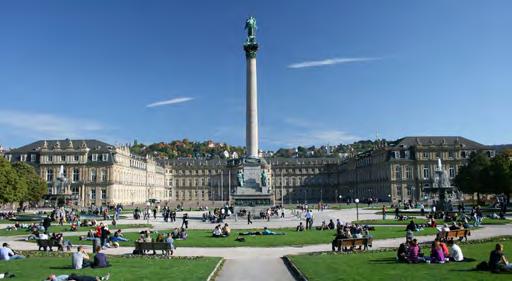
Daimler, Bilfinger and Porsche are just three examples of successful products originating from south-western Germany. Discover a region full of entrepreneurial spirit.
Stuttgart Region »
The Southwest is one of Germany’s powerhouses. Its attractive infrastructure, sophisticated research environment and highly qualified population make it a splendid investment opportunity. If you are looking for the hidden champions for which Germany is famous, chances are you will find them in the Southwest. Economic reasoning is deeply rooted here.
Booming industry is matched by an attractive landscape, including the Black Forest and the Upper Rhine valley. The region produces some of the world’s finest wines and is known for its delicious dishes. However, your German skills might not get you very far due to the strong dialect. A famous ad for Baden-Württemberg ran the slogan, “We can do everything. Except speak standard German.” However, we are certain you will understand our partner Arnd Klein when he introduces you to Stuttgart and the Southwest.
For further information, please contact:
Ulrich Ackermann
Regional Head Southwest Stuttgart, KPMG in Germany uackermann @ kpmg.com
With effect from 1 January 2017, the salary criteria for EU Blue Cards issued by German authorities have increased and the new criteria also apply to EU Blue Card-based entry visas (national visas).
The German government has increased the minimum wage. Introduced only two years ago, the minimum gross wage has now been raised to 8.84 euros per hour with effect from the beginning of this year, up from 8.50 euros. It affects all individuals working in Germany, regardless of their nationality. This takes precedence over any other agreements in employment contracts or assignment contracts.
Furthermore, Germany has revised its salary criteria for the EU Blue Cards that it issues. For shortage occupations, the new criterion is 39,624 euros (in 2016: 38,688 euros) and for all other occupations it is 50,800 euros (in 2016: 49,600 euros). All applications for EU Blue Cards or EU Blue Cardbased entry visas (national visas) bearing a start date of 1 January 2017 or later have to comply with the new salary criteria.
Companies intending to hire (non-privileged) third-country nationals have to take the new salary criteria into account when offering employment contracts to candidates. Entry visas (national visas) and EU Blue Cards that have already been issued are not affected by the new salary criteria, so the related employment contracts do not need to be amended.
EU Blue Card salary
The EU Blue Card is an important type of combined residence and work permit under German immigration law. Although visas are regularly issued with a validity of 90 days, entry visas are mainly issued under the same requirements as permanent EU Blue Cards:
• Work in Germany under a local employment contract
• Possession of a German (or equivalent foreign) university degree
• A salary that complies with the salary criteria
In terms of salary, German immigration law differentiates between shortage occupations and other occupations. The location of a worker’s employing entity is not taken into account, so even foreign companies located abroad, which assign employees to Germany, are legally required to pay the statutory minimum wage during an assignment. Individuals can sue their employers – even if they are located abroad – in Germany if they are not paid according to Germany’s minimum wage rules.
For additional information or assistance, please contact:
KPMG Rechtsanwaltsgesellschaft mbH
Dr. Thomas Wolf
Partner, Employment & Global Immigration Services twolf@kpmg-law.com
Dr. Sebastian Klaus
Partner, Employment & Global Immigration Services sklaus@kpmg-law.com

Germany's regions have developed special economic profiles. In our new series, we let external experts share their insights. First, Dr. Wolfgang Hübschle explains why Munich and the Internet of Things match so well.
Munich and the Internet of Things – you could be forgiven for thinking they were made for each other. The European Commission had good reason for selecting Munich as the EU’s premier ICT hub, ahead of London and Paris, in 2014. A range of new offshoots by global players and a lively start-up scene are further boosting Munich’s dynamism, as high-profile examples testify.
For instance, the Chinese telecommunications group Huawei decided to locate the headquarters of its European Research Centre (ERC), with a total of 18 associated research institutions across Europe, in the Bavarian capital. Since 2015, Huawei has also been ramping up a 5G test bed in Munich, which will set new benchmarks for mobile standards. Moreover, the Chinese group and the German software giant SAP formed a strategic partnership in 2012, covering joint work on innovations in the field of Industry 4.0. For SAP too, this venture is just one building block among many; there is also an SAP IoT lab in Munich.
Aside from Huawei, the Munich region has a string of other companies with a prime focus on Internet of Things work and research. These include Intel, who recently decided that IoT will be at the core of its future strategy. This is good news for Munich because Intel already operates three IoT units there, including its wholly owned subsidiary Wind River. There is also Intel’s IoT Ignition Lab, which is driving research into IoT solutions for a range of vertical industries as well as supporting relevant start-ups. Intel, like many others, benefits from collaboration with both locally based companies and global partnerships. For example, Intel has announced that it will carry out road tests with 40 autonomous vehicles this year in collaboration with car maker BMW and Mobileye, an
Israeli manufacturer of driver assistance systems. And BMW isn’t the only vehicle manufacturer with IoT ambitions either. VW is also actively looking for innovations. That’s why in 2014 it established its Data Lab in Munich, where new IT solutions for big data and the Internet of Things are to come to fruition, in close collaboration with universities and technology partners.
IBM’s announcement that it would be setting up the global headquarters of its Watson IoT unit in Munich created quite a stir in the digital industry. With its hub, IBM offers customers, start-ups, universities, research institutions and partners access to the cloud-based IBM Watson IoT platform to galvanise the development of cognitive apps, services and solutions. The first few companies have seized the opportunity with enthusiasm: last year, IBM formed a strategic partnership with the automotive supplier Schaeffler and also launched a joint research programme, IBM Cognitive Computing, with BMW. “The German economy is superbly positioned for digitalisation and Industry 4.0 – its key advantage is its high level of industrialisation,” says Martina Koederitz, CEO of IBM Deutschland and IBM General Manager for Austria and Switzerland. Among other projects, Watson is to further revolutionise Bragi’s smart headphones (hearables), proving that start-ups can also benefit from the IoT platform’s capacities for innovation.
A key ingredient of Munich’s digital ecosystem is its vivid start-up scene, which – in mutual symbiosis with global operators – ensures a constant supply of ideas and strengthens the system’s capacities and innovativeness. The intelligent heating assistant tado° and the smart glove ProGlove are two of many that could be mentioned here. The developments and collaborations in the local IoT scene should ensure that Munich maintains and extends its global IoT leadership.

For further information, please contact:
Andreas Glunz Managing Partner International Business KPMG, Germany aglunz@kpmg.com
Dr. Wolfgang Hübschle Head of Invest in Bavaria wolfgang.huebschle@invest-in-bavaria.com
Great location – recent investments in Bavaria by foreign and domestic companies from various industries
Gerresheimer Tettau GmbH
HEINZ-GLAS GmbH &. Co. KGaA
Schaeffler Technologies AG & Co. KG
ADIDAS AG
Würzburg
Neustadt a. d. Aisch –Bad Windsheim Ansbach Amberg
Innocoll GmbH
SMP Deutschland GmbH
KUKA Aktiengesellschaft
Liebherr-International Deutschland GmbH Roche Deutschland Holding GmbH
Sandler AG Siemens Aktiengesellschaft
Nexans autoelectric GmbH, BHS Trading S.a.r.L.
MARKGRAF GmbH & Co. KG
Gabelstapler GmbH & Co. KG
LiebherrInternational Deutschland GmbH
ProSiebenSat.1 Media SE

CeBIT IT trade show
20–24 March, Hanover
HANNOVER MESSE industrial show
24–28 April, Hanover
2017 IIHF Ice Hockey World Championship 5–21 May, Cologne
2017 World Table Tennis Championships
29 May–5 June, Dusseldorf documenta art exhibition
10 June–17 September, Kassel Conference G20 Africa Partnership 12–13 June, Berlin
KPMG events:
Business Breakfast: hot topics for US companies
03 March, Dusseldorf
07 March, Stuttgart 15 March, Munich
Brexit Roadshow: the impact on the German economy (in German)
07 March, Berlin
08 March, Frankfurt (Main)
09 March, Dusseldorf 14 March, Hanover
16 March, Stuttgart
Real Estate Fund Conference 01–02 June, Frankfurt
21 March, Munich
23 March, Cologne
29 March, Nuremberg
04 April, Hamburg
When it comes to computer expos, you won’t find one larger than CeBIT, either in terms of size or attendance figures. It is the most significant trade fair in the field of office automation, information technology and telecommunication (translated and abbreviated as ‘CeBIT’). 49 per cent of the visitors say there is no exhibition like this. Roughly a third of the attendees are top managers, which further underlines the event’s huge impact and future orientation.
CeBIT will take place in Hanover (northern Germany) from 20 to 24 March. It is certainly worth a visit!
... for Bernhard Mattes, President of the American Chamber of Commerce in Germany e.V.
1. How do Americans perceive Germany’s economic role in the world? Because of its strong economy and robust industrial core, Germany is not only a reliable trading partner, but has also returned to its position as the world's biggest exporter. The US is an important consumer of German goods – particularly in sectors such as machinery, vehicles and pharmaceuticals. Moreover, German companies represent substantial investments in the US. Roughly 3,500 German subsidiaries employ around 620,000 American workers.
2. In your view, what is the particular strength of German industry? High-quality products and a highly skilled workforce ensure that the “Made in Germany” seal stands for excellence, innovation and efficiency. The German economy relies on a strong manufacturing base, and its dual training system serves as a model for countries around the world.
3. Which cultural site or event in Germany would you recommend as a must-see? As a long-time resident of Cologne, I definitely recommend visiting the city’s landmark – the Cologne Cathedral – whose tall twin spires can be seen from miles away. The Rheingau Music Festival is also one of my favourite cultural events – you can listen to world-class music in historic locations, surrounded by the beautiful vineyards of the Rheingau.
Business D estination
Frauenquote, die – a specific term describing a regulation controlling the representation of women in companies’ decision-making bodies, which women have been fighting for for a long time. German politicians use this expression to emphasise their belief in gender equality. New legislation requires women to make up 30 per cent of some major corporations’ supervisory boards – is this a good or a bad thing? There’s a broad spectrum of opinions.
Useful insights for conducting bu siness in Germany
Germany Investment decisions are tough. Germany offers a wide range of opportunities. This analysis shows why now is the best time to become part of “Made in Germany“. »
Investment in Germany
This guide provides you with a comprehensive overview of the German business and legal environment, including economic facts, legal forms, subsidies, tariffs, accounting principles and taxation. »
German Tax Facts App Everything you need to know about taxes for companies, investors and employees, all combined in one smart and handy app. Now available at the Apple App Store and Google Play Store »
German Tax Monthly German Tax Monthly provides information on the latest tax developments in Germany, focusing on foreign investors and selected topics of interest in daily international business. Subscribe

Brexit – an Impact Analysis
Great Britain was the preferred location for the European headquarters of non-EU multinationals. How will they be affected by Brexit? And which country is now the most promising? »
Germany-Japan Tax Treaty
For the thousands of Japanese companies in Germany, as well as future investors, the new double tax agreement will bring significant advantages. »
Andreas Glunz*
Managing Partner, International Business
T +49 211 475-7127
aglunz @ kpmg.com
Joachim von Prittwitz
Senior Manager, International Business
T +49 30 2068-4195
jprittwitz @ kpmg.com
If you would like to receive this or other KPMG newsletters, please subscribe here Feedback to the Editorial team: Business in Germany
The information contained herein is of a general nature and is not intended to address the circumstances of any particular individual or entity. Although we endeavour to provide accurate and timely information, there can be no guarantee that such information is accurate on the date it is received or that it will continue to be accurate in the future. No one should act on such information without appropriate professional advice after a thorough examination of the particular situation.
* Responsible according to German Law (§7 (2) Berliner PresseG