THE HEART OF LOYALTY
Consumer Research Report



Consumer Research Report
As experts in loyalty for more than 35 years, we know that consumer perceptions about loyalty and loyalty programs are always shifting.
In the ever-evolving world of loyalty, one thing remains clear: consumer expectations and perceptions of loyalty are anything but static. In today’s environment—marked by economic turbulence, shifting technologies, and cultural polarization—change is more than a backdrop; it’s the headline.
In this year’s Heart of Loyalty Consumer Research Report, we found that more than 5,000 consumers across the U.S., Canada, and the UK are more uncertain and harder to impress than ever before.
So, how should brands respond?
At Kobie, we believe emotional loyalty isn’t a reward for engagement—it’s a catalyst for it. This foundational view shapes our unique approach to research and strategy. By combining academic rigor with real-world
application—what we call a mindset—we uncover the deeper psychological drivers that influence consumer behavior and brand connection.
This lens is what makes our findings more than just insights. They’re designed to be put to work.
In the pages ahead, you’ll gain a clear, actionable view into what today’s consumers want from loyalty programs—from the data they’re willing to share to the benefits they value most.
We’ll break down what each chapter means for your brand, and tee up questions to help activate smarter strategies and enterprise value through loyalty.

How to pivot your ecosystem perspective for better loyalty results in today’s climate.
How game science is driving non-transactional engagement for consumers.

How to maximize your data strategy by understanding what consumers will and won’t share (and why).
How to make the most of your brand’s superfans.
How to use a loyalty drivers framework to determine your features, benefits and innovations mix.
Up to 78% of consumers are uneasy with today’s rate of technological, political, social and economic change.
Chances are, you’ve probably referred to the features, benefits, offerings, and all other aspects of your loyalty program as a loyalty ecosystem.
But, here’s the thing.
Ecosystems can be influenced accidentally and are often forced to adapt and react to new inputs instead of controlling the inclusion of those elements in the first place. That’s why we’re pivoting the perspective of all of the factors that impact your loyalty results.
Biodynamics rose to prominence as an agricultural theory in the 1920s and 30s, and is based on the notion that a farm is an organism in and of itself. It looks at the farm as a system of carefully considered inputs and outputs. It involves the holistic evaluation of those inputs and outputs and uses them to create
intentional, deliberate, self-sustaining strategies aimed at allowing the organism (the farm) to be the best expression of itself.
But how does this notion of biodynamics relate to your loyalty program?
We believe you need to treat your loyalty program evolution the same way. Instead of an ecosystem approach, where you are forced to contend with all kinds of inputs and outputs, often adding elements into your program mix in seemingly reactive and opportunistic ways, we believe in a more deliberate approach, like the one biodynamics suggests.
This shift doesn’t mean you should sacrifice urgency; it simply means acting with intentional urgency creates better long-term results.
Nowhere is the current ecosystem thinking challenged more than when brands are evaluating how to include these three things:
New program partners, cobrand cards, and fee-based elements in the program.


80% agreed that the connection between the loyalty program brand and the partner must make sense for them to engage.
72% said they are more likely to purchase from a brand if they are a loyalty program partner.
70% said they were more likely to be loyal to a partner of a loyalty program they belong to.



Loyalty practitioners often perceive partnerships as “bolted on”, or tangential parts of a loyalty program value proposition designed to help offset some level of program costs by further monetizing the program’s currency, its data, or some combination of both.
But, when done with intention and considered holistically central to the program value proposition, partnerships can be an integral component of a loyalty program. They can drive enterprise value by increasing consumer engagement, creating the ultimate win-win-win for consumers, the loyalty program, and the respective partner.
From a consumer perspective, the most critical element that a partner must have is fit.
Fit occurs on two levels. The first is brand fit.
A partner must have strong brand awareness among the loyalty program’s membership, it must be relatively well-regarded in the industry in terms of its staying power, it should be seen as innovative, and finally, the partner has to be perceived as having similar values or a similar mission as the loyalty program brand.
The second level is member fit. Assessing member fit has to do with the overall appeal of the partnership to members and whether the products and services that partner offers are viewed as complimentary to what the loyalty program brand offers. The partner brand also needs to have a good reputation among consumers and have an identifiable “community” of members, either formally or informally, that can be tapped into.
Once you have strong fit on both levels, you can realize enterprise value with the partner. Consumers get an extra way to engage, prompting kudos to the loyalty program for bringing the partner to the table, and the partner gets the added benefit of an incremental transaction that can drive loyalty transference from the loyalty program brand to the partner.
While partners have a lot of upside when being deliberately integrated into a Biodynamic Loyalty System, cobrand cards get a little bit trickier based on consumer perceptions.
The average number of cobrand cards a respondent has open is 3.
Not surprisingly, most of those cobrand cards fell either in retail or travel and hospitality as those two industries leverage cobrands more frequently as part of their Biodynamic Loyalty System.
There’s a wide chasm of penetration between travel and hospitality, retail, and all other industries. Is this because other industries don’t think they’d be able to support a cobrand card strategy as part of their Biodynamic Loyalty System? Perhaps.
But, if you’re in an industry that doesn’t have an obvious cobrand card strategy, you can still look to retail and travel and hospitality for inspiration, and should ask your consumers if they’d be open to it. If you’re driving deeper
loyalty at an emotional level with a faction of your members, cobrand could work as a viable strategy, even if it is not in the mainstream.
So, in thinking about cobrands, what do we need to consider when integrating them into a Biodynamic Loyalty System?
Percentages of respondents indicating they have at least one cobrand card in that industry
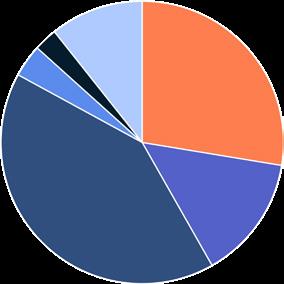
32% of consumers have taken out a cobrand card for the loyalty program they belong to.
58% of cobrand cards fall into the retail category, followed closely by travel & hospitality.
While the stats bode well for cobrand-program integration, it seems consumer perceptions are bifurcated. Only 43% agreed that they took out a cobrand card as a next step in their relationship with a brand and loyalty program they are in which shows some cognitive disconnect among consumers. Further, 40% of respondents indicated they see cobrand cards as separate from the brand’s loyalty program.
So, while for some consumers, cobrands mean something more than just a rational, bolted on benefit, for others, they remain separate and tangential when it comes to integration into the broader Biodynamic Loyalty System.
What’s driving this cognitive disconnect among consumers? It has to do with the offer.
76% of respondents indicated they took out the cobrand card only because they found the offer compelling. Other respondents only wanted the cobrand because they were about to make a major purchase and wanted the bonus points (49%) or wanted to access special financing (37%).
These statistics indicate that the cobrand was likely positioned as an added benefit with a great offer upfront that likely drove acquisition but predisposed a faction of the member base towards disengagement later.
To avoid this pitfall, think beyond a compelling acquisition offer and consider the ongoing value your cobrand card provides as part of your Biodynamic Loyalty System over time, so members view it as a way to maximize their loyalty program benefits.
agreed that taking out a cobrand card is a sign they are very loyal to the brand. 58%
indicated they took out a cobrand card because the love the brand. 66%
74%
agreed that cobrand cards are the best way to maximize their loyalty program benefits.
Many loyalty programs have a fee-based element to their program. Whether it be a paid tier structure, a subscription-based offering, or an added paid feature, fee-based elements can drive high engagement because of human psychology. The “drive to defend” signals that we tend to work hard to achieve a return on our investments.
The act of paying a fee, for some members, is also a sign of potential commitment bias. In psychology, commitment bias means as humans, we have a bias towards doing things that fulfill what we’ve committed to - a very tangible and real indication for those paying program fees.
When fee-based loyalty programs were defined broadly, 78% indicated they were in fee-based loyalty programs with only 22% indicating they would never pay to be loyal to a brand. Of that 78%, the majority (69%) were in six or less fee-based programs or subscriptions.
The bulk of respondents are in entertainmentbased programs like Amazon Prime (41%) followed by restaurant subscriptions (21%) and paid cobrand cards (21%).
Regardless of the type of program that members are in, the interaction between feebased program elements and the program overall can support engagement in both.
Considering that only 25% of respondents have ever paused and then restarted a membership, these statistics underscore the importance of being intentional with integrating fee-based structures in a broader Biodynamic Loyalty System. Your free program can be used as the stimulus for members to consider paying a fee, or as a fallback for when members stop paying a fee so you don’t lose them altogether.
indicated if they didn’t like the fee-based element, they would still be part of a free program. The same percentage said if they could experience a free version of the program first, they would be more likely to pay for it later.
Percentage of respondents belonging to at least one type of feebased loyalty program
Entertainment-based programs with streaming content (Amazon Prime, etc.)
Meal Kits (Blue Apron, Hello Fresh)
Product trial kits (Stitch Fix, Bark Box)
Restaurant Subscription (Panera Sip Club, Taco Bell Lover’s Pass)
Paid cobrand credit card (Hilton Surpass, Delta SkyMiles American Express Card)
Paid program at a retailer (Barnes & Noble, Best Buy)
Other (Please Specify)
In terms of how consumers make the decision about whether to pay a fee as part of a loyalty program,we found three critical must-haves: tangibility, better benefits, and cost justification.
1. Tangibility – There has to be some sort of tangible benefit that appeals to the member and makes sense for the broader program (e.g., no commercials as part of a streaming service upgrade).
2. More or Better Benefits – Respondents signaled that they look for the fee-based element to give them something more than they are getting today.
3. Cost Justified – Respondents indicated that they do the math and ask themselves whether they’ll extract the same amount of financial benefit from that aspect of the program relative to what they’re paying in terms of a fee.
These responses also echoed a broader point around value, but positioning matters too.
As the stats show, bringing partners, cobrand cards, and fee-based elements into a Biodynamic Loyalty System takes some deliberate strategic thinking. Foundational to this effort is knowing how your members perceive your program currency and the degree to which they expect that currency to be ubiquitous, or universal.
67%
Between segments we call Savers, Spenders and Collectors, consumers think about their points and what they want to be able to do with them differently. There are nuances by industry, too. For example, respondents had the highest propensity to save points with a reward in mind and the lowest propensity to redeem as soon as they can when thinking about travel & hospitality programs. This makes sense as often in travel and hospitality programs, rewards require some level of saving. But, Retail and QSR also have the highest percentage of Savers, or those that want to bank their currency with a larger reward in mind. Yet, many of these programs force members into a spender mindset by autoissuing rewards with timed expiration dates. That’s not to say that this strategy is wrong, but consideration should be given to your members perceptions and expectations of your program’s currency. indicated that when they see how much they’ve saved in a year as part of a feebased program, they immediately see the value.
21% are Spenders - who want to make a redemption as soon as they have enough of the program’s currency to do so.
46% of respondents are Savers – they are earning the program currency with a specific end or reward in mind.
33% are Collectors - collecting the program currency without a specific reward in mind.
Overall, 51% of consumers expect to be able to buy points in the program they’re in, 61% want to be able to gift those points, and 49% want to be able to exchange those points between programs. When thinking about how partners function in particular, these numbers point to the need to meet your members where they are when it comes to the program’s currency.
Percentages of respondents who expect various ways to use their program currency
61%
want to be able to gift points as part of their currency expectations.
When it comes to loyalty programs and the integration of the additional benefits discussed so far, humans have three motivational needs they’re looking for those additional elements to fulfill.
1. Utilitarian – Consumers want these added benefits to fill a gap in the loyalty experience, augment the loyalty experience or amplify that experience in very tangible ways.
2. Symbolic – Consumers want to engage with added benefits in ways that make them feel special, exclusive, or unique (this is also one of Kobie’s Emotional Loyalty Drivers).
3. Hedonic – Consumers want to derive emotional impact from the programs they’re in. They want to have fun, engage, or feel something deeper.
In analyzing consumer responses to questions around partnerships, cobrand cards, and feebased loyalty structures, it’s clear that meeting utilitarian needs provides the foundation for integration of these elements into the broader Biodynamic Loyalty System.
Utilitarian motives around partners:
83%
preferred partners where they could earn more of the program currency.
When looking at cobrand cards, we see similar utilitarian motives:
84%
indicated that they took out a cobrand because it allowed them to earn the program currency faster.
When paying a fee as part of the program:
77%
wanted better savings and discounts.
When integrating any of these elements into a Biodynamic Loyalty System, there needs to be a strong focus on meeting utilitarian motives first. But, it can’t stop there.
82%
preferred partners who allow them additional options for redeeming the program currency.
85%
wanted partners to offer additional discounts.
While utilitarian-oriented benefits were preferred by respondents, those benefits that meet symbolic motives weren’t far behind.
When referencing partnerships, 53% of respondents indicated that being able to access exclusive partner benefits would make them feel special. Related to cobrand cards, 74% expected the cobrand card to give them special access to additional perks or benefits, and 55% would take out a cobrand card if it automatically gave them status in the program, fulfilling symbolic motives. Finally, when thinking about paid loyalty programs, 59% wanted access to other perks and 44% wanted exclusive access to products, services, or experiences when they engage.
If meeting utilitarian needs is foundational, meeting symbolic and hedonic needs is emotional.
Finally, consumers also signaled that they not only want their utilitarian and symbolic needs met but their hedonic ones too.
60%
indicated they expect partners to be a fun way to engage with the program in between transactions.
indicated taking out a cobrand card means they love the brand. 66%



Before you can start diving into consumer perceptions about your program, shift away from the idea of a loyalty ecosystem that is often built from uncontrolled or opportunistic inputs.
To combat uncertainty without sacrificing urgency, think of your program as Biodynamic instead, where every input is deliberate and holistic with the integration of new program elements like partners, cobrands and fee-based loyalty. They key is to move with intentional urgency and maintain agility.
To help make more inputs deliberate, understand the consumer perceptions specific to your industry and brand before rolling out new elements, so decisions are backed with intentionality. When you do roll them out, align them to your members perceptions of program currency (they want ubiquity) plus their motivations (utilitarian, symbolic, hedonic) to hit the nail on the head with your program optimization. Even during times of immense change, innate human needs remain the same. So rely on them to help build your Biodynamic Loyalty System.


How do I roll out new program elements today? Am I doing so strategically or opportunistically?
If I were more deliberate, what would I need to consider?
What potential partners align with my brand and what my consumers value? Where can I create the potential win-win-win scenario?
How can I integrate new program elements so they don’t feel tangential? Are the elements meeting the 3 main human motivational needs?
How do members use my program currency today, and what can I do to make it more ubiquitous or universal for them?
Does my current loyalty technology platform enable the agility required for my Biodynamic Loyalty System, or am I limited?
Consumers are more than the sum of their transactions. Particularly during uncertain times, transactions are not the sole indicator of loyalty when considering a person’s economic and financial situation. So, while loyalty programs are adept at capturing transactions, brands must look for ways to drive engagement beyond and in-between transactions if they want to foster deeper, long-term loyalty.
Game science principles, tactics and strategies can be leveraged to foster deep loyalty when you take into account how and when consumers prefer to engage. They can also provide context clues as to how emotionally loyal your members are. But the game dynamic matters. Our research reveals which game science tactics consumers find most and least appealing, and why. Layer those preferences with Emotional Loyalty Scoring® and human motivation – and you’ve got a recipe for game science that drives Non-Transactional Engagement (NTE).
To help level-set, let’s define a few terms. Game mechanics are the tactics used to gamify an experience – things like progress tracking, testing products and services, and surprise earning opportunities. Game dynamics are the sets of desires or behaviors the game mechanics seek to generate – things like achievement and aspiration. The term gamification, with which we are all familiar, is broad, therefore you may not find it as helpful when considering the intentional inputs to your loyalty program as discussed in chapter 1. Game science on the other hand, is how we refer to the deliberate and strategic design of these elements, playing nicely in our Biodynamic Loyalty sandbox as always-on, continuous ways to drive engagement across the entire loyalty lifecycle.
Game mechanics consumers find most appealing:
82% found surprise earning opportunities the most appealing
74% found progress tracking towards tiers and rewards most appealing
64% found that setting their own goal and progress tracking towards it was appealing

In addition to looking at these appealing game mechanics, what game dynamics are at play? It’s clear that consumers find novelty/surprise dynamics, achievement dynamics, and feedback dynamics the most appealing.
On the other end of the spectrum, competition and guild dynamics, or those dynamics designed to drive interaction within a community, were the least favored. Less than 40% of respondents found these game dynamics appealing.
When considering game science as part of your non-transactional engagement strategy, aligning to what is appealing for your consumers is critical to drive usage. Whether that strategy is being used to capture data about your members, or to drive increased activity in between transactions, using the right game dynamics and mechanics is critical to success.
Percentage of respondents who find various game dynamics appealing
Being Part of a Member Community
Sharing Member Stories
Competing with Friends / Family in team...
Playing Digital Games
Viewing Leaderboards
Receiving Badges
Getting Fun Facts
Teaming up w/ Friends/Family Towards Goal
Combing Points w/ Friends/Family
Accessing Exclusive App Features
Participating in Surveys / Focus Groups
Tracking Your Progress Towards A Goal
Testing New Products/Services
Tracking Progress Towards a Reward
Tracking Progress Towards a Tier
Getting Surprise Earning Opportunities
When consumers engage with these various game dynamics, it also triggers an emotional response.
65%
agreed that being able to engage via game science mechanics gives them a sense of joy.
78%
indicated that they feel a sense of fulfillment when they see themselves progressing towards goals in a program.
68%
agreed that they get a sense of meaningfulness when they are asked for feedback.

These deeper emotions – joy, fulfillment, meaningfulness – help to cement deeper loyalty. They also can be built upon using Kobie’s proprietary Emotional Loyalty Scoring (ELS®) tool.
We used ELS® to place respondents into one of 8 segments depending on the drivers they have in play when it comes to their loyalty to brands. Kobie’s ELS® tool identifies three drivers that can occur singularly or in combination:


The first driver is Status.
Those who are driven to be emotionally loyal because of Status like to feel exclusive, special, and unique.
After analyzing the data, it was clear that those who have more than one driver as part of their emotional motivation, or those who have all drivers, are far more likely to find game mechanics as part of loyalty programs appealing.
Those who have no drivers in play (we call this an “all low segment”) are the least likely to find those types of programmatic elements appealing. The same applies to those who only have Habit as a driver, but the reasons are different. Taking advantage of non-transactional earn opportunities, for this audience, takes them out of their comfort zone and requires them to do something new or change their routine. This negates the familiar convenience that Habit-motivated consumers prefer.
When your members are emotionally loyal, specifically with Status and Reciprocity drivers, they’ll be more likely to exhibit the kinds of engagement in-between transactions (via game science or otherwise) that strengthen the emotional ties they feel, which is a positive cycle for any brand to find themselves in.
The second driver is Habit.
Individuals driven by habit are emotionally loyal because they take great comfort in the convenient and the familiar.
Finally, the third driver is Reciprocity.
Those who are driven by Reciprocity take great pleasure in the relational exchanges they have with brands.
Once we understood how consumer preferences and emotional motivations relate to game science, a big question still remained. Does the appeal of certain game mechanics change when put in the context of a favorite loyalty program? In other words, is something like progress tracking towards a goal any more or less appealing when it’s related to a brand you love?
Astonishingly, no significant differences emerged in terms of the appeal for those benefits when they were asked in the context of a favorite program or in general. The largest gap between these two different groups of respondents was only 3 percentage points. This suggests that the preferences and motivations towards engaging with game mechanics are universal.

In Chapter 1, we learned that innate human motivations can help us be more intentional and deliberate as we craft our Biodynamic Loyalty Systems. Game Science is a powerful lever that can also function as an input as we evolve our loyalty strategies with that mindset. By aligning game mechanics to game dynamics, and to the emotions those dynamics evoke, we can use opportunities to drive non-transactional engagement to drive members to interact with your program more, creating opportunities for you to learn more about that member in the process. Mechanics that align to surprise and novelty, achievement, and feedback as dynamics should be leveraged widely as part of your Biodynamic Loyalty System in ways that are continuous, always-on, across your entire member lifecycle. Those mechanics aimed at competition or community sharing can still be powerful but should be aimed at a smaller audience
No matter your industry, aligning game mechanics with what consumers want in an intentional way will get you better results when it comes to engagement in between transactions.
Do I currently consider game science, game mechanics and game dynamics as part of my loyalty strategy? Or am I still looking through a broad lens of “gamification”?
What are my NTE goals? Data collection? Deepening Emotional Loyalty? What dynamics and mechanics will help me meet my goals?
Do I know what emotionally motivates my members? Are they Status, Habit, or Reciprocitydriven, or a mix? How can I use ELS® to help determine which game mechanics to deploy?
Am I currently using game science in a way that may be misaligned with what my consumers prefer?
To start our chapter on The Loyalty Data Share, let’s take a quick trip down memory lane. Once upon a time, loyalty existed to track transaction frequency – via stamps, punch cards, and scannable cards. In the 2000s, loyalty moved online. Brands began collecting and segmenting consumer data via CRM tools and digital marketing strategies. With advancements in omni-channel and mobile experiences, and capturing ZPD (zero-party data, or data consumers provide directly to a brand), personalization took off.
Today, loyalty programs are sophisticated data capture and activation machines, which is one of the driving forces behind brands investing in them. Loyalty plays a pivotal role in creating deeper customer relationships, enabling realtime, personalized experiences, and ultimately driving enterprise value and business growth. The very nature of loyalty programs today offers
prime opportunities to collect customer data at scale. But, here’s the rub. Even the most robust loyalty programs still struggle to capture data directly from their members. Why? Because what they are asking for is often misaligned with what consumers are willing to part with. Given the uncertainty facing consumers today, consumers are more cautious than ever when it comes to sharing information. Because of this caution, we wanted to understand consumer mindsets around data sharing. What can we do as loyalty marketers to alleviate brand challenges around collecting and activating zero-party data? Can brands leverage trust and control as factors to help nudge consumers towards the loyalty data share? How can loyalty programs provide the incentive to drive consumers to share their information?
In this chapter, we’ll find out.
82%
of consumers indicated that they would share some information without an incentive
When a reasonable incentive is offered 94 JUMPS TO
For some consumers, the walls around their information are thick and nearly impenetrable. But, for consumers who are willing to share data without an incentive, what information should brands be asking for, and what should they stay away from?

The more obvious the context is behind why you’re asking a consumer for data, the more willing they are to share it. This means if a consumer can visualize clearly what they will get in return for sharing, they are more apt to do so. For example, most loyalty programs do an excellent job of making the context obvious for sharing your birthday. Members typically expect and receive a happy birthday message or even a reward.
43%
of consumers indicated they’d be willing to share their birthday with a loyalty program without an incentive.
86%
said that it needs to be extremely obvious why the data is needed before they’ll share it.
Consumers will reveal this information because the way in which it will be used is easy to visualize. This notion also applies to contact information, sizing, or other shopping habits. For consumers, there’s a direct correlation between sharing this information and selfpersonalizing their loyalty experiences.
As context relevance becomes murkier, and the data gets more sensitive, the willingness to
share predictably drops. Take for instance the fact that only 6% indicated they would be willing to share information from other apps on their phone with a loyalty program. It’s a trickier visualization exercise for a consumer to see how sharing that information will materially impact something later for them in the loyalty program they’re in right now. Also, as the information gets a little more personal (e.g., health or activity data, credit card information, or household income), the walls start to go up.
While these findings are not surprising, brands often remain adamant about trying to get the data consumers feel least comfortable sharing – app usage, app data, and browsing history. This creates even more challenges as consumers are signaling that they don’t want to part ways with this information just yet. It’s likely that if those same brands channeled collection efforts away from these elusive data points and instead, enacted strategies designed to capture the data consumers are more likely to share (e.g., through progressive profiling), then those brands could experience a veritable data win-fall.
Further, once these brands have that information, they can then use it to demonstrate they can be good stewards of a member’s personal data, making it easier to collect more challenging data later.
Once you make the context for your data ask obvious, consider how incentives may impact your consumers willingness to share their data.
50%
of consumers indicated they’d be willing to share their hobbies and interests with a loyalty program without an incentive.
Percent of consumers willing to share types of data with or without an incentive
Birthdate
Your hobbies and interests
Your contact information
Shopping habits (in-store vs online, purchases)
Your sizes (like for an apparel retailer)
Your location
Employment of occupation
Streaming / entertainment preferences
Anniversary date
Household income
Credit card information (or preferred payment)
Health or activity data (Health app, Fitbit, etc.)
App usage data
Your Internet Browsing History
Data from other apps on your phone
One way to break down the walls consumers have around their data is to offer up a little bit of extrinsic motivation. The great news is loyalty programs are primed to do this, given most have some sort of currency that can be exchanged for data and information. With the introduction of a fair and reasonable incentive, on average, brands can expect a 26% increase in willingness to share across the board. To determine what’s fair and reasonable, brands should test their way into it at varying levels based on the information being asked for and the amount of the incentive offered. Brands can take a pass at gathering information without an incentive, with various incentives, and then
determine the trade-offs from a return perspective. It could be that just a few points of your program’s currency is enough to garner the information you’re looking for. And the incentive doesn’t always have to be tangible when it comes to cost. Offering fun ways to engage using game science techniques (chapter 2) as a method for information capture can be enough of an external driver to stimulate information sharing.
So, how do consumers determine what they will share and what they won’t? What builds or breaks down their walls?
It’s called the Privacy Calculus Effect.
This theory posits that consumers weigh the pros and cons of sharing information by “doing the math”. It recognizes that there are forces pulling consumers in the direction of sharing their data (e.g., social connection, access to information, context relevance, rewards, entertainment, etc.) while at the same time, there are forces pulling them away from sharing their data (e.g., identity theft, loss of control,

Consumers are essentially the rope in a tug of war between these forces, and the side that wins dictates whether information will or will not be shared. Mix in the uncertainty and discomfort consumers feel, and you can imagine how intense that pull can become.
Since the forces that impede data sharing are generally more powerful, let’s zero-in on consumer perceptions of data security, privacy
When consumers were asked the degree to which they were concerned about data privacy, security and loyalty program fraud, they indicated a greater concern over data privacy and security.
This significant difference in percentages is likely because consumers tend to be more concerned with things that are in their purview – that they can control. It’s called “locus of control”, and when consumers feel like things are getting out of control, they employ compensatory control strategies to try to restore the balance.
41%
58% indicated they were concerned about loyalty program fraud.
indicated they were concerned about data privacy and security in loyalty programs.
In today’s marketplace, where consumers are uneasy with the rate of social, political, and economic change, a feeling of control can be elusive. So those consumers find it elsewhere. When it comes to their data, these strategies involve reading privacy policies, acting when there’s some sort of data breach, and having a general expectation that brands will have strong privacy and security measures.
Other factors pulling consumers away from sharing their data are a lack of transparency and clarity regarding how their data will be used, and the potential for perceived misuse of that data once it is shared.
When it comes to misuse of data, 52% cited irrelevant messaging as a reason for not sharing with brands and 57% indicated too many messages would be a bona fide reason not to share in the future. Consumers who feel like their personal data points are being misused will likely rescind their permission if they can with the brand and will be reticent to share anything with any brand in the future.
62%
expect brands whose loyalty programs they’re in to have strong privacy and security measures.
50%
indicated they read privacy policies them before agreeing to them.
77%
indicated they do something when notified of a breach.
At the heart of the Privacy Calculus Effect are 2 factors: control and trust. Brands that can afford consumers some control over what data they provide, how it’s used, and how it’s shared with others will have an easier time gathering zero-party data from them. Those brands that can demonstrate, with confidence, that they’ll be good stewards of the data will engender the trust needed to make sharing more data in the future an easier calculation for the consumer.
So, how can brands do this? Great news: through loyalty programs. Whereas consumer sentiment all around shows falling trust in brands, when it comes to loyalty programs, that’s not the case.
70%
of respondents indicated that they are more comfortable sharing data in the context of a loyalty program.
80%
agreed that they trust the loyalty programs they’re in to keep their data secure.

The internal tug of war consumers face around sharing data will not go away. If anything, as market uncertainty persists, it may get harder. But the point of this chapter is to illustrate that leaning into what data consumers are willing to share – understanding the forces pushing them towards share and those pulling them away - can go a long way. Armed with your loyalty program, which consumers inherently trust, consider doing these things:
• Once a consumer provides data, focus on demonstrating you can be trusted with it before asking for more, ensuring they receive the benefit they expect in exchange for sharing. This will open the door for future sharing as consumers feel more comfortable.
• Avoid holy grail thinking, or a focus on getting the data that consumers are least likely to share (like app usage). Instead, divert energy towards asking for the data they are willing to share (like birthday or shopping preferences) to gradually break down walls vs. pushing your way in.
• Enact the 3 C’s - clarity, control, and cancel. Be abundantly clear (context obvious) as to why you’re asking for data, allow the member to control what they share with whom, and give them license to cancel their sharing to help influence the privacy calculus effect towards more data sharing.
What are my members’ expectations and perceptions when it comes to sharing data with my loyalty program? Am I delivering on those expectations, and thus demonstrating trust?
What data can I start asking for today that my members would be most open to sharing? Am I missing opportunities to collect ZPD by not asking for it?
Is my loyalty platform built to enable zero-party data capture? Does it meet privacy and security requirements?
How can I influence the privacy calculus effect in my members’ brains to shift them towards being open to sharing their data?
Am I maximizing the 3 C’s - giving members clarity, control, and the option to cancel?
Am I focused on asking for holy grail data over asking for the data consumers are most apt to share?
We know we have them in our programs. And if we don’t know if we have them, we certainly want them. We’re talking about the die hard, extreme loyalists that account for so much of loyalty program engagement.
Which brands are attracting the most of these extremists? What is this segment worth? How can you tap into the value that comes from people who will scream their love for you from the rooftops?
To find out, we started in the same place we often do – academics. Here are some terms that helped us in our exploration of extreme loyalty:
• Brand Love – As defined by awardwinning educator and Ph.D., Aaron Ahuvia, brand love is the degree of passion and emotional attachment a satisfied consumer has for a brand. Using his groundbreaking work, with inspiration from behavioral and social scientist, Richard Bagozzi, we created a formula to gauge brand love as it relates to determining extreme loyalty.
• Conative Loyalty – Conative loyalty is a deeper level of loyalty characterized by a strong intention and commitment to exhibit loyalty behaviors. It’s more than just a feeling or attitude; it’s a behavioral inclination to consistently demonstrate loyalty.
• Belongingness – This is the state or feeling of belonging to a particular group, which we used as a potential indicator for extreme loyalty.
• ELS® - We’ve talked about Kobie’s Emotional Loyalty Scoring® in previous chapters, and leveraged it here to validate which segments we know to have most extreme loyalists.
Before diving in, let’s discuss why understanding your extreme loyalists matters.


Why does understanding this relatively small population of members matter? Because they’re undoubtedly funding your program.
The Pareto Principle is an old adage that claims 80% of your profits come from 20% of your members. But as we look at macro trends and work with global brands, it’s clear the 80/20 is contracting. It’s now more like 85/15 or 90/10, or in extreme cases, 95/5.
59%
of extreme loyalists spend 20% more than the average customer.
So, how can you recognize extreme loyalists in your own membership base? Let’s dive in.
We first asked respondents what brand they are extremely loyalty to. As each subsequent question was asked, we continued to name that brand within the question, so extreme loyalty to that respective brand remained top of mind. We then asked them which behaviors they would engage in from most to least extreme. Lastly, we applied and ranked consumers on our brand love scale to see if responses differed amongst the most extreme of the extreme loyalists (top 20% of scorers).
The first set of behaviors that extreme loyalists cited they would engage in are those associated with inconvenient re-patronage, namely buying from the brand when it’s not at all convenient or when it requires them to pay more.
27%
of extreme loyalists spend 50% more.
In addition to knowing that extreme loyalists spend between 20-50% more, there’s also the prominent trend of consolidated consumption. This means consumers consolidate consumption behaviors when there’s uncertainty in the market - a theme we’ve explored throughout this report. Given up to 78% of respondents are feeling uneasy with the rate of social, political, and economic change that is happening around them, this trend is another layer to consider.
60%
indicated they would still purchase the brand even if they had to go out of their way to do so.
62%
indicated they would pay more for a brand they were extremely loyal to.
When applying our brand love scale to identify the most extreme of these extreme loyalists, responses jumped to 73% and 71% respectively.
Extreme loyalists are likely to recommend the brand they are loyal to with or without solicitation. 45% will engage in unsolicited positive word-of-mouth (PWOM). When looking at the extreme loyalists on our brand love scale, this number jumps to 61%.
By looking at advocates based on intent to recommend and their spending habits, you can leverage a strategic, 2x2 segmentation approach. The value of extreme loyalists becomes even more apparent when comparing segments, like the ones below.
higher unsolicited PWOM was found when looking at extreme loyalists. 16%
In terms of solicited PWOM, where someone asks for a recommendation, a whopping 91% of those who named a brand they were extremely loyal to said they would recommend that brand when asked. The extreme of the extreme loyalists came in 94%.
These advocates drive value to your brand through referrals, pushing new consumers further down their path to purchase and improving your acquisition cycles, which indirectly contributes to your organization’s bottom line.
To better tap into this group of extreme loyalists who are apt to advocate for you brand, considering strategic segmentation strategies.
Extreme Loyalists:
In the upper right quadrant, we have champions. These loyalists spend more and are very likely to recommend your brand. Below that we have missionaries, those who may not spend as much as others, but love to sing your praises. In the upper left quadrant are your curmudgeons, or those members who spend a lot, yet for some reason are less likely to recommend. And finally, in the lower left we have those who neither spend nor recommend, whom we label as disengaged.
When looking at the most extreme loyalists, we see an uptick in champions (from 36% to 48%) as well as an uptick in missionaries (from 28% to 32%). If you can identify these extreme loyalists in your membership base, you can align strategies to them.
With curmudgeons for example, it’s all about cross-sell, up-sell, and constantly reminding them of the value you’re bringing to the table. For missionaries, the focus should be on a recognition strategy, but not necessarily a reward strategy. By separating reward and recognition, we can still recognize their contribution in terms of advocacy but not be as concerned about lack of spend. And, for champions, it’s about staying the course –showing them your appreciation and tapping into status-oriented benefits.

Once thought to be the pinnacle of loyalty, advocacy is still an important outcome when it comes to extreme loyalty. But there’s something that goes beyond advocacy - defense.
50%
indicated that they would defend the brand in the face of negative criticism.
22%
indicated that they’d get in a fight with a loved one or relative about a brand they were extremely loyal to.
For your most extreme loyalists – this effect is even more pronounced. 31% indicate they would get in a fight with a loved one while 63% signaled that they would defend a brand against negative criticism. These statistics underscore the emotional connection that extreme loyalists form with a brand. They’re likely defensive because their relationship with the brand is tied to who they are – relating to conative loyalty and ELS® .
Tapping into this vigorous inclination to defend will only further deepen the emotional connection.
Semiotics is the study of signs and symbols, and what they mean or signify. For extreme loyalists, we look at semiotics as a means for expressing loyalty. At the most extreme, 7% of respondents indicated that they would get a permanent tattoo of a brand on their body. In the UK, that number almost doubled to 13%. Extreme loyalists were also willing to “tattoo” their cars with logos of the brands they’re extremely loyal to (22%) while 42% would wear a t-shirt with the brand or the logo.
When looking at the top 20% of extreme loyalists based on the approach we used to measure brand love, each of these percentages increased by a considerable amount. The extreme of the extreme were more willing to:
10%
Would get a tattoo of the brand they love.
31%
Would put a logo or sticker on their car.
54%
Would wear a t-shirt with the brand or the logo.
For members exhibiting their extreme loyalty via semiotics, the logo of the brand becomes less of a symbol and more of an expression of who they are.
42%
indicated that they would engage in customer events.
53%
indicated they would participate in online forums.
Extreme loyalists will engage more in community-based strategies, whether those be in-person customer events or online forums.
When we looked at the differences between the general population of the top 20% of scorers on our brand love scale, we saw an increase of 12-13 percentage points across each item.
When asking the gen-pop about communitybased strategies, they typically indicate low interest in engaging. It’s consistently among the bottom 5 features and benefits consumers find appealing. But, when looking at those who are extremely loyal to a brand, a much different story emerges.
The implication here is that when working to engage in-between transactions using customer events or online forums, it’s better to aim those engagement strategies at your extreme loyalist’s segment.
Looking at the total population, we get a baseline regarding what extreme loyalists are willing to do. The extreme of the extreme – those scoring in the top two deciles on our modified brand love scale – show large increases in terms of the percentages of respondents indicating they would exhibit those behaviors.
You may think that brands who have the most extreme loyalists are subset of brands considered edgy, sexy, or cool by consumers. You may think of Harley-Davidson and their well-documented HOG community. Apple may come to mind, which is more of a lifestyle than a technology company. Or you make think of the “Jeep wave” or the more recent “ducking” trend associated with the brand community.
But, when we asked respondents to name brands that they were extremely loyal to, here’s what we found:
The Top 5 Extreme Loyalists Brands in terms of respondent mentions:
1. Amazon
2. Walmart
3. Costco
4. Target
5. McDonald’s
As you can see, the top 5 extreme loyalist brands are widely known. In the UK, Tesco and Sainsbury make the top 5. This may lead you to believe that frequency is a pre-requisite for extreme loyalty. While that’s a part of it, there’s something deeper happening.
Every brand above taps into Habit as an emotional loyalty driver. They strike an emotional chord with members by becoming enmeshed in their daily lives. They’re also brands that can deliver on Reciprocity as a loyalty driver. Whether through digital experiences or in-store, they’ve likely created positive relational exchanges between their customers and the brand. As we know from our ELS® methodology, those relational exchanges can drive loyalty on a much deeper level.
If you’re not convinced yet, let’s expand and look at the top 10 brands ranked by the extreme of the extreme brand loyalists:
1. Amazon
2. Costco
3. Walmart
4. McDonald’s
5. Nike
6. Apple
7. CVS
8. Netflix
9. Target
10. Starbucks
You’ll see this segment cited many of the same brands as the general set of respondents
If these brands can motivate extreme loyalty among their program members and consumers, then yours can too. It’s about understanding what drives your members to be extremely loyal and looking for ways to amplify that within your program.

Understanding loyalty at the extreme is critical. With the vast majority of consumers feeling uncertain, these superfans remain unwavering. And, with the contraction of the 80/20 rule, your brand may be benefiting more than you realize from this small yet mighty segment. From going out of their way to buy your brand, spending more, advocating, and engaging between transactions, this group is undoubtedly funding your program and contributing to your bottom line in direct and indirect ways.
But, it’s not enough to just identify who your extreme loyalists are. You need to understand the levels by which they are extreme to strategically segment them and activate different strategies. For the consumers who go beyond advocacy to defending your brand, think about how powerful this segment can be, potentially educating others and shifting curmudgeons or disengaged segments to champions or missionaries.
If you think your brand doesn’t engender extreme loyalty – think again. If brands like Walmart and Amazon can do it, so can you.
Does my brand have extreme loyalists? Do I know who they are or how can I identify them?
Am I using segmentation and personalization strategies to reach my extreme loyalists?
Does my current technology enable advanced segmentation strategies?
What beneficial behaviors can I motivate my extreme loyalists to exhibit? Referrals? Higher spend? Engagement in community?
How can I learn from what other brands, like Amazon and Walmart, are doing to tap into their extreme loyalists? Am I considering ELS® motivators like Habit and Reciprocity?
As we’ve learned throughout this report, what consumers find appealing often correlates back to behavioral science. Whether related to innate human needs, emotional motivations, or their ability to trust in your brand, understanding consumer preferences makes all the difference when building your Biodynamic Loyalty System during times of uncertainty.
To dive deeper, we analyzed the perceptions around a general set of benefits, applicable to four key industries (Retail, Restaurant, Travel & Hospitality, and Financial Services) to see if there was any difference in responses between markets. We also looked at geography and openness to innovation as other indicators of appeal for brands to consider. Here’s what we found.
Kobie leverages our Loyalty Drivers framework when creating and optimizing loyalty strategies. Personalization is one of the six universal loyalty drivers we consider, and as the world shifts to more AI-driven, 1:1 marketing, so do consumer expectations around this driver.
When looking across all industries, the topranked benefit was receiving bonus points for profile completion. This signals a win-win personalization opportunity, where consumers know that if they supply this information, they’re likely to have a hand in personalizing their own experience in the program. Brands collect valuable zero-party data, and can then personalize experiences further.
Birthday and anniversary bonuses remain highly ranked in appeal across industries, signaling the “all about me” consumer mindset as it relates to the personalization driver.

Last year, we wrote extensively about how consumers want choice when it comes to their loyalty program. This year, optionality still reigns. The third most appealing benefit across industries is the ability to redeem program currency via a robust rewards catalog. The sixth most appealing benefit is the ability to customize the perks a consumer receives as part of the program. Both of these benefits show that optionality isn’t just about rewards anymore; consumers want to self-personalize and co-create loyalty experiences within their programs.
Two more of Kobie’s Loyalty drivers are brand value and access. Even though referral (as an indicator of brand value) and access ranked lower on the list of appealing benefits, more than 50% of respondents still indicated those items were appealing to them. Being rewarded by the program for making a referral was favored above gifting something to the referral. Special access was slightly more favored relative to early access, however across industries, close to 50% of respondents deemed access appealing.
Beyond a general set of benefits applicable to all industries, we also looked at benefits that are appealing to financial services and travel and hospitality.
Cash back has long held high appeal amongst FI consumers, and the latest stats validate it still does.
The appeal of everyday spending bonuses was reaffirmed with 89% finding that benefit is appealing. Being rewarded for the entirety of a consumer/bank relationship was appealing to 73% of respondents.
Something to consider about cash back: while consumers find it highly appealing, it tends to create a transactional mindset. More choice with points (like paying for a purchase after it’s been made) is part of a larger, macro-trend towards optionality.
81%
said that being able to pay for a purchase after the fact with points is appealing.
90%
of consumers said cash back and cash back-like benefits are appealing.
Financial brands should be considering ways to make their currency more ubiquitous, as we learned about in previous chapters, to satisfy this trend.
Finally, while relationship banking strategies ranked high in consumer appeal percentage, most FI’s don’t have relationship banking loyalty strategies in market. So, this suggests some white space financial institutions can lean into.
Percentage of Consumers Who Find Unique FI Benefits Appealing
Cash Back Deposited into Accounts Everyday Category Spend Bonuses Pay for Purchases Already Made w/ Points Relationship Banking Rewards
With a continued theme of self-personalization, travel consumers found free upgrades (89%) and free food and beverages (82%) as the most appealing benefits. Not far behind were personalized rewards for reaching milestones
(78%) and access to a variety of perks and benefits (74%). Consumers cited access to a concierge as the least appealing, although it still appealed to most respondents at over 50%. These numbers mirror the larger trends of finding personalization, optionality, and access appealing in relation to a general set of features and benefits.
Percentage of Consumers Who Find Unique T&H Benefits Appealing
Personalized Rewards for Reaching Milestones
Beyond the basic loyalty program features and benefits, there are new innovations being introduced to the market as technology capabilities continue to grow. But are respondents likely to find them appealing?
Consumers are far more likely to adopt a new feature that creates the ability to exchange program currency in real-time between programs that they are in. Consumers who are in currency-based loyalty programs consistently are looking for more options, and the ability to do more with that currency. Interestingly, digital wallets, while not an entirely new innovation, still struggle to gain traction in the loyalty program context, likely because consumers have bypassed their usage and view them as an alternative form of payment.
At the same time, non-points-based programs that focus on an elevated experience with perks, benefits, discounts, and offers, saw the next highest level of potential adoption among consumers (just over 40% overall). So, consumers not only find it appealing to have optionality when it comes to their program currency, but they’re becoming increasingly open to different loyalty models as well.
20%
indicated they would use non-fungible tokens (NFTs).
22%
were open to AI-generated loyalty experiences.
13%
responded they would be likely to use something placed in the 3D metaverse.

Consumers are less likely to embrace some of the new innovations that leverage machines and digital components to deliver parts of the loyalty experience.
While this is not a signal for brands to abandon efforts to integrate these innovations, it does
illustrate that any new innovation within a loyalty program context is going to have its own adoption curve. Without the necessary support from product, marketing, and communications, these new innovations face the risk of being rolled out and then later shelved because members didn’t adopt them.
Further, respondents from the United Kingdom were much more likely to use new innovations. In contrast, US respondents under-indexed on each of the innovations in question. Canadian respondents over-indexed on the ability to transfer points between programs, likely because coalition loyalty models are more common in Canada. Coalition models are versions of points transfer (earn one place, redeem at another).
What these insights ultimately suggest is that when rolling out new innovative features, consider the region of the world your members are in due to varying rates of adoption and comfort level. Also aim to understand the adoption curves specific to your industry and program to maximize ROI.

There are many factors that can impact the appeal of features and benefits to your consumers. Aside from human needs and motivations, things like industry, geography, and new innovations can impact what consumers find appealing.
Across all fronts, personalization-related benefits were most appealing, with optionality at a close second. The more you allow your members to co-create their experiences, the higher the likelihood your program will appeal to them.
We also know that overall, consumers like their free stuff. But, that conclusion only scratches the surface. Consumers are also signaling that they’re not afraid to engage to get what they want. They’ll work to get early activity bonuses or to make referrals to co-create their loyalty experiences. As a loyalty program owner operating in a Biodynamic Loyalty System, you should consider the idea that consumers will strive to make sure that the value exchange is there, recognizing that sometimes value may be about more than just direct revenue attached to a reward. It’s sustained engagement. It’s retention. It’s referral. Taking a holistic view of value as an input into your system is crucial to getting the features, benefits, and innovations mix right.
Before investing in new innovations, consider the adoption curve. Particularly when it comes to geography, respondents in the U.S. were less likely to adopt new innovations over those in the UK and Canada. This directly correlates to the high levels of discomfort cited by upwards of 78% of respondents saying they are uneasy with today’s rate of change.
How does my features and benefits list stack up against what consumers indicate they find appealing? Is my mix appealing?
Does my loyalty technology easily adapt to shifts in my features/benefits mix? Are there barriers to scale or activation? Does it support new innovations?
Are there specific ways I can tailor how I respond to macro consumer trends in the marketplace within the context of my own industry?
What new innovations are on the roadmap for our loyalty program and how can I ensure my members will embrace them?
With uncertainty as the headline, every insight in this report should help your brand think about new ways to overcome shaky consumer confidence and discomfort with today’s rate of change.
From looking at your loyalty ecosystem more intentionally (as Biodynamic), to leveraging game science for non-transactional engagement, to understanding the perceptions that drive consumers to share their data, be extreme loyalists, and find benefits appealing, we covered a lot of ground.
When sharing key takeaways, challenging your current strategy, and investing in optimization, don’t hesitate to reach out to Kobie for support. Our strategic consultants and subject matter experts are at the ready to help your brand make the most of this report.


Share the key takeaways and questions at the end of each chapter with your team. This will help get the ball rolling towards activation and help transfer knowledge.

Be realistic and question if your current strategies are working to overcome consumer discomfort, speak to your member base, and drive desired behaviors. If you find that the inputs to your Biodynamic Loyalty System are largely opportunistic (even random), reach out to a Kobie consultant who can help you pivot.
Invest in the tools that will help your brand activate and optimize your reinvigorated strategies. Kobie is here and ready to help you understand the loyalty solutions best suited for your unique challenges.
For 35 years, Kobie has delivered market-leading, end-to-end loyalty solutions for the world’s most successful brands. With strategy-led technology, Kobie is consistently named an industry leader by Forrester with a mission of growing enterprise value through loyalty.
We turn complex customer data into actionable insights through our platform, Kobie Alchemy® Loyalty Cloud, which delivers and measures loyalty experiences that set brands apart. Leveraging human-guided AI and strategic services, we enable loyalty outcomes across industries such as retail, travel and hospitality, financial services, entertainment, QSR, telecom, and more.

W: kobie.com
E: info@kobie.com

Copyright © 2025 by Kobie Marketing