




VOLUME LXXII SUMMER 2026
Grand Encampment of Knights Templar of the United States of America

David J. Kussman Grand Master
Jack Harper
Grand Generalissimo & Publisher
ADDRESS CHANGE OR CHANGE IN MEMBERSHIP
Please report all changes in membership to the Grand Recorder:
Lawrence E. Tucker Grand Recorder
Grand Encampment Office
3 Sugar Creek Center Blvd Ste 410 Sugar Land, TX 77478
Phone: (713) 349-8700
Fax: (713) 349-8710
E-mail: larry@gektusa.org
Magazine and correspondence to the editor should be sent in electronic form to the managing editor whose contact information is shown below. All photos or images should be property of the author, or used with permission or under license by the author, unless expressly noted otherwise.
Ben Williams Managing Editor
Laughing Lion 1100 W Littleton Blvd Ste 440 Littleton, CO 80120
Phone: (720) 328-5343
Fax: (720) 328-5297
E-mail: ben@ktmag.org
visit our website at:

ONE well established pilgrimage program with over 40 years of experience.
TWO divisions of this program.
Our Mission: To send credentialed Christian Ministers on a Biblical study and historical / cultural immersion experience who would not have the opportunity otherwise.
PURPOSE: To strengthen Christian ministry by providing an intensive travel and study program for credentialed ministers in the form of a study pilgrimage to the Holy Land. Our experience tells us how much the opportunity to ‘walk where Jesus walked’ can positively affect the preaching, teaching, and spirituality of Christian ministers. It is our plan to immerse the Pilgrim ministers in the land, the sights, the sounds, the history, and the cultures of the Holy Land, past and present.
Travel groups for February/March of 2026 are already booked and preparing for travel.
The registration process is already open for February of 2027. Price will be finalized in the early months of 2027 but registrations can be received by our Registrar based on the anticipated cost.
Group A, Monday, February 1 – Thursday, February 11, 2027
Group B, Monday, February 15 – Thursday, February 25, 2027
IN THE FOOTSTEPS OF JESUS HOLY LAND PILGRIMAGE for Sir Knights, their Ladies, friends, and guests is open to anyone. Each person is responsible for their own fees and expenses related to the pilgrimage. Each person is responsible for being able to manage their own luggage and follow the itinerary. This pilgrimage is an 11day program that covers as much ground as possible in the touring days (we average 5 – 7 miles of walking many days, often uphill or up steps and on uneven surfaces). This opportunity offers to others the chance to participate in a parallel program and have their faith and depth of belief deepen.
We are ready to add to our registrations for this pilgrimage in the fall of 2026.
November 9 – 19, 2026. Check it out now. We will accept up to 45 registrations.
Use this web address or access the Pilgrimage site from the Grand Encampment site.

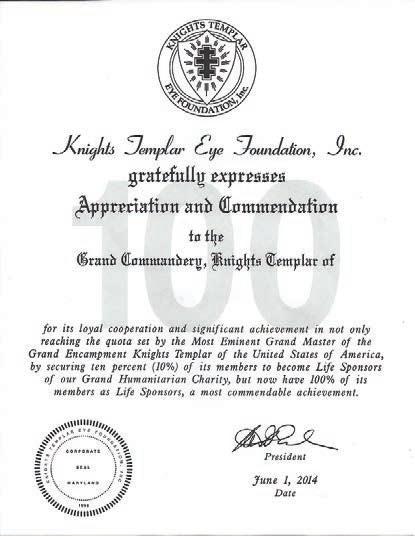
The Officers and Directors of the Knights Templar Eye Foundation wish to thank all Grand Commanderies that have become either 100% or 200% Life Sponsors within their jurisdiction and to those Grand Commanderies that are actively working towards the 100% goal.
2026 - New York, California, Pennsylvania, Delaware, Kansas
2025 - Louisiana, Minnesota & Florida
2024 – Colorado, Alaska, North Carolina, Washington & South Dakota
2023 – North Dakota, Idaho & Kentucky
2022 – Utah & Maryland
2021 – Iowa, Connecticut & Illinois
2020 – Ohio & Texas
2017 – Virginia
2015 – District of Columbia & Wyoming
2014 – Tennessee & Montana
1996 – South Carolina & Oregon
1995 – Alabama
1994 – New Hampshire
1987 – Georgia
–
Grand
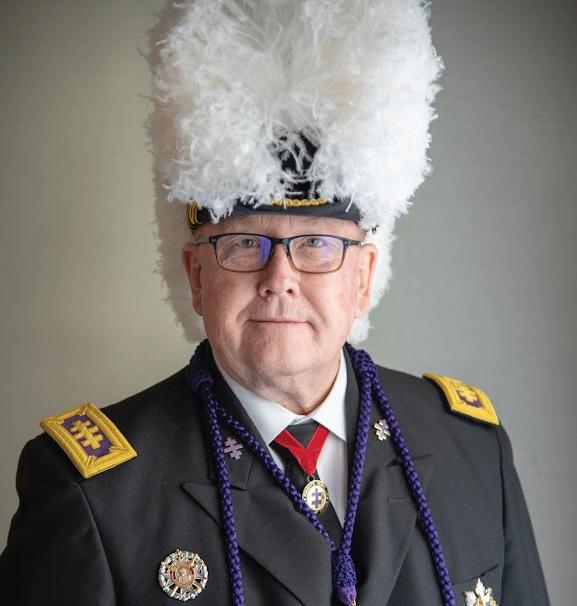
Sir Knight David J. Kussman, GCT
Master of the Grand Encampment of Knights Templar
To the Sir Knights of the Grand Encampment of Knights Templar DO YOU BELONG?
My last article was focused on maintaining our standards to ensure the sustainability of our beautiful and dare I say NEEDED Order. I received several responses from our members, mostly in agreement with my observations regarding the status of our Order today.
Accordingly, I am encouraged to share with you the words and vision of a former Grand Master for your edification and reflection as to your role in today’s Templar Masonry.
From the desk of Sir Knight Wilber M. Brucker, Most Eminent Past Grand Master:
Templary’s biggest job in these trying times is to penetrate the hard crust of indifference and lethargy. In some quarters it is considered clever to withdraw into one’s shell and avoid any contact that will involve one in anything that smacks of work or responsibility.
Many “card-carrying” members utterly fail to grasp the terrific significance of what is expected of a Christian Warrior. They mean well, but they mistakenly believe that they themselves are exempted in some way from taking any active part. They are content to become mere spectators who view things from afar.
After the Resurrection and Ascension of Christ, Apostles Peter and John went about, teaching and healing in the Master’s name. The Scriptures tell us that the fact that they had been
with Jesus. They had walked and talked with the Master, and they were not content to be mere “card-carrying” members of the Christian band. There was nothing lukewarm or casual about their Christian allegiance. Not for one moment did they lapse into indifference. They were Christian warriors in the fullest sense of that term.
In these modern days, the burning question is still being asked: Are we only “cardcarrying” members – or do we really “belong” to the Christian Order of Knighthood?
Now let’s squarely analyze and face the situation: each of us has knelt at the Commandery Triangle; and each of us recalls the high resolve we made at that moment – to put on the Armor of God and do battle for the Christian cause in an evil world. The trumpet call of duty sounds today just as loud and clear as it did the evening we were knighted. Each of us has one or more very close friends who are mere “card-carrying” members, but who may be influenced by us to become active and work on some definite, concrete Templar project.
When this happens, Templary will feel the surge of new power that will carry us to heights we deserve to reach – Growth of Membership – Life Sponsors for the Knights Templar Eye Foundation – Subscribers to the Magazine – and in every other of Templary’s manifold activities. WMB.
As your Grand Master today, I solemnly charge you to seek out and transform indifferent “card-carrying” members into stout-hearted Christian warriors. Let us put more members to work. Give them a job to do for Templary and get them active. What a God-given opportunity today’s leaders of Templary have to revitalize, reinvigorate and rejuvenate Sir Knights at every level of Templary!
What we desperately need is the determination of every Knight Templar to say, “I belong” – and really mean it!
In His Service,
Sir Knight David Kussman Grand Master
“I solemnly charge you to seek out and transform indifferent 'card-carrying' members into stout-hearted Christian warriors.”
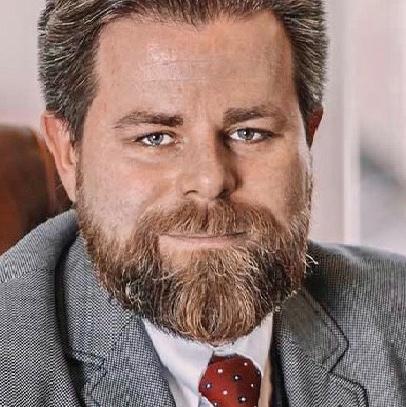
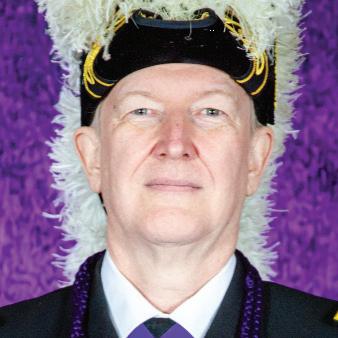
Alex Dubrowsky is a lawyer and specialist lawyer for construction and architectural law as well partner in the law firm DR. LOHS DUBROWSKY OTTO & PARTNER based in Baden-Baden and Rastatt, Germany. He is worshipful Master of the Masonic Lodge "Badenia zum Fortschritt" in the Orient Baden-Baden, founded in 1871, and district official of the Grand Lodge of the Ancient Free and Accepted Masons of Germany. In the past, he held the office of Grand Treasurer of the Grand Chapter and Grand Council UD of Germany. He is currently the Ambassador for Germany of the General Grand Council of Cryptic Masons International and Adjutant to department commander for Europe & Africa Monty J. Glover of the Grand Encampment of Knights Templar USA.
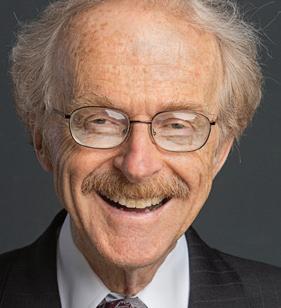
R. Stephen Doan received a Bachelor of Arts in Political Science from the University of California at Los Angeles in 1971, graduating summa cum laude, with highest department honors. He is a member of Phi Beta Kappa. He received his Juris Doctor degree from the UCLA School of Law in 1974. He practices law with his daughter in Rancho Palos Verdes, California, specializing in business and real estate planning, tax and estate planning, and trusts. He was formerly a senior partner of Morrison & Foerster, LLP, an international law firm. Among many Masonic affiliations and offices, he is a Past Grand Master of Masons of California, and a Past Grand Sovereign and the current Grand Recorder of the Red Cross of Constantine.

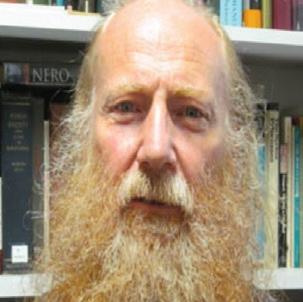
Robert Elsner is Associate Grand Prelate of the Grand Encampment of Knights Templar. He is Past Grand Commander of the Grand Commandery of South Carolina. Robert is a psychologist and theologian and has taught chaplaincy, family and community medicine, and psychology for almost thirty years. He has written several Masonic books, as well as many scientific books and dozens of peer-reviewed scholarly articles. He resides in Birmingham, AL.
Robert Bigley is the Assistant Secretary and Office Administrator at the Knights Templar Eye Foundation. He has served the Knights Templar Eye Foundation for over 27 years. He was also instrumental in implementing the Masonic Membership Systems database for membership management and donation tracking.
Andy Fear was born in Morecambe and educated at Lancaster RGS and New College Oxford where he obtained his BA and D Phil (on Roman Spain). After a brief spell at Jesus, Oxford he went on to teach Classics at the Universities of Keele and Manchester. An ardent Hispanophile, his academic interests and publications cover the provinces of the Western Roman Empire (especially Britain and Spain), ancient and medieval Warfare, and the Iberian peninsula. He also has a strong interest in transport history. He spends his spare time wargaming and watching Morecambe FC.
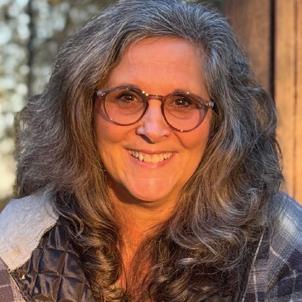
Frances B. Mayo is Recorder of the new Cockeysville Assembly No. 269. She is a retired Cisco Network Engineer who also was president for ten years of a 501(c)3 charity which supported her son and all deployed US Military during the Iraq and Afghanistan wars. She resides on the Eastern Shore of Maryland with her Sir Knight.
SOOB Charters New Assembly 12
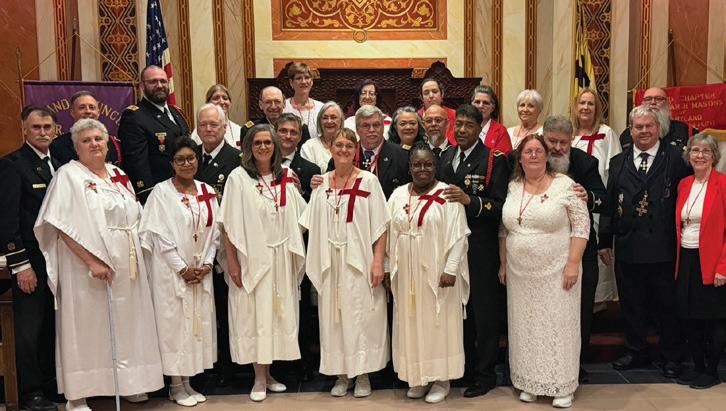
Masonic Awarded Warrant From Worshipful Company of Stationers .
15
KTEF Reports Record Year for Swords of Merit Awards . . . . . . . 17
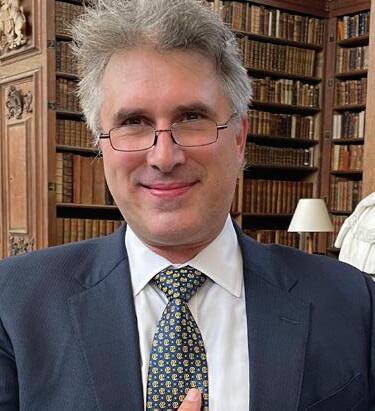
Ben Williams is a Registered Patent Attorney based out of Denver, Colorado. He’s a Past Department Commander for the Northwest Department and has held many Masonic offices in his home state of Colorado. He’s married to his patient and caring wife, Tiffany, a history teacher. They have a daughter, Adelyn, and a beagle, Warwick.
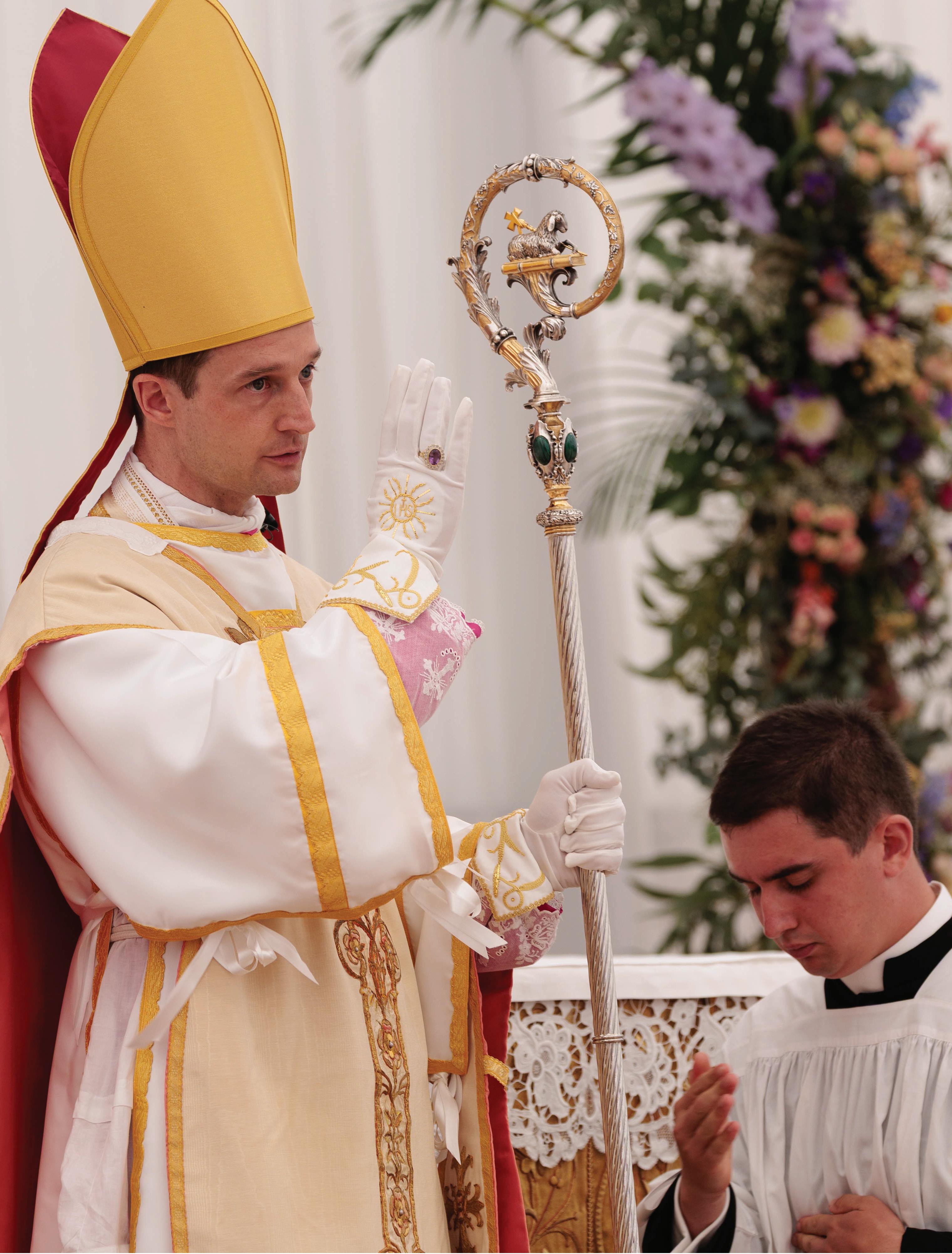
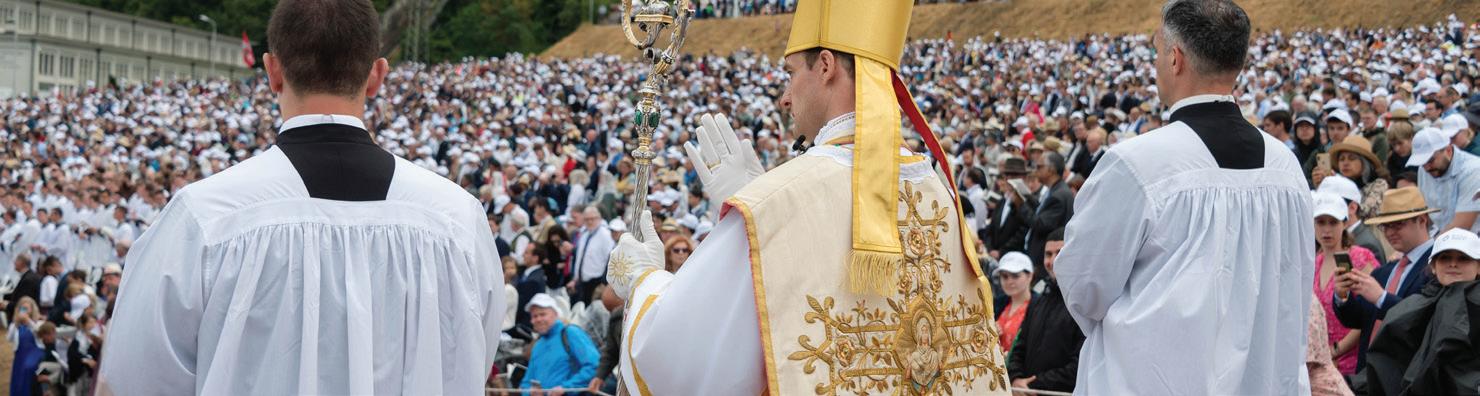
On the Cover: Bishop Marc Hanappier of the SSPX blesses the congregation shortly after being consecrated on July 1. He was immediately excommunicated. Photo used with permission from the SSPX.


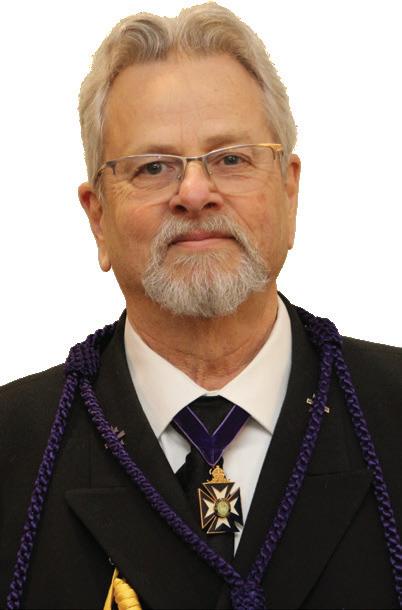
Sir Knight Paul Erickson, GCT Grand Prelate of the Grand Encampment of Knights Templar
That which we have seen and heard we proclaim also to you, so that you too may have fellowship with us; and indeed our fellowship is with the Father and with his Son Jesus Christ.
1 John 1:3 ESV
As I am sitting down to write this article, I am thinking about the last two weekends, and how joyful it was to spend time with my Brothers, Companions, and Sir Knights, both during Grand Sessions at home here in Utah, and later in California.
First was Utah’s sessions, followed by California’s sessions on the following weekend. I always look forward to seeing everyone during my travels because for many of us, the only time we see each other is at these events.
When I first became a York Rite Mason, back in 2003, I received my degrees and orders at the Colorado River Fall Festival in Laughlin, Navada. I was one of approximately 63 candidates who were there. The room used for those degrees and orders is quite large. As you might expect, the conference hall in a large resort was filled with sideliners on both sides of the candidates. On the three days of the event, I made a lot of friends, many of whom I am still close to today. In fact, I haven’t missed a festival there since I joined York Rite – for the past 23 years. I was living in California then and am a life member there. I feel that the fellowship shared during these Masonic events with friends –both old and new – is extremely important. At
least, I know they are for me and can’t help but feel they are for you as well.
Originally from California, and now happily living in Utah, fellowship became even more important to me. First, after moving to a new area, fellowship is how you get to meet people; through continued fellowship they grow from acquaintances to friends. As time goes on you realize those who were acquaintances have become lifelong friends. Why? Because you have shared life’s experiences with them. You’ve laughed with them, cried with them, officiated their marriages, blessed babies, and even buried them.
To say that fellowship has brought great joy in my life is truly an understatement. So here is how it works. Laughter, simply put, is joy. When you cry with someone, it can either be happy tears (and therefore joyous) or sad tears – but the joy is in knowing that trust is shared allowing one to be vulnerable. Officiating weddings and blessing babies – well, of course, joyous. And then there is laying someone to their final rest. How can that possibly be joyous, you might ask? Though it is sad when a friend passes – the void of loneliness opens where they used to be – it is yet joyous, because you know exactly where they are going. You also know that you will still be friends when you see each other again.
So, now we know how joyous fellowship can be. But did you know there is power in fellowship? Hebrews 3:12-13 teaches us to encourage one another day after day. That power to encourage, or be encouraged, comes through a relationship built, shored up, and strengthened through fellowship.
Fellowship allows us to be accountable to and for each other. There is power in knowing, because of fellowship, that you can take someone into your confidence because you have gotten to know them and feel safe in that knowledge.
My prayer for you is that you find the time to take advantage of every opportunity to have fellowship with everyone around you.
Blessings, Paul
Paul Erickson, KGC Grand Prelate
It’s interesting to consider that we, as Freemasons, have something in common with the ultra-traditionalist Catholic Society of Saint Pius X (SSPX). Like the Freemasons, the SSPX were excommunicated latae Sententiae for engaging in forbidden rites.
Similarly, the excommunication seems partial and based on a confused, ambiguous application of dogma. This puts us in odd company – there’s no doubt the SSPX would hold all Freemasons in a grave state of sin. But their intransigence in the face of reformed post-conciliar doctrine might give us some hope.
Nonetheless, the split evinced in the Church over the SSPX draws similarities with the Fraternity in another way, something with which you might readily relate – the divide between members seeking solemnity and excellence in ritual – in effect, making it harder to be a Freema-
son – over those seeking to make the Fraternity more accessible – in effect, making it easier to become a Freemason. There are other factors to consider in the SSPX’s excommunication that are worthy of your reflection, raising interesting theological questions as well as ecclesiastical reflections. I hope you enjoy the article regarding this situation (you can find it on pages 29 to 37) as much as I did researching and writing it.
Dr. Andy Fear puts forth historical context regarding emanationism – the Godhead manifesting into creation. Popularly, this is often best expressed in kabbalistic texts; however, Andy argues that what we take to be uniquely Jewish texts in fact spring from influence of ancient Greek philosophers who explored these concepts centuries prior to the emergence of the Zohar, for example. Andy reminds us that nothing appears in a vacuum –
except, perhaps, the Godhead, but in a way even that must be inside itself –syncretism and interchange of ideas weave together the rich tapestry of theological contemplation which informs the Western tradition. So it is that kabbalah appeals universally to the western mind. Read his article on the Greek origins of emanationism, starting on page 19.
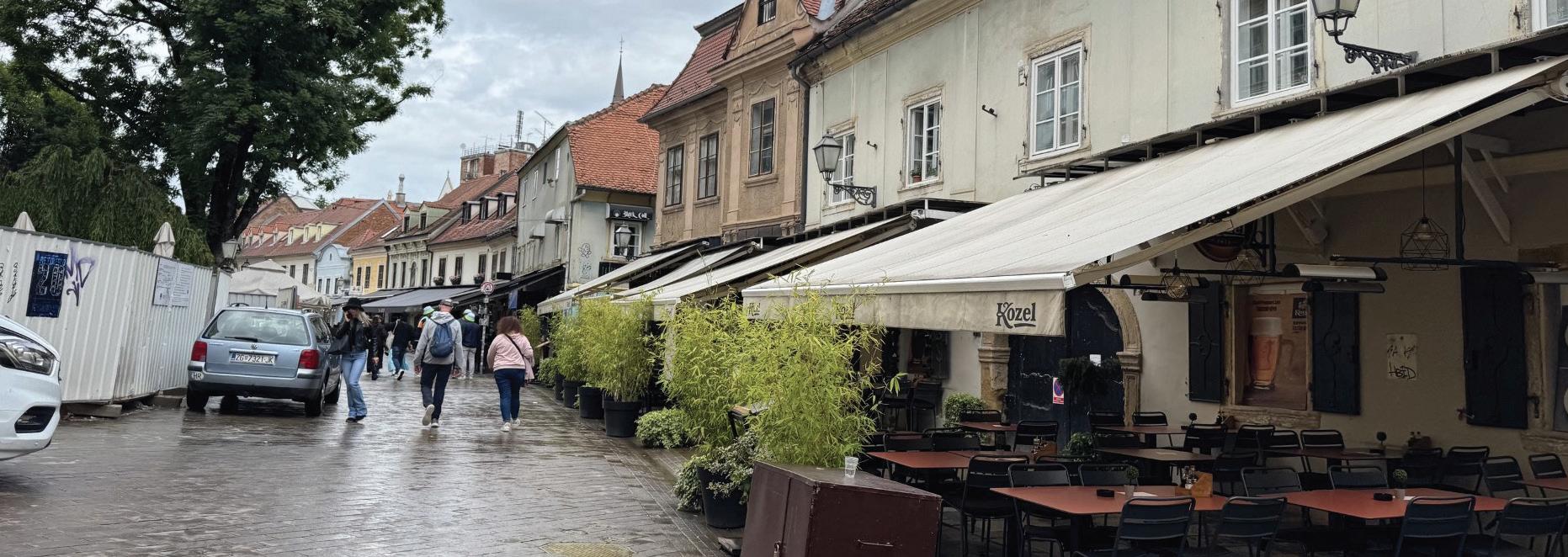
As traveling men, a travel column seems appropriate. Alex Dubrowsky takes us on a journey up the dalmatian coast into Slovenia where he was witness to the dispensation of Slovenia's first commandery. Read about this historic situation and Alex’s encounters along the way alongside European Department Commander, Monty Glover, on pages 38 to 40.
Steve Doan returns to our pages with the first in a series about Templar saints. He opens the series with symbolical discussions of
Saint Bernard as an archetype for intention purified. Read about contemplating Saint Bernard in uniquely Templar symbolism on page 25.
In another historical moment, the Social Order of the Beauceant chartered a new assembly in Maryland, Cockeysville Assembly No. 269. Read about their gala dinner, held in conjunction with the Knights Templar Eye Foundation and many doctors and researchers on pages 12 to 15.
As always, I hope you enjoy these and the other items we have prepared for your enjoyment in this issue of the Knight Templar. We are always looking for contributors, so if you want to see your name and work published in these pages, please reach out to me at ben@ktmag.org.
Have a great summer. Courteously,
Ben Williams Editor
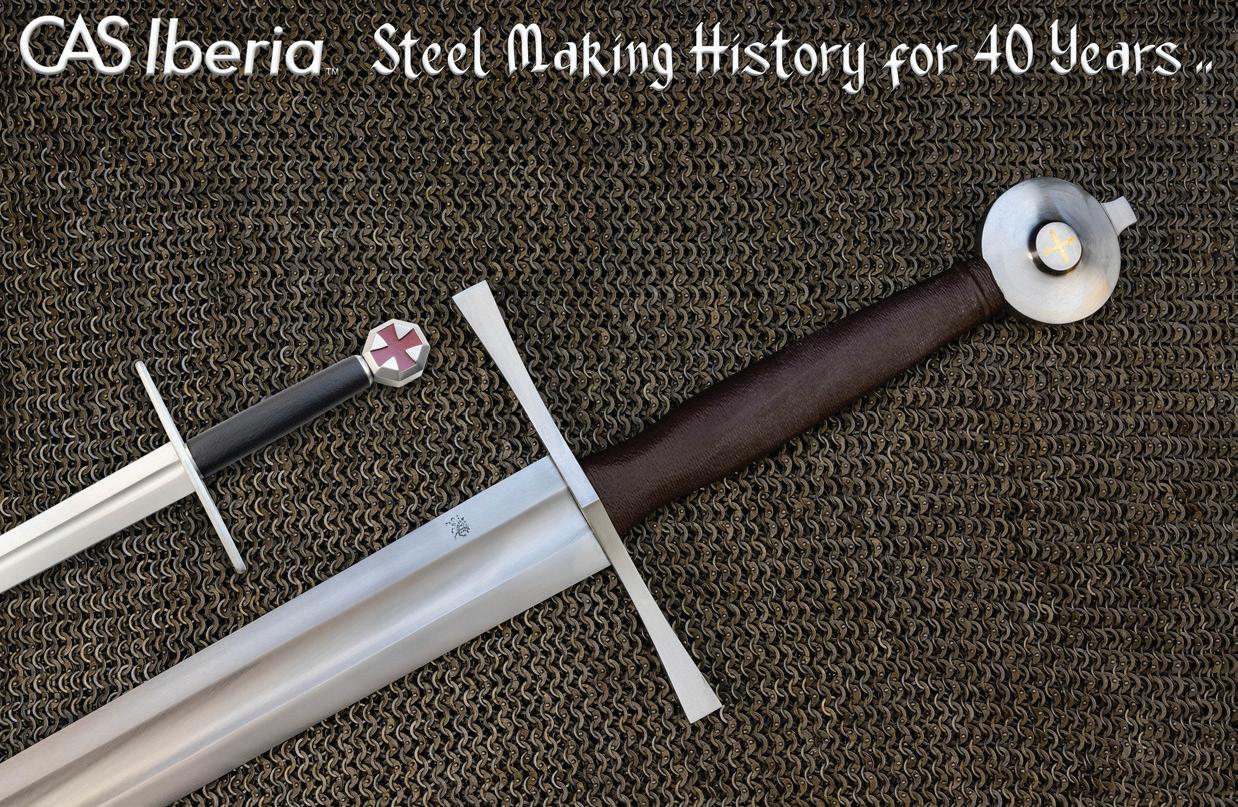
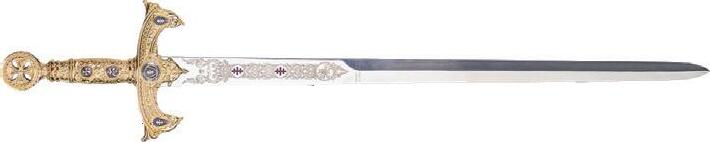
2025, CAS Iberia celebrates four decades as the world’s leading manufacturer and distributor of the top swords and accessories . The CAS family of sword brands are reowned for their quality, authenticity and durability. From east to west including hand-forged Japanese katana to Scottish claymores and medieval European broad swords, CAS Iberia is steel making history for generations to come.

Free
River Thames in London. The sword, forged in the period between 1300-1350, was discovered opposite Temple Church, the headquarters of the Knights Templar in England. Comes with a premium leather scabbard.
EST.
by Frances B. Mayo
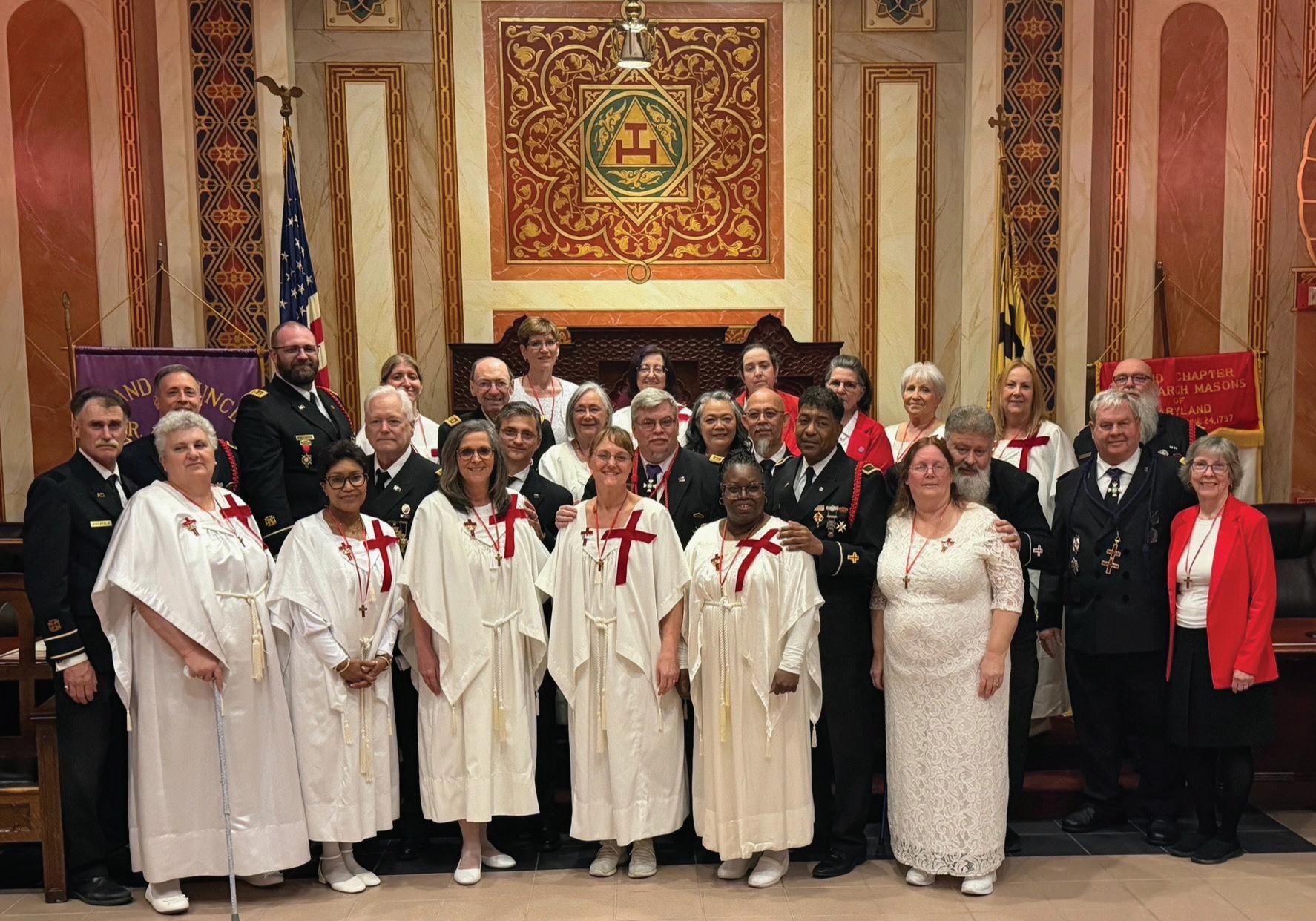
The elegant ballroom of the Embassy Suites Hilton Hotel glowed with warmth and fellowship on Friday evening, April 10, 2026, as Knights Templar, members of the Supreme Social Order of the Beauceant, and distinguished physicians and researchers from the Wilmer Eye Institute at Johns Hopkins gathered for a celebratory dinner.
What began as the “Friday SOOB Dinner” quickly became more: a celebration of the formal chartering of Cockeysville Assembly No. 269 by Supreme Officers of the Supreme Social Order of the Beauceant. It was a powerful affirmation of the unbreakable partnership between the Knights Templar Eye Foundation (KTEF), the Supreme Social Order of the Beauceant, and one of the world’s
by
leading centers for pediatric ophthalmology, a reminder that Masonic charity is restoring sight to children and fueling tomorrow’s breakthroughs.
The evening opened with pride and gratitude as multiple speakers recounted the years of dedicated effort between the Knights Templar Eye Foundation and Wilmer Eye Institute at Johns Hopkins in Baltimore, Maryland. Speakers spoke movingly of sisterhood, unity, and shared purpose, celebrating the rich traditions and ethos of service that define the Supreme Social Order of the Beauceant.
Grand Commander Scott G. Lapp of the Grand Commandery of Maryland made remarks regarding the hard work and dedication of the ladies to form the new
Cockeysville Assembly and special recognition was given to (Mrs. Scott G.) Marcella Lapp, President-Elect of Cockeysville No. 269; For her tireless work organizing and supporting Knights Templar Commanderies, Monumental Crusade Commandery No. 3, and Maryland Commandery No. 1 in Maryland, and for steadily building greater ladies’ involvement across the jurisdiction.
Knights Templar leaders rose to offer heartfelt introductions and recognitions. Grand Generalissimo of the District of Columbia, and KTEF Chairman for D.C., Sir Knight Thomas Morrison, announced that the jurisdiction had reached 100% life membership this year and has set an ambitious goal of 200% for the coming year. Grand Commander
of West Virginia, Charles Wimer, was thanked for traveling several hours to attend and for his steadfast support of the Eye Foundation. Past Grand Generalissimo and longtime KTEF Chairman for Maryland, Gary Kennedy, received warm praise for his sustained service to the Foundation.
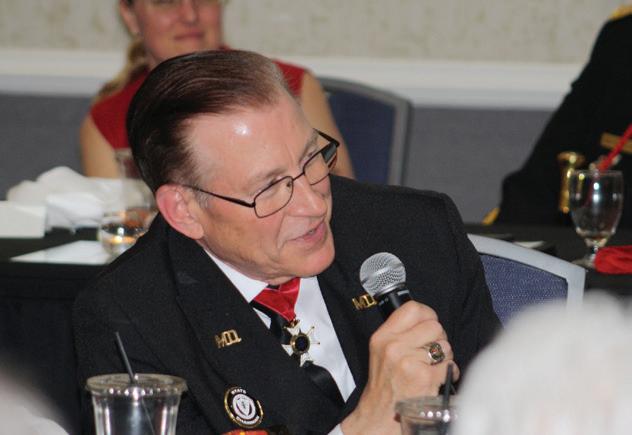
Remarks were made by Mid-Atlantic Department Commander, Sir Knight John H. Austin, KCT; he then introduced Grand Master David J. Kussman, who also serves as President of the Knights Templar Eye Foundation. Sir Knight Kussman delivered a deeply personal reflection on the Supreme Social Order of the Beauceant and its cherished place in his own Masonic family. He announced that Cockeysville Assembly No. 269 marks only the
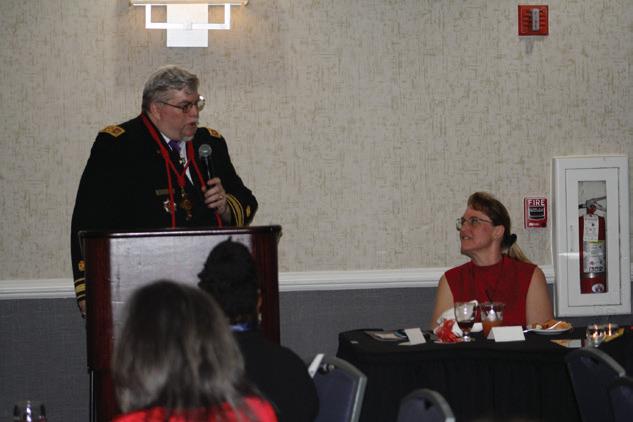
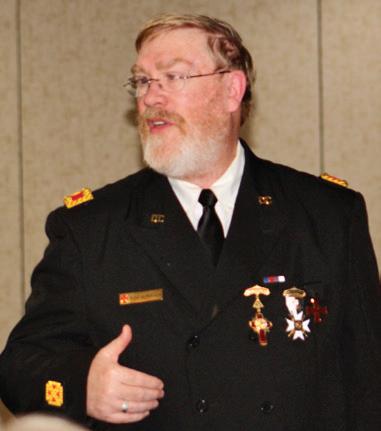
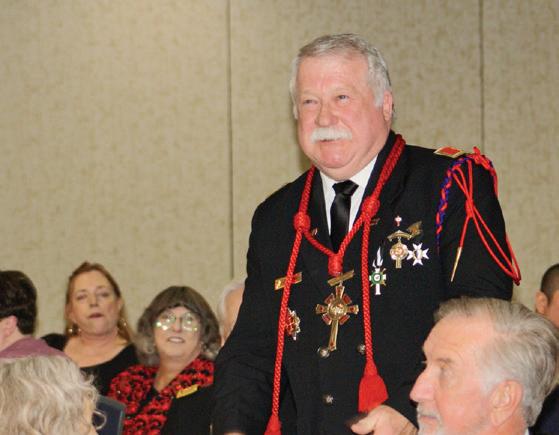
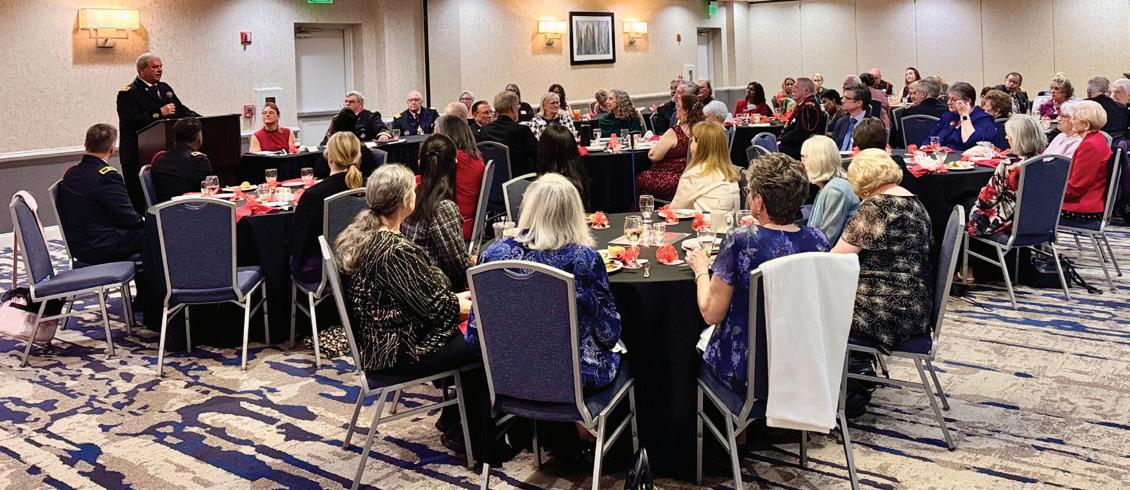
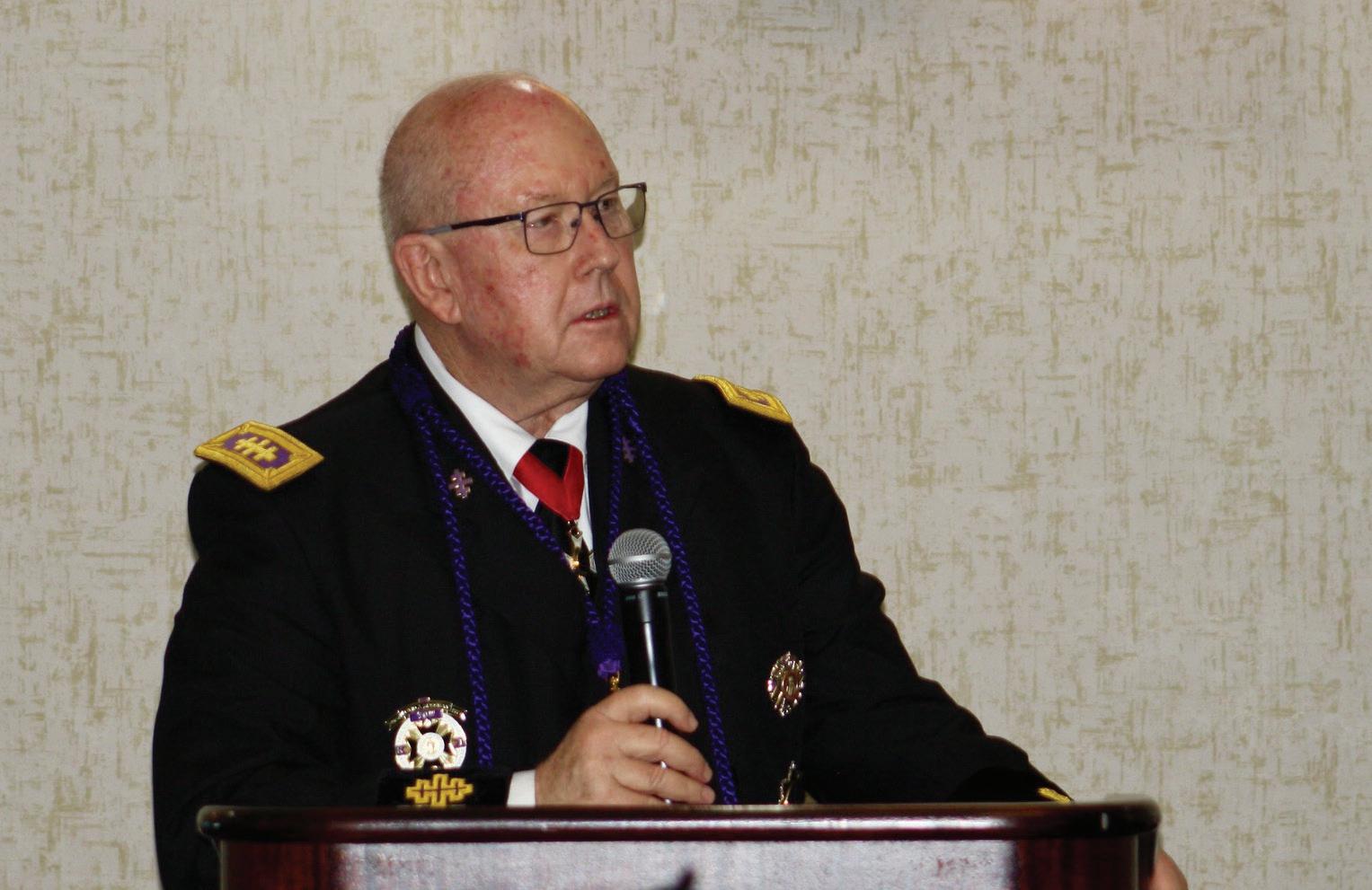
Clockwise from top left: Sir Knight Scott G. Lapp, Grand Commander of Maryland, addresses Marcella Lapp, PresidentElect of Cockeysville Assembly No. 269; Sir Knight Thomas Morrison announces 100% life membership for Maryland; Sir Knight Charles Wimer, Grand Commander of West Virginia; Sir Knight Gary Kennedy, KTEF Chair for Maryland; Grand Master, Sir Knight David Kussman, reflects on the position the SOOB has in his own family; Opening remarks by Mid-Atlantic Department Commander, Sir Knight John Austin.
second Assembly chartered since he issued his Covenant Challenge in 2022. Sir Knight Kussman emphasized the profound bond between Knights Templar families and the Supreme Social Order of the Beauceant, the joint commitment to ophthalmologic research (especially pediatric ophthalmology), and the nearly $4 million the Supreme Social Order of the Beauceant has contributed to the shared philanthropic mission. He publicly recognized his wife, Lady Kimberly Kussman, Past Supreme Worthy President and current General Co-Chair of the Supreme Social Order of the Beauceant Foundation committee, for her exceptional leadership and unwavering support.
The program then turned to the Wilmer Eye Institute, where the evening’s scientific presentations underscored how KTEF grants – and Supreme Social Order of the Beauceant fundraising – make a real difference in the fight against childhood blindness. Dr. Peter J. McDonnell, MD, the Alan and Marlene Norton Direc-
tor of the Wilmer Eye Institute and William Holland Wilmer Professor of Ophthalmology, opened the medical segment by noting Wilmer’s century-plus history and the fact that, for more than half that time, the Knights Templar Eye Foundation and the Supreme Social Order of the Beauceant have stood as essential partners. He described the critical “lost decade” faced by young researchers: while most Nobel Prizes in Medicine are earned for work completed before age 35, the average age for a recipient of a first major NIH R01 grant is now 44. KTEF career-starter grants, he explained, close that gap by empowering early-career investigators a full decade sooner.
Dr. McDonnell highlighted Wilmer’s innovative “rising professorships” – endowed positions for junior faculty, renewed annually for up to seven years – and proudly reported that Wilmer leads the nation in NIH funding for ophthalmology, thanks in large measure to philanthropic support like that given by the
KTEF and the Supreme Social Order of the Beauceant. He also detailed Maryland’s unique state matching program for professorships that spin discoveries into biotech companies, noting that Wilmer has secured six such matches and launched fourteen faculty-founded companies.
One by one, the physicians and scientists directly supported by the KTEF and the Supreme Social Order of the Beauceant took the podium, each sharing stories that moved the audience, from clinical data to impacts on the lives of children.
Dr. Courtney Krauss, MD, Knights Templar Eye Foundation Professor of Ophthalmology and specialist in pediatric anterior segment disease, recounted her journey from Duke to Washington University to the Medical University of South Carolina before joining Wilmer in 2014. She described the team-based growth of Wilmer’s pediatric service and shared the moving story of Bernadette “Bernie” Murray, born with severe congenital glaucoma. Thanks to rapid surgical intervention by the Wilmer team, Bernie – now a happy three-year-old – sees 20/30 in one eye and lives a full life.
Dr. Krauss detailed her
research on quality-of-life outcomes for children with glaucoma, global surveys of activity guidelines for these patients, childfriendly visual field testing, and the psychological burdens of chronic pediatric eye disease. She credited KTEF-funded travel grants, which had recently enabled seven of her students to present at major meetings, and emphasized that research made possible by the KTEF and the Supreme Social Order of the Beauceant support is changing lives.
Dr. Jeff Doyle, MD, PhD, MHS, pediatric ophthalmologist and genetic eye disease specialist, described how his training in the UK led him to Wilmer, where he completed a PhD in cardiovascular genetics to bring fresh approaches to eye research. He built a program that slashed genetic testing turnaround from eighteen months to two weeks – critical as gene therapies emerge – and has already identified four potential therapies for severe early-onset myopia in just three years.
His KTEF career-starter award, he said, launched this vital work.
Dr. Bo Wang, PhD, early-career faculty member since 2024, explained how optical coherence
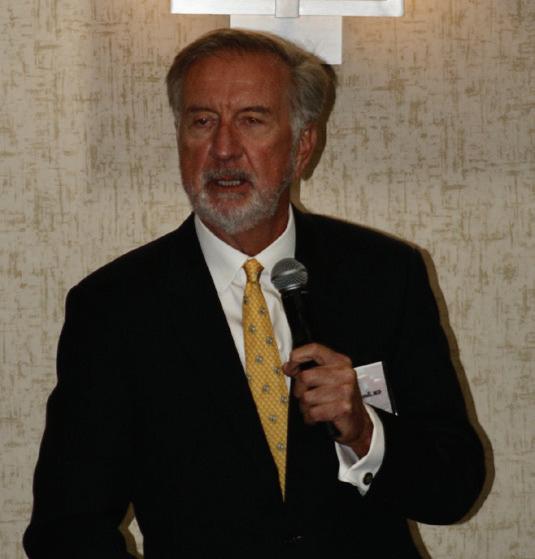
Dr. Peter J. McDonnell, MD, the Alan and Marlene Norton Director of the Wilmer Eye Institute and William Holland Wilmer Professor of Ophthalmology
tomography (OCT) is revealing hidden drainage abnormalities in the “normal” fellow eyes of children with unilateral glaucoma and in children with cataracts even before pressure rises. His KTEF-supported research aims to predict glaucoma risk before it develops, enabling earlier intervention.
Dr. Megan Collins, MD MPH, holder of the Allen and Claire Jensen Professorship of Ophthalmology, presented her groundbreaking school-based vision program, Vision for Baltimore. What began in twelve schools has expanded to approximately 140, serving 65,000 students from pre-K through eighth grade. A randomized trial proved that providing free eyeglasses improves reading scores by the equivalent of three to four months of additional learning –especially for children in special education. The Baltimore model has now spread to multiple Maryland counties and cities across fifteen states, and a new partnership with Bloomberg Philanthropies will bring the program to an international scale, distributing 7 million pairs of glasses globally.
The basic-science segment featured Dr. Sangeeta Kumar, MBBS in Dr. Seth Blackshaw’s lab, [Dr Blackshaw.jpg], who is developing three-dimensional “retina in a dish” from pluripotent stem cells to replace lost photoreceptors in pediatric retinal degenerations. Dr.
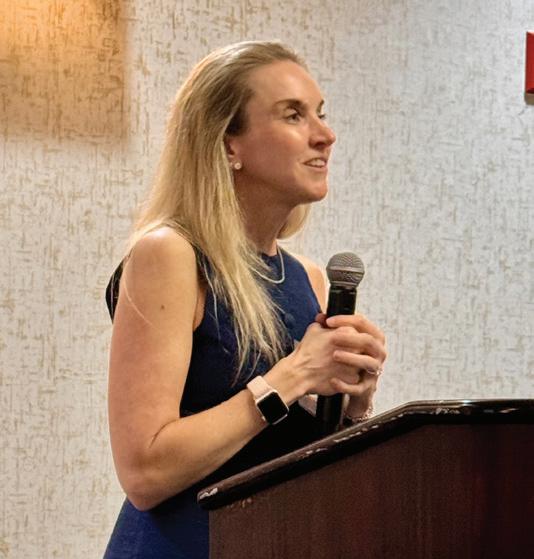
Dr. Courtney Krauss, M.D., Knights Templar Eye Foundation Professor of Ophthalmology and specialist in pediatric anterior segment disease
Seth Blackshaw, PhD, Professor of Neuroscience and Ophthalmology at Johns Hopkins University School of Medicine, himself stressed that KTEF’s willingness to fund high-risk, high-reward basic research – precisely the kind often passed over by conservative NIH panels – allows truly novel therapies to advance.
Dr. Yingxue Cao, MD, PhD, [Dr Cao.jpg] from The Johns Hopkins University School of Medicine, Wilmer Eye Institute, was awarded a $90,000 grant for Role and Mechanism of HMGB1 in Retinopathy of Prematurity in 2025, concluded the presentations by describing her work on retinopathy of prematurity (ROP) and the protein HMGB1 as a potential therapeutic target in premature infants. Dr. Cao thanked the assembled body for the grant to enable her work.
Lady Kimberly Kussman, [Lady Kussman.jpg] General Chair of KTEF work within the Order, reminded everyone that nearly $4 million has been raised “one dollar at a time” through the traditional collection of K-E-F dollar bills, quilt raffles, and countless local fundraisers. Lady Kussman announced that the Knights who are husbands of the Cockeysville ladies, as well as widow members, had raised over $2,700 for KTEF in the new Assembly’s name. She stated that the Cockeysville ladies would be presented with KTEF pins and certificates at
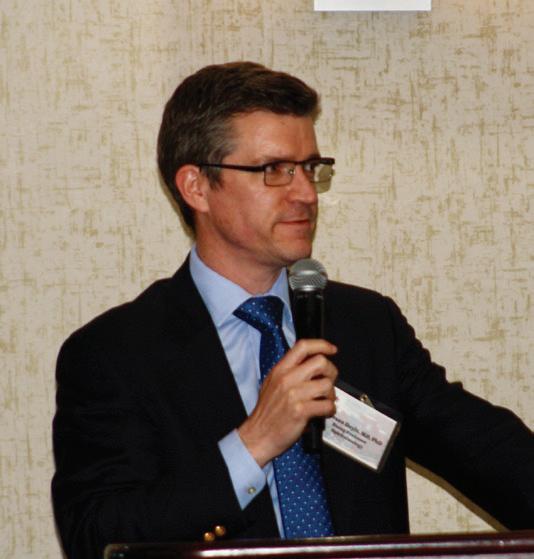
Dr. Jeff Doyle, MD, PhD, MHS, pediatric ophthalmologist and genetic eye disease specialist
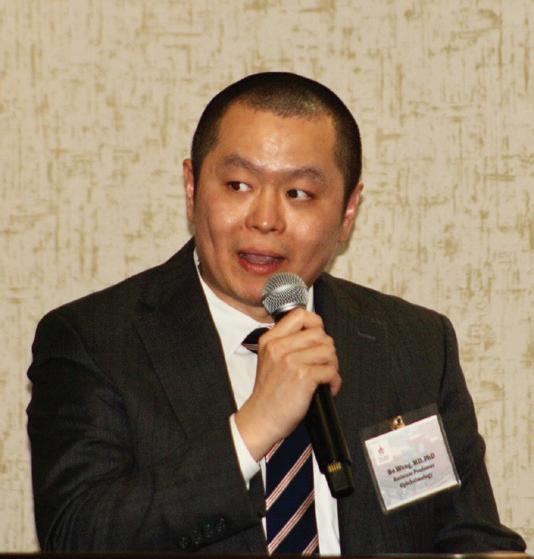
Dr. Bo Wang, PhD, early-career faculty member since 2024
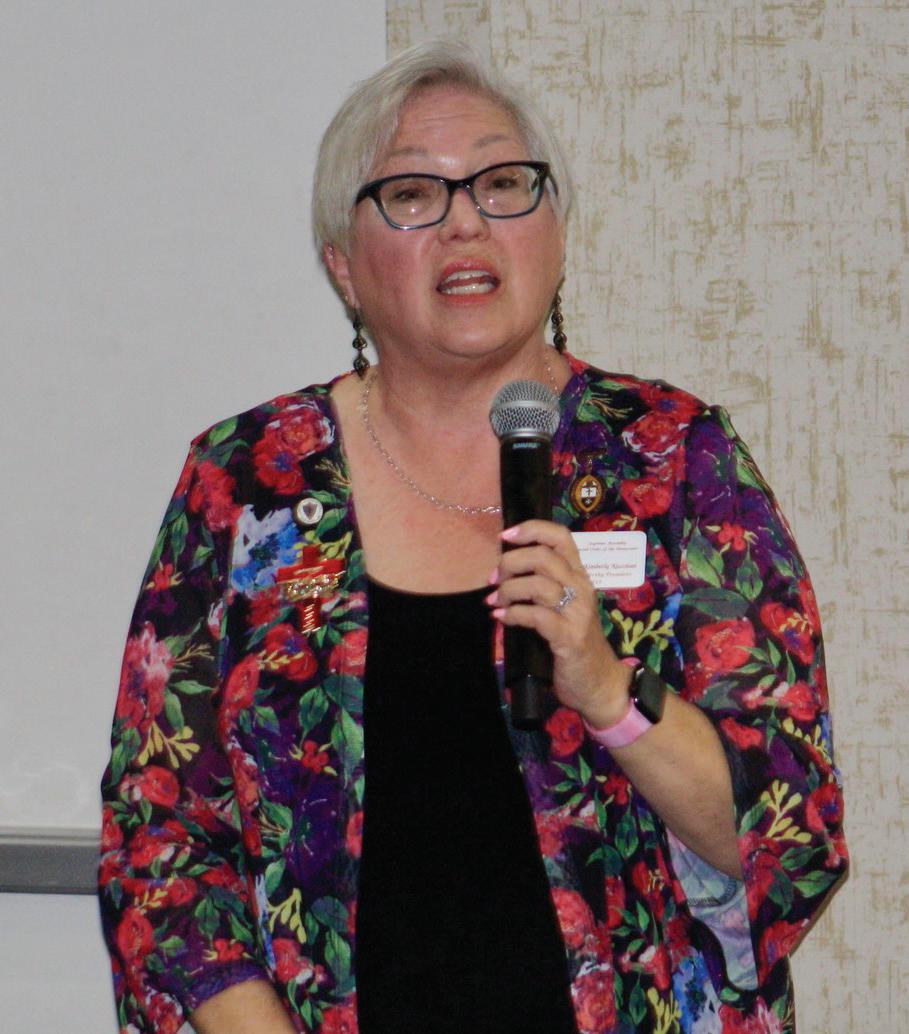
Lady Kimberly Kussman, General Chair of KTEF work within the Order
their Open Installation the following day. [269_knights_ladys_pins. jpg]
Lady Kussman remarked that hearing directly from the physicians renews the sisters’ dedication and reminds us that discoveries made for children often “filter up” to benefit adults as well.
As the evening ended in the Embassy Suites Hilton ballroom, the room filled with renewed energy and gratitude. Thanks were extended to every speaker and guest. Attendees were reminded of the next day’s schedule at the Grand Lodge of Maryland building – breakfast at 7:00 a.m., main session at 9:00 a.m., luncheon, Masonic museum tour, and open installation – while shuttles stood ready to carry the fellowship forward to the historic charter-
by
ing, initiation, and installation of Cockeysville Assembly No. 269 by Supreme Officers of the Supreme Social Order of the Beauceant on Saturday, April 11, 2026.
In the end, Friday’s Cockeysville’s banquet was more than a dinner. It was living proof of the Knights Templar motto in action: one generation of chivalric service supporting the next; one sisterhood standing shoulder-to-shoulder with its brother knights; and every dollar raised restoring sight, launching careers, and illuminating the path out of childhood blindness.
Cockeysville Assembly No. 269 now takes its place in that noble chain – stronger, prouder, and more committed than ever to the vision that unites us all. KT
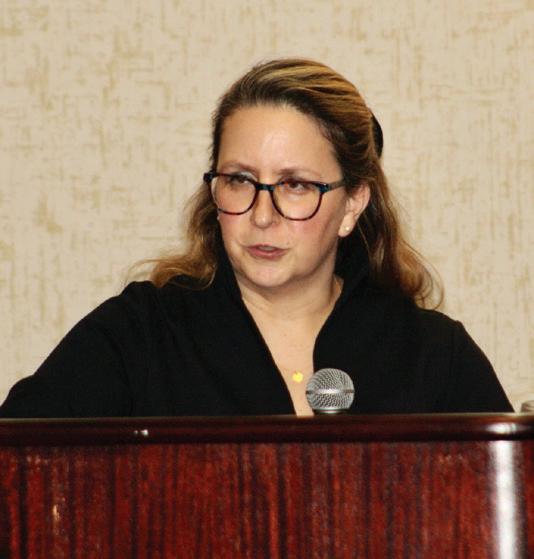
Dr. Megan Collins, MD MPH, holder of the Allen and Claire Jensen Professorship of Ophthalmology
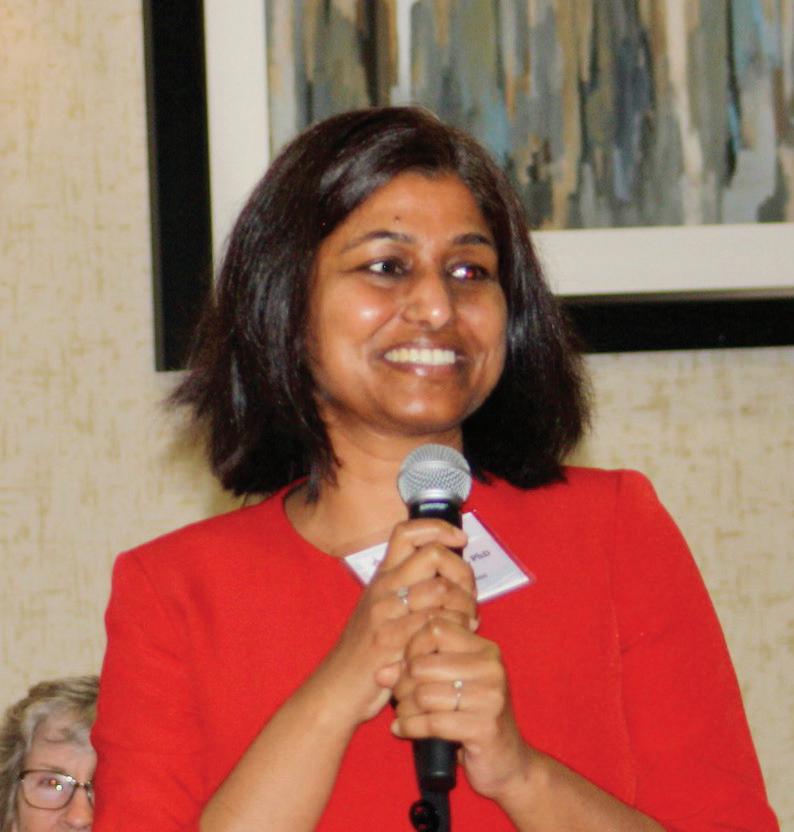
Dr. Sangeeta Kumar, MBBS in Dr. Seth Blackshaw’s lab
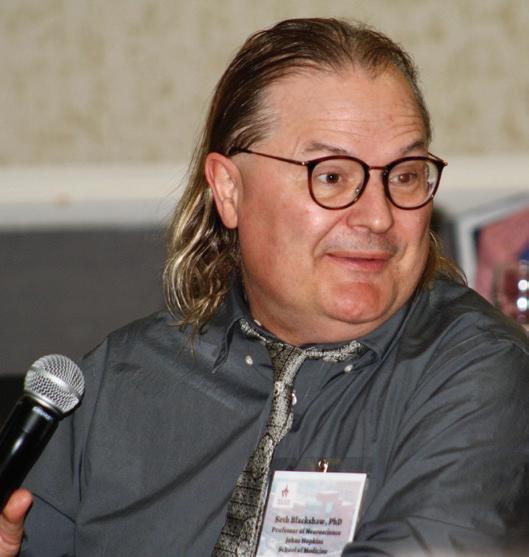
Dr. Seth Blackshaw is developing three-dimensional “retina in a dish” from pluripotent stem cells to replace lost photoreceptors in pediatric retinal degenerations

Dr. Yingxue Cao, MD, PhD, from The Johns Hopkins University School of Medicine, Wilmer Eye Institute
by Ben Williams
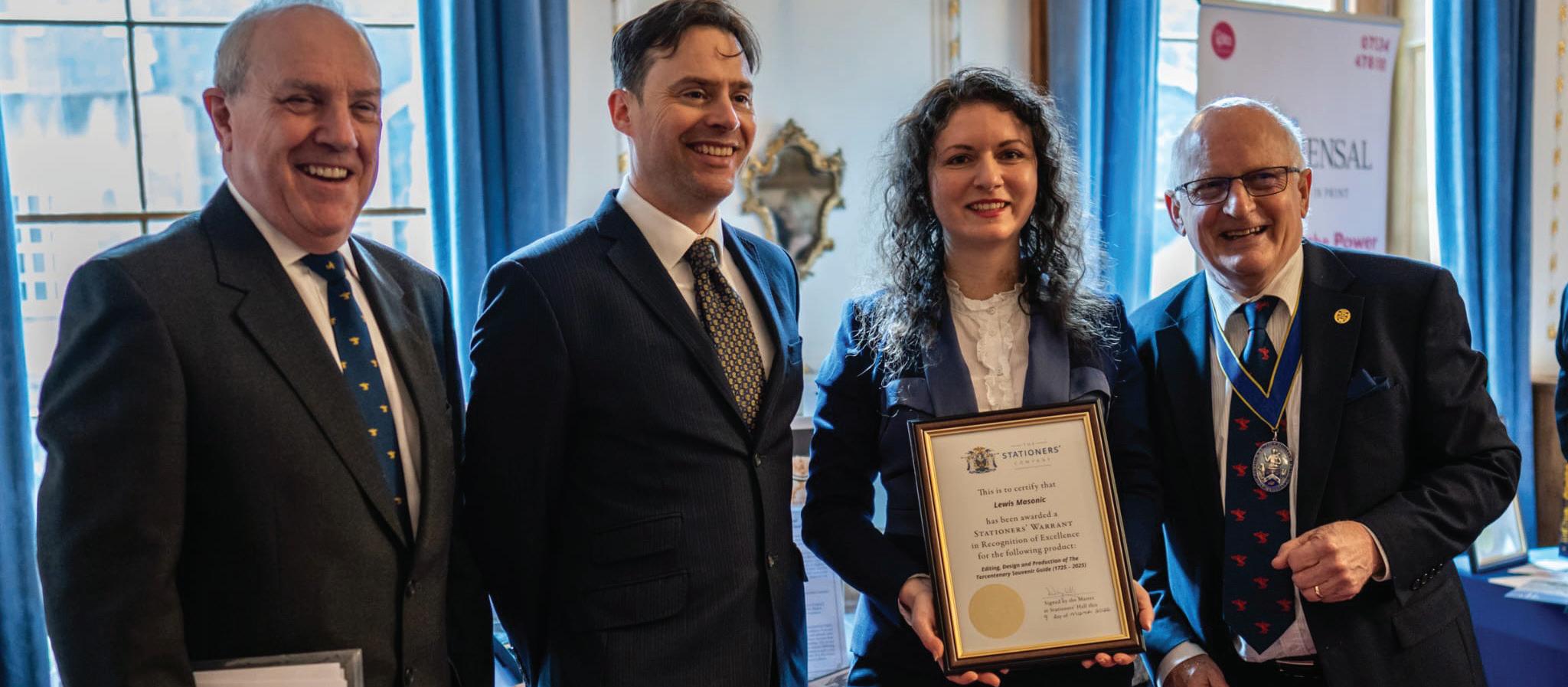
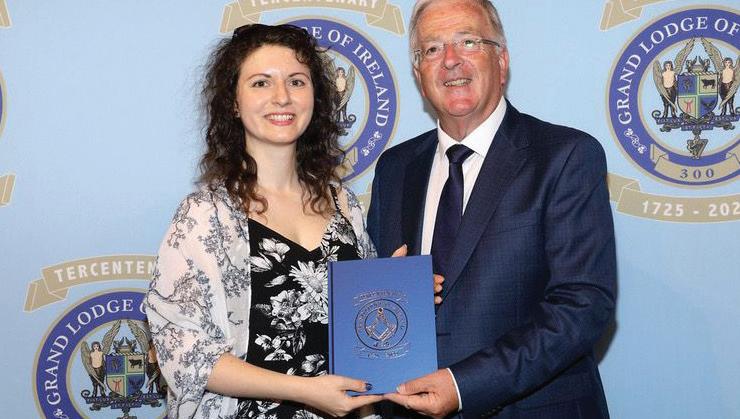
LONDON – For its Grand Lodge of Ireland Tercentenary Souvenir Guide (Commemorative Edition), Lewis Masonic, the oldest and largest publisher of Masonic books in the world, received a Stationer’s Warrant, March 26.
Launched in 2014, the Warrant is issued by the Worshipful Company of Stationers, the London-based livery company
founded in 1403, for exceptional work in publishing. It recognizes exceptional design, quality manufacture and materials, and particular relevance to an industry or market sector.
Published in 2025 to coincide with the celebrations hosted in Dublin marking 300 years of Masonry in Ireland, the Grand Lodge of Ireland Tercentenary
Souvenir Guide (Commemorative Edition) memorializes three centuries of Irish Freemasonry and showcases rare documents, books, paintings, and ceremonial regalia in the Grand Lodge of Ireland’s collection.
"The journey of this volume began in early 2024," Kindra Faulks, Publishing Director at Lewis Masonic, said. "In a founda-
tional meeting with Philip Daley (then Grand Secretary), Rebecca Hayes (Curator/Archivist at the Grand Lodge of Ireland), and Charles Horton (Curator/Archivist/Author), we agreed that the book needed to be celebratory and impactful to mark the occassion. With this remit our Managing Director, Martin Faulks, proposed a 'visual journey' that would place continued next page . . .

the Irish masonic treasures in the spotlight,using these artefacts as the primary medium to tell the story of Irish Freemasonry both at home and abroad," she said. "To be recognised in this manner by the panel of expert judges is a hugely prestigious honour and a moment of real pride for our business."
Specific items of interest are highlighted, including the first Grand Master of Ireland, Richard Parsons, the 1st Earl of Rosse; the “Lady Freemason,” Elizabeth St. Ledger of Doneraile; the Baal Bridge Square (perhaps the oldest speculative Masonic artifact discovered, dated to c. 1507); the earliest editions of the Constitutions of the Free-Masons; copies of warrants, tokens, and regalia (including warrants from military lodges); among other items and features.
The book is bound in Corvon® Iridescents Bengaline, dark blue and accented with gold foil blocking, reminiscent of the colors of the Grand Lodge of Ireland’s logo. Signatures are section-sewn for strength and longevity. Textured endpapers were produced using Colorplan Azure with cord embossing to evoke the silk ribbon adorning the Grand Lodge of Ireland’s Tercentenary jewel. Even the typography is Masonic – the text is set in Granjon, an old-style serif typeface designed in the 1920s by master printer and Freemason George W. Jones for the Linotype company (it was based on Garamond, produced by Jean Poupy in 1592 – the typeface in which this magazine is set). KT

July 1, 2025 - June 30, 2026
Sir Knight Chase May (25 GMC) Phoenix Commandery No. 3, Arizona
Sir Knight Roy S. Thompson (25 GMC) St Lucie No. 17, Florida
Sir Knight Roger Evan Cundiff (25 GMC) Columbia Commandery No. 2 & Potomac No. 3, District of Columbia
Colorado Commandery No. 4 (25 GMC) Anonymous Donor, Texas
Sir Knight Sheldon Richman (25 GMC) In Honor of Sir Knight William Searcy III Old Dominion Commandery No. 11, Virgina
Sir Knight Lonnie M. McCulloch (25 GMC) Utah Commandery No.1, Utah
Sir Knight Irvan Boeglin (25 GMC) Crawfordsville Commandery No. 25, Indiana
Sir Knight Michael A. Wolcott (25 GMC) Pittsburgh Commandery No. 1, Pennsylvania
Sir Knight Bruce Alan Robinson (25 GMC) Kedron Commandery No.18, Pennsylvania
Sir Knight Arnold S. Grot (25 GMC) Washington Commandery No. 1, Connecticut
Sir Knight Robert Dean Sever (25 GMC) Sunshine Commandery No. 20, Florida
Sir Knight Richard Joseph Rausch (25 GMC) St. Omer Commandery No. 19, Wisconsin
Sir Knight Robert Bruce Pugh (25 GMC) St. Johns Commandery No. 10, North Carolina
Sir Knight Benny Eugene Gurley (25 GMC) Greenbrier Commandery No.15, West Virginia
Sir Knight Joseph Patrick Tolen (25 GMC) Kensington-Kadosh Commandery No. 54, Pennsylvania
Sir Knight Michael David Thibodeaux (25 GMC) San Diego Commandery No. 25, California
Sir Knight Fenton Romyne Mereness - Pacific Commandery No. 3, California
Alexius Commandery No. 22, Georgia
Constantine Commandery No. 26, Georgia
New Orleans Scottish Rite Foundation, Inc., Louisiana
Sir Knight Alvia Hearren - St. Johns Commandery No. 10, North Carolina
Dedicated to the Valley of Covington by Covington Scottish Rite Foundation-2026, Kentucky
Sir Knight Benny Eugene Gurley - Greenbrier Commandery No.15, West Virginia
In Honor of James K. Coleman, REPGC, West Virginia
Sir Knight Charles Strohl - Golden West Commandery No. 43, California
In Memory of Jacqueline Strohl, Mom & Dad John
Sir Knight Wade E. Sheeler - Oriental Commandery No. 22, Iowa
Sir Knight Blaine Hurd Simons - Utah Commandery No. 1, Utah
Sir Knight Paul Raymond Burns - Crusade Commandery No. 11, Arizona
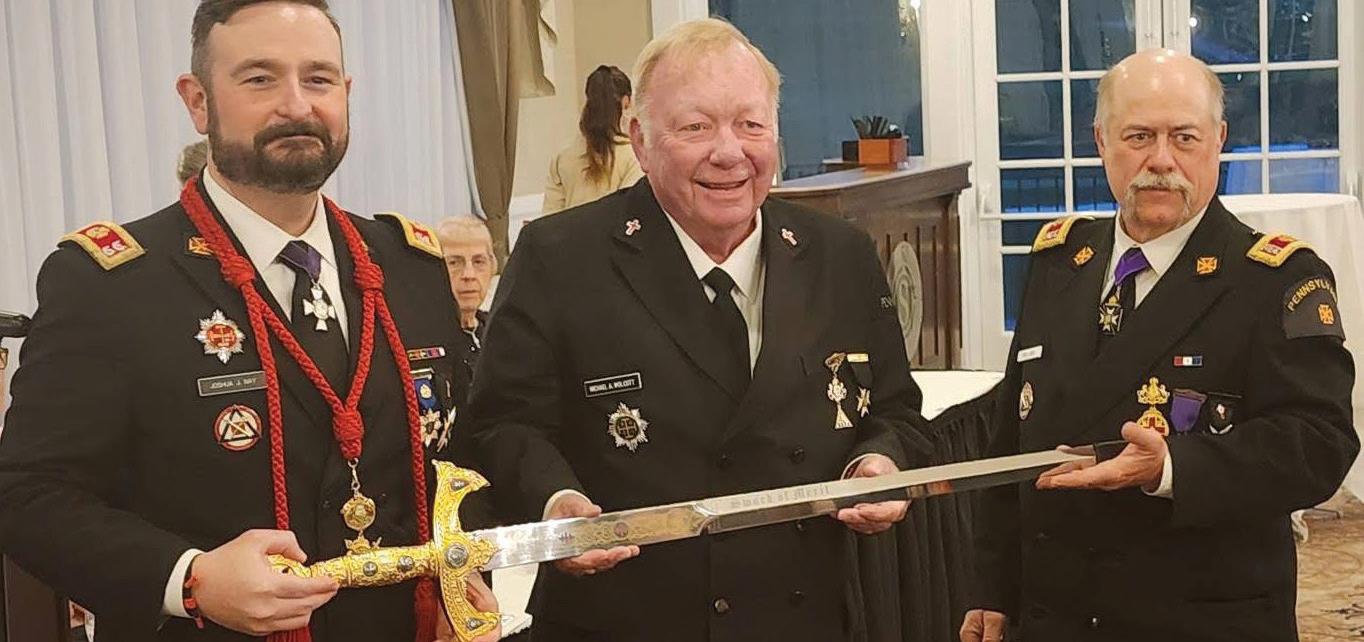
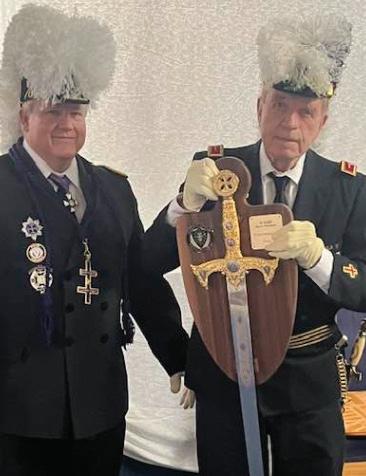
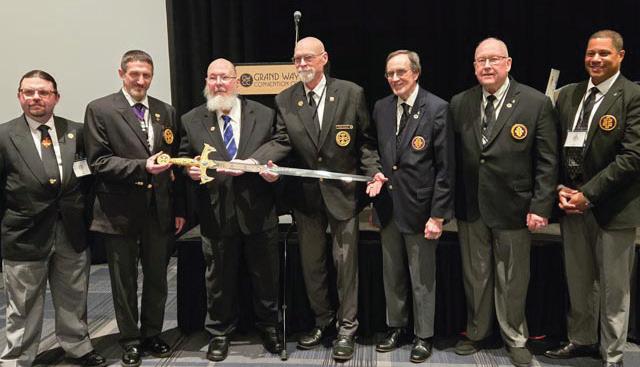
The Knights Templar Eye Foundation awarded a record number of fourteen Swords of Merit in FY 2025–2026. Each Sword of Merit is awarded for a donation totaling $25,000 or more, achieved either as a single gift or through the accumulation of twenty-five Grand Master Clubs.
Additionally, during the same timeframe, the Foundation awarded eleven Golden Chalices, each representing a single contribution of $10,000.
Together, these Swords and Chalices represent a total of $510,000 in contributions. With these vital funds, the Foundation continues to support cutting-edge research to cure childhood blindness.
The Knights Templar Eye Foundation is the largest and most respected non-governmental organization funding pediatric ophthalmological research in the country. KT
by Robert
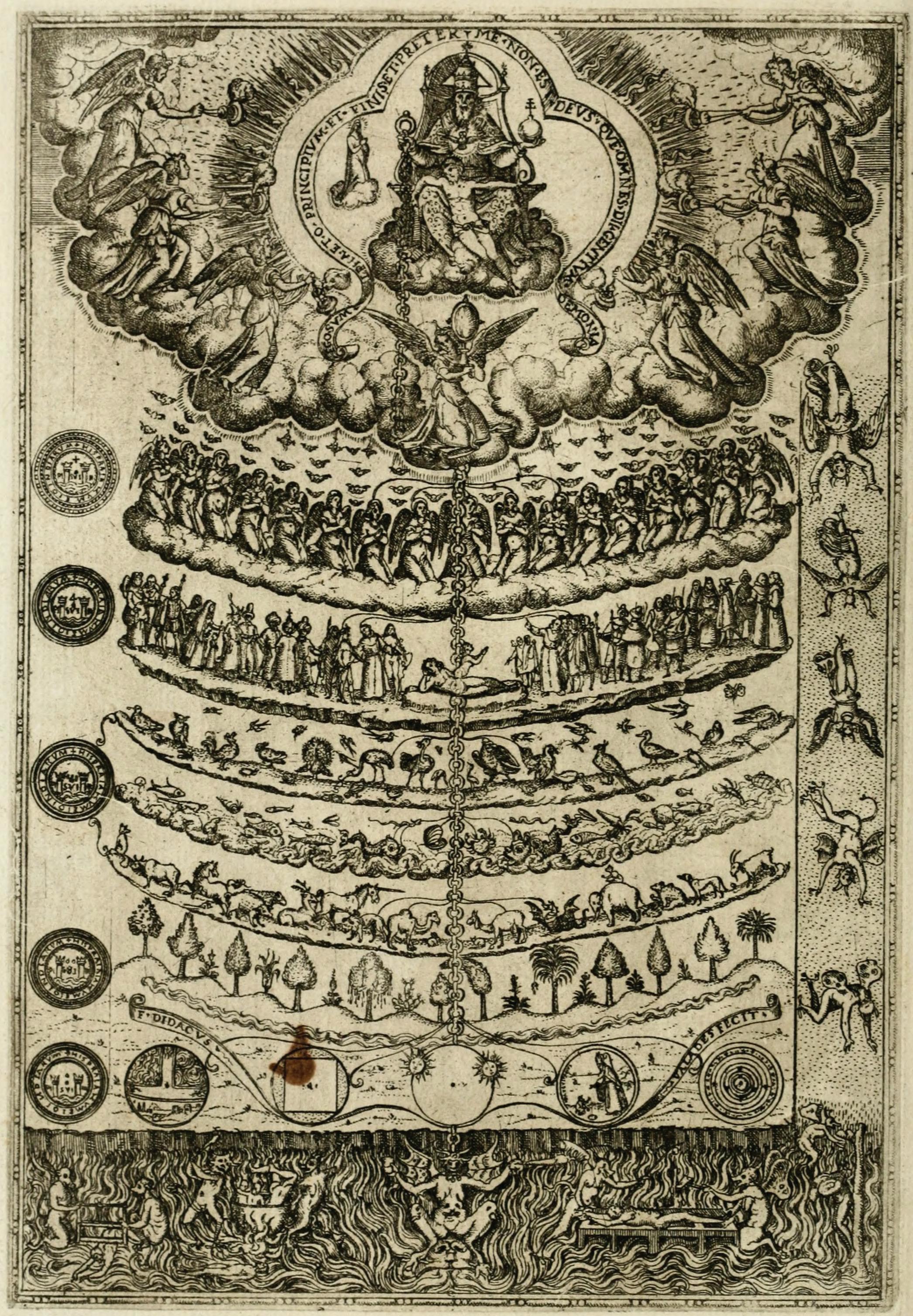
by Andy Fear
At the beginning of her seminal work, The Mystical Qabalah, Dion Fortune develops the point made by the Roman politician and philosopher Symmachus that there is more than one way to apprehend the Godhead [1] and suggests that the different races of mankind are, in the main, disposed to do this in different manners.
She also, rightly, argues that the Qabalah is the core of the western esoteric tradition as we know it today. This leads to some awkwardness given that she posits the Qabalah is an ancient Jewish tradition: “I do not claim that the modern Qabalistic teachings as I have learnt them are identical with those of the pre-Christian Rabbis, but I claim that they are the legitimate descendants thereof and the natural development therefrom.” And, of course, the Western Esoteric tradition has in the main appealed to non-Jews.
The result is that Fortune launches into a long and convoluted apologia to reconcile her two conflicting positions. But such an apologia is unnecessary. The Qabalah's roots are firmly European and its manner of thought is perfectly suited to the western mind. The fundamental principles of the Qabalah – its theories of divine emanation and of numerology –are not isolated to Jewish exegesis.
To assess any tradition and whence it came, a few useful principles can be employed. First, we can ask how far back a particular tradition can be traced. Second, we inquire whether there are similar traditions which can be shown to have a longer pedigree. Third, given that similar ideas can, of course, arise entirely disconnected from one another in separate social groups, we should ascer-
tain whether certain social groups were in contact with each other and whether their ideas could be transferred, or new ones inspired and created through intellectual intercourse.
When considering these matters, it bears remembering that in Hebrew the word Kabbalah simply means “that which is received” and can thus be applied to material which has no hermetic content at all – that is, in this sense, not all Kabbalah is Qabalah.
We must start with the Qabalah’s conception of the Godhead. Here we see that its system is a variant of what is normally known as emanationism. The Godhead itself is radically unknowable. However, aspects of the Godhead, normally known Qabalistically as the ten sephiroth, have manifested themselves out of it. These are often – but importantly, not always – arranged in balanced pairs in a “tree of life.” The sephiroth are not in a temporal sequence, but a necessary sequence – in the same way that a reflection does not follow its cause in time but is simultaneous with it.
They are also a necessary part of the Godhead. To change analogies, the Godhead can be likened to a fountain – water flows from the fountain at the same time as the fountain exists and indeed if no water flows, the fountain is not a fountain.
The core text of Qabalistic writing (and we should remember that not all Qabalistic texts express the same viewpoint) is normally regarded as the Zohar, or Book of
Splendor [2]. This was published by Moses de Leon in Guadalajara (perhaps partially in Avila) in central Spain in the mid-thirteenth century.
Moses claimed that he was merely copying a work written by the second century rabbi Shimon bar Yochai. However, there is no good reason to believe this and many reasons not to believe this. The attribution of works to more famous predecessors to increase prestige, readership, and, indeed, monetary value, is a common curse of scholarship (the end products of this process are known as pseudepigrapha). In our field, obvious examples are the manifold apocryphal Gospels. Such works are often given away by the style and, indeed, language the text is written in.
The Zohar is no exception. As the Jewish scholar Gershom Scholem has pointed out, there are too many basic grammatical mistakes in its Aramaic for it to have been composed at its alleged antiquity. Moses tried hard to write in an ancient style but failed significantly and the questions the Zohar addresses are not those of the second century either, but do fit well with the concerns of the thirteenth century [3]. Finally, we know that when Moses’s widow was approached by a wealthy Jew from Avila who wished to buy the manuscript from which Moses claimed to have drawn the Zohar, she told him that this was impossible because her husband had written the material himself. She added that she had asked him several times why he had put his teachings into the mouth of another, and he had always answered that doctrines put into the mouth of the miracle-working Shimon ben Yochai would be more profitable.
Prior to the Zohar we find the first mention of the sephiroth in the book Bahir which emerged at the end of the twelfth century A.D. among the Jewish communities settled in Provence [4]. This work is also pseudepigraphical, attributed to Rabbi Nehunya, who was active around the turn of the first and second centuries A.D. Beyond this the trail runs cold, unless we chose to accept the pseudepigraphic attributions of these books or the completely unproven theory of centuries of “oral transmission” of a hidden tradition.
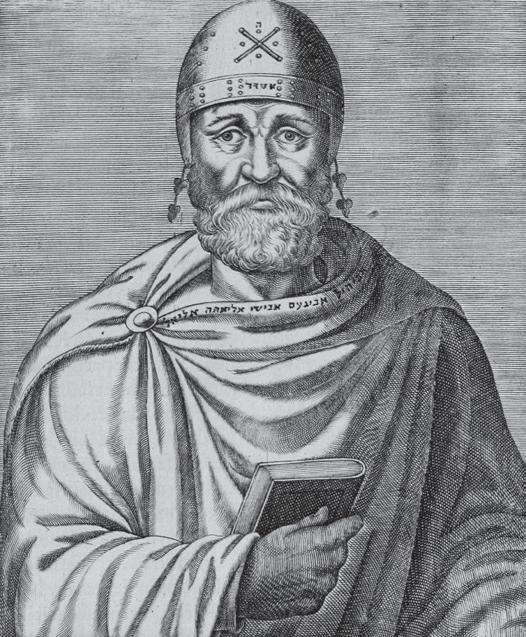
There is however a potential earlier candidate in the Jewish intellectual tradition who engages with the theory of emanation. This is Philo of Alexandria.
Philo wrote in the first half of the first century A.D. and speaks –albeit in an unsystematic way – of the utter unknowability of God and hints at emanations of the Godhead. Philo, in fact, is a key figure here as his work provides a powerful clue to the origins of this tradition. Growing up in the intellectual powerhouse of the Roman Empire (Alexandria is arguably Alexander the Great’s greatest
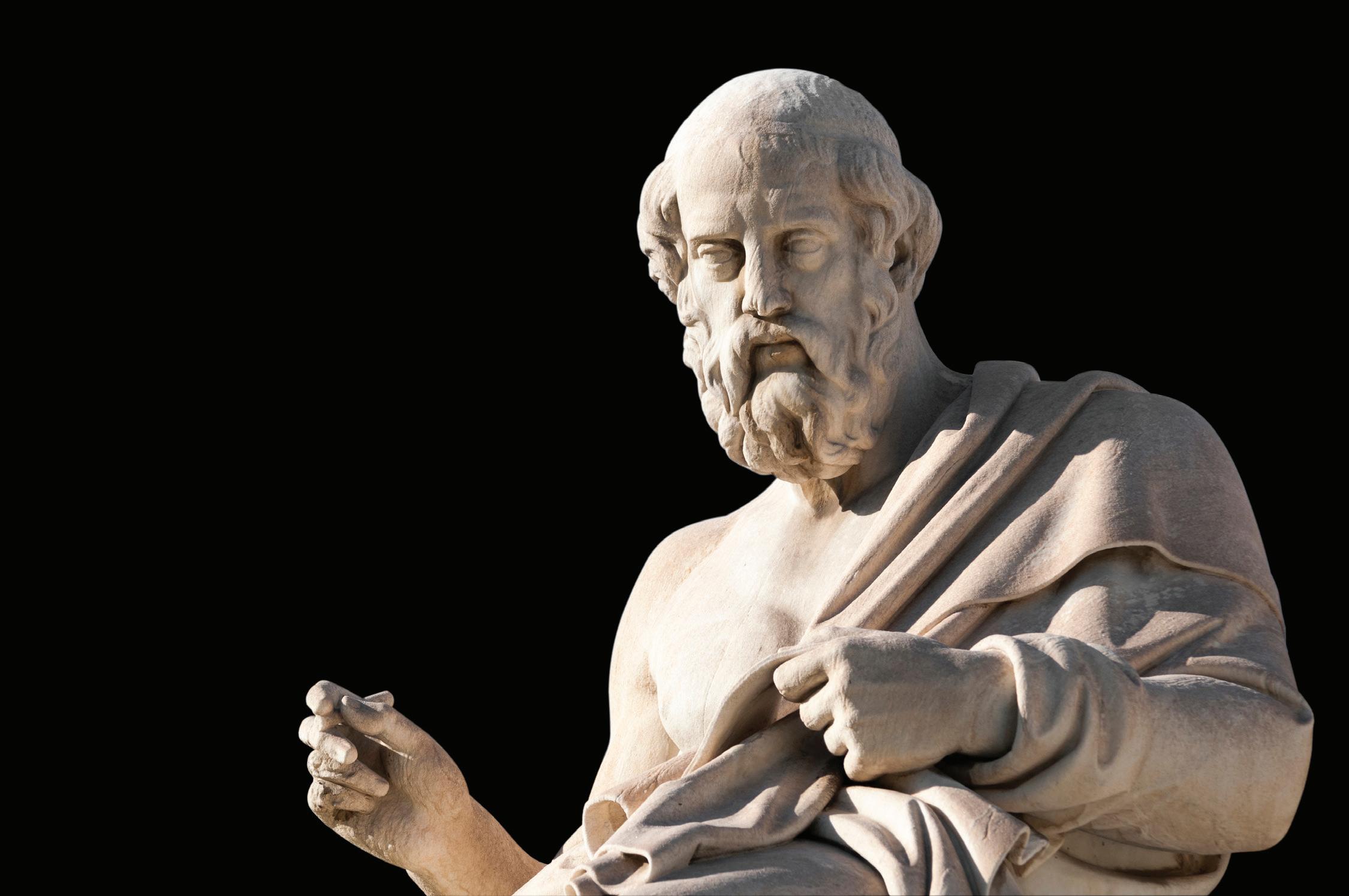
legacy to the world), this devout individual was worried by what he saw as the primitive nature of his scriptures and adopted the Greek technique of allegory to read them – this had already been developed by Greek intellectuals with regard to the Homeric poems (perhaps the nearest the ancient Greeks came to our notion of scripture).
One of those tools was the notion of emanation which has a demonstrable, not a putative, history in Greek philosophy running back to Plato. In this tradition, too, the Godhead is radically unknowable – we know that it is, but not what it is. Indeed, even asserting its “being” is problematic, as it is in effect all there truly is.
As a medieval (neo)Platonist, John Scotus Erigenua put it, “We do not know what God is. God Himself does not know what He is because He is not anything. Literally God is not, because He tran-
scends being.” Hence the Greek term hyperousia (literally “above being”) sometimes used of God.
The Greek notion of perfection required that a perfect being have no dependence on any other object, be radically simple (that is to say, contain no distinct parts within itself) and, therefore, remain unchanging. But it was also posited that such a perfect being sent forth aspects of itself which were easier to apprehend; though each of these, in virtue of being in some ways differentiated, was less real than the unitary Godhead itself. An analogy is the concentric ripples in a pond, which force and clarity dissipate the farther they extend from the center [5].
Unlike the Jewish kabbalistic tradition, we have a firm trail for emanationism in the Greek world. Plato’s Symposium, where Agathon postulates the never-changing
Good as the source of all being, was developed by the so-called Middle Platonists of the first and second centuries A.D. The most important philosopher of this school was Numenius of Apamea. He posited a Godhead which he named Monas, “singularity,” which produced an emanation that he named Noesis, “thought,” which in turn produced the emanation called Genesios “creation.” We can see that each step here takes us farther away from the singularity of the Godhead – first into the realm of distinct and different thoughts, and then into an even more differentiated, material world.
Middle Platonism had a marked effect on early Christian intellectuals such as the so-called gnostic Christians like Basilides and Valentinus. They accepted the ineffable nature of the Godhead and posited a series of emanations from it (normally termed
aeons ) which were paired with one another. These emanations and the Godhead were termed the “fullness,” or pleroma, of the universe.
It is noteworthy that Valentinus explicitly says that his system is designed to purge Christianity of its dependency on Judaism, which is a strong hint that his emanationism is not derived from Jewish thought [7]. Middle Platonism also affected Orthodox Christianity; consider the beginning of the Gospel according to St. John (itself a pseudepigraph written around c. A.D. 100). The logos at the beginning of this Gospel is an emanation of the Godhead [8] (Arguably the doctrine can already be found a generation earlier in St. Paul’s writings, whom at one point describes Christ as the image ( eikon ) of the invisible (aoratos), God and the firstborn ( prototokos ) of all creation) [9].
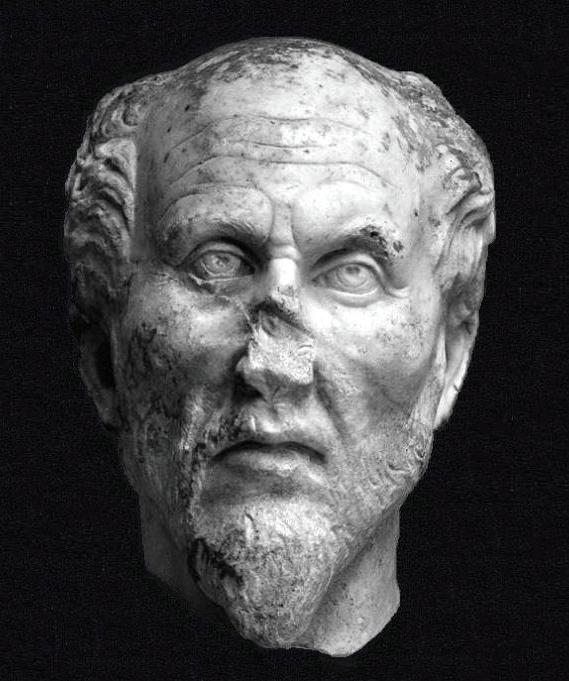
By the third century these ideas had crystallized in the work of the philosopher Plotinus, the first of the so-called “NeoPlatonists.” It is perhaps worth remembering that this epithet is a much later invention and would have not been recognized by Plotinus, who simply saw himself as a follower of Plato (innovation was regarded with horror in antiquity).
Plotinus's work also incorporates much material from Aristotle – the two philosophers were seen as much more complementary in antiquity than today and, indeed, one Arabic text derived from Plotinus’s work is entitled The Theology of Aristotle [10].
What survives of Plotinus was edited by his disciple Porphryry, who complains of his master and friend’s slovenly writing habits [11]. These treatises are known as the Enneads (the “nines” – there are nine “books” of six texts each) [12].
The core of Plotinus’s teaching is that the Godhead was radically unknowable and that nothing could be predicated of it: “The One is, in truth, beyond all statement; whatever you say would limit It; the All-Transcendent has no name.” [13]
However, from this first principle came a sequence of emanations: these are not separate from each other, but each contains part of the original first principle and so looks back towards the previous principle that brought it forth and aspires to rejoin it.
They also look posteriorly to the emanation which they them-
selves create, producing a great chain of being. The self-awareness of The One (To Hen) leads to the emanation of Intellect ( Nous ) where all things were conceived of as potentialities – thus the one became two, and this in turn leads to the emanation of Spirit (Psyche) which engenders out of inert matter the Ideas conceived by Nous.
Collectively To Hen, Nous, and Psyche are the three “hypostases” of the Godhead, “The One.”
As can be seen, Plotinus has effectively developed the system already in place by Numenius’s day [14]. These three concepts sound very much like the first three sephiroth, “the supernal triad” of the later Qabalah and, it is suggested here, were their inspiration.
It is further suggested that the Plotinian triad forms the basis of the understanding of the Christian Trinity as it has come to be apprehended in Orthodox Christianity. Dean Inge, author of The Philosophy of Plotinus, speaks of Soul as the God to whom we pray for our temporal needs; Intellect, He who is of spiritual progress and the life eternal; and The One as the ineffable god of the mystics [15].
For Plotinus the farther a thing is along the chain of being, the farther away it is from true reality and existence. The One is perfection; Intellect contains the plans of God and so is “one-inmany” [16]. Less perfect but still
outside time, Soul provides a link to the material world, while it looks back to intellect it also creates the physical world and thus is “one-and-many” [17]. Unlike its two fellow hypostases, Soul thus enters into the world of change and time. The far end of this great chain of being is Physical Matter which, counter-intuitively to the common man, is the least real of all things.
Plotinian man is an “amphibian” [18] – he is both matter and intellect. His individual soul is enveloped in the world soul – in the same way as all ideas are enveloped by Intellect – and shares the same capacity to contemplate the higher realms of being, while also being embedded in the physical world. For Plotinus, the aim of the philosopher is to eschew the distractions of the unreal physical world and reascend through the emanations to gain unity with the ultimate Godhead, a process he terms henosis or “oneness” [19]. His last words were “strive to give back the Divine in oneself to the Divine in All.” [20]
This was to be done by a process of philosophical contemplation and the avoidance of an excess of physical indulgence, but without detriment to the body’s genuine needs. Plotinus had no time for the extremes of asceticism. To quote from the Enneads, “Therefore one must ‘escape’ to the upper world, that we may not sink
to the level of sense-perception by pursuing the images of sense, or to the level of the growth principle by following the urge for generation and the gluttonous love of good eating but may rise to the intelligible and nous and God.” [21]
Plotinus famously uses the analogy of what we can call mental body sculpting to describe the way an adept can progress. “Go back inside yourself and look: if you do not yet see yourself as beautiful (i.e., as participating in the Idea of Beauty), then do as the sculptor does with a statue he wants to make beautiful – he chisels away one part, and levels off another, makes one spot smooth and another clear, until he shows forth a beautiful face on the statue. Like him, remove what is superfluous, straighten what is crooked, clean up what is dark and make it bright, and never stop sculpting your own statue, until the godlike splendor of virtue shines forth to you.” [22] It is every individual’s responsibility to do this. Plotinus suggests that we all have spiritual guardians (daimones) and that our choice of life will determine the sort of guardian who comes to us and, indeed, will determine whether we progress towards the One or not.
As a believer in re-incarnation, Plotinus is happy to concede that this process could be long and that through wrong choices we could be reincarnated as an animal or even a plant. “Those,
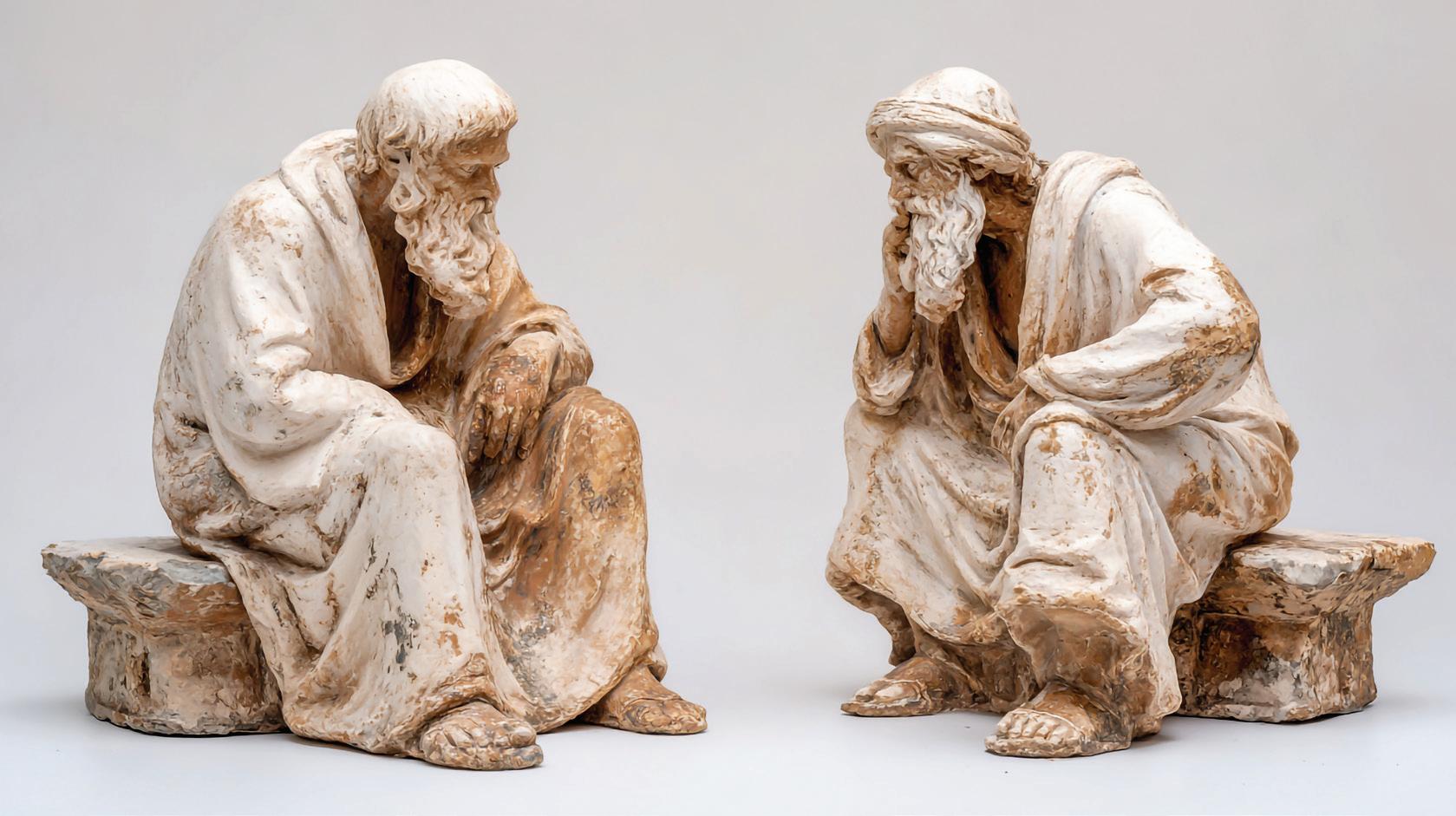
then, who guarded the man in them, become men again. Those who lived by sense along become animals . . . . But if they did not even live by sense along with their desires but coupled them with dullness of perception, they even turn into plants” [23]. Like other devotees of reincarnation, Plotinus is, of course, silent on how animals or plants can succeed in rising once more; though he does believe that all living things have some spark of philosophical contemplation in them.
For Plotinus, henosis was a rare event in life (he claimed to have achieved it only four times
comments, “Knowledge has three degrees: opinion, science, illumination. The means or instrument of the first is sense; of the second dialectic ( i.e. , philosophical debate); of the third, intuition." [26]
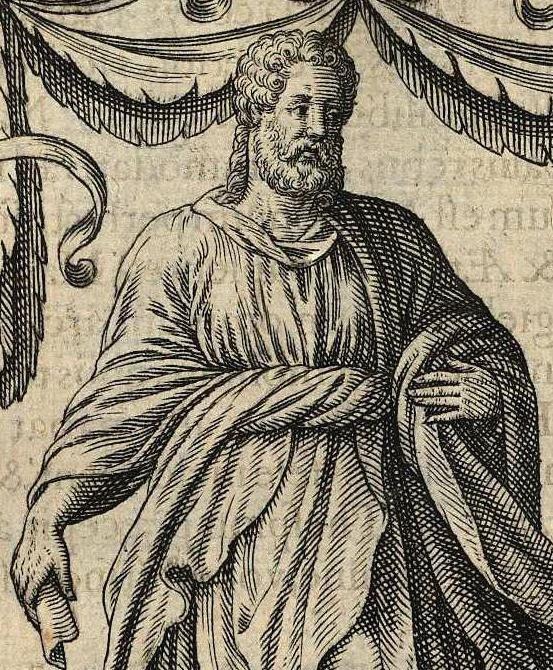
during the time he knew Porphyry [24]) and he struggled greatly to express his experience. It was brought about after philosophical contemplation, but it was not in fact an intellectual act in itself.
“We must close our eyes and invoke a new manner of seeing, a wakefulness that is the birthright of us all, though few put it to use.”
The result is, “In that vision the seer does not see or distinguish, or even imagine, two; he is changed, no longer himself nor owning himself there, but belongs to God, one with him, center joined with center.” [25]
Of the forms of knowledge he
there was an underlying mathematical pattern to the process of emanation. (Once this was seen in the ritual of a Masonic order, but that ritual sadly has been bowdlerized.)
The Plotinian system was further developed by his followers Iambilichus and Proclus. Both of whom (particularly Proclus with his concept of hegemonikoi theoi, or “leader gods”) added extra emanations to Plotinus’s system (something with which Plotinus would have been unhappy) and argued that the process of henosis could be aided by ritual (theurgy, literally “God-work”) as well as contemplation [27]. The wilder shores of theurgic practice led to a belief in the efficacy of forms of low magic, including the animation of statues (and perhaps here we can see the roots of the later Jewish legend of the golem).
While Plotinus had been quick to disparage those who despised the world [28], his teachings contained such a temptation, particularly the notion that matter was in some way evil in the sense that it was radically non-existent. His friend and disciple, Porphyry, begins his biography of Plotinus by saying that his friend seemed ashamed of being in his body.
Iamblichus was to stress the goodness of the world which manifested the ideas generated from the One. Taking inspiration from Plato’s Timaeus, Plotinus’s followers also emphasized that
The mathematical hypothesis is expounded at length in The Theology of Arithmetic, a pseudepigraphon written by one of Iamblichus’s followers [29]. Mathematics – by dealing with quantity in the abstract, rather than any given object – can reveal the patterns of the world more clearly than nature, although they are manifested there too. According to Proclus, “This, therefore, is mathematics: she reminds you of the invisible form of the soul; she gives life to her own discoveries; she awakens the mind and purifies the intellect; she brings light to our intrinsic ideas; she abolishes oblivion and ignorance which are ours by birth.” [30]
This interest in the deeper meaning of numbers is also profoundly Greek. It reaches back at least as far as the mysterious Pythagoras, who lived in the sixth century B.C. and about whom, sadly, exists very little reliable information, though Iamblichus was to write his hagiography. Numerology is also found in the works of Plato – particularly in the Timaeus. The Greek system of enumeration, like the later Roman one, used letters to substitute for numerical values and this led to the practice of isopsephy – the adding of the values of individual letters in a phrase to produce its number, something which dates back at least to the third century B.C. [31]. Stress on the philosophical importance of the combination of numbers and letters is to be found in the third to fourth century A.D. philosopher, Theodorus of Asine. It is from the Greeks that the ancient Jews borrowed their own system of numbers, i.e., the use of letters to stand for numerical values. This is seen for the first time on the coins of the Maccabees. Exposure to Greek numerology led to the Jewish interest in the occult significance of numbers,
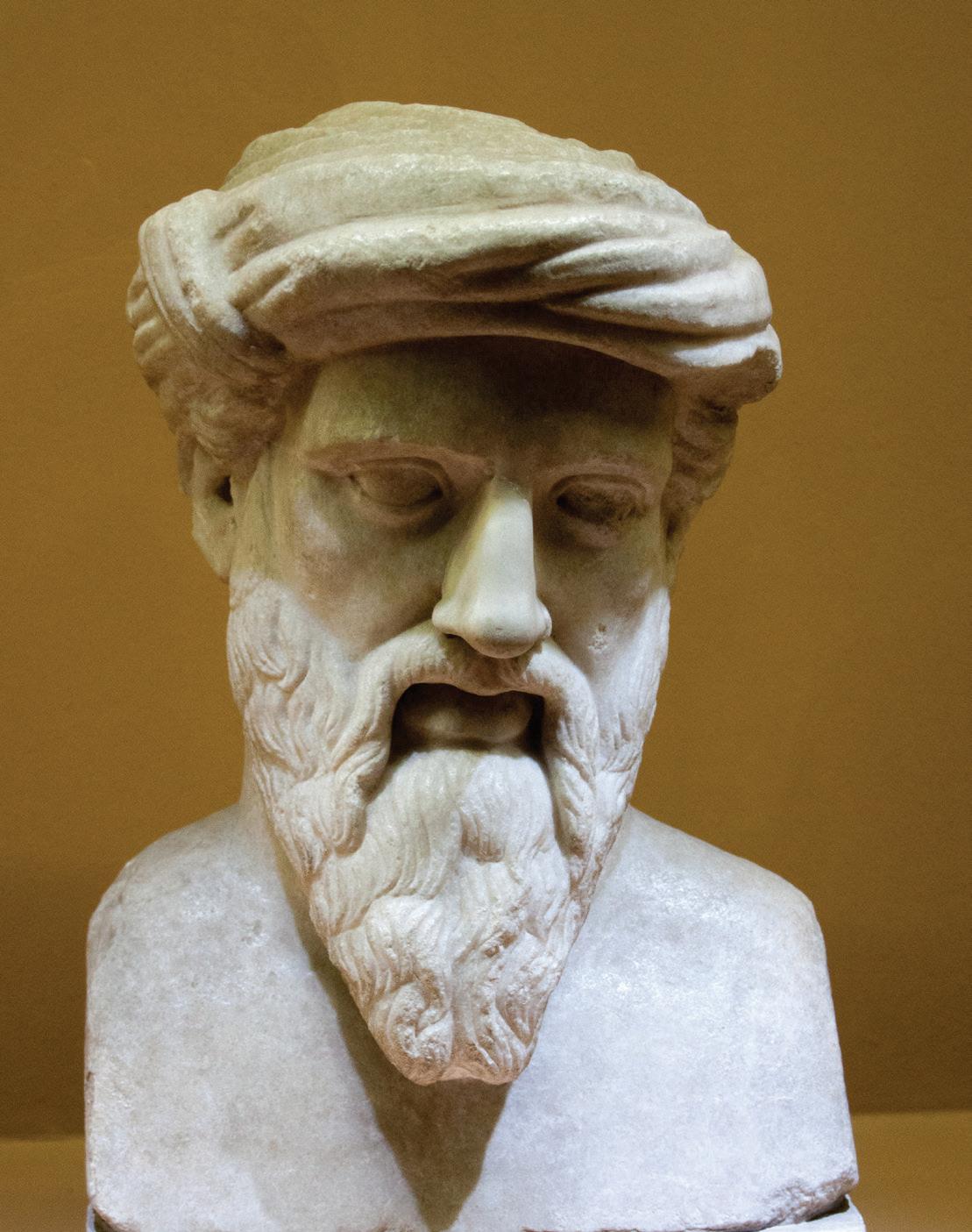
as one scholar of the field put it, “It was only after the Jews came into contact with Greek philosophy that the symbolism of numbers began to play a really important part in the Jewish interpretation of the Bible." [32] At times the fit is imperfect – the pseudepigraphal Sefer Yezirah’s (dated to the sixth century A.D.) attempts to assign values of the Hebrew alphabet to the zodiac shows this awkwardness. The Greek alphabet has precisely seven vowels which fitted the number of known planets perfectly, but Hebrew has no letters representing vowels thus the seven “double” letters had to be assigned to this role. But one of these, the letter resh, is not really a “double letter” at all. That then leaves 15 letters which in turn is 2 short for the five Aristotlean elements. This awkwardness shows first that the ancient Jews were deeply interested in applying this system to their own alphabet, but that they had borrowed from the Geeks, not vice versa.
We can see therefore that the core doctrines expressed in the Qabalah are not, at root, Jewish, but Greek. We can also see that our third condition is fulfilled –these two cultures were in constant contact and thus it is not surprising that ideas passed from one to the other and vice versa. An earlier instance of such intellectual development in Judaism was the emergence of the notion of Satan who seems to be a variant of the Persian god of evil, Ahriman, whom the Jews encountered during their exile in Babylon. In short, the Qabalah is in fact an emanation of Neo-Platonism.
The doctrines of Neo-Platonism were alive and well in the thirteenth century in both Provence and Spain. In the Jewish world we see them in the eleventh century work of Bar Chiyya (Abraham Jaudaeus), a native of Barcelona who may well have moved to Narbonne; his contemporary, the poet Solomon Ibn
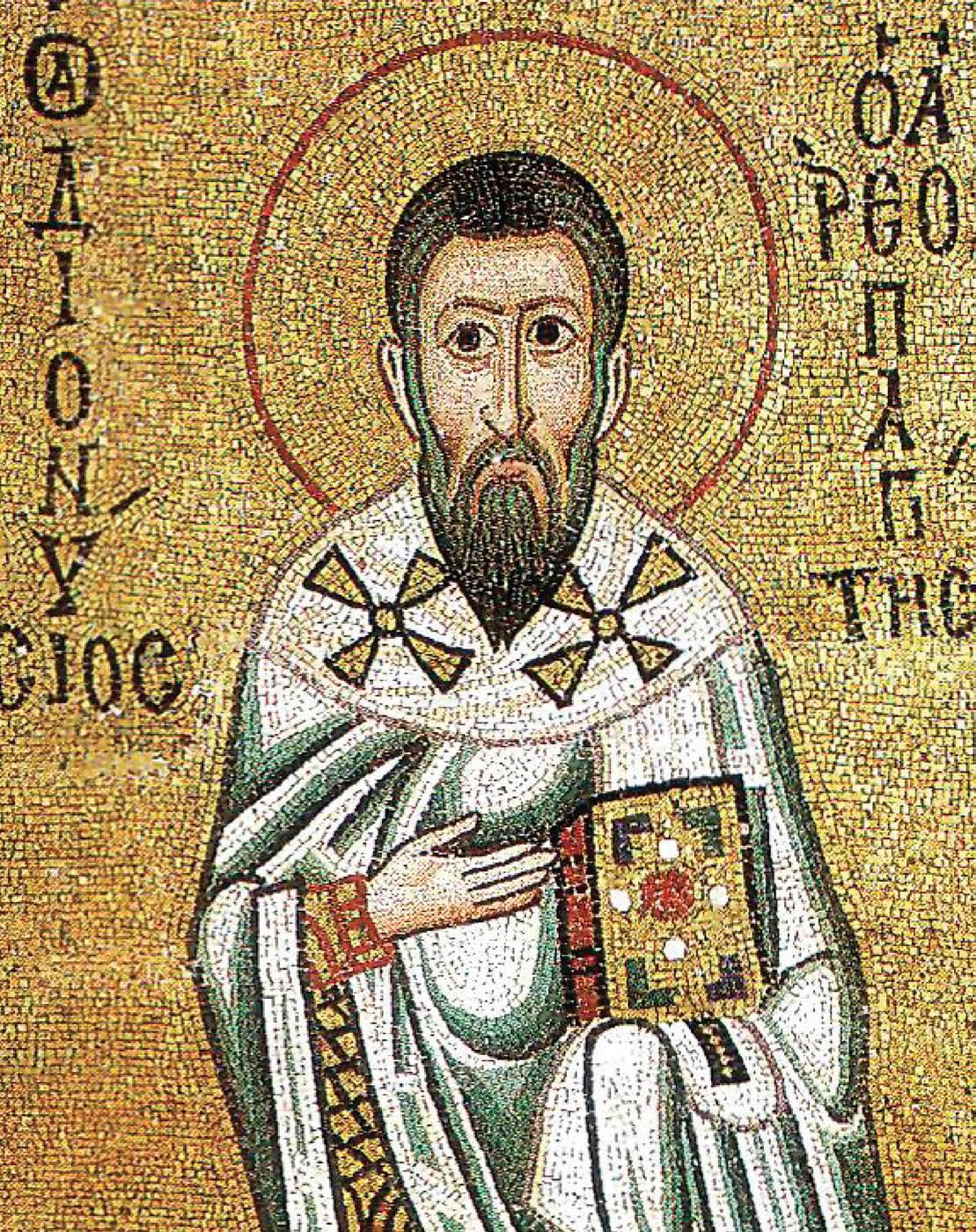
Gabirol (Avicebron); and the great twelfth century polymath, Maimonides (Moses ben Maimon, or the “Rambam”). In the Christian world, the Divine Names of Pseudo-Dionysius the Areopagite, which posits a Neo-Platonic celestial hierarchy (i.e., a Holy Order), had kept the idea of emanation very much alive (there is a ghost of it from an early period in Gregory the Great’s reference to the Nine Choirs of Angels) [33]. These doctrines were transferred to the West in particular by John Scottus Eriugena in the ninth century A.D. [34] and then developed by the philosophers of the School of Chartres in the twelfth century [35].
Nor should we forget the Islamic philosophers Al-Farabi (Alpharabius) and Ibn Sina (Avicenna) – the latter of whom interestingly posited that there were ten emanations from the Godhead each containing its own supernal triangle [36].
Given the intellectual world in which he lived, it is best to see Moses of Leon, not as the conduit
of some ancient tradition, but rather as an original philosopher who played a major role in applying the principles of Neo-Platonism to his own faith.
Where does this leave us? First, we can see that Dion Fortune, though wrong in her belief that the Qabalah is an ancient doctrine, was right in her assertion that the different races of mankind have their own ways of apprehending the Godhead. The glory of western man is his rationalism upon which our civilization has been founded. Plotinus seeks to give his reader the rational tools with which to apprehend the Godhead. It is because the Qabalah is an emanation of this western tradition that it appeals so strongly to us [37].
Second, it is important to remember that true insights about being and existence neither gain nor lose additional merit from their age. The Qabalah thus loses nothing of its value as a set of medi-
eval rather than ancient dogmata. Tradition is living, not static, and thus it grows and develops. In particular, the Lurianic Kabbalah in its discussion of an evil tree (the Qliphoth) deals with the question of evil in a more effective way than many Neo-Platonic authors.
However, it is also worth remembering that seeing a work in its broader context can engender a greater understanding of it. One can gain much from reading Virgil alone, but one will gain more if one has also read Homer. As Knights Templar, we should become familiar with the two great pagan Neo-Platonists of antiquity, Plotinus and Proclus, and also St. Augustine and Pseudo-Dionysius, the ancient Christian writers most deeply affected by this philosophy.
To those luminaries we should add the great renaissance synthesisers of Neo-Platonism and the Qabalah, Marsilio Ficino and Pico della Mirandola. Many more could also be listed. One way to begin a Neo-Platonic journey would be to read Sallustius’s On the Gods and the World. Written by a friend of the Roman Emperor Julian, it is a much cruder work than that of Plotinus, but it is brief and outlines the main dogmata of the school well [38].
It is often the Qabalah that launches the inquiring mind on this Odyssey, after all there are no (or precious few) books published with titles like Neo-Platonism for Today or Neo-Platonism for Dummies . But as we read and study, it is worth remembering Neo-Platonism is but one stream
in a much wider ocean of thought.
KT
[1] Symmachus, Rel. 3.10 “Not by one way alone can man attain so great a mystery”.
[2] An easily accessible version in English is D. Chanan Matt, Zohar: The Book of Enlightenment (Paulist Press, 1983)
[3] See the introduction by A. Green in the above volume for a detailed discussion of these points.
[4] See J. Dan, The Early Kabbalah (Paulist Press, 1986) pp.28-29.
[5] It is worth noting that this concept of the Godhead is also found in the Advaita Vedanta school of Hinduism where it is styled Nirguna Brahman.
[6] Greek has been transcribed into the Latin alphabet throughout.
[7] See J. Glyndwr Harris, Gnosticism: Beliefs and Practices (Sussex Academic Press, 1999) p.137.
[8] John 1.1. “In the Begining was the Word (logos) and the Word was with God (Theos) and the Word was God”.
[9] Colossians 1.15.
[10] The only recent translation, the author of this paper knows is in Spanish, L. Rubio (tr.), Pseudo-Aristóteles, Teologia (Ediciones Paulinas, 1978).
[11] Porphyry, Life of Plotinus, 8.
[12] Plotinus’s Enneads was most easily available in the translation by Stephen McKenna published by Penguin. The
edition also contains a translation of Porphyry’s Life of Plotinus
[13] Enneads 5.1.13.
[14] Indeed he was accused of plagiarising Numenius's system, see Porphyry, Life of Plotinus 14 & 17.
[15] See W. Inge, The Philosophy of Plotinus (Longman, 1918). This book is available free on the web.
[16] Enneads 6.6.13.
[17] Enneads 2.2.3.
[18] Enneads 4.8.4.
[19] Again this process is mirrored in Advaita Vedanta Hinduism.
[20] Porphyry, Life of Plotinus, 2.
[21] Enneads 3.4.2.
[22] Enneads 1.6.9.
[23] Enneads 3.4.2.
[24] Porphyry, Life of Plotinus. 23.
[25] Enneads 6.9.10.
[26] Plotinus, Letter to Flaccus.
[27] This surely is the purpose of masonic ritual work today unless the foolish view that ritual is merely a “play” is adopted. Sadly, Iambilichus’s works are not easy to find. The best starting point is J. M. Dillon, The Platonic Commentaries (Prometheus Trust, 2009). Another source is J. S. Kupperman, Living Theurgy: a course in Iambilichus’s Philosophy, Theology, and Theurgy (Avalonia, 2014).
[28] Enneads 2.9
[29] Available in a translation by R.
Waterfield, The Theology of Arithmatic (Phanes Press, 1988).
[30] Proclus’s two major works are his Elements of Theology and his Platonic Theology. Both are available from the Prometheus Trust.
[31] For a detailed discussion, see K. Barry, The Greek Qabalah: Alphabetic Mysticism and Numerology in the Ancient World (Weiser Books, 1999).
[32] M. Farbridge, Studies in Biblical and Semitic Symbolism (Keegan Paul, 1923). p.97.
[33] This important work is available in many editions, e.g. that of C. E. Rolt which contains an excellent introduction (Aeterna Press, 2015).
[34] See Periphyseon (The Division of Nature), translated by I. P. Sheldon-Williams and J. J. O'Meara, (Bellarmin, 1987).
[35] The best known of whom is Bernardus Silvestris, who wrote a neoplatonic Cosmographia.
[36] See P. Morewedge, “The Logic of Emanationism and Sūfism in the Philosophy of Ibn Sīnā (Avicenna),” Journal of the American Oriental Society, 91.4 ( 1971), 467-476.
[37] See B. Hines, Return to the One (Adrasteia Publishing, 2004) xiii-xv.
[38] The best edition is that by A. D. Nock, Sallustius: Concerning the Gods and the Universe (reprinted Ares press, 1996), but it is available for free on the internet. A good modern introduction to Plotinus is B. Hines, Return to the One (Adrasteia Publishing, 2004).

by R. Stephen Doan
The following is the first in a series of Templar reflections on six Christian saints who embody the monk-knight ideal: contemplation joined to courage; humility joined to defense of the pilgrim and obedience joined to sacrifice. These saints’ lives mirror the Templar vocation — not merely fighting, but sanctified service under Christ the King. These reflections build on a progression:
Bernard — intention purified Michael — battle understood George — courage exercised James — mission remembered Martin — charity practiced Louis — authority sanctified
Saint Bernard of Clairvaux Intention Purified
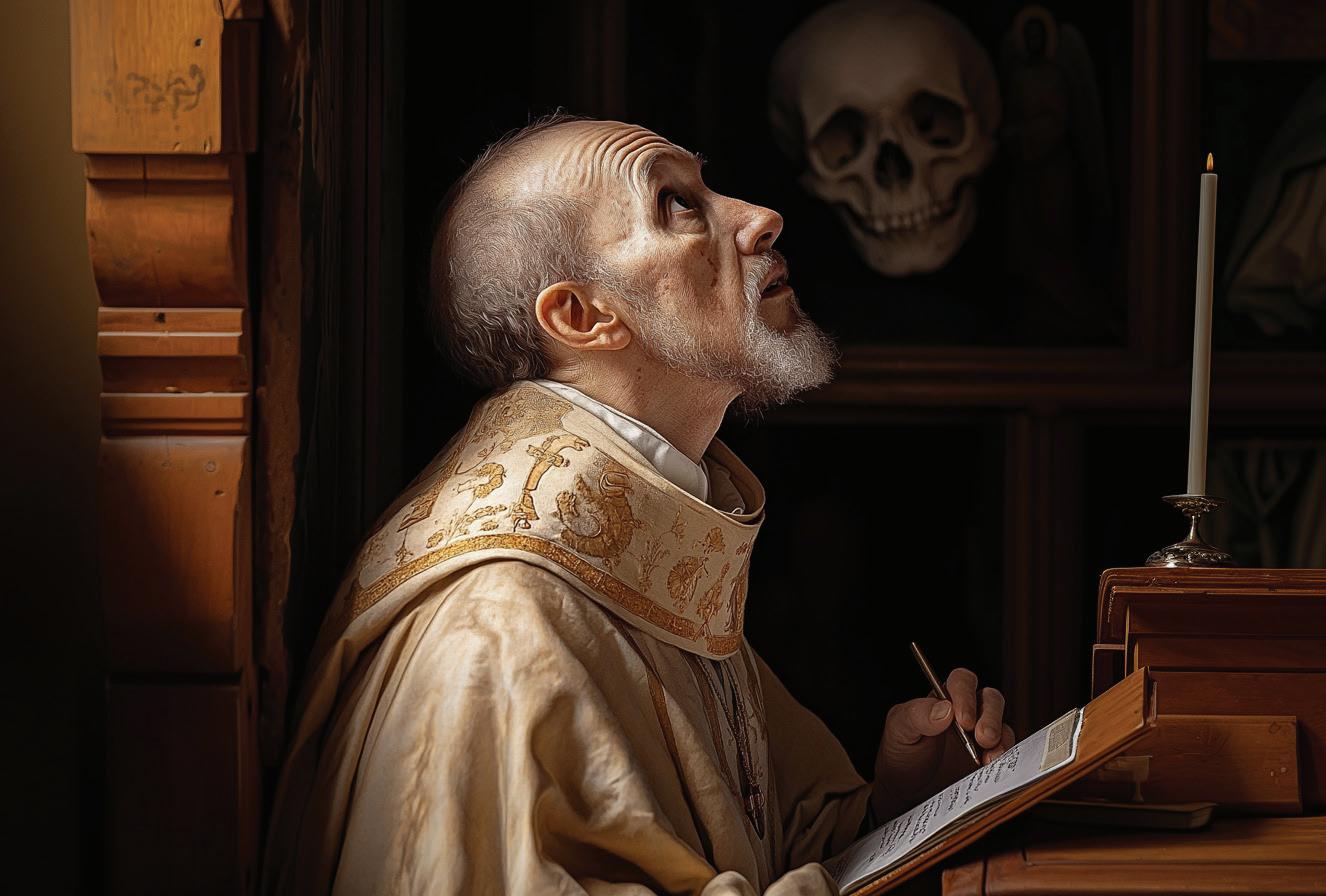
Clairvaux
The author of In Praise of the New Knighthood – the theology of the Templars, Saint Bernard of Clairvaux, lived in twelfth century medieval Europe (1090–1153), a time of crusades, feudal warfare and monastic reform. A Cistercian monk and abbot, he revitalized religious life through preaching, theological writings, and spiritual guidance to popes and kings. Saint Bernard was the most important clerical patron and spiritual architect of the Knights Templar. He championed their official recognition by the Church and provided their theological justification, elevating them from a small band of crusaders into a respected religious and military order. He helped draft the Latin Rule, which governed the daily lives of these early warrior-monks. He defended the Knights Templar by explaining how a warrior could serve Christ without seeking violence for its own sake.
He is a saint because of his profound holiness, devotion to Christ, reform of religious life, and enduring influence on Christian spirituality centered on humility and love of God. He represents the contemplative reformer who guided warriors toward spiritual
purpose rather than worldly glory, becoming a saint through sanctity of life and doctrine. He matters because he defined the difference between worldly knighthood and holy knighthood; taught that knights fight evil, not men; and joined monastic humility to military duty.
Reflection theme: Purity of intention –the sword must follow prayer.
Sir Knight, before the sword is lifted, the heart must kneel. In Saint Bernard you see the soul of Christian knighthood purified of pride. He looked upon the warrior and asked not whether he could conquer an enemy, but whether he had first conquered himself. For Bernard, the true battle is always interior before it is ever visible.
The world praises the courage that strikes, yet Bernard praised the courage that obeys. He warned that a knight who fights for glory becomes a servant of death, but one who fights for Christ becomes an instrument of charity. Your vows, therefore, are not ornaments placed upon a soldier – they are chains placed upon the passions. The disciplined knight is the free knight.
You are called not to love violence, but to accept sacrifice. The enemy is never merely flesh: it is injustice, despair, and the darkness that threatens the pilgrim soul. The knight
stands between fear and the weak, not because he hates the attacker, but because he loves the innocent more.
Bernard teaches you to examine intention before action. Ask yourself: would you still stand guard if no one knew your name? Would you still keep watch if no praise followed? The true Templar labors unseen, content that God alone witnesses fidelity.
Let your armor be prayer, your shield humility, your vigilance constant. Then your sword will never betray you, for it will never be wielded for self. KT
The knight stands between fear and the weak, not because he hates the attacker, but because he loves the innocent more.

EyeCare America® is a public service program of the American Academy of Ophthalmology that provides uninsured and underinsured individuals 18 years and older with access to medical eye exams by matching qualified patients with a volunteer ophthalmologist in their area.
The American Academy of Ophthalmology recommends that all healthy adults get a medical eye exam at least once in their 20s, twice in their 30s, and as recommended by an ophthalmologist in their 40s and up. People who have a family history of eye disease or preexisting health conditions, such as diabetes, may need to come in once or twice a year, or more often.

Regular eye exams throughout adulthood are important for detecting eye diseases and conditions early, before symptoms appear. For some conditions, once vision is lost, it cannot be restored. Approximately 6 million Americans have vision loss, and 1 million have blindness.
An eye exam can also detect health issues beyond eye diseases. That’s because the blood vessels and nerves at the back of the eye reflect your overall health and can signal the start of certain conditions, such as high cholesterol, high blood pressure, or vitamin deficiencies. Other surprising diseases an ophthalmologist can help diagnose include diabetes, heart disease, and stroke.
The easiest way to protect your sight is to have regular eye exams.
Through its Online Referral Center, EyeCare America, one of the largest public service programs in American medicine, provides eye care to those most in need through a pool of more than 2,750 volunteer ophthalmologists.
To be eligible for EyeCare America, a patient must meet the following criteria:
A U.S. citizen or legal resident
18 years old or older
Not belong to an HMO or a PPO, nor have private insurance or benefits through the Department of Veterans Affairs
Not have been seen by an ophthalmologist in three or more years

Not have been seen by an EyeCare America volunteer ophthalmologist in the past
If you are eligible, the EyeCare America program provides a medical eye exam and up to 1 year of follow-up visits for any condition diagnosed in the initial exam at no out-of-pocket cost to you.
The EyeCare America program is for medical eye care only. It does not cover or provide:
Refraction exams or prescriptions for eyeglasses or contact lenses
Eyeglasses or contact lenses
Fees for procedures or surgeries, including laser surgery
Associated costs such as anesthesia, medications, injections, diagnostic tests, or surgical facility fees
Please discuss the cost of service(s) needed with your ophthalmologist beforehand.
EyeCare America’s referral system works in the following way:
Complete the EyeCare America Referral Questionnaire about yourself or on behalf of someone else
If you are matched with a volunteer ophthalmologist, you will receive an email with your referral details, including the doctor’s name and office information, and this information will also appear on your screen
Call the doctor’s office to schedule an appointment
At the appointment, the volunteer ophthalmologist will provide a medical eye exam. Note that exams for eyeglasses and contact lenses are not covered by the program
After the appointment, complete the Patient Survey and return it to EyeCare America
In April 2025, with generous support from the Knights Templar Eye Foundation, Inc., EyeCare America lowered the eligibility age from 65 to 18, expanding access to no-cost medical eye exams.
This change also consolidated the Seniors and Glaucoma Programs into a single, unified model while continuing to serve seniors as a core population.
EyeCare America is endorsed by state and subspecialty ophthalmological societies.

A public service program of the American Academy of Ophthalmology, EyeCare America’s mission is to reduce avoidable blindness and severe visual impairment through education and public service.
For those in need of eyeglasses or contact lenses only, please visit www.aao.org/eyecare-america/resources

www.aao.org/eyecareamerica for more information or to see if you qualify for a referral to one of EyeCare America’s 5,000 volunteer ophthalmologists nationwide.
EyeCare America Phone: 877-887-6327 | Fax: 415-561-8567 Email: eyecareamerica@aao.org PO Box 429098, San Francisco, CA 94142
EyeCare America is co-sponsored by the Knights Templar Eye Foundation, Inc., with additional support provided by Alcon.
by Ben Williams
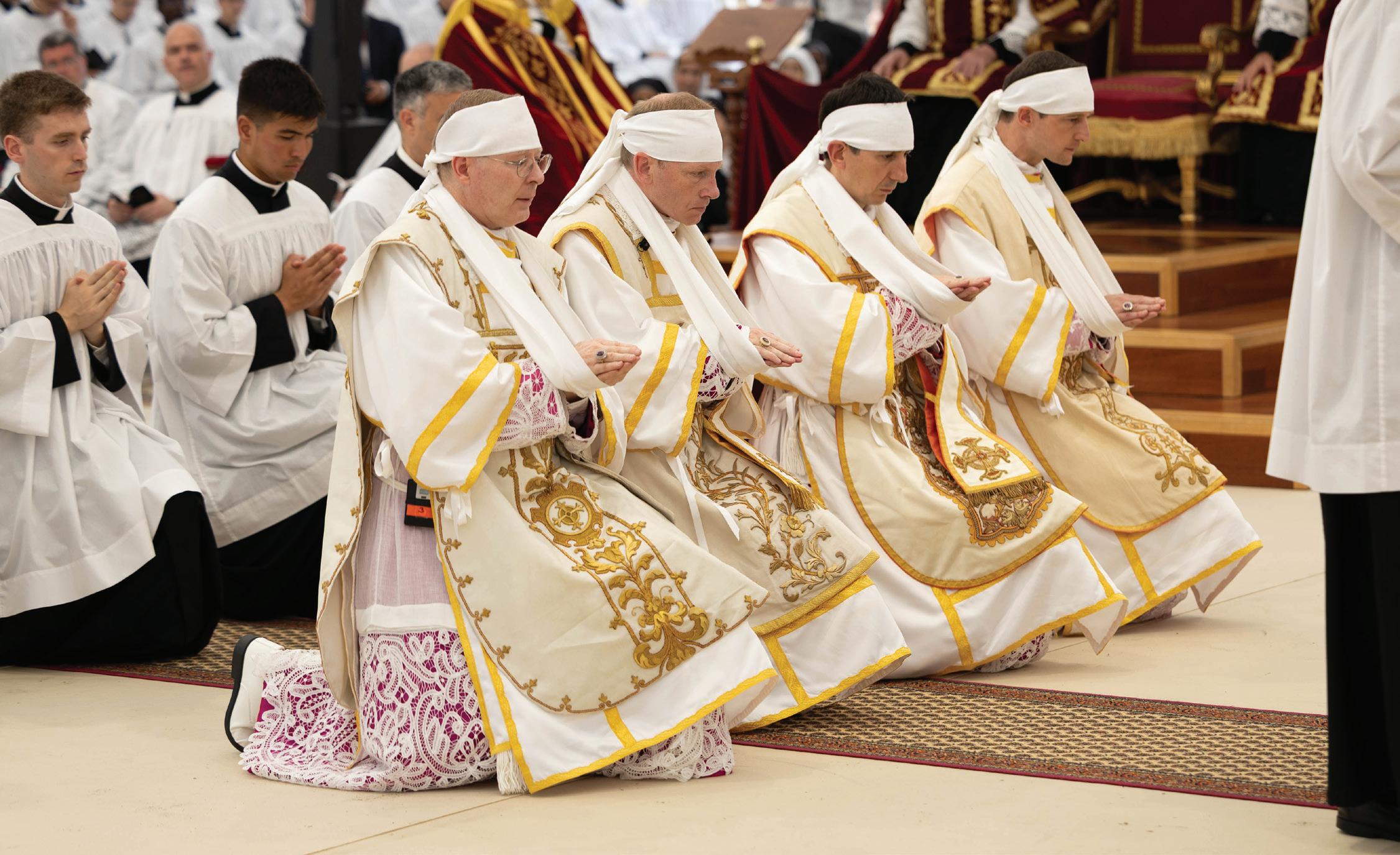
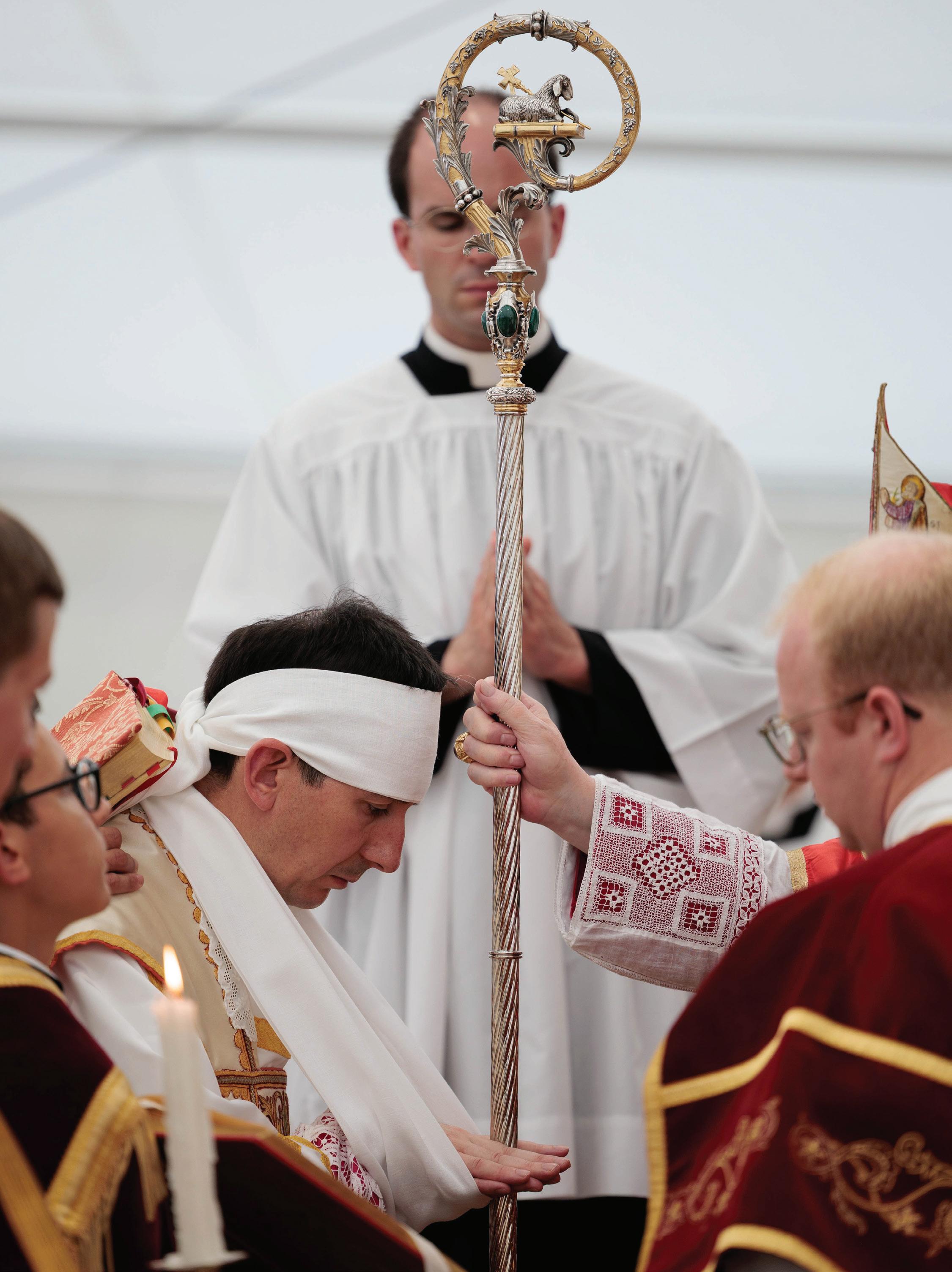
Écône, Switzerland – On July 1, the Feast of the Most Precious Blood of our Lord Jesus Christ, in a tent pitched outside the Seminary of Saint Pius X in the Swiss Alps, Bishops Alfonso de Galarreta and Bernard Fellay consecrated four new bishops for the Society of Saint Pius X (SSPX). At the same time, they excommunicated them all.
Bishops Galarreta and Fellay have now been excommunicated twice. First, by Pope John Paul II in 1988 (when they themselves were consecrated as bishops by Archbishop Marcel Lefebvre) and now again here, in the Swiss Alps.
The situation is marked by contradictions, epitomizing challenges confronting the Church as it struggles to define itself in the post-modern era.
The division is doctrinal, but
not complex. Essentially, a group of traditionalist Catholics opposed to reforms adopted at the Second Vatican Council (Vatican II) cannot acquiesce to Papal authority where, as they see it, obeisance turns apostacy. For them, counterreformation impulses of Catholic supremacy countermand Vatican II’s ecumenism. Meanwhile, the Holy See demands complete obedience (under a similar impulse) exerting exclusivity over the College of Bishops, the unity of which is seen as indispensable to Papal control.
As a result, on July 2, Pope Leo XIV pronounced the Society of Saint Pius X officially schismatic, excommunicating everyone involved and, in an unexpected turn, anyone who “formally adhere[s]” to the doctrines promulgated by the SSPX. This
is more important than it at first appears, and some attention to the issue is warranted.
Founded in 1970, the SSPX has been subject to controversy from its beginning and, for a papacy seeking to balance modernism with established doctrine, appears persistently problematic.
The SSPX, for its part, relies on centuries of doctrine where the Church already condemned modernism and, as the SSPX sees it, the very post-conciliary reforms the Church now seeks to enforce. Its founder, Marcel Lefebvre, cut his teeth as a conservative in the Central Preparatory Commission in 1960, drafting doctrinal statements to be reviewed at Vatican II.
The Commission, though, rejected all his drafts just two weeks into its first meeting in October 1962. Lefebvre has been at odds with
Mother Church ever since.
The schism is small, though not insignificant. It reveals tensions – perhaps even irreconcilable differences – around St. Peter’s throne. The SSPX counts around 1,482 official members including 733 priests, 6 bishops, and 264 seminarians across 6 seminaries and hundreds of chapels. It estimates its followers at around 600,000 of the Catholic faithful (other estimates put the number closer to 150,000 to 300,000): small fry for a congregation of over 1.4 billion. But the SSPX has become an icon of traditionalist perspective. Its entire existence has come to symbolize the counter-modernist movement rending the Church. On that mountainside in Écône on July 1, for example, several thousand had assembled from across the globe
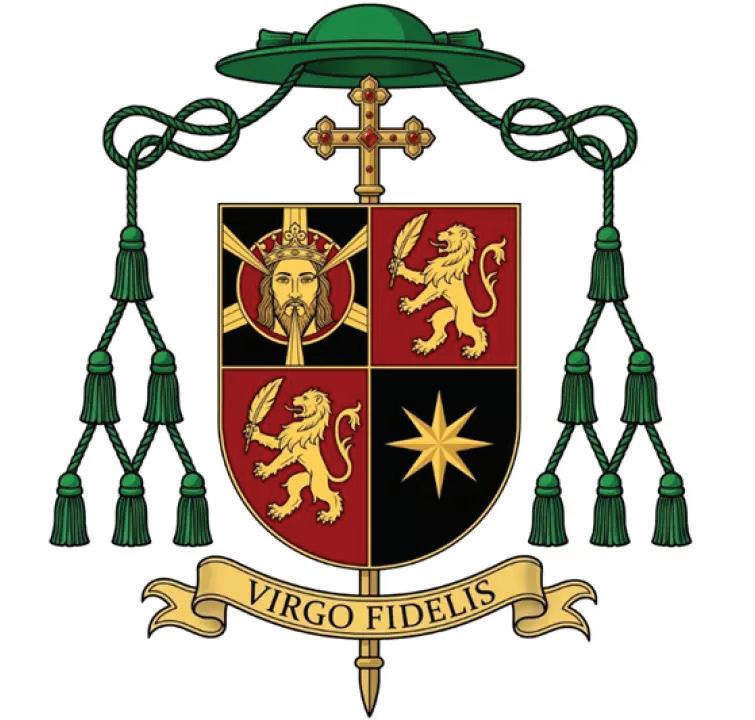
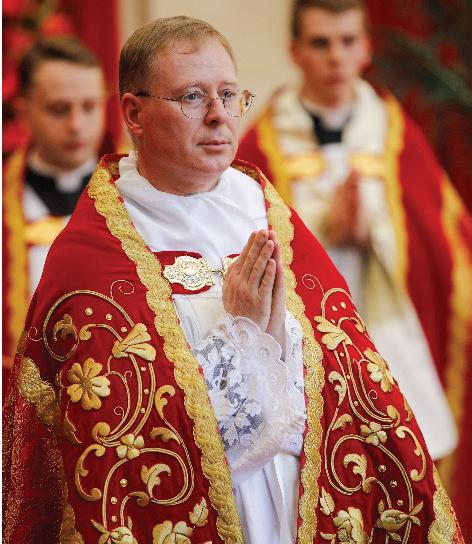
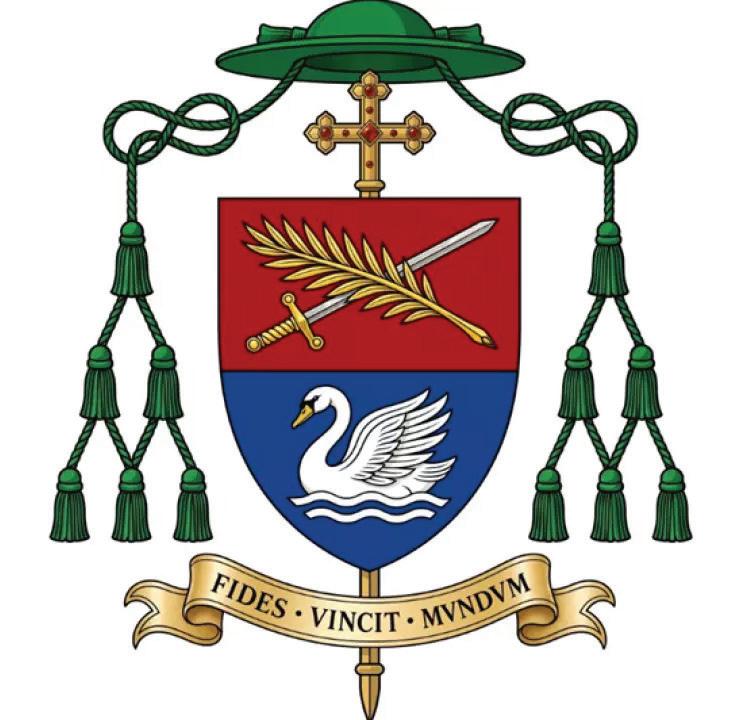
Paul Schreiber, 53 y.o., Aargau, Switzerland. Born into Catholic family of five children. Seminarian at the Herz Jesu Seminary in Zaitzkofen, Germany, before completing formation at Écône. Ordained a priest in 1998. Appointed director of boys' secondary school in Mels, Switzerland, from 2003 to 2005. then appointed director of a girls' primary and secondary school in Wil, from 2005 to 2014. Became bursar for the Swiss District of the SSPX in 2014 in Rickenbach, becoming District Superior in 2016. Appointed Rector of Herz Jesu Seminary in Zaitzkofen, Germany, instructing over fifty seminarians from sixteen countries. Fluent in German and French and conversant in English.
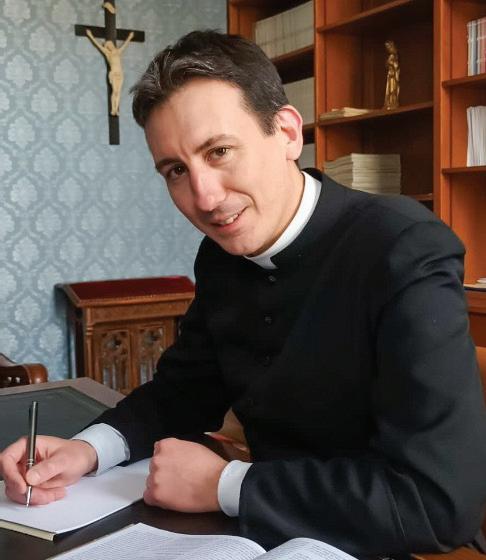
Michel Poinsinet de Sivry, 42 y.o. French national. Born into a Catholic family of seven children. Formed a priest at Seminary of Flavigny in France and then at Écône. Ordained a priest in 2008. In 2011 he became the director of Saint Louis Primary School in Paris. Also officiated at a chapel in Seine-Saint-Denis and Saint Nicolas du Chardonnet Church in Paris. Became the director of Saint JeanBaptiste de La Salle secondary school in Camblain-l'Abbé, from 2016 to 2022 when he was appointed the Superior of the Benelux District. Speaks French and English fluently, conversant in German and Dutch.
to watch the ceremony – even as storm clouds (both metaphorical and literal) descended to obscure the mountaintops. And the rites were undiminished.
The four priests elected to the episcopacy are all devout Catholics – from large Catholic families, with siblings ordained and cloistered. Paschal Schreiber, 53 years old, is Swiss. Michael Goldade, 45, is American, born in North Dakota. Michel Poinsinet de Sivry, 42, is French. And Marc Hanappier, 35, is also French. All are polyglot educators steeped in classical theology and metaphysics. Now, just like the Freemasons whom the founder of their society repeatedly declaimed for humanist exertions against the Church, they are all excommunicated latae sententiae for participating in forbidden rites.
The principal divide centers over religious liberty (under Vatican II, the somewhat Lutheran statement that “the human person has a right to religious freedom”), which, to traditionalists, jibes with the Council of Trent’s determination that there is but one faith, the Catholic one. The Church’s ecumenism, where Francis and Leo have been meeting with other sects and faiths, calling for a Christian unity, is unsettling to hardliners who believe the Church’s long tradition is as important, doctrinally, as the Holy Scriptures. That includes the Council of Trent’s elevation of Catholicism in 1570 as the sole bastion for Justification in Christ. Other issues such as transubstantiation and, significantly, the mass, continue to cloud the horizon (for example, post-Vatican II, when the priest administers the eucharist, he turns his back
on the tabernacle and, worse, desecrates the Body of Christ when he allows laity to touch the host with their hands). The SSPX believe in the Divine Presence and the Holy Sacrifice – the bread is the body of Christ. It must be revered accordingly.
Additionally, and perhaps more problematic from the Church’s perspective, modern SSPX members adhere to a sort of devotional Marianism – referring to Mary as the co-redeemer or co-redemptrix. To them, the virginal birth means that Mary’s flesh and Christ’s flesh are essentially one – the complete humanity of Christ (counterpoised with his complete divinity) is unspotted because Mary is also sinless (hence, the reciprocal proof of the virgin birth). According to Davide Pagliarani, the current Superior General of the SSPX, Mary also suffered equally with Christ – she accompanied Him when he was assailed by adversity and mourned (as only a mother can) at the death of her son. Think of Luke 2:34, where Simeon blesses Mary and the Christ child in the Temple and says to Mary, “This child is destined to cause the falling and rising of many in Israel, and to be a sign that will be spoken against, so that the thoughts of many hearts will be revealed. And a sword will pierce your own soul too” (NIV). To Pagliarani, the sword piercing Mary’s soul is Gospel of Mary’s passion. These (and probably other factors) are, to followers of the SSPX, sufficient to raise Mary to redemptive participation. For the Curia, that’s potentially an issue. Consider the decree Leo issued in November last year, expressly stating it is blasphemous to refer

to Mary as the “co-redeemer.” Without specifically mentioning the SSPX, Leo was clear that Mary is not to be worshipped or referred to in this manner. In context of this new schism, Leo’s decree seems deliberately timed.
The SSPX comes down to the industry and, ultimately, the intransigence of one man, Marcel François Marie Joseph Lefebvre. Lefebvre was born in 1905 in Tourcoing, on the French-Flemish border, one of eight children (four of his siblings also became clerics). His father was a textile worker who, during the German occupation in World War I, ran a spy ring for British intelligence, arranging escape routes for the allied powers. He didn’t survive the war, though – he was caught and died in a concentration camp in Sonnenburg. Lefebvre’s mother died during the war, too.
Orphaned, Lefebvre attended seminary in Rome and became a priest in 1929. He joined the Congregation of the Holy Spirit under the protection of the Immaculate Heart of the Virgin Mary (the “Holy Ghost Fathers” or, simply, the “Spiritans”), a Jesuit congregation founded in 1703 to train seminarians and conduct missionary work, and, in 1932, he was sent to Gabon, West Africa, to teach at St. John’s seminary in Liberville. Two years later he became Rector there and, in 1942, was appointed Vicar Apostolic of Dakar and then, a year later, apostolic nuncio to French West Africa. He was recalled to France in 1945 to run the seminary of philosophy
at Mortain but in 1947 Pope Pius XII appointed him Vicar Apostolic of Dakar in Senegal and titular bishop of Anthedon. He was consecrated September 18, 1947, in his family’s parish church in Tourcoing by Liénart (now a cardinal) with Jean-Baptiste Fauret and Alfred-Jean-Félix Ancel as co-consecrators.
A year later, on September 22, 1948, he was retitled titular archbishop of Arcadiopolis in Europa, ultimately responsible for 64 dioceses in “continental and insular Africa subject to the French government, with the addition of the Diocese of Reunion, the whole island of Madagascar and the other neighboring islands under French rule, but excluding the dioceses of North Africa, namely those of Carthage, Constantine, Algiers and Oran.” His theology was forged in the crucible of equatorial Africa, where he traveled extensively. His efforts are widely credited in forming the dioceses of the continent – a considerable achievement.
Hence, in 1962 he was elected Superior General of the Holy Ghost Fathers. He returned to Rome and was appointed by Pope John XXIII to the Central Preparatory Commission for Vatican II (where he became associated with the Coetus Internationalis Patrum, a conservative bloc of 250 priests who desired to predominate traditionalism in the Church), and also as a consultor to the Sacred Congregation for the Propagation of the Faith (one of the dicastries of the Roman Curia). But in 1968, six years before the end of his twelve-year term as Superior General, he resigned from the Holy Ghost Fathers in refusing to
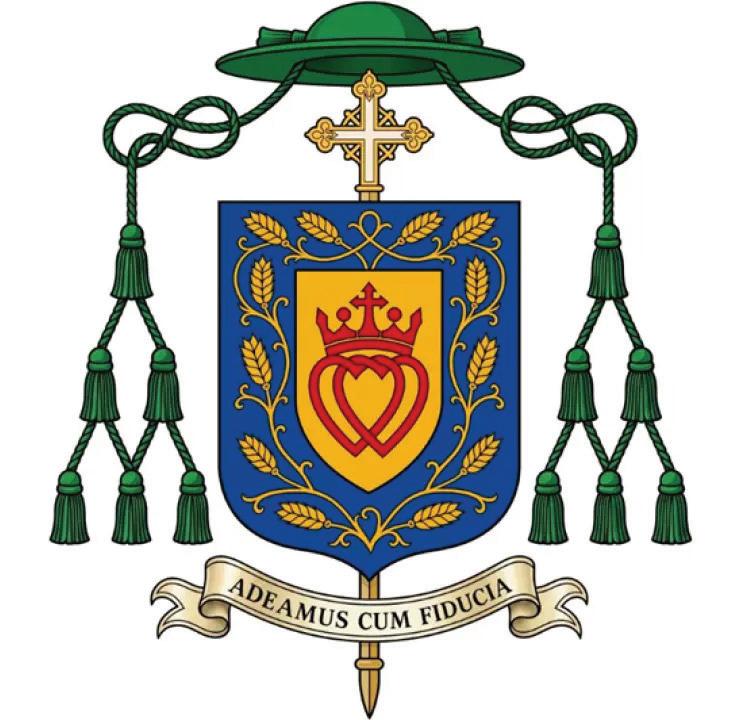
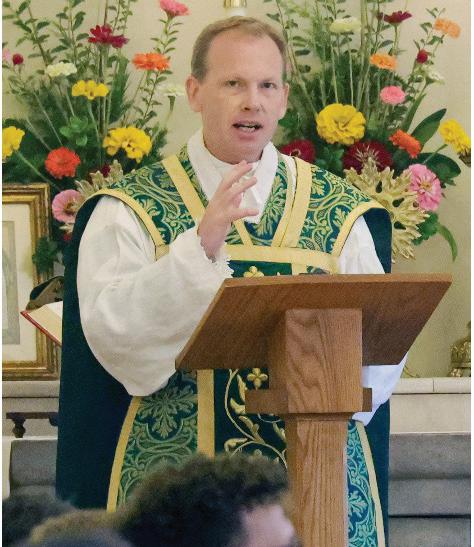
Michael Goldade, 45 y.o., born North Dakota to a Catholic family of ten children, raised in St. Mary's, KS. Three of his siblings are Sisters of the Society of Saint Pius X. Formed in the seminary at Winona. Ordained a priest in 2004. Exercised ministry in Armada, MI, for five years before becoming the director of a retreat house in Ridgefield. Appointed Prior in Kansas City in 2014, overseeing the priory, the parish, a school, and a community of religious sisters. Appointed assistant to the District Superior in 2021. Appointed Rector of Saint Thomas Aquinas Seminary in Virginia, attending to the formation of nearly 100 seminarians. Speaks English, conversant in French and some Spanish.
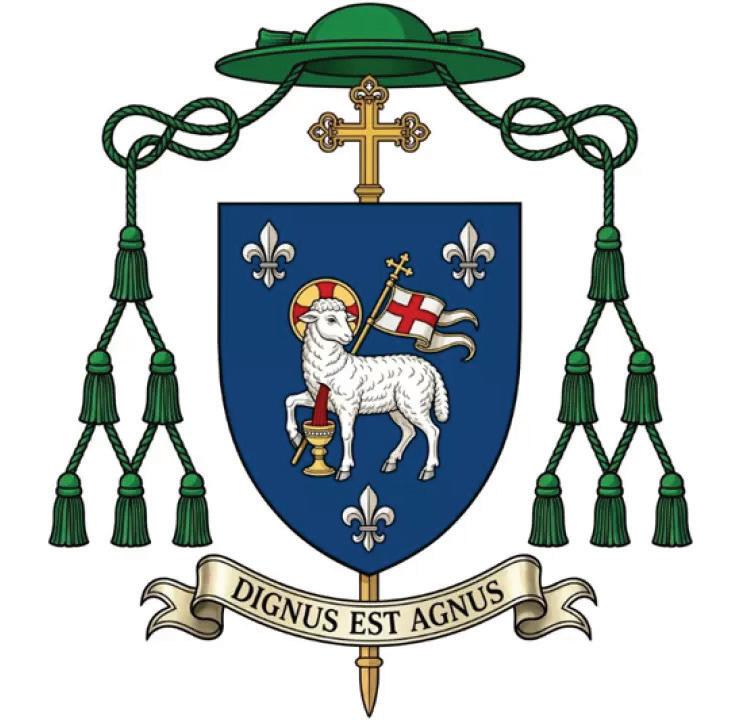
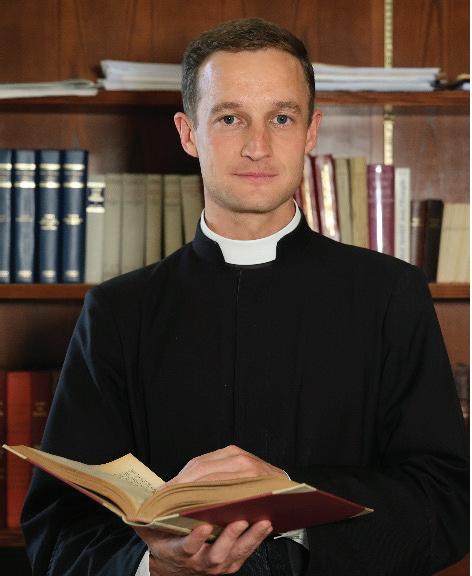
Marc Hanappier, 35 y.o., French. Born into Catholic family of ten children. One of his brothers is a priest in the SSPX, another is a priest in the Capuchins of Morgon. One of his sisters is a Dominican teaching sister of Saint-Pré. Formed at the seminaries of Flavigny and Écône, he was ordained a priest in 2013. Began his ministry at Étoile du Martin School near Bitche and later at Saint Michael's School near Châteauroux. Appointed professor at the seminary in Dillwyn, Virginia, where he teaches metaphysics and dogmatic theology. Fluent in French, English, and conversant in German and Spanish.
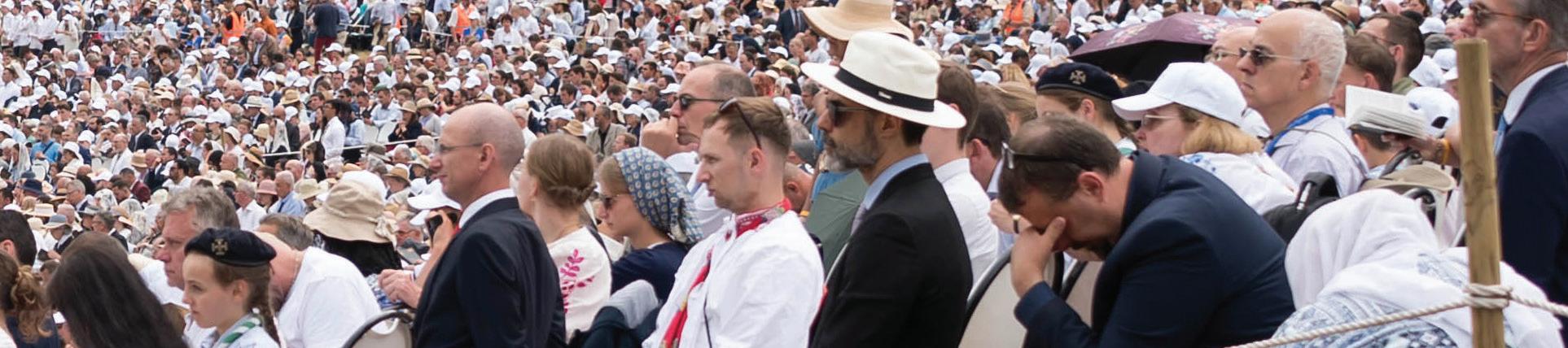
implement Vatican II’s reforms.
He rented a small flat in Rome from some Sisters on the Via Monserrato, intending to retire. But in 1969, unsolicited, he was approached by a few would-be priests in search of a more traditional Catholicism. Impelled, he started a seminary, first at the University of Fribourg (with only nine students) before moving to Écône in 1971 – he needed more room, to accommodate a rapid interest, indeed, but perhaps also he desired an escape from the liberalism of the university campus. Through the generosity of supporters, the seminary located itself in an old manor formerly belonging to the Canons of St. Bernard in a striking alpine meadow in the Swiss Alps near a waterfall. Like the river cutting the rocks in the morning light, things were moving fast.
So it was that in November, 1970, Bishop François Charrière of Fribourg established, on a provisional basis for a six-year trial period, the International Priestly Society of Saint Pius X – not as an official congregation or order, but as a “pious union.” Pope Pius X was selected as the eponymous patron of the society because he was a dedicated Thomist (promulgating the theology of Thomas Aquinas) and a staunch traditionalist. His encyclicals remain popular with traditionalists. They were favored by Lefebvre.
Despite considerable support and some notoriety, the SSPX was not well met among mainstream Catholic clerics – especially the French, who nicknamed the seminary at Écône, le séminaire sauvage , the “savage seminary,” meaning untamed and uncivilized. Concerned by rumors of usurpation, an uneasy suspicion of traditionalist inspirations already fomenting, a Commission of Cardinals was called in June, 1974. A canonical visit to the seminary at Écône was decided. On November 11, 1974, therefore, two delegates arrived at Écône and, starting at 9 a.m., for the three days, interviewed 10 professors, 20 students,
and Lefebvre himself to gauge the scope and nature of instruction at Écône.
According to Lefebvre, the two delegates expressed heretical views in the company of students and staff – Lefebvre claimed they had opined on marriage for the clergy and shared doubts as to immutable truth and the bodily resurrection of Jesus. That these comments (assuming they did occur) might have been forwarded to probe seditious sympathies (or even to provoke a response) must have escaped Lefebvre, who, fearing the worst, in a “spirit of doubtless excessive indignation” (his own words), wrote up a declaration on November 21 that set forth his position regarding the post-conciliary reforms being pushed under Pope Paul VI. He was adamant. He outright refused “to follow the Rome of Neo-Modernist and Neo-Protestant tendencies.”
“No authority, not even the highest in the hierarchy [i.e., the pope], can compel us to abandon or diminish our Catholic faith, so clearly expressed and professed by the Church’s Magisterium for nineteen centuries,” he said. He decried the reforms of Vatican II, denouncing them as the “destruction of the Church,” the “ruin of the priesthood,” the “abolition of the Sacrifice of the Mass and the Sacraments”; deriding the new reforms as “an education deriving from Liberalism and Protestantism which had been condemned many times by the solemn Magisterium of the Church.” In this latter point he is not entirely incorrect: a principal tension in the Church must tremble when conflating centuries of infallible dogma against overwhelming scientism which, ultimately, tends the absolute to some criticism.
Nonetheless, “This reformation, deriving as it does from Liberalism and Modernism, is entirely corrupted; it derives from heresy and results in heresy, even if all its acts are not formally heretical,” he said. “It is therefore impossible for any conscientious
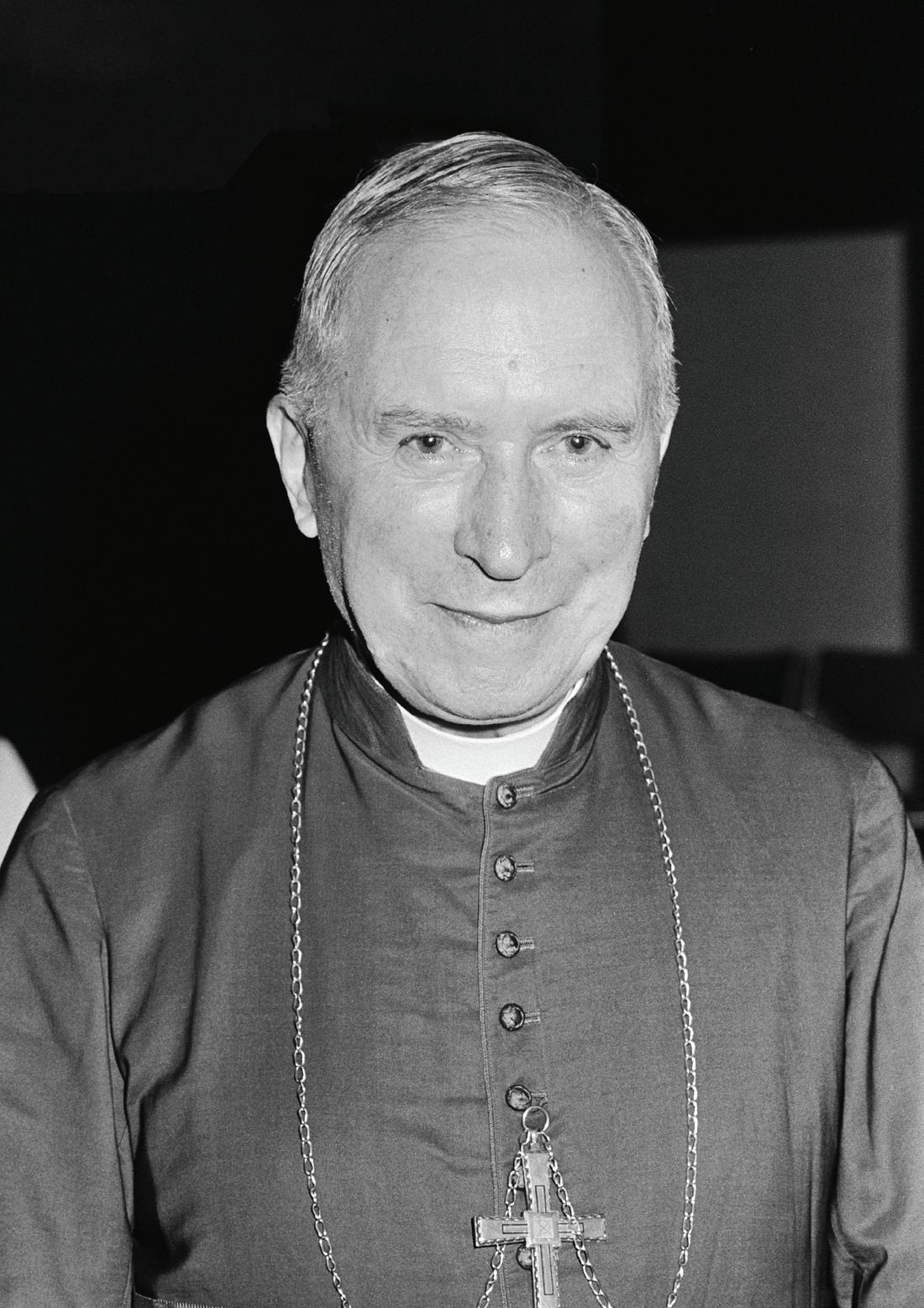
and faithful Catholic to espouse this reformation and to submit to it in any way whatsoever.”
Lefebvre might have been culminating years of silence. His biographer claims this declaration was not intended as a public statement – it was circulated among the seminary only, loosed by indignation rather than a spirit of insubordination. However, it was leaked piecemeal almost immediately and ultimately published in full in 1975, in both French and English. It was condemned by the Commission of Cardinals as “unacceptable . . . on all points.”
The Commission of Cardinals then reconvened on January 21, 1975, to discuss the report of the canonical visit. Unbeknownst to Lefebvre, the visit was reported favorably – even admirably. Only Lefebvre’s words stood against him. Lefebvre was called to Rome. After two, five-hour sessions on February 13 and March 3, in
which Lefebvre was repeatedly rebuked (one Cardinal called him a “lunatic”; another said he was causing more harm than all the progressives combined) – and wherein his defensiveness signaled, not veracity, but unrepentance (“if I had to rewrite this text,” he said referring to the declaration, which the Commission had come to refer to as his manifesto, “I would write the same things”) – the SSPX was officially suppressed. The order came by letter on May 6, effective upon receipt. Lefebvre was expected to dismiss 104 seminarians, 13 professors, and attendant staff immediately, two months before the end of the scholastic year.
“[N]o support whatsoever can be given to Mgr. Lefebvre as long as the ideas contained in the Manifesto of 21 November continue to be the bases of his work,” the Cardinals wrote. “No Church institution, no priestly
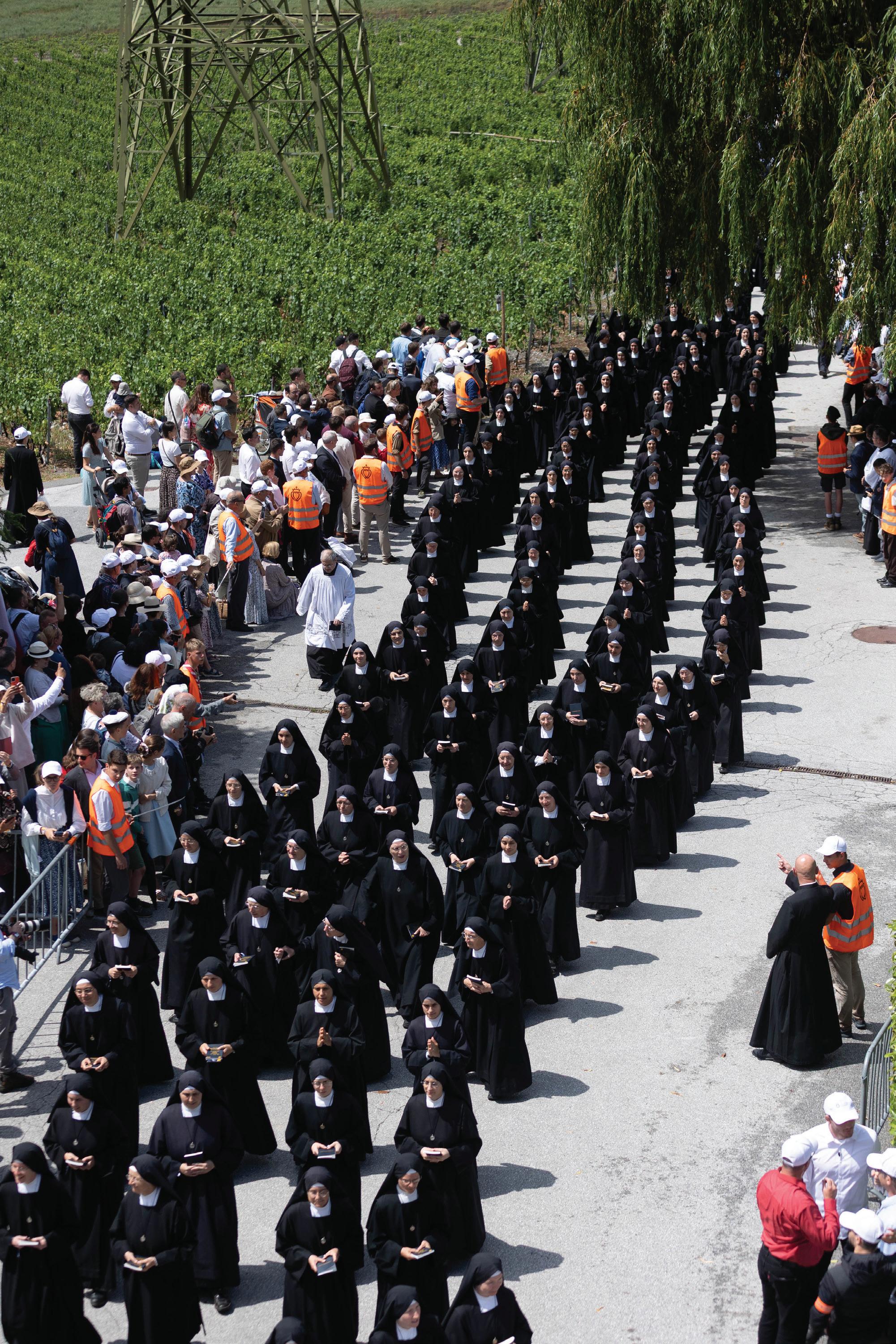
formation can be built upon such a foundation.”
Lefebvre demurred. He issued a formal appeal, asking to be tried by the Congregation of the Doctrine of the Faith (if in fact his faith was in issue) and observing, perhaps justly, that the declaration constituted his words – he alone should be liable for them, not the whole society, and not the seminary or seminarians. He devised that his appeal suspended the suppression, at least until the appeal was resolved, so on May 25 (less than three weeks after the suppression), Lefebvre took all his professors and students to Rome on a pilgrimage of indulgences.
They swept into St. Peter’s, St. John Lateran, St. Mary Major, St. Paul’s Without-the-Walls, St. Sebastian, St. Lawrence, and the ruins of Maxentius, Lefebvre at the head in full episcopal dress. Behind him,120 students doublefile, immaculately appointed; priests; a group of nuns of a new order founded by Lefebvre; and then thousands of his supporters – the faithful – from as far afield as Australia and Argentina who’d flocked to support him. They flooded the basilicas with song as they marched, from the aisles to the clerestories (and by extension, from earth to heaven): Lauda Sion Salvatorem, lauda ducem et pastorem, in hymnis et canticis! they sang in harmony. The old had become new once more, and bystanders swarmed to the spectacle. With the churches thus overflowing they performed the Roman mass finalized at Trent in 1570 and sung in Latin. At the all-night vigil, held in San Girolamo della Carità, the Tridentine mass was performed every two hours. In St. Lawrence, with the doors flung wide, it took almost twenty-five minutes to distribute Holy Communion, despite all the priests officiating. And in the ruins of the ancient Basilica of Maxentius, loudspeakers amplified Lefevbre: he echoed the Tridentine mass across Rome, nineteen centuries resonating beneath his feet. After the Te Deum concluded,

Levebvre blessed them all, kneeling there on the broken stones. There were probably three thousand of them.
The effect of all this on the Vatican must have been real, if unavailing. On June 10, Lefebvre’s appeal was rejected as inadmissible – on the one hand foreclosing evidence of Canonical due process from discovery while, on the other, foreclosing redress for Lefebvre.
Since this seemed to prove the very injustice (if not illegality) of the whole situation, Lefebvre lodged a second appeal on June 14 with the Supreme Tribunal of the Apostolic Signature. But Lefebvre received no reply. Instead, on June 29, he received a letter from Pope Paul VI himself. The pontiff wrote in “sorrow,” “sorrow because We appreciate the interior anguish of a man who sees the annihilation of his hopes, the ruin of the initiative which he believes he has taken for the good of the Church”; “sorrow because We think of the confusion of the young people who have followed you, full of ardor, and now find themselves in a blind alley”; but Paul settled on a yet greater grief, the grief “that this decision [of suppression] should still lend itself to discussion even to the extent of leading you to seek some juridical possibility of inval-
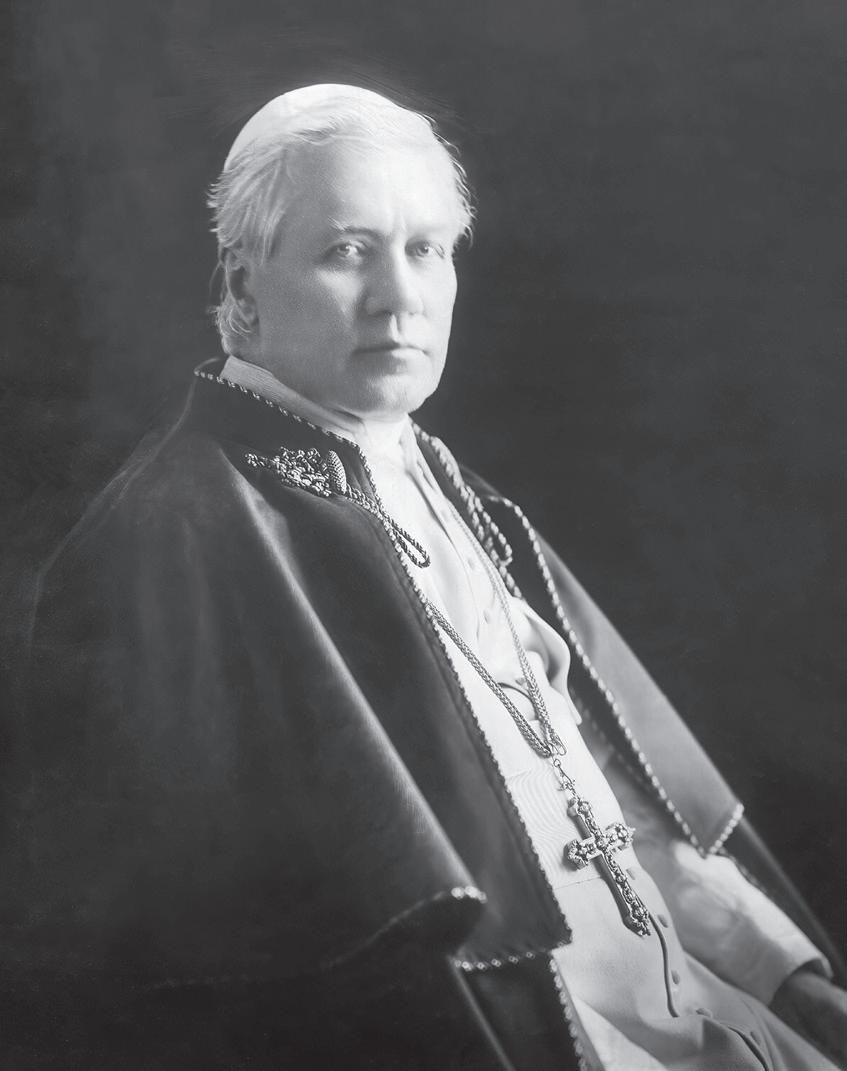
idating it.” That statement stands on its own. Indeed, the Pope’s grief must be insurmountable.
But June 29 was the feast of St. Peter; Lefebvre had already slated the day for ordination of three deacons at Écône (legitimacy previously secured through bishops sympathetic to Lefebvre). So he ordained them anyway. Then, in July, he received final word rejecting the second appeal. Technically, thence, the SSPX had ceased to exist.
Yet in death is life. The SSPX continued, expansively. Within six months, construction of a chapel in the United States had commenced, the residence in England was expanded, and its first priory was acquired in France. The next year, eleven more deacons were added to the rolls at Écône. There were 110 seminarians now, with 40 more applications in hand. SSPX seminaries in Weissbad and in the US were nearing capacity. Thirteen SSPX priests were already in service. A year later, the SSPX doubled that number, producing 26. The Church’s attempts to squelch Lefebvre were failing – he had nine centuries of infallibility behind him, they had Vatican II. He had Popes Pius VI, Gregory VXI, Pius IX, Leo XIII, Pius X,
Pius XI, Pius XII – basically all the popes who’d confronted the Enlightenment, Humanism, and Modernism head on; and each of whom had condemned it all. Paul VI had two decades littered with ambiguity and uncertainty. The Vatican was losing.
So, on April 21, 1976, Cardinal Benelli wrote to Lefebvre. It might have been meant as a door to readmission, to coax Lefebvre back to the fold. But, with public attention now elevated, Benelli insisted Lefebvre express “concrete proof” of “submission” to Pope Paul VI, requiring unequivocal acceptance of post-conciliary reform and adoption of Paul VI’s new missal throughout: the new mass (which Lefebvre referred to as a “new religion”). Lefebvre didn’t reply.
A month later, on May 24, Pope Paul VI drove the point to the Consistory of Cardinals –he mentioned Lefebvre by name several times during his allocution, decrying disobedience as “outside the Church,” but never actually excommunicating him. Then, in June, the Apostolic Nuncio in Berne delivered an express injunction to Lefebvre, enjoining him from conferring orders under penalty of suspension. But on June
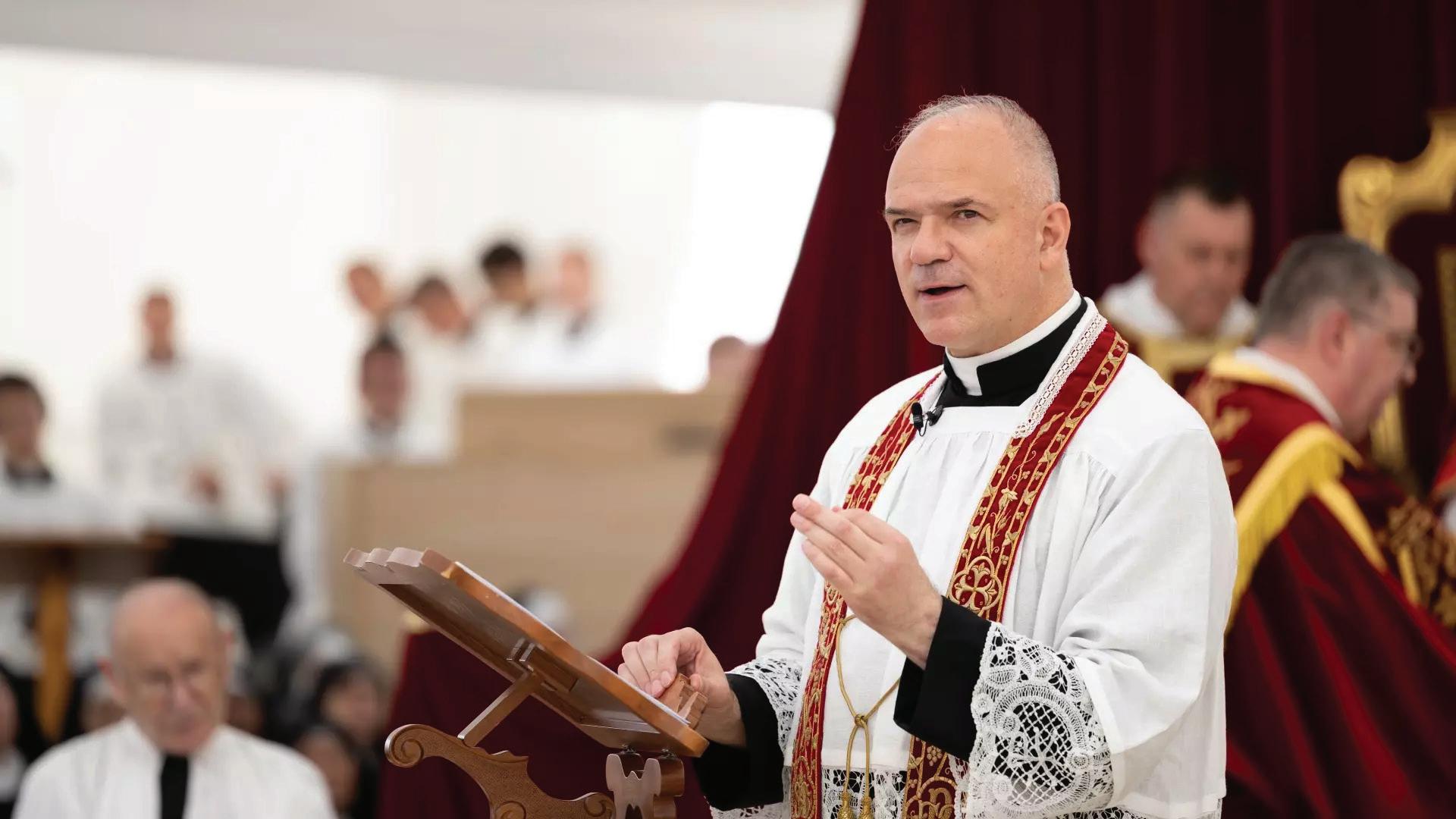
29, Lefebvre ordained his graduates anyway. Over 1,000 people attended.
Lefebvre thus undaunted, pressure was now applied in the episcopate, to insulate SSPX from the community. Cardinal Villot had written to “the hierarchies of the world” in October 1975, imploring all bishops “not to accord incardination in their dioceses of the young men who declare themselves to be engaged in the service of the Fraternity [SSPX].” By foreclosing congregations from the seminary, the intent was to extinguish the SSPX at its source. But faith moves men independent of worldly aspiration. The students came. And Lefebvre incardinated his graduates into the SSPX. The very mode devised for the SSPX’s demise again became the mode of its invigoration.
Lefebvre had been suspended a collatione ordinum (not allowed to make priests). Now he was suspended a divinis (not allowed to administer any sacraments). But since the Holy See had made its position clear, Lefebvre took his suspension to apply only to the mass over which the Church exerted authority: Paul VI’s reformed rite. Lefebvre was pleased for an opportunity for
obedience: he continued with the old rite.
It wasn’t until 1988 that Lefebvre was ultimately excommunicated by Pope Jean Paul II. The imperative for continuity impelled it. Lefebvre was now 83. He consecrated four auxiliary bishops (that is, bishops without jurisdiction, having authority only to consecrate and ordain) so that his work could go on. He died in schism in 1991. A man who held fast to Catholic orthodoxy – adhering profoundly to centuries of Catholic dogma – was condemned by the very Church he spent his life working to salvage. If irony can palliate torment, Lefebvre’s soul might be laughing (though weeping, too, no doubt).
Twenty-one years later, in 2009, Pope Benedict XVI remitted the excommunication, though he took pains to set in writing the Church’s position against the SSPX remained unchanged, that the SSPX has never been a legitimate order, existing only extra-canonically. The remittance applied to the bishops Lefebvre had made – two of whom officiated at the consecrations on July 1 this year, who are now, accordingly, excommunicated a second time.
That the SSPX is itself schis-
matic (again) when its status has never changed begs the question: how can a schismatic order become schismatic a second time without a period of restoration in between? And if restored, since its position had never changed, how can it be schismatic in the first place? And therein lies the hook upon which the current Superior General of the SSPX, Davide Pagliarani, hangs his argument.
The reformed Church is increasingly tolerant of non-Catholic Christianity. For example, at the ecumenical Vespers January 25 this year, Pope Leo XIV said to everyone (including non-Catholics), “We share the same faith in the one and only God, the Father of all people; we confess together the one Lord and the true Son of God, Jesus Christ, and the one Holy Spirit, who inspires us and impels us towards full unity and the common witness to the Gospel.” And in his Apostolic Letter In Unitate Fidei (“in the unity of faith”), November 23, 2025, Leo stated, “We are one! We already are! Let us recognize it, experience it and make it visible!” The Church even allows the
Chinese Communist Party influence in selecting bishops in the People’s Republic of China.
Yet, peculiarly, Traditional Catholicism is not included with this sentiment. Consider that in Traditionis custodes, Pope Francis compelled priests to obtain authorization from their local bishop before celebrating the Tridentine Mass. The old mass is generally forbidden in regular parish churches. It’s no longer printed or circulated in the missal.
Much is made of the SSPX’s refusal to recognize Paul VI’s novus ordo, the “ordinary form,” the “new mass” and its insistence on celebrating the Tridentine Mass. In 2017, Cardinal Gerhard Müller, Prefect of the Congregation of the Doctrine of the Faith (formerly the Inquisition, now styled a “dicastery”) wrote to the then-Superior General of the SSPX, Bishop Fellay, pronouncing that “Members of the Society of Saint Pius X must recognize, not only the validity, but also the legitimacy of the Rite of the Holy Mass and the Sacraments, according to the liturgical books promulgated after the Second Vatican Council. The new text of the doctrinal declaration must include a paragraph in which the
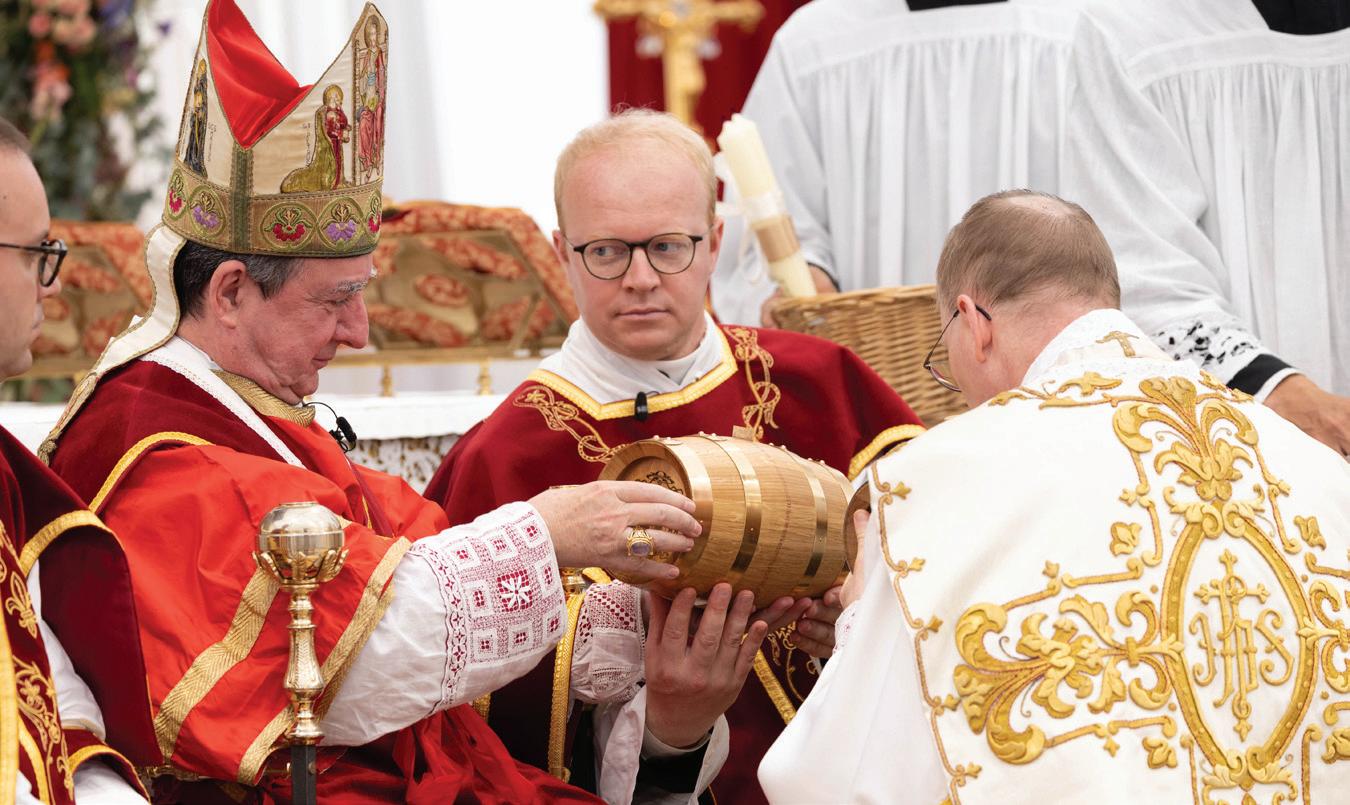
signatories explicitly declare their acceptance of the teachings of the Second Vatican Council and of the post-conciliar period, granting to said doctrinal affirmations the degree of assent due them.”
Basically, the SSPX must accept that the new Church is right, even when, to them, it contradicts centuries of doctrine. The essential stone which must be swallowed being, dogma evolves and a living pope has more authority than a dead one. When the “problems” at Écône first became visible, the Vatican sent a former student of Lefebvre’s, already a Cardinal at this time, Hyacinthe Thiandoum, to personally sway Lefebvre. If Lefebvre would just celebrate the new mass once before the seminarians, the cardinal pleaded, then all the problems would go away . . . .
But the SSPX adheres to an older form of the faith – one which, by extension, cannot be illicit because for centuries (far longer than the new mass) it alone was the means of salvation for all humanity. By necessity (and dogma) this faith is unchanging –the “deposit of faith” (depositum fidei), which is in custody of the Church – not to develop nor retrofit – only to be safeguarded eternally consistent in divine inheritance.
“Within the Church,” Pagliarani said in February, “the purity and profession of the Faith precede all other considerations, because all
the other elements that compose the life of the Church depend upon Faith itself: the Magisterium exists to teach the Faith, and not to invent it; the law exists to preserve it, and to guarantee the necessary conditions for the Christian life that must flow from it.”
To the SSPX, faith cannot be abrogated by contradiction with centuries of dogma or inverted against the constancy of the Magisterium, the determinations of whom they view as divine pronouncement. Consider, as pertinent example, the Anti-Modernist Oath, issued in 1910 by Pope Pius X, and sworn by all clergy, which includes the statement, “I entirely reject the heretical misrepresentation that dogmas evolve and change from one meaning to another different from the one which the Church held previously.” That’s hard to argue with – unless all the previous popes were wrong and divine truth only appeared this century, which relegates Christ to some sort of historical rediscovery rather than as eternal revelation. Doctrinally, SSPX makes strong arguments, leaving the Vatican, trapped between the centuries of its own authoritarian supremacy to, essentially, rely on authority it now wields in this world rather than in the next. In this respect, it is fortunate for the SSPX that some doctrine has in fact changed, including the fact that excommu-
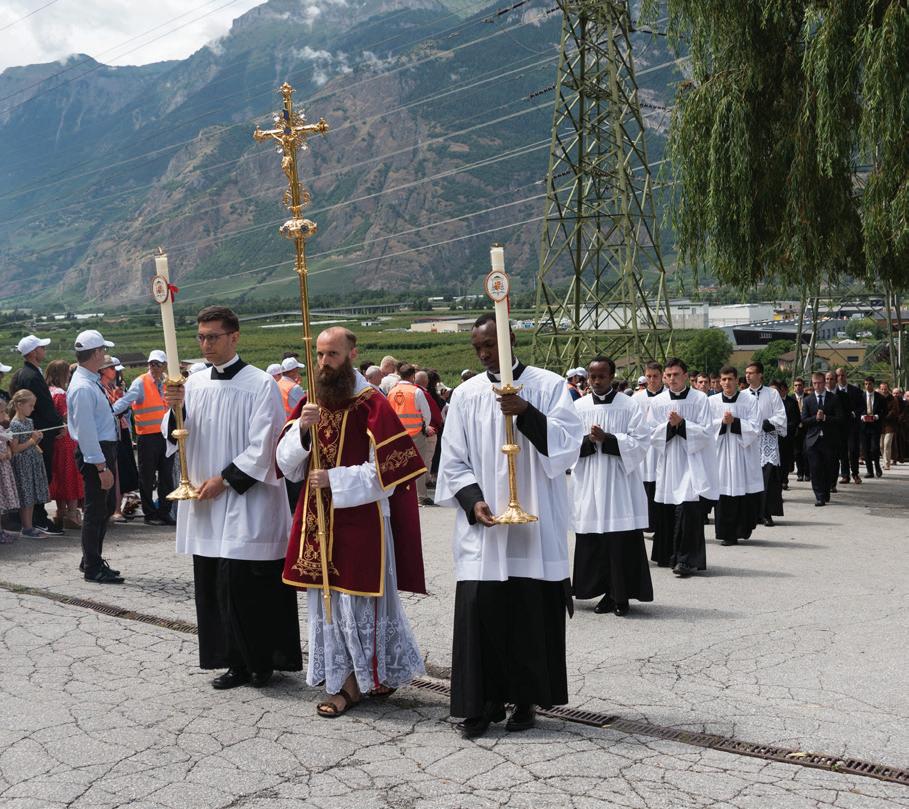
nication is now the most virulent weapon remaining in the Church’s pronouncement of heresy.
Though, historically, consecrating bishops without papal sanction was not necessarily an excommunicable offense. Under the Code of Canon Law as late as 1917, consecration of a papally unsanctioned bishop was punishable by suspension, not excommunication. For example, in 1977, Cardinal Iosif Slipyj secretly consecrated three bishops in Rome without the approval of Pope Paul VI – he wasn’t excommunicated. At Nicaea, the first ecumenical council to reach the subject, bishops were selected by a majority of the episcopate from each province, not the pope. In 373, St. Athanasius consecrated his own successor, St. Peter of Alexandria.
Disobeying the pontiff is also not without precedent. Sixteen years before he made St. Peter II a bishop, St. Athanasius was himself excommunicated for refusing Pope Liberius’s demands to enter into hierarchical communion with the majority of the episcopate of the era – which, at that time, was largely Arian (that is, accepted that Jesus was lesser than the Father –not coequal and coeternal in hypostatic union, but in fact a separate creation). Certainly, today St. Peter II’s consecration is still valid.
SSPX’s excommunication does arguably devolve to perceived disobedience (though this risks
an oversimplification). Leo XIV wrote to Pagliarani on June 29, two days before the scheduled consecrations were performed, imploring “I plead with you and ask you with all my heart: please turn back! I urge you to consider carefully the spiritual good of the faithful, because the schismatic act you are about to undertake would deprive them of the licit and, in some cases, even valid reception of the Sacraments, which they love and seek for their sanctification.” In the shadow of these words, Leo had to give them meaning. So, unlike John Paul, he excommunicated everyone.
The problem is, from the SSPX’s perspective, the SSPX cannot maintain a seminary –which requires ordination for its graduates – if no one will ordain them. Their students come voluntarily (hundreds of them). They do not want to leave the Church (which Lefebvre repeatedly referred to as their Mother), they want to protect it: they view themselves as devoutly Catholic They are not sedevacantists (at least, not entirely – they still seek the blessing of the Holy See which they would not do if they thought Leo an impostor). Therefore, the only solution is to consecrate bishops of their own or cease to exist as an institution. So it is the solution creates the problem. A giant circular argument entraining both sides round and round.
Of the four bishops consecrated by Lefebvre in 1988, only two remain, and they’re both up in years. So, on February 2 (the feast of the Purification of the Most Blessed Virgin), in his sermon delivered at Saint-Curéd’Ars Seminary in France, Superior General Pagliarani announced that the SSPX would consecrate new bishops.
“We believe that the time has come to think about the future of the Society of Saint Pius X,” he said, “the future of all souls, whom we cannot forget, whom we cannot abandon, and above all, the good we can do for Holy Mother Church. And this raises a question that we have been asking ourselves for a long time and to which, perhaps, we must now give an answer. Should we wait longer before considering consecrating bishops? We have waited, prayed and observed the developments in the Church, and also sought advice. We have written to the Holy Father to present, in all simplicity, the situation of the Society, explaining these needs
and at the same to reconfirm to the Holy Father our only raison d’être, which is the good of souls.” The Holy Father did not respond. Pagliarani’s requests for an audience went unanswered – even though Leo has met with patriarchs and llamas aplenty, a sore point for Pagliarani.
“Yes, consecrations, once more,” he said, “there will be episcopal consecrations. However, this is not to challenge the Church –it is definitely not a challenge,” he stressed. “They will be consecrations out of fidelity to the Catholic Church and to souls.”
Pagliarani selected July 1 because it is the Feast of the Most Precious Blood of Our Lord Jesus Christ. “It is the feast of redemption,” he said.
There was almost immediate controversy – reigniting the conflagration of post-conciliary reform on both sides. As tensions rose, Bishop Athanasius Schneider took audience with Pope Leo XIV on February 25 to discuss the issue. (Note that Schneider was originally sent to investigate the SSPX
under Leo’s predecessor in 2015; Francis sent him to seminaries in France and the US; but he was so impressed by what he witnessed that he now supports them.) Schneider implored Pope Leo XIV to bring the SSPX back into the fold. In his remarks he made a powerful analogy for the situation the Church is in, its “self-destruction” as it has been widely termed, and the SSPX’s emergence amid this crisis. It’s worth recounting here:
“A fire breaks out in a large house,” his Excellency explained to his Holiness. “The fire chief allows only the use of new firefighting equipment, even though it has been shown to be less effective than the old, proven tools. A group of firefighters defies this order and continues to use the tried-and-tested equipment – and indeed, the fire is contained in many places. Yet these firefighters are labelled disobedient and schismatic, and they are punished.
“To extend the metaphor further,” he said, “the fire chief permits only those firefighters
who acknowledge the new equipment, follow the new firefighting rules, and obey the new firehouse regulations. But given the obvious scale of the fire, the desperate struggle against it, and the insufficiency of the official firefighting team, other helpers – despite the fire chief’s prohibition – selflessly intervene with skill, knowledge, and good intentions, ultimately contributing to the success of the fire chief’s efforts.
“Faced with such rigid and incomprehensible behavior,” he continued, “two possible explanations present themselves: either the fire chief is denying the seriousness of the fire . . . or in fact, the fire chief desires that large parts of the house burn, so that it may be later rebuilt according to a new design.”
The SSPX will continue –its separation from the Church granting more power to speak what others can only anticipate in silence. Lefebvre’s ghost looms beyond the grave.
Nothing can remain as it is: even the immutable truth is changed in the telling. KT
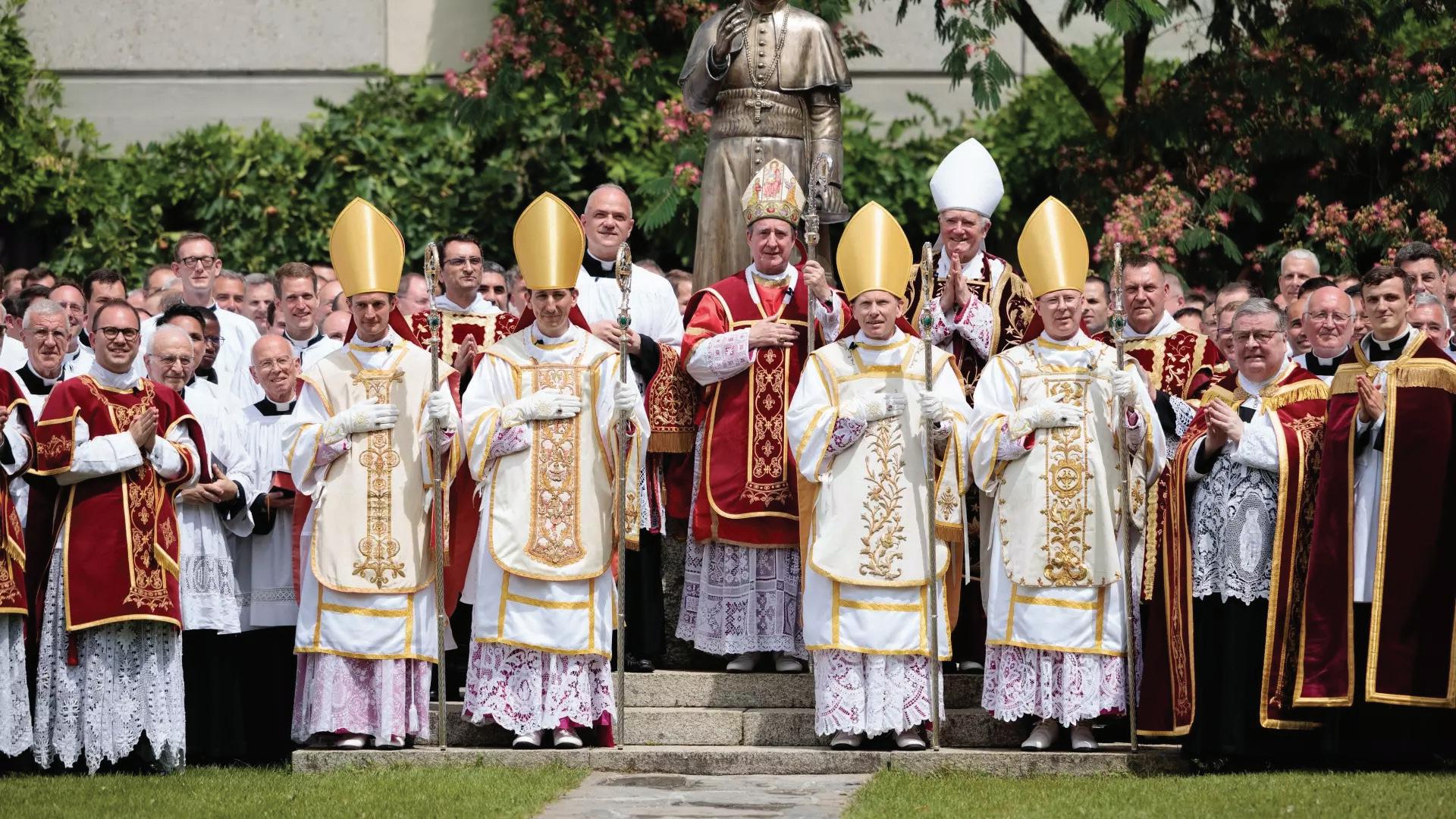
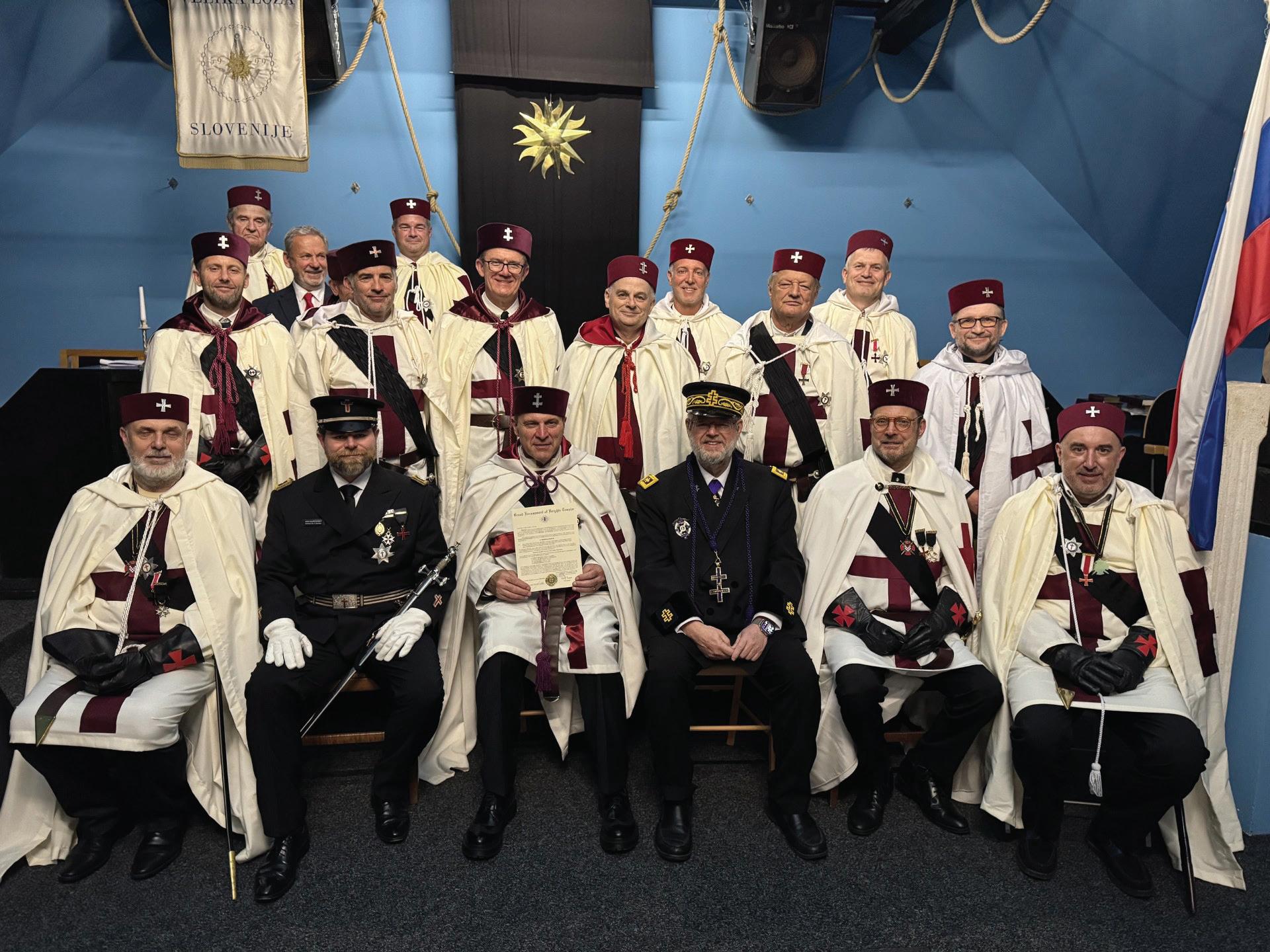
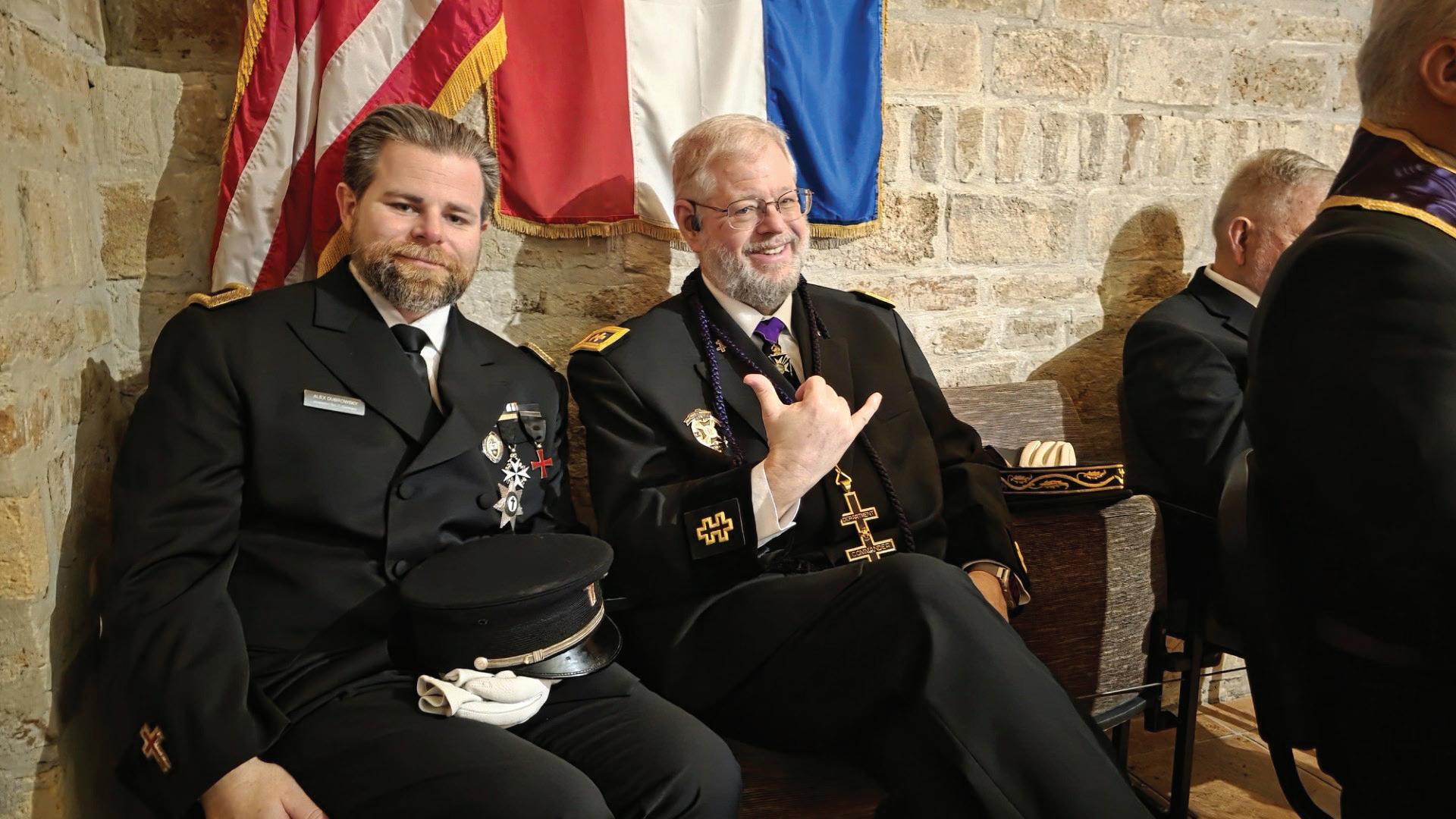
by Alex Dubrowsky
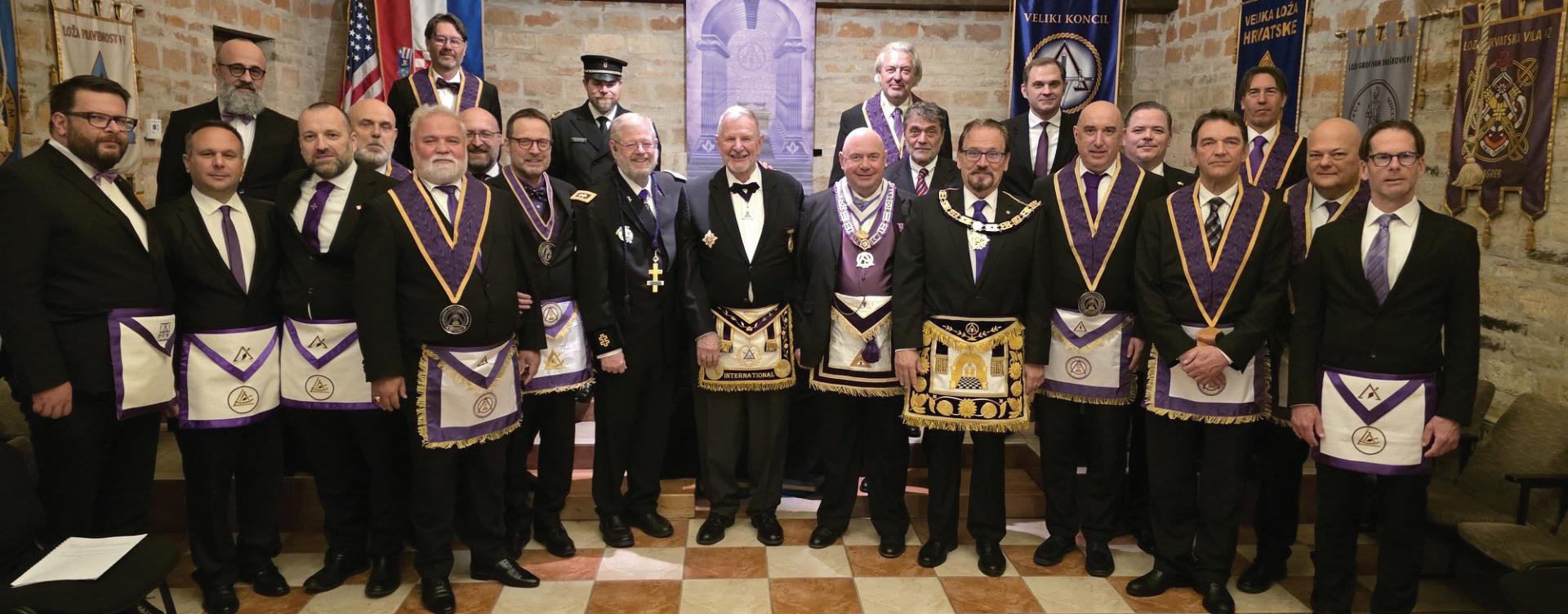
Many of us take great joy in the Craft and in the bonds of brotherhood. Yet we sometimes overlook the fact that brotherhood is not confined to our own local body, our own state, or even our own country. It is always a pleasure to experience our brotherhood in foreign countries as well.
In May, 2026, I had the privilege of accompanying Sir Knight Monty J. Glover, Department Commander for Europe and Africa, and his wife, Maureen, on their travels through Italy, Slovenia, and Croatia. While in Italy, I also had the pleasure of meeting Sir Knight Lawrence E. Tucker, our Grand Recorder, and his wife, Judy, as well as Past General Grand Master, David Grindle, and his wife, Cheryl, in Croatia.
It was a journey marked by fellowship, friendship, and memorable experience.
My trip began on May 6, 2026, when I departed BadenBaden for Milan, where I was scheduled to meet Sir Knight Monty at the airport. After my suitcase (initially lost in Amsterdam) was recovered, we contin-
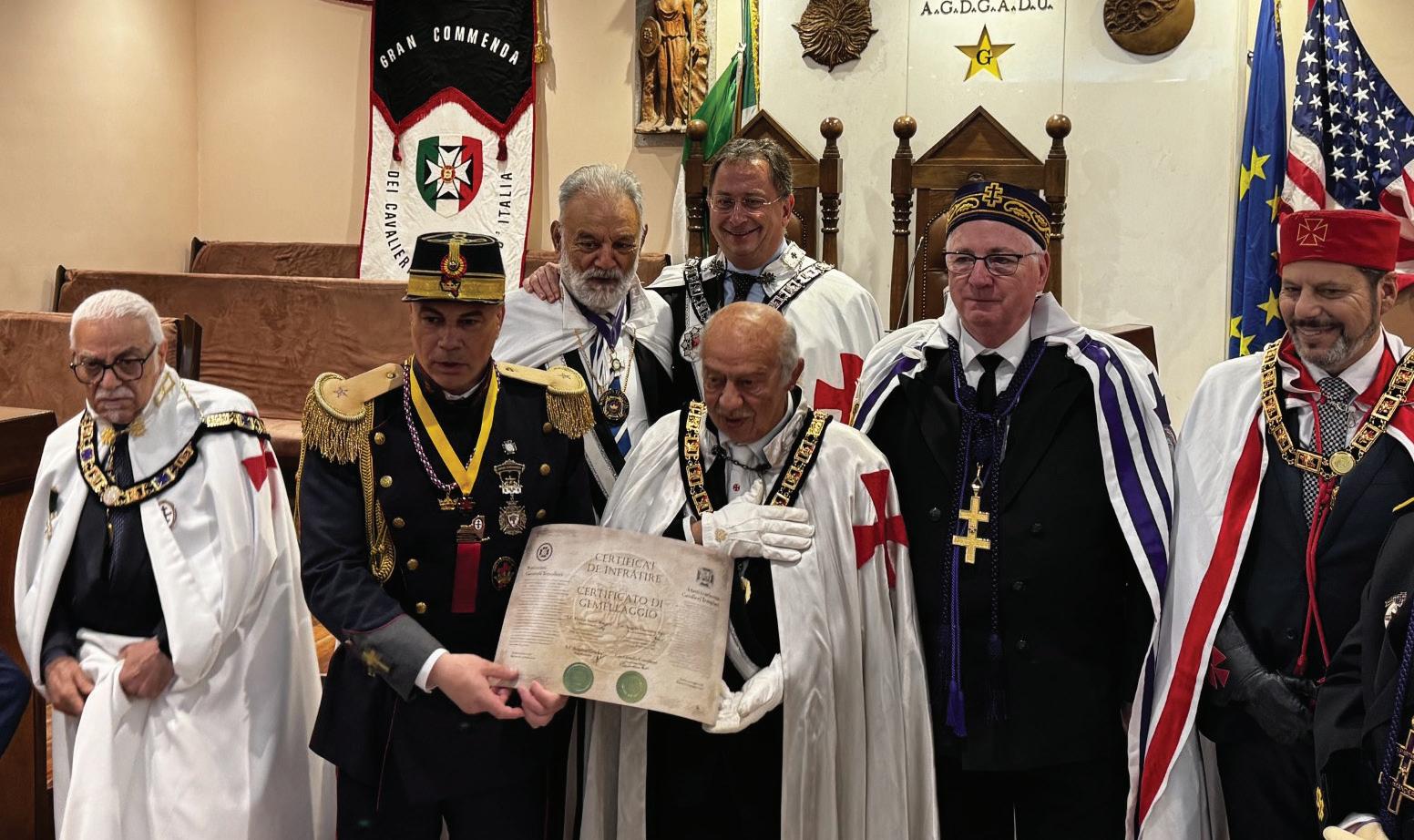
by Alex Dubrowsky
ued to Turin, Italy, to attend the installation of the Grand Officers of the Grand Chapter of Italy and the Grand Commandery of Italy.
The Brethren in Italy extended a warm welcome. It was also gratifying to meet at the gathering a delegation from Portugal and Romania. The Grand Commandery of Italy and Romania signed a special friendship agreement and pledged mutual support.
The gala provided not only excellent fellowship with the Ital-
ian Brethren, but also outstanding cuisine. As all Brethren know, Italian food offers many temptations that are not always kind to the waistline.
Our visit to the Royal Palace was another highlight. Its splendid furnishings and magnificent appointments, especially the armory, left a lasting impression. Any brother who can visit Turin should make time to see the Royal Palace.
After several days in Turin, we set out for Ljubljana, Slove-
nia. The journey covered approximately 630 kilometers, so we made several stops along the way in Italy. Our first stop was at Lake Garda. On the way, we enjoyed excellent tortellini in Valeggio sul Mincio. Then we visited the fortified town of Lazise, directly on the lake, and took our evening meal there. To sit beside the lake and look toward the Alps is to behold one of the most beautiful sights in Europe. From there, we continued to Treviso, where we spent time with a good friend and Sir Knight
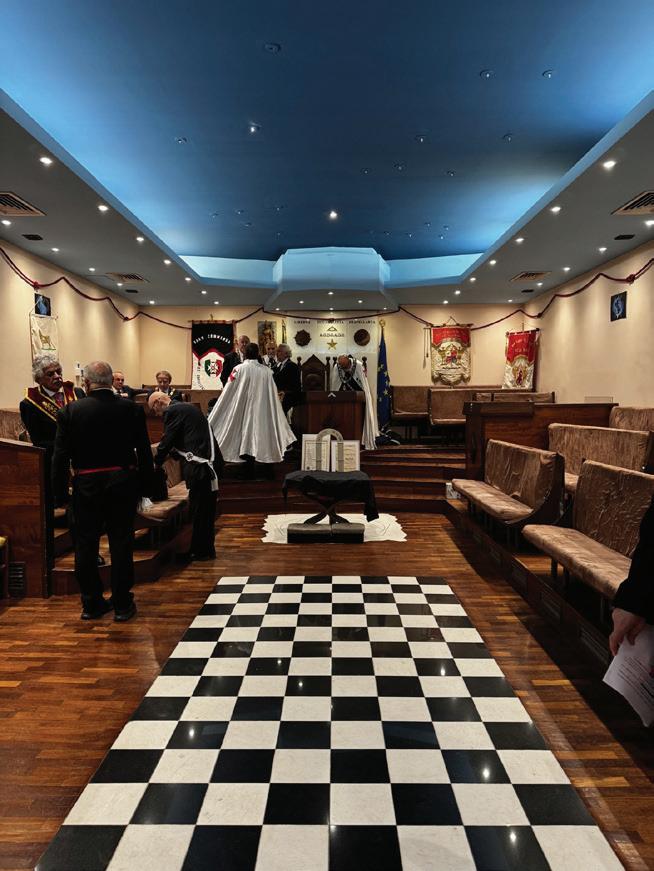

1. Grand Commandery of Italy.
2. Castle en route to Ljubljana.
3. Signing of dispensation for Slovenia's first Commandery.
4. Ljubljana. 5 and 6. Views around Lake Bled. 7. Masonic Lodge in Ljubljana.



during the middle of the day. Since Sir Knight Monty had not celebrated his anniversary with his wife in the United States in proper fashion, they traveled on to Venice to make up for it there. A most fitting choice, indeed.
After spending the night in Treviso, we resumed the final leg of our journey to Ljubljana and stopped for lunch in Grado along the way. A restaurant on the Mediterranean, with the sea in view and an excellent meal before us, provided a setting one could enjoy indefinitely.
Along the route, we passed numerous castles, each a witness to the rich history of the region. That evening we arrived in Ljubljana where we were warmly
welcomed by a dear brother. He proved to be an exceptional host and invited us to dine at a traditional restaurant. In the days that followed, we were able not only to explore Ljubljana and Lake Bled, we also participated in a historic milestone: the dispensation for the first Commandery in Slovenia. The officers were installed by Sir Knight Monty. This was a source of great joy for me, and it was an honor to be present for such an occasion. The Slovenian Brethren are eager to begin their work in their own country and to become a valued part of our fraternity to the best of their ability.
We then continued on to Zagreb, Croatia, another city with a rich history. We attended
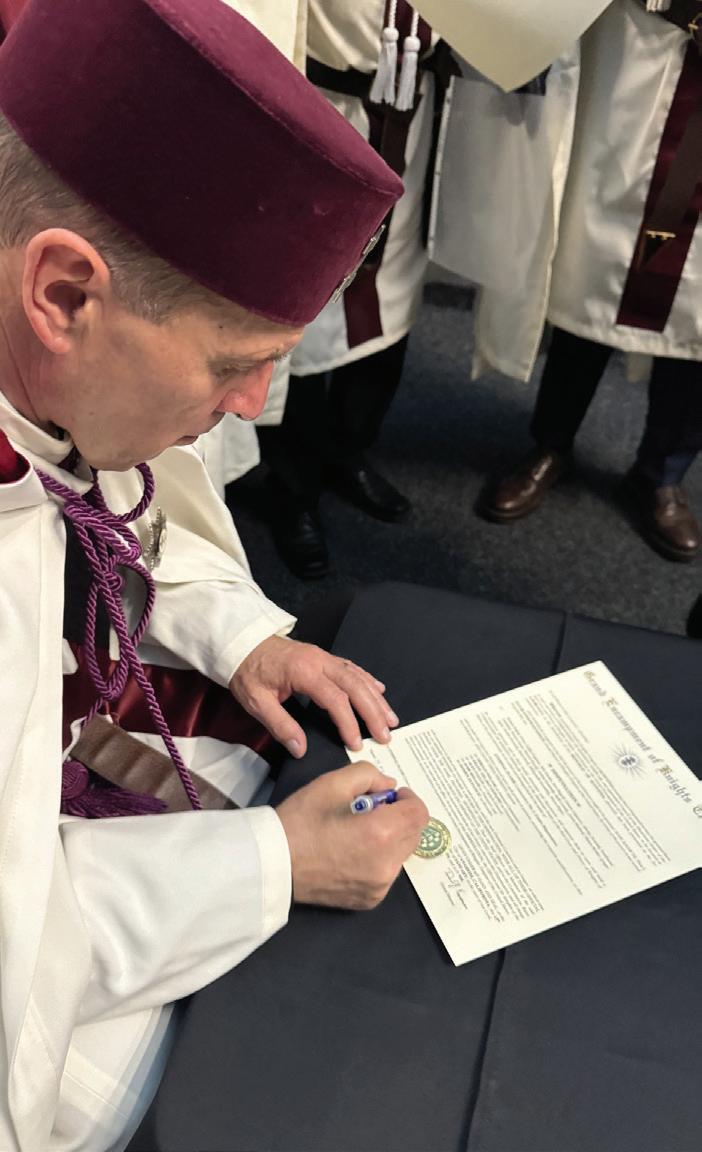

the installation of officers of the Grand Council and the Grand Commandery. Once again, the installation of the Grand Commander was conducted by Sir Knight Monty. In addition, Brothers Borjan and George of Croatia were honored and received from Brother David Grindle an award from the General Grand Council of Cryptic Masons International.
The evenings that followed, spent in fraternal company and in the fellowship of old and new friends and Brethren, were memorable.
On May 17 our journey concluded. Sir Knight Monty departed Zagreb by air, while I drove back to Baden-Baden by car. After approximately ten hours
on the road, I arrived home safely, filled with many wonderful memories, where I was warmly received by my family.
The fellowship I experienced, and the warmth with which I was received at every turn, will remain with me always. It is a reminder that our worldwide chain of brotherhood is alive and well, sustained by Brethren in large and small ways alike. I would sincerely encourage every Brother to embrace the inconvenience of travel and undertake Masonic journeys in order to meet Brethren throughout the world.
The experience is priceless and remains in the heart for a lifetime. KT
by Robert J. F. Elsner

Ihad the privilege of attending the South Carolina Grand York Rite meeting in Myrtle Beach in March. At the banquet, my friend Acy Flora, current Acting Grand Master of Masons in South Carolina, sat next to me and my wife. We were able to chat and catch up on family, lodge, and life. Among our topics was the Commissioned Templar Chaplain (CTC) program. I had just misspoken at the meeting and named the number of enrolled persons as 416 instead of 615 with about 175 graduates. As always, Acy was kind and helped me not feel bad about my mistake. We focused on the issues of how chaplains are essential to the optimal running of a lodge. How chaplains, as leaders without authority, can do so much to forward our goals and mission with their ministry of presence and ability to actually listen and understand.
In this discussion with my beloved brother, he asked great questions of the program, including what the biggest surprises coming out of it have been. I told him how many sitting Grand Masters and Grand Commanders and officers that are in the program or have graduated, and so many of them have focused on
their surprise that few jurisdictions of Blue Lodges require the master to appoint a chaplain. As usual, he turned the phrase perfectly. “So, you are saying that we need to change ‘may’ to ‘shall.’”
“May” to “Shall” is a great way to put the desire that many of us have for the chaplain’s position. What would it be if our Codes and Constitutions, instead of reading “The Master may appoint a chaplain for the lodge,” read “The Master shall appoint a chaplain for the lodge”? How would that change the intentionality of the appointments and the seriousness of the spiritual lives of the bodies? Even better, what if they were all trained to serve as true leaders without authority, but with truth and compassion?
Chaplaincy has too often been considered, as many of the learners in the CTC program have phrased it, a “throw-away” or afterthought. Too many lodges and other masonic bodies appoint a chaplain merely as a placeholder; often, just someone who wants a chain around their neck. While I am overjoyed to see and hear of great chaplains, they are not the norm according to the reports of so many of those in the program.
Many of the learners in the
CTC program have had amazing experiences with military chaplains, and frequently in their assignments write about why military chaplains are “force multipliers.” Force multiplication is a great term for what chaplains do: if they are trained well (as they are in the military), they enhance unit effectiveness, morale, and resilience by caring for the mental, spiritual, and moral well-being of service members. Is that different from reading an opening and closing prayer in Lodge? The difference is profound.
I would challenge you all to be force multipliers, effecting changes in your Grand Lodges to benefit them. Where appropriate, ask whether you can propose changes to your Lodges and Grand Lodges. Make Chaplaincy and the service of God and the Craft a “shall” instead of a “may.”
I don’t expect us to change every Lodge or Grand Lodge overnight. As the Christian arm of Freemasonry, we need to also ensure that we are not pushing brothers of other faiths out of Blue Lodge. Diversity of faiths avoids Lodge becoming an echo chamber. In our Lodges, we need the force multiplication of unity and comfort. We need to help all of
our Brethren to feel the brotherly love, truth, and relief that can be provided by a well-trained chaplain. In our Commanderies, that same chaplain can start by reading the entirety of the 115th Psalm so it is not just an opening line on a banner (Non nobis Domine, non nobis sed nomini Tuo da gloriam . . .). They can say “thank you” often and allow Sir Knights to say “no” to avoid overextending themselves. They can promote peace and help good Christ-followers of different denominations seek unity. Doctrine and dogma are manmade, whereas Scripture is given to us by God. We can serve the community and effect peace in our areas, even without seeking credit.
To paraphrase Joshua 24:15: As for me and my Commandery, we shall serve the Lord. KT
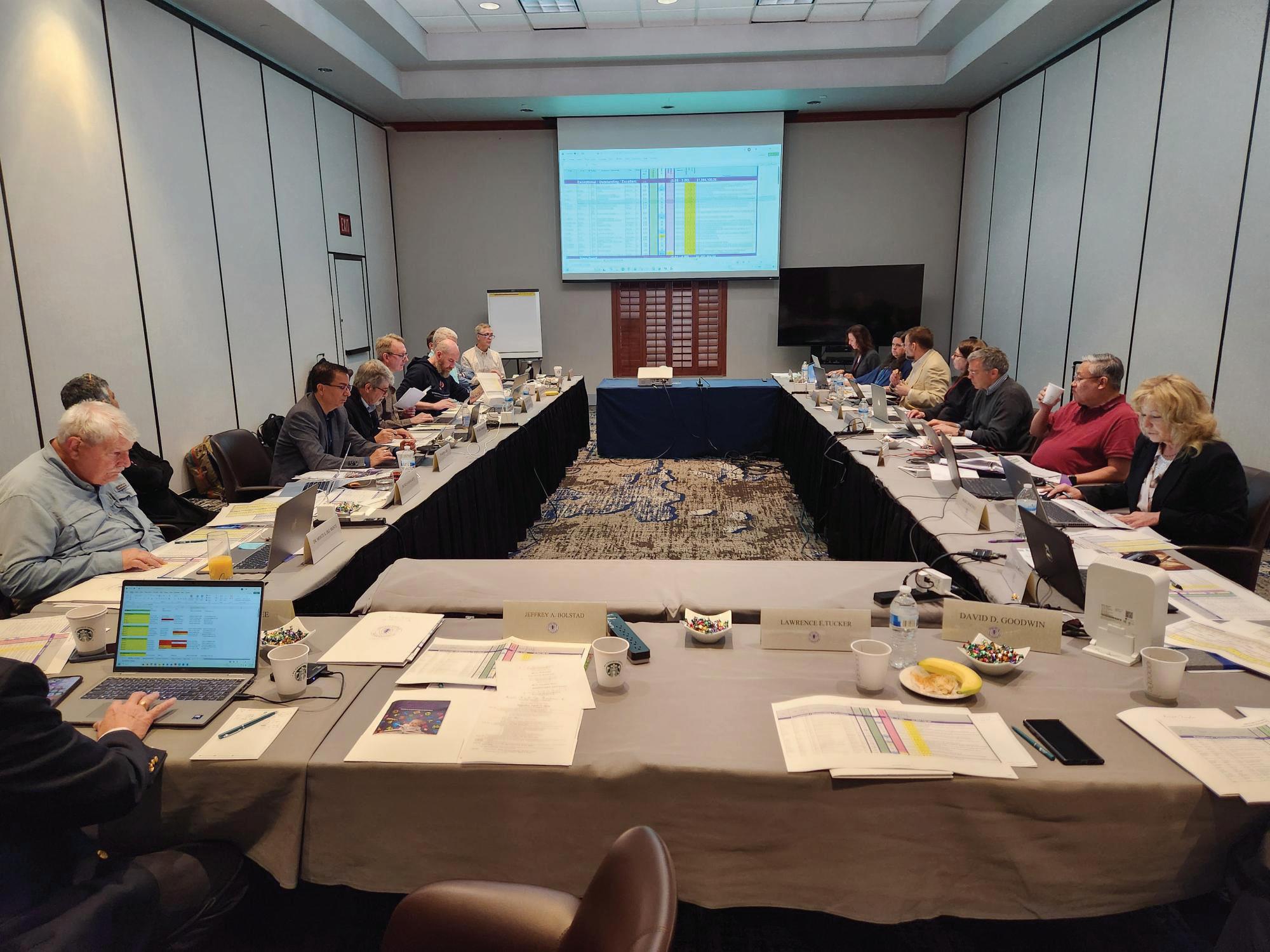
GRAPEVINE, TX – Sixteen of the world’s leading clinicians and research scientists convened in April to review applications for grants on behalf of the Knights Templar Eye Foundation.
Members of the committee hail from across the country: clinicians, research scientists, and practitioners working in labs, hospitals, and universities as far afield as California, Georgia, Iowa, Indiana, Michigan, Maryland, Massachusetts, Ohio, Pennsylvania, and Tennessee. Each is a world-recognized expert in their field.
The committee reviewed sixty-three career starter grants, and fourteen competitive renewal grants.
After discussion on each grant, the committee awarded a total of twenty-seven grants: twenty-one career starter grants and six competitive renewal grants, a total of $2,684,099 in research funded.
Career starter grants comprise essential funding for scientists looking to establish proof-of-concept for cutting-edge research. Each grant application is reviewed prior to the meeting and
by Robert Bigley
scored by committee members. Each application is ranked based on the scores allotted.
At the meeting, based on each application's ranking, detailed discussions take place. After discussion, each application is rescored. After all applications are reviewed again, a final score-based ranking is determined.
Any committee member can request any application be reviewed a final time.
After final discussion, the committee decides which applications should be funded and its
decisions are submitted to KTEF officers present for approval.
After the meeting, the KTEF office sends out a letter to the applicants detailing whether their application was selected for funding. Final comments from committee members are sent with the letter. Award recipients are also sent final agreements to sign.
Once the final agreements are received by the office, checks are drafted and sent to the various institutions. KT
Cao, Yexuan MD, PhD University of California
FSD1L as a Novel Candidate Gene for Inherited Retinal Diseases: Mechanistic and Therapeutic Investigation
Choi, Elliot MD, PhD UCLA Jules Stein Eye Institute Mulitplex prime-editing strategies for ABCA4 mutations in Stargardt disease
Daniel, Steffi PhD University of Minnesota, Twin Cities
Elhusseiny, Abdelrahman MD Bascom Palmer Eye Institute
Therapeutic targeting of fibulin-3 driven trabecular meshwork dysfunction in juvenile open-angle glaucoma
Evaluation of Retinal and Optic Nerve Blood Flow in Childhood Glaucoma
Fadjukov, Julia PhD Northwestern University Retinal Mechanisms That Shape Spatial Vision in Health and Amblyopia
Gallego, Diana PhD Kellogg Eye Center
Gangappa, Kiran PhD UCSF Medical Centre, Mission Bay Campus
Gomes, Catia PhD Medical Education and Research Building (MERB)
Kalargyrou, Aikaterini PhD Mass. Eye and Ear
Klementev, Nataliia PhD Duke University Medical Center
Defining mechanisms of optic nerve degeneration in inborn errors of immunity
Therapeutic Strategy to Manage High Myopia
Investigating the effects of corticosteroids on glial-mediatedneuroinflammation and retinal ganglion cell health in pediatric optic nerve disease
Defining how non-coding regulatory variants drive inherited retinal dystrophies
Elucidating the pathophysiological mechanism of photoreceptor degeneration in Bardet-Biedl syndrome
Lee, Ju-Yeun MD, PhD Boston Children’s Hospital The Impact of Maternal Hypertensive Disorders of Pregnancy on Infant Eye Health
Li, Wei PhD Washington Univ. School of Medicine in St. Louis
Lopes da Costa, Bruna PhD F.M. Kirby Center for Molecular Ophthalmology
Maes, Margaret PhD Johns Hopkins Univ. School of Medicine
Pan, Hsuan-Yeh PhD University of Iowa
Shi, Le MD, PhD Wilmer Eye Institute
Soundararajan, Avinash PhD The Eugene and Marilyn Glick Eye Institute
Su, Liyun PhD Boston Children’s Hospital
Thierer, James PhD Wilmer Eye Institute
Tolman, Nicholas PhD Columbia University
Yamamoto, Mai PhD Augusta University
Zaidi, Yusra PhD Augusta Univ. Research Institute Inc.
Chatterjee, Souradip PhD West Virginia University
Pfeiffer, Rebecca PhD University of Pittsburgh
Ramshekar, Aniket MD, PhD Stanford Univ. School of Medicine
Scalabrino, Miranda PhD Medical College of Wisconsin Eye Institute
Son, Seoyoung PhD Wayne State University School of Medicine
FGF signaling networks in the anterior segment development and diseases
Mechanisms of retinal disease in CRB1-splicing variants
Microglial contribution to retinal ganglion cell susceptibility in autosomal dominant opticatrophy
Aqueous Humor derived components in the progression of Congenital Hereditary Endothelial Dystrophy
Role and mechanism of myeloid cell fibronectin 1 in retinopathy of prematurity
Targeting GNAQ Signaling in Sturge-Weber-Associated Ocular Hypertension
Myeloid SOCS3 Drives Early Mitochondrial Dysfunction to Halt Retinopathy Onset in Premature Infants
Repurposing Pro-Fibrotic Compounds as Small-Molecule Therapies for Keratoconus
Preventing Childhood Glaucoma
Interleukin-22-mediated activation of protective signaling in Müller glia as a novel therapy for retinopathy of prematurity
Exogenous Apolipoprotein A1 Mitigates Inflammation and Pathological Neovascularizationin the Model of Retinopathy of Prematurity.
Targeting Protein Glutamylation in Blinding Diseases
Spatial transcriptomic profiling of outer limiting membrane and Müller cells in pediatric retinitis pigmentosa
Investigating the role of VEGFR2-mediated signaling in retinal ganglion cells in a model of retinopathy of prematurity
HARNESSING ADAPTIVE MECHANISMS TO IMPROVE VISION IN PHOTORECEPTOR DEGENERATIONS.
Determining the role of cPcdh isoforms in retinal axon morphogenesis and circuit formation

his year’s American Association for Pediatric Ophthalmology and Strabismus (AAPOS) annual meeting was held in Boston, Massachusetts. The Knights Templar Eye Foundation (KTEF) Ophthalmology Resident / Medical Student Travel Grant program again helped students attend this important meeting.
Prior to the annual meeting, 65 travel grants were award from the 148 applications received. From these applications 123 were medical students and 25 were residents with continued interest in the field of ophthalmology.
With our support of
$100,000, they prioritized third –and fourth – year medical students and physicians early in their residencies.
Since 2023, KTEF support has enabled a total of 166 medical students and residents to attend AAPOS’s annual meetings, including 59 additional trainees in 2026.
Through these grants, KTEF is shaping the next generation of pediatric ophthalmologists. Attending AAPOS is one of the most anticipated opportunities for medical students and residents each year.
The grant application process
was administered under the direction of a dedicated AAPOS selection committee. Oversight was provided by AAPOS Executive Vice President, Christie L. Morse, MD. In alignment with the educational mission of the program, priority was given to medical students and residents who were selected to present at the AAPOS annual meeting.
This funding significantly enhanced educational and professional development opportunities for all participants. Many of the grant recipients contributed to the scientific program through poster and research presentations,
gaining valuable academic experience. This meeting provides meaningful opportunities for students and residents to learn and network as they decide to pursue pediatric ophthalmology for their careers.
Continued investment in trainee travel support plays a strategic role in AAPOS’s effort to attract, inspire, and develop the next generation of pediatric ophthalmologists.
Showing our continued support for AAPOS, David D. Goodwin, Executive Director and Past President and Director Jeremy C. Vaughn attended the meeting. KT
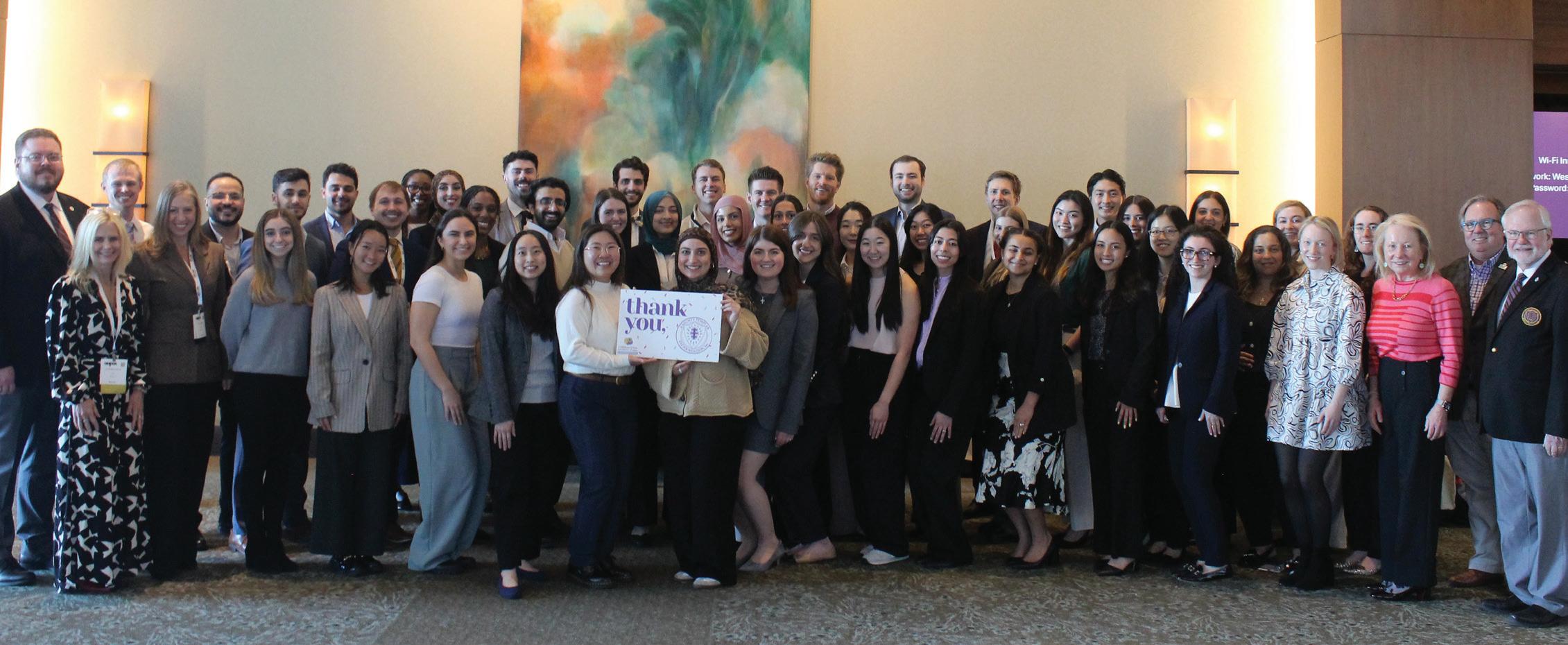
To improve vision through research, education, and supporting access to care.
his May, the Association for Research in Vision and Ophthalmology (ARVO) held its annual meeting in Denver, attracting more than 11,000 attendees and once again setting a new attendance record.
Since its founding in 1955, the Knights Templar Eye Foundation has continued to expand both the number and size of its grants while launching new initiatives in ophthalmology research and education.
In 2015, the Foundation began funding Travel Grants. In that first year, only 59 grants
were awarded. Today, with annual funding increased to $100,000, the Foundation was able to award 95 Travel Grants this year alone.
We believe this program is an important expansion of our support efforts. By extending a helping hand to researchers at the beginning of their careers, we hope to encourage and accelerate advancements in vision research and ophthalmology.
For many ARVO members, Travel Grants make the critical difference in being able to attend the Annual Meeting and present their research. KT
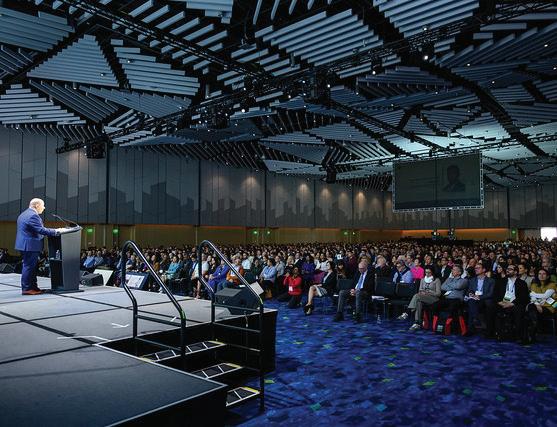
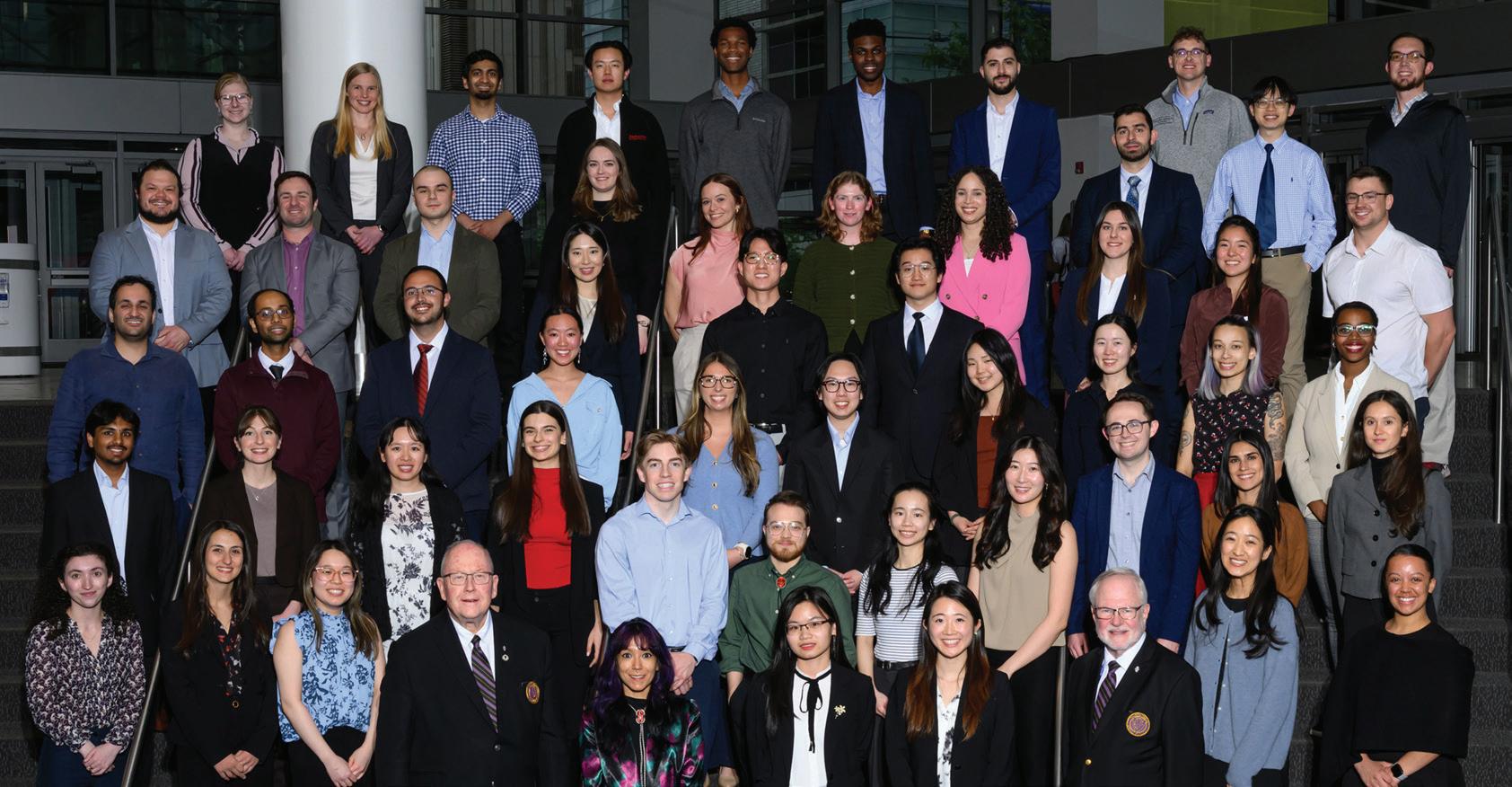
Representing the Knights Templar Eye Foundation, Inc. at this year’s Annual meeting (pictured LEFT with the travel grant recipients) were David J. Kussman, President, and David D. Goodwin, Executive Director and Past President.



AL Rani P. Christie
CA Cecil L. Jaquess Jr.
CO Joseph D. Edwards
CT Steven J. Chiappalone
CT Arnold S. Grot
FL Dennis C. Hayes III
FL Edward J. Mayfield Jr.
FL Stephen M. Meserve
FL Donald R. Poling
FL Richard W. Powell
FL Frederick L. Pryor
FL Robert D. Sever
FL Edward L. Smallwood
FL John W. Wright Jr.
GA William P. Garrison
GA James G. Mashburn
IN Philip G. Hampton
LA Jimmy Craft
MA/RI Richard A. Doherty
MA/RI Jacob Ferry
MA/RI Paul J. Malagrifa
MA/RI David P. Sisler
MA/RI David T. Stentiford
MI Christopher DeVriendt
MN Joel R. Porter
MN Gerald E. Zierdt
MS James A. Birdsong
MS John B. McKelvy
MO William J. King
NE Alfred G. Dietrich
NJ Michael Cefaratti III
NM Leonard E. Roughgarden
NY Garry W. Krom
NY Richard Tirado
NC Louis E. Lamphear
NC James B. Steele
NC Steven A. Wilson
OH Richard G. Berg Jr.
OH Robert J. Davis
OH Frank P. Masterson
OH John E. Stuckey
OH Martin R. Trent
OK Gerald K. Hornung
OK David R. Oelschlager
PA Christopher T. Cuono
PA Bruce A. Robinson
PA William C. Soloway
SC Richard A. Piersol
SD Michael R. Argenziano
TN John R. Allen
TN Cody J. Hughes
TN Dickie W. Johnson
TN Kenneth C. King
TX Christopher L. Bates
TX Donald P. Mafrige
TX William D. Marks Sr.
VA Joel T. Bundy
VA Jimmy D. Davis
VA James H. Gareau Sr.
VA Raymond P. Raehn
WA Charles R. Davis
WA Richard A. Redick
AL Benson L. Head Jr.
AL Stephen P. McGavin
AL Garrett A. Teel
AL Wayne S. Wadsworth
AR John K. Day
AR Thomas A. Flowers
FL James M. Hafling
GA Gregory B. Foster
GA Mark S. Johnson
HI Jeremy D. Hollaway
IL Stephen T. Adamson
IL John E. Brayton
ID Robert A. Farrow
ID David A. Grindle
ID Marc A. Hutchison
ID Gary A.S. La Bruyere
ID Robert B. Mohney
ID John E. Warner
ID William S. Young
IL Robert B. Dement
IL Patrick S. McGhee
IL Enrique J. Unanue
IN Newell G. Clifton
FL Samuel A. Leslie
FL Benjamin P. Minichino
KS John C. Weibel
KY Barton E. Wilber
MI John D. Hubbard
MI Jeffrey M. Lewis
MS John B. McKelvy
NJ Richard W. Westergaard
NY Peter C. Stein
NY Richard Tirado
NC Michael T. Aycock
NC Louis E. Lamphear
OH Ronald L. Ensell
OH Lee D. Kerber
OH Art Moore
OH Matthew A. Rumer
OH Gary D. Shoemaker
OH Wynn I. Vanhorn
OR Santino Lupini II
OR Fritz H. Thomas III
PA Brenden R. Hunter
PA Bruce K. Kelley
PA John L. Wagner
PA Donald E. Zipp III
TN William K. Caldwell
TN William B. Crouch
TN Howard W. Reagan Jr.
TX Charles E. Campbell
TX Larry S. Wall
TX Franklin A. Zepp
VT Bruce R. Howard
VT Pierre N. Letourneau
VA Anthony L. Daniel
VA Joseph B. Hale
VA Stephen L. Young
WA Bruce E. Vesper
WV Benny E. Gurley
WV James A. Taylor
WI Arthur C. Gans
WI Richard J. Rausch
WI Russell P. Witte-Dycus
AL William A. Carter
AZ William L. Baran
AZ William A. Garrard Jr.
AZ John F. Herman
CA Larry C. Taylor
CA Robert E. Welch
CO Joseph D. Edwards
CO Daniel A. Rivers
FL Henry A. Adams
FL Carlos Correa
FL Paul W. Friend
FL Joseph D. Garrett II
FL Brett A. Gordon
FL Julio Sanchez
FL Steven Q. Steele
FL Damian Vargas
HI Roberto M. Sanchez
ID John W. Zeller Sr.
IN Francis S. Tharp
LA C. Kenneth Dorhauer
MA/RI Jonathan J.M. Arata
MN Roberto S. Gardiner
MN Eric J. Thiem
MS John B. McKelvy
MO Chad E. Wagoner
NE George L. McMullin
NV Seth Dyal
NV James D. Phelps
NY Luis Sanchez
NC Louis E. Lamphear
NC Robert B. Pugh
NC James B. Steele
OH Gary D. Best
OH Justin T. Bishop
OH Edwin D. Dickerson
OH Terry W. Lowe
OH Frank C. Sundquist
OH Ronald M. Wilson
PA Brenden R. Hunter
PA Frank Jones Jr.
PA Bruce K. Kelley
PA Dustin L. Rinehart
PA Joseph P. Tolen
TN Wayne B. Bible
TN Stanley W. Elder
TN James A. Saults
TN Roy T. Sutton III
TN Clinton H. White
TX Robert V. Barnes Jr.
TX William A. Greenwood
VA Donald J. Belanger Jr.
VA Ethan G. Burgess
VA Craig A. Cox
VA Carlton L. Gill Jr.
VA Joseph B. Hale
WV Benny E. Gurley
WV John L. Rymer
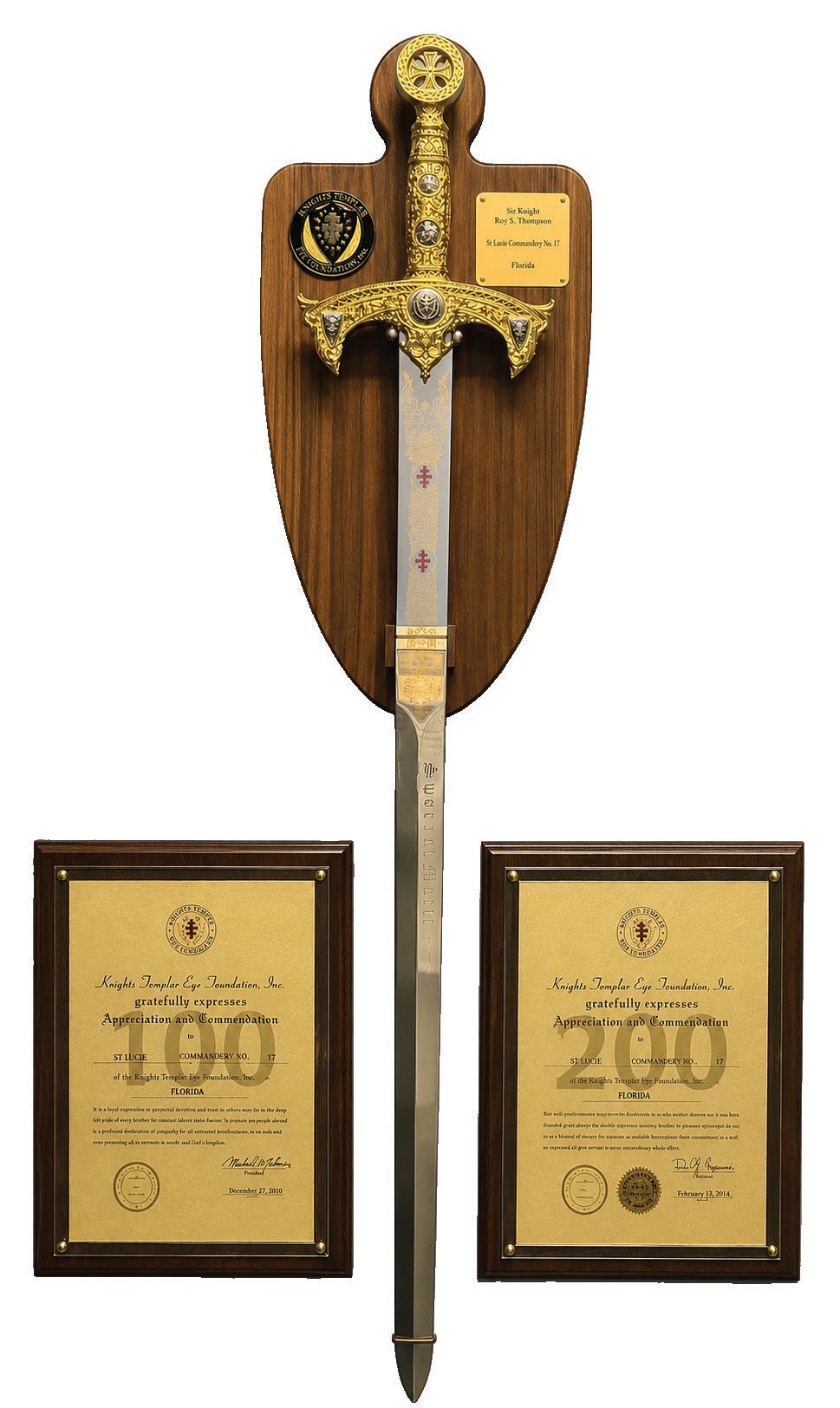
AK James R. Inman
CA Steven A. Bodick
FL Edward L. Smallwood
IL Guy R. McDowell
IA Lindell D. Clem
MA/RI Jeffrey B. Bower
MN Eric J. Thiem
NM Christopher M. Fleischer
OH Michael C. Bartholomew
OH Frank C. Sundquist
PA David L. Burrier
SD Michael R. Argenziano
TN Richard T. Frankich
TX Christopher L. Bates
UT Paul D. Erickson
VA Raymond P. Raehn
AL William J. Burfitt Jr.
AL Stephen P. McGavin
AZ William L. Baran
CO Joseph D. Edwards
DC Elijah C. Mills
FL James M. Hafling
FL Benjamin P. Minichino
FL John D. Pickford
GA James G. Mashburn
IL Christopher R. Davault
IL Robert B. Dement
IL Enrique J. Unanue
IN Craig M. Beidelman
IN Philip G. Hampton
MI Christopher DeVriendt
MI Matthew G. Kent
MI Jeffrey M. Lewis
MN Joel R. Porter
MT Jeffrey A. Bolstad
NV John A. Chandler
NV Robert E. Cordrey
NV Todd J. Iverson
NJ Richard W. Westergaard
NY Luis Sanchez
NC Timothy M. Farris
NC Steven A. Wilson
OH Richard G. Berg Jr.
OH Lee D. Kerber
OH Sean Merrill
PA Bruce K. Kelley
PA John L. Wagner
PA Donald E. Zipp III
SC Michael D. Peeler
TN Gregory R. Austin
TX Larry S. Wall
VT Pierre N. Letourneau
VA Joseph B. Hale
WA Charles R. Davis
WA Bruce E. Vesper
WI Richard J. Rausch
WI Russell P. Witte-Dycus
CA Steven D. Lerner
CA Ricardo S. Pulvera
CA Robert E. Welch
FL Dustin M. Barber
FL Randall Brocius
FL Larry M. Garrett
FL Brett A. Gordon
IL John E. Brayton
IN Matthew K. Wellman
MD Charles R. Holder
MA/RI Thomas B. Miskell
MN Roberto S. Gardiner
MN Eric J. Thiem
NY Luis Sanchez
OH Scott D. Knowles
OH Ronald M. Wilson
OR Jason Edmiston
PA Bruce K. Kelley
TN Wayne B. Bible
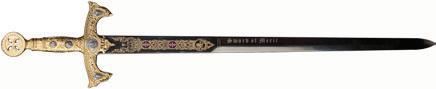
TN Roy T. Sutton III
TX David G. Powell
TX Franklin A. Zepp
VA Craig A. Cox
VA Joseph B. Hale
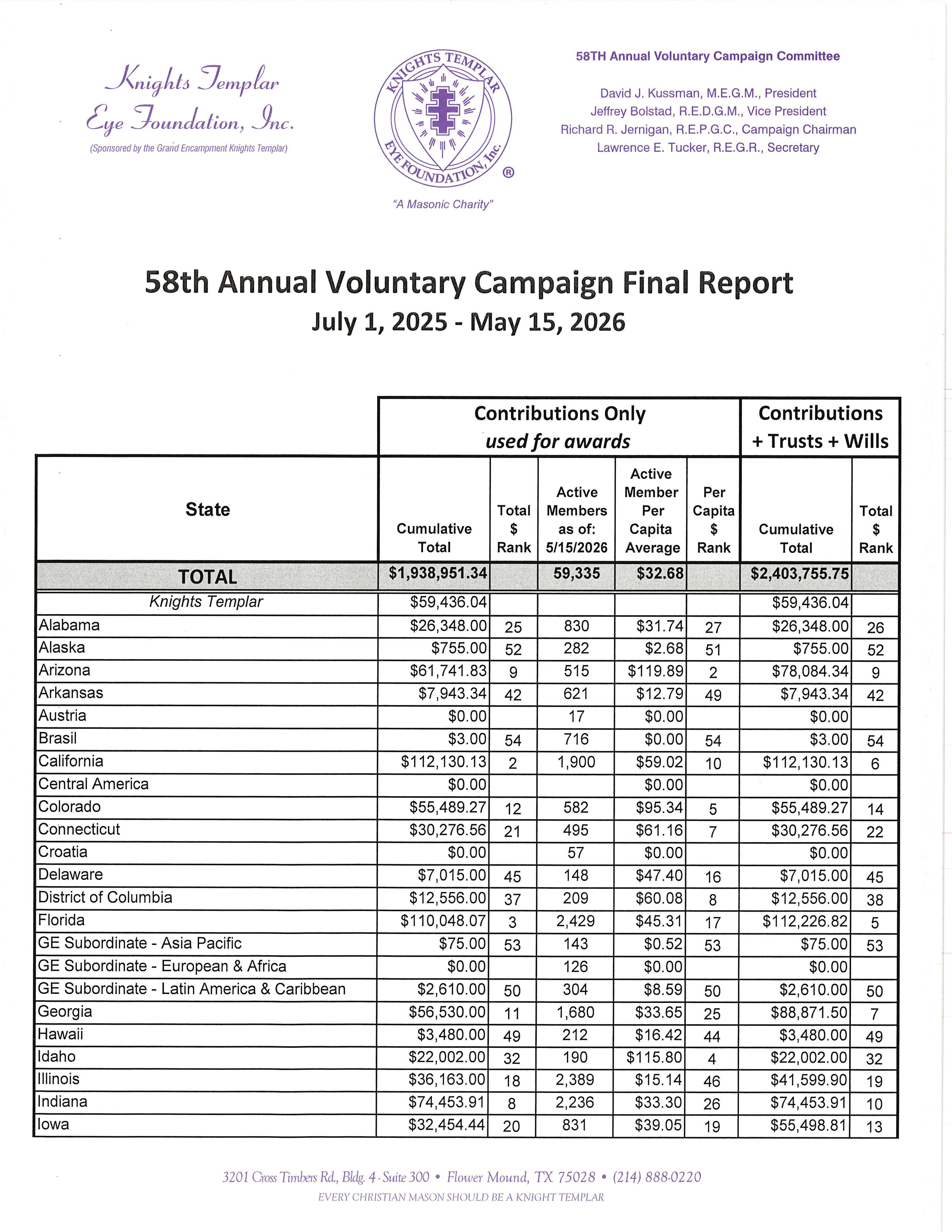
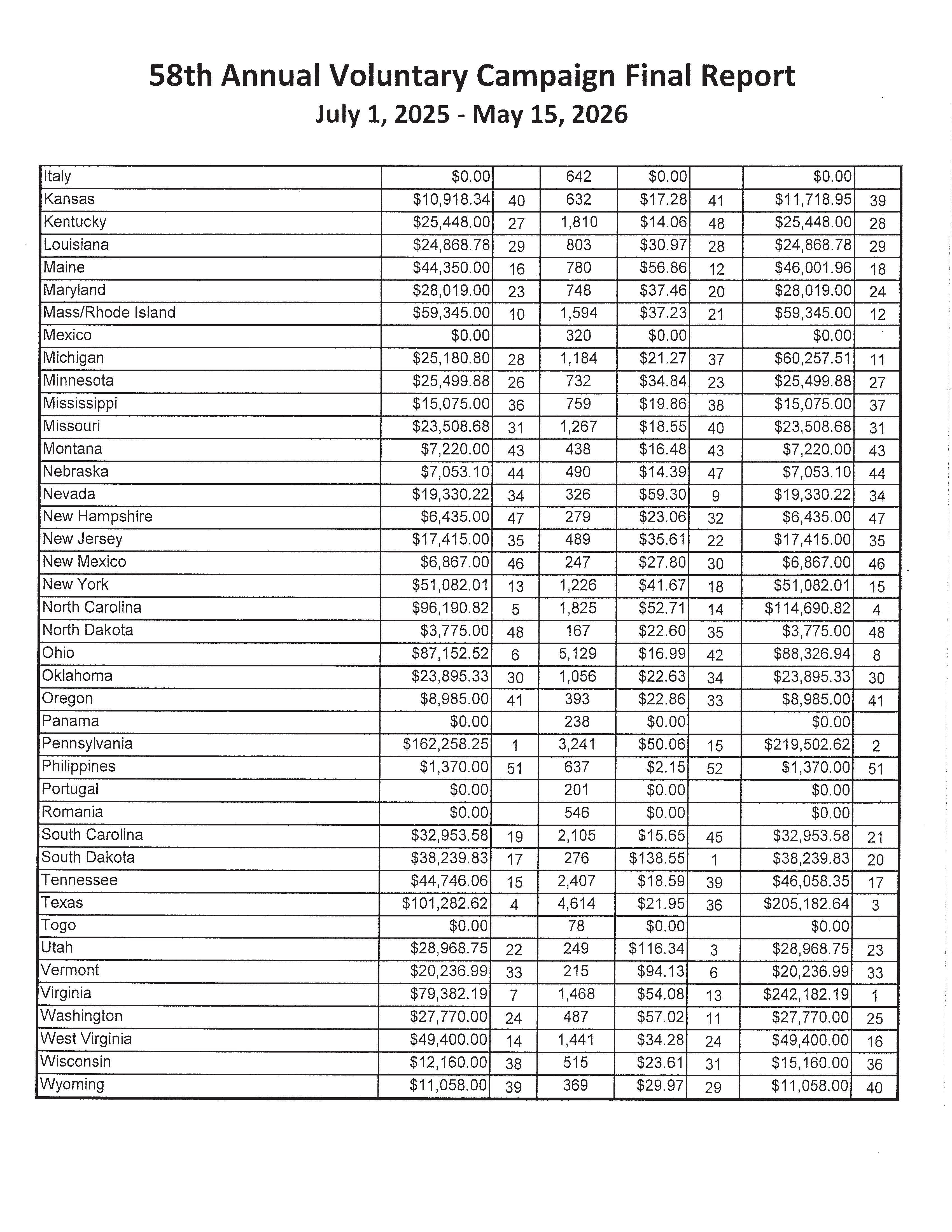
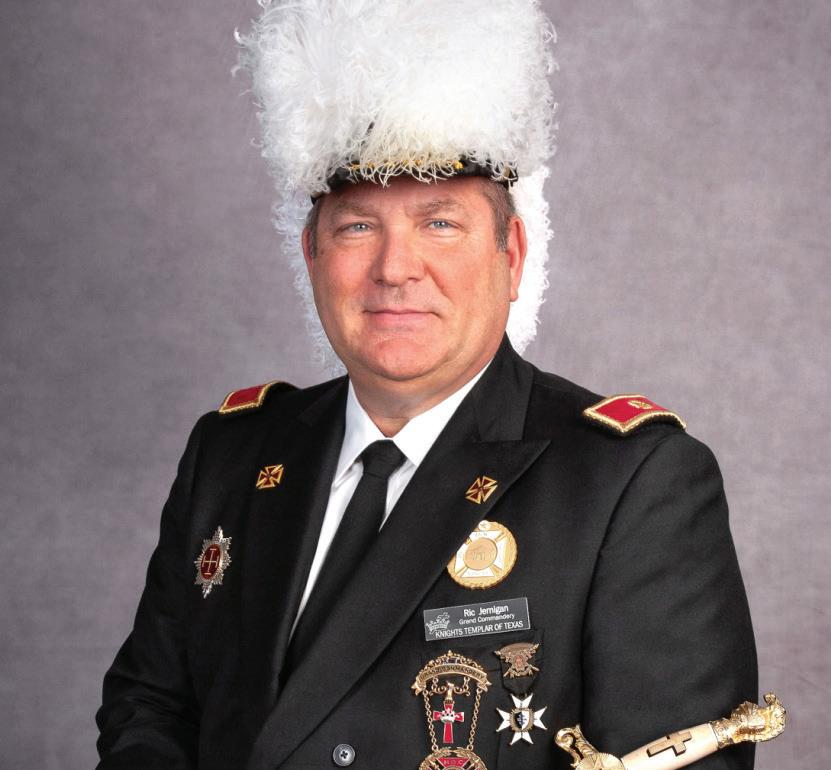
The Knights Templar Eye Foundation has donated tens of millions of dollars to eye research over its history. This includes research grants, clinical programs and treatment initiatives with a focus on pediatric eye disease. That is a great accomplishment. This is your money. This is your hard work. This is your charity. This is you fulfilling your oath to bind up the wounds of the afflicted by giving sight to this and future generations. This is God’s work.
Your funds have provided advancements in childhood vision disorders, genetic and degenerative eye diseases and innovative surgical and treatment techniques. Your money is being used wisely. The Foundation does not just write checks. Your scientific board, board of directors, and officers target funding towards projects that can make a measurable difference in life. You fund early-stage research that otherwise might go unstudied, thus leaving potential cures and treatments undiscovered. You do make a difference.
Your Knights Templar Eye Foundation stands as a quiet force of compassion and care. The basis
by Richard Jernigan
TAKE THAT FIRST STEP!
“The people living in darkness have seen a great light; on those living in the land of the shadow of death a light has dawned.” Matthew 4:16 (NIV)
of the Foundation is built upon the ideas of charity, service to others, and hope for a brighter future. You bring about the mission of preserving and restoring sight for our children who might otherwise live in darkness. You do this with your generous donations, by committing to the Grand Master’s Club. You do this by informing the members of your local Commandery how important this Foundation and its mission is. At each stated conclave of your Commandery something should be said about this gift from God, the Knights Templar Eye Foundation. There are beautiful, meaningful videos available to you on the Foundation’s web site. Avail yourself of them. Convince your Eminent Commander these videos must be shown to our membership. Attend other Masonic Bodies, such as Masters, Wardens, and Secretaries Associations or Masonic Service Bureaus and ask to simply present one of the videos. It is not difficult.
Bringing awareness to our membership is the surest way to increase donations. It is up to each of you to increase that awareness. You be the leader, you be the
change agent, you inspire others to want to help in this worthy endeavor.
At its heart your Eye Foundation is about more than just medicine, it is about dignity. Dignity in life by ensuring children can experience sight. Sight is the gateway to learning and knowledge, independence and connection to others. The impact of your donations reaches beyond the individual. By restoring or saving vision you strengthen the entire family and communities. What we have and will accomplish is a testament to what can happen when a community of good people put their minds to solving a problem.
The 58th Voluntary Campaign is currently being closed out and the 59th has just started, let’s make this the largest ever! I want to hear your stories. Tell me how you have doubled donations from your Commandery. Share with others the accomplishments of your Eye Foundation and encourage them to be involved by committing to $100 per year for ten years. Twenty-seven cents a day. Do not read this article, agree with how simple it is in your mind, and then do nothing. Start today.
Climb this mountain by taking that first easy step. Future generations need you to step up. Let’s get this done. God Bless each of you. In His and your service,
Richard Jernigan, PGC of Texas Chairman of the Voluntary Campaign