SUSTAINABILITY STRATEGY AND ACTION PLAN


Foreword
Executive Summary
Strategic Context
The Importance of Sustainability for Businesses
Our Vision
Our Business Plan and Place & Public Realm Strategy
The Role of the Knightsbridge Partnership
Methodology: Our Approach to Developing the Strategy and Action Plan
Co-design and Engagement
Sustainability Mapping: Knightsbridge Baseline
Public Policy Analysis
Member Sustainability and ESG Strategies
Impact on the Strategy
The Strategy: A Partnership Approach
The Benefits of Working in Partnership
Encouraging Innovation
Harnessing AI to Accelerate Delivery
The Action Plan
Delivery Pathways
Monitoring and Reporting
Governance and Oversight
Appendices
A. Co-Design and Engagement
B. Analysis of Baseline Sustainability in Knightsbridge
C. Public Policy Analysis
D. Member Sustainability and ESG Strategies
E. Sustainability Frameworks
KNIGHTSBRIDGE PARTNERSHIP FOREWORD

Knightsbridge is one of London’s most distinctive places: internationally recognised, locally valued, and shaped by an extraordinary mix of architecture, people, experiences and businesses. As expectations of sustainability continue to rise, Knightsbridge has an important opportunity to lead in creating luxury, high end experiences, products and places that are not only exceptional, but also environmentally and socially responsible. The long term sustainability of Knightsbridge is a shared endeavour. The Knightsbridge Partnership plays a key role in delivering economic success and helping to steward the environmental and social sustainability of the area by bringing partners together, aligning priorities and enabling collective action across the district.
This Strategy has been shaped through extensive engagement and dialogue, and it is grounded in what is achievable through collective action across Knightsbridge. It sets out how we will work together to deliver this ambition. It recognises that sustainability must be practical, place based and focused on delivery. Many of the challenges we face – from climate resilience and resource efficiency to biodiversity, health and wellbeing – cannot be addressed by any one organisation acting alone. They require collaboration, alignment and sustained partnership working.
I am excited by the ambition as we embark on this bold journey for Knightsbridge to be a truly sustainable district, which balances the needs of people and nature, fosters innovation, and sets new standards for excellence.
Over the next five years, we look forward to working closely with residents, stakeholders and partners to turn this Strategy into action – supporting initiatives, enabling collaboration, and championing projects that will help ensure Knightsbridge remains a sustainable, resilient, healthy and thriving place for the long term.
STEVEN MEDWAY CEO Knightsbridge Partnership

EXECUTIVE SUMMARY
KNIGHTSBRIDGE, AS ONE OF LONDON’S TWO INTERNATIONAL CENTRES, STANDS AT THE FOREFRONT OF GLOBAL DESTINATIONS, RENOWNED FOR ITS LUXURY, HERITAGE, AND ARCHITECTURE.
The Knightsbridge Partnership’s Sustainability Strategy and Action Plan harnesses the collective strengths of over 300 businesses and property owners, and residents, community groups and stakeholders.
Our mission is clear: to deliver transformational change through targeted support, evidence-led action, and unwavering commitment to environmental, social, and economic sustainability.
OUR SUSTAINABILITY VISION
A vibrant, adaptable, and inclusive international destination, one that not only enriches Knightsbridge by championing environmental stewardship, social well-being, and economic prosperity, but is also resilient to future challenges.
ESTABLISHING THE BASELINE
Our strategy is grounded in a robust understanding of Knightsbridge’s current environmental and social conditions. Through spatial analysis and mapping, we have identified key opportunities and challenges:

AIR QUALITY
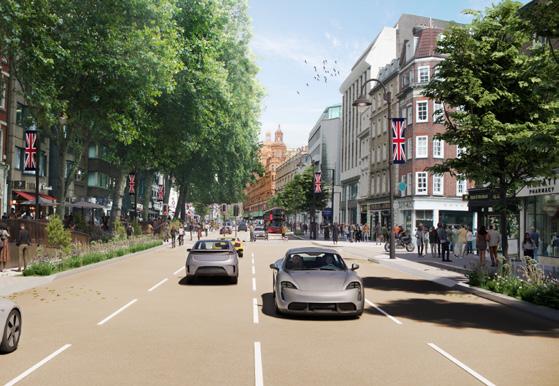
Elevated nitrogen dioxide and particulate matter concentrations along Brompton Road present health risks and reinforce the urgency for low-emission transport and building deep retrofits.
ENERGY PERFORMANCE
Analysis of Energy Performance Certificates (EPCs) shows that substantial progress is needed to meet 2030 minimum energy standards, with commercial buildings accounting for a significant share of local emissions.
GREEN INFRASTRUCTURE
While Knightsbridge benefits from proximity to Hyde Park, core commercial streets lack greenery, highlighting the need for more street-level trees and biodiversity corridors.
RESILIENCE
The traffic-heavy routes through Knightsbridge experience significant noise pollution, and certain areas are vulnerable to surface water flooding, underscoring the importance of sustainable drainage and acoustic interventions.


SOCIAL VALUE
Mapping reveals pockets of deprivation nearby, emphasising the importance of inclusive growth, creating good jobs and community well-being.





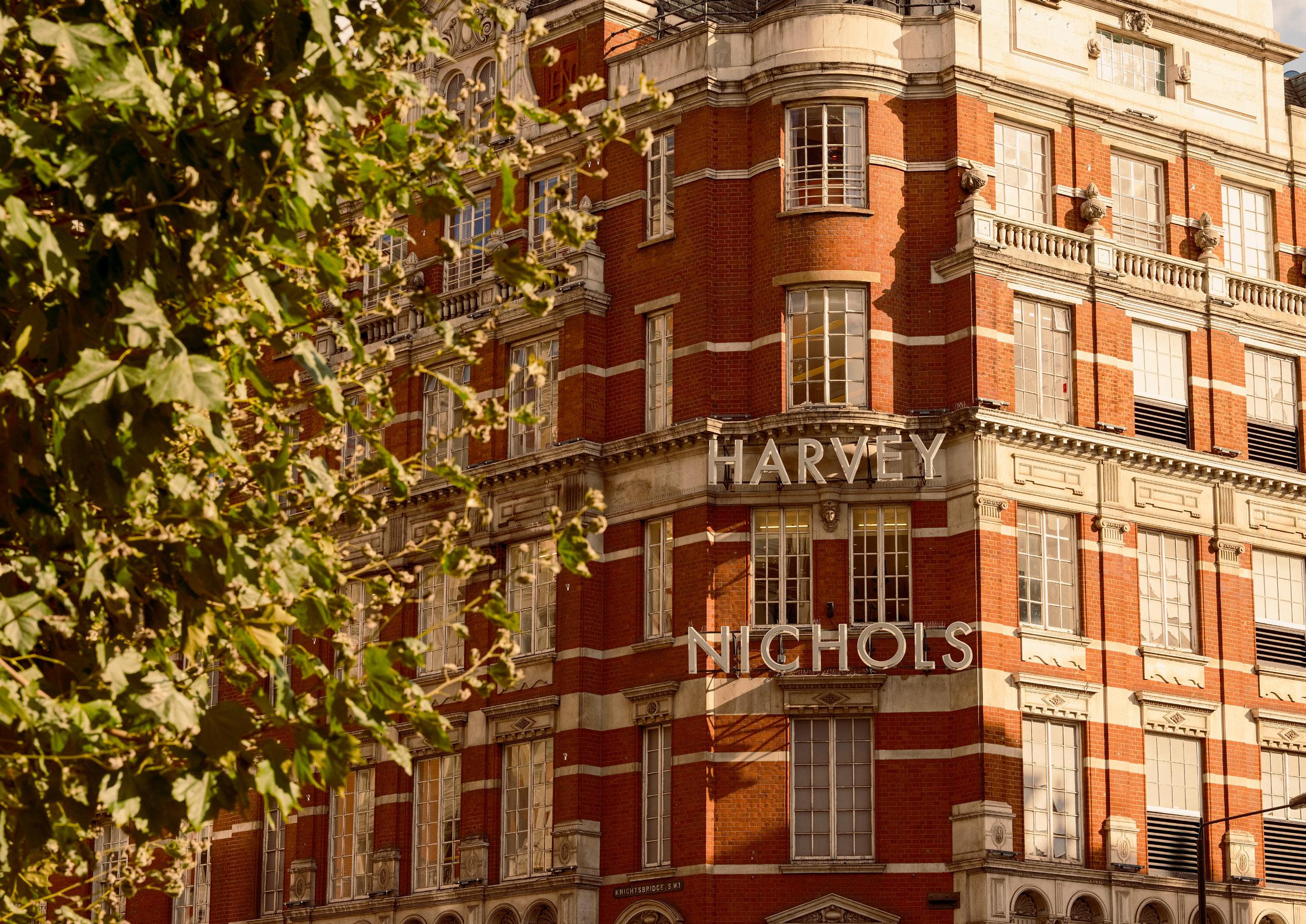
Photography by Rory Langdon-Down
WHY SUSTAINABILITY MATTERS FOR KNIGHTSBRIDGE
IN AN ERA OF FIERCE COMPETITION AMONG LUXURY DISTRICTS, KNIGHTSBRIDGE IS COMMITTED TO LEADING BY EXAMPLE.
Embracing sustainability is not just a responsibility: it is a strategic advantage. It attracts talent, builds investor trust, meets evolving consumer expectations, adds to asset value, and ensures long-term business resilience.
Our approach goes beyond compliance, driving innovation, building resilience, fostering social inclusion, and creating enduring value for all.
A PARTNERSHIP-DRIVEN APPROACH
As the property and occupier Business Improvement District, Knightsbridge Partnership convenes local authorities, businesses, and community groups to accelerate delivery across all areas of sustainability. Our strategy is grounded in robust research, spatial analysis, and stakeholder engagement, aligning with:
The UN’s Sustainable Development Goals, which set out 17 global objectives to end poverty, protect the planet, and ensure prosperity for all by 2030
The Triple Bottom Line which balances economic, environmental and social sustainability in which sustainability is measured not just by financial outcomes, but also by the positive impact on people and the planet. At the district level this means enriching Knightsbridge:
Economic Sustainability
Supporting a thriving and resilient local economy by fostering innovation, attracting investment, and enabling businesses to grow, while ensuring that prosperity benefits the whole community.
Environmental
Sustainability
Prioritising climate change mitigation, better air quality, circular economy principles across all sectors, green infrastructure, energy efficiency, and sustainable transport.
Social Sustainability
Promoting inclusivity, well-being, and equal opportunities for all, with a focus on community engagement, access to services, and improving quality of life across diverse groups.
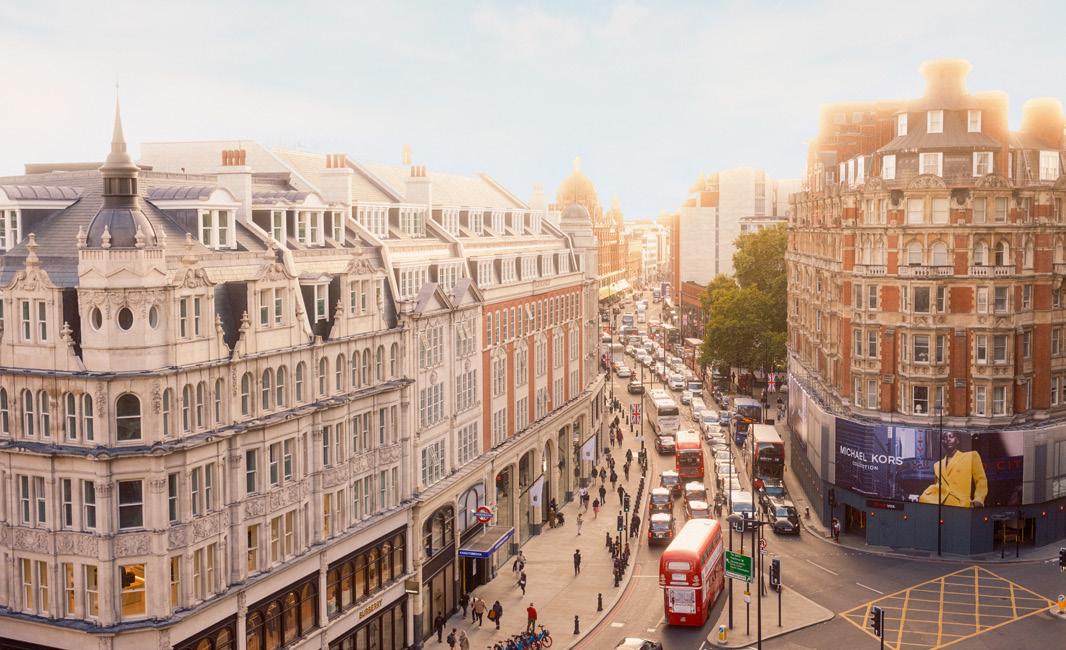
Photography by Colin Dack
ACTION AND ACCOUNTABILITY
Our detailed action plan comprises 60 targeted initiatives and 7 priority actions across the following interconnected themes:
AIR
Greenhouse gases and local air quality
ECONOMY
Migrating to a circular economy
LAND
Biodiversity and nature recovery

PEOPLE
Health and well-being, social value and inclusion and transport

WATER
Conservation and Resilience
THE PRIORITY ACTIONS
BIODIVERSITY & NATURE RECOVERY:
Deliver street trees, connected green corridors and nature based cooling across core commercial streets to create a resilient and nature-supporting Knightsbridge.
WATER CONSERVATION:
Leak detection, rapid repair and conservation measures to save water across participating buildings and priority locations.
CIRCULAR ECONOMY:
Delivery of a district programme combining waste and recycling audits and packaging reduction guidance, training and trial projects.
GREENHOUSE GASES & LOCAL AIR QUALITY:
Retrofit Accelerator Programme to reduce carbon emissions and improve local air quality by increasing building energy audits and implementation of priority measures across the district.
TRANSPORT:
Reduce traffic and improve air quality by consolidating deliveries, improving routing, enabling cargo bike/EV last mile, and improving kerbside management.
HEALTH & WELL-BEING:
Work with Transport for London (TfL), the Royal Borough of Kensington and Chelsea (RBKC) and Westminster City Council (WCC) to develop safe and attractive walking and cycling links to and through Knightsbridge.
SOCIAL VALUE & INCLUSION:
An internship and placements programme linking local schools/universities with Knightsbridge businesses. 7
Progress will be tracked through SMART Key Performance Indicators, transparent reporting, and continuous improvement, thereby ensuring accountability and celebrating success. 1 2 3 4 5 6
THE POWER OF COLLABORATION
By working together, we amplify our impact, share expertise, and deliver large-scale projects that benefit the entire district.
Knightsbridge will become synonymous with sustainability in luxury, attracting visitors, investors, and talent who value environmental and social responsibility.
A CALL TO ACTION
This strategy and action plan is a living document and also an invitation to every member of our community to join us in shaping a sustainable future. Together, we will build a Knightsbridge that is resilient, inclusive, and thriving for generations to come.
Our strategy harnesses the collective strengths of our members, residents and stakeholders, provides targeted support to businesses, and delivers a coordinated, evidence-led action plan. This approach ensures that Knightsbridge not only meets its sustainability ambitions but sets a benchmark for excellence among global destinations.
STRATEGY & ACTION PLAN
THIS SECTION SETS OUT THE STRATEGIC CONTEXT, PARTNERSHIP ROLE AND DELIVERY FRAMEWORK FOR TURNING KNIGHTSBRIDGE’S SUSTAINABILITY AMBITIONS INTO PRACTICAL ACTION.

Photography by Rory Langdon-Down
STRATEGIC CONTEXT
KNIGHTSBRIDGE PARTNERSHIP
Knightsbridge Partnership (KP) is the occupier and property owner Business Improvement District for the Knightsbridge and Brompton Road area, representing over 300 businesses and property owners. We manage an internationally renowned destination for over 75 million visitors a year.
By harnessing the power of partnership, working with Westminster City Council (WCC), Royal Borough of Kensington and Chelsea (RBKC), Mayor of London, Transport for London (TfL), Victoria BID, Exhibition Road Cultural Group, Belgravia and Knightsbridge Neighbourhood Forum, The Knightsbridge Association, resident groups, residents, property owners and occupier businesses, we aim to drive transformational change in Knightsbridge.
THE IMPORTANCE OF SUSTAINABILITY FOR BUSINESSES
We recognise that competition amongst luxury districts on a national and global stage has never been stronger. Hotels, restaurants and brands are more discerning about their location and visitors have increasingly high expectations of destinations including their sustainability, biodiversity, public realm, and accessibility credentials.
Embracing sustainability in all business functions across all three emissions Scope Types (see Glossary), rather than as a bolt-on side activity, is vital for business success in the following ways:
1. EMPLOYEE EXPECTATIONS
Embedding sustainability into organisational culture attracts and retains talent.

3. CONSUMER DEMAND
Brands that demonstrate authentic sustainability commitments earn loyalty and outperform competitors.
2. INVESTOR TRANSPARENCY
Clear Environmental and Social Governance (ESG) disclosure and action to build trust, attract capital, and align with investors’ focus on long-term value.
4. STRATEGIC ADVANTAGE
Sustainability differentiates businesses, strengthens brand trust, and deepens stakeholder relationships.
5. REGULATORY READINESS
Proactive compliance with evolving sustainability regulations mitigates risk and positions companies as leaders.
6. RESILIENCE BUILDING
Sustainable practices enhance adaptability and reduce vulnerability to global disruptions.
7. INNOVATION CATALYST
Sustainability drives new solutions, markets, and revenue streams through circular economy and renewable technologies.
8. LONG-TERM VALUE CREATION
Purpose-driven strategies foster brand strength, customer loyalty, and investor confidence for enduring success.
OUR VISION FOR KNIGHTSBRIDGE IS
A vibrant, adaptable, and inclusive international destination, one that not only enriches Knightsbridge by championing environmental stewardship, social well-being, and economic prosperity, but is also resilient to future challenges.

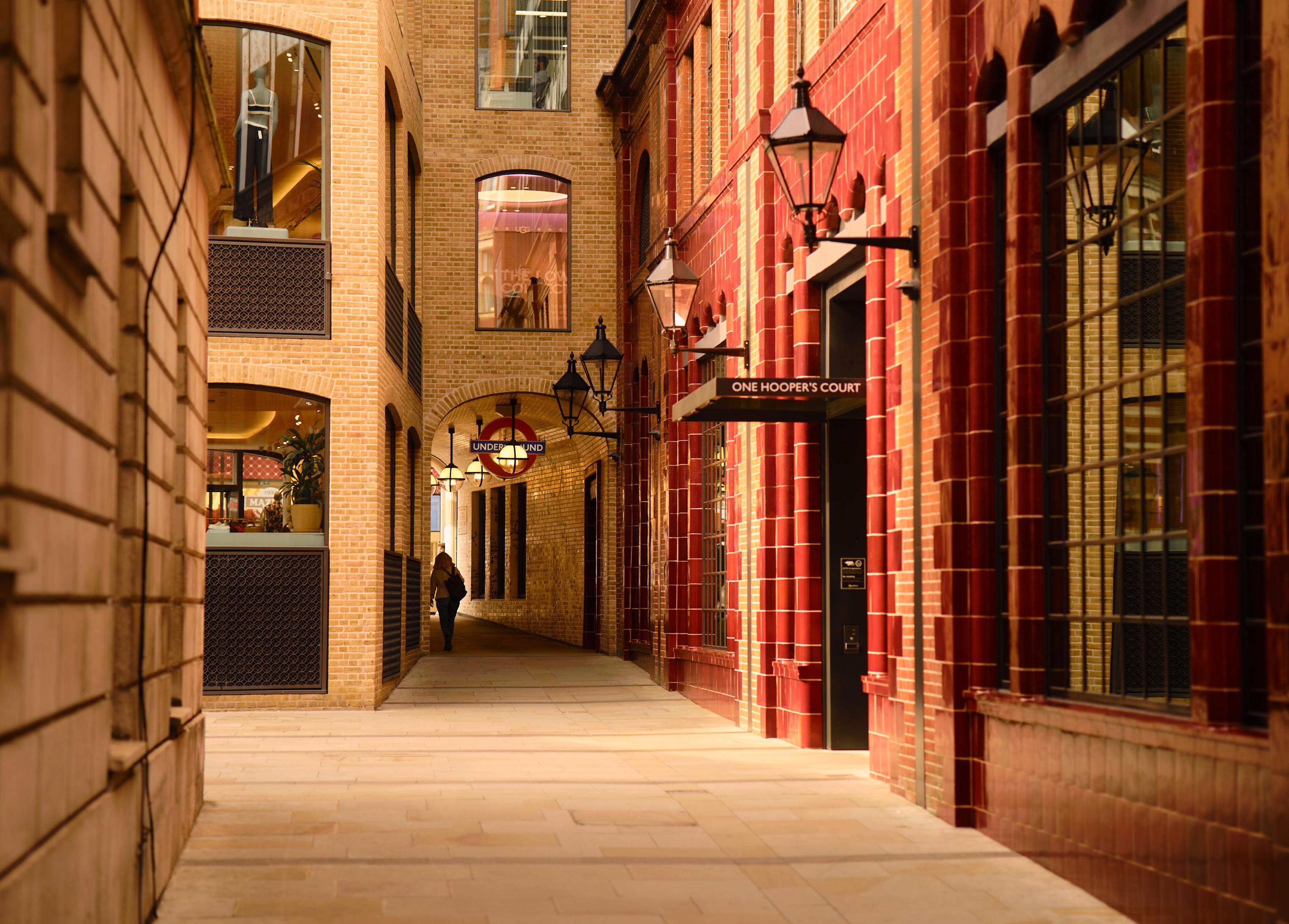
Photography by Rory Langdon-Down
Sustainability is integral to both the Knightsbridge Partnership Occupier and Property Owner Business Plans and a key priority within the Knightsbridge Place and Public Realm Strategy.
Place and Public Realm Strategy
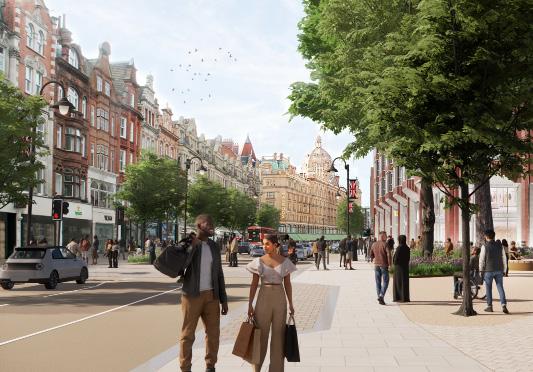
Our ambitious plans for Knightsbridge will make walking, cycling and public transport use more attractive and safer, improve air quality, enhance climate resilience, contribute to climate mitigation and support nature recovery.
https://knightsbridgepartnership.com/ reimagining-the-future-of-knightsbridge/
Enhancing the environment and social value
Our plans for Knightsbridge and how we will convene partners to work together to deliver a sustainable district that meets present needs without compromising future generations' ability to meet theirs. We will balance environmental protection, social inclusion, and economic viability for long-term well-being.
We recognise it is about making choices that ensure our planet's ecosystems, economies and communities can thrive long-term, not just today.
Building business resilience
A key strand of our resilience work with businesses is ensuring Knightsbridge is a climate-resilient district.
This strategy and action plan builds the capacity of businesses, the community, and infrastructure to prepare for, adapt to, and rapidly recover from the impacts of climate change, such as flooding or extreme heat.
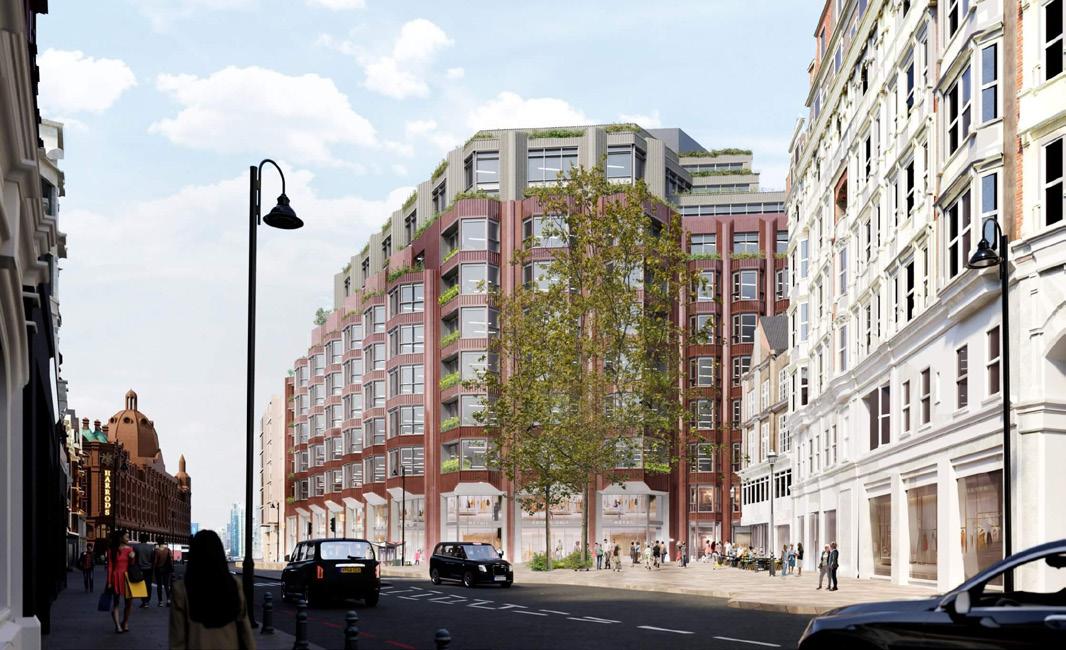
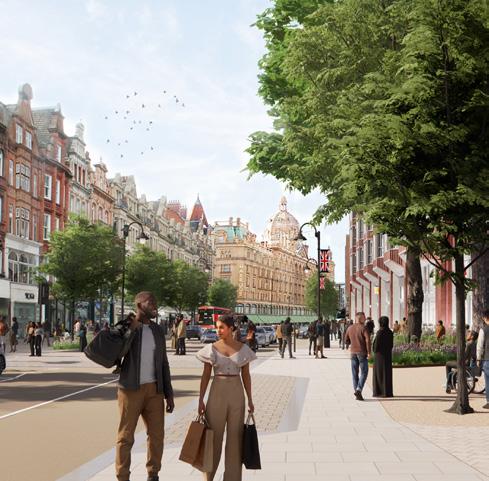
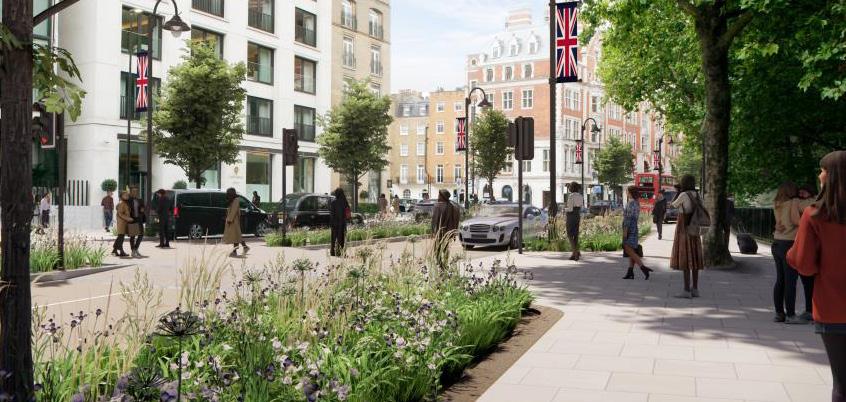
The delivery of the Knightsbridge Place and Public Realm Strategy will result in planting over fifty new trees, providing shade and cooling for the area, and over seventy planting beds and sustainable urban drainage which will absorb heavy rainfall and support biodiversity.
Our approach is about planning for climate events, building stronger resilience to future shocks, and bouncing back rather than just reacting to them.
Promoting the International Centre
As part of attracting customers, visitors and investment to the luxury International Centre, we recognise the role sustainability plays in purchasing and investment decisions.
Knightsbridge will become synonymous with sustainability in luxury across all the commercial sectors in Knightsbridge, specifically hospitality, retail, wellness, office and property.


THE ROLE OF KNIGHTSBRIDGE PARTNERSHIP IN DELIVERING SUSTAINABLE CHANGE
As the driving force behind Knightsbridge’s sustainability ambitions, the Knightsbridge Partnership is uniquely positioned to turn vision into action.
Our leadership ensures that sustainability is woven into every aspect of district development, aligning purposefully with our overall strategy and action plan.

1
CONVENING POWER AND STRATEGIC LEADERSHIP
The Knightsbridge Partnership brings together a diverse range of stakeholders to align priorities, share best practice, and drive coordinated local action.
We act as a bridge, bringing together businesses, Neighbourhood Forums, WCC, RBKC, TfL, the Greater London Authority (GLA), residents, and community groups to shape and deliver a shared sustainability strategy. This inclusive approach ensures that our action plan reflects the diverse needs and ambitions of all stakeholders, building community ownership and collective responsibility for our district’s sustainable future.
The Sustainability Strategy is evidence-led, locally relevant and grounded in robust research, spatial analysis, and engagement with the local community, ensuring that the action plan interventions are targeted, impactful, and relevant to Knightsbridge’s unique context as a luxury global destination and place to live and work.
2 PLACE GOVERNANCE & STEWARDSHIP
We adopt a long-term outlook for Knightsbridge, embedding sustainability into operational services and district improvements that create lasting value. By prioritising enduring impact over short-term gains, we ensure that every action directly supports our sustainability objectives, from reducing emissions to enhancing public spaces and social inclusion.
As a trusted local custodian, we ensure that sustainability is embedded across all aspects of place management, business operations, communications and public realm improvements. The Knightsbridge Partnership is also committed to becoming a net zero carbon organisation by 2030, delivering sustainable operations across all three scope types.
3
FACILITATING DELIVERY
We take an active role in coordinating partners to translate strategic priorities into tangible outcomes.
By piloting innovative projects and scaling up successful initiatives, we accelerate progress across all pillars of sustainability (environmental, social, and economic) and ensure our action plan delivers real benefits for Knightsbridge.
We will provide tailored support to businesses across all sectors, helping our members to:
• Understand and comply with evolving sustainability regulations and expectations.
• Access practical guidance, training, and resources on energy efficiency, waste reduction, circular economy, and social value.
• Benchmark and improve their environmental, social, and governance (ESG) performance.
• Connect with local initiatives, suppliers, and community projects that enhance social value, well-being, sustainability and corporate reputation.
• Collaborate to deliver sustainability, well-being and social value projects locally.
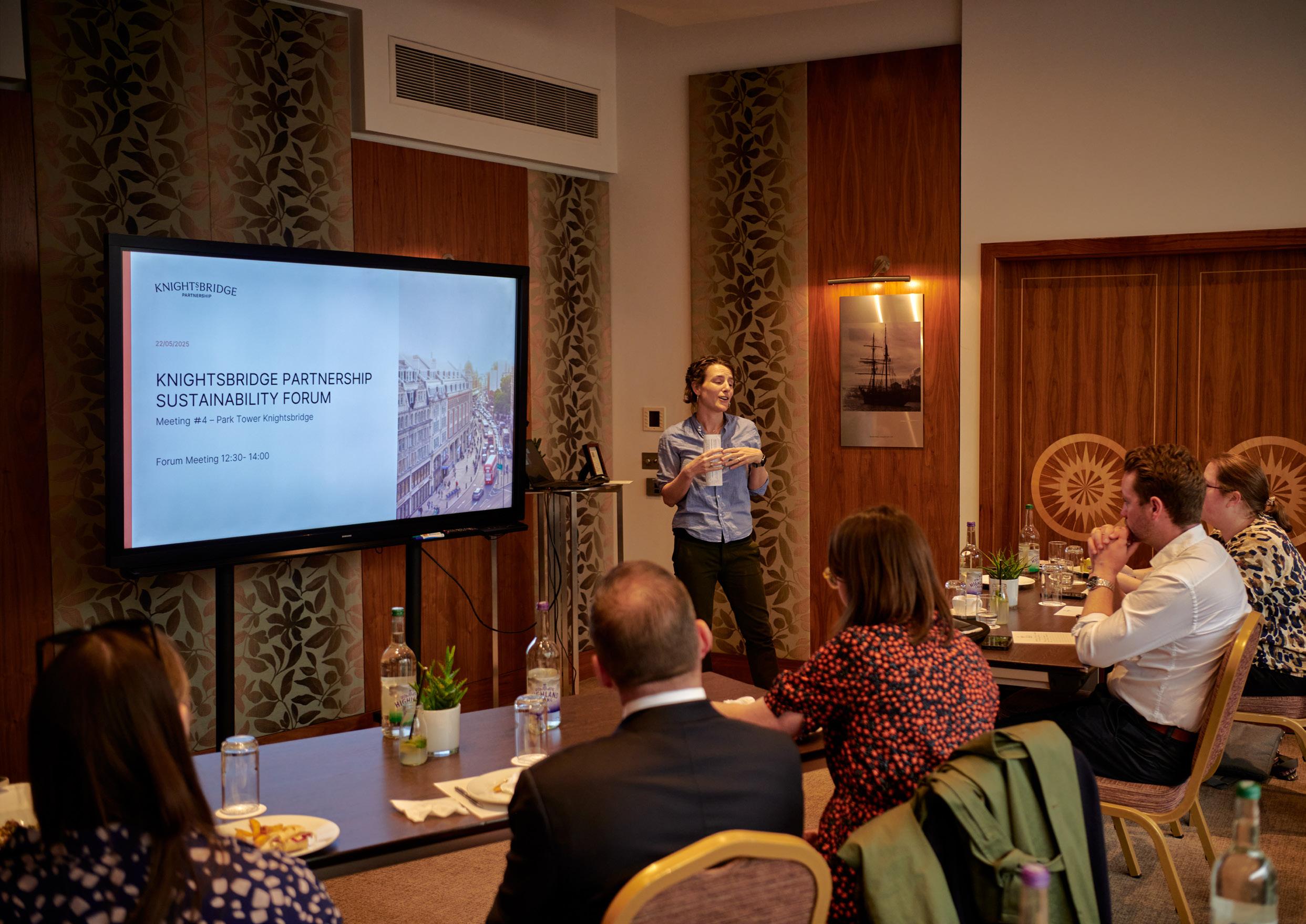
• Share knowledge and celebrate success through the Knightsbridge Sustainability Forum and sector-specific networks.
4 LEVERAGING INVESTMENT
We champion the business case for sustainability, attracting new investment to fund green infrastructure, social value programmes, and economic innovation.
By unlocking additional resources, we amplify the impact of our action plan and secure Knightsbridge’s reputation as a district committed to long-term value creation.
5
INNOVATION & LEARNING
We provide a collaborative platform for sharing best practice, insights, and lessons learned. By supporting knowledge exchange across our business members and wider community, we foster a culture of continuous improvement that keeps Knightsbridge at the forefront of sustainable urban development and ensures our action plan evolves to meet emerging challenges.
OUR APPROACH TO SUSTAINABILITY
As a long term custodian of Knightsbridge, which is one of London’s most renowned historic districts, we are taking the Triple Bottom Line approach to delivering an exemplar sustainable district.
This approach captures the true value and costs of doing business and our strategy and action plan will support and facilitate the migration towards sustainable business practices across all sectors and all our business members.

PEOPLE AND SOCIAL VALUE / SOCIAL SUSTAINABILITY
Promoting inclusivity, well-being, and equal opportunities for all is a central tenet of our approach. We are committed to creating an accessible, inclusive, and welcoming district for everyone in Knightsbridge. This means ensuring fairness, equity, and community well-being by actively engaging residents, employees, customers, visitors, and suppliers.
By championing fair wages, good employment practices, and embracing diversity, we aim to enrich the lives of all stakeholders. We also prioritise community engagement, access to services, and improving quality of life across all groups, ensuring that prosperity and opportunity are shared throughout the district.
PLANET – ENVIRONMENTAL STEWARDSHIP / ENVIRONMENTAL SUSTAINABILITY
Protecting natural resources, reducing pollution, and preserving biodiversity are at the heart of our environmental ambition. Knightsbridge prioritises green infrastructure, energy efficiency, and low-emission transport to reduce carbon emissions and poor local air quality and contribute to London’s net zero goals. We support businesses, local authorities, TfL, and stakeholders in reducing
the area’s ecological footprint, through waste reduction, water conservation, adoption of renewable energy, and a commitment to circular economy principles. Our efforts also extend to supporting nature recovery and sourcing materials ethically, all to maintain ecological balance and enhance local biodiversity.
ECONOMIC VIABILITY / ECONOMIC SUSTAINABILITY
We recognise that true success is measured not just by financial outcomes, but also by the positive impact on people and the planet. Supporting a thriving local economy in Knightsbridge means fostering innovation, attracting investment, and enabling businesses to grow, ensuring that prosperity benefits the whole community.
Our strategy is designed to encourage inclusive growth and a robust and resilient economy that is aligned with environmental and social value goals. By sharing the positive impact of the Knightsbridge economy, we aim to enrich the local community, London, and wider supply chains.
At the district level, the Triple Bottom Line balanced approach recognises that enriching Knightsbridge relies on economic, environmental, and social sustainability being addressed equally. This holistic perspective ensures that actions benefit people and the planet alongside economic development, creating a vibrant, resilient, and sustainable district for the future.
While Knightsbridge Partnership does not directly control the delivery of sustainability ambitions and targets, the strategy facilitates collaboration by convening partners and influencing action towards shared goals. In this context, the strategy aligns its climate objectives to support businesses deliver science based targets for setting greenhouse gas reduction targets. Knightsbridge Partnership convenes collective areabased emissions reduction, establishing Knightsbridge as a model of climateresponsible city stewardship.
People and Social Value
Economic Viability
Economic Stewardship
METHODOLOGY: OUR APPROACH TO CO-CREATING THE STRATEGY AND ACTION PLAN
This strategy and action plan has been developed as a rigorous, evidence led programme for delivery, grounded in data, shaped by stakeholders, and aligned to the policy and market environment in which Knightsbridge operates. The approach began by establishing what the evidence says matters most in Knightsbridge: where environmental, economic and social risks are concentrated, where the greatest opportunities for improvement sit, and where collective action can unlock outcomes that no single organisation could achieve alone.
Co-design with stakeholders and residents. The evidence
Mapping and analysis of existing datasets
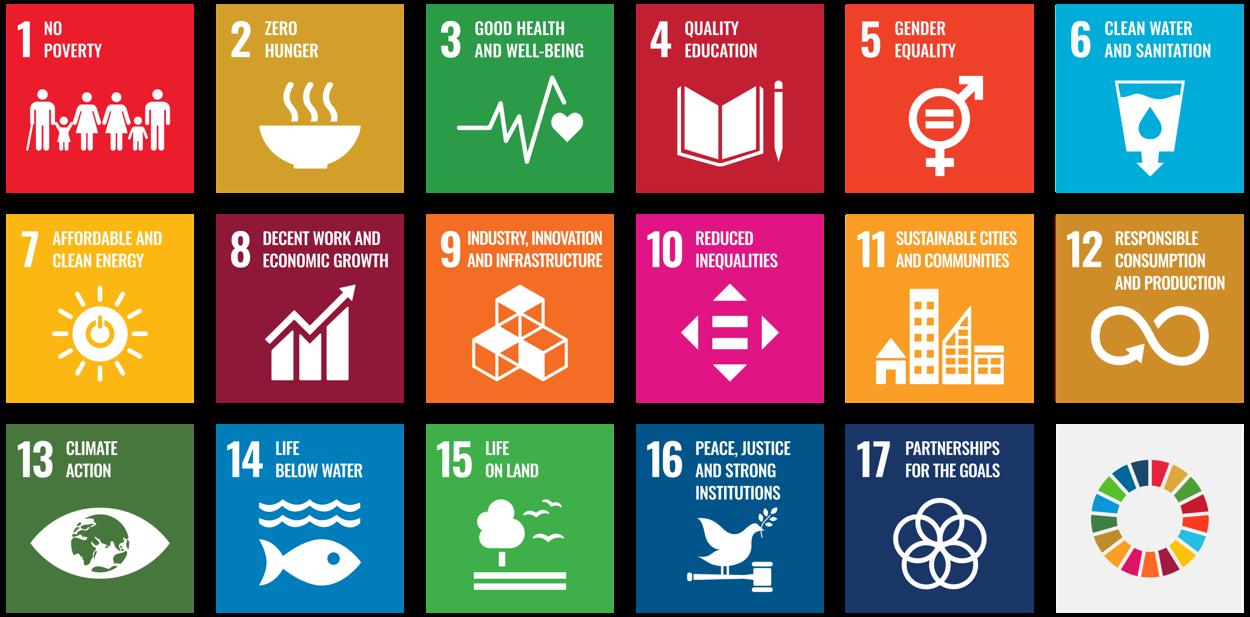
To ensure the strategy is coherent and comparable with best practice, the UN Sustainable Development Goals (SDGs) were used as a unifying framework for structuring engagement and framing priorities. This enabled businesses, residents, local authorities and partners to discuss sustainability through a shared language that is already widely used across government, London wide strategy, and corporate ESG reporting, ensuring the resulting priorities are both locally relevant and strategically aligned.
Review of major relevant policies across London, borough and neighbourhood levels
Assessment of sustainability and ESG strategies across member organisations and sectors
Review of neighbouring place based initiatives
CO-DESIGN AND ENGAGEMENT
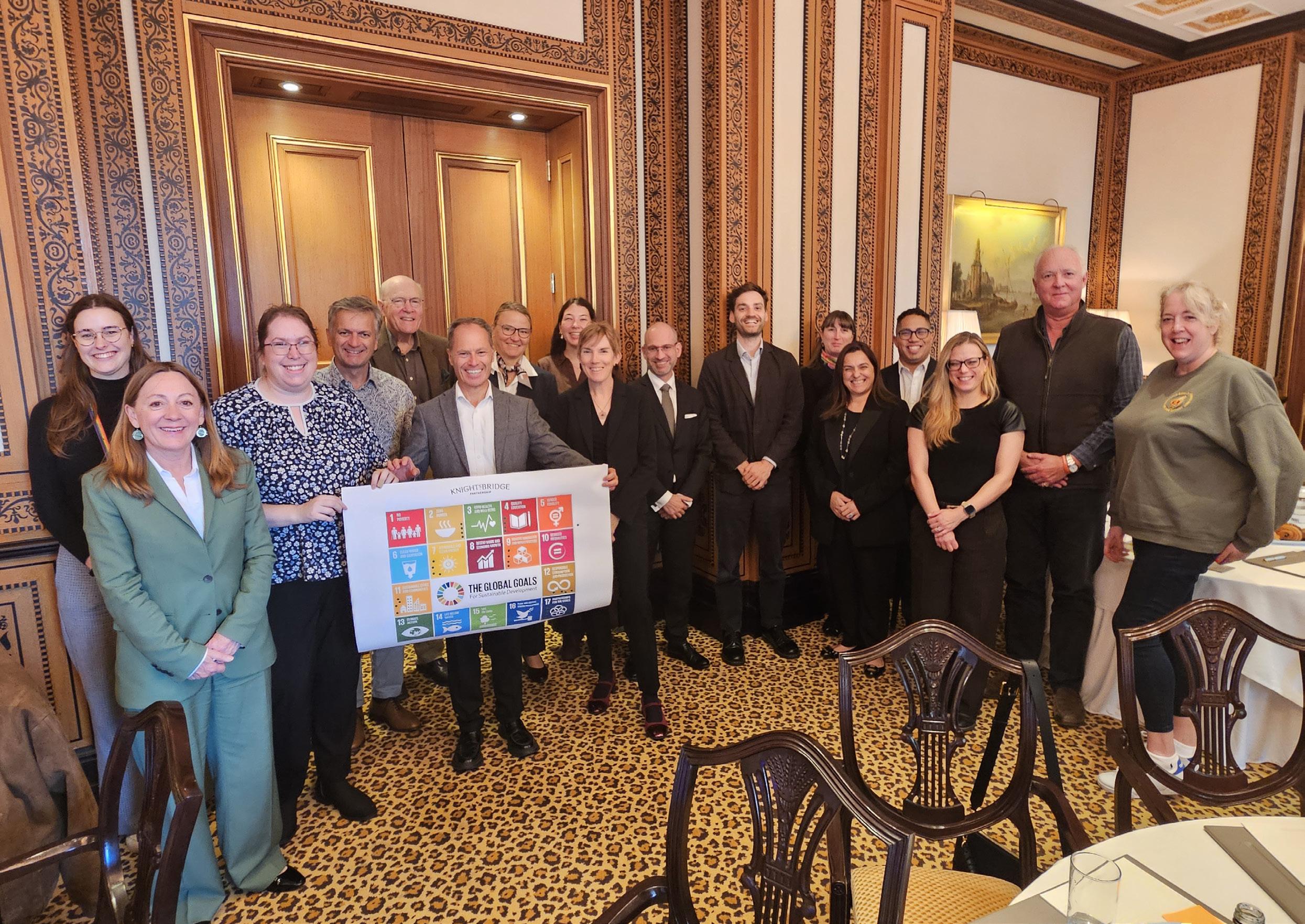
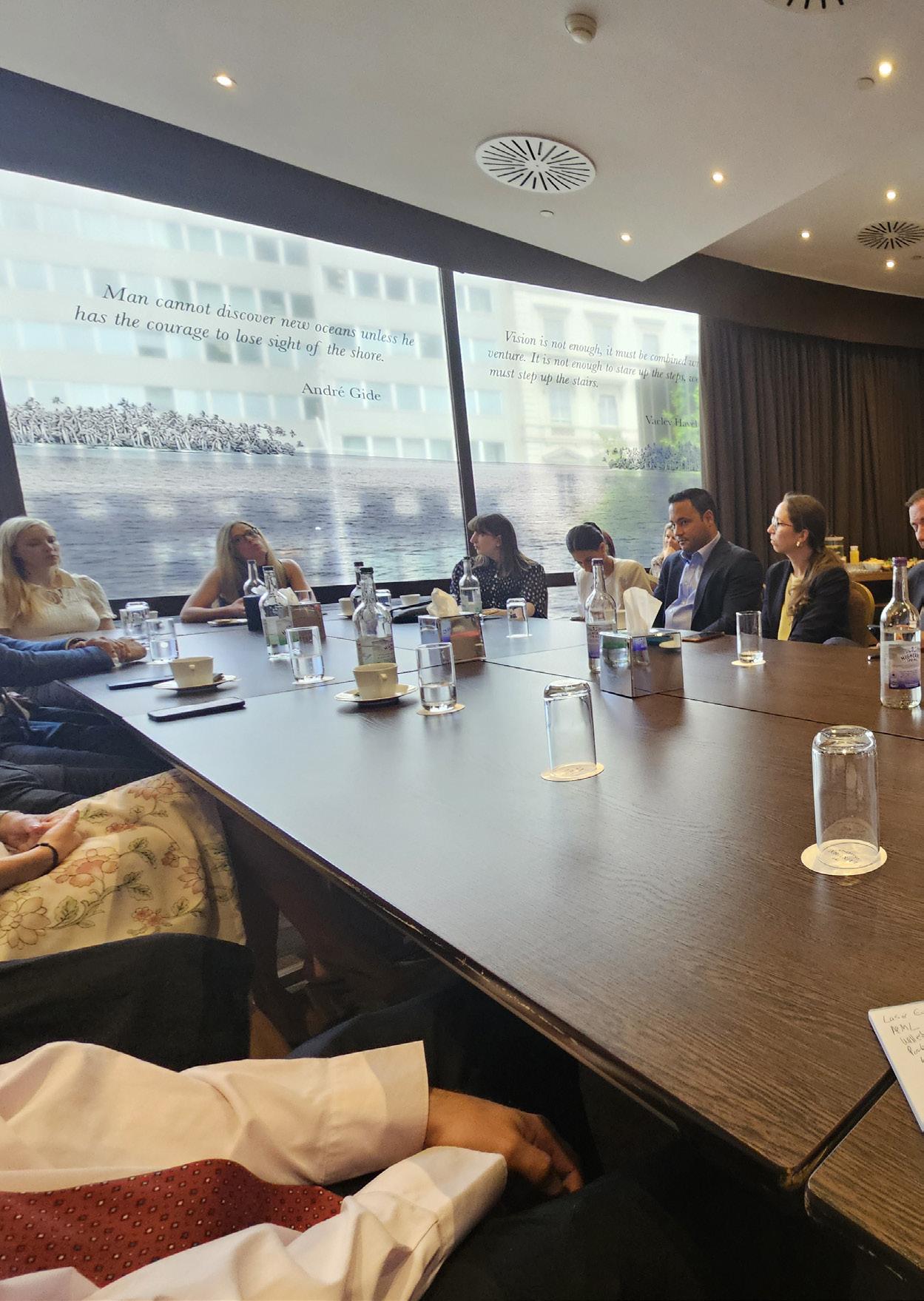
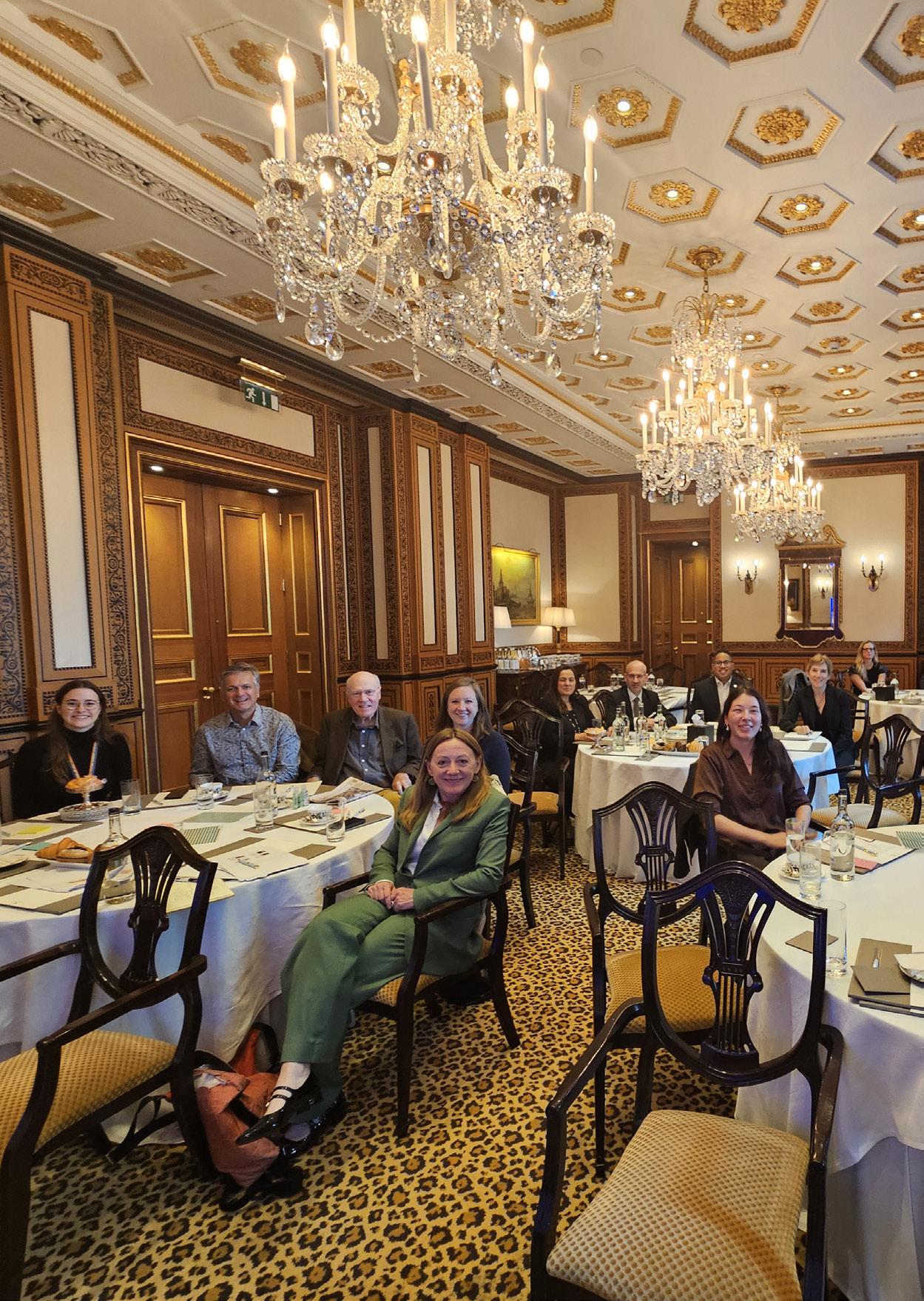
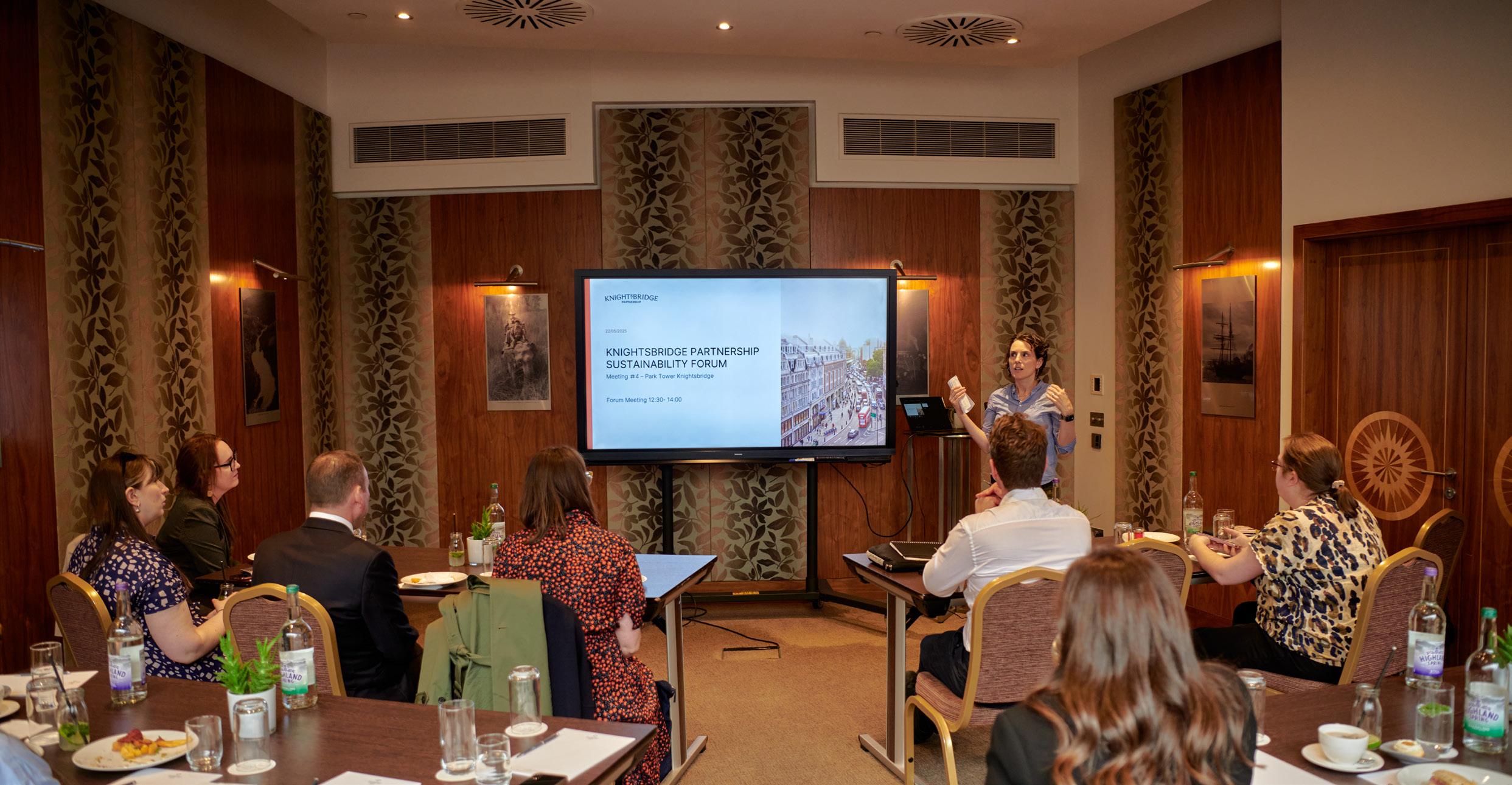
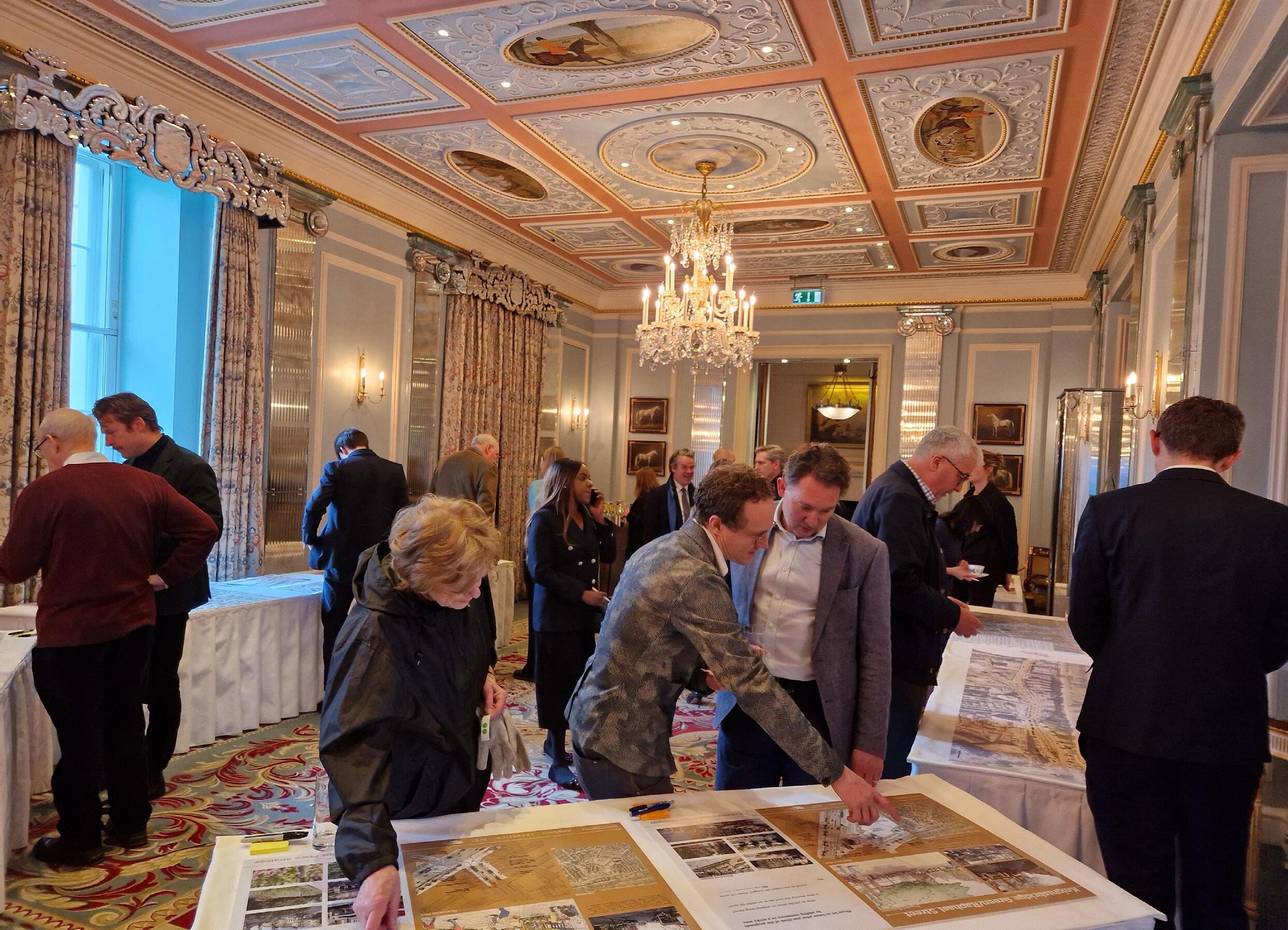
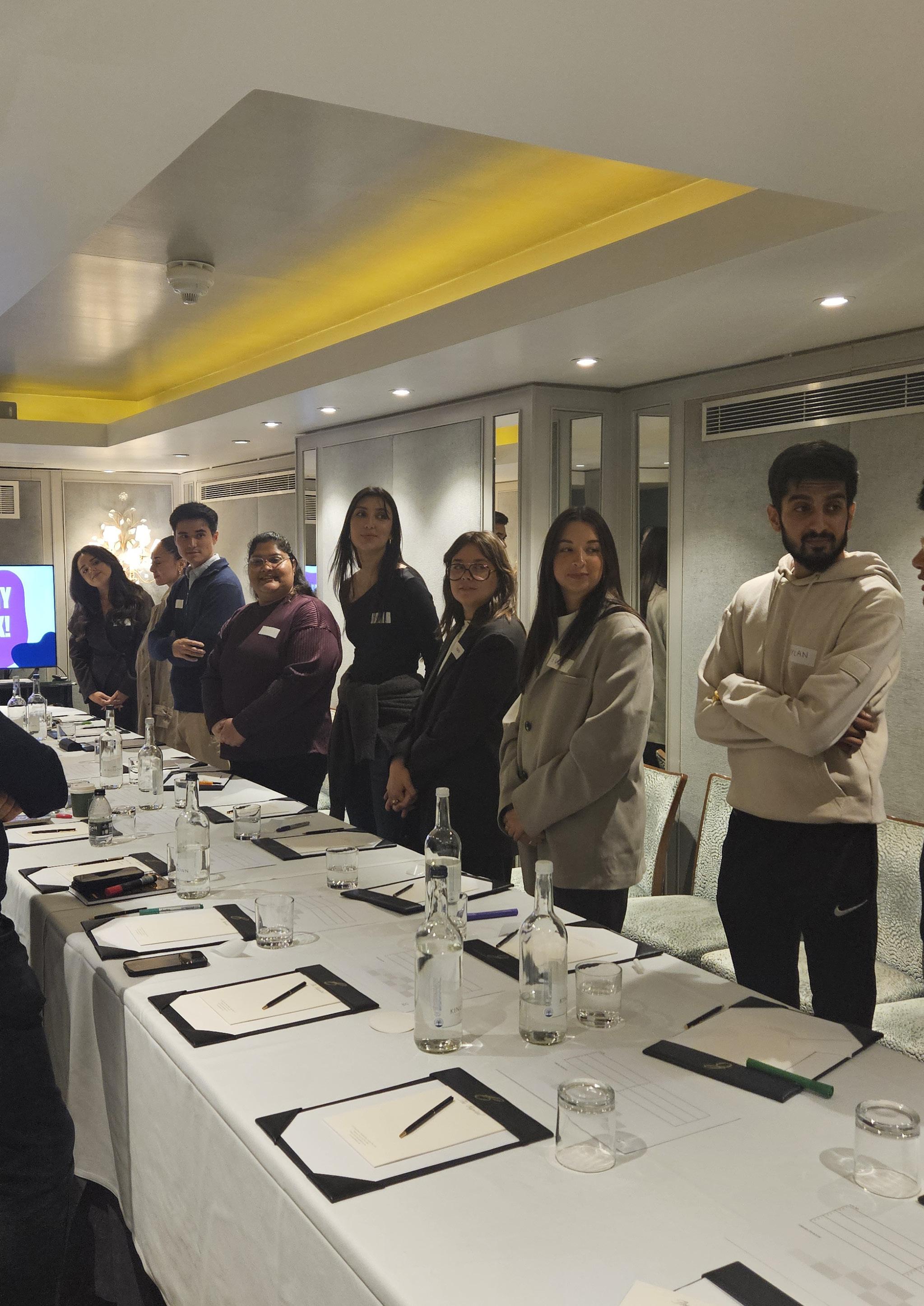
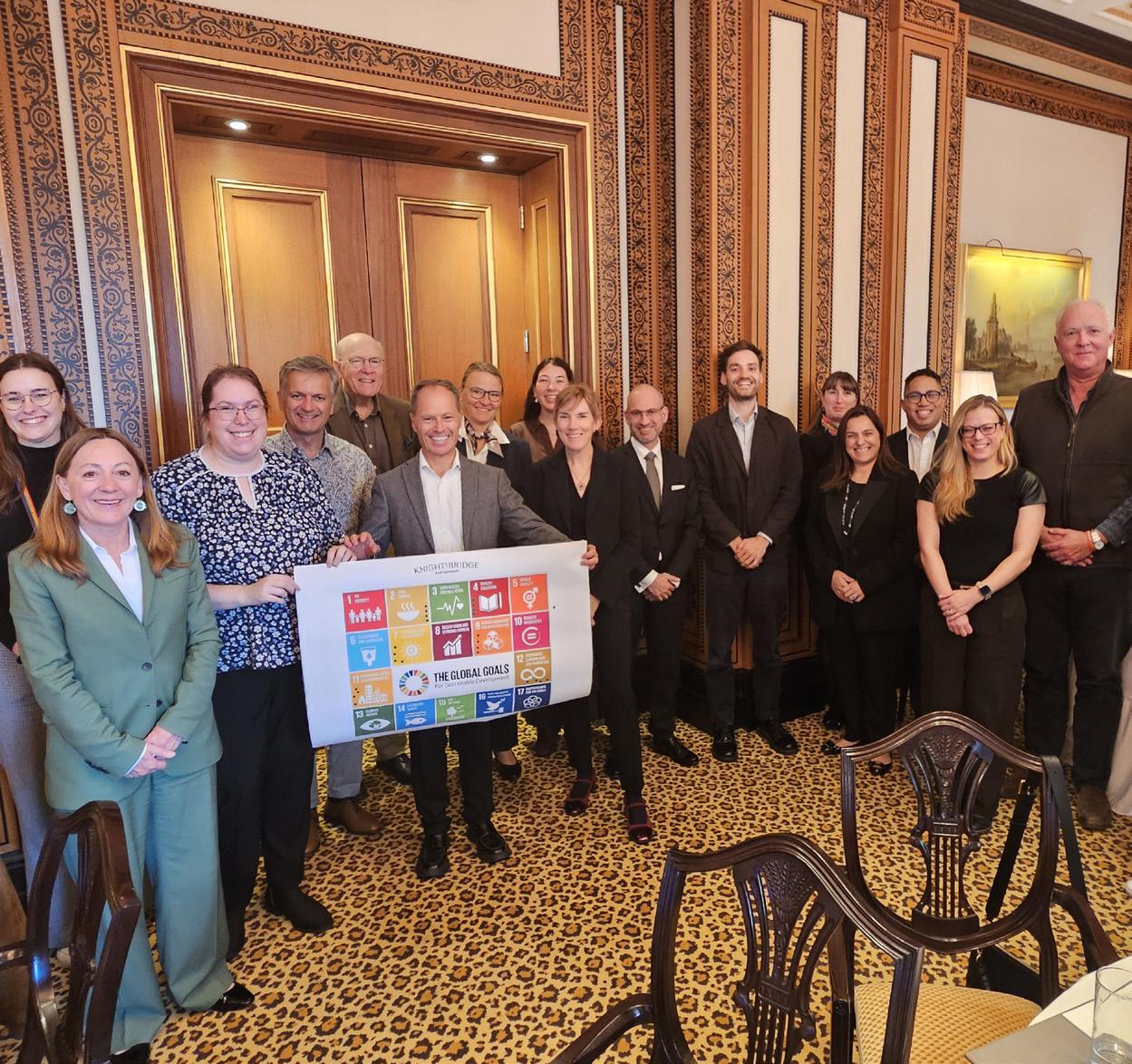
Two co-design workshops brought together businesses, residents and key stakeholders to agree priorities and develop the action plan, complemented by a wider public drop in consultation to test the draft strategy and capture broader feedback.
Engagement also provided a clear steer on what “good” looks like in practice. Stakeholders expressed strong support for the partnership led, place based direction and the ambition for Knightsbridge to lead on sustainability as a global destination. At the same time, they emphasised the importance of focus and sequencing: prioritising a smaller number of high impact objectives, backed by clear accountability, SMART measures, and early “quick wins” that demonstrate progress and maintain momentum.
The consultation surfaced several recurring delivery priorities. Participants called for cross sector collaboration to accelerate learning and avoid duplication; for a strong, explicit articulation of sustainability as an economic and resilience opportunity; and for practical interventions that address day to day pressures, particularly deliveries and servicing, circular economy infrastructure and support, and targeted work to influence Scope 3 emissions through supply chains, logistics and procurement.
There was also strong support for nature recovery and greening, including an “urban forest” ambition that improves biodiversity, cooling and air quality.
Photography by Colin Dack
OUR APPROACH TO SUSTAINABILITY

The strategy is underpinned by a spatial baseline (Appendix B) that identifies where environmental conditions and social outcomes are most in need of improvement, and where interventions can deliver the greatest cumulative benefit. Mapping and analysis were used to understand Knightsbridge’s current performance across green infrastructure, air quality, noise exposure, flood risk, building energy performance and socio economic context. This provides a clear evidence base for targeting action geographically and thematically, and for monitoring progress over time.
The baseline highlights a central structural challenge: Knightsbridge benefits from proximity to major green assets such as Hyde Park, but the core commercial streets show limited street level greening. This reinforces the importance of targeted public realm greening, such as street trees, planting, biodiversity corridors, and sustainable drainage, both to improve everyday experience and to strengthen resilience to heat and intense rainfall.
Air quality and noise mapping show a consistent pattern: the highest exposures are concentrated along the district’s major traffic corridors, including Brompton Road / Knightsbridge and the Hyde Park Corner approaches, where elevated NO₂ and particulate matter coincide with intensive vehicle activity.
The evidence therefore supports a combined package of measures such as accelerating low emission transport, reducing the impacts of deliveries and servicing, mitigating construction impacts, introducing green buffers, and prioritising retrofit on corridor buildings to address operational emissions and improve environmental quality. Noise exposure mirrors this pattern, strengthening the case for traffic management, electrification and targeted acoustic interventions that improve health and wellbeing for those who live, work and visit the area.
Flood risk mapping identifies surface water vulnerability in specific locations, reinforcing the value of permeable surfaces, SuDS and rain garden style interventions to reduce runoff and strengthen climate resilience. Building energy analysis (including EPC review) indicates that significant progress is required to meet minimum energy standards, underscoring the importance of coordinated action on building performance, particularly given the scale of emissions attributable to commercial buildings.
Finally, deprivation mapping shows Knightsbridge is comparatively less deprived, but sits near areas of higher deprivation, supporting the case for a strategy that treats social value, access to opportunity and inclusive growth as core outcomes alongside environmental performance.

PUBLIC POLICY ANALYSIS
The policy review (Appendix C) considered the hierarchy of frameworks that influence Knightsbridge, from global and national direction (including net zero obligations), to London-wide priorities, to borough policy in RBKC and WCC, and neighbourhood planning objectives. The review was designed to be practical rather than exhaustive, recognising that sustainability policy and regulation are evolving rapidly.
The analysis aligns the Sustainability Strategy with the prevailing direction of travel across core themes: net zero and climate resilience; retrofit and whole life carbon; healthy streets, air quality and emissions reduction; circular economy and waste; biodiversity and nature recovery (including biodiversity net gain); water management and SuDS; and the growing emphasis on measurement, disclosure and transparency.

MEMBER SUSTAINABILITY AND ESG STRATEGIES
A review of a representative cross section of member sustainability and ESG strategies (Appendix D) was undertaken to understand the current level of maturity and ambition across sectors, and to identify where district level coordination could add the most value. Within the sample assessed, most organisations have published strategies or significant ESG commitments, demonstrating strong momentum but with meaningful variation in depth, targets and transparency.
The review identified clear strengths to build upon: leadership on climate commitments among more advanced organisations (including science based targets), sector specific innovation (notably in fashion
and hospitality operations), and the use of established frameworks that support structured governance and accountability. These leading practices provide a foundation for peer learning and for practical, sector relevant delivery support across the partnership.
Equally, the analysis highlighted where partnership and collaborative action can accelerate progress. A recurring opportunity is to connect corporate commitments to Knightsbridge specific local initiatives, so that member action contributes to visible, place based outcomes while also supporting ESG goals, reputation and regulatory readiness.
Photography by Rory Langdon-Down
IMPACT ON THE STRATEGY
This process consistently found that Knightsbridge’s highest value interventions are those that address: emissions from buildings and the built environment, the quality and resilience of the public realm (including greening and drainage), the operational “systems” of the district (waste, reuse, servicing and deliveries), and exposure to air and noise pollution on major corridors, supported by clear metrics and accountability.
The strategy therefore prioritises actions that are measurable, partnership enabled, and capable of delivering early visible progress while building towards longer term structural change.
Photography by Colin Dack
THE STRATEGY: A PARTNERSHIP APPROACH
The Knightsbridge Sustainability Strategy has seven key delivery themes: Biodiversity and Nature Recovery, Circular Economy and Waste Recycling, Health and Well-being, Greenhouse Gases and Local Air Quality, Social Value and Inclusion, Transport and Water, each with their own actions.
The strategy is underpinned by a partnershipdriven approach that recognises the collective power of businesses, local authorities, residents, and stakeholders to share expertise and resources to deliver transformational change.
The Knightsbridge Partnership acts as the convenor, catalyst, and coordinator for sustainability in the district, leveraging its unique position as the Business Improvement District (BID) representing over 300 businesses and property owners.
THE BENEFITS OF WORKING IN PARTNERSHIP
GREATER IMPACT AND EFFICIENCY 1
2
3
ENHANCED REPUTATION AND ATTRACTIVENESS
By working together, businesses and stakeholders can achieve more than any single organisation could alone. Partnership enables the pooling of resources, sharing of expertise, and delivery of large-scale projects that benefit the whole district.
A collaborative approach to sustainability strengthens Knightsbridge’s position as an International Centre, attracting visitors, investors, and talent who value environmental and social responsibility. Businesses benefit from increased customer loyalty, improved brand trust, and a stronger competitive edge.
4
SHARED LEARNING AND CONTINUOUS IMPROVEMENT
DELIVERING SOCIAL AND ENVIRONMENTAL VALUE
The partnership model fosters a culture of shared learning, transparency, and continuous improvement. By monitoring progress, reporting on outcomes, and celebrating achievements, Knightsbridge Partnership and its members can adapt to new challenges and opportunities, ensuring long-term success.
Working in partnership enables Knightsbridge to deliver tangible social and environmental value, improving air quality, supporting biodiversity, enhancing community well-being, and contributing to London’s net zero and sustainability goals.
5
A RESILIENT KNIGHTSBRIDGE
Resilience is central to the Sustainability Strategy because it protects the long term success of Knightsbridge as an international destination while safeguarding the everyday experience of those who live, work and visit. In Knightsbridge, resilience has multiple, interconnected forms, including:
Climate resilience reducing exposure to risk of flooding, overheating and poor air quality through greening, sustainable drainage, prioritising active travel, and building improvements
Operational resilience ensuring buildings, utilities and local servicing systems can continue to function during shocks and disruptions
Economic resilience
helping businesses and property assets remain competitive as regulation, investor expectations and consumer preferences shift
Social resilience
supporting health, wellbeing, inclusion and access so the benefits of change are shared, and community trust is maintained.
By taking a partnership-led, evidence based approach, the strategy contributes to strengthening Knightsbridge’s capacity to prepare for, withstand, adapt to and recover from future challenges, ensuring the district remains an attractive, resilient and sustainable International Centre.
ENCOURAGING INNOVATION
We will scan for new innovations (see examples in box below), champion and pilot new approaches, and support businesses to adopt cutting-edge solutions.
SECTOR
Hospitality
(restaurants, cafés, bars)
INNOVATION / INITIATIVE WHAT IS INNOVATIVE
Low emissions kitchens with advanced filtration
Hospitality
(restaurants, cafés, bars)
Hospitality
(restaurants, cafés, bars)
Returnable packaging system
Digital surplus food redistribution
High efficiency electrostatic and carbon integrated into kitchen extract systems to significantly reduce cooking emissions and odour in dense urban areas.
Digitally tracked, reusable takeaway packaging with shared return points, washing and logistics infrastructure.
Use of digital marketplaces to redistribute food in real time to customers and communities.
Hotels
Hotels
Offices
Property owners & asset managers
AI enabled energy and cooling optimisation
Low GWP refrigeration transition
Circular management of office churn
Material passports and circular construction data
Use of AI analytics and digital twins to continuously optimise HVAC, cooling and plant performance.
Shift to natural and ultra-low GWP refrigerants paired with leak detection and heat recovery.
Digital reuse marketplaces to redistribute IT and fit out materials with ESG reporting.
Digital records of materials and components to enable reuse, residual value and embodied carbon tracking.
All sectors
AI led pilots and innovation challenges
Structured pilots testing new sustainability solutions before district wide roll out.
filtration to and
packaging logistics
WHY IT MATTERS FOR KNIGHTSBRIDGE HOW IT SCALES
Addresses air quality hotspots along high footfall streets and supports better health
redistribute surplus communities.
Reduces single use waste in one of London’s high takeaway and delivery demand areas.
High food turnover and premium hospitality provide opportunities to reduce surpluses.
continuously performance. Hotels are high energy users
refrigerants recovery.
redistribute furniture, reporting.
components embodied
Cuts high impact refrigerant emissions and supports compliance with tightening regulation.
High churn and premium fit outs generate valuable reuse opportunities.
Supports heritage sensitive retrofit and futureproofs major assets.
sustainability Reduces risk and accelerates adoption of proven solutions.
KP endorsed technical guidance and preferred suppliers; joint procurement for clusters of venues.
Single reuse operator across the district; shared drop points in public realm and buildings.
KP led onboarding campaign; integration with preferred platforms.
Cohort based pilots with leading hotels; anonymised benchmarking across the district.
Preferred supplier frameworks; joint audits and training.
KP endorsed platform and reuse hub integration.
Portfolio level adoption; alignment with planning and funding requirements.
Annual KP innovation programme with clear success metrics.
HARNESSING ARTIFICIAL INTELLIGENCE TO ACCELERATE DELIVERY
The opportunity presented by Artificial Intelligence (AI), which is transforming how businesses, economies and societies operate, will be actively embraced. Harnessing AI will help accelerate delivery of the Sustainability Strategy, reduce complexity, improve decision making and make progress more measurable. Used responsibly, AI can augment sustainability expertise across the Knightsbridge district and businesses, strengthen collaborative delivery and improve the quality, consistency and timeliness of reporting.
AI WILL ENABLE BUSINESSES IN KNIGHTSBRIDGE TO ACCELERATE SUSTAINABILITY DELIVERY BY:
EMBEDDING SUSTAINABILITY ACROSS OPERATIONS
Providing opportunities to optimise and meaningfully embed sustainability, which is an inherently complex system, across business operations and Scope 1, 2 and 3 emissions. As Knightsbridge’s key sectors adopt AI, evidence led and lower risk decision making can be supported through the simulation of options and scenarios before investment decisions are made.
IMPROVING ENERGY AND CARBON PERFORMANCE
Enabling smarter energy management across complex buildings and operations, supporting more efficient use of resources and accelerating progress towards net zero carbon.
EMBEDDING CIRCULAR ECONOMY PRINCIPLES
Integrating circular economy thinking into the redesign of business operations, supply chains and fitouts from the outset, rather than as a retrofit or bolt-on.
STRENGTHENING REGULATORY READINESS AND COMPLIANCE
Supporting understanding of, and compliance with, increasing regulatory requirements and sustainability reporting obligations.
FREEING CAPACITY FOR DELIVERY
Enabling faster and more in-depth management reporting by automating routine data checks, drafting and analysis, freeing sustainability teams to focus on strategic thinking, engagement and implementation.
BUILDING RESILIENCE AND SERVICE QUALITY
Providing predictive insights (for example, peak demand, congestion or waste volumes) to support proactive planning and more resilient operations.
“ KNIGHTSBRIDGE PARTNERSHIP WILL ALSO PROMOTE OPPORTUNITIES TO USE AI TO DELIVER SOCIAL SUSTAINABILITY AND WIDER COMMUNITY BENEFITS, INCLUDING:
INCLUSION AND ACCESSIBILITY
Identifying new ways to improve access to information, navigation and services, helping make Knightsbridge more inclusive for people with different needs, abilities and backgrounds.
HEALTH AND WELLBEING
Working with partners to explore how AI can analyse air quality, noise, heat and crowding data to identify risks and target interventions that improve everyday health and quality of life.
ENGAGEMENT AND PARTICIPATION
Using AI to better understand community needs and tailor communications, increasing participation while helping ensure a broader range of voices are heard.
The Knightsbridge Partnership’s much-needed strategy for the area outlines how it will enhance the public realm for the benefit of residents, businesses and visitors while sensitively protecting and restoring the neighbourhood’s architecture and heritage features.
MELVILLE HAGGARD Chair, The Knightsbridge Association
ACTION PLAN
The detailed action plan consists of 60 actions and 7 priority actions. The 60 actions are categorised as follows:
BIODIVERSITY AND NATURE RECOVERY
HEALTH AND WELL-BEING
WATER
CIRCULAR ECONOMY, WASTE AND RECYCLING
SOCIAL VALUE AND INCLUSION
LEADERSHIP AND GOVERNANCE
GREENHOUSE EMISSIONS AND LOCAL AIR QUALITY
TRANSPORT
MONITORING AND REPORTING
The actions are also mapped against the UN’s Sustainable Development Goals and their contribution to economic, environmental and social sustainability.
THE PRIORITY ACTIONS
(DETAIL IN APPENDIX G)
There are seven priority actions, one for each of the key sustainability themes, which have been selected based on:
STRENGTH OF EVIDENCE
DELIVERABILITY THROUGH PARTNERSHIP AT THE DISTRICT LEVEL
POTENTIAL SCALE OF IMPACT
ABILITY TO UNLOCK CO-BENEFITS ACROSS OTHER THEMES
1
BIODIVERSITY & NATURE RECOVERY: “SPONGE KNIGHTSBRIDGE”, TREES, GREENING AND URBAN COOLING.
A coordinated programme to deliver street trees, connected green corridors and nature based cooling across core commercial streets to create a resilient and nature-supporting Knightsbridge.

3
CIRCULAR ECONOMY: RECYCLING UPLIFT AND PACKAGING REDUCTION.
Delivery of a single district programme combining waste and recycling audits and packaging reduction guidance, training and trial projects.

2
WATER CONSERVATION: LEAK DETECTION & RAPID REPAIR (DISTRICT-WIDE).
A partnership programme to save water by conservation measures and identifying and fixing leaks quickly across participating buildings and priority locations.

Photography by Rory Langdon-Down
Photography by Rory Langdon-Down
4
GREENHOUSE GASES: LOCAL AIR QUALITY: RETROFIT ACCELERATOR PROGRAMME
A coordinated programme to reduce carbon emissions and improve local air quality by increasing building energy audits and implementation of priority measures across the district.




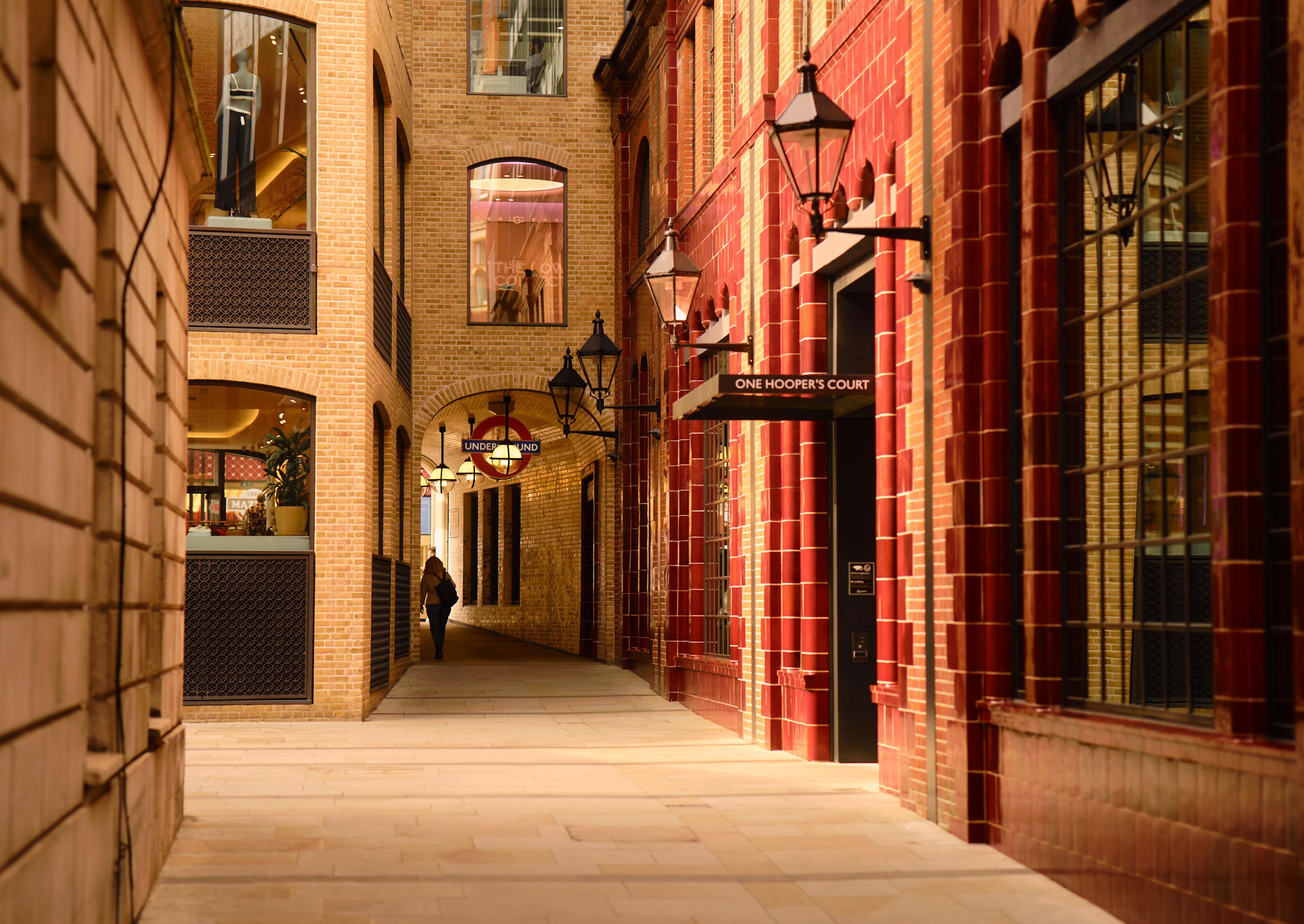
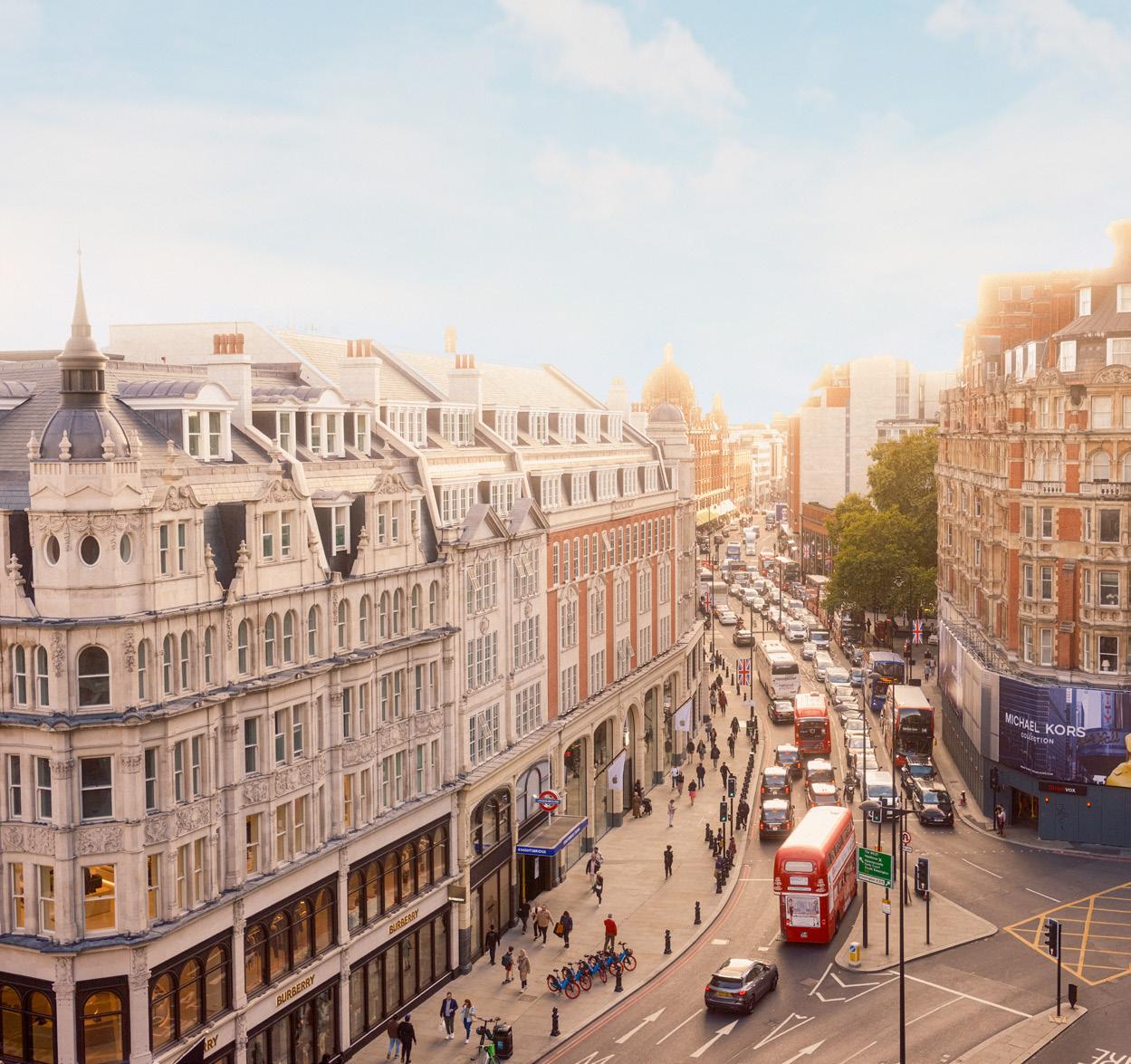
6 HEALTH & WELL-BEING: HEALTHY STREETS NETWORK FOR WALKING, CYCLING OR WHEELING
Work with TfL, RBKC and WCC to develop safe and attractive walking and cycling links to and through Knightsbridge.
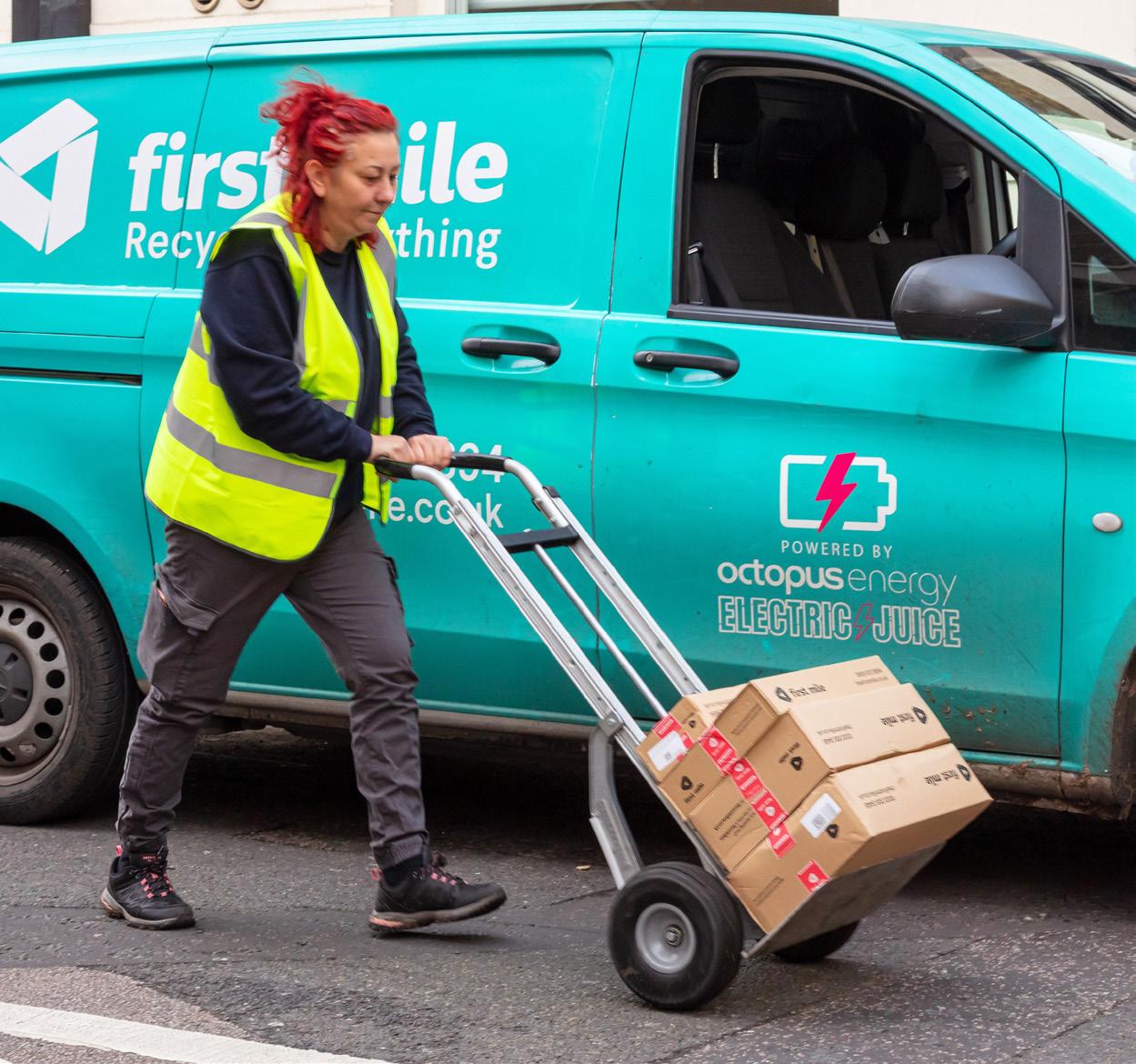
5 TRANSPORT: SUSTAINABLE DELIVERIES
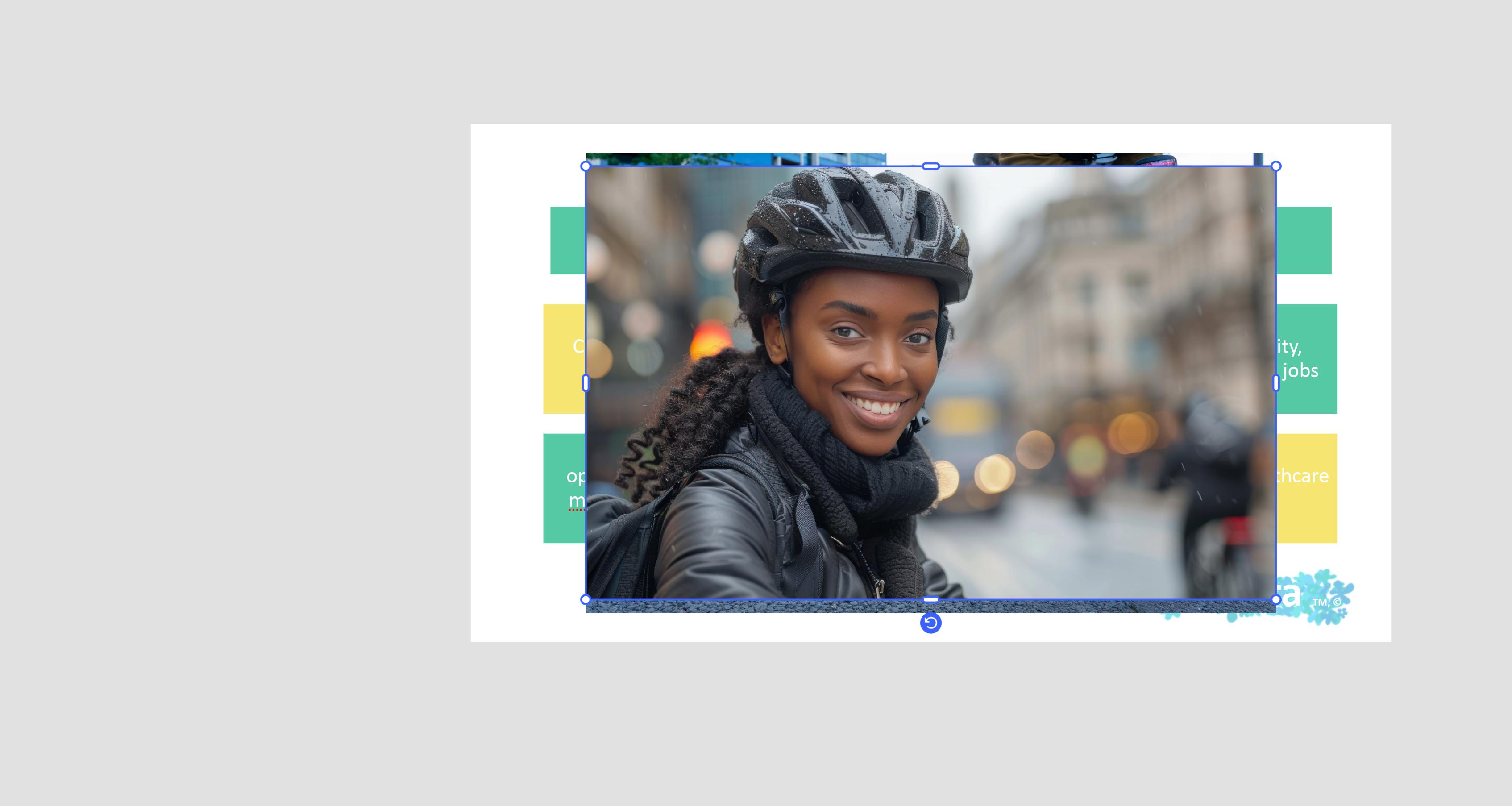
Reduce traffic and improve air quality by consolidating deliveries, improving routing, enabling cargo bike/EV last mile, and improving kerbside management

Photography by Rory Langdon-Down
SOCIAL
VALUE & INCLUSION: INTERNSHIPS & PLACEMENTS (SCHOOLS/UNIVERSITIES PROGRAMME).
Run an internship and placements programme linking local schools/ universities with Knightsbridge businesses.
THE COMPLETE LIST OF ACTIONS HAS BEEN PRIORITISED TO COMMENCE IN THE IMMEDIATE, SHORT, OR MEDIUM TERM. RESOURCE PLANNING AND PRIORITISATION WILL BE REVIEWED ANNUALLY.
The action plan is intended to be a living document, regularly updated as actions progress and new opportunities are realised.
It is an action plan for the Knightsbridge community of businesses, residents, the public sector and neighbouring organisations, with opportunities for collaboration in delivery and sharing expertise and resources.
Present Share

DELIVERY PATHWAYS
THIS SECTION OUTLINES THE DELIVERY PATHWAYS FOR THE SEVEN PRIORITY ACTIONS.
The pathways summarise how the baseline evidence and stakeholder priorities translate into practical, sequenced interventions, and how those interventions are expected to contribute to district wide outcomes over time.
The pathways provide a clear route from strategic intent to delivery, while recognising that outcomes for Knightsbridge will be achieved through partnership working.
1 2 3 4 5 6 7
BIODIVERSITY & NATURE RECOVERY
WATER CONSERVATION — LEAK DETECTION & RAPID REPAIR
CIRCULAR ECONOMY — RECYCLING UPLIFT & PACKAGING REDUCTION
GREENHOUSE GASES & LOCAL AIR QUALITY
TRANSPORT — SUSTAINABLE DELIVERIES
HEALTH & WELL-BEING — HEALTHY STREETS NETWORK
SOCIAL VALUE & INCLUSION — INTERNSHIPS & PLACEMENTS
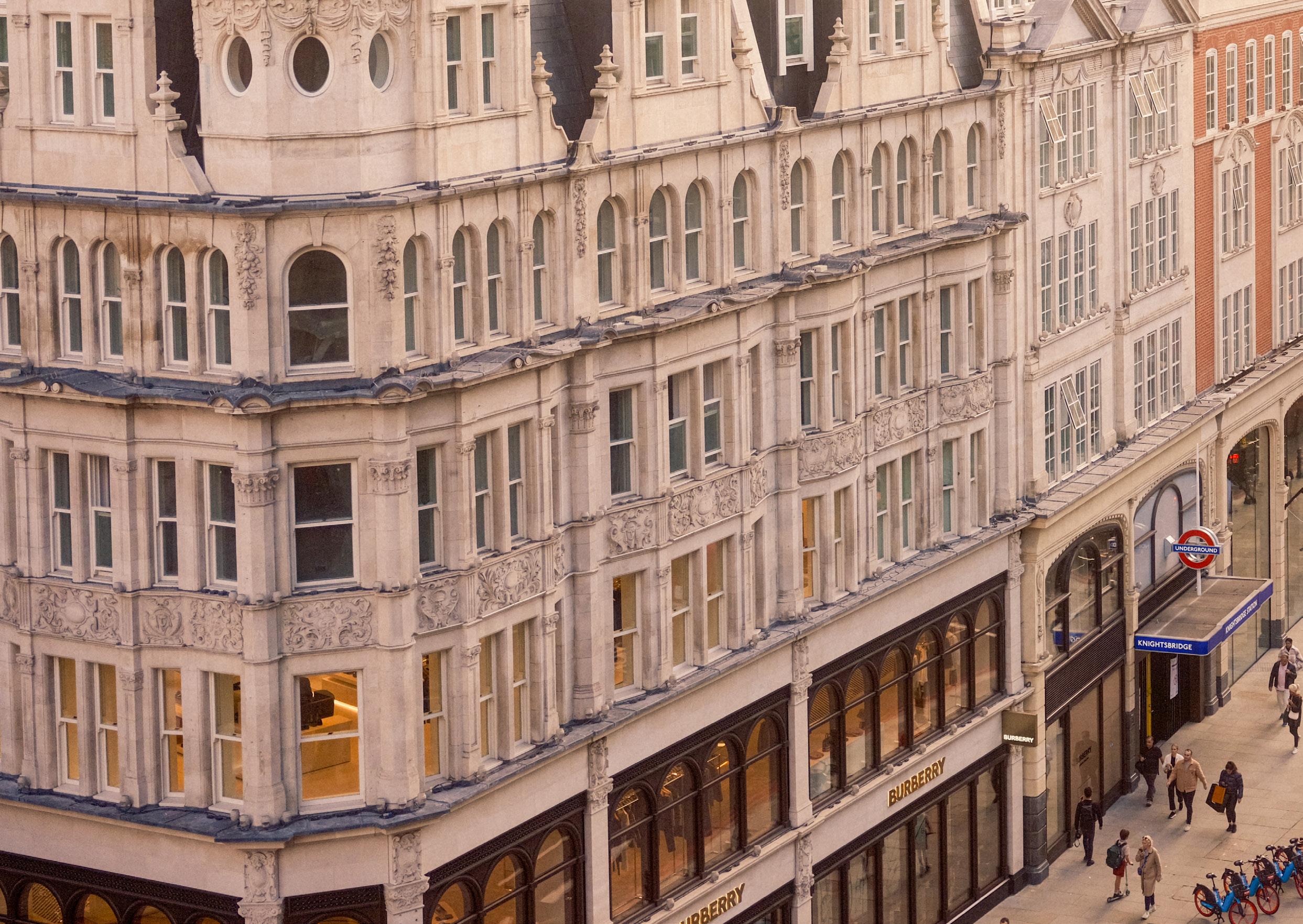
“
The collaborative approach to design at each stage has engaged residents, amenity societies, the neighbourhood forum, businesses and the area’s two local councils and TfL.
This has resulted in a remarkable shared vision and strategy that can create a truly sustainable place to live and ensure Knightsbridge retains its international status as a luxury district.
SIMON BIRKETT Chair, Knightsbridge Neighbourhood Forum
BIODIVERSITY & NATURE RECOVERY (GREENING, COOLING, SUDS)
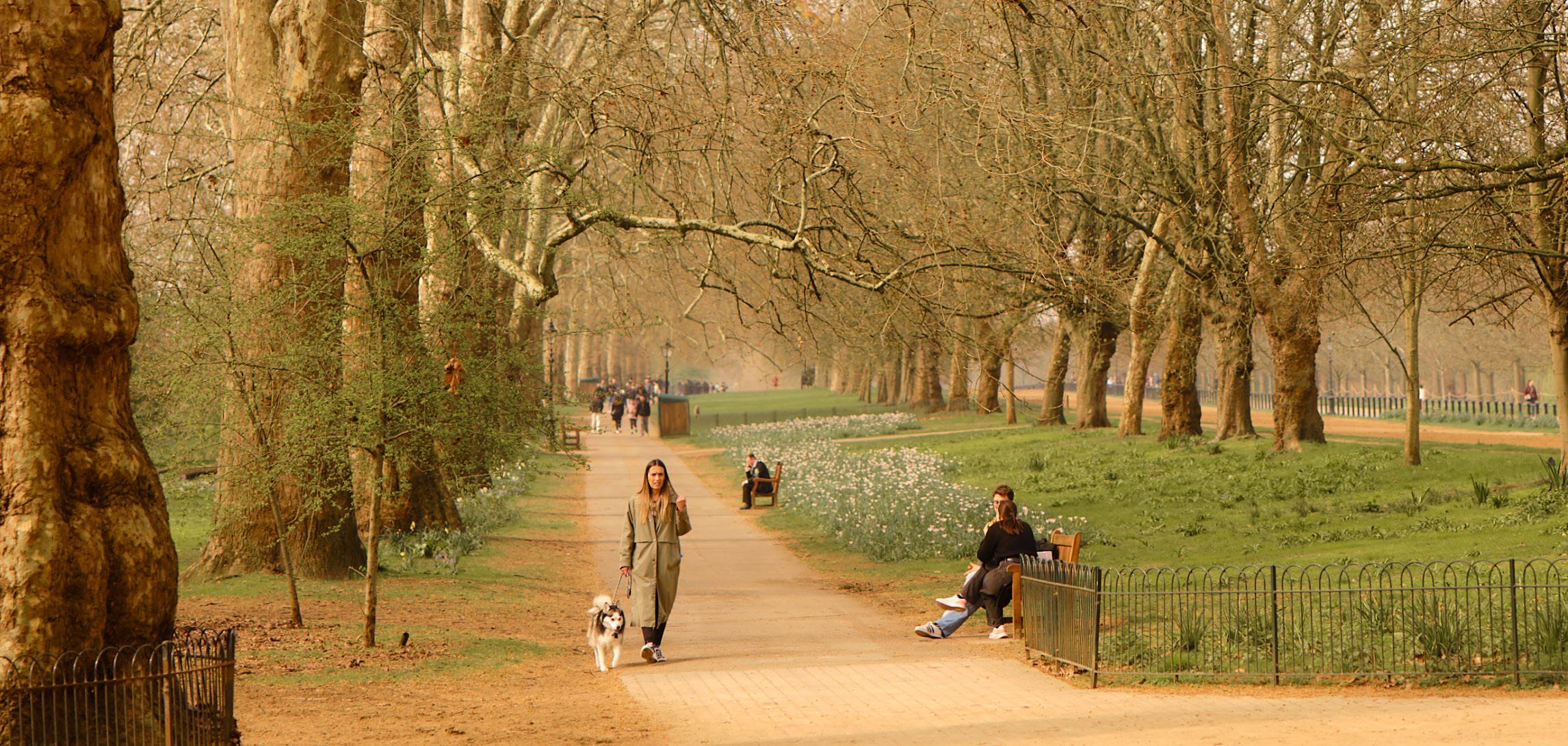
STARTING POINT: EVIDENCE AND NEED
Baseline mapping highlights that while Knightsbridge benefits from proximity to major green assets, the core commercial streets have limited street-level greening, reinforcing the case for targeted trees, planting, green corridors and sustainable drainage.
STRATEGIC OBJECTIVE
Increase nature recovery and climate resilience in the public realm through coordinated greening and resilience design, improving everyday comfort and reducing heat and surface water risk.
DELIVERY PATHWAY
1
2
Identify potential locations using baseline maps and partner intelligence to prioritise streets/junctions where greening and SuDS will deliver the greatest cumulative benefit.
3
Convene delivery partners through the sustainability forum to agree programme scope, delivery windows, funding routes and maintenance responsibilities
Deliver visible early wins - street trees, planted areas/SuDS to build confidence, support co-funding and create case studies.
4
5
Scale through property collaboration by aligning greening opportunities (e.g., pocket gardens/green roofs) with estate works and refurbishment cycles.
Embed monitoring and stewardship via annual reporting and agreed standards for what counts and how it is maintained.
EXPECTED OUTCOMES
More street-level greening and water management interventions, strengthening biodiversity and helping mitigate overheating and surface water flooding risk.
MEASURING PROGRESS (HEADLINE INDICATORS)
New trees planted and new SuDS /planted area (m²).
WATER CONSERVATION
(LEAK DETECTION AND RAPID REPAIR)
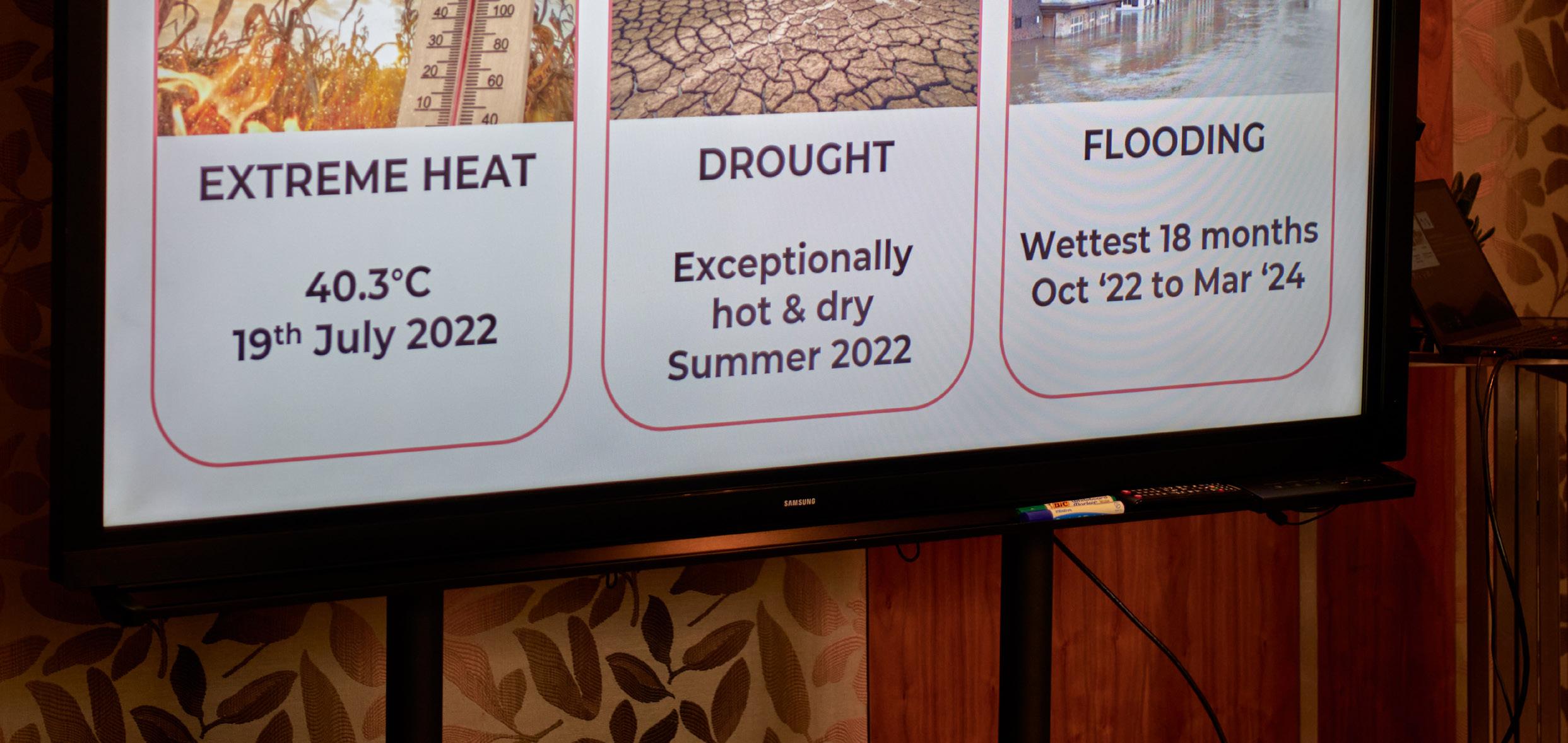
STARTING POINT: EVIDENCE AND NEED
Evidence identifies water conservation and future shortages as a key challenge for London.
STRATEGIC OBJECTIVE
Reduce avoidable water loss and improve water efficiency across participating buildings through a repeatable, supplier-enabled conservation and rapid repair model.

1
2
Create a “rapid repair pledge” with participating owners/occupiers to commit to identifying and fixing leaks quickly (KP convening role).
3
Align Thames Water, suppliers and property owners to signpost preferred leak detection and efficiency measures
4
Pilot with a cohort of willing members to establish a baseline and prove the operational model before scaling.
5
Scale district-wide through comms and sustainability forum engagement, using case studies to encourage take-up at scale.
Integrate with broader water actions (e.g., greywater reuse, rainwater harvesting) as participating portfolios mature.
EXPECTED OUTCOMES
Reduced potable water use intensity at participating sites and enhanced resilience messaging and practices throughout the district.
MEASURING PROGRESS (HEADLINE INDICATORS
)
Water use intensity (participating sites).
3
CIRCULAR ECONOMY — RECYCLING UPLIFT & PACKAGING REDUCTION
(SINGLE DISTRICT PROGRAMME)
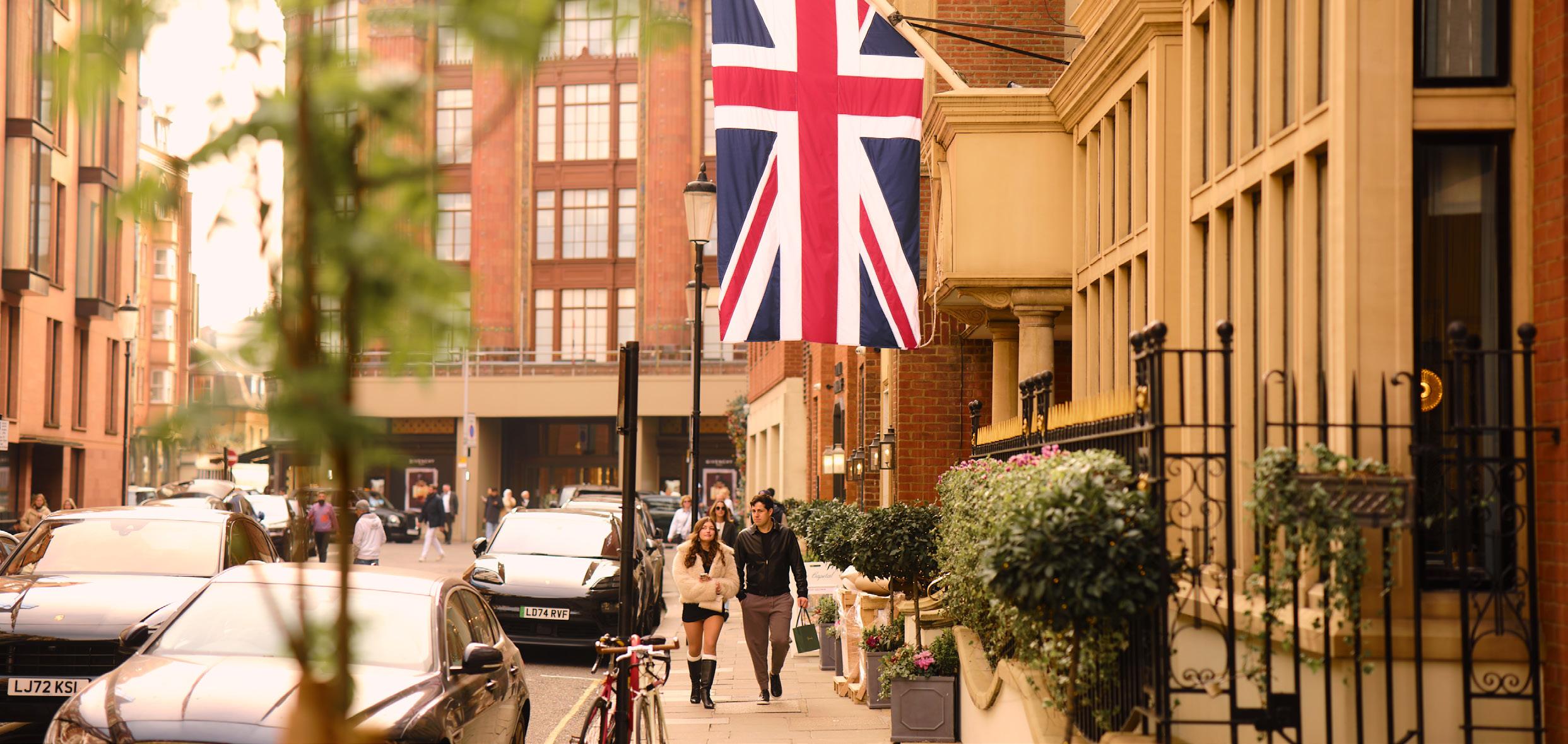
STARTING POINT: EVIDENCE AND NEED
Stakeholder feedback prioritised operational systems that require collaboration, including waste, reuse and servicing.
STRATEGIC OBJECTIVE
Increase recycling performance and reduce waste through a joined-up district programme combining audits, training, supplier coordination and sector specific guidance and pilots on packaging reduction.

Photography by Rory Langdon-Down
1
Create a single programme offer so members see a simple route: packaging and waste audit → improvements plan → staff training → supplier reporting.
2
3
Coordinate preferred suppliers with external partners such as ReLondon to standardise audit approach, provide sector specific guidance and data outputs.
Target high-impact sectors first (hospitality/F&B) for food waste separation and takeaway/packaging reduction interventions.
4
5
Enable supporting infrastructure pilots (refill / reverse vending points; additional on-street recycling where feasible) to build demand.
Embed learning through comms and case studies and link to sustainable procurement standards.
EXPECTED OUTCOMES
Higher recycling rates, more consistent waste practices across members, and reduced single-use packaging and food waste impacts.
MEASURING PROGRESS (HEADLINE INDICATORS
)
Waste recycling, waste audits completed, single-use packaging replaced with circular economy alternatives, plus food waste separated/diverted and venues using food waste tracking.
GREENHOUSE GASES & LOCAL AIR QUALITY
(RETROFIT ACCELERATOR PROGRAMME)
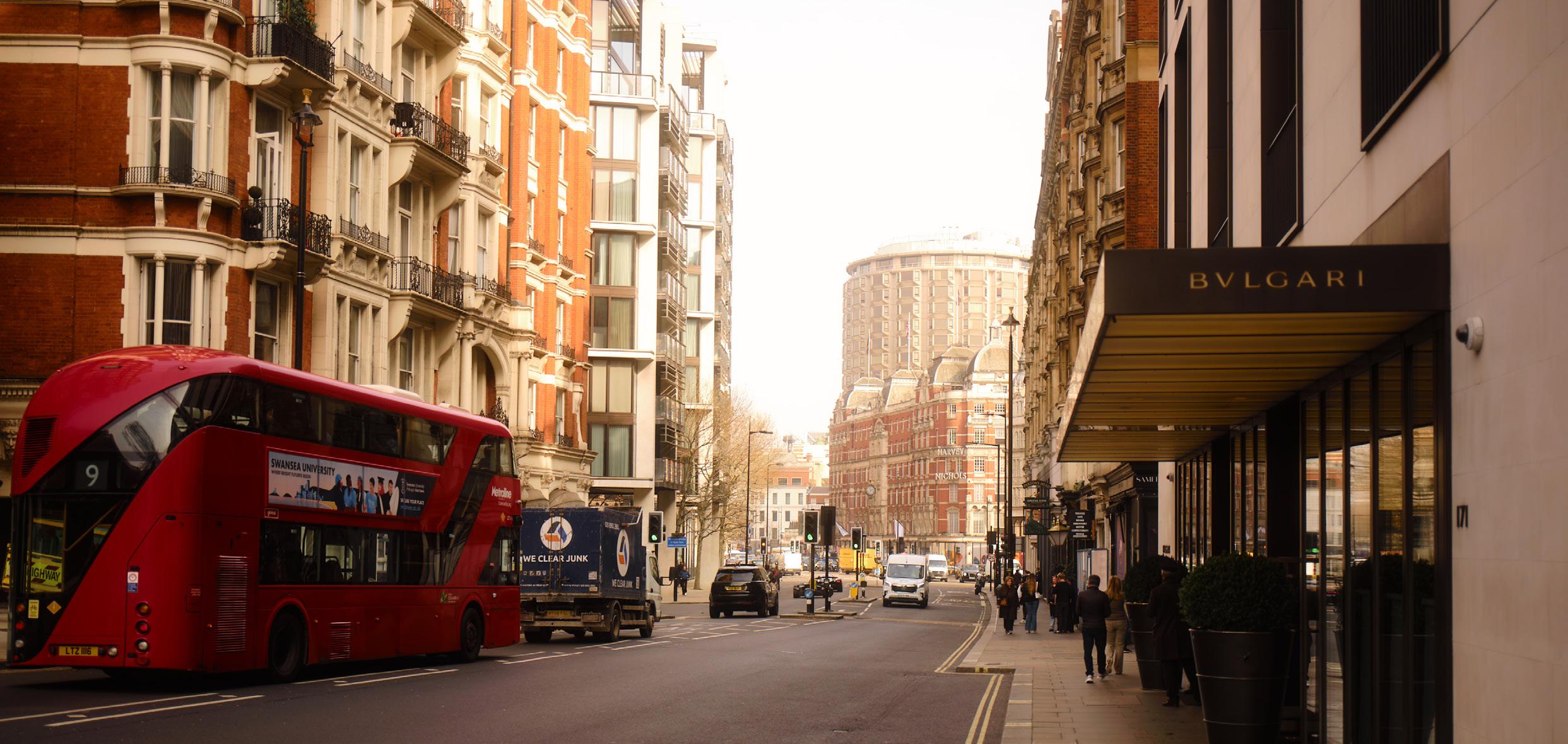
STARTING POINT: EVIDENCE AND NEED
The baseline indicates significant progress is needed to meet minimum energy standards, commercial buildings are a major source of carbon emissions, and mapping highlights poor air quality along key corridors, supporting a coordinated building performance programme.
STRATEGIC OBJECTIVE
Accelerate retrofit delivery across participating buildings to reduce operational energy use and emissions, supporting both decarbonisation and local air quality improvement.
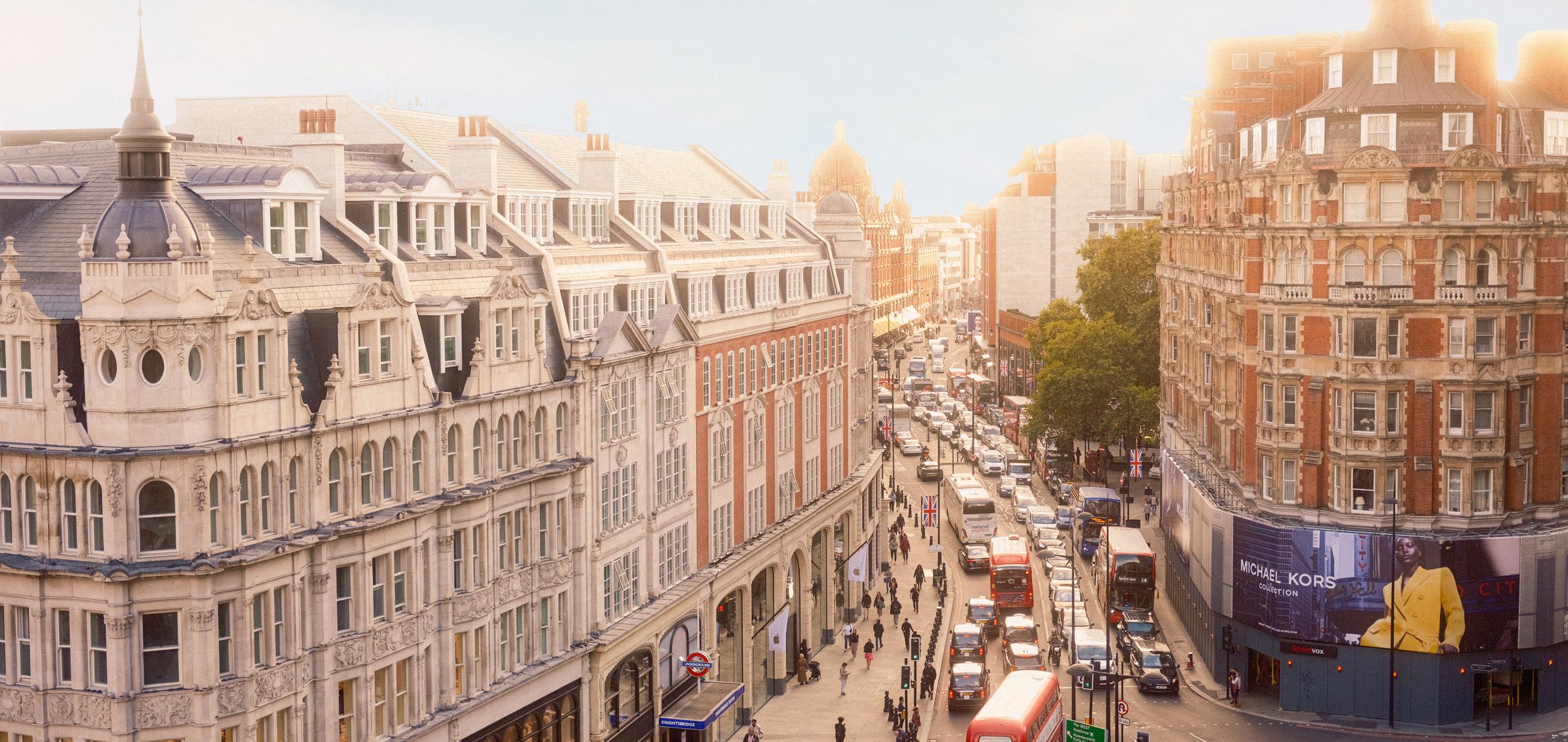
Photography by Rory Langdon-Down
1
2
Convene an accelerator task group of owners/occupiers, boroughs/ GLA offers and accredited suppliers into a single, easy-to-understand programme.
Prioritise repeatable early measures (audits, metering/controls optimisation, lighting and fabric improvements) to generate momentum and comparable data.
3
4
Scale into deeper interventions via aligned pathways (Green Leases; EPC uplift; performance-led approaches such as NABERS UK where relevant).
Integrate with corridor priorities and complementary actions (deliveries/servicing reduction, greening buffers).
5
Report outcomes using trends and proxies.
EXPECTED OUTCOMES
More property owners and tenants engaged in retrofit activity; improved energy performance trends; improved readiness for standards and disclosure; contributions to air quality improvement.
MEASURING PROGRESS (HEADLINE INDICATORS)
Energy audits completed, EPC A/B (or uplift proxy), operational energy intensity (kWh/m² where feasible), smart meter/ sub-meter coverage and sample building monitoring
TRANSPORT 5
(SUSTAINABLE TRANSPORT)
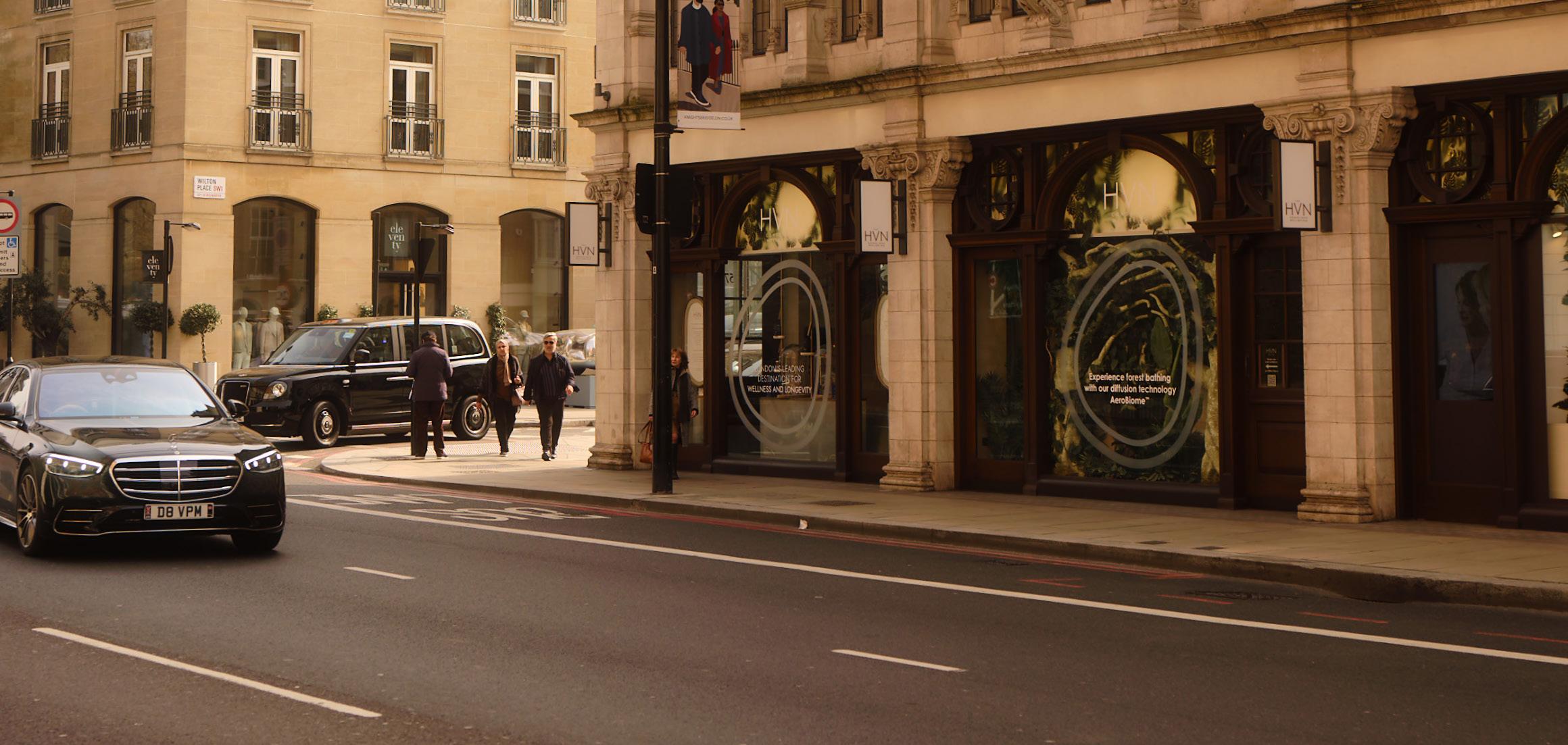
STARTING POINT: EVIDENCE AND NEED
Stakeholder feedback highlighted deliveries and servicing as a key operational pressure, and baseline mapping shows highest exposures along traffic corridors, supporting action to reduce impacts from freight and servicing.
STRATEGIC OBJECTIVE
Reduce traffic impacts and improve local environmental conditions by consolidating deliveries, improving routing, enabling low-emission last-mile solutions and improving kerbside management.
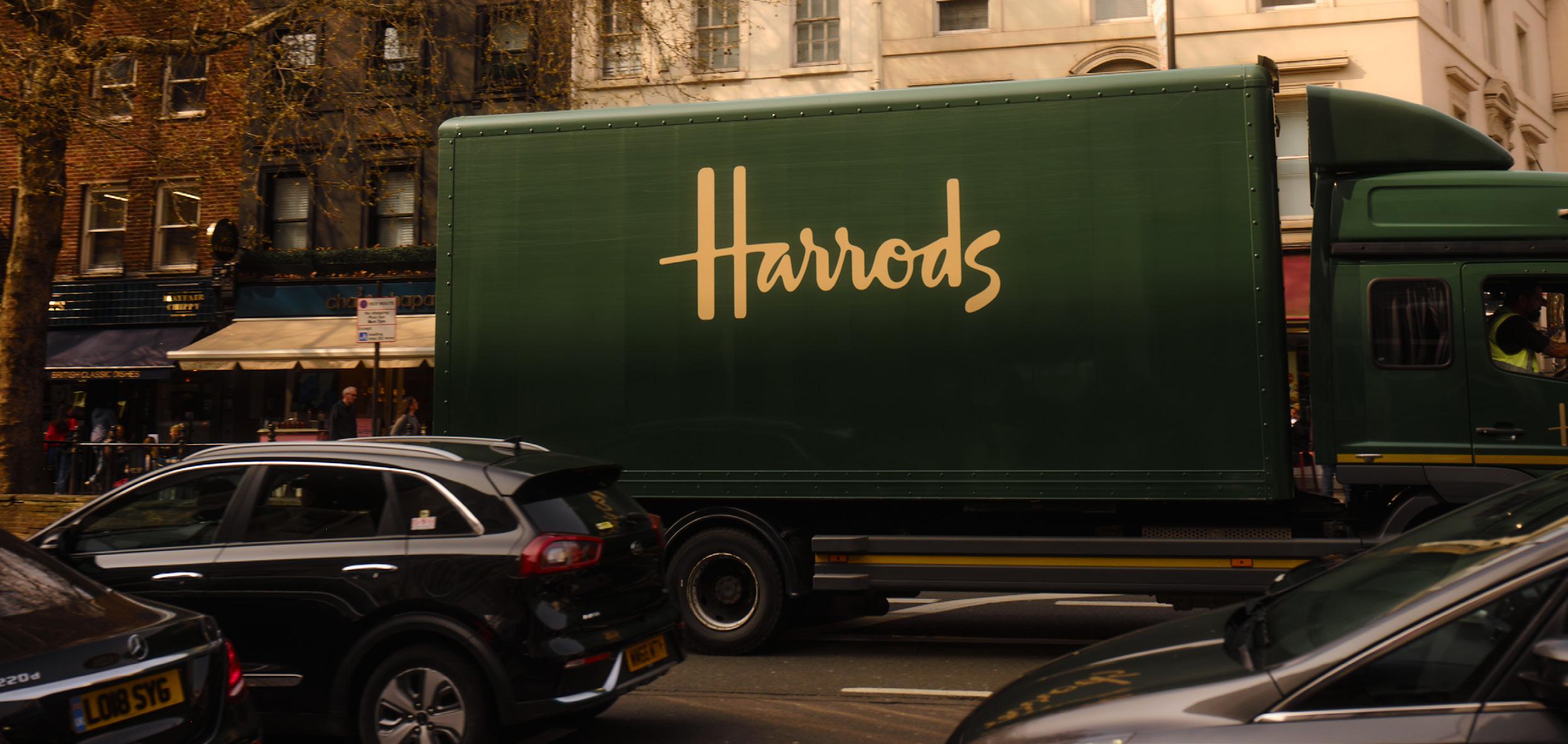
Photography by Rory Langdon-Down
1
2
Establish a cross-sector task and finish group (boroughs/Transport for London, estates, freight operators, retail and hospitality) to define an operating model and participation terms (KP convening role).
Define a pilot (priority streets/time windows, servicing behaviours, consolidation options) to enable comparable before/after measurement.
3
4
Pilot consolidated/low-emission last-mile solutions with willing businesses and preferred providers; use learnings to refine the model.
5
Scale through estates and sector cohorts, aligning with waste/recycling collection optimisation and EV/fleet transition where feasible.
Embed via guidance and reporting, creating case studies and annual progress updates.
EXPECTED OUTCOMES
Reduced servicing impacts on key streets; increased adoption of consolidated/low-emission services; contributions to better air quality and improved public realm experience.
MEASURING PROGRESS (HEADLINE INDICATORS)
Servicing vehicle movements on key streets and percentage of businesses using consolidated/low-emission lastmile services.
HEALTH & WELL-BEING — HEALTHY STREETS NETWORK
(WALKING/CYCLING/WHEELING LINKS)
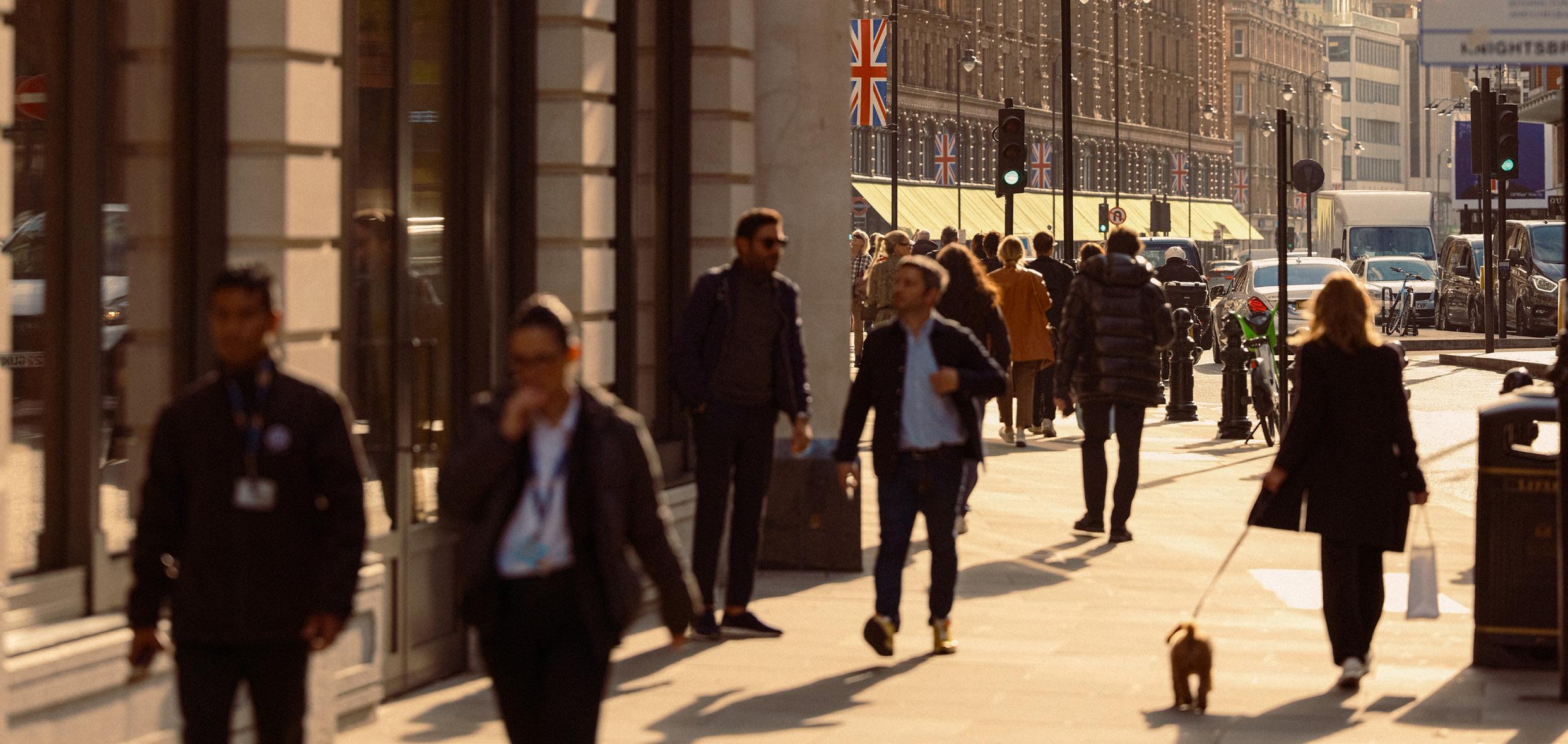
STARTING POINT: EVIDENCE AND NEED
Engagement with residents and stakeholders identified place-based well-being improvements and partnership delivery as central, with priority given to practical interventions and visible early wins.
STRATEGIC OBJECTIVE
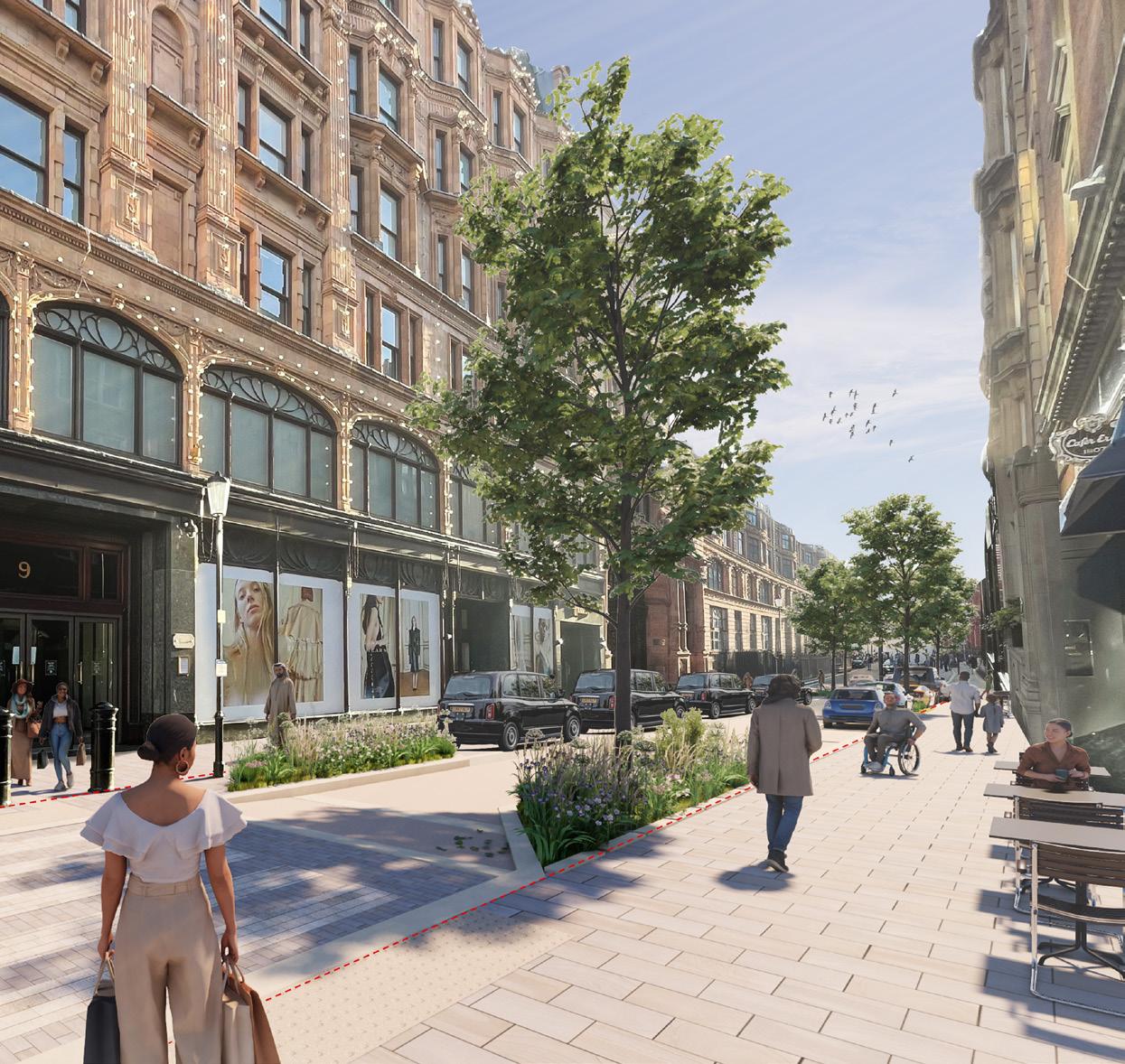
Work with partners to identify and improve safe, attractive and accessible walking/cycling/wheeling connections to and through Knightsbridge, supporting health, visitor experience and mode shift.

1
2
Agree strategic links with TfL, WCC and RBKC, aligning with the Place & Public Realm Strategy delivery.
3
Develop investment cases and potential quick wins (e.g., targeted schemes, wayfinding and accessibility integration) to build momentum and evidence.
4
Support behaviour change and participation through campaigns, incentives and engagement with employers/venues.
5
Enable supporting infrastructure (cycle parking/stands, travel plans for sites) through partnership and property collaboration.
Monitor and adapt using proportionate indicators, case studies and annual reporting.
EXPECTED OUTCOMES
Increased participation in active travel and healthier streets experience, supporting wider environmental goals and improved place quality.
MEASURING PROGRESS (HEADLINE INDICATORS)
Active travel mode share / campaign participation (sample cohort) and cycle stands added (plus travel plan uptake where used).
SOCIAL VALUE & INCLUSION — INTERNSHIPS & PLACEMENTS (SCHOOLS/UNIVERSITIES
PROGRAMME)

STARTING POINT: EVIDENCE AND NEED
The Strategy baseline includes socio-economic context and recognises inclusion and access to opportunity as core outcomes alongside environmental performance.
STRATEGIC OBJECTIVE
Create a practical pathway connecting local schools/universities with Knightsbridge businesses through internships and placements, supporting inclusive opportunity and local social value.

1
2
Broker a business member cohort willing to offer placements and internships, setting minimum quality and fair access principles.
3
Coordinate with borough education/employment partners and relevant community networks to ensure routes to opportunity are clear and accessible.
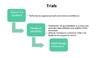
Pilot a first intake and document learning (what roles work, support needed, barriers to participation) to refine the programme model.
4
5
Scale annually using a repeatable calendar, employer recognition and case studies, linking to wider skills and learning activity where relevant.
Report outcomes through participation figures and qualitative impact case studies in annual progress reporting.
EXPECTED OUTCOMES
More local young people accessing paid/unpaid opportunities (as defined), stronger community connection, and improved visibility of the district’s social value contribution.
MEASURING PROGRESS (HEADLINE INDICATORS)
Young people engagement (capturing internships/placements qualitative feedback).
MONITORING AND REPORTING
Effective monitoring and transparent reporting are central to the successful delivery of the Knightsbridge Sustainability Strategy and Action Plan.
The Knightsbridge Partnership is committed to ensuring that progress is measured, communicated, and continuously improved, enabling accountability to members, stakeholders, and the wider community.
MONITORING FRAMEWORK
1. KEY PERFORMANCE INDICATORS (KPIS):
Each action has corresponding district-based SMART Key Performance Indicators (KPIs) which have been established to track progress across all seven sustainability themes.
THESE DISTRICT INDICATORS
• are intended to align with and contribute towards business’s own indicators and targets
• will measure progress against economic, environmental and social sustainability,
• are aligned with local, regional, and national targets, and the UN Sustainable Development Goals.
The district-based monitoring framework measures inputs, outputs, and outcomes, and will prioritise tracking and reporting of outcomes whenever practical, proportionate, and beneficial.
INPUTS OUTPUTS
INPUTS WHAT WE INVEST TO ENABLE DELIVERY
Inputs are the resources that the Knightsbridge Partnership and its members and partners commit to enable delivery of the Sustainability Strategy, such as governance capacity, funding, partner time, data systems, and technical expertise. Inputs ensure initiatives can be implemented consistently across the district and monitored transparently.
OUTCOMES
THE CHANGES WE AIM TO ACHIEVE
Outcomes are the real world changes that result from implementing the Strategy. They reflect progress toward the district’s 2030 goals, such as cleaner air, reduced operational emissions, improved climate resilience, increased nature recovery, and reduced residual waste. Outcomes are tracked through a combination of district indicators, partner data and trend analysis.
OUTPUTS
WHAT WE DELIVER AND CAN DIRECTLY COUNT
Outputs are the tangible activities and deliverables completed through the Action Plan. They are measurable in the short term and demonstrate implementation progress, for example, audits completed, pilots delivered, infrastructure installed, or businesses engaged.

2. DATA COLLECTION AND ANALYSIS
The Knightsbridge Partnership will work with members, local authorities, and partners to gather robust data using a combination of:
• Business self-reporting and surveys
• Environmental sensors and digital monitoring (e.g., air quality, energy use)
• Publicly available datasets (e.g., EPC ratings, waste statistics)
• Feedback from community and stakeholder engagement


4. ACTION TRACKING:
Progress on specific actions within the plan will be tracked using a project management approach, with clear responsibilities, timelines, and milestones.
3. BASELINE AND BENCHMARKING:
A clear baseline will be established for each priority KPI, enabling year-on-year comparison and benchmarking against best practice both within Knightsbridge and across comparable districts.

Photography by Colin Dack
REPORTING AND TRANSPARENCY
1. ANNUAL SUSTAINABILITY REPORT
The Knightsbridge Partnership will publish an annual Sustainability Report, summarising progress against KPIs, key achievements, challenges, and case studies. This report will be shared with members, stakeholders, and the public, and will highlight both quantitative outcomes and qualitative impact.
2. MEMBER AND STAKEHOLDER UPDATES
Regular updates will be provided to members through our newsletters, forums, and events. Knightsbridge Partnership will also engage with local authorities, neighbourhood forums, and community groups to share progress and gather feedback.
3. OPEN DATA AND ACCOUNTABILITY
Where possible, data and progress metrics will be made publicly available through Knightsbridge Partnership’s website and digital dashboards, supporting transparency and enabling external scrutiny.
4. CONTINUOUS IMPROVEMENT
Monitoring and reporting will not be static. Knightsbridge Partnership will review and refine KPIs, data sources, and reporting methods annually, responding to new evidence, member feedback, and evolving best practice. Lessons learned will inform future strategy updates and action planning.
GOVERNANCE AND OVERSIGHT
The Knightsbridge Partnership team and Strategic Board will oversee the monitoring and reporting process, with the Knightsbridge Partnership Sustainability Forum providing expert leadership in the respective areas. An annual performance review will be conducted with findings used to inform governance decisions, resource allocation, and future priorities.
In summary, robust monitoring and transparent reporting will ensure that the Knightsbridge Sustainability Strategy and Action Plan delivers real, measurable benefits for businesses, the community, and the environment, building trust, driving improvement, and demonstrating leadership in economic, social and environmental sustainability.
APPENDIX A:
APPENDIX B
APPENDIX C
APPENDIX F:
APPENDIX G
APPENDIX A: CO-DESIGN AND ENGAGEMENT
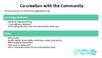
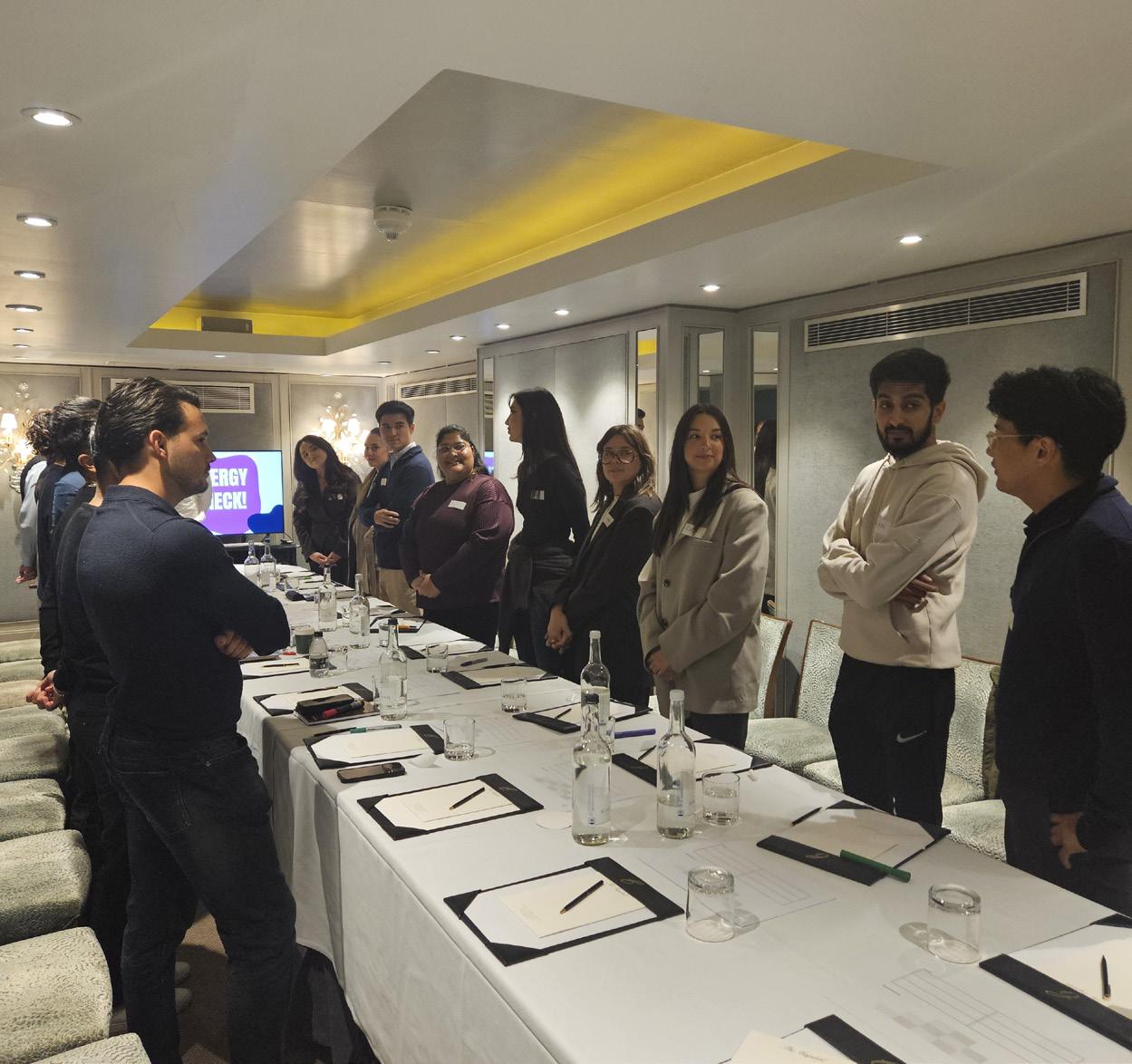
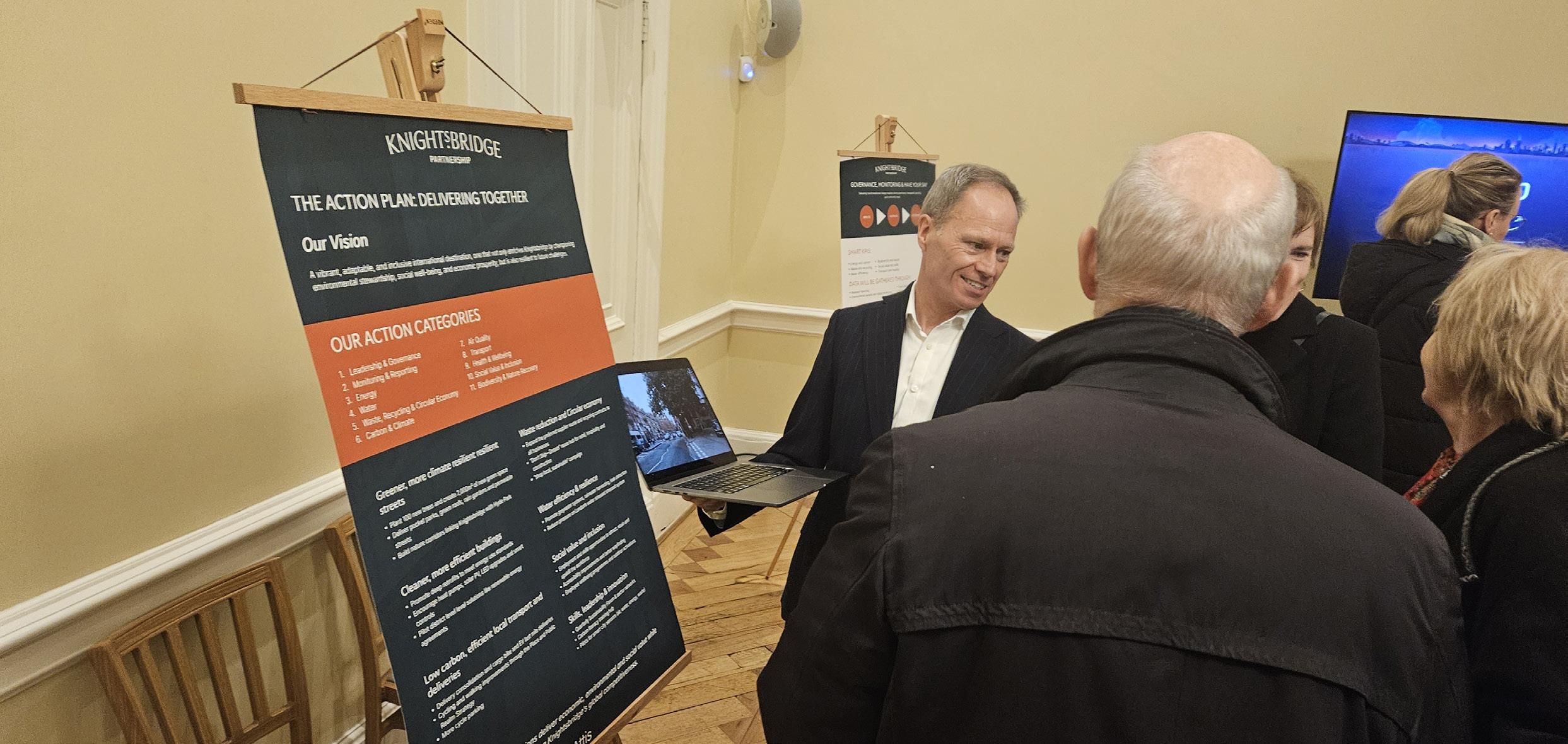
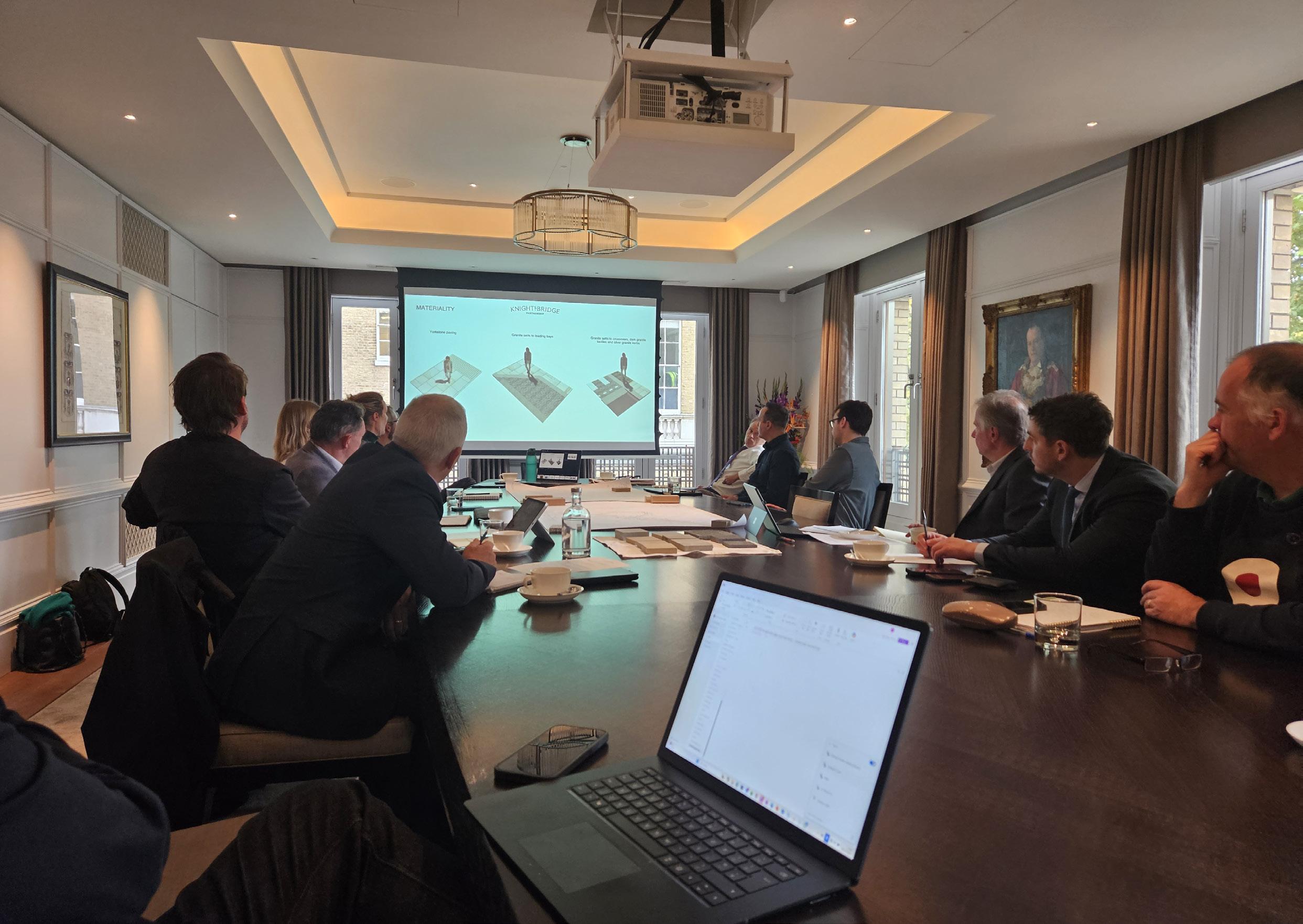
The strategy was co-created with the Knightsbridge community to ensure it reflects real world priorities, delivery constraints and opportunities for collaboration. The approach to co-design included two co-design workshops for businesses, residents and stakeholders to agree the priorities and to further develop the strategy and action plan, and a consultation drop-in session was held to listen to the wider community.
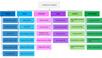
Stakeholders prioritised the following sustainable development goals in order of importance for action in Knightsbridge:







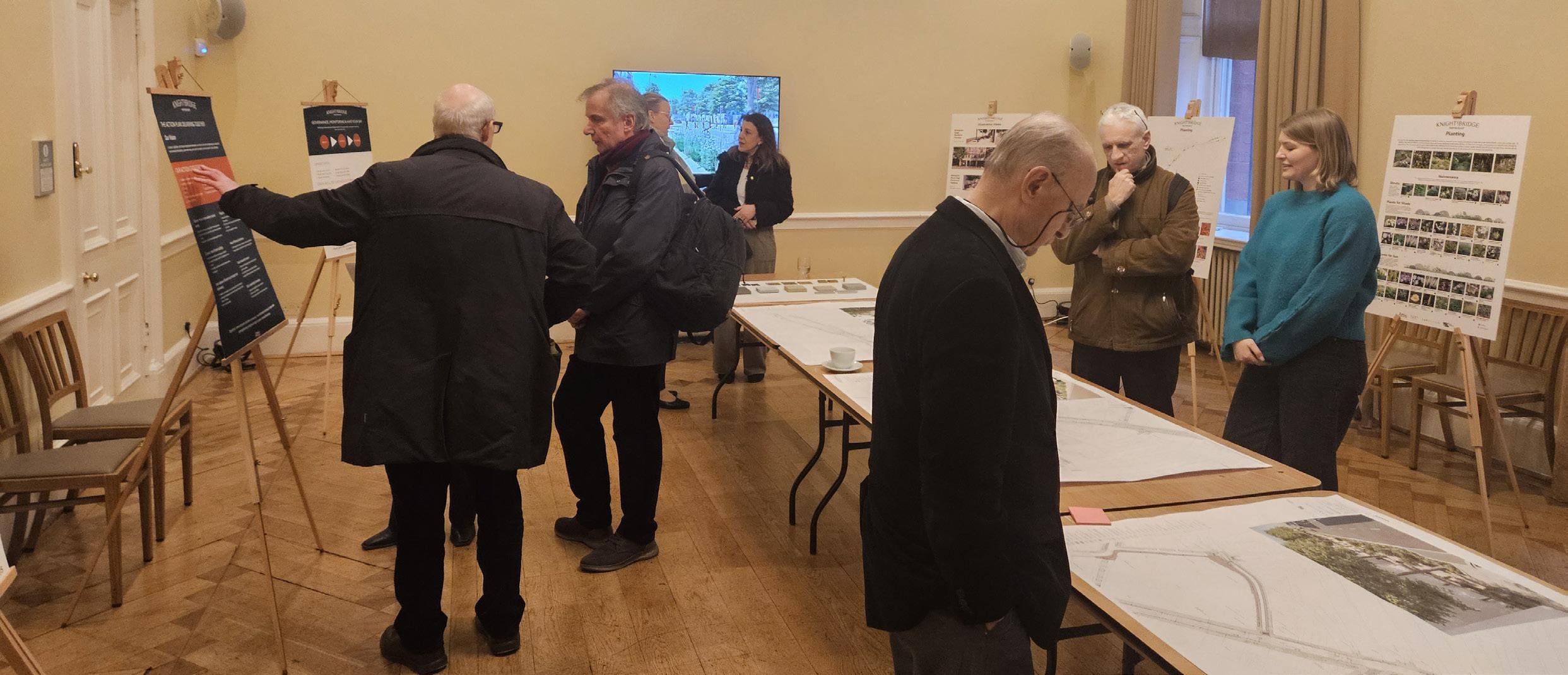
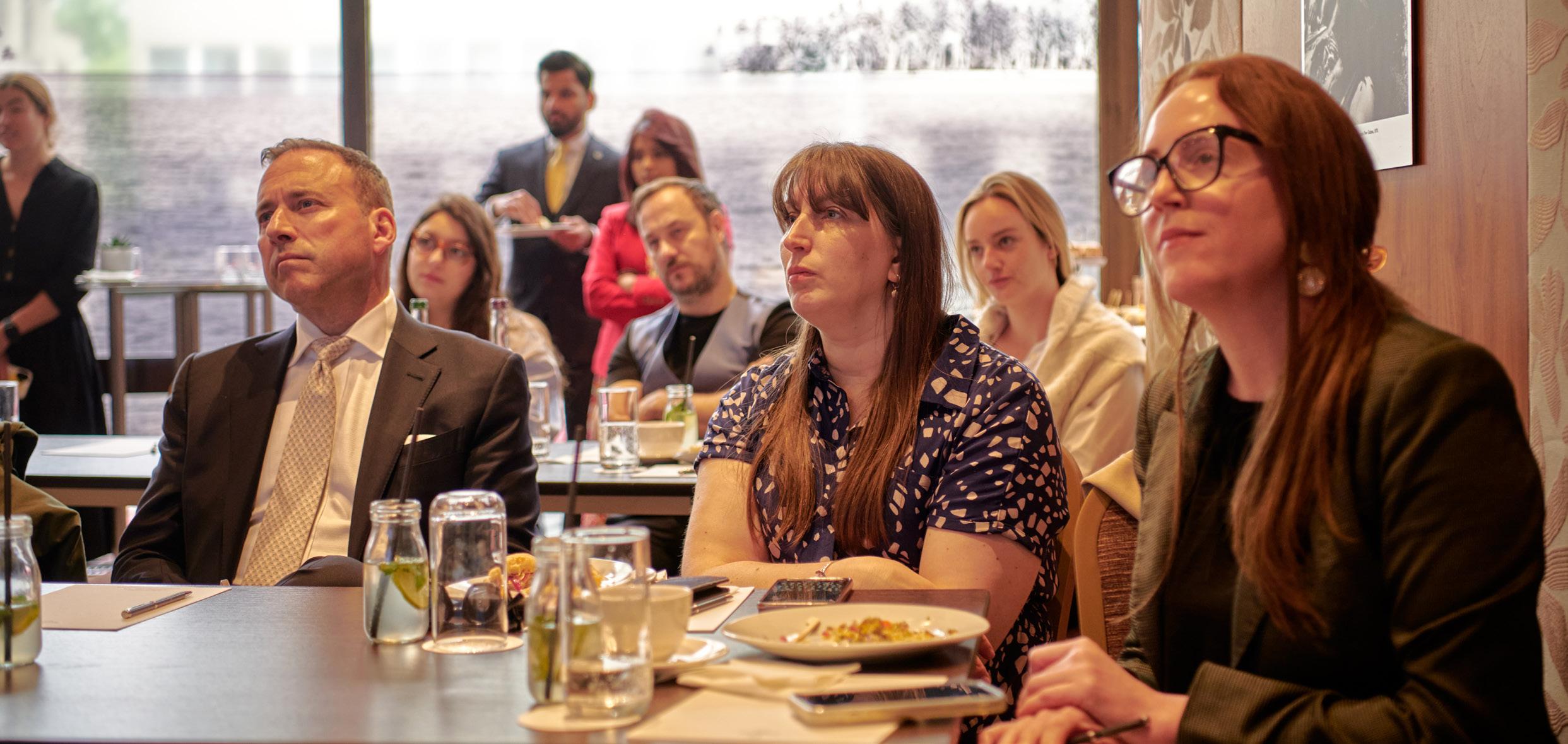
THE KNIGHTSBRIDGE PARTNERSHIP HELD A PUBLIC DROP-IN CONSULTATION SESSION IN FEBRUARY 2026 TO GATHER FEEDBACK ON THE DRAFT SUSTAINABILITY STRATEGY AND ACTION PLAN.
The session brought together residents, sustainability practitioners, neighbouring organisations and sector representatives, providing valuable insight into priorities, opportunities and practical considerations for delivery.
Stakeholders expressed strong support for the overall direction of the strategy, particularly its partnership-led, place-based approach and ambition to position Knightsbridge as a leader in sustainable urban destinations. There was a clear appetite for greater collaboration across sectors, with suggestions to convene regular sector specific roundtables to share best practice, accelerate learning and avoid duplication of effort.
Participants encouraged the Knightsbridge Partnership to concentrate on a smaller number of high impact objectives, supported by clear sequencing and early delivery of visible “quick wins”. Stakeholders emphasised the importance of consideration of where the greatest carbon and resource savings can be achieved, for example balancing hard to
retrofit buildings against opportunities to influence Scope 3 emissions through supply chains, logistics and procurement.
Feedback highlighted the importance of making the economic dimension of sustainability explicit, positioning sustainability as a driver of business resilience, competitiveness and longterm value.
There was strong support for nature recovery and greening, including calls for an “urban forest” approach that expands tree canopy, green infrastructure and nature-based solutions to address biodiversity loss, heat stress and air quality. Local operational issues were also raised, particularly deliveries and servicing, the need for reuse hubs to capture materials discarded between tenancies, improved on-street recycling provision, and interest in deposit return schemes, while recognising the practical challenges of some recycling systems.
Stakeholders support the strategy’s ambition and emphasise the importance of SMART objectives, clear accountability and early delivery, to build confidence, demonstrate progress and maintain momentum.
APPENDIX B: ANALYSIS OF BASELINE SUSTAINABILITY IN KNIGHTSBRIDGE
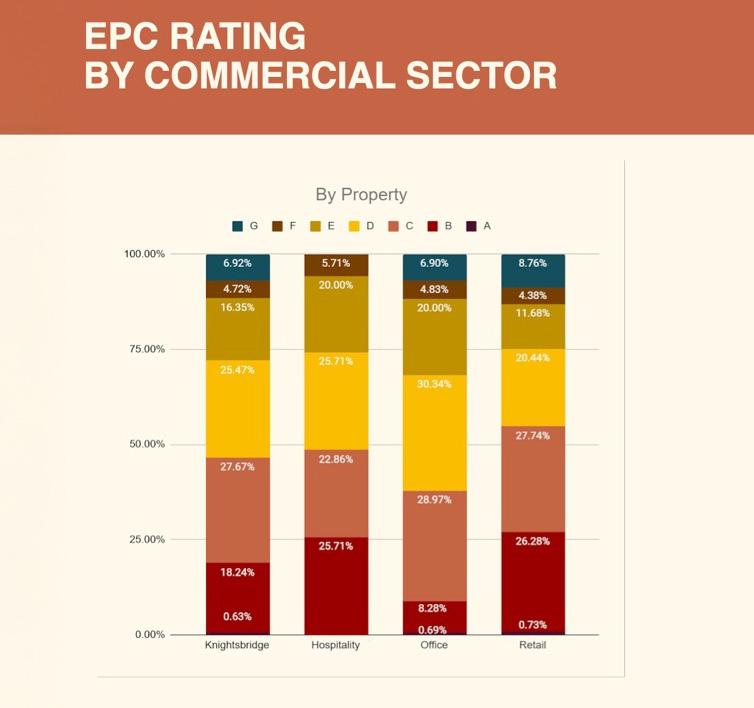
ENERGY PERFORMANCE CERTIFICATES
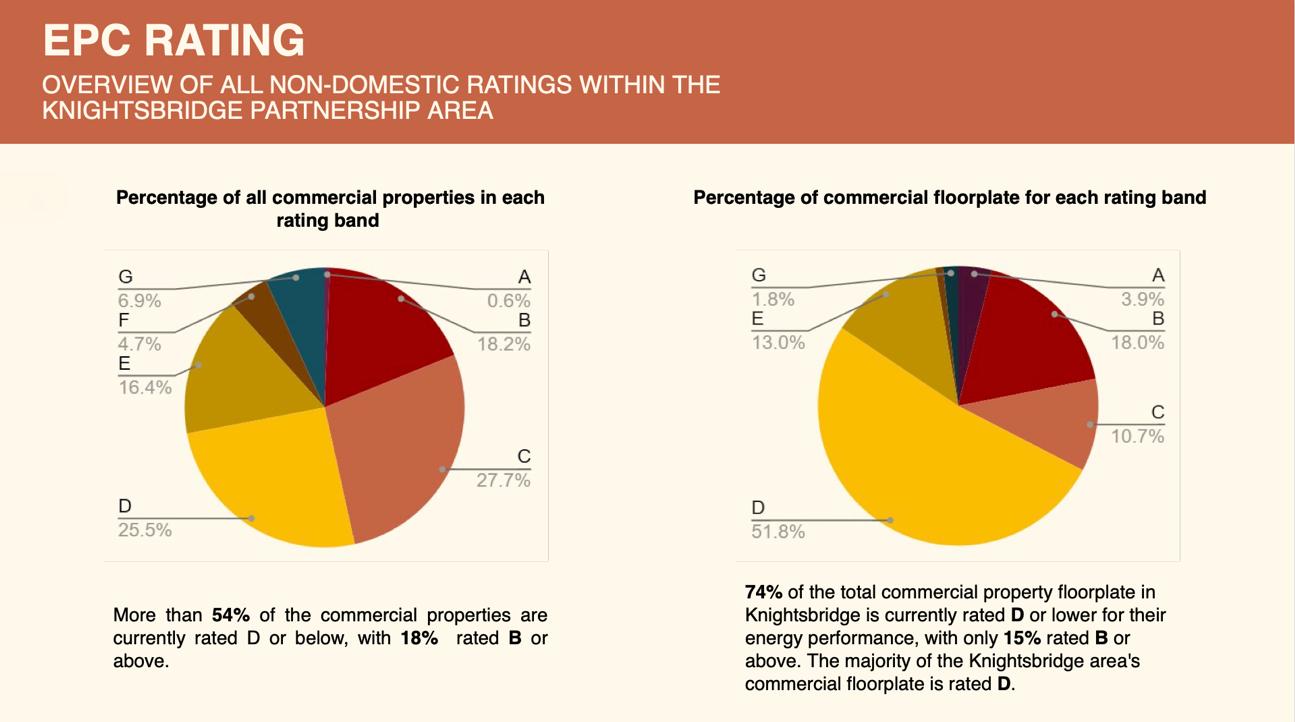
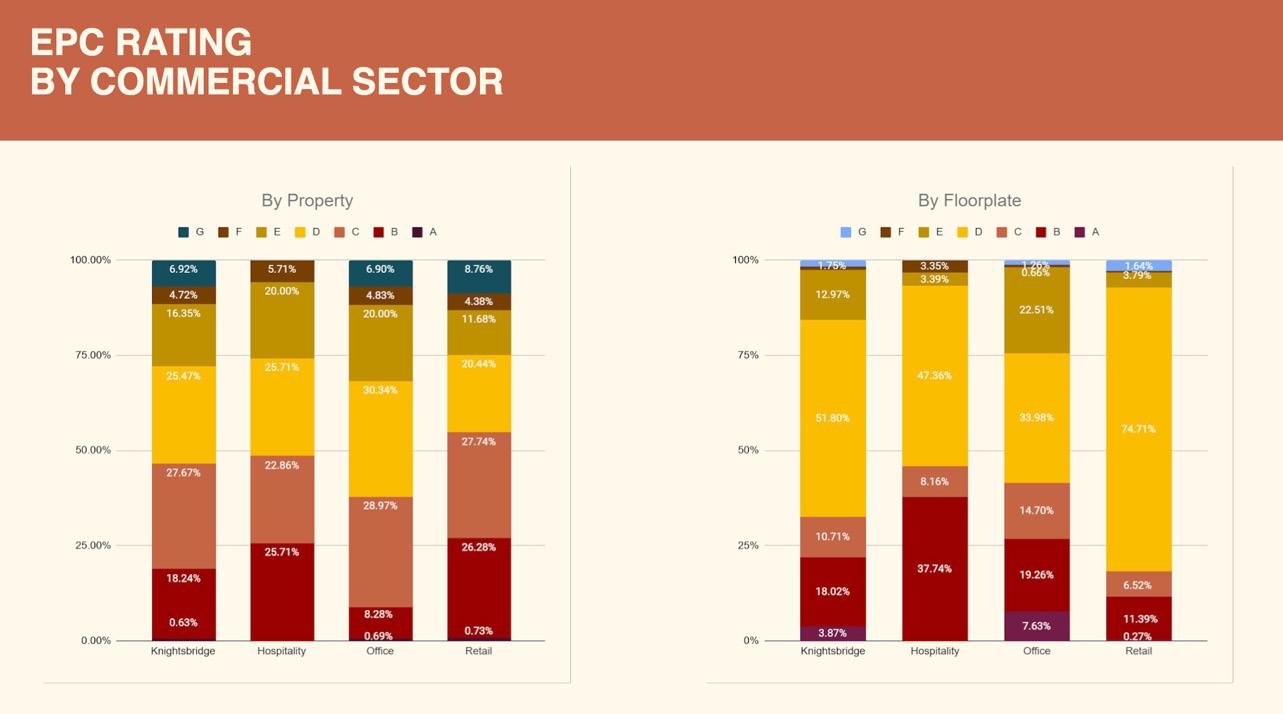
Published Energy Performance Certificates (EPCs) were analysed, which indicates that significant progress needs to be made to comply with 2030 minimum energy standards.
Moreover, emissions from commercial buildings account for 51% and 69% of borough emissions for RBKC and WCC, respectively, indicating the significance of reducing Scope 1 and Scope 2 emissions from commercial buildings.
It is noted however that EPCs are not a real indication of operational performance.
1. GREEN INFRASTRUCTURE AND TREE COVER
The two maps illustrate existing tree canopy and green space distribution. Knightsbridge benefits from adjacency to Hyde Park, a major ecological asset, but the core commercial streets show limited greenery. This gap underscores the need for street-level trees, planting, sustainable urban drainage, and biodiversity corridors to enhance climate resilience, cooling, carbon sequestration, and ecological connectivity.
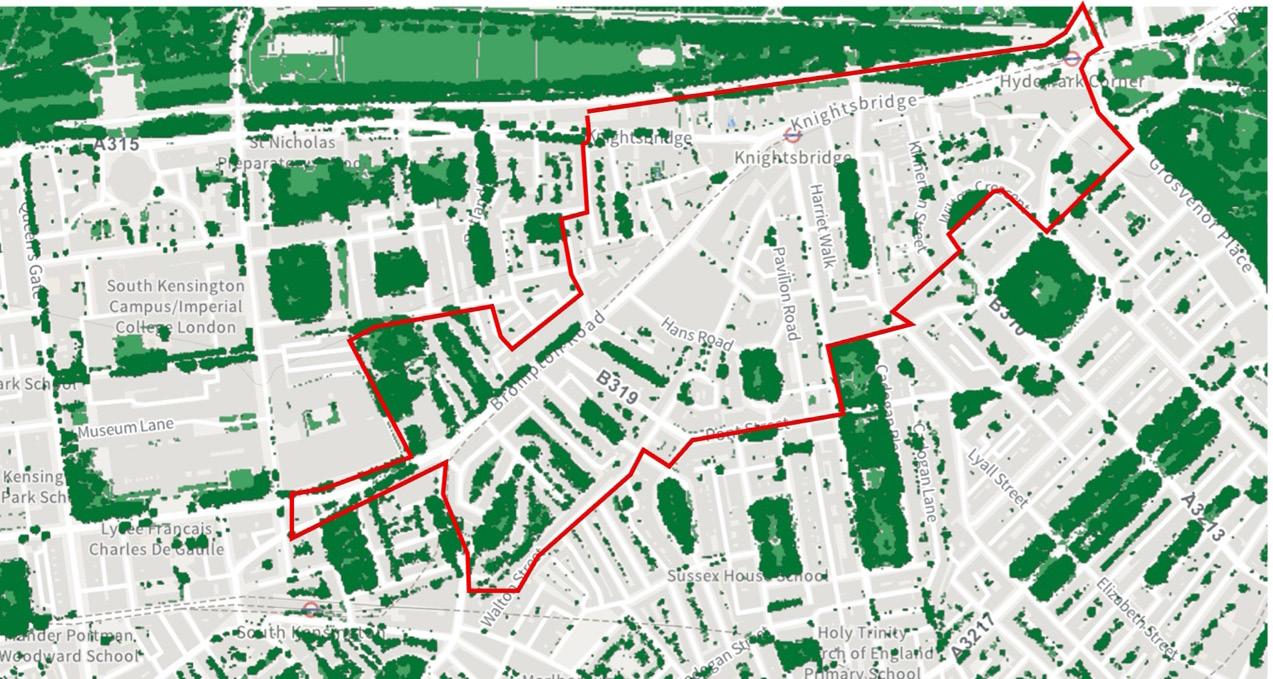
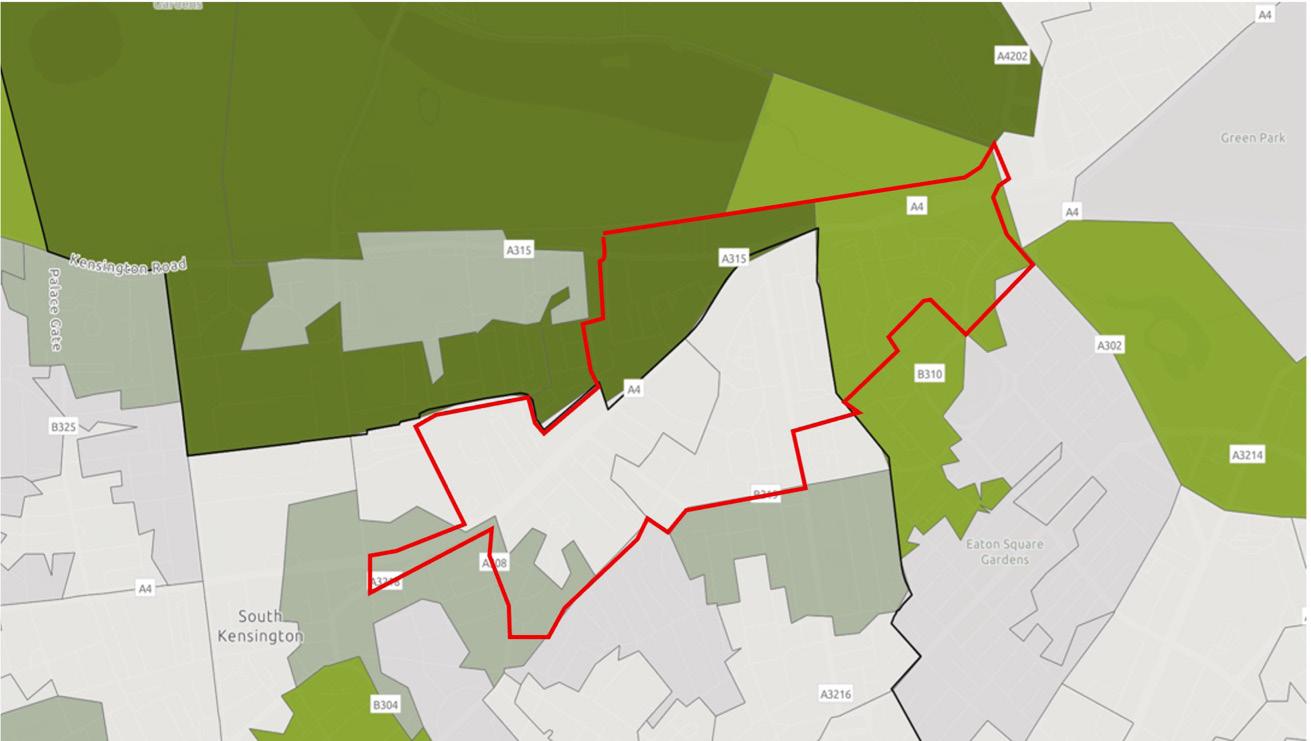
Figure B.2. Greening, Greater London Authority (2024)
Figure B.1. Tree Canopy Cover, London Data Store (2024)
2. AIR QUALITY: NITROGEN DIOXIDE AND PARTICULATE MATTER
The air quality maps reveal elevated NO₂ and particulate matter concentrations along the major traffic corridors of Brompton Road, Knightsbridge, and Hyde Park Corner. These pollutants pose health risks and align with high-traffic zones, reinforcing the need for accelerating adoption of low-emission transport, area wide approaches to reduce the impact of deliveries and servicing, measures to reduce the impact of construction, green buffers and retrofitting commercial buildings on these corridors.
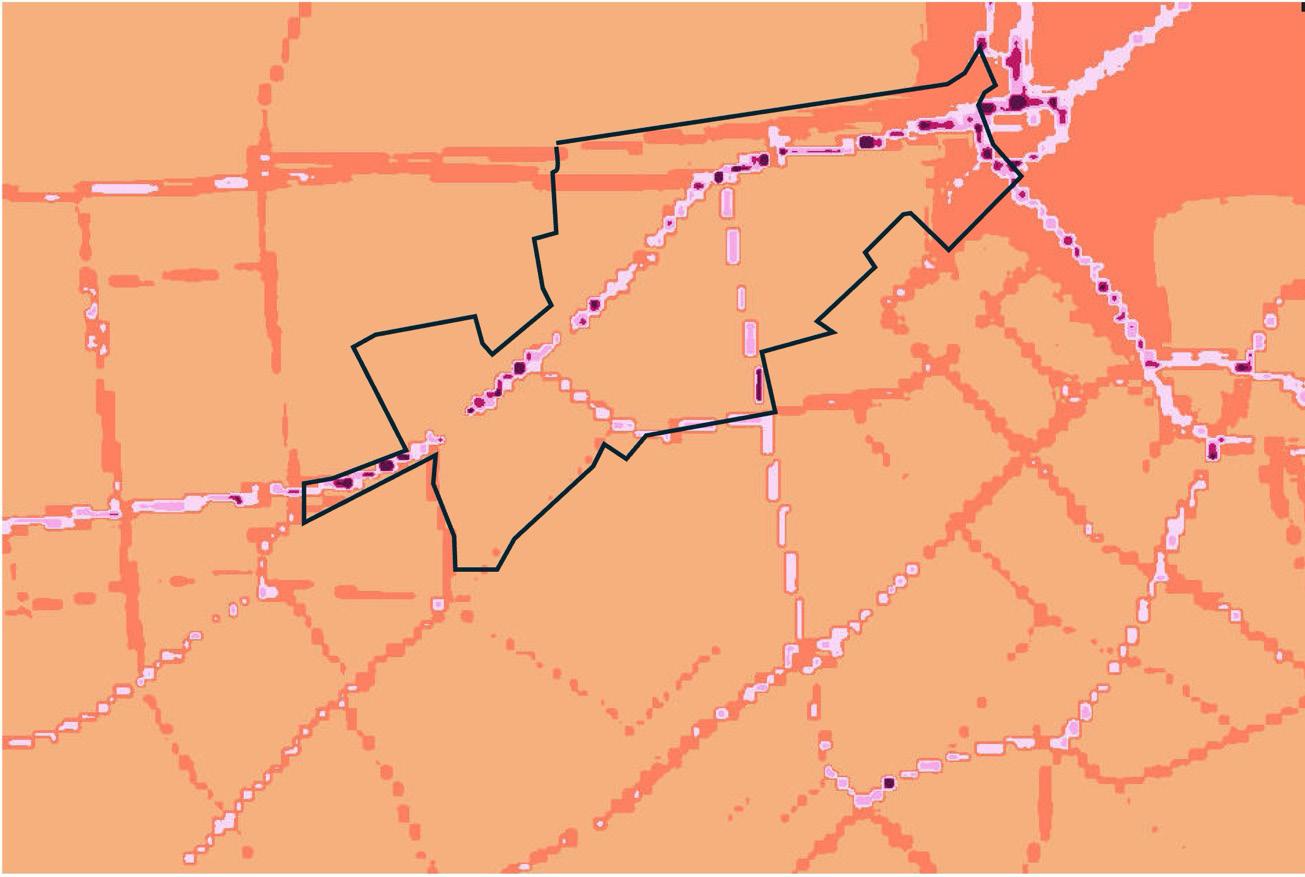
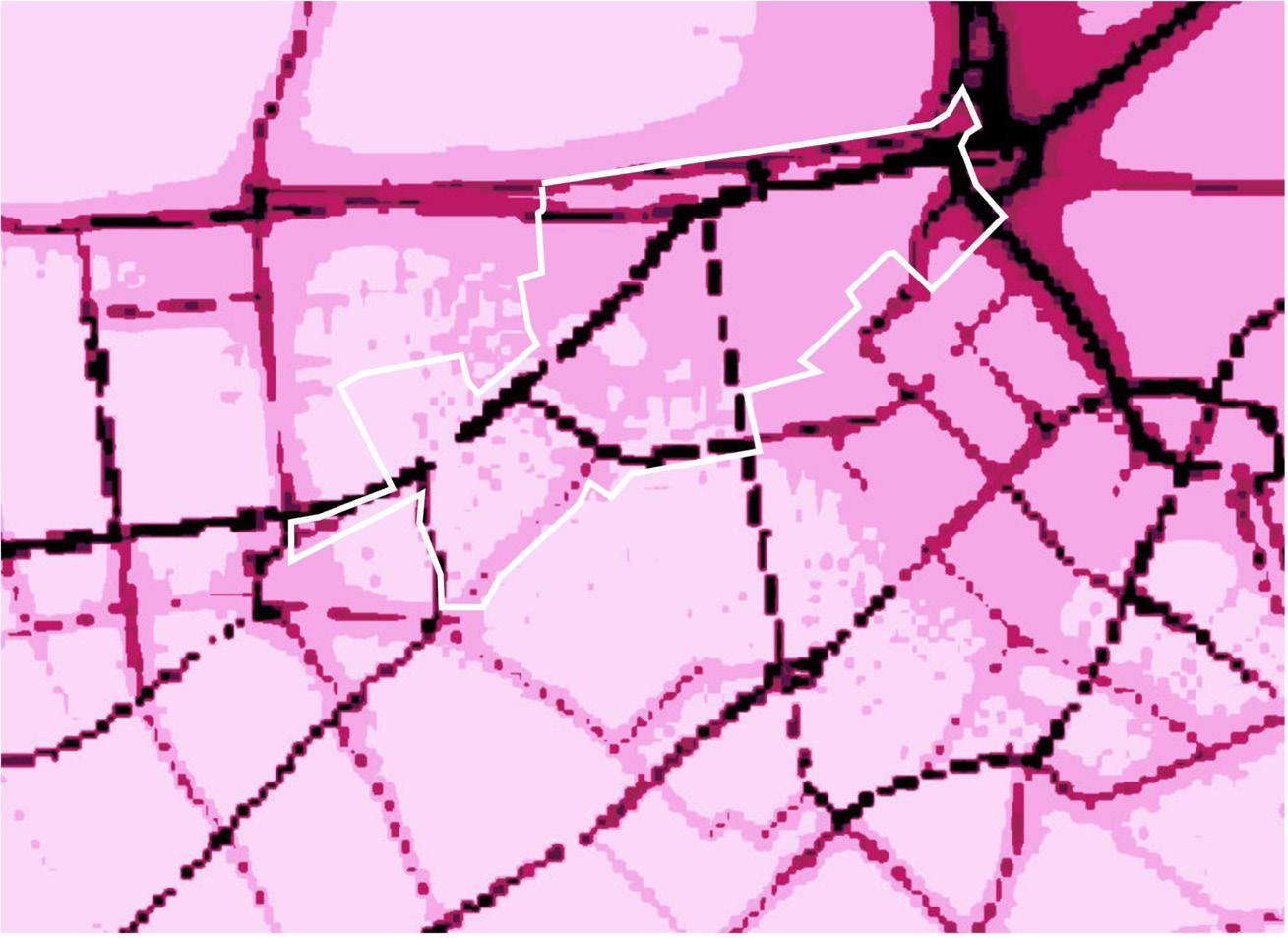
Figure B.4. Annual average concentrations of Nitrogen Dioxide (NO2), Greater London Authority (2019)
Figure B.3. Annual average concentrations of Particulate Matter (PM2.5), Greater London Authority (2019)
3. NOISE POLLUTION
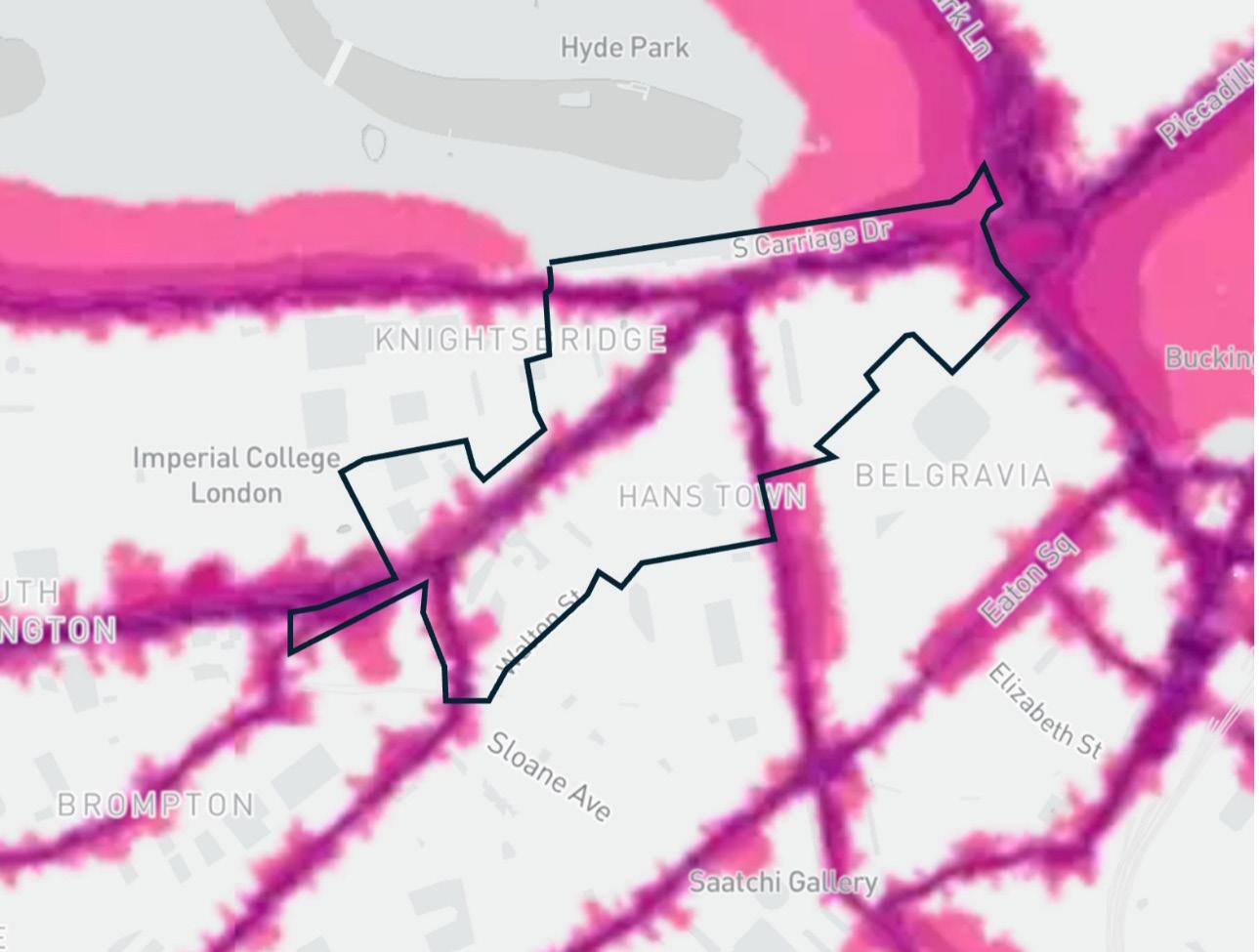
Noise mapping shows intense acoustic exposure along the same traffic-heavy routes, compounding health and wellbeing impacts.
Strategies such as traffic calming, encouraging use of electric vehicles, acoustic barriers, acoustic cameras, and pedestrian-priority streets will reduce noise and improve quality of life and experience for everyone who lives, works or visits Knightsbridge.
4. FLOOD RISK
Flood risk maps identify areas vulnerable to surface water flooding, particularly near junctions and low-lying streets. Integrating sustainable drainage systems (SuDS), permeable paving, and rain gardens will mitigate run-off and strengthen climate resilience.
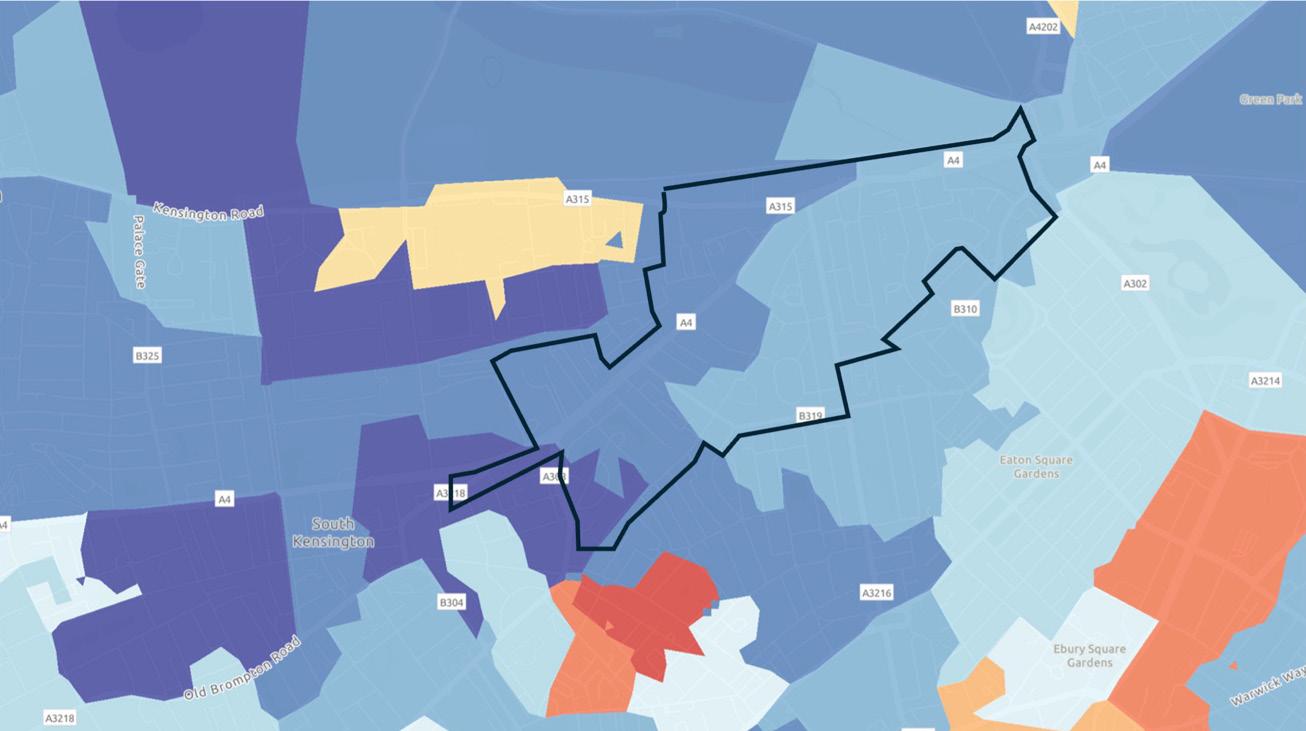
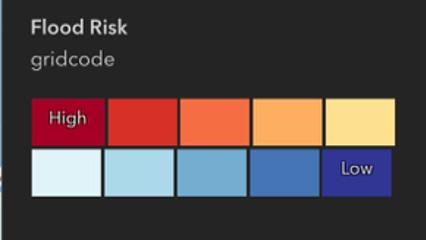
Figure B.5. Levels of exposure to noise, Department for Environment, Transport and Rural Affairs (2022)
Figure B.6. Flood Risk, Greater London Authority (2019) (Key below)
5. SOCIO-ENVIRONMENTAL HEATMAPS
Mapping of deprivation by Lower Layer Super Output Areas (LSOAs) indicates, as could be expected, that the immediate neighbourhood is comparatively less deprived, although within proximity are areas of much higher deprivation.
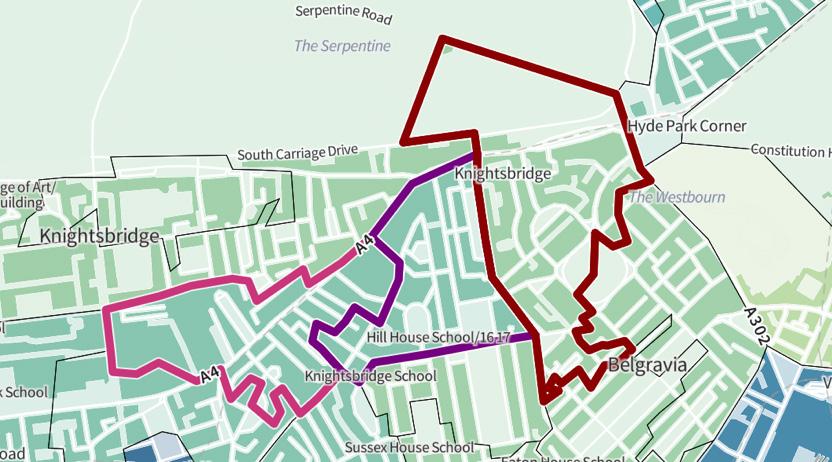
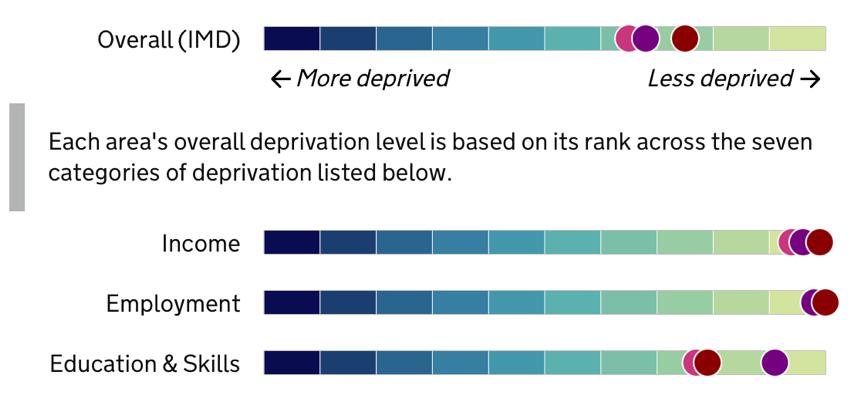
NB: The Living Environment deprivation low score includes measures such as the standard of housing, access to private outdoor space, pollution and traffic hazards.
Figure B.7. Levels of deprivation, English Indices of Deprivation 2019
APPENDIX C: PUBLIC POLICY ANALYSIS
A policy analysis was conducted to ensure the Sustainability Strategy and Action Plan align with key policies, regulations and strategic priorities. A summary of key policies is shown in the table below. The policy analysis examined key documents at the global, national, local, and neighbourhood levels. This is not an exhaustive policy analysis and was created in a dynamic environment in which policy and strategy are being updated.
GLOBAL FRAMEWORK
UN SUSTAINABLE GOALS
17 Goals & 2030 target
NATIONAL POLICY
NATIONAL GOVERNMENT POLICIES
Planning Transport,
Net Zero, Energy
Nature Recovery
LONDON POLICY
MAYOR OF LONDON
Net Zero 2030
Climate resilience
Bio Diversity
BOROUGH POLICY
RBKC & WCC
Local Plans
London Plan
Nature Recovery
Sustainability, net zero & biodiversity
NEIGHBOURHOOD POLICY
BELGRAVIA & KNIGHTSBRIDGE
Neighbourhood Plan & Forums
LOCAL DELIVERY
KNIGHTSBRIDGE PARTNERSHIP
Business Plans
Place & Public Realm Strategy
POLICY & STRATEGIES AT EACH LEVEL INFORM AND SHAPE THE NEXT LEVEL
APPENDIX C: PUBLIC POLICY ANALYSIS
POLICY AREA
Net Zero & Climate
Built Environment & Energy
NATIONAL AND INTERNATIONAL
100% reduction in greenhouse gas (GHG) emissions by 2050 compared to 1990 and 81% reduction by 2035. The UK Government has established a legally binding target to be Net Zero by 2050, which covers all emissions (Scope 1, 2 and 3)Paris Agreement 2015
Retrofit efficiency and heat as national priorities. At least 95% of all electricity coming from clean sources (renewables & nuclear) by 2030. Established Great British Energy to power Britain with clean, secure, home-grown energy and to become a global leader in clean energy
LONDON (MAYOR OF LONDON
Zero carbon for major developments, wholelife carbon assessment
Air Quality & Emissions
WHO-aligned PM2.5, Environment Act 2021
Waste, Plastics & Circular Economy
Nature & Biodiversity
Extended Producer Responsibility, plastic bans, 65% waste recycled by 2035
Air Quality Neutral/ Positive, expanded ULEZ
Water, Flood, Resilience
Reporting, Monitoring & Metrics
Environment Act (2021) set legally binding targets, aiming to halt species decline by 2030 and reverse it by 2042, alongside creating 500,000 hectares of new habitat, implementing Biodiversity Net Gain (BNG) for developers. Proposed Nature Restoration Fund (NRF) for strategic, large-scale habitat recovery via developer levies
Environment Act targets, SuDS in development
Sustainability reporting obligations on businesses: mandated climate disclosures (TCFD-aligned) for large firms in strategic reports (Governance, Strategy, Risk, Metrics/Targets) and upcoming UK Sustainability Reporting Standards (UK SRS). BNG, carbon budget, recycling, air quality KPIs
Circular economy mandates, Library of Things, food focus
10% BNG, pollinator & habitat corridors, green infrastructure
Citywide. SuDS and urban resilience
City and borough dashboards, Londonwide metrics
ULEZ
LOCAL AUTHORITY
(RBKC AND WCC)
Net zero councils by 2030, boroughs by 2040 borough-wide community and business engagement programmes
“Retrofit First” (WCC) and Circular Economy Statements (RBKC), prioritising building upgrades/ retention, solar deployment, and major development. assessments
Local Air Quality Action Plans (both), enhanced EV/mobility infrastructure, 100+ air quality monitors (RBKC), focus on healthy/active travel, vulnerable groups
Single-use plastics procurement bans, food waste separation and AD, community repair/reuse hubs, Circular Economy Statements, duo-bin innovation (WCC)
Greening & Biodiversity Strategies, “No Mow May” (WCC), Bee Superhighway (RBKC), 10% BNG rules, green infrastructure and spatial plans, biodiversity action plans
SuDS for new development, permeable surfaces, smart metering, BREEAMaligned standards, water equity (WCC), runoff reduction with resident engagement (RBKC)
100+ sensors, AMRs, public consultation, open data portals, Defra/ WRAP/BREEAM reporting, transparent progress tracking
NEIGHBOURHOOD
(KNIGHTSBRIDGE AND BELGRAVIA)
UN SDG integration, strong on carbon
Knightsbridge Neighbourhood Plan aim is to “Make Knightsbridge the best residential and cultural place in London in which to live, work, study and visit’. Historic retrofit, energy hierarchy and emission reduction policies. Encourage retail and hospitality that serve the local community, protect public houses, and promote community facilities
“Air quality neutral” standard, WHO guidelines, noise mitigation. Real-time local monitoring, strengthened air requirements
Zero-waste retail & hospitality, plastic reduction campaigns
Enhanced greening/nature locally, space protection
KPIs/local tracking for air, carbon, biodiversity, water
SuDS, water resilience, community preparedness
APPENDIX D: MEMBER SUSTAINABILITY AND ESG STRATEGIES
A representative cross-section of Knightsbridge Partnership’s businesses’ sustainability and ESG strategies were reviewed. Of the 50 Knightsbridge Partnership members analysed, 29 organisations have published sustainability strategies or significant Economic, Social and Governance (ESG) commitments.
These span multiple sectors with varying levels of complexity and ambition.
THE KEY STRENGTHS, GAPS AND OPPORTUNITIES ARE SUMMARISED HERE.
STRENGTHS
Strong representation of sustainability strategies across major sectors, with more than half of organisations maintaining formal approaches
Leading climate commitments from multiple organisations, including science-based targets and ambitious timelines
Sector-specific expertise and innovation, particularly in fashion sustainability and hospitality operations
Framework alignment amongst advanced organisations, providing structured approaches and accountability
Innovation leadership from several companies, demonstrating circular economy technologies and comprehensive measurement
THERE ARE OPPORTUNITIES TO FILL GAPS TO IMPROVE SUSTAINABILITY PROGRESS IN KNIGHTSBRIDGE
OPPORTUNITIES
Raise to a consistent level strategy maturity and ambition across the partnership, with more organisations adopting specific targets and timelines
Accelerate circular economy measurement and reporting
Opportunity to support biodiversity and nature recovery
Promote specific strategies to reduce and recycle water
Further integration of social and environmental justice considerations
Opportunities for integration of local and community-specific considerations and Knightsbridge-focused initiatives
Extend Scope 3 emissions reduction, reporting and targets beyond the most advanced organisations
More information sharing, published transparency and measurement amongst many organisations, could enhance delivery and accountability
APPENDIX E:
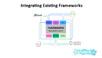
SUSTAINABILITY FRAMEWORKS
ACRONYM NAME / LINK
BREEAM Building Research Establishment Environmental Assessment Method
CDP Carbon Disclosure Project
FSC Forest Stewardship Council
GRESB
Global Real Estate
Sustainability Benchmark
GRI Global Reporting Index
GSTC Global Sustainable Tourism Council
ISO 14001
International Organisation for Standardisation: Environmental Mgmt.
LWG Leather Working Group Certification
MSCI Formerly Morgan Stanley Capital International
NABERS UK National Australian Built Environment Rating System
Passiv Haus Passiv Haus
Rainforest
RE100 Renewable Energy 100
SBTi Science Based Targets initiative
EXPLANATION
UK-developed method for assessing, rating, and certifying the environmental and sustainability performance of buildings.
Global non-profit running a system for companies and cities to publicly disclose environmental impacts and climate strategy.
Leading certification for sustainable forest management and products from responsibly managed forests.
ESG benchmark and reporting framework for real estate assets and infrastructure.
Independent global standard for sustainability impact reporting.
International standard and certification for sustainable tourism and hospitality.
The most widely recognised international standard for environmental management systems.
Global certification recognising excellence in sustainability and environmental practices within the leather industry.
Assesses companies on their financially relevant sustainability risks and opportunities. A AAA-rating means a company leading its industry in managing the most significant sustainability risks and opportunities
A voluntary, performance-based rating system for commercial office buildings in the UK (adopted from Australia) that measures operational energy efficiency using a 1-to-6 star scale
International building standard for ultra-low energy buildings with rigorous insulation and air-tightness.
International certification for sustainably produced food, forest, and tourism products.
Global business initiative to accelerate 100% renewable electricity procurement among large companies.
Science-based climate commitment setting, ensuring corporate emissions reductions are in line with Paris Agreement targets.
Reducing Scope 1, 2, and 3 emissions to zero or to a residual level that is consistent with reaching net zero emissions (90% emissions)
TCFD Task Force on Climate-related Financial Disclosures
UK Plastics Pact UK Plastics Pact
UN PRI
United Nations Principles for Responsible Investment
WELL WELL Building Standard
International financial reporting framework for consistent climate-related risk and opportunity disclosure.
Cross-sector initiative to eliminate problematic plastics and promote recyclability/circular economy in the UK.
Global standard for responsible investment practices in ESG and sustainability.
International certification for health and well-being in building design and operation.
APPENDIX F: GLOSSARY OF TERMS
This glossary sets out some of the key sustainability terms mentioned in the strategy. These terms reflect the core language and concepts underpinning sustainability commitments, reporting and analysis for the Knightsbridge Partnership and similar organisations.
TERM DEFINITION
Absolute emissions reduction
Reduction in total amount of greenhouse gas emissions, not just relative to business size or output.
Baseline year The starting year against which future progress (e.g. emissions reduction) is measured.
Benchmarking Comparing performance, usually quantitatively, against peers or recognised standards.
Biodiversity The variety of plant and animal life in the world or in a particular habitat, used as a measure of environmental health.
Circular economy An economic model focused on resource efficiency, keeping materials in use, recovering and regenerating products and materials.
CO₂ reduction Actions to reduce output of carbon dioxide (sometimes used as a shorthand to include carbon dioxide and other greenhouse gases like methane).
Commitment A public declaration of intent or goal (e.g. to reach net zero by 2030).
Decarbonisation The process of reducing carbon emissions from activities, buildings, supply chains, and products.
Embodied carbon All greenhouse gas (GHG) emissions from the entire lifecycle of a building or product, covering raw material extraction, manufacturing, transport, construction, maintenance, and eventual demolition or disposal, but excluding operational energy use (heating, lighting).
Emissions Scope (1, 2, 3)
Categories for greenhouse gases: Scope 1 = direct, Scope 2 = purchased energy, Scope 3 = indirect (supply chain, products).
Energy intensity reduction Decrease in energy use per unit of output, area, revenue, etc.
Green infrastructure Networks of green spaces, parks, trees and other natural assets that provide ecological and social benefits.
Greenhushing Deliberately downplaying or failing to disclose sustainability achievements to avoid scrutiny, criticism or external challenge.
Greenwashing Marketing or communications which exaggerate or misrepresent the environmental or sustainability credentials of a business or product.
Net zero
Achieving net zero carbon means total greenhouse gas (GHG) emissions produced are equal to the amount removed from the atmosphere, resulting in no net increase in warming gases. It is reached by drastically cutting emissions first, then offsetting any remaining, unavoidable emissions through carbon removal methods, like planting trees or technology, to stabilize global temperatures and combat climate change.
Nature recovery Actions to restore habitats, biodiversity, and ecological resilience (e.g., planting trees, supporting wildlife corridors).
Ongoing target A commitment or objective that is reviewed, renewed or continually applied, not linked to a single deadline.
Operational emissions
Greenhouse gases produced by a company’s activities, buildings, and business operations (not supply chain).
Plastic pledge Commitment to eliminate problematic plastics, increase recycling or use only recyclable packaging.
Science-based targets
Targets for lower emissions set in accordance with climate science, especially the Paris Agreement.
Scope 1 emissions These are emissions from sources that an organisation owns or directly controls.
Scope 2 emissions These emissions are a consequence of a company's activities but occur at sources not owned or controlled by the company. They result from the generation of purchased energy consumed by the organisation.
Scope 3 emissions This scope covers all other indirect emissions that occur in an organisation’s entire value chain, both upstream (suppliers) and downstream (customers and disposal). Scope 3 emissions are typically the most complex to measure, reduce and track.
Single-use plastic Plastic items meant to be used once before disposal, often targeted in sustainability pledges.
Sustainability Strategy
Urban Greening Factor (UGF)
An organisation’s documented approach, aims, and actions for environmental and social responsibility.
A measure of how much green space (planting, trees, green roofs) is included in new developments.
Value chain The entire set of activities and supply relationships that add value from raw material to delivery of the final product.
Waste hierarchy Prioritising waste avoidance, followed by reduction, reuse, recycling, and finally recovery or disposal.
Water conservation Measures designed to reduce water use or improve efficiency.
Whole Life Cycle Carbon Assessment
Analysis of carbon produced from all stages of a building’s or product’s lifecycle, including materials, construction, use, and end-of-life.
BIODIVERSITY & NATURE RECOVERY:
TREES, GREENING AND URBAN COOLING
A coordinated programme to deliver street trees, connected green corridors and nature based cooling across core commercial streets to create a resilient and nature-supporting Knightsbridge.
KNIGHTSBRIDGE PARTNERSHIP’S
CONVENING ROLE
Align TfL, WCC/RBKC and major owners on locations, delivery windows, funding and maintenance responsibilities.
CO BENEFITS.
KPI(S)
KPI 1 (New trees planted)
KPI 2 (New SuDS & planted area m²).
This action also supports Action 20 (urban heat island mitigation), strengthens the case for Action 33 (Healthy Streets) by improving comfort/shade, complements Action 46 (rainwater harvesting) and Action 47 (leaks) through wider water resilience messaging, and can help buffer corridor pollution impacts alongside Actions 39–40 (deliveries strategy) by improving streetlevel environmental quality.
SUPPORTING CLIMATE RESILIENCE AND URBAN COOLING ACROSS KNIGHTSBRIDGE.
More trees. More shade. More nature. A cooler, greener district.
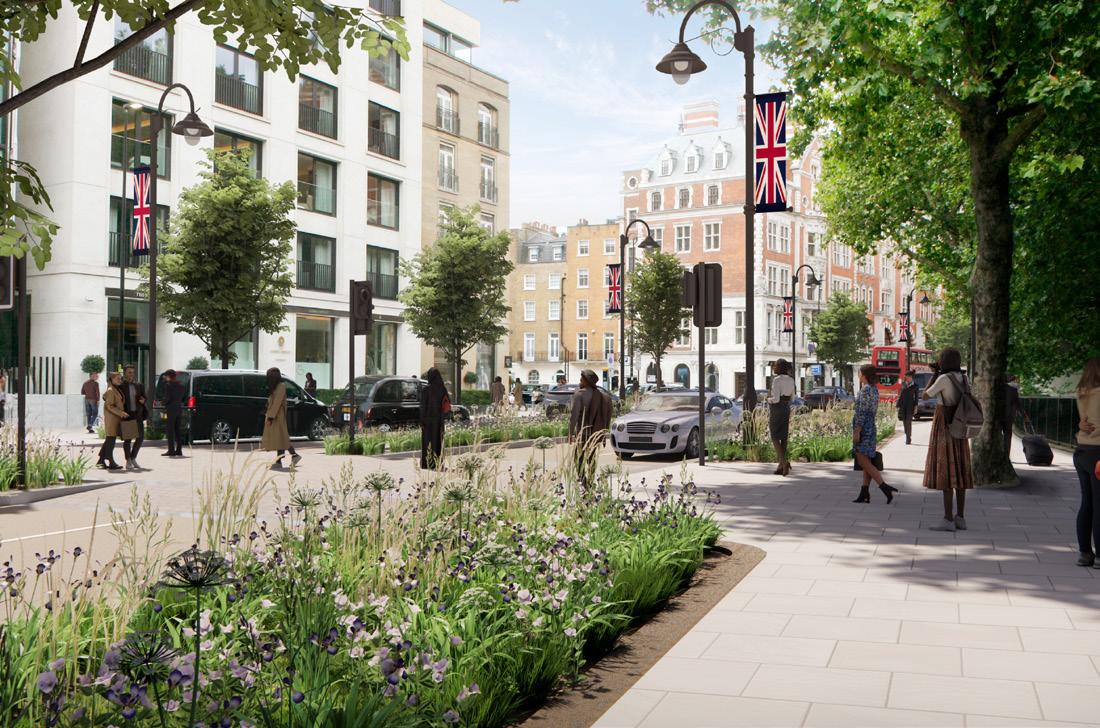
WATER CONSERVATION:
LEAK DETECTION & RAPID REPAIR
(DISTRICT-WIDE)
A partnership programme to save water by identifying and fixing leaks quickly across participating buildings and priority locations.
KNIGHTSBRIDGE PARTNERSHIP’S
CONVENING ROLE
Coordinate suppliers/AMR providers, estates and members around a “rapid repair pledge” and preferred support routes.
CO BENEFITS.
KPI(S) KPI 46 (Water use intensity –participating sites)
Builds a practical “resource efficiency” cohort that also supports Action 45 (greywater reuse) and Action 46 (rainwater harvesting) uptake, reinforces Action 19/25 (retrofit and building performance) by linking water/energy savings, and strengthens the evidence base for Action 59 (district data capture) by creating a repeatable reporting process with members.
REDUCING AVOIDABLE WATER LOSS ACROSS PARTICIPATING BUILDINGS.
Faster repairs. Better data. Smarter water use across the district.

CIRCULAR ECONOMY:
RECYCLING UPLIFT AND PACKAGING REDUCTION.
Delivery of a single district programme combining:
• Action 8 packaging minimisation, working with ReLondon to redesign packaging to reduce material use and shift to recycled/returnable packaging
• Action 9 waste audits, recycling guidance and training (incl. consistent roll out support for workplace recycling)
KNIGHTSBRIDGE PARTNERSHIP’S
CONVENING ROLE
Convening partners to share sectorbased best practice
CO BENEFITS.
KPI(S)
KPI 9 (Packaging minimisation), KPI 3 (Waste recycling); KPI 4 (Waste audits completed)
Directly enables Actions 4–6 (food waste separation, take away packaging reduction, supplier engagement), underpins Action 12 (reverse vending/refill network) and Action 13 (additional on street recycling points) by improving demand and correct use, strengthens Action 10/11 (reuse hub + circular construction) by normalising reuse behaviours, and provides an easy engagement route into Action 58 (comms calendar) and Action 56 (resource library).
HELPING BUSINESSES REDUCE WASTE AND IMPROVE RECYCLING.
Less packaging. Better reuse. More practical circular economy behaviour.
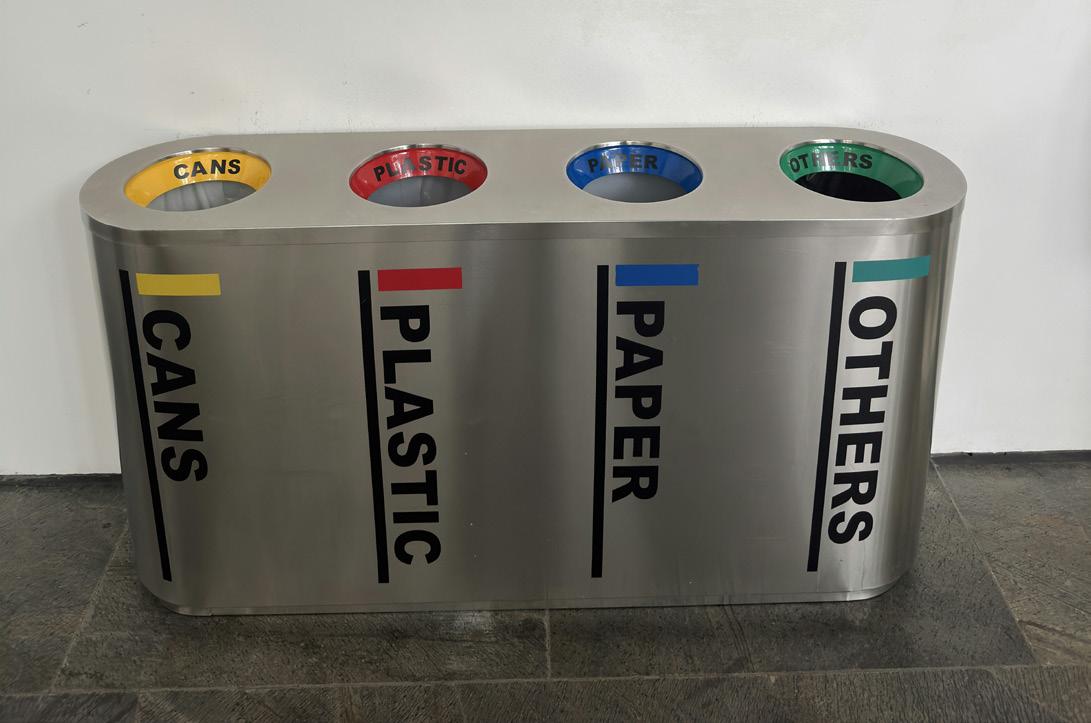
GREENHOUSE GASES & LOCAL AIR QUALITY
RETROFIT ACCELERATOR PROGRAMME
A coordinated programme to reduce carbon emissions and improve local air quality by increasing building energy audits and implementation of priority measures across the district.
KNIGHTSBRIDGE PARTNERSHIP’S
CONVENING ROLE
Align borough/GLA retrofit officers, accredited suppliers and owners/ occupiers into a simple cohort offer; share learning and case studies.
CO BENEFITS.
KPI(S)
KPI 26 (Energy audits completed); KPI 27 (EPC A/B floorplate % / smart meter data)
Provides the delivery pathway for Action 24 (Green Leases / EPC B acceleration) and Actions 25–26 (building performance + fabric/airtightness), creates a platform to progress Action 22 (heat pumps) and Action 23 (solar PV) in engaged portfolios, supports Action 27 (NABERS UK) for office cohorts, and improves local air quality outcomes that complement corridor-focused measures under Actions 39–40 (sustainable deliveries).
ACCELERATING RETROFIT AND BUILDING PERFORMANCE IMPROVEMENTS.
Lower emissions. Better energy use. Cleaner air across key corridors.
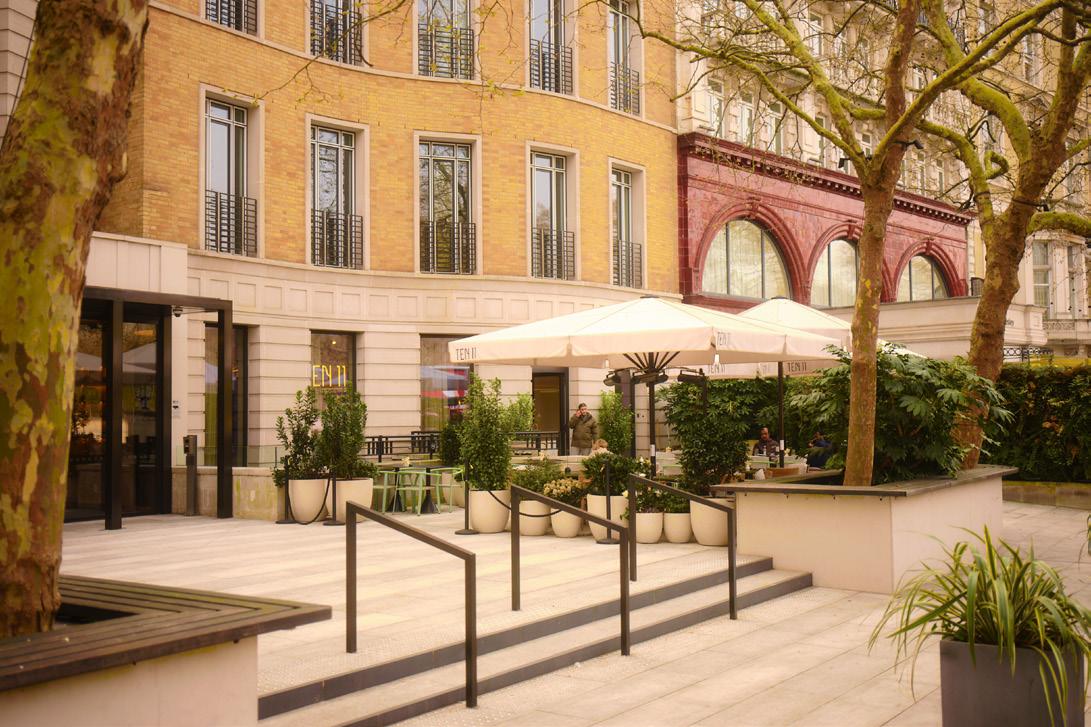
Photography by Rory Langdon-Down
TRANSPORT: SUSTAINABLE DELIVERIES
Reduce traffic and improve air quality by consolidating deliveries, improving routing, enabling cargo bike/EV last mile, and improving kerbside management
KNIGHTSBRIDGE PARTNERSHIP’S CONVENING ROLE
Convene boroughs/TfL, estates, freight operators, retailers and hospitality to agree an operating model, pilot locations, and participation terms.
CO BENEFITS.
KPI(S)
KPI 44 (Servicing vehicle movements on key streets);
KPI 45 (Businesses using consolidated/ low-emission last mile services)
Accelerates Action 39 (mobility/consolidation hubs), improves the effectiveness of Action 42 (smart routing/time windows for waste & recycling collections), supports Action 41 (EV charging/fleet electrification) through demand signals, and makes public realm/active travel delivery under Action 33 more attractive.
REDUCING
DELIVERY
IMPACTS
ON KNIGHTSBRIDGE’S STREETS.
Fewer vehicle movements. Smarter routing. Cleaner last-mile delivery.
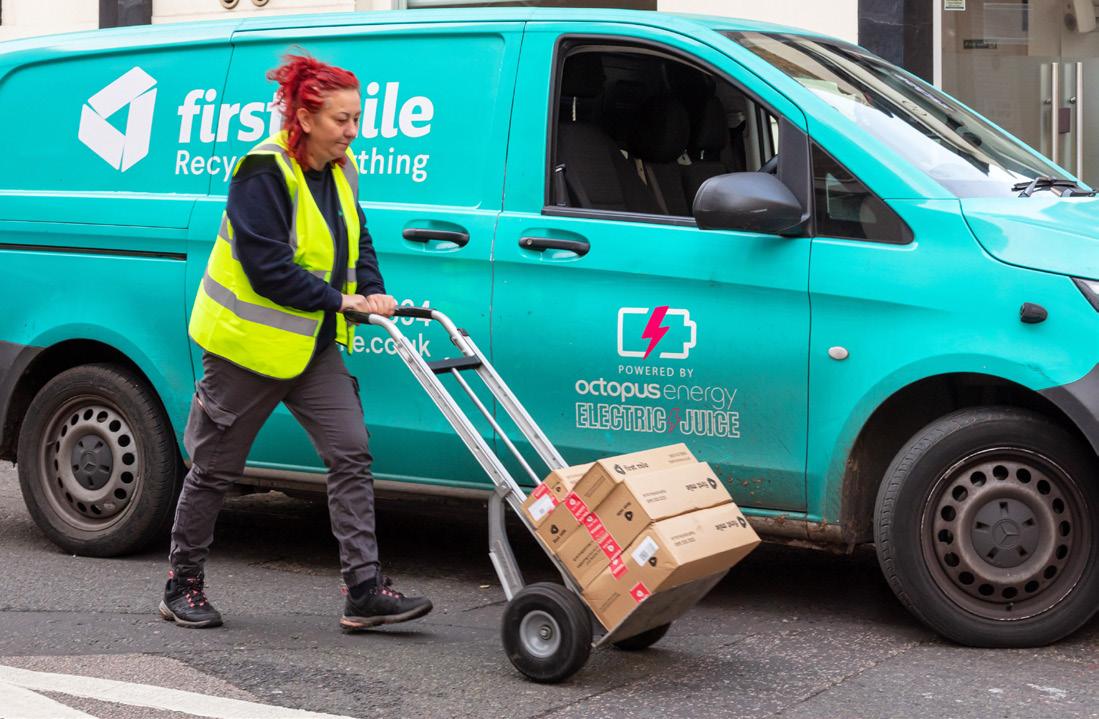
HEALTH & WELL-BEING:
HEALTHY STREETS NETWORK
Work with TfL, RBKC and WCC to develop safe and attractive walking and cycling links to and through Knightsbridge.
KNIGHTSBRIDGE PARTNERSHIP’S CONVENING ROLE
Prioritise “most important links”, coordinate trials and investment cases, align with place/public realm schemes.
CO BENEFITS.
KPI(S)
KPI 29 (Active travel mode share / campaign participation, sample cohort) and KPI 43 (Cycle stands)
Reinforces Action 43 (cycle parking) and Action 44 (site specific travel plans), strengthens outcomes for Actions 14–16 (air quality / exceedances) by shifting trips away from vehicles, complements Action 1 (greening) by improving comfort and shade along routes, and supports inclusion goals under Action 37 (access improvements) by embedding accessible wayfinding and safe routes into street design.
CREATING SAFER, HEALTHIER ROUTES THROUGH KNIGHTSBRIDGE.
Safer routes. Better access. Healthier movement through Knightsbridge.

SOCIAL VALUE & INCLUSION
INTERNSHIPS & PLACEMENTS
(SCHOOLS/UNIVERSITIES PROGRAMME)
Run an internship and placements programme linking local schools/ universities with Knightsbridge businesses.
KNIGHTSBRIDGE PARTNERSHIP’S
CONVENING ROLE
Broker participating employers, coordinate with borough education/ employment partners, ensure fair access and clear routes into opportunities.
CO BENEFITS.
KPI(S)
KPI 40 (Young people engagement) (captures internships/placements and related youth engagement).
Builds participation and employer engagement that supports Action 38 (school/youth engagement programme) and can be linked with Action 53 (skills & learning / carbon literacy) to create “green skills pathways”, strengthens the case for Action 35 (Living Wage & ethics) through employer commitments, and provides high quality case studies to power Action 60 (annual progress report) and Action 49 (Sustainability Forum) storytelling.
CREATING PRACTICAL PATHWAYS INTO OPPORTUNITY
Internships, placements and youth engagement that connect local talent with Knightsbridge businesses.

APPENDIX G: FULL ACTION PLAN
new trees, choosing a diverse selection of climate-resilient species, and 2000 square metres of new green a climate resilient 'Sponge Knightsbridge' and support biodiversity. Prioritise nature-based cooling and nature canopy expansion, permeable landscapes, and connected green corridors. Work with TfL and other partners health of currently existing trees in public locations
adapt opportunity spaces to support nature and embed delivery and maintenance in commercial property prioritising green roofs/walls, permeable landscapes, connected green corridors and lighting that does not sustainable practice in procurement of services and goods; and provide training and guidance for each key sector. This will include guidance on procuring AI services to take into consideration energy and water use and pollution impacts.
Bins, provide guidance on preparation, waste tracking; portioning standards; organics collection
ReLondon and preferred suppliers to audit and advise businesses on how to reduce packaging and use re-usable/ specifications. preferred local/verified suppliers; emissions disclosure clauses
guidance, case studies, best practice and new innovations to support businesses replace plastics and environmental impact materials with certified low-carbon alternatives
ReLondon to provide advice and best practice in the redesign of packaging to reduce excessive material use and recycled/returnable packaging
businesses waste audits and action plans, provided by preferred suppliers, provide workplace staff training. and support for a consistent roll-out and compliance with Simpler Recycling for workplaces (from 31 Mar micro-firms by 31 Mar 2027) Regulations, to achieve the London target for recycling target (65% by 2030) and property owners establish a reuse hub for surplus construction/PPE/FF&E materials, with retail to local SMEs/community design methods in estate development: disassembly, modular construction, and material passports. recycled and low-carbon materials (e.g., cement and steel alternatives). chain transparency to mitigate impacts of critical minerals. sites for deposit-return machines; roll out public refill points and street bins designed for waste separation
install extra collection points; trial vape/“problem material” streams with quarterly reviews
APPENDIX G: FULL ACTION PLAN
of goods, existing London-based repair cafes and with the local authorities explore the potential for a local the local community and businesses
property owners to explore with WCC, RBKC and Historic England the suitability of Heritage Partnership (HPA) to enable streamlined consent for works like double or secondary glazing, repairs, heat pumps and within listed buildings.
value of auditing and sign-post products and services to support businesses switch from hydrofluorocarbons GWP gases, including joint supplier framework
amongst chefs of the benefits of induction hobs and promote to F&B and hotel sectors, reducing carbon and improving local air quality
guidance on appraising menus and recipes to reduce carbon and waste
borough/GLA building energy use audit offers; implement priority measures; track kWh/£ saved. light to deep promote audits & support implementation
natural/passive cooling design, use of light-coloured or reflective materials on buildings and footways to reflect less heat, and reduce temperatures, thereby lowering risk of heat-related health risks
feasibility and develop a strategic outline case. review central London comparable projects. energy mapping and develop a delivery model
benefits of air source heat pumps to property owners to encourage replacement of fossil fuel heating
roofs and develop solar PV feasibility cases working with property owners
deliver positive commercial tenant engagement and support businesses where they are responsible for the building or energy supply.
clauses in leases and promote the Better Buildings Partnership's Green Lease Toolkit. to EPC B minimum campaigns to promote positive behaviours by tenants, which can significantly influence the in use performance
APPENDIX G: FULL ACTION PLAN
property owners and occupiers and promote:
installation of SMART energy measures - encourage businesses to install SMART energy meters, occupier data metering uplift
smart controls - Whole-floor LED, occupancy/daylight sensors; scheduled shut-downs optimisation - Ensure systems up to date, including building zoning, tune set-points, time schedules, resets; comfort checks management & OOH switch off behaviour and policies - Auto-shutdown IT/peripherals; clear-desk power-down
energy optimisation - use of LED, sensors & controls; doors-closed policy optimisation - support businesses deliver boiler/chiller tuning; heat-recovery; OOH schedules; sub-metering practice and new innovations in draught-proofing, vestibule seals, blinds, window maintenance
participation in NABERS UK and measures such as metered performance and targets to reach 6 Stars: Worldleading/market-leading efficiency
renewable energy suppliers through Place Support Partnership
demand across landlords/tenants and investigate securing long-term renewable PPAs; develop standard terms
incentives (rates relief, tax credits, fast-track planning) and incubate pilots for hard-to-retrofit heritage
potential for Knightsbridge 'Smart Place' with smart grids, intelligent transport, water management, waste systems, and environmental monitoring for cleaner, more resilient cities. Key components could include smart grids sensors for air/water quality, smart traffic lights, IoT bins, and tech-enabled green spaces to optimize usage, cut improve quality of life.
promote outdoor exercise, including organised groups for walking and running
and WCC develop safe and attractive walking/cycling links to Knightsbridge and boroughs to deliver active travel campaigns, incentives and support, such as Dr Bike and free cyclist
Promote the wellbeing benefits
adoption; provide member briefings on employment law/ethical employment practice
APPENDIX G: FULL ACTION PLAN
internship programme with local schools/universities
inclusion and provide support for vulnerable groups, including accessibility improvements and wayfinding. Make to visitors
programme to introduce young people from both boroughs to Knightsbridge, its approach to area management, Knightsbridge, careers in Knightsbridge etc.
estates and BIDs micro-hubs; consolidated deliveries; cargo-bike/EV last-mile pilots
develop and promote opportunities to consolidate deliveries; improve routing; cargo-bike/EV last-mile; better mgt part of an area-wide strategy
charging points, encourage businesses to introduce charging points and migrate their fleets to electric and delivery windows to achieve efficiency gain and cost reduction
street cycle stands as part of public realm schemes and support additional cycle parking for staff and residents specific travel plans and sustainable travel information guides
businesses the benefits of systems to reuse grey water in their buildings: sinks, showers, and washing machines purposes such as toilet flushing, irrigation, or cooling towers. efficient fixtures and equipment.
rainwater harvesting (RWH) in buildings to collect, filter, and store rain from roofs for non-potable uses like irrigation, cooling, and watering planting. This reduces mains water demand and costs while enhancing and managing stormwater
and rapid repair programme. Find and fix leaks, stopping billions of litres of treated water from being lost London, a huge waste of a vital resource. Less water wasted means less energy needed for treatment, pumping, significantly lowering the carbon emissions associated with the water cycle in London. aquifers, and ecosystems from depletion by ensuring water is used efficiently, especially crucial in a large, city like London.
businesses to offer water bottle refill service or install water fountain points in their buildings
quarterly open forum meetings to facilitate collaboration, celebrate successes and track progress for the whole specific sectors member to champion the sustainability programme and chair the sustainability forum
public sector for suitable funding for key projects and coordinate drafting funding applications
APPENDIX G:
FULL ACTION PLAN
52
53
54
55
56
57
Maintain an up to exemplar case studies
encourage businesses to participate in recognised sustainability accreditations such as B-CORP and WCC's Charter
increase participation in ESG and sustainability training and courses provided by Seedl, which are free to
Carbon Literacy training service for businesses
baseline current carbon footprint and develop a road map to becoming net zero across all three scope types by
ReLondon circular economy businesses searchable directory https://cematchmaker.com/directory/?sector_ tax=&type_of_solution_tax=recycling
to date sector-specific library of sustainability information on best practice, regulation updates, incentives & studies
Knightsbridge sustainable business directory and run a “buy local” campaign, promoting businesses such as https:// lavendergreen.co.uk/about-us/sustainability/
(Clean Air Day, LCAW, CE Week) with content & member calls-to-action
monthly reporting: energy/water, recycling, biodiversity, transport; harmonised definitions
summary annual report on progress against the actions and case studies.
INDEPENDENT PEER REVIEW
Dr. Rosa Schiano Phan from the University of Westminster conducted an independent peer review of the draft strategy to verify its robustness, and her feedback has been integrated into the final strategy and action plan.
ACKNOWLEDGEMENTS
The Knightsbridge Sustainability Strategy and Action Plan has been developed through a collaborative, evidence led process, and reflects the collective insight, expertise and commitment of a wide range of partners and stakeholders.
The Knightsbridge Partnership would like to thank its member businesses and property owners, whose engagement, openness and leadership have helped shape the priorities and ambitions set out in this strategy. Their willingness to share experiences, sustainability commitments and practical challenges has been essential in ensuring the strategy is grounded in real world delivery.
We are grateful to residents, the Knightsbridge Association, Knightsbridge and Belgravia Neighbourhood Forums and community groups for their constructive input and participation through workshops and consultation activities, helping to ensure that the strategy reflects local needs, supports inclusivity, and enhances quality of life for those who live, work and visit Knightsbridge.
The Partnership also acknowledges the valued contributions of Westminster City Council, the Royal Borough of Kensington and
Chelsea, Transport for London, the Greater London Authority, neighbouring Business Improvement Districts, and strategic partners, whose policy insight, technical expertise and ongoing collaboration have informed the development of a place based and policy aligned approach.
We would like to thank Attis Partners (www.attis.partners) for their strategic advice, analytical support and facilitation in the development of this Sustainability Strategy and Action Plan, including baseline analysis, stakeholder engagement and the structuring of a coherent, evidence led framework for delivery.
Finally, we recognise the role of Dr Rosa Schiano-Phan, who provided independent insight and review, helping to strengthen the robustness, clarity and credibility of the strategy.
This document represents a shared commitment to collaboration and continuous improvement. The Knightsbridge Partnership looks forward to working with all partners to translate this strategy into meaningful action and lasting positive impact for the district.
DISCLAIMERS
This document has been prepared by Attis Partners on behalf of The Knightsbridge Partnership. The information, analysis and recommendations contained in this document are based on data, policies, stakeholder inputs and other information available at the time of preparation. While Attis Partners has taken reasonable care to ensure the accuracy and robustness of the content, no warranty is given as to the completeness, accuracy or currency of the information, and it should not be relied upon as a substitute for professional, legal, financial, technical or specialist advice.
This strategy and action plan is intended to provide a framework for collaboration, guidance and prioritisation, rather than a definitive or exhaustive statement of actions or outcomes. Delivery of the actions set out herein is dependent on a range of factors outside the direct control of Attis Partners, including decisions taken by The Knightsbridge Partnership, its members, local authorities, businesses, landowners, occupiers and other third parties, as well as changes in policy, regulation, funding and market conditions.
Attis Partners does not accept responsibility or liability for any loss, damage, cost or expense incurred by any party as a result of reliance on this document, or for decisions made or actions taken based on its contents. Any projections, targets or ambitions referenced are indicative and should be treated as forward looking statements subject to uncertainty and change. This document may not be reproduced, distributed or used for any purpose other than that for which it was prepared without the prior written consent of The Knightsbridge Partnership.