2 Amigos y familiares
ESSENTIAL QUESTIONS
What do our preferences and personalities reveal about us? How important is family today?
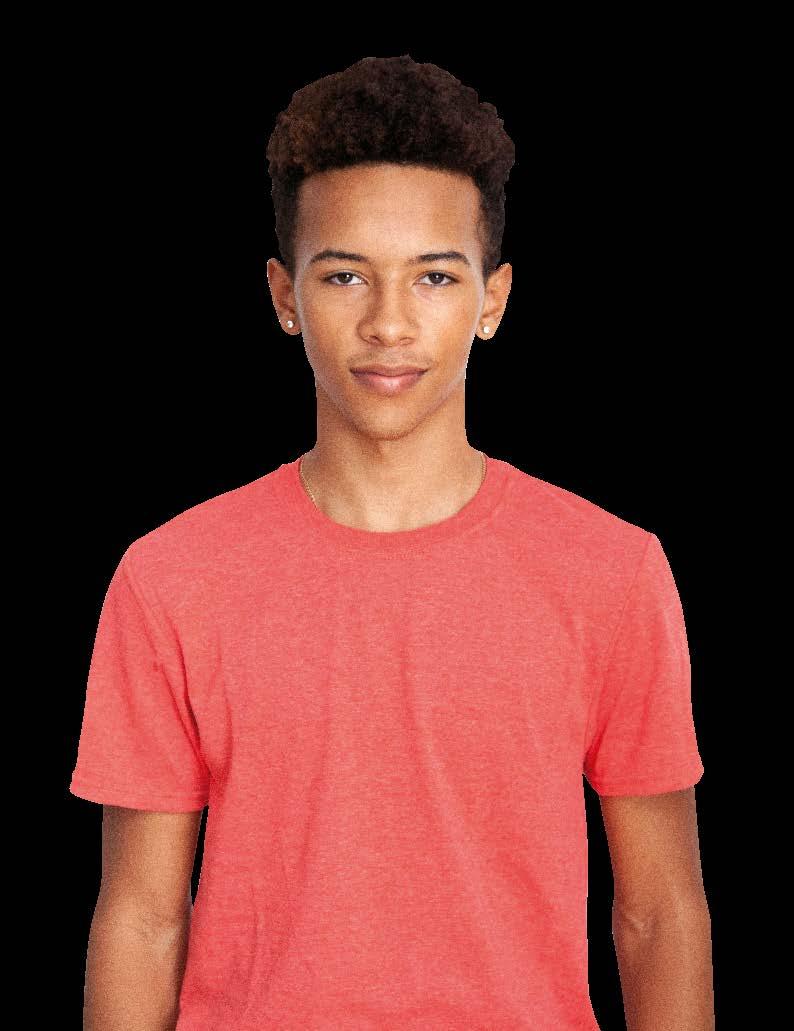
¿Cómo están? Soy Sebastián y soy puertorriqueño.
LECCIÓN 1
Somos así
Miniproyecto 1
Create your profile for an online platform.

LECCIÓN 2 Mi gente
Miniproyecto 2
Introduce the important people in your life.
PROYECTO FINAL
Participate in a special edition of the school magazine.
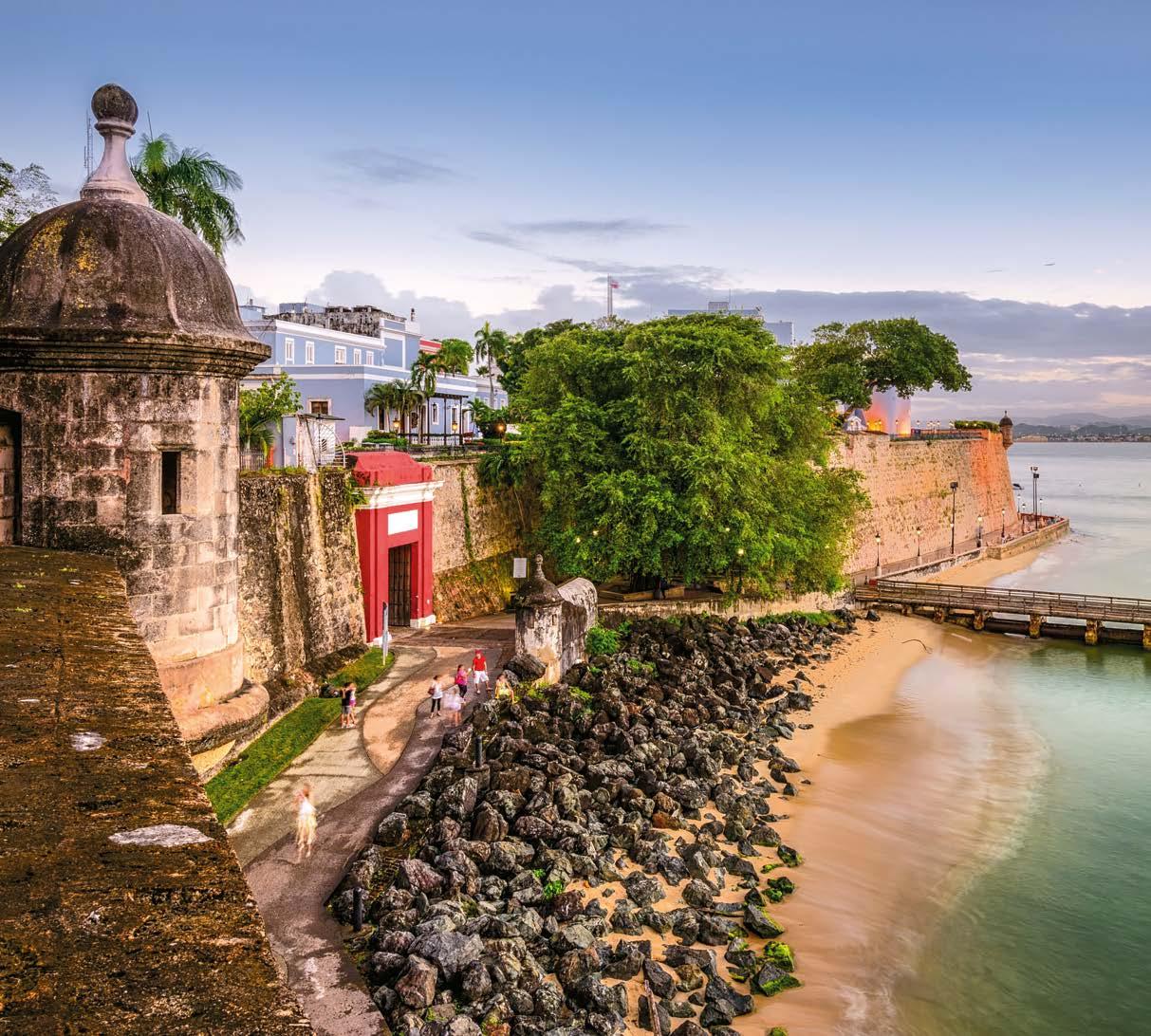
We travel to Puerto Rico to talk about friends, family, and pets.
Capital: San Juan
Ciudades importantes: Ponce, Mayagüez
Población: 3,2 millones de habitantes
Idiomas: español, inglés
Comida típica: arroz con gandules, tostones...
Datos curiosos:
• Es un estado libre asociado a los Estados Unidos.
• Los puertorriqueños son ciudadanos de los Estados Unidos desde 1917.
• La industria principal del país es el turismo. El Yunque es el parque natural más importante.
Watch the video. Answer the questions.
1. ¿Cuántos años tiene Sebastián?
2. ¿De dónde es?
3. ¿Qué idiomas habla?
4. ¿Cuáles son sus platos favoritos?
5. ¿Cuál es su deporte favorito?
6. ¿Qué cantantes de origen puertorriqueño menciona?
PUERTO RICO
Fuente: Portal Oficial del Gobierno de Puerto Rico
San Juan
LECCIÓN 1 Somos así
IN THIS LESSON, YOU WILL BE ABLE TO…
• express likes and dislikes
• talk about music preferences
• describe people, animals, and pets: their characteristics and their personalities
• express agreement and disagreement
BY USING...
• gustar
• a mí también / tampoco
• noun-adjective agreement
• muy, mucho, un poco
• vocabulary for activities, music, pets, and personality traits
AND YOU WILL FIND OUT ABOUT…
• the origins of the word boricua
• sports and music in Puerto Rico
• animals of Puerto Rico
• La Borinqueña, a Puerto Rican superhero
• the Taino culture
MINIPROYECTO 1: Create your profile for an online platform.

Unidad 2
Sora TV Inc. & Sora and Company
LEE Y HABLA
A. Look at the poster about un concierto. What did you find out about the concert?
La cantante se llama... El concierto es el día...
B. Read the chat. Answer the questions below.

Dana ¡Hola! ¿Qué tal? ¿Están bien?
Dana ¿VF7?
CULTURA
Boricua significa “puertorriqueño/a”. Viene de (It comes from) Borinquén, el nombre de Puerto Rico antes de la llegada (before the arrival) de los españoles.
Borinquén es un nombre taíno; los taínos son los habitantes nativos de la isla.
COMPARACIÓN CULTURAL
Name groups of native people from where you live.
Sebastián ¡Hola! ¡Muy bien! Tengo un boleto1 para el concierto de VF7. Es el 19 de junio en San Juan. ¡Es un concierto virtual!
Sebastián Sí, su nombre artístico es VF7. Su nombre real es Valeria Fernández. Es una cantante boricua de reguetón.
Dana Ah, puertorriqueña, ¿como Bad Bunny y Daddy Yankee?
5:12 5:18 5:19 5:20 5:22 5:25
Sebastián Sí, muchos cantantes de reguetón y de salsa son de Puerto Rico.

1. ¿Quién va al concierto de VF7?
2. ¿Dónde es el concierto?
3. ¿Cuál es el estilo musical de VF7?
4. ¿De dónde es VF7?
C. ¿Qué cantantes y bandas latinos/as son famosos/as en donde vives?
¿Te gusta bailar?
I can express likes and dislikes.
ESCUCHA Y HABLA
A. Look at the pictures. What activities do you like to do?
B. Listen to Sebastián.
¿Qué le gusta hacer a Sebastián? ¿Qué no le gusta hacer? What does Sebastián like to do? What doesn’t he like to do?









C. Listen again. How does Sebastián express his likes and dislikes?
4 search
INTERACTÚA Y HABLA
A. Ask three people in your class if they like the activities on the previous page. Say if you agree or not. Make a note of their answers.
• ¿Te gusta bailar?
• Sí.
• A mí también. / A mí no.
B. Read these sentences. Why do we use me and nos in each one?
A mí me gusta bailar.
A Sacha y a mí nos gusta bailar.
C. Share things you have in common with the other students.
A Jeremy y a mí nos gusta bailar.
5
ESCRIBE
Write four sentences explaining what you like and don’t like to do. Use a dictionary if necessary.
CONEXIÓN: DEPORTE
DEPORTES EN PUERTO RICO
En Puerto Rico el deporte rey1 es el béisbol. Muchos peloteros2 puertorriqueños están3 en la MLB de los Estados Unidos y cuatro están en el Salón de la Fama: Roberto Clemente, Orlando Cepeda, Roberto Alomar e Iván Rodríguez. El fútbol, el baloncesto4 y el boxeo5 también son deportes populares en Puerto Rico.
1 main sport (literally: king sport) 2 baseball players 3 (they) are 4 basketball 5 boxing
6
LEE Y HABLA
A. What are the four most popular sports in Puerto Rico?
MI GRAMÁTICA
GUSTAR + INFINITIVE Me gusta estudiar. No me gusta estudiar.
A mí me gusta
A ti te gusta
A él / ella, usted le gusta
A nosotros/as nos gusta
A vosotros/as os gusta
A ellos/as, ustedes les gusta
AGREEMENT / DISAGREEMENT
• Me gusta estudiar.
• A mí también.
• A mí no.
• No me gusta leer
• A mí tampoco
• A mí sí
GRAMÁTICA p. 92

Edwin Díaz, pelotero de los Mets
B. COMPARACIÓN CULTURAL What is / are the deporte or deportes rey where you live?
¿Qué música te gusta?
I can express music preferences.
LEE Y HABLA
A. ¿Te gusta la música? ¿Cuáles son tus artistas favoritos?
B. Read the interviews.
Find all the sentences where the verb gustar is used. When do we use the form gusta? When do we use the form gustan?



C. Answer the questions.
LAURA, DE SAN JUAN
1. ¿Qué estilos de música te gustan? Me gusta el rock.
2. ¿Tocas un instrumento?
Sí, toco la batería.
3. ¿Cuáles son tus artistas favoritos?
Me gustan mucho las bandas como Balún, Buscabulla y Niño Planeta.
DYLAN, DE BAYAMÓN
1. ¿Qué estilos de música te gustan?
A mí me gustan mucho el jazz y la música clásica.
2. ¿Tocas un instrumento?
Sí, toco la guitarra y el piano.
3. ¿Cuáles son tus artistas favoritos?
Me gusta mucho Miles Davis. Y también compositores como Bach y Mozart.
KARELMA, DE PONCE
1. ¿Qué estilos de música te gustan?
El reguetón y la salsa, básicamente.
2. ¿Tocas un instrumento?
No, pero canto en una banda de salsa.
3. ¿Cuáles son tus artistas favoritos?
Me gustan los boricuas: los clásicos como Héctor Lavoe y los actuales, como Bad Bunny.
MI GRAMÁTICA
GUSTAR + NOUN
1. ¿A quién le gusta la música clásica?
2. ¿Quiénes (who) tocan un instrumento musical?
3. ¿A quién le gusta el reguetón?
4. ¿A quién le gustan los artistas clásicos puertorriqueños?
D. Whose musical taste is similar to yours?
Me gusta el pop.
Me gustan las bandas de rock.
QUANTIFIERS (1): MUCHO
Me gusta mucho.
GRAMÁTICA pp. 92-93
INTERACTÚA
What kind of music do your classmates like?
1. Ask your partner the three questions from the interview.
2. React to your partner’s answers using A mí también and A mí no.
3. Share with the class what your partner likes.
ESCUCHA Y HABLA
A. Listen to Sebastián talking about his music preferences. Say what genres he likes and doesn’t like.
B. Present your music preferences.
A mí me gustan diferentes estilos de música. Por ejemplo, me gusta el…
CONEXIÓN: MÚSICA
LOS RITMOS DE PUERTO RICO
MI VOCABULARIO
LA MÚSICA
la banda cantar una canción to sing a song el / la compositor/a composer tocar (el piano) to play (the piano)
LOS INSTRUMENTOS la batería drums la guitarra el piano
LOS ESTILOS el jazz el hip hop la música clásica el pop el reggae el reguetón el rock la salsa
VOCABULARIO pp. 96-97
Puerto Rico es un centro de artistas con éxito1 global. En Nueva York, en la década de 1960, músicos de origen puertorriqueño y cubano fusionan ritmos caribeños con el jazz y crean la salsa. Tito Puente y Héctor Lavoe son clásicos de la salsa. Muchos cantantes latinos actuales tienen influencias de este estilo.
El reguetón, una fusión entre el reggae y el hip hop, es de origen puertorriqueño. Daddy Yankee, Ivy Queen y Bad Bunny son artistas puertorriqueños de reguetón.
1 success 2 mix
LEE, HABLA Y ESCRIBE
A. ¿Qué dos estilos musicales son de origen puertorriqueño?
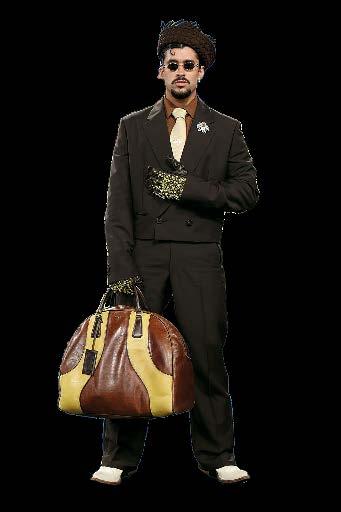
El artista de reguetón Bad Bunny
B. COMPARACIÓN CULTURAL Write a short paragraph about a music genre from where you live (nombre, artistas importantes, instrumentos...).
RETO
Include information about origen and influencia en otros estilos.
Listen to a playlist of Puerto Rican music on PARA SABER MÁS
Mi animal favorito
I can describe characteristics and personality traits of animals and pets.
INTERACTÚA Y ESCRIBE
A. Look at the picture. ¿Qué mascotas te gustan? Discuss in small groups.
A mí me gustan las cobayas. ¿Y a ustedes?
En Puerto Rico el güimo = la cobaya

B. Let’s find out la mascota favorita de la clase.
1. Two students ask the class: ¿A quién le gustan los perros?, ¿A quién le gustan los gatos?, etc.
2. Two other students keep track of the answers on the board.
3. ¿Cuál (what) es la mascota favorita de la clase?
La mascota favorita es el / la…
CONEXIÓN: CIENCIA
LOS ANIMALES DE PUERTO RICO
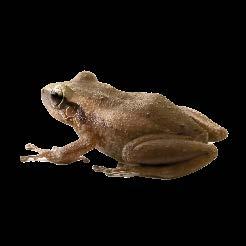
Los animales más representativos de Puerto Rico son el manatí, un mamífero marino que vive en las costas del Caribe, y el coquí, una rana1 que solo2 existe en Puerto Rico.
1 frog 2 only
LEE Y HABLA
A. ¿Dónde vive el manatí? ¿Qué es el coquí?
B. Research information about an animal that only exists where you live. ¿Cómo se llama? ¿Dónde vive?
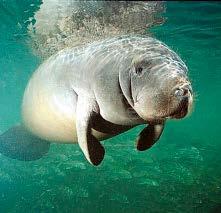
Manatí de Puerto Rico
Coquí de Puerto Rico
la cobaya
el pájaro el gato el perro
el lagarto
el pez
el conejo
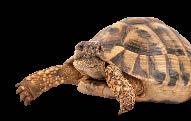
la tortuga
LEE, HABLA Y ESCRIBE
A. Read the opinions about animals written by two of our reporteros. Do you agree with them? ¿Cuál es tu opinión?
Yo creo que las tortugas (no) son…
ANDRÉS
(El Perú)

TU ANIMAL FAVORITO
Me gustan mucho los gatos porque son independientes y divertidos. La gente dice que1 son distantes, pero yo creo2 que son muy cariñosos.
UN ANIMAL QUE
NO TE GUSTA
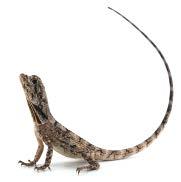
No me gustan los lagartos. Son feos y un poco aburridos. Y no son cariñosos.

1 people say that 2 I think
GUADA
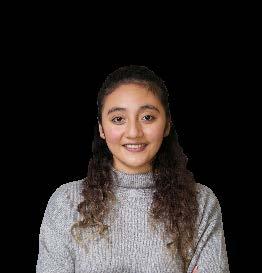
TU ANIMAL FAVORITO
Mi animal favorito es la tortuga. En mi familia tenemos dos. Me gustan porque son tranquilas y muy bonitas. Son un poco lentas, ¡pero yo también!
UN ANIMAL QUE NO TE GUSTA
No me gustan los caballos porque son nerviosos y muy grandes.

B. Read the sentences below. In pairs, discuss why bonito/s and bonita/s have different endings.
1. El gato es bonito. 3. Los gatos son bonitos. 2. La tortuga es bonita. 4. Las tortugas son bonitas.
C. Write about an animal that you like and one that you don’t like. Explain why.
Me gustan los perros porque son…
JUEGO: EL JUEGO DEL MIMO
1. In groups, a student uses actions to describe one of the adjectives: divertido/a, distante
2. The other students guess which adjective is being mimed.
LAS CARACTERÍSTICAS
NOUN-ADJECTIVE AGREEMENT
El perro es bonito. La tortuga es bonita
El gato es inteligente La gata es inteligente Los perros son bonitos Las tortugas son bonitas Los gatos son inteligentes. Las gatas son inteligentes
QUANTIFIERS (2): MUY, UN POCO
Son muy inteligentes. They are very intelligent. Son un poco feas. They are a little ugly.
GRAMÁTICA pp. 93-94 MI GRAMÁTICA
¿Cómo es La Borinqueña?
I can describe someone’s personality.
15
LEE Y HABLA
Antes de leer
A. Look at the comic book cover. Choose three words that you think apply to this superhero.
leal
abierta inteligente
Creo que La Borinqueña es…
tímida honesta valiente
nerviosa

La Borinqueña, Edgardo MirandaRodríguez, Somos Arte (2016)
Lee el texto
B. Read the text about La Borinqueña. Answer the questions below.
Marisol Ríos De La Luz es una muchacha de Nueva York. Tiene diecinueve años. Es afropuertorriqueña. A Marisol le gusta mucho hacer deporte.
Marisol estudia en la universidad en Puerto Rico. En Puerto Rico se convierte1 en una superheroína con superpoderes: La Borinqueña. Su objetivo es proteger el medioambiente2
La Borinqueña es una muchacha inteligente, leal y trabajadora. También es abierta, valiente y muy patriota. El uniforme de La Borinqueña representa los colores de la bandera de Puerto Rico. La Borinqueña es un símbolo del orgullo3 de ser de Puerto Rico.
La mejor amiga de Marisol es Lauren “La La” Liu. Es de origen chino y dominicano. Lauren es honesta, valiente y leal.
1 (she) becomes 2 to protect the environment 3 pride
LA PERSONALIDAD (2) abierto / abierta
tímido / tímida sociable ≠ shy amable kind creativo / creativa honesto
1. ¿De dónde es Marisol? 4. ¿Cuál es la ocupación de Marisol?
2. ¿Cuántos años tiene? 5. ¿Quién es La Borinqueña y cuál es su objetivo? 3. ¿Qué hace Marisol en su tiempo libre? 6. ¿Cómo es La Borinqueña? ¿Y Lauren?
C. Read this sentence from the text. Do the adjectives describing personality go before or after the noun? Is it different in English?
La Borinqueña es una muchacha inteligente, leal y trabajadora.
Después de leer
D. Write a short paragraph to describe the personality of your favorite comic book character or other fictional character.
ESCUCHA Y ESCRIBE
Listen to Sebastián interviewing his friend Gabriela. ¿Cómo es un buen amigo o una buena amiga para Gabriela?
Para Gabriela, un buen amigo o una buena amiga es una persona…
“La Borinqueña” es también el nombre del himno de Puerto Rico.
COMPARACIÓN CULTURAL
Do you know the names of other national anthems?
I can understand a short article about the native inhabitants of Puerto Rico.
LOS HABITANTES DEL CARIBE

por Sebastián Martínez, reportero de Puerto Rico
EL CARIBE
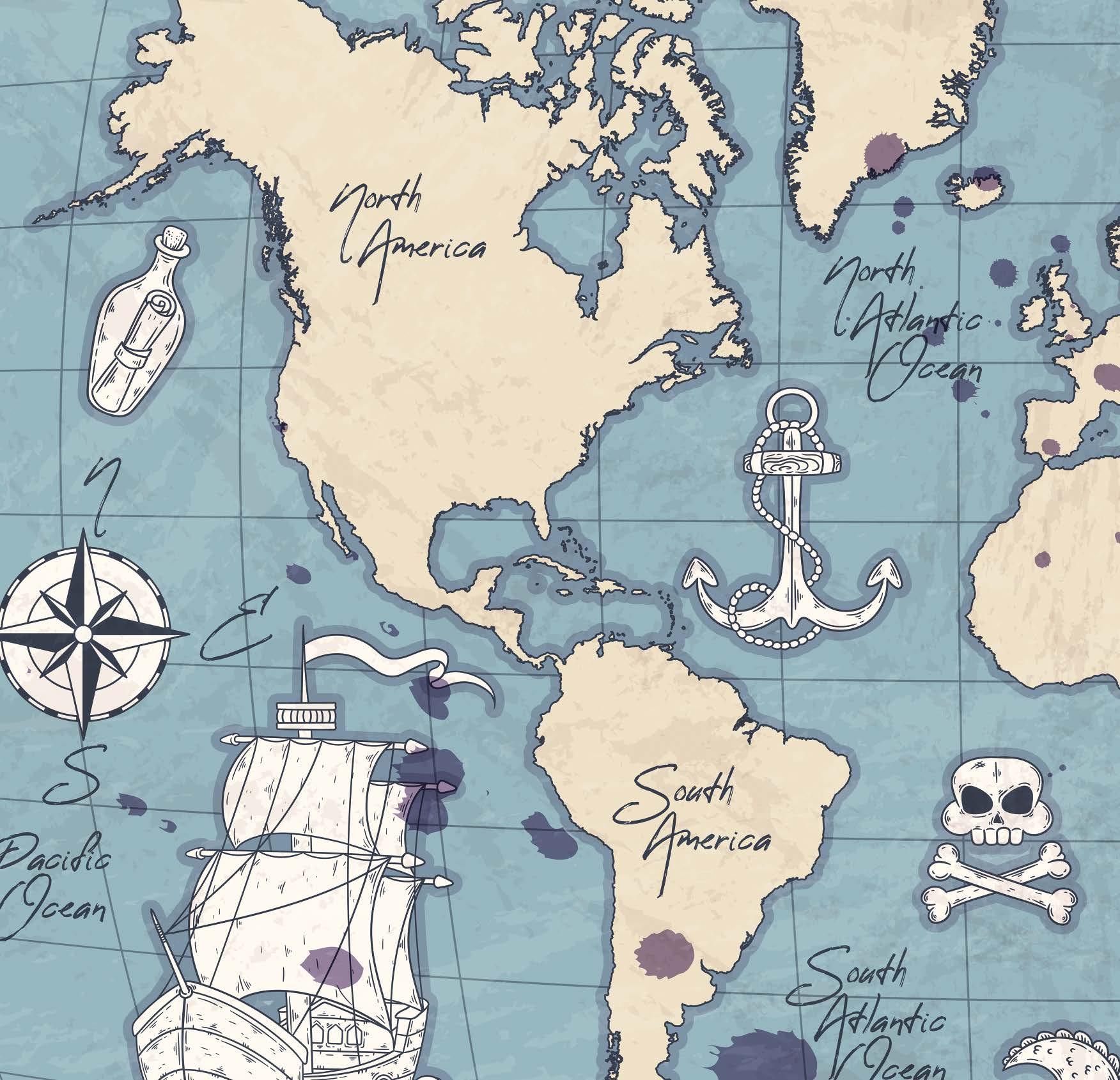
El Caribe es la región de los países que tienen costa en el Mar Caribe. Muchos países son islas: Bahamas, Cuba, Jamaica, Puerto Rico…
LOS TAÍNOS Y LOS CARIBES
Cuando llegan los españoles en 1492, principalmente dos pueblos viven en las islas del Caribe: los taínos y los caribes.
En Puerto Rico viven los taínos.
Viven de1 la agricultura, la caza2 y la pesca3 .
1 (they) live off 2 hunting 3 fishing
Read the text. Answer the questions.
1. Who are the native people of the Caribbean islands?
2. What aspects of the Puerto Rican culture come from origen taíno?
Territorio de los TAÍNOS
Territorio de los CARIBES
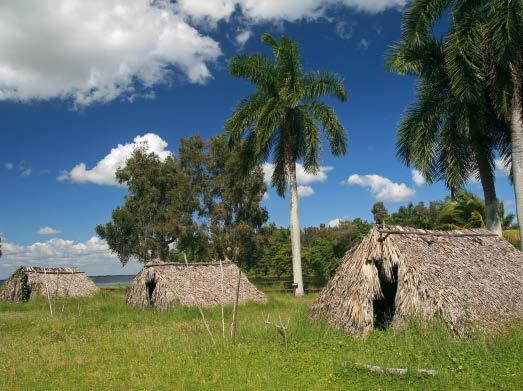
Reconstrucción de un pueblo taíno
Translate into English all the words of taíno origin in the article. Did you need a dictionary? Why (not)? Do you think taíno culture has influenced your culture too? In what way?
Why do you think Puerto Ricans are proud of their roots?
COSTA RICA PANAMÁ VENEZUELA
LOS TAÍNOS EN EL PRESENTE
La influencia de los taínos en la cultura de Puerto Rico es muy importante.
BORICUAS
Los taínos llaman Boriquén a la isla de Puerto Rico. Hoy, los puertorriqueños se llaman también boricuas.
LA COMIDA
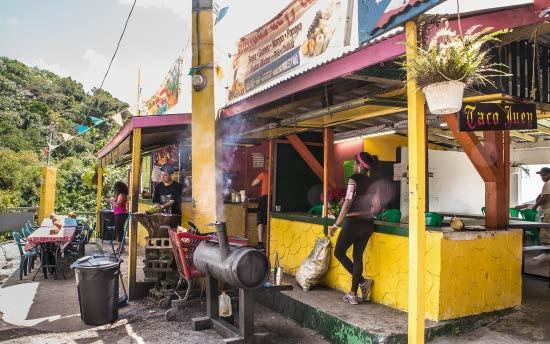
La yuca, la batata, la piña y la papaya son de origen taíno.

PARA SABER MÁS
Watch a video about vejigantes on .
¡ERES REPORTERO/A!
1. Write a brief article about the origins of an element of your culture: a dish, a word, a tradition...
2. Look for some pictures to illustrate it.
LAS TRADICIONES
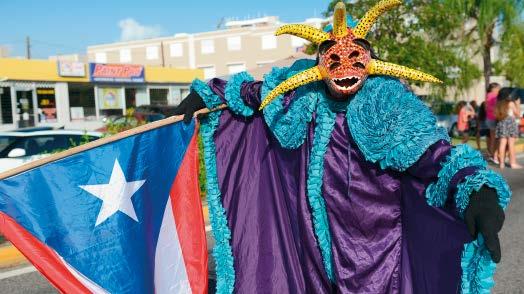
Los famosos vejigantes, máscaras de carnaval típicas de Puerto Rico, son de origen taíno también.
EL IDIOMA
El español tiene muchas palabras taínas como barbacoa, canoa, hamaca, huracán o iguana, que también existen en inglés y otros idiomas.
ORÍGENES DIVERSOS
Los puertorriqueños de hoy tienen orígenes taínos, europeos y africanos. Los puertorriqueños están muy orgullosos4 de la variedad de sus orígenes.
4 (they) are very proud
ESTRATEGIAS
Keep it simple
Write short sentences and use the texts in this unit as a guide for your writing.
Puesto de barbacoa en El Yunque
Máscara de vejigante
MI GRAMÁTICA
1. GUSTAR + NOUNS AND INFINITIVE VERBS
WHEN DO WE USE IT?
• Gustar (to like) is used to express likes and dislikes.
Me gusta la salsa. I like salsa.
WHAT
FORMS DOES IT HAVE?
• Mainly we use two forms: gusta (+ infinitive verbs and singular nouns) and gustan (+ plural nouns).
WORD ORDER
• Gustar is preceded by the following pronouns.
(a mí) me (a ti) te (a él / ella, usted) le (a nosotros / nosotras) nos (a vosotros / vosotras) os (a ellos / ellas, ustedes) les
+ gusta bailar la salsa infinitive noun: singular
+ gustan las tortugas noun: plural
Note that gusta and gustan match what is liked, not who likes it. The literal translation in English is “it pleases me.”
• We use a + noun or pronoun (mí, ti, etc.) to clarify or emphasize who likes something.
¿A John le gusta bailar? ¿A ti te gusta bailar? Does John like dancing? Do you like dancing?
• Other verbs like gustar: encantar (to love) and interesar (to interest).
EXPRESSING AGREEMENT AND DISAGREEMENT WITH GUSTAR
• When somebody expresses likes and dislikes, you can use también, tampoco, sí, and no to express agreement and disagreement.
A mí me gustan los animales. A mí no me gustan los animales.
A mí también. So do I.
A mí no I don’t.
A mí tampoco Neither do I.
Complete the sentences using gusta or gustan.
a. A mis amigos les … los animales.
b. Nos … mucho los gatos.
c. Me la música caribeña.
A mí sí. I do.
d. Me … bailar.
e. A Sandra y a Pablo les … tocar la guitarra. f. ¿Te las personas independientes?
What do you and your friends like?
Write five sentences.
Listen to a teenager talking about what he likes and doesn’t like to do.
React using A mí también / tampoco or A mí sí / no
2. QUANTIFIERS ( VERY, MUCH , A LITTLE )
WHEN
DO WE USE THEM?
• We use quantifiers to accentuate or limit the meanings of words.
WHAT FORMS DO THEY HAVE?

• In this unit we will focus on muy (very), un poco (a little) and mucho (very much)
WORD ORDER
• When quantifiers refer to an adjective, we place them before the adjective.
• When they refer to a verb, we place them after the verb.
es muy bonito/a + + me gusta(n) mucho + + es un poco aburrido/a - -
Mi perro es muy simpático. Me gusta mucho cantar. My dog is very nice. I like singing very much.
Mi perro es un poco nervioso Me gustan mucho los gatos. My dog is a little nervous. I like cats very much.
Choose the appropriate quantifier for each sentence.
a. Spider-Man es muy / mucho ágil.
b. Chris Rock es mucho / muy divertido.
c. Sonia es un poco / muy inteligente.
d. Los peces son muy / mucho independientes.
Note that we don’t use quantifiers with encantar. Me encantan mucho los gatos = Me gustan mucho los gatos.
e. Las tortugas son mucho / muy lentas.
f. Me gusta muy / mucho bailar.
g. Los elefantes son muy / mucho grandes.
h. • ¿A Jenny le gustan las cobayas?
• Sí, le gustan muy / mucho
3. NOUN-ADJECTIVE AGREEMENT
WHAT ARE ADJECTIVES?
• Adjectives are the words we use to describe nouns. In Spanish, they are normally placed after the noun.
Es un muchacho tímido He is a shy boy
WHAT
FORMS DO THEY HAVE?
search
Where do you usually place adjectives in English: before or after the noun?
• In Spanish, adjectives always agree in gender and number with the nouns or pronouns they describe.
Tengo una tortuga pequeña. I have a small turtle.
Tengo dos perros grandes. I have two big dogs.
GENDER
search In English, do you pluralize adjectives?
-o -a el muchacho simpático la muchacha simpática
-e -e el muchacho valiente la muchacha valiente
-or -ora el muchacho trabajador la muchacha trabajadora consonant consonant el muchacho ágil la muchacha ágil
NUMBER
vowel + -s
el perro tranquilo el perro inteligente
los perros tranquilos los perros inteligentes
We use the masculine plural form when we refer to both a masculine and a feminine noun.
Guillermo es tímido Gabriela es tímida
consonant + -es el perro ágil los perros ágiles +
Guillermo y Gabriela son tímidos

Write the correct endings for each word.
a. Mi profesora es inteligent
b. Me gustan las personas positiv...
c. Pedro es un muchacho divertid...
d. Mi papá es un poco perezos
e. Las actividades son fácil
f. Los elefantes son grand...
g. Mi gato es muy independient...
h. La amiga de Lucía es muy trabajador
i. Mis amigos son tranquil
j. Las tortugas son lent...
k. Roberto Clemente es un pelotero famos...
Read the sentences.
Choose an adjective that matches each description. Note that you need to make the noun and adjective agree. inteligente trabajador impaciente dependiente tímido amable
a. Sebastián trabaja y estudia mucho. Es muy trabajador.
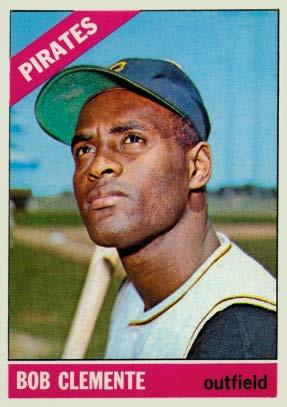
El puertorriqueño Roberto Clemente (1934-1972) es uno de los peloteros más importantes de la
b. Es una persona que ayuda (helps) mucho a sus amigos. Es muy
c. Mi perro depende de nosotros para todo. Es muy ...
d. Tus amigas no hablan mucho en las fiestas. Son muy ...
e. Mi mamá es profesora en la universidad. Es muy
f. Tus amigos no tienen paciencia. Son muy
Choose three adjectives to define the following people and animals. Write sentences for each of them.




historia.

bailar to dance

estudiar to study

leer cómics to read comic books

la banda band

el instrumento instrument
LAS ACTIVIDADES

comer chocolate to eat chocolate

hacer deporte to exercise


escuchar música to listen to music

jugar al béisbol to play baseball

salir con amigos/as to go out with friends ver series / videos to watch a series / videos
LA MÚSICA

el / la cantante singer
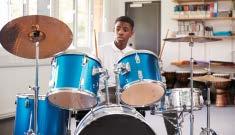
tocar la batería to play the drums

cantar una canción to sing a song

tocar la guitarra to play the guitar

el / la compositor/a composer

tocar el piano to play the piano


LOS ESTILOS MUSICALES


el reggae el hip hop

la música clásica classical music


jazz el reguetón


el rock el pop
la salsa
LOS ANIMALES Y LAS MASCOTAS
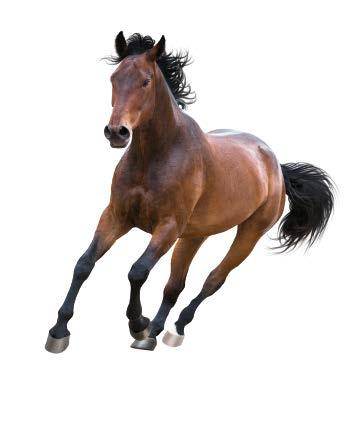
el caballo horse

el perro dog

la cobaya guinea pig
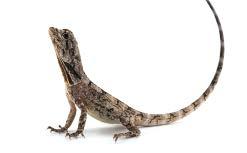
el lagarto lizard
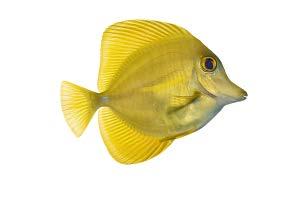
el pez fish
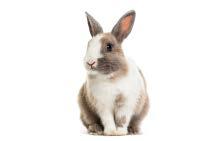
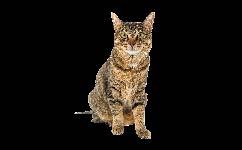
el conejo rabbit el gato cat

el manatí manatee
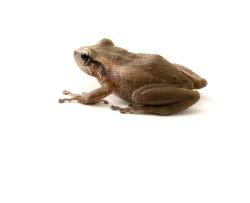
la rana frog
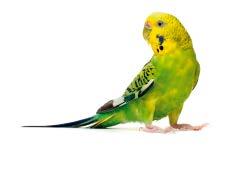
el pájaro bird

la tortuga turtle
¿Cómo soy?

LA PERSONALIDAD
abierto / abierta ≠ tímido / tímida sociable ≠ shy
amable kind
cariñoso / cariñosa ≠ distante loving ≠ distant
creativo / creativa creative
divertido / divertida ≠ aburrido / aburrida fun ≠ boring
dependiente ≠ independiente dependent ≠ independent
honesto / honesta honest
LAS CARACTERÍSTICAS
ágil agile bonito/a ≠ feo/a pretty ≠ ugly grande ≠ pequeño/a big ≠ small
• When a word has more than one syllable, one of the syllables is stressed or emphasized more than the others. We call it the stressed syllable.
• The stressed syllable can be found: - on the final syllable: le-al. - on the next-to-last syllable: po-si-ti-vo. - on the third-to-last syllable: tí-mi-do
inteligente smart leal loyal
paciente ≠ impaciente patient ≠ impatient trabajador / trabajadora ≠ perezoso / perezosa hardworking ≠ lazy
simpático / simpática nice
tranquilo / tranquila ≠ nervioso / nerviosa quiet ≠ nervous
valiente brave
rápido/a ≠ lento/a fast ≠ slow
Listen and repeat these words.
a. simpática d. tranquilo
b. tortuga e. música
c. estudiar f. canción
Listen to the following words. Find the stressed syllable in each word.
a. sal-sa d. can-tan-te
b. ins-tru-men-to e. sa-lir
c. ma-na-tí f. tra-ba-ja-dor
PALABRAS EN USO
A. In groups, one student chooses a word or expression from the list and draws a picture representing it.

The other students guess which word or expression the drawing refers to.
Take turns.
escuchar música hacer deporte ver series el gato el conejo salir con amigos el pájaro
cantar una canción divertido/a aburrido/a inteligente
B. Choose two other words or expressions from the lesson. Repeat the same procedure.
Follow the sample sentence. 30
Read the information about these people.
Write seven sentences about what they have in common.

MIGUEL
• la tortuga
• 14 años
• español
• estudiante
• trabajador
• leer cómics
• La Borinqueña
• el reguetón

ROBBIE
• el reguetón
• 20 años
• inglés y español
• fotógrafo
• divertido
• bailar
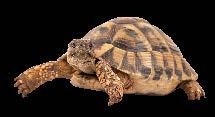
A Miguel y a Marta les gusta La Borinqueña.
• Miles Morales
• la tortuga
Think of one person for each profession. Write sentences to describe their personalities. Compare your sentences with your classmates’. 31
• abierto/a • simpático/a
tímido/a
valiente
amable
trabajador/a
Bad Bunny es un cantante muy simpático.
• creativo/a
• rápido/a
• inteligente
• ¿Cantar una canción?
• Mmm, no.
• ¿Escuchar música?
• ¡Sí!

MARTA
• inglés y español
• estudiante
• bailar
• el reguetón
• la cobaya

• trabajadora
• 14 años
• La Borinqueña
32
Write your preferences. You can use a dictionary if you need it. Share them with your classmates.
una actividad que me gusta
un animal que me gusta mucho
27 33
estilos de música que me gustan mis artistas favoritos
mi superhéroe / superheroína favorito/a
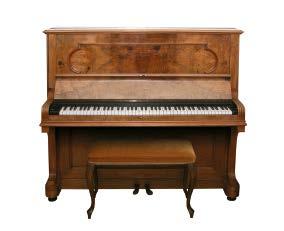
A. Look at these images related to Tere. Write sentences about her (profession, tastes, etc.).
Le gusta mucho la música clásica.
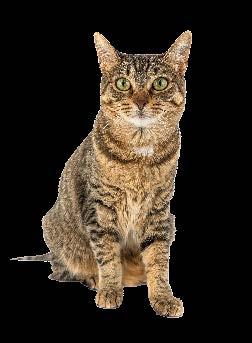


B. What do you have in common with Tere? Talk about it in groups.
• A mí también me gusta la música clásica.
• ¿Sí? A mí no mucho.
una actividad que no me gusta un estilo de música que no me gusta mi deportista favorito/a

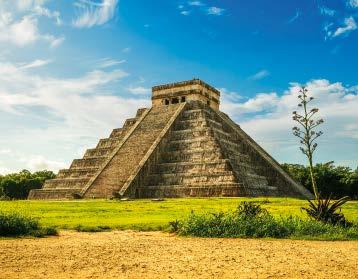
UN PERFIL EN UNA RED SOCIAL
CONTEXT
You need to create a profile for a social media platform.
PRODUCT
A social media profile about yourself
1. Fill in a chart with the following information about yourself.
• Nombre, apellido, nacionalidad, residencia, cumpleaños
• Personalidad, características
• Aficiones, animales favoritos, número favorito, música favorita, personalidades favoritas
2. Write a paragraph introducing yourself.
3. Add extra information.
4. CONEXIÓN: ARTE Draw an avatar of yourself.
Design your profile like a real social media profile. Download a template from . RETO

Seb_el_reportero
Modificar perfil 30 seguidores 62 seguidos 8:30
Sebastián
32 publicaciones
Me llamo Sebastián y soy de San Juan, Puerto Rico.
Me gusta hacer deporte, bailar y salir con los amigos.




Record a “videoprofile” introducing yourself.
LECCIÓN 2 Mi gente
IN THIS LESSON, YOU WILL BE ABLE TO…
• talk about family members and people who are close to you
• describe someone’s physical appearance
BY USING...
• de to express possession
• possessive adjectives
• vocabulary for family relationships, physical traits, and the parts of the body
AND YOU WILL FIND OUT ABOUT…
• the role of family in Puerto Rico
• the importance of godparents
• family names in Spanishspeaking countries
• street art in Puerto Rico
• Arturo Schomburg, a Puerto Rican historian and activist
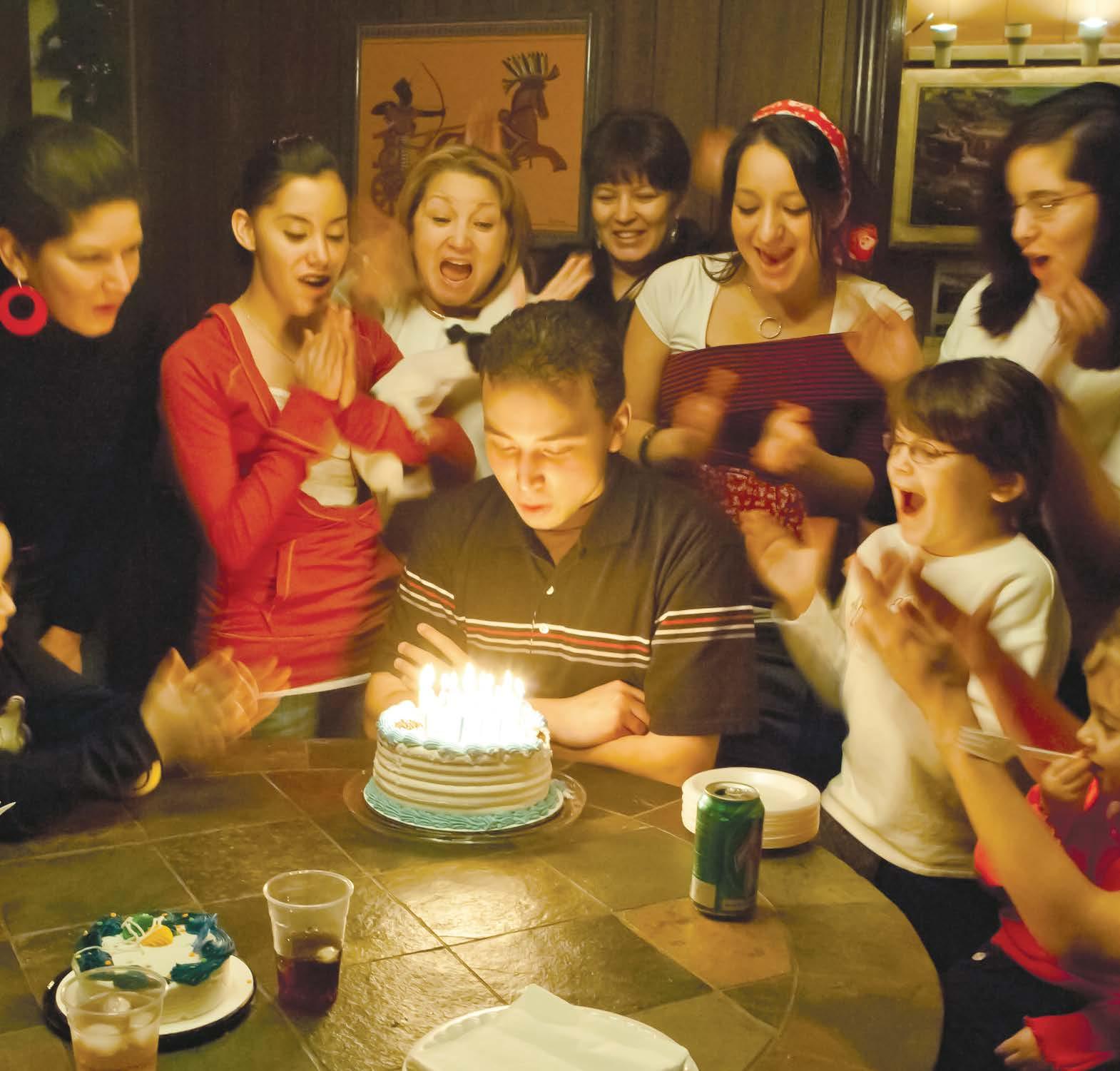
MINIPROYECTO 2: Introduce the important people in your life.
Así somos - Who we are A Photography Project of Puerto Rico © Mark Joseph and Ada Nivia López
Unidad 2
ciento dos
LEE Y HABLA
A. Look at the picture on the previous page. Answer the questions.
1. ¿Qué celebran las personas de la fotografía?
2. En tu opinión, ¿quiénes son estas personas?
B. Read the chat. Check your answers.

Sebastián ¡Hola! Esta foto es de un libro de fotografías de Puerto Rico. El libro se llama Así somos

Guada
¡La foto es muy buena! Me gusta mucho.
Sebastián Sí, es muy bonita. El muchacho del centro es mi amigo Eduardo. Celebran su cumpleaños.
Guada
¿Quiénes son las personas de la foto?
Sebastián Son miembros de su familia.
Guada
Los mexicanos también celebramos el cumpleaños con toda la familia.

C. COMPARACIÓN CULTURAL What do you celebrate with your family?
Sebastián
I can talk about family members and people close to me.
LEE Y ESCRIBE
A. Read these sentences about Sebastián’s family. Complete his family tree.
1. Natalia es la mamá de Sebastián, Sofía y Jayden.
2. Sofía es la hermana de Jayden y Sebastián.
3. Natalia es la hija de Elena y José Antonio.
4. Elena es la abuela de Sebastián, Sofía y Jayden.
5. Jayden es el nieto de María Fernanda y Roberto.
6. Pedro es el exesposo de Natalia.

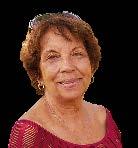
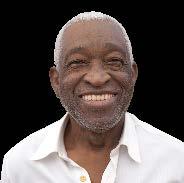


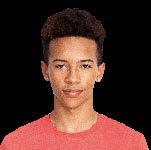


B. Read the following sentences.
La mamá de Sofía es profesora. Sofía’s mother is a teacher.
Is the word order the same in English and Spanish? What Spanish word corresponds to ’s?
POSSESSION WITH DE El papá de Sebastián.
El amigo de Sofía.
La mascota de Jayden.
GRAMÁTICA p. 114 MI GRAMÁTICA
MI VOCABULARIO
LA FAMILIA (1)
los papás = los padres: el papá + la mamá = el padre + la madre
los hijos: el hijo + la hija
los hermanos: el hermano + la hermana
los abuelos: el abuelo + la abuela los nietos: el nieto + la nieta
los esposos: el esposo + la esposa los exesposos: el exesposo + la exesposa
VOCABULARIO p. 116
CULTURA
La familia es muy importante en Puerto Rico y, en general, en Latinoamérica. La familia es importante para ayudar (help), tomar decisiones y celebrar. Son familia los papás y los hermanos, pero también la familia extensa y los amigos cercanos (close friends)
COMPARACIÓN CULTURAL
Is the concept of family similar in your country?
MARÍA FERNANDA ROBERTO JOSÉ ANTONIO ELENA
LEE Y ESCRIBE
A. Read Sebastián’s blog post.
Complete this definition of mi círculo.
“Mi círculo” es una representación de...
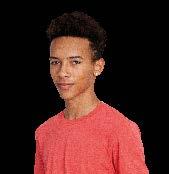
MI CÍRCULO
Hoy en la escuela hablamos de un tema interesante: “Mi círculo”. La idea es escribir tu nombre en un círculo pequeño, en el centro. En un círculo más grande escribes el nombre de las personas más importantes para ti: amigos, profesores…
Este es mi círculo:
MAMÁ
JOSÉ YO
ENTRENADOR CUEVAS
SOFÍA
JAYDEN
LUIS
Mi mamá es una persona esencial en mi vida. Es cariñosa, inteligente y trabajadora.
Mi padrino José es como un papá para mí. Ayuda mucho a mi familia. Es muy bueno, trabajador y divertido.
Mis hermanos son también muy importantes para mí. Sofía escucha siempre y es muy inteligente. Aprendo mucho de ella. ¡Mi hermano Jayden es divertido y cariñoso!
Luis es mi mejor amigo. Me gusta cómo es: creativo, con ideas increíbles y muy independiente.
El entrenador Cuevas es mi entrenador de béisbol. Es trabajador, valiente y muy positivo. Es un ejemplo para mí.
B. ¿Cómo son las personas del círculo de Sebastián?
Describe their personalities.
La mamá de Sebastián es...
C. Identify and describe two people from your inner circle.
Mi…
POSSESSIVE ADJECTIVES (1) mi hermano / hermana mis hermanos / hermanas tu hermano / hermana tus hermanos / hermanas
GRAMÁTICA p. 114
MI VOCABULARIO
LA FAMILIA (2) el padrino, la madrina godfather, godmother
VOCABULARIO p. 116
RECUERDA
cariñoso / cariñosa loving creativo / creativa divertido / divertida fun independiente inteligente positivo / positiva trabajador / trabajadora hardworking valiente brave
VOCABULARIO p. 98
Los padrinos y las madrinas tienen un rol importante en las familias de Puerto Rico. Son como “segundos” (second) papás. Están muy presentes en la vida de las personas, especialmente durante celebraciones como el cumpleaños, la graduación, etc.
COMPARACIÓN CULTURAL
Does the role of godparent exist in your culture? What are their responsabilities?
Familias con talento
I can ask and give information about family relationships.
4
LEE Y ESCRIBE
A. Read the article. Answer the questions below.
René Pérez Joglar (1976) es un cantante y compositor puertorriqueño de música urbana. René tiene una familia con talento.
Su mamá, Flor Joglar, es actriz y su papá, Reinaldo Pérez, es músico y escritor.
Su media hermana, Ileana Cabra Joglar, es cantante y compositora. Es hija de la mamá de René y de su esposo, padrastro de René.
Su hermanastro, Eduardo Cabra Martínez, también es compositor y toca muchos instrumentos. Es hijo del padrastro de René y otra mujer.
De 2005 a 2014, los tres forman Calle 13, una banda famosa internacionalmente. René es una persona comprometida: colabora con Unicef y Amnistía Internacional.
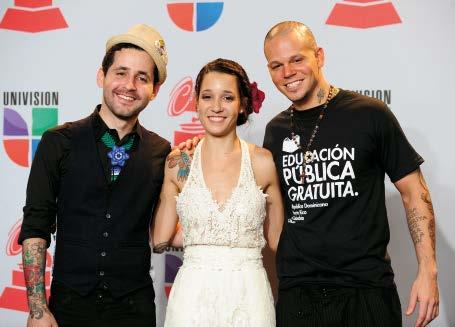
Eduardo, Ileana y René en los Latin Grammy Awards
RETO search
1. ¿De dónde es René Pérez?
2. ¿Qué tipo de música canta?
3. ¿Por qué tiene una familia con talento?
4. ¿Qué crees que significa la palabra “comprometido”?
B. Draw the family tree de la familia Pérez Joglar.
C. Read these sentences about the Pérez Joglar family. What words do you use in English for the words in bold?
René es cantante y compositor. Su mamá es actriz y su papá es músico y escritor. Sus hermanos son Ileana y Eduardo.
Ileana es cantante y compositora. Su banda es Calle 13. Sus hermanos son René y Eduardo.
LA FAMILIA (3)
el padrastro, la madrastra stepfather, stepmother el medio hermano, la media hermana half brother, half sister el hermanastro, la hermanastra stepbrother, stepsister
p. 116
RETO search
D. Rewrite the sentences in the first person (yo) What words do you need to change?
POSSESSIVE ADJECTIVES (2)
su primo/a (de él = de ella)
sus primos/as (de él = de ella)
GRAMÁTICA p. 114
JUEGO:
¿QUIÉN SOY?
1. In pairs, write all the family relationships you know in Spanish on different note cards.
2. Student A gets a card and holds it to his / her forehead.
3. Student B defines the person on the card.
4. Student A guesses who the person is.
La hermana de tu madre.
ESCRIBE
Choose a famous person or a person you admire. Research his or her family.
Write a brief description of the family.
Millie Bobby Brown es una actriz inglesa.
Su mamá se llama…
CULTURA
LOS DOS APELLIDOS EN EL MUNDO HISPANOHABLANTE
En los países de habla hispana, las personas tienen dos apellidos: normalmente, el primero1 es el primer apellido del papá y el segundo2, el primer apellido de la mamá.
Hoy en día, en muchos países, las familias deciden el orden de los apellidos. Cuando se casan3 , las mujeres4 no usan el apellido de su esposo.
1 the first 2 the second 3 (they) get married 4 women
LEE Y HABLA
ESTRATEGIAS
Use learning flash cards
Use the note cards as learning flash cards. Write the English word on the other side of the card.
MI VOCABULARIO
imo, la prima
cousin, female cousin el sobrino, la sobrina
VOCABULARIO p. 116
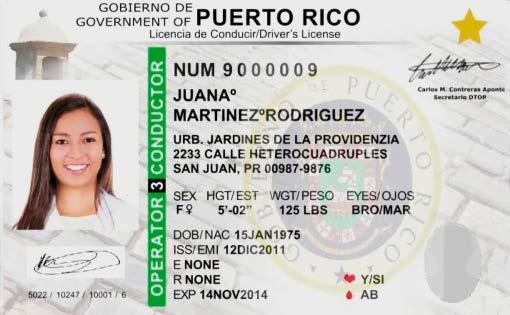
Espécimen de la licencia de conducir de Puerto Rico
B. COMPARACIÓN CULTURAL How do family names work in your country? Are there any set rules? 7
A. Read the text and look at the driver’s license. What is Juana’s father’s family name? What is her mother’s family name?
Explain why Juana has two different family names.
LA FAMILIA (4) el tío, la tía uncle, aunt el pr
male
nephew, niece
Arte en Puerto Rico
I can describe someone’s physical appearance. (1)
8
MIRA, HABLA Y ESCRIBE
Mira el video
A. Sebastián is visiting a street art event in Loíza. Deduce the meaning of the following words.
los ojos la cabeza la mano el pelo
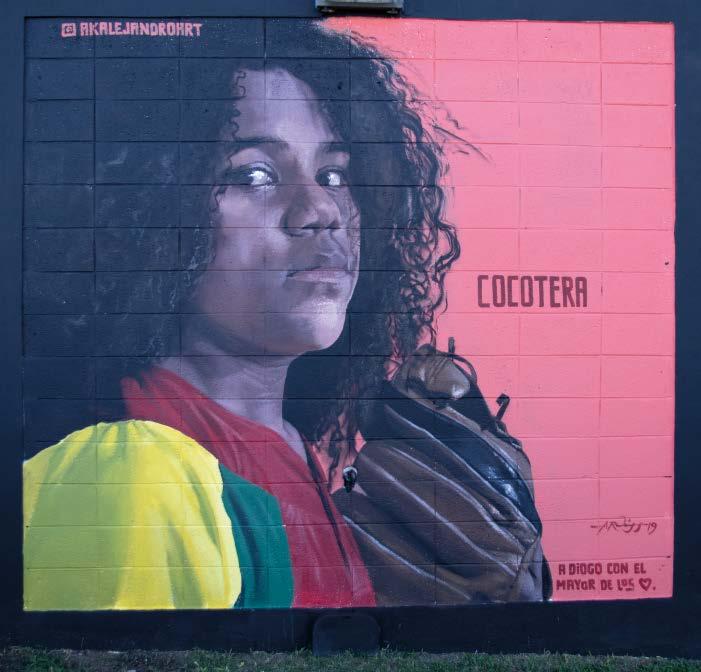
B. Answer the questions.
1. ¿Cómo es el mural?
2. ¿Cómo es la muchacha físicamente?
3. ¿Qué es Los Cocoteros?
Después de ver el video
RETO
C. Look for another Puerto Rican mural. Describe it.
¿Cómo es la persona físicamente?
MI VOCABULARIO
LAS PARTES DEL CUERPO
parts of the body
la boca mouth
la cabeza head
la cara face
las manos hands
la nariz nose
las orejas ears
LA DESCRIPCIÓN FÍSICA (1)
Tiene los ojos... eyes
azules blue
marrones brown
negros black
verdes green
Tiene el pelo... hair
castaño brown
negro black
rubio blond
blanco white
corto short
largo long
liso straight
rizado curly
Es... pelirrojo/a red-haired
Lleva… barba beard
bigote moustache
lentes glasses
VOCABULARIO pp. 117-118
Luis Alejandro Rodríguez, La Cocotera, Proyecto Monument Art
LEE, HABLA Y ESCRIBE
A. Read the information about three Puerto Rican murals. In pairs, match the descriptions to the correct murals.
CULTURA
Tiene el pelo largo y negro. Tiene los ojos negros y la nariz grande. Lleva barba.
Tiene el pelo corto y blanco. Tiene los ojos negros. Lleva lentes y bigote. 1 2 3
B. Write a description for the fourth mural. ¿Cómo es la persona?
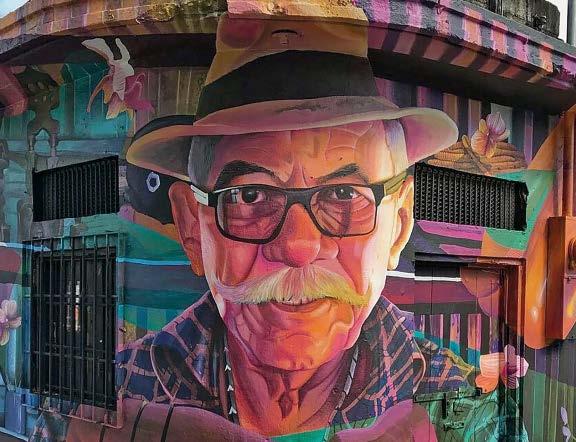

Tiene el pelo largo, castaño y liso. Tiene las manos grandes.
En Puerto Rico el arte callejero (street art) es muy importante. Existen festivales prestigiosos como «Color Caribe», en Dorado, «Santurce Es Ley», en San Juan, y «Yaucromatic», en Yauco.
COMPARACIÓN CULTURAL
Is street art considered an art in your country? Is it similar to the street art in Puerto Rico?


David Zayas
Luis Alejandro Rodríguez
Danilo Lozada y Diego Rodríguez
Lección 2
Ramón Emeterio
¿Quién es quién?
I can describe someone’s physical appearance. (2)
ESCUCHA Y ESCRIBE
Listen to Sebastián talking about su entrenador, su padrino, su amigo Leo y su tío
Match each description to the corresponding picture. Explain your answer: ¿cómo es cada persona?
Creo que el entrenador de Sebastián es el hombre de la fotografía… porque…


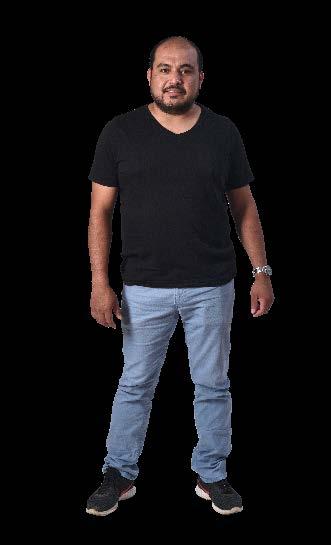

LA DESCRIPCIÓN FÍSICA (2)
Es…
CULTURA
In most countries, including Spanish-speaking countries, a person’s height is measured in meters. 1 meter = 3.28 feet
COMPARACIÓN CULTURAL
How tall are you in meters?
LEE Y HABLA
A Puerto Rican producer is looking for actors for a new series about a family. Read el anuncio. Find students in your class that meet the requirements. ¿Cómo son? 11

CASTING
PARA UNA NUEVA SERIE
Buscamos1 a un muchacho y una muchacha de entre 13 y 16 años para una nueva serie de televisión.
PERFIL DE ÉL ¿Eres un muchacho?
¿Tienes el pelo castaño y corto?
¿Tienes los ojos marrones?
¿Llevas lentes?
PERFIL DE ELLA ¿Eres una muchacha?
¿Tienes el pelo negro, largo y rizado?
¿Tienes los ojos azules?
Escribe un correo electrónico a: castingpr@mail.difu.
1 (we) are looking for
JUEGO: ¿QUIÉN ES QUIÉN?
1. Your teacher will give you and your classmate a game board.
2. In pairs, one student chooses a character.
The other student guesses who the character is by asking only yes or no questions. 12

¿Es una muchacha?
¿Tiene el pelo negro?
REPORTEROS

I can understand a short article about a Puerto Rican personality.
ARTURO SCHOMBURG
: EL PADRE DE LA HISTORIA AFROLATINA Y AFROAMERICANA
por Sebastián Martínez, reportero de Puerto Rico.
¿QUIÉN ES ARTURO SCHOMBURG?
Es un intelectual importante de Puerto Rico. Nace en Santurce en 1874. Es de origen africano y alemán.
¿CÓMO ES?
Es una persona muy inteligente. Le gusta mucho leer y también le gusta mucho la historia.
“Educación cultural es empoderamiento.”
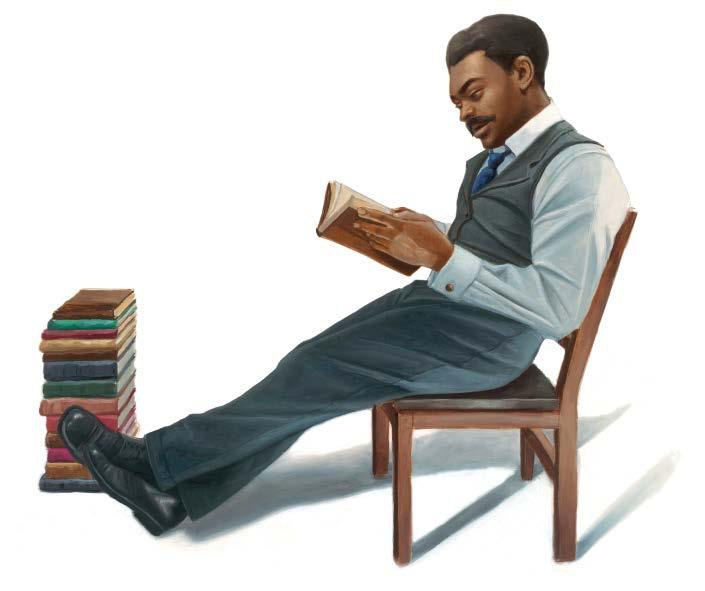
En el colegio quiere1 aprender historia afrolatina, pero una profesora le dice2 que los afrolatinos no son importantes en la historia de Puerto Rico. Schomburg dedica su vida a probar3 que su profesora no tiene razón4
What is el Renacimiento de Harlem? 13 14
Read the article and these sentences. Say if they are correctas or incorrectas. Correct the wrong ones.
1. Arturo Schomburg es afrolatino.
2. Le gusta mucho la historia.
3. Cree que los afrolatinos no tienen historia.
What does he do in New York?
1 (he) wants 2 (she) tells him 3 to prove 4 (she) is not right
15
16
Discuss in pairs and then with the class: Why do you think Arturo Schomburg’s work is important to society?
Can you name two artists from the Harlem Renaissance not mentioned in the text?
Schomburg: The Man Who Built a Library. Texto de Carole Boston Weatherford. Ilustraciones de Eric Velasquez. Reproducido con permiso de Candlewick Press.
EN NUEVA YORK
Con 17 años Schomburg emigra a Nueva York. Allí colecciona muchos libros, obras de arte y objetos de la historia africana.
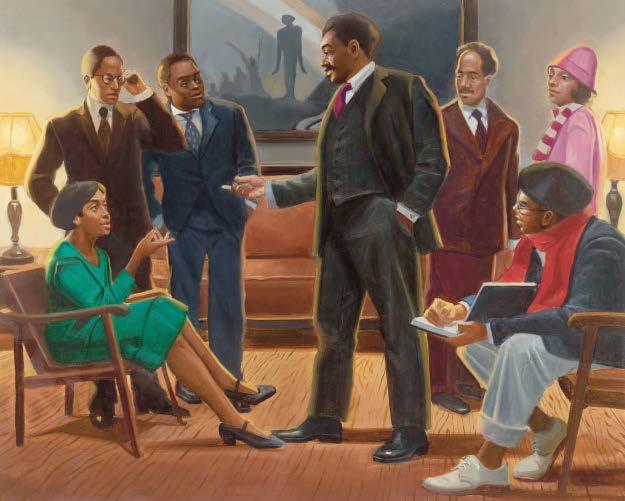
Schomburg es un miembro del Renacimiento de Harlem, un movimiento de intelectuales y artistas afroamericanos que expresan su herencia cultural en sus obras.
PERSONALIDADES DE ORIGEN AFRICANO
Schomburg investiga y escribe sobre personalidades afrolatinas y afroamericanas, por ejemplo la escritora Phillis Weathley, el pintor José Campeche, el inventor Benjamin Banneker o el líder abolicionista Frederick Douglass.
EL CENTRO SCHOMBURG
La colección de Arturo Schomburg es ahora el Centro Schomburg para la Investigación de la Cultura Afroamericana. Está en Nueva York.


¡ERES REPORTERO/A!
1. Search online for one of the following afrolatinos from Puerto Rico: José Celso Barbosa, Sylvia del Villard, Julia de Burgos, or Piri Thomas.
2. Write a short article. Include a picture and the following information: nombre, lugar y fecha de nacimiento, ocupación, personalidad y contribución a la sociedad
ESTRATEGIAS
Plan your article
You can already write a short article with your level of Spanish! Make headings from the information in step 2 (occupation, personality, etc.). Write one or two sentences under each heading.
Miembros del Renacimiento de Harlem Schomburg: The Man Who Built a Library. Texto de Carole Boston Weatherford. Ilustraciones de Eric Velasquez. Reproducido con permiso de Candlewick Press.
Centro Schomburg, en Harlem (Nueva York)
MI GRAMÁTICA
EXPRESSING POSSESSION
POSSESSION WITH DE
• You can express possession and relationships with the preposition de.
Esta es la familia de Sebastián.
This is Sebastián’s family
POSSESSIVE ADJECTIVES
WHAT ARE THEY?
• Possessive adjectives tell you who owns something or describe relationships between people and things.
Nuestra hermana vive en San Juan. Our sister lives in San Juan.
possessive adjective possessive adjective
WHAT FORMS DO THEY HAVE?
mi tío my mi tía my
mis tíos my mis tías my
tu tío your (fam.) tu tía your (fam.) tus tíos your (fam.) tus tías your (fam.)
su tío his / her / its / your (formal) su tía his / her / its / your (formal)
sus tíos his / her / its / your (formal)
sus tías his / her / its / your (formal)
nuestro tío our nuestra tía our nuestros tíos our nuestras tías our vuestro tío your vuestra tía your vuestros tíos your vuestras tías your su tío their, your (formal) su tía their, your (formal) sus tíos their, your (formal) sus tías their, your (formal)
• They agree in number (singular or plural) with the nouns they describe.
Mi primo lleva lentes. Mis primos llevan lentes.
search In English, do possessive adjectives agree in number with the noun they describe? singular plural
• Nuestro/a and vuestro/a also agree in gender (masculine or feminine) with the nouns they describe.
Nuestro tío es muy simpático. Nuestra tía es muy simpática.
f. Ari y Pablo 17 18 19
Complete the sentences using the correct possessive adjective.
a. I’m talking about me. Mi gata se llama Peluche y ... perro, Patitas.
b. I’m talking about Francisco. ojos son azules.
c. I’m talking about my classmates and me. profesora es mexicana.
d. I’m asking your sister and you. ¿Cómo se llama ... abuelo?
e. I’m asking you (one person, formal). ¿Cómo se llama ... mamá?
f. I’m talking about Olga. hermano es rubio.
Rewrite the sentences using a possessive adjective. Then, translate them into English.
a. Carlos tiene un hermano. Es su hermano. / He is his brother.
b. Carolina tiene un hermano.
c. Yo tengo una prima.
d. Yo tengo cinco primos.
e. Sergio y Antonio tienen un perro.
Read the information about Raúl’s family. Find all six possessive adjectives. Complete the family tree.
Esta es mi familia.
Yo me llamo Raúl. Tengo dos hermanos: Juan y Rosi. Nuestros papás se llaman Felipe y Antonia.
Mi hermano Juan está casado (he is married) con Belén y tienen dos hijas. Sus hijas se llaman Lidia y Leticia. Mi sobrina Lidia tiene diez años y Leticia, dos.
Mis hijos se llaman Ari y Pablo. 20
f. Susana y Natalia tienen un perro.
g. Mi esposa y yo tenemos una mascota.
h. Mi esposa y yo tenemos un gato.
i. Mis papás tienen dos pájaros.


Look at Raúl’s family tree. Say how these people are related to him using de.
a. Antonia Es la mamá de Raúl.
b. Felipe
c. Juan
d. Rosi
e. Lidia y Leticia







Raúl
LA FAMILIA
mi abuelo
mi abuela

mi papá mi mamá mi hermano/a mi primo/a
mi tío yo mi tía
los esposos spouses el esposo husband la esposa wife
los papás = los padres parents
el papá = el padre father
la mamá = la madre mother
los hijos children
el hijo son la hija daughter
los hermanos siblings el hermano brother la hermana sister
los abuelos grandparents
el abuelo grandfather
la abuela grandmother
los nietos grandchildren
el nieto grandson
la nieta granddaughter
los tíos uncles and aunts
el tío uncle
la tía aunt
los primos cousins
el primo cousin
la prima cousin
los sobrinos nephews and nieces
el sobrino nephew
la sobrina niece
los padrinos godparents
el padrino godfather
la madrina godmother
los exesposos ex-spouses el exesposo ex-husband la exesposa ex-wife
los padrastros stepparents el padrastro stepfather la madrastra stepmother
los medio hermanos half-siblings el medio hermano half brother la medio hermana half sister
CARLA
¿Cómo es él / ella? What does he / she look like?
LA DESCRIPCIÓN FÍSICA
alto / alta tall
bajo / baja short
pelirrojo/a red-haired
rubio blond castaño brown
blanco white negro black
corto short
largo long
arba beard lentes glasses
bigote moustache
liso straight
b
TIENE EL PELO…
TIENE LOS OJOS…
LLEVA…
marrones brown
verdes green
negros black
azules blue
rizado curly
la cara face
LAS PARTES DEL CUERPO
la cabeza head
los ojos eyes
la boca mouth
las manos hands

ACCENT MARKS
el pelo hair
las orejas ears
la nariz nose
• Some words in Spanish have an accent mark. The accent mark indicates the stressed syllable. Accents marks are only placed on a vowel. pa-pá tí-mi-do/a tam-bién mú-si-ca
• The accent mark can be used to distinguish words that are spelled alike but have different meanings. el (the) ≠ él (he) mi (my) ≠ mí (me) tu (your) ≠ tú (you)
• All the question words have an accent mark in Spanish. ¿cómo? ¿cuándo? ¿dónde? ¿qué? ¿quién? ¿cuál?
All these words have an accent mark. Listen to them and write the missing accent marks.
a. simpatico d. tio
b. cancion e. adios
c. pajaro f. mama
ESTRATEGIAS
Rules for accent marks
For novice students, it is not essential to learn all the rules for the written accent; however, pay attention to the accent marks because they change the pronunciation of that word, and sometimes its meaning.
PALABRAS EN USO
A. Classify these words or phrases into each category. Add three more words or phrases to each. 22
amable pelirrojo/a pelo corto abuelo/a alto/a bajo/a uruguayo/a estadounidense ojos negros rubio/a tímido/a cariñoso/a hermano/a argentino/a perezoso/a pelo liso
Para identificar la nacionalidad
Para describir la personalidad
Para hablar de la familia
Para la descripción física
B. Choose four words or phrases from Activity 22A and find four images to illustrate them. Show your picture to a classmate. Do they know what words they represent?
C. In pairs, write sentences describing each picture. Analú es la abuela de Marco. Es argentina. Es muy cariñosa.
A. Look at the series of words to describe people. Complete them with more examples. Then, compare your series with a classmate’s.
muy simpático/a un poco nervioso/a alto/a bajo/a ser los ojos azules el pelo rubio … tener
llevar lentes …
B. Write a short description of yourself using some of the word combinations from Activity 23A.

Bring a photo of a person (it could be someone from your circle or a celebrity). Describe the person in detail to your classmate. Your classmate follows your description to make a drawing, and can ask you for more details to improve it. Compare the picture and the drawing. Do they look alike?
• Tiene el pelo rizado y negro.
• ¿Tiene el pelo corto?
• No, tiene el pelo largo.

A. Draw an eight-pointed star. Think of two people in your circle. Write their names and three facts about them on the points of the star. Your classmate asks questions to guess what the facts refer to. You can only answer sí or no
• ¿Stephan es tu hermano?
• No.
• ¿Es tu padrastro?
• Sí.
• ¿A Stephan le gusta Billie Eilish?
Thor
B. Tell the class what you have learned about your classmate’s people.
El padrastro de Karen se llama Stephan.
Su hermana Allysson tiene una mascota. Es un perro. Se llama Thor.

Stephan Billie Eilish perezoso
Atlanta
Allysson
ojos verdes
lentes
Timothée Chalamet
MI CÍRCULO
CONTEXT
You want to celebrate the most important people in your life.
PRODUCT
A poster of the people in your inner circle
1. Think about the important people in your life (familia, profesores, amigos, entrenadores...).
2. Choose two to six people.
3. Write the following information:
• nombre y apellido
• relación contigo (with you)
• descripción física y de personalidad
• gustos y aficiones
RETO
• por qué es importante para ti
4. CONEXIÓN: ARTE Draw tu círculo on a poster.
MI CÍRCULO


ESTRATEGIAS
Be creative
Before you start designing, take time to think about where best to place the elements, what colors to use, etc. Make sure that the poster is legible from afar.
ALTERNATIVA DIGITAL
Create a presentation in a digital program where you can pan and zoom on the different descriptions about your inner circle.






CREAR UNA EDICIÓN ESPECIAL DE LA REVISTA ESCOLAR
CONTEXT
Your class is helping to produce a Spanish special edition of the school magazine.
PRODUCT
An article introducing an interesting person
NOS INSPIRAMOS
1. Make a list of people that you find interesting in your school community.
2. Decide who (one person) you would like to interview.
3. Contact the person.
DEFINIMOS LOS ELEMENTOS
4. Make a list of the questions you can ask him or her. Here are the topics you should include:
• Información personal: nombre, nacionalidad, idiomas...
• Personalidad
• Gustos y preferencias: música, animales, aficiones…
ENTREVISTAMOS
5. Use Spanish if the person speaks the language. Otherwise, use English. You can translate the answers later.
6. Take notes of the conversation or record it if the person approves.
ESCRIBIMOS
7. Read or listen to your notes.
8. Write a profile of the person. Use the information that he or she gave you and add other information (ocupación, relación con ustedes, descripción física...).
9. Edit and correct the profile.
FINALIZAMOS
10. Collect all the articles and create the special edition of the magazine.
11. Together, design a cover for the magazine.
CONEXIÓN: ARTE
HOW TO WRITE AN ARTICLE ABOUT SOMEONE
• Start by writing a draft
• Write short, simple sentences.
• Be sure to use the grammar structures and vocabulary you have learned so far
• Re-read your text and improve what you can.
• Write a clean copy of the text.
• If possible, put a large picture of the person in his / her work environment.
• Write a caption
• Don’t forget to sign the article!

Create a video version of the interviews. Add Spanish subtitles.

INTERPRETIVE
INTERPRETIVE READING
Read the text and answer the questions.
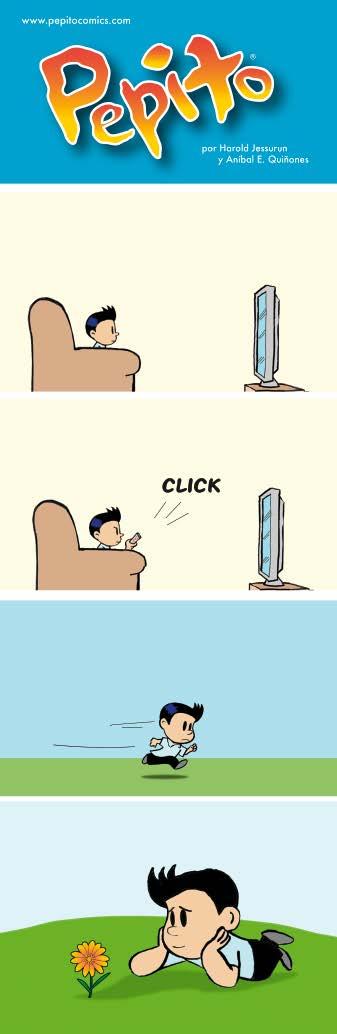
PEPITO
, UN CÓMIC PUERTORRIQUEÑO
Pepito es un cómic sobre la familia puertorriqueña y una variedad de temas como la política y los problemas sociales de Puerto Rico.
Los personajes
Pepito es un muchacho curioso de siete años. Vive con su mamá, su papá y su abuela.
Tiene dos mascotas, Chupi y Thomas. Le gustan mucho los mantecados1 y su artista favorito es Daddy Yankee.
Mamá es el pilar de la casa y papá usualmente es la víctima de los problemas del país. Tata es la abuela de Pepito y mamá de su mamá. Es una mujer fuerte.
Mofin es un amigo de Pepito. Le gustan mucho la tecnología y la piña2 .
Yelitza es una amiga de Pepito. Es una niña muy inteligente y su interés principal es el rol de las mujeres en la sociedad.
1 ice cream 2 pineapple
Pepito Cómics, Harold Jessurun y Aníbal Quiñones
1. ¿Cuántos años tiene Pepito?
2. ¿Cuántas personas viven con Pepito?
3. ¿Quiénes son Chupi y Thomas?
4. ¿Qué estilo de música le gusta a Pepito?
5. ¿Cómo es su abuela?
6. ¿Qué le gusta a su amigo Mofin?
7. ¿Quién es Yelitza? ¿Cómo es?
ESTRATEGIAS
Review
Review the question words on p. 43 and write them on a piece of paper that you can refer to when you need them.
2
INTERPRETIVE VIEWING
Watch the video. Answer the questions below.
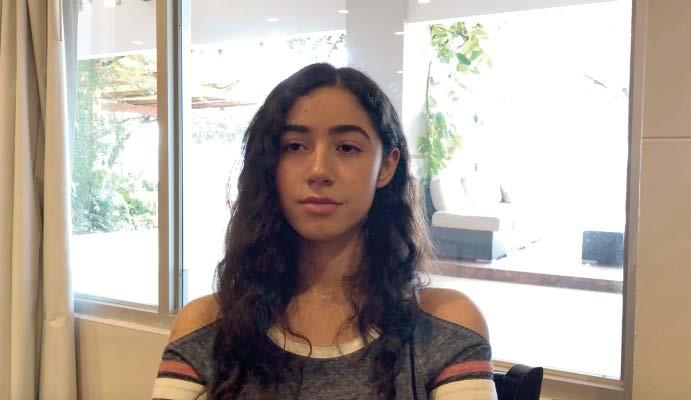
1. ¿Quién no vive con Gabi: su papá o su mamá?
2. ¿Cuántos años tiene su hermano?
3. ¿Quién es muy deportista?
4. ¿A quién le gusta jugar a videojuegos?
5. ¿Quién es una persona trabajadora?
6. ¿Quiénes son personas artísticas?
7. ¿Quién tiene setenta años?
PRESENTATIONAL
PRESENTATIONAL WRITING
You collaborate with a pop culture online magazine. This month’s topic is about superheroes. Choose a superhero you like. Write about him or her, including the following information:
• ¿Cómo se llama?
• ¿Cómo es su personalidad? ¿Cómo es físicamente?
• ¿Qué le gusta?
PRESENTATIONAL SPEAKING
Your school participates in a virtual exchange with a partner school in Puerto Rico. You exchange videos with the other students. This week, the topic is: la mascota ideal. Record a video including the following information:
• ¿Cuál es la mascota ideal para ti?
• ¿Cómo es su personalidad?
• ¿Qué le gusta y qué no?

TAMBIÉN SE DICE…
En Puerto Rico
bien = muy Es bien cariñosa. = Es muy cariñosa.
ESTRATEGIAS
Focus on the task
When you write a paragraph, focus on giving the information you are asked to give. Write it one sentence at a time using what you have learned.
ESTRATEGIAS
Rehearse before speaking Practice before doing the presentation. The clearer your pronunciation is, the better the other person will understand you.
La familia, Alejandro Yegros
INTERPERSONAL
INTERPERSONAL WRITING
A. Read a message that an English teacher posted on a Puerto Rican online forum.
¿Qué hacen los estadounidenses en su tiempo libre?
Hola a todos. Soy profesora de inglés en Puerto Rico y mis estudiantes tienen una unidad sobre los Estados Unidos. Hablamos de actividades que las personas hacen en su tiempo libre y comparamos qué hacen los jóvenes de Puerto Rico y de EE. UU. ¡Necesitamos información!
¿Qué les gusta hacer en su tiempo libre? ¿Qué música les gusta? ¿Qué artistas son populares donde viven?
B. Reply to her by addressing all her questions.
INTERPERSONAL SPEAKING
A. You are participating in a Spanish club. Today, the topic is families and pets. In pairs, interview each other, including the following information:
• How many people are there in your family?
• Who are they?
• Who is your favorite family member?
• What is your favorite pet?
• Why do you like it?
B. Record the interview.

ESTRATEGIAS
Use linking words Use linking words like y, pero, and porque to link your sentences. They will make your writing more freeflowing.
ESTRATEGIAS
Negotiate meaning If you don’t understand something, ask for clarification using: No entiendo…, ¿Puedes repetir, por favor?, or ¿Qué significa…? This is an important skill for interactive communication. Your teacher will assess that you used them properly.
NUESTRAS CULTURAS
COMPARACIÓN CULTURAL
ESCRIBE
Choose one of the following topics.
Complete the chart below with information from this unit. Write three to four sentences to compare both cultures.
1. La música en Puerto Rico y la música en donde vives.
2. El concepto de familia en Puerto Rico y en donde vives.
3. El arte urbano en Puerto Rico y en donde vives.
TOPIC:
PUERTO RICO
HABLA
Choose one of the following topics.
Complete the chart below with information from this unit.
Record an audio track or a video to compare both cultures.
1. Los deportes en Puerto Rico y en donde vives.
2. Personajes de ficción de Puerto Rico y de donde vives.
3. Los pueblos nativos de Puerto Rico y de donde vives.
TOPIC:

ESTRATEGIAS
Use resources to compare
Write or say simple sentences about each culture. Use words such as y, pero, sí, no, también, and tampoco, and phrases such as es similar a and es diferente a to connect and compare them.