Pacifica’s Expectations for Civil and Professional Behavior
Disability Accommodations and Inclusion
Application Review
Interview Agreement
Denial of Student Clubs
Club Constitution & Leadership Roles
On-boarding Meeting
INTRODUCTION
All future and present club leaders and advisors may use this manual as a guide to understanding the different aspects of Student Clubs at Pacifica.
This manual is divided into seven main parts:
Student Club Policy
How to Start a Student Club
Club Privileges
Roles and Responsibilities of Club Leaders
Student Clubs Finance
Student Clubs Event Planning
Contact Information
This manual may be updated frequently with the current information needed to help manage and grow student clubs.
Pacifica Graduate Institute encourages students to explore and further their interests at the Institute and outside the classroom that contribute to their development as members of the Pacifica and global communities. This policy sets forth students’ rights and responsibilities, as well as Institute expectations, regarding the establishment and conduct of Student Clubs and their activities.
Due to our unique residential model, it can be difficult to connect with students from other cohorts and programs around shared interests, whether they are academic, professional, or personal in nature, as well as shared identities. Student Clubs provide an opportunity to voluntarily connect with one another to create meaningful connections that may enrich the student experience.
STUDENT CLUB POLICY
Students at Pacifica are free to establish, join, and participate in clubs that support and advance their common interests consistent with Institute policy. This policy applies to institute-sponsored student clubs:
Sponsored student clubs are those officially approved by the Student Club Committee. Sponsored student clubs must adhere to the policies and protocols as described in this Student Club Manual.
Pacifica reserves the right to limit the number of clubs.
STUDENT CLUB GUIDELINES & PROVISIONS
All Student Club activities must be done in consistency with the Student Conduct Policy (as outlined in the Student Handbook), through orderly means and must not disrupt the learning environment or Institutional functions/operations. Clubs should be open to all students without discrimination. Members of student clubs are responsible for their actions and must conduct themselves in accordance with the policies, procedures, and regulations of the Institute. Further details of all guidelines and provisions for student clubs can be found in the following sections:
A. Approval – Student clubs
wishing to be officially recognized by the Institute require approval by the Student Club Committee. Student clubs must go through the approval process outlined in the following pages. To be considered for approval, student clubs must have a mission deemed as contributing to the educational community. Only approved student clubs can represent themselves as such.
B. Membership –
Membership in sponsored student clubs is limited to actively enrolled students only. Clubs must meet the minimum membership requirements as described in the following pages. Student clubs that select their members on the basis of commitment to a set of beliefs (for example, religious or political beliefs)
may limit membership and participation in the club to students who, upon individual inquiry, affirm that they support the club’s goals and agree with its beliefs. However, no student who so affirms may be excluded from membership or participation in the club on the basis of unrelated protected class, such as race, color, national origin, age, religion, disability, sexual orientation, veteran status, gender identity or expression, or sex, unless, in the case of gender, they are exempt under Title IX.
C. Speech – In the interest of the health, safety and welfare of the Pacifica community, as well as the larger community, the Institute reserves the right to impose reasonable time, place, and manner restrictions on the speech of student clubs. Any restrictions shall be narrowly tailored to serve a significant institutional interest such as health, safety, and welfare. Pacifica will not base any restrictions on the content of the speech except that no student shall represent their views as being those of Pacifica or that their views are endorsed by the Institute.
D. Communication – Sponsored clubs will receive a my.pacifica.edu email address (i.e.: studentorgname@my.pacifica.edu). Pacifica will not provide student email addresses to student clubs, including student listservs. Communication with the student body will be coordinated through the Office of Student Life.
Sponsored student clubs may be invited to be part of the new student onboarding process to help orient and recruit new students. Club representatives may also be asked to attend and/or present at community meetings and gatherings to promote and report on club activities.
E. Publications – Sponsored clubs may use the Pacifica logo on their publications with the approval from the Student Clubs Committee. All publications must be approved by the advisor with distribution coordinated out of the Office of Student Life, as needed.
F. Facilities use – Sponsored clubs are welcome to use campus facilities, including meeting rooms, equipment, and outdoor space, as available. Reservations are required and request protocols must be followed. Request protocols are outlined further in this manual.
G. Bylaws and Student Club Constitution – Student clubs must establish the bylaws, policies, and procedures that govern their activities and membership within the established timeframe. These bylaws should be consistent with the policies and procedures of the Institute. The Office of Student Life must retain a copy of all the club’s Bylaws and Constitution documents. Templates will be provided by the Office of Student Life.
Non-compliance may result in loss of recognition of sponsored student club.
HOW TO START A STUDENT CLUB?
The creation of a Student Club is a five-step process as shown below.
ete the application form. The cation form is to clarify the vision udent Club.
n each year in late spring for a and may close earlier depending city. Students will be notified via e of Student Life when the We encourage students to submit oon as they are able.
wing criteria must be followed when starting a lub:
dent club participation and events are open and to all Pacifica students, staff, and faculty. proposed student club has conducted research outreach to ensure student interest and lvement. All student clubs must maintain a mum of five eligible student members. oposed student club must support the Institute’s ion, core values, and adhere to the conduct policy as published in the Student Handbook.
Civility and Professional Conduct Policy in Student Handbook: Student Handbook | Pacifica Graduate Institute
Immediately following submission of the application form, email studentlife@pacifica.edu with the subject line “Application-New Student Club” to notify the Student Club Committee of your completed application.
CONDUCT AND PROFESSIONAL BEHAVIOR POLICY
The purpose of a conduct policy is to respect and safeguard the intention of the faculty, administration, staff, and students to create an atmosphere where learning and dialogue can flourish. Whenever engaged in any activity related to being a student –whether in the classroom, offices, campus, residential areas, on shuttles, or in any form of correspondence with other students, staff, or faculty –students are expected to maintain themselves and behave in an orderly and respectful, professional
manner and in a sober, drug free, and capable condition. Orderly behavior means behavior that does not disrupt regular academic life and complies with school policies.
Pacifica has a zero-tolerance policy for bullying, physical or verbal violence, gender-based or sexual misconduct, and discrimination related to protected categories (e.g., race, sex, sexual orientation, gender identity, ethnicity or national origin, religion, age, genetic information, disability or veteran status).
Verbal abuse, sexual harassment, openly and consistently discriminatory remarks or behavior, the carrying of weapons, issuing of threats – verbal, written, implied or otherwise – acts of violence, stalking or any other form of disorderly conduct (possibly including conduct precipitated by physical or mental illness) are all expressly forbidden and will not be tolerated. Students that commit these or comparable conduct violations may be removed from and barred from the campus immediately pending further investigation by the school. Students shall also respect parking and land use regulations while on campus and be mindful of the Expectations for Civil Behavior listed in this handbook.
CONDUCT AND PROFESSIONAL BEHAVIOR POLICY
Extreme emotional disturbances, which may be due to physical or mental illnesses, and which contribute to lack of civility or professionalism, including those due to influences of prescribed medications or diagnosed/treated conditions, may or may not constitute violations of the student conduct and professional standards of behavior, depending on the circumstances. Emotional disturbances can take place in verbal and nonverbal behavior during classes and outside of classes which disrupt student learning and usual operations at Pacifica. For example, oversharing about personal experiences or concerns in inappropriate ways may constitute such breaches of student code of behavior. While personal selfdisclosure and sharing are important part of training and community experiences at PGI, these forms of sharing must be appropriate to class or non-class context, professional, boundaries, and focused on mutual learning. Disturbances of this nature that significantly disrupt learning or academic/campus professional environment may result in removal of a student from campus or other protective measures. In severe cases, 911 and/or medical professional will be called to evaluate a student and possibly remove them from campus. Please see the Safety and Security section of this handbook for policies and procedures on attending to students in crisis while on campus or in Pacifica housing.
Students are expected to arrive for class on time and to behave respectfully toward staff, faculty, and other students and to refrain from any behavior that might interfere with the learning environment. While disagreement can enrich academic exchange, all members of the educational environment need to pursue disagreement with basic respect for the other.
PACIFICA’S EXPECTATIONS FOR CIVIL
AND PROFESSIONAL BEHAVIOR
As a student and as a professional, you are expected to maintain civil and professional behavior befitting your pursuit of advanced degrees and future professional positions. Whereas many fields offer guidelines and professional standards of behavior expected of students pursuing these fields, we additionally require the following student commitments to civility, regarding in-person, online, phone, Zoom, and other forms of communication as well as in any setting where they represent themselves as a student at Pacifica (i.e., practicum or research sites):
Use courteous, direct, and professional speech at all times.
Use of profanities in speech or writing, including in online forums, toward other students, faculty, and staff in a matter that demonstrates disrespect or intends to intimidate them is prohibited.
In your on-campus and online presence, related to your educational experiences at Pacifica, reflect professionalism, commitment to ethical behavior, and mindfulness of others.
Attend all class sessions, arriving on time and remaining until dismissed. If you have to be delayed for class, notify instructor ahead of time. If you have to be late, please make your entrance as unobtrusive as possible.
Notify the instructor in advance of anticipated absences, late arrivals, or early departures.
Prepare fully for each class by completing assigned readings and other class work. Consistent lack of class preparedness may result in reduction of class grades or, in some cases, probationary status. Present yourself and your ideas in a professional manner befitting a graduate student, including online, phone, and in-person communications.
Refrain from class or meeting disturbances, such as disruptive talking to other students, disruptive use of computer or phone equipment, or behaviors that distract others and disrupt learning.
Turn off and store away cell phones and all electronic devices unless used exclusively for class purposes or after permission has been otherwise granted from the faculty member teaching the class. If using a laptop or tablet computer in class to take notes, refrain from checking email, watching online content, other than those permitted by the instructor, or social media websites as a courtesy to your classmates and instructor.
PACIFICA’S EXPECTATIONS FOR CIVIL
AND PROFESSIONAL BEHAVIOR
Participate in all classes and allow others to participate. Refrain from dominating classroom discussions and demonstrate a capacity for disagreeing respectfully and empathetically. Continuing to dominate class discussions despite receiving feedback from instructors and other students may result in warning or probation.
Respect fellow classmates and the instructor.
Respect personal boundaries of other students and instructors, including physically or emotionally. Such boundaries must be maintained at all times.
Respect confidentiality when classmates or faculty share personal information.
Practice appropriate hygiene.
Complete all assignments and exams honestly, punctually, and to the best of your ability. Please note that instances of plagiarism or other forms of academic dishonesty result in immediate probation and/or disqualification from the program (see specific Plagiarism policy). Unless the exam is designated as a group exam, each student must take their exams and complete their assignments on their own. If in doubt, please contact the instructor.
Refrain from giving or receiving inappropriate assistance during and outside of classes. If in doubt, please contact the instructor.
Treat fellow students, faculty, staff, and administrators fairly, impartially, and with professional courtesy in all forms of communication.
Be constructive, direct, and fair in your consideration of administrators, faculty, staff, and fellow students.
Refrain from discrimination and harassment and work to increase your awareness of discriminatory behaviors and prejudicial ideas that may be consciously or unconsciously present in your interactions with others (see note about Microagressions).
Follow the outlined procedures to addressing instances of concern. When dealing with conflict arousing issues, use “I statements” in order to avoid blaming. Stick to describing the situation and refrain from commenting on the character or competence of the person involved. Respond to feedback from faculty, staff and students in a professional and ethical manner
Be professional and courteous in virtual and social media communications, whether sponsored or non-sponsored by Pacifica in all communications to and about Pacifica community (faculty, staff, other students).
PACIFICA’S EXPECTATIONS FOR CIVIL
AND PROFESSIONAL BEHAVIOR
Use school communication systems responsibly, ethically, and professionally. Do not send unsolicited communications to fellow students, staff, or faculty, including petitions, sharing of other students’ information without consent, and/or promotion of personal business or other financial or professional needs.
Refrain from engaging in any professionally unethical practices including soliciting research or assessment participation from other students, faculty or staff.
Attend to impact of language being used on others in the classroom, and respond to feedback that indicates that some use of terms or language may constitute biased or harassing terminology.
Recognize socio-historical and political dynamics that evoke conscious and unconscious patterns of power in relation to others and seek to clarify the impact of one’s language and behavior on others if given feedback.
Document all your concerns and seek to address them by following procedures outlined in this Handbook as soon as possible.
It is important that as a learning community, we remain committed to civil and professional behavior, including during times of distance learning or virtual communications. Please also consider the following as expectations for online interactions and distance learning at Pacifica Graduate Institute.
Email and D2L
Be mindful of possible uncivil effects produced by use of ALL CAPS and punctuation.
Tone does not always translate well through the computer and can be misinterpreted. For instance, sarcasm can be difficult to recognize when used in writing or virtually. Steer clear of using it from a distance. Be sure your discussion posts, emails, and other communications are organized, thoughtful, and respectful. Always re-read what you have written before you send.
Maintain professional courtesy and respect whether you agree or disagree with another.
PACIFICA’S EXPECTATIONS FOR CIVIL
AND PROFESSIONAL BEHAVIOR
Zoom Teleconferencing
Come prepared to your Zoom meeting just as if you were in class. Look over the schedule beforehand.
If your instructor has presented a set of guidelines for your Zoom call or discussion, please follow them.
Be presentable – dress as if you were attending class. Allow others to share; do not interrupt others while they are speaking. Be patient and supportive if technical difficulties occur.
Policies and Guidelines in Regard to Microaggressions Related to Students, Staff or Faculty’s Demographic or Cultural Characteristics
Pacifica Graduate Institute is dedicated to anti-racist values and practices. In addition, promotion of ideas or ideologies, which are intended to discriminate or devalue people based on their gender, sexual orientation, gender expression, social class, disability status, national origins, religion, or ethnicity are considered to be in violation of Pacifica’s policies and the ethical/professional standards of the disciplines, represented at Pacifica as an academic institution. Pacifica Graduate Institute recognizes that in addition to openly hostile discrimination, minor violations can occur that have been termed “microaggressions.”
"Microaggressions are defined as the everyday verbal, nonverbal, and environmental slights, snubs, or insults, whether intentional or unintentional, which communicate hostile, derogatory, or negative messages to target persons based solely upon their marginalized group membership. In many cases, these hidden messages may invalidate the group identity or experiential reality of target persons, demean them on a personal or group level, communicate they are lesser human beings, suggest they do not belong with the majority group, threaten and intimidate, or relegate them to inferior status and treatment."
Sue, D.W. (2010). Microaggressions: More Than Just Race.
Depending on their severity, frequency, and context, microaggressions related to protected categories (e.g., race, sex, sexual orientation, gender identity, ethnicity or national origin, religion, age, genetic information, disability or veteran status) may constitute or contribute to discriminatory harassment prohibited by Pacifica’s Non-discrimination Policy and Equal Opportunity Statement.
PACIFICA’S EXPECTATIONS FOR CIVIL
AND PROFESSIONAL BEHAVIOR
As defined by the Policy, discriminatory harassment consists of unwelcome verbal or physical conduct based on a protected category when:
1. Such conduct has the purpose or effect of unreasonably interfering with the individual’s work or educational performance.
2. Such conduct creates or has the intention of creating an intimidating, hostile, or offensive working and/or learning environment; or
3. Such conduct unreasonably interferes with or limits one’s ability to participate in or benefit from an educational program or activity.
Students are asked to continually examine their conscious and unconscious assumptions and behaviors toward individuals who represent these varied demographic and cultural categories. Occasionally, microaggressions may occur toward students, faculty, or staff who share the same demographic social position as a student, reflecting internalized biases and colonized unconscious positions. In order to create a vibrant, multicultural community that also seeks to address issues of social justice, personal and professional commitment to not engage in microaggressions toward others is vital to Pacifica’s academic environment.
However, where one student attributes personal failures in academic, ethical, or professional behavior to another’s perceived lack of cultural awareness, this reflects unethical, unprofessional, and similarly undue aggression toward the other individuals involved. A commitment to fairness, civility, personal integrity, mutual respect, and open communication in this kind of situation are central to creation of an atmosphere where discussion of cultural forms of oppression, including microaggressions, can occur and lead to lasting personal and institutional changes.
Please note that while some of these offenses can occur during residential sessions, many can also occur online, phone, and other forms of electronic interactions that involve other Pacifica students, faculty, and staff. All instances should be documented and recorded with the program or Pacifica administration on campus.
DISABILITY ACCOMMODATIONS AND INCLUSION
All student clubs at Pacifica Graduate Institute are committed to fostering an inclusive environment that is accessible to all members, including those with disabilities. Clubs are required to ensure that all activities, communications, and meetings are accessible and accommodating to students with disabilities, in compliance with Title IX, ADA and the broader inclusion policies of Pacifica.
To fulfill this commitment, clubs must:
Provide reasonable accommodations for students with disabilities upon request.
Ensure that all meeting locations are physically accessible and that alternative arrangements are available if needed.
Utilize accessible formats for all communications and materials, including digital content.
Include a statement in all event announcements and communications that encourages students with disabilities to request accommodations as needed.
The Student Clubs Committee, in collaboration with Student Life and the ADA/Title IX coordinator, will provide support and guidance to assist clubs in fulfilling these obligations.
Application Review
The Student Club Committee will study the application. The application will be processed by the established timeframe. The application could be rejected if the form is incomplete.
Interview
The Student Club Committee will interview the applicant. The duration of the meeting will not exceed one hour, and the Committee will inform the applicant of their decision by the established timeframe.
Agreement
The Student Club Committee will send an e-mail to the applicant at their student email account to confirm that the application has been accepted or denied. If it has been accepted, they will be sent a Student Club Agreement to complete and return to studentlife@pacifica.edu.
Denial of Student Clubs
Clubs may be denied, at any time, for the following reasons:
Non-compliance with Pacifica policies: Student clubs must comply with Pacifica policies around student clubs in order to be recognized and in good standing. This can include rules related to organizational structure, financial management, and membership.
Discrimination: Clubs that engage in discriminatory practices based on race, gender, religion, sexual orientation, disability, or any other protected characteristic may be denied recognition. Similarly, a student cannot be denied membership in a club on these discriminatory grounds. Illegal Activities: Clubs that promote or engage in illegal activities will be denied recognition.
Safety Concerns: If a club’s activities are deemed to pose a risk to the safety and well-being of its members or the larger campus community, it may be denied recognition.
Academic Impact: If participation in a club is shown to have significant negative impact on the academic performance of its members, the institution may intervene.
Financial Irresponsibility: Clubs that mismanage funds, fail to adhere to Pacifica financial guidelines, or engage in fraudulent financial practices may be denied recognition.
Violation of Mission or Values: If a club’s purpose or activities are in direct contradiction to Pacifica’s mission, values, or goals, it may be denied recognition.
Club Constitution & Leadership Roles
Per the Student Club policy, all clubs must complete a constitution document. The constitution document must be submitted to the Student Club Committee (studentlife@pacifica.edu). Please contact the Student Club Committee with any questions or support regarding the constitution document. No financial reimbursements will be considered until an approved constitution document is on file.
Clubs must also determine leadership roles by the established timeframe. All student club leaders must be actively enrolled and in good academic standing. Any conduct policy violations will be reviewed on a case by case basis. Until leadership roles are determined, the applicant may serve as the club liaison and point of contact.
On-boarding Meeting
As part of the on-boarding process, the Student Life team will invite student leaders to meet to go through Institutional administrative processes, such as room reservations, check requests, financial guidelines, etc.
WHAT ARE THE CLUB PRIVILEGES?
student clubs are entitled to the following:
uit new members on campus or online in dination with Student Life. Pacifica logo and/or letterhead with approval Student Club Committee. unds for approved expense (see section on nces).
of campus meeting spaces, facilities and pment when available.
ize student club materials using designated n boards on campus with approval from nt Club Committee.
ance and support from the Student Club mittee.
ipate in New Student Orientation events, provides an opportunity to recruit new ers and let others know about the student nd its programs.
opies of printed materials for club-related ies as approved by Student Club Committee.
Please note: Student Clubs will not be provided student listservs or student email addresses. Communication will be initiated and supported by the Office of Student Life. Student Clubs will be issued an email account which students can use to contact the Club directly.
Through the formal recognition of student clubs, Pacifica encourages students to design and implement programs that enrich and are consistent with the educational mission of the Institute. The name "Pacifica Graduate Institute” and all abbreviations are property of the Institute and may not be used to imply, either directly or indirectly, the Institute’s endorsement, support, favor, association with, or opposition to an organization, product, service or community. Campus leadership may deny recognition, as well as cancel events or activities that violate any of these criteria and/or Institute policies.
WHAT
ARE THE ROLES AND RESPONSIBILITIES OF CLUB LEADERS?
The role of student leaders is rooted in building good working relationships and mutual respect with club members, student peers, faculty, and staff. All club leaders will be expected to complete training provided by the Institute as determined by the Student Club Committee. Knowing the various roles and responsibilities of student leaders will help in creating productive interactions and positive impact for the club. Below is a sample of student leader responsibilities.
Clubs must determine leadership roles by the established timeframe All student club leaders must be actively enrolled and in good academic standing. Any conduct policy violations will be reviewed on a case by case basis. Until leadership roles are determined, the applicant may serve as the club liaison and point of contact. The Student Club Committee must be notified when there are changes in leadership.
Chair (s) at a minimum, will
Facilitate and coordinate club meetings. Communicate with the Student Club Committee. Manage budget.
Coordinate campus–wide programs. Inform the club of all financial matters. Make quarterly reports of all receipts and disbursement.
Co-Chairs (s) at a minimum, will (encouraged if a Club exceeds 15 students)
Facilitate club meetings in the absence of the chair. Direct club constitution/by-laws updating and revision. Perform other duties as co-assigned by the chair and co-chair.
Secretary, at a minimum, will
Record and maintain minutes of all club meetings. Send minutes to all appropriate members, including Student Life Advisor. Prepare an agenda with the chair for all meetings.
Maintain attendance (roll call) at all meetings. Maintain a phone and email directory of all members.
Reserve meeting rooms on campus as needed and available. Perform other duties as co-assigned by the chair and co-chair.
Student Clubs Manual | Page 18
STUDENT CLUBS FINANCE
Student clubs may request reimbursement for approved expenses up to the determined amount for any given academic year. Student Clubs are required to follow all financial rules, regulations, and policies outlined by Pacifica and the Student Life department. Proper fiscal management is taken seriously and failure to uphold institutional policies could result in disciplinary action. Questions should be directed to studentlife@pacifica.edu.
Institutional financial support is not guaranteed and is limited. No financial reimbursements will be considered until an approved constitution document is on file.
General Finance Guidelines:
Approved expenses may include: guest speakers, food (alcohol prohibited), training or workshop for entire club, not individual members, etc. To check if an expense is eligible for reimbursement, email studentlife@pacifica.edu.
The student club fiscal year runs from September 1 - August 31. All reimbursement requests must be sent to studentlife@pacifica.edu prior to August 31. Funds will not roll over to the following fiscal year. The quarters are defined as: Fall quarter (Sept 1-Dec 31), Winter (Jan 1March 31), Spring (April 1-June 30), Summer (July 1-Aug 31).
While the Business Office manages an account for all student clubs, student club leaders are required to track their own expenses, balances, and budget accordingly.
Do not provide cash prizes or give out cash prize at an event. Cash payment to vendors is prohibited. All expenses must have a receipt.
No payments of any kind to students are allowed.
The purchase of alcohol and/or alcohol related items (shot glasses, bottle openers, beer mugs etc.) with student club funding is prohibited. Students will not be reimbursed for any alcohol-related purchases. Only student club leaders may initiate financial requests for their clubs. This includes purchase requests, account balances, and reimbursements. Submit all receipts by e-mail to studentlife@pacifica.edu with the following information: name of the activity, date and place of activity and current balance.
Fundraising
Students may fundraise for approved Student Club activities. If a club raises funds, those funds will roll over year-to-year. All funds raised are to be managed by the Club Chair and representatives.
STUDENT CLUBS EVENT PLANNING
It is important that clubs develop events, programs, workshops that enhance the educational and overall experience of members and the Pacifica community. The Student Club Committee must approve all activities.
Below you will find information for event planning to assist in determining goals and objectives, needs, funding, and roles of members of the club.
For room reservations and availability, contact calendaring@pacifica.edu
For AV/IT support, contact AVsupport@pacifica.edu
For general questions, contact studentlife@pacifica.edu
For on-campus events, please contact Student Life at least 4 weeks in advance with an event proposal for review by the Student Club Committee. For online events, please contact Student Life at least 2 weeks in advance with an event proposal.
The event proposal should be sent to studentlife@pacifica.edu and include:
Event Title
Proposed Date and Time of Event
Event Location
Estimated Attendance
Audience
Is this an annual event or has one similar taken place in the past?
If this was an annual event, what was your attendance last year?
Brief Description of Event, including any special guest speakers. What is the goal(s) for the event, and how do you plan to meet these goals?
Campus Involvement - how will you ensure that the entire campus feels welcome?
How will this event support your club’s mission/individual goals and the Institute’s mission?
Is there any aspect of your event that poses a potential safety risk to audience, Club Members, special guests, or facilities damage?
Event Budget
CONTACT INFORMATION
You will find below the name and contact information of people who are your main contacts for any questions or information on Student Clubs.
IT/AV support, including Zoom requests: AVsupport@pacifica.edu
Lauren Lastra, M.P.A., Dean of Students and Accreditation Liaison Officer (ALO), brings a mission-centered approach to organizational life While at Pacifica, she has supported three successful WSCUC accreditation cycles spanning more than sixteen years, founded the Student Life Department in 2018 which she continues to oversee and has served on numerous institutional councils and committees. In 2020, Lauren was nominated by her colleagues and appointed by the President to serve a two-year term as the inaugural staff representative on Pacifica’s Board of Trustees
Prior to joining Pacifica, she lived in Chile’s Valparaíso region, where she worked as an Educator with the United Nations Development Programme, developing curriculum and teaching grades 6–12 Lauren is the President and a Founding Board Member of Santa Ynez Valley Pride and also serves as a Local Chapter Lead for Moms Demand Action.
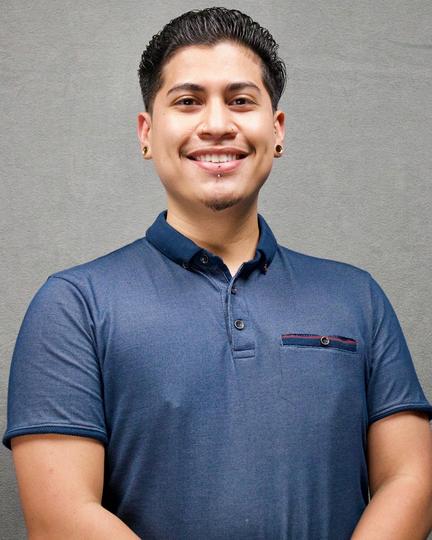
Geovany “Geo” Lucero, Student Life Coordinator, has over 8 years of experience in student affairs and enjoys being a part of people’s academic journey. Prior to working at Pacifica, they received a Bachelor of Arts in Feminist Studies at the University of California, Santa Barbara While attending UCSB, they were involved in student organizing, advocacy, and leadership throughout various campus organizations/departments such as the Multicultural Center, Hermanas Unidas de UCSB, Associated Students and more. Their leadership as the 2021-22 Student Advocate General tackled areas such as: return-to-campus guidelines/COVID-19 policies, student housing crises, academic policy/procedure accountability, and student casework They developed a passion for helping students navigate through their campus resources, programs, and policies in hopes of alleviating any pressures or roadblocks. They are committed to serving students as a resource and amplifying student enrichment on campuses. Geo has worked in student affairs, event programming, public speaking, community advocacy/organizing On their free time, they enjoy exploring restaurant recommendations, attending live shows/concerts, and adventuring nature with their two dogs, Sage and Gansito.
Cris Scaglione, Ph.D., Co-Chair of Clinical Psychology Department. Since 1985, Dr. Scaglione has been doing therapy, cognitive rehabilitation, and neuropsychological assessment with a broad array of clients adjusting to trauma, loss, neurodiversity, and chronic illness or injury. Since people and their needs are diverse and complex, her approach is practical and varied A biopsychosocial perspective emphasizing depth, humanistic, trauma-informed, and mindfulness approaches, and prioritizing self-care are incorporated into her work. She understands the importance of focusing on people’s strengths and resources. Her training in anthropology and personal background contribute to a sensitivity to issues of identity and culture
Nick Sabatino, M.P.A., VP, Organizational & Student Affairs has served in a variety of roles over a decade on the Pacifica staff and is proud to bring experience and focus to his current position of VP of Organizational & Student Life. His primary responsibilities center on efforts that both advance organizational development, culture, and communication, as well as provide strategic leadership to student life, career/professional services, and engagement that aligns with student and enrollment success. Through his role, Nick also sits on Pacifica’s Executive Leadership Team, CoordinatingOperations Committee, Incident Response Team, and other institutional groups. Starting at Pacifica in 2014, Nick began with Program Administrator roles for the Clinical Psychology and Integrative Therapy and Healing Practices program, before moving on to serve as Co-Director of Academic Affairs and Student Services and then most recently as Chief of Staff out of the President's Office. His time at Pacifica has allowed him to build positive relationships across the Institute and a strong sense for Pacifica’s mission, potential, and service to students and our communities Prior to Pacifica, Nick worked in online education after completing his B.A. from Villanova University. He also has earned an M.P.A. (Public Administration with an emphasis in Management) from California State University, Dominguez Hills.