FEATURING 343 Industry-First Reviews of Fiction, Nonfiction, Children’s, Young Adult, and Audiobooks




FEATURING 343 Industry-First Reviews of Fiction, Nonfiction, Children’s, Young Adult, and Audiobooks
The author of Our Perfect Storm headlines a special issue devoted to Summer Reads
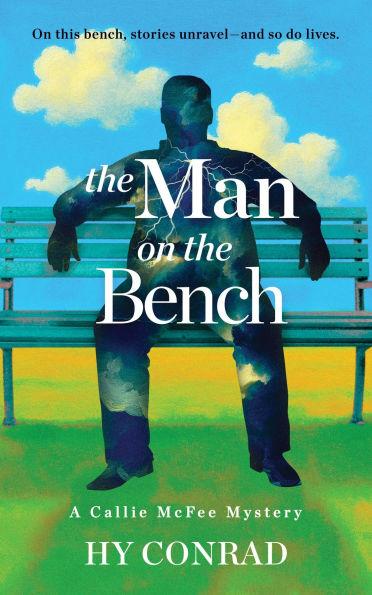


ISBN: 979-8-9951254-0-2 [paperback]
ISBN: 979-8-9951254-1-9 [eBook]

“...The Man on the Bench stands out as one of the year’s most compelling and rewarding reads.” — IndieReader
“I was fully invested in the characters, mesmerized by the crisp writing, and engaged by the twisty plot.” —The Book Commentary
“A keen, charming amateur detective headlines a snappy murder mystery.” —Kirkus Reviews


FROM THE EDITOR’S DESK
ICE CREAM. SUNBLOCK. Flip-flops. Rosé. What says summer to you? I always think of a paperback book, probably with sand between the pages. Summer is the season of pleasure reading, after all, when so many of us tote a book to the beach (after listening to an audiobook on the car trip there). If you’re this kind of summer person, then our seventh annual Summer Reads Issue is for you.
In these pages you’ll find an abundance of reading (and listening) recommendations from our editors as well as from favorite authors such as Xochitl Gonzalez, Scott Simon, Joanna Ho, Soman Chainani, and others. For our cover story, we speak with bestselling novelist Carley Fortune (see p. 14),
whose latest book, Our Perfect Storm (Berkley, May 5), is looking like one of the hottest reads of the season.
For me, no summer is complete without a visit to Fire Island, that narrow strip of sand and pines reached by ferry from Long Island, about 90 minutes from New York City. The communities of Cherry Grove and Fire Island Pines have long been favorite destinations for queer people, many of them artists, and a new volume edited by John Dempsey showcases their work (including that of Paul Cadmus, Peter Hujar, and David Hockney). Our starred review calls Fire Island Art (The Monacelli Press, April 1) a “lush survey that makes a powerful case for Fire
Subscriptions: www.kirkusreviews.com/magazine/subscription
Advertising Opportunities: www.kirkusreviews.com/book-marketing
Submission Guidelines: www.kirkusreviews.com/about/publisher-submission-guidelines
Frequently Asked Questions: www.kirkusreviews.com/about/faq
For customer service or subscription questions, please email customercare@kirkus.com or call 800-316-9361.
Island as a wellspring of queer art.”
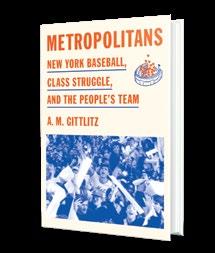
Even if you aren’t a serious baseball fan, there’s no experience quite like sitting in the bleachers on a summer afternoon, beer and hot dog in hand, taking in this leisurely game. I don’t know if I’ll make it out to Citi Field in Queens to watch the Mets this year, but A.M. Gittlitz’s The Metropolitans: New York Baseball, Class Struggle, and the People’s Team (Astra House, March 31) promises to immerse me in the history of this storied team and its die-hard fans.
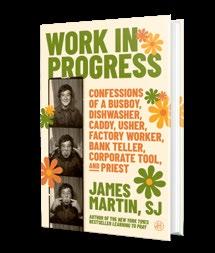
We don’t necessarily celebrate it, but the summer job is as inescapable as these other more pleasurable markers of the season. During the Bicentennial summer of 1976, Father James Martin, then 15, worked as a busboy and dishwasher at an ice cream parlor in a Philadelphia suburb—one of many gigs from his teenage and early adult years that he revisits in Work in Progress: Confessions of a Busboy,

Dishwasher, Caddy, Usher, Factory Worker, Bank Teller, Corporate Tool, and Priest (HarperOne, Feb. 3). Our review calls the book a “pleasure for those who remember the lazy, hazy days of summer jobs at two bucks an hour.”
Finally, what would summer be without a summer fling? Kiran Millwood Hargrave’s novel Almost Life (Summit, March 24) gives readers an affair to remember: two women, one English and one French, meet on the steps of Sacré-Coeur on a sweltering July day in Paris in the 1970s. The encounter is, as they say in French, a coup de foudre. Though Erica returns to England at the end of the summer to start university, the relationship will haunt both women for decades. Ah, l’amour!

Co-Founders, Kirkus Media LLC
HERBERT SIMON
MARC WINKELMAN
Publisher, CEO & Partner
MEG LABORDE KUEHN mkuehn@kirkus.com
Chief Marketing Officer
SARAH KALINA skalina@kirkus.com
Enterprise Advertising Director
MICHELE COBB mcobb@kirkus.com
Indie Advertising & Promotions
AMY BAIRD abaird@kirkus.com
Author Consultant
KEELIN FERDINANDSEN kferdinandsen@kirkus.com
Controller & Operations Manager
KRISTI DAUGHERTY kdaugherty@kirkus.com
Lead Designer KY NOVAK knovak@kirkus.com
Magazine Compositor
NIKKI RICHARDSON nrichardson@kirkus.com
Director of Kirkus Editorial ROBIN O’DELL rodell@kirkus.com
Kirkus Editorial Senior Production Editor
MARINNA CASTILLEJA mcastilleja@kirkus.com
Kirkus Editorial
Production Editor
ASHLEY LITTLE alittle@kirkus.com
Indie Editorial Assistant
KATARINA YERGER kyerger@kirkus.com
Contributing Writers
GREGORY McNAMEE MICHAEL SCHAUB
Editor-in-Chief
TOM BEER tbeer@kirkus.com
President of Kirkus Indie
CHAYA SCHECHNER cschechner@kirkus.com
Fiction Editor
LAURIE MUCHNICK lmuchnick@kirkus.com
Nonfiction Editor
JOHN McMURTRIE jmcmurtrie@kirkus.com
Young Readers’ Editor LAURA SIMEON lsimeon@kirkus.com
Young Readers’ Editor
MAHNAZ DAR mdar@kirkus.com
Audiobooks Editor
JENNIFER DOWELL jdowell@kirkus.com
Editor at Large MEGAN LABRISE mlabrise@kirkus.com
Senior Indie Editor
DAVID RAPP drapp@kirkus.com
Indie Editor
ARTHUR SMITH asmith@kirkus.com
Senior Editorial Assistant
NINA PALATTELLA npalattella@kirkus.com
Senior Indie Editorial Assistant
DAN NOLAN dnolan@kirkus.com
Mysteries Editor
THOMAS LEITCH
Copy Editors
JONATHAN BOWERS
NATALIA HOLTZMAN
NANCY MANDEL
BILL SIEVER
Founder, Kirkus Reviews
VIRGINIA KIRKUS (1893-1980)
Contributors
Alana Abbott, Colleen Abel, Mahasin Aleem, Paul Allen, Stephanie Anderson, Jenny Arch, Kent Armstrong, Mark Athitakis, Kit Ballenger, Nell Beram, Elizabeth Bird, Christopher A. Biss-Brown, Sarah Blackman, Sally Brander, Kendra Brewer, Bithiah Brown, Jessica Hoptay Brown, Kevin Canfield, Alec B. Chunn, Rachael Conrad, Amanda Costello, Jeannie Coutant, Stephen Cummings, Sara Davis, Michael Deagler, Cathy DeCampli, Dave DeChristopher, Elise DeGuiseppi, Suji DeHart, Amanda Diehl, Maria Dietrich, Fiona Dolce, Steve Donoghue, Jacob Edwards, Madison Ellingsworth, Lisa Elliott, Lily Emerick, Ilana Bensussen Epstein, Joshua Farrington, Brooke Faulkner, Eiyana Favers, Margherita Ferrante, Leslie Fine, Katie Flanagan, Catherine Foster, Mia Franz, Ayn Reyes Frazee, Jenna Friebel, Jackie Friedland, Laurel Gardner, Jean Gazis, Richard Gotshall, Melinda Greenblatt, Lisa Grimaldi, Sara Grimm, Vicky Gudelot, Ellie Halleron, Silvia Lin Hanick, Lynne Heffley, Sandi Henschel, Boze Herrington, Aaron Hicklin, Emma Hodgson, Ashley Holland, Natalia Holtzman, Terry Hong, Julie Hubble, Mary Grahame Hunter, Wesley Jacques, Kerri Jarema, Jessica Jernigan, Danielle Jones, Jayashree Kamblé, Deborah Kaplan, Marcelle Karp, Andrea Kreidler, Carly Lane, Joanne Langerman, Laurel Larrew, Christopher Lassen, Sarah Laudenbach, Seth Lerer, Donald Liebenson, Elsbeth Lindner, Coeur de Lion, Barbara London, Patricia Lothrop, Sawyer Lovett, Georgia Lowe, Kaia MacLeod, Kate Macolini, Michael Magras, Joan Malewitz, Mitu Malhotra, Mandy Malone, Thomas Maluck, Collin Marchiando, Sarah Marsh, Natalie Marshall, Jodi Martin, J. Alejandro Mazariegos, Coco McCracken, Katherine McDonald, Zoe McLaughlin, Don McLeese, Cari Meister, Kathie Meizner, Carol Memmott, Flor Meurinne, Alan Minskoff, Chintan Modi, Rebecca Moore, Andrea Moran, Rhett Morgan, Molly Muldoon, Jennifer Nabers, Christopher Navratil, Liza Nelson, Therese Purcell Nielsen, Katrina Nye, Tori Ann Ogawa, Mike Oppenheim, Emilia Packard, Costa Pappas, Joy Pasin, George Pate, Crystal Patenaude, Hal Patnott, Bethanne Patrick, Tara Peace, Rebecca Perry, John Edward Peters, Jim Piechota, Shira Pilarski, Cathy Poland, Maya Fleischmann Poole, Remy Poore, Brian Price, Kate Pullen, Margaret Quamme, Carolyn Quimby, Ellen Quint, Kristy Raffensberger, Isabella Ranallo, Kristen Rasmussen, Darryn Reams, Stacey Reasor, Stephanie Reents, Alexandria Richey, Jasmine Riel, Michelle Ritholz, Amy Robinson, Soumi Roy, Gia Ruiz, Lloyd Sachs, Roy Salzman-Cohen, Bob Sanchez, Michael Sangiacomo, Gene Seymour, Sara Shreve, Leah Silvieus, Linda Simon, Wendy Smith, Andria Spencer, Allison Staley, Allie Stevens, Mathangi Subramanian, Rebecca T. Sutton, Jennifer Sweeney, Deborah Taylor, Lisa Taylor, Jessica Teel, Renee Ting, Lenora Todaro, Francesca Vultaggio, David Walton, Susie Wilde, Vanessa Willoughby, Kendra Winchester, Kerry Winfrey, Marion Winik, Flannery Wise, Jean-Louise Zancanella

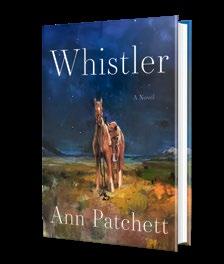

WELCOME TO SUMMER reading season! To me, the main criteria for a great summer read is an immersive quality—you want to be able to lose yourself in the world of the book for hours at a time. Take Ann Patchett’s new novel, Whistler (Harper/HarperCollins, June 2): When I got an early galley by email a few months ago, I opened it right away—and then sat at my computer for the rest of the day until I had finished the whole thing. Not the ideal reading experience—it would have been much more fun to be lying on the beach!—but once I started, I didn’t have a choice: Sorry for the book review cliche, but I just didn’t want to stop.
Whistler opens in the Metropolitan Museum of Art, where Daphne Fuller and her husband, Jonathan, notice an old guy following them around. He turns out to be Daphne’s former stepfather, Eddie Triplett, whom she hasn’t seen in more than 40 years. The story of how they reconnect is immediately gripping—you want to
know these people, and to find out what happened to sever their close relationship when Daphne was 9. Our starred review calls the book “an evocative and moving tribute to the death-defying, heartopening, infinitely redemptive power of storytelling.”
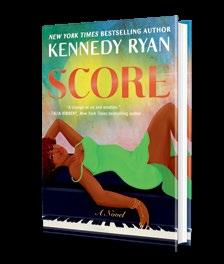
Perhaps you discovered romance this winter, falling down the Heated Rivalry rabbit hole like so many others. If you’ve gone through Rachel Reid’s entire Game Changers series, try Kennedy Ryan’s Score (Forever, May 19), the story of Verity and Monk, a screenwriter and musician who had a brief relationship a decade ago at a Georgia HBCU. Now they’re working together on a film and have to decide whether to trust each other again. Like Reid, Ryan sensitively portrays mental health issues—in this case, Verity’s bipolar disorder— as well as powerful yearning and truly sexy scenes. Our starred review says, “Ryan knows how to put her readers’ emotions through the wringer while staying true to her characters, so the story feels realistic and never manipulative.…Incredibly romantic and deeply human.”
Jenny Jackson’s The Shampoo Effect (Pamela Dorman/Viking, June 30) has the classic cover of a “New England in summer” novel: sand, surf, beach chairs, woman scrolling her phone. Wait, what was that last bit? Jackson presents an up-to-the-minute picture of love and betrayal among a group of friends in the same Massachusetts coastal town where Updike set his 1968 novel, Couples , and it’s a lot of fun—our review calls it “an acute portrait of midlife among millennials.”
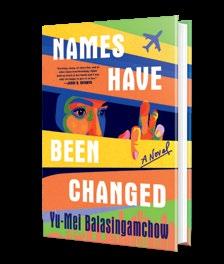
The narrator of Yu-Mei Balasingamchow’s debut novel, Names Have Been Changed (Tiny Reparations, June 23), is in hiding, somewhere, and it’s April 2020—the early days of the Covid-19 pandemic. She might as well make a podcast, beaming out her story of 10 years as a fugitive, having sold her highly coveted Singaporean passport when she could no longer use her real name. It’s a story of crime, family, identity, and secrets; our starred review calls it “an utterly original thieves’ confession you won’t be able to put down.”
Laurie Muchnick is the fiction editor.
A brittle marriage and a too-perfect au pair upend a failed writer’s life in this clever, unsettling novel. Wayne, author of six previous novels, returns with an ingenious dissection of marriage, masculinity, and privilege, propelled by a gimlet-eyed wit. The opening scene—a Manhattan fundraiser where tuxedoed men “like inflatable penguins” mingle over wagyu sliders with their “spectral, hollow-cheeked wives”— establishes both the novel’s milieu and the lopsided dynamic between Steven, a 45-year-old writer living off a long-ago bestseller, and his high-powered wife, Lucy, who bankrolls their life. His mortification is complete when he accidentally streams a phone notification to his writing
class in which his wife confirms she’s paid his monthly stipend. Wayne excels at these microhumiliations, exposing the psychic toll of dependency and artistic drift. But he also has fun sending up contemporary pieties, such as a school production of Hansel and Gretel retooled into a “generative dialogue” about loneliness. Instead of pushing the witch into the oven, Gretel asks her why she is “not practicing kindness.” After the sudden death of the family’s nanny, the novel’s tempo shifts into something more sinister and unnerving. Steven persuades his wife to recruit a young Norwegian au pair, Astrid, who exerts a Mary Poppins–like charm on the children, sidelining Lucy’s position in the household.

Meanwhile, Steven’s creative paralysis gives way to an erotic fixation that Astrid reciprocates despite their 21-year age gap. Wayne is alert to cliche but complicates it by making Astrid less fantasy than catalyst, drawing out a buried childhood narrative that revives Steven’s writing even as it scrambles his judgment. The novel’s back
half pivots into a thriller, culminating in a death and a trial that transforms private disgrace into public spectacle. If the resolution seems fanciful, it also sharpens Wayne’s point: In a culture hungry for confession, even failure can be repackaged as art. A sly, unsettling hybrid of social satire and domestic thriller.
As people mysteriously fall ill, a small group tries to find a cure.
THE EMILYS
Abel, Heather | Random House (416 pp.)
$30 | June 16, 2026 | 9780593979532
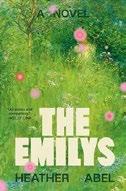
As New Englanders fall ill with a mysterious affliction, a small group tries to find a cause and a cure. Having lost her job and the lease on her rent-controlled apartment in Brooklyn, Eve Yalen has moved back into her childhood home in Northampton, Massachusetts, with her two young kids, leaving behind her musician husband (who comes up on weekends) and most of her ambitions as a writer. Though she’s the daughter of a professor and a well-known novelist, Eve struggles to recognize her new life in the hippified atmosphere of small-town Northampton. But one day she runs into Demeter, a beloved friend from her girlhood. Demeter is in Northampton temporarily, seeking care for her daughter, who’s suffering from a mysterious illness that causes extreme photosensitivity. Demeter—free-spirited, brilliant, itinerant—gives Eve a chance to feel useful and, frankly, adventurous again. As Demeter and Eve desperately try to figure out what’s causing the girl’s illness, which doctors dismiss and authorities want to use as an excuse to remove her from Demeter’s custody, they learn that there’s a small community of others impacted by this illness, which some have dubbed “Emily’s disease” in homage to Emily Dickinson, the poet who famously stayed indoors. Bit by mysterious bit, the novel weaves in the perspectives of other people whose loved ones have been affected by “Sun Madness.” By shuffling through these
figures’ stories and gradually bringing them together, Abel explores a rich tapestry of themes: the heartbreak and power of female friendship, the isolation that can exist at the heart of motherhood, class tensions, climate change, medical gaslighting, the Covid-19 pandemic, and much more. If this seems like a lot, it is, but Abel’s writing is never grim and the swirl of theme and plot and character is vibrant.
A labyrinthine and heartfelt look at the trials and triumphs of collective action.
Aono, Kei | Trans. by Hayden Trowell Pegasus (320 pp.) | $28.95 | June 2, 2026 9798897101405
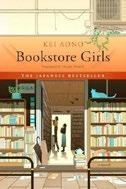
Two bookstore staffers in Kichijoji, Japan, who dislike each other, must come together to try to save their store.
Aki Kitamura is 27 and a full-time staff member at Pegasus Books. Recently married, she’s beautiful, hotheaded, stubborn, and unwilling to back down from her opinions. She landed the coveted job because of her grandfather’s ties to Pegasus Books, which doesn’t win her any friends at work. And she doesn’t get along with one of her superiors, Riko Nishioka, the 40-year-old assistant manager. Riko has spent her entire adult life focused on her job and doing it successfully, and while she isn’t opposed to change, her focus on meeting what she sees as the needs of the bookstore’s core customers means that she is inflexible in ways that
younger employees dislike. She also simply doesn’t like Aki. As two of the few full-time staffers at the bookstore, Riko and Aki make an unlikely pair when it comes to trying to save the place from closure when the building is faced with renovations and a potential rent hike. Japanese workplace norms around schedules, hierarchy, gender, age, and the status of staff versus contract employees are front and center in this novel, which offers a lot of commentary on the behind-the-scenes processes involved in running a bookstore and trying to keep it afloat. A confusingly large cast of characters settles into place as the story progresses, but the dry recitations about the mechanics of bookselling are unexpectedly lengthy, and the story lacks the vibrancy or gentle coziness of a number of other recent translated works from Japan, such as The Heartbeat Library by Laura Imai Messina (2024) or The Passengers on the Hankyu Line by Hiro Arikawa (2025).
Strong female leads and a popular setting can’t save an unfortunate storytelling miss.
Bain, Helen | Scribner (288 pp.) $28 | June 9, 2026 | 9781668208588
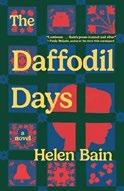
A young couple’s final year of marriage is viewed through the eyes of their neighbors in the English countryside. Bain’s debut novel offers a bricolage of voices—real and imagined, famous and unknown—as their lives intersect with Ted Hughes and Sylvia Plath between August 1961 and October 1962. Shortly before the birth of their second child, Ted and Sylvia bought a dilapidated yet charming home named Court Green in North Tawton, Devon. Told in reverse, the novel opens with Sylvia and her children moving to London with a promise to return to their country home in the spring—something that will never
happen, as Sylvia dies by suicide a few months later. Each chapter offers a unique point of view on not only the literary luminaries, but the town and its less-famous inhabitants. Whether told from the perspective of the local doctor, midwife, church bell ringer, scorned wife, or plumber, these close thirdperson snapshots offer a fictionalized (but informed) glimpse into the couple’s relationship, as the final year of their tumultuous marriage becomes the novel’s undercurrent. Some of the most affecting chapters are those that seem to have the least connection to Plath and Hughes, especially their fame. This is most apparent during an afternoon shopping trip when a young salesgirl named Jenny helps Sylvia find clothes for an upcoming trip. When Jenny admits that she dreams of moving to London, the poet says: “It’s so important…to set your sights on what you want. Don’t let anything distract you or keep you back.” Plath’s naked ambition, which surfaces in many of these encounters, causes discord in both her professional and personal lives. Bain deftly employs her vast research with prose that feels tactful, subtle, and assured. Readers familiar with Plath and Hughes will delight in the additional layers of meaning—while those with less knowledge may not fully understand the importance of orienting the story around them.
A quiet, richly drawn debut about the small-town folks who orbited the 20th century’s most famous literary couple.
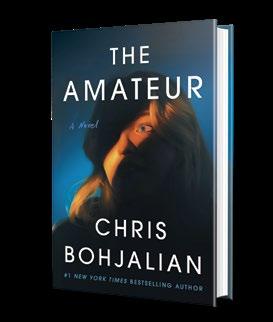
The Amateur
Bohjalian, Chris | Doubleday (336 pp.) $30 | Aug. 4, 2026 | 9780385551298
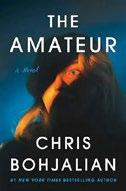
An accident at the golf course cuts short one life and totally upends another.
“At fifteen, I couldn’t outdrive the very best men’s players at the club, but I still beat all of them most of the time. My short
game was as precise as a drone strike, and I was excellent on the greens.” Mira Winston is an unusually confident and self-aware teenager, and her voice on the page is irresistible. (As we will later learn, the narrator of Bohjalian’s 25th novel is herself the author of 25 novels, so perhaps it’s no surprise her storytelling skills are as impressive as her golfing.) Mira’s fictional memoir revolves around the events of Aug. 3, 1978, at a country club in New York’s Westchester County. It was her senior summer; she was 18 and on her way to Yale in a matter of weeks when a ball she smashed into the practice net went through the mesh and out the other side, hitting and instantly killing a young caddie named Kenny Foster as he was waiting to be called to carry bags. The accident has dramatic results, both immediately and over the next few years: Mira doesn’t matriculate at Yale, she never plays golf again, and in an unexpected twist, it’s revealed to one and all that she’s been having an affair with a man named Theo Catton, who’s her father’s age, and with whom she’s been involved since she was 15. Mira is well aware of the resemblance between her story and Lolita’s—she will later get a line from the novel tattooed on her forearm—but she also now understands that the younger her was sorely misled about her own agency and motivations. As the small-town drama simmers, as Mira and her parents self-medicate with drugs and alcohol, as Mira eventually comes to trial—the story is spun by then as “privileged rich girl with too much attitude recklessly kills a poor student with so much promise”—a marvelous 11th-hour twist and a satisfying denouement lie ahead. It’s hard to think of any reason not to call this a perfect novel: a hole in one. Nabokov’s classic reinvented as a 1970s moral fable, with brilliantly developed characters and period detail.

Calder, Jem | Farrar, Straus and Giroux (272 pp.) $28 | July 14, 2026 | 9780374620554
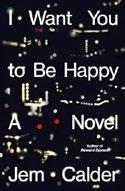
Two people try to connect in the amorphous space between dating and not dating. Calder’s debut novel opens with a modern meet-cute between a millennial man and a Gen Z woman at a bar in London. Chuck, a 35-year-old copywriter and once-aspiring novelist, is fresh off a broken engagement. Joey, a 23-year-old barista and aspiring poet, is just beginning to figure her life out. Their night at the bar ends in an unsuccessful and awkward hookup. When Joey leaves Chuck’s posh flat the next morning, she’s convinced they’ll never speak again. So when Chuck reaches out days later (texting etiquette looms large over the novel), she’s thrilled: “A new person finding you interesting makes you feel new.” With seemingly little in common, the two bond over their dreams of being writers. Their situationship lights a tiny spark within Chuck: “Being around Joey had stirred a dormant feeling of possibility within him—reconnected him to his younger self; his dream.” While Chuck’s drinking slowly destroys his personal and professional lives, Joey finds herself navigating her outsize feelings despite the red flags. As their relationship heads off a cliff, they come into focus both to each other and, more importantly, to themselves. Calder is particularly adept at characterization and interiority; he’s unafraid of putting the characters’ hopes, fears, joys, and flaws on full display. In one scene, Joey attends a poetry reading alone because Chuck declines the invitation. She has a conversation with the poet that proves both ordinary and extraordinary: “Outside, walking home, the world seemed to have shifted on its axis; life was changeful and unexpected, subject to higher-order intervention, a sort of cosmic nudging-along.” These kinds of moments make Calder’s characters feel startlingly (and, at times, infuriatingly) real. Though his prose can be sparse and
A reclusive pastor with a grisly secret must reckon with his past.
exacting, Calder has a remarkable way of capturing the complexities of dating, relationships, and simply existing in the 2020s. A clever, wry, and hyper-realistic portrayal of contemporary life.
Cavenagh, Clare | Viking (256 pp.) $29 | June 23, 2026 | 9798217060825
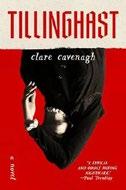
In this dark debut, a reclusive pastor with a grisly secret must reckon with his past.
Stutley Tillinghast has been a priest in his small Rhode Island town for a long time—longer than most residents realize. He lives a solitary life in a house with no electricity and shallow graves in the basement. He’s not proud of what he is; he simply has needs that must be met and that he takes care of with speed and precision. His routine is interrupted, however, when a young woman comes to town searching for him. She shares his last name, and she looks like the woman who turned Tillinghast into what he is, all those years ago. Thrust into a new role and forced to watch over the stranger after she falls ill with a worryingly familiar sickness, Tillinghast must reexamine his past to determine what the future may hold. Despite its modern setting, Cavenagh’s novel reads like 19th-century gothic fiction in all the best ways, drawing the reader into Tillinghast’s perspective while projecting a suffocating atmosphere. As Tillinghast looks back over his life, writing a confession of sorts as he nurses the girl, two stories emerge: how Tillinghast came
to be what he is and the possible transformation of the girl and what that might mean. Though this works well as a device to flesh out the characters, it means that most of the action takes place in flashbacks, leaving little action to drive the overarching plot. This makes the story feel static, almost all forward momentum happening in the last 30 pages, though the characters are unique and the voice inventive. An original, sinister tale.
Choi, Mary H.K. | Flatiron Books (336 pp.)
$29.99 | June 9, 2026 | 9781250800442
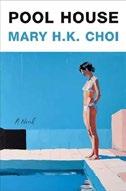
A glass pool house in Los Angeles becomes a symbol for the dangerous neediness of the actors who live there.
Beginning with an aging TV star’s fatal jump from a bridge, Choi offers an evocative study of Hollywood in all its seediness and self-importance. In a city shaped by performers, life is played out for an audience both seen and imagined. Moon and Adam, actors from Wabi-Sabi, a canceled sitcom, gather after Mac dies by suicide; Mac played the white husband, Moon the much younger Asian wife, and Adam her same-age stepson. The casting was a mirror of the real world: Moon had a long affair with Mac, Adam was in love with Moon, and Mac served as occasional father figure both to Adam and to Moon’s daughter, Stevie. Now, with the show ended and the money gone, Moon and 20-year-old Stevie live in the dirty pool
house of the extravagant home Moon can no longer afford, which is rented out to rich strangers. Meanwhile, Stevie, less alluring than her mother, works at a burrito joint and bears the brunt of this life; Moon’s alcoholism and shameful neglect pairs with Stevie’s jealousy of the wounded, charismatic Adam and the betrayal she feels following Mac’s death. The plot is contained—Moon, Stevie, and Adam attend the funeral; Moon gets an audition—though the novel’s throughline is the transgressive sex that shapes all their lives. It’s a kind of currency for Moon, an oedipal addiction for Adam; it’s a surrogate for fame, but also, seemingly, bubbles up from the city itself. Choi’s characterizations are astonishing in their nuance—all is childlike performance in this world where no one is sure who they are, but by the end, the injuries are shocking and real. An impressive portrait of an ephemeral and savage world.
Connolly, John | Emily Bestler/Atria (416 pp.) $30 | June 2, 2026 | 9781668083970
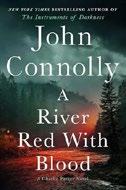
A troubled boy who ran off from a Maine reform school is found dead; a girl he may have been involved with is missing; and other women are meeting cruel fates in Connolly’s latest supernaturally streaked Charlie Parker novel.
At Spero School, a punishing facility to which 17-year-old Scott Theriault was shipped out by his mother and stepfather, flimsy behavioral modification methods and open bullying make life miserable for residents. Scott’s death is ruled accidental—he had been drinking before falling into a local river—but his imprisoned father is sure that foul play, not alcohol, was responsible. From behind bars, he hires private eye Parker to investigate; long haunted by the murder of his daughter, Jennifer (who has remained an active afterlife presence for him), Parker is especially sensitive to
crimes against children. Meanwhile, an evil club of wealthy men with ties to Spero has reconvened to play “the Game,” which has them abduct carefully targeted women whom they rape, kill, and discard. Then there’s the unexplained targeting of Parker’s best friend, Louis, by hidden forces, a mystery that Parker asks a medium, Sabine Drew, to solve by making contact with the dead. Her report: “I’ve never before come into contact with a congregation of the dead, bound together with hostile purpose, not like this one.” Though Parker is offstage as much as on, there is no drop of interest when the focus is on other characters. The suspense is rather contained—there are no real edge-ofyour-seat moments. But Connolly’s subtle handling of the supernatural element is one of the book’s distinguishing qualities. So is its occasional humor. Told that Sabine is training to be a psychotherapist, one character asks, “For the living or the dead?”
A strong, if not earthshaking, installment in the long-running series.
Kirkus Star
Nebraska
Datta, Monica | Astra House (464 pp.) $29 | June 23, 2026 | 9781662603068
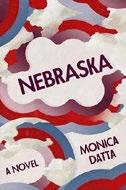
A child’s death sends an immigrant family into a tailspin.
Datta’s robust, multifaceted second novel turns on a tragedy: In 1992, Annakali Chatterjee, aka Anna, was at a New York train station with her son, Rabindra Lal, who had cerebral palsy. They were both struck by a train; Rabindra was killed, and Anna was sentenced to 15 years in prison for voluntary manslaughter. Was it an accident or was it intentional? Datta leaves that question pending while she asks another: What role did colonialism play in the incident? To explore that issue, Datta shifts the narrative back and forth in time, starting from the scheduled date
of Anna’s release from prison; her husband, a Bangladeshi chemist named Prabir, and their two adult children, Neal and Nina, arrive to collect her but she’s already gone, taken a year earlier by a pair of evangelical Christians, renamed Ann Gubrud, and brought to the heartland. Meanwhile, one of the witnesses to Rabrindra’s death, a French psychoanalyst named Jean-Louis Katz (a kind of Bernard-Henri Lévy figure), pursues a friendship with Nina. The narrative has purportedly been assembled from Jean-Louis’ archives and scrutinized by a young Bengali psychoanalyst, B.X. Roy, who interrupts with footnoted questions, obsessive details, and no small amount of snark, questioning Jean-Louis’ version of events and suspecting he was blinkered to Anna’s suffering. It’s a busy novel, but it’s all delivered with verve, humor, and a bone-deep comprehension of the immigrant experience, and of the ugliness and neglect that accompany traditional assimilation. Beyond that, it’s simply an engrossing travelogue, from postpartition India to Bangladesh’s campaign for independence to Scotland (where Prabir had a checkered experience as a professor) to the state of the title and a revealing confrontation with Anna/ Ann. In style and depth, the book recalls Pale Fire, Infinite Jest, and Namwali Serpell’s The Old Drift, all big-swing metafictions that upend our understanding of history and humanity. A sharp, cross-continental tale of heartbreak and identity.
Felts, Susannah | TriQuarterly/ Northwestern Univ. (256 pp.) | $26 paper | June 15, 2026 | 9798899480454
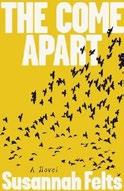
It’s February 2010, and 29-year-old singer-guitarist Maggie Corbin is driving her beatup Corolla back to her hometown of Nashville, Tennessee. In the rearview: her old band, Spinning Birds, on the verge of possibly making it—and her former band mate
and newly minted ex, Matt Turkish. Ahead of her, a dark highway, the promise of a rented room from Craigslist, and the ghosts of her past. Back in Nashville, Maggie returns to her old haunts to lick her wounds, grieve the unexpected death of her father, and pursue a career as a baker. Maggie struggles to navigate the complex grief surrounding the death of her father, the first person who truly cheered her on in her quest to become a musician but also chronically cheated on her artist mother and eventually left for a farm outside the city. The author is skillful at drawing the indie music world that Maggie inhabits—for example, the way a dive bar smells of “old smoke and beer, top note of spray disinfectant.” The Great Recession is a specter looming in the background, but the novel largely fails to grapple with what it felt like to try to survive in such a time, much less as a musician. One gets the sense—whether following Maggie’s poetic musings about the “orange brushstrokes of dawn” filtering through the window of a bakery or her interview about her artistic process with a student journalist—that Maggie is the kind of person who, though taking a detour through dive bars, crappy apartments, and heartbreak, will always be OK, which robs the novel of the kinds of stakes that would have made it abidingly memorable.
Early aughts millennial nostalgia makes for an entertaining novel that lacks real depth.
Finger, Bobby | Putnam (336 pp.)
$29 | June 16, 2026 | 9798217045976
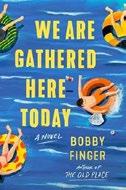
C ollege friends meet up at a Wild West–themed wedding venue in the Texas Hill Country. Bride-to-be Elaine Wheeler has put them all together at the “queer table”—Fin Hightower and Jacque Aguilar, her closest male and female friends from their University of
Texas days; Todd and David King, a not-very-happy married couple; a former co-worker named Marina, described as a “Cara Delevingne lesbian.” These five would “form a unit with each other because there were no others to form one with,” a phrase that seems to presage the energy level of what’s to come. The older friends plan to initiate the newer ones into a tradition they call “the Hour of Disrespect,” for which everyone saves up their peeves and criticisms for a group venting session. Flashbacks to iterations of this tradition from previous weddings are sprinkled throughout, but they are somehow never snarky enough, funny enough, or outrageous enough to move this novel into The People We Hate at the Wedding territory (which you might guess by comparing the titles). In between these interludes and many digressive backstories (including, for example, excerpts from Fin’s late mother’s diary), a jampacked itinerary of events has been scheduled for the guests at the Hill Country Hideout. Minor mishaps plague the lassoing contest and the s’mores bonfire, but nothing goes as badly as the river float, where minor violence breaks out and local law enforcement gets involved. Fin’s reluctant feelings about his own recent engagement to a handsome Canadian man have led him to keep the news from his dearest friends, but as buried secrets go, this is pretty weak tea. In both of his preceding novels, The Old Place (2022) and Four Squares (2024), Finger proved he can spin out page-turning plots and make us care about his characters, but sadly he doesn’t pull off either one here. If this is a character-driven novel, somebody really needs to put their foot on the gas.
Kirkus Star
Fuller, Claire | Tin House (320 pp.)
$28 | June 2, 2026 | 9781963108729
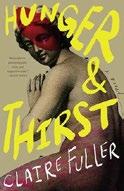
A young woman goes in search of a family—only to end up more alone than before.
In 1987, Ursula Major is just 16, and she’s bounced among children’s homes since her mother died when she was 7. She has a social worker, who’s equipped her for life by counseling her to eat green vegetables with every meal and offer guests a cup of tea. Ursula is hungry— for food, for connection—so she’s primed when her boss at the art school where she works announces, “We’re all family here,” mostly to get her to do the dishes after dinner. Almost immediately, Ursula comes to believe she has indeed found her chosen family among the other young people doing menial jobs: Sue Whelan, an aspiring filmmaker, is alluringly rebellious and also reckless with others’ emotions. She has the kind of family Ursula would kill for. Vince Goldie is a drunk, trying to forget his own childhood tragedies. Raymond is Sue’s brother and the object of Ursula’s affection. From the first sentence, we know that someone has been murdered, and Ursula, now an adult and a renowned artist, is going to explain what happened: “Now I have to prepare myself for whatever is coming, and must decide whether or not I let it in.” What follows is psychologically gripping, disquieting, and breathlessly suspenseful. When Ursula and Vince
The Baronessa’s villa is enchanting and filled with art and artifacts.
VILLA COCO
move into a squat in the Underwood, a house abandoned after a man allegedly killed his wife and then jumped off the roof, you might expect a certain kind of ghost story. But no, the haunting that takes place is far more complicated, as Fuller peels back the layers of Ursula’s unspeakably devastating loss. Leaving certain key events unraveled just enough, Fuller performs a feat few writers manage and makes the central mystery linger long after the novel ends. A brilliant and truly terrifying account of trauma.
Greer, Andrew Sean | Doubleday (288 pp.) $30 | June 9, 2026 | 9780385551977
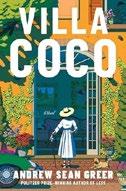
Part caper, part coming-of-age story, Greer’s latest comic examination of life entertains and edifies—not an easy balancing act. Greer’s protagonist— referred to throughout by names other than his own—is a recently graduated American archivist given a chance to redeem his underwhelming academic performance when he becomes the “adjutant” to an elderly and acerbic Baronessa living in the Tuscan countryside. His short-term assignment is to catalog the contents of her rambling, unkempt home, Villa Coco. As he awaits permission to begin that job, he’s called upon to attend to the aging septic system, help trim the roses, and assist the Baronessa (and a cast of supporting characters) with a variety of sometimes mysterious tasks and missions. The Baronessa’s villa is enchanting and filled with art and artifacts; she seems to have led a charmed life but “our young man” (one of the narrator’s sobriquets) encounters what seems to be a curious lack of urgency on her part when it comes to inventorying the fabulous acquisitions of a lifetime. All is gradually revealed in Greer’s trademark style of observational humor, keen descriptions,
and affectionate exposition of his characters’ foibles. As our young man negotiates his new life in Italy, complete with language challenges and romantic entanglements —including a farcical bedroom episode involving his gay paramour, that man’s wife, and her female lover—he begins to heed the lessons in life and love imparted to him by the Baronessa and her old friends. Cinematic possibilities appear throughout the novel: the lush surroundings of Villa Coco, the Baronessa’s tart observations, the transformation of the narrator’s wardrobe. Sadly, Maggie Smith is no longer available to do justice to the role of the Baronessa. A delightful distraction from the mundane.
Halpern, Justin | Cardinal (256 pp.) $29 | July 7, 2026 | 9781538778029
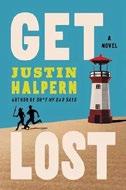
A fractured California family searches for a missing ex-wife and mother. Mattie Wilkerson has mental health issues, and she disappears from time to time, but until now she’s always returned. Lila Dixon, a 33-year-old baseball scout, learns that her mother, Mattie, is truly missing this time and that her father, John “Dix” Dixon, is in jail on suspicion of murdering her. He’s already been to prison once for killing someone, though that was unintentional. Even the deputy thinks Dix did nothing wrong, and he’s soon released. Lila deeply resents both parents, who divorced long ago and left her to grow up in foster care. Yet now she feels responsible for finding her mother, as the police’s missing person investigation is going nowhere. Dix insists on teaming up with her, and their sharply different personalities make for lively, amusing, and profane dialogue. Dix is a hometown hero due to his fabled minor league baseball career, though maturity issues and a lack of talent beyond hitting home runs kept him out of the big
leagues. Back in Los Armarios, he oozes charm. Calling himself “aggressively hospitable,” he says, “I am beloved in this town.” That’s mostly true, the sheriff being one exception. Lila is more straightforward and is determined to be the responsible adult her parents have never been. Mattie rarely promised Lila anything, knowing she was incapable of delivering. Dix, on the other hand, constantly made and broke promises, leaving Lila perpetually disappointed. But now father and daughter work together, and Lila discovers that her mom recently deposited $250,000 in her own bank account and then sent most of it to a charity for Burkina Faso. This prompts many questions on top of the basic one: Where’s Mattie? The almond-growing business, a distribution warehouse, and Mattie’s collection of lighthouse figurines add intriguing details to the plot. When Lila suggests that one of Dix’s ideas is illegal, Dix philosophizes that “criminality is just industriousness before it’s had its coffee.” When it’s all over, he expects to have “a doozy of a story.” Darkly funny with an unpredictable outcome.
Hughes, Katherine Nouri | Delphinium (232 pp.) | $26 | June 16, 2026 | 9781953002747
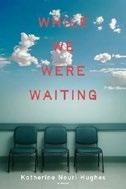
Two very different stories of trauma converge in a New York City maternity ward as two families face uncertain childbirth outcomes. Lorraine Stern and her husband, Will, are in the Maternal-Fetal Care Unit at Metropolitan University Hospital, as are Clement and Rana Ghanima. Lorraine, a talented pianist in her early 40s, suffers from severe preeclampsia; Rana, a radiologist who emigrated from Iraq with her husband (his mother joined them a bit later), has high blood pressure and a botched prior surgery to her uterus may lead to trouble. As Lorraine hovers between consciousness and coma, her memories tumble out—from her
childhood as a musical prodigy who was admitted to Juilliard at 10, on to her college year in Paris, where she came under the tutelage of famed modernist composer Darius Milhaud’s widow and then met Will at a nightclub. As Rana faces an uncertain outcome, Clement reluctantly recalls the war on terror–instigated tragedy that led his family to leave Iraq. Even more reluctantly, Lorraine swims through fragmented flashes of a terrible assault, one that forever altered her relationship with her mentally ill mother. Author Hughes keeps the tension high, cutting among the perspectives of individuals and pairs as physician-ordered deadlines loom: Will Lorraine’s 32-week-old fetus be able to breathe on its own? Can doctors prevent Rana’s uterus from rupturing? These and other questions contrast with the concrete pain of the past for both women—Lorraine’s told from her perspective and Will’s, Rana’s from Clement’s and his mother’s. The back-and-forth narration, syncopated and sometimes difficult to follow, echoes jazz improvisation, the truly unteachable kind that Mme. Milhaud tells Lorraine is “not available to everyone.” Improvisation is also what both Lorraine and Rana must submit to as their bodies and babies do things that are completely unexpected and often unwelcome. Urgent if uneven, this novel reminds readers that even when life is at its worst, people can choose hope.
Hynes, Rylan | Islandport Press (320 pp.) | $18.95 paper | June 2, 2026 9781952143960
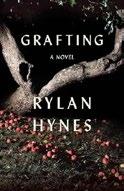
Two young men pursue a furtive romance in conservative rural New England. Set largely in 2004 and 2005, Hynes’ sensual debut turns on the arrival of 17-yearold Chris Hartley with his parents in Spaulding, Maine. Chris’ recent coming out as gay scandalized his barely tolerant
father, a Methodist minister, prompting a move to a new church in a new state. There, Chris meets Eben Turner, the teenage scion of a family famous for its orchard and the apple that bears its name. What follows echoes a host of familiar LGBTQ+ romance tropes: secret trysts, unaccepting parents, a defiant happilyever-after. But the story is elevated by Hynes’ rich prose and well-rendered details about grafting different trees to grow new varieties of apples (hence the novel’s title); fine art (a famous painter commemorated the orchard and Eben’s grandfather), and (especially) religion. Though Chris bristles against his strict parents, his interest in religion leads him to explore the likely homosexuality of King James VI (of King James Bible fame), and his passion is echoed by Eben’s own care for the life of the orchard. Religious symbolism abounds, from the apple tree to the characters’ very names—Eben and Chris aren’t far from Eden and Christ —and Hynes powerfully disrupts any gentility in the language with unflinching scenes of the brutality of deep-seated homophobia. Braiding chapters alternately narrated by Chris and Eben, the book evokes “Brokeback Mountain,” Call Me by Your Name, and Gilead, and if the plot doesn’t quite elevate the novel to the level of those classics, it’s a fine debut and a rich portrait of the fierceness and intensity of first love and futile attempts to stand in its way. An earthy, lyrical love story.
The Adventures of Juan Planchard
Jakubowicz, Jonathan | Grand Central Publishing (288 pp.) | $29 | June 2, 2026 9781538779781
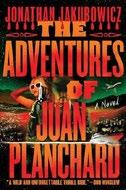
Having lifted himself above his modest origins through business dealings with a corrupt government, cocky young Venezuelan multimillionaire Juan Planchard soars above his country’s woes—until they hit home.
The year is 2011. At 29, the supremely cynical, trash-talking Juan has life by the tail, jet setting to New York, Havana, and Italy and mixing with the likes of Pedro Almodóvar, Gabriel García Márquez, and Muammar Gaddafi. After he falls instantly in love at a Las Vegas casino with a gorgeous psychology student named Scarlet, he wonders if his life could be any better. The answer is there’s no escaping the dark forces that have turned Venezuela into a land of poverty, oppression, and random violence under the ailing Hugo Chávez. The military has slaughtered “at least twenty thousand” and “ninety-one percent of murderers roam free,” grimly reports Juan, who, despite everything, has an abiding love for his country. He may think that living in the fast lane is a statement of survival, but when his disapproving father is killed and his loving mother abducted—and he discovers the BDSM-loving Scarlet’s naughty streak goes places he didn’t suspect—that chip on his shoulder is replaced by unshakeable remorse. Jakubowicz, a Venezuelan filmmaker, wrote this debut novel after his film Secuestro Express was prosecuted as defamatory by Chávez’s government and he was forced to leave the country. The supercharged book sometimes recalls the scorched-earth jottings of Hunter S. Thompson, but Jakubowicz is too fond of his narrator to achieve those ragged depths. At his lowest, Juan envisions dying like Scarface heavy Tony Montana or Bonnie and Clyde. But we won’t know whether he enjoys such a “grand finale” until the novel’s 2020 sequel gets an English translation. A brazenly entertaining tale with government corruption in its sights.
Jewell, Lisa | Atria (384 pp.) | $29 June 23, 2026 | 9781668033906
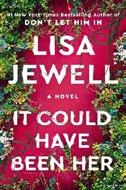
A middle-aged woman channels her best Miss Marple when she finds herself facing a nightmare from her past as she seeks to make sense of her present.
Jane Trevally is at a crossroads of sorts. After a traumatic childhood, she sought safety and solace in marriages with wealthy men. Now twice divorced and living with her four dogs in the crumbling English country mansion that is her birthright, she’s feeling the need to do something, to take a job, when one day a runaway dog turns up on her doorstep. The dog is chipped, and with the help of a local vet and her loyal stepson, Dexter Lombardi, Jane traces the dog’s home to the edge of Hampstead Heath, in London—a place that brings back the memory of a terrifying night from her youth, when a handsome man picked her up and took her back to this very house. Everything there felt wrong; she just managed to escape, certain that if she had stayed, she would have died that night. Now, soon after knocking on the door and returning the dog, she discovers that he had run away from an Airbnb near her house, where he had been staying with a young woman who seems to have disappeared. With the help of Dexter; his father, Tony, her second ex-husband; Tony’s former security enforcer, Tobias Wilson; and her own gift for connecting with people, Jane sets out to find the woman, taking her first steps on the path to becoming a private investigator. While Jane serves as the
A brazenly entertaining tale with government corruption in its sights.
heart of the novel, Jewell also narrates chapters from several other characters’ points of view, all of which chip away at the horror that is the house on the Heath. By slowly revealing past and present simultaneously, Jewell keeps the mystery fresh as she plays with Gothic tropes and the timeless imagery of “a house of horrors” embodying human sin. She doesn’t flinch from exploring the depths of depravity in this house—and its humans. A haunting, timeless exploration of the evil men do—and the imprint it leaves behind.
Johansen, Iris & Roy Johansen | Grand Central Publishing (336 pp.) | $30 June 23, 2026 | 9781538771372
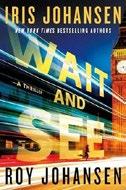
A cryptic series of clues from freelance agent Adam Lynch leads his longtime friend and sometime lover, music therapist Kendra Michaels, to a target she can’t even imagine.
Ordinarily, Lynch, who left the FBI to work with the Justice Department before going independent, would rely on his old colleagues to bail him out of whatever the current intrigue is. And Justice Department agent Ted Cambry, who’s been sent to England to pick up Lynch and some unspecified precious cargo, is certainly eager to have him back in the fold. But the breadcrumbs Lynch left behind suggest he’s much less eager to involve government agencies in a plot that’s evidently linked to shady international security chief Vlad Korkil, a drug lord, and his henchmen. Following a hint Lynch left behind before he vanished— an advertising postcard—Kendra flies to London together with Santa Monica, California, P.I. Jessie Mercado, an old friend who proves to be better at sticking to her than the Feds are. London bookseller Elizabeth Porter, after insisting she can’t possibly remember everyone she ever gave a postcard to, promises to think
about it overnight, but by next morning she and her bookstore have, predictably, been blown up. So far, so routine—until Kendra discovers a carefully wrapped prosthetic hand, an uncommonly suggestive lead she finds in a cave where Lynch was evidently imprisoned, and uses the information she gathers to finally catch up with Lynch and discover what all the fuss is about: teenage genius Stevie Nolan and her game-changing invention. Slow to gather momentum, but the mysterious MacGuffin is worth the wait-and-see.
Kim, Cay | Riverhead (224 pp.) | $28 June 23, 2026 | 9780593734445
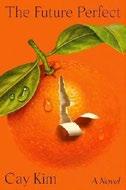
Living between two cultures, never feeling quite at home in either, a young woman must come to terms with her rigid upbringing and the parent who applied it. None of the principal characters in Kim’s debut has a proper name, and its central figure is addressed by the narrator only as “you.” This girl, who lives in Seoul, is the only child of a taciturn 31-year-old man who spends most of his time at the office and a woman who shapes her daughter’s upbringing using a traditional maxim: “Endure, mortify the body.” When the woman decides she wants to move to the U.S. to study architecture, mother and baby temporarily relocate to Minnesota, where the daughter attends nursery, gets older, learns English, makes friends, attends a party at McDonald’s, and can’t escape a sense of difference. Her peripatetic existence, switching unpredictably between Korea and the U.S., attending school in one country then boarding school in the other, never resolves her question of identity or underlying sense of loneliness. Meanwhile, she is perpetually pushed harder by her mother’s unbending work ethic—urged to study longer and apply herself more intensively to violin lessons. This striving contrasts
K’wan | AUWA/MCD (320 pp.) | $18 paper June 2, 2026 | 9780374394257
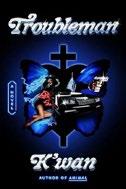
An ex-con who used to be one of Philadelphia’s toughest cops is swept up in a welter of murder, corruption, and double-dealing. Toussaint Batiste doesn’t care much for being addressed by his nickname, “Troubleman,” or “Trouble” for short. But having just finished a stretch in prison for involuntary manslaughter committed while he was still with the Philadelphia PD, Toussaint can’t seem to be anywhere, not even in a car belonging to the son of a trusted friend, without trouble finding him. The car—or in street parlance, “whip”—belongs to Jay-Jay Wei, son of John Wei, owner of a successful restaurant in the city’s Chinatown district, who’s offering Toussaint a job and a place to live in gratitude for having saved him from a protection racket. Jay-Jay’s taking Toussaint to his parents’ house, but first he’s stopping to make a bag drop with some unsavory characters who, it turns out, will kill them both if Toussaint doesn’t take some quick and brutal defensive measures. It’s
>>> with her more relaxed American friends, whose culture her mother despises: “No hard work, no discipline, stupid fat and bacon,” the mother lists. “Stupid Disney and Pringles,” the daughter continues. Kim’s portrait of a tightly wound mother and struggling child is obsessive, often harsh, increasingly fraught, rendered all the more stifling through its detached narration, which allows little space for interiority. The tension between cultural expectation, family history, and parent-child attachment is the crux of the switchback, episodic, often uncomfortable story. But with coming-of-age comes insight: “You know she did it for you.” An intense first novel puts the burden of upbringing under a piercing scrutiny.
The bestselling novelist takes readers on another memorable excursion this summer with Our Perfect Storm.
BY KERRY WINFREY
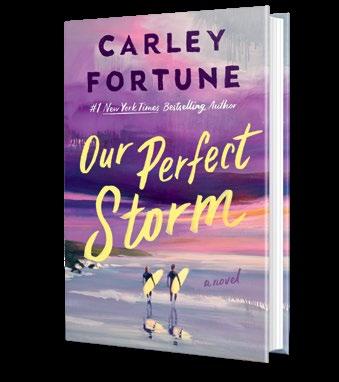
Our Perfect Storm
Fortune, Carley Berkley | 432 pp. | $30 May 5, 2026 | 9780593953242
When it comes to choosing her summer reads, Carley Fortune goes for books that are all-consuming. “I want to be pulled in and find it almost impossible to stop reading,” she says on a recent video call from her home in Toronto. “It can be any genre, but I want a book to be propulsive and transportive.”
“Propulsive” and “transportive” are two words that aptly describe Fortune’s own latest, Our Perfect Storm, which our starred review calls “a powerfully strong romance for readers who like their love stories full of torment and passion.” Frankie Gardiner and George Saint James have been best friends ever since George moved in with his grandmother next door to Frankie’s family. When Frankie gets engaged to an older professor, their friendship falters. But when that fiancé dumps her right before the wedding, she decides to take her planned honeymoon trip anyway—with George as her travel companion. Naturally, complications ensue as the two of them share a room in paradise. There’s longing, angst, the classic friends-to-lovers trope, and a beautiful setting in Tofino, a scenic surf town on Vancouver Island, British Columbia.
“All my books begin with the setting,” Fortune says, “and Tofino is a place I fell in love with in my early 20s. It’s stunningly beautiful, and unlike anywhere I’ve been before. It’s this misty rainforest that collides with the beach, and it’s extremely dramatic. It really feels like you’re standing at the end of the word. It was in the back of my mind as a place I wanted to revisit in a book, and I was just looking for a story that could match its intensity.”
Fortune also gleaned inspiration from a classic source: Little Women, specifically the 1994 film adaptation starring Winona Ryder as Jo and Christian Bale as Laurie. After writing about characters who are polar opposites in One Golden Summer, she wanted to focus on characters who have more similarities than differences.
“We had [Little Women] on VHS and I watched it over and over again. Jo and Laurie aren’t meant to work out because they’re too stubborn—they would kill each other—but sometimes I would turn the movie off, incensed, after Jo turns down Laurie’s proposal. But what if we had these two fiery characters and put them together? How would that work out? Could it work out?”
Fortune is known for tumultuous, deeply romantic books that are tailor-made for the summer season. Part of their appeal lies in those picture-postcard settings. “I can’t see a story unless I can see where it happens,” she says, “and it’s something I love when I’m reading. I love when I’m transported to a place in a book.” This Summer Will Be Different takes place on Prince Edward Island—notably the setting of another beloved classic, Anne of Green Gables. In March, Fortune announced that a Netflix adaptation is on the way, to be filmed in Toronto and on Prince Edward Island. Fortune is thrilled. “They understand that the setting is so important,” she says of the Netflix Canada team. “I’ve had a really good feeling about it from the start.”
This Summer Will Be Different isn’t Fortune’s only book making its way to the screen. Prince Harry and Meghan, Duchess of Sussex, are set to produce a Netflix film based on Meet Me at the Lake. And in June, Every Year After, an adaptation of her novel Every
Summer After, premieres on Prime Video. “I’m so excited,” Fortune says. “It’s really good. I cried at the first scene, and I bawled through the finale. I can’t wait for people to see it. Our showrunner, Amy B. Harris, is so talented. In our first conversation, she described how she saw the opening scene play out on the show, and it was a little bit different from the book, but it was great. The hair on my arms stood up, and I just felt like it was in good hands with her.”
Even though Fortune always loved books, she didn’t know they would lead her to the acclaim she enjoys today. She grew up in Barry’s Bay, a small lakeside town in Ontario that’s the setting for Every Summer After and One Golden Summer. She spent her time reading and writing, but making a career as a novelist didn’t seem like a plausible life goal. Instead, she majored in journalism and had a successful career that led her to become the executive editor of Refinery29 Canada, a site dedicated to fashion, beauty, and wellness.
But while her dream of writing a book was on hold, it never really went away. As
frustration with her job came to a head in 2020, she committed to making that dream come true. She recalls a particularly stressful phone call while staying at the lake. “I was on a landline, and I so clearly remember slamming the phone down and saying, ‘I’m going to write a book.’”
She gave herself a firm deadline: the end of the year. “It was something I just needed to do for myself. I’d given and given to my career, and it wasn’t giving back. I needed to reclaim a piece of my creativity. I figured out how much I needed to write in a day to finish a book by the end of the year, and it was 388 words. I’d get up really early— before my kid was awake, before I had to work—and write. And that book became Every Summer After.”
Fortune never even intended to publish it, saying she wrote the novel to show herself she could do it and to pay tribute to her summers growing up on the lake. “It was for me, for my heart.”
Now that her books routinely top bestseller lists and she has millions of devoted readers around the world, Fortune’s life has changed dramatically, but her desire to tell stories remains.
“When I worked in journalism, I would assign and write stories about the way we live—particularly the way women live—our finances, our health, our careers, our relationships, our politics. I’ve been trying to align that work with the work of writing fiction, and I think Our Perfect Storm is the closest I’ve come to doing that. I’m so proud of this one.”
Between juggling TV projects and now touring for Our Perfect Storm , Fortune’s schedule is full. “I’m more overwhelmed than I’ve ever been, but it’s all wonderful things.” Still, she makes time for reading. Her summer recommendations include Annabel Monaghan’s Dolly All the Time (“I just love how she writes about life and families so beautifully”) and The Missed Connection by Tia Williams, one of her favorite romance authors.
Oh, and one more thing: Fortune is already hard at work on her sixth book. Readers will just have to wait and see where she transports us next.
Kerry Winfrey is the author of Waiting for Tom Hanks and other titles.

I can’t see a story unless I can see where it happens.

By Pat Barker (Plume,
1991-1995)
I like to think of The Regeneration Trilogy as a single, long, juicy novel about World War I, the effects of trauma, and the ache of true love.
By Edward St. Aubyn (Picador, 2005)
This novel takes place over a sequence of four Augusts, so it’s perfect for a summer read. The main character is tortured but also hilariously, bitterly funny. It’s one of a quartet of novels, but it was the first I read, and I would argue the perfect way in.
By William Maxwell (Vintage, 1979)
If you only get a weekend off, this slim novel is the right book for you. It is, I think, the perfect novel. It is at once specific, about two Midwestern families in 1922, and universal, about how the sadness of some childhood experiences can reverberate.
Ayelet Waldman’s most recent book is A Perfect Hand (Knopf, May 19).

For more summer reading recommendations, visit Kirkus online.




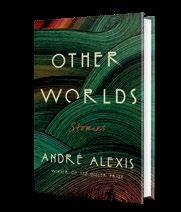
André Alexis took home the award for his collection Other Worlds.
André Alexis has won the Story Prize, given annually to an outstanding collection of short fiction, for Other Worlds
Alexis’ book, published last May by FSG Originals, is a multigenre collection that explores themes of confusion and alienation. The book was longlisted for the Giller Prize and was a finalist for the Toronto Book Award.
The judges for the award, authors Benjamin Dreyer and Ling Ma and librarian Stephen Sposato, said in a citation, “Other Worlds so seamlessly traverses the boundaries of time, of nationality, and of genre that such boundaries seem diaphanous. This fleet-footed collection is both rooted in oral and literary traditions

For more literary awards news, visit Kirkus online.
and yet entirely contemporary. Being many things at once, full of sly innovations, and quietly upending conventions, Other Worlds is wholly original and wholly itself.”
The runners-up for the prize were Lydia Millet for Atavists and Ayşegül Savaş for Long Distance
The Story Prize, which comes with a cash award of $20,000, was established in 2004. Previous winners include Edwidge Danticat for The Dew Breaker and Everything Inside ; Jim Shepard for Like You’d Understand, Anyway ; Claire Vaye Watkins for Battleborn ; and Deesha Philyaw for The Secret Lives of Church Ladies —M.S.

only the beginning of Toussaint’s harrowing reintroduction to the not-so-brotherly street life in the City of Brotherly Love. Before long, Jay-Jay is arrested for murder, his distraught father is contemplating taking matters into his own hands with his .22-caliber pistol, and Toussaint, who only wants to be left alone to make his own, preferably peaceable way back into society, now finds he must navigate by fair, foul, and mostly violent means through the city’s Black and Chinese underworlds while dealing with his one-time co-workers in the police department, including the sultry Sgt. Natasha Dobbs, who seems to hanker being more to him than an inside source. To say the least, there’s a whole lot of page-turning stuff packed in this latest thriller from K’wan, who in addition to an aptitude for orchestrating and propelling action sequences, displays a knack for colorfully droll dialogue and antic set pieces bordering on the surreal. He seems to be channeling Elmore Leonard, Walter Mosley, and Chester Himes in one rollicking stream.
The guess is that we’ll be seeing more “Trouble” in the future, which is a good thing.
Lakshmi, Lavanya | Pamela Dorman/Viking (320 pp.) | $30 | June 16, 2026 | 9780593834220
W hen a Torontobased woman attends an elaborate wedding with her South Asian family in New Jersey, emotions are as intricate as bridal mehndi designs.
Simran Gopal is in her early 30s, and while her career has hit a rough spot, she’s finally in the relationship of her dreams, with her best friend Liv Bridgers’ brother, Leo. He’s handsome, smart, funny, and wild about her—but she’s reluctant to introduce him to her family, especially since it’s been seven years since she communicated with the
A comedy of manners in which family matters as much as the marriage plot.
LEAVE AND COME BACK
aunt and uncle who adopted her after her parents died. When younger cousin Geeta’s wedding invitation arrives, Simran calls Geeta’s sister, Kavitha, who throws down the gauntlet: Either Simran comes to the nuptials, or they’re done, for good. She heads south—and so does Leo, who isn’t about to let his big love find someone else. Now the feisty Simran is up against her far feistier aunt Veena; they function more like mother and daughter, and have many grievances with each other. In her aunt’s eyes, the worst sin Simran could commit would be to marry outside of their Tamil community; no one wants this formidable matriarch to know Leo is Simran’s love interest. Thus, the cousins—plus Geeta’s groom, Rishi— hatch a plan based on their favorite Bollywood movie to carry Leo through the wedding-week festivities without arousing Veena’s suspicions. Whether or not that plan works is way beside the point, as everyone learns a lot about themselves and each other as they scheme. Many novels of the past few decades have offered versions of Jane Austen plots set in India or in large Indian diaspora areas, but few of those actually rise, as this one does, to the level of Austen’s devastatingly accurate reads on how tightly connected communities celebrate, argue, mourn, and forgive.
A warm, witty comedy of manners in which family members matter as much as the marriage plot.

Larsen, Ward | Putnam (448 pp.) $32 | May 19, 2026 | 9780593718094
Deadly drones threaten chaos, and Ryans are in the thick of the fight.
A U.S. Air Force C-32A crashes near Bodrum, Turkey, killing all aboard, including the secretary of commerce. American investigators suspect sabotage, which elevates the issue up to the White House. Strangely, only 15 passengers had been aboard while 16 were listed on the manifest. Gunther Klaus, a Swiss moneyman for the Russians, was supposed to be on that plane. Code-named Fulcrum, he wants to get to the West to expose Russian chicanery. On the book’s dark side, Andrei Malenkov has a “little squadron” of drones he plans to load with radioactive cesium chloride that would change the world and make him rich. Given his intended target in northern Africa, the plan sounds plausible. Unfortunately for him, he must face Americans like series regulars Ding Chavez, John “I’m too old to die young” Clark, and Lieutenant Commander Katie “What the hell are we getting into now?” Ryan. The story is rich in weapons technology and balanced by Americans, to a one, displaying courage and solid character. At the top, President Jack Ryan tries to contain a simmering geopolitical mess by talking to an unfriendly President Nikita Yermilov. The tactical level is what readers live for—the gunfights, the explosions, the drones that hunt and kill—and always, always, another threat from a deadly adversary. The demise of the Cold War
certainly didn’t end the supply of material for this Clancy-created series. In a world of constant turmoil, the Clancy crew will always be busy. There’s a sameness to the novels—the U.S., with its noble leader (alas, fictional) “trying to hold together a world that’s blowing apart,” and its noble warriors, like Katie, who “seemed to find action like a moth found light.” With this novel, thriller writer Larsen makes his first entry in the Clancy series. His style fits perfectly. American honor, high-tech power, and on-the-ground bravery highlight this exciting yarn.
Lavery, Daniel M. | HarperVia (288 pp.) $26 | June 2, 2026 | 9780063425880
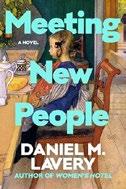
As Bette Midler sang, “You got to have friends!”
Lavery, a former voice of the “Dear Prudence” advice column at Slate, continues to share keen insights into the human psyche in a touching—and often hilarious— portrait of a woman heading into her 60s without the support and companionship of the nine best friends she’s lost to death or misunderstandings (more than one of these) over the years. At 57, Barbara is a twice-divorced mother of one son (with whom she has a contentious relationship) and works in an upscale food market in Brooklyn. She’s been confronted, recently, with a list of relationship-based grievances compiled by a purported friend, which launches her into protracted musings over why she hasn’t really had a best friend since the death of her last one more than 15 years prior. (Startlingly, in the years leading up to her death from cancer, that woman removed Barbara from the “casserole list” of friends providing her with meals and comfort.) Mining her memories for clues about what went wrong, Barbara sets out to find a new BFF. Peppered with acerbic observations about the vagaries of others, her unfiltered narrative covers issues ranging from whether a potential
younger new friend is age-appropriate to how to deal with the information that the widower of the friend who dismissed her years ago is now remarrying. The resolution of Barbara’s quest for connection is not linear, but readers are treated to her thoughts about religion, neighbors, aging, and cooking. (The assembly directions for a double-crusted bitter greens pie called erbazzone seem impossible to ignore.) Barbara’s prickly personality illuminates Lavery’s exploration of who is worthy of our love and attention and why friendship is so often a zero-sum game.
Utterly human: funny, sad, happy, questioning.
Madeira,
Carla | Trans. by Alison Entrekin Liveright/Norton (176 pp.) | $26.99 June 23, 2026 | 9781324098119
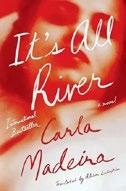
A prostitute falls for the only man who can resist her. Madeira’s novel, a bestseller in her native Brazil, opens without any preamble: “Whore. There’s no other name for Lucy.”
Lucy “worked in a whorehouse, lived in a whorehouse,” our helpful narrator explains. “But that’s not the only reason she was a whore.” If it were, she’d be afforded “more respectful names, such as sex worker or prostitute.” But she isn’t. Lucy is the most vulgar whore in town. Worse than all her provocations, though, is the fact that she enjoys her work. And while “an upstanding citizen will tolerate a whore so long as they can feel sorry for them,” Madeira writes, “…Lucy was too self-possessed, depriving respectable women of the chance to exercise compassion.” Madeira, translated into English by Entrekin, is at her best along these ostentatious but wry lines. Lucy is soon captivated by the one man who turns her down—Venâncio, husband to Dalva. The young couple had a storied courtship, but a single irrevocable action has destroyed both their lives. If Madeira had stopped here, her story might have
approached perfection: In its early pages, it achieves a kind of forceful lampoonishness that inspires both laughter and sobs. The witty prose rushes the reader through pages and pages about desire— what it means to desire, to be desired, to be driven helpless by desire (or, as Madeira has it, as a young Lucy observes a man’s “impotence in the face of his own hard-on”). But Madeira strays too far from the heated center of her own story, including more backstories than the slender novel will support—backstories for parents and relatives and friends of minor characters that don’t do much to further the plot. She’d have done better with some minor pruning. A feverish, obsessive, filthy book—and a terribly fun one.
Maum, Courtney | Little, Brown (352 pp.) $29 | June 2, 2026 | 9780316599108
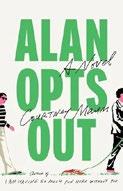
Consumerism, class snobbery, and greed are major targets—along with bad manners and scam artists— in this social satire set among the moneyed denizens of Belleport, a gated community in post-pandemic Greenwich, Connecticut.
The Belleport women’s chat group serves as an effective Greek chorus, not only commenting on events but subtly offering hints to attentive readers about revelations to come. Many of those events and revelations revolve around Alan and Vivian Anderson, a Midwestern couple who relocated from Chicago to Belleport four years earlier, just as Covid-19 hit. Creative director of the successful ad agency he co-owns, 50-ish Alan is used to winning international awards and giant accounts like John Deere. Driven by equally grand but more domestic ambitions, Vivian has set out to rebrand herself as a New England socialite despite her humble working-class background. She has scheduled the building of an
expensive swimming pool and, more importantly, has positioned herself to enter the fastidiously cutthroat competition for admission to Belleport’s exclusive women’s social club, the Queen Annes. Inevitably, Alan and Vivian find themselves at cross purposes. Alan loses the $14,000,000 U.S. Dairy account when a farmer named Daniel Ellery, meant to represent an ordinary dairy farmer at Alan’s big pitch, instead proclaims that the world needs less milk, less advertising, less excess all-around. Initially despondent, Alan begins to agree with Daniel. He dons a flowing white shirt, stops wearing shoes, and moves into the abandoned playhouse in the backyard. Vivian believes her dreams are being thwarted by Alan, but also by her daughters. Fifteen-year-old Bailey’s “kinesthetic learning style” is unacceptable at Greenwich’s best private school, and 12-year-old Sunny can talk to animals, a bizarre twist within a generally realistic novel. The tone proves confusing. Alan, Vivian, and the insufferable Queen Anne matriarchs are initially drawn in harsh, cartoonish strokes, but Maum then pulls back on the snark, ultimately asking readers to empathize with the clueless, privileged residents of Belleport. Brittle lampooning mellows into domestic comedy complete with talking animals and a fairy-tale ending.
McFadden, Freida | Poisoned Pen (368 pp.) | $18.99 paper | May 26, 2026 9781464249631
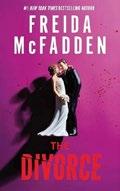
Dead bodies turn up in the first sentence of the prologue in McFadden’s latest domestic thriller. The mystery of who died is at the pulsating heart of this propulsive tale. As Chapter 1 begins, Naomi arrives home to find the locks changed
Trust no one in this tale of deception and revenge.
THE DIVORCE
on the front door of the gorgeous home she shares with her husband, Jeremy, and their 5-year-old son, Teddy. Jeremy steps out the front door and convinces Naomi to move out while he has their home renovated, a plan Naomi knows nothing about. It’s all a ruse, though, as the next day Jeremy tells her he wants a divorce. Naomi is shellshocked and soon discovers that Jeremy is having an affair with Veronica, a beautiful younger woman. What seems at first like a stereotypical story about a man who leaves his wife turns into something else when Naomi decides she’ll do anything to get Veronica away from Jeremy and Teddy, and Veronica decides to fight for what she thinks she deserves. Fans of stalker novels will cringe with delight as creepy things start to happen. Teddy’s stuffed elephant, a gift from Veronica, is found impaled on a kitchen knife; Naomi suspects Jeremy is gaslighting her and that Veronica tried to poison her. A weird confrontation among Jeremy, Veronica, and Naomi at Teddy’s birthday party, to which Naomi shows up uninvited, is priceless. There are three main characters, and any or all of them may be unreliable narrators. Packing the plot with dark, gaspinducing twists, McFadden outdoes herself in a story about how highly emotional people engage in risky behavior to get what they want—but in this novel, for better or worse, not everyone will survive. Trust no one in this over-the-top tale of deception and revenge.

Morín, Tomás Q. | Pantheon (192 pp.) $27 | June 9, 2026 | 9780593702048
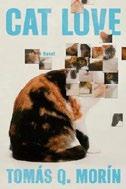
A tale of love, longing, and the culture that both confines and liberates us— narrated by a cat. The narrator of this slender novel is the epitome of cat . In her long life she has known the love of her mother in a perfect spot beneath an old tool shed, has loved her own kittens in a less ideal location beneath a coffee shop, and has cycled through the lives of several humans and ended up with her own true human love, a handsome, cultured shoe salesman she refers to as the Mustache. She and the Mustache have a life driven by quiet joys. They listen to Coltrane and Son House, absorb audiobooks while the Mustache cooks dinner, appreciate a wide range of poetic verse, and spend Sundays together filled with “love and stillness.” Then, one day, the Mustache goes on a trip and leaves our narrator in the care of a neighbor boy who, in spite of his seemingly kind nature, kidnaps the cat and sells her to “some guy in a tacky trench coat,” who delivers her to a laboratory. There, as part of a 10-day course designed to “improve emotional competency,” our narrator is sealed inside a literal version of Schrödinger’s box—a mirror-lined container, devoid of food and water, wherein she is theoretically both alive and dead as long as the box remains unopened. For the cat, however, her life and death are anything but theory and, as the novel examines her life before the
box and in its unusual aftermath, the joyous images of this cat’s most catlike experiences cast a dappled spotlight on the human world, too. Inventive, erudite, funny, and devastating, this debut novel by memoirist and poet Morín eschews traditional plot in favor of the illuminating power of the image. While this may result in a frustrating experience for readers with a literal expectation of what a novel must do, this book’s effervescent energy has its own pleasures, which more than make up for any holes in the plot. A bright, fresh book that is best enjoyed with a record playing in the background and a cat on the reader’s lap.
Kirkus Star
Nunez, Sigrid | Riverhead (224 pp.) $29 | July 14, 2026 | 9798217179152
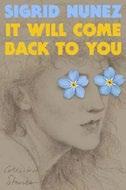
Nunez delivers vivid portraits of people living quiet lives of desperation in these sterling short stories. There are two kinds of people in the world, said Søren Kierkegaard: those who write, and those who don’t. Nunez, best known as a novelist, writes up a storm with her first story, “Philosophers,” a tour de force of resignation. Her protagonist, who back in high school had a crush on a boy with a muscle car, adds to the categorization: “There was the kind of person who said, Let’s split the check, and the kind who reminded you you’d had the extra beer.” And then there are “good soldiers and bad soldiers” and “two kinds of Vietnamese,” wrote the young man from the combat zone. The Danish philosopher figures in this portrait, and so does heartbreak. Then there are the mentally ill and those on the way to being so, as a therapist reflects in “Greensleeves,” a title that speaks to a song with hidden
dimensions. As to that, many of Nunez’s characters harbor secrets, mostly small but some very large indeed, as with a serial killer who “had never had sex without shame.” Shame doesn’t keep him from the hunt, and everyone is fair game: “People he knew, people he didn’t know. People. They were all candidates.” It’s a masterwork of horror that slowly unfolds to a creepily affectless ending. Nunez is a strong writer at every level, but she’s especially good at closings that nail their points in place, from the everyday to the sublime, as toward the end of the title story and its reflection on “why we get so much wrong, for why memory is so easily overruled by fiction, and why it can be so hard, no matter how we struggle, to get at the truth of our lives.”
Nunez’s stories make a welcome addition to an already much esteemed body of work.
Ojeda, Mónica | Trans. by Sarah Booker Coffee House (250 pp.) | $20 paper May 12, 2026 | 9781566897556
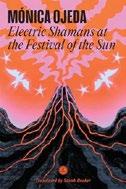
Seekers of all stripes congregate in the Andean páramo for a mystical music festival. Noa and Nicole, 18, best friends, make the pil grimage from their hometown of Guayaquil, Ecuador, a place rocked by the violence of men and mountains alike. Noa is on the hunt for her father, who left her as a child, and Nicole is focused on Noa, tied to her in the intensely intimate friendship of young women. Once at the festival, Solar
Noise, they connect with others: Pamela and her partner, Fabio; Pedro and his partner, Carla; Mario and his friends Adriana and Julián. They mosh, do shrooms, have sex, dance with Diablumas, listen to songstresses, and congregate around a mysterious figure known as the Poet. Over the days of the festival, Noa seems to transform, unlocking an inner voice as powerful as the volcanic landscape. Interspersed with the events of the festival are selections from Noa’s father’s notebook, reporting on a long-ago visit from Noa and Nicole. Chapter headings tell us 10 years have passed on the Andean calendar; narrative cues tell us the passage of time here does not align with our usual linear conception. Outside of the journal, the novel’s narrative voice is a rotating first-person that visits the minds of Nicole, Mario, Pamela, and Pedro in turn, with diffusely mythological interludes by the festival songstresses themselves. Each voice feels less like a singular character and more like a member of the chorus, just another thread in the novel’s tangled web of words and ideas. Tonally, too, the prose—resonant, brusquely declarative—is often reminiscent of classical theater. It’s an approach that reflects its subject matter, leaving the impression of a symphony underpinning the world. At the same time, polyphonic narrative satisfies best when each character brings a truly unique perspective, and, in reaching for cohesion, Ojeda’s characters flounder for distinction. Pamela is the standout, the one character instantly discernible from the novel’s morass, regardless of context.
There’s plenty here for Ojeda’s fans, but the glass needs a lot of cleaning before one can see through the window.
Seekers of all stripes congregate for a music festival.
ELECTRIC SHAMANS AT THE FESTIVAL OF THE SUN
Ozeki, Ruth | Viking (336 pp.) | $30.98 June 2, 2026 | 9780593832714
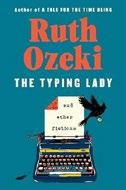
Longing and loss sometimes lead to understanding in this reflective collection of 11 short pieces. Taking Elizabeth Bishop’s keening poem
“One Art” as her epigraph (and one story’s title), Ozeki shows people struggling with losses past, present, and future. Some tales offer retrospective glimpses of key episodes in a character’s life. “The Anthropologist’s Kid” poignantly contrasts the eponymous narrator’s recollection of the ugly breakup of his childhood friendship with a halfFilipina girl with the happy memory of the day they met and bonded. The narrator of “One Art” looks back at 1978 to remember how she was shaped as a writer and a woman by her brief but intense undergraduate relationship with a female visiting scholar. That narrator directs our attention to “the gaps and elisions where the real story hides,” which are key elements in Ozeki’s strategy to keep readers off balance. Plain prose with enigmatic undercurrents is also part of that strategy; “Dead Beat Poet” and “Where Ambition Goes to Die” lay out surreal scenarios with deadpan matter- of-factness. So is Ozeki’s playful insertion of details from her own life into clearly fictional scenarios; “fiction” is a flexible word here. Some stories immerse readers in a character’s present-day struggles. In “Leafblower,” the impoverished poetry MFA pilfering books from the elderly couple renting her a room finds herself becoming their caretaker as the wife succumbs to dementia. The unnamed author in “The Problem of the Body” schemes with her 17-year-old granddaughter to avoid a book tour while looking back at the premature death of
her daughter—the girl’s mother—and the recent loss of her husband, grievously mourned. “Stories,” Ozeki muses in “The Typing Lady: An Author’s Note,” “are collaborations between people who read and people who type. They are how we co-create each other and dream ourselves into being.” This warmth toward the fiction-making process—and her characters—leavens the collection’s generally sad atmosphere. Tender, mysterious, and moving.
Palmer, Bobby | Little, Brown (416 pp.)
$29 | June 30, 2026 | 9780316599139
Romantic partners are drawn together and pushed apart, as told by minor characters in their lives. Clara Cowan and Seb Bonami meet in London when they’re both at the beginning of their adult lives. Clara dreams of being a director and is already hard at work making films with her obnoxious actor boyfriend. Seb has tried music, modeling, and acting, but none of them feel like a calling to him. It takes the two of them some time to end up together, but when they do, their love affair is big and passionate. But as time goes by, their oftendramatic partnership begins to show cracks. Although Clara has always known that she’s meant to work in film, Seb is not quite sure what his purpose is. Clara pushes him to keep going, but he can’t help but feel that none of it matters to him—in fact, he’d much rather quit and start a family, if only Clara would agree. When Clara casts him in her biggest film yet, their clashing personalities and desires lead to a breakup so explosive that there’s no chance of reconciliation…except that, because of their shared friends, they keep running into each other. Palmer creates an expansive love story that
spans years and holds lots of surprises. The unique structure is a standout— each chapter is told by a different person in Clara and Seb’s life, whether a friend, a parent, a barista, or a random passenger on the bus. Palmer doesn’t flinch, putting Clara and Seb through the wringer as they endure losses and betrayals that make it hard to believe they’ll ever find their way back to each other. For readers who like romances with plenty of angst and torment, this is a satisfying read.
A compelling love story that’s full of anguish, heartbreak, and passion.
Roberts, Nora | St. Martin’s (432 pp.) $30 | May 26, 2026 | 9781250413581
An author is targeted by a fan who just can’t let her go. Arden Bowie has had plenty of tragedy in her life, but now she’s finally on top. After her parents died when she was a teenager, she moved from Brooklyn to Ohio to live with her aunt, uncle, and cousins. She soon became part of their loving family and grew up to become a writer and bookseller. When her debut novel is published, she meets Dustin Dubecki at her first event. He showers her with praise, asks for writing advice, and wants to take her out for coffee. Arden tells herself he’s just a little awkward, but then he keeps showing up at her local events—and, even stranger, she’s sure she sees him lurking at her event in New York City. When he bursts into her apartment one night and assaults her, Arden’s calm life is shattered. Dustin gets a five-year sentence at a psychiatric facility; Arden spends most of that time rebuilding her sense of stability. Eventually, she moves to Oregon to start a new life where Dustin can never find her. But even though she has a beautiful
home, a thriving career, a doting family, new friends, and even a potential love interest in a former cop named Gideon Riley, Arden can’t escape Dustin’s rage when his sentence is finally up. Roberts toggles between Arden’s point of view and Dustin’s, giving the reader occasional glimpses into his extremely twisted mindset. Although Arden’s attempts to escape Dustin are engrossing, the story stalls in the middle when far too many pages are dedicated to Arden purchasing and decorating a house. But the excitement picks back up when Dustin, a truly odious villain, re-enters the story. It’s also satisfying to see Arden grow into someone who refuses to be a victim, even as she deals with horrifying circumstances.
A particularly nasty villain heightens the stakes in this thriller about a woman learning how to be her own hero.
Rowley, Steven | Putnam (368 pp.)
$30 | May 19, 2026 | 9780593851494
A marriage is tested when one of the husbands is abducted by aliens. Poor Jesse. One of the first things he says to Norman after their meet-cute— colliding on the bike path in Venice, California—is, “Where you go I go.” But years later, after they’ve moved to Joshua Tree, passed middle age, and are contemplating their cooling marriage, Norman steps into an unexplained beam of light in their yard one night and disappears. Jesse enters a period of grief, but also something stranger, since he has no answers and doesn’t know how to talk to anyone about his unheard-of circumstances—though, interestingly, he doesn’t seem to debate with himself about whether he should even try. There are other, more straightforward kinds of grief in this novel, too. For
Jesse, there’s the pain of never having had a father, as well as the sorrow he felt after an adoption attempt with Norman that fell through at the last minute. For Norman’s sister, Lally, there’s grief over a brother who died in an accident when she was 5, and over her own nonexistent motherhood. She wants access to the embryos she helped create for Norman and Jesse, but Jesse is prickly about this request. Well, it’s a Steven Rowley book, so most of the characters are prickly. Other things Rowley does well: quippy one-liners (though occasionally a joke comes out of a minor character’s mouth that sounds more like the author’s voice), tertiary characters who shine, funny party scenes with a mix of offbeat personalities and perfectly timed chaos. Also: detailed place description and a tender, unhurried contemplation of the human condition. Plot and structure aren’t so much his bag. Norman is a particularly tough character to grasp. He is less well formed than many of the other characters and neither his disappearance nor the problems in his marriage feel adequately solved.
A sweet and tart story stretched over a quirky frame.
Stoddard, Kat | Celadon Books (272 pp.) $27.99 | June 30, 2026 | 9781250387967
This updated take on The Philadelphia Story brings modern mayhem to the infamous pre-wedding love triangle. It’s the Sunday before Tess Lowell’s second wedding, but the painstaking
planning for her union to practically perfect state Senate hopeful Warren Ashley didn’t prepare her for the drama that’s about to unfold over a week at her family’s Cape Cod estate. Because unbeknownst to Tess, her troublemaking brother, Sebastian, invited her ex-husband, Peter Hyun, to the festivities. Peter, a working-class artist, doesn’t relish the thought of re-entering Tess’ WASPy world, but five years after she divorced him while he was in treatment for alcoholism, he can’t resist the idea of finally getting closure. Even more tempting is the thought of showing up at the wedding with Maynard “Mitch” Mitchell on his arm. When Peter meets the handsome young aspiring writer at a dinner party, they hit it off right away. Mitch agrees to attend the wedding as Peter’s fake boyfriend in the hope of getting some juicy material for his next project. But when Peter and Mitch are drawn into Tess’ orbit, the tension among all three of them threatens to boil over. Fans of the Hollywood classic will recognize the original in broad strokes here—the privileged daughter of a well-to-do family, the handsome ex-husband she can’t quite shake, the bumbling but charming writer thrown into their midst—but readers hoping for the screwball humor and crackling dialogue of the original may be disappointed. Stoddard’s decision to connect the central love triangle on all sides is inspired, and Peter and Mitch’s bisexuality add welcome depth. But the text is overstuffed with characters and padded with unnecessary plot points that slow everything down.
A dishy beach read that doesn’t live up to its cinematic inspiration.
A sweet and tart story stretched over a quirky frame. TAKE ME
Kirkus Star
Mad Eden
Thomas, Morgan | MCD/Farrar, Straus and Giroux (304 pp.) | $28 | June 2, 2026 9780374620158
A patient navigator at a gender-affirming care nonprofit traces and retraces the swampy contours of a uniquely disruptive summer. Ro and their partner, Liam, live on the Florida Panhandle in an uneasy equilibrium—with each other, with their finances, with a world often hostile to queer and neurodivergent people. One summer, “early in the sixth extinction and late in the pandemic” (read: 2023), another character joins them in their remote cottage on the edge of a retention pond: a pervasive, stubborn, defiant joy. The arrival of this joy, inextricably tied to its own departure by the laws of causality and the physics of time, is Ro’s keystone as they recount the summer’s events. There’s a visit from Quentin, an emancipated teen who “was not our child, at least not by blood nor in any legal way, though he called himself our child, or sometimes our son,” on his way to college and eager to start testosterone therapy. There’s Ro’s new diagnosis of autism and the overhanging trauma of a recent hospitalization for suicidality. There’s the turbulent political landscape and the machinations of anti-trans organizers, offering disastrous ramifications for Ro’s life
and work. And then there’s Mad Eden, an experimental serial fantasy work posted anonymously to autism subreddits (“the boards”; glimpses into the dynamics of internet subculture here are excruciatingly accurate), its verbiage entirely sourced from the scholarly article Autism as a Disorder of Prediction. The paper is a real one, published in 2014, but it is the novel’s magic entirely that takes the article’s hypothesis and runs, bounding, to new storytelling potentialities. In their debut novel, Thomas demonstrates thrilling control of their craft, delivering a story as thoughtfully constructed as it is exhilarating to read. Ro and Liam are as real and compelling as characters come, their relationship providing the tangible fabric of the novel. There is true symbiosis here between form and content, and it is, simply put, “joyful, that word which suggests two separate things: a substance and its vessel.”
Radically inventive, compassionate, and perspicacious. Compulsively page-turning.
Verrone, P.C. | Catapult (304 pp.) $28 | June 2, 2026 | 9781646223176
A novel that breathes new life into a classic folktale. When Black city councilman Lucius “Lucky” Foote notices a young woman sitting on the garden wall near his political
Verrone takes his time explaining Baby’s origin, and his pacing is excellent.
RABBIT, FOX, TAR
opponent’s house, he’s taken aback: “It wasn’t every day you saw a sister chilling on the streets of lily-white Original Hill,” a neighborhood in an unnamed Midwestern city on the banks of the Mississippi River. Lucky finally gets the woman, named Baby, to open up to him, and it turns out she’s the niece of Eugene Fox, a white man who’s running against Lucky for his spot on the council. Lucky has a lot on his plate: He’s dealing with a group of protesters who demand reparations because their forebears’ Black town, Sankofa, was torn down years before to make room for a highway. Baby’s sudden appearance is also confounding to Eugene’s wife, Gina, who was unaware of her existence before she came to town; Eugene has sternly instructed his wife never to touch her. Lucky and Baby begin dating, and Gina, ignoring her husband’s demands, starts to touch Baby, and notices strange things happening when she does: “Most disturbing was the perpetual feeling that her house seemed to be watching her, or rather, looking past her, searching for something behind her back.” Debut novelist Verrone takes his time explaining Baby’s origin, and his pacing is excellent, keeping the reader in suspense to the startling end. Verrone leaves little doubt that the novel is inspired by the Tar-Baby story: If the title doesn’t give it away, the characters’ names—a bit too on the nose—absolutely do. This reimagining is quite good; Verrone seems to have a boundless imagination, which bodes very well for his literary future.
A strong and inventive debut.

Williams, Beatriz | Ballantine (464 pp.)
$30 | June 23, 2026 | 9798217094820
Following her father’s mysterious death, a young woman returns to her childhood home, unexpectedly reuniting with her first great love and uncovering lingering family secrets.
As Lucy Cooper delivers the eulogy at her father’s funeral on Winthrop Island, a Northeast vacation spot where her dad lived year-round, she can’t believe he’s gone. It’s been years since she’s seen him, both because of her relocation to Europe and her dad’s embarrassing obsession with chasing pirate treasure. Lucy is surprised to discover that her long-ago crush, Ben Ressler, has returned to the island to nurse his own wounds. A disgraced NFL player, Ben recently made a tackle that caused another player’s death; the fallout ended both his career and his marriage. While Lucy and Ben try to grieve their losses, they find themselves drawn to each other again. Meanwhile someone is targeting Lucy, breaking into her father’s house and intentionally unsettling her for reasons she can’t glean. As she searches for answers, the narrative shifts to two other timelines: First, flashbacks to Lucy and Ben’s high school courtship in 2012; and 1717, when a young woman named Hephzibah met the pirate Ramsay. As the stories progress in tandem, it becomes clear that Lucy’s father’s treasure hunt may not have been so crazy after all, and that Lucy and Ben might still find happiness together. The chapters alternate among characters, portraying Lucy in first person, with Ben and Hephzibah’s chapters in a more distant third. The portions focused on Lucy and Ben are instantly engaging, while Hephzibah’s story
A
contends with an obsessive and dangerous fan.
TELL YOUR FRIENDS
gets off to a much slower start, the temporal and tonal shifts feeling abrupt and out of sync with the tenor of the more modern tale. Readers may be tempted to skim in order to get back to Lucy or Ben, but the plotlines gradually interconnect, rendering the 1717 tale more absorbing as it progresses. A particular strength of the book is the setting of Winthrop Island, atmospheric in its isolation, with uncontrolled natural elements and community elements enriching the story. Similarly, as Lucy and Hephzibah each battle villains, the author eventually brings the suspense to a breathtaking crescendo that makes the entire book worthwhile.
An engaging tale that provides a fresh look at the importance of second chances.
Wilson, Lauren | Pine & Cedar/Flatiron Books (272 pp.) | $28.99 | June 2, 2026 9781250362483
A former child influencer contends with an obsessive and dangerous fan. Crystal Shaw has spent pretty much her entire life on camera, a performer in her British family’s wildly successful vlog, At Home With the Shaws Raised on a secluded island with younger twin siblings, she’s part of the brand her parents have built around “slow, clean living” as they turned intimate family moments
into curated content. For Crystal, this upbringing has been suffocating; she feels less like a member of a family and more like “a character in [their] brand’s story.” Desperate for independence, she convinces her parents to let her attend Cradlewell University in London, which they agree to as long as she continues to churn out content. Besides experiencing life on her own terms, Crystal arrives with a more urgent goal: to dismantle her family’s carefully crafted image and free herself—and her siblings—from the shackles of their media-driven lives. At school, Crystal meets fellow journalism student Alyssa Hayes, and they quickly become close friends. However, Alyssa has a secret: She’s a longtime superfan of the Shaws, having followed their channel obsessively for years. Alyssa has frequently fantasized about belonging to the seemingly perfect Shaw family. Now, with Crystal threatening to expose its flaws, she becomes increasingly determined to preserve the illusion, with deadly consequences. The novel’s plot is compelling and consistently engaging, though some twists concerning the family’s past feel predictable and underdeveloped. Alyssa occasionally shows flashes of being an intriguing antagonist, yet is hampered by flat motivations that may leave readers unsatisfied. The book truly shines in its exploration of fraught family dynamics, especially between Crystal and her mother, Marjorie, offering a thought-provoking look at the ethics of child-centered content creation.
A suspenseful novel that falls short of its full potential.


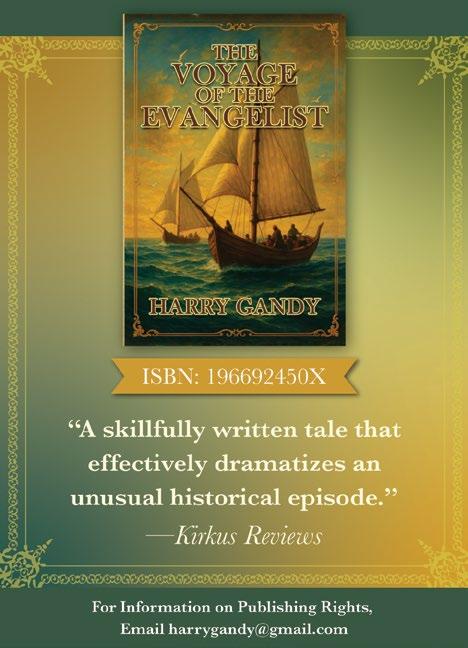
For more booklists, visit Kirkus online.

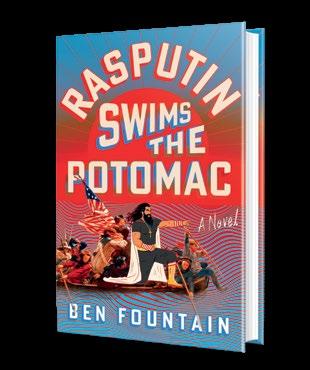
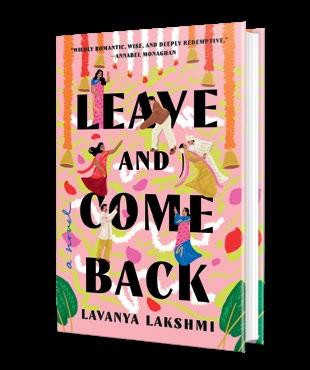
By Ben Fountain
A comic masterpiece. The current administration is finally getting the book it deserves.
and Come Back
By Lavanya Lakshmi
A warm, witty comedy of manners in which family members matter as much as the marriage plot.
By Cassandra Neyenesch
Original and hilarious, this novel about a Gen X midlife crisis reveals that base instincts can coexist with the maternal.
By Annabel Monaghan
A charming love story that absolutely radiates warmth.
By Douglas Stuart
With his gift for creating vibrantly specific characters and settings, Stuart again taps profound human truth.

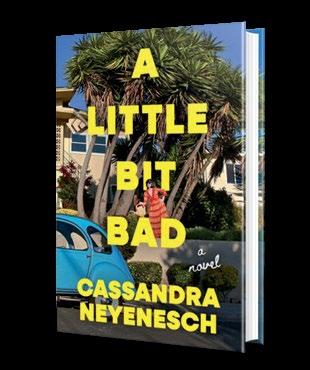
“A stirring collection of far-flung adventure stories.”
KIRKUS REVIEWS (starred review)
To purchase the book: Fern-Press.com/Adventure Also available on Amazon and Barnes & Noble.
by
Jim Doti
includes articles that describe:
• Climbing all “7 summits” including Mt. Everest •
• Completing a 100-mile endurance run •
• Training for “Ironman” •
• Summitting Carstensz Pyramid in New Guinea •
• Biking the RAGBRAI •
• Running 4 different Boston Marathons •
292 pages • 979-8-218-76217-9 • Paperback
$29.95 • 24 articles & color photos



The legendary actor will also produce the adaptation of Virginia Evans’ novel.
Virginia Evans’ The Correspondent is headed to the big screen, with
Jane Fonda attached to star, Deadline reports.
Evans’ novel, published last year by Crown, follows Sybil Van Antwerp, an irascible retired woman in her 70s who writes daily letters to a variety of people. After receiving correspondence from a figure in her past, she’s forced to come to terms with a painful period in her life. A critic for Kirkus called the novel “an affecting portrait of a prickly woman.”
The book became a word-of-mouth No. 1 bestseller and was longlisted for the Women’s
Prize for Fiction, the Andrew Carnegie Medal, and the Center for Fiction First Novel Prize. In March, it won the 2026 PEN/ Hemingway Award, given to an outstanding debut novel.
The planned adaptation was the subject of a bidding war won by the Lionsgate studio.
Fonda, the Academy Award–winning star of films including Klute, Coming Home, On Golden Pond, and 9 to 5, will act in the film and serve as a producer. Cat Vasko will write the script, and Evans

For a review of The Correspondent, visit Kirkus online.
will be among the movie’s executive producers.
Todd Lieberman, a producer of the adaptation, told Deadline, “To be invited in alongside the legend Jane Fonda, with my Lionsgate partners and Cat, is a thrilling honor— and we all can’t wait to have moviegoers experience the same catharsis that so many book readers already have.”
—M.S.
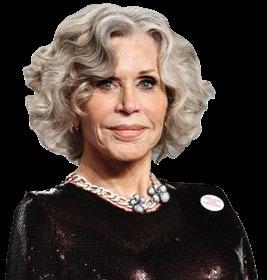

Abell, Stig | Harper Perennial/HarperCollins (352 pp.) | $18.99 paper | June 23, 2026 9780063472419
Multiple murders rock an idyllic English village. An oblique, lyrical prologue introduces a woman luxuriating in a river while a violent man hovers close by. Elsewhere, former London detective Jake Jackson is in a used bookshop in Meryton, near Little Sky, the farm he unexpectedly inherited from his uncle. He’s contemplating his good fortune when he gets the news that a woman’s accessories were found near the river and that the woman seems to have gone missing. As an ex-cop, Jake is the natural go-to, so he joins the search with his girlfriend, Livia, a veterinarian, and much of the community. The missing woman is nurse Claire Davidson. Jake’s fourth case is both a tangled mystery and a love letter to a British pastoral ideal. The book’s deliberate pace makes room for many colorful portraits of village characters. Cutting through the lightness a bit for both Jake and the reader is tough, distant advisor Martha, a mystery writer who often spars sardonically with Jake online about crime novels and his investigations. The discovery of a body in the river brings a kind of relief until it becomes clear that it’s not Claire Davidson. Could it be the victim of a serial killer? The novel’s pastoral strain is underscored by the inclusion of bits of rustic literature, a hand-drawn map of the village, and many references to the halcyon nature of the title river. A leisurely whodunit wrapped in a loving homage to the bucolic life.

Mysteries swirl around a bizarre house even before the murders that follow.
THE
CLOCK
Andrew, Lucy | Morrow/HarperCollins (432 pp.)
$30 | May 12, 2026 | 9780063453647
For more by Stig Abell, visit Kirkus online.
T hink you know the world of Emma? Andrew’s debut rips the lid off a seething pot of criminal mischief you and Jane Austen never suspected. Readers familiar with Harriet Smith as Emma Woodhouse’s mousy, unmarriageable protégé will be surprised to learn that Harriet (not her real name, by the way) is already at age 18 an accomplished con artist, trained by the father she turned on and fled, who’s hired by Mrs. Lavinia Churchill to recover some prized jewelry Jane Fairfax pinched from her and prevent Jane from marrying Frank Churchill, the client’s nephew, ward, and heir, by any means necessary. Throwing herself into the assignment with vigor, Harriet gets intermittent help from her friend Robert Martin, a tenant farmer and aspiring author whose lover, Reuben Denny, is the “heartthrob of the Derbyshire militia.” The plot seriously shades Emma and her future husband, George Knightley, who have little more than walk-on roles. But it does make room for multiple poisonings, a scorpion planted in a box on a dressing table, and Harriet’s growing fear that the force behind all these alarums and excursions is none other than her father, determined to avenge himself on his treacherous daughter. The melodramatic climax places multiple interested parties, three of them armed with guns, on a cliff two of them end up plunging over. That aptly summarizes the principal pleasure of this improbable series debut: The tension that
arises from Andrew’s desire to duplicate the characters of Austen’s novel, inviting the reader to wonder if she’s willing to bend their possible fates—will any of Austen’s own characters emerge as victim or killer?—and then unleash a criminal fantasia that borrows only some names from its celebrated source.
Warning: Andrew’s florid prose could never be mistaken for Jane Austen’s.
As if you cared.
Ayatsuji, Yukito | Trans. by Ho-Ling Wong Pushkin Vertigo (416 pp.) | $18.95 paper June 2, 2026 | 9781805335269
Myriad mysteries swirl around a bizarre house even before the murders that follow. The ambitious fourth novel in Ayatsuji’s Bizarre House Mysteries series again challenges armchair sleuths with an intricate puzzle linked to the layout of the title edifice; floor plans of two levels of the devilishly designed house are included. Additional threads, via a huge cast of fully depicted characters and a complex backstory, give the novel an epic scope. The house, infamous for its architectural oddities, tunnels, secret passages, locked rooms, and dozens of clocks of all varieties and sizes, has been thought haunted ever since a baffling murder there a decade earlier. In response to a written invitation from the house’s architect, a group of variously intrigued ghost hunters gathers for a séance to speak to the victim of that crime. These include a large contingent from the W— University Mystery Club, novice mystery writer Shishiya Kadomi,
and two editors from the magazine Chaos, which deals in paranormal phenomena. One of these, Kawaminami Takaaki, serves as protagonist and, by default, chief sleuth. In apparent homage to an Agatha Christie novel, the large group becomes trapped and is gradually winnowed as visitors become victims. As survivors strive to unravel the mystery, details of the creepy past and signature murder that give the house its dark reputation are revealed. Easter eggs are planted throughout, many related to time. Translated into English for the first time, Ayatsuji’s puzzler, first published in 1991, shrewdly turns each murder into a set piece, keeping readers interested in the journey to the intricate solution. An elaborate and creepy whodunit particularly pitched to fans of logical brainteasers.
Bloom, Amy | Mysterious Press (288 pp.) $28 | June 2, 2026 | 9781613167601
T here’s no shortage of suspects when an unpopular professor is murdered.
This winning first mystery from novelist and memoirist
Bloom features an English professor turned private eye with the perfectly hard-boiled name of Dell Chandler and a charming, ironic, super cool narrative voice to match. She’s hired to investigate an untimely death at Cromwell University, a private college in a snooty area of Connecticut: A professor named Oliver Bullfinch was bludgeoned to death in his office with a bust of Nathaniel Hawthorne. Low expectations of the local police lead college president Elizabeth Cutty to hire Dell, who can very much use the $500 daily fee. She brings to the task a solid background in lock-picking, file-snatching, and basic snooping, much of it gleaned from old episodes of Law & Order. Fortunately, she also knows something about the tenure-mad, prestige-hungry, and often alcoholic nature of the standard-issue
academic, as well as their endless backbiting. And she’s no wimp. “I’m built fairly big and very solid. I look best in smooth, tailored clothes or in jeans. I look my very best stark naked. In ruffles and florals, I look like a pale side of beef with ribbons around it.” As for the naked part, we’ll learn more about this once Dell starts lusting after Sgt. Nat Baker, a strong, silent type on the local force. When someone cuts her brake lines, when someone throws a rock through her godfather’s window (he’s a local, and was a pal of Bullfinch’s), Dell can tell she’s getting close. Lots of action, late-breaking twists and characters, plus the emergence of a buried secret in Dell’s own past make the last quarter of the book a bit of a whirlwind, with a second highly educated corpse dropping into the mix, but Dell Chandler is a cool character and a quick study, and her sense of humor never deserts her. This entertaining, sexy adventure in not-so-dark academia checks all the classic detective-story boxes. Keep ‘em coming.
Castillo, Linda | Minotaur (336 pp.) | $19 paper | July 14, 2026 | 9781250427052
Half a dozen long stories, five of them written between 2020 and 2024, about formerly Amish police chief Kate Burkholder, who keeps watching cultural borders in Painters Mill, Ohio, shimmer and shake. In “The Pact,” Kate seeks a pair of tween boys, the Amish Aaron Kuhns and the “Englischer” Kevin Dennison, who’ve defied Kevin’s family, which has forbidden their friendship, in becoming blood brothers on a night of adventure that turns perilous. “Disappeared” asks whether Little Joe Kline, a 2-year-old who’s vanished from his Amish family’s home, has been taken by his birth father, Thomas McKee, a non-Amish man with a troubled past. In “Blood Moon,” the
locals are terrorized, and several of them attacked, by a shadowy beast. Is it a bear or a wolf, neither of them native to Ohio—or, still worse, a mythical chupacabra? Human remains originally buried in an Amish cemetery whose new owner plans to open a B&B turn up in three different locations in “Hallowed Ground.” In “Dark Storm Rising,” Kate’s honeymoon with Agent John Tomasetti, of the Bureau of Criminal Investigation, takes the newlyweds to the lakeside Sugar Maple Cabins, where Kate’s fond memories of her childhood are seriously disrupted by a snowstorm, the disappearance of one of their hosts, and the torching of one of the cabins.
The title story, published here for the first time, uses a series of roadway accidents involving cars, buggies, drivers, and passengers to upend an Amish couple’s plan to spirit their granddaughter away from her unsuitable beau. Most of the stories aren’t very mysterious, but they’re so varied that many readers will put down the volume without noticing the lack of a single fatality.
Castillo uses mystery tropes to explore the contact zones of Amish culture with nature, outsiders, and the dead.
Ed. by Edwards, Martin | Poisoned Pen (288 pp.) | $15.99 paper | July 28, 2026 9781464253898
Crime never takes a holiday in the stories Edwards reprints in a sequel to his anthology Resorting to Murder (2015). The absence of the canonical authors who played a leading role in the earlier collection turns out to be a strength, for virtually all of the 18 stories here, 11 first published in the 1950s, are discoveries bound to be new to all but the most dedicated fans. On the whole, they alternate between brief, one-clue anecdotes and longer, more ambitious and fully fleshed out
An indifferent shamus inherits a fortune and a whole lot of trouble.
KILLER VIBES
stories. Standout short-shorts include Michael Gilbert’s “Even Murderers Take Holidays,” in which a hit man tries in vain to go on vacation; Nicholas Bentley’s “In the Picture,” which first conceals and then neatly reveals the crucial evidence in a husband’s murder; Shelley Smith’s “Crooked Harvest,” in a which a robbery victim discovers his thief at the home of a young lady he encounters on holiday, leading to a nifty reversal with a deft final twist; Celia Fremlin’s “The Summer Holiday,” which unfolds the fate of Emmy, a grandmother who hates holidays; Michael Innes’ jumped-or-pushed riddle “Two on a Tower”; and Guy Cullingford’s “Kill and Cure,” which tracks the nightmares (or maybe something more real) of a thriller writer on a therapeutic do-nothing stay in Bunmouth. The most successful of the longer stories are Anthony Berkeley’s “‘Mr. Bearstowe Says…,’” another version of “Razor Edge,” which appeared in Resorting to Murder, and Christianna Brand’s “Cyanide in the Sun,” in which the nine Scampton Murders are plotted and peopled densely enough for a much longer tale. Julian Symons’ “The Summer Holiday Murders,” the longest story of all, is workmanlike and professional but, as the other contributors clearly demonstrate, not worth 40 pages.
The perfect vacation companion, especially if you’d rather get away with murder than get away from it.

Friday, Jack | Minotaur (352 pp.)
$29 | July 14, 2026 | 9781250428615
An indifferent shamus inherits a fortune and a whole lot of trouble in this series debut.
Charming Peter Key introduces himself to the reader right upfront as perhaps “the laziest private investigator in Texas.” Peter, who’s bisexual, doesn’t look for problems, but they have a way of finding him. After his propensity for sexual dalliances and weed earns him threats of physical violence and eviction from the Dallas house where he’d been living, the surprising death of his Uncle Forrest comes as a godsend. Though Peter hadn’t seen Forrest in 11 years, he inherits his house in Austin and a small fortune. Savvy readers will suspect that this inheritance comes with strings— more accurately, as it turns out, with chains or even knives. A shaggy mystery surrounds Uncle Forrest’s death, but the tale is less a whodunit than a comic romp, with delightfully off-center players introduced in nearly every chapter. These include Peter’s gritty Aunt Sylvie, “a tall silver bayonet of a woman”; the faithful German shepherd Brutus; stodgy attorney Arthur Brennance; and scary loan officer Josie Cho—at least some of whom, it’s hoped, will return in later installments of the series. A more serious thread, adding depth and texture, depicts Peter’s relationship with his ailing mother. In a voice reminiscent of Carl Hiaasen and David Handler, the story hurtles from one outrageous
development to another on the cushion of Peter’s puckish snark. A promising and compulsively readable series kickoff—hard-boiled light, and curiously refreshing.
Hollis, Lee | Kensington (352 pp.)
$27 | May 26, 2026 | 9781496755056
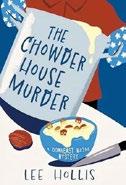
A new series by veteran Maine chronicler Hollis examines the strengths and challenges of family ties. Three generations of Holbrooks serve as pillars of Halibut Cove society. Matriarch Maggie supervises Sunday dinners from the spacious harborside home that’s “the heart of the Holbrook family legacy.” Her oldest son, Oliver, a respected defense attorney, ensures that even the most dislikable citizens get a fair trial when they need it. Younger sons Cord and Sandy follow in their late father’s footsteps, running a prosperous seafood empire. Only daughter Jill forges her own path as the village police chief, a role that sometimes puts her at odds with her mother. But it’s Jill’s daughter, Audrey, who sets the latest family adventure in motion. Working as a waitress at The Chowder House while trying to figure out what to do with her life, she’s the one to serve the chowder to Chips Hogan that permanently ends his annoying daily habit of coming in minutes before closing to demand a bowl of soup. The suspicion that falls on Audrey presses Maggie into action, but her mother’s sleuthing infuriates Jill, who wants the public to rely on the police to solve crimes. The parallel investigations—one amateur, one professional—uncover a horde of family secrets as deception and double-dealing provide powerful reasons why Chips had to die. This briskly paced series kickoff promises more tantalizing treats in store for visitors to Halibut Cove.
Horne, Birdie | Morrow/HarperCollins (336 pp.) | $18.99 paper | Aug. 11, 2026
9780063473089
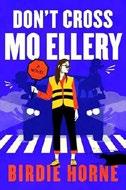
Two veteran authors join forces under a pseudonym to launch a series about a wildly unlikely amateur sleuth. Mo Ellery never wanted to get involved in detection. All she wanted was to hold on to her live-in boyfriend and keep her job at a Chicago marketing agency. After losing both within a few minutes of each other (the losses are connected, but you’ll never guess how), she moves to downscale Buffalo Park and takes the only job she can get, as a crossing guard near a city school. A driver with a car full of poodles constantly harasses her until the whole crew gets swallowed up in a sinkhole that opens beneath her eyes, leaving him dead and the poodles in urgent need of adoption. Scared of being called out by the police, Mo reluctantly agrees to take custody of the late Cran Johnston’s show dogs—Jean Valjean, Louis XIV, and Jacques Cousteau—with the idea of fobbing them off on Tond Johnston, Cran’s brother and heir, or on Benny, the dog trainer Cran had just fired, or, really, on pretty much anyone. Along the way she gets sucked into investigating not one but two maybe-murders. Working with Marlowe Golden, a pink-haired 12-year-old who shifts smartly from giving Mo a hard time about crossing the street to installing herself as Mo’s sidekick, she follows a series of hunches that cast suspicion on nearly everyone in Chicago, from Alderman Merle Carey to Tasha, his hot assistant, who quickly becomes Mo’s new lover. The frantic pace will make many readers accept a plot that’s even wackier than the protagonist. Move over, Ellery Queen. There’s a new Ellery in town, and she puts a whole new spin on being a queen.
Lumley, Sam | Kensington (272 pp.) $27 | May 26, 2026 | 9781496753588
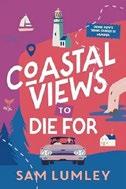
A road trip turns deadly for a neurodivergent travel writer. Now that Oliver Popp has just about recovered from his first assignment, covering a tourist renaissance in the nation’s capital—seen in How To Have a Killer Time in D.C. (2025)—his San Francisco–based editor sends him up the 101 for a piece on “find[ing] romance on the Oregon Coast.” He’s suspicious of her motives, because she’s assigned Ricky Warner, the sexy gay photographer he connected with in D.C., to be his cameraman. Oliver found his previous encounter with Ricky “stressful and chaotic and strange—all words [his] Autistic soul liked to avoid as much as possible,” but he can’t help reminding himself how attractive he finds Ricky. Author Lumley, who’s on the autism spectrum himself, poignantly describes Oliver’s efforts to understand the complexities of romance, as the journalist’s desire to faithfully adhere to his assignment clashes with the need to figure out what Ricky means to him. Oliver’s struggles are complicated still further when, at the first B&B he’s assigned to review, he finds himself in the middle of the innkeeper’s family gathering. Innkeeper Mary Alice Thatcher’s assurance that the Roses are a fun bunch is a bit undermined when Richard Rose’s dead body turns up in Ricky and Oliver’s hot tub. Negotiating the
emotions that attend a death in an already fractious family is a lot for Oliver, but he rises to the challenge. Romance, murder, and autism prove to be enjoyable bedfellows.
Lyuzna, Olesya | Mysterious Press (304 pp.) $17.95 paper | Aug. 4, 2026 | 9781613167625
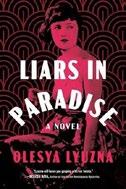
T he year 1925 finds Ginny Dugan, now co-owner with Jack Crawford of Shadow Investigations, under pressure to exonerate her partner from nine murder charges. Sure, Jack’s had a colorful past. But despite the testimony of an eyewitness who’s conveniently vanished, Ginny can’t believe he shot up Manhattan’s Empire Club and stole a valuable sculpture. Jack’s old employer, mobbed-up Empire owner Dickie Stryker, magnanimously gives the duo five days to recover the statue and clear Jack. Their first order of business is to identify that witness as Lila Summers and track her down. That won’t be easy, because her trail leads to the heart of Echelon, the cultlike organization founded by charismatic success coach Roman Blackwell. Thanks to heiress Bella van Dorn, Echelon is now headquartered in her family manse in Glen Cove. Jack, who was Bella’s lover before she married Leo van Dorn, isn’t an obvious candidate to infiltrate Echelon, so Ginny volunteers to go undercover there. No matter how hard she searches for Lila, though, she keeps getting distracted by other women, from Lila’s seductive roommate, Margot, to
A new series follows an unlikely amateur sleuth—no relation to Ellery Queen.
DON’T CROSS MO ELLERY
Gloria Gardner, a former Ziegfeld Follies dancer. Everyone she finds at Echelon, from Blackwell on down, is deeply untrustworthy—and Ginny herself may be, too. But as Margot tells her: “You might be a real piece of work, Ginny Dugan, but you’re the best we’ve got.” The story unfolds less like a logical investigation than a fever dream whose layers get ever more opaque and more disturbing. Readers shouldn’t expect to have all Ginny’s questions, or all their own, answered.
Liars absolutely nails it. Paradise, not so much.
Mullen, Caitlin | Celadon Books (352 pp.) $28.99 | June 9, 2026 | 9781250400574
A young woman returns as police chief of her hometown in New Jersey’s Pine Barrens only to find herself challenged by a local drug ring and a haunting cold case.
Chief Callie Hauser has been back in Pine Lakes only a few months when she has to arrest her mother for drunk driving. Jenna’s struggles with addiction shaped much of Callie’s childhood, but she never knew their root. Now she finds out that when Jenna was 16, she discovered a dead baby in the woods. Investigating the Baby Doe case leads Callie to a long-missing teenager, Sabrina Riley, but overall, her attention is occupied by more recent concerns: an uptick in the number of drug overdoses in town; her friend Jane’s slow recovery from a recent hit-and-run; and the fact that Jenna goes missing after being
released from jail. Stretched to the breaking point, Callie finds some solace in Adrian, a cute scientist she meets by the river, but she can’t help worrying that the old case and new case are connected—particularly when she discovers that she and Baby Doe share DNA. Mullen plays a bit with perspective and time, choosing to narrate some chapters from another character’s point of view as well as to experiment with second-person narration, but this is truly Callie’s story. Mullen doesn’t shy away from exploring the echoes of trauma within families and communities, and the way some stories are ignored or silenced, but Callie’s strength and moral compass ground the darker aspects of the novel. Like so many modern thrillers, this is a tale about the things men do that hurt women, both casually and with vicious intent, but through Callie, Mullen also offers hope that by standing alongside one another, women not only survive, but preserve the stories of those they have lost. A slow-burn mystery held together by an admirable cast of strong, flawed women.
Rosen, Lev AC | Poisoned Pen (400 pp.)
$17.99 paper | June 2, 2026
9781464252853
Four queer New Yorkers try to solve a crime while sorting out something equally vexing: their romantic lives. Brandon, the 20-something night-shift concierge at a lower Manhattan
boutique hotel, has a history of making poor choices when it comes to men, so naturally he violates the hotel’s no-sex-with-guests rule and sleeps with one. At work the following night, he learns that the man checked out early and left a bag containing a phone in his hotel room. Brandon is suspicious: “You definitely don’t leave a phone behind,” he thinks. “No matter how bad the sex was.” When an imposter comes to the hotel to claim the bag, Brandon secretly holds on to the phone. After he recaps everything that happened for his three best friends, Ollie, Nicole, and Ian—who are a social conservative’s nightmare of gender nonconformity—Ollie does some spying with Brandon and witnesses a guy getting his brains blown out during a conversation with Brandon’s hotel paramour. All four friends, who take turns with the novel’s point of view (resulting, unhelpfully, in some repeated exchanges), join forces to investigate the goings-on. It may not sound like it from that synopsis, but the book’s strength lies in its humor. Rosen, who’s behind the Evander Mills detective series and is apparently launching a new one with this offering, makes good use of group chats to refine amusing aspects of each friend’s personality. The book is on less firm footing in terms of plot: This is the sort of mystery in which the reader knows more than the characters about both the investigation and their personal lives. Still, the whole thing hurtles divertingly toward a critical scene at a game night in Brooklyn that’s a screwball-comedy set piece—until things turn ugly.
Come for the comedy if not for the mystery.

For more by Lev AC Rosen, visit Kirkus online.
Sutton, Paula | John Scognamiglio Books/ Kensington (240 pp.) | $28 | May 26, 2026 9781496754844
A second outing for Sutton’s feisty heroine both embraces and challenges the cornerstones of the mystery genre.
Daphne Brewster has come to cherish the slow, soothing, picturesque corner of Norfolk, England, that includes Cranberry Farmhouse, her cottage; Pudding Corner, the village in which it sits; and Pepperbridge, the slightly larger village where her children Imani, Fynn, and Archie go to school. A transplanted Black Londoner, Daphne’s not your typical village cozy heroine, nor is Sutton’s tale the stereotypical village cozy. While many cozy authors would seek to preserve their most beloved villagers by killing off a recent arrival, a tourist, or a particularly odious intruder—greedy real estate developers are favorite targets—Sutton begins her yarn by knocking off Nancy Warburton, who, along with her sister Patsy, runs the local grocery and convenience store that has been in her family for generations. A distraught Patsy insists that Nancy couldn’t have accidentally fallen off a ladder she’d climbed every day for years. At first, Daphne focuses on simply relieving Patsy’s distress, but a second death makes her curious. Could someone really have pushed Nancy? And if so, why? Sutton’s finely drawn characters help move her narrative briskly, as their complicated relationships with each other and the world they live in provide ample motivation for a series of startling crimes. A pair of ill-timed flashbacks threatens the momentum briefly as the big reveal approaches, but Sutton’s unconventional plotting allows the puzzle to land with a satisfying wallop. Makes you wish BritBox would feature Pudding Corner and its denizens in a new TV series.
Ed. by Yanique, Tiphanie & Richard Georges | Akashic (320 pp.) | $17.95 paper | Aug. 4, 2026 | 9781636142975
Fifteen stories issue what editors Yanique and Georges consider “a fighting call” for literature from the Virgin Islands. The legacy of colonialism casts a long shadow over the Virgin Islands. Although the enslavement of native people is consigned to the historical past, the current status of the islands as colonies of two different countries, the U.K. and the U.S., complicates travel and commerce with other Caribbean nations, as the editors point out in their introduction. Reliance on tourism also places constraints on the islands’ economic growth. This collection confronts this legacy in powerful stories like Nisha Khiani Savara’s “Jellyfish” and Hadiya Sewer’s “Interment.” Apart from Traci O’Dea’s “American Bully” and Raven Phillips’ “Bush Cat,” very few of the entries are crime stories in the traditional noir sense. In place of murder, fraud, and extortion, economic privation and exploitation are sources of misery, as in editor Georges’ “What Dread Hand,” Gillian Royes’ “The Last Sail,” and Tobias S. Buckell’s “Off the Rock.” Family conflict also takes a noir turn, as in Rea Vanterpool’s “A Guide to Grape Music.” Many of the stories have a supernatural edge, like “Interment,” editor Yanique’s “Beach” and Celeste Rita Baker’s “Pass Through Mangrove,” which also highlight Virgin Islanders’ close relationship with nature. Perhaps traditional noir is too dark for islands seen by many as a tropical paradise. But through a decade of workshops, mentoring, and literary festivals, Yanique and Georges have created a distinctive brand of noir that thrives in the scenic beauty of the Virgin Islands.
A varied and colorful collection that may announce the birth of sunshine noir.
Zaza, Agatha | Datura Books (400 pp.) | $19.99 paper | July 14, 2026 | 9781917415262
Two challenging murder investigations expose the turmoil within an urban police department. Zaza’s intriguing noir procedural moves kaleidoscopically, with themes far more provocative than a traditional whodunit. At the center are three police detectives, all in different stages of their careers. The story, set in and around Helsinki, opens with veteran detective Charlie Yeats staring at the detritus that a fire has wrought upon his home. Just hours earlier, he was hosting a party whose guests included colleagues James Grey, a fledgling mystery writer recently gone part-time at the precinct, and Aija Kivinen, the youngest of the group and Charlie’s assistant. The English speakers of the title have bonded over their non-Finnish status. Even Charlie’s residence, in the suburb of Rastila rather than in the city, stamps him as an outsider. Two cases follow: the murder of a woman identified as American Lucinda Barnaby and the possible suicide of Gerald Venter, whose connection to James triggers something of a rift between the two men. As the tale scrolls in short chapters through the perspectives of these three characters, Zaza provides a full description of the internal politics of the Helsinki precinct where they work. Microaggressions in the workplace and the subtleties of human interaction leave their mark on the developing investigations. Themes of ostracism and conflicts that color workplace performance add depth without overshadowing the tension of the whodunit.
A discerning police procedural with something extra.
By Ann Patchett (Harper Perennial, 2001)
I just finished Bel Canto recently, even though it’s old. It’s evocative and original and suspenseful and funny, but more than anything the language is so rich, it’s perfect to languish in around a pool on a hot summer day.
By Addie E. Citchens (Farrar, Straus and Giroux, 2025)
If you didn’t get to it when it came out last year, summer feels like a perfect time to
pick up this debut about a church community brought to its knees when the pastor’s son reveals himself to be someone the congregation never would have expected.
By Jeff Boyd (Flatiron Books,
March 17)
After one of his students is shot, a burnt-out Chicago public school teacher finds himself at odds with his brother-in-law cop, but family tensions are just the beginning of the mystery this book seeks to uncover.
Xochitl Gonzalez’s most recent book is Last Night in Brooklyn (Flatiron Books, April 21).

For more summer reading recommendations, visit Kirkus online.



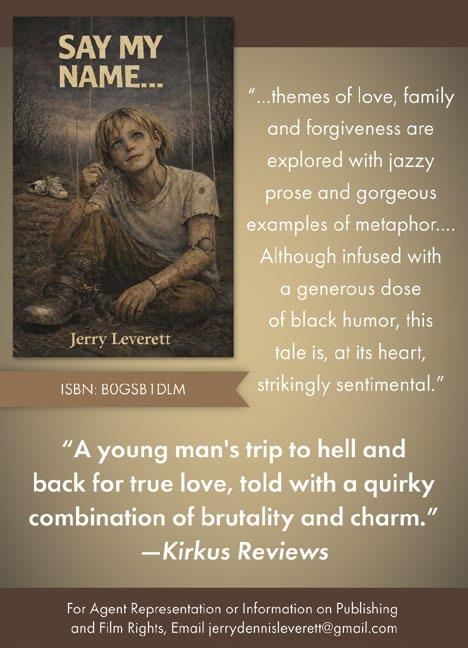

Dutton will release Hollywood, Ending, by the author of The Fault in Our Stars.
The first adult novel from bestselling young adult author John Green is coming later this year.
Dutton will publish Green’s Hollywood, Ending in the fall, the press announced in a news release. It calls the novel “a behind-thescenes Hollywood love story that brilliantly confronts the private cost of a public life.”
Green made his literary debut in 2005 with the YA novel Looking for Alaska, which won the American Library Association’s Michael L. Printz Award. He went on to publish several more books, including The Fault in Our Stars , which became a massive bestseller. His most recent work of fiction, Turtles All the Way Down, was published in 2017.
Green has written two works of nonfiction, The

For reviews of John Green’s books, visit Kirkus online.
Anthropocene Reviewed and Everything Is Tuberculosis, and is also known as a popular YouTuber, co-hosting the Vlogbrothers channel with his brother, author Hank Green.
Hollywood, Ending will follow Kai Laramie and Juniper Castillo, two young actors whose lives change after being cast in an Andy Warhol biopic. The book, Dutton says, “is a deeply observed novel about the tension between a public and a private life, and finding your safe someone to hold onto.”
Green announced news of his new novel on the Vlogbrothers channel, saying, “There were many times over the years where I thought I could never publish this book, partly for personal reasons, but now it is finally ready, and I am so, so excited to share it with you.”—M.S.

John Green
For readers who appreciate a little meta-commentary with their romance.
Eberle, Kate | Penguin (368 pp.) | $19 paper | July 21, 2026 | 9780143139102
Screwball entertainment for readers who appreciate a little metacommentary with their romance. Roxie Mitchell loves beating up guys at the gym and going on wild adventures. She doesn’t believe in love, but she does believe in romance—at least as it’s concocted by her favorite author. A chance encounter with a mysterious panhandler and a meet-cute at the library make her wonder if her offhand wish to be the heroine of the next Anna Matthews novel might have come true. Then the man of her dreams tries to kill her, which is definitely not a romance trope. In her race to escape him, she carjacks a white sedan. While it’s unfortunate that this car has an Uber passenger in the back, his knowledge of the conventions of crime fiction might just come in handy…Eberle spoofs on genre conventions while still delivering everything required of a romance novel. Grant Hoffman—the Uber passenger who reads mysteries—is a risk-averse college professor, and he serves beautifully as both a complement and foil to daredevil Roxie. Their clashing personalities will be familiar to romance readers, as will their difficulty trusting each other and their differing attitudes toward love. What Eberle adds to this formula is questions about what’s real and what only exists in the pages of the novel Anna Matthews is writing. This is a very silly book, and Eberle has cleverly created a world in which she can blame a
lot of silliness on Anna Matthews. That said, the mechanics of the magic that shapes this story fall apart as the narrative advances. And, while they’re trapped in a crime novel, Roxie and Grant do some things that might be shocking and disturbing to a lot of readers looking for a lighthearted escape. A fun, if uneven, debut.
Eng, Heather | Tiny Reparations (352 pp.) | $18.99 paper | May 19, 2026 9798217046980
Two workaholics meet at a professional and personal crossroads.
Thirty-six-yearold Mei Li is planning her wedding to a fellow New Yorker from Queens while working long hours in the marketing division of a lifestyle startup. As the elder daughter of a hardworking divorced mother, Mei is a go-getter focused on upward mobility—but she’s coming to realize that Joey DiGiacomo, her affectionate but immature fiancé, isn’t a good match for her. Their incompatibility becomes more obvious after she gets to know Alexandre Brodeur, her sister’s brother-in-law, a biology professor who’s returned to New York after failing to get tenure in Oregon. He’s now teaching at a local college, where he won’t be focusing as heavily on research. As Mei makes changes in her romantic life, she starts to think about mirroring Alexandre’s new work-life balance. But it’s not easy to abandon her professional dreams, and her growing closeness with Alexandre and their prospective happiness are soon
threatened by both their careers. This debut romance spends too much time on Mei’s relationship with Joey, which has passed its sell-by date; on her marketing job; on Alexandre’s academic life; and on capitalist egomaniacs who pay lip service to diversity and environmentalism. As a result, Mei and Alexandre’s chemistry gets short shrift, and the zing that makes a romantic couple lovable does not quite appear. The time they spend together after he rescues her from a storminterrupted corporate retreat and later during a family vacation have potential, though it’s not fully realized. The characters feel realistic, though, and their professions are well researched. Descriptions of New York and its surroundings show a deep familiarity with the area that roots the story in its setting. A romance about millennials opting out of the rat race.
Ezuma, Tiffany | 831 Stories (224 pp.) | $14.99 paper | May 19, 2026 | 9798893311426
Ndidi Davis needs to give away $2.1 billion. Can she trust Geoffrey Campbell, a reporter covering her charitable foundation, to help her do it without spilling her most well-kept secret?
Following the sudden death of her husband, Alex, whose accident left her a billionaire, Ndidi doesn’t know how to move on from her persistent grief. But she knows the money is holding her back, so she establishes Giga Giving, a charitable foundation, to donate 99% of the money earned by OneK, Alex’s Facebookadjacent business. To make sure the right people are aware of the foundation’s work, Ndidi selects Geoffrey from a list of potential media contacts on the condition that she sees the piece before it goes to press. Their connection develops quickly and the chemistry between them sizzles, despite the potential conflict of interest. To complicate things, Geoffrey discovers the one secret Ndidi has been keeping
from almost everyone: She wrote the OneK code herself, but opted out of participating more fully in the company because she’d had previous experience with hostile work environments in the technology sector. At fewer than 200 pages, this is a quick read that barely gives its protagonists room to romance each other, much less navigate the obstacles thrown in their way—among them the skeleton in Ndidi’s closet, racism and sexism in the tech industry, and a stodgy board member. The issues are real, but the story seems rushed in places, unresolved in others, and Ndidi sometimes seems not to understand her own actions or motivations. While the writing is engaging, the story is unconvincing and ends too abruptly to be satisfying.
Forest, Kristina | Berkley (384 pp.) $18.99 paper | June 9, 2026 9780593956397 | Series: Heart Beach
Two people have to decide whether they want their fake summer fling to turn into the real deal.
Jeremiah Smith II, grandson of the founder of Smith’s Sweets, has been ghosting his family. Ever since his grandfather died two years ago, Jeremiah can’t shake their last conversation at the family summer home in Heart Beach, New Jersey—in which his grandfather told him to clean up his act so he could take over the family business one day. When Jeremiah’s mother demands he show his face in Heart Beach, he makes up a girlfriend as his excuse for avoiding everyone—and then his mom invites his girlfriend to tag along. Now Jeremiah has to find someone to help him sell the lie. Enter Noelle Lewis, who’s been working several jobs to save up money to go back to college, but has just been laid off from her gig as a bookseller. When Noelle tells Jeremiah about the work she does as a stand-in bridesmaid, it sparks an idea: If Noelle pretends to be
Jeremiah’s girlfriend for the weekend, he can pay her what she needs to cover tuition for the next semester. The only problem is that they’re already harboring a genuine attraction for each other, and as soon as Noelle meets Jeremiah’s family, it becomes harder for them to remember that this is just a temporary arrangement. Very quickly, one weekend turns into an entire summer, and soon Noelle and Jeremiah are starting to consider abandoning their fake relationship in favor of the real thing. Forest’s latest romance is built on an irresistible premise, and the Heart Beach summer setting provides a relaxing, lived-in immersion for the reader, but the secondary relationships war with the main romance for the story’s emotional center. While Jeremiah’s desire to live up to his grandfather’s expectations and repair his relationship with his family are part of his own necessary growth, it’s hard not to want Jeremiah and Noelle’s journey as a couple to be even more spotlighted.
This refreshing summer read has surprisingly emotional depths.
Grossman, Felicia | Forever (368 pp.)
$18.99 paper | June 30, 2026
9781538769867
A midwife and a widower fall in love in Victorian London. Rebecca Adler is well regarded in London’s Jewish community as a midwife and healer: She provides birth control, mixes tonics and medicines, and assists in childbirth. Coming from an Ashkenazi family, though, and having a brusque manner, she’s never felt entirely accepted in the community, where the Sephardim have the most power and esteem—none more so than the wealthy Berab family. Rebecca had a brief sexual encounter with the widowed Roger Berab the previous spring, and when Roger made it clear that it had been a mistake, Rebecca
had no choice but to agree. Now, eight months later, Roger’s spoiled daughter accidentally burns down Rebecca’s house, and under Jewish law, he is expected to make the Adler family whole. Roger agrees to pay for the repairs and host Rebecca in his home until everything is fixed. When his wife was alive, Roger’s house was peaceful and calm, but things have devolved since then. His two children bicker and the governesses can’t control them—but Roger thinks his luck is about to change: In exchange for marrying the 19-year-old daughter of another powerful family, he will finally be able to secure a seat on the Commission of Delegates, which represents the entire Jewish community—a longtime goal. Grossman excels at building stories with both heart and chemistry. Once Rebecca moves into Roger’s house, their attraction is undeniable, so they agree to continue their affair until his betrothal contract is signed. Rebecca is a strong, self-assured character, but it’s Roger’s journey that is most poignant. Falling in love with Rebecca helps him reevaluate everything: his goals for the future, his relationships with his children, his ability to choose personal happiness over duty to the community. It’s a powerful exploration of the way people may have to let go of entrenched beliefs about themselves to find love. A romance that highlights the way love can help people grow and become their best selves.
Heath, Virginia | St. Martin’s Griffin (336 pp.) $19 paper | July 28, 2026 | 9781250896117
A crusader for political reform falls for a duke. Portia Kendall has been a radical since an early encounter with Mary Wollstonecraft’s writing. Unfortunately, as a governess trained at Miss Prentice’s School for Young Ladies, she must work for the very nobles upholding the status quo. When she takes a temporary
position in Bath, England as a social secretary to the sisters of the “handsome devil” Leopold Sloane, Duke of Debden, it’s primarily to underwrite her new role as assistant editor of Equitas, a “reforming periodical” that must be run with great secrecy to avoid charges of sedition. She certainly doesn’t expect to enjoy the position, as she detests dukes “on principle.” But Debden’s sisters are more interesting than expected, and the duke is annoyingly fair-minded despite his quick temper. Though both try to deny it, their attraction is unmistakable, but a relationship doesn’t seem possible—until the Equitas offices are raided, and the only way to save Portia from prison is for her to marry Leo. After the legal danger passes, an annulment seems the obvious next step, but Portia and Leo both secretly ponder what it might be like to stay married. Portia is the third graduate of Miss Prentice’s to get a book, though the unique setting gives it the feel of a stand-alone. Portia’s experiences bring to life the real dangers faced by those who called for political reform in the Regency era, especially women, as well as the extensive legal differences between classes at that time. Unfortunately, Portia’s principles and Leo’s stubbornness make the latter half of the book feel repetitive and the ending somewhat abrupt, but the compelling energy of their intimate slow burn, combined with many scenes of great wit and humor, will keep readers turning the pages. An impassioned, class-conscious Regency romance.
Kim, Sophie | Del Rey (544 pp.) | $32.99 June 30, 2026 | 9780593983362
A disgraced athlete gets the chance to rebuild her career—but it’ll mean working with the man who ruined it in the first place. This romance is set in a modern fantasy United Kingdom amid the world of carriwitchet—a bloody
rugbylike sport played on winged creatures. Taissa Cho was a force to be reckoned with until her rival, Kion Locke, exposed her illegal Luck glyph in the middle of a game and she was expelled from the league. Two years later, Kion’s team is in desperate need of revival, and while Taissa might be the last person he wants help from, he knows her return to the sport could finally earn them a win. Taissa doesn’t want to miss the opportunity to come back to carriwitchet, but Kion’s terms aren’t so simple. The positive publicity he needs involves a fake relationship between them, because a headline touting former rivals turned lovers and teammates would certainly fill the stadium seats. On top of that, a mysterious illness has been infecting the league’s animals, endangering players and calling the sport’s future into question. The contemporary setting is a smart move, creating a familiar environment against which Kim can sprinkle in some magical worldbuilding—it’s an easy immersion. This is a true enemies-to-lovers romance: Taissa has every reason to dislike Kion, but she refuses to let him stand in the way of her passion for carriwitchet. She doesn’t see his offer as an olive branch; it’s a step toward finally getting revenge on the man who ousted her from the sport. With its playful mashup of romance, fantasy, and mystery, the book rarely has a dull moment. As secondary characters and additional teams are introduced, it’s clear that there’s plenty of potential for Kim to explore more romances on the carriwitchet pitch.
A fresh and fun take on both the romantasy and sports-romance genres.

Kirkus Star
Pons, Chip | Putnam (400 pp.) | $20 paper
June 16, 2026 | 9798217179558
Can a happy-golucky florist help the curmudgeonly former god of the underworld finally bloom?
For more romance reviews, visit Kirkus online.
Hayden Harlow used to be the powerful Hades—until the Immortal Retirement Act forced him to reinvent himself as an earthbound funeral home director in Stonevale, New Jersey. He appreciates the stability of death, and outside of work, his most significant relationships hinge on his weekly visits to the Fates who work at City Hall, where he looks for a loophole in the Act. When, one day, a local florist delivers sunflowers instead of lilies for a funeral, Hayden marches over to confront the man he assumes is making a spectacle of the event. Enter Levi Wilder, a redheaded, freckle-faced optimist who slowly chisels away at Hayden’s cynicism. Levi loves his community, his fierce friendships, and the parents he sees when their RV-inspired adventures bring them through town. As the two men grow closer, Hayden reveals the truth of his supernatural situation to Levi, who accepts him totally and without question. In turn, when the anniversary of Levi’s brother’s death approaches, Hayden sees Levi’s grief and helps him carry the heavy burden he has been staggering under for years, all alone. Their relationship blooms as easily and intimately as one of Levi’s flowers, but Hayden will have to decide whether it’s worth giving up on immortality. This supernatural take on the opposites-attract trope is unexpectedly sweet, spicy, and touching. While the primary couple is incredible, the secondary characters are just as nuanced and lovable, and Pons handles heavy subjects with a light and subtle hand. The queer joy is as profoundly well handled as the
loneliness and grief, and both factors work together to help Hayden and Levi find connection and comfort amid the chaos surrounding them. Tender and sexy; readers will want to return to this world and these characters over and over again.
Schmit, Edward | Berkley (368 pp.) | $19 paper | June 2, 2026 | 9780593956779
Twenty-year-old Austin Hardy is the first openly gay man to play in one of tennis’ Grand Slam tournaments. But he’s competing against much more than his opponents. After Austin takes a very public fall at practice caused by an anxiety attack 10 days before the U.S. Open, some big changes happen. His coach insists he see a therapist, who suggests that reading the comments on articles and videos about his sexuality isn’t helping his mental health, so he takes a break from social media. He also becomes fast friends with Diego Cruz, a very hot rival— ranked No. 2 in the world—who leaped the net to check on him after the fall. As they grow closer, the tension and mixed signals between them grow until Diego confirms that he’s romantically interested in Austin as well. Unfortunately, Diego’s not ready to come out and decides he can’t afford to be distracted from his pursuit of winning. After an important victory, Austin’s ranking changes and he lands in the top 100. Now he must also juggle media appearances, potential sponsors, the responsibility of being an out and proud gay celebrity, as well as a complicated relationship with his coach, all of which exacerbates his anxiety. This novel takes place over 10 days, which is a whirlwind romance under any circumstances, but following Austin’s highs and lows is like watching an especially fast tennis match. There’s a lot to like here—excellent familial relationships and character development, compelling tennis action,
Opposites attract when very different travelers share a cabin for the summer.
THE ROOMMATE
and sensitive mental illness representation—but the love story fails to deliver on any sort of happily-ever-after or happy-for-now ending. While the romance takes a back seat, Schmit’s handling of mental health advocacy and trauma is nuanced and admirable.
Stone, Georgia | Harper Perennial/ HarperCollins (352 pp.) | $18.99 paper July 7, 2026 | 9780063434844
Opposites attract when two travelers with differing personalities share a cabin for the summer. Dylan isn’t usually a rule breaker: She’s punctual, meticulous, and would never live with a guy she barely knows…until now. After her boyfriend dumped her before their college graduation, making her question her perfectly planned future, Dylan decides it’s time to start taking chances. She’s agreed to delay her accounting job until winter and go along with her friend Ava Monroe’s twin brother, Max, on a six-week-long prepaid trip to an eco-lodge in Wales since his plus-one cancelled. Max is a carefree, flirtatious travel influencer with poor organizational skills—the total opposite of Dylan. After a major health scare a few years ago gave Max a second chance at life, he’s become a free spirit, though his demons threaten to surface whenever life gets too serious or future-oriented. When Dylan insists they lay a few ground
RULE
rules for living together—which includes no hooking up—Max can’t help but humor his fascinating new roommate. As they get to know one another, Dylan realizes that Max has a sneaky way of getting her to come out of her shell—and it doesn’t hurt that he’s downright handsome. Max even begins to enjoy the mundanities of rooming with Dylan, and soon enough, it becomes too hard not to break their roommate rule. Stone’s latest is a romantic, funny, and emotional story that follows two people as they navigate fear of the future and learn how to let go of the past. Though Dylan and Max have their differences, it never feels like they’re trying to prove or force their feelings, and their inevitable attraction feels genuine and right. Set alongside the lush Welsh coast, this is a charming beach read for fans of Emily Henry and Sophie Cousens. A page-turning combo of sexy and sweet summer fun.
Thorne, Rebecca | Bramble Books (368 pp.) | $18.99 paper | July 7, 2026 9781250414144
After purchasing a dilapidated, century-old starship called the Destitute, Torian Razner discovers that the moss covering it is, in fact, a deeply sarcastic sentient computer with abandonment issues. Torian’s sister, Celise, is dying. Determined to save her life by getting her to a distant planet with
air she can breathe, Torian ignores her former captain Amelia Perrosk’s warning that it’s an impossible task (along with any romantic feelings she might have for Amelia). Using the only ionite bars she has to her name, Torian purchases an ancient, moss-covered alien starship that appears to be on its last legs, so to speak. She hardly expected the moss to be a sentient computer or for it to hold a century-old grudge against its former alien captain. Moss quickly proves itself to be acerbic, intelligent, and rightly angry after being having been left behind for 100 years by its former captain. The two form a reluctant and surprising alliance, Torian proving to Moss that not all captains are “dog-turd fungus,” and they both gradually evolve into the best versions of themselves, human or otherwise. It’s obvious from the early pages that Thorne has crafted a story tailored to fans of Becky Chambers’ Monk & Robot series and Martha Wells’ Murderbot Diaries. Falling somewhere between the two, this is a delightful mashup of romance, found family, and a touch of violence as Moss grapples with its feelings about its former captain and the unexpected kindness that Torian shows. Sweet without being overly saccharine, it’s a book for readers who want the adventure that comes with the vastness of outer space without its harsher realities. A cleverly titled, cozy SF romance that marks Thorne as a writer to watch.
Turshen, Julia | 831 Stories (224 pp.) | $14.99 paper | June 23, 2026 | 9798893311464
While spending the summer in small-town Sungold, a woman falls for a local vegetable farmer. With her 8-year-old son in tow, Paige Segal leaves Brooklyn and rents a cottage in upstate New
York for a trial separation from her husband, his wealth, and his questionable parenting choices. When she meets Frankie Poster, owner of Two Peas Farm, at the farmers market, she’s immediately drawn in by the large, friendly, butch woman. The chemistry between them intensifies when Frankie rescues Paige from the side of the road after she gets a flat tire. While Frankie has been known to hook up with women visiting from out of town, she doesn’t do relationships. All her time is dedicated to the farm she inherited from her father. She doesn’t want to compromise on her old school methods but has to admit they’re becoming harder to sustain. Paige, on leave from her publicity job, offers to handle social media for the farm, which leads the women to spend more time together and creates space for romance to grow. Paige starts to feel like herself again and Frankie warms to the idea of a relationship, but they’ll both have to make some adjustments if this is going to be more than a summer fling. Author Turshen is known for her cookbooks, so it’s no surprise that her food descriptions are mouthwatering and that the book reads like a love letter to small farms, fresh produce, and the care involved in sharing sustenance. Most of the story is devoted to joyful discovery rather than tension and conflict; this makes for lovely, tender moments but can also make the book feel one-note. The dual first-person narrative allows each woman’s interior voice to be heard, though the straightforward writing doesn’t give off much personality. Still, this body-positive, queer- affirming romance is cozy, warm, and has a pinch of spice. Simple yet satiating.
Vasti, Alexandra | St. Martin’s Griffin (368 pp.) $19 paper | June 23, 2026 | 9781250414250
Their lies bring them together, but their connection is all too true.
Lady Ruby Ballimore hasn’t actually done anything wrong—just embarrassed a friend of her father’s—but she’s desperate to flee the judgment of London society. An opportunity presents itself in Cornwall, in the form of Pomeroy House, a country estate that ostensibly belongs to Princess Serafina of Monfalcone but has never been occupied by her. Ruby’s two best friends agree to pretend they are all the princess’ ladies-in-waiting and set out on a summer adventure—but when they arrive at Pomeroy, they discover the house is occupied by a very odd staff whose housekeeping is chaotic at best. This motley crew is led by the handsome Malcolm Archer, and the unkempt house reflects the fact that they are actually sailors-turnedsmugglers who use it as a base for trading illegal ostrich feathers, cigars, and whatever else they can bring across the English Channel. So, though none of them should be there, both groups uneasily coexist and attempt to preserve their false identities. Despite the many lies that both keep telling, Malcolm and Ruby can’t resist their growing attraction. But just as the pair (and both groups) start to get more comfortable with each other, Princess Serafina’s majordomo
While spending the summer in a small town, a woman falls for a farmer.
arrives, and then things truly go around the bend. Vasti’s newest series gets off to a rollicking start with a story enlivened not only by Malcolm and Ruby, but also the found families that surround them. Ruby’s bluestocking tendencies and Malcolm’s dubious creativity as a pirate make for two strong characters, and it’s a pleasure to see an attraction slowly develop between them, described with Vasti’s signature blend of steam and silliness. At times, the zany plot and the extended, almost theatrical cast distract from the central love story, but this may be fine with readers who want to start predicting which characters will feature in future volumes.
An entertaining summer Regency romance filled with yearning and antics.
Williams, Tia | Grand Central Publishing (336 pp.) | $29 | June 16, 2026 9781538770269
Desperate to reconnect with the perfect man she met on a plane, a woman hires a private detective with ties to her past. Since a traumatic stalker incident a few years ago, casting director Sasha Cruz has pretty much become a shut-in, but when a new job opportunity sends her to Paris, she wants to open herself to the world again. On the flight, she unexpectedly bonds with the man seated next to her, sharing some of her deepest feelings. Though they talk the whole way, they never exchange names or numbers. Back in Brooklyn, Sasha seeks out Wesley Dane, the P.I. who caught her stalker, and asks him to track down her dream man. She hasn’t seen Wes since he worked on her case and is surprised that he now owns a barbeque food truck. Wes loved aspects of his investigative work but was never able to keep his emotions separate from the
A woman hires a private detective to find a man she met on a plane.
THE MISSED CONNECTION
job, so he left that world behind. He agrees to one last case for Sasha—helping her find love feels like a full circle moment. But they both crossed some boundaries last time, and that old attraction reignites, leaving Sasha torn between the man meant to usher in a new future and the one who reminds her of her painful past. Sasha and Wes are messy, complex, utterly captivating characters in this engrossing, romantic story. Williams balances several plotlines and tones—from emotionally heavy and realistic to light and whimsical—but it works due to her constant focus on the irresistible connection between the lead characters. The book’s ending gets pretty chaotic as the mystery takes some wild turns that don’t feel necessary to the story but are still entertaining, and the happily-ever-after feels somewhat rushed, but on the whole this is an immensely satisfying love story. Flawed yet lovable characters shine in this celebration of human connection.
Yeboah, Stephanie | Hachette (368 pp.) $18.99 paper | May 5, 2026 9781398721906
After striking up a connection with a man who slides into her DMs, a seemingly confident London “plantfluencer” decides to catfish him when things get more serious.
From the outside, Artemis “Temz” Owusu has it all—she’s achieving new levels of success in her marketing career and her side gig providing
online advice about plant care has started to take off, too. Though she’s a plus-size woman, her self-confidence means she’s never lacking for hookups, but what if she’s starting to want something more permanent? Enter Ruben Alexander, a handsome California-based tech entrepreneur and part-time crooner who’s just slid into her DMs looking for plant tips. Though her most recent potential boyfriend didn’t pan out, Temz decides there’s no harm in turning on the charm, and it doesn’t take long before their online flirting starts turning into something that feels a little more meaningful. In a surprising moment of nerves, Temz decides to catfish Ruben by sending him someone else’s selfies, unsure she’ll be able to win him over without adhering to more conventional beauty standards. The longer Temz’s deception goes on and the more serious her relationship with Ruben becomes, the worse she feels. When a work trip to California finally puts her in proximity to Ruben, it’s the perfect opportunity for Temz to confess the truth, but will she be able to work up the nerve? Yeboah’s debut romance tackles some tough topics—fatphobia as well as racism and microaggressions in the workplace and on the dating scene—but the plot has one too many pieces that ultimately bury the more compelling main romance. Between Temz balancing two jobs, friendgroup drama, a difficult roommate, and the occasional hookup while she’s texting Ruben, the book becomes chaotic enough to match its title. Cutting a few of the side plots could’ve helped strengthen the book’s deeper themes and pacing. The chaos of this promising contemporary romance never fully resolves.

A DOZEN YEARS ago, a German student calculated that Sal Paradise, protagonist of Jack Kerouac’s On the Road (1957), traveled 17,000 miles crisscrossing the continent. Anyone wanting to recreate that odyssey today, with soaring gas prices, would be out thousands of dollars—far more than any penniless Beat adventurer could afford. Thankfully, this summer, there are plenty of other (more affordable) opportunities for one to partake in that quintessentially American summer tradition, the road trip, by living vicariously through others’ journeys— on the page.
Let’s hit the road first with Isaac Fitzgerald’s American Rambler: Walking the Trail of Johnny Appleseed (Knopf, May 12). The author of Dirtbag, Massachusetts (2022) retraces the steps of folk hero Johnny Appleseed, walking (and driving a used Jeep) from the Bay State to Indiana. The trek, writes our critic in a starred review, “gives him the vantage point of seeing small-town America up close. And although that America is sad and frayed, it’s also full of interesting and well-meaning people who speak to ‘human civility.’…
What Fitzgerald learns about himself and the state of the nation is more compelling still, with all their triumphs and tragedies.”
Michael Schur and Joe Posnanski take to the road in Big Fan: Two Friends, 82,490 Miles, and the Wild, Wonderful Sports We Love (Dutton, May 19). The book, says our review, is “a gonzo spin around the world to search for the meaning of it all.” Schur and Posnanski “hang out with some drunk people at the World Darts Championship,” spend time at a pickleball tournament in Kansas City, and take in the wonders of 7-foot-4-inch “space alien” Victor Wembanyama of the San Antonio Spurs.
In Monster of a Land: On the Road in Search of Modern America (Pantheon, June 16), Lauren Hough, author of the essay collection Leaving Isn’t the Hardest Thing (2021), packs her 2001 Dodge van and leaves Austin, Texas, with her Husky mix Woody. “The plan, if you could call it that,” she writes, was to trace John Steinbeck’s route in Travels With Charley (1962).
As open-minded as Steinbeck—but funnier—she picks up a hitchhiker one day: “I said, ‘I don’t know


where I’m headed, brother.’ I shit you not, he said, ‘Far out.’ Then he hopped up into the passenger seat.”
And there are, of course, overseas explorations.
Antonio Romani, once a teacher and bookseller, moved with his wife, novelist Martha Cooley, from Brooklyn to a Tuscan town. Originally published in Italian, The Patient Wait of the Stones: Time and Memory in Lunigiana (Galpón Press, June 2) is a thoughtful meditation on what it’s like to establish roots elsewhere.
“When I try to follow the conversation of villagers
talking in their dialect, they chuckle if I don’t understand,” he writes. “In this way, they affirm my nonbelonging, even though I’ve chosen to live here yearround.…I accept this (realizing they don’t mean to hurt me): They feel that I’m a stranger who must go through my own purgatory if I wish their world to become mine, too.” Our starred review praises this “charming memoir of life in a tiny Italian town that hasn’t been overrun by tourists—yet.”
John McMurtrie is the nonfiction editor.
A series of essays evaluates the labyrinthian nature of mother-daughter relationships. Recognized for her journalism illuminating the human complexity of mental illness, Aviv returns in this volume to six stories she previously published in The New Yorker, revising them with a focus on the motherdaughter connection. These are not sentimental tales of easy, enduring love and loyalty. Instead, she digs into the murk and mess of shared and inherited trauma, fitful and discontinuous bonds, and the “overwhelming and exhausting fusion” that complicates this oftexamined, frequently overwrought relationship dynamic. For the women at the center of each essay, the ability to “mother” rides along the knife edge of psychiatric medications,
personal histories of loss, and global economic dynamics of exported caretaking labor. Their motherhood easily falls prey to the oppression of ubiquitous social structures, from marriage to shifting definitions of feminism and ambition. Much of Aviv’s familiar expertise circles her contexts: declining standards of care for the mentally ill, the precarity of psychological diagnosis and treatment, and the burden of seeking care for loved ones who are mentally ill, especially when it is a daughter negotiating that process. At times, Aviv’s subjects make the reader squirm, as when she profiles Elizabeth Loftus, who served as an expert witness for Harvey Weinstein’s defense, or venerated author’s Alice Munro’s covering up the molestation of her younger

Aviv, Rachel | Knopf | 240 pp. $30 | July 7, 2026 | 9780525657057
daughter by her second husband. But even for more digestible characters, there are fugue states, schizophrenia, psychotic delusions, and seemingly superhuman denial that overshadow and obliterate the potential for tidy narratives. Such defiant discomfort is central to the author’s point: There is no easy heroine or clean arc
across the mother-daughter continuum. Rather, this is a link that tests the definitions and limits of need, memory, guilt, and healing, redrawing the terms of both connection and individuation. Both intellectually and empathetically astute, probing the uneasy complexity of a defining relationship dynamic.
Alexander, Lamar | Post Hill Press (496 pp.)
$37.50 | May 19, 2026 | 9798895656488
The former Tennessee governor and senator recounts a long life in politics. Alexander entered the political realm in the 1960s: interning for Robert F. Kennedy when he was attorney general, then going on to hold a variety of elected posts until retiring from the U.S. Senate “three days before a mob stormed the Capitol trying to overturn Joe Biden’s election as president.” He came of age in the Jim Crow South and, to his credit, helped desegregate Vanderbilt University while a student there. That he joined the Republican Party was then anathema in the segregationist South, but it turned out to be timely with Richard Nixon’s “Southern strategy,” and he became a stalwart in the Republican Senate leadership, representing an old-school, conservative ideology that no longer exists in Washington, at least out in the open. “The greatest division among Republicans is…between conservatives who think their job is finished when they make a speech and conservatives who want to govern,” he writes. Count him among the latter, and, in his engaging memoir, he enumerates bipartisan initiatives, among them efforts to “reduce federal control of schools, lower student loan interest rates, simplify college aid application forms, fund national parks,” and the like. Alexander does betray some partisanship by insisting on the use of “Democrat” as an adjective, yet although he voted with leadership against impeachment of Donald Trump on technical grounds, his reaction to Trump’s role in the January 6, 2021, uprising speaks to true conservatism: “If those actions do not constitute a ‘high crime or misdemeanor,’ I do not know what does,” he writes. For all his disheartenment at the shape of the current GOP, Alexander closes as he began: by proclaiming public service as
a noble undertaking and encouraging citizens to do their part. Self-effacing, often humorous, but in the end a valuable operating manual for a politics that once worked.
Allen, Danielle | Liveright/Norton (464 pp.) $37.50 | June 16, 2026 | 9781631497551
A sidelong history that highlights the British forebears and contemporary champions of the American Revolution. Thomas Paine, perhaps the best-known British supporter of the American colonial rebellion, worked as a tax collector for a time and then disappeared, only to turn up in Philadelphia. What he did in the interim, Harvard political scientist Allen reveals in a brilliant act of archival detective work, was to hone his skills as a radical pamphleteer bankrolled by the Duke of Richmond. An aristocratic soldier, the duke was, as Allen writes, “the first member of the House of Lords to propose recognizing American independence,” understandably earning the wrath of King George III in the bargain. It would not be the first nor the last time the duke defied the crown. Paine’s engagement with Richmond produced the Letters of Junius, a radical ancestor of both Common Sense and, in some respects, of the Federalist Papers. As Allen fluently documents, Richmond’s agitations came at a time when, in the so-called Age of Reason, monarchies were collapsing across Europe. But even though his political activities were the forerunners of modern British party politics in which “aristocrats themselves—the Duke of Richmond first among them—had begun to play a role in the radical project of reform,” Richmond was, in the end, a member of a
loyal opposition. George’s head may have rolled in that time of uprising and revolution, but instead, working with the young prime minister William Pitt, Richmond and George “were able to fashion the parameters of modern constitutional monarchy,” thus explaining why Britain has a monarch and America does not. Beyond that, Allen adds, Richmond’s pragmatic devotion to Enlightenment ideals in the remade British Empire contributed to universal suffrage, the abolition of slavery, and other reforms “kept constantly alive by little more than stubbornness.”
An exemplary account of the American Revolution as seen from—and anticipated and abetted in—the mother country.
Aycock, Anthony | Bloomsbury (224 pp.) $36 | June 11, 2026 | 9798216196471
Looking back at “a largely forgotten” trial. Many books have been freed from censorship by courts, James Joyce’s Ulysses and D.H. Lawrence’s Lady Chatterley’s Lover being only two of the most noteworthy. Aycock, a North Carolina writer and librarian who has devoted much of his life to the freedom of literary access, argues that another case matters. In 1982, the Supreme Court heard Island Trees v. Pico. “In the process,” he notes, “it gave us the first—and so far, only—library book ban case to be decided by the United States Supreme Court.” The case dates to 1975, when the Island Trees Union Free School District, on Long Island, sought to ban 11 books from its libraries, including Kurt Vonnegut’s Slaughterhouse-Five, Richard Wright’s Black Boy, and Oliver LaFarge’s Laughing Boy. “No one had complained about these books,” he writes. “There had been no challenges, no letters to the editor, no public
shouting matches. …The board simply acted. Like a sleeper cell.” Was removing these books a violation of the First Amendment? The court split. But what matters is the larger question of how potentially transgressive or challenging content can help young people make personal and social decisions. Each of the books in the case gets a full reading here, and the payoff is this: “Teens want sexual information. They need it. …When people search for information, they usually have one of three goals: to seek answers, to reduce uncertainty, or to make sense of a situation.” These goals, for Aycock, constitute the social function of literature. They also constitute the personal impetus for his book. “I entered middle school in 1985 and never received any sex education at all,” he writes. “Is it any wonder I turned to novels?” What makes the book more than a screed against the censor is the author’s unique personal investment. As he says, books teach what cannot be taught in class.
A vividly personal case for books that teach young readers how to cope with desire and live a life of self-acceptance.
Kirkus Star
Badkhen, Anna | Bellevue Literary Press (192 pp.) | $17.99 paper | April 28, 2026 9781954276543

Elegant, erudite essays by immigrant and longtime war correspondent Badkhen. Born in the Soviet Union and practiced in recounting conflict on the ground in places like Iraq, Afghanistan, and the Sahel, Badkhen has a refined awareness of both the evil that humans can commit and the irony that often attends it. She writes, for instance, of a sojourn in a Malian city whose inhabitants, many fleeing an Islamist insurgency, have
Viewing the world as beautiful but horrifying at the same time.
TO SEE BEYOND
been kept safe by the Wagner Group, infamous for being “accused of war crimes in Ukraine, Syria, the Central African Republic…” The list goes on, including Vladimir Putin’s Russia, where her parents still live and experience a kind of neo-Stalinism that Stalin himself might have endorsed, having famously said, “One death is a tragedy, one million deaths is a statistic.” Badkhen’s essays often take in humankind’s more tragic tendencies, in the face of which, she writes, it’s difficult to think of hope as anything short of magical thinking—but “maybe magical thinking is precisely what has sustained us through hundreds of thousands of years of drought, epidemics, climate shifts, migration, floods, enslavement, war.”
The very stuff she writes about, in other words, in “two decades of documenting the human condition in extremis.”
Much of Badkhen’s collection has a commanding urgency, demanding that we look at the world as it is: beautiful but horrifying at the same time. In this, she is a fellow traveler of the late Barry Lopez, whom she evokes here as an expert chronicler of “moral erosion.” The moments when she finds beauty are often arresting, if sometimes swaddled in one fact too many (albeit it’s a good bet that no other war correspondent has studied up on the earwax of whales). And the moments in which she finds terror are memorable as well, more poetic than Svetlana Alexievich but just as closely observed.
A fine work of journalism and belleslettres as moral witness.

Baer, Marc David | Basic Books (496 pp.) $35 | June 9, 2026 | 9781541606593
Unraveling a relationship that desperately needs unraveling.
Historian Baer, author of The Ottomans: Khans, Caesars, and Caliphs (2021), reminds readers that Islam arose in 7th century Arabia, which was home to many Jewish tribes that sometimes cooperated in Muhammed’s struggles. Both believers were strict monotheists who claimed descent from Abraham, practiced circumcision, honored Moses and Jesus, and shared dietary restrictions. Muhammad’s relations with Jews were mixed, but, by the appearance of the great medieval Islamic empires, there was official “toleration,” if not equality. Baer emphasizes that Judaism was considered a false religion, but, as children of Abraham, Jews were considered a protected people. They remained socially inferior, paid a special tax, and were subject to restrictions, such as a ban on interfaith marriages, but participated in all professions, practiced their religion openly, and often rose high in Islamic bureaucracy. The author stresses that this was not, despite the myth, an interfaith utopia. In those far-off days, religion was a matter of life and death, so average Muslims had no doubt that God loathed false religions, and they often acted accordingly; but “Jews and Muslims were almost always closer and had better relations with each other than with Christians until modern times.” The 19th century changed everything. Modern antisemitism appeared, based on
pseudoscience that placed Semitic races below Aryans (traditional antisemitism was based on theology). Zionism, born in that century, considered Palestine the Jewish homeland. After Hitler took office, no Western power, the U.S. included, welcomed Jews fleeing Germany. Victory in World War II did not change matters, and Zionists ran the most efficient refugee escape route. Israel’s 1948 formation was a disaster for Jews in Islamic nations. Within a decade, almost all had left, including many who didn’t want to go. With admirable objectivity, Baer describes events down to the present day, in which the news routinely features murder, atrocities, and war between supporters of two ancient faiths. Illuminating, if discouraging.
When Companies Run the Courts: How Forced Arbitration Became America’s Secret Justice System
Ballou, Brendan | PublicAffairs (256 pp.)
$18.99 | May 12, 2026 | 9781541705715

Sign on the dotted line, and sign your rights away.
“America has a secret justice system,” writes former DOJ antitrust counsel Ballou. That system is forced arbitration, which almost always benefits corporations that get to shop and even pay for judges, pick where hearings will be held, and limit their liability in many ways. A case in point opens his argument: A woman with severe food allergies dies after eating at a theme park, and her bereaved husband discovers that on joining the owner’s streaming service, he had signed away his right to take the company to court in the finest of fine print. Arbitration, “a private alternative to the American justice system,” has allowed countless outrages to pass unpunished: a woman raped on a cruise ship, customers bilked by credit card fees, retirees led to bankruptcy by incompetent investment advisors, a noted actress driven out of the
business by a network TV star’s unchecked sexual harassment. The Supreme Court, Ballou writes, is all in for arbitration, citing a supposed “litigation explosion” but in actuality seeking to limit the ability of consumers to join in class-action suits. Since few people can afford to sue deep-pocketed corporations, this effectively allows corporations to do as they please, which is in keeping with recent Supreme Court rulings overall.
The statistics that Ballou cites are shocking: One judge “issued decisions in 1,332 arbitrations in just ninety-seven days over four years. …sometimes rul[ing] on dozens of cases in a single day, relying solely on documents provided by the credit card companies. In 97 percent of his cases (1,292 matters), he ruled for the company.” Ballou counsels both state action, such as recent California reforms to limit arbitration, and citizen agitation to voice the unpopularity of the system: “Public opinion matters to the Supreme Court, and public opinion is on our side.”
A well-reasoned denunciation of justice unserved, and a cogent demand for overhauling a patently corrupt system.
The Yahoo Boys: Love, Deception, and the Real Lives of Nigeria’s Romance Scammers
Barragán, Carlos | Farrar, Straus and Giroux (304 pp.) | $29 | June 9, 2026 9780374609306
In which Miss Lonelyhearts makes her (no, his) home in Lagos. It’s a fixture of the evening news: Someone falls for a charming stranger from somewhere far away, perhaps serving in the military in Iraq or a widow in Manila, and is bilked out of his or her retirement account. Spanish journalist Barragán’s own mother fell for one such fraudster, who was supposedly going to “ship her some bars of solid gold he found in a terrorist stash.” Barragán learns that the losses to romance scams amounted, in
2022 alone, to $1.3 billion. But hitting the road and heading to Nigeria, an epicenter, he finds that most of the scams are committed by young men who, usually posing as women, target victims with long-distance blandishments. They have good reason for this, a critical but empathetic Barragán writes: Corruption is endemic, and jobs few in Nigeria. He writes of a principal informant: “Biggy seemed like any depressed young man facing the possibility that his life would amount to nothing.” The culture of these “Yahoo Boys” surely seems a slow death of despair, built on drink and endless drugs, consumed, Barragán hazards, “to avoid thinking too much about what they were doing.” It’s not crime alone that’s epidemic in Barragán’s account—the loneliness of modern life, reckoned by the U.N. to constitute a world health crisis, feeds into the hands of the scammers. After living in their world, which is not without some self-awareness, he writes of the Yahoo Boys (and occasional young woman), “I was beginning to understand that scammers grasped our loneliness better than most people. Certainly better than I did.” There’s much description but little prescription here—no solution to any of the broad-ranging social problems that feed into the romance-scam syndrome. All the same, it’s an interesting inquiry. A provocative view of the grift from inside the grifters’ unenviable world.
Bassett, Joshua Taylor | Authors Equity (240 pp.) | $22 | May 5, 2026 | 9798893311846
An actor and singer-songwriter’s account of wrestling with his demons. Early in his book, Bassett writes, “through stories, philosophy and poetry, / i’ll take you behind the curtain / of my public, private and secret life.…if you’re up for the ride, / i guarantee you will walk away stretched, challenged, and / transformed— / or at least you’ll have fun
along the way.” “Fun” is a bit of a stretch: Bassett’s memoir-in-verse/self-help guide is a harrowing account of his “heart failure, complex PTSD, betrayal, / near-death addictions, abuse, and suicide attempts to name a few.” The book begins with the actor recounting his near-death experience at age of 20, and things get bleaker from there: He writes about living through sexual abuse, an alcohol-abuse problem, and a struggle with disordered eating—all with an admirable candor. The problem is that his writing just isn’t very strong: The line breaks seem arbitrary, as if inserted to fit a particular aesthetic, and his frequent use of italics for no apparent reason is distracting. The book is filled with aphorisms that don’t quite hit: “ heart = he + art / art is only valuable / when it comes from the heart,” he writes at one point, and then later, “grateful + attitude = gratitude.” He credits Christianity with saving him from himself and is defensive on the subject: “[manifesting, crystals, witches, psychics, ayahuasca, are all cool / but the second Jesus is mentioned, i’m crazy.]” Interspersed throughout are quotes from Nelson Mandela, James Clear, Steve Jobs, and Bo Burnham. Bassett was clearly motivated by a need to help others like himself, so if the book, despite its weaknesses, ends up in the hands of a young person who needs it, that’s a win.
A well-intentioned but often awkward memoir.
Bennetts, Marc | Bloomsbury Continuum (272 pp.) | $30 May 26, 2026 | 9781399421690
A longtime foreign correspondent digs deep under the surface of Vladimir Putin’s sepulchral Russia.
Bennetts, onetime Moscow reporter for The Times of London, has been in more than a few police
A country ruled by cynicism, me-firstism, and apathy.
stations in Russia. In one of them, early in his narrative, a secret police agent asks him what he thinks of the country’s leader. “It must be very hard to manage such a large country effectively,” he replies, to which the apparatchik gives him a thumbs-up, “as if I was a contestant in a bizarre quiz show who had just provided the correct answer.” Correct answers are hard to come by in the Russian hall of mirrors. On the Ukrainian front, he ponders the attitude of the Russian soldiers, who, far from being indoctrinated zombies, have just one answer: “Da pokhui —“I don’t give a fuck.” It’s a one-size-fits-all response to just about everything in the country, ruled by cynicism, me-firstism, and, more than anything else, apathy: “Most people were utterly convinced that nothing depended upon them, a conviction the Kremlin did its very best to encourage.” The careful reader will not help but notice parallels in other authoritarian-trending countries, where the bosses are held out as the only possible salvation to the world’s problems and where “state media has become adept at seizing on tiny slices of reality and magnifying them to grotesque proportions, until they block out the truth.” Indeed, by Bennetts’ account, the Russian playbook is a closely followed model: Anti-LGBTQ+ repression here, undeclared war there, corruption, far-right radicalism, and violence everywhere, even as Putin, one Kremlin insider observes, is trying to carve out a politics like no other. Putin’s regime will end, as all regimes do. But so fragile is civil society, Bennetts concludes, that he harbors little hope that Russia will ever be able to dig out from the rubble. An incisive portrait of what is arguably the world’s preeminent totalitarian regime.
Bobb, David J. & Tony Williams Diversion Books (336 pp.) | $34 June 2, 2026 | 9798895151709
A long-range view of the arguments ever since July 4, 1776, about the Declaration of Independence. Bobb and Williams, teachers and members of the Bill of Rights Institute, open their account with the definitively American critic of American society, Frederick Douglass, and a speech he gave in 1852 joining the Declaration of Independence to the abolitionist cause. Douglass had to face “the gulf between the Declaration’s principles and Americans’ practice of them,” including the maintenance of slavery in a dozen states and territories. The argument carried over into the settlement of the trans-Mississippi West, with Southerners urging the extension of slavery as a “positive good” and Northerners trying to block an expanded slaveholding polity. Along the way, Bobb and Williams look into the contending views of democracy (and numerous other varieties as well) while noting commonalities, including the commitment to government by the people and with the consent of the governed. Much of Bobb and Williams’ text won’t come as news to anyone who’s been through a high school government class, and much reads like a civics survey textbook: “The Declaration of Independence was…instrumental in framing the Constitution and inspiring enslaved people to seek their natural rights in a free society. …During the Cold War, the democratic United States squared off against the
totalitarian Soviet Union in an arms race and ideological battle.” What’s more interesting is the authors’ use of statistics to discuss key points of today: The fact that nearly two-thirds of Americans “say that belief in the Declaration’s principles is more important to ‘being American’ than is birthright,” while “91 percent of Republicans and 95 percent of Democrats agree with the statement, ‘Throughout our history, Americans have made incredible achievements and ugly errors,’” though each side believes that the other has a sharply different view.
For those without grounding in the Declaration’s history and meaning, a useful overview.
Bond, Michael | Pegasus (320 pp.) | $29.95 August 4, 2026 | 9798897101429
T he way we treat animals is “a crime against nature and a moral injury inflicted on ourselves.”
Bond, the author of Wayfinding: The Art and Science of How We Find and Lose Our Way (2020), writes, “For the vast majority of human history, Homo sapiens was an equal participant in the great game of survival. …Then at some point a few thousand years ago we began to see ourselves differently, and other animals, too. We convinced ourselves that our ability to reason…put us above the rest of nature.” Studies of cave art, he says, show early images that depict animals, human and otherwise, in interaction. About 8,000 years ago, however, images turned from showing reverence or respect for animals to drawings displaying human domination of animals. The “general assumption that humans are biologically, cognitively and morally distinct from other animals and, by implication, superior” has been used “to justify both our dominion over the natural world and our cruel treatment of animals.” The shift in attitude comes from philosophy and religion, Bond argues. Aristotle believed that humans alone possessed “a
rational soul” that allowed humans to deliberate, deduce, evaluate, and speak, which set them apart from other animals. And Judeo-Christian theology casts humankind in the image of God; that belief gave humans, the author writes, “permission to use nature as a means to our ends.” But research makes it clear that animals can deliberate, deduce, evaluate, and speak. Elephants, orcas, and bottlenose dolphins have big brains, and octopuses have cognitive capacities that indicate a sense of self. Sheep can recognize the faces of other sheep and even those of humans. Crows can create tools from sticks and wire to help them hook food. And many animals—dogs, cats, cows, apes—demonstrate joy, fear, sadness, shame, grief, and many other emotions. “We have allowed ourselves to promote the myth of human uniqueness and ignore what animals are capable of,” Bond writes. “Fortunately, the weight of evidence is making it hard to maintain that conceit.”
A searing indictment of the human animal’s inhumane treatment of non-human animals.
Brangan, Louise | Simon & Schuster (368 pp.)
$30 | May 5, 2026 | 9781668079744
A notorious chapter in Irish history still holds the power to shock in this resurfacing of women entangled in a repressive social system.
Brangan, an Irish academic, recounts a shameful history with the urgency of personal confession: the terrifying abuse of women in Ireland’s Magdalene Laundries. An unofficial yet normalized carceral system, when the final laundry’s gates clanged shut in 1996, general public sentiment held that a sad chapter had finished, case closed. But for the thousands who had been forced into servitude—some spending a lifetime in laundries, exiting
only to unmarked graves—the story had no neat endpoint. Sifting through archival records of victim accounts and interviews with survivors, Brangan plumbs the deep sorrow of lives lost to repression, clothed in the guise of religious charity. With few official public services in the 1920s, girls and women were compelled to enter after having a child outside of marriage, having parents unable to feed another mouth, or even after being accused of being too unconventional or uncontrollable—violations of conservative Catholic mores. In laundries, so-called industrial schools, and mother and child homes, some connected to convents, women lived and performed years of unpaid work. Washing clothing, scrubbing floors, and following religious routines overseen by nuns, they were removed from public view, as families and neighbors stayed silent. As Brangan notes, collusion and collective silencing of women were woven into the social system: “The courts, police, social workers, priests, and parents sent women and girls there, and they sent their laundry in after them.” Brangam uses evocative photos and previously unknown victims’ accounts to document the reality of their suffering, concluding, “If there were really any fallen people back then, it was not them—the women and girls—but the proverbial us.” A wrenching reminder that human injustice repeats in the dark corners of human history—and a call to remain attentive.
Chekowsky, Lu | Little, Brown (416 pp.) $29 | June 9, 2026 | 9780316588515
A former ad executive reflects on her career, grief, and a lifetime of disordered eating. Chekowsky begins with an anecdote about wrangling a reluctant young heartthrob on an MTV show about werewolves to take
his shirt off for a promo. She plies him with chicken wings, Oreos, and an X-box, until he relents, and she emerges triumphant, “a perfect set of wolf teen abs documented forever on a hard drive.” Behind closed doors, though, Chekowsky is flailing, obese and binge-eating in her sleep, waking up with crumbs in the sheets. She wonders where her younger self went—the “righteous, angry” 30-year-old who planned to reform advertising from the inside. The book then skips back to the author’s childhood, primarily characterized by her close bond with her mother, Rose, a “super fat” woman who loved television and died of cancer when Chekowsky was 22. The loss is the book’s engine; eating, she comes to understand, is how she keeps Rose close. The memoir sketches the first decade of the author’s working life: a promising start in magazines fizzles, leaving Chekowsky in Jersey City, N.J., depressed and working as a phone-sex operator. One of her regulars writes her a reference for the creative school run by Wieden+Kennedy, the legendary Portland agency behind Nike’s “Just Do It” campaign. Chekowsky describes herself at this point as a “fat, bankrupt, telephone dominatrix from New Jersey who hated advertising,” and yet she earns her place, parlays it into a staff job, and from there an illustrious career. Chekowsky knows her way around a sentence and has a sharp eye for the transactional machinery beneath glamour, and if the book could stand to be leaner, its advertising framework mostly earns its keep. Both an acidic, funny indictment of an industry and a quietly hopeful story of someone finding her way out.

Chmielewski, Wendy E. and Jill Norgren New York Univ. (336 pp.) | $35 paper September 15, 2026 | 9781479847082
Two co-founders of a women’s digital history project explore the untold stories of women who ran for elective office before passage of the Nineteenth Amendment.
Seventy years before female suffrage became a political reality in the U.S., a few intrepid women were beginning to make their way into elected offices. Working chronologically and drawing on newspapers and archival materials, historian Chmielewski and political/legal studies co-author Norgren show how pre-suffrage women successfully participated in local, state, and federal governance between 1850 and 1920. They trace the first wave of female candidates— like Mainer Olive Rose, who successfully campaigned to become a county recorder—back to the landmark year of 1853. “It is likely that Rose was the first woman in the United States to be elected to a political office,” the authors write. “By the end of the century more than twenty-nine hundred women in the United States would seek elective office.”
In the 1850s, expanded state government systems created administrative openings that did not stipulate that candidates also be electors. This opened the first political doors for women, along with social shifts that allowed them to enter the public sector as educators. More women sought—and won—roles on local school boards and as county school superintendents. Though women still faced prejudice related to factors like race, gender expectations, and marital status, their increased public visibility culminated in the 1916 election of Jeannette Rankin— the first woman to win a seat in Congress. By tracing past political evolution, the book suggests a hopeful future for women seeking leadership roles in an American
political landscape marred by regressive, anti-feminist policies.
A highly readable study about the inspiring women who paved the way for female political leadership in America.
Clarke, Catherine | Pegasus (400 pp.)
$29.95 | August 4, 2026 | 9798897101580
Powerful pens. From “Caedmon’s Hymn” (circa 730) to Zaffar Kunial’s “The Groundsman” (2022), University of London scholar Clarke traces 1,300 years of British history through verse— some familiar (John of Gaunt’s “This England,” from Shakespeare’s Richard II ), some unfamiliar (an excerpt from the satirical “Crumble-Hall” by housemaid Mary Leapor. Major voices are represented, like Chaucer, Elizabeth Barrett Browning, Lewis Carroll, and W.H. Auden, but Clarke’s compendium is wide-ranging as she considers poems that respond to political turmoil, plague, fire, invasions, court intrigue, and religious tensions, as well as social, political, and cultural changes: “repeated moments of doubt, catastrophe and reinvention in England’s past.” Each chapter offers richly detailed context and an astute close reading. Clarke sees The Battle of Maldon (a commemoration of a Viking incursion into England in 991), for example, as a contribution to the myth-making vital to the cohesiveness of a fledging nation.
“What seems, at first, like timeless heroic verse,” she writes, “is in fact an excoriating critique of tenth-century English leadership, and a brilliant piece of propaganda.” The consequences of the Norman Conquest emerge in a verse obituary for William the Conqueror, which Clarke reads as poem of resistance and defiance. Chaucer’s Wife of Bath’s Tale gives insights into women’s lives in
medieval England; Browning’s wrenching “Cry of the Children” lays bare the horror of child labor. Clarke offers a compelling analysis of Anna Laetitia Barbauld’s “Eighteen Hundred and Eleven” (1812), a prescient poem that depicts a desolate future for a nation at the height of its global power. The poem, Clarke argues, which served as “a message for readers— politicians, opinion-makers, thinkers—in her own present,” resonates in our own time. Discerning choices and incisive analyses amply support her contention that “all poems speak to multiple historical moments, have multiple lives and afterlives.”
A fresh perspective on the past.
Peach Street to Lobster Lane: Coast to Coast in Search of Real American Cuisine
Cloake, Felicity | Mudlark (400 pp.) | $19.99 paper | June 9, 2026 | 9780008687687
A British food writer and cookbook author sets out to prove that there’s such a thing as American cuisine. Cloake is nothing if not ambitious. Not only does she land on these shores looking for distinctly American foods—though she’s warned that there’s no such creature, that it’s all a mere mishmash of stuff from elsewhere— but she also aims to do most of her explorations on a bicycle. “To recap,” she writes by way of introduction, “it appears I’m setting off on my bike across a country where no one cycles, to explore a cuisine that doesn’t exist.” Duly warned that she’s entering a land of crazed right-wingers and serial killers, Cloake hits the road, landing in California to discover truly American sourdough bread at its epicenter (thanks to Fructilactobacillus sanfranciscensis, its unique aerobic yeast) and Americanized Chinese food (Moo shu pork, General Tso’s chicken, Mongolian beef). Zipping through Arizona and New Mexico by train and thus missing out on some great eats, she descends on a Texas full of concoctions like fajitas and breakfast tacos—
homegrown inventions. In Cincinnati, she eats, well, Cincinnati chili, of course; in Ohio, burgers; in New England, naturally, lobster rolls (some at eye-watering prices). Throughout, she finds plenty of dishes and ingredients that for better or worse are found nowhere outside the U.S., a long list of them replete with select recipes: cornbread, Velveeta, chocolate gravy, hot chicken, coconut shrimp, and what she charmingly calls the “French dipped sandwich” (read “French dip,” no “sandwich” needed). For the most part, Cloake, an amiable writer and forgiving soul, likes what she sees, but she does note some demerits in American food culture, among them “the out-of-control tip culture and unpredictable sales tax situation” and “American” cheese.
A lively, entertaining tour of a food culture that seems meant to guarantee heart surgeons lifetime employment.
Coppola, Vincent | Henry Holt (256 pp.) $27.99 | June 9, 2026 | 9781250904126
The terrors and occasional wonders of a midcentury Italian American boyhood in “the roughest neighborhood in the city.”
“When I was growing up, no one would have mistaken the Gowanus for the Nile or any other living body of water. It was an open sewer, stagnant, reeking, sluggish, meandering from Butler Street—today’s Boerum Hill—through a graveyard of decayed nineteenth-century industrial plants, abandoned warehouses, dying marine repair facilities, rotting docks, its future already past. I played pirates on half-sunken barges, sought treasure among barrels of glittering industrial chemicals, climbed ladders and through hatches of gigantic rusted marine diesel engines.” This description of the body of water that gave Coppola’s Brooklyn neighborhood its name sets a tone he sustains through the vignettes that follow: lyrical, entrancing, and brilliantly specific descriptions of the
mostly horrifying and painful experiences that comprised his childhood, including the violence of the local wiseguys and equally vicious police; the emotional terrorism of cruel nuns and pedophilic priests; and the dangers posed by reckless drivers, street gangs, unexploded firecrackers—you name it. Though his mother was loving and gentle, the unpredictability of his father kept his home from being a refuge; the one reliably good thing in Coppola’s life, however, was the food. No matter what, the braciole, the spaghetti, the calamari, and the “gabagool” (capicola) just kept on coming. The vignettes skip forward and backward through time; though most are set well before Coppola leaves the neighborhood, we see glimpses of his later life as a father, a Newsweek reporter, and an abruptly abandoned husband. Returned to time and again is the death of his beloved gay brother, Thomas, blond and gorgeous, who had AIDS. A visit to the family’s ancestral hometown in Italy provides a rare moment of redemption; he learns that his namesake grandfather was not the irresponsible squanderer they thought when he returned from his own visit penniless—he had spent all the money helping the family. This one monster turns out to be an angel. With powerful sentiment but no sentimentality, this memoir is beautifully written elegy to a vanished world.
Crabapple, Molly | One World/Random House (480 pp.) | $32 | April 7, 2026 9780593229453
Brilliant evocation of the anti-Zionist Jewish Bund, a beacon of hope for a renewed left. Founded by young revolutionaries in 1897 in what is now Vilnius, Lithuania, the Bund was “a sometimes-clandestine political party
whose tenets were humane, socialist, secular, and defiantly Jewish,” as writer and artist Crabapple has it. Descended from Bundists and Puerto Rican radicals, Crabapple (née Caban) immediately connects the Bundist experience with modern leftist struggles: “The Bund fought for the very multiracial, democratic socialism that a new generation now champions.” Yet the Bund itself has disappeared. Some of its early proponents were scattered to what Crabapple calls “Exileland” in the “revolutionary diaspora” that followed pogroms, tsarist oppression, Cossack attacks, and the like; a few converted early on to Zionism and left for Palestine. More went there in the wake of the Holocaust, with the Bundist-led Warsaw Uprising having led to its own slaughter: “Their party had given them fairy tales,” Crabapple writes of the survivors. “Zionists offered a place where they could rebuild their lives.”
In a sweeping narrative that urges anti-Zionism and Palestinian liberation while being, yes, defiantly Jewish, Crabapple follows in the Bundists’ path, finding herself in Lviv, Ukraine, wondering at the absence of Jews when the city was once a major Jewish center. “Things change,” a friend replies. So they do, but the same spirit that animated anti-tsarist revolution, union organizing in the new shtetls of New York, solidarity with other oppressed peoples, a profound commitment to self-improvement and learning, and a burning sense of justice clearly lives, at least in possibility: “The past is not dead. …It holds tight to our eternal present, sometimes invisibly, but ready to be reclaimed by those who need it.” Thanks to her book, richly illustrated with her own artwork, that reclamation is ready to hand.
A superb blend of personal and social history, alive with radical spirit.

Dolin, Eric Jay | Liveright/Norton (288 pp.) $27.99 | June 2, 2026 | 9781324096320
A vivid castaway story. From the Odyssey to Lord of the Flies, the shipwreck genre may be the world’s oldest, and few readers will object to this addition from best-selling maritime historian Dolin, author of Left for Dead: Shipwreck, Treachery, and Survival at the Edge of the World (2024). He opens as the American whaleship Mentor encountered a storm sailing the Philippine Sea in 1832 and struck a coral reef. Half the crew of 23 tried to escape in a whaleboat that immediately sank. The 11 remaining left the following morning when the storm calmed. After spending the night on an uninhabited atoll, they awoke to find a large canoe of Indigenous people who attacked and robbed them before they escaped. After several miserable days at sea, they reached a large island where they were again robbed, then taken to the group’s chief. With fond memories of the bounties white men could provide, the chief agreed to allow them to stay and build boats in exchange for help battling his enemies, plus the promise to send more muskets and supplies once they returned home. After completing the boats, the shipmates sailed until supplies ran out; they were barely alive on reaching a tiny island whose inhabitants beat them, robbed them of everything, including their clothes, and enslaved them. Do the crewmen survive? Are they saved? Dolin relates it all in this riveting account. And as he writes, the tale of the Mentor “is not just another example of a shipwreck during the Age of Sail. It is one of the most complex and intriguing of such stories ever told. …It spans multiple years and islands and provides insights into the clash of civilizations and cultures that attended the West’s commercial onslaught in the Pacific.”
High-seas adventures that’ll keep readers hungrily turning the pages.
Ellis, Justin | Harper/HarperCollins (416 pp.) $30 | June 16, 2026 | 9780063091245
An understandably despairing view of race relations in the wake of racist murders in Minneapolis. Derek Chauvin’s fatal kneeling on George Floyd’s neck may seem an outlier in the stalwartly blue state of Minnesota. It’s not. As journalist Ellis writes, “A Black man being killed by a white police officer is not an unfamiliar terrain in America”—and neither is it in a city “kind and progressive with an assortment of lakes.” As Ellis adds, Floyd was just one of many to be killed by Minneapolis police in recent years, and, for all the outward politeness and neighborliness of the city, the usual injustices obtain: Black people are vastly overrepresented in jails and prisons but scarcely anywhere else, while police use force on Black people “at a rate of seven times that of whites.” Thus, it seems, it has always been; while, as Ellis notes, Minnesota banned slavery on attaining statehood in 1858, slavery existed there all the same. One surprising sidebar in that story is that Dred Scott, soon to be famous in a Supreme Court case that denied citizenship to Black people, was enslaved at a military post on the Minnesota frontier; another is well after the Fifteenth Amendment was passed into law, Frederick Douglass was refused a hotel room in St. Paul on arriving there to give a speech. By Ellis’ closely documented account, much racism these days takes a subtler tone, such as the “not in my backyard” opposition to proposed zoning laws providing for greater housing density and more affordable rents and mortgages, with residents worried that their property values—“often [in] the same areas that would have been preserved for the few under housing covenants a century earlier”—would fall. For all the “niceness” of the place, then, Ellis raises
Scott Simon Recommends
By Sara Wheeler (Harper/HarperCollins,
April 14)
I admired no writer more than Jan Morris, and this fine biography captures her extraordinary life, from bringing word from Mt. Everest about the climb of Sir Edmund Hillary and
Tenzing Norgay, to her historic transition—and writing about so many of the world’s great cities with art and vigor.
By Patrick Radden Keefe (Doubleday, April 7)
The plunge into death in the Thames by 19-year-old Zac Brettler leads to a dramatic
reveal of his secret life and, in a sense, the double life of a great city, too.
By Cornelius Ryan (Library of America, 1959)
We will carry this book when our family is in Normandy this June. Many fine histories of the D-Day invasion have been written, but the Irish-born journalist practically invented popular history with this book,
interviewing soldiers on all sides just a decade after they risked their lives.
Scott Simon’s most recent book is Ulysses S. Cat and Other Animals I Have Known (Norton, May 5)

For more summer reading recommendations, visit Kirkus online.

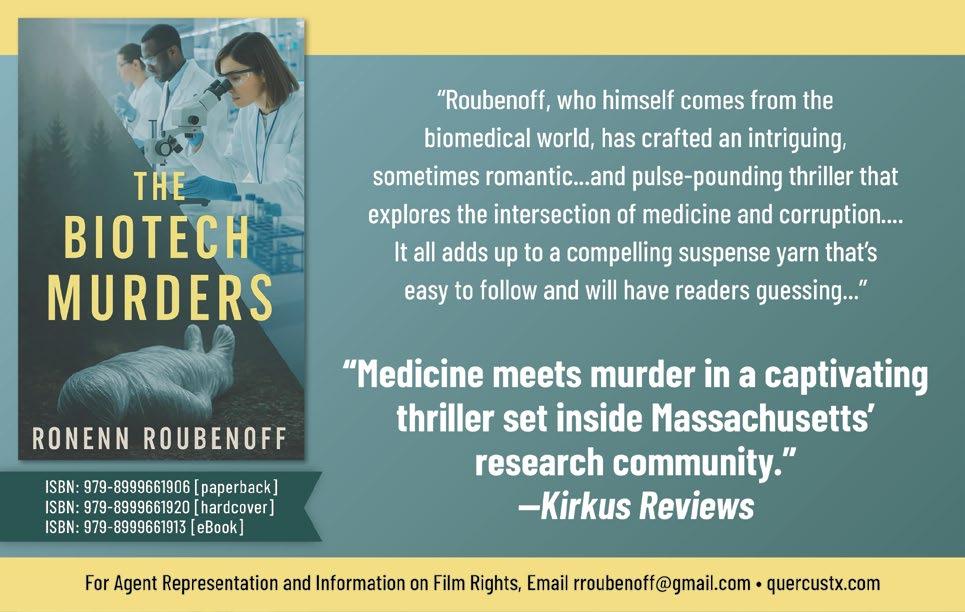


“It doesn’t matter if someone’s already done it better because they have not done it the way that I have done it. And the same way with anybody else.… Nobody’s going to do a painting exactly the way that you would do it, and that’s the great thing.”
—Jenny
Lawson
THANKS TO OUR SPONSORS:
A blogger offers fellow travelers creative tools for when the going gets tough. BY
MEGAN LABRISE
On this episode of Fully Booked, No. 1 New York Times bestselling author Jenny Lawson joins us to discuss How To Be Okay When Nothing Is Okay: Tips and Tricks That Kept Me Alive, Happy, and Creative in Spite of Myself (Penguin Life, March 31). Kirkus calls Lawson’s latest “self-help with a twist of humor.”
Lawson is an artist, activist, and award-winning humorist best known for her inspiring candor in sharing her struggle with depression, anxiety, and chronic pain. She is the author of Let’s Pretend This Never Happened, Furiously Happy, Broken (in the Best Possible Way), and You Are Here, as well as the owner and proprietress of Nowhere Bookshop, an independent bookstore and bar in San Antonio. She currently lives in Texas with her husband, child, dog, and cats.


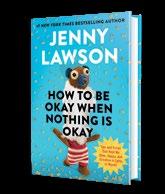
How
Fully Booked is produced by Jessica
Here’s a bit more from our review of How To Be Okay When Nothing Is Okay : “Blogger and memoirist Lawson (Furiously Happy, 2015) assembles dozens of brief chapters, often less than a page long, of recommendations that have worked for her as she has dealt with depression, anxiety, and ADHD, based on ‘a lifetime learning to operate a brain that vacillates between overthinking and total shutdown.’ Addressing the reader directly, affectionately, and often mildly profanely, [Lawson] suggests that ‘this book is equally designed to be read through in a single sitting or opened as needed.’…At her best, Lawson’s quirky sense of humor will make you laugh out loud, which might be the best possible form of self-help, as when she advises her readers to consider that ‘we’re doing way better than moles. They’re just rearranging
To Be Okay When Nothing Is Okay: Tips and Tricks That Kept Me Alive, Happy, and Creative in Spite of Myself
Lawson, Jenny Penguin Life | 288 pp. | $29 March 31, 2026 | 9780593833216
dirt underground their whole lives. What a bunch of weirdos.’”
Lawson and I discuss some of the mental health tools she uses to manage depression, anxiety, and ADHD; her unconventional approach to writing self-help; and the importance of making art (even if you think you’re not very good at it).
Editor at large Megan Labrise hosts the Fully Booked podcast.

To listen to the episode, visit Kirkus online.
a powerful charge about it: “Black folks had learned to thrive not just in spite of adversaries but allies as well.”
An urgent critique of “polite” racism that demands attention.
Fernald, Anne E. | Beacon Press (296 pp.)
$29.95 | August 18, 2026 | 9780807021330
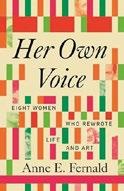
Intrepid women fashioned their own stories. Literary scholar Fernald offers a collective biography of eight women writers born between 1880 and 1920 who defied expectations and overcame obstacles “to choose an unpredicted life.” Pairing them into four categories—wanderers, rebels, explorers, and mentors—she reveals how they refused to follow “a conventional social script,” instead opting to “change jobs, take a leap into political activism, commit to earning a living, leave a male lover for a woman.” Although many female writers who came of age during the women’s suffrage movement and the rise of the “New Woman” might have served Fernald just as well, she chooses a diverse sampling from writers she believes have been neglected. Two were Black: poet and editor Jessie Redmon Fauset and Jamaican-born Una Marson, a poet, journalist, playwright, and producer at the BBC; Chinese-born Eileen Chang was a novelist and screenwriter who immigrated to the United States in 1955; poet Muriel Rukeyser was Jewish; and several were lesbian, bisexual, or queer: Rukeyser, film director Dorothy Arzner, British nurse and memoirist Vera Brittain, Goodnight Moon author Margaret Wise Brown, and English writer Sylvia Townsend Warner. Virginia Woolf, to whom Fernald has devoted much of her scholarship, appears throughout, her reflections on the challenges of women’s lives forming “a common thread” that unites the women’s stories. Fernald asserts that she intends the book to give readers models that may allow them to
envision new roles for themselves, beyond the traditional ones of homemaking and childcare. Naming “a range of approaches” may enable women “to shift strategies when necessary. Wanderers, rebels, explorers, and mentors: these are all roles that a woman can inhabit while remaining in community with others.” Drawing from their writings, Fernald creates sensitive portraits of her subjects.
An intimate look at women and their time.
Fukuyama, Francis | Farrar, Straus and Giroux (304 pp.) | $29 | September 8, 2026
9780374620431
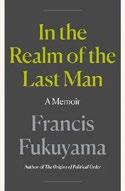
History isn’t dead. It’s just stumbling around in a daze. In the late 1980s, Rand Corporation researcher Fukuyama gained renown—even notoriety—for positing that the dialectic of history had come to an end with the collapse of communism. His argument was more complex than all that, but he has been assailed ever since for “naive liberal triumphalism.” In this blend of memoir and treatise, he notes that “we are very clearly in a different historical period than the one that existed in the late 1980s.” Today, he writes, “One of the big problems with American conservatives and particularly those of a libertarian bent is their focus on individualism, and their failure to recognize how each individual is shaped by the society that surrounds them.” Owing to the nuances of his approach to history and politics, learned from the likes of Allan Bloom and Leo Strauss, Fukuyama can be a little difficult to pin down; he’s no fan of identity politics, and, a protégé of Bush administration hawks such as Paul Wolfowitz, he maintains that to contain tyrants, “at the end of the day what really matters is military power.” With Donald Trump in his second term, he writes, “we are entering a new phase in American history, with a president who abhors the term ‘democracy’
and has prioritized the crudest form of material self-interest—both national and personal—as the guiding principle of his foreign policy.” Choosing his words carefully, the author distinguishes a classical tradition from brute-force populism that knows only how to destroy, thereby ignoring the possibility that the state can be “a potentially beneficial force that can achieve public purposes without undermining individual rights.” And as for history? Well, for the time being, anyway, it’s back and unadorned, even as armies clash around the clock.
A provocative though subtle view of contemporary history and the state of the world.
Giridharadas, Anand | Knopf (480 pp.) | $35 September 29, 2026 | 9780593802014
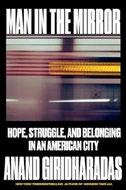
The human toll of systemic failures. Giridharadas (Winners Take All, 2018, and The Persuaders, 2022) has written a piercing account of a heart-rending public death that illuminated the plight of New York City’s homeless. In May 2023, Daniel Penny, a white former Marine, placed Jordan Neely, an unhoused Black man suffering from schizophrenia and behaving erratically on a subway, in a chokehold that killed him. Penny was acquitted of criminally negligent homicide in a trial that reflected broader tensions in a polarized country. The hardworking author comes at the story from numerous angles, shadowing outreach teams on overnight shifts, spending many hours with reformminded health officials, and getting to know people living in encampments. His street-level reporting is interwoven with analysis of generational changes in mental health care. In the 1950s, a half-million people were in state mental health facilities; the total was greatly reduced during decades of
“deinstitutionalization,” but proposed “community-based care” centers didn’t “launch on a scale commensurate with the need.” As a result, many people with serious mental illness were imprisoned. Neely was arrested several times and poorly served by a confusing bureaucracy and shelters where violent crimes sometimes occur. When a medical examiner testifies about Neely’s autopsy, his body “was now receiving from the city a level of consideration, respect, and focus that had not always been easy to realize in life.” Giridharadas is a strong writer, but he empties his notebook of seemingly every utterance he recorded, bogging down some chapters with a surplus of repetitive and minimally informative quotes. Even less unproductive are his observations on the appearance of the “Sephora-glazed” women supporting Penny, who wore “heavily caked” makeup and “were liable to dress like their daughters too long.” Snark undermines the book’s moral seriousness.
Penetrating narrative journalism on the root causes of a tragedy that shocked and divided America’s biggest city.
Gooch, Brad | Harper/HarperCollins (192 pp.) $29 | June 2, 2026 | 9780063466937
A gay dad chronicles his journey into fatherhood at middle age. When novelist and biographer Gooch was in his 30s, living in New York City, he lost his first husband to the “dark waves” of the AIDS epidemic and, later, suffered years of instability and alcohol abuse. Decades later, he met a man named Paul, an editor who stole his heart. The couple married soon after, and, in this resonant memoir, Gooch recounts his rich and romantic history charting the years leading up to his life with Paul and
TREASURE ISLAND
their momentous decision to have children, despite their initial hesitation, their middle-aged status, and the more technical hurdles they’d have to surmount in order to become same-sex parents. After navigating the “medical and legal puzzle” of the surrogacy process, Gooch and his partner connected with a gestational surrogate, and, in 2015, Walter was born. A second son, Glenn, was born in 2018. With smooth, conversational prose, Gooch depicts the “harrowing times” of parenting an infant amid various illnesses, nighttime terrors (his child’s and his own), “daymares,” financial woes, pandemic panic, and unexpected genetic revelations that would challenge his prior notions of paternity and personal identity. His poetic descriptions of parenting are thoughtful, memorable, and will highly resonate with readers who have raised children. Time just seems to speed up, writes Gooch, and even after short business trips away, that little boy at home has been “replaced by someone older, with more of an edge, taller, or a vessel for a new kind of emotion that wasn’t there before—sarcasm, or wisdom.” The author gets more intimately personal in sections describing his own family experience in rural Pennsylvania: the stranger he’d always felt his father was to him growing up and the “somber free fall” of his parents’ geriatric descent into mental frailty. Gooch writes about all of these trials with humanity and pride, admitting that the most surprising revelation of his journey into parenting was the extreme happiness he and his spouse experienced in embracing the joys and pains of the process, the increasing acceptance and normalcy of gay childrearing, and reveling in the wonders of fatherhood. A nurturing and inspiring portrait of queer paternity and modern family.
Gross, Michael | Harper/HarperCollins (416 pp.) $32 | June 16, 2026 | 9780063410961
A sweeping social history of St. Barth charts the island’s rise from impoverished outpost to billionaire enclave. Gross, a veteran chronicler of wealth and privilege (House of Outrageous Fortune: Fifteen Central Park West, the World’s Most Powerful Address, 2014, etc.), turns his attention to the Caribbean playground of the global rich. Launching his narrative with a roll call of celebrities and billionaires drawn from the worlds of finance, entertainment, and fashion, he swiftly pivots to the island’s colorful and unlikely origins. His prologue evokes the island’s stark past—“There was no running water. … Food was scarce and so was money”— establishing a baseline of hardship that contrasts with today’s megayachts and luxury villas. He traces centuries of colonial rule under Spanish, French, British, and Swedish control, recounting an economy once dependent on salt, indigo, and cotton as well as a population long defined by poverty and isolation. Structured as a long arc of transformation, his narrative follows St. Barth’s emergence as a tax-friendly refuge and luxury destination fueled by ambitious land acquisitions, speculative development and the arrival of wealthy families and entrepreneurs. The rise of fashion photography and media attention in the 1970s helped shape the island’s image as both bohemian retreat and elite enclave,
drawing designers, photographers, and celebrities whose presence accelerated its international appeal. Gross also chronicles the devastation wrought by Hurricane Irma and the island’s swift rebuilding—a recovery that restored its luxury infrastructure while intensifying debates about overdevelopment and environmental strain. As the author notes, “St. Barth is more a small town than a private club. Its inhabitants worry about the transience and voracious consumption that characterize postmodern society.” Though largely observational, he acknowledges persistent concerns about cultural erosion and ecological strain. And while dense clusters of names and land transactions occasionally slow the pace, his extensive research yields a textured portrait of wealth, land, and identity.
An expansive history of wealth and place marked by deep research and uneven momentum.
Kirkus Star
Weimar: Life on the Edge of Catastrophe Hoyer, Katja | Basic Books (512 pp.) $34 | June 9, 2026 | 9781541605794

Portrait of a German city and its people, for better and certainly for worse.
“Weimar has long been Germany’s beacon of culture, but for a time, it was also its heart of darkness,” writes Hoyer, an East German–born historian. It was a place that Schiller and Goethe called home, a center of learning and the arts; it was also a place that Adolf Hitler enjoyed visiting, where he “could move around freely, even telling his staff not to clear restaurants or cafés he wanted to sit in.” While Weimar is well known as the seat of a post–World War I government with plenty of liberal and socialist representation, it was also the site of some the Nazis’ earliest electoral triumphs. And the Third Reich’s most extensive concentration camps, Buchenwald, was
built on its outskirts— close enough to the city, Hoyer notes, that residents could not have helped but notice its existence and what went on there. Hoyer’s account complements Volker Ullrich’s Fateful Hours: The Collapse of the Weimar Republic (2025), extending the chronology both forward and backward but also centering on the city’s people, some famous, some ordinary. Among the former, notoriously, was Elisabeth Förster-Nietzsche, who misrepresented her late brother Friedrich’s work to align it with Nazism and curry favor from the regime for herself; in the latter category are a hotel keeper, a bookbinder, a shop owner—all part in some way of the city’s history, some victims, some victimizers. It was a Nazi stronghold from the earliest days, the home ground of senior officials such as Hitler Youth chief Baldur von Schirach and of ordinary Wehrmacht troops killed in battle and swallowed up in the Gulag following the Soviet occupation. Throughout, Hoyer’s narrative leads to a pointed lesson: The Weimar Republic, she writes, “is the most stark and terrifying example of a collapsed democracy in Western history.”
A charged, eminently accessible history that speaks to a troubled present as well as to the past.
Jarvis, Jeff | Bloomsbury Academic (336 pp.) $25 | July 23, 2026 | 9798765123959
T he story of a revolution in printing and the evaporation of Mark Twain’s fortune. Johannes Gutenberg’s movable type printing press was the standard way of impressing letters onto a page for 400 years until German-born watchmaker Ottmar Mergenthaler came along. Gutenberg’s machine could mold a text only one letter at a time; Mergenthaler’s Linotype
could mold an entire line at a time in hot metal with its “troop of idiosyncratically shaped cams, gears, belts, arms, and wheels.” In this book, Jarvis (The Gutenberg Parenthesis, 2023) celebrates Mergenthaler’s achievement and documents its role in creating today’s mass media. He describes failed attempts to create a typesetting machine before highlighting success stories, from Mergenthaler’s Linotype to Steve Jobs’ Mac. The book is also the tragic tale of Twain, who blew a bundle—$7 million in today’s money—on a would-be Linotype competitor: the Paige Compositor, a “gargantuan metal monster” that “resembles an unfinished or perhaps vandalized steam locomotive.” Jarvis cites other notables of this era, from Christopher Latham Sholes, widely credited with inventing the typewriter; to Horace Greeley, “a pioneering advocate of American socialism,” who founded the New York Tribune in 1841; to Whitelaw Reid, who “stole Greeley’s newspaper out from under him” and turned it into “a pragmatic testament to conservative culture, institutional power, and capitalism powered by technology.” The telegraph, wire services, offset lithography, the birth of typographical unions, the challenges women and Black Americans had in entering the industry—Jarvis covers it all in this immensely readable work. He also has a witty way of presenting history. When noting Sholes’ efforts, he writes that, in one iteration, paper was wrapped around a platen, with letters progressing around the roller rather than along its length. The problem? “Because the type struck the paper from beneath, it was impossible for the typist to see what was being typed. Thus was born the typo.”
A fascinating history of print’s evolution.

Johnson, Ralph with Rory Pullens Diversion Books (272 pp.) | $32 May 26, 2026 | 9798895151433
The Earth, Wind & Fire drummersinger-songwriter recalls a life of funk, soul, and clean living.
As a member of EWF during its heyday, Johnson was arguably the band’s most important member outside of founder Maurice White. Blending Motown-style songwriting with the harder-edged R&B of Parliament-Funkadelic, the group owned the charts in the 1970s with hits like “Shining Star,” “After the Love Has Gone,” and “September.” They were a beloved live act, too—they topped the charts with their 1975 concert album, Gratitude, a sentiment that encapsulates the tone Johnson embraces here. Raised in Los Angeles, he worked in local bands before catching White’s attention. Though he recalls White as a taskmaster, he appreciated the discipline of a group with “no scandals, no bickering.” (The sole transgression he shares is taking acid once before a show.) Career-wise, he was at White’s mercy, so when he put EWF on hiatus in the early ’80s, Johnson was adrift, for a time selling stereo systems. Even setbacks are delivered cheerfully here, though the tail end of the book, which focuses on life advice, emphasizes the importance of having a backup plan: He stresses the importance of songwriting and the passive income it delivers, financing his interest in collecting art, scuba diving, and flying. The book’s prose, written with Pullens, is rarely better than workmanlike, and there are a few too many encomiums to the emotional power of EWF’s greatest songs. And readers looking for high drama are reading about the wrong band. But on occasion, a snappy line sneaks through: Describing an arena of fans, Johnson observes, “You ever see 17,000 sequins shimmer at once? …It
looked like someone had shaken a giant snow globe full of funk.”
A gentle reminiscence about a hard-driving pop act.
Jones, Chris | Random House (288 pp.) $29 | June 2, 2026 | 9780593730935
Love conquers all. Or maybe it’s soccer.
Canadian sportswriter Jones is fresh back from an assignment, jetlagged, when he opens his wife’s laptop and finds that she’s been carrying on with one of his good friends. Thus commences an unpleasant slide down the razor blade of life: an ugly divorce, as well as the loss of wealth, home, and family. “I was forty-two years old,” he writes. “Nothing true of my life would be true again.” Suicidal depression followed and always an ungovernable rage—cooled a bit when a friendly, empathetic police officer explains that the legal system wasn’t against fathers as such but “against fathers who seemed capable of violence.” A few punch-ups follow, then a slow unwinding, and then a measure of self-redemption in the rediscovery of a family tradition, namely devotion to the northwestern English soccer (they call it football, of course) team of Burnley. That renewed fandom yields something more than just an opportunity to hoot at a well-placed goal: “Football is a game of dreams,” Jones writes. “It’s about who you want to be. It’s also a game of pragmatism. It demands that you know who you are.” In time, better things happen to him: His connections to his children and parents strengthen, his anger wanes, and he falls in love with a woman who, in a fine moment of understanding, takes him to a Burnley match in London, where he learns one thing about who he is: “I might pass for a football lunatic in Canada. In England, I was a tourist in a costume.” And something remarkable
happens to Burnley, too: As if swayed by Jones’s devotion, the club comes to life, breaking numerous records and winning a championship in 2024–2025 on a road to recovery all their own.
Charming, but with plenty of rough edges, and a book every soccer/ football fan might well take to heart.
Jones, Owen D. | Norton (288 pp.)
$31.99 | June 9, 2026 | 9780393881929
A lively investigation of the relevance of natural selection today. Jones, a professor of law and of biological sciences at Vanderbilt University, dredges up a concept most readers probably haven’t thought much about since high school and demonstrates with enthusiasm and flair why it matters to our daily lives. He makes a convincing case that we ought to consciously work with rather than disregard natural selection—“the only evolutionary process that can cause consistent, directional, and beneficial changes in widespread features of a species”—when making decisions about, for example, fishing and genetic engineering of crops, and he provides multiple examples of how doing so could benefit us. He ventures outward from conventional biology to consider how the development of artificial intelligence has benefited from the copying the processes of natural selection, applying them to computer rather than cellular codes. His discussions of the way close observation of the effects of natural selection on various animals can inspire human engineering are particularly tantalizing. Noting that “natural selection has served us many millions of free ideas,” he offers examples of “bio-inspired engineering” including bullet trains that make use of the beak design of kingfishers and dry adhesives that mimic the function of gecko feet. He also argues that natural
selection applies not just to the physical features of organisms, but also to their behavior, and from there, he goes on to consider the application of natural selection to decision-making and law. While he sometimes drops deeper into an intellectual rabbit hole that not many readers will be willing to follow—particularly when he presents long summaries of the application of Bayesian statistics to calculating risks and his own research into the endowment effect or status quo bias—his obvious excitement about the subject goes a long way toward inspiring equal interest in the reader. A wide-ranging exploration of a frequently ignored phenomenon.
Kiernan, Denise | Dutton (432 pp.)
$32 | June 23, 2026 | 9780593183434
A chronicle of the American Revolution spotlighting the “marginalized yet invaluable voices” usually left out of the history books.
Among those journalist and popular historian Kiernan strives to give their proper place in the struggle for American Independence are the Indigenous and the enslaved. Nanye’hi—a Cherokee woman whose efforts to keep peace with the invading whites eventually led her to warn settlers of impending attacks—is one of her featured players. So, too, is Mary Perth, an enslaved woman in Virginia prompted by the Great Awakening to become a Methodist lay preacher, who later was one of the many Black people fleeing to the British in hopes of freedom. (Kiernan frequently, and rightly, points out the contradiction between patriot cries for liberty and their support of slavery.) Among the white actors is Mary Katharine Goddard, who published a newspaper
and served as postmaster in Baltimore, printed broadsides for the Continental Congress, and affixed her name as printer to the “authenticated” copy of the Declaration of Independence sent to the states in 1777. Loyalists as well as patriots are included; Kiernan appears to be emulating Ken Burns’ inclusive approach in his documentaries, which blend the experiences of ordinary people with the more famous to convey the texture of daily life in a period of upheaval. While Kiernan does occasionally give a good sense of that texture, she lacks Burns’ skill in weaving individual stories into a coherent narrative. Instead, we are introduced far too quickly to each of the people she has selected as representatives of the unsung masses, and their ongoing activities are dropped into a traditional chronology of the war that hopscotches wildly—for example, from a smallpox epidemic in British-controlled Charles Town to Benedict Arnold’s assignment to take command of West Point. Interspersed chapters about her travels to various historic sites, which read like tourist guidebooks, add to the confusion. Some valuable material swamped in a poorly organized text.
LaBarge, Emily | Transit Books (280 pp.) $18.95 paper | May 19, 2026 | 9798893380477
A trauma narrative that extends and subverts the very notion of trauma narrative. This first book by LaBarge, a Canadian essayist and critic based in Britain, is a memoir of sorts, and the fractured narrative pretty much all takes place inside her head. What’s inside is grim. On a Christmas 2009 getaway to an unnamed island in the Atlantic Ocean, she and her family were held captive for eight hours while invaders ransacked their rental property. The author and her sister feared they would be
raped or even murdered. “Once I think this,” she writes, “I cannot not think this, cannot not imagine it and what it will involve, the family death mass.” But the invaders took their loot and left. The typical trauma narrative might be written for closure—a cliché that the author never uses here, because her time loop is more like an ouroboros, a snake eating its own tail. For her, this story is never over. There is no catharsis, no redemption. She is no longer the person she was before she was victimized. There are significant holes in her memory, where she had once prided herself on it. The pieces from the narrative that she spends years trying to reconstruct don’t necessarily fit. She loops back with every Christmas and experiences reverberations with every fresh trauma (a mugging for her laptop, a bicycle accident that requires recovery, a discovery that one of those invaders now lives within striking distance of her in London). She has a seemingly omnivorous appetite for art, particularly for art that challenges conventional notions of form and meaning. Samuel Beckett, Virginia Woolf, Sylvia Plath, and David Lynch are among the many cited, beneath the lens of her own traumatized perspective. Over the 15 years that she feels compelled to write about her experience, she wonders to what purpose and who cares. Is it the same self who is framing this narrative and is the subject of it? Haunting and questing meditations on life, art, dreams, and death.
Levenson, Thomas | Random House (208 pp.) $28 | June 9, 2026 | 9798217155002
A full-throated attack on “Make America Healthy Again” and Robert Kennedy Jr. “Vaccines are a secular miracle,” proclaims MIT science writer and filmmaker Levenson. Indeed, administer a vaccine,
and the recipient usually won’t die of, say, polio or many another disease that would have been lethal without it. The path to sussing out pathogens was an arduous one, but the results are inarguable to anyone with a clear mind: Where the average life expectancy in the U.S. in 1900 was about 47 years, by 2025, we had added 30-plus years—to say nothing, Levenson adds, of the role of vaccines in saving 154 million lives in the last half-century, “10.2 billion years of healthy life gained.” Who would dispute these wins? Well, the current secretary of Health and Human Services, to name one, who, by Levenson’s lively description, is a leading proponent of the “Making Microbes Great Again” movement. Moreover, the author says, Kennedy’s “scientistic gobbledygook” is a throwback to the know-nothingism that opposed the very first vaccines, based on a religious view that saw “vaccination as a violation not just of God’s law, but of nature’s divinity as well.” By that logic, therefore, “if vaccines are wrong at the root, any (apparent) benefit from them is an illusion.” Levenson allows that the “Make America Healthy Again” emphasis on clean foods and a healthful environment isn’t entirely misplaced, but its antivaxx stance is—though, he alleges, it’s yielded a “comfortably rich” life for Kennedy, who “has received compensation topping seven figures from the antivaccination organization he founded.” One might think such a thing would be a disqualification, but Levenson writes, “One definition of freedom, for the moment, seems to have won. It is no longer the one that…there is a line beyond which personal rights must surrender to social obligations.…It is instead an absolute demand that rejects any constraint whatsoever.” An impassioned but reasoned look at the culture and commerce of vaccine denial.
Lopate, Phillip | Princeton Univ. (248 pp.) $28.95 | August 18, 2026 | 9780691284439
Appreciative “belletristic treatment” of America’s first professional writer. Irving (17831859) was a “minor writer,” acknowledges fellow essayist and man of letters Lopate, who includes himself in that category. But these writers “have their fascinations; indeed, they may be one of the glories of literature.” This short, chatty book makes a strong case for Irving as an author well worth reading beyond his two most famous tales, “Rip Van Winkle” and “The Legend of Sleepy Hollow.” While those two reflect the writer’s fascination with the folklore and ghost stories of the Hudson River Valley, where he settled toward the end of his life, Irving expressed in much of his work the “skeptical, secular, ironic, pluralistic” spirit of his beloved hometown, New York City. He was the son of a merchant with a home and shop on William Street in Lower Manhattan, the youngest of eight surviving children, and close with his siblings throughout his life. The failure of the family business left him responsible for the support of several of them and completed his transition to full-time author. (He also briefly held a diplomatic post during a 17-year stay in Europe and later served as ambassador to Spain.) Lopate demonstrates that Irving wrote well in many genres: from satire (A History of New York, allegedly written by a crusty Dutchman) and travel literature (The Alhambra) to a trio on books the American West (A Tour of the Prairies) and a quartet of biographies showcasing
There’s more to the man who gave us “Rip Van Winkle.”
his skills as a researcher and historian. Ambling through life and work highlights, Lopate employs substantial quotations to give readers a good sense of Irving’s witty, graceful, and polished prose, “seen [at the time] as setting a civilized standard,” he notes, regretting that contemporary critics don’t set much store by those qualities. Those interested in the development of American literature may be spurred by Lopate’s friendly account to seek out books by this pioneering author.
Agreeable and engaging, much like Irving himself.
Machado, María Corina | Regnery (168 pp.) $26.99 | April 21, 2026 | 9781510787773
Venezuelan opposition leader Machado offers her vision of her country’s future. When she was growing up, writes Machado, Venezuela regularly held elections with peaceful transfers of power and enjoyed a degree of prosperity greater than many of its Latin American neighbors, thanks to abundant oil. That changed when Hugo Chávez came to power in 1999. He “began by focusing on controlling the judicial system,” replacing longtime jurists with his lackeys, and enriched himself while immiserating his people. The universities were islands of resistance, she writes, but now “even private universities… have been compromised by the regime.” Despite winning election to Parliament, she had to fight to take her place there, and, when she ran for president, she was cheated out of victory by Chávez’s successor, Nicolás Maduro. She also won the Nobel Peace Prize (which she later gifted to President Trump, who is not mentioned in the book). Machado’s “manifesto” is a brief set of principles, most unobjectionable on their face: “Our individual liberty will forever be fully realized within a Venezuelan ecosystem booming with liberty. …The people of Venezuela deserve a duly elected
government that maintains the will and capacity to guarantee the safety of every citizen.” She remains out of power for all that, Maduro having been kidnapped by the U.S. but with his lieutenant installed in his place. Machado’s book certainly gives insight into her antisocialist views and the agenda that might follow should she in fact take office one day, but the book is a bit of a hodgepodge—a chronology, a little autobiographical essay, the manifesto itself, and testimonials by various opponents of the regime—that seems done in a hurry. A small book that provides background to the Venezuelan dictatorship and its discontents.
Mancall, Peter C. | Oxford Univ. (752 pp.)
$39.99 | June 1, 2026 | 9780195372786
A 10-volume
Oxford History of United States gets off to a fine start.
Mancall, a historian at the University of Southern California, points out that Europeans looked on Columbus’ New World as a “vacant, pristine wilderness.” Jaws may drop when he adds that it contained as many residents as Europe, more than 50 million people, and was dense with farms, towns, cultures, commerce, and civilizations that rose and vanished. After a nod to the Vikings, he summarizes European experience in the centuries after Columbus, dominated by Spain, which focused on Central and South America and the West Indies as well as emphasized exploitation over settlement. As citizens of Europe’s superpower, the French preferred to stay home. Despite occupying half of North America for two centuries after Columbus, only 70,000 were present when the British, a million strong, took over in 1763. Unlike rulers of Spain and Portugal, English monarchs hated spending government money on New World settlements, so theirs were
privately financed commercial ventures. One third of the way into his long book, Mancall enters familiar territory: the settling of the Atlantic coast beginning with Roanoke in the 1570s (a disaster), Jamestown in 1607 (a horror for the first years; almost everyone died), and the Pilgrims in 1620 Massachusetts (they suffered greatly but, deeply pious, believed it was God’s plan). Nearly 500 pages describing 17th century North America deliver far more details than school history texts—and in far superior prose. Ending in 1680 seems arbitrary, until the author emphasizes that, around this period, Indigenous cultures were caught up in bloody uprisings. Indigenous peoples still vastly outnumbered Europeans, but Mancall makes a case that these events marked the tipping point when Europeans began moving into the interior in force, a process taken up in succeeding volumes.
Excellent survey of North America’s early history, with an emphasis on Indigenous peoples.
Manson, Katrina | Norton (416 pp.) | $31.99 March 24, 2026 | 9781324123316
The Terminator comes to life, and future hellscapes are fast upon us. Bloomberg News technology reporter Manson has long been tracking AI—particularly its military applications. In this fast-moving narrative, she portrays a Marine intelligence colonel, Drew Cukor, whom she calls “a leading historical figure in a war that hasn’t happened yet.” Quickened by 9/11, Cukor had set his main task at remaking military intelligence, period. But as he learned about AI and set about recruiting and making alliances with the likes of Palantir and Microsoft, that scope broadened to process interpretable data that could help target enemies on the battlefield and, as important, detect who
was not an enemy in the fog of war. Fighting Pentagon bureaucracy, he courted controversy and committed numerous unforced errors, Manson says—one of which got him effectively drummed out of the service. Moreover, author notes, Cukor was in the habit of bringing little-tested systems onto the battlefront before they were ready for prime time. Yet his fundamental doctrine held up: “Software missed things humans picked up. But humans also missed things the machine picked up. And the machine took far less time and fewer people.” Future warfighting would, therefore, be a hybrid of machines providing actionable information and people making the decisions on how to use it. Decades of testing later, as Manson writes, some of this has come to pass, particularly as Project Maven has been tested in combat on the Ukrainian battlefront and, with it, has come rival efforts from China and Russia to field AI systems of their own. Disturbingly, though, one aspect of Cukor’s doctrine has been forgotten: As Manson notes, Secretary of War Pete Hegseth is now all in for letting the machines be, in the words of one general, “optionally manned”—and without “overbearing rules of engagement.”
A sobering look at future war in which machines fight machines, but plenty of people die all the same.
Martin, Lerone | Amistad/HarperCollins (432 pp.) | $34 | May 5, 2026 | 9780063340947
From Little Mike to MLK Jr. Long before he became a proponent of nonviolence, Martin Luther King Jr. was a pugnacious teenager who settled his differences by wrestling. He came up with a phrase for initiating fights: “Let’s go to the grass.” This is just one of many surprising details that emerge in this absorbing biography by Martin, a
professor in religious studies at Stanford University. Seeking to flesh out the image of “a King who arrives in our consciousness and public memory as a determined superhero with no backstory,” the author offers a well-researched and immersive portrait of a bullied youth (called “Runt” and “Shrimp”) who transformed himself into a confident and impassioned young man whose eloquence (and sartorial elegance) turned heads. Readers learn of King’s middle-class upbringing in Atlanta as one of three children. King’s father, a stern figure who whipped his offspring with a belt, was then known as Michael; his namesake was Little Mike. The boy’s “photographic memory,” writes the author, “enabled him to recite Scripture verses.” Books were his “constant companion,” and his grandmother and aunt often read to him. After his grandmother died, King entered “a period of skepticism,” questioning the Bible. Rather than become a minister, like his father, he wondered if he should help others as a lawyer or doctor. A Morehouse College summer work program in Connecticut changed his mind: When not picking tobacco on a farm, he experienced life as a Black man in the North, freely going to movie theaters, stores, and dances in Hartford. He wanted “to bring God’s country to all,” writes Martin. ML, as he began calling himself, was a C student at Morehouse—he enrolled at age 15, “woefully unprepared.” But it was there that he was introduced to Henry David Thoreau, civil disobedience, and “Christian love…working nonviolently to defeat evil systems.” The seeds were planted for the aspiring preacher to become a leader for the ages. A vibrant and illuminating account of an icon’s early years.
McElya, Micki | Avid Reader Press (384 pp.) $32 | July 28, 2026 | 9781982166762
Women on parade. Feminist historian McElya uses the 1968 Miss America pageant as an anchor for a wide-ranging, comprehensive cultural history of the anti-war, civil rights, and women’s liberation movements that converged to protest the event.
Drawing on a wealth of sources—including memoirs, published interviews, biographies, and histories—McElya recounts the origins and activities of the many contingencies that roiled American society: the National Organization for Women, National Women’s Party, Student Non-Violent Coordinating Committee, Jeannette Rankin Brigade, NAACP, Southern Christian Leadership Conference, Students for a Democratic Society, Yippies, Miss Black America Pageant Organization, and several factions of the women’s liberation movement. Hardly cohesive and often fractious, the movement comprised three main blocs that competed to set goals: “One faction thought the women should meet primarily as a reading and study group to better understand the sources of their oppression and build the theoretical foundations for liberation; another faction urged focusing mostly on direct-action protests; and the third faction…argued that the foundations for liberation would be found only through consciousness
A rare Hollywood figure who was gifted at directing, acting, and producing.
SYDNEY POLLACK
Ed. by McGilligan, Patrick & Paul Cronin Univ. Press of Kentucky (304 pp.) $35 paper | May 26, 2026 | 9781985904187
Sydney Pollack lives on as a gruff but caring lawyer in Michael Clayton (2007), which one cannot see too many times. Here, he opens up about his life and line of work.
Pollack (1934-2008) was that rare Hollywood figure who was gifted at directing, acting, and producing. In this incisive collection of interviews, film scholars McGilligan and Cronin convincingly argue that “for forty years, from his first picture to his last, Pollack sustained a busier, longer, more fruitful, and more consistent career than many in his peer generation.” The interviews, which ran in publications around the world, range from 1970 to 2007. Readers learn of his youth in Indiana; Casablanca, he says, “gave my life meaning. I’m sure my entire style comes from the fact that I found nothing in the Midwest to sustain me.” After a couple years in the
>>> raising (CR), which should be the core of the group’s work.” They were united, however, over their view of the cultural significance of the pageant, which they believed demeaned and trivialized women. McElya traces the history of the pageant, from its beginnings in postWorld War I America, when it mirrored the “anti-radicalism” and “anti-immigrant politics” of mainstream America; Bess Myerson, the first Jewish winner, in 1945, confronted unabashed antisemitism. The Miss Black America Pageant, protesting the event’s long history of racism, augmented the scope of women’s anger. McElya’s narrative is well-populated with activists (liberal and conservative), politicians (and their wives), reporters, and pageant contestants, among a huge cast. Prodigious research informs a lively contribution to women’s history.
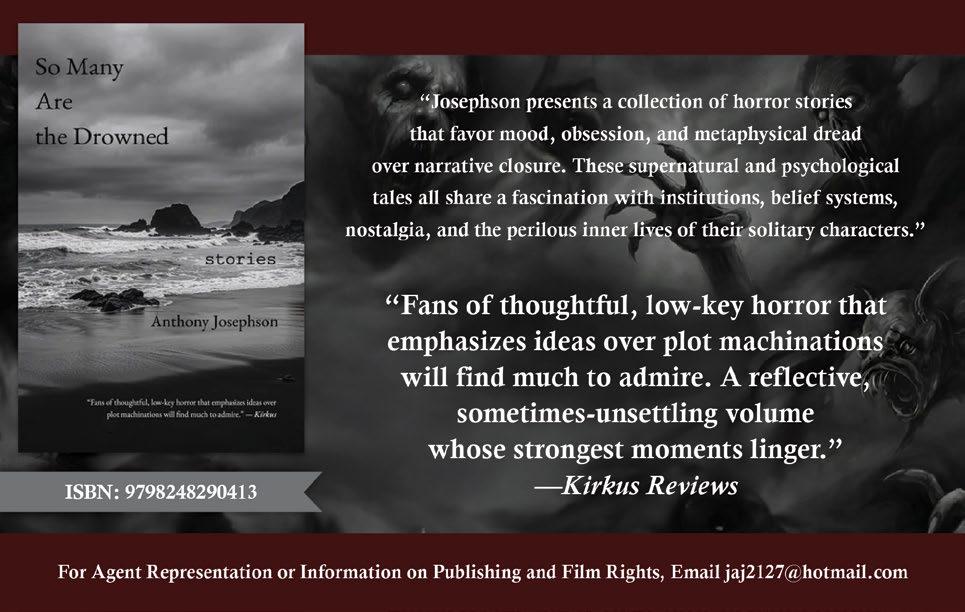



Edited by Alice Hoffman

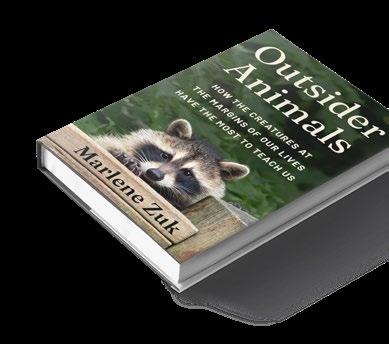
By Thomas W. Laqueur
Scott Simon
By Marlene Zuk


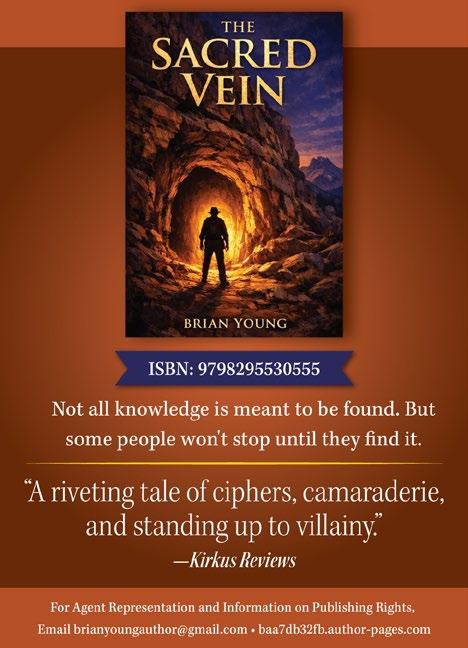


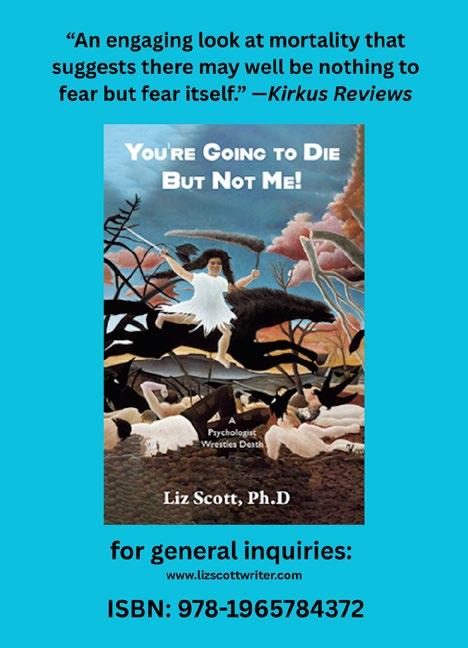
Power of Life: The Invention of Biology and the Revolutionary Science of JeanBaptiste Lamarck
By Jessica Riskin (Riverhead, March 24)
Riskin, a historian of science at Stanford, knows how to tell a
rousing story and analyze the shifting fate of Lamarck, whose insights, long maligned, have been reinvigorated by new research.
By Ian Hacking (Harvard Univ., 1998)
Hacking’s story of and reflections on dissociative

fugue in the 19th century offers a critique of psychiatric categories in general and how illnesses find “ecological niches” in various places and times.
By W.E.B. Du Bois (Routledge, 1940)
Part autobiography, part philosophical essay, this brilliant book remains urgent and necessary reading.
Siri Hustvedt’s most recent book is Ghost Stories: A Memoir (Simon & Schuster, May 5).

Army, he got his start acting in TV shows in New York City. A job as the dialogue coach for John Frankenheimer’s The Young Savages, starring Burt Lancaster, prompted his move to Los Angeles in 1960. “At the end of the picture,” he recounts, “I was packing my bags when I got a call from Lancaster’s secretary. ‘Mr. Lancaster would like to see you.’ I went over to his offices, and he said, ‘Listen, stop screwing around. You should become a director.’” It was good advice. Pollack’s movies include such successes as They Shoot Horses, Don’t They? (1969), Three Days of the Condor (1975), Tootsie (1982), Out of Africa (1985), and The Firm (1993). As McGilligan and Cronin write, “He reliably gave motion picture fans… major stars in superbly crafted entertainment, undergirded by serious themes.” Film buffs will enjoy Pollack getting into the technical details of directing: “Panavision is the only medium you can work in where you never lose the sense of environment.” And his frank take on Hollywood has aged well: “I am part of this institutionalization now in the film business.” One once had “the satisfaction of yelling” at someone who owned a studio, but corporations took over—and “you can’t argue with an institution.” Wise observations from a filmmaker who made smart crowd-pleasers.
Noveno, Nita | Red Hen Press (232 pp.) $17.95 paper | August 11, 2026 9781636284910
In search of lost time—in Alaska and beyond. Author and former ESL teacher Noveno grew up in Ketchikan, Alaska, where her Filipino father, Benito, settled after finding work in a cannery in the 1930s. Born in 1907, he was 59 when he became a father and died when Noveno was a junior in college. A few years after his death, she met with Benito’s old friend, Joe, who spoke of a man she didn’t recognize. At
A fascinating inside look at a world seldom seen.
TRASH!
this moment, she realized that, between her tumultuous relationship with her father and the lack of photographs or other records of his life, she knew little about his past or the reason why he became “this father-monster” she briefly “hated.” It is only when she speaks to Joe that she realizes Benito’s old friends might help her piece together his story. She writes, “My father, dead for the past four years, never told me anything about his past, which appears in front of me now as if having waited all this time to be released, seeds that would take root in time, if I just ask.” This moment begins the author’s excavation of the past, which she communicates through speculative, fictional stories she writes using the research she does about her father and Filipino American history, letters addressed to the reader, and memories of her own life in Alaska, New York City, and Cameroon, where she is a Peace Corps volunteer. The book is absorbing in many ways—its historical elements are richly detailed—although, at times, the nonlinear storytelling can be confusing. A deeply researched if at times disjointed memoir of Asian American life.
Pare-Poupart, Simon | Trans. by Pablo Strauss | Melville House (192 pp.) | $18.99 paper | June 16, 2026 | 9781685892494
The untold story of garbage, by a sociologist and garbage collector. You might not expect the person tossing bulging trash bags into a garbage truck to have a bachelor’s degree, let alone a master’s. Most of us have been socialized to see garbage
collection as a low-down, last-resort job—the kind of thing done, ideally, in the dead of night or the dark hours of the morning, when the rest of us can ignore it. Montreal garbageman Pare-Poupart first got a job on a garbage truck as a teenager, pushed by his stepfather to prove his masculinity: “Jesus, Simon, make a man of yourself!” To his surprise, he found he loved the work. The physical challenge of running for hours, the effort of heaving heavy bags and throwing them overhead, and the camaraderie drew him to the profession. What began as a challenge became a passion that paid for college and offered a sense a community: “Garbagemen live life free of the scrutiny of others, with all its attendant pressures.” Even after completing his master’s, Pare-Poupart is still on the truck. His chronicle of the work is a fascinating inside look at a world seldom seen. His sociology degree is an asset, providing a wellresearched lens into our relationship with waste. “Day after day, I heave and haul the detritus of the most polluting civilization in human history,” he writes, estimating that he’s hauled “nearly seventy thousand tons of trash” in 20 years. Being face to face with waste makes it impossible to ignore what many people don’t want to see: the sheer volume of trash we produce every day as a result of our obsession with comfort and goods. “If we weren’t there to shoulder this burden, everything would fall apart,” he writes, describing how rats and disease would pile up along with the trash. We depend on people like Pare-Poupart to make our garbage something we can ignore. In this arresting book, he makes that invisible work something you can’t look away from.
A sharp and engaging reckoning with the detritus of our times—and the people who clean it up.
Pavliscak, Pamela | Algonquin (336 pp.)
$30 | June 9, 2026 | 9781643753966
A n analysis of the meanings behind the ocean of emojis, GIFs, and metaphors flooding our online communications.
Pavliscak, a design researcher and teacher, distills the diverse layers of our online lives into a richly detailed cultural analysis and self-help guide to managing feelings in the internet age. She argues for understanding today’s visual and cultural shorthand— memes, reaction GIFs, and emojis—as a new poetic vernacular, expanding our ability to articulate the wide range of emotions internet communications evoke. By amplifying communication and capturing emotions that might otherwise feel too large or too vague for words, metaphors such as “Elmo on fire” and “Kermit flailing” GIFs “transform private feelings into something visible and easy to share,” creating a “visual grammar for feeling out loud.” Pavliscak identifies two digital emotional types: Stoics, who use technology to regulate and steady themselves, and Romantics, who embrace its capacity to intensify feeling. Each chapter offers small, practical suggestions tailored to these styles of communication, reinforcing the book’s self-help dimension. Readers who are online less may find themselves exploring unfamiliar corners of digital culture, from Bond Touch bracelets to mukbang videos. The book becomes more provocative in its discussion of AI. The claim that “Our feelings for bots are showing us how to be better to humans” opens space for discussion, particularly alongside the unsettling observation that chatbots can outperform humans on empathy scales. Still, the broader point—that we are honing communication skills through our interactions with machines—is hard to dismiss.
Though deeper examinations of monetization and data privacy are mostly sidelined, the volume nevertheless provides a compelling look at how communication systems quietly channel our feelings.
A fascinating look under look under the hood at experience design and internet life from an extremely online perspective.
Rankine, Claudia | Graywolf (136 pp.) $28.99 | August 4, 2026 | 9781644454008
A celebrated poet asks how to live. When she was an undergraduate, Rankine (Citizen: An American Lyric, 2014) discovered a kindred spirit. To acknowledge their “twinned feeling of brokenness” and “misalignment with the world,” the two devised a strange game: “When we spied the other during the day,” Rankine recalls, “we had to collapse, as is often the trajectory in Greek plays where one then another becomes gagged by terror. Exploring this “fabricated sisterhood,” Rankine now refers to her friend as “the theorist,” who has opted to use nonbinary pronouns and appears to be a composite of Judith Butler and Lauren Berlant, among other outspoken feminist philosophers. Their response to brutality and injustice has become radically different from collapse. Rankine knows that the theorist gave up “a life, a landscape, family, friends, in search of another route,” but she cannot follow that example. She reads the theorist’s books and attends their lectures, but although once their ideas seemed like “a portal to what was possible,” now Rankine struggles to make sense of their “combative” stance: “What does fighting back even look like?” she asks. “What does it mean to do something when the rule of law, voting rights, checks and balances, decency, the democratic
laundry lists mean less and less?” If she has collapsed into a “pained and callous position of witness and observer,” what does it mean to remain in “a state of protracted grief…asked to be silent about our feelings and our responsibility to the buried and unburied.” When the theorist asks her to help a refugee couple by allowing them to use her Berlin apartment, Rankin demurs, fearful of making herself vulnerable. “We are trying to gain footing by landing without putting our hands out to any other,” she admits. Illustrated with politically resonant artworks, Rankine’s lyrical melding of memoir and criticism poses urgent questions.
An unsettling meditation on bleak times.
Rich, Jennifer | New York Univ. (208 pp.) $39 | July 21, 2026 | 9781479841257

A “narrative effort to reanimate the past.” In the years following the end of World War II, survivors of the Jewish Holocaust created “memorial books” (in Yiddish, yizker bikher) designed to record the lives of those who passed and to give hope to those who lived on. Such volumes, writes Rich—executive director of the Rowan University Center for the Study of the Holocaust, Genocide, and Human Rights—were “collaboratively authored, place-based memorial books that represent a confluence of Jewish liturgical, ethnographic, and historical writing.” Through richly symbolic illumination, the books told stories far more profound than words alone could. Illustrations of candles, for example, light ways through reminiscence and restoration; sometimes there are buildings, shaped almost surrealistically against a sky, like the work of an
amateur Marc Chagall. And there are poems in these volumes: “If you pick up a book—my stare will be in it, / In every single line and word.” Lines of verse accompany hand-drawn maps, recalling towns that had been leveled. In a sense then, this book is itself like a paper tombstone—the yizker bihker having been “created as a sacred object, one that fulfills the obligation of remembrance and offers a connection to the people, places, and ways of life destroyed during the years of the Nazi genocide.” What the book reveals, too, is that the study of the Holocaust goes on not only in great archives or along the tracks of fields and forests but in the small, personal products of everyday people. At a time when fewer and fewer people have the lived experience of capture and exile, the book exhorts us all never to forget. A moving testimony to a lost world and a goad to keep its memory alive.
Sikoryak, R. | Drawn & Quarterly (128 pp.) $15 paper | June 30, 2026 | 9781770467170
When in the course of humorous events… There are many things that Thomas Jefferson couldn’t have anticipated about the Declaration of Independence 250 years in the future, and one was that its hallowed words would be accompanied by an image of Beavis and Butt-Head. And yet, thanks to the loopy imagination of cartoonist Sikoryak, this is one of the many funny pairings we have in his latest book. As in his Constitution Illustrated (2020), he marries the unabridged text of the nation’s foundational document with cartoons he’s done in the styles of dozens of American comics and cartoons, some going back generations. The double-sided book also includes the Emancipation Proclamation and the Gettysburg Address. The colorful images match the text well. For the
Declaration’s famous opening words—“When in the Course of human events, it becomes necessary for one people to dissolve the political bands which have connected them with another”—we see a cartoon of an impossibly muscular man in colonial garb breaking out of his chains; the image that inspired it is from Mike Manley and Terry Austin’s Superman Adventures (2001). For a page illustrating “the pursuit of Happiness,” a lecherous wolf (in a cravat) is leaning into an open window, his eyes on a Betsy Ross–like figure in a bonnet; the original source is Stephanie Gladden and Jim Massara’s Droopy, Wolf & Red (1995). Some cartoons are more famous than others (a comics index proves useful). There are Brian Stelfreeze’s Black Panther (2016), Bil Keane’s The Family Circus (circa 1975), and W.W. Denslow’s Scarecrow and the Tin-Man (1905), as well as newer creations such as Jen Bartel’s She-Hulk (2023). In all, the book is both wholesome and irreverent—and thus very American.
An inspired reframing of a bedrock document—for younger readers, yes, but also older citizens who need waking up.
Simms, Brendan | Basic Books (480 pp.) $35 | June 2, 2026 | 9781541605831
They’re baaack…
There was a time, not so long ago, when, with the collapse of the Soviet Union, the old age of the superpowers was said to be gone, replaced by a single mega-hegemon, the U.S. Cambridge geopolitics scholar Simms takes a reading of the current scene to advance his thesis that, since the mid-2010s, the great-power scenario has returned, with a U.S. national security brief holding that the rise of China and Russia posed more of a threat than terrorism. In this regard,
Simms writes archly, “it was Vladimir Putin who was ahead of the times,” though Putin threw caution to the wind in invading Ukraine for what appear to be purely geopolitical and not economic reasons. Indeed, Simms adds, though the great powers are indeed great, to varying degrees, they “sometimes fail to get their way”: The Taliban effectively defeated the U.S. in Afghanistan, and Ukraine has held Russia back for four years. The current configuration of the great powers, then, might include nonstate actors—and current strategizing might include preparation for the nuclear worst, for “just because such a conflict is unthinkable does not mean that it is impossible.” Through it all, Simms foresees numerous possibilities, including a European Union that can hold its place in the manner of a former single state, a China that is increasingly influential in places such as Africa, a reinvigorated Japan that “needs to shape up if it wants to survive in North-East Asia, the world’s most dangerous neighbourhood,” and an isolationist U.S. that has lost some of its sway in the wake of bad decisions. Even so, Simms concludes, the game is America’s to lose, as no other country can match it in economic and military strength.
A provocative way of looking at current and future developments on the international political scene.
Smith Galer, Sophia | Crown (304 pp.) $32 | July 7, 2026 | 9798217086979
A trilingual journalist explores the loss of linguistic diversity around the globe.
“In the next one hundred years, up to half the world’s languages will die.” So warns Smith Galer, who grew up in the shadow of a likely victim, a local version of Italian spoken by her grandmother that she called simply
dialët. Smith Galer identifies a common pattern in immigrant communities, one that she shares: A grandparent is monolingual in language A, a parent is bilingual in languages A and B, a child is monolingual in language B—and language A loses speakers, too often to the point of extinction. As she writes, it’s not by accident that zones of linguistic diversity correlate strongly to zones of biodiversity, nor that as critically endangered habitats disappear, languages disappear with them. There are numerous mechanisms for this disappearance, for, she adds, “something is disappearing them.” That something is often the dominance of leviathan national and international languages such as English, Spanish, Mandarin, Modern Standard Arabic. It also might be the result of conquest and suppression, as with Turkey’s outlawing of not just the Kurdish language but also letters q, w, and x were forbidden “because they appeared in the Kurdish and not the Turkish alphabet.” Some languages (notably Hebrew and Welsh) have returned from near-death. But many, many more are going or gone; in the case of Italy, the author notes, there are a dozen legally acknowledged “minority languages,” but this leaves out a great many more. Smith Galer closes her discussion on a strongly political note: Language rights, she asserts, “are inseparable from a community’s other rights,” and linguistic autonomy presupposes political autonomy, with minority-language speakers gaining influence in the dominant community, “taking up space and making meaning of the world.” One good start, she counsels, is for us all to learn a second language, ideally before the grandfolks are gone. A sobering, urgent call for action to save a thousand tongues while we can.

Tabor, James M. | Norton (368 pp.) $31.99 | June 9, 2026 | 9781324036029
Far more than basic cable.
Tabor, author of the pulsequickening Blind Descent: The Quest To Discover the Deepest Place on Earth (2010) goes deep again— underwater this time—to explore the largely forgotten history of the transatlantic telegraph cable. He’s resurfaced an engrossing tale, with much relevance to our time. At its heart is Cyrus Field, who at age 15 in 1835 ventured from rural Massachusetts to New York City and became, by his early 30s, in Tabor’s words, “one of the glittering metropolis’s richest men” by selling paper. Searching for his “next big project,” Field had a chance encounter with Frederic Newton Gisborne, an English inventor who pitched him the idea of joining the Old and New Worlds by a telegraph line—and carrier pigeons. Gisborne had lost his shirt trying to finance the system, but perhaps Field would be interested? The “sheer improbability” of Gisborne’s proposal attracted Field. And then the millionaire had a better idea: Drop the telegraph line to the floor of the Atlantic. Brilliant, but easier said than done. As Tabor recounts, Field’s ambitious plan stretched over a dozen years, and missions to lay cable ended in disaster. Designing a cable was one thing, but sinking it 10,000 feet into the Atlantic—under extreme pressure, along jagged terrain—was another. Doing so during dangerous storms did not help. Tabor is very good at immersing the reader in the grimy world of marine industrial work: the steam engines, cogwheels, and tons of cable. The cable itself was insulated by a resin called gutta-percha, from trees in Malaysia and Indonesia. Field’s
eventual success led him to be celebrated as the “new Columbus,” but as Tabor writes, his cable “remained hidden,” and fame faded. Ironically, he observes, “up to 98 percent of information travels around the planet not on satellites, as many people assume, but through fiber-optic submarine cables that are direct descendants of Field’s transatlantic forerunner.”
A lively and electrifying account of the little-remembered ‘miracle’ that connected continents.
Thomasson, Anna | Pegasus (352 pp.) $29.95 | July 7, 2026 | 9798897101528
Artists in love and war. British biographer Thomasson creates a vibrant portrait of an international group of artists, as well as their lovers and friends, who lived and worked in France just before and during World War II, focusing on their art, writings, and especially hundreds of photographs that they took of one another—some staged, others spontaneous. “The photographs,” which Thomasson describes in precise, often poetic, detail, “offer a sense of the group’s vitality, their elegance, their pleasure in friendship and connection, and their ever-evolving self-discovery.” Many of the group are well-known, among them Picasso, Man Ray, Lee Miller, and Dora Maar; others, less so: the poet Paul Éluard and his wife, Nusch, a model; artist Eileen Agar and her lover, writer Joseph Bard; Man Ray’s lover, Ady Fidelin, a dancer and model; and artist Roland Penrose. As she creates capsule biographies of each individual, Thomasson explores themes of friendship and creativity, love, and desire. Many were rebelling “against class, families, nationalities, fascism, and the social dictates of gender,” although racism and sexism often infiltrated their
experiences. Many were drawn to surrealism: its vitality and rebellious spirit, in addition to its fascination with the unconscious, dreams, and the imagination. Thomasson traces their lives from 1937, when they vacationed together at the Hôtel Vaste Horizon, in the south of France, to Paris in 1947, in a war-torn decade during which they tried to foster a sense of community in a world that seemed descending into chaos. Structuring her book as a “collage,” she juxtaposes biographical fragments, letters, and descriptions to create the portrait of an age in which artists ardently believed that “acts of creativity were a powerful weapon in the fight for freedom.” While she inventively renders photographs into evocative prose, it’s regrettable that only four photos are reproduced. A vivid cultural history.
Thomson, David | Simon & Schuster (384 pp.) | $30 | July 7, 2026 | 9781668205730
Thomson knows an awful lot about the movies. Here it is.
Thomson begins this book’s last chapter like so: “You may be saying, ‘Look, shifting from one shot to another, I don’t know where this book is going.’ You have a point, but I have no sympathy for either of us. It’s a book trying to keep up with every fresh screen I see.” He has seen numberless fresh screens in his long career as a film historian and critic, and the observations gathered here can leave the impression of a loosely chronology-driven, film-centric free-associative word spree—but what a spree it is. The book is a cascading selective history of cinema, with chapters considering, toward the top, the likes of the Lumière brothers and Erich von Stroheim, and, rounding out the proceedings, New Hollywood’s auteurs and unexpected industry player Netflix.
The British-born Thomson, who makes his home in the United States and has authored a backbreakingly large number of books on film and its practitioners, traffics in nutrient-packed but unfussy sentences that can be deliciously coy and playfully elliptical. Director Blake Edwards is “so versatile as to seem unstable”; One Flew Over the Cuckoo’s Nest (1975) succeeded because of Jack Nicholson’s “shabby mercury.” Thomson is one for pronouncements about what he calls “movie”: “Movie is the industrialization of voyeurism”; “Writing urges you to see; movie leaves you no choice.” Beginner cinephiles: It’s probably best to sit this one out, as Thomson presumes a high level of film literacy in his readers. At one point, he begins to quote from Chinatown (1974) and then abandons the quote midway through, saying, “You know the rest of that line.” It doesn’t seem to occur to him that the reader might not. More than a flicker of light: a flood of illumination.
Ed. by Trubek, Anne | Belt Publishing (176 pp.) $18 paper | July 14, 2026 | 9781540270221
A snapshot of America’s past. Trubek, founder and publisher of Belt Publishing, gathers 26 interviews with workers across the country, selected from more than 10,000 that were conducted for the Federal Writers’ Project in the 1930s. Employing 6,500 interviewers, the FWP talked with a wide swath of men and women, including fishmongers,
housekeepers, and butchers; construction and factory workers; doctors, newsboys, and farmers. Many of those interviewed were first-generation immigrants who recounted their experiences of coming to America. Some entered illegally, like a fish-seller from Poland, who was smuggled into Germany, made his way to Cuba, endured an agonizing boat trip to Key West, Florida, and finally united with relatives in Chicago. For years, he was unable to bring his wife and child over, until a new law made it possible. Another example: Twenty-four-yearold Marge Paca tells of the inhuman conditions of her work in Chicago as a meatpacker, sometimes in a room with a temperature of 60 degrees below zero. Some respondents were interviewed in their homes, others at union headquarters. As labor reporter Kim Kelly notes in her introduction, unions offered significant protections for workers, as well as camaraderie. Being a union organizer, though, meant standing up to managers’ intimidation. Some respondents deplored high rents, unsanitary living conditions, and being displaced by new machinery. Bernice, a Black immigrant from Bermuda, worked as a domestic until she found that she could make more money renting her Harlem apartment for Saturday night parties, which involved poker, liquor, and prostitution. She got a cut of the earnings, “a good racket while it lasted,” she admitted. Among the interviewees, too, is a Black doctor, living in Miami, who waged a campaign against tuberculosis; a Black thief who could make himself invisible; and the adventuresome, well-traveled Rose Wilder Lane, daughter of Laura Ingalls Wilder. A panoramic portrait of a changing nation.
A critic’s film-centric free-associative word spree—but what a spree it is. A SUDDEN FLICKER OF LIGHT
Weber, Jonathan | Atria (432 pp.) $32 | June 9, 2026 | 9781668074916

On the wavering fortunes of San Francisco’s tech economy. San Francisco, writes longtime tech observer Weber, gave birth to much of what we take for granted today: “electronic publishing, social media, video-streaming, virtual reality, cloud software, programmatic advertising, online marketplaces, the ‘sharing economy,’ and even the architecture of the website itself.” Silicon Valley stole the thunder—real estate back in the day was cheaper, space for large companies more accessible—but that, he suggests, was an unforced error on the part of San Francisco’s political leadership. High among them is former Mayor (and now California Governor) Gavin Newsom, who comes in for a bit of a drubbing here: “He wasn’t loyal to people. …And they weren’t loyal back.” Politics enters into Weber’s picture early on, for the early internet was a small-L libertarian playground with an anarchic ethos “without rejecting the mechanisms of capitalism, or expecting the government to do much besides leave them alone.” That ethos has been overturned, as he charts in this readable inception-to-now history, with Silicon Valley’s movers and shakers having taken a turn to the right, partly in response to government interventions that were easily relaxed with threats to relocate out of state but as much because of the Covid-19 pandemic: “The pandemic gave a lot of tech professionals and others the time, and sometimes the tools, to dive into conversations they might once have ignored.” Weber ably shows that while melding
How San Francisco has been transformed by Big Tech’s big profits.
CITY ON THE EDGE
corporate centers into urban downtowns is challenging, there are things that can be done, including simple measures such as forgoing company cafeterias, so that workers eat in the community. San Francisco’s economy is for the moment “in tatters,” perhaps because, with eggs in one basket, “though it didn’t start out that way, [it] was ultimately structured around making money to the exclusion of almost everything else.”
A welcome history of Bay Area Big Tech, brought up to date and with plenty of object lessons.
Wilson, Sarah | Penguin Life (336 pp.) $32 | June 16, 2026 | 9780593994993
Light in dark times. Host of the Wild With Sarah Wilson podcast, award-winning Australian journalist Wilson sees the
world in a state of collapse, exacerbated by inequality and polarization. Once a stalwart climate activist, she has become disillusioned by practices to reverse global warming, and she admits to feeling hopeless. Assuming that her feelings are shared by others, she offers a “kaleidoscope of ideas” to respond to an overarching question: “When hope is gone, might there be something else—something more useful and nourishing—that a despairing humanity can cleave to?” Drawing on more than 200
interviewees (they appear on her podcast)—“energy futurists, economists, philosophers, climate scientists, effective altruists, demographers, spiritualists, and at least two nuns”—she finds insights that console her. When we let go of hope, she writes, “truth emerges as a far more solid and enlivening thing to peg a life to.” She has no faith in what she calls “efforting,” instead seeing the benefit of human connection: “small intentions and interventions,” such as “moments of intentional collaboration, cooperation, and communication.” Living with uncertainty does not mean living with despair but requires looking away from “chaos-making,” a tactic designed to undermine cohesiveness. “Bear witness to what’s going on, be engaged, and don’t allow for overwhelm,” she writes. “Do less, buy less, grab less, meddle less, strategize less.” Small moves, “powered by fierce love” may generate “unexpected turns and mysterious transformation.” Her tone is conversational and confiding; she includes wide margins and blank spaces for readers to write down their feelings, and her prescriptions focus not on doing but on being: finding a way “to live a meaningful, human life with agency amid what is going on.”
A philosophical grappling with hard questions.

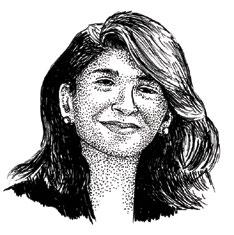
AFTER A YEAR of assigned reading, kids may be understandably reluctant to pick up a book. But we’ve got just the thing to reinvigorate middle graders: a summer reading challenge that makes browsing for books feel like a game. There’s just one rule: Young people must check off each step to complete the challenge. Kids can choose to read anything they like, though the titles we’ve suggested—even those not set during the warmer months—capture the pleasures of summer: camp, travel, and the joy of doing absolutely nothing. As for the rewards? A true sense of accomplishment—and a desire to keep reading.
1. READ A LAST-DAYOF-SCHOOL BOOK.
Our suggestion: An end-of-year celebration awaits the characters of Emma Steinkellner’s graphic novel Last Day Pool Party (Labyrinth Road, April 7), but these kids have plenty of drama to deal with, from a friendship feud to the fallout of an embarrassing viral video. Still, Steinkellner keeps the vibes as sunny as her poolside setting; these good-hearted, empathetic characters find ways to
help each other bounce back—and enjoy the party.
2. READ A TRAVEL STORY.
Our suggestion: While visiting his grandparents in India, Texan tween Rohan observes a tiger and her cubs at the sanctuary his grandfather runs. Danger looms— poachers, a mining project encroaching on sanctuary land—but Rohan and his family are determined to protect these majestic yet vulnerable animals. Varsha Bajaj’s Roar (Nancy Paulsen Books, May 12) sees its shy, sensitive protagonist embarking on a transformative journey, reconnecting with his roots while summoning the courage to stand up for what he believes in.
3. READ A SUMMER CAMP BOOK.
Our suggestion: After Rubie learns that BFF Riley won’t be accompanying her to Camp Pineview, she agrees not to do anything on their “Ultimate Camp Experience” list. Unsurprisingly, she breaks that promise but wrestles with feelings of disloyalty. Relying on a diary format, Maddie Frost’s Really Rubie (Aladdin,



June 2) shifts between pure goofiness (fans of butt jokes, this is your book) and moments of heartfelt vulnerability—in other words, the coming-of-age experience in all its awkward glory.
4. READ A STORY WITH AN UNLIKELY HERO. Our suggestion: The title character of Zach Weinersmith’s Sawyer Lee and the Quest To Just Stay Home (Farrar, Straus and Giroux, June 16) is committed to a life of sheer laziness, but despite his efforts to do nothing, he finds himself helping best friend Angela take part in the town’s gourd competition. Absurdist humor, clever wordplay, and an unforgettable narrative voice (Sawyer feels like a middle-grade Bertie Wooster) blend for a tale that will resonate with couch potatoes the world over.
5. READ AN ADVENTURE NOVEL. Our suggestion: Jenny Howard’s Transylvania County (Roaring Brook Press, July 21) follows Dig, a wayward tween whose parents have sent him to stay with his aunt and uncle in hopes that his wellbehaved cousin’s habits will rub off. Instead, Dig discovers that there may be some truth to a local myth involving Count Dracula. Though most grown-ups in Dig’s life are dismissive, several classmates join him as he investigates. Howard has all the ingredients for a gripping tale; most satisfying of all is the vicarious thrill of seeing kids embark on adventures entirely free of adult supervision.
Mahnaz Dar is a young readers’ editor.
A girl struggles with loss while making friends, dealing with bullying, and facing down injustice in this debut by Hartman Derr (Cherokee).
Following the deaths of her Cherokee dad and English-Scotch mom, 12-year-old Raven Miller and her paternal Aunt Coral move to a new town, where her aunt has a new job. There, she hopes to move on from the mistake that “cleanly split [her] life into Before and After” and the things—like baking—that remind her too much of her parents. At her new school, Raven quickly runs afoul of the popular crowd, but she
manages to make some friends. Navigating all these changes isn’t easy, and as Raven learns more about life in small-town Bear Creek Falls, she grapples with being one of the few Native students and with the unfair power structures upheld by the adults around her. Together with her friends— and the little bit of magic that they nurture amongst themselves—Raven is ready to take a stand, though not without some missteps along the way. Raven’s journey, which addresses grief, stereotypes, identity, agency, and more, unfolds with warmth and depth and is told in a way that respects
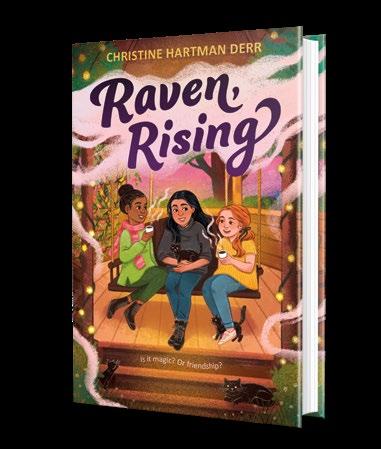
young readers’ intelligence. The narrative addresses some darker realities, while leaving space for Raven and her friends to shine, demonstrating the difference that collective voices can
make and the healing that can be found in community. A heartfelt and relevant story that’s brimming with hope. (glossary, reading list, publisher’s note) (Fiction. 8-12)
Christine Hartman Derr
Jennifer Hamey
that still has a
Alexander, Damian | First Second (224 pp.)
$22.99 | $15.99 paper | July 28, 2026 9781250860200 | 9781250860194 paper
A boy finds that looking to the past helps alleviate his loneliness. In this graphic memoir, whitepresenting gay boy Damian and his older brother live with their grandmother Nanny; their mother died when they were toddlers. Nanny cared for the boys, trying “really hard to fill the mom-shaped hole” in their lives and to “be the mother who had never been there for her.” Now in eighth grade, Damian recounts how he still feels like an outsider. Whenever these feelings overwhelm him, his imagination takes him into the past, sometimes to Nanny’s childhood with her two sisters in foster care, a time that inspires many of the stories she tells. Sometimes he tries to imagine what his mother’s life was like when she was his age, a more difficult endeavor since Damian’s connection to her exists through photographs and stories “gathered over time from anyone who knew her.” In the muted artwork that features many close-ups of people’s faces, Alexander expertly captures small moments of worry. The story’s movement through different time periods (distinguished by different color palettes) offers glimpses into the interlocking lives of a family separated by tragedy. Like real life, the book doesn’t have a neat resolution, but it does offer a sense of closure as Damian realizes how positive Nanny’s influences have been and how the concept of a mother is broader than he originally believed. The author’s note
includes photos along with more information about Alexander’s family. Poignant, bittersweet, and delightful. (Graphic memoir. 9-12)
Archer, Peggy | Illus. by Gaia Bordicchia Little, Brown (40 pp.) | $18.99
August 11, 2026 | 9780316579339
The scene is set for frights, but a trio of witches has some delicious magic that offers everyone a thrill. Archer provides a suitably shivery soundtrack (“Whoosh! goes the wind! / Hoot! goes an owl”) as the young witches, sporting hats nearly as tall as they are, enter a derelict Victorian manse, set against an eerie blue-gray backdrop. But a wink from one and the emergence of warmer hues hint that all isn’t as it seems. These youngsters prepare to cast a spell, observed by the owl, a cat, a spider, a mouse, and a “musty, dusty ghost.” Accompanied by more sound effects, they sweep, build a roaring fire, place a cauldron in the fireplace, and generally make the place more inviting. Surprise! Guests arrive: a moaning mummy, a grinning, greenskinned goblin, and a “huge, hungry ogre, / with a rumble-grumble tummy.” Drinking hot apple cider, they gather by the fire. And soon the magic happens: Popping sounds, followed by a cauldron bursting with popcorn for all the creatures. Eating and sharing “not-tooscary stories” (like this one), everyone has a “haunting good time.” As Bordicchia’s attractive images grow more colorful, even the supernatural creatures seem
friendly-faced. A selection of well-chosen details will reward repeat reads; this charming tale trades scares for happy surprises. Two of the witches and the ogre are light-skinned; another witch is darker-skinned.
A gentle take on spooky season that still has a classic Halloween feel. (Picture book. 4-8)
Baden, Morgan | Pixel+Ink (240 pp.)
$18.99 | July 14, 2026 | 9781645953012
Series: Famous Anonymous, 2
Two pairs of siblings who created popular videos for their anonymous account behind their parents’ backs return in this second series entry. Luke, Harper, Sophie, and Gus made videos for the social media platform Cre8 while dressed in costumes that hid their faces. As summer vacation begins, they learn they’ve been banned from the site after someone reported them for violating community guidelines. Exuberant Harper heads to theater camp, while Gus is enrolled in a writing class at the community center. Luke and Sophie, the older siblings, face complicated problems. Autistic computer genius Luke misses Cre8 the most of the bunch. Sophie, who’s worried about turning 13 and “all this stuff about being a girl” that she doesn’t know, drifts through the summer missing her best friend, who’s now part of Made Ya Laugh, a group making prank videos. Luke launches a lawnmowing business, and Sophie becomes a counselor-in-training at the rec center, and a deepening friendship (with a hint of romance) develops between them. The chapters rotate among the four leads’ voices and are enlivened by text chats and comments from their followers. But without the first book’s wacky filming scenes and need to hide everything from their parents, much of the fun is lost, and the story falls flat. Contextual clues in
the first volume pointed to Luke and Harper being white, and Gus and Sophie being Black.
Lacking action and a sharp focus on social media issues, this second book fizzles out. (Fiction. 9-12)
Bagley, Jessixa | Simon & Schuster (240 pp.)
$14.99 | July 14, 2026 | 9781665922357
Series: Jazzy the Witch, 2
Jazzy’s back! Jazzy, the “famous biking witch,” and her gal pal Aggie are preparing for a new school year at the Enchantra School of Craft.
On the first day of school, Jazzy and Aggie meet their new classmate, Estrella Moonbeam, who over the course of just one day manages to provide all the right answers in Madame Melcha’s witchstory class, take over Aggie’s role as assistant to Madame Henbane, and insult Jazzy’s stitching of her broom seat. After Estrella challenges Jazzy to a bike race to school—and beats her—the friends declare that they must keep an eye on Estrella. Will Jazzy and Aggie ever find common ground with the new girl? The book approaches themes of insecurity, bullying, and unkindness with care and lots of comic touches that lighten the mood. Jazzy lives with her moms and Granny Titch, broommakers who run a local besom shop. They’re always willing to dispense sage advice and, following a comical mix-up with a broom supplies order, lots and lots of popcorn. Mom, Mama, and Granny Titch help Jazzy see Estrella in a different and more compassionate light. The simple backgrounds, primarily in white and shades of gray, allow the brightly colored people and important objects to pop. Jazzy and her family read Black, aqua-haired Aggie appears white, and Estrella has tan skin and purple hair.
Another fun, pun-filled stroll through a delightful witching world. (witch information and activities, minicomic) (Graphic adventure. 7-11)
Baines, Becky | Illus. by Hannah Marks Paw Prints Publishing (112 pp.) | $18.99 July 14, 2026 | 9781223189697
Senior Detective Spark Bubblewand gets along with a little help from his friends. Today’s suspect at the Mythical Bureau of Investigation is a fairy, photographed in the People Place (the realm of humans) without a disguise or paperwork. Spark and his rookie partner, Squatch (a hulking but naïve sasquatch), confront her with the evidence and sentence her to a year in the Pony Pasture. Squatch wonders if the punishment is too harsh, but the pair must move on to their next case: A mermaid’s purse was stolen. The mermaid, Coral, turns out to be a member of the Sea-cret Guard, protecting the ocean’s treasures: in this case, Blackbeard’s map. Soon the fairy reveals that she, too, is a Guardian and joins Spark and Squatch in their investigation. A pair of mice—Hickory and Dickory Dock—keep trailing them, raising suspicions early on. And then Cora is mer-napped! Baines’ beat is typically nonfiction, and appended notes on real mermaid purses, mermaid myths, mice, Blackbeard, and more, along with a character guide, show her sure hand. Spark’s vanity and silly swears (“Fluffy frog fingers!”) and Squatch’s earnest misunderstandings add amusement. Marks’ goofy line drawings enliven every page. The mash-up of fantastical elements and hardboiled detective story will garner plenty of fans for this series opener. Magic and laughs fuel an engaging and goofy mystery. (Chapter book. 7-10)
Bally, Neesa | Illus. by Geeta Ladi
Abrams (40 pp.) | $18.99
June 9, 2026 | 9781419773693
A power outage offers unexpected joys. A family of five—two parents, two kids, and a grandparent, all brown-skinned with dark hair— are unwinding for the night when the neighborhood is plunged into darkness. Bally’s succinct stanzas focus on the sensory impact: “Knees bump. / Toes stub. / Hands grasp blindly, / searching, seeking.” After lighting a few candles, the family gathers at the table, irked by the inconvenience of it all: no screens, no air conditioners, only makeshift fans. But one of the parents opens a window, and the night air brings a “reprieve / from the prickly heat.” Soon, everyone begins to appreciate the unexpected benefits of the blackout. Neighbors arrive with food, a game of chess, and a musical instrument. The kids make shadow puppets and suck on frozen treats from the defrosting freezer, and everyone gathers outside beneath the stars. When the power comes on, it’s a jarring interruption, one that evokes mixed emotions, but fond memories of the night linger. In an author’s note, Bally mentions that she drew upon her experiences growing up in Trinidad, where such outages were common. Ladi relies on soft lines; the warm glow of light—from candles or stars in the night sky—illuminates the darkness enticingly.
A tempting invitation to turn off the lights, put down the screens, and live in the moment—at least for a night.
(Picture book. 4-8)

Baltazar, Art | Papercutz (88 pp.) $17.99 | May 5, 2026 | 9781545826362

A silly simian fights funny villains. Webster was once an average lab monkey confined to a cage, but his life changes when a radioactive spider bites a teen on a science field trip to the laboratory (presumably the boy heads out the door to become Spider-Man). Webster gobbles down the altered arachnid, and superpowers ensue. That night, an explosion destroys the lab. Webster escapes, while other lab animals are transformed into ominous, sharp-toothed mutants: A mild-mannered rhino becomes an otherworldly menace, a shark and a lizard merge into the Shizzlerd, and a pink octopus, a dopey platypus, and the doctor who ran the lab are fused into Doctor Octoplatypus! Webster battles the lot in a series of comic book–style capers, scaling tall buildings, slinging spiderwebs, and occasionally accepting help from other animal allies. The lightly sketched plot allows readers plenty of room to enjoy Baltazar’s gleefully goofy artwork and happy-golucky hero, whose antics remain steadily slapstick throughout. The author/ illustrator initially created Webster as a send-up of superhero tropes; this committed creative exercise happily offers kids a gateway into the genre even as it revels in its winking homage. Unapologetically wacky, beautifully bonkers, a great intro to comics for young readers. (bonus comics) (Graphic fiction. 8-12)
Beckett-King, Jo | Simon & Schuster (272 pp.)
$17.99 | July 21, 2026 | 9781665967204
Series: A Bea Bellerose Mystery, 2
When their aunt is accused of stealing a priceless diamond, cousins staying in a fancy hotel get on the case.
Tween cousins Bea and Céline Bellerose, who had Parisian adventures in The House of Found Objects (2025), are reunited in New York City, where their Aunt Juliette, a journalist, is interviewing French actor Eva Rousseau about her first Broadway role. But when the Tiffany Yellow Diamond necklace Eva is borrowing goes missing, Aunt Juliette is arrested, and the girls investigate, hoping to catch the real thief and prove her innocence. Someone is leaving the girls clues—but are they bringing them closer to the truth, or are they meant to distract? Bea and Céline get help from Zane, the hotel owner’s son (on whom Céline has a crush), as they rush around Manhattan, following clues to landmarks like Grand Central’s Whispering Gallery and the Empire State Building. Technology plays a crucial role, from trackers in suitcases to using a phone for research to surveillance footage. The girls have a lot of independence, though Bea’s parents, who live in New Jersey, check up on them occasionally. Red herrings and Agatha Christie references abound in this zippy, fast-paced mystery. The clashing personality differences between the cousins in the first book have eased;
Daffy, inventive storytelling on any world. Or worlds.
RODEO HAWKINS AND THE SONS OF DISASTER
they’re kind and supportive to each other, so the story’s tension comes from the developing mystery and high stakes as Aunt Juliette’s court date approaches. Main characters are cued white.
Read this in a New York minute. (Mystery. 9-13)
Bellière, Charlotte | Illus. by Ian De Haes Trans. by Katy Lockwood-Holmes Floris (40 pp.) | $18.99 | May 5, 2026 9781782509516
In this French import, a game of make-believe leads to thoughtful conversations about families. A trio of kids settle on their roles: a mommy, a daddy, and a baby. More youngsters, diverse in skin tone, show up: “We can be your other children.”
The response—“Sorry, there’s only one kid in this family”—prompts the others to weigh in: “I’d love to be an only child, and not share my toys with anyone!” “There are nine kids in my family and we don’t mind sharing our toys.” One youngster has two mothers; another’s mother lives far away, so they don’t see each other often. One child has two homes: Mum’s and Dad’s. One kid lives with a nonna, an aunt, an uncle, and a dog. The dialogue feels realistically childlike and organic, with each kid registering surprise that other families diverge from their own but also exhibiting accepting attitudes as they learn about their peers’ home lives. The narrative ends with children deciding that playing Families is too complicated (instead they’ll play School)—a slightly odd conclusion, given the takeaway that there’s no wrong way to be a family. On the whole, though, Bellière has crafted a helpful introduction to the topic. As each child talks, a lovely full-color image of their family
appears on the facing page. De Haes makes ample use of shadows, lending the visuals a cozy, homey tone. A playful primer on all things family. (Picture book. 4-8)
Bemis, John Claude | Illus. by Nicole Miles Holiday House (280 pp.) | $24.99
August 11, 2026 | 9780823445134
Series: Rodeo Hawkins, 2
T he only surviving Sidney Poblocki on all the many parallel Earths finds his loyalty to lively, enigmatic Rodeo tested by a villain’s evil scheme.
Despite efforts to bring them up to speed, readers unfamiliar with the series opener may flounder as the mildly surreal continuing storyline takes a few more dizzying spins in this second entry. Being the last of the murderous Paladins still at liberty after Rodeo’s application of the Plunger of Truth, bad guy Athelstan concocts an uncharacteristically clever ploy to steal the powers of the “fiendish tweenzilla” who wielded it by exploiting her friendship with the multiverse’s last living Sidney—newest and only boy member of her closely knit posse, the Daughters of Mayhem. The trap is sprung, naturally, just as a tiff has Sidney questioning the depth of that friendship. Breakneck visual pacing and the frequent use of silent sequences and reaction shots to enhance both comical and dramatic moments give Miles’ cleanly drawn frames an appealing cinematic feel as events hurtle toward a tumultuous climax. At the head of a cast that is, thanks to incremental differences between worlds, wildly multicolored and multispecies, the two brown-skinned leads come through swimmingly for one another—and also deal just deserts to Athelstan with an assist from Rodeo’s large and astonishingly versatile wad of bubble gum.
Daffy, inventive storytelling on any world. Or worlds. (Graphic science fiction. 9-13)
Bowles, David | Illus. by Charlene Bowles Lee & Low Books (80 pp.) | $15.95 paper May 12, 2026 | 9781947627734
Series: Tales of the Feathered Serpent, 3
Hunahpu and Xbalanke, the rambunctious young demigods of corn, journey to the Underworld to save their father and uncle while restoring balance between realms.
Picking up after the events of The Hero Twins and the Magic of Song (2024), Bowles and Bowles’ latest ups the fun to mythic proportions. After playing a ball game so loud that it can be heard in Xibalba (the Underworld), Hunahpu and Xbalanke receive an invitation from the King and Queen of Death to play against the dark lords. Prepped by their Underworld mother, Lady Blood, the demigods descend into the Realm of Fright. The brothers must contend with the dark nobles and all their tricks, tests, and torments, overcoming all trials until the demigods of corn sacrifice themselves “to wield the ultimate power of renewal.” Shortly thereafter, whispers concerning a boisterous pair of clowns travel across the lands of Xibalba, eliciting a summons from the King and Queen of Death for a realm-altering performance. Volume 3 of David Bowles’ series delivers on the whimsical promise of its immediate predecessor, charting an epic battle of wits and feats in the Maya underworld. A consistent source of cool charm, Charlene Bowles’ energetic, strong-lined artwork accentuates the enchanting characters once more.
Utterly triumphant. (author’s note) (Graphic fantasy. 8-14)
Brundtland, Carl | Illus. by Claudia Dávila Kids Can (164 pp.) | $16.99 | June 2, 2026 9781525310058 | Series: A Nansi Graphic Novel, 2
A young athlete continues to come into her own in this latest in the series. With best friends Ayesha and Angela by her side, Nansi’s dealing with the summer heat, which makes running track a challenge. Meanwhile, Ayesha’s managing stage fright while rehearsing for MacDude (a kid-friendly version of Macbeth). A rift emerges between the two girls when Nansi accidentally sends a goofy video of Ayesha to Nansi’s longtime track rival, Tania, who shares it more widely. Though Nansi’s clearly at fault, she’s quick to blame Tania and begins plotting her nemesis’ downfall. Dávila’s bright digital illustrations feature expressive cartoonish character designs that allows the cast to shine. The tale ranges from comically outlandish to narratively subtle; clever readers are clued into how one-sided Nansi and Tania’s rivalry may actually be. While Nansi has a lot to learn, she relies on a great support system—including her firm but loving Granny—and an unrelenting charisma that makes the lessons as clear as they are hilarious. Dubbed “the original storyteller” by her family, Nansi approaches life with an appealing dramatic flair; her machinations, frustrations, and eventual growth are earnest and true to life. Nansi, who’s Black and of Jamaican descent, heads up a diverse cast.
Funny and smart, this series gets better as its lead grows wiser. (Graphic fiction. 8–12)

For more in the Nansi Graphic Novel series, visit Kirkus online.
IF THE MOON
Budde, Mariann Edgar | Illus. by Holly Hatam | Flamingo Books (32 pp.)
$18.99 | July 7, 2026 | 9798217041909
A heartening secular parable from Episcopal bishop Budde, who drew national attention after calling upon President Donald Trump to show mercy to the vulnerable.
“There once was a girl who wished she was brave. But mostly…she was not.” Our unsure protagonist encounters another girl, a bold youngster who invites her to embark her on an adventure. First, they must climb a hill. The not-so-brave girl has a list of excuses why she can’t, but her new friend offers some gentle words of wisdom: “The first step is the hardest, but it’s also the bravest.” After they make it to the top, they confront other challenges, like a rope swing (“Just because you have to try something again doesn’t mean you failed,” reassures the brave girl) and a tree (“Sometimes being brave means asking for help”). Budde, who knows something about bravery herself, narrates this fablelike tale with a gently guiding tone that rings true. Notably, she stresses that being courageous is a work in progress: “I think we’re all learning to be brave all the time.” Hatam’s illustrations depict sweet-faced, cartoonish characters against collage-style backdrops that pop with tactile textures. The protagonist has paper-white skin and black hair; her friend has brown skin and hair. A boon to uncertain youngsters everywhere. (Picture book. 3-7)
Burgess, Matthew | Illus. by Matthew Forsythe | Stonefruit Studio/Sourcebooks (40 pp.) | $19.99 | August 4, 2026
9781464244049
Two kid lit powerhouses unpack the potential for beauty in the word if A short-haired, pale-skinned child quivers beneath the covers. “If can be a dark room where worries swell and rise…” That terror swiftly makes way for curiosity, though. Imagination takes hold, and the kid dives through a quilt into an ocean of possibilities. We discover what would happen “if you were a fish” or “if you were a hummingbird zipping around a garden.” Relying on jewel tones, Forsythe shifts perspectives creatively; on a spread from readers’ point of view, we see a pair of small hands spread out beneath a snowy sky (“If you were a snowflake on a fingertip, what perfectly unique pattern would appear?”). Burgess’ intermittent rhymes become more consistent as the text progresses, though at times, he relies on soft rhymes (lair with fur, for example). As the young protagonist returns to the cozy bed seen earlier, we notice the quilt, embroidered with the animals and wild adventures our hero has dreamed. At times, Forsythe’s scenes evoke the feel of classic picture books, as with an image similar to Max’s ship in Maurice Sendak’s Where the Wild Things Are (1963). Not all readers will understand the necessity of knowing how to shift from scary “ifs” to more fun ones, but everyone who picks this one up will enjoy the wild ride. Creative storytelling and art quell fears and reassure young minds. (Picture book. 3-6)
Burk, Rachelle | Illus. by Denise Holmes Sourcebooks eXplore (64 pp.) | $18.99
July 7, 2026 | 9781464233210
Gentle directives for children and adults alike. As the “Letter to Caregivers” at this book’s start explains, the days are long and the years are short when it comes to raising toddlers. But help can be found in these 50 rhymes. Each page contains a brief verse, a takeaway, and a conversation starter for events as mundane as brushing one’s teeth and as complex as respecting personal space. Entries are broken up into sections covering health and hygiene, social skills, and safety. Burk’s straightforward, workmanlike rhymes get the job done. Far more impressive, however, is the range of difficult topics they cover; for example, children are instructed to tell someone when they know a “bad secret.” Holmes’ brightly colored, simple art peppers the pages. The diverse cast of kids remains consistent throughout—and readers will enjoy looking for familiar characters—but it is unfortunate that the same Black female character is the instigator in both the “No Name-Calling” and the “No Hitting” sections (arguably two of the most contentious topics). On the whole, though, this one should be a go-to for anyone with a little one in their life. Teaching toddlers can feel overwhelming; expect new parents to cling gratefully to this guide. (Picture book/ poetry. 2-4)

Cañas, Daniel | Illus. by Verónica Aranda Trans. by Jon Brokenbrow | Cuento de Luz (32
pp.) | $19.95 | May 19, 2026
9788410438194
After losing her home, a squirrel attempts to find a place she belongs.
Snug in her tree nest, with caches of nuts hidden across the forest, Hazelnut is ready for winter. But beavers, unaware that Hazelnut is living there, fell her tree. Remorseful, they invite Hazelnut to take up residence in their lodge, still under construction. Hazelnut doesn’t like the work of soggy log-hauling, so she seeks accommodation elsewhere, but her other hosts each have rules that Hazelnut’s unable to follow; for instance, the bats ask that she sleep upside down like them, but that task proves too difficult. Finally, she meets a family of squirrels with a high tree home and, of course, an undemanding, familiar way of life; happily, Hazelnut settles in for good. Translated from Spanish, this cozy tale concludes with the rhymed final message “Whether your home is up high or down low, / be a good neighbor wherever you go.” Though Hazelnut’s unfailingly polite, it isn’t entirely clear why some of the other animals can’t be more accommodating. Still, the art offers appealing introductions to the animals’ different homes. The illustrations are stylized, and the animals are cartoonish: Anxious Hazelnut weeps with her mouth wide open, wears a bright scarf, and carries a hobo stick with her thin-line arms. The changes in viewpoint are dramatic, and the colors are vibrant, even in winter.
A snug tale of home lost and, at long last, found. (Picture book. 4-8)
Cervantes, Angela | Harper/HarperCollins (240 pp.) | $18.99 | July 28, 2026
9780063245945 | Series: Anomalies 53, 2
Ollie Robles and his best friend, Garen Jackson, reunite in a magic land when his dad and her mom are kidnapped by a power-hungry elf.
Ramping up the fighting with artful references to dangling eyeballs and similar rousingly gruesome notes, while adding a horde of zombified ogres to her opener’s cast of golems, dragons, predatory mermaids, and other dangerous Mythicals, Cervantes dishes up a second action-packed crowd pleaser. Struggling both to awaken his own powers as a shape-shifting gilgemish and to master the destructive impulses of his ravening inner dragon, Ollie nonetheless rushes to the rescue when Dr. Robles and Dr. Jackson are snatched by Nole, a raving, megalomaniacal scene-stealer with a dastardly scheme that threatens the human world as well as the Shadowland. Lighthearted banter—”There’s nothing wrong with eating forest goblins, you know. Or even a tasty gnome. Extra crunchy!”—plus a small but feisty manticore sidekick effectively buoy the tale’s overall tone. Readers fond of plot twists will find them in plenty as Ollie (who presents Latine), Garen (who has curly brown hair, green eyes, and golden freckles), and magical allies old and new battle their way through internal and external crises before finding happy, hard-won resolutions. Breathless otherworldly escapades, featuring flights, fights, and a dandy villain. (Fantasy. 8-12)
A snug tale of home lost and, at long last, found. WELCOME, LITTLE SQUIRREL
Ama’s Purse
Cheng, Charlotte | Illus. by Xindi Yan Rocky Pond Books/Penguin (32 pp.)
$18.99 | August 4, 2026 | 9780593696774
A family car trip enables magical memories, new and old, thanks to Ama’s magical purse.
“Thump! goes Ama’s purse as we start a new adventure.” Everyone piles in: parents in the front seats, Ama (Grandmother in various Chinese dialects) and the young narrator in the back. The quartet leave the city, making various stops; Ama’s purse releases charming surprises along the way. “A powderwhite moon rabbit bounces merrily” across laps when Ama pulls out her compact. At the farmers market, Ama extracts her purse and “fragrant blooms begin to sprout from an island far away.” As the road swerves, Ama pulls out prayer beads wafting with “the smell of the smoky incense” to quell the protagonist’s motion sickness. The family stops at a gas station; when Ama stumbles and the purse tumbles, the child quickly retrieves and returns the precious treasures. Finally arriving at the beach, the family joyfully jumps into making new memories. Author and illustrator reunite after I Miss You Most (2024) with another adept collaboration. Yan enhances Cheng’s sweet prose with visual details: The narrator still requires a booster seat, the rising sun marks the family’s progress, and the loss of the child’s grandfather is fairly recent. Yan presents her spreads and scenes in soft, inviting hues, particularly highlighting the unconditionally nurturing relationship between grandparent and grandchild. The family is apparently of East Asian descent; the farmstand customers (the only other peripheral characters) are diverse.
An engaging multigenerational homage to enchanting family adventures. (Picture book. 3-7)
that death doesn’t have to be frightening.
Clarke, Bethan | Illus. by Anders Frang
Kane Miller (32 pp.) | $15.99
June 1, 2026 | 9781684646425
T he goat and the mole from Holey Moley (2023) return for another squabbly book-length conversation. Goat Gus wants to play a game, and mole Mavis is all in—and proposes tiddlywinks. Gus has other ideas: “Let’s play WHACK A MOLEY!” Gus pulls out a giant pink mallet from seemingly nowhere. “Let’s…not,” says Mavis. So Gus suggests something called “QUACK A MOLEY,” which finds an aggrieved Mavis in a pond in a duck costume with a hook at the top that Gus looks ready to snare with a long pole. On it goes, with Gus proposing games that entail Mavis getting eaten (“SNACK A MOLEY”) or weighed down by wooden boards. Mavis retaliates with suggestions that Gus, in turn, finds off-putting—e.g., “Does Goat-y FLOAT-Y?” during which Gus seems on the verge of drowning (“Glub…”). As in the earlier story, the forced rhymes are the point and will hit some readers squarely in their giggle zone. But whereas Holey Moley found Gus and Mavis engaged in a rousing guessing game, this tale is rather cruel, the idea of inflicting discomfort played for laughs. (Think Tom and Jerry, not Elephant and Piggie.) Frang’s art is once again in its full loveliness, depicting the goings-on in an airy woodland setting featuring interesting plant life and, apparently, an off-page prop closet. A rather mean-spirited follow-up to a satisfying outing. (Picture book. 4-8)
Collins, Ross | Nosy Crow (32 pp.)
$18.99 | July 21, 2026 | 9798887771731
A dynamic animal duo butt heads about whether Bear has the wiles to scare Mouse. This rhyming story begins with Bear—the outsize polar kind—announcing a campaign to spook Mouse: “It’s Halloween tonight— woo-hoo! / I’m going to scare you / through and through!” Mouse, a sweater-clad gray rodent, responds dismissively to each of the costumed Bear’s several tries. “Now, what is this you’ve turned into? / A werewolf? / Oh. I missed the clue. / The smell of wet dog follows you— / may I suggest / some pet shampoo?”
But Mouse cops to being impressed by Bear’s eeriest attempt: “Now, this is something weird and new! / A creepy monster. / Right on cue!” But wait: How can this (gulp) fanged reptilian beast be Bear in disguise if Bear is standing right behind Mouse? The story plays like an Abbott and Costello routine, but as in the other books in this pleasing series, the central twosome’s mutual affection leaves a stronger impression than their squabbling does. Collins’ book’s worth of “oo” rhymes are unpredictable without ever compromising on syntax or rhythm. The action unfolds against a range of solid-color interior walls, which make for tidy layouts in which the hijinks play out.
One doubts that there will come a time / when Collins can’t think up a rhyme. (Picture book. 3-6)
Connors, Jerrold | Union Square Kids (40 pp.) | $18.99 | August 25, 2026 9781454959229
For bored little bovines, mass exodus offers a new kind of fun.
Two little cows are NOT ready to rest. “My legs are wiggly,” says Jasper. “My tail is too twitchy,” adds Cleo. Their restlessness soon vanishes, however, when a spotted cow in their herd receives a nasty bite from a hungry horsefly, lets out a huge scream that alarms the others, and inadvertently causes a “STAMPEDE!” All at once the whole herd is barreling through a farmers market, a movie theater, city hall, and more. The text neatly breaks up key moments of calm with the laugh-out-loud chaos of the stampede. Connors also adeptly eschews logic, allowing his cows to thunder through a rainforest and Denmark and even under the sea (all meticulously tracked in a map at the end of the book). The narrative ends less with a bang and more with a whimper as the now exhausted calves bed down for the night. The influence of Looney Tunes humor can be seen throughout the narrative, clearly replicated in the art. And with its specific mix of quiet and loud, this tale will guarantee pitch-perfect storytimes, so consider pairing alongside Lane Smith’s tonally similar Recess (2025). A herd mentality leads to unexpected hilarity in a tale that is both paean and send-up of old-fashioned cartoons. (Picture book. 3-6)

For more funny picture books, visit Kirkus online.
Coons, Betony | IVP Kids (32 pp.) | $18.99
May 19, 2026 | 9781514013151
Lush imagery helps readers visualize relaxation techniques. Stars shine outside a pale blue room; through a flower-framed door, a darting swallow leads the way to the titular path. A child (seen only from behind) at the foot of a sweeping set of steps is urged to set down a burdensome load as an unseen narrator assures youngsters that “you are not alone.” References to a higher power throughout (“the Spirit,” “God’s love”) reinforce that message. Far below, the child sees a labyrinth and enters it; though things grow dark, we’re reassured that “this is a labyrinth, not a maze. You cannot get lost.” Mindfulness techniques—an emphasis on deep breathing, active listening, taking in sensations all around—set a tranquil tone. On several pages, readers are asked to trace the path with their fingers, adding an engaging interactive element. The art is rife with hidden details. Animal and botanical forms are more or less realistic, though washed in luminous colors: rose, emerald, sapphire. The soothing text should lull many overstimulated readers into a sense of calm, though some might see the enticing imagery as an excuse to extend reading time and defer dozing off. This extravagantly illustrated guided meditation will find appreciative path takers. (author’s note) (Picture book. 4-8)
Davault, Kay | Atheneum (288 pp.)
$24.99 | August 4, 2026 | 9781665972277
Series: Misfit Mansion, 2
Cute monsters work their way through friendship and personal issues as new threats to peaceful coexistence with the nearby human town arise. Following two years of amicable relations in the wake of the events of Misfit Mansion (2023), the monstrous residents of Mr. Halloway’s Home for Horrors are busily converting their residence into a haunted house in order to host Dead End Springs’ annual harvest festival. Blue- skinned Iris isn’t as happy as she could be, though—not only because as a dreamon created by a human’s nightmare she wonders whether she’s inherently evil, but because she’s being snubbed by her friends Agnes and Kel, who lately always seem to be off in town working on monster fashion designs. Little does she suspect that serious complications are on the way, in the form of the arrival of two highly mercurial Pied Piper Parrots, whose magic songs stir up negative feelings within everyone in earshot, and the return of Anemone Greeves, a monster-hating villain with a fiendish scheme to turn the folk in town into a terrified anti-horror mob. Still, a few intense moments and scary transformations notwithstanding, Iris and her compatriots positively radiate adorability throughout. Strongly evoking chibi-style manga, Davault’s art sets that tone with a brightly colored cast of big-eyed horrors and racially diverse humans.
Cute monsters work their way through friendship and personal issues.
A sweet take on the theme that differences can be overcome even in the face of self-doubts and mood swings. (Graphic fantasy. 8-11)
De La Torre, Cynthia | Quill Tree Books/ HarperCollins (32 pp.) | $19.99
July 21, 2026 | 9780063353992
A young Latine girl navigates her first experience with loss and discovers that death doesn’t have to be frightening. Galina’s beloved Tía Luz María has died; she’s now buried in the cemetery near her home. Unsure of what death means, Galina worries aloud to her parrot, Cantinflas, that her aunt has become a “scary calavera” (skeleton). Overwhelmed by fear and grief, she hides photos and other things that remind her of Tía in the back of her closet. Still, reminders slip through. The radio plays a song they used to sing together, and those hidden pictures tumble out of the closet, leaving Galina uneasy and confused. When Galina finally looks through the photos, she begins to remember the joy she and Tía shared. Soon after, Cantinflas leads her to the cemetery. Though she expects something terrifying, Galina instead finds a place full of warmth and love. The graves are decorated with candles, marigolds, and other offerings. There, Galina meets her aunt’s spirit and feels comfort rather than terror. Together, they care for the grave and reconnect through song and memory. This Día de los Muertos–inspired story gently validates the fear and sadness children may feel around death while offering a reassuring perspective on remembrance. Lush, textured illustrations transform grief into something tender and beautiful, honoring both loss and the enduring presence of love.
An inviting portrayal of grief that reassures readers that the bonds of love will always continue.
(author’s note) (Picture book. 5-9)
Joanna Ho Recommends
Otis Knows (How To Be a Bear)
By Liz Garton Scanlon & Martha Brockenbrough Illus. by Stephanie Laberis (Beach Lane/Simon & Schuster, May 5)
Inspired by an Alaskan brown bear named Otis who became a sensation during Fat Bear Week, this
book encourages readers to celebrate their individuality while instilling a love of the outdoors. I took my own kids to Katmai National Park, the home of Fat Bear Week, during summer break a few years ago, so the bears, this place, and this book all have a special place in my heart.
This is a sweet and funny picture book that turns a common childhood experience into a poignant reminder of life’s most important things.
By Karina Yan Glaser (Allida/HarperCollins, 2025)
I was sucked in on the first page and couldn’t put this book down! It will transport you to new worlds that
intersect in the most beautiful and unexpected ways.
Joanna Ho’s most recent book is A Room With a View (Harper/ Harper Collins, May 26).


Nini & Connor:
The Tale of the Hawk
A richly told children’s story set in a peaceful garden inspired by Old Town Fredericksburg. Two devoted siblings care for the lively scurry of squirrels in their backyard—until the sudden arrival of a Red-tailed Hawk throws the garden into chaos. To protect the creatures they love, Nini and Connor must find courage together.
ISBN: Paperback 9798994344903; Hardcover 9798994344910 For general inquiries: www.niniandconnor.com
Written in a gentle, classic voice and designed to be read aloud, the book is available on Amazon, Barnes & Noble, and through Ingram.

X Scheppler


EDITORS’ PICKS
This Is Not About Us by Allegra Goodman (Dial Press)
A World Appears: A Journey Into Consciousness by Michael Pollan (Penguin Press)
Rumpelstiltskin, retold by Mac Barnett, illus. by Carson Ellis (Orchard/Scholastic)
Few Blue Skies by Carolina Ixta (Quill Tree Books/HarperCollins)
THANKS TO OUR SPONSORS:
Born Sick in the USA by Stephen Bezruchka (Cambridge Univ. Press)
Prey Before Bed by James Sackos
We Met at a Halloween Party by Marcus R. Ferrell
Karl Marx and the Lost California Manifesto by Scott D. Carlson
Peace Warrior by Greg Payton with J.T. Molloy
Galloping gallantry: In The Lions’ Run, an orphan joins the French Resistance. BY MEGAN LABRISE
This special episode of Fully Booked , which originally dropped on Feb. 3, was dedicated to the best books of that month.
In our lead editors’ segment, Laurie Muchnick, John McMurtrie, Mahnaz Dar, and Laura Simeon share their top picks in books for the month. Then, I’m joined in conversation by Sara Pennypacker, author of The Lions’ Run, illustrated by Jon Klassen. As Kirkus writes in a starred review, “An orphan in occupied France during World War II finds his courage and a sense of family” in this “compassionate and complex” middle-grade historical fiction.
Pennypacker is the author of several acclaimed novels for middle-grade readers, including the bestseller Pax (a National Book Award longlist title) and Pax, Journey Home ; the series Clementine and Waylon!; and Summer of the Gypsy Moths, Here in the Real World , and Leeva at Last. She divides her time between Cape Cod and Southern California.
Here’s a bit more from our starred review of The Lions’ Run: “Thirteenyear-old Lucas Dubois is a foundling who’s growing up in the abbey orphanage in the village of Lamorlaye. He has such a tender heart that the other boys call him ‘Petit Éclair.’ Lucas rescues a litter of kittens from being drowned on a nun’s orders and goes to hide them in one of the stables left empty in nearby Chantilly after their owners took their thoroughbreds and fled from the Nazis. But the stable is already in use—Alice, the teenage daughter of an English horse trainer, is protecting a racehorse from being commissioned for the war until she can be smuggled to Kentucky in a month’s time.…This immersive story is driven by Lucas’ emotional yearnings and the sometimes complicated relationships



The Lions’ Run Pennypacker, Sara Balzer + Bray | 288 pp. | $18.99 Feb. 3, 2026 | 9781250392817
among the well-drawn characters, but history and the specific setting are accurate and carefully delineated, creating a strong sense of place.”
Pennypacker says that The Lions’ Run was inspired, in part, by thinking about injustice, and how kids feel about injustice, over the last decade. We talk about orphans and abbeys, 1940s France, whether Pennypacker has any “rules” for writing historical fiction, the difference between writing for young readers and adults, interspecies friendships, the brilliance of Klassen’s illustrations, and much more.

To listen to the episode, visit Kirkus online.
Demers, Charles | Illus. by Dorothy Leung Tradewind Books (32 pp.) | $19.95 June 15, 2026 | 9781990598449
By turns playful and tender, a love letter from parent to child. As Demers’ rhyming text suggests, love occasionally makes parents say ridiculous things: “I great big meal and tiny snack you.” It also stirs overpowering emotions (“And on each clock / My favourite minute / Is every one / That has you in it”). Some of the book’s sentiments are a bit cliched—“And every year / my love lasts longer // And every week / my love grows stronger.” Others are entirely original—and more than a bit goofy: “I sure do love you / Yes, I adore you // And I a window / And I a floor you.” The text is silly, sweet, and easy to identify with; children will find it appealing. The meter is occasionally off by a beat, making certain pages clunky when reading aloud. Nevertheless, the book’s brevity makes it ideal for short attention spans or when parents are looking for “just one more book” before bedtime. Leung’s muted, autumnal hues lend a quiet note to this portrait of a loving family, while familiar parenthood moments— checking on a sleeping child, reading together—make this a relatable book that will resonate equally with caregivers and youngsters. One of the parents has short brown hair; the other has black hair like the youngster; all three are tan-skinned. A short and sweet read that hits the right notes. (Picture book. 0-4)
de Oliveira, Jen | Knopf (80 pp.) | $10.99
July 14, 2026 | 9798217024759
Series: Pip & Pals, 1

Friends take part in a cosmic game of pretend. TJ, a small bird, encounters a strange-looking creature—but it’s just Pip the otter, covered in seaweed! She shakes it off, but while taking another dip, she gets tangled once more (swimming’s a challenge for her)—and this time, it turns her green. TJ decides that Pip must be from “otter space” (pun definitely intended), just like an alien in one of TJ’s comics. They speculate about what Pip’s home planet might look like and decide that Pip will split her time between Earth and space. “So you’ll migrate like me!” points out TJ. The friends build a spaceship with the help of the crafty Gulley. While things don’t go quite as planned, it all ends with a message of self-acceptance. Pip’s earnestness and TJ’s wild imagination make for a winning combination; though TJ’s off-the-wall fantasies are hilarious, the bird’s confidence in Pip is just as satisfying as the moments of zaniness. De Oliveira relies on a few panels per page and relatively short sentences, resulting in an easy reading experience. The story takes place almost entirely by the seaside, and the pages are filled with blue skies and yellow sand. Between Pip, TJ, Gulley, and Herman the hermit crab, there are plenty of colorful species to bring visual variety to each lighthearted scene.
An imaginative day at the beach, with more than a splash of laughter.
An imaginative and ultimately affirming day at the beach, with more than a splash of laughter. (jokes) (Graphic fiction. 6-9)
Diesen, Deborah | Illus. by Dan Hanna Farrar, Straus and Giroux (32 pp.)
$18.99 | July 7, 2026 | 9780374392888
Series: A Worry-Worry Whale Adventure
For some little swimmers, Halloween isn’t a whale of a good time. Willa Whale is unhappy. She’s dressed in a “scratchy” vampire costume, complete with fangs. All around her, fish in various disguises are swirling with anticipation, but candy and pumpkins aren’t enough to assuage her feelings. Willa doesn’t like diverging from her routine, so even the Halloween school celebration and the parade are upsetting; so are the decorations in her neighborhood. It’s “much-too-much and all-at-once,” as she puts it. Jumpy, unsettled, and overwhelmed, Willa is ready to bail. Luckily, she knows how to identify her emotions, and she does so back home. Her parents validate her feelings, and Willa finds a way to enjoy the holiday on her own terms, including coming up with a new, unfussy, minimal costume, staying home for a while to give out candy, and, later, trick-or-treating in a familiar locale. Diesen’s bouncy rhymes are reassuring, if sometimes a bit uneven. Hanna’s bright cartoon treatment makes the sea world colorful, if largely indistinguishable from land; the sea creatures look like they’re floating in the air, while other settings include a classroom, cemetery, and house. Nevertheless, kids who don’t happily embrace the unfamiliar will find plenty of comfort—and a few ideas for adapting. A kind and gentle approach to spooky season sure to soothe the anxious. (Picture book. 4-8)
Escandell, Victor | Chronicle Books (60 pp.)
$18.99 | July 7, 2026 | 9781797233024
Series: Sleuth & Solve
Logic and, sometimes, prior knowledge come into play in solving this set of simple posers related to human anatomy, originally published in Catalan.
As in previous volumes the puzzles are set up as games of logic and deduction for competing players or teams, with solutions and point scores for difficulty hidden beneath flaps. Some are simple enough, such as an optical illusion featuring two rectangles that only seem to be different sizes. The titles and setups are often funny; for “A Study in Scarlet,” for example, a panicked patient’s red poop turns out to be caused not by internal bleeding but the beet and celery smoothie he consumed the day before. Often, though, young readers will likely be left more confused than amused due to the absence of crucial clues, or possibly translation issues. A statement that the cornea is the only body part without blood vessels leaves one young sherlock’s guess about hair unanswered, for instance, and on a section devoted to reproduction, a grinning sperm cell named “ProtoPablito-18754” beats the competition to make eye contact with smiling egg “ProtoMartita-1” but then says “I’m leaving!” without any mention or sign of an actual union. In Escandell’s droll duotone illustrations, most human faces are line drawings and so mostly as white as the paper, but some do show variation in skin tones.
Uneven fare for young logicians and anatomists. (Nonfiction. 7-10)

A kind and gentle approach to spooky season sure to soothe the anxious.
Fang, Vicky | Candlewick (64 pp.)
$14.99 | July 7, 2026 | 9781536239133
Series: One Mad Cat
For more in the Sleuth & Solve series, visit Kirkus online.
A grouchy feline plays school sleuth. Cat is a moody creature. Her list of dislikes is lengthy—hugs, jokes, and noise, to name a few. But she likes a few things, too, and luckily for readers, she especially appreciates puzzles. Arriving at Critter Elementary, Cat finds her pal Hedgehog upset over a missing book. Cat graciously offers to locate Hedgehog’s lost Book of Pie! After a scan of Hedgehog’s backpack and an information-gathering interview, Cat seeks out Bunny, a suspect who loves pie. Cat finds Bunny happily scarfing a slice on the playground, but Bunny claims innocence: “I like eating pie, not reading about pie.” A tour of the school takes Cat to the library to check for the book on the shelves and then back to Hedgehog’s locker, where she gets sticky pink goo on her paws. She counts to 10 to calm down and collects her scattered observations to solve the mystery. Narrative text recording Cat’s inquiry process is interspersed with the intrepid orange-and-white detective’s brief questions and exclamations. Cat’s frustration with everything from crumbs to crowds to bubblegum will provoke gleeful giggles from a sympathetic young audience. Fang’s digital illustrations are cleanly colored and primarily functional, with the delightful exception of Cat’s dramatic facial expressions, creating a
straightforward experience for emerging readers.
A simple story line, dry humor, and an enjoyably cranky feline protagonist combine for a satisfying whodunit.
(Fiction. 4-8)
Foxe, Steve | Illus. by Daryl Toh | First Second (112 pp.) | $21.99 | $13.99 paper | August 4, 2026 9781250850249 | 9781250850232 paper
Series: Archives of the Unexplained, 3
Creepy true tales of mysterious disappearances in the Bermuda Triangle, related by an ancient mariner.
“Are you sure your…impressionable young minds…want to hear such terrible tales?” enquires a strange tour guide to maritime museum visitors Neal and Divya. Following Neal’s eager response—which readers will certainly echo—the guide proceeds to regale the pair with the stories of how both the USS Cyclops, at the time the largest ship in the Navy, and an entire squad of torpedo bombers dubbed Flight 19 disappeared without trace off the coast of Florida in, respectively, 1918 and 1945. Along with adding brief references to similar tragedies, including, tellingly, to two of the Cyclops’ sister ships, the grizzled storyteller— usually depicted in Toh’s melodramatic scenes with craggy features underlit for maximum atmosphere—offers strange coincidences and suggestive circumstantial evidence related to the episodes, as well as various theories that have been proposed to account for them, ranging from aliens and magnetic anomalies to
innate design flaws that created vulnerabilities to unusual winds and waves, or even sabotage. Anyone wishing to make their own judgments will find plenty of maps and source citations, plus historical background on the whole notion of the Bermuda Triangle. Most figures in the art are light-skinned; Divya is brownskinned, while Neal and the guide are tan-skinned.
Thrills and chills aplenty for fans of historical mysteries. (bibliography) (Graphic nonfiction. 9-11)
Frick H., Fernanda | Colors by Fernanda Frick H. & Lauren “Perry” Wheeler
Dial Books (352 pp.) | $24.99
August 25, 2026 | 9780593407325
A young Chilean weightlifter tries to balance passion with heavy expectations. Samanta Sánchez is driven by her blazing obsession with weightlifting. Her parents disapprove—“All you get are bruised hands, sore muscles (that get bigger every day)…and no space for friends or any normal hobbies!”—but nothing diminishes Sam’s dedication, especially once she’s recruited by her idol, Eva Dos Santos, the first Latin American weightlifter to win Olympic gold. She qualifies to train at the Brazilian athlete’s High Performance Center of Corazón with champions from around the Americas in preparation for the Pan American Games in a year’s time. Sam has a tense relationship with her roommate, a privileged white girl from the U.S. who, unlike Sam, has had access to formal training. She also struggles with self-doubt and the pressure of proving herself to her family, pushing herself too hard and losing sight of her life beyond sports. Sam’s story will resonate with readers who have ambitious goals or struggle with burnout, whether they’re athletes or not. The expressive illustrations have dynamic panel layouts that keep readers engaged while emphasizing emotional beats that
are enhanced by the varied, glowing color palette. Sam develops more muscle tone as the story goes on, subtly indicating her personal and athletic growth. Her moments of insecurity are accompanied by shifts to a more messy, chaotic artistic style, immersing readers in her mental state.
A resonant, motivational story about determination and the importance of a healthy work ethic. (process notes, sketches) (Graphic fiction. 8-12)
Gallagher, John | Random House Graphic (224 pp.) | $14.99 | August 4, 2026
9780593712306 | Series: Rex Rocket, 1
A spaceship captain successfully navigates his first real mission. Rex is a curiously stretchy, blueskinned dachshund who was ejected from S.T.A.R.R. Command ranger school, then stole his hot-dog-in-a-bun–shaped spaceship, the SS Sagan, from the Oppenheimlich Space Museum. This backstory is related by General Dill, Captain Rex’s pickle-shaped superior. Dill recruits Dr. B, a purple rabbit, to help him prove that Rex is “incompetent. A goofball! A nincompoop!” But Rex, who’s beloved by his crew, is amusingly oblivious. Dill sends Rex and the rest of his motley team (robot Spud, shark head Trog, terrier Argyle, and sentient banana Peele, plus a mysterious entity—a voice that speaks to them from an air vent) to Gratuvius 4, a planet in the Snarzon galaxy. Their mission: to protect the royal castle from “a scary, hairy giant monster.” But Rex and the gang discover that King Krog, an interloper from another planet contracted to supply Gratuvius 4’s essential Element X to S.T.A.R.R. Command, is using a hypno zapper to keep the inhabitants overworked and overmining the planet’s resources. Twenty short, humorous, action-packed chapters (that include a couple of flashbacks and concurrent storylines) introduce the
characters and set the stage for subsequent entries in the series. Gallagher’s illustrations and framing match the story’s cheerful cartoon energy. The inclusion of a Random Astro Fact after each chapter nicely paces the action.
A lively inaugural adventure. (drawing instructions) (Graphic adventure. 7-10)
Gold, Andrew | Illus. by Sanne Dufft Random House (32 pp.) | $18.99
June 2, 2026 | 9780593903094
A n easy-listening earworm gets the picturebook treatment.
“Thank you for being a friend! // Traveled down a road… / and back again. / Your heart is true. / You’re a pal and a confidant.” The titular song began its life in 1978 as a hit for singer-songwriter Gold and became the theme song for the enduringly beloved sitcom The Golden Girls (1985-1992). The kid-appropriate lyrics lay out various ways that the singer’s devotion to the song’s unnamed dedicatee would be unrivaled: “If it’s a car you lack, / I’d surely buy you a Cadillac!” The trouble—for this picture book and others inspired by songs—is that when not sung, lyrics can be listless on the page and, when the chorus comes along, repetitive. (“Thank you for being a friend” appears eight times on this book’s last few pages.) Helping matters is the variety in Dufft’s gouache and coloredpencil art, which captures racially and generationally diverse friendship clusters playing soccer, making music, and otherwise having a good time. Dufft’s figures are sometimes awkward, but she includes a thrilling easter egg for adult readers, for whom this book will likely be a nostalgia trip: repeated appearances by an elder who looks remarkably like Golden Girl Sophia Petrillo—a suspicion confirmed toward book’s end by an illustration of the fabulous foursome sharing what sure looks like a cheesecake. Unlikely to be a storytime hit, but good retro fun for adult readers. (more information on the song) (Picture book. 4-8)
Gorsuch, Neil & Janie Nitze | Illus. by Chris Ellison | Harper/HarperCollins (48 pp.) $21.99 | May 5, 2026 | 9780063473973
U.S. Supreme Court Justice Gorsuch and his former clerk Nitze look at the primary signers of the Declaration of Independence and what happened after their famous act of defiance.
Rather than stopping at the signature page, the co-authors follow the tense build-up and the dramatic fallout. Descriptions of imprisonment, financial ruin, and other consequences bring a sobering depth to what can often feel like a distant historical milestone. The book’s strength lies in this focused deep dive, illuminating what happened after the ink dried. But that narrow lens also limits it. While the text celebrates the notion that “all men are created equal,” it only briefly (and insufficiently) acknowledges those who were excluded, relegating this critical context to a small aside. Women, children, and people of color are mentioned as revolutionary participants but largely glossed over, their stories sidelined rather than deeply explored. Ellison’s illustrations have a softly polished, painterly realism that gives the book a stately feel, matching the idealistic tone. And while the artwork depicts one notably Black figure, the book offers little context for who she is or what her presence represents. With advanced vocabulary, dense text, and historical assumptions that may go over younger readers’ heads, this work is best suited for those
already equipped to question the story it tells—as well as what’s left out. A compelling chapter of history—but not the full declaration. (Informational picture book. 7-9)
Graegin, Stephanie | Tundra Books (64 pp.) $18.99 | July 14, 2026 | 9781774886229
Series: Tiny Bean’s Big Adventures, 2
Everyone’s favorite hedgehog returns for more bitesize escapades following Everyday Bean (2025). Irrepressible Bean is back, grandmother and stuffie Clem in tow. Graegin’s picture book is divided into eight vignettes, each one replicating the charm of her predecessor. In one, Grandma and Bean discover what they’re capable of under the influence of strawberry ice cream; in another, Bean upends a friend’s princess party by showing up in an adored witch costume— and inspiring the pink-clad host to dress as a “princess-witch.” In this touching intergenerational tale, the easy love between grandparent and grandchild is on full display. Grandma is always there for Bean, though fully capable of sending the youngster out to play by herself when necessary. Graegin has also perfected the art of the understatement; a scene in which Bean is unexpectedly lifted into the sky by a kite is summed up like so: “Bean thinks this is the best day ever. Grandma thinks it might be the worst.” As for the art, Graegin populates this world with tiny background details, like the giant strawberry in Grandma’s kitchen that features prominently in more than one tale. In the end, Bean’s
A Chilean weightlifter tries to balance passion with heavy expectations.
tales tap into a comfort and stability palpable between two family members who care for one another.
Small adventures ideal for small readers. (Picture book. 3-6)
Grant, Shauntay | Illus. by Daniel Minter Quill Tree Books/HarperCollins (32 pp.)
$19.99 | June 2, 2026 | 9780063251380
A Black child’s dive into the deep blue sea leads to a sacred encounter with a sunken slave ship.
“Come and take a trip into / the biggest, brightest, bluest blue. // Where buoys bounce. / Where I am brave. / Where divers dip / below the waves.” At first glance, this appears to be a lighthearted swimming story, but, as readers soon discover, it’s much more—a reckoning beneath the sea. As the youngster descends and comes across the ancient ship, the setting darkens and history begins to surface: “A deeper dive. / A closer look. / A thousand hands the ocean took. // What happened here? Where did they go? / What were their names? I want to know.” Communing with the spirit of another youngster, our protagonist is immersed in the past, encountering the souls of the ancestors: “the rhythmic rap of dancing drums; / Asante, Bono, Fanti tongues.” Both text and art are filled with lush imagery; Minter’s luminous artwork juxtaposes the child against the bright blue ocean and line drawings of the Sankofa bird, an Adinkra symbol embraced across the African diaspora that represents the ability to learn lessons from the past while moving forward. Backmatter explaining the Sankofa symbol or the history of slave ships and wrecks would have strengthened the work; young readers will need some grounding from educators or caregivers. Still, the narrative offers a moving reflection on remembrance, healing, and reconciliation.
A potent meditation that twines past with present. (Picture book. 6-9)
Grierson, Lauren, Katie Arnold, Scott Webber, Hattie Hearn & Melody Triumph Illus. by Lauren Radley, Kay Wolfersperger & Liz Kay | Neon Squid/Macmillan (208 pp.) $24.99 | July 28, 2026 | 9781684495856
Series: Useless Knowledge
A grab bag of figures and follies of the past, from the con artist who swindled a scrap dealer into purchasing the Eiffel Tower to a select gallery of sports the modern Olympics has dropped, like solo synchronized swimming.
The term useless is, of course, provocative, particularly when applied to knowledge —but here five researchers have worked hard to separate historical wheat from chaff and in general done a creditable job of dispensing with the former. Some of the anecdotal entries aren’t exactly trivial, such as a reference to how over 60% of the military casualties in the American Civil War were due to disease. But even when dropping names that would be, or should be, familiar to most readers, the authors usually go for lesserknown achievements such as Abraham Lincoln’s 1992 induction into the National Wrestling Hall of Fame, or how fans’ demand for locks of his hair prompted composer Franz Liszt to get a dog and send “fur clippings” instead. There’s some myth-busting, too; no, Charlie Chaplin did not enter a Charlie Chaplin lookalike contest…and lose. A
few illustrations, such as a view of Robert Peary literally shoving Matthew Henson aside (“Outta my way!”) at the North Pole, don’t come off as all that funny, but in general the wisecrack-laced cartoon art does add further comical notes. People depicted are racially diverse throughout. A satisfying assortment of eye candy for browsers to discover and share. (index, glossary) (Nonfiction. 9-12)
A Revolutionary
Grove, Tim & The Mount Vernon Ladies’ Association | Abrams (160 pp.) | $19.99 May 12, 2026 | 9781419780936
An illuminating character study of our first Commander in Chief in peace and war. Working his script for an upcoming Mount Vernon exhibition into a clear and coherent profile, Grove presents the major events of Washington’s career in ways that shed light on his evolving beliefs and values. “George,” as he is commonly dubbed throughout, comes off as a lifelong reader who combined book learning, travel, and reliance on experts to make himself not only a successful military and political leader but an innovative experimental farmer. His transformation from loyal British citizen to American patriot and his uncommon leadership qualities are well documented in historical records. Changes in his attitudes toward slavery are less well chronicled, and so along with offering unusually frank and detailed accounts here of the lives of enslaved
A satisfying assortment of eye candy for browsers to discover and share.
people at Mount Vernon and elsewhere (as much as can be known), the author looks for hints of sincere abolitionism in his public and personal documents. Much as it may seem anachronistic, even inflammatory, to characterize Washington’s agricultural practices as “sustainable” and his criticism of Britain as “radical,” remarks about his presidential policy of selecting staff on the basis of ability, not social connection, and the warnings in his farewell address about the dangers of extreme partisan politics add a pointedly topical tone to later pages. The frequent illustrations offer a mix of period portraits and new ones identified as AI reconstructions. Broad, searching, well researched, and occasionally provocative. (timeline, endnotes, sources, art credits, author’s note, index) (Biography. 10-14)
Hahn, Dee | Illus. by Ashlyn Anstee Dial Books (32 pp.) | $18.99 | July 21, 2026 9798217006649
A child and her grandmother adjust to big changes. Their backpack and purse stuffed with “adventure sandwiches” and “special pudding,” respectively, fellow explorers Etta and Grandma Maisie climb trees and build forts and earthworm castles together. Soon, however, they embark on separate adventures—Grandma Maisie moves into a retirement home, and Etta enters kindergarten. But Maisie’s neighbors and Etta’s classmates don’t seem to understand them. Etta’s worm castle revolts Aarav, Jiro dislikes Maisie’s pet frog, and nobody wants to share Etta’s “spinach and jam explorer sandwich” or Maisie’s “peanut butter and salami explorer pudding.” So when Indi invites Etta to play blocks, Etta declines, fearing Indi will dislike the gnome mazes she and Maisie always built. And when Olga invites Maisie to play Scrabble, Maisie feigns tiredness—“What if the rules were too
tricky to remember without Etta there to remind her?” But when Indi and Olga rescue Etta and Maisie from a jam during the Grandparents’ Picnic, the explorers encourage each other to venture toward friendship. Though Maisie plants seeds with Jiro and Etta colors murals with Aarav, the duo keep some things “just for themselves”— vanilla and broccoli pudding, for instance. Etta and Maisie’s quirky bond radiates from Anstee’s soft-edged cartoon illustrations, and Hahn’s gentle text reassures kids and adults alike that it’s never too late to make new friends. Etta is brown-skinned, while Maisie is pale-skinned; background characters are diverse.
A sweet friendship tale for adventurers of all ages. (Picture book. 4-8)
Dear Math,
$19.99 | August 11, 2026 | 9798889835790
A child reluctantly attempts to befriend math. Math unnerves Nikhil, who prefers art, storytime, and gardening. But Nikhil’s teacher, Ms. Oates, suggests that the youngster write letters to math (“She thinks it will help us be friends. It won’t”). Over time, Nikhil’s hostility (“You make my tummy hurt,” “I still don’t want to be friends”) turns to curiosity and even passion. Told entirely through letters, the book spans a school year as Nikhil begins to realize math is everywhere. Shapes, like octagons, are all around us; folding snowflakes helps the child learn about symmetry—and lets the youngster fuse a love of art with an appreciation for math. Turns out that astronauts also use math—another career path for Nikhil. Humor and clever wordplay drive the narrative (“Did you hear the one about the hen who counts her eggs every day? She is a brilliant mathemachicken,” riffs Nikhil
at one point). Haldar makes clear that the child’s dislike of math is rooted in a fear of messing up—something that will resonate with many students. But, she emphasizes, math is about more than getting the right answers; it’s about passion and discovery. Martinez’s energetic artwork has a childlike flair (doodles appear on Nikhil’s letters) while also clarifying the concepts discussed. Brown-skinned Nikhil is cued South Asian.
A buoyantly funny take on the ubiquity and practicality of math—with encouragement not to fear mistakes. (author’s note) (Picture book. 4-8)
Harney, Jennifer | Little, Brown (40 pp.)
$18.99 | August 18, 2026 | 9780316578936

A city kid’s wildest dream—and Mom’s worst nightmare—arrives courtesy of one very generous, very misguided uncle. When Uncle Dave ships Maxine Louise a pony, the young protagonist launches a campaign of relentless, gleefully unhinged logic to convince exasperated Mom to let the animal stay. Harney mines this absurd premise for pure comedic gold: Maxine Louise earnestly declares that “the apartment is the pony’s natural habitat” and that ponies love watching late-night news (they “do so enjoy being up-to-date on current events”). Relying on loose, energetic linework with bold, saturated palette shifts, Harney’s illustrations match the text beat for beat. The compositions are dynamic and inventive, with speech bubbles used as both text and visual architecture—teal for Mom’s rising panic, golden yellow for Maxine Louise’s sunny scheming—seamlessly mirroring the emotional temperature of each spread, sometimes swallowing entire pages. One standout spread depicts the pony gazing out from the bathtub, shower cap perched on its head, surrounded by cascading
pink bubbles while Mom recoils in the doorway—a masterclass in comic timing and visual chaos. Maxine Louise and Mom are richly expressive foils: one all scribble-haired exuberance, the other wild with disbelief. The final twist—Mom’s revenge gift delivered to Uncle Dave— lands with perfect comedic timing. Uncle Dave, Mom, and Maxine Louise all have light brown skin.
An irresistible romp powered by kid logic at its most gloriously stubborn. (Picture book. 4-8)
Haraštová, Helena | Illus. by Lucia Derčalíková | Trans. by Andrew Oakland Albatros Media (32 pp.) | $16.95
July 14, 2026 | 9788000078366
Series: Keep Your Rascals Under Control, 1
Could Hugo’s daily setbacks be the work of a memory goblin haunting him?
Hugo’s forgetfulness leads to lost belongings, overlooked responsibilities, and messed-up schedules. Not fun. Hugo suffers so much that he imagines a “sneaky little trickster” who might be behind it all, undermining him.
Artistically inclined Hugo even provides a droll labelled portrait of the creature! We follow Hugo through his disasters: missing a soccer session with his friends because he’s looking for his cleats, neglecting to take his puppy for a walk, and forgetting about a field trip. Even his short-term memory is wonky. Then Hugo finally decides to make some changes. He implements common-sense steps: early preparation, checklists, calendars and scheduling planners, and other memory helpers, like mnemonics. He also enlists help from trusted adults and peers and rewards himself when he does well. Hugo’s forgetfulness doesn’t vanish, but he tames the goblin. A final spread summarizes all the strategies covered. This Czech import offers useful advice, presented in a gentle, nonpreachy way. In amusing vignettes against minimal
backgrounds, tousle-haired, jug-eared, tan-skinned Hugo and other big-eyed, loose-limbed kids, who vary in skin tone, are rendered with specificity, along with the cute but troublesome goblin. A practical, visually engaging approach to a common problem. (Picture book. 6-9)
Hartman, Brooke | Illus. by John Joseph Red Comet Press (32 pp.) | $18.99
August 18, 2026 | 9781636552040
A family of fishers are ready for a day of fishing. Early one morning, a mustached adult, two kids—all brown-skinned and wearing life vests over warm clothes—and their dog launch a small green outboard skiff from a rocky beach. An intriguing overhead view depicts gulls, alert to possible food, soaring nearby as the humans deploy their gillnet, made up of vertical panels of netting. The fishers come across puffins, otter pups, and harbor seals. Beluga whales peer up at the boat from below— another enticingly angled image—and an orca draws close to the prow. All these creatures are “searching for a snack in the wide, blue sea.” Unfortunately, the fishers’ next encounter is with a “gloomy thundercloud, menacing and gray.” Reassuringly, the boat immediately emerges from the storm, “solid and secure…steady and sure.” The nets on each side have remained spread, and now a salmon run is hauled in, “fish for all of us in the wide, blue sea.” The author’s note and glossary offer useful bits of information and suggest that the book’s setting is Alaska. Gillnets, which often inadvertently trap wildlife, are controversial (and in some places illegal), but Hartman cites their positive aspects. Brightly colored, simplified, but realistic double spreads with varied fonts superimposed provide animated scenes, alongside exuberant rhymes and repeated refrains. Rocking sea rhythms and energetic art combine for a future read-aloud favorite. (Picture book. 4-8)
Herkert, Barbara | Illus. by Gordy Wright Tilbury House (40 pp.) | $18.99
June 16, 2026 | 9781668955130
Great blue herons combine grandeur, gawkiness, and grace.
On each spread, four poetic lines of text detail the birds’ breeding season, the use of present tense conveying a you-are-there immediacy. Wright’s accurate, freely sketched watercolorlike artwork, dominated by subdued hues of blue-gray, depicts these birds from a variety of perspectives. Sidebars relate further information (size, wingspan, diet, nesting and courtship, and the growth and maturation of the chicks). Herkert describes these birds hunting at night, though she doesn’t explain how their special vision makes that possible. We learn that heronries—or heron breeding colonies—often attract eagles, hawks, and owls, eager to prey upon the young birds. Between pages, one chick dies (readers aren’t told exactly how); the moment passes quickly, and the sidebar notes that such loss is common. Soon the surviving chicks are old enough to leave, and nests throughout the heronry “sit empty now”—but “next spring, the herons will return,” Herkert assures readers. Brief backmatter adds more information: Some great blues migrate seasonally, and conservation efforts are ongoing (though the author doesn’t mention that these birds are now happily in the “least concern” category). The sensitive artwork and spare text give the majestic great blues the focus they deserve.
An immersive portrait of a truly magnificent creature. (bibliography) (Informational picture book. 4-8)
Hest, Amy | Illus. by Christopher Thornock
Neal Porter/Holiday House (32 pp.) | $18.99
August 25, 2026 | 9780823460342
A kid bakes a pie and then goes to some lengths to get it to its intended recipient.
“The thing about pie is waking up early to make it. Look at you! You in the half-light, in the whispery quiet, stirring blueberries in the big red bowl.” With wonder and admiration, an adult describes a floppyhaired, pajama-clad, aproned child’s efforts to bake a pie from scratch and then deliver it to an initially unspecified destination: “And off you go! You on your old green bike, the breeze in your face and pie in the basket.” A biking mishap momentarily threatens the pie’s existence, but the crisis is averted, and the kid arrives unharmed (if tuckered out from all that pedaling) at “your secret destination. Where Grampa is waiting with a book and cool drinks on a blanket.” This sweetly simple multigenerational family story—the all-knowing parent narrator is a nice touch— concludes as it should: with a granddad-grandchild picnic of pie and fruity beverages, followed by a recipe for homemade blueberry pie. (Step one: “Ask a grown-up to help.”) Hest’s vaguely poetic text, which has a lulling “The thing about…” refrain, unspools across backdrops that are initially urban but turn pastoral. Thornock’s gauzy digital art in subdued springtime colors makes both settings look equally inviting. The family at the center of the narrative is pale-skinned.
A homey and original take on the selfless-deed story. (Picture book. 4-8)
Sensitive artwork gives the majestic great blues the focus they deserve.
HERONRY
150,000 TREES
Hewitt, Dylan | Boxer Books (40 pp.)
$18.99 | August 11, 2026 | 9781454713401
Ceci n’est pas un lapin.
A primly besuited bunny— bowler hat and suit a clear nod to the painter René Magritte—prepares to bite into a delicious carrot but is stunned to discover that it is not, in fact, a carrot at all. Turns out, Hungry Bunny is handling a mere picture of a carrot. Distraught (and ravenous), Hungry Bunny sets out to find a real carrot to munch on. Eventually, our hero stumbles upon a farm with what appears to be a real tractor, a real cow, and a real carrot! But, as the cow points out, none of this is real. Our protagonist isn’t “real,” either, though, so what does Hungry Bunny care? Hewitt goes right to the edge of breaking the fourth wall of this story yet never quite clarifies that the reason everything here is paper and paint is because it is, in fact, in a book. The fun mixed-media art proves the true lure instead; Hewitt has fun with an array of different art styles for the different carrots. The influence of Magritte will be evident to adult enthusiasts, but familiarity is not required for comprehension. Rather, the book should serve as inspiration for art teachers interested in replicating different types of carrot-inspired media. Droll illogical logic flirts with meta themes in a fun search for illustrated sustenance. (Picture book. 3-6)

Hirsch, Rebecca E. | Illus. by Jacqueline Tam | Tilbury House (40 pp.) | $18.99
June 9, 2026 | 9781668944905
A tale of courage and optimism in the wake of the Sept. 11 terrorist attacks. The book opens on a quiet Pennsylvania field on a beautiful fall morning. Present briefly yields to the past; miners fell trees to harvest coal. Then back to that autumn day. “Terror had struck.” A “plane, aimed at another building, had crashed here….All forty passengers and crew died.” (Though Hirsch doesn’t describe the motives of those responsible, an author’s note describes how those aboard United Airlines Flight 93 forced hijackers to bring the plane down in an empty field near Shanksville, Pennsylvania.) But that’s just the start of a new story: how a community built a natural monument to “the heroes who fought back. A place of healing” for those left bereft and for the mining-scarred land. A 200-acre forest—the work of volunteers who planted 150,000 trees over a period of 10 years—and memorial structures now stand. Tam’s art dramatically exploits perspective as vivid illustrations alternate between bird’s-eye views and underground scenes and veer from long shots to close-ups, sometimes within a single spread. People who vary in skin tone participate in the planting. Swirling, wavelike forms evoke life and strength, trees “lifting their limbs to the light” as hearts lift with hope in this account
of tragedy that admirably manages to emphasize the positive. A sensitive treatment that honors sorrowful memories while showing that healing is possible. (Informational picture book. 7-10)
Hopkins, Megan | Illus. by Devin Elle Kurtz Kane Miller (288 pp.) | $9.99 paper July 28, 2026 | 9780008812225 Series: Starminster, 1
To a girl raised in captivity, a hidden city of winged people is aweinspiring—at first. In Hopkins’ series opening debut, 11-year-old Astrid Crossley, who has “paperwhite” skin and “white-blonde” hair, knows no life beyond the dark rhubarb shed where she’s kept safe from unspecified dangers by her mother. Her desperation to see the stars leads to her discovery by Mrs. Wairi, one of the winged Librae. Claiming Astrid is a Librae on the cusp of fledging, Mrs. Wairi whisks her away to a fantastical city above London, which is invisible to unauthorized people. But something is rotten in London Overhead. At Starminster school, unfledged children are treated as lesser. When they stage a protest, the ruthless Headmaster expels them, then exploits them as free labor. Meanwhile, Mama mobilizes London Underfoot to find Astrid, who learns that other children are missing—but where are they? Astrid is a resilient, poignant character who’s struggling with big questions. How could her loving Mama steal her childhood? Why do London Overhead’s mysterious Luddite Overlords treat some citizens so cruelly? Kurtz’ opening two-page spread sketches the city of stone, marble, and flower-shaped buildings hovering above London, but readers may wish for additional illustrations to clarify aspects of the intricately imagined world described in Hopkins’ vivid prose. The story features a multicultural
Carole Boston Weatherford Recommends
Saving American Beach: The Biography of African American Environmentalist MaVynee Betsch
By
Heidi Tyline King, illus. by Ekua Holmes (Putnam, 2021)
This beautiful book chronicles the history of a beach founded by African Americans during the segregation era and spotlights the woman who worked to preserve it for future generations.
By Deborah Wiles, illus. by Jerome Lagarrigue (Atheneum, 2001)
In Mississippi in 1964, two
friends—one Black and one white—long to do everything together, but the color line won’t let them.
By
Johnnie Christmas (HarperAlley, 2022)
This middle-grade graphic novel follows Bree’s struggle to face her fear of water and challenge the myth that Black people can’t swim.
Carole Boston Weatherford’s most recent book is Black Hands (Crown, April 28).
For more summer reading recommendations, visit Kirkus online.


Carole Boston Weatherford
Children’s Book by Shaun Tan Coming This Summer
Hometown is a new middle-grade graphic novel from the Australian author and illustrator.
A new children’s book from Shaun Tan is coming later this year.
Levine Querido Books will publish Tan’s Hometown in late summer, the press announced in a news release. It calls the middlegrade graphic novel a “visually gorgeous, emotionally stunning (and frequently funny) meditation about what it means to belong, and what makes us who we are.”
Tan, an Australian illustrator and author, is known for books including The Lost Thing, which was

Shaun Tan
adapted into an Oscarwinning animated short, and The Arrival, winner of a Locus Award.
In a 2018 interview about his book Tales From the Inner City, Tan told Kirkus, “When I’m writing a story, I often don’t have a message. I wonder what it would be like to see a fish in the sky, bring it home, and show your mom and dad. I’m quite surprised that, in the end, they reveal something that’s more to do with human nature.”
“Imagine living in a perfect world,” Levine Querido Books says of Hometown. “You have a loving family, a beautiful home, awesome friends and about three hundred loyal pets. Everything is just as it should be. Until one day, when a stranger arrives. A stranger who looks just like you. A stranger with a very disturbing message…” Hometown is slated for publication on Sept. 1. —M.S.

For reviews of Shaun Tan’s books, visit Kirkus online.
KIRKUS REVIEWS

FATAL GLITCH
cast, and an appendix describes the birds from around the world whose wings appear on various Librae. A creative, attention-grabbing fantasy exploring themes of classism and love and desperation. (Fantasy. 8-11)
Kirkus Star
The Bats on the Bus Jackson, Alison | Illus. by Scott Magoon Christy Ottaviano Books (40 pp.) | $18.99 July 21, 2026 | 9780316584180
“The Wheels on the Bus” gets a Halloween makeover.
“The Bats on the bus hang / UPSIDE DOWN, / UPSIDE DOWN, / UPSIDE DOWN. / The Bats on the bus / hang UPSIDE DOWN… // All around the town.” So begins this gently ghoulish Halloween spin on the toddler singalong mainstay. Among the passengers who hop aboard are witches (who “scream… // WHERE’S MY BROOM?”), vampires ( “I’LL GET YOU!”), and zombies (“HERE WE COME!”). The book’s twist will likely surprise readers, and not just young ones: Turns out the bus is headed to a school, and at the end of the ride, the passengers remove their face-obscuring masks to reveal a racially diverse assortment of children who yell “TRICK OR TREAT!” at readers before disembarking and proceeding to a schoolyard Halloween party. It’s all carefully calibrated to stimulate without terrifying the original song’s littlest boosters. Magoon’s digital art has a mid-century
cartoonish look that’s just the right degree of unsettling with its color combos, which vary from page to page (mustard and olive, grays with purple, black and tomato red…). Keen-eyed readers will adore the story’s visual gags: The word Spirit is emblazoned on the bus, the school’s roof seems to feature two glowing eyes, and the pale-skinned bus driver, whose aesthetic is Morticia Addams meets Alice Cooper, wears a top hat with an otherworldly occupant.
A treat full of tricks. (Picture book. 3-6)
Jeffers, Oliver | Illus. by Oliver Jeffers & Kevin Waldron | Philomel (40 pp.)
$18.99 | July 7, 2026 | 9798217039999
A story about what doesn’t happen on a sick day.
Herbie, who presents East Asian and rocks a black puddingbowl haircut, has the sniffles, as well as a secret: When his parents tell him he’s staying home, he’s “really excited. A whole day off school! ALL TO HIMSELF!!” There’s loads to do at his house: Herbie builds a couch- cushion fort, works on his yo-yo tricks, watches cartoons, and more…and is finished with everything on his sick day to-do list by lunchtime. Herbie’s idleness means that he has brain space to think about school: “What if something really good happened there today? Like an EXTRA playtime? Or a DOG loose in the CORRIDORS?” Because the plot is centered on a child’s inactivity, there’s an extra onus on the art to add interest, and
the illustrators are up for the task: They get the story out of Herbie’s house by depicting the fruits of the child’s active imagination. “What if pirates invaded” and “the school needed everyone to HELP PROTECT its SECRET TREASURE CHEST?” The art, rendered in watercolor, gouache, pen and ink, and Procreate, has a daintily labored-over look; its elegance is reinforced by hand-lettered text. Readers shouldn’t expect a lesson on the folly of missing school: The story’s ending, which hinges on a sight gag, makes clear that this book is all in good fun. A winsome be-careful-what-youwish-for tale. (Picture book. 4-8)
Jones, Gareth P. | Illus. by Louise Forshaw Penguin Workshop (224 pp.) | $8.99 paper July 7, 2026 | 9798217143337
Series: Solve Your Own Mystery, 3
T he heat’s literally on as nearly all the magic disappears from suddenly sweltering Haventry, and you— yeti sleuth Klaus Solstaag’s assistant—must pick a path to find out where it’s gone.
Both a really big dragon and the upcoming Magicon convention will be seriously affected if the town’s suddenly absent magic isn’t recovered tout de suite. “My wiz is a was!” wails a woeful wizard. Capping most of the chapters with up to five different options to follow, Jones sends the hairy gumshoe and you, his unnamed point-of-view sidekick, scurrying back and forth to link clues and suspects to the theft—even as earthquakes and rising temperatures signal impending disaster. Having introduced a host of possible perps, ranging from Enid the Evil Enchantress (who’s the head of the entire League of Evil) to Moondance, “the world’s most inspirational unicorn guru,” and mad scientist
Night Mayor Franklefink, who disingenuously keeps insisting that it’s all just a temporary glitch in the abraca-router, the author provides plotlines aplenty ending in multiple separate denouements. Plotlines aren’t all that get tweaked here either; amused readers may well take to heart a witch’s remark at one point that “being evil is a lifestyle choice. It doesn’t mean you’re bad.” Forshaw’s lively scenes add to the fun and portray a multispecies cast of elves, cryptids, witches, and humans with subtly varying skin tones.
A spellbinder for Choose Your Own Adventure fans. (Mystery. 8-12)
Kelley, Marty | Sleeping Bear Press (32 pp.) $15.99 | August 15, 2026 | 9781534113404
Kids are all about testing the limits, and here are a dozen-plus extreme examples.
“You can do anything!” claims an unseen narrator before quickly amending that statement. After all, “you CAN’T balance ten tacos on top of your head.” “You CAN’T tuna fish, so don’t even try.” The imagined consequences—depicted in the accompanying artwork—are hilarious: tacos toppling from a youngster’s head, a kid strumming a wary-looking fish. The rest of the examples are equally ridiculous: lifting an elephant with a spoon, riding your bike to the moon, teaching a potato to dance, and expecting a squirrel to sport undies. Some lean into gross-out humor (“You CAN’T fart a rainbow,” “You CAN’T knit with nose hair to make a warm sweater”). In a reversal, the last few pages encourage readers to attempt whatever far-out feat they want—except hugging a shark. As in many of his previous books, Kelley’s artwork relies on firm outlines and both intense and mellow colors. The spring-loaded rhymed text adds to the fun for a combination that will
guarantee repeat reading and inspire youngsters to come up with even more outrageous ideas. The children pictured vary in skin tone and hair texture. You CAN’T imagine a book with more enjoyably implausible feats. (Picture book. 4-8)
Kelly, Erin Entrada & Eliot Schrefer Illus. by Jeannette Arroyo | Stonefruit Studio/Sourcebooks (144 pp.) | $14.99
July 21, 2026 | 9781464241048
Series: Fatal Glitch, 1
Reform camp turns out to be a competition with extremely high stakes for one selfabsorbed gamer. Sofia Mendoza injures her sister (after accidentally-on-purpose tripping her), so her father sends her to Forestjaw to reflect on her behavior. Things get off to a weird start: Monarch, Forestjaw’s leader and seemingly only real adult, greets the campers (or “candidates,” as she calls them) with a terrifying mechanical vulture on her shoulder before confiscating their electronics and fitting them with mysterious pieces of wearable technology called rankles. The camp’s connections to the popular Sandbox online gaming world quickly become apparent, and Sofia’s excitement grows when she finds out they’ll all be participating in a game that involves ranking and elimination. She’s the best Sandbox player around and quite certain she’ll come out on top. When the first candidate is eliminated, carried off by one of Monarch’s vultures, the stakes ratchet up, and vicious Sofia is determined to do absolutely anything it takes to win. Readers searching for redemption will not find it here; the complications of Sofia’s abrasive personality and serially selfish decision-making build through a fast-paced, tightly written, high-action tale. Arroyo’s well-timed
grayscale illustrations add depth, and Sandbox’s similarity to Roblox will make this creepy, witty technohorror series opener a popular pick among kids. Names cue diversity among the cast.
An immensely thrilling story starring a disturbingly devious protagonist. (Horror. 8-12)
Koch, Melissa | Illus. by Victoria TentlerKrylov | Holiday House (40 pp.) | $19.99 August 4, 2026 | 9780823456734
What can rocks reveal about the history of humankind?
A lofty poem about the different types of rock— metamorphic, igneous, and sedimentary—sets the scene even before this informational picture book’s title page, launching this human history–focused geologic trek across time. Next, we explore the many ways that humans across the globe have used stone throughout history: stacked into cairns to mark the way, built into walls and fortresses, carved into iconic sculptures, and more. Visual references to real-world monuments like the Great Wall of China, the Western Wall in Jerusalem, and Sacsayhuaman Fortress in Cusco, Peru, are enriched by robust backmatter explaining the types of rock that were used and each monument’s notable historical context. Tentler-Krylov’s illustrations have a warm, textured watercolor-and-pencil feel. Earth tones are brightened by vibrant pops of color, while diagonal shafts of light and softly blurred motion create movement and atmosphere. Spare, sometimes overwrought prose makes for a serene, immersive read, though a few stanzas stretched across multiple pages slightly disrupt the flow. People featured are racially and culturally diverse. A thoughtful look at the stories stone can tell. (further reading, bibliography) (Informational picture book. 4-8)
that helps round out the genre.
JUST
ASK ELSIE
Koontz, Ari | Feiwel & Friends (272 pp.)
$18.99 | June 16, 2026 | 9781250410986
A n 11-year-old takes an inclusive puberty class at her Unitarian Universalist church. Elsie Parker gets to spend eight weeks learning about important topics like the difference between sex and gender, but at school, her fifth grade classmates will get their puberty education only via a generic hourlong video in a gendersegregated class at the end of the school year. Elsie decides to fill the gap: She hangs a whiteboard on her locker, creating an anonymous advice column. Though some of her classmates poke fun and call her Puberty Girl, most seem to appreciate the service she provides, asking questions about pimples, periods, and the meaning of LGBTQ. She makes sure to look up facts using reputable sources before answering. The school administration isn’t as receptive, however. Elsie, who’s implied white, has recently been accepted at a prestigious arts and STEM–focused middle school, and she worries she may be jeopardizing her chances there if she gets in too much trouble. But through conversations with her Latina best friend, Mara Morales; her Pakistani and Egyptian American crush, Nadia Hadid; her bisexual mom; her transgender dad; and her parents’ friend Nate (her “DNA provider”), she realizes that sometimes it’s worth getting in trouble to make the world a better place. Some pop-culture references seem outdated, but Elsie’s voice and the social dynamics feel authentic, and the pacing is solid.
A fresh take on activism, fifth grade style, that helps round out the genre. (Fiction. 10-14)
Kurland, Jack | Frances Lincoln (40 pp.)
$18.99 | June 2, 2026 | 9781836007753
In this zippy tale from the creator of The Cat Who Couldn’t Be Bothered (2024), a dachshund learns that making mistakes is part of life.
Doris is accomplished at everything— skateboarding, finding sticks, swimming, high-fiving—until the morning she accidentally chews a hole in her owner Bill’s favorite slipper and panics. Her solution: bury the evidence. When a neighborhood gang of dogs catches her in the act and reassures her that they’ve all done far worse (one stole sausages; another ate an entire couch), Doris summons the courage to confess to pink-skinned Bill, who responds with warmth and forgiveness. Kurland’s digital illustrations are bold, rendered in a mostly limited palette of hot pink, red, teal, and yellow against generous white space—an aesthetic that gives the pages a pleasing, modern energy. The handwritten-style font reinforces the book’s casual charm. Compositionally, Kurland favors sequential vignettes—Doris repeated across a spread in mid-run, mid-leap, mid-panic—which suits the story’s pacing well. The supporting cast of colorful, geometrically stylized dogs adds warmth and humor to a reassuring message about self-acceptance. A hip, visually inspired entry in the growing genre of picture books about perfectionism. (Picture book. 2-5)
Kuskin, Karla | Ed. by Leonard Marcus Illus. by Marcellus Hall | Wordsong/Astra Books for Young Readers (32 pp.) | $19.99 August 4, 2026 | 9781662660184
Children’s literature luminary Marcus selects 20 of Kuskin’s (1932-2009) untitled, animalthemed poems, drawing mainly from her large trove of unpublished work.
Wry, keenly observed, and often short, Kuskin’s verse invites readers to ponder alongside her, as the longtime New Yorker thinks “gray thoughts / wandering through / a great gray city made of tall gray stone.” The titular gray cat, as the collection’s visual muse, appears on every spread, an alert watcher of creatures from the commonplace (birds and bugs) to the exotic (hippos and snakes). Hall’s elegant, limited palette of sepia and blue-gray unifies the project, but the omnipresent gray cat occasionally scuttles Kuskin’s intended narrative tone. The poet admires bird wings: “Keeping you up / letting you down / making me long to fly. / Making me wish for feathers.” Hall depicts multiple birds flying in different directions; the feline looks skyward. (Arguably, a cat would much prefer to hunt a bird than fly like one.) In one of a handful of poems about unconventional pets, a child narrator details a pet toad’s household moves (“Down the hall / and up the stair / kerplop into my mother’s chair”); the image of the cat eyeing the amphibian has a somewhat predatory vibe. But such mild hiccups don’t prevent Kuskin’s poems from shining through. And children will likely enjoy spotting the gray cat’s appearances. These newly published offerings from a beloved children’s poet are not to be missed. (afterword by Marcus, index of first lines) (Picture book/poetry. 4-8)
A slug gets ready for his close-up in this U.K. import.
THIS IS WHAT A SLUG DOES
Lavoie, Laura | Illus. by Mike Boldt Viking (32 pp.) | $18.99 | July 7, 2026
9780593695463
A rabbit learns calming strategies to help with his big bunny feelings. Bunny, who has large, expressive eyes and two protruding front teeth, is adorable. Except when he is angry. Then he turns from “oh so sweet” to full of rage: “He SHOUTS and STAMPS HIS FEET!” Mama teaches him to take slow, deep breaths when he’s upset. “IN…and OUT BREATHE, BUNNY, BREATHE.” Bunny finds himself in many irritating (and relatable) situations. Dropping your ice cream before you’ve even taken a lick? Frustrating. Having to get out of the pool because it is closing unexpectedly? Maddening. Waiting too long for your carrot cake and getting hangry? Disaster. But Bunny knows what to do. “BREATHE, BUNNY, BREATHE.” Sometimes that doesn’t work, however. Bunny finds himself frozen in fear on a recital stage; his feelings are too big and too overwhelming, and he runs off. But Mama and Bunny explore other options. Lavdie and Boldt bundle time-tested advice with humor and playful rhymes. The backdrop switches to bright red when Bunny seethes (his fuzzy eyebrows also furrow), but his deep breaths are set against a soothing white. Appended backmatter explores other coping mechanisms to try.
Regulating emotions with deep breaths… and guffaws. (Picture book. 3-6)
Littlefield, Bruce | Illus. by Maribel Lechuga Nancy Paulsen Books (32 pp.) | $18.99
July 7, 2026 | 9780593698013
A dog takes the lead in this cheerful, confidenceboosting picture book that delivers life lessons with a wagging tail and zero pretension.
Structured as a series of short, punchy lessons—”Greet each day with enthusiasm,” “Be patient,” “Play nice,” “Shake it off!”—this breezy, conversational book directly addresses readers as fellow members of the pack. One standout spread pairs the lesson “You’re cute just as you are” with a bustling city sidewalk crowded with an irresistible parade of dogs in many shapes, sizes, and coat patterns—a dalmatian, a bloodhound, a fluffy Pomeranian, a greyhound—each one strutting alongside an equally diverse cast of humans. Lechuga’s colorful and friendly illustrations, created in Photoshop using handmade textures, have a warmth that feels distinctly tactile, and her particular gift for rendering hair—whether a child’s tight curls, a sheepdog’s cascading mop, or a golden retriever’s silky ears—gives every page a satisfying richness. The wide variety of children and families depicted ensures that most readers will find someone similar to themselves somewhere on these pages. The lessons themselves are simple and earnest, delivered without moralizing, and the cumulative effect is genuinely uplifting.
A buoyant celebration of selfacceptance and joyful living; readers of all ages will linger over every dog-filled page. (Picture book. 3-7)
May, Mimi | Illus. by Aniek Bartels
Post Wave Children’s Books (32 pp.)
$18.99 | June 23, 2026 | 9798895090695
A slug gets ready for his close-up in this U.K. import. Simon sports a pale blue hat and an appealing grin but is otherwise completely accurate. The opening illustration includes labels for various body parts: tentacles, tail, mouth, foot, and pneumostome. Slime helps him slither and stick, but it also turns out to be his secret—and secreted— weapon: It tastes revolting to birds and other predators. While Simon is busy shredding leaves with his “tiny scratchy tongue. Like a cheese grater,” a shrew spots him. “OH NO!” But Simon quickly manufactures “extra gross” slime, and after one lick, the shrew backs off. Soon Simon meets Susan. “Or maybe Steve. It doesn’t really matter. Slugs don’t care.” They take a mysterious midair spin on a slime thread, and “no one is quite sure what just happened” (even scientists, as the backmatter confirms). Then Simon starts to dry out (potentially dangerous for a slug), so he burrows into the mud, where another threat awaits. Has he been eaten by a mole? “Simon’s head is gone. Silence. Simon is dead.” Oh no. “Just kidding!” Turns out a slug’s head can retract! And that’s enough for one day. A final page presents unexpectedly fascinating slug facts, including their habit of pooping from their heads and their hermaphroditic nature. The text is informative but casual, infused with a dash of wit, and the spare, watercolorlike art is both beautiful and droll. A surprisingly—and satisfyingly— dramatic day in the life of a slug. (Informational picture book. 4-8)
McCullough, Joy & Veeda Bybee
Aladdin (176 pp.) | $18.99 | June 23, 2026 9781665989268 | Series: Team Awkward, 3
In this latest series outing, a frustrated sister finds a new creative outlet. Middle school hasn’t been easy for Izzy. Her twin, Ari, chose to attend a prestigious performing arts academy, leaving Izzy to navigate Kagan Middle School on her own. Ari has countless afterschool commitments, practices her violin constantly, and, in a move that breaks Izzy’s heart, decides she wants her own room. Izzy, stinging from the separation, seeks something to do with her sister-free time. When she hears an announcement for cheerleading auditions, her friends Jojo, Leah, and Ryan, the self-appointed Team Awkward, convince her to try out. Her improvised routine proves a bit goofy for the main squad, but the coach offers her a spot on mascot duty. Soon, Izzy finds herself sporting a cardinal costume and delighting her classmates with her comedic dance moves. Though Izzy enjoys making people happy, she still feels less-than when considering her sister’s accomplishments and goes to dramatic lengths to remain anonymous under her costume. Izzy’s interior emotional struggle is compelling: When your sibling’s success seems prodigious, how much do your own achievements matter? Secondary characters are well developed, too: Izzy has Team Awkward, empathetic parents, and, ultimately, her sister, who is experiencing problems of her own, to help her celebrate her worth. Izzy presents white and comes from a
two-dad family with Jewish and Catholic backgrounds. An emotionally engaging glimpse into middle-school life. (Fiction. 8-12)
Milo, Jessica | Illus. by Ramona Kaulitzki
Random House Studio (40 pp.) | $18.99 July 7, 2026 | 9798217031375
A young rider and a pony share a day of adventure, challenge, and sweet connection. Spare, sensory verse follows a tan-skinned child through the full arc of a riding day— from grooming and tacking up a pony named Wonder through a lively trail ride with friends and back home to the barn at sunset. Milo’s poetry is richly tactile, capturing the sound of a crunchy apple treat, the feel of tightening a girth inch by inch, and the heart-thumping tension when Wonder gets spooked on the trail— goose bumps, sweaty palms, and all. Kaulitzki’s illustrations, created using acrylic, watercolor textures, and Adobe Photoshop, glow with an appealing, painterly quality. The youngster rides English throughout—helmet, tall boots, and close-contact saddle rendered with accuracy in every scene. The palette shifts through the day— soft morning greens and creamy whites giving way to dappled forest light and finally the golden amber of a barn-lit evening. Compositions favor sweeping horizontal spreads that capture motion and landscape with equal grace, while the sequence of vignettes slows the pace during grooming. The diverse group of riders who appear throughout adds welcome inclusivity, and Wonder
Fascinating glimpses into a different time, place, and way of life.
himself—luminous white, expressive, and unmistakably a pony rather than a horse—is rendered with genuine equine charm. A warm, authentic portrait of the horse-and-rider relationship that will delight young equestrians and dreamers alike. (Picture book. 4-8)
Mirchandani, Raakhee | Illus. by Holly Hatam | Little, Brown (40 pp.) | $18.99
May 19, 2026 | 9780316498944
The team behind Hair Twins (2021) reunites for another tale of the ties that bind. Padma’s parents have gone away for a “babymoon” (a vacation for expectant parents before an upcoming birth), so the child is spending time with Nani (Hindi and Urdu for maternal grandmother). Nani may be wrinkled and gray, but she’s full of life, and “Nani Camp,” as the two have termed their weekend, promises to be a good time. Nani awakens Padma by singing a Bollywood song; the two then hold a treasure hunt, have a water balloon fight, and tie-dye T-shirts, trailed by two frisky pups. At the “dining hall,” they create a “makeyour-own-dosa station”; their most inspired creation involves rainbow sprinkles. While Nani naps, Padma sneaks off for an art project—decorating rocks—but gets paint everywhere. Nani remains upbeat even after she discovers the mess; they clean up and tell stories before roasting marshmallows and snuggling up in a tent in the backyard. Though Mirchandani’s text is occasionally on the wordy side, it nevertheless exudes love and tenderness; the author also lightly infuses the narrative with references to the child’s South Asian heritage. Hatam’s childlike illustrations complement the text well. The final scene depicts the whole family, including the protagonist’s turbaned Sikh father and pregnant mother, clad in matching tie-dye outfits; kids about to become
big siblings should find this one especially meaningful. A heartwarming intergenerational tale; doting grannies and their grandkids will be charmed. (Picture book. 3-6)
Mock, Rebecca | Random House Graphic (224 pp.) | $21.99 | $14.99 paper | July 28, 2026 9780593181102 | 9780593181133 paper
A ballet dancer finds rivalry and friendship at a prestigious summer workshop When Gracie gets the opportunity to attend New York Ballet Company’s Youth Dancer Summer Workshop, she’s thrilled at the chance to advance her skills and meet her ballet idol, NYBC’s principal ballerina. Not on her list? Making friends. After all, to achieve her dreams, she’ll need to focus on being the best, not getting boba after class with the other girls. Soon, however, Gracie finds that her expectations need adjusting. She may be the best dancer back in Ohio, but next to the other, more experienced students from around the world, she might as well be invisible. Demanding teachers, critical classmates, and the incessant noise of New York City shake her confidence and fill her with self-doubt. Still, kind Jazmin’s whispered help in class and a bet with talented Sariah reinvigorate Gracie and make her rethink her “no friends” stance. Mock’s solo debut sensitively grapples with what it means to pursue dance or any other activity at advanced levels. Readers on the cusp of getting serious about their own passions will find Gracie’s story relatable and appealing. The art, a mix of densely packed traditional comic panels and more dynamic layouts, wonderfully captures the movement and chaos of classrooms and city streets in warm, soft tones, joyfully disrupted by explosions of
onomatopoeia. Gracie and Jazmin read white, and Sariah presents Black. A beautifully illustrated story full of angst, humor, and heart. (author’s note, sketchbook, glossary) (Graphic fiction. 8-12)
Moldavsky, Goldy | Quill Tree Books/ HarperCollins (272 pp.) | $18.99 May 5, 2026 | 9780063372252
It’s 1997, and 12-year-old Gigi definitely does not want to spend the summer in an upstate New York bungalow colony. She and 16-year-old Yasmin must go to Shir Gershon with their father, who’s to be the colony’s handyman, while their mother remains in Brooklyn, where she’s a housekeeper and babysitter. Gigi sees only the colony’s isolation: a single public pay phone and no TV. Then there are the differences between the Orthodox Jewish residents and her own more secular Jewish family. Gigi’s father emigrated from Russia to Peru; her Spanish-speaking family came to America when Gigi was 5. At the camp, Gigi’s dad, “usually in drill sergeant mode” at home, is constantly busy working. She befriends Masha, who’s originally from Ukraine and lives in Brooklyn too, but the other girls seem standoffish. Things change when fellow loner Liat invites her to help with building a tree house. The story follows the highs and lows of Gigi’s summer, including camp activities, a plan to run away and go back home, and a search for two little boys who get lost in the woods. Along the way, Gigi resolves misunderstandings, forms friendships, and grows closer to her dad. Her narration includes highly descriptive observations of her shifting emotions, everchanging opinions, and interactions among characters, all of which draw readers in. Those familiar with Judaism will appreciate more of the
references, but regardless, everyone will root for Gigi. Fascinating glimpses into a different time, place, and way of life. (Fiction. 9-12)
Molebash, Wes | First Second (288 pp.)
$16.99 paper | July 21, 2026 | 9781250801470 Series: Travis Daventhorpe for the Win!, 3
Travis Daventhorpe, Juniper Reyes, and Derek Devers return to face the fearsome foe Nol Invictus at their middle school dance. In this zippily paced third installment, following Travis Daventhorpe Powers Up! (2024), 12-year-old Travis and his friend Juniper have come clean to their families about their adventures in Solusterra and the existence of the multiverse. After a violent confrontation with a muscled mercenary named Throk the Devastator—who was dispatched by Nol Invictus to seize Travis’ sword—Travis and the gang are preparing for not only the Valentine’s dance but a fight. Meanwhile, Travis’ mentor, Bela, faces his own issues; he was exiled from the magical sect the Order of Bright Mages over his faith in the Creatrix. As the action culminates in the ultimate boss battle, will Travis be able to save the multiverse and defeat Nol Invictus once and for all? Molebash’s latest volume stays jauntily in step with its predecessors, with its colorfully rendered illustrations and page-turning action smartly balancing the palpable angst of middle school with the pressure to save the world. Clever easter eggs and running gags pop up throughout this homage to all things gaming that features a multiracial cast. For those unacquainted with the series, this installment may be a difficult jumping-in point, but new readers will appreciate the opportunity to journey through past adventures in Solusterra and the kids’ home village of Hopeton. Graphic gamer magic. (map) (Graphic science fiction. 7-12)
Moore, Constance | Abrams Books for Young Readers (48 pp.) | $19.99 July 28, 2026 | 9781419776267
From cotton fields in segregated 1930s Arkansas to gallery walls worldwide, Effie Mae Martin stitched a legacy entirely her own. Long before she became the visionary artist Rosie Lee Tompkins, Effie was one of 15 children in a loving, faith-filled family of Black sharecroppers. Fieldwork was grueling, but sewing—taught by her mama— offered refuge. Effie dreamed of leaving the segregated South, where African American children were denied the same education and access as white youths. At 22, Effie moved to California, where she became a nurse, a wife, and a mother. After a mental health crisis led to hospitalization, she returned to sewing as a source of safety and healing. Using unconventional materials like velvet, charmeuse, and even old T-shirts, she broke from traditional quilting conventions to create bold, deeply personal and political works rooted in Black life, faith, memory, and survival. Eventually, collector Leon Eli began sharing Effie’s work with the world under the nowfamous name Rosie Lee Tompkins, helping preserve her privacy. While the sparsely worded poetic format makes weighty topics like mental illness and segregation more accessible for younger readers, it leaves less room to dive into what made her quilt designs so groundbreaking and reflect on the broader impact of her work. Moore’s stunningly
tactile gouache, watercolor, and collage illustrations are what set this book apart: Richly textured, they echo the layered, improvisational beauty of Effie’s quilts. A visually stirring portrait of a remarkable woman. (about Rosie Lee Tompkins, selected sources) (Picture-book biography. 5-8)
Myklusch, Matt | Illus. by Onofrio Orlando
Colors by Antonino Ulizzi | Aladdin (296 pp.)
$24.99 | August 18, 2026 | 9781665928212
Series: Imagine Nation, 2
Jack Blank’s stretchy blue sidekick, Allegra, has a starring role in this graphic tale of interstellar chicanery and errant parents. Making free use of pop-culture references in this second series entry, Myklusch sends Jack and Allegra from the Imagine Nation through “space…the fatal frontier” in search of a final message from her long-lost mother. Cranking up the suspense by placing much of the action on a planet that will be destroyed by a supernova in three days’ time, the author chucks in battles, betrayals, and a villain’s scheme to unleash a fresh wave of the terrifying, predatory Rüstov before retiring to (as he puts it) “a galaxy far, far away.” Jack and his own reformed bad guy father also start to rebuild their relationship. Using insets and overlaps to sustain the headlong pacing, Orlando fills his graphic panels with a broadly varied assortment of anthropomorphic, Star Trek –style aliens. As she goes on to stretch herself (literally and figuratively) to the utmost to save her friend from
GIGGLING GHOSTS!
both the supernova and a parasitic Rüstov, Allegra also battles an adversary—green-skinned Bekanti, who’s motivated by religious convictions. The thematic conflict between belief in self and belief in higher powers adds some nuance to the conventional good vs. evil trope. Readers will come away appreciating Allegra’s fortitude, marveling at her superpowers, and applauding her eventual success in reclaiming her family’s legacy.
Entertaining and action-packed.
(Graphic fantasy. 10-13)
Neville, Danny | Illus. by Colleen McKeown Annick Press (136 pp.) | $19.99 | $8.99 paper | April 7, 2026 | 9781834020464 9781834020471 paper | Series: Little Bee, 1
Students compete to plan the best Mother’s Day celebration. As the holiday approaches, Ms. Tam announces a classwide partyplanning contest; students will vote on their favorite idea. Excitement grows, but not all students are thrilled about the holiday. Bee, who has two fathers, was conceived via egg donor and carried by a surrogate, and she isn’t sure if her dads will even be invited. When classroom bully Penny says it will surely be a “mothers-only party,” Bee’s “squiggly squirmy” feelings get even worse. Bee’s besties Sarah and Tiam— the three of them call themselves the Winged Wonders due to their passion for bugs—swoop in to support her, and they mull a nature-inspired pitch that will win everyone over without leaving anyone out. Their party idea gets better and better, but is it good enough to win? Neville’s debut is a promising kickoff to an affirming, inclusive early chapter book series. Bee is an endearing, sensitive narrator; even as she grapples with her own insecurities, she frets when she inadvertently makes a classmate feel self-conscious about his family. A bee motif—Bee’s nickname stems from her
love of the insects; when the classmates work together, Bee compares them to a buzzing hive—adds a layer of whimsy. Spot and full-page cartoon illustrations depict a racially diverse classroom; Bee is pale-skinned.
Warm fuzzies alone make this worth buzzing about. (Chapter book. 6-9)
Osborne, Fiz | Illus. by Tim Budgen
Simon & Schuster (32 pp.) | $12.99
July 14, 2026 | 9781665990875
A group of silly ghosts have nighttime fun. The duo behind Bouncing Bunnies! (2025) has turned a supernatural page. Ten bright white wisps with animated eyes and mouths fly into the night to see what kind of mischief they can create. But first they must sneak down from the attic: “Tiptoe, tiptoe! Nice and slow. / Tiptoe, tiptoe! Don’t laugh, though!” When they burst into the moonlight, they are then ready to… (a page turn intensifies the anticipation) “GLIDE!” They soar around town: “Glide, glide, glide! Faster now. / Glide, glide, glide! Love that— WOW!” Audiences will be up on their feet, swooping to and fro. These ghosties also like to spin, giggle, and—the most important action of all—shout “BOOOOOO!” Each sprite is surrounded by a specifically colored aura, and some carry an accessory such as a book or a lantern, which helps differentiate them. Various nocturnal animals also make appearances. After their energetic activities, the ghosts sleepily head back home, though here the narrative drops, and yawns are shown only in the illustrations. Adults may wish to add their own commentary in order to settle

storytime listeners, reeling them back in from raucous spooking. Pleasingly sweet paranormal activity for the preschool crowd. (Picture book. 3-6)
Otheguy, Emma | Illus. by Poly Bernatene Atheneum (224 pp.) | $17.99 | July 21, 2026 9781665915212 | Series: Cousins in the Time of Magic, 2
For more by Fiz Osborne, visit Kirkus online.
Bilingual cousins once again travel through time to confront injustice. Siggy, Camila, and Jorge return for a second adventure, racing to clear their Tía Xía’s name after she’s accused of stealing a rare children’s book and handmade puppets that are historical artifacts. Using their tía’s magical boats, they journey from present-day Miami (where school bully Cooper is eager to get them in trouble) to New York City in the year 1930. Their mission: to return a signed first edition of Perez and Martina , a famous folktale by pioneering Boricua librarian Pura Belpré, to the New York Public Library along with her mouse and cockroach puppets. In the past, they meet Antonia, a child who faces racism from Mrs. Wilson, the wife of her parents’ employer, after she writes an essay celebrating Puerto Rico and critiquing the conditions in Mr. Wilson’s factory. Camila connects deeply with Antonia’s experience, having faced similar bias for bringing Spanish-language books to school. What seems like a simple task grows more complicated as the cousins navigate prejudice and the meddling Mrs. Wilson. Encounters with figures such as Arturo Schomburg, Gabriela Mistral, and Anne Carroll Moore enrich the journey. Bernatene’s dynamic grayscale illustrations draw readers into the action. This fast-paced adventure has depth and cultural relevance, blending Latine history with
timely themes about whose stories are valued. Rich, extensive backmatter greatly enhances the book.
A time-travel quest that honors the power of preserving and sharing stories. (Adventure. 8-12)
Palacio, R.J. | Illus. by Brett Helquist Random House (50 pp.) | $19.99 July 21, 2026 | 9798217029280
When the kids are away, the ghosts will play.
Narrator and king of ghosts Rex Magnificus, a skeletal creature with a white Prince Valiant hairstyle, hosts an annual private party for his fellow apparitions that begins at midnight after Halloween: “From every corner of the world, / to one small place they’re bound: / my haunted and mysterious, / fantastical playground.” On this special night, the ghosts don Halloween costumes that were abandoned at the playground and get a reprieve from the obligation to frighten people. But what’s this? A pajama-clad girl and boy (both tan-skinned with rubbery features) arrive, saying they live next door and that the party woke them up. Rex’s attempt to scare them off fails, and the kids join the cavorting ghosts. After Rex tries some carousing, he has a predictable Grinch-like epiphany: “Truth be told, these strange events / have turned out quite delightful.” Palacio, the author of, among other kids’ books, the middle-grade sensation Wonder (2012), serves up a few hiccupy rhymes, but most are snappy and well crafted. As for the story, it may not have needed all of Rex’s verbiage—he’s quite the windbag—although Helquist’s oils do capture the formidability that Palacio seems to be going for. The playground’s eye-snaring carnival colors are a dazzling counterpoint to the soft-lined, swirling, white ghost bodies.
Good-natured, spine-tingling fun. (Picture book. 4-8)
Parappukkaran, Sandhya | Illus. by Michelle Pereira | Abrams Books for Young Readers (32 pp.) | $18.99 | July 7, 2026 | 9781419780684
A young Indian immigrant boy learns to appreciate his mother tongue.
“Born into a language that tickled his toes and kissed his cheeks,” Rohan loves listening to Muthassi (Malayalam for Grandmother) tell stories and helping her prepare her mango pickle recipe. When Rohan moves to another country with his parents, he begins learning a new language and stops using his mother tongue as much. Eventually, he struggles to find words to convey his adventures and emotions when talking over the phone to Muthassi, who still lives in their old village. Upset at losing proficiency in his native language, Rohan stops speaking to Muthassi. When it’s time for their family summer holiday trip, an apprehensive Rohan journeys back to his homeland and rediscovers his lost roots. Cocooned in Parappukkaran’s poetic prose, which cleverly deploys metaphor to demonstrate the power of language, the tale will resonate with all children who straddle two different cultures. Pereira’s digitally layered textures and graphic imagery create authentic village and cityscapes. She makes effective use of stippled blue shapes to highlight Rohan’s sadness, followed by a transition to color as he taps into his reservoir of memories to pull out forgotten words.
A poignant, lovingly crafted tale of identity, belonging, and language. (Picture book. 4-8)
A
Percival, Kari | Rise x Penguin Workshop (40 pp.) $18.99 | August 25, 2026 | 9780593888629
Chillier weather has arrived, and six preschoolers are keen to learn what changes autumn will bring.
As the kids venture outdoors, Percival draws clear, enticing parallels between the seasonal preparations made by humans and those involving the natural world. Just as a fluffy apricot cat grows a “warm undercoat of fur,” children “pull on our fuzzy clothes to feel warm outside.” Flora and fauna serve as inspiration: A chipmunk gathering acorns spurs the children to triumphantly harvest their own garden goodies; watching a maple tree’s leaves move in the wind, the kids “wiggle and dance.” The author covers foliage change, hibernation, migration, and more. The closing statement—“I wonder what tomorrow will bring”— invites further exploration. With its tight focus on nature, decisive language, and copious labeling throughout, this one will be a boon to teachers and budding scientists. All readers will be drawn in by the stunning art. Woodcut-inspired digital illustrations are deliciously homey. Swathes of gold, maroon, crimson, and rust create a palette that could be summarized as “sweater weather.” Active spreads showing children jumping in crisp leaves contrast with muted images of salamanders and bats slumbering under fallen leaves and with radiant, star-dappled pages showing birds flying south. Cocooned in gloriously autumnal knit hats and
patterned sweaters, the diverse group are sweetly spritelike. One uses a mobility device.
The vibes couldn’t be cozier, and the science shines. (activities) (Picture book. 2-6)
Pog | Illus. by Stéphanie Léon | Trans. by Katy Lockwood-Holmes | Floris (32 pp.)
$18.99 | August 18, 2026 | 9781782509523
A curmudgeon slowly softens in this French import. Mr. Crump, who has thick tufts of white-gray eyebrows and a mustache, is rude and even downright nasty. He pushes to the front of lines, never says thank you, and believes that children “get too many treats.” His dislike of animals extends to feeding park pigeons hot sauce–laced crumbs. And if he wants some cauliflower from the garden next door? He simply takes it. What a shock, then, to learn that each night, Mr. Crump reads tenderly to his collection of teddy bears. A single page of backstory reveals that neglect and unhappiness characterized his childhood, its sadness reflected in the monochrome palette of that spread. When unwary local kids discover him on Halloween cuddling his favorite bear, he’s dismayed—will they laugh at him? But the kindly youngsters each pick a bear instead of a treat, bonding happily with them and embracing Crump before departing. He still has his original, beloved bear, a thank-you note from the kids, and the oddly enjoyable sensation of having received his first hug. Over time, he becomes more social, until he is “soft and cuddly, just like his bears.” Léon’s stylishly baroque illustrations depict detailed old-world backgrounds, washed in antique gold and occasionally muted blue-gray. Lockwood-Holmes’ translation is graceful; together the creators make clear that even a grouch can melt with proper care.
BEAUTIFUL BLACK BOY
Like Mr. Crump, most characters are pale-skinned.
An elaborately and entrancingly illustrated redemption story. (Picture book. 4-8)
Preston, Randy | Illus. by Tamisha Anthony Nancy Paulsen Books (32 pp.) | $18.99
July 21, 2026 | 9780593529553
Can you remember the first drum you ever heard? Was it a bass drum—“bump bump bump”? Or a snare: “clunk a clunk clunk”?
No, and it wasn’t a timpani or a djembe, either. Preston suggests that it was something more familiar: the steady, comforting “lub dub / lub dub” of your mother’s heartbeat. A Black parent and child move through this rhyming story in a joyful, fast-paced drumming adventure. One moment, they’re pounding a bass drum in the living room; the next, the mother is onstage behind a full drum set while her child cheers from the audience. Their musical adventure continues as they beat drums while dancers whirl; later, the pair tap steel pans at a lively street festival. The thread of connection remains strong through the shifting settings, capturing both the excitement of performance and the warmth of making music together. Midway through, the narrative takes a sudden quieter turn, focusing on the beat of the mother’s heart as a baby grows and later carries that rhythm through life. The visual and tonal shift feels abrupt, but its sweet message lands: Love, music, and identity are all tied to an inner beat. Bold digital
illustrations evoke colored pencil and watercolor, with vibrant colors and energetic compositions that pulse with movement. Backmatter adds interest with notes on the drums featured in the story.
A heartfelt celebration of rhythm and motherhood. (Picture book. 3-6)
Rendon, Marcie R. | Illus. by Sam Zimmerman | Charlesbridge (32 pp.) $17.99 | July 21, 2026 | 9781623546274
Two Ojibwe creators tell the story of a bison calf who explores greener pastures before finding his family in a safe new space.
Napesni lives in South Dakota’s Cheyenne River Reservation, where “dry dust” and the resinous “scent of Rocky Mountain juniper” cling to his fur. One day, a truck and trailer arrive to take Napesni and his relatives to a new home. The trip is confining and confusing, and upon being unloaded, Napesni runs off through Minnesota’s “thick prairie dirt.” Alone and homesick, Napesni evades humans before finally being coaxed over to a ranch, where he reunites with his family. Napesni’s journey highlights differences in regional flora and fauna while reinforcing the presence of distinct and contemporary Native communities, further reiterated through textual incorporation of Lakota and Ojibwe languages. Rendon’s sensorycentered portrayal of the young bison appropriately involves copious stamping, sniffing, and snorting, and Zimmerman’s dynamic acrylic and ink artwork, a pointillistic array of
creams and tawny browns, emphasizes the hearty texture of canvas beneath rolling green hills and an azure sky. Detailed backmatter underscores the cultural impact, spiritual importance, and environmental benefits of bison while also discussing the real-life events that inspired this story: the creation of a bison herd for the Red Lake Nation in Minnesota.
A solid pick for fans of animal adventures with high engagement opportunities for young environmental stewards. (references, glossary) (Picture book. 4-8)
Robinson, Sophia | Illus. by Ken Daley Orchard/Scholastic (40 pp.) | $19.99
April 7, 2026 | 9781338864649
Inspired by the soothing words she whispered to her baby son, Robinson has crafted a lyrical series of affirmations centered on the beauty, brilliance, and potential of Black boys. Each spread delivers a concise declaration: “Beautiful Black Boy, / You are imaginative. / Believe in the impossible. Dream big.” The text is simple but purposeful, presenting qualities such as strength, hope, and resilience with clarity and pride. Robinson’s rhythmic phrasing reads like a mantra, encouraging readers to internalize the message. Daley’s vibrant illustrations amplify the book’s joyful spirit. Each spread features a different boy; the children depicted vary in complexion, body type, hair texture, and personal style, highlighting the rich diversity of Black childhood. Saturated colors, expressive brushstrokes, and energetic shapes create a sense of motion and celebration. Words swirl through the backgrounds, embedded into the artwork. The boys’ faces radiate wonder and confidence, their upward gazes suggesting imagination and limitless possibility. Robinson’s message will resonate. Each affirmation feels like
a spoken blessing meant to be read aloud and repeated. The result is both tender and empowering, a book that shows young readers they are seen, valued, and loved. A vibrant, joyful ode to Black boyhood and self-love. (author’s and illustrator’s notes) (Picture book. 3-7)
Rylant, Cynthia | Beach Lane/Simon & Schuster (80 pp.) | $16.99 | June 23, 2026
9781665939942 | Series: The Rosetown Books, 3
Rylant’s trilogy reaches a suitably quiet conclusion. It’s May 1974 in Rosetown, Indiana, and Flora’s nearly finished with fifth grade. She looks back on the year’s heartbreaks and joys: She and her friend Yury mourned the closure of the town bookstore, but they distracted themselves by taking horseback riding lessons at Day Road Farm and discovered a new shared interest. Fifth grade presented challenges, like oral reports; for an introverted kid like Flora, success required personal bravery, parental support, and a dash of help from the local children’s librarian. Summer sprawls ahead now. A new tenant has moved into the bookstore’s old storefront; the Slightly Cracked Teacup, an antique shop, speaks to Flora’s predilections for all things old, worn in, and reliable. Flora learns that Yury, a Ukrainian immigrant, might be leaving town, but her fear of his possible departure offers an opportunity for a generous, reassuring gift from Yury’s parents. As in the series’ previous entries, Rylant imbues her gently flowing story with almost reverent affection for its simpler-time, small-town setting. She deftly captures her protagonist’s often- conflicting feelings. Flora worries about change and thinks back on what’s been lost even as new things provide fresh delights; her perspective will resonate
deeply with readers who recognize Flora as kin—sensitive children and nostalgic adults alike. Characters present white.
An elegant, empathetic final visit to a bygone time. (Historical fiction. 8-12)
Schaub, Michelle | Illus. by Khoa Le Sleeping Bear Press (40 pp.) | $18.99
April 15, 2026 | 9781534113510
A perceptive introduction to a crucial marine habitat and its place in our planet’s web of life.
“Underwater pastures, / ancient as dinosaurs, / vital as trees, / filled with wonders,” Schaub writes as she tantalizingly beckons young audiences to join the racially diverse set of young snorkelers and beachcombers in Le’s flowing marine scenes. Slipping in explanatory notes between lines of sonorous free verse, the author begins by differentiating seagrass—flowering plants that evolved from land plants millions of years ago—from both terrestrial grasses and seaweed. Along with pointing to the expansive “medley of marine life” that lives in these shallow water “meadows,” from anemones and seahorses to dugongs, she describes how the plants, as “lungs of the sea,” supply oxygen while slowing global warming by absorbing carbon dioxide, filter out floating plastic and other pollution, and in many places serve as part of a complex ecosystem with adjacent coral reefs and mangrove forests. Schaub closes with an invitation to readers to join the “seagrass heroes” who are working, directly or indirectly, to clean up and preserve these vital natural resources. Small photos enhance the appended glossary, and annotations to an added gallery of close-up portraits by the illustrator supply further detail on the realistically rendered,
appealingly posed sea creatures glimpsed clinging to or hiding among waving green fronds in earlier views throughout. Persuasive, poetic, and engagingly illustrated. (resources) (Informational picture book. 6-9)
Ścibek, Iga | Post Wave Children’s Books (40 pp.) | $18.99 | June 23, 2026
9798895090626
On this farm, there’s a place for everyone. As the rooster crows, pinkskinned young Sophie awakens and begins feeding her loquacious menagerie, each of whom contributes to farm life in a different way (the cow provides fresh milk, the hens lay eggs, and so forth). Her chores complete, Sophie lies down on a blanket with a book, ready to relax amid the upbeat sounds of her animal pals. But the croaking of the frog irritates her; frustrated, she screams, “YOU’RE NOT NEEDED HERE!” Dejected, the frog hops away, and soon the farm falls into disarray. Mosquitoes—usually kept in check by the frog—bother the chickens, who refuse to lay eggs. The dog won’t herd the sheep, who eat all the veggies. And with no vegetables, the cow won’t give milk. Realizing her mistake, Sophie apologizes to the frog, and soon order is restored. Gently introducing readers to the subject of natural ecosystems— and the idea that even those who seem unimportant have much to contribute—Ścibek’s text scans well, featuring an abundance of onomatopoeia, while her digitally colored pen-and-ink illustrations rely on hyperexpressive faces and dramatic layouts to humorous effect; the tranquil scenes before the frog’s departure feature plenty of white space, while later spreads are cramped and chaotic.
A playful tale with a sound message: Every member of the community has a role to play. (Picture book. 3-6)
Sit, Lui | Illus. by David Dean | Macmillan Children’s Books (272 pp.) | $9.99 paper
June 9, 2026 | 9781035040315
In this British import, two children work to save an endangered creature.
Ten-year-old Puffin Lau, who’s Chinese and Portuguese, is used to being overlooked by her busy, widowed mother, but it still stings when Mum doesn’t show up as promised to speak to her class during their field trip to her workplace, the Pokko Science and Research Museum. As the Head of the Mysterious Animal Genetics and Innovation Centre, Puffin’s mum is the preeminent expert on kuri, extinct wildcats endemic to Linger Island that were said to have healing powers. Following a hunch, Puffin and best friend Lance Moe sneak away and enter the highly restricted lab, where they make a startling discovery: Hidden away in a cage is a real live kuri, with “brilliant, shimmering orange” fur and mesmerizing green eyes. Mistrustful of the intentions of her mum and Pokko CEO Mr. Smoult, the friends escape with the animal. They discover Smoult’s desire to exploit the kuri for science and soon realize that the creature can’t survive away from the island for much longer—and that the island, in turn, needs the creature. Sit’s children’s debut follows Puffin and Lance’s ensuing journey, blending themes of self-discovery, scientific ethics, and environmental activism; the discussion of natural stewardship and the interconnectedness of people and the environment is its greatest strength. The action starts right away, and the young heroes surmount obstacles easily. Dean’s evocative black-and-white illustrations emphasize key scenes. A solid, fast-paced fantasy adventure with a strong environmental focus. (Adventure. 8-12)
Smith, Sam | Illus. by César Lador
Random House Graphic (128 pp.)
$6.99 paper | June 16, 2026
9798217119769 | Series: Miles & Jones, 2
A quartet of neighborhood heroes navigate a cursed park. When we last left Shackleton Jones, his dad, Amelia Miles, and her mom, they had vanquished a giant anaconda in their flooded park, only to be met with a flurry of “sky blobs” conjured up by a supervillain who recently moved into their neighborhood. Shackleton immediately breaks the fourth wall: “In the last book, Glam-Evil cursed the park…was that enough of a recap?” Shackleton is eager to “REVERSE THE CURSE,” but the parents are less enthused. But they don’t have much choice; the wind is whipping through the park, sky blobs are ruining Mr. Jones’ favorite shirt, and only an ominous cave offers shelter.
Exploring the cave’s depths, unfortunately, leads them straight to Glam-Evil. The dastardly villain absconds with the parents, and the kids must sail across a lava lake and navigate a whirlpool to save them. At last, the kids make their way to Glam-Evil’s castle, but the quartet are now trapped—will they save the day? Or will meat-eating cactuses get them first? As in the first book, the illustrations prove slightly muddled. Visual storytelling that incorporates liquid blobs, drippy cave walls, and melted magma can be tough to make sense of without color. Still, the escapades are thrilling, with plenty of metafictional, self-referential fun. The Joneses are pale-skinned, and the Miles family is brown-skinned. A wet, wacky, pleasantly far-fetched adventure. (Graphic fiction. 7-10)
Stemple, Heidi E.Y. | Illus. by Alexandra Colombo | Apples & Honey Press (32 pp.) $19.95 | April 28, 2026 | 9781681157153
C an a girl who’s afraid of her own birthday presents become a superhero?
Zoey Zoombeck looks askance at the yo-yo her brother, Aaron, gives her: “That seems unsafe.” And what if she tumbles off the bike from her two dads? Then Aunt Miriam’s package arrives: a purple superhero cape and a matching one for Afikomen, her cat. The pair don their gifts, and the next day, Zoey is a changed child. In Zoey’s imagination, the duo save kids from a train wreck, stop a rock avalanche from falling on a family, and rescue an older woman from a stampede of animals. Zoey becomes brave enough to ride her new bike, but later that day her cape goes missing. Abba (Hebrew for Father) sends her out to find Afikomen. She sees him…up a tree. How will she get him down? Without her cape, Zoey is afraid, but her love for her pet helps her persevere. This simply told story is imbued with an overlay of Jewish meaning; Zoey’s cat is named after the matzoh eaten at the Passover meal’s end, while backmatter explains the concept of ometz lev, Hebrew for “strength of the heart.” Zoey’s transformation and her wild fantasies should be useful in families with fearful children of their own. In Colombo’s bright, energetic illustrations, Zoey and Aaron are tan-skinned; their parents are slightly paler. Backmatter includes instructions for making a cape. Just the thing to turn scaredy-cats into caped crusaders. (Picture book. 4-8)

Stohler, Lauren | Penguin Workshop (48 pp.)
$19.99 | August 25, 2026 | 9798217244713
W hat could go wrong when, owing to a strange new rule, any villager who wears the crown gets to be king?
One day a box marked “DANGER!” arrives at a castle located in a “peaceful village nearer than you think.” The castle guard, a comically stumpy bubble-gum-pink figure, opens the box and produces a shiny crown and a note: “Whoever has the crown makes the rules! NO EXCEPTIONS!” Naturally, the guard puts on the crown and informs the villagers (all of whom are pink- or purple-skinned) that he’s “gonna make aaaaaaaallll the important decisions from here on out.” The villagers are fine with this—running a village is hard!—provided that the newly self-crowned king promises that he’ll be fair. (He’s lying.) The new king proceeds to commit acts of royal unfairness and stupidity. After he changes Pizza Friday to Fava Bean Friday—a bridge too far—the villagers oust him. Soon after, an alligator rules, followed by a dragon. Stohler’s parable makes an irreverent, silly, and hilarious case for democratic voting practices. At times the layouts feel overly cluttered; Stohler’s cartoonish digital art, which is pleasantly ablaze with yellows, greens, and oranges, is chockablock with small-scale characters spouting dialogue-balloon quips, calling to mind a graphic novel intended for teens and their elders.
A persuasive, funny argument in favor of democracy. (information on voting, activity) (Picture book. 4-8)

Swemba, Kelly | Illus. by Adam WalkerParker | Beaming Books (32 pp.) | $18.99 May 12, 2026 | 9781506496306
When Vera’s best friend, Grace, moves away, Vera finds ways to cope. Lonely, Vera makes a wish on her favorite star for Grace’s return, but a few nights later, her wishing star disappears. At the library, Vera meets Malcolm, a fellow night sky enthusiast who explains that stars move. “My star didn’t leave me! It’s just on the other side of the world—in Grace’s sky!” Vera realizes. Malcolm helps Vera feel connected to Grace, who is seeing the same pattern and movement of stars where she is. Vera makes a map of the stars and mails it to Grace, creating a meaningful way to stay in touch while spending time with her new friend. Swemba makes space for Vera’s sadness, which, notably, doesn’t magically resolve by book’s end; while she enjoys her new friendship with Malcolm, she still misses Grace. Walker-Parker’s soft illustrations are well matched to the text; though gentle and cartoonish, they also convey complex emotions like longing, loneliness, and contentment. The night sky drawn full of stars is an important presence, cluttered and bright, a fixture and a comfort. The book ends with advice for how to handle a friend’s move, as well as instructions for creating a star map like Vera’s. Vera is pale-skinned; Grace and Malcolm are brown-skinned.
A reassuring and realistic depiction of evolving childhood friendships. (Picture book. 4-8)
van Teunenbroek, Levina | Illus. by Charlotte Bruijn | Trans. by Chren Byng & Luna Soo | Viking (42 pp.) | $14.99 July 28, 2026 | 9798217038893
A cheeky look at one knight’s quest for a rump. Picture books often tackle the hard questions: How are babies made? What happens when a loved one dies? And now: What should you do if a dragon bites off your butt? Such is the fate of the knight at the heart of this rhyming romp: “Bereft and bumless, the knight cried and cried. / For without his lovely bottom, / he surely couldn’t ride!” There are teeth marks where his butt used to be; what’s a bottomless knight who is suddenly the subject of stares to do? And how is he supposed to win the love of the princess now? Fortunately, he sees an ad for a “bum shop” while reading a magazine. He manages to ride his bike to the store, where he encounters a panoply of phony posteriors. After the knight picks out his new butt, he gets the girl, but not before readers get several glimpses of the knight’s pink, hair-speckled ersatz rear. In Bruijn’s bustling but tidy art, the knight runs the gamut of cartoon emotions. Van Teunenbroek’s rhymes are, while sometimes rhythmically challenged (perhaps a result of the book’s translation from Dutch), often quite clever, and there’s a thoughtful message here about accepting imperfections or differences. The most important takeaway, however? Like butts, this story is hilarious. The
knight and the princess are paleskinned; the supporting cast varies in skin tone.
Bottomlessly entertaining. (Picture book. 3-7)
Vestergaard, Hope | Illus. by David Slonim Candlewick (32 pp.) | $18.99 | July 28, 2026 9781536242072

Meet the helpers you’ll need if you want to start building!
Three kids (one pale-skinned, one tan-skinned, and one brown-skinned, firmly outlined against white space) grasp various household tools. Each implement, accurately pictured (though anthropomorphized), stares back with impish, googly eyes. A goofy dog holds up cards with advice (for instance, check with an adult before beginning a project), demonstrates the importance of wearing safety glasses, and assists the trio. As the children work on their project, an unseen narrator describes the tools they use, from pencil and ruler to tape measure, vise, handsaw, hammer, screwdriver, wrench, and more. The kids secure their structure using a level, nails, screws, and nuts and bolts. A tool belt spanning the pooch’s waist keeps everything handy and in its place. And when the job is done, the youngsters must still gather up each item and put it back in the toolbox or hang it on its hook on the wall. Slonim’s careful illustrations provide a precise, close look at each tool. The kids’ intently focused expressions suggest the seriousness of their efforts, while the tools’ personalization and the two animals (a bird as well as the dog) add a note of whimsy. The rhyming text is inconsistent on rhythm but full of accessible, clear, specific, practical advice, and the finished project is perfect: a doghouse for the helpful pooch.
A cute and informative small-scale construction how-to. (Informational picture book. 5-8)
Walker, Sally M. | Illus. by Julie Kwon
MIT Kids Press/Candlewick (48 pp.)
$18.99 | July 7, 2026 | 9781536240313
Series: STEAM Street Kids
A day at the beach with Gran features both science fun and ice cream sundaes for young Cora. Cora loves riddles, and no sooner has she settled down on the beach with Gran than one presents itself: Why does her bucket full of dry sand just collapse rather than make a tower when she turns it over? What if she pours in some water first? No, soggy sand just flops rather than standing up. Well, at least that leaves a lump that Cora can decorate with small shells and turn into a sandy sundae, with sea foam for whipped cream! In later chapters, Cora learns about tides, encounters a crab and small fish in a tide pool, and even (with Gran’s help) rescues a stranded sea star. And before she and Gran head home—with a stop for real ice cream sundaes—she thinks over her earlier efforts and what went wrong, then tries one last time for a bucket shaped tower using sand with just a little added water. Success! For young readers intrigued by Cora’s experiences, the author rounds off her happy tale with instructions for experimenting with their own mixes of sand and water, as well as notes on tides, sea stars, and sandcastle physics. Cora’s father presents East Asian, while her mother and grandmother present white. A sandy treat for young STEMwinders. (Chapter book. 6-9)
What’s That in the Wall?
Walton, C.M. | Clavis (40 pp.) | $20.95 July 14, 2026 | 9798890632432
All week long, a child imagines different scenarios to explain eerie nocturnal sounds coming from the bedroom walls.
“Each night I hear noises—and I don’t mean Dad’s snores. My imagination takes flight, and quickly it soars.” On Sunday, a “BOOM! BASH! BAM!” is surely the result of a “donkey kicking a pan!” On Monday, the youngster hears a “SLITHER! SCRAPE! SCRATCH!”
But don’t worry; it’s just a “snake, and it’s lighting a match!” Walton’s painterly artwork initially sets an eerie tone; the tale opens on a bedroom dominated by blue, the sole contrast coming from beneath the coverlet: the young narrator’s pale face, red hair, and round white eyeballs. But the child’s fantasies are entirely goofy: The donkey sports a mustache and a chef’s cap; the bowtie-clad serpent lights a candle while gazing at a plate of spaghetti. Finally, at breakfast on Saturday, the child opens up about the strange sounds. The rest of the family begins hearing them, too, and after Dad and the protagonist investigate, they find the true culprit, bringing the tale to a satisfying conclusion.
Walton’s chipper text will have kids happily anticipating the refrain (“What’s that in the wall?”). Alternating fearful moments with sillier ones, Walton acknowledges that nighttime can be unnerving for youngsters while encouraging them to face their anxieties head-on.
Soothing rhythm and rhyme for anyone who dreads bedtime.
(Picture book. 4-8)
A child imagines different scenarios to explain eerie nocturnal sounds.
WHAT’S THAT IN THE WALL?
Weber, Audrey Helen | Norton Young Readers (40 pp.) | $18.99 | July 14, 2026 9781324083900
A day in the life of an avian family.
“The bird out at sea // comes home to her tree / and waits in the moonlight // for morning. // The bird with her babes // afloat on the waves / goes round in circles // all morning.” So begins this look at a day enjoyed by a white bird, who appears to be a swan, and her multicolored offspring. As the mama floats with her babies on her back, they happen upon a moored small boat; inside, we see two more little birds who are “singing their notes // a-hoo-loo! a-hooloo! ” A tan-skinned child with a dog reciprocates with a “Good morning!” and then everyone—kid, dog, birds—gets in the boat. After a pale-skinned adult comes and unties the vessel, the birds scatter and float on what look like pink cotton-candy clouds before flying off for a nap, followed by more fun. The rhymes are spare to the point of being elliptical: Are the two birds in the boat the mama bird’s babies? Do the birds fly away because they’re afraid of the adult? No matter: The dulcet verse is accompanied by art that offers much to look at. With their soft palette and pillowy edges, the illustrations have the light touch of watercolors and would be suitable for the walls of some lucky kid’s bedroom. A bit cryptic but entirely charming— and soothing. (Picture book. 3-6)
Wen, Lenny | Viking (32 pp.) | $18.99 August 25, 2026 | 9780593694985
jewel-toned drawings of fantastical creatures with bulbous bodies, sticks for legs, and smudges in the background. The only thing that dampens Lila’s artistic enthusiasm is her sister, Rosa, who creates artistic masterpieces. Family, friends, and strangers are always impressed with Rosa’s skill; her beautiful renditions are juxtaposed with Lila’s efforts. Hoping to wow audiences with her own artistic prowess, Lila decides to take part in a contest that challenges kids to “Draw Your Hero,” but she soon learns that Rosa has entered the competition, too! It isn’t until Lila discovers that her sister struggles with the same frustrations that the two realize that drawing together is more important than trying to make comparisons. Wen uses the girls’ artwork as a poignant metaphor for their feelings; pages are filled with their trials and successes. In one especially noteworthy spread, Lila uses a human-size eraser to clear a path through the scribbles to find her sister. By book’s end, each knows exactly who her hero is. Both girls present East Asian.
Captures the struggle and inspirations of emerging and developed artists alike. (Picture book. 3-7)
Wendell, Mindy Nichols | Holiday House (313 pp.) | $18.99 | August 11, 2026 9780823462520
and honey,” they’re met with prejudice; signs read “Okies go home!”, classmates bully her, and parents campaign for the camp kids to be excluded from public schools. On top of this, Lark also takes care of her younger siblings, Zeb and Junie; navigates her relationship with her mother, who experiences mental health challenges that read like depression; and picks cotton with her father (“one of the worst jobs in the history of jobs”) to help pay the bills. Lark finally feels hopeful when the county superintendent announces his plan to build a school just for the camp kids, who are delighted.
Wendell uses elegant language to explore Lark’s interiority in depth, painting a detailed portrait of a tenacious young hero; the large supporting cast would have benefited from further development, however. The book effectively makes the time period accessible without inserting excessive historical details. Characters are largely cued white; the book doesn’t explore the Mexican, Filipino, and Japanese American communities present in the area. A heartfelt, character-driven Dust Bowl story of grit and growing up. (author’s note, further reading) (Historical fiction. 8-12)
Wilkinson, L.M. | Illus. by Lavanya Naidu Simon & Schuster (192 pp.) | $13.99
Lila loves drawing, but her older sister is much better at it than she is.
Relying on wobbly, uneven lines of crayonlike texture, Lila produces exuberant,
Lark Jensen won’t let prejudice, poverty, or dust bury her dream of finding a home.
In 1939, droughts and dust storms force fifth grader Lark and her family to leave their beloved home in Oklahoma. The family settles in California’s San Joaquin Valley, in a government camp housing nearly 600 desperate, impoverished migrants. Despite Lark’s hope that California will be a “land of milk
March 17, 2026 | 9781665986588
Series: Bravepaw, 1
A brave rodent discovers her destiny. Titch, a small mouseling, enjoys play-fighting with her even tinier companions, fluffy creatures known as pufflings. Her pal Huckleberry lazily observes, pointing out that nothing ever happens on the Plateau, the safest
region in the land of Alluria. His offhand comment offers the perfect start to a story full of excitement. When a hare glides in on Da Vinci–style linen wings, a flurry of eel-like monsters called curseworms hot on his heels, Titch seizes the moment and saves the newcomer. The rescued creature introduces himself as Prince Vetiver of the Gilded Vale and declares Titch to be a Bravepaw—a warrior who can use the power of a magical stone to do great deeds. Wilkinson’s worldbuilding is robust: A map of Alluria and a Bravepaw prophesy precede the opening chapter, while the anthropomorphic cast boast monikers like Hyssop Buttonbrow. But the author holds focus tightly on Titch, a wonderfully relatable protagonist, and her personal quest, a narrative decision that makes this a particularly welcoming reading experience for genre newcomers. Naidu’s illustrations are unapologetically adorable, echoing both Don Bluth’s film The Secret of NIMH and Kazuo Iwamura’s 14 Forest Mice series. Bolded, oversize text offers added visual emphasis to important plot moments. With further series entries soon to come, readers will be eager to see Titch rise to her next challenge. An enchanting page-turner with strong appeal even for those new to the fantasy genre. (Animal fantasy. 7-10)
Wolff, Katherine | Holiday House (208 pp.)
$18.99 | July 7, 2026 | 9780823459704
Art becomes a lifeline when a family dynamic shifts. Middle schooler Margot Stafford has known her share of trouble; her mother is unemployed and struggles with depression. But things have been OK lately. Then Margot learns she’ll need tutoring to improve her math
performance. Suddenly, she barely has time to see her best friend after school. Then there’s her mother’s boyfriend, JP, who recently moved in, his anger upending her quiet home. Margot starts working in a local art gallery, escaping her increasingly turbulent home life. Curious about some paintings she finds in one of the gallery’s closets, she takes them—compounding the troubles in her life. Wolff draws a clean distinction between the problems we’re handed and those we have control over. Margot’s helplessness in the face of JP’s increasingly violent outbursts and her inability to draw anyone’s attention to the problem, even her beloved older brother, also lends a bolt of desperation to the narrative. Margot’s plan for dealing with JP works to an unbelievably successful degree, such that it may strain readers’ credulity, but otherwise the book is honest in portraying the messy complications that come with close relationships. Major characters present white. An introspective and adept coming-of-age tale. (Fiction. 9-12)
Yang, James | Viking (40 pp.) | $18.99 August 4, 2026 | 9780593693100
With practice and support from Dad, a tennisloving child learns to hit a backhand like her idol, Arthur Ashe (1943-1993). Tennis is the child’s favorite way to bond with her father. As she struggles to master the backhand, Dad reminds her that she has much
in common with her hero. They “both stand out sometimes”: The child is one of few students of Korean descent at her school, while Ashe broke racial barriers in the predominantly white world of tennis. Both are persistent, since they “hate to lose.” Dad urges the child to channel Ashe further and “be nicer” to wannabe player Timmy. Watching Ashe gracefully win his match and realizing he “is always nice to the other player,” our protagonist decides to coach Timmy. Yang takes many shots in this short, simple text—perhaps too many. This tale is part ode to Dad, part treatise on kindness, part reflection on skill mastery; each of these threads could provide a strong frame. Combined, they feel slightly diluted. Arthur Ashe also gets a somewhat muted introduction. While extolled in a lively author’s note as someone who spoke against injustice, within the text he feels like a collection of mild pleasantries. The digital art is groovy fun, however, with retro mid-century modern televisions and old-school tennis garb. Brighter main characters pop against matte backgrounds. Tennis games feel appropriately kinetic; readers will cheer when the child finally conquers that backhand swing.
A sporty read best served to avid tennis lovers. (Picture book. 4-8)

READING FOR PLEASURE is its own reward. But it’s also a proven way to combat summer slide, the welldocumented decline in achievement experienced by many students, especially those whose families can’t afford tutoring or pricey camps that provide enrichment over summer vacation. To support kids’ enjoyment of reading, public libraries expand their summer programming to help when school’s out. Public libraries rival McDonald’s franchises in this country, but if you don’t live near one, never fear: Some library systems offer free cards with digital borrowing privileges to young people located anywhere in the country, expanding equitable access and pushing back against censorship. If you’re seeking books to engage bookworms and striving readers alike, you can’t go wrong with the following.
Those who enjoy comingof-age themes will find much to ponder in these two books: Hear Ye Mortals by Yamile Saied Méndez (Levine Querido, May 5) is a beautifully wrought story set in Argentina in 1976. A diverse group of teens have a band called Río Babel, and when, in the wake of a military coup, people start going missing—including a band member—one of their songs is widely embraced as a political anthem.
Autumn Allen’s You Only Live Twice (Kokila, July 28) is an insightful exploration of a Black Muslim teen’s family, community, and personal growth. Zakiyyah decides just one week into 12th grade to enter community college. She also surprises herself (and her family and friends) with a sudden, unexpected desire to marry, which takes her on a journey of self-discovery.


T hese two page-turners blend pulse-pounding suspense with social commentary: Wendy Heard’s intense thriller Such a Lucky Girl (Christy Ottaviano Books, June 16) explores the tremendous pull jealousy can exert. Influencer Bella, who shares rituals for manifesting success with her millions of followers, abruptly abandoned her best friend, Kerry, when she became popular. When a resentful Kerry finds a mysterious old book describing “shadow work,” events take a deadly turn.
Emily Lloyd-Jones’ riveting high-tech story Augusta Pine Does Not Exist (Balzer + Bray, July 7) is set in a world where people’s lives are closely tracked through facial recognition software and biometric identity tattoos. When a teen commits a crime, she’s given a fresh identity in exchange for her service as an undercover agent—and now she must face down cyberterrorists.
Societal inequality, first love, and light touches of


magic blend in these two imaginative reads:
In The Bad Boyfriend Curse by Farah Heron (Simon & Schuster, July 7), risk-averse Toronto teen Meera falls victim to the love curse placed on her ancestor in India. A small-town summer with her mom and new stepdad leads to a chance at love—with a guy who most certainly isn’t safe—and encounters with people’s deeply embedded biases and prejudices.
In Just Another Dead Boy by Kelly McCaughrain (Candlewick, July 7), Regan, whose financially struggling single mom abuses alcohol, works for the Romeo-andJuliet service at an exclusive resort. Wealthy parents hire her to be the perfect girlfriend for their sons, whose “Death Dates” are imminent. But things go off script—and get very real—with her latest client, Jude.
Laura Simeon is a young readers’ editor.

What’s a girl gotta do to make a date work?
Jumping in right after the events of The Assassin’s Guide to Babysitting (2025), this sequel is told from the point of view of Lila Morgan, a bombshell, or someone who contains “explosive power.” She has a new-ish relationship with Tru Stallard, who, as a bastion, can survive things most people can’t. The girls live in an alternate Kansas City, where certain people have powers known as talents, and they use their abilities to catch bounties for Underhill, a surveillance organization that maintains order. Whenever Tru and Lila attempt to go
on a real date, something inevitably interrupts them—from catching bounty Shin Splints, a bullseye who shoots marbles, to being apprehended by Anderson Flynn, the shadowy Kingpin of the West who believes that the duo know something about his young daughter’s death. Will Lila and Tru ever get to finish a date? Will they be able to thwart the abhorrent Anderson?
Parker’s satisfying sequel is a delight, with strong worldbuilding (that’s accessible for newcomers), pulse-pounding cat-andmouse action, and swoony will-they, won’t-they tension that will keep the
By Neil Christopher & Louise Flaherty;
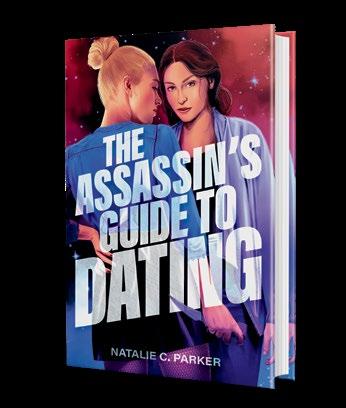
Parker, Natalie C. | Candlewick | 256 pp.
$12.99 | July 14, 2026 | 9781536243291
pages flying and anticipation high for the next adventure. Tackling issues like economic disadvantage, found family, and the realization of one’s authentic self, this fast-paced romp offers a refreshing
amount of depth. Lila, Tru, and Anderson read white, and there’s diversity among the well-wrought secondary cast members. Offering something for everyone, these assassins slay! (Adventure. 13-18)
Maria Parrott-Ryan
Paige Hender
Zappia
QALLUPILLUIT
Bou-Montes, Louangie | Godwin Books (304 pp.) | $20.99 | July 21, 2026 9781250411679
A high schooler is convinced he can find proof of a ghost’s existence.
Joaquín and his friends Emma and Maya have a “Puerto Rican Ghostbusters vibe” going on. They love hunting for paranormal activity, so they’re excited to hear about a house in their hometown of Jacob’s Barrow, Massachusetts, that’s been vacant since 1997, following the death of one of the family’s children. The trio are determined to locate evidence of the rumored haunting. The place certainly has the look of a haunted house, with its peeling paint, rotting walls, and siding that’s “droopy and furry with splotches of moss.” But things get out of control when Joaquín accidentally brings the ghost of Max Guerrero Lopez home with him—in the form of a powerful poltergeist. Max, who died at age 16, can’t remember the circumstances of his passing, but he’s tired of being stuck in this limbo. Fortunately, he finds a way to communicate by speaking through Joaquín’s AirPods. Marte, Joaquín’s ex-boyfriend, is sensitive to ghosts; recognizing that Joaquín is in over his head, Marte hopes he can help Max cross over. The novel switches between Joaquín’s and Max’s first-person perspectives, maintaining a good balance between substantial character growth and taut storytelling with well-timed revelations as the truth of what happened to Max unfolds. Marte is Deaf, and his friends communicate with him using ASL.
An engrossing, fast-paced ghost story with a lot of heart. (Paranormal thriller. 14-18)
Bridge, Mikayla | Farrar, Straus and Giroux (432 pp.) | $21.99 | July 7, 2026 9780374393441
Unlikely lovers face deadly trials. Blue-eyed Inna Pallo, who dyes her auburn hair blond, is the new heir to the Pallo empire. She’s determined to investigate her sister’s death while training to take over the family business, the illustrious Horizon Club. The club’s allure is based on sprites—insectlike creatures whose magic makes people feel euphoric. The Pallos market the sprites as “harmless, floating baubles,” concealing their murderous potential, which they’re trying to keep hidden at all costs. Rylan, who has “shaggy blond hair, pale skin and green eyes,” is an orphan with cause to seek vengeance against the Pallos. He seeks the legendary hibernating Serpent God, who’s rumored to grant a wish to whoever finds and awakens him. But to do so he needs a journal that he suspects is hidden within the heavily guarded Pallo Vault. Rylan’s break-in attempt leads him to cross paths with Inna, who wants to find answers to her sister’s death, and they work together on a heist that sends them on the run—and into each other’s arms. Despite Inna’s unearned trust in Rylan, their slow-burn romance satisfies. Both embark on the quest of a lifetime, shedding their old skins and making surprising choices that transform them by the end. This stand-alone work following Bridge’s debut, Of Flame and Fury (2025), returns
readers to the Republic of Salta and introduces new creatures and mythology. Dual heroes’ journeys filled with magic and high-stakes romance. (content warning, map, excerpt from The Saltan Bestiary) (Fantasy. 13-18)
Bruzas, Alena | Rocky Pond Books/ Penguin (320 pp.) | $19.99 | July 14, 2026
9780593859179
A girl becomes determined to break a curse. When paleskinned, red-haired Sylvie discovers a job opening at Bison Gap Prairie Preserve, the environmental nonprofit in Nebraska where her late mother volunteered as a teen, it seems like magic. Having little knowledge of her mother thanks to her father’s stonewalling, she’s desperate for answers, and as a budding herbalist she’s well-suited to the foraging and kitchen-craft the position requires. Despite the constant intrusion of her OCD, especially in her obsessive longing to be beautiful and seek out beautiful people, by day Sylvie develops a fast friendship with Jack, a boy with “startlingly blue” eyes whose skin is “scaly and pimpled and peeling and flaking.” By night, she forms an electric connection with an impossibly handsome blue-eyed, golden-skinned shepherd, her companion on forbidden nighttime excursions. Convinced that a terrifying monster is stalking the countryside, Sylvie focuses on breaking a curse she’s discovered. A new discovery may offer her that power, though not the foresight to see the outcome of her impulsive decision. Bruzas interestingly juxtaposes a timeless fairy-tale atmosphere with contemporary technology, but the inclusion of numerous insufficiently developed thematic elements makes for a difficult read. Sylvie’s plentiful OCD symptoms are effectively woven into the plot, but tracking all the threads—her familial mystery, a love triangle with steamy
romantic interludes, inheritance drama, botanical information, generational magic, and spider-filled dreams, among others—becomes overwhelming. An offbeat, overly stuffed, darkly intense modern fairy tale. (content note, author’s note) (Fantasy. 15-18)
Kirkus Star
Christopher, Neil & Louise Flaherty Illus. by Megan Kyak-Monteith Inhabit Media (52 pp.) | $17.95 paper June 2, 2026 | 9781772273601
A boy ignores warnings not to play near the beach in this bilingual story that draws upon Inuit lore. It’s springtime in Nunavut, Canada, and children on Baffin Island are enjoying “the promise of long summer days and warm sunshine.” After an argument with his parents about school, David goes for a walk. Annoyingly, his younger brother, Samuel, tags along. David heads to the beach and starts running out onto the chunks of floating ice, despite adults’ warnings—after all, kids sometimes slip beneath the ice pans and disappear. Eventually he realizes how far he’s traveled from shore—and that he’s not alone. Two terrifying creatures have emerged from the sea, and soon David is caught in a tug of war between the monsters. David, who’s “tired of listening to adults,” dismisses his grandfather’s stories about the creatures—and he must deal with grief and guilt as consequences. The authors, co-founders of the Inuitowned publisher, draw from traditional Inuit stories about the child-snatching qallupilluit, seamlessly melding contemporary and timeless elements. Each two-page spread features a full-page illustration facing a page of text with Inuktitut at the top and English beneath. The masterful, painterly art by Inuk illustrator Kyak-Monteith balances the bright white of the ice, the dark blue of
the sea, and the emerging spring vegetation. Glimpses of houses and home interiors add to the sense of place, and the visual interpretation of the qallupilluit is distinct, memorable, and deliciously ghoulish.
A striking story that steals the spotlight. (Horror. 12-18)
Davis, DeAndra | Atheneum (416 pp.)
$19.99 | June 23, 2026 | 9781665952682
Familial longing and a mysterious letter set the stage for a Jamaican American teen’s growth and exploration. Despite graduating as valedictorian and having the steady support of her father and her best friend, Jaliya concludes her senior year with the feeling that she’s not quite enough. When an unsigned letter arrives expressing love, concern, and apology, she reasonably assumes that it’s from her estranged mother. Jaliya abruptly decides to visit Jamaica, her mom’s last known whereabouts, before heading off to the University of Miami. Jaliya, who hasn’t been back to the island in seven years, hides her true goal from her father. Together with her cousin Shevaughn; childhood crush, Andre; and new friend, India, Jaliya has decidedly messy adventures and digs into questions of identity, sexuality, and who she wants to be. Jaliya’s thoughtful narrative voice, which conveys her persistent feelings of insecurity over being “too American for the people here, but too Jamaican for the people at home,” makes each step of this coming-of-age story compellingly relatable even though attentive readers may see the twists coming long before she does. Award winner Davis’ sophomore novel explores themes of homophobia, particularly in Jamaican culture, as well as the shadow cast by parental abandonment, making for difficult discoveries, a complicated twist, and a refreshing take on coming out, not just as queer but as your true self.
Part mystery, part love triangle, and a whole journey of self-discovery. (author’s note) (Fiction. 14-18)
Díaz, Natasha | Delacorte (400 pp.)
$19.99 | July 14, 2026 | 9780593124345
San Francisco teens are drawn into a missing person investigation involving a famous young influencer. Best friends Philippa “Pippa” Santos and Elizabeth “Bidi” Jones are in some ways an unlikely pair: Dreamy, impulsive Pippa is preoccupied with flowers, while Bidi’s self-possessed surety drives her plan to run for city council as soon as she’s 18. When Pippa witnesses the abduction of Estella Aubergine, a wealthy Black girl with a strange, reclusive white mother, she and Bidi, tempted by the life-changing $250,00 reward, decide to find her. They rope in Bidi’s cousin Maurice “Mo” Walker, a tech-savvy scholarship student at Beaumont Academy, where Estella is a rising senior. The narrative moves backward and forward in time, primarily alternating between the two friends’ first-person perspectives. Each voice is distinct, allowing readers to understand more about the teens’ lives and how their experiences have shaped them. Brazilian American Pippa doesn’t have her “Mamãe’s melanin, but [she] did get her hair,” which is thick and curly. She was raised by her Tia Jo, and they struggle to keep their neighborhood shop going amid the pressures of gentrification. Bidi, who’s Black, is passionate about social issues, including “the imbalance in resources offered when lower-income Black and Brown girls go missing.” The story contains shocking twists, an intricate backstory, and an almost gothic atmosphere that mystery fans will appreciate. Engrossing, dramatic, and character-driven. (Mystery. 14-18)
Doeden, Matt | Twenty-First Century/ Lerner (96 pp.) | $37.32 | August 4, 2026
9798765690475
An accessible overview of the short- and longterm consequences of the destruction of the World Trade Center towers in the attacks of September 11, 2011.
Doeden leaves a few things out—most notably, any mention of the Guantanamo Bay detention center—but otherwise offers a broad look at the events of 9/11 and the ensuing War on Terror. Though an ill-considered observation that the World Trade Center site “was like a scene out of a war movie” is likely to distance readers from the tragedy, he quotes eyewitnesses and early responders and effectively connects the shock and anxiety of those now-historical times to current issues by tracing the intensification in this country’s antiimmigrant attitudes up to the re-election of President Donald Trump in 2024. He strives for a judicious tone, but in his estimation the “long and costly” War on Terror achieved little—aside from perpetrating many human rights violations, including spikes in Islamophobic policies, prejudice, and hate crimes. The author backs up his observations with source notes and a lengthy bibliography. Ample stock photos depict views of the fallen towers, a number of memorials, and a racially diverse array of troops and anti–Iraq War protesters. The red, white, and blue page design and occasional text boxes (on topics such as a dog who helped a veteran with PTSD and the experience of an Afghan refugee) add appeal.
A brief, critical view of a traumatic time that’s well suited to student use. (glossary, further information, index) (Nonfiction. 12-18)
Dugan, Jennifer | Illus. by Kit Seaton
Putnam (240 pp.) | $24.99 | $17.99 paper
August 25, 2026 | 9780593858707 9780593858714 paper
W hen a high school senior finally decides to confront her former friend—and maybe more—about their fractured relationship, the night spirals into violence. Poe Parker is tired of being shut out by Jolie Prescott. Determined to get answers, Poe follows Jolie home after a volleyball game, but before they can speak, two vampires drag her into the bushes. They bite Poe even as she screams for Jolie to run. What Poe doesn’t realize is that Jolie has been secretly training as a vampire hunter with her Uncle William. The pair kill Poe’s attackers, but because Poe was bitten, Jolie is obliged to drive a stake into her as well. Later, Poe awakens in her coffin, fully undead, consumed with anger, and determined to take revenge on Jolie for turning her into “a monster.” She has the support of her new vampire nest, and along the way, she uncovers a larger mystery that draws the group together. Dugan introduces intriguing side characters and subplots, but many feel underdeveloped and lack meaningful arcs. The first half of the book is well fleshed out, but as new elements are introduced, it begins to feel rushed. Seaton’s comic book–style artwork enhances the story’s dramatic tone and fast pace, and her strategic use of red for
flashback scenes clearly distinguishes past from present. The leads present white, and there’s some racial diversity among the supporting cast. An uneven vampiric tale blending themes of revenge, lost Sapphic love, and self-acceptance. (Graphic paranormal. 13-18)
Gonzalez Rose, Elle | Bloomsbury (240 pp.) $20.99 | July 21, 2026 | 9781547618484
In the aftermath of shocking events involving her family, a teenager attempts to move forward with support from a kind classmate. Dina Soto first lost her older brother, Joel, to tragic circumstances—and soon after, her high school soccer coach father confessed to the murders of two of his students. Papi was sentenced to life in prison, and Dina’s family was harassed and their home vandalized. These days they’re largely shunned by the residents of small-town Millcreek. Dina’s mother, fearful for the rest of her family’s safety, restricts the movements of Dina and her younger brother, Mikey. Wanting a sense of normality and an escape from Mami’s overprotectiveness, Dina sneaks out to spend the weekend with a friendly new student, transgender Kai Thompson, who’s cued Black and Puerto Rican and, like Dina, learned Spanish at home. They’ll be staying at the Thompsons’ cabin with Kai’s twin sister, Kiki, and a couple of their friends: brown-skinned cheerleader Carla Gutierrez and her white football player boyfriend, Timothy Gibson. Given Dina’s father’s reputation, she receives a mostly icy welcome from everyone besides Kai. As the getaway goes on, painful events from the past come to light, and sinister things start happening. Dina’s troubled family history lurks beneath the surface, creating page-turning chills. Despite this, the comforting tranquility of Dina
and Kai’s budding relationship adds another layer to the atmosphere, offering hope in dark times.
Bloodshed, deceit, and a grippingly accelerating plot tempered by a sweet love story. (content note) (Thriller. 14-18)
Goodman, Juliana | Feiwel & Friends (352 pp.) | $20.99 | July 28, 2026 9781250792945
W hile preparing for a national championship, an Illinois cheerleader must uncover the truth and defend herself from accusations of murdering her teammate. With only two years left before she turns 18 and ages out, Jonty Blay is determined to win a national championship with her competitive cheerleading team, the Exalted Ones. Now that she’s captain, she’s sure this is the year she’ll achieve her deceased mother’s own dream of winning a National Cheerleaders Association medal with the Exalted Ones. But everything falls apart at the first practice of the season, when Jonty’s teammate Tommie Taylor is found dead. Jonty and her co-captain, Adam Ibrahim, are suspected of murdering her: They were seen having a contentious conversation with Tommie following the captain vote, and physical evidence ties Jonty to the crime scene. With some parents keeping their kids away from the gym out of caution, Jonty and Adam need to figure out how they’ll compete—and also clear their names. Between demanding practices, schoolwork, and amateur sleuthing, Jonty’s cheer season and relationships with her grandmother and friends start to unravel. This captivating story centering on a Black cast is well-paced, with suspense, mystery, drama, and authentic emotions. The novel explores the intensity and pressure of the sport of cheerleading. Jonty also struggles with her identity: Her life has revolved around cheerleading and living
up to her mother’s unrealized cheerleading ambitions.
A compelling thriller with extra appeal for those who enjoy competitive sports. (Thriller. 12-18)
Hannan, Sophia | Simon & Schuster (352 pp.) | $19.99 | July 28, 2026 9781665958332
An art heist goes horribly wrong, and the survivors are left to deal with the fallout.
Georgia Perry, James Whitby, Circe Shams, and Jules Park were YouTube ghost hunters, with Georgia and her not-sosecret girlfriend, Jules, as the on-screen personalities. In reality, the teens targeted locations with paintings that they replaced with artist Circe’s forgeries. But their last job ended with Jules dead, lying on the floor beneath their target—a painting of a drowned woman—and no one knows who killed her. Now the remaining three—seniors at private school Umber Academy—are struggling: Circe can’t paint anything in her art classes, James is desperately seeking college tuition funds (since they weren’t paid for the botched job), and Georgia hardly leaves her dorm room. Their fixer, Andrew Lark, demands they finish the job, but the ghost isn’t done with them yet. This debut has sparks of real potential, for example, in its strong, moody voice and exploration of the devastating effects of grief. But other elements feel awkward: In some parts of the book, readers must piece together how everything is related, leaving them adrift in confusion in ways that feel frustrating rather than intriguing. Additionally, because the story opens after Jules’ death, readers mostly hear about her, meeting her only in fleeting interstitial transcripts from the show, which limits the emotional impact of her death. Circe is Christian and Palestinian American, and the other leads present white.
A mixed bag. (Supernatural. 14-18)
For the Greatest Good Hanson, Blair | Page Street (384 pp.) $19.99 | June 30, 2026 | 9798890034908
A family rift and personal accountability collide as a teen activist fights for the town he cherishes.
Seventeenyear-old Gavin loves Pondville, Arkansas, despite all its struggles—mainly the failing water infrastructure. Ongoing neglect by state officials has left the town, with its “poor, rural, sizable Black and Asian and Hispanic populations,” with water that’s often undrinkable. Gavin, who’s gay and reads white, and his best friend, MacKenzie, the Black bisexual daughter of Pondville’s mayor, have devised a plan to con Gavin’s estranged dad into getting their town a grant from CrispFlow, the public utilities conglomerate where he works. Gavin’s 15-year-old sister, Hailey, and Mack’s Puerto Rican girlfriend, Gloria, a transgender environmental activist and influencer, join the scheme. The teens are confronted with ethical dilemmas and personal choices that could have huge repercussions for both their futures and the town’s. A deeply conflicted Gavin must navigate the uneasy task of managing his dad’s desire to reconnect while deceiving him. He’s further torn between leaving town for college or staying to protect the place he calls home. These young activists realize that change often takes time, perseverance, and the willingness to see things through as a community. The real-life messiness woven throughout the storyline makes it feel believable yet hopeful. Written with humor and subtle insight into the characters’ inner lives, the narrative flows easily, although some plot machinations feel superfluous.
A nuanced, character-driven reflection on community, integrity, and long-term commitment. (Fiction. 14-18)
WITCH’S INHERITANCE
Kirkus Star
Hender, Paige | Henry Holt (272 pp.) $17.99 paper | July 7, 2026 | 9781250882615

Home is where the trauma is when a magical crash course meets dark family history. Recent Irvine, California, high school graduate Edelweiss “Edie” Birch seeks her inheritance: the Hart Creek, Maine, home of her estranged late maternal grandmother, Ludmilla Vovk. The pointy red-and-white structure out in the woods is a character unto itself, not least because it can grow chicken legs and move around like Baba Yaga’s house. Pale, red-haired Edie meets up with her aunt Darya and Darya’s student, Leander. The Vovk family came to America from Ukraine in the 1800s, bringing their “nature worship” traditions with them. They practice magic, including casting an annual spell that protects Hart Creek from menacing goblins. This task now falls on Edie’s shoulders, and she’d much rather offload the responsibility onto someone else. Edie and Leander, who has brown skin and Afro-textured hair, are young adults struggling with the weight of others’ expectations, although Edie’s are rooted in horrifying family secrets. Edie’s growth from passive avoidance to engaged action forms a satisfying character arc. The goblins, often depicted as silhouettes or bright, glaring eyes, turn out to be more than they seem. The color palette’s shifts—green and black during moments of menace and an intense flashback sequence in greens and reds against a black background—provide thrills amid the angst. References to Nathaniel Hawthorne and Stephen King are earned touchstones in Hender’s YA debut.
Atmospheric, well-realized, and terrifying. (content warning, sketchbook) (Graphic horror. 14-18)
Henning, Sarah | Little, Brown (400 pp.)
$12.99 paper | July 28, 2026 | 9780316584364
A magical, murderous take on Clueless Embry Woodcross, who has blue eyes and curly blond hair, is the queen bee at Raven’s Head School for the Magically Gifted. There, Embry works hard to make potions to help her fellow students, as well as playing matchmaker whenever possible. When a new student, “petite and pale” platinum blond vampire Oakley Riddle enrolls in senior year, Embry is instantly intrigued. The work Embry and her best friend, Amethyst Oberon, who’s also a senior prefect, put into making Oakley an it girl comes to a screeching halt when Oakley is found murdered—and Embry is the prime suspect. Suspended from school, Embry turns to the (literal) boy next door, blond, green-eyed Rye Knighton, for help clearing her name. In addition to the many elements that closely follow beats from the film Clueless, Henning’s magical world, in which all sorts of magical creatures from werewolves to zombies to selkies attend a magical school, will feel familiar to fans of the show Wednesday The writing is fluid, the banter among the friends is fun, and the mystery surrounding Oakley’s death and Embry’s potential involvement make for a good story. There’s some racial diversity among the supporting cast members, including Ames, who has curly black hair and “flawless dark brown skin.”
A quirky, witchy murder mystery. (Fantasy mystery. 13-18)
Johnson, Lora Beth | Putnam (368 pp.) $20.99 | July 28, 2026 | 9780593856529
A con artist summons her old crew for their trickiest heist yet: stealing her brother’s soul back from hell.
Elysia “Elle” Fields lives in a world where it’s possible to visit the Afterlife and return with magic to the land of the living. One thing it’s not possible to retrieve, however, is a dead person’s soul. When Elle is approached by Rook Crawford, who wants her to resurrect his sister, she finds the perfect excuse to covertly continue her quest to bring her deceased brother, Dante, back. To accomplish this, Elle, who reads white, reconstructs her team, who scattered after Dante’s death—runic witch Poppy Champagne, who’s Black; nonbinary “designated muscle-slashwheelman” CJ, who presents white; and alchemist Tolliver Takao, who’s cued Japanese American—plus the New Guy, Argentinian pickpocket Ezra Cardoso, who’s cued as a Sephardic Jew. Their mission is to steal and translate the Voynich manuscript, a codex written in a language no one’s been able to crack, before taking a soul from Tartarus (“the lowest level of the Afterlife”) and dodging mafialike syndicates that have become too interested in their activities, while ensuring they aren’t being conned themselves. Elle is a darkly funny narrator who’s comfortable in the morally gray areas she inhabits. The worldbuilding is original and revealed naturally through exposition as it becomes relevant to the cons Elle and her crew run.
Ambitious and refreshing; readers will want to settle in for the long con. (Afterlife magic guide) (Fantasy. 13-18)

For another fantasy heist, visit Kirkus online.
June, Peyton | Norton Young Readers (384 pp.)
$18.99 | June 23, 2026 | 9781324083436
A hoax turns terrifyingly real when a para normal influencer investigates a former mining town.
For two years, 18-year-old Lenny Gilson and her boyfriend, Evan, have traveled the country investigating unexplained phenomena for their YouTube channel, “Odd Kids.” But ever since Evan’s tendency to control their relationship led Lenny to declare a break, they’ve been a couple only on camera. An anonymous tip sends them to Reed Ranch in Scarberry, Nebraska, purportedly the site of alien activity in 1961—and the setting of Lenny’s recurring dreams. However, unbeknownst to Lenny, Claire Reed has staged a hoax to garner advertising for her Aunt Maeve’s ailing tourist attraction. As “the big fat rainbow thorn in Scarberry’s side” whose mom “got addicted to a bunch of stuff,” Claire longs to leave the conservative town—but not until she’s sure her aunt and cousin, a leukemia survivor, won’t lose their home to developers. When cattle turn up mutilated and people disappear, Claire and Lenny work together to investigate. Is this the work of the legendary monster Old Lucky? Or have the townspeople angered the Old Gods? Though most secondary characters feel two-dimensional, Claire’s and Lenny’s alternating third-person chapters explore myriad issues, including queerness, social media, and self-confidence, with care and occasional humor. While the pacing is somewhat slow, a late twist
offers food for thought, and Claire and Lenny’s growing relationship is satisfying. Most characters read white. A creepy, character-driven read. (Paranormal mystery. 14-18)
Lariviere, Sarah | Knopf (352 pp.) | $19.99 June 16, 2026 | 9780593479995
Series: Riot Act, 2
“The revolution might be televised after all.”
This follow-up to Riot Act (2024) returns to 1991 and an alternate America that’s ruled by propaganda and fear. Axl is haunted by grief. It doesn’t help that Gigi, his dead friend and longtime crush, is also haunting him. After being murdered during a radical act of civil disobedience, Gigi lingers among the living—specifically inside Axl’s thoughts and memories. Existing in his head is no picnic: He’s so devastated by her death that he’s drinking himself into oblivion, and his steamy fantasies about her are consuming them both. Hanging on by a thread, Axl is determined to avenge Gigi’s death and incite a nonviolent revolution. He teams up with Orin, his nemesis (and Gigi’s ex), to infiltrate the tightly controlled TV programming of Bud Hill’s brutal dictatorship. Meanwhile, Axl and Gigi’s thespian friends risk their lives to create short films that Orin inserts into the regular broadcasts, using their art to challenge the regime. The story’s political premise remains compelling, and the 1990s setting is intriguingly off kilter, but this second installment doesn’t fully land. The interplay between Gigi’s posthumous narration and Axl’s inner monologue can be hard to follow, and the supporting
Will speak to teenagers who are struggling to love themselves.
characters feel flat. While the story has sparks, it lacks the theatrical charm and rich worldbuilding that made the first book sing. Gigi and Axl are cued white. An atmospheric encore that fails to replicate the first book’s magic. (Dystopian. 14-18)
Long, Michael G. | Norton Young Readers (240 pp.) | $19.99 | June 2, 2026
9781324083948
From “sissy” to social justice warrior. Many teens feel an urge to rebel— and some transform their rage and restlessness into art. Long’s biography of American artist and counterculture legend Keith Haring (1958-1990) tells the story of a boy who shoplifted, drank alcohol, smoked pot, and ran away from home as a high schooler before growing into a man who used his paintings to expose the harm caused by nuclear weapons, racism, police brutality, drug addiction, and the AIDS epidemic. Each of the 12 chapters is built around and opens with one of his iconic works. The author does a good job of introducing readers to Haring’s childlike style, explaining the significance of recurring motifs and tracing the influence of music on his art. What makes this book special is its expansive heart: Long doesn’t judge his subject for his human failings, but he doesn’t shy away from exploring critical interpretations of Haring’s work and charges of cultural appropriation as a white person who profited from brown and Black people’s cultures and claimed that “inside he was not white.” Still, the focus is primarily on Haring’s commitment to social justice. This work will speak to many teenagers who are struggling to love themselves. During hostile times, Haring was an out and proud gay man who made art for ordinary people who were ignored by the art world.
An honest, inspiring behind-the-scenes look into the highs and lows of an artist’s life. (further reading, timeline, endnotes, image credits, index) (Nonfiction. 14-18)
By Jill Tew (Joy Revolution, 2024)
Jill Tew’s dystopian novel imagines what happens when corporations amass unstoppable power—and even memories become a performance-enhancing drug for the elite. (Doesn’t feel like much of a stretch anymore, does it?) Tew’s
story isn’t just timely; it’s a warning to anyone who still believes our humanity can’t be rewritten and resold.
By Petra Lord (Henry Holt, Feb. 3)
Petra Lord’s debut fantasy is lush and ferocious, immersing readers in a world where the rich hop from body to body, choosing designer forms while everyone else fights for scraps. The female protagonist, trapped in a
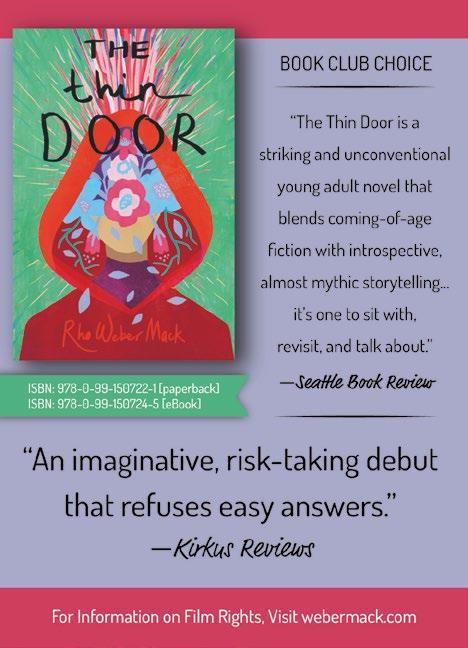
decaying male body, wants out—but Lord’s real power lies in how she turns survival into resistance. The result is both furious and hopeful.
By Nic Stone (Crown, 2017)
When a Black teenager is wrongly arrested, he’s forced to navigate not just a broken justice system but everyone’s snap judgment of who he is. Nearly a decade since its release, Stone’s debut still
hits like a live wire— urgent, clear-eyed, and impossible to shake.
Soman Chainani’s most recent book is Young World (One World/ Random House, May 5).

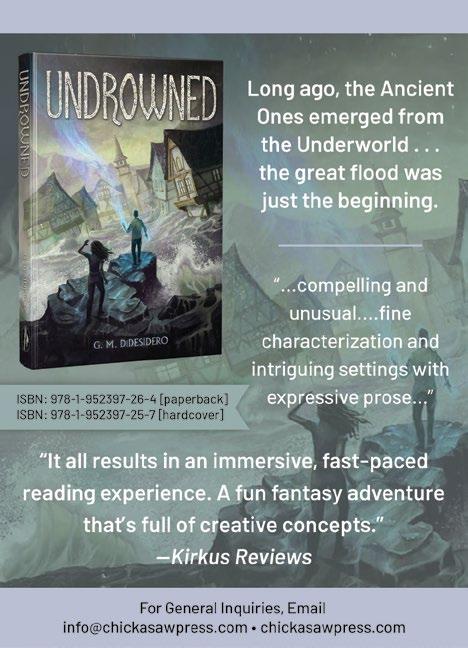
By Akemi Dawn Bowman
Martha Brockenbrough
By Stephanie Sammartino McPherson
Melinda Salisbury

Dante Medema
McCallum, Kristen | Flatiron Books (288 pp.)
$19.99 | July 7, 2026 | 9781250320261

After a girl completes a stint in a detention center, she comes home to completely different family dynamics.
Jasmine Cooper spent a year at Guiding Hearts Home for Troubled Girls because her divorced mother feared her behavior was out of control. During her time away, her mom remarried and moved to a new neighborhood, and now Jasmine has a stepfather and a stepsister her age named Kayla. Jasmine discovers that her mom has told people she’s been away at boarding school, arguing that she needs to maintain this lie so she can make a fresh start. Where once her mother worked two jobs to make ends meet, she now leads an affluent lifestyle with her Realtor husband. Kayla appears friendly at home, but at school she wants nothing to do with Jasmine. Jasmine, who struggles with the repercussions of her past choices, keeps quiet about Kayla’s duplicity. Being paired for a school project with popular Deanna leads to friendship, and Jasmine begins to settle in. But when Amari, a girl from Guiding Hearts, reaches out, Jasmine’s efforts to secretly resume their connection go badly wrong. Debut author McCallum’s engaging tale paints an understanding picture of Jasmine and her decisions. Told in a dual timeline, this sensitive story centering on African American characters portrays a teen caught between attempts to nurture relationships and missteps that create problems. An insightful and well-characterized depiction of a teen navigating some of life’s tough challenges. (Fiction. 12-18)

McCaughrain, Kelly | Candlewick (352 pp.)
$19.99 | July 7, 2026 | 9781536251739
A girlfriend for hire and a skeptical boy find genuine love.
Eighteen-yearold Regan Albright works at Elite Elect, an upscale mountain resort two hours from Manhattan, where wealthy guests go to die. The day before their Death Dates— which appear on everyone’s body at birth—they undergo peaceful euthanasia, avoiding a potentially unpleasant end. Regan and her gay best friend, Micah Lowry, work for the resort’s Romeo-andJuliet service, curating dating experiences secretly paid for by teens’ parents. In these roles, the pair live decadently before returning home to the dilapidated staff housing; Regan has her single mom, who struggles with alcohol and works service jobs at the resort, and Micah has loving foster parents, the Acostas. Regan’s latest client, irritatingly perfect English teen Jude Daly, accidentally overhears a conversation that gives the game away. Jude isn’t thrilled by anything to do with the resort—and Regan finds him insufferable. Still, he asks Regan to go along with the arrangement. She might get a permanent contract for satisfying clients like the famous Dalys, with their vodka business and research institute that’s trying to find a way to survive Death Dates; he just wants to bring his parents some peace. The white-presenting pair grow from barely tolerating one another to falling deeply in love, as they debate living fully, letting go, and being emotionally vulnerable. By turns philosophical, funny, suspenseful, and
moving, this work builds a convincing world populated with sympathetically fallible people.
Achingly tender and leavened with hope. (Speculative fiction. 14-18)
Mercado, Richard | Graphix/Scholastic (272 pp.) | $16.99 paper | July 7, 2026
9781339001593
Is there a perfect way to navigate life?
Kevin Reyes, a newly out gay high schooler in the Philippines, is still discovering his path. After coming out to his parents and being “met with silence” before they changed the subject, Kevin leaves with a group of friends from the school journalism club. They’re attending a party hosted by Raymond, an out classmate who appears to embody everything Kevin wishes to be: wealthy, popular, and with a “fancy boyfriend.” At the party, Kevin’s friend Gaby broaches the idea of putting her name forward for student council president with Kevin as her running mate, but his self-defeating attitude quickly shuts her down. Later Kevin gets drunk and confesses his feelings of inadequacy to Raymond, who decides to take him on as a project. He presents Kevin with the same offer as Gaby—and this time, Kevin agrees. He’s captivated by Raymond’s glamorous world and wants to impress his parents by running for student government. But the more time Kevin spends with Raymond, the more he sees beneath the glittering surface, and he’s forced to take stock of the kind of person he truly wants to be.
Dynamic artwork conveys the intensity of the emotions.
The story authentically explores internalized homophobia, the process of self-discovery, and the complicated family dynamics that arise when one sibling is held up as a perfect role model. Mercado’s loose, dynamic artwork in dark navy with washes of pink conveys the intensity of the characters’ emotions. Nuanced and insightful: a real winner. (glossary, author’s note) (Graphic fiction. 14-18)
Murphy, Cynthia | Delacorte (352 pp.) | $12.99 paper July 21, 2026 | 9780593805800
An aspiring investigative journalist gets too close to her story.
Seventeen-yearold white-presenting Felicity “Fliss” Keller and her best friend, Izzy, who’s cued Black, are housesitting for Fliss’ father, who recently returned to England from Paris, while he honeymoons in the Maldives with his new wife, Kim. The friends enrolled in a summer creative arts program for prospective students at nearby Blackwood University. The day before Dad and Kim’s departure, the trio visit an estate sale, where Fliss spots an unusual painting that her art historian father immediately identifies as a long-lost companion piece to The Four This series of paintings is rumored to depict four women victims of a serial killer from early-20th-century New York City; the newly discovered work could be the murderer’s allegedly cursed self-portrait, which thrills true-crime aficionado Fliss. Her dad wastes no time acquiring it for the university’s art gallery, where its public unveiling at a reception ends in the death of a young woman. Determined to investigate, Fliss delves into the history of the paintings and uncovers deeply disturbing ritualistic elements embedded in the art. Even as her knowledge of the case deepens, more dead bodies turn up, each bearing chilling echoes of the paintings. The original premise combining fine art
and murder will engage readers, as will the tense encounters and discovery of new clues. Fliss and Izzy are clever, recognizing the dangers around them and trying to protect themselves, even as they take risks. Atmospheric and intriguing.
(Mystery. 14-18)
Nault, Renée | Ten Speed Press (256 pp.)
$25.99 | July 21, 2026 | 9781984863393
In a dystopic near-future, teens figure out how to bridge the great divide between haves and have-nots. Nault, who created the graphic novel adaptation of
The Handmaid’s Tale, debuts her original graphic novel set in a new world beset by rising waters. Privileged Jules, who has pale, rosy skin and white hair, lives in the Uplands “at the top of the city,” neglected by her famous actor mother. She’s an aspiring ceramist who’s working on an upcoming exhibit in between glamorous evening outings with friends, which doesn’t leave a lot of time for school. Brown-skinned, red-haired Paolo and his parents live in the Flats, where crowded ramshackle buildings perch on stilts above open water. There, Paolo paints with his kitty, Miró, by his side, and joins his family in diving for treasures scavenged from a submerged city. Paolo finds a suitcase containing a pristine vintage wardrobe—exactly the threads that could get him in with the Uplands crowds he follows on social media. Boy meets girl: But what’s the fate of a relationship that’s dependent on lies? Beyond the love story, Nault’s narrative deftly confronts socioeconomic barriers, inadequate parenting, environmental devastation, bioengineering, and the tremendous power of art. Her inviting ink and watercolor illustrations are a spectacular blend of vibrancy and shadow, brilliantly catching motion within and without panels, particularly
emotions on upturned faces and sideways glances. Resonating fodder for the heart and brain; an utter feast for the eyes. (Graphic romance. 14-18)
Nicole, Shelby | Delacorte (432 pp.)
$20.99 | July 7, 2026 | 9798217234875
Series: Grove Hollow, 1
Eighteen-year-old Jade is adjusting to her new school, a new romance, and a growing closeness with a Victorian ghost. It’s 1985, and Jade Whitney is moving from Coos Bay, Oregon, to Grove Hollow, New York. She was raised by her grandfather following her parents’ deaths, and now that he’s passed, she’s going to live with her Great-Aunt Ruth in her mansion. At her new school, Jade joins a group of friends who call themselves The Misfits, but she’s also taken with handsome rugby captain Brad Phillips. Her life gets even more complicated after she finds a scarab locket and a photo of a young man from 1884—William M. Montgomery II, who has beautiful eyes. His ghost appears to her, and Jade attempts to balance her budding romance with Brad with her growing feelings for Will. The locket, which could hold the key to Will’s experience of the afterlife, becomes the focus of Jade’s attention. This series opener, which was originally self-published in 2023, contains rich descriptions of old buildings, and the inclusion of 1980s clothing and music helps ground readers in the setting. Jade’s close friend Aubrey Jackson is compelling: loyal and outspoken, with admirable self-confidence. Unfortunately, the many plot threads weigh the story down, often making it feel dense and excessively long, before it reaches a rushed, cliffhanger ending that’s an unsatisfying, anticlimactic let-down. Major characters read white. Glimmers of intrigue are drowned in a lengthy story with a disappointing ending. (map) (Paranormal romance. 14-18)
Swifties are sure to enjoy discovering the
Olsson, Lindsey | Putnam (352 pp.) $20.99 | July 14, 2026 | 9798217004799
Series: To Drown a Witch, 1
In the city of Gadore, a young woman makes a deal to save her father from prison. Nes Deivana can smell magic. She lives in the land of Orlonea, where magic is illegal, and the infamous woman known as the Witch is hunted by the King’s Guard in retaliation for long ago stealing the Goddess’ magic. Each time the Witch is killed, a new Witch is born. Nes works for the nefarious Phineas Wraw, sniffing out illegal magic users and bringing him those with interesting talents. Nes promised Phineas two years of work in exchange for his getting her father out of the Walled Prison. But Phineas reneges, refusing to release Nes from his service. Enter Toran Roada— the Prince’s Crown, someone raised and educated beside the Prince. Eventually, the two will face off in the Crown Duel, and the winner will ascend the throne. When Toran discovers Nes’ talent, he makes her a deal: Help him sniff out the Witch, and he’ll ensure her father’s release. Nes and Toran are polar opposites, but each has trauma in their past; he drowned his feelings in drink. Yet the more time they spend together, the more the ache of loss and loneliness abates. In this fast-paced, action-packed story with intrigue galore, the worldbuilding is seamless, and the relationship between Nes and Toran, who are cued white, balances quippy banter and growing romantic tension. An explosive debut that will leave readers salivating for the sequel. (Fantasy. 15-18)
Parrott-Ryan, Maria | Zest Books (136 pp.)
$39.99 | $19.99 paper | August 4, 2026 9798765671054 | 9798765671061 paper
A salute to the Scientific Revolution based on a still-topical case study in the value of empirical knowledge over unquestioning belief in authority.
“Some of his methods were simple. Others were brilliant. A few were truly awful.” With zest and fascination, children’s nonfiction author Parrott-Ryan describes in exact (and sometimes gruesome) detail the work of 17th-century English physician William Harvey. His willingness to accept what he saw when he cut into dead people (including his own father) and performed vivisections on animals led to a radical advance in our understanding of human anatomy—and years of pushback from colleagues trained to regard Galen and Hippocrates as medical gospel. Harvey’s tale is a departure point for examining later efforts to answer questions that he left open, such as why blood circulates. The book also includes a glittering array of diversions, including capsule histories of ancient Greek and medieval Islamic medicine. Descriptions of the gory if festive autopsies known as “public anatomies” once performed before crowds, sometimes to musical accompaniment, also make delicious reading. Of particular value are profiles of 16th-century Italian savant Elena Lucrezia Cornaro Piscopia and other women who broke gender and racial barriers to become physicians, and James McCune Smith, a formerly enslaved man
who became the first Black American to earn a medical degree, although he had to travel to Scotland to do so. Anatomical diagrams and illustrations add information and period flavor.
Stimulating, absorbing, and informative. (timeline, glossary, source notes, bibliography further reading, index) (Nonfiction. 12-18)
Rishi, Farah Naz | Quill Tree Books/ HarperCollins (304 pp.) | $19.99 July 14, 2026 | 9780063251557
A teenager accidentally casts a love curse on the school troublemaker, making him fall obsessively in love with her. High school senior Riya Khan, who’s cued Pakistani American, is the only one of her sisters to have inherited peri magic, which helps people find emotional clarity. It was passed down from her great-great-greatgreat-grandmother, who encountered a peri, a fairylike djinn (originally from Persian mythology) who possesses an “intoxicating jasmine scent and otherworldly beauty.” Riya has sworn off magic ever since the Incident, devoting her life to order, control, and getting into Caltech for astrophysics. But then her best friend convinces her to use her magic for help with a crush. Unfortunately, Riya gets distracted and instead accidentally puts a love curse on Filipino American bad boy Kian Kho, making him fall hard for her. Even Riya’s rejection and avoidance can’t deter his over-the-top gestures. She must break the curse before the next full moon—or the curse will be permanent. Riya, who’s worked hard on cultivating rationality and emotional distance, must face the unpredictable magic head-on to save them both. This entertaining romantic mystery centers more on Riya’s character growth than the enemies-to-lovers storyline. While there are some moving moments in which she addresses her various broken relationships, the quick resolution may make readers long for her to
express more vulnerability and experience more deep, healing connections. A light romance with a touch of magic. (Romance. 13-18)
Travis, Alex | Sourcebooks Fire (368 pp.)
$12.99 paper | July 28, 2026 | 9781464217746
A teen tries to unmask the culprit attacking her high school’s prom queen candidates.
Seventeen-yearold Ida Carter, who’s Black and bisexual, understands that beauty is currency. As the vice president of Banneker High’s Black Student Union, Ida is “Black popular.” She’s earned respect among the few Black students at her predominantly white school, but she’s nowhere near the top of the overall social hierarchy, and she’s not considered desirable by the white majority. When a crude list ranking the school’s hottest girls starts making the rounds, Ida isn’t surprised to find that Black and brown girls are excluded—even Ashley Beckett, the ultra-feminine Black co-captain of the girls’ tennis team, who only dates the “WASPiest, palest white boys,” is missing. The BSU members decide to publicly condemn the list by championing a Black girl to run for prom queen, and they settle on a reluctant Ida. As Ida navigates her campaign, she encounters an even greater threat than her competition. Someone is physically harming the other prom queen candidates on the list. Can Ida find the culprit before she’s next? While the premise echoes classic teen slashers, the narrative fails to deliver a satisfying third-act resolution. Travis realistically depicts themes of colorism, racism, interracial dating, identity, and misogyny, but these topics would have benefitted from clearer, more focused treatment. The family dynamics are refreshingly uplifting, however, thanks to Ida’s openly supportive parents.
An uneven thriller: Promising intrigue is dampened by an anticlimactic ending and unanswered questions.
(Thriller. 14-18)
Valldeperas, R.J. | Harper/HarperCollins (368 pp.) | $19.99 | June 2, 2026 | 9780063388741
Series: Their Will Undone, 1
In this debut that’s infused with elements of Inca history, a teen vows retribution after being torn from her family.
Living in a society where girls are snatched away and “trained to become wives and servants and gifted to houses” as the emperor wishes, 17-year-old Nina and her younger sisters, Sacha and Lali, are on alert when a kunay named Kasik, an adviser to Emperor Maicu, arrives unannounced on the family farm. When Kasik tries to take Sacha, Nina offers herself up instead. She soon learns she’s being brought back to the acllahuasi—the “house of the chosen ones.” What neither Nina nor her hot captor, Kasik, anticipate is that they’ll develop a steamy mutual attraction during their journey back to the palace of Amaru Kancha, which is a problem because Nina has been selected to become the emperor’s wife. When her attay, or magic, fully manifests, it further complicates everything. Told from Nina’s and Kasik’s dual points of view, the book allows readers to develop empathy for both leads as they grapple with their demons and insecurities. Inspired by the fate of the Maiden of Llullaillaco, this story levitates with its fierce rage. Nina is a charmingly flawed character, devoted to her sisters and seething with a desire to take vengeance against the emperor, but her struggles with the darker nature of her power at times borders on the repetitive and tedious. Fury reverberates throughout this duology opener, making for a thrilling read. (map, glossary, author’s note) (Fantasy. 14-18)

Various | Putnam (336 pp.) | $12.99 paper July 7, 2026 | 9798217112029
For another feminist fantasy, visit Kirkus online.
Inspired by 13 Taylor Swift songs, this anthology, with contributions from YA veterans like Crystal Maldonado, Julie Murphy, and Jesse Q. Sutanto, features stories of friendship, romance, rebirth, and endurance through heartbreak. An invisible thread ties the stories together: love. The kind of love they explore is honest, messy, passionate, and optimistic. In Elise Bryant’s “The Grand Gesture,” a high schooler pours her heart into showing her best friend what their relationship means to her. Two seniors try to resist the magnetic pull of their feelings for each other as their lives take them in different directions in “Group Project” by Krystal Marquis. Katharine McGee’s “We’re Here Now” follows a college student on the cusp of graduating and launching a big career who realizes her relationship wasn’t what she thought. Often, breakups act as a catalyst, not only for new romances to develop but for self-discovery and reinvention, as in “Fool’s Gold” by Laura Sebastian, in which the main character claims her magic powers while pulling off a heist with the help of found family in order to get revenge on the man who used her. While most of the entries are contemporary, realistic fiction, some include fantasy elements, and one takes place in 1989. Most of the stories center young women’s voices. Different forms of diverse representation appear throughout, including characters who encompass different disabilities and racial and cultural backgrounds. Swifties are sure to enjoy discovering the plentiful hidden easter eggs.
An album of heartfelt hits.
(Anthology. 14-18)
Waller, Jae | ECW Press (433 pp.) | $18.95 paper | April 28, 2026 | 9781770414600
Series: The Call of the Rift, 5
Kateiko finally comes face-toface with her self from an alternate dimension in this epic series closer.
One Kateiko, who goes by Katja, is a medical apprentice who’s recovering from the Fourth Elken War and missing fire mage Tiernan, her older lover and a wanted criminal. When a rift splits open, versions of people she knows enter her world, including her other self, who decides to be called K. K is hunting down tel-saidu Suriel to demand he return her spirit so she may finally find happiness, preferably with her charismatic Iyo-boy, who’s imprisoned back home. Katja and K begrudgingly join forces to save their respective worlds from destruction by sealing the rift. But K believes the saidu in Katja’s world need to be awakened, while Katja and her allies just fought a war to prevent that from happening. The disagreements lead to divergence and distrust, with friends taking sides. Katja is deeply empathic, and her complex love triangle with two Tiernans offers a painful juxtaposition with the much rougher K, whose love for Tiernan is unrequited. As a misunderstood K arduously regains her humanity, which has been greatly damaged since her bonding with Suriel, she finds a love triangle of her own. Helpful exposition throughout, along with a glossary and timeline, will assist readers with this sometimesoverwhelming story’s rich complexity; those with a fresh recall of the previous installments will best appreciate this
gratifying series closer with its broadly diverse cast.
A worthy and emotionally charged ending. (map) (Fantasy. 15-adult)
West, Jacqueline | Atheneum (304 pp.)
$19.99 | July 28, 2026 | 9781665981859
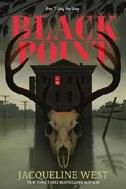
A teenage girl confronts her town’s dark past. Lucia Sorenson has lived in tiny Black Point, Wisconsin, her entire life. Fiercely loyal to her town and especially to her grandfather, who runs the local Viking History Museum, Swedish American Lucia bristles at any suggestion that she should go away for college when she graduates, even as the town faces increasingly frequent, severe flooding. When a mysterious Armenian American boy, Max Nazarian, and his aunt take over the old hotel with plans to open a cidery, Lucia is reluctantly drawn into Max’s orbit. Despite her suspicions about this outsider who’s part of changing a local institution, their attraction grows as he invites her to the hotel to sort through boxes of old items he found in the attic. But when someone breaks into the museum, Lucia begins to question whether Max had a role in the crime. Meanwhile, letters from the 1980s reveal the story of Neil, a runaway who ended up working at the hotel, where he had ghostly encounters that left him wary of Black Point and desperate to escape. Across the decades, Neil’s experiences and the discoveries made by Lucia and Max intertwine, revealing that Black Point holds darker secrets than Lucia ever imagined. Although Lucia’s unwavering loyalty to her town may be hard to understand, the story is suspenseful and engaging, especially in
A raw, beautiful account of moving forward after loss.
EVIE AND HER NIGHTMARES
its shifts between the past and the present, and it will quickly pull readers in. Darkly atmospheric.
(Speculative mystery. 14-18)
Zappia, Francesca | Greenwillow Books (304 pp.) | $19.99 | July 28, 2026
9780063451483
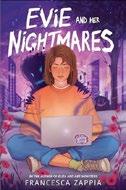
B efore Alissa walked into the river, she gave her beloved copies of the Children of Hypnos book series to her best friend. Between her autism and her fury at Alissa for the suicide, Evie knows she’s not expressing grief in the ways everyone around her expects. Only Alissa’s brother, Ash, seems to understand what Evie needs. He doesn’t mind that she’s skipping track practices and checking out at school. When Ash talks to her about Alissa’s favorite game, the media tie-in Children of Hypnos Online, Evie decides to give it a try. “I get to be somewhere else. I get to be someone else,” Ash says, and to grieving Evie, that sounds perfect. Yet Evie is still very much herself when she plays CoH: studious, determined, and competitive as hell. Classwork and track can wait, because Evie cares only about going on raids with a high-level CoH clan. Between gaming with Ash and sharing his weed gummies, plus their developing romance, Evie’s got all she needs in this post-Alissa world where nothing matters anyway. She rapidly becomes a star player, and Zappia’s illustrations of the CoH characters help make the players’ online world feel real. Evie’s disassociation and carefully cultivated apathy ring painfully true as she recovers from being left behind, coping with a senseless world by burying herself in the video game. Evie, Ash, and Alissa present white.
A raw, beautiful account of moving forward after your world is reshaped by loss. (content note, character gallery) (Fiction. 14-18)
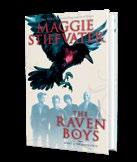
By Maggie Stiefvater (Scholastic, 2012-2016)
I’m such a huge fan of this series. It’s about a group of four boys and their messed-up but intense friendship, a girl named Blue, and a lot of really interesting Arthurian
myth and ancient Celtic magic. Ley lines and living forests abound. And it’s now a graphic novel, too!
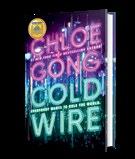
By Chloe Gong (McElderry, 2025)
A sleek, high-stakes dystopian thriller set in a hyperconnected world where a powerful corporation controls reality itself. Fast-paced, razor-sharp, and eerily close to our own future,
this is perfect for readers who love action, romance, and tech-driven intrigue.
By Diana Wynne Jones (Greenwillow Books, 2000)
I’ll always stan Diana Wynne Jones, but my favorite comfort read is Year of the Griffin, which is part of the Dark Wizard of Derkholm series. It’s funny, sweet, and quirky—a little dark
academia, a little romance, and a whole lot of cozy. If you liked Travis Baldree’s Legends and Lattes , give this a shot!
Melissa de la Cruz’s most recent book is Kingdom of Waves (Roaring Brook Press, June 16).

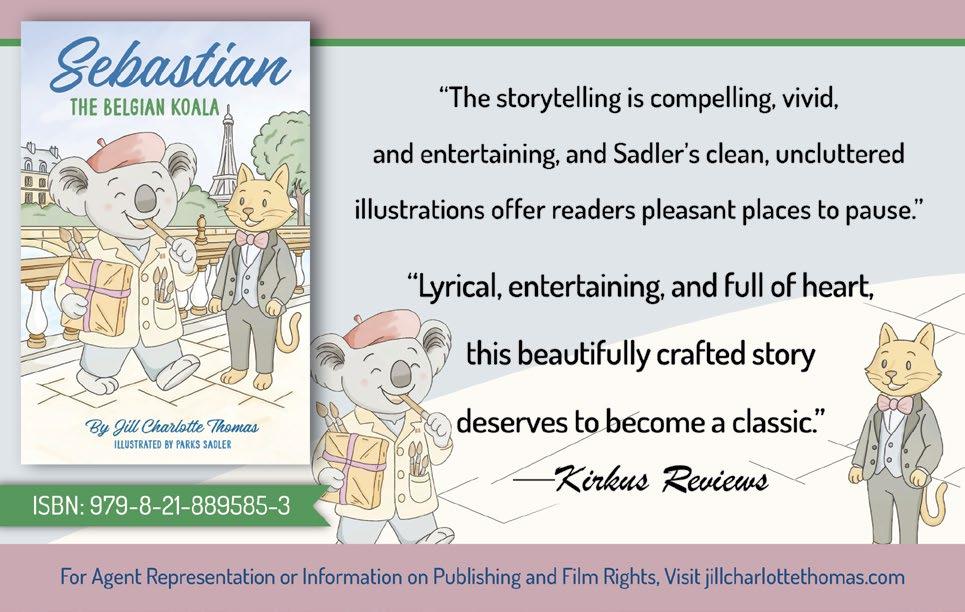
FOR MANY READERS, summer is a time for spending weekends in the sun, catching up on all the books in their to-be-read piles. And, as beach-read enthusiasts know, it’s also a season when a great many protagonists find love. Here are three such tales, all recommended by Kirkus Indie, about people falling for each other as temperatures rise:

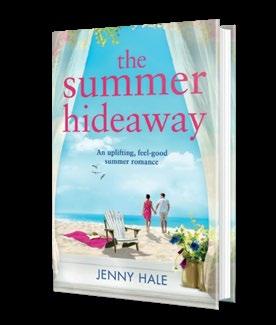
In Savannah Carlisle’s The Summer of Starting Over, country-pop star Callie Jackson has been experiencing career troubles in her late 20s, including a failed record label, writer’s block, and a breakup with her producer boyfriend. She returns to her beachside Florida hometown to clear out her childhood home, which her uncle recently sold. Her parents died in an accident nine years ago, and she hasn’t been inside the house since. She finds her high school sweetheart, Jesse Thomas, working on the house, and she can’t help but notice the “rippling muscles under his tight t-shirt”; it turns out that he bought the historic home and aims to renovate it. They broke up 13 years ago, after she’d signed a record contract and he’d stayed in town to help save his dad’s construction business. As old feelings resurface, they each find the strength to pursue what’s most important to them. Our reviewer calls the novel “a charming second-chance summer love story.”
The Summer Husband by Amy Lorowitz tells the story of 39-year-old New Yorker Lori Kramer, who’s taken a new position as the division leader at Camp Woodlands, where she’ll be staying for the summer with her two young daughters. With her troubled marriage falling apart, it’s also a time to take stock of her life. Almost immediately upon arrival, she meets Ted Mooney, the British assistant director of
the boys’ camp, whom she describes as a “charming rogue.” Lori slowly adjusts to her new surroundings and responsibilities (it’s her first time at a sleepaway camp), and things get complicated when, as our reviewer puts it, she has “an unexpected emotional connection” with Ted “that unsettles her sense of responsibility and selfcontrol.” The reviewer calls the novel “a perceptive, emotionally grounded portrait of a woman confronting desire and self-definition.”
Jenny Hale’s The Summer Hideaway finds its protagonist pursuing a dream in a sun-drenched beach town. Alice Emerson, a 20-something single mom from Virginia with a 6-year-old son, inherits her grandfather’s bicycle shop in Kitty Hawk, North Carolina; there, she decides to pursue
her dream of opening an ice cream shop with her best pal, Sasha. Alice is dealing with her heartbreak over a months-old breakup with her unfaithful longterm boyfriend. Before long, though, she runs into attractive hospital intern Jack Murphy, her summer crush back when they were teens. Maybe, Sasha observes, “meeting Jack could be a sign that there are good people out there.” But as Alice and Jack’s relationship deepens, it’s complicated by the fact that he’s about to leave for a multiyear hospital residency in Chicago. “In true romance fashion, loose ends tie up in a heartwarming manner,” notes Kirkus’ reviewer, who calls the novel “as satisfying as ice cream on the beach.”
David Rapp is the senior Indie editor.
Automation at amusement parks isn’t just about efficiency, argues Betancourt in this nonfiction work.
Maybe you learned about automation from the novel Cheaper by the Dozen (1948), in which Frank B. Gilbreth Jr. and Ernestine Gilbreth Carey detailed their father’s obsession with making every process, including morning toothbrushing, faster and more glitch-free. (Frank Gilbreth does figure in this new history of automation and Disneyfication.) You definitely have learned about automation if you’ve ever visited a theme park, particularly Disneyland. Art historian Betancourt discusses the ways in which this technology has helped to create “the happiest place on Earth,” but his thesis goes much deeper and is far more
compelling: He posits that as Walt Disney leveraged the ideas, techniques, and equipment used by such automation innovators as Henry Ford, John T. Diebold (“Mr. Automation”), and Robert W. Gilman, theme park visitors themselves became the “products” of the automation process. People who had been through rides like the Matterhorn Bobsleds and Space Mountain were, in effect, emerging as more delighted, happier versions of themselves—and these experiences relied in some way on the mechanics of automation (assembly lines, tracking devices, interlockingness). Although most of this quite dense (though clearly written) text focuses on the history of Disney and 20th-century automation practices, the author also comments on
Roland Betancourt

the ways in which robotics and AI are changing theme park attractions: “Now, it is the factory machine that becomes the Disney character, rather than the other way around,” concluding, “the valley dividing labor and leisure has come close to being fully eroded.” He passes no judgment on these changes, instead reminding readers that we’re all
embedded in “this new reality.” Betancourt’s text, supplemented by a plethora of archival photographs, charts, and other images, is sure to be an important contribution to future discussions of humans versus machines.
A superbly researched, structured, and written treatise on how two behemoth 20th-century trends converged.
I. Michael Kaufmann
Aubrey Schmalle
Jane Ziegler Sojka
Algabi, A.K. | FriesenPress (264 pp.) | $21.99 paper | August 15, 2025 | 9781038337122
Series: Under the Alien Veil, 1
Algabi’s debut fantasy/SF/ mystery novel, the first installment of his Under the Alien Veil series, follows a framed ex-cop who’s mysteriously released from a maximum-security prison. Joel Tremblay was close to taking down a human trafficking ring when the organization masterfully turned the tables and framed him, effectively destroying his reputation and career. Sentenced to 15 years in prison, he’s shocked when he’s released 10 years early. Vowing to get revenge on those who framed him, he finds his life turned upside down when he discovers a gravely injured huge being in the middle of a road, cloaked in golden mist; next to him is a glass tube with what looks like a blue-skinned female being trapped inside. After losing consciousness, Tremblay awakes and discovers that he’s somehow become a hybrid—half human and half alien, with untapped abilities. He quickly realizes that he’s at the center of a grand conspiracy involving a sadistic alien faction that’s harvesting humans like crops. Algabi’s novel is a unique fusion of science fiction, dark fantasy, and detective fiction. The first half of the novel flows well, powered by nonstop action and intrigue, breakneck pacing, and tight storytelling, but the second half sputters a bit, hampered by an excessive focus on the nature of magic (“brooma”) and Tremblay’s attempts to use his newfound abilities, rendered in wonkish detail: “The brooma perception aptitude refers to the ability of someone to measure and determine, through sensing, the exact amount of brooma channelled into a part of his body.” The novel’s ending contains numerous jaw-dropping revelations— some readers may find the sudden
introduction to so many new and significant characters and storylines overwhelming, but the new plot threads effectively act as teasers for a much larger story arc to come. A solid if flawed beginning to a potentially spectacular genreblending saga.
Anderson, Johnzelle | Atmosphere Press (392 pp.) | $19.99 paper | March 17, 2026
9798901740712
A debut author discusses his biracial identity, racial trauma, and self-discovery in this coming-ofage memoir. The son of a white mother and Black father, Anderson was born in Virginia around the same time as the 1992 Los Angeles riots. Those riots—a response by outraged citizens following the acquittal of police officers charged with using excessive force on Rodney King—provide a backdrop against which the author explores themes of systemic racism and identity in America. Despite having two biracial children, the author’s mother openly made racist comments, which included mocking the accent and appearance of Anderson’s father, an immigrant from Sierra Leone. Reflecting on his grandmother’s proclivity for making racist remarks, Anderson writes, “What’s most bewildering is that she seems genuinely oblivious to how her statements impact me, a mixed-race Black person.” Internalizing the racism of his caretakers, Anderson fought to find his own sense of self; he struggled under the yoke of his grandmother’s Catholicism, which he describes as “the old-fashioned fear of damnation variety.” This situation fostered feelings of judgment, guilt, and exclusion that complicated the author’s budding sexuality as a teenager. The book’s autobiographical vignettes are presented via “tracks” instead of chapters—each is connected to a song, including Lauryn Hill’s “To Zion” and
“Not Nice” by Megan Thee Stallion. The text provides readers with QR codes linked to Apple and Spotify playlists, allowing them to play the songs to accompany each story. The incorporation of the more than 30 tunes effectively sets the mood for each chapter and connects Anderson’s story to larger narratives of Black life and culture. The author’s quest to find his identity as a biracial American, powerfully explored throughout the memoir, culminates in a trip to Africa. “My existence is a contradiction,” he writes, noting that “half of [his] ancestry, white, likely violated the other half, African.” A licensed therapist, Anderson is unafraid to confront this traumatic history while also being careful to emphasize the importance of self-care and self-discovery.
A poignant reflection on race in America that’s both intimate and far-reaching.
Aponte, Luis D. | Owl & Scroll Publishers (208 pp.) | $26.99 paper | January 2, 2026 9798991098953
A sobering guide to avoiding the tragedy of school shootings written by a librarian with personal connections to the topic. Aponte’s book alternates among a few different modes: analysis of statistical information, direct advice, memoir, and interviews with activists. The analysis forms the heart of the book. The statistics are drawn from the author’s own substantial body of research, which covers 1,204 American school shootings from 1990 through 2019. He identifies the most common weapons used in school shootings (handguns), the motives behind school shootings (usually arguments and disputes), warning signs (often found in journals and online activity), and the relative safety of various locations within a school (most shootings take place outside). Aponte also discusses
common myths and misunderstandings about school shootings, including the ambiguity of the very definition of “mass shooting”; Aponte suggests using the term to describe “an incident in which at least four individuals are shot with a firearm, either injured or killed, including any alleged shooter(s) who may also have been shot during or immediately after the incident” (the author hopes that it will be easier to address mass shootings if we allow ourselves to see how pervasive they are).
The early sections of the book are more personal: Aponte talks about his relationship with guns as both an Army brat and an airman in the U.S. Air Force, and he discusses his connection to gun-related tragedy—Marjory Stoneman Douglas High School is his alma mater (though he attended many years before the shooting there), and his sister died by suicide using a gun. Referring to his own experiences throughout the text, the author renders the difficult material more engaging and resonant. The work is thoroughly researched, and Aponte makes an appeal for gun safety that will be difficult to ignore, even across political lines. Some of the writing is a little clunky—the paragraphs don’t always flow well, and the author overuses hypothetical situations to make his points. Still, the research, analysis, and heart that went into it make this short book well worth reading and sharing.
A rigorous, moving book about gun violence in American schools.
Attanasio, Lisa | Self (210 pp.) | $8.99 paper May 10, 2021 | 9798739511409
Attanasio explores themes of alienation in this short story collection. The author gives voice to shadowy characters who exist in the margins of society. In the opening title story, protagonist Martin believes that his “voluntary
estrangement” from normal, everyday life shields him from harm. Once a seller of cars, Martin now ekes out a living managing a small sum of money his wife inherited and soliciting donations from spectators watching a performer appear to levitate. In “West on 40,” both driver Al and hitchhiking passenger Jimmy seem to be on shaky ground. In “Lakeside,” Raf lives an aimless “lifestyle…like a retirement,” in contrast to his peers, who are attending school or working. Unable to relate to average people or commonly held ideas, Attanasio’s protagonists commit bizarre acts and convince themselves they’re behaving rationally. The narrator of “Edge of the World” takes pride in his job guarding an avenue, though he spends much time staring at his fingers or the sky; in “The Rough Guide,” Merry, arriving in Paris for no particular reason, finds brief purpose. Beginning with the oldest arrondissement, she resolves to continue spiraling “in accordance with Haussmann’s seashell design.” The author utilizes humor in oblique or absurdist ways: In “I’ll Feel Better Tomorrow,” a shadow behind a dumpster reminds a character of her forgotten dental appointment; written in the form of a script, “Death of Love” achieves peak lunacy as, amid the witty dialogue, characters masturbate and one decapitates another with a club. Though these are character-driven stories, the protagonists aren’t exactly sympathetic— the unattractive, amoral Martin stays in an unloving marriage and pursues obscure motivations like seeking a possible doppelgänger. Yet his complexity and ability to surprise will compel readers to continue turning the pages. Light on plot and generally ending abruptly without resolution, these stories aren’t easily accessible; in “Löb,” for example, it’s never clear what Löb
actually is. Still, the work will engage those who appreciate a challenge. Like oyster shells, these hard-toaccess stories yield savory rewards.
Carlton, Clark Thomas | Seven of Cups (367 pp.) | April 15, 2026 | 9798243182874
Two sisters develop life-changing abilities in Carlton’s novelistic retelling of a classic fairy tale. Gwendolyn Honeydale’s father is dead, but she seems to be the only one who cares. Her vain sister, Fanny, wears a dress to the funeral so revealing that it distracts the priest, and her stingy mother allows the gravediggers to take as payment the coin in her father’s mouth—the one that tradition says is for paying St. Peter. With her father gone, Gwen is completely at the mercy of the older Honeydale women, who force her to sleep in the attic and shoulder most of the housework. The only kindness she finds comes from Paolo, the handsome young glassmaker who’s just come to town to sell his wares in the marketplace. Gwen’s mother has arranged to have Fanny married off to Tobias Prigghemp, the detestable eldest son of a local landowner and favorite of the king. Even worse, her mother wants Gwen to marry Jerome Prigghemp, the younger brother, meaning she can’t act on the mutual attraction she feels with Paolo. When Gwen encounters an old woman in the woods, she offers her water, only to discover that the woman is a witch—or, if the woman is to be
believed, Gwen’s fairy godmother. The woman grants Gwen an unasked-for ability of arguable value: Now, diamonds and roses tumble, unwanted, out of her mouth. While socially embarrassing, the idea of unlimited diamonds inspires the older Tobias to rescind his offer to Fanny and extend it to Gwen instead. Miffed, Fanny hunts down the fairy godmother and receives a similar—if less desirable—ability: When she cries, vipers and toads escape from her mouth. These traits make life quite a bit more complicated for the Honeydale sisters. Suspected of witchcraft, Fanny is forced to go on the run, and she soon becomes the apprentice of the fairy who cursed her. Meanwhile, Gwen is newly betrothed to a gorgeous prince and whisked off to the capital. Gwen is no happier with the new situation than Fanny, and both will have to figure out a way to free themselves from their bizarre circumstances.
Carlton writes with great humor and specificity, forging, like Paolo with his glasswork, a unique sensibility within a world of familiar fairy-tale trappings. Here, Fanny sneaks into Gwen’s wedding to the prince and invisibly watches her sister from above: “Fanny was still agitated with envy but it was obvious that Gwendolyn was unhappy…She hadn’t smiled once during the ceremony and looked as scared as a half-drowned kitten. She’s just a commodity to the royals, thought Fanny. More of a mineral mine than a queen consort.” The first act of the novel is a fleshed-out but more or less faithful treatment of the Charles Perrault story “The Faeries.” Carlton’s contribution is to continue playing out the scenario, allowing characters who initially seem onedimensional to deepen and change in unexpected ways. Readers unfamiliar
with the original story will still enjoy this witty, immersive fantasy. An inventive and enchanting fable about marriage, sisterhood, and embarrassing medical conditions.
Childs, Samantha | Illus. by Hannah Farr Sea Lavender Publishing (64 pp.) | $13.99 paper | April 4, 2024 | 9798989079117
In Childs’ picture book, when a little French bulldog gets bullied, he discovers that it’s our differences that make us special.
A French bulldog named Henri, known for his unique snort, loves everything about living in New York, so he’s understandably nervous when he and his mom pack up and move to San Diego. Just as Henri is settling in and making new friends, the other dogs begin making fun of his snort and call him “Pig Dog.” When he finally reveals the situation to his mom, she consoles him. Bolstered by newfound confidence, Henri holds a rally to help all dogs understand that everyone is different, bullying is wrong, and we all must stand up for others in need. Farr’s colorful, soft-lined illustrations perfectly convey the events and emotions of the story— when Henri’s mom reveals that she used to be called “Egghead,” the accompanying illustration shows an egg and a pig, connected by a leash, watching the sunset. The text, written in verse, is earnestly heartfelt about the struggles that kids often face: “The words you tell yourself are the worst words you’ll ever
A warm and diverting mystery yarn.
TUNNEL
VISION
hear. / Henri had tamed his inner bully. Now he had nothing to fear.” The simple words and adorable animal pictures expertly distill themes of self-acceptance and anti-bullying for a young audience. A charming tale about learning to love oneself, snorts and all.
Corvo, Eloise | Level Best Books (278 pp.) April 14, 2026 | 9798898202132
In Corvo’s cozy mystery novel, one in a series, a park ranger must discover who’s murdering a group of local high school alumni.
Maudy Lorso is the head park ranger at Stone’s Throw State Park in Michigan. She loves her job, and she loves living in the town of Stone’s Throw, which is on the shore of Lake Michigan. Maudy’s life isn’t without complications: She’s running for a seat on the Village Council, but her opponents are wealthy and influential, and they make no secret of their scorn for her. If she’s elected, she can help protect the town and park she loves, but if she loses, her rivals will funnel more money into tourist attractions that will negatively affect residents and the land. On top of that, her friend and neighbor, Eli, has recently confessed his love for her. Maudy hasn’t reciprocated, because she doesn’t want to ruin their friendship, but it seems like it might be ruined anyway. Eli’s acting tense around her (“The cloud of awkwardness is so thick it could choke someone”), and it only gets worse when his old high school friends come to town to attend their class reunion and celebrate Halloween. On the day after Halloween, one of Eli’s friends is found poisoned. Eli seems to be the prime suspect, but Maudy can’t believe he’s the culprit. She and her beloved dog, Martin Short (aka Marty), put the detective skills they learned in the Stone’s Throw Mystery series’ first installment to use to pursue the real murderer. This is a cozy mystery par excellence. While the issues raised in
the story—including murder, addiction, and corporate greed versus environmental protection—are serious, the narrative always feels endearing, even joyful. Maudy is a lovable character, simultaneously competent and a bit of a bumbler— it’s easy to root for her and her friends. The language is a little cliched at times, but it doesn’t interfere with the agreeable atmosphere. Readers who like their mysteries with a little bit of romance will especially enjoy this entry.
A warm and diverting mystery yarn.
Craven, J.R. | Self (378 pp.) | $14.99 paper January 5, 2026 | 9798242610590
Series: The Freedom Sagas, 1
In Craven’s SF/ fantasy novel, a young woman’s desperate escape from the cobalt mines of Ganymede launches a harsh, disorienting fight for survival and identity.
From the opening chase—“She was breathing hard and running”—19-yearold Caitlin O’Connor is thrust into a world where freedom feels more dangerous than captivity. As a newly escaped enslaved person, she struggles with hunger, thirst, and the absence of the drugs that her enslavers used to control her. Her body and mind begin to fail her; even basic sensations overwhelm her. What she imagined as liberation quickly becomes a brutal lesson in vulnerability. After Caitlin is attacked by a thief who steals her money and leaves her for dead, she’s taken in by members of a secretive organization. Here, the story’s focus shifts: She’s no longer running, but she’s not free. Under the watch of Dr. William Matheyas, people test and observe her, while Irene Matheyas—a cold, calculating military leader— evaluates whether the newcomer can serve a larger mission. Their conflicting approaches create tension: Where William shows concern, Irene sees
strategy. “You have not even embarked on the journey to freedom,” William tells Caitlin, reframing everything she thought she understood. Inside the compound, she begins experiencing emotions for the first time, and simple acts take on immense weight. Eating good food becomes transformative (“The pleasure she experienced was beyond description”), and human kindness, especially from Nurse Gladys Brown, breaks through her numbness. These moments ground the story, contrasting sharply with the violence surrounding her. At the same time, darker aspects of Caitlin emerge. During simulated combat, she realizes that “killing made [her] feel good,” introducing an unsettling complexity to her character; she’s vulnerable, but she may also be dangerous. The world around her expands into political conflict, with resistance movements, military planning, and debates about duty and morality. Although some characters fall into very familiar roles, their clashes, especially over Caitlin’s fate, add depth to the central question of what it really means to be free. A tense, challenging, and emotionally raw exploration of survival and transformation.
Daddario, Mary | Kindle Direct Publishing (308 pp.) | $12.99 paper | July 1, 2026 9798291965337
In Daddario’s novel, a young American woman trained in specialneeds education finds herself embroiled in controversy over the treatment of the children in an orphanage in Romania. The year is 1993, three years after the overthrow of the Ceaușescu government. Romania may now be “free,” but its people are still struggling economically and living with the fear of more Ceaușescu-like repressions. For the past 18 months, idealistic American Cassandra “Cassie” Belcher has been working at
the Camin Spital at Basti orphanage for children who are physically and/or mentally disabled. As she observes a group of naked children—the most able-bodied of the young residents— frolicking by and in the polluted Suceava River, she spots Valentin, a teenage boy, climb on top of Florica, a teenage girl; the clumsy grappling of the two nearly adult bodies seems the product of a childlike mental capacity. Nearby, their caretakers pay little attention (“the staff wanted to keep cool and taking the ambulatory children for a dip in the river was as good an excuse to escape the stifling confines of the orphanage as one could conceive”). For Cassie, this is just one more example of the orphanage’s negligent treatment of its charges. As the story continues, readers will find that this is the least egregious of the indignities and tragedies the children will suffer, and Cassie will have to make some difficult choices. She lives in a one-bedroom house provided by the American founder of the orphanage, Gretchen Brinkley, an ambitious philanthropist who hopes her charitable works will lead to a prestigious government appointment. Cassie is friends with Irini, a young woman with a history of anti-Soviet political activism; she’s the Brinkley Foundation’s Romanian translator. Irini’s greatest desire is to move to America. Cassie is sharing her house with Teo, a frustrated artist hired by the Foundation to paint happy, Disney-like murals on the blank walls of the orphanage. Although professionally disgruntled, he establishes tender relationships with Valentin and an emotionally challenged 7-year-old named Cezar. Cassie is waiting for Daniel Walker to return from his visit to the States—she’s developed a close but not yet romantic friendship with the evangelical American who originally worked for the Foundation but is now setting up his own group home for boys.
Daddario’s disturbing novel is informed by her own 1993 visit to Romania as a humanitarian worker and her extensive experience in educating children with special needs. She vividly depicts the fears and scars left behind by the Ceaușescu reign of terror and the cruelty, poverty, and endemic corruption now reinforced
by the new government headed by President Iliescu. (The orphanages were originally created by Ceaușescu to warehouse those he considered unfit for society.) Against this grim background, the author spins out the stories of her protagonists and, through short, occasionally humorous vignettes, those of the secondary characters. It’s a diverse cast of people, some with outsized egos, others plagued by broken dreams yet still clinging to hope. The meticulous prose, peppered with Romanian terminology and accompanying translations, deftly conveys the emotional weight carried by characters struggling against a broken system. The narrative also contains a bit of romance, a heavy dose of tragedy, and compelling details about methods for encouraging speech in formerly nonverbal children. An informative cautionary tale, both heartbreaking and aspirational.
Dodson Daeger, Angela | Illus. by Colleen C. Coggins | A Collie Tale Publishing (36 pp.) (36 pp.) | $14.99 paper | February 8, 2026 9798993940113
Dodson Daeger’s debut picture book tells the real-life story of a beloved pet dog diagnosed with cancer.
“Lucy was a collie. She was different than the rest. / When it came to being ‘pawsitive,’ Lucy was the best!” So begins the inspiring tale of the author’s fun-loving pet collie, Lucy, who at age 5 was diagnosed with nasal cancer and, despite being given only six months, lived a further two years…in the best way possible. Lucy never lost her zest for life. She continued to enjoy outdoor time—running, jumping, playing with other dogs and with her human parents—but she also spent quiet time resting, cuddling, and just enjoying the company of her family. When Mom and Dad got married, Lucy acted as flower girl; she lived long enough to see Mom pregnant,
and to meet her unborn human sister. Though Lucy died, she is cherished still in memory. Dodson Daeger relates Lucy’s life story in rhyming couplets—sometimes they flow smoothly, at other times the rhythm stumbles, but they always capture the love and vitality of the relationship. Coggins renders Lucy in bright, comic-style illustrations that serve beautifully to bring out her sociability, gentle inquisitiveness (leaning over the vet’s shoulder), fortitude, playful exuberance (splashing about with rubber ducks), and, above all, love of family.
A joy-filled remembrance that celebrates one dog in particular and the life-affirming magic of puppy-parenting.
Dorrill, Jeff | Illus. by Ángeles Peinador Blue Balloon Books (40 pp.) | $18.99
March 3, 2026 | 9781966786658
In Dorrill’s picture-book sequel to Brunt and Eggbert (2024), a boy and his adoptive monster dad find their peaceful existence threatened by a wild monster girl.
Eggbert, a sandy-haired human boy, lives in a cave with his adoptive father, Brunt, a hulking, horned, and hairy monster with a gentle temperament. They tend their garden and strive to make the perfect peach cobbler; Brunt sells pottery at the market. With support from their bespectacled, dreadlocked veterinarian friend, Astrid, they’ve built a pleasant life. Then Astrid finds a little monster girl running wild in the forest. Brunt and Eggbert agree to look after her, but she’s unruly and unmanageable. She makes a mess and eats nearly everything. Eggbert names her “Wreck”— and the more she wrecks things, the more resentful he becomes of her presence. Eventually, he hatches a plan to send her to a community of other wild monsters. When they prove too
wild, it falls to Wreck to save Eggbert from them. Dorrill presents a textheavy story in dense, boldface type, which young readers might find daunting at first. The narrative itself, however, is personable and engaging. Peinador’s full-color illustrations capture the main characters’ warmth as well as the frenetic chaos of Wreck’s intrusion. Eggbert’s frustration is understandable, and his eventual welcoming of Wreck is well earned. A heartfelt tale of found family and sibling adoption.
Dunn, Molly | Troy Book Makers (264 pp.) $20.98 paper | January 6, 2026 9798900980201
In Dunn’s SF novel, a documentary filmmaker and his introspective wife are not quite what they seem. Newlyweds Max and Karolina are a perfect couple—or are they? As Karolina, an actor who possesses a very special gift of empathy, becomes more aware of her husband’s secrets and apathetic behaviors, she seeks out the help of others to investigate. He’s obsessed with an institution known as Oneness University, and he keeps company with multibillionaire tech moguls as he works on his latest film—one that he refuses to talk about with anyone, least of all Karolina. She ultimately receives assistance from three other gifted women: Sasha, a pilot who “sometimes knew things without any explanation”; Zoe, a highly perceptive journalist; and Lillian, a spokesperson for Concerned Citizens for Climate Change Rebellion who has synesthesia. Together, the women unveil a web of covert operations with malicious intent, masquerading as benefits for humanity. The mystery deepens with the disappearance of a strange woman from a secret wellness sanctuary in Big Sur, California, and Karolina’s life with
Max starts to overlap with Sasha’s, Zoe’s, and Lillian’s as more secrets are discovered. Clarity, confidence, and clairvoyance play major roles in the unveiling of the mission of Oneness University and its board of directors, and Dunn’s chilling, skillfully crafted story expertly tackles key questions: Is humanity crossing a moral and/or ethical line in our race to develop and create new technology? Are technologists so desperate for new technology achievement that they’re willing to sacrifice human emotion? Ultimately, the novel addresses whether the secret institution’s mission to help humankind could actually be the death of humanity as we know it: “They’re not studying AI to make it more human,” one character notes. “They’re studying humans to make us more like AI.”
A chilling mystery-thriller that asks hard questions about emerging tech.
Farnworth, Kyle | Self (398 pp.) $14.99 paper | February 24, 2026 9798218824846
An intellectual movement morphs into a dangerous bid for dominance in Farnworth’s literary thriller. Medusa (“Meddy”), born to a prison inmate and raised in foster care, earns a scholarship to Dartmouth College thanks to a recommendation from her AP Literature teacher. In a sophomore year philosophy course, Meddy is randomly paired for a group
project with Peter Holloway, who quickly finds himself slipping under her influence. (“Oh, her eyes. They were a deep green, captivating, with a magnetic pull…and feeling that if you stared long enough, they might show you something you’d never seen before.”) Meddy channels her magnetism into starting the Students for Fundamental Change, an on-campus group for those who “wanted control back in their lives, and…were willing to take it back, by whatever means necessary.” After graduation, Meddy, Peter, and a small group of others relocate to Stillwell, Maine, where they build the Sustainable Futures Collective. The collective grows increasingly insular, with Meddy at the helm continuously tightening her hold. She has children—fathered by Peter, though he’s not allowed to publicly claim them—and raises them within the group’s rigid structure, with special attention paid to her eldest, Paul. Meanwhile, an FBI investigation into a string of murders linked to the SFC pushes Meddy toward more extreme forms of authority. The story bounces between two timelines, moving from the commune’s evolution to Peter’s later attempt to reconnect with his estranged father, Frank, which adds emotional depth and dramatic tension to the narrative. Medusa herself is both compelling and occasionally ridiculous (naming her son after Paul Morel from D.H. Lawrence’s 1913 novel Sons and Lovers underscores her inflated sense of literary superiority), with a backstory that succeeds in making her ambitions seem disturbingly plausible. The book offers few truly sympathetic figures, but readers drawn to morally complex characters will find much to enjoy here. A gripping meditation on power and control.
Grady, Avril | Small Alligator Books (276 pp.) June 23, 2026 | 9798218894122
Series: The Jamie Katz Series, 1
In Grady’s novel, a middle-aged pornography scriptwriter navigates messy relationships, questionable life choices, and unresolved romantic entanglements.
Jamie Katz is 40, divorced, and writing adult-film scripts for Scorch Studios, which happens to be owned by his ex-husband, Paul Loretto (who calls his writing “esoteric”). Jamie’s life in the Los Angeles enclave of San Fernando is a patchwork of dysfunction, whether he’s dealing with a frozen laptop, rewriting sex scenes, or drinking too much with friends from work. When Paul is found shot to death in the alley behind Scorch, Jamie becomes the prime suspect because he was fired that morning, smashed a glass wall in a rage, and has a documented history of torching Paul’s property. Determined to solve the murder before the cops pin it on him, Jamie investigates suspects at Scorch while navigating a complicated personal landscape. Joe Russo, his ex-boyfriend living in Miami, resurfaces after seven years of silence as a possible suspect; he also encounters Edgar Beaumont, a private investigator who may be connected to Paul’s murder as well. Grady’s novel is an unvarnished portrait of queer desire and the messy work of becoming accountable to the people you love. She’s crafted a protagonist who’s simultaneously self-aware and self-sabotaging, his sardonic narration cutting through sentiment with brutal honesty, especially when he reflects on his pattern of destroying relationships before they can destroy him. The prose shifts deftly between graphic sexual content and genuine emotional intimacy, never letting either overwhelm the other. Jamie’s relationships—with Paul (whose sex-toy experimentation gets memorable mention), with Joe (whose seven years of silence speaks volumes), and with Edgar (whose dangerous allure Jamie can’t
quite shake)—reveal layers of longing beneath the main character’s selfdestructive armor. The novel’s structure occasionally meanders, particularly in extended conversations that circle similar emotional territory. But Grady compensates with sharp atmospheric details, from the air at work to the humidity of Miami’s streets, that ground the narrative’s wilder moments. A raunchy but emotionally raw contemporary novel.
Hanson, Michelle | Ocean Wisdom Press (64 pp.) | $29.99 paper | January 1, 2007 9780979504105
A professional seashell reader gleans spiritual lessons from the denizens of the deep. In this work, Hanson, the author of Ocean Oracle (2007), explores the hidden truths that shells can impart about human life and emotion. Drawing on intuition as well as 20 years of experience giving shell readings, the author posits that attraction or revulsion to a particular type of shell can reveal aspects of the subconscious mind. For Hanson, the shell wrapped around the body of a mollusk is symbolic of the patterns of thought and behavior that limit human growth: “Our own comfort zones likewise surround us like shells. They define our boundaries.” The author identifies the aspects of human experience that various shells can illuminate, given their physical attributes or the behavior of their former mollusk inhabitants. Hanson interprets historical associations between the sand dollar’s five-pointed star and the sacrifice of Christ as indicating our hidden divinity, which can act as a counter to feelings of hopelessness. The author ties the use of salt to lure razor clams from their burrows to the need to rid oneself of bitterness; the cowrie’s additions of new layers of shell (in addition to its cultural
links to childbirth and fertility) indicate an openness to new experiences. The way that moon snails excrete absorbed water to fit back into their shells reminds Hanson of people who turn minor problems into major crises out of a need for love and attention, while the mussel’s use of byssus (tough filaments) to secure itself to objects suggests that no generous impulse comes without strings attached. Hanson also explores the use of shells in energy work, correlating the number of excretion holes in abalone shells to the chakras. Skeptics may view the insights the author derives from the shells as nothing more than common-sense generalizations one could draw from any number of objects, but that doesn’t negate their worth. The book doesn’t have a great deal to offer to those with a strictly scientific interest in shells, but Hanson’s clear, compassionate writing will appeal to believers and seekers. A unique take on spirituality and the natural world.
Kaufmann, I. Michael | Life to Paper Publishing (384 pp.) | $32.95 paper October 1, 2024 | 9781990700569
house calls as a pretext for delivering— and skimming—his patients’ meds; he also prescribed unnecessary Demerol injections for ER patients, pocketed them, and gave saline shots instead. His drug-taking led to irritability, brain fog, and blackouts while treating patients, as well as permanent injury when he took to injecting Demerol into his groin, which eventually rendered him infertile. After a doctor threatened to report him to medical authorities, Kaufmann began a long recovery, complete with residential rehab, 12-step programs, a relapse, and ongoing obsessive impulses that he diverted into everything from bingeing on candy bars to an extramarital relationship. The author offers an unflinching portrait of his sordid behavior and deceptions and of the larger medical culture of complicity and excuse-making that let him get away with his behavior long after colleagues had noticed his addiction. The book is also a superb description of opioid addiction that combines rapt clinical precision—“I rubbed the skin with the same alcohol swab, then inserted the short needle, like a mosquito’s proboscis”—with lyrical prose that conveys the drugs’ seductive power: “Gradually, like a summer dawn, there came a seeping sensation of pleasure,” he writes of a Demerol high. The result is a must-read diagnosis of the problem of substance abuse in medicine and an instant classic of addiction literature. A gripping narrative of opioid abuse in the medical profession, written with searing honesty.
Keres, Ron | Illus. by Arthur Lin Flypaper Press (48 pp.) | $17.95 July 7, 2026 | 9781964021041
Finn the Frog returns with the intent to entertain in this latest installment of Keres’ picturebook series.
Addressing the reader of the book directly as “kid,” Finn tries to figure out a fun way to
In this harrowing drug memoir, a doctor explores the professional privilege and easy access to opioids that almost destroyed his life. Kaufmann, founder of the Physician Health Program of the Ontario Medical Association, traces the arc of his substance abuse, beginning in medical school, where he started scamming prescriptions for hydrocodone cough syrup from senior doctors and stealing it from the hospital dispensary. As a family practice and ER physician, he swiped hydrocodone tablets, Percocet, and Tylenol—for the 30 milligrams of codeine per pill—and then escalated to injecting Demerol. The author employed many subterfuges to get drugs: He made >>>

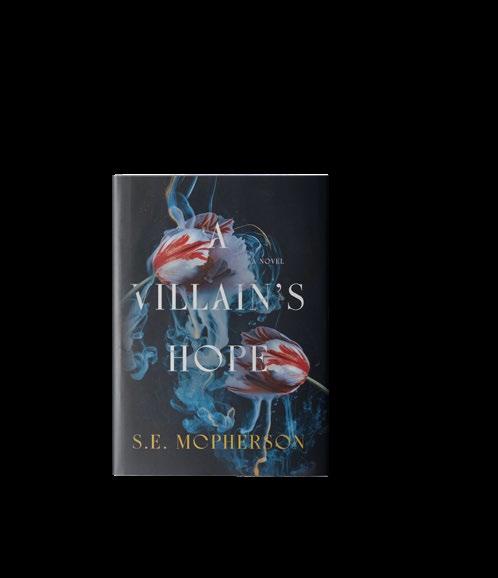
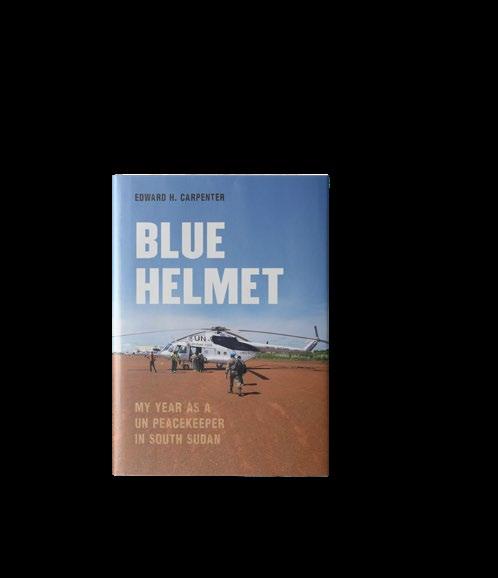
spend the day. Finn suggests sports, board games, a dance party, riddles, building with blocks, and puzzles, but nothing seems to catch the reader’s attention. Finn refuses to let tedium prevail: “Never in my life have I been called BORING,” the frog protests. Finally, Finn creates a diversion reminiscent of a video game that does entertain the reader—and nets Finn a full stomach. Finn’s comical narration is sure to appeal to fans of Mo Willems’ Pigeon books. Lin’s charming illustrations are packed with puns (the board games suggested include “Pondopoly” and “Settlers of the Swamp”), and Finn’s rounded, simple design and huge eyes will encourage readers to try to draw him on their own. (Froggy butt cheeks, visible every time Finn turns around, may elicit giggles.) The text is presented in a strong black font, enlarging certain words for emphasis or adding color and texture to reflect the word’s meaning (cornfield looks like ears of corn). The book includes some stretch words for young readers (like preferences) as well as some slangy constructions to sound out (“Whatddya say, kid?”); overall, the vocabulary is accessible and clear from the context. This ostensibly boring book is truly full of fun.
Kishkan, Theresa | Thornapple Press (216 pp.) | $24.95 | October 6, 2026 9781997702061
Kishkan views her 1970s youth through the lens of a complicated relationship with an older, obsessive painter. The narrative begins in Victoria, British Columbia, where the 23-yearold author first encountered her own likeness in a gallery, sparking an intense period of modeling and correspondence with the artist. Later, she sought distance from the painter’s suffocating
ways, so she fled to a remote cottage on an Irish island. She moved there alone, hitchhiking along the coast to find a “whitewashed cottage surrounded by grey-green leaves,” hoping to find her own voice as a poet, far from the male gaze. The author skillfully weaves together primary source materials, including “Five Letters to Theresa” and a biographical essay, to confront a “vaterkomplex” that blurred the lines between paternal and romantic attention. She writes that the artist confessed to being sexually attracted to his own daughter—a “thralldom,” as he called it, that lasted until she turned 18 and asserted her independence. (Kishkan had previously noted that he’d painted many paintings of his unclothed daughter.) At that pivotal moment, he appeared to transfer this fixation onto the author, who strongly resembled his child, using his art as a “form of exorcism.” Kishkan reflects on the strength of the Caryatids—the sculpted female figures she viewed in Athens—noting how “their bodies were foundational, structural; they were not the objects of anyone’s gaze.” This contrast highlights her own struggle with being “fixed for eternity by the gaze of a male painter.” As the narrative shifts between the rainy streets of Victoria’s Rockland neighborhood and the author’s coastal Irish refuge, the prose explores themes of complicity and shame as the author tells of trying to reclaim her agency. The pacing is as deliberate as a brush stroke, and Kishkan’s unflinching, vividly rendered reflections offer a powerful study of how art can both celebrate and appropriate the female form. A richly textured meditation on a reclamation of self from the frames of the past.
London, Mark & Mark Russell | Illus. by Alberto Ponticelli, David Ferracci, Emanuele Ercolani, Félix Ruiz & Val Halvorson
Mad Cave Studios (128 pp.) | $19.99 paper May 26, 2026 | 9781545826591
Series: Terrorbytes, 1
A n anthology of graphic shorts offers up chilling and sometimesamusing examples of near-future tech gone awry.
The book collects the first five issues of Terrorbytes, with the first, third, and fifth written by Russell and drawn by Ruiz, Ponticelli, and Ferracci, respectively; the others are authored by London, with Ercolani or Halvorson providing art. The frame story opens on Earth about a century from now, with three android figures on a deserted planet activating old technology to reveal stories from the past. The first such tale, set in 2035, follows a charismatic tech bro named Ted pitching “Final Daze,” a new technology that allows the dying to relive their happiest memory, instead of living a painful present: “Let’s face it,” he tells a massive audience, “dying blows…But. It. Doesn’t. Have. To. Be. That. Way.” His exuberant presentation is intercut with grim glimpses of the disposable people used to test the tech. In the second story, someone named Tyler trains an artificial intelligence, sharing his personal data for money, only to develop a dependency that erodes his own grip on reality. A third tale follows a young man whose smart refrigerator informs him that he’s committed a crime; before he knows it, he’s sentenced and sent to jail. The fourth work also features tech entrepreneurs; this time, they have a bot that
forces people to recite their thoughts. The fifth circles back to the spaceship that brought the initial androids, offering a haunting story of lost love at the end of the world. London and Russell seem to have drawn inspiration from the grim Netflix series Black Mirror, blending comedy with horror in technological futures that feel eerily plausible. The frame narrative feels rather thin until it gains clarity in the final section, but each story stands on its own as clever, unsettling, and fun. The various artists give each segment a distinct visual identity while maintaining cohesion in how they blend apocalyptic cyberpunk with the happy veneer of advertising; Ercolani’s bold colors and Ferracci’s surreal imagery, which features realistic-looking human heads attacked by scorpions, are especially hard to forget.
Sharp, unsettling tech satire elevated by varied and memorable illustrations.
Mashaw, Arsheeya & Ari Mashaw
Double A Press (278 pp.) | $14.99 paper March 1, 2026 | 9798994091012
Series: Cyrus Darian Thrillers, 1
In this medical thriller, an exiled physician is drawn back to duty when illness shadows an isolated commune.
Cyrus Darian, once a practicing physician, has traded hospital hallways for hiking trails, retreating into solitude in the American wilderness. While passing through Oregon, he encounters Brent Carlson, a gravely injured member of the insular Reckoning Grove commune—a group viewed with suspicion by surrounding towns. Cyrus saves his life and then takes him to a local hospital, where Brent dies suddenly and unexpectedly. His death doesn’t make sense to Cyrus, who finds that he can’t simply walk away. He remains near the commune and begins to notice unsettling consistencies among the residents: persistent fatigue, unexplained physical
decline, mysterious neurological symptoms, and a shared reluctance to seek outside help. The atmosphere is thick with distrust, and the commune’s insularity complicates Cyrus’ attempts to ask questions; local health officials dismiss his concerns, viewing him as an outsider with no standing. Soon, the doctor starts receiving anonymous warnings from someone who wants his inquiry to end, escalating from vague cautions to pointed threats. As the body count rises, Cyrus must rely on clinical reasoning and sharp instinct, piecing together symptoms while navigating secrecy and suspicion. His internal struggle, balancing a desire for detachment with an unshakable commitment to do no harm, adds an emotional undercurrent to the novel’s procedural elements. The Mashaws weave in diagnostic details without letting them overwhelm the narrative, allowing the medical investigation to propel rather than stall the plot. That said, the story treads some familiar ground; the mysterious commune, the skeptical authorities, and the reluctanthero arc follow well-worn genre conventions, and many characters lack psychological complexity. The novel also favors momentum over layered plot development. Still, the authors succeed in delivering a cohesive, accessible, and entertaining thriller that’s easy to follow—and difficult to put down. A solid and fast-moving, if sometimes-formulaic, mystery tale.
McQ, Coco | Sand Dollar Press (294 pp.)
$14.99 paper | November 20, 2025 9798999406736
A cozy mystery series kicks off with heaping helpings of small-town charm. The first installment of McQ’s series opens with a backstory that quickly establishes its hero’s flamboyance,
fortitude, and faith. Born “on the back side of a bayou in the middle of a thunderstorm” and winning the local “Miss Crawdad Pageant” three years running in her youth, Sashé Boudreaux finds purpose providing “hushpuppies, makeovers, and justice” to her neighbors in Cypress Grove, Louisiana, her tiny backwater of a hometown. When Harold Landry, one of the shut-ins she delivers home-cooked meals to, goes missing one Tuesday morning, Sashé’s “good instincts” kick into gear: “Nobody misses my Tuesday tapioca. Nuh-uh. Not on purpose.” Friendly chats with friends in the community—including Arleen, a retired cop who drives the town shuttle; Delphine, who runs the recycling center; and Elaine at the post office—reveal that no one has seen Landry since Thursday night bingo. Rumor has it that he may have been mixed up in clandestine activities with a couple of other local oddballs: a reclusive retired archaeologist and a traumatized Vietnam vet. Meanwhile, Bobbie Rae, who sells homemade goat-milk soaps and reads people’s auras at the farmers market, has been experiencing weird, ominous dreams, and her bad-boy boyfriend, Trey (whose older brother is doing time in nearby Angola prison), is acting strange. A hidden network of underground tunnels once used by Civil War–era bandits and a hunky new sheriff add intrigue and excitement to the mystery. McQ pours on the Southern charm extra thick, peppering the dialogue with “y’all,” “Lordy!,” “criminy,” and homespun phrases like “hotter’n Hades.” The characters wash down generous helpings of delicious, down-home food with copious quantities of sweet tea (with extra sugar). But what at first seems like over-the-top cornpone is rescued by a plot that ties modern-day evils to historical atrocities and a cast of endearing, plucky characters who rise above stereotypes and genuinely look out for each other. Brief author’s notes at the end discuss the novel’s historical context.
Quirky characters, small-town charm, and links to contemporary issues and historical events enliven this series debut.
Moccia, John | Self (372 pp.) | $12.99 paper December 16, 2025 | 9798261752240
Series: The Corey Sullivan Series, 1
In Moccia’s thriller, a parole officer puts his career and life on the line when he takes on the case of an inveterate crime leader.
“Jesus, Sullivan. You’re what I’d call a shit magnet.” So remarks a detective to Corey Sullivan, the most promising officer with Federal Probation and Parole. Sullivan’s charges don’t come any worse than Manu Salaber, “a hyper-violent, sadistic opportunist” whose case file is “at least four inches deep, wrapped in thick rubber bands.” Salaber is due to be released from federal custody in 30 days, and Sullivan wants to be his probation officer. His mentor doesn’t believe he’s ready. “I’m doing you a favor,” he says. “This man represents a rare evil, like we almost never see. He’ll ruin you. He’ll devote all his energy to corrupting you.” Sullivan considers himself “a student of crime and criminals [who] never grew tired of watching them”; he also “love[s] being on the inside” and seeks the prestige of being a part of “potentially the biggest story in the district.” But the case threatens to end his career as well as his life when he runs afoul of people in high places who might be under Salaber’s thumb. Write what you know, as the saying goes, and Moccia is a former federal probation officer. He vividly sets the scene: “No matter how well they’d been doing, each visit here was a reminder of a very bad day, the day a set of cuffs had been attached when they were informed that the party was over.” He excels at punchy Elmore
Leonard–like dialogue that drips with menace. Salaber’s fierce intro casts a long shadow that will loom in the reader’s imagination; on the one hand, one might want more scenes between him and Sullivan, but on the other, his absence makes his impact on Sullivan all the more powerful. Run, don’t walk, to pick up this auspicious series debut.
Mueller, Bettina | Tea House Press (290 pp.) $16.95 paper | January 15, 2026 9798218914356
Mueller’s memoir charts an American woman’s experiences with Zen Buddhism. In the late 1970s, the author was living in New York City and attending the New York Zendo Shobo-ji once a week. It was around this time that one of her friends decided to give up her life in America to become a Buddhist nun in Burma; perhaps the zendo (meditation hall) would provide some answers as to why someone would make such a dramatic change. At the zendo, Mueller met someone who would wind up playing a big role in her life: a Zen leader she refers to as “the Roshi” (meaning “old teacher” or “old master”) who would occasionally come to New York City from his residence at the Dai Bosatsu Monastery in upstate New York. This Roshi was a “young, good-looking Japanese man”; the author would wind up studying with him for over 32 years. Readers get glimpses of the author’s spiritual journey:
Confident, confessional, and confrontational poems.
RAVENS AND ROMANTICS
She puzzled over koans and sat for meditations called zazen; she also ventured to places like the Green Gulch Farm Zen Center in California and to temples in Japan in her quest. In Mueller’s firsthand account, the world of Zen Buddhism can be austere and even painful—the author explains that, for the long periods of meditation, “Advil was a necessity for the evening sittings when my knees were swollen and my back ached.” She skillfully articulates the benefits as well. Mueller writes that, after committing to Buddhism, she “felt lighter and bigger, as though [she] could hold all the world in [her] arms.” While the author’s attention to detail—she describes items like “giant bowls with creamy white glazes” used for a tea ceremony—does not always pay off in excitement, Mueller has a compelling personal tale to tell.
A revealing, relatable look at a topsyturvy path to spiritual enlightenment.
Paradiso, Mercedes | Self (166 pp.) | $14.99 paper | March 31, 2026 | 9798991217040
Paradiso juxtaposes light and dark in a series of poems that explore a murky love affair that leads to artistic realization.
A strong, confessional voice powers these free verse poems, which effectively sprinkle in hyper-specific details and never feel intimidated by their own power. The phrase “dreams and heavy feelings” from “the new york in me” serves as a larger theme for the collection as a whole. These poems center intense emotions and are confrontational in ways that feel cathartic. A quasi-gothic sensibility also aids the works; one, in fact, is even titled “gothic fantasy.” Vampires, ghosts, and witches serve as recurring metaphors amid consistent nature imagery. Woods, ravens, and waves feature in many poems, as well, and Paradiso often positions them as divine sources of clarity: “i find answers in the forest’s canopy, and / the
wind on my skin feels like delicate electricity,” the speaker muses in “paranormal leaves and ocean breeze.” In an intriguing moment, the poet leans on the fourth wall in “how dare she believe in herself,” which describes a woman’s personal act of writing as “everything she’s kept inside / like she’s supposed to? / she thinks she has thoughts / people want to hear.” This notion opens an engaging consideration of what constitutes poetry and, perhaps more crucially, what makes poetry of value. If the collection has a weak spot, it would be the uncredited black-and-white pen-and-ink illustrations, which resemble coloring-book pages; the simplistic style of the drawings, often depicting human figures, undermines the collection. Nonetheless, the poems’ quality shines through; as Paradiso points out in “intangible valuables,” “i didn’t need your permission / to create new worlds,” and this self-assuredness results in a powerful collection. Confident, confessional, and confrontational poems, cast in gothic darkness.
Pierson, Jeff | BizOps Media (427 pp.) $34.99 | $18.20 paper | March 24, 2026 9798994065914 | 9798994065907 paper
In Pierson’s debut novel, a scientist accidentally discovers roomtemperature superconductivity and founds a company that revolutionizes the power grid.
In his first novel, the author, an energy technology executive and business adviser, draws on his professional experience and knowledge of contemporary scientific innovations to depict a high-stakes corporate environment. After Dr. Amelia Chen observes quantum tunneling while conducting research, she and Dr. Toshi Yoshida, her graduate school adviser and mentor, set out to use room-temperature superconductivity (a concept generally considered impossible) to
create a battery that stores electricity with unprecedented efficiency. Joined by Mark Levinson, the former chair of the American Energy Storage Association, they found QuantumCell technologies. As the company grows and their technology is successfully applied to improve the power grid, questions surrounding the system’s vulnerability to cyberattacks and the troubling implications and potential benefits of artificial intelligence usage begin to arise. Rx Battery, a competitor to QuantumCell led by former Army Cyber Command Officer Brooke Reilly, is building a power grid defense system called Quantum Shield. Meanwhile, Amelia can’t help but wonder whether her father’s warning years earlier—that she should “be careful with energy”—might be tied to his own mysterious work prior to his sudden death. Switching among multiple characters’ perspectives, the story is at its best when exploring internal conflicts, personal relationships, and broad ethical questions about the benefits and dangers of AI in the modern world. But while the novel presents compelling characters and a creative plot, these elements are often overshadowed by the frequent introduction of complex technical concepts and dense scientific jargon. (“Traditional transformers work through electromagnetic induction. There’s no direct electrical connection between the primary and secondary windings. That’s what gave us an idea. We created quantum-isolated channels mimicking the transformer coupling.”) While those with background knowledge of the concepts and the industry covered here will likely enjoy this novel, as it is well written and elegantly constructed, it may prove a bit inaccessible to general readers. The cognoscenti will enjoy this dense, intelligently rendered techno-thriller.

Proffit, Donald | Synthetic Prophetic (122 pp.) | $12.95 paper | May 1, 2026 9781971533018
Proffit follows up his historical novella Scapegoat (2025) with a return to the story of his ancestor Susannah North Martin, who was hanged for witchcraft in Salem in the 1690s.
For more Indie content, visit Kirkus online.
The author combines his own story of coming to terms with his identity as a gay man while seeking conscientious objector status during the Vietnam War with that of his ancestor Susannah, tragically executed during the Salem witch trials. The novel also incorporates the story of Joseph Ring, one of the men who accused Susannah of witchcraft. Along the way, he weaves together storylines and genres to create something that’s hard to categorize but even harder to put down. He presents much of the book as a series of brief, enchanting prose passages that feel more like interconnected pieces of flash fiction than chapters; the author labels the structure of the book by using the language of missals and hymnals: canticles, preludes, and so on. Sprinkled among these elements are sections written in verse, as well as notes, commentary, and memoiristic passages. The general effect is dreamlike, following the logic of a montage. Overall, the work feels a bit like an impressionistic painting, with each element intriguing and beautifully rendered but impossible to fully process, except holistically. The soaring writing, dreamy organization, and thematic clarity create a book whose substance far outpaces its brevity. Proffit beautifully, honestly, and realistically reflects on the othering that he experienced as he relates it to Susannah’s. Even so, the parts that feature his ancestor are easily the strongest, largely because he portrays her as such a compelling and steady character. Her calm, firm refusal to cower in front of her accusers, or even
accept their premise, is inspiring; she delivers a barrage of retorts imbued with a righteous, defiant, and matter-of-fact certainty: “I believe a lie, repeated until it feels like scripture, can make even a girl believe what she performs. I think you give too much credit to Satan and not enough blame to yourselves.”
A three-part story that’s enlivened by an ephemeral, dreamlike structure and musical prose.
Rietz, Robert J. | Avl Grundisburgh (154 pp.)
$13.99 paper | April 1, 2026 | 9798234017741
Rietz’s short stories aim to capture the full scope of American life in the years since World War II. In the opening story, “Christmas Holiday, 1945,” a veteran returning home to Chicago after Germany’s surrender prepares to meet the wife he hasn’t seen in two years. Upon arriving in America, he visits his sister, Edith, a nun who’s about to embark on a missionary voyage to China. In “The Visit,” a man named Rob struggles with feelings of guilt and loss as he travels from Detroit, Michigan, to Raleigh, North Carolina, in the wake of his mother’s death. In “Marooned in Marrakesh,” a married couple visiting their son, Mike, who’s joined the Peace Corps, find themselves stranded in Morocco on September 11, 2001. “Recluse” follows Vincent Jackson, a disabled Vietnam veteran who attends a music festival. A performer is murdered onstage, and Jackson—who was also onstage at the time—is wrongly suspected of murder. A married couple in “Maggie” must put down a beloved pet, and in “Hurricane Helene,” residents of Asheville, North Carolina, try to recover after much of the town, including the famous River Arts District, is destroyed in a flood; “Hitchhiking to Hingning” recalls the story of Edith that was begun in the first vignette. These deeply
engrossing, slice-of-life episodes have the air of a folk song, in which characters are quickly introduced (often in medias res) and presented with low-stakes problems. The lack of resolution in several tales only further enhances a sense of the uncanny. Certain tales stand out: “Christmas Holiday, 1945” beautifully conveys the anxiety and jubilation of the first Christmas after the war’s end, “Marooned in Marrakesh” and “Recluse” feature people in desperate straits who command the reader’s sympathy, and the character of Vincent Jackson feels like someone dreamed up by Johnny Cash or Kenny Rogers. Despite the occasional anachronism (such as a woman in the 1940s eating sesame chicken, which didn’t gain popularity until the ’70s), the stories set in the past are immersive and credibly rendered. Mundane events acquire a magical quality in these engaging tales.
Rirdan, Daniel | Illus. by Gennadi Erkulis Corino Press (24 pp.) | $13.46 June 30, 2026 | 9798992609073
A woman pilots her homemade spaceship toward the sun in Rirdan’s speculative short story. Jo emerges from the roof of a barn, somewhere in Nebraska. She’s flying a spacecraft that she’s spent months building. The ship rockets into outer space and eventually enters the moon’s gravitational pull, but Jo’s true destination is the sun. She pedals (“forward to fly, backward to slow”) and turns a crescent steering wheel as she fights to breathe and keep her eyes open in the “scorching air.” Of course, she’s taken precautions, sitting in chest-high coolant water to soften “the brutal lurch of launch and any sudden bone-deep jolts” in a craft outfitted with “sacrificial plates” that will burn away in the sun’s fiery glare. But she still must improvise when midflight troubles hit, such as a
sudden and entirely unexpected hissing sound. She does anticipate some damage, although hers is a round-trip voyage, and Jo needs her spaceship intact long enough to make it back to Earth. The tenacious hero of Rirdan’s story is surrounded by a makeshift vessel’s relatable components. Jo, for example, dons welding goggles and sits in a tractor-bucket seat, and a late-19thcentury railroad chain is one of the myriad things clanking away. Quite a bit of what unfolds is shrouded in mystery, including the specific time period or the identities of others in the farming community to which Jo belongs. Nevertheless, readers learn plenty about the homegrown astronaut; she’s tenderhearted and neighborly, as well as mechanically inclined and absolutely cool under pressure. The story doesn’t immediately reveal what she’s after, specifically, nor does it answer every question that readers may have. But the essence of the story—one woman facing seemingly impossible challenges with bravery and resolve—is consistent throughout. Erkulis’ single grayscale illustration accompanying the text shows Jo fiercely struggling to control her coolant-water-laden ship.
This brief spacefaring tale delivers exhilaration and profundity in equal measure.
Santana, Deborah | Broad Book Press (260 pp.) | $30 | April 21, 2026 9781963549409
Santana explores the aftermath of her choice to leave her superstar musician spouse in this memoir. Raised by a noted blues artist father and a strong working mother, the author met and married rock star Carlos Santana in her early 20s, embarking on a heady life that eventually included world travel and meetings with luminaries like Nelson
A wise and comprehensive game plan.
Mandela. But after 34 years of a union regularly beset by her husband’s infidelities, she had had enough. “I had pruned my life branches too short for me to blossom,” she writes. “[I] admitted to myself that Carlos and I were broken and most likely could not be repaired.” Identifying the sources of her determination to grow and change, she opens this book with stories of her parents, grandparents, and ancestors, who taught her to believe in herself. If some of the following chapters read like rambling accounts of privilege, this material serves as an effective contrast to the author’s later endeavors, like starting the Do a Little Foundation, which supports the Daraja Girls Academy in Kenya, and her important work as a founding board member of the National Museum of AfricanAmerican History. Santana doesn’t assign blame to outside sources for her missteps and setbacks, and she takes responsibility for her successes as well: “I had chosen myself: education, dialogue, sweetness, and self-love. It was all I wanted,” she writes when reflecting on her decision to pursue her undergraduate and master’s degrees. The author credits a long-standing meditation practice, along with habits of reading, hiking, and fostering community, as the supports for her ability to remain open to love (she had a second, brief marriage to actor Carl Lumbly from 2015-2019), grow as a writer, and guide her family. While her famous surname will always open doors, the author clearly cares less about glitter and much more about grit, and her memoir will inspire readers to look closely at their own lives and purpose.
In this chronicle of personal reinvention, the author’s strength, humility, and radiance shine brightly.
Kirkus Star
Schmalle, Aubrey | Sensational Achievements (278 pp.) | $16.95 paper November 20, 2025 | 9780996565325
A parents’ guide to helping children thrive in an increasingly digital world.
“As parents in today’s everexpanding digital AI world, we can no longer take the advice of our parents or even recycle the things that we learned as kids,” writes occupational therapist and child development expert Schmalle, the single parent of a Gen Z daughter, in her nonfiction debut. Thanks to the universal prevalence of screens (along with the lingering social disjunction of the Covid-19 pandemic), kids are growing up “distracted, dysregulated, and disorganized,” all of which is amplified and complicated by the growing ubiquity of AI, per the author. In response, Schmalle argues that we should find new habits and develop new routines to teach children how to navigate the dizzying terrain of the new digital and AI world. She organizes her proactive approach into “Five Pillars”: “Save Yourself First” (the best way to help your children develop healthy social skills is to “cultivate them in your own life first”), “Connect and Collaborate” (“Increase face-to-face interactions, limit tech disruptions”), “Move With a Purpose” (balance screen time, sleep, and exercise),
“Learn and Grow Sensationally” (“opt for multi sensory learning tools over digital solutions”), and, finally, “Build Digital Awareness and Safety” (teach digital literacy). She makes sure to include considerations for neurodivergent children, and each chapter offers assignments or suggestions for filling out exercises in the Family Playbook, a free resource that can be downloaded online, along with generous endnotes.
All of this material is clearly and forcefully presented with a great deal of hard-edged clarity that is a welcome change when discussing a subject that often tempts writers toward treacle. Schmalle is direct about the dangers of this new “Wild West,” noting that normal societal rules don’t apply. “It’s a breeding ground for predators who would take advantage of the most vulnerable in our society—children and the elderly,” she warns. “Parents are often the biggest violators of their children’s privacy without even realizing it,” she asserts, noting that “mommy bloggers” and the like show the world every moment of their kids’ lives without their permission, transmitting the message to their children that they need not respect the privacy of others. In erudite and sympathetic prose, the author helps readers parse the complexities of an online world where, as she grimly points out, no amount of parental controls will let parents see inside every Snapchat or Discord post their kids are going to encounter. Schmalle observes that there are growing parenting trends of keeping kids away from social media until age 16 and forbidding preteens from owning cellphones, but the book is empowering rather than prescriptive; the author deftly interweaves her own personal experiences throughout the broader framework of the Family Playbook she’s devised, but her book’s strongest element is its tough-love optimism. Schmalle is unflinchingly clear about the dangers of this new world, but, as she writes from her own experience, “being overwhelmed is just a feeling.” Parents feeling intimidated by the
immensity of the online world they know their kids encounter will be both informed and encouraged by the insights the author shares here. A wise and comprehensive game plan for helping kids—and their parents— navigate the internet.
Scott, Liz | Pierian Springs Press (218 pp.) $22 paper | April 7, 2026 | 9781965784372
A psychologist looks death square in the eye. Many of us fear death, including the author, a writer and psychologist. “I’m a person who thinks about death approximately 20 to 30 times a day,” Scott plainly states. Though the book begins with a quick overview of humanity’s long struggle with the concept of death, illustrated by everything from various ancient myths to modern polemics, this only sets the stage for a personal odyssey to accepting death’s inevitability. Along the way, the author explores major world religions, the concept of panpsychism, the phenomenon of near-death experiences, and the world of psychics, and she even plunges into the psychedelic. Scott questions the effectiveness of our culture’s common coping mechanisms for death, finding them ultimately impotent: “It’s very difficult for me to believe that I’m the only one who feels this way, but living a full life makes me more afraid of dying. I do have a full life, and precisely because I do, I! Do! Not! Want! To! Leave! It!” Undoubtedly, many readers will relate. Eventually, it becomes clear that the only way out is through, leading readers to dissect their own complexes regarding the subject. Scott possesses a great capacity for self-awareness and is clearly well read; the result is a book that’s both informationally dense and boldly self-reflective. Importantly, the
author is also frequently and effortlessly hilarious. Though Scott may position herself as a Dante keen to descend into the fear of all fears, she inadvertently serves as the reader’s Virgil. Throughout her journey, she prompts readers to investigate their own beliefs and feelings about mortality; they’ll find themselves genuinely rooting for Scott to plumb the depths of the fear of death and come out the other side.
An engaging look at mortality that suggests there may well be nothing to fear but fear itself.
Kirkus Star
Sojka, Jane Ziegler | Univ. of Cincinnati (120 pp.) | $19.99 paper | August 19, 2025 9781947603738
A no-nonsense handbook to help women who struggle to make their voices heard in the workplace. Inspired by the popular marketing class she teaches at the University of Cincinnati, Sojka has translated her award-winning Women in Sales course into a book that can be shared with a wider audience. The goal—to help working women rid themselves of habits that do not serve them and replace them with ones that do—is broken down into four parts. The first has readers identify “self-limiting behaviors,” like perfectionism and people-pleasing, that are often practiced unconsciously. Part 2 explores eight resilience strategies that readers can employ to build confidence, such as setting a literal “timer on the pity party” and knowing when to quit. In Part 3, readers learn about small changes they can make to improve confidence, like eliminating hedge phrases (such as “I think,” “I feel,” “maybe,” “perhaps,” “kind of,”
and “almost”). Lastly, the author provides suggestions for helping to lift up other women to create a healthy, supportive network. Each chapter includes reflection questions and practice sections, accompanied by blank lines where readers can fill in their own thoughts and answers. With a clear and articulate narrative voice, Sojka blends statistics with anecdotes to make her points. While the tone remains supportive throughout, the author isn’t afraid to call out some hard truths—such as the underlying reason why “busyness” is so often a distractor: “sometimes pursuing a passion or calling is hard. It is painful and it hurts, but you know that’s where you’re supposed to be. And busyness gives you a temporary escape.” This kind of soul-searching, combined with exercises that readers can immediately dive into, makes for a motivating and uplifting self-help book. The skillful balance of actionable tools and warm words of encouragement results in an inspirational rallying cry for women everywhere. Practical steps and emotional support with a healthy dose of tough love.
Sommer, Jennifer | Braughler Books (216 pp.) | $19.99 paper | January 26, 2026 9798893900989
In Sommer’s middle-grade novel, a thoughtful cat helps out when a kingdom is afflicted by fairy mischief and enchantments. What should a queen do when she gives birth to an eighth daughter, but her royal husband wants a male heir? In this clever and humorous fairy-tale pastiche, Queen Eglantine bargains with Oona, Queen of the Fairies, to secretly exchange her baby princess with a peasant couple’s baby boy. The tiny princess becomes an enchanted flower in Oona’s garden; the stolen baby, Malachy, is diverted
into the clutches of wicked fairy Carabosse, who holds a long-standing grudge against the king. Carabosse, unaware that Malachy is not the real royal heir, magically entraps the infant at the bottom of a lake. The author enjoyably incorporates numerous fairy-tale elements in her narrative, including a grumpy but helpful leprechaun, a handsome prince, a book of spells, and taleswithin-tales. Throughout, a cat named Smokey draws readers in as the story’s first-person narrator, wry observer, active participant, and believable feline (the author clearly knows cats). Smokey’s descriptions of the fairy-tale world around him are satisfyingly picturesque and occasionally poetic (he looks up to see “the last eye wink of the waning moon greet the rising sun”). The comedy arises organically from the story: Peasant mother Maeve (one of several strong female characters in addition to the eldest princess, Rose) doesn’t realize that her baby has been replaced with a changeling—an unsavory prankster fairy known as a “wagwit” who comically enjoys Maeve’s pampering while taunting Smokey behind her back. Carabosse makes the king’s servants invisible but for their white gloves and turns members of the court into cats. Things look dire for the future of the kingdom, but readers can be assured of an inclusive happily-ever-after. An entertaining patchwork of classic fairy-tale lore conveyed by an engaging feline narrator.
Sullivan, Kimberly | Self (370 pp.)
May 8, 2026 | 9798986884493
Series: Three Coins, 3
A group of guests make meaningful connections and find unexpected opportunities while visiting an idyllic Italian inn. It’s springtime in Umbria, and innkeeper Emma is hard at work preparing the Three Coins Inn for its latest guests. Lisa, the head of business development for her hometown, is on vacation after attending the wedding of her former fiancé, Matt. The trip is the culmination of a longtime dream; while she was in college, she planned to spend a semester abroad in Italy, but Matt convinced her to remain in their hometown with him instead. Antonio Bardo is an acclaimed Italian artist seeking inspiration for his paintings and a reconciliation with his past. New York socialite Sharon Asher struggles to connect with her 9-year-old son, Josh, a sensitive and artistically gifted child who is unlike her athletic and outgoing older son, Chet. And there’s Margherita Molinaro, a novelist whose debut was an instant bestseller— unfortunately, the manuscript of her second novel lacks the same spark. Her agent wants her to refine the characters by spending a few weeks at the inn and interacting with new people. Over the course of two weeks of exploring the beauty of Umbria and enjoying cooking classes and spa visits, the guests find their lives changing in profound ways. The third entry in Sullivan’s charming Three Coins series is bolstered by well-developed characters and witty, evocative prose. While the cast is expansive, Sullivan deftly balances the multitude of characters and
storylines in chapters that alternate between different characters’ perspectives and deepen the connections that develop between the guests. (One of the novel’s most poignant moments occurs when Antonio recognizes Josh Asher’s talent and offers to serve as a mentor to the eager young artist.) Sullivan’s writing is lyrical with occasional flourishes of humor (“Surely, if Dante were writing in the twenty-first century, he would banish men who publicly shamed their fiancées mere months from their wedding day to the lowest circles of Hell”).
A satisfying entry in this delightful series.
Truax, William | Blue Ocean Publishing Group (210 pp.) | $16.95 paper December 1, 2025 | 9781947436077
Truax blends science and spirituality in this musing on the nature of reality. Newtonian physics shape our understanding of the universe, but the author asserts that data from emerging fields like quantum physics doesn’t “make any sense within the current framework.” Truax also observes that, even with rapid scientific advancements and revolutionary innovations, humanity is increasingly unhappy and unfulfilled. In this eclectic work, the author argues that the underpinning of Western science—materialism—is also its weakness, as it reduces spiritual explanations to “a bunch of questionable doctrines, fuzzy belief systems…and New Age touchy-feely junk.” An Indigenous American who grew up in the U.S. “with one foot in each culture,” Truax makes an intriguing case for the melding of the material with the spiritual. Cutting-edge scientific theories, he suggests, may support this thesis; the book offers in-depth overviews of how complex science and math—spanning from light-wave diffraction and
MERRY-GO-ROUND BROKE DOWN
quantum mechanics to Gödel’s incompleteness theorems—point to avenues of convergence with a spiritually based worldview. The author balances his more technical science and mathematical analysis with a broader social commentary that explores the enduring human quest for meaning and the failure of both science and religion, as disjointed separate entities, in providing definitive answers. Per Truax, it is only through the merging of the two perspectives (the material and the spiritual) that humanity will be able to both fill scientific gaps and formulate more complete responses to the ubiquitous questions about life that have concerned philosophers for millennia. The author eschews jargon for a conversational approach that welcomes readers unfamiliar with contemporary science and/or spiritual paradigms (“I’m just callin’ it the way I see it,” Truax writes). The book’s endnotes may disappoint more scholarly minded readers, as most citations reference dictionary.com or Wikipedia. An idiosyncratic and intriguing reflection on science, spirituality, and the meaning of life.
Welch, Katie | Buckrider Books (304 pp.) | $23 paper | October 14, 2025 | 9781998408276
In Welch’s novel, set after a catastrophic earthquake, a recovering addict must confront her past and find the children she abandoned. A tectonic shift devastates North America’s West Coast by causing a massive earthquake—9.3 on the Richter scale—and multiple tsunamis, thus reshaping the world
order. The loss of life is catastrophic, but the survivors suddenly have new abilities, including the power to understand the languages of animals (“birds were tiresomely repetitive, dogs laconic and positive”), as well as all human tongues. Del Campion, a Canadian mother of three and recovering addict, is traveling to Vancouver Island to find the family she abandoned after the quake. Del tells her life story piecemeal—first to sea lions and, eventually, to a sympathetic human being. She was a sensitive child who found a passion for horseback riding as a teen, and she met her future husband at a stable. But after having three unplanned children, Del became increasingly unhappy with her life. A riding accident hospitalized her, and she struggled with a prescription drug addiction. After the earthquake, things worsened: Her spouse and son went missing in the relief effort, her eldest daughter accidentally burned down their barn and house, and her youngest daughter got involved with cultish religious neighbors. As she locates each family member, missing pieces of her story surface, and with each revelation, she must confront unspeakable events that occurred while she was high or absent. Over the course of this novel, Welch’s spare, evocative prose capably illustrates the various players’ everyday lives (Del’s mother “left business behind in Alberta and in a burst of domesticity bought cookbooks, aprons and a stand mixer”) and also ably gets across the changes to the natural world. The magical realism of human-animal communication adds additional charm and moments of humor that contribute a lighter touch to a narrative that’s otherwise heavy with guilt, regret, and grief.
A haunting, evocative exploration of addiction, redemption, and the stories we tell ourselves.
Woo, David & Margalit Shinar Regalo Press (288 pp.) | $30 March 31, 2026 | 9798895655801
Woo and Shinar’s novel-in-stories traces the human consequences of globalization across two decades. The novel begins in New York in 2008 in the midst of a shooting at a conference. A group of bystanders that includes a Chinese tycoon, an American CEO, and a Japanese celebrity is taken hostage. The narrative then moves back in time to 1999 Shangcheng, where the “uneventful factory township” is preparing for a visit from the American purchasers of said factory. The communal gathering celebrating the sale of the local factory is interrupted by protests (“Down with America! Down with imperialism!”), since anti-American sentiments have been stoked by the war in Kosovo and the U.S. bombing of the Chinese Embassy in Belgrade. The town’s mayor, Liang Dacheng, is able to appease the proctors, but he receives a threatening letter: “I know all about your treason.” An American CEO, Ryan Forrester, had offered Liang $250,000 to be deposited into an offshore bank account, along with 5% commission in stocks, to sell the factory for less than it was worth—and someone close to Liang knows his secret. The story then shifts to Cleveland, Ohio, in 2002, taking the perspective of Forrester. It’s now been three years since the underhanded deal to buy the factory was made, and while he’s reaped the benefits, others have not. The question becomes: Who will pay the cost of globalization? The shifting points of view are a treat, allowing readers to experience the ways in which the different characters’ backgrounds have shaped their relationships with wealth and greed. The authors pithily evoke the international effects of globalization: “The golden flares from the blast furnaces out there [were] no longer a show of power but merely the shrunken
remnants of Ohio’s once-thriving steelworks, which had, for the most part, relocated to China.” Woo and Shinar’s use of imagery is masterful, vividly evoking the various international settings as the story offers sharp critiques of capitalism. A timely portrait of a world bound together by the pursuit of profit.
Young, Julie Redfield | Illus. by Adelaida Iancu | Self (90 pp.) | $25 | $24 paper
January 19, 2026 | 9798244483758
9798999883209 paper
A young girl and a fox kit magically find what they have lost—home and family—in Young’s illustrated middlegrade novel. With a touch of magic grounded in real-life drama, this work of juvenile fiction, colorfully illustrated in an expressive cartoon style by Iancu, opens as 11-year-old Lark arrives at her latest foster home. Her only possessions are a few tattered but treasured “thrift store finds and hand-me-downs.” Lark’s new foster parents seem nice, but can she trust them? After wishing on a shooting star for a magical friend, Lark sees a fox kit outside her new bedroom window. Two more shooting stars form “a sparkling heart in the sky,” and Lark and the fox, who’s lost her parents and siblings in a recent forest fire, shimmer in response, connected in their need for love and family. Eventually, a crisis leads to understanding and trust as both Lark and the fox find what they’re yearning for. The engaging story is told from the perspectives of both characters, and poetic similes
leaven the seriousness: The fox, now able to speak, has a voice as “faint as a feather floating across the grass”; her fur is “like a shiny penny dipped in candy cane.” (To the fox, Lark smells “like sunflowers swirling in honey.”) The fox’s name, Gypsy, is a misstep; the term is widely regarded as disparaging, and the offense is compounded by the mother fox’s reason for choosing it. She explains that Gypsies “were crafty humans who loved to dance under the moonlight and sing vibrant songs until the sun rose.” According to Young’s biographical note, the author is a former elementary school teacher and a foster parent. Her knowledge of what many children in the foster care system go through—multiple placements, confusion, fear, mistreatment— informs this book, sometimes resulting in a more visceral effect than might be expected in a story for younger middle school readers. A flawed, but heartfelt and effective, reminder of the countless children in need of caring stability.
Zeller, Maya Jewell | Porphyry Press (264 pp.) $23.95 paper | March 3, 2026 9781736755877
Z eller looks back on her life, from an impoverished childhood to a tumultuous middleclass adulthood.
A reader from a young age, the author “dreamed of a literary life” and would become a poet, writer, and educator as an adult. Now living in a Spokane, Washington, homeowners
association community in a home of her own with two children, an HOA president husband, and a tenure-track job, Zeller seems to have a charmed life—no one would ever guess she came from an impoverished background. Born in 1979 at a gas station owned by her parents on the Oregon coast, the author recounts her transient childhood, describing living in a van, squatting in mattress stores overnight, and gathering fish and berries by hand for meals. After saving funds from odd jobs and scholarships, Zeller attended college in the late 1990s, discovering that the childhood she saw as ordinary was a world away from those of the middle- and upper-class students around her. Despite these differences, the author found herself “passing” as middle class. (“I knew how to move between formal and informal language registers, so no one picked up on my past.”) The author also dissects the ways in which the American education system as a whole favors those from middle- and upper-class cohorts, pointing out that the SATs “privilege specific socioeconomic groups, races, and genders.” In poetic prose, Zeller describes a lifelong feeling of never quite fitting in—she discusses feeling like a traitor to her class for changing her social status while being made to feel as though her background made her inferior, particularly by her middle-class husband. Reflecting on the challenges she faced both in lower-class and middle-class contexts, Zeller compellingly interrogates the privileges she holds and lays bare how fickle those privileges can be.
A lyrical and heart-wrenching exploration of the fragility of privilege and the social systems that protect it.
WHEN I THINK of summer, I think about abundance and possibility—how I’ll fill all those hours of daylight, what meals I’ll throw together using the weekly bounty from the farmers market, how many books and audiobooks I’ll get through during our annual family vacation at the lake. Of course, any audiobook you cue up while basking poolside, reclining in a backyard hammock, or heading out on a road trip counts as “summer listening,” but the season calls for audiobooks that are especially entertaining, immersive, and transporting, and the choices for summer listening are abundant indeed.
“A fizzy exploration of love, fame, fantasy, middle age, and possibilities” is how our review describes American Fantasy (Penguin Audio, March 17), Emma Straub’s latest novel. You needn’t have loved a boy band to be
intrigued by the plot, in which 3,000 passionate fans of a 1990s boy band set off on a four-day cruise with the now middle-aged band members. After all, most of us have been fans of something at some point in our lives, and summer is a season that definitely evokes nostalgia. Narrator Marin Ireland’s enthusiastic narration engages the listener, offering vivid interpretations of the characters and illuminating the action.
Amy Jo Burns’ Wait for Me (Macmillan Audio, March 31) is another novel set in the world of music—in this case, country music. And the production takes full advantage of the audio format, including original songs performed by narrators Gail Shalan, Mark Sanderlin, and Patti Murin. In this dramatic and tender story, a woman debuts at the Grand
Ole Opry and then vanishes. Eighteen years later, a young musician plays a mandolin that may have belonged to her. According to our Earphones Award review, “This is a rich, lyrical reflection on love, friendship, and the enduring power of music.”
True-crime podcast fans will love Tiffany Crum’s addictive This Story Might Save Your Life (Macmillan Audio, March 28), which our reviewer calls “truly unputdownable.” Best friends Joy and Benny co-host a podcast about survival stories. When Joy and her husband disappear, Benny races to solve the mystery of what’s happened to them. Julia Whelan and Sean Patrick Hopkins trade off narrating the novel’s alternating perspectives; they also come together to perform the podcast segments, adding verisimilitude. The audiobook is further enhanced with sound effects and tip-line

voicemails, making for another audio-centric experience. Finally, if you’re feeling as ambitious about your summer listening as I am, then summer is a great time to immerse yourself in a series you’ve been meaning to start. Cool Machine (Random House Audio, July 21) is the final installment in Colson Whitehead’s Harlem Trilogy. All three audiobooks are narrated by Dion Graham, who invites listeners into the world of 1960s-80s Harlem and furniture store owner Ray Carney who, despite being reformed, can’t seem to escape the criminal underworld. “As his voice captures the feel of the times, he skillfully brings listeners the coffee shops, storefronts, and conversations of the era,” writes our reviewer. Start with Harlem Shuffle (Random House Audio, 2021) and you’ll be ready for Book 3 when it comes out later this summer.
Jennifer Dowell is the audiobooks editor.
Applegate ( Married….With Children and Dead to Me) narrates her memoir with clear purpose and emotional rawness. She was raised by a caring but sometimes overwhelmed single mother, and Applegate’s voice crackles with emotion as she relays her turbulent childhood, anchored by moments of solace she found while acting. She mines more than 40 years of her own journal entries, sometimes
quoting direct passages. Applegate’s battles with body image and anorexia, as well as her present-day challenges due to multiple sclerosis, are painful to hear about. She’s candid as she details an abusive romantic relationship, and listeners will cheer for her as she settles into a happy marriage and raises her daughter, Sadie. An intimate and brutally honest personal story, narrated with authenticity.
Applegate, Chrstina | Read by Christina Applegate | Hachette Audio | 8 hrs, 27 mins
$24.99 | March 3, 2026 | 9781668653487
Kirkus awards Earphones to truly exceptional presentations that excel in the following criteria: narrative voice and style, vocal characterizations, appropriateness for the audio format, and enhancement of the text.
Adelmann, Maria | Read by Suehyla El-Attar Young | Simon & Schuster Audio 10 hrs, 27 mins | $27.29 | March 31, 2026 9781668129821
This novel is both a commentary on the current state of academia and the story of a woman trying to control her own narrative.
Suehyla El-Attar Young voices Sam, an adjunct professor at a public university in Baltimore. When she takes on additional courses at a liberal arts school nearby, she is unexpectedly put in direct contact with her former grad school advisor, with whom she shares a questionable past. Listeners will be immersed in Sam’s attempt to define herself while balancing the precarious reality of a career as an adjunct. Young does an excellent job of conveying Sam’s frustration, confusion, and determination with both humor and heart.
An exploration of academia and identity through a feminist lens.
Allen, Neal & Anne Lamott | Read by Neal Allen & Anne Lamott | Penguin Audio 4 hrs, 39 mins | $15 | March 17, 2026 9798217294473
Lamott and Allen, who have been married for nine years, conarrate this book about the craft of writing. Allen begins the introduction with a confident, straightforward overview of his own rules for making sentences sparkle. Lamott continues with “Anne’s take,” her voice warm as she responds to Allen’s comments, praises his skills as an editor, and discusses the evolution of their collaboration. Her contributions are playful and inviting, bringing lightness to Allen’s erudition. Thirty-six meaningful rules follow, from using strong verbs to worshipping talented editors. Lamott and
Allen’s shared passion for language always shines through, though she sometimes leads listeners on humorous detours. Especially recommended for writers who want a dynamic new take on standard grammar rules.
Bastone, Cara | Read by Alex Finke
Random House Audio | 10 hrs, 39 mins
$23 | March 3, 2026 | 9798217278121
This audiobook offers a deeply emotional, slow-burning story about a marriage in crisis after a life-changing accident. Roz and Vin, once inseparable, struggle with distance, miscommunication, and unresolved trauma as their relationship begins to fall apart. When Roz takes a figure drawing class and Vin becomes her model, they are forced into vulnerable proximity, gradually confronting hidden feelings and the love that never fully vanished. Alex Finke’s narration enhances the entire experience. Finke’s performance vividly captures both Roz’s fragility and her strength, while her pacing allows each quiet, emotional moment to truly resonate. Finke adds depth, warmth, and authenticity to each scene, making the tension and tenderness feel real.
An immersive, heartfelt journey of healing, forgiveness, and the rediscovery of connection through love.
Beaton, Roderick | Read by Alisdair
Simpson | Hachette Audio | 14 hrs, 10 mins
$31.99 | April 28, 2026 | 9781668656204
Hearing all of European history compressed into 14 hours could be comparable to seeing Earth from outer space. Everything is familiar, yet wondrous and
new. Even those familiar with the history will find this audiobook to be a unique listening experience. Actor and narrator Alisdair Simpson is a familiar voice from dozens of British documentaries, and his performance here is highly polished, exacting, and attuned to every word. History compressed becomes history clarified. Drama is lost—the Huns, Charlemagne, the fall of Constantinople, all here and gone in a minute. At the same time, patterns emerge. Simpson’s flawless voice carries listeners effortlessly into a wider and more timeless perspective. A fresh look at Europe’s long, contentious history.
Box, C.J. | Read by David Chandler
Recorded Books Inc. | 10 hrs | $22.04
Feb. 24, 2026 | 9798892740142
Series: Joe Pickett, 26
In a sea of novels about local cops and federal crime busters, this audiobook stands out. It explores the world of a game warden in rural Montana who gets involved with a criminal investigation with tragic results, ultimately leaving his family to solve the mystery. Narrator David Chandler ably guides listeners through the tale as rugged lawman Joe Pickett becomes the victim and his wife, Marybeth, and their formidable daughters, Sheridan, April, and Lucy, are left to bring his attackers to justice. Chandler brings the daughters to vivid life, giving each one a distinctive voice as they pursue justice in very different ways. This is a gripping drama, well written and performed.

Brown, Kate | Read by Teri Schnaubelt Dreamscape | 8 hrs, 37 mins | $22.04 Feb. 17, 2026 | 9798349163340

In pre-automotive days, what happened to the excess of horse manure on streets? In Paris, residents used it to fertilize small urban gardens that ended up feeding 2 million residents. Today, urban gardening is again blooming, feeding families and communities around the globe. Author Brown profiles this trend, with examples from the 18th to the 21st centuries, in this informative and entertaining audiobook. Brown is a professor of the history of science, and this audiobook comes across as an informative series of lectures for laypeople. Teri Schnaubelt offers up an accessible and easy-on-the-ears narration. Her conversational tone and even pace make it easy for listeners to follow along. Brown offers a vision of the transformative potential of gardening and urban life.
Burke, James Lee | Read by Will Patton Simon & Schuster Audio | 14 hrs, 45 mins $29.99 | Feb. 10, 2026 | 9781668154090
Series: Dave Robicheaux, 25
Will Patton delivers a masterful performance, once again stepping into the world of Iberia Parish detective Dave Robicheaux. In this installment, Robicheaux’s life is upended when the body of an unidentified woman is left on his property by a mysterious figure, drawing Robicheaux and those around him into escalating danger.
Patton delivers a masterful performance.
THE HADACOL BOOGIE
Patton’s smooth, gravelly delivery reflects his familiarity with the characters and conjures an evocative atmosphere. Patton’s ability to navigate an extensive cast is most evident during dialogue-heavy scenes, where he shifts between voices with seamless ease. His meticulous sense of pacing allows the story’s tension to simmer and boil.
Patton perfectly captures the mood of this thought-provoking mystery with a stylish and memorable performance.
Carlyle, Christy | Read by Karen Cass Harper Audio | 8 hrs, 12 mins | $28.99 March 31, 2026 | 9780063347397
Series: Princes of London, 2
Narrator Karen Cass leads listeners on an adventurous treasure hunt for an elusive Viking hoard in Victorian Norfolk, England. Dominic Prince comes from a famous line of treasure hunters, and he’s determined to make a name for himself when an American tycoon funds his latest expedition. Tess Hawthorne isn’t thrilled when a handsome scoundrel shows up in her hometown looking for the very treasure she’s been searching for her whole life. Cass gives an expressive and nuanced performance; her light, feminine tone gives Tess the perfect touch of grace and determination, while her warmer, soothing voice for Dominic makes him sound reassuring and appealing. Cass transitions flawlessly among secondary characters, giving each a distinct voice. Listeners will long for Tess and Dominic to find the treasure—and love—together.
Chan, T.A. | Read by Shannon Tyo Listening Library | 10 hrs, 37 mins
$27.50 | March 31, 2026 | 9798217280797

“Call me Ishara,” begins this interstellar Moby-Dick retelling, expertly performed by Shannon Tyo. After her previous spaceship is destroyed by a mega-ship called the Ballena, Ishara Ming finds herself the captain of a whaler with a crew of four. Despite the gaps in her memory and other people who doubt what little of the past she can remember, Ishara is determined to find and destroy the Ballena. When ship mech Augustus comes on board, Ishara’s memories start to resurface, and taking on the white whale becomes increasingly risky. Ishara must confront her past if she’s going to survive the future, and Tyo captures this tension fully. Listeners will surely relish Chan’s fast-paced space-opera take on a literary classic.
Tyo’s energetic narration adds fuel to this romp of an SF retelling. (Science fiction. 13-18)
Cook, Jeannine A. | Read by Jeannine A. Cook | Harper Audio | 6 hrs, 2 mins
$23.99 | March 3, 2026 | 9780063428263
In 2020, Cook opened a bookstore dedicated to her hero, Harriet Tubman, not knowing that weeks later, she’d be struggling to keep her business afloat during a pandemic.
In the years that followed, Cook turned to her Philadelphia community for support. She’s inspired by her ongoing internal dialogue with Tubman, and Cook says she also relies on the “overground underground railroad”—a network of mentors who usher her to safety. Delivered in her own voice, Cook’s words are reminiscent of beat poetry. Her narration is free-flowing and conversational as she details health issues she dealt with while writing her first book and her journey to purchasing the building that houses her bookstore. Cook makes clear her goal to respect historical icons so they can inspire future generations. For Cook, community is always the answer.
David, Cazzie | Read by Cazzie David Macmillan Audio | 7 hrs, 16 mins | $22.99
March 3, 2026 | 9781250433763
Like a comedian who makes you laugh (and then grimace) in self-recognition, David’s essay collection acts as a mirror for young women who have had to battle family pressures, social media, and beauty standards at every juncture of their lives. David tells her anecdotes as if she’s confessing directly to the listener, a friend on the inside, which makes even the essays that reflect her privilege (think Erewhon and microneedling) somehow relatable. Her musings on criticism, finding love, and aging, especially, are poised between deep reflection and dark humor, which she delivers expertly. If you’ve ever aged into a new decade with trepidation, self-doubt, or depression,
this singular dive into David’s dark mind is a cathartic release.
A laugh-out-loud collection for romantics and pop culturalists who lean more Daria than Disney princess.
Enrigue, Álvaro | Trans. by Natasha Wimmer
Read by Thom Rivera | Penguin Audio 15 hrs, 19 mins | $26 | March 3, 2026 9798217281602
Narrator Thom Rivera skillfully conjures visions of vanished times in this sweeping epic that turns the traditional Western on its head. Enrigue’s work, translated from the Spanish, begins with a lone woman running across contested land. From there, three stories unfold and overlap: A soldier of the young Mexican nation hunts for a captive of the Apache; a family in modern times takes a trip seeking truths from the past; and the legendary Geronimo is alternately coaxed and coerced into surrendering his fight for freedom. Rivera’s performance is animated and steady, bringing these tangled threads of story into order despite rapid shifts in time period and perspective. Rivera captivates listeners with a kaleidoscopic view of the birth of two countries and the annihilation of a way of life.

Finn, Patricia | Read by Jason Culp
Hachette Audio | 9 hrs | $27.99
March 10, 2026 | 9781668653241
Veteran actor and narrator Jason Culp possesses a timeless American voice. Here his unique combination of ease and resilience leads the listener into the story of Stafford Hopkins, a highly successful Hollywood executive who has emotionally lost touch with his wife and becomes rudderless amid the daily highballs and golf games of early retirement. When the family of a boyhood friend is struck by tragedy, Hopkins must return home to rural Ontario, Canada, and face a world of dark memories and buried secrets. Culp makes it all sound achingly human, grounded, and real. Hopkins makes some decisions that may lead to understanding, forgiveness, and better times.
Uplifting, compassionate listening.
Foley, Nancy | Read by Jennifer Pickens
Simon & Schuster Audio | 6 hrs, 37 mins
$20.99 | March 17, 2026 | 9781668137048
Narrator Jennifer Pickens captures Agatha, the irascible title character, within the first minutes of this audiobook. With her artist’s eye, Agatha observes things that most people don’t notice. Despite her stony manner and her desire for solitude, Agatha is in love with Alice, who is slowly succumbing to the ravages of dementia. Alice’s son plans to put her in a care facility, but Agatha offers her the sanctuary of her own home. Pickens is splendid delivering Foley’s spare, condensed prose. Loosely based on
the life of New Mexico artist Agnes Martin, Foley’s novel weaves a gorgeous tapestry of the moments, both terrible and wonderful, that make up this fictional Agnes’ life. Pickens’ stellar narration turns this beautiful reflection on life and its wonders into much more than a moving love story.
Fu, Kim | Read by Eunice Wong
Zando Penguin Audio | 7 hrs, 52 mins $22 | March 3, 2026 | 9798217409631

Eunice Wong narrates with a precision that captures the surreal line between sanity and grief in this hypnotic and disquieting novel. After her mother’s death, Eleanor, an online therapist, uses her inheritance to buy a home worthy of her mother’s memory. The bright, modern, stark home is located in an isolated, deserted valley stripped bare of trees, with only one other model home nearby. Wong’s controlled portrayal brings out Eleanor’s increasing instability and depression. She performs the characters who inhabit Eleanor’s world with unnerving voices that are at times hollow and mechanical, at times menacing, adding tension to the descriptions of the allconsuming landscape.
Eerie and atmospheric, Wong’s performance makes for an unsettling, hard-to-forget listening experience.
Graham-Dixon, Andrew | Read by Andrew Graham-Dixon | Tantor Media | 15 hrs | $26.24 | April 7, 2026 | 9798318564949

The voice of noted art historian Graham-Dixon will be familiar to those who watch his BBC documentaries. Here he brings entertaining and expressive qualities to his illuminating biography of Johannes Vermeer (1632–1675), the great painter of the Dutch golden age. Graham-Dixon presents new, in-depth research surrounding Vermeer’s social, political, and religious life, providing fresh insight into the meaning of his most famous and most popular works. Graham-Dixon ably delivers quotes from primary sources and handles Dutch pronunciations with verve. Vermeer’s art, with its obscure symbolism understood by those within his circle of freethinking pacifists, continues to tantalize viewers today. Listeners will discover that there is more than meets the eye in Vermeer’s familiar domestic scenes.
Harper, Molly | Read by Amanda Ronconi Penguin Audio | 10 hrs, 53 mins | $23 April 21, 2026 | 9798217282555
Narrator Amanda Ronconi excels at elevating the humor and suspense in this mystery, expertly portraying a colorful cast of characters. Lainey,
once the sidekick to her high school bestie Harlow, reunites with her years later for an episode of Harlow’s true-crime show. While Harlow craves the spotlight, Lainey prefers solving puzzles behind the scenes and only joins the show for the paycheck. When a production crew member dies at the island hotel where they’re filming, the duo is faced with more than one crime that needs solving. Ronconi’s range stands out: She nails a whiny, petulant voice; Harlow’s excited trill over a clue; Lainey’s barbed sarcasm; and a guest’s Southern drawl.
Dynamic narration and a clever plot make this audiobook a must-listen that will keep listeners guessing until the end.
Haskell, David George | Read by Cassandra Campbell & David George Haskell Penguin Audio | 11 hrs, 5 mins | $24 March 24, 2026 | 9798217281794
Narrator
Cassandra Campbell assumes the voice of biologist Haskell, author of The Song of Trees (2017), for an illuminating first-person tour of one of nature’s most common sights: flowers. Campbell provides momentum to a narrative that, though richly informative, could easily have become rambling and slack. “We live on a floral planet,” Haskell says, and he goes on to explain how that fact is key to our existence. Flowering plants first appeared 200 million years ago, and they enabled humans to evolve—and to survive. The narrative is loosely organized into eight illustrative categories, covering magnolias, orchids, grasses, roses, teas, and more. Haskell’s insights and sensibility are perfectly conveyed by Campbell’s acute narration.
Idov, Michael | Read by Santino Fontana
Simon & Schuster Audio | 8 hrs, 45 mins
$24.99 | Jan. 27, 2026 | 9781668123232
Disgraced former CIA operative
Ari Falk’s self-imposed exile in the Republic of Georgia ends abruptly, and he finds himself at the heart of a mission to save the world from the leader of an extremist group intent on changing the balance of political power in Europe. Narrator Santino Fontana demonstrates a wide variety of accents, bringing to life characters from across the globe. His careful characterizations ensure the polished flow of the plot, and his skills are highlighted during dialogue-heavy scenes, where he seamlessly moves between characters and accents. Fontana’s timing and spot-on pacing keep the tension building as the twisting plot unfolds. Fontana’s strong performance is the perfect vehicle for this tale of modern-day spycraft.
Kessler, Lauren | Read by Lauren Kessler
Hachette Audio | 8 hrs, 42 mins | $24.99 Feb. 24, 2026 | 9781668654361
Kessler, prolific author of nonfiction, intrepidly narrates this immersive memoir of her 500-mile pilgrimage on the Camino Francés after the devastating loss of both her husband and her daughter in the same year. Kessler’s tone is clear, even during the more heartbreaking chapters that revolve around her husband’s cancer and daughter’s drug use. Her tale, which toggles between the depths of grief and musings on consumerism or
finding “uncomplicated joy in a Spanish tortilla,” exhibits the kind of harmonious braiding that makes a memoir soar. At the end of some longer sentences, Kessler’s delivery frays with a slight tiredness, but that lends to the big-picture experience of what is, indeed, a really long walk. A resonant, gut-wrenching memoir that may inspire listeners to hit a dusty trail of their own.
Lawson, Jenny | Read by Jenny Lawson Penguin Audio | 5 hrs, 18 mins | $20.02 March 31, 2026 | 9798217281992
With goodhumored narration, Lawson reminds listeners that sometimes, even when everything feels like it’s falling apart, the best thing you can do for yourself is bedazzle the deer head you’ve been storing in your garage. With contagious conviviality, Lawson provides this solution—alongside other, perhaps more relatable, ones—to help her audience break their cycles of depression, anxiety, and/or endless scrolling. Lawson’s laughter bubbles out as she speaks. Her fear is made palpable with every. Emphasized. Word. Her cheery voice quavers with a lifetime of self-imposed nervousness. Yet she narrates (and writes) on. Lawson uses open-hearted honesty to work toward the best version of herself. If Lawson can do it, perhaps that means her listeners can, too.
Lee, Stacey | Read by Katharine Chin Simon & Schuster Audio | 11 hrs, 22 mins $28.34 | March 17, 2026 | 9781668160121
Katharine Chin masterfully conveys the many tensions of Lucy’s story. Found in a canoe floating to Orcas Island off the coast of Washington state and raised by a kindly benefactor, Lucy has always wondered about her parents and her heritage. She’s planning on heading off to college to make a fresh start—until she comes upon her benefactor’s severed head and is named heir of his estate. Chin’s propulsive narration plunges listeners into Lucy’s search to solve the murder and uncover the secrets of her origin; explain her connection with animals, including orcas; determine whom she truly loves; and find her place in the world. Chin’s narration balances a dramatic, fast-moving plot with lush descriptions and poignant historical details. (Historical mystery. 12-18)
Lehmann, Rebecca | Read by Florence Howard | Random House Audio 10 hrs, 44 mins | $22 | March 24, 2026 9798217175086
In this alternate history narrated by Florence Howard, Anne Boleyn wakes up the day after her beheading, sews her head back on, and sets out for
Fontana’s timing and spot-on pacing keep the tension building.
THE CORMORANT HUNT
By
Mike Greenberg with Paul Hembekides
Read by Mike Greenberg (Hyperion Avenue, 2023)
The best sportscaster alive settles the argument once and for all: Many players wore a
particular number, but which players own them? I have listened to this book a dozen times, and I’m already looking forward to No. 13.

By Andy Weir
Read by Ray Porter (Audible, Inc., 2021)
Newly minted Audible Hall of Famer Ray Porter is one of my closest friends—he was a member of our wedding party when Suzanne and I got married
By Emma Nanami Strenner
Read by Joy Osmanski (Penguin Audio, 2025)
This riveting story of mothers and daughters, secrets and friendships, follows two young women as they endeavor to discover who they truly are the summer before college; one of
them makes a shocking discovery.
By Nisha Sharma
Read by Soneela Nankani and Vikas Adam (HarperAudio, 2022)
This irresistible modern retelling of The Taming of the Shrew, with its cast of tightknit friends and bevy of hilariously meddlesome aunties, will have you alternately swooning and laughing out loud.
two years ago—and the man puts on a master class in audiobook narration in Project Hail Mary. Run, do not walk, to wherever you get your audiobooks.
By Ruth Ware
Read by Imogen Church (Simon & Schuster Audio, 2016)
Ruth Ware is the finest mystery writer to come along in years, and her narrator, Imogen Church, is a freakin’ rock star who will make you
forget there’s only one person in the booth. Here, they team up on their first moody, spooky, heart- pounding collaboration. I dare you to listen in the dark.
Narrator Scott Brick’s most recent audiobook is The Devil’s Bible by Steve Berry (Hachette Audio, Feb. 17).

Scott Brick
By Yosha Gunasekera
Read by Isuri Wijesundara with Yosha Gunasekera (Penguin Audio, Feb. 10)
When taxi driver and true-crime fan Siriwathi
Soneela Nankani
Perera discovers her last passenger of the day murdered in her back seat, she sets out to clear her name in this gripping debut mystery.
Narrator Soneela Nankani’s most recent audiobook is Enemies to Lovers by Alisha Rai (Avon, April 7).


For more summer reading recommendations, visit Kirkus online.
revenge. Disguised as a commoner, Anne keeps her true identity secret and, finding her royal upbringing unhelpful in a world lacking all luxuries, recruits a prostitute for help. Howard’s engrossing and emotional narration immerses listeners in Anne’s memories and thoughts. She differentiates a wide range of characters by varying her English accent, maintaining a refined diction for Anne and other royals and taking a smoother, more laid-back approach for commoners. Howard’s performance enlivens this horror audiobook.
Mahajan, Karan | Read by Neil Shah
Penguin Audio | 14 hrs, 41 mins | $26 March 10, 2026 | 9798217281763
Narrator Neil Shah’s performance is truly exceptional, skillfully providing voices for characters across generations and locations in this epic saga of family dynamics, dysfunction, political intrigue, and murder. Seven sons and two daughters strive (or, perhaps, survive) amid the political and social headwinds while making a home in the titular family complex in Delhi, India. The complex is rooted in the siblings’ history, and the action takes place in Michigan and London as well as in India. The immensely talented Shah effectively embodies the wide cast of emotionally complex and sometimes compromised characters, making this audiobook all the more fascinating. A layered audiobook featuring a performance that embraces every detail with dramatic skill.

McCarthy is an easygoing storyteller.
WHO NEEDS FRIENDS
Mayyasi, Alex & the Hosts of NPR’s Planet Money | Read by Erika Beras, Mary Childs, Sarah Gonzalez, Alexi Horowitz-Ghazi, Kenny Malone & Alex Goldmark | Simon & Schuster
Audio | 8 hrs, 20 mins | $26.24 | April 7, 2026 9781668108413
Based on the NPR podcast of the same name, which was started in the early days of the 2008 financial crisis, this audiobook is designed to teach people how money works. Vignettes provide illustrative case studies of economic concepts starting from the most basic questions, such as what a bank is. With a casual approach, the hosts of the podcast present the material here. They explain economic principles, breaking down everything from the power of pricing to corporate disputes to inflation to finding love and much more.
An approachable look at economics for laypeople.
McCarthy, Andrew | Read by Andrew McCarthy | Hachette Audio | 7 hrs, 2 mins
$24.99 | March 24, 2026 | 9781668653906
McCarthy entices listeners with this charming blend of travel writing and an exploration of aging and male friendship. On a
sprawling road trip across America to reconnect with five friends who shaped his life, McCarthy encounters people who deepen his contemplation of how friendships evolve over time, especially for men. McCarthy is an easygoing storyteller and his congenial narration matches his writing style. His engaging voice, playful and warm, captures the rich personalities of the people he meets as well as the character of the iconic and obscure places he passes along the way. Perceptive and thoughtful, this journey becomes both a search for old friends and a moving act of self-discovery.
Moor, Robert | Read by Robert Moor
Simon & Schuster Audio | 12 hrs, 30 mins
$28.34 | April 7, 2026 | 9781668169056
As he did in On Trails (2016), author and narrator Moor serves as companion, guide, and information source for a novel excursion into a familiar aspect of nature—in this case, trees. Moor begins by describing a tree he climbed as a boy. As an adult, he returns to climbing trees, making note of features of the human body ideal for treeclimbing and even engaging a climbing coach. The focus of subsequent chapters ranges from bonsai to sequoias, but a significant portion of the narrative takes place within the canopy of trees. Moor isn’t a trained narrator, but he connects well, and his natural style is a key part of his appeal. This sure-footed author is the perfect companion for a walk in the woods.
Namey, Laura Taylor | Read by Barbara Castano | Bloomsbury | 8 hrs, 16 mins
$23.10 | March 3, 2026 | 9781547619481
Sylvie Castellano goes on an unexpected adventure with a vintage gold watch and Penn, the ghost who comes along with it. Barbara Castano’s narration expresses 18year-old Sylvie’s loneliness. She’s recovering from a concussion, and while her family members’ lives continue without her, Sylvie wishes for a more fulfilled life; she wants to have fun as well as take on new responsibilities. Alongside Penn, Sylvie embarks on a series of summer activities, which Castano describes beautifully. But Castano’s optimistic tones turn grave as the story unfolds. Castano captures the message of this teen paranormal romance: Never let life pass you by.
(Speculative romance. 14-18)
NDiaye, Marie | Trans. by Jordan Stump
Read by Virginia Grainger | Random House
Audio | 4 hrs, 8 mins | $15 | April 7, 2026 9798217174157
This brief, mesmerizing audiobook’s power comes from the voice of its first-person narrator, a failed witch living a conventional life in a Paris suburb. Her unique tone and outlook fit narrator Virginia Grainger as if they were tailor-made for her. Grainger possesses a rich, deliberate voice, and she takes her time quietly unspinning the suppressed feelings of a modern witch being undone by her banal life and her two gifted but indifferent daughters. The action
is not as important as the tone and atmosphere of the sentences, and Grainger makes the most of these, seeming to savor every word of this subtle, masterfully wrought little spellbinder. NDiaye’s novel, newly translated, is enhanced by a richly gifted narrator.
Nilsson, Patricia & Alex Barker
Read by Patricia Nilsson & Alex Barker Pushkin Industries | 4 hrs, 47 mins $21 | Feb. 10, 2026 | 9781962556132
Does the pornography business lead the way for new technology development? Listeners will appreciate deft reporting on how the modern adult entertainment industry has survived with the times. The audiobook follows the path from legacy print media and dial-up services to the ubiquitous “tube sites.” Following a podcast format, reporters Patricia Nilsson and Alex Barker research the nature of copyright law, clever payment structures, and the hidden figures who influence how the public perceives, and consumes, the content of this billion-dollar business. Legal lessons along the way help shed light on why it’s credit card companies, not governments, that hold ultimate regulatory power over what people get to access.
The title may sound salacious, but the focus here is all business.
Perry, Thomas | Read by Joyce Bean
HighBridge | 8 hrs, 23 mins | $22.04
March 3, 2026 | 9781696622387
Series: Jane Whitefield, 10
Narrator Joyce Bean, longtime voice of the series, vividly animates Jane Whitefield in this 10th and final installment.
Author Perry, who died in 2025 after a prolific career, leaves a rich legacy of thrillers. Bean expertly voices both male and female characters, including a teenage girl. Jane, steeped in her Seneca traditions, has long helped innocent men and women running from deadly pursuers. After a blissful interlude, Jane, now married and with a newborn, is reluctantly drawn back into helping runners—only now, she and her family are the ones on the run. Bean’s consummate delivery is the perfect partner to Perry’s masterful writing. Fans will find this a satisfying conclusion to the series.
Platzer, Brian | Read by Rob Shapiro
Hachette Audio | 6 hrs, 45 mins | $24.99
Feb. 24, 2026 | 9781668653470
In this fictional memoir, John Keating, a transformative eighth grade teacher, looks back on his life following a stroke. Narrator Rob Shapiro captures
Bean’s consummate delivery is the perfect partner to Perry’s masterful writing.
THE TREE OF LIGHT AND FLOWERS
the essence of his self-reflections. Although he has a devoted wife, a storied career, longtime friends, and the admiration of students, Keating chooses to recount his life through his tenuous association with Clara, his brightest and most enigmatic student, who is by turns a thief, a scholar, an entrepreneur, and an activist. Keating’s non-sequential remembrances reveal him to be comedic, cynical, caring, and occasionally peevish and childish. When Keating recounts conversations with Clara and others, Shapiro showcases their personalities. Shapiro succeeds in crafting believable characters, and listeners will be invested.
Pogue, David | Read by David Pogue
Simon & Schuster Audio | 23 hrs, 24 mins
$36.74 | March 10, 2026 | 9781668107119

Pogue’s narration is charming and a little infectious as he takes listeners through his history of the legendary tech company. The broad strokes of Apple’s story may be well known to most listeners, but Pogue is dedicated to clarifying the myths surrounding the “two Steves” (Jobs and Wozniak) while relaying details about the storied company’s rise, fall, and reemergence. The audio production features clips from Jobs’ famous keynote speeches and memorable Apple commercials and sounds from Apple software. Yet it’s Pogue’s enthusiasm for his subject that’s the highlight of the soundscape. His storytelling skill never wavers.
A fun and inspired telling of the Apple story provided by an insider who knows his subject.
Pressley, Nelson | Read by Paul Bellantoni
Blackstone Audio | 9 hrs, 31 mins | $20.99 March 3, 2026 | 9798228742390
Paul Bellantoni’s narration is a treat. This audiobook revisits many of Jane Fonda’s movie successes and some of her lesser films before offering details of her evolution into a force for good. While some attention is paid to the multifaceted Fonda’s early life, the focus is on her political films, including her memorable work in such films as The China Syndrome and Coming Home. Bellantoni’s narration becomes most engaging as he recounts her growth from sex kitten to “Hanoi Jane” to workout queen to political activist. His energy intensifies for anecdotes about her confrontations with Hollywood producers and Washington power brokers. Bellantoni’s rich baritone shines the spotlight on a remarkable woman capable of constantly reinventing herself.
Quindlen, Anna | Read by Kristen Sieh
Random House Audio | 8 hrs | $22 Feb. 24, 2026 | 9798217176410
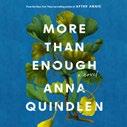
Kristen Sieh lends a relatable voice to Polly Goodman, a high school English teacher who is struggling with infertility and identity. Polly seems to have it all: supportive friends, a loving husband, and a satisfying career. Still, she can’t
Pogue’s narration is charming and a little infectious.
help but want the one thing she feels she’s destined not to have: a child. Sieh guides listeners through Polly’s fertility journey in chronological jumps, sounding at times hopeful, and at other times, defeated. During tough conversations, she gives voice to Polly’s indignation or curiosity. Then, surprise results from a genealogy kit open up new possibilities.
With her compassionate narration, Sieh brings depth to Polly’s quest.
Rinna, Lisa | Read by Lisa Rinna
Harper Audio | 6 hrs, 50 mins | $28.99
Feb. 24, 2026 | 9780063425354
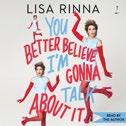
Actress, entrepreneur, author, and controversial reality TV star Rinna is intensely likable as she narrates this memoir. Her unguarded performance adds a spicy dimension to her latest collection of personal stories. Don’t worry, she dishes plenty of Real Housewives of Beverly Hills gossip. But even listeners who aren’t tuned into the Bravosphere will have plenty to hold their attention. Rinna drops some unexpected bombshells (her mother was abducted by a serial killer), explains how her love of fashion birthed several successful businesses, and speaks candidly about her decades of marriage and motherhood. The author is especially relatable when speaking about the devastation of losing her mother and the pain of navigating her daughter’s difficult childhood illness.
This outrageously fun and delectably irreverent memoir is best experienced on audio.

For a review of You Better Believe I’m Gonna Talk About It in print, visit Kirkus online.
Roberts, Dorothy | Read by Dorothy Roberts
Simon & Schuster Audio | 15 hrs, 17 mins
$31.49 | Feb. 10, 2026 | 9781668114650
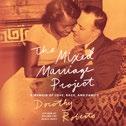
Part memoir and part history lesson, this audiobook is a compelling listening experience.
Author and narrator Roberts is the daughter of a white father and a Black Jamaican mother. Her father, an anthropologist, spent his career interviewing more than 500 interracial couples from the 1930s to the 1970s and left his research to Roberts. His exploration of mixed marriage over a significant timespan records the impact of race, privilege, law, media, and more. Roberts shares her father’s research while also reflecting on her own upbringing and experiences. Her emotional connection to her father’s work is obvious, and her approach and delivery invite listeners to consider the impact of history, relationships, and identity on society as a whole.
A powerful and moving look at race, love, and legacy.
Saber, Ahmad | Read by Vikas Adam
Simon & Schuster Audio | 10 hrs, 30 mins
$27.29 | March 3, 2026 | 9781668160008
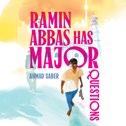
Ramin Abbas is a devout Muslim Canadian teenager who loves music (show tunes, specifically) and who just might have a crush on the captain of his high school’s soccer team (aka Captain Handsome). He’s struggling to reconcile these things with his faith—especially after he’s forced to
Petkoff masterfully delivers all the series’ hallmarks.
REVENGE PREY
join the soccer team. Narrator Vikas Adam keeps listeners close to Ramin’s perspective, delivering the full range of his emotions and conveying both the funny moments and the heartrending ones. Adam’s characterizations of Ramin’s soccer bro teammates and his sweet if mercenary younger brother, Zayn, are appealing. His accents for Ramin’s Pakistani parents and the imam of their mosque add authenticity, and every “sorry” pronounced with a Canadian accent reminds listeners of the setting. There are no easy answers here, and Ramin’s journey is worth hearing. (Fiction. 14-18)
Saeed, Aisha | Read by Shiromi Arserio Listening Library | 4 hrs, 24 mins $15 | March 10, 2026 | 9798217280414
Narrator Shiromi Arserio establishes a determined voice for Hafsa, a Pakistani village girl who longs to attend a summer science camp focused on medicine in the city to pursue her dream of becoming a doctor. At first, her parents firmly reject the idea, but after her sister’s husband insists that Hafsa could stay with them, her father relents. Arserio beautifully portrays Hafsa’s disappointment when she learns that the camp’s topic is climate change instead of medicine, and her resilience when she makes the most of it anyway. When Hafsa takes up the cause of finding a new home with better
conditions for an elephant at the local zoo, Arserio’s energetic narration brings the story to life Arserio perfectly captures Hafsa’s boldness as she fights for herself and others. (Fiction. 9-13)
Sandford, John | Read by Robert Petkoff
Penguin Audio | 10 hrs, 36 mins | $23
April 7, 2026 | 9798217285341
Series: Lucas Davenport, 36
Narrator Robert Petkoff returns for the 36th installment in the Lucas Davenport series, delivering a brilliantly paced performance. He cleanly differentiates voices in rapid-fire dialogue, and his Russianaccented English adds authenticity. U.S. Marshal Lucas Davenport and partner Shelly White are tasked with protecting a defecting Russian family relocating to Minnesota. A relentless hit team targets the father, igniting near-constant gunfire from beginning to end. Teaming up with CIA agent John Sherwood, Davenport hunts for the leak in the operation while tracking the assassins. Familiar characters make appearances, and enough backstory is provided for those new to the series to quickly catch on. Petkoff masterfully delivers all the series’ hallmarks—nonstop action, sharp banter, abundant firearms, and alternating cat-andmouse perspectives.
A worthy addition to the series.
Serpell, Namwali | Read by January LaVoy Random House Audio | 8 hrs | $22 Feb. 17, 2026 | 9798217159291
January LaVoy skillfully narrates this deep dive into the work of American Nobel laureate Toni Morrison. Serpell maneuvers through Morrison’s oeuvre using contextualization and close readings, giving listeners a fascinating examination of her writing. Each chapter explores one of Morrison’s works, including The Bluest Eye, Song of Solomon, and Beloved, gently teasing out the threads of her genius. LaVoy’s voice moves smoothly between Serpell’s different points, drawing the listener in with every word. Working with the dense, rich text, LaVoy’s narration highlights Serpell’s inviting prose; listeners will fall in love with Morrison’s work all over again. LaVoy’s top-tier performance guides listeners through the work of an American icon.
Simon, Dan | Read by Emmy Bean & Evan Sears | Europa Editions | 5 hrs, 46 mins $29.35 | Feb. 17, 2026 | 9798889661986

Ashland, New Hampshire provides a quiet backdrop for this subdued audiobook. Six different characters share their points of view, with Emmy Bean voicing the female townsfolk and Evan Sears performing the roles of their male counterparts. Both narrators have earnest, personable voices that suit their respective characters. For the most part, both Bean and Sears imbue each individual with an appropriate tone and energy. The interconnected stories, though, have an element of stream of consciousness that can be confusing in the audio format. The placid performances are fine, but without the benefit of the written word to look back on, the content lacks a strong
direction and often feels choppy. These meditative stories will appeal to the patient listener.
Tóibín, Colm | Read by Derbhle Crotty & Darragh Shannon | Simon & Schuster Audio
8 hrs, 29 mins | $27.29 | March 31, 2026
9781797104768
Melancholy hangs like a low cloud over these powerful stories of displacement, adjustment, and self-revelation. Both Derbhle Crotty and Darragh Shannon deliver nuanced and persuasive performances, giving structure and meaning to the often spare and restrained prose. Their Irish accents add music to the proceedings. Shannon offers rich characterizations, and Crotty’s pacing is thoughtful; she gets inside the protagonist’s head especially well in the novella-length concluding piece, “The Catalan Girls.”
That story follows three sisters who spend most of their lives in Argentina before returning home to Catalonia. Two of the most affecting stories, “Sleep” and the title story, provide different takes on loss.
Tóibín empathetically describes characters in extreme moments, and the narrators bring their experiences eloquently to life.
Williams, Terry Tempest | Read by Terry Tempest Williams | Simon & Schuster Audio
9 hrs, 45 mins | $27.29 | March 3, 2026
9781668162507
One of the nation’s most important environmental voices, Williams writes about “holy ordinary” moments of light in a time of darkness. Williams reads
calmly and precisely and often writes with a restrained irony. She calls out the politicians, corporations, and institutions that have mistreated the planet. Willams describes wildness as “the taproot of our consciousness.” She and her husband have bought oil and gas leases to keep various areas from being drilled and developed. Williams spends half the year teaching writing at the Harvard Divinity School and the other in southern Utah. Her book includes essays, recollections, and encounters with writers and ecologists. This audiobook celebrates those stalwarts who fight against a hot and drying planet.
Zahler, Diane | Read by Elena Rey Listening Library | 6 hrs, 51 mins $20 | March 24, 2026 | 9798217287901
Elena Rey holds listeners’ attention firmly in her grasp with her narration of this middle-grade historical fiction. Twelve-year-old Blanca is chosen by her grandmother, Eleanor of Aquitaine, to marry the prince of France. As Blanca travels from Spain, she learns lessons about how to be a queen from Eleanor and lessons about life from the difficult journey. Rey voices young Blanca, Queen Eleanor, and various male characters with equal aplomb. Eleanor sounds imperious and aged; Blanca is assuredly royal yet a still preteen; and the knights are chivalrous, pompous, and a bit overzealous. Rey’s royal harrumphs and sniffs and childish scoffs and whines add to the enjoyable soundscape. Rey’s timeless performance makes this medieval adventure fascinating, frightening, and fun. (Historical fiction. 9-14)

For more by Diane Zahler, visit Kirkus online.
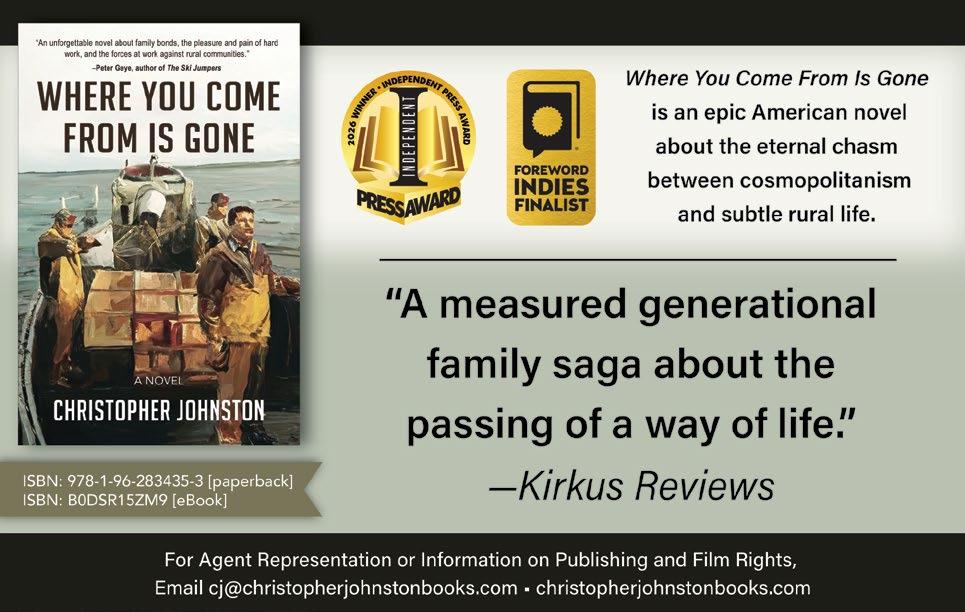
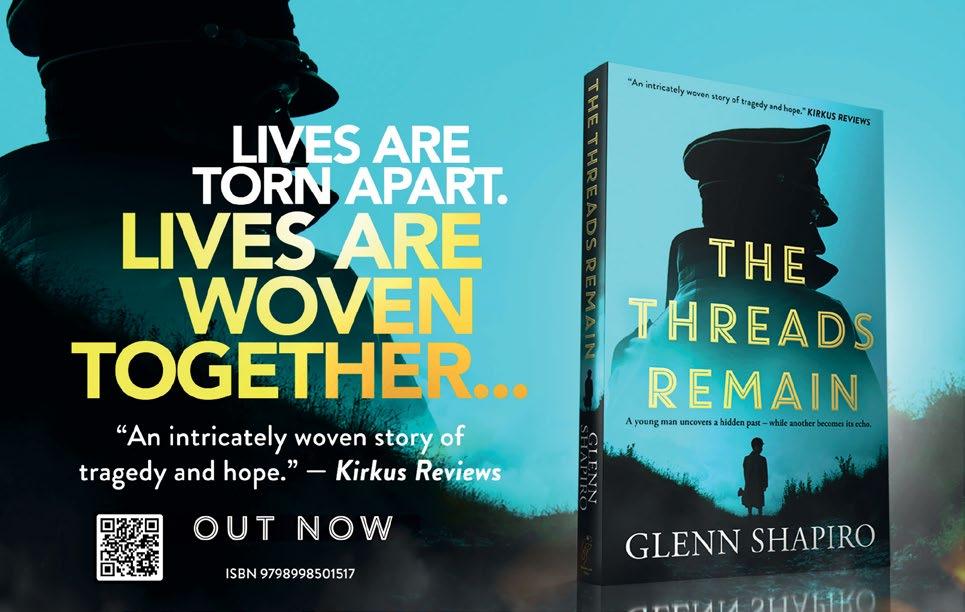
















“This is one addictively swoony book.”
—Ali Hazelwood, #1 New York Times bestselling author