FEATURING 349 Industry-First Reviews of Fiction, Nonfiction, Children’s, Young Adult, and Audiobooks


FEATURING 349 Industry-First Reviews of Fiction, Nonfiction, Children’s, Young Adult, and Audiobooks

Author Mac Barnett has opinions. They’re causing a stir in the kid lit community.
Get access to inclusive, accessible ob-gyn care information developed by ACOG, the nation’s leading ob-gyn organization.


ACOG’s best-selling pregnancy book provides the most accurate information available about pregnancy, childbirth, labor and delivery, breastfeeding, and the postpartum period.


This book delivers unbiased and science-backed menopause information grounded in the latest clinical research and the collective expertise of thousands of ob-gyns.
For 2026, ACOG has updated the manual with input from physicians and coders to enhance its usability and provide unique billing information tailored for ob-gyn practices.

Written by ob-gyns and grounded in the latest research and clinical guidelines, this volume delivers evidence-based instruction on core topics in gynecologic oncology. Earn 25 CME credits upon completion.

FROM THE EDITOR’S DESK
AS LIBRARIANS GATHER in Chicago for the annual meeting of the American Library Association, alarm bells about book banning continue to sound. It isn’t news that books by and about LGBTQ+ people and people of color are special targets for censors, but the crusade continues with no signs of abating. As PEN America notes in its recent report, “Facts & Fiction: Stories Stripped Away by Book Bans,” 44% of the fiction and nonfiction titles challenged in the 2024-25 school year featured people of color, and 39% featured queer people.
The real headline, however, was the increase in nonfiction titles that are being targeted by book bans: up 14% in the past school year and now accounting for 29% of all banned books. In a world where facts
seem to be under assault daily, this development doesn’t really come as a surprise. But the potential effects are particularly disturbing. “Exposure to nonfiction increases students’ critical thinking abilities,” the report continues, which is important “in an era where young people are increasingly exposed to dis- and misinformation through social media and AI.”
Fortunately, we at Kirkus continue to see a robust slate of nonfiction for young readers. Here are just a few of the YA titles that have received starred reviews in recent months.
Honor by Nataliia Mariichyn, Leon Buchwald, and Susan McClelland (Astra Young Readers, June 9): One of the most challenged titles in the PEN America report is Elie Wiesel’s Night. Readers
Subscriptions: www.kirkusreviews.com/magazine/subscription
of that powerful Holocaust memoir might seek out Mariichyn’s account of growing up in post-Soviet Ukraine, where she discovered a cache of letters revealing how her family sheltered a young Jewish boy, Eliezer Buchwald, from the Nazis during the Second World War.
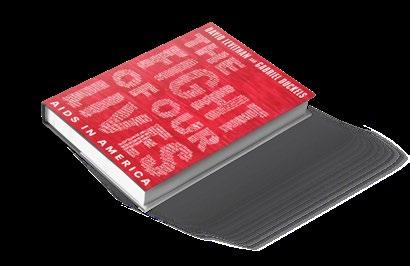
The Fight of Our Lives: AIDS in America by David Levithan and Gabriel Duckels (Knopf, April 21): Books about activism are frequently targeted, PEN America found. This history of the early days of the AIDS epidemic offers vital evidence of how community organizing, through groups like ACT UP, enabled people with HIV and AIDS to fight for their rights and their health care in the 1980s and ’90s, when the wider world was largely indifferent.
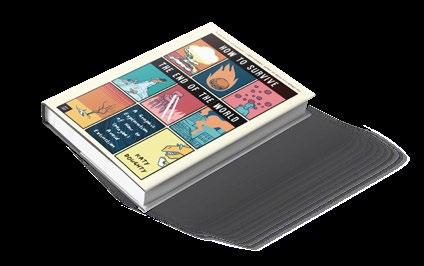
cataclysms like the Black Death, as well as at future doomsday scenarios such as climate change and AI “killer machines,” the author and illustrator of this work of graphic nonfiction “has distilled an impressive amount of research into a lucid, matter-of-fact narrative,” according to our reviewer, along with something more surprising: optimism.
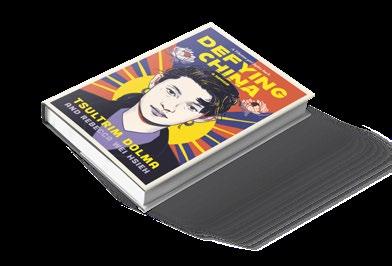
Defying China: A Memoir by Tsultrim Dolma and Rebecca Wei Hsieh (Dial Books, March 10): Dolma grew up in a poor village in the mountains of Chineseoccupied Tibet; joined the Tibetan protest movement, seeking independence from the People’s Republic, as a teen; was incarcerated by the Chinese; and eventually made her way, as a refugee, to the United States. Her story shines a light on a part of the world we rarely hear about in the West.
Advertising Opportunities: www.kirkusreviews.com/book-marketing
www.kirkusreviews.com/book-marketing
Submission Guidelines: www.kirkusreviews.com/about/publisher-submission-guidelines
Frequently Asked Questions: www.kirkusreviews.com/about/faq
For customer service or subscription questions, please email customercare@kirkus.com or call 800-316-9361.
How To Survive the End of the World: A Graphic Exploration of How To (Maybe) Avoid Extinction by Katy Doughty (MITeen Press/Candlewick, March 31): Looking to past


Co-Founders, Kirkus Media LLC
HERBERT SIMON
MARC WINKELMAN
Publisher, CEO & Partner
MEG LABORDE KUEHN mkuehn@kirkus.com
Chief Marketing Officer
SARAH KALINA skalina@kirkus.com
Enterprise Advertising Director
MICHELE COBB mcobb@kirkus.com
Indie Advertising & Promotions
AMY BAIRD abaird@kirkus.com
Author Consultant
KEELIN FERDINANDSEN kferdinandsen@kirkus.com
Controller & Operations Manager
KRISTI DAUGHERTY kdaugherty@kirkus.com
Lead Designer KY NOVAK knovak@kirkus.com
Magazine Compositor
NIKKI RICHARDSON nrichardson@kirkus.com
Director of Kirkus Editorial ROBIN O’DELL rodell@kirkus.com
Kirkus Editorial Senior Production Editor
MARINNA CASTILLEJA mcastilleja@kirkus.com
Kirkus Editorial
Production Editor
ASHLEY LITTLE alittle@kirkus.com
Indie Editorial Assistant
KATARINA YERGER kyerger@kirkus.com
Contributing Writers
GREGORY McNAMEE MICHAEL SCHAUB
Editor-in-Chief
TOM BEER tbeer@kirkus.com
President of Kirkus Indie
CHAYA SCHECHNER cschechner@kirkus.com
Fiction Editor
LAURIE MUCHNICK lmuchnick@kirkus.com
Nonfiction Editor JOHN McMURTRIE jmcmurtrie@kirkus.com
Young Readers’ Editor LAURA SIMEON lsimeon@kirkus.com
Young Readers’ Editor
MAHNAZ DAR mdar@kirkus.com
Audiobooks Editor
JENNIFER DOWELL jdowell@kirkus.com
Editor at Large MEGAN LABRISE mlabrise@kirkus.com
Senior Indie Editor
DAVID RAPP drapp@kirkus.com
Indie Editor
ARTHUR SMITH asmith@kirkus.com
Senior Editorial Assistant
NINA PALATTELLA npalattella@kirkus.com
Senior Indie Editorial Assistant
DAN NOLAN dnolan@kirkus.com
Mysteries Editor
THOMAS LEITCH
Copy Editors
JONATHAN BOWERS
NATALIA HOLTZMAN
NANCY MANDEL
BILL SIEVER
Founder, Kirkus Reviews
VIRGINIA KIRKUS (1893-1980)
Alana Abbott, Nada Abdelrahim, Dan Accardi, Jeffrey Alford, Autumn Allen, Paul Allen, Kent Armstrong, Mark Athitakis, Hannah Bae, Kit Ballenger, Colette Bancroft, Audrey Barbakoff, James Bass, Nell Beram, Victoria Biggs, Elizabeth Bird, Ariel Birdoff, Marc Bona, Sally Brander, Kendra Brewer, Melissa Brinn, Agnes Broome, Anna Broome, Jessica Hoptay Brown, Ana Cackley, Kelsey Callahan, Kevin Canfield, Hailey Carrell, Sandie Angulo Chen, Ann Childs, Alec B. Chunn, Tamar Cimenian, Shanetia Clark, Rachael Conrad, Amanda Costello, Jeannie Coutant, Stephen Cummings, Morgan Davies, Sara Davis, Michael Deagler, Cathy DeCampli, Dave DeChristopher, Kathleen Deedy, Suji DeHart, Maria Dietrich, Anna Drake, Jacob Edwards, Lisa Elliott, Lily Emerick, Ilana Bensussen Epstein, Kristen Evans, Joshua Farrington, Katie Flanagan, Catherine Foster, Cynthia Fox, Mia Franz, Ayn Reyes Frazee, Jenna Friebel, Jean Gazis, Lauren Gentry, Annette Goldsmith, Phoebe Grandi, Diana Granger, Michael Griffith, Vicky Gudelot, Beth Gutcheon, Ellie Halleron, Geoff Hamilton, Sean Hammer, Silvia Lin Hanick, Alec Harvey, Peter Heck, Lynne Heffley, Ralph Heibutzki, Courtney Heidorn, S.J. Henschel, Ashley Holland, Natalia Holtzman, Terry Hong, Julie Hubble, Mary Grahame Hunter, Christoph Irmscher, Darlene Ivy, Kristen Jacobson, Danielle Jones, Betsy Judkins, Jayashree Kamblé, Stephanie Klose, Maggie Knapp, Andrea Kreidler, Carly Lane, Christopher Lassen, Nicholas Latimer, Tom Lavoie, Judith Leitch, Seth Lerer, Maureen Liebenson, Coeur de Lion, Barbara London, Patricia Lothrop, Katie Lowe, Wendy Lukehart, Michael Magras, Joan Malewitz, Mitu Malhotra, Thomas Maluck, Natalie Marshall, Jodi Martin, J. Alejandro Mazariegos, Nancy McCarty, Coco McCracken, Breanna McDaniel, Jeanne McDermott, Dale McGarrigle, Van McGary, Zoe McLaughlin, Don McLeese, Cari Meister, Kathie Meizner, Carol Memmott, J. Elizabeth Mills, Jennifer Miskec, Rebecca Moore, Andrea Moran, Henry Mortimer, Christopher Navratil, Rachael Nevins, Therese Purcell Nielsen, Dan Nolan, Katrina Nye, Randy O’Brien, Milo Ono, Mike Oppenheim, Emilia Packard, Costa Pappas, Joy Pasin, Bethanne Patrick, Rebecca Perry, John Edward Peters, Jim Piechota, Christofer Pierson, Remy Poore, Brian Price, Margaret Quamme, Carolyn Quimby, Ellen Quint, Kristy Raffensberger, Kristen Rasmussen, Darryn Reams, Alexandria Richey, Jasmine Riel, Julia Rittenberg, Lauren Roberts, Amy Robinson, Soumi Roy, Lloyd Sachs, Bob Sanchez, Michael Sangiacomo, E.F. Schraeder, Aurelia C. Scott, Jerome Shea, Sara Shreve, Leah Silvieus, Linda Simon, Victoria Smith, Margot E. Spangenberg, Allison Staley, Allie Stevens, Mathangi Subramanian, Rebecca T. Sutton, Jennifer Sweeney, Defne Tekin, Desiree Thomas, Bill Thompson, Julie Thompson, Lenora Todaro, Clayton Trutor, Bijal Vachharajani, Francesca Vultaggio, Elliott Walcroft, David Walton, Caroline Ward, Katie Weeks, Audrey Weinbrecht, Susie Wilde, Vanessa Willoughby, Laura H. Wimberley, Kerry Winfrey, Marion Winik, Flannery Wise, Jean-Louise Zancanella, Simona Zaretsky

WHAT’S THE DEFINITION of historical fiction—how long ago does a novel have to take place to be considered historical?
Kayla Rae Whitaker’s Returns and Exchanges (Random House, May 19) feels right on the bubble, opening in December 1979 and following the Baker-Taylor’s retail chain in Lexington, Kentucky, through the winter of 1990—with a brief epilogue set in 2015. Fran Taylor is the chief executive of the family-run discount store, sharing the title with her husband, Fred, with whom she also shares four kids—but she finds herself attracted to Wendy Patterson, an assistant manager. The novel follows Fran and the other Taylors over the course of a decade. “Whitaker has written a sprawling, extravagantly intelligent novel about people quietly breaking free from constraints—marital, gender, class.…Superb,” says our starred review.


hero who played for the 1950 U.S. World Cup soccer team and then faced a firing squad in Port- auPrince. Complicated? That’s not even mentioning the time he spent rooming with Miles Davis in New York. Our starred review says “the novel moves with lyrical, imaginative force, especially in its vivid evocations of soccer play, while also showcasing the author’s penchant for orchestrating funny and poignant romantic interludes.…A historical novel that merrily dances and jukes its way across the pitch of time.”
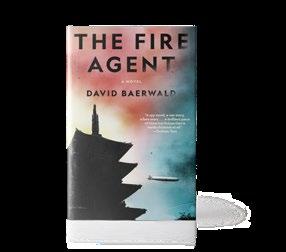
family before the rise of Nazism, and his powerful father steers him into a life of “friendly” industrial espionage as a chemist at IG Farben—which leads to the more traditional kind of espionage during the world wars. “With its moral power, cinematic qualities, and deeply felt storytelling—one highlight is Ernst’s participation in a momentous performance of Beethoven’s Ninth Symphony at [a] POW camp— this is… quite an achievement.”
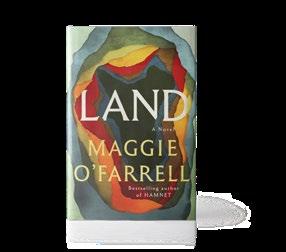
colonized island. When the father and son discover an ancient sacred site, it upends the life of their family. Our starred review calls this an “evocative and impassioned” novel, “steeped in Irish history and folklore, alive with a sense of wonder.”
Dimitry Elias Léger’s Death of the Soccer God (MCD/FSG, May 12) jumps further back in time, telling the story of a fictional Haitian soccer
David Baerwald, a musician, has used his grandfather’s life story as the inspiration for his first novel, The Fire Agent (Spiegel & Grau, June 2), which opens in 1900 and sweeps across the first half of the 20th century. Ernst Baerwald is raised in a wealthy German Jewish
After the success of Hamnet (2020) and The Marriage Portrait (2022), set in Elizabethan England and Renaissance Florence, respectively, Maggie O’Farrell opens her latest novel, Land (Knopf, June 2), in 1865 Ireland, where Tomás and his 10-year-old son, Liam, have been working as surveyors for the hated British, who are drawing maps of their
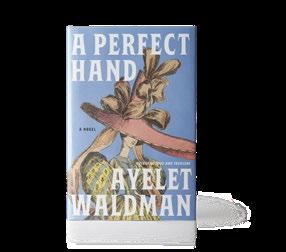
“If Jane Austen and Nora Ephron collaborated they might produce something close to” Ayelet Waldman’s A Perfect Hand (Knopf, May 19), according to our starred review. Alice Lockley, a Victorian lady’s maid, conspires with the valet of her mistress’ less favored suitor to bring them together so the servants can be together, too—but then Alice goes to a meeting for the Society for the Promotion of Employment for Women, unfortunately called SPEW for short. “Witty, frothy, and ultimately wise,” our review concludes.
Laurie Muchnick is the fiction editor.
A man looks back on the small wounds and larger traumas of his youth.
Jeon-Gi, the narrator of Lee’s intimate seventh novel, recalls himself as a 10-yearold boy in 1976, a pivotal time for this son of Korean immigrants. In the apartment complex north of New York City where his family has recently moved, the children’s identities are based on racial and ethnic groups, as well as their capacity and willingness to dominate others. One girl ropes Jeon-Gi into various urine-related humiliations; a set-to with another boy escalates until Jeon-Gi, desperate, brings a knife to school and threatens his bully with it. Hoping for a behavioral reset, Jeon-Gi’s
parents send him to a church-run summer camp, where the bulk of the novel takes place. There, he has some of the more typical primal experiences of youth—a first crush, first serious friendships, first glimpse of sex and other transgressive acts, and the first glimmer of independence. Naturally, all those firsts lead to plenty of clumsy moments, from a botched initial effort at cooking a camp stew to something not unlike a first kiss. But Lee plays this less as a lighthearted coming-of-age story than a study of emotional fragility, as Jeon-Gi’s will to succeed and fit in collides with a psyche that’s easily damaged, culminating in a somber and consequential
James S.A. Corey
Jon Fosse; trans.
Damion Searls & Grethe Kvernes
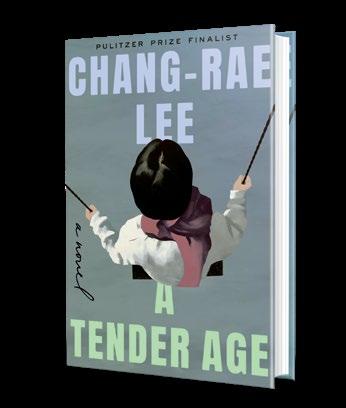
Lee, Chang-rae | Riverhead | 368 pp. $30| Aug. 11, 2026 | 9798217048441
climax. There’s a reason, after all, Jeon-Gi is compelled to remember that time, and the book’s power lies in Lee’s forensic examination of his narrator’s treatment by others, and Jeon-Gi’s complex responses to them. He became a boy “preoccupied with the idea
that I might be the kind of person certain bad things happened to,” and this close reading of a life exposes just how difficult it can be to shake those deeply imprinted moments.
A melancholy, emotionally rich story of preadolescent struggles.
María Elena Morán; trans.
Aristide, Oana | Norton (272 pp.) | $27.99
July 14, 2026 | 9781324123897
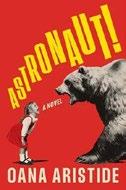
A series of gruesome murders sparks a farcical response in totalitarian Romania.
This novel, set in 1989, toward the end of the reign of Nicolae Ceauşescu, finds the citizenry caught between a capitulation that some of them find abhorrent and resistance that seems futile. Either they believe and behave the way the government tells them to or they suffer the consequences. Alternating chapters advance the plot’s dual narratives. In the first, 7-year-old Lia, a guileless schoolgirl, brings suspicion upon her household when she attempts to buy a birthday present for her mother, using money that has been deemed contraband. She has done something wrong, but has no idea what. The second concerns a police investigator named Constantin, an uncommonly decent man whose moral convictions have turned his marriage into a cold war. He’s charged with leading the investigation into a series of killings, a thankless task that could involve the government, which the police, along with the rest of society, does everything to appease. When he wants to issue a warning to alert the country at large, the department decides to blame the deaths on a rampaging bear. Or perhaps more than one. The plot spirals out of totalitarian control, ultimately encompassing a traveling circus, a grade-school drawing contest, a dissident former professor, and a vast network of just about everyone spying and snitching on everyone. Just referring to an “astronaut” rather than a “cosmonaut” can get a little girl in big trouble. The plotlines eventually and inevitably converge, as the schoolgirl and the investigator both find themselves summoned to meet the president (who doesn’t seem nearly as powerful in person as in his media representation).
Everyone but Lia knows the fix is in, but the country is beyond fixing. A political satire captures the spirit of Marx meeting the Marx Brothers.
Beaird, Rowan | Flatiron Books (304 pp.)
$28.99 | July 21, 2026 | 9781250386694
In the 1970s, a wedding weekend on a small Virginia island is filled with tension.
In her sophomore novel, Beaird combines a rich boy/poor girl marriage plot with a historical fiction–type depiction of Synanon, a drug rehab program turned cult that employed methods known as “attack therapy.” It’s an uneasy merger. The wedding is being held on a small island where the groom’s wealthy family, the Pruitts, is uniformly disliked by the locals who serve them. Andrew Pruitt’s fiancée, Shay O’Connor, has received a warmer reception—but though she is one of three point-of-view characters, the reader can really only assume it’s because she’s not a rich snob. She remains a cipher; chapters detailing her Synanon experiences feel tacked on and the notion that unsavory characters from the group have been sent to the island to disrupt the wedding, possibly with violence, never gains credibility. The other two narrative perspectives belong to her brother, William, and her college classmate Joel; readers may find themselves repeatedly having to recall which is which. Brother William starts the action by going to pick up his Aunt Eleanor, who is supposed to travel to the wedding with him but is dead in her reading chair when he arrives at her apartment. He makes the strange decision to conceal her death from his mother and Shay; an envelope addressed to Shay, which he finds on the kitchen table, remains undelivered until the end of the book, and what the contents are supposed to mean are as confusing as another key aspect of the ending. This second late-breaking question mark is in
the plotline revolving around Joel. Poor Joel is dumped midweekend by his wedding date when she realizes he is, and has always been, in love with Shay. Shay’s handling of both her two-man complications and her Synanon pursuers provides multiple surprising, highdrama plot points. Does her somewhat wimpy exterior conceal the soul of a ruthless antiheroine? The answer is a definite maybe.
Strong ingredients, but as with the dessert at the elegant rehearsal dinner, something is off.
Bush, Courtney | Joyland Publishing (182 pp.) $17 paper | June 23, 2026 | 9798992025859
A child care worker catalogues a day in her life. Set in New York City, poet Bush’s novella follows Courtney, a teacher at a private preschool, over the course of one workday. Fresh off a “light nervous breakdown,” Courtney is contending with the ghosts of her past—a divorce; fraught family relationships; the death of her childhood best friend—while attempting to be fully engaged with her tiny students; her fellow teacher, Whitney; and Luke, a musician with whom she’s beginning a new relationship. Her classroom, known as the Blue Room, becomes the north star of Courtney’s life, with caretaking becoming a way to simultaneously sink into the present and become too wrung out to think about the past. Imbued with a sense of magic, the Blue Room attracts both admiration and jealousy from others at the school. As this day goes on, Courtney’s relationships with fellow teachers, her students, and even herself come into sharper focus. The stream-of-consciousness narrative offers insights both mundane and profound. Bush writes about child care with affection and thoughtfulness, as well as an exhausting authenticity that lays bare the demands of this kind of relationship. Courtney doesn’t shy
away from her feelings of love for the children in her care. About her class, she says: “I am struck by how I will remember them but they will not remember me, and it doesn’t feel like a bad thing.” With a mixture of awe and sorrow, she explores memory, love, grief, and the gulf between childhood and adulthood. Courtney remarks that there is something beautiful and innate that is lost in translation as we age: “A child doesn’t know it’s a child. An adult knows it is an adult, and knows it used to be a child.”
Bush’s lyrical talents shine throughout this poignant and astute slice of life.
Crimp, Imogen | Henry Holt (304 pp.) $27.99 | July 21, 2026 | 9781250792792
A promising young filmmaker visits the summer home of a famous director and her daughter. Shortly after taking a workshop with her idol, Ellen, in London, Ruby is delighted by an invitation to come out to the director’s place in the English countryside. Having had her first short film screened at Sundance, Ruby is now working on a script for a feature, and the opportunity to get Ellen’s help as she puts the final touches on it seems a dream come true. But the visit turns out to be a different sort of dream, dominated not by creative mentorship but by intense and confusing relationships with Ellen and her 20-yearold daughter, Lara, and by a brutal July heat wave that makes even eating a meal a challenging project. Though Ellen’s home apparently has no air conditioning, it does have a swimming pool, and as Ellen is slow to offer any plan for working together and Lara is procrastinating her college applications, the two younger women spend much of their time in bikinis. “She looked at me, her hair lit up gold by the sun, the freckles on her nose. She said, what would you do if I kissed
ICARUS 17
you? and before I’d even really processed that, yes, that’s what she’d said, she’d done it.” As things heat up between Lara and Ruby, Ellen announces she has to go to London. Suddenly responsible for Ellen’s chickens, her greenhouse, her house, her grounds, and her trouble-child daughter, and not yet having received any help with her script, Ruby finds she is far from up to the task, as well as quite angry. In her sophomore novel, Crimp returns to the theme of women in the arts, and her hypnotic first-person narration runs together with the dialogue, using no quotation marks. But Ruby’s shaky self-esteem and passivity about getting what she needs from this situation eventually becomes frustrating for the reader, and the slightly creepy, claustrophobic mood is like a gathering storm that never breaks. The question of whether Ellen actually intended to help Ruby or had something more exploitative in mind is never clearly answered. Strong on atmosphere but light on plot, as if the story itself were paralyzed by the heat wave it so effectively depicts.
Cumming, Charles | Mysterious Press (480 pp.) | $27.95 | July 7, 2026 | 9781613167212
A former lover draws a veteran British spy into a dangerous rescue. Cumming’s Box 88 series is notable for its focus on both the professional and personal life of its protagonist, agent Lachlan Kite, and for its strong impression of authenticity. The author dives deep into the
complexities of the spy game, relating it to the current international geopolitical situation. This fourth outing, which is no exception, opens in Istanbul in 2018 before jumping to present-day Sweden and finally settling on Kite in London. His reunion with Martha Raine, a lover from the 1990s, is interrupted by a distressed call from a colleague about a shooting near his home in Sweden—where his wife, Isobel, and their young daughter, Ingrid, are at home. As Kite strives to unpack the motive for this traumatic incident, Martha contacts him with a special request: Locate and, if necessary, rescue her son, Max Radinsky, who’s gone missing in Greece along with his girlfriend, Yasmine Bizri. The duplicitous Yasmine’s true identity and intentions become a major focus of Kite’s probe. Though Cumming sets the table with introductory scenes that introduce major villains and other players, the story soon settles into a chase thriller on two alternating fronts: Kite’s accelerating rescue mission and Max and Yasmine’s efforts to escape. The plot is intricate and its incidents satisfyingly interconnected, each small development fitting into a tapestry of espionage and international relations. Helpfully included are an Index of Characters and Lachlan Kite: Historical Timeline.
A subtle international thriller that offers simmering suspense and political insight.

Denfeld, Rene | Harper/HarperCollins (256 pp.)
$28.99 | July 21, 2026 | 9780063396890
A woman who seeks to exonerate innocent men on death row gets help from supernatural forces on her latest case. Ruby Spencer has two missions: She works to free men who are wrongfully incarcerated and facing the death penalty, and she searches for missing women. Mitchell Brown is the latest in a long line of death row clients, some of whom she has saved, many of whom she has not. In the small town of Pickleweed, Georgia, Mitchell’s story is not surprising: A Black man accused of murdering a white woman, even though her body was never found, he was arrested, detained, and beaten until he gave up a confession. Now he’s been sitting on death row for 10 years, waiting for the inevitable end. His attorney brings Ruby onto the case with only two weeks to go until the execution date, hoping her reputation as “the exonerator” will be proven true. Ruby relentlessly goes back through the crime, the investigation, Mitchell’s history—and discovers that he grew up in the same small Oregon town as her mother. His grandfather still lives there, and when Ruby visits him, he introduces her to a talisman, the talking bone, that seems to serve as a bridge between the spirit world and the world of the living. The bone represents the disappeared, voiceless women Ruby is also called upon to seek, including Mitchell’s mother and her own. It plays a major role in the denouement of the story, adding a distinct flavor of the supernatural to what is otherwise a novel very much rooted in the grim realities of racism, poverty, and abuse. Denfeld skillfully navigates the tonal tension, and despite the convenience of the final reveal, the overlap between past and present voices is both poignant and satisfying. By giving the dead this power not only to speak, but to influence outcomes, Denfeld reclaims the lost and forgotten. Powerful and haunting.
Diamond, Krista | Simon & Schuster (320 pp.)
$29 | June 23, 2026 | 9781668211052
A paparazzo is consumed by his quest to photograph a movie star wracked by a sex scandal.
Ben has been obsessed with megastar Jack Whitlock far longer than he’s worked as a paparazzo: As a teenager in Las Vegas, he went to the drive-thru theater to watch the actor, and later he got a job bussing tables at the diner where Whitlock shot scenes for his Vegas-set film Double or Nothing. Since the movie came out, Ben reflects, “Jack Whitlock has been a presence in my life.” But Jack’s image has been rocked by leaked photos of him having sex with a college student. Ben, who’s long dreamed of photographing Jack, becomes obsessed with finding the star in the wake of these revelations, stalking connections to Jack and his wife on social media, through informants, and elsewhere, always one step behind the elusive man. Flashback sections of the book, meanwhile, chart the course of Ben’s relationship with Ellory, a Vegas showgirl who reluctantly follows him to LA. As Ben becomes a more and more accomplished paparazzo, his moral compass grows increasingly skewed, leading to the collapse of his relationship with Ellory. In both timelines, the distant first-person narration ably demonstrates how disconnected Ben is not only from any sense of morality but also from his own emotions. He chooses work over Ellory time and again, skipping Thanksgiving and ignoring her calls; in the present timeline, he goes on dates only with women he thinks might have tips for him. His most meaningful relationship is with his idea of Jack Whitlock, a phantom ideal of masculinity with whom Ben is also ambiguously sexually fixated:
“All of these images of him,” Ben thinks, “like the images of a father, a best friend, a lover, a god.”
A chilly, accomplished debut that unflinchingly dissects our obsession with celebrity.
Ernst, Linea Maja | Trans. by Sherilyn Nicolette Hellberg | Summit (224 pp.) $18 paper | June 9, 2026 | 9781668246085
C ollege friends reunite at a summer house in the Danish countryside, 12 years after they first met. Sylvia—along with her faithful girlfriend, Charlie—arrives at the lake house of her university friend Karen. The secluded weeklong vacation is intended to be a much-needed reunion of their old friend group, which also includes reserved Esben, wild Quince, and caring Gry, who’s also brought her husband, Adam. After the first day among the “quiet and dazzling” lake and “silver birch trees,” Karen and Esben, who have been in love since the group’s undergraduate days, announce that they intend to get married during the vacation. Everyone is excited except Sylvia, who’s had a decade-long crush on Esben. The news sends her into a tailspin of yearning, causing her to doubt her own feelings about monogamy. “We could be living this utopian life together,” she argues to her friends, who are all settled in adulthood, “but instead…you have to choose between loneliness or a twosome, which is the same as loneliness.” Ernst’s novel explores the boundaries we maintain and the boundaries we are willing to cross in pursuit of romantic and platonic love. Through the loving, reminiscent, and sometimes awkward exchanges between old friends, the reader learns which insecurities define an entangled group of millennials hoping to impress each other: “Esben looks at the table, takes stock—is there an i to dot? He goes back inside, returns holding champagne and fruit
juice, bottles dewy with cold.” Ernst brings the lush setting of the novel alive, using descriptions of food—like the “crisp and fatty” fried wild elder blossoms—to highlight the physical decadence of the Danish countryside and the ideological decadence of Sylvia’s proposed nonmonogamous utopia.
A fascinating, articulate, and entertaining look into the complexities of adult relationships.
Fosse, Jon | Trans. by Damion Searls & Grethe Kvernes | Dalkey Archive (450 pp.) | $22.95 paper | July 28, 2026 | 9781628976571
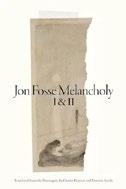
A breakthrough two-part work by Norwegian Nobel laureate Fosse, appearing in English in one volume for the first time. First published in 1995 and 1996, Fosse’s Melancholy novels predate his much-admired Septology books, his best-known work among English readers. Fans of those books will detect the emergence of his signature style here—recursive, musical, stream-ofconsciousness prose that circles hawklike over themes of art, faith, and death. Fosse’s subject is Lars Hertervig (18301902), a painter who specialized in cloud-thickened, surrealistic landscapes. In the opening section, set in Düsseldorf, Germany, in 1853, he’s an art student anxious about his teacher’s opinion of his work, his fellow students’ esteem, and his imminent eviction because of his relationship with his landlord’s 15-year-old daughter. His mind tunnels obsessively into factual details and imaginary attacks (“black and white clothes are racing toward me at high speed, here they come, and the black and white clothes move around me, right up close to me”), suggesting an imminent breakdown. Subsequent chapters feature Lars back in Norway three years later, committed to an asylum; an author not
unlike Fosse in 1991 contemplating writing a novel about Lars, whom he calls a distant relative; and, concluding the book, Lars’ sister, Oline, back in his hometown, as Lars seems overtaken by madness while a brother of theirs is on his deathbed. The mood throughout is grim, befitting the title (“melancholia” was Lars’ formal diagnosis), and Fosse routinely swings the narrative around the uglier parts of human behavior—rage, pedophilia, scatology. None of that, though, feels gratuitous, and everything speaks to a larger theme of desperation, about how Lars’ urge to make art evokes our need for wholeness and salvation, even if it’s inevitably just out of reach. A somber, lyrical meditation on fine art and base emotions.
Golden, S.K. | Severn House (256 pp.)
$29.99 | July 7, 2026 | 9781448317356
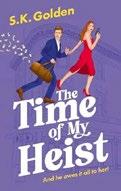
A middle-aged Florida pizza shop owner stumbles into a crime carnival that reads like a male-oriented counterpart to Golden’s Stolen Pieces (2024). It all begins when Virginia Kent, the newest server at Shepherd’s Pies on Florida’s Laguna Key, asks Preston Shepherd if he’ll pretend to be her boyfriend in order to keep her mother, Deandra, who’s found her there, from dragging her home to her family of wealthy, soulless lawyers. Shepherd, who’s not much for the ladies, reluctantly agrees, but Deandra ends up leaving the place with Michael Martin, Shepherd’s wealthy landlord, instead. Problem solved—until Deandra fails to return to the family manse herself because she’s been kidnapped by ruffians who kill Martin and demand over a million dollars for her safe return. When the Kents convene to vote on whether to pay the ransom, Ginny and her father, Deandra’s ex-husband, Bradley, are the only family members to endorse the plan. (The naysaying motive of Ginny’s brother Vincent, a Laguna Key
councilman who thinks his campaign for mayor would benefit from some “poor us” publicity, is especially despicable.) So it’s up to Ginny and Shepherd, who’s slipped from playing her fiancé to becoming her actual lover, to join Charlie Cardello, a mobbed-up former client of the Kents who’s been playing dead for five months, in a robbery that will give them enough money to satisfy the kidnappers. The rest of the tale is relatively routine, surprising only readers who thought the heist would go off without a hitch.
A brightly written, fast-moving action/ romance/fantasy in which no crimes are punished and everything ends happily anyway.
Gómez, Cynthia | Putnam (176 pp.) $29 | June 2, 2026 | 9798217047574
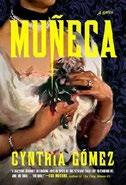
In the Bay Area of the late 1960s, a young woman unleashes the magic she learned from her grandmother— which her mother warned her about—to free a spellbound heiress.
A muñeca is a Mexican rag doll, and the title of this book refers to Violeta Guzmán, who for six years—since shortly after her honeymoon—has lain in bed in her family’s century-old home, unable to speak, walk, or even sit up. The narrator, Natalia Fuentes— whose mother once worked for Violeta’s parents, the Miramontes— hears about Violeta’s malady and recognizes its symptoms as being the result of a spell rather than an illness. She’s hired by Mrs. Miramonte to be Violeta’s caregiver, but her true motive is to undo the spell with the expectation that in gratitude for her freedom, Violeta will “kick down some of her family’s wealth” to Natalia. Freeing Violeta turns out to be more complicated than expected, and Natalia finds herself not just breaking one spell, but casting many—animating a doll with Violeta’s spirit, exchanging her body
with Violeta’s, and cursing Mrs. Miramontes so she hears the voices of the Native people who suffered in the mines that produced the silver to make her tea set. She even finds herself falling in love with Violeta, for whom “muñeca” is Natalia’s term of endearment. Their love story is constrained by the fact that Violeta expresses herself mainly through the body of a doll, and despite the elements of the gothic in the tale—the fading legacy dating to the time of Spanish colonialists, the vulnerable heiress and her menacing husband—it lacks the requisite creepy mood. This version does have an intriguing twist, though: The wielder of terrifying magic in the Miramontes home is no ghost, but a woman who must decide how far to take the power her grandmother taught her to use.
A woman’s exploration of her own power overshadows the gothic trappings in this imaginative novel.
Gruley, Bryan | Severn House (368 pp.) $29.99 | July 7, 2026 | 9781448316120
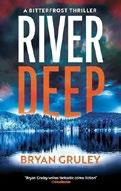
Gruley returns to the Michigan town of Bitterfrost to investigate a violent incident that introduces another crime wave.
The opening disaster, however tragic, seems remarkably straightforward.
Catriona Dulaney, the offspring of a troubled family, drives a car carrying her longtime partner, Samuel Hardt, and their 8-monthold twins, Liam and Logan, into the Jako River, drowning the twins and nearly herself before she’s rescued by Bill Hooper, a one-eyed ex-cop who just happens to be on the scene. Accident or murder?
After an eight-hour interrogation, consulting psychologist Dr. Jacob Jarman, dispatched from Lansing to the Upper Peninsula, manages to extract a confession from the
traumatized Cat, and the case is ready to go to trial, with district attorney Genevieve Harris aided by Sammy’s cousin, assistant prosecutor Devyn Payne, who’s just retreated from an experimental year away in Hamtramck. Even though Devyn knows nothing about the pressure on Hooper from downstate crime boss Mario Rooney and not much more about the fault lines threatening the local police, she doesn’t like the way things smell, and she abruptly switches sides to take on the defense of Cat, an old enemy whose excellent reasons for wishing Devyn dead readers will remember from Bitterfrost (2025). Gruley’s densely imagined plot will claim several more victims before the slow-motion destruction of the Dulaney family is complete, at least for this installment.
A compelling demonstration of the wisdom that seeing events unfold before your eyes doesn’t always reveal their truth.
Han, Jimin | Little, Brown (320 pp.) $29 | April 28, 2026 | 9780316582797
A visit to a Korean American community within a New England beach town spirals into community scandal and romance.
Dahee Shin and her cousin Channing Shin, both 30, grew up hearing the story of Chunhyang and Mongryong, Korea’s version of the star-crossed lovers in Romeo and Juliet, a story characterized by a rigid class system and the threat of imprisonment. While Channing yearned for a love like Chunhyang and Mongryong’s, Dahee was more skeptical, seeing the story more as one of tragedy and implausibility than romance. Even as adults, while Channing is generous with her trust and eager for adventure, Dahee is guarded and cautious. When
Channing is midway through a month-long babysitting gig in East End, the cozy community where she lived in early childhood and which Dahee grew up visiting, two pivotal things happen: Channing falls in love with a man named Minjae, and Kent Cho, a power-hungry local politician, begins relentlessly pursuing her. Dahee is unsatisfied with her life, and through her eyes, other characters often carry a sheen of perfection, from her beloved grandfather to more minor characters, like a couple named Alice and Jesse, who seem to her to be “living the dream.” Though Dahee describes that dream as “living with relatives, in a community that was familiar,” the thought also betrays her desire for companionship and romance. Themes of imprisonment, surveillance, social standing, and community swirl throughout, as well as questions around what it means to be loyal to families both biological and chosen. This is a story within a story, and the metanarrative allows Han to explore expectations of storytelling across different cultural contexts. The novel asks, what does “happily-everafter” look like? What makes a story Korean versus American, and what, if anything, is lost in translation?
A charmingly told modern-day fairy tale.
Harpman, Jacqueline | Trans. by Ros Schwartz | Transit Books (112 pp.) | $18.95 paper | July 7, 2026 | 9798893380583

T he three stories that constitute Harpman’s latest collection to be translated into English (again by Schwartz, who quietly dazzles) further testify to the writer’s nuanced brilliance.
In I Who Have Never Known Men , which was republished in a revised
translation in 2022, Harpman’s eerie prescience was on full display in a tale about 39 women and a girl held for decades in a bunker for reasons never made clear to them. The book, which was first published in 1995 in the Belgian writer’s native French, became a sleeper hit of sorts, in part because of Harpman’s interest in fascist or otherwise authoritarian control, freethinking, and the status of women in society, among other topics that have once again become painfully relevant. Harpman returns to these topics in the new collection. In “The Ardennes Forest,” a squad of men and women soldiers patrol a mysterious wooded area in the service of a war that may or may not have ended but that they are forbidden from fleeing. In “The Outcast,” a woman remembers her early, schoolaged acts of defiance when—like Harpman herself—as a young girl in WWII-era Casablanca, she refused to parrot France’s (wavering) party line in her schoolwork. And in “The Broom Closet,” a woman boards a train, where she then imagines alternative lives for the character she becomes in her own mind, bringing the act of fiction-making itself into the spotlight. As a whole, the volume speaks to Harpman’s exquisitely subtle prose style, psychological acuity, and almost terrifying foresight—but it also hints at her sense of humor, which has previously been overshadowed, perhaps, by other qualities. Renewed interest in Harpman’s oeuvre isn’t just warranted: In works like this, she reveals herself to be one of the major writers of the 20th century, comparable to Gogol and Kafka but with a style and outlook entirely her own. Another stunning missive from Harpman’s repertoire.
Hough, Jason M. | Crooked Lane (320 pp.)
$29.99 | July 14, 2026 | 9798892426190
A mild-mannered CIA burglar doggedly chases a posthumous clue from a secretive colleague.
After decades of working for the CIA, veteran Langley lock expert Lars Bergman looks forward to his imminent retirement. But a serious snag arises when Paul Davis, chief of the agency’s Counterintelligence Center, unexpectedly summons him to the ominous seventh floor of CIA headquarters. He’s asked to open the safe of recently deceased operative Irene Johannsen, which turns out to be empty except for a dry cleaning receipt and a single Polaroid picture—with Lars’ signature on the back. The mysteries of the photograph and the receipt nag at Lars and raise many questions. The very innocuousness of these discoveries is provocative. Is Irene sending him a message from beyond the grave? The mystery sends the meticulous Lars back to Europe in both the present and, via a series of flashbacks, in 1989. This amiable thriller unfolds humorously as Hough doles out the plot, through both past and present, in tiny revelations that gradually build to a dangerous situation for Lars. The divorced Lars’ fumbling attempts to forge a new relationship with his daughter, Alice, also a CIA operative, provide an appealing subplot. Hough paints a convincing picture of the espionage world, taking time for gentle fun with acronyms and officious job titles.
A CIA burglar chases a posthumous clue from a secretive colleague.
(Once called a Staff Burglar, Lars is now a Surreptitious Entry Specialist.) Readers will likely be impressed by how much interesting information there is about lock-picking and keys, making the author’s geeky enthusiasm highly contagious.
A relaxed espionage caper long on spy shenanigans.
Keller, Sophie Chen | Thousand Voices/ Ballantine (352 pp.) | $30 | June 16, 2026 9798217094608
The bonds of love between a mother and son are tested in nightmarish ways in a story of devotion and perseverance. The mellifluously named Song, a widow, and her son River, 11, fight the crowds on a train to Beijing just before the Spring Festival in 2016. They are relocating to the city from a village in northeastern China so River, a piano prodigy, can train with a better instructor. In the unruly crush of the crowd after the train empties, Song and River become separated. Keller launches into a narrative of heartbreaking sadness and relentless determination focused on the duo’s years-long struggle to reunite among the crowds, confusion, and bureaucracy of the sprawling city. Alternating accounts of Song’s terrified initial efforts to locate River with those of River’s abject misery at being lost, Keller creates a backdrop for the emotional isolation each endures over the years to come. The novel reaches back to earlier, happier years in Song’s life with River’s father, Blue, and slowly reveals the reasons for her unaccompanied travels with her son. As they fight the circumstances preventing them from reuniting, mother and son both encounter and take shelter with a variety of supporting characters who, eventually, become for each the found family they need to shelter and sustain themselves. River’s virtuosity and
repertoire—and its early nurturing and development by Song—is presented in passages that are both lyrical and accessible to those not fluent in the vernacular of classical music. The novel’s suspenseful path to a cinematic ending takes Keller’s devoted duo five tortuous years to traverse (including frustratingly close proximity to each other in one case) but avoids a predictable, cookie-cutter ending. Tissues may be needed as this intimate story of unceasing love unfolds in a seemingly heartless city.
Kenitz, Daniel | Scribner (320 pp.) | $18 paper | July 7, 2026 | 9781668208656
A former defense attorney comes out of retirement when her husband is charged with six murders.
Leslie Woodhouse is enjoying an early retirement in a beachfront Florida condo, whiling away the days with her companionable second husband, Robert, a former college art professor. She doesn’t much miss her career as a defense lawyer somewhat notorious for finding loopholes for her clients, but she’s thinking about it more as a story unspools in local news. Someone the media has dubbed the “Gulf Coast Killer” has abducted six people in towns near the beaches, apparently imprisoning them until they die of starvation and dehydration, then dumping the bodies. But the latest case is different: A 40-year-old woman was grabbed from the beach near Leslie and Robert’s home. She hasn’t been found, but her 8-year-old daughter got away—after getting a look at the abductor. Leslie has other things to worry about, though: Her beloved daughter, Stephanie Tressler, is off at her first year of college, and Leslie’s wealthy, flamboyant, but down-toearth sister, Patricia Colton, has been diagnosed with cancer. Leslie also frets about Robert’s only family, his
estranged son, Weston Adekins. The young man was born after Robert had a one-night stand with a student, and Weston fairly seethes with anger at Robert’s almost total absence from his and his mother’s lives. Leslie’s attention is forced to a focus when Robert is arrested and charged with the Gulf Coast Killer murders. The slight, mild-mannered 62-year-old seems an unlikely suspect, but the police make a serious case. The book has some suspenseful elements and makes skillful use of alternating first-person points of view. But the identity of the killer is clear early on, which makes maintaining suspense difficult. Some plot points stretch credulity: Would a court really permit a lawyer to defend her own spouse in a murder case? And a climactic chase brings some surprises but goes on so long it ends up dead in the water.
A promising setup about a defense lawyer facing her own limitations bogs down in obvious clues.
Kovacs, Kangkang Li | Viking (400 pp.) $30 | June 23, 2026 | 9780593835364
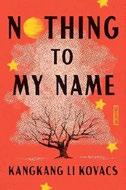
The burdens and blessings of history are carried through the years by three generations of Chinese women.
Kovacs follows the threads of survival, misery, and familial love across the entwined narratives of three women living through the years of violence and social upheaval in China that saw the Communist Revolution, the Cultural Revolution, and the aftermath of the Tiananmen Square massacre. Ah Xue, the impoverished daughter of a single mother, endures social isolation and deprivations during her childhood in Zhoushan during the late 1940s. Her daughter, Mimosa, seems to achieve more stability and happiness before encountering the restrictions imposed by the groupthink of the Cultural
Revolution. Fei, Mimosa’s daughter, would seem to be the beneficiary of advances in culture and technology as she pursues her education, but hints of the past haunt her upbringing with a father who’d been an activist during the student uprisings and stubbornly refers to her as “son.” Kovacs conveys the echoes of history, subtly, throughout the narrative: Is the crippling and misogynistic foot-binding endured by Ah Xue’s mother any worse than the attention to performative femininity encountered by Fei among her university roommates? Is the tattletale behavior of Fei’s childhood classmate modeled on earlier types of exposure practiced during the struggle sessions of the Cultural Revolution? Is Fei’s father’s insistence that she live as a boy—the pernicious result of the one-child policy—a callback to trauma experienced by a young Ah Xue after she involuntarily relinquished an infant son? Kovacs’ background in nuclear physics is useful in providing an analogy for the duality of the joys and sorrows of family life: Light is composed of particles or waves, depending on what you’re looking for, and so too with the loving sacrifices or mistakes of the past.
A plainspoken but perceptive family saga.
Lapena, Shari | Pamela Dorman/Viking (352 pp.) | $31 | July 28, 2026 | 9780593832479
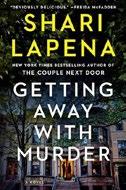
Rich people are the predators, until they become the prey, in this novel of psychological suspense. It’s hard to be rich in Lapena’s knockout contribution to the trending fiction genre that skewers the elite. In the vividly rendered opening pages, readers feel the boat pitch and the wind howl as Ted and Jill Westcott sail out into the Atlantic Ocean with one thing on their minds: pushing Ted’s brother, Greg, overboard so they can inherit his $45
million fortune. The Westcotts, heavily in debt, borrowed from a loan shark, and the repayment is due. Greg’s sailboat, aptly named Fortune Seeker, seems the best place to commit a murder. No body to retrieve, no evidence to prove it was anything but an accident. What seems like the perfect crime turns into anything but when Paul Ramirez, an investigator with the U.S. Coast Guard, sets his sights on proving the Westcotts murdered Greg. Ramirez isn’t the only person who wants the Westcotts to go down. Jill’s wealthy best friend, Lara Donleavy, isn’t thrilled that the inheritance will make Jill richer than her. An acquaintance turned con artist wants to separate the Westcotts from their money, as does the resentful son of the Westcotts’ housecleaner. Then comes the anonymous text message: “I know what you did.” Blackmail threats ensue and Ted and Jill, wallowing in their perceived victimization, begin to suspect everyone in their orbit. Will the Westcotts get away with it or will they be exposed? Their sense of entitlement means they’ll kill again if they have to. This most satisfying novel dissects jealousy, vengefulness, and, for many of the characters, an unstoppable lust for money. The greedy get greedier as the Westcotts are pushed to their limits with enemies and the law at their heels.
A scrumptiously sinister novel about a couple willing to kill for an inheritance.
Larbalestier, Justine & Scott Westerfeld
Pamela Dorman/Viking (464 pp.) | $32
July 21, 2026 | 9798217059492
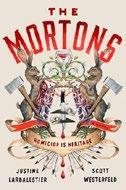
A murderous family’s saga. The novel opens with narrator Jessica Morton, a junior at Helshire College and a member of an age-old crime family, taking Peter, her younger cousin and fellow Helshire student,
on a climb—no, not the recreational kind. It’s actually a midnight trek up the school’s tallest building, from which Jessica ensures, at Grandmother’s orders, that Peter will plummet to his death. (Peter had “fallen into disfavor” with the family.)
“My first kill, before I’d even graduated,” Jessica thinks with satisfaction after she’s completed her assignment. At Peter’s funeral, which is at the Morton estate in upstate New York, Jessica, who is bisexual, becomes smitten with Hiromi Kennedy, a Japanese American artist she will get to know during a summer internship at a New York City gallery. The job leads to a cascading series of events of spectacular consequence to Jessica, Hiromi, and the extended Morton clan. This first collaboration between the married Larbalestier and Westerfeld, who are best known for their YA novels, serves up a robustly imagined world that stops just short of heightened but abounds with nods to horror and macabre symbolism (bones, the color red). While the authors’ attention to atmospherics pays dividends, there’s an oddly persistent slackness to the storytelling, and given how much work is required of readers to keep track of Mortons living and dead, their motivations, and their secrets, to say nothing of their specialized argot, this long book is a heavy lift. Jessica may exude Wednesday Addams cool, but she’s introduced as an unrepentant murderer, and some readers may not stick around for her crisis of conscience, which is to say her realization that she may actually have one. For patient readers, the novel affords some of the pleasures generated by Addams and Soprano family shenanigans.
Light, Lawrence | Severn House (368 pp.) $29.99 | July 7, 2026 | 9781448321063
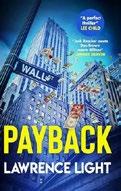
Three investigators work very different angles as they try to stop a disgruntled ex-employee who’s sworn vengeance on the top brass at a New York hedge fund.
Billionaire Orson
Darcy’s fatal plunge from the eighth floor of his Fifth Avenue apartment building would have seemed suspicious even if it weren’t for the sign his killer left behind: “DDD&R, I AM COMING FOR YOU.” The “YOU” presumably includes Darcy’s partners, Peyton Danforth, Richmond Dingell III, and Butch Rapp, and Det. Bridget Washington, the newly promoted head of the NYPD’s Prime Cases Squad, will have her hands full keeping them safe. So it’s lucky that Frank Verity, a New York Examiner reporter fired after he was sued for libel by a crooked developer, is constantly being pushed forward by Sonny McHale, his best friend at the Examiner, who’d like nothing better than to cradle Frank in her arms. The intruder who defenestrated Darcy is soon identified to the reader, and not long thereafter to Frank, Sonny, and Bridget, as Jeffrey Hayder, whose scheme to secure his future by slipping illegal tips to the partners hit a snag when they framed him for insider trading and he was imprisoned. The many bite-sized flashbacks designed to provide information about the characters’ motivations mainly have the effect of sowing confusion, and the billionaires marked for extinction manage to be both corrupt and uninteresting. But even
Has some of the pleasures of Addams and Soprano family shenanigans.
THE MORTONS
>>>

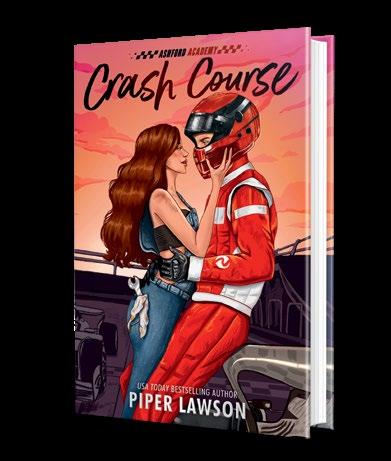
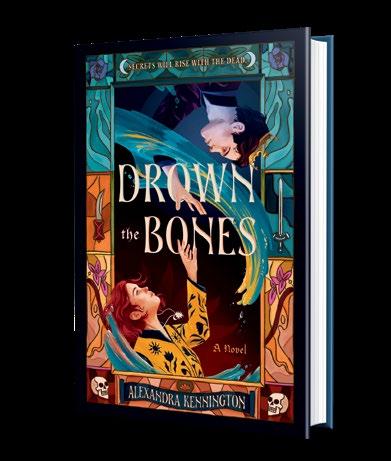
Drown the Bones

Crash Course
Piper Lawson
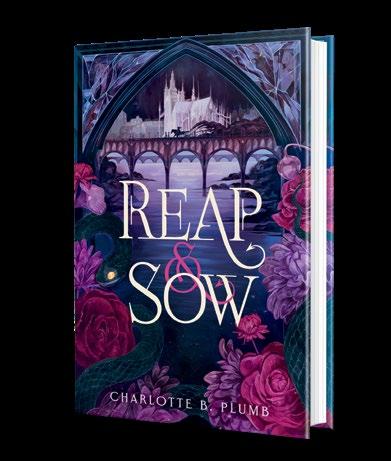
Reap & Sow
By Charlotte B. Plumb
In an interview, the author admitted that he turns to artificial intelligence “all the time.”
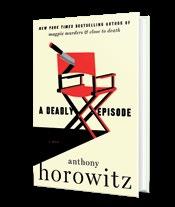
Novelist Anthony Horowitz told a U.K. newspaper that he uses ChatGPT to assist in his writing.
Horowitz is known for his mysteries and thrillers, including The Word Is Murder, The Twist of a Knife, and A Deadly Episode, published in April. He
said that he uses the artificial intelligence chatbot “all the time.”
“I feel nervous about it, because, is it cheating?” he told The Independent in an interview published last month. “I feel a bit like it’s cheating in a school exam.”
He added that he believes it’s important to fact-check the output he receives from the chatbot.
“You’ve always got to judge what you’re being told, and also look for a second source. In the old days, I’d go to a library, I’d look up stuff in books,” he said. “What’s the difference between using AI and going straight to the point?”
He also noted the limitations of artificial intelligence, recounting a time he used ChatGPT to get a description of how a potato is shaped and was given the word ellipsoid.
“This is when you drop the artificial intelligence and use your own intelligence,” he said. “Readers hearing that the potato on her plate was ‘ellipsoid’ are going to say, ‘What the hell is this guy talking about?’”
—MICHAEL SCHAUB

For a review of A Deadly Episode, visit Kirkus online.

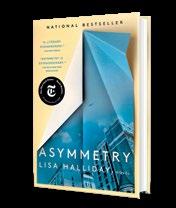
The movie will be based on Lisa Halliday’s 2018 novel.
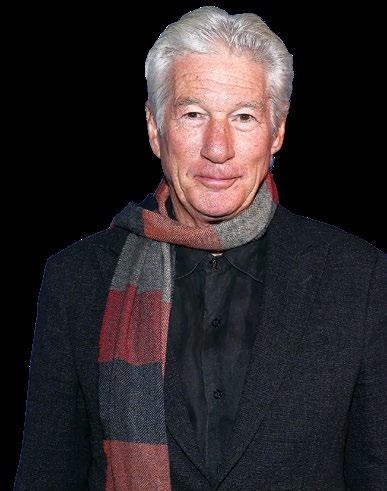
Lisa Halliday’s Asymmetry is getting a film adaptation starring Richard Gere, Deadline reports.
Halliday’s novel, published in 2018 by Simon & Schuster, is composed of two novellas. The first tells the story of Alice, a young editor, and her relationship with an older author, Ezra; the second follows Amar, an Iraqi American man who is detained at London’s

Heathrow airport while trying to visit his brother in Kurdistan. In a starred review, a critic for Kirkus wrote of the book, “[What] grows out of these conjoined stories is a beautiful reflection of life and art.”
The film adaptation will star Gere, known for his roles in An Officer and a Gentleman, Pretty Woman, and Chicago, as Ezra, and Diana Silvers (Booksmart, Billy Knight) as Alice. The movie will be written by Halliday, Edward Zwick, and Marshall Herskovitz. Zwick will direct.
Halliday told Deadline, “It has been a pleasure and a privilege to work with Ed and Marshall on transposing Alice and Ezra’s story for the screen. I am enormously grateful to them for their humor, ingenuity, courage, compassion, and dedication.”
And Zwick said, “Like so many others I was charmed by Lisa’s book, not just because it’s emotional, insightful, and very funny, but because it’s about two people who discover that what the world calls asymmetry can in fact have another name: love.”
—M.S.

readers untroubled by the prospect that Ceci Darcy, the widow who’s suddenly been catapulted into a partnership, may be targeted may well root for Bridget, Sonny, and Frank, because that’s what you’re supposed to do.
Too many moving parts and too many standoffs in which guns are drawn to no effect.
McAllister, Gillian | Morrow/HarperCollins (352 pp.) | $30 | May 5, 2026 | 9780063338470
How far would a mother go to save her daughter?
Simone Seaborn leaves her home in London for southwest Texas to meet her teenage daughter, Lucy, who’s spent the summer there before starting college. The two have planned a camping trip as a reunion after the longest period they’ve ever spent apart. But almost immediately, the trip seems cursed: Simone’s suitcase is lost—maybe even “on the moon,” according to an airport attendant. She and Lucy are reunited at their Airbnb stopover, only for Simone to wake in the morning and find Lucy missing. Left behind: a phone that begins to ring, “Caller Unknown.” Lucy has been kidnapped. Simone immediately snaps into action, following all the kidnapper’s instructions, including not to notify the police, a decision that her husband, Damien, strongly opposes. She travels to the meeting place only to be sent across the border to Mexico, where she must pick up a package and bring it back to Texas. Simone and Lucy are eventually reunited, but by then things have gone very wrong: Simone shoots the messenger who brings Lucy to the meetup, and then Lucy accidentally shoots an off-duty cop who’s coming to investigate the noise. On the run in the rural Texas desert, mother and daughter strike out to save each other and to clear their names. The plot is convoluted, and even a little
absurd, but it keeps you guessing. What truly shines through in McAllister’s fluid prose, though, is the love. This is a novel about motherhood, and mothers and daughters, and the transition from childhood to adulthood. It’s about sacrifice and loss, but also joy, and the tenuous beauty of each moment of life. It’s about saving the day in even the direst of circumstances, and how love between a parent and child is never a loan, but exists forever—past, present, and future—even as time inevitably slips by. Come for the action, leave deeply moved by the fiercely beautiful meditations on maternal love.
McCaw, Robert B. | Norton (304 pp.) $29.99 | July 7, 2026 | 9781324123996
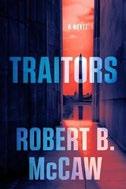
Trusted public servants plan to betray America. A Russian informant dies by suicide before she can warn the U.S. of a plot about “something big” about to happen. Then a Russian spy named Mikhail Bortnik approaches the Justice Department offering to reveal “information of great interest” in exchange for guarantees of his safety and freedom. “Russian agents have infiltrated your storied FBI at a high level,” he tells Robert Cooper, who works for the DOJ’s National Security Division. Can a network of traitors truly be embedded in our government, undercover for years? Even the minority leader of the U.S. House of Representatives might be a Russian agent. In a closely divided House, what if someone happens to die, and the minority becomes the majority? The issue turns urgent when a militant fascist general executes a lightning-fast coup d’etat in Moscow. General Obraztsov will make Putin look like a wimp as he gathers forces to invade Finland and perhaps use tactical nukes to win its ultimate prize, all of Eastern Europe. As Cooper learns, this is part of Operation Viper, a Russian plot
involving at least five traitors to the U.S. With the success of that plot, a weakened American government will let the Russkies do their nefarious deeds. Russia has code-named its moles Bear, Alligator, Penguin, Walrus, and Lion, and Cooper and his team had better stop them before it’s too late. Coop, as President Clayton calls him, is a widower whose love life doesn’t extend to more than a kiss on the cheek from his friend Catherine. High-level murders using the Novichok poison are central to this well-constructed plot, with a political back-stabbing thread that deserves dishonorable mention. Characters are believable if not memorable, and the tension culminates in a solid, satisfying finish. Author McCaw is known for his Koa Kāne Hawaiian mysteries, and this is his first geopolitical spy thriller.
The spy business doesn’t need the Cold War for excitement, and this nicely spun yarn proves it.
Montrone, Sofia | Avid Reader Press (256 pp.) $27 | June 9, 2026 | 9781668200476
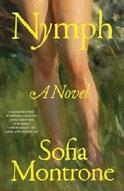
Two summers nearly a decade apart change a young woman’s life.
Set in the Italian countryside, Montrone’s debut follows Leo, a young American girl, during two significant summers at her grandmother’s century-old agriturismo. Ten-year-old Leo spends languid days goofing around with her younger brother, Max, helping her grandmother clean the hotel, and vying for her seemingly all-knowing father’s attention. Leo’s relationship with her father, a charming yet troubled professor who captivates her with stories from the Iliad, casts a long shadow over the novel. His children are merely distractions from books: “They borrow him when they can. They hold themselves open for him.” Though he is the center of their universe, they slowly realize that, because of his
drinking, the center can’t hold. Leo both knows and doesn’t know the full extent of her family’s difficult dynamic. By revealing the enormous gulf between seeing and understanding, Montrone is able to blend the magic and torment of Leo’s childhood. Years later, on the cusp of adulthood, Leo looks back on the past while embarking on another summer that will change her life forever. Still grappling with her father’s death four years earlier, she must contend with the state of the hotel, her grandmother’s declining health, and the growing distance between her and Max. Stuck somewhere between naïve and experienced, she finds her life cracking open when Dolores, an edgy American girl a few years older, begins working at the hotel. As the two become closer, Leo begins to experience first after unbelievable first: “She has been properly kissed and understands how little the richness of experience can be deciphered.” Montrone’s prose is undeniably beautiful and poetically precise; her ability to distill universal experiences in novel ways, especially regarding first love, girlhood, aging, and grief, is particularly noteworthy. A poignant debut about the bittersweet space between childhood and adulthood.
Kirkus Star
The Winds of Maracaibo
Morán, María Elena | Trans. by Madeline Jones | Knopf (208 pp.) | $28 | July 28, 2026 9780593803936
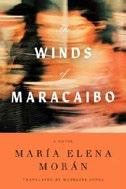
Venezuela’s economic collapse fragments a family seeking safety beyond its borders.
Morán’s second novel (and first in English translation) is set in 2018, as the death of President Hugo Chávez and the rise of Nicolás Maduro has sent the nation’s economy into a tailspin: “Inflation was at 130,060 percent. A basic trip to the grocery store cost 220 times the minimum wage,” she writes.
In 1999, a woman searches for her twin sister, who was erased from reality.
THE
That prompts a young woman, Nina Gutiérrez, to leave her mother, Graciela, and daughter, Elisa, back in their home city of Maracaibo and head for Porto Alegre, Brazil, seeking a better life. The trip is an ordeal: Contempt for immigrants runs deep (arsonists set her migrant camp ablaze) and work is scarce, prompting her to squat in a university storage room and scare up housecleaning work. Meanwhile, Nina’s estranged ex-husband, Camilo, has arrived to take Elisa to Houston, where his well-off parents live, and start fresh in America. (Both Nina and Camilo were committed socialists during the Chavez years, but Camilo’s wealth and Nina’s relative poverty became a point of tension.) Nina’s and Elisa’s fates are central to the story’s conflict, as their distance extends across two continents, but the narrative cycles through the perspectives of multiple characters, including Nina’s father, Raúl, recently deceased and speaking from a kind of purgatory that echoes the country’s own precarious position. Though writing out of Venezuela is rare for American audiences, Morán’s perspective on migration will resonate with readers familiar with themes of separation, asylum, bigotry, and resettling. What distinguishes the novel is Morán’s ability to write in a variety of tones (ably captured by translator Jones) and her evocation of the desperation that fills migrants from different generations and class levels in different ways, and how skills and money

are of little use, even when they’re trying “to start over in a city where Venezuelans weren’t yet regarded as a pest.”
A taut, poignant snapshot of migration.
Penelope, Leslye | Redhook/Orbit (496 pp.) | $19.99 paper | Aug. 11, 2026 9780316594691
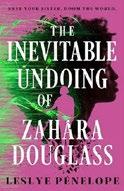
In 1999, a woman searches for her twin sister, who was erased from reality, leaving only a digital fingerprint behind. After a meteoric rise within the National Ballet Theatre, Zahara Douglass, a 21-year-old Black ballerina, has the life she always dreamed of. But Zahara is emotionally detached, haunted by a fissure in reality that only she seems able to remember: When she was 16, she saw her twin sister, Annica, get into a car and disappear. Moments later, history seemed to rewrite itself—without Annica. Now, Zahara’s return to her hometown of Modesto, California, for a performance sparks painful memories and fuels her determination to seek answers. The looming threat of the Y2K millennium bug creates a sense of unease and danger, in contrast to prose filled with movement reflecting Zahara’s identity as a dancer. Characters stridently debate whether technology isolates people or connects them, with no consensus. Teaming up with a private investigator, Theo Morgan, Zahara digs deeper into a past that doesn’t seem to exist and finds evidence of fantastical abilities. The
In Rome, a thief steals a fragment of the “true skull” of John the Baptist.
author weaves together threads of myth and technology, interspersing evocative tape recordings that Zahara’s late father left her, along with entries from Annica’s computer diary, bringing these characters’ vitality to the page. Zahara and Theo’s travels through California in search of answers unfold with echoes of a noir mystery, saturated with the ever-present question of who to trust and how much. Zahara’s quest for the truth unearths one of the book’s central preoccupations: What would you sacrifice for those you love, and are you prepared to live with the consequences? A vivid story of sacrifice as a woman learns to trust herself in order to save her sister—while risking the world’s future.
Phillips, Gary | Soho Crime (304 pp.) $28.95 | July 7, 2026 | 9781641296656
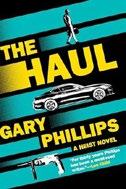
Old colleagues entice a former career criminal out of semiretirement for one last out-there caper. After a long and lively career, O’Conner, once known as the Warlord of Willow Ridge, has settled into a relaxed lifestyle with longtime girlfriend Gwen Gardner, who owns Fix & Go, a chain of body shops. Phillips’ second O’Conner caper is long on banter, backstories, and outrageously named larger-than-life characters. The opening chapter features wide-eyed stripling OC taking in the activities of colorful felons like Shoe Dog and Dimitri “Teaflake” Strock. From there, the plot ricochets freely from O’Conner’s childhood to
his comfy present and various points in-between. The carrot that lures O’Conner back into larceny is a cache of reportedly untraceable millions that tech billionaire Palmer Van Noy keeps in a bunker beneath the new stadium of the Swashbucklers, his basketball team. The road to the heist is predictably twisty and full of challenging obstacles, all presented with comic panache. Multiple chases featuring diverse vehicles and collateral damage are involved. Given Phillips’ dozens of published short stories and comics, it’s no surprise that the story’s chief attractions are its outrageous players and discursive detours. The latter include reminiscences of crimes from the good old days and a discussion of Alexandre Dumas’ African heritage. The denouement is never in doubt, but the rollicking journey is sweet. The acknowledgements pay appropriate homage to Donald Westlake, Phillips’ forerunner in this subgenre. A lean comic thriller with a delightfully wacky cast.
Kirkus Star
Preston, Douglas & Aletheia Preston Forge (352 pp.) | $30.99 | April 21, 2026 9781250413901
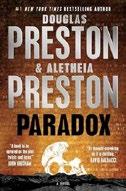
A death in Colorado and a Vatican visitor highlight this sequel to Extinction (2024).
In Rome, a thief steals a fragment of the “true skull” of John the Baptist, and the pope wants
the venerated object returned. The assignment falls to Brother Niall Armagh, a former law enforcement chaplain in Chicago. Church authorities know who took it, and Armagh must travel to San Francisco to effect its return. Meanwhile, in Colorado, state Bureau of Investigation agent Frankie Cash and Eagle County Sheriff James Colcord work a homicide case in the remote Flat Tops Wilderness, where trouble bubbles—the corpse of Willy Grooms is found in his shack with coins covering the hollows where his eyes had been. His mouth had been forced open, but the only bleeding came from a mangled foot. The autopsy yields surprising results and a critical but puzzling clue. Grooms had been tortured using tools dating back to the 17th century, such as the Spanish boot and the speculum oris. This is no ordinary murder, so a challenging investigation lies ahead. “Sapiens supremacists” are quick to blame murderous, de-extincted Neanders that may be running loose. Brother Armagh thinks his search for a holy relic may be related to the murder case, so he offers to help the investigators. But his true mission must remain secret, even from ultraconservative local priest Timothy Moore. Cash and Colcord are smart and brave but differ in temperament, Cash being “bossy, forceful, and irritating as hell,” and prone to getting in trouble with her boss. For example, her unprofessional outburst at Father Moore would be a job killer if she weren’t so competent. She and Colcord watch each other’s backs as the danger level steadily mounts to a climactic scene where either or both could die. Threaded into the plot are a company named Paradox, alien artifacts, and John the Baptist’s DNA.
A crackling good thriller by father and daughter.

Rizkalla, Amanda | Henry Holt (336 pp.)
$28.99 | May 19, 2026 | 9781250420756
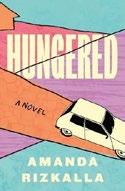
A young girl navigates the challenges of homelessness and growing up.
The story begins just after 12-yearold Sofia’s mother leaves her “baba,” moving Sofia and her brother into their car. As her mother drives around looking for a spot to park each night, Sofia’s mind wanders from memories of her “abuelo stirring a large pot of champurrado” to the girl with the “belly bulging out of her shirt” who now inhabits Sofia’s old house. The story unfolds in brief diarylike snippets from Sofia’s point of view, tracing her attempts to regain normalcy amid a destabilizing reality. Rizkalla is skilled in taking on the voice of a young narrator, fluent in the worries that plague Sofia, whether they come from her school crush, her teachers’ racism, or the responsibility she feels for her family’s well-being. Rizkalla is able to succinctly conjure the shame that stems from Sofia’s class consciousness while not losing the innocence of her youth: “The way Chloe looks down at my hands after we pull away, I can tell she expects me to give her a present, that she thinks I must have been hiding one this whole time to surprise her.” What makes this a memorable debut is Rizkalla’s ability to artfully detail the gut-wrenching powerlessness Sofia often feels as she treads through a world rife with inequality. “I mouth the word to myself, ‘Please,’ imagining what it would be like to show up to the car with a gift card in hand, how proud mama would be, and maybe she would even tear up holding it, she would be that proud,” Sofia thinks, hoping to get the gift card awarded to the highest scorer on a class oceanography quiz. Rizkalla offers a well-written and haunting look into a childhood marked by instability. A heart-wrenching and powerful debut encapsulating the heaviness of class, race, and adolescence.
Robb, J.D. | St. Martin’s (368 pp.) | $30 Sept. 8, 2026 | 9781250414564
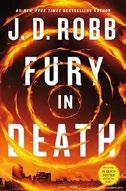
Lt. Eve Dallas’ 63rd futuristic case is less a whodunit than a manhunt for an unusually sympathetic killer. Thirteen years ago, way back in 2048, scientific genius Steve Redman—father of the Banner-Wyst corporation’s Rainmaker Project—narrowly escaped death in a gas explosion that killed his pregnant wife and infant son and 200 other residents of their New York City apartment building the night before he planned to report his suspicions about the company to the FBI. Now the bill is coming due for Banner-Wyst. The first death to be discovered is that of Lawrence Chu, Redman’s colleague and trusted friend, whose tenure as director of bioengineering science ends when he’s beaten to death. For quite a while, Dallas and her partner, Det. Delia Peabody, know less about this mystery than their readers do. But when Ezra Dent, a consultant to Banner-Wyst who worked with Redman and Chu back in the day, is murdered in exactly the same ferocious way, Dallas and Peabody, with help from Roarke, Dallas’ tech-billionaire husband, promptly put the pieces together and determine who they’re looking for. The search for Redman, who went AWOL from his hospital bed without a trace six years ago, has its own challenges. So does Dallas’ attempt to get cooperation from partners Calvin Banner and Jacob Wyst, who are clearly in the crosshairs of a killer who seems a lot less monstrous than they are. If the breaks in the case are suspiciously convenient in arriving, readers can pride themselves on taking sides against a mega- corporation whose self-avowed ecological saintliness is undermined by its leaders’ underhanded dealing. A satisfying thriller that will warm the hearts of fans who already take comfort in hating the forces of evil.
The Spy and the Snake Robotham, M.J. | Aria/Head of Zeus (368 pp.) | $29.99 | July 7, 2026 | 9781035921997
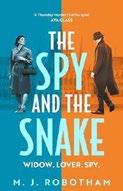
A n assistant case officer at MI5 is suddenly catapulted into a challenging on-the-ground, off-the-books assignment at the height of the Cold War. There’s only one reason that Maggie Flynn’s limited experience in the field qualifies her to handle the exfiltration of an MI6 agent who defected to Hungary years ago but now wants back in. Fitzroy Carver has insisted that the agent assigned to help him escape from behind the Iron Curtain—and bring back some unspecified intelligence that Her Majesty’s Secret Service urgently needs—must be female, and that’s a qualification that, in 1968, applies to very few agents, whether or not they debuted in Mrs. Spy (2025). So Guy Standing, director-general of MI5, packs Maggie off to Budapest with a sparse budget, a warning that the assignment will put her in direct competition with MI6, and the explicit command that she call on no one in either agency for help. Since defecting, Carver has morphed from a James Bond type to an alcoholic slug who’s suspiciously easy to find. In fact, Maggie’s lack of fieldwork makes her success bonding with restaurant owner Zoltan Fodor and having his brother, Janos, fix up her getaway jalopy feel equally suspicious. When everyone she meets, from dishy electronics buyer Tom Bredon to Fitz’s highly efficient housekeeper, Lida, is both a potential ally and a potential nemesis, she seems to make all the right choices—until it all goes sideways. Even though there are precious few surprises here, Maggie’s chatty first-person narrative amounts to a primer on espionage basics for any readers equally green, and Robotham’s warmth for her Hungarian setting is infectious.
Just imagine an episode in which Mick Herron posted his Slow Horses to Budapest. Cheers!
Rock, Peter | Soft Skull Press (224 pp.) $27 | Aug. 25, 2026 | 9781593768171
A haunting tale of hope and survival set on a remote island in the Pacific Northwest.
Three children—CeCe, Heiko, and Ari—are the only people remaining on the island of Makeshift after a terrible event decimated their entire community of survivalists and also, they believe, brought an end to all humankind. Raised in an environment where certain adults are designated “conductors” to help lead the community, and where everyone is considered a relation, these three children, though technically unrelated, refer to themselves as “sisters,” despite the fact that Ari is a boy. Practically feral but ferociously independent and resourceful, they salvage for food on land, cast nets for fish and crabs from the sea, and spend their time diving in the treacherous waters searching for anything useful from the many ships that have sunk offshore. Ari, the narrator and youngest of the group, is the only one who can read or write. Heiko, the bespectacled middle child, has managed to tame a wolverine. CeCe, the eldest, assumes the role of conductor and soon decides it’s time to venture off the island and see what awaits them beyond their familiar surroundings. Only then—after canoeing together to the mainland and discovering that other humans do still exist—does it become clear to Ari and Heiko that their sister has experienced far more of the outside world than she’s let on. Following their brief but eye-opening foray to the mainland, the
three find their way back to Makeshift to rebuild the world they left behind and make it their own. Because the three children were in hiding during the event that set this story in motion, the reader is forced to rely on their accounts and assumptions in the aftermath to make sense of what likely unfolded, which doesn’t always work. And while the collective memory of their earlier lives provides much-needed background, there are some lapses in logic that don’t always add up. Still, this is a touching story of faith and trust and of young lives braving the unknown.
Kirkus Star
Ruskovich, Emily | Random House (272 pp.) $29 | July 7, 2026 | 9780812994025
In this exquisitely tailored collection of five stories, Ruskovich plumbs the depths of mystery, memory, and the quiet grief of intimacy. It’s been almost a decade since Ruskovich published her debut novel, Idaho (2017), a lyrical, kaleidoscopic narrative about the murder of a young girl. Her new collection is quieter in theme, but still probes doubt, grief, and challenging family dynamics with her signature grace and care. Like Idaho, this book has a compelling slipperiness, both in time and reality. Ruskovich’s characters are often in two places in time at once, and she expertly weaves memory and observation to fuse the past and present together. In some stories, this
Ruskovich probes doubt, grief, and challenging family dynamics with grace.
quality mimics a character’s experience of instability. For instance, in “Victor’s Room,” Rebecca questions her husband’s origin story and must grapple with how the truth reshapes their shared life, both in the present and in her memory of their meeting. As the collection progresses, the slippery qualities of narrative apply themselves to the idea of what is real and what is possible. In "I Heard You Singing," Will regains his intuitive ability to locate people in danger after grieving the unexpected death of his brother. And in the title story, a young girl discovers she can skim the reflection from the surface of a water pail in a goat pen. “Earlier and earlier she rose, and came out to pluck the skin from the surface of the water, to hold it shimmering in her hands, to spread the reflection out upon the boulder,” Ruskovich writes. “She watched it become the stone. The stone became the memory of the water. The stone became the trees, the sky, the past itself.” Much like Ruskovich’s writing, the boulder becomes a palimpsest—a strange, pleasurable embodiment of mysteries layered one on top of the other. A portal to a haunting, liminal Pacific Northwest.
Scottoline, Lisa | Grand Central Publishing (400 pp.) | $30 | July 14, 2026 | 9781538770030
Driven by one of her trademark premonitions come horrifyingly true, Julia Pritzker leaves her adopted home in Tuscany to return to her Pennsylvania roots. No sooner has
Julia, seized by a sudden urge to phone her best friend, Courtney Horan, had a shattering vision than Courtney, still on the line, discovers the body of her grandmother, Kay Patterson, shot to death in her home in rural Pennsylvania. Naturally, Julia drops everything and books a flight to Courtney’s side. Who on earth would want to kill a Black octogenarian
widely loved for her kindness and charity? Once the police find the presumed murder weapon—a ghost gun produced by a 3D printer—in the woods outside Kay’s house, they suspect Courtney, and Julia suspects the police. When homicide detective William Kowalski arrests Courtney, Julia decides his case is so weak that he must be racist or corrupt rather than just stupid; the only question is how far in the department the rot has spread. Back in Italy, there’s another emergency: Julia’s husband, library director Gianluca Moretti, is suspected of child abuse when their 3-year-old daughter, Leni, lapses into a mysterious grief and begs Julia to come back. But Julia, who’s already begun to suspect that Leni may have inherited some of her psychic powers, refuses and resolves to stay the course. Readers impatient with the endless wind-down of the mystery of Kay’s murder, which turns out to be the tip of a vast terrorist conspiracy, will be relieved to learn that the accusations against Gianluca are wrapped up with all due haste. The result is an ambitious whodunit, a less satisfying cold case, and a domestic drama so familiar it’s practically heartwarming. Warning: This doesn’t actually change all that much.
Sveistrup, Søren | Trans. by Ian Giles Harper/HarperCollins (560 pp.) | $32 July 7, 2026 | 9780063418493
In a sequel to The Chestnut Man (2019), stalked women are texted live photos of themselves, accompanied by counting rhymes ending with “Gotcha!” just before they’re gruesomely murdered. For Naia Thulin, a cybercrime detective in Copenhagen who’s been drafted by the elite national homicide unit, and her former lover Mark Hess, an idiosyncratic Europol
A mystery so complicated you may want to take notes, but still quite a ride.
HIDE AND SEEK
officer imported from The Hague, suspicion grows that the killings are being committed by someone seeking vengeance for having been neglected as a child. All the victims were work-consumed parents who left their children alone or in the care of others. As a single mother who guiltily devotes most of her time to hunting the killer, to the frustration of her kindly new boyfriend, Thulin can relate. When Marie Holst, the grief-ridden single mother of a high school girl who was murdered two years ago, begins harassing Nylander, head of Major Crimes, for not doing more to find the killer, he insists the girl’s case is not related to the current one. He’s still chafing from the grief he took from the press for the messed up Chestnut Man case. But then Hess uncovers clues that Caroline Holst’s murder is connected with the more recent cases. With the late discovery of vital evidence and the emergence of figures from the past, the investigation gets increasingly wired and weird. The head-spinning plot is not without its hiccups—a minor one is the ease with which imperiled characters slip out of plastic ties and duct tape. And Thulin’s absence down the stretch may make sense in terms of her character’s newfound devotion to motherhood, but it’s still disappointing. But Sveistrup’s knack for tightening the screws on multiple plot strands while leading the reader

into the darkest of places is on full display. No surprise coming from the creator of the TV series The Killing. A mystery so complicated you may want to take notes, but still quite a ride.
Tagame, Gengoroh | Trans. by Anne Ishii Pantheon (192 pp.) | $30 | June 23, 2026 9780593702222
In this slice-of-life love story, two men inch out of Covid-19 lockdown isolation and form a connection. In a routine visit to one of his farm clients, salesman Akira receives an unexpected gift of several large cabbages. Because of his lack of cooking skill, he reaches out to his friend Koji, who’s an excellent cook. When Akira arrives at Koji’s home, they’re both thrilled to be around another person. Unlike Akira, Koji works from home as a freelance writer. With the cabbage, Koji cooks his first elaborate meal for Akira. Their easy intimacy leads to Akira sleeping over—platonically—and then returning the next week with eggplant for another meal elaborately cooked by Koji. Koji is surprised and delighted by Akira’s joyful enthusiasm for his cooking, and starts to crave his company during meals. Tagame’s food illustrations look delicious, displaying Koji’s creativity and making it easy for readers to connect with Akira’s intense excitement over meals with his friend. To thank Koji, Akira starts to clean up
his apartment, and their domestic balance helps them inch closer, though they both think of themselves as straight. With more and more time spent in Koji’s apartment, cooking together and watching movies, the two men realize how much they prefer being with each other to doing anything else, with Koji reassuring Akira that he’s always happy to have him around. Food is their gateway to intimacy, and the closeness they develop leads them to wonder what their intense connection actually means. Through moments of domestic intimacy, this story captures the joy of building a loving relationship.
Thomson, Rupert | Other Press (304 pp.) $17.99 paper | June 23, 2026 | 9781635422283
A quiet, subtle, persuasive novel about toxic jealousy. Gino is one of those troubled young men who might be called wayward, but that implies he’s strayed from a path he can see, when it would be more accurate to say he’s way-free, adrift, rudderless. In his early 20s, he returns home to the Abruzzo region of Italy. At loose ends, and spurred on by the laconic, accomplished father he resents and can’t impress, Gino seeks out a childhood friend, Franca, who as a little girl new to the town announced to Gino that someday they would be married. It’s as though she’s been waiting for him. Immediately, in a way that seems simultaneously improbable and inevitable, they fall in love and marry. Franca gets pregnant. They move into a remote, lovely house. But Gino—fragile, self-doubting, distrustful of anything that feels like good fortune since how could he deserve it—begins to deteriorate when their son is born. The baby, Elio, is extraordinarily
beautiful; everyone remarks on it, and as his legend grows, people start showing up at the house—eventually by the busload—to catch a glimpse of him. What could be the source of this beauty, Gino wonders. Surely not himself. He fixates on the married lover Franca had before Gino’s return, an unpleasant and possibly Mafia-connected concrete contractor, begins stalking him, and the family idyll ends soon and badly. The prolific and versatile Thomson here offers a low-key, somber, sometimes lyrical novel about ordinary people. It’s not densely plotted, not filled with large-scale twists; the novelist relies instead on meticulous detail, on compelling portraiture. The result is a slowmotion psychological train wreck of a book. We watch things unravel in just the way that’s been foretold, and we feel surprised despite ourselves. Hard to look, harder to look away from this deft exploration of the awful human consequences of male frailty.
Thors, Margrét Ann | Spiegel & Grau (304 pp.) $28 | Aug. 4, 2026 | 9781966302230
A series of odd occurrences lead Reykjavík single mother Unnur to believe her childhood best friend, who disappeared and was presumed dead more than 20 years ago, is still alive.
Left parentless by her mother’s death, Unnur grew up under painful circumstances. At age 11, she’s
dumped at a coastal work farm by her mother’s intolerant identical twin sister. Unnur gets over her initial shock and dismay thanks to the presence of Freyja, a playful but elusive girl her age who’s made a playground of the rocky environs. But Freyja fails to return from one of her solo jaunts to what locals call the Dark Valley with its black-sand beach, leaving a swirl of urgent secrets behind her. Some crucial ones involve Elias, the aging American veteran who owns the farm. Flash forward to 2018, when Unnur is shaken out of a quiet existence with her 7-year-old daughter, Lilja, by a mysteriously delivered envelope of old Polaroids. It bears the words, “Hœ Unna. Remember me?” Only one person ever called her that: Freyja. When Unnur’s long-absent ex-husband, Nói, shows up with a surprise wife, Lóa—and an even bigger surprise, a little girl named Freyja—the unnerving of Unnur continues. Still to come: threats to her custody of Lilja by Lóa, a shady antagonist who turns out to be a police detective investigating the original Freyja’s disappearance. Melding past and present, Thors effectively toys with the impulsive Unnur’s own dark secrets and reliability as a narrator— one who can’t remember “what kind of things [she] had done.” Could she have done something terrible to her friend? A long section of belatedly presented material about the Icelandic mysticism Freyja was drawn to throws things a bit off keel. But the threatened mother’s raw emotion and the book’s atmospheric pull are difficult to resist. A nifty generational thriller in which the past eerily overlaps the present.
A nifty generational thriller in which the past eerily overlaps the present.
FREYJA
Tremblay, Paul | Morrow/HarperCollins (336 pp.) | $30 | June 30, 2026 9780063398467
Horror writer Tremblay shifts gears for a provocative exercise in postmodern SF.
Julia Flang is a young San Fernando Valley slacker unmotivated enough to do the Dude proud, and indeed The Big Lebowski is her favorite movie. It’s another old movie, though, that gives her the code name for the lucrative task her Big Tech mogul of an estranged mother assigns her: Weekend at Bernie’s . Julia’s Bernie is an employee who’s fallen into a coma and, now “mostly dead,” has been fitted with “proprietary technology” that can get him to a lab on the other side of the country; Julia, a pro-level video gamer, has just the joystick chops to steer him, zombielike, via remote control, through airports and down city streets. A shroud of secrecy and paranoia surrounds Bernie, and for good reason: A journalist who waylays Julia raises the prospect that while Bernie—who has a real name, as Julia learns—may prove an interesting case study in the workings of consciousness, it’s also entirely possible that the corporation has more nefarious designs (“Is it a huge leap,” our journalist asks, “to think weapons contractors wouldn’t be dreaming about remote-control soldiers?”). Though Julia is given to falling back on bits of Coen brothers dialogue—“Lotta strands to keep in old Duder’s head”—in times of stress, she’s not without inner resources. Neither, it turns out, is Bernie, who, while not exactly having a mind of his own, “a robot wearing the permeable armor of failing human flesh,” certainly proves a package that’s hard to
A smart and smart-alecky tale of technology put to bad ends by bad people.
handle. It all makes for an entertaining shaggy dog, or maybe shaggy sheep, tale, though it won’t come as a surprise that Tremblay ends it all on a nicely gory note. A smart and smart-alecky tale of technology put to bad ends by bad people.
Winstead, Ashley | Minotaur (336 pp.) $29 | July 14, 2026 | 9781250401212
Murder and mayhem among the leggy glitterati of Los Angeles. Like Winstead’s previous novel, The Future Saints (2026), her latest revolves around a sultry songwriter with a dead teenage sister, but this time foul play is involved, resulting in a thriller rather than a romance. The lineaments of this story are so patently absurd that just a slight shift in tone would have made for great comic crime, but unfortunately there seems to be no tongue in cheek here. And yet somehow Winstead’s police detective, Grey Holloway, is a picture-perfect beauty who supplements her day job by working as a bottle-service girl at a trendy nightclub. As we meet her, Det. Holloway has been called on to investigate the murder of a celebrity- adjacent character who weirdly—and for no reason we ever learn—could have been her identical twin. On the wall next to the victim,
written in blood, is a lyric from the work of singer-songwriter Scout Sage: “I eat traitors for breakfast.” Is this message meant to implicate Scout? Could be, since she and 30 of her closest friends are part of a network they call “Ladies of the Dark,” aka the Hot Girl Murder Club, the focus of media coverage, a Saturday Night Live sketch, a national movement of supporters who love the idea of murder as a reaction to #MeToo violations, and a very unacademic-sounding Ph.D. dissertation excerpted throughout the book. Many more dead bodies pile up in both flashbacks and the novel’s present. Some of the book’s finer prose moments include a naysayer’s characterization of Scout and her sister as “talentless, no-pedigree girls from disgusting New Jersey”; a journalist’s description of her discovery of “Scout’s Rosebud, her raison d’être, her ikigai”; and the presentation of a theory that “women are experiencing a period of sped-up evolution. Scientists call it epigenetics, phases of heightened transformation, when an entire subset of people mutate quickly to respond to the demands of their environment.”
Do they now.
You have to laugh.


Tom Taylor
Four strangers – fugitives, lovers, seekers – arrive at Dulles International for an ill-fated flight to London. Their paths cross, destinies intertwine. None know beyond the glass terminal doors waits eternity.
$22.95 paperback
978-1-9736-3213-9
also available in hardcover & ebook www.westbowpress.com
Based on True Story!
Michael L Curles
A magical true story of a father, his young daughter, and an unforgettable summer day when they learn that with stillness, quiet, and belief-even touching a butterfly is possible.
$14.99 paperback
978-1-6657-7757-5
also available in hardcover & ebook www.archwaypublishing.com
Martin L. Kaiser III
Join Martin L. Kaiser III as he reveals how he built an incredibly successful enterprise and how it all slipped into a tailspin when he ran afoul of the FBI.
$16.99 paperback
978-1-6987-1761-6
also available in hardcover & ebook www.trafford.com
Finding God in Today’s World Through the Fulfillment of Prophecy
Wil Brown, MD, FACS
In a time of confusion and arrogance, this powerful work reveals God’s presence in prophecy and history — guiding seekers toward truth, discernment, and a renewed relationship with Christ amid spiritual disconnection.
$16.99 paperback
979-8-3850-5562-3
also available in hardcover & ebook www.westbowpress.com



Losing Those Who Are Not Lost
Steve Beal Sr.
A moving memoir of faith and family, revealing how divine grace transforms loss into redemption. Through heartfelt memories, it celebrates legacy, love, and the enduring light of God amid life’s final moments.
$20.99 paperback
979-8-3850-6125-9
also available in ebook www.westbowpress.com
Until
Patricia O’Rourke
Lost for words? These poems speak when you cannot, guiding you to acknowledge emotions, reflect deeply, and discover a better way to find your voice with clarity and courage.
$16.78 paperback
979-8-7652-1628-6
also available in hardcover & ebook www.balboapress.co.uk
Brooke Hatton Ross
A deeply moving memoir revealing one woman’s rise from trauma to triumph - an inspiring journey of healing, self-love, spiritual awakening and reclamation.
$22.99 paperback
979-8-7652-0418-4
also available in hardcover & ebook www.balboapress.com.au
N.J. Wilson
Follow Little Stevie, a mischievous boy who constantly gets himself in trouble from not knowing any better. From jumping on his bed to taste-testing pickles, Stevie’s antics leads to silly adventures.
$12.99 paperback
979-8-3694-4345-3
also available in hardcover & ebook www.xlibris.com






On writing party scenes:
“The most important thing is remembering those weird little moments…the wackadoo things that you told your girlfriends about the next day. That is the stuff that makes a party feel like a party.”
—Xochitl Gonzalez
THANKS TO OUR SPONSORS:
Escala’s Wish by David James
Loser* by C.S. Beaty
In One Strength by Eric Glassey
The Virtue of Vengeance by Brian McDonald
Fully Booked is produced by Jessica Lockhart and Megan Labrise.

Xochitl Gonzalez’s glamorous new novel, Last Night in Brooklyn, marks the end of an era. BY MEGAN LABRISE
On this episode of Fully Booked , bestselling author Xochitl Gonzalez joins us to discuss Last Night in Brooklyn (Flatiron Books, April 21). In this highly anticipated new novel from the author of Olga Dies Dreaming and Anita de Monte Laughs Last , narrator Alicia Canales Forten sympathetically observes the rise and fall of La Garza, a fashion designer known for hosting legendary parties in their swiftly gentrifying neighborhood. In a starred review, Kirkus calls this Great Gatsby –inspired narrative “smart, tough-minded, and passionate: a pleasure from start to finish.”


“[T]he novel’s main mission: chronicling Alicia’s struggle to sort out who she is and what she wants, with her new friend La Garza as both role model and cautionary tale,” Kirkus writes. “Brilliant party scenes, tart dialogue, and dramatic plot developments further enrich this gripping work, another step forward for the talented Gonzalez.”
Gonzalez is a contributor to the Atlantic , for which she was recognized as a 2023 Pulitzer Prize finalist in Commentary. Olga Dies Dreaming won the Brooklyn Public Library Book Prize and a New York City Book Award in 2022; Anita de Monte Laughs Last was a Reese’s Book Club pick for March 2024. A native Brooklynite and proud public school graduate, Gonzalez holds a BA from Brown University and an MFA from the Iowa Writers’ Workshop, and she is a trustee of Brown University and the Brooklyn Public Library.
In a spirited conversation, Gonzales shares some of the challenges of writing her first novel in the first person and what it took to develop
Last Night in Brooklyn Gonzalez, Xochitl Flatiron Books | 256 pp. | $27.99 April 21, 2026 | 9781250372031
Alicia’s voice. We talk about the differences between Alicia and La Garza, how to write a perfect party scene, and capturing the unique moments that make for a memorable night. We discuss the impact of gentrification on vibrant Fort Greene, Brooklyn, and how it influenced Last Night in Brooklyn.
Gonzalez reflects on the importance of her literary community. She expresses gratitude for the supportive team at Flatiron Books—especially her editor, Megan Lynch—and shares details about her forthcoming memoir, Need Blind (2027), exploring themes of class and identity.
Editor at large Megan Labrise hosts the Fully Booked podcast.
This review originally ran online on Oct. 2, 2025.
A globetrotting, timetraveling, philosophical SF novel from Taylor.
Francine, the narrator and protagonist of this chaotic stew of a historical novel, is (in Kurt Vonnegut’s memorable phrase) “unstuck in time.” And that’s the least of it. Francine bounces all around history, popping up in various times and places, though, chronologically, she does have a home—sometime in the 17th century, in her little traveling box on a ship that has left Amsterdam and is sailing to destinations unknown. She is with her “Poppà” who may or may not be René Descartes (as she later claims). It’s important to note that Poppà is French and a brilliant mathematician, but also a lousy poet. And Francine is actually a very cleverly fashioned automaton, all the rage in that era. But somehow Francine actually acquires a soul and comes to life, rather like Pygmalion’s Galatea. If there is an intellectual basis to the story here, it is Friedrich Nietzsche’s theory of eternal return: the idea that one’s life could be on something like a never- ending loop. For obvious reasons, Francine is a big believer in “I think therefore I am,” though perhaps it should be “I talk therefore I am,” because talk she does, flitting from one memory to another like a drunken hummingbird.
But Francine is not just a good talker. She helped Walt Whitman nurse Civil War soldiers in Washington, D.C. She was at Trinity Site for the detonation of the first atomic bomb and in Paris at the time of the Terror. She was at Salem for the witch trials. She even makes scathing comments about Donald Trump: “I should know my enemy.” In an anecdote that stands alone, B.F. Skinner’s daughter takes her on a wild motorcycle ride— that’s how random this novel can be. None of this seems to confirm the Nietzschean eternal recurrence supposition exactly, only that Francine has a free pass to roam through time and make trenchant judgments and observations. But at some point, the reader will wonder just where all of this is leading. Early on, Francine says, “Mysteries are only confusing when you think about them.” Right. So we are invited to go along for the ride and learn about her love life (she’s bi-) and witness many random historical cameos (Emily Dickinson, Charles Bukowski, Alan Turing, Camus, and Sartre) while a storm rages at sea and the sailors on this ship to nowhere begin to suspect, as 17th-century sailors will, that this so-called automaton— Poppà and Francine sequester themselves in their cabin but the sailors can hear them talking—is
Main Street Rag | 96 pp. | $14.95 paper
Dec. 17, 2025 | 9781964277561
in fact a witch who, of course, needs to be thrown overboard to placate the weather. Finally, when Francine is hoisted aloft by the angry sailors, facing a fate that is still unclear, she is still talking, still philosophizing. Although Taylor asks a lot of
his readers in terms of attention span and suspended disbelief, there are intermittent rewards throughout the novel if one is patient enough to find them. Anyone surrendering to this surreal, digression-prone saga might just enjoy the ride.

of the 2026 Edgar Awards Revealed
The annual prizes recognize outstanding mystery fiction and nonfiction.
The Mystery Writers of America announced the winners of the 2026 Edgar Allan Poe Awards, honoring “the best in mystery fiction, nonfiction and television published or produced in 2025.”
Robert Crais won the Best Novel award for The Big Empty, his 20th
book featuring Los Angeles detectives Elvis Cole and Joe Pike. In a starred review, a critic for Kirkus called it a “potent and surprising novel by the ever-reliable Crais.” The author has been a finalist for the prize twice before.
The award for Best First Novel by an American author went to Jakob Kerr for Dead Money, while Vikki Wakefield

won the Best Paperback Original prize for The Backwater. Tiffany D. Jackson won in the juvenile category for Blood in the Water, while Libba Bray was awarded the Best Young Adult prize for Under the Same Stars. The Simon & Schuster Mary Higgins Clark Award went to All This Could Be

Yours by Hank Phillippi Ryan, and Joanna Schaffhausen took home the G.P. Putnam’s Sons Sue Grafton Memorial Award for Gone in the Night. Winning the Lilian Jackson Braun Memorial Award was Gwen Florio for A Senior Citizen’s Guide to Life on the Run. The Edgar Awards were established in 1946. Previous winners include Raymond Chandler for The Long Goodbye, Michael Crichton for A Case of Need, and Attica Locke for Bluebird, Bluebird. —M.S.

A Catered PTA Murder
Crawford, Isis | Kensington (320 pp.) $27 | June 30, 2026 | 9781496756527
A pair of sleuthing sisters can’t resist the pleas of a young girl. It all starts when Rita Sullivan walks into Bernie and Libby Simmons’ shop, A Little Taste of Heaven, and asks if Bernie remembers her. It takes a few tries, but Bernie finally recognizes the sleek-looking woman as the former Rita Grey, who was an ugly duckling back in school. Rita now owns her own business, Lavish Lipsticks; is married to wealthy Adam Sullivan; and is active in community affairs in Longely, New York, their Hudson River Valley town. In-between making snarky insults, Rita asks if they’ll donate a few cakes for a high-end auction to benefit the local junior high school’s PTA. Their friend Abby Roth, who arrives as Rita leaves, dishes the dirt on Rita and another frenemy, Lynn Hurwitz. Later, when Bernie and Libby deliver their donated cakes to the fancy auction venue, they’re asked to help with a few things and find the not-quite-dead body of Rita in the cold storage unit, stabbed, with a large X lipsticked on her torso. Their father, the former police chief, and his friend Clyde, a current detective, ask them to investigate when Abby is arrested because they both think she’s innocent, and Abby’s 12-year-old daughter, Sarah, wants to hire them. Once they start looking into the lifestyles of all those involved, they discover that Rita, Adam, and Abby were all having extramarital affairs that could provide motives—and there’s always money, of course. Adam is apparently cleared when he’s the next to die, putting the sisters in jeopardy from dangerous humans and wild beasts alike.
In addition to the luscious appended recipes, the banter between the sisters is endlessly amusing.
Davis, Lindsey | Severn House (352 pp.)
$29.99 | July 7, 2026 | 9781448320790
Bad blood among young chariot racers in ancient Rome boils over into murder. During the reign of the Roman emperor Domitian in 90 C.E., an early morning walk with her dainty dog, Barley, reveals to private informer Flavia Albia the ravaged corpse of a teenage boy. She makes enough noise to attract others who will find the body as she discreetly returns home. Ironically, the case lands in her lap the next morning anyway via a commission by the Golds, one of many chariot teams. Young Agathon of the Golds is suspected of murdering the Purples’ rising star, Lepo, and the Golds want his name cleared. Well-aware of the danger, Flavia makes inquiries as her cheekily named undercover alter ego, Anina Perpetua. Her 14th mystery moves steadily, leavened by her wry first-person narration and populated by a large cast of characters developed over previous installments. These include her stolid husband, Tiberius, and her father, Falco, who played the sleuth in many mysteries of his own. Davis provides an extensive cast list at the beginning and deftly tucks backstories of supporting players into the narrative. History decidedly overshadows the tangled mystery. The drama of the chariot racers and their team rivalries would probably make for a riveting read even without a whodunit. Although Falco sponsors the Blues,

there are also Greens, Whites, and Reds. The finale is set during the chariot races of the Floralia, the annual Roman festival of spring. A large-scale mystery decked out with abundant interesting historical bits.
Donovan, Kemper | John Scognamiglio Books/Kensington (368 pp.) | $27 June 30, 2026 | 9781496744555
Hired for a job in Utah, New York ghostwriter Belle Currer quickly finds herself pulled into a case clearly inspired by the real-life abduction of Elizabeth Smart, surrounded by murder suspects and enlisted as a detective.
Ever since Austin Gregory snatched her from her parents’ home when she was 14, Genevieve Caraway has been in the spotlight— first as a kidnap victim, then as a writer of self-help books, and now as the aspiring author of an autobiography. She’d like that book to be ghostwritten by Belle, who was recommended by security-firm chief Denny Peters, an ex-lover Belle had hoped to make up with until learning of his brand-new fiancée, Hollywood executive and lapsed Latter Day Saint Abigail Brooke. Even though Denny’s off limits, everyone else seems crazy about Belle. Genevieve takes to her immediately. So does Abi, who Belle just can’t bring herself to hate. Even Luke Fulton, the prison security guard who passes on information about Austin Gregory’s life in stir, offers to show Belle his handcuffs. The only negative is that the morning after Deirdre Gregory, Austin’s wife and frequent accomplice, is paroled and makes a beeline to the Caraways’ well-guarded estate to confront Genevieve, a suspicious death shakes the household. Once again, however, Belle’s lemon is
turned to lemonade when Det. Kaydence Adams, the sheriff’s deputy assigned to the case, recruits Belle, whose mystery fiction her daughter loves, as her assistant so they’re not running competing investigations. Despite Belle’s unnecessarily detailed descriptions of settings and fashions, her infectiously cheerful narrative spices the tale with juicy complications, characters who show surprising depth, and a satisfyingly messy and unguessable conclusion.
If you read only one Utah cozy this year, make it this one.
George, Nicholas | Severn House (224 pp.) $29.99 | July 7, 2026 | 9781448319329
A former rock star with a taste for puzzles finds a doozy when the most disliked person in Cordoba, maybe in all of California, is murdered in front of his record store.
Adam Parrall and his wife, Shawna, were once part of the successful rock band Parallax, now long defunct. Adam owns a classic record store in the sleepy coastal town, where not much seems to happen until one day elderly city council member Marty Sheffield decides to do a flagpole-sitting stunt to raise money for bees and Shawna gets a call from Parallax’s manager, Deke, wanting them to do a reunion concert. The problem with that is Freddy Scholl, the lead guitarist, who epitomizes the cliche about sex, drugs, and gambling, plus ex-wives, health problems, and no money. Then, the next morning, Adam spots an unmarked hearse in front of his store containing the body of the area’s biggest troublemaker, wealthy Celia Effers, drowned in chlorinated water. The victim had a stunning estate and long-running feuds with many people, including her next-door
A former rock star with a taste for puzzles finds a doozy at his record store.
A HEARSE WITH NO NAME
neighbor, Walter Comstock, who objected to the enormous modern sculptures she installed near his home. Shawna becomes involved as the announcer for Marty’s flagpole stunt, since his daughter is too shy to appear on camera for the TV coverage. Freddy turns up eager to do the concert, but his problems become Adam’s when he moves in with him and Shawna and tries to steal their gold record. The provisions of Celia Effers’ will turn out to be a complete surprise and stir up still more trouble. All those suspects pose a serious challenge to Adam, but Police Chief Teri Cortez, whom he helped with another murder, has confidence in his puzzle-solving skills. Rife with red herrings and multiple motives, though the ending’s less exciting than the journey.
Graham, Scott | Torrey House Press (176 pp.) | $17.95 paper | June 2, 2026 9798890920393
A park surveyor connects a grim death in a Colorado national park to local history. Conducting archaeological surveys in national parks isn’t exciting, but it’s an important part of understanding the land. That’s what has drawn Chuck Bender to this work for many years and across many parks in this ongoing and well-researched series centered on the intersection of humanity and nature. But
adventure always seems to find Chuck, and it does so once again as he surveys Colorado’s Great Sand Dunes National Park. While Chuck is carefully taking measurements, a man seems to be spying on him—but why? Then the man is shot in front of Chuck, leading to a horrifying series of events that results in the stranger’s death—his name turns out to be Luke Rigby—by alligator. Chuck is shaken up, not only from witnessing the incident but because his 15-year-old stepdaughter, Rosie Ortega, will be arriving soon for a young filmmaker’s program. Is this incident a bizarre one-off or part of some wider park violence? Most important to Chuck and his wife, Janelle, is making sure Rosie is safe, so Chuck looks into the area’s history in an effort to understand the context of Luke’s death. At the same time, Rosie is trying to find an identity separate from that of her 17-year-old sister, Carmelita, an ultra-trail runner with an online following. Rosie is hoping her passion and talent could be directing, and she hooks into Luke’s story for her directorial debut. While Chuck’s investigation centers on the land, more compelling is Rosie’s story of growing into herself, complete with a potential crush on bad-boy fellow filmmaker Willie. While the series continues to have a draw in the national park backdrop, the unraveling interpersonal dynamics are more successful as Chuck and Rosie find out what was behind Luke’s tragic death.
This long-term series fails to blaze new paths, though it has some scenic views on the way.
ALL SHELL BREAKS LOOSE
Kidd, Jess | Atria (368 pp.) | $29 June 16, 2026 | 9781668034200
A kindly amateur sleuth uses charm and guile to ferret out a séance killer.
In 1950s England, former nun Nora Breen has left behind the Carmelite monastery where she also served as resident nurse to live in the slightly rundown boardinghouse Gull’s Nest, on the southeast coast in Gore-on-Sea.
Having cleverly solved one murder, she’s again eager to assist DI Hilary Rideout when psychic Doreen Chimes unexpectedly dies in the middle of a séance while the lights are out. Because Doreen has died of a seizure, her death is not immediately ruled a homicide, but it definitely seems suspicious. Could she have been scared to death by a ghost?
The next day, Nora’s leisurely lunch is interrupted by Rose Briggs, a distressed maid who implores her for assistance in calming Miss Braybrooke, one of the séance’s attendees. A buttoned-down spinster the night before, she’s become a raving banshee racing through the halls. When she suddenly jumps out a window to her death, further investigation is definitely called for. Nora’s second case adds a subtle strain of droll humor to the familiar cozy template. The colorful cast of characters, including several carry-overs from the series debut, is complemented by polished, measured prose and rich, affectionate descriptions of the seaside setting and village milieu. The heroine is a convincing cross between Jane Marple and Jessica Fletcher.
A stylish cozy mystery that both comforts and delights.
MacRae, Molly | Kensington (288 pp.) $27 | June 30, 2026 | 9781496744333
A seashell seller needs ghostly help to solve yet another murder on enchanting Ocracoke Island. Maureen Nash moved from Tennessee to North Carolina after her husband died and she inherited the Moon Shell shop along with Emrys Lloyd, the ghost of a pirate who died in the mid-18th century. She’s rented the building housing the shop and her apartment from her neighbors, Glady and Burt Weaver, siblings who aren’t aware that the dishonest former shopkeeper had a secret hiding spot in the attic filled with valuable shells and other artifacts Maureen’s had no time to examine.
The island’s longtime doctor, Irving Allred, is so obsessed with ghosts that he’s making a deal to acquire a reputedly haunted sword originally owned by an old Ocracoke family. Then Martha Lee Wyatt-Beckington arrives at the shell shop with her bulldog, Benjamin Franklin, and a sword Ben found while they were walking near a marsh. What looks like blood on the sword leads to an investigation by Capt. Rob Tate of the local sheriff’s department. Apparently, two different people were trying to sell Allred the sword, and when one of them turns up dead, it looks like the sword was the murder weapon. The dead man was in town with his partner, although they weren’t staying together. Maureen, Glady, Burt, and Emrys reconvene their murder investigation group with a new addition: the ghost of a female pirate who was attached to the sword but prefers the shell shop. The locals and the
visitors interested in the sword provide too many motives for an easy arrest, leaving the sleuths to pick through all the alibis and lies. The complicated backstory makes for slow reading, but the characters are often a hoot.
Taylor, Elena | Severn House (288 pp.) $29.99 | July 7, 2026 | 9781448317394
The Carnival Roma comes to Collier, Washington, along with a heat wave and a murder. Elizabeth “Bet” Rivers, who started out as a temporary replacement for her father, is now the full-time sheriff with a loyal staff. Former FBI agent Rob Collier, who inherited several businesses and most of the buildings in town, all of which have made him wealthy, is always available to pitch in, and the sparks between them seem to be leading to a romantic relationship. Rob goes with Bet to inspect the traveling carnival, which has been coming to town for many years, before it opens. While they’re talking to carny worker Gus Schroeder, a shot rings out. Bet calls for backup, but the body they find has no bullet holes; the only bullet they find went through the open door of a trailer owned by trick rider Rosalind Baylor. The victim has been dead a while, and everyone claims they don’t know him. There are plenty of clues scattered around; an autopsy shows the man was poisoned and the body moved. The dead man is finally identified as Leo Dragos, the brother of arrogant Barrat Dragos, owner of Carnival Roma, who obviously has something to hide. Sensing something off about Gus, Bet concentrates on him and the mystery woman he’s been seen with. Everyone is shocked to discover that the woman, his mother, is Jean Louise Baker, who’s on the FBI’s most wanted list for ecoterrorism and homicide, struggles with the complex mystery, whose roots in the past may involve her father, while she works through her feelings for Rob, who seems to be getting a lot of unexplained phone calls.
Everyone from an escaped lion to the sheriff’s loyal dog ends up playing a part here.
Viets, Elaine | Severn House (240 pp.)
$29.99 | July 7, 2026 | 9781448314805
Doings dark and ditzy in a vintage South Florida apartment building.
Wacky behavior by South Florida residents is the stuff of legend in tabloids and detective fiction. Landlord Norah McCarthy celebrates South Florida wackiness. She’s selected residents to fill the eight beachfront apartments in the Florodora, the 1920s Peerless Point building she inherited from her showgirl grandmother, according to how well they fit the Florida Man or Woman stereotype. The trials and tribulations of oddballs like Hitchcock fanatic Billie Morton, who once held up a convenience store wielding a banana; intense artist Mickey, who makes treasures out of sea trash; aging thespian Lennox; and motherly Calypso form the backbone of Viets’ South Florida tales. But the latest entry crams in a host of plotlines both inside and outside the Florodora’s Spanish colonial facade, beginning with a drunken proposal from Billie to Mickey and fanning out to include the strangulation of four young women on the Peerless Point beach, the rescue of wealthy socialite Abigail Peachtree’s cat from an alligator attack by trash collector Gil Shecker, a romance scam, the arrest of one of Norah’s tenants, and endless tension between Norah and her boyfriend, Dean. Some of the narrative arcs end up intersecting, some don’t, and some seem like total red herrings. Unlike Tim Dorsey’s tales, where seemingly random acts perpetrated by oddball characters converge in the end to offer readers an aha moment of chaotic logic, all Viets offers is an “OK, so that’s what that was” moment. Her colorful cast deserves better.
More coherent plotting would help this zany crew shine.
Walsh, Bridget | Pushkin Vertigo (304 pp.) $17.95 paper | July 7, 2026 | 9781805335832
Seedy Victorian London takes a turn for the grimly gothic as two workmanlike detectives unmask fake spiritualists who are worse than mere con artists.
Minnie Ward and Albert Easterbrook, partners in crime-solving, take on their third case when Dorothy Lawrence, a colleague at the Variety Palace Theatre, learns that her husband, Henry, has died from an injection. Though it appears self- administered, she insists that a man who eschewed meat and alcohol would never have drugged himself, and his death must have been murder. The Lawrences’ affectionate lavender marriage may have hidden a closeted love affair gone wrong, but Albert finds that the lovers who dare not speak their names have solid alibis and no motives. Instead, Minnie and Albert turn to Henry’s work as a journalist investigating séances. His first stories reported on the everyday scams of rapping tables and uncanny sounds deceptively framed as communications from the dead to extort mourners. Attending a séance, Minnie and Albert find much the same chicanery, except that Minnie spots a photograph capturing the ghost of her dear departed friend Rose. It soon emerges that Henry Lawrence had learned of a whole house of young women devoted to spiritualism—and one of them, Gwendolen Harper, died there. Minnie, passing as a mourner with an inheritance to spend, journeys out to the country to investigate the extent of the deception and the young ladies’ embroilment in spiritualism even as she hopes against hope that Rose’s messages from beyond might be genuine. Instead of respite from mourning, she finds something much darker and evil among the living. Opening in a tea room but leading to a contemporary understanding of trauma, this is true crime in a petticoat.
Wilde, Darcie | Kensington (384 pp.)
$27 | June 30, 2026 | 9781496750662
Professional problem solver Rosalind Thorne faces a challenge when her former beau wants her to help his new fiancée.
Rosalind knows all too well what happens when patriarchs let their vanity spoil their stewardship of their families’ fortunes. Her own father’s disappearance left her nothing but a pile of bad debts. Although marrying Devon Winterbourne, son of the Duke of Casselmaine, would have secured her future, Rosalind chose the road less traveled, earning her keep by helping the genteel women of Regency London solve domestic problems large and small. Since she’s remained on good terms with Winterbourne, she’s not surprised when he wants her to meet his intended, Clara Kinsdale. But Winterbourne has a greater surprise: He wants Rosalind to visit Clara’s home in Bath. Having frittered away most of the Kinsdale fortune, Clara’s father, Sir Anthony, hopes to put his family back on sound financial footing by running his thoroughbred, Kinsdale’s Pride, in the Somersetshire Sweepstakes with the help of Mrs. Lynn, a dodgy Bath widow. The city’s racing pundits rate the mare as closer to the glue factory than the finish line, so Winterbourne is counting on Rosalind’s insight, and her experience with feckless fathers, to figure out what’s really going on. Wilde’s feisty heroine does not disappoint. Rosalind is a delight, as are her colorful companions; it’s a shame that Alice Littlefield and Amelia McGowan are consigned such small roles in this adventure. A minor note: Wilde could occasionally use some editing. “Principle officer” is an easy mistake to decode, but repeatedly calling a parterre a “pied-à-terre” is confusing. Wilde combines family drama with an intriguing puzzle in her intrepid heroine’s latest outing.
normal—until it doesn’t.
Kirkus Star
Corey, James S.A. | Orbit (448 pp.) $32 | April 14, 2026 | 9780316525671
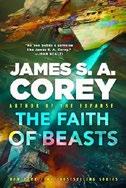
The second installment in the pseudonymous Corey’s Captive’s War saga continues the tale of a group of humans who—after their world is destroyed—are enslaved by seemingly godlike aliens whose empire spans hundreds of worlds. After the Carryx transport their human cargo to one of their glorious world-palaces, the survivors are overwhelmed by their new hellish reality. Living in towering ziggurats populated by hundreds of potentially deadly alien species, humans like Dafyd Alkhor—the overworked intermediary for his people and their “godlike masters”—and former researcher Jessyn Kaul must find a way to be useful to the Carryx or risk annihilation. As they and their cohort of a few thousand others struggle to find places in their new nightmarish existence, where subjugation and death are the only constants, Alkhor, Kaul, and others conspire to learn everything they can about the Carryx, their empire, and their endless war with the mysterious “great and deathless enemy.” Multiple storylines following various human characters on their adventures—one group researches a recently conquered planet, others explore a derelict enemy command ship, and more—which keeps the pace breakneck. And although the obvious hooks are the extraordinary worldbuilding, the unfathomably deep backstory, and the focus on the complex
dynamism between human and alien characters, the entire novel has a rich, fully immersive feel to it. The author’s subtle use of sensory description places the reader in the story and creates an intense reading experience: “The breeze muttered in her ear. The leaves of the pear trees clapped like a thousand little hands, catching the light.” Readers who enjoyed the immense scope of the first installment will be more than impressed with the storyline here, which expands to include so many new subplots and potentially jaw-dropping revelations. Grand-scale SF storytelling at its very best. In a word: mind-blowing.
Kwok, Jean | Putnam (448 pp.) | $32 July 14, 2026 | 9798217044368
A young ribbon dancer named Rubi Morningtail finds herself on an elite magical team with a powerful metal mage in a world inspired by Chinese mythology.
In a world that’s been divided into four rival factions in the wake of a devastating event known as the Annihilation, 23-year-old Rubi Morningtail—an Azure refugee living in the Dominion of the Silver Tyger—finds herself thrust into a world of political intrigue, powerful magic, and deadly martial arts. When Rubi injures a battle tyger in order to save her own life, she gains the unwanted attention of Blake Axefire, the devastatingly handsome leader of the royal Tyger Warriors and a powerful metal mage. To hurt a tyger is a punishable offense, so Blake sentences Rubi to the Bonding, a
deadly trial in which tygers choose their riders and the rest are slaughtered by the beasts. If she survives, Rubi must join Blake’s elite magical team racing against time to seal the Anchors to the demon realm before it’s too late. To say there’s a lot happening in this novel would be an understatement. There are shifters as well as benders who can manipulate metal, fire, and water. Rival factions are distinguished by their blue and metallic hair. Giant tygers—which are indistinguishable from tigers, but spelled with a y—roam the world, and there are demons and a rebellion to contend with. The result, while ambitious, is messy, and it’s hard to keep track of what’s going on. In addition, the romance between Rubi and Blake progresses too quickly to feel authentic. One moment they’re strangers who are at each other’s throats, the next they’re acting like inseparable soul mates—this only adds to the confusion and sporadic pacing of the book. A convenient case of amnesia and hidden powers leads to an excess of infodumping in this uneven romantasy.
Oh, Temi | Saga/Simon & Schuster (352 pp.) $19 paper | July 14, 2026 | 9781668203460
A s a rogue planet draws near Earth, life in London proceeds as normal—until it doesn’t.
The eldest of the four Minton sisters, 22-year-old Aaliyah is getting married, exposing rifts in the family— the ways they’ve drifted apart and failed to communicate. But the rushed wedding is about to become the least of their concerns, because the planet Hero is moving closer to Earth, and though scientists have assured the public there will be no collision, Hero will cause problems no one has been able to predict, though father Marcus Minton has tried his best with prepping and
drills for the collapse of civilization. When calamity strikes, the family is separated. Sixteen-year-old Tanice and Chantale, the baby of the family at 7, are stranded, trapped at the wedding venue; Aaliyah, 17-year-old Briar, and their mother, Kim, a doctor, are on the road; and Marcus is alone on the streets, searching for his family. As everyone tries to reconnect physically, they each face their own secrets and the separate paths they’ve taken. Briar falls in with a cult receiving messages from aliens, Aaliyah and Kim attempt to put Kim’s medical knowledge into practice, and Marcus tries to atone for past mistakes. While the book is set at the end of the world, the apocalypse is only a backdrop for an exploration of the relationships among the Mintons and of their inner worlds. Touching on race relations, policing, bad decisions, and more, this is a breathtaking work that uses the tropes of science fiction and apocalyptic thrillers to deliver an exploration of a family of sisters growing up and of parents simultaneously pulling away and holding on. Told in a confident, lyrical voice with a sharp focus on characters and society, this narrative reveals that no matter how alien the circumstances, we will always be human.
An out-of-this-world tale grounded in day-to-day realities.
Kirkus Star
Okungbowa, Suyi Davies | Orbit (368 pp.) | $19.99 paper | Aug. 11, 2026 9780316428996 | Series: Nameless Republic, 3
War is coming and it will touch all corners of Oon. The hold the city of Bassa once had on the great unicontinent of Oon has collapsed, leaving splintered factions vying for control. The Nameless Republic and Kangala’s forces jockey for position while Biemwensé, Supreme Magnanimous, works to keep her people
safe. Meanwhile, far from the center of power and conflict, Lilong, Danso, and their companions face off against the ibor-seeking creatures that have been unleashed on the world while wrestling with how they might make amends for the calamities that have befallen both Oon and the islands off the coast. As war looms ever closer, plans will be made and deals will be struck, but ultimately it is impossible to completely prepare for the coming death, loss, and change. The conclusion to the Nameless Republic trilogy, this installment sweeps from one end of the continent to the other, focusing on the relationships between characters even as events spiral and violence and destruction press ever closer. Okungbowa excels at exploring the inner workings and motivations of characters and the narrative turns easily from one to the next, demonstrating how the singular voice of one person can create a chorus with many others, rising to a final crescendo. Characters old and new converge in a satisfying, worthy conclusion to the series with space still to ponder. In this trilogy, Okungbowa has crafted an epic with heart and an unflinching portrayal of the best and worst of humanity and the mixtures in-between. Inseparable from its West African influences, this is a complex tale with both deep characterization and a grand scope, leading through many twists and turns to the inevitable, wrenching finale.
A shattering, transformative conclusion.
Oliver, Tracy Lynne | Roxane Gay Books/ Grove (448 pp.) | $28 | May 19, 2026
9780802167187
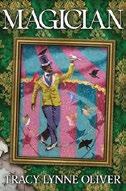
An unnamed protagonist runs away and joins the circus, only to discover that his magical powers hold as much potential for freedom as for destruction. Raised by a brutal mother who forces him to
carry out her cruelties alongside a constantly shifting cast of shadowy “uncles,” the Boy dreams of finding a home and a place to belong. After a particularly harrowing experience at his mother’s hands, he flees into the woods, where he encounters a mysterious orb that contains a traveling carnival. The Boy begins to feel at home among the ragtag carnival family, which includes the berobed leader, Terminus; a pair of conjoined sisters, Morningside and Eveningside; a menagerie of exotic animals including jaguarundi and Siberian tigers; and especially the magician, Sullivan, who takes the Boy under his wing as an apprentice. As the Boy becomes the Young Man, he learns at Sullivan’s side and, as his powers grow, he begins developing ambitions of his own—but then his ideas about how to make the show bigger and more powerful ignite a rivalry between him and his mentor. After a betrayal, what the Young Man believes will be his crowning achievement yields catastrophic results, and he’s cast out from his found family to wander alone. He drifts, haunted by his past, until he encounters a woman: Her, whose lightness promises to chase away his darkness. Just as he begins to feel he has finally escaped his violent past, he is forced to reckon with it once and for all. The writing is lush and sumptuous, and at its best, it conjures the Magician’s world with haunting vividness. Occasionally, however, the prose tips into an overwrought style that dulls rather than deepens the novel’s enchantment: “His body...lies in scant writhe,” for example. A haunting fantasy that, while occasionally melodramatic, strikingly illuminates the cycles of familial violence.

DROWN THE BONES
Fleming, Hayley | Dial Press (368 pp.)
$18.99 paper | July 7, 2026 | 9798217155491

Two college friends reunite after five years and attempt to become lovers.
Emma Rogers quit her Florida teaching job for a fresh start working at her best friend’s coffee shop in Boston, the city where she went to college. To her dismay, her new apartment turns out to be right below an old friend’s, the man whose heart she broke in college when she pretended she wasn’t in love with him. Harrison Carter is equally taken aback and displeased to see her—at first. Now a nurse, Harrison is also a caretaker for a guinea pig, a considerate son to a clingy mother, and still the same man Emma has missed for five years. Her avoidant tendencies are still strong, however, stemming from a painful gynecological condition that has kept her in sexual limbo. When Harrison splits up with his current girlfriend, and he and Emma start to rebuild their old connection, Emma decides to return to physical therapy and counseling so they can become lovers. But she conceals the truth about her condition for too long, leading to a predictable reveal during a charged argument, after which Harrison accuses her of assuming he’s a shallow man who can’t be trusted to support her. The upfront discussion of vaginismus and the broader understanding of sexual activity outside the standard “tab A into slot B” feels long overdue in the romance genre. Fleming also includes textual innovations such as footnotes—in which Emma documents the meaning of Harrison’s facial expressions—and the
use of text messages to narrate the story of the couple’s past. Despite these additions, the plot feels insubstantial and there is little sparkle between the protagonists, whose defining traits appear to be adolescent agonizing. A second-chance romance that teeters on the edge of interesting.
Kennington, Alexandra | Berkley XO (432 pp.) $27 | Nov. 3, 2026 | 9798217240104
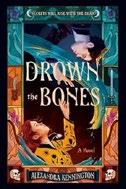
Royals from enemy kingdoms discover a deep connection when they team up to find a murderer. All 18-year-old Merridan wants is to dedicate herself to serving the Goddess, assisting spirits along their passage to the Afterworld, but she exists to be the “spare” heir in case anything happens to her older twin brother, Von, who’s meant to take the Rothian throne. Von would like to see peace with Nova, their neighboring kingdom, even though the Novians use the magic from their shared lake to resurrect the dead, making them heathens as far as the Rothians are concerned. But when Von is murdered, the Novians are blamed, putting the nations on the brink of war. Deeply grieving and questioning her faith in the Goddess, Merridan performs forbidden Novian magic, intending to summon her brother, but finds herself Bound to the spirit of Phoenix Darragon, the crown prince of Nova, instead. Phoenix was murdered on the same night as Von, and now Merridan must work with him to uncover the truth behind these assassinations. As she starts
to question everything she’s been taught about the Novians and their deity of mercy, Merridan finds herself falling for Phoenix and imagining a different future for the two of them. The slow-burn, enemies-to-lovers romance in this lush, queer-normative fantasy is full of delicious yearning and relatable uncertainty. Merridan’s approachable narrative voice propels the story forward as the intricate and compelling worldbuilding is deftly woven in. As important as the tender, budding romance are Merridan’s critical examinations of her faith and upbringing, which gives the story a coming-of-age quality that will make it extra appealing for New Adult readers.
This introspective, evocative romantasy is brimming with heartachey emotions of grief and desire.
Lawson, Piper | Berkley XO (384 pp.) | $18 paper | Oct. 20, 2026 | 9798217238583
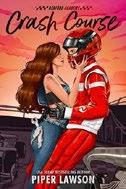
An aspiring Formula One engineer juggles a love triangle and lies at an elite racing academy. Twenty-year-old Shay MacDonald is hiding two secrets, both of which threaten to destroy her relationship with her adoptive father. Against her dad’s wishes, Shay has been standing in for him at his mechanic job for Ashford Racing Inc. while he recovers from a medical issue. She’s also transferred from Ohio State to Ashford Academy—a training school for aspiring F1 drivers and engineers. Her father would be furious if he knew she had anything to do with the Ashfords, the prominent racing family that owns both the garage and the academy. Ever since Shay survived the car crash that killed her birth parents when she was 4, her father has forbidden her from having anything to do with the local family whose name is synonymous with racing and risk. Shay dreams of becoming an automotive engineer,
though, so it’s all worth the fight they’ll inevitably have when her father finds out. Then, as if she wasn’t under enough stress, she has an unfortunate run-in with racing royalty on her first day at the academy. Ashford heirs Theo and Jameson are both devastatingly handsome, but that’s where their similarities end. Theo is all flirtation and sunshine while Jameson is haughty, hot, and utterly frustrating. Both guys have taken an interest in Shay, but it’s Jameson she can’t get off her mind— even when he’s being a total jerk. As Shay begins to enmesh herself in the Ashfords’ dangerous, alluring inner circle, she realizes their lives might be more connected to her own than she’d thought. The first entry in Lawson’s Ashford Academy series is a hot, slow burn with just the right hint of intrigue. Jameson and Theo’s brotherly feud provides the material for a quintessential love triangle—think The Summer I Turned Pretty meets an F1 racetrack—and Shay is a badass, capable protagonist with an unstoppable drive. And to Theo fans: Don’t fret, a sequel starring the younger brother is hinted at in the epilogue. An exciting introduction to a sexy new series in the growing genre of race-car romance.
Murphy, Julie | Balzer + Bray (304 pp.)
$28.99 | May 5, 2026 | 9781250428226
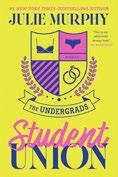
To secure campus housing, a student enters a marriage of convenience with her sworn enemy. Eighteen-year-old Clover Walsh is used to barely getting by, but she’s determined to change that. The first step is getting into her prestigious dream school, Wexley University in Oregon. She earns a full scholarship, but when her housing grant falls through, she’s completely screwed. Wexley doesn’t permit first-years to live off campus, and even if it did, Clover doesn’t have
the money for a car. Her only option shows up buried in a housing office newsletter: A new rule allows married students to live in the dorms together, meaning if she can only find a guy to marry her on short notice, she’ll have a place to live for free. Enter Bennett Graves, once her closest friend. Clover’s mother used to work for Bennett’s mother, but a spectacular falling-out led to Clover’s mom getting fired and Clover and Bennett never speaking again. That is, until Clover asks Bennett to marry her and Bennett says yes. Now, the two of them are forced to convincingly act as if they’re in love so they won’t cast suspicion on their housing ruse. Of course, things are quickly complicated by Clover’s slowly building attraction to Bennett and the fact that Bennett’s been in love with her for years. The details of campus life—a grumpy RA, parties, and a girl selling black-market grilled cheese out of her dorm room—are fun and fresh, and Bennett and Clover have strong physical chemistry. Author Murphy takes a chance by giving Bennett a serious flaw—what he did is only slowly revealed, but it’s clear that he betrayed Clover deeply during their falling- out—giving him a satisfying character arc as he grows into a more mature person. As the first entry in Murphy’s The Undergrads trilogy, this book is entertaining and swoony enough to keep readers coming back for more.
A fun and steamy college romance.
Kirkus Star
Plumb, Charlotte B. | Berkley XO (384 pp.) $30 | Oct. 6, 2026 | 9798217239689
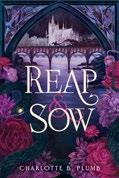
When a woman makes a bargain with a demon to save her family, she gets pulled into an even greater fight for survival.
Eda Shaw and her brothers have made a living by arranging illegal Pacts
between humans and demons in which desperate citizens of Blackbridge agree to trade years of their lives for the fulfillment of their deepest desires. The Shaws themselves will be bound to a demon known as Mr. Night until they’ve delivered the required number of years from other people. In an act of desperation, Eda attempts to orchestrate a Pact of her own, but the situation quickly goes awry, her brothers are arrested, and she’s forced to go on the run. Freeing her brothers is Eda’s priority, but she won’t be able to get anywhere near their prison without help. Enter Kit’rath, a demon who’s been living by his own rules in Blackbridge and has no intention of getting pulled into someone else’s problems. When Eda approaches him to make a Pact, though, he forges a reluctant agreement with her. As the two race against the clock to save Eda’s family before they’re executed, their journey takes them into the darkest corners of the city, unearthing their individual vulnerabilities and forcing Eda to realize that a demon might be one of the most human individuals she’s ever met. Plumb’s romantasy debut has significantly sharper edges than are often found in the genre, and it embraces darker, more violent elements, especially as the narrative gradually adopts even bigger stakes once the conflict between demons and humans emerges from the shadows. Eda and Kit’s evolution from unwilling allies to romantic partners is the book’s beating heart; they have chemistry that sizzles on the page before ultimately giving way to even more emotional depth. While the story satisfyingly wraps up almost every loose end, there’s enough potential left in this rich world that a sequel would be welcome. This wickedly entertaining debut fully embraces every bit of its own magic.


ISBN: 979-8-89565-118-6

"Heckenlively hooks the readers with romance and keeps them riveted with countless thrills in between."
–Independent Book Review
“...readers will love the main characters, the ever-present suspense, and the unanswered questions that invite conversation about what is real and what is not.”
–Blue Ink Review, Starred Review
“...a spy-thriller-like plan worthy of an Ian Fleming novel...”
“Heckenlively keeps the pages turning with brisk pacing and clever spins on hard-boiled dialogue...”
“Entertainingly lurid...” —Kirkus Reviews
For Agent Representation and Information on Film Rights, Email kheckenlively@hotmail.com • www.kentheckenlivelybooks.com
TJ Alexander
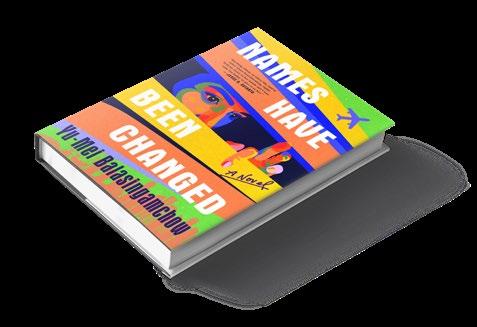
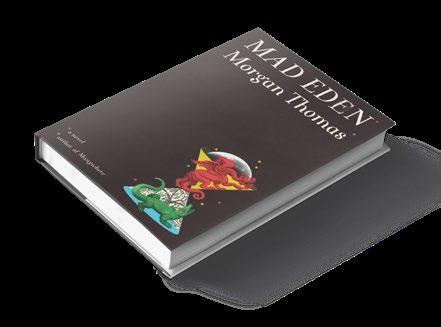
Benny B. Peterson
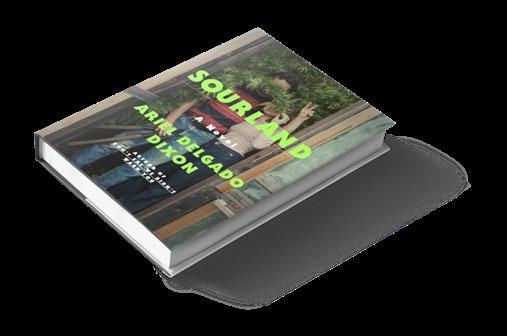

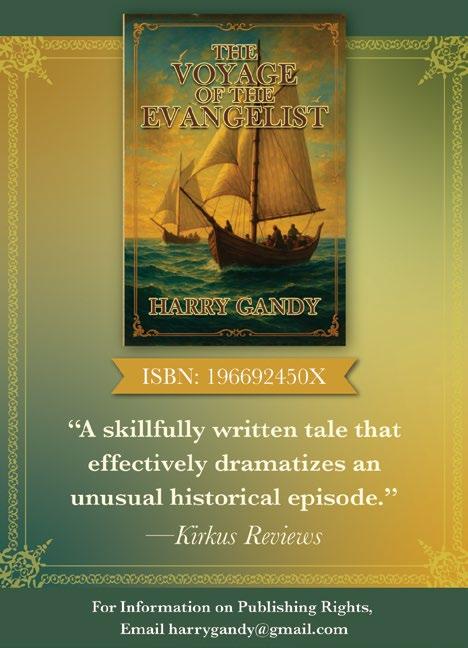
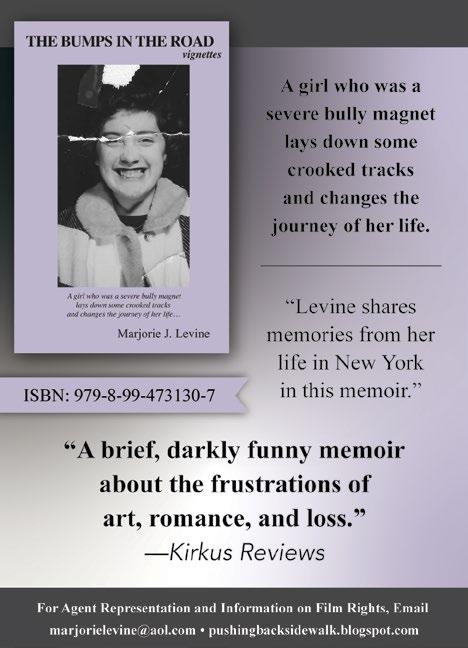
—Kirkus Reviews “...hearty laugh-out-loud moments...”
—Readers’ Favorite “...deliciously entertaining, fun, and exciting...”
—Mystery Review Crew


ISBN: 979-8-9907615-7-5 howard.gimple@gmail.com • howardgimple.com

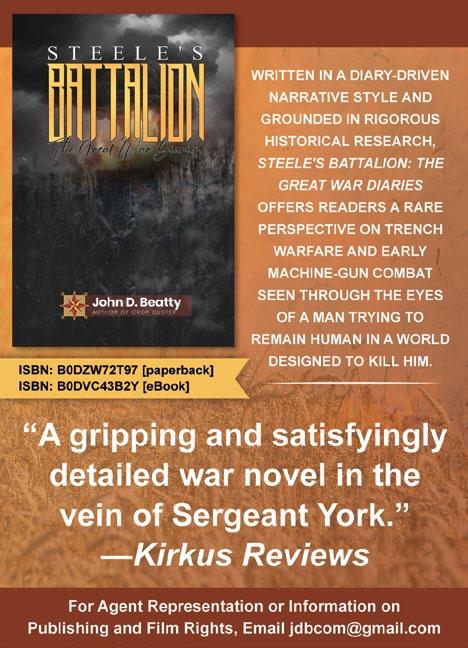
Ballantine will publish the bestselling author’s Hollow Bones.
Jodi Picoult’s latest novel—her 30th—is on its way to bookstores. Ballantine will publish the author’s Hollow Bones in the fall, the press announced in a news
release. It calls the book “a riveting novel about the risks we take to protect the ones we love in a world where crisis is always just around the corner.”
Picoult published her first novel, Songs of the Humpback Whale, in 1992 and went on to write Harvesting the Heart, My Sister’s Keeper, and other titles. Her 2007 novel about a school shooting, Nineteen Minutes, debuted at

No. 1 on the New York Times bestseller list; the book has been a frequent target of book bans and challenges. Picoult’s most recent novel, By Any Other Name, was published in 2024.
Hollow Bones will follow Molly Fitzgerald, a woman whose mother was killed in the 9/11 attacks; Molly now works as Rhode Island’s director of emergency preparedness. She and her husband are expecting their first child when a disaster strikes, throwing their lives into disarray.
Picoult announced the novel on TikTok, saying, “It’s about mothers and daughters, second chances, and how we manage to keep the people we love safe,
even when it means lying to ourselves.…And, like all my books, it’s going to get people talking.”
Hollow Bones is slated for publication on Sept. 15. —M.S.


JOHN McMURTRIE
“BY THE START of the twenty-first century, most humans living in the United States and Europe were spending as little time outdoors as some species of whales spend on the ocean’s surface.” This shocking observation comes from historian Jill Lepore’s forthcoming book, The Rise and Fall of the Artificial State (Liveright, Aug. 25). (Our review of the book is on page 43.) As humans have evolved, she writes, we’ve also devolved , losing touch with our natural roots. Lepore makes the point in quoting two researchers at Harvard, where she teaches: “In our modern world, we have sealed ourselves off from the natural world. Yet our genetic hardwiring, built over millennia, still craves that connection to nature.”
Happily, several new books offer a silver lining, celebrating the natural

wonders that exist beyond our asphalt jungles.
Let’s start with trees. They’re not exactly new to the planet, but in recent years more people have come to fully appreciate them, thanks in part to such books as Suzanne Simard’s Finding the Mother Tree: Discovering How the Forest Is Wired for Intelligence and Healing (2021). The forest ecologist continues to awaken readers to the importance of trees in When the Forest Breathes: Renewal and Resilience in the Natural World (Knopf, March 31).
In his latest book, In Trees: An Exploration (Simon & Schuster, April 7), Robert Moor travels the world to offer what our critic calls an “arboreal meditation.” As Moor writes, “A tree is a way of persisting in a world of wounds.…it seems incredible that trees
have managed to survive at all. And yet, certain old trees have remained standing for millennia, while empires crest and crash in their shade.”
In The Common Uncommon: A Forest Journey (Norton, April 21), biologist Bernd Heinrich writes about land in central Maine that he has known for decades. “Now in his 80s,” our critic writes, “he makes an elegant spokesperson for the value of sticking around in one place, noticing similarities and differences from year to year, or decade to decade.”
Heinrich planted 15 American chestnuts in 1980; their offspring now number 1,300. Our review praises the book as “quietly fascinating rambles through a tiny territory.”
David George Haskell’s focus is on a smaller but no less wondrous subject. In How Flowers Made Our World: The Story of Nature’s Revolutionaries (Viking, March 24), the biologist draws our attention to the
marvels and astounding variety of his subjects. Our reviewer writes, “Besides bringing beauty and joy into the world, flowers, Haskell asserts, can teach humans an important lesson: ‘Thriving worlds grow from cooperation, mediated by beauty, with some illusion thrown in.’” Finally, there is Cathy Haynes, a British artist and educator, as well as author of The Fullness of Time: Marking the Day by Birdsong, Blooms, Shadows, and Stars (Riverhead, April 21), which our critic calls “an engaging book debut with a naturalist’s view of marking time.”
Today, Haynes writes, “we depend heavily on complex machines and think of the hours as identical abstract units.…But what riches might we gain from exploring the forgotten art of sensing time by events in the world around us?” Many, it turns out.
John McMurtrie is the nonfiction editor.
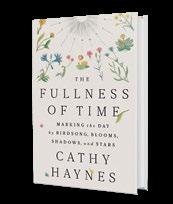
The noted historian and New Yorker staffer looks into a future ruled by machines. Thirty-odd years ago, writes Lepore, liberal democracies of old were being transformed into both authoritarian or autocratic regimes and by “automatocracy, rule by automation, government by machine-driven computation, prediction, and persuasion.” In this pointed rejoinder to Hannah Arendt’s Origins of Totalitarianism (1951), which foresaw a world in which humans were essentially superfluous, Lepore charts a long history that extends deep into the “machine age,” beginning in the 17th century, which saw “the artificial as existing not only outside the natural but above it, an improvement
upon it.” In this conception, humans were fallible, while machines faithfully and unfailingly obeyed the rules set for them. A logical progression followed in the 1920s with the rise of the Technocracy movement, a variety of fascism widely accepted in the U.S. that held that far from being free and equal, humans should be governed by scientists and engineers who alone “have the intelligence and education to understand the industrial operations that lie at the heart of twentieth-century life.” It’s a short hop from there to the present, with tech billionaires pushing AI and, in the case of the influential “self-described ‘neo-monarchist’” Curtis Yarvin, a dictatorship aided by it. In all this, Lepore
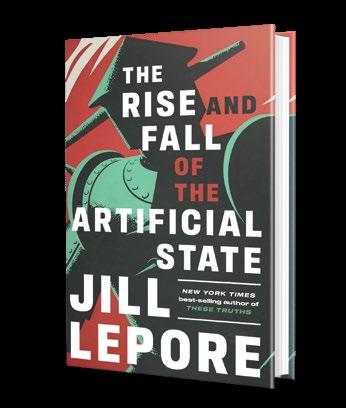
Lepore, Jill | Liveright/Norton | 320 pp.
$29.99 | August 25, 2026 | 9781324098423
writes, it is not just the human animal that suffers but all animals and all habitats, which can only worsen with the incessant demands for energy, rare earths, and water that AI requires. And what “humans crave, in that artificial world, is nature,” a nature that is increasingly silenced. This undemocratic
world, benefiting only the wealthy at the expense of all else, is a prison of screens and keyboards from which, she writes memorably, “What is required is to imagine an escape, and then to conduct it.”
A deeply learned dive into the frightening visions of technocrats past and present.
Ahmed, Samira | Bloomsbury Academic (128 pp.) | $17.95 paper | June 11, 2026 9781839029394
A nother pocket pal from the BFI Film Classics series. For all the ways that writers have anatomized the 1964 Beatles film A Hard Day’s Night, no one has approached it like Ahmed. An English broadcaster and the daughter of South Asian immigrants, she fell for the Beatles in 1979 at age 11 while watching videos of the band’s films. She views A Hard Day’s Night with an outsider’s eyes, concluding from a scene in which she identifies several non-white Beatles concertgoers that “Britain, for all its complicated social tensions, is captured in this film as having a multiracial reality.” This dovetails with a prevailing, persuasive contention of Ahmed’s: Unlike other British films of its time, A Hard Day’s Night manages not to seem old-fashioned when watched today. The author devotes the book’s first half to unpacking the movie’s plot (thumbnail: The Beatles commute by train from Liverpool to London, so they can perform on a TV show); the book’s latter half comprises chapters dedicated to, among other topics, and most illuminatingly, the film’s women. As Ahmed observes, they’re not just the screamers of the opening scene’s train-station chase: Female characters have jobs that keep Beatles business humming. Ahmed submits that “the film, while always making clear that the Beatles are lively young heterosexual men, never relies—in their encounters with females—on promoting the kind of stereotype that has dated so many British social realist films of its time.” Director Richard Lester’s other, like-minded choices (such as to ditch a scene from the script that contained what Ahmed calls “questionable racial humour”) reflect an aversion to mean-spiritedness, which may well be the key to why A Hard Day’s Night remains such a pleasure, as is this incisive, nimble title.
Yes, the world does need another Beatles book, especially this one.
Angwin, Julia & Ami Fields-Meyer Mariner Books (320 pp.) | $26
June 30, 2026 | 9780063491946
A handbook for dissidents, based on extensive reportage.
“Amid political repression, countless tools are available to us. Our task as people who desire a more just society is to learn how to use them.” So write political journalists Angwin and Fields-Meyer, who open on a sobering note: In simulations—wargaming, really—held at a conference of business and government leaders, almost every scenario allowed an authoritarian president to run roughshod without meaningful legal limits, giving him “a structural advantage over any lawful effort to restrain him.” Given the presence of just such a president, the authors offer strategies for both individual dissent and the formation of dissident communities. On the former, they hold up the example of the Soviet dissident Andrei Sinyavsky, who specified that opponents of the regime not accept being defined as a criminal—a dissident “does not consider himself guilty.” The example of Putin’s Russia shows the continuity of oppression, which, says a current dissident, “mostly runs on fear.”
Fear is a central component of authoritarianism, and facing it alone is a great challenge, despite the examples of leaders such as Andrei Sakharov and Mohandas Gandhi. This is where dissident movements come in. Again in the case of the Soviet Union, committed opponents of the regime never numbered more than a thousand or so, but they trusted each other, an insight that one American activist echoed: “A key piece of fighting authoritarianism is asking the question, ‘what more can we do for each other?’” Other tactics, all nonviolent, include boycotts (as of Tesla), employing the “Swiss cheese theory” of overlapping encryption of messages, crowdsourcing information about potential threats in
the form of government retaliation or vigilantism, and “unrelenting efforts to expose internal contradictions.” Useful advice on taking to the barricades.
Antona, Nicolas | Illus. by Nina Jacqmin Abrams ComicArts (152 pp.) | $25.99 September 8, 2026 | 9781419788703
Obfuscating one’s race proves advantageous in the early 1900s. Belle da Costa Greene (1879–1950) was born in a time when Blackness was met with discrimination daily, even in New York City. Although her father was the first Black man to earn a bachelor’s degree from Harvard, his work as an American diplomat separated him from his family, and Belle’s mother left him. Drawing the line more firmly, Belle’s mother decided that her family should live as white, attributing their olive skin to Portuguese heritage, in hopes that her children might gain the social advantages a lighter skin tone afforded them. But this choice required huge sacrifices—Belle and her siblings vowed to remain childless, at the risk of possibly birthing darker skinned children. Passing proved advantageous to Belle in particular, and this intriguing graphic biography explores the fascinating intricacies of her rather illustrious life. While working at the Princeton Library around the turn of the century, she meets J.P. Morgan’s nephew, who connects her with the financier. Belle blossoms and flourishes as Morgan’s personal librarian. Her work finds her gliding through majestic, multi-level libraries, shrewdly negotiating for rare manuscripts and preparing Morgan’s collections for public access after his death. Discharging her duties in high-waisted hobble skirts, she’s the platonic vision of a rare books librarian. At the same time, she navigates flirtations, a stormy love affair, a failed engagement,
and her employer’s mercurial moods with a lonely, romantic air of self-preservation. Though passing is central to Belle’s life, it largely offers opportunities for narrative intrigue rather than requiring the reader to engage in racial reckoning. However, the broader implications of passing bookend the arc of Belle’s story—her father eventually reappears to excoriate her choices, and tragic race-related consequences befall a family member as the story comes to a close. An ethereal, pastel-hued vision of a difficult, life-altering choice.
Arday, Jason with Eve Claxton | 37 Ink/ Simon & Schuster (288 pp.) | $29 August 11, 2026 | 9781668085578
A life of unexpected achievements. Arday, a Cambridge University sociologist, was diagnosed with autism and developmental delays when he was 3, didn’t speak until he was 11, and didn’t learn to read and write until he was 18. His motivational memoir records an almost superhuman effort to achieve the goal of getting a Ph.D. and becoming a professor, the many extreme obstacles he faced along the way, and his gratitude toward the people who helped him, chief among them the Ghanian immigrant mother he calls “Giff”; his girlfriend and then wife, Debs; and Brazilian tutor Sandro, who took up Arday as a cause when he was a raw undergraduate and stuck with him for years. Along with the accomplishments came a pile of impediments: not just his perpetual struggles with the spoken and written word, but a mugging that left him suffering with epilepsy for years, a recurring brain tumor, and a devastating depression that brought him very close to suicide. What comes through clearly, almost exhaustingly, is how fiercely dedicated Arday was to achieving a goal once he set it for himself. In 2010, for
“To swim is an act of attention,” writes Polly Atkin.
SWIMMING THE SEASONS
example, he was determined to run 30 marathons in 35 days, even though he suffered seizures through them and ran the last nine with a hairline fracture in his leg. Arday is clearer about what he achieved than why: As soon as he learned what a Ph.D. was, he set out to get one, but it’s not at all evident that he enjoyed the work involved in being a professor. Likewise, he is obviously sincerely grateful to the people who helped him along the way, but we learn little about those people, and he himself remains an admirable mystery. A grueling account of academic success.
Atkin, Polly | Saraband (144 pp.) | $14.95 paper | September 1, 2026 | 9781916812383
The water’s delights.
Poet, memoirist, and nature writer Atkin reflects on a year of swimming in the English Lake District, elucidating in lyrical prose both the physical experience of moving through water and the month-by-month changes in flora and fauna. “To swim,” she writes, “is an act of attention, to the self, and to everything beyond the self.” Because she suffers from connective tissue disorder, she is acutely sensitive to cold, making swimming challenging at many times of the year. Sometimes she wears layers, including gloves and socks, and sometimes a neoprene top or wetsuit. Atkin begins her chronicle in May, when the water is welcoming. “When you swim in May,” she attests, “you are swimming into the sweetening blue of the bluebell sky. Damselflies scatter around you, rest on your hair and shoulders. You are part of the blue.” June offers the longest light; in July,
it’s warm enough to swim all day. August swimming means avoiding holiday crowds. Once fall arrives, the weather becomes variable. October swimming, Atkin writes, “is a long drawn-out argument with the growing cold.” Often in November, swims are idyllic, the lake smooth, and there’s enough sun for drying off. December means a solstice swim with friends, and, in January, she swims “entirely as a lightseeing exercise.” February can bring endless rain, and March a sense of renewal: “The washed-out greige of late winter joined by a first few flickers of early, uncertain green.” In April, she recalls seeing the year’s first butterfly. Living with a chronic incurable illness, Atkin swims “not to forget my body, but to let it forget for a little while how hard it has to work to do small things that many people take for granted.”
A poetic celebration of nature.
Baker, Dusty with Steve Kettmann Crown (416 pp.) | $32 | June 9, 2026 9780593800430
The baseball legend recalls his long career in the game. Fast and lean, Baker, born in a rural corner of Southern California (“I was raised country all the way”), excelled in football and basketball as a student, the latter being “my first true love in sports.” He was offered college scholarships in football, basketball, and track—but not baseball, no surprise given his high school team’s poor performance in his senior year. Even so, thanks to an insightful scout, he was drafted by the Atlanta Braves as an 18-year-old. Under the tutelage of none other than Hank
Aaron, Baker flourished, playing in the A-league before going up to the majors. From there, he earned a solid reputation as an ace outfielder and a fierce hitter, following a maxim from Roy Campanella: “Take a good whack at it and don’t miss. You don’t foul it off. You don’t overswing. You don’t miss it.” Baker went on to play for the Dodgers, earning further distinction, then went on to coach and manage five teams before finally winning a World Series, “my mission and my mandate,” with the Houston Astros in 2022. He takes a generally amiable and instructive stance throughout, with some pleasing anecdotes along the way—memorably, smoking a joint with Jimi Hendrix. But the crossroads of his title are many, tests that sometimes threatened to break him: a lawsuit filed against him by his own father, a seemingly endless battle with the IRS over taxes, cancer, racism. Sometimes his play-by-play accounts of individual games go on a bit too long, but his lessons learned are well taken, as when he writes, “Baseball is more like life than any other sport, with the ups and downs and daily highs and lows you have to deal with.” Indeed.
A pleasure for fans of the old-school game, when titans strode the diamond.
Benson, Christopher | Illus. by Eric Battle Abrams ComicArts (272 pp.) | $27.99 October 27, 2026 | 9781419742279
A gruesome crime is considered in sociopolitical context. Emmett Till’s death in 1955 was an atrocious tragedy—a 14-year-old Black boy brutally murdered for whistling at a white woman in rural Mississippi. His death became a cultural tipping point, most notably as an effective rallying cry for the growing Civil Rights Movement. After Till’s body was recovered from the Tallahatchee River, his mother, Mamie Till-Mobley, demanded his corpse be returned to Chicago, where an open-casket funeral was held. Journalists documented
A graphic biography follows a journalist’s investigation into Emmett Till’s death.
FRAMING EMMETT TILL
and disseminated images of Till’s grotesquely maimed face and, thereby, bore worldwide witness to the horrors of white supremacy. It is a heart-cracking, historical moment that contemporary America, still reckoning with racial hatred, must continue to confront. This graphic biography, drawing on Till-Mobley and Christopher Benson’s Death of Innocence (2004), offers a compelling opportunity to do so. Drawn in a hard-edged, highly detailed comic-book style, the book follows an unnamed journalist’s in-depth investigation of the circumstances surrounding Till’s death. Using Till-Mobley’s threads of insight, he visits the locations where Till’s lynching occurred and where his murderers were acquitted by an all-white, all-male jury. The work is necessarily gritty and dark—evoking the dread and terror of a teenager snatched away under cover of night. But Benson’s story purposefully widens the lens, examining white Mississippian attitudes about northern Black “agitators” and considering why Till-Mobley’s entreaties for a White House response remained unanswered. The book is imperfect—it gestures at “framing” elements of cultural legacy rather than engaging deeply with primary sources or articulating an explicit thesis. Nevertheless, it takes a hard look at the broader circumstances in which an unthinkable, yet heinously commonplace, crime was committed and demands, as Till-Mobley did, that we face that reality with eyes fully open.
A harsh historical truth delivered in a rough but real framework.

Berman, Garry | Bloomsbury Academic (288 pp.) | $40 | July 23, 2026 | 9798216200697
A marathon run through 20th century America comedy. Berman, an author of multiple pop-culture histories, frames this story as one medium rapidly overtaken by another: Vaudeville was supplanted by silent films, then radio, then talkies, then variety television, then sitcoms. Each era had its superstars— Charlie Chaplin, Jack Benny, the Marx Brothers, Milton Berle, and more—not to mention its scandals. (Berman details the case of silent star Roscoe “Fatty” Arbuckle, whose career was effectively ruined by a sexual assault accusation.) Though Berman gives each decade equal time, he has his preferences, befitting the author of a book about ’30s comedy titled The Funniest Decade: Chaplin and the Marx Brothers were at their peak, radio comedy was ascendant, and troupes like the Little Rascals and the Three Stooges delivered a raft of one-reel classics. By contrast, Berman sees the ’80s as a comedic nadir, defined by a glut of mediocre stand-up comics and formulaic sitcoms. He covers pretty much every relevant big-name comic figure and makes room in the appendices for some interesting ephemera. (One brief essay goes deep on the history—and flavors— of slapstick pie fights.) His relative neglect of animated comedy—relegated to a two-paragraph speed run through The Flintstones, The Simpsons, and South Park —might be understood as a matter
of taste. But a book about comedy should have more room for humor—quotations of actual jokes are surprisingly rare here, leaving newcomers informed about the importance of figures from decades past but perhaps wondering why all the fuss over Lucille Ball, Buster Keaton, Woody Allen, and beyond.
Diligent and thorough, though with too much of a straight man’s seriousness.
Bogost, Ian | Atria (240 pp.)
$27 | July 7, 2026 | 9781668062630
An Atlantic columnist examines how modern society has eroded the tactile pleasures that make daily life feel meaningful. This book’s opening chapter is titled “What If Contentment Were Easy?” Bogost offers this message: “You can keep pursuing big goals and meaningful relationships, while also enjoying every moment just a little more.” He writes from this premise by centering senses—deemed as “simple pleasures”—as a counter to disconnection from contemporary life. Through interviews and reflections, the book alternates between moments of sensory engagement or its absence: for example, whether a woman stuck in traffic finds solace in the touch of the steering wheel against her knuckles or a local reporter reflects on journalism’s shift from a once-social profession into an office-bound routine. The prose extends an almost club-like invitation: “The more you allow yourself to accept the weird, wonderful gifts that ordinary life constantly offers, the more their offerings will feel desirable, even transformative.” Of course, the journey to embracing the sensory world comes with its challenges—structural and personal. There’s a moment in which a house painter is surprised to see the author participate in home repairs, raising questions about how manual labor is framed as a distraction from work or family life rather than a missed sensory connection. The most
striking section considers the role of cell phones: “You walk into your living room to find your spouse or son on the couch, staring or tapping into a device. What are they doing? you wonder. Email? Television? Pornography? Shopping? Which is also to ask, What other, foreign, spaces have they conjured into the shared space of the home? The answer is often unknowable and, in any case, just as quickly replaced by another space as one app backgrounds and another comes to the fore. A proliferation of non-places wasn’t the problem, it seems. Instead, technology has allowed personal intimacy and connection to flourish too much, and anywhere.”
A timely and engaging analysis of digital life, even if it doesn’t always extend beyond familiar critiques.
Butler, Isaac | Bloomsbury (384 pp.) $32 | June 23, 2026 | 9781639733491
An absorbing autopsy of America’s first culture wars.
Theater historian Butler (The Method, 2022) recasts the battles for artistic freedom of speech fought in the late-20th century, “the World War I of American arts and letters,” as a sobering prelude to today’s gloves-off assault on the arts. Starting in Kanawha County, West Virginia, with anti-sex crusader Alice Moore’s push to suppress liberal school textbooks, the author unfolds a depressing panorama of attempted censorship. Concerns about obscenity helped the indignant impresarios of the self-described “New Right”—from the American Family Association’s Donald Wildmon to Moral Majority hardliner Jesse Helms to National Review editor William F. Buckley—imagine a common enemy. And that enemy had a government office, the National Endowment of the Arts (NEA), and a face or, rather, several faces: Andres Serrano, the creator of Piss Christ ; the iconoclastic
photographer Robert Mapplethorpe; the performance artists known as the “NEA Four.” The legal wrangling between the holier-than-thou opponents of controversial art and its stalwart defenders makes for exasperating reading. But from the miasma of manufactured outrage also arose some unlikely heroes, such as the conservative lawyer John Frohnmayer, chairman of the NEA, and Dennis Barrie, director of the Contemporary Arts Center in Cincinnati. If the former sought to save the NEA through artful compromise, Barrie ensured that “A Perfect Moment,” the posthumous Mapplethorpe exhibit canceled by the director of the Corcoran Gallery in Washington, D.C., could be viewed in Cincinnati. Calling himself an “opinionated guide,” Butler frames his narrative as a drama in two acts. But the most abiding impression gained from this book is that of a dispiriting sameness: the endlessly rehashed argument that the American people needed saving from indecency. Ironically, as Butler shows, the thing that the religious right loves to hate—transgressive art—has also enabled them. Lacerated and diminished, the NEA survived the first culture wars. Whether what’s left of it today will outlast President Trump’s second administration is anyone’s guess.
A richly detailed genealogy of the continuing battle for artistic freedom in the U.S.
Cain, Geoffrey | Portfolio (400 pp.)
$35 | May 19, 2026 | 9780593716694
The improbable evolution of Steve Jobs and NeXT Computer. Cain (Samsung Rising, 2020) draws on previously unexplored documents, oral histories, and new interviews to paint
Jobs’ years “in exile” from Apple Computer—from 1985 to 1997—in a story tightly focused on the founding of his subsequent venture, NeXT. Jobs, flawed genius and a demanding, often abrasive perfectionist, has been described at length elsewhere, but Cain delves into intriguing details surrounding his work with NeXT. Building a powerful workstation—an eye-catching black cube for academic and scientific computing—he faced cost overruns and technical limitations. NeXT hardware and software were embraced by U.S. government agencies and computer scientists. In 1989, software engineer Tim Berners-Lee used a NeXT computer to create his prototype for the World Wide Web, praising it as “something that allows you to build things which without it would have been possible, but a lot of work.” But NeXT veered into bankruptcy, struggling for market share amid cutthroat competition. Jobs took creative refuge in the Lucasfilm Computer Division (renamed as Pixar Animation Studios), purchased from George Lucas and funded largely from Jobs’ own pocket. Pixar cofounder Ed Catmull praises Jobs’ contributions, sidestepping conflicts with other cofounders. When NeXT hardware was discontinued, a senior editor at NeXTWORLD magazine commissioned a photo of the computer aflame—but initial attempts to light it failed. “Steve had stymied them by choosing an exotic magnesium alloy for the Cube with a higher ignition point than the torches could reach.” Ultimately, NeXT forged a mature Jobs—triumphantly returning to lead Apple.
A lively account of Steve Jobs’ interregnum between his ouster from Apple and his reemergence as a creative force.
Carr, Nicole | Dey Street/HarperCollins (304 pp.) $30 | June 16, 2026 | 9780063288126

A journalist delves into the history of discrimination against Black American MDs as she uncovers the story of her gifted physician great-grandfather. Fourteen percent of the U.S. population is Black, yet the number of Black doctors is only 5% of all practicing physicians. In this thoughtful, deeply personal book, Carr examines the roots of this century-old problem through a combination of historical and genealogical research. She brings to life the many, often unsung Black physicians who worked against a white-supremacist medical establishment to not only earn their training as doctors but transform an unjust public health system. Among them is her own brilliant Jamaican-born great-grandfather, Lawrence “Fergie” St. Clair Ferguson, whose life she began piecing together at the start of the Covid-19 pandemic. A veteran who experienced British mistreatment as a Black soldier in World War I, Fergie came to the United States during the Spanish flu pandemic to attend Howard Medical School. That institution was one of the few Black medical colleges that remained open after closures both imposed by the Flexner Report and supported by a racist American Medical Association. Fergie eventually returned to Jamaica to open a successful practice and advocate for community hospitals that served the poor and people of color. His teachers and colleagues in the U.S., meanwhile, fought
When a flawed genius left Apple Computer—then returned years later.
STEVE JOBS IN EXILE
against the segregationist, often violent legacy of Jim Crow. Some defied the odds to create much-needed services and institutions, only to have that legacy erased—a pattern that has in turn created the health care shortfalls that persist in the Black community to this day. Inspiring and sobering, Carr’s book is a necessary reminder of the reforms still needed to ensure diversity and equality in the public health system.
A profoundly moving testament to the courageous Black doctors who fought against institutionalized racism.
Chatelain, Marcia | Pantheon (400 pp.) | $35 September 29, 2026 | 9780553387254
A corrective to the over-rendered, male-oriented portrayal of the March on Washington for Jobs and Freedom. In the public imagination, the August 28, 1963, march and the Rev. Martin Luther King Jr.’s “I Have a Dream” speech have become singularly defining within civil rights history. In fact, that day was something more like a comma, a visible, eloquent pause amid decades of actions, often led by women. With a strong narrative voice, an academic’s conscientiousness, and an activist’s sensibility, Chatelain (Franchise: The Golden Arches in Black America, 2020) reintroduces the women meant to be honored by the day’s “Tribute to Negro Women Fighters for Freedom.” This cohort included not only icons like Rosa Parks and Josephine Baker, to which the author adds new complexity, but also lesser-known figures like Gloria Richardson and Eva Jessye. The “Tribute” offered that day amounted to little more than awkward lip service, “embarrassing, insulting…haphazard,” with several of its intended honorees
missing from the march. Chatelain grants these heroines their due, as individuals drawn to the movement for their own reasons, with their own realizations of the impact of the color of their skin, their own ambitions and agendas. In providing fullness for multiple characters, timelines and sequencing can become confusing, and the insidious, systemic nature of sexism within the Civil Rights Movement fades behind personal slights. Nevertheless, the author’s text issues a challenge to a clean and easy arc toward justice, while highlighting the strategic efforts of women at the helm of everything from the Freedom Rides to Black cultural milestones. These efforts, the work of the women she writes about—and thus subject to infighting, judgment, embellishment, and diverging priorities—sit just as firmly at the root of “sustained political action” as those remembered in mainstream history books. Reviving the stories of these women, Chatelain infuses tired ideas of resistance and revolution with the spirit necessary for new iterations of moral appeals to power.
A potent, emboldening expansion of what it looks like to fight for justice.
Chenault, Tiffany Gayle | New York Univ. (232 pp.) | $30 paper | October 6, 2026 9781479814701
An academic copes with grief by running. When Chenault’s mother died, the author’s emotional reaction felt both “exhausting” and inscrutable. She writes, “My mother’s death had done something to me I did not fully understand.…I didn’t know I needed something to happen to lift me out of grief.” In retrospect, she realized that unfair societal expectations associated with the supposed strength inherent in her Blackness and
femininity made it impossible for her to process what she was actually feeling, causing her to force herself to remain stoic and impenetrable when she ought to have succumbed to her humanity. In other words, the “myth” of the “strong Black woman”—which Chenault learned from her mother— kept her from allowing herself to truly mourn. It was only when Chenault began her journey as a long-distance runner that she was able to, in her words, transition from “dysfunction to phenomenal” and from “‘fake strong’—the kind that kills your soul—to ‘authentic strength.’” Soon after her mother’s death, she set a goal of running 50 half-marathons, one in each U.S. state. Through this journey, she found a larger community of Black female runners that broadened her ideas about Black womanhood, and she also worked to heal her disappointment in her father’s behavior after her mother’s death. Chenault’s empathetic and often humorous voice makes this well-researched and insightful memoir feel like a conversation with an old friend. The book occasionally slips awkwardly between colloquial and academic registers, but, overall, it’s a fascinating peek into the worlds of Black womanhood and running—and their intersections.
An intimate memoir about overcoming the myth of the strong Black woman.
Craig, Nephi | Penguin Press (368 pp.)
$32 | July 14, 2026 | 9780593831908
A White Mountain Apache chef looks back at his career and longtime substance abuse.
Craig’s memoir opens in 2011, with the broke, hung-over author walking the streets of Whiteriver, Arizona, trying to sell his chef’s knives for drinking money. The book then circles back to
his childhood on the Fort Apache Indian Reservation, the son of an Apache mother and a Navajo father: an idyllic boyhood spent splashing in a river the kids called “Down Below” and gathering at a family table rich with ceremony and food. A sexual assault by a stranger splinters that world, and Craig keeps this secret for decades, self-medicating with drugs and alcohol. He lands in Phoenix, enrolling in a community college culinary program while on felony probation after a drunk-driving accident. The kitchen is where he finally belongs. Despite impostor syndrome and instructors who treat “all things French” as the only legitimate tradition, he rises to his dream job at the celebrated Mary Elaine’s. All the while, a separate hunger grows: to understand the Indigenous foodways of his community, foods like Nadá łeeshbízh, an “involved, hands-on process of transformation,” in which fresh corn is cooked over days in a pit dug in the earth. He founds an organization to share these traditions, but relapse dogs every step. His marriage and dream job collapse. Stints in rehab fail to hold. What rescues Craig is not willpower alone but a deepening relationship with Indigenous cultivars. Working with acorns, amaranth, and wild tea becomes both culinary practice and spiritual discipline. The book weaves personal recovery into the broader history of colonial food violence, like the destruction of Native crops and the starvation of Plains nations. Craig’s voice is appealing and unsentimental; he writes candidly about his own self-destructive behaviors.
A chef’s story, a community history, and an argument for reclaiming Indigenous foodways.

Kirkus Star
Our Minds Were Always Free: A History of How Black Brilliance Was Exploited―And the Fight To
Davis, Lisa E. | Simon & Schuster (272 pp.) $29 | May 19, 2026 | 9781982175993
A n entertainment lawyer takes on the topic of Black creators and intellectual property. Davis writes early in her book, “America has a long and sordid history of mining the value of the art and inventions of Black people for its own benefit and erasing evidence of Black authorship to prop up the myth of white superiority.” It’s impossible to argue with that, as she demonstrates in this well-researched look at how Black creators have been exploited and robbed by white people determined to enrich themselves unjustly. She contends that Black artists who were able to succeed financially did so by understanding intellectual property laws (although, of course, this was not an option in the days of slavery). She draws contrasts between creators like Bessie Smith, the legendary blues singer who was exploited mercilessly by the music industry, and Harry T. Burleigh, the composer whose knowledge of copyright law enabled him “to build a foundation for a long, comfortable life and multigenerational wealth.” The author makes a similar point about composer Thelonious Monk, who was insistent on policing his own copyrights, and Billie Holiday, the singer who unknowingly signed one-sided contracts and later died nearly penniless. Davis also examines the film and television industry, explaining how Spike Lee retained his creative independence by electing to shoot his debut film, She’s Gotta Have It, outside the studio system, and Oprah Winfrey, who took a financial risk by choosing to sign with a syndication company that allowed her to own her own show rather than signing with ABC. (The risk seems to have paid off.) Davis
explains legal concepts with ease, deftly translating lawyer-speak into plain English, and her enthusiasm for the artists she writes about is palpable (and charming). She incorporates welcome moments of humor when appropriate (for example, calling Kendrick Lamar “every Blerd’s favorite rapper”), and her prose is measured and elegant. There’s so much to admire in this perceptive book.
Lively and smart, this is a must for music lovers.
de Greef, Kimon | Doubleday (336 pp.) $35 | August 4, 2026 | 9780385550246
A sharp-eyed investigation of one of the lesser-known corners of the psychotropic-drug demimonde.
“One does not lick toads. Doing so can lead to a powerful death.” Ah, but one does, as South African journalist de Greef shows in this journey into the world of ranid pharmacology. If one is a fan of organic means of getting high, then one can hardly do better than consume the “powerful psychoactive compound called 5-MeO-DMT, also known as the God molecule.” Michael Pollan has and so has the Navy SEAL who offed Osama bin Laden. But no one has explored the drug, secreted by the Sonoran Desert toad (Incilius alvarius), more thoroughly than a Mexican drug evangelist named Octavio Rettig Hinojosa, a “psychedelic superstar” who, it would seem, never met a mind-altering substance he didn’t like. Building a practice of guided psychotropic journeys that slowly morphed into a Carlos Castaneda–like cult (one difference being that he appropriated Seri and not Yaqui culture), Octavio cultivated what de Greef brightly calls “a kind of spiritual meritocracy” in which adepts attained enlightenment while lesser souls failed to do so because of their
own flaws. Worse, some of them died or suffered mental breakdowns while smoking toad, which Octavio dismissed by saying, “They project on me their own darkness.” Risks and all, neuroscientists are exploring the uses of the “God molecule” in medical practice, while freelance fans of getting high are sacking the Sonoran Desert’s store of toads, an ecological devastation that now seems irreversible. Writes de Greef, whose book is deeply researched on the ground, with Indigenous people and ethnographers and biologists alike in attendance, “Compared with the volumes and profits of mainstream drug trafficking, the psychedelic toad economy is minuscule. But for the toads it is another story.” De Greef’s book is quite a trip—and one well worth taking.
Eakin, Emily | Penguin Press (496 pp.) $35 | July 21, 2026 | 9781594206320
A spry intellectual history neatly blends with a memoir of studying modern literary theory. In the Reagan years, literary theories imported from France were all the rage at Harvard and other campuses, “a symbol, however small, of intellectual nonconformism…that marked you as a member of the counterculture, different from—and critical of—the docile horde.” Much of that theory was barely comprehensible, courtesy of intentionally (it seemed) opaque philosophers, such as Jacques Derrida, Paul de Man, Louis Althusser, and Jacques Lacan, the last of whom once wrote, “No language can say the truth about truth, since truth is grounded in the fact that truth speaks and that it has no other means by which to become grounded.” Eakin, who shifted to journalism but retains a soft spot for the theorists, traces the history of such thought to forerunners, such as Jean-Paul Sartre
and Claude Lévi-Strauss, to say nothing of Karl Marx. Their successors both drew from and rejected them, with Althusser, for instance, criticizing Sartre for perpetuating “a bourgeois conspiracy” in his humanist insistence on the sine qua non of freedom. Eakin writes with admirable clarity of ideas, such as the “always already,” the aporia, and the interpellation, and she mixes her understanding of such theories with nicely juicy bits of gossip: Althusser murdered his wife, de Man was a Nazi fellow traveler, Roland Barthes was run over by a delivery van in what some suspected was a deliberate assassination. And, she adds, the French philosophers’ attention to the slipperiness of language and meaning has proven a spur for the conservative backlash against the humanities. All the same, she concludes, “maybe theory didn’t teach us how to live with ease, but it taught us a new way to think ”—especially, and with skepticism, about supposed alternative facts and “political claims posing as timeless truths.”
A fine account of the onetime primacy of French critical theory and its place in real life.
Gavenas, Mary Lisa | Viking (448 pp.) $35 | April 28, 2026 | 9780670015412
How “a woman with no great aptitude for numbers” led her own influential company. Mary Kay Ash’s eponymous, direct-sales cosmetics company, with its wildly successful focus on uplifting an adoring, mostly female sales force, made her an icon of 20th-century American entrepreneurship. “Before there was a company that gave working mothers a flexible schedule, there was a scared little girl making potato soup for her tubercular father,” writes journalist and author Gavenas (Color Stories: Behind the Scenes of America’s Billion-Dollar Beauty Industry, 2002), paraphrasing Mary Kay’s corporate mythologizing. “Before there was a
company where women were encouraged to contribute, there was a male manager who shot down great ideas because his star seller was ‘thinking like a woman.’” Gavenas, who has a talent for holding the reader’s interest with fast-moving storytelling, shows how Mary Kay’s world was shaped by the culture of the direct-sales industry, which evolved from the itinerant peddling of the Yankee trader into the door-to-door hustling by the Fuller Brush man before settling into “party” sales and recent multilevel marketing. This was a culture deeply informed by selfimprovement literature, motivational speaking, and the “gospel of prosperity”— all created to encourage ambitious men from all walks of life to view sales as godly, and potentially lucrative, work. It wasn’t meant to encourage women, least of all married women, even when they proved to be great at sales like Mary Kay. Anyone who enjoys biography, and particularly those interested in feminism or the history of American business, will want to read this account of a woman who “stands shoulder to shoulder with titans of industry.” Wry and perceptive business biography.
Gonzalez Van Cleve, Nicole | Random House (336 pp.) | $32 | May 19, 2026 9780593447086
Fierce condemnation of a justice system that systematically commits injustices against nonwhite defendants.
Continuing her book Crook County (2016) and its pointed concluding question— “What if the numbers that we
understand as mass incarceration are, in actuality, mass wrongful convictions?”—sociologist Gonzalez Van Cleve looks into a pattern of Chicago police investigations of crimes allegedly committed by Black and Latino youth. Once the prevailing tactic was to beat these young people into confessing crimes that they had nothing to do with; now the techniques have shifted to the psychological but are just as terrifying. The fundamental assumption on the part of the investigators, she charges, is that these minority youth are guilty, if not of the crime in question then of some other crime, and that minority communities are havens of depravity. That’s an old trope that seems ingrained in police culture, a “racist fiction” that lends Chicago and Illinois the distinction of leading the nation in wrongful convictions, as well as outsize rates of arrest in those communities. The author writes that these produce twin traumas, the first of being falsely arrested and thrust into the carceral state, the second of not being believed and “of being told or gaslit into thinking that what happened is something you deserved.” These traumas are lifelong and are never likely to be addressed by a system in which the police and prosecuting attorneys seldom admit error. In the end, after recounting numerous cases of injury, wrongful arrest and conviction, suppression of exculpatory evidence, and other tactics, Gonzales Van Cleve arrives at the same point with which she opens her book: “Police are not the crime fighters you think they are. They are the perpetrators of wrongful convictions, meting out a type of vigilante justice that just so happens to be woven into the fabric of our criminal justice system.”
A disturbing register of crimes committed by those who are supposed to shield us from crime.
“Police are not the crime fighters you think they are.”
CRIME FICTIONS
He wrote an opinionated manifesto about the value of children’s books. But the kid lit community has questions.
BY MAHNAZ DAR
WHAT DOES IT mean to write a great work of children’s literature? For author Mac Barnett, it means pushing boundaries, embracing the subversive, and avoiding preachiness. “Art and didacticism…they don’t go well together,” he tells Kirkus via Zoom from his home in Oakland, California, where he lives with his wife and son. Didactic books, he says, see “kids as people who just fundamentally need improving, who need molding, who need to be turned into good citizens and adults. And it looks at literature as basically a tool and a tool that is useful for adults.…I just think that’s anti-book and anti-kid.”
With more than 70 children’s books under his belt, Barnett, 43, certainly has strong opinions about kid lit as well as the power to shape conversations about it. As the national
ambassador for young people’s literature—a position to which he was appointed by the librarian of Congress early last year—he’s been touring and delivering lectures across the country. And this May, he released his first book for adults, Make Believe: On Telling Stories to Children , a manifesto on what he thinks children’s literature should be. (It was originally published in Italian in 2024 as La porta segreta .)
One declaration in the book swiftly drew the attention of critics, the head-turning assertion that “94.7 percent of kids’ books are crud.” The statement was a reference to author Theodore Sturgeon’s 1958 defense of the often-maligned science fiction genre: “Ninety percent of everything is crud.…The existence of immense quantities of trash in science fiction is admitted and it is regrettable; but it is no more unnatural than the existence of trash anywhere.” Barnett is even tougher on children’s books; he notes, “I have a nagging fear that children’s literature
Adults underestimate the picture book because they underestimate kids.

suffers from a slightly higher crud percentage than literature as a whole.”
Many in the children’s lit community took issue with this statement—and with Barnett’s assertions of what makes for excellence in children’s literature. In Instagram and Facebook posts on May 5—the day the book was released— children’s author Tracey Baptiste (The Jumbies, Kid X ) wrote, “A very small group of people have always decided what is worthy. This 94.7% feels similarly stingy.”
Baptiste is especially critical of Barnett’s views on what he deems didactic literature. Expanding on her social media posts, Baptiste told Kirkus by email, “The label has often been used to dismiss books by marginalized creators whose work fills gaps the ‘canon’ has long ignored. When we tell stories rooted in our cultures or retell familiar narratives through new lenses, that work is often judged as instructional rather than artistic. Meanwhile, stories centered on European perspectives have always been treated as universal.”
Barnett’s “crud” statement lands at an especially fraught moment. “The industry is under enormous strain,” Baptiste said. “Book bans, political attacks, fewer school visits, lost income, and the targeting of librarians and educators have created an exhausting atmosphere. For creators whose work is already vulnerable to censorship, it didn’t feel like an abstract literary argument. It felt like another blow at a moment when the ground beneath us feels unstable.”
She isn’t alone in her criticism; more than 400 children’s book creators and educators, angered and saddened, signed a petition calling for a response from the partners behind the ambassadorship, the Library of Congress and literacy nonprofit Every Child a Reader. A few days after the petition was posted, Barnett emailed Kirkus to respond. “I want to acknowledge the passage I wrote is hurtful, especially to people who work hard making books for kids,” he wrote. “I understand why people felt betrayed. I was wrong and am truly sorry.”
He added, “As national ambassador for young people’s literature, I have a responsibility to uplift and that sentence missed the mark. The truth is, there are so many amazing books for kids that
Barnett, Mac Little, Brown | 112 pp. | $20 May 5, 2026 | 9780316601122
come out every single day from my contemporaries in the field, and it is up to each child to decide which stories speak to them. The best thing that adults can do is support that exploration.”
As Barnett had explained during our Zoom call, he sees kid lit as one of the few opportunities for adults to truly understand how children see the world, to upend hierarchies—at least for the length of a story. “It is often necessary for us to be in a position of authority over kids, but it is not the only way that adults and kids can interact,” he says. “And I think that a picture book is one of the few places that adults and children regularly meet as equals.”
He’s observed that young people typically have a stronger visual literacy than adults—and that kids often notice things in picture books that escape grown-ups. “Picture books often operate in the way that the world operates,” he says, “there’s some tension between text and image. The words don’t tell the full story, and in fact, sometimes the pictures are contradicting the words.”
That tension encapsulates an incredibly common childhood experience: “an adult sitting in front of you, usually an adult who has some power over you…and telling you that the world is a certain way, while you can clearly see that the world is a little bit different from that.”
Many of his works have a metafictive bent, acknowledging that readers are active participants. Consider his wickedly funny picture book Battle Bunny, co-written by Jon Scieszka, illustrated by Matthew Myers. The premise: A boy named Alex is gifted a
cloyingly sweet book about a bunny whose friends have apparently forgotten his birthday; Alex goes on to write and draw over the existing text and art, transforming a saccharine tale into his own story of a belligerent rabbit who literally wages war on his fellow forest denizens.
Battle Bunny reflects Barnett’s own resistance to what he considers to be preachy, message-heavy fare; it also recognizes that children take part in the reading process by physically marking up their books or even creating their own versions of stories. “It’s most exciting when [a reader] brings their intelligence and experience and figures out what the story means to them,” he says.
He stresses that he’s motivated, above all, by a commitment to reshaping how adults view children’s literature—in particular, the picture book, a form he says is unfairly dismissed. “It deserves to stand on the same shelf as the novel, the poem, the short story,” he says. “But not everybody sees it as a great literary form, and part of that is because adults don’t understand how picture books work.… Adults underestimate the picture book because they underestimate kids.”
Barnett has spent much of his time as ambassador evangelizing for the format. Though it remains to be seen how he will use his platform for the remainder of his tenure, he emphasizes a commitment to literature that allows all children to feel seen: “When I was writing Make Believe, I wanted to remind adults that children deserve art and stories that reflect their lives. Children’s books must be as varied as the lives of the children who read them, and our definition of children’s books must be expansive. It’s about making more kinds of books with more voices, more perspectives, more ways of telling stories. That is when literature feels alive to me.”
Many in the kid lit community emphasize that it will take more than mere words for Barnett to truly make amends. “The hurt was deep and widespread, particularly among creators who already feel precarious,” says Baptiste. “Repair will require listening, accountability, and a visible effort to rebuild trust. As someone in a leadership role, the next steps matter as much as the apology itself.”
Mahnaz Dar is a young readers’ editor.


The musician’s Sleeping Beauties looks at breakthroughs in the arts and sciences.
David Byrne will explore the development of creativity and new ideas in a book coming later this year.
Penguin Press will publish the New Wave music legend’s Sleeping Beauties: Why Good Ideas Go Dormant and How They Wake Up in the fall, the press announced in a news release. It calls the book “a brilliant and inspiring reckoning with how breakthroughs across the arts and sciences get forgotten, and how they get rediscovered.”
Byrne first rose to fame as the lead singer and songwriter of Talking Heads, the postpunk band that scored hits with “Burning Down the House,” “Once in a Lifetime,” and “And She Was.” The band broke up in 1991, and Byrne embarked on a solo career in music as well as visual art and film.
Byrne’s previous books include Bicycle Diaries, How
Music Works, and American Utopia, the latter illustrated by Maira Kalman.
His new book, Penguin Press says, “is humbling but it is also remarkably hopeful. These stories add up to a compass that leads us to the courage to try new things and the wisdom to embrace them. In a time that can seem all too dark, it’s a powerful source of freely available light, delightful in itself and fit for all our human endeavors.”

Sleeping Beauties is scheduled for publication on Oct. 6.—M.S.

Grandjean, Katherine | Random House (352 pp.)
$34 | June 9, 2026 | 9780593729939
A n investigation into the meaning of a brutal rampage in postcolonial Appalachia.
At the end of the 18th century, during the turbulent years of John Adams’ presidency, two brothers from a settlement near Knoxville, Tennessee, crossed into Kentucky and began a murderous rampage that ended in the deaths of 27 people, mostly men and boys from more prosperous families moving into what was then the young Republic’s western frontier. Wiley and Micajah Harp had escaped the local constabulary with stolen horses, their pregnant wives Sally and Susana, and Micajah’s pregnant mistress, Betsy. Grandjean, a Wellesley College historian, hypothesizes that they were bent on taking revenge for their desperate state on anyone unlucky enough to meet them. Their crimes became terrifying legends that spread by word of mouth and were reported in newspapers as far away as Boston and Philadelphia. Grandjean scoured archives in history museums, courthouses, and town offices in several states to research the truth behind the legends, conceding that many of the details will never be known. Still, she makes the era come alive with vivid descriptions of wilderness and towns, thumbnail sketches of colorful personalities, and stimulating tangents on post-revolutionary politics and popular culture. The Harps’ story is “an origins story,” Grandjean writes, finding in it “a kind of cipher for decoding why some Americans choose violence….As early as the founding, young American men, alienated from the nation and its values, began declaring their disaffection—their total disengagement from America’s social and political experiment—with violence. Even now, even in some of the murderous outbursts that
mar our twenty-first-century news cycles, Wiley Harp lives.”
An engagingly juicy evocation of life and death in the early Republic.
Hackney, Emilee | Penguin Press (384 pp.)
$30 | July 28, 2026 | 9780593831403
Thoughtful memoir of a forgotten corner of forgotten Appalachia.
The holler in southwestern Virginia in which Hackney grew up is but a small part of “a place undefinable, so worn and wild, that had been stripped and scavenged and shaken and robbed, yet never conceded to the forces that tried to hold it down.” But, she makes clear, if there’s a stubborn pride to it, then the whole region is shadowed by a sense of hopelessness. Her first book is full of both moods. An intelligent girl encouraged by her mother, who listened to NPR, and her father, hardworking, poor, and a creationist, young Hackney embraces a death-haunted kind of fundamentalism: “Terrifying, this God…who was everywhere, always, with the weight of eternity behind his crushing presence.” She winds up engaged to an older man, bound for the life of a subservient tradwife until, shortly before the marriage, her betrothed is arrested for possession of child pornography. Already seen as something of an outsider in her own home, in part for not being sufficiently enthusiastic about MAGA (“Choosing not to vote for Trump was one of the more deliberate choices I made”), Hackney keeps her nose down, working minimum-wage jobs until daring to apply to Harvard and being accepted, tantamount to “saying you’re not good enough for me to the people and places that raised you.” The educational adventure she recounts includes surprising and sometimes even shocking turns, while her visits home provoke both alienation and a determination to speak up for her home and its people, victims of eternal exploitation: “Outsiders come in, make promises they
never intend to keep, and use us for their own gain.” Hackney’s memoir runs long, with many variations on a few themes, but, overall, it makes a fine rejoinder and update to Harry Caudill, James Agee, and other chroniclers of Appalachia. A lucid portrait and defense of a region too often caricatured but little understood.
Jelly-Schapiro, Joshua | Penguin Press (384 pp.) $30 | August 4, 2026 | 9780593652701
Life of the late Harry Belafonte, a man of parts. Belafonte—a family name that morphed from Bellanfanti to Belanfonte and then Belafonte on its travels from Jamaica to New York—was “bigger than Elvis.” So writes geographer and student of all things Caribbean Jelly-Schapiro by way of an opening salvo. He has plenty of ammunition for the claim. For one thing, Belafonte’s Calypso, released in 1956, was the first million-selling LP in history. That album, of course, contained the “Banana Boat Song” that gives this fluent book its title, a song that remains popular 70-odd years later. Belafonte was also “the first Black movie star to become a matinee idol.” Moreover, writes Jelly-Schapiro, Belafonte was deeply instrumental in advancing the cause of civil rights, not only for his work as a fundraiser and advocate for Martin Luther King Jr. but also through using his popularity to integrate music, film, and television along with another child of Caribbean immigrants, Sidney Poitier. Becoming friends as teenagers, both Poitier and Belafonte had a reputation for pride, sometimes peppered with righteous anger, but both also forged their way on more or less their own terms. There were moments of self-doubt, as the author reveals, as when, in therapy, Belafonte asked, “Of all the black kids in Jamaica and Harlem, why had I been the one
A portrait of Harry Belafonte, “the first Black movie star to become a matinee idol.”
chosen to sit with leaders of state, who solicited my opinion?” The answers were many. Belafonte commanded respect to the very end, whether as a singer with an annual Las Vegas residency or as the philanthropist who raised $100 million for African famine relief with “We Are the World.” Jelly-Schapiro adds along the way that Belafonte, something of a Zelig, was even instrumental in bringing Barack Obama’s father from Kenya to the U.S., an act that changed history.
A welcome biography of an artist and activist who left an enduring legacy in countless endeavors.
Jentleson, Adam | Norton (304 pp.) | $31.99 September 15, 2026 | 9781324092193
To win a supermajority, Democrats must learn to respect the variousness of the American people. Casting himself as a pragmatic centrist, Jentleson (Kill Switch: The Rise of the Modern Senate and the Crippling of American Democracy, 2021), the former chief of staff of Senator John Fetterman, has much advice to give on how Democrats might again obtain a supermajority of electoral votes (the magic number is 370). The last Democratic president to win by such a landslide was Lyndon B. Johnson in 1964. When campaigning for public office, today’s Democrats should, argues Jentleson, rethink their advocacy for progressive causes (especially identity politics) and stop listening to interest groups, such as
the ACLU. In chapters laced with personal anecdotes, he insists that most American voters are “heterodox” and, unlike the college-educated minority, care about multiple issues rather than ideological purity. “To build a supermajority,” he writes, “Democrats must embrace the variousness of the American people.” The author offers surprising praise for President Trump, whose hyperbolic campaign style he endorses as a form of deliberate “telling it like it is.” (Note: Trump did not win a supermajority in 2016 or 2024.) The book’s second part unfolds a detailed history of past presidents who were proudly heterodox, especially Franklin D. Roosevelt and Johnson. Whatever reforms these two presidents were able to advance—in LBJ’s case, the list is particularly impressive, ranging from Medicare and Medicaid to voting rights—happened because they didn’t shy away from embracing conservative positions, such as tax cuts. Much of Jentleson’s argument is familiar, though some readers might enjoy the history lessons in the book’s second part. But the political landscape— thanks also to rampant misinformation during presidential campaigns—has changed since the days of LBJ’s behind-the-scenes maneuvering. It is unclear to whom Jentleson addresses himself, other than precisely the college-educated voters he recommends the Democrats should forsake.
A pragmatist’s plea for the importance of ideological heterodoxy in Democratic politics.

Katz, Yarden Azoulay | Illus. by Anna Zeligowski | Wayne State Univ. Press (460 pp.) | $36.99 paper | June 2, 2026 9780814352342
Our health is “inseparable from our ecology.” At a time when institutionalized medicine competes with what one can find on Google, some have sought solace in traditional healing and ideals of social wholeness. Katz, an assistant professor of American culture and digital studies at the University of Michigan, finds his journey to wellness in the traditions of Jewish radicalism. (The title of his book means “to wholeness” in Hebrew.)
For
Jewish radicals of the 19th and early 20th centuries advocated a communitarian life, in which resources were evenly distributed and in which care would be available to all. These radicals, writes Katz, “challenged capitalist science and medicine in profound ways.” In the words of the 19th-century socialist Aaron Shmuel Lieberman, the goal was “to unite the people around wholeness for everyone and create a kingdom of labor, fraternity, and integrity.” But this is not a book of calm and healing; it’s a work of righteous anger and resistance. The author makes the sweeping argument that diseases are caused by capitalism itself, by the profit motives of Big Pharma and big science: “The understanding of ‘public health’ we get is impoverished, incapable of addressing, for example, the infectious diseases that periodically and unevenly ravage us.” Medicine, he adds, “isn’t concerned with how daily life under capitalism produces a complex tangle of illnesses for certain people. Instead, scientists and doctors are trained to be reductionists, to focus on ‘causes’ of disease that can be isolated in the lab (and ideally, made into patentable products).” Katz seeks to synthesize a powerful anti-institutional argument
How the poor were “reflexively” blamed for cholera.
HIDDEN TERRORS
with Jewish traditions of radical political action and herbalism. In the end, though, this analysis loses strength when stretched into an even broader critique of the state of Israel itself as a threat to political health. A fiery polemic against “capitalist science” that is fascinating if not always persuasive.
Kelton, Paul | Oxford Univ. (368 pp.)
$34.99 | October 15, 2026 | 9780197772089
A n account of the Cholera pandemic that swept the U.S. in the early 1830s, drawing heavily on contemporary sources. Cholera, a virulent, intestinal disease spread by contaminated water, emerged from South Asia in 1830, devastating the cities of Europe as it moved west. By 1832, it appeared in Canada, and, despite efforts to prevent its arrival, the U.S. didn’t have long to wait. Kelton meticulously documents the disease’s spread across the country and the reaction of those whose communities and families were affected. The medical profession hadn’t yet learned the role of microbes in disease—in this case, Vibrio cholerae —and doctors “reflexively described patients whom they lost as intemperate, filthy, or derelict in calling for medical assistance in time.” Temperance advocates joined in: “In almost if not every case Cholera is the result of intemperance, imprudence in eating vegetables, fruits & neglect of diarrhea,” one Baltimore clergyman wrote. Newspapers blamed the Irish, African Americans, and others stuck in
impoverished conditions—never noticing their lack of access to clean water. The medical doctrine of the time, based on purging, bleeding, and opium, did little to help the victims. Cholera took an especially high toll among Indigenous people driven west on the Trail of Tears and among enslaved people marched to the Deep South to be sold to cotton planters, in conditions that encouraged the free spread of the disease. Meanwhile, the wealthy fled the cities at the first sign of the plague, mostly to places with good sanitation. While the subject matter is far from cheerful—especially in light of recent experiences with Covid-19— Kelton brings the words and experiences of those who lived through the pandemic to bring the era to life. A vivid account of a deadly pandemic that swept through America before the Civil War.
King-Sonnen, Renée | Bloomsbury Academic (272 pp.) | $32 | June 25, 2026 9798216278351
Prepare to be shaken down to your vegan cowboy boots.
“It was Halloween 2014, and I had been watching slaughterhouse videos all morning,” writes King-Sonnen. “I didn’t know I was going down the vegan rabbit hole.” She and her husband were on their cattle ranch in Texas, and her sudden “awakening” had her questioning the morality of sending cattle off to be killed at a sale barn. She writes, “I was accustomed to violence as a food group because, for generations, I was taught by my forefathers that it was normal. And it is normal, it’s
everywhere, but does that make it right?” She started to see the cattle as individuals with souls. After taking in a calf she dubbed Rowdy Girl, she recognized the horrors of the cattle industry. Thus, she began her vegan journey and the conversion of their cattle ranch to a vegan farm sanctuary. While some readers will gain perspective or self-assurance from a memoir of this kind, the book will resonate most with the vegan-curious. If you’re looking for insight into the thought processes and story of a vegan (and religious) person, then this is a great book to dip into as you walk through King-Sonnen’s transition and future activism with the vegan farm sanctuary. She writes, “I came to the conclusion that there will be no peace on earth, without peace in our bellies.” Her passion just might convert a few readers, as when she argues, “We are not here to beg for scraps of kindness from a system that feeds on suffering and heartbreak. We are here to burn the whole damn lie down and plant something honest in its place.”
A book that’s potent enough to make you look at your hamburger in a new light.
Wanted
Lachman, Charles | Diversion Books (352 pp.) $32.99 | August 25, 2026 | 9798895151068
How the most notorious Nazi war criminals were caught and made to pay for their crimes. Most World War II histories deal with the tragedies that caused the war and the heroism that ended it. This book showcases the smarts that Allied sleuths employed to capture and punish the Nazi fugitives behind the war’s worst atrocities and the sometimes-farcical ruses their nemeses employed trying to escape justice. Lachman, the author of six books and the executive producer of Inside Edition, follows dozens of threads in the environs of Berlin, Munich, Hamburg, and the Austrian Alps in the spring and
summer of 1945 as the Red Army closed in from the east and Allied forces encroached from the west. It was a race against time to make the Nazis face the consequences of their villainy before they could end their own lives. As Lachman writes, “These are days of reckoning for Nazi kingpins placed in supreme positions of power by Hitler who now choose death over a war crimes trial, or the torment of their consciences.” Readers get a close-up view of the last moments of not only Hitler and his bride of mere hours, Eva Braun, but also his most loyal henchmen in the Führerbunker, two flights below the street, plotting their suicides and the future of a Germany without Hitler. The author gives us glimpses of reprehensible Nazis like Heinrich Himmler, Hermann Göring, Auschwitz commandant Rudolf Höss, and their families and hangers-on as they switch identities and sneak underground, desperately trying to blend in with their fellow Germans in defeat. We also follow the extraordinary men, including many American-, British-, and German-born Jews, who were tasked with chasing down the regime’s most wanted, and we witness their often frightening but ultimately satisfying face-to-face encounters with real-life monsters.
History with the panache of a Howard Hawks war movie.
Levine, Debra | Univ. Press of Kentucky (336 pp.) | $40 | August 11, 2026 9781985904552
Diamonds, dancers, defiance…and all that jazz. In a glittering pink suit, Ryan Gosling stole the 2024 Academy Awards when performing “I’m Just Ken” (from Barbie) in a campy montage of familiar Hollywood dance numbers, including “Diamonds Are a Girl’s Best Friend,” the star turn for
Marilyn Monroe in Gentlemen Prefer Blondes. Gosling triumphed because many people are familiar with the piece, faithfully recreated by performers from Liza Minnelli to Lady Gaga. But, according to Levine, a dance critic, few people know the name of the man who conceived and choreographed the “Diamonds” routine in 1953: Jack Cole. Worse, she goes to great lengths to show, it’s unlikely anyone watching is aware of the impact that Cole had on American theatrical dance, transforming it from vaudeville folly to high art and influencing the style, innovation, and careers of dance-world greats, like Bob Fosse, Jerome Robbins, and Alvin Ailey. Why? As fellow choreographer Agnes de Mille once remarked, “They all stole from Jack Cole.” Uncovering the “traces of that theft” and shedding light on Cole’s importance became Levine’s inspiration for writing this “determined study of the life and career of a flamboyant, influential dance artist” who “defied easy categorization,” was often at odds with those around him, and passed into relative obscurity in his early 60s. Relying on a decade’s worth of rumination and research, including written materials, interviews, as well as film and video clips, Levine reveals an “artist of dynamism and originality” whose “insatiable curiosity” led him to combine disparate influences—a love of swimming and athletics, Cab Calloway’s jazz, and syncopated African and Caribbean rhythms—into an infectious mix of muscular, dramatic moves that served to modernize dance, onstage and onscreen. Levine collected “fragmentary but indelible memories” in the hope of restoring the reputation of a pioneer who, as New York Times dance critic John Martin once wrote, “really understood the relation between art and the human body.” Her glowing tribute is a hit. A vivid remembrance of a “strangely unknown” dancer.

Lust, Erika | Metropolitan/Henry Holt (256 pp.) | $26.99 | October 13, 2026 9781250402417
A “performer-led” feminist porn producer exposes her life in front of and behind the camera.
In this eye-opening self-portrait, Swedish indie adult filmmaker Lust (Good Porn, 2010) intimately details her creative collaboration with adult star Kazumi on the creation and direction of the author’s first gangbang film, which went on to be award-nominated. Lust’s checklisted-production process is unique in that she proudly prioritizes open communication, “shared authorship,” and, most critically, women’s pleasure, desire, and agency in erotic cinema. Her directive to place women first in her company’s productions is an honorable and much-welcomed divergence from the standard, male-centric aesthetics of mainstream porn, and she shares the ups and downs of her two decade-long directing career with no regrets. Other sections detail the feminine struggle embedded within her family’s extended ancestry, alongside an account of the author’s girlhood and what it was like to be brought up by a mostly absent father and a sexually conservative mother. Her formidable evolution—from restless, misunderstood young woman exploring her sexuality and feminist mindset amid Barcelona’s subcultural nightlife to an award-winning producer and director of feminist porn—reads as an impressive and praiseworthy achievement. Unwilling to compromise with naysayers, she openly chastises swift and unfounded criticism and censorship initiatives aimed at the adult industry by those who’ve never watched porn nor had any kind of experiences with performers or productions. Throughout the book, Lust, who is married and has two children, touts her long-held activist persona with great pride, aggressively defending the decriminalization of sex work as well as
promoting sex education and the shame-free consumption of pornographic material, believing in its potential to empower women, explore human sexuality, and discover “how we can find ourselves in the process.”
A keen, authoritative, and provocative hybrid of erotic discussion, memoir, and academic discourse.
Meulenbelt, Anja | Trans. by Ann Oosthuizen | Astra House (320 pp.) | $22 paper | August 25, 2026 | 9781662603723
A feminist is born. First published in 1976, this memoir by Dutch writer Meulenbelt, translated by Oosthuizen, gives an intimate look at a woman’s struggle to redefine her life. Pregnant at 16, she married the baby’s father and found herself trapped with a demanding husband, living in near-poverty in Germany. His abusive treatment of their son became so frightening to her that she made the daring decision to divorce him. With no education—she left school pregnant—and no marketable skills, Meulenbelt struggled financially and emotionally. Her deep loneliness was not assuaged by a long string of love affairs; although sexually satisfying—she describes them in sensuous prose—these liaisons, often with inappropriate or married men, ended badly. Alert to injustice, she joined activist groups, including the Black Panthers and a Marxist-Leninist Student Union, but grew disillusioned by infighting and misogyny. “I understand what racism is,” she recalls about her views in the 1960s. “But the word sexism isn’t invented yet.” Soon it will be, and Meulenbelt is “awakened,” she says, by reading Doris Lessing, Jill Johnston, Kate Millett, Erica Jong, Anaïs Nin, and Betty Friedan, among others. “I have needed other women who write without shame in order to become what I am.” Slowly, she
became involved with women’s groups, beginning with small coffee klatches, finding camaraderie and acceptance. “What happened to us has a name now,” she writes. “Consciousness-raising, we call it, this other way of seeing through which our whole life is turned upside down, through which we begin to understand our past differently.” Meulenbelt’s revelations, like Annie Ernaux’s The Years, bear witness to decades of profound change, when women came to see their lives “on the boundary between the personal and the political.”
A candid chronicle of awakening.
Kirkus Star
Moskowitz, Eric | St. Martin’s (368 pp.) $31 | June 2, 2026 | 9781250282675
A n exacting auto race that reshaped the American landscape. The Ocean-toOcean Race for the Guggenheim Cup, in 1909, was a grueling, 4,100mile route from New York City to Seattle over some of the most brutal terrain imaginable, with wagon trails often substituting for roads. Two Ford Model Ts (not yet the standard bearer for the nascent automotive industry), a Shawmut, Acme, and Itala vied not only for bragging rights but for their financial futures. Some 250 American automakers shunned the race, fearing a high-profile failure in an age when “racing glory and sales growth… often went hand in hand.” But media fascination was undiminished. Moskowitz, a former Boston Globe reporter, revs up expectation and excitement from the starting gun, his account set against a backdrop America’s new love affair with the car and a never-before-attempted dash across a largely untamed continent. The book is a sweeping, suspenseful companion piece to Brian Appleyard’s automotive
history The Car (2022), through Moskowitz’s is strictly a story of American ingenuity and invention. He details the varied technical advances, the strengths and weaknesses of each car, and the more notable auto companies and their entrepreneurs, as well as all the owners, drivers, designers, mechanics, guides, backers, and boosters who made it all work—not to mention a gallery of “peripheral” figures for local color. There are also striking histories and descriptions of the cities, towns, and landscapes along the route, all presented in a sprightly style, with the race and period America coming alive. Moskowitz, who reconstructed the action (and some competitive skullduggery) primarily from roughly 200 newspapers, archives, and varied accounts, takes us along for the ride with a propulsive sense of immediacy. An inflection point for the automobile and a nation is vividly realized.
Murad, Nadia with Jenna Krajeski | Summit (304 pp.) | $29 | September 15, 2026 9781668097052
A Nobel Peace Prize laureate and genocide survivor forges her identity beyond her activist persona. Murad expands on the story she first told of her capture, enslavement, and repeated rape by multiple Islamic State militants in her first memoir, The Last Girl (2017), to detail her process of building a new life after her escape. In this nonlinear but clearly told account, the author and collaborator Krajeski describe Murad’s experiences as part of the Yazidi religious minority in Iraq before, during, and after the 2014 genocide by ISIS that left several members of her large immediate family dead. Divided into three sections—“Survival,” “Work,” and “Liberation”—the book follows Murad’s gradual rise as an international activist advocating for the
end of conflict-related sexual violence (CRSV), for which she won the Nobel in 2018. Throughout the text, the author offers a critical perspective on the impossible demands and great personal cost she faced once she chose to share her testimony in hopes of helping to free fellow captives held by ISIS and step into her role as international activist. “I would become little more than a vessel that carried the message of the Yazidi struggle, and I needed to look a certain way in order to present that message,” she writes of her frustration at being told by various handlers to present only a carefully curated persona to the public. Over time, to the reader’s gratification, Murad learns to claim her own agency, making choices for herself, like working with an interpreter who makes her feel safe and heard—and ends up playing a pivotal role in her personal life—and choosing to start her own nonprofit and pursuing her undergraduate degree in the United States. Feminist activist Gloria Steinem contributes the foreword.
An inspiring story of a woman fighting to create a life that’s all her own.
Murphy, Chris | Farrar, Straus and Giroux (304 pp.) | $29 | May 26, 2026 | 9780374621117
T he third-term Connecticut senator’s expansive call to rebuild civic life by reclaiming the nation’s lost sense of shared purpose. In this impassioned blend of personal narrative, policy ideas, and cultural critique, Murphy argues that America’s social fabric has frayed under the weight of unchecked individualism and profit-driven economics. More manifesto than memoir, the book traces how the nation’s once-robust commitment to collective well-being gave way to what he describes as a “me-first” culture that has left many citizens feeling
isolated, distrustful, and spiritually adrift. As he observes, “Living in a society where you have little agency, power, and connection to your neighbors, where little is asked of you beyond being a compliant economic actor, breeds emptiness and despair.” Organized around what he calls six dominant “cults”—Profit, Everywhere, Technology, Consumerism, Credentialism, and Corruption—his narrative examines how globalization, corporate consolidation, and technological upheaval weakened local institutions and eroded community ties. For example, the Cult of Profit charts the shift from shared prosperity to shareholder primacy, while the Cult of Everywhere explores the hollowing-out of local economies. Later sections probe the isolating effects of digital culture, distortions of consumer identity, widening educational divides, and the corrosive role of money in politics. Yet his aim extends beyond analysis. Murphy outlines remedies designed to strengthen local economies, empower workers, regulate emerging technologies, and curb corporate influence. Proposals such as encouraging employee ownership, supporting local businesses, and increasing accountability for social media platforms illustrate the scope of his approach. He envisions a revitalized civic landscape rooted in community institutions and renewed democratic participation, while stressing that change depends on everyday civic engagement and small acts that rebuild trust and belonging. While some proposals, such as steep minimum-wage increases and sweeping regulatory reforms, may seem politically ambitious, his central argument remains persuasive: that national renewal requires more than electoral victories; it demands a cultural recommitment to the common good. A thoughtful blueprint for civic renewal that blends moral urgency with practical scope.
Nabhan, Gary Paul | Milkweed (352 pp.) $30 | June 2, 2026 | 9781571311696
An eco-activist charts his immersion in the natural world.
Nabhan is a celebrated biocultural conservationist, a lauded ethnobotanist, and a noted nature writer. He’s won a MacArthur “genius” grant and has made actionable strides as an activist. Before that, though, he was a quiet Lebanese American boy on the shores of Lake Michigan who took refuge in his friends—few of whom were human. In an era where neurodivergence was treated as a disability, his early preference for the beyond-human world marked him as other. By high school, he was barely scraping by; he dropped out to work at a rail yard only to have a beloved art teacher advocate for his early-college acceptance. That catapulted him into a life of activism and science, where his unique, bright mind could be celebrated. He writes, “I set out to memorize the fragrances emanating from the trunks of various kinds of trees, and the taste of different roots whose growth aboveground appeared to be superficially the same.” The book traverses “ecotones”—places “rife with ecological edge effects”—with fascination and delight, from lush Ecuadorian shorelines to the author’s beloved American Southwest. His enduring love of the desert and other extreme environments is a touchstone throughout; he shows how they can teach us about resilience. The plants are often rendered more vividly than people—here, they are complex members of our shared world.
From the collective well-being to a “me-first” culture.
CRISIS OF
COMMON GOOD
The writing shows a complex mind at work, with sensitivity and attentiveness to minute details. It meanders between vivid ecosystems, making a sort of memoir in plants and places seen. At times, it’s engaging and tender; at other times, choppy and inconsistent. Yet, the vignettes are powerful, sharing with us a world rich in flora and fauna, one worthy of our time and attention. As he writes, “It would be absurd to live without daily, protracted immersion in the more-than-human-world.”
An earnest and empathic book about planetary belonging.
Nieh, James C. | Princeton Univ. (256 pp.) | $29.95 | September 15, 2026 9780691204895
Nearly all animals communicate in some form, but few are as interesting or entertaining as the master communicators of the insect world.
Assisted by a parade of graduate students, biology professor Nieh has been watching, listening to, and recording the sounds, actions, and antics of bees for many years. Bees are highly social animals, dependent on each other, using scent, vibration, movement, and sound to share information. In their organized colonies, the bees’ lifestyle requires a hierarchy of roles, with clearly defined tasks and responsibilities for all the colony members. Communication and cooperation mean that a bee colony not only survives but thrives, Neih says. With 20,000 different species, bees provide many opportunities for study, and he finds them a rich source of information, with a “language” full of nuance, using both signals and cues. Signals are developed specifically to carry information, and cues provide more subtle information, perhaps unintentionally. For example, a bee walking on a flower while she gathers pollen leaves a scent that other bees can smell, providing a cue
to other members of the colony that a sorority sister has been there. But the most visible form of bee communication comes in the signal known as the “waggle dance,” a series of spins, twirls, flips, and other maneuvers that alert hive members that a food source is available nearby, with general directions and details about the quality of the food. Other worker bees follow the leader, find the food, and then return to the colony, spreading the word with more dancing, leading more workers to the source. Signals can also be used to inhibit, warn, or rally defenders against threats, and a process called “shimmering,” in which bees group together to flip their abdomens in rapid synchrony, producing waves that ripple and shimmer—like a stadium full of fans doing the wave—that can startle predators into fleeing. The book includes color photographs and a QR code that takes readers to videos on YouTube.
A thoroughly researched, well-documented, and highly readable compilation of decades of scholarship on bee conversation.
Nović, Sara | Random House (272 pp.) $29 | May 5, 2026 | 9780593241530
A deaf woman writes engagingly of her life, culture, and community.
“If a tree falls in forest beside a deaf girl in denial, does it make a sound?” So Nović writes early in this memoir, recounting her loss of hearing in girlhood: “One day I lost the wind.” There are gradations of deafness, she writes, but they’re hard
to quantify, with total inability to hear sound relatively rare; she sometimes introduces herself instead as hard of hearing, while her adoptive son, introduced the same way, protests that he is deaf. Fortunately, he has a community, whereas so many other deaf children, isolated, lack and have lacked the ability to find common cause. In that regard, Nović writes, instructively, of three avenues of transmission of community values: the vertical, with those values handed down by an older generation in the family; the oblique, handed down by a teacher; and the horizontal, “the passage and exchange of cultural knowledge between peers, intergenerationally.” In this, she underscores the importance of sign language in building the deaf community: “at the heart of every human connection is language, and at the heart of me is sign.” The author dispels numerous bits of misinformation along the way: Deaf people, for instance, do not inevitably have deaf children, although this has long been an excuse for involuntary sterilization (which, as of 2022, remained legal in 31 states), a relic of the eugenics movements of old. In that regard, Nović writes that Alexander Graham Bell, once heralded as a hero of the deaf community, was strongly opposed to sign language as well as immigrants, for both “threatened American culture in the same manner: They had native languages that weren’t English.” Deaf people face much other discrimination to this day: They suffer police violence disproportionally to their population, for example, and minimum wage laws do not apply to them.
A fine work of advocacy and memoir that persuasively asks for greater attention to “the wellbeing of disabled folks.”
The most visible form of bee communication? The “waggle dance.”
THE LANGUAGE OF BEES
O’Brien, Hettie | Grand Central Publishing (320 pp.) | $30 | June 23, 2026 | 9781538766569
On the most voracious sharks in the waters of predatory capitalism. It all started during the Reagan years, when, writes Guardian editorialist
O’Brien, there arose “a special type of financial firm,” one that invested not in factories or technological innovations but instead in the things of everyday life. One such thing is water. Private equity firms have busily snapped up treatment plants, pipelines and delivery systems, and the like, taking advantage of the fact that, especially after the 2008 financial crisis, “Western governments were looking for ways to pay for their public services and infrastructure without taking on government debt.” Another target acquisition was care facilities for the elderly, a growing demographic that burdened those governments—and some enterprising firms, in O’Brien’s sardonic words, also bought crematoria “in anticipation of their clients’ final billable requirements.” Colleges that failed to deliver promised results; leveraged buyouts, hostile takeovers, and the gutting of once healthy concerns; dental practices that routinely “performed unnecessary root canals on children”—all are part of a looting of the public treasury without public oversight. And the game has gotten much more complex, she notes: One variation is the sovereign wealth fund, an instrument that has become “particularly appealing to despots because they could function as a secret state budget for paying off political cronies or enriching elites.” (President Trump has been “particularly keen on creating” such a fund, she adds, with the national parks as potential collateral.) All this financial legerdemain, O’Brien urges in this clear-eyed and indignant account, is fundamentally undemocratic, bringing ever greater wealth to the billionaire class
while imposing “a regime of renewed austerity for everyone else.” Carried interest loopholes, opaque reporting laws, limitless profit for insiders: O’Brien tells all, and it’s maddening.
Osmundson, Joseph | Bloomsbury (208 pp.) $27.99 | May 26, 2026 | 9781639737833
A queer scientist considers procreation. As a young boy, Osmundson dreamt of being pregnant. As an adult, for several reasons, including adoption ethics and financial strain, the dream of being a parent remained just a dream. That is, until a longtime friend and partner began seriously considering Osmundson as the biological father and co-parent for their child. Ultimately, because of their desire to have a child that reflects their own racial background, Osmundson, who is white, does not father their child. In the aftermath of the possibility, however, he spends time considering the possibilities of queer parenthood and family structures. “Queerness, to me then, wasn’t a theory,” he writes. “It was my body, and it was making another body.” Despite pulling from excellent queer theorists, he does little to broaden the conversation of family. He reaches toward empathy and openness, but the arc bends back toward the self. The main thesis of the book comes into focus near the end, when he writes, “so fucking unfair, everyone was having a child but me.” As the book’s title suggests, Osmundson also weaves in an account of salmon and their spawning. He writes with eloquence: “My father and mother knew about salmon, and they passed their knowledge on to me. I always knew that our local fish returned home to mate and die. I always knew, intuitively, the scale of it, having driven with my family all the way to Idaho, napping in the back
seat of our beat-up old Volvo, windows down against the high desert heat.” He cites many salmon facts: “Not every spawning adult will make their own progeny. This math predates even our warming planet; a salmon mother makes so many eggs because she knows, evolution knows, that for any to survive, they need to be many.” As fascinating as these details might be, however, they don’t always enrich the overall narrative. A narrative of queer parenthood that doesn’t quite cohere.
Ostler, Catherine | Atria (432 pp.) $30 | July 14, 2026 | 9781668232484
Beyond the canvas. Journalist and author Ostler begins her impressive biography with a famous Belle Epoque portrait, Pink and Blue (1881), painted by a struggling Pierre-Auguste Renoir. The painting depicts two Parisian sisters, Alice and Elisabeth, from a wealthy Jewish banking family, the Cahen d’Anvers. Renoir received 1,500 francs for the work, an amount he viewed as “pretty stingy,” he wrote to a friend, adding: “I really give up with the Jews.” Ostler steps back in time to capture in detail the complex history of the Cahen d’Anvers family, its lavish adventures— especially those of Louise Cahen d’Anvers, the girls’ mother—and its place in a nation that was not always welcoming to Jews. In the 1880s, an “obsessive scrutiny of the Jewish population [including the Rothschild family] is becoming a preoccupation in Paris,” Ostler writes. Irène, another sister who was painted by Renoir, in Portrait of Irène Cahen d’Anvers (1880), married a wealthy Jewish man in 1892—amid talk of a Jewish cabal controlling the French economy. In 1894, the Jewish officer Alfred Dreyfus was convicted of spying for Germany. As Marcel Proust wrote,
“the Dreyfus case was shortly to relegate the Jews to the lowest rung of the social ladder.” The painting’s younger sister, Elisabeth, converted to Catholicism, and in 1896, she married a Catholic count, Jean de Forceville. In 1897, Louise and Alice met the swashbuckling officer Charles Townsend, whom Alice would marry two years later. In 1898, Emile Zola’s famous “J’Accuse!” letter hit the stands, eventually contributing to a Dreyfus acquittal. Tired of Pink and Blue, the family sold it in 1909. Townsend survived the Great War, but another, deadlier war would follow, of course. During it, on March 27, 1944, Elisabeth was sent to Auschwitz. She died there. A single painting foreshadows a tragic, expansive account of antisemitism and war.
Pancevski, Bojan | Henry Holt (336 pp.)
$29.99 | June 16, 2026 | 9781250410436
Finding the perpetrators of a brazen wartime attack.
In September 2022, seven months after Russia invaded Ukraine, underwater explosions devastated Nord Stream, the multibillion-dollar pipeline network built to deliver natural gas from Russia to Germany. Methane geysers erupted in the Baltic Sea. Pancevski’s riveting narrative of “the greatest act of sabotage in modern history” will enthrall news junkies and cloak-and-dagger aficionados alike. The product of many interviews with key players, The Wall Street Journal reporter’s real-life whodunnit points the finger at a Ukrainian crew of divers assembled by fellow countrymen in the military and special services. His detail-rich reporting on the mission’s planning and execution moves nimbly from the scientific particulars of the dive itself to the deployment of explosives carried to the
seabed in steel bottles. Numerous memorable personalities are involved, among them the sole female diver, a former nude model who emerged as a leader in the group. The book’s latter third, which follows the subsequent German police investigation, is solid, if relatively anticlimactic. Pancevski’s most consequential scoops concern closely guarded state secrets. His reporting suggests that some CIA agents may have known about the mission in advance.
Meanwhile, German leaders, dependent on Russian energy supplies, were “pawns” in Vladimir Putin’s “geopolitical game of chess.” To some officials in neighboring countries, “Germany’s pipelines helped pave the road to the war in Ukraine,” Pancevski writes. Without sacrificing journalistic rigor, he leans into the story’s cinematic elements. He name-checks Hollywood films—the saboteurs and their support team are “a dirty dozen”— and strings together crisp scenes that might fuel an action movie montage. His authoritative account “lacks the comforting moral clarity that typically defines tales of cops and criminals,” a quality that makes it all the more interesting. Impressive investigative reporting on a stunning act of high-stakes sabotage.
Lady Imam:
wadud’s
Power, Carla | One World/Random House (336 pp.) | $30 | June 16, 2026 | 9780593595350
The story of a woman who saw Islam in a new light. wadud was not always a Muslim. Born Mary Teasley, she grew up in Maryland in a house that her father, a Methodist minister, built himself. When Mary was in fifth grade, the bank repossessed the land, leaving her family unhoused. That same day, Mary’s mother—whom wadud later believed had undiagnosed bipolar disorder—left the family to live with
friends in Washington, D.C., not far from where Mary and her siblings ended up after a period of housing insecurity. As Power (If the Oceans Were Ink, 2015) relates in her appreciative biography, Mary fell in love with the Carnegie Library, where she began her journey as a precocious autodidact who left home to study at a prestigious public school in suburban Boston and the University of Pennsylvania. At UPenn, she changed her name after converting to Islam. Through two marriages and the births of her five children, wadud earned a Ph.D. in Islamic studies and began traveling the world, preaching her intersectional feminist interpretation of the Quran, most notably delivering a historical sermon in South Africa that centered the female body and experience in an unprecedented way. Throughout her adult life, wadud would has continued to center Black, female, and queer experiences, changing the face of Islam. This enthusiastically voiced biography of her impact on Islam is both pertinent and revelatory, elevating the journey of an intersectional feminist whose work is little known in the Western world. Although the prose can at times be wordy, this is overall a quick and rewarding read about a movement that continues to this day.
A fascinating analysis of a Black Muslim woman’s revolutionary impact on Islam.
Relic, Peter | Citadel/Kensington (336 pp.) $29 | June 30, 2026 | 9780806545257
The story of a DJ and producer responsible for three inescapable hip-hop hits. Unless you’re a serious devotee of late-1980s hip-hop, you probably don’t know the name Matt Dike (1961–2018).
The DJ and record producer was one of the people behind three of the genre’s most enduring—and fun—hits. But he essentially disappeared in the early ’90s, leaving his friend Mike Ross to run the label, Delicious Vinyl, that the two had cofounded. In his book, journalist Relic traces the birth and evolution of Delicious, which Dike and Ross started after meeting at a Los Angeles nightclub; Ross was taken by the talent and taste of Dike, who was behind the turntables. Ross wasn’t the only one who took notice of Dike: “From the jump, Matt Dike’s DJing appealed to a diverse crowd: hardcore B-Boys, beer-guzzling surfers, kohl-eyed go-go girls, out-loud queers.” Dike and Ross decided to make the leap from DJing to producing, recruiting a young L.A. rapper by the name of Tone Loc, who would lend his vocals to Delicious’ first smash hit, “Wild Thing”; another, “Funky Cold Medina,” followed soon after. Dike and Ross also helped the Beastie Boys produce their classic album Paul’s Boutique and scored a third hit single with Young MC’s “Bust a Move.” Dike became overwhelmed and started using heroin, stepping away from the label. Relic writes, “Instead of making commercial concessions to dilate revenue streams, or reveling in being worshiped as some sort of creative guru, Dike walked away when it stopped being fun.” Relic’s enthusiasm for the subject is infectious, and his writing brings readers (of a certain age) to one of the most fun periods of American music, when hip-hop and pop collided, changing the face of popular music forever. His book—based on extensive interviews, including one shocking one in the final chapter—is both informative and wildly entertaining. You want an engaging look at late-’80s rap? Baby, you got it.
Rhodes, Ben | Random House (432 pp.) $35 | May 26, 2026 | 9780593595121
Influential orators use their talents for good and ill. To Rhodes, “a speech is the purest form of persuasion.” He’d know. The former Barack Obama speechwriter profitably surveys the context and impact of speeches by figures famed, infamous, and unduly forgotten. In an 1805 address delivered to proselytizing Christians, Seneca chief Red Jacket asked the pertinent question: “If there is but one religion, why do you white people differ so much about it?” His perspicacity aided “the expansion of American conscience,” Rhodes writes. Maria Stewart, a Black activist, spoke powerfully about racism and sexism in an 1833 speech Rhodes calls “an early recognition of intersectionality.” In remarks delivered in 1861, Alexander Stephens, vice president of the Confederacy, peddled a strain of white-identity politics that remains with us. Rhodes focuses on some household names but offers far more than potted history. In a chapter on Abraham Lincoln, he describes the president’s ability “to quiet an audience” by alluding to common ground as “a profound lesson” for generations of speechwriters. Ronald Reagan provides Rhodes with a case study in how nostalgia can be used to repackage harsh ideas. The author also takes us inside the Obama 2008 campaign, recalling how his boss rewrote a pivotal speech on race. The book consistently enlivens its source material,
Surveying speeches by the famous, infamous, and unduly forgotten.
complementing the text of speeches with memorable anecdotes and difficult truths about what men, as different as Obama and Reagan, termed America’s “experiment in democracy.” Rhodes only struggles to find new angles of approach when scrutinizing exceedingly wellknown speeches, such as Martin Luther King Jr.’s “I Have a Dream” address. Just a few of the speakers are women. This doesn’t reflect authorial bias; it’s an illustration of the patriarchal nature of our politics.
An edifying assessment of notable speakers’ efforts to win hearts and minds.
Rundell, Katherine | Knopf (80 pp.) | $14.99 September 1, 2026 | 9798217230747
An acclaimed children’s book author calls on adult readers to hold fast to childish things. All too aware that kid lit is routinely dismissed (Martin Amis once said in an interview that he’d consider writing a children’s book only if he had a “serious brain injury”), Rundell has penned a rousing, essay-length defense of children’s fiction. While many explorations of the topic focus on how these titles benefit young people, however, this one argues that it’s just as crucial that adults read them, too. She offers a brief history of children’s literature, naming the mid-19th century as its golden age—a time when “children’s fiction began to take the actual desires of children into account.”
Though kid lit, especially the didactic fare written centuries ago, has often set out to teach concrete lessons, Rundell wants grown-ups to emerge with a sense of imagination, of play, but also with a keen realization of what it feels like to be vulnerable; she perceptively notes that kid lit is aimed at members of society devoid of political power. Above all, kid
>>>

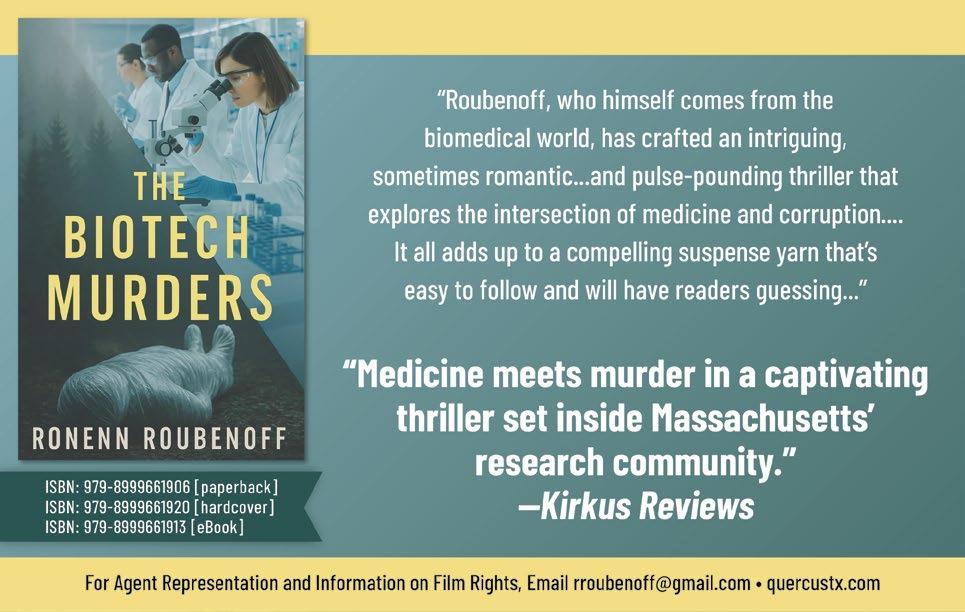

Kate Crane
Rachel Goldberg-Polin


Annabelle Gurwitch

The Texas Republican’s Going Further is set for publication in August.
U.S. Sen. Ted Cruz will chronicle the life and career of U.S. Supreme Court Justice Clarence Thomas in a new biography.
Sentinel, a conservative imprint of Penguin Random House, will publish the Texas Republican’s Going Further: The Incomparable Clarence Thomas in the summer, the press announced in a news release. It calls the book “a timely, authoritative exploration of Clarence Thomas’s life, ideas, and
lasting impact on constitutional law.”
Cruz, who is sometimes mentioned as a possible candidate for the Supreme Court, has long been an admirer of Thomas, last year calling him “a patriot, an intellectual giant, and the living embodiment of the American Dream.” Thomas, who consistently votes with the court’s conservative majority, has served as an associate justice since 1991; his Senate confirmation was nearly derailed due to allegations that he sexually harassed lawyer Anita Hill.
Cruz’s book, Sentinel says, “traces Clarence Thomas’s life and lasting impact on constitutional law—and why his ideas matter now more than ever.”
“Drawing on nine hours of exclusive personal interviews with the Justice, Cruz reveals how Thomas’s most formative early experiences—like growing up in crushing poverty in segregated Georgia, his early encounters with extreme racism, and his brief stint in radical left-wing politics—forged a lifelong commitment to independence, self-reliance, and truth,” the publisher says.
Going Further is slated for publication on Aug. 25.—M.S.


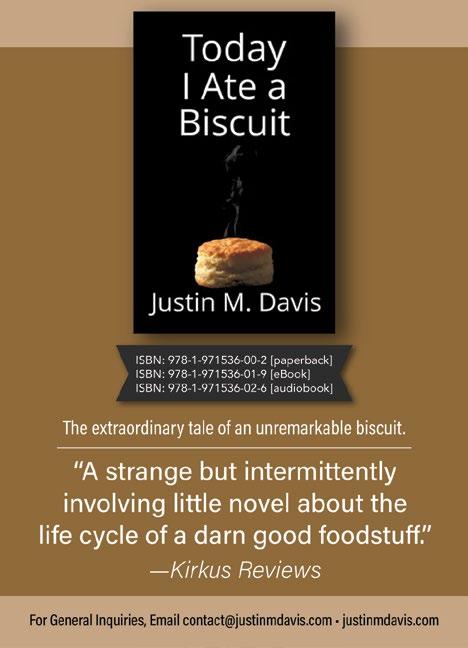

A24 is developing a limited series based on Patrick Radden Keefe’s new book.
Patrick Radden Keefe’s London Falling: A Mysterious Death in a Gilded City and a Family’s Search for Truth is headed to the small screen, Deadline reports. Keefe’s book, published by Doubleday in April, tells the true story of Zac Brettler, a 19-year-old London man who posed as the son of a Russian oligarch and jumped to his death from the balcony of a luxury tower in 2019. In a starred review, a critic for Kirkus called the book “an exemplary account of naïveté, wealth, and menace, impeccably told by a top-notch journalist.”

The production company A24 is developing the book as a limited series. The New York Times reports that Keefe will be an executive producer for the series. Keefe’s work has been adapted for the screen before. His 2017 New Yorker article “The Family That Built the Empire of Pain” (expanded into the 2021 book Empire of Pain: The Secret History of the Sackler Dynasty ) formed the basis for the 2023 Netflix limited series Painkiller, starring Uzo Aduba and Matthew Broderick. His 2019 book, Say Nothing: A True Story of Murder and Memory in Northern Ireland, was adapted into a 2024 limited series starring Lola Petticrew and Hazel Doupe that streamed on FX on Hulu. A24 is also developing a television adaptation of Keefe’s 2009 book, The Snakehead: An Epic Tale of the Chinatown Underworld and the American Dream. —M.S.

lit offers readers hope and joy. The author blends a scholar’s deep knowledge with the ardor of a reader still in love with young people’s literature. Although she writes with great affection for her subject, she never romanticizes children’s books or childhood itself; she’s well aware that kids are capable of selfishness and cruelty— and that the best literature recognizes young people’s darker impulses. Nor is she a literary purist. In a section on fairy tales, she muses on what a new version of “Cinderella” might look like, perhaps one in which the title character, literally or figuratively, consumes her own fairy godmother. Rundell closes by not only acknowledging that there are many who would shame adults for revisiting these books, but also by urging her readers to ignore the naysayers. “Refuse unflinchingly to be embarrassed, and in exchange you get the second star to the right, and straight on till morning.” Readers would do well to follow suit.
A passionate, persuasive, and perceptive case for embracing children’s fiction—at any age.
Music Forever:
Schreiber, Ryan | MCD/Farrar, Straus and Giroux (336 pp.) | $30 | December 1, 2026 9780374605506
The rise of an online music tastemaker. “I had never even seen a shooting star before” begins an infamous Pitchfork review of Radiohead’s Kid A . The review, one of the few albums that garnered a perfect 10.0 score on the site, would come to represent the quintessential Pitchfork review—stylistic, unpredictable, and perfectly calibrated to go viral on the still-new internet of the early 2000s. This memoir, which traces Schreiber’s life from his childhood in the 1980s
A glimpse behind the scenes of an early-aughts online music tastemaker.
WEIRD ERA
and ’90s through his departure from Pitchfork in 2019, offers readers a glimpse behind the scenes of this early-aughts internet staple. Schreiber started Pitchfork in 1996 in his parents’ Minnesota home and gained attention for his willingness to harshly criticize bands that larger publications wouldn’t. The band Jet, for example, received a 3.7 and a 0.0 for their two albums in the early 2000s, one of which simply linked to a vulgar video of a monkey. Schreiber tackles these and other reviews with humor and grace, such as his own regrettably slang-filled review of a John Coltrane live album (“some style, man. Some richness, daddy,” it reads) and the postmodern scrawls of Brent DiCrescenzo, who got the site in legal trouble for a Beastie Boys review in which he smeared the band’s PR firm. Schreiber started Pitchfork with little writing experience, but, 30 years later, he has gained an incisive reviewing style that he aptly turns on his own life. Early stories of his confusing, burgeoning sexuality and issues with bullying are especially affecting, and indie music fans will enjoy hearing about his evolving taste in music. Later chapters deal with the author’s mixed feelings about Pitchfork ’s acquisition by Condé Nast, offering insight into the changing landscape of media and music. This memoir delivers as an ode to the early internet and a love letter to criticism.
A must for 21st-century music snobs.

For more on rock music, visit Kirkus online.
Scott, Izabella | Farrar, Straus and Giroux (336 pp.) | $19 paper | September 1, 2026
9780374622015
Thoughts inspired by a perplexing British legal case. Journalist Scott (Pleasure Gardens, 2024) delves into the implications of the trials and convictions of Gayle Newland in 2015 and 2017. Newland, then in her early 20s, was branded as a sex offender and sentenced to six years in prison for perpetuating a “sexual fraud” on her best friend, here identified only as “Miss X” because of British laws granting lifetime anonymity to the victims of sexual crimes. Over two years, including thousands of texts, thousands of hours of phone calls, and more than a dozen in-person meet-ups, Newland posed to Miss X as “Kye Fortune,” who appeared on social media in the form of photos Newland pulled from posts by a Filipino American named Carlo. According to Newland, Miss X knew along that they were role-playing; according to Miss X, she wore a mask for all their sexual and other encounters and didn’t realize the reality until one horrifying evening when she removed the mask. For Scott, part of the fascination is the way this situation reverberates with the “bed trick” common in literature from Chaucer and Shakespeare and beyond, where one lover replaces another in the beloved’s bed without her knowledge. Working mostly from transcripts of Newland’s trials, Scott meticulously unwinds the two conflicting stories of
their time together. “I try to write from both points of view, and to create a scenario where neither are lying, and where both stories can be true,” she says. Readers will inevitably form their own conclusions but, more importantly, will be led to ask questions about self-deception and deception of loved ones, the stories we use to craft our lives, and the misfit between those stories and the role of a court of law. An intriguing analysis of a relationship gone irretrievably bad.
Shabazz, Ilyasah | Legacy Lit/Hachette (240 pp.) | $27 | May 19, 2026 | 9781538774328
Sharing life lessons from her father.
A year before he was assassinated in 1965, Malcolm X left the Nation of Islam, disillusioned by its leader, Elijah Muhammad, who was having sex with his young secretaries. Malcolm decided to embark on a pilgrimage to Mecca, and, as his daughter relates in this slim but bighearted book, the journey was transformative. “Here was Malcolm again,” she writes, “compelled to examine the last twelve years of his life and the heavily editorialized brand of Islam he had practiced. He was vulnerable, a beginner on the path, being pushed to rediscover the depth of his sincerity.” A Muslim who has also made the pilgrimage to Mecca, Shabazz quotes a Yoruban proverb in describing Malcolm’s state of mind when he arrived in Mecca: “In order to find your way, you must first become lost.” Being lost, she writes, brought on “a rupture and an opening”—“a striking moment of freedom” that let Malcolm move beyond “the anger that fueled him, the pain that shaped his political life, and then discover something deeper.” That something deeper was, as she beautifully phrases it, “the blossoming of his
compassionate heart.” In Mecca, as he “walked alongside thousands of other pilgrims, he was no longer defined by his marginal status as a Black man in America, or even by his rebirth as Malcolm X.…Here, he was becoming el-Hajj Malik el-Shabazz, Malcolm in the desert, one expression of being in the infinite parade of beings, all equal before God.” Shabazz wrote her book as a “practical resource”—for instance, she includes simple yet endearing advice on nestling amid pillows and a soft blanket to journal. Ultimately, she hopes her father’s “remarkable growth journey” will inspire people today in “a moment of so much acute suffering around the world.” His life is proof, she writes, that “No matter who you are…transformation is always possible.”
A personal perspective on a momentous figure brims with brightness and fellow feeling.
Sigler, Jamie Lynn | Harper/HarperCollins (288 pp.) | $30 | May 5, 2026 | 9780063434714
A memoir of pain, recovery, and, of course, an enduring classic TV series.
When Sigler got a call about an audition for a television pilot, the then-teenager was confused. “HBO was a movie channel making, it seemed, a show about a group of opera singers?” she recalls in her memoir. The series in question was, of course, The Sopranos, which catapulted her to fame, although she almost didn’t audition at all, wanting to go to summer camp instead. Sigler’s book does recount her time on the series, and she makes clear her admiration for its creator, David Chase, and her colleagues, especially James Gandolfini and Robert Iler. But the real focus of the memoir is on how she maintained a career while struggling with health issues: first, an eating disorder (“Suddenly, friendships didn’t matter, my career didn’t matter—all that mattered
was calories in and calories out”) and then a diagnosis of multiple sclerosis, which she kept secret for 14 years. She also tells the story of her disastrous relationship and marriage with her one-time agent, AJ DiScala, and their breakup (to which Gandolfini reacted, “Good. I never fucking liked him”). Sigler found hope after going public with her diagnosis and after her marriage to baseball player Cutter Dykstra, with whom she has two children. Writing about illness can be challenging, but she does an excellent job, not sparing the reader from the horrible effects of MS; for example, she writes candidly about her loss of bladder control, as well as the difficulty of keeping her disease a secret on sets. She chronicles the mental stress that MS has caused her, but the book never becomes mired in self-pity: “This is not a survivor’s tale,” she writes. “I come from far too much privilege for that.” It is, instead, a moving memoir of an actor who refuses to give up.
An affecting and generous account of an often painful life.
Silvertown, Jonathan | Scribner (256 pp.) $29 | October 6, 2026 | 9781668098431
The vital importance of leaves. Using only sunlight and water, leaves turn carbon into “everything that we depend on,” from the oxygen we breathe to the sugar we eat. Silvertown, an evolutionary biologist at the University of Edinburgh, writes that leaves also sequester carbon, mitigating climate change, which is driven by excess carbon in the air. But leaves are not flawless—just as evolution is not. “A leaf is an organ that can be improved,” he writes. “Evolution has made leaves that do remarkable things, but they are far from perfect. They use only about 1 percent of the solar energy that reaches them [and] they leak
NATURE’S MAGICIANS
precious water into the atmosphere.” If we could improve on leaves, using careful genetic modification (GM), could those enhanced leaves help us mitigate climate change and improve our lives? The answer, he says, is a cautiously optimistic “yes.” GM is often considered controversial, but it should not be, he contends. It has already improved some crops. But a key reason to pursue GM in leaves, suggests the author, is the fact that evolution has, many times, genetically manipulated— and improved on— itself. So any successful GM recipe may essentially just be following another tried-and-true evolutionary recipe. As one example, he says researchers manipulated a gene in a breed of rice to photosynthesize more efficiently—by studying the genes of a different rice breed. “This discovery takes plant science to within striking distance of a major advance,” he writes. “There is good reason to believe,” from how existing plants perform, that that type of manipulation “would make the plant more drought tolerant and perhaps increase all-round crop yield as well.”
This would “do no more than what evolution has previously achieved in many plants.” Regardless, he concludes, given the speed of climate change, “every genetic trick in the box” may soon not just be debated but “needed.”
This well-argued book on humans improving nature—by mimicking nature—should fascinate and frighten us all.

Kirkus Star
Smith, Douglas | Farrar, Straus and Giroux (560 pp.) | $35 | September 29, 2026
9780374606558

Empty streets. Before World War I, Vienna was, for several decades, “one of the cradles of modernism,” writes Smith, a historian and translator as well as the author of Rasputin (2016) and Former People (2012). But the city was also the crucible of antisemitism. In this powerful and well-researched history of the city, Smith traces the roots of Vienna’s antisemitic society from the late-19th through mid-20th centuries. Beginning with the vicious policies of the city’s mayor, Karl Lueger, at the turn of the century and working through the plight of a demoralized Austria after World War I, Smith turns to the city that “birthed Hitler’s dream, and Europe’s nightmare.” The nascent nationalisms simmering in the old Austro-Hungarian Empire bubbled into resentment against the successful Jewish families of Vienna. By the late 1930s, deportation was in full swing. Josef Löwenherz, personally appointed by Adolf Eichmann—the architect of the Holocaust—as head of the Jewish community in 1938, vividly “likened himself to a piece of paper caught in a pair of scissors,” Smith writes. By 1941, Jews were being arrested daily. Then we get to the heart of the book: the evidence of personal documents, letters, and journals of the long-forgotten men
and women whose lives were snipped in two. Reading the stories of Vienna’s Jews in their own voices leaves an indelible scar. You can’t but feel marked by the yellow star yourself, can’t but feel the dislocations of transport and incarceration. This is a book of civic history on both the personal and the grand scale. Archives have been opened, “incorporating all the new findings of recent decades in a broad history of the subject.” Smith lets the dead speak for themselves. And, after all, isn’t that what history is supposed to do?
A magnificent history of Vienna’s antisemitic past, told through the voices of those who lived and died there.
Sneider, Eve | Norton (304 pp.) | $29.99 November 10, 2026 | 9781324075127
A biography of one of the 20th century’s most famous journalists. Unlike contemporaries such as Susan Sontag and Joan Didion, Janet Malcolm (19342021), the longtime New Yorker writer, “was disinterested in being a celebrity.” Sneider, an author and former editor at Wired, speculates that this was because Malcolm was always “a member of the minority”: “[a] woman, a Jew, and an émigré.” Yet she became a member of the New York literary scene and a prolific nonfiction writer with works that made her controversial in her day but a hero to later generations. Sneider began studying Malcolm’s work when she was a student at Yale in 2018. She was fascinated by archive documents pertaining to Malcolm’s personal life, from her certificate of American citizenship—she was born in Prague—to her letters’ “moments of quiet revelation,” most notably an exchange between her and Philip Roth during “his splashy divorce from the actress Claire Bloom.” Sneider has now produced this admiring biography that “puts materials from
Malcolm’s archives and episodes from her life in conversation with her published work.” She covers all the major points: Malcolm’s family’s move to New York in 1939 after the Nazis invaded Poland; her education at the University of Michigan, where she wrote for and edited The Gargoyle humor magazine; her two marriages, first to classmate Donald Malcolm and then to Gardner Botsford, her New Yorker editor; her fascination with photography and collage; and the story behind her two most famous pieces, In the Freud Archives, which led to a 12-year legal battle in which she was sued for libel, and The Journalist and the Murderer. Sneider is clearly a fan. At Yale, she mounted an exhibit of items from Malcolm’s archive that Malcolm liked so much that she invited Sneider over for tea. Whatever one’s take on Malcolm, she was one of the 20th century’s more consequential journalists, as this book amply demonstrates.
An appreciative retrospective of the life and career of a literary trailblazer.
St. George, Zach | Norton (272 pp.)
$29.99 | July 7, 2026 | 9781324021681
A strange tale about science and snakes.
A while back, science journalist and author St. George became fixated with taxonomy and the “pride that comes with knowing something almost no one else knows.” This fed a fascination with
taxonomists, which is how he learned of Raymond Hoser, aka the Snakeman, whose penchant for naming many things threatened to turn taxonomy into an “unnavigable morass.” St. George explores how the science of taxonomy was born and those who possessed the “compulsion to describe and name.” This led him to “fear, fraud, and other facets of humanity’s fallen nature…the story, in other words, of the snake men.”
The author begins with “the celebrated snake charmer” Australian Charles Underwood, born in 1807, and his bite-curing antidote. In the 20th century, Eric Worrell became famous for his Australian Reptile Park and was much admired in the ’70s by young Kevin Markwell, who once saw Worrell carefully hoisting a writhing serpent. Worrell respected snakes and educated people about them, writing Reptiles of Australia, which included venomoussnake taxonomy. In reporter mode, St. George writes about avid snake men Richard Wells and Ross Wellington and the curious case of “taxonomic vandalism.” His meetings with them help him unearth their “crimes.” He finally meets with Hoser in Melbourne and experiences his “caged, teetering energy.” Passionate about snakes at an early age, Hoser suffered, as an adult, the country’s Wildlife Service’s “endless persecution.” St. George attends birthday parties and experiences Hoser’s snake man showmanship first-hand. He describes to St. George his surgical method of devenomization, which allows him to handle deadly snakes at performances. Hoser’s Australasian Journal of Herpetology was “classically Hoserian,” writes St. George: “Hoser was listed as the paper’s sole author.” Snake lovers will revel in this singular, off-beat read.
How a local sports editor came up with the idea for a “Game of the Century.”
Sullivan, Randall | Atlantic Monthly (496 pp.) $30 | June 2, 2026 | 9780802167361
A stellar matchup. Journalist Sullivan, author of Graveyard of the Pacific: Shipwreck and Survival on America’s Deadliest Waterway (2023) reminds readers that Presidentelect Franklin D. Roosevelt barely escaped assassination in February 1933 by a gunman who killed the man sitting next to him. Ironically, that victim (Chicago Mayor Anton Cermak) had joined FDR in Wrigley Field the previous October to throw out the ball for the 1932 World Series. Sullivan then steps back: With the first All-Star Game taking place in 1933 Chicago, he delivers a lively portrait of the city and nation, with an emphasis of crime, politics, and, of course, baseball. His Chicago is a hive of corruption and gangsters. Nationally, “a decade of debauch”—the Roaring Twenties—was followed by the Great Depression, and Babe Ruth dominated baseball. Most readers are likely unaware that the “live-ball era” began in 1911, when the baseball was re-engineered. Ruth began hitting home runs after 1920, and fans loved it, making him the sport’s most popular player. The Depression brought misery to the game as well as the nation. Attendance plummeted, and team owners cut salaries and work force. At its depth, Chicago leaders planned a World’s Fair in 1933, hoping to repeat the success of its 1893 fair. During planning, a local sports editor proposed a “Game of the Century” between stars of both leagues, elected by popular vote. The idea was mildly controversial when first suggested but quickly caught on. Beyond relating details of the 1933 matchup, Sullivan takes a detour into the Negro League’s largely forgotten East-West All-Star Game. Some players in the book are familiar (Jimmie Foxx, Lou Gehrig,
Lefty Grove), but there are plenty of unknowns, revived here for new and old fans alike.
A fine account of baseball’s “Game of the Century.”
Tiffany, Kaitlyn | Crown (512 pp.)
$35 | June 23, 2026 | 9780593728628
A group of intrepid women plunge themselves into the shadowy world of John Kennedy’s murder. “Housewives,” now a musty term, applies to only some of Atlantic writer Tiffany’s main subjects. Foremost among them, Sylvia Meagher was not a housewife but a single New Yorker whose free time was devoted to studying, annotating, and indexing the Warren Report. “The Kennedy assassination appeared to Sylvia to be part of some pattern,” Tiffany writes, “though she wasn’t yet able to describe the pattern very well or see where, exactly, his murder fit in.” Closer to Dallas lived Shirley Martin, a disaffected mother who’d come from Hawaii to stifling Oklahoma. “Kennedy’s assassination,” Tiffany writes, “was a tragedy in the Martin household, but it was also a respite from…boredom.” She set to work clipping newspapers, reading everything she could, and then finally hitting the road to interview people whom she believed knew more than they were letting on. The network of assassination researchers grew, and Sylvia and Shirley became friends and allies, helping each other with information and contacts as Sylvia spun out a massive critique of the Warren Report. Another key figure, Maggie Field, was a well-to-do Californian who joined in with the “Warrenologists,” who fell into contending camps once investigators Jim Garrison and Mark Lane complicated the picture. Shadowy deaths befell witnesses
and followed the group in mysterious ways—one the death of Shirley’s oldest child, which pulled her away from JFK to fixating on Che Guevara. Tiffany’s able saga stretches across the 1960s and ’70s to the fizzling out of the movement, of which she writes of those dogged but exhausted women in closing, “They were disillusioned and bitter, yet they still believed in some possible future in which the country they lived in could be more like the one they’d been promised.” Must-reading for followers of JFK assassination conspiracy theories.
Torghele, Karen | Yale Univ. (416 pp.) $38 | June 23, 2026 | 9780300272635
A scientific celebrity under the microscope. Jonas Salk developed the first effective polio vaccine, but Albert Sabin (1906-1993) developed the only vaccine that can eradicate polio from the planet. Speaking Yiddish when he arrived to the U.S. in 1921, Sabin was a brilliant student, accumulating honors, scholarships, and positions at the prestigious Rockefeller Institute and University of Cincinnati, where he made his mark. Epidemiologist and historian Torghele delivers an insightful biography plus vivid accounts of Salk and other major figures, as well as a lucid explanation of how to make a vaccine. Salk’s vaccine—which required injection—used dead viruses. This was a challenge since every virus had to be killed to avoid the vaccine actually causing disease. Sabin chose to use weakened live viruses that wouldn’t cause disease but would stimulate an immune response, like the measles and mumps vaccines. It’s harder, and the obsessively careful Sabin was far from finished in 1955 when Salk’s was tested successfully, making him a national hero. His worked, although it was not fully effective. In
1959, when Sabin pronounced his oral vaccine safe, 6,000 Americans caught polio. Sabin maintained—correctly— that his vaccine was cheaper, more effective, and easier to administer. Even better, those given live virus excreted it, infecting others, immunizing them. It’s the only way to eradicate polio completely. Soon after U.S. approval of the Sabin Oral Polio Vaccine in 1962, it became the standard worldwide. Nothing is perfect, and rarely—perhaps one in a million doses—Sabin’s virus mutates and causes polio. In 1999, with polio officially eradicated in the U.S., his vaccine was discontinued and Salk’s revived. Some wealthy nations did the same. Poor nations still use the cheaper oral version, which, in a U.N. program to eradicate polio worldwide, is nearing its goal. Torghele’s warts-and-all account turns up plenty. Yet if one were to list history’s greatest humanitarians—those who had saved the most lives and relieved the most suffering—Sabin is a shoo-in. A rich portrait of a health care hero.
Warnock, Raphael G. | Penguin Press (224 pp.) $30 | June 16, 2026 | 9798217058983
Spiritual principles inform political ideas. Warnock, pastor of the Atlanta church once led by Martin Luther King Jr. and Georgia’s first Black senator, evocatively compares the U.S. to an unfinished cathedral under attack by demagogues. Ahead of the country’s 250th birthday, he aims to rally support for tackling major “crises” such as poverty, mass incarceration, voter suppression, gun violence, and climate damage. The title alludes to the biblical prophet Isaiah, who defended the poor and “transmit[s] hope” in “harsh and chaotic times.” Warnock touts his role in passing laws that capped insulin prices for seniors as well as boosted domestic
solar panel production and aviation job programs. But his most memorable writing prizes inspiration over legislation. Noting that the Old and New Testaments contain 2,000 verses about poor people “and how to treat them,” he decries Trump administration cuts to food stamps, public housing, and other programs that Warnock benefited from as a child. His political career demonstrates “what is possible when the government lifts up hardworking Americans.” He calls for expanded opportunities to vote and reduced waiting times at polling places; more affordable housing; rules to rein in limitless campaign spending; and a less punitive judicial system. He reframes issues in galvanizing language: “Infrastructure is spiritual; it honors every child’s right to occupy space.” On guns, Warnock reiterates his support for the Second Amendment but backs what many readers will consider commonsense regulations: “Do you really need an AR-15?” He occasionally oversimplifies issues but excels at isolating a divisive matter’s essential points, especially when discussing the decades he’s spent considering climate change’s “Christian ethical implications.” This concise, effective book will do nothing to dissuade Democrats pining for a Warnock presidential run in 2028. A pastor-lawmaker’s rousing call to strengthen democracy, repair the planet, and reduce inequality and gun violence.
Webb, Sarah L. | Legacy Lit/Hachette (224 pp.) | $18.99 paper | July 7, 2026 9781538772683
also the variable of skin tone, or colorism, to which people of many ethnicities seem sensitive: People with darker skin tone are discounted in many ways, while those with lighter skin enjoy comparative privilege. Race, Webb writes, is “a social construct, yet skin tone is a biological fact to which humans have assigned meanings.” Among antebellum whites, a lightskinned Black person was often made to do less burdensome work than a darker-skin one. This holds in modern contexts: Actress Viola Davis recalls long years when her only roles were “drug-addicted, criminal, struggling, downtrodden types of characters.” In Black communities, Webb writes, “the lighter the girl, the more money and prestige she was apt to marry,” while in psychological experiments, a darkskinned Black man who was introduced as being highly educated was recalled as “being several shades lighter than he actually was,” lightened as an unconscious promotion of social status. Add to this the intersectionality of other factors—race, ethnicity, class, but also such things as hair texture, “the second biggest marker for racial identity”—and it’s understandable that colorism can be a strong driver of social anxiety and anomie. In a series of exercises that center on four categories of colorism— individual, relational, institutional, and systemic, to which Webb gives the mnemonic IRIS—she suggests ways to gain awareness of often-unspoken prejudice. She counsels, for example, that readers go out of their way to “meet more diverse people and to prioritize other qualities above complexion, hair, and features,” and she urges that colorism be added to subjects for mandatory employee training.
Wegman, Jesse | Celadon Books (384 pp.) $30 | June 23, 2026 | 9781250851079
A charged study of privilege and oppression based on skin tone.
There are, writes commentator and activist Webb, obvious “hierarchies of race, ethnicity, and class.” Figuring in those hierarchies is
A well-argued case for greater awareness of an overlooked aspect of bias, unconscious or intentional.

A not-quite founding father gets his due. Wegman, author of Let the People Pick the President: The Case for Abolishing the Electoral College (2020), writes that when the 1787 Constitutional Convention discussed choosing a central government, some members proposed democratic elections in which every man voted. That was radical for the time; democracy until the 18th century to elites meant mob rule and, in the absence of police (a 19th-century institution), mobs were common and often murderous. After a debate, the idea was easily defeated. As a result, Americans vote for electors who choose the president, and the Senate is made up of two representatives from each state, regardless of size. Both are undemocratic systems that give voters from smaller states more influence; Congress has defeated innumerable efforts to correct this. Leading the losing fight was James Wilson (1742-1798), a Scottish immigrant to Pennsylvania who became a wealthy, influential lawyer and an opponent of British rule. While not a page-turner, the heart of Wegman’s book—his account of the convention’s work—will educate most readers on how our federal government was born. Wilson never missed a day of the convention and belonged to a small committee that drew up the first draft of the Constitution.
“Without him,” Wegman writes, “American government as we know it today would not exist.” After ratification, Wilson became a Supreme Court justice in the new nation. Wegman emphasizes that Wilson (not John Marshall) first insisted that the Supreme Court should determine if a law obeyed the Constitution. The 1790s were not kind to Wilson, who speculated disastrously in western lands. Frequently absent from the bench,
he served time in debtor’s prison and in 1797 fled creditors, spending months holed up in a North Carolina tavern, where he died, largely forgotten. A genuinely fresh look at the birth of the Constitution.
Weissmann, Andrew | Little, Brown (240 pp.) $29 | May 19, 2026 | 9780316601306

A former federal prosecutor calls for laws regulating lying about stolen elections and other such calumnies. A former member of Robert Mueller’s team of legal investigators, Weissmann enjoys the distinction of having been singled out by Tulsi Gabbard, director of national intelligence, for revocation of his security clearance (“Having been out of government since 2019…the entire exercise was a performative show of retribution”) and President Trump himself, who called him a “bad guy”—a step up from Stephen Miller’s “degenerate.” All that’s water off a duck’s back, but what truly bothers Weissmann is the fact that “there is no criminal law that makes Trump’s election fraud lie illegal.” There’s plenty of precedent for legally punishing lying of other kinds: There are perjury laws and laws interdicting lying to Congress and falsehoods told to various financial investigative bodies (some of which figured in Trump’s 34 felony counts). A case of signal importance, testing the edges of the First Amendment, is the Stolen Valor Act, punishing anyone who for personal gain lies about having won, say, the Medal of Honor. And then there are the examples of other countries, to say nothing of most individual American states: Germany’s law that punishes Holocaust denial, Brazil’s imprisonment of Trump ally Jair Bolsonaro for having not just lied about his electoral loss but also attempting to mount a coup, with Brazilian law holding that “the right to truthful information in
elections supersedes an unfettered right to free speech when deliberate falsehoods are made that threaten the democratic order.”
In that spirit, Weissmann proposes amending the Constitution as a safeguard and disqualifying those who perpetrate intentional election denial from running for elected office for some set term of years. And he backs up his case with a strong conviction: “When lies about election integrity go unchecked and become party orthodoxy, we are no longer voting in a democracy.” A convincing argument to extend truth in advertising laws to the presidency.
Wikler, Ben | Norton (304 pp.)
$29.99 | July 21, 2026 | 9781324131434

A liberal activist offers a playbook to reclaim America from the right wing. The former chairman of the Wisconsin Democratic Party, Wikler writes that his state “circa 2011–2017 was the United States of America in the Trump era,” with battles for power played out before Donald Trump entered office. One was an attempt to create legislative supermajorities and to lock out any liberals from the state judiciary—and from school boards, municipal offices, and so on, from top to bottom. That wasn’t a bad plan, Wikler holds, and, indeed, the first plank in his platform of political resistance is for Democrats to focus on winning state and local offices as well as national ones, so that “we can dictator-proof state and local government to ensure that the 2028 election is free and fair.” Realistically, he adds, given the pendulum of electoral politics, “you should expect a backlash in 2030,” one that it will be especially important to ride out in a census year by which legislative districts are apportioned, with all the gerrymandering this invites. Winning office isn’t the end of the work, he adds, for what remains is to convince
the electorate that their votes count, especially in a time when margins are “agonizingly small,” with George W. Bush winning Florida, for instance, by only 537 votes. Wikler counsels talking to the “people with whom you have the closest connection” and concentrating on bread-and-butter issues, especially at the local level, which he boils down to a maxim: “If you care about democracy, talk about roads”—and, for that matter, “affordability.” Loftier issues count, too, such as reforming or doing away with the Senate filibuster, but, for the most part, his book focuses closely on Main Street and all that can be done there.
A book of immediate interest to progressive and centrist activists in this election year.
Wilson, Emily | Liveright/Norton (288 pp.) $19.99 paper | September 1, 2026 9781324099406
Enchanting, academic essays about translating the classics.
Balancing close readings of nuanced passages alongside celebrations of their modern translations, Wilson (classical studies/University of Pennsylvania; The Iliad, 2023, etc.) writes with the sparkling charisma of a favorite college professor and presents each deep dive with a finely tempered fusion of erudition and accessibility. “Language is never a neutral tool by which we represent the world: every word and phrase carries with it a tangle of cultural assumptions and connotations,” she writes and slyly incorporates contemporary touchstones into her analyses. In the essay “Slut-Shaming Helen of Troy,” Wilson explores misogynistic tropes and the Helen myth’s “focus on the proliferation of virtual, unreal images that suck people into obsessive desire and conflict.” Another
essay probes the bawdier side of classics and connects the “lyrical flow” of Aristophanes to Megan Thee Stallion and Cardi B. While discussing Edith Hamilton’s popular retelling of the Greek myths, Wilson moves quickly past Hamilton’s scholarly shortcomings and instead applauds her ability to “[fuse] a schtick about classics with something more nebulous and hard to achieve: a Personality.” Personality is where Wilson, too, finds great success. She not only imparts the wisdom of a well-read scholar but shows readers how easy it is to bask in these texts’ storied histories and revel in their slippery wordplay. She welcomes the unique visions of a swath of other translators and gracefully finds value in both their successes and misfires. The collection closes with a long essay about her own translations of Homer and the challenge of “shedding new light on a supposedly familiar original,” exemplified by her maligned use of the word “complicated” to describe Odysseus and his meandering adventures. “[J]ust as there are many ways to play a single score of music, many ways to paint the same landscape, and many ways to direct a play or deliver a speech,” Wilson reveals the multifaceted artistry of translation, rendered in an amalgam of both language and history.
A lively exploration of ancient literature.
Wright, Robert | Simon & Schuster (304 pp.) $30 | June 23, 2026 | 9781668061657
Are we headed for AI heaven or AI hell?
Wright (The Evolution of God, 2009) examines ideas from Jesuit philosopher Pierre Teilhard de Chardin to Dario Amodei, founder of Anthropic, weighing arguments for and against rapid AI development, as the capabilities of large language models (LLM) accelerate to superhuman-like levels. When AI becomes a global brain, is this essentially
a godlike entity in control? After explaining the workings of LLMs, he dives into AI development, a reflection of the range of recorded human thinking. Summarizing books on the subject—a helpful reading list for the AI-curious— he explores the conflicting views of pioneering AI “accelerationists” vs. “doomers,” including Geoffrey Hinton, Peter Thiel, and Nick Bostrom, who envisions a world government controlled by AIs. The ideas of Teilhard, particularly the “noosphere”—a “brain of brains” or world consciousness created by the actions of all human brains—loom large in Wright’s discussion, connected to current LLMs. He observes, “If a large language model is in some sense a crystallization of the noosphere, why should you expect it to be more evolved, more enlightened, than the noosphere itself—which is to say, than us?” Instead, “technological evolution strongly encourages us to—for our own sakes— become better people.” Wright’s survey of AI experts is somewhat meandering but presents many consequential debates on AI systems as shapers and mirrors of human values. His meditations convince himself, and perhaps readers, that “The more God-like AI is, the more it will put the fear of God in us, and the better we’ll get at cooperating to tame its ferocity and reap its benefits.”
An intriguing look at AI considers thoughts of philosophers, AI pioneers, and scientists on the concept of deity.
Young, Chris | Little, Brown (336 pp.) $29 | August 4, 2026 | 9780316565288
The story of a young man’s self-education and redemption while incarcerated. This memoir follows the author from his impoverished childhood in Tennessee to his gradual involvement in dealing cocaine, his incarceration
after receiving a mandatory life sentence for a series of relatively minor drug crimes, his resourceful efforts to tutor himself in the prison library, and finally his early release after securing clemency. Young’s description of “the abhorrent, inhumane labyrinth of America’s prison system” and of his own defiance of that system’s efforts to negate his human potential are powerful. Readers are presented with a memorable and convincing account of how an exceptional individual contested an unjust sentence and formed an emancipating understanding of his own plight. While in some ways offering a conventional narrative of American self-reliance and self-invention, Young also challenges the longstanding assumptions that the nation dispenses opportunities to all in a more or less equal fashion and that any individual is solely responsible for his own fate. “[Young] Black men birthed into the barbed and brutal intersection of poverty, mass incarceration, and the War on Drugs,” he makes clear, face extraordinary obstacles in their pursuit of the American Dream. Securing his own freedom, he explains, depended on his coming to understand the tyranny of broader ideological and institutional authorities. Reading in prison became his “saving grace,” allowing him not only to escape the dismal reality of his present condition but “to discover patterns of systemic oppression and resistance stretching across countries.” The book ultimately illuminates those patterns through the struggles and hard-won victories of its protagonist, providing an astute reflection on the status of American freedom for the racially and economically marginalized.
A poignant, inspirational, and timely account of personal survival and reinvention.

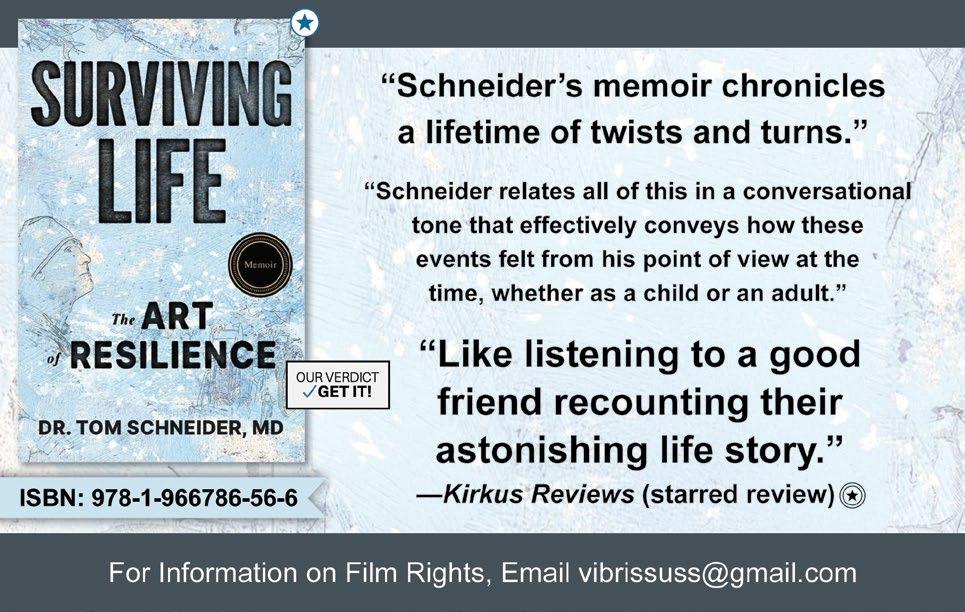

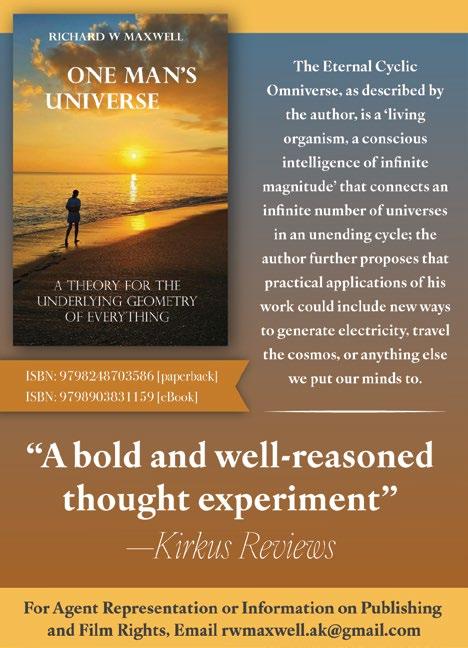


Success, illness, and everything in between: Jamie Lynn Sigler’s affecting new memoir.’ BY MEGAN
LABRISE

On this episode of Fully Booked actor and singer Jamie Lynn Sigler joins us to discuss And So It Is…: A Memoir of Acceptance and Hope (Harper/HarperCollins, May 5). Best known for her role as Meadow Soprano on HBO’s Sopranos , Sigler tackles every thing—from childhood to motherhood, stardom to scandal, illness to empowerment—in this unflinching chronicle of a remarkable life.
“The truth is, writing the memoir for those two years was one of the most healing, cathartic, difficult experiences of my life. And I got so much out of it. But now that the book’s out there, it’s for others to take in.”
—Jamie Lynn Sigler
THANKS TO OUR SPONSORS:
The Big Dream by Owen Thomas
Eleven Elements by Robby Joshi
Say My Name by Jerry Leverett

To listen to the episode, visit Kirkus online.
“Sigler’s book does recount her time on [The Sopranos],” Kirkus writes in a review, “but the real focus of her memoir is on how she maintained a career while struggling with health issues: first, an eating disorder…and then a diagnosis of multiple sclerosis, which she kept secret for 14 years.…She chronicles the mental stress MS has caused her, but the book never becomes mired in self-pity: ‘This is not a survivor’s tale,’ she writes. ‘I come from far too much privilege for that.’ It is, instead, a moving memoir of an actor who refuses to give up.”
In a career spanning three decades, Sigler has performed in starring roles on TV, film, and stage. She is the co-host, with her friend, actor Christina Applegate, of the podcast MeSsy, about their friendship and shared diagnosis of multiple sclerosis. She lives in Austin, Texas.
In a heartfelt conversation, Sigler and I discuss her inspiration for writing the memoir, the importance of telling one’s truth in one’s own voice, and the healing power of sharing our stories. She talks about her experience on The Sopranos , her respect and admiration for the show’s creators and her fellow actors, especially James Gandolfini, and


And So It Is…: A Memoir of Acceptance and Hope Sigler, Jamie Lynn Harper/HarperCollins | 288 pp. $30.00 | May 5, 2026 | 9780063434714
how being diagnosed with MS impacted her career. We touch on the writing process, the memoir’s exuberant acknowledgements section, and much more.
And, in a separate sponsored interview, author Jeff Gottesfeld and illustrator Matt Tavares discuss their exquisite children’s picture book, Honor Flight: Celebrating America’s Veterans (Candlewick, March 3), in which a Vietnam veteran travels to Washington, D.C., to commemorate the service and sacrifices of the U.S. Armed Forces. Kirkus: “Those reading this stirring tribute will remember it well—and agree with the closing words: ‘It was an honor’” (starred review).
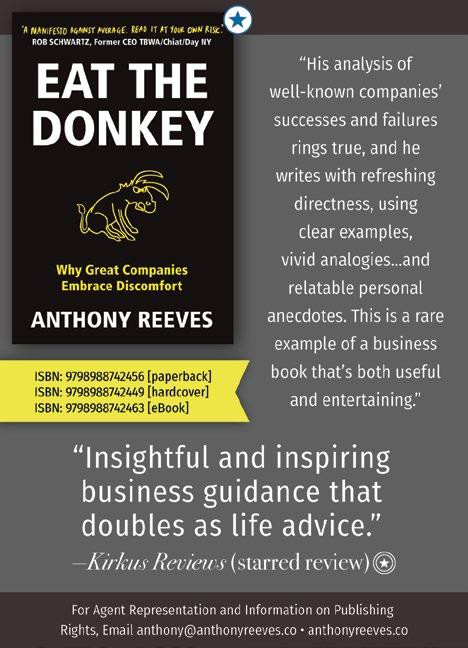


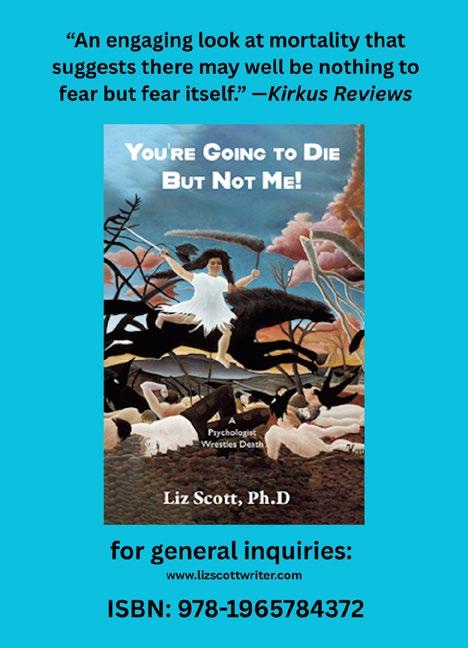

The activist and former NFL quarterback will share his story in The Perilous Fight.
Colin Kaepernick will tell the story of his life, career, and newsmaking protest against racism in a memoir coming later this year, the Associated Press reports.
Legacy Lit will publish The Perilous Fight, by the civil rights activist and former San Francisco 49ers quarterback, in the fall. “This is the story of a man who became someone the moment demanded,” says the press, an imprint of the Hachette Book Group. “It is a story about identity, sacrifice, and the cost of courage. And it is, ultimately, a story about all of us and the future we are still fighting to build.”
Kaepernick was a standout quarterback for the University of Nevada before being drafted by the 49ers in 2011. In 2016, during a preseason game, he sat during the playing of the national anthem, saying, “I am not going to stand up to show pride in a flag
for a country that oppresses Black people and people of color.” In subsequent games, he knelt during the anthem, leading hundreds of other athletes to do the same. Kaepernick became a free agent but was signed by no team; many observers believe his activism was the reason.
The book, says Legacy Lit, “traces the off-the-field battles that turned a single


act of protest into a movement that changed American sports and culture forever.”
The Perilous Fight is scheduled for publication on Sept. 15.—M.S.

For a review of Kaepernick’s young adult book, visit Kirkus online.

HAPPY BIRTHDAY TO the American Library Association! The world’s oldest and largest library-related organization is turning 150 this year, and as I get ready to attend the ALA’s annual meeting—held June 25-30 in Chicago— I’m in a festive mood. To kick off the celebration, here are a few recent and forthcoming kids’ books that remind us why libraries are so special. Who better to fete these institutions than children’s librarian Mychal Threets? Threets went viral in 2023 for TikTok videos extolling what he calls “library joy”; he’s now PBS’s resident librarian and the host of a Reading Rainbow reboot. With his debut picture book, I’m So Happy You’re Here: A Celebration of Library Joy (Random House, Feb. 3), he continues to spread the good word. Lorraine Nam’s illustrations depict an inviting community space, while Threets’ upbeat text has the same welcoming tone as his videos: “You belong here just as you are. The library is always here for you. Today, tomorrow—anytime you’re ready for a library day!”
That’s a message kids can’t hear often enough. Rob Sanders’ A Family of Readers, illustrated by Gabbie Benda (Charlesbridge, Jan. 20), follows two parents and their children as they spend a day at the public library. As in Threets’ title, this building is a vibrant, bustling place (no sternly shushing librarians here): Performers act out a story for a group of exuberant toddlers; STEM-minded preteens hold a robot battle. Sharp-eyed readers will spot an overalls-clad child in the background, quietly looking on before finally picking up a book at day’s end. Here, young people have the freedom to enjoy the library on their own terms—perhaps the best part of this space. Indeed, libraries are pure magic—something history’s most renowned illusionist knew well. In her picture-book biography
Houdini’s Library: How Books Created the World’s Greatest Magician (Knopf, Feb. 17), Barb Rosenstock explains how a book by Jean Robert-Houdin on sleight of hand inspired young Erik Weisz to take up magic and adopt the stage name Harry Houdini. Books helped him cultivate his skills, and as his wealth and fame grew, so did his literary collection; he filled his Harlem brownstone with titles on magic and spiritualism. Accompanying Rosenstock’s narrative are Mar Delmar’s spellbinding three-dimensional dioramas, infused with movement and light. Houdini made headlines as an escape artist, but the books he adored take center stage here. Readers will emerge wowed by the power of libraries and literature to shape lives.
Julie Abe is another author well acquainted with the wonder of libraries. Her middle-grade fantasy novel The Magic Library of Waterfall Way (Bloomsbury, Aug. 25) follows a young orphan named Lyra Hunt, deemed “Extremely Unremarkable” in a world where everyone is assigned to a guild according to rank. None of them will take Lyra except the Guild of Scholars—and only if she recovers a crystal that disappeared from its library following a fire. Abe’s descriptions of the cavernous library are a book lover’s delight; she dubs the library a “beacon of knowledge” in a land dominated by propaganda—commentary as relevant to our world as to Lyra’s.
Mahnaz Dar is a young readers’ editor.
A shoutout to libraries as centers for learning and for fostering community spirit. In this wide-ranging love letter, Grant sticks largely to libraries and library staffers who serve the general public but does a bang-up job of showing that providing books is only one of their many roles. Following a tantalizing overview describing a large and racially diverse cast of library users and workers sharing books, maps, and screens, she begins with a look back at great libraries of the past—offering a nod to Callimachus of Cyrene, creator of the first known library catalog—before turning to more recent
years for a broad survey of library types, conventional or otherwise. Among the latter she salutes Little Free Libraries and Little Queer Libraries dotting the U.S., collections carried by camel in Pakistan, a lending library that popped up to serve Occupy Wall Street protesters, library services in prisons, and eight precious books secretly gathered by prisoners at Auschwitz. The author goes on to identify libraries that also loan out tools, prom dresses, and even sticks for visiting dogs. She frankly points out that public libraries in the U.S. have not always served Black patrons equitably (or

Grant, Joyce | Illus. by Chanelle Nibbelink | Kids Can 48 pp. | October 6, 2026 | $18.99 | 9781525311567
fairly classified books about the Black experience), but her claim that many have long provided safe, supportive, and inclusive spaces in their communities still has merit overall. Nibbelink’s illustrations feature smiles
and warm colors that underscore the narrative’s effervescent tone. A well-deserved, and well-researched, valentine; Grant does libraries proud. (websites, glossary, bibliography, index) (Nonfiction. 7-10)
Koi By Jack Wong
Abe, Julie | Bloomsbury (256 pp.) | $18.99
August 25, 2026 | 9781547618293
An 11-year-old orphan finds a place where she can belong. Lyra Hunt is Extremely Unremarkable: the extremely rare, lowest-ranking prophecy in the Alterran Empire. In appearance, she’s also “easily forgotten in a crowd,” with her tanned, freckled cheeks and “mud-brown hair.” No guild wants her for fear of inviting a curse. As Lyra, who has hearing in one ear, rides with her Guild Matcher, Madame Aquaria, from yet another unsuccessful interview, a sable nearly causes an accident. The creature gives Lyra a gold ring that becomes stuck to her finger before leading her to Waterfall Way, the Headquarters of the Guild of Scholars. Recent tragedies have left the community distrustful and the Library derelict, but Lyra’s possession of “a true Scholar’s spirit” impresses Gemini, the Guild Master. Lyra is welcomed on the condition that she complete a quest. To everyone’s surprise, the ring reveals a quest from Kyrie Kanazawa, the very first Master of the Guild of Scholars, “to restore the crystal of the Library of Waterfall Way.” Racing against dangerous forces, Lyra must overcome her own fears to carry out her quest to protect the Library. Abe deftly weaves sensitive discussions of grief and loneliness through Lyra’s deep introspection. Each chapter opens with a quotation that gives a flavor of the world: “Bookdragons: If you ever find yourself cornered by a bookdragon, run. —LYRA HUNT’S
ENCYCLOPEDIA.” The ending sets up the sequel.
A richly imaginative love letter to libraries, found family, and a child’s curiosity. (Fantasy. 8-12)
Acker, Joey | Sourcebooks Wonderland (40 pp.) | $14.99 | August 18, 2026
9781464293788 | Series: Worst World Works

A n unconventional narrator offers eight reasons why this book is what its title says it is. “Congratulations. You are now reading the worst book in the whole entire world.” So begins this book’s narrator, a small gray rock with different-size dot eyes and stick limbs. The narrator anticipates readers’ inevitable next question: “I bet you are wondering why this is the worst book in the whole entire world. Are you sitting down?” The protagonist rolls out reasons numbered one through eight: “Reason #1: There is only one sentence on every page.” (Oops: Turns out that’s not actually true—“Awkward.”) “Reason #2: Remember that super awesome red balloon on the cover? It blew away.” “Reason #3: There are GROSS words in this book! Booger / Stinky / Toot / Booty.” Acker’s rather slapdash art consists of copious white space populated by the rock and the occasional prop, like the shoe thrown at its head by another anthropomorphized rock for no clear reason. The whole book is pretty much like this—provocative without being clever. Though the story’s purpose seems to be to amuse,
the jokes feel somewhat lazy; many don’t land at all.
Not the worst book in the world, but far funnier options exist for fans of metafiction. (Picture book. 5-8)
Anderson, Beth | Illus. by Ashley Yazdani Calkins Creek/Astra Books for Young Readers (40 pp.) | $19.99 September 29, 2026 | 9781662681240
George Washington faced the ultimate weapon of war: disease. Anderson has a keen eye for U.S. history’s lesser-known stories, and she distills her account into bite-size details, moving quickly through time as she imparts nuggets of historical wisdom. While facing King George III’s army, Washington reckoned with a new enemy. “It didn’t wear red coats or carry muskets. Didn’t march with drums and fifes. Stealthy… silent…unseen…It invaded bodies.” The redcoats had already survived smallpox in England, so it posed little threat to them. Washington, who had had smallpox when he was 19, feared losing more soldiers to the virus than in battle. And he wondered, “Were the Redcoats using sick colonists to spread the disease?” Yazdani’s illustrations juxtapose bird’s-eye views of soldiers marching or setting up camp with abstract images of smallpox depicted as a miasmic greenish-yellow cloud. Inoculation of the soldiers required a drop of live smallpox virus to be inserted into a cut, followed by quarantine until a brief sickness passed. But how to do that with an entire army? After a series of failures, including losing New York City to the British after an epidemic, Washington used the winter wartime lull to spread the word about inoculation and chose to accept only soldiers with immunity into his camp. In her author’s note, Anderson
draws parallels between this story and the recent Covid-19 pandemic. A relevant and insightful tale of courageous leadership and epidemic prevention. (resources, bibliography) (Informational picture book. 7-10)
Andrews, Julie & Emma Walton Hamilton Illus. by Eva Byrne | Abrams (40 pp.) | $19.99 August 11, 2026 | 9781419763205
In this latest from frequent mother-daughter collaborators and actors Andrews and Hamilton, a pianist’s practice regimen is interrupted by his vocally experimental new dog
An omniscient narrator explains that Shy (who’s white with brown patches) is “the smallest and quietest pup at the shelter. She seldom made a sound.” When a light-skinned man with floppy brown hair visits the shelter and says that he’s looking for a dog “who can keep me company and help me concentrate while I work,” Shy seems like a natural fit. And she is—initially. But when the man, who is a pianist, tells Shy that he must practice, she’s all kinds of disruptive: “At first, she gave a small whine. Then, a soft woof under her breath. Then…‘OwWOOOOOOOOOOOOO!’” The man tries to divert Shy so he can prepare for an upcoming concert, but it’s no use: She keeps yowling along as he plays. The tale’s ending is fairly inevitable, but it’s heartwarming nonetheless, and it can also be taken as a gentle rebuke to artistic rigidity. Andrews and Hamilton have blended their voices into a graceful storytelling instrument, and Byrne’s pen-and-ink art has a timeless quality, channeling the urbanity of Hilary Knight’s work in the likewise New York–set Eloise books. An authors’ note reveals that Shy is based on a poodle Andrews owned years ago who also liked to make herself heard.
A sweet, smooth, and stylish call for listening to different voices. (Picture book. 4-8)
Araneda, René | Illus. by Julio Antonio Blasco | Trans. by Lawrence Schimel Eerdmans (48 pp.) | $18.99 | September 29, 2026 | 9780802856609 | Series: Spectacular STEAM for Curious Readers
In this work translated from Spanish, a filmmaker chronicles encounters with a puma and her kits over several years. Illustrated not with stills from his 2019 documentary, as might be expected, but with lightly stylized graphic images based on photos of the felines in the wild with occasional glimpses of camera crews looking on, Araneda’s brief observations and reflections glow with love for nature and his animal subjects. Here he records ventures into Chile’s Torres del Paine National Park to document a mother puma he named Rupestre raising two litters of kits and teaching them hunting and survival skills— adding an amusing anecdote about what happened when one set of kits tackled a skunk. He also fills in background by praising the versatile animal’s ability to survive in multiple habitats through much of the Americas, offers pointers in how to tell males from females, and even includes a QR code linked to audio files of howls and other sounds. For all the big teeth on display, so appealing are Blasco’s frequent scenes of kits playing with their mom and one another that even glimpses of adult males fighting or prey being taken down and consumed are unlikely to disturb younger readers. Affectionate and informative. (maps, bibliography, filmography) (Informational picture book. 7-9)

Armendia-Sánchez, Nydia | Illus. by Dana SanMar | Candlewick (32 pp.) | $18.99 August 4, 2026 | 9781536227079
In a Guatemalan village, a brownskinned girl learns to weave her family history and her own identity into every thread.
Taught by her mamá, tía, and abuela, the youngster draws on generations of knowledge to create huipils (a traditional Maya garment) by hand. Using a weaving sword and a worn backstrap loom, she imbues each textile with symbolism passed from the women in her family. Though she honors tradition, she makes space for her own voice by adding sequins and beads to her designs. Each woman in her family has a distinct style shaped by the natural world: Her sister loves butterflies, while her mother gravitates toward starbursts. Together, their work forms a powerful portrait of intergenerational womanhood, underscoring how creativity, culture, and resilience are shared and sustained. Even as Mamá sells their work to support the family, financial struggles persist, and the author’s note gestures toward the ongoing fight for Maya women’s rights, though more detail would have strengthened this context.
For more translated works, visit Kirkus online.
Armendia- Sánchez’s lyrical prose, rich with alliteration and metaphor, makes this a strong read-aloud, even as the themes occasionally feel unfocused. SanMar’s digitally painted illustrations are layered with cut paper and threaded elements that blend traditional with contemporary; some compositions seem to lift scenes off the page with striking depth. Realistic moments of characters weaving are interspersed with more surreal sequences, where they soar through the sky on the very patterns they create.
Girl power woven with ancestral pride. (bibliography) (Picture book. 4-8)
Atkinson, Cale | Tundra Books (48 pp.) $18.99 | September 1, 2026 | 9780735267404
Life with no boundaries is thrilling— but tough. In a bustling city, a brown dog with inquisitively bent ears delights in the freedom of being a stray, romping with the pigeons in the park and identifying all the wonderful smells (as well as the “areas to avoid”). Our protagonist saunters smugly past a line of leashed pet dogs: “I don’t have a collar to restrain me, a leash to control me or a fence to contain me.” But living on the streets isn’t all fun and games; the dog must contend with loneliness, food insecurity, and constant rejection before eventually being snatched up by an animal control officer and forced into a cage at a shelter. A chance encounter with a potential new friend leads the dog to a happy realization: Opening up to others can be richly rewarding. Atkinson has crafted an emotional look at the tension between independence and the desire for a connection with others, as well as the lingering effects of trauma (the author reveals that the stray was abandoned as a puppy). Vulnerable first-person prose and expressive artwork, depicting scenes that range from idyllic to harrowing, blend for an authentic portrait of an initially untrusting pup learning to let others in. The dog’s new owner has tan skin and dark hair.
A poignant look at the healing power of friendship. (Picture book. 4-8)
Barr, Jennifer Robin | Calkins Creek/Astra Books for Young Readers (368 pp.)
$19.99 | July 14, 2026 | 9781635923261
In late 1970s Philadelphia, a lonely preteen finds a 200-yearold letter and uncovers a Revolutionary War–era secret. At nearly 12, Theodora “Thunder” Underwood is used to being alone. Every summer, while her scientist parents travel for research, she’s shipped off to a different relative or professor friend of theirs, and every summer, she feels out of place and in the way. But when she arrives in Philadelphia to stay with eccentric Aunt Hazel at her historic mansion, Mount Pleasant, Thunder dreams of making a discovery that will put her on the path to becoming a historian. On her very first day there, she finds, hidden in the floorboards, a letter written in 1780 by a previous inhabitant, one 11-year-old Miss Margaret Percy, who goes by Mercy. Suddenly, Thunder is swept up into a story of intrigue, treason, spies, and daring escapes. The letter references Mercy’s journal, concealed somewhere within Mount Pleasant, which may hold the key to momentous events. But in order to find the journal and solve the puzzle, Thunder will have to do something she’s never done before: trust new friends. An adventure in the vein of Varian Johnson’s The Parker Inheritance and Ruta Sepetys and Steve Sheinkin’s The Bletchley Riddle, this novel has strong secondary characters and a well-established setting that
Simultaneously classic and fresh; young readers will clamor for more.
LOST THREE
carry it through the slow parts of the plot. Except for an enslaved historical character, the main cast presents white. Fun and engaging historical intrigue. (historical notes) (Historical mystery. 8-13)
Barrows, Annie | Illus. by Chloe Bristol Little, Brown (336 pp.) | $17.99 | $8.99 paper September 29, 2026 | 9780316593908 9780316593915 paper | Series: Ghost Guild, 1
In this tale of Depression-era America, four lost souls discover they are strongest when they work together. Due to a series of egregious errors on the part of the Ghost Guild, which is responsible for dead souls, the Maconochie siblings— Genie, Fenella, and Tillotson—have unexpectedly found themselves ghosts. In their flummoxed state, they are swiftly captured by the malevolent (and living) Serena Aster, who is determined to use them in her séance-based business. Fortunately, Serena has also adopted little orphan Aggie, who befriends the benevolent spirits. Now they must find a way to escape from Serena and make their own way in the world together. Barrows punctuates her storytelling with notes sent from a frazzled accountant determined to aid the siblings from the afterlife, albeit obliquely. The result is a tale in the vein of classic kid lit, with plucky orphans, vile villains, and cleverness overcoming greed, though infused with a modern sensibility. While Barrows’ series opener has distinct similarities to Lemony Snicket’s A Series of Unfortunate Events and even the film Beetlejuice, it’s wholly original. Barrows’ dialogue is witty, and readers will cheer these heroes on every step of the way. Interstitial art by Bristol (depicting all major characters as pale-skinned) aids in the fun considerably. Simultaneously classic and fresh; young readers will clamor for more. (Fiction. 9-12)
MONTGOMERY BONBON
Rebecca
Beaton, Kate | Illus. by Sydney Smith Roaring Brook Press (48 pp.) | $19.99 September 22, 2026 | 9781250349019

Drawing inspiration from both an ancestor and the death of her sister, Beaton follows an 18th-century island-dwelling family. Rebecca, her husband, and their children work hard, depicted in scenes that evoke the cozy feel of Donald Hall and Barbara Cooney’s Ox-Cart Man (1979). One March day, Rebecca’s husband falls through the ice while hunting, leaving her with both a family to raise and a sorrow that lingers. The family grieves, grows, survives, and thrives, until the distant day that Rebecca, surrounded by their love, knows she must leave as well. Beaton, previously inclined toward the silly in her picture books, here writes evocative passages, beautifully encompassing what Rebecca knows and feels. “Death is an empty chair. Unfair. Finding yourself waiting for someone to come through the door who can’t…and the sound of nothing.” In any other creators’ hands, such themes could reflect a primarily adult sensibility. Here, though, the genius of art and text lies in a universality that will speak to readers of all ages. Notably, Beaton demonstrates that happiness and pain can—and do—coexist; love is the “other half” of sorrow. Playing spectacularly with light, Smith’s watercolors complement the prose seamlessly. His sumptuous
scenes could stand alone, telling this tale wordlessly, but are far stronger paired with Beaton’s text; her writing is reflective, never sentimental. All characters present as white. Joy glazed with the pain of loss is still joy, as this brilliant book reminds us all. (Picture book. 4-8)
Beckett-King, Alasdair | Illus. by Claire Powell | Candlewick (288 pp.) | $18.99 May 26, 2026 | 9781536241709
Series: Montgomery Bonbon, 4
W hen Bonnie Montgomery’s mother, Liz, becomes a murder suspect, Bonnie, in her guise as detective Montgomery Bonbon, rushes to find the real culprit.
Bonnie is excited about the annual Grimmfire Night celebration on the Widdlington Historic Quay. She’ll get to watch a fireworks display orchestrated by Liz and launched from the “REAL pirate ship” the Dreadnowt, which is under the command of the syrupy Captain Roger Valancourt. But things go haywire: The show is sabotaged, and the fireworks all go off simultaneously. When the smoke clears, an injured Valancourt falls dead onto the deck—and police inspector Prashanti Sands arrests Liz. Bonnie dons the beret, raincoat, and mustache of her alter ego, the renowned detective with a “mysterious foreign accent” whose true identity even her mother doesn’t know. Assisted by loyal Grampa Banks and friend Dana Hornville, she hunts for the person who wanted Valancourt dead.
The descriptions—of the ship, characters, mishaps and more—are laugh-outloud funny. Action abounds as the trio clamber over the ship and quayside in their investigation. Liz begins her own inquiry and proves surprisingly astute; might she also discover the true identity of Montgomery Bonbon? Powell’s scribbly black-and-white illustrations capture the frenetic energy as Bonnie races to reveal the full scope of the intrigue. Bonnie and her family present white; the supporting cast contains racial diversity. Ipso facto calamari: another ridiculously clever mystery in the series. (diagram, cast of characters, author’s note)
(Mystery. 8-12)
Bingham, Winsome | Illus. by Jason Griffin Neal Porter/Holiday House (40 pp.) | $18.99 September 1, 2026 | 9780823462384
A community of elders helps a child make sense of loss.
“On Fridays after school, I ride the bus to Momma’s job.” Jamar’s mom is a therapist and caretaker of residents at a nursing home—folks who feel truly feel like family. Dancing Mr. Dillon “shuffles, slides, and spins” when he spots Jamar, and newcomer Mr. Riff giggles while “music from his lips and fingertips fills the room.” With her high expectations, “chewygooey cookies,” and nurturing gardening skills, Miss Neely is “one of [Jamar’s] favorites.” Her unexpected passing leaves the two elderly men and Momma to explain to Jamar the importance of giving “everyone their flowers while you’re with them. Because you never know when they will be moving on.” Bingham’s melodic first-person text elegantly captures the juxtaposition of Jamar’s highs and lows on delicate cream and blue backdrops that soften the undeniable realities of the child’s hurt. Radiant portraiture of the all-Black
cast makes breathtaking use of light and perspective, while looser and lavishly textured mixed-media art features seams, scribbles, and a recurring fuchsia tulip motif. This resonant and blessedly concrete addition to picture books on death suits all collections and includes a creators’ note explaining the story’s origins; this is another powerful collaboration, following The Table (2024), co-authored by Wiley Blevins. A profoundly moving childcentered perspective on grief. (Picture book. 4-8)
Bogacs, Christof | Illus. by Hannah Krieger & Sammy Savos | HarperAlley (224 pp.) $24.99 | August 25, 2026 | 9780063086142
Bay Ridge Middle School student Chris Cleevy learns what’s really controlling his world in this story where anxious spirals meet out-of-thisworld paranoia. Chris, self-proclaimed “master storyteller and sci-fi tragic,” has always loved stories about aliens. But after watching Invasion of the Mind-Eaters , a movie his friend Jayden recommended, Chris becomes terrified, believing that his fastidious routines are the only thing stopping aliens called the Soth from taking over the world. Chris feels he must tie his shoes just right or the Soth mothership will appear. He taps four times to provide a mind-control shield against the aliens, does up his buttons correctly so their powers don’t work on him, and more. And when he meets his mom’s new boyfriend, Phil, Chris becomes convinced that Phil is a Soth, and he doubles down on the rituals he believes will protect him. This book includes realistic portrayals of OCD symptoms and therapy processes. The graphic format enhances the story’s emotional resonance, visually
A friendship tale that navigates heavy moments with a light touch.
DOG DAYS
capturing the push and pull between Chris’s imagination and his lived reality through inviting, actionpacked panels. Bogacs handles family and friend dynamics with care, furthering the story’s authenticity. Pale-skinned, strawberry-blond Chris and his mom present white, while many members of the supporting cast are brown-skinned. A tender, cleverly framed look at OCD that resonates. (author’s note) (Graphic fiction. 8-12)
Boldt, Claudia | Hippo Park/Astra Books for Young Readers (136 pp.) | $19.99 August 25, 2026 | 9781662641053
Two goodnatured canines endure the ups and downs of friendship. Willow, a dachshund, and Mia, a French bulldog, are BFFs and classmates at Turkey Jr. High. Their special connection is put to the test when Mia falls head over heels for cool cat Jesse. Jesse talks Mia into completing his art homework while Willow’s warnings go unheeded. Willow tries to get back at Jesse, but Mia resents her inter ference. The friends briefly reconcile—though Mia unwisely takes the fall for Jesse when he is caught cheating—before the story shifts into arcs involving Willow’s birthday list and both protagonists working on family trees for a class assignment. Willow turns out to have been adopted, while Mia feels
disconnected from her late mother’s side of the family. Boldt’s animal cast is pervasively adorable, from bespectacled, sibilant Ms. Snake, who heads up a multispecies classroom, to Mia and Willow, who often bike around town with Willow on the handlebars. At times, the dramatic arcs threaten to weigh down the whimsical presentation, but the story manages to find balance before each chapter is through. These pals make plenty of time for ice cream outings, too, which leavens the pathos and angst. A friendship tale that navigates heavy moments with a light touch. (Graphic fiction. 8-12)
Bontje, Laura | Illus. by Scot Ritchie Groundwood (32 pp.) | $19.99 October 6, 2026 | 9781779460431
Paleontology nurtures a rock-loving child’s creative spirit. Marian’s geologist mom has some truly amazing rocks, but Marian’s own collection is nothing to sneeze at; she’s got “an enchanted rock. A prehistoric rock. And a surprisingly speedy rock.” She also has a spot reserved for the very best one, still to be found. Then, at the playground one day, Marian comes across something wonderful: what she is certain is a dinosaur tooth. Her mom is gently skeptical, but Marian is sure she’s right. The expert she consults by letter needs to see the object, which is “far too precious to send away,” so Marian decides to excavate the rest of
the dinosaur. She and her very cooperative parents dig up disparate objects (a Slinky, traffic cones). Undaunted, Marian carefully glues “her dinosaur” together, and the big reveal impresses her friends and makes her proud. Now it’s on to the next interest: Has she found a moon rock for that spot in her collection? Fossil facts follow Bontje’s narrative, along with profiles of six young real-life fossil hunters (most of them female). Ritchie’s cartoon illustrations are colorful and fresh. Marian is treated with respect by both her parents and the author, and her enthusiasm is never quashed; readers will emerge eager to explore their own passions. Marian and her mother are paleskinned with auburn hair; her dad is brown-skinned and dark-haired. An endearing tale of a child’s firm will, powerful imagination, and engineering expertise. (further reading) (Picture book. 4-8)
Brantz, Loryn | Viking (40 pp.) | $18.99 September 8, 2026 | 9798217042142
An angry child attempts to calm down. A kid with paper-white skin, clad in a blue dress and striped tights, makes an absurd request: “Can we get a pet penguin, name it Marshmallow, and feed it carrots?” Mom, off-stage, says simply, “Not today,” and the tot transforms into a rather odd creature: a spicy nugget! The nugget is imperfectly ovoid in form, with red rosy cheeks, ragefilled dot-eyes, and a spiraling black-hole mouth. The sight gag works beautifully: When one feels truly angry, all poise disappears, leaving only a flailing ball of rage. Our protagonist hurls a teddy bear, unsuccessfully tries out a list of calming methods, and finally retreats to bed, where “I can feel my breathing; I know that I am safe.” The youngster reverts back to human
form, and Mom arrives with kind words: “You are not your big feelings. You are not your angry thoughts.” The takeaway is unmistakable, especially at the story’s conclusion: It’s OK to get mad and important to practice coping strategies. The young narrator expresses emotion with fabulous vigor, though the story’s lilting rhyme scheme occasionally distracts from these outbursts with cuteness. Nonetheless, this increasingly enraged nugget-child is irresistible; anyone who’s grappled with overwhelming emotions will relate—in a word, everyone.
An instructive tale about big feelings, lightened up by a furious kid’s theatrics. (Picture book. 3-6)
Kira vs. the (Not So) New Rival
Brennan, Megan | Random House Graphic (272 pp.) | $21.99 | August 11, 2026 9780593177570 | Series: Magic Girls, 2
This second series entry returns readers to NeoEarth Junior High, where newly minted Magic Girl Kira and her best friend, Space Princess Catacorn, navigate changes both exciting and unexpected.
Catacorn, a cat/unicorn hybrid, excitedly chats about joining the school band and convincing her mom, the Space Empress, that she must stay on Neo-Earth to gather sparkle energy. Now they’ve ironed out the bumps, Kira is excited to be part of a “magical girl duo.” But her classmate Tulip has stopped wearing “pastel princess stuff” in favor of all black and inexplicably acts coldly towards them. Tulip also baffles Kira by warning her to be wary of Catacorn’s motives. Kira’s attention is drawn elsewhere when she develops a crush on sporty new student Leon. She even becomes the school mascot so she has an excuse to
talk to him. The anime-inspired illustrations feature bright pastels and lively and engaging panels. The fun, whimsical energy of the busy artwork matches the layered challenges and twists of the intriguing plotlines, making way for a surprising and entertaining climax complete with a magic wand, cutesy outfits, and a flying saucer. Kira’s haphazard attempts to balance her crush with her friendships are both humorous and relatable. The student body is made up of a diverse cast of humans and anthropomorphic plants and animals. Reading the first installment will help ease readers into this shimmering universe.
A quirky and amusing sequel that’s covered in sparkles. (character sketches and notes) (Graphic fantasy. 8-13)
Britt, Chris | Hippo Park/Astra Books for Young Readers (40 pp.) | $18.99 November 3, 2026 | 9781662640674
A so-called bad dog learns he’s not much better as a bird, cat, or alligator. Bill and his pal Fluffy know how to live their best canine lives: frolicking through the house, eating from (and rolling in) the trash, chewing pillows, napping, and drinking from the toilet. Ah, nothing better. Until the humans come home, that is.
Quick-thinking Fluffy’s good at shifting the blame, which means Bill takes the fall. He wonders if perhaps he isn’t a bad dog but bad at being a dog, so he tries other lifestyles on for size. A bird he’s not, and cats are just gross. Will Bill’s attempt to become an alligator result in his gruesome end? Nah—Bill’s got solid dog skills (jumping, zigging, zagging, running fast) and some new friends with skills of their own who help him escape and make his way back to Fluffy, dinner, and a snuggle. Nothing better. Britt’s
Readers will feel honored to have received this party invitation.
DESERT FLOWERS
watercolor-and-pen illustrations play up the humor marvelously; the house is destroyed, trash is almost neon, and clever Fluffy stands in a glowing halo of cleanliness. The animals’ facial expressions and body language will be clear to even the youngest listeners.
Giggle-worthy proof that you needn’t be the best at everything—so long as you have a supportive group of friends. (Picture book. 4-8)
Buitrago, Jairo | Illus. by Manuel Monroy Trans. by Elisa Amado | Greystone Kids (40 pp.) | $19.95 | October 27, 2026 9781778400124 | Series: Aldana Libros

A family holds a celebration in nature.
“In the middle of nowhere there is a table,” an unseen narrator states matter-offactly. Two children and their grandmother, all with pinkish-red skin, are celebrating Grandmother’s birthday outside amid a barely populated desert landscape. Their decorations consist of the table, a tent, and some colorful bunting. A cat, a bunny, a lizard, and a bird linger nearby. When the youngsters notice that no one else has come to join them (“Don’t you have any friends, Grandmother?”), Grandmother suggests a trip to see “a very big friend who lives all alone.” A serene drive through sandy terrain brings them to “the biggest cactus in the world.” This tremendously tall succulent provides a perfect home for an owl, a snake, and a red-headed
bird. Grandmother has no need for presents; an array of flowers that bloom brilliantly is gift enough. Text and images pair well; Buitrago and Monroy’s tale is at once earthy and abundant. Muted sepia settings speckled sparingly with deep green, rich red, orange, and purple accompany the narrator’s quiet observations, translated from Spanish by Amado. The human figures are minimalist and often seen from a distance. Though some pages are left white when one might wish for even more arid beauty, it’s no great criticism. There’s so much room in this tale to breathe and simply be that readers will feel honored to have received this party invitation.
An artful engagement with desert life. (Picture book. 4-8)
Chivers Khoo, Rachel | Illus. by Laura Catalán | Candlewick (224 pp.) | $17.99
August 4, 2026 | 9781536250305
Series: Finders of Silverthorn Forest, 1
Max, a frecklefaced, chestnuthaired young human, and Tuftorious Snook, a small, foxlike Finder clad in dungarees and a stripey scarf, develop a trusting friendship during a time of great change for them both.
Finders are furry creatures who collect lost objects and live by their unbreakable Golden Rule: “Finders
Keepers.” Lately they’ve been consumed by the rapid approach of Doomsday, whose date the elders found long ago in an ancient message. Max’s grandmother is leaving her cottage in Silverthorn Forest, and Max and Mum have arrived to help her move in with them. Seventy years ago, Grandma buried a time capsule, planning to open it on the next solar eclipse— which turns out to be her moving day. She asks Max to retrieve it, but she can’t remember where she buried it. As Max digs in the woods, he meets Tuft, and the two new friends help each other, while dodging the other Finders, who are suspicious of people. Most dangerous of all, however, is the greedy developer who plans to pave over the cottage and woods. Heart-stopping close calls lead to a satisfying conclusion. Chivers Khoo’s engaging, descriptive language immerses readers in the imaginative, enticing world of her series opener. Catalán’s lush, detailed black-and-white illustrations evocatively capture the characters and the bucolic British setting. Readers will root for these unlikely friends and wish for their own secret place like Silverthorn Forest.
A delightful fantasy told with tenderness and wonder. (activity, tree facts, note on solar eclipses) (Fantasy. 7-9)
Christian, Alayne Kay | Illus. by Neha Rawat Flamingo Books (32 pp.) | $14.99 September 29, 2026 | 9798217039869
A poultry-style twist on a classic tale. While out on his morning run, a turkey, clad in blue running shoes with a sweatband around his head, is caught in a trap set by an old man and his wife. The turkey seems perfect for a certain upcoming meal. He frantically escapes, thus starting a chase and the repeating refrain that will be familiar to fans of “The
Gingerbread Man”: “Run, run, run as fast as you can. / You won’t catch me / for your roasting pan!” The old woman, a farmer, a stock boy, a cook, and even an aquarist (at one point, the turkey dashes through an aquarium) all join in. At each stop, our hero makes a case for why everyone should eat anything but turkey. At the farmers market, he implores: “Eating turkey isn’t cool. / Brussels sprouts and carrots rule. / Spinach, peppers, tiny peas— / stop and eat your veggies, please!” Christian’s humorous rhymes trot along quickly, matching the momentum of the sprinting fowl. The ending brings a surprise (for Turkey, though maybe not for readers, who should be able to predict the ending) as glasses are raised to toast him, not roast him. Rawat’s bright illustrations rendered in autumnal colors depict a diverse group of townspeople.
A silly caper filled with Thanksgiving fun. (Picture book. 3-6)
Cliff, Cynthia | Greenwillow Books (40 pp.) $19.99 | September 1, 2026 | 9780063449732
An apple tree stands as a symbol of family connection.
As Mom and Lisbeth drive through the Shenandoah Valley’s green hills, young Lisbeth asks, “Why do we always make dumplings for Grammie’s birthday?” Her mother seizes this opportunity—a quiet car ride, an attentive child—to share her family’s history on this bountiful land. “Many years ago,” Mary Elizabeth, Lisbeth’s great-greatgrandmother, was born, and upon her arrival, her father planted an apple seedling. As she grew, so did the tree. As a baby, she ate applesauce made from the tree’s fruit; in toddlerhood she dozed in its shade. When she fell ill after caring for the tree in a snowstorm, she was nursed to health with “a tonic of honey and
apple cider vinegar.” As the apple tree produced seedlings, Mary Elizabeth grew up and became a mother to eight children. It’s a simple story, interlacing human flourishing and stewardship of creation, based on the author’s own family history. Cliff’s bright gouache images gracefully evoke New England folk art, mixing cozy interiors and pastoral panoramas. Though some may find the tale overly sweet, eliding hints of historical hardship—a racially integrated apple harvest crew, ailments tended with tonic alone— it’s also a loving exploration of family legacy. Lisbeth and her family are pale-skinned.
A gentle read emphasizing the gift of one’s heritage. (author’s note, dumpling recipe, family photographs) (Picture book. 4-8)
Colandro, Lucille | Illus. by Jared Lee Cartwheel/Scholastic (32 pp.) | $5.99 paper | September 1, 2026 | 9798225061401
Colandro’s series returns with another rhyming toe-tapper. Forget flies. “There was an old lady who swallowed numbers aplenty. / She gobbled each number from 0 to 20!” Understandably, the numbers don’t stay down—the old lady hiccups them up—and readers are tasked with putting the colorful airborne numerals in order and counting accordingly. Between the beginning of the tale (“Zero numbers are inside the Old Lady’s belly. / Once there were lots, but now there aren’t any!”) and the end (“Twenty orange carrots, twenty beautiful deer, / Twenty gray mice—and one big joyful cheer!”), readers should learn two things: Counting can be fun, and arrhythmic rhymes can still swing if they’re sufficiently peppy. Lee’s caricaturish art, which appears in red-bordered
boxes above the corresponding rhymes, presents a putty-faced, pink-skinned old lady driving a race car (“Six trucks, six cars, and six red jeeps”), swimming underwater in a mermaid getup (“Fourteen hermit crabs go swish, swish, swish!”), and otherwise giving her all to sell readers on the joys of counting. In fact, it’s all so fun that by book’s end, there’s probably nothing readers wouldn’t do for the old lady, who has one last request: “We started at 0 and ended with many. / Let’s start counting down now, beginning with 20…” Various animals accompany the old lady on her counting campaign. Sure to elicit countless grins. (Picture book. 3-6)
Cordell, Matthew | Neal Porter/Holiday House (48 pp.) | $19.99 | September 1, 2026 9780823451555
A portrait of David Bowie. “Once there was a traveler. An artist. A cosmic, celestial, musical artist who traveled far and wide, who searched for and discovered different people, places, and sounds.” Cordell introduces readers, section by section, to Bowie’s different personae: Major Tom, Ziggy Stardust, Soul Man, the Thin White Duke, and Pop Star. The idea is that with each change, Bowie was being true to himself (although even Bowie’s fans might suspect that he sometimes had commercial considerations in mind). While the be-yourself message might tempt adults to read the book to young children in hopes of kindling interest in the musician, this title is strictly for tweens and teens, and not just because it touches on Bowie’s “unhealthy addictions.” The text is
so relentlessly introspective (“How do you describe your inside self? Your feelings, the things about you no one else knows? Can music express that part of you? Can art?”) that young kids would likely find it something Bowie never was: boring. Backmatter supplies the biographical information absent from the main narrative, as well as a playlist. Caldecott Medalist Cordell’s ravishing, star-dusted mixed-media art enlists a different palette for each Bowie persona. Illustrations of the musician frequently conjure Antoine de Saint-Exupéry’s Little Prince: blond and somewhere other than planet Earth.
A dreamy account for contemplative tweens and teens. (Picture-book biography. 9-14)
Dassu, A.M. | Illus. by Abeeha Tariq Scholastic (32 pp.) | $8.99 paper September 1, 2026 | 9798225077235
A Muslim child discovers that fasting isn’t his favorite part of Ramadan. Rayhan wants pancakes for breakfast, but his dad offers him a bowl of oatmeal instead. The rest of the family already ate their meal before dawn, because it’s the first day of Ramadan, and they’re fasting. Rayhan opts to fast rather than eat the unappetizing oatmeal. Happily, fasting gets him out of eating salad for lunch, too, but when he smells the samosas his grandparents are preparing for later, he flees outside. In the garden, Dad offers him freshly picked
strawberries. Rayhan’s so hungry and tempted that he eats one; he’s disappointed to be the only one not fasting—until he finds his brother on the couch, resting. His brother explains that he isn’t fasting, either, because he’s sick. He reminds Rayhan there are other good things they can do—like donating money to those in need—and by the end of the day, Rayhan tells his family, gathered around the table, that being together is his favorite part of Ramadan. Thought bubbles and speech bubbles give Tariq’s bright, cartoon illustrations a comic book–like feel. While it’s surprising that Rayhan wasn’t aware Ramadan was starting, his antics will induce chuckles, and Dassu’s depictions of earnest family relationships evoke the warmth of special days and traditions. Rayhan’s family is cued South Asian. A humorous, child’s-eye view of a major Islamic holiday. (information about Ramadan) (Picture book. 4-8)
de la Bédoyère, Camilla | Illus. by Britta Teckentrup | Big Picture Press (32 pp.)
$19.99 | August 18, 2026 | 9781536244120 Series: Animals Everywhere
De la Bédoyère and Teckentrup team up again for another animalfocused survey. This informative book starts with the basics. First, what is an amphibian? The opening spread doesn’t present the full definition, though readers can infer the rest from the pages that follow: These
Light in tone and satisfyingly heavy on therapeutic wish fulfillment.
THE WUMP
cold-blooded vertebrates mainly begin life in water with gills and metamorphose to live on land with lungs. De la Bédoyère moves on to discuss evolution; types of amphibians and their habitats and adaptations; metamorphosis; how they move, eat, and raise their young; and how the lives of people and amphibians have intersected, not always to the benefit of the animals. As with others in the series, this book lacks a table of contents and index, relying instead on spreads addressing specific topics. There is no glossary, but words, sometimes bolded, are defined in context. Teckentrup’s digital illustrations are collagelike, appearing to be cut out of marvelously patterned papers. Children are sure to pore over the pages, given the spotting challenges de la Bédoyère scatters throughout; the author’s lucid prose and knack for incorporating intriguing details (the greater siren can live without food for up to five years underground; the Taita caecilian grows an extra layer of skin for her hungry young to bite into) will keep them absorbed.
Fascinating and enlightening. (Informational picture book. 7-9)
DiTerlizzi, Tony | Dial Books (320 pp.) $18.99 | September 29, 2026 9798217004911
Chills and cheers ensue when a bullied middle schooler’s dark side rears up and exacts a fiendish round of revenge. Led by hulking eighth grader Logan Haggis and a widowed mom from hell, the cast of DiTerlizzi’s latest is stocked with bullies of various sizes and ages. They all get what’s coming to them when sixth grader Timothy Quibble at last permits the Wump, the glowering monster he’s begun to glimpse in mirrors and reflections, to take control of his
actions. Though the metaphorical essence of the premise is obvious from the outset, readers are as likely to be thrilled by the jagged, shadowy, truly terrifying Wump as by the sweet, sweet revenge it goes on to exact. Having inflicted pain but no permanent harm, Timothy, realizing he’s gone overboard, remorsefully takes back control. The author himself goes overboard in a portrayal of his narrator’s unloving, self-absorbed mother, who’s so savage that the dab of redemption he allows her at the end comes off as perfunctory at best. Still, there are supportive characters, too—including, as a nice surprise, a former tormentor who turns out to have similar struggles of his own and who has savvy life advice to offer. The students at the slyly named Jeffrey P. Kinney Middle School display racial diversity in the gallery of yearbook portraits. DiTerlizzi’s expertly crafted grayscale illustrations with pops of bright green are a highlight. Light in tone and satisfyingly heavy on therapeutic wish fulfillment. (Supernatural. 10-13)
Fang, Jasmine | Illus. by R ồ ng Ph ạ m & Vinh Nguy ễ n | Beaming Books (40 pp.) | $19.99 September 15, 2026 | 9798889837183
On the eve of an autumnal holiday, a young girl grapples with change. Pearl loves to celebrate the Mooncake Festival (also called the Mid-Autumn Festival, which in many Asian countries honors the full moon), but this year proves more complicated. Her Bàba, a pilot, is away for work and won’t be able to swing her in his arms toward the moon; her older sister, Jiějie, is away at college and can’t make paper lanterns with her. And Yéye (Grandfather), who used to tell her the story of the goddess Chang’e, recently died. Māma
A VERY HAPPY RAMADAN
explains that changes, even unwelcome ones, are a natural part of life. The arrival of Nǎ inai (Grandmother) marks a turn in perspective as she unpacks ingredients to make traditional holiday foods, including the essential mooncakes. Pearl feels better; she begins making paper lanterns and chats by video with Bàba and Jiějie. “My moon’s gone from sight but still here,” Bàba says. “Just like Yéye,” responds Pearl. Pham and Nguy ễn’s artful use of light and shadow brings warmth and depth to the characters, surrounded by textured sceneries. Their illustrations chart Pearl’s emotional arc as she finds joy and connection in long-held traditions, realizing that no matter what, her absent family members are always with her. Mandarin words are deftly incorporated throughout. An enchanting tribute to a beloved holiday and warm acknow ledgment that familial bonds are a constant despite change. (glossary, author’s note, more information, craft, recipe) (Picture book. 4-8)
Fleming, Candace | Scholastic Focus (272 pp.) | $19.99 | September 1, 2026 9798225004361
A provocative account of a Japanese effort to gain a toehold on American soil during the Second World War. Mining her family history as well as archival evidence, Fleming recounts the
sudden Japanese occupation of the Aleutian island of Attu in 1942 and the hasty counterattack mounted by the U.S. with green Army troops including the author’s father, an ambulance orderly. Thanks in part to a diary left by a Japanese doctor and extensive documentation, including troves of family and official photos, she’s able to weave in humanizing details (even including a Navy meteorologist’s dog) and to tell the story from both sides’ points of view. Fought in frigid, sloppy conditions, the hard-won victory became the second most costly for the U.S. in the Pacific Theater but received little attention. Fleming suggests this because an embarrassing number of casualties resulted from unsuitable gear, poor preparation, and friendly fire. Not only does she tell an engrossing battle yarn while doing a good job of filling in the broader strategic background from Pearl Harbor on, she also introduces Attu’s Indigenous Saskinax residents and discusses the enduring emotional cost on her father and other survivors. The book closes with encouragement to readers to look into their own family stories: “all of us are part of a legacy of love, resilience, recollection, and shared experience—part of an ongoing story that grows richer with every generation.”
Absorbing and enlightening fare. (author’s note, sources, index) (Nonfiction. 9-13)

For more World War II stories, visit Kirkus
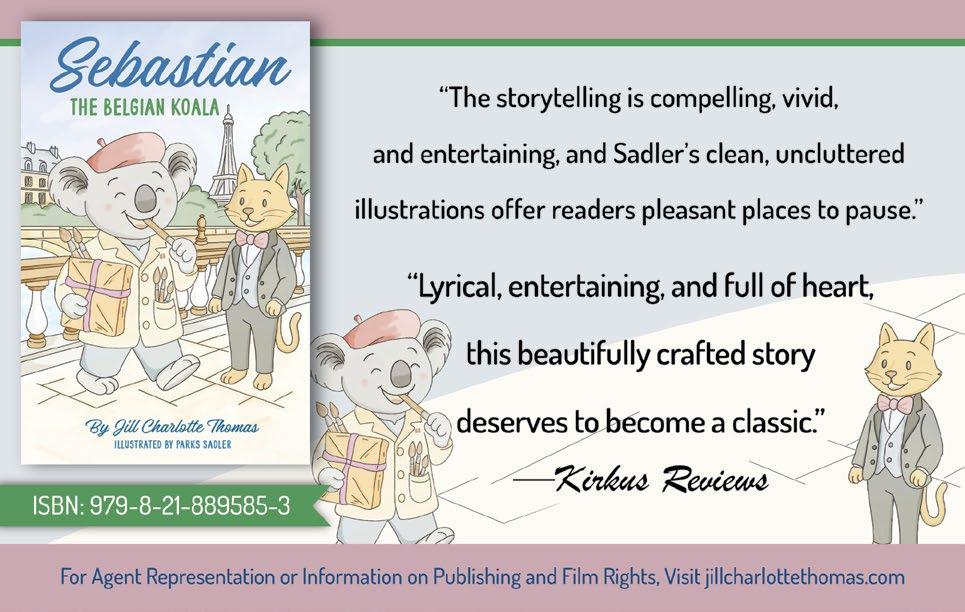

















Forst, Devin | Abrams (208 pp.) | $19.99 August 4, 2026 | 9781419780615
A lurid, leering gallery of bone-crushing, blood-sucking flesh rippers from many lands, times, and cultures. A skinless Boo Hag and many other truly terrifying creepy creatures, depicted in garishly lit detail, lunge and grimace directly at viewers in this unusually wide-ranging set of supernatural horrors. Organizing his entries into eight alliterative general categories—beginning with nine “Heinous Hags” and ending with assorted “Dark Divinities”—Forst pairs each full-page, and occasionally full-spread, portrait with an equally chilling description or scenario: “Her fangs and long, claw-like nails are the last things you see before the Pontianak sucks the eyes out of your head, digs her sharp nails into your stomach, and begins to feast on your blood.” Though his subjects are drawn from traditional folklore or urban legendry, he frequently brings them up to date with helpful side notes on comics or video games in which they figure and also tucks lists of recommended creature features and other modern media in at the end. For all the familiar boojums haunting these pages, from the closet-dwelling Boogeyman to a blood-spattered La Llorona (dragons are, oddly, absent), it’s the large array of lesser-known threats that give this
a leg up over many similar scare catalogs. “A lot of them have pretty sharp teeth,” the author warns with fantastic understatement. Art and narrative combine with unusually broad scope to guarantee many a sleepless night. (bibliography, index) (Folklore. 11-13)
Gemeinhart, Dan | Illus. by Hugo L. Cuellar Henry Holt (40 pp.) | $18.99 | September 1, 2026
9781250356765 | Series: The Gingerbread Tales
Gemeinhart, author of The Gingerbread Monster (2025), returns with another creepy bakingdisaster story. ’Tis the night before Christmas, and North Pole elf Ella knows that her fellow elves are ravenous, so she steps up the pace with her baking. Unfortunately, she doesn’t see a “a tuft of white fur blow into the batter.” That piece of fur, combined with spice and “the magic of Santa,” creates “a dough far more naughty than nice.” The batter is poured into a gingerbread man–shaped mold and begins baking… only to become an “abominable doughman” who busts out of the oven and shouts, “Flee, Fly, Dough, Crumb! / Yeti or not, here I come!” The yeti launches a campaign of terror, so everyone runs: “The elvish stampede with Ella in the rear / stumbled into the stables and nine tiny reindeer.” (That’s not the book’s only rhythmically challenged rhyme.) Now the yeti is after the reindeer, too! Who’s going to save the reindeer
Perfect for kids who feel that Christmas books are insufficiently scary.
and elves (and Christmas)? (Hint: He’s jolly.) This book has the same resolution and message—even bad guys have feelings—as its predecessor. For his classic-TV-animationstyle art, Cuellar takes the same enjoyably anarchic approach to his palette that Ella takes to her baking. A concluding recipe for gingerbread yeti cookies sweetens the deal. Ella’s pale-skinned; the other elves vary in complexion.
Perfect for kids who feel that Christmas books are insufficiently scary. (Picture book. 4-8)
Goodale, E.B. | Abrams (32 pp.) | $16.99 October 13, 2026 | 9781419780851
Oh no! The moon is stuck! While on a nighttime walk with Mama, the inquisitively precocious toddler from Goodale’s Robin and the Stick (2026) pretends to hold the moon and then gently toss it back up into the air. Preparing for bedtime later, Robin is alarmed to see the moon caught in the branches of the tree outside the window. Mama reassures Robin, who nevertheless tries to blow the moon away by breathing on it. Robin eventually falls asleep and dreams of freeing the moon, thus ensuring a good night’s sleep—depicted in a series of stunning spreads, set in etched black-and-white monoprint and oil, that brilliantly use perspective and light. Goodale presents Robin’s feelings as thoughts, not spoken words; this is a gorgeous look at the rich interiority of a small child navigating complex emotions with limitless energy and empathy. Young readers will relate to Robin’s independence and persistence, as well as Goodale’s keen development of her protagonist’s sometimes-esoteric personality (Robin’s affinity for sticks, both collected ones and those still intact on trees, is clear throughout). As in the first entry, Mama models great care,
gently guiding Robin through big feelings while also giving the youngster the space and ability to figure things out independently. Robin and Mama have skin the color of the page; the child’s blue hoodie and, later, sleeper pop against the muted backdrops. Another stellar entry in a series that celebrates independence and the importance of small victories. (Picture book. 3-6)
Griffin, Jason Douglas | Roaring Brook Press (48 pp.) | $19.99 | September 15, 2026 9781250417220
Little things result in big changes in this tale of acorns and expectations. When Great Haha informs Choko Choko that every acorn has the potential to someday become a massive tree, the smaller squirrel takes those words of wisdom to heart. Choko Choko’s older relatives are leaving to locate a new home (“there’s a giant hole where [the] family tree used to be”), and he is told that he’s too little to accompany them. Choko Choko is enraged, frustrated, confused, and sad; only Great Haha can soothe him. Choko Choko sets off on his own and finds a ginormous acorn. What he decides to do next will alter his family’s fate. Rendered in pencil and spray paint, Griffin’s cast of noseless (and often mouthless) squirrels leaves much of the emotional heavy lifting to his characters’ eyes. At times the brown, yellow, and gray art takes on a near-expressionistic bent, giving the narrative an enjoyably off-the-wall feeling; Choko Choko’s eyes nearly vibrate out of his head when in the thrall of great emotion. The underlying lesson about the possibilities that lie in the small is acknowledged throughout, while the energetic art will keep young readers engaged. A nutty endeavor, in all the best ways. (Picture book. 3-6)
Hartman, Brooke | Illus. by Nancy Leschnikoff | Harper/HarperCollins (40 pp.) | $14.99 | September 29, 2026 9780063513518
Brush off your best farmyard imitation skills and meet a cow who can’t moo. Harlow the highland cow is utterly adorable. She has “oodles of WOW!” Her shaggy coat gleams, her horns win her best in show at the county fair, and she can decorate, dance, cook, and bake, but there’s just one problem: Harlow cannot moo. She can tend the sheep and crochet their wool into socks, she can mend the chicken coop, and she can even rescue a stranded kitten from the roof, but try as she might, she can’t moo. Hartman’s lively rhyming text and page after page of Leschnikoff’s eye-catching, uncluttered illustrations create a humorous read-aloud that reminds us that sometimes triumph comes when we stop trying quite so hard. An unseen narrator encourages Harlow throughout (“So please, Harlow: moo! And don’t just ad-lib it. / Perk up that posh Highland head and say MMMM…”). Children will soon be urging Harlow to moo and, following the strategic page-turns, mimicking Harlow as she listens to the sounds of other farm mates and unsuccessfully works on her moo (“MIBBIT MIBBIT” and “MOINK! MOINK! MOINK!” are among her hilarious efforts). The final page is a guaranteed giggle. A humorous reminder that nobody’s perfect, but some skills do come naturally, eventually. (Picture book. 4-8)

Henderson, Maya | Little, Brown Ink (248 pp.) $14.99 paper | September 22, 2026
9780316579193
Exploring her synesthesia leads to turmoil during Rosie’s sixth grade year. Rosie and Harper are besties, so when Harper tries out for math league, anxious Rosie, who would prefer art club, reluctantly tries out as well. Trying to contribute to the math league’s T-shirt design, Rosie suggests that “the colors for the letters should match real life,” but no one understands. New friend Yara tells Rosie about synesthesia; it turns out that the two Black-presenting girls have different forms of it. As Rosie learns more and grows closer to the artistic, musical Yara, she starts recognizing the skewed friendship dynamic she has with brash, presumptuous Harper, who appears white. Maybe it’s time for a change. Synesthesia is a fascinating condition, and if the characters’ descriptions and explanations occasionally come across like infodumps, the illustrations of the brilliant colors the girls see in music offer readers a visceral connection. When the girls take an online synesthesia test, visual representations of their synesthetic phenomena strengthen that understanding. In the friendship storyline, the red flags in how Harper treats Rosie are unmistakable and at times outrageous. Readers will take heart from Rosie’s learning to stand up for herself and grow their relationship into something more equal. Henderson’s graphic novel debut features expressive digital artwork with thoughtful details like Rosie’s wobbly speech bubbles that indicate when she’s feeling shy. Equal servings of friend drama and neurodiverse representation make for a satisfying whole. (synesthesia information, resources, author’s note) (Graphic fiction. 8-12)
SPELLS TO CAST ON YOUR PARENTS
Ho, Jannie | Holiday House (80 pp.)
$12.99 | August 4, 2026 | 9780823459636
Series: Pumpkin and Beetle
Two cool cats try to stop an outof-control vine from consuming their town.
Pumpkin and Beetle, a fun-loving duo of vampire felines, uncover a treasure chest in the Hallowville graveyard. It contains a handful of red seeds and a note: “Grow at your own risk.” The pointy-toothed pair think little of it and plant the seeds immediately, nourishing them with plant food made from “spookified bones.” When the plant sprouts, it just keeps growing, and soon a sprawling, ravenous vine covers the school playground, takes over Mrs. Owl’s ghoulberries, and traps the cats’ canine pal Woofles inside a giant flower! Pumpkin and Beetle must figure out how to save their friend and untangle their town from the major mess they made. A couple of cranky witches assist the overwhelmed cats, helping them cook up a yucky vine-dispelling spell with “eyes of a newt,” “one teaspoon of frog mucus,” and “a splash of tomato juice.” The purple and orange surroundings of Hallowville, a town filled with monsters, critters, and talkative bugs, are just Halloween-y enough for emerging readers seeking a lightly eerie adventure. As in their first outing, Pumpkin and Beetle again make brave strides as they face a big challenge and take
responsibility, while Ho’s friendly illustrations find ample opportunities for humor tangled up among the vines. A brief guide to growing plants follows the fun tale.
A silly, sweet story about meeting obstacles with aplomb.
(Graphic fiction. 5-8)
Holmes, Pete | Doubleday (40 pp.) | $18.99 September 1, 2026 | 9798217119035
Comedian Holmes’ first kids’ book involves questionable hocus-pocus. An unseen adult narrator announces to an unseen child that this book is “a collection of magic words that will make me, your grown-up, do whatever you say. The first step is to—” A black tail interrupts that thought. A turn of the page reveals an unfriendly-looking black dragon named Jesse. Anticipating trouble, the narrator informs Jesse, “This child is a wizard. So there’s no need to breathe fire all over them and burn their little buns to a crisp.” Jesse isn’t having it: “They don’t look like a wizard! They’re too small to have powers!” The narrator tells the child, “Let’s cast a quick spell to prove to Jesse that you’re a wizard.” The spell: “A twist of lemon, a puff of sage, / Make my grown-up TURN THE PAGE! / NAR-DOOF-GA!” Sure enough, the page turns! Jesse’s rebuttal: “Your grown-up was already turning the pages! That wasn’t a spell!” On it entertainingly goes:
specious spells, nonsense syllables, and Jesse’s tut-tutting responses. If Holmes’ ambition is to make readers laugh at how ridiculous they sound following the book’s prompts, then he will succeed valiantly. The text and dragon (who is constructed, disarmingly, out of black masking tape) sit on what look like the pages of a yellowed manuscript, as befits the ancient spell book that this is(n’t). Scales new heights of picture-book meta. (Picture book. 4-8)
Howard, Greg | Nancy Paulsen Books (320 pp.) $18.99 | $9.99 paper | August 25, 2026 9780593111918 | 9780593111932 paper
A n orphan stumbles upon adventures and tragic revelations beyond his wildest imaginings. When Ben’s mother dies, he’s sent to live with the grandmother he’s never met in Clifton House, the foreboding family home that’s filled with clocks, each set to a different time—clocks he’s forbidden to touch. Ben, who’s white and secure in his larger body, makes friends with witty, outgoing Black girl Ollie and with Ash, a white boy on whom he immediately crushes. The trio are fascinated by Clifton House and make plans to go ghost-hunting— but instead of spirits, they find a closet that transports them into the past, where Clifton House is inhabited by twin girls named Hope and Grace, who are 12, just like Ben. Grandmother discovers what Ben has done, and she opens up, going from being “a complete stranger”—a remote and intimidating one at that—to someone who’s willing to talk about her own experiences with her house’s magic and parts of Ben’s family’s story that he knew nothing about. Ben is torn over what to do with this new knowledge. Howard’s plotting of the time travel element is
solid and doesn’t get bogged down in mechanics, which helps the bittersweet moments land. Intriguingly, the book offers readers alternate conclusions—one definitive and another with a massive cliffhanger. The story weaves in the fictional South Carolina town’s dark past with slavery and segregation. A good balance between speculative what ifs and characters with emotional resonance. (Science fiction. 8-12)
Hrab, Naseem | Illus. by Kelly Collier Owlkids Books (40 pp.) | $18.95
September 8, 2026 | 9781771477284
Series: Snail & Stump, 4
Snail loves the laidback life, but sometimes raising a ruckus is the right thing to do. Quiet, introverted Snail reluctantly agrees to leave his accustomed spot near rooted best friend Stump for a short crawl with his well-traveled Grammy Slug, depicted in Collier’s sly cartoon scenes with glasses, a poof of gray hair, and a hiker’s backpack. But our hero is soon snatched up by a giant hand (“I’LL RESCUE YOU!”) that drops him off some distance away next to a batch of confused, similarly relocated snails from the next glade over. Though he’d rather retreat into his shell the way he does whenever he feels overwhelmed, the realization that he has to do something prompts him to freak out the hovering hand by bellowing “HANDS OFF!” (“AHHH!!!! YOU CAN TALK???”) and then to lead the whole gaggle of gastropods back home to join Grammy and Stump for a “handsfree” spaghetti brunch complete with commemorative “I Survived the Hand” T-shirts. As in previous series installments, Hrab writes with a winning mix of whimsy and empathy for her earnest little protagonist; she makes one message explicit by saluting the courage Snail shows in
“raising his little voice in a big way” but slips in another with the oblique suggestion that it might be better to watch wild creatures rather than touch them.
The ultimate unlikely hero triumphs again, and readers will cheer him along each step of the way. (Picture book. 5-8)
Isaacman, David & Bobbie Bensur
Illus. by Bats Langley | Paw Prints
Publishing (112 pp.) | $17.99
August 4, 2026 | 9781223189512
Isaacman, a cast member on the reality show Love on the Spectrum , and co-author Bensur follow a group of neurodivergent children who rescue animals in crisis.
David (who shares a name with one of the authors) loves the sea lions visible from the swimming cove. But marine animals inexplicably begin falling ill, and when David and his pals Ariel, Beth, Billy, and Rocky notice a sickly baby sea lion, they bring it to Uncle Ned, who runs a laboratory at the local zoo. While Uncle Ned tends to the sea lion, the kids take in the zoo, finding it oddly deserted. They find a strange backpack, fall through a portal within it, and end up on the African savanna, where they must face off against an evil steampunk scientist responsible for the mystery illness plaguing the animals back home. Langley’s copious, colorful, semirealistic art and the fast, suspenseful pacing help pages speed by, while serif type supports reading. The kids’ autism is sensitively handled by Isaacman (who is also autistic), whether it’s the discomfort of people staring at them, a tendency to info-dump, or sensory overload, and their neurodivergence is often their greatest strength. These young people draw on both their tightknit bonds and the techniques they use to navigate the world; readers will be eager for more. In the artwork, characters are generally pale- or tan-skinned.
An absorbing testament to the power of thinking differently. (Adventure. 7-10)
Jackson, Tiffany D. | Scholastic (288 pp.) $18.99 | August 4, 2026 | 9798225017477
W hile looking for answers about grief and loss, 12-yearold Harmony Roundtree ends up finding a murder mystery. After the death of her grandmother, Harmony leaves Harlem and tours the country with her blues guitarist dad, entertaining herself with ghost tours. Her goal: to photograph a ghost and prove they’re real. Daddy and his band head to Savannah, Georgia, “widely considered to be one of the most haunted cities in the United States,” for six weeks. Harmony is surprised they’re staying with her dad’s friend Lena, whom she’s never heard of but who turns out to have known her late mother. There’s something about Daddy’s behavior around Lena that makes Harmony feel left out, and the recent murder of Lena’s friend Tim Truman, who ran Black history tours, makes her uneasy. During a ghost tour of Savannah, Harmony discovers what she believes is a haunted house, and she takes a photo of what may be the ghost of the murdered man. She confronts her dad about his strange behavior and sets out to discover the truth—for herself and for Mr. Truman’s family— with the help of new friend Myah and Lena’s 10-year-old son, Robby. Harmony is a fully realized character, whose grief is paired with a wistfulness that makes her sympathetic. This roller-coaster of a story centering on a cast of Black characters highlights courageous young people who dive deep into danger.
An atmospheric, well-paced adventure exploring supernatural mysteries during a steamy Savannah summer. (map) (Mystery. 10-13)
This Is Not a Christmas Book* (*This Is a Book About Rocks)
John, Jory | Illus. by Pierre Collet-Derby Farrar, Straus and Giroux (40 pp.) | $19.99 September 1, 2026 | 9780374394011
Series: This Is Not a Holiday Books
Christmas imagery distracts readers from a reptile’s lecture on rocks.
A bespectacled orange-and-green lizard, who is hanging out in a snow-covered rocky landscape, wants to make something clear: “This is NOT a Christmas book….This is a book about rocks.” For this reason, the lizard is none too pleased with what’s going on “over there. Behind the ninth piece of granite on the right. With the pointy ears and the pointy hat and the pointy shoes. Gasp! I think that might be an ELF!” The lizard tries to head off the problem—“Hey! You! Elf! This is NOT a Christmas book”—but the yellowskinned imp feels otherwise. The story has a seek-and-find element, with Christmas motifs popping up, often in the shape of rocks; meanwhile, the lizard continues the campaign to sell readers on the glory of rocks (“Up next, we have some sandstone….Wow, right?”). The hilariously exasperated, fourth wall–breaking, single-minded lizard is reminiscent of Mo Willems’ Pigeon, but the chunky, carefully composed digital art is Collet-Derby’s own. The tension between the lizard and the elf is reflected in the contrast between the book’s grayscale natural landscape and Christmas’ unstoppable full-color assault. And yes, the lizard finally submits to the lure of Christmas when a certain red-suited someone gives our protagonist a gift that only a lizard—at least this lizard—could love.
A meta Yuletide riot. (Picture book. 4-8)
Karwowski, Claire | Illus. by Siân Roberts
DK flip (224 pp.) | $16.99 | July 28, 2026
9798217138548 | Series: Penny & Luck, 1
Nine-year-old
Penny’s end-ofsummer adventure is out of this world.
Freckled, auburn-haired Penny Jones is small, has a lively imagination, and is devoted to her corgi, Luck. She uses the attic for working on her various inventions—like a model train that feeds houseplants and “a pedal-powered ice-cream scooper.” She usually shares her Invention Quests— adventures around their little New England town of Wampscott where she tests her creations—with her three older brothers, John, Theo, and Henry. This time, disappointingly, the boys must spend the last day of summer completing their reading assignments. Light-skinned Penny sets out with Luck, and the pair tumble into the Cursed Forest in Zollora, where she meets brown-skinned Daya, Warrior Princess of Rosehall, who’s on a quest. According to Daya, the Shadows have stolen Rosehall’s rain, causing a drought that is killing the magical roses that the kingdom’s survival depends upon. When the Shadows whisk Daya away, Penny must draw upon her knowledge and ingenuity, along with assistance from transparent gray Milo, a brave Shadow boy, to rescue Daya and Rosehall. Penny is an earnest, likeable hero. Debut author Karwowski’s series opener is nicely paced, believably constructed, and good-hearted (everyone, it turns out, means well). Dynamic typography, with words and phrases italicized and in bold, plus Roberts’ lively drawings add to the welcoming look of each page.
Cheerfully entertaining. (inventor’s notebook) (Fantasy. 6-9)
An action-packed tale with a marvelously inventive premise.
Clem Clam the Class Clown
Keller, Laurie | Christy Ottaviano Books (48 pp.) $18.99 | October 6, 2026 | 9780316581424
A soft-spoken mollusk finds his spine. Clem the clam is as shy and quiet as, well, a clam. The only time he’s fully comfortable is when he’s playing his clarinet, especially with his cornet-playing companion, Claudine. But when the class clown moves away, Clem sees an opportunity to remake himself into an outgoing, spotlight-seeking jokester, which he believes will be his ticket to “popularity, friends, and all-around clam-tastic greatness.” His plan works so well that he no longer has time for either the clarinet or Claudine; Clem cancels on the pair’s planned duet for the upcoming talent show, so Claudine will have to perform solo. When Clem takes his classroom comedy too far, his delightfully named teacher Ms. Clamalama helps him realize he’d be better served embracing his true personality. This advice comes just in time to salvage Clem and Claudine’s duet, not to mention their friendship. Consistent alliteration makes the text a joy to read aloud, and every page provides a reason to laugh: bivalve gags galore, clever footnotes, and even a poo joke for good measure. Keller is particularly skilled at mining facial expressions for comic effect, and her oversize, vivid illustrations feature clams with cartoonish googly eyes making giggleworthy facial contortions.
A romp of a book that’s worth digging into. (Picture book. 4-8)
Kephart, Beth | Illus. by Roberto Innocenti Creative Editions/Creative Company (32 pp.)
$18.99 | August 11, 2026 | 9781568463711
A n Italian boy’s life is upended when a river near his home overflows. The narrator, an adult looking back, begins his dramatic story calmly, by introducing his younger self, a blond
Florentine child who lives with his parents “in the house by the garden, in the city that we loved.” The youngster likes to draw and play with his toy soldiers; his father binds books, and his mother works at a pasticceria. When the River Arno overflows, Papa’s books, Mama’s bread, and the boy’s treasures are washed away, and he and his parents and neighbors must flee to the safety of their rooftops. Help arrives in the form of “shopkeepers and tailors and students and mothers and artists and writers and firemen” and so on, and the boy feels awe (surely readers will as well) as these people salvage what they can from the mud, which ends up plastered to their clothes and faces: “so much mud we called them our Angeli del Fango—the Mud Angels.” In her afterword, Kephart reports that this book is based on the experience of its Florentine illustrator, Innocenti, who lived through the River Arno flood in 1966. Intense color springs from the murky wreckage in Innocenti’s visuals, which are marvels of fine detail work and make clear why he has been amply awarded for his art.
A stunning reminder that the power of goodness can eclipse the ravages of disaster. (Picture book. 5-10)
Khoury, Jessica | McElderry (384 pp.) $18.99 | July 14, 2026 | 9781665990110
A smart-mouthed street thief and a gruff exterminator find common ground while confronting family issues and slaying monsters. In the kingdom of Anoranth, dark secrets manifest as savage, many-legged monsters called Cryptics, which can only be safely killed by trained, magical Arcanists. Facing a long prison sentence for vandalizing one of the lamps whose light keeps the monsters at bay, brown-haired 13-year-old Rolan Strider is relieved to be claimed as an apprentice by the taciturn, black-haired, blue-eyed, heavily tattooed Arcanist Luc, whose face is covered in scars. Not only does learning how to find
the magic he needs to slay monsters prove to be exciting (if fantastically dangerous) work, but over time, Rolan bonds with his mentor more than he ever has with his own abusive father. The tale, marked by guilty secrets and betrayals as much as it is livened by banter and teasing, culminates in a wild battle with an immense Cryptic; a lack of resolution in the ending will disappoint some but leaves things open for a possible sequel. Although Luc and Rolan behave heroically while developing a strong chemistry, apothecary Evaine (who has olive skin, green eyes, and dark hair) and her “fluffy-haired” apprentice, a girl named Anaya (who has brown, freckled skin), rarely shine. Both are clever, but they seem to do little beyond providing nursing and food for the menfolk while needing more than once to be rescued from peril. An action-packed, if not seamless, tale with a marvelously inventive premise. (map) (Fantasy. 9-13)
Konrad, Marla Stewart | Illus. by Linhan Huang | Convergent (40 pp.) | $15.99 August 25, 2026 | 9780593601952
A meditation on bedtime prayer. Inspired by the Christian practice of daily reflection, Konrad asks young readers to consider the hand of the divine in both everyday and extraordinary experiences. Her text, written in the form of a “living, breathing prayer” narrated by a child directly addressing God, speaks to a divine love “as long as a river…as high as the stars…and as deep as the ocean.” The text then considers events, choices, people, and observations that all make up the narrator’s day. Throughout, Konrad offers readers opportunities to share moments from their own lives: “If my day was a color, I think it would be…” “I felt proud of myself when…” Importantly, Konrad gives consideration to both the negative and the positive parts of life; the narrator acknowledges that God has a hand in it all but that readers have the power to effect change.
This accessible resource effectively introduces young people to what might become a habitual practice. Huang’s delicately expressive illustrations are a delight, with a cartoon style leaning toward realistic, but wonderfully dreamlike when appropriate. They supplement the text nicely and depict people diverse in body type, skin tone, and ability. Affirming and deeply personal guidance for young Christians. (Picture book. 4-8)
Lees, Jordan | Illus. by Flor Persichini Simon & Schuster (400 pp.) | $19.99
August 4, 2026 | 9781665950190
Series: The Whisperwicks, 3
T he magical land of Wreathenwold is threatened by not one, but two crazed and immensely powerful foes in this series finale. Were they and their works not so terrifying, readers might sympathize with dapper magus Manfred Tarr and Blight, a (literally) twiggy teen from the Weird Wood’s Root Folk. The former has been driven mad by his obsessive love for the Widow, an uncommonly scary, dream-haunting witch, and the latter by overwhelming rage against those who have despoiled nature. Both are wantonly destructive threats with monsters and mighty powers at their command. Lees brings a trilogy laced with provocative twists and populated by a racially diverse human cast to a climactic series of confrontations that challenge his young hero, Benjamiah Creek, not only to find the courage and resources to face the immediate crisis, but in the end to make hard, heartbreaking choices that will save his beloved friends and their world in the longer term. Before that, though, the search for a crucial hidden key further enriches the folkloric, almost ritualistic structure and tone of the tale with sets of agonizing tests, arduous quests, and seemingly impossible tasks. Persichini’s monochrome illustrations are
unfortunately a disappointment, being too bland to evoke the setting’s otherness or the robust, nuanced characters. A dazzling finish to a rich, strange, and beguiling story. (map) (Fantasy. 9-13)
Luzzader, A.M. | Sourcebooks Wonderland (248 pp.) | $14.99 | June 2, 2026
9781464269097 | Series: A Mermaid in Middle School, 1
For young merfolk, coming of age means assuming their roles as protectors of the ocean. (No pressure!) In this series opener that was originally selfpublished in 2020, mermaids, who are described as light-skinned, start learning mer-magic in middle school. Lavenderhaired sixth grader Brynn Finley can hardly wait to join the ranks of the sea guardians. But her new school presents challenges Brynn hadn’t anticipated: traveling by speed-current without her parents, getting lost in the halls between classes, and not being able to conjure as quickly as her peers. Luckily, Brynn has a community that’s there to support her—if only she could bring herself to ask for help. A series of poorly thoughtout decisions leads Brynn to showdowns with classic underwater villains—a sea witch with lustrous skin (“like the inside of an abalone shell”), selkies (who have “dark faces”), and an evil, green-scaled dagon, or fish person—during which she finally learns the importance of honest communication. Nothing about the treatment of Brynn’s life lessons is subtle. Troubling incidents, such as Brynn’s trading her pet turtle for a dark magic talisman, unfold against a backdrop of familiar imagery, like kelp forests and friendly, helpful dolphins, and the dialogue often feels flat. The book works hard to reinforce widely accepted values, such as the importance of effective collaboration and being good environmental stewards.
Gentle, if unexceptional, eco-fiction for the young mermaid lover. (Fantasy. 8-12)
Lyons, Kelly Starling | Illus. by Cathy Ann Johnson | Nancy Paulsen Books (32 pp.) | $18.99 | September 29, 2026
9780593323922
A child savors the hallmarks of each season. Lyons and Johnson’s bright and breezy picture book invites readers to explore the seasons through the eyes of a Black child with reddishbrown hair. In spring, Lyric lies beside Mom admiring cotton candy–like clouds. The youngster splashes in puddles when it rains, declaring “Spring is always such a stunner, / but don’t you know it, so is… // SUMMER!” Relishing the sunshine, Lyric delights in the year’s hottest months, frequenting the beach, attending family cookouts, and “play[ing] UNO, bones, and spades.” Fall brings a pumpkin patch visit and a spectacular feast of pies and cakes, while in winter, Lyric takes part in a sledding outing that visually recalls Ezra Jack Keats’ The Snowy Day, as well as a multigenerational Kwanzaa celebration. Johnson’s images include captivating swirls of colors and movement, and action occurs in every layer of each frame. In spring, for instance, a fish-eye focus centers kids playing double Dutch while cyclists ride in the distance and a dog walker navigates a path in the foreground. Adults may find that the text’s strict adherence to an AABB rhyme scheme and repetitive seven-syllable lines makes for a monotonous read-aloud, but it’s an effective introduction to the
seasons for children. All illustrated figures appear Black, with a notable diversity of skin shades and hairstyles. An enticing snapshot of seasonal changes and annual traditions. (Picture book. 3-7)
Maclear, Kyo | Illus. by Tracy Subisak Random House Studio (48 pp.) | $18.99 September 22, 2026 | 9780593181980
Amid an increasingly hectic world, Maclear presents a convincing treatise on the importance of doing nothing at all. Relying on plainspoken but soulful language, the author proposes ways to take a break. Her ideas are by turns practical, dreamy, and even a tad absurd. Maybe you can stand barefoot in the soil, becoming a “climbing structure for creatures in the garden,” or “imagine drifting to the ocean floor.” Perhaps you’ll “assume the shrubbyness of a shrub” or “the corneryness of a corner.” Some suggestions, like becoming an “ancient mountain,” seem rooted in yoga. Others, like becoming a “sea sponge, soaking everything in and then letting it go again,” feel influenced by mindfulness and meditation techniques. By the end, some readers’ interest may wane as the prompts begin to blur together, potentially making them less useful, but overall, Maclear’s framing—presenting idleness as praiseworthy, not slothful—is delectably subversive. Relying on a surprisingly flashy, near-neon palette, Subisak’s art, rendered in watercolor, ink, crayon, and colored pencil, is upbeat and good-natured, though boisterous for a guidebook on subdued, often internal
An audacious hunter meets three witches in this darkly droll retelling.
THE HUNTSMAN AND THE WITCHES
pursuits. Nevertheless, unexpected color contrasts, frequent perspective changes, and creative imagery feel appropriately dreamy. The protagonist demonstrating the ideas is brownskinned with black hair.
Gratifying permission to pause and dwell in the “very quiet quiet.” (Picture book. 5-10)
MacLeod, Elizabeth | Illus. by Julie McLaughlin | Orca (48 pp.) | $21.95 August 18, 2026 | 9781459841048 Series: Feel Good, Do Good, 2
An earnest recitation of the personal and social benefits of kindness. MacLeod assures readers that being kind will not only make them feel better about themselves, but it actually releases dopamine and other feel-good chemicals into the body. Though her takeaways are sound, the repetitive, often preachy writing likely won’t hold readers’ attention for long. Still, along with uplifting side quotes from Aesop, Mr. Rogers, Lady Gaga, and others, the author offers a spare assortment of sample kind acts like wearing an “I’ll Go With You” badge and escorting nervous transgender schoolmates to restrooms or other places they feel unsafe, sporting a blue shirt on World Day of Bullying Prevention, and—though it stretches the definition of “kindness”—helping a parent take out the garbage and posting photos of cleaned-up litter on social media with a “trashtag.” Animals, too, need kindness, so MacLeod salutes one young altruist who kits out shelter pets with fetching bow ties to make them more adoptable and others who dress oil-soaked penguins in sweaters designed to keep them from poisoning themselves by grooming their feathers. McLaughlin’s images of smiling images figures engaged in altruistic acts are diverse
in terms of racial and cultural differences as well as ability. On message but, as motivation, a long shot at best. (glossary, print and online resources, index) (Informational picture book. 6-10)
Marley, Ziggy | Illus. by Ashley Evans Clarion/HarperCollins (40 pp.) | $19.99 September 15, 2026 | 9780063287211
Reggae artist Marley returns with another picture book adapted from one of his songs.
“Life has come a long way since yesterday, / and it’s not the same old thing over again.” OK, those lyrics may be a little baroque for the first page of a children’s book, but hear Marley out! Those words (and the following) are attributed to a conscientious kid who’s waking up eager to embrace the day: “I’m growing up strong, becoming who I am. / Happy and bright, I’m shining my light.” (Those lines aren’t in Marley’s song and were presumably written specially for this book.) The kid finds a bracelet on the playground and later, at school, returns it to the classmate who dropped it; in turn, that child takes over the book’s perspective and does a good deed—by making a new student feel welcome. On it goes: kids modeling socially upstanding behavior for one another, the odd wrongdoer later remorseful and willing to mend fences. The hit that inspired the book has a repetitive chorus that Marley has wisely pared down to a simple refrain here—“I’ve got to be / TRUE TO MYSELF!”—which means that the jaunty text works whether readers know the song or not. Evans’ exuberantly colorful digital art presents the cast, a multiracial assortment of young cuties, in a tidy urban setting. An uplifting, community-minded, danceable effort. (Picture book. 4-8)
Kirkus Star
Matias, Abraham | Illus. by Molly Mendoza Harper/HarperCollins (40 pp.)
$19.99 | July 21, 2026 | 9780063386563
Series: Everlasting Tales, 3
An audacious hunter meets three very hungry witches in this darkly droll retelling of a Mexican folktale. Out on a quest to capture a prized wild boar, the Huntsman delves deep into the woods as a storm rolls in. Lost and wet, he kicks in the door of an old hut and enters, uninvited. Disregarding the hoot of an owl and hiss of a cat—both signs that the hut’s witchy inhabitants are near—the Huntsman settles in for a nap. When the Witches arrive home, without “the wild hog they had fattened up all season” (“something had scared off their dinner,” the omniscient narrator explains), the undeniable odor of human greets them. Spotting the slumbering hunter, the Witches descend upon him. “We’d love to have you for dinner,” the Witches tell him. The presumptuous Huntsman agrees to their invitation until he realizes far too late what the Witches intend to do. A stellar addition to the series, Matias’ fairy-tale redux—and authorial debut—crackles with mischievous verve. Well-placed hoots, hisses, and gurgles punctuate the deliriously playful text, building to a gut-busting end to the Witches’ search for dinner. Impish and ethereal, Mendoza’s inked artwork pops with rustic colors and unusual proportions, centered on a spellbinding witchy trio. Appended is a condensed Spanish version of this tale that offers an additional dose of chills and thrills to bilingual readers. Characters are brown-skinned. Deliciously wicked. (author’s note) (Picture book. 4-8)
McKinnon, Kate | Illus. by Alfredo Cáceres Little, Brown (320 pp.) | $17.99
September 29, 2026 | 9780316555814
Series: The Millicent Quibb School of Etiquette for Young Ladies of Mad Science, 3 T he mad scientist Porch sisters finally face off against the abominable (and newly reanimated) Talon Sharktūth. Following their escapades at the titular hotel in Secrets of the Purple Pearl (2025), sisters Dee-Dee, Eugenia, and Gertrude, who are adopted, find themselves swept up in another adventure with the Lavinias, Aunt Desdemona, and their 98-yearold Grantie Lettuce in ParisToo, which is “like Paris but smaller, and it’s in upstate New York.” Of course, the girls’ beloved mentor and teacher, Millicent Quibb, pops in and out, both warning and helping the trio. The Porches are Apocryphs, and each one has a unique power. Their sightseeing trip around ParisToo feels a bit too convenient, and as suspicious coincidences mount (along with sightings of members of the KRA, the shadowy cabal that revived Sharktūth), the girls suspect that something sinister is afoot. They eventually learn the truth of Sharktūth’s scheme, but can they stop him and the KRA before it’s too late? This third series entry satisfyingly answers many of the lingering questions of its predecessors. With all the zest and zeal of a caffeinated squirrel, this installment delivers the series’ patented quirkiness and giggle-generating plotlines, footnotes, and illustrations. Millicent Quibb wisely opines that “it takes
much bravery, to be different…but really, if no one dared to do it, who would save the day?” This is an endearing tale of found family and believing in oneself, with an ending that hints at further adventures. Another zippy charmer—no Quibbles here. (Adventure. 8-12)
Mistry, Poonam | Candlewick Studio (40 pp.)
$19.99 | August 25, 2026 | 9781536243994
Series: A Poonam Mistry Fable
When a nurturing bear comes into possession of a single seed, change takes root. Animals from all over, among them the titular bear, come to admire a lush, vibrant magical forest. This verdant community is home to towering trees and lovely plants and flowers until one day the flora all vanishes, prompting many animals to depart and leaving Bear grief-stricken. When a small seed catches Bear’s attention, he commits to keeping it safe, then seeks advice from passing animals on how to best prompt the seed to grow. Through a sleepy winter and into spring, Bear holds vigil over the seedling, rejoicing at its presence and what the new growth portends for the forest. Mistry’s intricately detailed digital illustrations feature highly stylized and repeating patterns of dots and geometric shapes in a pleasing array of solid, earthy shades that transform along with beat shifts in the story. Wide-eyed animals—including a worm, a fox, a frog, and a bird in addition to Bear—feature
prominently in the mostly full-page artwork, while high-contrast text, simple and spare, sits cleanly on solid backgrounds. This modern fable is ideal for lap-reads and nature-themed storytimes, gently reminding readers that even one small step can make a world of difference.
An optimistic tale for bullish environmentalists. (Picture book. 4-8)
Mody, Yashika | Illus. by Adriena Fong Lantana (32 pp.) | $19.99 | November 3, 2026 9781836290506
Working on a school project, a child explores the joys of chosen family. When Mrs. Forrest announces a family tree assignment, one enthusiastic student requests multiple worksheets, insisting “I have loads of aunties and a gazillion uncles.” Mrs. Forrest seems dubious until the child starts to introduce a “HUGE” family in the pages that follow: “My uncles are EVERYWHERE.” An uncle who drives a bus (Bus Uncle) always waits for the youngster. Supermarket Uncle appreciates the child’s bagging talents (“must be a family skill”). “Some days are three-uncle days,” with Taxi Uncle, Fried Rice Uncle, and Barber Shop Uncle. At home, the family tree expands from bedroom floor to living room wall. Surprised, Ma explains that neither she nor Pa has brothers, then gently adds, “In some cultures like ours,” calling unrelated older people uncles and aunties is a sign of respect. “So all this time, I’ve had…fake uncles…FUNCLES?” But Ma and Pa remind the child that they’re all part of a close community, and disappointment turns to delight as the little one brightly claims the FUN in FUNCLES. In an author’s note following her sweetly jaunty narrative, Mody describes her own Singaporean family’s custom of honoring community by deeming elders “aunties” or “uncles” and how she continues the tradition with her young
son. Fong, also Singaporean, amps up the fun, matching Mody’s inviting energy with wonderfully complementary Technicolor art. The child’s family has brown skin; the funcles, like the child’s classmates, are diverse. An endearing, welcoming tribute to all manner of extended families. (Picture book. 4-8)
Mortimer, Helen | Illus. by Gabriella Barouch | Photos by Lars van de Goor Magic Cat (64 pp.) | $24.99
September 1, 2026 | 9781419786679
Kinder, gentler folktale retellings. Mortimer removes much of these stories’ cruelty and all coded sexual references. Evil stepmothers have vanished, but the witches remain. Hansel and Gretel’s loving parents take them into the woods to forage; the children become lost when they wander off. After Cinderella’s older sisters (not stepsisters) mistreat her, her fairy godmother gives her three lush silk gowns; the slipper appears almost as an afterthought. The Frog Prince merely sleeps on a cushion next to the bed of a young duchess and awakens with the spell broken. The wolf shoves Red Riding Hood’s grandmother into a wardrobe rather than swallowing her, and he’s decked by a vase and scared off, not slain. Rapunzel’s adopted mother doesn’t push the prince from the tower; he stumbles and falls. The evil fairy puts Sleeping Beauty to sleep on her 12th birthday, not her 16th, and the prince kisses her on the cheek. Hans Christian Andersen’s “Snow Queen” and “Ugly Duckling” are likewise sensitively abridged. Mortimer’s restrained prose is eloquent but not obscure. Barouch sets her illustrations of cottages and charming figures (who vary in skin tone) amid van de Goor’s stunning photos of
nature and ruins—the eye-catching focus here. Purists might mourn the changes to the source material, but the alluringly romantic artwork will please readers.
Enticingly illustrated reinterpretations of timeless tales. (Folklore. 4-8)
Mozzillo, Angelo | Illus. by Marianna Balducci | Trans. by Denise Muir
Red Comet Press (36 pp.) | $18.99
August 18, 2026 | 9781636552026
A child explores various emotional states, leaving readers better suited to do the same.
An unnamed protagonist with skin the white of the page interacts with leaves of varying shapes and sizes in order to communicate each mood. “One day I am BLOWING,” the youngster announces, arms flung back, chasing leaves across the page. But on another day, “I can’t get going,” the child concedes, crouched in the corner of the page. Featuring a protagonist whose openness to the world is tempered by an awareness of its challenges, this study in contrasts accomplishes its meditative task through an artful blend of wellchosen words, expressive shifts in body language, and dexterous placement of photographs of aged, even moldering leaves in an array of fall colors. Mozzillo’s spare text, translated from Italian, conveys impressive nuance through its perfect rhymes and unrhyming couplets. Meanwhile, Balducci’s short and soft digital pencil sketches complete illustrative scenes rambling across vast white expanses that either embrace or ignore the gutter, splitting it cleanly with the vein of a leaf in one spread; another sees the protagonist riding a galloping horse across it. Reminiscent of Aimée Sicuro’s If You Find a Leaf (2022), this philosophical pick begs readers
to embark on nature walks and sketch themselves into their own collages; it should find frequent use among science and art educators. A contemplative and poetic tale for emotionally attuned young naturalists. (Picture book. 3-7)
Mrs. & Mr. MacLeod | Union Square Kids (48 pp.) | $18.99 | August 25, 2026 9781454945468
The Grunion children, last seen in The Door That Had Never Been Opened Before (2024), return to wreak havoc… with a little help. As the opening rhyme informs us, summoning the Birthday Bear when the candles are lit on your cake is a dangerous proposition. Like Beetlejuice or the Candyman, the Birthday Bear comes when called, and it’s more than happy to eat the party guests.
“And no one would want that.”
Except that mischievous Geraldine does. She soon comes to regret her wish, however, when the bright yellow (and enormous) bear shows up and looms menacingly. After he dances and sings his hungry intentions, Geraldine and her siblings flee. What follows is a high-stakes game of hide-and-seek as the children attempt to escape. Paper cutout wizardry allows the characters and objects to float above the scenes, giving every page a three-dimensional pop. All is in black and white, with the exception of red, yellow, and blue spots of color on every page; characters have skin the white of the page. A distinctive deus ex machina in the form of midnight chimes (thereby finishing the birthday day) brings the narrative to an abrupt close, but this rhythmic tale of an overly enthused ursine in hot pursuit of three rambunctious children will linger.
For kids down with birthday shenanigans, this wild ride provides ample read-aloud laughs. (Picture book. 3-6)
Nayberg, Yevgenia | Neal Porter/Holiday House (40 pp.) | $18.99 | July 14, 2026
9780823459643
Mastering a new language means learning words both familiar and those “like nothing you’ve heard before.”
Writing in second person, Nayberg immediately establishes a warm rapport with young audiences. “This is your tongue. This is your mother’s tongue.” (Accompanying images show a child and adult, with their protruding tongues clearly labeled.) “The first language you learn is also called a mother tongue!” Fluency is the process of learning words—first simple ones, then those that are “quite complex.” Because “different countries have different mother tongues,” arriving somewhere new means “you may not understand its language at first.” Ears and tongues will need to adjust and adapt. Understandably, “sometimes you will mix things up!”: “Empire State Building” could easily sound like “Vampire State Building”! But comprehension and comfort will come. Nayberg, who emigrated to the U.S. from Ukraine at age 19, shares her experiences learning English in an author’s note. Her whimsical illustrations enhance her creative narrative with light humor; the concept of bilingualism is brought to life by an illustration of a youngster with two tongues (enjoying two ice cream cones!). Nayberg cleverly captures multiple languages by dropping various international alphabets throughout. Her characters are charmingly stylized; a dynamic spread highlights a commonplace subway scene with
diversity among the many passengers and their conversations. Reassuring words and engaging pictures make for an inspired exploration of language. (Picture book. 4-8)
Ohnari, Yuko | Illus. by Koshiro Hata
Trans. by Emily Balistrieri
Red Comet Press (40 pp.) | $18.99
September 22, 2026 | 9781636552033
An overnight snowfall promises rowdy wonders in the morning.
An East Asian–presenting child awakens to a bright, white world. The entire neighborhood is blanketed in white—but it’s definitely not quiet. While playing outside, the youngster discovers the “voice of the snow.” Boots make a “pfft, squeak” noise; falling snow goes “crumb, crumb, crumb” and “pock, pock, pock”; deep drifts resonate with a “thoomf, thoomf, thoomf.” Ecstatic, the protagonist makes snow angels and hurls snowballs with abandon. A bird’s-eye view spread allows readers to trace the youngster’s meandering route and glimpse the neighbors shoveling and walking a dog in the snow— perhaps awakened by the child’s boisterous play. Ohnari’s gently exuberant text, translated from Japanese, immerses readers in the child’s sensorial wonderland using onomatopoeia and poetic turns of phrase (“snow like cream,” “the snowflakes scatter and dance”). Hata’s illustrations are delightfully vibrant;
An irresistible call to romp, stomp, and listen to the sounds of winter.
THE VOICE OF THE SNOW
the child’s bright-red jacket and yellow hat pop against the blue-white snow. At times, the style is even hyperbolic—for instance, an image of the protagonist’s face screwed up (a reaction to being covered in cold snow), contrasted with an up-close portrait of the child in a state of bliss in this icy, noisy, world. Each page exudes joy and invites youngsters to go out and discover the voice of the snow for themselves. An irresistible call to romp, stomp, dance, and listen to the sounds of winter. (Picture book. 3-6)
Paul, Pamela | Illus. by Qin Leng | Putnam (40 pp.) | $19.99 | August 25, 2026 9780593532195
A dozen-odd humans and dogs are visiting a park alone or in small groups when a natural phenomenon brings everyone together. Two kids are excited about taking a walk on a park’s “perfect path” when…“Whoa! —watch out for that bike!” The bicyclist is, in turn, annoyed by another park visitor: “If only— gah! —skaters didn’t have to go so ziggety-zaggety.” On it goes, with visitors airing their frustrations about interruptions by others on the same path. Suddenly, they all pause to look at a curiosity above them: “What is that?” “It looks like a black cloud.” “But a beautiful black cloud.”
A bird-watcher informs everyone that “it’s called a murmuration. The birds fly together so they can take care of one another.” The comment sparks understanding (“You know—those birds have the right idea”), setting off a chain reaction of kindness. “Nice pedaling there, kid! You’re getting it!” says a runner zooming past a novice young bicyclist, and so on. Paul’s strikingly clever story is told entirely in thought and dialogue bubbles that are gracefully integrated
into Leng’s panels; her loose-handed vignettes are power-packed with light and feeling, featuring a multiracial, multigenerational ensemble. The whole production calls to mind a graphic novel in which myopic individualism is the foe and Mother Nature the superhero. A remarkably original look at the awesome power of community. (Picture book. 4-8)
Perez Marquez, Barbara | Illus. by Lissy Marlin | Little, Brown Ink (322 pp.) | $13.99 paper | August 25, 2026 | 9780316464437
In the fantastical Library of Memories, people’s recollections are managed—for good or ill.
Copenhagen, the “assistant to the library” with a shock of black hair, tan skin, and rosy cheeks, has lost her own memory—again. The mysterious clockwork-run library is malfunctioning. Copenhagen’s help is essential to fix it; she’s guided by the robot Lawrence, a bird-shaped Gyrotron, who admonishes her not to touch any of the memories while she’s searching for her own—but she can’t resist. Copenhagen’s expedition through the library is in turn frustrating, exuberant, and pensive, as reflected in the shifting color palette and tone of Marlin’s artwork and the great variety of page layouts. The varied panel shapes and visual elements that frequently break free from and appear superimposed upon the panels add energy to the storytelling. Fittingly for a book that encourages curiosity, not all the loose
ends are tied up, although Copenhagen, whose attire suggests a Victorian aesthetic, eventually re-inhabits her own memories, both happy and sad. Although some readers may wish for more concrete worldbuilding details, the unanswered questions offer an entry point for those who enjoy writing fan fiction. Color-reversed word balloons—dramatic black backgrounds with white lettering— emphasize some of the dialogue. Readers may perceive a nod to Lois Lowry’s The Giver in the exploration of the theme of going to extreme lengths to avoid painful memories. A distinctive steampunk graphic novel that explores loss and memory. (Graphic fantasy. 9-13)
Pluim, Sophie | Trans. by Polly Lawson Floris (40 pp.) | $18.99 | September 15, 2026 9781782509837
After losing its occupant, a house goes in search of a new one in this Dutch import. One autumn day, an elderly witch leaves her narrow two-story house to take a walk; by winter, she has “become part of the forest,” as her house puts it. (Keen-eyed readers will see evidence in a tree that has assumed the witch’s stooped shape.) By the following autumn, the house has suffered so much neglect that there’s only one thing it can do: stand up on its spindly birdlike legs and set off in search of a new witch. The lonely house’s anthropomorphization is so matter-of-fact that readers will likely empathize with it as they
would with a flesh-and-blood character. “Do you know a witch who needs a house?” it asks a kindly witch, who has a lead—“I think she went north”—that the house follows. (The book’s witches and humans are a racially diverse bunch.) The house’s search requires traipsing through all sorts of weather and terrain, giving Pluim, a Dutch illustrator on her maiden voyage as an author here, the opportunity to showcase her versatility with ink and watercolors, which often blur and shimmer atmospherically. The final illustrations in this story of persistence show cross sections of the house inhabited by its new occupant, a witch with a pointy nose, a taste for pastels, and a flair for decorating. A newfangled fairy tale with heart.
(Picture book. 4-8)
Reid-Benta, Zalika | Illus. by Mariyah Rahman | Tundra Books (32 pp.) | $18.99 October 6, 2026 | 9781774885345
A Jamaican family celebrates Christmas with flavorful fun in this adaptation of a beloved Yuletide song.
“On the first day of Christmas,” a brown-skinned child eagerly watches “mi granny” serving up saltfish and ackee as three younger siblings, two parents, and a dog enter the scene in their seasonally decorated home. “On the second day of Christmas,” the child helps Granny add spices to a pot of sorrel. As the story progresses, Granny provides more and more foods: “seven chickens jerking,” “six plantains frying,” “five Champagne colas.” Readers watch this loving, stylishly dressed family go shopping, cook and bake, decorate a Christmas tree, barbecue, set the table, and finally sit down to a feast of beef patties, coco breads, breadfruits,
oxtails, and more. Impressively, the repeated lines never get old, and the final spread offers a touch of humor. Rahman’s digital illustrations use a wide variety of perspectives, compositions, and palettes to keep the story feeling fresh. A recipe for ackee and saltfish is followed by a charming note of instructions from the author’s grandmother, written in a conversational interview style. A loving ode to cultural traditions, family, holidays, and food that hits the spot. (Picture book. 3-7)
Remmerts de Vries, Daan | Illus. by Marije Tolman | Trans. by Nancy Forest-Flier Levine Querido (64 pp.) | $14.99 August 4, 2026 | 9781646147366
Under the sea, there’s a sucker born every minute. When a sly, grinning whale named Al Caponefish steals a shiny quarter from a display at Oyster’s shop, it isn’t long before he’s overwhelmed by the fear of discovery. Desperate to be rid of the accursed coin, Al sells it to Gentleman Johnny, the sea turtle, with flowery promises of its lucky powers. After reflection, Johnny then sells it to Man Ray for even more money, making even more ludicrous claims about the coin’s capabilities. Each time the coin passes hands (or fins), its value increases and its purported abilities verge on the outlandish. At last, Nellie Narwhal sells it to Goldfish, who kindly gives it to Oyster, getting a much-appreciated lollipop in return. Remmerts de Vries eschews any obvious messaging, allowing young readers the chance to ponder if Goldfish is truly the winner in this equation or “the biggest sucker in the ocean,” as Nellie says. The standout feature of this Dutch import, however, is the risographed photography of the Spanish Pyrenees. A blue filter has been placed over the multitude of mountains and
abandoned villages that the sea creatures swim in and about. The result renders the book dreamlike, even as the sometimes-cartoonish characters pop against it.
Grift and goodness bookend this clever examination of what it is we value. (Picture book. 3-6)
Roberts, Barbara Carroll | Illus. by Anne Yvonne Gilbert | Creative Editions/Creative Company (32 pp.) | $18.99 | August 11, 2026 9781568464619

Learn how one of George Washington’s most heroic actions was one of inaction. In this exacting and verbose recounting, Roberts tracks Washington’s travels from Manhattan to Maryland following the defeat of the “mighty British Army.” Along the way, he’s feted by admiring crowds. Finally, he reaches his destination and the pivotal moment that Roberts has been musing over: What power will the influential Washington choose to exert? Will he become king? Instead, shocking everyone, Washington “bows to the citizens of his new country” and resigns. The book is laser-focused on this brief period and the moment Washington relinquishes authority to the people is powerful. But young people will need to navigate a fairly wordy narrative before arriving at this symbolic moment. Additionally, the book assumes readers have considerable prior knowledge about America’s birth. The work is clearly well researched, reflected in the thoughtful backmatter (which includes an afterword, a timeline, bibliography, and further reading), but some elements—for instance, how Washington’s commitment to democracy clashed with his role as a slave owner—would have felt more germane incorporated into the main text. Gilbert’s realistic, densely crosshatched art in subdued tones has a classical grandness befitting the book’s
solemn topic; these sweeping spreads would look right at home on a museum wall. Figures from all walks of life, including elegant ballroom occupants, dark-skinned children perched in trees watching fireworks, and weary, tattered soldiers, have theatrical flair. A thorough account ideal for young history buffs. (Informational picture book. 9-13)
Roberts Rayne, Lindsay | Beach Lane/ Simon & Schuster (72 pp.) | $19.99
August 25, 2026 | 9781665982788
An almost wordless tribute to the messenger dogs who carried vital communications across battlefields during World War I. Roberts Rayne follows a child who answers the call to donate a beloved pet to the war effort, then tracks the dog’s journey from training to frontline service. The tale is told entirely through sequential art panels that shift in size and pace to control the narrative rhythm. The illustrations, created with ink, watercolor, colored pencil, and pigment made from the soil of northern France, are extraordinary in their emotional range and technical mastery. Warm golds and greens suffuse peaceful domestic scenes, while the battlefield sequences explode in fiery oranges and oppressive blacks, the shifting palette mirroring the dog’s trajectory from safety to danger. Every character—human and canine—is rendered with remarkable expressiveness; the dog’s ears, posture, and eyes telegraph fear, determination, and devotion without a single word. Small details accumulate power: the child’s bowed head, a handler’s gentle touch, the dog’s focused gaze across no-man’s-land. The paneled format creates a movielike flow that guides readers through moments of tenderness and terror with equal clarity. Extensive backmatter provides photos
and historical context about the British War Dog School and messenger dog training, as well as the other animals of World War I, grounding this intimate story in documented history. Most characters present white. A masterwork of visual storytelling that honors both animal sacrifice and the sustaining power of love during wartime. (Picture book. 6-9)
Roche, Máire | Aladdin (288 pp.) | $17.99 August 18, 2026 | 9781665988643
A supernatural twist on a beloved classic. In this modern retelling of Little Women , the four March sisters, who present white, are not only girls but also shape-shifting monsters and orphans. After bouncing around the care system, they’ve recently found some stability with Marmee, their latest foster mom, in Salem, Massachusetts. At 13, Meg has spent her life parenting her younger sisters— Jo (who’s queer), Beth (who’s coded as neurodivergent), and Amy—and concealing their supernatural family secret. But this year, as Halloween draws near, Meg’s monstrous transformations grow increasingly uncontrollable just as a shadowy monster begins to terrorize the neighborhood, killing chickens and pet rabbits. Meg, who’s already contending with mean rich kids at school, doesn’t trust adults, is unable to afford Halloween costumes for her sisters, and has a budding crush
on John Brooke, the boy next door, who presents Black. She also suddenly wonders if she’s the monster everyone wants dead. At heart, this is a delightful story exploring relatable adolescent themes, but the first half is slow and repetitive, and the pop-culture references and of-the-moment slang feel shoehorned in. Readers seeking a celebration of the March sisters’ enduring bond will be disappointed: This novel centers on Meg, and her sisters feel like props in her story. Nevertheless, Roche hits all the requisite plot points, delivers a final twist, and convincingly supplies several heartwarming lessons about self-acceptance, community, and letting people in.
A lovely, if uneven, coming-of-age story. (Supernatural. 9-12)
Roehrig, Caleb | Harper/HarperCollins (240 pp.) | $18.99 | August 25, 2026 9780063355309
A middle schooler makes friends with the ghost in his house.
After the death of Edgar “Poe” Alden’s best friend, who also happens to be his grandmother, her medical bills lead to the bank’s taking the family’s house. Now they’re moving to the “good side of the tracks.” Their new place on Valdemar Crescent is strange, though: It previously belonged to an old man with a hoarding problem, and Poe’s not-so-nice new schoolmates call it the Garbage House. Socially
CREEPY KID
isolated 12-year-old Poe, who’s been called “Creepy Kid” since kindergarten, has been waiting his whole life to see a ghost, and now he’s in for a treat. There’s a ghost girl occupying his bedroom closet and a violent entity terrorizing the basement. Poe embraces the challenge of figuring out what on earth is going on in his new home. His jokey, authentically early-adolescent first-person perspective allows readers to quickly and fully identify with his struggles with peers and his grief over losing Grandma, as well as to experience his spectral interactions as believable and meaningful. Though the story’s core is truly eerie, Poe’s inquisitive, all-in attitude makes for a genuinely fun, playful read. There are a sprinkling of gross-out horror moments and some climactic peril that will satisfy young horror fans who may well identify as creepy kids themselves. Poe, his family, and his ghostly new friend are cued white.
Spooky, funny, and intriguing: an entertaining scary story with heart. (Horror. 9-13)
Rourke, Elysia | Nancy Paulsen Books (288 pp.) | $18.99 | September 15, 2026 9780593859216
A heartrending tale that shines a light on the brutal realities of whale captivity. Whale, a young orca who dreams of becoming her pod’s matriarch and storyteller, is violently captured by humans. While her first caretaker, a Two-Legs whom she dubs “Red” for his “mop of red fur,” shows her small kindnesses, her hopes of returning to the ocean are crushed as she’s moved from aquarium to aquarium. She struggles with harsh environments, where the air has “no taste of the sea…no surf, no salt water, no kelp, no algae.” Forced to perform tricks for food, Whale struggles to understand the songs of some of the
other captive whales. Although Gaia, a kindly older whale, looks out for her, others attack. After years in captivity, she has a calf, but the Two-Legs take her daughter away. The monotony of confinement is relentless. Whale tries to bond with fellow captives, sharing memories of the ocean, but many were born in captivity or no longer remember the wild. Recalling Grandmother’s stories of whale mythology offers Whale brief comfort but joy fades as her health declines. She struggles to maintain faith in the eventual promise of going to Whale Fall—where you “give your body back to the ocean.” Rourke’s passionate, unflinching debut seamlessly weaves fascinating information about orca biology into the narrative. Her author’s note describes real cases of killer whales, many still living in marine parks, whose suffering inspired this story.
Somber and uncompromising; a stark call to end animal cruelty. (Fiction. 10-14)
Ruedisueli, Jack | Our Street Books (168 pp.) | $19.95 paper | May 5, 2026 9781803417479
Child elder Mia longs to know what lies beyond her tribe’s village, but the ill-fated arrival of a mysterious stranger leads her to discover wonders and terrors beyond her wildest imaginings.
As the only child in her generation, Mia’s fate is predetermined. The beauty and love cradling her aren’t enough to relieve the burden of expectations. One night, she wishes for adventure. Instead, a terrible storm arrives, and the land and people begin to sicken. Mia must venture “beyond the walls” in search of the Great Spirit—and what she finds upends everything she’s ever been taught. Ruedisueli’s illustrations contain fantastical, soft-edged, jewel-toned landscapes; pagoda-like structures; and brown-skinned human
characters with face paint and vaguely Asiatic garb. The art depicts a rich, vast, yet strangely static world of bygone splendor, wilderness, and creatures nothing like the terrible monsters Mia has been told to fear. The physical journey feels contrived, almost aimless: a way to get a character, any character, out to explore the world, rather than a fully rounded story. The sparse narration is hauntingly lyrical at times but more often hides behind generic cliches that tend, frustratingly, to obscure Mia’s emotional journey as she doubts and thinks and fears in circles around big questions and feelings without ever really reaching the heart of them. The tiny white sans serif typeface outlined in black is difficult to read and detracts from the overall appearance. Despite striking landscape illustrations, feels like an undeveloped setting for an RPG. (Graphic fantasy. 10-12)
Ruiz, Delia | Illus. by Elisa Chavarri Crown (32 pp.) | $18.99 | August 18, 2026 9780593482247
A young Latine girl eagerly anticipates her older sibling’s 15th birthday celebration. Natalia loves big sister Erika; she’s “the world’s greatest hermana.” She’s the best at freeze tag and weaves beautiful braids into Natalia’s hair. As Erika’s quinceañera approaches, Natalia excitedly helps her family prepare. But when the big day finally arrives, Natalia begins to feel left out as the
attention centers on Erika and her coming of age. Natalia isn’t sure how she fits into a party celebrating adulthood when she’s still so small. Erika gently reassures Natalia, inviting her to dance to their shared favorite song and reminding her that their bond will remain strong even as they both mature. Chavarri’s soft, cheerful illustrations, created with pastel, gouache, and colored pencil, complement the warm tone and steady pacing of Ruiz’s narrative. Readers with older siblings will recognize Natalia’s longing to be included, as well as the comfort found in these close relationships. This tender tale highlights sisterhood, cultural traditions, and the spectrum of emotions that come along with growing up alongside someone you love. Backmatter explains that in many Latine communities, a quinceañera honors a girl’s transition into young womanhood, marked by food, decorations, and dancing. Family connections and cultural roots blossom in this charming tale. (activity) (Picture book. 4-8)
Paloma Joins the Circus
Ruiz-Flores, Lupe | Carolrhoda (216 pp.) $18.99 | August 4, 2026 | 9798765683217
A tween girl embarks on an unforgettable journey with a traveling circus. Paloma has spent years living with her Abuela and attending school in southwest Texas while her father and older brothers, Manolo and
Family connections and cultural roots blossom in this charming tale.
MY SISTER’S QUINCEAÑERA
Sebastián, travel year-round with La Carpa Navarro, a family-run Mexican American circus. In the summer of 1939, 12-year-old Paloma rejoins them for the first time since leaving at age 6 after Mamá, a high-wire performer, died in a tragic accident during a performance. Life on the road is far from glamorous. Paloma is expected to sew costumes, wash dishes, and take on a steady stream of chores that keep the show running. Still, she longs to follow in her mother’s footsteps as a high-wire artist—and she’s determined to convince her father to let her stay with the circus permanently. With secret help from her cousins, she begins to practice, even as she faces the taunts of twin bullies Celia and Belia and the fear that Papi will discover her dreams before she’s ready. As Paloma bonds with the troupe, she gains a deeper understanding of resilience, discrimination against Mexicans and circus performers, and the strength of family bonds. The stakes are high; one misstep could have serious consequences. Rich historical details and a lively cast of characters keep the story moving at a steady pace. Readers will root for gutsy Paloma as she discovers where she belongs. A daring story of family and finding balance. (author’s note, discussion questions, glossary) (Historical fiction. 8-12)
Rutherford, Geo | Abrams (96 pp.) | $25.99 September 15, 2026 | 9781419770555
Series: Haunted Hydrology
A n invitation to visit bodies of water that boil, burn, stink, poison, change colors, flow underground, or surge in sudden floods. Rutherford regrets what she had to leave out in this companion to 2024’s Spooky Lakes , but she nevertheless offers 25 arresting examples of what rivers
An adorable endorsement of tried-and-true sleep-inducing tricks.
DON’T OPEN THIS BOOK!
worldwide can be and do. Except for the lava streams of Hawai‘i’s Kīlauea volcano, all are flows of water; her selections range in length from the 550-foot Fosse Dionne in France to the 4,345-mile Amazon—the latter, as she puts it with characteristic melodrama, “a world of monsters and mysteries,” from “eerie” pink freshwater dolphins to “tiny and nightmarish” candiru fish known for entering “the bodies of unsuspecting swimmers.” Rather than trace each river’s full course, the author focuses on just a few specific features or incidents that strike her as weird, tragic, ominous, or marvelous. She picks strong examples, too, from flesh-eating turtles in the Ganges and an entire ancient city submerged in the Nile to Spain’s “vibrant red” Rio Tinto and other toxic rivers that run (or ran) past Chernobyl, Chicago, and Cleveland. Once again, rather than use photographs, Rutherford illustrates each entry with dramatic painted views that allow her the flexibility to depict, for instance, Queen Victoria holding her nose during the Thames’ “Great Stink” of 1858 and “zombie salmon” literally rotting away after mating in Canada’s Fraser River. A dazzling dip into the lore and science of potamology. (maps, glossary, bibliography, index) (Nonfiction. 10-13)

For more in the Haunted Hydrology series, visit Kirkus online.
Ryland, DK | Page Street (40 pp.) | $18.99 September 8, 2026 | 9798890035042
Another inspired tale of metafiction starring the animal cast introduced in Giraffe Is Too Tall for This Book (2023). Readers who ignore the title and dive in will be greeted by a relieved Giraffe: “Thank my lucky spots! You opened the book. It was way too dark in here.” As the others point out, though, it’s bedtime—and the animals were asleep before Reader interrupted them. To lull the group back to sleep, Snake asks Reader to read a bedtime story (a tale of ghostly rodents that Mouse adores), sing a lullaby (Cheetah particularly enjoys “Itsy Bitsy Cheetah”), rock the book back and forth, and more—all of which get the animals sleeping… except Giraffe. But would Reader be so kind as to pet Giraffe’s neck and close the book? Just leave it open a crack, please! Ryland’s simplified illustrations favor geometric shapes (big circles for eyes, triangular snouts); she renders the creatures with gentle but quasi-realistic colors (except for Elephant, who is a vivid blue). There is plenty in the pictures to delight readers, especially in the creatures’ dreams: Cheetah is Mars-obsessed but also fantasizes about wearing a royal crown; gentle, eloquent Snake dreams of reading in a cozy chair; accompanying a couple of planets floating in space are a huge peanut and a wedge of Swiss cheese. The dialogue is simple but clever. This
A flatbed truck sets out on a journey after receiving a mysterious load.
WIDE LOAD ON THE ROAD
third in the series is just as interactive and engaging as the earlier books. An adorable endorsement of tried-and-true sleep-inducing tricks. (Picture book. 4-8)
Rylant, Cynthia | Illus. by Benson Shum | Beach Lane/Simon & Schuster (40 pp.) | $19.99 September 15, 2026 | 9781534449558
In Newbery Medalist Rylant’s latest, truly great things come in small packages. Welcome to a very small neighborhood where nearly everyone has a little pet (“they don’t take up much room”). Brief sections introduce the various animals, starting with a pair of parakeets: Zelda loves to gaze at herself in the mirror, while Marty enjoys doing tricks; they are sweet on each other. Puff the rabbit makes a nest for her babies “from her own bunny fur,” but her mate, Fluff, is a distant dad until the youngsters get older. Mice Tomato and Potato love running on their wheel, eating carrots, and being held by their gentle young owner. Corgis Cookie, Biscuit, and Muffin have an important job: going to the park, where they’re showered with attention. As night falls, all the small pets snuggle up in their beds: “Maybe you are cozy, too?” This sweet book has something for everyone: a focus on cute animals, a lulling cadence ideal for bedtime, and plenty of allure for burgeoning readers. Rylant’s prose flows smoothly, conveying each animal’s personality in the fewest possible
words. Shum’s clearly outlined, simplified cartoons inventively shift perspective. The tots pictured against blank or minimalist backgrounds vary in skin tone.
A winsome tale that makes a convincing case for pet ownership. (Picture book. 4-8)
Saltzberg, Barney | Hippo Park/Astra Books for Young Readers (56 pp.) | $18.99 September 1, 2026 | 9781662640858
Saltzberg’s mice return for another book-length tête-à-tête.
In A Delicious Story (2023), a small bluish-gray mouse looking for a story sought help from a larger gray mouse. (Spoiler: The big rodent ate the story.) In this equally entertaining follow-up, the little mouse is awakened by a noise and shouts at the larger mouse, who is sleeping nearby, “WHAT WAS THAT?” The larger mouse offers to help the little mouse get back to sleep by telling a story, which sounds like a good idea, but unfortunately, the tale turns out to be a scary one (“Once upon a time there was a…THUMP!”). As the big mouse keeps narrating, the little mouse tries to interject some lightness (e.g., “Then the storm ended, and out came a big, beautiful rainbow!”), which sparks a debate about whether there’s pleasure to be had in being scared. This rather contemplative story works because it’s powered by spirited banter. As in the book’s predecessor, the art is minimalist, depicting just the two cartoonish mice against a flat
backdrop—in this case, a suitably spooky charcoal color. Some may see Saltzberg’s mice as characters in an existential two-hander being performed on a dark, bare stage. If that’s too highfalutin a read, the fact remains that this book is silly but substantive entertainment. As endearingly funny-thinky as its predecessor. (Picture book. 3-7)
Santat, Dan | Roaring Brook Press (160 pp.)
$17.99 | $8.99 paper | September 15, 2026
9781250359964 | 9781250359957 paper
Series: Sashimi, 2
A fish boy gets lost on a field trip. As he and his classmates tour Olde Town Barnacle Bay, Sashimi cracks jokes and makes fart noises with his sopping wet shoes (he’s half fish and has to stay damp, after all). Fed up, his teacher sends him back to the bus. But he boards the wrong vehicle: It’s air-conditioned, the students who eventually join him are wearing uniforms, and there’s a bald-headed boy who looks suspiciously like him (Sashimi has a bright-orange hairless fish face) staring him down. These upper-crust elementary schoolers spot the odd fish-boy out—“EWWWW!” “He’s poor!”—and abandon him by the roadside. Thankfully, Sashimi’s classmates launch a rescue mission. Somewhere in the hullabaloo, Sashimi licks a slug, sending him on a psychedelic trip; here, the art inventively shifts to a series of photos depicting felt versions of the book’s characters. Absurd action sequences and goofiness perfectly pitched to tween sensibilities run the show here, but the series’ story arc advances cleverly, too. Barnacle Bay’s mysteries deepen, Sashimi gets an important clue about the legendary beast that supposedly lurks in the nearby waters (and potentially his own origins), and his
friendships—even with his stiff-lipped field-trip partner, Chloe—are strengthened. Santat’s cartooning remains effortlessly ebullient, keeping readers turning pages at a breakneck speed. Human characters vary in skin tone. Laugh-out-loud humor, a thickening plot, and an unforgettable leading man—this playful series just gets better and better. (Graphic fiction. 6-10)
Savage, Stephen | Roaring Brook Press (32 pp.) $18.99 | August 4, 2026 | 9781250881830
A red flatbed truck sets out on a journey after receiving a mysterious load. At a shipping dock, a long, white cylindrical shape is lowered onto the truck’s bed. The vehicle then proceeds to the highway, rolls through a town, detours around a tunnel, climbs a mountain, and stops at a farm. Uncluttered, stylized digital compositions—in Savage’s signature style—employ shifting perspectives, dramatic diagonals, and dynamic patterns to add interest. The author/illustrator makes effective use of light and darkness as the day progresses from dawn to night. Playful typography is integral to the illustrations: In describing the load, Savage stretches the word “LONG” across two pages and pulls the font high for “TALL.” For “HEAVY,” he stacks the letters on top of one another. As a crane positions the object in the ground and the view pans out, savvy readers will understand that the object is a wind turbine, although Savage doesn’t name it in the text. Subsequent pages show transmission towers; the text reads simply: “It sends electricity…to the streetlights that guide the big red truck home...” It all comes full circle, providing a fitting conclusion, though inquiring minds may want to know how electricity is produced (adults will want to fill in the gaps for curious youngsters). Delivers a load of fun. (Picture book. 3-6)
Schaub, Michelle | Illus. by Rilla Alexander Norton Young Readers (40 pp.) | $18.99 August 25, 2026 | 9781324083085
Guidance for readers seeking to responsibly dispose of dilapidated holiday décor. Jack-o’-lanterns are fragile and rot quickly. How can we keep them from consuming landfill space, producing methane, and, in liquifying, conveying chemicals into groundwater (as backmatter explains)? The answer is a celebration: the community pumpkin smash. Accompanied by an expressive blackbird, three children go trick-or-treating. But soon the decay of their many pumpkins, and their neighbors’, is evident. Time for a second phase of fun: smashing! “Will you use a baseball bat?” asks the omniscient narrator. “Maybe launch it from a sling?” (An illustration depicts the kids using a catapult.) The tots also drop the gourds from up high and stomp on them—in waterproof boots, of course. At last, it’s time to for these pumpkins to “DECOMPOSE!” In the spring, the kids plant a seed for the next All Hallows’ crop. Final pages clearly explain in more detail the environmental reasons for, and process of, composting pumpkins. Schaub’s bouncy, accessible text has some irregular rhymes. Alexander’s illustrations feature strong reds, but what makes this book stand out among the black-and-orange crowd are the bright blues, greens, yellows, and browns in the bold stencil-like art. One child is pale-skinned; the other two are brown-skinned.
A book to outlast every jack-o’-lantern. (Picture book. 4-8)
Sheinkin, Steve & Maurice Ashley | Illus. by Thien Pham | Roaring Brook Press (240 pp.)
$22.99 | $14.99 paper | September 8, 2026 9781250334770 | 9781250334763 paper
The true story of a historic chess match between the world champion and a supercomputer. It’s May 3, 1997. Garry Kasparov has been the world chess champion for almost 12 years. Today, he’ll play the first of six games against Deep Blue, a new supercomputer built by experts from IBM. Around the world, millions of people, both chess fans and others, follow the livestreamed action which features commentary by co-author Ashley, the first African American Grandmaster. Ashley also appears in the book in a framing narrative set in a present-day Brooklyn park. In these interstitial scenes, he explains the history of chess and contextualizes Kasparov’s historic match to eager young chess players. Characters from both 1997 and today contemplate the fearsome power of technology, and the book compares anxiety around Deep Blue to modern concerns about AI. While Kasparov wants “to be the man who will save our pride. Human pride,” the Deep Blue team of Joel Benjamin, Murray Campbell, and Feng-Hsiung Hsu is eager for the computer to triumph; they feel as if everyone is against them except their “fellow computer nerds.” The high stakes of the chess match come through not only in Sheinkin and Ashley’s tight text and dramatic dialogue but also in the full-color illustrations. Pham creates
Guidance for readers seeking to responsibly dispose of holiday décor.
PUMPKIN SMASH!
suspense by changing the amount of time that passes between frames, exaggerating pauses between chess moves, and varying the focus of the panels. A timely, edge-of-your-seat read that’s equally riveting for chess players and nonplayers alike. (authors’ notes) (Graphic nonfiction. 10-16)
Sima, Jessie | Simon & Schuster (56 pp.)
$19.99 | June 9, 2026 | 9781665974523
Get comfy! This storyteller has just the right tale. A beige-skinned elflike protagonist sits in the dark by a small fire and invites readers to listen to “THE GREATEST BEDTIME STORY EVER.” Quickly, we flash back to a scene of the elf, in pursuit of literary inspiration, foolishly following an eerie sound to a cave. There, our hero meets a fire-breathing dragon who is unable to sleep without a snack. Fearing the worst (the dragon is eyeing the elf hungrily), the elf offers to tell a bedtime story instead. After the narrator writes and illustrates a story and then reads it aloud, the dragon falls asleep. On the verge of escape, the storyteller suddenly comes to a horrible realization: “I had left behind the Greatest Bedtime Story Ever!” Returning for it, the protagonist steps on a bone, awakens the dragon, and is devoured by the creature. We never do learn what was in the tale told to the dragon, but the one the elf relates is absorbing, an entertaining metafictional riff on the challenges of storytelling. The abrupt conclusion may disturb more sensitive youngsters, but many will find it great fun—they’ll enjoy rereads knowing that the protagonist is narrating from the belly of the beast. Sima’s appealing digital art slyly alternates sweetness (the dragon clutching a plush toy while listening to the story) with tension and even scares (a close-up of that toothy dragon maw). Clever inspiration for bold-hearted storytellers. (Picture book. 3-6)
Smith, Briony May | Anne Schwartz/Random (48 pp.) | $18.99 | September 15, 2026 9780593650509
The forbidden becomes the beloved in this medieval tale. When Prince Griff’s aunt, the Great Sorceress Morgana, comes for a visit, she gives her nephew an early birthday present. Per his aunt’s instructions, Griff places the warm, glowing egg in his fireplace, and in the morning, a tiny silver dragon emerges. The trouble? Griff’s mother, the queen, is desperately allergic to magic creatures of all sorts. Griff manages to hide his dragon (whom he names Sir Pipsqueak, Pip for short) around the castle for some time, but in the end his livid mother discovers the rapidly growing young dragon. Pip is banished—until Morgana points out that he’s a hypoallergenic breed. Smith has loads of fun constructing castle layouts filled with sly details, making some pages look like they’re straight out of an illuminated manuscript and setting up a disconnect between what Griff says and what the pictures show (as when Griff claims that no one notices Pip). The meticulously detailed images place readers smackdab in the Middle Ages; indeed, Smith’s truly lovely art is the book’s draw. Especially inviting is the final image, in which dappled sunlight filters through leaves upon our picnicking heroes. Griff and his relatives present white, while other castle denizens are a range of skin tones. A lovingly rendered tale of wyvern acceptance sure to resonate with any child who’s longed for a pet.
(Picture book. 3-6)
Sy, Stephanie Ellen | Illus. by Ishita Jain Kokila (40 pp.) | $18.99 | August 25, 2026 9780593858448
A banyan tree protects an apartment building and its inhabitants. This artistically emphatic story opens with a sweep of the Hong Kong harbor skyline. A bird swoops by with a seed in its mouth, dropping it “into a crack in a green tong lau.” The tong lau, a term that may be unfamiliar to some readers, is revealed to be a somewhat shabby tenement buzzing with life, from a ground-level shop selling roast goose to kids playing on the rooftop amid potted plants and laundry lines. As the seed sprouts into a banyan tree, it finds its place in this sweet symphony. The tree’s roots crawl down the walls into the ground below, birds and insects make homes in its branches, and children swing from its aerial roots. The adults criticize the arboreal interloper—it blocks sunlight! It’s scaring pets!—but, in a most dramatic fashion, the community soon discovers the benefits of welcoming green into the concrete jungle. Sy’s text, tucked between leafy branches and crowded rooms, highlights tangible sensations: the smells and tastes, muggy summer weather, and daily routines of urban existence. Jain’s watercolors unfurl, vinelike, so palpable that one can discern the texture of the paper they were painted on. Immersing themselves in this sensory experience, readers will easily appreciate the tong lau as an interdependent microcosm unto itself.
A lush and lovely celebration of urban nature’s gifts. (Picture book. 4-8)
Takaki, Ronald & A. Naomi Paik | Adapt. by Rebecca Stefoff | Triangle Square Books for Young Readers (400 pp.) | $50 | $24.95 paper | June 9, 2026 | 9781644215951 9781644215968 paper | Series: For Young People
A second young readers’ adaptation of late scholar Takaki’s 1993 original work for adults, updated with 100 pages of additional material by university professor Paik. Adapter Stefoff’s introduction to this new edition of a work that presents a more inclusive vision of U.S. history describes “small but meaningful” changes to the 2012 version, including vocabulary that reflects shifting perspectives, such as enslaved persons instead of slaves. Paik contributes a new introduction, a new end to the chapter “Calls for Change” (which discusses “the battle against discrimination”), and three new chapters, which appear toward the end of the book—“Rising Inequality,” “Forever Wars Over There and Right Here,” and “An Ongoing Struggle for Justice.” These additions put into perspective the challenges of recent times, contextualized with accounts of real young people. Following a discussion of the deliberate racial targeting of Black people in policing and sentencing, Paik describes the wrongful arrest and brutal incarceration of Kalief Browder (1993–2015), which contributed to his early death. Her exploration of globalization, immigration, border control, the War on Terror, and related topics concludes with a profile of Mahira Raihan, who as a young teen became involved with Desis Rising Up and Moving. The work also covers ongoing weakening of the Voting Rights Act and the rampant expansion of U.S. Immigration and Customs Enforcement and Customs and Border Protection. This comprehensive resource effectively integrates new
information, maintaining its relevance and usefulness.
A valuable, scholarly counterpoint to limited historical narratives. (sources, glossary, index) (Nonfiction. 11-16)
Takeuchi, Chihiro | Berbay Publishing (35 pp.) $18.99 | October 6, 2026 | 9781763571884
Peter visits several friends’ unusual houses. Each dwelling is a distinctive, unexpected shape. At Lucy’s, there’s a cat silhouetted in one of the round, eyelike windows. “Does [the house] have…ears?” Not only do the attic dormers look just like cat ears, but the lunette over the door evokes a nose and the mailbox has feline features. A cross section shows Peter and Lucy inside, playing with a cat, and there are nine more (count them!)—as well as cat-shaped clocks, seats, beds, and more. Lucy and Peter go on to Georgina’s cupcake-shaped house, full of baked goods. Sam’s house looks like a chemistry set, and inside, Sam’s inventor dad has installed a machine for making every kind of drink. If you had such a machine, an unseen narrator asks, what beverage would you make? The four friends find that Paul’s house has wheels and can travel; his mum is repairing its engine. Twins Molly and Tom live in a treehouse, Olive in a fantastical cloud house. At the end of the day, they each return home; it’s a bit of a letdown to find that Peter’s house is pretty typical. As in Takeuchi’s other books, the simple forms and clever details of what looks like cut-paper collage encourage discovery, while questions in the text stretch viewers’ own imagination, inviting them to feel at home in the various houses on display. Peter is round-headed and pink-skinned; his friends vary in complexion. Delightful architectural visions and interactive text combine to entrance young readers. (Picture book. 3-6)
Talbott, Hudson | Nancy Paulsen Books (32 pp.) | $18.99 | August 4, 2026
9780593856772
A child’s inquisitiveness becomes disruptive. For the tan-skinned, dark-haired young narrator of this book, curiosity often feels like a beast that’s “always ready to chase the next shiny object”—a dragon, specifically, because it’s “always draggin’ me around” and making it hard to sit still in school. Talbott’s energetic cartoon illustrations, interspersed with dialogue between dragon and child, vividly convey how the child’s attention constantly meanders. In a hectic spread, the youngster goes from searching for a Frisbee to researching Saturn to giving a gift to a pet dog. “NOW, why did I come in here?” the child wonders an hour later. The only thing that keeps the protagonist focused is cycling. Reading about bike maintenance leads to researching Leonardo da Vinci, who “had ideas about everything.” In a dream, Leonardo rescues the narrator from “a sea of shiny objects” and introduces such visionaries as Galileo and Mozart— members of the Center for Outside the Box Thinking, all with their own dragons. After Leonardo reminds the narrator, “You can choose what to ignore and what to explore,” the child realizes it’s OK to let some shiny objects pass: “Maybe the next one will change my life. Or the planet!” In an author’s note, Talbott wonders if he “was on the spectrum of what is now identified as ADHD.” Though that condition goes unmentioned in the main narrative, readers with ADHD will particularly empathize with the child’s curiosity and frustration. All will enjoy the clever text and animated illustrations.
Encouraging. (Picture book. 4-8)
Kirkus Star
Tamaki, Jillian | Viking (40 pp.) | $18.99 September 22, 2026 | 9780593694312
A Caldecott Honor winner charts the full arc of a cat’s life—and its owner’s love—in one of the most visually inventive picture books in recent memory. Tamaki turns adjectives into an effective narrative engine. Most pages are anchored by a short phrase—“queenly cat,” “dreaming cat,” “ancient cat”—and the accumulation of these brief, precise descriptors traces an entire relationship from hopeful adoption to heartbreak. The protagonist, a dark-haired, dark-eyed, tan-skinned person whom we follow from childhood into young adulthood, ages alongside the feline. The art, created on stretched fabric including thrifted bedsheets, combines acrylic ink with crewel embroidery to lovely effect. Color does heavy lifting throughout: lime green indicating mischief (the naughty cat raiding the holiday table), warm yellows for the slowing days of old age, inky midnight blue for grief. The dream sequences are a particular triumph; the sleeping cat transforms into a lion roaring across a savanna, a tutu-clad ballerina partnered with a mouse, a great wave-riding sea creature—each fantastical form still recognizable because of those expressive embroidered eyes and that distinctive gray-and-white fur. The final spreads, depicting a small figure waving into vast cloudy blue as a star-spangled cat leaps through the cosmos, earn their quiet devastation before Tamaki brings her tale to a joyous conclusion, with the owner deciding to adopt a new pet. Extraordinary in craft and tender in feeling. (Picture book. 3-7)
Testa, Maria | Illus. by Warren Bonett
Amicus Ink (32 pp.) | $18.99
August 11, 2026 | 9798889880431
A clear-eyed glimpse into an unhoused boy’s difficult morning. Sam is supposed to be reading during quiet time
in Ms. Lee’s classroom, but he can’t stop watching the park across the street—the one where he and his family live in a tent. When a line of yellow construction trucks rolls in and begins dismantling the encampment and discarding belongings (including the bikes that Sam’s family and others rely on), Sam tells his teacher he has to go home, and Ms. Lee accompanies him. Testa’s first-person narration is spare and unsentimental, trusting young readers to absorb what Sam cannot quite say aloud. The relationship between Sam and his teacher is handled with particular care: Ms. Lee doesn’t fix anything, but she shows up, and that distinction matters. Bonett’s richly atmospheric illustrations are saturated in the amber and burnt orange of a rainy autumn day—the season’s beauty sitting in uncomfortable proximity to the camp’s vulnerability. The trucks, rendered in a yellow similar to the fall canopy, create an uneasy visual rhyme. Sam’s face, wary as he glances out his classroom window, is drawn with a quiet emotional precision. The ending is deliberately unresolved. Sam sits on his desk, playing a classroom game, reaching for a beach ball still floating in the air—mirroring the precariousness of his life outside. Sam presents white, while Ms. Lee appears East Asian; their community is diverse.
An affecting, socially aware story that doesn’t flinch from hard realities. (author’s note) (Picture book. 7-11)
In this Dutch import, love conquers all—even puberty.
KIKI AND ME
Thomas, Tess | Illus. by Kamwei Fong Levine Querido (48 pp.) | $19.99 September 1, 2026 | 9781646147212

This follow-up to Shibu’s Tail (2025) finds the titular cat quite content with his circle of likeminded pals— until a new neighbor changes everything.
Shibu has always surrounded himself with felines just like him— friends who like the same games, the same food, the same cozy boxes. Then Shibu meets Dottie, a floppyeared, spotted dog who chases whole yarn balls instead of batting at the strings, chews bones, digs holes with abandon, and—notably—swims voluntarily. Thomas structures the tension with a light touch: Shibu’s confusion is rendered as a literal question mark formed by his own curling tail, and his eventual leap toward friendship feels authentic. Where its predecessor focused on self-expression, this installment pivots to the harder lesson of embracing difference. Fong’s illustrations, made up of dense, fine black micro pigment ink lines on an ivory field, set Shibu’s dark, cloudlike form against Dottie’s softer, lighter texture to create an immediate visual contrast that quietly reinforces the story’s theme. The characters are rendered with remarkable expressiveness despite their simplicity—a drooping ear, a flattened tail, a skeptical sideways glance building upon Thomas’ understated prose. The restrained palette keeps focus squarely on body language and expression, and the climactic spread—two ears and one tail curling into a double heart— lands with quiet emotional force. The humor is gentle throughout, from Shibu’s baffled reaction to kibble to his very dignified horror at the concept of swimming. A simple ode to an unlikely friendship. (Picture book. 4-8)
Kirkus Star
Timmers, Leo | Trans. by David Colmer Gecko Press (72 pp.) | $24.99
October 6, 2026 | 9798348041700
In this Dutch import, love conquers all— even puberty. From the moment they meet, it’s love at first sight. Kiki, a pale-skinned young girl, instantly befriends our nameless narrator, a gorgeous horse with a deep black coat. Kiki feeds, grooms, and tidies up after her horse, and the two go on epic rides over different seasons and in various locations. Timmers alternates between meticulous black-and-white pen-and-ink sequences, where nearly every muscle in the horse’s hide is visible, and jaw-dropping full-color wordless landscapes rendered in acrylic. When Kiki grows older and begins spending more time with a new friend (a potential romantic interest), the horse feels insecure: “Maybe Kiki didn’t want me anymore.” The horse’s fear of abandonment is palpable; readers will worry that our hero will be put out to pasture. But Timmers brings the narrative to a delightful ending: The horse is given a companion, too, and Kiki makes it clear that she still adores our protagonist. Timmers’ deeply satisfying conclusion emphasizes that there’s more than enough love to go around; this tale will easily become a beloved classic on the shelves of horse fans. Heck, even the horse averse will cave under the sheer beauty of the illustrations. Equestrian adoration brought to life via breathtaking artwork—an unequivocal champion. (Picture book. 3-6)

Torres Sanchez, Jenny | Illus. by Andy Chou Musser | Philomel (32 pp.) | $18.99
September 8, 2026 | 9780593693483
A youngster suffers a loss. Surrounded by stormy seas and a desolate landscape, a brownskinned tot with long dark hair reels from the death of a loved one. The child is engulfed in sadness, feeling “as though I’ve set sail on a giant dark sea, / all by myself, no one here but me. / Sometimes I forget I know how to breathe. / Is this what I hear everybody call Grief?” At first, we glimpse just a hint of a pair of pointy green ears, then a splotchy shadow. Finally, we see Grief—a squat, poofy, big-eyed creature. Grief is a “strange little friend” who gives the protagonist permission to feel every emotion. “So I cry real quiet, and sometimes I shout. / Do whatever I need to get the words out.” Grief reminds the child that “there’s happiness, too,” and the child recalls joyful memories. After a while, Grief sails away on a tiny boat. The youngster wisely knows that “Grief will find me now and again,” but the journey was made softer by Grief’s presence. Torres Sanchez frames grief as a helpful friend instead of something heavy—readers will feel comforted. Paired with Musso’s gradually brightening illustrations, the narrative makes clear that hope is always on the horizon. A strong option to help the very young navigate grief. (Picture book. 3-6)
Kirkus Star
Picture Book Comics
Walsh, Liam Francis | Abrams Fanfare (40 pp.)
$18.99 | September 1, 2026 | 9781419784125
Series: Penny & Albert, Penguin Pals
For more can’t-miss animal stories, visit Kirkus online.
by a roaring fireplace, with background toys and beloved photos rendered in moody blue shadow. Enter outgoing Penny, who gloms onto Albert, proposing the two go for a picnic. Penguins scouting a snowy expanse for picnic sites already makes for a charming premise, but Walsh’s adept visuals transform every page turn into an example of cartooning at its most delightful. He makes clever use of space, from scenes that rely on contrasting background and foreground to mark distance to images of Albert and Penny trudging in the gutters between panels. This is a polar tale full of details to pore over: tiny mice populating minuscule corners of the page with their wintry activities, an icy beach party stuffed with various species clad in fetching swimwear. Predators and environmental hazards keep the flightless duo on the lookout until they lose patience with each other. In a wordless but meaningful turn, Albert’s blank glasses communicate more than any thought bubble could, leading to a breathtaking sunset of reconciliation. The picnicking pair are drawn with an abundance of body language and personality, making every interaction in their journey visually enticing. Entertaining and accomplished; don’t let this title waddle past unnoticed. (Picture book/graphic fiction. 4-8)
Weinstein, Jacob Sager | Illus. by Jason Kirschner | Rocky Pond Books/Penguin (32 pp.) | $18.99 | September 1, 2026 9798217006410
C ompeting picnic preferences complicate penguin partnership.
The story starts with an absorbing look at homebody Albert reading comics
A youngster learns a lesson in contrition on the Jewish day of atonement. Big brother Aaron treats Benjamin like a baby, and Benjamin is sick of it. But on Yom Kippur, being younger seems to give Benjamin an advantage: Benjamin doesn’t need to fast, but Aaron does. Benjamin takes every opportunity to taunt Aaron, even directing a lox-and-cream-cheese-scented
belch at Aaron during services. Eventually, Benjamin takes the teasing too far, and Mom intervenes: “Apologize, right now!” Instead, Benjamin slams the door and refuses to speak at all. That evening at the synagogue, the rabbi blows the shofar, reminding Benjamin of times when Aaron was truly supportive. Benjamin decides to say sorry after all, and in turn, Aaron apologizes for calling Benjamin a baby. In true sibling fashion, Aaron returns the burp-bomb that night when everyone breaks the fast, but this time the kids are quick to apologize and laugh it off. Benjamin’s first-person voice occasionally sounds too adult, especially when trying to insert explanations of the holiday traditions. But Kirschner’s art enhances the protagonist’s emotional arc and supports pacing. Most pages use simple or monochromatic backgrounds that keep the focus on the characters’ expressions, while occasional pages with detailed settings encouraging readers to slow down at key moments. The family is dark-haired and pale-skinned. A sweet and funny mix of sibling dynamics and Yom Kippur traditions. (author’s note) (Picture book. 4-8)
Kirkus Star
Williams, Lily | Colors by Rebecca Good First Second (352 pp.) | $24.99 | $15.99 paper | August 11, 2026 | 9781250246707 9781250246691 paper
The emergence of severe OCD symptoms leads one girl on a helpful therapy journey. Lately, Peyton’s fearful thoughts have become so loud they interfere with her life. As if losing her love for ballet, baking, and skiing weren’t enough, her relationships with her twin sister and devoted parents are beginning to suffer under her overwhelming fears and the pressure she feels to be perfect. When a particularly
difficult incident reveals the thoughts she’s been hiding, her parents take her to Anna, a brown-skinned therapist who explains that Peyton has OCD. As blond, light-skinned Peyton works through often excruciatingly uncomfortable behavioral therapy, her tight-knit family learns to be supportive, and she slowly finds her way back to herself. Not only is Peyton’s story a realistic representation of a common type of OCD treatment, it also sensitively shows ways the disorder can affect family members. Peyton’s specific fears illuminate the range of potential OCD triggers beyond the stereotypical, and her parents’ consistent support add comfort to an emotionally challenging subject. Williams’ accessible and expressive art showcases the overwhelming nature of intrusive thoughts while maintaining buoyancy; she effectively employs variation in font size and shape to convey Peyton’s inner monologue. Good’s skillful use of a broad color palette accentuates Peyton’s emotional experiences. The color red (“Red is the color of blood…and lots of blood means death…”) plays a big role in her OCD. Beautifully executed; brings OCD to life with a genuine yet gentle touch. (author’s note) (Graphic fiction. 8-12)
Wong, Jack | Orchard/Scholastic (48 pp.)
$19.99 | September 15, 2026
9781338830996
Father and child complete final moving preparations, which include parting with their pet fish. Like this story’s young narrator, the koi are getting a new home, released into a park pond. “I wonder what they’ll think of it,” the child muses as they drive away. As Wong’s empathetic text echoes his protagonist’s caring ponderances, his gorgeous illustrations cleverly capture a different intertwined narrative, revealing the many other tasks necessary before the family’s departure—father
and child donating old clothes, buying the youngster a winter coat, picking up fruit for an extended family gathering, and grabbing their suitcases at their old home filled with boxes awaiting transport. Saying goodbye to the now empty fishtank helps the pair realize “we’re ready”: “It’s our turn to see our new home.” In a poignant author’s note, complete with photographs, Wong informs readers that when he was 6, he and his family relocated from Hong Kong to Canada. He memorably sprinkles autobiographical details onto the pages: traditional park architecture, the car’s right-side driver’s seat, recurring Chinese characters, market scenes. Wong shares the book’s starting point—a vivid memory of his father netting the family’s koi, though he never discovered what became of them. To imagine their story, Wong diligently, and impressively, learned ancient Chinese brush painting techniques. All characters are cued East Asian until the final airplane interior scene. A brilliant, sensitively wrought tale of potentially overwhelming change made manageable. (koi facts) (Picture book. 4-8)
Yates, Heidi | Illus. by Yana Kozak Beaming Books (32 pp.) | $18.99 August 18, 2026 | 9798341900721
Alphabetically arranged monsters show off their social graces. Debut author Yates asserts that as monsters have been around for thousands of years, they must have learned good manners in that time. A tan-skinned, dark-haired tot clad in a monster pajama onesie has been invited to a Monster Bash. The unseen narrator reassures the youngster (and readers) that monsters are polite and respectful, beginning with aliens, the boogeyman, and a cyclops. Each page spotlights one fabled creature, with the featured letter rendered in a larger, colorful font. In Yates’ descriptions of etiquette, clever wordplay abounds.
Mummies, for instance, “never moan and groan, especially when it is time to wrap up the fun.” And the cyclops “keeps calm when he doesn’t see eye to eye” with others. The cunning trickery carries into Kozak’s illustrations as well. When the narrator notes that “ghosts respect privacy,” Kozak shows a transparent being knocking on a restroom door. After a “KNOCKKNOCK,” Frankenstein wonders aloud, “Who’s there?” Youngsters may not get all the jokes, but adults will appreciate the nods to various mythical creatures. Since it is a Monster Bash, colorful balloons, fun drinks with twisty straws, and party bunting surround the creatures, diminishing any fright. Fang-tastic fare for young monsters. (Picture book. 3-6)
Yoon, Salina | Bloomsbury (64 pp.) $12.99 | September 1, 2026 9781547620425 | Series: Kat & Mouse
A cat and a mouse overcome a truly daunting obstacle: the playground slide. In need of “a little adventure,” bow-wearing Kat invites bespectacled Mouse to head to the playground. Both enjoy the springy horses and the swings, but Mouse looks on overwhelmed as exuberant Kat zips and zooms down the slide. Kat apologizes for not giving Mouse a turn, but Mouse delays: “Um. I think I will need a drink of water first.” And maybe even a nap. Eyes shut, Mouse imagines sliding as a series of disastrous semi-falls. Finally, wearing a helmet, Mouse approaches the ladder—but we can see the little rodent trembling. Finally, Mouse admits to being scared. Kat offers to help and, ingeniously, appears with a crate of bananas and a surfboard. After they’ve eaten the bananas, Mouse tries Kat’s clever mini-slide, but it’s futile. Everpositive Kat praises Mouse at being “good at TRYING!” Mouse shows off
some sure-footed climbing skills. Then, noticing Kat about to slip on a banana peel, Mouse hurtles down the slide without thinking—turns out Mouse is brave when a friend is in need! Yoon’s confidently outlined and brightly colored art complements her insightful but easy-to-read text, which demonstrates an astute sense of child psychology. A warmly encouraging adventure for the bold-hearted and trepidatious alike. (Early reader. 5-7)
Young, Cybèle | Illus. by Cybèle Young & Nell Jocelyn | Tundra Books (56 pp.)
$18.99 | August 11, 2026 | 9781774880418
A child becomes enamored of an invertebrate who is barely detectable with the naked eye. While looking through her new microscope, a girl, who is rendered with graphite pencil and has skin the white of the page, discovers a wondrous creature: “Unlike the other teeny beings who wiggled and jumped, he ambled and plodded like a bear.” The magnified speck, whom the girl names Eon, is pink and endearingly piglike. Determined to care for the creature, the girl to take out some colored paper and make what she imagines Eon might need—“A chair?”—or simply enjoy: “A swing!” “A slide!” Each suggestion is accompanied by a cut-paper creation reminiscent of a dollhouse accessory. The girl researches her new pet (“He’s called a tardigrade, a water bear, a moss piglet! He’s a master of extremes—a microscopic superhero!”) and proceeds to paper-engineer the challenging environments that Eon can survive: “The coldest icebergs and the fieriest volcanoes,” and so on. When the girl comes to realize that Eon can’t thrive in her world, she sets him free with a wish that they’ll meet again. Her narration is light as she plumbs the scientific depths of Eon’s existence. An author’s note that elaborates on the artists’ techniques makes plain the lengths to which each went to create this book’s paper
sculptures, appreciation for which has no age ceiling.
A higher-order if-you-love-somethingset-it-free story. (Picture book. 4-8)
Yuen, Circle | Lantana (32 pp.) | $19.99 September 8, 2026 | 9781836290476
A young girl learns how families can be remade in beautiful, welcoming new ways.
“Today is a big day.” Mama is marrying Alex, Cindy’s daddy, and she asks Ruby and Cindy to be flower girls. Cindy replies with an excited “Yes!” but Ruby’s whispered assent is a little less certain. After getting dressed and rehearsing with Granny, Ruby returns briefly to her Daddy Daniel’s house, where she lives most of the time, to pick up his wedding gift for Mama and Alex—and wonders what he must be feeling. Wedding preparations are well underway back at Mama’s house, and Ruby watches and thinks—about everything she doesn’t yet know about Alex, about Mama’s happy tears, about Granny’s wise words. “It’s time,” Mama announces, and step by step, Mama, Alex, Ruby, and Cindy become family. “Love can bloom in different ways.” Working in gouache, colored pencil, and pastel, Yuen has crafted softly expressive illustrations that empathically enhance the thoughtful words on the page—Ruby’s resonating concern for Daddy Daniel, Granny’s quiet support, Ruby’s flower-making memories with Alex, the clear sororal bond between Ruby and Cindy, the photos and pictures that capture the past and hint at wonderful new beginnings. All characters appear to be of East Asian ethnicity; a single wedding guest is cued white.
An affecting, gentle celebration of new marriage, a not unfamiliar, life-changing event for many young children. (Picture book. 5-9)

IN 2024, OVER 23% of Generation Z identified as nonheterosexual, according to a Gallup poll. This may represent a new social norm, but we’re also experiencing a backlash to it. The American Library Association’s Office for Intellectual Freedom released sobering data on 2025 book bans: The 4,235 unique titles targeted constitute the second highest number that the ALA has ever recorded, and 40% of them “represent the lived experiences of LGBTQIA+ people and people of color.”
Because sales to schools and libraries are so important for young readers’ books, these challenges take a substantial toll on the demand for books with queer themes, something Surina Venkat explored in a story for The Hill. Venkat spoke with insiders who reported that some editors are explicitly rejecting books with LGBTQ+ content due to concerns about marketability. This hurts not only marginalized authors and the publishers who are standing up to censorship, but also the kids who deserve inclusive literature that reflects the world they inhabit. All the more reason, then, to shine a
spotlight on books like the following, which amplify a diverse array of voices.
One Word, Six Letters by Adib Khorram (Henry Holt, March 17): White Missouri ninth grader Dayton is in trouble for shouting a homophobic slur during a presentation at school. His Iranian immigrant classmate, Farshid, is a Bahá’í boy who’s questioning his sexuality. Through effective use of the second person, Khorram— who was inspired by a similar incident that he experienced when he was doing a school visit—offers readers an insightful, nuanced story that allows readers to fully understand each boy’s struggles, although they seem worlds apart.


manager has engineered a fakedating scheme to boost her career. This sincere story offers a thoughtful deep dive into love and authenticity.
Shapes of Love by L.V. Peñalba (Wednesday Books, May 19): Everyone needs love, but when you’re aromantic and asexual, the world can feel lonely. Sasha, the 19 year old protagonist of Peñalba’s debut, is a pop star who’s forced to hide her true self for the sake of popularity. After all, fans love to speculate about the real identities of the boys she sings about—and now her
Bad Queer by Gayathiri Kamalakanthan, illustrated by Chi Nwosu (Faber & Faber, June 2): This intense debut, an illustrated verse novel, centers on nonbinary Londoner Surya, the grandchild of Sri Lankan immigrants who’s in their last year of school. The story presents comingofage themes that will feel relatable to many teens, including first love, intergenerational family dynamics, and asserting selfhood: “Power can look like: / stepping away, choosing / a restful self, without guilt.”
References to books that Surya
finds uplifting point to further treasures for readers to explore.
Where You’ll Find Us by Jen St. Jude (Bloomsbury, June 2): “My parents disowned me via text at the beginning of spring break.” So begins this resonant and emotional story of a dating couple, nonbinary Cal and lesbian Ramona, who leave their prom in presentday Indiana and stumble across a farmhouse that shelters queer kids from across the decades. Whether they came from 1920s Harlem or survived a Japanese American internment camp in the 1940s, these teens share a deep bond.
Laura Simeon is a young readers’ editor.
A grieving teen finds love again in an unexpected place.
About two years after his boyfriend, London Sanders, died in a terrible auto accident, August Clarke feels like a shadow of his former self. Instead of going to UC Santa Barbara like he’d planned, he’s working at a pizzeria. He’s even stopped writing songs. Luckily, August’s friend and apartmentmate, Maxine Cho, is a stable anchor amid the chaos. But that stability gets turned upside down when August meets Cary, a mysterious boy who keeps showing up whenever someone dies. The big
reveal: Cary is a Deathless from a realm called Aides who escorts souls to their final resting place. When August follows Cary after one fateful encounter, he accidentally winds up in Aides too. Can he find London’s soul there? And, based on the way Cary keeps looking at him, does August even want to? August’s tight firstperson narration alternates between the present day and before the accident. The prologue and epilogue cleverly show London’s perspective, which allows for a satisfying sense of closure. In this fresh riff on Greek mythology, Winters draws a memorable,
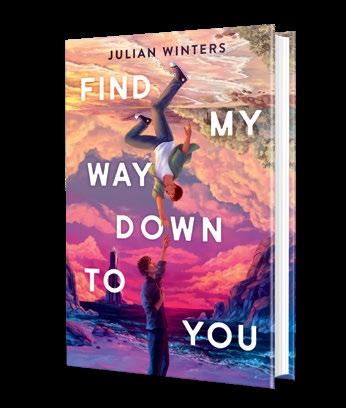
Winters, Julian | Viking | 384 pp. | $13.99 paper August 4, 2026 | 9780593624456 paper
racially diverse cast with multiple queer characters; August is Black, and Cary has pale gold skin. The worldbuilding is comfortingly familiar without being derivative, and the storytelling is
compelling. But what really shines here is Winters’ wise take on grief, which manages to feel authentically messy while hopeful. Brooding boys worth rooting for. (Fiction. 14-18)
Kirkus Star
Stealing Saint Nick: A Legendary Corpse, a Notorious Theft, and the Stories That Shape the World
Anderson, M.T. | Dutton (272 pp.) | $20.99 September 22, 2026 | 9780593699546
The author of Nicked (2024), a historical novel for adults, dishes up an equally rousing narrative based on his research on St. Nicholas, featuring flagrant heists, holy miracles, and human nature at its best and worst.
Weaving careful speculation into tours of archeological sites, close readings of (often conflicting) original accounts, and interviews with experts, Anderson retraces the ups and downs of both the legends and the remains of the fourthcentury Anatolian St. Nicholas of Myra, aka Santa Claus. He also ventures down significant byways, including a consideration of the First Crusade’s ugly legacy of religious extremism, and adds fascinating tidbits, like some male scholars’ insistence that ancient “manybreasted” statues of fertility goddess Artemis are actually swathed in sacrificial bull scrota. An entertaining account tells how rival gangs of 11th century looters both claimed to have brought the saint’s holy relics home to their cities of Bari and Venice (where they still, supposedly, reside). The author argues persuasively that Santa has gone from being a charitable miracle worker and scourge of pagan demons to a modern idol, a “lores, tinny version of the Christian God,” who exhibits godlike omniscience (“He knows if you’ve been bad or good”) and abilities. His enduring legends, Anderson insightfully reflects, challenge us to consider how older ideas of ethics, morality, and heroism relate to our own beliefs and how vitally important it is to listen to others’ stories.
Historical writing at its most thrilling and thought-provoking. (maps, author’s note, sources, end notes) (Nonfiction. 13-16)
Andrews, Claire M. | Little, Brown (416 pp.)
$19.99 | August 11, 2026 | 9780316575386
Series: Irene Adler, 2
Irene Adler investigates another spate of murders. After more than a year away from London, Irene returns at the request of her formidable grandmother, Augusta Moriarty, and Queen Victoria. Grisly murders targeting members of the monarch’s court have unsettled the city, and the queen wants Irene to discover who’s responsible. Irene stays with her best friend, Geraldine, and is soon pulled back into the dangerous world she thought she’d left behind. Irene, who’s paleskinned with dark red hair, hasn’t spoken to Sherlock Holmes since she left England, and she finds him deeply shaken after losing the coveted All Souls College seat they once competed for at Oxford. Though she asks for his help, Sherlock, who’s drowning his sorrows in drink, is far from being at his best. Complicating matters further, Queen Victoria also enlists James Moriarty, Irene’s villainous half brother, to assist in the investigation. Sherlock, who has tan skin and curly black hair, eventually agrees to join the case, and Irene once again assumes her old disguise of Isaac Holland. As she draws closer to the truth, she confronts revelations that threaten everything she holds dear. Irene and Sherlock’s relationship remains a strong point, and readers hoping for romantic developments won’t be disappointed. Although the action and mystery are less compelling, fans of the first book will likely find this story an enjoyable return to their world.
An entertaining sequel that unfortunately doesn’t hold up to the series opener. (map) (Historical mystery. 13-18)

Tell the Ghosts I’m Gone
Bayron, Kalynn | Bloomsbury (352 pp.) $20.99 | September 1, 2026 | 9781547615896
A group of young paranormal investigators takes on a case rooted in Portland, Oregon’s occult history.
Sixteenyearold Moll, like her friends and housemates—18year old Agnes, 17year old Redd, and 13 year old Ossie—is supernaturally gifted. Moll perceives people’s emotions as colorful balls of “luminous energy” and can manipulate their feelings, Agnes is psychic, Redd wields “the power of suggestion,” and Ossie can command vermin, particularly rats. The teens live with Hannigan, Moll’s mom, who conducts binding spells to prevent them from harming themselves or others. Determined to use their gifts to help people, the young people run a paranormal investigation service and publish their insights on their website, The Oculus. A coffee shop owner requests their expertise, and the group soon realizes he’s hiding a pivotal connection to a local girl’s disappearance. As they continue their investigation, they discover connections between the old mansion housing the coffee shop and Portland’s early spiritualist movement. Told from Moll’s firstperson perspective, Bayron’s latest, which centers on a largely Blackpresenting cast, offers rich characterization and a creative, modern spin on familiar horror elements. Themes of found family, grief, and power (as both a reclamation and a burden) are depicted with emotional resonance. The third act’s weighty revelations lead to an ending that leaves unanswered questions; this avoidance of a neatly wrappedup conclusion rings true to how real life rarely provides clean, self contained resolutions. A heartfelt supernatural mystery that delivers equal parts suspense and atmospheric chills. (Horror. 13-18)
Bonifacio, Ayendy | Curbstone Books/ Northwestern Univ. (192 pp.) | $26 paper August 15, 2026 | 9798899480409
A young teen mourns the death of his father. Thirteenyearold Domingo José Sepulveda Jr. begins his coming ofage narrative at his father’s funeral in New York City in 1999. The family came to the U.S. from the Dominican Republic when Domingo was 6, and Papi died of brain cancer before the age of 40. Now Domingo sees Papi in his dreams and as a waking apparition. Papi, it seems, is going to haunt him in the form of a pigeon until Domingo can process his death. Domingo’s best friend, Naño (whose profanitylaced speech adds junior high authenticity), joins his ghostly nighttime adventures in a nearby park. In the Dominican Republic, his cousin Matias possesses a magical meteorite that controls nature.
Bonifacio juxtaposes these moments of magical realism with scenes of harsh reality, such as gun violence at the local basketball courts. Domingo’s beautifully fluid, Spanishinfused, firstperson narration contains literary allusions and rich, culturally grounded dialogue and descriptions of family gettogethers (including mouthwatering food). The settings—like Domingo’s Brooklyn neighborhood and Hato Mayor in the Dominican Republic, where he lived as a small child—pulse with life and love. Domingo’s personal growth takes place over the course of a year, during which he ponders religion and faith as he tries to make sense of adult situations. Humanity shines through in this work that is notable for its cast of memorable, wellwrought characters. The pages sing with fresh, lyrical prose; a must-read. (Literary fiction. 14-18)
BLESS ME, PAPI
Brouwer, Sigmund | Orca (96 pp.) | $10.95 paper | August 18, 2026 | 9781459844339
Series: Orca Anchor
A modern retelling for striving readers of Richard Connell’s classic 1924 short story, “The Most Dangerous Game.” When 16 yearold Rain Sanger falls off the sailboat on which he’s traveling with his parents from New York to Brazil, he manages to swim to a nearby island, but the boat is long gone before anyone realizes he’s missing. The island, which has a large house that almost looks “like a castle” and has walls covered with the heads of taxidermic animals, is inhabited by the mysterious General Hoff, who speaks with an accent; his hulking Russian employee, Max; and a dozen large black dogs. The general feeds Rain lobster and gives him a Gucci suit to wear, telling him stories about his love of hunting and how easily he became bored with hunting animals that cannot “think and reason” and couldn’t be “a challenge for a smart human.” Therefore, he has invented “a dangerous game.” The general explains that he’s going to hunt Rain, but if Rain kills him or evades him for three days, he can have a phone to call his parents. Rain has one advantage: a lot of experience playing survival video games. The book has all the shock value and tension of the original but with contemporary technological updates. It would make a useful complement in classes reading the original story, but it stands on its own as a gripping, fastpaced, thoroughly enjoyable read. Characters present white. Pure, propulsive fun. (Thriller. 12-18)
Callender, Sarah | Holiday House (304 pp.) $19.99 | August 18, 2026 | 9780823455515
Big questions about where love intersects with caretaking propel this firstperson narrative that explores grief and growth.
Thirteenyearold Lucy Bains has a lot of responsibilities, from thoughtprovoking school assignments to perfecting a mime performance for an upcoming talent show. She’s also supposed to make sure her older brother, Henry, a violin prodigy who struggles with his mental health, goes to his therapy appointments and shows up for performances. Though Lucy feels like her family’s world revolves around Henry’s accomplishments and potential, his unhappiness becomes clear as his behavioral changes raise concerns, and he struggles to find joy. A car accident results in a hand injury that may affect his playing, and things get even worse. Lucy schemes to bring their longabsent father back into their lives—a secret she shares with Henry to provide him with a little hope. Instead, the disappointments pile up. Henry’s death by suicide drives mother and daughter to leave California and visit Lucy’s archaeologist dad in Peru, seeking space to help them cope. As Lucy’s dad continues to prioritize work, his friend Ernesto fills in with kind guidance, although he sometimes feels like a prop who exists to serve the whitepresenting leads. This heartfelt look at teen suicide explores the road to recovery, emphasizing the important role of familial and peer support. Debut author Callender’s strong pacing and voice transport readers into the world of her clever, selfaware lead. A complicated topic handled with tenderness. (author’s note) (Fiction. 12-15)
Cantor, Jillian | Simon Pulse/Simon & Schuster (352 pp.) | $21.99 | August 4, 2026 9798347107285
Sixteenyear old Ellie Jacobs has been in a cryogenic sleep for three years. When the U.S. elected President Lyon on an extreme antiscience platform, Ellie’s family, who are cued white, chose experimental suspension, planning to wake in 10 years’ time, after the worst had (hopefully) passed. Ellie’s 13yearold brother, Scott, ran away, joining his friend Mateo, whose family was planning to flee to Mexico, which was led by a liberal woman. Ellie awakens prematurely, to find that her parents have perished. She’s now in the Southwest ReAdmission Center, which brainwashes residents and drugs them into amnesic conformity. The outside world is unrecognizable: Women are expected to be sexy and submissive (platinum blond is now “the only acceptable hair color for a woman”); girls leave school at 14; and medical care is outlawed. When Scott and Mateo, who ended up joining a resistance group in the mountains, learn Ellie is awake, they rush to reach her before the conditioning takes hold, but someone else arrives first, and in the ensuing chaos, the three are separated and left trying to navigate and resist a hostile country while searching for each other. Cantor draws clear parallels to the current political climate, effectively showing how small, incremental steps can lead to unthinkable outcomes—an unsettling reminder of how easily extremism can take root. Her strong worldbuilding, which explores
gender but not race, establishes the outlines of an authoritarian regime while avoiding infodumps.
A chilling dystopian world that feels more like a warning than speculation. (Dystopian. 14-18)
Carson, Rae | Greenwillow Books (480 pp.) $19.99 | August 25, 2026 | 9780063244207
An innkeeper’s daughter swears allegiance to the brooding young man who saved her life.
Bria Angarsold, 17, has grown up at Three Corners Inn under Grimsvold’s twin moons. Her outgoing, talkative, and confident personality is a boon when serving travelers but doesn’t protect her when Surat Confederacy marauders attack, killing her family and hauling blond, lightskinned Bria away in a horsedrawn cart, along with the few other survivors. Titus, whose Corthan name and Dhakaran appearance (broad shoulders, amber eyes, and redbrown hair) signal his mixed heritage, kills their captors. Bria begs him to let her travel with him, becoming his shield maiden while trying to tease out his mission and history. Both fight their slowburn attraction. The pair inhabit an intricately crafted world in which each person has a “single magical Gift,” or power, which they generally keep secret; using it extracts a toll, risking Giftstarvation. Readers may wish for a map to help them envision the world’s physical layout. In this fantasydiverse world, the Suratians commonly have “deep brown skin and hair the color of charcoal,” while many Grimsvolders have light blond hair. Firstperson narrator Bria helps Titus
An unsettling reminder of how easily extremism can take root.
learn to trust, and his worldliness feeds her desire to venture beyond Grimsvold. She gradually develops a broader understanding of cultures including her own. Gentler scenes, like a satisfying makeover for a grand ball, temper the violent confrontations, and the spice level holds at a simmer, not a boil.
An entrancing, magical, and wellplotted slow-burn romance. (Fantasy romance. 14-18)
Chhita, Nina | Dutton (288 pp.) | $20.99 August 25, 2026 | 9780593620083
A sweeping history of Harlem Hospital and the Black women who broke barriers shepherding this important medical institution into the present. May Edward Chinn, “the Way Finder”; Myra Adele Logan, “the Surgeon”; Jane Cooke Wright, “the Knowledge Creator”; and Muriel Petioni, “the Connector”: Science writer and illustrator Chhita highlights these four key Black women physicians in her debut book. They’re notable for their advancements in both medical science and civil rights at Harlem Hospital during the 20th century. The institution was established as a city hospital in 1887, meaning that it was funded by taxes and didn’t charge those who couldn’t afford its services. It went on to become a place “where brilliant medical minds… pioneered new treatments for America’s leading causes of death.” The book opens with a dramatic scene from 1958, when Dr. Martin Luther King Jr. was rushed to Harlem Hospital following an assassination attempt. It goes on to tell the story of four notable women as well as doctors, nurses, and others who advanced the struggle for racial integration in medical care. The history of Harlem is a key part of the story. Biographical details and impressions from primary sources make the subjects threedimensional, and
beautiful illustrations of people and places enhance the text. The rich narrative style, compelling storytelling, and robust research add to the appeal, although the sheer number of changemakers is somewhat unwieldy.
Bright and bracing narrative nonfiction, effectively weaving together medical, Civil Rights, and Harlem history. (map, author’s note, sources, index) (Nonfiction. 13-18)
Croucher, Lex | Wednesday Books (416 pp.)
$20 | August 11, 2026 | 9781250404794
Series: The Camelot Disasters, 2
A year on from the events of Gwen & Art Are Not in Love (2023), things are awkward in Camelot.
When an uprising resulted in the death of King Allmot, 21yearold Gabriel ascended the throne—and no one was more disappointed than he. Gabriel lost his left forearm in the battle, and he’s experiencing worsening panic attacks, largely due to the pressures of ruling. He and Arthur haven’t spoken much since Gabriel paused their romantic relationship so he could “focus on being king.”
Nineteenyearold Bridget and Gwen (Gabriel’s younger sister) are still together, although Bridget has been fumbling things as she isn’t good at feelings talk. Plus, she’s frustratingly still mentally troubled by battlefield trauma. To improve his public image, Gabriel reinstates the round table of old with a new set of knights (including Arthur and Bridget) and agrees to a royal tour to investigate new “Arthurian miracles.” While on the road, they face the societal growing pains of Gabriel’s queerfriendly “freedomtolove laws.” This sequel is an indulgent, satisfying thrill ride that revisits beloved characters through new perspectives. The dual comingofage journeys contain emotional vulnerability, wry humor, a healthy helping of romance, and deft treatment of trauma. Croucher
weaves queer representation and proclamations of beautifully defiant resistance throughout the story. Bridget is of Thai descent, the earlier book established Arthur as part Iranian, and the royal siblings are cued white. Bloody fantastic. (map) (Historical romance. 14-18)
Kirkus Star
Cser, Bori | Feiwel & Friends (336 pp.)
$19.99 | August 25, 2026 | 9781250460967
A runaway princess, a city of glass and canals, and a Sapphic love triangle with teeth. After Tuli, the man she loves, kills her sister, Arabeth, in a duel, 17yearold Adeleine Ventris, DaughterHeir of Gilnea, fakes her own death and flees her queendom. She has her face mirrorwoven by an enchanter, disguising her blue eyes and copper hair; the illusion can only be undone by true love’s kiss. Reinventing herself as Del, a traveling musician armed with nothing but her lute and two rules—avoid royalty and never fall in love—she arrives in the sundrenched and rigidly socially stratified citystate of Salato, hoping to join the prestigious Guild of Bards. What she finds instead is a residency as courtbard to Clara, the young, newly widowed First of Salato, breathtakingly beautiful with her light brown skin and “cascading black curls.” Hazeleyed, oliveskinned Nasca, Clara’s brilliant, dangerous sisterinlaw, arranged the audition, and Del’s determination to keep her post drives her to help Clara navigate the political forces closing in on her throne. All the while, Nasca’s easy charm and bold proximity make Del’s second rule feel increasingly impossible to follow. Cser’s worldbuilding is lush and layered, with vividly described, Venetianinspired Salato brought to life through details like gondolas and floating markets. Del’s voice—selfaware and often sharply funny—anchors the story. She’s torn
between her two identities and her feelings for both Nasca, with her bold, electric pull, and Clara, with her quiet, treacherous gravity.
Witty, warm, and wickedly plotted. (Fantasy. 14-18)
Di Lorenzo, Melinda | Orca (128 pp.) $10.95 paper | August 18, 2026 9781459843257 | Series: Orca Soundings
A teen deals with the fallout when her abortion becomes public knowledge. As 17yearold Maura Ellard is leaving the women’s clinic where she terminated her pregnancy, she’s spotted by Maxine, a classmate she barely knows, who later violates her privacy by revealing this information on social media. Maura is comfortable with the choice she made— she’s relieved, knowing she did the right thing for herself—but she wanted to keep it private: “My body isn’t a freaking political statement.” Instead, she’s barraged by online harassment and snubbed by her best friend. She also has to deal with her mom’s and exboyfriend’s feelings. She deletes all her social media apps, a move that makes her feel like she “just ate a cup of warm chicken noodle soup.” The only person Maura feels comfortable with is Dane, a new classmate from Toronto. As her feelings for him develop, Maura faces the rumor that her pregnancy was the result of an assault and must decide how far she’ll go to prove it’s untrue. In this wellwritten work for striving readers, Maura is refreshingly straightforward about her choice to have an abortion even as she struggles with everyone else’s opinions. Whatever their own feelings on the matter, readers will sympathize with Maura when personal information is shared online without her consent and root for her to find a healthy new relationship. Most characters are cued white. A thoughtful, skillfully presented treatment of a timely topic. (resources) (Fiction. 12-18)
TRAITORS’ NEST
Dungo, AJ | Flying Eye Books (348 pp.) $21.99 paper | September 1, 2026 9781838742515
T his reissue of Dungo’s awardwinning debut from 2019 weaves a love story with an elegy—and holds both without flinching. In this graphic memoir of devastating beauty, Dungo tells two stories: He interweaves his relationship with Kristen, a passionate surfer living with cancer, with a richly researched history of surfing, tracing the sport from its early Polynesian roots through to Hawaiian athlete Duke Kahanamoku’s Olympic triumphs and Wisconsinite Tom Blake’s early20thcentury technological innovations and impact on the sport. The structural conceit is elegant—chapters of personal memoir alternate with historical interludes—and Dungo’s color palette makes the leap between timelines feel effortless and instinctive. Warm terracotta and dusty mauve suffuse the historical sequences, while the contemporary story pulses in deep teal and mint green. One page depicts precolonial Hawaiian islanders surfing and carrying goods in a composition that reads like a living frieze—paperwhite figures against a warm brown background, human and oceanic forms woven into a single continuous line—capturing at once surfing’s communal joy and its deep spiritual roots. Dungo handles grief, when it arrives, with the same honor and skill. There are no dramatic breakdowns; instead, he renders loss through evocative
scenes, such as a crowded hospital corridor and a lone surfer dwarfed by a wave. Few graphic memoirs reckon with grief this honestly or this quietly. A rare gem that truly understands and powerfully portrays grief: essential, aching, and unforgettable. (bibliography) (Graphic memoir. 14-adult)
Fischels, Michèle | Trans. by Thomas Mauer | Oni Press (208 pp.) | $29.99 August 18, 2026 | 9798894881157
Series: Outline, 1
Teens navigate relationships during their final year of high school in this graphic novel translated from German. Ben and Andreas struggle to sustain friendships with their peers and each other. Formerly close, they’ve drifted apart over the past two years. Ben’s girlfriend, Clara, recognizes that she became the third wheel, but noticing the tension between the boys, she tried hard not to “come across as the big divider.” But then Ben and Clara hit a rough patch too—he resented the fact that she felt unable to open up to him about an issue that was weighing on her. Loner Andreas is saving up for laser eye surgery. He feels stuck in an unhealthy, secretive relationship, and the story hints at his unrequited feelings for Ben. The boys juggle these issues along with constant questions about their futures after graduation. The story’s focus alternates between Ben and Andreas, providing personal insights into their situations. While the sophisticated, loosely drawn illustration style is minimalist at times, debut graphic novelist Fischels works
intricate details into the characters’ facial expressions, creating highly emotionally resonant panels that invite readers to seek plot details that aren’t explicitly stated. At times, this can lead to some confusion about the storyline. The leisurely paced, subtly told plot wraps up with a sudden and tidy conclusion, an inconsistency that creates an uneven story structure. Nevertheless, the core themes of growth and transition remain resonant. Most characters present white. An introspective, beautifully illustrated, and inspiring story. (Graphic fiction. 14-18)
Gill, Nikita | Little, Brown (384 pp.) | $19.99 September 15, 2026 | 9780316608947
Series: Goddesses of the Underworld, 2
A lifelong friendship between two women from Greek mythology unfolds in this followup to Hekate (2025). Styx, the daughter of the River God Oceanus, meets Asteria, the daughter of Oceanus’ brother Coeus, while escaping to the cave that’s her hideaway. They bond by practicing their supernatural powers in secret. Violeteyed Asteria, the Goddess of Falling Stars, initially represents everything Styx is not. Styx’s “poisongreen” hair and snakelike eyes prompt negative comments from others in her patriarchal society where powerful women are controlled through marriage and children and relegated to menial tasks. Unlike Asteria’s father, Oceanus refuses to grant his daughter goddess status; even Kronos the GodKing expects nymphs to aid the River Gods, making Styx’s brothers far more powerful than she and her sisters. As they grow up, Asteria and Styx keep each other’s secrets, witness each other’s victories and losses, and survive the shift in power from the Titans to the Olympians. Changing perspectives offer glimpses into the lives of lesserknown Greek
goddesses—and the gods who simultaneously love and fear them. Despite their immortality and supernatural powers, the goddesses are affected by the gods’ tremendous egos. Against a backdrop of war and its horrors, Styx and Asteria must protect their children. The poignant verses convey a depth of emotion familiar to women who understand the intermingled joys and pains of marriage and motherhood, and Styx’s riveting story arc prompts reflection upon the devastating societal impact of hubris.
Poignant, powerful, and sharply observed. (dramatis personae) (Verse fantasy. 13-18)
Kirkus Star
Traitors’ Nest
Hardinge, Frances | Amulet/Abrams (400 pp.) | $19.99 | September 8, 2026 9781419794148
In a world where godlike Players in the Great Game change things in an instant, 15 yearold Burr has only ever known one castle, the steady backdrop to a quiet, bucolic farming life. Players who have abandoned their earthly forms move castles about, seeking power and heedlessly bringing new masters and demands into people’s lives. Burr and his community find everything suddenly upended when the familiar brown castle they’ve always known is gone, replaced by one made of red stone. It’s “one of those unlikelihoods, like finding treasure, or being eaten by a wolf…It could happen, except it didn’t. Until all of a sudden it did.” When the new lord takes the villagers’ winter stores, leaving them to face starvation, Burr’s kindly father’s plan to secure food for his motherless children goes awry, and he’s hanged. A newly orphaned Burr, desperate to protect his younger sisters, is forced to publicly denounce his father. But when the castles shift again, it’s his turn to lead a rebellion, albeit reluctantly.
Burr must navigate the instability of shifting strongholds, precarious alliances, and potential traitors. Rich in worldbuilding, wordplay, and a deep sense of humanity, Hardinge’s latest, which is set in an alternate medieval Europe, explores complex themes, including the incredible fragility of trust, the weight of individual sacrifices for the greater good, and questions of who should be entrusted with power. Each character is so fully realized that, even when their motives are unknown, their actions ring true. Layered and lush; an expertly woven tapestry. (Fantasy. 13-adult)
Harrison, Emma | Avon A/HarperCollins (288 pp.) | $12.99 paper | August 4, 2026 9780063513433
W hen a spot opens up on the cheer squad, varsity cheer squad captain Rory doesn’t expect that soccer star Jacob will fill in—or that she’ll start falling for him.
Woodmont
High School junior Rory Graham is readying her team for a go at regionals, but her teammate Stuart DaCosta breaks his leg, forcing her to find a replacement. When the irritating class clown Jacob Reilly tries out on a dare from his friends, he makes a surprisingly competent fit—plus Coach Fitz has suspended him from the soccer team, citing his cheer tryout as evidence of a lack of commitment. So Jacob accepts the offer of the spot. Rory has a boyfriend, but Jacob has secretly been pining for her since fifth grade, and she’s eventually forced to confront the fact that maybe she has feelings for him, too. An opportunity for Jacob to return to soccer makes for a conflictridden climax: Will the cheer squad win at regionals? Will Jacob be allowed to play in a highstakes soccer game that could get them to the playoffs? Will Rory and Jacob realize their feelings are mutual? Though the plotting is predictable and the ending obvious, this is a fun, sweet
romance set in an “adorable suburb” within commuting distance of Boston and populated with likable characters. Readers will root for the lovable Jacob and feel protective of Rory, who stands up for herself at a critical moment. The main characters read white.
An enjoyable, comfortably predictable read. (Romance. 13-17)
Suhwa: Guardians of Dawn
Jae-Jones, S. | Wednesday Books (368 pp.)
$22 | August 18, 2026 | 9781250191526
Series: Guardians of Dawn, 4
M in Suhwa has spent her life hiding from reality. Zhara, Ami, and Yuli are Guardians of Dawn, legendary magicians who are reborn when the world needs them to restore balance to the forces of order and chaos. Having embraced their powers, the three girls just need to find the Guardian of Water to seal the last portal to Tiyok and defeat the Mother of Ten Thousand Demons. The problem? Suhwa is a master of illusion magic who has been keeping her true identity secret for most of her life. When a chance encounter with the Guardians of Dawn makes it clear that she can no longer hide from her destiny, Suhwa is forced to confront who she really is behind all her disguises. If they are to overcome the Mother of Ten Thousand Demons and restore balance to the Morning Realms, Zhara, Ami, Yuli, and Suhwa must combine their powers and unite the world against the forces of chaos—before everything they know is lost. This fourth volume in the East Asian–influenced Guardians of Dawn saga finishes the series on a high note, bringing the story that started with a focus on Zhara to a thrilling climax. The diverse cast of beloved characters continues to be the highlight, and their satisfying character arcs and relationships feel just as important as the magical conflict they’re entangled in.
An exhilarating series closer. (Fantasy. 13-18)
This review originally ran in the Jan. 15, 2026, issue.
A union of poems from different eras, reinterpreted through artist Peters’ comics.
The 26 entries in this graphic anthology, which is divided by seasons— summer, autumn, winter, and spring—offer a stunning ode to nature poetry. Following each graphic narrative, the full text of the poem appears, allowing readers to meet it in its original form. Peters employs a wide variety of artistic styles and media, reflecting varied themes of connectedness to nature, including celebration, grief, and love. The sense of
apprehension in Gwendolyn Brooks’ “Truth” is recast as climate anxiety, with images of natural disasters, pollution, and a calving glacier. The text within the panels in Joy Harjo’s “The Land Is a Poem” is laid out in a way that encourages readers to take time to dwell on each phrase. One section gathers moonthemed haikus by Matsuo Bashō, Masaoka Shiki, and Ueda Chōshū, translated by R.H. Blyth, offering a pause and allowing for quiet reflection. The collection includes names that will be widely familiar— like
Lynn Painter’s 2021 young-adult novel is the basis for a new Netflix feature.
Netflix is developing a film adaptation of Lynn
Langston Hughes, William Shakespeare, Emily Dickinson, Robert Burns, Robert Frost, Carl Sandburg, Christina Rossetti, and William Wordsworth— but readers also encounter Dominican exile Rhina P. Espaillat, Tang Dynasty Chinese poet Li Po, and contemporary Texan Mary Karr. While the work
Nature Poems To See By: A Comic Artist Interprets
More Great Poems
Peters, Julian Plough | 152 pp. | $29.95
March 24, 2026
9781636081748 | Series: Julian Peters Poetry Comics, 2
would have been enhanced by more contributions from the Global South, the thoughtful execution infuses the verses with new meaning and lends itself to rich discussion. A creative and beautiful celebration of nature through poetry and art. (sources) (Graphic poetry anthology. 12-18)
Painter’s Better Than the Movies , Deadline reports.
Painter’s young-adult romantic comedy, published in 2021 by Simon & Schuster, follows Liz,

Julia Hart
a high schooler who befriends her irritating next-door neighbor, Wes, in a scheme to get her old crush, Michael, to ask her to the senior prom. A critic for Kirkus wrote of the book, “Exactly what the title promises.” A sequel, Nothing Like the Movies , was published in 2024.
Julia Hart (I’m Your Woman, Hollywood Stargirl ) will direct the adaptation, which is written by Hart, Jordan Horowitz, and Heather Flanders. Better Than the Movies is the second of Painter’s books currently in development. In March, Sony Pictures announced a film adaptation of her 2025 novel, Fake Skating. Painter shared news of the Better Than the
Movies adaptation on Instagram, writing, “Five years (and one day) after BTTM was first published, I get to post that Netflix is adapting the book…? I shall now perish…I mean, just the fact that Wes and Liz are going to be on-screen in a MOVIE is cool enough, but I am OVER THE MOON that my little babies have landed in such capable hands.”—M.S.

For a review of Better Than the Movies, visit Kirkus online.



Rebecca Jenshak
Jafari, Sara | Delacorte (416 pp.) | $20.99 August 11, 2026 | 9798217028634
A British Iranian teenager discovers the existence of angels and jinn in this tale of starcrossed lovers.
Ever since Roxana’s mum died in a car accident four years ago, her father hasn’t been the same. When he accepts a job in America, it seems to offer a second chance at happiness. Roxana’s older sister, Azar, stays in England, while she and her younger brother, Ehsan, travel with Dad—although in just six weeks, Roxana will head to London for university. Since childhood, Roxana has struggled with sleep paralysis; it intensified after Mum’s death. Newly arrived in Colorado, she has a recurring nightmare in which she and a beautiful, goldenhaired boy are hunted down and die tragically—this time, they’re tied up and burned at the stake. Terrifyingly, her dreams are manifesting into reality. Not only are Roxana’s wrists bruised when she awakens, as if they’d been bound together, but she later encounters Zain, an Iranian American teen who looks exactly like the boy from her dreams. When Roxana witnesses Zain killing a creature in an alley, her life changes irrevocably. She learns about a hidden family secret, the centurieslong bond between herself and Zain—and their impending doom. Unfortunately, Zain’s character is too lightly developed to make the love story convincing. Uneven pacing and worldbuilding that feels forced and rushed result in a densely packed standalone novel that would
have benefitted from being expanded into a duology.
A story with potential that stumbles more than it rises. (Fantasy romance. 12-17)
Jenshak, Rebecca | Bloom Books (325 pp.) | $14.99 paper | August 25, 2026 9781464230677 | Series: Frost Lake High, 3
High school seniors Summer Lindsey and Rowan Blakenship have their own problems—and though it seems like a fake relationship will help, they might just discover love where they least expect it. When Oakley High soccer player Summer is forced to transfer to rival Frost Lake High for 12th grade, she worries that she’ll be surrounded by people who hate her, will get stuck sitting on the bench, and will lose out on her dream of a college soccer scholarship. Frost Lake soccer player Rowan, on the other hand, just wants his ex, Amanda, to notice him and his parents to ease up on their college pressure. It soon becomes clear that Amanda believes Summer is with Rowan—and is bothered. The pair (who are cued white) realize that by fakedating they can make Amanda jealous, while Rowan can help Summer fit in socially and use his parents’ connection to Frost Lake University to give her an edge with admissions. But the longer their ruse drags on, the less they’re pretending. This standalone series entry has exciting sports scenes and genuine high stakes as Summer tries to find her place in the team and prove herself as a player. Although the romance takes center stage,
A compelling introduction for those seeking to understand Palestine’s history.
Summer and Rowan are both navigating other challenges that will ring true for many readers.
A sports romance worth cheering for. (reading group guide) (Romance. 16-18)
Karlie, Logan | Christy Ottaviano Books (352 pp.) | $22.99 | August 4, 2026 9780316601733 | Series: The Shadow Weavers Duology, 2
Two Shadow Weavers must fight the demon king in order to save the Dream Realm and the Kingdom of Noctis.
In Dream by the Shadows (2025), Esmer Havenfall fell in love with Erebus, the Shadow Bringer, and freed him after 500 years of imprisonment, reshaping the truth of who he really was. As Shadow Weavers, Esmer and Erebus must now help the Seven— immortal Weavers who rule the Dream Realm—by defeating the demon king Raelion and stopping Corruption from destroying the world. Armed with the strength of their shadow magic and a willing legion of dreamers, Esmer and Erebus accept the Seven’s request and prepare themselves, their followers, and their realm for battle. But the quest for freedom and light brings terrible challenges, including mind control and heartbreaking betrayal. This story with a gothic atmosphere and whitepresenting leads focuses on the price of power and how corruption destroys a society, starting with its most vulnerable members; many readers will notice parallels with contemporary social and political challenges. The relationship between Esmer and Erebus reveals a balance of power; each one’s determination to save the other is a sign of their allconsuming love, which at times leaves readers breathless. Similarly, the tension over power is explored in the setting: Darkness and light do battle, while all along they need to work together. A powerful duology closer that will leave readers hopeful. (glossary, locations) (Fantasy. 14-18)
Kirkus Star
Khalidi, Rashid | Illus. by Anya Hocherman Godwin Books (224 pp.) | $25.99 | $17.99 paper | August 18, 2026 | 9781250376060 9781250376053 paper
This young readers’ adaptation of The Hundred Years’ War on Palestine (2019) offers a blend of personal history and political analysis, examining how a century of policy and conflict shaped the region. Khalidi shows that the establishment of Israel on lands that had been Palestinian resulted from a series of calculated political and imperial interventions. He surveys Palestine’s history from the late Ottoman period to the present, structuring the narrative around six “declarations of war” beginning in 1917. Khalidi focuses on the forces behind the occupation, tracing how external powers have enabled the ongoing dispossession of Palestinians. Pulling from archival sources and personal testimonies, he uses his family’s deeprooted presence in the region, dating back to the seventh century, to illustrate how political policy and “an influx of foreign settlers” reshaped daily life. The account follows developments from the collapse of Ottoman rule, through the Balfour Declaration, to Israeli statehood, showing how each phase intensified displacement of and violence toward Palestinians. Khalidi presents this history in clear language, unpacking complex terminology and historical concepts and organizing the material into short, clearly titled sections, making the detailed content accessible. The sequential structure helps readers follow shifting political trends while staying focused on the main topic. Spot art portraits, photos, maps, and text boxes add depth, and the visual design is inviting. Khalidi offers a compelling introduction for those seeking to understand Palestine’s political history and the enduring legacy of occupation. Extensively documented and
deeply personal; an essential read. (bibliography, index) (Nonfiction. 14-18)
LaRocca, Rajani | Quill Tree Books/ HarperCollins (384 pp.) | $19.99 August 11, 2026 | 9780063296879
Hindu epic meets high school drama. A mock trial becomes intensely personal for Indian American sophomore Siya Kumar when the case her team is working on is eerily similar to the circumstances of her lawyer mother’s death. She has a budding crush on goodlooking Rajiv Raghavan, school allstar and co head of the mock trial team, but things get even more complicated when truths become mired in controversies, secrets, and distrust, obscuring Siya’s foundational relationships and memories. Still, the aspiring attorney holds on to her mother’s belief in telling the truth. The story becomes entwined with that of the goddess Sita from the Ramayana . Siya’s mother loved Sita, the wife of Rama, even giving her daughter one of her many names. (Raj, coincidentally, was named after Rama.) Siya’s English teacher encourages her to consider depictions of women, and she reflects on what it takes to tell the truth, and how Sita’s “story ends with loss…not because she couldn’t prove herself a truthteller, but despite the fact that she did.” The book questions privilege, social media fallout, and bitter rivalries, but it also tenderly portrays grief and its aftermath, as the Kumars navigate changes, including Siya’s collegeaged sister Asha’s disapproval of their father’s dating the widowed Aparna Auntie. In her YA debut, LaRocca weaves a gripping narrative with sharply etched characters, a tightly written plot, and emotional highs and lows.
A sweeping, heartfelt read that celebrates the power of truth. (Fiction. 13-18)
Kirkus Star
Leavitt, Martine | Groundwood (192 pp.) $16.99 | August 4, 2026 | 9781779461094
A teenager at the end of his incarceration in juvenile detention recounts the story of his best friend, who disappeared from solitary confinement.
Shortly after Finnegan Kelly’s arrival at a youth correctional facility, he and Clemence Todd are both placed in “administrative segregation”: Clem for speaking up for his classmates, Finn for making a correctional officer uncomfortable. Clem observes, “You don’t do anything unexpected. / You don’t be tall and big. / You don’t do anything tall or big.” When the boys are released from their cells for yard time, they’re only allowed to socialize with one another. Finn, who’s been ill since he came to the facility, tells Clem that he’s found a wormhole in his cell and that he plans to travel back in time and undo the action he regrets most—and then he vanishes, leaving Clem to be questioned by a panel of adults, some wellmeaning, some hostile. Clem is a poet who narrates the past in spare, thoughtful verse while conversing with the interrogating adults in presenttense prose. Leavitt accentuates the small scale—two friends, a tiny patch of sky, a notebook, a ribbon, a dog—vividly rendering compact spaces, particularly in the verse passages. Readers are left to weigh little details as evidence for or against Finn’s claims, and though the scales tip slightly to one side, the circumstances remain refreshingly ambiguous. The boys read white.
A beautifully wrought examination of life’s gray areas and the bonds that guide us through them. (Verse fiction. 13-18)

Li, Christina | Penguin Workshop (256 pp.)
$12.99 paper | August 4, 2026 | 9798217053148
A La Jolla, California, girl’s clever dating scam spirals into something dangerous. It’s senior year, and Chinese American Amelia Wu has her hands full. With help from her best friend, Ingrid Mitchell, who reads white, she’s running an elaborate scheme in which she dates multiple highprofile guys at once while posing as different girls. She justifies it by thinking of how the material perks help her struggling single mom and her own college fund. As Mia Leung, she’s with Max Bracken, whitepresenting son of a pharmaceutical CEO; as Amy Fang, she’s dating Dalton Burke, who’s cued white and the son of a congresswoman; and as Ellie Tsai, she’s falling for Indian American tennis phenom Aditya Kalra. It’s the perfect con—until Ingrid is found dead the morning after a party they all attended. Reeling, Amelia is forced to confront the cracks in her scheme in order to get answers. She teams up with her academic rival, Korean American Jackie Anh, a student journalist and true crime junkie. As Amelia questions her boyfriends and Jackie pieces together timelines, secrets start to unravel. Keeping her identities straight becomes impossible, especially when it seems Amelia’s boyfriends might be connected to Ingrid’s death. This fastpaced thriller is packed with shocking surprises, shifting loyalties, and blurred motives. The characters are sometimes tricky to keep straight, especially as Amelia’s worlds overlap, and
one subplot adds interest but feels underdeveloped, but readers will be left guessing until the final page. Twisty and fun. (Thriller. 12-18)
Liévano, Daniel | Trans. by Eugenia Mello & Pablo Román | Unruly (200 pp.) | $22.99 August 18, 2026 | 9781592704354
An illustrated exploration of intangible elements of daily life.
Imagine if concepts were embodied physically—what might they look like? This translated title from Colombian artist Liévano invites readers to consider the unseen, using images to convey insights into five abstract parts of life: happiness, memories, dreams, gravity, and reality. The fullcolor artwork, sometimes formatted in comic panels, sometimes taking up a full page or a twopage spread, is accompanied by brief, enigmatic statements that invite readers to reflect; for example, “The impossible purpose of memories is to fill a gap that can never be filled…and is forever filling up.” These statements seem to ask readers not necessarily to fully understand or even agree with the author but to consider everyday ideas in a new light or from a different angle. Rereading this work will bring deeper insights and connection. The abstracted silhouettes of solidcolored, malepresenting figures convey a calm consideration of ideas and relationships, without emotional intensity or a dramatic narrative.
Liévano’s color palette and artistic styles
The ferocity of Harper’s narration makes for an unputdownable read.
BOUND BY FURY
vary, from solid red, yellow, orange, blue, black, and white forms and lines that evoke a surreal landscape for happiness to diffuse, ethereal shapes on cream, white, and black backgrounds for memories. Fans of graphic design, or those fond of Edwin A. Abbott’s 1884 classic, Flatland: A Romance of Many Dimensions, will likely enjoy this unique investigation of the impalpable. Spare text and intriguing illustrations bring this philosophical contemplation to life. (Nonfiction. 14-adult)
Mather, Adriana | Feiwel & Friends (368 pp.) $20.99 | August 4, 2026 | 9781250408419
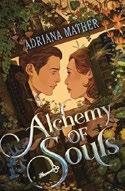
Two magical teens from opposite ends of the social spectrum must summon a legendary artifact or suffer serious consequences. In this world, there are the magicless and those who are part of magical society, which is itself divided into privileged, powerful Mages, discriminatedagainst Laborers, and violent, outcast Lawless. Hardworking Eloise Belrose hopes to become the first in her Laboring family to be admitted to the prestigious University of Magical Arts, while handsome, talented Grayson Stone, the High Chancellor’s nephew, is expected to be marked Gifted and admitted to all four university guilds: Alchemy, Illusion, Botany, and Elemental. Shockingly, their graduation exam mysteriously binds them and briefly manifests the Archive Key, which unlocks a hidden room containing powerful, dangerous books. Ordered to procure the Key within two weeks, Eloise and Grayson are forced into constant, surveilled proximity as the ruthless Chancellor prepares to conquer the Lawless. The duo’s reluctant alliance quickly turns into a fakedating cover story that develops into real feelings. The wellpaced plot combines familiar elements—rigid social hierarchies, elite magical schooling, a simmering rebellion, and secret motives—into a gripping, genrebending pageturner.
Mather thoughtfully explores class politics and injustice, but the antagonist and worldbuilding would have benefitted from more nuanced development. Eloise and Grayson (both cued white) make an appealing couple whose banterfilled dialogue entertains, and a diverse supporting cast, especially Eloise’s scenestealing queer best friend, Maggie, adds rideordie humor and heart. Spellbinding fun with slow-burn sparks, intriguing twists, and high-stakes action. (author’s note) (Fantasy romance. 14-18)
Monét, Noelle | McElderry (496 pp.)
$21.99 | August 18, 2026 | 9781665979856
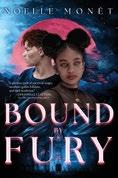
R age, grief, and inherited witchcraft collide in the shadows of the Appa lachian mountains.
Harper Scott has always loved Earnest, North Carolina, the small town her grandmother Gigi calls home; Gigi reminds Harper that “us Black folk were here first.” Gigi’s stories of women with magic in their blood feel less like fiction than inheritance. When Gigi dies on the morning of Harper’s 16th birthday, grief cracks open something lying dormant inside her. A few months ago, Harper received a mysterious letter offering a fullride scholarship to Black Mountain Academy in Earnest, the alma mater Gigi “talked about like it was a blight” and which is rumored to be haunted. Gigi said it was a bad idea, but now her spirit appears, telling Harper that she’s “fated” and that she should attend. Harper steps into a birthright she’s only beginning to understand, and in the process faces two classmates who are estranged friends she wronged the summer before: Malachi Matsoukas, who radiates hostility, and his cousin Lucas, her crush. Both boys, one cued white and one cued multiracial, are tied to the school whose history is soaked in the blood of 12 witches. The ferocity of Harper’s narration makes for an unputdownable read. Debut author Monét’s series opener handles race and
place with raw honesty, grounding Harper’s magical awakening in the realities of being a Black girl. The love triangle and some supporting characters are less vividly drawn, but the astrologyinfused worldbuilding and layered generational dynamics add genuine specificity.
Confident and evocative. (map) (Fantasy. 14-18)
Peterson, Rachel | Simon Pulse/Simon & Schuster (304 pp.) | $19.99 | August 4, 2026
9798347109869
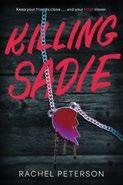
Two high schoolers die during a house party in this debut centering on a violent double murder that’s as twisted as any truecrime story. Popular girl Sadie Cooper has been stabbed to death. Her boyfriend, Ben Carrera, claims that he found loner Mason Vreeland standing over her body, before he strangled Mason in selfdefense. The case seems straightforward—unless there’s more going on than the teens are letting on. Doubt and tension build as the full story is revealed primarily through chapters narrated by Ben; Sadie’s twin, Jayne; and Sadie’s best friend, Liz Stratton, through flashbacks and interviews at the police station. Ben’s report is mostly corroborated by Jayne, and Liz reluctantly shares information. But there are inconsistencies in their accounts, and it’s unclear who is a reliable witness. Readers will be gripped as they try to determine whether these were crimes of passion or premeditated murders. Slowly, the characters, who largely present white, reveal more about themselves and their relationships. Most unsettling and enlightening is “Act Three: Dead Girl Talking,” which introduces Sadie’s narration of events. Rivalry, jealousy, and betrayal all play a role in the murders. The creepiness factor ramps up as the story progresses in the leadup to a chilling conclusion. A stone-cold shocker of a tale. (Mystery. 14-18)
The City of Slaughter
Polydoros, Aden | Harper/HarperCollins (384 pp.) | $19.99 | August 25, 2026
9781335013910
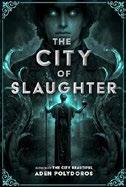
Returning to Chicago after the 1893 World’s Fair, this standalone companion to The City Beautiful (2021) follows Frankie Portnoy as he navigates the city’s criminal underworld and his relationship with Alter Rosen. Frankie and Alter have turned over a new leaf: Giving up thieving, they’ve gone into business as private detectives. One day they stumble across a rich man’s missing cat, but when the owner offers them much less than the $10 promised reward, Frankie steals a bowl on display in his home. When he breaks it, a shard gets lodged in his palm. Soon after, Frankie falls deep into selfloathing, finding it impossible to give Alter the love he deserves—and then people around him start dying in horrific ways. Frankie isn’t sure if he’s responsible for these crimes, or if he’s possessed by a dybbuk like the one that once haunted Alter. When an old friend and employee of Frankie’s goes missing, Frankie searches for him, meeting unsavory characters and often ending up fighting for his life. This gothic fantasy steeped in Jewish folklore is a slowpaced, horrorfilled bloodbath with a narrator readers may find it difficult to spend time with. While Frankie’s character is fully realized, and the worldbuilding is impeccably detailed, Frankie’s cold point of view is a drastic departure from Alter’s hopeful, passionate narrative, and the story feels in need of a more substantial anchor. Offers a strong sense of place but is lacking in heart. (content warning, author’s note) (Historical fantasy. 15-18)

Pucella Winans, Justine | Bloomsbury (304 pp.)
$20.99 | September 1, 2026 | 9781547618811
An evil spirit accidentally possesses the body of her crush’s boyfriend. Ever since 15yearold Schuyler Thompson died in a car accident, she’s existed as a ghost, confined to the street on which she lived and died, sometimes overcome with bloodlust that results in violent outbursts. Most of her time, though, is spent pining after Wren Castillo, a current occupant of Schuyler’s former home, and wondering how someone so beautiful and amazing could have such an awful boyfriend. Enzo Altamura sometimes reminds Schuyler of her own toxic exboyfriend whom she’d rather not think about at all. When, in a fit of anger, she unintentionally inhabits Enzo’s body, Schuyler is given a second chance at life and love. But possession comes with alarming side effects, and when another evil spirit appears in the community, everyone Schuyler cares about ends up in danger. Body horror and humor are deftly intermingled in this fastpaced story that thoughtfully confronts trauma and guilt. Pucella Winans uses body possession as a vehicle to explore gender identity as Schuyler comes to terms with genderfluidity. The supportive, familial relationship Schuyler has with Enzo’s brother is stronger and more memorable than the romance; Wren feels underdeveloped, but Schuyler’s sharp yet affable firstperson narration shines throughout. Certain elements of the ending feel too easy, but Schuyler’s growth is wellearned. Most main
characters are white, other than Wren, who has brown skin.
Meaningful topics are embedded in a gory, entertaining tale. (author’s note) (Horror. 14-18)
Scott, Emma | Bloom Books (432 pp.)
$14.99 paper | July 28, 2026 | 9781464272813
Series: Castle Hill Academy, 2
Two teenagers face challenges during their senior year at Rhode Island’s prestigious Castle Hill Academy. At 15, wealthy Orion Mercer’s future in his family’s manufacturing business seems predetermined; British Orion, whose mum is white and father is Nigerian, is expected to follow the path laid out for him, whether he wants it or not. Meanwhile, whitepresenting Harper Bennett, who’s never known her father, grew up with her struggling single mom and little half brother. She believes Castle Hill is the key to an elite college and a brighter future. When their paths cross, Harper is immediately smitten by the “exceptionally handsome and witty” Orion, but she knows she doesn’t belong among the “beautiful Richies.” Harper is desperate to win a prestigious science competition with a large cash prize; Orion hopes the entry deadline passes before his parents notice and pressure him about it. As tensions at home rise over Harper’s mom’s drinking, Harper struggles even more with fitting in socially. Meanwhile, Orion rediscovers his passion for piano, and his ADHD grows increasingly difficult to manage. The two keep being pulled back together, offering mutual support through their
challenges. This wellcrafted, emotionally intense novel told in the leads’ firstperson voices doesn’t shy away from complex topics. Scott’s wellrounded characters will draw readers in. This sequel revisits the events of the first book but can be enjoyed as a standalone. Cinematic prose thoughtfully highlights hard-hitting challenges. (content warning, resources) (Romance. 16-18)
Stiefvater, Maggie | Adapt. by Sas Milledge Illus. by Sas Milledge | Colors by Abel Ko Viking (288 pp.) | $25.99 | $17.99 paper August 4, 2026 | 9780593621226 9780593621233 paper | Series: The Raven Cycle: The Graphic Novels, 2 Book 2 of The Raven Cycle receives a dreamy, fullcolor graphic adaptation. Readers return to Henrietta, where Blue, Gansey, Ronan, Adam, and Noah are dealing with the fallout of awakening the ley line beneath which, legend holds, the mystical king Glendower lies buried. This installment primarily follows Ronan (who’s capable of conjuring objects from his dreams) as he faces a volatile rival who tempts and goads him toward dangerous uses of his power. Other characters walk their own complicated pathways: Adam, who awakened the ley line, grapples with newly developing psychic abilities. Gansey, still focused on finding Glendower, must also clumsily navigate the widening class divide between himself and Adam. Blue, prophesied to mark her true love for death with a kiss, struggles to untangle her feelings for both Adam and Gansey. Noah, revealed to be a ghost in the first book, is losing his connection to the physical world. Meanwhile, a mysterious older man arrives in town searching for something called the Greywaren, with Ronan firmly in his sights. Full color illustrations bring the story’s settings to life, from the witchy warmth of the Sargent house to
Henrietta’s pastoral beauty. But the adaptation has more difficulty capturing the characters’ inner lives and portraying more abstract plot elements, which mutes some key emotional beats from the original novel. Most principal characters appear white, other than Blue, who has dark brown skin.
A vividly rendered sequel. (Graphic fantasy. 12-18)
Valdez, Kiara | Illus. by Diana Tsai Santos HarperAlley (240 pp.) | $26.99 August 4, 2026 | 9780063254534
In this graphic memoir, an AfroDominican American teen from New York City chronicles her high school experience at Phillips Academy Andover, a wealthy, predominately white and Asian institution.
Kiara is away from home for the first time, and she worries that “everyone else is clicking with each other.” She’s used to having lots of friends—maybe she’s not trying hard enough to fit in? She’s also “used to being around only Latino and Black people from growing up in Washington Heights” and feels like her status as someone on full financial aid makes her stand out. Kiara meets other Black and brown classmates and learns about SLAM, the school step team, though she has interests—like anime and learning Japanese—that don’t always align with theirs. Her friend Samara encourages her to audition for SLAM, and joining the group boosts her confidence. While Kiara becomes increasingly aware of troubling racial dynamics at Andover, from unfair disciplinary policies to microaggressions (“Most of these white kids really don’t think for one second about the hurtful crap leaving their mouths”), she attempts to rise above it all. Valdez’s graphic novel debut provides thoughtful glimpses into her attempts to settle into a new environment that wasn’t designed with
her in mind. Readers will identify with the outsider perspective explored throughout the narrative. Tsai Santos’ color palette and illustration are reminiscent of cartoons from the early 2000s. Shares a meaningful message of growth and self-discovery. (author’s note, cover sketches) (Graphic memoir. 14-18)
Watchorn, Morgan J. | Knopf (416 pp.)
$19.99 | August 4, 2026 | 9780593708446
In the kingdom of Florent, 17yearold Abel Estellio’s reputation as a dragon slayer is in shambles.
Abel’s 7yearold brother, Micah, has been dragon cursed, an affliction placed on humankind by Diu, WarTorn God of the Suns, as a punishment for their greed. A cursed person is transformed into a murderous dragon during a monthly solar event, involuntarily and unknowingly wreaking destruction. Rather than kill his brother’s dragon form, goldenhaired, oliveskinned Abel goes against his dragon slayer oath, performing experiments in an attempt to cure Micah and documenting his findings in a journal. This earns him the ire and mistrust of the Slayers Guild and the citizens of Florent. Short on money and eager to repair his reputation, Abel continues hunting dragons. Eighteenyearold Claire Belgard, who’s raven haired and paleskinned, is hiding her own affliction with the dragon curse. Having killed her father and razed the family farm, Claire is hopeful that Abel’s research might offer her a cure. Under the pretense of knowing the identity of his latest bounty, Claire strikes up an acquaintance with Abel and insists on accompanying him on his mission, awaiting the opportunity to inspect his journal. Although the novel feels overlong, the grim scenarios unfolding against intriguing worldbuilding add freshness and originality. Bold, resolute Claire contrasts well with the more reserved and morally complex
Abel, enhancing the development of their ensuing romance.
Dark, tangled, and enticing.
(map, The Nine Rules of Dragon Hunting) (Fantasy. 14-18)
Wilson, David | Roaring Brook Press (320 pp.) $26.99 | $18.99 paper | August 4, 2026 9781250896742 | 9781250896735 paper
High school senior Kit is forced to confront the hidden darkness in his seemingly perfect life. Popular football player Kit Summers struggles internally with “the pressure to be everything for everyone,” like when he attends a party in the woods out of obligation. When the police show up, Kit hides inside a hollow tree, only to be unexpectedly joined by Emma, his childhood best friend. Five years ago, Emma moved away and cut all communication, and a devastated Kit coped by reinventing himself. Now she’s back and Kit is uncertain how to find a place in his life for her. Concerningly, Emma’s return coincides with the sudden onset of disturbing visions. Without warning, Kit sinks into a dark, liminal realm where an ominous, skeletal figure shows him dead or soontobe dead individuals. When Kit snaps back to reality—finding himself in the middle of a car accident or playing a football game— he’s haunted by these scenes of death. As the figure becomes increasingly sinister, Kit must unravel the visions’ meaning. The illustrations, a mix of digital and watercolor art, dramatically shift from traditional comic panels in muted palettes to dark and dynamic fullbleed layouts, transporting readers between worlds. Set against a backdrop of cornfields and homecoming, Wilson’s authorillustrator debut is a modernized gothic romance anchored by Kit’s relatable efforts to find independence, love, and belonging. Kit and Emma present white.
Compelling: Readers will swoon and shiver in equal measure. (content warning) (Graphic paranormal. 12-18)
MEMORABLE COMING-OUT
stories such as Sarah Waters’ Tipping the Velvet, Tucker Shaw’s When You Call My Name, and Kai Cheng Thom’s Fierce Femmes and Notorious Liars are a beloved subset of the coming-of-age tale; they capture the ways that queer identity emerges, sometimes with a bang (or a Madonna banger). But what happens to our hero afterward? In these LGBTQ+ memoirs, we get the comingout tale, and then we learn what happens next.
Melissa Carter was Atlanta’s first out lesbian on a morning radio show (the popular, long-running The Bert Show). In Facing Inward, she dishes about guests RuPaul, David Byrne, Pink (whom she fake kissed), and others. The celeb goss adds some comic relief to her account of growing up queer in the South while living with a chronic illness and, as an adult, facing kidney failure and getting a kidney transplant. Our reviewer says, “Carter’s prose throughout is clear and well-balanced between moments of levity and sincerity. (A scene in which the author comes out to her father underneath the glow of a Wendy’s sign is particularly poignant.)” The
reviewer adds that “the work is valuable as a piece of well-wrought introspection and as a look at queer life in the 1990s and 2000s.”
Lisa K. Richter, a classical pianist, documents her late-in-life coming out as a lesbian in the starred Fly, My Darling The author was a financially comfortable, middleaged mom who wasn’t fulfilled in her heterosexual marriage and didn’t know why. Based in Southern California, she began taking piano lessons with Lynda Roth, a well-known performer and composer who lived in Laguna Beach. The women connected over music, especially jazz, and the author soon left her husband. When Roth was diagnosed with lung cancer, Richter and Roth’s friends cared for her until her death,


which the author documents in her memoir. Fly, My Darling “eschews autobiographical conventions— there are few name-drops of musical cohorts or cultural touchpoints (the Barack Obama presidential election receives scant acknowledgment); this is a remembrance shorn of unnecessary baggage or repetition, reduced to brief scenes and lyrical impressions,” notes our reviewer. “A graceful and spare memoir of personal transformation and loss.”
When Gil Z. Hochberg, a professor of Hebrew and visual studies, comparative literature, and Middle East studies at Columbia University, came out to her father, also a scholar, he was understanding. He had news for her, too. They were in Tel Aviv, where her father lived and taught; he told her, “I am the Messiah…Your father was chosen…I am the real
Messiah.” Yosef Hochberg was a prominent statistician who’d made significant advancements in his field and was also a loving father. In My Father, The Messiah, Hochberg writes movingly about how Yosef’s and her own mental health struggles affected their tightly knit relationship. Our starred review says, “In this deeply insightful book about memory and discovery, Hochberg ruminates on her father’s final days and deteriorating health in a manner that many readers will find relatable. Over the course of the book, the interplay of various elements of Hochberg’s and her dad’s lives yields a compelling portrait of someone slowly coming to terms with the death of a loved one.”
Chaya Schechner is the president of Kirkus Indie.
Compelling stories explore hard lives and hope in a landscape as dangerous as it is enchanting.
Most of the pieces in Hicks’ debut collection are told from the points of view of girls or young women; all share a Southwestern setting and convey the authenticity of felt experience. Grief and loss are recurring themes (“Carriage” details the loss of a pregnancy); transformation is another (in “Rock Collection,” tokens of memory become a protective fortress). A few stories hint at the supernatural (the imagined wolf in “If Only I Could Tell You”), while others, like “My Drugstore Queen” and “Farrago,” highlight fleeting moments of daily life. “Drill,” which is about a school lockdown, and
“Extraterrestre,” in which a young girl secretly aids a fugitive immigrant, address up-to-the-minute social issues, and women stand up to violent men in “Cowboy Titanium,” “Little Lady,” and “PickMe-Girl.” Flash fiction pieces less than two pages long pack a powerful emotional punch and make up more than half the collection. Hicks’ writing is as spare and stripped to the essentials as the desert her stories inhabit. One brief piece, “There Is No Advice I’d Give My 16-Year-Old Self,” is almost a prose poem. In the title entry, a mother tells her daughter, “We should howl and get lost and find ourselves again and again.” Despite their brevity, the stories are packed with biting social
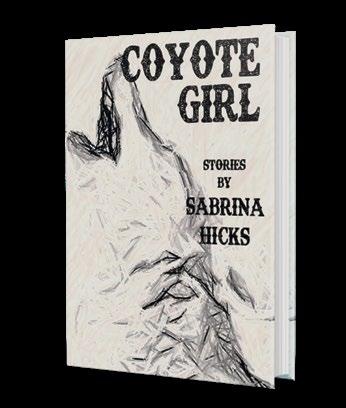
commentary (in one of the longer stories, rivalry between a pair of fake cowboys in a “Wild West” theme park leads to tragedy), distinctive characters (tough-talking Clementine and sweet Dally take a Thelma and Louise –style joyride to the Grand Canyon in “Rattlesnakes”), and vivid imagery: In “Blink,” a
school bus driver “would pick us up and drop us off like he was in the sanitation business”; a girl engaged in a staring contest sees “the pasture, the cows, the rolling hills beyond, and all the blue above” reflected in her opponent’s dark eyes. A stunning collection of short fiction set in the American Southwest.
Agals, James Nicholas | Spines (262 pp.)
$13.99 paper | August 11, 2025
9798899502125
In Agals’ middlegrade novel, a seventh grader’s thorny problems multiply when he discovers adults gathering for a secret ritual. Life is complicated enough for 13-year-old paperboy Eddie Diamantopoulos without throwing a possibly bloodthirsty cult into the mix: Two guys keep picking on him in school, he’s in danger of flunking English, and he’s bothered that he and the popular girl he’s taking to the school dance don’t have much to talk about. When Eddie chances upon what appears to be a weird, ritualistic setup involving missing dogs in a customer’s garage, he and his friends decide to investigate. Eddie, outwardly confident and self-sufficient but inwardly unsure, is the appealing first-person narrator of this Queens, New York–set narrative, which takes place at the end of 1959 and into 1960 (a time characterized by wall-mounted telephones, Schwinn bikes, saddle shoes, the Lindy hop, Lawrence Welk on TV, and daily print newspapers delivered by kids on bikes). The author’s first novel, Growing Up on the Appalachian Trail (2022), was aimed at younger children; here, Agals offers older readers more serious fare, at times with an overtly instructive tone as Eddie faces an array of life lessons, including his realization that his past acting-out in anger was a reaction to his parents’ violent arguments and bitter divorce. (“I’m a little better now, just a little,” he asserts.) Eddie’s developing selfawareness, reflected in his thoughts and actions, effectively underscores the novel’s theme: the acceptance of diversity in people and religions, which is fostered by communication, empathy, and education. Illustrating this theme, a Jewish father doesn’t want his daughter dating Eddie’s non-Jewish friend; Eddie, who is white and Protestant, loses his Catholic girlfriend to a Catholic boy and comes to
These uneasy tales will make readers ponder as much as they shiver.
THE GOSPELS OF EXTINCTION
understand why the two Black boys in his school have been picking on him. Eddie and his friends’ misinterpretation of a spiritual rite sparks a conversation about world religions, including Shintoism, which is practiced by Eddie’s Japanese friend.
An authentic teen protagonist faces and learns from realistic life challenges.
Augenstein, Seth | Lost Meridian Press (324 pp.) | June 1, 2026 | 9798993460093
Ghosts, killers, and more haunt Augenstein’s unnerving short story collection. While many of the 21 stories in this work feature ghastly sights, they’re grounded in a strong sense of family. In “Inheritance,” a father with stage 4 cancer suddenly shows up at his estranged son’s house. He’s there to clear the air, though his real purpose involves his grandson and a rather dark family tradition. “Vantage” is spine-tingling before the true horror even reveals itself. It’s Sebastian Bates’ weekend with his young daughter, Bree. Things are going just fine for the Manhattanite until he gets a package containing the personal effects of his Uncle Joe, a murder suspect who died nearly two decades earlier in the 9/11 attacks; one of those items then takes the story into decidedly creepy territory. People throughout the tales confront serial murderers, ghosts, and various supernatural entities—in one entry, a company’s rogue artificial intelligence offs its employees. As in much great horror fiction, some unexpected turns and ambiguous endings offer little in the way of hope. The wonderfully drawn
characters, however, ensure that not every aspect of this collection is bleak. One highlight is the closing “Bedtime Story,” in which a father has time for one more tale for little Frances. But the girl has one of her own: Every night at Camp Ninhiluwe, she and her fellow campers play a game that’s basically hide-and-seek in the dark. Those who are found get “The Mark,” which is just a blotch made from squished berries. So why are the marked kids “acting weird”?
Augenstein’s taut, indelible stories, many of which unfold on the U.S. East Coast, showcase characters obsessed with the strange and unknown. Among the cast is a reporter determined to convince a death row inmate to reveal where her victims are buried and a new homeowner who must know why his dog is terrified of the wooded backyard. The author plays with narrative styles (like flash fiction) and perspectives. In the case of “No Man’s Land,” a grandfather tells his teen grandson a war story, which begins with another person’s harrowing account of World War I. The narrator’s world in “Something Else Is Slipping Away,” including the scary man standing on his porch, isn’t quite what it seems. These stories are just as smart as they are frightening; some weave in American history or such scientific details as Todd’s surprising discovery at his lab in “The Old Breed.” The characters aren’t dense—they find themselves in unspeakable danger after trusting the wrong person or luxuriating in a false sense of safety. Augenstein’s prose zeroes in on the atmosphere, as in this description of friends trekking to a cemetery in the forest: “The crisp smell of decay hung on the unseasonably warm air. They were sweating in minutes, removing sweatshirts and hats quickly. Even in the mid-afternoon sun, the hulking ruins of the structures alongside the path were shadowy monoliths, inscrutable.” Even the elements of more overt
horror—teeth, plentiful knives, a chainsaw—never tip over into excess. These uneasy tales will make readers ponder as much as they shiver.
Bernstein, Barbara | Self (292 pp.) | $33.80 paper | November 12, 2024 | 9798328426169
A manual that teaches the salsa and rueda de casino dance styles.
D.C.-based Bernstein spent her life as a math teacher at a small college in Maryland before falling in love with dance and committing to teaching salsa and rueda de casino for a living. After more than 20 years as a full-time dance teacher, Bernstein compiled her salsa knowledge for this comprehensive dance guidebook. She begins by defining salsa and rueda de casino dance moves and then describing them in detail, from the basics, like enchúfala, an underarm turn, to the more advanced, like sabrosura, a move that translates to “tastiness.” The author’s descriptions of these moves, included with their English translations, dive deep into the rhythm and how specific steps relate to the beat of the music. This guide also covers personal dance styles and how dancers can alter common turns to make them their own. A tip for the carnaval move, for example, is to adjust the dance circle when performing at a club so that “flashy arm movements are visible to those watching outside of the circle.” Bernstein notes that dance is essential to our well-being, and her enthusiasm for it is evident via the humorous “Side Notes” and “Tips” scattered throughout the guide, including pictures of joyful dancers from the author’s dance studio; she also includes a recipe for flan. Most interesting is the discussion of leaders and followers. In modern salsa and rueda de casino, leaders and followers aren’t gendered—all dancers learn both parts. Leading versus following is a tricky
nuance that takes practice. For example, followers should “feel” what the leader is communicating and “make no assumptions.” To understand the instruction fully, readers must refer to the linked videos. Visual learners will especially benefit from toggling between the book and the videos or adding in-person dance classes to their dance education. A comprehensive, hybrid guidebook for enthusiastic students of dance.
Betancourt, Roland | Princeton Univ. Press (296 pp.) | $32 paper | January 31, 2023 9780691243542
An art historian offers a fresh perspective on sexuality, gender, and race in the Byzantine Empire. Betancourt’s refreshingly revisionist work opens with an exploration of the literary and artistic representations of the sixth-century Mary of Egypt. She was often described as a sex worker prior to her conversion and subsequent sainthood; the earliest manuscripts about her life emphasize, in her own words, her carnal desires, which turned her “lust into a free gift.” Her sexual past was often described at the time in lurid specificity, and her iconography in Byzantine art featured her body covered in hair similar to that of wild beasts. Drawing on contemporary intersectional theory, the author makes a convincing case that Mary (and her thematic counterpart, Mary Magdalene) represents a transmasculine depiction often ignored in the scholarship of the history of the Middle Ages. This intersectional approach to the period explores themes of “slut-shaming” women who defied Christian sexual norms alongside transgender monks and queer-coded representations of the Apostle Thomas. Betancourt also discusses race intersecting with gender, as in the legacy of the ancient Greek theory
of racial difference in which trans monks were depicted as desexualized “Ethiopians” (a catch-all term denoting racial difference). The author also provides a compelling chapter-length survey of how notions of sexual consent entered into “the very heart of Christian ethics and theology,” as reflected in depictions of the Virgin Mary, whose consent to bear the Christ child became a central narrative component of her hagiography. With a doctorate from Yale in the history of art, Betancourt currently serves as Chancellor’s Professor of Art History at the University of California, Irvine. In this impressively researched book, backed by more than 500 endnotes that demonstrate a command of both Byzantine history and contemporary gender and race theory, the author makes a compelling case for the continued relevance of medieval history in present-day conversations about intersectional identities, histories, and depictions. The volume’s academic heft is counterbalanced by Betancourt’s accessible writing style, and the text is supplemented by photographs of historic art.
A well-researched, surprisingly relevant history of sexuality, gender, and race in the Middle Ages.
Boeglin, Lisa | Illus. by Anastasiia Tsipan Solander Press (39 pp.) | $12.99 paper March 5, 2026 | 9781966675761
Boeglin’s nonfiction picture book tells of how an enslaved Black man and a French nobleman worked together to help turn the tide of the Revolutionary War. The Marquis de Lafayette believes in freedom for all people, so he sails across the Atlantic Ocean to help the American colonists fight their War of Independence; there, James is in bondage, enslaved by an army-supplies contractor. When Lafayette and James meet, the marquis treats the enslaved man with respect and finds a
way to recruit him to pose as a runaway and spy on the British. James later passes on information that allows Gen. George Washington to trap the British army at Yorktown. After the war, James is refused his freedom by the Virginia General Assembly; two years later, he petitions a second time, this time with Lafayette’s backing, and is successful; James will then take the surname Lafayette. Boeglin narrates the story in straightforward, informative prose, trusting in its inherent power to educate and inspire. Many youngsters may have their eyes opened, not merely by the idea of an enslaved person helping to bring about his country’s liberation, but also by the fact that James remains largely unheralded. Tsipan’s watercolor-style illustrations beautifully capture the period setting and its personalities. The book concludes with a timeline and an extensive bibliography. An engaging piece of history for kids, long overdue.
Buxton, Rebecca & Samuel Ritholtz Univ. of California (256 pp.) | $29.95 paper January 13, 2026 | 9780520391765
Buxton and Ritholtz discuss issues involving LGBTQ+ asylum in this scholarly work. When considering the problem of displacement, it’s easy to get caught up in academic debates about legal rights or political institutions while overlooking the actual lived experience of displaced people. In this work, political philosopher Buxton and scholar of theoretical and empirical politics Ritholtz argue that the political theory of refuge must contend with conditions as they exist on the front lines of displacement. “By centering the experiences of the queer and trans displaced,” the authors write in their introduction, “we can illuminate the complexities and contradictions of seeking sanctuary in a persistently exclusionary global refugee regime.” The
authors analyze, through an intersectional lens, the myriad forces that drive queer and trans displacement, often following the displaced over borders and into new lands. Readers meet Victor, a gay man from Nigeria who fled to the United Kingdom following attempts by his community to change his sexual orientation via starvation and exorcism; Judis, a trans woman from Ukraine who was unable to flee the country with other women during the Russian invasion due to border guards’ insistence that she was a man; and Victoria, an undocumented immigrant trans woman raised in the United States who was sent to a men’s detention facility and fatally denied her HIV medication. The authors propose new ways to approach the discussion in the hope of creating better outcomes for people ensnared in various patterns of persecution. Buxton and Ritholtz write for an academic audience, and their prose reflects their immersion in the language of theory. Even so, a sincere appreciation for the experiences of their subjects shines through the text. “Though we have not experienced anything close to what those in the stories that line our pages have,” they write, “we recognize the wisdom in their words and the theory in their actions.” Serious readers will appreciate this wide-ranging work. A trenchant analysis of the forces surrounding queer displacement.
Cann, Kevin | Platonic Surrealism Press (250 pp.) | $15.99 paper | February 23, 2026 9781971853086
Three friends in their 60s dare to disrupt their routine in Cann’s literary novel, the first in a trilogy. Retired Navy mechanic Jeb Cunningham lives with his wife, Mae, in a ranch house with green aluminum siding and a fish-shaped mailbox on Millbrook Street in Peculiar, California.
Their best friend, Kev, an author who can no longer find a publisher for his expansive works of philosophy, lives two houses down. Kev’s eyesight has worsened, so Jeb and Mae have taken to acting as his chauffeur, driving him to, among other places, his favorite buffet restaurant: Sizzlin’ Meats and Salads. Jeb is also a fan—he likes the meatballs, which he always eats without spaghetti—but Jeb and Mae never go to Sizzlin’ Meats and Salads without Kev. That is, until one night when, without meaning to, they do just that. Even stranger, the eccentric (and physically large) Taylor D., whose sprawling, machine-filled property is the subject of local rumor and who seems to have an aversion to the restaurant, is seen seated inside for the first time. He’s with an unknown Frenchman, and they seem to be talking about various phenomena, measurements, and “the “Brazilian case.” Mae decides that the next time they take Kev out to dinner, it won’t be to Sizzlin’ Meats and Salads, but to the sushi place across town. Though none of these irregularities feel significant at the time, they soon unleash a series of further weird happenings involving mechanical failures, technological marvels, and, to borrow a description from one of Kev’s unpublished books, “the phenomenology of free-falling consciousness.” Cann’s wry, deliberative prose is filled with fine-tuned bits of wisdom, as here, when he describes how the Cunninghams look after Kev: “They did this because they loved him, in the way that long friendships produce love: not as a feeling but as an infrastructure.” Cann’s interest in routine and aberration informs the recursive nature of the plot and writing, and patient readers will delight in the way things eventually go haywire. A masterful rumination on routine, dependency, and openness to new experiences.

For more Indie content, visit Kirkus online.
Casey, Jane | Serindia Publications (1134 pp.) | $720.40 | November 1, 2023
9781956165029

Casey, an art historian, attempts to reconcile dating discrepancies in Tibetan Taklung paintings in this nonfiction work.
Taklung paintings refer to a group of artworks associated with central Tibet’s Taklung Monastery and Riwoche Monastery (also known as “lower Taklung”). Founded in 1180 C.E. by Taklung Thangpa Chenpo, the Taklung Monastery grew to become a massive institution by the early 20th century with an illustrious history as the home of thousands of Tibetan Buddhist monks. The dating of its paintings is still contested among scholars; the genesis of this two-volume work dates to 2010 and 2011, when Casey read two articles on Taklung paintings citing dates that were dramatically divergent (“in some cases [by] as much as a century or more”). With meticulous attention to detail, the author provides chronological estimates for 95 paintings based on four key data points: the visual lineages of teachers represented in the art, inscriptions on both the fronts and backs of the works, narrative scenes that display key structures of the Taklung compound, and changes in specific stylistic elements. This volume devotes significant attention to the author’s methodology, which is covered in an introduction that spans over 100 pages, in addition to individual analyses of each of the 95 paintings. The series’ next volume will offer transliterations of painting inscriptions, discussions of Tsakli art, and appendix materials. This volume’s standout element is the beautiful artwork, which is reproduced via high-resolution, full-color, and, often, full-page photographs. Even readers who are wholly unfamiliar with the nuances of Tibetan art history will appreciate this beautiful collection of some of the region’s most iconic pieces of art. With a doctorate in Himalayan art history from
Harvard University, Casey is one of the world’s leading experts on the history of Taklung paintings and is currently serving as a research fellow in Tibetan art at the Palace Museum in Beijing. This background is evident in this profoundly erudite, well-researched, and definitive study of Taklung art.
A gorgeously designed, impressively researched chronological study of Taklung paintings.
Chaney, Roy | Self (294 pp.) | $18.99 paper June 1, 2026 | 9781737540670
Chaney’s latest crime thriller follows a struggling freelance writer who gets more than he bargains for while covering a seemingly benign poetry festival. Claude Murphy works for a Bostonbased magazine that features “an eclectic mix of artistic oddments.” His morally ambiguous boss, Ambrose Bunt, wants Murph to write an article centered on two featured poets, Ian MacGregor and Georges Zazou. After arriving in Quebec City, Murph sets out to locate the two poets but soon finds himself in the middle of a riot sweeping through the city. Buildings are set on fire, and one of the poets (Zazou) is found stabbed to death: “Murph wondered why the newsreader hadn’t mentioned the Quebecois sovereigntists, with their push for an independent French Canada.” During the chaos, Murph meets numerous disreputable characters (including members of biker gangs, unethical entrepreneurs, and possible drug smugglers) and is ultimately detained by investigators with the Royal Canadian Mounted Police (“Mounties”) for being in the wrong place at the wrong time. Murph is eventually freed from the detainment center and focuses on finding MacGregor—the “outlaw poet”—amid the violence crippling the city. The carnage he uncovers is deeply troubling, and it only raises more questions. The
intriguing backdrop (including the Quebec Poetry Festival), impressively knotty plotline, and cast of memorable characters notwithstanding, Chaney’s unique descriptive style is what fuels this narrative: “The thin goatee on his chin had an amateurish effect, and his ears extended out from his head at right angles, [like] coffee cup handles”; “Rows of tombstones like crooked gray teeth [stretched] to the cloudy horizon.” Chaney ticks all the right boxes in this satisfying thriller, featuring nonstop action, complex plotlines, unadulterated brutality, a cast populated by shady characters, and more. The unexpected ending will keep readers thinking long after they’ve reached the final sentence. A darkly lyrical crime thriller with a riveting plot that constantly challenges reader expectations.
Christie-Blick, Kottie | Illus. by Kris Dresen | NSTA Kids (38 pp.) | $19.99 December 28, 2025 | 9798899770067
A schoolgirl inspires her class to be one with nature in this upbeat story about climate change. When Patsy Beth’s class goes on a walk in the school garden, she thinks it’s too quiet. Her teacher explains that climate change has caused some bees and birds to move to different regions, following the plants they use for food. Patsy Beth becomes sad, in an expression of glumness captured with just the right emphasis in Dresen’s mixed-media illustrations. But Patsy Beth isn’t about to settle for quiet nature; she comes up with a plan, first to plant the kinds of plants that the bees, butterflies, and birds will love. Next, she starts tackling a movement to get her friends and family to use less electricity. (Her brother Jay explains to his class, “There’s too much carboddy doxiddy gas in the air. It’s a big problem! We need help!”) Christie-Blick focuses Patsy Beth’s story on activities that kids can feasibly
DIGITAL DANGER
do, providing notes for teachers and parents on the data that shows climate change and its impacts, along with core ideas to tie into educational standards. Patsy Beth and Jay are characters readers will easily empathize with, and Patsy Beth’s enthusiasm and unwillingness to give up may inspire readers as much as those same qualities inspire her classmates. Dresen makes clever use of black-and-white photography to show the affected “quiet” landscape on which her illustrated characters interact. The photos are replaced with full-color illustrations once Patsy Beth’s garden is built. An uplifting tale with can-do tasks for kids to help fight climate change.
Cole, Eric | Amplify Publishing (256 pp.)
$28 | July 14, 2026 | 9798891389526

A noted cybersecurity expert coaches the general public on how to maintain optimal digital safety at home.
“Cybersecurity is no longer optional,” writes the author. “It’s not just a technical issue—it’s a human one, a societal one, and a generational one. Pretending it’s ‘too complicated’ or ‘someone else’s problem’ is no longer acceptable.” Cole knows his subject well, having started out as a professional hacker for the CIA, as well as serving as cybersecurity commissioner in the Obama administration. As he details in this book, one of the greatest challenges in keeping people safe online, both personally and professionally, is the
lack of governmental oversight in the U.S., which is among the few countries that doesn’t have unified federal laws in this area, for everything from e-commerce to cloud computing to social media. In many arenas, he notes, if you call the right number or fill out the correct form, action is taken and problems get solved. “In the physical world, we’ve built that. In the digital world, we haven’t,” he writes. In chapters that cover (among other topics) how to keep your smartphone secure and how to stay safe on social media sites, Cole offers an overview, then follows up with practical actions readers can implement on their own, along with key takeaways. He reminds readers frequently that no digital communication device is entirely secure, from the smartwatches on our wrists to the interactive panels mounted in many homes, all of which can be used in scams, phishing schemes, information-gathering activities, and more. Compound that, Cole adds, with AI growth, and no one is completely immune from threats to their identity, finances, and intellectual property. In the author’s estimation, human beings still have the advantage: “You are not powerless,” he writes. “We don’t secure cyberspace by waiting for someone else to do it. We secure it by acting together—billions of small, daily choices multiplied across households, workplaces, and nations.”
An excellent overall guide to avoiding scams while learning current best practices for life online.
Kirkus Star
Covington, Stephanie & Vanessa Carlisle
Hazelden (360 pp.) | $19.95 paper
October 7, 2025 | 9781636340920

For more Indie content, visit Kirkus online.
Covington and Carlisle offer a specialized self-help guide for those struggling to connect to their sexual selves. Drawing on their years of experience helping others (Covington is a clinician who has spent decades creating “gender-responsive and trauma-informed programs and services”; Carlisle is a coach and educator in the fields of gender, sexuality, and trauma), the authors have created a self-help guide for sexual trauma survivors, those who are in some form of recovery, or anyone who has lingering questions or fears about sex. The book is divided into four parts, the first of which focuses on “the inner journey” of identifying and sifting through one’s feelings: “Recovery proceeds because of a willingness to become and to remain attentive and receptive to our true selves, which are complex, filled with good, bad, neutral, and confusing parts.” Part 2 looks outward, focusing on establishing healthy relationships with others through steps like setting boundaries. Part 3 explores the work that goes into actively choosing to embrace one’s sexuality after trauma, including learning to stop putting other people’s sexual needs above one’s own. The final section helps readers tackle true intimacy, both with themselves and others. Scattered throughout are numerous anecdotes from real people who have undergone sexual recovery in addition to exercises (such as vulva exploration) that are designed to help readers heal and understand themselves in new ways. The authors’ knowledge and compassion are relayed through a narrative voice that’s both warm and straightforward. While the book
necessarily focuses on the physicality of sexuality, the authors delicately balance this material with discussions of essential mental and emotional aspects of the subject. This is a guide that truly focuses on the whole person, delving deeply into everything that could be holding readers back from achieving sexual freedom— from diet culture and rape culture to addiction and childhood trauma. Covington and Carlisle deliver a comprehensive, caring manual that educates while it heals.
An articulate, compassionate road map to sexual health after trauma.
Cutter, Abigail | She Writes Press (256 pp.) $17.99 paper | July 21, 2026 9798896363347
In Cutter’s historical novel, the elderly survivor of a hurricane reflects on the past. The story opens in 1969, with 93-year-old Dora Minor huddling in her bedroom with her two dogs as they weather Hurricane Camille, which killed 141 people as it ripped through Nelson County, Virginia. Entire towns were demolished, and the forest floor was “[peeled] away like burnt skin.” When Dora realizes she’s survived, she’s grateful to have enough supplies to last until rescue crews arrive—the storm has resulted in deep mud that makes any kind of recovery very slow. Alone, Dora finds her thoughts tumbling back through the years to the late 19th century and her grandmother Alma, whose son, Tom, marries the beautiful Italian woman Ella, who’s strangely anxious about Dora’s birth. Tragically, Ella dies shortly after her daughter arrives, and Alma and Tom raise the little girl as best they can. Their mountaintop community includes Randolph and Ginny Dudley, a free Black couple, as well as the James brothers—Zeke, Eb, and the eccentric Watcher. In their interactions with their neighbors and their activities in the
nearby town of Lovingston, it’s evident that Alma and Tom hold enlightened views about religion, science, and human rights; others, such as banker Will Grundy and lawyer Richard McKimmie, don’t agree with or understand them. A long chain of sad events presages a murder. While much of the story is based on historical records rendered with authentic detail, there’s so much exposition—particularly the details of Dora’s childhood wanderings—that some characterizations feel rushed, and the eventual discovery of a family secret seems misplaced in the narrative. Still, the book reminds readers that the American South was never monolithic, and that those who keep their hearts open to others may reap the kind of profits that can’t be found in a bank. This story of indomitable women will find fans who love books by Kathleen Grissom and Sue Monk Kidd.
Dillon, Chance | Self (686 pp.) | $17.99 paper | March 31, 2026 | 9798253671177
Series: The Mercy Saga, 2
In the second installment of Dillon’s dark epic fantasy series, following Mercy: Tears of the Fallen (2025), the fragile calm that followed the devastating Reckoning begins to crumble.
Across kingdoms still scarred by war, rumors spread that the powerful relics known as the Tears are a danger once more. These artifacts, capable of reshaping balances of power, draw warriors, rulers, and exiles alike into a dangerous race that could ignite another potentially world-ending conflict. Dillon continues to weave together multiple storylines, following characters who remain haunted by grief, betrayal, and vengeance. Some seek redemption for the roles they played in the Reckoning, while others are driven by ambition. The story of former knight Alevist, for instance, centers on the death of his family, and
adventurer Steyvin struggles to find direction after the loss of his brother, Ilatu, who once guided him on his path. The latter’s journey becomes one of identity as much as survival, forcing him to confront what kind of leader, or destroyer, he might become in his sibling’s absence. Meanwhile, strange rumors ripple through the land of monsters in the mountains and a looming prophecy tied to the mysterious Dawn Tree. Dillon’s prose leans toward the grimdark tradition in which violence is brutal, morality is murky, and victory is rarely clean: “He spun the blade, driving it up and into where her heart should have been. The pulse of it thrummed through the hilt.” Yet the novel’s emotional core lies in its characters’ attempts to reclaim meaning from shattered pasts. The expanding mythology and layered politics deepen the scope of the series, even as the narrative occasionally slows under the weight of its many perspectives. Still, the author maintains a strong sense of momentum, steadily building toward the inevitability of another catastrophic clash. A brooding fantasy sequel that, despite its large cast, remains immersive and rewarding.
Dominguez, Kenitra W. | Avocet Books (98 pp.) | July 7, 2026 | 9781963678260
Dominguez recounts her experiences as a Black woman with a chronic illness in this practical guide to empowerment. On October 13, 2021, the author, an advocate and human resources consultant, was diagnosed with chronic idiopathic intracranial hypertension, a rare disease in which excess fluid in the spinal cord creates pressure in the skull. Dominguez would eventually come to manage her symptoms and effectively
navigate the health care system and her job in the face of an unrelenting illness; finding this new normal took a great deal of effort. In this book, which is part memoir, part practical guide for newly diagnosed women, Dominguez provides an intimate look at living with IIH and gives readers actionable advice about managing their own health care in the face of disenfranchisement. She discusses how to conduct independent research on your diagnosis, how to advocate for yourself when seeing your doctor, and how to approach work when your diagnosis requires accommodations to perform essential duties. The author focuses on a major issue in modern medicine: Some patients still struggle to be seen and properly treated. She observes that women, and women of color in particular, struggle to get their medical needs met. Dominguez’s attention to this topic alone makes her book valuable; her warm, conversational style and her candor regarding her own experiences as a newly diagnosed patient with a chronic illness elevate the text to an essential read for anyone who’s ever felt alienated by the health care system. Each chapter is loaded with mythshattering information that provides an essential foundation for empowerment. The book’s brevity contributes to its accessibility, resulting in a supportive read for the stressed, tired, and ill. A concise, practical, empathetic guide for navigating the health care system as a woman of color.
Durand, J. Reed | Managing Change (278 pp.)
$17.75 paper | March 21, 2026 | 9798995041832
Durand offers a self-help resource designed to assist readers in managing change. Inspired and informed by the author’s 40 years of service with the U.S. Army, this volume presents the first in a threephase system developed to manage life’s
inevitable changes. Phase One focuses on self-awareness and self-mastery, emphasizing the importance of having empathy for ourselves and others and recognizing the patterns that drive our behavior. These skills, Durand asserts, can help us manage stress, make decisions, find success in leadership roles, recognize what we can and can’t control, and nurture a sense of purpose. Combined with intuitive observations derived from personal anecdotes and thoughtful analysis of the ways in which the inner workings of military institutions mirror strategies of personal growth, the author presents a variety of philosophical and scientific perspectives on these subjects. Durand references the ideas of thinkers including Aristotle, Confucius, and Lao Tzu, in addition to the work of psychologists Kurt Lewin, Milton Rokeach, and Abraham Maslow, among many others. Helpful summaries and lists of primary takeaways help readers organize and absorb key elements of the material, and ideas are presented alongside practical exercises designed to help readers apply what they’ve learned to real-life situations. The author includes fictional examples to illustrate the applications of various strategies alongside personal stories that speak to his own experience. Above all, Durand stresses that there is no one-sizefits-all approach to self-improvement, a refreshing take that differentiates this resource from other books promising a magical solution that guarantees success. Supported by clear, thoughtful prose and insightful advice (“The lesson is that we don’t succeed by waiting for a perfect moment. It won’t suddenly get easier next week, next month, or next year”), the path to self-improvement provided here is one that promotes research, flexibility, and the importance of using evidence-based methods.
A helpful collection of perspectives aimed not at providing definitive answers but at offering options.
Ekstrom, Jess | Page Two (224 pp.) | $19.95 paper | May 5, 2026 | 9781774587027
Ekstrom blends personal experience, research, and humor to help busy professionals navigate the changing world of work.
For more Indie content, visit Kirkus online.
The unlikely catalyst for Ekstrom’s first business venture was her mother’s uncle, Bernie Madoff, swindling the family out of a large sum of money. While still in college, Ekstrom created the successful endeavor Headbands of Hope, where each headband purchased meant one donated to a hospitalized child. Ekstrom then continued on the path to success, where she became a sought-after motivational speaker, started Mic Drop (an enterprise that trains women in public speaking), and parented two young children. Gradually, Ekstrom’s definition of what constituted “making it” shifted. She learned to focus inward and care less about others’ perceptions. Figuratively speaking, her goal changed to becoming a “lighthouse,” radiating a guiding light, rather than seeking a spotlight to illuminate herself. Traveling in an RV for three years with her husband, Ekstrom got the chance to “flow with the process”; meanwhile, experiencing postpartum depression brought the realization that perfectionism wasn’t always attainable. A simpler discovery was that many difficulties aren’t easily solvable “pickle-jar problems,” as she terms them. Ekstrom feels that girls often learn to prioritize niceness rather than assertiveness, and so has supported hard-driving women who set high goals. Along with a briskly paced mix of anecdotes and information, Ekstrom employs infectious humor to hook readers in. Her examples are relatable; Ekstrom’s toddler “helps” carve a jack-o-lantern by throwing pumpkin pulp on the floor, illustrating the importance of actively becoming part of a process. And we learn
that kindergartners ask more questions than CEOs when listening to motivational talks. The book also benefits from a well-organized layout. Shaped into manageable blocks of text, topics are clearly labeled with bold headings. Major ideas are reiterated simply, with bullet-pointed lists at the end of chapters. Though she describes herself as terrible at optimism, Ekstrom’s tone is encouraging; she believes everyone has the self-motivational skills it takes to do extraordinary things.
Maintains a motivational and uplifting tone with sound if somewhat scattershot career advice.
Görkemli, Serkan | Univ. Press of Kentucky (141 pp.) | $24.95 paper | April 19, 2024 9781985900202
Görkemli’s story collection surveys queer identity and cultural life across three decades of Turkish history. Following a small cast of characters—primarily Bulgarian immigrant Hasan and Gökhan, son of an army officer—these stories explore what it means to be queer in a rapidly modernizing and westernizing Turkey, from the 1980s to the 2010s. The collection begins with Hasan, who’s born with a weblike piece of flesh between his ring and middle fingers—a part of himself that must literally be cut off in order for him to wear a wedding ring and thus conform to his society’s patriarchal, heterosexual expectations. Hasan’s immigrant family members overtly overperform their Turkic identity, doubling his experience of otherness. His schoolmate Gökhan begins to understand his queer identity by observing a neighbor named Nazlı who breaks up with her fiancé and sets out on a path of stalwart independence. The boy has already found himself conspicuously included in all-female domestic gatherings, though he doesn’t fully
A truly engaging, richly crafted narrative.
BLACK MESSIAHS
understand why. School is a source of uncertainty for both boys, an arena in which they perform conventional masculinity by professing interest in sports and girls. Even when they reach college, despite a few satisfying sexual experiences along the way, it can be shocking to meet an “out,” flamboyant peer; there’s still a youthful erotic energy in signs of affection as innocuous as fingertips brushing. Culture takes a while to catch up with them: Queer and trans sex workers do plenty of business in Istanbul, “straight” married men will take sex where they can get it, and fathers still give contradictory advice about whether fornication is sinful, expected, or both. Even when the state officially acknowledges the existence of LGBTQ+ people, those people remain highly vulnerable to private and state violence. Nevertheless, they continue fighting for the right to exist, often on highly personal battlefields—like the homes of aging parents, whose own beliefs can evolve in unexpected ways.
Görkemli delivers a concise and satisfying collection. Each story is appealingly grounded in its time and place, typically opening with not only the year but the specific neighborhood of Istanbul in which a given scene is set. As a work in English about Turkish history, the collection derives much of its interest from a decentralized cultural position that will resonate with readers from outside the United States and offer a new perspective to those within. “Runway” in particular tackles this perspective head-on as Turks question what developments like marriage equality in the United States might mean for queer life in their own country. The greatest delight is the author’s attention to language: Young Gökhan frequently struggles to understand the words his elders use for queer people; as a university student, he must portentously decide whether to use the American or
British pronunciation of schedule at his English-speaking institution; Hasan and his friends text in “lubunca, a slang mixture of Turkish and Romani… picked up from trans sex workers.” The creation of new words, and ideas like nonbinary identity, become new sources of anxiety for parents, even queer ones. Such attention to the distinct, liminal experience of LGBTQ+ Turkish people adds specificity to the moving narratives. A highly personal, crisply imagined portrait of queer identity and love in Turkey.
Holmes, Steven A. | Koehler Books (394 pp.) $24.95 paper | May 19, 2026 | 9798897470686
Holmes’ historical novel explores Black GIs’ struggles in World War II. In Holmes’ gripping wartime tale, the oppressions of bigotry exact a fearful psychic toll on American soldiers of color and on a young Polish boy in a concentration camp. The story focuses on siblings Sammie and Amos Johnson, who enlist for different reasons. For Amos, the conflict offers a way of burnishing his leadership skills, which have often been stifled by “often incompetent White foremen” at his steel mill job. For Sammie, joining the 761st Tank Battalion promises an “adventure” that will bring him face to face with the horrors of Nazi concentration camps—a story thread that’s vividly explored through the tale of David Cohen, an 11-year-old Jewish boy trapped in Poland’s Bialystok ghetto. After a futile uprising against the ghetto’s Nazi enforcers, David endures a series of increasingly hellish camp confinements
that force him to numb all emotions in order to survive: “The last time he remembered weeping was when the Gestapo had led his father away.” This emotional strategy comes naturally to Black soldier Lonnie West of the 761st— a gay man who’s subjected to endless cruelties. He dreams of becoming a teacher, so students will accept differences “without identifying what differences I’m talking about,” he tells Sammie in one of the novel’s most moving scenes. “If I can do that, that’ll be a start.” What emerges is a plea for tolerance that strikes an impressive contrast with the evils the characters experience on the front lines. Overall, Holmes has done a yeoman’s job of weaving all of these themes into a truly engaging, richly crafted narrative, maintaining a high standard for modern war fiction.
A sensitive and searing story of confronting evil at home and abroad.
Kass, Linda | She Writes Press (256 pp.)
$17.99 paper | September 8, 2026
9798896361503
It’s the tumultuous year of 1969, and high schooler Lena Rosen will have to face new challenges head-on in Kass’s historical novel.
Lena is a junior at Waverley High in a suburb of Columbus, Ohio. She’s excited because this might be her breakout year, and besides, she has a heavy crush on senior Jack Stone. They wind up working alongside each other as associate editor and editor of the school paper, the Beacon. Waverley is a good middle-class school, an institution with an enlightened administration and faculty, proud to be integrated: The white students and Black students get along, sort of. Lena, like her friend Adam Stein, is a first-generation Jewish kid whose parents fled Europe. So WHS is racially and culturally diverse; the kids are aware of this, and most of them consider
themselves liberal, enlightened, and idealistic. Lena’s favorite course is the elective “Current History,” which is just what it sounds like. On the first Monday of the month, the students discuss the good and the bad: the assassinations of MLK and RFK, the turmoil of Vietnam, Woodstock, the moon landing—all the big stories. In fact, the Student Council decides, with touching naïveté, that the year’s agenda will deal with Vietnam protests, ecological challenges, and racial issues (to be fair, they don’t presume to solve these things). The school play will be To Kill a Mockingbird. The Black students stage a sit-down. A student who’s passionately against the Vietnam War organizes a student rock concert. There’s a bomb scare that proves, mercifully, to be fake. All these things drive home to the students—at least the most involved ones, like Lena and her friends—that the world is a very serious place, and they are committed to doing something about it. The capstone of the year, so to speak, is Kent State, in May of 1970, where four students are gunned down by the National Guard, putting an end to naïve illusions.
Readers of a certain age will relate to this re-creation of a truly unforgettable and double-edged era. Kass even provides a soundtrack of sorts, as the kids listen and dance to songs that readers will certainly remember. Are these kids a little too earnest? Surely there are slackers and bullies and creeps at Waverley High, but they are nowhere in sight. Lena and her gang are hopeful and committed and, yes, a bit nerdy. Readers might find it easy to patronize them, and sometimes their speech does sound scripted. Adam Stein says that his parents’ experience in WWII recalled “such a horrific time.” “Horrific”? And to Lena his words cast “a shadow of anguish.” The book has a wealth of end matter, including all the music mentioned in the narrative, from the Beatles and Dylan to Sly and the Family Stone and Simon and Garfunkel—and some that only diehards will remember, such as the Winstons and Steam. The music is only part of the rich pop culture assault, a barrage of nostalgia that hits its mark. Many of these Waverley High kids would be grandparents now, and it’s tempting to imagine how their grandchildren might
be coping in this new millennium with its own heavy challenges.
An earnest, meticulous reimagining of the late 1960s and the era’s tense atmosphere of social change.
Kawar, Mark | Atmosphere Press (409 pp.)
$19.99 paper | May 12, 2026 | 9798901741689
A n enlightening look at how far America’s borders might have stretched. First-time author Kawar delves into the history of America’s failed attempts at expansion, discovering how internal politics, economics, and international resistance have all worked to shape the nation’s borders. Attempts to expand American territory began as early as the Revolutionary War, when the Continental Congress sent letters to the citizens of Quebec, unsuccessfully inviting them to join the American rebellion against Great Britain. American forces made small-scale incursions into Canadian territory during the War of 1812 but failed to seize any land, succeeding only in setting Canadians firmly against the American cause. America’s victory over Mexico in 1848 added what is now California, Arizona, and New Mexico to the nation’s map, but expansionist dreams of annexing the entire country were quashed by fears of protracted guerrilla warfare and racism: “Adding so many supposedly non-White people to the nation was more than some expansionist Democrats could stomach, even those who supported Manifest Destiny.” Ironically, Kawar reveals how Southern slaveholders saw a potential annexation of Cuba as a way to add more slave states to the union and bolster their power in Congress. Economic gain drove passage of the Guano Islands Act in 1856, which allowed American sailors to claim islands rich in the natural fertilizer,
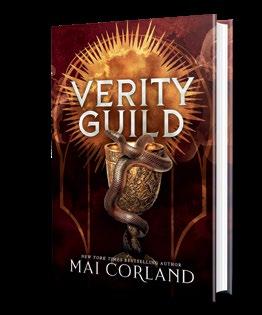
B
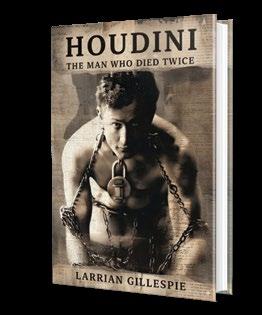
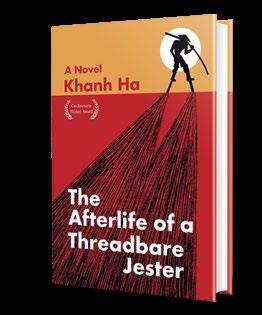
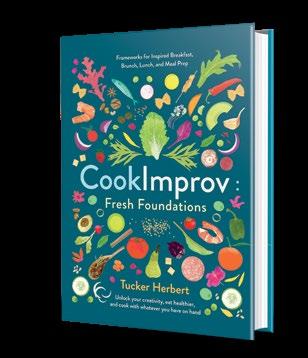
B
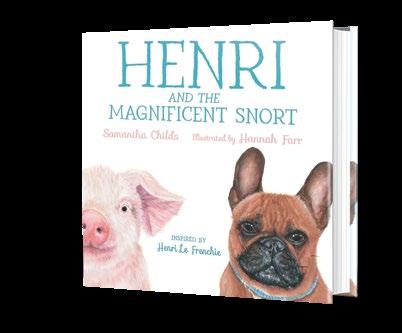
but only eight became permanent American possessions. Indeed, Kawar’s research demonstrates that America has often rejected offers of annexation: El Salvador, Yucatán, and Honduras all made unsuccessful bids for annexation, while Liberia—colonized by free Black Americans with the support of Congress and the Navy—was never annexed or made an official American protectorate. Kawar makes astute observations about the factors that both encouraged and limited American expansion, ultimately concluding that controlling other territories through economic and cultural influences was easier than pursuing physical acquisition: “America’s expansionist ambitions never really subsided. They just transformed.” Kawar’s research spotlights a host of forgotten adventurers, eccentrics, and dubious exploits from the nation’s history, rendering the book as entertaining as it is informative. A superbly written, timely examination of America’s imperial temptations.
Kowallis, Brandon | Self (210 pp.) | $23.99 December 17, 2025 | 9780996459723
A human resources executive gleans insights into his failings in this fantasy adventure meets self-help guide. Kowallis’ narrative follows Chris, a college HR director in Savannah, Georgia, who’s in a rut: His wife, Emily, struggles with postpartum depression, his bosses quash his initiatives, and his underlings smirk at his fecklessness. When an airplane crashes near him in the park—or at least seems to—he meets a mysterious man named David who somehow teleports him into some uniquely fraught situations. Chris suddenly finds himself in a Nevada cattle stampede and is rescued by Bert, a thoughtful rancher who tells him how to deal with his family issues. Chris then wakes up at a Montana camp for disadvantaged youth run by a retired Navy SEAL named Todd, who gives him
tips on managing his HR team. Next, Chris wakes up in a hospital after a traffic accident; his roommate Troy, who tried to kill himself, advises Chris to stop blaming others for his problems and make amends for his transgressions—starting with asking forgiveness for insulting a rude nurse. Finally, Chris is found in a cave by spelunkers Shane and John, who guide him on a hair-raising climb toward the surface. Kowallis’ tale serves up much wisdom on facing tough realities and does so in pithy, down-to-earth prose. (“Imagine how frustrating it would be to try and force that there mountain to move out of your way instead of just traveling around it…no matter how badly you want it moved, it ain’t moving.”) He embeds the advice in a cracker-jack adventure story that situates Chris in gripping jams that mirror his psychological travails. The result is a page-turner that challenges readers to think more creatively about how to solve problems in their own lives.
Deep life and leadership lessons served up in a captivating adventure yarn.
Lambstead, Gloria | Self (326 pp.) $18.95 paper | December 25, 2025 9798993564913
In Lambstead’s novel, a reclusive millionaire falls in love with and marries a much younger man who may have hidden intentions.
Maximillian Porter, whose younger brother is a U.S. senator, has
lived an isolated life for years (ever since his mother died decades earlier) in Gwenshill, a gloomy mansion that “resembled a monstrous shadow, its darkness menacing and foreboding.” When Maxim meets the handsome— and much younger—Jamie Grenvill at a social event, he becomes enamored with the aspiring day trader’s charm and “twinkling blue eyes.” After a whirlwind romance, the two get married, and Jamie moves into Gwenshill with Maxim. Strange occurrences begin to happen, including Maxim’s beloved housekeeper dying under mysterious conditions. (“Luisa Caldeira was discovered dead on the floor of Gwenshill’s kitchen. Her body lay sprawled beside a broken mug shattered with remnants of her tea spilled out”). Jamie hires an aloof and emotionally detached replacement, and Maxim begins to experience bizarre symptoms of what he believes could be dementia—but Maxim’s adoration for his young husband leaves him largely oblivious to the collective oddness of the events. Lambstead’s debut deftly blends LGBTQ+ romance and mystery elements. Although the dialogue gets a bit heavy in places, slowing down the novel’s momentum and dulling its intensity, the author excels at creating fully developed, three-dimensional characters, particularly Maxim and Jamie, although the complex dynamics between all of the characters are noteworthy. The real strength of this novel, however, is the ever-changing perception of reality. Readers never truly know, until the very end, if Maxim is slowly losing his mind or if Jamie is masterfully gaslighting him—or both, or neither. The conclusion is thematically powerful and will stay with readers long after they finish the novel.
A decidedly morose exploration of love, loneliness, and loss—all wrapped up in a well-crafted whodunit.
Deep life and leadership lessons served up in a captivating adventure yarn.
CURSING AT MOUNTAINS
Leiva, Dan | Beyond Publishing (338 pp.)
$24.99 paper | March 31, 2026
9798903480036
Leiva provides a framework to help large organizations integrate AI in this handbook.
Many organizations, says Leiva, a leading technology executive and information architect, fall into what he calls “the efficiency trap”: They optimize for speed and lowered costs while neglecting internal human judgment, thus eroding external customer trust. Leiva, who’s led teams at Apple, Intuit, and eBay (among others), understands that this situation can lead to “Zombie Organizations” that have begun to rely too heavily on automation. He provides many examples of such behavior, including a company where customers began to vent their frustrations via social media because they couldn’t reach a human agent to override system glitches. While Leiva wants to be sure executives and managers understand what they’re losing by focusing on metrics to the detriment of human interaction, his book is not a full-scale critique of the many areas that suffer from this “Velocity of Zero” (i.e., when a group has great output but little meaningful change). Rather, the negative examples exist to demonstrate the author’s “A.M.P.L.I.F.Y.” method, in which seven leadership disciplines, from Assess to Yield, can help keep organizations using AI processes hew to human principles. The first half of the book lays out the “Amplified” philosophy; the second half provides a toolkit along with design templates and implementation guides so that readers can start working toward real solutions. Although Leiva’s writing is meant for his peers, more casual readers might be heartened to see that among his recommendations for high-level companies are reliance on empathy, curiosity, and macro-management. As the author writes,
“This book is not about using AI faster. It is about designing organizations that scale judgment, trust, and responsibility alongside technology.” Our world is an increasingly AI-driven place, but Leiva shows that, at least in the near future, leaders can build systems that adapt to the strengths of AI without losing the vital human accountability that should always be a marker of business success. While not for general readers, this handbook contains clear thinking about AI and large language models that will no doubt benefit its niche target audience.
Loiselle, Anne | Eye of Horus Books (336 pp.) $15 paper | March 25, 2026 | 9798995213307 Series: An Eye of Horus Mystery, 2
An anxious young woman who has trouble centering herself is the amateur sleuth at the heart of this endearing mystery, one in Loiselle’s Eye of Horus series.
Washington, D.C., yoga instructor Lily Piper and her friends, known collectively as the Bears, meet members of Aspire, a team from Pennsylvania in town for an ultra-triathlon, at a local hangout. A body is found during the event. Lily has a secret: She had been quietly dating the dead man, Wryan, who was on the Aspire team. The couple had intended to keep their relationship under wraps until after the triathlon, since Wryan had recently broken up with his teammate Izzie. Lily is convinced that clues to Wryan’s murder can be found in her own suppressed memories; the problem is that Lily is still struggling with the anxiety issues that stretch back to events that occurred before this series’ inaugural 2023 entry, Sleuth of Bears. (“During the day I’m fuzzy and scatterbrained, and the more anxious I become, the worse it gets.”) This time around, despite being subtly discouraged by local police, Lily decides that she will help them find Wryan’s killer. To accomplish that goal, she opts
to practice what she preaches—in this case, using meditation to unlock those lost memories. A couple of her lines of inquiry bear fruit, but, uncertain of the killer’s identity, Lily remains in peril up until the end. In Lily, Loiselle has created an endearing Everywoman detective. If she’s so indecisive about her life choices, can she put much faith into her deductions as a sleuth? Fortunately, her friends are supportive of her and serve as sounding boards. It’s intriguing to see how Lily uses what she’s learned in her day job to aid in her investigation. It’s also evident that she’s a novice, which reliably puts her in danger. Lily’s memory-recovery method requires plentiful flashbacks, which can make the narrative feel a little disjointed, but her inventive approach to solving mysteries marks her as someone to watch as she matures in future volumes of this series. Reaching deep inside pays off for a young investigator in this sterling mystery.
Moss, Ellie | Illus. by Mehibi Studio Lickitypop Press (32 pp.) | $12.99 paper January 26, 2026 | 9781970978018
Moss’ picture book offers a tale of a syrup swamp, a licorice vine, and a great friendship. In the magical world of Lickitypop, Dibs the Dragon spends his days blowing bubbles for the Sneezle Fairies and riding his bubble scooter to help those in need. He’s kind and curious, and he has everything he needs but a best friend. One day, he hears a cry in the Squishpuff Swamp and rushes to offer help. He finds a marshmallow mole named Mooch, stuck in sticky syrup. With the help of a licorice vine, he rescues the mole, and the two become best pals and do fun activities together. “This is way better than stargazing alone,” admits Dibs as he looks at the night sky with his new friend. Moss tells a heartwarming story that will remind young children of the value of friendship, and that some activities are better
enjoyed in the company of others. The illustrations, credited to Mehibi Studio, feature bold lines, plenty of color, and abundant candy and creamy swirls decorating the pages. Although the illustrators’ use of white space is inconsistent and a little confusing, the overall effect of the art is buoyant. A delightful mix of cheerful storytelling and vivid imagery with a celebratory message.
Papantonio, Mike | Arcade (264 pp.)
$32.99 | March 3, 2026 | 9781648211706
Papantonio’s legal thriller centers around a wrongful death in a home for troubled youth. The narrative begins with a horrifying anecdote as the author takes readers back to the summer of 1970, landing in the reform school known as Sandbury Housing for Boys, which amounts to a juvenile detention center going by a more palatable name. Wayward teen Bucky Carlton is incarcerated but surviving in this brutal environment when one of the guards forces him into a ritual known as “Fight Night,” in which the teenage boys are pitted against each other and made to slug it out over one infraction or another. When the fight isn’t called off fast enough, Bucky is killed. The narrator ominously notes that this same kind of behavior persists, jumping forward to the present day and a similar youth facility known as B Camp School for Boys. Trayvon Clapper, the runaway teen son of addiction-afflicted parents, is having such a rough time there that he seeks the relative safety of solitary confinement by acting out against a guard, only to be killed by that very same adult with the help of a few “long-timers”—especially violent children the guards see as futureless. The narrative then shifts to 71-year-old lawyer Nicholas “Deke” Deketomis, a hugely successful attorney
who’s made a name for himself by taking on—and sometimes defeating—major drug companies. When Trayvon’s parents show up in his Florida offices seeking financial restitution for their son’s death, Deke surprises the other lawyers in his firm by taking the case. Through his colleague Gina and his daughter (and co-worker) Cara, readers come to learn that Deke has his own history with youth correctional facilities, and with Bucky Carlton himself. As Deke’s firm takes on the case, they’re drawn into the orbit of a crooked, psychotic Massachusetts senator and the shadowy corporation, Phoenix Industries, that owns Camp B School for Boys.
Papantonio’s novel is nothing if not a page-turner, beginning with that brutal opening set piece and carrying readers through the paces of the plot with satisfying swiftness. At times, literaryminded readers may struggle with some of the expository dialogue and cliched phrasing (“Not only was [Deke] married to Teri, his wife of four decades, but he was also wed to his work”), but these hiccups are mitigated by the author’s command of the subject matter. The author is a lawyer, and his skill in deftly conveying legalese and the idiosyncrasies of the justice system in a manner palatable to legal novices is a boon to the narrative; secure in the authenticity of the details, readers are able to focus on more salient matters of plot and character rather than losing focus on legal jargon. (At one point, after a colleague tells Deke, “‘[The judge] set it sua sponte without any request from the defense,’” the narrator explains, “That legal term referred to actions judges might take without first receiving a motion from any of the parties involved. It was the kind of hearing that rarely ended well for lawyers.”) Between the legal intrigue and the unfolding history of Deke’s own
troubled past, there’s plenty here to keep readers gripped throughout. A fast-paced legal drama whose disturbing revelations feel all too real.
Pospelov, Serge | Global Publishers (247 pp.)
$18.75 paper | October 22, 2025
9781970431360
Russian soldiers relate the disillusionment and horrors of war in this trio of linked fictional stories based on real events. The author, a former Russian military officer, writes with authority and candor about war and espionage. Pospelov (2024’s History of Disease, etc.) begins with two former Russians now on American soil who meet in St. Joe, Missouri. One of the men, Alexander, recounts the story of their mutual old friend Yuriy, who was a volunteer in the Wagner Group, a Russian military faction that operated as a shadow army in Ukraine, Central Africa, and other locales. Yuriy was sent to the Central African Republic, a “country of dreams and unworkable hopes.” For Yuriy and his fellow soldiers, “it was easier to make money in war than anywhere else, and for that, not much was required—no knowledge, no education, and hardly any experience.” But survival was never guaranteed, and not all his fellow soldiers made it through; the narrator loses a leg, for example. The men later reminisce about another mutual friend, Victor, a hard-drinking assistant captain on an old steamer that was targeted by pirates. Lastly, the pair of old Russians recall their friend Andrey, who became a defector and sought revenge against “all those who had tried to put obstacles in [his] way,
A fast-paced legal drama whose disturbing revelations feel all too real.
A DEATH IN ARCADIA
preventing [him] from leaving Russia and trying to ruin [his] life.” Pospelov ably mixes visceral brutality with pitch-black humor: “A blow to the back or spine with the butt of a rifle is, as we all know, a sufficient means of persuasion under which even a legless invalid would move briskly.” While the storyteller is more than competent, the book’s persistent grimness may not be for everyone. A rich but often unpleasantly explicit reflection on unenviable lives.
Rabinowitz, Michael | Intelluvia Press (210 pp.) | $18.99 paper | March 12, 2026 9798994727706
Rabinowitz offers advice on building trust and rapport in a wide array of organizations. The author has worked for decades as an entrepreneur and corporate executive, largely in the pharmaceutical industry, and he draws on these experiences to offer highly specific counsel on cultivating trust within organizations of all kinds—not only businesses, but also nonprofits, schools, municipalities, and religious institutions. In the corporate world, a lack of trust can prove to be a choke point that prevents a business from improving its bottom line; one can’t achieve one’s goals if one doesn’t feel confident in one’s colleagues, he points out. The author offers a practical architecture for decision-making that elevates trust as a corporate value. He calls it the “Trustworthy Decision Matrix,” which relies on two variables: “the track record of the person or company in meeting expectations” and “the degree of difficulty of the project or task being undertaken.” This all sounds like common sense, but Rabinowitz makes a persuasive case that this firm foundation is often cast aside in boardrooms due to other, less significant
priorities. He goes into great detail while building on this rubric, but, taken as a whole, his efforts to drive home the point are well worth readers’ time. The author cites a wide range of research to emphasize the significance of trust in all aspects of life; he even notes compelling data on childhood development that suggests that consistent caregiving helps children learn to differentiate between trustworthy and untrustworthy people and sources of information. The business-advice and self-help genres are filled with similar titles, but few offer advice that’s as concise and thoughtful as Rabinowitz does in this work. Often, when such books attempt to comment on contemporary social issues, they get lost in current-events hoopla, but not this title. Rabinowitz applies his matrix to such evergreen issues as declining trust in government, corporate America, the media, religious groups, and a host of other entities—and his analysis and focus on his two factors of trust ring true in every instance.
Notably valuable and tangible strategies for fostering a key element of success.
Robin, Alana | ARB Press (278 pp.) | $15.99 paper | March 31, 2026 | 9798990435339
A rising high school senior finds more than love on the course in Robin’s YA romance. Rose Alterman isn’t the biggest fan of golf. She may be co-captain of the team, but she’s generally more interested in making sure the team has cute uniforms or chatting with her coach about the latest skin care trends. She’s happy to be working the bar cart at Bramford Hills Country Club—or as happy as anyone can be working a slightly boring summer job—with Jeremy Abrams, her best friend since kindergarten. It’s their first summer hanging out alone, now that their other friend, Kyla Liu, is away at camp. (“It’s like ready and set existing without go, or blue and yellow without red.”) At one point, Rose had a college fund, but a family medical
emergency wiped that out years earlier, leaving Rose and her siblings to rely on scholarships. When Rose doesn’t get the scholarship that both her older siblings received, she’s crushed—until Jeremy suggests she buckle down and spend the summer getting really good at golf to secure a full ride. Darren Daniels, the cute new kid from Florida, offers to help Rose with her game, and Rose suddenly finds herself crushing on her new coach. However, when feelings for someone else start bubbling up, she must decide who—or what—matters most. Rose is a relatable teenage protagonist dealing with insecurities about her body, her friends, and her family. The Ann Arbor setting is vividly fleshed out, with multiple real locations described invitingly, which makes sense, considering the author’s background in and clear passion for hospitality operations. While some readers may have trouble accepting Rose’s meteoric rise, her burgeoning love of the sport and her confidence in her own abilities are inspiring and will hopefully motivate readers to put their best competitive foot forward.
A charming coming-of-age tale.
Shahinpoor, Parsa | Amplify Publishing (440 pp.) $32 | July 14, 2026 | 9798891387164
A frontline hospitalist and teaching physician chronicles one of humanity’s most complex maladies in Shahinpoor’s medical history book. After “confronting its cryptic presence in hospital wards” as a medical student, Shahinpoor spent nearly 20 years as a doctor working in sepsis care. Despite frequent association with blood poisoning, sepsis can emerge from nearly any infection. It’s “the body’s response [that causes] sepsis, not the microbes or their toxins seething throughout the blood.” While sepsis was first named in the 8th century B.C.E., we’re only in the beginning stages of
learning how to treat it. As recently as 1987, sepsis killed around half of those afflicted. Further complicating matters, no single test can diagnose sepsis, as it “is not one entity but many.” To put this disease into perspective, Shahinpoor walks readers through thousands of years of medical history, from ancient Egypt and Greece to 19th-century Europe and the contemporary medical establishment. Along the way, readers learn about the science behind sepsis, the effect of Covid-19 on sepsis rates and care, and the major medical milestones of germ theory, sanitation, antibiotics, and vaccines. These often dense topics are grounded by patient stories, which illuminate the real-world effects of sepsis with heartbreaking clarity. While the narrative can get into the weeds of microbiology, emergency room treatment protocols, and medical trials, its overall flow is brisk and balanced. Shahinpoor’s writing is effective in combining accessibility with scientific rigor. The book’s deeply researched science and its detailed case studies will no doubt interest doctors and nurses encountering sepsis at the bedside, while the book’s plain-language prose simplifies complex topics for curious lay readers. (“While a heart attack is brought on by the occlusion of a single medium-sized coronary artery, sepsis involves the calamitous dysfunction of the entire blood circulation—both macroscopic and microscopic.”) An engaging, informative history that will intrigue lay readers and medical professionals alike.
Stephens, PW | Old Bard Publishing (406 pp.) | $19.99 paper | May 28, 2026 9798218883188
In Stephens’ novel, two high school football teams and their spirited marching bands— separated by decades—face parallel challenges.
“Few things unite a town like a high school football win.” So observes
Phil, the 49-year-old narrator of this debut novel that provides a keenly observed account of two eventful high school football seasons, one in 1986 and the other in the Covid-19 year of 2022. Phil is also the name of the author, who was clearly inspired by his own memories of performing as a band member during football season. Broken into 82 short chapters, the novel alternates between dual time frames: Phil’s tumultuous freshman year playing saxophone in an Alabama high school band in 1986 and his life in 2022 in small-town Indiana as a loving husband to Misha (the name of the author’s real-life wife). An upcoming reunion of his high school band serves as the catalyst for Phil’s self-reflective reminiscences about the school’s football team’s fight to reach the state finals when he was a student. The narrative includes rousing examples of how a marching band can galvanize players and the audience alike, but before the band and team can come together as a united front in 1986, there is some strife. Seniors on the football team are unhappy when band members are recruited to fill empty player slots; there are also girlfriend and boyfriend troubles, injuries, and a parent’s drunk-driving car accident. The present-day team struggles with its own difficulties, such as a captain with a chip on his shoulder, junior varsity players brought in to fill gaps after a resurgence of Covid-19, a critically ill teammate, a couple’s infertility anguish, and a coach working through self-doubt. Friendships and personal issues among wives and husbands are depicted with empathy; “church” (denomination not specified) is an understated source of social and spiritual support. Throughout, descriptions of football games and marching band performances, informed by lived experience and exhaustively detailed
here, will resonate with any fan of a sport that’s fundamental to civic identity and pride in countless American towns. A heartfelt ode to community rooted in marching band dynamics and football play-by-plays.
Swaim, Emily | Swaimwrites (376 pp.) $19.99 paper | April 21, 2026 9798218617615
Swaim’s YA fantasy novel reimagines and modernizes Peter Pan. When readers first meet 15-yearold Wendiaqui Darl, she’s desperately trying to hold on to her scholarship at the prestigious—and expensive—Unity Academy. Wendi is nearing the end of a pivotal Year Seven, and if she doesn’t score highly enough on her history exam, she could lose her tuition grant. It’s the worst-case scenario when the power in her home city of Othan goes out and her teacher simply cancels the test, leaving Wendi without recourse for improvement. As if things at school weren’t bad enough, she’s also isolated Rowan, her one close friend, after rebuffing his romantic advances. All these worries pale in comparison to the recent trauma of losing her mother to saffron fever. While out holiday shopping with her father, Wendi sees a man in red flee a docked ship and a group of children running after, calling him “Hook.” She largely forgets the moment until a young boy, Peter, shows up and offers her a new life on that same flying ship—a chance to escape the mess in which Wendi is mired.
A fun, fast-paced update of Peter Pan sure to please a new generation of fans.
REVEN: ACROSS GOLDEN SKIES
But Wendi soon discovers that there’s no fully escaping real life: Peter isn’t everything he seems, and the villainous Hook is in hot pursuit. Swaim has taken on a daunting task in her debut novel by attempting to bring a new perspective to the oft-told story of Peter Pan, which she does admirably in these pages. The imaginative, SF-ish technology she employs—headsets, personal screens, flying ships, and the like—paint fresh colors on an aging tale. The author plumbs real character depth in Wendi: “The attention was awkward, and the dress was uncomfortable, but discomfort was still better than loneliness. What if she simply played along? Tried to be normal? Maybe something would click.” The plot points may be largely borrowed from Barrie, but Swaim brings something all her own to the legend.
A fun, fast-paced update of Peter Pan sure to please a new generation of fans.
Taylor, Catherine | The Cameo Press (516 pp.) $17.99 paper | March 6, 2026 | 9781916093249
Nazism and the Catholic Church’s requirement of priestly celibacy thwart a starcrossed couple in this sweeping wartime romance.
Taylor’s novel opens in 1936 on the English Channel island of Guernsey, where 16-year-old Kitty Garland-Fry likes the idyllic surroundings but is embarrassed by her bohemian family. (Her father, a famous painter, moves his mistress and illegitimate daughter to live with the family; Kitty’s mother dismisses her objections as “bourgeois and small-minded.”) Lukas von Harnitz, a gorgeous, poetic young German, arrives to visit English relatives, and he and Kitty fall in love, but his determination to become a Catholic priest seems an insuperable obstacle, and he returns to his Berlin seminary. Lukas’ visiting cousin Caspar, a handsome but cold Wehrmacht
officer, is smitten with Kitty and invites her back to his Bavarian castle, where she has sex with him—mostly because she can’t have sex with Lukas. Pregnancy ensues, and Kitty reluctantly weds Caspar and endures his creepy affection, terrible lovemaking, and boorish pro-Nazi relatives. (Typical dinner-party repartee: “We’re the superior race now, and like all such races we’re proving ourselves through war and domination, fulfilling our destiny according to the Führer’s vision.”) After she miscarries, Kitty and Lukas reconnect to help Jews persecuted by the Nazi regime and begin a passionate affair after Lukas, disgusted with the Church’s compromises with the Nazis, abandons his priestly vocation. In 1939, Lukas is arrested for espionage and thrown into the Gestapo’s torture chambers, while Kitty flees Germany as World War II breaks out. Sentenced to a Wehrmacht penal battalion, Lukas wanders through war-torn Europe hoping to someday reunite with Kitty, while back in Guernsey, Kitty wonders if the child she’s carrying is Caspar’s or Lukas’. Taylor’s sprawling narrative is a coming-of-age story with the highest possible stakes, a tense wartime thriller, a study of faith in extremis when churches crumble and prayers go unanswered, and an unusually intimate portrait of life in Germany as Nazism corrupts friendships and families. It’s also a vivid anatomy of a toxic marriage as Kitty and Caspar’s relationship moves from awkward anti-chemistry to an agonizing marital trap. Taylor’s writing conveys her characters’ delicate shades of feeling with clarity and nuance, but she’s just as skillful in depicting their harrowing physical ordeals. Lukas endures shocking torments (“there was a sudden explosion of unimaginable pain, as if a butcher’s cleaver were hacking his entire body apart, bones and all”), and Taylor sketches one of the great literary evocations of childbirth: “Her bones felt hollowed out, bleached and brittle, like those that washed up at the cove with the tide,” she writes of Kitty’s labor. “The pain got even worse, leaving her unable to speak…And, somehow, she did bear it, because there was no choice but to bear it.” Taylor beats the hell out of her flawed and very human
characters—and thus makes their responses to some of history’s most desperate circumstances all the more convincing. An engrossing saga of love set against a subtly drawn, disturbing depiction of Hitler’s tyranny.
Ton, Jeffrey S. | Ton Enterprises (378 pp.) $19.99 paper | May 14, 2026 | 9781735309088
Ton blends travelogue and history in this journey along the Lewis and Clark Trail. The author, a retired business executive, reflects on his retracing of the Meriwether Lewis and William Clark National Historic Trail. He and his wife, Carmen, twice traversed the route (first in 2003-2006 and then again in 2007 and 2009) by car, RV, and foot. After his wife received a subsequent diagnosis of an uncurable degenerative neurological disease, Ton realized that the most important things he remembered from his time on the trail were not trivial facts pertaining to American history but the experiences he’d shared with Carmen, whom he describes as “My compass. My co-captain.” The book traces not only the author’s exploration of the titular trail, but also the tangential historic sites and monuments associated with Lewis and Clark, from the Natchez Trace (a forest trail in the Deep South where Lewis died) to Monticello (Virginia home to President Thomas Jefferson, who commissioned the expedition). Each chapter blends Ton’s account of his adventures with Carmen (including flat tires and other unexpected moments) with the histories of the various landmarks along the trail. The historical narrative provides ample context on the 19th-century
political and social milieu that sparked the expedition, and the author is careful to honor the stories of Lewis and Clark’s travel companions, including the Lemhi Shoshone woman Sacagawea and her son, Jean Baptiste. The work pointedly acknowledges “the diversity, resilience, and sovereignty” of the various Indigenous communities Ton encountered on his journey as the author ruminates on the genocidal tragedies associated with America’s westward expansion. While the historical narratives— which are well researched, with both primary and secondary sources cited in a bibliography—are impressive, this is ultimately a love story about the ways in which exploring America strengthened the bonds between Ton and Carmen. “Maps can take you to a place,” the author notes, poignantly adding, “[but] love teaches you how to arrive.” A moving love story and a gripping account of traveling one of America’s iconic trails.
Webb, Suzy | FriesenPress (348 pp.) | $26.99 paper | March 5, 2026 | 9781038366993
Series: The Everglenn Trilogy, 3
Webb’s Everglenn fantasy trilogy concludes with a final showdown between a magical family and a ruthless tyrant. Having unraveled centuries of mysterious family secrets, Freya O’Neill has one main priority: the safety of her two
daughters, Nora and Carra, and the rest of her family at the Everglenn estate in British Columbia. Months after escaping brutal captivity at the hands of Tyrell clan patriarch Cashel Tyrell, Freya (who has the supernatural ability to “to heal, to protect [her] self and to help protect those around [her]”) and a few family members sneak back into Ireland so her twins can be born there and be connected to the land through an ancient ritual. She spends the next 18 years concealing them at Everglenn and educating them about their heritage, knowing that Cashel intends to use them to fulfill an ancient prophecy that would cement his power in Ireland as it moves toward independence. When the girls turn 18, the family returns to Ireland to perform a handfasting ceremony on their birthday. Carra’s handfasting goes horribly awry and leads to her abduction by the Tyrells. Now, Carra must navigate her imprisonment using her own unique powers while Freya struggles to fight for her family without giving in to her pent-up rage. This novel provides a satisfying conclusion to the author’s trilogy as Freya’s entire family comes together to protect Carra and Everglenn. Freya is a much more active agent in this novel than in the last, and Carra comes into her own (with her magic) as well, though Nora doesn’t get much of a role. The final confrontation provides a welcome payoff for the intricate plotting of the first books, with every narrative thread neatly tied off. Though the novel shifts to Carra’s point of view when she’s taken, it wisely returns to Freya’s at the end; doing so allows her final plan to face Cashel to remain a surprise while keeping
readers in her head during her most emotional moments. She has always been the heart of this rich and diverting story.
Fans of the first two books will cheer the way everything comes together in this gratifying conclusion.
Welch, Marguerite | She Writes Press (256 pp.) $17.99 paper | July 14, 2026 | 9798896363422
Cultural conflict ensues when a well-to-do mother takes a troubled undocumented Mexican girl under her wing. In Welch’s precarious blend of fact and fiction, Mia Sanchez is left with her grandparents as an infant after her mother flees Oaxaca, Mexico, for the United States. Readers meet Mia when she’s 10 years old, and her mother, Carmen, has returned to reclaim her and bring her to America. Despite Mia’s desperate pleas to remain with her beloved grandparents, she’s forced to endure an arduous journey to the border and a dangerous illegal crossing before landing in her mother’s overcrowded apartment in Southern California. Although Mia speaks no English, Carmen enrolls her in fifth grade soon after and then tasks her with caring for her three young American-born half sisters. Some years later, Mia meets Helen Parker, a middle-aged, upscale volunteer at a community center dedicated to tutoring and mentoring underprivileged youngsters. Helen is still grieving the death of her youngest teenaged son, who overdosed on drugs four years earlier. Over the coming months, Mia and Helen bond. Helen provides stability and guidance in Mia’s life and helps calm her stormy relationship with Carmen. But in high school, Mia becomes involved with Diego, a gang
member from El Salvador. Her life takes a dangerous turn, leading Helen to assume temporary guardianship; she brings Mia home to live with her. Welch’s novel is a hybrid of fiction and nonfiction, inspired by the author’s own experiences. Skillfully narrated in alternating chapters by Mia and Helen, the story is a detailed and occasionally heartbreaking portrait that pays special attention to the physical and emotional struggles of a young undocumented immigrant who lives under the shadow of possible deportation, despite her DACA (Deferred Action for Childhood Arrivals) status. Through Mia’s narration, readers are privy to the secrets she keeps hidden from Helen, who, in turn, is poorly equipped to recognize or ease the turmoil brewing just below the surface. Welch’s book shines a light on class and cultural differences and how they can be overcome through love and sheer determination.
Williams, Mary | Bookmason House (308 pp.) $17.95 paper | September 15, 2026 9781067354824
In Williams’ novel, a doctoral student comes up with a theory that may portend the end of the human race.
The story opens on a suffocatingly hot day in August. Marty, who’s trying to complete his doctoral dissertation, has a creeping suspicion that something is not quite right beneath the surface of ordinary life. A late-night inspiration leads him to a theory in which he posits that nature might have a mechanism to eliminate overly dominant species (“for every species and every habitat there must be a tipping point”). He writes the details down on his hand—only to discover later that his sweat has washed much of the theory away. Marty tries to
reconstruct his breakthrough, but his day is interrupted by a series of slightly strange but ostensibly mundane encounters. Marty’s theory posits humanity as a “super-predator” and raises questions about whether some unknown force can restore balance. Marty comes to believe that an extinction-level correction could come in the form of climate change, disease, and other catastrophes already in motion. As the narrative progresses, the oppressive heat adds to the growing sense of impending doom. The book ends not with answers, but with the biggest question of all: If a system exists to correct for dangerous species, why should we assume that the human race is exempt? From the very first chapter, the novel blends sharp observational humor with philosophical inquiry. This engaging approach, combined with Marty being a likable, if scattered, protagonist, helps to leaven the book’s potentially oppressive intellectual material. Williams has a knack for making the book’s abstract and existential ideas feel immediate and personal, though at times the headiness can bog the action down, making for some slow reading. Still, readers who stick with it will appreciate the deft blend of literary fiction, scientific speculation, and philosophical questions about the fate of humanity. Not an easy read, but the questions it raises will linger far beyond the end of the book.
Wyss, A.L. | Carnelian & Quills (268 pp.)
$12.99 paper | February 3, 2023
9781960479068 | Series: The Phoenix Rising Trilogy, 3
A high school girl with audacious powers defies those in charge in order to prevent them from locking magic away from the world. In this final volume of The Phoenix Rising trilogy, Vivian
Carmine enrolls full time in the secret magical academy known as RISE (Regulation for the Integration of the Special and Extraordinary) for her last year of high school. But when the school’s Board of Elders announces that they’ll use the Key of Light (which Vivian herself rescued for them) to keep magical creatures “safe” by locking the gates of Olympus, Vivian realizes that this would essentially imprison magic forever: “I saved the Key to give the people a chance.…Not to have the Board of Elders use it to lock them up.” Vivian believes the only way to save magic is by using the “Devil’s Mirror”—a powerful mirror that notoriously twists everything it reflects—to show the Elders the horrifying results of removing special powers from the world. Alongside her magical friends (and maybeboyfriend), she sets off on a quest to obtain the Devil’s Mirror. But stopping those in charge at RISE may pit her against the very people Vivian thought she could trust…and drive her to a drastic choice. It’s both exciting and satisfying to see Vivian mature by learning necessary (but sometimes painful) lessons—like the fact that her parents aren’t perfect. While some of those lessons can be a bit heavy-handed, they depict inspiring choices. Vivian’s relationships with her parents, friends, and even romantic prospects are delightfully complex and avoid a sense of predictability. In a worthy conclusion to an epic saga, Wyss once again uses humor, action, and a healthy dose of coming-of-age wisdom to close Vivian’s story.
A dazzling final entry in a series that encourages readers to embrace their differences and make their mark on the world.
SOME WINE, MAYBE a nibble of cheese, a book that prompts juicy discussions—these are the ingredients for a successful book club. Add an audiobook to the mix, and everyone has even more to talk about, such as the specific choices of the narrator’s performance and how the narration affects the overall reading experience. If some people in the group have listened and some have read the book in print, it can also be fun to discuss how the book translates in each format. Here are a few titles that would be good candidates to talk about in your own audiobook club:
The Correspondent by Virginia Evans (Random House Audio, 2025): This word-of-mouth phenom has been a mainstay on the bestseller lists, and you’ve probably seen at least one person recommending it on your social media feeds. What makes the audiobook of this epistolary novel so interesting
is how well the production utilizes the audio format, with an ensemble of many different voices. Maggi-Meg Reed gives a nuanced portrayal of protagonist Sybil Van Antwerp, a septuagenarian who writes letters to friends, family, and strangers. More than a dozen additional voices narrate the various letters that Sybil receives in return. Our Earphones Award review says, “Thanks to outstanding narrations, responses to her letters allow each correspondent to emerge as a fully realized individual.”
Atmosphere by Taylor Jenkins Reid (Random House Audio, 2025): The Artemis II lunar mission and recent big-screen adaptation of Project Hail Mary have rekindled interest in space exploration. Narration from Julia Whelan and Kristen DiMercurio amps up the thrills in Reid’s novel about female astronauts at

Reagan- era NASA. It’s both a love story and an actionpacked adventure, and as our Earphones review says, “Whelan’s rich narration makes each character come to life for listeners, and she excels at portraying Joan’s romance with her fellow astronaut Vanessa,” while “DiMercurio narrates with an intensity that conveys Vanessa’s fear and courage.” As an audiobook, it’s “an absolute must-listen.”
Livonia Chow Mein by Abigail Savitch-Lew (Simon & Schuster Audio, April 21): Lew’s debut novel is also performed by two narrators. Our review praises the way they give voice to a family and a community in the Brownsville section of Brooklyn: “Katharine Chin splendidly guides listeners through four generations of Wong/Chin family history, inviting listeners to imagine the daily lives of this Chinese American family,” while “Keyonni James

JENNIFER DOWELL
portrays a wide array of neighborhood residents and especially shines as Lina, a Black Puerto Rican activist.” Their joint performance “illuminates immigration, family, gentrification, and community activism with depth and empathy.”
The Secret Lives of Murderers’ Wives by Elizabeth Arnott (Penguin Audio, March 3): Good Morning America picked this novel for its book club, but narration from yet another talented duo elevates the audiobook in which three women in 1960s California form a close bond after their husbands are all convicted of murder. As our Earphones review raves, “Demonstrating remarkable range, [Saskia] Maarleveld perfectly portrays a variety of characters, from West Coast suburbanites to English expats, East Coast transplants, and stone-cold killers.” Once narrator Karissa Vacker joins the performance, listeners won’t be able to press pause.
Jennifer Dowell is the audiobooks editor.
There is a plot, of course, in this remarkable literary crime novel, but the plot is not the story. The story is one of emigration, integration, earning a place in a new world, and in the audio version, the medium is the message. Roger Clark lyrically renders the voices of the village in western Ireland where Cal Hooper, ex-Chicago homicide cop, has settled. The addictive
rhythms and tics of his neighbors’ speech demonstrate generations of local belonging, and Cal marks his outsider status whenever he opens his mouth. If he can’t find his way in, though, he’ll have no role to play when the agitated town suspects that its bullying homegrown princeling is getting away with murder, even if no one knows how to prove it. Clark’s rendition is dazzling.
French, Tana | Read by Roger Clark
Penguin Audio | 19 hrs, 45 mins $29 | April 29, 2026 | 9798217281824
Kirkus awards Earphones to truly exceptional presentations that excel in the following criteria: narrative voice and style, vocal characterizations, appropriateness for the audio format, and enhancement of the text.
158
A Killer in the Family By Amin Ahmad, read by Isuri Wijesundara, Lipica Shah & Vikas Adam
158 As Far as She Knew By Diana Awad, read by Lameece Issaq
159 Wilderness Hacks By Joslin Brorsen, read by Taylor Meskimen & Michael Crouch
159
Dauntless By Jack Campbell, read by Marlon Dance-Hooi, Gerald Hill, Kymberley Cochrane, Zura Johnson & a Full Cast
157
The Keeper By Tana French, read by Roger Clark
161
My Dear You By Rachel Khong, read by Jialing Pan, Rachel Khong, Jen Zhao & Annie Q. Riegel
165
Confessions of a Mango By Kate Lumsden & Nate Pieplow, read by Kate Coventry
165
Down Time By Andrew Martin, read by Abigail Reno, Gail Shalan, Major Curda & Patrick Harrison
166
The Story of Marceau Miller By Marceau Miller, read by Saskia Maarleveld, Stephanie Németh-Parker & Jean Brassard
166
The Original By Priya Parmar, read by Cassandra Campbell
167
These Shattered Spires By Cassidy Ellis Salter, read by Kit Griffiths
168 Nonesuch By Francis Spufford, read by Lydia Wilson
Ahmad, Amin | Read by Isuri Wijesundara, Lipica Shah & Vikas Adam | Macmillan Audio 11 hrs, 46 mins | $26.99 | April 7, 2026 9781250433237
The exquisitely haunting multivoiced narration sharpens the edges of this compelling psychological thriller. Isuri Wijesundara, Lipica Shah, and Vikas Adam perform the story’s shifting perspectives with authenticity, vulnerability, and intensity, lending distinct layers to a tale of privilege, betrayal, and murder. The story centers around Ali who, in an arranged marriage, weds Maryam Khan, a talented, straight-laced doctor. Ali has a scandalous relationship with his rebellious sister-in-law, Farhan. Both the sisters and Ali yearn for the approval of family patriarch Abbas, a New York real estate tycoon. Wijesundara and Shah draw listeners into Farhan and Maryam’s psyches. As accusations mount and loyalties fracture, Adam nimbly moves the story toward an unveiling of the Khans’ secrets. The cast sustains an intense atmosphere and guides listeners toward a chilling yet satisfying conclusion.
Anderson, Sherwood | Read by Adam Sims Naxos AudioBooks | 7 hrs, 15 mins | $22.58 Nov. 30, 2025 | 9781781986073

Narrator Adam Sims’ tone and pacing beautifully bring to life the hopes, dreams, and quirks of the residents of Winesburg, Ohio— an imagined town resembling Anderson’s own hometown. The 22 interconnected stories focus on
young reporter George Willard as he depicts the town’s colorful characters. Sims shines a light on their struggles with identity and connection, adding emotional richness to their inner conflicts. Instead of a traditional linear narrative, the book is made up of themed sketches, forming a vivid picture of the town. The most touching part is George’s tender relationship with his mother, Elizabeth, whose disillusion ment with her own life inspires George to leave home after her passing. Considered a breakthrough in American literature, the book influenced modernist writers with its psychological complexity and sensitivity. Sims gently evokes empathy for these honest, straightforward people at the start of the 20th century.
As Far as She Knew
Awad, Diana | Read by Lameece Issaq Brilliance Audio | 10 hrs | $42.99 April 1, 2026 | 9781511381505
Narrator Lameece Issaq captures the heartbreak, confusion, and devotion of a woman faced with the secrets left behind after her husband’s untimely death. Amira Abadi spent 23 years believing she had a loving marriage. While closing her husband’s accounts after the tragic accident that led to his death, Amira discovers he had been paying for a second home with their shared funds. Her world crumbles, and she must decide whether to pursue the truth or continue to live a lie. With attention to detail and a natural flow, Issaq’s narration lovingly
embraces the speech patterns and pronunciations of an Arab American woman as well as other members of her community. Issaq’s powerfully evocative performance perfectly embraces Amira’s love for her husband and dogged search for the truth.
Barnett, Mac | Read by Mac Barnett Hachette Audio | 2 hrs, 15 mins | $14.99 May 5, 2026 | 9781668657096
In an unadorned but sincere and appealing performance, Barnett’s enthusiasm for children’s literature comes through loud and clear. The National Ambassador for Young People’s Literature makes a convincing case for the importance of children’s literature as an art form, and the importance of recognizing kids as creative, imaginative, discerning readers in their own right. As anyone who has read or listened to Barnett’s books for children knows, he’s funny, and that humor adds to the listening experience, especially when he shares personal stories or interrupts himself to deliver frequent footnotes. A couple of small changes from the print book make the production specific to audiobook listeners.
An impassioned and inspiring manifesto on telling good stories.

For more audiobooks narrated by Lameece Issaq, visit Kirkus online.
Bertinelli, Valerie | Read by Valerie Bertinelli Harper Audio | 5 hrs, 51 mins | $23.99 March 10, 2026 | 9780063429123
Actress and author Bertinelli warmly narrates this deeply personal collection of hard-earned wisdom and self-acceptance. With humor and an inviting, downto-earth narration style, she draws listeners into reflections on aging, appearance, menopause, sobriety, and more. Now in her mid-60s, Bertinelli shares candid insights from the challenges and lessons that have shaped her, including childhood sexual abuse, two divorces, the cancellation of her cooking show, body image issues, and multiple surgeries. Her bubbly personality and positive tone make the audiobook feel less like a memoir and more like listening to a friend share advice, perspective, and encouragement for self-reflection and compassion. A quick yet resonant listen filled with heart, honesty, and grace.
Brooks, Arthur C. | Read by Arthur C. Brooks | Penguin Audio | 6 hrs, 41 mins $20 | March 31, 2026 | 9798217282111
Author and narrator Brooks challenges listeners to find meaning in their lives when distractions abound. The audiobook offers deep dives into topics including relationships, work, leisure, and faith, as well as formulas for finding happiness and meaning. Brooks delivers the material with the confidence of a professional, and his
pace is fast but easy to follow. He shares scientific research, examples from history and literature, and stories of contemporary individuals, including himself. Listeners may want to be ready to pause and take notes to answer the questions Brooks poses about finding one’s own life’s meaning. Listeners in search of purpose may find this audiobook transformative.
Brorsen, Joslin | Read by Taylor Meskimen & Michael Crouch | Listening Library 6 hrs, 14 mins | $18 | March 31, 2026 9798217172818
Narrators Taylor Meskimen and Michael Crouch team up for this pulse-pounding listen. After reluctantly entering a contest on behalf of her little brother, 12-year-old Sadie finds herself on a wilderness adventure with 13-year-old Radley, an online influencer and survivalist. Meskimen and Crouch create authentic teen voices, and they perfectly embody Sadie and Rad’s initial loathing for each other. Meskimen’s Sadie hides grief under layers of brisk efficiency, while Crouch’s Rad has mastered the art of talking nonstop without revealing anything personal. When the pair end up stranded together after a natural disaster, their need to depend on each other and their growing emotional openness are subtly reflected in the ways they talk to and about each other.
Brorsen’s debut is a thrilling adventure with relatable characters and unexpectedly high stakes. (Adventure. 8-12)
Campbell, Jack | Read by Marlon DanceHooi, Gerald Hill, Kymberley Cochrane, Zura Johnson & a Full Cast | GraphicAudio 8 hrs, 24 mins | $20.99 | Feb. 9, 2026 9798896523369 | Series: The Lost Fleet, 1
Thanks to a full cast and excellent sound engineering, this audiobook is a cinematic experience. Sound effects are used to enhance the story: Footsteps, air locks opening, gunfire, and various other ambient noises alongside the narration fully immerse the listener. The story takes place entirely on a space battle cruiser, the titular Dauntless, which leads a fleet of ships out of danger in enemy territory. This abridged adaptation of Campbell’s 2006 novel does not sacrifice storytelling for special effects. Each narrator effectively captures the characters, though there are a few moments of awkward tonal inflections. The high production value and engaging performances breathe new life into this military SF adventure.
Castro, Tony | Read by Matt Godfrey Dreamscape | 8 hrs, 49 mins | $22.04 Feb. 24, 2026 | 9798349163128
Castro paints a biographical portrait of two iconic and larger-than-life figures in baseball, New York Yankees teammates Mickey Mantle and Billy Martin. Castro got to
This audiobook is a cinematic experience.
DAUNTLESS
know Mantle, a boyhood hero, and through multiple interviews and solid research, hits the highlights of Mantle and Martin’s friendship as well as their on- and off-field exploits. Matt Godfrey brings a fitting narration to the audiobook with inflections that cover the range of emotions, from humor to sadness to frustration and more. He delivers the narrative, from how the men grew up to the mischief they made together, in an interested tone. Listeners will gain an understanding of the lives of these two men and will feel the weight of unfulfilled potential.
The Long Run: Steve Prefontaine, Frank Shorter, Joan Benoit, Grete Waitz, and the Decade That Made the Marathon Cool
Dugard, Martin | Read by Matt Godfrey
Penguin Audio | 9 hrs, 33 mins | $22 April 14, 2026 | 9798217285556
Dugard explores the origins of the marathon, from the legend of Pheidippides and the race’s peculiar length to the 1970s and ’80s athletes who made marathons cool. Now, competing in a marathon is on every casual runner’s bucket list. Matt Godfrey takes the author’s accessible style and runs with it. His timing, liveliness, and wry tones bring Dugard’s multiple threads to life. The decade is jammed full of stories—Steve Prefontaine getting pipped for the bronze medal at the 1972 Olympics, Joan Benoit winning the first women’s Olympic marathon, the book by Jim Fixx that inspired sedentary people to take up jogging, and even the author finding his community when he discovered running as an 11-year-old.
Dugard charts the course, and Godfrey hits a personal best.

Durst, Sarah Beth | Read by Soneela Nankani | Listening Library | 11 hrs, 2 mins
$27.50 | March 31, 2026 | 9798217171934
Soneela Nankani’s quiet narration carries a wish and a promise, setting the tone for high school junior Calisa’s escape from Brooklyn to her estranged greataunt’s B&B in Vermont. Calisa, hurt from a breakup, receives a caustic welcome from her Auntie Zee and discovers an inn in disrepair. Nankani gives voice to the inn’s strange guests, who have puzzling manners, and gradually the odd occurrences Calisa notices begin to point in a distinctly enchanted direction. As Calisa travels through the inn’s portals to magical lands, Nankani’s narration helps listeners experience the richness Calisa finds. Tension builds as Auntie Zee goes missing, the inn’s future is threatened, and Calisa must decipher family secrets. The satisfying, cozy resolution affirms the magic of romance, the power of loving a place, and the rewards of taking risks. (Fantasy. 12-18)
El-Mohtar, Amal | Read by Rachel Elizabeth Smith | Macmillan Audio | 6 hrs, 58 mins
$22.99 | March 24, 2026 | 9781250436061
This thoughtfully curated collection of the author’s previously published work, smartly narrated by Rachel Elizabeth Smith, highlights the indelible power of language—written and spoken—to
release, transform, heal, divide, and connect. Dream-crafters and dreamers, celestial acolytes, imprisoned beings, and the magically transformed are among those who inhabit these tales. A man’s transgressions are carved from his body in “John Hollowback and the Witch”; a woman marked for service to the sun follows a new path in “And Their Lips Rang with the Sun”; a wife is shaped into being against her will in “Florilegia; or, Some Lies About Flowers.” All provide wonderful examples of Smith’s deft pacing and quietly impactful characterizations. Between stories, Smith beautifully conveys poems in English and Arabic. Smith’s absorbing performance makes each story unforgettable.
Fortune, Carley | Read by AJ Bridel & Jack Copland | Penguin Audio | 10 hrs, 51 mins $24 | May 5, 2026 | 9798217282524
AJ Bridel and Jack Copland perform this heartfelt contemporary romance set in gorgeous Tofino, British Columbia. Frankie and George have been best friends since they were 8 years old, and both have passionate, headstrong personalities. They have spent time apart but always find their way back to each other. When Frankie’s fiancé dumps her on the eve of their wedding, George is the only person she can confide in. Bridel’s passionate, nuanced performance showcases Frankie’s vulnerabilities, hesitations, and desires. Copland’s warm, soothing timbre makes intimate conversations between Frankie and George that much more poignant. Bridel and Copland’s duet-style narration creates a memorable, immersive listening experience.
For more audiobooks narrated by Matt Godfrey, visit Kirkus online.
Goldsworthy, Adrian | Read by Mark Elstob Hachette Audio | 20 hrs, 15 mins | $44.99
May 12, 2026 | 9781549135439
There’s something calming about listening to ancient history, as this well-researched audiobook amply demonstrates.
Mark Elstob’s polished, quietly nuanced narration maintains distance and balance while giving full weight to the narrative’s many fine details. Elstob has narrated two of Goldsworthy’s previous audiobooks, companion histories of the long competition between Rome and Persia. He perfectly matches this prolific popular historian’s lucid and impartial narrative style and his knack for balancing a panoramic view with a close recreation of place and action. The long, contentious rivalry between Athens and Sparta turned victory over Persia into division and civil strife.
This is history for the modern listener, clear, efficient, and reliable.
Hall, Sara | Read by Sara Hall | Macmillan Audio | 7 hrs, 39 mins | $24.99 April 21, 2026 | 9781250445605

Sara Hall has had an impressively long career as an elite distance runner. She has juggled being a professional athlete with raising four daughters with her husband, who is also a former professional runner. Her easygoing and conversational performance both understates and emphasizes her ambition and integrity. Hall’s evangelical Christian faith is central to her story; at times, she’s had to push back against those who believed she should put her husband’s needs and career before her own. A long-distance run can generate a multitude of emotions. Hall tracks those
feelings as she recounts her disappointment about never making an Olympic team, her constant battles with injuries, and her joy at breaking American records, achieving personal bests, and creating a family. A memoir that doesn’t break any records but is elevated by Hall’s authenticity.
Han Kang | Trans. by Maya West, e. yaewon & Paige Aniyah Morris | Read by Greta Jung
Random House Audio | 1 hr, 51 mins
$12.50 | March 24, 2026 | 9798217346622
Writers spend a lot of time alone, perceiving details like the way light slants across a room or a garden. Han is a Nobel Prize laureate of international prominence, but it is the concept of golden light that interests her most. Greta Jung narrates this slim, poetic essay collection, which includes Han’s Nobel lecture, in a soft yet resonant voice. Ideas that might feel too lofty or noble are grounded by Han’s connection to nature and Jung’s mellow, calming tempo. There is subtlety in this meditative collection about the origins of book ideas, but it’s not quiet. Jung breathes a refreshing energy into Han’s nuanced passages, elucidating their wisdom.
Harper, Jane | Read by Angeline Armstrong Macmillan Audio | 11 hrs, 38 mins | $26.99 April 14, 2026 | 9781250433091
Angeline Armstrong evokes a kind of quiet loneliness and creeping dread in this audiobook that’s both a mystery and a study in family trauma. Listeners follow Rowena, who returns to the small Australian town of Carralon Ridge to mourn her son, who died five years earlier. The town is now a shell of
itself, the victim of a mining company’s greed, and residents have only memories of their former livelihoods in a once-thriving space. New discoveries suggest to Rowena that her son’s death wasn’t properly investigated, and the town’s remaining citizens are less than forthcoming. Armstrong’s atmospheric performance conveys secrets and loss.
Khong, Rachel | Read by Jialing Pan, Rachel Khong, Jen Zhao & Annie Q. Riegel Random House Audio | 7 hrs | $20 April 7, 2026 | 9798217174379
This chilling collection of dystopian stories, read by three narrators along with author Khong, grapples with capitalism, race, sex, AI, and friendship. East Asian and Asian American women are centered in each of these performances, where precise irony collides with bleak humor. Jialing Pan narrates with eerie clarity in “The Freshening,” where humans receive an injection so they see everyone as belonging to their own race. Jen Zhao maintains a riveting pace in “The Family O,” where women confront a man who serial-dates Asian women. Annie Q. Riegel’s soothing, breathy, low pitch lends itself to an alien allegory in “Colors from Everywhere.” Khong narrates the last story, “D Day,” in a gripping, near-perfect reading that brings this collection to an uncomfortable close.
Unnerving, entertaining performances balance the absurd with a too-close reality.








Scan Me to Listen to These Titles & More!


By Katie Bernet, read by Caitlin Kelly, Emily Tremaine, Ferdelle Capistrano & Piper Goodeve
Listeners will delight as the March sisters uncover secrets and lies in this modern murder mystery.
By Woody Brown, read by T.R. Knight, Pete Holmes, Midori Francis, Carlos Miranda, Brandon Flynn, Nikki M. James, Alex Edelman & Daphne Rubin-Vega
Empathetic and heartbreaking performances embrace the messy, beautiful lives of people surviving despite a broken system.
By Ash Perez, read by Jena Malone, Arienne Mandi, Benjamin Norris, Inés del Castillo, Charles Linshaw, and a Full Cast
Listeners will find themselves laughing out loud while contemplating second chances.
By George Saunders, read by Judy Greer, Stephen Root, MacLeod Andrews, Kimberly Farr, and a Full Cast
This brief and brilliant audiobook is compelling and wildly imaginative.
By Lisa Unger, read by Kristen Sieh, Vivienne Leheny, Brittany Pressley, Soneela Nankani, Tim Paige & Petrea Burchard
This highly original, cleverly plotted mystery will keep listeners glued to their earbuds.
For more audiobook lists, visit Kirkus online.

Klune, TJ | Read by Kirt Graves
Macmillan Audio | 6 hrs, 25 mins
$24.99 | April 28, 2026 | 9781250435606
Kirt Graves tenderly narrates this audiobook about the end of the world. Don and Rodney, married for the last 40 years, have one month left to live as a black hole approaches Earth. They hit the road on a desperate trip across the country to fulfill one last promise. Graves easily distinguishes a variety of characters as they grapple with their impending deaths. He shows remarkable emotional versatility in his depictions of hope, desperation, apathy, and acceptance. Graves gives Rodney a low, gruff, and tough voice, while sentimental Don sounds gentler. Graves’ performance is leisurely paced, letting listeners linger in the stories of the people Don and Rodney meet along their journey. This highly emotional audiobook won’t leave listeners dry-eyed.
Korman, Gordon | Read by Jonathan Todd Ross, Mark Turetsky, Jesse Vilinsky, Robbie Daymond, Daniel Henning, Jeanette Illidge, Garrett Michael Brown & Mark Sanderlin Harper Audio | 5 hrs, 18 mins | $23.99 Feb. 3, 2026 | 9780063429338
An ensemble cast narrates the hijinks in this third entry in Korman’s Gifted series. It finds 13-year-old uber-genius Noah starting college during the summer term, with his slacker buddy, Donovan, along as his roommate. Donovan is put to work at the college’s camp for faculty kids as a counselor-in-training alongside the conscientious Raina, while Noah builds a complex (but not infallible) AI system. Cast members nimbly perform the middle grade–friendly antics from viewpoints including a frat bro, a dean, and the kind sophomore Noah crushes on. Jonathan Todd Ross and Jesse Vilinsky particularly shine, harmonizing
WE BURNED SO BRIGHT
their characterizations of Donovan and Raina’s elementary school-age campers, an endearingly feisty squad.
A funny, fast-paced outing from consummate pros, author and narrators alike. (Fiction. 9-13)
Larman, Alexander | Read by Michael Langan | Tantor Media | 13 hrs, 34 mins $26.24 | Feb. 24, 2026 | 9798318542404

David Bowie led a complicated life, both personally and musically, and this excellent biography chronicles a critical period when he turned his career around and made a brilliant comeback. Narrator Michael Langan’s light British accent helps make this 13-hour audiobook quite enjoyable. He explains how Bowie’s career faltered in the late 1980s, culminating with two truly terrible albums by his new band, Tin Machine, in 1988 and 1991. Bowie had to hit bottom before he could rebound and reclaim his role as the “Thin White Duke,” climaxing with Blackstar, his best album in decades. Larman takes us backstage and into Bowie’s head during those years, pulling no punches about the bad times and commending the good. A must-listen for even the most casual Bowie fan, recounting his phoenixlike rebirth during the last two decades of his life.

Laskar, Devi S. | Read by Sneha Mathan Mariner Books | 9 hrs, 9 mins | $28.99
April 14, 2026 | 9780063289444
This realistic and timely novel draws inspiration from real-life journalists Christiane Amanpour and Sylvia Poggioli. Narrator Sneha Mathan gives reporter Rita Das a realistic voice with a full range of human emotions as she finds herself pulled between the needs of her family and friends and her own passion to achieve her dream of becoming a successful “serious” journalist. Her inner conversations convey love, defiance, doubt, regret, and frustration while always expressing confidence in her skills as a journalist. Rita fights her editors’ gender bias, balances personal and professional demands, and uses her journalistic skills to give Americans balanced, honest, humane, accurate pictures of the post-9/11 world. Mathan’s sincere performance gives this novel the feel of an honest, heartfelt memoir.
Lerner, Ben | Read by Seth Numrich
Macmillan Audio | 4 hrs, 15 mins | $17.99
April 7, 2026 | 9781250436160
In this swirling meditation on memory, family, and aging, narrator Seth Numrich deftly presents the novel’s three separate and essential voices. There’s the son of a world-famous professor, who must balance his daughter’s eating disorder with his father’s physical and mental decline. There’s the father himself, who exudes Old
World charm, impish wisdom, and humor. And there’s the nervous unnamed former student, who is audibly shaken by a career-damaging error in judgment. He interviews his “mentor” but can’t record the session because of a technical glitch. To write his article, he relies on his memory alone. Is memory enough? Numrich narrates this metaphysical, poetic journey with great sensitivity and a perceptive ear for heightened language. A modern folktale for the post-Covid era.
Liese, Chloe | Read by Jesse Vilinsky & Chloe Liese | Simon & Schuster Audio 13 hrs, 6 mins | $31.49 | April 14, 2026 9781668165645
Narrator Jesse Vilinsky performs this heartfelt and witty friends-to-lovers romance. Thea and Alex found commonality in the fact that they were both divorced, loved food, and didn’t care for where they lived. When their exes got together right after their divorces, the two concocted a fake story that they were old friends and first loves. Fast-forward two years and they have actually become the best of friends—but could there be more? Vilinsky’s expressive and nuanced narration skillfully depicts Thea’s conflicted personality and passionate desires as she sorts out her feelings for Alex. Liese adds a fervent and sincere author’s note. Vilinsky’s comedic timing and flawless character voices make this an entertaining and enjoyable audiobook.
Lindstrom, Carole | Read by Erin Higginbottom | Bloomsbury | 4 hrs, 18 mins $15.75 | March 17, 2026 | 9781547614776
community is being threatened by Canadian settlers during the NorthWest Resistance of 1885. Rose has always been drawn to more traditionally male activities, and when a battle breaks out between her people and the Canadian soldiers, she desperately wants to contribute. Finally, her opportunity arrives, and she volunteers for a dangerous mission that could help make a difference. Higginbottom brings Rose and her family to life in this historical story of standing in resistance alongside those you love in the face of great danger. Higginbottom captures Rose’s spirited determination and anger as she fights for her existence. (Historical fiction. 8-12)
Lumsden, Kate & Nate Pieplow Read by Kate Coventry | Hachette Audio 4 hrs, 18 mins | $19.95 | April 14, 2026 9781668658390
Narrator Erin Higginbottom creates a youthful voice for 12-year-old Rose, whose native Métis
Kate Coventry brings Ruby Emmerson, a middle school student with learning differences, to realistic, vibrant life. She and her twin brother, Bryce, have been accepted at the rigorous Benton Academy, where standards are high and failure is not tolerated. Even after getting extra help, Ruby fails a math test she worked hard to pass. When she anonymously posts online about her frustration in being “the mango among the lovebirds,” she’s surprised to discover she’s not the only student struggling. Coventry captures Ruby’s helplessness, anger, and eventual courage and determination as she misses her old friends at the neighborhood school, tries to fit in at Benton, and fights for the support all students need.
Ruby will win listeners over with her unique point of view. (Fiction. 8-12)
Martin, Andrew | Read by Abigail Reno, Gail Shalan, Major Curda & Patrick Harrison
Macmillan Audio | 9 hrs, 12 mins | $26.99
March 10, 2026 | 9781250438973
In New York City, during the early days of the pandemic, four adults in their 30s seek purpose. Or, at least, connection. The four narrators effectively convey their characters’ flaws and struggles in the midst of an unprecedented global pause. Major Curda is disarming as the curious, complicated Aaron, dealing with addiction since he was 16. Gail Shalan subtly conveys Cass, Aaron’s persevering spouse, who remains with her partner despite his frequent relapses with alcohol. Patrick Harrison’s Malcolm, who is teaching a course on outsider artists and anything else he wants to talk about, is both arrogant and compelling. Abigail Reno embraces Antonia, the climate researcher seeking a tenure-track job, with perfectly dry observations. All four performances are consistently humorous, real, and winning.
McFadden, Freida | Read by January LaVoy, Edoardo Ballerini & Marin Ireland
Dreamscape | 8 hrs | $22.04
May 26, 2026 | 9798349169304
The unquestionable talents of narrators January LaVoy, Edoardo Ballerini, and Marin Ireland bring necessary credibility to an audiobook filled with red herrings, twists, shocking turns, and an ending sure to stun. While many of McFadden’s contrived situations fail to ring true, the performers are top-notch. Ireland is wonderful as Naomi, creating a smart woman who is gaslit and manipulated by her husband, Jeremy. Can she really be that gullible? LaVoy is both sinister and
poignant as Veronica, the new, younger woman in Jeremy’s life. The only problem with Ballerini’s Jeremy is that there isn’t enough of him. Ballerini’s relaxed delivery is so chilling that we want to hear more. Superb performances will allow listeners to suspend disbelief.
Messner, Kate | Read by Rita Yee
Bloomsbury | 57 mins | $15.75 | Feb. 3, 2026 9781547621385 | Series: Wildlife Rescue
Rita Yee’s warm narration makes this audiobook a standout listen for families. Yee’s pacing and performance are engaging without being over the top as she guides listeners through the story of Ivy and her brother, Ezra, trained “critter couriers” who set out to rescue an injured baby river otter. At the same time, Ivy navigates a shifting social life and the tricky work of making new friends, and the story balances Ivy’s personal journey with themes of conservation and animal facts. Between Yee’s charming performance and a breezy 60-minute run time, this is a satisfying family listen. (Chapter book. 7-10)
Miller, Marceau | Read by Saskia Maarleveld, Stephanie Németh-Parker & Jean Brassard | Blackstone Audio | 7 hrs $20.99 | May 2, 2026 | 9798228364660
Multiple outstanding performances grace this twisty audiobook.
World-famous author Miller, wonderfully voiced by Jean Brassard, takes listeners with him to his death as he falls from a cliff in the mountains near Lake Geneva. Everyone believes it was an accident,
as Miller was known for rock climbing without safety gear, but his wife, Sarah, fully inhabited by Saskia Maarleveld, is sure it was murder. Meanwhile, Sarah’s business partner, Karen, narrated by Stephanie Németh-Parker, believes that Sarah has lost her grip on reality. At the center of the plot is a missing manuscript that reveals the truth about what happened to Miller’s sister 20 years earlier. The novel offers a stunning exploration of friendship, secrets, and betrayals.
A top-notch audio ensemble makes this psychological roller-coaster ride breathtaking and unforgettable.
O’Brien, Keith | Read by Ellen Adair Simon & Schuster Audio | 11 hrs, 51 mins $28.34 | March 3, 2026 | 9781668148068

The author, whose forte is sports biographies, extensively researched Larry Bird’s upbringing through his time at Indiana State. Rather than being a definitive biography of Bird, the audiobook is a fascinating, comprehensive portrait of the basketball star and the people around him in his formative years. Ellen Adair narrates with just the right touch of emotion, letting the story dictate the pacing. She varies her tones throughout her narration, creating an image of the places where Bird grew up, the courts he played on, the school he put on the map.
A fine marriage between talented narration and solid writing.
Parmar, Priya | Read by Cassandra Campbell | Random House Audio 11 hrs, 37 mins | $23 | April 28, 2026 9798217176199

Cassandra Campbell turns in a bravura performance in this biographical novel, which combines real, wellresearched information with intelligent speculation. As always, Katharine Hepburn takes center stage, and all eyes gravitate toward her light. Her remarkable independence, her unusual beauty, her powerful personality, and her will to win are all here, as are her love affairs and her friendships with Howard Hughes, Cary Grant, and other golden age Hollywood notables. At times, Campbell sounds a bit like Hepburn or Grant, but those moments evolve naturally within the dialogue and never feel forced. An author’s note focuses on Hepburn’s final years and achievements.
With the extremely talented Campbell at the mic, Hepburn’s life unfolds like a Technicolor movie.
Phillips, Jayne Anne | Read by Jayne Anne Phillips | Random House Audio | 7 hrs, 35 mins | $20 | April 21, 2026 | 9798217174478
Phillips narrates her collection of essays with a plainness that befits her memoir’s title. She opens with memories of her early childhood in
Campbell turns in a bravura performance.
MURDER MOST DELICIOUS
1950s West Virginia, which will feel familiar to listeners of a certain age. She centers on preschool church study, hair salons as women’s meccas, and unscheduled summer days. These early days are studded with details that anchor her remembrances: Crew cuts and spray from the hose on hot days sparkle in her straightforward reading. Phillips shares essays on loved dogs, The Big Valley, the famous feud between the Hatfields and McCoys, and writer Stephen Crane in tones that are sometimes scholarly, sometimes humorous. Particularly poignant are stories of mothers and daughters, from her own abortion to her mother’s death. A subdued narration of subjects that range widely.
Phillips, Rob | Read by Dan Bittner Blackstone Audio | 11 hrs | $20.99 March 17, 2026 | 9798228650602
Narrator Dan Bittner perfectly embodies Charlie, an exhausted yet happy new dad and rookie PI. The story kicks off when Charlie meets Friday, a troubled teen staking out the same people he is. Thinking of his own infant daughter at home with his wife, Charlie helps Friday search for her father, leading to a case packed with twists, danger, and action. Bittner expertly voices characters of all ages and genders, employing a slower pace for weary parents and delivering both self-deprecating humor and heartfelt moments. Bittner’s range is fantastic— baby gurgles, growled threats, a smoker’s raspy reply, and the deep, distinguished voice of a wise
mentor—bringing this fast-paced, found-family story to life. Bittner shines as the narrator of this thrilling, funny, and heartwarming audiobook.
Postel-Vinay, Danielle | Read by Imani Jade Powers | Harper Audio | 9 hrs, 5 mins $28.99 | May 26, 2026 | 9780063470156
Narrator Imani Jade Powers’ command of French and French accents transports listeners to a charming Parisian neighborhood. The reverent descriptions of wine and food will tantalize listeners’ taste buds, even as they learn that Covid19 has robbed American sommelier Olivia Beech of her ability to taste, leaving her dependent on her hyperactive sense of smell. Having lost her job and her reputation, she comes to Paris for a job interview with a celebrity chef. When he’s poisoned by the wine intended for Olivia, she becomes the prime suspect and finds herself befriended by members of the neighborhood watch, who are determined to uncover the real killer. Powers masterfully differentiates male, female, French, and American characters.
A totally engaging listen that provides a treat for all the senses.

Richardson, Kim Michele | Read by Katie Schorr | Sourcebooks Audio | 11 hrs, 11 mins $20 | April 21, 2026 | 9781464283710
Cussy Lovett, the Appalachian heroine of The Book Woman of Troublesome Creek, returns. In an appropriately unsophisticated, rustic, and sometimes scratchy voice, Katie Schorr tells the story of Cussy’s imprisonment for miscegenation. Due to a genetic blood disease, Cussy’s skin is blue, while her husband, Jackson, is white. Cussy is tortured in prison but finally earns the right to be a prison librarian. In this capacity, she brings hope and resilience to her fellow inmates and initiates a literacy program. Schorr convincingly portrays Cussy, and her depictions of other characters, such as the condemned murderess and the coldhearted warden, are masterful. The audiobook will keep listeners rooting for that brave, blue mountain gal.
Salter, Cassidy Ellis | Read by Kit Griffiths Bloomsbury | 14 hrs, 40 mins | $28.35 March 10, 2026 | 9781547618651
For more audiobooks narrated by Imani
Kit Griffiths is the perfect guide to lead listeners through the depths of the dark Fourspires Castle. When the latest thaumaturge is murdered, the leaders of the four magical spires—bone, blood, stone, and botany—must fight to the death to replace him. But those arcanists’ disciples have another plan: Find each spire’s relic, climb the notorious fifth spire, and stop the slaughter before it occurs. Griffiths stuns, offering a unique vocal twist
for each of the four rivals: the reckless gusto of the bone witch, Taro; the brooding of the blood disciple, Elliot; the seething anger of the betrayed botanist, Nixie; and the tense silence of the cursed stone mage, Alix.
Come for the edge-of-your-seat fantasy adventure, stay for Griffiths’ enthralling performance. (Fantasy. 14-adult)
Spufford, Francis | Read by Lydia Wilson
Simon & Schuster Audio | 15 hrs, 29 mins
$31.49 | March 10, 2026 | 9781668151099
English actress Lydia Wilson’s lively delivery of Spufford’s genre-blending adventure adds much to the captivating tale. Iris, a high-spirited young woman, chafes at the limits of life as a stockbrokerage secretary in 1939 London. On a whim, she hooks up one night with Geoffrey, a sincere young engineer. Soon, they find themselves battling timetraveling fascists who seek to change history. Wilson’s attractive, clear voice and sensitive pacing add nuance to Spufford’s evocative portrayal of life in wartime London. During conversations, Wilson’s mix of tonal shifts and a realistic tempo make one feel deliciously like an eavesdropper. While Wilson’s male characters don’t always have deeper voices, that is a quibble, as individual personalities shine through.
Wilson’s spirited and heartfelt performance makes this beautifully told story a must-listen.
Stark, Peter | Read by Thom Rivera
Harper Audio | 11 hrs, 33 mins | $28.99 April 14, 2026 | 9780063383913
Thom Rivera’s steady, fluent narration illuminates this epic tale of folly and delusion.
Like all of history’s most iconic tales, the Spanish conquistadores’ quest for the fabled seven cities of gold proves less tidy and more interesting when told in detail. For the listener, even with an accompanying PDF, that richness comes with a daunting accumulation of proper names and a far more complicated narrative. Rivera handles these challenges with ease and subtle impact. His narration is steady and pleasing to the ear. Foreknowledge shadows this evocation of an unspoiled continent and its thriving Indigenous communities—soon to be plundered and enslaved.
Told from a modern perspective by an accomplished narrator, this well-researched history is insightful and provocative.
Straub, Emma | Read by Marin Ireland Penguin Audio | 7 hrs, 51 mins | $22 April 7, 2026 | 9798217079827
Marin Ireland’s easy-listening voice welcomes listeners into this funny, textured novel with convivial enthusiasm. It’s the perfect tone for a
story about a four-day cruise aboard the American Fantasy, featuring the now middle-aged members of a 1990s boy band and 3,000 of their most passionate fans. Ireland offers vivid character interpretations such as Annie, who’s doubtful about the experience; over-the-top fangirl Maira; Keith, a band member who hates these cruises; his brother/ bandmate Shawn, who lives for them; and tough, patient cruisewrangler Sarah. In between, Ireland’s smile-inducing narration illuminates the action, from wild to heartfelt to steamy. You don’t have to have adored a band to find plenty of delight here.
A fizzy exploration of love, fame, fantasy, middle age, and possibilities.
Streitfeld, David | Read by Jim Meskimen Harper Audio | 16 hrs, 25 mins | $41.99 March 24, 2026 | 9780063234949
Prolific author and screenwriter, avid book lover, and proud Texan McMurtry’s life receives a thorough, personal, and satisfying retelling. Jim Meskimen’s down-to-earth reading is a perfect fit for biographer Streitfeld’s captivating portrait of both the man and the no-nonsense, reclusive author. The author of such beloved works as Lonesome Dove, The Last Picture Show, and Terms of Endearment , McMurtry grew up on a Texas ranch where stories of the Old West became part of his DNA. Meskimen adds just the right touches of droll wit when delivering McMurtry-isms and doles out humor and understanding when describing his foibles, friendships, and romances.
Meskimen successfully juggles the folksy anecdotes and personal interviews in this unique look into the life of a legend.



978-1-68555-201-5

978-1-68555-233-6