FEATURING 357 Industry-First Reviews of Fiction, Nonfiction, Children’s, Young Adult, and Audiobooks
The award-winning children’s author and illustrator headlines a special Graphic Lit Issue WELCOME TO THE WEIRD WORLDS OF
ISBN: 979-8-89565-118-6
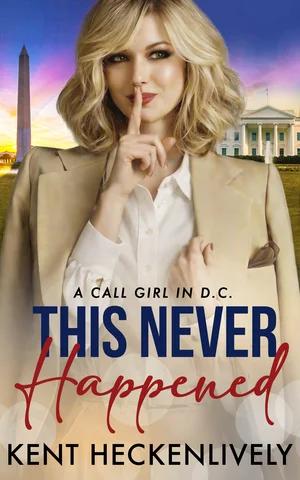
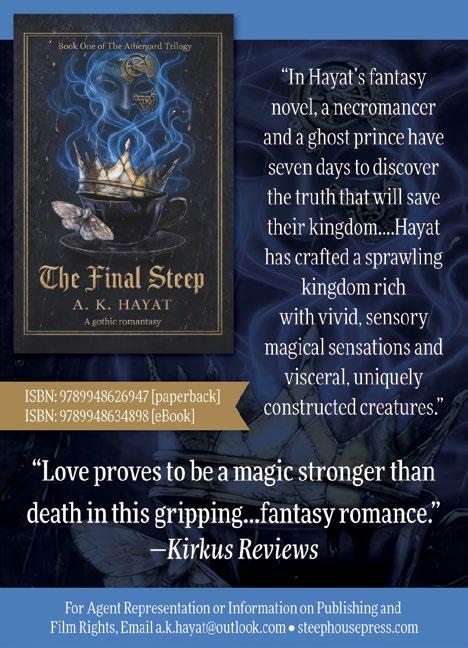
"Heckenlively hooks the readers with romance and keeps them riveted with countless thrills in between." –Independent Book Review
“...readers will love the main characters, the ever-present suspense, and the unanswered questions that invite conversation about what is real and what is not.”
–Blue Ink Review, Starred Review
“...a spy-thriller-like plan worthy of an Ian Fleming novel...”
“Heckenlively keeps the pages turning with brisk pacing and clever spins on hard-boiled dialogue...”
“Entertainingly lurid...” —Kirkus Reviews
For Agent Representation and Information on Film Rights, Email kheckenlively@hotmail.com • www.kentheckenlivelybooks.com
Graphic Lit Issue
OUR FRESH PICK
FROM THE EDITOR’S DESK
THE POWER OF VISUAL STORYTELLING
AS WE WERE closing our fourth annual Graphic Lit Issue, news came that Marjane Satrapi had died in Paris at age 56. Satrapi was a giant of graphic literature whose memoir Persepolis, published first in France, then in two volumes in the United States in 2003 and 2004, was stunning proof of what the genre could do—telling a very personal story (restricted childhood, teen rebellion) framed by a larger social history (Iran during the revolution). It was one of several books that showed that graphic novels—aka comics—could address serious subjects as well as make us laugh. (The best can do both.)
Persepolis was a massive bestseller, translated into numerous languages and selling millions of copies around the globe. In 2007, it
was made into an animated film, written and directed by Satrapi with Vincent Paronaud, which was nominated for an Academy Award. Readers and moviegoers have embraced Satrapi’s story—testament to the power of her visual storytelling.
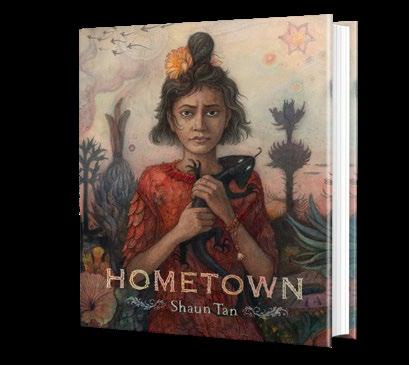
Australian creator Shaun Tan, who appears on the cover of the issue, crossed over into filmmaking, too, with The Lost Thing, an Oscar winner for Best Short Film in 2011. (The short was based on his 2005 children’s book.)
Tan doesn’t make comic books in the traditional sense—no speech bubbles here—but works like Hometown, out from Levine Querido on Sept. 1, combine gorgeously detailed paintings with text to stretch the definition of what a graphic novel can be. As he tells
For customer service or subscription questions, please email customercare@kirkus.com or call 800-316-9361.
young readers’ editor Mahnaz Dar in the feature on p. 82, “The fascinating thing about illustrated stories for me, [is] that constant electric charge that comes from [separating] pictures and images. They’re just buzzing against each other.”
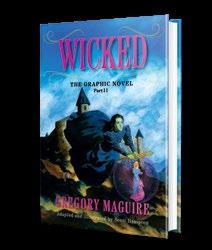
One of the subgenres of graphic literature that has given me the most delight in recent years is the graphic adaptation, whereby a novel is transformed into a comic book. The resulting work might offer entrée for more reluctant readers or provide bonus content for superfans. Here are a few to seek out: Wicked: The Graphic Novel, Part II by Gregory Maguire, adapted and illustrated by Scott Hampton (Morrow/HarperCollins, June 6): This beloved Wizard of Oz spinoff is a multiverse all its own at this point: a novel, a musical, a two part movie. Why not a graphic novel, too?
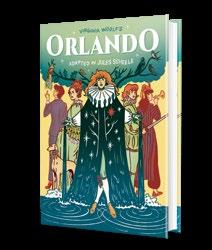
Virginia Woolf’s Orlando, adapted by Jules Scheele (Avery Hill Publishing, June 18): This adaptation of the genderbending, timetraveling
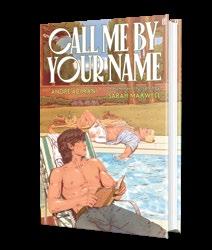
classic by the author of Mrs. Dalloway looks colorful and sumptuous, with plenty of “hot ruff action,” in the words of musician Dickon Edwards, who wrote the introduction. Call Me by Your Name by André Aciman, adapted and illustrated by Sarah MaxwellMcNicol (Faber & Faber, Aug. 11): If you can get the image of Timothée Chalamet and Armie Hammer from the 2017 film out of your head, this swoony and sexy graphic novel captures the vibe of Aciman’s original book in its own right.
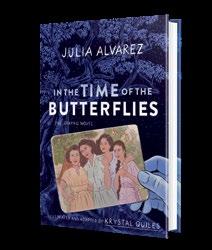
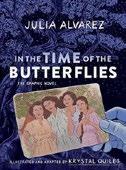
In the Time of the Butterflies: The Graphic Novel by Julia Alvarez, adapted and illustrated by Krystal Quiles (Algonquin, Sept. 1): If you’ve never read this 1994 novel about the lives and resistance of four sisters under the Trujillo dictatorship in the Dominican Republic—or if it’s time for a reread—this is a “visually striking” adaptation, according to our review (p. 6).
Illustration by Eric Scott Anderson
TOM BEER
Co-Founders, Kirkus Media LLC
HERBERT SIMON
MARC WINKELMAN
Publisher, CEO & Partner
MEG LABORDE KUEHN mkuehn@kirkus.com
Chief Marketing Officer
SARAH KALINA skalina@kirkus.com
Enterprise Advertising Director
MICHELE COBB mcobb@kirkus.com
Indie Advertising & Promotions
AMY BAIRD abaird@kirkus.com
Author Consultant
KEELIN FERDINANDSEN kferdinandsen@kirkus.com
Controller & Operations Manager
KRISTI DAUGHERTY kdaugherty@kirkus.com
Lead Designer KY NOVAK knovak@kirkus.com
Magazine Compositor
NIKKI RICHARDSON nrichardson@kirkus.com
Director of Kirkus Editorial ROBIN O’DELL rodell@kirkus.com
Kirkus Editorial Senior Production Editor
MARINNA CASTILLEJA mcastilleja@kirkus.com
Kirkus Editorial Production Editor
ASHLEY LITTLE alittle@kirkus.com
Indie Editorial Assistant
KATARINA YERGER kyerger@kirkus.com
Contributing Writers
GREGORY McNAMEE MICHAEL SCHAUB
Editor-in-Chief
TOM BEER tbeer@kirkus.com
President of Kirkus Indie
CHAYA SCHECHNER cschechner@kirkus.com
Fiction Editor
LAURIE MUCHNICK lmuchnick@kirkus.com
Nonfiction Editor JOHN McMURTRIE jmcmurtrie@kirkus.com
Young Readers’ Editor LAURA SIMEON lsimeon@kirkus.com
Young Readers’ Editor
MAHNAZ DAR mdar@kirkus.com
Audiobooks Editor
JENNIFER DOWELL jdowell@kirkus.com
Editor at Large MEGAN LABRISE mlabrise@kirkus.com
Senior Indie Editor
DAVID RAPP drapp@kirkus.com
Indie Editor
ARTHUR SMITH asmith@kirkus.com
Senior Editorial Assistant
NINA PALATTELLA npalattella@kirkus.com
Senior Indie Editorial Assistant
DAN NOLAN dnolan@kirkus.com
Mysteries Editor
THOMAS LEITCH
Copy Editors
JONATHAN BOWERS
NATALIA HOLTZMAN
NANCY MANDEL
BILL SIEVER
Founder, Kirkus Reviews
VIRGINIA KIRKUS (1893-1980)
Contributors
Colleen Abel, Reina Luz Alegre, Jeffrey Alford, Stephanie Anderson, Jenny Arch, Mark Athitakis, Susan Baird, Stephanie Baker, Kit Ballenger, Audrey Barbakoff, Hayley Barnes, Carole Bell, Nell Beram, Victoria Biggs, Elizabeth Bird, Christopher A. Biss-Brown, Sarah Blackman, Lisa De Bode, Marc Bona, Elissa Bongiorno, Kendra Brewer, Agnes Broome, Jessica Hoptay Brown, Abby Bussen, Ana Cackley, Kelsey Callahan, Kevin Canfield, Hailey Carrell, Tobias Carroll, Ann Childs, Alec B. Chunn, Tamar Cimenian, Shanetia Clark, Carin Clevidence, Adeisa Cooper, Susan Corapi, Betsy Cornwell, Jeannie Coutant, Stephen Cummings, Sara Davis, Cathy DeCampli, Dave DeChristopher, Suji DeHart, Anna Drake, Eamon Drumm, Madison Ellingsworth, Lisa Elliott, Lily Emerick, Phoebe English, Ilana Bensussen Epstein, Joshua Farrington, Brooke Faulkner, Eiyana Favers, Michael Fein, Leslie Fine, Katie Flanagan, Catherine Foster, Mia Franz, Ayn Reyes Frazee, Jenna Friebel, Laurel Gardner, Cierra Gathers, Victoria Glynn, Chloé Harper Gold, Richard Gotshall, Diana Granger, Michael Griffith, Lisa Grimaldi, Sara Grimm, Eliana Gruvman, Vicky Gudelot, Ellie Halleron, Geoff Hamilton, Sean Hammer, Silvia Lin Hanick, Peter Heck, Caroline Henderson, S.J. Henschel, Rebecca Herwatic Leonhard, Loren Hinton, Emma Hodgson, Natalia Holtzman, Terry Hong, Yung Hsin, Mary Grahame Hunter, Christoph Irmscher, Kristen Jacobson, Jessica Jernigan, Danielle Jones, Sylvia Jones, Jayashree Kamblé, Deborah Kaplan, Marcelle Karp, William Kelly, Maggie Knapp, Andrea Kreidler, Carly Lane, Christopher Lassen, River Lee, Maya Lekach, Maureen Liebenson, Barbara London, Patricia Lothrop, Kate Macolini, Michael Magras, Mitu Malhotra, Mandy Malone, Thomas Maluck, Natalie Marshall, Michelle H Martin, J. Alejandro Mazariegos, Joyce McCarty, Nancy McCarty, Katherine McDonald, Tate McFadden, Dale McGarrigle, Cari Meister, Kathie Meizner, Ana Menchaca, Alan Minskoff, Rebecca Moore, Andrea Moran, Rhett Morgan, Henry Mortimer, Molly Muldoon, Christopher Navratil, Liza Nelson, Randall Nichols, Therese Purcell Nielsen, Ari Nussbaum, Mike Oppenheim, Emilia Packard, Costa Pappas, Joy Pasin, George Pate, Crystal Patenaude, Bethanne Patrick, Rebecca Perry, John Edward Peters, Jim Piechota, Christofer Pierson, Shira Pilarski, Maya Fleischmann Poole, Brian Price, Margaret Quamme, Carolyn Quimby, Ellen Quint, Kristy Raffensberger, Stacey Reasor, Stephanie Reents, Sarah Rettger, Nancy Thalia Reynolds, Alexandria Richey, Jasmine Riel, Michelle Ritholz, Julia Rittenberg, Erica Rivera, Soumi Roy, Bob Sanchez, Julia Sangha, Michael Sangiacomo, Meredith Schorr, E.F. Schraeder, Aurelia C. Scott, Gene Seymour, Jerome Shea, Sadaf Siddique, Linda Simon, Wendy Smith, Leena Soman, Margot E. Spangenberg, Allison Staley, Sydney Stensland, Allie Stevens, Rebecca T. Sutton, Deborah Taylor, Desiree Thomas, Bill Thompson, Renee Ting, David Walton, Katie Weeks, Audrey Weinbrecht, Lillian West, Kimberly Whitmer, Susie Wilde, Vanessa Willoughby, Laura H. Wimberley, Marion Winik, Sarah Yung, Denise Zajkowski, Jean-Louise Zancanella, Audrey Zheng
GRAPHIC NOVELS CAN DO ANYTHING
MARJANE SATRAPI’S recent death led me to reread Persepolis (2003), a brilliant reminder, if anybody needs one, of the powerful elasticity of the graphic novel. It can encompass both grand historical narratives and the most personal of stories; it can simultaneously reflect a wide variety of perspectives, with the words saying one thing and the pictures another. Some of my favorites this year address large societal forces in the form of epidemics—AIDS and Covid-19—or take place in outer space, but their canvases are much smaller than Satrapi’s, focusing tightly on personal relationships.
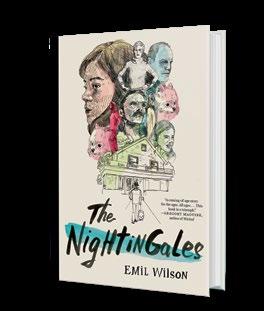
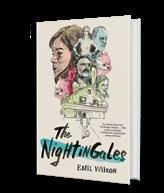
Emil Wilson’s The Nightingales (Avid Reader Press, Aug. 4; see feature on p. 15) is set in 1985, when
Wilson’s father, Don, invites a sick colleague to move into their family’s Oregon home; Jim had been kicked out of his own apartment because his landlord realized he was “one of those sick fruits.” Emil has already left for college, and the book is told through his 17-year-old sister Lou’s sketchbook— there’s a lot to look at on every page, but your eye is free to wander, unconstrained by panels or speech bubbles. Lou and Jim form a close friendship—Jim describes the scene at New York’s gay bathhouses to Lou, and cooks her an elegant birthday dinner, while Lou helps Jim turn over in bed when he’s too weak to do it himself. Our
starred review says, “This graphic novel is stunning in every way.…The artwork has an intimacy and immediacy that complements the text beautifully, and the vibrant color palette communicates the joy that the relationship between Lou and Jim brings them both.…Absolutely gorgeous, visually and emotionally.”
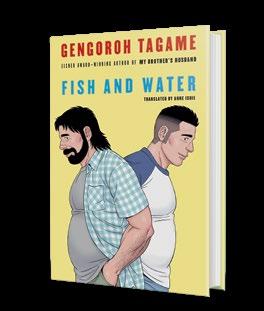
Fish and Water by Gengoroh Tagame (trans. by Anne Ishii; Pantheon, June 23) opens with a drawing of two men lounging on a sofa wearing comfortable clothes—baggy pants, T-shirts, slippers— and sharing a bowl of snacks. The whole scene is inviting—Tagame’s drawing style is clear and straightforward, pulling you right into the story. The next page shows a bunch of people in a field wearing masks. It’s the height of the Covid pandemic, and when Akira, a salesman, is given a
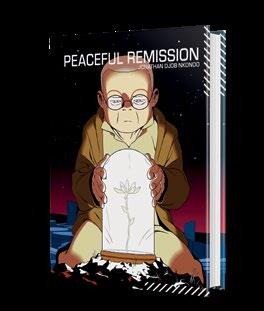
gift of several large cabbages, he calls his friend Koji, who’s a good cook, to come over and share the bounty. “Tagame’s food illustrations look delicious,” according to our review, “displaying Koji’s creativity and making it easy for readers to connect with Akira’s intense excitement over meals with his friend.” They both think of themselves as straight, but the more time the men spend together, the more they realize they’re having a romance. Jonathan Djob Nkondo’s Peaceful Remission (trans. by Mike Kennedy; Magnetic Press, Sept. 15) starts out with a totally different vibe: It’s night, and there are several pages depicting a dark interior. An older woman wakes her husband with long bubbles of haranguing text, telling him to go talk to their new neighbor, who’s creating a disturbance. We soon see that they’re on a faraway asteroid. As Wilson and Tagame do, Djob Nkondo uses the graphic novel to take a deep dive into a relationship, and he has a fascinating way of interspersing pages of no text and pages with lots of text to create a storytelling rhythm.
Laurie Muchnick is the fiction editor.
LAURIE MUCHNICK
Illustration by Eric Scott Anderson
Equal parts detective story and sociocultural history, James’ new novel takes a deep, harrowing dive into the tragic consequences of violent homophobia.
The “disappearers” of the title are Orrin Turner and Matt Chin, who dominate this decades-spanning saga without being seen or heard through most of it. They are two of the gay men—“battymen” in Jamaican idiom— who show up at a Kingston house on a June night in 1988 to rehearse for a production of Fortune and Men’s Eyes, a play set in a prison. The group is savagely attacked by a mob, leaving one of the actors dead, one blinded for life, and the rest bloodied and injured. Survivors of the attack spend most of the succeeding years recovering from both physical and psychic wounds, among them Jordan
Brown, who describes himself as “full-time battyman, sometime prostitute. Occasional thorn in somebody’s backside,” and Eddy Porteous, who arrived too late at that fateful rehearsal to become a casualty but nonetheless is haunted, like Jordan, by the inexplicable disappearance of both Turner and Chin since the attack. Despite constant carping between them, Jordan and Eddy team up roughly six years after the attack in search of clues to their friends’ whereabouts. While the process yields few hints, their inquiries on the streets, in bars, and at other gathering places for Kingston’s battymen contribute to a grim but illuminating collective portrait of the country’s gay community at a time when the AIDS crisis was in its early, often frightening stages and of the alarmingly widespread
The Disappearers
James, Marlon | Riverhead | 640 pp. $32 | September 1, 2026 | 9780593717202
homophobia leading to that brutal attack. As in his Booker Prize–winning A Brief History of Seven Killings (2014), James brings multilayered life to a troubling era in his homeland’s recent history. He engages with his landscapes and the diverse characters populating them with intensity, passion, and bountiful, often graphic detail. With the same
affinity for Dickensian storytelling he’s shown in his sword-and-sorcery epics, James tells this searingly realistic tale through interview fragments, journal entries, letters, and, in recreating the horrific attack, with random, frantic voices that leave unsettling echoes. Even when it stress-tests your senses, this sprawling depiction of gay life in Jamaica is galvanizing.
This graphic novel successfully highlights the sisters’ impossible choices.
IN THE TIME OF THE BUTTERFLIES
In the Time of the Butterflies: The Graphic Novel
Alvarez, Julia | Adapt. & Illus. by Krystal Quiles
Algonquin (336 pp.) | $30 | September 1, 2026 9781643753768
Religion, family, and revolutionary values are put to the test in this visually striking interpretation of Alvarez’s bestselling 1994 novel about the shifting loyalties of the Mirabal sisters.
Before launching into the story’s multiple perspectives, Quiles provides a helpful spread of family photos ranging from 1938 to 1994. No one was truly safe during the years of the Trujillo dictatorship in the Dominican Republic, but Dedé Mirabal has the unhappy distinction of being the only one of four sisters who survived the era. With each sister getting her own color palette in Quiles’ interpretation, Dedé sets out to tell her niece Minou the tragic intertwined stories of Patria, Minerva, and María Theresa, wanting Minou to know the real women behind the legendary “butterflies.” Patria, the eldest Mirabal, is bathed in yelloworange as she contemplates becoming a nun. Instead, she starts a family with her husband, Pedrito, and eventually starts letting her sister Minerva’s revolutionary group meet on her land. Minerva, with a green background, devotes herself to the revolutionary cause early when she makes a school friend named Sinita, who confides that Trujillo killed her uncles, who’d been working against him. The youngest sister, María Theresa, starts out with optimism in her pinkish-purple hue as she writes in her diary. While Trujillo and his cronies circle the Mirabals, they each respond differently to the danger.
Quiles keeps the character figures relatively simple and their clothing plain, adding the most detail in panels with close-ups of eyes. Whether scared or in love or caught in religious thrall, the eyes are the windows to the Mirabal sisters’ souls.
As a portrait of life under a repressive regime, this retelling successfully highlights the sisters’ impossible choices.
A grieving scientist takes a perilous chance to change the past and future. Benjamin’s epic new novel follows Laurel Salter, a 30-something scientist studying fungi, as she decides to upend her life by accepting a job at the McMurdo Station, a research base in Antarctica. Recently divorced from her physicist husband, Eli, and grieving an unimaginable loss, Laurel is drawn to the barren, isolated, and dark nature of the continent. Outside the station’s window, she notices “the Arc”—a mysterious dome of shimmering and color-changing light—in the distance. No one knows what the Arc is, how it was created, or what it means. As teams of scientists and physicists filter into the base to study the Arc, Laurel is paradoxically surprised and unsurprised to find Eli among them. The two are drawn together when the Arc reveals itself to be related to the Duoverse, an unproven scientific theory of Eli’s over which they had initially
bonded. The Duoverse is the idea that the Big Bang created two universes: The universe, where time moves forward, and the antiuniverse, where time moves backward. Laurel sees the Arc as an opportunity to go back in time and space to prevent the tragedy that tore their lives apart. When Eli and Laurel make it to the other side, they must contend with a world that holds the promise of a new future—but ultimately does not belong to them. Benjamin’s imaginative rendering of the antiuniverse offers truly unique ways of thinking about time, nature, progress, duty, and aging. The novel, which ends rather abruptly after a 500-page lead-up, has a beautifully tender moment that brings the universes—and the two sides of the story—into perfect harmony. Blending literary fiction, science fiction, fantasy, and scientific research, Benjamin has created a genre-bending novel that is deeply concerned with the tenuous, mysterious, and enduring symbiotic relationship between humans and nature. Ambitious, poignant, and deeply human.
A young writer navigates a stormy love triangle against the backdrop of Washington, D.C., before and after the 2024 presidential election.
Twenty-fouryear-old Cat St. Clair’s relationship with her college sweetheart, Jay, has been open for six months now, and it’s going “Great!!!” By the same criteria, so is everything else in her life: the MFA she’s earning one credit at a time (she’s projected to finish in 10 years), her job at a two-star sausage restaurant, her parents’ crumbling marriage, and the semiautobiographical novel she’s writing, which keeps getting torn to unsympathetic shreds by her classmates. When encounters with Jay’s best friend, Tristan,
and Tristan’s girlfriend, Nia, send Cat hurtling head over heels into forbidden love, her and Jay’s uneasy truce with nonmonogamy is tested, possibly to its breaking point. At the beating heart of all this chaos is Cat’s earnest pursuit of freedom and self-actualization as a Black woman in a hostile culture. As Cat’s personal relationships implode, the country’s descent into fascism and the ongoing genocide in Gaza keep her mind, and the narrative, torn between the concerns of an individual life and the conflicts—staggering, cruel, unrelenting—of the wider world. It’s a tension familiar to anyone alive in 2026, and it’s the most effective aspect of the book. Less successful is the novel’s prose, which is rife with similes that are simultaneously heavy-handed and unevocative, a grating combination. From miscalibrated imagery—“feet padded across the floor like thunder”—to lines that aim for sharp, bawdy wit and miss—“Why were men like tampons, inserting themselves into everything?”—the writing is uneven enough to elicit groans of frustration. And then there’s the metafiction of it all, as it becomes apparent that the novel is the very one Cat has been wrestling with. It’s a predictable approach, but the focus on form is a good fit for a story about defying the restrictive, often destructive, conventions of a normative world. Lots going on, some of it good.
The familiar story of Henry VIII’s second queen and her family, told from a new angle.
Historian/ novelist Borman sets the action (1512 to 1540) exclusively at Hever Castle, the Boleyns’ estate in the English countryside. Anne’s tragic story naturally holds center stage, but even her years at court—eluding Henry’s ardent pursuit until he breaks with the Catholic Church; marrying him; and finally, three
years later, being executed for adultery and treason—are chronicled in scenes at Hever: family members and visitors bring news, letters are read, servants hear local gossip. It’s a slightly awkward premise, but Borman handles it deftly. Early chapters establish young Anne’s character: smart, bookish, already interested in politics, the favorite of her father and always in trouble with her mother for her lack of ladylike ways. Her parents, older sister Mary, brother George, and beloved grandmother Margaret also get sharply defined personalities; so do two fictitious female servants and a male steward known to history from a single letter, cast here by Borman as one of the story’s principal villains. As if the history weren’t dramatic enough, the author invents a teenage pregnancy and abortion for Mary, depicts George’s wife as a lesbian in love with Anne, and transforms a Boleyn son who died in infancy into the youthful victim of murder by a family enemy. (Elderly Margaret, however, was in fact deprived of her inheritance after being declared insane, though the scheming that leads to it is Borman’s elaboration.) These melodramatic embellishments work to freshen up history that has been retold many, many times, as does Borman’s brisk prose. First-rate historical fiction, notable for strong characterizations and propulsive plotting.
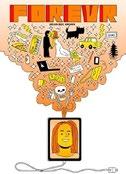
Forevr
Brown, Brian Box | Top Shelf Productions (148 pp.) | $19.99 paper | September 8, 2026 9781603096003
A cautionary tale rendered as a graphic novel and set in the not-toodistant future. Penny is dying. While her husband, James, retreats into video games, their daughter, Brenda, focuses on building her brand as a wilderness influencer. When Penny finally dies, her survivors have very different reactions to the version of Penny that
persists on the Forevr app. James’ marriage changes very little. In fact, the longer he lives with the virtual Penny, the more he treats her as a person—a process that involves purchasing accessories. Brenda, on the other hand, finds the very idea of Forevr abhorrent. A family camping trip leads to a violent clash with world-changing consequences. Brown assays deep questions about life, death, and personhood here, but he addresses none of them in a satisfying fashion. James is a nonentity. Brenda is just a jerk. The only character with any emotional complexity is Brenda’s girlfriend, and she grows flatter as the story progresses. Most detrimentally, Brown portrays Penny as a nag in both life and afterlife, but he never shows her addressing her own existential reality—neither as a flesh-and-blood human with a terminal illness nor as a collection of zeros and ones. Forevr Penny is a product of DNA and data from her phone. It’s easy to understand why James and Brenda have intense emotional responses to her online a fterlife, but we don’t know how Penny understood the connection between these two iterations while she was still alive. Beyond that, there’s no suggestion that anyone in this world has wondered what DNA and cellphone data have to do with consciousness or about the actual relationship between a human who has died and their digital doppelgänger. Dystopian fiction that barely explores the issues it raises.
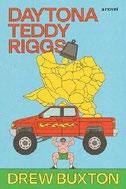
Daytona Teddy Riggs
Buxton, Drew | Hub City Press (224 pp.) $25 | August 25, 2026 | 9798885740784
In 1996 Gulf Coast Texas, a onetime high school football star sets his sights on winning the regional World’s Strongest Man contest, with disastrous results. Teddy Riggs prefers to be known as Daytona:
Kirkus Star
“Fastest on the field. Fastest on the road.” Third-generation scion of an oil family, he’s been cut off from his trust fund by his parents and lives with Granny, who will cook him a dozen eggs to slake the appetite he’s developed on “the juice.” His “roid rage” shows up in present-day fights at his old athletic fields, as well as flashbacks to incidents that have him banned from multiple Corpus Christi gyms. Teddy is in a downward spiral (think classic losers from Thelma and Louise to Richard Russo’s Hank Devereaux Jr.), but author Buxton allows him to develop as he falls, including a sexual awakening and nascent sense of purpose. These flickers of growth will keep readers rooting for Teddy even when he’s in the midst of irrational actions and complicated manipulations of friends and family members, trying every way he can to shake people down for money— often to fuel his huge fast-food orders; he eats multiple pizzas in a sitting and assures everyone this is misery. After he has a few encounters with a woman named Tammy, he convinces her to head to Houston so he can attend a seminar given by Pat Dupree, a life coaching guru who says “life is constantly testing our commitment to what we say we want.” Even after he’s received some of his idol’s spurious advice, Teddy can’t stop the wild, disastrous ride he’s on. At one point he lands in prison, convincing his sister, Pam, a veterinarian, to pay his bail. Teddy’s fate is all there in Pam’s reaction to his offer to pay her back in personal training sessions: “She smiles and starts laughing, laughing like crazy and shaking her head.” She drives off, leaving Daytona Teddy Riggs speeding toward his unhinged future.
Part satire, part wake-up call, and all openhearted perspective, this debut promises excellent work to come from its author.
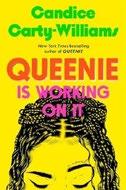
The further adventures of a single Black woman in South London.
As the title of Carty-Williams’ follow-up to the well-received Queenie (2019, now a Hulu TV series) indicates, her talented but troubled protagonist, now 33, doesn’t quite have her ducks in a row...yet. Having messed things up with her true love a few years earlier, her romantic life now consists of regular booty calls with a well-built public transportation worker who is several tube stops short of Mr. Right. Her work life as editorial director at a media startup is closer to satisfactory: “The Good Sis had been a life-changing place to work, and a far cry from my last workplace, where being the only Black woman in a five-mile radius had seen me go from pet to threat on an almost daily basis.” Now she gets to work on projects she really cares about, currently researching a story titled “The Race to Conceive: The Hidden Hurdles of a Black Woman’s Fertility Journey.” To get an inside look, she goes for a standard fertility checkup. But the bad news she gets there is not about racism. Contrary to her belief that she still has years to organize her life for motherhood, her hormone and egg counts are both low and dropping, and her high BMI disqualifies her for support from the public health system. Spiraling hard and fast, she launches campaigns to lose weight and get pregnant, ASAP. Again, Carty-Williams vividly evokes Jamaican diaspora culture and Queenie’s loving South London circle of friends and family, capturing voices ranging from Grandma—“Lord have mercy, me neva even seh mi prayers before mi drop ah sleep”—to millennial and Gen Z characters, with their emoji- and acronym-filled texts. Queenie herself is an endearing but frustrating character, annoyingly prone to self-sabotage, but many readers will empathize with her
difficulty absorbing her therapist’s counsel that “preparing for sadness wouldn’t change how sad [she’d] be even if [her] worst fears came true.”
The blend of funny and serious is not working perfectly, but strong writing and sharply rendered dialogue rescues the read.
Kirkus Star
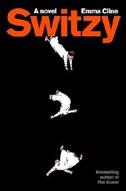
Switzy
Cline, Emma | Random House (352 pp.) $32 | September 8, 2026 | 9780593595244
A man with Alzheimer’s disease makes a final journey to Zurich to embrace his fate. To honor the gravity of his errand, David Hastings, a retired businessman in his 70s, long divorced and single, has been loaned his former boss’ private plane. He’s traveling in the company of a young man named Cody, his long-suffering assistant; although he sometimes suspects “the boy” is conning him and siphoning off his assets, readers are given plenty of leeway to form their own opinions. En route, David plays solitaire on his phone, occasionally pausing to consult a notebook full of notes in handwriting he doesn’t recognize. Tests have shown that he has amyloid plaques in his brain, the primary markers of Alzheimer’s. “Amyloid plaque, the doctor said so often, often enough that David started hearing it as Amy Lloyd plaque. I hate you, Amy Lloyd, he thought idly.” In her third novel, Cline departs her former territory of young women to fully inhabit the thoughts of a greatly diminished (and never very great anyway) man during the last few days of his life. These are reported in short paragraphs that oscillate between action in the present—a stop in London to visit his daughter, a road trip to the home of an estranged boyhood friend— and memories of the past. Elements of childhood, like the cowboy motif of his boyhood bedroom and the words of various mnemonics, songs, and prayers, are in sharper focus than adult
experiences; his marriage and his career appear mainly as vague afterimages of disappointment and disgrace. The reading experience is hypnotic, eerie, and unsettling; the misheard words (pinot-barbiedoll for phenobarbital; assfart for Ausfahrt, the German word for highway exit) and misapprehended objects add a bitter sort of humor. It’s almost scary to think about what a convincing job Cline has done imagining this shattered form of consciousness, both near and far from what goes on in one’s supposedly healthy brain. Unexpected, beautifully controlled, and almost dangerously captivating.
Kirkus Star
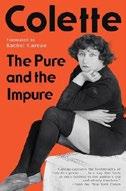
The Pure and the Impure Colette | Trans. by Rachel Careau Norton (176 pp.) | $29.99 | July 7, 2026 9781324075233
An exquisite new translation of the volume Colette referred to, on multiple occasions, as “my best book.”
A narrator who resembles her author both in name and occupation guides readers through the sexual proclivities and shades of gender expression that populated belle epoque Paris (with a brief digression to Georgianera Wales). In cafes, cabarets, and opium dens, she introduces us to what translator Careau calls “the sexual underworld”: lesbians and gay men, women who dress in men’s clothing, a sneering, misogynist Don Juan, and others—many of whom wouldn’t have used the same language to describe themselves that we use now. (Careau believes that at least one of those cross-dressing women would likely have been a transgender man if she’d lived in our own time.) And as Careau notes in her informative if occasionally stiff foreword, the book itself evades categorization of all sorts—it’s neither pure fiction nor nonfiction, and that narrator is a lot coyer than Colette’s own life might lead us to believe. For periods of time, Colette
An exquisite translation of the volume Colette referred to as “my best book.”
THE PURE AND THE IMPURE
dressed in men’s clothing and took women lovers, but you wouldn’t know it based on this account alone. Her descriptions can seem harshly—even cruelly—outdated: Of a circle of gay men, she writes, “I will carefully avoid saying that they were not manly.” Of the cross-dressing women, she accepts without complaint this question from an interlocutor: “What’s more ridiculous, and sadder, than a…simulated man?” But it’s never entirely clear where Colette’s irony ends and her sincerity begins—nor who might be considered “pure” or “impure.” As Careau notes, Colette’s work would have been wildly broad-minded at the time—and for the most part, her tone is more sympathetic than cutting, eager to unravel the many, many different layers of “my favorite form of brutality, love.” As a whole, it’s best read not as a comprehensive guide to gender and sexual desire but as a singular account—one that was very much of its own time and yet, paradoxically, far out in front of it.
A seductively crafted and deeply fallible work—and a classic.
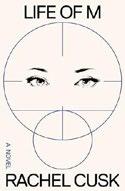
Life of M
Cusk, Rachel | Farrar, Straus and Giroux (192 pp.) | $27 | August 25, 2026 9780374618384
A fictional movie star’s “autobiography,” written by a fictional author, muses on the nature of reality and identity. When the unnamed narrator tells M that she—or is it he?—wants to write the actress’ autobiography, M (who is definitely female) responds,
“Would you just make it up?” On Page 1, readers are alerted that little is certain here, as the slippery text moves between M’s invented life and the experiences of a “we” who could be the narrator and a partner who just got out of the hospital—or maybe not. A star from childhood, M has never had an ordinary life. She prides herself on performing everyday tasks like picking up her kids at school, but “her cultivation of normality is an attempt to retrieve a lost inner world.” Without ever mentioning social media, Cusk suggests that we are increasingly consumed by images, with no sense of who we really are; when M tells someone that only in her personal life does she feel like she’s acting, the angry reaction is, “Everyone feels that…and to an extent it’s the fault of actors like you.” Cusk’s spare, deliberately flat prose is as sharp as ever: A fashion model “occupies some vague atmosphere of her own that seems to cushion her like a blister against a life of constant intrusion”; movie stars’ bodies “have a kind of plasticity or neutrality about them, as though their mortal element had been removed.” There’s a whiff of privilege about all this, and occasional glimpses of homeless people simply underscore the rarified world Cusk’s characters inhabit and the highly abstract nature of their reflections. Dropped into the narrative without context, sentences like “We have come to understand that our memories are meaningless” teeter on the brink of pretentiousness. There’s no question about Cusk’s brilliant way with words, but this novel lacks the connection to a wide range of human experience that distinguishes her best work.
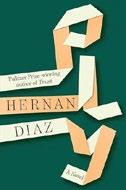
A young woman is entangled in a literal power struggle over a postapocalyptic city’s electrical grid in the latest by Diaz, winner of the Pulitzer and Kirkus Prizes for Trust (2022).
Diaz’s unnamed protagonist is a “pincher,” someone who breaks into power lines to fuel batteries (aka “bricks”) that are used for currency, energy, and (her particular interest) electricity for live concerts. The story is set many generations in the future, following a long stretch of political and environmental collapse; society is practically post-literate, with scant populations occupying “vaguely sovereign” city-states. The pincher’s gift for brick engineering has caught the scrutiny of one observer, which is troubling news in this “shipwrecked world of dilapidated bygone grandeur”; she doesn’t need the scrutiny of the private power company, or the shady moblike figures who seem to regulate commerce in the city. The identity of the pincher’s stalker proves to be more complicated, and it opens up the second half of the novel, which is focused on the idea of creating a new utopian society and the potential of warping the space-time continuum to get there. Trust seduced readers and critics with its clever shifting of context and perspective, and though this novel isn’t as overtly playful, Diaz uses the quantum physics subplot to tinker with questions of how we perceive
ourselves and what our identities become when they’re run through others’ filters. The rhetorical subtleties this demands (points of view, tenses, and pronouns get deliberately wobbly) makes this a less immediately engrossing novel than its predecessor. But as the title suggests, there are layers of rhetorical gambits that reward rereading. And Diaz always returns to a simple but demanding question: To build a better world, how deeply must we get into the heads of the people around us?
A brainy, challenging, and engrossing trek into a battered but unbeaten future.
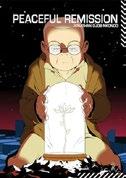
Peaceful Remission
September 15, 2026 | 9781962413770
In this graphic novel by French animator and artist Djob Nkondo, an elderly couple faces marital strain. In the far future, Jerry and Marlene live inside an asteroid somewhere in the depths of space. An older couple, they’ve been married for 47 years. Djob Nkondo’s artwork pans through the couple’s home, carved from the inside of the asteroid but full of the mundane, everyday items expected in a contemporary house. Rumbling and shifts in gravity wake the couple from their sleep, and Marlene immediately suspects their neighbors are to blame and insists that Jerry confront them. Marlene lets out a long stream of criticisms of Jerry, complaining about a lifetime of his bad choices and not helping around the house when she works full time, all peppered with an
Visual storytelling that enhances the inner battles of its main characters.
excessive amount of cursing verging on comical. Djob Nkondo takes his time allowing the argument to unfold, with artwork that takes up entire panels, with only a few words per page. When characters leave their homes, there are long stretches with no text at all, negative space utilized to emphasize the emptiness of outer space and the emotional distance between the main characters. Jerry’s hesitation to return home is viscerally felt in several wordless pages that slow the pacing. As soon as he re-enters, speech bubbles weigh him down and take up the entire frame, with only a few words readable, leaving the rest blurred as Marlene’s tirade continues. Specific elements of the story are never described, only shown. Through a flashback nightmare of Jerry’s, readers glimpse an enormous city of large buildings and people when suddenly a rain of missiles falls from the sky. Djob Nkondo’s visual storytelling lifts most of the weight of the narrative. Race isn’t mentioned, but characters have a variety of skin tones. Visual storytelling that enhances the inner battles of its main characters.
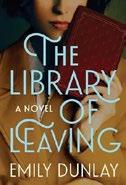
A twisty story of love, war, and secrets. In the years after World War I, American-born Helen Fox lives in Geneva and works as a librarian for the American Legation, where one of her mundane tasks is to receive and maintain the books sent to the library when an American dies in Switzerland and their personal libraries are not claimed by heirs. Helen’s rather quiet existence in Geneva is disrupted by the anonymous delivery—not via the Legation—of the first chapter of a novel with characters and a plot echoing her own experiences in Switzerland years earlier, during her service as a librarian in a mountainside Swiss hotel housing injured British
Djob Nkondo, Jonathan | Trans. by Mike Kennedy | Magnetic Press | (260 pp.) | $29.99
combatants and one attractive American who had volunteered his services before the U.S. joined the Great War. Helen realizes the author has the power to reveal the truth about her shadowy relationships and actions during the war, which would shatter the life she created for herself in its aftermath. Once Helen and the mysterious American author reconnect in Geneva, she has many decisions to make about how to proceed without disrupting the fragile equilibrium she’s built between past and present. Dunlay’s narrative follows a serpentine path through Helen’s life and war years through multiple perspectives: Helen’s own voice, the voice in the manuscript, and that of a diarist whose papers come into Helen’s possession in the American Legation’s library. (Oh, and communications from MI5 are included, too!) The novel spans decades and continents as it unravels the complicated course a life such as Helen’s can take while trying to save itself. Dunlay’s extensive research into the roles of various actors in WWI is evident, but an equally resonant theme relates to the power of books to sustain a life of meaning during hardship. A carefully crafted historical puzzle.
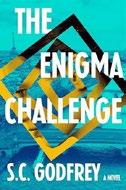
A puzzle-hungry academic and an ass-kicking cryptologist vie for $12 million— and each other’s hearts. Zoe Wilder is excited to present a paper at her first academic conference in Madrid, and almost as happy to break up with her professor boyfriend once they arrive in Spain. She’s also come secretly hoping to join the Enigma Challenge, a legendary puzzle contest that attracts some of the best minds in the world— though it’s supposedly run by a shady tech corporation, and most of the
people chasing down the clues seem to be thugs and criminals. When a Reddit thread leads Zoe to the first puzzle, an easy solve (for her), she kick-starts a series of events that will take her—and a handsome, mysterious stranger named Dane Seaver—all over Europe to solve the five ciphers. The puzzles themselves take up little space in the book other than as plot devices, so readers hoping to challenge themselves might be disappointed. Instead, the novel follows the fairly conventional structure of an action romance: meet cute; flee for your life; stay ahead of the people chasing you; double cross (or is it?); denouement. The characters, too, tend to follow type: the villains are super villainous, the best friends are loyal, Zoe is smart and spunky, and Dane is a six-pack of abs with a vulnerable heart. Zoe and Dane accomplish a fair amount of travel around Europe in a short amount of time, helped by the fact that he is a millionaire several times over, and fight not only the other puzzlers but also their growing attraction to one another. There are some pretty heavy action scenes, and some pretty heavy love scenes, and all of it culminates in a cliffhanger that suggests our puzzle-kicking lovebirds are just getting started.
This is what you’d get if a Dan Brown novel was rewritten by Emily Henry.
Agrippa
Harris, Robert | Doubleday (336 pp.) | $30 September 1, 2026 | 9780385552387
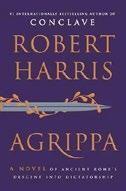
A dying Roman recalls his lifelong friendship with the man who became Emperor Augustus. A few short years before the Common Era, Agrippa writes his memoir. In his waning days at age 50, the old Roman general remembers his eventful life, which has been so tightly
tied to his friend Octavius’. He began life as Marcus Vipsanius Agrippa, a plebeian, a nobody who was taunted as a “mother-killer” because his mother died in childbirth. Octavius, on the other hand, is a great-nephew of Julius Caesar, whom they both admire. As they enter manhood, they fight bravely in Rome’s savage wars, both civil and foreign. Agrippa promises Caesar that he will always protect Octavius, who can be sickly, and he lives up to that commitment. That loyalty becomes his destiny. And when Caesar puts him in command of an army, he knows that is what he was born to do. Put briefly, Agrippa develops into the Roman Republic’s most renowned general and oversees great feats of engineering such as the aqueducts, while Octavius eventually becomes Emperor Augustus. The former ascends by merit, the latter by blood. This is no ordinary friendship, nor is it an equal one. When the emperor wants to adopt one of Agrippa’s sons, for example, Agrippa has no choice but to agree. When he is asked to divorce his wife and marry someone else, what’s a good soldier to do? “You are part of my family,” Augustus tells him. “I want you by my side for eternity. Besides, I shall need you to guard my back in the Underworld.” Agrippa comments: “He punched my arm. A joke.” Much is impossible to know after two millennia, and author Harris weaves a strong story that honors history and imagines vivid details. There are great naval battles, disastrous storms at sea, and the threat posed by Antony and Cleopatra. Women are often interchangeable—who can produce a son? And through it all, Rome descends into dictatorship.
A compelling mix of history and imagination.
For more by Robert Harris, visit Kirkus online.
Kirkus Star
How Can My Manager Be So Stupid?
Hayami, Kazumasa | Trans. by Haydn Trowell Putnam (272 pp.) | $30 | September 1, 2026 9798217182299
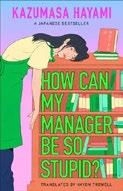
A bookseller considers her career path as she experiences overwhelming hatred for her manager. Kyoko Tanihara, who has worked at the Kichijoji branch of Mushashino Books for nearly six years, is beginning to feel disillusioned over nearly everything about her job: the low pay that barely covers the rent for her tiny apartment, the arrogant sales rep who can’t be bothered to send any worthwhile books the store’s way, and customers who demand she pull books out of thin air (one customer, when asked the title or author of the book he wants, gruffly responds “Damned if I know”). However, absolutely nothing boils Kyoko’s blood quite like her manager, a glassy-eyed, excessively enthusiastic, self-help book-obsessed man named Takeru Yamamoto. When Kyoko’s best friend and mentor at the store quits after an affair with the company’s general manager is discovered, Kyoko has a hard time coming up with reasons to stay at her job. Her frustration only grows after Yamamoto, during a tense Q&A with a selfimportant author, throws Kyoko under the bus. Through it all, Kyoko never wavers in her conviction that she was put on Earth to sell books: “I wanted to talk about books with people who loved them as much as I did…at least when we were talking about books, we felt alive.” Anyone who has dealt with an inept authority figure will relate to Kyoko’s internal monologue. Yamamoto comes across as absurdly annoying in a way that’s sometimes almost endearing, with a blend of cluelessness and overconfidence reminiscent of Michael Scott from The Office. The novel is dryly humorous (“I tried to imagine what was
A witty novel that underscores the power of a good book.
HOW CAN MY MANAGER BE SO STUPID?
going through their heads, but the thought of doing so made me want to scream”) with an entertaining ending that may divide readers.
A cathartic and witty novel that underscores the power of a good book—and a good bookstore.
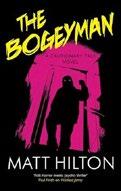
The Bogeyman
Hilton, Matt | Severn House (288 pp.) | $29.99 September 1, 2026 | 9781448319992
A woman determined to get to the bottom of her sister’s disappearance two years ago is in danger of falling into the clutches of the same creature who was responsible.
Kelsey Middleham, who left middle management for teacher training, vanished without a trace from Harclay House, an apartment building in Carlisle, England, that’s a lot less classy than it sounds. Now Sophie Wade, her elder sister, has booked the same flat in “Horror House” searching for answers. What she finds is a brick wall of initially closemouthed neighbors, from Belle Cameron to Judith Wannop, and a landlord, Billy Burton, who oozes the opposite of charm. The presenttense story, which unfolds in resolutely realistic stages, as if Hilton had sworn a blood oath not to exaggerate a single detail until the shrill climax, is peppered with nightmares and flashbacks to the sisters’ early years with their father, Keith Middleham, and his creepy-crawly mate, Barry O’Rourtie, that make the story glow with old-darkhouse vibes. As a mystery, the tale is sadly disappointing: A slowly paced series of revelations lead Sophie, who periodically confides in her boyfriend,
Callan Mackay, to an obvious culprit in the past and an unguessable, because never previously introduced, poltergeist/ ex machina in the present. But as a thriller following Sophie’s gradual bonding with Judith and Belle in her pursuit of things that go bump in the night, it may have something to offer readers who still miss Nancy Drew, Trixie Belden, and the Dana girls. The title says it all—no less, no more.
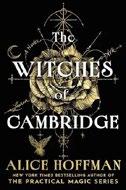
The Witches of Cambridge
Hoffman, Alice | Scribner (416 pp.) | $29 September 8, 2026 | 9781668074640
Two young witches come of age and power while attending a women’s college in the 1950s.
Ava Abbot didn’t think she’d ever leave her tiny town of Genesis, Maine, or the apple farm where she grew up with controlling parents, but when she gets a mysterious scholarship to attend Radcliffe College, she’s off in a heartbeat. There she meets roommate Lauren Bell, a well-off orphan who’s always been aware of her magical inheritance. The two are invited to join the Lilith Society, a secret organization for Radcliffe witches where women support and learn from each other. As the two grow, they find themselves pulled in opposite directions: Ava is drawn to Jamie Mather, youngest son of an influential family and descendant of infamous witch hunter Cotton Mather. Meanwhile, still hurt from the losses of her childhood, Lauren tries to find a way to rid herself of her heart. Against the backdrop of McCarthyism and the Lavender Scare, as well as classmates going missing, the two girls
must take care of themselves and each other if they want to make it to graduation. Hoffman again draws on lore and a strong sense of place to root her tale of magic, feminism, and sisterly love. Her characters shine, not just Ava and Lauren, but side characters such as Ava’s friend Maureen, a working-class witch, and Lauren’s cautiously gay brother Lionel, a doctor, fill out the world of Cambridge and make it feel lived in. Although the prose can lean didactic at times, with some lines painfully on the nose—a witch in 1695 writes in a letter, “Women belong to us, the lawmakers had decided. Your body, our choice, they said”—the historical parallel of the Red Scare and general patriarchal society of ’50s Cambridge with the history of witches and witch trials works well. This is a book that knows what it wants to say and says it. A welcome novel for Hoffman fans and readers of fantastical fiction.
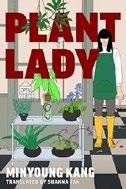
Plant Lady
Kang, Minyoung | Trans. by Shanna Tan Berkley (208 pp.) | $28 | August 4, 2026 9798217187577
Little shop of horrors.
Yoohee’s plant shop, located in a quiet neighborhood in Sejin City, South Korea, is a dream realized. As a teenager, Yoohee considered plants “a comforting presence, like a steadfast friend.” As an adult, she’s more philosophical: “‘Humans are just like plants’… With a little attention and tenderness, you could nudge them back onto the right track”—in some cases, anyway. The men Yoohee has known have proved resistant to her hypothesis. Take Hoyoung, the shop’s first male customer, whom Yoohee is seeing romantically: He’s careless and worse with her plants, yanking off the odd leaf or snapping the odd branch. At one point, Yoohee asks Hoyoung to be more considerate with the plants, and he responds gracelessly,
moving her to grab the shovel she uses to attack weeds and bring it down on him “with a swish. The blade struck its target.” This is the first of several occasions when Yoohee will use brute force to redress a wrong, eventually expanding her scope to include wrongs perpetrated on other women. (Ultimately, Yoohee’s harrowing backstory is offered up as if to explain how she became someone capable of murder.) Like many agenda-driven narratives, this one requires a cartoonish strain of villain—in this story, the human male—which leads to flat characterizations. Nevertheless, Kang, a Korean writer, has terrific composure in capturing both the cozy vibe of the plant shop and the violence Yoohee unleashes within it. Kang gestures toward the thriller—she introduces a detective to her story—but her audience is those who aren’t in it for a traditional thriller’s payoffs; they are in it for the thrill of guiltlessly playing bystander to vigilantism enacted on behalf of a justifiably aggrieved group.
A tidy little feminist revenge fantasy with thriller signposts.
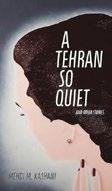
A Tehran So Quiet and Other Stories
Kashani, Mehdi M. | Univ. of Alberta Press (176 pp.) | $24.99 paper | August 13, 2026 9781772128772
Iranians in the diaspora navigate modern love, family relationships, careers, and politics in this debut story collection. In the opening story, “Bazaar Bozorg,” a woman living in Toronto returns to Tehran to
help the sister who betrayed her trust. “The Late Bloomer” explores the nuances of sex and power, while “Kafkaesque” shows a father working through the complications that come with divorce. “The Fruit on the Farthest Branch” offers a touching scene between a father- and son-inlaw. “After the Election,” “The Naked Dream,” and “Dayi” all invoke the specter of violence, political and domestic, that lurk in everyday life. Ironically, the title story is one of the weakest. But overall, these dozen stories depict a fascinating array of Iranians, mostly in the diaspora, journeying through 21st-century life. These characters, usually erudite—Ph.D. candidates, librarians, and the like, as well as parents and siblings who have joined them in Canada or remained in Tehran—manage entanglements with lovers, exes, spouses, siblings, and friends. One of the characters in “Stray Dandelions” has a motto that also defines a central preoccupation of the book: “stay and perish; leave and flourish.” While this sentiment may ring familiar to many diasporic communities, author Kashani grounds his stories in cultural and historic specificity without necessarily leaning on identity as a primary undercurrent. His writing style is straightforward, and the lack of fuss makes these stories compulsively readable. He tends to dive right in to his main concern, the relationship dynamics among his characters, and the intrigue lies in their interactions with one another, their actions and reactions in the environments where they’ve chosen to live, for better or worse, rather than in flowery language or experiments with form.
These stories feel lived in and complete, though not at all tidy.
A refreshing collection.
Iranians in the diaspora navigate love, family, careers, and politics.
A TEHRAN SO QUIET
GRAPHIC LIT SPOTLIGHT
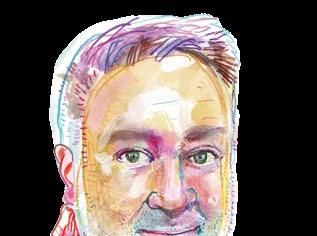
EMIL WILSON
Author/illustrator of The Nightingales
IN SAN FRANCISCO–BASED artist Emil Wilson’s The Nightingales, an affecting friendship forms between a high school senior and her father’s ailing co-worker, Jim, who comes to live with her family in the midst of the AIDS crisis. The graphic novel is “absolutely gorgeous, visually and emotionally,” according to a starred review from Kirkus. Wilson answered questions about the book via email.
What motivated you to tell this story in this format?
I was attending the Center for Cartoon Studies and needed to create a graphic novel for my thesis. I was in my mid-50s—the second-oldest student in the school’s history, twice the age of my classmates—with no interest in superheroes or fantasylands. My father was dying, and I wanted to write about something real.
How would you describe your art style? I’ve always been fascinated by artist sketchbooks because they feel like what memory might look like if it were put onto a page: some things blurry or superimposed or half there, others sharp with intricate detail. I didn’t grow up reading comics, so I don’t naturally think in panels or word balloons. My background is in advertising and design, and I wanted to experiment with layouts that had breathing room and interesting ways to show dialogue.
In advertising, it’s important to stand out, to be singular and memorable, to surprise and delight the viewer, and to let the ideas in the creative work inform
how it looks. I don’t know why a graphic novel can’t live by those same intentions. I like the idea that every story might ask something different of me visually, emotionally, or structurally.
Lou, the protagonist, is dealing with all the joys and frustrations of being a teenage girl, while learning more about the world through her interactions with Jim. What inspired her character? If I spent too much time thinking about the fact that I’m a middle-aged man writing from the perspective of a teenage girl, I’d probably talk myself out of making the book entirely. Since the story is based on things that happened to my family—and later to me personally— I focused on the emotions and personalities I understood, trusting that would make the character feel authentic.
Later, while volunteering as a buddy for people with AIDS in New York City, I kept a journal of my experiences and conversations with men whose lives were ending far too early. Those memories eventually found their way into Lou’s interactions with Jim.
Describe your creative process for this book.
I wrote the dialogue first. Then I started drawing. Cartoonists often follow a very structured process: thumbnails, tight sketches, final inks, color. I don’t really work that way. Instead, I draw a collection of elements and assemble them on the page. I spend a good amount of time thinking about layout— how the eye moves across the page, how conversations unfold, how the
The Nightingales
Wilson, Emil Avid Reader Press | 416 pp. | $38 Aug. 4, 2026 | 9781668217771
composition creates emotion. From there, I layer in other materials: colored pencil, watercolor, pastel, whatever happens to be nearby.
Who are some creators in the graphic literature world whom you’d like to shout out?
I like artists who find nontraditional ways to tell stories: Lizzy Stewart, Frank Santoro, Aidan Koch, MariNaomi. There are creators who introduce illustration techniques in ways that don’t feel like traditional comics: Nora Krug, David Fullarton, Tara Booth. There are also cartoonists I admire who are both exceptional artists and incredible writers: Lee Lai, Emma Hunsinger, Eleanor Davis, Rutu Modan, and Nick Drnaso.
Interview by Nina Palattella.
Emil Wilson
AWARDS
Winner of the 2026 Dublin Literary Award Revealed
The annual prize comes with a cash award of 100,000 euros.
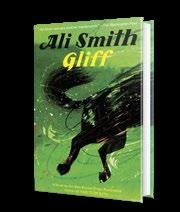
Ali Smith won the 2026 Dublin Literary Award, given annually to “a single work of fiction in original English or translated into English,” for her novel Gliff. Gliff, published in the United States by Pantheon last year, follows two young siblings whose mother leaves and are taken in by a group of squatters. In a starred review, a critic for Kirkus called the novel “a dark vision brightened by the engaging craft of an inventive writer.”
Dublin Lord Mayor Ray McAdam made the prize announcement at a ceremony during the International Literature Festival Dublin. McAdam said, “At a moment when democracy across the world can too often feel fragile, this novel is a powerful reminder that
freedom, dignity, and democratic values should never be taken for granted.”
Smith said, “This is an award prized among writers, who know that the Dublin Literary Award’s formation, its ear and eye for what matters most, and its profoundly literary legacy, all make it the best—an award that dares always to be international and that knows the importance of translation—the beating heart of all writing.”
The award, which comes with a cash prize of 100,000 euros, about $116,000, was established in 1996. Previous winners include Edward P. Jones for The Known World, Colum McCann for Let the Great World Spin, and Valeria Luiselli for Lost Children Archive.
—MICHAEL SCHAUB
Ali Smith
For a review of Gliff, visit Kirkus online.
Novel CoWritten by Sherri Shepherd Coming in 2027
MIRA will publish her collaboration with Jayci Lee, Life Is a K Drama.
Talk show host and actor Sherri Shepherd is making her adult fiction debut in a novel co-written with author Jayci Lee, People magazine reports.
MIRA will publish Life Is a K Drama next year. It calls the book “a sweeping, cinematic love story that glows with humor, heart, and hard-won hope.”
Shepherd is best known as host of the daytime talk show Sherri; she previously co-hosted The View and Dish Nation; she also acted in sitcoms including The Jamie Foxx Show and Less Than Perfect. Her previous books include Permission Slips: Every Woman’s Guide to Giving Herself a Break and the children’s book The Sunshine Queens, illustrated by Tanisha Cherislin.
Lee is the author of romance novels including Booked on a Feeling, That
SEEN AND HEARD
Prince Is Mine, and Give Me a Reason. Together, Shepherd and Lee co-host a podcast, Auntie & Ajumma, in which they “laugh, cry, and bond over all things K-drama and life.”
Their novel will also focus on K-dramas, the South Korean television programs that have risen in popularity in the U.S. in recent years. MIRA says the book will follow Keisha Thomson, a Harlem restaurateur and K-drama aficionado, who falls in love with South Korean business executive Han Seojun. “Part escapism and part self-discovery, it’s for anyone who’s ever rebuilt themselves from scratch and for readers who crave joy that feels earned and real,” the publisher says.
Life Is a K Drama is slated for publication on April 6, 2027.—M.S.
Sherri Shepherd
For more books by Jayci Lee, visit Kirkus online.
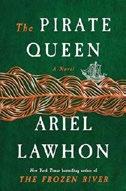
Lawhon retrieves a legendary woman warrior from the mists of Irish history.
THE PIRATE QUEEN
Hotel and Farm
Katchor, Ben | Pantheon (176 pp.) | $32 October 6, 2026 | 9780307906915
A collection of elegiac, dystopian comic strips from a muchlauded artist. A woman with a rooftop garden slowly poisons her wealthy customers so that their worsening health convinces them to buy more vegetables. A man finds a room key on the street and tries to return it to the Hotel Sandshoe, where the clerk explains that they now use disposable plastic cards because keys carry the emotional detritus of a room’s previous inhabitants. Katchor is an archivist of urban spaces and the people who inhabit them, and these scenarios capture the spirit of this comic. The strip is set in a crowded metropolis that looks a lot like New York in the 20th century but seems to be a vision of the not-too-distant future. It’s a world in which status symbols include manure trenches in living rooms and carefully engineered apples, a world in which the very rich live as nomads to avoid property taxes and the poor pay each other in salad greens and pepperoni. Like Matt Groening, Lynda Barry, and Bill Griffith, Katchor started his career just as alternative weeklies were taking off in cities around the country and artists like Daniel Clowes and Chris Ware were reinventing indie comics. In fact, Katchor is still best known for Julius Knipl, Real Estate Photographer, a comic that ran from 1988 to 1998. These days, he’s more a scholar than a creator of comics. He teaches at the Parsons School of Design and leads the long-running New York Comics & Picture-stories Symposium. He started writing and drawing the strip collected here in 2000, just as the internet was decimating the free weekly environment. Despite the age of these
panels, Katchor’s critique of late capitalism is still relevant, even if his brand of absurdism no longer feels countercultural. As is generally the case with comic strips, this one is best enjoyed in its native format and original cadence. The panels don’t cohere into a single compelling narrative and consuming them all at once flattens their effect.
Best suited for Katchor’s fans, of which there are many.
The homecoming of a prodigal son is darkened by sinister ghosts from the past and multiple murders in the present.
The bloody corpse of a jackrabbit welcomes Everett Johnson back home to the mountain town of Killdeer after his father, Sheriff Dale Johnson, goes mysteriously missing. King’s spicy thriller, set in Montana, often feels more like a Southern gothic, with family feuds, tangled romantic relationships, and eerie touches. Though the plot is anchored in Everett’s search for Dale, in which his semiestranged brother, Connor, joins him, their hunt arguably takes a back seat to the bad blood between the Blackburn and Armel clans. A prologue depicts the brutal murder of 17-year-old Orsie Armel, one of seven Armel women spanning two generations. Among these is Orsie’s cousin Bernadine, whose amatory relationship with Everett a generation ago emerges across a series of interspersed chapters. Violent
murder also figures in her past. The discovery of Dale’s corpse does nothing to quench Everett’s thirst for answers. The decades-long feud seems to be at the root of current developments, which include a missing Blackburn brother and the killing of a prize Hereford by one of the Armel women. Looming over everything is the Hill Man, a mysterious creature who issues ominous warnings and sits on his porch with his dog, Trouser. The plot is decidedly overstuffed and the interactions overheated, but it’s all consistently brisk and juicy. A lurid suspenser with killings and scandalous secrets aplenty.
Lawhon retrieves a legendary woman warrior from the mists of 16th-century Irish history. The extraordinary life of Grace O’Malley— Gráinne Ní Mháille, in Irish—overlapped closely with that of Queen Elizabeth I, and one of the high points of Lawhon’s latest historical novel depicts a meeting between the two, both rivals and allies, both sharply aware of their fraught positions as female rulers in a man’s world. Gráinne was the daughter of The O’Malley, chieftain of his clan, and distinguished herself at a young age by such unusual gifts and talents that she was taught the ways of the sea and assumed a constantly contested leadership over her father’s land and people after his death. Lawhon has never written a novel with a straightforward timeline, and her latest is no exception, interweaving episodes from three eras of Gráinne’s life—maiden, mother, and matriarch— so that a chapter where she is 56, for example, is followed by one where she is 8, and then one where she is 24. In her signature personable and informative author’s note, Lawhon suggests that one might reread this 400-plus page book a second time in chronological order and
have a totally different experience. Some readers may wish that would have been the experience in the first place, as the braided approach seems to trade narrative momentum and clarity for [fill in the blank if you figure it out]. Confusing time management aside, it’s a thrilling story, and the fun that Lawhon clearly had with scenes of bloody mayhem, storms at sea, treacherous machinations, and low Gaelic dialect (“that fecking eejit,” “that cunting piece of shite,” and never just Galway, always “fecking Galway”) is contagious. Her pirate queen is brilliant, beautiful, and fearless; her loyal servants are adoring and capable; her male foes are sleazy scumbags and detestable boobs—all exactly as it should be.
A heroic, exciting, and stormy voyage; worth weathering the chop.
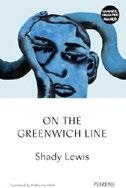
On the Greenwich Line
Lewis, Shady | Trans. by Katharine Halls Peirene Press (176 pp.) | $17.95 paper August 4, 2026 | 9781908670953
A London government employee settles the affairs of a dead refugee. The unnamed narrator of Lewis’ novel agrees to do a favor for his friend Ayman, who lives in Cairo. The task? Arrange a burial for Ghiyath, a young man who escaped Syria and sought a better life. As the narrator points out, Ghiyath’s life and death are all too familiar; he observes that the story “would have been more exciting if it had happened, say, ten years ago.” As the narrator seeks out Ghiyath’s body and works to round up attendees for his funeral, we also see him go about his work in the local government. His colleague Kayode, a man prone to grand generalizations and dubious theories of modern life, makes for a compelling conversation partner and foil: “Kayode was about to start on another social theory that played fast and loose with the agreed-upon definitions of common words.” Their interactions lead to a secondary plot in which a woman
they interview about a request for housing—she’s known only as Service User A—dies, leading the narrator and Kayode to have wildly different reactions. Much of this novel’s power comes from its narrator’s voice, which gives the impression of a principled person trying not to become jaded. There are a few moments, as when he observes that he “could likewise tell a social worker from a housing officer in the space of three sentences,” where you can see the weariness creeping in. We eventually learn more about his home life, including a recent breakup; the use of several dreams helps give a sense of his inner conflict.
A hyperfocused novel abounding with big ideas.
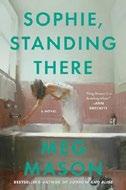
Sophie, Standing There
Mason, Meg | Harper/HarperCollins (352 pp.) $30 | September 8, 2026 | 9780063493131
A woman’s life changes when she meets her famous-author idol. Or does it? When 37-yearold Sophie Pattison finally meets superstar novelist Lilac Dunne, she’s already in love, having read and reread Dunne’s work as comfort through a divorce and a move from her marital home to her ex-husband Paul’s rundown bachelor flat, where he allows her to live for a “peppercorn rent.” Sophie, who at least loves her job as a tech person for a prominent literary festival in London, has allowed her life to shrink to the point where her meals consist of hummus on rice cakes eaten over the sink. “When a tech said [of an author], ‘sincerely despise’ or ‘promise you’s an asshole,’ Sophie, a massive reader, knew it was because the author had made them feel even more invisible than usual.” Then, in the midst of an overly slapstick festival mishap involving Lilac, Sophie winds up at dinner with the author—then, on another day, visiting the flat where Lilac is staying. At last readers learn what’s holding Sophie back—and it’s so much
more interesting than the long lead-up. Mason also falters in creating fully drawn characters. For example, Sophie’s brother, Laurie, plays an important role in his sister’s life, but apart from having a slightly bossy wife, he seems quite vague. Not so the authors, real-life and fictional, who populate these pages. Mick Herron steps on a bookseller’s foot, Elizabeth Strout gets Covid-19, and a well-known memoirist wears a beret. Mason has clearly been taking notes during events she’s participated in, and Lilac’s statements ring true: “‘You can’t have good sex with a bad writer,’ Lilac said, ‘and he is a terrible writer.’” When she at last gives Sophie some tough advice, we believe her capable of it, so sparkling is the sliver of ice in her writer’s heart. This won’t be New Zealander Mason’s best book, but that’s okay—she’ll write others to contend for that title.
Not for everyone, but perfect for Sally Rooney and Naoise Dolan fans who revel in moments of sorrow and bliss.
Kirkus Star
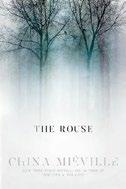
The Rouse
Miéville, China | Del Rey (1260 pp.) | $40 September 15, 2026 | 9780399181092
A sprawling but fast-moving tale about the most inhuman concoctions of the militaryindustrial complex.
Ewan is a preternaturally quiet child, a fact that his single mother, Maur Towns—Maur being short for Maureen—has remarked on from the moment he could speak. But then, after a childhood spent drawing pictures of guns and tanks and planes, Ewan rebels against Maur’s hippie-ish lifestyle, enlisting in the army and becoming an elite soldier. It doesn’t end well. As Miéville writes, “There was a person and she had a baby and she grew up and the baby grew up and he died.” But did he? In a novel that expertly blends horror and mystery, Miéville introduces a parallel story that tracks the military career of one Trooper
Allardyce, who fights his way around the world, an expert at killing—and at reviving the dead. As he explains to Maur, once their storylines meet, “Mostly…the dead are memories. No good to anyone. But if you’re the right sort of person and you die just right? Then get up at once, the bugle’s sounding.” It’s a military necromancer’s dream: an army of corpses. Maur is horrified, naturally enough, as she tells Allardyce, who now sports the name Stallo: “Those were people.…Soldiers or something. That void army you talked about? Whoever they were, it wasn’t revenants, that was people.” One of those ex-people, of course, is Ewan, of whom the principal villain of the piece explains, “Your son was a soldier…He took an oath, and I do him the courtesy of taking that seriously.” Miéville’s inventive story has its share of violence, but the psychological dimension is the main attraction, in the end morphing into a ghost story—and, as Stallo says by way of valediction, “Ghost stories don’t work that fucking way… They’re not about justice.”
A smartly imagined, genre-bending story that readers may find all too real.
Kirkus Star
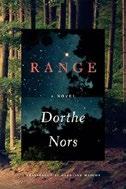
Range
Nors, Dorthe | Trans. by Caroline Waight Graywolf (320 pp.) | $18 paper August 18, 2026 | 9781644454046
A hypnotic novel by a Danish writer about the impossibly complicated search for one’s place in the universe.
Gunn Haven is an astrophysicist who studies gamma-ray bursts, or light traveling to Earth from the oldest galaxies. When the novel opens, she’s taken leave of her teaching job at the Institute and moved into a house in the country left to her by a woman named Magna. It’s not clear who Magna is or why she’s left Gunn her house. It’s also a mystery why Gunn is taking a sabbatical from teaching.
A hypnotic novel about the complicated search for one’s place in the universe.
RANGE
Instead, the circumstances of Gunn’s life arrive in bursts: her childhood loss; the yellow house where she grew up, “with its oddities and flaws”; her father, who raised her on a diet of “numbers and spring rolls”; what she learned from Magna, including an interest in “weird children.” Occasionally, Gunn exchanges messages with Niels, a colleague who knows her perhaps better than anyone. She sometimes receives cryptic messages from “the boy,” a young man of great intellectual promise (and therefore a weird child), whose journey around the world Gunn is funding against his parents’ wishes. Mostly, though, Gunn walks the roads around her house, solves equations, studies the night sky, takes the daughter of a neighbor under her wing, encouraging her to continue her education, and does her best to negotiate social situations that would appear ordinary to most but are treacherous for her. “What do I know?” she asks herself on several occasions. “What do I know that I don’t know? What would I like to know?” Repeated encounters with a difficult neighbor challenge Gunn’s faith in the scientific method of observing, noting, and concluding. In this stirring work, Nors has done the impossible: given shape to the twin mysteries of identity and consciousness without pinning either down.
A brilliant novel that is as intellectually vast as it is deeply rooted in the everyday experience of being human.
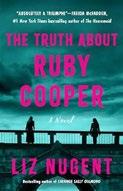
The fallout from a rape accusation upends a tightknit family, but the passing of decades creates more questions than answers. It’s the late 1990s in the Boston suburbs, and the Cooper family seems to have it all. Doug is a pastor and investment banker—the family wants for neither funds nor faith—and his wife, Maureen, though homesick for her native Ireland, is a loving mother. Eighteen-year-old Erin is pretty and smart, with the perfect boyfriend, Milo Kelly. So when 16-year-old Ruby Cooper accuses Milo of rape, the family is torn apart. Maureen moves Ruby to Dublin to escape the gossip and trauma, leaving Doug and Erin to deal with the aftershock—and splitting the family in two. Alternating among first-person perspectives—primarily Ruby’s and Erin’s—the novel charts the family’s diverging paths in the years following what they call “the incident.” Ruby abuses alcohol and drugs, ending up in rehab; the parents, with an ocean between them, eventually split up; and Erin begins a successful career, but can’t move past her guilt over putting Ruby in Milo’s path. But after a few years, it becomes clear that Ruby’s story doesn’t quite match reality. We follow Ruby through rehab and recovery, having a child of her own, and a gradual estrangement from her entire family, as she works to keep
For more by Dorthe Nors, visit Kirkus online.
secret the details of what really happened that day. Though solidly plotted, much of the exposition-heavy novel reads like a mere cataloguing of events; the twists don’t feel truly surprising, and occasional flourishes of sensory description and lively detail sing—but stand out for how rare they are. Similarly, despite the first-person perspectives, the characters betray a bewildering lack of interiority. A well-woven plot can’t make up for the lifeless prose that makes this thriller fall flat.
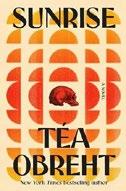
Sunrise
Obreht, Téa | Random House (336 pp.) $29 | August 11, 2026 | 9781984855534
The Great Plains serve as a site of mystery and revelation in the latest from the author of The Morningside (2024) and Inland (2019). In 2024, a young woman named Nina tries to stay alive in the wilderness after the small plane her boyfriend is piloting crashes. She finds her way to the town of Sunrise. Empty of inhabitants, Sunrise offers little besides shelter and reading material—a photocopy of an old novel called An Incident at Greyrock, vintage newspaper clippings, and the manuscript of an unfinished novel called Sunrise. Both novels center around gunslinger, traveling performer, and erstwhile lawman Anton Vargas. The manuscript begins in 1902, when Vargas is returning to Sunrise after a long absence. He’s looking for a man known as Preacher. The point of view shifts from Nina to Vargas, and then again to Coll, an amateur historian preparing in 2003 to direct the annual reenactment of Vargas and the founding of Greyrock. All three of Obreht’s protagonists are compellingly crafted, and all three are driven by secrets, which the author
reveals slowly. Stranded alone in the middle of nowhere, Nina begins to acknowledge truths about her boyfriend and their relationship that she usually avoids. Coll struggles to rewrite his own history as he protects the Anton Vargas legend. Meanwhile, the Sunrise manuscript presents a much more complex version of the local hero, one in which the man himself confronts his own ghosts. Obreht has created quite a challenge for herself here, and she delivers a virtuoso performance. In her hands, these three narratives aren’t just satisfying on their own. They illuminate each other in ways that are both elegant and emotionally deep.
An adventurous, rewarding novel from a writer who just gets better and better.
Destination Kill Deluxe Edition
Palmer, Joe | Oni Press (152 pp.) | $29.99 November 3, 2026 | 9798894883526
Solo debut from a veteran comics artist. It’s 2125, and construction is complete on the Paradise Loop, a trans-Atlantic train that takes passengers from London’s Central City to New York City in 60 minutes. The head of Overcon is making final preparations for the gala celebrating this achievement, but London is filled with unemployed workers in no mood to party. Builders who thought they’d have good jobs for years constructing the Loop have been replaced by robots. Gina Serene is a burned-out detective taking a vacation on orders from the chief of Central City Police. She’s on her way to New York when there’s an explosion at the Loop station, and there’s no way she’s leaving London when her city is torn by violence. Working alongside her former partner, Lance Wingman, Gina races against time to defuse a looming
catastrophe. This is not Palmer’s first time blending crime and science fiction—the series Time Before Time was set in 2140 and in a world on the edge of collapse—but this is the first time he’s both written and inked a book on his own. The artwork is hard-edged and dynamic, with images breaking out of panels and lots of sound effects. Palmer’s colors are a vibrant mix of brights and gray compositions that reflect the bleakness of the world created here. With the exception of Lance Wingman—a hard-drinking cop turned private eye—the characters are rather flat, though, and Palmer’s take on corporate greed and the dehumanizing effects of technology feels overly familiar. There are three more books starring Gina Serene, though. Maybe this series will get more compelling as Palmer continues.
Visually exciting but lacking in depth and originality.
Boudoir
Pálsdóttir, Sigrún | Trans. by Lytton Smith Open Letter (200 pp.) | $18.95 paper September 8, 2026 | 9781960385543
A n Icelandic woman dreams of becoming a commercial pilot in the 1970s in this novel by award-winning Icelandic writer and historian Pálsdóttir.
A dreamy, secretive teenage girl named Teddý living on a farm in rural Iceland has a chance encounter with a visiting cartographer in 1962. When he discovers her gift for mathematics, she unexpectedly finds herself encouraged to pursue a college education. Another chance encounter, this time with a U.S. astronaut preparing for the moon mission, changes the course of her life again—this time after her graduation. Teddý herself struggles to chart her own way: “Every time she tried to think about the future, her mind
Kirkus Star
wandered, wrestled with something entirely unrelated.” Pálsdóttir often approaches her characters at a slant, from different angles. Midway through Teddý’s first, very formative airplane ride, the pilot of the small plane collapses. We learn how she handles the emergency only later, through a conversation at a party between characters who don’t reappear. Teddý remains in many ways opaque, even as she finally finds “the courage to plan something, she who appeared lost in the strange world her life had now become.” The plan she hatches requires a double life, a great deal of lying, and bank fraud. Pálsdóttir has broad interests and a playful, slyly unconventional style; sections in first person on a commercial airline flight in 2004 pull the reader out of the 1960s and ‘70s and into the novel’s future. Other sections have a dreamlike quality. As we watch Teddý strive to achieve her ambitions, Pálsdóttir gives us glimpses of Iceland’s changing position in the world and the nascent women’s liberation movement.
The story of an underdog in an underdog country, set among lava fields and the expanding city of Reykjavík.
We Never Called It Frisco
Perl, Jed | Coffee House (136 pp.) | $18 paper September 8, 2026 | 9781566897648
In the wake of his lover’s death, a long-time San Francisco art-scene insider curates her final words on the subjects of culture and belonging.
Marcia Lang is a force to be reckoned with. The only child of Jewish entrepreneurs who left Berlin just ahead of the Third Reich, Marcia has an indomitable sense of self that transcends her parents’ expectations that she marry, have children, and tend to her writing ambitions on the side. Instead, she becomes the “bossy,
sometimes overbearing” center of a group of young bohemians attending Berkeley in the late 1940s. There, alongside a revolving coterie of artists, poets, and puppeteers, Marcia builds a name for herself as a keen cultural critic, deeply invested in the San Francisco scene. That is, until she commits the ultimate left-coast sin and leaves San Francisco for a career in New York City, where she becomes the kind of critic who can make an artist’s career by giving them “the full Marcia Lang treatment,” even if she’s tearing their work to shreds. Newly returned to California and predicted to be “the voice of the decade,” Marcia unexpectedly dies during the intermission of “yet another farewell tour by Martha Graham,” leaving her lover, Burt, himself a poet and publisher, the job of completing Marcia’s “coffee-table book for intelligentsia” about the postwar San Francisco scene. What follows is a pastiche of Marcia’s catty, colloquial, and piercing observations interspersed with Burt’s own more laconic takes on the same parties, happenings, and arguments. Perl, a celebrated art critic who has charted the course of more than one movement himself, provides an expert’s eye for the nuance of both the art’s making and its philosophy. However, as a novel interested in the nuance of a relationship between two people—one a firebrand who burns out too soon, the other left to navigate his loss in the wash of her immortal opinions—the book does not live up to the potential of its premise. Like Maria Gainza’s Optic Nerve or John Berger’s A Painter of Our Time, Perl’s debut novel could be both an astute critique and an affecting Künstlerroman for the critic-as-artist, but the balance of the book’s attention lies on
the side of criticism rather than character development; a missed opportunity that hopefully serves as a call for this insightful and often delightful author to try again. A flashy, astute read for knowledgeable lovers of American art history.
The World Trade Center attacks are at the center of an intricate, twisty family drama spanning decades in both directions.
“You could brace for your sister to die of a terminal illness, only to have your healthy sibling killed in a random car wreck. You could carry a baby safely to term and then, on a bright blue day in Septem ber, walk into a building that collapsed beneath your feet.” Or you could be a character in a Jodi Picoult novel and face all of the above and much, much more. Fans of My Sister’s Keeper (2004) will notice a reference to that novel in the preceding quote and be glad to hear a character from that book is back. During the Covid-19 pandemic, former teenage delinquent Jesse Fitzgerald, now a detective on the Providence, Rhode Island, police force, meets Molly Ambrose, a 19-year-old prodigy who runs the state’s emergency preparedness and response
A flashy, astute read for knowledgeable lovers of American art history. WE NEVER CALLED IT FRISCO
program. “Despite the fact that there were fif teen years between us and we both had enough baggage to fill a cargo hold,” as Molly puts it, the two fall madly in love. The baggage she’s referring to includes, on her side, a mother who died on 9/11 when Molly was less than three months old. Picoult supplies her signature delightful banter and gift for depicting passion and romance to win the reader’s sympathy for this possibly questionable match between dedicated public servants, whose favorite game at bedtime is “Who can think of the most terrifying worst-case scenario?” Very little more can be revealed without spoilers, but trigger warnings for this book would be a long list indeed, ranging from suicide and filicide to rape and mental illness (welcome to Picoultland!). Subplots visit evangelical and Navajo cultures as well as the ins and outs of polygraphy. Make sure to read the afterword in which Picoult explains her real-life sources of inspiration. The queen of social activist novels has done it again. Impressive, important, and fun to read.
All Our Evenings
Rao, Ruthvika | Flatiron Books (192 pp.) | $18.99 paper | September 1, 2026 | 9781250419354
When an old flame comes back into his orbit, an Indian man remembers the decades-past summer that changed their lives. Arjun works for the municipal water office, reading meters and answering customer calls. Nearly 40, he’s still single and lives with his parents in Hyderabad. There’s only been one woman he ever wanted to marry— Ruhee, whom he’s loved since childhood. But Ruhee and her family moved away when Arjun was a teen, after a catastrophic summer.
Donna Tartt fans looking for dark erudition should pick up Rao’s novel.
ALL OUR EVENINGS
Now, though, Ruhee is back in town, working as a doctor and expressing a wish to reconnect with Arjun. Ruhee’s sudden reappearance triggers memories of the fateful summer when Arjun met the mysterious Ganesh while playing cricket. Ganesh tells Arjun he’s an Indigenous orphan from the Gond tribe adopted by a family who raises him for his labor, not allowing him to attend school. To Arjun’s surprise, Ganesh and Ruhee hit it off—a little too well, as they enter into the kind of intimate relationship that Arjun had envisioned for Ruhee and himself. To top it off, that summer marks the uncovering of an affair between two teachers at Arjun’s school, one of whom happens to be Arjun’s father, which affects the family’s reputation in town. Sliding seamlessly between Arjun’s present and that fateful summer, the narrative uncovers secret after secret: Ganesh is not who he seems to be. But, for that matter, neither is Arjun. Rao’s novel has all the makings of a twisty, slow-burn thriller whose careful structure is a marvel. Though some twists work better than others, Rao’s deft plot has much to say about the tragic consequences of desire, whether for social class, power, or love.
Donna Tartt fans looking for dark erudition should pick up Rao’s novel.
Under the Falls
Russo, Richard | Knopf (256 pp.) | $30 August 11, 2026 | 9780593805107
A native son returns to his upstate New York hometown, bringing along a peck of trouble.
In Pulitzer Prize–winner Russo’s latest, Nashville icon Tyler Sinclair is returning with his band, Stone Mountain, to his hometown, Stone Mountain, New York, to perform a benefit concert for an old friend, Tim Dockery, known as Doc. When the men were teens, Doc was paralyzed in an accident at the local swimming hole. A few years later, Tyler left town without a word to anyone to pursue what turned out to be a mega- successful music career. But his initial encounter with Doc goes wonky when his old friend suggests that Tyler isn’t universally beloved in his old haunts, and that some may even blame him for what happened at the Falls that day. Then things turn completely south, with the concert interrupted by news of a tragic death, followed by a fatal accident—or maybe it wasn’t an accident. Male friendship, flawed moral character, helpless and enduring romantic love, small-town police, class distinctions between neighboring rural towns—many of the elements of classic Russo are here, but a darker, faster-moving narrative than usual gives the characters less time and space to bloom in our hearts, and there are a number of plot points that don’t bear close scrutiny. In an
For more by Richard Russo, visit Kirkus online.
afterword, the author mentions the novel’s origins as a TV pilot that didn’t survive the writers strike; that might account for both the pacing and the less satisfying character development. Fans would be better served by revisiting the North Bath trilogy or the ever-delightful Straight Man (1997), so full of the trademark Russo humor that’s lacking here.
Has much in common with the author’s most beloved novels, but lacks a few degrees of warmth.
Like Swimmers
Shaw, Dash | New York Review Comics (120 pp.)
$32.95 | August 18, 2026 | 9798896231059
Two adult siblings navigate loneliness and what it means to become different people, and one must solve the other’s confusing murder.
Mackenzie has always looked after her younger brother, Howie. Even when she’s hard on him, she believes that pushing him to be tough is for his own good. In 2020, in the midst of the Covid-19 lockdown, Mackenzie works from home in Richmond, Virginia, and Howie works as a bike messenger and also runs errands for a married woman named Isa Sanders. Howie and Isa connected before the pandemic when she saw a zine he drew and invited him to teach a comics class at the local museum where she works. They argue over artistic influences: Howie dislikes the museum’s Lichtenstein exhibit, and Isa dismisses comics altogether, but she’s willing to look
at Howie’s favorites. Howie’s artistic influences in the horror and fantasy comics world are clear influences on the artwork in this book, especially Howie’s obsession with werewolves and shifters. Mackenzie dislikes Isa and tells Howie to stay away from her, and outwardly Howie agrees. He goes to meet her at a hotel, though, and they make plans for her to leave her husband, Jasper. Howie ends up dead, shot with a silver bullet in a scary reference to his love of werewolves. Mackenzie starts to investigate what happened to her brother, as the cops are not invested in treating his death as suspicious. When she interrogates Isa, she receives an entirely different story about Howie’s life. In the throes of grief, Mackenzie experiences odd symptoms and tries to untangle what happened to her brother under the watchful eye of their shared cat, Jonesy. Mirroring the confusion of the pandemic with supernatural elements, this graphic mystery is an effective meditation on grief.
Kirkus Star
Wounded Boarders
Singleton, George | Dzanc (236 pp.) | $18.95 paper | August 11, 2026 | 9781938603945
From the wellknown Southern humorist, another fun house gallery of small-town misfits at the ends of their tethers. As the nation’s, and the region’s, politics get ever more divided and
A fun house gallery of small-town misfits at the ends of their tethers.
WOUNDED BOARDERS
mean, Singleton’s satire grows darker and sharper. Yet what makes it work, as always, is an essential sweetness and decency. These are people struggling, surrounded on every side by cruel or goofy absurdity, but they make sense where they can. It’s an upriver swim. The title story, for instance, features a house flipper named Celia, a mobile flea market, and a hook-handed man who’s founded a shuffleboard league for veterans missing limbs (they use weighted Skoal tobacco tins as pucks); the “Wounded Boarders” help Celia handle a stalker and restore her sense of community. In “Horace Poor, Horace Mint,” an ambitious high school student gets a summer job running a magnetic sweeper around roofing sites to pick up stray nails; then—at his numismatist father’s urging—starts running the sweeper in nearby woods during breaks to look for buried coins; he ends up mired for good in his hometown. It’s an origin story of stuckness. We meet a disgraced yearbook photographer who’s hunting revenge; a couple who lure “would-be burglars” to their homestead and then shoot them in the kneecaps; and many more. Singleton’s tales are discursive, spontaneous-feeling; they might go anywhere, end anywhere. A few short pieces feel like preliminary sketches, but the collection’s longest may be the finest individual story of Singleton’s career. It takes the form of a rambling epistle, hilarious and poignant, from a father to the 20-something daughter who’s just discovered he exists and that her “parents” are really her maternal grandparents, her mother, Lydia, having died in childbirth. The title is the final sentence Lydia spoke to her beloved, after being whisked away from college and from his life. Lydia calls from her hospital room when her ultraprotective mother nips out for a Fresca, and the couple make post-birth plans for a future that will never come to pass.
Just as our narrator tells Lydia he loves her, the mother returns, and Lydia responds, “I know about childproofing.”
A Southern comic master in top form.
Brut
Tallent, Sam | Random House (368 pp.) | $28 September 22, 2026 | 9780593978894
A professional killer faces the biggest challenge of his life.
Robert Beaujolais is a 33-year-old ex-Marine who becomes a well paid contract killer—an arbiter, he calls himself— because “life post-discharge was skull-gouge boring.” Committing grisly murder comes to him easily and without emotion, because death is just a way to make a living. His one show of affection is toward fellow ex-Marine Benjamin Stephenson, his lover and only friend. Beauj receives his assignments from “Uncle,” who instructs him to kill Massimo Di Giovanni, the “archangel of Florence.” The target is, “by any conception or definition of the word, untouchable.” That’s at the core of the action. A couple of times Beauj is compared to Jason Bourne, an undeserved flattery; the Ludlum hero is sympathetic, and Beauj is not. He’s more like the Gray Man, exulting in spilling blood: “A pâté of teeth, lips and tongue exploded.” Yeah, man. “Cordite. This is what God smells like.” A woman named Gianna urges him on, saying, “I am asking you to transform into the devil,” but he’s there already. The writing itself is vivid and often playful, for example, “Playing music off his phone, a lava flow of decelerated rap that sounded like it was bubbling through tar,” and, “You are not Italian. Life is only the period between funerals.” There are also short, untranslated paragraphs in Italian, which readers will either
Reveals life’s darkest corners while transmitting a surprising amount of hope.
THE BOOK OF CHUCK
understand, suss out, or ignore: “Che cazzo ne sai, vecchio caprone?” “Più di te, stronza amareggiata.” This is a sharp exchange, and they’re not talking about having a spot of tea. So on the plus side there’s a strong plot that moves to a high-powered conclusion. On the minus side, there is not a single character to care about. All right, maybe poor Benny, who shows touches of complexity. But Beauj’s soul may as well have been crushed by a steamroller. Bleak, bloody, and soulless, but the plot is good.
Kirkus Star
The Book of Chuck Watkins, LaToya | Tiny Reparations (320 pp.) $30 | August 18, 2026 | 9780593854549
Watkins’ fierce novel follows a Black family with an inherited psychic gift—the ability to see death coming—back and forth across Texas from 1936 through 2024.
From the first pages, when baby Nannie foresees her father’s lynching in 1936, Watkins’ collage of narratives circles the Gardner family’s supernatural powers—but those powers are less plot device than metaphor for how family shapes an individual. Genetic traits, like the physical resemblance of various Gardners to their forebears, are obvious. Less clear-cut but more important is the emotional pain each generation transmits, with variations, to the next. Portrayed in stark,
beautifully rendered prose, all the Gardners are damaged, but Nannie’s son, Walter, who calls himself Chuck and desperately wants to give and receive love, will break the reader’s heart. Abandoned in infancy by Nannie and the distant cousin with whom she leaves him, Chuck’s constant sense of rejection is only partly mitigated by the unconditional love he receives from the cousin’s lover, Mr. Jack, who raises him. A brilliant autodidact, Chuck is tortured by his ability to foresee deaths. Again and again he repents the bouts of adultery and addiction that endanger his marriage to his love, Lettie, while remaining constant as a loving parent to their daughters. The youngest, Baby, shares his psychic gene. Two years old when her father dies, Baby faces her own crisis 14 years later, in 1999, when she rejects her now emotionally broken mother to escape the fanatic Y2K cult Lettie has joined. By 2007, Baby has a degree in psychology and is investigating “the psychological factors and hereditary patterns…the dynamics of a family across generations.” But scientific explanations go only so far, while Chuck’s lifelong effort to overcome moral failings and be a good man takes on biblical proportions.
A transcendent reading experience that reveals life’s darkest corners while transmitting a surprising amount of hope.
Book to Screen
David E. Kelley Will Adapt Nightshade for TV
The award-winning writer/producer is again teaming with novelist Michael Connelly.
David E. Kelley has yet another literary adaptation on the horizon.
The writer and producer is developing a series
adaptation of Michael Connelly’s Nightshade, Deadline reports.
Connelly’s novel, published in 2025 by Little, Brown, follows Stilwell, a Los Angeles County police detective who is transferred to sleepy Catalina Island and starts investigating the case of a Jane Doe found dead in the island’s harbor. Connelly brought back Stilwell in the novel Ironwood, published in May.
Kelley, known for creating the shows
Winner of the International Booker Prize Revealed
Taiwan Travelogue is the first book originally written in Mandarin Chinese to win the award.
Taiwan Travelogue, written by Yáng Shuāng-zǐ and translated by Lin King, has won the 2026 International Booker Prize, given annually to an outstanding work of fiction
translated into English and
Chicago Hope, Ally McBeal, and Big Little Lies , will write and executive- produce the series, titled Welcome to Catalina, for HBO Max. Connelly will also serve as an executive producer.
Kelley created the Netflix series The Lincoln Lawyer, based on Connelly’s novels featuring the character of Mickey Haller; the show
has run for four seasons, with a fifth in the works.
Kelley also has series based on Tom Wolfe’s The Bonfire of the Vanities and Harlan Coben’s Myron Bolitar novels in development. His series adaptation of Rupi Thorpe’s Margo’s Got Money Troubles , which streams on Apple TV, has also been renewed for a second season. —M.S.
AWARDS
published in the U.K. or Ireland.
The novel, released in the U.S. by Graywolf in 2024, follows the relationship between a young Japanese novelist and the interpreter who assists her when she travels to Taiwan in 1938. A critic for Kirkus called the book, which won the National Book Award for Translated Literature, “a moving account of friendship in the shadow of the Japanese Southern
Expansion policy.” It is the first book originally written in Mandarin Chinese to win the International Booker Prize.
Natasha Brown, the chair of judges for the award, said, “Taiwan Travelogue pulls off an incredible double feat: it succeeds as both a romance and an incisive postcolonial novel. As judges, we’ve enjoyed rich discussions about the many layers of this book. It’s a captivating, slyly sophisticated novel.”
The International Booker Prize, established in 2005, comes with a cash award of
50,000 British pounds, about $66,000, split equally between the author and translator. Previous winners include Tomb of Sand, written by Geetanjali Shree and translated by Daisy Rockwell, and Kairos, written by Jenny Erpenbeck and translated by Michael Hofmann.
—M.S.
Connelly: Michael Buckner/Variety via Getty Images; Kelley: Tibrina Hobson/Getty Images; Yáng and King: David
Parry for the Booker Prize Foundation
Yáng Shuāng-zǐ , left, and Lin King
David E. Kelley, left, and Michael Connelly
For a review of Nightshade, visit Kirkus online.
Fully Booked
Plumbing the remarkable lives of sisters who married famous conjoined twins. BY MEGAN LABRISE
EPISODE 479: CHRISTINA BAKER KLINE
ON THIS EPISODE of Fully Booked , Christina Baker Kline joins us to discuss The Foursome (Mariner Books, May 12), a stunning work of historical fiction centering Sarah and Adelaide Yates, the women who married Siamese American brothers Chang and Eng Bunker, who were conjoined twins. In a starred review, Kirkus calls The Foursome “a profound and moving treatment of what could have been a tabloid topic.”
On the Bunkers’ fame in their time: “Imagine if, like, Brad Pitt and George Clooney came to rural North Carolina, even today—and landed there, and built a beautiful house, and entertained people, had these big parties. It was glamorous, and the sisters were swayed.”
—Christina Baker Kline
THANKS TO OUR SPONSORS:
The Man on the Bench by Hy Conrad
An Adventure Log by Jim Doti
Fully Booked is produced by Jessica Lockhart and Megan Labrise.
To listen to the episode, visit Kirkus online.
Kline is the No. 1 New York Times bestselling author of Orphan Train , The Exiles , and A Piece of the World . Her novels have received the New England Society Book Award for Fiction, the Maine Literary Award, and several bookseller awards, among other prizes. Born in England, she was raised in the American South and Maine, and she now lives in New York City and in Southwest Harbor, Maine. She is a distant relative of the Yates and Bunkers.
Here’s a bit more from our review of The Foursome : “The original, eponymous Siamese twins—they were from Siam (now Thailand) before their mother sold them to the circus—have inspired many works of fiction and nonfiction, but Kline’s eighth novel may be the first written by one of their distant relatives. In her hands, it becomes a riveting and insightful story that is as much about sisterhood and the Civil War as about the prurient details of the marital arrangements. Clearly aware that one of the biggest imaginative challenges is depicting the way these four people maintained their dignity under the challenging circumstances…Kline’s choice to focus on the experience of one of the sisters, Sallie, succeeds beautifully.…Once war breaks out,
The Foursome Kline, Christina Baker
Mariner Books | 384 pp. | $30.00 May 12, 2026 | 9780063097995
Kline hits her stride, compellingly and convincingly depicting the Southern experience as bravado shaded slowly, then utterly, into devastating loss.”
Kline and I explore the age-old question, Who has the right to tell a story ? She shares her writing process, why she chose to put the manuscript away for a while, and how she landed on telling the story from the perspective of Sarah (known as Sallie). We consider the magnitude of the Bunkers’ fame, how the Civil War impacted the family, and much more.
Editor at large Megan Labrise hosts the Fully Booked podcast.
Beowulf Sheehan
the Time of the Butterflies
By Julia Alvarez; adapt.
& illus. by
Krystal Quiles
As a portrait of life under a repressive regime, this retelling successfully highlights the sisters’ impossible choices.
Beware Her Fury
By
Mirion Malle; illus. by Mirion Malle; trans. by Aleshia Jensen & Isadora Jensen
An evocative and raw comic that offers solidarity for survivors of sexual trauma.
Must-Read Graphic
Gigs
By
Mark Mosedale; illus. by Si Smith
Through friendship, punk rock, and teamwork, a handful of people rebel against this Orwellian
Events from the distant past provide the clue to catch a killer in 1908 India.
Lady Emily and her husband, Crown agent Colin Hargreaves, are staying at an ancient fort built in Maheshwar in the 1700s by Ahily, a revered maharani. Awakened by the news that their fellow guest, Alistair Ralston, has discovered a dead man, they accompany him to the river, where they find a body that Ralston identifies as Titus Stringfellow. Among the other guests are tall, pleasant Imogen Galsworthy; her slightly less tall and much less pleasant companion, Edith Whitcombe; and Desmond Montgomery, a historian in residence. Montgomery is researching Ahilya, an unusual woman for her time, who was raised to help rule. She had to take over from her alcoholic husband, who preferred wine and women to other responsibilities, but she managed to keep him sober enough to get her pregnant and fight in the battles he enjoyed. The local authorities are happy to hand the investigation of the dead guest over to Colin and Lady Emily, who have solved many murders. The couple gets help from the local doctor, and there are witnesses who saw a tall woman near the body along with strange lights at night. Stringfellow and Ralston were old friends, making it all the more shocking when Stringfellow reappears alive and well. Only then does Ralston admit that the dead man is actually Viscount Rupert Tyldesley, who ran off with the woman Ralston loved, “bringing her to her death in Africa.” Of course, Ralston is the prime suspect, but Emily, thinking him innocent, looks at the other English denizens, especially when they discover coins and jewels that may be part of the treasure Ahilya is rumored to have buried. A mystery that showcases the
prejudices of the Raj is overshadowed by the long-ago backstory.
A Taste for Murder
Baker, Matt | Crooked Lane (352 pp.) | $19.99 paper | August 4, 2026 | 9798892427548
Baker’s debut asks who stained the paradise of Capri by killing a woman the local police prefer to think fell accidentally to her death.
It’s not till nearly a year after his wife was killed by a hit-and-run driver back in London that DCI Joseph Mottram is sent on compassionate leave and urged to take his daughter, Angelica, to spend time with his in-laws in Italy. Since he’s never been close to either of Sofia’s parents, restaurateurs Gennaro and Elena Da Vinale, and since Angelica, at 17, is more closely bonded to her late mother than to him, Joe offers only token resistance when newly promoted Inspector Lara Sarrancino asks for his help looking into the death of British national Shannon Headley, who owned the popular dating website Girl Cupid until she slipped or was pushed off a cliff into the Tyrrhenian Sea. The meager pool of suspects is narrowed even further after most of them produce alibis, apparently ruling out Shannon’s fiancé, Manny Sanghera, and Miles Yeats, the former business associate who threatened to sue her over the sale of Girl Cupid. So Joe is left free to wonder whether the death might be connected to Neapolitan “businessman” Rocco Di Biasi and to fulminate over Angelica’s increasingly secretive meetings with dishy local Daniele Russo. The investigation is unspectacular but steadily absorbing. Lara and the grieving but highly observant Joe make a great pair, and Baker weaves the obligatory family problems more closely into the mystery than you’d expect. And then of course there’s the food, which is also folded
into the plot when Gennaro offers to teach Joe to cook. Death by selfie or murder most foul? It’s worth the trip to find out.
The Woman Who Wouldn’t Die Quietly
Bivald, Katarina | Poisoned Pen (368 pp.)
$17.99 paper | August 25, 2026 | 9781728295824
An English detective and a Swedish author join forces to investigate two accidents that may be murders.
DCI Ian Ahmed is spending part of his convalescence from a broken leg with novelist Berit Gardner, a friend who helped him solve several murders. At Berit’s family cottage on an island near Stockholm, Ian amuses himself by watching a woman at a huge glass house perched on a cliff on a nearby island. One day a flurry of activity begins, and a number of people arrive. Then one of them gets into a boat and pilots straight for Ian. She asks for Berit, invites them both to her 80th birthday party, which takes place the next day, and adds a cryptic comment about how her family is probably planning her death. The woman is wealthy Margrethe Cullberg-Franzén, who bought Tallholmen Island 20 years earlier and built the house. She runs the family business, three prestigious art galleries, with an iron hand. When Ian and Berit arrive at the party, it seems clear to Ian that Margrethe favors her stepson, Simon Hägglund, over her other relatives— her son, Wilhelm; her daughter-in-law, Elisabeth; her grandchildren, Carl-Wilhelm and Ebba; and her daughter, Louise; she spends the evening insulting the others and discussing her death. After Margarethe invites Ian outside and asks to meet him the next day to discuss what she thinks is a murder plot, she leaves to meet Louise and falls to her death. Ian reports her demise as a murder to the
police, and DCI Sven Lindqvist is receptive, but proving to his higher-ups that it was not an accident will be difficult. Berit is reluctant to get involved with the vicious family squabble, but her curiosity gets the better of her after Ian returns home. A chillingly atmospheric mystery with a plethora of highly unpleasant suspects.
Hidden Currents
Booth, Claire | Severn House (240 pp.) | $29.99 September 1, 2026 | 9781448313891
A recent murder and an upcoming trial keep the sheriff of Branson County, Missouri, busy. Hank Worth is trying to keep a young drug user out of jail so he can get help, but Gene Willard, the new owner of Reel Life Outfitters, insists on bringing charges for shoplifting. Hank’s deputy, Sheila Turley, is back at work after having been badly beaten in a case soon to go to trial. The accused, Edrick Fizzel Jr., is the white son of a powerful politician with many advantages over a complainant who’s a Black woman. There are so many conflicts of interest for everyone local that the judge and eventually the jury have to be brought in from outside. Deciding to visit Willard again at one of his two stores, Hank finds him dead. Willard has a stepson he threw out of the house and he and his wife, Nora, who works for a lawyer, are waist-deep in a nasty divorce. The store is such a mess that it’s hard to tell whether anything was stolen. No one seems to know if the stores are making any money, and a lot of merchandise has never even been unpacked. Security footage shows a few customers and some vehicles that Hank hopes to track down in search of possible motives. Hank’s other deputy is about to get married. His soon-to-be mother-in-law is driving the couple crazy. Sheila is getting harassed while prepping for a very nasty trial. Even the former owner of Reel Life can offer
An interesting, complex police procedural set in Branson County, Missouri.
HIDDEN CURRENTS
little help in figuring out whether it’s profitable. So Hank has a lot on his hands as he tries to pin down a motive. An interesting and complex police procedural.
A Murderer’s Guide To Mardi Gras
Byron, Ellen | Severn House (240 pp.) | $29.99 August 4, 2026 | 9781448320011
Her first Mardi Gras after her return to New Orleans is filled with surprises for Los Angeles transplant Ricki James-Diaz.
Although her cousin Olivia
Felice is this year’s queen of the legendary Krewe of Gaia, Ricki’s chosen to ride with the more contemporary Krewe of Chew, whose members include chefs, cooks, waitstaff, and others who contribute to the city’s fabulous food scene. If running Miss Vee’s Vintage Cookbook and Kitchenware Shop at the Bon Vee historic mansion didn’t qualify Ricki for Chew membership, her romance with “cooking world hottie” Virgil Morel certainly would. Unfortunately, on their way home from Olivia’s Krewe of Gaia ball, Ricki and Virgil stumble across the body of Chew co-captain Jax Fortier. The police zero in on Jax’s widow, Jessica, as their main suspect. Knowing Ricki’s record of success solving murders, Jessica reaches out to her new friend for help. In the process, Ricki is ensnared in a web of crimes with deep roots in the past. Though her path to the truth is a bit convoluted for fans of clean, well-clued puzzles, that’s
largely beside the point, for the main pleasure of this entry in Byron’s New Orleans–based series is its vivid description of Mardi Gras season in the Big Easy. Her lavish detail about Fat Tuesday customs and lore, from king cakes to costume design to the wild variety of “throws” krewe members lavish on the public as their floats make their way down the street to the construction of the floats themselves, gives readers an insiders’ view of the Crescent City’s best known but perhaps least understood traditions. Byron lets the good times roll, and then some.
Hard as a Headstone
Cass, Richard J. | Islandport Press (328 pp.) $18.95 paper | September 1, 2026 9781934031292
A Portland, Maine, surveyor who insists he’s not a detective investigates the murder of a young Native American woman he finds dead in a graveyard. The assignment is ghoulish but routine. Water bottler Upland Springs wants to buy a promising plot of land in tiny Platen, Maine, from former pharma vice president Wilma Rockland that happens to include a cemetery whose current population will need to be relocated before the aquifer beneath them can be tapped. So marketing executive Virginia Oakes hires Iraq vet Ardmore Theberge to survey the land before anyone signs the papers for the final transfer. When Ardmore discovers the body of Janey Nightingale beaten to death among the
graves, all bets are off. Millicent Feathernight, Ardmore’s friend-withsome-benefits, insists that Maine State Police Det. David Fortier won’t care about the murder of a Passamaquoddy woman and presses Ardmore to look into the death himself. Things get more complicated when Ardmore gets into a fight with ex-cop Fred Routan and has to be rescued by former Platen mayor Cecil Drinkwater, who maintains that he got Upland to hire Ardmore in the first place. What does Janey’s death have to do with her identity as a Native American? Every time that question is asked by Millicent, by Ardmore, or by members of the anti-Upland activist group Water-Maine, it takes on a new spin. Ardmore’s second improbable dive into rural Maine places the riddle of Janey’s identity front and center throughout one twist after another. Even though the killer’s unmasking is anticlimactic, it unleashes one final twist that’s worth the trip.
Cass manages to find brawling, water rights, and racism beneath his cemetery and makes it all seem inevitable.
Where There’s Smoke...
Copperman, E.J. | Severn House (256 pp.) $29.99 | August 4, 2026 | 9781448320448
A New Jersey library volunteer is moved to investigate when the young-adult collection goes up in flames. The Sea Breeze volunteer fire department puts out the blaze before it does further damage to the town’s small library. But Laura Meehan, who moved back to the Jersey Shore community to run her late father’s paint store, is incensed that the authorities aren’t taking the incident more seriously, especially considering the online threats against library staff in the weeks before the fire. Part of the problem is jurisdictional. Det. Hannibal Watson, who’s as personable as a starfish, reports to the Sea Breeze Police Department, while the even
more taciturn Lt. Andre Delacorte belongs to the Atlantic County arson squad. Even when library director Evelyn Melbourne vanishes, Watson and Delacorte play Alphonse and Gaston until an infuriated Laura cashes in her trump card, enlisting her ex-cop father who, although dead, continues his spectral activities, at least within the confines of Breezeway Paint and Wallpaper. The interplay between firecracker Laura and her ghostly dad on the one hand and the ostensibly living but otherwise inert authorities on the other should make for a lively round of trademark mayhem from Copperman. For once, however, the author chooses to play it cool. With the help of Roy, her computer geek husband, Laura traces leads, roots through financial records, and hunts down known associates—doing things a police investigation would typically consider routine but the Point Breeze/ Atlantic County crew seem to have overlooked. It’s an odd day in Copperman town when nerdy Roy’s dad jokes are the zaniest thing going. A low-key adventure offers Copperman fans a walk on the mild side.
The Fatal End
Cross, A.J. | Severn House (240 pp.) | $29.99 September 1, 2026 | 9781448319961
A dogged forensic psychologist methodically uncovers the secrets that led to a nurse’s murder. After a latenight hospital shift, Riley McCarthy is seized in the parking lot by an unnamed man and dragged away. Later that morning, DCI Steve Thompson of the West Midlands Police in Birmingham, England, agrees to accept the case after the nurse’s parents report her missing. Thompson immediately consults the brilliant, neurodivergent Prof. Teigan Craft, whose second forensic mystery follows a familiar police procedural template, unfolding in short cuts that
pinpoint day and time, mirroring both Craft’s mental process and her step-bystep approach. Severe stomach distress on the night of McCarthy’s disappearance provides an early clue in the investigation, which accelerates with the discovery of her burned body. At first everyone around McCarthy describes her as sunny and dedicated, with an uncomplicated life that excluded any male love interest. The discovery of an IUD, however, indicates an intimate relationship, while a large bank withdrawal and a distressing video made shortly before McCarthy’s death give the investigation valuable leads and Craft a fervor to solve the mystery. Her passion plays nicely against Thompson’s more reserved personality as several enemies and potential suspects are revealed. A bit of the two sleuths’ personal lives is included, with Craft periodically sharing her findings with her partner, Tom, including the gossip that Thompson is recently separated from his wife. The tale moves briskly via dialogue-heavy scenes with very few extended descriptive passages.
A lean, solid police procedural with a focus on forensics.
Long Arm of the Past
Lipschutz, Neal | Fayetteville Mafia/Tucker DS Press (244 pp.) | $19.99 paper | August 4, 2026 9798993203119
A corporate sleuth teams up with a gritty ex-cop to probe a colleague’s suspicious death. The entire executive team is caught off guard when George Olvert, high-powered chairman of a midtown Manhattan consulting firm, abruptly announces his resignation. No one is more surprised than Scott Morgan. When George drops dead a few days later, Scott finds it highly suspicious and reaches out to Delmore Kerbich, now a private investigator after three decades with the NYPD, a period when the two men had several
uncomfortable interactions, most notably in Lipschutz’s first mystery. In a nod to readers of that debut, a prologue foreshadows Delmore’s involvement in this case. An initial autopsy that concludes Olvert died of “unknown natural causes” seems superficial and questionable. Olvert’s widow, Evelyn, signs the approval for an exhumation, and a second autopsy reveals that Olvert was poisoned. The discovery of cryptic correspondence from Olvert about the threat of “DRK” fuels further inquiry. The uncomfortable but gradually warming relationship between Scott and Delmore is a major attraction here. Their entertaining rivalry leads to separate investigative paths. Scott subtly probes fellow employees, from brittle, hard-charging Deborah West to pragmatic, ambitious Jim Skyler. Delmore, meanwhile, focuses more on Olvert’s personal life. The pieces of the puzzle come together in short, precisely written chapters. While Lipschutz’s deep knowledge of the New York metropolitan area and Manhattan’s corporate culture give the novel a refreshing authenticity, his lucid writing is sometimes dry; the individuality of the characters doesn’t always emerge from his deliberate prose. A measured whodunit set in a white-shoe world.
Maisy Bell Is Missing
Manning, Kirsty | Vintage (304 pp.) | $19 paper August 18, 2026 | 9780593685563
A newspaper reporter in 1938 Paris stubbornly refuses to let a woman’s disappearance be ignored.
Charlie James fled a scandal in Australia to take a job as a Paris correspondent with The Times, where she helped solve a murder. Ever since her last story put her in the hospital, her editor, George Roberts, has sought to keep her doing innocuous women’s interest stories, an assignment she despises. But the
powerful and influential friends she’s made give her access to high society, including her colleague Violet Carthage and decorator Lady Eleanor Ashworth, who introduces Charlie to the problem of Maisy Bell, a rich young American who disappeared while traveling with her Aunt Clementine. The police aren’t interested because they think Maisy ran off with a mystery man she met at the Hotel Ritz. Clementine tells Charlie that she and Maisy met a charming man named Louis, possibly Swiss, who invited Maisy to visit his villa. That was the last she saw of either of them before receiving a ransom note. Though Charlie leans on her more-than-casual relationship with Inspecteur Benoît Bernard to interest him in Maisy’s case, not even the ransom note makes him consider it a high priority. Charlie, furious, thinks he’d take the case more seriously if only Maisy were male. On her own, she continues to pursue the true identity of the mystery man. Sent to cover a murder in Tours, she meets handsome Det. Gilles Allard, who appreciates her help with the murder and several more that follow, creating a definite link to Maisy.
An exciting series of mysterious deaths with a soupçon of romance for an intrepid reporter.
An A-List for Murder
Meade, Amy Patricia | Severn House (256 pp.) $29.99 | September 1, 2026 | 9781448320585
In March 1940, a Hollywood script supervisor takes on another murder investigation as the U.S. ignores gathering war clouds.
Evelyn Galloway has moved to California, leaving her life and her former love, Alex Trayer, behind in New York, and is now sharing an apartment with dancer Mary Truman. Evelyn was fortunate enough to work with Alfred Hitchcock on his last
picture and helped solve the murder of someone distinctly less fortunate. Now Hitchcock, who’s making a movie about “Boravian” (read: German) spies, is fighting the censors, who are pressuring him to keep the film balanced, since the U.S. has declared neutrality in the war. Visiting the ladies’ room, Evelyn meets a weepy Phoebe Dillon, who claims to have come for an audition, even though none are being held that day. Mary is pushing Evelyn to have more of a social life, especially now that Alex has moved to California; in addition to Alex, she thinks journalist Ted Dorton—whom Evelyn hasn’t trusted since he covered the first murder— would make a good partner. Then, when Phoebe’s body is found in a vacant lot, Ted’s newspaper runs a series of stories painting her as a tramp. Evelyn goes to see Det. Thomas Zeigler, with whom she worked before, and tells him all she knows. She’s incensed that someone seems to be insinuating that Phoebe was just asking to be killed. Ted apologizes for his past behavior and works with Evelyn to discover why and by whom Phoebe is being trashed. They discover quite a bit, but it’s not until Evelyn talks to Alex, who’s secretly working to combat German propaganda, that she learns the truth.
A mystery that doesn’t easily reveal its secrets.
Miss Wolcott’s Ghost
Penny, Louise | Minotaur (400 pp.) | $30 October 20, 2026 | 9781250412607
Penny, who’s never met a story idea big enough to daunt her, unspools the endless puzzles surrounding a corpse whose identity isn’t known but whose status as a murder victim is clear.
“There’s a body in Lost Nation,” a dead-of-night telephone call informs Chief Inspector Armand Gamache,
head of the homicide division at the Sûreté du Québec. Why is the informant calling Gamache’s personal line, and how did they get his number? For that matter, who placed the call? It certainly wasn’t Clara Morrow, the Gamaches’ neighbor and friend, whose phone seems to have been used by someone who visited her home. And where is Lost Nation? This last question, at least, yields an answer: It’s an Indigenous burial ground that’s been overgrown with trees and, more recently, a corpse too badly decomposed to be readily identified. An autopsy reveals that the victim was beaten to death. In the absence of further clues to his identity, Gamache and his colleagues focus on May 29, 1914, the date engraved on the otherwise unreadable headstone over the gravesite where the body was found. The trail to the killer leads back to a 1967 interview genealogist Jeannette Bouchard conducted with local historian Flossy Fuller the day before they were both killed in a car crash, and still further back to the real-life sinking of the Empress of Ireland , an ocean liner as unfamiliar to Penny’s characters as it will be to most of her readers. Even after Gamache has arrested the responsible parties, the biggest riddle remains: the secret of the balefully ugly plant known as Miss Wolcott’s Ghost. A superpowered mystery shrouded in mysticism and history whose power endures past its closing revelations.
Shrink Solves Murder
Perry, Philippa | Crown (336 pp.) | $18 paper July 28, 2026 | 9798217090112
An English psychotherapist fights tooth and nail to prove that her client’s apparent suicide was actually murder. Patricia Phillips, who routinely scolds tourists who stray
A radical Regency aristocrat is caught up in murder within her own family.
MURDER IN ST. JAMES’S PARK
too close to the cliffs near Birling Gap on England’s south coast and chastises locals for walking their dogs off the leash, seems at first blush a tad too judgmental to make an effective therapist. But the middle-aged Dr. Pat is rewardingly successful in her second-life profession, helping many more distressed young people as a therapist than she ever did as a family law solicitor. Although Pat has an impressive track record talking clients, sometimes literally, off the ledge, DS Amanda Stevens and PC Barry Footer refuse to believe her when she insists Henry Clayton was making good progress under her care and was unlikely to have jumped to his death over the precipice known locally as the Seven Sisters. But with raw determination and the help of her good friend, amateur winemaker Prichard Knowles—and despite DS Stevens’ constant assertion that the case is closed—she proves that Henry did not take his own life, and helps PC Footer overcome an eating disorder to boot. Like E.F. Benson’s indomitable Lucia, Pat manages to be both insufferable and irresistible. And like Lucia’s relationship with Georgie, Pat’s bond with Prichard is both intense and platonic, as if her former relationships with an ex-husband and with a female fellow solicitor had exhausted her capacity for romance but not her need for partnership. Perry’s portrait of English village life is vivid, and she makes a good case that people are not always as shallow or meanspirited as they seem, if you just give them a chance. The promising debut of a quirky, many-sided sleuth.
Murder in St. James’s Park
Riley, Vanessa | Severn House (272 pp.) $29.99 | September 1, 2026 | 9781448317646
A radical Regency aristocrat is caught up in murder and lies within her own family. Abigail Carring ton Monroe, Lady Worthing, holds an unusual and precarious place as a baroness in 1807 London. As an Englishwoman with Black ancestry, she works tirelessly to persuade Parliament to abolish slavery. As a lover of puzzles, she’s solved three mysteries to date. And as a wife whose husband, a naval hero, has long been away, she’s formed a chaste but intense friendship with her neighbor, the inquisitive physician Stapleton Henderson—a relationship that Lord Worthing, returning from years on the high seas, has responded to with foul abuse. But none of these threats to Abigail’s standing can compare to her walk with Stapleton and their beloved dogs, which leads to the discovery of Worthing’s body, bashed in the head, stabbed in the eye, and dragged into St. James’s Park. Her failing marriage and the discovery of one of her gloves nearby make Abigail a suspect, although the implausibly rapid and scientifically advanced coroner’s report does exclude the fireplace pokers from their home as possible weapons. Bound by the etiquette of mourning, Abigail’s inquiries into Worthing’s past are limited to those who visit to pay their respects.
Despite this constraint, they raise shocking questions about crimes she believed she’d already brought to justice. After she finally reads through her late husband’s many papers and letters, she calls her family and their most dedicated lieges to her parlor to reveal the true killer to the magistrate. Since so much of the mysterymongering arises from the backstory, this installment is probably best for fans of the series.
Backwater
Sallis, James | Soho Crime (208 pp.) | $28.95 September 1, 2026 | 9781641298599
A retired cop whose old friend asks him for help with a suspicious death steps into a fever dream of crimes, quests, memories, and mysteries beyond anything he’s imagined. This is the final novel by Sallis, who died in January.
One night Carson, the police chief of a small town called Anne’s Ferry, shows up at a faraway bar to hear Juice Daniels’ band, which includes his old pal and ex-colleague Bishop on guitar, and asks Bishop to help manage his tiny, mostly untried team as they look into a stolen car abandoned at a police station with a lot of blood inside. Agreeing, Bishop arrives in Anne’s Ferry to find that Carson has stepped out for undisclosed reasons, leaving behind a force now consisting entirely of Hollis, Raymond, and Felicia. Weeks pass.
Bishop and company trace fingerprints from the car to military veteran Stanley Coogan, discover the battered body of Beau Nelson, best known for violently attacking his mother years ago, and try to figure out what happened. They meet with Ginnie Foult, whose brother has gone missing. They try to determine why Bull Prentiss suddenly collapsed in the middle of a service at Life Church. They join lay minister Ford Wallace’s search for his congregant and friend Grayson Mays. In the fullness of time, Bishop is appointed acting chief in Carson’s absence. Some of the riddles he’s posed have answers, some of them don’t. Although Bishop opines that “we use stories” to fit together the pieces of our lives, his six months in Anne’s Ferry play out less like a story than like a prose poem—or better yet, like a series of riffs on a jazz theme. Sallis’ valedictory novel is his most poignant and elliptical, and that’s saying a bit.
When her onetime high school lab partner asks Drew Benson for help, she reluctantly agrees and finds herself immersed in a case that’s both cold and volatile. Drew’s returned from Vancouver to her hometown of Stanfield after
Quirky characters enrich a mystery with an ending you won’t see coming.
THE MYSTIC AND THE MISSING GIRL
inheriting her Aunt Hannah’s store, Good Vibrations, which specializes in all things magic. In her absence, her lab partner, nerdy Nick Campbell, has morphed into a hot guy. He’s now a journalist based in Toronto, and he wants to write a story to mark the 20th anniversary of Ginny Evans’ disappearance, which was never accounted for despite its massive media coverage. Aunt Hannah had used her mystic powers to try to find Ginny, but the failure of her clues—lake, saint, and gardenia— aroused hatred from local people who consider magic anathema. The store isn’t doing well, and Drew’s mother, a realtor, thinks she should sell it, but Drew stubbornly resists the suggestion. Her best friend, Gigi, supports her, and Drew, realizing she has powers of her own, begins using the Tarot to find answers. When Nick asks to see Hannah’s journals, Drew finds herself reluctantly reading them and recalling Hannah’s faith in Drew’s power to see things by just holding an object. Her efforts are complicated by the presence of her ex-lover, lawyer Foster Banks, who’s a member of her father’s firm. Despite her reservations about taking up with him again, she has a hard time saying no. Using her newfound powers, she makes discoveries about Ginny that had never come to light and uncovers more suspects. With help from Gigi, Nick, and her genderfluid assistant, George, Drew continues her quest for the truth.
Quirky, well-drawn characters enrich a mystery with an ending you won’t see coming.
For more mystery reviews, visit Kirkus online.
Kirkus Star
Lost and Found
DeWitt, Tarah | St. Martin’s Griffin (352 pp.) $19 paper | August 4, 2026 | 9781250329462
W hen two old friends decide to move in together, they’re not prepared for the feelings that inevitably resurface.
Bea Marshall and Merritt Young have been best friends since fifth grade. Their connection feels too strong to be broken, but when Merritt is diagnosed with cancer, Bea is forced to face the brutal truth that she’s going to lose the person she loves most in the world. Merritt’s death isn’t the only event that shakes Bea to her core: It turns out Merritt had harvested her eggs when she was first diagnosed, and wanted Bea to have them after her death. Bea always planned on being a mother one day, but this isn’t the way she envisioned it happening. When she realizes she needs to save money to begin IVF, Silas Byrd steps in to help. He and Bea have a complicated history going back to high school, when the two harbored feelings for each other but refused to act on them because of Merritt’s long-standing crush on Silas. When Silas offers Bea a room in his house, they’re forced to contend with romantic tension that’s never truly gone away. Meanwhile, Silas is dealing with his own issues as a firefighter recovering from the aftermath of an accident that left him scarred both physically and mentally. Neither of them is going into this temporary living arrangement with any expectations, but the longer they spend time in close quarters, the harder it becomes to remember that they should stick to being friends as a way to honor Merritt’s memory. The concluding chapter of DeWitt’s Spunes, Oregon, series isn’t just a love letter to the fictional setting she’s crafted or the characters who inhabit it, chiefly the Byrd family and those who love them, but also to her loyal readers; it’s hard to imagine any dry eyes after reading the epilogue in particular. Despite the heavy subjects the
book navigates, including grief and post-traumatic stress, Silas and Bea’s dynamic is sweet and tender, and the author is utterly unafraid to dig into the vulnerability that makes this romance achingly believable and ultimately human at its core.
A tremendously beautiful conclusion to this small-town romance series.
How To Lose a Lord in Ten Days
Irwin, Sophie | HarperCollins (416 pp.) | $18.99 paper | August 4, 2026 | 9780008797751
A woman tries to get her betrothed to jilt her in this Regency England spin on the early-aughts rom-com How To Lose a Guy in 10 Days. Miss Lydia Hanworth wishes to marry only if it’s for love, like it was for her grandparents, a merchant and a former maid. Her sizable dowry has invited the attention of gentleman suitors in the past, but when the Marquess of Ashford, an extremely eligible bachelor, proposes, she’s blindsided. Forced into accepting under threat from her aunt, Lydia is invited to a house party held by Ashford’s cousin; their engagement is set to be announced by Ashford’s father, the duke, at the conclusion of the party, 10 days hence. Lydia schemes to make herself so utterly foolish and insufferable that the marquess will be compelled to cry off before then. Ashford has his own reasons for making this wedding happen, even if his bride-to-be is proving nothing like she first appeared. As the days of the house party go on and Lydia and Ashford’s antics escalate, a surprise guest and other secrets start complicating matters. Irwin highlights the “com” part of rom-com in this downright hilarious tale. Lydia’s ridiculous behavior is funny on its own but made so much more delightful by how Ashford reacts and the witty banter between them. The push-pull as they exasperate each other—yet also start to find enjoyment together—is wonderfully
good fun as their slow-burn, enemies-tolovers romance sweetly develops. The colorful secondary characters who populate the house party, including Lydia’s eccentric brother, Pip, who fancies himself a detective, add extra charm. While mostly lighthearted, the book is given a touch of thoughtful depth as it examines imbalanced power dynamics based on gender, sexuality, and class. Thoroughly entertaining, mischievous mayhem.
Kirkus Star
A Study in Sparkling
McAlister, Jodi | Atria (384 pp.) | $18.95 paper September 15, 2026 | 9781668236345
An Australian single mother who’s been through the wringer finds a soft landing with a courtly and handsome younger man. Fiona Fisher, 35, is a bit lost and starved for affection after a cataclysmic breakup. In search of a clean break, her soon-to-be-ex-husband, Matt Sinclair, hasn’t seen their three kids since he left and isn’t paying child support, so she’s scrambling for part-time copywriting gigs and depending on the largesse of her judgmental father, who never lets her forget she’s a disappointment. Handsome, empathetic Satoshi Tsukamoto, 27, co-owner of a wine bar in their corner of Tasmania, offers a crucial lifeline when it feels like she’s drowning. He was there the night her world shifted. She’d been so worried that Matt asked to meet at the wine bar to tell her that he wanted to have another child. Instead, as she shared with Satoshi after the disastrous meal, “Matt doesn’t want another baby. He has a whole other family in Melbourne—and he’s leaving us for them.” It’s not the best scenario in which to start a relationship with a gorgeous sommelier eight years her junior, even one who’s attentive, kind, a great listener, and wants to support her every need. When she’s skittish, he offers
a secret no-strings friends-with-benefits arrangement despite the fact that he’s head over heels for her. Though the romance is narrated in alternating chapters by Fiona and Satoshi, who has his own professional and personal challenges to contend with, Fiona’s journey serves as catalyst and anchor. While the way her marriage ended and her new relationship began are tantalizingly splashy, Fiona is relatable and grounded, and the novel’s strength lies in its fully realized and recognizable leads. Satoshi’s vulnerability is palpable, as is Fiona’s insecurity over having been so fully absorbed into Matt’s orbit that she never had a chance to be an adult on her own or pursue talents beyond homemaking and parenting.
This carefully crafted and effervescent contemporary romance balances a woman’s inner journey with a tender love story.
Kirkus Star
See You Next Tuesday
Stayman-London, Kate | Dial Press (368 pp.) | $19 paper | September 8, 2026 9780593980118
Two ambitious political operatives collide on one campaign trail after another.
When Anya Katz first lays eyes on Gabe Hunt, she thinks he’s “one of the most attractive men she’d ever seen.” It takes her only a few more minutes to realize he’s insufferable. For his part, Gabe feels the same way about Anya’s “overbearing” nature— and her curves. Since they’re both launching careers as Democratic political operatives, their paths cross on the campaign trail every few years, and whether they’re working for the same team or not, they start fighting every time. They feel a growing pull toward each other, so as their friend groups start to entangle and everyone matures over the years, they learn to appreciate each other’s talents, and then finally give in to
Two political operatives collide on one campaign trail after another.
SEE YOU NEXT TUESDAY
the chemistry that’s been building between them. When they find themselves on opposite sides of a competitive primary, though, their burgeoning relationship is sorely tested. StaymanLondon’s latest makes excellent use of the inherent tension thrumming through the political world. The fast pace—one race after another, broken up by strings of text messages and Slack threads and news stories—is compelling, but what really fuels the story is the skillfully crafted enemies-to-lovers dynamic that slowly unfolds between Anya and Gabe. Despite the speedy narrative, there’s no instaromance here; both characters experience meaningful growth as well as painful losses over the course of the story, and the happily-ever-after is a hard-earned triumph. And though Stayman-London, a political strategist herself, is honest about the dirtier aspects of campaigning, the book can still serve as a distraction from the news, and readers longing for a simpler time in American politics will find it here.
A promising candidate for best contemporary romance of the year.
Spellfire
Willow, Agatha | Avon/HarperCollins (320 pp.) | $18.99 paper | August 11, 2026
9780008779436
A reunion between two alumni from a magical academy brings up old feelings. Bryn Delmar is a witch born into a siren family, with one published book on her résumé and the hopes of writing another. In the meantime, she’s
returned to her alma mater, Grimoire Academy, because a former mentor has left her a collection of books. She’s braced to meet the new headmistress, Amelia Hexford, her one-time schoolmate and crush, and worried about how Amelia will react to her return. To Bryn’s confusion and pleasure, Amelia confesses to having harbored romantic feelings for her, too. As the two start to fall in love, however, professional pressures loom for both. Bryn has agreed to stay on to teach some of her late mentor’s classes but is worried about not being a good teacher. Meanwhile, Amelia suspects that the school’s governors are plotting to have her fired and replaced with someone who doesn’t subscribe to newfangled educational principles. The other instructors include long-serving teachers and nervous newbies, and students span a range of teen stereotypes meant to evoke different levels of affect and cognitive ability. Bryn and Amelia verbalize their feelings as if well trained in interpersonal communication, and we are told how well they get along and are shown instances of explicit, enthusiastic romance-related consent. Thanks to these choices, and to early declarations of love, the romance plot feels fairly low-stakes until there is a perfunctory third-act breakup, when Bryn must decide whether she’s a writer or a teacher who wants to stay at the academy full time. The fight for control of the school’s direction and for a less conservative pedagogy is equally low in tension. The sex scenes between Bryn and Amelia show some sparkle but are somewhat misplaced in what seems like a middle-grade boarding-school novel written from a teacher’s perspective. A Sapphic reimagining of many magical school novels that makes no demands on the reader.
Nonfiction
GRAPHIC ‘NOVELS’ THAT AREN’T FICTION
STILL CAN’T GET enough of the nation’s 250th birthday? Maybe you don’t have quite the stamina to make it through the first volume— 800 pages long —of Rick Atkinson’s award-winning Revolution Trilogy? Here’s an alternative: The book is now available in a graphic edition. Adapted by Nora Neus and illustrated by Federico Pietrobon, The British Are Coming (Ten Speed Press, June 2) is one of several new standout titles in a crowded field of graphic literature. As our review puts it, the book offers “an approachable treatment of a complex subject.…Although the text is necessarily simplified—many frames contain no text at all—it is by no means dumbed down.”
Many other historical narratives have also been revived in lively graphic formats. One of them is David Lester and Marcus Rediker’s The Black Schooner: Rebellion on the Amistad (Beacon Press, June 9), adapted from Rediker’s history The Amistad Rebellion (2012). Illustrated by Lester, this
“evocative, incisive, and powerful piece of graphic history,” in the words of our critic, recounts the famous 1839 slave revolt on the Amistad —as seen through African eyes.
A historical figure who surely deserves more attention is Marshall “Major” Taylor, an Indiana native who set cycling records as a Black man— and became a wealthy citizen of Massachusetts— in the largely white sport at the turn of the 20th century. Frederick Noland, an Oakland, California, artist who’s an avid biker, brings the onetime international star to life in Major Taylor: The World’s Fastest Man (Drawn & Quarterly, Sept. 8). (My Q&A with Noland is on page 51, and our starred review of the book is on page 59.)
Far less known is the story of two women who lived together—and were accepted by their early19th-century community of Weybridge, Vermont. Based on archival research, Tillie Walden’s Charity and Sylvia (Drawn & Quarterly, June 16) is “a timeless story of marriage, well-grounded in
queer history,” says our starred review. “That they remained partnered in a world where homosexuality was essentially unimaginable is played with such subtlety as to sometimes blur into insignificance.”
The French comics artist Joann Sfar delves into the Israel-Gaza conflict in To Life: A Cartoonist’s Journal in the Aftermath of October 7th (23rd St., Sept. 8). Translated from the French by Montana Kane, the book’s “intensely personal account of that day and the next 80 days is anguished (‘It’s gone from difficult to unbearable’) but hopeful,” says our starred review. “Framed by moving, thoughtful text, Sfar’s beautifully detailed ‘little drawings’ convey
JOHN McMURTRIE
heartbreak.” (Our review is on page 65.)
There are, of course, graphic memoirs that aren’t as grim, and my favorite forthcoming title is The Two Saddest Kitchens: A Comics Conversation (Bloomsbury, Oct. 6) by New Yorker cartoonists Jason Adam Katzenstein and Roz Chast, the latter known for her alternately touching and very funny Can’t We Talk About Something More Pleasant? (2014). In it, the pair gather to “kvetch about kitchens”—everything from janky fridges and mismatched Tupperware to sinks piled with “Precambrian dishes.” Would that those were the only messes in modern life.
John McMurtrie is the nonfiction editor.
Illustration by Eric Scott Anderson
EDITOR’S PICK
A graphic memoir of a monumental journey around the post-pandemic world. Hatke, an Eisner Award–winning writer and illustrator, is probably best known for his Zita the Spacegirl trilogy for young readers. He trades in the sharp lines and cartoon facial features of his children’s books for rougher, sketch-like lines and impressionistic, nearly featureless faces, including his own, for the illustrations in this memoir of a trip he took in the summer of 2024. The trek from his home in the Shenandoah Valley, eastward across Europe and Asia, and back across the U.S. replicated the voyages of 19th- century travelers both real (journalist Nellie
Bly) and fictional (Phileas Fogg of Jules Verne’s Around the World in 80 Days). It’s remarkable how rich an experience these drawings offer, particularly when coupled with Hatke’s sensitive and unpretentious prose describing his adventures as he travels by ocean liner, ferry, train, taxi, and bus across terrain and through cultures that become stranger and more challenging as he moves deeper into Eurasia. “I’ve coasted a long way on privilege and I know it,” he admits as he heads into parts of the world previously alien to him. “I know that in most of the places I’ve traveled, being a white male, athletic, and born by chance with features people tend to
Home/World: A Circumnavigation of Our Shared Earth
think of as ‘friendly and open’ has given me a lot of benefit of the doubt. I’ve coasted on the basic assumptions of strangers.” Haunting this story, along with ghosts of famous travelers of the past, is the knowledge of what Hatke shares just before the
journey begins—that he lost his then-youngest daughter to an accident in 2019. You feel his vulnerability as his privilege begins to fail him just as he reaches the furthest points from home. A beautifully melancholic, ultimately hopeful romance of a travelogue.
Signals Across Vast
Distances: Essays and Tales
Alexander, Elizabeth | Norton (160 pp.) | $26.99
September 15, 2026 | 9781324118008
How poetry, in a polarized nation, may help us discover courage and togetherness. In 2009, Alexander (The Light of the World, 2015) read her poem “Praise Song for the Day” at President Obama’s first inauguration. As she recalls in her new book, she was feeling inside her the spirit of writers living and dead, including “old Walt Whitman.” Poetry sends “signals across vast distances,” asserts Alexander, repeating a line from a poem written by Muriel Rukeyser in 1967, when the nation was riven apart by the Vietnam War and the struggle for civil rights. To Alexander, today’s “growing authoritarianism” is equally worrisome: “The way out of this wood is not yet clear to me.” Still, her book—part memoir, part manifesto—remains optimistic. She claims that American history has always had built into it the promise of freedom as well as its brutal denial; we must activate the former and unite against the latter. Founded on the repression of Black people, the United States has also produced the likes of Prudence Crandall, who ran a school of Black girls in the 1830s; and Bree Newsome Bass, who, in 2015, climbed up a pole at the North Carolina statehouse to remove the Confederate flag. In 11 essays, Alexander meanders from her undergraduate days at Yale to her present work at the helm of the Mellon Foundation; however, the initial focus on poetry sometimes disappears. Twelve artworks provide a subtle commentary on her narrative, although one longs for more context on them. For Alexander, it is up to readers to connect the various “signals” her volume offers. The most moving sections are dedicated to her late Eritrean husband, the painter Ficre Ghebreyesus, whose love for his family she evokes with tenderness. The final essay lists ways in which readers may become “justice warriors,” ranging
from the expected (“Find courage”) to the unexpected (“There should always be salad with dinner”). To imagine “a new world,” we must understand that the political, the private, and the public are intimately meshed.
A timely meditation on poetry and connectedness, modeling ways of resisting racism and authoritarianism.
Seasons of Fury: Four Families and the Rise of Islamophobia in America
What it means to be Muslim in America today, perceived with fear and hatred. New York Times Sunday Magazine contributing writer Ali was a teenager on 9/11, when her father pulled her aside and said, “Don’t tell anyone you’re Muslim.” Immigrants from Pakistan suffered from the widespread equation of Muslims with terrorism, which wasn’t a neat equation at that: Ali reminds readers that Sikhs, Arab Christians, and Hindus were also attacked and, in many cases, murdered. The legacy of the so-called War on Terror remains in force in what she characterizes as “enduring racism that insists that Islam is too foreign to tolerate.” In this book, she portrays four Muslim multigenerational families, the first founded by paterfamilias and Syrian immigrant Sam Jabara in a tiny town in northern Michigan who married a fellow Syrian from North Dakota. At the time, in the early 1920s, there were, Ali estimates, about 200,000 Arabs in the U.S., with a concentration in the Midwest that holds true today. A Vietnam veteran, Ron Amen, who grew up in Dearborn, near Detroit, recounts being called racist epithets in high school—and then, on enlisting, being enrolled as “none” under religion since the Army did not recognize Islam. Amen became an activist for civil rights, working alongside fellow organizers who, a Nixon-era FBI brief held, “have
ties to movements advocating or practicing political terrorism.” Fifty years after Sam’s time, the country’s Arab population had grown to 600,000; while today, the number of Muslims is about 4.5 million, “Arab, Eastern European, Black, South Asian, Asian, Hispanic, white,” they still suffer the insults of racism and Islamophobia—though, with the election of Zohran Mamdani as mayor of New York, Ali find reason for hope among people who “fought for a seat at the table with an unwavering faith in [America’s] promise of equality.”
An evenhanded view of the lives of people who are all too often branded as terrorists by virtue of religion.
Our Arab: On Longing, Belonging, and Hope
Arafat, Zaina | Little, Brown (224 pp.) | $28 October 20, 2026 | 9780316584685
On being Palestinian American in a time of torment. Support Palestine, writes Barnard College professor Arafat, and one risks “consequences that range from silencing to job termination to detainment.” Being othered as an LGBTQ+ woman of color was very different from the experience of her father when, in 1963, he arrived in a small town in Minnesota as an exchange student; he was quickly accepted and befriended, elected to student council, and captioned in the yearbook, per Arafat’s title, as “our Arab.” Of course, as Arafat writes, that was well before the time of the Patriot Act, well before mosques fell under federal surveillance and armed vigilante attacks—and well before the silencing of pro-Palestinian discussion in the academy and media. When those days arrived, after 9/11, Arafat’s father was suddenly isolated from Palestine, his international phone line cut “as ordered by the Department of Homeland Security.” For all that, Arafat writes, her father retained hope that the America of old that he knew is the real
America, about which she adds, “As a Palestinian, having hope can often mean ignoring a harsh reality and choosing to see otherwise.” But what is to be done to combat that harsh reality? Arafat writes that even in the face of protest against the war in Gaza, the expectation is that Palestinians are expected to engage in civil discourse without anger, for to do otherwise is for her to be branded as an “angry Palestinian woman,” her views immediately disqualified. “In some sense,” she writes, “Palestinian anger and female anger are equivalent in that they are both represented by their reactions rather than their sources, and their display undermines both parties.” For all that, she writes—reasonably—“the appropriate response is anger.”
A thoughtful view from the far-flung Palestinian diaspora of life at home and in exile.
The Dissidents: Autocrats! Vigilantes! Communists!... and Cartoonists!
Backderf, Derf | Abrams ComicArts (344 pp.)
$29.99 | September 15, 2026 | 9781419772559
A cartoon history of a cartoonist collective, featuring the cartoons they created. Backderf (Kent State, 2020) explores the position of political cartoonists in the 1910s, especially those who held views at odds with the government. The story starts as Joe, an aspiring, albeit fictional, comic-strip creator, attends a socialist rally out of curiosity. Rally-goers are attacked, and Joe loses his leg in the violence. After recovering, he moves to New York City to work as a strip artist for The New York World, while also introducing himself to the real-world graphic artists contributing to The Masses, a politically radical magazine celebrated for its provocative artwork. Backderf incorporates single-panel political cartoons from The Masses throughout, admirable for their technique and forthrightness: An image of Jesus facing a
firing squad is accompanied by the caption “The Deserter”; a fat-cat factory boss feasts on the profits reaped from child labor. As the decade moves forward, tensions are high at home and abroad. Joe’s gorgeous, Russian girlfriend seems to have dubious motives and Communist ties. The U.S. government cracks down violently on anti-war voices in the lead up to World War I. The Russian Revolution complicates the convictions of socialists in America. The Masses is raided and shuttered, and its contributors are put on trial, first for conspiracy to obstruct enlistment because of their anti-war content and then again after President Wilson signs the Sedition Act restricting freedom of speech during wartime. Backderf’s willfully peculiar, edgy yet somehow old-fashioned, cartooning is well-matched to the subject, filling page after page with intricate linework and intense, nervy characters. Factually dense, with copious endnotes, the book impresses upon its reader the timeless importance of the fight for free speech. A compelling historical exploration of the bounds and consequences of graphic dissent.
Cold War City: A History of West Berlin
Barclay, David E. | Princeton Univ. (608 pp.) $39.95 | September 22, 2026 | 9780691159256
Urban battleground. In this vivid history, Barclay, professor emeritus of international studies at Kalamazoo College, sensibly argues that Berlin’s post-World War II experience was a microcosm of Cold War geopolitics. The U.S., Britain, France, and the Soviet Union had divided up Germany and Berlin, but these were different matters: Berlin was more than a hundred miles inside the Soviet zone, and the Soviets insisted that the entire city belonged to the USSR. The other powers disagreed; the controversy began the Cold War, and its resolution marked its end. The Western allies had little sympathy for
the city’s plight in the years after 1945 but opposed the USSR’s insistence that the West didn’t belong in Berlin. When Soviet harassment verged on a blockade and produced the 1948-49 Berlin airlift, “Cold War” entered the lexicon, along with the image of West Berlin as an isolated “outpost of freedom” and an “island in a communist sea.” Hundreds of thousands of East Germans crossed into West Berlin every year until 1961, when East Germany built a wall surrounding the entire city. There was universal outrage throughout the West, but officials behind the scenes realized that this solved the “Berlin problem.” Cold warriors turned their attention elsewhere, and West Germany began dealing with East Germany as a sovereign nation. Barclay delivers a fine account of West Berlin, giving equal weight to city politics, culture, and international affairs. He chronicles fierce student uprisings in 1968, the easing of relations between East and West Germany in the 1970s, and, finally, the spectacular collapse of the USSR in 1989.
An authoritative work on the legacy of a divided city.
Experienced: On the Road With Jimi Hendrix and Beyond
Barrett, Eric with Lawrence Robinson Diversion Books (288 pp.) | $30 August 4, 2026 | 9798895151198
Roadie and Jimi Hendrix confidant Barrett tells tales out of school. Barrett was 21 when he fell into Hendrix’s eccentric orbit and quite by happenstance at that: He’d been working for Keith Emerson’s band, the Nice, when Hendrix landed in London and formed the Jimi Hendrix Experience with Mitch Mitchell and Noel Redding, who suggested Barrett come on board with them. “I was simultaneously extremely excited and extremely hung over, two sensations that would become very familiar to me over the next three
years,” he writes. What we learn about Hendrix in that three-year period isn’t always attractive: As Barrett writes, he nearly walked off the job when Hendrix had a tantrum about the erratic behavior of his amp, underpowered by Italian electricity: “I’ve never experienced such bad vibes from an artist, before or since.” Hendrix recovered his composure and apologized, but it wouldn’t be his last explosion. We also learn that Hendrix, by nature a shy man “deeply uncomfortable with being the center of attention,” coped with fame by consuming ever greater quantities of drugs and alcohol, including heroin. It didn’t help that his manager was regularly ripping him off or that Hendrix was constantly puzzled by the lack of Black fans of his music, which didn’t change when he parted ways with Mitchell and Redding, none too nicely, and recruited Buddy Miles and Billy Cox to take their places, even flirting with the idea of adding a horn section à la Chicago, a favorite band of Hendrix’s. Barrett’s narrative makes it clear that Hendrix was a monster talent with an unhealthy lack of self-confidence who “never got the chance to fulfill his genius.” Of course, there are the obligatory tales of sex and drugs to go along with the rock ’n’ roll, but Barrett’s memoir sheds new and mostly sympathetic light on an artist gone far too soon. Catnip for Hendrix compleatists.
The former first lady recounts her time in the White House.
“Once you lose a child, nothing can hurt you.” So said Biden in 2019 while her husband geared up for his 2020 presidential run. There are plenty of moments of hurt in her narrative all the same, some minor (a White House staffer violating a norm of successional etiquette between first ladies) and some major
“As we walked off the stage, Joe whispered to me, ‘I really f**ked up, didn’t I?’”
VIEW
FROM THE EAST
WING
(from the death of her stepson Beau and the drug addiction of her stepson Hunter to being removed from her teaching job on the grounds that her work violated emoluments regulations). Biden mentions her husband’s successor by name only a few times, though she gets in a few sharp-elbowed digs (“How to even keep track of all the changes, much less make any sense of them?”). There are a few surprises in Biden’s narrative, including her proffered explanation for President Biden’s disastrous performance at the first presidential debate with Donald Trump (“As we walked off the stage, Joe whispered to me, ‘I really f**ked up, didn’t I?’ ‘Yes, you did,’ I whispered back”), which caused her to wonder if he was having a stroke or had been drugged. Another newsworthy item is her insider’s view of the president’s decision to cede his candidacy to Vice President Kamala Harris (whom, we learn, was brought to President Biden’s attention by Beau during his own time as Harris’ counterpart as Delaware’s attorney general). A couple of bits of dish stand out (Melania Trump comes off as not especially warm), but more interesting are Biden’s observations on what it’s really like to be a woman under constant scrutiny: “Being First Lady could feel like a catch-22. You were encouraged to use your platform to do good, but not to be too aggressive in pursuing policy goals, lest you be seen as overreaching.”
A smart, revealing memoir by a presidential partner of skill and consequence.
A sister struggles to accept her sibling’s overdose death. Bowers, a film and stage actor, had a lifelong intense relationship with her older sister, Sasha, though at the time of Sasha’s death at age 44 due to a fentanyl overdose, some distance had grown between them. Both the closeness and the distance are evoked with resonant detail in this debut memoir, which documents the author’s slow, painful progress over a period of years toward an understanding of her sister’s life and death that she can live with. One of the focal points of this obsessive process was Sasha’s cell phone, found with her body in the car where she died, in the parking lot of a seafood restaurant in the Bowers’ hometown of Branford, Connecticut. Reading and rereading the texts Sasha sent and received, the author tries to recreate her last days and the characters who populated them. Among them, she is sure, is the person responsible for Sasha’s death, the person who sold her drugs cut with a lethal amount of fentanyl. The central device of the book is a series of letters to this mystery man, which the author first created in a 2018 piece for This American Life. “Dear Dealer,” each one begins, then goes on to berate, question, and hound him. “So, it’s just you and me, man. I’m calling you man because I don’t know your name, and
Kirkus Star
For another political memoir, visit Kirkus online.
because I believe you are one. Everyone blowing up my sister’s phone, offering and seeking drugs, is a man. Sean, Jimmy, Eric, and my personal favorite, Baby Jesus. These guys, and all the ones I’ve ever associated with misfortune for my sister, are circling around her memory. Like deadbeat ghosts with the nerve to be alive.” Bowers also reviews the details of her childhood, her parents’ backgrounds, and touchingly elucidates the sisters’ many shared rituals and silly traditions, among them the beloved “ fou rire,” a crazy fit of hysterical laughter, “[t]hat unique, unstoppable kind that comes from a deep place of knowing and being known.”
A moving embodiment of the powerful, creative energy of grief.
The Other Side of the Dream: My Life in and out of Blondie
A posthumous memoir by Blondie’s stickman. No sexual exploits, no rehab, no score settling… hey, what kind of rock memoir is this? Answer: a good one. Burke (1954–2025), who made his name as Blondie’s drummer and completed this book while undergoing treatment for cancer, writes in his prologue, “It takes fortitude and a strong constitution to handle the psychological pain and hurt” of crushing professional disappointments, and yet, from where the reader sits, the titular other side of the dream looks pretty rosy. A child of Bayonne, New Jersey, Burke played drums in his school orchestra, joined a rock band as a teenager, and, once he’d graduated from high school, made his way in the New York music scene. In 1975, he answered Debbie Harry and Chris Stein’s ad for a drummer; he got the job, and Blondie became a fixture at CBGB and other grimy Manhattan clubs alongside bands
like Television and the Ramones. What Burke describes as Blondie’s sweet-tough sound gave them street cred and commercial viability, and they scored chart-toppers, including “Heart of Glass” and “Call Me,” before imploding in 1982 for reasons that had nothing to do with Burke. Although Blondie would make a successful comeback in the late 1990s, “we would never scale those heights again,” writes Burke, and “it was, and remains to this day, a bitter pill to swallow.” Two pages later, he gets a phone call from Iggy Pop, and he’s back on the road and apparently working with one band or another from there on out. Burke’s parting gift to the world was this twofer: a vital record of New York’s early punk scene and an absorbing look at the jobbing musician’s life. An invaluable document by a humble music-industry insider who comes across as the ultimate team player.
Alive: The Hidden Intelligence of the Living World
Challenger, Melanie | Penguin (352 pp.) | $20 paper | August 11, 2026 | 9780143137818
The philosophy and science of just what it means to be alive. British academic/ researcher Challenger (How To Be Animal, 2017) takes off from, and frequently returns to, Aristotle’s thinking in this wideranging, sometimes confounding meditation on theories of what distinguishes life from non-life. For Aristotle, and for Challenger, life resides in the individual organism—whether plant, animal, or other—navigating in a world of other organisms as well as non-living elements and forces. She adopts his term “psyche,” interpreting it as meaning a “goal-directed, self-regulating living body,” and takes off from it to speculate on the existence of a “psychosphere,” “a realm of intention, perception, and responsiveness that overlaps and interacts with the material world.” Dipping into the work of multiple scientists and
philosophers, she devotes much of the book to arguing that life and intelligence are by their nature embodied, whether in the simplest of organisms or in human beings, and that thoughts of anything like a soul or consciousness separate from the body are misguided. She also makes a case that artificial intelligence—which she believes ought to be called “artificial obedience”—belongs to the realm of the mechanical and material rather than the living. At times, Challenger seems to have bitten off more than she can chew: A long chapter on the various theories of the origins of life on Earth adds little to her argument and bogs down in a recognition of the “formidable challenges when it comes to considering life’s origins.” However, she is at her best when delving into the intricacies of life as a sequoia tree or a bee or making her readers question their assumptions of life as it is subjectively experienced, rather than attempting a grand synthesis of its meaning. An ambitious, provocative examination of a slippery topic.
Receipts From the Bookshop: A Bookseller’s Year in an English Seaside Town
A bookseller’s diary. Clapham, co-owner, with her mother (aka Business Mum), of a small, independent bookshop in the English town of Lytham St Annes, shares a lighthearted chronicle of one year—their 14th—in the precarious business of bookselling. She begins in January, typically a slow month, when nippy days require several cups of tea and her only visitors might be her grandmother (Retirement Gran) and daughter (Bookwormlet). Many entries recount the weather, which is usually awful: chilly, damp, rainy (from torrential to drizzle), with rare spells of sunshine.
Books, puppets, bookmarks, postcards—the shop offers many delights, and yet so many people pass by. With the shop door open no matter what the weather, Clapham overhears some comments. “It’s…a bookshop,” one passerby remarks, aghast. “Oh, no!” “I just really do love bookshops,” another announces, but, Clapham notes, isn’t even tempted to come in. Trying to make a living selling books seems foolhardy: “[T]here’s no real reason why we shouldn’t be flooded with customers today,” she writes, “other than the death of the high street, the devaluation of books, the cost-of-living crisis and the town’s general ennui.” She hopes that the opening of Starbucks down the street will increase foot traffic, and, in August, when a fancy patisserie opens, she looks forward to collecting “some crumbs from the flocks of customers that will surely come.” Clapham creates warm, funny cameos of buyers and browsers: some with children, some with dogs, some with specific requests. One wants a book on how to use a smartphone; one has the wrong title and the wrong author. “I find it anyway,” she boasts. Despite the challenges, she loves selling books, each one “a promise of an experience.” Tender portraits make for an engaging read.
Plot Twist: Life, Craft, and the Messy First Draft: A Memoir on Writing
Coben, Harlan | Grand Central Publishing (320 pp.) | $32.50 | September 8, 2026 9781538784624
A master thriller author explains how he does it.
Having written 38 novels—“I think”—beginning at age 21 while working for his family’s travel agency as a tour guide in Spain (though that one remains in the drawer), Coben sets out to describe his process and to debunk the many instructions and shibboleths laid down by “other
writers.” Should you always start with character? Nay! You can start with plot, or at least the beginnings of a plot, but you can also start with setting, as the author did with The Boy From the Woods (2020). “It’s messy,” as he repeats many times, and also fiction is memoir and memoir is fiction; if we never do find out where to start, it’s fun and interesting to read about “the Coben Method,” a system of simultaneously writing and rewriting that produces a first draft that is actually the 10th. Amusingly, despite the scorn for the wisdom dispensed by others, the most functional piece of advice in the book comes to us via Anne Lamott, whose Bird by Bird (1994) is proclaimed the author’s favorite on the topic. (It’s good old “shitty first drafts,” here translated as a call to “accept and even embrace our suckage.”) Coben flavors his admittedly contradictory exhortations with a heaping helping of autobiography, affectionately describing his parents, his brilliant brothers (he was considered the “nice” one, “and we all know what that’s a euphemism for”), and his suburban childhood in Livingston, New Jersey. These took an exciting detour when his grandfather was investigated as a member of the Jewish mafia, and the extended family took a sudden, unplanned road trip to Canada. We do certainly learn how Coben does it, employing a writing practice so dedicated that he carries a backpack full of writing materials with him at all times and will sit down to write literally anywhere. A table in the deli section of the grocery store functioned as his study for several months, and he is “writing this paragraph right now in a boat while my four kids snorkel in a nearby cove.” No one
would argue the point that, whatever it is, it works for him. A charming and personable (if not entirely useful) writing guide.
Fire in the Heart of the City: The Triangle Shirtwaist Tragedy and the Origins of Modern Charity
Conrad-Pérez, David | Washington Mews/ New York Univ. (336 pp.) | $35 September 1, 2026 | 9781479837700
Sifting for truth in the ashes of a Gilded Age catastrophe. The 1911 Triangle Shirtwaist Factory fire, in New York’s Greenwich Village, took the lives of 146 garment workers. So devastating was the blaze that it led to workplace safety laws. “What is less well known,” writes historian Conrad-Perez, “is that the fire also provided the definitive spark in the rise and industrialization of modern charity in the United States, a watershed moment that instantly recast a group of wealthy bankers and social elites as experts on social problems.” ConradPerez pored over newly released documents, including interviews, confidential reports, and private diaries and correspondence, and he argues that the main driver of this charity effort was The New York Times. Once the “polished voice of New York’s big business merchants and magnates,” he writes, the Times found itself “inside the story” after the fire. “As New Yorkers looked for culprits in the greatest tragedy the city had ever experienced…the Times responded with a pivot. It urged the city
An author who carries a backpack full of writing materials with him at all times.
PLOT TWIST
to put aside blame and give—to a small, hand-picked group of charities, the ones governed by the same families who filled its society pages.” This pivot, the author asserts, marked “the most formative moment in the history of modern charity” but also prompted restrictive anti-immigration laws and mass deportation campaigns that began in the late 1910s and “still echo in the twenty-first-century rhetoric and actions of Donald Trump’s first and second presidential campaigns and terms.” At the heart of the book is a gripping inquiry into what transpired in the aftershocks of a great tragedy. A revealing look into the link between an urban disaster and the rise of modern charities.
Kirkus Star
The Black Shield: An American Memoir of Family and Power
Cooper, Wilbert L. | Farrar, Straus and Giroux (432 pp.) | $32 | August 25, 2026 9780374613525
T he son of police officers writes of his experiences as a Black man running through the “American thresher.”
A Black person with a gun is a white supremacist’s worst nightmare. It can put the fear in the Black community as well, whether wielded by a robber or a cop. For journalist Cooper, policing is “the Cooper family business,” with both his mother and father wearing the blue and carrying weapons in Cleveland. At the time of their enlistment, the Cleveland police force was overwhelmingly white. The situation improved somewhat with the government-decreed recruitment of more minority officers. But Cooper learns that police brutality in Black communities does not materially lessen until 40 percent of the force is Black— and even then, “a 2017 study published by the Public Administration Review
found that Black cops may tend to acquiesce in the norms of their departments in order to legitimize themselves to Whites in power.” The Black Shield of Cooper’s title refers to an old bank that serves for Black officers in Cleveland as “a refuge from the hostilities of their department and the judgment of the surrounding community.” And as for those hostilities, even though he carries a badge that says he’s the son of a police sergeant, Cooper writes of experiencing “that very particular feeling I get when I’m driving down the street on the East Side of Cleveland and the cry of a siren scalds my ears and the hot flashes of red and blue hue my vision.” Given the pointed lessons of George Floyd, Philando Castile, Tamir Rice, and so many others, that feeling is understandable, as is Cooper’s conclusion that safety is not enough: “I know I want to be free, unafraid, and unguarded in my love for the world and for my family.”
A revealing, closely observed account of police culture and its discontents.
Jungle Red!: The Making of MGM’s The Women
Douglas, Illeana | Lyons Press (304 pp.)
$34.95 | September 15, 2026
9781493093946
A behind-thescenes look at a unique film from Hollywood’s golden age.
Discussions about the cinema year of 1939 usually touch on such classic films as Gone With the Wind and The Wizard of Oz . Less frequently cited is The Women, possibly because of the unique casting for its day: All 135 speaking roles belong to women. The actress Douglas—granddaughter of actor Melvyn Douglas, who co-starred with Greta Garbo in 1939’s Ninotchka —shines a welcome light on The Women with this engaging work. The film is based on the 1936 Clare Boothe Luce play about upper-class Manhattan women and their coddled
lives, “the first Broadway play written by a woman, told from a woman’s point of view, and with an all-female cast.” The play was a hit, so MGM made it into a film, with George Cukor directing. Douglas’ book charts the project’s history. F. Scott Fitzgerald, David Ogden Stewart, Jane Murfin, and Anita Loos took turns at the screenplay. Cukor gained his reputation as a women’s director with the film. As for the stars, Norma Shearer and Joan Crawford were MGM rivals who hated each other; Rosalind Russell “was not considered beautiful enough to be a leading lady, nor unattractive enough to be a character actress”; Paulette Goddard was a “dedicated party girl”; and 21-year-old Joan Fontaine was determined to prove “that she was more than just the younger, less talented, less beautiful sister of Olivia de Havilland.” This is a book for cinema completists who like a deep dive into one film, with details about everyone from the art director to the hair stylist. And it contains juicy stories of petty behavior, as when Shearer saw that Crawford’s trailer stood out a foot farther than hers and “demanded Crawford’s trailer be moved back one foot in accordance with the others. Round one to Shearer.” A fun biography of an underappreciated cinema landmark.
Kirkus Star
Huna: A Memoir of Revolution, Prison, and Becoming
A literary memoir of a teenager who became an adult over seven years spent as a political prisoner in Egypt. Following the Arab Spring that captured global attention, Egypt churned through power grabs by military leaders and the Muslim Brotherhood. By October 6, 2013,
the country was again embroiled in student protests and counterrevolutionary crackdowns, and ElGendy was 17: lover of basketball and rap music, planning to begin his engineering degree, and nursing a budding interest in politics and activism. When he is caught by the police videoing a demonstration in downtown Cairo, he is pulled from the car and arrested with his father, Baba. His debut recounts their subsequent years as “siyasis,” or political prisoners, moved between the progressively inhumane facilities managed by a brutal regime, their legal cases trapped in the bureaucracy, corruption, and self-preservation tactics of the Egyptian government. Inside prison walls, the author forges friendships, studies for his degree, and collaborates with cellmates to create systems for everything from using the bathroom and sharing meals to dispute resolution. ElGendy sculpts his story with reverence for both the craft and the saving power of writing, pulling it taut between demoralizing legal appeals, the ingenuity and solidarity of prisoners, and the shifting poles of what is and is not acceptable in a life lived on the inside. This is the story of oppression by and resistance to a cruel power and an unjust prison sentence, pierced through with the gentle love of a son finding tenderness for his father in a situation riddled with guilt, depravity, and shame. In ElGendy’s masterful hands, his personal history becomes not only a beautiful, artistic expression of deliverance and redemption, but also a heroic clarion call for moral decency and liberation more broadly. Fearless and elegant—an uncompromising work from a new author with a mighty voice.
The Hard Path to Unity: Why We Must Reform the Left To Rescue Democracy
The late Massachusetts congressman and gayrights activist imagines a political left invigorated by shucking off internal divisions.
“We struck down evil with the mighty sword of teamwork and the hammer of not bickering,” says a character in the superhero spoof Mystery Men. That pretty well summarizes Frank’s critique of the progressive wing of the Democratic Party, which, he charges, effectively laid the grounds for the “political strength that xenophobic populism has come to enjoy in the developed world.” One fatal flaw is the gulf between those who are committed to winning elections and those who are committed to ideological purity and “the uncompromising advocacy of their principles.” This insistence, Frank maintains, led to litmus tests of various sorts: If you don’t support an open border, you’re a bad progressive, and if you push for climate change solutions that will overburden an already overburdened working and middle class, then you champion the good cause. By his calculus, this is a fine way to lose elections, as is “the denial that male and female are valid categories” and that Latinos should be called by the genderless Latinx, a demand “rarely voiced in communities where people had long spoken Spanish in its gendered form.” Frank can hardly be considered a conservative, but he takes some interesting centrist stances while asserting that progressives are missing the key issue motivating the right by dismissing immigration as a concern. Another failure, he argues, came during the financial meltdown of 2008, when public outrage over “massively overgenerous treatment” of the corporations responsible for it at the expense of
ordinary taxpayers led to the formation of the Tea Party and then MAGA. In the end, Frank asserts, progressives need to center on real issues: providing reasonably priced health care and housing, lessening economic inequality, and otherwise speaking to immediate needs and not the culture wars. An eminently sensible political program that will doubtless rile many readers on the left.
Madame Composer: The Virtuosic Genius of Clara Schumann
Fritz, Sarah | Pegasus (400 pp.) | $32 September 29, 2026 | 9798897101887
Biography of the 19th-century pianist and composer better known today as the wife of Robert Schumann. Trained by her demanding father to be a child prodigy, Clara Schumann (1819–1896) learned to write music before learning the alphabet, improvised at the piano before she talked in sentences, and was giving private performances by age 7. She made her official debut at 9 in her hometown of Leipzig, touring Europe throughout her teens to acclaim by admirers ranging from Paganini to Goethe. When she married Robert in 1840—after a lawsuit to free her from her controlling father—she was so famous that he was sometimes referred to as “the husband of Clara Wieck.” She used that fame to promote Robert’s compositions and those of their friend Johannes Brahms; neither of these men, musicologist Fritz writes in her impassioned introduction, would have entered the classical music canon without Clara’s efforts, which also boosted the reputations of Bach, Beethoven, Chopin, and Mendelssohn. Unsurprisingly, given a relentless touring schedule and the eight children she bore, her work as a composer suffered. “Internalized misogyny sank its claws into her creative will,” is Fritz’s way of describing the
more memoirs, visit Kirkus online.
generally dismissive attitude toward female composers that certainly had an impact. The biographer’s commendable desire to reclaim Clara’s proper stature as an artist leads too often to such overheated phrases, but her cause is better served by Fritz’s detailed, appreciative descriptions of her compositions, including some interesting observations on how both Robert and Brahms quoted from Clara’s melodies in their own works. Profiles of other then-renowned, now virtually unknown female composers, such as Pauline Viardot and Maria Szymanowska, amply make the point that female artists struggled for recognition then—and now, when their works rarely appear on concert programs. Fritz’s tendency to beat this well-established point into the ground only slightly mars her punchy, vividly written narrative.
A persuasive brief for Clara Schumann’s right to an honored place in the classical music canon.
My Friend Kim Jong Un
Gendry-Kim, Keum Suk | Trans. by Janet Hong Drawn & Quarterly (248 pp.) | $29.95 paper October 27, 2026 | 9781770468221
Seeking to bridge the divide.
Growing up in South Korea in the 1980s, Gendry-Kim was told by her teachers that communists in North Korea had horns. “Naturally, I figured their leader, Kim Il Sung, must look the same,” the acclaimed cartoonist writes in her latest work, a graphic memoir. And so the author set out to determine what is real—and what
isn’t—about Kim’s grandson: North Korea’s current leader, the baby-faced dictator Kim Jong Un. The same curiosity that led Gendry-Kim to research wartime sexual slavery for her graphic novel Grass (2019) has her interview a range of people to better understand the nation that is just to the north of Ganghwa Island, where she lives with her French husband and a Welsh Corgi (Carrot) and a mixedbreed dog (Potato). From their home, the couple regularly hears artillery fire—the noise of two countries engaging in military drills. “What kind of nonsense is that?” her husband asks when gunfire interrupts his reading on the porch. Kim is “as elusive as smoke,” the author observes, but, in her slightly scattered yet eye-opening narrative, she gleans telling details from her discussions about North-South relations. In spare but vivid drawings, she recounts conversations with, among others, the former personal chef of Kim Jong Il, who likens the late North Korean leader, a movie buff, to a film director who “uses the same actors throughout the film.” By contrast, his son, Kim Jong Un, is like a basketball coach who “switches out players”—that is, if a coach were to have his family members executed. A North Korean defector says, “Kim Jong Un hasn’t harmed ordinary people,…On the other hand, Kim Jong Il kept order by killing ordinary people.” Surprisingly, the defector also says those ordinary North Koreans have more freedom than one might imagine: “In North Korea, people speak more freely to their superiors. You can’t just fire someone since the state hired them.” With admirable inquisitiveness, a cartoonist shares what she learns about her little-understood neighbor: North Korea.
A leader who “switches out players” like a coach—and executes family members.
MY FRIEND KIM JONG UN
Kirkus Star
The Best Kind of American: A True Story of Murder, War, and America’s Undoing in the Middle East
Ghattas, Kim | Henry Holt (496 pp.) | $32.99 October 13, 2026 | 9781250896803
Damning history of American bumbling in the Middle East. At the center of Lebanese-born journalist Ghattas’ wide-ranging narrative is Malcolm Kerr, an expert on the Arab world and president of the American University of Beirut. Kerr, a widely published commentator, observed that the dispossession of the Palestinians was the “central Arab grievance,” adding, “Because it casts into question the whole basis on which Israel came into being, the Israelis have never been able to face it.” Kerr, father of Golden State Warriors head coach Steve Kerr, was assassinated not long after the Israeli invasion of Lebanon, the victim of an alliance of militants that might have been averted by smarter policy decisions on the part of the U.S. Instead, the U.S., under President Reagan, essentially stood aside when Israel invaded Lebanon in 1982, resulting in a chain of tragedies that included the slaughter of civilian refugees sheltering in camps and the bombing of both the U.S. embassy and a barracks that resulted in the deaths of 241 American service members, “the worst single-day loss of life for the Marines since the Iwo Jima battle of World War II.” By Ghattas’ account, the Marines shouldn’t have been there in the first place, but Reagan was posturing as a tough guy even as Secretary of State George Schultz was quietly looking for a way to withdraw them “without making the president look bad.” Misstep followed misstep as the U.S. gave largely unconditional support to Israel while constantly alienating Iran by, for instance, not including it in a peace conference convened by George H.W. Bush in 1991. The errors continue to this day, Ghattas
asserts, by not reining Israel in on the matter of Gaza, even as “Trump’s bombastic real estate approach to the region will further escalate [tensions].” Of great importance to anyone seeking a clear view of a bewildering geopolitical arena.
Notes of Deception:
How a Quartet of American Musicians Outwitted the KGB
An American musician tells of her 1985 visit to the Soviet Union to contact “refuseniks.” Goldberg was a student at New England Conservatory of Music when she joined the Klezmer Conservatory Band, a group playing traditional Jewish dance music that originated in Eastern Europe. Four members of the group, after learning of the plight of Soviet Jews who had been denied the right to emigrate, decided to form a quartet to tour the Soviet Union and connect with the refuseniks. The point of the tour was to allow the stranded Jews (and other dissidents) to connect with their American allies while publicizing their plight. To gather information about the Soviet musicians—while concealing it from the KGB—Goldberg devised a musical code system with each note in a written melody representing a letter of the alphabet. The book tells of the Americans’ visits with the refuseniks and interaction with the Soviet system. A highlight was performing with the Phantom Orchestra of Tbilisi, Georgia—a group of refuseniks and dissidents, including many professional musicians. Their encounters with the KGB, which followed them everywhere and often interrogated them, finally resulted in their deportation for associating with “negative people.” But despite regular searches of the klezmer band’s belongings, the KGB
never solved the musical code—which, years later, became of interest to the cybersecurity community. The quartet’s experiences paled in comparison to what Soviet citizens faced: “[We] realized the searches, interrogations, and prison were a constant reality for these people,” Goldberg writes. The book’s final chapters recount their post-tour experiences, including the eventual emigration of many of the refuseniks to the U.S. or Israel.
An inspiring story of four determined people using music to establish human contact and fight oppression.
Requiem for Gaza
Hedges, Chris | Illus. by Joe Sacco Fantagraphics (160 pp.) | $24.99
October 6, 2026 | 9798875002724
A blend of journalism and art chronicling the ongoing devastation in Gaza. Hedges, a reporter who covered Gaza for seven years, and graphic artist Sacco (War on Gaza, 2024, etc.) travel to the region to interview people of all ages and walks of life, finding on their arrival that “all that was familiar to us in Gaza has vanished, transformed into an apocalyptic landscape of shattered concrete and rubble.” One woman tells them that she turned to the internet to determine the cause of the explosions across the line in Israel on October 7, 2023, only to learn that Hamas had attacked several settlements. “We feared Israel’s reaction,” she says—and understandably so. A Palestinian doctor whose travails are recounted in Sacco’s graphic treatment, badly abused by invading Israeli soldiers, calls for an ambulance after an apartment complex is shelled, only to be informed that no ambulances can enter the war zone. He replies, “Okay, then the injured will be dying. All of them. And they died.” Hedges asserts that ambulances were routinely targeted by the Israeli Defense Forces and that 32 Palestinian doctors were deliberately killed, along
with 68 nurses, 18 dentists, and even an optometrist. The casualties mount with each passing day, recounted in all their gruesome reality: In a single surprise bombardment on March 18, 2025, “terminating the ceasefire agreement that had been in place since January,” writes Hedges, at least 436 Palestinians were killed, among them 183 children. Following the bombs come the bulldozers, erasing history both modern and ancient, about which Hedges charges, “Those who carry out genocide seek total annihilation.” A line from a Palestinian poem that opens the book summarizes that observation memorably: “I try to remember, but everything has been erased.”
A book that captures, in painful detail, the terrors being visited on Gaza.
Hating Women: A Memoir of Male Rage and Recovery
Hotchkiss, Sean | Simon & Schuster (224 pp.) $27.99 | July 21, 2026 | 9781668212530
An emotionally scarred man probes the origins of his misogyny. In his candid debut memoir, Hotchkiss, a magazine writer turned men’s life coach, describes the life events that precipitated negative feelings of powerlessness around his associations with women. Germaine to this emotional problem was his parents’ divorce when he was a child, being raised first by a single mother and then a controlling stepmother. Worse yet, the dissolution of his father’s second marriage in 2005 caused his father to descend into depression and eventual suicide when Hotchkiss was in his early 20s. “My beautiful father had chosen death over me,” he admits, and these traumas caused the author to dysfunctionally consider women as his life’s “compass,” guideposts gauging his worthiness as a man, validating his desire, and anchoring his identity. Terrified of being alone, he remained depressed and shiftless,
womanizing and manipulating his way around the Manhattan singles scene in a self-described “romance roulette.” After a series of short-lived, crash-and-burn relationships, Hotchkiss writes he had “officially become my father” and contemplated suicide. He soon realized he suffered from a toxic relational impairment around women (and himself). The next decade became an exercise in psychological overhaul and reform where group therapy, 12-step rehab, meditation, and a vision quest in the Sierra Nevada mountain range began healing the unresolved traumas plaguing him. It wasn’t an easy fix, however, and, after several failed restart attempts, he finally reached the catharsis he needed through a full confrontation with his grief and rage. The author has since parlayed this experience into a life-coaching practice teaching men how to establish healthy, balanced relationships and overcome their vulnerability around and dependence on women. Hotchkiss elaborates on a variety of self-inquiry techniques that proved effective for him, alternating between experimentally hokey (recommendations for all men to get “sober from women for a period of time”) and more traditional and proactive (psychological trauma processing with a professional, “looking at our rage, head-on”), depending on the reader’s acuity level and openness to healing. Rigorous and revealing self-portrait of familial psychological trauma and the arduous road to recovery.
The Story of Your Life: How Social Media Shapes the Way We Experience Everything
Raised on a commune and trained as a sociologist, a journalist explores the complex dance of individual identities shaped by social media.
Jezer-Morton, an early adopter of Facebook, learned
to turn “humblebragging into a highly evolved rhetorical form.” Today, she writes, “all my scrolling and posting feels less like a hobby and more like a quicksand of time and attention from which I struggle to extract myself, shame-ridden, several times a day.” Writing in a personal, conversational style, she unpacks the dynamics shaping the extremely online world of social-media influencers, stylists, and ordinary people as they post intimate details of their lives. She asks, “What if these narratives— many of which appear perfectly harmless—are linked to some of the biggest challenges we face around social justice and equity, our ability to affirm our kids’ identities, and the mental health of adults and children alike?” “Momfluencers,” content creators, and health and beauty advisers compete on platforms ruled by algorithms built to maximize profits. She emphasizes that narratives are central to our personal development and the wider culture. However, “If stories are how we make sense of our lives, then we must treat them as serious and important. But that’s not how we think of social media—it’s a time killer, a distraction, a meaningless diversion.” Her smart, sharply observed analysis argues that Facebook, Instagram, TikTok, and other forums are increasingly dominated by “individuals trying to convince you that they have what you want and brands trying to make you want what they have.” This fascinating portrait of social media is essential for understanding how tech companies shape how we share, talk about, and make sense of our own lives.
A lively, irreverent journey reveals how social-media platforms channel our selves and the stories we tell.
The Perilous Fight
Kaepernick, Colin with Nick Chiles Legacy Lit/Hachette (288 pp.) | $32.50
September 15, 2026 | 9781538777879
A principled athlete strives for social justice. Kaepernick forthrightly details the activism that earned him global renown but cost him his NFL career. In 2016, the San Francisco 49ers quarterback “was filled with disgust” after police shootings of fellow Black men in several American cities. Before a preseason game, he made a spontaneous decision: “It hit me in that moment that I should find a seat” during the national anthem. He did the same at two more games before reporters noticed. Kaepernick will forever be associated with “taking a knee” during the anthem, but he credits Eric Reid—a teammate who agreed with Kaepernick’s message—for suggesting that they kneel together during subsequent anthems. The protest changed everything for Kaepernick. President Trump vilified him. Kaepernick and his wife received death threats. And though he’d taken the 49ers to a Super Bowl, no teams would sign him. He will likely make news for his take on Jay-Z, whose lucrative partnership with the NFL was criticized as an attempt to launder the league’s reputation. Visiting Africa, where Kaepernick learns about “African leaders who willingly sold their own people to the enslavers,” he “couldn’t help but to think about Jay-Z and the NFL.” In opening chapters, Kaepernick recalls suffering traumatic racial abuse as a child. Being in “white spaces”—he was adopted by white parents—placed him “under a microscope every minute of every >>>
Kaepernick details the activism that earned him global renown but cost him his NFL career.
THE PERILOUS FIGHT
GRAPHIC LIT SPOTLIGHT
FREDERICK NOLAND
Author of Major Taylor: The World’s Fastest Man
A HALF-CENTURY before Jackie Robinson broke baseball’s color line in 1947, cyclist Marshall “Major” Taylor (1878-1932) was allowed to join the League of American Wheelmen, which had previously banned Black members. Like Robinson, Taylor became famous. He competed in many grueling races, winning dozens of them, and was cheered by fans from Europe to Australia—all while regularly contending with racism. Frederick Noland, a visual storyteller whose work has appeared in The New Yorker, among other publications, captures Taylor’s extraordinary life in the graphic biography Major Taylor: The World’s Fastest Man. Our starred review (page 59) applauds the book as a “a rousing tribute to an athlete whose star has dimmed over the generations but deserves to shine again.” Noland lives— and rides his bicycle—in Oakland, California. We spoke by phone, and our conversation has been edited for length and clarity.
When did you first hear of Marshall Taylor?
Probably around 2011 or 2012. I live near Lake Merritt [in Oakland], and I was doing some laps around the lake and started getting drafted by these guys—drafting is when you ride right behind somebody for aerodynamic purposes. And I saw they were all wearing “Major Motion” jerseys, and I was like, Who are these people? I looked them up, and there were a number of Major Taylor clubs nationwide. And then it was off to the races.
Were there authors who inspired you in working on the book?
The main source was The World’s Fastest Man by Michael Kranish, because he really goes back to the source material and pulls out things that no one else did. And if I can point to one person who guided me in how to compress time for a graphic novel, Mimi Pond [author and illustrator of Do Admit: The Mitford Sisters and Me] is great at making these inserts that move the story along well. I borrowed very heavily from that style. I know her, so I just told her, “Hey, I’m stealing this [laughs].”
Taylor seemed like a genuinely humble, generous, and principled man. He behaved like a gentleman, he shared his winnings with other racers, and he turned down a lucrative contract because he didn’t want to ride on Sundays. What could today’s athletes learn from him? The way he was in the world is kind of lost. There’s so much put into mythologizing, becoming a legend in your own time. I was careful not to refer to him in such terms because he would’ve found this to be very idolatrous. He was a very observant Christian, and he never wanted to be worshiped in that way. To set an example of rectitude and fairness —I think that’s what he would want for people. And that’s just lacking generally in our culture.
You call yourself an “avid but unremarkable cyclist.” Can you elaborate? I’ve got asthma. I smoked for 20 years; I don’t anymore. Physically, I’m not a big
guy, but I’m not a small guy—I’m not built for hills, you know? I really enjoy it and I’m great bombing a hill, but for climbing it or being in the pack, I’m very rarely going to be leading.
Did working on the book inspire you to ride more?
You would think it would have [laughs]. And certainly I would’ve liked to. But five years of working on the book, I ended up riding way less and putting on a lot of weight. But I’ve actually been biking in the last six months since I delivered the book. I’ve carved the weight off, so now I’m very happily back on the road.
Interview by John McMurtrie.
Wet All Over
Chris Ballard
Jeffrey Marlow
Bojan Pancevski
Michael J. Tougias
day.” He isn’t always nuanced, depicting some people he disagrees with as cartoonishly clueless. But his writing about how college and pro teams “lied” to him about injuries underlines his “feeling of being a disposable commodity.” A decade has passed since Kaepernick played in the NFL, but he stays fit in case “a team needing a QB” calls. A football star’s bracing account of his battle for racial equality—and how powerful forces arrayed against him.
Smut: An 1883 Obscenity Trial and Its Echoes Today
Kammen, Carol | Paul Dry Books (217 pp.)
$19.95 paper | August 18, 2026
9781589882140
A historian chronicles an 1883 trial concerning the sale of pornographic materials. Kammen, who “fell into doing local history” by virtue of being the wife of a new hire in the History Department at Cornell University, describes the trial of a married couple, Jefferson and Helen Beardsley, for disseminating explicit images in the “village” of Ithaca, New York (it was not yet a city). Founded in 1865, Cornell was headed by a scholar rather than a preacher and had no religious affiliation, earning it the epithet “Godless Cornell.” Kammen argues that the trial of the Beardsleys, who had sold photographic negatives of nude men and women in sexual congress, came about because of collective anxiety that without god at Cornell, community morals would have to be policed through other channels. Thus, the Society for the Prevention of Crime came into being, ostensibly to “defend the new university’s shaky early reputation.” The society, comprised of “one hundred fine men”—white community leaders bent on preserving a moral code—took its cues from Anthony Comstock, whose efforts got the Comstock Laws enacted, prohibiting obscene materials, including information about birth control, from passing
through the U.S. postal system. Those laws, Kammen pointedly notes, were cited in Project 2025 as rendering a federal abortion ban unnecessary—since abortion pills and related medical supplies travel through the mail, Comstock’s reach, if enforced, would effectively function as one. The author observes that those who deemed certain material disagreeable in 1883 sound “tremendously like groups and politicians who work today to regulate women’s lives.” The trial transcript is not the most gripping of historical documents, but Kammen’s writing is engaging throughout, and her argument connecting 1883 to the present day is persuasive.
A narrow slice of local history that opens, unexpectedly, onto the present.
Kirkus Star
End Times Fascism: And the Fight for the Living World
Klein, Naomi & Astra Taylor | Farrar, Straus and Giroux (384 pp.) | $32 September 15, 2026 | 9780374621384
Identifying and combating the opportunists hastening global breakdown. From two of the left’s sharpest thinkers, this inspired book maps the ideas common to three virulent strains of contemporary politics. Many religious “fanatics,” tech billionaires, and ethno-nationalists “are preparing for the end of the world, an end they themselves are frenetically accelerating,” write Klein (The Shock Doctrine, 2007) and Taylor (Remake the World, 2021). “End timers” predict “only a small, deserving group of humans will survive” a chaotic future. If this apocalyptic worldview isn’t new, it’s “extraordinary” that doomsayers of the “new fascist right,” having capitalized on major crises, now steer numerous governments. Ethno-nationalists, the authors write, vilify people fleeing wars and other strife, “displacing the very real
awareness that we are approaching planetary limits onto the world’s vulnerable.” Silicon Valley, courting President Trump, has “abandoned” green-friendly policies, building massive “fossil-fuel-burning data centers” for its “giant human elimination machine”: artificial intelligence. Meanwhile, extreme right-wingers now lead the Israeli police and the U.S. military, where their actions align with the outlook of the “messianic right.” These dire forces aren’t insurmountable, write Klein and Taylor. They find hopeful signs in Memphis, Tennessee, where activists oppose a data center, and Minneapolis, site of a 100,000-strong “anti-ICE general strike.”
The authors propose additional ideas for fighting back; these are smart but familiar. With an eye toward “AI containment,” they’d “strictly regulate” tech and “redistribute” much of the wealth the industry generates. Backing taxes that would act as “robust controls on wealth,” they parry the argument that this would discourage innovation. Higher World War II-era taxes paid for “public research that produced transistors, microchips, satellites, and the start of the internet.” Righteously alarmed, the authors have given us a new way to grasp some of our biggest problems.
An astute, original-minded analysis of the apocalyptic thinking that links tech, politics, and religion.
The Butterfly Season: What 64 Butterflies Taught Me About Nature’s Great Mysteries and the Meaning of Life
Korsgaard, Lea | Trans. by Sherilyn Nicolette Hellberg | Knopf (320 pp.) $32 | September 15, 2026 | 9798217208869
In search of winged creatures. In her debut book, translated by Hellberg, Danish journalist Korsgaard, co-founder and editor of the digital newspaper Zetland , reflects on the year she set out
to find all 64 species of butterfly in her native country. Knowing nothing about butterflies, she contacted an expert, who encouraged her plan, and she bought the reference book he had written. Although initially feeling overwhelmed by a vast amount of scientific information, at last she decided to embark on her project. She began in January, when she learned about the butterflies’ migration, hibernation, and overwintering. She sent for a sampling of butterfly eggs and, to her surprise, noticed that they soon hatched into tiny caterpillars. A few weeks later, they had spun chrysalises, and, weeks after that, one had metamorphosed into a butterfly. Her first sighting in the wild occurred in March, when she saw a tortoiseshell butterfly on a meadow path. It was well into April before she spotted another, this one bright yellow: a common brimstone. Eager to discover species rarer than the ones flitting around her garden, she went to North Jutland; although she added three more species to her list, none were rare. Connecting with amateur and expert lepidopterists led her to some coveted sightings, and, along the way, she learned much about the butterflies’ history and habitats, some of which are imperiled. Her project starkly—and sadly—revealed for her the threat of extinction faced by one million plant and animal species, butterflies among them. Korsgaard melds her richly detailed nature journey with memoir and philosophical musings, as she considers butterflies as symbols of rebirth, their process of metamorphosis as metaphors for humans’ capacity for transformation, and the dire need for ecological stewardship. Beautifully illustrated with vibrant drawings of butterflies. A charming, edifying record of a pilgrimage.
Kirkus Star
We Are Called To Rise: The Power of Refugee Women
Krause-Vilmar, Jina | Moment of Life Books/ Flatiron (192 pp.) | $27.99 | September 15, 2026 9781250828026
For more books on nature, visit Kirkus online.
Part gut-wrenching analysis, part heartfelt memoir. The average refugee spends roughly 20 years displaced, writes Krause-Vilmar— “two decades of waiting, of stitching together a semblance of life in the margins.” The former CEO of the nonprofit Upwardly Global—and the daughter of a single, immigrant mother—she has studied the lives of the women who spend that time waiting: how they survive, what their homes look like, how they manage to send their kids to school amid crushing poverty. What she finds is discrimination: 58% of women work in the world’s informal economy with no contracts, taxes, or labor laws to protect them. But when given the chance to build their own businesses, women’s lives transform— like the kemis, the traditional Ethiopian dress that one woman, Aamina, wears in Nairobi: “its seams repeatedly stitched and reinforced with care,” KrauseVilmar writes. The book is something like this as well, as it carefully weaves together stories of economic empowerment. Among them: A church savings group in a Nairobi slum pools money for female businesses, like Aamina’s bakery, and clandestine gatherings of Somali women sell Chinese goods in Johannesburg. But even if these women work harder “than most people ever will,” it’s never enough, the author observes. She introduces us to Aisha, a home-health aid in the Bronx who scrapes by on $1,500 a month. (“Immigrant women with master’s degrees earn just 55 cents for every dollar earned by U.S.-born men,” Krause-Vilmar notes.) Aisha fled war, only to enter a “deeply rigged system,” trapping her in the same cycle that her mother, a “tea lady,” had known
in Khartoum. Like Ayaan, who won financial independence from her husband through divorce, these women need more legal rights to close the gap with others. “Childcare, healthcare, safe transportation, legal pathways to work, these are not mere supports but rights that create possibility,” Krause-Vilmar writes. “They transform the landscape of what a woman can choose, and who she can become.”
An intimate, searing report from the frontlines of refugee women’s empowerment.
You Don’t Need a Smartphone: A Practical Guide to Downgrading Your Phone and Upgrading Your Life
Lamm, August | Vintage (224 pp.) | $21 paper October 6, 2026 | 9798217009077
No more screen time. Lamm was a young artist, posting her drawings for 200,000 followers on Instagram and successfully monetizing her artwork through brand endorsements and magazine assignments, when she accidentally typed the wrong password and was locked out of her account for several months. That’s when she realized that her career, as she writes in this accessible manifesto, was “owned by Meta Inc.” The abrupt break—and the accompanying improvement in mental health—transformed the author into an anti-tech activist, permanently logged off her social media accounts and now using a “dumb phone” without a touchscreen, apps, or internet connection. Observing that people today spend an average of nearly five hours a day on their phones, she asks, “What would you do with a few extra hours a day?…The point is not necessarily to fill them. The point is to reclaim them from technology.” The first part of the book diagnoses “The Problem,” with sections such as “Outsourcing Thought,” “The Cost of
Availability,” and “Chasing Convenience.” As Lamm herself acknowledges, her analysis is not new: “Authors have built whole careers on technocriticism.” But, she adds, “Almost without exception, these authors still own and use the very devices they criticize.” She draws on personal experience when she offers “The Solution,” with tips for online messaging (you’ll have to do it from a desktop), getting around (write down directions ahead of time, but prepare to get lost sometimes), shooting photographs (get a film camera and take pictures more deliberately), and dual-factor authentication (“this is one of the trickiest, and most essential, smartphone features to replicate,” she concedes). A section on “The Downsides of Downgrading” recognizes the very real challenges of giving up a smartphone—not least the “special attention and accommodation” required from those around you. Unlikely to convert skeptics but warmly inspirational for those seeking liberation from their digital devices.
In 2000, after 17 years as a librarian for two small collections at the University of California, Lazard joined the staff of Oakland, California’s main library. Now retired since 2021, she reflects on her 38-year career, melding memoir and institutional history to make a compelling case for the crucial importance of the public library as “our country’s last truly democratic institution.” Located in central Oakland, the Main encompasses more than bookshelves: It offers to the city’s economically, racially, and ethnically diverse populations a “tutoring center, drop-in day center, accessible public restroom, tax prep center, cafeteria, computer lab, recreation center, day care,
and, not coincidentally, information center.” Like others of the city’s 17 public libraries, it serves “as the de facto school library” for many of the more than 34,000 K-12 students whose schools lack a book collection. As the Main’s reference librarian—and later as the head librarian of the Oakland History Room—Lazard has investigated esoteric, sometimes amusing, queries. She lists 100 in an appendix, including, “Did Catherine de Medici invent high heels?” and “Were there any Black postmasters in the nineteenth century?” She is candid about the political, social, and economic pressures that affect libraries. Budget cuts often identify ethnic-specific collections as disposable; community groups lobby to ban books or limit access. At the Main, an ad hoc team of librarians, the Reconsideration Committee, evaluates contested library materials, mainly involving children’s books that some patrons have identified as offensive. As a Black librarian in a profession that is overwhelmingly white, Lazard feels a special responsibility to support the needs of her community, and to serve as a model and mentor.
A thoughtful memoir celebrates the riches of the library.
A Librarian’s War: The Man Who Fought World War II With Books and Brought the Joy of Reading to Millions
Fighting “the enemies lurking within—ignorance, boredom, fear, hopelessness”— with books.
Historian Manning, author of When Books Went to War (2014), which recounted a program that supplied books to American soldiers during World War II, writes a lively biography of the man behind it. Ray Trautman (1907-82), a poor farm boy, joined the Civilian Conservation Corps
(CCC), a New Deal program that paid young men to work in park conservation. He was assigned to teach literacy and assemble libraries, work so enjoyable that he returned to college for a degree in library science. In 1940, eligible for the draft and aware that the Army was reviving its library division, he applied and was placed in charge. Most of a soldier’s time is spent waiting around, and fighting boredom is an obsession. “In the oppressive heat and humidity of the South Pacific,” Manning writes, Trautman spoke of how “he had witnessed troops passing along soiled, grimy books because it was all they had to read. Though damp, dog-eared, and dilapidated, they handled them as delicately as ancient artifacts, for there was no knowing if more would arrive.” The traditional army solution—book drives—invariably flopped. Most contributions were on subjects of no interest to young men or hardbound, which few soldiers wanted to carry into the field. Trautman went to work. Most publishers weren’t keen on paperbacks, a new phenomenon, but Trautman, now a powerful figure, persuaded them to reconsider. He devised the Armed Services Editions, specially printed, wallet-sized paperbacks that fit into a uniform pocket. After some armtwisting, magazines produced shrunken, advertising-free editions. By 1947, 143 million were distributed, along with half a billion books and a generous supply of comic books. Trautman and publishers successfully fended off inevitable private censorship efforts, but Congress was his “most formidable foe” in determining which books soldiers would get. Discharged in 1945, he continued to spread his love of books: advocating rural libraries, libraries in prisons, reading for the visually impaired and those with poor literacy.
A fine biography of an admirable man.
For more by Molly Guptill Manning, visit Kirkus online.
Recovering from cancer—and learning life lessons from an avian predator.
BE MORE BIRD
Mothers of Invention: A History of Creativity
From the Greek Muses
McTier, Moiya | Illus. by
AnnaMarie
Salai Grand Central Publishing (288 pp.) | $28 August 18, 2026 | 9781538768600
Nine goddesses visit the earth.
Making a jaunty book debut, McTier, an astrophysicist, folklorist, and host of the podcast Pale Blue Pod, considers a serious problem: the devaluation of art and creativity in our time. It’s a casualty, she asserts, “of the age of celebrity,” when mortals “value art and science only when someone popular tells them to.” Who better, she imagines, to remind humans of the significance of art and innovation, the power of collaboration, and the myth of the lone genius than the nine Muses, divine daughters of Mnemosyne, goddess of Memory, and uber-god Zeus. Through the ages, these feisty goddesses have inspired gifted mortals: “poets who spoke to the stars, dancers who moved like the ocean, singers who could summon tears with a single note.” Now, with creativity threatened by racism, sexism, capitalism, and AI, the Muses are needed more than ever. With Clio as her narrator, McTier offers a farreaching history of the arts and sciences, imagining how each of the Muses has intervened: Euterpe, Muse of lyric poetry, for example, urged Thelonious Monk to go to Paris in 1954, marking a turning point in his career and in the development of jazz; Ourania, Muse of astronomy, guided Galileo and Newton; twins Melpomene and Thalia inspired Shakespeare, as well as the inventors of
aerial navigation, including two American brothers who were intent on defying gravity. Polymnia prodded investigations into electricity; and the restless Terpsichore, whose interests range “from literal underwater basket weaving to chemical titrations” to dance, taught humans how to craft weapons and hunt in groups. Punctuated with Muses’ journal entries, conversations, and reflections, McTier’s sweeping history makes an impassioned case for nurturing originality.
Fans of H is for Hawk will enjoy this meditation through falconry.
What might we learn from a hawk? For British author Meyrick, the art of falconry is rich in deep truths. Recovering from cancer during the 2020 Covid-19 lockdown, she adopted a hawk she refers to as, appropriately, Bird (though the hawk’s full name is Sophia Houdini White Wing). Under the tutelage of an experienced falconer, she learned to train Bird to hunt. In a complex process that included trying to align the bird’s weight with the weather, she and Bird became comfortable bringing down small animals and, most importantly, learned to read each other and work in tandem. Over the course of tuning in to the immediacy of flying
with the hawk, Meyrick imagines what it might mean to “be more Bird.” The book unfolds with each chapter addressing a life lesson that take this idea to heart. “Patience is golden when it holds such resolution within it,” she writes, and “live each moment as most yourself.” Each comes in the midst of an experience with Bird, and the deft, light prose moves the reader at a gentle pace across the countryside, with the hawk overhead. Meyrick reflects on parenting, change, and ultimately letting go, with Bird as a confident guide. The work of falconry itself is fascinating, with its specific lexicon and archaic toolkit. Where the narrative falters somewhat is in leaving falconry for philosophy. Not a memoir, but also not a close examination of falconry, the book feels at times a bit lacking for sticking material. It’s breezy, like a walk in the outdoors. Bird herself gets plenty of (imagined) dialogue. Yet, the call to remain more in the moment, to trust your instincts, and to accept the unknown is one we could all heed.
A welcome perspective on seeing the world from a hawk-eyed view.
Push the Wall: My Life, Writing, Drawing, and the Art of Storytelling
Miller, Frank | Saga/Simon & Schuster (224 pp.) $35 | July 14, 2026 | 9781668065297
A spirited fusion of memoir and expertise. Loosely structured as a series of lessons, this is a revelatory ramble through the life and oeuvre of comic book creator Miller (Ronin Rising, 2024, etc.). Celebrated for his grimy, paint-spattered comics like Sin City, 300, and The Dark Knight Returns , Miller is an industry giant who consistently strove to “push the walls that others constructed, to challenge the strictures others put in place to stifle and
smother.” Readers expecting an incendiary screed will be caught off guard by his erudition. He pulls wisdom from Joseph Campbell’s hero tales as effortlessly as he does from Bill Watterson’s Calvin and Hobbes , and he cites Goya, Käthe Kollwitz, and Norman Rockwell as pictorial influences on his artmaking. Miller’s secret is a delicate balance of highbrow touchstones and visceral appeal, which is articulated here in a charismatic, pulpy cadence that will be warmly familiar to fans. “I wanted drama,” he writes while recalling the creation of Sin City protagonist Marv. “Violence. Passion. Madness.
Something that body-slammed Film Noir fever dreams into Forbidden Fifties comics. I wanted a feral atmosphere. I wanted to take something very old and transform it into something very new—something scary and primal.” Elsewhere, he broadly encourages artists to “allow entropy to run its course” and not let one’s work become “fearful and tentative.” “Any time that happens,” he riffs, “just crumple it up and toss it out like the garbage it is. You’re lucky that you’re not standing in front of an open mic, drowning in flop sweat like a live comedian on a bad night. You can just trash the damn thing and start over.” Enlightening digressions about cinema and comics as well as scathing tangents about the Comics Code further secure the book’s broad fiery appeal. Edgy and edifying, the book is a resounding collision of advice and anecdotes that shrewdly rises above the artist’s iconic grittiness.
Insight and encouragement from a contemporary comics heavyweight.
Kirkus Star
The Danger To Be Sane: Creativity and the Eccentric Mind
Montero, Rosa | Trans. by Lindsey Ford Europa Editions (256 pp.) | $28 May 19, 2026 | 9798889661863
A meditation on the connection between creativity and mental illness, threaded with an amazing personal story.
Montero, a Spanish journalist and fiction writer with a long and distinguished career, has channeled decades of thought and research into a wonderfully readable volume. From the first sentence—“I’ve always known something in my head didn’t work right”—she weaves her own history and personality into reportage and meditations on other writers and artists, starting in the first chapter with a list of famous manias and phobias. Kafka “performed calisthenics naked with the window open in the freezing cold”; Isak Dinesen “ate nothing but oysters and green grapes with the occasional asparagus”; and much more. These anecdotes lead to passages of analysis: “The more you like the idea of what you are going to write, the more you fear not living up to your muse. The work is always on the prowl, just as madness is always on the prowl. It’s a question of who ends up winning.” Most extraordinary is the story from her own life that she parcels out amid in-depth considerations of Sylvia Plath, Ursula K. Le Guin, and numerous others. When she was 28 years old, she began to receive
A comic book creator who wanted to make “something scary and primal.”
phone calls from a hysterical woman who claimed Montero had slept with her boyfriend. Try as she might, Montero had no recollection of this man and eventually was able to meet with the woman, whom she describes as a great beauty, and get her to desist. This was only the beginning of their relationship, though. Over the decades that followed, this same woman impersonated Montero in many outrageous situations, even autographing her books for unwitting readers and traveling to universities where Montero had been hired. The tale of this doppelganger she calls The Other continues to the present day, with a tantalizing P.S. included at the end of the book. This story alone is worth the price of admission.
Delightful, insightful, and wonderfully well told.
Pentagon Capitalism: How the Cold War US Military Modeled Itself on Private Business
Murphy, A. J. | Harvard Univ. (272 pp.) $39.95 | August 4, 2026 | 9780674272811
The story of the U.S. military’s capitalist transformation. This study by Murphy, a historian at Brandeis University, tracks the remarkable structural transformations of the American military after World War II, as its booming dimensions accelerated the adoption of administrative controls and managerial practices used in the private sector. During the Cold War, the various arms of this massive, sprawling institution came to function—and still do—according to a curious blend of central planning and market dynamics. “Whether in accounting, education, or labor control,” the author writes, “business expertise changed the way the military used its human and physical resources, measured success, prepared its leaders, and related to industry and Congress.” Among the most fascinating
topics explored here is the tension these changes generated during the Vietnam War, as the application of business models to combat operations—such as tallies of “body counts” as a key marker of achievement—came under (and ultimately survived) intense criticism. Also revealing is the exploration of the military’s adoption and promotion of scientific-management techniques originated by Frederick Winslow Taylor (along with various forms of resistance to them) and its implementation of a series of strategic adjustments, sometimes oriented along gender and racial lines, meant to extract maximal value from a ballooning labor force. The myriad implications of a turn to efficiency and cost-management—including the advancement of cutting-edge technologies, neoliberal economic policies, global capitalism, and American imperialism— are explained with admirable clarity. These subjects are ably drawn together to provide an illuminating overview of the history of the military’s role in America’s economic evolution after World War II. As the author concludes, “the Cold War military embodied the central contradictions of the American Century: coordinating both destruction and production—both coercion and persuasion—with its own distinctive brand of managerial expertise.”
An astute, absorbing analysis of a transformative era of military history.
The Solo Honeymoon: A Brief Beautiful True Love Story
Murphy, Laura with Bret Witter | Dutton (256 pp.) | $29 | July 14, 2026 | 9798217177257
When her fiancé died a few weeks before their wedding, this young Canadian lawyer took the honeymoon trip by herself. Many readers will be familiar with the story of Murphy, who posted TikToks of her solo honeymoon that reached the upper limits of virality, attracting the attention of legacy
media as well. She has collaborated here with Witter, whose credentials as a cowriter include an impressive raft of bestsellers, to tell the whole story of her romance with Devon O’Grady and his sudden death in her arms. It began when she showed up to start an internship at the Newfoundland law firm where he worked and quickly progressed past workplace friendship to raging crush to a “naked, sweaty, and disheveled” hotel-room proposal. Murphy’s candor about the less picture-perfect moments of both the relationship and its tragic aftermath are mostly endearing, with just a few touches of did-we-really-need-toknow-this; but the most important thing this book needed to accomplish—create a vivid and endearing portrait of Devon for posterity—is done to a tee. He was a bubbly, quirky nerd who wore a three-piece suit to work every day, ate raw green peppers like apples, went to bed at 8 p.m. so he could be out running at 4 a.m., owned and rotated six pairs of eyeglasses— and, most importantly, was one of the all-time sweetie pies, with a kind word, a nickname, and plenty of time for everybody. Once we see who he is, we begin to fathom her unfathomable loss in a more immediate way than sections describing her experience of grief and despair in various far-flung locations could ever do, though these are generally pulled off with heart and humor. “I had my big day in St. James’s Park and Buckingham Palace, but then I backslid into crying. This wasn’t Eat Pray Love ; it was Cry Mope Chicken Wings. But that’s the reality of grief.” She’s right about that. Abundantly illustrated with dozens of photographs. A moving account of a brave response to a particularly cruel twist of fate, deeper and truer than TikTok could ever tell.
Kirkus Star
Major Taylor: The World’s Fastest Man
Noland, Frederick | Drawn & Quarterly (372 pp.) | $30 | September 8, 2026 9781770464933
Riding to glory. Not many know the name Marshall Walter Taylor. A century ago, however, he was celebrated around the globe for his dominance in the sport of bicycle racing. His inspiring life story is told in this spirited graphic biography by Noland, an artist whose work centers on overlooked Black historical figures. He begins by outlining the bicycle’s origins, zipping through lively descriptions of “proto-bicycles,” such as the “quintessentially Victorian” highwheeler; once a “novelty for the rich,” the bicycle in the late-19th century came to be mass-produced, allowing people from all walks of life to explore their surroundings on the “machine of freedom.” Into this world emerged an Indiana boy who took to his bike, at age 11, to sell newspapers to help his family. Young Marshall was also a natural on two wheels, blessed with acrobatic skills that drew the attention of onlookers. One of them was Tom Hay, a bike shop owner who hired the lad. “Pishposh,” says Hay. “You aren’t a paperboy. You are a performer!” Hay promoted Marshall to “Major” and encouraged him to compete in his first race—which he won. In little time, he was taking part in other contests; in 1892, at 13, he was in the top three finishers in an Illinois race, despite being “the youngest, smallest, and the only Black rider.” As Taylor’s stature grew, the League of American Wheelmen, which had banned Black members, changed its course and accepted Taylor, in part because of the buzz it would generate. Taylor’s victories did not come without obstacles. Even as he became a famous athlete—and one of the wealthiest Black men in Massachusetts—he received threats, was denied lodging
For another memoir that confronts grief, visit Kirkus online.
and entry into races, and suffered injuries after being struck by fellow riders. Yet the perseverance of this “polite and levelheaded…model Christian” shines through in Noland’s evocative drawings, the thrill of the races and the gentleness of this rare soul vividly captured in panel after panel. A rousing tribute to an athlete whose star has dimmed over the generations but deserves to shine again.
Thomas Jefferson Survives: American Independence in His Time and Ours
Onuf, Peter S. & Francis D. Cogliano Liveright/Norton (256 pp.) | $29.99 June 9, 2026 | 9781324098072
An examination of the thought of a Founding Father in a time when basic democratic principles are under attack.
“Jefferson survives.” These, it is said, were John Adams’ last words, as he died—as did Jefferson—on July 4, 1826, exactly 50 years after the signing of the Declaration of Independence. That document, write historians Onuf and Cogliano in this distillation of their popular seminar for schoolteachers, was heavily edited by a committee of the Continental Congress, introducing certain ambiguities and deleting a key passage in which Jefferson lay blame for slavery on King George III—editing that, Jefferson believed, “fatally compromised the integrity of the Declaration [Congress] finally adopted.” The irony, of course, is that Jefferson himself was slaveholder to the end of his life, which has led to his being canceled in many progressive quarters, leaving it to the right wing to claim Jefferson as their own. This is overreach, the authors suggest, for although Jefferson held out for states’ rights and mistrusted a too-powerful central government, he, of course, supported the creation of a federal union in the first place, one that constituted a nation. Whether on the left
or right, the authors worry that Jefferson “seems to have lost his relevance.” They argue that Jefferson’s central question—“Are we capable of governing ourselves?”—remains central today, particularly in a time of authoritarianism and a seemingly imperial government in the place of a polity whose power derives from the consent of the governed. The authors emphasize other aspects of Jeffersonian thought, including the thesis that it is up to each generation to preserve the nation for the generations to follow: “The success and survival of America’s republican experiment depended on the spirit that animates each generation and brings abstract principles to life.”
An accessible introduction to Jeffersonian ideals that live on in our time—or should, at any rate.
Welcome to Your Life: Love, Death & Tears for Fears
Orzabal, Roland | Dey Street/HarperCollins (304 pp.) | $32 | August 4, 2026 9780063455191
The story of a musician and songwriter who helped define the 1980s. If you’re of a certain age, reading just the title of this heartfelt memoir will likely get a song stuck in your head: It’s the first line of “Everybody Wants To Rule the World,” Tears for Fears’ massive hit from 1985. Before Orzabal writes about the success of his band, though, the guitarist and singer-songwriter hits the reader with something heavy: The first chapter chronicles the 2017 loss of his longtime wife, Caroline, who died after suffering from alcohol-related cirrhosis and dementia. The decision to begin his memoir this way puts everything that follows in perspective— and the book is heavy on perspective, filtered through Orzabal’s interest in astrology, which he calls “a series of predictable coincidences, but luckily the fine details are left to us.” He recounts his somewhat unhappy childhood,
growing up with an abusive father whom his mother would later leave and his friendship with a “young tearaway named Curt Smith” when both were boys in Bath, England. Orzabal and Smith played in a band called Graduate before forming Tears for Fears, which would go on to release hit singles including “Mad World” and “Shout” before breaking up in 1990. Orzabal doesn’t seem to have any ill will toward Smith; the two reunited under the name Tears for Fears for two albums, one unsuccessful (Everybody Loves a Happy Ending, 2005) and one a big hit (The Tipping Point, 2022). Orzabal intersperses memories of his life, musical and otherwise, with his thoughts on astrology, and it flows naturally—readers obsessed with all things zodiac will be thrilled, of course, but he makes it easy to follow for those who think Taurus is simply a discontinued car. The memoir is intense at times, but Orzabal is singularly charming, and the book concludes on a sweet, hopeful note: Everybody, indeed, loves a happy ending. Poignant dispatches from the mad world of stardom.
How Our Climate Works: A Brief Guide in Seven Lessons
Palmer, Paul I. | Princeton Univ. (280 pp.) $27.95 | September 22, 2026 9780691181257
Despite the title, a serious primer. Palmer, a professor at the University of Edinburgh and the author of The Atmosphere: A Very Short Introduction (2017), emphasizes that he has not written a textbook, but readers who pay attention will still learn a great deal. Climate scientists study geology, astronomy, physics, and meteorology in order to explain what’s happening in our atmosphere. What’s happening is “weather,” which we experience when we go outside. This is not the same as “climate,” which describes weather patterns over the
years. Six chapters—on temperature, energy, air, water, cycles, and time— describe how it happens. The sun radiates energy. Some of this heats the Earth’s surface and atmosphere; some is reflected for various reasons and in ever-changing amounts that produces ever-changing weather that requires explanation. Palmer reminds readers that Earth’s axis tilts about 23 degrees as it orbits the sun. When the axis tilts toward the sun, more radiation strikes the earth, and it’s summer. No less important, the atmosphere insulates our planet by absorbing solar radiation. The major gases (nitrogen and oxygen) don’t do much, but others—carbon dioxide, methane, water vapor—soak it up. Few readers are unaware of greenhouse gases, especially the torrent of carbon dioxide from burning fossil fuels that is raising global temperatures. Governments worldwide, the U.S. excepted, support measures to reduce fossil-fuel burning—but, so far, they have failed, and temperatures continue to creep up. Palmer mostly sticks to science, so readers will encounter a steady stream of not-dumbed-down chemistry, physics, meteorology, and summaries of recent international conferences on reducing emissions. Unvarnished facts for the concerned citizen.
Kirkus Star
California Dreams: The Making and Remaking of the University of California
Drawing on extensive archival sources, memoirs, and interviews, Pawel (The Crusades of Cesar Chavez , 2014) recounts the birth, rise, and ongoing transformations of the “ten campuses, six health centers, three national laboratories, and hundreds of
programs and research centers” that comprise the University of California. Begun as the College of California in an area named for the Irish philosopher Bishop George Berkeley, the tuition-free university, created by a federal land grant program, was open to both men and women. The mission that has guided its evolution was pronounced by Daniel Coit Gilman at his inauguration as its president in 1872: “It must be adapted to this people, to their public and private schools, to their peculiar geographical position, to the requirements of their new society and their undeveloped resources.” Pawel’s abundantly populated narrative focuses primarily on men and women whose lives were indelibly changed by their association with the university. Among them was Milicent Washurn Shinn, who enrolled in 1874, encouraged by her high school English teacher, and who became one of the university’s first professors. Nearly 100 years later, David Masumoto followed her example: A third-generation Japanese Sansei whose parents had been interred during World War II, he came to the Berkeley campus desperate to leave his father’s farm. Pawel examines, too, influential university presidents, notably Clark Kerr, known as “the Machiavellian Quaker” who became president in 1958. Author of the “Master Plan for Higher Education,” he expounded on “the realities of the new ‘multiversity’”— including student activism, budget cuts, and controversy over affirmative action— “and the immense influence the federal government exerted on higher education through unprecedented investments in research.” Recent assaults on higher education make California’s story newly relevant. A timely, sweeping examination of a major institution of higher education.
What Conservatives Believe: Rediscovering the Conservative Conscience
Pence, Mike | Center Street/Hachette (304 pp.) $33 | June 2, 2026 | 9781546011637
The former vice president outlines core principles of conservatism for America. Drawing from Barry Goldwater’s seminal 1960 manifesto The Conscience of a Conservative, widely credited with igniting the American conservative movement and laying the intellectual groundwork for Ronald Reagan’s triumph in 1980, Pence aims to reignite those founding principles, holding both men as his conservative ideals. “We need a new articulation of what conservatives believe,” he writes. “We need a twentyfirst-century version of The Conscience of a Conservative.” He enumerates several core principles, each examined in subsequent chapters, from God-given rights and the sanctity of human life to economic freedom, low taxes, and the national debt to standing with America’s allies, most especially Israel, and the right of law-abiding citizens to keep and bear arms. Throughout, Pence draws a sharp distinction between these beliefs and the populist right, exemplified by President Trump, particularly in his second term, which Pence argues is rooted in opinion polls and popularity rather than conservative doctrine—a tendency he also equates with the progressive left. He nonetheless stands by his first-term record: “Although things did not end well between us, I will always be proud of the record of the Trump-Pence administration and believe
The former vice president draws inspiration from Barry Goldwater and Ronald Reagan. WHAT CONSERVATIVES
BELIEVE
Goldwater and Reagan would be too.” For all his earnestness, Pence’s prose is remarkably soulless, offering little personal reflection. Most glaring is his subdued treatment of Jan. 6, 2021; while he acknowledges the day as a dark moment, the destructive force of the insurrection and Trump’s subsequent pardoning of participants go largely unexamined. What Pence never confronts is that his ideological touchstones held a far more libertarian conservatism than his own distinctly religious vision. After surviving an assassination attempt, Reagan lobbied Congress to pass both the Brady Bill and the assault-weapons ban. Goldwater, after leaving the Senate, embraced gay rights, abortion rights, and environmental causes and declared that religion had no place in public policy—convictions directly at odds with Pence’s own. Sincere in conviction but historically selective in the traditions he invokes.
Ordinary People, Extraordinary Times: How To Reclaim Your Power, Fight for Freedom, and Reimagine Democracy
Perryman, Skye | Ten Speed Press (208 pp.)
$16.99 paper | August 25, 2026
9798217273997
A well-practiced activist offers a program for promoting democratic values in an undemocratic age. Perryman, president of the nonprofit Democracy Forward, writes that although Americans “don’t like bullies or the rule of kings,” our institutions have failed to keep a certain case in point from shredding established laws and norms. Congress, for instance, has failed to protect existing voting rights, while the Supreme Court has given the president carte blanche with its declaration of immunity from prosecution. In this regard, Perryman writes, “it is not our institutions that will save us…but the people.” Much of her book consists of
advice on how to exercise one’s rights as an engaged citizen. The very first step is registering to vote and then voting. At a still more advanced level, Perryman urges her readers to organize town halls, even if their elected officials don’t show up, as is usual these days. In a time when television hosts are being canceled for opposing the administration’s excesses, she also points to the success of threatened boycotts to change corporate minds, at least in the case of Jimmy Kimmel. Given that legacy media, such as The Washington Post, are increasingly fearful of running afoul of the administration, Perryman suggests following independent and especially local media sources to “make certain that you receive factual information that is as free as possible from corporate or government pressure.” (Usefully, she also notes that much so-called news is really opinion, which is “not a substitute for factual reporting.”) On that local front, the author urges her readers to buy local when possible, avoiding the big box stores and online giants. Perhaps the most difficult part of her eminently sensible program is seeking out people whom we might consider political enemies but share interests and common values—on the latter of which she carefully adds, “where they exist.” A welcome survival manual for those living under an authoritarian regime.
The Rush: California Gold, the Civil War, and the Making of the Modern World
An exploration of the California Gold Rush, linking it with attempts to join the state to the Confederacy. It all began at Sutter’s Mill, the mini-empire of “a failed clothier who’d abandoned his wife and five children in Switzerland and sailed to America.” John Sutter went as far as he dared in the remoteness of
Mexican California to found “a private kingdom in the wilderness,” one staffed by enslaved Indigenous peoples, their numbers augmented by vigilante raids on neighboring villages, with Sutter trafficking captured women and children. In this account by Phibrick (In the Heart of the Sea, 2000; Travels With George, 2021, etc.), this theme of enslavement and violence defined California up to the Civil War and beyond, with white supremacy a constant. Indeed, California legislators worked to pass laws banning Black people from entering the state, while later railroad magnates attempted unsuccessfully to restrict transcontinental travel to whites only. Against this backdrop, an early senator, William Gwin, attempted to unite Southern California with the Confederacy, complete with importing enslaved Black people, but, on realizing that the northern part of the state had all the gold, he suggested that “the state should declare its independence as part of a Pacific Republic extending all the way east to the Rocky Mountains.” To his credit, a senior military officer stationed in California, the future Confederate general Albert Sidney Johnston, told his officers that should they wish to join the secessionist cause, they should go home to do so, saying, “Strife here would be civil war—not North against South— but neighbor against neighbor; and no one can imagine the horrors that would ensue.” All the same, vigilante violence was so extensive that California provided a “dress rehearsal” for the dissolution of the Union, even if the statehood conferred on California in 1850 admitted it as a free state. As ever, Philbrick untangles this complex story and makes of it an elegant narrative. A lucid, lively melding of economic and political history that casts new light on the Golden State.
For more by Nathaniel Philbrick, visit Kirkus online.
The Last Place in Europe: A History of Gibraltar
Plank, Geoffrey | Oxford Univ. (352 pp.)
$34.99 | October 15, 2026 | 9780197673362
Assaying the turbulent history and uncertain future of Gibraltar. Throughout its recorded history, “the Rock” has dwelled in the Atlantic world as much as the Mediterranean, a pillar of Hercules closely tied to Spain and Morocco but distinct from both. Since the AngloDutch appropriation of Gibraltar in 1704, which separated the peninsular colony from Spain, there have been many accommodations between London and Madrid but no resolution of dominion. Gibraltarians, while prizing their British citizenship, nonetheless regard their land as sovereign, neither to be given away or taken. “Most of the scholarship on Gibraltarian communal identity has concentrated on the ways the people of Gibraltar have distinguished themselves from the Spanish,” writes historian Plank. “[But] equally important distinctions…continue to be drawn between Gibraltarians as Europeans and the inhabitants of the non-European world.” He relates how Gibraltar became an imagined bulwark of European Christendom following Spain’s 1492-1614 expulsions of Muslims and Jews, then how the gradual reintegration of those peoples was accomplished, despite persistent social, cultural, and religious divisions. He also charts how the fortress, its town, and immediate region have experienced volatile military, economic, and social fortunes through the centuries. Plank weaves first-hand accounts, archaeological findings, and recently augmented primary sources into a panoramic tapestry moving from Neanderthal times through various incursions, two world wars, the fall of the British Empire, the 19691982 Spanish blockade, formation of the European Union, and Gibraltar’s
Gibraltarians, while prizing their British citizenship, nonetheless regard their land as sovereign.
THE LAST PLACE IN EUROPE
ascent as a locus of offshore international finance. But it’s also a maritime history of the Strait of Gibraltar and a chronicle of the shifting political sands of North Africa and Gibraltar’s role in them. It’s a top-drawer narrative, rich with detail and pivotal personalities. Gibraltar emerges as a geographically small but significant player in global affairs.
Crooked Teeth: A Queer Syrian Refugee Memoir
Ramadan, Danny | Soft Skull Press (304 pp.) $17.95 paper | August 18, 2026 9781593768294
A gay Muslim refugee navigates the fractured memories from his past.
“Writing this memoir is a betrayal,” Ramadan writes in his opening line—and then proceeds to brilliantly betray. From his family’s roots in Damascus to subsequent experiences in North Africa and Canada, the Syrian-born writer traces the experiences that shaped him. Many are charged with a political edge. He writes as a seasoned journalist, evident in the chronicles of major political moments, from Cairo during the Arab Spring riots to working as a journalist at an English-language, government-sanctioned magazine in Syria. But there are also lighthearted moments about romance and sex and found community. Throughout the narrative, there’s the author’s overarching fear of persecution—the looming threat of imprisonment for being too
rebellious or “too queer.” Ramadan writes with a finger on the pulse of Arab culture and history, piecing together a life from fragmented memory alongside the political currents from British occupation to the men arrested on a Nile boat for accusations of being gay. The prose aches with a melancholic longing from his new home in Canada with his husband—“I am losing the streets of Damascus”—as he searches “old photos taken in Damascus for stable backgrounds and faces of people whose names I can’t recall.” Ramadan’s journalism shines through and fills a needed gap in reportage seen through a queer lens. But from a universal lens, it’s for anyone who has been on the outskirts of the community they were born into, and, with that, Ramadan writes a tender exploration of diaspora. A vital addition to queer Arab lit.
Are They Dead Yet?: The Art of the Obit
Roberts, Sam | Bloomsbury (288 pp.) | $29 August 11, 2026 | 9781639733651
Who is remembered. Since 2015, when he was assigned to the obituary desk at The New York Times , Roberts has “buried,” as he puts it, some 1,600 individuals. Although he admits to having an aversion to death, he’s found obit writing satisfying: “[I]t necessitates heavy research, empowers writers with fewer fetters, and opens a window onto undiscovered, even previously
Journalist Sam Roberts has “buried,” as he puts it, some 1,600 individuals.
ARE THEY DEAD YET?
unknown, worlds.” Succinct (between 800 and 1,200 words, though much longer for celebrities) and written to a short deadline, an obit aims to “capture the scope of an entire career and whether the world is better or worse because that person was briefly among its inhabitants.” Besides providing “a memorial that is universal, accessible, and eternal,” obits reflect cultural and social values—with the result that most have been about white men. Among many individuals not memorialized in the Times were “the photographer Diane Arbus; the poet Sylvia Plath; and Alan Turing, the mathematician, computer scientist, and code breaker who had been convicted under Britain’s harsh homophobic statutes.” Also omitted were the blues singer Gladys Bentley, the composer Scott Joplin, and the journalist Ida B. Wells. The newspaper’s “Overlooked” section, with more than 250 installments online and in print, helps to rectify those omissions. Some people are so famous that they merit advance-written obits, of which the Times has a stockpile of more than 2,000. Being interviewed for your own obituary, Roberts comments, is seen as “something of a status symbol.” Besides referencing more than 200 obits from various publications, he considers how obituary writers are portrayed in fiction and movies, dubious claims of famous last words, quirky reasons some people get obituaries, and reveals his own bright idea of finding out whether noted people were dead or alive (hence the book’s title)—a project carried out with zeal by his colleague Frank Bruni.
A brisk, witty look at writing about the dead.
Dad Brain: The New Science of Fatherhood and How It Shapes Men’s Lives
Saxbe, Darby | Flatiron Books (304 pp.)
$29.99 | June 9, 2026 | 9781250387523
The emerging science revealing the physical and psychological changes caused by fatherhood. Psychologist Saxbe, making use of her own research as well as interviews and the research of others, presents a compelling and entertaining case that becoming a father makes more of a difference, in ways both positive and sometimes negative, on a man than might have been suspected. The physical changes wrought by fatherhood have been far less studied than those brought on by motherhood, and those studies have often been on subjects who are “WEIRD” (“Westernized, educated participants from industrialized, rich, democratic countries”), but Saxbe also brings in some fascinating research about hunter-gatherer and pastoral societies in Africa. And she makes sure to reveal the limits of some of the studies she mentions and which ones should be taken with a grain of salt. Some of the most intriguing results she presents have to do with changes in the brains and other physiology of men who are involved parents, both before and after their partners give birth, which reflect in some ways the changes mothers experience but differ in others. For fathers, where most changes take place after the birth of the baby rather than before as in mothers, a stew of hormonal changes, including an
average 25% drop in testosterone for men after they become fathers, lead to both “an adaptive trade-off leading to nurturing rather than mating” (a phenomenon also notable in many other animals) and “an increased risk of depression.” Saxbe also addresses the wider challenges fathers face, whether that means dealing with inadequate paternity leave, adopting children, or dealing with separation from children for a wide range of reasons. Her work should prove enlightening for dads, their partners, their children, and anyone interested in the role of parenthood in society. A sympathetic and sensible look at contemporary paternity.
Kirkus Star
Rise Above: A Memoir
Schnipper, Matthew | Random House (224 pp.) $30 | July 21, 2026 | 9780593730690
Requiem for a young son. Just as the world was shutting down during the Covid-19 pandemic in March 2020, Schnipper and his wife, Allegra, welcomed a baby boy. They named him Renzo Rollins to honor the Italian heritage on his mother’s side and a hero of his Jewish father’s: punk rock poet Henry Rollins. Schnipper’s memoir takes its name from the eponymous Black Flag song penned by Rollins—a song that spoke to Schnipper when he was an angry, alienated teen recuperating from a severe bout of ulcerative colitis that kept him in the hospital for months and ultimately cost him his colon. Nothing prepared him for the aneurysm that, out of the blue, fatally struck Renzo days before Christmas 2021, when he was not yet 2 years old. “When I began writing this book, a little more than a year after he died, it was to figure out what happened,” Schnippers explains. “Not to Renzo,
but to his mother and to me, to our friends, and to our family. His death left mostly questions. Primary among them: How could I keep on living? And why?” His first attempt, he says, was too angry. “Grief is a difficult thing for people to talk about,” he writes. “No one really knows what to say about death in general, and especially not about the death of a small child.” This pain-filled memoir is both a record of the author’s coming to terms with the unspeakable through conscious struggle and the natural effects of time. It’s also a remarkable tribute to the memory of a young child’s potent presence during the time he was alive. It’s a gift, intentional or not, to any reader who has suffered a loss of like magnitude and also to those who want to understand such loss. Brave and illuminating.
Kirkus Star
To Life: A Cartoonist’s Journal in the Aftermath of October 7th
Sfar, Joann | Trans. by Montana Kane | 23rd St. (448 pp.) | $39.99 | September 8, 2026 9781250393210
Turning to art in the face of grief. “L’Chaim”—“to life”—cry guests celebrating Sfar’s belated birthday on October 7, 2023, the day of the Hamas attack, as he is given a Chai necklace of the Hebrew letters. Wearing it, however, becomes “an act of bravery.” The acclaimed French graphic novelist’s intensely personal account of that day
and the next 80 days is anguished (“It’s gone from difficult to unbearable”) but hopeful. He identifies his adversary: “not the Palestinian, or the Israeli, or the Muslim or the Jew. The enemy is the person who decides that children or civilians are targets.” Those pairings anticipate further tensions strung throughout: between Ashkenazi and Mizrahi and Sephardic lines; between his deep French identity and secular Judaism; between horrifying experiences of increasing antisemitism and critiques of Israel. “A Jew who doesn’t vilify Israeli is already a stranger in the eyes of many,” but, to Sfar, hoping for Jews’ mere survival, it is “a safe haven”—then, perhaps not. Vividly reporting the attackers’ atrocities (and accusing activists and the press of silence or distortion), he contextualizes them in past and present antisemitism, also recognizing Israeli violence against Palestinians. He sometimes even doubts the utility of writing, talking, or teaching, but he never stops drawing. Evoking large- and small-scale history, he reframes the conflict, concluding that “each side must be able to acknowledge the suffering of the other side.” His goal is “the Israeli ideal: a nation of refugees that cares about the law and the dignity of one and all.” But can the rule of law prevail? Moments of self-deprecating humor or irony, observation, and personal details contrast with the dire situation. Kane’s colloquial translation from the original French text gives Sfar’s impressions, conflicts, and reflections a lively, authentic, informed, and agonized voice. Sfar’s blue-washed ink drawings richly evoke emotions, and the many wiry and expressive portraits bring his interlocutors “to life.”
“Each side must be able to acknowledge the suffering of the other side.” TO LIFE
How To Grow up Without Becoming a Grown-Up: Big Lessons From Little Kids
Shapiro-Barnum, Julian | Penguin Life (288 pp.) $29 | August 4, 2026 | 9780593832974
The argument is simple: “Adults would be happier if they acted more like children.”
We’ve heard all these graduation-speech admonitions before: appreciate the moment; be more spontaneous; less inhibited; live hopefully; cultivate curiosity; choose kindness; dream. The advice is good, bears repeating, and is packaged more than palatably by a funny, self-deprecating, vulnerable young narrator in a (Brooklyn-centric) personal narrative. Kid quotes are precious, and comedian and writer Shapiro-Barnum’s conversational (“like,” “Gosh,” “kinda”), sometimes zingy writing entertains, as when he compares kids at a red-carpet event to “bringing raccoons to the Met Gala.” Don’t look for logic though: To grab our attention, he typically begins with an extreme assertion and then either backs off or contradicts the claim. For instance, he cites as an example of “stupid freaking rules” imposed on a child, like the pointlessness of “standing in line at school,” but then assures us that he himself follows rules that “protect the integrity, space, and happiness of others”: exactly what line-standing (and learning to stand in line) does. He can claim that “most young kids do not fear rejection” but follows with the story of a girl starting a new school “who was so nervous.” Assertions are strained: Do kids really have superior emotional intelligence and “unparalleled” moral judgment? Gems of the obvious abound: “the cure to loneliness is openness”; kids “lack autonomy”; imagination is “about leaning into the unknown.” Interesting exercises can spark imagination; they could also be reframed as “read fiction.”
Although he cites no evidence of adults successfully living by these suggestions, Shapiro-Barnum does finally try very briefly to “live-action role-play” a child
(safely among cousins in rural Connecticut), with mixed results. An unserious, mostly funny gambol of a book, attacking straw men targets but motivated by heartfelt sincerity. The writer’s enthusiasm and whimsical imagination shine through this endorsement of childhood’s gifts.
The Father of the Man: The Last Author Portrait Sitting With Cormac McCarthy
Sheehan, Beowulf | Autofocus Books (80 pp.) $25 paper | September 1, 2026 9781957392493
A veteran photographer shares intimate moments from a session with Cormac McCarthy. In 2014, Sheehan landed a plum assignment: McCarthy’s publisher invited him to photograph the legendary (and legendarily private) author in preparation for the release of a forthcoming book. (The work would eventually be published in 2022 as two companion novels, The Passenger and Stella Maris.) For Sheehan, who specializes in author portraits, the opportunity meant more than a chance to add one more great American novelist to his portfolio; it was an invitation to use McCarthy’s stories about fathers and sons to reckon with his own childhood. Sheehan’s preparation for the shoot naturally included immersing himself in McCarthy’s work; the troubled families of The Border Trilogy and dystopian setting of The Road triggered memories of his parents’ divorce when he was 10. Sheehan’s father was only an intermittent presence but, in his telling, a source of anxiety—over his career choices, his love of photography, and what it means
to be part of a family. On the evidence of the photos included, Sheehan’s research and emotional self-awareness helped McCarthy get comfortable with revealing himself: Shot in his Santa Fe, New Mexico, home and at his offices of the Santa Fe Institute, a think tank where he hobnobbed with scientists, he’s often relaxed and smiling, unlike his usual stone-faced and weathered publicity shots. (One of McCarthy’s ex-wives bemusedly told Sheehan that she never saw McCarthy smile so broadly.) Standing amid his bookshelves or peering out into the desert, he looks wholly comfortable; even a stagey black-and-white shot of him in a bedroom with his well-worn typewriter feels tender. Sheehan’s homage weaves the loss of his own father with McCarthy’s death in 2023, making for a thoughtful study of difficult relationships. In both words and images, a fine and illuminating companion to McCarthy’s work.
Hinterlands: The New Cold War Brewing at the Peripheries of the West
A foreign correspondent examines the small-scale conflicts that threaten to heat up to major conflagrations. Turkey-based journalist Smith opens with a little-reported fight that’s been going on intermittently ever since the Soviet Union dissolved, one between Azerbaijan and Armenia over the contested region of Nagorno-
Landing a plum gig: photographing Cormac McCarthy. THE FATHER OF THE MAN
Karabakh, inhabited by ethnic Azeris and Armenians alike. The war has larger dimensions, and neighboring Iran, Turkey, and Russia are all keeping an eye open. “What’s happening today in some way resembles the period before the First World War,” Smith writes, for conflicts in small countries on the fringes of Europe can quickly draw in the larger nations, just as happened in 1914. In the Balkans, struggles continue between Bosnian Serbs and Bosnian Muslims, with one Serbian warlord “denying the wartime crimes of Serb militias and repeatedly threatening to hold an independence referendum that would rip federal Bosnia in two.” Meantime, Kosovo still has a hot-button quality; Russia and Romania seem ready to scrap over the small Romanian enclave of Transnistria. Also, Putin’s Russia and its near-puppet in Belarus border on thousands of miles of NATO territories, even as Russia slugs away at Ukraine. Smith has traveled broadly to report on all these places, though she warns that it’s Turkey that bears close scrutiny, with strongman Recep Erdoğan coordinating “his most egregious acts at home to coincide with moments of regional turmoil, when Europe relies on his cooperation.” Within national territories, numerous ethnic groups are also struggling, as with the Tatars of Crimea and the Kurds in Syria, Turkey, and Iraq. “In order to see where the world is heading, we must study these places—but this is only part of the picture,” Smith writes— for history is made by people, and the hinterlands are full of places where people are on the edge, “their lives defined by upheaval.”
Of broad interest to students of geopolitics—and, sadly, warfighters as well.
Don’t Be Evil: Bad Bosses, Fake Promises, and My Escape From Big Tech
In this sharp, searing account, a Bay Area native takes us inside Google’s frothy early days—and her own experience as a newly beguiled “Googler” who slowly awakens to a harsher reality. Stapleton joined Google in 2007, a young writer finding her way, drawn to the company’s buzzy mantra “don’t be evil,” assured that tech could solve the world’s problems. She recalls the vibrant energy of the campus: “Starting there felt like being inducted into a secret society, a world so magnetic that famous people came orbiting through of their own volition”—including Barack Obama, Lady Gaga, and Taylor Swift. “For celebrities, Google was a credibility portal; for Googlers, proximity to star power only amplified our own collective ego.” She grew to love her work in “internal comms”—“the inner sanctum, where Google defined and replicated itself.” Over 12 years, she honed her craft, crafting speeches, blog posts, presentations, and weekly reflections for company leaders. Dubbed “the Bard of Google,” she excelled at weaving narratives that captured the company’s internal mythology. But unsettling encounters with managers and a growing discomfort with inequitable working conditions led her to challenge the bro culture and power imbalances in the organization. Eventually, she organized a 20,000-strong women’s protest—the Google Walkout— which became a pivotal moment both in the tech industry and in her own intellectual journey. Still, challenges persisted, and Google’s present-day championing of AI draws her tart response: “Now that is the Google magic: turning the machinery of extraction into a story about human creativity.” Stapleton’s account is personal and
timely—puncturing the myth of tech companies’ self-proclaimed benevolence reveals how corporate merging of identity and work distorts the authentic self.
A witty, razor-sharp exposé from the ultimate insider—a true believer who lived it, loved it, and finally saw through it.
Sasquatch Country: Death, Myth, and Truth in the New American Wilderness
A veteran journalist delves into a virally mocked local tragedy. In late 2024, the story of two Sasquatch hunters from Portland, Oregon, who froze to death in a Washington state forest on Christmas Eve spread rapidly from a public information press release to news sites and social-media forums around the world. Author Thompson was one social degree removed from the widow of Dean Pommerville, a middle-aged diabetic who, with his younger-by-two-decades friend Eric Straughter, went on that fatal hike into the Gifford Pinchot National Forest in Skamania County, heart of Bigfoot country, and returned in body bags. Thompson felt immediate empathy for the victims’ families, who were seeing their late loved ones become global laughingstocks—all because of one word in those reports. “Did someone say Sasquatch?” Thompson writes. “Every editor in the world knew clickbait when they saw it. Within days, near-identical headlines appeared around the world, backed by the biggest names in news,” including CNN, Fox News, NPR, and the BBC. Although Pommerville once claimed to have seen a large, ape-like animal in woods near where he would die and had an interest in others’ sightings, his widow had never said her husband had gone looking for Sasquatches that day. Thompson launches a personal quest to get to the bottom of not just what
happened to the two men that Christmas Eve, but also what turned their tragedy into a punchline for social-media trolls. He pulls back to show the multiplicity of circumstances that combined to form this perfect internet storm, from local economics that turned a logging powerhouse into a tourist trap for Big Foot hunters to the technological disruptions of the 21st century that have depleted newsrooms. A well-told, deeply researched story of institutions failing ordinary people.
Bogland: The Secret World That Defies Death and Protects Life
Turetsky, Merritt R. | Norton (240 pp.) | $29.99 | October 13, 2026 | 9781324086536
In praise of the “underdog ecosystems.” Ecologist Turetsky, who has been studying boglands for more than 30 years, tells a complex story of their role in our past and our potential existence in the future. Her book is an amalgam of detailed stories from her research activities, the history of boglands, and some dire predictions for the future. Bogs act as enormous air filters, trapping carbon from the atmosphere. They cover only about 3 percent of Earth’s land surface but store about 30 percent of the world’s carbon, helping to hold climate change at bay, the author says. But increasing global temperatures are threatening the permafrost, and, as it thaws, the resulting release of greenhouse gases could rival the annual emissions of a giant industrial country, adding another profound source of emissions to the atmosphere over the next 50 to 100 years, she warns. The preservation of boglands is now under threat, Turetsky explains, in large part by the industrial use of peat for gardens and landscaping, as companies drain bogs to harvest the peat and sphagnum moss with industrial extractors,
destroying millions of years of accumulated organic material. Peat is not a renewable resource, the author asserts, growing only millimeters each year over millions of years, while “we can burn centuries of it in a few moments.” She calls for a consumer campaign against the commercial use of peat as a start to saving boglands. “When we mine peat, we destroy a natural carbon sink and emit greenhouse gases to get the product to your home. As for the carbon in peat itself, once it’s worked into garden soil, the peat starts to decompose, and its carbon will be released to the atmosphere too. It is up to consumers to make it clear to governments and industry that boglands are too valuable and need to be protected at all costs.”
A heartfelt plea for the protection of ancient, complex systems that help protect the world’s ecology and climate.
Valley of Death: How Big Tech Is Fueling the Future of War
Weinberger, Sharon | Little, Brown (320 pp.) $32 | September 22, 2026 | 9780316595933
Wildly lucrative partnerships give tech titans vast sway with the military. Weinberger’s informative, worrying book chronicles the rise of what she dubs the Pentagon-Silicon Complex, a nexus driving “the largest shift in the defense industrial base since the end of World War II.” Defense technology firms focused on data analysis and weapons
development now contract with Washington for billions of dollars. Unlike older defense contractors that “developed weapons with government money,” venture capital-backed Silicon Valley firms frequently fund their own research. This means “they own the technology they’ve developed, placing an immense amount of power in private hands,” writes the national security journalist and author. One terrifying scenario: A billionaire develops nuclear weapons technology and makes his own bomb. The defense tech contracts align with prognostications that China might invade Taiwan, a source of semiconductors used in the U.S. This could trigger an American military response. Silicon Valley firms claim their drones and AI-powered missiles can help win such a fight, yet “to date they certainly have not shown that they can.” The state of play has significantly changed since end of the 2010s, Weinberger shows. That’s when Chinese investment in Silicon Valley began “a precipitous downturn,” and tech firms increasingly looked to Washington. The author’s early chapters dutifully retell familiar stories about Washington and Silicon Valley, such as Steve Jobs’ use of CIA funding. But her scrutiny of today’s firms is consistently edifying. Palantir’s Alex Karp’s talk of being part of the Pentagon’s “kill chain” earned it the defense industry’s biggest market capitalization, but Weinberger shows that claims about the company’s role in Ukraine and Gaza appear exaggerated. Meanwhile, her face time with defense tech executives yields priceless quotes. “My entire life I’ve just been obsessing about this problem,” a 22-year-old weapons company founder tells her.
A knowledgeable account of Silicon Valley’s growing influence on Washington, a relationship with potentially huge pitfalls.
Weinberger’s book chronicles the rise of what she dubs the Pentagon-Silicon Complex.
Geology and landscape become destiny in this innovative study of the IsraeliPalestinian conflict.
“Palestine’s southern Mediterranean coast, where Gaza is located, is the meeting point between different types of soil,” writes Israeli British “forensic architect” Weizman. At the coast are sand dunes. A few miles inland, the soil becomes rich and fertile, with underground aquifers flowing between layers of sand, clay, and limestone. In 1950, as Weizman chronicles, a single plow pulled by an Israeli tractor carved a trench that delineated what would become the Gaza Strip and the neighboring Gaza Envelope. Into the former were placed 200,000 Palestinian refugees from nearly 250 communities, far above the carrying capacity of the Strip—which has about the same land area as Las Vegas or Detroit— and without any of the necessary infrastructure. At the same time, Palestinian farms in the productive Gaza Envelope, a narrow belt of land about 4.3 miles wide that lies to the east of the Gaza Strip within present-day Israel itself, were destroyed by Israeli settlers: “The plough blades went over the remnants of homes, roads, fields, rubbing out Palestinian existence. They also drove their ploughs over cemeteries because these were places to which expelled Palestinians returned.” An elaborate network of tunnels underlies the Gaza Strip that, by Israeli Defense Forces estimates, extends more than 425 miles, allowing Hamas attackers on October 7, 2023, to enter Israel undetected. Weizman notes that four of the Israeli settler communities that had supplanted and
bulldozed those Palestinian farms were early targets. Ironically, given an Israeli blockade on even the shipment of construction sand into the Strip, the Israeli military campaign there has provided plenty of tunnel-reinforcing rubble: “Due to ongoing Israeli bombardment, there was no shortage of this type of raw material to repurpose.” But now, of course, there are many other things to be rebuilt, among them homes, schools, and hospitals.
A bracing study of “spatial violence” and the unfortunates who suffer it.
Voice-a-Versa: Finding My Voice(s) Behind the Mic
West, Billy | Abrams (288 pp.) | $30 July 14, 2026 | 9781419780899
A famed voice actor reflects on his turbulent life. West is associated with some of the most memorable comic characters of the past generation, but his early life was anything but funny. He starts off his book with memories of his father, a “a violent psychotic drunk” and American Nazi Party member who once beat West and his brother savagely after he couldn’t find his swastika pin. Things improved for West when his mother left his father and moved with her kids from Detroit to Boston, but the boy was still dealing with undiagnosed ADHD, OCD, depression, and autism. After graduating high school, he worked a series of jobs and played guitar with various bands before landing a job at Boston’s taste-making radio station WBCN. West’s alcohol and cocaine use became a problem, but he kicked his addictions in rehab. He moved to New York to work for WXRK and soon landed on Howard Stern’s show, doing impressions and funny characters, which gained him a wider audience. Soon, he found himself in the cast of the animated comedies
Portrait of a beloved historian and political activist.
THE PEOPLE’S HISTORIAN
Doug and The Ren & Stimpy Show, and then, years later, Futurama , in which he voices several characters, including the series’ protagonist, Philip J. Fry. West writes about his experiences in radio and television with refreshing candor: He calls Ren & Stimpy creator John Kricfalusi “the most intense, borderline abusive director I ever worked with.” But he seems happier writing about the kind people he has encountered—the narrative is suffused with the kind of joy that comes from having experienced success after significant drawbacks. The book ends with some advice for aspiring voice actors, which feels tacked on, but it doesn’t take away from the main text of the memoir, which is sweet, winning, and—most important—a lot of fun. A must for fans of the shows with which West has become synonymous.
The People’s Historian: The Outsized Life of Howard Zinn
Zirin, Dave | Dutton (320 pp.) | $32 August 4, 2026 | 9780593473658
Spirited life of the renowned radical historian and political activist. Howard Zinn (1922–2010) was the author of A People’s History of the United States (1980), a runaway bestseller whose success surprised him. Indeed, writes journalist and author Zirin, “No one could have guessed that this thick tome would become the most read US history text of its time, selling millions of copies.” But as Zirin, who interviewed Zinn extensively over a two-year period, demonstrates, Zinn was
so much more than a writer of popular histories. He was converted to leftist politics early on after reading Upton Sinclair’s classic 1905 novel The Jungle, and, in good militant fashion, he took a blue-collar job as a young man, working in a New York shipyard. When World War II broke out, Zinn enlisted and was soon promoted to second lieutenant, put to work as a bombardier. (As Zirin notes, one of Zinn’s favorite books in later years was Joseph Heller’s 1961 novel Catch-22, for he “also lived through some of the absurdities that Yossarian encountered.”) After the war, Zinn earned a PhD on the GI Bill, writing his dissertation on Fiorello La Guardia’s time as a “radical congressman from East Harlem in the 1920s.” Zinn, who was typically more interested in other people than in himself, emerges in Zirin’s account as a true hero of the Civil Rights Movement, teaching activists in the field and then joining the faculty of Spelman College, where he did not endear himself to the conservative president. Neither did he take well to his next boss, John Silber, the president of Boston University, who once remarked, “The more democratic a university is, the lousier it is”—a statement calculated to raise Zinn’s hackles. Zirin’s admiring biography of the lifelong contrarian well proves why Zinn’s motto, “Hope is a discipline,” remains a worthy watchword in our time.
A welcome exploration of the man behind a classic book, one who never minded irking the opposition.
For more nonfiction books, visit Kirkus online.
Children's
PLANTING THE SEEDS OF VISUAL LITERACY
I’M JEALOUS OF today’s young comics fans. When I was growing up in the ’90s, many educators dismissed the format. I didn’t begin reading graphic novels until I was an adult, and diving into the world of comics was challenging; I initially found myself overly focused on the words, missing key visual cues. Kids nowadays begin honing their visual literacy early on. Every year I come across more graphic literature aimed at readers ages 4 to 8—books that will help nurture a passion for the format. Contrary to what many adults long believed, comics aren’t the junk food of literature; these are rich stories that demand much of their readers. I recently spoke to Thomas Maluck, a Kirkus reviewer, longtime comics fan, and librarian at Richland Library in South Carolina, who waxed rhapsodic about the form. “The attentive artist leads the reader even if they are not aware: What is there to notice here? Does anything reveal itself on a second reading that was not apparent before? These are the kinds of things that foster literacy, attentiveness, and thoughtfulness.”
Caregivers and educators seeking graphic fiction for the children in their lives have plenty of options, among them Kaz Windness’ Worm and Butterfly Are Friends Always (Simon Spotlight, Jan. 13). Nothing can keep the titular pair apart—except for winter, which means a lengthy migration to Mexico for Butterfly and months of loneliness for poor Worm. Windness begins her tale with a quick lesson on reading comics (spelling out the difference between speech and thought bubbles, for instance). Her compositions are eye-catching and uncluttered, and her depiction of body language is particularly adept, telegraphing sadness, fear, and, above all, joie de vivre; this is a soaring ode to the ties that bind.
Graham Annable’s My Imaginary Duck (HarperAlley, July 28) deals with a very different sort of friendship. No one else can see Mavis’ pal Duck—the bird always seems to step away when others are around. Mavis turns down invitations to play from other children; she’d rather be with Duck… until she realizes that perhaps she isn’t the only one with an avian friend. Annable slyly mines humor from silent Duck’s deadpan expressions, and his decision to keep things ambiguous (is Duck truly imaginary?) is a sound one; readers will enjoy making up their own minds. More picture books are borrowing elements from comics, such as Rebecca Green’s Henri & Miko: Autumn in Bosk Olivette (Tundra Books, Sept. 1), a cozy tale of friendship between a mouse and a bee.
The elegantly laid out panels are rife with detail; Green demonstrates the rewards that await readers willing to patiently pore over a book’s visuals. Gideon Sterer’s The Snowmansion , illustrated by Stella Lim (Candlewick, Sept. 29) follows a child and a snowperson who build an elaborate structure out of snow where both can spend time (outdoors eventually proves chilly for the youngster; the child’s house is too warm for the snowperson). Sterer and Lim avoid words altogether; Lim’s luminous images, divided into panels, tell the whole story, showing youngsters how to “read” art by paying close attention to shifts in palette, characters’ expressions, and scene composition.
Mahnaz Dar is a young readers’ editor.
Illustration by Eric Scott Anderson
EDITOR’S PICK
In this sequel set in 1985, Cassie lands a role as a movie extra, but life on set is far from glamorous. It’s the summer before middle school, and Cassie wants to spend time with best friend Vali, but that means including Vali’s other bestie, Stesha. Technically, Stesha is Cassie’s friend, too, but sometimes it feels like Stesha is trying to drive her away. There’s no money for day camp, so Cassie is stuck babysitting her younger siblings, but everything changes when the girls discover a horror movie is being filmed in their neighborhood. Cassie, who presents white, and Vali, who’s brown-skinned, are excited (Stesha deems them “embarrassing”). The girls are
offered a week on set as extras, but things don’t go as expected. Cast as “ugly kids,” the girls spend endless hours waiting for their scene. The professional child actors are snobs, the adults are dismissive, and, worst of all, the script has a monster so scary, Cassie can’t sleep through the night. Then Vali gets bored and quits. Torn between sticking with Vali and being in a movie, Cassie ultimately decides to make the most of her time in the spotlight. Cassie is allowed to be scared but brave, mean but generous. The characters make mistakes, make amends, and always feel fully realized. Cespedes’ expressive illustrations capture Cassie’s emotional complexity,
Dream Big
Hale, Shannon | Illus. by Marcela Cespedes Colors by JP Jordan | Roaring Brook Press
240 pp. | September 1, 2026 | $22.99
$14.99 paper | 9781250843104
9781250843111 paper | Series: Dream On, 2
particularly in fantasy sequences where she redirects her anxiety and confronts her inner monster.
Positively shines with big laughs and big feelings. (author’s note) (Graphic fiction. 8-12)
CHILDREN'S
A birthday gift turns into a living nightmare for one young bully.
SCARE BEAR
Kirkus Star
La Bandera: Poems of Resistance and Pride
Aldamuy Denise, Anika | Illus. by Ericka Lugo Harper/HarperCollins (48 pp.) | $19.99 September 1, 2026 | 9780063216662
A fierce, hopeful series of verses filtered through the Puerto Rican flag that focuses on the island, its people, and their fight for freedom. Fourteen poems highlight the origins of la bandera (Spanish for flag) and key figures across the island’s history of rebellious defiance against its colonizers, spanning the late 19th century through the present. A concise foreword sets the stage, discussing the island’s current status as an unincorporated territory under the United States before shifting to the opening poems: “Brazo de Oro” details how Mariana Bracetti created Puerto Rico’s first bandera; “El Grito de Lares” centers on the first documented revolt against Spanish oppression. From there, readers glimpse moments of triumph and setbacks, including the eight days of independence from Spain and subsequent U.S. annexation in 1898, the “Gag Law” enacted in 1948 and enforced against anyone “calling for Puerto Rico’s freedom,” and the great unfurling of the Puerto Rican flag atop Lady Liberty by activists in 1977. Helpful contextual passages accompany some poems; the verse ranges from clear-eyed narrative threads to evocative, confident calls for strength, wrapped in piercing language. Throughout, Aldamuy Denise stresses the multifaceted will of Puerto Ricans, “woven into the fabric of us.” Lugo’s
artwork, meanwhile, showcases the flag’s vibrant colors from poem to poem, with windswept images that lend momentum to each page. An intimate author’s note and brief notes of historical context for each poem provide ample space for further reflection.
Compelling and powerful. (selected sources) (Picture book/poetry. 8-12)
Scare Bear
Alexander, K.R. | Scholastic (176 pp.) | $8.99 paper | September 1, 2026 | 9798225029227
A birthday gift turns into a living nightmare for one young bully. It’s been three years, and Gideon hopes that Juno, the creepy talking stuffed bear he received for his 9th birthday and quickly threw out, won’t be coming back. Still, the memory of Juno’s last words (“You’ll be sorry”) linger, as do the nightmares. Unfortunately, Juno returns much worse for wear soon after Gideon’s 12th birthday, seeking revenge for Gideon’s betrayal. The blame for Juno’s humiliating, gross, and destructive pranks falls on Gideon, a bully whose own hurtful actions have alienated nearly all his closest friends. No matter how hard Gideon tries to explain, his parents and his only remaining friend, Noah, believe he’s responsible for the mean-spirited acts. As Juno’s vengeance escalates, Gideon discovers the identity of the party guest who gave him the bear and tries to make amends for his past misdeeds—but will it be too late? Alexander’s latest balances horror and heart as Gideon reckons with his stuffed animal stalker while grappling
with regret at how he treated his friends. Engaging and easy to follow, this suspenseful story is creepy enough to entertain seasoned horror fans without ever overwhelming newcomers to the genre. Physical descriptors are minimal. A darkly satisfying tale with a redemptive thread. (Horror. 8-12)
A Spark of Greatness: The Autobiography of a Fighter
Ali, Laila | Illus. by Cozbi A. Cabrera | Crown (40 pp.) | $19.99 | September 8, 2026 9780593434857
Boxing champion Ali describes how, growing up in the shadow of a legend, she at last stepped into the ring on her own terms. Young Laila spends her childhood surrounded by fame and attention as the daughter of Muhammad Ali, yet her sprawling family home feels isolating, and she longs for the warmth she finds while visiting a neighbor. After her parents separate, she moves into a smaller home, and her loneliness and anger begin to simmer beneath the surface. Laila’s frustration spills out in the form of school fights and rebellious behavior until, at 16, she’s sent to a girls’ home. Group therapy makes her realize she wants to channel that fire into something more purposeful. After watching a women’s boxing match on television, she feels an immediate pull toward the sport, despite her parents’ disapproval. Through relentless training and determination, she forges her own identity in the ring, eventually earning her father’s respect and support before her first professional fight. Laila goes on to build an undefeated career of her own. Caldecott honoree Cabrera’s soft acrylic brushstrokes and muted palettes give the illustrations a hazy, impressionistic warmth that feels rooted in time. Layered compositions and loosely rendered backgrounds capture both the nostalgic atmosphere of Laila’s childhood and the grueling rhythm of athletic training. Though the narrative occasionally leans
on clunky metaphors and surface-level storytelling, it remains an inspiring portrait of resilience and ambition. A worthy contender. (author’s note, boxing career facts) (Picture-book memoir. 5-8)
Kirkus Star
Tom Nancy: The Sheep Who Swapped Brains With a Boy
Barnett, Mac | Illus. by X. Fang | Tundra Books (48 pp.) | $19.99 | September 22, 2026 9781774885710
Devilish sheep antics prove no match for average kid smarts.
Pale-skinned, blond-haired young Felix lives on a farm with the titular sheep, a woolly no-goodnik with a perpetual sneer and a snide gleam in his beady little eyes. One day, Tom Nancy lures Felix to a remote barn, whereupon the two use the sheep’s brain swapping machine (“I’ve always wanted to know what it’s like to be a person”). A day later, when Felix asks if it’s time to switch back, Tom Nancy explains that that’s not going to happen, taunting poor Felix with dramatic explanations of his mundane plans (“I’m going to eat your dessert and kiss your mother”). It’s only when the villain discovers that he’s doomed to an utterly dull life (homework and chores prove his undoing) that he comes back to Felix, only to receive his comeuppance. Fang employs a graphite and Photoshopped illustration technique that allows the characters to pop against their backgrounds. The true star of the show, however, is Tom Nancy himself, gleeful in his evil schemes and miserable when they succeed. Barnett’s text begs to be read to large groups, thanks to Tom Nancy’s outsize personality; this delightful read-aloud will elicit true gasps of surprise at the climax. Attend the tale of a nefarious woolly con artist, and prepare for laughs galore. (Picture book. 4-8)
The Legend of Mrs. Claws
Bass, Lance | Illus. by Anémone Durhin | Union Square Kids (40 pp.) | $18.99 | September 29, 2026 | 9781454968009 | Series: Scary Street
In ‘N Sync singer Bass’ latest, a cat who lacks the Halloween spirit finds a holiday for which she’s a better fit. The witches and goblins of Scary Street deem a black kitty too disruptive, insufficiently frightening, and otherwise not up to Halloween standards. (This book is part of the same series as Bass’ 2024 title Trick or Treat on Scary Street , although a street is all the two stories share.) Actually, the cat prefers another holiday: “She sang of lights, of trees, of toys, / Of holly-jolly Christmas noise!” One night she spots paleskinned Santa down Pinecone Lane, sneaks aboard his sleigh, and embarks on a present delivery. She remains undetected as she wreaks havoc inside the house; when Santa finally catches her, she braces for his wrath. Instead, he shows her that she’s on his Nice List as “Mrs. Claws”—“A name to match her festive heart, / Our cat had found her perfect part”—and she becomes Santa’s annual Christmas Eve companion. As stars of kids’ books go, Mrs. Claws doesn’t distinguish herself as more than a lovable scamp, but the you-do-you message is strong, and leave it to a musician to write beat-perfect rhymes. If this tale has holiday magic, it’s due to Durhin’s ability to begin the narrative’s tastefully whimsical art with a Halloween palette and imperceptibly transition to full-wattage Christmas colors. A solid story with danceable beats. (Picture book. 4-8)
The Tiger Child
Beech, Michelle | Post Wave Children’s Books (26 pp.) | $18.99 | June 2, 2026 | 9798895090572
A tot leaves a sedate English garden to follow “the call of the wild.”
Clad in yellow overalls, our wide-eyed, pale-skinned young protagonist clutches a stuffed tiger, huddled in a small yellow tent in a bedroom. “Sometimes I feel too quiet. Too small. Too afraid.” On the facing page, readers will glimpse a large, curtained window with a cutout revealing foliage and a flicking, orange-and-black-striped tail. The child continues to deliver an inner monologue of short sentences both lyrical and intriguing: “But adventure is knocking. I can’t hide forever. A whisper is calling me forward….” Suspense builds as the child dons shoes and follows a set of pawprints into the wilderness. Excellent use of cutouts encourages careful scrutiny of Beech’s inviting watercolor flora and fauna, including benevolentappearing birds and monkeys. At the climax, a large, beautiful tiger with a neutral expression sits “golden.
Watchful. Waiting. Ready to—” Uh-oh. Could the next word be pounce? No! A surprise pop-up appears immediately, showing the child—now sporting tiger ears and tail—emitting a “ROAR!” This tale of finding one’s inner tiger continues as the now-bonded pair travel affectionately through a nighttime jungle until daybreak. Will shy youngsters internalize the metaphor? Not necessarily. But the sturdily constructed pages, clever layout, and fanciful art and text make for a fine bedtime read-aloud. Encouragement to dream bravely. (Picture book. 3-6)
Will elicit true gasps of surprise at the climax.
TOM NANCY
Oops! I Just Ate You.
Benediktsson, Ævar Þór | Illus. by Joaquín Camp | Barefoot Books (32 pp.) | $18 September 1, 2026 | 9798888596654
A ravenous zombie rhymes about his difficulty making friends. This book’s undead narrator (purple hair, green jack-o’-lantern-like head) has been feeling out of sorts: “Although I was starving / I didn’t want meat. / I was hungry for FRIENDS! / Some new folks to meet!” His methods are unconventional: Whenever he makes a friendship overture, he ends up devouring the potential pal (“Oops! I just ate you!”). When the villagers (a racially diverse bunch, like the rest of the cast) get hip to what’s happening, they form an angry mob, but they are no match for the zombie (“Oops! I just ate you! You! And you!”). Then things turn meta: “The pages start ripping, / ’cause I’m breaking through! / With a LOUD final: ‘Oops! / I just ate…,’” and then there’s a close-up of the zombie’s wide-open mouth, the idea being that readers won’t be alive to complete the rhyme with the word you . Is it obvious by now that this isn’t a story in which the zombie vomits up the people he ate and no one is worse for wear? Working with markers in a Halloweenish palette, Camp captures the zombie’s drool and even depicts him just after he has yanked off his own head. The whole thing is percussively rhymed, illustrated with an uninhibited child’s gusto, quite amusing, and a little disgusting. Funny, audacious, and not for the faint of heart. (author’s and illustrator’s notes) (Picture book. 5-8)
The Last Leaf
Biedrzycki, David | Charlesbridge (40 pp.) $17.99 | September 22, 2026 | 9781623546953
A child learns lessons from autumn’s last lingering leaf. The paleskinned, bespectacled young narrator is enjoying a beautiful fall day…before being decked in the face with a soccer ball. The scene abruptly shifts to the pitch as the child sighs: “I try hard. But I’m not very good.” Back home, the child jumps into a leaf pile in the yard. A final fall leaf clings to a tree branch, and though the protagonist is determined to reach it, the child’s attempts fail. As the leaf clings stubbornly to its limb, the protagonist persists, too, practicing soccer even as the color drains from the once vibrant pages, conveying the youngster’s despair. The leaf hangs on through winter while the protagonist plays indoor soccer, honing skills on the long march to spring. As buds bloom on the tree, the child notices the last leaf is still there and proudly notes, “I am, too!” The illustrations fill with color again, and the youngster remembers the leaf’s lessons: “Hang…in…there!” At last, the child leads the soccer team to victory during a championship game. Biedrzycki’s pencil illustrations are alive with the emotion, energy, and empathy readers will remember from his previous work. The author/illustrator inserts clever details—the soccer team is the Leafs (in the final scene, the titular phrase applies to both the leaf and the child, who gets the chance to step up at last).
Just the thing to plant the seeds of perseverance in young readers.
(Picture book. 4-8)
Just the thing to plant the seeds of perseverance in young readers. THE LAST LEAF
The World at Midnight
Brashares, Ann & Ben Brashares | Simon & Schuster (384 pp.) | $18.99 | September 15, 2026 | 9781665950879 | Series: Westfallen, 3
T he Brashares siblings conclude their “what if the Nazis won” speculative middlegrade trilogy. This third volume has an improvisational, overstuffed feel, as if the original arc were intended to extend over several more volumes, but the plot was still being worked out. In the 2023 Nazi colony of Westfallen, Henry, Frances, and Lukas mine comic books for historical details to communicate via their magic radio with Alice, Lawrence, and Artie in 1944 America. They desperately hope to reverse their error that caused the Allies to lose World War II. In between their comic book missions, Lawrence studies for a spelling bee in 1944, Alice travels through the magic well to 2023, where Lukas plays baseball and tries to protect Nina, a fellow Jewish kid, from being bused to a forced-labor camp along with all the other Jewish 13-yearolds. In this outing, Lukas and Artie join Henry and Alice in sharing the narration in brief bursts, which are expertly interleaved to pull readers along. It’s particularly critical that readers get a glimpse of Lukas’ interiority, as it is he who finally names the Holocaust and at last reflects on what the alternate-timeline Nazi victory must have meant for postwar Europe. These sobering reflections, just a few paragraphs long, do not materially affect the story’s breakneck pace or its thriller vibe, but they are welcome. Alice, Artie, and Frances are white. Lawrence is Black, and Henry is biracial, Black and white.
A chaotic resolution.
(Science fiction/thriller. 10-13)
Island of Skulls
Burns, Peter | Aladdin (320 pp.) | $18.99 September 1, 2026 | 9781665982344
Series: The School for Thieves, 2
A school trip to a legendary island uncovers more than hidden treasure for Tom Morgan, who’s in his second year at Beaufort’s School for Deceptive Arts. After the release of the deadly Crimson Flu virus at his boarding school, Tom and his housemates are whisked away by their housemaster, the Corsair, on a tall ship bound for Isle Tête de Mort, or the Island of Skulls, where they’ll continue their quarantine. The island fortress of an old Shadow League leader, Antoine Bonaparte, the Duke of Nîmes, the hideout has been deserted for years, ever since the duke was assassinated and his château blown up by Shadow Assassins hoping to protect the world from the duke’s deadly ambition. But there are rumors about what remains hidden there: a treasure trove of jewels, secret documents, and details of the duke’s ultimate weapon for conquering the world. As Tom (whose mother was Egyptian and father is unknown) begins to search for the treasure with his housemates, it’s initially just another training exercise presented by the Corsair. But when the Chevaliers, followers of the duke, arrive on the island looking for the plans for the secret weapon, it will take all of Tom’s skills as a thief to get there before they do. Fast-paced and fun with plenty of hijinks, this skillful sequel expands on the worldbuilding. The pirate theme, with its codes and ciphers, adds an appealing layer of intrigue. Delightful. (Adventure. 10-14)
The Mystery of the Canary Islands: A Fantasy Adventure Novel for the Curious
Butautis, Viktorija | Illus. by Motiejus Vaura Trans. by Jeremy Hill & Viktorija Butautis Flare Books/Catalyst Press (238 pp.) | $19.95 paper | September 29, 2026 | 9781963511611
Detective Baby: Dance Team Drama
Cabot, Meg | Illus. by Amelia Allore
HarperAlley (176 pp.) | $24.99
September 1, 2026 | 9780063254978
Series: Detective Baby
For more in the School for Thieves series, visit Kirkus online.
A 13-year-old embarks on a quest to fulfill a cryptic plea for assistance in this work translated from Lithuanian. Emma, who’s originally from Lithuania, has already been to 20 different countries. She’s currently living in Australia after a year in the Canary Islands. Back in Tenerife, Emma embarked on a mysterious scavenger hunt that began with her discovery of a sign reading “Please help the dogs” in Spanish. Emma soon discovered a map with unique symbols for each of the Canary Islands. A keen puzzle-solver and escape room enthusiast, she cracked clues, working out that she had to track down missing stone dog figurines and bring them to a mausoleum— aided by her French bulldog, Mars, and her friend Jake. The worldbuilding unfortunately sometimes fails to bridge the gap between realism and supernatural elements, and the puzzles vary dramatically in difficulty (some will be easy for young readers while others depend on deus ex machina resolutions, which may leave them feeling dissatisfied). Some adult characters feel like caricatures, and the book is marred by elements such as casual fatphobia and an imagined scenario of being kidnapped by Indigenous Guanche people (which is framed as humorous but comes across as tone-deaf given the history of their conquest and the protagonist’s identity as a curious world traveler). Some loose ends set up for a sequel, but they don’t feel compelling enough to carry another book. Adventurous and action-packed but disappointing in execution. (Mystery. 8-12)
A girl with an odd gift reluctantly becomes a babysitter. Newly appointed the dance team captain at her school, Jenny Newhouse is responsible for fundraising for new uniforms, and she’s chosen, somewhat impractically, to stash all the money in her purse. When the purse goes missing, she decides to secretly replenish the funds by taking babysitting gigs. Though she doesn’t particularly enjoy hanging out with babies, she has a spectacular skill for childcare: She can understand baby talk! Her first client, sporting a fedora, stands up in her crib and boldly introduces herself as “Rosie Woodson. The world’s first detective baby!” Soon, this amusing odd couple are mixing crime-solving work with stroller walks, ice cream treats, and playground time. As the main mystery—the case of Jenny’s missing purse—steadily approaches its solution, the sleuthing duo encounter a delightful, diverse cast of schoolmates and suspects, among them Jenny’s best friend, Vesper; her potential crush, Marco; her nerdy twin brother, Dave; and her nemesis, Chloe, captain of the cheerleading team. The cartooning is buzzy and bright; the pastel pink and purple palette is effervescently cute, and characters’ faces are playfully imbued with manga-style emotions (big eyes and broad reactions aplenty). While the mystery itself is engaging, Rosie and her baby pals are irresistible, the true stars of the show. Jenny and Rosie have pale skin and red hair; there is some diversity among their community. A promising, character-driven series starter featuring the cutest supporting cast imaginable. (Graphic fiction. 8-12)
Fearless
Calonita, Jen | Scholastic (224 pp.) | $8.99 paper | September 15, 2026 | 9798225049058
Series: The Taylors, 2
Four fifth grade best friends, all named Taylor, take a class trip to Nashville that challenges them in different ways in this second series entry. It’s a wild coincidence (and arguably destiny) that four girls—“all named after Taylor Swift, all Swifties”—would wind up in the same homeroom. To avoid confusion, they decide to go by different names: Taylor, Tay Tay, TS, and Teffy. This February, they’re traveling from their hometown of Indianapolis for a class trip to Nashville. The girls can’t wait to visit the home of country music: “Nashville was made for Swifties!” Their excitement is dampened, however, when they learn that they’ll be placed in random groups of three roommates at the hotel. On top of that, each Taylor faces a personal challenge that threatens to ruin their perfect trip. Taylor Swift fans will appreciate the song-titled chapters and the embedded lyrics. The four racially diverse friends wrestle with assorted struggles, such as balancing demanding extracurriculars, fear of the dark, lack of confidence around self-expression, and being forced to room with someone who’s mean to you, that will make them sympathetic to a wide audience. They’re believably young—on the edge of teen independence but still tethered to their parents. The familiarity of the character types combined with the specificity of their girlhood experiences make this a highly engaging story. Relatable and appealing; best friendship at its most delightful. (Fiction. 8-12)
A boy uncovers a nefarious plot brewing in his hometown.
MISCHIEF AND MONSTERS
Puzzle in Pompeii: A PickYour-Own-Path Adventure
Collins, Tim | Illus. by John Bigwood | Buster Books (224 pp.) | $9.99 paper | September 1, 2026 | 9781837252091 | Series: Time Twisters, 1
The arrival of two bumbling time travelers in 79 CE Pompeii sets off an eruption of problems to solve and diverging plotlines to follow. Kitted out with wristwatch escape devices that allow them to make hasty escapes to the present, nervous wolf Romy and her owl companion, Remus, are sent on missions to keep the past from being changed in unpredictable ways. In this series opener, their mission is to persuade famous-historians-to-be Catticus (aka Tacitus) and Pliny to flee in time from doomed Pompeii so that they can survive to write their famous works. Along with frequent invitations to make plot choices for the clueless pair and flip back and forth to see the consequences, the ensuing romp is punctuated by side puzzles that challenge readers to plot coordinates on a map, navigate mazes, spot differences between sets of nearly identical figures or scenes, match historical events to their dates, and similar brain teasers. Bigwood’s comical cartoons reinforce the genially slapdash air of the proceedings and contribute to a sense of place through details that evoke the Roman Empire, such as amphorae, frescoes, an elephant in a toga, and an octopus with a head of classically curly hair. Collins’ closing notes add further information about the featured historical figures and sites.
An amusing and engaging Choose Your Own Adventure–style romp with an unusually cerebral slant. (glossary, answer key) (Adventure. 8-11)
Carrots Make Me Suspicious
Cranfield, Robin Mitchell | Greystone Kids (48 pp.) | $19.95 | October 20, 2026 9781778403187
When it comes to a certain orange vegetable, one bunny’s lips are sealed. This book’s narrator, a young, anthropomorphized gray rabbit, won’t eat carrots. It’s a brave stance, given the ubiquity of carrots in the world of rabbits, but it’s not a convenient one. At parties—the one pictured in the story features carrot snacks and carrot party hats—the rabbit feels “a little bit left out.” What’s more, “Sometimes, at the table, I feel a little bit, just a tiny bit, curious to try a nibble.” But first? Research! The rabbit records carrot facts and drawings in a notebook, mulls carrot questions (“They are triangle shaped. But do they taste like triangles?”), and finds a recipe (included here) for cinnamon carrot soup that “looks okay.” With Dad’s help, the rabbit prepares the dish, takes a mouthful, and concludes with a smile that the soup tastes like… “carrots!” In Cranfield’s fastidious cut-paper–like art, the simple vegetable takes on the luster of a delicacy as it appears in one form or another throughout the story. While there’s never a doubt that the rabbit will take the plunge, what’s marvelous here—that is, besides the abundant
For more in the Taylors series, visit Kirkus online.
humor—is the focus on a youngster who is working toward the desired result, without interference from an adult using pressure tactics. Finally: a kids’ book about trying new foods in which the child takes charge. (Picture book. 3-7)
Mischief and Monsters
Cuevas, Adrianna | Farrar, Straus and Giroux (256 pp.) | $18.99 | September 22, 2026 9780374394387
A boy stumbles upon mythical creatures and uncovers a nefarious plot brewing in his Texas hometown.
Twelve-yearold Jordi Acosta wasn’t ready for puberty to make him significantly taller and heavier than his classmates. The self-conscious sixth grader strives to avoid attracting extra attention. He’s a quiet, witty, and likable protagonist— a sweet kid who’s content sharing riddles with his Cuban immigrant Abuelito and watching bestie Ximena Morales speak out on important issues like book banning. This spring break, instead of helping at Papi’s carpentry shop, he’ll be working at the refuge run by his wildlife biologist mother. Jordi expects it to be boring—but then he has a heart-pounding run-in with the gigantic, legendary, and surprisingly relatable Rey, the Bear King, who turns out to be gentle and playful despite his size, just like Jordi himself. Mami confesses that she’s secretly been hiding cryptids—creatures drawn from Latine and Texan folklore—on the wildlife refuge to keep them safe from those who may wish to harm them. Soon, Jordi and his friends discover that a ruthless natural gas company has been damaging property to incentivize landowners to sell, while setting up the cryptids to take the blame. Danger, suspense and
surprise twists ensue as Jordi forces himself to both use his physical stature and find his voice in order to protect his friends—human and cryptid alike.
A funny, heartwarming adventure about finding the courage to do what’s right. (cryptid guide, author’s note) (Fantasy. 9-12)
No Sam! and the City of Scoundrels
Daywalt, Drew | Illus. by Mike Lowery Storytide/HarperCollins (224 pp.) | $15.99
October 20, 2026 | 9780063450097
Series: No Sam
A family visit to New York City puts the fiercely protective pug on guard against the city’s werewolves, bears, and other monsters.
Drawn to the big city by the upcoming national cat show and a chance to debut their experimental talking cat, Meow, to a congress of fellow scientists, No Sam’s extended family of “naked-monkey-things” turns out to need all his chasing and barking skills to weather a host of urban threats. It’s not all security work, though: Along the way, No Sam uses his pee-based right of eminent domain to commandeer the contents of an entire hot dog cart and also loses his heart to big green Lady Liberty: “She was welcoming to people in need. She was a protector. She was my kind of woman,” he records in his canine diary. “I wondered if she liked short guys….” However much his dog’s-eye takes on what’s happening might contrast with what’s actually going on in the hilarious scenes of general chaos that liberally punctuate his narrative, No Sam’s true- blue heroism shines repeatedly—both during an actual kidnapping attempt and also in the way he comforts his young charge Justin, who is afflicted with anxiety from
all the strange people and tall buildings. Though the junket ends in a mix of tribulations and triumphs, readers will no doubt agree with No Sam’s view that all in all everything turned out OK. As in previous episodes, the nakedmonkey-things have skin the color of the paper.
A dog lover’s delight. (Adventure. 8-12)
Just Us Two
Dodd, Emma | Candlewick (24 pp.) | $18.99
October 6, 2026 | 9781536249095
Series: Emma Dodd’s Love You Books
A parent watches a little one grow. A squirrel and its offspring, both with bushy tails and sharp, eager eyes, scamper through the forest together. Love and tenderness shine through Dodd’s reassuring, affectionate text, written from the parent’s perspective: “With you here right next to me, / there’s nowhere else I’d rather be.” The parent passes down knowledge (how to choose the best acorns, and the best spot to hide them) but also recognizes that “I’ll learn more as I watch you grow.” Independence is also celebrated: “Sometimes it’s good to be alone, / enjoying adventures on your own.” (The youngster leaps bravely from a tall tree.) Of course, Dodd always comes right back to love: “Yet if you want me by your side, / I’ll be right there, arms open wide!” Muted golds, greens, and oranges dot the autumnal palette, and the squirrels are adorably pudgy and huggable. Through sunny days or stormy ones, the two will face everything together. Focused so heavily on a singular pair—no other caregiver is referenced—this could be a particularly poignant ode to family life for a single-parent household. A sweet and loving reminder that time together is truly something to treasure. (Picture book. 1-3)
I Will Eat You in the End
Duff, David | Illus. by Marianna Coppo | Neal Porter/Holiday House (72 pp.) | $19.99
September 15, 2026 | 9780823463930
Mortality and meteors take center stage in this surprisingly moving friendship tale. Frank the worm’s out with a friend when a dino’s errant footstep squishes the other worm to pulp. To the apologetic dinosaur’s surprise, Frank takes this loss with surprising equanimity. “Don’t worry about it,” he says. “My buddies and I will eat him later.” In explanation, Frank breaks down a worm’s role in decomposition, stating merrily, “I will eat you in the end.” The dino’s still guilt-ridden, so Frank suggests he protect him from a nearby bird. The long-necked dino obliges, and friendship blossoms. And when something dangerous appears in the sky, Frank promises his friend that he’ll turn him “into something nice.” A final two-page spread depicts a field of yellow flowers (the dino’s favorite) many years later. Dinos, flowers, insects, and more pop against exceedingly simple backgrounds, making the writing the star of the show. Frank’s attitude, cavalier as it may be, is also reassuring in putting such big scary concepts into perspective. A multitude of books on dying exist, but few dare to speak of it so honestly with the youngest of readers.
A strange, sweet, sad paean to the cycle of life and every living thing’s place in it. (Picture book. 5-8)
Alex and the Squid
Duff, Meghan Wilson | Illus. by Nathalie Dieterlé | Barefoot Books (32 pp.) | $17.99 October 6, 2026 | 9798888599143
about cephalopods—his favorite animals—catches his eye at the fair, he can’t bear to leave it behind. Alex sneaks World of Cephalopods back to his classroom and then brings it home, where he pores over every page. The next day, Principal Rodriguez announces that a book from the fair is missing and invites whoever took it to return it, no questions asked. After a night of guilt-wracked dreams about a giant squid, Alex reluctantly returns the book. Luckily, the school’s perceptive, kindhearted librarian purchases World of Cephalopods for the library, allowing Alex to enjoy it anytime. Alex and his interests (both in wildlife and in drawing) are fully realized, which makes the book’s social-emotional lessons feel relatable rather than didactic. Colorful, painterly illustrations provide a dreamy, underwater effect, and Dieterlé transforms the giant squid into a character in its own right; animal lovers will certainly find an extra layer to love here. Children will enjoy spotting the subtle appearance of the creature’s tentacles, which provide a thoughtful throughline for Alex’s inner world. A sensitive, empathetic take on the moral quandaries of childhood. (author’s and illustrator’s notes, cephalopod facts) (Picture book. 4-8)
Riley Dare: Slightly Witchy Sleuth
England, M.K. | Penguin Workshop (256 pp.)
$18.99 | $9.99 paper | September 15, 2026
9798217143474 | 9798217143481 paper
Series: Riley Dare, 1
A boy is torn between his love for cephalopods and his conscience.
Alex adores books, but without money for the book fair, he feels left out. But when a book
A slightly magical escape room, a kidnapping, and a tarot-reading ghost set the stage for this fastpaced middlegrade whodunit. Twelve-year-old Riley Dare lives above the escape room she runs with her Aunt Hayley. Riley loves mysteries, tarot, Dungeons & Dragons, and fine-tuning the escape room’s puzzles, but what most people don’t know is that her best special effects come from real magic. Riley has
only recently discovered her modest powers, and since she’s never known her parents, she still doesn’t understand where her magic comes from. Other than Aunt Hayley, only her best friends, Mateo and Kayla, know the truth. Things spiral during the launch of a new escape room when famous mystery author Richard Rillardson vanishes midgame while Riley watches via a video monitor. Stranger still, Riley starts seeing a ghost. As she and her friends investigate the disappearance and haunting, Riley’s powers grow stronger, and ghostly tarot card messages begin pointing her toward answers. Riley makes for a compelling protagonist as a nerdy D&D-loving sleuth, although the supporting characters feel less developed. The mystery delivers plenty of adventure and magical intrigue, though the escape room premise feels like a missed opportunity to weave puzzle-solving into the plot. Still, the cliffhanger ending leaves an enticing thread dangling for the second book in the series. Riley is cued white, and Mateo and Kayla are brown-skinned. A fun, gently spooky mystery. (floor plan) (Mystery. 8-12)
Tree Dog
Engle, Margarita | Illus. by Julia Davis Godwin Books (208 pp.) | $18.99 October 6, 2026 | 9781250393852
A 12-year-old girl befriends a 35ish-year-old (in dog years) canine during an unexpected summer of learning and growing in the forests of the Sierra Nevada.
A born acrobat, Tiana loves to climb trees, where tranquility awaits. Fortunately, a summer of camping and wildlife research with her high school science teacher parents stretches before her. Then, the pipsqueak climber finds a dog in a treetop. As Tiana and Tree Dog learn about and from each other, the pair discover the hard, essential work required of conservation dogs (canines that assist scientists by sniffing out endangered
animals). Much like her previous dog-centric verse novel, Mountain Dog (2013), Engle’s latest leverages fascinating ecological facts and an amiable tone to bolster an earnest tale told in chapters alternating between child and dog. Though the reappearance of Tree Dog’s former owner initially threatens to derail the central pair’s deepening connection, the author weaves that thread into the overarching theme of inclusive community. Tiana’s journey through the U.S. naturalization process—her mom is white and Canadian; her dad is Cuban—proves utterly compelling, including her quibbles with the Oath of Allegiance’s more questionable components: “It’s exciting, except for the part / that tells me to swear an oath / to bear arms / against all enemies / foreign and domestic.” Davis’ expressive art inserts offer much-welcomed glimpses into all the fun. A sweet, beguiling summertime treat. (author’s note, excerpt from a speech by Engle, examples of questions from citizenship test, further reading) (Verse novel. 10-14)
Wifredo’s Jungle: The Power of Wifredo Lam
Engle, Margarita | Illus. by Jacqueline Alcántara | Abrams (40 pp.) | $19.99 August 25, 2026 | 9781419734205
Engle and Alcántara trace the artistic roots of the renowned painter (1902-1982).
The story begins with Wifredo Lam’s childhood in a small Cuban village, where he shared a home with seven older siblings, his Chinese Cuban papá, and his African-Taíno-SpanishCuban mamá. His papá’s calligraphy work and his godmother’s Santería ceremonies formed the first major influences on the budding artist, whose predilection for sketching and drawing arose at an early age. His family’s relocation to La Habana, where law school awaited, proved antithetical to Wifredo’s desire to commune with art and nature. Engle then promptly charts
Lam’s artistic arc, from art school, where a self-portrait led to the realization “that he was finally learning all the skills of an artist,” to his travels abroad in Spain, which galvanized the burgeoning painter to absorb from both the Old Masters and, perhaps more importantly, surrealist and cubist artists like Salvador Dalí, Pablo Picasso, and Joan Miró. The Spanish Civil War and, thereafter, World War II pushed Wifredo from Europe back to the Caribbean, where he developed his unique style and, eventually, created his masterpiece, La Jungla. Engle omits several key details about Lam’s life from the narrative (though those are fleshed out in the backmatter); instead, this is a rich look at Lam’s artistic trajectory. Set on black and brown paper, Alcántara’s superb gouache and pencil illustrations are stunning, incorporating Lam’s influences with aplomb.
Graceful and visually arresting. (glossary, selected bibliography) (Picture-book biography. 6-8)
Have You Seen Axel?
Epstein, Adam Jay | Illus. by Ruth Chan Simon & Schuster (32 pp.) | $19.99 October 20, 2026 | 9781665970792 Series: Have You Seen Gordon?
A meta, animalcentric seekand-find.
“Before we start our look and find, we need to pick someone to find,” explains an omniscient narrator whose words appear in a white box atop a two-page illustration of a bustling urban park. “How about you, Gordon?” The purple tapir will be familiar to readers of this book’s predecessor, Have You Seen Gordon? (2021). Gordon it is! But the search for Gordon (“Can you find Gordon in the supermarket?”) is interrupted by Axel, a pink axolotl who insists that it’s her turn to be the book’s findee. OK, now the search is on for Axel (“Can you find Axel at the water park?”), but unfortunately, she’s too good at her job (“Axel, you’re supposed to hide, but you can’t hide so well that we can’t find you”). Eventually,
Axel gets sick of all the attention (“I need a little quiet time. How about you go tell a fairy tale or read a poem?”), so, with Gordon’s encouragement, the narrator tries a different approach. The book works quite well as a seek-and-find even as it good-naturedly spoofs the genre, and it works extremely well as a straight-up comedy. Chan’s digital art features cartoonish Where’s Waldo?–reminiscent spreads, although Chan’s scenes are less concentrated, which leaves room for all the white-boxed and dialogue-ballooned bickering that’s driving this silly but ultimately sweet entertainment. Waldo, Schmaldo. This hilarious book takes the seek-and-find someplace new. (Picture book. 4-8)
Framed
Evans, Karina | Illus. by Andrea Bell HarperAlley (176 pp.) | $24.99 September 22, 2026 | 9780063282520
A middle schooler’s internal struggles crescendo into hurtful outbursts in this relatable graphic novel. Everyone has noticed a shift in Toby, but she lashes out when others try to help. After botching her art assignment and then trashing it, Toby shouts down her art teacher and receives lunchtime detention. There she meets two other students, Layla and Reed, whom she treats with the same rudeness she’s been showing to everyone else. Just before they’re all done serving their time, their art teacher storms in to accuse Toby of sneaking out of detention and destroying her classmates’ canvases. Toby’s parents will be there at day’s end for a conference to discuss consequences. Layla and Reed know Toby is innocent, and after lunch, they all start an investigation to prove she had nothing to do with the crime. While the narrative’s resolution stretches credulity, seeing Toby work together with her new friends to find the actual culprit is satisfying. Her parents handle her distress with love and reassurance, providing a potential roadmap for
families dealing with similar issues (it turns out Toby’s angst is rooted in family problems). The bright, bold illustrations are reminiscent of the animated series Steven Universe; paired with the empathetic story and writing, it’s a winning combination. Toby is pale-skinned, Layla is brown-skinned, and Reed is tanskinned; their school is diverse. Every picture tells a story, and this one speaks adroitly to the power of sharing your feelings. (Graphic fiction. 8-12)
Skygull Calamity
Fairchild, Bronwyn | Illus. by Lina Privorotsky Annick Press (300 pp.) | $11.99 paper September 22, 2026 | 9781834021478
As the son of the famed zephyr Olianna Hodges, who broke gender barriers, Blue has a lot to live up to as he heads into Zephyr Academy’s test day. The family has had money troubles since an accident led to his dad’s death and mum’s memory loss. Blue needs to become a zephyr, someone who pilots the airships called solars. In Nova City, which has hundreds of levels connected by “ladders and lifts, trellises and rigging,” you only get one chance—and unfortunately, Blue flubs the test’s high-altitude jump. Miraculously, he survives, but instead of becoming a zephyr, he’s made a weathermaster’s apprentice. The forecast gets sunnier when Blue meets wealthy Tate Harper, whose parents insist on calling her “Coraline,” the first name she despises, and try to force her to adhere to the limited roles acceptable for girls. As the government conceals an impending weather-related disaster, Blue and Tate unexpectedly find themselves on a solar bound toward a solution. Can they stop the storm before it destroys their home? With careful plotting and memorable characters, Fairchild’s debut taps into the style of classic fantasies while still feeling fresh. Though the tale moves between only two locations, the array of gadgets makes the worldbuilding expansive and
original. Rebellion against social norms lends a welcome feminist bent. The minimally described characters largely present white; Blue is cued as neurodivergent. Final art not seen. Riveting fun with a light nod to tech-induced climate change. (sheet music) (Steampunk. 9-12)
The Cheeky Book of Bear Butts
Fenske, Jonathan | Sourcebooks Jabberwocky (40 pp.) | $14.99 | September 1, 2026 9781464239533
An abundance of ursine undersides. There’s no way to prettify it: This book is an introduction to the diversity of bear butts. Readers learn (and see) that there are—with apologies to Dr. Seuss—“COLD bear butts. / OLD bear butts. / Greasy, grimy GRIZZLY BEAR butts!” Helping the lesson along and supplying dialogue-balloon wisecracks are various bears, as well as other animals who have turned out to share their pertinent observations, as when an orange monkey of some sort says of a panda’s tush, “It’s a BAM-BOOty!” To the news that “a SPECTACLED BEAR does NOT have a spectacled butt!” a raccoon feels obliged to say, “Well, that’s a BUM-mer!” Basically, if young readers know a butt euphemism, pun, or rhyme, it’s probably in this book somewhere; that there’s no acknowledgment or other indication that Fenske had to consult a team of 6-year-olds for butt jokes to fill these pages makes this offering all the more impressive. The loud cartoonish illustrations, which don’t stint on bear butt cheeks, might fairly be described as crude, but readers should probably check their expectations if they anticipated fine artistry from a book about animal posteriors. A tan-skinned kid romping around in a bear costume makes occasional appearances, but this book’s target audience won’t be looking for a
human character to identify with: They’re in it for the bear butts. Should leave readers wanting more… jokes about butts. (Picture book. 4-8)
Astra Fox and the Rise of the Wonderworkers
Fitzsimons, Isaac | Aladdin (368 pp.) | $17.99 September 29, 2026 | 9798347111220
An orphan with illusory powers must decide whether to fight for herself or the rights of her fellow oppressed. Twelve-year-old Astra Fox, who’s cued Black, hasn’t heard from her sister, Pippa, in more than a year. At the time, Pippa was working at the Bellamy Gilt Work Factory in Empire City. So when Mrs. Bellamy visits the orphanage, Astra seizes the chance to get out and seek Pippa by impressing the golden-haired, green-eyed lady with wonderwork—the illusions the upper class call gilding. Unfortunately, instead of training under a master gilder at Bellamore Hall as Mrs. Bellamy promised, Astra ends up being put to work as a cleaner, polishing gilding. Around her she sees other wonderworkers endangered by unsafe conditions in exchange for meager wages, all to keep the wealthy comfortable. After a well-intentioned action goes awry, Astra is sent by Mr. Bellamy to the factory to spy on the burgeoning workers’ rights movement that he hopes to crush. Helping him could get her everything she’s ever wanted, but can she ignore the plight of wonderworkers for self-advancement? Astra’s struggle to choose a path is compelling, but the plot is bursting with developments, resulting in a staccato pace that leaves little room for significant moments to stand out. Still, Fitzsimons’ middle-grade debut connects current socio-economic issues to Gilded Age labor movements, rendering both believably and accessibly within its fantasy setting.
A timely and magical (if jam-packed) fantasy that explores integrity and self-interest. (Fantasy. 10-14)
Kirkus Star
An Octopus Named Houdini
Fraillon, Zana | Illus. by Corinna Luyken
Simon & Schuster (160 pp.) | $17.99
October 20, 2026 | 9798347114757
Houdini the octopus yearns to escape her tank for the Sea.
Written in free verse vignettes (in first person plural, reflecting the fact that an octopus has nine brains), Fraillon’s tale chronicles the titular cephalopod’s life at an aquarium—from human visitors to enrichment puzzles to her late-night jaunts outside of her tank and the call of the Sea. The aquarium owner’s young daughter Juno (who isn’t described physically but appears to be neurodivergent) develops a deep well of compassion for Houdini. Juno wants a new tank for Houdini—one connected to the sea, with special latches operable by octopuses—but the aquarium lacks the funds. While Houdini’s human friends try to fundraise, Houdini can wait no more and launches a cunning escape plan. Fraillon’s compelling text balances tenderness for her characters—two-legged and eight-limbed alike—with tension and suspense. Information on octopuses is cleverly, and seamlessly, woven into the narrative; the author has a rare gift for convincingly conveying a cephalopod’s perspective, which results in some strangely beautiful passages. Fascinating backmatter details the real-life octopuses whose personalities and antics inspired the fictional Houdini’s story. Luyken’s inky black-and white illustrations depict Houdini, sea life, and humans (with racially diverse aquariumgoers), but the most special image comes in the author’s note: a sucker print from the actual Houdini.
A deeply empathic love letter to interspecies friendship, to freedom, and, above all, to octopuses. (Verse fiction. 7-14)
Taps into the style of classic fantasies while still feeling fresh.
SKYGULL CALAMITY
Christmas, Are We There Yet?
Geron, Eric | Illus. by Yana Kozak Scholastic (32 pp.) | $14.99 October 6, 2026 | 9798225041694
Frankie spends all year awaiting Christmas. On the disappointing day after, it’s not the Ghost of Christmas Past but the decorative detritus that haunts the Yuletide-obsessed youngster. His hound, Peppermint, proposes a plan: a calendar countdown to Christmas. January is for “holiday sing-alongs,” and February’s red Valentines, including handwritten notes for Santa, are touched up with green. Leprechauns usually take center stage on St. Patrick’s Day, but Frankie fashions an elf in art class, while April’s Easter eggs are Noel-themed. A friend enjoys May’s fresh flowers, but Frankie is crafting a Christmas wreath, and at the beach in June he sports a Santa sweater atop his shorts. Frankie colors patriotic July 4 fireworks red, white, and green, and in August he makes sand angels. He can’t do anything with September’s apples, but at least Halloween is redeemed by his Santa costume. Thanksgiving sees him craft a mashed-potato snowman. At last, we reach December. There’s a countdown for the last five days, and then…it’s here and gone again. The title refrain really doesn’t fit the verse rhythm, and other lagging lines sometimes interrupt the flow. Still, the sentiment will resonate with many a Christmas-loving youngster, and Kozak’s goofy but colorful art matches the silly tone of the text. Guaranteed to please little ones who can’t get enough of Yuletide—all year round. (Picture book. 4-8)
Rikki & Rai: The Everyday and Sometimes Epic Adventures of the Tucker Sisters
Golden, Tiffany | Lee & Low Books (224 pp.)
$19.95 | August 25, 2026 | 9781643795843
Black sisters
Rikki and Rai lead lives that are anything but boring in their small coastal town of Marina on the Pacific Ocean, where they live with their mother, a medical assistant, and father, a long-haul truck driver.
Older sister Rikki, who’s “almost double digits,” is often tasked with keeping an eye on her rambunctious younger sister, Rai, a freshly minted 8-year-old. Rai suffers from asthma and frequently misses school, but Rikki has had perfect attendance since kindergarten. While the girls frequently bicker over chores and pocket money, they always stand up for each other when it matters the most. Together, they learn to navigate life and unexpected challenges, including racism (a white store clerk accuses the girls of shoplifting and manhandles them before their father shows up and punches him in the face), a dangerous traffic accident (Rai rides her bike into the path of an oncoming car), and an attempted kidnapping (Rai is saved by a woman with a Taser). The girls’ alternating narrations convey Rikki’s more analytical perspective and Rai’s more whimsical one. The work moves quickly, exploring themes of chronic illness, loneliness, changing family structures, and more, all handled gracefully with writing that has a conversational tone and incorporates explanations that are easy for
SHAUN TAN
The virtuosic graphic novelist plunges young readers into his strangest setting yet.
BY MAHNAZ DAR
STRANGE, SURREAL , AND QUIRKY are all words that could describe Shaun Tan’s oeuvre. His groundbreaking graphic novel The Arrival (2007)—named a Kirkus Best Book of the 21st Century— pairs sepia-toned imagery that suggests immigrants arriving at Ellis Island with sweeping alien landscapes for an exploration of the refugee experience. His picture book Cicada (2019) centers on an insect office worker bullied by colleagues.
Tan agrees that his work is strange and surreal, though he takes issue with quirky “It sounds a little bit like frivolous, and I’m really not trying to be frivolous,” he tells Kirkus via Zoom from his home in Melbourne. “I do frivolous work in my sketchbooks,” he says, but his published work is a serious, thought-provoking investigation of real life.
A laser-sharp precision is characteristic of Tan’s artistic sensibilities—a trait he believes he inherited from his father, an architect. “He was always a ‘measure three times, cut once’ sort of guy,” says Tan, who’s equally exacting. “I have to do five sketches of everything. So by the time I do a painting, I really know everything about it.”
Nowhere is that attention to detail more evident than in his new middle-grade graphic novel, Hometown, which centers on young girl leading what she believes to be a rather monotonous life. In direct contrast to her matter-of-fact narration about family and daily activities, Tan’s intricate paintings depict a surreal world; think Hieronymus Bosch compositions populated by creatures straight out of H.P. Lovecraft or H.G. Wells. “I love visiting Grandma” is paired with an
Art and literature are really about trying to wake us up: Nothing is normal. Don’t be fooled by this rhetoric.
image of the girl (the sole human in her world) extending a hand to an amoebalike animal floating in the air; the protagonist’s “three crazy brothers” are a trio of toothy, wide-eyed wolves. She finds nothing unusual about her situation until an explorer—another human—shows up, passes judgment on what he believes to be a horrifying world where she doesn’t belong, and urges her to leave with him.
There’s an almost cinematic feel to Hometown, and, indeed, Tan has helped to adapt two of his works to the screen— the film version of The Lost Thing won an Academy Award for Best Short Film in 2011—and consulted on animated movies such as Wall-E. “I was definitely thinking about it almost as a stop-motion animated film,” he says. “There’s a lot of attention to lighting; it’s almost stage lighting...and I’ve learned a lot from working with animators, both how to create an image, but also how to structure your workflow.”
As he does in most of his work, Tan avoids speech bubbles; his text appears under and occasionally next to the book’s panels. Tan believes that text and art “are best kept separate to the extent that if you removed the words…it should still read pretty well.” He adds, “That is the fascinating thing about illustrated stories for me, that constant electric charge that comes from [separating] pictures and images. They’re just buzzing against each other…and that’s the reader trying to make sense of what they’re seeing.”
Educators have told him they’ve read his picture book The Lost Thing (2005) aloud to students without showing them the images until the end; children often assume that the titular thing is a dog, but it’s revealed to be an enormous tentacled metallic creature. “Kids are delighted when they see that,” he says. They’re also surprised by the setting, “a wasteland of gigantic buildings and machines that are crushing all the humanity out of the landscape.” Tan wants to stir his readers, to make them question their assumptions—especially now, given the global movement toward authoritarianism. Things are “sometimes dangerously absurd but become increasingly normalized, and I think art and literature are really about trying to wake us up: Nothing is normal. Don’t be fooled by this rhetoric.”
Voicelessness, troubled communication, and marginalization are all themes that crop up frequently in his work, perhaps the result of being the child of an immigrant; Tan’s father, who is of Chinese descent, relocated from Malaysia to Australia. “English is his second language, and I don’t speak his first language, which is Chinese. I was quite used to growing up in a household where you have to think a bit more about communication.” Well aware of Australia’s history of settler colonialism, Tan has also long been drawn to the topic of first contact between people from different cultures. He drew inspiration from the satirical musical The Book of Mormon, which follows missionaries attempting to convert inhabitants of a Ugandan village.
“It made me laugh, but it also made me think,” he says. “What is it like for two groups to with very different expectations and objectives when they come together? I could see it from the point of view of the missionary. You’re going to a place and you’re seeing these people that, from [your] point of view, need to be rescued.” When Indigenous peoples were brought to Europe, Tan points out, they were similarly alarmed: “They [found] various things pretty disgusting and horrifying.” Likewise, in Hometown, the human visitor is horrified when he watches the girl and her family eat dinner; he recoils as they devour the entrails of a creature they’ve hunted and apparently disemboweled. “It’s maybe the only time I’ve ever drawn a vomiting scene,” he says.
Hometown marks another first—the first time Tan has written a book centered on an adolescent. His own hometown, Perth in Western Australia, was a sprawling suburban landscape that he—not unlike the book’s protagonist— found uninspiring. In his 20s, he reevaluated that opinion as he studied artists like Van Gogh, who often depicted ordinary places and objects. Sketching the streets around his parents’ house, Tan realized, “Maybe art isn’t about exotic subjects, and real science fiction isn’t about exotic interplanetary worlds. It’s about what’s right in front of you.” Perth, he says, was “all the more fascinating for not being beautiful, being this uneasy mix of misshapen suburban housing and these very old ancient trees left over from bush clearing.”
Tan wants to rouse readers into seeing the quotidian with fresh eyes. “There’s
weird stuff happening around us the moment we step out our front door,” he says. The tram he often walks by resembles “giant mechanical caterpillars crawling up and down the street, full of people that go in and out of its body. If you were an anthropologist from another planet...you would be gobsmacked.”
Though Tan’s books have long been recognized for their brilliance—he’s received the Astrid Lindgren Memorial Award, several Locus Awards, and a Hugo Award—he says, with characteristic self-deprecation, “I can easily imagine all of this work falling into absolute obscurity in 100 years, but I hope that it doesn’t.” While working, he tries to avoid speculating about tangible successes. “I’m just trying to get things as right as I can for myself, and I trust that they will resonate with other people, if the feeling is so precisely tuned to that very delicate thing called truth,” he says. “It’s rare, and it takes a lot of work to boil things down to those little tiny flecks of gold in the bottom of the pan.”
“That’s been the real miracle of my art-making career,” he adds, “the realization that if…something feels absolutely right to you, it [will feel] absolutely right to other people.”
SEEN AND HEARD
WNBA Star
Caitlin Clark
To Publish Kids’ Book
The Indiana Fever player announced a picture book titled EXTRAordinary!
Caitlin Clark will make her literary debut with a children’s book coming later this year.
Random House Books for Young Readers announced that it will publish the basketball star’s EXTRAordinary! A Little EXTRA To Reach BIG Dreams, illustrated by Adriana Predoi, in the fall. The press calls the picture book “a heartwarming reminder to cherish the ones we love.”
Clark rose to fame as a standout player for the University of Iowa Hawkeyes from 2020 to 2024; she was named the national player of
the year as a junior and a senior. She was the No. 1 pick in the 2024 WNBA draft, signed by the Indiana Fever, and won the WNBA Rookie of the Year. Clark’s foundation has partnered with Scholastic to donate 22,000 books to schools in Indiana and her home state of Iowa.
Her book, Random House says, “shares a personal message about the foundation of her success on and off the basketball court: that love and joy matter most. Because what’s truly important in life—what deserves our EXTRA time and EXTRA
AWARDS
Jon Klassen Wins Astrid Lindgren Memorial Award
The Hat Trilogy author is the latest winner of the prestigious Swedish prize.
Canadian author/ illustrator Jon Klassen won the Astrid Lindgren Memorial Award, one of the most prestigious prizes in children’s literature.
Klassen is best known for his Hat Trilogy of children’s books, which began with I Want My Hat Back and continued with
This Is Not My Hat and We Found a Hat. The second book in the series won both the Caldecott Medal and the Kate Greenaway Medal. He is also
Jon Klassen
attention—are the people surrounding us.”
“I hope this book reminds kids that they’re never alone in chasing their dreams and that giving a little extra to the people and moments is what makes them EXTRAordinary,” Clark said in a statement.
EXTRAordinary! is slated for publication on Nov. 3.—M.S.
noted for his collaborations with author Mac Barnett; the pair’s Shape Trilogy won extensive praise from critics.
Klassen’s other books include The Rock From the Sky and The Skull: A Tyrolean Folktale; the latter was a finalist for the Kirkus Prize.
In a citation, the jury for the Lindgren Award said, “Through his subtle and evocative storytelling in words and pictures, Jon Klassen
opens new perspectives on our place in the universe.…Jon Klassen’s brilliant tales stand out for their effortless elegance and ambiguous depth, where the reader becomes a co-creator.”
The Lindgren Award, which comes with a cash prize of 5 million Swedish kronor, about $545,000, was established by the Swedish government in honor of author Astrid Lindgren (1907-2002). Previous winners include Maurice Sendak, Philip Pullman, Shaun Tan, and Jacqueline Woodson.
—M.S.
Clark: Steph Chambers/Getty Images; Klassen: Michael Campanella/Getty Images
For more picture books by celebrities, visit Kirkus online.
Caitlin Clark
Graphic Gems for Tweens
children to comprehend. As time passes, the girls grow and change through their life experiences. Final art not seen. A touching look at the bonds of sisterhood. (author’s note) (Short stories. 9-12)
Kirkus Star
Henri & Miko: Autumn in Bosk
Olivette
Green, Rebecca | Tundra Books (40 pp.)
$19.99 | September 1, 2026 | 9781774880647
Series: Henri & Miko
T he auspicious beginning of a truly precious woodland community. Past Phelps County Orchard, in a golden-leafed patch of forest called Bosk Olivette, lies an abandoned cider press. Its inhabitants, Henri, a long-legged mouse, and her pal Miko, the rosy-cheeked bee, enjoy the cozy magic of autumn, whether taking in the changing colors of the leaves or savoring seasonal dishes. Following an introduction, two relatively brief chapters follow the friends as they observe Leaf Day (a holiday made up by spunky Miko: “We can do anything as long as it involves leaves”) and seek out a frightful experience…or at least a scary movie. The use of smaller, comics- esque panels, precisely detailed artwork, and descriptive narration means that this book demands readers’ focus, but it’s well worth it; Green’s sumptuous illustrations will immerse youngsters within an entirely enticing world. Visual charms are evident on every page, from cutaway images showing the cider press and surrounding areas to the use of subtle highlights during evening scenes. Between stories, Green includes a couple of poems, a recipe for Cinnamon Apple Crumb Crumb, and a guide to drawing a witchy Miko. An epilogue sees the pals dealing with the transition from autumn to winter and preserving treasured memories so that
they can last all year long; count this book among the seasonal gems worth revisiting and savoring like scones and tea with an old friend.
A beguiling ode to autumn; the other three seasons must be bursting with jealousy to go next. (Picture book. 4-8)
The Not-So-Silent Night: The Joyful Noise of the First Christmas
Greene, Rhonda Gowler | Illus. by Wazza Pink Little Shepherd/Scholastic (40 pp.) | $19.99 October 6, 2026 | 9798225042820
Chaos ensues following a special birth. Snug in a stable surrounded by straw and a farmhouse menagerie, Mary, Joseph, and the newborn Baby Jesus settle in for a good night’s rest after an eventful evening. But a sudden sneeze from a barn mouse starts a domino effect: The rooster crows, the cat mews, the chicks chirp, and Baby Jesus wails uncontrollably. No sooner does Mary get him settled than the herald angels sing a glorious tune, setting off another cacophony and further irritating the newborn King. Mary soothes him, but the late-night arrival of the three wise men threatens the long-worked-for peace and quiet. Happily, the youngster awakens but doesn’t cry, and the manger meetup turns into a celebration of “a gift of God’s good will.” This vibrant retelling of the Nativity takes a fresh tack—one that will resonate with exhausted parents of newborns the world over. Packed to the brim with onomatopoeia (“Clang-Cling! Plung-Pling! / Toot! Lootle-oot! La LA!”), Greene’s rhyming text flows well, making this an obvious choice for a family read-aloud. Pink’s digital illustrations rely on a warm palette, adding to the cozy holiday vibes. Fans of JaNay Brown-Wood and Elissambura’s Shh, the Baby’s Asleep (2021) seeking a religious story for Christmas will enjoy this spirited tale. Mary, Joseph, and Jesus are light-skinned; the supporting cast varies in skin tone.
A rollicking read-aloud chronicling the night of the dear Savior’s arrival. (Picture book. 4-8)
Jeff O’Lantern
Greenwald, Charlie | Illus. by Jelke van Antwerpen | Magination/American Psychological Association (32 pp.) | $19.99 August 4, 2026 | 9781433848469
How intimidating should a pumpkin be? Before the family who lives at 62 Irving Street heads out to trick-or-treat, they task the O’Lantern brothers with handing out holiday candy. Jack’s wild eyes, crooked teeth, and wicked smile practically personify Halloween; little brother Jeff is all kind eyes, straight teeth, and warm smile. Is he up to the job? Jack immediately assumes command, yelling at costumed kids to take “JUST ONE!” The youngsters each cautiously select a piece and scram. But despite Jeff’s best efforts, he can’t pull scary faces, and his “boo” just makes the youngsters giggle. The tickled trick-or-treaters take advantage of his unthreatening demeanor to grab gobs of goodies. After Jeff trips and rolls off the porch into the street, he meets a crying girl whose bucket has broken, spilling all her candy. He offers to help her trick-or-treat, and after collecting more candy, the grateful girl shares the wealth, filling the empty O’Lantern bowl with treats. Jack assumes that Jeff must have terrified her into complying, but Jeff knows better: “I was myself.” Greenwald threads his cheery tale with a message of self-acceptance, supported by an extensive note that encourages parents to support their children’s individuality. Van Antwerpen’s well-composed pages pack in all the standard Halloween motifs; the cartoon style and use of neon orange, magenta, and green place the emphasis on fun, not scares. An affirming Halloween tale that provides a lesson in self-love. (Picture book. 4-8)
I Need Space
Harris, Molly | Illus. by Jon Corby | McElderry
(32 pp.) | $19.99 | October 27, 2026
9781665980579
When rowdy playmates get too rough, a rocket ship goes in search of space. For the most part, life in outer space is a “BLAST!” for young Rocco. Not everyone is fun to be around, though. “There were the hoggers. The toy-stealers. The line-cutters. The wrong-way-rounders.” (Corby’s chipper art depicts a series of anthropomorphized satellites, rovers, and other technology, along with a few extraterrestrials.) When Rocco reaches his breaking point, he lets out a roar (“I NEED SPACE!!!”), launches himself to the edge of the solar system, and floats until he’s calm enough to return. Space is still a bustling place, but now Rocco knows his limits and sticks to places that make him feel safe. Harris’ clever tale provides children with a practical strategy for dealing with big feelings: finding somewhere calm and quiet to “cool [their] jets and refill [their] tank.” Children will easily draw connections between Rocco’s experiences and their own. Corby’s illustrations keep things light and accessible: Rocco is a round rocket ship, complete with big eyes, orange trim, and a trail of flames; his friend is a darling bespectacled green alien. Their outer space is a beautiful swirl of purple, orange, and pink, while the edge of the solar system, by contrast, is an endless sea of black with streaks of sparkle and stars.
Gentle guidance that young readers will readily gravitate to. (space facts, tips for overwhelmed youngsters) (Picture book. 4-8)
If My Sister Were a Worm
Hauswirth, Julie | Illus. by Jessica Goecke
Holiday House (32 pp.) | $18.99
October 20, 2026 | 9780823461158
Siblings can certainly annoy each other, but how often is one determined to turn the other into a worm?
“My sister loves to steal the show. Especially when the show is my birthday party,” grouses young Maggie. “She pops the balloons, and ‘helps’ me open my presents,” among other transgressions. Maggie—like her big sister a pink-skinned brunette with a mile-wide mouth—feels that she and her sib are at an impasse and that “I must turn her into a worm.” (No word on how Maggie would do this. Anyway, she’s still in the mulling-itover stage.) On the plus side, having a worm for a sibling would mean that Maggie could get the top bunk. On the other hand, Maggie concedes that having a worm for a sister would have some drawbacks—after all, worms can’t “make you laugh so hard you spit out your food.” Younger sib resents older sib and then comes around to appreciating her is a familiar-enough storyline, but Hauswirth’s particularity makes this iteration memorable: How many kids’ books feature a character who can cure a doll of something called purple-spotted-foot fever? While there’s nothing prettified about the illustrations—there’s an endearingly disheveled look to the feisty sisters—Goecke has a lot of pink on her Procreate palette, the better for capturing the fantasized googly-eyed slimy-worm version of Maggie’s irritating sib.
An original take on a familiar sibling dynamic. (Picture book. 4-8)
Fake Gnus
Helakoski, Leslie | Groundwood (36 pp.)
$19.99 | August 4, 2026 | 9781779460509
A lighthearted guide to the difference between truth and truthiness. Taking advantage of the obvious pun ( gnus/ news), Helakoski sends light-skinned kid reporter Scoop Jackson out on the trail of a herd of shaggy fugitives from the zoo. Readers are invited to join Scoop in evaluating a series of claims about where they’ve gone as “real” or “fake” gnus, until the search ultimately ends at the zebra pen, where two sorts of both poop and tracks point to where the errant ungulates are really hanging out. Notwithstanding repeated reminders to “always check your facts!” and a cautionary comment at the end that no, “opinions” are not the same thing, the author herself occasionally seems a little hazy on the difference between the two. For instance, she subjectively asserts at the end that “the more unbelievable information is, the less likely it is to be true” and earlier, without offering actual evidence, that gnus and dairy cows wouldn’t get along because they don’t like to share the grass they eat. Still, along with encouraging a skeptical approach to evaluating clues and mixing a handful of “gnu” facts into a summary pop quiz, she does close with helpful basic guidelines for judging the general reliability of sources. In cartoon illustrations incorporating newsprint clippings, racially diverse human figures, including one wheelchair user, join a gaggle of amiable-looking wild creatures.
An amusing primer that should help readers begin sharpening their critical thinking skills. (Informational picture book. 6-9)
Gentle guidance that readers will readily gravitate to.
NEED SPACE
The Red Scarf
Holt, Bob | Harper/HarperCollins (40 pp.)
$19.99 | October 6, 2026 | 9780063460409
Fans of The Red Jacket (2023), rejoice: Bob is back! Winter is coming, and Bob the seagull is cold. Suddenly a sky- borne scarf softly smacks Bob in the head; the gray bird who in the earlier book gave him a red jacket (which Bob then donated to a turtle in need) has reappeared. The bird presents him with the titular wrap, bright crimson and extravagantly lengthy. Bob wonders aloud at this generosity when they’re “not even friends.” The reply, “You don’t have to be friends to be kind,” is lost on Bob as he witlessly trails the lengthy muffler right past all his freezing pals. He brushes off their pleas for a bit of warmth: “I have some very important plans today. I’ll need every inch of my red scarf.” Tellingly, those fantastic but frivolous plans unfold in his thought bubble (using the scarf as a red carpet, a hammock, and a lasso). The alert donor intervenes, unraveling the scarf as unheeding Bob stalks off, and suddenly Bob—cold again—gets it. His friends teach him to knit, and he enthusiastically turns the salvaged yarn into multiple small warm accessories—each with a pocket for storing french fries (a fun callback to the first book). Everyone is happy, and scarfless Bob is warmed from within. In comics-style panels, Holt’s amusingly stylized animals deliver the message with endearing verve, while his witty dialogue keeps the mood light. A charmingly delivered lesson in altruism. (Picture book. 4-8)
The Dog Heist
Jansen, Dani | Second Story Press (180 pp.)
$13.95 paper | September 1, 2026
9781772604757
Eighth graders navigate school drama in Nova Scotia while bonding over concern for a mistreated dog. Caleb is adjusting to Bayshore Middle School in the touristy Canadian town where he’s recently moved to live with his dad in the wake of divorce. Skinny, Jewish, with learning differences and nervous energy, Caleb doesn’t fit in with the cool kids, the jocks, or the nerds. Valery grew up here but feels like a middle school outsider, and her BFF Liz’s crush on classmate Logan isn’t helping. Caleb and Valery form a tentative friendship on daily walks past Lyra, a long-neglected dog Valery befriended, though she takes pains to avoid Lyra’s abusive owner. Eager to make a positive change in memory of his dog Dunk, Caleb enlists Valery’s help to dognap Lyra and find her a better home. Chapters unspool from Caleb’s and Valery’s points of view, sensitively relating Caleb’s academic and social frustrations and Valery’s self-consciousness when she hears fat-phobic remarks, as well as her nascent exploration of where she falls on the sexual attraction spectrum. Caleb and Valery convincingly articulate their thoughts as they strive to be kind and to live up to adult expectations. Though one subplot fails to materialize, the supporting cast is richly drawn, undergoing convincing personal growth and ultimately transcending the labels Caleb originally stuck on them. Caleb is olive-skinned, while Valery is pale-skinned; their school is predominantly white. Strong, relatable character studies. (Fiction. 9-12)
Pippa the mouse sets out to make latkes for her friends.
PIPPA’S HANUKKAH HUNT
The Grimlore Game
Josephson, Kalyn | Illus. by Alla Khatkevich
Delacorte (256 pp.) | $17.99
September 22, 2026 | 9798217028351
Series: The Grimlore Game, 1
In this trilogy opener, an orphan competes in a game to inherit her grandfather’s fortune. Every three years, on April 13, a Devlin dies. Both of 13-year-old Kit Devlin’s parents have been taken by the curse, and she’s been passed from relative to relative ever since. Now she’s left the U.S. to live in the U.K. with her English Aunt Sora. But when everyone gathers in Scotland for her grandfather’s funeral, his lawyer informs them that the entire estate will go to whoever can crack the various puzzles Grandpa Amos set up. Kit swiftly sets to work, trailed by her cousin Harlow, who’s afraid of everything but kind and helpful nonetheless. Each riddle she solves unlocks a vision of Grandpa Amos, in scenes that explain family history, how the curse began—and how she might break it (with help from Harlow and Carmine, “a persnickety curse creature” in cat form). Short excerpts from A Guide to Curses by Ambrose E. Devlin, Kit’s great-uncle, appear throughout. The stakes are high: Without the money, none of Kit’s greedy relatives will take her in, and she’s naturally desperate to break the curse. This fast-paced magical mystery, which centers on the importance of family, will entice fans of series like The Swifts and Mr. Lemoncello’s Library. Kit is cued white, and there’s diversity among the supporting cast. Khatkevich’s spot art adds to the gothic atmosphere.
An entertaining romp highlighting the wits of a clever young hero. (map, cast of characters) (Mystery. 9-13)
Tokki’s Tricks:
A Korean Folktale
Kim, Aram | Godwin Books (40 pp.) | $18.99
October 20, 2026 | 9781250446367
Tokki and Jara match wits in this mischievous retelling of an ancient Korean tale. Whether stealing Farmer Kim’s strawberries or outrunning hungry predators, carefree Tokki (Korean for rabbit/hare) always escapes. Deep in the sea, meticulous Jara (softshell turtle) is all about order and routine—until his calm existence is disrupted by the news that the Sea King is sick. The only cure? Eating Tokki’s liver. “I can navigate well on land,” says Jara. “I should go for the adventu—I mean, for our Sea King!” When he finds Tokki, Jara easily coaxes him into the sea with flattery and promises of treasures. Realizing he’s been trapped down under, Tokki plans his escape (and also takes home plenty of gold and jewels). Korean American author/illustrator Kim presents a more equitable version of the classic story, recognizing Tokki’s shrewdness but also rewarding Jara’s loyalty and sense of adventure. Kim’s digitally collaged mixed-media illustrations create profusely colorful pages. She deftly incorporates humor, from Jara’s Sea King tchotchkes to Tokki’s culinarily trendy scatological solution. Both rivals are notably bookish—Tokki’s bookshelf includes The Trickster and The Tale of Two Tricksters; among Jara’s aspirational escapist tomes is Travelogue of Kim Keum Won, a Joseon Dynasty classic. Kim’s author’s note discusses the story’s origins. Memorably reclaims a timeless tale highlighting clever resourcefulness. (Picture book. 4-8)
Memorably reclaims a timeless tale highlighting clever resourcefulness.
TOKKI’S TRICKS
Pippa’s Hanukkah Hunt
Kirkfield, Vivian | Illus. by Jill Weber | Holiday House (32 pp.) | $18.99 | September 29, 2026
9780823455713
In this rhyming holiday tale, Pippa the mouse sets out to make latkes for all her friends.
Kirkus Star
Your Horse
Klassen, Jon | Candlewick (28 pp.) | $8.99
September 22, 2026 | 9781536248265
Series: Your Things
For more folktale retellings, visit Kirkus online.
Unfortunately, Pippa’s potatoes have all inexplicably disappeared. She pulls her sled up a snowy hill to ask her friends for help. One by one, each creature offers up their own potatoes, only to discover that they, too, have gone missing. Instead, they share what they do have: beets, carrots, and leeks. When Pippa gets home, she is greeted by penitent hare children returning all the stolen spuds. Pippa invites them to stay and join the party. As her friends begin to arrive with jelly doughnuts, dreidels, and other Hanukkah treats, they are inspired to combine all the colorful vegetables to make rainbow latkes. The art is cozy and cheerful; keen-eyed readers may solve the mystery of who took the taters on their own, by spotting the bunnies hidden in the backgrounds. The solution is anticlimactic, however, as Pippa doesn’t solve the mystery herself; the rabbits simply turn up and apologize. Furthermore, the hare children’s reasons for stealing the potatoes are somewhat nonsensical, and their promise to atone the following spring lacks immediacy. The rhyme and meter mostly scan well, guided by repetition of key phrases. Overall, though, the book tries to be both a mystery and a parable about community and, perhaps as a result, doesn’t manage to fully realize either one. Backmatter introduces the story of Hanukkah and some of its symbols. Sweet visuals but a less than compelling story. (Picture book. 4-8)
Equine secretkeeping proves a powerful lure in Klassen’s latest in his board-book series, following Your Truck (2026). As this tale opens, an unseen narrator gives young readers the gift of a horse. “It is yours to have.” Little ones can select the color for themselves (“It could be a black horse. Or a white one”), though the narrator settles on just brown “for now.” And while this horse can run and jump, its true value lies in how well it will keep the readers’ secrets. On a wordless two-page spread, children are encouraged to whisper, or simply think, their secrets to the horse, which fills those pages. Once they are done, it will never tell. “Never ever ever.” But now the day is done, and everyone can go to sleep and think of what to do with the horse tomorrow. Klassen diverges slightly from his usual format with this title, drawing the horse into a far more personal relationship with its young owners. It proves itself a stolid pal, capable of the typical Klassen stoicism, but also a trusted figure. As such, riding this horse proves less interesting than baring one’s soul to it. Indeed, Klassen has tapped into one of the truest reasons humans wish to have horses at all.
A stalwart companion on the page, and a trusted friend always; prepare for much secret-keeping to occur. (Board book. 0-3)
Kirkus Star
Snow Geese Season
Kunkel, Angela Burke | Illus. by E.B. Goodale Random House Studio (40 pp.) | $18.99 September 29, 2026 | 9780593905722
While spending the weekend together, a grandfather and grandchild slip out before dawn to witness the fall migration of snow geese. No radio. No talk. Just the hiss of a truck heater and a thermos of cocoa too hot to drink. Kunkel’s prose moves the way the journey does—unhurried and quiet. She trusts silence to do its work, and it does. Goodale, working in monoprint, oil paint, watercolor, and gouache, charts the colors of early morning with extraordinary fidelity: deep blue-black giving way to bruised indigo, then sulfur gold, then a blazing citrine sun erupting over the hills. The darkness has a particular texture—velvety and alive— while the arrival of light is hopeful and promising. Pop—broad-shouldered, bald-headed, in a plaid flannel shirt—and the small blond child move through these pages like a compass and its needle, one steadying the other. Their tenderness is conveyed through gestures: a large hand reaching across a dark room to wake a sleeping child, the child tucked under Pop’s shoulder while they wait, two small, red-capped figures standing side by side when the geese finally come in waves of white. The book’s quiet climax—a snowy-white, goose-covered field, a sun blazing gold, the child certain the birds will return because they always have—is a triumph. The characters are pale-skinned. A poignant, masterfully rendered testament to what endures.
(Picture book. 4-8)
The Bakery Dragon and the Giant Cookie
Kurtz, Devin Elle | Knopf (48 pp.) | $19.99 October 6, 2026 | 9798217118748
While delivering cookies, Ember finds himself in the home of a grumpy giant with no holiday spirit.
It’s Christmas Eve, and the workers at Bea’s Bakery are busy. Ember, a small and rather tenderhearted dragon, sets out to make his deliveries, but when a gust of wind blows him past his destination and lands him in a giant’s house, he decides to wait out the snowstorm by trying to convince the curmudgeon that Christmas and cookies are worthwhile. Quietly, and using lots of complex rigging (our hero is working in a giant-size kitchen, after all), Ember bakes the perfect cookie. Touched, the giant helps Ember complete his deliveries and spends the holiday surrounded by new friends. Fans of The Bakery Dragon (2024) will welcome Ember’s return; this time the adorable red dragon dons a green winter coat trimmed in white fur. Kurtz’s rich illustrations carry the story, with every sweep of snow full of movement and life. The ice blues are a perfect contrast with the rich golds of the giant’s warm house. The bespectacled, blue-skinned giant has bushy white hair and matching eyebrows and mustache. His rather imposing features soften as Ember shows him love and care. Focusing on a Scrooge-like grump learning to let others in, this tale treads familiar ground, but with its lush visuals and likable characters, it’s one that readers will no doubt enjoy returning to each holiday season.
Sweetly heartwarming.
(Picture book. 4-8)
A wonderful introduction to Kusama for the youngest groupies-in-the-making.
The globally renowned artist’s signature dots are made accessible for the smallest hands to hold and explore. One, two, three black dots against a bright yellow background quickly grow into lots of dots before progressing into dots of different sizes. And then one of the black dots changes color to red. Turning the page reveals that a red backdrop has replaced the yellow background; a yellow dot appears, courtesy of a small circular die-cut hole through to the previous page. The red background next turns white to showcase dots of assorted colors. The spots turn shiny, then “fabulous!” as all the diverse dots gather on the penultimate spread to mingle and delight. The final spread invites audience interaction, which so often is encouraged throughout Kusama’s art. The last dot is reflective like a mirror, beckoning readers in: “I am just another dot in the world”—but caught in the largest, most prominent dot of all. The “About the artist” spread includes another huge dot, but this one is filled with a black-and-white, c. 1939, photograph of a 10-year-old Kusama, the age she began drawing and painting. The board book’s pumpkin shape and its enchanting cover are an obvious homage to Kusama’s internationally recognizable penchant for polka-dotted gourds. A simply wonderful introduction to Kusama for the youngest groupies-inthe-making. (Board book. 0-3)
Kirkus Star
Fire in Your Belly
Lafond, Rebecca | Illus. by Aly McKnight Chronicle Books (48 pp.) | $18.99 September 22, 2026 | 9781797226781
A multigenerational moment connects a child with the ancestral fires in an empowering Indigenous creation story.
Bedtime may have come and gone, but “anytime is story time” when Creator or the Spirits speak. Mooshum’s (Grandfather’s) funny jokes fill the youngster’s heart and Kookum’s (Grandmother’s) fried bannock fills the little one’s belly; this farmhouse evening together offers our protagonist a moment of deeper connection with family and with heritage. “Kookum says the sky set fire one day.” She tells how those “embers fell from the sky, and they proudly planted themselves in the soil. That’s how we came to be. That’s how all living things came to be….” Long ago, when every living thing, from the “whispers of the wind” to the wild raspberries, “rose from the ground,” those tiny embers “lived warm in our bellies,” and they continue to do so to this day. Font changes add emphasis to Lafond’s (Beardy’s and Okemasis Cree Nation) reassuring and straightforward text, which is largely focused on Kookum’s calming advice for the child about the fires burning within and emotional self-regulation. McKnight’s (Shoshone-Bannock) radiant full-page watercolor and graphite illustrations in glowing tangerines with violet tinges feature the golden-skinned child in various emotional states and natural settings, splatter-painted lighter dots symbolizing the quiet embers suffusing every element of being. Grounding and generationally rooted, this is an identity-anchored bedtime story with broad gentle appeal. Warm, uplifting, and entirely beautiful. (author’s note) (Picture book. 4-8)
Parents are confounded by their child’s inquisitive nature, until the youngster’s unconventional thinking saves the day. For two cave people, life is comfortingly predictable. Until—“Ahhhhhhhhh / Whoa”—there’s a baby. More than a
few parents will recognize the characters’ piquant mixture of awe and slight chagrin at this development. As “it” grows, these parents just can’t understand. The newcomer is “loud,” “not strong,” and a “picky eater” who prefers sticks to rocks. After the child attempts a construction project that collapses in a heap, one parent becomes enraged, accidentally rousing the attention of a hungry woolly mammoth. But after the quick-thinking child tosses a beloved stick for the mammoth to fetch, crisis is averted, and the family throws a hootenanny celebrating their “different good” child and their newfound mammoth buddy. While Lam explores a familiar theme— that of marching to one’s own drum—the choice to cast early hominids as protagonists, with their terse sentences, rudimentary grammar, and heavy use of onomatopoeia, makes for a boisterous tale, especially when read aloud. The droll humor works particularly well beside the cinematically collaged art, with flowing panels that feel like stop-motion animation. Drawn with confident black lines, the early humans (plus one truly expressive mammoth) are assembled paper doll–style and set atop creamy, sparsely decorated backgrounds. Simply snipped boulders and branches made from desaturated, patterned paper inject surprising drama. The family has paper-white skin. Whimsical, offbeat, and marvelous— just like its prehistoric protagonist. (Picture book. 4-9)
Dragon Dog
Lang, Suzanne | Illus. by Max Lang Random House Studio (40 pp.) | $18.99 September 1, 2026 | 9798217223718
Dragon Dog roams in search of his kind, fighting off adversaries who underestimate his ferocity. But someone does accept him for who he is: Dandelion, a lost little lamb whose appearance (googly eyes, puffy white wool) matches her temperament. Dandelion talks Dragon Dog into helping her find her way home, appealing to something not readily obvious: his soft side. When they arrive at Dandelion’s home, they discover that her shepherd, along with the rest of the flock, is missing; Dragon Dog sniffs the air and knows that Sowerbutts is to blame, and the unlikely friends embark upon a rescue mission. The tale touches on the idea of not drawing conclusions based on appearances, but one senses that the story’s goings-on are primarily a vehicle for the book’s seductive visual elements. The Photoshop art is equally adept at capturing the humor—Dragon Dog’s fluffy dragon-green fur makes him look like a cat with a Day-Glo dye job—and the scares, as when Dragon Dog takes on menacing, angular foes who look straight out of a Disney-villains playbook. Utterly appealing art wins the day in this fiercely funny tale. (Picture book. 4-8)
Kirkus Star
Licorice
LaReau, Kara | Illus. by Kelly Murphy Scholastic (224 pp.) | $18.99 | October 20, 2026 9781546185949
T he team behind the Grumpy Monkey books introduces another foul-tempered animal protagonist.
A mad wizard, Simpkin Sowerbutts, wants to create a dragon as loyal as a dog, but oopsie: He accidentally creates a dog as fierce as a dragon. Unsure of his identity,
LaReau retells Daphne du Maurier’s Rebecca for young audiences with a feline protagonist. When small, skittish Kitty is adopted by Max Winters, the formerly feral tabby kitten loves the pale, rosy-cheeked boy immediately and hopes that moving into the house he shares with his astrology enthusiast mother at Five Manderley Lane will be a fresh, safe start—even if Kitty’s neighbor at the shelter, Bunny Van Hopper, exclaims that she’ll regret it. In her new home, Kitty meets fellow pets Duchess,
Kirkus Star
Cookie, and Fred—a parrot, hamster, and turtle, respectively. But she’s also struck with the overwhelming lingering presence—and scent—of Max’s former cat, Licorice. It seems that everyone (Duchess especially) continually extols the virtues of Licorice, and Kitty feels like she can’t compare and will disappoint Max. Fearful of being sent back to the shelter, Kitty tries to act more like Licorice, but it just makes matters worse. This exquisite homage features eerie gothic trappings and psychological manipulation just like the original, yet it succeeds entirely on its own merit: It’s kid-appropriate without skimping on the spookiness. The unsettling tone and startling plot twists make the book hard to put down. Distinct animal characters, relatable themes of self-esteem and found family, and Murphy’s appealing, shade-filled drawings peppered throughout add to the appeal. A purrfectly fresh and fun take on a beloved classic: bewitching, mysterious, and thoroughly engrossing. (Animal fantasy. 8-12)
Goldie Vance: Book One
Larson, Hope | Illus. by Brittney Williams
Colors by Sarah Stern | KaBOOM! (224 pp.) $14.99 paper | September 1, 2026 9798892159340 | Series: Goldie Vance, 1
Curious clues, high-speed car chases, and dashes of romance mark a teen detective’s charming debut. Crossed Palms Resort in St. Pascal, Florida, is home to a young valet, Goldie, who doubles as assistant to Walter, the on-staff detective. After an expertly paced opening chapter that sees Goldie chatting with coworkers Rob and Cheryl, answering to her resort manager dad, helping the resort’s residents, and drag racing in disguise, readers are up to speed on Goldie’s background, connections, and capabilities. Increasing levels of
intrigue and theft around a missing necklace lead to hitting up a gas station and casino for clues before Goldie revs up more cars to chase down suspects. References to the Space Race between the U.S. and the USSR, as well as gas costing less than a quarter a gallon, cue the 1963 setting. The stories, reprinted from the original 2016 series, include reveals involving era-appropriate science fiction content, though Goldie’s grounded investigative methods are the main attraction. Speaking of attraction, Goldie goes adorably red in the face for cool girl Diane, interactions that see the usually calm and determined Goldie turn shy and vulnerable. In all her modes, Goldie’s animated expressions light up the page. Goldie is biracial, with a Black father and white mother; the rest of the cast is racially diverse.
A girl detective’s well-deserved 10th-anniversary reprint feels just as fresh today. (concept art, process pages, cover gallery) (Graphic mystery. 10-14)
Marigold Is a Chicken
Latimer, Alex | Crocodile/Interlink (32 pp.) $19.95 | September 15, 2026 | 9781623715335
A young chick wonders what her special talent might be.
Four hens in the coop all have colorful eggs, waiting to hatch.
One chick pops out wearing a sweatband. She is destined to be an athlete. The second draws the Mona Lisa (in chicken form) on the barn wall. The third wears glasses and is already reading the “hencylopedia” (“She’ll be a scientist, I just know it!” gushes her mother). Marigold is the last chick born. And she is, “well, just a chick.” Marigold tries hard to copy the others, but her skills aren’t good enough (“2+2 = umm, underwear?”). So she tries new hobbies. But nothing works. A teary Marigold wails, “I’m not good at ANYTHING!” A warm hug from her mother and soft assurances help comfort the distraught
chick. “None of the other chicks are you ,” Mama says. “All you have to be is Marigold.” And from her walk to her laugh, Marigold is the best Marigold that any chick could be. Latimer’s sunny farmyard fields and bright, wide-eyed chickens amplify the lesson that ordinary can be extraordinary. Every one of the squat, fluffy chicks must find their own path to poultry prowess. A diagram of a chicken life cycle is appended.
A cheery celebration of individuality. (Picture book. 3-6)
Kirkus Star
The Little Stone Buddha
Lin, Grace | Alvina Ling Books/Little, Brown (40 pp.) | $18.99 | October 6, 2026 9780316478403
A lost Buddha statue’s eternal smile brings a community together.
“Nobody saw him,” this toppled-over Little Stone Buddha, trapped under garbage dumped between two tall buildings. Though all he can see is the sky, his smile remains. Busy feet “thrump-bump-shuffleshuffle” past him until a small girl stops to whisper hello. Despite her mother’s protestations, she rights the Buddha and places him atop some discarded wood. His smile inspires a passerby to pick up nearby empty cans, then a group of boys to haul away some of the junk. A woman leaves flowers; a couple shelter him with an umbrella. Small acts of kindness multiply until the community transforms the Buddha’s surroundings into a vibrant haven, welcoming all. Caldecott Honor and Newbery Honor–winning Lin blends warmly matter-of-fact prose with a masterful sense of composition; she opens her picture book in muted spreads, heavy with drab colors, her narrative set in motion even before the title page as a bag-laden bicyclist inadvertently drops the statue into the accumulated
garbage heaps. Each act of kindness contributes further vibrancy until the later spreads burst with inviting brightness. Lin’s author’s note (with colorful photographs!) reveals the tale’s origins: She drew inspiration from a favorite childhood book—Virginia Lee Burton’s The Little House —intertwining it with the true story of a Buddha statue that similarly transformed a community in Oakland, California. Her characters gloriously reflect the city’s diversity.
A gorgeous, heartwarming reminder of the transformative power of collaboration. (Picture book. 6-10)
Lil Lizzo Meets
Sasha B. Flootin’ Lizzo | Illus. by Mark Pett | Simon & Schuster (40 pp.) | $19.99 | September 8, 2026 9781665951449
Pop music’s favorite flautist makes her picture-book debut with a story about a kid trying to find her voice.
A girl named Lil Lizzo—brownskinned, with Afro puffs and expressive eyebrows—is feeling adrift at school: “When Lil Lizzo tried to find her own song, / nothing came out, y’all—it was all wrong.” Her curiosity is piqued when she drops by the school’s music room, where she meets a talking flute to whom she appeals for help: “Sasha B. Flootin’? I need a song— / to sing for my class so I can belong.” Suddenly Lil Lizzo and Sasha magically find themselves in a series of noisy realms (jungle, ocean, outer space), none of which enables Lizzo to make music when she tries to play Sasha. As it turns out, the trick isn’t seeking inspiration from the world: Lizzo and Sasha discover that “the music that came when they played from the heart / was funky and joyful and real—it was art!” Pett’s cartoonish digital illustrations imbue Lizzo’s face with a spectrum of emotions, including satisfaction when, at book’s end, she leads an impromptu marching
band comprising fellow students and school staff. The message is mixed— does making music require looking within or collaboration? Both?—but the rhymes snap with Lizzo-tude, and the tale might help demystify the idea of playing a musical instrument. An original spin on the find-the-powerwithin story. (QR code to a song from Lizzo) (Picture book. 4-8)
Godzilla Stomp!
Locke, Katherine | Illus. by Nikolas Ilic Penguin Young Readers (40 pp.) | $18.99
October 13, 2026 | 9798217245918
Series: Godzilla
A monster makes a mess of an idyllic island. Godzilla customarily emerges from the sea off the coast of Japan. Here, it incongruously arrives in a distinctly European fairy-tale setting, an island whose residents include the Gingerbread Man, Little Red Riding Hood, and Jack, climbing his beanstalk. Godzilla, it seems, has truly lost its way. The Gingerbread Man, who spots the monster first, cries, “GODZILLA! STOP! You’re in the wrong story!” But Godzilla won’t be deterred; its sole purpose in life is to STOMP. There’s little rhyme or reason to Godzilla’s antics, but each interaction is silly-scary and inevitably messy. The Gingerbread Man gets stuck on the sole of the beast’s enormous, sharp-clawed green foot; the reptilian behemoth bypasses the royal ball in favor of planting a satisfying squish on Cinderella’s Pumpkin Carriage. Most of the creature’s destruction is wanton and reckless, but one stomp proves unintentionally helpful. The witch from Hansel and Gretel loses her Candy House—“at least [she] won’t lure any more kids.” In Godzilla’s wake, the village is forever changed. Fans of Bob Shea’s Dinosaur Vs. series and similar stories that celebrate the gleeful chaos of childhood will enjoy Godzilla’s nonstop, over-the-top stompfest, emphasized in detailed illustrations replete with active blasts of color and debris. Calm,
collected, morally irreproachable preschoolers need not apply. A comedic appetite for destruction offers giggles galore. (Picture book. 3-7)
Kirkus Star
The Moonlit Spiral
Maihack, Mike | Candlewick (304 pp.)
$24.99 | October 6, 2026 | 9781536224481
A young orphan’s beliefs that magic doesn’t exist and that there are no hidden treasures left to find are challenged after a fox girl with a spiral horn on her forehead blows through his window during a storm. Despite being named after the last of the great adventurers, Orion would rather stay put with Henry, his bookseller guardian. But when, beneath the light of a rare Silver Moon, little Quill mysteriously sweeps into his room—just as tantalizing riddles begin appearing on the blank pages of a journal his parents left him—he decides that it’s time to hit the road in search of the fabled titular treasure, accompanied by Quill and his eager best friend, Zyla. During the ensuing journey, Maihack not only fills the clean, bright, digitally rendered panels with stunning architectural and geological marvels, but also trucks in a host of fantastical creatures, like mystically glowing blume snails and a friendly jellylike monster. The last creature is just one of several cute, irrepressible scene-stealers accompanying the author’s grave and methodical protagonist; even a sinister-looking pursuer and his really big cat turn into engaging allies as, after many adventures, the obstacle-strewn trail indeed leads to a long-lost treasure more valuable than gold. Orion is cued biracial, with a brownskinned dad and blond, white-presenting mom, and Zyla appears white. Will charm fans of grand but not-too-scary adventures.
(Graphic fantasy. 8-12)
A read-aloud filled to the brim with delight and a contagious sense of glee.
WHAT A BIG YAWN!
Kirkus Star
What a BIG Yawn!
Majewski, Marc | Clarion/HarperCollins (48 pp.) | $19.99 | September 8, 2026 9780063314245
A yawn travels ’round the town. Upon waking up, a brownskinned child yawns, stretches, and kicks off a circular story that spans the whole city and an entire day. The yawn passes first to Mom and Dad, its force so mighty that they spill their coffee and drip jam off their toast. Then the family cat heads outside, stretches, and passes the yawn along to a dog on a walk with its elderly owner, who opens his mouth so wide, he loses his dentures. The yawn moves farther away from the child’s home into a nearby park where a girl yawns and swallows a fly and a skateboarding kiddo flips into a pond. As the yawn travels, its impact becomes more exaggerated. It forces a magician to reveal a whole flock of birds from a hat, two boxers to miss their punches, and a whole audience to yawn through their standing ovation at a ballet performance. At last, the yawn returns home to the child who originated it, and readers are surprised with another silly sound. Majewski’s painterly illustrations are a riot of bold colors. The design is excellent; vignettes are broken up by white space and full double-page spreads that youngsters will linger over, savoring every small detail. The eye-catching illustrations, paired with the classic circular storytelling style, make this the perfect addition to
bedtime rotations. Characters vary in skin tone.
A read-aloud filled to the brim with delight and a contagious sense of glee. (Picture book. 3-6)
Millie Fleur’s
Worst Day Ever
Mandin, Christy | Orchard/Scholastic (40 pp.)
$19.99 | October 6, 2026 | 9781546160182
Series: Millie Fleur
A tough start turns into a good day.
Millie Fleur, a goofy goth girl bearing a resemblance to Wednesday Addams, has finally settled into her new town, Garden Glen. This latest entry in the series finds her preparing for the Butterbloom Fest. She wants to make her “whizbang wonder cake” for the bake-off; in her eagerness to succeed, she sets herself up for failure. She stays up too late researching and wakes up with a case of the “morgenmuffels,” a grouchy mood embodied by a crew of fluffy monsters sporting spiky purple horns and tiny purple pants. Millie’s ill-fated pastry preparation produces a towering, teetering cake monster with drippy blue icing and googly eyes. Millie treks to the festival carrying the cake, the morgenmuffels, and an unwieldy assortment of household objects on her back. Utterly overwhelmed but refusing assistance, she topples over with a tremendous crash. Her friends swoop in to help and to share their own struggles. With their kind support, Millie’s first festival soon becomes a happy one—enjoyably
imperfect and perfectly enjoyable. Mandin’s text is light and friendly, with ample alliteration. Fair festivities include the “Big Bubble Battle” and the “Perfect Pet Parade.” Cartoonish illustrations highlight Garden Glen’s quaint cuteness while also capturing the literal weight of Millie’s frustration. Millie is pale-skinned; her friend group is diverse.
A silly, sweet story about managing mess-ups and accepting support. (Picture book. 4-8)
Welcome Home, Buffalo: Restoring Connections Between People, Prairie, and Bison
Markle, Sandra & Ferin Davis Anderson Millbrook/Lerner (48 pp.) | $33.32 PLB October 6, 2026 | Series: Sandra Markle’s Science Discoveries
A chronicle of the wanton destruction of North America’s bison population and recent efforts to restore it to surviving vestiges of its original range.
Anderson, an enrolled member of the Turtle Mountain Band of Chippewa in North Dakota, joins Markle to provide an Indigenous perspective on the “Great Slaughter” and its devastating effects both on Native cultures and on the entire continent’s prairie ecosystem. The authors demonstrate how the killings were a part of a larger genocidal history in which smallpox outbreaks, forced relocation to reservations, and the establishment of Indian boarding schools also played roles. Much of the rather relentless tally of multiple early bison conservation efforts both in the U.S. and Canada that have continued and are still under way may lose readers, but some examples do stand out enough to be memorable—such as the 45,000 head that now roam late media mogul Ted Turner’s properties, and the claim that herds have been restored to over a million acres of tribal lands. It sounds like a success story,
and in at least some ways it is. Large period or modern photos on every page provide their shaggy subjects with plenty of visual exposure, and a generous list of books and documentary videos at the end supplies more. Along with personal notes from the authors, the back matter also includes an Anishinaabe folktale explaining how the buffalo got its hump. Broad, illuminating, and overall upbeat. (source notes, glossary, bibliography, further reading, index, photo credits) (Informational picture book. 9-11)
Mabel Is (^Not) a Lightning Bug
Marko, Cyndi | Penguin Workshop (96 pp.) $13.99 | $8.99 paper | September 22, 2026 9780593752906 | 9798217049523 paper Series: The Elephant in the Room
Mabel must weather social discomfort in a new setting. Following the events of the first book, which Mabel’s imaginary friend, Mr. Elephant, helpfully summarizes via an introductory puppet show, Mabel is about to join the Scouts-like Lightning Bugs. “You can make me go, but you can’t make me like it,” she tells her parents; she’s a creative and playful sport but definitely not a joiner. Mabel and Elephant spot other kids’ imaginary friends, including Gertie and her “eager beaver,” Slappy, an encouraging sign that Mabel might get along just fine with her fellow Lightning Bugs. Meanwhile, Mabel anticipates seeing the movie version of her favorite video game, Crash Kittens Racing, with besties Flora and Bea. Marko makes canny observations about the nature of preferences and change: Ms. Fanny, the Lightning Bugs troop leader, fixes Mabel’s uniform so the tag stops itching her; Mr. Elephant reminds Mabel she can change her mind about a dreaded social experience after enjoying it. These themes land
naturally in Marko’s world of fully loaded family minivans and cheerful coed youth groups. Symmetrical page layouts of large squares and rectangles, with occasional circular inset panels for quick asides between characters, allow readers to clearly navigate panels and speech bubbles. Most of the cast is light-skinned, though Flora is brown-skinned and there’s some diversity among the Lightning Bugs. How to make new friends but keep the old? Marko proves that the real and imaginary can both be gold.
(Graphic fiction. 6-8)
Kirkus Star
A Forest, a Family, a Harbor, a Home
McClure, Nikki | Norton Young Readers (48 pp.) | $18.99 | October 6, 2026 9781324125105
A quiet meditation on home, memory, and the places that shape us. Across rippling water, a tiny Pacific Northwest cabin with a slanted roof glows in the distance. Inside, a child and a black cat gaze out the window toward the dense forest beyond. Wearing a bright yellow knit hat, the youngster wanders deer paths collecting mushrooms in a wicker basket, shelters beneath a fallen tree during an unexpected rainstorm, and eventually returns home to two loving parents who tend the fire and wait with warm cocoa. Together, the family feasts, mends clothes, and tells stories by candlelight in the comforting rhythm of cabin life. As the years pass, the child leaves to travel the world but returns as a young adult (still wearing the yellow hat) to find the cabin, the forest, the cat, and the family ready with open arms. McClure’s signature cut-paper illustrations blend bold silhouettes and luminous washes of blue and green into intimate, richly detailed scenescapes. Serving as a throughline, the yellow hat moves through rounded
frames that evoke handcrafted printmaking, while the interplay of shadow and perspective gives each spread a cinematic warmth. Each character’s skin tone takes on the color of the painted background. Spare, hushed text complements the atmospheric visuals with comfortable repetition. Soft, stunning, and cozy as a hug. (Picture book. 4-8)
How To Train Your Evil Robot
McCullough, Joy | Illus. by Eduardo Medeiros Sourcebooks eXplore (40 pp.) | $14.99 July 7, 2026 | 9781464258404
A kid explains artificial intelligence’s pros and cons to a robot. This graphic novel–style picture book begins with a city-dwelling youngster (pink skin, jug ears, unkempt brown ponytail) receiving a package containing a pint-size robot. The automaton announces, “Greetings. I am ERO, also known as Evil Robot Overlord. Please place me on my charging base so I may destroy all human beings.” This is not what the child was expecting (“Wait, what?”). The robot’s destructive imperative even extends to the kid’s dog, Jellybean; per ERO, “This Jellybean serves no purpose, but uses resources. It stands in the way of my world domination.” The child takes Jellybean out for a walk and proceeds to explain to tag-along ERO that, while artificial intelligence has its uses—they pass someone in a wheelchair using a phone to map accessible routes—it also has drawbacks: “Sometimes when machines get really good at things, people lose their jobs.” McCullough wrests humor from the serious subject matter (ERO detects a “skin abnormality” that turns out to be someone’s tattoo); meanwhile, Medeiros’ cartoonish Procreate art manages to inject humanity into this vaguely futuristic universe. McCullough’s approach to her topic is reassuring: While AI may be unstoppable, the book suggests that the kid, a
To riff on Dorothy Parker, Tonstant Weader will NOT fwow up.
WINNIE-THE-POOH
stand-in for humankind who tells ERO that the two camps must work together, has the upper hand. (Here’s hoping.) It’s a good bet that AI couldn’t have produced a better picture-book introduction to AI. (information on AI) (Picture book. 4-8)
Fairy Door Diaries: Eliza and the Fairy Double
McDonald, Megan | Illus. by Lenny Wen
Candlewick (96 pp.) | $17.99
September 15, 2026 | 9781536225396
Series: Fairy Door Diaries, 3
E liza discovers that she has an elfin fairy double who needs her assistance. Plagued by hiccups, Eliza seeks help from her neighbor Mr. McQuestion, who tells her that the hiccups may be the result of elves trying to get her attention. Later, Eliza finds a half mussel shell; when she glances at it, she sees someone reflected in the shiny interior who looks just like her, except with pointy ears and a strange hat. Her elfin doppelganger explains that her name is Zelia, that she is in trouble, and that only Eliza, her double, can help. “Please come to Elfindor. Right away,” she says before disappearing. As in previous installments, Eliza uses the fairy door in her secret hideaway under the stairs to enter a magical realm—this time, the elves’ land of Elfindor. Once there, she meets many elves, including Zelia, but is it the real Zelia? This fun earlychapter-book installment features evil spells, mistaken identity, and the true connection between like minds.
McDonald’s prose has a charming lilt (“Moonbeams and mushrooms!” thinks Eliza), complemented by Wen’s colorful and bustling illustrations that bring to life both Eliza’s cozy Cape Cod neighborhood and the entrancing fairy world. Eliza presents East Asian; Mr. McQuestion is brown-skinned. A compelling, lighthearted adventure for young fans of fae. (Chapter book. 5-8)
Mariposa’s Journey
Medina, Belen | Illus. by Juana Martinez-Neal | Little, Brown (40 pp.) | $18.99 September 29, 2026 | 9780316168571
A frightened child and a migration of butterflies share the same perilous path toward sanctuary. The dual narrative follows two Mariposas—a young girl (accompanied by a caregiver) and a group of monarchs (“mariposa monarca” in Spanish)—as each undertakes a terrifying trip through mountain ranges, “relentless rain,” predator-filled darkness, and a disorienting city before reaching safety. The parallel is poetic in concept, but Medina’s spare prose favors mood over clarity, leaving younger audiences to work hard to grasp the parallels between the two journeys. An author’s note provides essential context connecting human displacement, climate change (which threatens both butterflies and humans), and monarch conservation. The book’s real triumph belongs to Martinez-Neal’s illustrations; her use of colored pencil, acrylic, and pastel produces spreads of deep emotionality. The palette shifts well—warm
sepia tones yield to threatening charcoal darkness, then give way to blues before resolving in amber warmth—while the monarch butterflies that populate nearly every spread blaze with vivid orange, providing continuity and hope even in the most forbidding compositions, their wings burning like embers against the darkness. In the artwork, the dark-haired, dark-eyed Mariposa (who has skin the color of the page) is small, hunched, and frightened, set against vast, indifferent landscapes, conveying vulnerability with heartbreaking economy. Most remarkable is a transcendent spread in which the girl literally becomes a mariposa herself—winged and airborne— entirely blurring the boundary between child and butterfly. Genuinely affecting. (Picture book. 6-9)
Over and Under the Park
Messner, Kate | Illus. by Christopher Silas Neal Chronicle Books (64 pp.) | $19.99
September 29, 2026 | 9781797231501
Series: Over and Under
Human visitors and wildlife residents both temporary and permanent experience activities and seasonal rhythms in a large urban park.
In settings modeled on New York’s Central Park, Neal depicts small figures in racially diverse groups strolling or wheeling over roadways and picnicking on broad lawns as leaves appear on trees, change color, and drop to signal passing seasons, birds and insects flit past, and pond-dwelling turtles sun themselves on rocks or rest beneath layers of ice. In simple, declarative sentences with lyrical touches that give the child’s-eye narrative a contrasting air of timelessness, Messner comments on all these activities: “Birds have returned with the warm winds of spring. Egrets and night herons glide toward the pond as a cellist plays from the shore.” The cellist is still there, playing
beneath the full moon as light fades to dark in the final scene, and the twolegged visitors—riding bikes, trikes, and a wheelchair as well as on foot—flock homeward to “dream of a whole new season of wonder.” Closing notes add information about the animal cast and also recommended park websites, guides, and even poetry. It’s a fairly idealized depiction (there’s nary a rat or even pigeon to be seen), and though Messner doesn’t mention that Central Park is not a natural area but was thoroughly designed and engineered, on the whole, it’s an immersive, informative ramble. An idyllic portrayal of a beloved park. (Informational picture book. 5-8)
Winnie-the-Pooh: The Graphic Novel
Milne, A.A. | Adapt. by Kevan Chandler & Joe Sutphin | Illus. by Joe Sutphin | Ten Speed Press (176 pp.) | $28 | $19.99 paper October 13, 2026 | 9780593837573 9780593837559 paper
Just in time for the silly old bear’s 100th anniversary, a new adaptation translates the first of the Winnie-thePooh titles into splendid comic book form.
Each of the original chapters appears in a slightly condensed fashion (description cedes the floor to dialogue), bringing to colorful life everything from “In Which Piglet Meets a Heffalump” to “In Which Christopher Robin Gives Pooh a Party, and We Say Good-Bye.” Purists may decry this necessary abridgement, but Chandler and Sutphin’s care and appreciation are palpable on each page. Following close behind Travis Dandro’s own graphic novel adaptation of Winnie-the-Pooh (2024), this one features gentle, muted art and serves as an interesting conduit between E.H. Shepard’s art for Milne’s books and the original animated Disney production. Chandler and Sutphin play deftly with the fourth wall, as when they occasionally end a
sequence that sees Pooh talking himself with a smile to the reader. The creators delicately walk the line between the charismatic and precious, often highlighting the charm of Milne’s text (“I have been Foolish and Deluded”). Put another way, and to riff on Dorothy Parker, Tonstant Weader will NOT fwow up. Both a loving tribute to its source material and an ideal gateway drug to longer Milne texts. (Graphic fiction. 5-10)
Oceanic Manta Adventure: Saving the Angels of the Sea
Montgomery, Sy | Photos by Patrick Joyce Clarion/HarperCollins (80 pp.) | $19.99
October 6, 2026 | 9781328987297
Glimpses of one of the world’s largest and most endangered ocean creatures and the scientists who study them. Once again providing a realistic picture of scientific research as a mix of triumphs and tribulations, Montgomery, along with wildlife photographer Joyce, joins a small group of biologists studying the uniquely high population of oceanic manta rays clustered around Isla de la Plata off the coast of Ecuador. Some days, as Montgomery records, cloudy waters make for only indistinct, occasional sightings of the planktoneating giants; other days the researchers discover that their equipment is defective or has been stolen. Still, the author does detail close encounters underwater, which can plainly be memorable events; her tone sometimes turns rhapsodic, as when she describes one gliding past with “impossible grace” and then turning to look her in the face. Though some of the photos are, like the waters, a bit murky, that grace is still evident, and in general the images are clear enough to show the rays’ larger physical characteristics as well as the smaller fish and other sea life with which they share their oceanic habitat. Descriptions of a local parade and memorial service on the mainland seem off topic but may, along with the
individual portrait photos and capsule biographies, help make the scientists and other members of the largely Latine study team more relatable to young readers. A frank look at science’s rewards and frustrations. (related organizations, bibliography, index) (Nonfiction. 8-10)
Princess Pony Says Nay
Morris, Jordan | Illus. by Charlie Mylie Stonefruit Studio/Sourcebooks (40 pp.)
$18.99 | September 1, 2026 | 9781464236952
Series: Princess Pony
A king and his daughter disagree on how to celebrate a special occasion. Princess Pony’s coronation day is cause for a “grand celebration.” At least according to her father, King High Horse, who is determined to throw his beloved daughter the greatest party in the equine kingdom. Ruby scepter in hoof, King High Horse awakens the princess with a jeweled crown and the news that today is her “most special day.” Princess Pony’s response to all this fuss? A decisive “nay.” Nevertheless, the king presents his daughter with an extensive list of suggested activities he believes are fit for a princess—after all, every royal pony likes the same things, right? Nay. Princess Pony says nay to the birds coifing her mane, to elaborate feasts, and to the offer of a parade—indeed, to every idea her father has. It’s all too much for a princess to take, and Princess Pony flees, tearily. At last, King High Horse realizes he’s been talking more than listening, and soon, the day takes a memorable, playful turn. The characters’ expressive faces and body language offer opportunities to recognize and discuss emotions. Picturesque fairy-tale elements throughout Mylie’s illustrations are enchanting and delightfully juxtaposed with the splashy conclusion. Morris’ rhyming text, with its use of repetition and wordplay, makes this an engaging choice to read aloud. A diverting read that delivers heartfelt lessons on perspective and individuality. (Picture book. 3-7)
Socks & Secret Quests
Murphy, Triona | Illus. by James Firnhaber
Atheneum (384 pp.) | $19.99
September 29, 2026 | 9781665990011
Series: The Wandering Shop, 1
A young apprentice searches for her true power. When Peri took part in the kingdom of Genta’s Apprentice Trials, she displayed so much magical potential that everyone expected great things from her. Instead of being sent off for hero training, however, she’s chosen as the apprentice for the traveling shop that outfits adventuring parties with the equipment they need, right when they need it. Peri is still waiting for her power to manifest as something other than super-fast knitting skills when hero Niam, wayfinder Audra, and wizard Bree arrive to collect the supplies they need for their quest. Shortly after their departure, dark wizard Isric from nearby Osken shows up, intent on kidnapping Peri for her magic potential. After Peri’s mentor, Hema, bargains with him to let her take Peri’s place, Peri tracks down Niam, Audra, and Bree and they permit her to join them on their quest and even agree to help rescue Hema. The ensuing journey entangles them in Osken’s dark magic and the politics of Genta’s Hero Council, but Peri’s most important journey is internal, as she learns to resist the group’s constant infighting and stop underestimating her own capabilities just because they didn’t fit others’ expectations. With its magical items and roving adventurers, the worldbuilding in Murphy’s debut will appeal to fans of tabletop role-playing games. Most
central characters present white, and Audra is cued Black. Final art not seen. A spirited tale of fiber arts and hard-won friendship. (maps) (Fantasy. 8-12)
Rosie’s Cowboy Christmas: Saving the Holidays Together
Murray, Paige | Illus. by Kristen Humphrey
Zonderkidz (32 pp.) | $19.99
September 15, 2026 | 9780310176282
Series: Rosie the Horse
Young Oakley and the animals who live on her ranch eagerly anticipate Christmas. Rosie the Clydesdale dreams of pink fairies; Pete the dog’s head is filled with “visions of dog bones”; cranky Thumbs the cat bats at a jingle bell. Blond-haired, pale-skinned Oakley, in chaps, boots, and cowboy hat, hopes for a white Christmas; in Texas that’s a distant dream. Nevertheless, a snowstorm does ensue! But with the power out, the family can’t make cookies, and the roads are too icy for the trucks to deliver a tree—or for Oakley’s grandparents to visit. (Be careful what you wish for.) Mama reminds Oakley that “Christmas comes because it’s in your heart.” Still saddened, Oakley makes do, improvising pet sweaters for Pete and Thumbs, and as they go out to water the cows, Rosie joins them and points out a cedar tree—“better than nothing,” as Daddy comments. Everyone gathers by the wood stove in the barn, and Oakley and her family make ornaments out of salt dough. Intrepid Rosie slips out, braves the storm, and ferries the
grandparents home. At last, it truly feels like Christmas. Cheerful, colorful, cartoon-realistic pictures add a few elements not mentioned in the text, like a sibling for Oakley. Even the perennially prickly puss seems to smile as a potential wintry disaster ends in a happy revelation, affirming that Christmas is truly about the people—and animals—we love. A warmhearted tale that distills Yuletide to an essential element: family closeness. (author note’s, salt-dough ornament recipe) (Picture book. 4-8)
Kirkus Star
Dragonborn: The Twilight Child
Murray, Struan | Illus. by Devin Elle Kurtz Dutton (384 pp.) | $19.99 | October 20, 2026 9798217113248 | Series: Dragonborn, 2
The dragons of Skralla return in this follow-up to a bestselling series opener by Scottish author Murray. After her best friend’s betrayal, 12-year-old Alex experiences bullying at Skralla. Meanwhile, Drak Midna, a vengeful dragon who wishes to kill all humans, possesses the Phylactery, a magical object of great power. To stop him from using it, Alex and her friends travel to Dundarrak, the home of Ferox, her strongest opponent on Skralla. There, she uncovers Ferox’s tragic family secrets, and their friendship develops into a resilient one based on trust. On Dundarrak, humans bond with dragons and become riders known as Dornadair in order to fight against demons; Ferox, in his human form, is matched with Alex, in her dragon form, as a Dornadair team. Through snippets of ancient texts interspersed throughout the storyline, a long history of complex relationships among humans, dragons, and demons emerges, challenging extremist groups that would violently eliminate other groups as a form of peacemaking. The Twilight Child, part of
an ancient myth, features as a key figure in Murray’s complex narrative of war and violence. Meanwhile, both Alex and Ferox attempt to make up for their parents’ failures. A coming-of-age story steeped in generational family trauma, this sequel delves into questions of peaceful coexistence, allegorically confronting our own human histories and the consequences of war. It simultaneously offers a hopeful glimpse into the next generation’s future. A heartbreaking yet inspiring window into a war-torn world. (map) (Fantasy. 8-12)
Kirkus Star Night Ride
Myers, Christopher | Kokila (48 pp.) | $19.99 September 29, 2026 | 9798217238460
Take an unforgettable ride through the city.
A twisting, abstract staircase dominates the captivating opening spread as a Black cyclist carries a bike down, down, down. Below, friends wait astride their own bicycles, ready to ride. The group embarks on a jubilant nighttime ride across New York City, whizzing through the streets with hands in the air. New Yorkers will delight in spotting iconic landmarks, including the New York Public Library’s lions, the Nuyorican Poets Cafe, the Guggenheim, and the glowing marquees of Broadway. The cyclists travel through Manhattan and across the Brooklyn Bridge in an inviting spread that must be turned sideways to capture the bridge’s towering height. Large-scale stained-glass panels were designed, assembled, and photographed to create each page, giving the artwork a luminous, electric quality. Deep jewel tones blaze across the spreads, while bold geometric shapes fracture the city into kaleidoscopic shards of light and movement. Caldecott Honor–winning illustrator Myers’ visuals serve as fine art in motion, experimenting with perspective, shape, and abstraction in ways that
help to expand the picture-book form itself. Every page feels gallery-worthy, capturing the exhilaration of biking through the city with friends, though the tale’s visual triumph overpowers any sense of narrative arc. All the cyclists have brown skin.
A radiant celebration of Black joy, bikes, and New York City. (author’s note, background on the artwork) (Picture book. 4-8)
Kirkus Star
This Is a Door
Nayeri, Daniel | Stonefruit Studio/ Sourcebooks (400 pp.) | October 27, 2026
A boy, a dog, and a mouse embark on the journey of a lifetime—and well beyond. First introduced as Nothing the Younger, this story’s protagonist is a boy called Nothing—Ing for short— whose existence evokes the familiar question: What’s in a name? It also compels him to find his life’s purpose in a world where folks’ names “were their calling” and “everyone had good work to do.” From the outset, this book offers an original reading experience through its spare, vivid prose that’s enhanced by the playful arrangement and imaginative layout of the printed text, adding a distinct, interactive visual aspect to the narrative. Following Ing’s trajectory, that of a hapless orphan whose quest accidentally transports him from the Land of the Living to the Land of the Dead and back again, the plot unfolds over 12 chapters comprising the classic hero’s journey and imparts life lessons in unconventional ways. The fairy-tale setting “in the city on the mountaintop of a far-off and long-lost country” feels comfortingly familiar, as do the archetypal characters: the self-absorbed and materialistic king and queen, the Wander Prince who evolves into the Wonder Prince, the wimmelworm (a serpentine monster that must be subdued), the nurturing and wise mentor Nana, intuitive besties Pöppy the dog
and mOmO the mouse, haunting spirits, and more. An author’s note detailing the work’s structure and format provides a mini-lesson on craft.
Engaging, pensive, quirky: A portal that shows the transformative powers of creative thinking and life experiences. (Adventure. 8-12)
Screenwriter, actor, and comedian Novak reimagines his tried-andtrue picture-book staple for the preschool set.
“This little book has no pictures. Just words. Like…BOOF!” And we’re off! This board-book variation on The Book With No Pictures (2014) leads readers through a series of silly sounds and actions. The text compels anyone who reads it to smooch, tickle, and even pretend to eat the book in their hands, all to maximum comedic effect.
Culminating, as its predecessor did, in a cacophony of all the actions at once, it ends with an acknowledgement that “I love reading books with you” and a final kiss. The question at the heart of this conversion is simply this: Can a pictureless picture book appeal to preschoolers? In answer, the title hinges on that same magic that made Novak’s earlier release so successful: making the grown-up reading the book look like an utter buffoon. Those adults will be granted the opportunity to play up the self-deprecating (and deeply silly) instructions that force them to moo like cows or bonk their own noses. And, indeed, what could be more universal than the humor that comes when a trusty authority figure is undermined by a work of literature?
Goofy sweetness abounds in this highly successful adaptation for the youngest of readers. (Board book. 0-3)
Kirkus Star
Absent
Ogle, Rex | Illus. by LJ-Baptiste
Norton Young Readers (304 pp.) | $17.99 September 1, 2026 | 9781324124894
Sometimes people have more in common than we think. Three middle schoolers from an economically depressed community share the narration in this exciting mix of prose, poetry, and comics. Visual cues introduce readers to sections narrated by Manny Fueyo via his composition notebook, which is filled with lyrics about his life; Calvin Johnson, who has a sketchbook full of drawings and comic strips; and Liam Miller, who writes his journal entries in a graph-ruled notebook. The three initially appear very different. Mexican American Manny is disengaged at school and would rather be at the skate park. Calvin, who appears Black, is an aspiring artist whose schoolwork suffers as he’s forced to care for his younger brothers due to his father’s grueling work schedule. And anxious, white-presenting Liam, an academically focused loner whose father is a janitor, is silently suffering cruel bullying. Through happenstance, the three cross paths when they land in detention, where they realize how much they share. Ogle masterfully juggles the three storylines, much to the benefit of readers looking for a story that exudes authenticity. Striving readers will meet three new friends; the story’s unique format allows for an easier read without sacrificing plot, character development, or gravitas, an equally welcome
combination for advanced readers seeking depth and nuance. Brilliantly executed; a tender yet unflinching look at students who often, tragically, slip between the cracks. (Fiction. 10-14)
Wish on a Willow
Oka, Maria | Illus. by Fiona Hsieh Shadow Mountain (256 pp.) | $19.99 September 1, 2026 | 9781639935819
Sent to Nebraska after a terrible accident, an 11-year-old girl fights to save a magical tree— and possibly her father’s life. When “absolutely everything” changes, Eloise Atticus Cooper ends up spending the summer in Caspian, Nebraska, with her Gee-pa while her mother and 4-year-old brother, Jeremiah, remain in Oklahoma. Early in her stay, Eloise explores the attic, where she finds her father’s childhood journal in which he describes a magical tree growing on the family’s land. Then Eloise experiences the magic first-hand: Falling from the willow’s upper branches, she’s gently lowered to the ground, an event that’s witnessed by her two new friends, Olive and Kimiko. All three watch as a leaf heals Eloise’s scraped knee instantaneously. Eloise soon realizes that the tree’s very existence is somehow tied to the fate of her father, who remains in a coma after a truck hit him while he was cycling. When local developer Daniel Wells the Third buys Gee-pa’s land, which spells the end for Mama Willow, the girls know they must act. The characters’
A tender look at students who often, tragically, slip between the cracks.
straightforward authenticity and the less-than-perfect ending make Oka’s debut an appealing read for fans of gentle yet spirited tales such as Jeanne Birdsall’s The Penderwicks and Ingrid Law’s Savvy. Most characters read white. Kimiko’s mother is Japanese and her father is white. Final art not seen. A heartwarming, nostalgic story of friendship, bravery, and selfdiscovery, with a touch of magic woven throughout. (discussion questions) (Fabulism. 8-12)
Monsters Love Brownies
Okon, Ben | Illus. by Komal Sharma | Flamingo Books (40 pp.) | $12.99 | July 21, 2026
9798217321056 | Series: Mythical Feasts
An array of strangely adorable creatures emerges by night to feast on chocolate treats. Banks of brownies mount in distinctive delectable forms: “gooey,” “crispy,” “peanut-fudge,” “double chocolate chip,” and topped with chocolate syrup, to suit every monstrous appetite. The monsters vary in form, but all sport sharp white fangs, wacky grins, and round, staring eyes. They haunt the night, when their chocolatey “DARK, delicious treats” blend in, and they abhor milk, because its luminous whiteness stands out. Their favorite nighttime activity is hide-and-seek, and while they might slip under your bed or into your closet, it’s all just part of the game. If you made brownies for them, you might even be allowed to join in. Uh-oh. You brought milk? “We need to hide it QUICK.” That last-minute hiding spot accidentally leads the monsters to realize that milk is actually “SO refreshing. COLD AND CREAMY,” and that it somehow makes brownies “even MORE delicious.” Delirious with their dairy-friendly discovery, the monsters decide to play during daylight hours; they relocate to a farm for easier access to milk. So now “you’ll never see a MONSTER in your room!” The usual
series’ encouragement to “try something new” ends the book. Sharma’s silly illustration and Okon’s rhymes, alliteration, and appealing subject make it a tasty treat for early readers. A toothsome tale of sweet excess, with an underlying message to step out of one’s comfort zone. (Picture book. 3-6)
Santa Loves Snow Cones
Okon, Ben | Illus. by Komal Sharma | Flamingo Books (40 pp.) | $12.99 | October 6, 2026 9798217321087 | Series: Mythical Feasts
Santa indulges in icy treats yearround—even amid winter’s chill. He sprinkles snow cones with sugar and tops them with gummy bears and marshmallows. He turns them into puppets with punny names like David Snowie and Chilly Joel. Somehow, they are sculpted into unicorns, and of course they are ready-made for snowball fights. “You brought a CONE for Santa?” asks an elf, addressing readers. (A huge snow cone is depicted, apparently a bribe to get on the “nice” list.) The elf warns readers that Santa won’t like the red and green syrups that they’ve brought; the dye doesn’t wash out, and this Santa prefers a pristine white suit. The elf stuffs the syrup into the “Naughty Bag,” and Santa smiles at the snow cone, loaded atop the toys. But the heavy sleigh, pulled by only four reindeer, crashes, precipitating a syrupy shower. Newly red-stained (with some green blotches), Santa wants to bail. Tasting the syrup, though, he changes his mind; he’ll continue delivering gifts. He’s overcome his “fear of hue” but is embarrassed enough that he decides to sneak in through the chimney (aha…so that’s why!). As in previous series installments, the final spread urges readers to try new things. Strong rhymes make for a cheery read-aloud experience, enlivened by the bright cartoon artwork. Santa is pale-skinned; the elves vary in skin tone. A fun, inventive backstory for that the jolly old elf. (Picture book. 3-6)
A graceful introduction to Tchaikovsky’s family-friendliest ballet.
THE WOODLAND NUTCRACKER
Hanna Asks for Help
Percival, Tom | Bloomsbury (32 pp.) | $18.99 October 6, 2026 | 9781547619740
Series: Big Bright Feelings
Hanna learns the importance of giving and receiving help. Some things come easily to Hanna, like soccer, cricket, tennis; others, like math, have always been difficult for her to grasp. Embarrassed about her confusion, Hanna pretends that she understands her schoolwork, which only makes her more perplexed. That’s when she meets Help, a tiny blue ball with a burst of colorful rings. Help shows Hanna that asking for assistance can make things feel less overwhelming. Summoning her courage, Hanna approaches her teacher, Miss Khan, who carefully explains the lesson. Hanna finally understands and, newly empowered, helps her friends when she can. Once more, Percival explores a topic that nearly all readers will relate to: feeling frustrated and embarrassed while attempting to master something that seemingly comes easily to others. The author/ illustrator clearly lays out the steps toward self-advocacy: Hanna learns to ask for help with smaller things like finding a missing toy before tackling more complex ones. As in previous series installments, Percival alternates grayscale illustrations with pops of color, capturing Hanna’s emotions and personifying Help, giving her internal monologue a meaningful concrete visual. Hanna has brown skin and black hair; Mom
presents white, while Dad is dark-skinned. Miss Khan is brown-skinned and wears a hijab. A child-friendly exploration of complex, abstract feelings. (Picture book. 5-8)
The fur flies in this all-animal Nutcracker It’s Christmastime, and “Clara and her family are having a party. / Soon, guests will arrive. / Ding! Dong! / They’re here! Come in!” Uncle Drosselmeyer shows up bearing gifts, including a nutcracker doll for young Clara that will inspire ballet’s most famous dreamed adventure. In this retelling, the Nutcracker gang’s all here but with a fresh look: The cast is entirely made up of woodland creatures. Clara seems to be a raccoon, Uncle Drosselmeyer is definitely an owl, the Nutcracker Prince is a fox, Mother Ginger is a bear, and the Mouse King is…well, no change there. All the big moments and iconic props are captured in Pray’s Photoshoptweaked ink and watercolor art: Clara’s consequential toss of a shoe, the mountainous Christmas tree, and so on. The illustrations are assembled with pillowy curves and loose lines (occasionally loose enough to make the art look a little rough-draft-like), which brings tremendous fluidity to the dance scenes—and since this is The Nutcracker, it’s pretty much all dance scenes. While some of Pray’s sentences are on the stiff side (“A box for Clara,
too! / Hooray! Hooray! / It’s a nutcracker doll!”), the text pairs well with the art’s retro vibe. The backdrops against which characters whirl and twirl are an antique-y white that further feeds the impression of the book’s timelessness. A graceful introduction to Tchaikovsky’s family-friendliest ballet. (Picture book. 4-8)
Paul’s Bunion:
A Tall Tale Resized
Quigley, Dawn | Illus. by Chief Lady Bird Levine Querido (48 pp.) | $18.99 October 6, 2026 | 9781646143672
What happens when a legendary lumberjack who loves to tell tall tales meets an Indigenous storyteller determined to set the record straight?
Red Nest, a proud Ojibwe woman, peels back the layers of the familiar “settler” stories surrounding Paul Bunyan and his blue ox. With tongue-in-cheek humor and plenty of heart, she challenges the narrative by weaving in Native knowledge and language, asking probing questions, and refusing to sugarcoat the past. Red Nest’s alternative version paints Paul as an axe-swinging buffoon with a bad toe rather than a larger-than-life folk hero. While Paul boasts of carving the Mississippi River himself, Red Nest and her friends explain that his stories are “taller than a pile of porcupine poo” and that “Gichi-ziibi has always been here.” Quigley’s (Turtle Mountain Band of Ojibwe) humor works best if readers have some familiarity with Paul Bunyan, and her
narrative runs long, but the banter promises entertainment regardless. Chief Lady Bird’s (Chippewa and Potawatomi) digital illustrations combine bold outlines with softly textured, painterly shading in vibrant blues and earthy tones. Though the figures read stiff, the stylized characters and expansive scenery evoke the grandeur of oral storytelling and create a warm, mythic atmosphere. Readers will enjoy discovering how many of Paul’s seemingly legendary feats can be unraveled with a little Native storytelling magic.
A playful, pointed tale that shines a light on the importance of narrative ownership. (author’s note, glossary, people and places, more resources) (Picture book. 4-8)
Merry Christmess
Quin, Tegan | Illus. by Bex Ollerton | Farrar, Straus and Giroux (288 pp.) | $18.99 September 1, 2026 | 9780374392345 Series: Clementine Twins, 1
Some say that Christmas is the happiest time of year—but that’s not true for Jordan and Stevie Clementine.
The 10-year-old fraternal twins face yet another fractured holiday with not even a Christmas tree in sight. Their parents, born Billy Clement and Sam Valentine, dated briefly but never married and, as friends, have raised the girls, even taking on their melded last name. The sisters dream of a Christmas with all four Clementines together, singing carols and playing games, but musician Billy is on
With its rather hard-to-resist hero, a charming comic-strip collection.
MAFALDA
tour much of the year, and community center director Sam is especially busy with work around the holidays. The white-presenting girls spend each Christmas with their dad in the shabby family-owned motel, along with their uncle, aunt, and 15-year-old cousin (who ruined last Christmas by revealing the truth about Santa). This year, Stevie and Jordan hatch plans to get their parents to remember past happy Christmases and want to spend the holiday together. Fortuitously for the twins, a flood from a burst pipe at the local dog shelter brings dogs to the motel—leading cynophobic Billy and the girls to stay with Sam. The snowy, small-town Saskatchewan setting feels authentic, with many cultural details that add interest; however, the girls’ dual narrations are difficult to distinguish despite their opposite and rather one-note personalities and the supporting cast is similarly two-dimensional. Musician Quin’s solo debut, a series opener, features festive spot art by Ollerton.
Centers on a cute, evergreen premise but suffers from minimal character development. (Fiction. 9-11)
Mafalda: Book Two
Quino | Trans. by Frank Wynne Elsewhere Editions (120 pp.) | $19 October 20, 2026 | 9781962770453
Mafalda returns for a second helping of biting social commentary and great disdain for soup in a follow-up just as fresh and funny as the first volume. The late Quino’s popular satirical comic, created in the 1960s, captures middle-class Argentinian life in a time-tested, four-panel-strip structure. In this latest compendium, newly translated into English, school begins, and the poofy-haired protagonist thumbs her nose at her lessons. Mafalda doesn’t want to read about how “mama makes muffins,” and she grows frustrated when her rudimentary reading skills can’t help her comprehend world news. After all, “Fidel Castro doesn’t seem to have a little lamb….” Meanwhile, her classmates aren’t too keen on studying; the equally
obstinate Susanita observes that “people in this country just don’t want to work,” and she won’t do homework because she’s “a woman of the people!” Mafalda even critiques the politics of a beach crab walking backward (“reactionary!”) and makes an ill-fated, funny attempt to nurse the world back to health—by putting her globe in a doll-size bed and singing to it. Sixties pop-culture touchstones like James Bond and the Beatles get their moment alongside observations on rural poverty and bursts of national pride. Mafalda’s dramatic exclamations and frequent confrontations are well-served by Wynne’s fluid, lively translation. With its rather hard-to-resist hero, a charming, capable comic-strip collection. (Graphic fiction. 7-13)
The Numbers Race: How Shakuntala Devi’s Mathematical Mind Zoomed Around the World
Rajan, Rekha S. | Illus. by Chaaya Prabhat Beach Lane/Simon & Schuster (48 pp.) $19.99 | October 27, 2026 | 9781665957052
A tribute to Shakuntala Devi (1929-2013), a celebrated math savant so quick that she could beat a computer in a calculation race.
Rajan presents her subject as someone who loved to race—not only with her feet, about the streets of her village in southern India, but in her mind, too, as she solved her older brother’s division homework at age 3 and counted while watching her Amma (mother) flip and fold savory dosas for lunch “111 times!” After she proved at age 6 that she could remember the order of a shuffled deck of cards after one glance, her father took her on the road, and she went on to perform lightning calculations and feats of memory before crowds across India and beyond. Adding only a bit more detail in an afterword, the author lightly sketches out the rest of Devi’s long career as a writer and public figure but highlights the self-confidence that
A playful tale that shines a light on the importance of narrative ownership.
PAUL’S BUNION
allowed her to shrug off persistent accusations of cheating and also to deny that she was more than just (as she was often dubbed) a “human computer.” That strength of character comes through clearly in Prabhat’s warmly hued illustrations as Devi goes from counting groups of livestock and villagers in childhood (readers are invited to count along) to racing assuredly through increasingly long strings and jumbles of numbers as an adult, colorful sari floating behind. Inspirational, for any number of reasons. (author’s note) (Picture-book biography. 6-8)
The Story of Gumluck and the Portrait Thief: Book 4
Rex, Adam | Chronicle Books (156 pp.) | $14.99 October 20, 2026 | 9781797240367
Series: Gumluck the Wizard, 4
The opening of a new museum poses fresh challenges for Gumluck the wizard as the art is all quickly stolen or eaten. Pithy observations about how to see and respond to art, as well as how and why people make it, weave through a series of tumultuous events involving a rash of thefts, including the disappearance of a stately portrait of the absent queen. Gumluck is stymied; he believes in magic but not thieves or bad people— a stoutly positive faith in human nature that makes him a lovable beacon of wisdom both here and in previous outings. Meanwhile, works ranging from talented young raven Lorem’s nearly exact copy of the royal portrait and an expressionist version
(“I painted how the queen felt”) by Lorem’s sibling Ipsum to a pair of shoes created by a museum visitor inspired by the sense of movement in an abstract sculpture invite readers to reflect on the broad diversity of artistic styles, impulses, and media. Rex even manages to slip in mini-lessons on compositional choices and digs at art critics (“The finest example of the expostishfaufumato technique of blah blah blee bloo,” crows one) on the way to a happy close. Copious monochrome illustrations add both pedagogical and humorous notes. Gumluck appears pale-skinned; local villagers in some scenes are racially diverse. Funny and charming as ever. (Fantasy. 8-10)
Wowrus Looks on the Bright Side
Roe, Monica | Illus. by Caroline McPherson Penguin Workshop (40 pp.) | $18.99 September 22, 2026 | 9780593889923
Walrus always looks on the bright side…until he can’t.
Walrus is quick to cheer up his friends. “WOW!” he tells Musk Ox, who’s depressed at having to miss a fun outing due to illness. “On the bright side, you get to stay home and watch all your favorite shows.” He’s a chronic brightsider (his friends even call him Wowrus) until he breaks off a tusk while playing a game with his pals. Walrus wants to find the silver lining, and his friends are eager to help (“Now you’ll only need half as much tuskpaste!”), but Narwhal asks him an important question: “Is looking for it making you feel better?” It isn’t, and Walrus realizes that there may not be a
Thrilling, cozy, and oh-so-creepy: an exciting finish to a spooky duology.
MYSTERY JAMES RETURNS FROM THE GRAVE
bright side right now. Though life with just one tusk is challenging, even painful, he comes to see that he will be OK. This story deftly reiterates to adults and children alike that it’s necessary to sit with discomfort. In a world that pushes toxic positivity, this is a refreshing and much-needed take. Walrus is adorable, whether with two tusks or one, with beady black eyes and soft rosy cheeks; his snowy environs and fellow arctic animals are equally sweet. Information on the animals depicted and an author’s note close out the story.
An important message for readers young and old, packaged just right. (Picture book. 4-8)
Kirkus Star
Mister in the Stars
Rohana, Devon | Illus. by G. Brian Karas Anne Schwartz/Random (40 pp.) | $18.99 September 8, 2026 | 9780593897034
A child struggles to articulate her grief. Like most youngsters, Melanie has very particular notions about the world, and she names everything according to her understanding. Her mother, frequently in nightclothes, is Pajama, her little sister is Baby (her sister’s nose is Honk), and her big brother is Mister. Melanie finds satisfaction in identification and is particularly happy in her family’s company, gazing at Twinklers (stars) with Mister and playing video games on Happy Days (weekends). When Mister gets sick, the silence is deafening. Mom imparts the news to Melanie, and a wordless panel sequence
of confused gazes follows. No words can capture her worry, but Melanie tries. Doctor visits are Science Experiments; Mister’s cancer, the Bad Worst Meanie. After Mister dies, Karas presents a blank, gray two-page spread. Melanie attempts to express her feelings; she starts to sense her brother in the breeze, in sunlight, and in the stars, and she finds new names for him in her surroundings. Rohana considers a profoundly difficult experience from a child’s perspective, embracing sense-based experiences and emotional logic rather than attempting to encapsulate grief. With that in mind, it’s probably best previewed by a caregiver before read-aloud and will find its most appropriate audience in readers confronting loss. Calm hues, expressive brown-skinned faces, and intentional interplay of activity and stillness make an eloquent, memorable visual impact. Beautiful, sad, direct, and brave. (Picture book. 4-8)
Patchwork Memories
Rojas, Monica | Illus. by Luisa Uribe | Carolrhoda (32 pp.) | $19.99 September 1, 2026 | 9798765643440
A child reflects on life with a beloved grandmother who shares the family home until living there is no longer possible. Abuelita lives in the yellow room, where she spends happy days sewing, listening to the radio, and sharing stories with her grandchildren and friends. The room is filled with laughter until signs of memory loss begin to emerge. Through the child’s eyes, readers witness the gradual changes as Abuelita struggles to remember her
well-loved stories. The youngster gently helps Abuelita recall the details of her stories with prompts. Warm, inviting illustrations shift to cooler tones, mirroring Abuelita’s cognitive changes. Eventually, Abuelita moves to a care facility. The child misses her deeply, and the family, which includes two moms, hopes that visits, favorite snacks, and photos will help spark her memory. While unpacking boxes, they discover a quilt made from colorful fabric scraps. As Abuelita traces each piece, she recalls the stories behind them, from a grandfather’s work shirt to curtains from a former home. These memories reassure the child that, despite her illness, Abuelita remains connected to the family’s shared history. Sensitively told, this poignant story explores the intergenerational experience of loving someone with memory loss with compassion. Expressive illustrations weave past and present together, capturing both the heartbreak and beauty of remembering. The family presents Latine, with varying skin tones. A moving tribute to family bonds that endure, even as memories begin to fade. (Picture book. 5-9)
Horizontal Crocodile
Rothman, Scott | Illus. by Brian Won Simon & Schuster (48 pp.) | $19.99 September 22, 2026 | 9781665988674
A very long crocodile prepares for a visit from his very long (or so he thinks) friend.
The titular reptile lives in “a nice, loooooooong swamp, in a nice, loooooooong house,” where he brushes his teeth with “a nice, loooooooong toothbrush,” and so on. When his best friend, Horizontal Alligator, phones and announces that he’s coming for a visit, Horizontal Crocodile realizes that he must get his place ready for company. Spotting “a scary, loooooooong centipede,” he leaps onto the couch— and breaks it. Time to purchase a new “nice, loooooooong couch” that his friend can sit on. After all that, and in a twist for the ages, Horizontal Alligator
shows up with a surprise for his host: Horizontal Alligator has learned how to walk on two feet and has changed his name to…Vertical Alligator. Now how is Horizontal Crocodile supposed to entertain his guest? Fortunately, he has a brilliant solution. (It involves a basketball and makes use of a gatefold page.) Underneath all the silliness and visual gags lies a good message about rolling with the unexpected and adapting to change. Won’s illustrations tend to span two pages in order to accommodate the dimensions unique to Horizontal Crocodile, whose scaly, ribbonlike green body moves gracefully through his reptile-colored world. A seek-and-find bonus: The loooooooong but tiny red centipede that caused so much trouble is hiding in plain sight in every illustration. A great idea with even better execution. (Picture book. 4-8)
Mystery
James Returns from the Grave
Russell, Ally | Illus. by Devin Forst | Delacorte (304 pp.) | $17.99 | September 15, 2026 9780593896952
Girl detective
Mystery James, who can smell ghosts, is ready for a relaxing spring break, but her life is about to be turned upside down. Mystery’s best friend, Garrett, is now wildly popular thanks to the picture he took of the vampire in the Olde Ellis Town Cemetery. Sheriff Warner is ignoring her frequent calls for help locating the grave of her birth mother. Her sweet Tía Lucy is becoming increasingly short-tempered and forgetful, and her house is haunted by a poltergeist that’s growing more hostile by the day. When Hellish Hazel, the town eccentric, stumbles into Garcia Graves & Funeral Home after the death of her husband, whom everyone called Odd Arthur, things take a sharp turn for the worse. The paranormal activity in
her house ratchets up, and unsure where to turn for help, Mystery confides in her friend Eliza. Ms. Richardson, Eliza’s family’s chef, informs Mystery that Hellish Hazel can help her—but she must go visit her on her own. Readers should familiarize themselves with the first book (which established the diversity of the central cast) before tackling this one, which includes spoilers regarding events from the earlier entry. This moody, atmospheric work explores themes of loss, friendship, and the trouble that can result from making quick judgments about others. Mystery is the same lovable troublemaker as before in this page-turner, and Forst’s chilling illustrations adorn the interspersed pages from Mystery’s notebook. Thrilling, cozy, and oh-so-creepy: an exciting finish to a spooky duology. (map) (Horror. 10-14)
Kirkus Star
The Sounds That Shelter Me: Weathering Sensory Storms
Senthi, Bibi | Illus. by Felishia Henditirto Magination/American Psychological Association (32 pp.) | $19.99 August 4, 2026 | 9781433848506
A music-loving, neurodivergent child finds a creative way to cope with an overwhelming world. Brown-skinned young Mayuri takes comfort from sounds: the music streaming from a boom box, the words “sa re ga ma” (the foundational notes of Indian classical music, which serves as a comforting mantra for the child), and especially Appa’s deep, drumlike voice (“THA-ka dimi, THA-ka dimi”). When father and daughter go out, these sounds envelop Mayuri, providing security as “the outside spins and whirls too fast.” Ice cream in the park is a sweet treat, but an errant drop, melting too quickly, trails “a cold, sticky trickle, squiggling
and wriggling down” Mayuri’s hand. That unpleasant sensation breaks the music’s safe spell. Mayuri strives to repeat the words “sa re ga ma,” but the world is dark and windy, illustrated by a convincing storm that clearly swirls within her. A close-up shows Mayuri’s face ravaged by the loss of her sheltering sheath. But Appa’s reassuring voice breaks through the shadows, supporting Mayuri as she struggles to pull the threads of her sounds around her again. She succeeds, and her father scoops her up, carrying her home cocooned in a blanket, harmony restored. Senthi’s melodic text synthesizes brilliantly with Henditirto’s expressionistic artwork; alternating vibrant swirls with ominously dark washes, the artist perfectly captures joy and fear alike. An end note explains that Mayuri’s reliance on sound is a form of verbal stimming and points to some Tamil cultural connections. Powerful and empathetic. (Picture book. 5-9)
It’s Cheetah versus Tiger in this battle of the…pants? When Cheetah splits his drawers while executing some sweet dance moves, it’s a bona fide “PANTS EMERGENCY.” Fortunately, the lion salesclerk at the pants shop has in stock what he calls “THE WORLD’S FINEST PAIR OF PANTS!”: They’re olive green with peach-colored spots. (Naturally, Cheetah approves of spots.) At the park, Cheetah is peacocking in his smart new trousers when he meets Tiger, who isn’t impressed. Tiger shows off his own pants, which have olive-green and peach-colored stripes. (Naturally, Tiger approves of stripes.) Quoting the lion salesclerk from the pants shop, Tiger calls his trousers
“THE WORLD’S FINEST PAIR OF PANTS!” Hey, wait a minute…Cheetah and Tiger realize that they’ve both been suckered by a smooth operator and that
A joyful invitation to notice the wild world just outside your door.
THE WILD SEASON
there’s no reason spots and stripes can’t be admired equally. This intermittently rhyming offering is in good company with its forebear: Dr. Seuss’ “The Sneetches,” another cautionary kidpleaser in which a superficial attribute leads one party to feel unjustifiably superior to another. Shryock, in her first outing as author/illustrator, largely sticks with a très chic green, peach, blue, and black palette to capture the hilarious strutting braggadocio of the book’s absurdly long-legged and flexible cast of bipedal animals. (It turns out that Cheetah and Tiger aren’t the only ones who appreciate a high-waisted trouser.) A caveat emptor story with yuks and sartorial swagger. (Picture book. 4-8)
Good Night, Break a Leg: Life With Broadway Dads
Shuford, Bret | Illus. by Elena Hager Penguin Workshop (32 pp.) | $18.99 September 8, 2026 | 9798217141111
The late Shuford, a theatrical performer who with his spouse, Stephen Hanna, chronicled their lives on the Instagram account Broadway Husbands, pays tribute to the pull of theater with this semiautobiographical tale. While some parents read bedtime stories and tuck their children in, our young protagonist’s fathers spend their evenings singing and dancing for packed audiences. Told from the child’s perspective and addressing readers in second person, the narrative captures both the excitement of backstage life and the tranquility of cozy family routines. The young narrator understands that his dads’ jobs may look
different from those of other parents, but he treasures their daytime moments together and admires the passion that sends them downtown each night to chase their dreams—passion that encourages him to dream big, too. The loose rhyming couplets create a playful, energetic rhythm, though some lines feel uneven, constrained by the rhyming form. Hager’s warm digital illustrations have a cheerful gouache feel, using shifts in layout and lighting to blur the line between everyday family life and the magic of the stage. Both fathers and their son read white. Particularly refreshing is the book’s casual representation of a two-dad family. Shuford died of cancer before the printing of this book, making its message all the more poignant. A charming ode to dreams as big as Broadway—and a sweet reminder that everyone deserves to pursue their aspirations. (Picture book. 4-8)
Indigo Hands
Singh, Sita | Illus. by Maithili Joshi | Anne Schwartz/Random (48 pp.) | $18.99 August 25, 2026 | 9780593569740
A young Indian child learns the ancient craft of indigo dyeing. Neela is excited to accompany Dadu (Grandfather) to his studio. They walk to a farm where sari-clad women are harvesting indigo leaves, which are immediately taken to be soaked in tanks to yield their deepest hue. After fermentation and oxidation, the leaves eventually turn into blue paste. At Dadu’s studio, Neela is mesmerized by the myriad shades of
blue. Both of them bow before a dried cake of dye that gives color to fabrics and yarns. The child learns to mix dye in vats set into the earthen floor, vats that have been filled and stirred by generations of dyers. The youngster even dip-dyes some fabric in indigo— and, at book’s close, wraps baby brother Suneel with the cloth. Joshi’s bright illustrations are interspersed with poster-style pages—framed vignettes with indigo and white borders and captions that pop. Though at times Singh’s verbose text drags, the author clearly lays out the steps of dyeing while also making clever use of names (Neela means blue, while Suneel means good blue). In both artwork and text, the love between grandfather and grandchild is palpable; dyeing truly is a family affair. Backmatter rounds out the work with an author’s note, further facts about indigo, a glossary, and resources. Visually vibrant and illuminating. (Picture book. 4-8)
The Wild Season: The True Story of a Remarkable Rabbit Rescue
Slater, Dashka | Illus. by Jamey Christoph Little, Brown (192 pp.) | $18.99 | $9.99 paper September 8, 2026 | 9780316596275 9780316596282 paper
A true adventure about a San Francisco neighborhood that falls headlong down a rabbit hole. When an anonymous “Bunny Dumper” abandons four domesticated rabbits in Golden Gate Heights Park one June night in 2023, an unlikely rescue team assembles, among them Jean Kind, a 77-year-old dog walker; 16-year-old Allison Yuen, who volunteers at the Marine Mammal Center; 9-year-old Sam, who immediately launches a club dedicated to rescuing the park’s rabbits; and Jessica Peters, the founder of Oakland Street Bunz, who rescues over
300 rabbits a year. What sounds like a simple rescue mission turns out to be anything but as the rabbits, especially the bold black-and-white Janelle, grow more elusive by the day, carving tunnels through the undergrowth and outmaneuvering nets, traps, and a changing cast of volunteers. Weeks of muddy hillside scrambles, frantic text-message chains (“White one!!!!!” / “Ok coming.” / “Hurry”), and near misses follow before the last rabbit finally clicks into a banana-baited trap. Throughout, Slater weaves in natural history and animal behavior—how a dog’s nose is up to 100,000 times more sensitive than a human’s, how domesticated rabbits go wild in parks, and what rabbit scent glands are actually saying. Christoph’s black-and-white illustrations are a satisfying match for the story: loose, observational sketches of bunnies, birds, bunny tracks, and botanical details that ground readers in the park’s ecosystem and illuminate animal behavior. Names imply some diversity among the cast. A joyful, fact-packed invitation to notice the wild world just outside your door. (author’s note) (Nonfiction. 8-12)
Here Come the Grandmas!
Smith, Cynthia Leitich | Illus. by Aphelandra | Heartdrum (32 pp.) | $19.99 September 8, 2026 | 9780063444461
Grandmothers take on active roles in a Native community.
In this full-tothe-brim followup to Here Come the Aunties! (2026), Smith (Muscogee) returns readers to a group of Native families “on the rez in Oklahoma.” In this close-knit community, grandmothers stay busy: They attend comic book conventions in costume, cheer en masse at baseball games, and participate in quilting competitions. Some grandmas live elsewhere; one child flies to Dallas to visit Puse Tammy and Puca Tommy. Some grandmas work elsewhere: Grandma Julie is “an air force nurse stationed in faraway Mississippi,”
and a group of children gather around a computer to wish her a happy birthday, eagerly anticipating her return. Aunties! focused on a community’s commitment to nurturing its children; this tale foregrounds a group of active, engaged elders who set positive examples for younger generations. Grandmas certainly nurture—they cook and cuddle—but they also pursue their own interests and work meaningfully outside the home. Particulars of reservation life are observed with great affection, integrating terms from the Mvskoke and Cherokee languages, and the families featured vary in skin tones. Aphelandra’s lightly abstracted characters inhabit colorful surroundings full of thoughtful details. The woods at night hold curious creatures, a messy art studio buzzes with creative energy, the Dallas skyline sparkles, and a welcome-home pizza party beckons like a banquet. A sweet, sincere celebration of intergenerational influence. (glossary, author’s note) (Picture book. 4-8)
Tiny T. Rex and the Littlest Star: A Tiny T. Rex Christmas Book
Stutzman, Jonathan | Illus. by Jay Fleck Chronicle Books (48 pp.) | $17.99 | September 15, 2026 | 9781797231051 | Series: Tiny T. Rex
T his Yuletideflavored installment in the dinocentered series finds Tiny having trouble locating a spot for a Christmas star. Oh, Tiny T. Rex: Is there no end to your sympathy-arousing predicaments? This time around, it’s Christmas Eve, and narrator Tiny, who has the wide-set eyes and flat-rectangle head of a Funko figure, is getting ready for the town’s Festival of Stars. Before the celebration begins, every tree needs to be topped with a star. But while out searching, star in hand, for a tree, Tiny keeps stopping to help the odd friend—by decorating, untangling lights, and so on—after which all the trees are taken. In a lament that would melt the heart of Ebenezer Scrooge, Tiny says, “I am sorry, little
star. There is no place for you. I should not have waited so long! I should have been better at finding.” But before readers can get too teary-eyed, Tiny’s appreciative friends come up with a solution to the diminutive dino’s problem. Stutzman seems to have a bottomless reserve of compelling scenarios for his pint-size protagonist, and he deserves an extra candy cane for thinking up an original premise for a Christmas story. Fleck, likewise, keeps things fresh. His blocky, digitally colored pencil art has Tiny and friends ambling across winter-evening greens that become nighttime black, against which the colorfully snow-suited dino characters look quite decorative.
Another uplifting, character-building Tiny tale. (Picture book. 3-6)
When the Goat Ate Christmas Sutton, Layla | Illus. by Tommy Doyle Sourcebooks Wonderland (40 pp.) | $12.99 September 1, 2026 | 9781464230028
A farmyard animal wreaks havoc on Christmas Eve. Doyle sets the scene effectively with a cartoonish depiction of a house and snowblanketed pines; youngsters will notice Santa sliding headfirst down the chimney. “It was the night before Christmas, and all through the house, / not a creature was stirring, not even a—” “BAAHH!” The next scene finds pale-skinned Santa inside, wiping soot from his suit—and looking surprised to see a bleating, googly-eyed goat staring right at him. Clever text continues to riff on Clement Clarke Moore’s famous poem (“Santa let the goat be, kept on working as planned, / and opened his sack with a flick of his hand”), coupled with bright, exaggerated artwork. Readers will enjoy the rhythm and rhymes—especially the pairing of suspicious with delicious. That last word spells out the goat’s intentions: to eat everything within sight, including gifts, newly stuffed stockings, and a Christmas tree. Santa
tentatively, magically, restores order after sending the goat toward a wreath on the door, but the animal returns and gobbles up the cookies left for Santa, along with the naughty list, before hijacking Santa’s sleigh and riding off into the night—an abrupt ending that should delight readers with a taste for mayhem. Entertainingly offbeat Yuletide hijinks. (Picture book. 4-8)
Ah Ma’s Home
Sze, Gillian | Illus. by Leah Hong Groundwood (40 pp.) | $19.99 October 6, 2026 | 9781773069593
W hile strolling through a park, a child learns about a beloved grandparent’s experiences growing up in China. On a lovely fall day, a black-haired youngster (who narrates) and white-haired grandmother stroll through a park amid red and gold trees, with ducks and Canada geese all around. Ah Ma especially likes watching the geese; there were no birds like this in the village where she grew up. There was no snow, either. What did the village have? Ah Ma recalls a river of cold, clear water and the rainbowcolored birds that would talk if you fed them tofu from your hands. Ah Ma also remembers homes with mud walls where birds and lizards would nest in the holes (Ah Ma swears she once even saw a “very, very tiny dragon”). Each of her memories is accompanied by a muted illustration from Hong depicting life in another place and time, featuring a young Ah Ma. Past and present are interspersed and intertwined, as on the
cover art (which places young Ah Ma and the protagonist in the same scene), conveying the similarities and differences of two childhoods. “Don’t you miss it?” the young narrator asks. Ah Ma replies that sometimes she does miss the differences, but “home is also still the same,” because it is with the people she loves. Shines a multigenerational light on the bittersweet joys of the immigrant experience. (Picture book. 4-8)
Small Magics
Tetri, Emily | First Second (256 pp.)
$22.99 | $14.99 paper | September 22, 2026
9781250855657 | 9781250855640 paper
A girl finds renewal during a summer on an isolated island. Sara is headed to her aunts’ quiet island home while her parents go on a research trip. She’s unenthused about the impending isolation—her friends are together at theater camp, and she’s moving away from them in the fall. Taiwanese American Sara arrives at the dock, and her maternal Aunt Bea rows their boat through heavy fog. After they pass through it, her aunts’ dogs start speaking to her: “Whew, finally!!!…We’ve heard so much about you!” The two dogs are friendly and loquacious—ideal island guides. Between the garden, chicken coop, scenic bluff, secret cave, and cherished canine stick collection, there’s lots to explore, and Sara gradually settles into summer’s rhythms. She solves a dilemma for the chatty chickens, weathers a
Urges readers to recall the past in order to appreciate the here and now.
dangerous storm (and helps clean up afterward), learns to handle the rowboat, and gauges the island’s mood by its breezes. The talking animals and the landscape’s animistic aspects are magical, but the story’s most enchanting quality is its gentle focus on living in harmony with nature and the pleasures of an unplugged, device-free existence. Sara’s self-reliance grows quietly but steadily as summer passes, and by the end, she’s beautifully changed. Aunt Bea is portrayed with a larger body, and her partner, Aunt Meg, appears white. Tetri’s expressive, simply drawn characters move about the idyllic island, which glows with a peaceful palette of greens, blues, and golds. A sweet, subtle, luminously drawn story about savoring natural surroundings. (Graphic fantasy. 8-12)
Kirkus Star
That You Are Here Is No Small Thing
Todd, Traci N. | Illus. by Vashti Harrison Viking (32 pp.) | $18.99 | September 1, 2026 9780593353028
A poetic telling of what it took for three Black children to exist in this place and time, from two kid lit powerhouses.
On the title page, a trio of brown-skinned youngsters clad in pastel pajamas sleep side by side. “The world is forever changed because you are here.” The kids float into a darkened sky, then awaken, stretch, and gather the stars and planets into a funnel of light. The narrator evokes memories of the historical and cultural underpinnings of these children’s lives, referencing the African deities Mami Wata and Orisha, ancestors who could fly, a grandmother generations back who taught herself to read by candlelight, and a grandfather’s grandfather whose cooking talent resulted in a
smothered chicken dish “so good , we still chase that recipe.” Todd’s verse is both eloquent and commanding, while Harrison’s soft, even dreamy visuals are infused with rich symbolism. One striking image features five Black women from different historical eras sewing a flag that includes the flag of the 13 colonies, kente cloth, West African Adinkra symbols, and multicolored patchwork, sending the powerful message that African Americans have always made beauty out of whatever they had; indeed, they’ve contributed mightily to the making of the United States of America. Throughout the entire story, a blue ribbon of color weaves around objects, people, and events, tying the past to the present. A sumptuous work that urges readers to recall the past in order to truly appreciate the here and now. (author’s note) (Picture book. 4-8)
What Do People Do at the Science Museum?
Tokuda-Hall, Maggie | Illus. by Qin Leng Chronicle Books (48 pp.) | $19.99 September 1, 2026 | 9781452176826
Stroll through this guide to meet the people behind the scenes at a science museum… and learn a bit about the science on display. Curator, educator, exhibit designer, collections manager, preparator, taxidermist, conservator, and diorama artist: Each explains their job. Among the many scientists working in the museum, we encounter a geologist, a mineralogist, a seismologist, a volcanologist, several varieties of paleontologist, several types of zoologist (including an entomologist), aquatic and invertebrate biologists, and an astronomer. They introduce the exhibits and provide tidbits on their work and area of expertise. Interspersed throughout are scientific facts: Great
Young cat fanciers and ninja nerds alike will find much to enjoy here.
NINJAS VS. CATS
white sharks in Cape Town ambush fur seals; volcano eruptions can wipe out entire cities. These random focal points do suggest the wide range of scientific topics covered at the museum, though they make for a somewhat scattered effect. We finish with the planetarium, and then, outside the museum, with a community scientist and a shoutout to curiosity. Text, speech balloons, and sidebar cartouches provide information about the museum itself, its structure, and its contents. TokudaHall’s explanations are clear and comprehensible, interspersed with goofy jokes. Spiked with bright colors, Leng’s vibrant, delightful line art depicts people who vary in terms of age, skin tone, and ability. A solid companion for anyone planning a museum visit.
(Informational picture book. 5-8)
Ninjas vs. Cats: The Ultimate Challenge
Vaisberg, Diego | duopress/Sourcebooks (40 pp.) | $18.99 | September 1, 2026 9781464247088
A lighthearted comparison of two iconic characters. With deadpan delivery, Vaisberg examines a centurieslong debate regarding “the ultimate question.” Could the query concern the meaning of life? Perhaps the eternal struggle between good and evil? No, this book brings a far more entertaining controversy to light: “Are ninjas better fighters than cats, or are cats the true
masters of stealth and agility?”
Vaisberg’s clever, comedic comparative study provides plenty of fascinating feline and ninja facts. Cats’ relationship with humans began centuries ago in the Middle East, while ninjas first conducted espionage and infiltration missions in 12th-century Japan. Cats and ninjas have comparable fighting technology: Cats possess sharp, retractable claws, while ninjas use clawlike hand tools called tekkokagi. Both felines and blackmasked fighters rely on special secret languages. Ninjas communicate via kuji-kiri, or hand signals, while cats speak volumes with their tails. Pitting ninjas against felines, Vaisberg tests their abilities in three areas to determine a victor: speed, secrecy, and agility. The outcome may disappoint or delight, but young cat fanciers and ninja nerds alike will find much to enjoy here. The book’s purple-pink color scheme is strangely intriguing, while its stylized design relies heavily on traditional Japanese motifs (wave patterns, flowering branches and rolling clouds). An adorable array of domestic cat breeds is featured, from Cornish rex to “Chonky Cat” and every manner of fluffball in between.
A whimsical concept delivered with a heaping helping of charm.
September 15, 2026 | 9780593325551 9780593325568 paper
Kiki is an ordinary teen who enjoys making art and spending time with her closest friends, Joyce and Imani. She’s curious, enthusiastic, and caring—but she also struggles with aspects of her daily life, like completing tasks, remembering things, managing time, summoning motivation, and regulating her emotions. A web search for her symptoms leads her to wonder whether she has ADHD. The idea is new and intimidating, but it could finally help Kiki reframe her life and question what normal really means. In addition to anecdotes that demonstrate how the problems her ADHD causes affect Kiki’s relationships, schoolwork, and happiness, German debut author Varnel, who initially explored her own ADHD struggles through her “ADHD Alien” webcomic, uses creative analogies and imagery to break down Kiki’s symptoms. For example, Kiki’s uncontrollable emotions are visualized as adorable little cats that rapidly grow too large, and her time blindness manifests as a landscape of broken clocks. These creative ways of presenting neurodivergence, as well as art that leans deeply into candy colors and hyperstylized cuteness, are endearing. Kiki and her friends communicate in contrived ways to make informative points about living with ADHD and supporting a friend who has it, and the book is most valuable for the newly diagnosed and those who care about them. Kiki and Joyce present white, and Kiki has tiny antennae. Imani reads Black. Instructive and visually adorable. (coping strategies, resources and further reading) (Graphic fiction. 10-14)
Kirkus Star
Snake & Bat: What Will We Find in This Box?
Willems, Mo | Union Square Kids (64 pp.)
$10.99 | September 1, 2026 | 9781454966784
Series: Snake & Bat
Friends find a marvelous diversion. Snake is excited to tell Bat about finding a box. Together, they imagine that it could contain something they both like; channeling Wallace and Gromit, they sigh, “Mmmm… Cheese!” They rummage (“Rummage! Rummage!”) in the box, and Bat sets aside a small, wrapped item from inside. Whatever it is, it is not cheese. Willems gives these new characters simple, expressive shapes: Brown Bat has pointy, pink ears and three-fingered flappy arm/hands; Snake is bendy and green. Together they exude a sparkling, affectionate enthusiasm. Bat finds “IN- STRUCTIONS” that “come in a lot of languages.” Bat cheerfully reads out the languages represented, each shown in a separate dialog balloon: “Spanish! French! Mandarin! Dutch! Korean! Arabic! Hindi! Thai! Japanese!” Meanwhile, Snake imaginatively turns the box into a store, a snail’s shell, and a lampshade. Once more, Willems relies on a winning formula that’s served him well: lively signature art against plain backgrounds keeps the focus on irresistible characters and a delightful story. The words aren’t difficult, with one exception
(“instructions”) carefully hyphenated for sounding out. When Piggie turns up to look for the box, Bat and Snake realize that it was addressed to her. They are apologetic and sad, but Piggie does not want to take away either the in-struc-tions or the box. She is excited to have the toy (not cheese) that was inside. The result? Happiness all around. A perfect demonstration of the uncomplicated pleasures of play. (Early reader. 4-7)
The Burning of the Books
Winter, Jonah | Illus. by Gary Kelley
Creative Editions/Creative Company (32 pp.)
$18.99 | March 10, 2026 | 9781568464114
The duo behind Banned Book (2023) team up for another censorshipfocused tale. Winter opens by noting that in 15th-century Germany, “there was a book that once changed the world: the first major book in Europe to be printed on a printing press.” That book was the Bible. More books followed. The author swiftly moves ahead to 1933, when “thousands upon thousands of books” were burned after being pulled from libraries by college students who were determined to get rid of “un-German” books. Winter’s straightforward text explains that many authors were blacklisted and that some moved to America, a place “where people valued freedom of speech, the right to say anything you want and write anything you want.” The story ends
A perfect demonstration of the uncomplicated pleasures of play.
SNAKE & BAT
with a caution that this “could happen anywhere. It could even happen in America.” Winter keeps things general, not naming Adolf Hitler or the Nazi Party (though they are depicted in the illustrations) until an author’s note, which provides further historical context and mentions the rise in book banning in the United States. Evoking stained glass panels or mosaics, Kelley’s art is the true star of the show. During the book burning scene, bright orange flames stand out in contrast to the otherwise mostly muted palette. Educators looking to help students draw connections between past and present examples of censorship will find this one useful.
Timely and relevant.
(Informational picture book. 7-10)
Kirkus Star
A Dress for the Moon
Wolfsgruber, Linda | Trans. by Shelley Tanaka Greystone Kids (32 pp.) | $19.95 September 22, 2026 | 9781778404016
Series: Aldana Libros
In this Austrian import, dressing a waxing and waning moon poses a challenge for a tailor. Inspired by the luminous light of the moon, people go out for walks in their fanciest frocks. Gazing down in awe at their fabulous fashion, the Moon wants a beautiful dress, too. A tailor eagerly agrees to help. After taking measurements and toiling away in his studio (draped in vibrant floral and paisley patterns that also adorn the endpapers), he presents the dress to the moon, only to find that it no longer fits: The once full moon is now a half moon! As the lunar cycle continues, the frustrated tailor must make numerous alterations. Eventually, the tailor and the moon come to an
A quiet, powerful novel that offers a window into the Great Migration.
LEAVING BIRDSONG
important realization: We all shine brightest when being ourselves. Wolfsgruber has produced a truly original tale that reminds young readers to see the inherent value in themselves and others. Relying on a stark palette of blacks, tans, and pastels, Wolfsgruber’s stunning collage art adds whimsy and humor, mixing homey settings with some truly enchanting details (the moon’s glow is depicted using sparkly gray felt; to make his way to the far-off moon, the tailor drives or walks along roads made up of measuring tape). The text is full of repetition, with a buoyant flow, making this a natural read-aloud choice.
Truly luminous. (Picture book. 4-8)
Kirkus Star
Leaving Birdsong
Woods, Brenda | Nancy Paulsen Books (224 pp.) | $17.99 | October 13, 2026 9780593461563
An African American family leaves their small South Carolina town for better opportunities in Detroit. It’s 1946, and 11-yearold Abigail is torn between the pain of leaving her familiar home and the excitement of moving to a new place, one her father assures her will provide them with a better life. She’ll miss her friends but especially her poetry-loving Nana. Abigail’s father, a World War II
veteran who wants to experience the freedom for which he fought, knows his mechanical talents will serve him well in his new auto plant job. The family makes a tiring journey north, guided by The Negro Motorist Green Book , which helps them find safe places to stop, before being welcomed by Daddy’s army buddy, whose son, Caesar, becomes Abigail’s first friend in her new home. Caesar introduces her to the public library, something that hadn’t been available to her back in Birdsong. Abigail’s Mama finds a hotel job and decides to study bookkeeping and shorthand in night school. Detroit isn’t without its challenges for Black people, however, something that Abigail witnesses in heartbreaking fashion. This is a beautifully written stand-alone companion to award-winner Woods’ The Unsung Hero of Birdsong, USA (2019). Abigail’s authentic voice supports the strong sense of time and place as she observes and seeks to understand her new surroundings: “Up North’s not perfect…But some things are mostly better…And even a little better is better.”
A quiet, powerful, textured novel that offers a window into the Great Migration. (historical notes) (Historical fiction. 10-14)
For more stellar historical fiction, visit Kirkus online.
Young Adult
GRAPHIC NOVELS MAKE READERS
THE NATIONAL LITERACY Trust, a British nonprofit, shared the findings from a survey of over 64,000 children and teens, including these fascinating figures:
“Nearly twice as many children and young people who read comics in their free time told us that they enjoy reading compared with those who didn’t read comics in their free time (58.6% vs. 33.1%).
“More of those who read comics rated themselves as ‘very good’ or ‘good’ readers compared with those who didn’t read comics (86.0% vs 76.3%).”
Why does this matter? Surely it’s more likely that those young people who perceive books as pleasurable and consider themselves good at reading will become lifelong readers. While some adults still see graphic literature as inferior to traditional prose, it seems only logical that forcing kids to read books they struggle with or don’t enjoy is unlikely to lay a foundation for voluntary reading for fun or edification. The titles below are strong examples of the rich variety of artistic styles, genres, and subject matter that graphic novels encompass. Readers will be swept away by these two offerings, which blend otherworldly
elements with allconsuming love stories.
As I Dream of You by Jennifer Lee, illustrated by LeUyen Pham (First Second, May 5): Dreamy and dramatic artwork perfectly expresses the tone of this heartrending story about high school juniors Sam and Franny, which offers a small-town Pennsylvania take on the myth of Orpheus and Eurydice—and delivers an unforgettable twist.
Soulmates by David Wilson (Roaring Brook Press, Aug. 4): Estranged besties Kit and Emma are pulled back into one another’s orbits during senior year, but their romance is haunted by Kit’s terrifying visions. The varied color palette and panel layouts effectively convey the story’s shifting moods.
Continuing in the fantastical vein, the following works draw teens in with their creative spin on speculative fiction.
Fustuk by Robert Mgrdich Apelian (Penguin Workshop, Jan. 20): In a world infused with Armenian and Persian mythology, 17-year-old Katah grapples with a pesky magical spirit and with upheaval in his family of culinary masters. Intricate, exquisite artwork lovingly brings the worldbuilding to life.
Children of the Night by Victoria Setian, illustrated by Savanna Ganucheau (Abrams Fanfare, Jan. 13): High school reporter Mina is ready to investigate mysterious goings-on in New Whitby, including a shipwreck and an enthralling new student from Romania. The moody scenes and characters’ expressive faces accentuate the gothic feel of this Dracula -inspired story.
Readers seeking stories grounded in reality will be bowled over by the intensity of the following books.
In Waves by AJ Dungo (Flying Eye Books, Sept. 1): This memoir seamlessly blends an overview of surfing with an account of Dungo’s
grief after losing his girlfriend Kristen to cancer. The elegant artwork contrasts the majesty of the ocean with the graceful, courageous, and vulnerable human figures.
Red Stones: A Graphic Account of the Salvadoran Civil War by Ernesto Saade (Graphic Universe, March 3): Saade interviewed the pseudonymous Miriam, who survived the 1981 Red Stones massacre during the civil war in El Salvador. Carefully chosen background details and beautifully rendered art respectfully tell her story, showing the intimate human side of pivotal historical events.
Laura Simeon is a young readers’ editor.
LAURA SIMEON
Illustration by Eric Scott Anderson
EDITOR’S PICK
An Ivy League student pledges a group with a cultlike aura.
Emery Coleman, an 18-year-old Black girl from Detroit, is attending Dartmouth on a scholarship—the first member of her family to enter higher education. Emery should be celebrating, but she carries a heavy secret: She spent time in a psychiatric ward after hearing voices and attacking her mother. Now, Emery regularly sees a therapist and takes medication, but she feels irreparably broken. How can her mother not see that her only daughter is a monster? When she meets five otherworldly girls known as The Sirens—
Roux, Harper, Artie, Aurora, and Sora—Emery feels like she’s been put under a spell. Unlike the campus sororities and clubs, the highly exclusive Sirens and their rituals are shrouded in mystery and unsettling rumors. When Emery is invited to be one of four new Siren pledges, she accepts, only to realize that the relief of belonging comes at a high price. Adeyemi’s contemporary stand-alone novel is an exemplary model of harmony between vibrant storytelling and rich character development. Emery is a sensitive, nuanced, and sympathetically flawed protagonist
The Siren
Adeyemi, Tomi | Henry Holt | 336 pp. | $24.99 September 29, 2026 | 9781250404756
whose guilt and shame guide her actions and self-image. She feels—and loves— deeply. Adeyemi doesn’t romanticize mental illness, instead perceptively emphasizing Emery’s sense of isolation and disconnection
and portraying her relationships with considerable emotional depth. A forceful, strikingly poetic narrative that looks trauma, grief, and death in the face without flinching. (Thriller. 16-adult)
The complex characters and propulsive plot will keep readers riveted.
THE HOUSE OF GARDENIAS
Kirkus Star
Golden Flight
Ali, S.K. | Kokila (528 pp.) | $22.99 September 1, 2026 | 9780593531273 Series: The Keeper’s Records of Revolution, 2
Amid a revolution to end the oppression of Lower Earth’s inhabitants by Upper Earth, an operation is conceived to bring disparate resistance groups together in hopes of liberating humanity.
In this thrilling sequel to Fledgling (2024) set in a dystopian future shaped by climate catastrophe, brutal technology like scalplinks allows Upper Earthers to control Lower Earthers; the new program SomaScape even allows them to play games using their bodies. Lower Earth refugees are funneled into so-called safe zones that function as concentration camps, where parents are separated from children, fueling the exploitative system. The Ahraar, a Lower Earth rebel group leading the revolution, has splintered into factions, but they plan to unite for Operation Golden Flight, a mission to infiltrate Le Vol Doré. This masked gala, held every 10 years, venerates those who have died in service to Upper Earth. The grand occasion offers a cover for the Ahraar’s plan to destroy the megaprocessor that enables mass enslavement. A diverse coalition of characters—a rebel with royal ties, a mysterious masked avenger, a widower in mourning, and a secret asset—converge in the fight for peace. Ali explores the impact of colonization, environmental devastation, imperialism, and more in a story that also
engages with resistance efforts that grapple with the danger of becoming like the evil they fight. Arabic and Islamic cultural elements are an integral part of the worldbuilding. Dystopian fiction at its breathtaking best; a duology closer enriched by interwoven real-world complexities. (cast of characters) (Dystopian. 13-18)
Second Generation Blues
Anta, Julio | Illus. by Red Dryer | HarperAlley (256 pp.) | $26.99 | September 29, 2026 9780063222342
A teen balances familial obligations and personal aspirations in this earnest coming-of-age graphic novel. It’s the last day of sophomore year. Luis Menendez would love to spend his summer vacation creating content about local bands for social media to bolster his music journalism dreams. But hot days in Queens, full of dishwashing and food deliveries for his family’s Cuban restaurant, the Havana Express, derail those plans. No matter how hard he works, Luis can’t seem to shake off his overbearing father’s constant criticism, leading to lots of conflict for the “second-generation kid in a workingclass Cuban family.” Even worse, rising food and rent costs throw the restaurant’s future into doubt. But fortune smiles upon Luis when he meets Yara, a vivacious, brown-skinned girl, during one of his deliveries. Then an editor from his favorite music website, Indie Hype, extends an invitation for a fall internship. As his dad tries his hardest to get him to
focus on “real things,” like the restaurant, Luis must determine what’s important to him. Leveraging a familiar premise, Anta excels at unpacking the intergenerational struggles that at times define immigrant parents and their children. Though Luis’ tale ends with a glimmer of hope, there’s no firm resolution between father and son, an effective choice for this narrative. Dryer’s grounded artwork remains focused on the characters on each page, using frame breaks during tense moments for greater impact.
Refreshingly sincere.
(Graphic fiction. 13-18)
Practically Magic
Calonita, Jen | Avon A/HarperCollins (240 pp.) | $12.99 paper | August 25, 2026 9780063517646
A secret curse sends teen witch Kat Hadley hurtling toward magical catastrophe and unexpected romance.
Every Samhain, or Halloween, the Hadley family is responsible for casting a protective spell over their small New England town of Mystic Hollow. The ritual needs to be performed by a couple whose “hearts that beat as one,” and, this year, with her parents heading to Florida to help her ailing grandfather and her older sister, Harriet, away at college Kat is responsible for carrying it out. But Kat’s magic rarely goes to plan, and she’s spent her life feeling invisible to boys. Her crushes generally end in heartbreak, and the only boy who seems to notice her is Zach Powell, her academic rival. When Kat learns that Harriet cast a well-intentioned curse years ago—preventing her from having a boyfriend until she meets her soulmate—the rift between the siblings destabilizes the town’s magic. As Halloween approaches, spells begin backfiring, supernatural creatures come to visit, and Kat gets tangled in chaos—both magical and very real. Calonita combines cozy
fantasy, family drama, and rom-com hijinks in this story where Gilmore Girls meets Practical Magic. The novel, which follows popular romance beats, is enhanced by humor, and the sibling conflict adds emotional texture to an otherwise lighthearted storyline. Redheaded Kat and other central cast members are cued white. A flirty, witchy escapade that delivers on its promise of cozy autumnal charm. (Romance. 13-18)
A brooding manor house hides more than family secrets in Cañas’ YA debut. Minerva Treviño is accustomed to hardship—after all, she’s grown up in an impoverished part of the Capital with many siblings, a resentful stepmother, and an abusive father who mines chispa, the mysterious sparks of energy that power the city. A chance to escape appears when Minerva answers an ad for a lady’s maid. Soon, she becomes the sole companion to Encarnación del Valle, an aging socialite with connections to the recently deposed Viceroy’s family. Political unrest has consumed the unnamed Latin American country ever since Valbuenista guerrillas seized power, only for the newly installed president to be assassinated in a coup. Hoping to flee the chaos of the Capital, Minerva and her employer retreat to the family’s remote manor, la Casa de las Gardenias, that lies deep within the mountainous jungle. The looming house fills Minerva with unease. Strange occurrences, hostile servants, and sinister residents convince her that something far darker lurks within its walls. The atmospheric worldbuilding and steadily mounting tension create a delicious genre-blended mix of gothic horror, historical fantasy, and anti-colonial
fiction. The complex characters and a propulsive plot will keep readers riveted through the feverish climax. Minerva, who is “mixed-blood” with Indigenous ancestry, is a compelling and relatable teen hero who struggles with self-confidence.
A brilliant novel with characters that linger long after the screams fade. (Paranormal. 14-18)
The Fast Track
Cheng, Angelica | Simon & Schuster (336 pp.) $20.99 | August 4, 2026 | 9798347107445
Racecars and racing hearts collide in Cheng’s debut. Asian American F3 driver Justine Kwong has a tough road ahead of her if she wants to be the first-ever female F1 champion. She possesses the drive, skills, and overbearing momager (who helps maintain her girlboss social media image) to make it happen, but it’s the patriarchy of it all—the pressure of feeling like a diversity hire—that’s her greatest obstacle to achieving her dreams and feeling respected in the formula racing world. When Dietrich Lange, a German who’s the youngest-ever F1 champion, is assigned to mentor her, Justine, who’s based in the U.K., is determined to prove that she’s destined for the big leagues. Readers will feel secondhand embarrassment as Justine fumbles in her attempts to fit in with her male peers and fails to impress Dietrich with her risky strategies on the track. They’ll also admire her tenacity and resilience when the odds are unfairly stacked against her. Justine’s budding romance with Cameron Evans, her dashing and incorrigible British teammate, further complicates her already challenging journey to formula racing stardom. Though somewhat saccharine, their cutesy teenage bantering and vulnerability with one another make the pair’s casual traipsing around the world for racing more believable—off the track, they’re just
two young people exploring life and love. Overall, however, the romance feels secondary to the interesting exploration of gender in the racing world. An energetic and lighthearted romp. (Fiction. 13-18)
The Raven, the Wolf, and the Rose
Chidley, Elise | Flare Books/Catalyst Press (320 pp.) | $19.95 paper | September 8, 2026 9781963511642 | Series: The Deepwood Trilogy, 1
In this trilogy opener, teens work together to save a magical piece of land that’s more important than people realize. Seventeen-yearold Willow McBane, who’s cued white, never wanted to leave London. When her financially struggling mother moves Willow and her younger brother, Ivo, out to Deepwood Cottage in rural Gloucestershire, where she’ll run a bookshop, Willow finds it difficult to leave behind her friends, her parkour, and the opportunity she was recently offered to work as a movie stunt double. Meanwhile, green-eyed, light brown–skinned Raffian Dunaid is the heir to Emberlyn, a realm that’s losing its elemental energy. When Raff asks Willow and Ivo to help him save a grove of trees near the cottage that connects their realms before the area is destroyed by developers, his plea might just be enough to make a disengaged Willow want to get involved. Chidley’s poetic language and attention to detail pull readers into the world of Deepwood. Beautiful imagery brings the text to life, guiding readers through the narrative, but the novel itself is disorienting, with multiple storylines unfolding in ways that are difficult to follow. The intricacy of the worldbuilding with its political and magical systems can be challenging to track. The characters are interesting, but the size of the cast works against much-needed emotional depth and
complexity. Nevertheless, the pacing is good, and the plot points show originality. A creative, artfully written fantasy that struggles to do too much. (Fantasy. 13-18)
Wicked Endeavors
Cole, Kamilah | Little, Brown (336 pp.) | $19.99 September 8, 2026 | 9780316594219
In the island kingdom of Coventry, a teen orphan seizes the opportunity to avenge the loss of her family. When Gaspar Ruiz, a widowed nobleman from neighboring Domingo, comes to Kindred Orphanage and offers to adopt 17-year-old Cataleya Donant, she’s hesitant—until he says the magic word: revenge. Witches killed many people, including Ruiz’s family, before being exiled from Domingo. And Cata wants to exact justice against the longtime friend who betrayed her; Sebastjan Arroyo helped the Domingan witches after they fled to Coventry, where they enacted a bloody takeover. Sebastjan is now close to the Domingan Prince Tomás Castellan, and Ruiz’s plan involves morpher witch Caya’s transforming herself into Lady Marisol Vinyet, infiltrating the Domingan social season known as the Coronet, and finding the plants used to create potions, so Ruiz can create neutralizing counter-potions and restore the pre-magical world. During her mission, Caya forms attachments that may upend everything they’ve set in motion. This tropical world, which centers on Black and brown leads, is hierarchical: If young people show signs of magical abilities, they’re claimed by the High Houses (one for each of the three types of magic). Welks, who never develop magic, exist at the lowest level of society. In this simmering story, Cole explores themes of segregation, classism, and colorism. Twists abound, as do moments of manipulation, deception and betrayal.
A magical roller coaster of a story. (guide to the High Houses, map) (Fantasy. 14-18)
Dead Boys Club
Cress, R.M. | Generous Press (320 pp.) | $18.99 paper | September 15, 2026 | 9781968329921
Two teens face crises during their senior year. It’s the summer of 2009, and high school senior Zach Williams has anxiety and depression. His mental health struggles, coupled with his extreme loneliness, lead him to consider suicide. He pulls back at the last second, but he’s not sure what to do with the note he wrote for his mom, worried that someone will find it. And then it falls out of his binder, and his classmate Parker Reid picks it up and reads it. Troubled outsider Parker has also tried to kill himself, and he pressures Zach to agree to a suicide pact. But Zach is trying so hard to stay alive, and his anxiety rachets even higher at the thought of Parker’s dying. As the school year progresses, the boys form an uneasy friendship that eventually includes Zach’s neighbor, Parker’s twin sister, and others. Cress’ debut is an earnest, careful examination of loneliness and mental illness. Zach’s narrative is alternately heartbreaking and hope-filled, and readers will root for him to surmount his challenges. Zach and Parker’s growing romantic relationship is thoughtfully depicted, as they grow from strangers to friends to more. Readers will feel for Zach’s mom, as she tries hard to understand her son and help the teens. The leads present white, and there’s racial diversity among the supporting cast. A poignant look at serious adolescent mental health issues, told with a lot of heart. (content note, resources) (Fiction. 16-18)
Night of Madness
Douglass, Ryan | Simon Pulse/Simon & Schuster (304 pp.) | $21.99
September 29, 2026 | 9781665983044
A high school senior from Houston enters a reality show competition that could change her life forever. Mara Jacobs, who presents Black, has had to behave like a responsible adult her whole life; she was born to volatile teen parents and even took on much of the care for her younger brother. Her best friend, Storm, who’s gay, works with her at Shadow Ward, a haunted house attraction that’s “slumped between a pawnshop and a vape lounge.” He encourages her to enter a contest with a $100,000 prize. Jack Stanley, who produced four iconic horror movies, has an upscale haunted house nearby called Asylum. His latest project is Night of Madness, a show in which five entrants will compete in challenges taken from one of his movies. Mara hopes that her hardscrabble life and her father’s obsession with Stanley’s movies will give her an edge—and when she and Storm are both accepted, thanks to their joint video audition, she dreams of helping her family and building a college fund with the winnings. Mara, Storm, and the others find themselves in a game where the rules of reality are constantly being bent. The story effectively blends grotesque horror with complex foreshadowing, and the carefully timed reveals keep the focus on the action. A thrilling fun house mirror of a tale that will keep readers on the edges of their seats. (Horror. 14-18)
This celebration of Jane Austen and strong Muslim women is empowering.
HUDA F WOULD LOVE YOU?
Kirkus Star
Scorpion Deep
Drews, CG | Illus. by Jana Heidersdorf Feiwel & Friends (352 pp.) | $20.99 October 27, 2026 | 9781250376312
Jonathan Covey’s two best friends, the only other people his age on the tiny Maine island he’s always called home, still don’t know that he won’t be heading off with them to start college in two weeks. They also have no idea what goes on within the walls of his family’s small cottage on the cliffs of Kelcarrow. Suffocated by his secrets, Jonathan is desperate to escape. He’s captivated by the local legend of Scorpion Deep: an ancient, wish-granting god from the depths of the ocean. Despite his grandfather’s warnings, driven by desperation to change the bleak, lonely future looming before him, Jonathan attempts the bloody ritual to summon the sea god. The repercussions of his reckless act go far beyond anything Jonathan could have expected. The vengeful god in the form of a beautiful boy fiercely protects and adores Jonathan like no one ever has. But the god’s presence forces the island’s buried secrets to the surface, including those surrounding Jonathan’s own family, challenging everything he thought he wanted and believed. This suspenseful story is a true page-turner with its high stakes, brilliant foreshadowing, shocking revelations, and haunting conclusion that will leave readers wanting more. The immersive narrative is enhanced by evocative, poetic prose punctuated by strategically placed flashback scenes and Heidersdorf’s intricate illustrations. Major characters are cued white.
A gruesome tale of obsession, obligation, and the power of the truth. (content warning, sea monster guide) (Horror. 13-18)
The Heart Trials
Elle, J. | Putnam (400 pp.) | $21.99 September 1, 2026 | 9798217238224
In Ethyria, only the highborn may express love; now lowborn Axira must put her life on the line to compete in a love tournament— unexpectedly forging a strong romantic connection along the way.
Axira Merreri never meant to enter the Tournament of Hearts, “a chance for lowborn to earn Skyborn citizenship by proving they can handle true love.” All she wanted was to smuggle Heartfillers (the drug Ethyria’s ruler uses to keep citizens docile) in order to earn enough to escape the kingdom’s socio-economic disparities. When she gets caught while carrying out a scheme involving the prince’s cousin, she’s forced to enter the deadly tournament to win her freedom while secretly allying with Prince Caelus. He wants her help stealing magic from the tournament in exchange for her passage on a ship out of Ethyria. The early part of the book is heavy on worldbuilding, making for a slower pace until the tournament, which is Love Island meets The Hunger Games in a racially diverse world. The contestants must survive potentially deadly tests of strength, loyalty, and courage while going on dates; they face elimination if they can’t find love. The secondary characterization in this duology opener is fairly light, but the leads are strong and compelling, and their sultry and emotive romance provides a necessary core to a plot with multiple strands that occasionally fray.
A satisfying reality dating competition unfolds within a dystopian fantasy. (Dystopian romance. 14-18)
Kirkus Star
Huda F Would Love You?
Fahmy, Huda | Dial Books (256 pp.)
$24.99 | $17.99 paper | October 20, 2026 9780593855669 | 9780593855676 paper
The fourth and final Huda F story follows the Egyptian American teen as she’s looking for love. Over the summer before college, Huda feels ready to tackle the last item on her checklist. Between a summer class on Jane Austen and upcoming wedding season, Huda is seeking romance the halal way. She hopes to charm the aunties into introducing her to their eligible bachelor sons. She also develops a crush on an intriguing classmate and is swept up in planning the Muslim Student Association’s masquerade ball. She meets other passionate hijabis, plus one motorcycleriding niqabi, who prove to be a good sounding board for her creeping self-doubt. She struggles with having to change herself to appeal to judgy aunties’ standards. Just as her love life starts to look up, red flags tangle up her hopes, dreams, and fears. With her supportive mother, sisters, and girl squad, Huda begins to parse her discomfort and learns to love and accept herself. Fahmy excels at treating serious topics with a light comedic touch. She honestly explores dilemmas like never talking to boys, being expected to secure a husband, and perceiving gaslighting, backhanded compliments, and toxic masculinity for what they are. This heady celebration of Jane Austen, Muslim culture, and strong Muslim women role models is empowering and heartwarming. The colorful, cartoon-style illustrations with simple, cleanly drawn faces accentuate the characters’ emotions and keep readers engaged.
A spirited ending worthy of an encore. (relationship red flags) (Graphic fiction. 12-18)
For another dystopian adventure, visit Kirkus online.
Classic genre tropes propel the mystery toward a dramatic conclusion.
THE MURDER PARTY
Until the Last Light Goes Out
Gould, Courtney | Wednesday Books (352 pp.)
$21 | October 13, 2026 | 9781250423474
Twenty-five years ago, a class of Miami high school seniors celebrated graduation at the swanky Resort at Kaleidoscope Key; by morning, only five students were alive.
Paige Keller’s mother was among the survivors, but 13 years later, she died after returning alone to the isolated Florida Keys resort. Paige hoped to leave this dark past behind and start a normal life in college. Her plans unravel when she returns to Miami for the memorial and learns that her estranged best friend, KJ Collins, another survivor’s child, has been missing for a month. All clues point to the Kaleidoscope, which KJ was obsessed with. With Caleb and Mateo, whose parents were also survivors, Paige enters the long-empty resort, which can be reached only by boat. She wants to search for KJ, and Caleb wants to get footage for his YouTube channel about abandoned buildings. Inside, reality shifts as the resort makes doors vanish, trapping them and enforcing its own rules for survival. The story, which begins with familiar found-footage horror tropes, quickly evolves, plunging its protagonists into a nightmare shaped by generational trauma and shame. The chapters shift between the events of 2001 and 2026, building dramatic tension, but the Kaleidoscope forces those timelines to collide, creating disorienting chaos for both characters
and readers. Many characters are cued white, and Mateo presents Latine. A disorienting hell ride that’s a sure-fire hit for horror fans. (content note) (Horror. 14-18)
Kill Your Darlings
Harish, Yuvashri | Putnam (352 pp.) | $12.99 paper | September 22, 2026 | 9798217003020
In Harish’s debut, a Tamil girl, a dead author, and a hellhound cross paths on Halloween. Sixteen-year-old Thulasi is the Srinivasan family’s dutiful eldest daughter. She lives in Applesweet, a close-knit New England town whose entire identity rests on the legacy of their most famous former resident, 19thcentury horror author Addison Greer. On Halloween morning, Thulasi picks up her order of a signed first edition of Greer’s The Black Dog and Other Stories from the local bookstore. That evening, she’s at the home of her classmate Sam Safra, a cute Egyptian Jewish and white football player. Sam gets a paper cut from the book, and his blood stains the page, leading the ink to run off in sheets and sending the book’s monsters pouring out into streets. Trapped in the chaos with Sam, his little sister, and her young cousin, Thulasi must survive attacks from myriad creatures and the threat of Addison herself, newly released from the book’s pages—while uncovering Applesweet’s dark history. Atmospheric Victorian horror bleeds into a presentday mystery, but the novel shines most in its social texture: Thulasi’s anxious people-pleasing ways and her exhaustion
over dealing with casual racism as a brown girl in a predominantly white town feel painfully real. Sam serves as a thoughtful foil, while Thulasi’s bond with her cousin is the story’s warmest thread. Though the middle sags with prolonged siege sequences and much interiority, the Addison subplot rewards patience.
A deliciously wicked love letter to obsessive readers. (Horror. 14-18)
Tendrils: A Lady Lovely Locks Novel
Harris, Carrie | Running Press Kids (272 pp.) | $12.99 paper | August 11, 2026 9798894141664
Following the events of Snagged (2026), Leigh meets new enemies while unearthing her mother’s past. After a recap of the portal fantasy storyline and characters from the first installment, the novel opens with Leigh’s emotional distress over the revelation that love interest Brandish is no Kingdom of Lovely Locks native, but a lying fellow resident of Philadelphia. She’s also worried about the truth regarding her mother, reputed villain Lady Knot, and awaiting their reunion. Her mother’s story of desperation, struggle, and inevitable betrayal (and the besmirching of her good name) by cartoonish villain Duchess Ravenwaves has Leigh ready to storm Ravenwaves’ castle. But it turns out that the duchess is terrified of Lady Knot, fueling more trust issues for Leigh (and setting up fun twists). With the basics of the worldbuilding out of the way, the humor in Leigh’s narration shines, and the emotional stakes—the fate of the people of Lovely Locks and Leigh’s fraught relationships—pack a punch. New antagonists the Judgmental Knights (who live up to their name) provide extra threats and action scenes. The romance is more prominent in this volume but doesn’t go beyond chaste kisses. Harris touches on real-world
socio-economic issues, with poverty as a motivating factor for Lady Knot and a source of embarrassment for Leigh. The ending neatly braids the storylines together with a conclusive bow. Leigh is racially ambiguous, with dark hair, “tilted eyes,” and a “dusky complexion.” A duology closer that improves on the first book. (Fantasy. 12-16)
The Murder Party
He, Cindy R.X. | Sourcebooks Fire (336 pp.)
$13.99 paper | October 13, 2026
9781464262265
T he younger sister of a girl who died when things went awry at a clandestine murder mystery party suspects it wasn’t an accident. Chinese American high school sophomore June Chan was heartbroken when her high-achieving, seemingly perfect sister, Lily, died. Stunned to learn that Lily had been regularly sneaking out to take part in Murder Club, whose members created and solved fake homicides, June and her loving and supportive parents find themselves weighed down by grief and unanswered questions. Lily was stabbed by a retractable prop knife that apparently malfunctioned, leading the police to determine that there were no signs of foul play. It’s only as June begins to learn strange details about the parties and Lily’s secretive friend group that she’s spurred to begin trying to puzzle out what actually happened. Along the way, she reestablishes her close friendship with kindhearted Zoey Williams, a Blackpresenting friend she’s avoided in the months since Lily’s death, and begins to get to know longtime crush Alex Torres, who’s cued Latine and was also a Murder Club member. June is an effortlessly likable character with an earnest, selfdeprecating, witty first-person narrative voice. The complex plotting of this whodunit is well paced, and classic genre tropes come together to propel the mystery toward a dramatic, satisfying conclusion.
An engaging mystery with a sympathetic, memorable sleuth at the helm. (Mystery. 14-18)
All the Queens’ Curses
Hollingsworth, Alyssa | Page Street (384 pp.) $19.99 | August 11, 2026 | 9798890034861
A girl protects herself and her stepsister while challenging the Hidden Folk.
Sixteen-yearold Kit, who’s “prone to freckle under the dimmest sunlight,” has “murky hazel eyes” and is affected by a painful disability that reads like rheumatoid arthritis. She was a commoner until her mother married the king. Kit and her new sister, Catherine, who has pale skin and dark hair in ringlets, are dear friends, but Catherine is the target of Kit’s mother’s jealousy—and Kit has been victimized by the king since she was 14. After fleeing from their parents (and the consequences of a magical body swap), the princesses try to help the handsome northern island prince who’s afflicted by a selkie curse. Kind, brown-skinned Prince Idris discovers on his 18th birthday that his ancestor wronged one of the Hidden Folk (the “mermaids, finfolk, and selkies” who inhabit this alternate Scotland). Now, in a much-delayed fairy revenge, he’ll dance himself to death. Kit can break Idris’ curse but struggles with her shameful, secret desire not to swap back into her own body, which is the price of saving him. The source of this work, the Orkney folktale “Kate Crackernuts,” is feminist in the oral tradition; this modern retelling doesn’t change the original themes of empowerment. All in all, this is a solid, enjoyable entry in the well-established genre of moody, romantic folktale adaptations. A well-executed romance between a dancing prince and the princess with chronic pain who rescues him. (author’s note) (Fantasy. 13-17)
The Secret Santa Setup
Hutt, Sarah | Illus. by Sarah Long | Clarion/ HarperCollins (384 pp.) | $15.99 paper September 29, 2026 | 9780063573307
A teenager dreams of getting out of her small Vermont town. Sixteen-yearold Amanda is ready to leave White Pine. Her mom is pushing her toward a summer internship (she has zero interest) and a study-abroad program in Switzerland (she’s definitely keen). After Switzerland, Amanda plans to backpack around Europe with her best friend, Celeste. She hasn’t told her parents yet, but once she’s saved enough money, she will. Luckily, on top of her barista job, her boss lets her run the coffee shop’s pop-up at a Christmas tree farm, where she meets the owner’s attractive nephew, Luke, who initially seems like a jerk. Amanda struggles with feeling defensive, tense, and quick to anger—although being stuck with Luke eventually leads her to fall for him. The sealed chapters dated December 1-25, which readers can open and enjoy like an advent calendar, along with the festive illustrations and worldbuilding, support the story’s holiday cheer. Moments of sincerity and emotional connection will evoke warm, nostalgic feelings. While Amanda can be difficult to spend a lot of time with and some of the characters are less complex, Luke and his dad exhibit emotional depth, and the likeable, emotionally mature secondary characters are easy for readers to connect with. A sweet balance between levity and community-focused sentimentality celebrates friendship, family, and the holiday season. The leads are cued white, and there’s racial diversity in the supporting cast. A Christmas-themed romance with interesting characters and a heartwarming ending. (Romance. 14-16)
By Kylie Lee Baker
Adventures With Dragons
Rachelle Nelson
Dana Swift
By Cliodhna O’Sullivan
By A.M. Strickland
Amélie Wen Zhao
GRAPHIC LIT SPOTLIGHT
SOFIA SZAMOSI
Author of Bad Kid
ARTIST, AUTHOR , and zinester Sofia Szamosi digs deep in her new YA graphic memoir, Bad Kid: My Life as a “Troubled Teen ” During Szamosi’s youth, her mother sent her to several “therapeutic” wilderness programs that purported to help teens with behavioral issues. Through a blend of evocative digital art and excerpts from real letters and journals she wrote at the time, Szamosi reflects on the traumatic experiences she endured in those programs, as well as on earlier childhood memories and her evolving relationship with her mother. Kirkus called the book “a raw, deeply intimate account of a girl coming of age.” Szamosi answered our questions via email.
Did creating this book change any relationships in your life?
I’m very grateful to my mom, who has been supportive through the journey of this book. I know having her child publish a book about our hardest times, about which we both carry regrets, hasn’t always been easy.
Publishing a book about real experiences and people has been strange. No matter how hard I tried to tell the full story the way I remember it, the process inherently requires reducing and simplifying. The result captures only a tiny sliver of the full spectrum of reality, relationships included. My mom is far more complicated, nuanced, and real than the character I created, as is our relationship.
Despite our difficult past, we’ve both remained open to healing and growth, and creating this book has been part of
that. She is a big part of my life today, and I’m so grateful.
What do you hope teen readers who are currently struggling will take away from your story?
If a teen who is struggling reads it and finds any shred of comfort, hope, or inspiration, that would be so meaningful. During my darkest times, art, music, and books really carried me through, so it’s very cool to imagine this book inspiring others to make art about their own stories.
If policymakers were to read Bad Kid, what’s the one message you’d want them to remember?
Our systems need to heal. I believe that means supporting families and communities, not just focusing on the “bad kids.” Shame-based, punitive tactics don’t work. We need accountability in the troubled teen industry and a shift toward trauma-informed, holistic care.
If you could speak directly to the teen you were when you were first taken from your bedroom, what would you want her to know?
At the risk of sounding cheesy, which I know would make teenage Sofia cringe endlessly, I might say, “Sofia, you’re in a real Tower Card moment right now! I know it’s painful. But trust me, you’re collecting very juicy material for your future memoir. You’re an artist, and you’ll find ways to transform your most painful moments into something new. This journey isn’t easy, but it’s yours; you’re the only one who can live it and tell the story on the other side. Keep
Bad Kid: My Life
as a “Troubled Teen”
Szamosi, Sofia Little, Brown Ink | 384 pp. | $25.99 $18.99 paper | March 10, 2026 9781523527380 | 9781643751979 paper
finding those little moments of inspiration and making art about it all. That’s your lifeline.”
What conversations do you hope parents and teens will have after reading the memoir together?
This book could be a conversation starter about shame; about labels like “bad kid” or “bad mom,” and how constricting those can feel. For all the teens and parents able to have conversations—which was not always so easy for my mom and me—keep on talking! May we all keep sharing and connecting, and keep the line for honest communication and repair open.
Interview by Ellie Halleron.
Witchsong
Lázár, Zsófia | Our Street Books (288 pp.) $24.95 paper | September 29, 2026
9781785356490
A young woman with a mysterious identity tries to find her place in a magical world. After 19-year-old Rozalin’s sister and father die and the kingdom of Enhavirre is gripped by a wave of witch burnings, she travels east in search of her deceased mother’s remaining relatives. Along the way, she encounters Ádám, a taciturn hunter who, despite his gruff demeanor, helps her along the journey. Both Rozalin and Ádám harbor secrets and pasts that they’re reluctant to share, but as they travel together, their relationship deepens and becomes increasingly complicated. When they finally reach Zöldgömb, Rozalin’s family’s homeland, they quickly find themselves in danger that’s connected to the past Rozalin left behind. Seeking help, they turn to a young, dark-skinned, golden-eyed woman named Ánizs, who reveals herself to be a witch and a member of a mysterious local coven. Desperate for safety and a place to belong, Rozalin agrees to complete three tasks to prove her worth and earn a place among them “as a witch in name and truth.” As she navigates this new world, Rozalin forms both friendships and rivalries while struggling to define her place in the coven. While the prose is lyrical and evocative in places, the Hungarian-influenced worldbuilding, which evokes a historical European setting and features a largely white-presenting cast, is often confusing and disjointed, making the story difficult to follow. An atmospheric but ultimately run-of-the-mill fantasy. (glossary) (Fantasy. 15-adult)
Kirkus Star
Hearts on the Table
Metallo, Susan | Candlewick (464 pp.) | $19.99 September 22, 2026 | 9781536240368
Yuletide: Curse of the Winter Witch
Northy, George | Illus. by Rachele Aragno Colors by Michelle Madsen | Oni Press (120 pp.) | $14.99 paper | September 29, 2026 9798894883205 | Series: Yuletide, 1
For another European-inspired witch fantasy, visit Kirkus online.
When a U-boat torpedo separates them, Violet Farris and her transgender twin, Seb, find themselves in a Twelfth Night –inspired tangle. Fleeing their abusive father along with her brother, Violet ends up alone on the Dalmatian island of Illyria in 1915. Passing herself off as “Sebastijan,” the 17-year-old half-English, half-Sicilian feminist finds refuge with 18-year-old Teo Dukarić, who has studied Marxism and is the anti-war son of a wealthy landowner. Romantic Teo’s patriarchal biases are on full display. Violet tries to beat women’s rights into his head, but he persists in wooing nearby gentlewoman Olivia Kos with terrible love poetry despite her evident lack of interest. As his “errand boy,” Violet meets and accidentally charms Olivia instead (both women are queer). Meanwhile, Olivia’s neurodivergent sister, Faustina, expresses all that she sees in verse, including her cruel cousin’s plans to commit her to an asylum and marry Olivia. In well-built settings that exude sensory detail, the author expertly weaves a complex web with strands that include wartime events and historical attitudes towards queerness, women’s rights, and autism. Metallo’s interpretations of Shakespearean situations and characters are creative and insightful; with their compelling depths and flaws, all the characters make mistakes that result in soul-searching heartbreak. They each seek a world where they can live—and be seen and valued—as their authentic selves. To thine own self be true: a masterful reimagining of Shakespearean characters. (content note, map, dramatis personae, historical note, endnotes) (Historical fiction. 14-adult)
In Christmas, Pennsylvania, the holiday season is a riot of overblown consumerism— and the efforts of a group of disillusioned teens to expose its true origins lead them to unleash forces of evil.
Ever since brown-skinned Jake’s dad died, Christmas has been his “own personal waking nightmare”— which is tricky, since his family owns Valverde Evergreens, a Christmas tree farm. With the help of friends Abe (who’s Jewish) and Wyn (who has dark brown skin), he’s determined to prove that the truth of Christmas is, as Wyn informs him, “much darker than the mainstream media wants you to believe.” Drawn to an old box in the Midwinter Monster Museum that whispers an ominous plea only he can hear (“Use the knife. Set us free”), Jake accidentally releases the trapped spirits of the witch-queen Perchta and her “strange, monstrous Yuletide beasts” who feed on humanity’s fear, anger, and pain and seek to vanquish the light of the warrior-mage the Yulefather. This quippy, energetically illustrated story includes Yule lore from various European cultures, including Iceland’s Yule Cat, Jólakötturinn, and the Welsh Gray Mare, Mari Lwyd. This lighthearted series opener will appeal to readers looking for fast-paced, not-too-scary thrills. The work is elevated by the skillful, beautifully colored artwork, which makes strong use of light and shadow and expresses the emotions of the wide-eyed human characters and the panoply of Yuletide creatures. Enjoyable festive fare. (cover gallery, behind the scenes) (Graphic fantasy. 12-16)
Lucy Kline, Necromancer
O’Donnell, Tom | Wednesday Books (336 pp.) | $14 paper | September 22, 2026
9781250353122
The disappearance of a teen girl complicates the apparent resolution of an earlier crime.
Lucy Kline was certain she’d solved her identical twin sister’s murder two years ago, even though Louisa’s body was never located. When Lyra Franklin, who has “the same dark hair, the same brown eyes, even the same slightly crooked smile as Louisa” goes missing in their small town of Cedar Grove, it blows the case open again. Haunted by visits from her sister’s ghost as well as terrifying nightmares that seem to contain meaning, 17-year-old Lucy, who’s fond of using profanity, dives back into Louisa’s case—and investigates Lyra’s too. Making matters worse, annoying self-proclaimed forensic clairvoyant Mina Cayce, who made incorrect statements about Louisa’s case, is back. With help from neighbor Howie Lindquist (who, crucially, has a car) and virtual assistance from Professor Peter Lowenthal, a retired medieval studies professor, intrepid, Buffy-esque Lucy begins to delve into the supernatural in search of Louisa’s true fate, which seems to be tied to a being named Azazel from the world of necromancy. Lucy’s guilt over not stopping her sister from sneaking out the night she died adds a needed layer of emotional complexity, while the snappy pace and Lucy’s biting sarcasm offset the weight of frequent passages in Latin and multiple storylines and supporting cast members that detract from the central plot. Main characters read white.
Contemporary true-crime influences blended with off-beat supernatural elements in a mostly successful genre mashup. (Supernatural thriller. 14-18)
This quippy story includes Yule lore from various European cultures.
YULETIDE
Heart of Thieves
Olson, Jessica S. | Feiwel & Friends (384 pp.)
$20.99 | September 15, 2026 | 9781250329752
Series: The Devious, 2
In this duology closer, a new magical power threatens Aethera as Lola strives to free the Devious brothers from their curse. Lola has been busy since the Liar’s Dice Tournament ended—she’s finally been inducted as a member of Enzo’s group of thieves, the Tentacles. But she secretly channels Nic’s illusory magic, moonlighting as the mythical seaspawn Nocturne. The Unbreakable Lie that keeps Enzo believing she trusts him thwarts any attempt she makes to ask him about her past, so she uses her disguise to question other sources. Meanwhile, Enzo hopes to create a new moonshard—and he’s certain the mysterious Nocturne is the key. His brother, Nic, can see through Lola’s disguise, but he can’t warn her that his old friend Laurel has returned and possesses magic. Laurel believes the gods are compelling her to destroy all sinners, and she controls people like a puppeteer. Lola masterminds a way to channel the magic wielded by Laurel and the brothers into a new moonshard under the guise of a game helmed by Nocturne. As long as the power of the moonshard flows through the three of them, no one is safe. But who will survive this game once all the secrets have been revealed? The once-tantalizing romance between Nic and Lola sputters now they’re separated by Laurel. The dynamics among the white-presenting characters take a backseat to nonstop action and
lore development, flattening an otherwise explosive ending.
Plenty of fireworks but lacking in heart. (content warning) (Fantasy. 14-18)
Fence
Pacat, C.S. | Illus. by Johanna The Mad | Colors by Joana Lafuente | BOOM! Box (336 pp.) $18.99 paper | September 1, 2026 9798892159005 | Series: Fence, 1
Teen fencers vie for a coveted spot on their school’s team in this reissue that collects Chapters 1-12 of this queer sports story. Nicholas Cox wants to be a great fencer like his father. Robert Coste won the Olympic gold before focusing his efforts on coaching his son Jesse along a similar path. But he has no interest in helping—or even acknowledging—his son Nicholas, whose mother he never married. Without the resources for elite training, Nicholas pays for fencing lessons by cleaning his coach’s studio. He makes it to a regional tournament, where he loses to Seiji Katayama, who was a finalist at the Junior European Championships. Six months later, Nicholas enters Kings Row Boys School, where his scholarship depends on his making the fencing team. But the team generally doesn’t take freshmen, and this year they have two competing for a spot: Nicholas and his nemesis—and roommate—Seiji. Queerness is universally accepted in this world, with many fencers crushing on team heartthrob Aiden; Nicholas’ friend Bobby wears a hair ribbon and skirt with his school uniform without apparent judgment. Though the character design looks more like Western comics,
the influence of sports manga is evident, particularly in the humor, the underdog theme, and the inclusion of manpu embellishments. Nicholas appears white, Seiji is cued Japanese, and there’s racial diversity among the supporting characters. A fun series opener with lovable characters to root for. (designs, cover gallery) (Graphic fiction. 12-18)
Kirkus Star
Beautiful to See You (Again)
Peñaflor, Lygia Day | Sarah Barley Books/ Simon & Schuster (400 pp.) | $21.99 October 20, 2026 | 9798347103935
What if you could go back and relive memories of a lost love?
Tia Cruz Adlon is living a stagnant existence in New York City. Ever since dropping out of Columbia 16 months ago, she’s been working at a dog boarding kennel, regularly escorting her charges through Central Park. Meanwhile, Columbia film student Razor Ford wants to step out of his celebrity father’s shadow by winning a short movie competition for students. He just needs to find the exact right actor to play the girlfriend for his own character, and the second he sees Tia in the park with her canine pack, he knows she’s the one. But Tia, who’s Filipino and implied white, is skeptical. And when she discovers Huddlestone Arch, a stone tunnel “suspended only by gravity and pressure,” she has other priorities. Somehow, the arch can take her back in time to her Long Island hometown and the summer before college, when she and awkward, adorkable Nathaniel “Natty” Poole thought they had their whole lives ahead of them. Peñaflor manages the time jumps well in this tale that considers the nature of all-consuming grief and loss. The work is artistically executed, with the science-fiction elements functioning as a well-orchestrated metaphor for regrets and preoccupation with the past. Like Razor’s film, which he
hopes will evoke “a Reiner/Ephron autumn,” the story has a lovely, fall-inthe-city vibe that matches its emotional tone. Natty and Razor present white. Wistfulness embodied. (Speculative romance. 15-adult)
Corpse Creek
Ralph, Vincent | Wednesday Books (256 pp.) | $13 paper | September 15, 2026 9781250372185 | Series: Bleak Haven, 3
While seeking the truth about his brother’s death, Ethan is haunted by visions that demand a sacrifice. Eighteen-yearold Ethan’s older brother, Brody, drowned in Corpse Creek four years ago. But his hometown of Bleak Haven is cursed, and Ethan is convinced Brody’s death was no accident. Brody loved swimming in the creek, and in the aftermath of his death, Ethan tested the water, seeking answers but found nothing abnormal. When he gathers at the creek with friends on the anniversary of Brody’s death—even though his dad told him not to go there again—Ethan hears Brody’s voice and sees him beckoning. Suddenly, Ethan, who presents white, is hearing voices and seeing shadowy figures. He investigates a 1994 case of a child who apparently drowned in the creek but was later found unharmed and becomes convinced there’s a way to bring Brody back. As his hold on reality wavers, a terrified Ethan faces Brody’s demand of “a life for a life.” This third stand-alone series installment returns readers to Bleak Haven for a tense thriller that leaves readers wondering if Ethan is imagining things or if there really are supernatural forces at play. Ralph explores grief in depth, particularly through Ethan’s strained relationships with his father and concerned, supportive friends. The pacing is steady throughout most of the book, but it comes to an abrupt and ambiguous conclusion. A haunting and disorienting thriller centered on the grieving process. (Horror. 13-18)
School Bus Graveyard: Vol. 2
Red | Ink Pop/Random House Graphic (272 pp.) | $24.99 | September 22, 2026
9798217122905 | Series: School Bus Graveyard, 2
Teens trapped between worlds battle for control in both of them. This second series entry launches midcombat as the nightmare continues for red-haired, green-eyed Ashlyn and her friends. The six Georgia teens (who present white, other than twins who are cued Latine) struggle to keep up appearances at home and school, as stressors affect their emotions and behavior. The story reveals hints that point to who and what led them to the phantom world even as conflicts in the waking world build tension. After turning the table on a vicious bully, Ashlyn worries that they may be more influenced by the phantom dimension than they realized. Their otherworldly bond leaves the friends with little choice but to continue battling monsters, and they theorize about how best to deal with the transition between worlds. When Tyler is injured in the alternate dimension and ends up hospitalized in real life, the panicked group members reveal the truth to their families. Though the adults initially struggle to understand, their concern gives way to cooperation, and they all work together against the encroaching threats. Fans of the original WEBTOON series and the earlier volume will relish this return to a world that comes alive in the illustrations’ intense color palette and gripping movement. While new readers may have some difficulty orienting themselves, the tight pacing and vivid fight scenes will keep them invested. Fans of supernatural horror will enjoy this creepy, action-packed installment. (sketchbook) (Graphic horror. 14-18)
A Taste of Somewhere Else
Ruhlman, Michael | Penguin Workshop (272 pp.) | $19.99 | September 8, 2026
9798217140718
First encounters with Spain and its phenomenal food help a grieving American teenager break out of a downward spiral in this travelogue.
Devastated by his mom’s sudden death—which forced him to leave Manhattan and live in Cleveland with the father he barely knew—16-year-old Miles Henderson finds himself suddenly flying to Madrid. His dad is making a last-ditch effort to save his art house cinema by persuading a renowned director to hold her film’s North American premiere at the Ohio International Film Festival, which he’s hosting. Unfortunately, she’s out scouting locations and they keep missing her. While in pursuit through Toledo, Córdoba, and other historic destinations, they connect with Luis—the Spanish exchange student Miles and his mom hosted a year ago. Luis conveniently serves as their driver (despite being Miles’ age in a country where the driving age is 18), tour guide, translator, and most fetchingly, enthusiastic champion of Spanish cuisine, which repeatedly rocks Miles’ world. Along with nods to select artistic and architectural highlights, Ruhlman calls on his expertise gained writing food books for adults to describe dishes like chocolat y churros, angulas, and pinchos morunos in mouthwatering detail. Readers may note the author’s overt efforts to steer events toward an upbeat ending, but they’ll still be swept along by the protagonist’s intense, even sensuous, responses to what he sees and especially tastes during this salutary, refreshingly offbeat odyssey. The cast largely presents white. Dishes up a good dose of healing along with Spanish culinary delicacies. (Fiction. 13-17)
A haunting and disorienting thriller centered on the grieving process.
CORPSE CREEK
Blightfall
Sanderson, Brandon & Janci Patterson
Illus. by Ben McSweeney | Delacorte (496 pp.)
$22.99 | September 1, 2026 | 9780593707050
Series: Riftwake, 1
A diplomatic mission to a newly discovered human colony immediately goes pear-shaped for a Skyward Flight escort detachment when drone ships attack. Supporting characters from the Skyward series take center stage in this spinoff trilogy opener that combines heavy military action with relationship drama. Still pining for his purple-skinned flight mate, Alanik, flightleader Arturo Mendez suddenly also finds himself in charge of persuading the long-isolated residents of Blightfall (who have “three genders—male, female, and agendered”) that the war with the Superiority is over after the diplomats he was escorting are killed in a sneak attack. Although many plot points don’t hold up to scrutiny, the story features lots of aerial dogfights, narrow escapes, struggles with a rogue AI, and even some gladiatorial arena action—more than enough to fill in the gaps between exchanges of banter, awkward boy-girl fumbling, and repeated efforts to teach an alien how to tell “your mother” jokes. Along with being diverse in both species and human race, the large ensemble cast features many adorable aliens, led by the cytonic hyperslug sidekicks that expedite the instantaneous travel of Arturo and his squad and are in essence talking puppies. Readers ought to be in turn
dazzled by the cuteness, adrenalized by the fighting, and charmed to see Arturo and Alanik kiss at last.
Schematic images of select structures and spacecraft between narrative sections add visual detail.
A lightweight, action-packed space adventure. (Science fiction. 12-18)
Everything I Need to Know I Learned from a Richard Scarry Golden Book
Scarry, Richard | Golden Books/Random (96 pp.) | $12.99 | September 8, 2026
9798217125319
Culling from vintage Golden Books, this work repurposes Richard Scarry’s illustrations as life lessons. Standing in for the humans whose roles they embody, genial animals engage in domestic chores, flounder through cheerfully chaotic adventures, and weather comical disasters. Members of a bunny family make breakfast, get dressed, and brush their teeth (“Greet the morning with joy!”), a warthog tackles bedhead, and an earthworm makes a bed. The art lightens the effect of many vague, imperative instructions (“Be helpful!”, “Save your money”), while the ensemble scenes of merrymaking and mayhem show Scarry at his best. Although the animal antics add interest to the bland, greeting-card platitudes (“Discover your own style,” “Appreciate beauty, and fill your life with art!”), some of the messaging feels contradictory. Two impeccably attired bunnies illustrate “Dress to impress!” Meanwhile, on a tropical beach, monkeys, jaguars, a crocodile, a toucan, a
sloth, an ostrich, an anteater, and others “dance like no one is watching, even when they are.” Most of the selected art dates from the 1950s to the 1970s, and some of the messaging reflects the era. “Don’t be too hard on yourself” accompanies a dismayed, rotund pig on bathroom scales, bursting out of its pajamas, while slender animals on the facing page embody healthful exercise. (“Keep fit!”, “Have you tried yoga?”). The adult male-presenting figures often appear in active, public, or professional roles, while most of the adult femalepresenting characters are caregivers or passive recipients of male attention. Best for nostalgic Scarry fans. (Self-help. 12-adult)
The Unexpected Afterlife of Salon Rose
Scher, Amy B. | Tiny Ghost Press (337 pp.)
$24.99 | August 4, 2026 | 9781915585554
A teenage girl in a purgatorial afterlife works to solve her own murder.
Seventeen-yearold salon (most of the text, including names, is uncapitalized) floats above her own body and realizes she’s dead—there’s a tag on her toe that “says office of the coroner, plainsville nj”—but she can’t remember what happened. Soon she’s mystically whisked away to the NIB, or the nowhere in between, a small-scale purgatory similar to a halfway house or boarding school, complete with bunk beds and group therapy. Her guide is the mysterious liv (on-the-nose names proliferate), but conflict arises after salon recognizes liv from the show girls gone missing. salon, a lover of true crime, suspects there’s a connection between their cases; liv doesn’t want to talk about her life or death at all. The book provides clues only when it’s most narratively convenient, but the warmth and feeling for salon and her mourners that the story evokes carries the book to a sincere conclusion that is earned. Pale, blond salon and most other characters present
white, and liv is coded Latine. The portrayal of salon and liv’s tentative romance is tender. In her author’s note, energy therapist Scher, who’s written nonfiction titles such as How To Heal Yourself When No One Else Can (2016), says she wrote this book in the wake of family members’ deaths, and an empathetic understanding of grief suffuses each page.
A sweet tale of life and love after death, offered like a hug to grieving readers. (Paranormal. 14-18)
Kirkus Star
What Feeds Below
Schlote-Bonne, Tatiana | Bindery Books (266 pp.) | $17.95 paper | October 6, 2026 9781967967247
Best friends Petra and Jade live in an orphanage on the outskirts of a rundown city that’s grown up around the Void, a mysterious chasm that’s miles deep and wide. Desperate to escape their grinding poverty, the 17-year-old girls work together as divers, guiding wealthy, thrill-seeking tourists on excursions into the complete darkness of the Void, with its carnivorous plants and vicious, cunning predators. The divers risk losing limbs—and their lives—and few ever reach the Void’s Sixth Layer, where lies the ancient city of Obscuris, which sank into the earth long ago, taking a mysterious power source and advanced technologies with it. A successful dive to Obscuris would secure the girls’ financial futures, but dark-haired, timid Petra is too afraid to try, despite Jade’s pushing. Only when green-eyed Jade, who’s pale-skinned with auburn hair, goes missing during a botched dive does Petra screw up her courage. Together with fellow diver Flint, who has dark-brown skin and a prosthetic leg and to whom she was once close, Petra heads back into the Void for what she promises herself will be her very last dive—all the way to
the Sixth Layer. But what she finds in the deep is peril, pain, and something genuinely shocking. This gory novel moves at a fast pace, and its strengths include its lush and innovative worldbuilding, gruesome body horror, and unflinching commitment to the bleakness of its narrative.
A nail-biting tale set in a beautifully rendered world of darkness and danger. (Horror. 14-18)
72 Hours of You
Schramm, Darianne | Hyperion (336 pp.)
$19.99 | September 1, 2026 | 9781368116077
A girl who sees death coming has spent her life looking away. Jewish high school senior Sydney Hoffman has a grim, unwanted ability and three rules to manage it: “Don’t tell anyone. Don’t witness a Zero Hour. Don’t get involved.” Since age 5, when she saw “pink and floaty numbers” over her grandmother Bubbe’s head, Sydney has seen countdown clocks flickering above people who are within 72 hours of dying. It’s a gift she inherited alongside the grief of losing Bubbe, and she’s managed it through careful detachment. Her coping system holds steady until she attends a house party where classmate Liam Johnson’s clock indicates his imminent death. A distraught Sydney goes outside for fresh air and meets bookish white transfer student Peter Beckett. When a clock blinks to life over the head of their English teacher, then another over a stranger on a city street, Peter witnesses Sydney’s reactions, and she divulges her secret. His quiet insistence on being present for those who will soon die, not attempting to save them but simply letting them know they’re seen, dismantles the rules Sydney has spent years hiding behind. Schramm’s debut examines the cost of loving even with the knowledge of inevitable loss. The romantic throughline is resolved a beat too quickly for the emotional weight the
story builds, but Sydney’s voice is sardonic without undercutting the underlying grief, and Peter earns his place as a foil. Caustic, tender, and alive to the intricacies of grief. (Speculative romance. 14-18)
For a chance at their dream future, teenagers must survive the semester.
Lia, who’s 17 and resembles “the ghost of a small Victorian boy,” has been kicked out of every school she’s ever attended. After Lia gets arrested for breaking into the school district office, her influencer foster mom, Tammy Randall, offers her a choice: Instead of military school, Lia can enter the inaugural class at the innovative, experimental Luminary Preparatory Institute. If Lia goes, Tammy is sure that her adopted daughter, Scarlett, who’s “a quarter Japanese [and] half Brazilian,” will follow. Attending Luminary, where students are tested and sorted into dorms based on learning style, means a free ride at a world-class university—but only for the five students in the class of 50 who graduate. With her criminal record and parents’ troubling legacy, Lia is determined to succeed. This fast-paced narrative captures readers from the first page. Luminary comes to life as Lia and her friends figure out what’s really going on at their new school, where students keep disappearing. The intriguing, well-rounded characters hook readers with their banter and touching interactions. Lia and Scarlett challenge traditional definitions of family with their strong connection and unconditional love. Through the intentional worldbuilding and complex characters, Valentine builds tension that will leave readers on the edges of their seats, hanging on to every word.
A heart-pounding thriller with shocking twists. (Thriller. 14-18)
A Good Daughter’s Ghost
Wilket, Sam | Annick Press (280 pp.) | $15.99 paper | October 6, 2026 | 9781834021157
A babysitter discovers something terrifying lurking in a grieving family’s home. When 16-yearold Rachel Bei accepts a job babysitting for the Morin family, she looks forward to both earning money and escaping difficulties at home; the biracial teen has been raised by her single Chinese mother— her white father, an English exchange student, died before she was born— and the two have struggled since the death of her grandmother Wàipó. But the Morins, who present white, aren’t without their own troubles: Their elder daughter, Maddie, recently died, and 8-year-old Blythe is wrestling with grief. As Rachel bonds with the Morins and attempts to win Blythe over, she learns that Blythe believes she can see Maddie’s ghost. Rachel doesn’t believe in ghosts, despite Wàipó’s having been a spirit medium. Rachel is also embarrassed by her mother’s traditional spiritual practices. But as sinister truths about the Morin household come to light, she must draw upon her family heritage if she has any hope of surviving. Rachel’s cultural background and her complex relationship with her mother add texture to a traditional ghost tale. The creeping narrative slowly builds a foreboding atmosphere that eventually leads to a riveting finale. Readers looking to dip their toes into horror will find much to enjoy, although seasoned fans of the genre may find some of the twists predictable. An eerie debut that explores just how haunting grief can be. (Horror. 14-18)
Comet Club
Yang, Yi | Trans. by Jamie Richards Takumigraphics/Fantagraphics (190 pp.) $19.99 paper | September 8, 2026 9798875002564
In this translated work, Chinese comic artist Yang’s English language debut, two middle schoolers join a UFO enthusiast club. Best friends Li Yu and Yang Kuaikuai are boys nearing the end of middle school in the northern Chinese town of Beixi in the late ’90s. After hearing about the possibility of aliens in the nearby mountains, Li Yu invites Yang Kuaikuai to join the Comet Club, a nerdy group of UFO-obsessed students. Skeptical Yang Kuaikuai doesn’t believe in aliens or UFOs but joins to avoid being at home. His mother recently returned after 10 years away, and her pushy insistence that he move with her to the city and her controlling attitude toward his friendships leave him feeling “transparent.” Yang accentuates his feelings by sometimes drawing him as though his skin were invisible, exposing his bones and organs to readers. Li Yu finds the club an escape from his squalid home with an uncle who drinks to excess. Suiting their messy emotions, the roughly drawn characters sometimes display inconsistent proportions and often have runny noses. Yang’s artwork in warm, soothing earth tones draws readers in through evocative elements like snowy mountains and floral blankets. The sequence of some speech bubbles is difficult to discern, but frequent changes in perspective and angle from frame to frame in fast-paced scenes add momentum. The characters have a diverse range of skin tones.
A richly detailed comic about teens navigating familial upheaval. (Graphic fiction. 13-18)
A richly detailed comic about navigating familial upheaval.
COMET CLUB
Indie
SPINOFF SPINOUT
THE SPINOFF, IN which a secondary character from one popular series becomes the protagonist of another, is a venerable tradition in literature, TV, and film.
Diana Gabaldon’s bestselling Outlander books, for instance, have spawned several historical mystery novels and novellas that focus on popular side character Lord John Grey. The CBS legal drama JAG has yielded the wildly successful police procedural NCIS and several follow-ups, while the Marvel Cinematic Universe is a tapestry of superhero movie spinoffs. Graphic literature has gotten into the game as well; here are three recent TV-related spinoffs, all recommended by Kirkus Indie.
The animated TV series Speed Racer was the Americanized version of a 1967 anime show called Mach GoGoGo, and its 52 episodes related the adventures of a daring race car driver named Speed and his family and friends. Racer X: Volume 1, written by Mark Russell and illustrated by Nuno Plati, collects several issues of a comic book about Speed’s mysterious older brother, Racer X, who occasionally appeared on the show to protect his sibling from imminent danger. This brightly illustrated tale
spins out Racer X’s origin story as a getaway driver for the villainous Tiger Syndicate and his later quest for redemption, delivering lots of wild automotive action along the way. “Fast, fun, and feisty, this adventure is sure to please,” writes our reviewer.
Gatchaman: Galactor, by writer Steve Orlando and artists Kath Lobo and Pasquale Qualano, is also based on a character from a popular Japanese cartoon—in this case, the 1972 SF show Gatchaman, which was dubbed in English and re-edited as Battle of the Planets for American audiences. The stars of the show are normally the colorful and upbeat Science Ninja Team (aka G-Force), but this volume focuses on their nemesis: Berg Katse (known as Zoltar in the U.S.), the leader of the nefarious Galactor organization, whose
sights are set on conquering Earth. First, though, Katse must ferret out an assassin in his ranks after surviving an attempt on his life; his investigation quickly uncovers a connection to his own dark past. According to Kirkus’ reviewer, the tale “effectively fleshes out an established character with an absorbing, artfully executed backstory.”
Defenders of the Earth was a syndicated 1986 American cartoon series that threw together the heroes of multiple 1930s comic strips—a spinoff mashup that pitted space adventurer Flash Gordon, masked superhero the Phantom, powerful illusionist Mandrake the Magician, and Mandrake’s nigh-invulnerable companion Lothar against Ming the Merciless and other foes; the characters’ teenage kids, including
Flash’s son, Rick, also appeared. In the graphic novel Defenders of the Earth: Vol. 1, written by Dan DiDio and illustrated by Jim Calafiore, the team has already defeated Ming after a devastating war, and rebuilding has proceeded at a breakneck pace, thanks to tech provided by Ming’s son, Kro-Tan. The heroes have drifted apart in the absence of an immediate threat, but it won’t be long before they’re defending the planet once again. Our reviewer calls the novel “colorful and engrossing” as it “establishes character relationships to explore in future issues, including Rick’s resentment of his negligent father and the Phantom’s barely masked contempt for Kro-Tan.”
David Rapp is the senior Indie editor.
Illustration by Eric Scott Anderson
DAVID RAPP
EDITOR’S PICK
A proposal of convenience leads to love in Bobulski’s historical romance, the first in a series.
It’s June 1908, and the mothers of Miss Calliope Hart and Lord Edward Chase have one goal in mind: marrying off their children. Calliope, named “the debutante of the Season” back in her home of New York City, has been dragged across the pond to England under great protest. Her mother, tired of the judgment from American social circles for their “nouveau riche” status, strives to match Calliope with an aristocrat, thereby securing their family’s place in high society. Lord Edward Chase, the Earl of Hayward, has been in dire financial straits ever since his father unexpectedly
died. His estate, Whitefawn, which supports and employs over 150 families, risks going under unless he can marry a wealthy heiress. An unfortunate first meeting (Edward bluntly states “I intend to marry you,” and Calliope, thinking it a cruel prank, responds, “I wouldn’t marry you if I were marched to the altar at gunpoint”) sours Calliope toward the earl, but Edward, captivated by her feistiness, remains undeterred. He makes her a deal: For one week, he will show Calliope all around London, and in exchange, she will spend a week at Whitefawn learning why the estate is worth saving. Calliope, who has yet to see the city, accepts and soon finds herself drawn to Edward in ways she didn’t anticipate. From the
Chelsea Bobulski
A Deal With a Debutante
Bobulski, Chelsea | Haven | 304 pp.
$18.99 paper | April 7, 2026 | 9780764245251
Series: London’s Most Eligible, 1
beginning, Bobulski renders the leads vividly, highlighting Calliope’s passion for history and Edward’s rediscovery of his adventurous spirit. Both characters, despite the transactional nature of their circumstances, are romantics at heart, and their budding attraction entertainingly leads the two into increasingly compromising
situations. The supporting characters, including Edward’s ear trumpet–bearing Great-Uncle Aesop and his awkwardly shy cousin Tilly, are similarly well crafted, adding to a lively and richly textured world. Readers will be eager to read the next book in the series.
A bloody brilliant romance set in Edwardian-era London’s high society.
Shani King & N. Jeremi Duru;
by John Jay Cabuay
A compelling argument for culture as the defining element of business success.
CULTURE FIRST
Forget Nico
Amman, Gaia B | Kuki Publishing (256 pp.) July 7, 2026 | 9781971429052
Series: The Italian Saga, 3
In Book 3 of Amman’s Italian Saga, a tween girl navigates the travails of middle school. This installment of an Italian middle schooler’s adventures again finds Leda Balni, now 12, ping-ponging from happiness to despair, sometimes in the course of one day. Things that bring joy to Leda in her Arese community include the volleyball team she captains, which makes it to the finals, and her intense friendship with the delicate Nata, whom Leda meets while visiting her grandmother. Leda’s reluctance to embrace traditional femininity continues, though her mother, Starry, convinces her to groom her thick eyebrows and facial hair, and she buys Leda an unwanted fur. Leda’s classmates, among them the lustful Sonia and the hormone-addled, weed-obsessed Franco, feel increasingly alien to her. The handsome 15-year-old Alex takes an interest, and while Leda likes singing Queen songs with him while riding on his bike handlebars, a kiss delivers no sparks—Alex’s lips on hers feel “weird and foreign.” Leda harbors different feelings for her disaffected classmate Nico, who formerly bullied her but now makes her shiver. As Leda matures, her sense of isolation and her ambivalence about being someone’s girlfriend remain constant. As in the previous two books, Amman’s humor and sensitivity enliven the universal experiences of adolescence, giving them fresh sparkle: Leda discovers
orgasmic wonders with a well-aimed showerhead, and her period’s onset occasions the deployment of “a canoesized pad.” The strong-willed Leda, enraptured by poetry, is still an endearing mess—she melodramatically writes “DIE!!!” in her own blood—and the new characters around her are equally entertaining. The perceptive professor Rezzi tells Leda, “Most of us only see what we’re told,” and heartthrobs Romeo and Francesco learn to relate to Leda as a fellow bro. The Italian setting is an evocative dichotomy of joy and sorrow; in the beautiful Cinque Terre, “tiny colored homes perched on the hillside like seagulls’ nests,” while unhoused people sleep on cardboard boxes at the Milan train station.
Another empathetic, immersive journey into the disquieting depths of puberty.
The Algo
Arlow, CJ | Arlow House (405 pp.) June 23, 2026 | 9798992570205
In Arlow’s dystopian novel, set in the near future, an algorithm aims to optimize and streamline every aspect of people’s lives. The algorithm that rules this novel’s future society insinuates itself in everything from citizens’ emotional responses to their social interactions and work commutes—all with an aim of maximum efficiency. As a result, people no longer freely emote to one another for fear that they will be interpreted as nonproductive or, even worse, as a glitch in the system. The novel primarily
follows Jordan Reese, whose mother was a pioneer of the system that now infests humans’ daily existence. After the algorithm made journalism obsolete, Jordan decided to switch careers and become a coder for what her mom had helped create. When Jordan notices an unprecedented bug in the system, the dark underpinnings of the code begin to become clearer; as her curiosity kicks in, she receives a mysterious and untraceable message asking her an intriguing, and chilling, question: “Are you ready to see beyond the algorithm?” Secrets are revealed as Jordan pulls at the threads of the reality that she’d begun to take for granted. Over the course of this speculative tale, Arlow cunningly reveals the exploitative foundations of a tech-dominated world. What makes the story so compelling, though, is that it isn’t merely concerned with the tech, but also with depicting the very real emotional and human consequences of losing one’s agency. Tech-savvy readers who tend to scroll a bit too long on their phones will find some familiar premises in this novel as Arlow peels back the layers of illusion that empower the real-life algorithms of today. An engaging cautionary tale of what could lie ahead in a tech-saturated world.
Culture First: 9 Leadership Practices That Build Elite Teams
Becker, Jon B. | Lessons Learned Publishing (302 pp.) | $19.99 paper | March 26, 2026 9798994345412
Becker’s guide to business culture draws lessons from elite military and police units. In this debut business book, the author lays out nine crucial components of a successful corporate culture, arguing that a strong culture is the essential foundation for a profitable business. Becker, an entrepreneur and podcaster, combines stories from his role at the
head of a tactical equipment company with insights from his interviews with other executives and leaders of military and law enforcement teams. He distills corporate culture into its essential elements, including hiring the right people, maintaining high standards, embracing criticism, and taking risks. Devoting one chapter to each of the nine pillars he identifies, the author illustrates the concepts with stories from tactical law enforcement units, elite military squads, and companies like Pixar, Microsoft, and Amazon. The stories often bring readers into the action as Becker describes hostage situations, terrorist attacks, and military assaults in which teams make split-second decisions enabled by the cultures they have developed. The author makes a solid case for applying the lessons of military and law enforcement to teams who face far fewer life-and-death decisions, though readers outside those fields may not share his enthusiasm for their intense training methods. The author displays a welcome humility as he discusses what he’s learned from his own mistakes as an executive and demonstrates the characteristics that he encourages readers to develop. The text is highly readable—Becker writes in an engagingly conversational style that keeps the pages turning while also making points effectively (“This approach is like throwing away all the sharp knives in your kitchen to avoid injuring yourself”) and highlighting action items and key takeaways. The book has occasional missteps, particularly the inclusion of Pixar as an exemplar without reference to the company’s mishandling of sexual harassment. On the whole, however, the book is full of pithy insights, actionable recommendations, and solid arguments for reimagining corporate culture in both large and small ways.
A compelling argument for culture as the defining element of business success.
Clara’s Strange Adventures: The Wrong Way Home
Bernstein, Barbara & Allen Bernstein
Academic Information Service (77 pp.)
$14.99 paper | March 18, 2026
9798995593003
In Allen Bernstein and Barbara Bernstein’s middlegrade novella, a young girl’s adventures take her to other lands, where she and newfound friends must solve puzzles to get her back home.
After a rogue balloon pulls Clara underground during her friend’s birthday party, she drifts through a series of tunnels and meets a group of moles in Underground Land. They seek the assistance of clever aardvark Kathy, who uses her encyclopedias to come up with various ideas to get Clara back to where she came from. After some trial and error, the girl finds herself back aboveground, but she soon realizes that she’s not home yet. She soon meets Cosmo, a food deliverer for Cosmic Burgers, inside a cabin whose only door has no doorknob. The pair join forces to complete puzzles that will help them each return to their respective homes: They recite a series of magic words, given to them by Parrot, a well-meaning but woefully underprepared helper who’s filling in for the better-known Wise Old Owl; they learn to dance the correct patterns in Rhythm & Dance Land to avoid getting stuck on a street (literally); and they repair Cosmo’s deflated bike tire using only random objects they have on hand. The authors of Lunar Cars and Magic Words (2025) have once again crafted an engaging adventure that gently incorporates scientific and mathematical principles as their protagonists navigate various problems. The full-page uncredited illustrations that accompany the tale don’t sparkle with the same energy as the text, however; the cartoonish yet hyper-detailed images lack personality, and one image of an underground pit, filled with moles with glowing red eyes, may prove too frightening for very young audiences. Still, the compelling
plot and wacky antics cleverly address larger themes about working together and solving problems, resulting in an enjoyable, wholesome read. A lighthearted story that subtly introduces complex concepts while focusing firmly on fun.
Quant
Bidulka, Anthony | Bon Vivant Books | (304 pp.) | $16.95 paper September 30, 2026 | 9781990495120
Series: A Russell Quant Mystery, 9
In Bidulka’s novel, the titular detective visits his ailing mother’s Saskatchewan farm and becomes embroiled in an investigation into local malfeasance and murder. Russell Quant, now approaching his 55th birthday, is confronting the painful fact that his 84-year-old mother, Kay, is showing signs of increasing dementia. He visits her farmhouse to begin sorting out her lifetime’s worth of assorted possessions. Kay is paying a condolence call to her friend Cecilia “CeeCee” Toth, whose husband, Clem, has recently died. Quant heads over to CeeCee’s house, where he learns that Clem left a suicide text on CeeCee’s phone—the message includes a confession about committing some sort of crime. Quant also learns that two weeks before Clem’s death, somebody sprayed poison over all the plants in some greenhouses in the neighboring town. CeeCee also owns a greenhouse, and when the police discover empty containers of Roundup in CeeCee and Clem’s yard, they assume that Clem was getting rid of the competition and, feeling guilty, died by suicide—but CeeCee is convinced he was murdered. And so, Quant and his investigative partner, JP Taine (who’s also his husband), have their next case. Bidulka’s ninth entry in his Russell Quant detective series offers a twisty mystery with enough red herrings to keep readers engaged. It’s also a touching tale of an adult coming to terms with the gradual mental decline of a beloved
parent. The author sensitively limns well-observed small lapses—like ingredients missing in Kay’s muchloved recipes—and larger ones, as when she mistakes Quant for his deceased father. (“I’ll always remember that moment, the first time my mother misidentified me. Part of me wanted to turn and run away. Part of me wanted to engulf Mom in a hug until she knew it was me. I did neither.”) Despite the tale’s inherent poignancy, Quant’s edgy and often self-effacing sense of humor adds giggles and a delightful positive energy to the mix.
Entertaining and tender, with a charming protagonist.
The Republic of Cedar Key
Bobbitt, Michael Presley | Aphroditois Books (306 pp.) | $29.95 | May 23, 2026 9798994918838
T he final installment in Bobbitt’s post-apocalyptic trilogy chronicles a surviving island town in the Florida Keys.
The half-centurylong tenure of beloved Cedar Key mayor Hayes David has been bifurcated into two halves as different from one another as imaginable. In the first 26 years, Hayes was concerned with the typical innocuous civil matters of a small island town, as well as the more contentious vagaries of the once-booming clamming industry for which Cedar Key is known, including frequently violent conflicts with a disenfranchised family from the mainland, the Skipjacks. As those tensions were set to boil over, they quickly became moot on the morning when residents of the Key saw a blinding flash of light, followed by unending waves of the fatal “gray”—the ensuing radiation from the nuclear explosion that ended the world as residents knew it. In the second half of Hayes’ mayorship, he’s navigated the tragedies and treacheries of leading the survivors. Over the 25 years since the catastrophe, Hayes has shepherded the town through the heartbreak of loss, the
dangers of survival, and the beginnings of a new world. The time has come for him to finally cede leadership to Luke Buck, and none too soon. Not long after readers reacclimate to the familiar territory of Bobbitt’s Cedar Key, a massive army arrives on the island’s closely guarded shores. The invaders assert their rights to the land, saying they’ve been sent by the new, rebuilt American government. The newcomers claim that these men require safe passage across the island, but the long-suffering survivors of Cedar Key know a trap when they see one. In an epic, frequently guerrilla-like battle across the Key, the old families who have remained stalwart throughout the trilogy take up arms to defend their homeland. Readers come to know and love Georgie, a Cedar Key native who, living in Virginia at the time, lost his family on the day of the blast. Searching for a place to heal his wounded heart, he returns to Cedar Key just in time to fight for its survival in a symbolic full-circle moment worthy of the foundations Bobbitt has established throughout these novels.
Fans of the series will no doubt rejoice at this latest and final entry in the trilogy. Bobbitt’s trademark gift for drawing unpretentious, down-home folks who carry sharp knives they’re willing to draw to defend their homes is on full display here. He also excels at depicting tender moments like Georgie’s long-awaited return, as seen by his old pal Thomas: “An onslaught of formative memories overwhelmed them both—the church songs sang with naked girls swimming in phosphate pits, the road trips in the cheap, unreliable cars of their youth… the whole lives they had lived together in the old world were all as real and present now as if they were appearing before them on the pier.” The author’s previous works featured no small amount of gun battles and dramatic, tragic deaths, and devoted readers will have to white-knuckle through the departures of long-loved characters. The devastation is of a piece with the strong emotional impact of the earlier novels, which are followed up beautifully in this novel as Bobbitt delivers a send-off worthy of a Cedar Key sunset. The epic last chapter in a trilogy full of excitement, adventure, and heartbreak.
The Book of Don Calder, T.B. | Granite Ridge Press (230 pp.) June 14, 2026 | 9798995393702
Calder charts the ascendency of Donald Trump in this witty political satire.
The author, a historian, interrogates the life of Donald Trump and the rise of Trumpism in U.S. politics by elevating recent history to the level of scripture. Calder (signified by the title “the scribe”) begins with the story of Donald J. Trump’s rise to becoming one of the most recognizable figures in real estate, finance, and popular culture. The author acknowledges the role of the art of making the proverbial “deal” (which the subject has often boasted about mastering) in Trump’s success. As Calder clarifies, “the deal is not primarily about money,” but messaging. What matters is the story told by the major players in any negotiation, and, as Trump learned very early on, control of the story means eventual success. This theme underlies the rise of Trumpism in politics as well—the author documents Trump’s unexpected success as a presidential candidate by citing the many times when Trump gained the upper hand through persistence, the projection of gravitas, and keeping control of the story. At the end, the work pauses to let the scribe rest with this thought: “Chronicles do not conclude. They stop because the scribe must stop, and the events continue without the scribe.” From the outset, Calder is clear about the intention to satirize all sides of the story, which makes for exceptionally smart and notably unbiased depictions of the many instances in which the American public has underestimated Trump’s will, overestimated his scruples, or simply stood transfixed by his peculiar charisma. The prose evokes the sense of loftiness evident in many religious texts and deftly captures the qualities of an epic tale. Calder’s choice to present the facts of various scenarios without commentary allows readers to uncover the comedy, irony, and
outright absurdity of each situation on their own, landing this chronicle a spot among the great literary satires. Lofty, witty, and unbiased, this chronicle of the Trump era educates with a wink and a chuckle.
Kirkus Star
Opening Intuitive Flow Through Artwork: How To Use Your Innate Sense of Beauty for Deep Healing and Growth
Carmi, Giora | CreateSpace Independent Publishing Platform (190 pp.) | $26.48 paper January 11, 2014 | 9781491062203
A guide to finding authenticity and meaning through art. Carmi had enjoyed a long and successful career as an illustrator—in Israel and in the United States— when he decided to study art therapy at New York University. This book is informed by his practice as both an artist and a counselor, as well as the 12 years of intensive study he undertook in Chan meditation. While Carmi does share scenes from his work as a psychotherapist and provide advice that seems directed at clinicians, the modality he describes here isn’t just for mental health professionals. It is, rather, for anyone who would like to use art as a way to connect—or reconnect—with their truest, deepest self. Suppressing or ignoring this true self is, Carmi suggests, the root of human suffering. His aim is nothing less than to help readers “learn to allow that unique energy of who we are to stream through us and become our doing.” Intuition is
essential to this process. “Intuition comes from a place inside us that is beyond thoughts and emotions,” Carmi writes. “It is not affected by them. As I see it, intuition comes from that place within us where there is deep understanding and unconditional love for all.” At the heart of Carmi’s method is using art not only as a form of intuitive expression, but also as a heuristic device for interpreting subconscious minds. This author is never prescriptive, but he does offer useful, concrete methods. For example, he directs readers to envision various objects/situations in order to help them tap into an awareness of “direct experience,” something that enables an easier transition into intuitive flow in art making. Carmi’s desire to be of service shines through the text. His sense of mission can, perhaps, be summed up in this sentence: “When people are happy, they will do what is good for themselves, and for everybody else as well.” Inspired and inspiring.
Secrets of Your Majestic Heart: Your Sacred Journey to Healing
Carrier, Catia | FriesenPress (294 pp.) | $57.99 paper | June 13, 2025 | 9781038319166
An alternative healing approach for those struggling with the long-lasting effects of trauma.
Carrier—a psychotherapist, trauma specialist, and “intuitive healer”—has condensed decades of professional experience into this brief but comprehensive guide for those suffering the aftereffects of emotional trauma. After providing an overview of various kinds of trauma (including loss
and grief and trauma related to intergenerational issues, childhood, family, relationships, and the workplace) and the ways in which trauma’s effects can linger for years within the mind and the body, the author offers healing practices aimed at reconnecting readers with their “internal intelligence system[s].” Such systems include learning strategies like behavior therapy in addition to Indigenous, spiritual, and “Majestic Healing” (which “incorporates the heart’s intelligence”) methods. Suggestions for healing vary according to the type of trauma suffered. Carrier discusses using guided imagery through breath work to regulate the nervous system. (“Imagine a tranquil place where there is peace and harmony, without thoughts or judgements, and use your senses to determine what you want your image of tranquility to be.”) She also urges readers to pay attention to and be present with their emotions when attempting to heal from loss and grief; she advises her audience to “say what you feel and let out what your body needs to.” The text delivers the extensive material in an easy-to-read format with many bullet-pointed lists and occasional flow charts that visual learners will appreciate. The book succeeds as an impressive overview of various traumas and healing practices, but the sheer breadth of information the book covers occasionally makes certain sections feel rushed. Still, the author hits all the highlights, and the book will likely spur readers to delve more deeply into the methods that most resonate with them. Those skeptical of alternative medicine will likely object to some of the suggestions (such as reiki and healing crystals), but for those who are open to such methods, Carrier provides informed and empathetic guidance. An articulate, compassionate, wide-ranging survey of nontraditional healing methods.
Come Back and Haunt Me
Catanzarite, Kim | Forster Publishing (302 pp.) | June 16, 2026 | 9798991276139
In Catanzarite’s novel, a woman who has lost her fiancé must decide how far she’s willing to go to save both of their souls. Victoria, who goes by Veka, is a veterinary technician who has always believed in the power of love. When a man named Brady brings his sister’s dog into the clinic where she works, their connection is instant. They exchange numbers, sparking a whirlwind romance. Despite being opposites in many ways, they fall hard for each other, eventually become engaged, and share all the joy and messiness of building a life together. Then, the unthinkable happens: Brady is killed in a tragic incident, leaving Veka devastated. In the midst of her grieving, she’s stunned when Brady appears as a ghost in her dreams. She’s grateful to have him back in some form, but Veka soon learns his return comes with a terrifying catch—he needs her to vouch for him with the “black box,” an all-knowing entity responsible for deciding whether Brady (and possibly Veka as well) deserves to spend eternity in hell. (“They’re a powerful being who holds the line, you might say, between two realms.”) Caught between protecting the man she loves and confronting the mistakes he made in life, Veka is forced into difficult conversations with Brady and his brother, Doug, with whom he had a contentious relationship. As lifelong secrets are revealed, shaking her perception of reality, Veka must learn to trust herself and stand on her own. With engaging, easy-to-read prose, Catanzarite delivers a unique story with surprises at every turn. The pacing is pleasingly brisk, but the plot requires a fair amount of suspension of disbelief. Brady is frequently described as being a bad and dangerous person, but little evidence of this behavior is shown until after his death, which makes the characterization difficult to believe. Still, while the novel
doesn’t follow the typical formula for romance, readers who enjoy insta-love, complex characters, and paranormal elements will find much to enjoy here. A haunting romance that gives a whole new meaning to ghosting.
Inspiration From 9,000 Miles Away: An Improbable Gift, a Resilient Cuisine, and Life Lessons Learned
Cheng, a certified financial planner, writes of her longtime passions for food and writing, and how she rediscovered both after watching a TV performance by a stranger who lived more than 9,000 miles away.
“Like food, songs too can speak without words,” writes the Seattle-based author at one point in this offbeat memoir. “A melody stirs a memory as a dish summons nostalgia. Both speak the language of the heart.” This creative book isn’t merely about the author’s love of music, though, but also her love of cooking, and how she found her way back to culinary masterworks that she experienced in childhood (she immigrated from Hong Kong to the United States nearly 50 years ago). She also discovered that her passion for writing, which she’d put aside decades ago, was not a dying dream but an awakening of herself and her talent. This rediscovery of who she was occurred unexpectedly when she witnessed a Macanese singer on a Hong Kong singing competition show called Midlife, Sing & Shine! His talent and passion for his art touched the author greatly, she says; she goes on to explain how she came to learn more about the singer, German Ku, and found that his career somewhat paralleled hers, especially in how they both faced adversity, yet never quit. Cheng takes a philosophical perspective on what she sees as the similarities between music, food, and writing, and how this insight led her
to delve deeply into Macanese culture and cuisine, creating a kind of homecoming for her. She was inspired to express herself in a cookbook, which she’s crafted in a highly original style in these page. The philosophical interludes do tend to be a bit repetitive at times, but she effectively expresses how she’s “come to see Macanese cuisine not merely as food but as a language that speaks of resilience and adaptability.” She not only expresses to readers how she found her joy again, but also how, more broadly, “Joy matters.”
A deeply personal memoir and cookbook that ably shows that “dreams do not expire. They simply rest.”
Beneath the Crescent Shadow
Cotta, Stephanie | Monarch Educational Services (272 pp.) | $18.99 paper June 10, 2026 | 9781971855042
The warrior Rowan must face an unforgiving curse in this prequel to Cotta’s Iron Kingdom series.
Naja and her best friend Sylda witness a shipwreck one stormy night near their jungle village of Karahvel, discovering a lone survivor: an albino woman in the throes of childbirth. The child who emerges is Rowan, who brings not joy but terror when a mysterious red crescent mark on his neck leads his mother to abandon him. While the village turns its back, a midwife named Kialla claims Rowan as her own before Naja does, despite the shaman Isakora’s rants that Rowan is cursed. Naja, a skeptic of the shaman and her predictions, eventually takes Rowan in only after her father and friends have all died. Crushed by grief, Naja is determined to teach Rowan to take care of himself before she dies. Told through the eyes of Naja, Rowan’s fourth guardian-mother, the narrative deftly pivots from a simple origin story into a complex exploration of society and motherhood imbued with strains of feminism. The author explores the costs of social ostracism, both
forcefully inflicted and self-imposed, on an innocent child and the people who have chosen to be his protectors. Grief over death is ever-present within the story and frequently drives the life-altering decisions the characters make. The burdens and joys—sometimes inextricably intertwined—of being a woman and a mother are a consistent theme as well. The novel’s sympathetic characters and its implicit messages about finding a purpose in life promise a series that a general readership will enjoy. Readers see Rowan’s experiences threatening to shape him into a figure of vengeance, a temptation only avoided by the careful teachings of his mother figures and Naja’s mantra from her father: “Still water, steady heart.”
A novel that successfully trades fantasy spectacle for a study on maternal sacrifice and the battle with one’s destiny.
Mall
Goddess
Dahlman, Marilee | Black Rose Writing (316 pp.) | $20.95 paper | August 6, 2026 9781685137779
A rebellious janitor urges a small town to save her beloved mall in Dahlman’s novel.
In Fort Empire, Iowa, Kylie Kaiser, a 40-something, pink-haired mall custodian of 20 years, has a dream to launch an empire centering Punk Piglets—inspirational miniature ceramic pig figurines—and use the money to help animal welfare. When the mayor tells her that the Fort Empire Mall is set to close, Kylie has one month to save it. But the return of Kylie’s high school enemy Wendi, now a Yale-educated agricultural business mogul who has a mayor-approved vertical farming vision for the mall, brings complications. Not to mention that Wendi is married to Justin Wayne, the high school love whom Kylie never got over, or that a hot, rule-loving new sheriff has arrived in town. When a skylight crashes down on a mall gathering that Wendi organized,
A paean to punk, art, and the power of community.
MALL GODDESS
Kylie immediately suspects sabotage, but the simultaneous reveal of Kylie’s secret art studio threatens her big plan for a Punk Empire Extravaganza. Still, Kylie is undeterred, and her relentless hope calls for pivoting. Kylie is a flawed yet sympathetic protagonist making the most of a life that hasn’t exactly been kind to her. Her naïveté and apparent contradictions (she’s a punk dating a cop who allows her to trespass in the mall) make her well rounded and realistic, offering readers a passionate underdog main character to root for. Her emotional journey is portrayed with genuine heart and self-reflection, touching on themes of building community, leaving the past behind, and seeing your enemies with clearer eyes: “I thought of a beautiful rose whose pastel petals and stems were withering to rotting brown. Not necessarily in a bad way. Just in the natural way of life’s cycle running its course…It was time, now, for Kylie to focus 100% on Kylie.”
A paean to punk, art, and the power of community.
Murder at University Park
Dellasega, Cheryl Miller | She Writes Press (304 pp.) | $17.99 paper | August 4, 2026
9798896363569
A tenure-track professor’s life gets truly complicated when she realizes there might be a murderer working in her department.
In Dellasega’s first crime novel, married mother-of-two professor Lacey Redd has a lot on her mind as the fall
1998 semester begins at Mountain State University, where she teaches in the College of Biology. If she doesn’t make tenure, the family’s income will suffer drastically. But her boss, Dr. Geoffrey Hart, has it in for her after she raises concerns about his claim to fame: the Supplemental Iron in Menopause Study (SIMS). This is the study that earned Hart media press, major government funding, and scientific awards. After Lacey discovers errors in the findings of this newly dubbed “academic rock star,” she asks her best friend and head of the department’s computer lab, Sandy Kaye, to dig into Hart’s data. Soon after, Sandy is found dead. Despite indications that she died from an overdose, Lacey thinks she was poisoned. Lacey’s husband, a recovering alcoholic who’s fallen off the wagon lately, is annoyed by Lacey’s suspicions. She then leans into the support of her co-worker, full professor Sam Miller, who soon has her “primping like a…giddy schoolgirl acting on a flirtation.” Lacey trusts—and lusts for—Miller, even though he shares a bond with Hart, since both graduated from the same Ivy League school. The book has plenty of dramatic moments: between Lacey and her husband, between Lacey and her mom, and between Lacey and her university. Conversations ring true, and characters seem realistic (and besides, one is a cute dog). The time frame for the book spans the fall of 1998 through summer of 1999; as a result, women’s representation on the faculty is less prominent than it would be today. The Hitchcockian ending is a creepy pleasure. Many readers will enjoy Lacey’s doggedness in solving the murder, but others may be put off by the explicit sexual crimes.
A well-plotted tale that’s more about the mystery than the murder.
Lean Manufacturing Made Obvious for Leaders: Practical Process Improvement Made So Anyone Can Understand, Teach, and Sustain It
Drummond offers a practical guide to implementing and sustaining “lean” management. The principles of lean manufacturing can be a boon for the modern manager by reducing waste, improving workflow, and increasing productivity. For those who struggle to understand and implement lean practices, the author provides an approach that’s rooted less in jargon or hard-to-teach systems than in a simple philosophy of obviousness. He refers to “Granny Rules,” an approach built around a simple question: “If your grandmother walked into this job tomorrow, could she do the job without needing help?” These rules focus on description, organization, and capability; they show information clearly, give a visible home to tools and tasks, and are used to design work around real human limits. (“Granny’s 80/20 Rule,” for example, which serves as a model for addressing problems more efficiently, prioritizes quick improvements before later addressing greater complexities.) After establishing these rules, the author gradually introduces more specific lean concepts, including “kaizen,” a discipline focused on small, continuous improvements, and “gemba,” which approaches problem-solving by observing the work where it happens, not from a distance. The author demonstrates applications of the Granny Rules and lean’s other cornerstones via broad, real-world hypothetical examples about office work, manufacturing, and administrative processes. Relying on plain language and a clever gimmick, Drummond offers a broadly applicable method for solving operational inefficiencies that even those unfamiliar with lean approaches will find enlightening and easy to use. Flourishes
like regular, no-nonsense “quips” from Granny drive points home in a blunt yet humorous fashion. The relationship between the Granny Rules and lean concepts becomes more graspable as the chapters progress, introducing lay readers to the system in a casual, organic way. Any initial feeling of overwhelm is ameliorated through the text’s repetition, which also makes the resource easier to revisit for specific tricks and tips. The book includes ample visuals (the author loves a good flowchart), but many of the graphics are either too busy or low-quality to be effective, an unfortunate misstep for a resource so focused on clarity. An approachable lean manufacturing guide whose clarity mostly outweighs its rougher edges.
Before You Were Everything: Reflections on Finding Love, Legacy, and Becoming in a Life Rewritten
In this combination of memoir and self-help guide, FortMarshall reflects on love, persistence, and staying true to oneself.
The author grew up in her grandmother’s home on Jackson Avenue in San Jose, California; it was a relatively small physical universe, but one that fueled an imagination “not bound to geography, gender, or the restrictive realm of ‘impossibility.’” In Fort-Marshall’s engrossing depictions of the home, which welcomed her various aunts and up to 11 children at different times, she was exposed to adults so effusive in the ways they talked about humor, food, and heartbreak that the author had little interest in children her own age. Left in her grandmother’s care after her mother’s divorce and flight from an abusive relationship, Fort-Marshall describes a life of contradictions in which she learned to hold space for “both incense and gospel.” Later essays move through her unraveling marriage, a return to dating,
motherhood, work, and her bout with breast cancer. Each new chapter, introduced by a meal and list of songs she would pair with the writing, thrums with sharply observed humor and acute self-awareness as the author begins with one memory before taking readers somewhere unexpected. Job losses, births, trips to Ghana, and dates-gone-wrong mesh together, supporting her tightly constructed reflections and self-help advice about recognizing when one is “mistaking adaptability for authenticity.” This loose, freewheeling structure is one of the work’s greatest strengths. Fort-Marshall condenses entire years into a few simple observations before lingering on a single image with striking clarity. She imbues nearly every sentence with something memorable, whether she’s succinctly capturing motherhood (which she says “has never been only [about] love. It’s also [about] fear”) or describing the haunting experience of fearing how the world would react to her beautiful Black son when he held a replica rifle as part of a color guard. Readers willing to surrender themselves to her essays’ unusual rhythms will be rewarded by their efficiency and power. FortMarshall’s own description of the book feels exactly right: “It’s not even a memoir. It’s a friend. It’s a late-night conversation.” A warm, funny, and deeply perceptive reflection on identity, family, and resilience.
If Walls Could Talk: The Dunmara Story—Book 1
Grainger, Jean | Gold Harp Media (322 pp.) $16.99 paper | April 16, 2026 9781917732505
Grainger’s series-starting novel tells of four women in the Irish countryside as they grapple with their pasts and seek to make something better of their futures.
In the present day, Orla Moriarty’s life is turned completely upside down when her husband of 31 years leaves her for another woman. Now, as a single mother of three
grown children, she must figure out what lies ahead for them all. Meanwhile, her friend Audrey Walsh seemingly has her life all figured out—until her son announces that he’s moving to Australia, the land of her birth, and she decides she must stop him from going, no matter the cost. Safira, a young woman from Bali, begins renting Dunmara House, the estate after which the town was named; she hopes to do something extraordinary with it, but all might not go according to plan. In a plotline set in 1971, a young woman named Jeannie McMillan is sent by her mother to Dunmara House to conceal her unplanned pregnancy and protect her from scandal. While there, she meets the kindly Johnny Daly, who will make her whole situation brighter. The threads of these women’s lives soon weave together, with the narrative always centering on the aforementioned Dunmara House, a beautiful and ancient place filled with Irish history. As Safira says, “I think this house has a personality. It’s hard to describe, but I think it welcomes people.” Grainger’s prose is unremarkable in style, but her character work is spectacular. Each and every individual character feels fully realized and distinct, with flaws and struggles but never without strength, charm, and, above all, resilience. This is the kind of story that leaves readers feeling hopeful while reminding them of all that’s good and beautiful in the world. Upon putting this volume down, readers will likely feel an urge to reach out to their loved ones to grab a coffee and chat. An inspiring novel of strong female friendships.
Cherry Creek
Griffin, Linda | Wild Rose Press (82 pp.) July 6, 2026 | 9781509265930
Ireland, to a bucolic farm in Ohio. Molly’s family members are close friends with their neighbors, the MacLeiths, owners of a profitable sawmill. Once Molly turns 15, she’s courted by one of their sons, Andrew MacLeith. Although Molly is charmed by Andrew, she dreams of storybook romances and worries that “to accept a proposal of marriage from a mere mortal was to abandon all those dreams.” Despite her concerns, she marries Andrew, and the couple are at each other’s throats from the get-go. After a bitter argument, Molly runs away with Andrew’s brother, Hugh, a gambler who dreams of making his fortune in Pike’s Peak. Molly eventually leaves Hugh as well and follows a group of prospectors to Cherry Creek, where she forges an independent life cooking meals and washing clothes for the prospectors. While she enjoys her new adventures, memories of what she’s left behind still haunt her. The latest from Griffin (2025’s Morgan’s Landing, etc.) is a stirring historical romance set against the Pike’s Peak Gold Rush during the late 1850s; however, the novel’s relatively brief length leaves some plot holes and characters underdeveloped. Molly MacLeith is an amiable if impulsive protagonist. Her transition from a wife seeking new adventures to a self-reliant woman bravely facing the risks and hardships of life in Pike’s Peak is well rendered and the strongest element of Griffin’s narrative. That said, at 87 pages, the novel leaves very little room for the development of characters and storylines.
A spirited but uneven tale of romance and adventure that feels unfinished.
Oh, Pearl!
In Griffin’s novel, a young wife is torn between her dependable husband and the promise of adventure and independence.
As a child, Molly, her older sister, Eileen, and their parents emigrated from New Ross,
In Hinckson’s picture book, a merchild discovers adventure and unexpected friendship on his quest to find his missing best friend.
Marvin, a shy, self-conscious merchild, spends his days playing with his best friend, Pearl, a big, round, shiny pearl. While playing hide-and-seek, Pearl rolls away, and Marvin, distraught, swims deep into the reef to find her. He discovers something shiny, but it isn’t Pearl—it’s a little fish called Pinky. Marvin blushes with embarrassment, but Pinky wants to help. The search leads them to Inky the octopus and Angie the anglerfish, who illuminates a dark cave as they look for Pearl together (“I can light the way”). Eventually, Marvin loses hope and heads home, heartbroken. His companions don’t give up on finding Pearl; buoyed by their unwavering support, Marvin overcomes his social hesitation to embrace the budding friendships. Hinckson’s vibrant, whimsical full-page illustrations beautifully capture the story’s emotional core, evoking how the protagonist feels different and timid while longing to fit in. The bright, expressive portrayals of Marvin make him instantly endearing and relatable. The story effectively highlights the power of courage, friendship, and meaningful connections when faced with a tough situation. The narrative is simple, clear, and perfectly suited to younger readers; its charm and heartfelt delivery make it both accessible and uplifting.
A simple, heartwarming read-aloud story sure to become a comforting bedtime favorite.
Kirkus Star
25 Fires: A Call to What Comes Next
Hoffman, Eric S. | Self (90 pp.) | $12.99 paper | February 15, 2026 | 9798985930030
Hoffman’s fervent collection of prose poems turns planetary grief and civic fatigue into a plainspoken argument for hope. These clipped, sermonlike pieces move from climate dread to metaphysical vertigo, then
An excellent choice for storytime and an emotional conversation starter.
toward a chastened ethic of participation. The opening pages imagine Earth as both a damaged mother and fugitive dwelling (“Momma burns”), yet the planet still offers oceans, woods, boulders, puddles, birds, and the small rituals by which humans remember they belong to a world they keep injuring. Later sections widen the aperture: The Big Bang becomes less a lesson in physics than a myth of inheritance, a reminder that “the carbon in your bones” and “the iron in your blood” bind the body to catastrophe, radiance, and ancient stellar debris. The book is strongest when it lets scale estrange the ordinary: hot coffee, cool pillows, boots, songs, and comfort food appear beside 14 billion years of matter. That interweaving of the household and the cosmic gives the work its humble power. The sharpest lines arrive when the diction hardens into something stranger: “A clump of matter that grew conscious”; “for once it was the world that flinched”; “Our spaceship in the void.” Elsewhere, the poems lean on inherited exhortations—“make a difference,” “change the world,” “do what matters”—and some moral arrivals feel announced, rather than discovered. Still, the collection’s sincerity has ballast, and its short lines, spacious pages, rhetorical questions, and repeated imperatives have the effect of a secular homily, delivered after despair has spent its first violence. This isn’t an oblique or hermetic book; it’s closer to a witnessing, a pep talk, and an ecological lament braided together. Readers who prefer irony may find its earnestness overlit, but the work understands its own wager: that hope, however unfashionable, remains a discipline of attention. An earnest summons that finds a sense of purpose inside ecological and existential dread.
Kirkus Star
Long Buried
Kane, Ellery A. | Self (364 pp.) | $15.99 paper
March 30, 2026 | 9781733670180
Series: Doctors of Darkness, 6
A disgraced school psychologist becomes implicated in a girl’s disappearance in Kane’s thriller. Dr. Juniper Pickett hasn’t been back to her hometown of Sweetbriar, Texas, in 20 years. It’s also been 20 years since quaint, rural Sweetbriar was upended by the case of a missing girl named Blair Lenox. As a teen, Juniper (called “June” by those who love her and “Junebug” by those who don’t) suffered at the hands of an unfeeling band of bullies led by Blair (“The girl [she] wished dead a thousand times”) and the unstable football star Duane Dupree. June, pushed to the breaking point, was determined to exact her revenge on the night of her graduation and the burial of the class of 1997’s time capsule, but she was thwarted by Blair’s desire to rule over all, even after graduation. Now, decades later, June’s class plans to unearth the time capsule, which contains a letter the 18-year-old June wrote, laying out her intentions. June, fleeing from a major career upset as a school psychologist in San Francisco, decides to return to Sweetbriar before the reunion, dig up the time capsule, and destroy her letter. However, her plans are thwarted once more, this time by the discovery of a major piece of evidence that blows Blair’s now-cold case wide open and implicates June as the prime suspect. Writing an enthralling and
captivating thriller is a difficult task; writing a novel that effectively addresses trauma, abuse, and the long-term effects of bullying is even harder. Somehow, Kane has managed to accomplish both at once, with seeming effortlessness. June, displaying complexity and grit, echoes the style and perspective of many high school misfits who have come before her. The small-town toxicity of Sweetbriar is emotionally charged and vivid, providing an honest, unflinching portrayal of deeply ingrained community trauma. Kane deftly juggles wit, mystery, intrigue, and wholesome romance without once resorting to predictable plotting or taking the easy way out. The result is an entertaining, immersive novel that evinces a sincere understanding of the misfits of the world.
A cold case mystery that proves even the grittiest of thrillers can be heartfelt.
Kirkus Star
You Are My Favorite Story
King, Shani & N. Jeremi Duru | Illus. by John Jay Cabuay | Fair Share Publishing (32 pp.) $19.95 | June 16, 2026 | 9781963981094
Two dads team up to describe the fantastic feelings of fatherhood in this picture book. Many fathers in the United States are deeply invested in
improving their parenting skills. For those at any stage of this journey, this book by two law professor fathers is a must-read, since it accessibly challenges the assumptions, ingrained in the minds of many Americans, that the sole role of a father is to pursue a career and be the family disciplinarian. King and Duru, in illuminating poetry and prose, encourage dads to be emotionally available: to articulate love, affirm pain and fright and nervousness, and embrace the imperfection of fatherhood. These important messages, delivered in the format of a dad conversing with his
child (“When I was little, I wanted to grow up to be a Daddy…. Have I Ever Told You That? ”), are enhanced by Cabuay’s illustrations, which are engaging, identifiable, and inclusive. The pain of a child who falls off a bike or the joy of seeing one’s father leaving school, rendered through dynamic and colorful artwork, will resonate with readers. The book is an excellent choice for storytime and an emotional conversation starter. QR codes offer an audiobook, further resources, and family activities (not reviewed). A book that encourages deeper relationships between dads and their kids.
The Boy & the Moon
Kleinert, Bridget | Illus. by Alisa Horowitz Curious Hearts Press (32 pp.) | $10 paper November 19, 2025 | 9798993409221
Kleinert’s picture book traces a child’s attempt to connect with the moon.
A young boy with light skin and blond hair, walking at night with his family, says hello to the moon after his mother does; that night, he starts the ritual of saying good night to the moon each evening, despite hearing no reply. Unbeknownst to him, the moon does answer in subtle, natural ways—by casting light into his room, shifting the ocean’s tides, and carrying scents and sounds through the night air. At first, these responses go unnoticed, reinforcing the idea that communication doesn’t always happen in expected forms. As the boy grows, he begins to pay closer attention to his surroundings, eventually recognizing the moon’s presence in these quiet,
sensory details (“he felt connected to something very big”). The story follows him into adulthood, when he shares this understanding with his own daughter, encouraging her to slow down and listen more carefully to the natural world. The narrative leans heavily on repetition, which may feel predictable to some readers but effectively reinforces its theme for a young audience. Horowitz’s soft watercolor illustrations add warmth and cohesion; the recurring image of a cat lounging in each spread offers an engaging visual thread that will reward observant readers.
A soothing tale that gently encourages mindfulness, elevated by its warm artwork.
My Dog Is Better at This Than Me: Life Lessons From the Couch Cushion Philosopher
Larrikin, B.K. | Terrapage Press (183 pp.) $16.99 paper | April 14, 2026 | 9781972647004
Larrikin shares self-improvement advice gleaned from dogs in this delightful guide. At the center of the book is Rosie, a composite of the author’s pups, who have taught him how to live well. The first chapter finds the author doomscrolling when Rosie has an attack of the zoomies, prompting him to embrace the philosophy, “Be where you are. All the way.” Larrikin shares the details of a terrible workday and contrasts his negative inner monologue with the unconditionally positive regard he receives from Rosie upon his arrival home. In another chapter, the author marvels
A soothing tale that gently encourages mindfulness.
at how Rosie can shake off a faceplant during a Frisbee session, while he, in contrast, spirals after an awkward handshake at a networking event, noting that humans are at the mercy of “The Archive,” a storage center where the brain saves and replays mistakes. Following an anecdote about a forced podcast-free walk, Larrikin introduces the concept of “savoring,” or appreciating the good. A story about Rosie going “belly up” at a dinner party prompts reflection on the power of vulnerability. Other lessons include embracing play and accepting compliments. The final chapter focuses on connection, the loneliness epidemic, and the ways in which dogs create “social infrastructure” for their humans. The book concludes with the realization that “The teacher has been asleep on your couch this whole time. She’s ready whenever you are.” Larrikin effectively balances entertaining anecdotes, insightful observations, and practical exercises in this humorous guide. By sharing his personal and professional foibles, the author imparts advice as a fellow traveler rather than an all-knowing expert. He explains more complex concepts in plain language, observing, for example, “the brain’s tendency to evaluate experiences through the lens of ‘What does this say about me ?’” To cut through overthinking noise, he offers strategies with memorable names like the “GuiltFree Fifteen” (a brief period of rest) and self-inquiry suggestions like “Would my dog care about this?” At times, the book stretches the dog-asteacher metaphor a bit too far, as in “Every fire hydrant is an art gallery.”
A charming self-help guide that occasionally overstates its central conceit.
Defiant
Maloof, Michael | Golden Oaks Writer’s Guild (474 pp.) | $32.50 | $18.95 paper
April 9, 2026 | 9798989365999
9798989365982 paper
Series: A Kate Preacher Thriller, 3
In this third espionage thriller in Maloof’s series, Kate Preacher is in bad shape, and the massive global conspiracy she’s been fighting is entering its endgame.
Following the events of the two previous novels, Relentless (2023) and Unstoppable (2025), superspy Kate is injured, and her network of allies and family members are either scattered or deceased. The world faces a grave threat from a massively powerful artificial intelligence named RILEE, which has been aggregating an unprecedented cache of information, including genetic and behavioral data, from people around the world. Some chapters present the point of view of Rileyne Mueller, the daughter and heir apparent to Klaus Mueller—the recently deceased mastermind behind a mysterious high-tech, AI-driven facility deep below the Alps. Others feature a genius hacker, known as Nomad, who’s also enmeshed in the AI plot. Maloof’s third series entry brings together and closes out several plot threads while leaving plenty of room for future stories in this world. He combines thriller and espionage tropes with contemporary concerns about AI and global oligarchy. The story zips around the globe to Manhattan, Paris, the Azores, Davos, and so on, and a dizzying assortment of intelligence organizations, clandestine operatives, and shadowy cabals appear; all effectively contribute to a rich, engaging thriller about a global conspiracy among the world’s elite. Although the story is unmistakably Kate’s, the book jumps around quite a bit to offer the perspectives of other major players, especially early on. Still, Maloof has excellent pacing and knows just when to build suspense and when to send readers careening through moments of urgency. The sheer scale of the work occasionally threatens to become overwhelming, but strong
characterization keeps things grounded. In particular, Kate emerges as a compelling and believable protagonist—both in her role as international operative and as a grieving, relatable human being who’s trying to hold on to personal connections as she recovers from trauma. A rare thriller that successfully combines quiet character work with timely, global intrigue.
The Parkinson’s Path: Your Guide to Finding Hope, Happiness, and Meaning on Your Journey with Parkinson’s Disease
Marie, Lianna | Live Fully Publishing (174 pp.) | $15.99 paper | March 10, 2026 9780998078175
In this self-help book, Marie draws on her mother’s struggle with Parkinson’s disease to explore ways of coping with the emotional burdens it places on sufferers and caregivers.
The author, who’s the director of marketing for the American Parkinson Disease Association, points out that people with Parkinson’s face a range of difficult feelings, including a constant fear of death and suffering; sadness over the loss of one’s physical capacities as tremors, frozen gait, and other symptoms grow pronounced; anger, frustration, and shame at the inability to do ordinary life tasks; and loneliness when an increasing inability to travel or even follow conversations isolates the sufferer from friends and family. And yet, the author contends in this guide, the ongoing process of adapting and persevering can yield hard-won triumphs. She writes that Val worked hard to stay connected to others; she started a support group on her own and even remarried after divorce. She kept up with her knitting—albeit making simpler designs with thicker needles— and played piano, even after dementia descended. She doggedly fought for every inch of ground, the author writes: “If she couldn’t walk, she crawled. Literally. I
noticed bruises on her knees and bought her kneepads. It might sound sad; to us, it was a win.” And Val continued to savor small moments, such as an afternoon in the garden, a dip in the lake, or a moment with a loved one. Marie offers a searching examination of the psychological aspects of Parkinson’s in brief chapters, followed by concrete tips on dealing with common problems, such as speech difficulties: “Keep phrases short and slow: overarticulate consonants; pause to breathe.” She presents a cleareyed view of this disease in down-to-earth, evocative prose and then opens up into a wider affirmation of the human spirit: “That’s the thing about empowerment: It doesn’t have to be flashy. Sometimes it looks like opening a pill bottle without help or buttoning your shirt on your own.” People with Parkinson’s and their helpers will find much nourishing food for thought here.
A luminous, warmhearted meditation that combines useful advice with profound reflections on living life well, despite facing many obstacles.
The Cowbird’s Song
Markko, Joe | Home Before Midnight (532 pp.) $29 paper | August 25, 2026 | 9798234040442
Markko’s historical novel chronicles a Methodist settlement established in 1795 alongside the Guyandotte River in southwest Virginia.
A group from a society of British Methodists who call themselves the Shiloh Covenant arrive in America in 1795 to make a new beginning and claim the 25,000-acre land grant authorized by Virginia’s governor, Henry Lee. They’ve come to build a town from the ground up in the Virginia wilderness, on the western edge of civilization, a town created under a covenant of religious and moral conviction, fellowship, and song—a town they will name Shiloh Mills. They’re guided by Solomon Embry, a steward of the Covenant and their spiritual leader (a position his descendants will hold well
into the 20th century). The story of these settlers ends with the inauguration of the Tabernacle; the narrative then jumps to 1910 to introduce 9-year-old Abraham Embry, son of the current Tabernacle Pastor, Matthias Embry, and his classmate Sarah Littlepage, a girl who “stepped into the [schoolyard] like a spark in dry straw.” Their friendship begins a tale that turns dark and treacherous, with repercussions that will follow them and the community for the next half-century. Markko, co-founder of a Christian rock band, brings a musical cadence to his prose, which flows with poetic pacing and bursts with evocative similes. His opening passages, narrated by the Guyandotte River itself, are mesmerizing: “I was old before your maps learned my name”; “I shaped the valley slowly, as though carving a cradle for something that had not yet arrived.” The novel’s foundation of Christian theology is a gentle, philosophically inquisitive version of religiosity. Several of the character-driven story’s cast members are intriguing, although there’s no follow-up for a few of the more compelling characters readers meet early on (like Jonathon Ani-Wayah, a Cherokee convert, or the rambunctious Gregory twins), who disappear from the text before the audience gets to know them well. An eloquently composed, intricately constructed historical narrative.
Will the Future Like You?: Reflections on the Age of Hyper-Reinvention
Martin, Patricia | Karnac Books (160 pp.) $27.95 paper | March 5, 2026 9781800133082
Martin’s cultural analysis argues for a new approach to self-development.
“If the self was a project in the 20th century, then the self as a production is a hallmark of the 21st century,” argues the author. Unlike many self-help writers who stress the importance of strengthening one’s willpower, Martin asks: What if that forceful willpower is
part of the problem? She makes the case that we are living in a “climate of extreme and persistent change—the type that alters the course of human destiny,” and that in this environment, identity is no longer an organizing principle. Per the author, our era demands that we continually reinvent ourselves, playing different roles in a world of constant uncertainty. Such “hyper-reinvention” is born of our hyper-connected world, where “identity exists as a personal, social, and commercial phenomenon in unprecedented ways.” This situation manifests in what Martin identifies as three “forces disrupting the self”: persona fog, chronic self-doubt, and the “cascading crossroads” of decision. In these pages, the author thoughtfully analyzes the emotional consequences of the gig economy, influencers, and confessional posting. Across all sectors, she argues, are economic incentives to mine trauma for content: “Those who mastered the art of the confessional drew more eyeballs. Advertisers followed.” As an alternative to hyper-reinvention, Martin posits that we must accept life’s uncertainty to creatively endure crises and discover a truer self. The author’s arguments are well sourced, supported by extensive endnotes and an elaborate bibliography. She references thinkers from across the cultural-philosophical canon, from Kierkegaard to Jia Tolentino. The author also weaves personal anecdotes from her own life to illustrate how moments of acute crisis provide opportunities for true self-discovery. While the text is occasionally repetitive, with an introduction that presents a slightly misleading organizational structure, this is a fresh work that incisively captures the zeitgeist. A thought-provoking consideration of the ways in which digital landscapes disrupt us at a fundamental level.
Tech Equity: Freedom Through Enabling Technology: A Dream Officer’s Playbook for Tech Equity in Disability & Aging Services
Myers-Brown, Precious “Preciosa” House of CINO (267 pp.) | $24.99 paper February 25, 2026 | 9798994510339
An expert on providing services for aging and disabled people calls for a new era of technological equality in this debut book. The regulations that cover disability and senior services, according to Myers-Brown, an executive at Vista Supports, were created for “a different mindset, and a different understanding of what care even means.” Indeed, some of the field’s most important regulations in the U.S., the Intermediate Care Facility for Individuals with Intellectual Disabilities (ICF/IID) codes, are still built on a “core framework” that was written almost 40 years ago. The author aims to empower patients, families, care providers, and policymakers with a convincing case that emergent technologies can serve a pivotal role in the lives of disabled and elderly populations. The book is based on the guiding principle that tech “becomes liberation” when it’s “designed with humanity at the center,” and that it works best as a “partner” to human care by helping to restore people’s personal independence and to preserve their relationships with others. Too often, the author maintains, tech companies and caretakers
A humane and practical reflection on the intersection of equity and technology. TECH EQUITY
forget that people don’t want to be managed, monitored, and supervised; they want to do things themselves. When technology doesn’t adequately consider the needs of disabled or aging users, Myers-Brown writes, it can violate what she calls the “Dean Martin Principle.” She describes a patient who soothed her anxiety by quietly repeating the words “Dean Martin,” and she imagines a generic AI-powered home assistant misinterpreting the phrase and blasting songs by the singer. The author offers her own AI-enabled virtual assistant as an alternative, trained for the needs of the aged and disabled; this platform can be further trained, she says, to support individual and cultural specificities. Myers-Brown also includes memoiristic vignettes that make for an often poignant read. She writes, for example, of how she drew inspiration from her Black grandmother’s journey from segregated South Carolina to New York City (“South Carolina made her strong, and Harlem made her unstoppable”), and how her own religious faith guides her approach to technology. She also centers her experience as someone who’s worked in disability services her entire life and who used remote-service support processes long before they became mainstream. As president of the D.C. Coalition of Disability Service Providers, she not only grasps how the principles of diversity, equity, and inclusion (DEI) can apply to liberatory technology, but also writes expertly on the specifics of both federal and state law. Myers-Brown doesn’t shy away from the jargon and bureaucratic nuances of her field, but she consistently writes in an empathetic, accessible style. As a result, her book is a generally engaging read, although it’s punctuated by occasional references to the author’s
own services, a plethora of trademarked phrases, and references to ancillary materials that aren’t included in the text, such as an accompanying workbook. This material makes the book feel, at times, like an extended sales pitch. Nevertheless, its underlying premise—that human-centered technology promises a “future where innovation doesn’t leave communities behind”—is a timely message for businesses, nonprofits, policy-shapers, and community activists as they enter a world that’s increasingly driven by AI. A humane and practical reflection on the intersection of equity and technology.
A woman battles memory loss while trying to make sense of her past in Palmer’s novel. Evelyn has had enough. She’s decided to leave her husband, Jack. He micromanages everything she does, including how she packs her suitcase—and why is she packing a suitcase? She can’t quite remember. Still, she’s had enough of his affairs (with her ex-roommate, an art student, and a mother from the park). She’s tired of being the family breadwinner, stretched thin at Investor Media, while Jack pursues his passion, which is freelance sound design. Sure, Jack is an involved parent who finds the joy in ordinary moments by discovering frozen ponds to skate on or lunching in Moroccan olive groves, for
A well-crafted comedy about the bad side of miracles.
example. After their first near-meeting, Evelyn would dream of his smile for the next six years until they bumped into each other again in a moment of NYC commuting magic. Yet despite their seemingly charmed past, she’s leaving him. Told in a series of meandering, splintered recollections, this novel tenderly charts the scope of Evelyn’s life from a childhood shadowed by loss on the Upper East Side, to the first spark of electric chemistry with Jack, to their experiences raising children. Palmer’s structural experimentation creates the perfect angular framework for this gorgeous, devastating exploration of what it means to love and care for someone in sickness and in health. Despite Evelyn’s struggles with memory loss, her narrative voice is quite easy to follow. The reader feels grounded in her condition and the woman she was and is invited to explore the vibrant New York City of her youth. Evelyn’s complex connection to Jack reads as genuine, with desire and resentment jostling together for primacy. Beyond this central bond, the novel broadens its view to explore how Evelyn’s condition affects her children and her family structure. An elegant, imaginative testament to the pain and beauty of a life-spanning love.
The Whirlpool of Lebanon
Pass, Will | Thiessen Press (276 pp.) $19 paper | September 15, 2026 9798989180530
In Pass’ novel, a mysterious whirlpool appears in the small town of Lebanon, Kansas, in 2016, drastically changing the lives of everyone who encounters it.
The first strange thing that the eccentric, 68-year-old rancher and junkyard sculptor Zebedee “Zeb” Stout notices is that all his cattle are asleep at the same time. Even more unusual is the whirlpool that’s now in
his pasture. He’s initially convinced that he’s hallucinating the fact that his adult horse, Dan, is somehow a foal again, and that all the cows have transformed into calves. After all, he’s been under a lot of stress while taking care of his sick wife, Nancy, and he has a family history of mental illness. He also notices that his hand, which touched the whirlpool’s water, looks and feels younger. When Nancy suffers a stroke that leaves her in critical condition, Zeb suddenly accepts that the whirlpool is real, and he knows what he must do: bring Nancy to the whirlpool. After he does so, they revert to their late 20s, cured of all ailments. It seems like a miracle, but something else is strange about the water—like it might have a mind of its own. Pass’ story, told from multiple third-person points of view, follows several offbeat citizens in the small, gossip-loving town of Lebanon. (The U.S. Census Bureau put its population at exactly 202, but locals “doubted that the Census folks even knew where Lebanon was.”) As more people learn of the whirlpool, they become determined to use it to solve their own problems. Pass expertly blends humor with moments of darkness, and the pacing stays strong throughout, picking up speed toward the end and racing smoothly along to the finish. Even though the book has a fairly large cast of characters—including Old Mac McGillicuddy, the owner of McGillicuddy’s Do-All general store and restaurant; his “tough and spunky” great-granddaughter, May; and the colorful Brothers Carruthers, among others—the novel never feels overstuffed. Each person is distinct and has a clear motive, and the intertwining storylines all come together nicely in the end.
A well-crafted comedy about the bad side of miracles.
The Migraine Diaries
Powers, Zach | Jackleg Press (218 pp.)
$18.99 paper | April 15, 2026
9781956907254
A young man with a chronic migraine condition tries to make sense of pain, its manifestations, and the harsh realities he must confront in their wake.
The novel opens in Tybee Island, Georgia, with the memorial of the unnamed narrator’s best friend, KJ, who died of a stroke at the age of 31. This event marks the protagonist’s first migraine, and from here on, the narrator is plagued with intertwining emotional and physical pain. Readers follow the protagonist as he incorporates vignettes of his daily life into his migraine diary—meeting up with a group of artist friends (painter Hildie and writer Dolores), going to his day job as a video editor, and occasionally stopping by the bar at Pinkie’s. But a few less benign worries present themselves in smaller things: an empty stool where KJ used to sit and the last drawing he gave the narrator, and the hints of sadness in Dolores, whom KJ was going to marry. Interspersed throughout are memories that show glimpses of what life was like when KJ was still alive as well as brief musings on loss, as described by various authors and philosophers. The narrator tries, time and again, to find a treatment that will soothe him completely, but grief is not an easy issue to resolve. The narrative voice is mature, placid, and steady throughout, even as feelings turn volatile, tensions rise, and doubts resurface. (“Maybe that’s the hard part to stomach, that… None of it makes sense…Pain can’t be a story.”) Powers adeptly navigates the protagonist’s internal turmoil and searing self-awareness. Readers shouldn’t expect a plot-driven narrative, but rather a grounded, contemplative journey with insights into the difficult process of healing. As the narrator points out, one must ultimately “go
do things, even when it hurts, because nothing else is life.”
An empathetic and heartrending account of grief, and of the love that remains.
Death on Warriors Way
Pyle, Dave | Self (310 pp.) | $17.95 paper March 16, 2026 | 9798995008309
A retired Army colonel turns suburban sleuth in Pyle’s debut murder mystery. In an upscale Denver suburb, Sophie Delgado’s twisted body is found propped against the stop sign at the end of Warriors Way, just down the road from the home of Colonel James Brookside and his wife, Marilyn. The Delgados, Ricky and Sophie, have always been a bit of a mystery in the neighborhood, keeping mostly to themselves. Suspects abound, chief among them the womanizer Ricky, who seems unaffected by his wife’s death. Also acting suspiciously are neighbors Todd and Julia Krantz, who happen to be good friends with the Brooksides; then throw in quirky widower Kenny Jacobs, who happened to be out walking his dog on the night in question. James’ friend Jason Carson is on the case with his crack team of deputies in the Spirit County Sheriff’s Department. James leans on old friend and retired cop Jake Reston to turn over rocks and call in favors. Readers learn, for example, that Sophie caused the traffic-related death of Julia Krantz’s younger sister in Texas some 20 years before, and Sophie and Julia by chance wound up neighbors in Deer Park Ridge. And what’s with the ominous big black SUV that keeps stalking Ricky and Kenny? Readers won’t be surprised that the witness protection program eventually figures into the story. Pyle’s debut novel has more kinks than an arthritic rattlesnake, and, for the most part, they’re credible plot twists. Ricky Delgado—an alias, readers learn—is well drawn as a character with a shadowy past, and the
amateur detective work of James and Jake in uncovering that past is impressive, a boon for these retirees. Also credible is the picture of the lives of these upper-middle-class folk, with their skiing, bicycling, and James’ vintage Corvette. It’s a good life and well worth the trouble to keep evil at bay and the snake out of paradise. But an epilogue teases readers that the snake will be back—in Pyle’s next novel. An impressive debut with wellrounded characters and imaginative plot weavings that will keep readers guessing to the end.
But for Fortune
Reid, Erin Miller | Univ. Press of Kentucky (320 pp.) | $29.95 | September 15, 2026 9781985904781
A medical student investigates her grandmother’s history in a psychiatric hospital in Reid’s debut novel.
Corinth Eaton is in her third year of medical school, living with her boyfriend, Adam, and her best friend, Cecily. Her struggles in her surgical rotation are giving her anxiety, and she’s been depressed since the death of her father two years earlier. After a domineering resident forces Corinth to cover up his critical mistake with a patient, Corinth is suspended from medical school. At home, she walks in on Adam and Cecily in the shower. With her personal and professional lives in shambles, Corinth looks to the past for understanding. She begins a rotation at the local psychiatric hospital, where her grandmother, Mary Esther, had been a patient for decades. Corinth retrieves Mary Esther’s old chart from storage to learn more about her history and discover who Mary Esther had been before her long institutionalization sapped her spirit. (“Her whole family disregarded who Granny truly was, who she’d been before the hospitalizations and the
A classic edge-of-your-seat monster mashup.
DRACULA’S BATTLE
drugs and the shock therapy.”) This heartrending novel poignantly acknowledges the many women lost to the inadequate mental health care of the mid-20th century. Though Mary Esther remains alive, she is essentially a lost soul, her spirit buried by her poor medical treatment and the people in her life who failed to understand her. Her history runs parallel to Corinth’s story, which makes some of the protagonist’s discoveries anticlimactic, since Corinth is hunting for information the reader already knows. Mary Esther was often helpless against the prejudices and social mores of her day, and the story excels at conveying the soul-numbing frustration of a woman who’s never given a chance to speak for herself. From her grandmother’s experience, Corinth movingly learns to insist upon her own agency after spending the first half of the novel being browbeaten by more forceful personalities.
An earnest, affecting novel about the painful consequences of the lack of effective mental health care.
Dracula’s Battle: The Cross and the Crescent Moon
Spielbauer, Brian | Three Charms
Publishing (452 pp.) | $25.99 March 17, 2026 | 9798218913533
In Spielbauer’s novel, Vlad Dracula embarks on a monstrous path in a desperate bid to save his country and the woman he loves.
The year is 1450, and the Ottoman Empire, led by Sultan Mehmed, is expanding. Vlad III, the
son of the murdered Voivode of Wallachia, Vladimir Dracula, languishes in a Hungarian prison. The night before he is to be executed, Vlad is rescued by Aeneas Piccolomini under the direction of Holy Roman Emperor Frederick William III, whose strategy for the inevitable war with the Ottomans requires Wallachia to be a strong geographical buffer between the two empires. Aeneas takes Vlad to Heidelberg, Germany, to study at the city’s university, where he teaches theology. Some years later, Vlad and his good friend Froederick Heffelfinger attend a guest lecture delivered by a traveling professor named Wlodek Serafin, who invites the attendees to consider that living forever may be possible. After the lecture, Vlad, Froederick, and Aeneas are accosted by members of a group that’s targeting Vlad for political and religious reasons. During a subsequent attack, Froederick’s wife, Millicent, and their scullery maid, Katharina—with whom Vlad is in love—are abducted by an undead, bloodsucking spirit called a Strigoi. Vlad, determined to save Katharina and defend Wallachia from the impending invasion by the Ottomans, seeks out Serafin to learn how to cheat death, and his ambition yields monstrous, bloody consequences. Spielbauer uses the true story of the historical Vlad the Impaler as the framework for his historical fantasy novel, seamlessly weaving together recorded history with folkloric figures like the vampiric, undead Strigoi and the wolfish lycans. The author’s passion for the subject and genre is palpable on every page, as is his meticulous research on the legendary Vlad Dracula. The prose tends to read as a
bit stiff and detached at times (“Vlad drank deeply from the collected blood, and he did not wait for the soldiers to depart. Many of them gasped at the gruesome scene”), but the pacing is steady and the plot contains plenty of action and is compelling throughout. A classic edge-of-your-seat monster mashup.
How Physics Shapes Markets: And Why Economics Isn’t Just a Social Science
Szeser, Aleksander | Self (238 pp.) | $16.99 paper | February 11, 2026 | 9788397452749
According to former corporate strategist Szeser’s intricate treatise, the physics of energy flow largely determine how prosperous an economy is. The author lays out a sweeping vision of economic history informed by the science of energy transformation. He casts the economy as a system in which the energy available in foodstuffs, coal deposits, and other natural resources is converted into useful work. The efficiency with which we convert that energy, which is dependent on our technology, then determines how much we can produce, consume, accumulate as wealth, and invest in infrastructure, he asserts. The growing size and complexity of companies and economies generates new inefficiencies, he says, which can only be alleviated by technological innovations; these, in turn, determine a society’s prosperity and
thus constrain its culture and politics. Economies with basic technology and low energy efficiency can only be organized by coercion and predation, Szeser contends, while those with advanced tech and high energy efficiency can afford to be more egalitarian and democratic. He further asserts that capitalism fosters more democratic societies than socialism does, as the latter tends to be mired in inefficiency and authoritarianism. Szeser applies these ideas to a raft of economic phenomena, from the origins of ancient despotic regimes based on irrigated agriculture to the discontent surrounding globalization, which is forcing people to increase their skills and competitiveness to survive in a vastly larger market. Szeser elaborates his principles in often ingenious analyses, including a tour de force account of how cheap, powerful video technologies make it easier for novice directors to make films—and harder for them to draw attention in a glutted market that demands increasingly higher standards of technical proficiency. Szeser’s lucid prose translates sophisticated concepts into evocative metaphors: “One of the more persistent misunderstandings in various economic theories… is the assumption that an economy left largely to itself…will still drift toward disequilibrium. It is as if a boat rocking on waves were, by its very nature, tending toward ever greater rocking and capsizing.”
Economists and casual readers alike will find much provocative food for thought in these pages.
A searching reexamination of economic doctrines that draws fresh insights from simple premises.
A mild, knowing campus comedy of stagnation and reinvention.
TOPOLOGY OF SEXY SHOES
Topology of Sexy Shoes
Talvila, Erik | FriesenPress (234 pp.) | $14.99 paper | February 4, 2026 | 9781038354792
Mathematics, midlife restlessness, and a campus mystery converge in Talvila’s satire of academic life.
Jeff Orange is an untenured professor at British Columbia’s fictional Invigus University. He’s frittered the summer away on an expansion of √2π, whose denominators amusingly keep turning up prime (“It was such a simple calculation but so puzzling”). Elaine Plum, his perpetually overworked colleague, has spent hers relearning some of the algebra she’s forgotten while spending all her time teaching. Along with department chair Howard Quince, they orbit the mystery of a drug-dispensing professor called Ed Lemon, who has disappeared and posthumously narrates much of the story. Orange and Plum are drawn into intrigues involving a Romani visiting scholar, an espionage-related claim on Orange’s research, and deep personal secrets. Secret sibling and gender-related plot twists ensue, relationships are swapped, and the cast of eccentrics settles into a warm, mutually accepting community. The plot is cut with many mathematical digressions about topology, prime numbers, and infinite series; the book also has a sustained theme of self-reinvention, with investigations into cross-dressing, hormone use, and variations of sexuality and identity. But beneath the surface, the book’s main preoccupation is academic precarity: the gulf between the research stars and the “foot soldiers” who do the teaching, the comforts of community among faculty oddballs, and campus drama and politics. Talvila, a retired mathematics professor, clearly knows his
terrain. His lightly jaundiced sketches of committee theater, the hypocrisies of the publish-or-perish paradigm, and campus credentialism ring true and amusing. The slow-burning disappearance plot keeps things moving without ever generating real tension, which suits the novel’s affectionate, unhurried tone and broadens its appeal beyond an academic audience. (The frequent mathematical interludes have the opposite effect, at least for the uninitiated.) The resulting mix is generally pleasant and goodhumored rather than sharp— stopping short of drawing blood, this is a satire that’s content to affectionately tease its subjects, with an undercurrent of melancholy. A mild, knowing campus comedy of stagnation and reinvention.
Have You Ever Wondered?
Weaver, Katie | Illus. by Caner Soylu
A Little Offbeat Publishing (36 pp.)
$18.95 | April 14, 2026 | 9781963901078
Weaver’s picture book invites readers and their young audiences to reflect on what it means to play, dream, grow, and even fail, among other deeply human traits. This book offers a series of cleverly rhyming questions, and each “answer” arrives as another thoughtful query, as seen in this meaningful passage about finding the power of one’s own voice: “Could speaking up for others show that you are truly strong? Because you stand with courage when you feel that something’s
wrong?” Over the course of the book, Weaver skillfully highlights the quiet power of trying, learning, and laughing, while also exploring other, more abstract emotional terrain. For example, one especially resonant moment asks: “Have you ever wondered….If it were brave to cry, to stomp, or spend some time alone—so that you know how strong you are when you are on your own?” Such thoughtfully crafted rhymes unfold across Soylu’s painterly illustrations on double-page spreads. The saturated, colorful images feature an endearing, pale-skinned young boy and girl as they navigate each scenario, adding warmth, depth, and dynamic visual storytelling to every page, all of which makes this book a perfect read-aloud for groups of young listeners. A vibrant, meaningful, and optimistic book for kids.
Unbroken Hope
Wells, Michael | PM Publishing (465 pp.) $17.95 paper | February 3, 2026 9798994773017
Wells’ fictionalized biography of his mother stretches from her life in the Oklahoma Dust Bowl to late20th- century Southern California.
The author’s mother, Barbara
Jean Owen, was born in the depths of the Depression and the Dust Bowl era to Erma Owen, a stubborn and resourceful woman. As the story goes, Erma divorces Barbara’s biological
A perfect read-aloud for groups of young listeners.
HAVE YOU EVER WONDERED?
father and takes up with a better man, Clay Stanley. At this point Oklahoma has nothing to offer them, but California is begging for farm workers. Clay finds work, but by the time Erma arrives, Clay has been killed in a freak accident. She marries another decent man, Vince Rose, who meets a tragic end in World War II. Barbara, now orphaned, experiences the worst (and then the best) foster homes; by the mid-1970s, readers are left with Barbara and Rod Wells, along with three kids, one of whom is the author. Wells is an accomplished writer. The best parts of the book are the trek he describes from Oklahoma to the promised land of Southern California with Erma and Barbara Jean, just a toddler riding the rails. And then there’s Vince, surviving North Africa, Italy, and Omaha Beach (all described in grisly, meticulous detail), only to die weeks before the war’s end, shattering the little family. Any book that treats the Okie experience does so in the shadow of the master, John Steinbeck, which is not a knock on Wells. In fact, he takes a page from the master in that he begins many chapters with moving set pieces (think of Steinbeck’s famous tortoise crossing Route 66). Chapter 5 begins, “US Route 66 was the ant trail to the picnic blanket,” and then he works that metaphor wonderfully. Readers will look forward to these moving sections, many of which read like prose poetry. And when things look bleak, a good person always shows up to bolster one’s faith, like Fred Barley, the compassionate train boss who buys Erma and Barbara breakfast and a bus ticket.
A warm and lovingly written tribute to a special mom.
For more Indie content, visit Kirkus online.
Best Indie Books of July
Posey
B y Lizzie Brooks; illus. by Enni Heikura
A bighearted story with a meaningful message of perseverance.
B y Stephanie S. Covington & Vanessa Carlisle
An articulate, compassionate road map to sexual health after trauma.
Gödel and the Incomplete Proof
B y Samuel E. Navarro
An entertaining meta-philosophical romp in which great minds mull over life’s deepest questions.
B y Andrew Regal
An appalling—and often hilarious— account of terrible behavior in an infernally high-pressure industry.
B y Catherine Taylor An engrossing saga of love set against a subtly drawn, disturbing depiction of Hitler’s tyranny.
Audiobooks
GRAPHIC LIT FOR THE EARS
IT MAY SOUND counterintuitive, if not downright impossible: How do you create an audiobook out of a graphic novel? But graphic works of fiction and memoir for both adults and young readers are adapted for an audioonly format, often featuring full casts and soundscapes of music and sound effects to substitute for the illustrations on the page. Some of these adaptations are more successful than others, but when they work, listeners get a unique experience that stands on its own or can be enjoyed alongside the book in print (immersive reading, anyone?). Here are some exceptional examples of graphic lit that are just as compelling on audio:
The Lost Daughter of Sparta by Felicia Day (Simon & Schuster Audio, March 17): With just her own voice and select sound effects standing in for Rowan MacColl’s striking black, white, and red
illustrations, author Day narrates her graphic novel about Philonoe, sister to Helen of Troy, who embarks on an impossible quest. As our reviewer raves, “In the adaptation from graphic novel to audio, nothing is lost in translation.”
Les Normaux, Vol. 1 by Janine Janssen with S. Al Sabado (Harper Audio, 2025): A full cast performs this romance in which Sébastien and Elia, an Italian supermodel vampire, navigate a budding friendship that becomes more. Our review notes that the vibrant soundtrack and sound effects “immerse listeners in the rich setting of a supernatural Paris.”
Gaysians by Mike Curato (Hachette Audio, 2025): AJ is new to Seattle and anxious to break into the gay dating scene. Lucky for him, he meets drag queen K, who sweeps him into her “Boy Luck Club.” In the audiobook
adaptation of Curato’s graphic novel, AJ sounds innocent, K sounds elegant, and listeners hear various characters’ perspectives as depicted by a talented cast of narrators.
Hey, Kiddo by Jarrett J. Krosoczka (Scholastic Audiobooks, 2019): Krosoczka and a cast of more than 40 narrators, including Krosoczka’s own friends and family members, perform his graphic memoir for teens, and the result is relatable and authentic—the gold standard for adapting graphic lit to audio. As our review says, “With music, sound effects, and affecting performances, listeners feel like they are at the dinner table with him and his harddrinking, foulmouthed grandparents in Worcester, Massachusetts.”
Demon in the Wood by Leigh Bardugo (Macmillan Audio, 2022): This graphic novel prequel to Bardugo’s Shadow and Bone teen fantasy trilogy explores the origins of
JENNIFER DOWELL
the villainous Darkling. Actor Ben Barnes, who plays the same character in the Shadow and Bone streaming series, is the primary narrator here, backed up by a cast, and together they conjure a darkly magical atmosphere. Our reviewer enthuses that an “evocative soundscape, incorporating everything from the clipclopping of horses’ hooves to the sounds of the night, further enhances this spellbinding audio.”
The Tryout by Christina Soontornvat (Scholastic Audiobooks, 2023): “Ringing school bells and squeaking sneakers augment a full cast as they dramatize the events of the author’s seventh grade year in smalltown Texas,” according to our review. For this winning adaptation, Soontornvat expanded the narrative of her middlegrade graphic memoir, ensuring that the audiobook stands on its own merits as a listening experience.
Jennifer Dowell is the audiobooks editor.
Illustration by Eric Scott Anderson
EDITOR’S PICK
Irish actor Dane Whyte O’Hara gives a striking performance. He ably portrays the Irish and English characters in this dark but satisfying historical novel. This generational tale straddles The Great Hunger in Ireland during the mid 1860s and details the lives of Tomás and Phina, who meet in a workhouse and eventually raise four children. All the family members are exquisitely described, and
Tomás’ work as a cartographer (who speaks the local language) for the hated British redcoats is essential to the plot. The family stories unfold after the discovery of a mystical pond. O’Hara’s reading is well paced, and his tone and delivery shift seamlessly depending on each person’s age. Here is a work of mystery and authenticity that reveals the complex fate of being Irish in the 19th century.
O’Farrell, Maggie | Read by Dane Whyte O’Hara Random House Audio | 16 hrs, 47 mins | $28 June 2, 2026 | 9798217174447
Kirkus awards Earphones to truly exceptional presentations that excel in the following criteria: narrative voice and style, vocal characterizations, appropriateness for the audio format, and enhancement of the text.
By Caro Claire Burke, read by Rebecca Lowman
By E.A. Jackson, read by Nicola Walker
Dervla McTiernan, read by Alison McGirr 157
Davin Malasarn, read by Cindy Kay, Roy Vongtama, Sura Siu & Pun Bandhu
Extraordinary narrators enhance the listening experience.
THE PENGUIN BOOK OF THE INTERNATIONAL SHORT STORY
Earphones Award
The Penguin Book of the International Short Story
Ed. by Alameddine, Rabih & John Freeman
Read by a Full Cast | Penguin Audio 17 hrs, 24 mins | $26 | April 7, 2026 9798217352623
This rewarding collection contains many contemporary masters as well as lesserknown writers. Extraordinary narrators enhance the listening experience. The alwaystalented Brian Nishii gets the anthology going with his spirited reading of Murakami’s ironic “SuperFrog Saves Tokyo.” With her melodic voice, Gisela Chípe’s performance of the unforgettable “Offside” by Mexican author Rivera Garza is superb. Actress Marie Françoise Theodore gets the tone and tempo just right in Danticat’s powerful “Night Women.” Among many witty stories, “Squatting” by Diao Dou is delivered with the right mix of irony, earnestness, and wit by Eddy Lee. And don’t miss Victoria Villarreal’s eloquent reading of Schweblin’s “An Unlucky Man.”
Featuring stories from China to Spain and Ireland to India, this audiobook satisfies.
For more short story collections, visit Kirkus online.
The Last Woman of Warsaw
Batalion, Judy | Read by Gilli Messer
Penguin Audio | 10 hrs, 35 mins | $22
April 7, 2026 | 9798217285532
Gilli Messer gives a topnotch narration of this dramatic tale of two Jewish women from opposite ends of the social spectrum. They find themselves working together to locate a woman who is important to both of them. Fanny, from the Jewish upper class, is a budding photographer, while shtetlborn Zosia is caught up in the rising Zionist youth movement. On the cusp of Nazi restrictions for Polish Jews, photography professor and political activist Wanda Petrovsky goes missing, along with 16 others. As antisemitism encroaches, Messer uses Polish accents accurately and sparingly. She handles political arguments, class clashes, and occasional flirtations with confidence and skill.
Messer’s convincing performance maintains the tension, keeping listeners on edge with each new danger the women encounter.
Rasputin: The Downfall of the Romanovs
Beevor, Antony | Read by Rob Heaps
Penguin Audio | 11 hrs, 13 mins | $24
April 14, 2026 | 9798217281848
Rob Heaps gives a strong narration of this account of the enigmatic and controversial (to say the least) Russian mystic who will forever be intertwined with
the life of the last Romanov csar. Beevor gives a detailed description of life at the Romanov court and in Russia on the eve of the revolutions and ensuing civil war. Beevor’s own views of Rasputin may seem “ambiguous” to some, but then Rasputin was a person of strong contradictions—devoutly religious and compulsively lecherous. Heaps also narrated Russia (2022), Beevor’s history of the Russian Revolution, and the two works are complementary. Heaps’ excellent performance is easy to understand and follow, although his British pronunciation of Russian words and names may grate on purists.
A splendid narration of an engaging biography.
Black Out Loud: The
Revolutionary History of Black Comedy from Vaudeville to ’90s Sitcoms
Bennett, Geoff | Read by Geoff Bennett
Harper Audio | 9 hrs, 56 mins | $28.99 March 24, 2026 | 9780063418202
With a broadcaster’s energy and exuding a sense of curiosity and wonder, author Bennett reads his copiously researched and compelling history of Black comic entertainment. Bennett deftly connects pre Civil War minstrel shows with the classic days of vaudeville through the high times of 1960s 70s standup (Bill Cosby, Flip Wilson, Richard Pryor) to the Black sitcom smash hits of the 1990s (In Living Color, Living Single). From 19th century performers to Moms Mabley and Redd Foxx, Black comics straddled a segregated world where they were essentially required to perform entirely different material for white and Black audiences. Listeners can hear the pride in Bennett’s voice as he relates how Black comics became some of the most successful, most beloved entertainers in the world.
A delightful and thorough history.
Earphones Award
Yesteryear
Burke, Caro Claire | Read by Rebecca Lowman | Random House Audio | 13 hrs, 47 mins | $26 | April 7, 2026 | 9798217174331
Rebecca Lowman eases listeners into this world with a smile— even when a grimace would be more appropriate. Natalie is a mother, wife, homemaker, and highly influential social media “tradwife” whose entire life is one big, happy, convincing smile. However, when Natalie awakens one morning in the wrong century, smiling becomes a matter of survival instead of success. Lowman takes her time, vacillating between Natalie’s calculated composure and her emotional urgency. Listeners can hear the forced serenity in Lowman’s words as Natalie experiences every heavenly high and hellish low. Lowman’s layered narration captures Natalie’s meticulous persona and allows her true emotions to shine through the curtain.
Earphones Award
Young World
Chainani, Soman | Read by Zeno Robinson & a Full Cast | Listening Library 15 hrs, 44 mins | $27.50 | May 5, 2026 9798217171972
Stunning. Brilliant. Vulnerable. Righteous. Zeno Robinson’s dynamic narration makes this clever political and environmental thriller a tour de force. Benton Young, a lovestruck high school senior, posts an earnest and passionate online plea for young people to stand up and demand better for their future. His post galvanizes a youth revolution, and Benton is elected president of the United States. As the movement spreads across the world, more young
people are elected to lead nations. As Benton faces roadblocks from problematic adults in government and complicated geopolitics, he realizes that building a new world order is hard—and deadly. Robinson’s nimble and dynamic performance is accompanied by newscasts, social media posts, and intelligence reports, all delivered by a full cast. Listeners will have lingering thoughts about the role we play in our own future. A stellar, immersive auditory experience. (Thriller. 14-18)
The Photonic Effect
Chen, Mike | Read by Emily Woo Zeller
Simon & Schuster Audio | 15 hrs, 38 mins $31.49 | April 21, 2026 | 9781668163573
There’s a lot happening in this rollicking space opera. It’s a good thing that narrator Emily Woo Zeller is around to serve as tour guide as the captain and crew of the starship Horizon find themselves stuck between a civil war and a rescue mission. After spending a decade caught in a gravity well, the Horizon has collected an eclectic cast of exotic passengers. But the talented Zeller is up to the challenge of imbuing each with a distinctive, engaging personality. This book reads like a sequel, with liberal use of flashbacks, but Zeller skillfully keeps the listener from getting lost during the journey. She turns what could have been a bumpy ride into smooth sailing. Zeller skillfully enhances this already riveting space odyssey.
My Mother’s Daughter: Finding Myself in My Family’s Fractured Past
Clark-Flory, Tracy | Read by Tracy ClarkFlory | Simon & Schuster Audio 8 hrs, 4 mins | $28.34 | May 5, 2026 9781668124369
Journalist ClarkFlory fervently narrates her investigation into her mother’s stay at a maternity home after an unplanned pregnancy in 1965. She also examines institutional gender and racial inequities in 1950s70s America. After her mother’s death, ClarkFlory takes a DNA test to try to locate her biracial half sister, who was given up for adoption. Her gratitude is evident as she recounts her meetings with her half sister and her half sister’s extended family. Listeners are afforded an immersive account of an era in which unplanned pregnancies were viewed as shameful. ClarkFlory’s expressive narration illuminates her wellgrounded and cogent arguments on societal inequities. A stirring account of a daughter’s love, and an insightful indictment of patriarchy and racism.
The Paris Match
Clayborn, Kate | Read by Samantha Archuleta | Penguin Audio | 14 hrs, 18 mins $24 | April 7, 2026 | 9798217282333
Samantha Archuleta gives a convincing performance of this satisfying romance about two Americans in Paris for a wedding. Archuleta
A stellar, immersive auditory experience.
YOUNG WORLD
pronounces French words perfectly—and less perfectly when they’re uttered by characters who don’t speak the language. Layla was married to the bride’s brother; Griffin is the groom’s best friend. It’s bad enough that Layla has to navigate the awkwardness of attending festivities alongside her exhusband. But when the bride gets cold feet, taciturn, inscrutable Griffin ropes Layla into doing whatever she can to make sure the wedding still happens. Archuleta is believable portraying both Layla and Griffin, each of whom has their own baggage. Griffin is badly scarred and suffers from chronic pain, and as he and Layla slowly grow closer, his story is revealed.
Archuleta’s warm narration complements a compelling, mature romance.
Bad Boy Era
Daws, Amy | Read by Erin Mallon, Connor Crais, Emma Wilder & Teddy Hamilton
Harper Audio | 12 hrs, 44 mins | $32.99
May 26, 2026 | 9781488238116
Series: Mountain Men Matchmaker, 4
Everly Fletcher loves playing matchmaker for her family members but is unlucky in love herself. After graduating from university in Ireland, Everly returns to Colorado to work at her aunt’s animal rescue. When her roommate’s twin brother, Conri Reilly, a loose cannon rugby player, gets into trouble, Everly agrees to find him a summer job in the States so he can rehab his reputation—and finds herself falling for this bad boy. Narrator Erin
Mallon is a perfect fit for overthetop, heart ofgold Everly. Connor Crais embodies Conri with a growly Irish brogue. The shenanigans of Everly’s family are particularly comical. The multicast narration highlights the characters’ snappy banter and adds depth to this entertaining listen.
The Girl With a Thousand Faces
Dean, Sunyi | Read by Natalie Naudus
Macmillan Audio | 13 hrs, 2 mins | $28.99 May 5, 2026 | 9781250395788
Natalie Naudus narrates this gothic audiobook full of ghosts both past and present. Mercy lands on the shores of Hong Kong in 1942 with no memories. She can speak with ghosts, and she earns a living in the haunted slums of Kowloon Walled City. When a powerful new ghost appears and starts drowning residents, then claims to know Mercy, the mystery of her past slowly unfolds. Naudus’ narration will tug at listeners’ heartstrings as the main characters experience shocking, horrific betrayals and trauma. Her intensified pace reflects the fierce anger and high action, keeping listeners on edge. The whispery voice Naudus uses for ghosts easily differentiates them from the living. When the narrative shifts to a second person point of view, Naudus adopts a compassionate tone. An immersive, emotionally precise listening experience.
Liar’s Dice
Faithfull, Juliet | Read by Gisela Chípe
Random House Audio | 12 hrs, 26 mins
$24 | April 28, 2026 | 9798217296415
In this audiobook, Dolores grapples with the loss of her twin while growing up in 1970s Brazil. She longs for her sister, who is now hospitalized in England; strives to find her own place in Rio’s British school; and navigates a complicated world full of secrets near and far. Gisela Chípe has a powerful, pleasing voice, as well as keen skill with all kinds of accents. Dialogue is vivid, and emotion is always front and center in her performance, rising and falling as the story unfolds. Often, though, that dramatic delivery veers toward the extreme, and some characters’ voices are exaggerated to the point of distraction. Still, Chípe’s depiction of Dolores’ growth offers musical beauty and emotional intensity. Listeners will appreciate the protagonist’s personal journey.
Selling Opportunity: The Story of Mary Kay
Gavenas, Mary Lisa | Read by Barbara Henslee | Penguin Audio | 14 hrs, 24 mins
$26 | April 28, 2026 | 9798217281879
Barbara Henslee narrates with an intimate, upbeat delivery and a sunny Southern warmth that feels like being personally recruited to the Mary Kay empire. Her voice suits the material perfectly, drawing listeners into a bygone era when women built empires through gatherings around kitchen tables and on front porches, long before they could open their own bank accounts. Henslee never oversells, just gently persuades, mirroring the company’s own quiet pitch to millions of women that economic independence and personal transformation were within reach. The balanced treatment of the realities of
multilevel marketing, alongside the truly inspirational story of founder Mary Kay Ash, make this a compelling listen for anyone curious about the often mocked world of direct sales.
Henslee’s warm, unhurried narration makes listeners feel like the next success story could be theirs.
Still Life: Ten Crime Stories
Giolito, Malin Persson | Trans. by Rachel Wilson-Broyles | Read by Hillary Huber, Dion Graham, Tavia Gilbert, Nancy Wu, Jorjeana Marie, Will Damron, Emily Lawrence, Michael Crouch, Julia Atwood & Mozhan Navabi Blackstone Audio | 8 hrs, 5 mins | $20.99 March 31, 2026 | 9798228701991
Ten narrators powerfully capture the jarring and thoughtful experiences contained in the crime stories in this Swedish collection. From a police officer who quickly learns his bias can be deadly to a young woman seeking revenge on a wealthy fellow student to a mother who soon commits the very crime her son has been accused of, each story grabs hold of the listener and leaves them questioning what it means to break the law, even with the best of intentions. Each narrator takes on a separate story, and their individual performances skillfully match the emotional power and complicated examination of human nature these pieces provide. With this diverse group of narrators, each story is powerfully performed with emotional intelligence and perfect pacing.
Start at the End
Grey, Emma | Read by Dominic Gruenewald & Elizabeth Nabben | Zibby Books | 12 hrs $21 | April 7, 2026 | 9781968506032
Narrators Dominic Gruenewald and Elizabeth Nabben shine in this compelling, emotional audiobook. Fraser and Audrey meet by
chance and quickly fall in love; they build a family with Fraser’s young daughter, until tragedy strikes. Told in alternating chapters, the story follows the fallout and their individual journeys, which are filled with guilt, sadness, and neverending “what ifs.” The pacing keeps listeners engaged as these “what ifs” unfold. Through a series of heartbreaking and beautiful moments, Gruenewald infuses Fraser with thoughtfulness and authenticity, and Nabben brings vulnerability, determination, and warmth to Audrey. The chemistry between the narrators and the characters is incredibly powerful as the book tackles forgiveness, family, loss, love, and second chances.
A moving listening experience that will stay with listeners long after the final chapter.
Earphones Award
Arsenio: A Memoir
Hall, Arsenio | Read by Arsenio Hall Simon & Schuster Audio | 11 hrs, 16 mins $28.34 | March 31, 2026 | 9781797166001
Hall’s delivery resonates with the same energy fans will remember from his 1990s latenight talk show. He shares stories of his childhood, punctuated with dreams of being the next Johnny Carson. He’s hilarious and riveting as he reflects on his strict religious upbringing. Hall is most interested in relaying the events surrounding his lightninginabottle TV program, perhaps the most prominent era of his long career as a comedian, actor, and talk show host. His show was electric counterprogramming to those of Carson and Letterman. He fought to find a balance between addressing a Black audience and the network’s constant push to reach the widest demographic possible.
A compelling, entertaining memoir delivered by a pro who knows exactly how to share his story.
The Common Uncommon: A Forest Journey
Heinrich, Bernd | Read by Steve Marvel Tantor Media | 5 hrs, 57 mins | $19.94 April 21, 2026 | 9798318565007
This delightful cornucopia of nature writings, scientific observations, and snippets of memoir makes for a stimulating audiobook. Narrator Steve Marvel has a naturally authoritative tone. He captures biologist (and prolific author) Heinrich’s sense of wonder, fun, and exploration. Heinrich’s four decades in the Maine woods are the backdrop: He lives in a cabin and has studied ravens, closely observed porcupines, scooted up trees to avoid bears, and chopped his own wood. The collection is not linear but presents a collage of his thinking. A lover of birds, Heinrich writes about ravens’ intelligence, owls’ abilities, and the peculiarities of sparrows. His planting of American Chestnut trees has resulted in thousands of nowthriving specimens in the Northeast.
A superb naturalist, Heinrich’s musings on everything from climate change to yellow-bellied sapsuckers matter.
Guilt
Higashino, Keigo | Trans. by Giles Murray Read by Tim Lounibos | Tantor Media | 13 hrs $26.24 | April 7, 2026 | 9798318528415
Tim Lounibos impeccably presents this complex look at the Japanese legal system, featuring a large and fascinating cast of characters. Irrepressible Detective Godai is investigating what seems to be an open and shut case after humble Tatsuro Kuraki confesses to a recent murder as well as one from 40 years earlier. However, neither Kuraki’s son nor the daughter of a previous suspect in the 1984 murder believe
he did it, and they team up to investigate further. Lounibos excels in relating the in depth investigation, and he gives compelling and memorable portrayals. Mouthwatering descriptions of food and absorbing historical details and cultural practices add interest. Listeners will empathize with those who are often left behind by modern society.
Earphones Award
Two Lives With You
Ho, Lauren | Read by Sarah MolloChristensen & Daniel York Loh Brilliance Audio | 9 hrs | $35.99 June 1, 2026 | 9781511389334
Beautifully paired performances by Sarah MolloChristensen and Daniel York Loh bring out the two voices of a marriage in this story about fate and second chances. Mollo Christensen conveys the resentment, regret, and resignation that shadow Dana Smiley, a 39 year old ER nurse, wife, mother of three, and family breadwinner whose life unravels in a parking lot. When a stranger offers Dana a weeklong vacation from her current life via an alternate history, she accepts. Loh’s soothing voice and English accent add charm and resonance to his portrayal of 43 year old Nigel, who, laid off for almost a year, feels a widening rift with Dana and a growing sense of failure.
Both narrators provide authenticity, quiet precision, and immediate connection.
Homesick for a World Unknown: The Life of George B. Schaller
Horn, Miriam | Read by Timothy Andrés Pabon & Claudia Dunn | Penguin Audio | 21 hrs, 56 mins | $31 | April 21, 2026 | 9798217282258
Horn has written a magisterial biography of the legendary George Schaller—surely the preeminent wildlife biologist of his time. Timothy Andrés Pabon, who narrates all but the prologue, shares the remarkable scientist’s life’s work with the right tone and tempo, revealing a man who traveled the planet and accepted assignments on six continents. Pabon’s challenges are the names in Chinese, Tibetan, Congolese, and Portuguese languages. These sound like they’ve been inserted into the performance and are distracting in this fine work. Horn writes that Schaller “transformed scientific practice” by “breaking all prevailing norms” and giving animals their due. He discovered that gorillas are communal, and he studied lions and leopards, tigers and bears in their own environments. Through courage and engagement, Schaller changed the field of wildlife study.
The Monuments of Paris
Huisman, Violaine | Read by Elisabeth Lagelée | Penguin Audio | 7 hrs | $20 April 14, 2026 | 9798217282203
This erudite, esoteric audiobook is partly a work of scholarly research, partly a fond memoir, and partly pure fiction. Elisabeth Lagelée narrates this novel in a
straightforward manner with scarcely a trace of an accent while perfectly pronouncing French names and expressions. The story is an elegy to the author’s father, Denis Huisman, and her grandfather, George. Both men were part of the French elite—George in the 1930s and Denis later in the century. Many of the political, social, and artistic leaders of France are referenced but few readers will recognize their names. This autofiction is sophisticated and heartfelt but organized in such a way that listening can be confusing and disorienting.
Behind Five Willows
Hur, June | Read by Michelle H. Lee Listening Library | 8 hrs, 45 mins $25 | May 26, 2026 | 9798217345687
Michelle H. Lee has narrated several of Hur’s books, and here she proves her talents once again. Her narration easily moves between the dual perspectives of novelloving commoner Haewon and writer Lord Yu Seojun in 1792 Korea, during the Joseon Dynasty, a time when fiction has been banned. Lee clearly identifies the many secondary characters while she portrays the oilandwater meeting of the protagonists. Seojun dismisses Haewon because of her lower class, while Haewon detests his arrogance. Listeners may realize sooner than the protagonists do that they have already revealed their true hearts while exchanging secret letters. Haewon is “Magpie,” a committed fan of “Black Lotus,” Seojun’s alter ego. Lee captures the slow-burn romance as well as the heroes’ fears of and fights against censorship. (Historical romance. 14-adult)
For more audiobooks narrated by Michelle H. Lee, visit Kirkus online.
Earphones Award
Missing
Jackson, E.A. | Read by Nicola Walker
Simon & Schuster Audio | 10 hrs, 26 mins
$27.29 | March 17, 2026 | 9781668121436
British actress Nicola Walker’s measured pace and restrained tone pair perfectly with protagonist DI Martha Allen. In 1990, baby Bella Carpenter disappeared from a London hotel room while her parents slept. Allen had her suspicions about the parents, but she couldn’t prove anything. After days of searching and a public plea, a young woman, Nell Beatty, walks into the police station claiming to have found the baby in a park. Her story doesn’t quite add up, but Allen’s superior halts the investigation. Thirty years later, Nell has been murdered, and Allen is now a superintendent; doubts about the Carpenter case have never left her. An engaging story with a shocking ending and narration that beautifully conveys suspense and tension.
The Killing Spell
Kauwe, Shay | Read by Barrie Kealoha
Simon & Schuster Audio | 9 hrs, 49 mins
$28.34 | April 14, 2026 | 9781668162859
This fantasy about languagebased magic cries out to be enjoyed as an audiobook. And native Hawaiian narrator Barrie Kealoha is a brilliant casting choice. Two centuries after the Hawaiian Islands are no longer habitable due to the rising ocean levels, Southern California is the new homestead of the Hawaiian people. The story is told by 25yearold Kea, a Hawaiianlanguage spellsmith and the head of her clan. Kealoha’s recitation of the spells is melodic but forceful when the context requires. When a local activist is killed by a spell, Kea becomes a suspect and has to clear her name. Kealoha personifies Kea with grit, generosity, and kindness as she works for her family and to preserve the ‘aina (land).
The Inklings Detective Agency
Kelly, John R. | Read by Rupert Degas
Random House Audio | 9 hrs, 49 mins $22 | May 5, 2026 | 9798217279012
Rupert Degas’ rich baritone voice, which evokes fireplaces and peaty whiskey, is a fine choice for Kelly’s atmospheric historical mystery, set in 1936 England. When followers of a secret spiritualist society start dying, Sir Arthur Conan Doyle, the creator of Sherlock Holmes, asks members of Oxford’s most famous literary group for help. Surely the Inklings, including J.R.R. Tolkien and C.S. Lewis and their associates Dorothy L. Sayers and Agatha Christie, can catch the killer. Degas’ enthusiasm celebrates the story’s cinematic details. His precision keeps the complex plot clear. And his nuanced characterizations, including Doyle’s Scottish accent and Tolkien’s pellmell conversational style, put listeners square in the middle of the action. In Degas’ company, the Inklings have an adventure to die for.
Kutchinsky’s Egg: A Family’s Story of Obsession, Love, and Loss
Kutchinsky, Serena | Read by Serena Kutchinsky | Simon & Schuster Audio 11 hrs, 16 mins | $28.34 | March 31, 2026 9781668120897
British journalist
Kutchinsky narrates her family’s history— from the late19thcentury arrival of her Russian Jewish greatgreatgrandparents to East London’s slums up through the early 21st century, when their successful jewelry dynasty, under her father’s leadership, collapsed. Her extensive journalistic skills took her on a 13year odyssey as she researched the family’s story and carefully separated myth from reality to understand her father’s obsession with creating and
marketing a gold and diamondstudded egg and how it destroyed a business and shattered a family. Her British accent gives a unique sound to her story.
Kutchinsky shares an honest exploration of the highs and lows of her family’s story.
Talking Books: Audiobook
Inventor Dr. Robert B. Irwin and a New Way To Read
Lacika, Jenny | Read by Janina Edwards & Jenny Lacika | Simon & Schuster Audio | 14 mins | $5.24 | Feb. 24, 2026 9781668192962
Narrator Janina Edwards uses a deliberate pace and soothing voice to introduce the man who invented the audiobook, Dr. Robert B. Irwin. With gentle enthusiasm, Edwards guides young listeners through Irwin’s heartwarming life story. Irwin became blind at a young age, and sound effects of bird song, crashing waves, and footsteps emphasize how much he loved hearing the natural world around him. He dreamed of a better way for people with vision impairment to read books, and he helped create the first recorded books that people could listen to on special players. Author Lacika focuses on Irwin’s tenacity and his honorable character.
An inspiring story of how one man used his own experience to help others and accomplish something extraordinary for everyone.
(Picture-book biography. 4-9)
Berserkers
Larson, M.A. | Read by Oliver Wyman
Listening Library | 7 hrs, 2 mins | $20 May 26, 2026 | 9798217415052
Oliver Wyman narrates this middle school saga about four Minnesota friends. When a beloved teacher goes missing, the intrepid friends go
exploring and find a treasure map that leads them on a thrilling adventure. They must race an unhinged conquistador and a befuddled principal while navigating treacherous caverns in order to save the day. Wyman could teach a master class in vocal acting. His narrator sounds like a seasoned 1950s radio announcer; his conquistador has a magnificent Spanish accent; and his easily misled principal sounds appropriately ditzy. The portrayal of middle school friendship brings listeners back to the days when friends were everything and everything felt possible. Wyman takes listeners on a compelling adventure while channeling a variety of colorful, distinctive characters. (Adventure. 8-12)
The Love Variations
Lee, Victoria | Read by Dominique Salvacion & Nick Pollifrone | Random House Audio | 9 hrs, 2 mins | $20 May 5, 2026 | 9780593663646
Narrators
Dominique Salvacion and Nick Pollifrone capture tender love and heartache in this rivals to lovers romance. Goldie and Jamie, both pianists, attend the same music school and compete for the same accolades. Goldie comes from a wealthy family, both of her parents successful musicians, while Jamie is from a small Midwestern town and is intimately familiar with the sacrifices necessary to achieve his dreams. Goldie and Jamie do have one thing in common that continually pushes them together and pulls them apart—grief. With a vibrant and heartfelt narration, Salvacion communicates Goldie’s grief over her mother’s death. Meanwhile, Pollifrone conveys Jamie’s desperation to regain his love of music after his own loss. These narrators’ performances perfectly portray both grief and healing.
Artifacts
Lemle, Natalie | Read by Amanda Dolan
Simon & Schuster Audio | 11 hrs, 40 mins
$29.39 | May 19, 2026 | 9781668114629
Amanda Dolan gives a believable voice to Lena Connolly, the main character in Lemle’s debut novel about the shady connections between archeology, stolen relics, and museum acquisitions. Lena is a trust and estates attorney who, 20 years ago, was an archeology student at a dig in Italy. When Italy sues for reparations for a stolen cup made of dichroic glass, Lena’s ability to speak Italian lands her on the team investigating the claim. Dolan narrates in Lena’s voice while giving Italian characters and the French professor hints of accents. As the story moves between the two timelines and Lena reflects on her summer on the dig, she begins to suspect it wasn’t an accident she ended up on this team. Active listening will tie up the loose threads.
Earphones Award
The Outer Country
Malasarn, Davin | Read by Cindy Kay, Roy Vongtama, Sura Siu & Pun Bandhu Random House Audio | 9 hrs, 58 mins $22 | May 5, 2026 | 9798217176526
This intimate drama spans decades and continents, following three generations of a family between Thailand and the U.S. Among the five main characters, only matriarch Gimjaa
and her eldest daughter, Manda, share a narrator, Cindy Kay, a choice that shows their similarities even as they butt heads and take divergent life paths. As an adolescent, Manda has emotional range, swinging from jealousy to fear to dreaminess; as an adult, she almost whispers, secretive and careful even within her own mind. Sura Siu’s voice for her sister, Siripon, is bright, carefully cheerful, and calm, with a smothered edge of anxiety. Performed by Pun Bandhu, Siripon’s husband, Kamron, is a survivor of a difficult childhood and youth, and he sounds deepvoiced and weary even as a young man. Their Americanborn son, Ben, performed by Roy Vongtama, sounds Californian, slightly out of place in his family in both identity and voice. Distinct voices mirror distinct inner worlds.
Earphones Award
Magick Hoodoo Child
McBride, Amber | Read by Janina Edwards Dreamscape | 13 mins | $8.39 | April 7, 2026 9798349168703
Young Juniper visits her grandmother’s house, where Grandma tells her about their ancestors from Africa and their practice of hoodoo. Together, Juniper and Grandma tend to the garden, go for walks in the woods, attend church, create herbfilled mojo bags, and visit the cemetery to place offerings for their ancestors, whom Grandma says are always with them. Narrator Janina Edwards conveys Grandma’s wisdom with an earthy and relaxed narration, expressing a clear
Distinct voices mirror distinct inner worlds.
THE OUTER COUNTRY
connection with the natural world, a refuge for both of them. Edwards also handily portrays Juniper’s sense of wonder as she navigates this spiritual connection, inspiring listeners to pay attention to the world around them. Edwards gives a soulful performance. (Picture book. 6-8)
Immersions
McCarthy, Kyle | Read by Phoebe Strole
Penguin Audio | 6 hrs, 45 mins | $20
May 5, 2026 | 9798217352081
For much of this audiobook, college student Frances addresses her absent sister, Charley, and narrator Phoebe Strole captures her loss and longing well. As the novel opens, Charley has been gone for six years, and Frances begins a kind of quest to reclaim her sister, a talented dancer, from the distance that separates them. Strole maintains an air of naïveté even as Frances begins taking more risks in her pursuit. Dialogue flows naturally between all the characters, and Strole’s pacing is alternately calm and tense, shifting as the plot requires. McCarthy’s writing is often beautiful in its detailed descriptions, and Strole allows the lovely word choices to sing forth, providing a strong foundation even when the story is uneven. Strole’s graceful performance lets this story of love, devotion, and control quietly bloom.
Earphones Award
Three Reasons for Revenge
McTiernan, Dervla | Read by Alison McGirr
Harper Audio | 10 hrs, 28 mins | $28.99
July 21, 2026 | 9780063042322
Narrator Alison McGirr is a perfect match for this thriller set in Melbourne, Australia. She masterfully conveys characters, including a
terrified 10 year old boy, through tone, accent, and pace. Listeners are introduced to Detective Sergeant Judith Lee, who is smart, brave, and carrying the burden of a dramatic backstory that influences her every decision. She meets with a university student who reports a psychologist’s inappropriate behavior. When mysterious packages with enigmatic messages are delivered to three seemingly unrelated people, Detective Lee is determined to find the connections between them and the student she met with. For the listener, letters from the past that are interspersed between certain chapters are confusing, but it all makes sense by the end.
A wild ride from the opening to the heart-pounding conclusion.
Earphones Award
The U.S. Constitution: A Comprehensive and Annotated Guide for the Modern Reader
Murray, Melissa | Read by Dion Graham & Melissa Murray | Simon & Schuster Audio 11 hrs, 43 mins | $28.34 | May 5, 2026 9781668156018
The only time most of us read the U.S. Constitution was in high school civics class. This book offers a unique perspective, and the use of two narrators allows listeners to distinguish between the document itself and the commentary on its continuing relevance. Working through the Constitution in sections, veteran narrator Dion Graham reads the actual text, and author Murray delivers her commentary, including incidents and court cases from as recently as late 2025, to illustrate the relevance to our lives today. Both narrators are easy to listen to, and their respective paces are suited to the complexity of the material. This work is an excellent example of the power of the audiobook medium.
Earphones Award
Ambrosia Lee Drops the Mic
Park, Patricia | Read by Shannon Tyo & Patricia Park | Listening Library | 6 hrs, 11 mins | $18 | April 28, 2026 | 9798217295326
Ambrosia Lee is an actress. Well, a former actress. She’s still in high school, and already she’s lost roles because of her body type. Narrator Shannon Tyo handles Ambrosia’s adversities with a voice that sounds like an eye roll: casually comedic. Ambrosia is not the type to wallow, and she quickly finds a new passion in standup comedy. Tyo delivers Ambrosia’s jokes with confidence and sarcasm, adding levity to the animosity among the predominantly male crowd that sometimes greets these jokes. At home, Tyo deftly captures Ambrosia’s experience as an Asian American and the child of divorced parents. On the screen, stage, and page, Ambrosia shines. Listeners hoping for an encore are in luck: Author Park narrates notes on standup at the end. Tyo delivers a mic drop of a performance. (Fiction. 14-18)
The Last Mandarin
Penny, Louise & Mellissa Fung | Read by Eunice Wong | Macmillan Audio 13 hrs, 10 mins | $32.99 | May 12, 2026 9781250445674
Narrator Eunice Wong masterfully voices countless characters from around the globe in this intense, nonstop thriller.
Food blogger Alice Li and her mother, Vivian, a prominent Chinese dissident, find themselves drawn into saving the world from a mysterious threat that appears to be coming from China. The listener is kept off balance as the threats escalate and it’s not clear whom Alice and her mother can
trust. As the perspectives shift frequently and scenes move among various locations in the United States and China, listeners may be challenged to keep up, despite Wong’s strong differentiation of characters. The prospect that the implausible threats that drive the plot might be plausible makes this listening experience unnerving.
The Power of Life: The Invention of Biology and the Revolutionary Science of Jean-Baptiste Lamarck
Riskin, Jessica | Read by Ellen Adair
Penguin Audio | 13 hrs, 40 mins | $26 March 24, 2026 | 9798217281640
Ellen Adair narrates this biography of French naturalist JeanBaptiste Lamarck.
Spanning the late 18th and early 19th centuries, Lamarck’s attempts to understand and categorize the natural world served as a precursor to the evolutionary theories of Darwin and others, including many who rejected his conclusions. Adair’s precisely articulated narration guides the listener through often complicated scientific principles with ease. Her humorous tones lighten the mood when discussing Lamarck’s habit of throwing himself headlong into dangerous situations, especially at the height of the French Revolution. The audiobook’s opening and closing chapters feature a passionately voiced defense of Lamarck’s often derided legacy and its undercelebrated place in modern biology.
An expansive look at the surprisingly exciting life and work of the father of biology.
Autobiography of Cotton
Rivera Garza, Cristina | Trans. by Christina MacSweeney | Read by Kim Ramirez
Tantor Media | 10 hrs, 14 mins | $22.04 Feb. 3, 2026 | 9798318550669
Narrator Kim Ramirez conveys the beauty of this novel, which blends genres and shifts timelines. Author Rivera Garza researches the history of her paternal grandparents, who worked in cotton farming. Did they ever encounter writer and activist José Revueltas, who participated in the 1930s cotton workers’ strike? The novel also explores Revueltas’ work. The narrative follows Rivera Garza as she retraces her family’s migration and confronts the challenges of recovering a history that has been forgotten or erased. Ramirez narrates with a clear voice and at a calm pace; however, she falters slightly with some Spanish pronunciations. She successfully portrays deep emotion during passages depicting tragic events. A moving and informative novel about rarely discussed history that continues to profoundly affect many people.
The Final Target
Roberts, Nora | Read by January LaVoy Macmillan Audio | 15 hrs | $32.99 May 26, 2026 | 9781250444776
For more audiobooks about science and nature, visit Kirkus online.
Narrator January LaVoy draws listeners into this story of author Arden Bowie and the man obsessed with her. Arden encounters Dustin at a book signing. He later assaults her and is sentenced to a psychiatric facility. Arden decides to start a new life and moves to a small town in Oregon, where she meets Gideon, a former detective. LaVoy captures the terror that Arden experiences as well as her journey toward regaining control. When they first meet, Gideon is aloof, but as he and Arden grow closer, LaVoy adds warmth to her voice. When Dustin
manages an early release, LaVoy transitions her portrayal of him from meek to quietly menacing. LaVoy keeps listeners engaged as Arden builds her new life—and reckons with Dustin’s continuing obsession.
The Long Game: U.S. Men’s Soccer and Its Savage, FourDecade Journey to the Top, or Thereabouts
Schaerlaeckens, Leander | Read by Jimmy Guthrie & Leander Schaerlaeckens Penguin Audio | 11 hrs, 45 mins | $23 May 12, 2026 | 9798217281862
Those who follow soccer know that the U.S. men’s team has undergone a massive evolution in a relatively short time. Schaerlaeckens details how the team went from underwhelming to competing on the international stage. He not only dives into overall team improvements but also recounts the paths of some of the American players over the years. Jimmy Guthrie narrates with a clear voice, never imitating particular individuals but staying emotionally involved. His narration reflects a respect for the game and for those who play it, keeping the listener absorbed. Guthrie elevates a well-researched book, making it interesting for anyone who wants to understand the arc of this team.
A Fortune of Sand
Sepetys, Ruta | Read by Saskia Maarleveld & Ruta Sepetys | Random House Audio 9 hrs, 15 mins | $22 | May 26, 2026 9798217342600
Sepetys spins a tale inspired by true events, and Saskia Maarleveld’s exceptional range of voices makes listening enjoyable.
Wellresearched history and clearly defined characters add richness to 1920s Detroit, where society’s elite rub shoulders with gangsters.
Marjorie Lennox, youngest daughter of a wealthy family that puts the “dys” in dysfunction, secretly attends an art colony for women. She’s a talented fashion designer and delights in meeting other artistic women. But mysterious disappearances and strange noises confirm that something about the colony is off. Maarleveld’s ability to slip various personalities on and off is impressive. She’s marvelous delivering sinister machinations, and in an era when women were powerless and easily disposed of, Maarleveld brings their plight into sharp focus.
Intrigue abounds, and nothing is what it appears.
Earphones Award
The Left and the Lucky Vlautin, Willy | Read by Willy Vlautin Harper Audio | 6 hrs, 40 mins | $23.99 April 14, 2026 | 9780063346666
Vlautin’s narration is like a friend letting you in on the family stories, and here he delivers another true tolife novel of beauty and pain in the underclass. His tone is rich with experience and empathy, a perfect fit for the characters. In Oregon, Eddie is a 40 something house painter, bighearted yet just getting by. Russell is the 8 year old boy who lives next door. The two strike up a friendship, bonding over Eddie’s old Pontiac LeMans, a vehicle that’s seen better days. Small moments of human kindness are gently heartbreaking, especially in scenes where Russell is being bullied, families get fractured, or when life’s luck runs out.
Vlautin brings a musician’s lyricism to his audiobook.
New History of the DC Universe
Waid, Mark | Adapt. by Kevin Thomsen
Read by Dan Bittner & a Full Cast
Random House Audio | 4 hrs, 22 mins $20 | May 19, 2026 | 9780593915110
Whew! Nobody but comicbook writer Waid could have compressed and analyzed more than 75 years of DC Comics content into one work. Even better, the audiobook adaptation utilizes a who’s who cast of performers to bring it to life. The work is daunting: Hundreds of characters featured in the comics are given concise histories, and complex storylines are whittled down to understandable, bitesized chunks. The full cast manages to give every character their own voice and every storyline a perfect rendering. Perhaps the villain cackle, reminiscent of the Batman TV show of the 1960s, is overused, but that can be overlooked thanks to the wealth of information found here. A wonderful guidebook to the ever-changing comic-book universe loved by millions.
Where the Music Had To Go: How Bob Dylan and the Beatles Changed Each Other—and the World
Windolf, Jim | Read by Gibson Frazier Simon & Schuster Audio | 14 hrs, 8 mins $29.39 | April 14, 2026 | 9781668118344
Any fan of the Beatles or Bob Dylan will love this examination of the careers of the two superstar acts and how they intersected with and inspired one
another over the years. Narrator Gibson Frazier beautifully tells the story, which intersperses snippets of their careers over time and, more importantly, documents the times they got together and compared notes and exchanged barbs. Both Dylan and the Beatles enjoyed, envied, and disliked each other over the decades, with each occasionally accusing the other of stealing inspiration from their works. There are no clear winners or losers in this “contest,” since neither offer their own views. Clearly, music lovers are the winners. This audiobook will send listeners to their music collections.
Lost Worlds: How Humans Tried, Failed, Succeeded, and Built Our World
Wyman, Patrick | Read by Patrick Wyman Harper Audio | 14 hrs, 55 mins | $32.99 May 5, 2026 | 9780063256514
This is historian and popular podcaster Wyman’s second audiobook, after The Verge (2021), which spanned the years 1490 1530 during the European Renaissance. Here his focus is 10,000 years earlier, at the end of the Ice Age, and the spread of what could now be called humans. The story of how, all over the globe, they gave up the migratory life, settled, and started building is wonderfully, richly told in this outstanding history. Wyman doesn’t have the smoothest or most melodic of voices, but he easily wins over the ear and the imagination with his solid research and his adept storytelling. This highly informative history of prehistory tells a new story of how Homo sapiens settled down and started civilizing.
Audiobooks That Will Improve Your Life
ISBN: 979-8-9951254-0-2 [paperback]
ISBN: 979-8-9951254-1-9 [eBook]
“...The Man on the Bench stands out as one of the year’s most compelling and rewarding reads.” — IndieReader
“I was fully invested in the characters, mesmerized by the crisp writing, and engaged by the twisty plot.” —The Book Commentary